
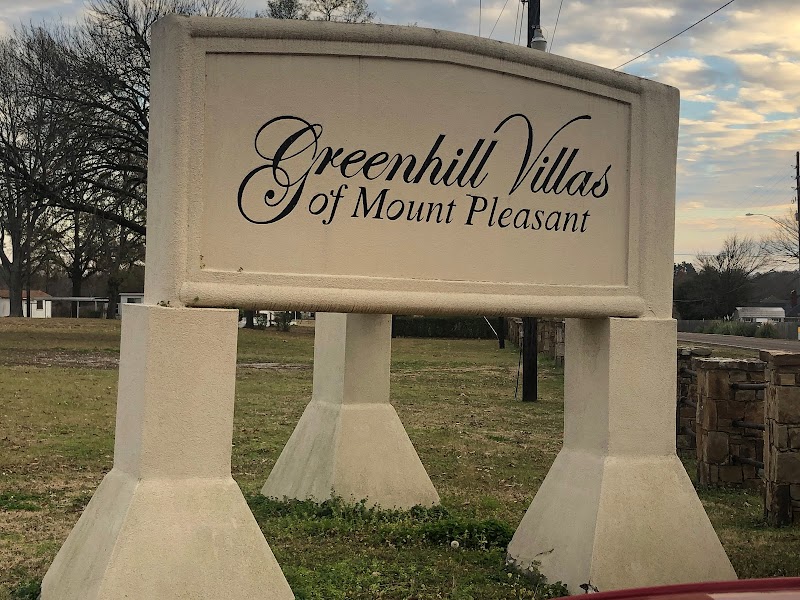
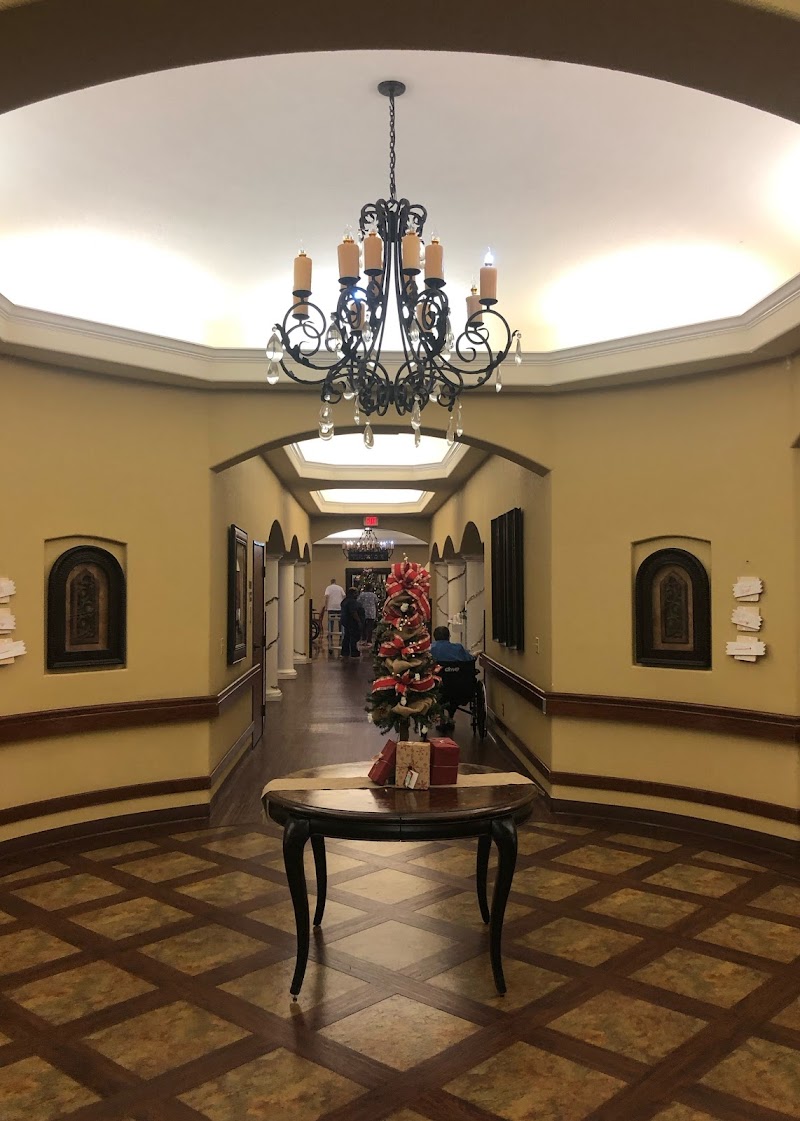
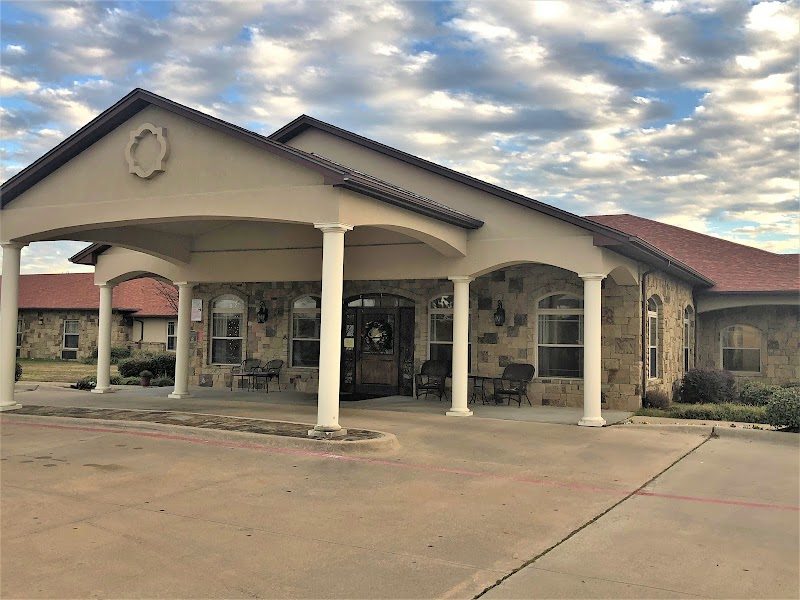
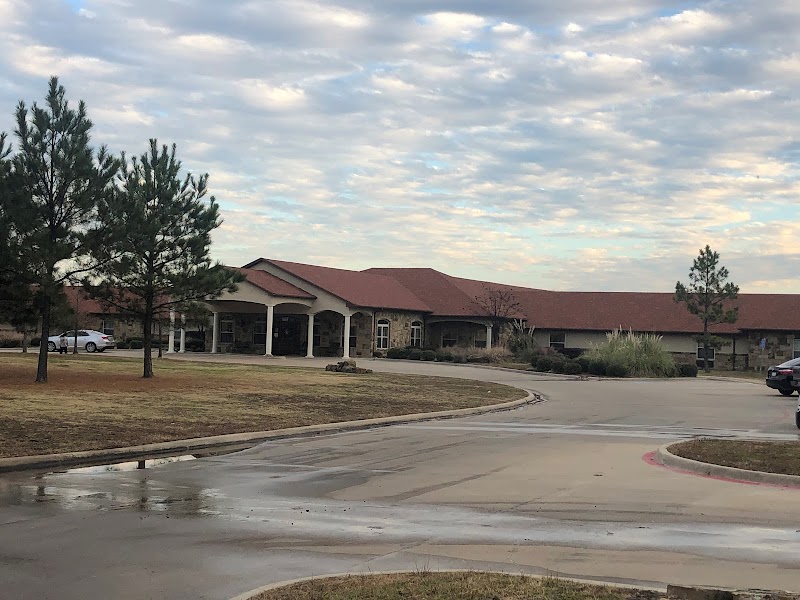
GREENHILL VILLAS

2530 GREENHILL RD, MOUNT PLEASANT, TX 75455 (903) 572-0974
For profit - Corporation 150 Beds CREATIVE SOLUTIONS IN HEALTHCARE Data: November 2025 4 Immediate Jeopardy citations
Trust Grade
0/100
#723 of 1168 in TX
Last Inspection: May 2024

Within standard 12-15 month inspection cycle. Federal law requires annual inspections.

Overview

Greenhill Villas in Mount Pleasant, Texas, has received a Trust Grade of F, indicating significant concerns about the quality of care provided, placing it in the poor category. It ranks #723 out of 1168 facilities in Texas, which means it is in the bottom half of nursing homes statewide, although it is the best option among the three facilities in Titus County. The facility's trend is improving, having reduced serious issues from 15 in 2024 to just 2 in 2025, but it still faces challenges. Staffing is an area of concern with a rating of 2 out of 5 stars and only 48% turnover, which is slightly better than the state average, but the overall RN coverage is low compared to 77% of Texas facilities. The facility has accumulated fines of $150,294, which is higher than 83% of Texas facilities, suggesting ongoing compliance issues. Specific incidents include a critical failure to administer proper wound care for a resident, leading to hospitalization, and a significant medication error that resulted in another resident being hospitalized due to dangerously high potassium levels. While the facility is making strides to improve, families should weigh these strengths against the serious deficiencies and historical issues when considering Greenhill Villas for their loved ones.

Trust Score
F
0/100
In Texas
#723/1168
Bottom 39%
Safety Record
High Risk
Review needed
Inspections
Getting Better
15 → 2 violations
Staff Stability
⚠ Watch
48% turnover. Above average. Higher turnover means staff may not know residents' routines.
Penalties
⚠ Watch
$150,294 in fines. Higher than 79% of Texas facilities, suggesting repeated compliance issues.
Skilled Nurses
⚠ Watch
Each resident gets only 14 minutes of Registered Nurse (RN) attention daily — below average for Texas. Fewer RN minutes means fewer trained eyes watching for problems.
Violations
⚠ Watch
41 deficiencies on record. Higher than average. Multiple issues found across inspections.
★★☆☆☆
2.0
Overall Rating
★★☆☆☆
2.0
Staff Levels
★★☆☆☆
2.0
Care Quality
★★☆☆☆
2.0
Inspection Score
Stable
2024: 15 issues
2025: 2 issues

The Good

  • Full Sprinkler Coverage · Fire safety systems throughout facility
  • No fines on record

Facility shows strength in fire safety.

The Bad

2-Star Overall Rating

Below Texas average (2.8)

Below average - review inspection findings carefully

Staff Turnover: 48%

Near Texas avg (46%)

Higher turnover may affect care consistency

Federal Fines: $150,294

Well above median ($33,413)

Significant penalties indicating serious issues

Chain: CREATIVE SOLUTIONS IN HEALTHCARE

Part of a multi-facility chain

Ask about local staffing decisions and management

The Ugly 41 deficiencies on record

4 life-threatening 1 actual harm
Feb 2025 2 deficiencies 1 IJ
CRITICAL (J) 📢 Someone Reported This

A family member, employee, or ombudsman was alarmed enough to file a formal complaint

Immediate Jeopardy (IJ) - the most serious Medicare violation

Accident Prevention (Tag F0689)

Someone could have died · This affected 1 resident

**NOTE- TERMS IN BRACKETS HAVE BEEN EDITED TO PROTECT CONFIDENTIALITY** Based on interview and record review the facility failed to ensure the resident environment remained as free of accident hazards...

Read full inspector narrative →
**NOTE- TERMS IN BRACKETS HAVE BEEN EDITED TO PROTECT CONFIDENTIALITY** Based on interview and record review the facility failed to ensure the resident environment remained as free of accident hazards as possible and failed to ensure each resident received adequate supervision and assistance devices to prevent accidents for 1 of 2 residents (Resident #1) reviewed for quality of care. 1. The facility failed to ensure Resident #1 was adequately supervised which resulted in Resident #1 leaving the facility on 08/22/24 and being found at a gas station in a town 38.1 miles east of the facility. 2. The facility failed to monitor and put measures in place to keep Resident #1 who was high risk for elopement from eloping from the facility on 08/22/24. 3. The facility failed to do a search of the surrounding area when they discovered a door alarm sounded on 08/22/24. The noncompliance was identified as PNC. The IJ began on 08/22/24 and ended on 08/23/24. The facility had corrected the noncompliance before the survey began. These failures could place residents at risk of potential accidents, injuries, harm or death. Findings include: Record review of Resident #1's face sheet, dated 08/29/24, indicated an [AGE] year-old female who admitted to the facility on [DATE]. Resident #1 had diagnoses which included dementia (memory loss) with behaviors, delusional disorder (a mental health condition characterized by persistent, false beliefs that are not based on reality), hallucinations (false perceptions), psychosis (mental health condition characterized by a loss of contact with reality), depression (persistent feeling of sadness), anxiety (mental health condition characterized by excessive worry, fear, and nervousness), and chronic obstructive pulmonary disease (group of lunch diseases that cause airflow obstruction and breathing problems). Record review of Resident #1's elopement risk assessment, with an effective date of 07/30/24, indicated Resident #1 was not bedfast, in a Geri-chair, or unable to self-propel wheelchair. Resident #1 was able to ambulate independently or with a device, cognitive skills for daily decision making was moderately impaired, understood, and verbalized acceptance of need for nursing home care. Resident #1 had no history of previous attempts to leave own residence/facility. The assessment indicated Resident #1 had an elopement risk score of 10. Record review of Resident #1's elopement risk assessment, with an effective date of 08/07/24, indicated Resident #1 was not bedfast, in a Geri-chair, or unable to self-propel wheelchair. Resident #1 was able to ambulate independently or with device, cognitive skills for daily decision making was moderately impaired, and verbalized anger and frustration related to placement. Resident #1 had no history of previous attempts to leave own residence/facility. The assessment indicated Resident #1 had an elopement risk score of 15. Record review of Resident #1's admission MDS assessment, dated 08/09/24, indicated Resident #1 was understood and understood others. Resident #1 had a BIMS score of 12, which indicated her cognition was moderately impaired. Resident #1 did not have behaviors, refused care, or wandered. Resident #1 required supervision or touching assistance with oral hygiene, toileting, showering, lower body dressing and personal hygiene. Record review of Resident #1's progress note, dated 08/10/24 and signed by LVN S, indicated Resident #1 stated she wanted to go home, she did not feel good and was requesting a family member to take her home. The note indicated Resident #1's family member was notified where she voiced the resident was taking an antidepressant at home. The Nurse Practitioner was notified with an order for the antidepressant medication. The progress note did not indicate Resident #1 was attempting to leave the facility. Record review of Resident #1's progress notes, dated 08/11/24-08/21/24, did not indicate Resident #1 had voiced wanting to leave the facility or made any attempts to leave the facility. Record review of Resident #1's comprehensive care plan, revised on 08/22/24, indicated Resident #1 had an elopement or elopement attempt, where she left the facility unattended. The care plan interventions included to admit to MCU upon arrival to facility per MD, assess/record/report to MD risk factors for potential elopement such as: resident's elopement or attempted elopement, wandering, repeated requests to leave facility, statements such as I'm leaving .I'm going home, attempts to leave facility, elopement attempts from previous facility, home, or hospital, and to determine the reason the resident is attempting to elope. The care plan interventions also included to distract resident from elopement attempts by offering pleasant diversions, structured activities, food, conversation, television, books, and if the resident was exit seeking to stay with the resident and notify the charge nurse by calling out, sending another staff member, or using the call system. Record review of Resident #1's order summary report, dated 08/01/24-08/31/24, indicated Resident #1 had the following orders: o quetiapine fumarate 25 mg give one tablet by mouth one time a day related to psychosis with a start date of 08/11/24. o Refer to behavioral health to evaluate and treat as indicated one time only related to dementia with behaviors with a start date of 08/01/24. o Fluoxetine 40 mg one capsule daily for depression with a start date of 08/11/24. Record review of Resident #1's progress note, dated 08/22/24 at 4:56 PM, signed by LVN A, indicated At around 1:00 PM-1:30 PM trays were being passed on hall, upon entering her room she wasn't in it, staff started looking in dining room and all rooms up and down 200 west, 300 north and south, all bathrooms, closets, under bed anywhere any one could be hiding was looked, upon not finding her we call code orange and all other staff started looking for her thru (through) out facility, some went outside of facility looking, police notified, staff started reviewing camera. Record review of Resident #1's progress note, dated 08/22/24 at 5:35 PM, and signed by the previous DON, indicated At approximately 1730 [5:30 PM], [Resident #1] arrived back to facility via nursing home transportation bus. This DON accompanied resident back to facility at approximately Mile Marker 170. Upon arrival to assist van driver, resident was sitting in the front seat on the passenger side of the van. The resident was exit seeking by trying to unlock the front passenger side door. Resident was also trying to unlatch the seat belt. When this DON interviewed the resident and asked how did she end up at the gas station in [another town], the resident answered 'I don't know what you are talking about!' This DON then asked the resident, 'so are you getting into cars with strangers?' The resident stated, 'I never get into the cars with strangers!' This DON then asked the resident 'SO what happened?' And the resident stated, 'I'm not saying another word, I have already said too much!' Resident refused to say anything else. This DON asked resident was she hungry, resident stated 'no.' This DON went to the kitchen and received a dietary tray for resident and offered the meal to the resident. The resident refused. Resident was assisted to the restroom to toilet. Resident is currently on the secure unit sitting on the couch watching T.V. without any concerns at this time. No exit seeking noted at this time. Resident placed on one-on-one observation. Record review of Resident #1's hospital records, dated 08/22/24, indicated .Patient presents per paramedics. She eloped from her extended care facility dementia unit in [town nursing facility located]. She somehow got a ride up to [town that was 38.1 miles east of the facility] where she was found and brought here to meet her facility transport to go back home. Patient has no acute complaints. She denies trauma altered mental status relative to baseline. Paramedics state her vital signs were stable and patient has had no complaints with them as well . The hospital records also indicated . spoke with DON at [facility], she requested that pt be asked if she was harmed in any physical, emotional, or sexual way. Informed that pt is currently AAOx2. Nurse talked with pt and pt denied being harmed in any way and stated, 'That man that drove me here was just helping me get out of there' Record review of the [town resident was found] police call sheet report, date 08/22/24 at 2:06 PM, indicated the call was received from a gas station for a welfare check. The reporter advised a female came in with dementia and does not know where she is and then gave Resident #1's name. The report indicated Resident #1 arrived in a vehicle with a male who was scared to death and left, she did not know a number to call for help and was sitting in the store in the dining area. Record review of the [town facility located] police call detail report, dated 08/22/24 at 2:16 PM, indicated the DON had called regarding a missing person. The report indicated the missing person was Resident #1. Record review of the [town facility located] police department narrative by the corporal indicated .on 08/22/24 at approximately 1449 hours (2:49 PM) I, [name of corporal] was dispatched to the [facility] in reference to a UUMV. Prior to receiving this call, I was dispatched to the same address at approximately 1416 hours (2:16PM) in reference to a missing person. On the previous call, staff from the [facility] reported a dementia resident [Resident #1] had snuck out of the location through the west side laundry room door. While on scene searching for [Resident #1] a member of the staff advised officers [Resident #1] was located at the [gas station in the town located 38.1 miles east of the facility]. Upon my arrival, I made contact with [Laundry Aide C]. [Laundry Aide C] advised she works in the laundry room at the [facility]. [Laundry Aide C] advised after helping search for [Resident #1] when she was missing, she was getting ready to leave work. [Laundry Aide C] advised when she arrived to work that day, she parked her [car model] near the laundry room on the west side of the facility. [Laundry Aide C] advised she left her car keys in the vehicle. [Laundry Aide C] advised around 1200 hours (12:00 PM) she went to lunch with a co-worker and rode with them in their vehicle and arrived back around 1230 hours (12:30 PM). [Laundry Aide C] told me when she went to leave, she noticed her vehicle was no longer parked where she left it. Due to the timing of [Resident #1] going missing and the time of the vehicle was taken, staff member believed the two incidents could be related . I spoke with Human Resource, and she advised she spoke with an employee from the [gas station name]. [Human Resource] advised [gas station employee] observed [Resident #1] arrive at the location in a gold SUV with an unknown male. [Human Resource] said [gas station employee] was able to get ahold of [Resident #1's] family member who informed him she was supposed to be at the [facility name]. [Human Resource] advised that is how the facility was notified she was found in [town located 38.1 miles east of facility]. [Human Resource] told me they contacted [the other town's police department] and had an officer take [Resident #1] to the [hospital name] to be checked out. I watched the surveillance footage and observed at approximately 1222 hours (12:22 PM), [Resident #1] walked out of the building from the west hall (laundry room side). I observed at approximately 1234 hours (12:34 PM), [Laundry Aide C's car] could be seen going east on the southwest side of the building. No other camera captured [Laundry Aide C's car] Record review of Resident #1's consent for secure unit, with an effective date of 08/22/24, indicated Resident #1's representative verbally or by phone gave consent for Resident #1 to be placed in the secure unit. During an interview on 02/10/25 at 1:39 PM, LVN A said the day of the elopement incident she was in the dining room assisting with feeding since she was assigned to lunch duty. LVN A said she saw Resident #1 walking around in the dining room around noon and then went walking down the hall. LVN A said Resident #1 ate sometimes in the dining room or her room. LVN A said she did not remember if Resident #1 had been trying to exit seek prior or had voiced she wanted to leave the facility. LVN A said when the staff passed trays, approximately an hour after she last saw her, Resident #1 could not be found. LVN A said management was notified and everyone started looking for her. LVN A said they reviewed the cameras and noticed Resident #1 left through the back door, near the laundry room. LVN A said there was a code to exit the door, but also had a sign to hold for 15 seconds and the door would unlock. LVN A said Resident #1 could read and probably held the door for it to unlock. During an interview on 2/10/25 at 1:47 PM, the DON said when the staff reported Resident #1 could not be found they searched everywhere, even the neighbor's house. The DON said when they could not find her, they called the police. The DON said they reviewed the cameras and they saw she had left the building. The DON said they did not have a camera facing where the car was parked so was unsure if Resident #1 drove or someone took her. The DON said Resident #1 was found in another town and she asked the paramedics to take her to the hospital to be checked out. Laundry Aide C's car was found at the location where Resident #1 was found and Resident #1 had the keys. The DON said at the gas station, someone had said Resident #1 was dropped off. The DON said Resident #1 was brought back to the facility and placed in the secured memory care unit. The DON said she was unable to recall if Resident #1 had verbalized wanting to leave the facility and had made no prior attempts of leaving. The DON said Resident #1 was referred to psych services as well due to her hallucinations. The DON said two staff members answered the door alarm and had checked but saw no one there. The DON said they completed elopement risk assessments for all residents in the building at the time of the incident, completed daily monitoring of doors, and performed elopement drills. During an interview on 02/10/25 at 2:14 PM, the AIT said the day of the incident she was not at the facility, but staff called her and reported Resident #1 could not be found. The AIT said she returned to the facility to assist. The AIT said they told her Resident #1 left in a car, and police found her in another town. The AIT said the previous Maintenance Supervisor and the previous Medical Records staff had answered the door alarm but did not know there was a resident involved as each one thought the other one set the door alarm. The AIT said when Resident #1 returned to the facility she was not confused but it took forever to get her to come down off the facility van as she did not want to come inside. The AIT said they completed in-services, monitoring, placed Resident #1 in the unit, completed elopement assessments on all residents, safety assessments, and elopement drills. The AIT said Resident #1 voiced once wanting to go home but made no attempts of leaving the facility. The AIT said the staff was also educated on not leaving their keys in their vehicles. During an interview on 02/10/25 at 10:52 PM, LVN B said she worked the 6:00PM-6:00AM shift and was the nurse who had taken care of Resident #1. LVN B said Resident #1 had not voiced wanting to leave the facility or made any attempts of wanting to leave the facility prior to her elopement on 08/22/24. During an interview on 02/10/25 at 11:17 PM, Laundry Aide C said the day of Resident #1's elopement, she went to her car to get something out because she was leaving to go eat lunch with a friend and left her keys on the seat when she placed them down. Laundry Aide C said around 2:00 PM, she was getting ready to leave and her car was no longer where she parked it. Laundry Aide C said her car was found at a gas station in [town 38.1 miles east of the facility]. Laundry Aide C said Resident #1 had her keys on her when she arrived back to the facility. Laundry Aide C said the facility in serviced her on parking, not leaving the keys inside the car, code orange, answering the door alarms and checking to see if no one was outside. Laundry Aide C said she had not heard Resident #1 wanting to go home and had not seen her make any attempts to leave the facility. During an interview on 02/10/25 at 11:28 PM, CNA D said she had been Medical Records at the time of Resident #1's elopement. CNA D said she was putting up medical supplies when she heard the door to the laundry exit alarming. CNA D said she went to the door and looked around but had not seen anyone. CNA D said there were no residents outside, and no one was leaving. CNA D said she had not heard of Resident #1 voicing wanting to leave the facility or seen Resident #1 make any attempts to leave the facility. CNA D said the facility in-serviced her when answering an alarming door, they need to ensure no residents were leaving the building. She said she was instructed to check outside and around the building. CNA D said when there was a code orange it indicated there was a missing person and everyone had to help in locating the missing resident. Interviews on 02/10/25 between 1:39 PM and 11:54 PM with (LVN A, DON, AIT, LVN B, Laundry Aide C, CNA D, LVN E, CNA F, CNA G) and interviews with (CNA H, CNA K, Maintenance Supervisor, CNA R, CMA Q, LVN P, Speech Therapist, Treatment Nurse, MDS Coordinator, Housekeeping Supervisor, LVN S, Housekeeping L, LVN M, Dietary Aide N) on 02/11/25 between 12:11 AM and 1:12 PM revealed they were able to answer questions regarding in-services on abuse and neglect, immediately notifying the abuse coordinator for any abuse allegations, response on what to do when a resident was exit seeking which was to notify nurse and management staff, responding to the door alarms, checking to ensure no residents had left the building, if no residents were seen they were to notify the nurse and do a count of residents to ensure no one had left, code orange was for a missing resident that was unable to be located and not leaving their keys in their vehicles. During an interview on 02/11/25 at 10:32 AM, the Regional Compliance Nurse said when a resident had an elopement risk score of 10 or higher, they were considered at risk for elopement. She said they updated the residents care plan to reflect their risk of elopement and if the residents wandered, they educated staff. The Regional Compliance Nurse said all doors at the facility were locked and required a code to get in or out. The Regional Compliance Nurse said when a resident was actually exit seeking, they ruled out any underlying medical condition, found placement, or placed them in their secure unit. She said Resident #1 was placed in the memory care secure unit upon her return to the facility and her care plan was updated. Record review of the in-services dated 08/22/24 indicated the staff was in-serviced on elopement prevention policy, abuse and neglect policy, not leaving their keys in their vehicle, if a resident was exit seeking to stay with the resident and notify the DON, ADON and the Administrator. Record review of the in-services dated 08/23/24 indicated the staff was in-serviced on responding to door alarms by walking outside to check to see if any resident may have exited the door and would need to be directed back inside, once it was determined that a resident had not exited the door, the code was pressed to turn the alarm off, code orange (missing resident) and the steps to take if a code orange was called, elopement prevention policy, and the abuse and neglect policy. Record review of the missing resident/elopement monitoring check off indicated the following had been completed: Ensuring the locking mechanism and alarm were functioning properly on all exit doors of the facility 5 days a week. Conducted at least 3 elopement drills weekly. 5 staff members were asked weekly on what to do if a resident was exit seeking, the process to follow if a door alarm was sounding, and what to do if a resident was discovered missing. Record review of the elopement drills revealed they were completed three times a week with no concerns noted with a start date of 08/22/24. Record review of the Assessment History Elopement Risk Assessment Report indicated 76 assessments were completed on 08/22/24. Three residents with an elopement risk assessment score of 10 or higher were reviewed. The three residents resided in the memory care secure unit and their care plan indicated they were a high risk for elopement. Record review of Safe Assessments completed on 08/22/24 for residents residing on Resident #1's hall. Record review of the facility's policy Elopement Prevention revised January 2023 indicated Every effort will be made to prevent elopement episodes while maintaining the least restrictive environment for residents who are at risk for elopement. 1. The Elopement Risk Assessment will be completed upon admission . at least quarterly, after an elopement attempt, upon new exit seeking behavior, and upon change of condition .4. The residents' care plan will be modified to indicate the resident is at risk for elopement episodes. Interventions into elopement episodes will be entered onto the resident's care plan and medical records . 7. If a resident is discovered to be missing, a search shall begin immediately . Record review of the facility's policy Elopement Response revised January 2023 indicated Nursing personnel must report and investigate all reports of missing residents. When an elopement has occurred or is suspected, our elopement response plan will be immediately implemented. 1. It is the responsibility of all personnel to report any resident attempting to leave the premises, or suspected of being missing, to the charge nurse as soon as practical 2. Determination of missing resident either by routine nursing rounds or door alarms: A. Note: A resident is determined to be missing when he/she leaves the facility without the staff's knowledge . 4. Should an employee discover the resident is missing from facility (Code Orange), he/she should: A. Report to the charge nurse, B. Determine if the resident is out on authorized leave or pass. If not; C. Make a thorough search of the building (s) and premises, If not located; D. Notify the Administrator and the Director of Nursing; E. Notify the resident's responsible party. Notify the attending physician; G Notify VP of Risk Management, ADO, COO, Divisional VP of clinical, Director of Secure Care Services, Compliance Nurse, and Sr, VP of Clinical Services .J. Make an extensive search of the surrounding area.5. Deployment Procedure: A. Charge nurse on each unit send staff down each hall to check each room, including bathroom closet and bed for correct resident. B. Check all rooms on the hall including tub and bathrooms, linen closets and any recreations rooms. Check all common areas and offices. 6. If unable to locate resident in the building, proceed as follows: A. Unaffected Area- Charge nurse designates one CNA per hall to remain on unit along with him/himself and sends remaining staff to affected area. B. Affected Area- Charge Nurse assigns to specific outside areas to ensure that all surrounding areas are searched. C. After 30 minutes, if the resident has not been found, the following call must be made: report missing resident to the police, update responsible party . The noncompliance was identified as PNC. The IJ began on 08/22/24 and ended on 08/23/24. The facility had corrected the noncompliance before the survey began.
CONCERN (D) 📢 Someone Reported This

A family member, employee, or ombudsman was alarmed enough to file a formal complaint

Potential for Harm - no one hurt, but risky conditions existed

Deficiency F0573 (Tag F0573)

Could have caused harm · This affected 1 resident

**NOTE- TERMS IN BRACKETS HAVE BEEN EDITED TO PROTECT CONFIDENTIALITY** Based on interview and record review the facility failed to provide the resident access personal and medical records pertaining ...

Read full inspector narrative →
**NOTE- TERMS IN BRACKETS HAVE BEEN EDITED TO PROTECT CONFIDENTIALITY** Based on interview and record review the facility failed to provide the resident access personal and medical records pertaining to him or herself, upon an oral or written request, in the form and format requested by the individual, if it was readily producible in such form and format (including in an electronic form or format when such records were maintained electronically, or, if not, in a readable hard copy form or such other form and format as agreed to by the facility and the individual, within 24 hours (excluding weekends and holidays) and allow the resident to obtain a copy of the records or any portions thereof upon request and 2 working days advance notice to the facility for 1 of 2 residents (Resident #2) reviewed for access of records. The facility failed to provide Resident #2's legal representative copies of medical records after an oral request was voiced to the facility on [DATE]. This failure could place residents at risk of violation of their rights. Findings include: Record review of Resident #2's face sheet, dated 02/12/25, indicated an [AGE] year-old female who initially admitted to the facility on [DATE] and readmitted on [DATE]. Resident #2's had diagnoses which included type 2 diabetes (a chronic condition that affects how the body uses sugar for energy), Alzheimer's disease (progressive and irreversible brain disorder that gradually destroys memory, thinking skills, and the ability to perform everyday tasks), heart failure (a chronic condition that occurs when the heart cannot pump enough blood and oxygen to the body) and anxiety (mental health condition characterized by excessive worry, fear, and nervousness). Record review of Resident #2's care plan, dated 01/26/23, indicated she had an ADL self-care deficit performance deficit with interventions to assist with personal hygiene as required and required one person staff participation with bathing. Record review of Resident #2's significant change in status MDS assessment, dated 01/29/25, indicated she was sometimes understood and sometimes understood others. Resident #2 had a BIMS score of 3, which indicated her cognition was severely impaired. Record review of an email, dated 11/24/24 at 12:09 PM, addressed to Medical Records and the Regional Director of Medical Records and sent by the MDS Coordinator stated, We had a care plan with the [Resident #2's] family and the ombudsman is requesting medical records for the family from January 2023 to present day 11-12-2024. The email proceeded to inform them of the Ombudsman's name with the Ombudsman's email since the Ombudsman had requested the records be emailed to her. Record review of an email, dated 11/24/24 at 12:58 PM, addressed to Medical Records, the MDS Coordinator, the AIT and sent by the Regional Director of Medical Records stated, They will need to complete the authorization PHI form just like the family member would for our records. During an interview on 02/10/25 at 09:27 AM, the Ombudsman said Resident #12's family member and herself requested Resident #2's medical records from the facility on 11/12/24, during a care plan meeting. The Ombudsman said she had even emailed the facility reminding them of the requested records and even had called them, but no medical records had been released. The Ombudsman said the facility requested a signed medical release form from the family member or herself before medical records could be released. The Ombudsman said she did not sign the form but handed the facility a copy of the state regulation indicating the ombudsman had access rights to all files, records and other information concerning a resident. During an interview on 02/10/25 at 09:47 AM, Resident #2's family member said he requested medical records from the facility during their last care plan meeting in November 2024. Resident #2's family member said the Ombudsman was present at the care plan meeting and the facility knew he wanted Resident #2's records. He said he still had not received them. Resident #2 said the facility had informed him of a PHI form he was required to sign before those records could be released but he had not signed it since the Ombudsman had said she was going to handle it. Resident #2's family member said he had requested the records so he would review an incident that happed over a year ago for his peace of mind and resolution. Record review of Resident #2's electronic medical records on 02/10/25 did not reveal a signed PHI form. During an interview on 02/11/25 at 09:52 AM, the MDS Coordinator said the family requested medical records during a care plan meeting. The MDS Coordinator said she sent an email to Medical Records over Resident #2 family's request and the Ombudsman. The MDS Coordinator said there was a process the family had to go through to receive the requested records, but they had the right to receive them. The MDS Coordinator said Medical Records was responsible for medical records requests. During an interview on 02/11/24 at 4:10 PM, the DON said Resident #2's family member requested Resident #2's medical records during a care plan meeting, but he had not followed the facility policy. The DON said Resident #2's family member was given the medical records release form, but he had not returned it back to the facility. The DON said the process for medical records request was as follows: the family member would sign a request for medical records form, the signed form was given to Medical Records, Medical Records sent the form to the corporate office, and then corporate office would review the form and send Medical Records authorization to release the records. The DON said Medical Records was responsible for medical records request forms. The DON said Resident #2's family member had the right to obtain those records if they followed their policy. During an interview on 02/12/25 at 09:29 AM, Medical Records said she was responsible for medical records requests. Medical Records said when a resident's family member requested records, they needed to fill out an application for the medical release at its entirety. Once they filled out the application, it was returned to her, and she would then send it over to the corporate office and wait for approval. Medical Records said there was an $87.14 fee for obtaining medical records and would then therefore ask the family how they wanted to proceed with payment in either a check or money order. She then would let the corporate office know payment was received. Corporate then would let her know when to release the files to the family. Medical Records said Resident #2 family member was provided the medical release form, but it was never brought back to her. Medical Records said the family has the right to receive their family's medical records if they followed the facility's policy. During an interview on 02/12/25 at 09:47 AM, the Regional Director of Medical Records and Central Supply said when a family member requested medical records their process was as followed: a letter requesting medical records was filled out with what they were looking for, the letter was sent to the corporate office, and then the corporate office would approve or deny the request. The Regional Director of Medical Records said the Ombudsman also had to fill out the form if records were requested per the family so they could have a record of the person requesting records and the request. The Regional Director of Medical Records said, from what Medical Records reported to her, Resident #2's family was provided with the PHI form, but the PHI was not received back from the family. The PHI form needed to be completed, with the requestor's identification and a copy of the power of attorney as well. The Regional Director said the resident's family member had the right to have copies if they followed the facility's policy. During an interview on 02/12/25 at 10:06 AM, the AIT said the Ombudsman was at the facility and requested Resident #2's records and was provided the medical release form. The AIT said the Ombudsman did not return the signed form. She said she had questioned the corporate office regarding the Ombudsman requesting records and was informed she needed to fill out a medical release form the same as when a family member requested them. The AIT said records could not be released until the form was received. The AIT said the Ombudsman did not request access to Resident #2's medical records but if she had she would have given it to her with the family's permission and by following the facility policy. The AIT said Resident #2's family member was provided with the medical release form as well, but he had not brought it back. The AIT said Resident #2's family member had the right to her records if he followed the facility policy. The AIT said Medical Records handled all medical request forms. Record review of the facility's policy Health Information Requests, Release, and Production Fee Guidelines, revised 11/2017, indicated . Request for copies of Health Information: 1. When someone outside the facility requests copies of information from a Resident's chart it is first necessary to determine their identity and if they have legal authority to receive any information. Once rights to the health information has been established an Authorization to release health information form must be completed and sent to the Director of Health Information Management to be reviewed and approved. When sending the request in for approval the proper documentation should be send along with the request if the request is coming from anyone other than the resident, such as the power of attorney or guardian . Production fees for copies of Health Information: 2. Production fees are due at the time that health information is picked up. If they requested for the records to be mailed, the cost of postage and the production fee should be made prior to them being shipped
Nov 2024 1 deficiency
CONCERN (E) 📢 Someone Reported This

A family member, employee, or ombudsman was alarmed enough to file a formal complaint

Potential for Harm - no one hurt, but risky conditions existed

Pharmacy Services (Tag F0755)

Could have caused harm · This affected multiple residents

**NOTE- TERMS IN BRACKETS HAVE BEEN EDITED TO PROTECT CONFIDENTIALITY** Based on interviews and record review, the facility failed to provide pharmaceutical services, including procedures that assure ...

Read full inspector narrative →
**NOTE- TERMS IN BRACKETS HAVE BEEN EDITED TO PROTECT CONFIDENTIALITY** Based on interviews and record review, the facility failed to provide pharmaceutical services, including procedures that assure the accurate dispensing and administering of all drugs and biologicals to meet the needs of each resident for 1 of 6 residents (Resident #1) reviewed for pharmacy services. The facility failed to follow orders from 10/02/2024 to 10/06/2024 and administered to Resident #1, Aricept (Alzheimer medication), and Meloxicam (nonsteroidal anti-inflammatory medication) after the medications were discontinued. This failure could place residents at an increased risk for inaccurate drug administration and not receiving the care and services to meet their individual needs. Findings included: Record review of the face sheet, dated 11/09/2024, revealed Resident #1 was a [AGE] year-old female admitted on [DATE] for five day respite care and discharge date [DATE], with diagnoses of Alzheimer's disease (a brain disorder that gradually destroys memory and thinking skills), and unspecified osteoarthritis, unspecified site (the most common type of arthritis and can affect any joint in the body, but it's most common in the knees, hips, spine, and hands. Symptoms include pain, swelling, and reduced motion in the joints). Record review of the discharge MDS, dated [DATE], revealed Resident # 1 had a BIMS score of 02 indicating severe cognitive impairment. Resident #1 required assistance for dressing, bathing, transferring, standing and walking. The MDS revealed Resident #1 did not reject care. Record review of an order summary, dated 10/02/2024, revealed Resident # 1 had an order for Meloxicam 15mg give 1 tablet by mouth once daily with food. No stop date indicated. Record review on 11/26/2024 of Resident #1skilled nursing visited dated 10/05/2024, Resident #1 was found in her room lying on the floor. Record review on 11/26/2024 of Resident #1 MARs for August, September, and October 2024 indicated she received Meloxicam 15mg with meals three times a day 8/10-814/24 (not receiving Meloxicam at 5:00 pm on 8/12 and 8/14), 9/25-9/30/24, and 10/2-10/6/24. Record review of Resident #1's medication administration record dated 10/1/2024 - 10/31/2024, indicated Resident # 1 received Aricept 10 mg on 10/02/2024 at 8:00 p.m., Aricept 10 mg on 10/03/2024 at 8:00 p.m., Aricept 10 mg on 10/04/2024 at 8:00 p.m., Aricept 10 mg on 10/05/2024 at 8:00 p.m. Record review of Resident #1's MAR record dated 10/1/2024 - 10/31/2024, indicated Resident # 1 received Meloxicam 15mg on 10/02/2024 at 7:00 a.m., at 12:00 p.m., and 5:00 p.m., and Meloxicam 15mg on 10/03/2024 at 7:00 a.m., at 12:00 p.m., and 5:00 p.m., Meloxicam 15mg on 10/04/2024 at 7:00 a.m., at 12:00 p.m., and 5:00 p.m., Meloxicam 15mg on 10/05/2024 at 7:00 a.m., at 12:00 p.m., and 5:00 p.m. During an interview on 11/09/2024 at 10:20 a.m., Resident #1's family member stated Resident # 1 was at the facility from 9/25/2024 to 9/30/2024 for respite care. Resident #1's family member stated during the stay Resident #1 had a fall which left a bruise on her check and a black eye. Resident #1's family member stated Resident #1 was readmitted to the facility 10/02/2024 to 10/6/2024 for respite care, at which time Resident #1's family member left her current medications at the facility. Resident #1's family member was informed Resident #1 was given the wrong medication of Aricept, and Meloxicam was given three times a day instead of once a day. Resident #1's family member stated Resident#1's current medications she should have received were Ativan (anti-anxiety), Gabapentin (peripheral neuropathy/ pain), Cymbalta (depression/anxiety), Hydrochlorothiazide (diuretic), Meloxicam (nonsteroidal anti-inflammatory medication), and Hydromorphone (narcotic). Resident #1's family member stated when she picked Resident#1 up she would not open her eyes or transfer into the truck. Resident #1's family member stated when she got Resident #1 home the tops of her feet were skinned up because the staff were not putting shoes and socks on Resident #1's feet. During an interview on 11/09/2024 at 2:45 p.m., MA A stated she did not remember giving Aricept to Resident # 1. MA A stated she would give residents their ordered medications. MA A stated if she gave the wrong medication, she would report it to the charge nurse and the Administrator. MA stated the charge nurse was responsible for putting medication orders into the system. MA A stated she was recently in-serviced on medication administration. MA A stated she remembered Resident # 1 because she would gum her medication and she had to check to make sure she swallowed the medications. MA A stated she did not witness Resident #1 fall, but she did witness Resident #1 stand up from her chair and just sit down on the floor. MA A was able to name the 5 rights of medication administration. During an interview on 11/09/2024 at 3:00 p.m., LVN B stated she had been working back at the facility for 2 weeks. LVN B stated she was not familiar with Resident #1. LVN B stated she had been in-serviced over medication administration. LVN B stated hospice hand delivered orders and faxed orders when the resident admits or there was a change of condition. LVN B stated it was the charge nurse's responsibility for putting orders into the system. LVN B stated if she was to administer the wrong medication she would assess the resident, notify the DON, the doctor, and the family. LVN B was able to name the 5 rights of medication administration. During an interview on 11/09/2024 at 3:18 p.m., RN C stated she was Resident #1's hospice nurse. RN C stated the family brought concerns to them after Resident # 1 was home. RN C stated when a resident admitted to the facility or if there was a change in condition the hospice nurse would hand deliver orders at the time of admission or shortly after, then the orders were faxed to the facility as well. RN C stated Resident #1 was confused and unable to transfer due to Alzheimer's disease process. During an interview on 11/09/2024 at 3:25 p.m., LVN D stated she made a mistake and put Resident # 1's orders on 10/02/2024 in the system incorrectly. LVN D stated she was in a hurry and just entered Resident #1's orders into the computer incorrectly. LVN D stated she did not immediately get the orders from hospice. LVN D stated it was important to give the correct medication, so the resident did not have an adverse reaction. LVN D stated she did not witness Resident #1 fall; however, LVN D stated Resident #1 would stand up out of her chair and sit on the floor. LVN D stated she was no longer working at the facility since the incident. During an interview on 11/09/2024 at 3:45 p.m. the DON stated Resident # 1 came to the facility for respite care. The DON stated it was important for the orders to be correct in the system so the resident would receive the care they required. The DON stated the nurse who does the admission was responsible for putting the orders into the system. The DON stated the nurse putting the orders in should go back over the orders to make sure they were in the system correctly. The DON stated she did a medication audit of the whole building and checked all medications against the orders. The DON stated LVN D was terminated after the incident. The DON stated she will monitor by in-service and will watch medication pass for five different residents five times a week. The DON stated the hospice nurse had to stay in the facility until the charge nurse puts the orders in the system then they will both verify the orders. During an attempted phone interview on 11/10/2024 at 8:42 a.m. LVN E did not answer, left voicemail. During an interview on 11/10/2024 at 8:56 a.m. the Regional Compliance Nurse stated Resident #1 did receive the Aricept and Meloxicam. The Regional Compliance Nurse stated LVN D was terminated, and a medication audit was completed to ensure all medication orders were in the system correctly. During an attempted phone interview on 11/10/2024 at 9:06 a.m. LVN E did not answer, left voicemail. During an interview on 11/10/2024 at 9:15 a.m. the Medical Director stated he was informed Resident #1 received Aricept and Meloxicam in error. The Medical Director stated he expected the nurses to put the orders into the system correctly. The Medical Director stated two nurses should verify the orders as well as the hospice nurse and pharmacy. The Medical Director stated he did not discontinue the Aricept. The Medical Director stated the medication aide, nurse, or pharmacy should have caught Meloxicam being given three times a day with meals instead of one time a day with a meal as ordered. The Medical Director stated he did not feel Resident #1 suffered any negative effect from the medication error. The Medical Director stated he did not give new orders since the Meloxicam was an anti-inflammatory and low risk for concern. During an interview on 11/26/2024 at 10:54 a.m., the Pharmacy Tech said the facility had not pulled any medications from the emergency kit between 10/2/24 and 10/6/24 for Resident# 1. During an interview on 11/26/2024 at 10:57 a.m., the Pharmacist said in her professional opinion a person who was given Meloxicam 15mg three times a day for a 5-day duration if side effects were present would mainly experience GI upset and possible GI bleed or ulcer. The Pharmacist said Meloxicam could cause dizziness, lethargy, and decrease in potassium levels. The Pharmacist said she would recommend checking a patient's potassium level if they had been administered more than the prescribed dose of Meloxicam. The Pharmacist said Meloxicam cleared from the body quickly. The Pharmacist said Meloxicam had a half-life of 13.4 hours. During an interview on 11/26/2024 at 11:15 a.m., RN C, ADON for Hospice said Resident #1 had skilled nursing visits while in the facility on 10/2, 10/4, 10/5, and 10/6. RN C said Resident #1 had not expired and has still receiving hospice services. RN C said the family had brought concerns to them regarding the resident after she returned home. RN C said they requested documentation from the facility and discovered the medication error. RN C said hospice made the facility aware of the medication error. RN C said they encouraged the family to increase Resident #1 fluid intake and after a few days she perked up. RN C said the family had told them they were planning to have a CT of the head performed, but hospice did not have a report for a CT. During an interview on 11/26/2024 at 1:11 p.m. RN C said lab work obtained from 10/9/24 was within normal limits except for a slightly elevated AST and ALT. Record review of the Nursing Facility Medication Administration policy, undated, revealed Medications shall be administered only to the resident for whom they are prescribed, given in accordance with directions on the prescription or the Physician's orders, and recorded on the resident's medication record The facility course of action prior to surveyor entrance included: Record review of the provider investigation report dated 10/10/2024, indicated Administrator was made aware of possible medication error and a investigation was started immediately. Notified physician and family., interviewed staff, in-serviced staff. All residents were at risk for medication error, however, two weeks of admits were reviewed, and none were found. A medication cart audit was done assuring medications were available. Medication in-service for all medication aides and nurses, 5 rights and to ensure that when administering medication verifies the medication label to the MAR. Medication aide to report to charge nurse if a medication was not available, and charge nurse to report to DON/ADON, pharmacy, and MD or NP if a medication was not available, never document a medication was given that was not administered. Charge nurses in-serviced on Medication Reconciliation upon admission with the practitioner. Regional charge nurse gave one on one in-service to DON and ADON on checking new admission/ readmission orders for accuracy. The following monitoring was in place. DON or designee will monitor a portion of a medication pass at least five times per week to ensure compliance with medication administration and all ordered medication were administered. DON or designee to interview at least six nurses and medication aides each week and ask them what they would do if medication was not available. DON or designee to interview at least six nurses and medication aides each week and ask them what they would do regarding medication for any resident returning to the facility. DON or designee at least five times per week will review all new admissions and readmissions from the previous day to ensure all those orders are transcribed into PCC correctly and that all ordered medications were available. Record review on 11/26/2024 indicated an Ad-Hoc QAPI was held on 10/10/24 regarding medication error. Record review on 11/26/2024 of an undated in-service indicated staff were in-serviced regarding pharmacy reconciliation to include upon admission staff must contact the physician for medication reconciliation and if the resident was receiving hospice service the nurse must enter all orders in PCC and verify orders are correct with hospice. Record review on 11/26/2024 of an in-service dated 10/10/2024 indicated staff were in-serviced regarding the 5-rights of medication administration and medication order policy including right drug, right dose, right route, right time, right patient, orders should be transcribed exactly as written, any questions regarding an orders should be clarified with the practitioner prior to initiating the order, if a medication error occurs or was discovered immediately report the finding to the physician and DON, do not mark a medication as administered if the medication was not available, medications not administered as ordered was an error. Record review of the Medication Error report dated 10/10/24 indicated the medication error was discovered when an audit was performed on medications with hospice. The Medication Error report indicated LVN D stated she did not properly check the orders. The Medication Error report indicated the physician was notified on 10/10/24. The Medication Error report indicated the resident had already discharged from the facility. The Medication Error report indicated this was reported to state agency and the DON, Administrator, and hospice company had a meeting regarding preventing medication discrepancies and future goals for patient safety. Record review on 11/26/2024 of pharmacy receipts/manifests from 10/2/24-10/6/24 indicated there were no medications delivered from the facility's pharmacy for Resident #1. Record review of LVN D's employee file indicated her last day worked was 10/10/24 and she was terminated on 10/18/24. The Employee Disciplinary Report dated 10/15/24 indicated LVN D was suspended on 10/9/24 pending an investigation into medication errors. The Employee Disciplinary Report indicated on 10/15/24 it was found that LVN D violated medication administration policies and procedures. The Employee Disciplinary Report indicated the investigation concluded LVN D made medication errors resulting in patients being harmed. The Employee Disciplinary Report indicated LVN D had been made aware of the seriousness of medication distribution and had continued to make severe errors when administering medication. The Employee Disciplinary Report indicated LVN D met the criteria for immediate termination. The Employee Disciplinary Report indicated LVN D would be terminated effective immediately. The Employee Disciplinary Report was signed by LVN D, Administrator, and DON on 10/17/24.
Sept 2024 5 deficiencies 1 IJ (1 affecting multiple)
CRITICAL (K) 📢 Someone Reported This

A family member, employee, or ombudsman was alarmed enough to file a formal complaint

Immediate Jeopardy (IJ) - the most serious Medicare violation

Quality of Care (Tag F0684)

Someone could have died · This affected multiple residents

**NOTE- TERMS IN BRACKETS HAVE BEEN EDITED TO PROTECT CONFIDENTIALITY** Based on observations, interviews, and record review the facility failed to ensure that residents receive treatment and care in ...

Read full inspector narrative →
**NOTE- TERMS IN BRACKETS HAVE BEEN EDITED TO PROTECT CONFIDENTIALITY** Based on observations, interviews, and record review the facility failed to ensure that residents receive treatment and care in accordance with professional standards of practice for 1 of 3 (Resident #1) residents reviewed for quality of care. 1. The treatment nurse failed to transcribe Resident #1's physician orders for wound care and provide wound care (clean with normal saline/wound wash, pat dry, apply collagen powder, med honey pad and secure with gauze island adhesive border once daily) to Resident #1's right lower shin from 08/23/24-08/31/24 as ordered resulting in hospitalization with a diagnosis of cellulitis (bacterial skin infection). 2. The facility failed to assess, document, and monitor for Resident #1's wound. An IJ was identified on 09/09/24. The IJ template was provided to the facility on [DATE] at 12:05 p.m. While the IJ was removed on 09/09/24, the facility remained out of compliance at a scope of pattern and a severity level of no actual harm with potential for more than minimal harm that is not immediate jeopardy due to the facility continuing to monitor the implementation and effectiveness of their Plan of Removal. These failures could place residents of risk for not receiving appropriate care and treatment, a decreased quality of life, or death. Findings included: Record review of Resident #1's face sheet, dated 09/09/24, indicated Resident #1 was originally admitted to the facility on [DATE] with diagnoses which included type 2 diabetes mellitus without complications (chronic condition that affects the way the body processes blood sugar), and laceration without foreign body (an object originating outside the body if an organism), right lower leg. Record review of the quarterly MDS assessment, dated 07/08/24, indicated Resident #1 made herself understood and usually understood others. Resident #1's BIMS score was 5, which indicated her cognition was severely impaired. Resident #1 required substantial/maximal assistance with upper and lower body dressing and taking off footwear. Resident #1 required setup or clean-up assistance with eating, supervision with oral hygiene and partial/moderate assistance with personal hygiene. Resident #1 was at risk for developing pressure ulcers/injuries and did not have any skin problems. Record review of Resident #1's comprehensive care plan dated 07/23/2024 did not reveal a care plan for the laceration to her right lower leg. Record review of Resident #1 event nurses' note dated 08/22/24 completed by RN A indicated Resident was sitting in her wheelchair a doorway. Resident has a laceration to right lower leg, shin, with horizontal laceration noted with gross amount of blood puddled at feet and around the room, pressure applied with towel. Resident unable to provide description of accident. EMS called and resident transferred to a local hospital for further evaluation and treatment. Record review of Resident #1 after-visit summary dated 08/22/2024 discharge instructions indicated to keep wound clean and dry, apply pressure dressings as needed for bleeding. Keep the bandage and ace wrap (wound care supplies) on the wound for the next 24 hours before changing. Follow up with PCP or return to the ER in 10-14 days for suture removal. Record review of a text message dated 08/23/24 beginning at 3:18 p.m. between the treatment nurse and wound care NP indicated a picture of the laceration to Resident #1's right shin was sent to the wound care NP informing of the wound and requesting treatment orders. The wound care NP sent back an order for medi-honey, collagen powder, and gauze island border QD. Record review of Resident #1's electronic monitoring records dated 09/07/24 did not indicate there was documentation the ordered that was text from the wound care NP was transcribed to the MAR. Record review of the order listing report dated 09/09/2024 indicated Resident #1 had an order with a start date 08/30/24 to cleanse with normal saline/wound wash, pat dry, apply collagen powder (wound healing product), med honey pad (wound healing product) and secure with gauze island adhesive border once daily to her right lower shin. Record review of Resident #1's WAR between 08/23/24-08/31/24, did not indicate she received any treatments to her right shin. Record review of Resident #1's initial skin assessment dated [DATE] completed by the treatment nurse, indicated Resident #1 had a laceration that required stitches to her RLE. Record review of Resident #1's weekly skin assessment dated [DATE] completed by the treatment nurse indicated a laceration to lower leg resulting in ER visit and stitches with compression bandage in place with orders to not remove for 24 hours. Record review of Resident #1's weekly skin assessment dated [DATE] indicated a laceration and stitches to right lower leg. The assessment failed to include the size of the laceration, drainage, or treatment. Record review of Resident #1 initial wound evaluation and management summary dated 08/29/24 completed by the wound care NP indicated a dressing treatment plan to Resident #1 right lower shin was to apply collagen powder and leptospermum honey and secure with gauze island with boarder daily for 30 days. Record review of Resident #1 wound evaluation and management summary dated 09/05/24 completed by the wound care NP indicated a dressing treatment plan to Resident #1 right lower shin was to apply collagen powder, leptospermum honey, gauze packing strips and secure with gauze island with boarder daily for 23 days. The wound care NP also ordered labs, x-rays, and doxycycline (antibiotics) 100 mg po bid x 10 days related to wound healing. Record review of a progress note dated 09/06/24 completed by LVN B indicated Resident #1 was admitted to a local hospital for an infected wound. Record review of the hospital medical records dated 09/06/24 indicated Resident #1 had a diagnosis of cellulitis and was started on ceftriaxone (antibiotic) in the ED. During an interview on 09/07/24 at 10:55 a.m., Resident #1 was currently at a local hospital. The hospital nurse stated Resident #1 was admitted to the hospital with cellulitis. The hospital nurse stated Resident #1 had received IV antibiotics (Rocephin) up until the IV accidently came out. The hospital nurse stated Resident #1 refused to be sticked again. The hospital nurse stated she was currently received amoxicillin 875-125 mg by mouth at this time. During an observation and interview on 09/07/24 at 10:57 a.m., Resident #1 was lying in bed with family at bedside. An attempted interview with Resident #1, indicated she was non-interview able. Resident #1's family member stated her wound was horrible. Resident #1's family member stated that there was a concern of the wound not been treated correctly. Resident #1's family member removed the sheet from her right leg and Resident #1 was noted to have a dark black tissue covering the wound bed that appeared to be dead tissue. The wound bed appeared to have depth, unable to measure. The wound edges had a red purplish discoloration with 5 visible sutures. During an interview on 09/07/24 at 12:33 p.m., the treatment nurse stated it was reported to her by LVN E that Resident #1 had an incident that required her to be sent to the local hospital for treatment and evaluation. The treatment nurse stated when Resident #1 returned from the ER on [DATE] she had orders to leave the dressing in place for 24 hrs. The treatment nurse stated on 08/23/24 she removed the dressing and assessed the laceration but failed to take measurements or document the laceration. The treatment nurse stated after she removed the bandage, she took her personal cell phone and sent a picture of the laceration to the wound care NP. The treatment nurse stated he replied with an order for medi-honey, collagen powder, and gauze island border QD. The treatment nurse stated she provided wound care Monday-Friday off the text message that was given but forgot to input the orders in PCC and document she completed wound care. The treatment nurse stated the weekend RN supervisor would have not none to provide wound care since she did not transcribe the wound care order from 08/23/24. The treatment nurse stated her and the charge nurses that performed the wound care should have checked off the wound care on the WAR as completed if the resident was provided wound care. The treatment nurse stated if it was not checked off on the WAR that meant the wound care was not completed. When asked why the order was not placed in PCC on 08/23/24, the treatment nurses stated, I forgot, no excuse. The treatment nurse stated the process when an order was given from the NP or MD, she should have clarified the order, enter the order in PCC, and notify the charge nurses, ADON and DON of all changes of wounds and treatments. The treatment nurse stated when the wound care NP came in to see Resident #1 on 08/29/24 after he completed his notes, she should have placed the orders in PCC on 08/29/24 not 08/31/24 and notified Resident #1's charge nurse, ADON and DON of the treatment. The treatment nurse stated this failure put Resident #1 at risk for an infection. During a telephone interview on 09/07/24 at 1:28 p.m., RN C stated she was the weekend RN supervisor. RN C stated she provided wound care to residents on the weekend. RN C stated she did not perform wound care to Resident #1 on 08/24/24 or 08/25/24 because there were no orders in PCC. RN C stated the only thing she did to Resident #1's right leg was to ensure the ace bandage was secured. RN C stated she did not notice any s/sx of infections. During an interview on 09/07/24 at 1:45 p.m., the ADON stated Resident #1 was sent to the local hospital on [DATE] for x-rays that the wound care NP ordered on 09/05/24. The ADON stated the treatment nurse did not have to do a wound assessment on 08/23/24 when she removed the bandage and assessed the wound. The ADON stated when a task such as wound care was completed by the treatment nurse she should have documented in PCC under WAR as completed. The ADON stated if the task was not checked off on the WAR that meant the wound care was not completed. During an interview on 09/07/24 at 2:05 p.m., the Administrator stated she expected orders to be placed in PCC the day the order was given. The Administrator stated she expected documentation to be completed when an assessment or wound care was completed. The Administrator stated the DON was responsible for overseeing wound care/treatments. The Administrator stated these failures put Resident #1 at risk for an infection. During an interview on 09/09/24 at 9:36 a.m., the wound care NP stated he received a text message from the treatment nurse on 08/23/24 regarding Resident #1's laceration to her right leg. The wound care NP stated he replied with treatment orders that he expected her to start on 08/23/24. The wound care NP stated the outcome of the treatment not implemented was cellulitis. During an interview on 09/09/24 at 9:50 a.m., the DON stated she was unaware the treatment nurse received an order on 08/23/24 from the wound care NP and the order not been placed in PCC after the wound care NP visit on 08/29/24 until the state surveyor intervention. The DON stated the treatment nurse was responsible for ensuring wound care orders were implemented including not limited to wound treatments, antibiotics, etc. during rounds with the wound care NP or receiving the order on 08/23/24 via text message from the wound care NP. The DON stated the treatment nurse should have documented her assessment in PCC on 08/23/24 when she removed the dressing. The DON stated when the wound care was completed the treatment nurse should have documented in PCC under WAR as completed. The DON stated if the task was not checked off on the WAR that meant the wound care was not completed. When asked when an incident with a wound occurred did, she (DON) validate to ensure orders were in process, she stated, every morning I check the clinical dashboard for clinical alerts by reviewing the risk management and order listing report for residents with any skin related issues. The DON stated because the orders from 08/23/24 and 08/29/24 were not put in PCC the day the treatment nurse received them, there was no way her or the ADON could go in and validate the orders. The DON stated these failures could put Resident #1 at risk for infection and possible death. Record review of the facility policy titled, Skin Integrity Management, revised 10/05/16, indicated, 1. If wound is noted, performed an assessment, and initiate a treatment plan as soon as possible. Document in resident's chart, area of change, who you notified, and treatment applied . 3. Wound care should be performed as ordered by the physician . Record review of the facility's undated policy titled, Medication Orders,, indicated, 2. Documentation of the medication order . a. Each medication order is documented in the resident's medical record with the date, time and signature of the person receiving the order .The order is recorded on the physician order sheet, or the telephone order sheets (if it is a verbal order) and the MAR . b. the following steps are initiated to compete documentation: clarify the order, enter the orders on the medication order and receipt record, and transcribe newly prescribed medications on the MAR or treatment record . This was determined to be an Immediate Jeopardy (IJ) on 09/09/24 at 12:02 p.m. The Administrator was notified. The Administrator was provided with the IJ template on 09/09/24 at 12:05 p.m. The following plan of removal submitted by the facility was accepted on 09/09/24 at 2:28 p.m. and included the following: On 9/9/24 during an abbreviated survey a surveyor Identified an Immediate Jeopardy situation for F684. On 9/9/2024 the surveyor provided an Immediate Jeopardy (IJ) Template notification that the Regulatory Services has determined that the condition at the facility constitutes an immediate threat to resident health and safety. F684 Quality of Care The facility failed to transcribe resident #1's physician orders for wound care and assess, document, and monitor resident #1's right shin wound from 8/23/24-8/31/24. Interventions: As of 9/9/2024 Resident #1 has returned to the facility and all wound treatment orders initiated. Treatment nurse completed wound care per physicians' orders on 9/9/2024. All residents in the facility received a skin assessment by the ADON/Tx Nurse/Regional compliance nurse/MDS nurse as of 9/9/2024. No new skin issues identified. Wound treatment records audited to verify that all residents with skin conditions orders are in place and match current wound care physician orders. Completed by ADON and Treatment nurse as of 9/9/2024. A 1:1 in-service was completed by the Regional Compliance Nurse with the DON/ADON/Tx Nurse on 9/9/9/2024 on entering orders for treatments in EMR, completing all ordered treatments and documenting in EMR, and Assessing and reporting new or worsened wounds to the physician and family and documenting notification in EMR. The Medical Director was notified of the immediate jeopardy situation on 9/9/2024. An ADHOC QAPI meeting was conducted on 9/9/2024 to include the IDT Team to discuss the immediate jeopardy and subsequent plan of removal. DON or designee will monitor clinical alerts daily for any new skin issues and follow up to assure all skin conditions proper orders, assessments, and notifications in place in EMR. Implemented on 9/9/2024. Skin integrity Management policy reviewed on 9/9/2024 and no changes made to current policy. Identification: All residents residing in the facility received a skin assessment by the DON/ADON and treatment nurse. No new skin issues were identified as of 9/9/24. Wound treatment records audited to assure all residents with skin conditions have orders in place and that orders match current Wound care physician recommended treatment orders. completed as of 9/9/2024. In-services: All charge nurses were in-serviced on the following topics below as of 9/9/2024 by the DON ADON and Treatment Nurse. All staff not present for in-servicing will not be allowed to resume their scheduled assignment until in-serviced. All new hired staff will be in-serviced during facility orientation. All agency staff will be in-serviced prior to start of their shift. Verification of comprehension will be made through a post test for topics in-serviced on. o Entering new physicians' orders in EMR without delay. o Completing all orders treatments and documenting treatments in EMR. o New or worsened wound should be assessed, and the physician and family notified and documented in EMR. On 09/09/24 the survey team confirmed the facility implemented their plan of removal sufficiently to remove the Immediate Jeopardy (IJ) by: 1. During a telephone interview on 09/09/24 at 2:08 p.m., the Medical Director stated he was notified of the immediate jeopardy situation and attended a QAPI meeting via phone over the immediate jeopardy and subsequent plan of removal on 9/9/2024. 2. During an observation on 09/09/24 at 2:30 p.m., Resident #1 was observed in the dining room with a bandage noted to her right shin dated 09/09/24. 3. Record review of the skin assessments, were initiated on 09/07/24 and completed by 09/09/24, revealed all residents were reassessed for skin issues. No additional concerns were identified. 4. Record review of the wound treatment audit, were initiated on 09/07/24 and completed by 09/09/24, revealed all residents with skin conditions orders in place and match current wound care physician orders. 5. Record review of the ADHOC QAPI meeting, dated 09/09/24, revealed the meeting was conducted with Administrator, DON, Regional Nurse Consultant, and Medical Director. 6. Record review of the in-service form dated 09/09/24 revealed the DON/ADON/Treatment Nurse had received 1:1 in-service training with the Regional Compliance Nurse on entering orders for treatments in EMR, completing all ordered treatments and documenting in EMR, and Assessing and reporting new or worsened wounds to the physician and family and documenting notification in EMR. 7. Record review of the in-service forms and posttest dated 09/09/24, revealed RN D, LVN E, LVN F, LVN G, LVN H, LVN K, LVN L from all shifts were provided in-service education on entering new physicians' orders in EMR without delay, completing all orders treatments and documenting treatments in EMR, and new or worsened wound should be assessed, and the physician and family notified and documented in EMR. 8. Record review of the clinical alert monitoring tool for any new skin issues and follow up to assure all skin conditions proper orders, assessments, and notifications in place in EMR was implemented on 09/09/24. 9. Record review of the Skin Integrity Management policy was reviewed on 09/09/24, no changes were made. 10. During interviews conducted on 09/09/24 between 2:35 p.m. and 3:25 p.m., revealed RN D, LVN E, LVN F, LVN G, LVN H, LVN K, LVN L from all shifts were in-service on and could verbalize understanding of inservices of entering new physicians' orders in EMR without delay, completing all orders treatments, documenting treatments in EMR, assessed new or worsened wounds, notify the physician/family and document in EMR. The Administrator was informed the IJ was removed on 09/09/24 at 3:35 p.m. The facility remained out of compliance at a scope of pattern and a severity level of no actual harm with potential for more than minimal harm that is not immediate jeopardy due to the facility's need to evaluate the effectiveness of the corrective systems that were put into place.
CONCERN (D) 📢 Someone Reported This

A family member, employee, or ombudsman was alarmed enough to file a formal complaint

Potential for Harm - no one hurt, but risky conditions existed

Deficiency F0583 (Tag F0583)

Could have caused harm · This affected 1 resident

**NOTE- TERMS IN BRACKETS HAVE BEEN EDITED TO PROTECT CONFIDENTIALITY** Based on interview and record review, the facility failed to provide residents with personal privacy and confidentiality of his ...

Read full inspector narrative →
**NOTE- TERMS IN BRACKETS HAVE BEEN EDITED TO PROTECT CONFIDENTIALITY** Based on interview and record review, the facility failed to provide residents with personal privacy and confidentiality of his or her personal and medical records for 1 of 1 (Resident #1) resident reviewed for resident rights. The facility did not ensure the treatment nurse used a secure telephonic device to communicate with the wound nurse NP. This failure could place residents at risk for diminished quality of life, loss of dignity and self-worth. Findings included: Record review of Resident #1's face sheet, dated 09/09/24, indicated Resident #1 was originally admitted to the facility on [DATE] with diagnoses which included type 2 diabetes mellitus without complications (chronic condition that affects the way the body processes blood sugar), and laceration without foreign body (an object originating outside the body if an organism), right lower leg. Record review of the quarterly MDS assessment, dated 07/08/24, indicated Resident #1 made herself understood and usually understood others. Resident #1's BIMS score was 5, which indicted her cognition was severely impaired. Resident #1 required substantial/maximal assistance with upper and lower body dressing and taking off footwear. Resident #1 required setup or clean-up assistance with eating, supervision with oral hygiene and partial/moderate assistance with personal hygiene. Resident #1 was at risk for developing pressure ulcers/injuries and did not have any skin problems. Record review of Resident #1's comprehensive care plan dated 07/23/2024 did not reveal a care plan for the laceration to her right lower leg. Record review of Resident #1 event nurses' note dated 08/22/24 completed by RN A indicated Resident was sitting in her wheelchair a doorway. Resident has a laceration to right lower leg, shin, with horizontal laceration noted with gross amount of blood puddled at feet and around the room, pressure applied with towel. Resident unable to provide description of accident. EMS called and resident transferred to a local hospital for further evaluation and treatment. Record review of Resident #1 after-visit summary dated 08/22/2024 discharge instructions indicated to keep wound clean and dry, apply pressure dressings as needed for bleeding. Keep the bandage and ace wrap (wound care supplies) on the wound for the next 24 hours before changing. Follow up with PCP or return to the ER in 10-14 days for suture removal. Record review of a text message dated 08/23/24 beginning at 3:18 p.m. between the treatment nurse and wound care NP indicated a picture of the laceration to Resident #1's right shin was sent to the wound care NP informing of the wound and requesting treatment orders. The wound care NP sent back an order for medi-honey, collagen powder, and gauze island border QD. During an interview on 09/07/24 at 12:33 p.m., the treatment nurse stated it was reported to her that Resident #1 had an incident that required her to be sent to the local hospital for treatment and evaluation. The treatment nurse stated when Resident #1 returned from the ER on [DATE] she had orders to leave the dressing in place for 24 hrs. The treatment nurse stated on 08/23/24 she removed the dressing and assessed the laceration but failed to take measurements or document the laceration. The treatment nurse stated after she removed the bandage, she took her personal cell phone and sent a picture of the laceration to the wound care NP. In the text message it also included the resident name. The treatment nurse stated he replied with an order for medi-honey, collagen powder, and gauze island border QD. The treatment nurse stated normally if there was something new such as a wound she would normally call or send a text requesting orders. The treatment nurse stated she normally did not send pictures, but she needed the NP to see her wound. The treatment nurse stated there was no other way to send pictures except through her personal phone. The treatment nurse stated this failure was a HIPPA violation and put Resident #1 at risk for confidentiality of her personal medical records. During an interview on 09/09/24 at 3:37 p.m., the Administrator stated she learned that the treatment nurse had Resident #1's wound picture and name in her name after the state surveyor intervention. The Administrator stated there was not a system in place for overseeing and monitoring HIPPA violations. The Administrator stated the risk of having residents' personal information in an unsecured telephonic device was disclosing Resident #1 medical records to some that might not need to know. Record review of facility undated policy titled, Resident Rights,, indicated, A facility must trat each resident with respect, dignity, and care for each resident in a manner and in an environment that promotes maintenance or enhancement of his or her quality of life. The facility must protect and promote the rights of the resident . Privacy and confidentiality. 3. The resident has a right to secure and confidential personal and medical records .
CONCERN (D) 📢 Someone Reported This

A family member, employee, or ombudsman was alarmed enough to file a formal complaint

Potential for Harm - no one hurt, but risky conditions existed

Abuse Prevention Policies (Tag F0607)

Could have caused harm · This affected 1 resident

**NOTE- TERMS IN BRACKETS HAVE BEEN EDITED TO PROTECT CONFIDENTIALITY** Based on observation, interview and record review, the facility failed to implement written policies and procedures that prohibi...

Read full inspector narrative →
**NOTE- TERMS IN BRACKETS HAVE BEEN EDITED TO PROTECT CONFIDENTIALITY** Based on observation, interview and record review, the facility failed to implement written policies and procedures that prohibit mistreatment, neglect, and abuse of residents, for 1 of 3 (Resident #1) residents reviewed for abuse. 1. The facility failed to implement the abuse and neglect policy and procedure regarding reporting an injury of unknown origin. 2.The facility did not implement their policy on reporting neglect for laceration of unknown origin for Resident #1 to the abuse coordinator (Administrator) or HHSC. These failures could place the residents at increased risk for abuse and neglect. Findings included: Record review of the facility policy for Abuse/Neglect revised 03/29/2018, indicated, The resident has the right to be free from abuse, neglect, misappropriation of resident property and exploitation as defined in this subpart. This includes but was not limited to freedom from corporal punishment, involuntary seclusion, and any physical or chemical restraint not required to treat the resident's medical symptoms E. Reporting .Facility employees must report allegations of abuse, neglect, exploitation, mistreatments of residents, misappropriation of resident property or injury of unknown source to the facility administrator. The facility administrator or designee will report to HHSC all incidents that meet the criteria of Provider Letter 19-17 dated 07/10/2019 . a. If the allegations involve abuse or result in serious bodily injury, the report is to be made within 2 hours of the allegation . Record review of Resident #1's face sheet, dated 09/09/24, indicated Resident #1 was originally admitted to the facility on [DATE] with diagnoses which included type 2 diabetes mellitus without complications (chronic condition that affects the way the body processes blood sugar), and laceration without foreign body (an object originating outside the body if an organism), right lower leg. Record review of the quarterly MDS assessment, dated 07/08/24, indicated Resident #1 made herself understood and usually understood others. Resident #1's BIMS score was 5, which indicated her cognition was severely impaired. Resident #1 required substantial/maximal assistance with upper and lower body dressing and taking off footwear. Resident #1 required setup or clean-up assistance with eating, supervision with oral hygiene and partial/moderate assistance with personal hygiene. Resident #1 was at risk for developing pressure ulcers/injuries and did not have any skin problems. Record review of Resident #1's comprehensive care plan dated 07/23/2024 did not reveal a care plan for the laceration to her right lower leg. Record review of Resident #1 event nurses' note dated 08/22/24 completed by RN A indicated Resident was sitting in her wheelchair a doorway. Resident has a laceration to right lower leg, shin, with horizontal laceration noted with gross amount of blood puddled at feet and around the room, pressure applied with towel. Resident unable to provide description of accident. EMS called and resident transferred to a local hospital for further evaluation and treatment. Record review of Resident #1's electronic medical records dated 09/07/24 did not address how Resident #1 obtained her injury to her right lower leg. Record review of a statement dated 08/22/24 completed by the ADON indicated Upon resident return to facility. Resident was interviewed by the ADON. Family members, LVN E, and wound nurse present. Resident states she bumped leg on bed. Family is present and is aware of interventions to pad bed with pool noodles to prevent injury. Record review of a statement dated 08/22/24 completed by the Administrator indicated I was asked to come to Resident #1 room by the ADON. Resident #1 had bumped her leg on her bed. Family members, LVN E and treatment nurse in room. Family is aware of interventions that we will pad bed with pool noodles to prevent any further injury. During an observation and interview on 09/07/24 at 10:57 a.m., Resident #1 was currently at a local hospital. Resident #1 was lying in bed with family at bedside. An attempted interview with Resident #1, indicated she was non-interview able. During an interview on 09/09/24 at 12:01 p.m., CNA M stated she was at the nursing station charting when she heard someone yelled Help, Help on 08/22/24. CNA M stated she got up and went down the hall and saw Resident #1 sticking her head out of her room doorway. CNA M stated when she got to her room, she noticed there was blood on her right lower leg and floor. CNA M stated there was puddles of blood all in her room. CNA M stated she immediately called out for RN A. CNA M stated RN A came down and assessed her. CNA M stated Resident #1 was unable to tell her and RN A what happened. CNA M stated her, and RN A searched the room to see how the injury occurred but was unable to confirm the incident. During a telephone interview on 09/09/24 at 1:22 p.m., RN A stated she was called to the room by CNA M on 08/22/24, when she got there Resident #1 was sitting in her wheelchair wearing a bra and pull up. RN A stated she kept asking Resident #1 what happened, but she could not remember what occurred. RN A stated she assessed Resident #1 and called EMS for further evaluation and treatment. RN A stated she tried to contact the DON/ADON and Administrator via phone to report the incident, but they did not answer the call. RN A stated reporting timely was important to ensure the safety of the residents and staff. RN A stated the risk of not reporting timely was abuse and neglect. During an interview on 09/09/24 at 9:25 a.m., the DON stated she was notified by RN A via text the night of the incident on 08/22/24, but she was asleep and did not see it until the next morning. The DON stated she followed up on the incident. The DON stated since the incident was unwitnessed and Resident #1 was unable to tell how the incident occurred, the incident should have been reported to state within two hours. The DON stated it was important to report allegations to ensure resident safety. During an interview on 09/09/24 at 3:26 p.m. Resident #1's family member stated she recall the ADON and Administrator coming into Resident #1's room after she returned to the facility to discuss interventions that would be implemented. Resident #1's family member stated when Resident #1 was asked by the ADON and Administrator about how the injury occurred Resident #1 was unable to recall the incident. During an interview on 09/09/24 at 2:16 p.m., The Administrator stated she was the Abuse Coordinator for the facility. The Administrator stated she learned of the incident re: the laceration to Resident #1 right lower leg the following morning on 08/22/24 during morning meeting. The Administrator stated RN A should have notified her when the resident could not recall the incident during her assessment. The Administrator stated if she would have known of the incident, she would have reported it within 2 hours. The Administrator stated her and the ADON obtained statements from Resident #1, but no thorough investigation was completed. The Administrator stated she was responsible for overseeing by daily morning meetings and in-services to ensure changes of condition was addressed and reported to appropriate entities in a timely manner. The Administrator stated it was important to report an allegation of abuse to verify if anyone was connected to the abuse. The Administrator stated this failure could potentially put Resident #1 at risk for infection, abuse, or neglect.
CONCERN (D) 📢 Someone Reported This

A family member, employee, or ombudsman was alarmed enough to file a formal complaint

Potential for Harm - no one hurt, but risky conditions existed

Report Alleged Abuse (Tag F0609)

Could have caused harm · This affected 1 resident

**NOTE- TERMS IN BRACKETS HAVE BEEN EDITED TO PROTECT CONFIDENTIALITY** Based on observation, interview, and record review the facility failed to ensure that all alleged violations involving abuse, ne...

Read full inspector narrative →
**NOTE- TERMS IN BRACKETS HAVE BEEN EDITED TO PROTECT CONFIDENTIALITY** Based on observation, interview, and record review the facility failed to ensure that all alleged violations involving abuse, neglect, exploitation, or mistreatment, including injuries of unknown source were reported immediately, but no later than 2 hours after the allegation was made, for 1 of 3 (Resident #1) residents reviewed for abuse and neglect. The facility failed to report Resident #1's laceration to right lower leg, an injury of unknown origin, timely to HHSC. This failure to report could place the residents at risk for abuse. Findings included: Record review of Resident #1's face sheet, dated 09/09/24, indicated Resident #1 was originally admitted to the facility on [DATE] with diagnoses which included type 2 diabetes mellitus without complications (chronic condition that affects the way the body processes blood sugar), and laceration without foreign body (an object originating outside the body if an organism), right lower leg. Record review of the quarterly MDS assessment, dated 07/08/24, indicated Resident #1 made herself understood and usually understood others. Resident #1's BIMS score was 5, which indicated her cognition was severely impaired. Resident #1 required substantial/maximal assistance with upper and lower body dressing and taking off footwear. Resident #1 required setup or clean-up assistance with eating, supervision with oral hygiene and partial/moderate assistance with personal hygiene. Resident #1 was at risk for developing pressure ulcers/injuries and did not have any skin problems. Record review of Resident #1's comprehensive care plan dated 07/23/2024 did not reveal a care plan for the laceration to her right lower leg. Record review of Resident #1 event nurses' note dated 08/22/24 completed by RN A indicated Resident was sitting in her wheelchair a doorway. Resident has a laceration to right lower leg, shin, with horizontal laceration noted with gross amount of blood puddled at feet and around the room, pressure applied with towel. Resident unable to provide description of accident. EMS called and resident transferred to a local hospital for further evaluation and treatment. Record review of Resident #1's electronic medical records dated 09/07/24 did not address how Resident #1 obtained her injury to her right lower leg. Record review of a statement dated 08/22/24 completed by the ADON indicated Upon resident return to facility. Resident was interviewed by the ADON. Family members, LVN E, and wound nurse present. Resident states she bumped leg on bed. Family is present and is aware of interventions to pad bed with pool noodles to prevent injury. Record review of a statement dated 08/22/24 completed by the Administrator indicated I was asked to come to Resident #1 room by the ADON. Resident #1 had bumped her leg on her bed. Family members, LVN E and treatment nurse in room. Family is aware of interventions that we will pad bed with pool noodles to prevent any further injury. During an observation and interview on 09/07/24 at 10:57 a.m., Resident #1 was currently at a local hospital. Resident #1 was lying in bed with family at bedside. An attempted interview with Resident #1, indicated she was non-interview able. During an interview on 09/09/24 at 12:01 p.m., CNA M stated she was at the nursing station charting when she heard someone yelled Help, Help on 08/22/24. CNA M stated she got up and went down the hall and saw Resident #1 sticking her head out of her room doorway. CNA M stated when she got to her room, she noticed there was blood on her right lower leg and floor. CNA M stated there was puddles of blood all in her room. CNA M stated she immediately called out for RN A. CNA M stated RN A came down and assessed her. CNA M stated Resident #1 was unable to tell her and RN A what happened. CNA M stated her, and RN A searched the room to see how the injury occurred but was unable to confirm the incident. During a telephone interview on 09/09/24 at 1:22 p.m., RN A stated she was called to the room by CNA M on 08/22/24, when she got there Resident #1 was sitting in her wheelchair wearing a bra and pull up. RN A stated she kept asking Resident #1 what happened, but she could not remember what occurred. RN A stated she assessed Resident #1 and called EMS for further evaluation and treatment. RN A stated she tried to contact the DON/ADON and Administrator via phone to report the incident, but they did not answer the call. RN A stated reporting timely was important to ensure the safety of the residents and staff. RN A stated the risk of not reporting timely was abuse and neglect. During an interview on 09/09/24 at 9:25 a.m., the DON stated she was notified by RN A via text the night of the incident on 08/22/24, but she was asleep and did not see it until the next morning. The DON stated she followed up on the incident. The DON stated since the incident was unwitnessed and Resident #1 was unable to tell how the incident occurred, the incident should have been reported to state within two hours. The DON stated it was important to report allegations to ensure resident safety. During an interview on 09/09/24 at 3:26 p.m. Resident #1's family member stated she recall the ADON and Administrator coming into Resident #1's room after she returned to the facility to discuss interventions that would be implemented. Resident #1's family member stated when Resident #1 was asked by the ADON and Administrator about how the injury occurred Resident #1 was unable to recall the incident. During an interview on 09/09/24 at 2:16 p.m., The Administrator stated she was the Abuse Coordinator for the facility. The Administrator stated she learned of the incident re: the laceration to Resident #1 right lower leg the following morning on 08/22/24 during morning meeting. The Administrator stated RN A should have notified her when the resident could not recall the incident during her assessment. The Administrator stated if she would have known of the incident, she would have reported it within 2 hours. The Administrator stated her and the ADON obtained statements from Resident #1, but no thorough investigation was completed. The Administrator stated she was responsible for overseeing by daily morning meetings and in-services to ensure changes of condition was addressed and reported to appropriate entities in a timely manner. The Administrator stated it was important to report an allegation of abuse to verify if anyone was connected to the abuse. The Administrator stated this failure could potentially put Resident #1 at risk for infection, abuse, or neglect. Record review of the facility policy for Abuse/Neglect revised 03/29/2018, indicated, The resident has the right to be free from abuse, neglect, misappropriation of resident property and exploitation as defined in this subpart. This includes but was not limited to freedom from corporal punishment, involuntary seclusion, and any physical or chemical restraint not required to treat the resident's medical symptoms E. Reporting .Facility employees must report allegations of abuse, neglect, exploitation, mistreatments of residents, misappropriation of resident property or injury of unknown source to the facility administrator. The facility administrator or designee will report to HHSC all incidents that meet the criteria of Provider Letter 19-17 dated 07/10/2019 . a. If the allegations involve abuse or result in serious bodily injury, the report is to be made within 2 hours of the allegation .
CONCERN (D) 📢 Someone Reported This

A family member, employee, or ombudsman was alarmed enough to file a formal complaint

Potential for Harm - no one hurt, but risky conditions existed

Investigate Abuse (Tag F0610)

Could have caused harm · This affected 1 resident

**NOTE- TERMS IN BRACKETS HAVE BEEN EDITED TO PROTECT CONFIDENTIALITY** Based on observation, interview, and record review, the facility failed to have evidence that all alleged violations were thorou...

Read full inspector narrative →
**NOTE- TERMS IN BRACKETS HAVE BEEN EDITED TO PROTECT CONFIDENTIALITY** Based on observation, interview, and record review, the facility failed to have evidence that all alleged violations were thoroughly investigated for 1 of 3 (Resident #1) residents reviewed for abuse and neglect. The facility failed to conduct a thorough investigation when Resident #1 obtained a laceration to her right lower leg. This failure could place residents at risk of abuse and neglect. Findings included: Record review of Resident #1's face sheet, dated 09/09/24, indicated Resident #1 was originally admitted to the facility on [DATE] with diagnoses which included type 2 diabetes mellitus without complications (chronic condition that affects the way the body processes blood sugar), and laceration without foreign body (an object originating outside the body if an organism), right lower leg. Record review of the quarterly MDS assessment, dated 07/08/24, indicated Resident #1 made herself understood and usually understood others. Resident #1's BIMS score was 5, which indicated her cognition was severely impaired. Resident #1 required substantial/maximal assistance with upper and lower body dressing and taking off footwear. Resident #1 required setup or clean-up assistance with eating, supervision with oral hygiene and partial/moderate assistance with personal hygiene. Resident #1 was at risk for developing pressure ulcers/injuries and did not have any skin problems. Record review of Resident #1's comprehensive care plan dated 07/23/2024 did not reveal a care plan for the laceration to her right lower leg. Record review of Resident #1 event nurses' note dated 08/22/24 completed by RN A indicated Resident was sitting in her wheelchair a doorway. Resident has a laceration to right lower leg, shin, with horizontal laceration noted with gross amount of blood puddled at feet and around the room, pressure applied with towel. Resident unable to provide description of accident. EMS called and resident transferred to a local hospital for further evaluation and treatment. Record review of Resident #1's electronic medical records dated 09/07/24 did not address how Resident #1 obtained her injury to her right lower leg. Record review of a statement dated 08/22/24 completed by the ADON indicated Upon resident return to facility. Resident was interviewed by the ADON. Family members, LVN E, and wound nurse present. Resident states she bumped leg on bed. Family is present and is aware of interventions to pad bed with pool noodles to prevent injury. Record review of a statement dated 08/22/24 completed by the Administrator indicated I was asked to come to Resident #1 room by the ADON. Resident #1 had bumped her leg on her bed. Family members, LVN E and treatment nurse in room. Family is aware of interventions that we will pad bed with pool noodles to prevent any further injury. During an observation and interview on 09/07/24 at 10:57 a.m., Resident #1 was currently at a local hospital. Resident #1 was lying in bed with family at bedside. An attempted interview with Resident #1, indicated she was non-interview able. During an interview on 09/09/24 at 12:01 p.m., CNA M stated she was at the nursing station charting when she heard someone yelled Help, Help on 08/22/24. CNA M stated she got up and went down the hall and saw Resident #1 sticking her head out of her room doorway. CNA M stated when she got to her room, she noticed there was blood on her right lower leg and floor. CNA M stated there was puddles of blood all in her room. CNA M stated she immediately called out for RN A. CNA M stated RN A came down and assessed her. CNA M stated Resident #1 was unable to tell her and RN A what happened. CNA M stated her, and RN A searched the room to see how the injury occurred but was unable to confirm the incident. During a telephone interview on 09/09/24 at 1:22 p.m., RN A stated she was called to the room by CNA M on 08/22/24, when she got there Resident #1 was sitting in her wheelchair wearing a bra and pull up. RN A stated she kept asking Resident #1 what happened, but she could not remember what occurred. RN A stated she assessed Resident #1 and called EMS for further evaluation and treatment. RN A stated she tried to contact the DON/ADON and Administrator via phone to report the incident, but they did not answer the call. RN A stated reporting timely was important to ensure the safety of the residents and staff. RN A stated the risk of not reporting timely was abuse and neglect. During an interview on 09/09/24 at 9:25 a.m., the DON stated she was notified by RN A via text the night of the incident on 08/22/24, but she was asleep and did not see it until the next morning. The DON stated she followed up on the incident. The DON stated since the incident was unwitnessed and Resident #1 was unable to tell how the incident occurred, the incident should have been reported to state within two hours. The DON stated it was important to report allegations to ensure resident safety. During an interview on 09/09/24 at 3:26 p.m. Resident #1's family member stated she recall the ADON and Administrator coming into Resident #1's room after she returned to the facility to discuss interventions that would be implemented. Resident #1's family member stated when Resident #1 was asked by the ADON and Administrator about how the injury occurred Resident #1 was unable to recall the incident. During an interview on 09/09/24 at 2:16 p.m., The Administrator stated she was the Abuse Coordinator for the facility. The Administrator stated she learned of the incident re: the laceration to Resident #1 right lower leg the following morning on 08/22/24 during morning meeting. The Administrator stated RN A should have notified her when the resident could not recall the incident during her assessment. The Administrator stated if she would have known of the incident, she would have reported it within 2 hours. The Administrator stated her and the ADON obtained statements from Resident #1, but no thorough investigation was completed. The Administrator stated she was responsible for overseeing by daily morning meetings and in-services to ensure changes of condition was addressed and reported to appropriate entities in a timely manner. The Administrator stated it was important to report an allegation of abuse to verify if anyone was connected to the abuse. The Administrator stated this failure could potentially put Resident #1 at risk for infection, abuse, or neglect. Record review of the facility policy for Abuse/Neglect revised 03/29/2018, indicated, F. Investigation. Comprehensive investigations will be the responsibility of the Administrator and/or Abuse Preventionist. All allegations of abuse, neglect, exploitation, mistreatment of residents, misappropriation of resident property and injuries of unknown source will be investigated .6. The Abuse Preventionist and/or administrator will conduct a thorough investigation of the incident (s) .
May 2024 6 deficiencies
CONCERN (D)

Potential for Harm - no one hurt, but risky conditions existed

Deficiency F0657 (Tag F0657)

Could have caused harm · This affected 1 resident

**NOTE- TERMS IN BRACKETS HAVE BEEN EDITED TO PROTECT CONFIDENTIALITY** Based on observation, interview and record review the facility failed to ensure comprehensive care plans were reviewed and revis...

Read full inspector narrative →
**NOTE- TERMS IN BRACKETS HAVE BEEN EDITED TO PROTECT CONFIDENTIALITY** Based on observation, interview and record review the facility failed to ensure comprehensive care plans were reviewed and revised by the interdisciplinary team after each assessment, including both the comprehensive and quarterly review assessments for 2 of 18 residents (Resident #25 and Resident #34), reviewed for care plans. 1. The facility failed to revise Resident #25's care plan after returning from the hospital with a urinary catheter (tubing inserted to the bladder to drain urine). 2. The facility failed to revise Resident #25's care plan to indicate he refused to have his urinary catheter removed 3. The facility failed to revise and update Resident #34's comprehensive care plan to reflect the resident was placed on hospice. These failures could place residents of the facility at risk of not addressing their physical, mental, and psychosocial needs for each to attain or maintain their highest practicable physical, mental and psychosocial outcome. Findings included : 1. Record review of Resident #25's face sheet dated 5/20/24 revealed he was a [AGE] year old, who was initially admitted to the facility on [DATE] and re-admitted on [DATE]. His diagnoses included diabetes (high blood sugar), high blood pressure, chronic kidney disease, prostatic hyperplasia (prostate gland enlargement that can cause urination difficulty), and syphilis (sexually transmitted disease that can cause sores in private areas of the body). Record review of Resident #25's annual MDS dated [DATE] revealed reflected the resident's BIMS was 11 indicating he had moderate cognitive impairment. The MDS indicated the Resident #25 did not have a urinary catheter. Record review of Resident #25's incomplete significant change MDS dated [DATE] revealed the resident was re-admitted from an acute care hospital. The MDS indicated Resident's BIMS was 9 indicating he had moderate cognitive impairment. The MDS indicated Resident #25 had a urinary catheter and hospice care. Record review of Resident #25's undated care plan indicated he had bladder incontinence but did not include a care area related to his urinary catheter or interventions to care for his urinary catheter. Record review of Resident #25's Order Summary Report with active orders as of 5/20/24 revealed an order dated 4/30/24 to admit to hospice care services. The Order Summary Report did not reveal any orders for his urinary catheter or care for his urinary catheter. Record review of Resident #25's TAR dated 5/01/24-5/31/24 revealed he was scheduled to have his urinary catheter discontinued 5/10/24 or 5/11/24, but there were no other treatments for his urinary catheter. Record review of Resident #25's Progress Notes dated from 4/25/24-5/20/24 revealed he returned from the hospital on 4/29/24 and did not indicate he returned to the facility with a urinary catheter. The Progress Note dated 5/10/24 revealed the nurse notified hospice services regarding the need for a supporting diagnosis for Resident #25 to have a urinary catheter and received a new order to discontinue his urinary catheter. Resident #25 refused to have his urinary catheter removed at that time because he was trying to sleep with two more attempts made to remove it on 5/10/24 and he continued to refuse. The Progress Notes dated 5/11/24 revealed nursing staff attempted to remove the urinary catheter again and Resident #25 refused to have it removed and the physician was notified, and nurse would continue to make attempts to remove it. There was no further documentation after 5/11/24. During an observation and interview on 5/19/24 at 10:04 AM, Resident #25 was lying in bed and had a urinary catheter with the catheter bag hung from his bed frame. Resident #25 said he did not know how long or why he had a urinary catheter and his ex-wife put it in him. During interview on 5/21/24 at 1:05 PM, LVN C said the nurses were responsible for putting new or changed orders in when a resident returned from the hospital and the nurse, ADON, or DON could update the resident care plans. LVN C said the ADON or the DON usually updated resident care plans. LVN C said a new foley catheter would require the care plan to be updated with the Resident's new care areas with interventions to monitor and care for the new urinary catheter. LVN C said urinary catheters should have orders to assess, clean, change, monitor, catheter care, flushing and the leg strap should also be on it. LVN C said Resident #25 came into the facility with the urinary catheter and was on hospice. LVN C said Resident #25 received the urinary catheter because his scrotum was inflamed and had sores and he needed to keep urine from irritating the area. LVN C said then there was an order to discontinue the urinary catheter and the resident refused. LVN C said Resident #25 had been on hospice services for about two and a half weeks. LVN C said there should have been orders for Resident #25's urinary catheter and his care plan should have been updated to include the care of his urinary catheter. LVN C said she talked to the hospice nurse last week and was waiting on a response for the resident to keep his foley catheter , but she did not remember if she documented it. LVN C said she had not reported to her DON about waiting on orders from hospice services, but the facility was ultimately responsible for Resident #25's care. LVN said if Resident #25's urinary catheter was not care planned or there were no orders for the care of the urinary catheter, there was an Increased risk of infection or neglect if he did not receive the needed care. During an interview on 5/21/24 at 1:34 PM, ADON G said the nurses, ADON, or the DON were responsible for revising the resident's care plan with any acute changes. ADON G said if it was not an acute change, the MDS nurse would update the resident's care plan. ADON G said a resident who had a new urinary catheter should have an order, supporting diagnosis, and should be care planned with inventions to monitor and provide care. ADON G said if there were no orders for a resident's urinary catheter and it was not care planned, then the resident may not receive the care needed to maintain the urinary catheter. ADON G said Resident #25 returned from the hospital approximately three weeks ago with a new urinary catheter. ADON G said she had talked to his hospice agency, and he had a prostate issue and needed to keep the urinary catheter. ADON G said there were no orders and Resident #25's care plan was not revised to include interventions for his urinary catheter. ADON G said Resident #25 should have had orders for his urinary catheter and his care plan should have been revised with interventions to care of his urinary catheter. During an interview on 5/21/24 at 2:09 PM, the Regional Compliance Nurse said the purpose of the care plan was so everyone knew how to take care of the resident. The Regional Compliance nurse said the nursing staff, ADON, and DON were responsible for revising the care plans with any acute changes and the MDS nurse would be responsible for revising care areas that were not acute. The Regional Compliance nurse said she would expect resident care plans to be revised to reflect any acute changes such as a resident receiving new urinary catheter. During an interview on 5/21/24 at 2:26 PM, the ADM in training said she would expect the residents' care plans to be revised with any needed care areas. She said the nursing staff or the MDS nurse would be responsible for revising the resident care plans. She said Resident #25's care plan should have been revised to reflect the care areas with interventions to care for his new urinary catheter. She said the care plan was individualized to the resident's care, so they knew what they needed to do to take care of the resident. She said if the care plan was not revised to include updated care areas, then they were not doing what they were supposed to do, to take care and meet the needs of the resident . 2. Record review of a face sheet dated 05/19/24, indicated Resident #34 was [AGE] years old and was admitted to the facility on [DATE] with diagnoses of stroke, dementia, and heart failure . The face sheet indicated the resident was receiving hospice services. Record review of physician's orders dated 05/19/24 indicated an order dated 10/18/23 for Resident #34 to be admitted to hospice services with an admitting diagnosis of senile degeneration of the brain (loss of intellectual ability). Record review of a quarterly MDS assessment dated [DATE] indicated Resident #34 had a BIMS of 00 which indicated severe cognitive impairment. The MDS indicated Resident #34 had received hospice care while being a resident of the facility. Record review of a care plan last revised on 03/20/24 for Resident #34 did not indicate the resident was receiving hospice services. During an interview on 05/20/24 at 4:10 p.m., MDS Nurse F said Resident #34 was not care planned for receiving hospice services. She said when Resident #34 was admitted to the facility she was not receiving hospice services. She said the resident was later placed on hospice. She said typically when a resident was placed on hospice, herself or the Social Worker updated the care plan. She said she guessed she just missed adding it to the care plan. She said care plans were used as a guide for individualized plans of care for each resident. During an interview on 05/21/24 at 10:37 a.m., ADON G said the DON was not at the facility at this time because she had been hospitalized for several days. She said care plans were used to communicate the care and the needs of each resident. She said care plans also listed interventions. She said if someone was on hospice, she would have expected it to have been care planned. She said the MDS nurses were responsible for updating the care plans. She said because Resident #34 had an order for being on hospice she did not feel there would be a negative effect on the resident. She said she did receive hospice care. During an interview on 05/21/24 at 12:18 p.m., the Administrator said the MDS nurse was responsible for revising the care plans. She said care plans made sure staff knew how to take care of the residents. She said she would have expected for Resident #34 to have been care planned for hospice. She said a problem area not being care planned could cause a resident not to receive individualized care. Record review of an undated Comprehensive Care Planning facility policy indicated, .The comprehensive care plan will describe .The services that are to be furnished to attain or maintain the resident's highest practicable physical, mental, and psychosocial well-being .The resident's care plan will be reviewed after each Admission, Quarterly, Annual and/or Significant Change MDS assessment, and revised based on changing goals, preferences, and needs of the resident and in response to current interventions .
CONCERN (D)

Potential for Harm - no one hurt, but risky conditions existed

Accident Prevention (Tag F0689)

Could have caused harm · This affected 1 resident

**NOTE- TERMS IN BRACKETS HAVE BEEN EDITED TO PROTECT CONFIDENTIALITY** Based on observation, interview and record review, the facility failed to ensure the resident environment remained as free of ac...

Read full inspector narrative →
**NOTE- TERMS IN BRACKETS HAVE BEEN EDITED TO PROTECT CONFIDENTIALITY** Based on observation, interview and record review, the facility failed to ensure the resident environment remained as free of accident hazards as was possible and failed to ensure each resident received adequate supervision and assistance devices to prevent accidents for 1 of 18 residents (Resident #49) reviewed for accidents and supervision. The facility failed to ensure CNA A performed a safe mechanical lift transfer for Resident #49. This failure could place residents at risk of injury. Findings include: Record review of Resident #49's face sheet dated 5/21/24 indicated he was [AGE] years old and admitted to the facility on [DATE]. Resident #49 had diagnoses which included osteoarthritis left shoulder (degenerative disease of the shoulder joint), chronic pain, depression (persistent sadness), hemiplegia and hemiparesis (unable to move or weakness to one side of the body) following cerebral infarction (blood disruption to the brain causing brain tissue to die) and high blood pressure. Record review of Resident #49's quarterly MDS dated [DATE] indicated he was sometimes understood and usually understood others. The MDS indicated a Resident #49 had a BIMS of 14, which indicated he was cognitively intact. The MDS indicated Resident #49 used a wheelchair for mobility. The MDS indicated Resident #49 was dependent on staff for chair to bed/bed to chair transfers. Record review of Resident #49's undated care plan revealed he had an ADL self-care performance deficit with interventions which included he required assist times two with transfers via Hoyer Lift (mechanical lift). Record review of Resident #49's weight dated 5/15/24 revealed he weighed 304.2 pounds. During an observation on 5/21/24 beginning at 9:32 AM, CNA A, assisted by CNA B and CNA H, used a mechanical lift to transfer Resident #49 from his bed to the resident's wheelchair. CNA A positioned the mechanical lift over Resident #49 with the mechanical lift legs in the narrow position under the resident's bed. CNAs A and B attached the lift pad to the mechanical lift. CNA A then raised Resident #49 up above the resident's bed and lowered the bed, with the mechanical lift legs in the narrow position and the wheels of the mechanical lift were not locked. CNA A then pulled the mechanical lift with Resident #49 suspended in the air back away from the resident's bed and turned the mechanical lift with the lift legs still in the narrow position to her right and started pushing the mechanical lift toward Resident #49's wheelchair that was located at the end of his bed. CNA B and CNA H met Resident #49 at his wheelchair, and both grabbed the lift pad and guided him into the wheelchair as CNA A pushed the mechanical lift toward Resident #49's wheelchair with the legs in the narrow position and the legs went under the wheelchair. CNA A then lowered Resident #49 into his wheelchair as CNA B and CNA H pulled him to the back of his wheelchair into a comfortable position. CNA A did not lock the wheels of the mechanical lift while lowering Resident #49 into his wheelchair. During an interview on 5/21/24 at 9:50 AM, Resident #49 said he had never been injured during a mechanical lift transfer. Resident #49 said there was always at least two staff members and he felt safe during the mechanical lift transfers. During an interview on 5/21/24 at 10:22 AM, CNA A said she had worked at the facility for two months and normally worked the day shift. CNA A said the wheels of the mechanical lift should be locked when raising/lifting a resident. CNA A said normally the legs of the mechanical lift should be opened to the wide position, but Resident #49's wheelchair was so wide, the mechanical lift would not go around the wheelchair, so she left the legs closed to go under his wheelchair. CNA A said the legs should be opened in the wide position to balance the lift. CNA A said the legs would not open under the beds and she did not normally open the mechanical lift legs to the wide position until ready to position the lift over the wheelchair. CNA A said Resident #49 was the only resident with a wheelchair that wide. CNA A said the resident could slip out of the wheelchair during lowering if the mechanical lift wheels were not locked. CNA A said it could be a disaster and the mechanical lift could tilt and the resident could fall if the mechanical lift legs were not opened to the wide position . During an interview on 5/21/24 at 10:37 AM, CNA B said she had worked at the facility for a month and normally worked on the day shift. CNA B said a mechanical lift transfer required at least two people to be present. CNA B said the mechanical lift legs should be spread in the wide position when lowering a resident into a wheelchair. CNA B said the mechanical lift legs would not spread under most of the residents' beds. CNA B said they normally spread the legs to the wide position after positioning the mechanical lift in front of the residents' wheelchairs. CNA B said the mechanical lift legs should be spread open wide during mechanical lift transfers to keep the mechanical lift steady. CNA B said the mechanical lift could tip over if legs were not spread to the wide position. CNA B said Resident #49's bed had an angled bed frame, and a lot of the beds were like it and the bed frame would not allow the mechanical lift legs to spread to the wide position during a lift. CNA B said the mechanical lift wheels should be locked during lifting or lowering the resident. CNA B said locking the wheels of the mechanical lift kept the resident from rolling backwards during the transfer. CNA B said she could not see if the wheels were locked during Resident #49's transfer, but the mechanical lift wheels should have been locked during lifting and lowering Resident #49 for his safety. During an interview on 5/21/24 at 1:34 PM, ADON G said staff should lock the wheels and place the mechanical lift legs in the widest position before transferring a resident from the bed to the wheelchair. The ADON said locking the wheels of the mechanical lift during raising or lowering of the resident during the transfer prevented the mechanical lift from moving. ADON G said the mechanical lift legs should be in the wide position when performing transfers to balance the lift. ADON G said by CNA A not locking the wheels of the mechanical lift or moving Resident #49 with the mechanical lift legs in the narrow position, the lift could have flipped over. ADON G said the mechanical lift legs should have been opened in the wide position and the wheels locked during lifting/lowering for the safety of Resident #49. During an interview on 5/21/24 at 2:09 PM, the Regional Compliance Nurse said she would expect staff to follow the facility's mechanical lift policy. The Regional Compliance Nurse said staff should lock the wheels of the mechanical lift for the safety of the resident and the legs should be in the wide position for steadiness of the lift during the transfer process. The Regional Compliance Nurse said staff would be performing an unsafe mechanical lift transfer if the lift legs were not in the wide position and if the lift wheels were not locked during lifting and lowering of the resident. During an interview on 5/21/24 at 2:26 PM, the ADM in training said she would expect staff to perform safe mechanical lift transfers and follow the facility's mechanical lift policy. Record review of the facility's form titled C.N.A. Proficiency Audit dated 5/05/24, revealed CNA A was marked with an S, which indicated she had satisfactory performed the skill of a Hoyer Lift-2 person assist transfer. Record review of the facility's undated policy titled Hydraulic Lift, revealed . mechanical device used to transfer a resident from and to the bed and chair . reserved for the paralyzed, obese, or too weak to transfer without complete assistance . resident would achieve a safe transfer to bed or chair . arrange the furniture in the room to accommodate the lift . raise the bed to accommodate the lift under the bed . prepare the lift by setting the adjustable base to its widest position . lock or unlock the base wheels according to the manufacturer's recommendations . Record review of Patient Lifts by the U.S. Food and Drug Administration, Patient Lifts | FDA was accessed on 05/16/24 indicated . the FDA has compiled a list of best practices that, when followed, can help mitigate the risks associated with patient lifts . users should . keep the base (legs) of the patient lift at maximum open position and situate the lift to provide stability . Record review of Best Practices for Using Patient Lifts by the U.S. Food and Drug Administration (FDA), Best Practices For Using Patient Lifts (fda.gov) was accessed on 5/16/24 indicated . patient lifts were designed to lift and transfer patients from one place to another . found improper use of patient lifts have lead to patient falls . resulted in head traumas, fractures, deaths . can mitigate risks by doing the following . receive training and understand how to operate the lift . keep the base (legs) of the patient lift in the maximum open position .
CONCERN (D)

Potential for Harm - no one hurt, but risky conditions existed

Incontinence Care (Tag F0690)

Could have caused harm · This affected 1 resident

**NOTE- TERMS IN BRACKETS HAVE BEEN EDITED TO PROTECT CONFIDENTIALITY** Based on observation, interview and record review, the facility failed to ensure a resident with urinary incontinence, based on ...

Read full inspector narrative →
**NOTE- TERMS IN BRACKETS HAVE BEEN EDITED TO PROTECT CONFIDENTIALITY** Based on observation, interview and record review, the facility failed to ensure a resident with urinary incontinence, based on the resident's comprehensive assessment, received appropriate treatment and services to prevent urinary tract infections (UTI) for 2 of 4 residents (Residents #17 and Resident #25) reviewed for catheters. 1. The facility failed to ensure Resident #17 had an indwelling urinary catheter (tube inserted into the bladder to drain urine) securement/anchor device (used to secure an indwelling urinary catheter). 2. The facility failed to ensure Resident #25 had orders for care of his indwelling urinary catheter. These failures could place residents at risk for indwelling urinary catheter dislodgement, urethral (empties urine from the bladder and out of the body) damage, pain, urinary tract infections, and not receiving needed care. Findings included: 1. Record review of Resident #17's face sheet dated 5/21/24 indicated Resident #17 was [AGE] years old and was initially admitted to the facility on [DATE] and re-admitted on [DATE]. Resident #17 had diagnoses which included dementia (progressive or persistent loss of intellectual functioning with impairment or memory and thinking and often with personality changes), history of UTI (urinary tract infection), stage 4 pressure ulcer (most severe type of bedsore caused from pressure involving full thickness skin loss extending to expose bone, muscle, or tendons), diabetes (high blood sugar), and urine retention. Record review of Resident #17's quarterly MDS assessment dated [DATE] indicated Resident #17 was understood and understood others. The MDS indicated Resident #17 had a BIMS score of 9 which indicated she had moderate cognitive impairment. Resident #17 was dependent on staff for toileting hygiene. The MDS indicated Resident #17 had an indwelling catheter (urinary catheter) and was always incontinent of bowel. Record review of Resident #17's undated care plan indicated she had the renal insufficiency related to retention of urine, had a pressure ulcer stage 4 to sacrum (triangular bone at the base of the spine), had a UTI, and was on enhanced barrier precautions with interventions of gloves and gown should be donned (put on) if any of the following activities occurred: linen change, resident hygiene, transfer, dressing, toileting/incontinent care, bathing, or other high contact activity. Record review of Resident #17's Order Summary Report dated 5/21/24 revealed an order to ensure catheter strap in place and holding every shift change as needed with a start date of 1/05/24. During an observation and interview on 5/21/24 at 9:58 AM, observed CNA A perform incontinent/catheter care for Resident #17 and there was not a leg strap or catheter securement device to secure her urinary catheter. Resident #17's catheter was laying taunt in Resident #17's crease between her left leg and groin area. CNA A said she did not know why Resident #17 did not have a leg strap or catheter securement device and she did not remember her having one when she provided incontinent care earlier that morning . CNA A said she had not reported Resident #17 did not have a catheter secure and she really did not know what it was used for. 2. Record review of Resident #25's face sheet revealed he was [AGE] years old and was initially admitted to the facility on [DATE] and re-admitted on [DATE]. His diagnoses included diabetes (high blood sugar), high blood pressure, chronic kidney disease, prostatic hyperplasia (prostate gland enlargement that can cause urination difficulty), and syphilis (sexually transmitted disease that can cause sores in private areas of the body). Record review of Resident #25's incomplete significant change MDS assessment dated [DATE] indicated Resident #25 re-entered the facility on 4/29/24 from a short-term hospital. The MDS indicated he was understood and understood others. The MDS indicated Resident #25 had a BIMS score of 9, which indicated he had moderate cognitive impairment. The MDS indicated Resident #25 did not have behavioral symptoms and did not reject care. Resident #25 was dependent on staff for toileting hygiene. The MDS indicated Resident #25 had an indwelling catheter (urinary catheter) and was always incontinent of bowel. The MDS indicated Resident #25 was receiving hospice care services . Record review of Resident #25's undated care plan indicated he had bladder incontinence. Resident #25's care plan did not have any care areas or interventions related to the care of his urinary catheter. Record review of Resident #25's Order Summary Report dated 5/20/24 revealed an order to admit to hospice services with an order date of 4/30/24. There were no orders related to Resident #25's urinary catheter or its care. Record review of Resident #25's TAR dated 5/01/24-5/31/24 revealed he was scheduled to have his urinary catheter discontinued 5/10/24 or 5/11/24, but it was not documented as completed. The TAR did not have any other treatments for the care of his urinary catheter. Record review of Resident #25's Progress Notes dated 4/25/24-5/20/24 revealed Resident #25 was transferred to the hospital on 4/25/24 related to falls, high blood sugar, and increased shortness of breath. The progress note dated 4/30/24 revealed Resident #25 returned from the hospital on 4/29/24 and new orders were received and noted to admit to hospice services and there was no mention of him having a urinary catheter. There was no mention of Resident #25 having a urinary catheter until on 5/10/24. The progress notes dated 5/10/24 revealed the nurse had spoken to the hospice nurse regarding needing a supporting diagnosis for the resident to have a urinary catheter and received a new order to discontinue the urinary catheter and then Resident #25 refused multiple times to have the urinary catheter discontinued and the RP was notified. The progress note dated 5/11/24 revealed Resident #25 refused for the nurse to discontinue the urinary catheter and became verbally abusive, and the physician was notified. During an observation and interview on 5/19/24 at 10:04 AM, Resident #25 was lying in bed and had a urinary catheter and drainage bag hung on his bed frame below the bed. Resident #25 said he did not know why he had a urinary catheter put in him. During an observation on 5/20/24 at 10:55 AM, Resident #25 continued to have a urinary catheter hung from his bed frame under the bed . During an interview on 05/21/24 at 1:05 PM, LVN C said a new urinary catheter should have orders to assess, clean, change, monitor, catheter care, flushing, and for the leg strap. LVN C said Resident #25 came back into the facility from the hospital with the new urinary catheter because his scrotum was inflamed, and he was admitted to hospice. LVN C said then there was an order to discontinue Resident #25's urinary catheter. LVN C said there was an increased risk of infection or neglect if there was no care for his urinary catheter. LVN C said there should have been orders for Resident #25's urinary catheter and care. LVN C said she spoke to the hospice nurse last week about Resident #25 refusing removal of his urinary catheter and wanting to keep the urinary catheter and LVN C said she was still waiting on a response from the hospice nurse. LVN C said she had not reported to the DON that she was still waiting on orders from hospice related to Resident #25's urinary catheter to see if she could reach out to the hospice agency to obtain orders. LVN C said the nurse was responsible for updating physician orders with changes. LVN C said the urinary catheter care should have been included on Resident #25's TAR and the urinary catheter care should have been documented there. LVN C said she provided care for Resident #25's catheter but did not document it. LVN C said the physician orders and care plan should be followed to ensure the leg strap or catheter securement device was in place for Resident #17. LVN C said the purpose of the urinary catheter leg strap or securement device was so the urinary catheter did not cause irritation, to prevent tugging, pain, and position to ensure urine flowed away from the resident to prevent infections, urinary tract infections, and it held the urinary catheter in place . During an interview on 5/21/24 at 1:34 PM, ADON G said she would expect physician orders to be followed and a urinary catheter securement device should have been in place for Resident #17. ADON G said the urinary catheter securement device was to prevent injury to the resident and hold the urinary catheter in place. ADON G said if a resident received a new urinary catheter, there should be orders for the urinary catheter, urinary catheter care, a qualifying diagnosis, and it should be included on the care plan with interventions for care. ADON G said if Resident #25 did not have orders for his urinary catheter care, then he was at risk of not getting the care he needed. ADON G said Resident #25 returned from the hospital with the urinary catheter about three weeks ago. ADON G said they talked to hospice, and he had a prostate issue and needed to keep the urinary catheter. ADON G said there were no orders and Resident #25's care plan was not revised to include interventions for his urinary catheter. ADON G said Resident #25 should have had orders and interventions for the care of his urinary catheter. During an interview on 5/21/24 at 2:09 PM, the Regional Compliance Nurse said she would expect the physician orders to be followed and Resident #17 should have had a catheter leg strap or securement device to prevent complications of the urinary catheter. The Regional Compliance Nurse said Resident #25 should have had orders to care for his new urinary catheter acquired from the hospital and the care should have been documented . During an interview on 5/21/24 at 2:26 PM, the ADM in training said she would expect the physician's orders to be followed. The ADM in training said if Resident #17 had an order for a urinary catheter leg strap or securement device, she would expect staff to ensure the resident had it in place. The ADM in training said Resident #25 should have had orders to care for his urinary catheter after returning from the hospital with a new urinary catheter and when he refused to have it removed. The ADM in training said if staff were not following physician orders or not ensuring orders were updated with any needed changes, they were not doing what they were supposed to do to take care of the resident. Record review of the facility's policy titled Catheter Care dated February 13, 2007 revealed . check the resident frequently to be sure he/she was not lying on the catheter and to keep the catheter and tubing free of kinks . keep tubing off the floor and minimize friction or movement at insertion site . review the resident's plan of care daily for changes . be sure the catheter tubing and drainage bag were kept off the floor . empty the collection bag at least every shift . observe resident for signs and symptoms of urinary tract infection and urinary retention . change the catheter and drainage system as needed unless ordered otherwise by the physician . Record review of the undated CDC Indwelling Urinary Catheter Insertion and Maintenance revealed CAUTI (catheter-associated urinary tract infections) were costly and increased morbidity . maintenance catheter care essentials . when an indwelling urinary catheter was indicated, the following interventions should be in place to help prevent infection . use indwelling catheters only when medically necessary . properly secure indwelling catheters to prevent movement and urethral traction . maintain good hygiene at the catheter-urethral interface . maintain unobstructed urine flow . maintain drainage bag below level of bladder at all times . remove catheters when no longer needed, document indication for urinary catheter on each day of use . use a catheter securement device to anchor the catheter . perform peri and catheter care per facility policy . assess the patient for any pain or discomfort . inspect for redness, irritation and drainage . once a urinary catheter was inserted, maintaining it according to evidence-based guidelines was crucial to prevent CAUTI .
CONCERN (D)

Potential for Harm - no one hurt, but risky conditions existed

Deficiency F0692 (Tag F0692)

Could have caused harm · This affected 1 resident

**NOTE- TERMS IN BRACKETS HAVE BEEN EDITED TO PROTECT CONFIDENTIALITY** Based on observations, interviews, and record review the facility failed to maintain acceptable parameters of nutritional status...

Read full inspector narrative →
**NOTE- TERMS IN BRACKETS HAVE BEEN EDITED TO PROTECT CONFIDENTIALITY** Based on observations, interviews, and record review the facility failed to maintain acceptable parameters of nutritional status, such as usual body weight or desirable body weight range and electrolyte balance, unless the resident's clinical condition demonstrated that this was not possible or resident preferences indicated otherwise for 1 of 18 residents (Resident #66) reviewed for nutrition. 1. The facility failed to follow the dietician's recommended tubing feeding for Resident #66 to receive Glucerna 1.2 - 474 ml (2 cartons) four times a day for 2275 calories per day. 2. The facility failed to follow the facility's weight policy of weighing Resident #66 weekly times four weeks after readmission from the hospital on 4/02/24, did not follow up on Resident #66's 15 pound weight loss from admission on [DATE] to readmission on [DATE], and there was no weight obtained within 24 hours after readmission from the hospital on 5/11/24. These failures could place residents at risk for malnourishment, weight loss, skin breakdown, and decreased quality of life. Findings included: Record review of Resident #66's face sheet dated 5/19/24 revealed he was [AGE] years old who was initially admitted to the facility on [DATE] initially and re-admitted on [DATE]. Resident #66 had diagnoses which included dehydration (dangerous loss of body fluid caused by illness, sweating, or inadequate intake), protein-calorie malnutrition, diabetes (high blood sugar), and gastrostomy tube (also known as a peg tube, surgical opening created into through the abdomen into the stomach to insert a tube to provide nutrition). Record review of Resident #66's unlabeled MDS assessment dated [DATE] indicated Resident #66 had a reentry to the facility from a short-term hospital on 4/02/24. Resident #66 was understood and understood others. The MDS indicated Resident #66 had a BIMS score of 5, which indicated he had severe cognitive impairment. The MDS indicated Resident #66 had a diagnosis of malnutrition. The MDS indicated Resident #66 was 71 inches in height and weighed 154 pounds and had not had a weight loss of 5% in the past month or loss of 10% or more in the last 6 months. The MDS indicated Resident #66 had a feeding tube (gastrostomy/peg tube) upon admission and prior to admission to the facility. The MDS indicated Resident #66 received 51% or more of total calories through his feeding tube and his average fluid intake per day through his feeding tube was 501 cc per day. The MDS indicated Resident #66 had three stage 3 pressure ulcers (bedsore- deep crater-like wound that involves full-thickness skin loss and damage to underlying tissue) upon admission or reentry to the facility. The MDS indicated Resident #66 had 3 unstageable pressure ulcers (bedsore covered by dead tissue and unable to determine the underlying damage) upon admission or reentry to the facility. Record review of Resident #66's undated care plan indicated he had a potential fluid deficit with interventions including to administer fluids per G-tube (feeding tube) as ordered and monitor vital signs as ordered/per protocol and record, notify MD of significant abnormalities, and monitor for signs/symptoms of dehydration and report to MD. The care plan indicated Resident #66 required tube feedings with interventions which included the Registered Dietician to evaluate quarterly and as needed to monitor caloric intake, estimate needs, make recommendations for changes to tube feedings as needed and Resident was dependent with tube feeding and water flushes, see MD orders for current feeding orders. The care plan indicated Resident #66 had a pressure ulcer with interventions which included to monitor nutritional status, serve diet as ordered, monitor intake and record. The care plan indicated Resident #66 was at a potential risk for malnutrition with interventions including to administer enteral feedings as ordered, monitor resident weights, and to notify the physician with any negative findings. Record review of Resident #66's Order Summary Report dated 5/20/24 revealed an order for Glucerna 1.2 355 ml through the peg tube four times a day with an order date of 3/26/24 and another order for Glucerna 1.2 355 ml through the peg tube four times a day with a start date of 5/20/24. Record review of Resident #66's TAR dated 3/01/24-3/31/24 revealed Glucerna 1.5 355 ml through the peg tube four times a day was administered 3/21/24 to 3/26/24 at 4:00 PM and was discontinued on 3/26/24. The TAR revealed Glucerna 1.2 355 ml via peg tube four times a day was administered starting 3/26/24 at 8:00 PM and had a discontinue date of 5/20/24. Record review of Resident #66's hospital discharge orders dated 3/20/24 revealed orders for Glucerna 1.5 at 355 ml through peg tube four times daily. Record review of Resident #66's Nutritional Risk Assessment performed by the Dietician dated 3/20/24 revealed he had diagnoses including protein-calorie malnutrition and dehydration. The Nutritional Risk Assessment indicated Resident #66 weighed 168.6 and was 71 inches in height. The Nutritional Risk Assessment indicated the Dietitian recommended if Glucerna 1.5 could be ordered, continue the current tube feeding order, but if only Glucerna 1.2 was available, she recommended 2 cartons (474 ml) four times a day for 2275 calories per day. Record review of Resident #66's hospital Discharge summary dated [DATE] revealed he was hospitalized [DATE]-[DATE] and very ill with diagnoses which included COVID-19 (coronavirus-respiratory infection), dehydration, a urinary tract infection, and continued severe malnutrition. Record review of Resident #66's hospital Discharge summary dated [DATE] revealed he was hospitalized [DATE]-[DATE] with a bleeding duodenal ulcer, urinary tract infection, sepsis (severe life-threatening infection), and continued severe malnutrition. Record review of Resident #66's weight summary indicated he weighed: 168.6 pounds on 3/20/24 (admission) 153.5 pounds on 4/02/24 (readmission) 152.9 pounds on 5/15/24 (after 5/11/24 readmission) Record review of Resident #66's wound care notes indicated his pressure ulcers were improving and had not declined . During an observation and interview on 5/19/24 at 10:23 AM, Resident #66 was sitting up in his wheelchair and appeared to be thin. Resident #66 had a specialty mattress on his bed. Resident #66 said he had wounds on his bottom and back that had started when he was still at home. Resident #66 said the wounds were getting better . Resident #66 said he did not eat and had a tube in his stomach and raised his shirt revealing a feeding tube. During an interview on 5/21/24 at 12:45 PM, the Dietitian said she sends her completed dietary recommendations to the nurses, ADON, DON, ADM, and the clinical regional nurse. The Dietitian said she would expect her recommendations to be followed unless there was an issue and then she would re-evaluate the resident. The Dietitian said the order for Glucerna 1.2 355 ml did not reflect what she recommended for Resident #66. The Dietitian said the Glucerna 1.2 at 355 ml four times daily that was being administered to Resident #66 only provided 1704 calories per day and would not meet Resident #66's caloric needs. The Dietitian said her recommendation of Glucerna 1.5 at 355 ml would have provided 2130 calories. The Dietitian said her recommendation was to either continue the Glucerna 1.5 at 355 ml four times daily or change it to Glucerna 1.2 at 474 ml (2 cartons) four times daily, which would have provided Resident #66 with 2275 calories and 113.6 grams of protein. The Dietitian said Resident #66 could have weight loss and his wounds could deteriorate without proper nutrition. The Dietitian said there had been a lot of staff turnover at the facility and felt it could have contributed to her recommendation for Resident #66 not being implemented. The Dietitian said she would think they would weigh residents on tube feedings at least weekly unless their weights were stable . During an interview on 5/21/24 at 1:05 PM, LVN C said the nurses were responsible for updating resident orders. LVN C said the ADON received the recommendations from the dietician and updated the resident's orders with any recommendations. LVN C said if a resident came back from the hospital with a significant weight loss, she would monitor their meals, or tube feedings may need an increase in calories, and would need a physician order for any dietary changes. LVN C said they normally weighed residents weekly if there was a significant weight loss. LVN C said the dietitian should be notified immediately with a significant weight loss. LVN C said if a resident was not receiving the dietitian's recommended amount of tube feeding, the resident could have a significant weight loss, dehydration, and wound deterioration. LVN C said wounds would not heal without proper nutrition. During an interview on 5/21/24 at 1:34 PM, ADON G said the ADON was responsible for ensuring weights were completed. ADON G said she was only working Wednesday through Fridays and was she was not responsible for the weights until about two weeks ago. ADON G said the previous ADON who no longer worked at the facility would have been responsible for monitoring Resident #66's weights from admission and readmissions. ADON G said she identified Resident #66 as a significant weight loss when she reviewed his weights the month of May and placed him on the Weight Watchers plan (weighed and assessed weekly for at least four weeks, referred to Dietician for recommendations, notified MD, implement interventions to prevent further weight loss) after his 5/11/24 readmission to the facility from the hospital. ADON G said they weighted residents by the 10th of the month. ADON G said if a resident returned from the hospital and had lost 15 pounds since admission, she would have weighed him again for verification, notified the dietician and the physician to see what interventions needed to be implemented. ADON G said the dietician emailed resident dietary recommendations to the ADON and DON, and the ADON/DON and/or the unit manager would update the resident orders with the dietary recommendations. ADON G said by Resident #66 not getting the recommended number of calories per the dietitian's recommendations, the resident could have weight loss and dehydration. ADON G said Resident #66 should have been weighed per the facility's weight policy after returning from the hospital. During an interview on 5/21/24 at 2:09 PM, the Regional Compliance Nurse said dietary recommendations should be followed up on correctly and in a timely manner . The Regional Compliance Nurse said they should have started managing Resident #66's weights and interventions put in place to prevent weight loss upon admission and readmission. The Regional Compliance Nurse said she would expect staff to follow the Resident Weight policy. During an interview on 5/21/24 at 2:26 PM, the ADM in training said if a resident returned from the hospital with a 15-pound weight loss, the resident should have been weighed more frequently than monthly to try and figure out why they had the weight loss and then they could have put interventions in place to prevent further weight loss. The ADM in training said she would expect Resident #66's dietary recommendations to have been followed. The ADM in training said by not following the dietary recommended tube feeding, could have contributed to his weight loss. The ADM in training said she would expect staff to follow the facility's Resident Weight policy. Record review of the facility's policy titled Resident Weight dated February 13, 2007 revealed . all residents would be weighed by the 10th of the month and their weights documented correctly . the appropriate actions regarding significant changes would be carried out . weights would be obtained and documented at admission, readmissions, and monthly unless ordered otherwise by the physician, or unless dictated more frequently by the resident's condition . factors indicating the need for more frequent weights included significant weight loss, drastic decrease in food consumption . or pressure ulcers that were not resolving as expected . all new admissions and readmissions would have a height and weight obtained within 24 hours of admission then weighed at least weekly times four weeks . the Nutritional Risk Assessment form would be completed by the Registered Dietitian upon admission, annually, and updated if the resident had a significant change . the DON or designee would review all weights to determine the need for any re-weighs . facility review resident weights after monthly weights were obtained to determine residents with significant weight changes . significant weight change would be defined as 5% or great in one month, 7.5% or greater in three months, or 10% or greater in six months . all significant weight changes would be referred to the Regional Dietitian on the next visit . the Regional Dietitian would review all facility interventions, and would make appropriate recommendations, which would be approved by the physician, if necessary .
CONCERN (E)

Potential for Harm - no one hurt, but risky conditions existed

Infection Control (Tag F0880)

Could have caused harm · This affected multiple residents

**NOTE- TERMS IN BRACKETS HAVE BEEN EDITED TO PROTECT CONFIDENTIALITY** Based on observation, interview and record review the facility failed to establish and maintain an infection prevention and cont...

Read full inspector narrative →
**NOTE- TERMS IN BRACKETS HAVE BEEN EDITED TO PROTECT CONFIDENTIALITY** Based on observation, interview and record review the facility failed to establish and maintain an infection prevention and control program designed to provide a safe, sanitary and comfortable environment and to help prevent the development and transmission of communicable diseases and infections for 1 of 18 residents (Resident #17) reviewed for infection control. 1. The facility failed to ensure CNA G changed her gloves after providing incontinent care to Resident #17 prior to touching Resident #17's clean brief, shoulder, hip, gown and her blanket. 2. The facility failed to ensure CNA G handled dirty linen appropriately. 3. The facility failed to ensure CNA G performed appropriate hand hygiene prior to handling Resident #17's bed remote, drinking cup and bedside table. 4. The facility failed to ensure CNA A followed the Enhanced Barrier Precautions (interventions to prevent spread of infection in high-risk residents) to wear a gown while performing incontinent care for Resident #17 who had a urinary catheter and stage 4 pressure ulcer (most severe pressure ulcer, full thickness skin loss, may be muscle, bone tendon, or joint involvement). These failures could place residents at risk for cross-contamination, increased risk of infection and the spread of infection. Findings included: Record review of Resident #17's face sheet dated 5/21/24 indicated she was [AGE] years old and initially admitted to the facility on [DATE] and re-admitted on [DATE]. Resident #17 had diagnoses which included dementia (progressive or persistent loss of intellectual functioning with impairment or memory and thinking and often with personality changes), history of UTI (urinary tract infection), stage 4 pressure ulcer (most severe type of bedsore caused from pressure involving full thickness skin loss extending to expose bone, muscle, or tendons), diabetes (high blood sugar), and urine retention. Record review of Resident #17's quarterly MDS assessment dated [DATE] indicated Resident #17 was understood and understood others. The MDS indicated Resident #17 had a BIMS score of 9 which indicated she had moderate cognitive impairment. Resident #17 was dependent on staff for toileting hygiene. The MDS indicated Resident #17 had an indwelling catheter (urinary catheter) and was always incontinent of bowel. Record review of Resident #17's undated care plan indicated she had the renal insufficiency related to retention of urine, had a pressure ulcer stage 4 to sacrum (triangular bone at the base of the spine), had a UTI, and was on enhanced barrier precautions with interventions of gloves and gown should be donned (put on) if any of the following activities occurred: linen change, resident hygiene, transfer, dressing, toileting/incontinent care, bathing, or other high contact activity. Record review of Resident #17's Order Summary Report dated 5/21/24 revealed an order for may have enhanced barrier precautions with a start date of 4/19/24. During an observation on 5/19/24 at 10:58 AM, observed an isolation cart outside Resident #17's room and a sign posted on her door, which stated Multidrug-resistant organisms (MDROs) were a threat to our residents . Enhanced Barrier Precautions Steps . perform hand hygiene, wear gown, wear gloves, dispose of gown and gloves in room . use Enhanced Barrier Precautions during high-contact care activities for residents with Indwelling Medical devices . wounds . During an observation on 5/21/24 at 9:58 AM, observed an isolation cart outside Resident #17's room and a sign of Enhanced Barrier Precautions on Resident #17's door. CNA A entered Resident #17's room and sanitized hands with hand sanitizer, applied gloves and did not put on a gown. CNA A then rolled Resident #17 toward the left and applied a towel under the resident, then rolled Resident #17 over toward the right facing CNA A. CNA A then reached over Resident #17 and pulled the towel under the resident, allowing the front of CNA A's clothes to touch Resident #17. CNA A then cleaned the urinary catheter with soapy water wiping away from body. CNA A cleansed Resident #17's front perineal (private) area. CNA A removed her gloves and leaned over the top of Resident #17 and threw her gloves in the trash on the opposite side of the bed, which allowed her clothing to touch Resident #17. CNA A sanitized her hands, applied gloves, dried Resident #17's front perineal area. CNA A turned Resident #17 onto the resident's right side, cleaned bowel movement from her back perineal/buttocks with wipes, applied a clean brief, pulled Resident #17 toward her by placing the same gloved hands on Resident #17's shoulder and hip, turned and positioned the resident onto the resident's back, pulled the resident's gown down, covered the resident with a blanket, then removed gloves and threw them in the trash. CNA A grabbed washcloths used during perineal and catheter care with her bare hands and put them in a trash bag, opened Resident #17's bathroom door, dumped water from the wash basin in the sink, returned to the bedside and lowered Resident #17's bed with her bed remote, picked up dirty bed linen and towel off the floor and put it in a trash bag with her bare hands and then CNA A positioned Resident #17's drinking cup on her bedside table and moved the bedside table over Resident #17. CNA A picked up the trash bag of linens and exited the room and did not wash her hands or use hand sanitizer. During an interview on 5/21/24 at 10:22 AM, CNA A said she had worked at the facility for two months and normally worked on the day shift. CNA A said she thought they removed Resident #17 from isolation precautions. CNA A said she should have been paying attention to Resident #17 having an isolation cart and the sign on the door. CNA A said by not following the Enhanced Barrier Precautions and not wearing a gown, she could spread anything to Resident #17 if she had something on her clothing. CNA A said she could transfer sickness to Resident #17 or other residents from not wearing the gown. CNA A said she should have removed her gloves after she cleaned Resident #17's bowel movement and sanitized her hands. CNA A said she should have put on gloves prior to handling the used/soiled washcloths and linens when placing them in a bag. CNA A said she should have washed her hands prior to touching Resident #17's items in her room. CNA A said she cross-contaminated and it was an infection control issue. During an interview on 5/21/24 at 1:34 PM, ADON G said Enhanced Barrier Precautions were to prevent infections in residents that were high risk. ADON G said PPE of gown and gloves should be used during incontinent care. ADON G said by CNA A not properly performing hand hygiene after cleaning Resident #17's bowel movement and then handling multiple areas of the resident's room and not wearing the appropriate PPE, placed Resident #17 at an increased risk of infections. During an interview on 5/21/24 at 2:09 PM, the Regional Compliance Nurse said staff should perform hand hygiene following incontinent care prior to touching items in the resident's room. The Regional Compliance Nurse said CNA A contaminated Resident #17's room and she would ensure the room was cleaned. The Regional Compliance Nurse said Enhanced Barrier Precautions were interventions to prevent spreading infections to and from residents. The Regional Compliance Nurse said CNA A could have spread infection to Resident #17 and other residents by not performing proper hand hygiene or not wearing the required gown with her gloves while performing incontinent care. During an interview on 5/21/24 at 2:26 PM, the ADM in training said Enhanced Barrier Precautions required an isolation cart outside the resident's room and a sign on the door that told what PPE was needed for residents who were at high risk of infection. The ADM in training said the staff should wear PPE when providing close contact resident care. The ADM in training said staff could spread infection to the resident and to other residents if they did not wear the appropriate PPE. The ADM in training said she would expect staff to perform proper hand hygiene, follow the facility's infection control policy, and read the isolation sign on the resident's door to ensure the appropriate PPE was worn to take care of the resident and not spread infection to residents. Record review of the facility's form titled C.N.A. Proficiency Audit dated 5/05/24, revealed CNA A was marked with an S, indicating she had satisfactory performed the skills of handwashing, perineal (private area) care of female, turns/repositions residents timely/correctly, infection control awareness, and handled dirty linen appropriately. Record review of the facility's undated policy titled Hand Hygiene revealed . you may use alcohol-based hand cleaner or soap/water for the following: . before and after entering isolation precaution settings . after contact with a resident's mucous membranes and body fluids or excretions . after handling soiled or used linens, dressings, bedpans, catheters and urinals . after completing a duty . you must use soap/water for the following: . before and after assisting a resident with toileting . Record review of the facility's policy titled Infection control Plan: Overview with an updated date of March 2023 revealed . the facility would establish and maintain an Infection Control Program designed to provide a safe, sanitary and comfortable environment and to help prevent the development and transmission of disease and infection . when the Infection Control Program determines a resident needed isolation to prevent the spread of infection, the facility would isolate the resident . facility would require staff to wash their hands after each direct resident contact for which handwashing was indicated by accepted professional practice . facility would require staff to Donn and doff PPE before and after contact with resident who needs isolation to prevent the spread of infection to others in the facility . personnel would handle, store, process and transport linens so as to prevent the spread of infection . Record review of the facility's undated policy titled Enhanced Barrier Precautions revealed . Multidrug-resistant organism (MDRO ) transmission was common in long term care facilities . many residents in nursing homes were at increased risk of becoming colonized and developing infections with MDROs . Enhanced Barrier Precautions (EBP ) referred to an infection control intervention designed to reduce transmission of MDROs that employ targeted gown and glove use during high contact resident care activities . EBP were used in conjunction with standard precautions and expand the use of PPE (personal protective equipment) to donning (putting on) of gown and gloves during high contact resident care activities that provide opportunities for transfer of MDROs to staff hands and clothing . EBP were indicated for residents with any of the following . wounds and/or indwelling medical devices even if the resident is not known to be infected or colonized with a MDRO . indwelling medical device examples include . urinary catheters .
CONCERN (F)

Potential for Harm - no one hurt, but risky conditions existed

Food Safety (Tag F0812)

Could have caused harm · This affected most or all residents

Based on observation, interview and record review the facility failed to store, prepare, distribute, and serve food in accordance with professional standards for food service safety in 1 of 1 kitchen ...

Read full inspector narrative →
Based on observation, interview and record review the facility failed to store, prepare, distribute, and serve food in accordance with professional standards for food service safety in 1 of 1 kitchen reviewed for food and nutrition services. 1. The facility failed to ensure all food items were properly dated and labeled in Refrigerator #1, Refrigerator #2, and Freezer #2. 2. The facility failed to ensure all food items were properly sealed in Freezer #1. 3. The facility failed to ensure Dishwasher E properly wore a facial hair cover while in the kitchen. These failures could place residents at risk of foodborne illness and food contamination. Findings include: During an observation on 05/19/24 at 9:14 a.m., revealed in Refrigerator #2 there were 2 small plastic bowls with lids which contained a thick, yellow food item with a creamy appearance that was not dated or labeled. There were 3 small plastic bowls with lids which contained round purple food items with no date or label. There was 1 small plastic bowl with red food items with no date or label. There was a sign on the door that read, Close door when using! Keep Clean! Label and date everything!. During an observation on 05/19/24 at 9:18 a.m., on the door of Freezer #3, revealed a sign which read, Close door when using! Keep Clean! Label and date everything!. During an observation on 05/19/24 at 9:19 a.m., in Freezer #2 there was 1 large plastic bag which contained a frozen unknown meat with no label. During an observation on 05/19/24 on 9:21 a.m., in Freezer #1 there was one bag of onion rings that was open to air. There was one onion ring sitting on the food item bag next to the bag of onion rings. During an observation on 05/19/24 at 9:25 a.m., in Refrigerator #1 there was a round dark brown patty in a plastic bag, dated 5/18/24, with no label. There was a plastic bag which contained 2 egg shaped white food items with no date or label. During an interview on 05/20/24 at 10:41 a.m., [NAME] D said, whoever puts it in there should date and label. She said on 5/19/24 she saw the food items were not dated and labeled during the initial tour of the kitchen. During an observation on 05/20/24 at 11:45 a.m., while observing temperatures being taken of foods on the steam table, Dishwasher E walked across the kitchen and placed silverware on a cart near the steam table. Dishwasher E had a beard and a mustache but did not have on a facial hair covering. During an observation and interview on 05/20/24 at 11:48 a.m., Dishwasher E walked across the kitchen and placed silverware on a cart near the steam table. He had a beard and a mustache but did not have on a facial hair covering on. He said he normally wore a beard covering, but just did not get one today . During an interview on 05/21/24 at 8:57 a.m., the Dietary Manager said all kitchen staff were responsible for dating and labeling foods as they were stored, per use, and if anything was opened. She said she was ultimately responsible for making sure foods were dated and labeled. She said food not being dated the food could go bad, bacteria could grow, and staff might not know how long the food had been in the refrigerator or freezer. She said food not being labeled could cause a food item being served to a resident who did not eat that food item or there could be an allergy. She said food items were supposed to be properly sealed, bagged, labeled, and dated. She said food items not being sealed could cause food to go bad or cause freezer burn. She said all male staff were supposed to be wearing facial hair coverings. She said Dishwasher E not wearing a facial hair covering was unsanitary and hair could fall on to the dishes or food. During an interview on 05/21/24 at 12:18 p.m., the Administrator in Training said whoever put food in the refrigerator or freezer should date and label all foods. She said the Dietary Manager should make sure staff date and label foods because it was her staff. She said if food was in there long enough it could be spoiled, or staff might not know when it was put in the refrigerator or freezer. We sure do not need a bunch of sick residents. She said without a label you might not know what the food was. She said if you did not know what a food was you might serve a resident something they were allergic to or something they were not supposed to eat. She said all food items should be sealed appropriately when they were stored. She said items not being sealed could cause freezer burn. She said staff should wear hair restraints and facial hair restraints. She said all facial hair should be covered. Record review of an undated Food Storage and Supplies facility policy indicated, . All facility storage areas will be maintained in an orderly manner that preserves the condition of foods and supplies .Open packages of food are stored in closed containers with covers or in sealed bags, and dated as to when opened .Perishable items that are refrigerated are dated once opened and used with 7 days .If a frozen food does not have an expiration date or a dated shipping label it will be dated when received or is removed from original packaging. Any frozen food more than one year old will be inspected for food quality and freezer burn before being used . Record review of an undated Infection Control facility policy indicated, .We will ensure that all employees practice infection control in the Dietary Service Department and maintain sanitary food preparation. All dietary service employees will follow Infection control Policies as established and approved by the Infection Control committee .Facial hair is to be closely trimmed and is to be covered with a hair restraint . Record review of a 2022 Food Code for the U.S. Food and Drug Administration indicated, .2-402 Hair restraints .food employees shall wear hair restraints such as hats, hair coverings or nets, beard restraints, and clothing that covers body hair, that are designed and worn to effectively keep their hair from contacting exposed food .Annex 4. Establish First-In-First Out (FIFO) Procedures. Product rotation is important for both quality and safety reasons. First-In-First-Out (FIFO) means that the first bath of product prepared and placed in storage should be the first one sold or used. Date marking food as required by the Food Code facilitates the use of a FIFO procedure in refrigerated, ready-to-eat, TCS (temperature control storage) foods. The FIFO concept limits the potential for pathogen growth, encourages product rotation, and documents compliance with time/temperature requirement .
May 2024 2 deficiencies
CONCERN (D) 📢 Someone Reported This

A family member, employee, or ombudsman was alarmed enough to file a formal complaint

Potential for Harm - no one hurt, but risky conditions existed

Free from Abuse/Neglect (Tag F0600)

Could have caused harm · This affected 1 resident

**NOTE- TERMS IN BRACKETS HAVE BEEN EDITED TO PROTECT CONFIDENTIALITY** Based on interview and record review, the facility failed to ensure residents the right to be free from abuse and/or neglect for...

Read full inspector narrative →
**NOTE- TERMS IN BRACKETS HAVE BEEN EDITED TO PROTECT CONFIDENTIALITY** Based on interview and record review, the facility failed to ensure residents the right to be free from abuse and/or neglect for 1 (Resident #1) of 15 residents reviewed for abuse and/or neglect. The facility failed to prevent CNA A from committing verbal abuse by telling Resident #1 to hush while he was upset. This failure could place residents at risk of emotional harm. Findings included: 1. Record review of Resident #1's face sheet, dated 05/08/24, indicated he was a [AGE] year-old male, admitted to the facility on [DATE]. His diagnoses included spastic hemiplegia affecting right dominate side (a condition in which the part of the brain controlling movement is damaged), neuromuscular dysfunction of bladder (a dysfunction of the bladder caused by nervous system problems), depressive disorder (a mood disorder that causes a persistent feeling of sadness and loss of interest), anxiety disorder (a disorder that causes intense, excessive and persistent worry and fear about everyday situations), paraplegia (inability to voluntarily move the lower parts of the body), and multiple sclerosis (an autoimmune condition that affects the brain and spinal cord). Record review of Resident #1's quarterly MDS assessment, dated 02/23/24, indicated he was able to make himself understood and was able to understand others. He had a BIMS score of 15, which indicated intact cognition. He had impairment of all four of his extremities. He used a wheelchair for a mobility device. He was totally dependent on staff for his activities of daily living. He was always incontinent of both bowel and bladder. Record review of CNA A's undated Employee Disciplinary Report stated: On 4/8 [CNA A] was suspended pending an investigation into allegations of abuse; those allegations were substantiated. [CNA A] has violated the Corporate Code of Conduct by having numerous violations of the rules of conduct not limited to one type of offense, but rather to multiple infractions. [CNA A] is aware of these policies and procedures as indicated by her signature on the Employee Handbook Acknowledgement form. [CNA A] meets criteria for immediate termination .[CNA A] will be terminated effective immediately . Record review of the Facility's Provider Investigation Report dated 04/11/24, stated in the Administrator's investigation summary section: .In an interview with [CNA A] by telephone she stated that she answered [Resident #1's] light that night and he told her to change him because he was wet. She said she told him he couldn't be wet because they just changed him. She said he started yelling at her and saying that she was hollering at him. She said she told him she was just a loud talker and was not hollering. She then told him that she would go get his aide and let her know he wanted to be changed. She said she then turned the call light off and told [CNA H] that he wanted changed. She stated that [CNA H] did change him .During an interview with aides working with [CNA A] that night, 4/4/24 . [CNA H] stated that she heard loud talking from [Resident #1's] room from both [CNA A] and [Resident #1] but mostly it was from [Resident #1] yelling at [CNA A]. She said she heard [CNA A] say to [Resident #1] in a non-threatening way hush as if to attempt to calm him down and that she was going to find his aide and tell her he needs changed . During an interview on 05/08/24 at 8:35AM, Resident #1 said he remembered CNA A. He said in early April 2024 CNA A was taking care of him and he turned on his light and she came in, turned off the light and raised her voice at him. He said she told him I will come help you when I have time to help you. You do not need to turn on the light. He said she continued to yell at him and even told him to hush. He said she then turned off his call light and did not help him. He said after that incident he was afraid of CNA A and he was afraid that she may neglect his care. During an interview on 05/08/24 at 10:57AM, CNA H said she worked on April 5th with CNA A. She said she saw CNA A answer the call light for Resident #1. She said she heard CNA A tell Resident #1 to be quiet and she even heard CNA A tell Resident #1 to hush during the argument. She said it was never okay to tell a resident to hush. During an interview on 05/08/24 at 01:26PM, ADON K said she had worked at the facility since 04/11/24. She said if a resident was upset and a CNA came in the room and told a resident to hush, that would be verbal abuse, especially if it made the resident feel scared. During an interview on 05/08/24 at 1:30PM, the DON said she had worked in the facility about 2 weeks. She said if a resident was upset, and a CNA answered the light and told the resident to hush that would be verbal abuse. During an interview on 05/08/24 at 1:45PM, the Administrator in Training said that if a resident was upset and a CNA answered the call light and told the resident to hush, then that could be considered verbal abuse. She said she did not think the facility referred CNA A after she was terminated. Record review of the facility's policy, Abuse/Neglect, last revised 03/29/18, stated: .Verbal Abuse: Any use of oral, written or gestured language that willfully includes disparaging and derogatory terms to residents, or within their hearing distance, regardless of their age, ability to comprehend, or disability .Abuse as defined in 40 TAC 19.101(1) .
CONCERN (D) 📢 Someone Reported This

A family member, employee, or ombudsman was alarmed enough to file a formal complaint

Potential for Harm - no one hurt, but risky conditions existed

Accident Prevention (Tag F0689)

Could have caused harm · This affected 1 resident

**NOTE- TERMS IN BRACKETS HAVE BEEN EDITED TO PROTECT CONFIDENTIALITY** Based on observation, interview, and record review, the facility failed to ensure each resident received adequate supervision to...

Read full inspector narrative →
**NOTE- TERMS IN BRACKETS HAVE BEEN EDITED TO PROTECT CONFIDENTIALITY** Based on observation, interview, and record review, the facility failed to ensure each resident received adequate supervision to prevent accidents for 1 of 12 residents (Resident #2) reviewed for accidents and hazards in that: 1. The facility failed to ensure the back door on the memory care unit was monitored and secured while there was a malfunction with the doors locking. During this time Resident #2 eloped. 2. The facility failed to monitor and supervise resident in the memory care unit who was an elopement risk. 3. The facility failed to in-service staff on elopement response. These failures could place residents at risk for inadequate supervision and accidents. Findings included: 1. Record review of Resident #2's face sheet, dated 05/07/24, indicated she was a [AGE] year-old female, admitted on [DATE]. Her diagnoses included dementia with agitation(a term used to describe a group of symptoms affecting memory, thinking and social abilities), diabetes mellitus type 2 with diabetic neuropathy (a long-term medical condition in which your body doesn't use insulin properly, resulting in unusual blood sugar levels), anxiety disorder (a mental health disorder characterized by feelings of worry, anxiety, or fear that are strong enough to interfere with one's daily activities), and alzheimer's disease (a progressive disease that disease that destroys memory and other important mental functions). Record review of the annual MDS assessment, dated 02/21/24, indicated Resident #2 did not have a BIMS score conducted, which indicated severe cognitive impairment. The MDS indicated she exhibited behaviors of wandering at least 1-3 of 7 days of the assessment. Resident #2 required limited assistance with bed mobility, transfers, walking in room and the corridor, locomotion on and off unit, and eating. She required extensive assistance with dressing, toileting, and personal hygiene. She required insulin injections 7 of 7 days of the assessment. Record review of Resident #2's care plan, last edited 02/28/24, indicated a problem of resident is at risk for wandering around facility with/without purpose. Interventions included: *disguise exits. *distract resident from wandering by offering pleasant diversion. *identify wandering patterns. Record review of the weather on 11/26/2023 at 3:53 PM the temperature was 51 degrees outside . https://www.wunderground.com/history/daily/us/tx/[facility city]/KGGG/date/2023-11-26 Record review of Resident #2's elopement risk assessment, completed on 11/26/23, indicated Resident #2 was at risk for elopement. The assessment indicated Resident #2 had a history of wandering. Record review of Resident #2's provider investigation report completed by previous Administrator for her elopement incident indicated memory care unit doors were not locking at 3:00 PM on11/27/2023 and staff in unit notified of findings. Resident was found outside of memory care unit on grass walking towards the smoke section. Resident was unable to give description. Previous Administrator wrote a statement on 12/1/2023 indicated . Resident # 2 lives in on the secure unit. On 11/26/2023 she was found in the parking area behind the kitchen by laundry aide C. The smoking area is also by the kitchen where laundry aide C was sitting with other residents. Laundry aide C approached her and kept her with her while she allowed the other residents to smoke. Laundry aide C called someone from inside the facility to come and take her back to the unit. She arrived back in the unit around 4:00 PM. Resident #2 was assessed by LVN B. There were adverse effects or issues from skin assessments for Resident #2. Staff on unit CNA E and CNA F reported that they had just seen her about 10 minutes prior to her being returned. Maintenance was informed who came immediately to check the secured doors. He conducted an in-service to staff on how to reset the mag locks on the unit. An elopement in-service was conducted and a local fire safety company was informed to check the secured doors. The Maintenance Supervisor has been monitoring the secured doors to ensure safety to the residents. The doors are working correctly at this time. Record review of in-service on Elopement Assessment and Risk Assessment, completed on 11/27/2023. Record review of in-service on Abuse and Neglect Policy, completed on 11/27/2023. During an interview on 05/07/2024 at 1:29 PM Medication Aide G said Resident #2 walks and roam the halls all the time. During an interview and observation on 05/07/2024 at 1:34 PM Resident #2 was sitting on the couch watching television with other residents. Surveyor introduced herself to resident and asked Resident #2 could we talk; she responded with a smile and continued to watch television. During an observation on 05/07/2024 at 1:37 PM Surveyor tried to Exit the door on the long hallway of the memory care unit and was unsuccessful. The doorbell did go off on the door when exit was attempted. During observation on 05/07/2024 at 1:40 PM Surveyor tried to exit the door close to the front desk and was unsuccessful. The door beeped when exit was attempted. During an interview on 05/07/2024 at 1:47 PM LVN B said sometimes the lights flickers, because the lights go off. LVN B said on 11/26/2023, the day of the incident she called the previous Administrator to notify her that the doors were unlocked throughout the building . LVN B said Resident #2 went out of the back door at the end of the hallway on the memory care unit when the doors were unlocked. LVN B said laundry aide C found Resident #2 outside on the grass behind the kitchen area. LVN B said when Resident #2 was returned to the memory care unit; then her and LVN D performed a head-to-toe skin assessment on Resident #2. LVN B said Resident #2 did not have any injuries. LVN B said the CNA's that were working that day were CNA F and CNA E. LVN B said after she performed the assessment on Resident #2 she had CNA F and CNA E to sit at the exit doors until the doors started back locking. LVN B said the administrator called Maintenance Supervisor to fix the door system. LVN B said there was a reset button at the nurses' station if the doors lose power due to the light flickering, that button will reset the doors to be locked. LVN B said she was not sure if the button was there prior to that incident or it was installed after the incident occurred. During an interview on 05/07/2024 at 1:56 PM laundry aide C said when she first saw Resident #2 she was walking up to the back door of the kitchen from behind some cars. Laundry aide C said she left the smoking area and brought Resident #2 back to the smoking area. Laundry aide C said she sat Resident #2 down, then got someone from the kitchen to go get a CNA to assist Resident #2 back to the unit. Laundry aide C said she does not remember what Resident # 2 wore that day, but she remembers it was not warm and she does not remember the temper being cold. During an interview on 05/07/2024 at 2:23 PM CNA E said she just knew the lock system was not down when she came into work. CNA E said she thought the system was down about 5 hours. CNA E said when the door system was down there should be someone sitting where they can see the front and back door. CNA E said there should have been a staff member watching the doors before Resident #2 got out of the facility. CNA E said she was passing medications at the time of the Resident #2 elopement. CNA E said CNA F was supposed to be watching the doors while assisting other residents on the unit. During an interview on 05/07/2024 at 2:30 PM Maintenance Supervisor said anytime the fire alarms goes off or the facility lose power the system goes offline and the doors unlock. He said the there are also intermittent times when the system goes offline. He said there was a green reset button at each nursing station . He said he if he remembered correctly he believed one of the memory care unit residents pulled the fire alarm. He said he did not have system inspected after the system malfunctioned with the doors, because he knew what cause the issue. He said once the fire alarms went off the doors are supposed to be unlocked, but this time they did not relock. He said he called a staff member at and he explained to him that he needed to push the green button to reset and activate the doors to lock. He said there had been different repairs made since the incident with the memory care unit door system. Attempted to call CNA F on 05/08/2024 at 10:34 AM, phone number was disconnected. During an interview on 05/08/2024 at 1:55 PM the Director of Nursing said she was going to have to look up the facility policy of elopement, because she has only been working at the facility a week. She said if there was a resident to elopement while she was in charge she would notify the Administrator first on the situation, then have all staff members to check all the rooms for the resident. She said after checking all the rooms in the facility; she would notify the local police. She said she would notify the resident responsible party and primary care physician of the situation. Attempted to call previous Administrator on 05/08/2024 at 2:15 PM, no answer . Record review of a facility Elopement Response Policy revised dated 01/2023 indicated .nursing personnel must report and investigate all reports of missing residents. When and elopement has occurred or is suspected, our elopement response plan will be immediately implanted. Record review of a facility Abuse and Neglect Policy revised dated 05/09/2017 indicated .the facility will provide and ensure the promotion and protection of resident rights. It is each individual's responsibility to recognize, report, and promptly investigate actual or alleged abuse, neglect, exploitation, mistreat of residents or misappropriation of resident property abuse and situations that may constitute abuse or neglect to any resident in the facility.
Mar 2024 1 deficiency
CONCERN (E) 📢 Someone Reported This

A family member, employee, or ombudsman was alarmed enough to file a formal complaint

Potential for Harm - no one hurt, but risky conditions existed

ADL Care (Tag F0677)

Could have caused harm · This affected multiple residents

**NOTE- TERMS IN BRACKETS HAVE BEEN EDITED TO PROTECT CONFIDENTIALITY** Based on observation, interview, and record review, the facility failed to ensure a resident who was unable to carry out activit...

Read full inspector narrative →
**NOTE- TERMS IN BRACKETS HAVE BEEN EDITED TO PROTECT CONFIDENTIALITY** Based on observation, interview, and record review, the facility failed to ensure a resident who was unable to carry out activities of daily living received the necessary services to maintain grooming and personal hygiene were provided for 3 of 6 (Resident #1, Resident #2, and Resident #3) residents reviewed for ADLs. The facility did not provide scheduled showers for Resident #1, Resident #2, and Resident #3. The facility did not schedule Resident #1 for a shower from February 18, 2024, through March 14, 2024 These failures could place residents at risk of skin irritation, skin infection, skin breakdown, not receiving services/care and decreased quality of life. Findings Include: 1. Record review of the face sheet dated 3/20/24 indicated Resident #1 was a [AGE] year-old male, re-admitted to the facility on [DATE] with diagnosis including diabetes, obesity, hypertension (elevated blood pressure), and osteoarthritis (type of arthritis that occurs when flexible tissue at the ends of bones wears down). Record review of the comprehensive MDS dated [DATE] indicated Resident #1 understood others and was understood by others. The MDS indicated Resident #1 had a BIMS of 14 and was cognitively intact. The MDS indicated Resident #2 was dependent for showering/bathing and personal hygiene. Record review of the care plan revised 3/8/24 indicated Resident #1 had an ADL self-care performance deficit with interventions including required staff assistance x 1 with bathing. Record review of the Documentation Survey Report (report that lists bathing information) dated January 2024 indicated Resident #1 was scheduled for bathing on 1/1/24, 1/3/24, 1/5/24, 1/8/24, 1/10/24, 1/12/24, 1/15/24, 1/17/24, 1/19/24/ 1/22/24, 1/24/24, and 1/26/24. The Documentation Survey Report indicated Resident #1 was not scheduled for bathing from 1/27/24 through 1/31/24. The Documentation Survey Report indicated Resident #1 did not receive his scheduled showers on 1/1/24, 1/3/24, 1/5/24, 1/8/24, 1/10/24, 1/15/24, 1/19/24, and 1/24/24. Record review of the Documentation Survey Report dated February 2024 indicated Resident #1 was scheduled for bathing on 2/2/24, 2/5/24, 2/7/24, 2/9/24, 2/12/24, 2/14/24, and 2/16/24. The Documentation Survey Report indicated Resident #1 was not scheduled for bathing from 2/17/24 through 2/29/24. The Documentation Survey Report indicated Resident #1 did not receive his scheduled showers on 2/3/24, 2/7/24, 2/12/24, and 2/14/24. Record review of the Documentation Survey Report dated March 2024 (printed 3/19/24) indicated Resident #1 was scheduled for bathing on 3/15/24 and 3/18/24. The Documentation Survey Report indicated Resident #1 was not scheduled for bathing from 3/1/24 through 3/14/24. During an interview on 3/19/24 at 1:45 p.m. Resident #1 said he did not always receive his scheduled showers, but things were getting better. Resident #1 said he never refused showers. During an interview on 3/22/24 at 10:07 a.m. CNA B said CNAs were responsible for performing resident showers. CNA B said Resident #1 did not refuse showers. CNA B said when Resident #1 was scheduled for showers on the evening shift, he was not getting his scheduled showers. CNA B said Resident #1's showers were moved to the day shift, and she ensured he received his showers when she was working. CNA B said the importance of residents receiving their scheduled showers was because it was their right. During an interview on 3/22/24 at 10:10 a.m. LVN C said any nurse or CNA could perform a resident's shower, but the CNAs were the ones assigned to perform resident showers. LVN C said it was the charge nurse's responsibility to ensure the resident's showers were completed. LVN C said Resident #1 did not refuse showers. LVN C said sometimes the facility did not have staff to perform showers. LVN C said when the facility did not have a full-time nurse or CNA for the evening shift residents were not receiving their schedule showers on the evening shift. LVN C said the importance of residents receiving their scheduled showers was to prevent skin infections, to serve as an additional skin assessment, and for the resident to be clean. During an interview on 3/22/24 at 12:30 pm the Regional Nurse Consultant said she thought Resident #1 was not scheduled for a shower from February 18, 2024, through March 14, 2024, due to a schedule change from 12 hours shifts to 8-hour shifts. The Regional Nurse Consultant said the change in shifts could not be changed in the electronic medical records and it made it where it did not show Resident #1 being scheduled for a shower. The Regional Nurse Consultant said without being documented it could not be proved Resident #1 received any showers during this time frame. 2. Record review of face sheet dated 3/20/24 indicated Resident #2 was a [AGE] year-old female, re-admitted to the facility on [DATE] with diagnosis including dementia, diabetes, muscle weakness, limitation of activities due to disability, and hypertension. Record review of the MDS dated [DATE] indicated Resident #2 understood others and was understood by others. The MDS indicated Resident #2 had a BIMS of 14 and was cognitively intact. The MDS indicated Resident #2 was dependent for bathing and required substantial/maximal assistance with personal hygiene. Record review of the comprehensive care plan revised 2/14/24 indicated Resident #2 had an ADL self-care performance deficit with interventions including required staff assistance x 2 with bathing. Record review of the Documentation Survey Report dated January 2024 indicated Resident #2 was scheduled for bathing on 1/5/24, 1/8/24, 1/10/24, 1/12/24, 1/15/24, 1/17/24, 1/19/24, 1/22/4, 1/24/24, 1/26/24, and 1/29/24. The Documentation Survey Report indicated Resident #2 did not receive her scheduled showers on 1/5/24, 1/8/24, 1/10/24, 1/12/24, 1/15/24, 1/19/24, 1/22/24, 1/24/24, and 1/26/24. Record review of the Documentation Survey Report dated February 2024 indicated Resident #2 was scheduled for bathing on 2/2/24, 2/5/24, 2/7/24, 2/9/24, 2/12/24, 2/14/24, 2/16/24, 2/19/24, 2/21/24, 2/23/24, 2/26/24, and 2/28/24. The Documentation Survey Report indicated Resident #2 did not receive her scheduled showers on 2/9/24, 2/16/24, 2/19/24, 2/21/24, 2/23/24, 2/26/24, and 2/28/24. Record review of the Documentation Survey Report dated March 2024 (printed 3/19/24) indicated Resident #2 was scheduled for bathing on 3/1/24, 3/4/24, 3/6/24, 3/8/24, 3/11/24, 3/13/24, 3/15/24, and 3/18/24. The Documentation Survey Report indicated Resident #2 did not receive her scheduled showers on 3/1/24, 3/4/24, 3/6/24, 3/8/24, 3/11/24, 3/13/24, 3/15/24, and 3/18/24. During an interview and observation on 3/19/24 at 1:33 p.m. Resident #2 said she did not get her showers regularly. Resident #2 said when she asked staff why she did not get a shower they tell her they did not know. Resident #2 said she feels better when she gets a shower/bed bath. Resident #2 said a shower/bed bath relaxed her. Resident #2 said she told staff how good and relaxed she felt when she did get a shower/bed bath. Resident #2 was observed with oily hair. 3. Record review of the face sheet dated 3/20/24 indicated Resident #3 was [AGE] year-old female admitted to the facility on [DATE] with diagnoses including anxiety, chronic pain, hypertension, chronic kidney disease (longstanding disease of the kidneys leading to renal failure) and acquired absence of right leg below the knee. Record review of the MDS dated [DATE] indicated Resident #3 usually understood others and was usually understood by others. The MDS indicated Resident #3 had a BIMS of 07 and was severely cognitively impaired. The MDS indicated Resident #2 was dependent for bathing and personal hygiene. Record review of the comprehensive care plan revised 12/26/23 indicated Resident #3 had an ADL self-care performance deficit with interventions including required staff assistance x 2 with bathing. Record review of the Documentation Survey Report dated January 2024 indicated Resident #3 was scheduled for bathing on 1/1/24, 1/3/24, 1/5/24, 1/8/24, 1/10/24, 1/12/24, 1/15/24, 1/17/24, 1/19/24, 1/22/24, 1/24/24, 1/26/24, 1/29/24, and 1/31/24. The Documentation Survey Report indicated Resident #3 did not receive her scheduled showers on 1/5/24, 1/8/24, 1/15/24, and 1/26/24. Record review of the Documentation Survey Report dated February 2024 indicated Resident #3 was scheduled for bathing on 2/2/24, 2/5/24, 2/7/24, 2/9/24, 2/12/24, 2/14/24, 2/16/24, 2/19/24, 2/21/24, 2/23/24, 2/26/24, and 2/28/24. The Documentation Survey Report indicated Resident #3 did not receive her scheduled showers on 3/4/24, 3/13/24, and 3/18/24. Record review of the Documentation Survey Report dated March 2024 (printed 3/19/24) indicated Resident #3 was scheduled for bathing on 3/1/24, 3/4/24, 3/6/24, 3/8/24, 3/11/24, 3/13/24, 3/15/24, and 3/18/24. The Documentation Survey Report indicated Resident #3 did not receive her scheduled showers on 3/1/24, 3/4/24, 3/6/24, 3/8/24, 3/11/24, 3/13/24, 3/15/24, and 3/18/24. During an interview on 3/19/24 at 1:37 p.m. Resident #3 said the hospice provider gave her showers. Resident #3 said if the hospice company did not come on her shower day the facility would probably give her shower, but the facility did not give her showers. During an interview on 3/22/24 at 10:06 a.m. CNA A said the charge nurses were responsible for ensuring the residents received their scheduled showers. CNA A said the CNAs were responsible for giving the residents their scheduled showers. CNA A said the importance of ensuring the residents received their showers was for infection prevention and to ensure they were clean. During an interview on 3/22/24 at 12:07 p.m. LVN D said she worked PRN for the facility. LVN D said the CNAs were responsible for performing showers. LVN D said the charge nurses were responsible for facilitating resident showers were performed. LVN D said she was familiar with Resident #2 and Resident #3. LVN D said Resident #2 and Resident #3 both would refuse care when they were in a mood. LVN D said if a resident refused their shower, it should be reported to the charge nurse and the charge nurse should go encourage the resident to take a shower or bed bath. LVN D said if a resident was receiving hospice services the hospice company provided showers to the resident. LVN D said if the hospice company did not come to give a shower on a resident's shower day it was the facility's responsibility to ensure the shower was given. LVN D said the importance of residents receiving their scheduled showers was to smell good, wash the acidity of urine off their skin, and to get their blood flowing. LVN D said residents receiving their showers was as important as eating. During an interview on 3/22/24 at 12:29 p.m. the AIT said she expected residents to receive their showers on their scheduled shower days. The AIT said if a resident refused their shower the resident should still be asked more than once because they may not want a shower at that exact moment. The AIT said a resident receiving hospice services received their showers from the hospice company. The AIT said if hospice did not come to give a resident their shower on a scheduled shower day, she expected facility staff to provide the resident with a shower. The AIT said the importance of residents receiving their scheduled showers was hygiene. Record review of the facility's Bath, Tub/Shower policy dated 2003 indicated, Bathing by tub bath or shower is done to remove soil, dead epithelial (skin) cells, microorganisms (a microscopic organism, especially a bacterium, virus, or fungus) from the skin, and body odor to promote comfort, cleanliness, circulation, and relaxation .the aging skin becomes dry, wrinkled, thinner, and blemished with various aging spots over time and is easily affected by environmental temperature and humidity, sun exposure, soaps, and clothing fabrics. The frequency of bathing depends on resident preference, skin condition, tolerance, and energy level. Although a daily bath or shower is preferred and necessary for some, the aging skin can be maintained by bathing every two days or with partial bathing as needed .
Jul 2023 2 deficiencies
CONCERN (D) 📢 Someone Reported This

A family member, employee, or ombudsman was alarmed enough to file a formal complaint

Potential for Harm - no one hurt, but risky conditions existed

Deficiency F0602 (Tag F0602)

Could have caused harm · This affected 1 resident

**NOTE- TERMS IN BRACKETS HAVE BEEN EDITED TO PROTECT CONFIDENTIALITY** Based on interview and record review the facility failed to ensure residents had the right to be free from abuse, neglect, misap...

Read full inspector narrative →
**NOTE- TERMS IN BRACKETS HAVE BEEN EDITED TO PROTECT CONFIDENTIALITY** Based on interview and record review the facility failed to ensure residents had the right to be free from abuse, neglect, misappropriation of resident property, and exploitation for 1 of 7 residents (Resident #1) reviewed for misappropriation. The facility failed to prevent misappropriation of property when NA E took Resident #1's phone card and put it for sale on social media. This failure could place residents at risk of misappropriation which could lead to further exploitation of other residents. Findings include: Record review of Resident #1's face sheet, dated 7/27/23, indicated Resident #1 was an [AGE] year-old female who was admitted to the facility on [DATE] with diagnoses including diabetes, hypertension (elevated blood pressure), heart failure, and muscle weakness. Record review of the MDS, dated [DATE], indicated Resident #1 was understood by others and understood others. Resident #1 had a BIMS of 15, which indicated the resident was cognitively intact. Record review of the care plan, dated 2/20/23, indicated Resident #1 had adequate visual function and wished to return home. Record review of the nursing progress note, dated 4/19/23, indicated Resident #1 had discharged home from the facility. Record review of a grievance, dated 4/3/23, indicated Resident #1 reported missing a phone card. The grievance summary of pertinent findings and conclusions included phone card was looked for and not found, administrator replaced phone card, and resident's daughter was notified. The grievance corrective action taken to prevent recurrence included family member to bring card when another family member is in the room to load it onto the phone. Record review of the Provider Investigation Report, dated 4/6/23, indicated all staff were in-serviced regarding abuse, neglect, and exploitation regarding a wireless card missing on 4/6/23. The Provider Investigation Report indicated Exploitation/Misappropriation Monitoring was performed weekly x 4 weeks following the incident. Record review of in-service dated 4/6/23 indicated all staff were in-serviced regarding abuse, neglect, and exploitation regarding a wireless card missing from Resident #1. Record review of the Employee Disciplinary Report Action Request, dated 4/13/23, indicated NA E was discharged from the facility due to evidence showing employee was attempting to sell a phone card that had a serial number associated with the serial number of the phone card Resident #1 reported missing. Record review an undated Payroll Input/Personnel Action Form indicated NA E was terminated on 4/14/23. Record review of an undated store receipt indicated a phone card, was purchased in the amount on $55. Record review of an undated social media post indicated NA E had a phone card, for sale in the amount of $40. Record review of NA E's employee file indicated Employability Eligibility Status was checked on 1/17/23. The employee file indicated NA E's hire date was 1/17/23. NA E's employee record indicated she received orientation training on 1/17/23 which included training on resident rights, resident abuse, neglect, and mandatory reporting procedures. The employee file indicated NA E signed the facility's Freedom of Abuse Notice to Employees Resident/Patient Abuse Neglect, and Mistreatment of Belongings on 1/17/23 which indicated, .Mistreatment of resident belongings includes, but is not limited to, discarding or giving away personal belongings, disregard of mail or other personal items, and cleaning out drawers without permission or presence of the resident or legal guardian, unless otherwise stated in the admission policy. During an attempted phone interview on 7/27/23 at 10:15 a.m., Resident #1 did not answer and the voicemail was not setup. During an attempted phone interview on 7/27/23 at 10:23 a.m., NA E's phone was not accepting phone calls. During an interview on 7/27/23 at 2:42 p.m., the Corporate Compliance Nurse said she expected staff to never take any personal belongings from any resident. The Corporate Compliance Nurse said staff were trained on abuse, neglect, and misappropriation of property on hire and quarterly. The Corporate Compliance Nurse said it was important that staff did not take any resident's personal belongings because it was a violation of their rights and the facility was the resident's home. During an interview on 7/27/23 at 2:54 p.m., the Administrator said she expected staff to never take any personal belongings from any resident. The Administrator said staff were trained on abuse, neglect, and misappropriation of property on hire and annually. The Administrator said the importance of ensuring staff did not take personal belongings from residents was because, we do not steal from residents, our co-workers, or anyone else. Record review of the facility's Abuse/Neglect policy, revised 3/29/18, indicated, The resident has the right to be free from abuse, neglect, misappropriation of resident property, and exploitation as defined in this subsection .Resident should not be subjected to abuse by anyone, including, but not limited to, facility staff, other residents, consultants or volunteers, staff of other agencies serving the resident, family members or legal guardians, friends, or other individuals .Misappropriation of resident property: means the deliberate misplacement, exploitation, or wrongful, temporary, or permanent use of a resident's belongings or money without the resident's consent
CONCERN (D) 📢 Someone Reported This

A family member, employee, or ombudsman was alarmed enough to file a formal complaint

Potential for Harm - no one hurt, but risky conditions existed

Infection Control (Tag F0880)

Could have caused harm · This affected 1 resident

Based on observation, interview and record review the facility failed to establish and maintain an infection prevention and control program designed to provide a safe, sanitary, and comfortable enviro...

Read full inspector narrative →
Based on observation, interview and record review the facility failed to establish and maintain an infection prevention and control program designed to provide a safe, sanitary, and comfortable environment and to help prevent the development and transmission of communicable diseases and infections for 1 of 3 staff (NA A) reviewed for infection control. The facility failed to ensure NA A changed gloves and performed hand hygiene while providing incontinent care. This failure could place residents at risk for cross-contamination, spread of infection and could potentially affect all others in the building. Findings Include: During an observation on 7/27/23 at 8:59 a.m. revealed NA A cleaned Resident #2 with wipes for an episode of bowel incontinence. NA A did not remove her gloves or perform hand hygiene after cleaning bowel movement and prior to grabbing the clean lift pad. NA A continued to perform the hydraulic lift transfer on the resident after performing incontinent care and did not change her gloves or perform hand hygiene. During an interview on 7/27/23 at 9:18 a.m., NA A said during incontinent care gloves should be changed and hand hygiene performed when going from dirty to clean (after cleaning a resident and before touching clean items or putting on a clean brief). NA A said she did not change her gloves or perform hand hygiene during incontinent care because she did not have any more gloves with her and she messed up. NA A said the importance of performing appropriate hand hygiene was to prevent the spread of infection. During an interview on 7/27/23 at 9:30 a.m., CNA B said hand hygiene should be performed prior to starting incontinent care. CNA B said gloves should be changed when going from dirty to clean when performing incontinent care and hand hygiene should be performed between glove changes. CNA B said the importance of changing gloves and performing peri-care appropriately was to prevent the spread of bacteria. During an interview on 7/27/23 at 12:28 p.m., MA C said gloves should be changed and hand hygiene should be performed during incontinent care at each step (prior to starting, going from dirty to clean, going from clean to dirty, and when finished). MA C said the importance of changing gloves and performing appropriate hand hygiene was to prevent the spread of germs. During an interview on 7/27/23 at 2:28 p.m., LVN D said gloves should be changed and hand hygiene should be performed during incontinent care at each step (prior to starting, going from dirty to clean, going from clean to dirty, and when finished). LVN D said the importance of changing gloves and performing appropriate hand hygiene was to prevent the spread of germs. During an interview on 7/27/23 at 2:42 p.m., the Corporate Compliance Nurse said she expected staff to change their gloves and perform hand hygiene during incontinent care when going from dirty to clean and from clean to dirty. The Corporate Compliance Nurse said the importance of performing hand hygiene and changing gloves during incontinent care was for infection prevention. The Corporate Compliance Nurse said facility staff recently had skills checkoffs regarding incontinent care. During an interview on 7/27/23 at 2:54 p.m., the Administrator said she expected staff to change their gloves and perform hand hygiene during incontinent care when going from dirty to clean and from clean to dirty. The Administrator said the importance of performing hand hygiene and changing gloves during incontinent care was for infection prevention. Record review of the facility's Fundamentals of Infection Control Precaution policy, updated 3/2022, indicated .Hand hygiene continues to be the primary means of preventing the transmission of infection. The following is a list of some situations that require hand hygiene .After contact with a resident's mucous membranes and body fluids or excretions. After handling soiled or used linens, dressings, bedpans, catheters, and urinals .After removing gloves or aprons .Gloves are worn for three important reasons: 1. To provide protective barrier and prevent gross contamination of the hand's when touching blood, bodily fluids, secretions, excretions, mucous membranes, and nonintact skin .2. To reduce the likelihood that the microorganisms present on the hands on the personnel will be transmitted to residents during invasive or other resident-care procedures that involve touching a resident's mucous membranes and nonintact skin. 3. To reduce the likelihood that hands of personal contaminated with microorganisms from a resident or a fomite can transmit these organisms to another resident; in this situation, gloves must be changed between resident contacts, and hands washed after gloves are removed. Wearing gloves does not replace the need for hand washing because gloves may have small inapparent defects or be torn during use, and hands can become contaminated during removal of gloves
Apr 2023 1 deficiency 1 IJ (1 affecting multiple)
CRITICAL (K) 📢 Someone Reported This

A family member, employee, or ombudsman was alarmed enough to file a formal complaint

Immediate Jeopardy (IJ) - the most serious Medicare violation

Deficiency F0760 (Tag F0760)

Someone could have died · This affected multiple residents

**NOTE- TERMS IN BRACKETS HAVE BEEN EDITED TO PROTECT CONFIDENTIALITY** Based on interview, observation and record review, the facility failed to ensure residents were free of any significant medicati...

Read full inspector narrative →
**NOTE- TERMS IN BRACKETS HAVE BEEN EDITED TO PROTECT CONFIDENTIALITY** Based on interview, observation and record review, the facility failed to ensure residents were free of any significant medication errors for 1 of 4 (Resident #1) residents reviewed for medication errors. The facility failed to administer the correct dosage of Potassium after the order was transcribed incorrectly resulting in Resident #1 having a critical high potassium level of 6.52 (the normal potassium lab value range 3.7 - 5.2) and being hospitalized . An Immediate Jeopardy (IJ) was identified on 03/31/2023. The IJ template was provided to the facility on [DATE] at 6:18 p.m. While the IJ was removed on 04/02/23, the facility remained out of compliance at a scope of pattern and a severity level of actual harm because all staff had not been trained on 5 rights of medication administration, obtaining, verifying, and transcribing orders, reporting medication errors, and reviewing admission/readmission orders prior to initiating orders. The failure could place other residents at risk of being over-medicated resulting in harm or death. Findings Included: During a record review on 03/31/2023 of the face sheet dated 03/30/2023 indicated Resident #1 was a [AGE] year old female admitted to the facility on [DATE] with a diagnoses including Congestive Heart Failure (the heart works less efficiently) Hyponatremia (a low concentration in sodium in the blood), Hypertension (high blood pressure), Atrial Fibrillation (abnormal heart rhythm characterized by rapid and irregular heart beat causing poor blood flow), and Kidney Failure (kidneys stop working). Physician Orders: Potassium 40 mEq by mouth one time a day for supplement every day starting 03/17/2023. During a record review on 03/31/2023 of the discharge paperwork from the hospital dated 03/17/2023 indicating an order for potassium chloride 20 mEq tablet by mouth every other day. Record review of the Medication Administration Record indicated Resident #1 received the Potassium 40 mEq by mouth one time a day for supplement every day starting 03/17/2023 through 03/29/2023 with no missed doses. During record review of the lab dated 03/29/2023, indicated Resident #1 had a critical high potassium level of 6.52. During a record review of the care plan dated 03/19/2023 indicated Resident #1 has Congestive Heart Failure (the heart works less efficiently). The care plan indicated interventions of monitor breath sounds, give cardiac medications as ordered, monitor labs as ordered and report to physician any results out of normal parameters, and monitor, document and report dependent edema of legs and feet, SOB (shortness of breath), cool skin, increased heart rate. During a record review of the comprehensive MDS dated [DATE] indicated Resident #1 had a BIMS of 11 (moderately impaired cognitive status). The MDS indicated Resident #1 required extensive assistance with bed mobility, transfers, dressing, toileting, and personal hygiene. During a record review on 03/31/2023 am of the provider investigation report dated 03/30/2023 indicated Resident #1 was transported to the hospital on [DATE] due to a critical high potassium value of 6.52 (the normal potassium lab value range 3.7 - 5.2). During a record review of SBAR progress note dated 03/29/2023 wrote by LVN B indicated new orders received from physician to stop potassium 40 mEq and send to ER. During a record review of hospital admission records to the emergency department dated 03/29/2023 indicated Resident #1 had a repeat blood draw for potassium of 6.52. During a Record Review on 03/31/2023 of the facilities Medication Orders Policy dated 2003 indicated, .WRITTEN TRANSFER ORDERS (SENT WITH A RESIDENT BY A HOSPITAL OR OTHER HEALTH CARE FACILITY). Implement a transfer order without further validation if it is signed and dated by the resident's current attending physician, unless the order is unclear or incomplete or the dated signed is different from the date of admission. If the order is unsigned or signed by another prescriber or the date is other than the date of admission, the receiving nurse verifies the order with the current attending physician before medications are administered. The nurse documents verification on the admission order record by entering the time, date, and signature During an interview and observation at the hospital on [DATE] at 12:30 pm with Resident #1. located at the hospital. Resident #1 appeared alert, oriented and said she is feeling fine. Resident #1 She denied any complaints of chest pain or irregular heart rate. During an interview on 03/31/2023 at 12:56 pm with hospital RN. The hospital RN said Resident #1 was ordered Kayexalate (medication used to remove potassium from the body) 15 g BID until she has a bowel movement. The hospital RN confirmed resident had bowel movements. The hospital RN indicated potassium lab value 4.8 on 03/31/2023. The hospital RN said Resident #1 would not be discharged today. The hospital RN said preparations were being made for Resident #1 to return to her home with home health services per the daughter in law. During an interview on 03/31/2023 at 02:44 pm with LVN A. LVN A said the medications for Resident #1 are no longer in the medication cart. She stated the medications were sent out when Resident #1 left the facility to go to the hospital. During an interview on 03/31/2023 at 04:20 pm with the DON and Corporate Compliance RN. The Corporate Compliance RN stated the medication orders would have been received from the discharge paperwork from the hospital upon admission to the facility. The Corporate Compliance RN stated the charge nurse should transcribe the discharge orders upon admission to the nursing facility and verify with the attending physician prior to administering medications to the resident. The Corporate Compliance RN stated the policy had not been followed properly resulting in a facility error. The DON and Corporate Compliance RN said they were not aware of the error with the potassium until now. During an interview on 03/31/2023 at 04:40 pm with the DON. The DON stated the order had been transcribed incorrectly by LVN A at the time of admission. The DON said he was not aware of how the error occurred. He stated that LVN A did not follow the policy and it was an error. During an interview on 03/31/2023 at 05:00 PM with Corporate Compliance RN. She stated it is a transcribing error. She stated orders are received from the discharging facility, or a physician. She stated the resident's pill bottles from home are not utilized. She stated the orders were not verified with the attending physician prior to the medications being administered to the resident. The Corporate Compliance RN stated this was an error made by the facility. During a telephone interview on 03/31/2023 at 5:14 pm with attending physician. The attending physician said he did not think that was his order to give Potassium Oral Tablet Give 40 mEq by mouth one time a day for supplement because giving that large of a dose one time daily would be harmful to the gastric lining of the stomach. The attending physician further stated that the facility sends over the orders in bundles that he signs, and he expects the facility to get the orders correct. He said that he would not have ordered Potassium 20 mEq (milliequivalents) every other day either because of the resident's potassium lab value of 5.2 on 03/16/2023 at the time of discharge from the hospital. The attending physician stated the facility did not call him to verify transfer orders upon admission of Resident #1 to the facility. During an interview with LVN A on 03/31/2023 at 05:20 and record review of Inservice Attendance Regarding Medication Error dated 03/31/2023, LVN A said she does not know where she got the incorrect dosage/order from. LVN A said she did not use the resident's pill bottles to transcribe the medications upon admission. She stated she did not call the facility's attending physician to confirm the transfer orders upon the admission of Resident #1. Record Review of https://my.clevelandclinic.org/health/diseases/15184-hyperkalemia-high-blood-potassium which specifically says Hyperkalemia (High Potassium) People with hyperkalemia have high potassium levels in their blood. Signs like fatigue and muscle weakness are easy to dismiss. A low-potassium diet and medication changes often bring potassium numbers to a safe level. An extremely high potassium level can cause a heart attack and requires immediate medical care.What are the complications of hyperkalemia (high potassium)? Severe hyperkalemia can come on suddenly. It can cause life-threatening heart rhythm changes (arrhythmia) that cause a heart attack. Even mild hyperkalemia can damage your heart over time. The Corporate Compliance RN was notified on 03/31/2023 at 06:15 p.m. that an immediate jeopardy situation was identified due to the above failures. The facility's plan of removal was accepted on: 04/01/2023 at 04:24 pm and included: In the event of Resident #1's return to facility. Charge Nurse will call Medical Director and review hospital discharge prior to transcribing orders and noting any changes made by the Medical Director that deviate from hospital discharge instructions. DON or designee will audit transcribed orders vs hospital discharge instructions vs Medical Director recommendations to assure accuracy. When medications arrive from pharmacy the cards will be verified to assure the cards match current EMR dosing and instructions. Reviewed Medication order policy and Medication administration process on 3/31/2023. No changes made to current policies. DON or designee will monitor orders daily to assure policies and procedures are being followed. Interventions: o 100% audit completed on all Potassium orders to ensure resident is receiving the Physician ordered dose completed on 3/31/2023 by DON, ADON and Regional Compliance Nurse: o All resident cards verified that they match the ordered dose on 3/31/2023 by DON, ADON and Regional Compliance Nurse. o All resident potassium orders match current physician orders o 1 Resident card, whose order changed on 3/28/23, was found during med cart verification of cards. Medication was not being given in error. A dose change sticker was placed on card to alert staff of dose change and new card ordered from pharmacy. o Audit of all new admissions from 3/17/2023 to current initiated reviewing for correct medications and medication cards. Completed by DON ADON and Regional compliance on 3/31/2023. o Review initiated on 3/31/2023 with planned completion of 3/31/2023 any errors found will be handled following medication error process utilizing medication error form. Completed 3/31/2023 by DON ADON and Regional Compliance Nurse o On 4/1/2023 the Medical Director initiated a review of all resident orders including medications and treatment plans. All changes ordered by the Medical Director will be implemented by the DON on 4/1/2023. Completion date will be 4/1/2023. o On 4/1/2023 all residents Medication cards will be verified against orders for accuracy by DON and Regional Compliance Nurse. Completion date will be 4/1/2023. o Medication error completed on 3/31/2023 at 1830 by DON utilizing medication error form. A 1:1 in-service was completed with charge nurse on the 5 rights of medication administration, obtaining, verifying, and transcribing order, reporting medication errors, and calling practitioner to review all admission/readmission orders prior to initiating orders. o Pharmacy Consultant notified 3/31/2023 at 1808 by DON. o DON and ADON in-serviced by Regional Compliance Nurse on 3/31/2023 on checking to ensure there are no transcription errors with each new medication during the morning clinical meeting including review of all new admissions/readmissions. o The following in-services were initiated by DON, ADON and Regional Nurse on 3/31/23: Any staff member not present or in-serviced will not be allowed to assume their duties until in-serviced. A total of 10 licensed nurses will be required in servicing. As of 4/1/2023 5 licensed nurses have received in-services. A total of 5 CMA staff require in servicing. As of 4/1/2023 2 CMAs have been in serviced. In-services are being completed by DON ADON and Regional Compliance Nurse. o Licensed Nurses will be in-serviced on: ? 5 Rights of Medication administration ? Obtaining, verifying, and transcribing orders ? Reporting Medication error that has occurred or found immediately to Physician and DON ? Notify practitioner to review all new admission/readmission orders prior to initiating orders. ? Certified Medication Aides will be in-serviced on: ? 5 Rights of Medication Administration ? Reporting Medication error that has occurred or found immediately to charge nurse and DON. o The medical director was notified of the immediate jeopardy situation on 3/31/2023 at 1817. Monitoring o The DON / designee will monitor Order listing report daily to ensure all meds were transcribed as ordered. New admission/readmission orders will be reviewed to assure discharge orders match orders entered in EMR. Monitoring will occur daily x 5 days a week for a minimum of 6 weeks. o The QA committee will review the findings and make changes as needed. On 04/02/23 the surveyor confirmed the facility implemented their plan of removal sufficiently to remove the Immediate Jeopardy (IJ) by: Record review of completed Preventing Significant Medication Errors Licensed Nurse and Medication Error Report Inservice's and trainings dated 3/31/2023 on LVN A. Record review of completed Preventing Significant Medication Errors Licensed Nurse and Medication Error Report Inservice's and trainings dated 4/01/2023 on LVN B. Record review on 04/01/2023 of completed Preventing Significant Medication Errors Licensed Nurse and Medication Aide Inservice's and trainings dated 03/31/2023. Record review of completed Reviewing new admission/readmissions and daily order checks by DON and ADON dated 03/31/2023. Record review of completed Audit of all medication carts to orders by Regional Compliance RN and DON dated 04/01/2023. Record review of completed current residents' medication reconciliation with the medical director dated 04/01/2023. Interviews held on 04/01/2023 indicated the following staff completed the required in-service trainings: DON ADON RN - E LVN A, LVN B, LVN C, LVN D MA F, MA G, MA H On 04/02/23 at 3:17 p.m., the Corporate Compliance RN was informed the IJ was removed, however the facility remained out of compliance at no actual harm with a scope of isolated with the potential for more than minimal harm due to the facility's need to complete in-service training and evaluate the effectiveness of the corrective systems.
Mar 2023 13 deficiencies
CONCERN (D)

Potential for Harm - no one hurt, but risky conditions existed

Resident Rights (Tag F0550)

Could have caused harm · This affected 1 resident

Based on observations, interviews, and record review the facility failed to treat each resident with respect and dignity and provide care in a manner that promotes maintenance or enhancement of his or...

Read full inspector narrative →
Based on observations, interviews, and record review the facility failed to treat each resident with respect and dignity and provide care in a manner that promotes maintenance or enhancement of his or her quality of life for 1 of 1 resident (Resident #17) reviewed for resident rights. The facility did not ensure CNA O and NA P treated residents with dignity and respect by referring to them as feeders. This failure could place residents at an increased risk of embarrassment, isolation, and diminished quality of life. The findings included: During an observation and interview on 03/27/2023 at 8:05 a.m., CNA O stated, I had to take a feeder back to the nursing station from the dining hall. When asked who she was referring to, CNA O stated Resident #17. CNA O was approximately 3 feet from several resident doors. CNA O stated it was not appropriate to refer to a resident as a feeder. CNA O stated she said the word feeder because she knew the surveyor would not know who she was talking about if she stated her name instead of saying feeder. CNA O stated referring to residents as feeder is a dignity issue. During an observation and interview on 03/27/2023 at 11:03 a.m., NA P stated I don't have any feeders on my hall when trying to explain to the surveyor who required assistance with meals. NA P stated she did not know the word feeder was inappropriate. NA P stated she was trained by CNA M to refer to residents as feeders. NA P stated the failure to residents for being referred to as a feeder was a dignity issue. During an interview on 03/29/2023 at 10:36 a.m., CNA M stated her, and NA P completed training one day on the floor. CNA M stated it was ok to refer to residents as feeders. CNA M stated she said feeder all the time during mealtimes. CNA M stated she had not been told by anyone the word feeder was inappropriate. CNA M stated she did not understand why it was derogatory referring to someone as a feeder. During an interview on 03/29/2023 at 1:31 p.m., the DON stated until surveyor intervention he was not aware the word feeder was inappropriate. The DON stated since he learned from the Regional Compliance Nurse staff should always refer to residents as those that required feeding assistance. The DON stated this failure was a dignity issue. During an interview on 03/29/2023 at 2:37 p.m., the Administrator stated she expected staff to say assisted instead of the word feeder. The Administrator stated this failure was a dignity and respect issue. Record review of the undated facility's policy titled Resident Rights indicated A facility must treat each resident with respect and dignity and care for each resident in a manner and in an environment that promotes maintenance or enhancement of his or her quality of life, recognizing each resident's individuality. The Facility must protect and promote the rights of the resident . Respect and dignity . the resident has a right to be treated with respect and dignity .
CONCERN (D)

Potential for Harm - no one hurt, but risky conditions existed

PASARR Coordination (Tag F0644)

Could have caused harm · This affected 1 resident

**NOTE- TERMS IN BRACKETS HAVE BEEN EDITED TO PROTECT CONFIDENTIALITY** Based on interview and record review, the facility failed to coordinate assessments with the (PASRR) program to the maximum exte...

Read full inspector narrative →
**NOTE- TERMS IN BRACKETS HAVE BEEN EDITED TO PROTECT CONFIDENTIALITY** Based on interview and record review, the facility failed to coordinate assessments with the (PASRR) program to the maximum extent practicable to avoid duplicative testing and effort for 1 of 6 residents (Resident #33) reviewed for PASRR. The facility failed to indicate on the PASRR level 1 screening that Resident #33 had a mental illness. This failure could affect residents with mental illnesses and place them at risk of not being assessed to receive needed services. Findings Include: Record review of Resident #33's consolidated face sheet dated 03/29/23 indicated she was an [AGE] year-old female that was admitted to the facility on [DATE]. Resident #33 had a diagnosis of major depressive disorder (depressed mood or loss of interest in activities), chronic obstructive pulmonary disease (a chronic lung disease that blocks airflow and makes it difficult to breathe) and bipolar (mood swings ranging from depressive lows to manic highs). Record review of the MDS dated [DATE] indicated Resident #33 had a BIMS score of 12 indicating moderately impaired cognition. The MDS indicated Resident #33 was able to make herself understood and able to understand others. The MDS indicated Resident #33 had a diagnosis of bipolar and depression. Record review of Resident #33's care plan dated 11/30/22 indicated Resident #33 had major depressive disorder. The interventions included pharmacy review monthly per protocol. Record review of the PASRR level 1 screening completed by the MDS nurse on 09/22/22 indicated Resident #33 did not have a mental illness. Record review indicated no 1012 form was completed for Resident #33. (The 1012 form was used to determine whether the individual has a primary dementia diagnosis or if the individual had a mental illness diagnosis). During an interview on 03/28/23 at 11:26 AM, the MDS coordinator stated she was responsible for completing the PASRR's. The MDS coordinator stated she did not know why she marked no on Resident #33's PASRR level 1 indicating she did not have a mental illness because she had a diagnosis of bipolar when she was admitted to the facility. The MDS coordinator stated sometimes residents are seen by psychiatric services and might have had a new diagnosis that she did not know about. The MDS coordinator stated she was responsible for filling out Resident #33's PASRR level 1 and it should have been marked yes on mental illness. The MDS coordinator stated she was the one responsible for PASRRs and there was no process in place to double check them. The MDS coordinator stated not filling out the PASRR correctly could result in the PASRR not being completed correctly and the resident would not get needed services. During an interview on 03/29/23 at 10:22 AM, the DON stated the MDS coordinator was responsible for completing the PASRRs and he expected them to be done correctly. The DON stated there was no process in place for checking the PASRRs. The DON reported it was important to make sure the PASRRs were correct in order to properly capture everything, and it was federal guidelines. The DON stated if the PASRR's were not done correctly, then it violates the federal guidelines for PASRR, and residents could potentially not get services that they needed. During an interview on 03/29/23 at 1:35 PM, the Administrator stated the MDS coordinator was responsible for completing the PASRRs and she expected them to be correct. The Administrator stated if they were not correct, then the resident, could potentially not have services that they are eligible for. The Administrator stated, if the resident did not get needed services related to PASRR, it would not harm them in any way because the resident would still get needed services from the facility. Record review of the policy, Purpose, dated 1/2020 indicated the form 1012 assisted nursing facilities in determining whether a resident with a negative Preadmission Screening and Resident Review Level 1 Screening form submitted into the Long-Term Care Portal, needs further evaluation for Mental Illness.
CONCERN (D)

Potential for Harm - no one hurt, but risky conditions existed

Deficiency F0676 (Tag F0676)

Could have caused harm · This affected 1 resident

**NOTE- TERMS IN BRACKETS HAVE BEEN EDITED TO PROTECT CONFIDENTIALITY** Based on observation, interview, and record review, the facility failed to provide the necessary care and services to ensure tha...

Read full inspector narrative →
**NOTE- TERMS IN BRACKETS HAVE BEEN EDITED TO PROTECT CONFIDENTIALITY** Based on observation, interview, and record review, the facility failed to provide the necessary care and services to ensure that a resident's abilities in activities of daily living do not diminish based on the comprehensive assessment and consistent with the resident's needs and choices for 1 of 1 resident (Resident #58) reviewed for activities of daily living. The facility failed to provide communication assistance to effectively communicate with staff for Resident #58. This failure could place residents at risk for decline and diminished quality of life. Findings included: Record review of Resident #58's order summary report, dated 03/29/2023, indicated Resident #58 was a [AGE] year-old male, admitted to the facility on [DATE] with a diagnosis which included type 2 diabetes mellitus without complications (chronic condition that affects the way the body processes blood sugar), essential hypertension (high blood pressure), and hemiplegia (paralysis of one side of the body) and hemiparesis (weakness of one side of the body). Record review of Resident #58's admission MDS, dated [DATE], indicated Resident #58 needed or wanted an interpreter to communicate with a doctor or health care staff and indicated preferred language was Spanish. The assessment indicated Resident #58 understood others and made himself understood. The assessment indicated Resident #58 was severely cognitively impaired with a BIMS score of 3. The assessment indicated Resident #58 required limited assistance with bed mobility, transfers, dressing, toileting, personal hygiene, bathing, and supervision with eating. Record review of Resident #58's care plan with an initiated date of 03/27/2023 indicated Resident #58 had a communication problem related to Spanish speaking. The care plan interventions included anticipate resident's needs, ask resident to repeat words as needed ask simple yes or no questions, assist resident to supplement words with gestures, actions, pictures, and other non-verbal communication as needed, and get Spanish speaking staff to assist if available. Record review of the facility's undated document titled, NON-VERBAL RESIDENTS, revealed Resident #58 dominant language was Spanish. During an attempted interview on 03/27/2023 at 8:30 a.m., Resident #58 was lying in bed looking up at the ceiling. The surveyor began talking to Resident #58 in English. Resident #58 replied in a language that was Spanish. During an interview on 03/27/2023 at 10:21 a.m., Resident #58 told the Spanish speaking surveyor he had trouble asking staff for help because he did not speak enough English. Resident #58 stated the staff are not helping him with toileting. During an observation on 03/27/2023 at 11:25 a.m., Resident #58 was sitting on the side of his bed when NA P entered into his room. Resident #58 started rubbing his stomach and started speaking in a broken English language that was hard to understand. NA P stated, Ok. NA P grabbed resident socks from his dresser and asked if he wanted them on. Resident #58 nodded his head no. NA P stated, ok, thank you and left the room. During an interview on 03/27/2023 at 11:34 a.m., NA P stated Resident #58 only spoke Spanish. NA P stated when Resident #58 called out for assistance I don't understand what he's saying. NA P stated she only spoke English. NA P stated she could never find anyone to translate for her. NA P stated to her knowledge there was not a communication board or language line available. NA P stated she tried to listen and catch words she understood but that was very rare. NA P stated she had reported this issue to the charge nurses. NA P stated the charge nurses did not try to assist with helping her understand what Resident #58 needed. NA P stated not being able to communicate with Resident #58 put him at risk for staff not knowing if something was wrong with him. During an interview on 03/27/2023 at 3:02 p.m., LVN N stated it most definitely was a language barrier between Resident #58 and staff. LVN N stated she tried to communicate with Resident #58 by pointing at things or using one word to make him understand but that was not always helpful. LVN N stated Resident #58 needed someone in the room to translate. LVN N stated to her knowledge there was not a communication board or language line available. LVN N stated not being able to effectively communicate with Resident #58 put him at risk for a serious injury or death. During an interview on 03/27/2023 at 3:52 p.m., CNA W stated she could not effectively communicate with Resident #58. CNA W stated there was a language barrier between Resident #58 and staff. CNA W stated she knew a few words in Spanish such as bathroom, nap and give me a minute but other than I'm lost. CNA W stated if Resident #58 tried to tell her his chest was hurting, or he was in pain she would not know due to the language barrier. CNA W stated due to lack of communication Resident #58's needs are not being met. CNA W stated she had reported this issue to the DON, and nothing had been done. CNA W stated not being able to effectively communicate with Resident #58 put him at risk for a serious injury or death. During an interview on 03/28/2023 at 10:30 a.m., LVN D stated she was able to communicate with Resident #58 because she was able to speak Spanish. LVN D stated Resident #58 could understand very minimal English. LVN D stated due to Resident #58's minimal English he could not always tell staff what his needs were. LVN D stated staff had come to her and stated they could not effectively communicate with Resident #58. LVN D stated there are not any communication board or language line available to her knowledge. LVN D stated there was a CNA and housekeeper staff she believed that also speak Spanish. LVN D stated this was an issue that was brought up when he was admitted to the facility how staff was going to effectively communicate with him when someone that speaks Spanish was not available. LVN D stated this has been reported to the DON and Administrator. LVN D stated she was told that Resident #58's family members would have to translate. LVN D was unable to recall what staff mentioned the family members. LVN D stated Resident #58 had complained to her that he had he had difficulty expressing his needs and communicating with the staff. LVN D stated not being able to effectively communicate with Resident #58 put him at risk for his needs not being met. During an interview on 03/29/2023 at 1:31 p.m., the DON stated he was not aware that Resident #58's dominant language was Spanish until surveyor intervention. The DON stated he was under the assumption all residents' needs were being met until a staff/resident complains. The DON stated to his knowledge no one had complained to him about not being able to effectively communicate with Resident #58. The DON stated, it's very difficult for me to the eyes and ears of the residents. The DON stated prior to admission all residents were screened (clinically) to ensure staff could adequately care for and communicate with the residents. The DON stated the only resources he knows the facility had to help staff communicate with the resident was a language line, but he had never used it. The DON stated he was unsure if staff were made aware of this line. The DON stated he was responsible for ensuring staff/residents have the needed equipment. The DON stated he determined that by complaints or if he personally noticed an issue. The DON stated he felt the situation was overlooked. The DON stated it was important for staff to communicate effectively with Resident #58. The DON stated not being able to communicate with Resident #58 could place him at risk for physical and emotional harm. During an interview on 03/29/2023 at 2:37 p.m., the Administrator stated when they received a new admission the DON and herself should ensure the staff could communicate effectively with the resident. The Administrator stated Resident #58 understand a little bit of English. The Administrator stated she was not aware staff was unable to communicate with Resident #58. The Administrator stated there was 3 staff members that could speak Spanish. When asked when the staff members were not available the Administrator could not give a clear answer what the next interventions should be. The Administrator stated if Resident #58 could not communicate effectively with staff it could place him at risk for not having his needs met. Record review of the undated facility's policy titled Resident Rights indicated Planning and implantation care 1. The right to be fully informed in language that he or she can understand of his or her total health status . Record review of the facility's policy titled, Communication with Persons of Limited English Proficiency, dated 06/2005 indicated, .it is the policy of this facility to provide communication aide to limited English proficient persons . Procedure 1. The Director of Nursing or designee will be responsible for implementing methods of effective communication with LEP persons . 3. In order to ensure effective communication and to protect the confidentiality of resident information and privacy, the resident will be informed that the services of a qualified interpreters are available to him/her at no additional charge .
CONCERN (D)

Potential for Harm - no one hurt, but risky conditions existed

ADL Care (Tag F0677)

Could have caused harm · This affected 1 resident

**NOTE- TERMS IN BRACKETS HAVE BEEN EDITED TO PROTECT CONFIDENTIALITY** Based on observations, interviews, and record review the facility failed to ensure a resident who is unable to carry out activit...

Read full inspector narrative →
**NOTE- TERMS IN BRACKETS HAVE BEEN EDITED TO PROTECT CONFIDENTIALITY** Based on observations, interviews, and record review the facility failed to ensure a resident who is unable to carry out activities of daily living received the necessary services to maintain good nutrition, grooming, and personal and oral hygiene for 2 of 17 residents reviewed for activities of daily living. (Resident #38 and Resident #51) 1. The facility failed to provide facial hair removal for Resident #38 and Resident #51. 2. The facility failed to ensure Resident #51 was routinely showered and his fingernails were clean. These failures could place residents who were dependent on staff to perform personal hygiene at risk or embarrassment, decreased self-esteem, or decreased quality of life. The findings included: 1. Record review of Resident #38's face sheet, dated 03/29/2023, revealed Resident #38 was an [AGE] year-old female who admitted to the facility on [DATE] with diagnoses of hyperlipidemia (high cholesterol) and hemiplegia and hemiparesis following cerebral infarction affecting right dominant side (weakness or inability to move the right side of the body). Record review of the MDS assessment, dated 01/13/2023, revealed Resident #38 had unclear speech and was sometimes understood by staff. The MDS revealed Resident #38 was usually able to understand others. The MDS revealed Resident #38 had a BIMS score of 14, which indicated no cognitive impairment. The MDS revealed Resident #38 had no behaviors or rejection of care. The MDS revealed Resident #38 required an extensive, one-person assist with personal hygiene. Record review of the comprehensive care plan, initiated on 01/07/2023, revealed Resident #38 had an ADL self-care deficit. The interventions included assist with personal hygiene as required: hair, shaving, oral care as needed with 1 person. Record review of the Documentation Survey Report, dated March 2023, revealed Resident #38 received bathing assistance on 03/27/2023, during the recertification survey. During an observation on 03/27/2023 at 10:33 AM, Resident #38 was wheeling herself down the hallway in her wheelchair. Resident #38 had multiple, white facial hairs on her chin that were approximately 0.5 cm - 1 cm in length. During an observation and interview on 03/27/2023 at 2:38 PM, Resident #38 had multiple, white facial hairs on her chin that were approximately 0.5 cm - 1 cm in length. Resident #38 stated she was unaware she had facial hair on her chin. Resident #38 stated staff normally helped her remove it. Resident #38 stated she preferred to have her facial hair removed. Resident #38 stated having visible facial hair was sort of embarrassing. During an observation on 03/28/2023 at 10:15 AM, Resident #38 had multiple, white facial hairs on her chin that were approximately 0.5 cm - 1 cm in length. During an interview on 03/29/2023 at 11:04 AM, CNA B stated facial hair removal should have been performed during bathing. CNA B stated she was unsure when Resident #38's scheduled showers were. CNA B stated gave showers according to the shower sheets. CNA B stated facial hair for Resident #38 had not been completed because she did not notice it. CNA B stated the importance of ensuring facial hair removal was provided was to ensure Resident #38 was clean and hygienic. During an interview on 03/29/2023 at 1:34 PM, LVN D stated CNAs were responsible for ensuring facial hair removal was provided. LVN D stated charge nurses were responsible for ensuring CNAs completed facial hair removal. LVN D stated facial hair removal should have been completed during bathing. LVN D stated she was unsure why Resident #38 did not have assistance with facial hair removal. LVN D stated the importance of ensuring facial hair removal was performed was to maintain integrity and self-esteem. During an interview on 03/29/2023 at 2:16 PM, the DON stated facial hair removal should have been performed during bathing. The DON stated CNAs were responsible for ensuring facial hair removal was completed. The DON stated the charge nurses were responsible for monitoring to ensure the CNAs completed facial hair removal during bathing. The DON stated he expected the nursing staff to ensure facial hair removal was performed. The DON stated the importance of ensuring facial hair removal was completed was to maintain the resident's dignity. During an interview on 03/29/2023 at 3:18 PM, the Administrator stated she expected facial hair removal to be completed. The Administrator stated the CNAs and nurses were responsible to ensure facial hair removal was completed. The Administrator stated the importance of ensuring facial hair removal was completed was to maintain personal hygiene. 2. Record review of Resident #51's consolidated face sheet dated 03/29/23 indicated he was a [AGE] year-old male admitted to the facility on [DATE]. Resident #51 had diagnoses of Type 2 Diabetes (the body does not produce enough insulin), glaucoma (high pressures in the brain that cause blindness) and hypertension (force of the blood against the artery walls is too high). Record review of the MDS dated [DATE] indicated Resident #51 was usually understood and understood others. The MDS indicted he had a BIMS score of 14 indicating he was cognitively intact. The MDS indicated Resident #51 required limited assistance and one person assist with personal hygiene and physical help with bathing. Record review of Resident #51's care plan dated 09/15/21 indicated Resident #51 had an ADL self-care performance deficit and the goal was for the resident to maintain or improve current level of function. The interventions included to assist with personal hygiene and bathing with 1 person assist, check nail length, and trim and clean on bath day and as necessary. Record review of Resident #51's bathing record dated 03/01/23 to 03/28/23 indicated he received showers on Monday, Wednesday, and Friday on the 2-10 shift. The shower record indicated no shower was given on 03/24/23 and Resident #51 had refused his shower on 03/20/23. Record review of Resident #51's progress notes dated 03/09/23 to 03/29/23 did not indicate that the resident had refused any showers. During an observation made on 03/27/23 at 8:10 AM, Resident #51 was sitting up in his bed. Resident #51 stated he had not received a shower since 03/20/23 and he had asked for one several times. Resident #51 was wearing a white shirt with a brown substance on it, facial hair was approximately 1 cm long and nails were long and had a brown substance underneath them. Resident #51 stated he had asked the nurse several times to trim his nails and they had told him they did not have time. Resident #51 did not remember who he had asked. Resident #51 stated staff often reported that he refused showers, but he stated he had never refused a shower. During an observation and interview on 03/29/23 at 10:05 AM, Resident #51 was sitting up in bed watching TV. Resident #51 was clean, and no odor noted. Resident stated he had received a shower and his face was shaved on the night shift on 03/27/23. Resident #51's nails remained long and dirty. Resident #51 stated that not getting his showers made makes him feel like, he was not human and more like an animal, especially when felt bad. During an interview on 03/28/23 at 1:27 PM, CNA H stated that she worked on days and Resident #51 was recently moved to night shift for showering. CNA H stated that Resident #51 would often refuse his shower if he was sleeping. CNA H stated if a resident refused a shower, then she would go back later and ask again, then report the refusal to the charge nurse to document it. During an interview on 03/28/23 at 1:29 PM, CNA K stated she worked on days and resident #51 got his shower on night shift. CNA K stated she did not know if Resident #51 had been receiving his showers but, if a resident was refusing a shower, she would tell the charge nurse and have her document it. During an interview on 03/29/23 at 10:36 AM, CNA M stated Resident #51 had refused his shower on 03/27/23 because he was sleeping, and she had notified LVN L. During an interview on 03/28/23 at 2:54 PM, LVN L stated staff were expected to trim resident fingernails whenever they ask and routinely on Sundays. LVN L stated the charge nurses were responsible for trimming Resident #51's nails because he was a diabetic. LVN L stated she did not know that Resident #51 had long nails and he had not asked her to trim them. LVN L stated the importance of cutting nails was to make sure bacteria does not go from one place to another. LVN L stated If residents' do not get their nails trimmed, they could get bacteria and carry it to their mouths or they could get scratched. LVN L stated that Resident #51 did not always get his showers because he refused or wanted to take them later. LVN L stated she could not make the CNAs shower residents; she could only tell them to and write them up if it was not done. LVN L stated if a resident was not showered on day shift, then it was the responsibility of night shift to shower that resident. LVN L stated the CNAs were responsible for reporting shower refusals to the charge nurse, so the nurse can encourage the resident. LVN L stated if a resident refused a shower, that it should be charted in the progress notes or sometimes they just marked it as refused on the shower reports. LVN L stated the importance of showering was so the resident's skin did not break down or they did not lay in pee. LVN L stated that if residents did not get showers, they could have skin breakdown or sores. During an interview on 03/29/23 at 10:22 AM, the DON stated the charge nurses were responsible for making sure that showers were getting done and facial hair should be removed during the shower. The DON stated that if the resident refused a shower, the charge nurse should intervene, and then the refusal should be documented that care was not done. The DON stated if showers were not getting done, then the resident's skin could be dry and flaky and cause body odor. The Importance of trimming nails was to have less dirt under the nails and so that residents do not accidently cut themselves. The DON stated the charge nurses were responsible for trimming resident nails if they were a diabetic. During an interview on 03/29/23 at 1:35 PM, the Administrator stated that all staff were responsible for making sure showers, shaving and nail care was completed. The Administrator stated if residents refused showers, then she expected it to be documented and they should be asked again later. The Administrator stated that long nails would not harm the resident in anyway because nail length was a personal choice and there were so many contributing factors. The Administrator stated if the resident asked to have their nails trimmed, then staff was responsible for making sure they were trimmed. The Administrator stated, one person needing their nails trimmed was a low rate of human error and we are not perfect. The Administrator stated if residents did not get a shower, then they would just smell. Record review of the policy on, Nail Care dated 2003 indicated nail care would be performed regularly and safely. Record review of the policy on, Grooming Activities, dated 2003 indicated individual grooming activities are offered daily as an enhancement to routine care. Record review of the policy on, Bath, Tub/Shower dated 2003 indicated the aging skin can be maintained by bathing every two days or with partial bathing as needed.
CONCERN (D)

Potential for Harm - no one hurt, but risky conditions existed

Deficiency F0688 (Tag F0688)

Could have caused harm · This affected 1 resident

**NOTE- TERMS IN BRACKETS HAVE BEEN EDITED TO PROTECT CONFIDENTIALITY** Based on observation, interview, and record review the facility failed to ensure residents received appropriate treatment and se...

Read full inspector narrative →
**NOTE- TERMS IN BRACKETS HAVE BEEN EDITED TO PROTECT CONFIDENTIALITY** Based on observation, interview, and record review the facility failed to ensure residents received appropriate treatment and services to prevent further decrease of ROM for 1 of 2 residents reviewed for range of motion. (Resident #40) The facility did not ensure Resident #40 had a contracture prevention device in place for the treatment of his left contracted hand. This failure could place residents at risk for decrease in mobility and range of motion and contribute to worsening of contractures. The findings included: Record review of Resident #40's face sheet, dated 03/29/2023, revealed Resident #40 was a [AGE] year-old male who admitted to the facility on [DATE] with diagnoses of localization-related (focal) (partial) idiopathic epilepsy (these seizures are focal at onset-that is, emanating from a localized region of the brain) and cerebral palsy (group of disorders that affect movement, muscle tone, balance, and posture). Record review of the order summary report, dated 03/29/2023, revealed Resident #40 was receiving physical therapy, occupational therapy, and speech therapy. The order summary report did not address the application of a splint or brace to left hand. Record review of the MDS assessment, dated 02/11/2023, revealed Resident #40 had clear speech and was understood by staff. The MDS revealed Resident #40 was usually able to understand others. The MDS revealed Resident #40 had a BIMS score of 7, which indicated severe cognitive impairment. The MDS revealed no behaviors or rejection of care. The MDS revealed Resident #40 required an extensive, two-person assist with dressing. The MDS revealed Resident #40 received speech therapy, occupational therapy, and physical therapy. Record review of the comprehensive care plan, last revised on 04/27/2021, revealed Resident #40 had cerebral palsy. The interventions included: maintain good body alignment to prevent contractures. Use braces and splints as ordered. Record review of the Occupational Therapy Recertification and Updated Plan of Treatment, dated 03/06/2023 - 04/04/2023, revealed Resident #40 had a goal that stated, Patient will demonstrate left wrist hand orthotic wear 8 hours. The treatment plan was signed and dated by the physician on 03/16/2023. During an observation and interview on 03/27/2023 at 10:48 AM, Resident #40 had a sign on his wall that stated, At night please put his left digital flexion splint on. Resident #40 lifted his left hand out of the covers and no splint was observed on his left hand. Resident #40's left hand was contracted at the knuckles. Resident #40's fingers were extended, and he was unable to bend them. Resident #40 stated he normally wore a splint. Resident #40 was unsure of the last time he had worn it. During an observation on 03/27/2023 at 4:32 PM, Resident #40 did not have a splint on his left hand. Resident #40's left hand was contracted at the knuckles. Resident #40's fingers were extended, and he was unable to bend them. During an observation on 03/28/2023 at 8:22 PM, Resident #40 did not have a splint on his left hand. Resident #40's left hand was contracted at the knuckles. Resident #40's fingers were extended, and he was unable to bend them. During an interview on 03/29/2023 at 11:04 AM, CNA B stated the nurses were responsible for ensuring splints were in place. CNA B stated she would have informed the nurse if a splint wasn't in place. CNA B stated she was unsure if Resident #40 was supposed to wear a splint. During an interview on 03/29/2023 at 1:34 PM, LVN D stated nurses applied splints if there was an order. LVN D stated if there was no order then therapy was responsible. LVN D stated Resident #40 did not have an order in the electronic medical record. LVN D stated she was unsure why a sign to place a digital flexion splint was on his wall. LVN D stated she was unaware Resident #40 had a splint. LVN D stated therapy did not let her know that Resident #40 had a splint that should have been applied. LVN D stated the importance of ensuring contracture devices were applied was to prevent further decline. During an interview on 03/29/2023 at 1:53 PM, the Director of Rehab stated occupational therapy was treating a contracture on Resident #40's left hand. The Director of Rehab stated therapy was responsible for ensuring Resident #40 wore his contracture device. The Director of Rehab stated COTA E was a new employee and had placed the sign in Resident #40's room so nursing staff would put on his left-hand splint during the night. The Director of Rehab stated an order should have been placed in the electronic medical record so nursing staff could sign off. The Director of Rehab stated the importance of ensuring contracture devices were in place was to prevent further decline or in some cases improve the resident's condition. During an interview on 03/29/2023 at 1:55 PM, COTA E stated she was the person who placed the sign on Resident #40's wall for nursing staff to apply his splint during the night. COTA E stated his current goal was to wear the splint for 8 hours. COTA E stated it was being completed during the day, but he was using his hands frequently and wearing the splint was making it difficult to move around the facility in his wheelchair. COTA E stated she did let the nursing staff know it needed to be applied during the night. COTA E stated she was unable to remember who exactly she told but it was the CNAs working the day she placed the sign. COTA E stated it was nursing staff's responsibility to ensure the splint was applied because therapy staff did not work during the night. COTA E was unsure if Resident #40 had been wearing the splint. COTA E stated the importance of ensuring contracture devices were utilized to maintain skin integrity and prevent pressure injuries. During an interview on 03/29/2023 at 2:16 PM, the DON stated the charge nurse was responsible for ensuring splints were applied. The DON stated an order should have been placed in the electronic medical record, so nurses were able to click off that it was completed. The DON stated he would have to verify the validity of the sign if Resident #40 did not have an order for the splint. The DON stated the importance of ensuring contracture devices were utilized was to prevent further contractures. During an interview on 03/29/2023 at 3:18 PM, the Administrator stated she expected splints to have been applied per the orders. The Administrator stated someone should have put an order in the electronic medical record to ensure Resident #40's splint was applied. The Administrator stated the importance of ensuring splints were applied was contracture management. Record review of the Immobilization Devices, Splints/Slings/Collars/Straps policy, undated, revealed Goals: 1. The resident will achieve safe and effective application of supportive immobilization devices.
CONCERN (D)

Potential for Harm - no one hurt, but risky conditions existed

Pharmacy Services (Tag F0755)

Could have caused harm · This affected 1 resident

**NOTE- TERMS IN BRACKETS HAVE BEEN EDITED TO PROTECT CONFIDENTIALITY** Based on interview and record review, the facility failed to provide pharmaceutical services, including procedures that assure t...

Read full inspector narrative →
**NOTE- TERMS IN BRACKETS HAVE BEEN EDITED TO PROTECT CONFIDENTIALITY** Based on interview and record review, the facility failed to provide pharmaceutical services, including procedures that assure the accurate dispensing and administering of all drugs and biologicals to meet the needs of each resident for 2 of 2 residents (Resident #8 and Resident #261) reviewed for pharmacy services. The facility failed to reconciliate on the treatment administration record and the Individual Patient's Narcotics Record the administration of Resident #8's Tylenol with Codeine #3 (controlled medication used for pain) on 3/21/2023 on the 6 AM to 6 PM. The facility failed to reconciliate on the Individual Patient's Narcotics Record the administration of Resident #261's Alprazolam (controlled medication used for anxiety) on 03/24/2023 at 9 PM. These failures could place the residents at risk of not having medications available for use and drug diversion. Findings include: 1. Record review of Resident #8's face sheet dated 03/29/2023, revealed an [AGE] year-old female admitted on [DATE] with diagnoses which included acute respiratory failure with hypercapnia (not enough oxygen in blood with high carbon dioxide in the blood), type 2 diabetes mellitus without complications (chronic condition that affects the way the body processes blood sugar), and acute systolic congestive heart failure (heart is unable to pump enough force to push enough blood into circulation). Record review of the comprehensive MDS assessment dated [DATE], revealed Resident #8 was understood and understood others. The MDS assessment revealed Resident #8 had a BIMS score of 15, which indicated she was cognitively intact. The MDS assessment revealed Resident #8 required extensive assistance with bed mobility, transfers, dressing, toilet use, and personal hygiene. The MDS assessment indicated Resident #8 had no pain in the past 5 days prior to 02/22/2023. The MDS assessment indicated Resident #8 did not receive opioids in the last 7 days. Record review of Resident #8's care plan last revised on 03/27/2023 did not reveal a focus for pain. Record review of the order summary report, dated 03/27/2023, revealed Resident #8 had an order for Tylenol with Codeine #3 Tablet 300-30 MG (Acetaminophen-Codeine) give 1 tablet by mouth every 12 hours as needed for pain with a start date of 03/02/2023. Record review of Resident #8's March 2023 treatment administration record revealed Resident #8 received Tylenol with Codeine #3 Tablet 300-30 MG and it was administered on 03/20/2023 at 10:56 AM (by LVN D), and 03/23/2023 at 9:27 AM (by LVN D). No administration was documented for 03/21/2023. Record review of the undated Individual Patient's Narcotics Record for Tylenol #3 with codeine revealed, Resident #8 had a line with no name of person giving, no date, no time, and an amount remaining of 8, which indicated there was 1 tablet not documented as administered. 2. Record review of Resident #261's face sheet dated 03/29/2023, revealed an [AGE] year-old female admitted on [DATE] with diagnoses of chronic obstructive pulmonary disease (chronic inflammatory lung disease that causes obstructed airflow from the lungs), anxiety disorder (ongoing anxiety that interferes with daily activities), unspecified, and type 2 diabetes mellitus without complications (chronic condition that affects the way the body processes blood sugar). Record review of the comprehensive MDS assessment dated [DATE] revealed Resident #261 was understood and understood others. The MDS assessment revealed Resident #261 had a BIMS score of 11, which indicated she was moderately cognitively impaired. The MDS assessment revealed Resident #261 required extensive assistance with bed mobility, transfers, dressing and limited assistance with toilet use and personal hygiene. The MDS assessment indicated Resident #261 received antianxiety medication 4 days in the 7 day look back. Record review of the care plan last revised 03/27/2023 revealed, Resident #261 required anti-anxiety medications with an intervention to give anti-anxiety medications ordered by the physician. Record review of the order summary report dated 03/27/2023 revealed Resident #261 had an order for Alprazolam 0.25 MG give 1 tablet by mouth two times a day for anxiety with a start date of 03/17/2023. Record review of Resident #261's medication administration record for the month of March 2023 revealed, Alprazolam 0.25 MG give 1 tablet by mouth two times a day was administered on 03/24/2023 at 9:00 AM (by LVN D) and 9:00 PM (by LVN Q) and on 03/25/2023 at 9:00 AM (by LVN N) and 9:00 PM (by RN R). Record review of the undated Individual Patient's Narcotics Record for Alprazolam indicated Resident #261 had a line with no name of person giving, no date, no time, no amount given and no amount remaining between other administered doses, this indicated there was missing documentation of an administered dose of Alprazolam. The line prior to the blank line had a date of 03/24/2023 with a time of 9:10 AM, and amount remaining 17. The sign offs continued after the blank line with a date of 03/25/2023, time 9:00 AM, and amount remaining was 15. There was no documentation on the Individual Patient's Narcotics Record for the date of 03/24/2023 at 9:00 PM. During an observation and interview on 03/27/2023 starting at 2:17 PM, Surveyor was checking the west nurse medication cart with LVN N and checked the count for Resident #8's Tylenol with Codeine #3. The remaining tablets were 3 which matched the last administered dose on 03/27/2023 on the Individual Patient's Narcotics Record. Upon verifying the count surveyor noticed there was a line with no name of the person giving, no date, no time, and no amount given, with the amount remaining filled out with the number 8. The line with no name of the person giving, no date, no time, and no amount given, with the amount remaining filled out with the number 8 was between the dates of 3/20/2023 at 11:00 AM and 3/21/2023 at 10:00 PM, which indicated there was 1 tablet that was not documented as administered on the Individual Patient's Narcotics Record. LVN N stated she had not noticed Resident #8 had a blank line on the Individual Patient's Narcotic Record. Additionally, Resident #261's Individual Patient's Narcotics Record had a line with no name of the person giving, no date, no time, no amount given, and no remaining amount. The line prior to the blank line had a date of 03/24/2023, time 9:10 AM, and amount remaining 17. The sign offs continued after the blank line with a date of 03/25/2023, time 9:00 AM, and amount remaining 15. The last administered dose was 03/27/2023 at 9:00 AM with the amount remaining 13. The amount remaining was verified with LVN N as 13. The blank line indicated there was 1 tablet administered that was not documented on the Individual Patient's Narcotics Record. LVN N stated she had noticed the blank line on 03/25/2023 and notified the weekend RN supervisor, RN R. During an interview on 03/27/2023 at 3:04 PM, the DON stated he had not been notified there were blanks in Resident #8's and Resident #261's Individual Patient's Narcotics Record. The DON stated the nurses should have notified him immediately if there were blanks on the Individual Patient's Narcotics Record. The DON stated he was responsible for ensuring the nurses were counting the medications and signing them out in the Individual Patient's Narcotics Record when they administered narcotics. During an interview on 03/28/2023 at 9:10 AM, the Regional Compliance Nurse stated they had done an investigation and LVN Q had forgotten to sign the Individual Patient's Narcotics record for Resident #261 on 03/24/2023 at 9:00 PM, but it was signed off as administered on the medication administration record by LVN Q. The Regional Compliance Nurse stated for Resident #8 LVN N had administered the Tylenol #3 but not documented it that she had forgotten to document it on 03/21/2023 during her 6 am to 6 PM shift. During an attempted phone interview on 03/28/2023 at 12:40 PM, LVN Q did not answer the phone. During a phone interview on 03/28/2023 at 12:47 PM, LVN N stated she remembered Resident #8 was complaining about her leg hurting and she had administered Resident #8's Tylenol #3 on 03/21/2023 during her shift 6 AM-6 PM. LVN N stated she forgot to document it as administered because there was a lot going on due to her having to administer medications to all the Medicare hall residents and do all her nursing duties. LVN N stated it was important to document the administration of narcotics to ensure they had a correct count, and all the narcotics were accounted for. During an interview on 03/28/2023 at 5:21 PM, the DON stated the nurses should be signing the Individual Patient's Narcotics Record when the nurse pops the medication into the medication cup and document it on the administration record. The DON stated the nurses forgot to sign the Individual Patient's Narcotics Record. The DON stated the nurses were responsible for making sure when they administered a narcotic it was properly documented. The DON stated he overlooked medication administration and the documentation of narcotics. The DON stated he did not have an active monitoring system. The DON stated the only way he would know there was a discrepancy with the narcotics was if one of the nurses reported it to him. The DON stated it was important for the narcotics to be correctly documented to ensure there was not a drug diversion. During an interview on 03/28/2023 at 5:43 PM, the Administrator stated the nurses should sign the narcotic book and medication administration record when a narcotic was administered. The Administrator stated if there was a discrepancy with the count or Individual Patient's Narcotics Record the nurses should notify the DON, ADON, or someone in management. The Administrator stated the ADON and DON should have a system in place to check to ensure the narcotics were accounted for and signed out. The Administrator stated it was important to document the administration of narcotics to make sure everything was accounted and the residents were receiving their medications and to avoid drug diversions. During an interview on 03/29/2023 at 8:27 AM, the ADON stated the nurses should have filled out the sign out sheet for alprazolam and Tylenol #3. The ADON stated prior to Monday (03/27/2023) nobody had notified her there were blanks on Resident #8's and Resident #261's Individual Patient's Narcotics Record. The ADON stated she did audits on the medication carts weekly to ensure the narcotics were all accounted for. The ADON stated the last audit she did was last Thursday (03/23/2023) and she had not noticed any discrepancies with the Individual Patient's Narcotics Record. The ADON stated the DON was responsible for ensuring the nurses were properly documenting the administration of narcotic medications. The ADON stated it was important to properly document the administration of narcotic medications to ensure the residents were receiving their mediations and to make sure medication were not taken by the staff or given the wrong way. During a phone interview on 03/29/2023 at 8:59 AM, RN R stated LVN N had reported to her this past weekend (03/25/2023 Saturday or 03/26/2023 Sunday she could not remember which day) that there was a blank on Resident #261's Individual Patient's Narcotics Record for the Alprazolam. RN R stated she believed the travel nurse forgot to sign the Individual Patient's Narcotics Record but she did not know the travel nurse's name. RN R stated she reported it to the DON that same day. RN R stated the Individual Patient's Narcotics Record should be filled out and signed when the medication was popped into the medication cup. RN R stated it was important to properly document the administration of narcotics to make sure the nurses were not taking the medications and the residents were not getting double dosed. During a phone interview on 03/29/2023 at 5:25 PM, LVN V stated she did not notice the count was not correct when she counted Resident #8's Tylenol #3 with LVN N on 03/21/2023. LVN V stated when she administered Resident #8's Tylenol #3 the night of 03/21/2023 she noticed the count was not correct. She assumed LVN N forgot to fill out the count sheet, so she skipped a line to account for the missing pill and signed out the medication on the next line. LVN V stated she should have made sure she counted correctly with LVN N, and she should have reported to the DON and Administrator the missing pill instead of skipping a line. LVN V stated she did not report it because she had a lot going on, and it was a night from hell and I just wanted to finish and get out of there. LVN V stated it was important to fill out the narcotic record to keep up with the medications and to avoid drug diversions. Record review of the facility's Pharmacy Policy & Procedure Manual dated 2003, titled, Medication Administration Procedures, revealed, . administer the medication and immediately chart doses administered on the medication administration record . there shall be a narcotic audit at each change of shift to ensure against any discrepancy. Upon a correct audit, the nurses involved will sign the Narcotic Check List at the time of the audit, the nurses are to observe for correct account and correct medication .
CONCERN (D)

Potential for Harm - no one hurt, but risky conditions existed

Deficiency F0761 (Tag F0761)

Could have caused harm · This affected 1 resident

Based on observations, interviews, and record review the facility failed to ensure that all drugs and biologicals used in the facility were labeled in accordance with professional standards for 1 of 4...

Read full inspector narrative →
Based on observations, interviews, and record review the facility failed to ensure that all drugs and biologicals used in the facility were labeled in accordance with professional standards for 1 of 4 medication carts (east nurse medication cart) reviewed for drugs and biologicals. The facility failed to ensure 2 insulin pens (device used to administer insulin to residents with high blood sugars) on the east nurse medication cart were dated when opened. This failure could place residents at risk of not receiving the therapeutic benefit of medications. Findings included: During an observation and interview on 03/27/2023 starting at 10:36 AM, 2 insulin pens on the east nurse medication cart were opened and not dated. LVN L stated the insulin pens should be dated when opened. LVN L stated it could be because the residents were new that the insulin pens were not dated when opened. During an interview on 03/28/2023 at 4:55 PM, LVN L stated insulin pens should be dated after opened because they were only good for 28 days after opening. LVN L stated she tried to go through her medication cart once a week to make sure all medications that were opened had an open date on them. LVN L stated she did not know who opened them, so she did not know why they had not put an open date on them. LVN L stated the person that opened a medication was responsible for putting the open date on it. LVN L stated it was important to open date the insulin pens because they were only supposed to be open for 28 days. During an interview on 03/28/2023 at 5:17 PM, the DON stated the insulin pens should have an open date when opened. The DON stated he checked the medication carts twice a week to make sure all opened medications were dated. The DON stated the nurse who took the insulin pen from the refrigerator was responsible for dating the insulin pen. The DON stated the nurses may have opened the insulin pens in between his checks of the medication carts, and therefore he was not aware of them not having an open date. The DON stated it was important to open date the insulin pens so they could have their most effective efficacy. During an interview on 03/28/2023 at 5:48 PM, the Administrator stated insulin should be dated when opened. The Administrator stated the nurses should be making sure they dated the insulin when opened. The Administrator stated there was a system in place to check the medication carts. This system included the pharmacy consultants, ADON and DON checking the medication carts to ensure everything was dated. The Administrator stated people made mistakes and they were not perfect that this was an imperfect world. The Administrator stated it was important to date insulin because it was required by law. During an interview on 3/29/2023 at 8:34 AM, the ADON stated insulin was supposed to be dated when opened. The ADON stated the DON and herself were responsible for ensuring the nurses were dating insulin when opened. The ADON stated she did weekly audits on the medication carts. The ADON stated on her last weekly audit she did not notice any insulins with no dates. The ADON stated it was important for the insulin to be open dated to ensure the residents did not receive expired medications. Record review of the facility's Pharmacy Policy & Procedure Manual dated 2003 last revised 7/2012, titled, Recommended Medication Storage, revealed, Medication that require an open date as directed by the manufacturer should be dated when opened in a manner that it is clear when the medication was opened. Below is a list of medications that require a date when opening and the recommended time frame the medication should be used . Insulins (vials, cartridge, pens) . refrigerate until initial use, expires 28 days after initial use regardless of product storage refrigerated or room temperature .
CONCERN (E)

Potential for Harm - no one hurt, but risky conditions existed

Respiratory Care (Tag F0695)

Could have caused harm · This affected multiple residents

**NOTE- TERMS IN BRACKETS HAVE BEEN EDITED TO PROTECT CONFIDENTIALITY** Based on observation, interview, and record review the facility failed to ensure respiratory care was provided consistent with p...

Read full inspector narrative →
**NOTE- TERMS IN BRACKETS HAVE BEEN EDITED TO PROTECT CONFIDENTIALITY** Based on observation, interview, and record review the facility failed to ensure respiratory care was provided consistent with professional standards of practice for 4 of 7 residents (Residents #261, #13, #2, and #28) reviewed for respiratory care and services. 1. The facility failed to document and monitor Resident #261's use of oxygen. 2. The facility failed to administer oxygen between 1-2 liters per minute via nasal cannula as prescribed by the physician for Resident #261. 3.The facility failed to administer oxygen at 2 liters per minute via nasal cannula as prescribed by the physician for Resident #13. The facility failed to ensure Resident #13's oxygen concentrator had a filter in place. 4. The facility failed to ensure Resident #2 and Resident #28's oxygen concentrator filters were cleaned. These failures could place residents who receive respiratory care at risk for developing respiratory complications. Findings include: 1. Record review of Resident #261's order summary report, dated 03/29/2023, indicated Resident #261 was an [AGE] year-old female, admitted to the facility on [DATE] with a diagnosis which included pneumonia (infection that inflames air sacs in one or both lungs), COPD (chronic inflammatory lung disease that causes obstructed airflow from the lungs), and essential hypertension (high blood pressure). The order summary report indicated Resident #261 received oxygen at 1-2 liters per minute via nasal cannula every shift with a start date 03/29/2023. Record review of Resident #261's admission MDS, dated [DATE], indicated Resident #261 understood others and made herself understood. The assessment indicated Resident #261 was moderately cognitively impaired with a BIMS score of 11. The assessment indicated Resident #261 did not reject care necessary to achieve the resident's goals for health or well-being. The assessment indicated Resident #261 was receiving oxygen therapy. Record review of Resident #261's care plan with an initiated date of 03/19/2023 indicated Resident #261 received oxygen therapy. The care plan interventions did not address how much oxygen should be administered. During an observation and interview on 03/27/2023 at 7:42 a.m., Resident #261 was sitting in a chair wearing oxygen via nasal cannula. Resident #261's five-liter oxygen concentrator was set at 3.5 liters per minute. Resident #261 stated she wore oxygen all the time so I can breathe. During an observation on 03/27/2023 at 2:45 p.m., Resident #261 was sitting in a chair wearing oxygen via nasal cannula. Resident #261's five-liter oxygen concentrator was set at 3.5 liters per minute. During an observation on 03/28/2023 at 8:33 a.m., Resident #261 was sitting in a chair wearing oxygen via nasal cannula. Resident #261's five-liter oxygen concentrator was set at 3.5 liters per minute. During an interview and record review on 03/29/2023 at 9:01 a.m., LVN D stated she was Resident #261's 6a-6p charge nurse. LVN D stated Resident #261 used O2 continuously for SOB. LVN D stated she noticed this morning her rate was above 2 liters per minute but was unable to state the exact rate. LVN D stated to her knowledge Resident #261 had an order for oxygen. After reviewing Resident #261 electronic medical records, LVN D stated she did not have an order for oxygen. LVN D stated LVN N was responsible for ensuring the O2 order was put in upon admit. LVN D stated unless the resident was admitted with oxygen orders from the hospital, the facility standing orders for O2 was 1-2 liters per minute. LVN D stated the risk associated with not setting the oxygen at prescribed rate could potentially put residents at risk for hypoxia (low levels of oxygen in the blood). During a telephone interview on 03/29/2023 at 9:28 a.m., LVN N stated she was Resident #261's admit nurse on 03/17/2023. LVN N stated from her knowledge Resident #261 was admitted to the facility with oxygen. LVN N stated Resident #261 was admitted during shift change and she remembered asking the oncoming nurse to double check Resident #261 orders to ensure they were input and correct. LVN N stated she could not remember the oncoming nurse's name. LVN N stated she was not aware Resident #261 did not have an order for oxygen. LVN N stated she should have followed up to ensure the oxygen order was put in. LVN N stated unless the resident was admitted with oxygen orders from the hospital, the facility standing orders for O2 was 1-2 liters per minute. LVN D stated the risk associated with not setting the oxygen at prescribed rate could potentially put residents at risk for hypoxia. During an interview on 03/29/2023 at 1:31 p.m., the DON stated he was not aware Resident #261 did not have an order for oxygen. The DON stated the process when a resident admits to the facility with oxygen was to initiate the O2 first, and ensure respirations are adequate and successful. The DON stated after ensuring the interventions are successful the charge nurse should chart, document and input oxygen order. The DON stated this process should occur within an hour of interventions. The DON stated whenever there was a new admission, he reviewed the orders within 48-72 hours to ensure all orders were input and correct. The DON stated, I don't know how the order was missed. The DON stated this failure could potentially put residents at risk for hypocapnia (reduced carbon dioxide in the blood) and confusion. 3. Record review of Resident #13's order summary report, dated 03/29/2023, indicated Resident #13 was a [AGE] year-old female, originally admitted to the facility on [DATE] with a diagnosis which included heart failure (chronic, progressive condition in which the heart muscle is unable to pump enough blood to meet the body's needs for blood and oxygen), and essential hypertension (high blood pressure). The order summary report indicated Resident #13 received oxygen at 2 liters per minute every shift related to heart failure with a start date 02/21/2023. Record review of Resident #13's quarterly MDS, dated [DATE], indicated Resident #13 understood others and made herself understood. The assessment indicated Resident #13 was moderately cognitively impaired with a BIMS score of 8. The assessment indicated Resident #13 was receiving oxygen therapy. Record review of Resident #13's care plan with a revision date of 02/24/2020 indicated Resident #13 had CHF. The care plan interventions included oxygen therapy PRN. The care plan indicated Resident #13 received oxygen therapy. The care plan interventions included oxygen at 2 liters per minute per nasal cannula. During an observation and interview on 03/27/2023 at 7:31 a.m., Resident #13 was lying in bed wearing oxygen via nasal cannula. Resident #13's five-liter oxygen concentrator was set at 3.5 liters per minute. The oxygen concentrator did not have a filter in place. Resident #13 stated she wore oxygen all the time for SOB. During an observation on 03/27/2023 at 2:24 p.m., Resident #13 was lying in bed wearing oxygen via nasal cannula. Resident #13's five-liter oxygen concentrator was set at 3.5 liters per minute. The oxygen concentrator did not have a filter in place. During an observation on 03/28/2023 at 8:31 a.m., Resident #13 was lying in bed wearing oxygen via nasal cannula. Resident #13's five-liter oxygen concentrator was set at 3.5 liters per minute. The oxygen concentrator did not have a filter in place. During an observation, interview, and record review on 03/29/2023 at 9:01 a.m., LVN D stated she was Resident #13's 6a-6p charge nurse. LVN D stated Resident #13 used O2 continuously for heart failure. LVN D observed with the surveyor Resident #13's oxygen concentrator rate at 3.5 liters per minute and Resident #13's oxygen concentrator with no filter in place. After reviewing Resident #13's electronic medical records, LVN D stated the rate should be at 2 liters per minute. LVN D stated the risk associated with not setting the oxygen at prescribed rate could potentially put residents at risk for hypoxia. LVN D stated all nursing staff were responsible for ensuring oxygen concentrators had filters in place. LVN D said she unaware that Resident #13's filter was missing from her concentrator. LVN D stated this failure could potentially put residents at risk for respiratory infection. LVN D stated she glanced at the concentrator this morning but did not notice the filter was missing or the rate was incorrect until surveyor intervention. During an interview on 03/29/2023 at 1:31 p.m., the DON stated he expected Resident #13's oxygen to be set at 2 liters per minute per the physician orders and filter in place. The DON stated the charge nurses were responsible for ensuring the rate was at 2 liters per minute and filters in place. The DON stated to his knowledge there was not a system in place to ensure filters were in place and oxygen was set at the correct prescribed rate. The DON stated he felt it was more detrimental to the machine if a filter was not in place instead of the resident which could lead to premature machine failure. The DON stated the risk associated with not setting the oxygen at prescribed rate could potentially put residents at risk for hypoxia. During an interview on 03/29/2023 at 2:37 p.m., the Administrator stated she expected physician's orders to be followed, filters to be placed on O2 concentrators and oxygen orders to be put in on admission. The Administrator stated she did not know the exact potential when filters are not placed in a concentrator but know it was required. The Administrator stated she was unable to say what the risks were with not setting the oxygen at the prescribed rate due to her not having a clinical background. 4. Record review of Resident #2's face sheet, dated 03/29/2023, revealed Resident #2 was an [AGE] year-old female who admitted to the facility on [DATE] with diagnoses of unspecified dementia without behavioral disturbance (group of symptoms affecting memory, thinking and social abilities severely enough to interfere with your daily life), heart failure (progressive heart disease that affects pumping action of the heart muscles) and COPD - chronic obstructive pulmonary disease (common, preventable and treatable disease that is characterized by persistent respiratory symptoms like progressive breathlessness and cough). Record review of the order summary report, dated 03/29/2023, revealed Resident #2 had an order, which started on 04/05/2022, that stated may have O2 2-4 LPM via NC. The order summary report did not address how often to clean the oxygen concentrator filters. Record review of the MAR, dated March 2023, revealed Resident #2 received oxygen between 2 - 4 LPM via NC every day. Record review of the MDS assessment, dated 02/10/2023, revealed Resident #2 had clear speech and was understood by staff. The MDS revealed Resident #2 was able to understand others. The MDS revealed Resident #2 had a BIMS score of 9, which indicated moderately impaired cognition. The MDS revealed no behaviors or rejection of care. The MDS revealed Resident #2 received oxygen while a resident during the 14-day look-back period. Record review of the comprehensive care plan, revised on 03/25/2022, revealed Resident #2 received oxygen therapy. During an observation and interview on 03/27/2023 at 7:47 AM, Resident #2 was sitting up in bed with the head of her bed slightly elevated. Resident #2 was wearing oxygen via nasal cannula at 3 LPM. Resident #2's oxygen filter had a visible layer of dust that included several white hairs. Resident #2 stated she was unsure and could not remember if staff cleaned her oxygen filter. During an observation on 03/27/2023 at 2:44 PM, Resident #2's oxygen filter had a visible layer of dust that included several white hairs. During an observation on 03/28/2023 at 10:17 AM, Resident #2's oxygen filter had a visible layer of dust that included several white hairs. Record review of Resident #28's face sheet, dated 03/29/2023, revealed Resident #28 was a [AGE] year-old female who admitted to the facility on [DATE] with diagnoses of end stage heart failure (progressive heart disease that affects pumping action of the heart muscles), obstructive sleep apnea (hoarse or harsh sound from nose or mouth that occurs when breathing is partially obstructed), and obesity (complex disease involving an excessive amount of body fat). Record review of the order summary report, dated 03/29/2023, revealed Resident #28 had an order, which started on 03/23/2023, that stated may use oxygen at 3 LPM via NC. The order summary report did not address how often to clean the oxygen concentrator filters. Record review of the MAR, dated March 2023, revealed Resident #28 received oxygen at 3 LPM via NC daily. Record review of the MDS assessment, dated 01/18/2023, revealed Resident #28 had clear speech and was usually understood by staff. The MDS revealed Resident #28 was usually able to understand others. The MDS revealed Resident #28 had a BIMS score of 7, which indicated severe cognitive impairment. The MDS revealed Resident #28 had no behaviors or refusal of care. The MDS revealed Resident #28 received oxygen while a resident during the 14-day look-back period. Record review of the comprehensive care plan, last revised on 03/27/2023, revealed Resident #28 received oxygen therapy. The interventions included change oxygen tubing and humidifier bottle and clean oxygen filter as ordered. During an observation and attempted interview on 03/27/2023 at 7:31 AM, Resident #28 was laying in the bed with the head of her bed elevated slightly. Resident #28 was wearing oxygen via NC at 3 LPM. Resident #28's oxygen concentrator filter had thick rolls of gray dust. Resident #28 was non-interviewable as evidenced by confused conversation. During an observation on 03/27/2023 at 2:47 PM, Resident #28's oxygen concentrator filter had thick rolls of gray dust. During an observation on 03/28/2023 at 10:22 PM, Resident #28's oxygen concentrator filter had thick rolls of gray dust. During an interview on 03/29/2023 at 1:34 PM, LVN D stated oxygen concentrator filters were normally cleaned on Sunday during the evening shift. LVN D stated she was unsure why Resident #2 and Resident #28's oxygen filters were not cleaned. LVN D stated the importance of ensuring oxygen filters were cleaned was to ensure respiratory symptoms do not worsen and infection control. During an interview on 03/29/2023 at 2:16 PM, the DON stated he would have to clarify who was responsible for ensuring oxygen concentration filters were cleaned. The DON stated oxygen filters should be changed if they were visibly soiled. The DON stated Resident #2 and Resident #28's oxygen concentrator filters should have not had layers of dust. The DON stated he would have to complete research on the oxygen concentrators to determine the effects on the residents. During an interview on 03/29/2023 at 3:18 PM, the Administrator stated she expected nursing staff to ensure oxygen concentrator filters were cleaned weekly when they changed out the oxygen bottles. The Administrator stated it was important to ensure oxygen concentrator filters were cleaned because it was required by CMS and the manufacturer. Record review of the Perfecto2 Series user manual, undated, revealed on page 23, 1. Remove the filter and clean at least once a week depending on environmental conditions. The user manual further revealed DO NOT operate the concentrator without the filter installed. Record review of the facility's policy titled, Oxygen Administration, revised 02/13/2007 indicated, . O2 therapy was also prescribed to ensure oxygenation of all body organs and systems. The amount of oxygen by percent of concentration or L/min, and the method of administration, is ordered by the physician . 16. Change or clean oxygen concentrators filters according to manufacturer's recommendations .
CONCERN (E)

Potential for Harm - no one hurt, but risky conditions existed

Deficiency F0698 (Tag F0698)

Could have caused harm · This affected multiple residents

**NOTE- TERMS IN BRACKETS HAVE BEEN EDITED TO PROTECT CONFIDENTIALITY** Based on observations, interviews, and record review the facility failed to ensure that residents who require dialysis received ...

Read full inspector narrative →
**NOTE- TERMS IN BRACKETS HAVE BEEN EDITED TO PROTECT CONFIDENTIALITY** Based on observations, interviews, and record review the facility failed to ensure that residents who require dialysis received such services, consistent with professional standards of practice for 3 of 3 resident (Resident # 41,#26, and #311) reviewed for dialysis. The facility failed to ensure nursing staff was checking Resident #41, #26, and #311's shunt (graft catheter aids the connection from a hemodialysis access point to a major artery) to left upper arm for bruit (sound heard through a stethoscope when held over the shunt) and thrill (vibration or buzz felt when fingers are laid on top of the shunt). This failure could place residents who receive dialysis at risk for complications and not receiving proper care and treatment to meet their needs. The findings were: 1.Record review of a face sheet dated, 3/29/2023, revealed Resident # 41 was a [AGE] year-old male initially admitted on [DATE] with diagnoses including chronic kidney disease, stage 4, severe (kidney failure), type 2 diabetes mellitus without complications (chronic condition that affects the way the body processes blood sugar), unspecified glaucoma (disorder characterized by an increase in pressure in the eyeball due to obstruction of the aqueous humor outflow). Record review of the comprehensive MDS assessment dated [DATE], revealed Resident #41 understood and was understood by others. The MDS assessment revealed Resident #41 had a BIMS score of 12, indicating cognition was moderately impaired. The MDS assessment revealed Resident #41 received dialysis while a resident at the facility. Record review of Resident #41's care plan last revised 03/10/2023, revealed it did not address assessing Resident #41's shunt for bruit or thrill. Record review of Resident #41's order summary report dated 03/29/2023 revealed, Resident #41's assess dialysis site (left forearm) assessed for positive bruit and thrill every shift for dialysis monitoring with start date 3/29/2023, assess dialysis site (left forearm) every shift for signs and symptoms of infection, bleeding, bruising, pulsation, or aneurysm for related to dependence on renal dialysis with start date 3/29/2023. Dialysis 3 times a week on Monday, Wednesday, Friday and as needed one time a day with start date of 03/10/2023 and order date 3/09/2023. 2. Record review of a face sheet dated, 3/29/2023, revealed Resident # 26 was a [AGE] year-old male initially admitted on [DATE] with diagnoses including, type 2 diabetes mellitus with chronic kidney disease (poorly controlled diabetes can cause damage to blood vessel clusters in your kidneys that filter waste from your blood), end stage renal disease (the final stage of chronic kidney disease) hypertension (Elevated blood pressure). Record review of the comprehensive MDS assessment dated [DATE], revealed Resident # 26 understood and was understood by others. The MDS assessment revealed Resident #26 had a BIMS score of 14, indicating resident is cognitively intact. The MDS assessment revealed Resident #26 received dialysis while a resident at the facility. Record review of Resident #26's care plan last revised 03/23/2023 revealed, Resident #26's dressing site check daily, do not draw blood or take blood pressure in arm with graft (a type of access used for hemodialysis), and dialysis Monday Wednesday and Friday. The care plan did not address assessing the bruit or thrill. 3. Record review of a face sheet dated, 03/29/2023 revealed, Resident #311 was a [AGE] year-old male initially admitted on [DATE] with diagnoses including end stage renal disease (kidney failure), type 2 diabetes mellitus without complications (chronic condition that affects the way the body processes blood sugar), essential primary hypertension (Elevated blood pressure). Record review of the comprehensive MDS assessment dated [DATE], revealed Resident #311 understood and was understood by others. The MDS assessment revealed Resident #311 had a BIMS score of 14, indicating resident is cognitively intact. The MDS assessment revealed Resident #311 received dialysis while a resident at the facility. Record review of Resident #311's care plan last revised 03/13/2023, revealed resident # 311 was encouraged to go to scheduled dialysis appointments. Do not draw blood or take blood pressure in arm with graft (a type of access used for hemodialysis). Monitor for peripheral edema (retention of fluid). Monitor for signs of infection to access site, redness, swelling, warmth or drainage. Record review of Resident #311's order summary report dated 03/29/2023, revealed Resident #311's assess dialysis site (left forearm) assessed every shift for dialysis monitoring with start date 3/29/2023. During an interview on 03/29/2023 at 7:58 AM Resident #41 stated he went to dialysis on Monday, Wednesday, and Friday. Resident #41 stated the nursing staff checked his shunt for bruit and thrill when he first arrived at the facility. Resident # 41 stated the last time anyone checked his shunt for bruit and thrill was several months ago when he was on the other hall and LVN D checked it. Resident #41 stated the nurse does not check his shunt after dialysis for bleeding when he returns to the facility. During an interview on 03/29/2023 at 8:15 AM Resident #26 stated he went to dialysis on Monday, Wednesday, and Friday. Resident #26 stated no one has ever checked the shunt in his left arm at the facility. Resident # 26 stated he guessed the nurse at dialysis checks it. During an interview on 03/29/2023 at 9:13 AM Resident # 311 stated he went to dialysis on Tuesday, Thursday, and Saturday. Resident # 311 stated he had a port in upper right chest area that is being used for dialysis. Resident 311 stated his shunt was put in two weeks ago and the nurses at the facility has never checked it. Resident 311 stated he assumed the nurses at dialysis would check it. During an interview on 03/29/2023 at 10:04 AM, LVN L stated, she was the nurse for Resident #41 and Resident # 26. LVN L stated she checked Resident #26 shunt before he went to dialysis but not Resident # 41. LVN L stated the admitting nurse should put the orders in the computer to monitor bruit and thrill. The nurse is supposed to check bruit and thrill every day and to monitor for signs of bleeding or infection. LVN L stated she didn't realize the order was not charted. LVN L stated it is important to monitor the site because things can happen, and the shunt can get infected. During an interview on 03/29/2023 at 11:01 AM, LVN D stated, she was the nurse for Resident #311.LVN D stated she had not checked resident #311's shunt because it was new. LVN D stated the admitting nurse was supposed to put the orders in the computer. LVN D stated Resident # 311's shunt was new, and it was not being used for dialysis right now. LVN D stated the shunt should probably be assessed for bruit and thrill on every shift. LVN D stated it is important to assess the shunt for bruit and thrill because it can get clogged up. During an interview on 03/29/2023 at 11:26 AM, LVN N stated, she was the nurse for Resident #311. LVN N stated she had not checked Resident 311's shunt. LVN N stated the nurse who admits the resident should put all the orders in the computer. LVN stated the resident's shunt should be checked every morning and evening to make sure bruit is positive and good. LVN N stated it is important for the orders to monitor for bruit and thrill are in the computer so the nurses will be able to follow the orders. LVN stated it is important to monitor the shunt for occlusion, redness and swelling. During an interview on 03/29/2023 at 11:40 AM, the DON stated the orders for resident who receive dialysis say they don't have any blood pressure or sticks to the extremity with the shunt. The DON stated he wasn't aware Residents #41, #26, and #311 didn't have orders to assess shunt for bruit and thrill. The DON stated he expects the nurse to put the orders in and follow the physicians' orders. The DON stated he would monitor by looking to see if the order is checked by clicking off on the order. The DON stated the nurses are supposed to monitor every shift for infection. During an interview on 03/29/2023 at 3:00PM, the administrator stated the nursing staff should put the physician orders in the computer and follow the orders. Administrator we monitor by having meetings every morning to go over the orders. Administrator doesn't have clinical background regarding failure of not assessing shunt for bruit or thrill. During an observation and interview on 03/29/2023 at 7:58 AM, Resident #41 left upper arm shunt had no signs and symptoms of infection. During an observation and interview on 03/29/2023 at 8:15 AM, Resident #26 left upper arm shunt had no signs and symptoms of infection. During an observation and interview on 03/29/2023 at 9:13 AM, Resident #311 had a port in upper right chest area and a shunt in the left upper arm with no signs and symptoms of infection. Record review of the facility's undated policy, titled Dialysis, revealed A thrill, the feeling of turbulent blood flow, should be felt along the course of the vessel. It will be stronger at the arterial end. The procedure should be conducted once per shift. Auscultate (examine a patient by listening to sounds) the access in the same manner. A bruit, the rushing sound of turbulent blood flow, should be heard along the course of the vessel or shunt. It will be louder at the arterial end. It may be faint in a shunt. Conduct this procedure every shift. Record results of examination. Report nonfunctioning accesses to the dialysis center immediately. Report any drainage, redness or swelling around the insertion site to the dialysis as soon as possible.
CONCERN (E)

Potential for Harm - no one hurt, but risky conditions existed

Deficiency F0804 (Tag F0804)

Could have caused harm · This affected multiple residents

**NOTE- TERMS IN BRACKETS HAVE BEEN EDITED TO PROTECT CONFIDENTIALITY** Based on observation, interview, and record review, the facility failed to provide food that was palatable and served at an appe...

Read full inspector narrative →
**NOTE- TERMS IN BRACKETS HAVE BEEN EDITED TO PROTECT CONFIDENTIALITY** Based on observation, interview, and record review, the facility failed to provide food that was palatable and served at an appetizing temperature for 12 of 17 residents (Resident #6, Resident #51, and 10 Residents in a confidential group) reviewed for dietary services. The facility failed to provide palatable food served at an appetizing temperature and taste to Resident #6, Resident #51, and 10 Residents in a confidential group. This failure could place residents who ate food from the kitchen at risk of weight loss, altered nutritional status, and diminished quality of life. Findings included: 1. Record review of a face sheet dated 03/29/2023 revealed, Resident #6 was an [AGE] year-old female admitted to the facility on [DATE] with diagnoses which included hypertensive heart disease with heart failure (long-term condition with high blood pressure that affects the heart's ability to pump effectively), cardiomegaly (enlarged heart), and essential (primary) hypertension (high blood pressure). Record review of the MDS assessment dated [DATE] revealed, Resident #6 was understood by others and made self-understood. The MDS assessment revealed Resident #6 had a BIMS score of 13, which indicated she was cognitively intact. Record review of the Order Summary Report dated 03/29/2023 revealed Resident #6 had an order for a regular diet regular texture, regular consistency, send butter and sugar on tray with meals with a start date of 09/29/2022. During an interview on 03/27/2023 at 2:47 PM, Resident #6 stated the food was horrible and had no flavor. Resident #6 stated the food was not seasoned, and it was bland. 2. Record review of a face sheet dated 03/29/2023 revealed Resident #51 was a [AGE] year old male re-admitted to the facility on [DATE], with an initial admission date of 09/14/2021, with diagnoses which included type 2 diabetes mellitus with hypoglycemia without coma (diabetes with low blood sugars), essential (primary) hypertension (high blood pressure), and venous insufficiency (chronic) (peripheral) (a condition that occurs when the venous wall and/or valves in the leg veins are not working effectively, making it difficult for blood to return to the heart from the legs). Record review of the MDS assessment dated [DATE] revealed Resident #51 was understood by others and made self-understood. The MDS assessment revealed Resident #51 had a BIMS score of 14, which indicated his cognition was intact. Record review of the Order Summary Report dated 03/29/2023 revealed Resident #51 had an order for low concentrated sweets diet with regular texture, regular consistency, large portions with start date of 09/14/2021. During an interview on 3/27/2023 at 8:20 AM, Resident #51 stated the food did not taste good and it was not always warm During a confidential group meeting, 10 out of 10 residents stated the food was bland and cold. The residents stated this had been discussed multiple times in the past with staff and the facility and the Dietary Manager and there had been no improvements with the meals. During an observation and interview on 03/27/2023 starting at 1:05 PM, a lunch tray was sampled by the Dietary Manager and five surveyors. The sample tray consisted of BBQ ribs, potato salad, beans, and a cup of fruit. The BBQ ribs were tough, hard to cut, and not hot. The Dietary Manager stated the BBQ ribs were tough and needed to be warmer. The potato salad was hot. The Dietary Manager stated the potato salad should have been cold. The beans were bland and not hot. The Dietary Manager stated the beans should have been warmer. The cup of fruit was warm. The Dietary Manager stated the cup of fruit should have been colder. During an interview on 03/27/2023 at 3:42 PM, LVN N stated the residents had complained about the food being cold or not tasting good. LVN N stated she reported the complaints to the Dietary Manager to have her address them. LVN N stated it was important for the residents to have meals that were palatable, attractive, and the correct temperature for their nutrition and to help their health. During an interview on 03/28/2023 at 1:15 PM, [NAME] S stated she had never had any food complaints. [NAME] S stated she tried to taste the food to ensure it was seasoned correctly. [NAME] S stated the ribs from the test tray were pre-cooked, and she had tried them after the meal was served. [NAME] S stated the ribs were tough. [NAME] S stated she had not tried the potato salad or the beans (she did not specify why she did not try them). [NAME] S stated it was important for the meals to be appetizing, attractive and the correct temperature because otherwise the residents would not want to eat it. During an interview on 03/28/2023 at 1:44 PM, the Dietary Manager stated all the dietary staff were responsible for making sure the food was palatable, attractive and the correct temperature. The Dietary Manager stated it was important because nobody wanted to eat hot food cold or cold food hot. The Dietary Manager stated if the food did not look and taste appetizing the residents would not eat it. The Dietary Manager stated the cooks were supposed to taste the food prior to serving it to the residents. The Dietary Manager stated she had food complaints in the past, but mostly regarding temperature. The Dietary Manager stated the dietary staff was working on temping (measuring the temperatures of all the foods to ensure the proper temperature prior to serving) the food correctly and serving promptly. The Dietary Manager stated it was important for the food to be palatable, attractive and the correct temperature so the residents would not have weight loss. During an interview on 03/28/2023 at 4:50 PM, LVN L stated the residents had complained to her about the food not tasting good or the food being cold. LVN L stated she notified the dietary staff and the cook, and they offered an alternative. LVN L stated it was important for the food to be palatable, attractive, and the correct temperature so the residents would eat it. During an interview on 03/28/2023 at 5:11 PM, the DON stated he had heard grievances from resident council that the food was cold, and it did not taste good. The DON stated he informed the Dietary Manager, and she told him she was working on the food temperatures and looking for outliers. The DON stated they were trying to serve the food promptly to ensure the temperature was maintained. The DON stated for the palatability of the food the CNAs should offer residents substitutes if they complained about the taste of the food. The DON stated it was important for the food to be palatable, attractive and the correct temperature because if the residents did not eat it could harm them by causing weight loss. During an interview on 03/28/2023 at 5:38 PM, the Administrator stated residents had complained about the taste of the food or the food being cold. The Administrator stated the kitchen staff were responsible for ensuring the food was good, and when the food left the kitchen, it was all the facility's staff responsibility to ensure the residents had food that tasted good and was the correct temperature. The Administrator stated management did rounds daily with the residents to see if the residents had any food complaints and to monitor the food complaints. The Administrator stated she had not had any problems with test trays. The Administrator stated she had a test tray almost every day. The Administrator stated she had tried the ribs and they were tender to her. The Administrator stated she did not try the potato salad or beans (she did not specify why she did not try them). The Administrator stated it was important for the meals to be palatable, attractive, and the correct temperature for the resident's health and their weight and because food was an important part of the residents' lives. Record review of the facility's Dietary Services Policy & Procedure Manual dated 2012, titled, Preparation of Foods, revealed, We will establish safe and nutritional preparation of food. Food is to be prepared in such a manner as to maximize flavor, appearance, and nutritional value .
CONCERN (E)

Potential for Harm - no one hurt, but risky conditions existed

Food Safety (Tag F0812)

Could have caused harm · This affected multiple residents

Based on observation, interview, and record review, the facility failed to store, prepare, distribute, and serve food in accordance with professional standards for food safety in the facility's only k...

Read full inspector narrative →
Based on observation, interview, and record review, the facility failed to store, prepare, distribute, and serve food in accordance with professional standards for food safety in the facility's only kitchen. The facility failed to ensure: o food items were dated and sealed appropriately. o expired food items were discarded. o the deep fryer was cleaned and oil changed. o a dented can was stored separately. o the ranch dressing and taco seasoning holder was clean. These failures could place residents at risk for foodborne illness. Findings included: During an observation on 03/27/2023 starting at 7:37 AM: Oil in the deep fryer was dark brown, and the deep fryer had crumbs all over and a burned French fry on the side Everything Freezer 1 opened box of biscuits unsealed no open date 1 opened box of sweet rolls unsealed no open date 1 opened box of cheesy garlic breadsticks unsealed no open date Cooking Freezer 1 opened box of pie shells with an open bag unsealed no open date Refrigerator 1 Bread and butter chips no open date 1 ziploc bag with 11 rolls not dated Freezer 2 1 opened box of pork patties unsealed no open date 1 opened box of chicken nuggets unsealed no open date 1 opened box of pork chops unsealed no open date 1 container of Cowboy BarBQ sauce no dates Freezer 3 1 opened box of frozen cooked egg patties unsealed no open date 1 opened box of mixed vegetables unsealed no open date Refrigerator 2 1 gallon of mustard with no open date 1 pitcher of kool aid with no date 1 container of pimento cheese no open date 1 container of sliced strawberry topping no open date 1 container of sour cream no open date 1 gallon of lime juice with best by date 01/01/2023 the juice had a thick white substance on the bottom of the jug 1 container of thickened orange juice no open date Dry Storage 1 can grape jelly dented, not stored separately ranch and taco seasoning holder was dusty with brown dirt-like particles on the bottom Spice shelf 1 container of opened vegetable base no open date best by 11/23/22. During an interview on 03/28/2023 at 1:21 PM, [NAME] S stated food in the refrigerator should be labeled with the expiration date. [NAME] S stated food items that were expired should be thrown away. [NAME] S stated all food items should have a received date and an open date. [NAME] S stated the person who put an item in the refrigerator, or the freezer should make sure it was labeled correctly, and the person that opened an item was responsible for putting an open date on the food item. [NAME] S stated food in the freezer should be sealed. [NAME] S stated she did not know why food items in the refrigerator and freezer were not dated and not sealed. [NAME] S stated it was important for food items to be labeled, sealed, and discarded when expired so the residents would not get sick because bacteria could grow on the food. [NAME] S stated the cooks were responsible for cleaning the deep fryer and changing the oil. [NAME] S stated the deep fryer was only cleaned every 2 weeks, but it she was going to use it she would have cleaned it first. [NAME] S stated it was important to clean the deep fryer to keep the grease and buildup off. [NAME] S stated she did not know why the deep fryer had not been cleaned. During an interview on 03/28/2023 at 1:36 PM, [NAME] T stated the Dietary Manager put up the food items when the truck arrived and dated all of them. [NAME] T stated when they open a box or have leftovers they should date it and place the food items in a sealed bag in the refrigerator and the freezer. [NAME] T stated all food items in the freezer and refrigerator should be in a sealed bag or container. [NAME] T stated items that were expired should be discarded. [NAME] T stated the person that opened the item should open date it. [NAME] T stated it was important to properly store, label and discard items so the residents did not get bacteria and get sick. [NAME] T stated the deep fryer and oil should be cleaned and changed weekly by the cooks and it should be rotated. [NAME] T stated she did not know why it was not cleaned because she had already cleaned it 3 times consecutively. [NAME] T stated she had noticed it was very dirty. [NAME] T stated it was important to clean it and change the oil so the residents would not get sick. During an interview on 03/28/2023 at 1:51 PM, the Dietary Manager stated all food items should have a receive date, open date, and if a box was opened it needed to be sealed and dated. The Dietary Manager stated food items should be discarded when expired. The Dietary Manager stated she was responsible for making sure everything was labeled and stored correctly, and food items were discarded when expired. The Dietary Manager stated she went through the refrigerator and freezer and did a walkthrough weekly to make sure everything was labeled and stored correctly, and food items were discarded and to check for cleanliness. The Dietary Manager stated she believed the food items were not labeled correctly and discarded because she had a lot of turnover in the kitchen and there were new staff in the kitchen. The Dietary Manager stated she did training weekly to educate staff on labeling food items. The Dietary Manager stated she did not know everything in the freezer and refrigerator had to be stored sealed. The Dietary Manager stated the can of grape jelly should have been placed aside and she must have missed seeing it was dented. The Dietary Manager stated she should have noticed the ranch and taco seasoning holder was dirty and had it washed. The Dietary Manager stated it was important to label and store food items correctly and for the kitchen to be clean so the residents would not get sick. The Dietary Manager stated the deep fryer was cleaned every 2 weeks and the oil was filtered and reused. The Dietary Manager stated she had not noticed how dirty the deep fryer was, but that it did need to be cleaned and the oil changed. The Dietary Manager stated the cooks were responsible for cleaning the deep fryer, and she should make sure they were cleaning it. The Dietary Manager stated it was important for the deep fryer to be clean to keep roaches out and for pest control. The Dietary Manager stated the residents could get sick if they used a dirty deep fryer or the kitchen was dirty. During an interview on 03/28/2023 at 5:52 PM, the Administrator stated she did random walkthroughs of the kitchen twice a week sometimes more depending on the week. The Administrator stated the Dietary Manager was responsible for ensuring food items were labeled, dated, stored properly and for cleanliness of the kitchen. The Administrator stated it was important for the food items to be labeled, dated, stored properly and for the kitchen to be clean so the residents did not get sick, and it was required by the state of Texas During an attempted phone interview on 03/29/2023 at 8:51 AM, the Dietician did not answer the phone. Record review of the facility's Dietary Services Policy & Procedure Manual 2012, titled, Food Storage and Supplies, revealed, All facility storage areas will be maintained in an orderly manner that preserves condition of food and supplies. We will ensure storage areas are cleaned, organized, dry and protected from vermin, and insects . Open packages of food are stored in closed containers with covers or in sealed bags, and dated as to when opened . Record review of the facility's Dietary Services Policy & Procedure Manual dated 2012, titled, Food Safety, revealed, We will ensure all food purchased shall be wholesome and manufactured, processed, and prepared in compliance with all State, Federal, and local laws and regulations. Food shall be handled in a safe manner . dented or otherwise damaged cans will not be used . dented cans will be stored in a separate location . do not keep potentially hazardous food in refrigerator past the labeled expiration date.
CONCERN (E)

Potential for Harm - no one hurt, but risky conditions existed

Deficiency F0868 (Tag F0868)

Could have caused harm · This affected multiple residents

Based on interview and record review, the facility failed to maintain a quality assessment and assurance committee consisting at a minimum the required committee members for 6 of 6 meetings (October 2...

Read full inspector narrative →
Based on interview and record review, the facility failed to maintain a quality assessment and assurance committee consisting at a minimum the required committee members for 6 of 6 meetings (October 2022, November 2022, December 2022, January 2023, February 2023, and March 2023) reviewed for QAPI. The facility did not ensure the Medical Director attended their QAPI meetings in October 2022, November 2022, December 2022, January 2023, February 2023, and March 2023. This failure could place residents at risk for quality deficiencies being unidentified, no appropriate plans of action developed and implemented, and no appropriate guidance developed. Findings include: Record review of the facility's QAPI Committee sign-in-sheets indicated the Medical Director did not sign in for their meetings from October 2022, November 2022, December 2022, January 2023, February 2023, and March 2023. An attempted telephone interview on 03/29/2023 at 8:01 a.m. with the Medical Director, was unsuccessful. During an interview on 03/29/2023 at 2:37 p.m., the Administrator stated per documentation it appeared the Medical Director did not attend the QAPI meetings in October 2022, November 2022, December 2022, January 2023, February 2023, and March 2023. The Administrator stated if he attended the meetings or reviewed the minutes after the meetings, he should have signed the sign in sheet. The Administrator stated not attending the meetings could result in not been able to follow up on quality assurance issues that were discussed. Record review of the facility's undated Quality Assurance Performance Improvement Program (QAPI) Plan indicated the main purpose for the facility QAPI plan is to ensure all opportunities for improvement are identified and corrected using various methods to include action plans, root cause, PDSA methodology and various benchmarks as goals . the steering committee will made up of the Administrator, DON, Medical Director, facility direct care staff as well as department heads . the Medical Director will collaborate with facility leadership, staff, other practitioners as well as consultants to help in the development, implementation and evaluation of resident care policies and procedures that reflect current standards of practice .
CONCERN (E) 📢 Someone Reported This

A family member, employee, or ombudsman was alarmed enough to file a formal complaint

Potential for Harm - no one hurt, but risky conditions existed

Infection Control (Tag F0880)

Could have caused harm · This affected multiple residents

**NOTE- TERMS IN BRACKETS HAVE BEEN EDITED TO PROTECT CONFIDENTIALITY** Based on observation, interview, and record review, the facility failed to maintain an infection prevention and control program ...

Read full inspector narrative →
**NOTE- TERMS IN BRACKETS HAVE BEEN EDITED TO PROTECT CONFIDENTIALITY** Based on observation, interview, and record review, the facility failed to maintain an infection prevention and control program designed to provide a safe, sanitary, and comfortable environment and to help prevent the development and transmission of communicable diseases and infections for 2 of 3 residents (Residents #58 and #111) and 1 of 1 facility reviewed for infection control. 1. The facility failed to ensure Resident #111 was provided COVID-19 testing when she developed signs and symptoms. 2. The facility failed to ensure dirty linen bags were not tied to the clean linen carts. 3. NA P and Housekeeper U did not utilize appropriate PPE use throughout the facility. 4. LVN N did not wear gloves while checking Resident #58's blood sugar. 5. The facility did not ensure clean linen carts were covered. These failures could place residents and staff at risk for cross-contamination and the spread of infection. 1. Record review of Resident #111's face sheet, dated 03/29/2023, revealed Resident #111 was a [AGE] year-old female who admitted to the facility on [DATE] with diagnoses of hypertensive encephalopathy (general brain dysfunction due to significantly high blood pressure), cerebral infarction (stroke), and complete intestinal obstruction (obstruction in the small or large intestine, causing difficulty in passing digested material normally through the bowel). Record review of the MDS assessment, dated 03/05/2023, revealed Resident #111 had clear speech and was understood by staff. The MDS revealed Resident #111 was able to understand others. The MDS revealed Resident #111 had a BIMS score of 12, which indicated moderately impaired cognition. The MDS revealed Resident #111 had no behaviors or rejection of care. The MDS revealed Resident #111 had shortness of breath with exertion during the look-back period. The MDS revealed Resident #111 did not receive oxygen while a resident. Record review of the comprehensive care plan, initiated on 03/02/2023, revealed Resident #111 had shortness of breath. Record review of the SBAR assessment, dated 03/08/2023, revealed Resident #111 had respiratory changes with suspected infection. Resident #111's oxygen saturation was 96% on room air, which indicated good oxygen perfusion. The SBAR assessment further revealed Resident #111's respiratory changes had not occurred previously. The SBAR assessment revealed the physician was notified and new orders were received for Z-Pak (antibiotic) as directed. Record review of the SBAR assessment, dated 03/10/2023, revealed Resident #111 had respiratory changes with no suspected infection. Resident #111's oxygen saturation was 97% on room air, which indicated good oxygen perfusion. The SBAR assessment further revealed it was unknown if Resident #111's respiratory changes had occurred previously. The SBAR assessment revealed the physician was notified and new orders were received for chest x-ray and DuoNeb's (breathing treatments). Record review of the SBAR assessment, dated 03/14/2023 at 12:12 PM, revealed Resident #111 had further respiratory changes with no infection suspected. Resident #111's oxygen saturation was 95% on room air. The SBAR assessment revealed Resident #111 was having increased, continuous shortness of breath and fatigue (lack of energy). The SBAR further revealed these symptoms had not occurred previously. The SBAR revealed the physician was notified and new orders were received to send to ER. Record review of the progress note, dated 03/14/2023 at 12:00 PM, revealed Resident #111 refused to wear oxygen and go to the hospital ER. Record review of the SBAR assessment, dated 03/14/2023 at 10:15 PM, revealed Resident #111 had cardiovascular changes. Resident #111's oxygen saturation was 90% on room air. The SBAR further revealed Resident #111 developed edema (swelling) and increased shortness of breath. The SBAR revealed these symptoms had not occurred previously. The SBAR revealed the physician was notified and new orders were received to send to ER. Record review of the progress notes from 03/08/2023 - 03/14/2023, revealed Resident #111 had no COVID-19 testing offered or performed. Record review of the provider self-reporting of LTC incidents, reported on 03/15/2023, revealed Resident #111 was sent the ER, admitted to the hospital, and tested positive for COVID-19. During an interview on 03/29/2023 at 11:04 AM, CNA B stated she worked with Resident #111 a couple of times. CNA B stated when she was at the facility, she had a lot of shortness of breath. CNA B stated the shortness of breath was a new symptom for her and the shortness of breath became worse with exertion. CNA B stated she would also become extremely tired during transfers. CNA B stated the staff was wearing regular surgical masks while caring for Resident #111 before she admitted to the hospital. CNA B stated Resident #111 was not tested for COVID-19 to her knowledge while in the facility. CNA B stated the signs and symptoms of COVID-19 were headache, shortness of breath, fever, body aches, and sensitivity to light. CNA B stated staff should have worn full PPE if a resident had signs or symptoms of COVID-19. CNA B stated full PPE was gown, gloves, mask, and face shield or goggles. CNA B stated it was important to wear full PPE for a resident who was symptomatic of COVID-19 to prevent the spread of infection and protect other residents and staff. During an interview on 03/29/2023 at 1:34 PM, LVN D stated Resident #111 was really short of breath while in the facility. LVN D stated Resident #111 was having a hard time and did not want to wear oxygen. LVN D stated Resident #111's family members were requesting she be sent to the hospital but when the ambulance arrived Resident #111 refused to go. LVN D stated she agreed to go later in the evening and was admitted to the hospital. LVN D stated she had developed a cough a couple of days prior to being sent to the hospital and was started on a Z-Pak (antibiotic). LVN D stated Resident #111 was not tested for COVID-19 while she was at the facility. LVN D stated the staff wore a surgical mask while caring for Resident #111 while she was in the facility. LVN D stated if a resident was showing signs and symptoms of COVID-19 she would have rapid COVID-19 tested, notified the physician and DON, and placed the resident in isolation. LVN D was unsure why Resident #111 was not COVID tested or placed on isolation. LVN D stated it was important to ensure residents were tested for COVID-19 and placed on isolation when exhibiting signs and symptoms to prevent the spread of infection. During an interview on 03/29/2023 at 2:16 PM, the DON stated Resident #111 was not at the facility long and he did not have a lot of face-to-face with her. The DON stated he was unaware Resident #111 had COVID-19 until the hospital told them. The DON stated the signs and symptoms of COVID-19 were weird and different in everyone. The DON stated generally the signs and symptoms of COVID-19 were fever, cough, and shortness of breath. The DON stated Resident #111 had respiratory symptoms and change of condition that prompted the physician to provide orders to send her to the ER. The DON stated he was responsible for reporting COVID-19 testing and did not report any testing that was performed on Resident #111. The DON stated he was notified of the respiratory changes and did not instruct the nursing staff to perform a COVID-19 test. The DON stated he expected the staff to ensure COVID-19 testing was performed if a resident exhibited signs and symptoms. The DON stated residents should have been isolated pending test results. The DON stated looking back now, she did have signs and symptoms of COVID-19, but he was unsure she actually had COVID-19. The DON stated it was important to recognize outbreak and to isolate residents to prevent the spread of infection. During an interview on 03/29/2023 at 3:18 PM, the Administrator stated Resident #111 went to the hospital for a significant change of condition. The Administrator stated she was responsible for investigating reports that were made to the state agency. The Administrator stated nothing was triggered in her investigation to warrant a COVID test. The Administrator stated the signs and symptoms of COVID-19 were like a cold such as a runny nose or cough. The Administrator stated she only investigated the last 72 hours Resident #111 was in the facility. The Administrator stated SBAR assessments were completed for symptoms outside the resident's normal. The Administrator stated she felt like the nursing staff did what they needed to do. The Administrator stated to her knowledge no COVID test was performed on Resident #111 while she was in the facility. The Administrator stated it was important to ensure testing was performed on residents who were symptomatic of COVID-19 because it was regulatory and so other residents or staff were not infected. 2. During an observation at 03/28/2023 between 8:10 PM - 8:36 PM, two dirty linen bags were tied to the two clean linen carts on hall 200 west. During an interview on 03/28/2023 at 8:38 PM, CNA A stated it was not appropriate to keep dirty linens and trash tied to the clean linen carts. CNA A stated there was no excuse because it was not the correct way. CNA A stated clean linen was not supposed to touch dirty linen as it was cross-contamination. During an interview on 03/29/2023 at 11:04 AM, CNA B stated dirty linen bags should not have been tied to clean linen carts. CNA B stated staff should take the bags directly from the residents' room to the dirty linen room. CNA B stated the importance of keeping clean and dirty linens separate was to prevent cross-contamination and infection control. During an interview on 03/29/2023 at 1:34 PM, LVN D stated CNAs should not have kept dirty linen bags tied to clean linen carts. LVN D stated nurses were responsible for ensuring CNAs did not tie dirty linen bags to clean linen carts. LVN D stated the failure was infection control and cross-contamination. During an interview on 03/29/2023 at 2:16 PM, the DON stated dirty linen bags should absolutely not have been tied to clean linen carts. The DON stated he monitored this by random visual checks. The DON stated keeping dirty linen bags tied to the clean linen carts was an infection control issue. During an interview on 03/29/2023 at 3:18 PM, the Administrator stated dirty linen bags should not have been tied to clean linen carts. The Administrator stated the failure was infection control. 3. During an observation on 03/27/2023 at 7:15 a.m. there was a posting at the front of the building indicating masks were required due to the county COVID-19 transmission level was high or the facility had a positive case in the last 14 days. During an observation and interview on 03/27/2023 at 7:20 a.m., Housekeeper U was walking down hall 200 west wearing a surgical mask below her chin. Housekeeper U stated all staff were required to wear a surgical mask. Housekeeper U stated the mask should always cover the nose and mouth. Housekeeper U stated she had pulled her mask down for a second when observed by the surveyor. Housekeeper U stated the failure of not wearing a mask over the nose and mouth was putting others at risk for spreading of COVID-19/infectious diseases. During an observation and interview on 03/27/2023 at 11:03 a.m., NA P pulled her surgical mask down below her chin while talking to the surveyor on hall 300 north. During an interview on 03/28/2023 at 1:49 p.m., NA P stated all staff were required to wear a surgical mask. NA P stated the mask should always cover the nose and mouth. NA P stated she pulled her mask down because she thought the surveyor could not hear what she was saying. NA P stated the failure of not wearing a mask over the nose and mouth was putting others at risk for spreading of COVID-19/infectious diseases. Record review of the facility in-service undated titled All Staff In-Service training Topic: Donning/Doffing PPE indicated NA P and Housekeeper U were not in serviced on how to properly wear PPE. During an interview on 03/29/2023 at 1:31 p.m., the DON stated he expected all staff to wear a surgical mask while in the facility. The DON stated the correct way to wear a mask was over the nose and mouth. The DON stated he was responsible for monitoring to ensure all staff were wearing the proper PPE. The DON stated he did daily random visual spot checks to ensure all staff were wearing a mask correctly. The DON stated there had been times he had to make a gesture to staff to pull up their mask. The DON stated these failures could potentially put others at risk for exposure to COVID-19/infectious diseases. During an interview on 03/29/2023 at 2:37 p.m., the Administrator stated due to the county transmission level being high and due to outbreak status until 3/30/2023 all staff were required to wear a face mask. The Administrator stated the mask should be worn over the nose and under the chin. The Administrator stated if staff are caught not wearing their mask, they are verbally in serviced immediately. The Administrator stated this failure put others at risk for exposure to COVID-19/infectious diseases. 4. During an observation on 03/27/2023 at 4:25 p.m., LVN N pricked Resident #58's finger with a lancet needle, then wiped off the blood from the finger using a small alcohol wipe, without wearing gloves. LVN N squeezed the pricked finger to collect blood for glucose testing. Once finished, LVN N picked up the supplies with her bare hands which included the glucometer (device used to measure the sugar in the blood), lancet needle, and the alcohol swab that was visibly soiled with blood and disposed of the used lancet and strip in the biohazard container on her medication cart. LVN N disposed the visibly soiled alcohol swab in the trash can on her medication cart without using gloves. Record review of the Nurse Proficiency Audit indicated LVN N had been checked off for glucometer (device used to measure the sugar in the blood) use on 08/24/2022. During an interview on 03/29/2023 at 8:03 a.m., LVN N stated she should had worn gloves while checking Resident #58's blood sugar. LVN N stated she got upset about a different issue and forgot to put gloves on prior to checking his blood sugar. LVN N stated this failure put her and others at risk for potential exposure to blood or body fluids. During an interview on 03/29/2023 at 1:31 p.m., the DON stated he expected staff to wear gloves while checking blood sugars. The DON stated to his knowledge there has not been any issues with LVN N not wearing gloves when checking resident's blood sugars. The DON stated he did random spot checks 1-2 times a month to ensure the proper process was followed and by annual competencies. The DON stated he has not noticed any issues. The DON stated this failure was an infection control issue. During an interview on 03/29/2023 at 2:37 p.m., the Administrator stated she expected staff to wear gloves while checking residents blood sugars. The Administrator stated this failure was an infection control issue. 5. During an observation on 03/27/2023 at 7:30 a.m., the linen cart on hall 200 west was uncovered. During an observation on 03/28/2023 at 1:39 p.m., the linen cart on hall 300 north was uncovered. During an interview on 03/28/2023 at 1:49 p.m., NA P stated clean linen carts should always be covered when not being used. NA P stated whoever went and got an item off the cart was responsible for ensuring it was covered after. NA P stated this was important to prevent germs contaminating the linens. During an interview on 03/29/2023 at 9:01 a.m., LVN D stated clean linen carts should always be covered when not being used. LVN D stated all nursing staff were responsible for ensuring the front flap of the linen cart was done when not in use. LVN D stated this failure could allow germs to enter and contaminate the linens. During an interview on 03/29/2023 at 1:31 p.m., the DON stated the clean linen cart front flap should be down when not being used. The DON stated whoever went in last was responsible for ensuring the front flap was down. The DON stated he did daily visual spot checks to ensure staff were ensuring the clean linen cart front flap was down. The DON stated the facility had new staff and he has had to verbally remind them the flap should be down when not in use. The DON stated this failure was an infection control issue. During an interview on 03/29/2023 at 2:37 p.m., the Administrator stated the clean linen cart should be covered when not being used. The Administrator stated this failure was an infection control issue. Record review of the Covid Response policy, dated 9/26/2022, revealed When SARS-COV-2 Community Transmission levels are high, source control is recommended for everyone in a healthcare setting when they are in areas of the healthcare facility where they could encounter patients. The policy further revealed Anyone with even mild symptoms of COVID-19, regardless of vaccination status, should receive a viral test for SARS-COV-2 as soon as possible. Record review of the facility's policy titled, Linens, dated 2018 indicated, . 12. All linen will be stored in a secured area. The linen cart will be covered . Record review of an undated facility guidance related to glucometer cleaning indicated . wear gloves during blood glucose monitoring and during any other procedure that involves potential exposure to blood or body fluids . change gloves between patient contacts. Change gloves that have touched potentially blood contaminated objects or finger stick wounds before touching clean surfaces
Jan 2022 8 deficiencies 1 IJ (1 affecting multiple)
CRITICAL (K)

Immediate Jeopardy (IJ) - the most serious Medicare violation

Infection Control (Tag F0880)

Someone could have died · This affected multiple residents

**NOTE- TERMS IN BRACKETS HAVE BEEN EDITED TO PROTECT CONFIDENTIALITY** 4. Record review of the physician order summary dated 01/07/22 indicated Resident #53 was a [AGE] year-old re-admitted to the fa...

Read full inspector narrative →
**NOTE- TERMS IN BRACKETS HAVE BEEN EDITED TO PROTECT CONFIDENTIALITY** 4. Record review of the physician order summary dated 01/07/22 indicated Resident #53 was a [AGE] year-old re-admitted to the facility on [DATE] with diagnosis including: muscle weakness, lack of coordination, dementia, and limitation of activity due to disability. Record review of the most recent Care Plan dated 12/13/21 revealed Resident#53 had bladder and bowl incontinence. Resident#52 had an impaired thought process. Resident#53's BIMS (brief interview for mental status) score was 5 indicating he was severely impaired cognition. Record review of the most recent MDS (minimum data sheet) dated 12/08/21 revealed Resident #53 was always incontinent of bowel and urine. Observation on 01/04/22 at 11:05 a.m. of incontinent care provided to Resident #53 revealed that CNA D wiped the Resident#53 rectal area from front to back using a new cleaning cloth each time. CNA D then applied barrier cream to Resident#53's buttock area without preforming hand hygiene. CNA D changed gloves but did not perform hand hygiene. Resident#53 was turned over and CNA D changed gloves and proceeded to wipe his groin and genitals from front to back with cleaning wipes. CNA D changed gloves following this care but did not perform hand hygiene. CNA D placed clean brief and clothes on Resident #53, removed her gloves and departed the room without performing hand hygiene. Interview on 01/04/22 at 11:20 a.m. CNA D said she failed to perform hand hygiene after removing dirty gloves and putting on clean gloves. CNA D said she should have performed hand hygiene prior to putting barrier lotion and new brief and clean clothes on Resident #53. CNA D said she was nervous being watched. CNA D said it was important to sanitize hands between going from dirty to clean care to prevent cross contamination. CNA D said she had received training on incontinent care during SNF (Skilled Nursing Facility) training last year. Interview on 01/07/22 at 09:44 a.m. CNA J said when doing incontinent care, CNA J should sanitize hands before and after procedure, and several times in-between. CNA J said performing hand sanitation was important to prevent cross contamination. CNA J said she had been in-serviced on hand hygiene yesterday, 1/6/22. Interview on 01/07/22 at 10:22 a.m. with CNA N said when doing incontinent care, hands should be sanitized every time the nurse assistant comes out of the room. CNA N said sanitizing hands was important to prevent transfer of germs to other residents. CNA N said she received training on when to sanitize hands during an in-service on 1/06/22 and during SNF (Skilled Nursing Facility) training. CNA N said she received training on incontinent care during orientation, and annual refresher training. Interview on 01/07/22 at 4:35 p.m. with the DON said the proper procedure for hand hygiene for incontinent care was to wash hands prior to contact with residents. The DON said once a glove is contaminated, hand hygiene should be performed before performing clean care. The DON said performing hand hygiene is important for infection control. The DON said the ADON and Infection Control Preventionist perform audits to ensure CNA's are properly performing hand hygiene when providing incontinent care to residents. The DON said does check off when a new CNA starts and also does refresher check offs. The DON said CNA's should perform hand hygiene before care, any whenever gloves become contaminated, and after completion of care Interview on 01/07/22 at 4:51 p.m. with the Administrator said he expects hand hygiene to be done properly before and after incontinent care. Record review of the facility's Infection Control Policy and Procedure Manual dated 2019 reflected the it is the policy of this facility to wash their hands after each direct resident contact for which hand washing is indicated by accepted professional practice. The facility will implement hand hygiene (hand washing) practices consistent with accepted standards of practice. Record review of the facility's Nursing Policy and Procedure Manual Perineal Care Male dated 12/08/2009 reflected that it is the policy of the facility for staff to wash hands prior to perineal care to male residents prior to beginning the care. If heavy soiling is present to wear gloves. Wash hands and put on clean gloves prior to perineal care. If at any time your gloves become contaminated with feces, change gloves. Gloves are to be changed when completing perineal care. Rectal area is to be cleaned and to change gloves. Rectal are is to be cleaned and gloves are to be removed. New gloves are put on and barrier lotion is applied. Soiled gloves are removed, and hands are washed. The administrator was notified on 1/3/22 at 5:17 p.m. that an Immediate Jeopardy situation was identified due to the above failure. The administrator was provided the Immediate Jeopardy template on 1/3/22 at 5:23 p.m. The facility's Plan of Removal was accepted on 1/4/22 at 5:22 p.m. and included: Facility quarantined residents exposed to positive cases of COVID-19 on 1/3/2022 Facility staff were instructed to use all required PPE per updated guidance from CMS and CDC dated 12/23/21 while caring for residents COVID-19 positive and residents potentially exposed to COVID-19 The following in-services were initiated by the DON, ADON and regional nurse on 1/3/2022: Any staff member not present or in-serviced on 1/3/2022, will not be allowed to assume their duties until in-serviced. Staff will be Inservice on the following: o DON will be in serviced on Infection Control, Proper PPE Use on Residents Covid-19 positive and residents potentially exposed to COVID-19, and proper Donning /Doffing PPE by Corporate Compliance Nurse 1/4/22 o Inservice staff on Infection Control Overview 1/4/22 o Inservice staff on proper PPE use on residents COVID-19 positive and residents potentially exposed to COVID-19 1/4/22 o In-service staff on proper Donning / Doffing PPE 1/4/22 All Residents are screened daily by charge nurse for signs and symptoms indicative of COVID-19 utilizing the Respiratory screening assessment in the Electronic medical records. DON or designee will monitor daily for compliance 1/4/22 The medical director was notified of the immediate jeopardy situation on January 3, 2022 at 6:02PM Monitoring The DON / designee will observe PPE use by randomly selecting 10 staff members weekly on various shifts x 6 weeks and review monthly in QA The QA committee will review findings and makes changes as needed x 3 month On 1/4/22 the surveyor confirmed the facility implemented their plan of removal sufficiently to remove the Immediate Jeopardy (IJ) by: Interviews of staff (5-nurses on the 6:00 a.m.-6:00 p.m. shift; 2-nurses on the 6:00 p.m.-6:00 a.m. shift; 2-Dietary Staff, the Business Office Manager, 2-CMA's on the 6:00 a.m.-2:00 p.m. shift, 1-CNA on the 6:00 a.m.-2:00 p.m. shift, 2-Activities Personnel, 2-Housekeeping Staff, 2-CNA's on the 2:00 p.m-10:00 p.m. shift, the DON, the ADON, 1-CMA on the 2:00 p.m.-10;00 p.m. shift, 2-CNA's on the 10:00 p.m.-6:00 a.m. shift, and the Marketer) were performed. During these interviews' staff stated correctly the appropriate PPE to be worn in COVID-19 positive areas and rooms of COVID-19 positive residents. Staff were able to correctly verbalized proper donning and doffing off PPE. The staff were able to correctly state when residents should be isolated. Record review of the facility in-service log titled Infection Control-COIVD-19 PPE dated 1/4/22 indicated the DON had been in-serviced over appropriate PPE to be worn with suspected and conformed cases of COVID-19, as well as appropriate donning and doffing techniques. Record review of the facility in-service log titled Infection Control-COIVD-19 PPE dated 1/4/22 indicated 25 staff members had been in-serviced over appropriate PPE to be worn with suspected and conformed cases of COVID-19. Record review of the facility in-service log titled PPE-donning/doffing dated 1/4/22 indicated 25 staff members had been in-serviced over appropriate donning and doffing techniques of PPE. Record review of the facility in-service log titled Infection Control Overview dated 1/4/22 indicated 25 staff members had been in-serviced over infection control practices. Record review of the sampled residents EMR for 1/4/22 indicated daily COVID-19 screenings were performed by the charge nurses. Record review of the facility document titled Screening log dated 1/4/22 indicated the DON had initiated review of the residents daily COVID-19 screenings. During observations on 1/4/22 from 8:00 a.m.- 12:00 p.m., 7 staff members were observed donning and doffing correctly when caring for warm and hot residents. Record review of the facility document titled PPE observations dated 1/4/22 indicated the DON had initiated random PPE observations to ensure staff were donning and doffing PPE correctly. On 1/5/22 at 12:40 p.m., the Administrator was informed the IJ was removed; however, the facility remained out of compliance at actual harm that is not immediate jeopardy with a scope identified as isolated due to the facility's need to complete in-service training and evaluate the effectiveness of the corrective systems. Based on observation, interview, and record review, the facility failed to maintain an effective infection control program to help prevent the development and transmission of communicable diseases and infections 4 of 68 residents reviewed for infection control (Resident #s 10, 50, 53, and 48) and The facility did not ensure the staff used proper personal protective equipment (masks, gloves, gowns, and masks) donning and doffing (putting on and taking off) while moving a COVID positive resident to a hot zone (area of isolation for COVID positive residents) The facility did not ensure a resident with known COVID-19 exposure was isolated from residents with no known COVID-19 exposure. The facility did not ensure a resident with no known COVID-19 exposure was not exposed to COVID-19 This failure resulted in an identification of an Immediate Jeopardy (IJ) on 1/3/22. While the IJ was removed on 1/5/22, the facility remained out of compliance at No Actual Harm with Potential for More Than Minimal Harm that is not Immediate Jeopardy with a scope identified as patterned due to the facility's need to complete in-service training and evaluate the effectiveness of the corrective systems. CNA D failed to follow proper procedure or appropriate hand hygiene while providing incontinent care to Resident #53. This failure could place residents at risk for infections, pain, and or hospitalization. Findings included: 1. Record review of facility policy Infection Prevention and Control dated 6/3/21 indicated, .14 days is recommended for those who have had a potential exposure to someone with confirmed COVID-19 or a new readmission to the facility .Residents with known or probable COVID-19 do not need to be placed into an airborne infection isolation room but should be placed in a private room .Any roommates should be moved and monitored for fever and symptoms-warm zone .Quarantine residents with prolonged close exposure, or symptoms, regardless of vaccination status .Quarantine resident with Potential or Confirmed Exposure . Record review of an undated facility policy PPE (personal protective equipment) Use When Positive COVID Residents are in the Facility indicated, .COVID Positive or Suspected Positive .Staff working in this area must wear Gown, Gloves-when providing direct care to residents, N95 mask if available, if not surgical mask, and Face Shield or eye protection when working with COVID positive/suspected patient .If you care for COVID positive patients and suspected COVID positive patients .You must change gown, gloves, and eye protection before moving from COVID positive patients to suspected positive patients. Record review of an undated PPE Use in Healthcare Settings: How to Safely DON, USE, and Remove PPE from the CDC (Centers for Disease Control indicated, .Key points about PPE .DON before contact with the patient, generally before entering the area, Use carefully-don't spread contamination. Remove and discard carefully, prior to leaving the area. Immediately perform hand hygiene . 2. Record review of the consolidated physician orders dated 1/7/22 indicated Resident #10 was [AGE] years old, re-admitted to the facility on [DATE] with diagnoses including COVID-19, cough, nasal congestion, malignant neoplasm of unspecified lung (lung cancer), dementia, and anxiety disorder. Record review of the MDS dated [DATE] indicated Resident #10 usually understood others and usually made himself understood. The MDS indicated Resident #10 had a BIMS score of 08 indicating mild cognitive impairment. The MDS indicated Resident #10 the residents had wandering behavior daily. The MDS indicated Resident #10 required limited assistance for walking and personal hygiene. The MDS indicated Resident #10 required extensive assistance with bed mobility, transfer, dressing, and toilet use. Record review of the care plan revised on 1/5/22 indicated Resident #10 was at risk for wandering. The care plan indicated Resident #10 had an acute care plan for COVID-19 and required care and isolation precautions related to COVID-19. The care plan indicated interventions included encourage resident to cover his mouth and nose when coughing or sneezing, ensure good infection control measures and personal protective equipment was used when interacting with the resident. The care plan indicated Resident #10 did not maintain social distancing for COVID-19 precautions and was noncompliant with wearing a mask. The care plan indicated interventions included encourage resident to maintain safe social distance for COVID-19 precautions and reinforce use of mask. Record review of Resident #10's lab report for BinaxNOW COVID-19 Ag Card dated 1/3/22 indicated Resident #10 tested positive for COVID-19. Record review of Resident #10's Immunization Report dated 1/3/22 indicated Resident #10 refused the COVID-19 vaccination. 3. Record review of the consolidated physician orders dated 1/7/22 indicated Resident #50 was [AGE] years old, admitted to the facility on [DATE] with diagnoses including Cognitive Communication Deficit, Psychotic Disorder with Delusions, Alzheimer's Disease, Anxiety Disorder, and Contact with and Suspected Exposure with COVID-19. Record review of the MDS dated [DATE] indicated Resident #50 usually understood others and usually made himself understood. The MDS indicated Resident #50 had a BIMS score of 08 indicating mild cognitive impairment. The MDS indicated Resident #10 required extensive with bed mobility, transfer, personal hygiene, dressing, and toilet use. Record review of the care plan revised on 10/21/21 indicated Resident #50 was at risk for wandering. The care plan indicated Resident #50 was at risk for signs/symptoms of COVID-19. The care plan indicated interventions included observe for signs/symptoms of COVID-19-document promptly and report signs/symptoms: fever, coughing, sneezing, sore throat, respiratory issues. Record review of Resident #50's lab report for BinaxNOW COVID-19 Ag Card dated 1/6/22 indicated Resident #50 tested negative for COVID-19. Record review of Resident #50's Immunization Report dated 1/3/22 indicated Resident #50 had received 2 doses of the COVID-19 vaccination. The Immunization Report indicated Resident #50 had his first dose of the COVID-19 vaccination on 1/12/21 and his second dose on 2/12/21. 4. Record review of the consolidated physician orders dated 1/7/22 indicated Resident #48 was [AGE] years old, admitted to the facility on [DATE] with diagnoses including Alzheimer's Disease, Major Depressive Disorder, Dementia, Congestive Heart Failure, and Personal History of COVID-19. Record review of the MDS dated [DATE] indicated Resident #48 usually understood others and usually made himself understood. The MDS indicated Resident #48 had a BIMS score of 04 indicating severe cognitive impairment. The MDS indicated Resident #10 required extensive with bed mobility, transfer, personal hygiene, dressing, and toilet use. Record review of the care plan revised on 1/3/22 indicated Resident #48 was at risk for wandering. The care plan indicated Resident #48 did not maintain social distancing for COVID-19 precautions. The care plan indicated interventions included reinforce use of mask, encourage resident to maintain safe social distance for COVID-19 precautions, and teach and reinforce hand washing. The care plan indicated Resident #48 was at risk for signs/symptoms of COVID-19. The care plan indicated interventions included observe for signs/symptoms of COVID-19-document promptly and report signs/symptoms: fever, coughing, sneezing, sore throat, respiratory issues. Record review of Resident #48's lab report for BinaxNOW COVID-19 Ag Card dated 1/6/22 indicated Resident #48 tested negative for COVID-19. Record review of Resident #48's Immunization Report dated 1/3/22 indicated Resident #48 refused the COVID-19 vaccination. During an observation and interview on 01/03/22 at 11:00 a.m. LVN Q said she was testing Resident #10 for COVID-19 due to being symptomatic. During an interview on 01/03/22 at 11:12 a.m. LVN Q said Resident #10 had tested positive for COVID. During an observation on 1/3/22 at 11:12 a.m. Resident #10 was in his room with the door shut. Resident #50, the roommate of Resident #10, was sitting out in the day area. During an interview on 1/3/22 at 11:38 a.m. the DON said the facility was increasing the hot zone (area in the facility designated for COVID positive residents) on the secured unit by 2 rooms. The DON said Resident #10 would be moved to hot zone. The DON said to extend the hot zone Resident #48 would be moved in with Resident #10's roommate after the room was deep cleaned. The DON said Resident #10 would be moved to the room Resident #48 had been residing in. During an observation on 1/3/22 at 12:10 p.m. the Housekeeping/Laundry Supervisor entered Resident #10's room and exited, pulled down mask to speak to a visitor, and walked up and down the hall without removing his PPE. During an observation on 1/3/22 at 12:23 p.m. the Maintenance Supervisor entered Resident #10's room with furniture dolly to move Resident #10's personal belongings to the hot zone. The Maintenance supervisor wore a mask and gloves and did not don the rest of the appropriate PPE. The Maintenance Supervisor loaded Resident #10's recliner, exited room with recliner and dolly, and delivered it to Resident #10's room on the hot zone. The Maintenance Supervisor continued to have a mask and gloves as his PPE. During an interview and observation on 1/3/22 at 12:24 p.m. the Maintenance Supervisor discarded his gloves and did not perform hand hygiene. The Maintenance Supervisor said when entering a COVID-19 positive area (hot zone) or COVID-19 positive resident's room staff should wear gown, gloves, face shield, and mask. The Maintenance Supervisor said it was important to wear proper PPE to keep from catching or spreading COVID-19. The Maintenance Supervisor said he had entered Resident #10's room without PPE because he was not aware the resident was positive for COVID-19. The Maintenance Supervisor said he would have worn the appropriate PPE had he been aware of Resident #10's positive status. During an observation on 1/3/22 at 12:27 p.m. the Maintenance Supervisor exited the secured unit into the rest of the building without performing hand hygiene. During an observation on 1/3/22 at 12:32 p.m. the Housekeeping/Laundry Supervisor and Laundry R moved Resident #10's personal belongings to his room on the hot zone wearing proper PPE. The Housekeeping/Laundry Supervisor and Laundry R did not doff their PPE before handling Resident #48's personal belongings to move them into his temporary room. During an observation on 1/3/22 12:32 p.m. The room Resident #10 was residing when he tested positive for COVID-19 was not deep cleaned prior to Resident #48's belongings being moved into the room. During an interview on 1/3/22 at 3:09 p.m. the Housekeeping/Laundry Supervisor said when entering a hot zone or the room of a resident that had tested positive for COVID-19 staff should wear full PPE. The Housekeeping/Laundry Supervisor said full PPE consisted of gown, gloves, mask (N95), and eye protection (face shield). The Housekeeping/Laundry Supervisor said PPE should be changed upon leaving the room. The Housekeeping/Laundry Supervisor said PPE should be changed after handling a positive resident's belongings and before handling a negative resident's belongings. The Housekeeping/Laundry Supervisor said he should have changed his PPE after handling Resident #10's belongings and before handling Resident #48's belongings. The Housekeeping/Laundry Supervisor said PPE was worn to prevent the spread of COVID-19. During an interview on 1/3/22 at 3:22 p.m. the DON said the facility was performing outbreak testing and started at 7am this morning. The DON said residents are being tested twice a week. The DON said the roommate of a COVID-19 positive resident was considered a confirmed exposure. The DON said the resident with confirmed exposure should be isolated and considered warm. The DON said full PPE should be worn when moving a positive resident's belongings. The DON said staff should change PPE after handling a positive resident's belongings and prior to handling a negative resident's belongings. The DON said she could not answer as to whether she would move a negative resident in with a warm/exposed resident. The DON said she needed to look at the policy. The DON said she did not who told the Maintenance Supervisor to move furniture or belongings of Resident #10 and Resident #48. During the interview on 1/3/22 at 3:25 p.m. the Maintenance Supervisor said Resident #10 and Resident #50 were roommates. The Maintenance Supervisor said the DON had notified him a resident testing positive for COVID-19 on the secured memory unit and asked him to move Resident #10's belongings into another room. The Maintenance Supervisor said the DON did not tell him if Resident #10 or Resident #50 had tested positive for COVID-19. The Maintenance Supervisor said before he entered their room and was unaware of which resident was COVID-19 positive. The Maintenance Supervisor said a resident who was positive for COVID-19 was isolated, placed in a private room, and had a sign posted with the required PPE needed before entry into the room. During an interview on 1/3/22 at 4:00 p.m. the Administrator said residents were being tested for COVID-19 twice a week. The Administrator said when resident tests positive for COVID-19 their roommate was considered exposed. The Administrator said if a resident was exposed to COVID-19 they would be moved to a warm zone. The Administrator said the facility would not put a cold resident (resident without known exposure to COVID-19) in with a warm resident (resident with known or suspected COVID-19 exposure). The Administrator said staff should change or discard their PPE after handling a COVID-19 positive resident's belonging. The Administrator said wearing proper PPE prevents spread of COVID. During an interview on 1/3/22 at 4:08 p.m. the Medical Director said the facility should isolate the roommate of a COVID-19 positive resident due to known exposure. The Medical Director said the facility should not put a negative resident in to reside with an exposed resident. The Medical Director said not isolating an exposed resident puts the facility at greater risk for COVID outbreak. During an interview on 1/3/22 at 4:21 p.m. LVN Q said the only 2 residents in the secured unit that have been tested for COVID-19. LVN Q said one of the residents had tested negative and was a female hospice patient. LVN Q said the other resident was Resident #10 and had tested positive. During an interview on 1/3/22 at 4:57 p.m. the Housekeeping/Laundry Supervisor said he should have waited for Resident #10's room to be deep cleaned before moving Resident #48 into the room. The Housekeeping/Laundry Supervisor said thing had been hectic and they were trying to hurry to get the room changes made. The Housekeeping/Laundry Supervisor said deep cleaning should have been done to prevent the spread of COVID-19.
SERIOUS (G)

Actual Harm - a resident was hurt due to facility failures

Accident Prevention (Tag F0689)

A resident was harmed · This affected 1 resident

**NOTE- TERMS IN BRACKETS HAVE BEEN EDITED TO PROTECT CONFIDENTIALITY** 1. Record review of the order summary report dated 1/7/2022, indicated Resident #17 was [AGE] years old, admitted on [DATE] with...

Read full inspector narrative →
**NOTE- TERMS IN BRACKETS HAVE BEEN EDITED TO PROTECT CONFIDENTIALITY** 1. Record review of the order summary report dated 1/7/2022, indicated Resident #17 was [AGE] years old, admitted on [DATE] with diagnoses including hydrocephalus (a build-up of fluid in the cavities of the brain), cognitive communication deficit, limitation of activities due to disability, lack of coordination, cerebral infarction (stroke), and convulsions (a sudden, violent, irregular movement of a limb or of the body). Record review of the most recent MDS dated [DATE], indicated Resident #17 usually made herself understood and usually understood others. The MDS indicated Resident #17 required extensive assistance with bed mobility, transfers, dressing, toileting and personal hygiene. The MDS indicated Resident #17 was totally dependent for locomotion on and off the unit. The MDS indicated resident #17 had a BIMS (brief interview for mental status) score of 10 (moderate cognitive impairment). Record review of the care plan dated 4/8/2021, indicated Resident #17 had little or no activity involvement related to physical limitation and resident wished to not participate. The care plan indicated Resident #17 had a stroke related to hydrocephalus. The care plan indicated staff should monitor Resident #17's abilities for activities of daily living and assist resident as needed. Record review of the care plan dated 8/1/2021 indicated Resident #17 had burns due to hot liquids with interventions implemented to assist resident with hot liquids, apply Silvadene cream per orders, and to add ice, water or milk to coffee to cool down before drinking. Record review of an incident report dated 8/1/2021, indicated Resident #17 had breakfast coffee and spilled it onto herself. The incident report indicated the physician was notified and orders were received to apply Silvadene cream to the area on the abdomen and right finger. Record review of a weekly skin assessment dated [DATE], indicated Resident #17 had a coffee spill burn to the right lower abdomen, a line of blisters across right abdomen to side measuring 23cm x 4 cm. Record review of a hot liquid assessment dated [DATE] indicated Resident #17 had contractures to the fingers/hands/wrists/elbows and shoulders. Record review of a weekly skin assessment dated [DATE], indicated right lower abdomen burn was healing well, blisters open and much smaller. Measured 23 cm x 4 cm wide of clustered blisters, no signs of infection noted. Record review of a weekly skin assessment dated [DATE], indicated Resident #17 had a right abdomen healing 2nd degree burn with pink epithelial tissue present, dry, and no drainage. The assessment indicated the burn was resolved. During an interview on 1/5/2022 at 11:31 a.m., CMA B said she assisted with serving coffee to residents. CMA B said the coffee served to residents came from the kitchen with breakfast trays. CMA B said if the coffee was steaming it was kept on the cart and cooled with ice prior to serving to the residents. CMA B was unable to recall if she had served coffee to Resident #17 in the past. The CMA B said aides did not temp. coffee. During an interview on 1/5/2021 at 12:00 p.m., CNA C said she served coffee to residents. She said the coffee came from the kitchen with the breakfast trays. CNA C said if the coffee was steaming it was kept on the tray cart and cooled with ice prior to being served to residents. CNA C said aides did not temp coffee prior to serving to residents. During an interview on 12/5/2021 at 2:50 p.m., CNA D said she never re-heated coffee for residents. CNA D said prior to serving coffee she tried to ensure the coffee was not steaming. CNA D said if the coffee was steaming, she would allow it to cool before serving to the residents. During an interview on 1/5/2021 at 2:50 p.m., CNA E said aides did not temp coffee. CNA E said if the coffee was steaming, she would tell the resident to allow the coffee to cool before drinking it. During an observation and interview on 1/5/2021 at 2:45 p.m., Resident #17 said she was burned at the facility several months ago after being served coffee in her bed at breakfast. Resident #17 said the coffee cup toppled over and burned the right side of her lower abdomen. Resident #17 said she did not feel safe pouring her own coffee due to her stroke. Resident #17 said the staff always poured the coffee for her. Resident #17 said sometimes the coffee served at the facility was cold and sometimes the coffee was very, very hot. Resident #17 said some of the aides would re-heat the coffee. Resident #17 said the burn to her lower abdomen was red, raw and open. Resident #17 had two raised scarred areas to the lower right abdomen. Resident #17 said these scars were from the burn she received when the coffee spilled. 2. A face sheet dated 01/07/22 indicated Resident #25 was a [AGE] year-old female admitted on [DATE] with diagnoses of schizoaffective disorder (bipolar type), lack of coordination, cortical age-related cataract (bilateral), unsteadiness on feet, drug induced subacute dyskinesia (involuntary and erratic movements of the arms and legs) and right shoulder arthritis. An MDS dated [DATE] indicated Resident #25 made herself understood, understood others, and was cognitively intact. Resident #25 was independent with eating and mobility and required limited assistance with bed mobility, transfers, and bathing. Resident #25 used a wheelchair for mobility. A care plan dated 01/04/19 and revised on 03/09/19 indicated Resident #25 required psychotropic medications Clozaril, and lithium for schizoaffective disorder. The care plan interventions included to administer medications as ordered by the physician and to monitor, record and report to the MD as need side effects and adverse reactions of psychoactive medications: unsteady gait, tardive dyskinesia (uncontrollable, abnormal, and repetitive movements of the face, torso, and/or other body parts), extrapyramidal symptoms (shuffling gait, rigid muscles, shaking). Resident #25 had an alteration in neurological status related to tardive dyskinesia. The care plan interventions included to assess for effects of psychotropic meds; dystonia (movement disorder in which your muscles contract involuntarily, causing repetitive or twisting movements), akathisia (movement disorder that makes it hard for you to stay still), akinesia (loss or impairment of the power of voluntary movement), rigidity and tremors. Resident #25 had limited physical mobility. The care plan intervention included wheelchair for locomotion. Resident #25's care plan did not address handling hot liquids. A record review on 01/07/22 revealed there was no documentation of a hot liquid assessment for Resident #25 in her file at this time. During a kitchen observation on 01/05/22 at 10:39 a.m., DA FF and DM brewed a fresh pot of coffee directly into the coffee dispenser. After the coffee was finished brewing the DM poured a cup of coffee and checked the temperature with the kitchen's digital thermometer. The coffee temperature was 166.8 degrees Fahrenheit. During an interview on 01/05/22 at 10:43 a.m., the DM said she has worked in the facility's kitchen for 2 years and took over as the dietary manager 5 weeks ago. The DM said the safe serving temp for coffee was between 175-190 degrees Fahrenheit. The DM said the dietary staff checked the coffee temperature when the coffee was finished brewing then placed out into the dining room for the residents. The DM said she did not document and keep coffee temperature logs and asked the surveyor if she should. The DM said about 2 or 3 months ago, before she became the dietary manager, coffee temperatures were checked and documented but they have not been documented since. The DM said several months ago Resident #17 suffered a burn after she spilled coffee on herself. The DM said she was working in the kitchen when Resident #17 burned herself. The DM said she checked the coffee temperature and the temperature was 140 degrees Fahrenheit before it was served to Resident #17. The DM said she heard from other staff members a CNA (unknown) heated Resident #17's coffee up in the microwave before she spilled it and burned herself. The DM said she could not remember if she had documented the temperature of the coffee and did not have the coffee temperature log for the day Resident #17 burned herself. During an interview on 01/05/22 at 10:49 a.m., DA FF said she worked the 5:30 a.m.- 2:00 p.m. and made fresh coffee in the morning for the residents and to be served to them for breakfast. DA FF said before breakfast was served, she brewed a fresh pot of coffee directly into the coffee dispenser and took it out to the dining room after it was finished brewing. DA FF said did not check the temperature of the coffee because the residents were not in the dining room and that gave the coffee time to cool down before breakfast service. DA FF said residents had access to the coffee dispenser and they could get their own cup of coffee before breakfast service if they were in the dining room. DA FF said she had not seen residents in the dining room before breakfast getting coffee. DA FF said normally a CNA would bring residents coffee before they served breakfast. During an interview on 01/05/22 at 12:05 p.m., DA FF said a burn occurred when the temperature reaches 190 degrees Fahrenheit. During an interview on 01/05/22 at 12:09 p.m., the DM said a burn occurred when the temperature reaches 200 degrees Fahrenheit. During a dining room observation on 01/05/22 at 12:52 p.m., there was a coffee dispenser at the back of the dining room sitting on a countertop. There were coffee cups turned upside down and sitting on a tray to the left side of the coffee dispenser. During a dining room observation on 01/06/22 at 06:11 a.m., Resident #25 was sitting in her wheelchair going towards the back of the dining room without assistance. Resident #25 was holding an empty coffee cup in her right hand directly above her legs. Resident #25's right hand was shaking, and the top rim of her coffee cup was tilting back and forth continuously from left to right. Resident #25 stopped in front of the coffee dispenser and placed her coffee cup under the spout. Resident #25 poured her own coffee into her cup and filled it with coffee approximately 1/2 inches from the top rim of her cup. Resident #25 held her coffee cup with both hands directly above her legs and started to leave the dining room in her wheelchair without assistance. There were coffee cups turned upside down and sitting on a tray to the left side of the coffee dispenser. During an observation and interview on 01/06/22 at 06:14 a.m., Resident #25 said she drinks coffee in the morning before breakfast and gets it herself when she is up. Resident #25 said she had not spilled coffee on herself and was going back to her room. Resident #25 used her legs and held her coffee cup directly above her legs with both of her hands when she left the dining rom. Resident #25 left the dining room without assistance. During a dining room observation on 01/06/22 at 06:18 a.m., DA GG was in the dining room and grabbed a coffee cup next to the coffee dispenser. DA GG placed the cup under the coffee dispensers spout and poured coffee into the cup. DA GG placed a digital thermometer from the kitchen into the cup and checked coffee temperature. There was steam rising from the cup of coffee. The coffee temperature was 161.0 degrees Fahrenheit. During an interview on 01/06/22 at 06:19 a.m., DA GG said she worked the 5:30 a.m.-2:00 p.m. shift. DA GG said either her or the DC on shift will make coffee in morning before breakfast then place it out in the dining room for the residents. DA GG said there were clean cups next to the coffee dispenser for the residents to serve themselves. DA GG said she did not make the coffee or check the temperature of it this morning before it was taken to the dining room. DA GG said DC HH made it before she started her shift. DA GG said she did not know if DC HH checked temperature of the coffee after she made it. DA GG said the coffee temperature this morning was not documented. DA GG said she did not document coffee temperatures and was never told she needed to do so. DA GG said she did not know if the coffee in the dining room was at a safe serving temperature for the residents. DA GG did not know at what temperature a burn can occur. During an interview on 01/06/22 at 06:25 a.m., the DC HH said she had worked in the facility's kitchen for 2 years and was a cook. DC HH said either her or the DA on shift will make coffee in morning before breakfast then place it out in the dining room for the residents. DC HH said there were clean cups next to the coffee dispenser for the residents to serve themselves. DC HH said she arrived to work at 5:00 a.m. this morning and the first thing she did was make the coffee. DC HH said she checked the coffees temperature this morning after it finished brewing and the temperature was 160.0 degrees Fahrenheit. DC HH said she put the coffee she made in the dining room at 5:10 a.m. this morning then started to prepare breakfast in the kitchen. DC HH said she did not document the coffee temperature before she took to the dining room. DC HH said they did check and document coffee temperatures several months ago but were no longer doing it and did not know why. DC HH said she did not know if the coffee in the dining room was at a safe serving temperature for the residents. DC HH did not know at what temperature a burn can occur. During a dining room observation on 01/06/22 at 07:06 a.m., there were coffee cups turned upside down and sitting on a tray to the left side of the coffee dispenser. Resident #25 was sitting in her wheelchair in front of the coffee dispenser holding an empty coffee cup in her left hand and placed it under the spout. Resident #25 poured coffee into her cup. There was steam rising from Resident #25's coffee cup. Resident #25 was holding her coffee cup with both hands directly above her legs and left the dining room in her wheelchair without assistance. During a dining room observation on 01/06/22 at 07:10 a.m., the surveyor was in the dining room and grabbed a coffee cup next to the coffee dispenser. The surveyor placed the cup under the coffee dispensers spout and poured coffee into the cup. There was steam rising from the cup of coffee. The surveyor placed his digital thermometer into the cup and checked the temperature of the coffee. There was steam rising from the cup. The coffee temperature was 161.2 degrees Fahrenheit. During an interview on 1/6/2022 at 10:25 a.m., the Administrator said there was no policy on Hot Liquids. The Administrator said they had several complaints about the coffee being too cold when they turned the coffee down to 140 degrees Fahrenheit. The Administrator said there were no recent logs for temping coffee and told staff to start keeping temperature logs on 01/5/2022. The Administrator said Resident #17 did have a coffee burn and he conducted an in-service regarding coffee temperature at that time. The Administrator said he did not know when a Hot Liquid assessment should be done. During an interview on 01/6/2022 at 10:25 a.m., the Area Director of Operations said there was no policy on Hot Liquids. She said they had several complaints about the coffee being too cold when they turned the coffee down to 140 degrees Fahrenheit. She said there were no recent logs for temping coffee, and she said told staff to start keeping temperature logs on 01/5/2022. She said he did not know when a Hot Liquid assessment should be done. During a medication pass observation and interview on 01/06/22 at 11:59 a.m., CMA B was in the hallway in front of Resident #25's room with her medication cart. Resident #25 was in her room sitting in her wheelchair and came to the doorway. There was a pitcher of ice water and a stack of plastic cups sitting on the top of the medication cart. CMA B grabbed a plastic cup and the pitcher of water from the medication cart. CMA B filled the cup half full of water and gave Resident #25 the cup of water. Resident #25 reached out with her left hand and grabbed the cup of water from CMA B. Resident #25 brought the cup of water back towards her body and held it directly above her legs with her left hand. Resident #25's left hand started to shake. Resident #25's cup moved vigorously back and forth in her hand and the water from her cup spilled onto her lap. Resident #25 took her medications with the remaining water in her cup. Resident #25 said her hand started shaking and she ended up spilling water onto her lap. Resident #25 said it was the first time she could remember that had happened. Resident #25 said she when her hands start shaking, she was unable to make them stop. During an interview on 01/06/22 at 01/06/22 at 2:01 p.m., CMA B said she worked the 6:00 a.m.-2:00 p.m. shift and administered medications to Resident #25. CMA B said Resident #25 spilled water on herself when she took her medications earlier today. CMA B said she has seen Resident #25 spill water on herself before. CMA B said Resident #25's hands were shaky and unsteady, and she has seen Resident #25 spill water on herself before when administering her medications. A Hot Liquid/Food Spills policy dated 2003 indicated, Residents are at risk of having any hot liquid/food spilled on their person. Examples of hot liquids/food are coffee, tea, hot soup, oatmeal, or any other dietary substance that could cause injury .4. An incident report and investigation will then be completed and determine if the resident needs further interventions to prevent future occurrences. An American Burn Association Scald Injury Prevention Educator's Guide undated indicated, .Although scald burns can happen to anyone, young children, older adults and people with disabilities are the most likely to incur such injuries. Most scald burn injuries happen in the home, in connection with the preparation or serving of hot food or beverages . Both behavioral and environmental measures may be needed to protect those vulnerable to scalds because of age or disability . When the temperature of a hot liquid is increased to 140o F/60o C it takes only five seconds or less for a serious burn to occur 1. Coffee, tea, hot chocolate and other hot beverages are usually served at 160 to 180o F /71-82o C, resulting in almost instantaneous burns that will require surgery . Older adults, like young children, have thinner skin so hot liquids cause deeper burns with even brief exposure. Their ability to feel heat may be decreased due to certain medical conditions or medications so they may not realize water is too hot until injury has occurred. Because they have poor microcirculation, heat is removed from burned tissue rather slowly compared to younger adults.2 Older adults may also have conditions that make them more prone to falls in the bathtub or shower or while carrying hot liquids . 1 [NAME], AR, Herriques, FC Jr. Studies of thermal injuries: II The relative importance of time and surface temperature in the causation of cutaneous burns. Am J Pathol 1947; 23:695-720. 2 Stone, M, [NAME] J, [NAME] J. The continuing risk of domestic hot water scalds to the elderly. Burns 2000; 26:347-350. Based on observation, interview, and record review the facility failed to ensure the resident environment remained free of accident and hazards for 2 of 25 residents (Resident #s 17 and 25) reviewed for accident hazards. The facility failed to ensure coffee temperatures were a safe temperature before Resident #17 was served to her coffee. Coffee was spilt spilled on Resident #17 which resulted in a severe burn to her lower abdomen/2nd degree. The facility failed to ensure coffee temperatures were safe before coffee was made available to all residents in the dining area. These failures could place residents at risk of severe injuries. Findings included:
CONCERN (D)

Potential for Harm - no one hurt, but risky conditions existed

Deficiency F0558 (Tag F0558)

Could have caused harm · This affected 1 resident

**NOTE- TERMS IN BRACKETS HAVE BEEN EDITED TO PROTECT CONFIDENTIALITY** Based on observation, interview and record review, the facility failed to ensure 3 of 24 residents, received reasonable accommod...

Read full inspector narrative →
**NOTE- TERMS IN BRACKETS HAVE BEEN EDITED TO PROTECT CONFIDENTIALITY** Based on observation, interview and record review, the facility failed to ensure 3 of 24 residents, received reasonable accommodation of needs. (Resident #2, #17 and #4, ) The facility did not place Resident #2, #17 and #4's call lights within their reach. This failure could place residents at risk for falls, unmet needs, decreased self-esteem and decreased quality of life. Findings included: 1 Record review of consolidated physicians' orders dated 1/7/2022, indicated Resident #2 was [AGE] years old, admitted on [DATE] with diagnoses including: lack of coordination, cognitive communication deficit, transient ischemic attack (a brief stroke like attack), type 2 diabetes, heart failure, essential tremor and high blood pressure. Record review of the most recent comprehensive MDS dated [DATE], indicated Resident #2 usually made herself understood and usually understood others. The MDS indicated Resident # 2's BIMS (brief interview for mental status) score was 5 (severe cognitive impairment). The MDS indicated Resident #2 required extensive assistance with bed mobility, locomotion on and off the unit, dressing, toileting and personal hygiene. Record review of the care plan dated 7/7/2021, indicated Resident #2 was at risk for falls related to history of falls, muscle weakness, pain to knees, difficulty walking, unsteadiness on feet and abnormal gait with an intervention to ensure the residents call light was within reach and to encourage her to use it. The care plan indicated Resident #2 had a potential for uncontrolled pain and had an intervention to ensure the resident was able to call for assistance when in pain. During an observation and interview on 1/4/2022 at 10:11 a.m., Resident #2's call light was tucked underneath her fitted sheet at the head of the bed, with her pillow on top of it out of her reach. Resident #2 said she did use the call light when she needed help. Resident #2 said she sometimes had trouble finding her call light and she had to scream for help. Resident #2 said it sometimes took approximately 15 minutes for staff to respond to her yelling for help. During an observation on 1/4/2022 at 11:35 a.m., Resident #2's call light remained tucked underneath her fitted sheet at the head of the bed, with her pillow on top of the sheet. During an observation and interview on 1/7/2022 at 2:16 p.m., Resident #2's call light was on the floor behind the bedside table next to the bed. Resident #2 said when she could not reach or could not find her call light she would yell for help. Resident #2 said staff often left her call light on the floor. 2 Record review of the order summary report dated 1/7/2022, indicated Resident #17 was [AGE] years old, admitted on [DATE] with diagnoses including hydrocephalus (a build-up of fluid in the cavities of the brain), cognitive communication deficit, limitation of activities due to disability, lack of coordination, cerebral infarction (stroke), and convulsions (a sudden, violent, irregular movement of a limb or of the body). Record review of the most recent MDS dated [DATE], indicated Resident #17 usually made herself understood and usually understood others. The MDS indicated Resident #17 required extensive assistance with bed mobility, transfers, dressing, toileting and personal hygiene. The MDS indicated Resident #17 was totally dependent for locomotion on and off the unit. The MDS indicated resident #17 had a BIMS (brief interview for mental status) score of 10 (moderate cognitive impairment). Record review of the care plan dated 4/8/2021, indicated Resident #17 had a communication problem related to head injury and stroke with an intervention to ensure/provide a safe environment with her call light within reach. The care plan indicated Resident #17 was at risk for falls and had an intervention to be sure the residents call light was within reach and encourage the resident to use it. During an observation and interview on 1/4/2021 at 10:10 p.m., Resident #17's call light was inside the top drawer of the table next to her bed with the drawer closed. Resident #17 said she could not reach the call light. Resident #17 said staff often forgot to leave her call light within her reach. Resident #17 said if she could not reach her call light she would use her cell phone to call the facility or would call her mother to call the facility by phone. 3 Record review of the consolidated physician orders dated 1/7/22 indicated Resident #4 was [AGE] years old, re-admitted [DATE] with diagnoses including transient cerebral ischemic attack (stroke), limitations of activities due to disability, multiple sclerosis (A disease in which the immune system eats away at the protective covering of the nerves. Resulting nerve damage disrupts communication between the brain and body.), and muscle weakness. Record review of the most recent MDS dated [DATE] indicated Resident #4 usually makes self-understood and usually understands others. The MDS indicated Resident #4 had moderate cognitive impairment with a BIMS of 09. The MDS indicated Resident #4 did not reject evaluation or care. The MDS indicated Resident #4 required extensive assistance with bed mobility, dressing, toileting, eating and personal hygiene. The MDS indicated Resident #4 required total dependence with locomotion on an off the unit. Record review of the most recent care plan updated on 7/20/21 indicated Resident #4 had and activities of daily living self-care deficit. The care plan indicated interventions included Resident #4 required total dependence with bathing and required 1-2 person staff assist with bed mobility, personal hygiene, dressing, and transfers. The care plan indicated Resident #4 had an actual fall with interventions including ensure call light is in reach while resident is in the room. During an observation on 1/4/2022 at 10:03 a.m., Resident #4 was asleep in her bed, her call light was laying on the floor. During an interview on 1/7/2022 at 1:57 p.m., NA H said residents should have a call light within reach at all times. NA H said call light placement should be monitored during every 2 hour rounds. During an interview on 1/7/2022 at 2:00 p.m., LVN F said residents should have call lights within reach when they are in their bed or up in their chairs in the room. The LVN F said this was important for safety so they could call for assistance when they needed something. During an interview on 1/7/2022 at 2:09 p.m., LVN A said staff should ensure call lights were within the residents reach when they were in their bed or up in their chair so they could call for assistance when needed. During an interview on 1/7/2022 at 2:26 p.m., LVN G said all residents should have a call light within reach so that they could call the nurses station for assistance when needed. During an interview on 1/7/2022 at 2:32 p.m., CNA J said she had worked in the facility on and off for about 12 years. She said residents should always have their call light within reach. The CNA J said she checked to ensure the call light was within reach every time she entered a resident's room. During an interview on 1/7/20222 at 2:40 p.m., CMA K said residents should always have their call light within reach when they are inside of their room so they could call for assistance when needed. During an interview on 1/7/2022 at 3:41 p.m., the DON said she expected residents to have their call light within reach to call for assistance. She said anyone who enters a residents' room should ensure call lights are within reach each and every time they go into the room. The DON said the facility is short staffed and because of this residents' needs are not being met. During an interview on 1/7/2022 at 3:50 p.m., the administrator said he expected residents to have a call light within reach at all times to be able to call for help when needed.
CONCERN (D)

Potential for Harm - no one hurt, but risky conditions existed

Deficiency F0603 (Tag F0603)

Could have caused harm · This affected 1 resident

**NOTE- TERMS IN BRACKETS HAVE BEEN EDITED TO PROTECT CONFIDENTIALITY** Based on observation, interview and record review, the facility failed to ensure residents, were free from involuntary seclusion...

Read full inspector narrative →
**NOTE- TERMS IN BRACKETS HAVE BEEN EDITED TO PROTECT CONFIDENTIALITY** Based on observation, interview and record review, the facility failed to ensure residents, were free from involuntary seclusion and any physical restraint not required to treat the resident's medical symptoms for 1 of 21 residents reviewed for involuntary seclusion. (Resident #55). This failure could place residents at risk for feelings of isolation and anxiety. Findings Include 1. Record review of the consolidated physician orders dated 1/7/22 indicated Resident #55 was [AGE] years old, admitted [DATE] with diagnoses including COVID-19, difficulty walking, psychotic disorder with delusions, generalized anxiety disorder, and Alzheimer's Disease. Record review of the most recent MDS dated [DATE] indicated Resident #55 makes self-understood and understand others. The MDS indicated Resident #55 had severe cognitive impairment with a BIMS of 03. The MDS indicated Resident #55 did not reject evaluation or care. The MDS indicated Resident #55 had wandering behaviors daily. The MDS indicated Resident #55 required extensive assistance with bed mobility, dressing, toileting, and personal hygiene. The MDS indicated Resident #55 required supervision with locomotion on and off the unit and eating Record review of the most recent care plan updated on 10/25/21 indicated Resident #55 was at risk for psychosocial well-being concern related to medically imposed restrictions related to COVID-19 precautions. The care plan indicated interventions included observe for psychosocial and mental status changes and provide support and allow resident to express feelings, fears, and concerns. The care plan indicated Resident #55 had an acute care plan related to COVID-19 infection and required care and isolation precautions specifically related to an active COVID-19 infection. The care plan indicated interventions included to ensure resident stayed in her room, away from others as much as possible. During an observation on 1/3/22 at 12:12 p.m. NA T was holding the door shut to Resident #55's room while Resident #55 was attempting to exit the room. During an observation on 1/3/22 at 12:14 p.m. NA T had let go of the door to Resident #55's room and headed down the hall. Resident #55 opened the door. NA T went back to Resident #55's room and tried to redirect her by talking to her and encouraging her to get back in her room, then held the door shut again for approximately 30 seconds so Resident #55 could not exit her room. During an interview on 1/3/22 at 12:36 p.m. NA T said she had held the door closed to Resident #55's room because she had COVID and NA T wanted her stay in her room. NA T asked if holding Resident #55's door shut was a form of restraint. NA T said she had never held a resident's door shut and not let them exit their room but was not wanting Resident #55 to spread COVID. During an interview on 1/3/22 at 3:22 p.m. the DON said it was not appropriate for staff to hold the door shut to a resident's room and not let them out. The DON said it was against resident's rights to not allow them to exit their room. During an interview on 1/3/22 at 4:00 p.m. the Administrator said staff should not hold door closed to e resident's room and not allow them to exit their room because the facility was not able to put people in seclusion. During an interview on 1/5/22 at 11:59 a.m. LVN V was able to name all types of abuse. LVN V said it was never appropriate to hold a resident's door shut and not allow them to exit. LVN V said holding a resident's door shut while they were trying to get out was involuntary seclusion. During an interview on 1/5/22 at 12:11 p.m. CNA J was able to name all types of abuse and the abuse coordinator. CNA J said she had not witnessed abuse at the facility. CNA J said holding a resident's door shut and not allowing them to exit was considered abuse. CNA J said it was never appropriate to hold a resident's door shut, even if they were in isolation due to illness. During an interview on 1/7/22 at 9:41 a.m. NA T was able to name all types of abuse. NA T said the Abuse Coordinator was the Administrator. NA T said it was considered involuntary seclusion when she held Resident #55's door shut on 1/3/22. NA T said only having one person scheduled to work in the secured unit made it hard to manage COVID 19 positive residents and other residents with history of wandering and exit seeking behaviors. During an interview on 01/07/22 at 11:11 a.m. LVN Q said it was never appropriate to hold a resident's door shut even if they are in the memory care unit and on isolation precautions due to illness. LVN Q said was not appropriate to hold a resident's door shut because it was considered involuntary seclusion. LVN Q said holding a resident's door shut and not letting them out could scare the resident and make them feel like they are in trouble. During an interview on 1/7/22 at 12:05 p.m. LVN F it was never appropriate to hold a door shut and not let a resident out. LVN F said holding a resident's door shut and not letting them out could cause injury to the resident. Record review of Abuse/Neglect policy dated 3/29/18 indicated, The resident had the right to be free from abuse, neglect, misappropriation of resident property, and exploitation as defined in this subpart. This includes but is not limited to freedom from corporal punishment, involuntary seclusion, and any physical or chemical restraint not required to treat the resident's medical symptoms .Involuntary Seclusion: Separation of a resident from other residents or from his or her room or confinement to his or her room (with or without roommates) against the resident's will, or the will of the resident's legal representative.
CONCERN (D)

Potential for Harm - no one hurt, but risky conditions existed

Respiratory Care (Tag F0695)

Could have caused harm · This affected 1 resident

**NOTE- TERMS IN BRACKETS HAVE BEEN EDITED TO PROTECT CONFIDENTIALITY** 2. Record review of consolidated physician orders dated 1/07/22 indicated Resident #18 was a [AGE] year-old female, admitted on ...

Read full inspector narrative →
**NOTE- TERMS IN BRACKETS HAVE BEEN EDITED TO PROTECT CONFIDENTIALITY** 2. Record review of consolidated physician orders dated 1/07/22 indicated Resident #18 was a [AGE] year-old female, admitted on [DATE] with diagnoses including: end stage heart failure, sleep apnea, and respiratory failure. An order dated 2/25/21 indicated Resident #18 received oxygen via nasal cannula at 2-4 liters per minute adjusted to keep oxygen saturation levels above 90% as needed for shortness of breath. An order dated 2/25/21 indicated the oxygen concentrator filter was to be cleaned every 2 weeks on Sunday. Record review of the most recent MDS dated [DATE] indicated Resident #18 understood others, made herself understood, and had BIMS (brief interview for mental status) score of 12 indicating a mild cognitive impairment. The MDS indicated Resident #18 required extensive assistance with bed mobility, transferring, dressing, toileting, and personal hygiene; and bathing. The MDS indicated Resident #18 received oxygen therapy. Record review of the care plan updated on 10/22/22 indicated Resident #18 received oxygen at 2-4 liters per minute via nasal canula. The oxygen filter was to be cleaned as ordered. During an observation on 1/3/22 at 10:14 a.m , Resident #18's oxygen concentrator filter was covered on the edges with a thick layer of a light grey substance covering the filter. During an observation on 1/3/22 at 2:33 p.m., Resident #18's oxygen concentrator filter was covered on the edges with a thick layer of a light grey substance. During an observation on 1/4/22 at 8:26 a.m., Resident #18's oxygen concentrator filter was covered on the edges with a thick layer of a light grey substance. During an observation on 1/4/22 at 12:40 p.m , Resident #18's oxygen concentrator filter was covered on the edges with a thick layer of a light grey substance. During an observation on 1/5/22 at 8:33 a.m , Resident #18's oxygen concentrator filter was covered on the edges with a thick layer of a light grey substance. During an observation on 1/5/22 at 2:22 p.m., Resident #18's oxygen concentrator filter was covered on the edges with a thick layer of a light grey substance. During interview on 1/4/22 at 12:40 p.m., Resident#18 said she did not know if she needed to concerned if the filter on her oxygen concentrator was dirty. Resident#18 said she did not know anything about the filter or if it needed cleaning. During interview on 1/7/22 at 3:00 p.m., CNA J said the nurses were responsible for cleaning the filters on the oxygen concentrators. During interview on 1/7/22 at 3:40 p.m., CMA M said she had just started and did not know who or how often the filters on the oxygen concentrator needed to be cleaned. CMA M said cleaning the filters on the oxygen concentrator was necessary to prevent infection. During interview on 1/7/22 at 3:25 p.m., Nurse G said nurses were responsible for cleaning the filters on the oxygen concentrations. Nurse G said the filters are cleaned weekly by night shift. Nurse G said cleaning the oxygen filters was necessary to get the right amount of oxygen. Nurse G said when she received an oxygen order, she put that order in Point Click Care to remind staff to perform this task. During interview on 1/7/22 at 4:35 p.m., the DON said the night shift nurse is responsible for cleaning the filters on resident's oxygen filters weekly. The DON said it was important to clean the filters for infection control and to keep the concentrators working properly. The DON said there is a task reminder in Point Click Care to remind the nurse. During interview on 1/7/22 at 4:51 p.m., the Administrator said the facility has a new service contract with a company. The Administrator said he contracted a company that will clean and change out the filters on the oxygen concentrators on a monthly basis. Review of a facility provided copy of Nursing Policy & Procedure Manual policy Oxygen Administration dated 2/13/07. This policy read: to change or clean oxygen concentrator filters to manufacturer recommendations. Based on observation, interview, and record review the facility failed to ensure that residents requiring respiratory care are provided care, consistent with professional standards of practices for 2 of 21 residents reviewed for respiratory care (Residents #6 and #18). The facility failed to ensure Resident #6's oxygen concentrator tubing and humidification bottle was changed weekly. The facility did not ensure Resident #6's oxygen filter was clean. The facility failed to ensure Resident #18's oxygen filter was clean. These failures could place residents who require respiratory care at risk for respiratory infections and exacerbation of respiratory distress. Findings Included: 1. Record review of consolidated physicians' orders dated 1/7/2022, indicated Resident #6 was [AGE] years old, admitted on [DATE] with diagnoses including senile dementia of brain(memory loss), hypertension (high blood pressure), hemiplegia (one sided weakness), anxiety, weakness, and cognitive communication deficit. The physician's orders indicated Resident #6's nasal cannula and oxygen water container would be changed weekly. The physician's orders indicated Resident #6 may use oxygen @3 liters via nasal canula every shift for shortness of breath. Record review of the most recent MDS, dated [DATE], indicated Resident #6 made herself understood and understood others. The MDS indicated Resident #6 had a BIMS (brief interview for mental status) score of 12 (moderate cognitive impairment). The MDS indicated Resident #6 required extensive assistance with bed mobility, toileting and personal hygiene. The MDS indicated Resident #6 required supervision for eating. The MDS indicated Resident #6 required oxygen therapy. Record review of Resident #6s care plan dated 10/4/2021, indicated Resident #6 had oxygen therapy. Interventions included to monitor for signs and symptoms of respiratory distress and to give as ordered. During an observation and interview on 1/4/2022 at 9:45 a.m., Resident#6's oxygen filter had a thin layer of dust and the humidification bottle was dated 12/20/2021. Resident #6 was not wearing the oxygen at the time. Resident #6 said she used her oxygen when she needed it. During an observation on 1/5/2022 at 9:50 a.m., Resident #6's oxygen concentrator filter had a thin layer of dust and the humidification bottle was dated 12/20/2022. Resident #6 was asleep in bed and was not wearing her oxygen. During an observation and interview on 1/6/2022 at 10:40 a.m., Resident #6's oxygen concentrator filter had a thin layer of dust and the humidification bottle was dated 12/20/2021. Resident #6 was not wearing oxygen. Resident #6 said she only wore oxygen when she felt she needed it. During an interview on 1/7/2022 at 2:00 p.m., LVN F said this was her first shift working at the facility. LVN F said most facilities changed oxygen tubing weekly and the humidification bottle as needed or weekly with the tubing. LVN F said she was unsure of the policy regarding cleaning the oxygen filters, but the filters needed to be cleaned or the concentrator would not work correctly and could cause the machine to burn up. During an interview on 1/7/2022 at 2:09 p.m., LVN A said oxygen tubing and humidification bottles were to be changed per order usually every 1 to 2 weeks. LVN A said the concentrator filters should be cleansed when the tubing was changed. LVN A said filters needed to be changed to ensure the machine worked correctly and the resident received the correct amount of oxygen. During an interview on 1/7/2022 at 2:26 p.m., LVN G said oxygen tubing and humidification bottles were the responsibility of the night shift. LVN G said the humidification bottles should have a date on them when they are placed on the concentrator. LVN G said she thought the these were changed every 2-3 days. LVN G said she was unsure how often the oxygen concentrators needed to be cleaned. LVN G said the facilities oxygen concentrators probably needed to be serviced more often. LVN G said it was important for the filters to be cleaned and the tubing to be changed to prevent any malfunctioning of the concentrator. During an interview on 1/7/2022 at 3:41 p.m., the DON said it was the responsibility of the nursing staff to change oxygen concentrator tubing, the humidification bottle and to ensure the oxygen concentrator filter was clean weekly and as needed. The DON said these things were important for infection control and proper functioning of the oxygen concentrator. The DON said she was responsible for overseeing the nursing staff. The DON said she felt some duties were being missed due to short staffing. The DON said if filters and tubing were not clean it could cause the resident not to get the correct amount of oxygen or cause the concentrator to not work correctly. During an interview on 1/7/2022 at 3:50 p.m., the administrator said the nursing staff was responsible for cleaning oxygen concentrator filters, changing tubing and humidification bottles.
CONCERN (D)

Potential for Harm - no one hurt, but risky conditions existed

Deficiency F0761 (Tag F0761)

Could have caused harm · This affected 1 resident

Based on observation, interview, and record review, the facility failed to store all drugs and biologicals in locked compartments on 1 of 1 wound treatment carts reviewed for labeling and storage of m...

Read full inspector narrative →
Based on observation, interview, and record review, the facility failed to store all drugs and biologicals in locked compartments on 1 of 1 wound treatment carts reviewed for labeling and storage of medication. The facility did not ensure the treatment cart was secured and unable to be accessed by unauthorized personnel. This failure could place residents at risk for not receiving drugs and biologicals as needed or a drug diversion. Findings included: During an observation on 01/06/22 at 11:34 a.m., the treatment cart was against the wall directly across from the 300 Hall nursing station and the resident common area. There was a staff member sitting at the nursing station and three residents in the common area sitting in their wheelchairs next to the nursing station. The wound treatment cart was locked and had a storage bin attached to the left side of it. The storage bin had no lid and was open at the top. There was a key connected to a red lanyard laying inside of it. During an observation and interview on 01/06/22 at 11:53 a.m., the treatment cart was against the wall directly across from the 300 Hall nursing station and the resident common area. There was a key connected to a red lanyard laying inside the wound treatment cart's storage bin. The storage bin had no lid and was open at the top. CMA B said LVN Q was the wound care nurse and she was responsible for the treatment cart. CMA B said she did not have a key to the treatment cart but LVN Q did. CMA B said medication and treatment carts should be locked at all times and the staff member responsible for that cart should have the key with them at all times. CMA B said if a medication or treatment cart is not secured a resident could take the wrong liquids or medications and cause injury to themselves. During an observation on 01/06/22 at 2:06 p.m., the treatment cart was against the wall directly across from the 300 Hall nursing station and the resident common area. There was a key connected to a red lanyard laying inside the wound treatment cart's storage bin. There were three staff at the nursing station and four residents in the common area sitting in wheelchairs. During an interview on 01/06/22 at 4:26 p.m., LVN Q said she was the wound care nurse and was responsible for administering wound care to residents. LVN Q said the charge nurses were responsible for administering daily wound care to residents today because she was the 200 Hall charge nurse. LVN Q said the treatment cart was on the 300 Hall. During an observation and interview on 01/06/22 at 4:38 p.m., the wound treatment cart was against the 300 Hall nursing station. LVN Q said she had a key to the treatment cart and an extra key on the cart in the side storage bin. LVN Q reached in the treatment cart's storage bin and pulled out a key connected to a red lanyard and showed the surveyor. LVN Q said the key was kept there so the charge nurses could open the treatment cart and perform wound care on their residents on the days she was not available to do the treatments just like today. LVN Q opened the treatment cart and the drawers. There was Hibiclens solution (antiseptic used to clean wounds and prevent infection), Dakin's solution (antiseptic with bleach used to clean wounds and prevent infection), Wound Cleanser (solution to help remove dirt and debris from wounds), Gentamycin 0.1% Cream (used to treat bacterial infections) and a pair of scissors. LVN Q said, when asked what would happen if a resident took the key that was left on the treatment cart and opened it, a resident can injure themselves if they swallowed the liquids or handled the scissors and injure themselves. LVN Q said the treatment cart was locked but she did not think about what would happen if a resident took the key left on the cart and opened it. LVN Q said she needed to remove the key from the treatment cart because it was not safe. LVN Q removed the key from the treatment cart and locked in the medication room behind the 300 Hall nursing station. During an interview on 01/07/22 at 4:09 p.m., the DON said a medication or treatment cart key should not be left on a cart and she was unaware the treatment cart key was being left on it. The DON said medication and treatment carts should be locked at all times and the staff member responsible for that cart should have the key on them at all times. The DON said if a medication or treatment cart is not secured a resident could take the wrong liquids or medications and cause injury to themselves. A Medication Cart policy dated 2003 indicated, .2. The carts are to be locked when not in use or under the direct supervision of the designated nurse .4. Carts must be secured .
CONCERN (D)

Potential for Harm - no one hurt, but risky conditions existed

Laboratory Services (Tag F0770)

Could have caused harm · This affected 1 resident

**NOTE- TERMS IN BRACKETS HAVE BEEN EDITED TO PROTECT CONFIDENTIALITY** Based on interview and record review, the facility failed to ensure laboratory services were obtained to meet the needs of 1 of ...

Read full inspector narrative →
**NOTE- TERMS IN BRACKETS HAVE BEEN EDITED TO PROTECT CONFIDENTIALITY** Based on interview and record review, the facility failed to ensure laboratory services were obtained to meet the needs of 1 of 3 residents reviewed for laboratory services. (Resident #9) The facility did not ensure Resident #9's Keppra level (a medication used to treat seizures, excessive levetiracetam levels may indicate levetiracetam toxicity resulting in respiratory depression, a state of near-unconsciousness, coma or confusion) was obtained as ordered by the physician. This failure could affect residents and place them at risk of not receiving lab services as ordered. Findings included: A face sheet dated 01/07/22 indicated Resident #9 was a [AGE] year-old male admitted on [DATE] with diagnoses of dementia without behavioral disturbance, senile degeneration of the brain (a gradual and slow loss of brain cells associated with aging resulting in memory loss, failure of intellect and other cognitive functions), cerebrovascular disease, epilepsy, and seizures. An MDS dated [DATE] indicated Resident #9 made himself understood, understood others, and was moderately cognitively impaired. Resident #9 required extensive assistance with bed mobility, transfers, dressing, toileting, personal hygiene and bathing. Resident #9 used a wheelchair for mobility. A care plan dated 01/31/19 indicated Resident #9 had a seizure disorder. The care plan interventions included the administration of Levetiracetam (Keppra) as ordered by the physician. The care plan interventions included to monitor labs and report any sub therapeutic or toxic results to the MD and to obtain and monitor lab/diagnostic work as ordered, report results to MD and follow up as indicated. Record review of the consolidated physician orders dated 01/07/22 indicated an order written on 08/17/2021 for Keppra level one time a day every 3 month(s) starting on the 12th for 1 day(s) related to other seizures, Draw now and between the 1st and 14th of each month due. A lab report dated 08/11/21 indicated Resident #9's Keppra level was 47.1 and his results were high and abnormal. The lab report indicated a normal reference range for a Keppra level was 12.0-46.0. A lab report dated 10/20/21 indicated Resident #9 Keppra level was 42.6 and his results were normal. The lab report indicated a normal reference range for a Keppra level was 12.0-46.0. A record review on 01/07/22 revealed there was no documentation of a Keppra level from 08/12/21 to 10/19/21 for Resident #9 in his file at this time. During an interview on 01/07/22 at 10:09 a.m., LVN G said resident orders are entered into the computer either by the physician or the nurse and should be done per the physician's order. LVN G said how she understood Resident #9's Keppra level order, after reading the order, he should have had a Keppra level drawn on the 08/17/21. LVN G said when Resident #9's results come back, the nurse providing care to him should call his physician with the results and the physician should give an order when they wanted to start routine Keppra labs. LVN G said if an order for a lab is unclear the nurse was responsible for calling the physician to clarify the order. During an interview on 01/07/22 at 4:09 p.m., the DON said resident orders are entered into the computer either by the physician or the nurse and should be entered in per the physician's order. The DON said if resident could be harmed if they are not receiving the care or treatments ordered by physician. The DON said if an order for a medication or lab is unclear the nurse should call the physician and clarify the order. The DON said Keppra is a medication used to help control seizures. The DON said, when a resident is taking Keppra, labs should be drawn routinely to monitor their level and ensure it is within a therapeutic range. The DON said was unaware Resident #9 missed a Keppra level. The DON said she took the DON position 5 weeks ago and identified there was no system in place to monitor labs. The DON said she is still working on putting a system in place involving her and the ADON to monitor lab orders and results, but it was still a work in progress. A record review on 01/07/22 revealed there was no policy addressing labs.
CONCERN (E)

Potential for Harm - no one hurt, but risky conditions existed

ADL Care (Tag F0677)

Could have caused harm · This affected multiple residents

**NOTE- TERMS IN BRACKETS HAVE BEEN EDITED TO PROTECT CONFIDENTIALITY** 4. Record review of the consolidated physician orders dated 1/7/22 indicated Resident #64 was [AGE] years old, re-admitted to th...

Read full inspector narrative →
**NOTE- TERMS IN BRACKETS HAVE BEEN EDITED TO PROTECT CONFIDENTIALITY** 4. Record review of the consolidated physician orders dated 1/7/22 indicated Resident #64 was [AGE] years old, re-admitted to the facility on [DATE] to the secured unit with diagnoses including dementia, unsteadiness on feet, limitation of activities due to disability, problem related to provider dependency, muscle weakness, lack of coordination. Record review of the MDS dated [DATE] indicated Resident #64 sometimes understood others and usually made herself understood. The MDS indicated Resident #64 had severely impaired cognition with a BIMS of 05. The MDS indicated Resident #64 did not reject evaluation or care. The MDS indicated Resident #64 required supervision with bed mobility, transfer, eating, and toilet use. The MDS indicated Resident #64 required limited assistance with dressing and personal hygiene. Record review of the care plan revised on 12/22/21 indicated Resident #64 had an activities of daily living self-care deficit. The care plan indicated interventions included Resident #64 required 1 person staff assist with bathing, bed mobility, bathing, and dressing and assistance with personal hygiene. Record review of Activities of Daily Living Documentation Survey Report dated 12/2021 indicated Resident #64 was scheduled for showers on Tuesday, Thursdays, and Saturdays. Record review of Activities of Daily Living Documentation Survey Report dated 12/2021 indicated Resident #64 did not receive showers on the following dates *Thursday, December 2, 2021 * Tuesday, December 7, 2021 * Thursday, December 9, 2021 * Tuesday, December 14, 2021 * Thursday, December 16, 2021 * Saturday, December 18, 2021 * Tuesday, December 21, 2021 * Thursday, December 23, 2021 * Thursday, December 30, 2021 Record review of Activities of Daily Living Documentation Survey Report dated 1/2022 indicated Resident #64 was scheduled for showers on Tuesday, Thursdays, and Saturdays. Record review of Activities of Daily Living Documentation Survey Report dated 1/2022 indicated Resident #64 did not receive showers on the following dates * Saturday, January 1, 2022 * Tuesday, January 4, 2022 During an observation on 1/3/22 at 10:19 a.m. Resident #64 was lying on the couch in day room wearing a red long-sleeved top and plaid bottom. Resident #64 had no shoes or socks in place to feet and soles of feet dirty. During an observation on 1/3/22 at 10:25 a.m. NA T applied blue non-skid socks on Resident #64. Resident #64 was unable to be interviewed. During an observation on 1/4/22 at 9:05 a.m. Resident #64 was lying on the couch in the day room wearing the same clothes from 1/3/22 (Red shirt and plaid pants). Resident #64's hair appears oily and unclean. During an observation on 1/5/22 at 11:20 a.m. Resident #64 was ambulating independently in the secured unit. Resident #64 was wearing the same long-sleeved red shirt, plaid pants, and blue non-skid socks as 1/3/22. Resident #64's hair appeared oily and unclean. During an observation on 1/7/22 at 9:38 a.m. Resident #64 was ambulating independently in the secured unit. In same clothes since Monday, 1/3/22, Red Shirt and Plaid pants. Hair appears dirty and oily. 5. Record review of the consolidated physician orders dated 1/7/22 indicated Resident #46 was [AGE] years old, re-admitted to the facility on [DATE] with diagnoses including left sided hemiplegia and hemiparesis following cerebral infarction (paralysis and weakness following a stroke), limitation of activities due to disability, muscle weakness, lack of coordination, and age-related physical disability. Record review of the MDS dated [DATE] indicated Resident #46 usually understood others and sometimes made himself understood. The MDS did not indicated a BIMS score or Resident #46's cognitive function. The MDS indicated Resident #46 did not reject evaluation or care. The MDS indicated Resident #46 required total dependence with eating, toileting, and personal hygiene. The MDS indicated Resident #46 required extensive assistance with bed mobility and dressing. Record review of the care plan revised on 10/16/21 indicated Resident #46 had an activities of daily living self-care deficit. The care plan indicated interventions included Resident #46 required 2 person staff assist with bathing, bed mobility, personal hygiene, dressing, and transfers. Record review of Activities of Daily Living Documentation Survey Report dated 12/2021 indicated Resident #46 was scheduled for showers on Mondays, Wednesdays, and Fridays. Record review of Activities of Daily Living Documentation Survey Report dated 12/2021 indicated Resident #64 did not receive showers on the following dates * Monday, December 8, 2021 * Monday, December 13, 2021 * Friday, December 13, 2021 * Monday, December 27, 2021 * Wednesday, December 29, 2021 * Friday, December 31, 2021 Record review of Activities of Daily Living Documentation Survey Report dated 1/2022 indicated Resident #46 was scheduled for showers on Mondays, Wednesdays, and Fridays. Record review of Activities of Daily Living Documentation Survey Report dated 1/2022 indicated Resident #46 did not receive showers on the following dates * Monday, January 3, 2022 * Wednesday, January 5, 2022 During an interview and observation on 1/6/22 at 8:58 a.m. Resident #46's family member said Resident #64 was not receiving his showers. Resident #46's family member said they visit daily from approximately 7:00 a.m. to 5:00 p.m. Resident #46's family said Resident #46 had not had a shower since admission to the facility. Resident #46's hair appeared slicked back and oily. During an interview on 1/6/22 at 9:15 a.m. Resident #46 said he did not refuse showers. 6. Record review of the consolidated physician orders dated 1/7/22 indicated Resident #50 was [AGE] years old, admitted to the facility on [DATE] to the secured unit with diagnoses including Cognitive Communication Deficit, Psychotic Disorder with Delusions, Alzheimer's Disease, Anxiety Disorder, and Contact with and Suspected Exposure with COVID-19. Record review of the MDS dated [DATE] indicated Resident #50 usually understood others and usually made himself understood. The MDS indicated Resident #50 had a BIMS score of 08 indicating mild cognitive impairment. The MDS indicated Resident #10 required extensive with bed mobility, transfer, personal hygiene, dressing, and toilet use. Record review of the care plan revised on 10/21/21 indicated Resident #50 had an activities of daily living self-care deficit. The care plan indicated interventions included Resident #50 required 1-2 person staff assist with bathing, bed mobility, personal hygiene, dressing, and transfers. Record review of Activities of Daily Living Documentation Survey Report dated 12/2021 indicated Resident #50 was scheduled for showers on Tuesdays, Thursdays, and Saturdays. Record review of Activities of Daily Living Documentation Survey Report dated 12/2021 indicated Resident #50 did not receive showers on the following dates * Thursday, December 2, 2021 * Saturday, December 4, 2021 * Tuesday, December 7, 2021 * Thursday, December 9, 2021 * Tuesday, December 14, 2021 * Saturday, December 18, 2021 * Tuesday, December 21, 2021 * Tuesday, December 28, 2021 * Thursday, December 30, 2021 Record review of Activities of Daily Living Documentation Survey Report dated 1/2022 indicated Resident #50 was scheduled for showers on Tuesdays, Thursdays, and Saturdays. Record review of Activities of Daily Living Documentation Survey Report dated 1/2022 indicated Resident #50 did not receive showers on the following dates * Saturday, December 1, 2022 * Tuesday, December 4, 2022 During an observation on 1/3/22 at 10:22 a.m. Resident #50's hair was not combed, and he had not been shaved. Resident #50 had chin and neck hair approximately 1cm in length. During an observation on 1/4/22 at 9:25 a.m. Resident #50 had not been shaved. Resident #50 had chin and neck hair approximately 1 centimeters in length. During an observation on 1/5/22 at 8:43 a.m. Resident #50 had not been shaved. Resident #50 had chin and neck hair approximately 1cm in length. During an observation on 1/7/22 at 9:37 a.m. Resident #50 had not been shaved. Resident #50 had chin and neck hair approximately 1cm in length. 7. Record review of the consolidated physician orders dated 1/7/22 indicated Resident #4 was [AGE] years old, re-admitted [DATE] with diagnoses including transient cerebral ischemic attack (stroke), limitations of activities due to disability, problem related to care provider dependency, multiple sclerosis (A disease in which the immune system eats away at the protective covering of the nerves. Resulting nerve damage disrupts communication between the brain and body.), and muscle weakness. Record review of the most recent MDS dated [DATE] indicated Resident #4 usually makes self-understood and usually understands others. The MDS indicated Resident #4 had moderate cognitive impairment with a BIMS of 09. The MDS indicated Resident #4 did not reject evaluation or care. The MDS indicated Resident #4 required extensive assistance with bed mobility, dressing, toileting, eating and personal hygiene. The MDS indicated Resident #4 required total dependence with locomotion on an off the unit. Record review of the most recent care plan updated on 7/20/21 indicated Resident #4 had an activities of daily living self-care deficit. The care plan indicated interventions included Resident #4 required total dependence with bathing and required 1-2 person staff assist with bed mobility, personal hygiene, dressing, and transfers. Record review of Activities of Daily Living Documentation Survey Report dated 12/2021 indicated Resident #4 was scheduled for showers on Tuesdays, Thursdays, and Saturdays. Record review of Activities of Daily Living Documentation Survey Report dated 12/2021 indicated Resident #4 did not receive showers on the following dates * Thursday, December 2, 2021 * Saturday, December 4, 2021 * Tuesday, December 7, 2021 * Thursday, December 9, 2021 * Saturday, December 18, 2021 * Tuesday, December 21, 2021 * Saturday, December 25, 2021 * Thursday, December 30, 2021 Record review of Activities of Daily Living Documentation Survey Report dated 1/2022 indicated Resident #4 was scheduled for showers on Tuesdays, Thursdays, and Saturdays. Record review of Activities of Daily Living Documentation Survey Report dated 1/2022 indicated Resident #50 did not receive showers on the following dates * Saturday, December 1, 2022 * Tuesday, December 4, 2022 *Thursday, December 6, 2022 During an observation on 1/6/22 at 9:17 a.m. Resident #4 had long, thick, dark colored lip hair. During an observation on 1/6/22 2:02 p.m. Resident #4 had long, thick, dark colored lip hair. During an observation on 1/7/22 at 9:52 a.m. Resident #4 had long, thick, dark colored lip hair. During an interview on 1/7/22 at 2:17 p.m. Resident #4 said she allowed staff to shave her when she gets a shower. During an interview on 1/4/22 at 11:13 a.m. NA T said it was the aide's responsibility to shave residents. NA T said shaving was done with showers. NA T said she was unable to give showers on 1/3/22 or 1/4/22 due to being the only aide on the secured unit. During an interview on 1/4/22 at 2:53 p.m. CNA U said she was unable to give showers on the secured unit during the 2:00 p.m.-10:00 p.m. shift on 1/3/22 due to be the only aide on the secure unit. During an interview on 1/5/22 at 9:00 a.m. CNA S said there was only one aide scheduled to work the secured unit. CNA S said showers were not given on the unit most days due to not having anyone to watch the residents while the aide was showering a resident. During an interview on 1/5/22 at 11:24 a.m. CNA S said she was unable to give showers on 1/5/22 due to residents wandering into the hot zone (area of facility desiginated for COVID positive residents). CNA S said she was instructed to keep the residents from the hot zone. CNA S said she would have been able to give showers if she was not the only aide on the unit. During an interview on 1/5/22 at 11:59 a.m. LVN V said there was an increase in residents not getting showered or shaved due to lack of staffing. During an interview on 1/5/22 at 12:11 p.m. CNA J said there was not enough staff in the facility for the residents to receive their scheduled showers and get shaved. During an interview on 1/7/22 at 11:11 a.m. LVN Q said residents are scheduled to be showered 3 days per week. LVN Q the aides were responsible for giving showers to the residents. LVN Q said nurses were responsible for making sure the aides gave showers. LVN Q said nail care, shaving, and hair washing were performed on shower days. LVN Q said it was important for residents to stay clean to prevent skin break down and make them feel refreshed. LVN Q said she did not check on 1/3/22 to ensure showers were done. LVN Q said if there was more staffing on this side of the building, she would have been able to check for showers being done. LVN Q said having one aide in the memory care unit and did not always allow for the safety of the residents while the aide was showering another resident. During an interview on 1/7/22 at 12:21 p.m. CNA E said the residents do not get showers like they are supposed to due to being shorthanded. CNA E said when an aide had to give a shower and did not have another aide working with them it put the other residents at risk and residents did not get the proper care they need. CNA E said during showers the aides were supposed to perform nail care, shave residents, and wash their hair. During an interview on 1/7/22 at 2:10 p.m. LVN V said residents were supposed to get showers 3 times a week. LVN V said the aides were responsible for showers. LVN V said the nurses were supposed to ensure the aides gave the residents their showers. LVN V said nail care, shaving, bed linen change, and hair washing were supposed to be done during showers. LVN V said the aides were supposed to shave the men and women. LVN V said Resident #4 did not allow the aides to shave her during her shower. LVN V said on most days there was not enough staff to ensure showers are performed as scheduled. During an interview on 1/7/22 at 3:52 p.m. the DON said residents were supposed to receive showers whenever they wanted them. The DON said showers were scheduled for 3 times a week. The DON said residents should be showered when they are scheduled. The DON said the aides were responsible for performing showers. The DON said the nurses were responsible for making sure showers are completed. The DON said the resident should receive nail care, hair washing, shaving, and oral care during their shower. During an interview on 1/7/22 at 4:14 p.m. the Administrator said the residents were to be showered according to the shower schedule. The Administrator said the aides were responsible for giving showers. The Administrator said the charge nurses were responsible for ensuring the aides gave the residents their showers. The Administrator said nail care, shaving, and hair washing were to be done with showers. Record review of Bath Tub/Shower policy dated 2003 indicated, Bathing by tub or shower is done to remove soil, dead epithelial cells, microorganisms from the skin, and body odor to promote comfort, cleanliness, circulation, and relaxation .The frequency and type of bathing depends on resident preference, skin condition, tolerance, and energy level. Although a daily bath or shower is preferred and necessary for some, the aging skin can be maintained by nothing every two days or with partial bathing as needed . Record review of Changing the Resident's Gown or Pajamas policy dated 2003 indicated, .The purpose of this procedure is to keep the resident clean, dry, and comfortable . Record review of Dressing and Personal Grooming policy dated 2003 indicated, .The purpose of this procedure is to assist the resident as necessary with dressing and undressing and to promote cleanliness Record review of Hair, Grooming/Shampoo policy dated 2003 indicated, Hair care is the removal of soil, oils, and microorganisms by cleansing and grooming activities to promote circulation to the hair, a healthy scalp, and improve appearance. It also promotes a sense of comfort and body image. It includes shampoo and rinsing of the hair, massage of the scalp, and combing, brushing, and arranging the hair according to preference, structure, and condition .Frequency of the shampoo depends on the condition of the hair, and physician's orders. Grooming is preferred daily as part of the grooming routine .The resident will maintain hair that is clean, neat, and free from odor . Record review of Shaving, Electric/Safety Razors dated 2003 indicated, .It (shaving) is usually done as part of daily personal hygiene, although every other day is sufficient for some based on beard growth. It is done to promote cleanliness and a positive body image .The resident will experience cleanliness and comfort . Record review of Nail Care policy dated 2003 indicated, Nail management is the regular care of the toenails and fingernails to promote cleanliness, and skin integrity of tissues, to prevent infection, and injury from scratching by fingernails or pressure of shoes on toenails. It includes trimming, smoothing, and cuticle are and is usually done during the bath .Nail care will be performed regularly and safely . Based on observation, interview and record review, the facility failed to provide the necessary services to maintain acceptable personal hygiene and grooming for 7 of 24 residents reviewed for personal hygiene. (Resident #17, 6, 64, 46, 50, 4 and 24) The facility failed to ensure Residents #17,6,64,46,50, and 4 received their scheduled showers. The facility did not provide assistance with facial hair removal for Residents #24,50 and 4. The facility did not provide nail care for Residents #6 and #24 These failures could place dependent residents who required assistance from staff for personal hygiene at risk of not receiving care and services to meet their needs, infections and decreased quality of life. Findings included: 1. Record review of the order summary report dated 1/7/2022, indicated Resident #17 was [AGE] years old, admitted on [DATE] with diagnoses including hydrocephalus (a build-up of fluid in the cavities of the brain), cognitive communication deficit, limitation of activities due to disability, lack of coordination, cerebral infarction (stroke), and convulsions (a sudden, violent, irregular movement of a limb or of the body). Record review of the most recent MDS dated [DATE], indicated Resident #17 usually made herself understood and usually understood others. The MDS indicated Resident #17 required extensive assistance with bed mobility, transfers, dressing, toileting and personal hygiene. The MDS indicated Resident #17 was totally dependent for locomotion on and off the unit. The MDS indicated resident #17 had a BIMS (brief interview for mental status) score of 10 (moderate cognitive impairment). Record review of the care plan dated 4/8/2021, indicated staff should monitor Resident #17's abilities for activities of daily living and assist resident as needed. The care plan indicated Resident #17 had an ADL self-deficit. The care plan indicated Resident #17 required the assistance of one staff member for assistance, 1-2 staff members for assistance with personal hygiene, toileting and dressing. During an interview and observation 1/4/2022 at 10:30 a.m., Resident #17 said she had only been given one bath per week for the past several weeks. Resident #17 said she was scheduled to bathe 3 times a week. Resident #17 said prior to being in the nursing home she bathed several times daily and would really like to have her scheduled baths. Resident #17 said she felt horrible about not having a proper bath. Resident #17 said she had a yeast infection under her breasts a few weeks ago and again felt this was due to not being clean. Resident #17 was wearing pajamas. Record review of a report titled Documentation Survey Report dated 1/7/2021, indicated Resident #17 only received one bath the week of 12/12/2021 and 2 baths for the weeks of 12/19/21 and 12/26/21. 2. Record review of consolidated physicians' orders dated 1/7/2022, indicated Resident #6 was [AGE] years old, admitted on [DATE] with diagnoses including senile dementia of brain (memory loss), hypertension (high blood pressure), hemiplegia(weakness to one side of the body), anxiety, weakness, and cognitive communication deficit. Record review of the most recent MDS, dated [DATE], indicated Resident #6 made herself understood and understood others. The MDS indicated Resident #6 had a BIMS (brief interview for mental status) score of 12 (moderate cognitive impairment). The MDS indicated Resident #6 required extensive assistance with bed mobility, toileting and personal hygiene. The MDS indicated Resident #6 required supervision for eating. The MDS indicated Resident #6 did not reject care including blood work, taking medications and ADL assistance. Record review of Resident #6's care plan dated 10/4/2021 indicated Resident #6 had an ADL self-care performance deficit and required 2 staff assist for bathing, bed mobility, toileting and dressing. Record review of a report titled Documentation survey report indicated Resident #6 received 2 of her 3 scheduled shower the week of 12/5/2021 and only 1 of her 3 scheduled showers on the weeks of 12/12/21, 12/19/2021 and 12/26/2021. During an observation and interview on 1/4/2022 at 9:43 a.m., Resident #6 said she was not getting her baths on a regular basis. Resident #6 said her last bath was maybe 5 or 6 days ago. Resident #6 had a brown substance under her nails on her left fourth and fifth fingers. Resident #6 said her nails needed to be cleaned. Resident #6 said she had been picking the dirt out from her nails this morning to try and clean them. Resident #6 was wearing a hospital gown. 3. Record review of the consolidated physicians orders dated 1/7/22, indicated Resident #24 was [AGE] years old, admitted on [DATE] with diagnoses of type 2 diabetes, lack of coordination, complete traumatic amputation (loss of a body part) at the level between the knee and ankle, muscle weakness, left shoulder contracture, left elbow contracture, left wrist contracture, left hand contracture, right knee contracture and left knee contracture. Record review of the most recent comprehensive MDS dated [DATE], indicated Resident #24 usually made himself understood and usually understood others. The MDS indicated Resident #24 had a BIMS (brief interview for mental status) score of 9 (moderate cognitive impairment). The MDS indicated Resident #24 did not reject care including bloodwork, taking medications and ADL assistance. The MDS indicated Resident #24 required extensive assistance for bed mobility, locomotion on and off the unit, toileting and personal hygiene. The MDS indicated Resident #24 was totally dependent for transfers and required supervision for eating. Record review of the care plan dated 10/21/21, indicated Resident #24 had left sided hemiplegia/hemiparesis (paralysis of one side of the body) related to a stroke with an intervention to assist with ADL's and mobility as needed. The care plan indicated Resident #24 had an ADL self-care performance deficit. The care planned interventions included to assist with personal hygiene as required to include hair, shaving, and oral care as needed. The care plan indicated Resident #24 required the assistance of 2 staff members for bathing and bed mobility. The care plan had an intervention to check nail length and trim and clean on bath day and as necessary. Record review of a report titled Documentation survey report dated 1/7/2022, indicated Resident #24 received 2 of 3 scheduled showers the week of 12/5/21. The report indicated Resident #24 did not receive any of his scheduled baths the week of 12/12/21. The report indicated Resident #24 received 2 of his 3 scheduled baths the week of 12/19/2021. The report indicated Resident #24 received 1 of his 3 scheduled baths the week of 12/26/21. During an observation and interview on 1/3/2022 at 11:51 a.m., Resident #24 said he was supposed to receive a bed bath 3 times a week but had not received one in nearly two weeks. Resident #24 said the facility was short staffed. Resident #24 had a brown substance under the nails on both hands. Resident #24 had a contracture to the left hand. Resident #24's facial hair was approx. 0.5 cm in length. Resident #25 said he preferred to be clean shaven and if he got a bath he would request to be shaved. During an observation on 1/4/2022 at 10:52 a.m., Resident #24 had a brown substance under the nails on both hands. During an interview on 1/7/2022 at 2:09 p.m., LVN A said all residents should receive their bath or shower on the scheduled day three times a week unless the residents did not want to bathe that often or refused. LVN A said any refusals to allow staff to perform personal care should be reported to the charge nurse and documented in the residents medical record. If the resident continued to refuse after the charge nurse spoke to them then should be reported to the DON. During an interview on 1/7/2022 at 2:26 p.m., LVN G said residents had scheduled bath days typically three days per week. LVN G said residents should receive baths or showers on the scheduled days. LVN G said if a resident did not receive their bath on the scheduled day the charge nurse should be notified. LVN G said the facility is very short staffed and the aides were overworked. LVN G said the short staffing caused the needs of the residents to not be met including showers. During an interview on 1/7/2022 at 2:32 p.m., CNA J said residents were showered or bathed three times weekly. CNA J said showers and baths were being missed due to the facilities short staffing. CNA J said residents could get skin breakdown with lack of bathing. During an interview on 1/7/2022 at 3:41 p.m., CMA K said residents should be bathed three times a week on scheduled days to prevent skin issues. During an interview on 1/7/2022 at 3:41 p.m., the DON said she expected residents to be bathed when they wanted to be bathed. The DON said residents should be asked on admit what their preference was for bathing and bathed accordingly. The DON said any resident refusals should be reported to the charge nurse, documented and administration notified as needed. The DON said the facility is short staffed and because of this, the resident's needs were not being met. The DON said the facility did not have enough staff to meet the needs of the residents. During an interview on 1/7/2022 at 3:50 p.m., the administrator said he expected baths to be given on schedule unless the resident refused. He said any refusal should be reported to the charge nurse and documented. The administrator said tasks were not being prioritized correctly from the nurses' station out to the floor to carry out tasks, staff needed more training as some residents were higher acuity than others.
Understanding Severity Codes (click to expand)
Life-Threatening (Immediate Jeopardy)
J - Isolated K - Pattern L - Widespread
Actual Harm
G - Isolated H - Pattern I - Widespread
Potential for Harm
D - Isolated E - Pattern F - Widespread
No Harm (Minor)
A - Isolated B - Pattern C - Widespread

Questions to Ask on Your Visit

  • "What changes have you made since the serious inspection findings?"
  • "Can I speak with families of current residents?"
  • "What's your RN coverage like on weekends and overnight?"

Our Honest Assessment

Strengths
  • • Licensed and certified facility. Meets minimum state requirements.
Concerns
  • • Multiple safety concerns identified: 4 life-threatening violation(s), 1 harm violation(s), $150,294 in fines. Review inspection reports carefully.
  • • 41 deficiencies on record, including 4 critical (life-threatening) violations. These warrant careful review before choosing this facility.
  • • $150,294 in fines. Extremely high, among the most fined facilities in Texas. Major compliance failures.
  • • Grade F (0/100). Below average facility with significant concerns.
Bottom line: This facility has 4 Immediate Jeopardy findings. Serious concerns require careful evaluation.

About This Facility

What is Greenhill Villas's CMS Rating?

CMS assigns GREENHILL VILLAS an overall rating of 2 out of 5 stars, which is considered below average nationally. Within Texas, this rating places the facility higher than 0% of the state's 100 nursing homes. A rating at this level reflects concerns identified through health inspections, staffing assessments, or quality measures that families should carefully consider.

How is Greenhill Villas Staffed?

CMS rates GREENHILL VILLAS's staffing level at 2 out of 5 stars, which is below average compared to other nursing homes. Staff turnover is 48%, compared to the Texas average of 46%. RN turnover specifically is 56%, which is notably high. RNs provide skilled clinical oversight, so turnover in this role can affect medical care quality.

What Have Inspectors Found at Greenhill Villas?

State health inspectors documented 41 deficiencies at GREENHILL VILLAS during 2022 to 2025. These included: 4 Immediate Jeopardy (the most serious level, indicating potential for serious harm or death), 1 that caused actual resident harm, and 36 with potential for harm. Immediate Jeopardy findings are rare and represent the most serious regulatory concerns. They require immediate corrective action.

Who Owns and Operates Greenhill Villas?

GREENHILL VILLAS is owned by a for-profit company. For-profit facilities operate as businesses with obligations to shareholders or private owners. The facility is operated by CREATIVE SOLUTIONS IN HEALTHCARE, a chain that manages multiple nursing homes. With 150 certified beds and approximately 79 residents (about 53% occupancy), it is a mid-sized facility located in MOUNT PLEASANT, Texas.

How Does Greenhill Villas Compare to Other Texas Nursing Homes?

Compared to the 100 nursing homes in Texas, GREENHILL VILLAS's overall rating (2 stars) is below the state average of 2.8, staff turnover (48%) is near the state average of 46%, and health inspection rating (2 stars) is below the national benchmark.

What Should Families Ask When Visiting Greenhill Villas?

Based on this facility's data, families visiting should ask: "What changes have been made since the serious inspection findings, and how are you preventing similar issues?" "Can you walk me through typical staffing levels on day, evening, and night shifts?" "Can I visit during a mealtime to observe dining assistance and food quality?" "How do you handle medical emergencies, and what is your hospital transfer rate?" These questions are particularly relevant given the facility's Immediate Jeopardy citations and the below-average staffing rating.

Is Greenhill Villas Safe?

Based on CMS inspection data, GREENHILL VILLAS has documented safety concerns. Inspectors have issued 4 Immediate Jeopardy citations (the most serious violation level indicating risk of serious injury or death). The facility has a 2-star overall rating and ranks #100 of 100 nursing homes in Texas. Families considering this facility should ask detailed questions about what corrective actions have been taken since these incidents.

Do Nurses at Greenhill Villas Stick Around?

GREENHILL VILLAS has a staff turnover rate of 48%, which is about average for Texas nursing homes (state average: 46%). Moderate turnover is common in nursing homes, but families should still ask about staff tenure and how the facility maintains care continuity when employees leave.

Was Greenhill Villas Ever Fined?

GREENHILL VILLAS has been fined $150,294 across 4 penalty actions. This is 4.3x the Texas average of $34,582. Fines at this level are uncommon and typically indicate a pattern of serious deficiencies, repeated violations, or failure to correct problems promptly. CMS reserves penalties of this magnitude for facilities that pose significant, documented risk to resident health or safety. Families should request specific documentation of what issues led to these fines and what systemic changes have been implemented.

Is Greenhill Villas on Any Federal Watch List?

GREENHILL VILLAS is not on any federal watch list. The most significant is the Special Focus Facility (SFF) program, which identifies the bottom 1% of nursing homes nationally based on persistent, serious quality problems. Not being on this list means the facility has avoided the pattern of deficiencies that triggers enhanced federal oversight. This is a positive indicator, though families should still review the facility's inspection history directly.