LEGEND OAKS HEALTHCARE AND REHABILITATION - NEW BR


2468 FM 1101, NEW BRAUNFELS, TX 78130 (830) 420-6500
Government - Hospital district 126 Beds THE ENSIGN GROUP Data: November 2025
Trust Grade
60/100
#508 of 1168 in TX
Last Inspection: March 2025

Within standard 12-15 month inspection cycle. Federal law requires annual inspections.

Overview

Legend Oaks Healthcare and Rehabilitation in New Braunfels has a Trust Grade of C+, indicating it is slightly above average but not particularly outstanding. It ranks #508 out of 1168 facilities in Texas, placing it in the top half, and #2 out of 6 in Comal County, meaning only one local option is better. However, the facility is worsening, with the number of reported issues increasing from 9 in 2024 to 21 in 2025. Staffing is a concern, with a below-average rating of 2 out of 5 stars and a turnover rate of 46%, although this is slightly better than the Texas average. Notably, there have been incidents where residents received burnt food and experienced inadequate respiratory care, which raises concerns about the quality of services provided. Despite these weaknesses, the absence of fines is a positive aspect, suggesting no recent compliance issues.

Trust Score
C+
60/100
In Texas
#508/1168
Top 43%
Safety Record
Low Risk
No red flags
Inspections
Getting Worse
9 → 21 violations
Staff Stability
⚠ Watch
46% turnover. Above average. Higher turnover means staff may not know residents' routines.
Penalties
✓ Good
No fines on record. Clean compliance history, better than most Texas facilities.
Skilled Nurses
⚠ Watch
Each resident gets only 26 minutes of Registered Nurse (RN) attention daily — below average for Texas. Fewer RN minutes means fewer trained eyes watching for problems.
Violations
⚠ Watch
35 deficiencies on record. Higher than average. Multiple issues found across inspections.
★★★☆☆
3.0
Overall Rating
★★☆☆☆
2.0
Staff Levels
★★★☆☆
3.0
Care Quality
★★★☆☆
3.0
Inspection Score
Stable
2024: 9 issues
2025: 21 issues

The Good

  • Full Sprinkler Coverage · Fire safety systems throughout facility
  • No fines on record

Facility shows strength in fire safety.

The Bad

3-Star Overall Rating

Near Texas average (2.8)

Meets federal standards, typical of most facilities

Staff Turnover: 46%

Near Texas avg (46%)

Higher turnover may affect care consistency

Chain: THE ENSIGN GROUP

Part of a multi-facility chain

Ask about local staffing decisions and management

The Ugly 35 deficiencies on record

Sept 2025 2 deficiencies
CONCERN (D) 📢 Someone Reported This

A family member, employee, or ombudsman was alarmed enough to file a formal complaint

Potential for Harm - no one hurt, but risky conditions existed

Deficiency F0887 (Tag F0887)

Could have caused harm · This affected 1 resident

**NOTE- TERMS IN BRACKETS HAVE BEEN EDITED TO PROTECT CONFIDENTIALITY** Based on interview and record review the facility failed to implement COVID-19 immunizations policies and procedures to ensure t...

Read full inspector narrative →
**NOTE- TERMS IN BRACKETS HAVE BEEN EDITED TO PROTECT CONFIDENTIALITY** Based on interview and record review the facility failed to implement COVID-19 immunizations policies and procedures to ensure that resident's medical record includes documentation that indicates that the resident or resident representative was offered provided education regarding the benefits and potential risks associated with COVID-19 vaccine for 1 of 5 (#1) residents reviewed for COVID-19 vaccination status in that:The facility failed to provide documentation that Residents #1 had received education regarding the benefits and potential risks associated with COVID-19 vaccine.These failures placed residents at risk for not being informed/educated about immunization and decline in health status. infections, the transmission of infectious disease, and a decline in health status. Findings included: Record review of Resident #1's admission Record was documented she was admitted on [DATE], re-admit date [DATE] with diagnoses of heart failure, acute respiratory failure, dementia, cognitive communication deficit, and need for personal assistance.Record review of Resident #1's consolidated orders for September 2025 documented she had a personal history of COVID-19.Record review of Resident #1's Quarterly MDS dated [DATE] documented BIMS score was 12/15 (moderately cognitive impairment), ADL was documented was independent for eating.Record review of Resident #1's Care Plan dated 8/6/2025 documented no care plan for the COVID-19 vaccination.Record review of Resident #1's consent form dated 10/4/2024 documented, her responsible party signed a consent for the COVID-19 Vaccine. Record review of Resident #1's neurologist visit dated 8/27/2025 documented in 2021, she was in the hospital with COVID-19.Record review of Resident #1's chart documented she received her last COVID-19 vaccination on 12/22/2023. Interview on 9/10/2025 at 11:34 AM the RP for Resident #1 stated she had consented for Resident #1 to have a CVOID-19 vaccination, and the facility had not provided this to her. Interview on 9/10/2025 at 5:45 PM the DON stated the resident should have been offered a COVID-19 vaccine yearly with a consent form. Interview on 9/10/2025 at 6:02 PM with RN A, who was the previous ADON, stated she was not sure they were still administering COVID-19 vaccines for residents. No Covid-19 vaccine was provided to Resident #1. Interview on 9/10/2025 at 7 :30 PM with ADM stated, if the family/residents provided consent the facility will provide a COVID vaccination to the resident.Record review of policy, COVID-19, no date was documented It is the policy of this facility to ensure that: When COVID-19 vaccine is available to the facility, each resident and staff member is offered the COVID-19 vaccine unless the immunization is medically contraindicated or the resident or staff member has already been immunized per the CDC recommendations. Before offering COVID-19 vaccine, each resident or the resident representative receives education regarding the benefits and risks and potential side effects associated with the COVID-19 vaccine. The resident, resident representative, or staff member has the opportunity to accept or refuse a COVID-19 vaccine and change their decision. The resident's medical record includes documentation that indicates, at a minimum, the following: (A) That the resident or resident representative was provided education regarding the benefits and potential risks associated with COVID-19 vaccine; and PURPOSE: To minimize the risk of residents acquiring, transmitting, or experiencing complications from COVID-19 by ensuring that each resident: Is informed about the benefits and risks of immunization. Has the opportunity to receive, unless medically contraindicated or refused or already immunized, the COVID-19 vaccine. Offering vaccinations: The facility will offer residents and staff vaccination against COVID-19 when vaccine supplies are available to the facility through the facility's pharmacy partner. If the resident' resident representative consented to the vaccine, a physician's order will be obtained for the COVID-19 vaccine. For residents who receive vaccination, the following information will be documented in the resident's electronic health record: The date of vaccination Lot number, Expiration date, Site of vaccination, Name of person administering the vaccine.
CONCERN (E) 📢 Someone Reported This

A family member, employee, or ombudsman was alarmed enough to file a formal complaint

Potential for Harm - no one hurt, but risky conditions existed

Deficiency F0804 (Tag F0804)

Could have caused harm · This affected multiple residents

**NOTE- TERMS IN BRACKETS HAVE BEEN EDITED TO PROTECT CONFIDENTIALITY** Based on observation, interview and record review, the facility failed to provide food that was palatable to meet the needs of e...

Read full inspector narrative →
**NOTE- TERMS IN BRACKETS HAVE BEEN EDITED TO PROTECT CONFIDENTIALITY** Based on observation, interview and record review, the facility failed to provide food that was palatable to meet the needs of each resident for 3 of 5 residents (Resident #2, #3 and #4), reviewed for Dining services in that:The facility failed to provide food that was palatable in that residents were given burnt food during meal. This failure could place residents who ate foods from the kitchen at risk of a diminished quality of life. Findings included: 1.Record review of Resident #2's admission Record dated 9/10/2025 revealed she was admitted on [DATE] with diagnosis of hemiplegia and hemiparesis following cerebral infarction affecting right dominant side, dysphagia (difficulty or discomfort in swallowing), Apraxia following a cerebral infarction (a neurological disorder that affects a person's ability to plan and execute skilled movements, despite having normal muscle strength and coordination), Aphasia following a cerebral infarction (a language disorder caused by damage to the brain areas responsible for language processing), lack of coordination, cognitive communication deficit, and need for assistance with personal care. Record review of Resident #2's consolidated orders for August 2025 was documented she was on a regular diet texture with fortified meal plan at all times. Record review of Resident #2's Quarterly MDS (minimum Data Set) dated 9/4/2025 was documented with a BIMs score of 15/15 (cognitively intact), ADL for eating she was set-up or lean -up assistance, no swallowing issues at time of assessment. Record review of Resident #2's Care Plan dated 7/3/2025 ADL was documented self-care performance deficit related to weakness, hemiparesis and apraxia. This included the intervention for eating was independent with assistance with set-up. Observation on 9/9/2025 at 12:14 PM in the Dining room revealed Resident #2 was sitting down and eating her lunch and had an Italian roll burned at the bottom.Interview on 9/9/2025 at 12:15 PM in the Dining room Resident #2 stated she was not going to eat the Italian bread because it was burned at the bottom. 2. Record review of Resident #3's admission Record dated 9/10/2025 with admission record of 12/30/2023 with diagnoses of Dementia (group of conditions that cause a progressive decline in cognitive abilities, such as memory, thinking, reasoning, and judgment.), Diabetes II (a condition characterized by high blood sugar levels (hyperglycemia) caused by an inability of the body to produce or effectively use insulin, a hormone that regulates blood sugar), Alzheimer's Disease ( progressive neurodegenerative disease that primarily affects memory, thinking, and behavior), and cognitive communication deficit. Record review of Resident #3's consolidated orders for September 2025 was documented Regular diet texture. Record review of Resident #3's Quarterly MDS dated [DATE] was documented her BIMS score was 3/15 (severely cognitively impaired), and she was independent with eating. Record review of Resident #3's Care Plan dated 6/6/2025 was documented ADL eating was the resident was independent. Observation on 9/9/2025 at 12:16 PM in the Dining room revealed Resident #3 was sitting down and [NAME] her lunch and had an Italian roll burned at the bottom. Interview on 9/9/2025 at 12:17 PM in the Dining room with Resident #3 stated she was not going to eat the Italian bread because it was burned at the bottom. 3. Record review of Resident #4's admission Record dated 9/10/2025 was documented he was admitted on 7/12024 with diagnoses of Muscular Dystrophy (a group of genetic disorders that cause progressive muscle weakness and loss. contracture to multiple sites, muscle weakness (difficulty swallowing, involves trouble moving food or liquid from the mouth to the stomach), cognitive communications deficit, and need for assistance with personal care. Record review of Resident #4's consolidated orders for September 2025 was documented he had a regular diet. Record review of Resident #4's Quarterly MDS dated [DATE] was documented BIMS score 15/15 (cognitively intact), and ADL for eating was independent. Record review of Resident #4's Care Plan dated 8/18/2025 was documented for eating he required a tray set up assistance and supervision for meals. Observation on 9/9/2025 at 12:18 PM in the Dining room revealed Resident # 4 was sitting down and [NAME] his lunch and had the alternate hamburger, the bread was not burned. Interview on 9/9/2025 at 12:19 PM in the Dining room Resident #4 stated the residents often have burned food and does not eat it or ask for an alternative. Interview on 9/10/2025 at 2:39 PM DON had no response when discussed the bread was burned at bottom for lunch. Interview on 9/10/2025 at 2:44 PM FSM stated she did help the cook with the lunch meal but did not see any burned bread or get complaints. Policy requested from Administrator on 09/10/2025, Administrator provided surveyor with Texas Food Establishment Rules, dated August 2021
Mar 2025 15 deficiencies
CONCERN (D)

Potential for Harm - no one hurt, but risky conditions existed

Assessment Accuracy (Tag F0641)

Could have caused harm · This affected 1 resident

**NOTE- TERMS IN BRACKETS HAVE BEEN EDITED TO PROTECT CONFIDENTIALITY** Based on observation, interview and record review the facility failed to ensure the assessment accurately reflect the resident's...

Read full inspector narrative →
**NOTE- TERMS IN BRACKETS HAVE BEEN EDITED TO PROTECT CONFIDENTIALITY** Based on observation, interview and record review the facility failed to ensure the assessment accurately reflect the resident's status for 2 of 8 Residents (Resident #76 and Resident #85) whose records were reviewed. 1. Nursing staff failed to code that Resident #76 was diagnosed with Depression on his annual assessment, dated 2/2/25. 2. Nursing staff failed to code that Resident #85 received oxygen therapy on her annual assessment, dated 2/4/25. This deficient practice could affect any resident and contribute to residents not receiving care and services as needed. The findings were: 1. Review of Resident #76's face sheet, dated 3/28/25, revealed he was admitted to the facility on [DATE] with a primary diagnosis of Encounter for surgical aftercare following surgery on the digestive system. Review of Resident #76's Psychiatric Initial Assessment, dated 2/6/25 revealed he was diagnosed of adjustment disorder with depressed mood (According to Mayo clinic it refers to symptoms of depression that occur for a short time and after facing a significant stressor that has overwhelmed ability to cope). Review of Resident #76's MDS assessment, dated 2/23/25, revealed there was no indication Resident #76 had a diagnosis of Depression. Interview on 03/26/25 at 11:00 AM with Resident #76's family member revealed Resident #76 was in therapy. She stated Resident #76 had a G-tube placement most recently and reported Resident #76 was adjusting to not having food. She stated Resident #76 was a little depressed. Interview on 03/27/25 at 04:02 PM with MDS Coordinator/LVN G revealed Resident #76's MDS assessment did not capture he had been diagnosed with Depression. She stated it was important to accurately reflect Resident #76's status so staff would provide the necessary care and services needed. 2. Review of Resident #85's face sheet, dated 3/27/25, revealed she was admitted to the facility on [DATE], with diagnosis including Chronic Obstructive Pulmonary with acute exacerbation. Review of Resident 85's physician orders for March 2025 revealed an order: O2 AT 2-4L/MIN CONTINUOUS PER NC every shift active 1/31/2025 22:00. Review of Resident 85's annual MDS assessment, dated 2/4/25, revealed there was no indication she was receiving oxygen. Review of Resident #85's Care Plan, revised on 2/13/25, revealed she was using oxygen related to respiratory illness. Observation and interview on 03/26/25 at 10:59 AM revealed Resident #85 lying in bed with oxygen infusing via nasal cannula. Resident #85's family member stated he saw staff coming in periodically to check on the concentrator. Interview on 03/27/25 at 03:56 PM with MDS Coordinator/LVN G revealed Resident #85's annual MDS did not indicate Resident #85 received oxygen. She stated it was important to accurately reflect Resident #85's status so staff would provide the necessary care and services needed. Review of a facility policy, Resident Assessment, reviewed on 3/2023, read It is the policy of this facility to ensure that the assessment accurately reflect the resident's status.
CONCERN (D)

Potential for Harm - no one hurt, but risky conditions existed

Comprehensive Care Plan (Tag F0656)

Could have caused harm · This affected 1 resident

**NOTE- TERMS IN BRACKETS HAVE BEEN EDITED TO PROTECT CONFIDENTIALITY** Based on observation, interview and record review the facility failed to develop and implement a comprehensive person-centered c...

Read full inspector narrative →
**NOTE- TERMS IN BRACKETS HAVE BEEN EDITED TO PROTECT CONFIDENTIALITY** Based on observation, interview and record review the facility failed to develop and implement a comprehensive person-centered care plan for each resident, consistent with the resident rights that included measurable objectives and timeframe's to meet a resident's medical and nursing needs for 2 of 8 Residents (Resident #85 and #92) whose records were reviewed. 1. Nursing staff failed to include Resident #85 used side rails for repositioning and mobility on the comprehensive Care Plan, dated 2/4/25 2. Nursing staff failed to include Resident #92 used side rails for repositioning and mobility on the comprehensive Care Plan, dated 2/24/25. This deficient practice could affect any resident and result in resident's not receiving care and services as needed. The findings were: 1. Review of Resident #85's face sheet, dated 3/27/25, reviewed she was admitted to the facility on [DATE] with diagnoses including Chronic Respiratory Failure with Hypercapnia (according to Mayo clinic, Respiratory failure is a condition where you don ' t have enough oxygen in the tissues in your body (hypoxia) or when you have too much carbon dioxide in your blood (hypercapnia). and Chronic Pulmonary Edema (according to Mayo clinic, condition caused by too much fluid in the lungs). Review of Resident #85's consolidated physician orders for March 2025 revealed an order, MAY USE 1/4 BILATERAL MOBILITY BARS TO AIDE IN EASY TURNING & REPOSITIONING WHILE IN BED. Review of Resident #85's admission MDS, dated [DATE], revealed Resident's BIMS score was 15 of 15 indicating no cognitive impairment. Review of Resident #85's Care Plan initiated on 2/4/25, revealed there was no indication she used side rails for repositioning and mobility. Observation on 03/26/25 at 10:59 AM revealed Resident #85 lying in bed with 1/4 side rails up on each side of the bed. Interview on 03/27/25 at 03:53 PM with MDS Coordinator/LVN G revealed the use of side rails should be reflected in Resident #85's Care Plan so staff would be aware that she used them. It would also ensure nursing staff monitored for any risks involved. She stated Resident #85's Care Plan did not reflect the use of side rails and it could result in staff not monitoring the risks involved and it could further result in an accident or injury. 2. Review of Resident #92's face sheet, dated 3/28/25, revealed he was admitted to the facility on [DATE], with diagnoses including Encounter for Orthopedic aftercare following surgical amputation and acquired of left leg above the knee. Review of Resident #92's consolidated physician orders for March 2025 revealed and order for the use of 2 1/4 side rails for repositioning and mobility. Review of Resident #92's admission MDS assessment, dated 2/23/25 revealed his BIMS score was 15 of 15 reflective of no cognitive impairment. Review of Resident #92's Care Plan, initiated 2/24/25, revealed no indication Resident #92 used side rails for mobility and repositioning. Observation on 03/25/25 at 11:08 AM Resident #92 lying in bed to the left side with 1/4 side rails up on both sides of the bed. Observation and interview on 03/25/25 at 12:25 PM revealed Resident #92 sitting in a wheelchair eating his lunch meal. He stated he was doing ok but felt cooped up. He stated life changed since his amputation and reported using the side rails for bed mobility. Interview on 03/28/25 at 04:45 PM with MDS Coordinator/LVN G revealed the MDS would reflect the use of side rails if they met the criteria of a restraint. She further stated the use of side rails should be reflected in his Care Plan so staff would be aware that he used them. It would also ensure nursing staff monitored for any risks involved. She stated Resident #92's Care Plan did not reflect the use of side rails and it could result in staff not monitoring the risks involved and it could further result in an accident or injury. Review of facility policy, Comprehensive Person-Centered Care Planning, reviewed 2/2025, read It is the policy of this facility that the interdisciplinary team (IDT) shall develop a comprehensive person-centered care plan for each resident that includes measurable objectives and timeframe's to meet a resident's medical, nursing, and mental and psychosocial needs that are identified in the comprehensive assessment.
CONCERN (D)

Potential for Harm - no one hurt, but risky conditions existed

Deficiency F0692 (Tag F0692)

Could have caused harm · This affected 1 resident

**NOTE- TERMS IN BRACKETS HAVE BEEN EDITED TO PROTECT CONFIDENTIALITY** Based on observation, interview and record review revealed based on a resident's comprehensive assessment, the facility must ens...

Read full inspector narrative →
**NOTE- TERMS IN BRACKETS HAVE BEEN EDITED TO PROTECT CONFIDENTIALITY** Based on observation, interview and record review revealed based on a resident's comprehensive assessment, the facility must ensure that a resident maintained acceptable parameters of nutritional status, such as usual body weight or desirable body weight range, unless the resident's clinical condition demonstrates that this is not possible or resident preferences indicate otherwise for 1 of 8 Residents (Resident #95) whose records were reviewed for weight loss. Nursing staff failed to follow physician orders to weigh Resident #95 weekly for four weeks and then failed to implement dietary interventions once his weight started trending down. This deficient practice could affect residents at risk for losing weight and result in unplanned weight loss and a decline in the resident's overall health. The findings were: Review of Resident #95's face sheet, dated 3/28/25, revealed he was admitted to the facility on [DATE] with diagnoses including Encephalopathy (according to Mayo Clinic, is a general term describing a disease that affects the function or structure of your brain), Respiratory Failure and Sepsis (according to Mayo clinic, is a serious condition in which the body responds improperly to an infection). Review of Resident #95's Nutrition/Hydration Risk Evaluation, dated 2/1825, revealed his score was 19 placing him at risk. Further review revealed the evaluation read XII. Directive: If the Total Score is 10 or Greater, a prevention protocol should be initiated immediately and documented in the Care Plan. It was signed by LVN B. Review of Resident #95's admission MDS assessment, dated 2/19/25, revealed his BIMS score was 8 reflective of moderate cognitive impairment and he required touching assistance or supervision during eating. Review of Resident #95's Care Plan, revised on 2/20/25, read :Monitor/record/report to MD PRN s/sx of malnutrition: Emaciation (Cachexia), muscle wasting, significant weight loss and provide, serve diet as ordered. Monitor intake and record q meal; date Initiated: 02/17/2025. Review of Resident #95's progress notes from admission, 2/26/25 through 3/27/25, the nutrition section read: Taking nutrition and hydration orally. No complaints of thirst. No signs / symptoms of a swallowing disorder. Mucous membranes moist. Res was admitted with diagnosis of sepsis was alert but confused for first 2 to 3 days. Review of Resident #95's exact meal intake from 2/27/25 to 3/27/25 revealed his intake varied from 60 to 100%. Review of Resident #95's weights revealed Resident #95 weighed 129.58 on 2/15/25 and 124.9 on 3/1/25. He lost 3.61 lbs. Review of physician orders for March 2025 revealed an order for Mirtazapine (Remeron) Oral Tablet 15 MG (Mirtazapine) Give 1 tablet by mouth at bedtime for poor PO intake Phone Active 02/19/2025 and an order REGULAR diet, MECHANICAL SOFT texture, THIN LIQUIDS consistency Active 3/3/2025. Observation and interview on 03/25/25 at 10:00 AM revealed Resident #95 was lying in bed. He stated he been in the facility for about 45 days, was anxious to return home but want to make sure was ready because he did not want to come back. He stated while at home he collapsed a couple of time and had lost a lot of weight. He stated when he arrived he was delirious and very weak. Observation and interview on 03/27/25 at 03:00 PM revealed Resident #95 sitting in a wheelchair. He stated he was weighed once and he remembered weighing about 120 pounds which was very low for him. He stated he usually weighed between 145 and 150 lbs. Interview on 03/28/25 at 11:00 AM with CNA H revealed Resident #95 required minimal assistance with most ADL's including eating. She stated Resident #95 did not always have a good appetite. She stated this morning he ate about 50% of his breakfast and yesterday he ate 100 % of his lunch. She stated protocol required her to let the nurse know when a resident ate 50% or less of their meal. CNA H stated she had not said anything to the nurse yet. She stated breakfast was usually over by 8:30 AM but had not had the opportunity to tell the nurse. Interview on 03/28/25 at 11:05 AM with LVN B revealed protocol required staff to weigh all new admissions every 7 days for the first 4 weeks. He stated upon reviewing Resident #95's weights, it looked like he was last weighed on 3/1/25 and his weight was trending down. He stated upon reviewing Resident #95's EMAR, it appeared the order for weekly weights did not transfer from the February 2025 to the March 2025 EMAR. LVN B stated this was probably why Resident #95 was not weighed after 3/1/25. LVN B stated he did not know Resident #95 was a high risk for losing weight. He stated he did not know Resident #95 lost weight prior to his admission and did not realize until reviewing his weights today (03/28/25) that Resident #95 was losing weight. He stated had he known the history and current weight loss, he would have reported the change of condition to the DON. She would then reach out to the Dietician who would implement dietary interventions such as supplemental medication and maybe add double portions for his meals. LVN B stated he recalled calling the PA because Resident #95 had poor appetite upon his admission. The PA added Remeron, an appetite stimulant, but additional interventions would have helped to prevent further weight loss. LVN B stated apparently the Remeron was not sufficient to help Resident #95 from losing weight. LVN B stated the CNA's would report when a resident ate 50% or less of their meal. He stated CNA H had not said anything about Resident #95's intake for breakfast on this date. Interview on 03/28/25 at 11:42 AM with the facility Dietician revealed she met with nursing staff every 2nd week of the month and they discussed residents who were at high risk for weight loss. She stated if a resident was assessed as being a high risk for losing weight from onset then staff would reach out to her to implement a plan including interventions to avoid weight loss. The Dietician stated nursing staff had not reached out to her to report any weight loss for Resident #95. She stated she noted a couple of days ago, during her in-house visit, the resident's weight was trending down. She stated he had not lost any significant weight loss but his weight was trending down. The Dietician stated she added double portions to his meals on 03/27/25. She stated she could also recommend med pass three times a day to prevent further weight loss. The Dietician stated Remeron, an appetite stimulant, was ordered on 2/19/25, but it had not prevented him from losing weight. The Dietician stated there was usually an order to take weekly weights for 4 weeks for new admissions, but she stated she only noted 2 weights entered for Resident #95. She commented they needed to get him back on weekly weights to monitor any additional weight variances so additional interventions were implemented to avoid significant weight loss. Interview on 03/28/25 at 12:30 PM with the DON revealed there were a lot of systems that were broken. She stated she assumed her position about 1 week ago. She stated usually the DON and ADON's would audit resident records and would discuss any major events that were trending such as falls, weight loss and infections. She stated from what she understood it had not been taking place for a while. She stated she was trying to also improve their internal electronic applications to flag high risks trending events. The DON stated the Dietician called her and alerted her that Resident #95's weight was trending down. She stated the IDT had not discussed Resident's weight loss and usually they did not wait until a resident experienced significant weight loss before they started implementing interventions such as medication supplements and dietary supplements. The DON stated she understood the PA added a new order for Remeron, an appetite stimulant, shortly after Resident #95 was admitted . She stated she understood Resident #95 lost almost 5% after only 2 weeks but also noted upon reviewing his records that he had not been weighed since 3/1/25 so she would not know if had continued to lose weight. The DON stated protocol required nursing staff to weigh new admissions weekly for 4 weeks. The DON stated they did not follow their protocol and did not identify Resident #95 was losing weight and although Remeron was ordered it was not enough to keep him from losing weight. Review of facility policy, Nutrition, reviewed 7/2024, read It is the policy of this facility to ensure that all residents maintain acceptable parameters of nutritional status, such as body weights and protein levels, unless the resident's clinical condition demonstrates that this is not possible. This facility utilizes an outside Dietary Consultant Group and incorporates its program in the services provided. PROCEDURES: Assessment 1. Each resident's nutritional status is assessed on admission and at least quarterly thereafter. 2. Each resident is to be weighed upon admission. weekly, weights for four (4l) weeks and monthly weight thereafter unless otherwise specified by the attending physician. The weight will be entered into the resident's clinical record. 3. Monthly weights are to be completed and reviewed by the Registered Dietician. Dietary Technician and/or designee. Dietary Evaluation 1. Evaluations may include determining ideal body weight range, usual body weight, current met order, % of food eaten, possible dental problems, and current illnesses, resident likes and dislikes, psychosocial needs. and an other changes in medical condition that may impact weight gain or loss. Once the resident has been evaluated for nutrition status. the Registered Dietitian, Dietary Technician and/or designee will determine if there is a significant change in the resident's condition. If so, additional nutritional intervention will be offered to those residents. Clinical Evaluation 1. Nutritional as easement may include: o Weighing and weight change o Oral intake of food and fluid o IV therapy o Nutrition prescription/macronutrients o Functional status (assistive devices. cueing, hand-over-hand. extensive assistance o Medications (affecting taste, causing anorexia, increasing appetite, causing nausea/vomiting, lethargy. contusion. constipation o Oral health (oral cavity lesions, mouth pain, decayed teeth. poorly filling dentures) o Chewing and swallowing problems o Affective and behavioral disorders o Relevant conditions and diagnosis o Hypermetabolic states (continuous wandering, skin breakdown) o Abnormal labs o Overall prognosis/condition o Resident choice (advance directives) 2. Any resident weight that varies from the previous reporting period by 5% in 30 days, 7.5% in 90 days and 10% in 180 days will be evaluated by the Interdisciplinary Team to determine the cause of weight loss/gain, intervention required and need for further recommendations and/or referral. Family member/responsible party and attending physician will be notified. 3. Diets will be provided according to physician's orders, including regular and therapeutic diets. Dietician technicians and registered dieticians will make recommendations for therapeutic diets. 4. Care plan will be updated or revised as needed.
CONCERN (D)

Potential for Harm - no one hurt, but risky conditions existed

Deficiency F0700 (Tag F0700)

Could have caused harm · This affected 1 resident

**NOTE- TERMS IN BRACKETS HAVE BEEN EDITED TO PROTECT CONFIDENTIALITY** Based on observation, interview and record review the facility failed to assess the resident for risk of entrapment from bed rai...

Read full inspector narrative →
**NOTE- TERMS IN BRACKETS HAVE BEEN EDITED TO PROTECT CONFIDENTIALITY** Based on observation, interview and record review the facility failed to assess the resident for risk of entrapment from bed rails prior to installation; review the risks and benefits of bed rails with the resident or resident representative for 2 of 8 residents (Resident #85 and Resident 95) whose records were reviewed. Nursing staff failed to assess Resident #85 and Resident #95 for the use of side rails, discuss the risks versus benefits of using side rails with the resident and or representative upon admission. This deficient practice could affect residents who used side rails and could contribute to avoidable injuries. The findings were: 1. Review of Resident #85's face sheet, dated 3/27/25, reviewed she was admitted to the facility on [DATE] with diagnoses including Chronic Respiratory Failure with Hypercapnia (according to Mayo clinic, Respiratory failure is a condition where you don ' t have enough oxygen in the tissues in your body (hypoxia) or when you have too much carbon dioxide in your blood (hypercapnia). and Chronic Pulmonary Edema (according to Mayo clinic, condition caused by too much fluid in the lungs). Review of Resident #85's consolidated physician orders for March 2025 revealed an order, MAY USE 1/4 BILATERAL MOBILITY BARS TO AIDE IN EASY TURNING & REPOSITIONING WHILE IN BED. Review of Resident #85's assessments revealed there was not an assessment for the use of side rails or any documentation to support nursing staff discussed the risks versus the benefits of using the side rails. Review of annual MDS, dated [DATE], revealed Resident's BIMS was 15 of 15 indicating no cognitive impairment. Review of Resident's CP, revised on 2/13/25, revealed there was no indication she used a SR for repositioning and mobility. Interview on 03/27/25 at 03:53 PM MDS Coordinator/LVN G revealed there was not an assessment for the use of side rails for Resident #85. Interview on 03/28/25 at 12:30 PM with the DON revealed nursing staff was required to, conduct an assessment, to explain the benefits versus the risks of using the side rails and to obtain a consent for the use of side rails from a resident or family representative upon admission or at the time the side rails would be used for repositioning and or bed mobility. She stated it was important to determine whether a resident could safely use the side rails to avoid any accidents or injuries. 2. Review of Resident #95's face sheet, dated 3/28/25, revealed he was admitted to the facility on [DATE] with diagnoses including Encephalopathy (according to Mayo Clinic, is a general term describing a disease that affects the function or structure of your brain), Respiratory Failure and Sepsis (according to Mayo clinic, is a serious condition in which the body responds improperly to an infection). Review of Resident #95's admission MDS assessment, dated 2/19/25, revealed his BIMS score was 8 reflective of moderate cognitive impairment. Review of Resident #95's Care Plan, revised on 2/28/25, read Resident #95 has an ADL Self Care Performance Deficit r/t weakness. One of the interventions included Utilizes mobility bars as an enabler in Bed Mobility. Review of physician orders for March 2025 revealed an order for MAY USE 1/4 MOBILITY BARS TO AIDE IN EASY TURNING &REPOSITIONING WHILE IN BED every shift Phone Active 02/15/2025. Observation and interview on 03/25/25 at 10:00 AM revealed Resident #95 was lying in bed with quarter side rails up on both sides of the bed. Observation and interview on 03/27/25 at 03:00 PM revealed Resident #95 sitting in a wheelchair with 1/4 side rails up on both sides of the bed. Resident #95 stated used side rails to lean his back on them so could lie at an angle. Resident #95 stated he did not remember anyone talking to him about the side rails. Interview on 03/28/25 at 12:30 PM with the DON revealed nursing staff was required to, conduct an assessment, to explain the benefits versus the risks of using the side rails and to obtain a consent for the use of side rails from a resident or family representative upon admission or at the time the side rails would be used for repositioning and or bed mobility. She stated it was important to determine whether a resident could safely use the side rails to avoid any accidents or injuries. Review of facility policy, Nursing Administration, revised 10/2024, read It is the policy of this facility that the resident has the right to be free from any physical or chemical restraint for purposes of discipline or convenience, and not required to treat resident's medical symptoms. Purpose: To attain and maintain his/her highest practicable well-being in an environment that prohibits the use of restraints for discipline or convenience and limits restraint use to circumstance in which the resident has a medical symptom that warrant the use of restraints. Procedures: 1. A physician's order is necessary for the use of a physical restraint. 2. The use of a restraining device must first be explained to the resident, family member, or legal representative. 3. The facility must explain, in the context of the individual resident's condition and circumstances, the potential risks and benefits of all options under consideration including using a restraint, not using a restraint, and alternatives to restraint use. 5. Use of side rails as restraints is prohibited unless necessary to treat a resident's medical symptoms. 6. Medical symptoms that warrant the use of restraints must be documented in the resident's medical record, ongoing assessments, and care plans. 7. A device that does not prevent the resident from getting out of bed, or from movement, and or the resident can remove with minimal effort is not considered a restraint.
CONCERN (D)

Potential for Harm - no one hurt, but risky conditions existed

Deficiency F0761 (Tag F0761)

Could have caused harm · This affected 1 resident

Based on observation, interview, and record review, the facility failed to ensure drugs and biologicals were secured properly within 2 of 4 medication carts (med cart in hall 300 and med cart in hall ...

Read full inspector narrative →
Based on observation, interview, and record review, the facility failed to ensure drugs and biologicals were secured properly within 2 of 4 medication carts (med cart in hall 300 and med cart in hall 400) observed for medication storage. One unidentified small round white pill was observed in the bottom drawer of the medication cart on 400 hall. Two unidentified small round white pills were observed in the top drawer of the medication cart on 300 hall. This failure could place residents at risk of not receiving the intended therapeutic benefit of the medications as ordered. The findings were: Observation of the medication cart on 400 hall on 03/27/2025 at 2:30 PM revealed a small round white pill on the bottom of the bottom drawer of the medication cart on 300 hall. The pill was loose and not labeled with no identifying markers to indicate what it was. Medication cart was locked and secured. Observation of the medication cart on 300 hall on 03/27/2025 at 3:10 PM revealed two small round white pills on the bottom of the top drawer of the medication cart on 300 hall. The pills were loose and not labeled with no identifying markers to indicate what they were. Medication cart was locked and secured. Interview with CMA C on 03/27/2025 at 2:55 PM revealed CMA C could not identify loose pills located in medication carts for the 300 halls and 400 halls. CMA C stated if a loose pill is found in the medication carts staff are to follow the facility policy to dispose of them. CMA C stated loose pills in the medication carts could cause the resident's to go without necessary medications. Interview with DON on 03/27/2025 at 3:41 PM revealed medications are to be stored in original packaging. DON stated CMAs check the carts daily to ensure they are clean and there are no loose pills. DON stated loose pills in the medication carts would not affect the residents since staff would now dispense loose pills. Record review facility policy titled [Facility Name] Policy/ Procedure - Nursing Clinical section Care and Treatment subject Medication Access and Storage, E kit access, revised 07/2024, revealed 1. The provider pharmacy dispenses medications in containers that meet legal requirements, including requirements of good manufacturing practices where applicable. Medications are kept and stored in these containers.
CONCERN (D)

Potential for Harm - no one hurt, but risky conditions existed

Deficiency F0940 (Tag F0940)

Could have caused harm · This affected 1 resident

Based on interview and record review the facility failed to develop, implement, and maintain an effective training program for all new and existing staff for 1 (Cook D) of 28 employees reviewed for tr...

Read full inspector narrative →
Based on interview and record review the facility failed to develop, implement, and maintain an effective training program for all new and existing staff for 1 (Cook D) of 28 employees reviewed for training requirements. The facility failed to implement and maintain a training program that ensured [NAME] D received required trainings upon hire and annually. This failure could place residents at risk of being cared for by staff who have been insufficiently trained. Findings include: Record review of the personnel records for [NAME] D revealed a hire date of 12/16/2023. Further review of a training log for [NAME] D from the previous 15 months, provided by the HR Manager revealed no evidence of communication training, resident rights training, QAPI training, infection control training, ethics training, behavior health training, dementia training, HIV training, falls training, restraint training or emergency preparedness training being provided annually prior to March 25, 2025. Training log for [NAME] D revealed annual trainings were last completed: - communication training completed 01/25/2024 - resident rights training completed 02/06/2024 - QAPI training completed 01/26/2024 - infection control training completed 01/26/2024 - ethics training completed 01/25/2024 - behavior health training completed 01/26/2024 - dementia training completed 01/26/2024 - HIV training completed 01/26/2024 - falls training completed 01/26/2024 - restraint training completed 02/23/2024 - emergency preparedness training completed 01/26/2024 Interview with HR Manager on 03/28/2025 at 4:35 PM revealed facility relies on the training program Relias to identify staff that have annual trainings due within 30 days. HR Manager stated he runs a weekly report in Relias to identify employees that need to complete annual trainings. HR Manager stated that [NAME] D did not show up on any reports of the weekly reports. HR manager stated it was his responsibility to run the weekly reports and to provide them to the department heads who are responsible to ensure their staff complete trainings. HR Manager stated by not training staff annually it increased the likelihood that a staff member could do something wrong and put the residents in harms way. Interview with Administrator on 03/28/2025 at 4:48 PM revealed HR and Administrator are to ensure staff receive their annual trainings. The Administrator stated a report is run in Relias to identify staff who have trainings that are due in the next 30 days, and it is the responsibility of department heads to ensure staff complete trainings. The Administrator stated staff are required to complete trainings to ensure they are up to date on policies and procedures to ensure quality care is being provided. The Administrator stated if staff are not trained it puts resident at risk for receiving poor care. Record review of facility policy titled In Service Training Program, dated April 2004, revealed 8. The following in-service training classes are mandatory (i.e., each employee must attend a training class on each of the following topics): A. Problems and needs of the aged chronically ill, acutely ill, and disabled patients B. Prevention and control of infections C. Interpersonal relationship and communication skills D. Fire prevention and safety E. Accident prevention and safety measures F. Confidentiality of patient information G. Preservation of patient dignity, including provision for privacy H. Patient rights and civil rights I. HIPAA J. Signs and symptoms of cardiopulmonary distress K. Choking prevention and intervention L. Sexual Harassment M. Elder Abuse and residents rights N. Blood borne pathogens (HIV, Hepatitis B) O. Hazard communication (Material Safety Data Sheets, [MSDS]) P. Resident assessment (MOS, PASARR, PSYCH, Diags.) Q. Restraints R. ADA (American Disabilities Act) A policy addressing required annual training including QAPI training, ethics training, behavior health training, dementia training, HIV training and fall prevention training was requested from the HR Manager on 03/28/2025 at 4:35 PM but was not provided prior to exit. A policy addressing required annual training including QAPI training, ethics training, behavior health training, dementia training, HIV training and fall prevention training was requested from the Administrator on 03/28/2025 at 4:48 PM but was not provided prior to exit.
CONCERN (D)

Potential for Harm - no one hurt, but risky conditions existed

Deficiency F0941 (Tag F0941)

Could have caused harm · This affected 1 resident

Based on interview and record review, the facility failed to provide mandatory effective communications training for 1 (Cook D) of 28 employees reviewed for training. The facility failed to ensure eff...

Read full inspector narrative →
Based on interview and record review, the facility failed to provide mandatory effective communications training for 1 (Cook D) of 28 employees reviewed for training. The facility failed to ensure effective communication training was provided to [NAME] D annually. This failure could affect residents and place them at risk of being uninformed due to lack of staff training. Findings include: Record review of the personnel records for [NAME] D revealed a hire date of 12/16/2023. Further review of a training log for [NAME] D from the previous 15 months, provided by the HR Manager revealed no evidence of communication training being provided annually prior to March 25, 2025. The training log for [NAME] D revealed annual training of effective communication training was last completed 01/25/2024. Interview with HR Manager on 03/28/2025 at 4:35 PM revealed the facility relied on the training program Relias to identify staff who had annual trainings due within 30 days. The HR Manager stated he ran a weekly report in Relias to identify employees who needed to complete annual trainings. The HR Manager stated [NAME] D did not show up on any reports of the weekly reports. The HR manager stated it was his responsibility to run the weekly reports and to provide them to the department heads who were responsible to ensure their staff completed trainings. The HR Manager stated by not training staff annually it increased the likelihood that a staff member could do something wrong and put the residents in harm's way. Interview with the Administrator on 03/28/2025 at 4:48 PM revealed HR and the Administrator were to ensure staff received their annual trainings. The Administrator stated a report was run in Relias to identify staff who had trainings that were due in the next 30 days, and it was the responsibility of the department heads to ensure staff completed trainings. The Administrator stated staff were required to complete trainings to ensure they were up to date on policies and procedures to ensure quality care was being provided. The Administrator stated if staff were not trained it put resident at risk for receiving poor care. Record review of facility policy titled In Service Training Program, dated April 2004, revealed 8. The following in-service training classes are mandatory (i.e., each employee must attend a training class on each of the following topics): A. Problems and needs of the aged chronically ill, acutely ill, and disabled patients B. Prevention and control of infections C. Interpersonal relationship and communication skills D. Fire prevention and safety E. Accident prevention and safety measures F. Confidentiality of patient information G. Preservation of patient dignity, including provision for privacy H. Patient rights and civil rights I. HIPAA J. Signs and symptoms of cardiopulmonary distress K. Choking prevention and intervention L. Sexual Harassment M. Elder Abuse and residents rights N. Blood borne pathogens (HIV, Hepatitis B) O. Hazard communication (Material Safety Data Sheets, [MSDS]) P. Resident assessment (MOS, PASARR, PSYCH, Diags.) Q. Restraints R. ADA (American Disabilities Act)
CONCERN (D)

Potential for Harm - no one hurt, but risky conditions existed

Deficiency F0943 (Tag F0943)

Could have caused harm · This affected 1 resident

Based on interview and record review, the facility failed to provide mandatory training on Dementia management training for 1 (Cook D) of 28 employees reviewed for training. The facility failed to ens...

Read full inspector narrative →
Based on interview and record review, the facility failed to provide mandatory training on Dementia management training for 1 (Cook D) of 28 employees reviewed for training. The facility failed to ensure Dementia management training was provided to [NAME] D annually. This failure could place residents at risk of being uninformed due to lack of staff training. The findings include: Record review of the personnel records for [NAME] D revealed a hire date of 12/16/2023. Further review of a training log for [NAME] D from the previous 15 months, provided by the HR Manager revealed no evidence of dementia training being provided annually prior to March 25, 2025. The training log for [NAME] D revealed annual dementia trainings was last completed on 01/26/2024. Interview with the HR Manager on 03/28/2025 at 4:35 PM revealed the facility relied on the training program Relias to identify staff who had annual trainings due within 30 days. The HR Manager stated he ran a weekly report in Relias to identify employees who needed to complete annual trainings. The HR Manager stated [NAME] D did not show up on any reports of the weekly reports. The HR manager stated it was his responsibility to run the weekly reports and to provide them to the department heads who were responsible to ensure their staff completed trainings. The HR Manager stated by not training staff annually it increased the likelihood a staff member could do something wrong and put the residents in harm's way. Interview with the Administrator on 03/28/2025 at 4:48 PM revealed HR and Administrator were to ensure staff received their annual trainings. The Administrator stated a report was run in Relias to identify staff who had trainings that were due in the next 30 days, and it was the responsibility of the department heads to ensure staff completed trainings. The Administrator stated staff were required to complete trainings to ensure they were up to date on policies and procedures to ensure quality care was being provided. The Administrator stated if staff were not trained it put residents at risk for receiving poor care. A policy addressing required annual training including dementia training was requested from the HR Manager on 03/28/2025 at 4:35 PM but was not provided prior to exit. A policy addressing required annual training including dementia training was requested from the Administrator on 03/28/2025 at 4:48 PM but was not provided prior to exit.
CONCERN (D)

Potential for Harm - no one hurt, but risky conditions existed

Deficiency F0944 (Tag F0944)

Could have caused harm · This affected 1 resident

Based on interview and record review the facility failed to include as part of its QAPI program mandatory training that outlines and informs staff of the elements and goals of it's QAPI program for 1 ...

Read full inspector narrative →
Based on interview and record review the facility failed to include as part of its QAPI program mandatory training that outlines and informs staff of the elements and goals of it's QAPI program for 1 (Cook D) of 28 employees reviewed for training requirements. The facility failed to ensure required QAPI trainings was provided to [NAME] D annually. This failure could place residents at risk of being cared for by staff who have been insufficiently trained. Findings include: Record review of the personnel records for [NAME] D revealed a hire date of 12/16/2023. Further review of a training log for [NAME] D from the previous 15 months, provided by the HR Manager revealed no evidence of QAPI training being provided annually prior to March 25, 2025. The training log for [NAME] D revealed annual QAPI training was last completed on 01/26/2024. Interview with the HR Manager on 03/28/2025 at 4:35 PM revealed the facility relied on the training program Relias to identify staff who had annual trainings due within 30 days. The HR Manager stated he ran a weekly report in Relias to identify employees who needed to complete annual trainings. The HR Manager stated [NAME] D did not show up on any reports of the weekly reports. The HR manager stated it was his responsibility to run the weekly reports and to provide them to the department heads who are responsible to ensure their staff completed trainings. The HR Manager stated by not training staff annually it increased the likelihood that a staff member could do something wrong and put the residents in harm's way. Interview with the Administrator on 03/28/2025 at 4:48 PM revealed HR and the Administrator were to ensure staff received their annual trainings. The Administrator stated a report was run in Relias to identify staff who had trainings that were due in the next 30 days, and it was the responsibility of department heads to ensure staff completed trainings. The Administrator stated staff were required to complete trainings to ensure they were up to date on policies and procedures to ensure quality care was being provided. The Administrator stated if staff were not trained it put residents at risk for receiving poor care. A policy addressing required annual training including QAPI training was requested from the HR Manager on 03/28/2025 at 4:35 PM but was not provided prior to exit. A policy addressing required annual training including QAPI training was requested from the Administrator on 03/28/2025 at 4:48 PM but was not provided prior to exit.
CONCERN (D)

Potential for Harm - no one hurt, but risky conditions existed

Deficiency F0945 (Tag F0945)

Could have caused harm · This affected 1 resident

Based on interview and record review, the facility failed to include as part of its infection prevention and control program mandatory training that includes the written standards, policies, and proce...

Read full inspector narrative →
Based on interview and record review, the facility failed to include as part of its infection prevention and control program mandatory training that includes the written standards, policies, and procedures for the program for 1 (Cook D) of 28 employees reviewed for training. The facility failed to ensure standards, policies, and procedures for an infection prevention and control program training was provided [NAME] D annually. This failure could place residents at risk of being uninformed due to lack of staff training. The findings include: Record review of the personnel records for [NAME] D revealed a hire date of 12/16/2023. Further review of a training log for [NAME] D from the previous 15 months, provided by the HR Manager revealed no evidence of infection control training being provided annually prior to March 25, 2025. The training log for [NAME] D revealed annual infection control trainings was last completed on 01/26/2024. Interview with the HR Manager on 03/28/2025 at 4:35 PM revealed the facility relied on the training program Relias to identify staff who have annual trainings due within 30 days. The HR Manager stated he ran a weekly report in Relias to identify employees who needed to complete annual trainings. The HR Manager stated [NAME] D did not show up on any reports of the weekly reports. The HR manager stated it was his responsibility to run the weekly reports and to provide them to the department heads who are responsible to ensure their staff complete trainings. The HR Manager stated by not training staff annually it increased the likelihood that a staff member could do something wrong and put the residents in harm's way. Interview with the Administrator on 03/28/2025 at 4:48 PM revealed HR and the Administrator were to ensure staff received their annual trainings. The Administrator stated a report was run in Relias to identify staff who had trainings that were due in the next 30 days, and it was the responsibility of the department heads to ensure staff completed trainings. The Administrator stated staff were required to complete trainings to ensure they were up to date on policies and procedures to ensure quality care was being provided. The Administrator stated if staff were not trained it put resident at risk for receiving poor care. Record review of facility policy titled In Service Training Program, dated April 2004, revealed 8. The following in-service training classes are mandatory (i.e., each employee must attend a training class on each of the following topics): A. Problems and needs of the aged chronically ill, acutely ill, and disabled patients B. Prevention and control of infections
CONCERN (D)

Potential for Harm - no one hurt, but risky conditions existed

Deficiency F0946 (Tag F0946)

Could have caused harm · This affected 1 resident

Based on interview and record review, the facility failed to provide mandatory ethics training for 1 (Cook D) of 28 employees reviewed for training. The facility failed to ensure ethics training was p...

Read full inspector narrative →
Based on interview and record review, the facility failed to provide mandatory ethics training for 1 (Cook D) of 28 employees reviewed for training. The facility failed to ensure ethics training was provided to [NAME] D annually. This failure could place residents at risk of being uninformed due to lack of staff training. The findings include: Record review of the personnel records for [NAME] D revealed a hire date of 12/16/2023. Further review of a training log for [NAME] D from the previous 15 months, provided by the HR Manager revealed no evidence of ethics training being provided annually prior to March 25, 2025. The training log for [NAME] D revealed annual ethics trainings was last completed on 01/25/2024. Interview with the HR Manager on 03/28/2025 at 4:35 PM revealed the facility relied on the training program Relias to identify staff who had annual trainings due within 30 days. The HR Manager stated he ran a weekly report in Relias to identify employees who needed to complete annual trainings. The HR Manager stated [NAME] D did not show up on any reports of the weekly reports. The HR manager stated it was his responsibility to run the weekly reports and to provide them to the department heads who were responsible to ensure their staff completed trainings. The HR Manager stated by not training staff annually it increased the likelihood that a staff member could do something wrong and put the residents in harm's way. Interview with the Administrator on 03/28/2025 at 4:48 PM revealed HR and the Administrator were to ensure staff received their annual trainings. The Administrator stated a report was run in Relias to identify staff who had trainings that were due in the next 30 days, and it was the responsibility of department heads to ensure staff completed trainings. The Administrator stated staff were required to complete trainings to ensure they were up to date on policies and procedures to ensure quality care was being provided. The Administrator stated if staff were not trained it put resident at risk for receiving poor care. A policy addressing required annual training including ethics training was requested from the HR Manager on 03/28/2025 at 4:35 PM but was not provided prior to exit. A policy addressing required annual training including ethics training was requested from the Administrator on 03/28/2025 at 4:48 PM but was not provided prior to exit.
CONCERN (D)

Potential for Harm - no one hurt, but risky conditions existed

Deficiency F0949 (Tag F0949)

Could have caused harm · This affected 1 resident

Based on interview and record review, the facility failed to provide behavioral health training consistent with the requirements at §483.40 and as determined by the facility assessment at §4...

Read full inspector narrative →
Based on interview and record review, the facility failed to provide behavioral health training consistent with the requirements at §483.40 and as determined by the facility assessment at §483.71 for 1 (Cook D) of 28 employees reviewed for training. The facility failed to ensure behavioral health training was provided to [NAME] D annually. This failure could place residents at risk of being uninformed due to lack of staff training. The findings include: Record review of the personnel records for [NAME] D revealed a hire date of 12/16/2023. Further review of a training log for [NAME] D from the previous 15 months, provided by the HR Manager revealed no evidence of behavior health training being provided annually prior to March 25, 2025. The training log for [NAME] D revealed annual behavior health training was last completed 01/26/2024. Interview with the HR Manager on 03/28/2025 at 4:35 PM revealed the facility relied on the training program Relias to identify staff who had annual trainings due within 30 days. The HR Manager stated he ran a weekly report in Relias to identify employees who needed to complete annual trainings. The HR Manager stated [NAME] D did not show up on any reports of the weekly reports. The HR manager stated it was his responsibility to run the weekly reports and to provide them to the department heads who were responsible to ensure their staff completed trainings. The HR Manager stated by not training staff annually it increased the likelihood a staff member could do something wrong and put the residents in harm's way. Interview with the Administrator on 03/28/2025 at 4:48 PM revealed HR and the Administrator were to ensure staff received their annual trainings. The Administrator stated a report was run in Relias to identify staff who had trainings that were due in the next 30 days, and it was the responsibility of the department heads to ensure staff completed trainings. The Administrator stated staff were required to complete trainings to ensure they were up to date on policies and procedures to ensure quality care was being provided. The Administrator stated if staff were not trained it put resident at risk for receiving poor care. A policy addressing required annual training including behavior health training was requested from the HR Manager on 03/28/2025 at 4:35 PM but was not provided prior to exit. A policy addressing required annual training including behavior health training was requested from the Administrator on 03/28/2025 at 4:48 PM but was not provided prior to exit.
CONCERN (E)

Potential for Harm - no one hurt, but risky conditions existed

Respiratory Care (Tag F0695)

Could have caused harm · This affected multiple residents

**NOTE- TERMS IN BRACKETS HAVE BEEN EDITED TO PROTECT CONFIDENTIALITY** Based on observation, interview, and record review the facility failed to ensure residents who need respiratory care were provid...

Read full inspector narrative →
**NOTE- TERMS IN BRACKETS HAVE BEEN EDITED TO PROTECT CONFIDENTIALITY** Based on observation, interview, and record review the facility failed to ensure residents who need respiratory care were provided such care, consistent with professional standards of practice for 3 of 6 residents (Residents #76, #85 and #252) were reviewed for respiratory care. 1. Nursing staff failed to clean the oxygen concentrator regularly for Resident #76. 2. Nursing staff failed to clean the oxygen concentrator regularly for Resident #85. 3. Facility failed to ensure Resident #252 had physician orders for oxygen that was observed being used on 03/25/2025 and 03/26/2025. This failure could place residents at risk of illness and respiratory complications. Findings included: 1. Review of Resident #76's face sheet, dated 3/28/25, revealed he was admitted to the facility on [DATE] with a primary diagnosis of Encounter for surgical aftercare following surgery on the digestive system. Review of Resident #76's consolidated physician orders for March 2025 revealed an order for O2 AT 2-4 L/MIN CONTINUOUS PER NC every shift Active 02/21/2025. Review of Resident #76's MDS assessment, dated 2/2/25, revealed Resident #76 was receiving oxygen therapy. Review of Resident #76's Care Plan, initiated on 2/10/25, read Resident #76 has Oxygen Therapy r/t COPD, ACUTE AND CHRONIC RESPIRATORY FAILURE WITH HYPERCAPINA, ACUTE RESPIRATORY FAILURE WITH HYPOXIA, ASTHMA, CHRONIC PULMONARY EDEMA. Interventions included CHANGE O2 TUBING & HUMIDIFIER BOTTLE every night shift every. Thursday for maintenance. Observation on 03/27/25 at 02:50 PM revealed Resident #76 lying in bed; he woke up as soon as knocked on the door. Further observation revealed Resident #76 was receiving oxygen at 2 liters per minute. The oxygen concentrator was full of white dust all over including on the vent port where the filter was placed. Interview on 03/27/25 at 03:20 PM with LVN B revealed night staff would change the tubing/humidifier on the oxygen concentrators. He stated nursing staff should also clean the filter and concentrator casing to keep Resident #76 from inhaling dust particles which could cause an infection. Observation and interview on 03/27/25 at 03:27 PM reveled Resident #76 receiving oxygen at 2 liters per minute via nasal cannula. Interview with LVN I commented, oh yeah it's dirty. She stated the filter was inside behind the vent port and stated dirt could be circulated inside the concentrator and cause Resident #76 an infection or have other respiratory problems. 2. Review of Resident #85's face sheet, dated 3/27/25, reviewed she was admitted to the facility on [DATE] with diagnoses including Chronic Respiratory Failure with Hypercapnia (according to Mayo clinic, Respiratory failure is a condition where you don ' t have enough oxygen in the tissues in your body (hypoxia) or when you have too much carbon dioxide in your blood (hypercapnia) and Chronic Pulmonary Edema (according to Mayo clinic, condition caused by too much fluid in the lungs). Review of Resident #85's consolidated physician orders for March 2025 revealed an order, O2 AT 2-4L/MIN CONTINUOUS PER NC every shift Active 1/31/2025. Review of Resident #85's admission MDS, dated [DATE], revealed Resident's BIMS was 15 of 15 indicating no cognitive impairment. Review of Resident #85's Care Plan initiated on 2/4/25, revealed she used Oxygen Therapy r/t Respiratory illness. One of the interventions included CHANGE O2 TUBING & HUMIDIFIER BOTTLE every night shift every. Thursday for maintenance. Observation on 03/25/25 at 10:22 AM revealed a black oxygen concentrator between A bed and the nightstand. It was full of dust. Observation and interview on 03/26/25 at 10:59 AM revealed Resident #85 lying in bed with oxygen infusing at 2 liters per minute via nasal cannula. Resident #85's family member stated he saw staff coming in periodically to check on the concentrator. Observation and interview on 03/26/25 at 11:28 AM revealed 02 concentrator with white speckles all over it including around the outer vent portal containing the filter Observation and interview on 03/27/25 at 03:25 PM with LVN I revealed she was wiping Resident #85's concentrator down. She stated it was very dusty. LVN I stated the filter was inside behind the vent portal and stated dirt could be circulated inside the concentrator and cause Resident #85 an infection or to have other respiratory problems. Interview on 03/28/25 at 12:30 PM with the DON revealed nursing staff was supposed to clean the filter and the concentrator casing to keep dust from building up. She stated she was not sure if they would clean the filter if it was located within the concentrator. She stated the company who they rented the concentrators from might service them, but did not know if they had serviced them. The DON stated it was important to keep the filter and the casing clean so the residents did not inhale dust or other contaminants because the residents could get an infection or it could cause other respiratory complications. The DON stated she was also aware the physician orders and care plans did not include to clean the filter and the oxygen casing but both should include the cleaning of the items. 3. Record review of Resident #252's face sheet, dated 03/25/2025, revealed Resident #252 was admitted on [DATE] with a diagnosis of shortness of breath. Record review of Resident #252's admission MDS, dated [DATE], was still in progress. Record review of Resident #252's IDT-BIMS dated 03/18/2025, revealed Resident #252's BIMS score was 08 for moderately cognitive impairment. Record review of Resident #252's undated care plan revealed no focus or interventions for oxygen therapy. Record review of Resident #252's physician order summary report, dated 03/25/2025, revealed no orders for oxygen use. Record review of Resident #252's nurse practitioner notes, dated 03/18/2025, read Initial History and Physical, Interval: Nurse reports concerns for drowsiness and low oxygen. Patient initially wakes for short period on exam, answering minimal questions. Oxygen sat 99% on exam, 2L O2 in place. Record review for Resident #252's electronic health record revealed under weights & vitals it was documented Resident #252 was wearing oxygen on 03/24/2025 at 9:27 a.m., 03/24/2025 at 2:17 p.m., 03/25/2025 at 2:00 p.m., and on 03/26/2025 at 2:53 p.m. by unknown nurse. Observation and interview on 03/25/2025 at 11:06 a.m. revealed Resident #252 lying in bed with oxygen on and nasal cannula off to the right side of his nose. He stated it moves around and they always come and fix it fussing over it. Resident #252's oxygen concentrator was set at 2.5 liters with tubing dated 03/21/2025. Observation and interview on 03/26/2025 at 3:19 p.m. revealed Resident #252 lying in bed with the head of his bed elevated, oxygen nasal cannula to the side of left side of his head on the bed, and concentrator set at 2.5 liters. Resident #252 denied any trouble breathing and did not seem to be in distress. Interview and observation on 03/26/2025 at 3:26 p.m. LVN E stated Resident #252's oxygen was PRN. LVN E further stated Resident #252 would let them know when he needed the oxygen and believed it was to be set at 2 liters or 2.5 liters. LVN E then proceeded to turn off the concentrator as she spoke. LVN E was observed using a pulse-ox (a non-invasive medical procedure that measures the oxygen saturation of the blood) and stated Resident #252's hands were really cold and was not getting a reading on the pulse-ox. LVN E asked Resident #252 if he was breathing okay and if he was cold of which he stated he was fine. LVN E reviewed of Resident #252's orders at her medication cart. LVN E revealed resident did not have an order for his oxygen. LVN E stated Resident #252 was usually in the high 90's for her when she would check his oxygen saturations and had not had to use the oxygen during her shift. LVN E further stated usually the orders would read to start oxygen at 2 liters and to administer below 91 or 92 depending on the physician. LVN E stated she would have to contact the physician prior to administering oxygen if his oxygen saturations were low. During an interview on 03/26/2025 at 3:48 p.m. the DON revealed Resident #252 did not have orders for oxygen and he should have had them as it had been used. The DON stated orders gave structure on how to administer, and the liters that should be used. The DON further stated nursing would start oxygen, then call the physician if a resident needed oxygen and would get a clarification order. The DON stated she believed Resident #252 had a change and that he was also tested Flu at the time the oxygen was started, however she was not sure. Observation on 03/27/2025 at 2:22 p.m. revealed Resident #252's oxygen concentrator had been removed from his room. During an interview on 03/27/2025 at 3:45 p.m. the DON stated the oxygen was removed yesterday from resident's room after an assessment was performed revealing Resident #252 did not want the oxygen and he was not hypoxic. During an interview on 03/28/2025 5:09 p.m. the administrator stated the nurses were responsible for getting the orders for oxygen as soon as there was change or it was needed. Record review of facility's policy titled Oxygen Administration, revised 01/2025, read Policy: It is the policy of this facility that oxygen therapy is administered, as ordered by the physician or as an emergency measure until the order can be obtained. Review of an oxygen manual which Resident #76 and Resident #85 used read in relevant part Caring for your [name] oxygen concentrator. Filter door with vents. Inspect the vents periodically and wipe with a dry cloth as needed to remove dust. Service and maintenance should only be performed by appropriately trained and authorized [name] personnel and/or service centers.
CONCERN (E) 📢 Someone Reported This

A family member, employee, or ombudsman was alarmed enough to file a formal complaint

Potential for Harm - no one hurt, but risky conditions existed

Pharmacy Services (Tag F0755)

Could have caused harm · This affected multiple residents

**NOTE- TERMS IN BRACKETS HAVE BEEN EDITED TO PROTECT CONFIDENTIALITY** Based on interview and record review the facility failed to provide pharmaceutical services (including procedures that assure th...

Read full inspector narrative →
**NOTE- TERMS IN BRACKETS HAVE BEEN EDITED TO PROTECT CONFIDENTIALITY** Based on interview and record review the facility failed to provide pharmaceutical services (including procedures that assure the accurate acquiring, receiving, dispensing, and administering of all drugs and biologicals) to meet the needs of each resident for 1 of 5 residents (Resident #43), reviewed for pharmacy services. The facility did not have Resident #43's ordered PRN (as needed) hydrocodone (pain medication) available for 9 days from his admission on [DATE] to his discharge on [DATE]. This failure could place the residents at risk of pain and not receiving needed care and services. The findings were: Record review of Resident #43's face sheet dated 3/26/25 revealed the resident was a [AGE] year-old male admitted to the facility on [DATE], discharged to the hospital on 2/18/25 and readmitted on [DATE]. His diagnoses included metabolic encephalopathy (diffuse disease of the brain that alters brain function or structure caused by metabolic changes due to underlying health conditions), acute pulmonary edema (a condition caused by excess fluid in the lungs. This fluid collects in the numerous air sacs in the lungs, making it difficult to breathe), pressure ulcer of sacral region stage III (localized skin and soft tissue injuries that develop due to prolonged pressure exerted over specific areas of the body, typically bony prominences, Stage III=A full-thickness loss of skin extends to the subcutaneous tissue but does not cross the fascia beneath it). The resident was discharged on 3/8/25. Record review of Resident #43's annual MDS assessment dated [DATE] revealed the resident had a BIMS of 8 out of 15 indicating the resident was moderately cognitively impaired. The resident did not receive scheduled pain medication but did receive PRN pain medication for occasional pain and had pain intensity at a level of 5 and it interfered with his sleep, and day to day activities rarely or not at all. Record review of Resident #43's 5-day scheduled MDS assessment dated [DATE] revealed the resident had a BIMS of 8 out of 15 indicating the resident was moderately cognitively impaired. The resident did not receive scheduled pain medication and had not received PRN pain medications. The resident had received non medication interventions for pain but had no pain. The rest of the pain questions were blank. Record review of Resident #43's undated care plan did not have a focus or interventions for pain. Record review of Resident #43's physician orders revealed an order with a start date of 2/28/25 and a discontinue date of 3/10/25 for hydrocodone-acetaminophen 10-325 mg (milligram) give 1 tablet by mouth every 6 hours as needed for pain. Record review of Resident #43's physician orders revealed an order with a start date of 2/28/25 and a discontinue date of 3/10/25 for acetaminophen 650mg by mouth every 6 hours as needed for pain. Record review of Resident #43's EMAR for February 2025 revealed on 2/28/25, the resident received a non-pharmacological intervention for pain of a code 2, which indicated rest. Record review of Resident #43's EMAR for March 2025 revealed the resident received a non-pharmacological intervention for pain of a code 2, which indicated rest on 3/1/25, and 3/2/25 for day, evening, and night shifts. Record review of Resident #43's EMAR for March 2025 revealed on 3/7/25 at 3:23 p.m. the resident received acetaminophen 650mg for a pain level of 4 and was effective. The resident also received this same dose on 3/8/25 at 10:24 a.m. for a pain level of 2 and was effective. Record review of Resident #43's EMAR for March 2025 revealed no hydrocodone was administered to the resident for the month of March 2025. Record review of Resident #43's EMAR for February of 2025 during his previous stay at the facility from 2/11/25 to 2/18/25 the resident received the same dose of hydrocodone on 2/12/25 at 11:36 a.m. for a pain level of 5 that was effective and again on 2/15/25 at 8:25 p.m. for a pain level of 8 that was effective. Record review of Resident #43's progress notes revealed a nursing note dated 3/8/25 at 2:27 p.m. by RN A Authorization to pull prn medication denied due to no active script of file at pharmacy. MD to be made aware. Record review of Resident #43's progress notes revealed a nursing note dated 3/8/25 at 5:16 p.m. by RN A the resident's physician had been notified the PRN medication was not delivered and the physician had sent the prescription to the pharmacy. In an anonymous interview it was stated Resident #43 was observed to be in pain on 3/8/25 and was moaning and groaning and hydrocodone was requested from RN A. It was stated RN A medicated the resident and when Resident #43 asked what the medication was RN A answered it was Tylenol (acetaminophen) and the resident took it. When questioned about the hydrocodone because they felt the resident needed something stronger than acetaminophen RN A stated the facility did not have any hydrocodone for Resident #43 and had run out. In an interview on 3/28/25 at 9:31 a.m. RN A stated he remembered Resident #43 and on 3/8/25 a family member was requesting the resident's ordered hydrocodone pain medication for the resident and there was no hydrocodone for the resident. RN A stated he attempted to pull the hydrocodone from the emergency kit and it was denied due to no prescription on file with the pharmacy. RN A stated he called the pharmacy to find out what was going on and the pharmacy told RN A they did not have an active prescription for the resident's hydrocodone. RN A stated he immediately called the physician directly and the physician had informed RN A that he had sent the electronic prescription to the pharmacy many times and would send again. RN A stated there had been issues during the week with the same thing and he had overheard LVN B attempting to get Resident #43's hydrocodone during the weekday the previous week. RN A stated he called the pharmacy again and there was no prescription per the pharmacy. RN A stated he called the physician again and the physician sent RN A proof that he had sent it to the pharmacy. RN A then called the pharmacy again and it was determined that it had not gone to the right place within the pharmacy and the physician was notified and sent it to the correct place. RN A stated he verified with the pharmacy they had received it and were entering it and he would be able to pull it from the emergency kit soon. RN A stated the resident was sleeping and did not appear to be in pain, and he was not noted to be moaning and groaning except when turning the resident and he gave the resident Tylenol while waiting, but the family was getting frustrated. The resident was sent to the hospital for evaluation at the family's request prior to giving the pain medication. RN A stated the resident's previous hydrocodone was not on site at the facility and he was unsure why. In an interview on 3/28/25 at 1:59 p.m. LVN B stated he remembered Resident #43 and had notified the Dr. about the pharmacy stating they did not have the hydrocodone prescription several times but unsure of the dates and times. LVN B stated he checked the facility discontinued medications for Resident #43's previous hydrocodone stock but the previous hydrocodone had been turned in and destroyed during the pharmacist visit while the resident was in the hospital. LVN B stated the resident did not complain of pain during that time but LVN B continued to attempt to get the hydrocodone to the facility as it was ordered. LVN B stated the resident worked with therapy and never complained of pain nor did his assessment indicate pain. LVN B stated different physicians have different protocols and for Resident #43, the nurses were to contact his physician directly and the physician was sending the prescription each time and it ended up being an error. LVN B stated he was unsure if the prescription went to the wrong pharmacy or it was an electronic submission error. LVN B stated the resident would only moan or groan when turned or repositioned but not like he was in pain. In an interview on 3/28/25 at 4:20 p.m. MD P stated he did not feel the resident was harmed due to not having his hydrocodone. MD P stated he had cared for the resident since his long-term acute care hospital stay prior to his admission to the facility and he had examined him at the facility on his last admission and his assessment did not reveal the resident was in any pain. In an interview on 3/28/25 at 4:45 p.m. the DON stated if a medication were not available for a resident the expectation was the nurse would notify the physician as soon as possible whether it was a new order or a reordered medication. The DON stated the nurse should call the pharmacy and try to find out what happened to the medication delivery and notify the physician. The DON stated the possible consequences of a resident not having their PRN pain medication available would be the resident could have pain. Review of the facility policy on pharmaceutical services reviewed 12/2024, under policy was It is the policy of this facility to provide pharmaceutical services (including procedures that assure the accurate acquiring, receiving, dispensing, and administering of all drugs and biological) to meet the needs of each resident. And under procedures was The pharmacist, in collaboration with the facility and the medical director helps develop and evaluate the implementation of pharmaceutical services procedures that address the needs of the residents, are consistent with state and federal requirements and reflect current standards of practice.
CONCERN (E)

Potential for Harm - no one hurt, but risky conditions existed

Food Safety (Tag F0812)

Could have caused harm · This affected multiple residents

Based on observation, interview, and record review, the facility failed to store, prepare, distribute, and serve food in accordance with professional standards for food service safety for 1 of 1 kitch...

Read full inspector narrative →
Based on observation, interview, and record review, the facility failed to store, prepare, distribute, and serve food in accordance with professional standards for food service safety for 1 of 1 kitchen. The facility failed to ensure dietary staff used proper hand placement and hand hygiene during plate preparation. The facility failed to ensure a divided plate was properly dried prior to serving a grilled cheese sandwich in it. This failure could place residents who received meals and/or snacks from the kitchen at risk for food borne illness. The findings included: Observation on 03/25/2025 at 11:47 a.m. revealed [NAME] F washing hands prior to the meal service, however, [NAME] F, proceeded to review the diet tickets, handling diet tickets as he reviewed and then began to prepare resident plates. While serving [NAME] F would reach for the soufflé bowls, grabbing the bowls by placing thumb or fingers on the inner side of the bowl. [NAME] F was further observed to grab divided plates and placed thumb or fingers inside a section of the plate while picking up the plate. [NAME] F was then observed placing the diet tickets on top of the serving bar next to the plates for the dietary aide to place on trays between servings. During an interview on 03/26/2025 at 11:55 a.m. the dietary supervisor stated the meal tickets would not be considered a clean item when handling them prior to serving. The dietary supervisor further stated the cook placing his fingers in the bowls or plates could cause cross contamination. During an interview on 03/26/2025 at 12:02 p.m. [NAME] F stated by placing fingers or thumbs in the bowls or plates was not clean. [NAME] F further stated by doing this could affect residents by putting them at risk of getting sick. Observation on 03/27/2025 at 12:13 p.m. revealed during plate preparation and tray service a divided plate sitting in an insulated base, on top of the plate warmer, with water droplets and pooling of water in the different sections of the divided plate. The dietary supervisor was observed placing a grilled cheese sandwich in the divided plate that had not air dried properly and then the plate was placed on a tray. Observation and interview on 03/27/2025 at 12:17 p.m. trays were observed leaving the kitchen and tray cart followed to the dining room, grilled cheese sandwich served in the dining room. Resident was observed eating the sandwich with no voiced concerns. The dietary resource was present when cover was removed and identified the divided plate had not fully been dried prior to being used. Dietary resource stated the kitchen air dries all dishes. During an interview on 03/27/2025 at 2:25 p.m. the dietary resource stated the divided dish by not having been dried fully and having been served with standing drops of water could cause cross contamination. The dietary resource further stated it could make residents very sick. The dietary resource stated the plate should have been pulled once the liquid was seen and not served. The dietary resource stated she was too focused on checking other divided plates in the kitchen and did not take the plate that was served. During an interview on 03/27/2025 at 2:31 p.m. the dietary supervisor stated he did not notice the water in the divided plate when he served the grilled cheese sandwich but stated it could cause cross contamination. The dietary supervisor further stated the dishes are air dried. During an interview on 03/28/2025 at 4:59 p.m. the DON stated there was the potential of cross contamination of food by dishes not being dried thoroughly. The DON further stated it could have the potential for causing infections. The DON stated she felt it would be multiple people's responsibility to not serve food on improperly dried plates if it was not caught in the kitchen the other staff should catch in passing of trays. During an interview on 03/28/2025 at 5:11 p.m. the administrator stated residents could get sick if there was cross contamination from not properly handling the dishes. The administrator further stated the dietary supervisor was responsible to ensure dishes were air dried and even the cook on duty was responsible. Review of facility's policy Handling Clean Equipment and Utensils, not dated, read Policy: Clean equipment and utensils will be handled properly to prevent contamination. Procedure: 1. When handling cleaned and sanitized equipment, staff will avoid touching the parts that will come in contact with the food. Review of facility's policy Cleaning Dishes/Dish Machine, not dated, read Policy: All flatware, serving dishes, and cookware will be cleaned, rinsed, and sanitized after each use .Procedures: 9. Dishes should be air dried on the dish racks .10. Inspect for cleanliness and dryness and put dishes away if clean. Review of the Food Code, U.S. Public Health Service, U.S. FDA, 2022, U.S. Department of H&HS, revealed, 2-301.14, When to Wash, FOOD EMPLOYEES shall clean their hands and exposed portions of their arms as specified under 2-301.12 immediately before engaging in FOOD preparation including working with exposed FOOD, clean EQUIPMENT and UTNESILS, and unwrapped SINGLE-SERVICE and SINGLE-USE ARTICLES and: (F) During FOOD preparation, as often as necessary to remove soil and contamination and to prevent cross contamination when changing tasks;.
Feb 2025 4 deficiencies
CONCERN (D) 📢 Someone Reported This

A family member, employee, or ombudsman was alarmed enough to file a formal complaint

Potential for Harm - no one hurt, but risky conditions existed

Deficiency F0602 (Tag F0602)

Could have caused harm · This affected 1 resident

**NOTE- TERMS IN BRACKETS HAVE BEEN EDITED TO PROTECT CONFIDENTIALITY** Based on observation, interview, and record review the facility failed to ensure the resident's right to be free from misappropr...

Read full inspector narrative →
**NOTE- TERMS IN BRACKETS HAVE BEEN EDITED TO PROTECT CONFIDENTIALITY** Based on observation, interview, and record review the facility failed to ensure the resident's right to be free from misappropriation of resident property for 2 of 3 residents (Residents #2 and #3), reviewed for drug diversion in that: 1. After Resident #2 was discharged from facility on 8/1/2024, the facility failed to remove Resident #2's medication blister pack of Hydrocodone/acetaminophen 10-325mg (a combination opioid pain medication used for treating moderate to severe pain, also referred to as Norco) and its corresponding count card from the medication cart, resulting in 8 tablets of this narcotic pain medication being available to be diverted by RN- B for her own personal use. 2. The facility failed to prevent the misappropriation of 5 tablets of Resident #3's Hydrocodone/Acetaminophen 7.5-325mg from being diverted by RN-B for her own personal use. This failure could place residents at risk of misappropriation, and not receiving their prescribed pain medication as ordered. The findings were: 1.Record review of Resident #2's face sheet dated 02/06/2025 revealed the resident was an [AGE] year-old woman admitted to the facility on [DATE]. Her diagnoses included: Pyogenic Arthritis (also known as infectious arthritis which occurs when an infection spreads to a joint causing inflammation); Infection and Inflammation Reaction due to Internal Left knee Prosthesis; and Pain due to internal Orthopedic Prosthetic Devices, Implants and Grafts. Record review of Resident #2's Census sheet showed she was discharged from facility on 08/01/2024. Record review of Resident #2's admission MDS assessment dated [DATE] revealed she had a BIMS score of 15 indicating intact cognition and was assessed as having received PRN pain medications OR was offered and declined in the last 5 days and described her pain frequency as almost constantly. Record review of Resident #2's Care Plan initiated 07/23/2024 revealed focus areas which included: the resident is currently prescribed an Opioid; potential for adverse outcomes from opioid use; and has acute/chronic pain. Record review of Resident #2's Order Summary dated 7/31/2024 revealed an order for Hydrocodone -Acetaminophen Tablet 10-325mg. Give 1 tablet by mouth every 8 hours as needed for Pain., Start date 7/22/2024. Record review of Resident #2's Narcotic Count Sheet (undated) for her Hydrocodone-Acetaminophen with first entry on 07/24/2024 revealed the medication was given starting on 7/24/2024 through 08/14/2024. Resident #1 was discharged on 08/01/2024. There was a tablet documented as having been given on 08/01/2024 at 07:30a.m., and this was also documented as given as a PRN medication at that same time on her MAR. All of the other entries on the narcotic count card for Resident #2's Hydrocodone-Acetaminophen being given in August were signed by RN-B, and occurred on: - 08/05/2024 at 21:00 (9:00 pm) - 1 tab - 08/06/2024 at 16:00 (4:00 pm) - 1 tab - 08/06/2024 at 2130 (9:30 pm) - 1 tab - 08/07/2024 at 2000 (8:00 pm)- 1 tab - 08/08/2024 at 1500 (3:00 pm) - 1 tab - 08/08/2024 at 2200 (10:00 pm) - 1 tab - 08/13/2024 at 1430 (2:30 pm) - 1 tab - 08/14/2024 at 1800 (6:00 pm) - 1 tab 2.Record review of Resident #3's face sheet dated 02/03/2025 revealed the resident was a [AGE] year-old woman initially admitted to the facility on [DATE], with a re-admission date of 08/27/2023. Her diagnoses included: Dementia (a general term for loss of memory, language and problem-solving skills); Wedge Compression Fracture of First and Fourth Lumbar Vertebrae (a type of spinal fracture where the front part of a vertebra collapses, creating a wedge-like shape); Pain in right hip; and Low back pain Record review of Resident #3's Quarterly MDS assessment dated [DATE] revealed she had been assessed with a BIMS score of 12, indicating moderate cognitive impairment, and for pain management was noted to have not received PRN pain medications OR was offered and declined in the last 5 days. Record review of Resident #3's Care Plan initiated 10/03/2022 revealed focus areas which included; the Resident is currently prescribed an Opioid; potential for adverse outcomes from Opioid use and has chronic pain r/t osteoarthritis and interventions which included Administer analgesia medication as per orders. Record review of Resident #3's Order Summary as of 07/01/2024 revealed an order for Norco Tablet 7.5-325mg (HYDROcodone-Acetaminophen). Give 1 table by mouth every 6 hours as needed FOR SEVERE PAIN. Record review of Resident #3's Narcotic Count (undated) for her PRN Hydrocodone-Acetaminophen with first entry on 10/12/2023 revealed tablets were given starting on 10/12/2023 through 08/12/2024. The entries on the narcotic count card were as follows: - 5 tablets total given in October 2023, just one a day, on 10/12/2023, 10/14/2023, 10/19/2023, 10/22/2023 and 10/28/2023. - 4 tablets total given in February 2024, 3 of those given on 2/15/2024 throughout day by different nurses - 1 tablet only given during the month of March 2024 on 3/29/2024. - 5 tablets given between 08/07/2024 through 08/12/2024 all signed by RN-B. These administrations were not documented on Resident #3's MAR Observation and Interview with Resident #3 on 02/03/2025 at 10:14 a.m. revealed she was nicely groomed and she appeared calm and was smiling. Resident #3 stated she does not have pain anymore, but when she does, the Nurses are very good about giving her pain medication when she needs it. She stated she has never been without her pain medications when she asked for them. Record review of the facility self-report intake dated 8/15/2024 revealed that in the evening of 8/14/2024, during a review of narcotic count sheets, it was discovered that RN-B had diverted hydrocodone from a discharged patients' medication. The Nurse was suspended pending an investigation. The RN in question admitted to diversion of the medications from the discharged patient and another current resident. Pain assessments were done and no pain concerns were vocalized or observed for affected residents. Audits were completed of medication carts. Police, MD, family, Ombudsman and pharmacy consultant and internal compliance notified. In-servicing provided. Noted facility will replace diverted medication at no cost to residents. Interview on 02/06/2025 at 07:25a.m. with LVN-E revealed he has worked at the facility for 8 years, night shift from 10p - 6am on the short-term rehab side. LVN-E stated that he did do controlled medication counts with RN-B at shift change, she was the off-going Nurse and he was the in-coming Nurse. He stated he did not find any discrepancies in the medication counts when he worked with her. LVN-E stated he was suspicious of RN-B though because she was spacey and looked like she had to be on something. LVN-E stated the process for handling/storing of controlled medications for discharged residents, was he takes the narcotic count sheet for that medication, wraps it over the medication blister pack and puts it in the back of the all the other controlled medications so they know that patient has been discharged . He stated the medication should continue to be counted at every shift and it stays locked in the medication cart until the DON or ADON removed it. LVN-E could not remember if he had wrapped the count sheet around the narcotic for Resident #2 back in August, but did state he does check the 24-hour report for discharged residents before his shift. .During an interview with the DON on 02/04/2025 at 2:30 p.m. the DON reviewed the timeline of events of the drug diversion as follows: - RN-B was hired on 08/05/2025, she completed RELIAS training, then started on the floor paired with other Nurses for her first week, from 08/05/2024 through 08/09/2024. The DON stated RN-B worked only on 400 Hall. -On the following week, starting on 08/12//2024, RN-B started working the floor on 400 Hall on her own. The DON stated she believed this was when RN-B took the narcotics, and just back-dated on the narcotics count sheet. -On 08/13/2024, the DON counselled RN-B regarding documentation not being completed, and doing non-work activities during work, and RN-C started monitoring her more closely. - On 08/14/2024, the DON stated RN-C discovered drug diversion with Resident #2's Hydrocodone-Acetaminophen, because she knew Resident #2 had been discharged earlier but noted that the count sheet showed medications were still documented as having been given to her. She stated that RN-C notified her that evening, and she came back to facility to start investigation. The DON stated they started an audit on the medication carts, and she and RN-C started questioning RN-B, who admitted to taking the narcotics for her own use, was termed, and escorted out of building. - On 08/15/2024 - The paperwork for the termination of RN-B was completed. In-servicing of staff started. Interview on 02/04/2025 at 3:47p.m. with RN-C revealed she was the ADON in August 2024 who first discovered that RN-B had diverted medications. RN-C stated that RN-B was a new hire but had previous experience as a Nurse in a nursing facility and had completed about 4-5 days of orientation/training. RN-C stated she had started observing RN-B more closely after about her 4th or 5th day of training due to problems RN-B seemed to be having with time management. She stated she was observing for things like was RN-B documenting as she went, and not waiting till end of shift, and was also auditing her medication cart, checking the documentation on the narcotic count sheet and on the MAR. She stated while auditing RN-B's medication cart on 08/14/2024, she noted RN-B had documented that she gave pain medications to Resident #3 for several days in past week, but RN-C stated she knew Resident #3 well and knew she does not ask for pain medications anymore. It looked off to her, so she called the DON who had left the facility already but came back to facility. RN-C stated she and the DON pulled RN-B aside and started questioning her. RN-C stated RN-B initially denied diverting narcotics, but when questioned further, RN-B confessed to taking the narcotics for her own use and told them she had been in a motor vehicle crash and her back hurt her, she needed the pills for the pain. RN-C stated they checked all the residents, audited all the medication carts and did pain assessments on everyone. RN-C stated that they conducted in-services that night regarding the correct way to medication narcotic counts at shift change, proper documentation in the count back and in electronic record and removal of medications for discharged residents. RN-C also stated they notified families of those affected, notified police, physicians and providers. During Interview with the DON on 02/05/2025 starting at 08:16a.m the DON confirmed that on the August 2024 Narcotics count sheets for both Residents #2 and #3, both the on-coming staff and off-going staff had signed the count sheet which the DON stated meant both had counted the controlled medications at each shift change from 08/05/2024 through 08/14/2024. The DON stated that the staff should have recognized during the controlled medication counts that Resident #2 had been discharged but was still having medications signed off as having been given after her discharge. The DON further stated that they conducted a root cause analysis and found the cause of the diversion to be Nurse's not conducting narcotic counts correctly, not focusing on the task. The DON stated she conducted lots of in-services on doing controlled med counts correctly which included reading resident's name, medication/dosage and visualizing the number of medications. She stated she also conducted in-service training on handling of narcotics for discharged residents. The DON stated the in-service on handling of narcotics for discharged residents, was that staff were to notify her, keep the narcotics in the locked container in the med cart until, she, and only she removes it, as she is the only person to have both keys to the controlled medication storage in the Administrators office. The DON stated the in-service included that she will pick up the controlled medication for the discharged resident the next business day, and if she was on leave or not available, the DON stated that the controlled medication stays in the medication cart and continues to be counted until she can pick up the medication and count card. The DON stated she had taken some leave around the time Resident #2 was discharged on 08/01/2024 and her discharge had been missed, which was why the narcotics stayed in the medication cart until the theft was discovered on 08/14/2024. The DON further stated the staff were not supposed to mark on the narcotics count sheet, or medication card that the resident had been discharged , or remove the card from the count book, just keep the narcotic medication locked in the cart, and the narcotic count card in the count book and count it with the other controled medications. She stated she expected the Nurse's to check the 24-hour report and dashboard at the beginning of their shifts to see which residents had been discharged , and to be aware of who had been discharged while conducting the controlled medication counts at each shift change. The DON stated the staff were to notify her of any controlled medication count discrepancies. The DON also stated that they did not have a policy that specifically addressed the process for disposition of controlled medications for discharged patients. Record review of the In-Servicing Training titled discharged Residents Narcotics dated 08/16/2024 and presented by the DON revealed If the resident is being discharged or discharged from the facility, Notify the DON the DON will be the only one to pick up the Narcotics. The Card and Narcotic counting sheet must stay as is Standard of Practice must count every shift. DON will pick up the Narcotics next business day. Record review of facility Termination Form for RN-B dated 08/15/2024 revealed RN-B was a full-time employee whose last day worked was 08/14/2024 and termination date was 08/15/2024. It was documented as an Involuntary Termination, for Gross Misconduct. Under additional explanation for termination, it was written Disclosed she took the narcotics in question. The Termination Form for RN-B was signed on 8/15/2024 by the DON and HR Director. Record review of the facility policy titled Controlled Medication Storage revised 11/13/2018 revealed At each shift change, a physical inventory of all controlled medications is conducted by licensed nurses and/or certified medication aides and is documented on the controlled substances accountability record. The licensed and/or certified staff member A will look at the medication itself and call out the resident's name, medication, and the amount of medication that is there. Staff member B will look at the controlled medication count record form to verify that the amount and all information is exactly the same as the amount that staff member A has called out. Also, at each shift change the nurse and/or certified medication aides that is going off and the nurse and/or certified medications aides that is coming into work will sign the controlled drugs-count record which acknowledges that each of them have counted the controlled drugs on hand and have found that the quantity of each medication counted is in agreement with the quantity stated on the controlled drugs-count record.
CONCERN (D) 📢 Someone Reported This

A family member, employee, or ombudsman was alarmed enough to file a formal complaint

Potential for Harm - no one hurt, but risky conditions existed

Deficiency F0657 (Tag F0657)

Could have caused harm · This affected 1 resident

**NOTE- TERMS IN BRACKETS HAVE BEEN EDITED TO PROTECT CONFIDENTIALITY** Based on observations, interviews, and record review, the facility failed to review and revise resident care plans after each as...

Read full inspector narrative →
**NOTE- TERMS IN BRACKETS HAVE BEEN EDITED TO PROTECT CONFIDENTIALITY** Based on observations, interviews, and record review, the facility failed to review and revise resident care plans after each assessment for 1 of 5 residents (Resident #4) reviewed for care plan revision/timing. The facility failed to ensure Resident #4's care plan addressed changes in her bowel incontinence and subsequent increase in risk for skin breakdown. This deficient practice could affect residents' care and services and may cause a delay in treatment and/or decline in health. Findings included: Record review of Resident #4's face sheet dated 002/03/2025 revealed she was an [AGE] year old woman, initially admitted on [DATE] and re-admitted on [DATE] with diagnoses which included: Dementia (general term for loss of memory, language, problem-solving and other thinking abilities); pleural effusion (a buildup of fluid between the tissues that line the lungs and the chest); and osteomyelitis (inflammation of bone caused by infection). Record review of Resident #4's admission MDS assessment dated [DATE] revealed she had a BIMS score of 7, indicating moderate cognitive impairment, and she was assessed as being dependent meaning helper does all the effort in toileting hygiene. Further review revealed she was assessed as being at risk of developing pressure ulcers/injuries. Record review of Resident #4's Braden Scale for predicting Pressure Sore Risk dated 12/12/2024 revealed her sensory perception was assessed as slightly limited meaning she could not always communicate discomfort or the need to be turned or had sensory impairment which limited her ability to feel pain or discomfort in 1 or 2 extremities. Resident #4's Moisture degree was assessed as rarely moist: skin is usually, dry: linen only requires changing at routine intervals. Record review of Resident #4's Order Summary as of 1/29/2025 revealed orders for - Apply Triad to sacrum and buttocks TID for prevention every shift for monitoring. Start date 01/10/2025. - Imodium A-D Oral Tablet 2MG (Loperamide HCL) Give 1 tablet by mouth every 6 hours as needed for diarrhea Start date 01/27/2025; and Record review of Resident #4 eMAR - Medication Administration note dated 01/26/2025 revealed Change of condition for; (Diarrhea) Provider notified Record review of Resident #4's eMAR-Medication Administration Note dated 01/27/2025 at 1533 (3:33p.m.) revealed .NP aware of diarrhea-Imodium PRN ordered. Record review of Resident #4's eMAR-Medication Administration Note dated 01//28/2025 at 0437 (4:37 a.m) revealed Note Text: Imodium A-D Oral Tablet 2 MG Give 1 tablet by mouth every 6 hours as needed for diarrhea .PRN Administration was: Ineffective. Record review of Resident #4's eMAR-Medication Administration Note dated 01//28/2025 at 16:58 (4:58pm) revealed Resident has been having diarrhea, Doxycycline on hold for 2 days Record review of Resident #4's N Adv Skilled Evaluation dated 01/30/2025 at 1420 (2:20pm) revealed under Gastrointestinal: Diarrhea noted, and under Skin section Skin note: pressure ulcer to coccyx. The Note also noted that Resident #4 was sent to hospital. Interview on 02/04/2025 at 11:29 a.m. with CNA-F revealed she worked the evening shifts on 1/27/2025 and 1/28/2025 on Resident #4's hall, and stated that she did not get Resident #4 up into her chair for her meals those days, because Resident #4 had massive diarrhea, noting that she cleaned Resident #4 at least 4 times that evening, but even as she cleaned her, she would continue to have diarrhea. CNA-F also stated that Resident #4 had developed a red rash around her peri area and buttocks and having a lot of pain. CNA-F stated that she reported the diarrhea to the Nurse who told her that the diarrhea was caused by a medication she was on. During an interview with CNA-G on 02/04/2025 at 12:01 p.m. with CNA-G revealed that she worked day shift on the Tuesday (1/28/2025) before Resident #4 was sent to hospital, and Resident #4 had non-stop diarrhea and her bottom was very red. She stated the Nurse told her the diarrhea was a result of a medication she was on. Interview on 02/04/2025 at 1:59p.m. with NP - H revealed that Resident #4 had been on the antibiotic Doxycycline for osteomyelitis for 20 days when she developed pneumonia and was prescribed another antibiotic Levaquin by the on-call doctor. NP-H stated the on-call doctor did not know she was already on Doxycycline, so she discontinued the Levaquin when she got the alert he had ordered it. NP-H stated Resident #4 was on both antibiotics for only about one day and had already started having some on/off diarrhea before the Levaquin was ordered. She stated she ordered probiotics and high fiber diet for the diarrhea. NP-H stated she was not aware of any pressure ulcer on her sacral area, but had been informed that she had redness and MASD (moisture-associated skin damage). Stated she ordered Triad paste and Nystatin/ Triamcinolone. She stated she felt the rash was fungal in nature. Interview with LVN-I on 02/06/2025 at 9:14 a.m. revealed she was the Wound Care Nurse and had been working at the facility for about 2 months. LVN-I stated that she was aware that Resident #4 had developed MASD from chronic diarrhea about a week and a half before she went to hospital, and the Nurses were treating with Triad. She stated that she was seeing Resident #4 daily for wound dressing changes on her legs but conducted full-body assessments only once a week. She stated that the last time she assessed Resident #4 was on 1/28/2025 and that Resident #4 had the red rash, but did not have a pressure ulcer on her sacrum at that time. LVN-I stated she was also aware of the diarrhea that Resident #4 had been experiencing and had spoken to the NP to see if something else could be ordered for the rash other than the Triad. She stated the NP told her she would order Triamcinolone and Nystatin, and an air mattress, but Resident #4 was sent to the hospital before that could be ordered. LVN-I stated other interventions she made was to instruct the CNA's to use soap and water instead of wipes to clean Resident #4's peri area and buttocks, She also stated that the Wound Care NP had ordered at the beginning of January the standard supplements to support wound healing, such as Zinc, Pro-State and vitamins. Record review of Resident #4's Care Plan initiated 12/12/2024 revealed the following focus areas in the care plan had not been updated since their initiation date to reflect development of new actual impairment in skin integrity in peri-area, buttocks and sacrum: - .is on antibiotic Therapy r/t wound infection initiated 12/16/2024. - .has a potential for pressure ulcer development r/t weakness, B&B incont initiated 12/13/2024. - .has actual impairment to skin integrity r/t wound on R posterior LE; and R Lateral foot superior and wound on R heel and R lateral foot inferior aspect initiated 12/31/2024. Interview with the DON on 02/06/2025 at 4:44p.m revealed that they had done a skin condition IDT on Resident #4 on 01/02/2025, and addressed the chronic non-pressure wounds she was admitted with on her right leg and foot, and discussed interventions including nutritional supplements, bilateral prevalon boots (heel protection boots for pressure relief) and antibiotic for osteomyelitis. The DON also stated that Resident #4 experienced a change of condition on 1/24/2025 with the development of acute diarrhea and a red rash on her peri-area, buttocks and sacral area. The DON stated that Resident #4's Care Plan had not been updated to reflect the acute changes of condition Resident #4 had recently experienced but should have been. The DON stated that the MDS Nurse was currently on vacation, and that she was responsible for updating Care Plans for acute changes, but had been unaware of the rapid onset of the diarrhea and development of red rash in Resident #4's peri area and buttocks. Record review of the facility policy titled Comprehensive Person-Centered Care Planning revised 5/2022 revealed It is the policy of this facility that the interdisciplinary team (IDT) shall develop a comprehensive person-centered care plan for each resident to meet a resident's medical, nursing, mental and psychosocial needs that are identified in the comprehensive assessment.The resident's comprehensive plan of care will be reviewed and/or revised by the IDT after each assessment.
CONCERN (D) 📢 Someone Reported This

A family member, employee, or ombudsman was alarmed enough to file a formal complaint

Potential for Harm - no one hurt, but risky conditions existed

Respiratory Care (Tag F0695)

Could have caused harm · This affected 1 resident

**NOTE- TERMS IN BRACKETS HAVE BEEN EDITED TO PROTECT CONFIDENTIALITY** Based on observation, interview and record review the facility failed to ensure residents who need respiratory care were provide...

Read full inspector narrative →
**NOTE- TERMS IN BRACKETS HAVE BEEN EDITED TO PROTECT CONFIDENTIALITY** Based on observation, interview and record review the facility failed to ensure residents who need respiratory care were provided such care, consistent with professional standards of practice for 1 of 2 residents (Resident #1) reviewed for respiratory care. Facility failed to ensure Resident # 1 received respiratory therapy as ordered. This facility could result in residents receiving inadequate treatment. Findings included: Record review of Resident #1's face sheet, dated 02/07/2025, revealed Resident #1 was admitted on [DATE] with diagnoses which included: metabolic encephalopathy, severe sepsis with septic shock, pneumonia, syncope and collapse. Record review of Resident #1's admission MDS assessment, dated 01/26/2025, revealed Resident #1's BIMS score was 03 for severe cognitive impairment. Record review of Resident #1's physician order summary report, dated, 02/05/2025, revealed a physician order reading, O2 at 2-4L/MIN via nasal cannula as needed for SOB, Respiratory Distress, Cyanosis, Labored Breathing. Record review of Resident #1's progress notes, dated 02/05/2025, revealed a nursing note reading, [Resident's name] this afternoon in room with O2 at 83% on room air, family was at bedside, patient not in distress. Patient's cannula was swapped to concentrator in room, 4L initially until patient's sats went up to 97%, patient was then put down to 2L and stayed at 96-97% range, family at bedside, patient not SOB, continue to monitor. Observation on 02/03/2025 at 10:38 a.m. revealed Resident #1 sitting in the dining room on the skilled unit at a table in her w/c wearing nasal cannula with oxygen tank to the back of w/c. Oxygen tank to the back of the w/c revealed setting of 4 liters with the gauge in the yellow area (the oxygen level is nearing a low point, requiring caution and planning to refill soon) for the oxygen level in the tank. Interview on 02/03/2025 at 1:15 p.m. the family member of Resident #1 stated, when she came in yesterday Resident #1 was sitting in the dining room with no oxygen and when staff was asked the family member was informed Resident #1 was doing well on room air, however when the staff member took her oxygen sats (a measure of the amount of oxygen in the blood) she was at 87%. Resident #1's family member stated the staff member then provided an oxygen tank. Observation and interview on 02/05/2025 at 1:55 p.m. revealed Resident #1 sitting in her w/c next to the side of her bed wearing nasal cannula while connected to the oxygen tank on the back of w/c. Oxygen tank out view of the family who was sitting on the bed visiting with Resident #1. Resident #1's family stated Resident #1 was mentally clearer since using the oxygen regularly. Observation of the oxygen tank revealed it to set to 3 liters and empty with the gauge at the bottom of the red area to the gauge. Observation and interview on 02/05/2025 at 2:00 p.m. LVN A stated Resident #1's oxygen was ordered as PRN (as needed). LVN A was observed checking the oxygen tank on the back of Resident #1's w/c in which he stated it was empty and she would need a new one. LVN A was observed then taking blood oxygen sats (a measure of the amount of oxygen in the blood) with pulse oximeter (measures how much oxygen is in the bloodstream as it travels around the body) with the pulse oximeter reading 83%, LVN A then removed the oxygen tubing from the portable tank and attached it to the oxygen concentrator against the wall behind the w/c setting to 4 liters while he again to took her oxygen sats with the pulse oximeter until it elevated to 97% and then turned the setting down to 2. LVN A stated oxygen sats were taken once a shift. LVN A stated Resident #1 had been at lunch and should have been put back on the concentrator when she returned to her room. LVN A stated he believed she had been placed on the tank before lunch. LVN A further stated the tanks should last for about 3 or 4 hours at 2 liters (flow of oxygen gas per minute). LVN A stated he should have paid more attention to the tank of Resident #1 or should have asked his CNA to check when she went in the room. LVN A stated he was not sure who had brought Resident #1 back to her room, but she should have been put on the oxygen concentrator. Interview on 02/06/2025 at 10:57 a.m. the PTA stated therapy would check resident's oxygen sats (a measure of the amount of oxygen in the blood) throughout the sessions especially if the resident was having difficulty breathing. The PTA stated Resident #1 was wearing oxygen on 02/05/2025 during her therapy session and she had a full tank. Further stating Resident #1's rate was usually set to 4 liters (flow of oxygen gas per minute). Interview on 02/06/2025 at 1:49 p.m. the DON stated nursing was responsible for changing and swapping out the oxygen tanks when needed. She further stated anybody could eyeball the oxygen tank or observe it's levels. The DON stated typically a tank was good for 8 hours if it was set at 2 liters (flow of oxygen gas per minute), but if it was cranked up it would lessen the time for use. The DON stated typically the physicians prefer for the oxygen sats to be above 90%. She further stated oxygen was important for the body's oxygenation (the process of delivering oxygen to the body's tissues) and to lessen the risk of altered mental status. Interview on 02/06/2025 at 3:44 p.m. via telephone with the nurse practitioner for Resident #1 stated she would like for a resident's oxygen sats remain greater than 90% and liters are adjusted to keep the oxygen sats at 90% or higher. The nurse practitioner further stated in general an oxygen sat of 83% would be too low. The nurse practitioner reviewed Resident #1's orders and stated Resident #1 had an order for 2 to 4 liters as needed, every shift was to check the oxygen sats every shift, however the sats were to be checked as needed also. The nurse practitioner further stated Resident #1 was using oxygen due to having a known respiratory condition and had pneumonia with sepsis. The nurse practitioner stated when oxygen was low for a prolong period it could cause poor oxygenation (the process of delivering oxygen to the body's tissues) to areas of the body. Record review of facility's policy titled Oxygen Administration, revised 05/2007, read Policy: It is the policy of this facility that oxygen therapy is administered, as ordered by the physician or as an emergency measure until the order can be obtained., Purpose: The purpose of the oxygen therapy is to provide sufficient oxygen to the blood stream and tissues.,
CONCERN (D) 📢 Someone Reported This

A family member, employee, or ombudsman was alarmed enough to file a formal complaint

Potential for Harm - no one hurt, but risky conditions existed

Medical Records (Tag F0842)

Could have caused harm · This affected 1 resident

**NOTE- TERMS IN BRACKETS HAVE BEEN EDITED TO PROTECT CONFIDENTIALITY** Based on interviews and record review, the facility failed to maintain clinical records in accordance with accepted professional...

Read full inspector narrative →
**NOTE- TERMS IN BRACKETS HAVE BEEN EDITED TO PROTECT CONFIDENTIALITY** Based on interviews and record review, the facility failed to maintain clinical records in accordance with accepted professional standards and practices that were complete and accurately documented for 1 of 3 residents (Resident #3) reviewed for accuracy of records, in that: The facility failed to ensure the medication administration records (MAR) for Resident #3 accurately reflected the administration of her PRN medication Hydrocodone-Acetaminophen (also known as Norco) on 5 different administrations in February and March 2024. This failure could put residents at risk of improper medication administration based on inaccurate documentation and prevent accurate tracking of residents' condition and need for pain management. The findings were: Record review of Resident #3's face sheet dated 02/03/2025 revealed she was a [AGE] year-old woman initially admitted to the facility on [DATE], with a re-admission date of 08/27/2023. Her diagnoses included: Dementia (a general term for loss of memory, language and problem-solving skills); Wedge Compression Fracture of First and Fourth Lumbar Vertebrae (a type of spinal fracture where the front part of a vertebra collapses, creating a wedge-like shape); Pain in right hip; and Low back pain Record review of Resident #3's Quarterly MDS assessment dated [DATE] revealed she had been assessed with a BIMS score of 12, indicating moderate cognitive impairment, and for pain management was noted to have not received PRN pain medications OR was offered and declined in the last 5 days. Record review of Resident #3's Care Plan initiated10/03/2022 revealed focus areas which included: the Resident is currently prescribed an Opioid; potential for adverse outcomes from Opioid use; has chronic pain r/t osteoarthritis and interventions which included Administer analgesia medication as per orders. Record review of Resident #3's Order Summary as of 07/01/2024 revealed an order for Norco Tablet 7.5-325mg (HYDROcodone-Acetaminophen). Give 1 tablet by mouth every 6 hours as needed FOR SEVERE PAIN. Record review of Resident #3's Narcotic Count Sheet for her PRN Hydrocodone-Acetaminophen started on 10/12/2023 revealed tablets were listed as having been given on the Narcotic Count Sheet starting on 10/12/2023 through 08/12/2024. The entries on the narcotic count card were as follows: - 4 tablets total given in February 2024, 3 of those given on 2/15/2024 at 0800 (08:00am), 1610 (4:10 pm) and 2300 (11:00pm) by different nurses and 1 on 2/18/2024. - 1 tablet given during the month of March 2024 on 3/29/2024. Record review of Resident #3's MAR's for February and March 2024 revealed there were no entries made on her MAR indicating that PRN Hydrocodone-Acetaminophen had been administered to Resident #3 on the dates listed in February and March 2024 on the Narcotic Count sheet. During an interview with the DON on 02/05/2025 at 1:45pm, the DON reviewed the February and March 2024 MAR's for Resident #3, and the February and March 2024 Narcotics Count Card for Resident #3's Hydrocodone-Acetaminophen, and she confirmed that there were no entries documented on the February and March 2024 MAR's for Resident #3 which corresponded with the dates and times the Hydrocodone-Acetaminophen was documented as having been given to Resident #3 on the Narcotics Count Card. The DON stated that the correct process would be for the Nurse to assess and document the resident's pain level, administer the PRN pain medication to the Resident, and document that PRN pain medication both on the MAR and on the Narcotic Count sheet, and then re-assess and document the resident's pain level later and document. The DON stated that she believed the pain medication was administered as noted on the Narcotic Count Sheet, because it was documented by different Nurses. The DON stated that by not documenting the administration of PRN pain medication on the MAR, it may result in a Resident's frequency of pain not being assessed correctly by her medical team and could lead to drug diversion. The DON further stated that she had been made aware in August 2024 or problems with inaccurate documentation on the MARs of PRN medications, so developed a new process of having the ADON's audit the administration of narcotics and checking to see if documented correctly using the dashboard. Record review of the facility policy titled Nursing Services .Subject: Administration of Drugs revised 07/2015, revealed When PRN medications are administered, the nurse must record: A. Justification/reason the medication is given. B. The date and time administered via eMAR C. Any results achieved from administering the drug and the time such results were observed; and D. The signature (via eMAR) of the person administering the drug.
Aug 2024 2 deficiencies
CONCERN (D) 📢 Someone Reported This

A family member, employee, or ombudsman was alarmed enough to file a formal complaint

Potential for Harm - no one hurt, but risky conditions existed

Quality of Care (Tag F0684)

Could have caused harm · This affected 1 resident

**NOTE- TERMS IN BRACKETS HAVE BEEN EDITED TO PROTECT CONFIDENTIALITY** . Based on observations, interviews, and record reviews the facility failed to ensure that residents received treatment and care...

Read full inspector narrative →
**NOTE- TERMS IN BRACKETS HAVE BEEN EDITED TO PROTECT CONFIDENTIALITY** . Based on observations, interviews, and record reviews the facility failed to ensure that residents received treatment and care in accordance with professional standards of practice, the comprehensive person-centered care plan, and the resident's choices for 1 of 7 Residents (Resident #2) reviewed for treatments and services. The facility failed to ensure Resident #2 received dressing changes to the abrasion on her arm every Monday, Wednesday and Friday as ordered by physician. This failure could affect residents with wound dressings and place them at risk for infection. Findings included: Record review of Resident #2's admission Record (face sheet), dated 08/01/2024, revealed she was admitted to the facility on [DATE] with diagnoses which included atherosclerotic heart disease (hardening of the arteries), high blood pressure, cognitive communication deficit (difficulty speaking because of impaired brain function) and repeated falls. On Resident #2's admission Record, Friend C was listed as her second emergency contact. Record review of Resident #2's MDS, an admission assessment dated [DATE], revealed her BIMS score was 12 out of 15 indication her cognitive skills for daily decision making were intact. Record review of Resident #2's care plan for the focus area of a potential for pressure ulcer development, initiated on 07/28/2024, revealed under interventions was to Administer treatments as ordered and monitor for effectiveness. Record review of Resident #2's Skin Evaluation, dated 07/29/2024, revealed the resident had an abrasion on her right elbow and the resident stated it occurred during a fall she had prior to her admission to the facility. Record review of Resident #2's physician orders revealed an order with a start date of 07/29/2024 to cleanse abrasion to the right elbow with wound cleanser, pat dry, apply xeroform (a specialized sterile, medicated gauze) and cover with a dry dressing three times weekly and PRN. Under Directions was every day shift, every Mon [Monday], Wed [Wednesday], Fri [Friday] for wound treatment and every 24 hours as needed for wound treatment. Record review of Resident #2's June 2024 TARs revealed wound care to Resident #2's right elbow was documented as completed by Wound Care Nurse LVN A on 07/31/2024 (Wednesday). Observation and interview on 08/01/2024 at 10:45 a.m., revealed Resident #2 was in her room with Friend C, and Resident #2 had a bandage on her right elbow dated 07/29/2024. Friend C was asked about the bandage on Resident #2's elbow, he stated What date is that, July 29th, I think someone needs to look at that. Further observation and interview on 08/01/2024 at 12:38 p.m. of Resident #2 revealed she still had a bandaged on her right elbow dated 07/29/2024 and Resident #2 stated she did not think the bandage had been changed since she was admitted . In an interview on 08/01/2024 at 12:39 p.m. with CNA B, who was in Resident #2's room, stated the date on bandage on Resident #2's right elbow was dated 07/31/24 after she looked at the bandage. In an interview on 08/02/2024 at 12:09 p.m., Wound Care Nurse LVN A stated on 07/31/24, she had checked off in Resident #2's electronic clinical record that the wound care was done before she went into the room to do the wound care. When LVN A went into the room, the resident was not there, she went back two more times on 07/31/24 and Resident #2 was still not in the room and the nurse stated she forgot the wound care had not been done. In a further interview on 08/02/2024 at 4:25 p.m., Wound Care Nurse LVN A stated the harm from not providing wound care was that it could disrupt the wound healing process, cause adverse reactions, and lead to an infection. In an interview on 08/03/2024 at 12:08 p.m., the DON stated the Wound Care Nurse LVN A had documented in Resident #2's electronic clinical record the wound care was completed on 07/31/24 before it was actually done, and when the nurse went to do the wound care, she could not find the resident in her room or in the therapy room and forgot to do the wound care. When asked what harm could happen if wound care was not provided as ordered, the DON stated Resident #2's wound care involved Xeroform, which had an antimicrobial product that decreased the risk of infection. In an interview on 08/03/2024 at 12:55 p.m., the Administrator stated the harm of not providing wound care to a resident as ordered by the physician would depend on the severity of the wound or how the orders were not followed. The Administrator stated Wound Care Nurse LVN A had documented in the electronic clinical record the wound care was done before she did it and when she tried to find the resident, she got side-tracked. Record review of the facility's Skin and Wound Management Policy, revised 01/2022, revealed on page 4, under Procedure was j. Treatments per physician order, should be documented in the resident's clinical record at the time they are administered. .
CONCERN (D) 📢 Someone Reported This

A family member, employee, or ombudsman was alarmed enough to file a formal complaint

Potential for Harm - no one hurt, but risky conditions existed

Medical Records (Tag F0842)

Could have caused harm · This affected 1 resident

**NOTE- TERMS IN BRACKETS HAVE BEEN EDITED TO PROTECT CONFIDENTIALITY** . Based on observation,s, interviews and record review, the facility failed to maintain clinical records on each resident that w...

Read full inspector narrative →
**NOTE- TERMS IN BRACKETS HAVE BEEN EDITED TO PROTECT CONFIDENTIALITY** . Based on observation,s, interviews and record review, the facility failed to maintain clinical records on each resident that were complete and accurately documented in accordance with accepted professional standards and practices for 1 (Resident #2) of 7 residents reviewed for accuracy and completeness of clinical records. The facility failed to accurately document Resident #2' s wound care status in her treatment administration record. Resident #2's wound care to her right elbow was documented as completed when it had not been provided to the resident. This failure placed facility residents at risk for lack of wound care or incorrect wound care due to misinformation by incomplete and inaccurate medical record. Findings included: Record review of Resident #2's admission Record (face sheet), dated 08/01/2024, revealed she was admitted to the facility on [DATE] with diagnoses which included atherosclerotic heart disease (hardening of the arteries), high blood pressure, cognitive communication deficit (difficulty speaking because of impaired brain function) and repeated falls. On Resident #2's admission Record, Friend C was listed as her second emergency contact. Record review of Resident #2's MDS, an admission assessment dated [DATE], revealed her BIMS score was 12 out of 15 indication her cognitive skills for daily decision making were intact. Record review of Resident #2's care plan for the focus area of a potential for pressure ulcer development, initiated on 07/28/2024, revealed under interventions was to Administer treatments as ordered and monitor for effectiveness. Record review of Resident #2's Skin Evaluation, dated 07/29/2024, revealed the resident had an abrasion on her right elbow and the resident stated it occurred during a fall she had prior to her admission to the facility. Record review of Resident #2's electronic record physician orders revealed an order with a start date of 07/29/2024 to cleanse abrasion to the right elbow with wound cleanser, pat dry, apply xeroform (a specialized sterile, medicated gauze) and cover with a dry dressing three times weekly and PRN. Under Directions was every day shift, every Mon [Monday], Wed [Wednesday], Fri [Friday] for wound treatment and every 24 hours as needed for wound treatment. Record review of Resident #2's June 2024 TARs revealed wound care to Resident #2's right elbow was documented as completed by Wound Care Nurse LVN A on 07/31/2024 (Wednesday). Observation and interview on 08/01/2024 at 10:45 a.m., revealed Resident #2 was in her room with Friend C, and Resident #2 had a bandage on her right elbow dated 07/29/2024. Friend C was asked about the bandage on Resident #2's elbow, he stated What date is that, July 29th, I think someone needs to look at that. Further observation and interview on 08/01/2024 at 12:38 p.m. of Resident #2 revealed she had a bandage on her right elbow dated 07/29/2024 and Resident #2 stated she did not think the bandage had been changed since she was admitted . In an interview on 08/01/2024 at 12:39 p.m. with CNA B, who was in Resident #2's room, stated the date on bandage on Resident #2's right elbow was dated 07/31/24 after she looked at the bandage. In an interview on 08/02/2024 at 12:09 p.m., Wound Care Nurse LVN A stated on 07/31/24, she had checked off in Resident #2's electronic clinical record that the wound care was done before she went into the room to do the wound care. When LVN A went into the room, the resident was not there, she went back two more times on 07/31/24 and Resident #2 was still not in the room and the nurse stated she forgot the wound care had not been done. In a further interview on 08/02/2024 at 4:25 p.m., Wound Care Nurse LVN A stated the harm from not accurately documenting wound care was provided in the clinical record the wound care could be overlooked. In an interview on 08/03/2024 at 12:08 p.m., the DON stated the Wound Care Nurse LVN A had documented in Resident #2's electronic clinical record the wound care was completed on 07/31/24 before it was done, and when the nurse went to do the wound care, she could not find the resident in her room or in the therapy room and forgot to do the wound care. When asked what harm could happen if wound care was documented in the clinical record as completed when it was not, the DON stated she could not think of any harm and stated the facility's standard of practice was not followed. In an interview on 08/03/2024 at 12:55 p.m., the Administrator stated the harm of documenting wound care of being completed when it was not done could result in the care could go undone as the risk. The Administrator stated the DON was looking for a policy on Accuracy of Clinical Records and he did not think the facility had one and the best practice was to make sure the clinical record was accurate. In an interview on 08/03/2024 at 1:25 p.m., the DON stated the facility did not have a policy on accuracy of clinical records and the best thing the company had was from their General Health & Information Record Manual, page 76, titled Timeliness of Entries and Electronic Signatures. The DON stated the manual was a corporate manual available for all management staff to use as guidance. Record review of the undated document titled Timeliness of Entries and Electronic Signatures document, revealed there was no page number on it and under Timeliness of Entries was Entries should be made as soon as possible after an event or observation is made. An entry should never be made in advance. Record review of the facility's Skin and Wound Management Policy, revised 01/2022, revealed on page 4, under Procedure was j. Treatments per physician order, should be documented in the resident's clinical record at the time they are administered.
Feb 2024 1 deficiency
CONCERN (D) 📢 Someone Reported This

A family member, employee, or ombudsman was alarmed enough to file a formal complaint

Potential for Harm - no one hurt, but risky conditions existed

ADL Care (Tag F0677)

Could have caused harm · This affected 1 resident

**NOTE- TERMS IN BRACKETS HAVE BEEN EDITED TO PROTECT CONFIDENTIALITY** Based on observation, interview and record review, the facility failed to provide the necessary care and services to a resident ...

Read full inspector narrative →
**NOTE- TERMS IN BRACKETS HAVE BEEN EDITED TO PROTECT CONFIDENTIALITY** Based on observation, interview and record review, the facility failed to provide the necessary care and services to a resident who is unable to carry out activities of daily for 1 of 7 residents (Resident #2), reviewed for activities of daily living in the area of toileting in that: Resident #2 was not provided with incontinent care by a nursing staff member on 2/7/24 and 2/8/24 for up to a period of eight hours each day. This failure could result in residents experiencing a diminished quality of life. The findings were: Record review of Resident #2's face sheet, dated 2/27/24, and EMR revealed, the resident was admitted on [DATE] and re-admitted on [DATE] with diagnoses that included: bipolar disorder (mental illness characterized by mood swings), history of UTIs (infection in any part of the urinary system) and dementia (impairment of memory). Resident was a female; age [AGE]. RP was listed as: a family member. Record review of Resident#2's MDS, dated [DATE] (re-admission), reflected: o BIMS Score was 0 (severe impairment ) B/B were listed as incontinent of both. Transfer and bed mobility were documented as extensive assistance. Record review of Resident #2's CP, undated, read: Will have [all] ADL needs met and have improvement in function .Toilet Use . Record review of Resident #2's ADL Personal Hygiene sheet revealed: 2/7/24-11:46 AM [incontinent care given] other shifts documented [incontinent care] did not occur. 2/8/24-9:21 PM [incontinent care given] , other shifts documented [incontinent care] did not occur. [ADL Personal Hygiene sheet did not captured who wrote the comment did not occur.] Record review of Resident #2's ADL sheet dated 2/7-2/8/24 revealed incontinent care were given all three shifts. [this ADL sheet contradicted the above Resident #2's ADL Personal Hygiene sheet.] Record review of Resident #2's Nurse Notes for 2/7/24 and 2/8/24 [authored not listed] revealed: no note reflecting that resident refused peri-care. Nurse note dated 2/8/24 reflected that Resident #2 was not in distress. Record review of Resident #2's skin assessment on 2/8/24 read: Skin is warm, dry, and intact. Skin color and turgor WNL. No new issues noted at this time. No .pain/discomfort at time of assessment. Record review of Resident #2's clinical record revealed a CP meeting held on 2/9/24 and 2/20/24 which addressed ADL care.[At the 2/9/24 meeting Family Member A and DON attended. While at the 2/20/24 meeting Family Member A and the Administrator attended the meeting.] Observation and interview on 2/27/24 at 1:58 PM revealed , Resident #2 was in bed, assisted by Family Member A in eating the lunch meal. The resident was alert but not oriented. There were no injuries, skin tears or bruises present on Resident #2. There was no odor of urine or feces. The resident did not have the cognitive ability to trigger the call light. Family Member A stated, the ADL care around toileting had improved after the 2/9/24 CP meeting, after the family member complained to the DON. Family Member A stated that the lack of timely incontinent care for Resident #2 could have resulted in UTIs. Family Member A stated, I visit every day .there was no brief change for 2 days for 8 hours [2/7/24-2/8/24] .we spoke to the DON .I was with her [Resident #2] all day in the COVID Unit and pushed the call light and no one came to provide toileting [for Resident #2] we had a care management meeting 2/9/24 and another one on 2/20/24 to regroup after her antibiotics regimen ended and discussed incontinent care response . Family Member A further stated: she complained to the DON; the resident was lethargic on both days (2/7/24-2/8/24); the lack of staff response was on [ 2/7/24] from the day shift and on [2/8/24] the day and evening shift. [shifts were 6 AM-2 PM, 2 PM-10 PM, and 10 PM to 6 AM]. During a telephone interview on 02/28/24 at 10:52 AM, Family Member B stated that on 2/7/24 and 2/8/24 Resident #2 went without incontinent care for 8 hours each day. Family Member B recalled that the lack of incontinent care was during the day and the evening shift. Family Member B stated that Family Member A had to change Resident #2's brief on 2/7/24 and 2/8/24. Family Member B stated that Family Member A complained to nursing and was told there was a shortage of staff. Also, Family Member B stated he was told by nursing staff that brief changes were scheduled for every four hours. Family Member B stated that after 2/9/24, incontinent care for Resident #2 improved and there was no skin issues related to incontinent care. During an interview on 2/28/24 at 11:03 AM, CNA C [did not remember the shift worked] stated she provided ADL care to Resident #2 in February 2024 that included incontinent care, assistance with eating, and bathing and grooming. I remembered changing the brief of [Resident #2] on 2/7/24 and 2/8/24 and documented in the ADL sheet .I did not neglect the resident for 8 hours each day. CNA C stated nursing practice was to check on the resident every two hours and check as to whether the resident needed a brief change. CNA C stated that incontinent care could be given as needed based on the resident or family requesting a brief change. During an interview on 2/28/24 at 11:22 AM, LVN D, stated part of nursing care was to check on ADLs for Resident #2. The policy was to check on incontinent care every 2 hours. LVN D stated that he did not remember that Resident #2 did not receive incontinent care for periods of 8 hours on 2/7/24 and 2/8/24. LVN D stated his shift was from 6AM-2PM. LVN D stated that the family did not complain to him about incontinent care. LVN D did not recall whether Resident #2's call light was triggered on 2/7/24 and 2/8/24. LVN D stated he received training on abuse and neglect. During an interview on 2/28/24 at 11:44 AM, the DON stated staffing was adequate to meet ADL needs on 2/7/24 and 2/8/24. The DON stated that the staff documented incorrectly that incontinent care did not occur. The DON stated the latter documentation was incorrect because the ADL sheet for Resident #2 on 2/7/24 and 2/8/24 revealed that incontinent care was provided at least once every shift. The DON stated that she was not sure why there was an allegation of call light response on 2/7/24 and 2/8/24 and staff not responding to provide incontinent care to Resident #2. The DON stated she could not recall whether Family Member A or Family Member B reached out to her to complain about incontinent care for Resident #2 on 2/7/24 and 2/8/24. The DON stated she physically was present to check on call light response on 2/9/24 in response that a family member [Family Member A] made a comment to the Administrator about lack of call light response and incontinent care. The DON stated that Resident #2 did not have the cognitive ability to trigger the call .therefore needed to check on her every two hours. During an interview on 2/28/24 at 12:04 PM, the Administrator stated on 2/9/24 a family member made a comment that there was a slow response to call light on 2/7/24 and 2/8/24. The Administrator informed the DON to check the call light issue. The Administrator stated that on 2/9/24 there was a regularly scheduled CP meeting and on 2/20/24 there was another CP meeting. At the 2/20/24 CP meeting the Administrator stated a family member expressed a concern over the call response in the past (2/7-2/8/24) involving Resident #2. The Administrator stated that incontinent care and call light response was not an issue moving forward. The Administrator stated in response to a Resident Council grievance dated 2/21/24 about late call light response, nursing staff was in-service on call light response and an audit was done by the DON and completed on 2/25/24; no negative findings involving call light response and incontinent care. Record review of the facility's Incontinent Care policy dated Revised 05/2007 read: .remove urine or feces from skin .[The policy did not address when incontinent should be done.] Record review of facility's Reporting Alleged Violations of Abuse, Neglect, Exploitation or Mistreatment dated revised 10/2022 read: Neglect is the failure of the facility .to provide goods and services to a resident that are necessary to avoid physical harm, pain, mental anguish, or emotional distress.
Jan 2024 5 deficiencies
CONCERN (D) 📢 Someone Reported This

A family member, employee, or ombudsman was alarmed enough to file a formal complaint

Potential for Harm - no one hurt, but risky conditions existed

Report Alleged Abuse (Tag F0609)

Could have caused harm · This affected 1 resident

**NOTE- TERMS IN BRACKETS HAVE BEEN EDITED TO PROTECT CONFIDENTIALITY** Based on interview and record review the facility failed to ensure an allegation of neglect was reported immediately, but not la...

Read full inspector narrative →
**NOTE- TERMS IN BRACKETS HAVE BEEN EDITED TO PROTECT CONFIDENTIALITY** Based on interview and record review the facility failed to ensure an allegation of neglect was reported immediately, but not later than 2 hours after the allegation was made, when the events that caused the allegation involved neglect for 1 of 8 Residents (Resident #48) whose records were reviewed for neglect. The ADM failed to report an allegation of neglect to the State Survey Agency within 2 hours after Resident #48 fell backwards in his wheelchair during transport to Dialysis. This deficient practice could affect any resident and contribute to further resident neglect. The findings were: Review of Resident 48's face sheet, dated 1/10/24, revealed he was initially admitted to the facility on [DATE] with diagnoses including End Stage Renal Disease (kidney failure) and Type 2 Diabetes Mellitus with Diabetic Peripheral Angiopathy (Narrowing of arteries which results in reduced blood flow to head, arms, stomach and legs) without Gangrene. Review of Resident #48's admission MDS assessment, dated 10/27/23, revealed his BIMS score was 14 reflective of minimal cognitive impairment and he received Dialysis. Review of the facility PIR, dated 1/10/24, involving Resident #48 revealed the incident date was 1/3/24 at 2:12 PM. The incident narrative read Resident #48 rolled backward in the wheelchair, fell in the transportation van and hit the back of his head. He sustained a 1.5 cm laceration on the back of his head. EMS and the fire department were dispatched out. Resident #48 was taken to the hospital. Review of an incident summary written by the Director of Operations for the van company, dated 1/3/24, revealed it was their policy to secure the wheelchair to the floor with four ratchet straps. The back two were crossed in a 'fashion and the front two were attached to the front of the frame near the wheel as to not obstruct the patient's leg area. The straps were tightened and tested by moving the wheelchair side to side. There should be minimal movement. Review of a statement taken from the van driver on 1/3/24 revealed he tied the front and back straps to the back wheels. He attempted to lift the wheelchair to an upright position and was unable to do so. He called dispatch for assistance. Review of an email sent by the ADM to HHSC revealed the incident was reported on 1/3/24 at 7:46 PM. Interview on 1/25/24 at 11:30 AM with the ADM revealed he was the abuse coordinator and responsible for reporting and investigating all allegations of abuse and neglect. He stated the allegation of resident neglect involving Resident #48 was reported late and not within 2 hours as required per regulation. He stated the incident took place across the street and he learned about the incident within minutes. The ADM confirmed per the email he sent to HHSC that he reported the allegation at 7:46 PM. The ADM stated it was important to follow facility policy to ensure the resident's safety and to prevent further incidents of abuse and neglect. Review of a facility policy, Reporting Alleged Violations of Abuse, Neglect, Exploitation or Mistreatment, revised on 1.2022, read: Procedure: In response to allegations of abuse, neglect, exploitation, or mistreatment, the facility will: Ensure that all alleged violations involving abuse, neglect, exploitation or mistreatment, including injuries of unknown source and misappropriation of resident property, are reported immediately but: Not later than two (2) hours after the allegation is made if the events that cause the allegation involves abuse or results in serious bodily injury. Ensure that all alleged violations involving abuse, neglect, exploitation or mistreatment, including injuries of unknown source and misappropriation of resident property, are reported to: The Administrator of the Facility, The State Survey Agency.
CONCERN (D)

Potential for Harm - no one hurt, but risky conditions existed

Transfer Notice (Tag F0623)

Could have caused harm · This affected 1 resident

**NOTE- TERMS IN BRACKETS HAVE BEEN EDITED TO PROTECT CONFIDENTIALITY** Based on interview and record review, the facility failed to notify the Office of the State Long-Term Care Ombudsman of the tran...

Read full inspector narrative →
**NOTE- TERMS IN BRACKETS HAVE BEEN EDITED TO PROTECT CONFIDENTIALITY** Based on interview and record review, the facility failed to notify the Office of the State Long-Term Care Ombudsman of the transfer or discharge and the reasons for the transfer or discharge in writing for 1 of 3 residents (Residents # 103) resident reviewed for transfer and discharge. The facility initiated a discharge for Resident #103 due to a change of condition and did not notify the State Long-Term Care Ombudsman by phone or in writing. This failure could place residents at risk of improper discharge planning and diminished quality of life. Findings included: Record review of Resident # 103 's EMR and face sheet, dated 01/26/24, revealed an admission date of 10/18/23 and a discharged date 10/30/23 to hospital with diagnoses that included: blood clog (primary), HTN, and heart failure. The resident was a female, age [AGE]. The RP was listed as the resident. Closed record review of Resident# 103's Care Plan, revealed, the goals and interventions included: Anticoagulant therapy with interventions of labs as ordered, report abnormal findings to the MD, and monitor and report signs and symptoms of anticoagulant complications. Closed record review of Resident#103's MAR dated October 2023, revealed, resident received coumadin 5 mgs daily every day (10/18/23-10/30/23) Give 1 tablet by mouth in the evening for A Fib (irregular heart rate). Closed record review of Resident#103's Nurse Note dated 10/30/23 authored by LVN A, read . resident's coumadin was on hold due to elevated INR (International Normalized ratio) from last week. Received new INR result for today of 23 [high INR (blood clog]. Reported to NP , new order to send to ER. Closed record review of various Nurse Notes dated 10/30/23 did not revealed no note revealing the Ombudsman office was notified of the hospital transfer on 10/10/23 or in the months of October 2023 to January 2024. Closed record review of Resident#103's lab, dated, 10/25/23 revealed: INR was 24.20 (high). Closed record review of Resident #103's discharge MDS dated [DATE], revealed the date Resident #103 was sent to the hospital for assessment, in section A0310, Type of Assessment, it was marked F. 10. Discharge assessment - return not anticipated. During an interview on 1/26/24 at 3:00 PM, the MDS Nurse stated that she was not aware of the requirement to send a written notice to the Ombudsman's office when a resident was transferred or discharged and returned to the facility was not anticipated. During an interview on 1/26/24 at 3:05 PM, the DON stated she was aware of the requirement to send a written notice to the Ombudsman at least after 30 days of discharge or transfer. The DON stated the former social worker may have overlooked sending the notice for Resident #103. The DON stated she was responsible to check with the MDS Nurse or the Social Worker that the written notice of transfer involving Resident #103 was sent to the Ombudsman Office. The DON stated the resident was not expected to return to the facility because of the change of condition; but the resident could return to the facility. During an interview on 01/26/24 at 3:09 PM, the SW stated, she was aware of the requirement of a written notice to be sent to the resident or RP and the Ombudsman's office involving a transfer or discharge. The SW stated she was not present in October 2023 (her hire date January 8, 2024) and had no explanation why the written notice was not sent to the Ombudsman by the previous social worker During a telephone interview on 01/26/24 at 3:12 PM, the Ombudsman stated she did not received the required 30 notice of transfer that involved Resident#103 in the month of October 2023 or any time thereafter. Record review of facility's Criteria for Transfer and discharge date d revised 01/2022 read: .ensure the transfer or discharge is documented in the resident's medical record and appropriate information is communicated to the receiving health care institution or provider. The policy reflected that one of the regulatory references was F623 Notice Requirements Before Transfer/Discharge.
CONCERN (D)

Potential for Harm - no one hurt, but risky conditions existed

Comprehensive Assessments (Tag F0636)

Could have caused harm · This affected 1 resident

**NOTE- TERMS IN BRACKETS HAVE BEEN EDITED TO PROTECT CONFIDENTIALITY** Based on observation, interview and record review the facility failed to conduct a periodic comprehensive assessment of each res...

Read full inspector narrative →
**NOTE- TERMS IN BRACKETS HAVE BEEN EDITED TO PROTECT CONFIDENTIALITY** Based on observation, interview and record review the facility failed to conduct a periodic comprehensive assessment of each resident's functional capacity for 1 of 8 Residents (Resident #42) whose records were reviewed for assessments. MDS staff failed to assess Resident #42 for activity preferences on her annual MDS. This deficient practice could affect any resident and could result in the assessment being incomplete and or not reflecting a complete pictures of the resident's activity preferences. The findings were: Review of Resident #42's annual MDS, dated [DATE], revealed she was admitted to the facility on [DATE] with diagnoses including unspecified Dementia, Anxiety Disorder and unspecified protein calorie malnutrition. Further review revealed the assessment did not reflect her preferences for activities. The MDS read not assessed. Review of Resident #42's Care Plan revised on 11/2/23 revealed she had the potential for social isolation related to Dementia. Some of the interventions was for staff to encourage Resident #42 to participate in watching TV, participate in outdoor activities and participate in religious activities. Observation and interview on 1/25/24 at 1:30 PM revealed Resident #42 lying in bed with her head of the bed in about a 45-degree angle. Resident #42's family member was visiting. The TV was on. Resident #42's family member stated Resident #42 stayed in her room the majority of the time. She liked to watch TV. She stated therapy would also walk Resident #42 to the lobby where she would sit and look out until she was ready to return to her room. Resident #42 also enjoyed having her hair done and going outside when it was warm. Resident #42's family member stated Resident #42 enjoyed participating in activities but not over stimulating activities because she had anxiety. Interview on 01/27/24 at 12:03 PM with the MDS Coordinator, LVN B revealed Resident #42 was not assessed for activity preferences during the annual MDS assessment, dated 11/2/23. LVN B stated the assessment was the most recent annual assessment and did not know why the section was not completed. LVN B stated it should have been because resident's preferences would change at times due to their current state of mind. She stated it was important to include activities the Resident enjoyed for their participation in activities that enhanced their quality of life. LVN B further stated they used the RAI manual as a guide for completing assessments. They did not have an MDS policy.
CONCERN (D)

Potential for Harm - no one hurt, but risky conditions existed

Drug Regimen Review (Tag F0756)

Could have caused harm · This affected 1 resident

**NOTE- TERMS IN BRACKETS HAVE BEEN EDITED TO PROTECT CONFIDENTIALITY** Based on interview and record review the facility failed to ensure the physician acted upon and documented his or her rationale ...

Read full inspector narrative →
**NOTE- TERMS IN BRACKETS HAVE BEEN EDITED TO PROTECT CONFIDENTIALITY** Based on interview and record review the facility failed to ensure the physician acted upon and documented his or her rationale in the resident's medical record to the pharmacist report of any irregularities for 1 of 8 Residents (Resident #42) whose records were reviewed for psychotropic use. The facility failed to ensure the physician provided a rationale in response to the pharmacist recommendation to evaluate the effectiveness and continued use of Remeron an appetite stimulant (antidepressant) for Resident #42. This deficient practice could affect any resident and could result in resident's receiving psychotropic medications longer than required. The findings were: Review of Resident #42's annual MDS, dated [DATE], revealed she was admitted to the facility on [DATE] with diagnoses including unspecified Dementia, Anxiety Disorder and unspecified protein calorie malnutrition. Further review revealed she received an an antidepressant medication in the previous 7 days. Review of Resident #42's Care Plan revised on 11/2/23 revealed she had potential for a nutritional problem related dementia, malnutrition, dysphagia and history of weight loss. One of the interventions included that she receive Remeron, an appetite stimulant as ordered. Review of Resident #42's order summary, dated 1/26/24 revealed Resident #42 was ordered Mirtazapine (Remeron) Tablet (anti-depressant) 7.5 MG Give 1 tablet by mouth at bedtime for appetite stimulant as of 4/29/22. Review of Resident #42's MAR for January 2024 revealed she was receiving the medication, Remeron per physician orders. Review of a Pharmacist-Physician Communication, dated 11/9/23, revealed a recommendation to evaluate the effectiveness and continued need for appetite stimulant, as the resident has received Remeron 7.5 MG 1 PO QHS sine 4/29/22. Further review revealed the physician's response was to continue Remeron with no rationale noted. Interview on 01/26/24 at 03:41 PM with the DON confirmed according to Resident #42's physician orders she was receiving Remeron 7.5 MG 1 PO QHS sine 4/29/22. The DON stated she and the ADON were responsible for ensuring the physician responsed to pharmacist recommendations to ensure residents received medication as needed. She stated Resident #42's physician responded to the pharmacist's by notating to continue the medication Remeron. The DON stated she believed this was sufficient. Interview on 1/27/24 at 1:30 PM with the DON revealed she provided a copy of the facility policy, Medication (Drug) Regimen Review (MRR) and stated according to this policy, the physician had to provide a rationale if there was to be no change to the medication. The DON further stated that Resident #42's physician did not provide a rationale to the pharmacist's recommendation. Review of facility policy, Medication (Drug) Regimen Review (MRR) revised 1.2022 read: It is the policy of this facility that the drug regimen of each resident will be reviewed at least once a month by a licensed pharmacist. A medication regimen review (MRR) includes a review of the resident's medical chart. Identified irregularities will be documented on a separate written report that includes the resident's name, the relevant drug, and the irregularity identified. The report will be sent to the attending physician, the facility's Medical Director and the Director of Nursing Services (DNS) to be acted upon. 4. a. MRR recommendations to physician: The attending physician will document within 30 days in the resident's medical record that the identified irregularity has been reviewed and what, if any, action has been taken to address it. If there is no change inn the medication, the attending physician will document his or her rationale in the resident medical record.
CONCERN (D)

Potential for Harm - no one hurt, but risky conditions existed

Food Safety (Tag F0812)

Could have caused harm · This affected 1 resident

Based on observation, interview and record review, the facility failed to store, prepare, distribute, and serve food in accordance with professional standards for food service safety in the facility's...

Read full inspector narrative →
Based on observation, interview and record review, the facility failed to store, prepare, distribute, and serve food in accordance with professional standards for food service safety in the facility's only kitchen. The Dietary Manager and [NAME] A failed to wear beard restraints while working in the kitchen. This failure could place residents who receive food prepared in the facility's only kitchen by placing them at risk for food-borne illness and food contamination. Findings include: Observation of the facility's kitchen on 01/24/2024 at 11:10 AM revealed the Dietary manager cutting tomatoes while having his beard restraint off his face and under his chin. Staff was observed as having facial hair around his mouth and on his chin. Interview with the Dietary Manager on 01/24/2024 at 11:20 AM revealed anyone entering the kitchen must wear hair restraints and beard restraints if needed. Staff must wash hands before doing anything in the kitchen. Staff wereare trained on this when hired and during their food handler course. The Dietary manager stated wearing hair and beard restraints wasis important to prevent the food from becoming contaminated. If hair and beard restraints wereare not worn hair could get into the food and served to the residents causing them to get sick. Observation on 01/24/2024 at 11:50 AM revealed [NAME] A entering the kitchen wearing a hair restraint but not a beard restraint. [NAME] A walked past area where food was being plated and washed his hands. [NAME] A was observed having facial hair around his mouth and on his chin. [NAME] A walked past the area where food was being plated again to get a beard restraint that are kept outside the kitchen door. Interview with [NAME] A on 01/24/2024 at 12:35 PM revealed when entering the kitchen staff wereare to wear hair nets and bared nets then wash hands. [NAME] A stated hair nets ensure that hair does not get into the food. If hair got into the food, it would be contaminated and cannot be served to residents. Interview with the Admin on 01/25/2024 at 5:28 PM revealed kitchen staff wereare required to hold a current Texas Food Handler Safety Certification. Kitchen staff wereare trained upon hiring based by using the Texas Food Establishment Rules and FDA Food code. The Admin stated that per Texas Food Establishment Rules, all staff are to wear hair restraints and beard restraints when applicable. The Dietary Manager is responsible to ensure staff are trained and wearing hair restraints appropriately. Record review of the Texas Food Establishment Rules 228.223. (f) on 01/26/2024 states Personal hygiene. Employees shall conform to good hygienic practices as required in in Food Code, Subparts 2-301-304 and 2-401-402. Record review of FDA Food code 2022 on 01/26/2024 states Except as provided in, (B) of this section, FOOD EMPLOYEES shall wear hair restraints such as hats, hair coverings or nets, beard restraints, and clothing that covers body hair, that are designed and worn to effectively keep their hair from contacting exposed FOOD; clean EQUIPMENT, UTENSILS, and LINENS; and unwrapped SINGLE-SERVICE and SINGLE-USE ARTICLES.
Jan 2024 1 deficiency
CONCERN (D) 📢 Someone Reported This

A family member, employee, or ombudsman was alarmed enough to file a formal complaint

Potential for Harm - no one hurt, but risky conditions existed

Respiratory Care (Tag F0695)

Could have caused harm · This affected 1 resident

**NOTE- TERMS IN BRACKETS HAVE BEEN EDITED TO PROTECT CONFIDENTIALITY** Based on observation, interview, and record review, the facility failed to ensure that a resident who needs respiratory care, in...

Read full inspector narrative →
**NOTE- TERMS IN BRACKETS HAVE BEEN EDITED TO PROTECT CONFIDENTIALITY** Based on observation, interview, and record review, the facility failed to ensure that a resident who needs respiratory care, including tracheostomy care and tracheal suctioning, is provided such care, consistent with professional standards of practice for 1 of 6 (Resident #4) reviewed for respiratory care. Resident #4's PRN oxygen was set at 0.5 L rather than the physician's order for 1-3 L. This failure could affect residents administered oxygen and could lead to residents not receiving the therapeutic effects of oxygen; and could lead to a diminished quality of life. The findings were: Record review of Resident#4's face sheet, dated 1/19/24, and EMR revealed, the resident was admitted on [DATE] with diagnoses that included: anxiety, dysphasia (difficulty swallowing foods or liquids) , and past COVID. Resident was a female; age [AGE]. Advanced Directive was Full Code. RP was listed as: family member. Record review of Resident#4's MDS (minimum data set), dated 12/29/23 Admissions revealed: BIMS Score was 14 (cognitively intact). Record review of Resident#4's Physician' Orders, dated January 2024, read: O2 AT 1-3L/MIN VIA Nasal Cannula. Record review of Resident# 4's Care Plan, dated 1/8/24, read: OXYGEN SETTINGS: O2 via nasal prongs [at] 1-3L PRN. Humidified. Record review of Resident#4's MAR January 2024, reflected: O2 1-3L/Minute given PRN. Observation and interview on 1/19/24 at 2:16 PM, Resident #4 was in her room watching TV from bed on continuous O2 at 0.5 L [ physician's order was for 1-3 L]. The resident was not in distress. The Resident stated, .I am breathing okay . Resident was not aware of the amount of O2 ordered by the physician. During an interview on 1/19/24 at 2:29, LVN B stated: Resident #4's O2 level was at level 0.5 and should have been, PRN, at level 1-3L. LVN B stated the resident's O2 stat was at 96%. She had no explanation why the O2 was s at 0.5 at 2:26 PM. During an interview on 1/19/24 at 2:37 PM, LVN A stated: she adjusted R#4's O2 to 1 .0 L because we should follow doctor's orders even for PRN oxygen. LVN A had no explanation why R#4's O2 was at 0.5 at 1/19/24 at 2:26 PM. During an interview on 01/19/24 at 3:16 PM the DON stated: nurses should follow physician's orders involving O2 therapy whether it is continuous or PRN. The DON stated she was going to check why the O2 was at 0.5 for R#4. The DON stated the facility has a respiratory policy that reflects to promote resident safety in administering oxygen. The DON stated that at morning reports new orders on 02 were discussed and the charge nurse needed to check on the implementation of orders. On 01/19/24 at 3:26 PM surveyor requested from the DON a copy of facility's policy on following physician's orders. [At exit on 01/20/24 at 12:30 PM the facility did not provide the surveyor a policy on nursing staff following physician's orders] Record review of facility's Oxygen policy dated revised 05/2007 read: It is the policy of this facility to promotes resident safety in the administering of oxygen.
Nov 2022 5 deficiencies
CONCERN (D) 📢 Someone Reported This

A family member, employee, or ombudsman was alarmed enough to file a formal complaint

Potential for Harm - no one hurt, but risky conditions existed

Deficiency F0578 (Tag F0578)

Could have caused harm · This affected 1 resident

**NOTE- TERMS IN BRACKETS HAVE BEEN EDITED TO PROTECT CONFIDENTIALITY** Based on interview and record review, the facility failed to ensure residents' right to formulate an advance directive for 2 of ...

Read full inspector narrative →
**NOTE- TERMS IN BRACKETS HAVE BEEN EDITED TO PROTECT CONFIDENTIALITY** Based on interview and record review, the facility failed to ensure residents' right to formulate an advance directive for 2 of 24 residents (Resident #66 and Resident #12) reviewed for advanced directives, in that: 1. The facility failed to recognize Resident #66's code status as Do Not Resuscitate as stated on the Advance Directives Checklist dated [DATE] in her EHR. 2. The facility failed to recognize Resident #12's signed Out-of-Hospital Do Not Resuscitate (OOHDNR) in his EHR. These deficient practices could place residents at-risk of having their end of life wishes dishonored, and of having CPR performed against their wishes. The findings were: 1. Record review of Resident #66's admission Record dated [DATE] revealed an [AGE] year-old female with an admission date of [DATE]. Diagnoses included unspecified dementia, unspecified severity, without behavioral disturbance, psychotic disturbance, mood disturbance and anxiety; aphasia (language disorder that affects a person's ability to communicate); cognitive communication deficit and difficulty walking. Under the Advance Directive section the form read CPR/Full Code. Record review of the electronic health record revealed an Advance Directives Checklist dated [DATE] which had been checked I do currently possess Advance Directives and underneath was written DNR. Record review of Physician's Orders for Resident #66 revealed an order dated [DATE] that read CPR/Full Code. Record review of the electronic health record revealed an Out of Hospital Do Not Resuscitate form signed [DATE] by the resident's family member/Power of Attorney, appropriately witnessed and signed by the attending physician. Record review of Resident #66's Care Plan with a revision date of [DATE] revealed a statement under Focus that read [Resident] has chosen to have a full code status. During an interview with SW on [DATE] at 11:24 am, the fact that there was no revocation of the DNR in the chart led to the question as to whether or not the resident had, in fact, a DNR or Full Code status. The SW stated, We review code statuses in care plan meetings. I have been talking with doctors and can get a DNR signed pretty quickly. I am currently doing an audit on code status. Code status is changed in the electronic medical record and would show discontinued if someone rescinded a DNR. The SW then checked the electronic health record and saw the DNR form. SW stated she would call the family to determine what they want. SW stated that if they had the wrong code status and something was to happen, the facility would not be following the family's and resident's wishes. On [DATE] at 11:50 am, SW stated she had called Resident #66's family member and verified that she was supposed to be a Do Not Resuscitate. SW stated she was working to get the proper orders from the physician and will update the chart including the Care Plan. 2. Record review of Resident #12's face sheet, dated [DATE], revealed a re-admit date of [DATE], (originally [DATE]) with diagnoses that included: protein calorie malnutrition, cerebral infarction (stroke due to disrupted flood flow to the brain because problems with the blood vessels), aortic aneurysm without rupture (bulge in major blood vessel that carries blood from heart to body), and need for assistance with personal care. Record review of Resident #12's care plan, undated, revealed a problem which read, [Resident #12] wishes to have a DNR code status. Date initiated: [DATE]. Created on [DATE]. Revision on [DATE]. Record review of Resident #12's physician's orders, entered [DATE], revealed FULL CODE; USE (Automated External Defibrillator) with CPR DURING SUDDEN CARDIAC ARREST. Record review of Resident #12's EHR revealed a signed DNR, dated [DATE], by his spouse. During an interview on [DATE] at 11:36 a.m., the SW stated Resident #12's EHR showed he was a full code. The SW stated she did see his signed DNR in another area of his EHR. The SW further stated staff did not change his order to be a DNR. The SW stated the potential for harm was not honoring the resident's wishes and performing CPR when the resident did not want CPR. Record review of Resident #12's progress note, entered [DATE] at 12:02 p.m., revealed SW spoke with [Resident #12] to confirm DNR is to remain in place. During an interview on [DATE] at 2:19 p.m., the DON, acknowledged Resident #12's code status was, recently, corrected to DNR. She further stated staff know a resident's code status because it was stated in their EHR. The DON stated the SW was responsible for getting a DNR correctly completed. She stated the potential for harm was not honoring a resident's wishes to not have CPR. During an interview on [DATE] at 3:03 p.m., the ADM stated the SW was responsible for doing the leg work in getting a DNR completed. The ADM also stated the potential harm to residents was going against the resident or family wishes. Record review of the Texas Health and Safety Code Title 2 Health, Subtitle H Public Health Provisions, Chapter 166 Advance Directives, Section 166.083 Form of Out-Of-Hospital DNR order, effective [DATE], revealed, (a) A written out-of-hospital DNR order shall be in the standard form specified by department rule as recommended by the department. (b) The standard form of an out-of-hospital DNR order specified by department rule must, at a minimum, contain the following: . (13) a statement at the bottom of the document, with places for the signature of each person executing the document, that the document has been properly completed. Record review of the Texas Health and Human Services webpage titled, Out of Hospital Do Not Resuscitate Program, updated [DATE], revealed, Frequently Asked Questions for DNR: What is an out-of-hospital setting? The law defines out-of-hospital as a location in which health care professionals are called for assistance, including long-term care facilities, in-patient hospice facilities, private homes, hospital out-patient or emergency departments, physician's offices and vehicles during transport. What happens if the form is not filled out correctly or EMS has doubts about any of the information? Health professionals can refuse to honor a DNR if they think: The form is not signed twice by all who need to sign it or is filled out incorrectly. Record review of the facility's policy titled, Advance Directives, dated 01/2022, which read It is the policy of this facility that a resident's choice about advance directives will be recognized and respected. Further, it is the policy of this facility to inform and provide written information to all adult residents concerning the right to accept or refuse medical or surgical treatment and, at the resident's option, formulate an advance directive. The facility recognizes and respects the resident's right to choose his/her treatment and make decisions about care to be received at the end of his/her life. It is the policy of this facility to implement the resident decisions and directives that are in compliant with State and/or Federal Law and the policies of this facility. The resident will not be discriminated against for a decision to implement or not implement advance directives.
CONCERN (D)

Potential for Harm - no one hurt, but risky conditions existed

Deficiency F0685 (Tag F0685)

Could have caused harm · This affected 1 resident

**NOTE- TERMS IN BRACKETS HAVE BEEN EDITED TO PROTECT CONFIDENTIALITY** Based on observation, interview, and record review, it was determined the facility failed to ensure that one resident (Resident ...

Read full inspector narrative →
**NOTE- TERMS IN BRACKETS HAVE BEEN EDITED TO PROTECT CONFIDENTIALITY** Based on observation, interview, and record review, it was determined the facility failed to ensure that one resident (Resident #13) of one reviewed for hearing received proper treatment and assistive devices to maintain hearing abilities. The facility failed to ensure Resident #13 had her hearing assistive devices available. This failure could affect residents by placing them at risk for unmet medical needs and diminished quality of life. Findings included: Record review of admission record for Resident #13 dated 11/17/22 documented a [AGE] year-old female admitted to facility 03/28/18 with diagnosis that included unspecified dementia, unspecified severity, without behavioral disturbance, psychotic disturbance, mood disturbance, and anxiety, Type 2 diabetes mellitus with diabetic neuropathy, unspecified; and cognitive communication deficit. During an interview on 11/16/22 at 1:49 PM with Resident #13, it was noted she was very hard of hearing. Resident #13 pointed to her right ear so interviewer could speak loudly in that ear. There was no evidence of a hearing aid in the ear. Resident #13 confirmed she does speak English in addition to Spanish so does not require a translator. Record review of Resident #13's undated Care Plan documented a focus of: [Resident] is at risk for a communication problem r/t Hearing deficit, language barrier (Spanish speaking) Translation Services provided by: https://interpretersunlimited.com Date Initiated: 04/06/2018 Created on: 04/06/2018 Revision on: 09/28/2022 Record review of Resident #13's MDS Quarterly dated 11/04/22 indicated that resident had Minimal difficulty hearing and was not using a hearing aid during the evaluation. During an interview on 11/17/22 at 3:08 PM with ADON G, ADON G was asked about the order in resident's chart regarding putting Resident #13's hearing aid in putting hearing aid in resident. ADON G was asked to check the MAR to see if nurses were following orders to put in hearing aid in the morning and taking it out at night. After checking the MAR, ADON said the MAR was marked this was being done except for a few days. During an interview on 11/17/22 at 3:20 PM RN Q, she was asked if she had been taking the hearing aids out in the evening and she said she couldn't remember. RN Q and ADON G then looked in the nurses cart and soon found a box where hearing aids were kept with Resident #13's name on it but hearing aids were not in the box. During an interview with Resident #13 on 11/17/22 at 3:30 PM regarding the whereabouts of her hearing aid, Resident #13 stated she did not have hearing aids any more but said she used to have one. Resident #13 reported she does not know what happened to the aid but then said she thought she left it at the store. Resident #13 confirmed she did not have hearing aids in her ears but stated I wish I had them so I could hear better. Record review of the November 2022 MAR showed checkmarks for the aid being put in in the morning and taken out in the evening each day of November except for a couple of day that were marked to See Nurses Notes. Review of corresponding nurses notes did not reveal information about the status of the hearing aid. During an interview on 11/18/22 at 11:22 AM with SW, SW reported she was working on a spreadsheet for ancillary services to see which residents had been seen for audiology, dental and vision services. SW stated she called the hearing aid company and asked for a list of people they have seen. SW stated she was new to the facility so was in the process of organizing the office to ensure services were provided to residents.
CONCERN (D) 📢 Someone Reported This

A family member, employee, or ombudsman was alarmed enough to file a formal complaint

Potential for Harm - no one hurt, but risky conditions existed

Incontinence Care (Tag F0690)

Could have caused harm · This affected 1 resident

**NOTE- TERMS IN BRACKETS HAVE BEEN EDITED TO PROTECT CONFIDENTIALITY** Based on observation, interview, and record review, the facility failed to ensure that a resident who is incontinent of bladder ...

Read full inspector narrative →
**NOTE- TERMS IN BRACKETS HAVE BEEN EDITED TO PROTECT CONFIDENTIALITY** Based on observation, interview, and record review, the facility failed to ensure that a resident who is incontinent of bladder receives appropriate treatment and services to prevent urinary tract infections for 1 of 2 residents (Resident #74) reviewed for perineal/incontinent care, in that: CNA B did not provide proper perineal/incontinent care to Resident #74. This deficient practice could affect residents who received perineal/incontinent care and place them at risk of increased urinary tract infections due to improper care. The findings were: Record review of Resident #74's face sheet, dated 11/17/22 revealed a [AGE] year old male admitted on [DATE] with diagnoses that included urinary tract infection and need for assistance with personal care. Record review of Resident #74's most recent significant change MDS assessment, dated 10/13/22 revealed the resident was always incontinent of bowel and bladder. Record review of Resident #74's care plan, revision date 10/14/22 revealed the resident had bowel/bladder incontinence with interventions that included, check as required for incontinence, wash, rinse and dry perineum. Observation on 11/17/22 at 2:36 p.m., during perineal/incontinent care, CNA B wiped the resident's scrotum area with a wipe, in the wrong direction, from a downward stroke to an upward stroke. During an interview on 11/17/22 at 2:56 p.m., CNA B stated, he was supposed to wipe from front to back, including the scrotum area, when providing perineal/incontinent care to Resident #74 because it could cause the resident to develop an infection. CNA B stated he was nervous. During an interview on 11/18/22 at 8:10 a.m., the DON stated, wiping from back to front during perineal/incontinent care was not proper incontinent care. The DON stated the resident could potentially develop skin breakdown but not likely to develop a urinary tract infection because the (urethral) meatus was far from the anus. Record review of the Peri Care - Male competency training for CNA B, dated 8/19/22 revealed he had satisfied the requirements for perineal/incontinent care. Record review of the facility policy and procedure titled, Incontinent Care, revision date 5/2007 revealed in part, .It is the policy of this facility to .Remove urine or feces from skin .Wipe, using front-to-back strokes .
CONCERN (E) 📢 Someone Reported This

A family member, employee, or ombudsman was alarmed enough to file a formal complaint

Potential for Harm - no one hurt, but risky conditions existed

Infection Control (Tag F0880)

Could have caused harm · This affected multiple residents

**NOTE- TERMS IN BRACKETS HAVE BEEN EDITED TO PROTECT CONFIDENTIALITY** Based on observation, interview, and record review, the facility failed to maintain an infection prevention and control program ...

Read full inspector narrative →
**NOTE- TERMS IN BRACKETS HAVE BEEN EDITED TO PROTECT CONFIDENTIALITY** Based on observation, interview, and record review, the facility failed to maintain an infection prevention and control program designed to provide a safe, sanitary, and comfortable environment to help prevent the development and transmission of infections for 3 of 5 staff (CNA B, CNA C, and CMA F) reviewed for infection control, in that: 1. CNA B did not perform hand hygiene when providing perineal/incontinent care to Resident #74. 2. CNA C did not change gloves when going from dirty to clean sites when providing perineal/incontinent care to Resident #50. 3. CMA F did not change gloves when removing an old nicotine patch and applying a new nicotine patch to Resident #300. These deficient practices could place residents at risk for cross contamination and/or spread of infection. The findings were: 1. Record review of Resident #74's face sheet, dated 11/17/22 revealed the resident was a [AGE] year old male admitted on [DATE] with diagnoses that included urinary tract infection and need for assistance with personal care. Record review of Resident #74's care plan, revision date 10/14/22 revealed the resident had bowel/bladder incontinence with interventions that included, check as required for incontinence, wash, rinse and dry perineum. Observation on 11/17/22 at 2:36 p.m., during perineal/incontinent care, CNA B performed hand hygiene, put on gloves and returned to Resident #74's bedside. CNA B then moved Resident #74's fall mat and moved it across the room, opened the resident's closet and took out incontinent supplies, returned to the resident's bedside and lifted the resident's legs as the resident was trying to get out of bed. CNA B then took the resident's bed remote and raised the bed. Again, the resident attempted to get out of bed and CNA B lifted the resident's legs back onto the bed. CNA B then took several wipes out of a package and laid them on the bedside table. CNA B then, removed his gloves, did not perform hand hygiene, put on gloves and proceeded with perineal/incontinent care. During an interview on 11/17/22 at 2:56 p.m., CNA B stated, he was supposed to perform hand hygiene between glove changes to prevent cross contamination. CNA B stated, not performing hand hygiene between gloves changes could result in the resident developing an infection. CNA B stated he had recently completed perineal/incontinent care skills competency training in September 2022. Record review of the Hand Hygiene - Traditional training record, dated 8/19/22, revealed CNA B had satisfied the requirements for hand hygiene. 2. Record review of Resident #50's face sheet, dated 11/17/22 revealed a [AGE] year old female admitted on [DATE] with diagnoses that included neuromuscular dysfunction of bladder (lack of bladder control due to brain, spinal cord or nerve problems) and need for assistance with personal care. Record review of Resident #50's care plan, revision date 10/26/20 revealed the resident had bowel/bladder incontinence related to history of neurogenic bladder and interventions that included check as required for incontinence, wash rinse and dry perineum. Observation on 11/17/22 at 4:44 p.m., during perineal/incontinent care, CNA C assisted Resident #50 onto her right side, removed the soiled brief from under the resident, rolled up the soiled brief and placed it in the trash bin. CNA C, wearing the same soiled gloves then continued with perineal/incontinent care, took a clean brief and placed it on the bed under the resident, assisted the resident onto her back and fastened the brief. CNA C, with the same soiled gloves then took the resident's bed remote and lowered the bed. During an interview on 11/17/22 at 5:04 p.m., CNA C stated she realized she had moved from a dirty area to a clean area during perineal/incontinent care without changing her gloves. CNA C stated, not changing her gloves was considered cross contamination and could result in the resident developing a urinary tract infection or staph infection (an infection caused by bacteria commonly found on the skin and can spread from person to person). CNA C stated she was an agency staff and skills competency training was required prior to picking up a shift with the facility. During an interview on 11/17/22 at 5:23 p.m., LVN D stated the ADON and DON were primarily responsible for keeping up with competency training but LVN D stated he helped to assist with training. LVN D stated, to prevent cross contamination, the staff should have changed gloves when moving from a dirty area to a clean area. LVN D stated, cross contamination could lead to infection. Record review of the Hand Hygiene - Traditional training record, dated 8/19/22, revealed CNA C had satisfied the requirements for hand hygiene. 3. Record review of Resident #300's Order Summary Report, dated 11/18/22 revealed an order for Nicotine Patch 24 hour, apply 14 milligram transdermally (application of medication through the skin so that it is absorbed slowly into the body) one time a day for smoking cessation, with order date 11/3/22 and no end date. Observation on 11/18/22 at 8:32 a.m. revealed CMA F, during the medication pass, removed Resident #300's nicotine patch with gloved hands and with the same gloves applied a new nicotine patch to the resident's right upper chest. During an interview on 11/18/22 at 8:49 a.m., CMA F stated she was supposed to change her gloves after removing the old nicotine patch and before applying a new nicotine patch to Resident #300 because it was considered cross contamination. CMA F stated, not changing gloves could potentially lead to infection. CMA F stated she was nervous. During an interview on 11/18/22 at 9:35 a.m., the DON stated, staff should have performed hand hygiene between glove changes, after touching resident personal items and after removing an old nicotine patch and prior to applying a new nicotine patch because it was considered an infection control issue and was cross contamination. Record review of the facility policy and procedure titled, Hand Hygiene, Infection Control, revision date 10/2022 revealed in part, .It is the policy of this facility to provide the necessary supplies, education and oversight to ensure healthcare workers perform hand hygiene based on accepted standards .All personnel shall follow the handwashing/hand hygiene procedure to help prevent the spread of infections to other personnel, residents and visitors .2. Use an alcohol-based hand rub .or, alternatively, soap .and water for the following situations .Before and after direct contact with residents .Before moving from a contaminated body site to a clean body site during resident care .After removing gloves .
CONCERN (E) 📢 Someone Reported This

A family member, employee, or ombudsman was alarmed enough to file a formal complaint

Potential for Harm - no one hurt, but risky conditions existed

Deficiency F0944 (Tag F0944)

Could have caused harm · This affected multiple residents

Based on interviews and record reviews, the facility failed to ensure Quality Assurance and Performance Improvement (QAPI) training that outlines and informs staff of the elements and goals of the fac...

Read full inspector narrative →
Based on interviews and record reviews, the facility failed to ensure Quality Assurance and Performance Improvement (QAPI) training that outlines and informs staff of the elements and goals of the facility's QAPI program for 9 of 23 staff (CMA H, CNA I, CNA J, CNA K, CNA L, CNA M, PT N, OT O, and ST P) reviewed for training, in that: The facility failed to ensure that CMA H, CNA I, CNA J, CNA K, CNA L, CNA M, PT N, OT O, and ST P completed QAPI training This deficient practice could place residents at risk for injury or improper care due to a lack of training. The findings were: 1. Record review of the staff roster, undated, revealed CMA H was hired on 06/21/2021 Record review of the CMA H's training record, undated, revealed no QAPI training. 2. Record review of the staff roster, undated, revealed the CNA I was hired on 07/09/2019 Record review of the CNA I's training record, undated, revealed no QAPI training. 3. Record review of the staff roster, undated, revealed CNA J was hired on 02/03/2021 Record review of CNA J's staff training record, undated, revealed no QAPI training. 4. Record review of the staff roster, undated, revealed the CNA K was hired on 01/10/2017 Record review of CNA K's training record, undated, revealed no QAPI training. 5. Record review of the staff roster, undated, revealed CNA L was hired on 10/04/2021 Record review of CNA L's training record, undated, revealed no QAPI training. 6. Record review of the staff roster, undated, revealed the CNA M was hired on 01/10/2018 Record review of CNA M's training record, undated, revealed no QAPI training. 7. Record review of the staff roster, undated, revealed PT N was hired on 03/26/2020 Record review of PT N's training record, undated, revealed no QAPI training. 8. Record review of the staff roster, undated, OT O was hired on 10/04/2021 Record review of OT O's training record, undated, revealed no QAPI training. 9. Record review of the staff roster, undated, revealed ST P was hired on 08/12/2019 Record review of ST P's training record, undated, revealed no QAPI training. During an interview on 11/18/2022 at 2:00 a.m., HR stated he was not aware of QAPI training being a requirement. He stated it was a team effort in getting training completed for all staff. HR then stated the potential for harm was the level of care would not be high quality for residents. During an interview on 11/18/2022 at 2:26 p.m., the DON stated she was unable to state if QAPI training was or was not required for all staff. The DON further stated the training was supposed to be updated in the online training website. The DON then stated HR was ultimately responsible for ensuring training was actually completed by all staff. The DON stated the potential for harm was that residents would not receive the best quality of care. During an interview on 11/18/2022 at 3:03 p.m., the ADM stated he was not aware QAPI training was being enforced. However, he was aware it was coming at some point. The ADM further stated that their corporate office was responsible for setting up the required course lists in the online training website for each staff title. He further stated it was teamwork effort in getting all required training courses completed, but that HR oversaw what each staff member should have completed for their training. The ADM stated the potential for harm was that the facility would not be able to provide the highest quality of care to the residents. Record review of Nursing Staff Competency Policy, dated 01/2022, which read It is the policy of this facility to have sufficient nursing staff with the appropriate competencies and skills sets to provide nursing and related services to assure resident safety and attain or maintain the highest practicable physical, mental, and psychosocial well-being of each resident, as determined by resident assessments and individual plans of care and considering the number, acuity and diagnoses of the facility's resident population in accordance with the facility assessment required at $483.70(e). Procedure. B. The competency in skills and techniques necessary to care for residents needs include but not limited to: resident rights, person centered care, communication, basic nursing skills, basic restorative services, skin and wound care, medication management, pain management, infection control, identification of changes in condition, cultural competency, Quality Assurance Performance Improvement (QAPI), compliance and ethics, behavioral health services.
Understanding Severity Codes (click to expand)
Life-Threatening (Immediate Jeopardy)
J - Isolated K - Pattern L - Widespread
Actual Harm
G - Isolated H - Pattern I - Widespread
Potential for Harm
D - Isolated E - Pattern F - Widespread
No Harm (Minor)
A - Isolated B - Pattern C - Widespread

Questions to Ask on Your Visit

  • "Can I speak with families of current residents?"
  • "What's your RN coverage like on weekends and overnight?"

Our Honest Assessment

Strengths
  • • No major safety red flags. No abuse findings, life-threatening violations, or SFF status.
  • • No fines on record. Clean compliance history, better than most Texas facilities.
Concerns
  • • 35 deficiencies on record. Higher than average. Multiple issues found across inspections.
Bottom line: Mixed indicators with Trust Score of 60/100. Visit in person and ask pointed questions.

About This Facility

What is Legend Oaks Healthcare And Rehabilitation - New Br's CMS Rating?

CMS assigns LEGEND OAKS HEALTHCARE AND REHABILITATION - NEW BR an overall rating of 3 out of 5 stars, which is considered average nationally. Within Texas, this rating places the facility higher than 99% of the state's 100 nursing homes. This mid-range rating indicates the facility meets federal standards but may have areas for improvement.
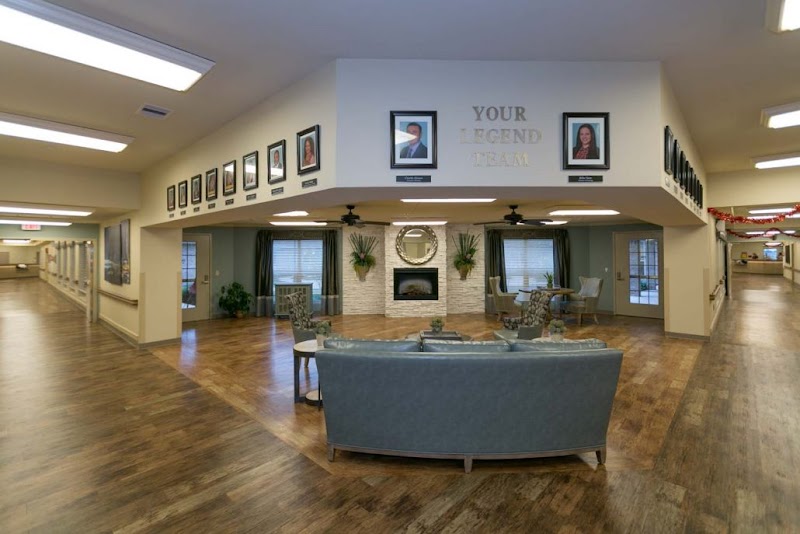
How is Legend Oaks Healthcare And Rehabilitation - New Br Staffed?

CMS rates LEGEND OAKS HEALTHCARE AND REHABILITATION - NEW BR's staffing level at 2 out of 5 stars, which is below average compared to other nursing homes. Staff turnover is 46%, compared to the Texas average of 46%. This relatively stable workforce can support continuity of care.

What Have Inspectors Found at Legend Oaks Healthcare And Rehabilitation - New Br?

State health inspectors documented 35 deficiencies at LEGEND OAKS HEALTHCARE AND REHABILITATION - NEW BR during 2022 to 2025. These included: 35 with potential for harm.

Who Owns and Operates Legend Oaks Healthcare And Rehabilitation - New Br?

LEGEND OAKS HEALTHCARE AND REHABILITATION - NEW BR is owned by a government entity. Government-operated facilities are typically run by state, county, or municipal agencies. The facility is operated by THE ENSIGN GROUP, a chain that manages multiple nursing homes. With 126 certified beds and approximately 113 residents (about 90% occupancy), it is a mid-sized facility located in NEW BRAUNFELS, Texas.
How Does Legend Oaks Healthcare And Rehabilitation - New Br Compare to Other Texas Nursing Homes?

Compared to the 100 nursing homes in Texas, LEGEND OAKS HEALTHCARE AND REHABILITATION - NEW BR's overall rating (3 stars) is above the state average of 2.8, staff turnover (46%) is near the state average of 46%, and health inspection rating (3 stars) is at the national benchmark.

What Should Families Ask When Visiting Legend Oaks Healthcare And Rehabilitation - New Br?

Based on this facility's data, families visiting should ask: "Can you walk me through typical staffing levels on day, evening, and night shifts?" "Can I visit during a mealtime to observe dining assistance and food quality?" "How do you handle medical emergencies, and what is your hospital transfer rate?" "Can I speak with family members of current residents about their experience?" These questions are particularly relevant given the below-average staffing rating.

Is Legend Oaks Healthcare And Rehabilitation - New Br Safe?

Based on CMS inspection data, LEGEND OAKS HEALTHCARE AND REHABILITATION - NEW BR has a clean safety record: no substantiated abuse findings (meaning no confirmed cases of resident harm), no Immediate Jeopardy citations (the most serious violation level indicating risk of serious injury or death), and is not on the Special Focus Facility watch list (a federal program monitoring the lowest-performing 1% of nursing homes). The facility has a 3-star overall rating and ranks #1 of 100 nursing homes in Texas. While no facility is perfect, families should still ask about staff-to-resident ratios and recent inspection results during their visit.

Do Nurses at Legend Oaks Healthcare And Rehabilitation - New Br Stick Around?

LEGEND OAKS HEALTHCARE AND REHABILITATION - NEW BR has a staff turnover rate of 46%, which is about average for Texas nursing homes (state average: 46%). Moderate turnover is common in nursing homes, but families should still ask about staff tenure and how the facility maintains care continuity when employees leave.

Was Legend Oaks Healthcare And Rehabilitation - New Br Ever Fined?

LEGEND OAKS HEALTHCARE AND REHABILITATION - NEW BR has no federal fines on record. CMS issues fines when nursing homes fail to meet care standards or don't correct problems found during inspections. The absence of fines suggests the facility has either maintained compliance or corrected any issues before penalties were assessed. This is a positive indicator, though families should still review recent inspection reports for the full picture.

Is Legend Oaks Healthcare And Rehabilitation - New Br on Any Federal Watch List?

LEGEND OAKS HEALTHCARE AND REHABILITATION - NEW BR is not on any federal watch list. The most significant is the Special Focus Facility (SFF) program, which identifies the bottom 1% of nursing homes nationally based on persistent, serious quality problems. Not being on this list means the facility has avoided the pattern of deficiencies that triggers enhanced federal oversight. This is a positive indicator, though families should still review the facility's inspection history directly.