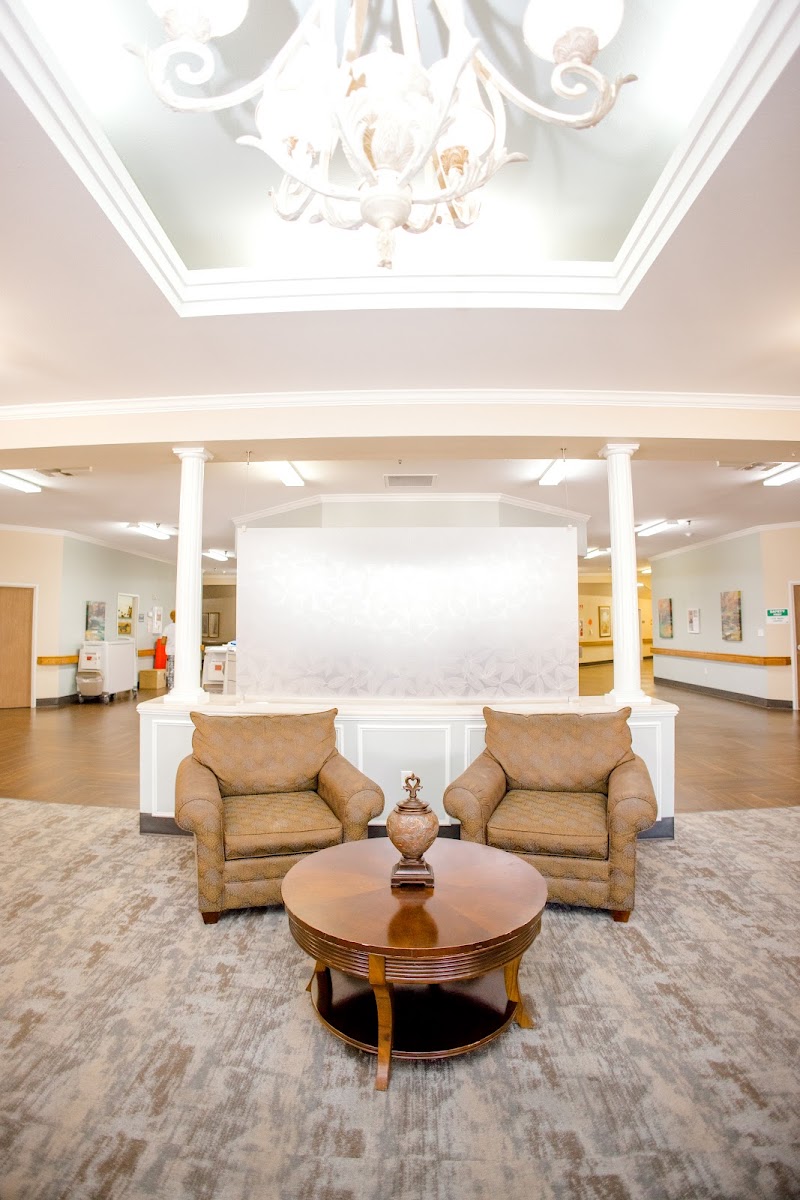
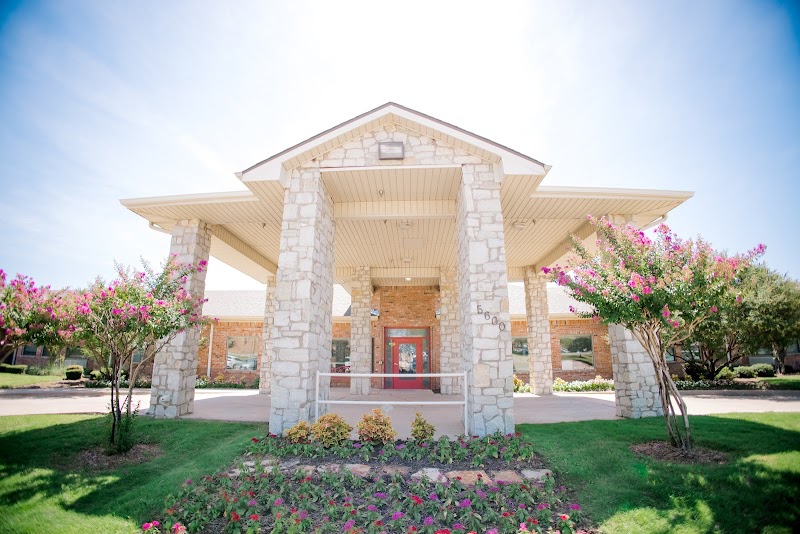
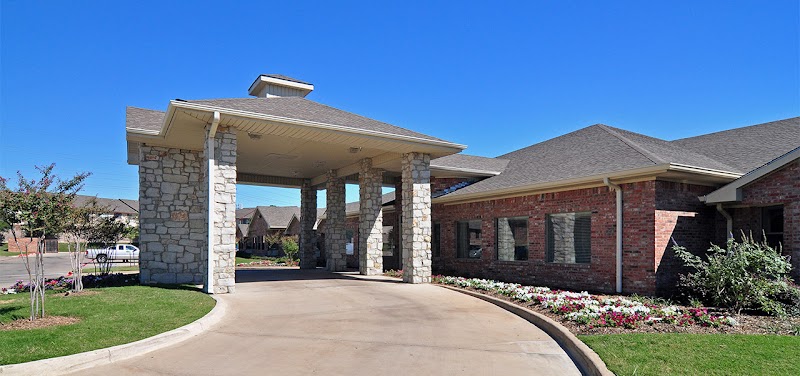
Emerald Hills Rehabilitation and Healthcare Center

5600 Davis Blvd, North Richland Hills, TX 76180 (817) 503-4700
For profit - Limited Liability company 118 Beds SUMMIT LTC Data: November 2025 2 Immediate Jeopardy citations
Trust Grade
11/100
#702 of 1168 in TX
Last Inspection: April 2025

Within standard 12-15 month inspection cycle. Federal law requires annual inspections.

Overview

Emerald Hills Rehabilitation and Healthcare Center has a Trust Grade of F, indicating significant concerns and poor overall quality. Ranked #702 out of 1168 facilities in Texas, they are in the bottom half, and at #39 out of 69 in Tarrant County, only one local option is better. The facility shows an improving trend, with issues decreasing from 7 in 2024 to 6 in 2025, but still faces serious challenges, including a concerning $316,455 in fines, which is higher than 96% of Texas facilities. Staffing is a weakness with a 56% turnover rate, and there is less RN coverage than 91% of state facilities, which could impact care quality. Specific incidents include a failure to prevent abuse and neglect, where a resident suffered serious injuries due to inadequate supervision, and issues with food safety in the kitchen, risking residents' health.

Trust Score
F
11/100
In Texas
#702/1168
Bottom 40%
Safety Record
High Risk
Review needed
Inspections
Getting Better
7 → 6 violations
Staff Stability
⚠ Watch
56% turnover. Above average. Higher turnover means staff may not know residents' routines.
Penalties
○ Average
$316,455 in fines. Higher than 71% of Texas facilities. Some compliance issues.
Skilled Nurses
⚠ Watch
Each resident gets only 11 minutes of Registered Nurse (RN) attention daily — below average for Texas. Fewer RN minutes means fewer trained eyes watching for problems.
Violations
⚠ Watch
19 deficiencies on record. Higher than average. Multiple issues found across inspections.
★★☆☆☆
2.0
Overall Rating
★★☆☆☆
2.0
Staff Levels
★★★★☆
4.0
Care Quality
★★☆☆☆
2.0
Inspection Score
Stable
2024: 7 issues
2025: 6 issues

The Good

  • 4-Star Quality Measures · Strong clinical quality outcomes
  • Full Sprinkler Coverage · Fire safety systems throughout facility
  • No fines on record

Facility shows strength in quality measures, fire safety.

The Bad

2-Star Overall Rating

Below Texas average (2.8)

Below average - review inspection findings carefully

Staff Turnover: 56%

Near Texas avg (46%)

Frequent staff changes - ask about care continuity

Federal Fines: $316,455

Well above median ($33,413)

Significant penalties indicating serious issues

Chain: SUMMIT LTC

Part of a multi-facility chain

Ask about local staffing decisions and management

Staff turnover is elevated (56%)

8 points above Texas average of 48%

The Ugly 19 deficiencies on record

2 life-threatening
Jun 2025 4 deficiencies 2 IJ
CRITICAL (J) 📢 Someone Reported This

A family member, employee, or ombudsman was alarmed enough to file a formal complaint

Immediate Jeopardy (IJ) - the most serious Medicare violation

Abuse Prevention Policies (Tag F0607)

Someone could have died · This affected 1 resident

**NOTE- TERMS IN BRACKETS HAVE BEEN EDITED TO PROTECT CONFIDENTIALITY** Based on observation, interview, and record review, the facility failed to develop and implement written policies and procedures...

Read full inspector narrative →
**NOTE- TERMS IN BRACKETS HAVE BEEN EDITED TO PROTECT CONFIDENTIALITY** Based on observation, interview, and record review, the facility failed to develop and implement written policies and procedures that prohibited and prevented abuse, neglect, and exploitation of residents and misappropriation of resident property for one of one resident (Resident #1) reviewed for abuse, neglect, and exploitation. The facility failed to implement their policies and procedures to ensure Resident #1 was free from neglect when the facility failed to have effective interventions and services in place to address the resident's care, which resulted in Resident #1 sustaining injuries of ICH (intracerebral hemorrhage (type of stroke bleeding on the brain tissue due to a ruptured blood vessel), and a closed displaced intertrochanteric fracture of left femur with routine healing Normocytic anemia (is a complex medical condition involving a broken hip bone that has shifted out of place, along with a type of anemia.) An Immediate Jeopardy (IJ) was identified on 06/24/2025 at 4:30 PM While the Immediate Jeopardy was removed on 06/25/24, the facility remained out of compliance at the severity level of no actual harm with potential for more than minimal harm and at a scope of isolated due to the facility's need to implement and monitor the effectiveness of its corrective systems. The failure could place residents at risk for serious injuries, hospitalization, and death. Findings included: Record review of Resident #1's face sheet dated 06/24/2025 reflected the resident was a [AGE] year-old female admitted on [DATE] with active diagnoses that included unspecified cerebral infarction (stroke), displaced intertrochanteric fracture of left femur, subsequent encounter for closed fracture with routine healing, Pain, repeated falls, Major depressive disorder (feeling down), and Vascular dementia unspecified severity without behavioral disturbances, Depression, Alzheimer's, and insomnia. Record review of Resident #1's admission MDS assessment dated [DATE] reflected she had minimal difficulty with hearing, clear speech, understood by others and usually understood other. Resident #1's vision was moderately impaired, and she wore corrective lenses. Resident #1 was assessed as having a BIMS score of 08, indicating she was moderately impaired cognitively. She had no mood issues, no behaviors, psychosis, rejection of care or wandering. Resident #1 had no impairments with range of motion to her upper and lower extremities. Resident #1 used a wheelchair for mobility and was dependent on staff for all ADLs to include dressing, hygiene, transfers, eating and basic mobility. Resident #1 was frequently incontinent of bowel and bladder and required substantial/maximal assistance (helper does more than half the effort. (Helper lifts or holds trunk, limbs and provides more than half effort.). Resident #1 scored a 9 on functional abilities for sit to stand and walking 10 ft (the ability to come to a standing position from sitting in a chair, wheelchair, or on the side of the bed.) Resident #1's fall history on admission MDS reflected that Resident #1 had repeated falls and had fallen with since being admitted . Resident #1 did not sustain any injuries. Record review of Resident #1's discharge MDS assessment dated [DATE] reflected an unplanned discharge to short term general hospital. Resident #1 was dependent on staff for all ADLs to include dressing, hygiene, transfers, eating and basic mobility. Resident #1 was frequently incontinent of bowel and bladder. Resident #1's was not receiving any special treatments. The assessment reflected she had fall history. Record review of Resident #1's change in condition MDS assessment dated [DATE] reflected she needed an interpreter, due to preferred language being Spanish . She had minimal difficulty with hearing and had clear speech. Resident #1 was able to communicate needs to others. Resident #1 was assessed as having a BIMS score of 07, indicating she was severely impaired cognitively. She had no mood issues, behaviors of rejecting care 4 to 6 days of care no wandering. Resident #1 had no impairments with range of motion to her upper and lower extremities. Resident #1 used a wheelchair for mobility and was dependent on staff for all ADLs to include dressing, hygiene, transfers, eating and basic mobility. Resident #1 was always incontinent of bowel and bladder. Active diagnoses dementia, Stroke, Arthritis (crippling in joints), Osteoporosis (fragile bones from aging), displaced intertrochanteric fracture of the left femur, subsequent encounter (displaced intertrochanteric fracture of left femur, subsequent encounter for closed fracture with routine healing,) Vascular dementia unspecified severity without behavioral disturbances, Hip Fracture. Additional diagnoses included Unspecified Sequelae of cerebral infarction (after-effects of a stroke), and repeated falls. Resident #1's was not receiving any special treatments. Assessment reflected she had fall history. Record review of Resident #1's care plan dated 04/15/2025 reflected . The resident has visual and cognitive deficits and needs assistance to pursue activities of choice and Category: created The resident has a /communication problem r/t dementia and primarily Spanish speaking Created: 05/01/2025 .interventions .anticipate needs, ensure availability and functioning of adaptive communication equipment (picture board) ensures safe environment: call light in reach, adequate low glare light, bed in lowest position, wheels locked, avoid isolation .Monitor/document for physical/nonverbal indicators of discomfort or distress, and follow up as needed Resident has impaired visual functioning and is at risk for a decreased in ADL's and Injuries Created: 05/01/2025 . Resident has impaired cognitive function/dementia or impaired thought processes r/t DX vascular dementia Created: 05/01/2025 resident requires pain management with opiate medications r/t terminal status and hip FX . Resident requires Hospice as evidenced by terminal illness of: inter-cerebral hemorrhage Edited: 06/09/2025 . Category: Falls Resident had an actual fall r/t poor safety awareness, attempting to transfer self, weakness, HX falls . Do not leave unattended in bathroom .remind resident to use call light to gain assistance with transfers, continue therapy services, Edited: 05/27/2025 Resident has Post-op site on L hip, skin tear to L elbow edited 6/11/2025, Resident has surgical wound to L hip R/T .Edited: 06/24/2025 Resident #1 was at risk of falls, r/t weakness, poor safety awareness, skin tears, bruising. Skin assessment addressed bruising and tears, fall assessment completed. Record review of Resident #1's physician's orders dated 06/08/2025 reflected admit to Hospice for DX of intracerebral Hemorrhage (bleeding) at Bedtime 8:00 PM . Record review of orders dated 06/09/2025 reflected: Monitor edema (swelling caused by fluid) Twice a Day 6:00 AM - 2:00 PM days, 3:00 PM - 10:00 PM evenings .Opiate (A class of drug used to reduce moderate to severe pain) medications use .monitor for s/sx of constipation (trouble having a bowel movement), delirium (confusion), over-sedation (drowsy/sleep), change in mental status (overall functions cognitively, mentally, emotionally), and reduced respirations (breaths) . Pain Assessment Q-Shift using the Numeric (relating to or expressed as a number or numbers.) or PAIN scale Special Instructions: document results Every Shift Days 6:00 AM - 2:00 PM, Evenings 2:00 PM - 10:00 PM, Nights 10:00 PM - 06:00 AM . order dated. PT/OT/ST to evaluate and treat if indicated . Record review of Resident #1's MD order dated 06/10/2025 reflected Give 1 tablet; 50 mg zinc (220 mg); amt: 1 tab; oral Once a Day. Record review of Resident #1's MD orders dated 06/12/2025 reflected LLE TTWB due to DTI Every Shift Days 06:00 AM - 2:00 PM evenings, 3:00 PM - 10:00 PM evenings Left hip post OP site: Monitor for s/s infection or dehiscence (medical term, dehiscence refers to the separation or splitting open of a surgical wound or incision that was previously closed) if present notify MD Every Shift Days 6:00 AM - 2:00 PM, Evenings 2:00 PM - 10:00 PM, Nights 10:00 PM - 06:00 AM . Record review of Resident #1's MD an order dated 07/08/2025 Other Test: (LEFT Hip X-Ray Unilateral 2-3 V (unilateral radiologic examination of a joint or structure, consisting of 2 to 3 views.) .including pelvis with CD (In a medical context, when you see pelvis with CD it most likely refers to a pelvic CT scan that includes images recorded onto a CD.) Once - One Time 06:00 AM -11:00 PM. Record review of Resident #1's skin assessment note dated 06/10/2025 at 12:23 PM reflected under description (skin tear/Laceration). Record review of Resident #1's progress notes on 04/15/2025 at 10:40 AM by LVN-C reflected Pt was up in w/c reading daily journal in her room. This nurse was informed 10:40 by aid that when she was rounding Pt was attempting to get back in bed self and was caught by the aid before she could hit the floor. Pt was landed on her knees and was put back in bed with the help. Denies pain. ROM TO all ext. ALL parties notified. Fall precautions implemented. Bed in lowest position. encouraged pt to use call light for assistance. Frequent visual monitoring done. will cont. to follow POC. Record review of Resident #1's nursing progress note dated 05/20/2025 at 6:29 PM by RN-S reflected Around 3:40 PM this nurse was aware by CNA that the pt is in the floor. Upon entering the room Resident found on the floor in the bathroom on side lying position, wheelchair is locked next to her. Assisted her back to wheelchair with the help of two person. Vital sign WNL. On assessment noticed small skin tear on It elbow with small amount of blood, dressing done. Notified wound care nurse. alert and orient with her baseline. Vitals WNL. Resident states she fell when transferring from commode to wheelchair herself. Complained of L leg pain, Tylenol 650 mg po given, somewhat effective. NP, DON/ADON notified. RP made aware. Received new order to stat X-ray L Hip from NP. updated on portal. Neuros on progress and within normal limits. Bed in low position. fall precaution maintained. will cont. to monitor. Record review of Resident #1's nursing progress note dated 05/20/2025 at 9:12 PM by RN-S reflected that X-ray of hip shows left femoral neck fracture. MD made aware. Called 911 and sent to [hospital]around 10 PM. Record review of Resident #1's nursing progress note dated 05/20/2025 at 9:43 PM by LVN-M reflected Spoke with [family member] directly about situation he states that he is in route to [hospital name] now and okay with mother being sent in ambulance. Record review of Resident #1's nursing progress note dated 06/08/2025 by LVN-A reflected Resident came back from the hospital on a non-emergency transportation on a stretcher and was transferred from stretcher to bed Resident had a fall in the facility and sustained a left hip fracture. Surgery was performed and has stitches on the left hip. Dressing is intact and surgical incision is showing visible signs of any infection or drainage. Resident is admitted on services [Hospice] visited the facility. [Hospice] is do present the DNR paper. Hospice has ordered to continue with the discharge orders. Resident is on day 1/3 of follow up for new medication (Tramadol) 50 mg every 4 hours for pain. Clarification is needed from hospice for delivery of Tramadol since order came from them. Hospice has also ordered Comfort Kit. Dietary is notified of the resident coming back. No complains of pain is voiced by resident. Oral fluids and call light is in easy reach. no paper. Hospice has ordered to continue with the discharge orders. Record review of Resident #1's nursing progress note dated 06/09/2025 at 1:13 PM by ADON reflected Follow up monitoring Day 1 of 3 of Re-admit with DX: L hip FX SX (symptoms) repair. AAOx1-2 (refers to the level of alertness and orientation, specifically indicating that a person is aware of who they are and where they are but may not know the current date and time (A&Ox1) or also what happened to them (A&Ox2). Spanish speaking. Under [hospice name]. Respiratory even and unlabored. No sob noted. No cough congestion noted. L hip surgical incision dressing CDI. Denies pain or any other discomfort at this time, Abdomen soft and non-distended bsx4. appetite fair. [Family member] present at bedside. Incontinent to B&B. Wound on Coccyx. (The small, triangular bone at the very bottom of the spine.) Wound care in progress. Turned and repositioned at regular intervals. call light and bedside table within reach. Bed in lowest position. Fall precautions implemented through the shift. call light within reach. will cont. to follow POC. Record review of Resident #1's nursing progress note dated 06/11/2025 at 7:36 AM by the ADON reflected IDT review regarding skin tear to right elbow, obtained during assisted dressing with hospice aide, resident noted with thin/fragile skin resulting in increased risk of injury, site appears with steri strips intact no s/s infection or pain present, Geri sleeves applied for safety. Record review of progress note dated 06/11/2025 10:41 AM by LVN-C reflected Follow up monitoring Day 3 of 3 of Re-admit with DX: L hip FX SX repair. AAOx1-2. Resting in bed with HOB elevated to facilitate easy breathing. Spanish speaking. Under [hospice name]. Resp even and unlabored. No sob noted. No cough congestion noted. L hip surgical incision dressing CDI. Medicated with PRN Tramadol. remains effective. Abdomen soft and non-distended bsx4 (Bowel sounds x 4 quadrants refers to the process of listening to the digestive sounds in all four quadrants of the abdomen ) appetite remains poor. D1/3 of new orders of vitamin C, Zinc, House protein, 2.0 supplement, mm with min. Incontinent to B&B. Wound on Coccyx. LLE TTWB r/t DTI. Steri-Strips intact on R elbow. wound care in progress. Off loaded bilateral (in a medical context refers to the process of reducing or removing pressure from the heels on both the right and left sides of the body.) heels when in bed. Turned and repositioned at regular intervals. Ortho appt in am. call light and bedside table within reach. Bed in lowest position. Fall precautions implemented through the shift. call light within reach. will cont. to follow POC. Record review of Resident #1's nursing progress note dated 06/11/2025 at 12:40 PM by the ADON reflected left hip f/u X-ray results received and sent to NP for review NNOs (Neuronal nitric oxide syntheses (NNOS) is an enzyme that produces nitric oxide (NO), a potentially harmful molecule implicated in fetal brain injury under .) obtained, disk received for f/u Ortho appt. Record review of Resident #1's nursing progress notes dated 06/11/2025 at 10:49 AM by the ADON reflected Notified by [family member] of Ortho f/u appt on 6/12/20, f/u X-ray to left hip scheduled for STAT today with CD for appt. tomorrow. Record review of Resident #1's nursing progress notes dated 06/12/2025 at 1:52 PM by the ADON reflected Returned from Ortho appt, staples DC' D steri strips in place, LOTA, TX orders updated. Record review of Resident #1's nursing progress notes dated 06/12/2025 05:11 AM by the ADON reflected (L) hip FX sx repair; surgical dressings on L leg kept CDI; resident slept during shift with respirations even and unlabored. Day 2/3 F/U 2.0 suppository 90 cc TID, house protein 30 cc PO BID, Vit C, Zinc, and MVM with min and skin tear with steri strips. LLE TTWB r/t DTI to (L) heel; no complaints from resident at this time. Bed in low position with call light attached. Record review of Resident #1's nursing progress notes 06/23/2025 at 3:49 AM by LVN-C reflected resident with Steri-Strips to L Hip. LLE TTWB R/T DTI to L heel. Offload bilateral heels while in bed (in a medical context refers to the process of reducing or removing pressure from the heels on both the right and left sides of the body.). No c/o pain. Call-light within reach. Record review of Resident #1's nursing progress notes 06/23/2025 at 10:22 PM by LVN-C reflected Resident with Steri-Strips to L Hip. LLE TTWB R/T DTI to L heel. Offload bilatateral heels while in bed. No c/o pain. Call-light within reach. Record review of Resident #1 event note dated 06/10/25 at 12:23 PM by the ADON reflected IDT review: witnessed: no injuries: skin tear right elbow sent to ER: not indicated all parties aware: yes intervention: Geri sleeves BUE HX of similar events: Physician notified at 10:30 AM, Resident Representative notified at 12:27 PM, Care plan revised. During an interview on 06/24/2025 at 10:15 AM with the ADMIN, revealed that he was familiar with the incident involving Resident #1. The ADMIN stated the incident occurred on 05/20/2025 and he did not investigate or submit a self-report for the incident. The ADMIN said he did not have the staff write a statement detailing the incident, however, he would check for a written statement. The ADMIN was asked to provide names of the staff involved, daily schedules of the staff with their full name documented for the day of the incident, and an employee roster. The ADMIN stated that there were two aides involved and he would provide their names. The ADMIN stated the CNA-F placed resident on the toilet, then told CNA-J that Resident #1 was left on the toilet and follow up with checks on the resident. The ADMIN stated that Resident #1 was left on the toilet for 5 minutes. The ADMIN stated they requested privacy and waived her hand for CNA-F to leave the bathroom. The ADMIN said after 5 minutes had passed CNA-F returned to Resident #1's room to check on her and heard her fall. The ADMIN said CNA-F called out for CNA-J to come and help with the resident to transfer her off the bathroom floor. The ADMIN stated that RN-S assessed Resident #1 and notified the MD, ADMIN, ADON, RNC, and POA. The MD ordered X-rays immediately. The ADMIN stated once the X-ray results were reviewed by the MD, EMS was called, and she was transported to the hospital emergency room. The ADMIN said Resident #1 returned from the hospital with hospice services and assessments for therapy. The ADMIN stated that the facility did not have a DON currently and the RNC and ADON were in charge of the nursing department. The ADMIN stated that the RNC was not at the facility at this time. He stated that the resident requested privacy from the CNA -F and it was granted. During an interview on 06/24/2025 at 10:25 AM the ADON stated that the hospital records located in the Resident #1's clinical file to review. The ADON stated that the POA was notified and later visited Resident #1. The ADON stated that Resident #1 received immediate care after her fall by RN-S and CNA-F. She said Resident #1 had a skin tear to her left elbow. She said RN-S assessed Resident #1, notified the on-call nurse, RNC, ADON, and POA. ADON said the MD ordered immediate X-rays for the resident. The ADON said once the X-ray result was reviewed by the MD, Resident #1 was sent out via emergency transport to the hospital, where it was later confirmed she had a fractured hip. The ADON said hospice services were ordered upon her return to the facility on [DATE]. The ADON stated Resident #1 had a previous fall incident and almost fell, but a CNA (name unknown), was present and prevented the fall. The ADON stated that Resident #1 was assessed, and the facility recorded the incident and followed the fall protocol. The ADON said Resident #1 was assessed for falls, the care plan was updated, and she was placed on 72-hour post fall observation and monitoring as a precaution on 04/15/2025. On 06/24/2025 at 10:30 AM, the ADON provided the names of the staff involved without contact information. During and observation and interview of on 06/24/2025 at 11:13 AM Resident #1, revealed she was Spanish speaking with some English. Resident #1 said she did not know how she fell and did not remember. She stated that she did not know how to use the call light. Resident #1 was lying in bed; a fall mat was next to bed and the call light was in reach. Upon further observation Resident #1's communication board/picture board was not in the room. During an interview on 06/24/2025 at 11:15 AM with the FM, she stated that Resident #1 had dementia and could not use the call light. The FM stated that Resident #1 was unable to use the call light, due to her dementia. FM said Resident #1 required total assistance from staff. The FM said Resident #1 had a communication/picture board for communication. FM said she searched for Resident #1's communication picture board, and it was not in her room. The FM said upon returning to the facility she and the POA installed a video camera to supervise and communicate with Resident #1. The FM said she and the POA had not observed the staff utilizing the picture board to communicate with Resident #1 since returning to the facility on [DATE]. The FM said Resident #1 could respond to some questions, but the picture board was implemented by the facility to assist with communicating her needs to the staff. FM said she later found out by the POA that the communication board sent home at the time of discharge to the hospital. The FM said Resident #1 had declined significantly, she is bed bound most of the day, and receives hospice care due to bleeding on the brain from the fall 05/20/2025. During a phone interview on 06/24/2025 at 11:51 AM with the POA, the POA stated that he received a call from the facility that Resident #1 had fell in the bathroom and the MD ordered X rays. The POA said he arrived at the facility on 05/20/2025 an hour after the call (exact time unknown) and observed 1 shoe of Resident #1 and blood still on the bathroom floor from Resident #1's fall. The POA said Resident #1 could not use the call light, despite ongoing education by the staff, FM, and POA. The POA said Resident #1 was a fall risk from a previous fall in April 2025. The POA said Resident #1 should have never been left on the toilet alone. The POA said the staff were not using the picture board to communicate with Resident #1. The POA said he believes Resident #1 was left alone on the toilet for more than 5 minutes, causing the fall and injuries on 05/20/2025. The POA said after the fall he installed a camera and communicates with Resident #1 via camera. The POA said the staff assigned was aware of Resident #1's needs to be supervised due to falls, yet she left Resident #1 on the toilet unsupervised. The POA said he has observed staff taking 25 minutes to take Resident #1 to the bathroom, then leave the resident alone. POA said Resident #1 was not able to ask for privacy from the staff due to her cognitive decline. The POA said he does not believe that the staff were near the bathroom when Resident #1 fell. POA said he does not know the name of the staff that was working. POA said upon arrival to the hospital he was told that Resident #1 had a femur and hip fracture on the left side, skin tears to the left elbow, bleeding on the brain, and was being monitored. POA said the hospital conducted surgery to repair Resident #1's hip. POA said Resident #1's mental acuteness (awareness) had diminished since the fall. POA said Resident #1 was admitted to the facility to receive care, and now that she fell and was hospitalized , she requires total staff assistance. During a phone interview on 06/24/2025 at 2:10 PM with CNA-F, revealed as she was walking past Resident #1's room she observed the resident trying to get out of bed independently. She went to assist the resident, and she could not understand her response and what she was saying, because the resident was speaking in Spanish. CNA-F said she called CNA-J (a Spanish speaking employee) to communicate Resident #1's needs. CNA-J told CNA-F that Resident #1 wanted to put her pajamas on for bed. CNA-F said once Resident #1 was dressed, she returned the resident to sit in her wheelchair, and she attempted to get out of the chair. CNA-F said she assumed Resident #1 wanted to go to the bathroom, so she assisted. CNA-F said Resident #1 was transferred to the toilet in her bathroom. CNA-F said she remained in the bathroom initially, until Resident #1 gestured with her hand to leave the restroom. CNA-F said she notified CNA-J caring for a patient in another room, that Resident #1 was on the toilet, and to check on her while she resumed care of another resident. CNA-F said about 2 to 3 minutes later as she was walking down the hall, she remembered Resident #1 was on the toilet. CNA-F said as she entered the room, she heard Resident #1 fall. She immediately called RN-S for help. CNA-F said the fall was unwitnessed, and did not think Resident #1 hit her head. CNA-F said Resident #1 was bleeding from her left elbow. CNA- F said Resident #1 was in pain. CNA-F said she did not observe any other injuries, lumps, or bruising to the head. She was in pain. CNA-F said Resident #1 was talking and answering the nurse's questions and responding. CNA-F said she was not familiar with Resident #1's clinical needs nor could she speak Spanish. CNF-A said she did not know that Resident #1 was a fall risk and could not be left alone in the bathroom. She said this was a one-time incident and she gave the resident privacy. During an interview on 06/24/2025 at 2:15 PM with RN-S, revealed she had been working at the facility for 9 months. RN S stated that she was familiar with Resident #1's care and knew that she was a fall risk. RN-S said she worked the day of Resident #1's fall, 05/20/2025. RN-S said CNA-F called for her assistance with a resident that fell, so she immediately responded to the room. RN-S said Resident #1 was found lying on the floor in the bathroom on her left side with a skin tear to the left elbow. RN-S said the resident was alert and communicating with her and she did not lose consciousness. RN-S said the resident understood English and Spanish. RN-S and CNA-F assisted Resident #1 to the wheelchair. RN-S said she called the MD and the on-call nurse to report the incident. RN-S stated that the MD ordered immediate Xray's. RN-S notified the POA, and he wanted to delay sending Resident #1 to the hospital, and she explained that the facility policy was to provide immediate care and transport to the hospital for further assessment of the injuries. RN-S said she gave her Tylenol for pain at 6:25 PM. RN-S said the portable X-ray technician arrived 9:00 PM. RN-S said once the X-ray's were reviewed by the MD resident was sent to the hospital. RN-S said Resident #1's base line prior to fall included providing assistance to stand, eat, and all care. RN-S denied knowledge of Resident #1 having a picture board to communicate with staff. RN-S said Resident #1's cognition was the same after the fall, she had not observed any changes. RN-S said Resident #1 used non-verbal signals to communicate and she could answer yes and no to most questions. She said she was aware that Resident #1 was a fall risk. RN-S said Resident #1 should not be left alone, due to a history of falls and decline in cognition. During an interview on 06/24/2025 at 2:38 PM with CNA-J revealed she had placed Resident 1# in bed and proceeded to assist another resident with care. CNA-J said CNA-F did not tell her that the resident was in the bathroom on the toilet and to monitor. CNA-J stated that Resident #1 requires assistance from the staff with transfers and she could not self-transfer or ambulate. CNA-J said she would not have left Resident #1 unsupervised or alone in the bathroom, due to her diagnosis of Dementia and increased confusion. CNA-J said Resident #1 communicate in Spanish and say yes and no. She does not know how long CNA-F left Resident #1 on the toilet. CNA-J was told about the incident later that evening. CNA-J said CNA-F and the nurse responded to the fall. CNA-J said residents should never be left alone on the toilet, because a frequent movement could result in a fall. During an interview on 06/24/2025 at 5:00 PM with the ADMIN, revealed that that CNA-F notified CNA J to monitor Resident #1 on the toilet. The ADMIN insisted that the resident was being monitored by CNA-J and had been left for 2 to 3 minutes. The ADMIN stated that Resident #1 was a fall risk at her bedside, not in the bathroom, and she had a right to request privacy. The ADMIN said any resident could fall from the toilet and have injuries. The ADMIN returned at 5:34 PM and stated that he was not sure if he had statements, and he had to investigate further because CNA-J's and CNA-F's stories were not adding up. The surveyor stated that in the interview with CNA-F, she stated that the nurse was immediately notified not CNA-J. The ADMIN stated that he may have confused the staff statements with notification of help when Resident #1 fell. During another interview with the ADON on 06/24/2025 at 6:09 PM with the ADON she stated that the resident could use the call light prior to the fall. The surveyor explained that the resident stated she did not know how to use the call light this morning during an interview. The ADON stated that she could before the fall now she couldn't. The ADON was asked about the communication board that was care planned to communicate with the staff. She said she did not know where it was. The surveyor told her the FM stated that the board was sent home upon her discharge to hospital on 5/20/25. She said if they picked the communication board up and did not return, there was nothing she could do. She stated the resident could not communicate. The surveyor asked if pictures of tasks were documented on the board, and she said yes. The surveyor asked if the communication board was care planned currently, she said yes. During an interview with the ADMIN on 06/25/2025 at 12:10 PM he stated that he did not submit a self-report to HHS about the incident, however, he completed the investigation on 05/26/25. Record review of CNA-F written statement dated 5/20/25 (provided by the ADMIN on 06/24/2025 at 5:50 PM ADMIN) reflected CNA-F did not seek further assistance from anyone, and while she was attending to another task, Resident #1 may have been unsupervised longer than 1 to 3 minutes. During a second interview on 06/26/2025 at 11:02 AM the PO, stated that Resident #1 was not able to verbalize how she fell after being asked several times by him, the FM, and the staff. The POA denied hearing Resident #1 say what happened on 05/20/2025, and he never translated or communicated a statement from Resident #1 to the ADMIN or staff at the facility about the fall. During a second interview with the FM on 06/30/2025 at 11:40 AM, she stated that Resident #1 was unable to communicate what happened with the fall, due to her dementia, and injuries after the fall. She stated that she had asked Resident #1 on multiple occasions with the POA, and she couldn't recall what occurred. Record review of facility investigation completed by the ADMIN on 05/26/2025 revealed investigation report Subject: Incident Involving Resident #1 - Bathroom Fall Resulting in Hip Fracture Resident Information: Name: [Resident # 1] Date of Incident: May 20, 2025, Date Reported: May 20, 2025, Cognitive Status: BIM's Score - 8 Primary Language: Spanish and speaks some English. Incident Summary: On May 20, 2025, I, [ADMIN] LNFA, was notified of an X-ray result confirming that Resident # 1 sustained a fractured hip following a fall in the bathroom. Upon notification, I immediately contacted [name] ADON, and [name] ADON-T, to begin reviewing the details of the incident. Narrative of Events: According to documentation and staff interviews: o [CNA-F] escorted [Resident #1] to the restroom. o The resident requested privacy by verbally dismissing CNA-[CNA-F] and pointing to the call light cord, indicating she understood how to call for assistance. [TRUNCATED]
CRITICAL (J) 📢 Someone Reported This

A family member, employee, or ombudsman was alarmed enough to file a formal complaint

Immediate Jeopardy (IJ) - the most serious Medicare violation

Accident Prevention (Tag F0689)

Someone could have died · This affected 1 resident

**NOTE- TERMS IN BRACKETS HAVE BEEN EDITED TO PROTECT CONFIDENTIALITY** Based on observation, interview, and record review, the facility failed to ensure the residents received adequate supervision a...

Read full inspector narrative →
**NOTE- TERMS IN BRACKETS HAVE BEEN EDITED TO PROTECT CONFIDENTIALITY** Based on observation, interview, and record review, the facility failed to ensure the residents received adequate supervision and assistive devices to prevent accidents for 1 resident of 8 residents (Resident #1) reviewed for assistive devices and supervision. The facility failed to ensure Resident #1 received adequate supervision and care in accordance with professional standards when the resident was left attended on the toilet resulting in her falling and sustaining fractures to the Femur and left Hip. Additional injuries included ICH (intracerebral hemorrhage (type of stroke bleeding on the brain tissue due to a ruptured blood vessel), Normocytic anemia (is a complex medical condition involving a broken hip bone that has shifted out of place, along with a type of anemia.) An Immediate Jeopardy (IJ) was identified on 06/24/2025 at 4:30 PM While the Immediate Jeopardy was removed on 06/25/24, the facility remained out of compliance at the severity level of no actual harm with potential for more than minimal harm and at a scope of isolated due to the facility's need to implement and monitor the effectiveness of its corrective systems. The failure could place residents at risk for serious injuries, hospitalization, and death. Findings included: Record review of Resident #1's face sheet dated 06/24/2025 reflected the resident was a [AGE] year-old female admitted on [DATE] with active diagnoses that included unspecified cerebral infarction (stroke), displaced intertrochanteric fracture of left femur, subsequent encounter for closed fracture with routine healing, Pain, repeated falls, Major depressive disorder (feeling down), and Vascular dementia unspecified severity without behavioral disturbances, Depression, Alzheimer's, and insomnia. Record review of Resident #1's admission MDS assessment dated [DATE] reflected she had minimal difficulty with hearing, clear speech, understood by others and usually understood other. Resident #1's vision was moderately impaired, and she wore corrective lenses. Resident #1 was assessed as having a BIMS score of 08, indicating she was moderately impaired cognitively. She had no mood issues, no behaviors, psychosis, rejection of care or wandering. Resident #1 had no impairments with range of motion to her upper and lower extremities. Resident #1 used a wheelchair for mobility and was dependent on staff for all ADLs to include dressing, hygiene, transfers, eating and basic mobility. Resident #1 was frequently incontinent of bowel and bladder and required substantial/maximal assistance (helper does more than half the effort. (Helper lifts or holds trunk, limbs and provides more than half effort.). Resident #1 scored a 9 on functional abilities for sit to stand and walking 10 ft (the ability to come to a standing position from sitting in a chair, wheelchair, or on the side of the bed.) Resident #1's fall history on admission MDS reflected that Resident #1 had repeated falls and had fallen with since being admitted . Resident #1 did not sustain any injuries. Record review of Resident #1's discharge MDS assessment dated [DATE] reflected an unplanned discharge to short term general hospital. Resident #1 was dependent on staff for all ADLs to include dressing, hygiene, transfers, eating and basic mobility. Resident #1 was frequently incontinent of bowel and bladder. Resident #1's was not receiving any special treatments. The assessment reflected she had fall history. Record review of Resident #1's change in condition MDS assessment dated [DATE] reflected she needed an interpreter, due to preferred language being Spanish . She had minimal difficulty with hearing and had clear speech. Resident #1 was able to communicate needs to others. Resident #1 was assessed as having a BIMS score of 07, indicating she was severely impaired cognitively. She had no mood issues, behaviors of rejecting care 4 to 6 days of care no wandering. Resident #1 had no impairments with range of motion to her upper and lower extremities. Resident #1 used a wheelchair for mobility and was dependent on staff for all ADLs to include dressing, hygiene, transfers, eating and basic mobility. Resident #1 was always incontinent of bowel and bladder. Active diagnoses dementia, Stroke, Arthritis (crippling in joints), Osteoporosis (fragile bones from aging), displaced intertrochanteric fracture of the left femur, subsequent encounter (displaced intertrochanteric fracture of left femur, subsequent encounter for closed fracture with routine healing,) Vascular dementia unspecified severity without behavioral disturbances, Hip Fracture. Additional diagnoses included Unspecified Sequelae of cerebral infarction (after-effects of a stroke), and repeated falls. Resident #1's was not receiving any special treatments. Assessment reflected she had fall history. Record review of Resident #1's care plan dated 04/15/2025 reflected . The resident has visual and cognitive deficits and needs assistance to pursue activities of choice and Category: created The resident has a /communication problem r/t dementia and primarily Spanish speaking Created: 05/01/2025 .interventions .anticipate needs, ensure availability and functioning of adaptive communication equipment (picture board) ensures safe environment: call light in reach, adequate low glare light, bed in lowest position, wheels locked, avoid isolation .Monitor/document for physical/nonverbal indicators of discomfort or distress, and follow up as needed Resident has impaired visual functioning and is at risk for a decreased in ADL's and Injuries Created: 05/01/2025 . Resident has impaired cognitive function/dementia or impaired thought processes r/t DX vascular dementia Created: 05/01/2025 resident requires pain management with opiate medications r/t terminal status and hip FX . Resident requires Hospice as evidenced by terminal illness of: inter-cerebral hemorrhage Edited: 06/09/2025 . Category: Falls Resident had an actual fall r/t poor safety awareness, attempting to transfer self, weakness, HX falls . Do not leave unattended in bathroom .remind resident to use call light to gain assistance with transfers, continue therapy services, Edited: 05/27/2025 Resident has Post-op site on L hip, skin tear to L elbow edited 6/11/2025, Resident has surgical wound to L hip R/T .Edited: 06/24/2025 Resident #1 was at risk of falls, r/t weakness, poor safety awareness, skin tears, bruising. Skin assessment addressed bruising and tears, fall assessment completed. Record review of Resident #1's physician's orders dated 06/08/2025 reflected admit to Hospice for DX of intracerebral Hemorrhage (bleeding) at Bedtime 8:00 PM . Record review of orders dated 06/09/2025 reflected: Monitor edema (swelling caused by fluid) Twice a Day 6:00 AM - 2:00 PM days, 3:00 PM - 10:00 PM evenings .Opiate (A class of drug used to reduce moderate to severe pain) medications use .monitor for s/sx of constipation (trouble having a bowel movement), delirium (confusion), over-sedation (drowsy/sleep), change in mental status (overall functions cognitively, mentally, emotionally), and reduced respirations (breaths) . Pain Assessment Q-Shift using the Numeric (relating to or expressed as a number or numbers.) or PAIN scale Special Instructions: document results Every Shift Days 6:00 AM - 2:00 PM, Evenings 2:00 PM - 10:00 PM, Nights 10:00 PM - 06:00 AM . order dated. PT/OT/ST to evaluate and treat if indicated . Record review of Resident #1's MD order dated 06/10/2025 reflected Give 1 tablet; 50 mg zinc (220 mg); amt: 1 tab; oral Once a Day. Record review of Resident #1's MD orders dated 06/12/2025 reflected LLE TTWB due to DTI Every Shift Days 06:00 AM - 2:00 PM evenings, 3:00 PM - 10:00 PM evenings Left hip post OP site: Monitor for s/s infection or dehiscence (medical term, dehiscence refers to the separation or splitting open of a surgical wound or incision that was previously closed) if present notify MD Every Shift Days 6:00 AM - 2:00 PM, Evenings 2:00 PM - 10:00 PM, Nights 10:00 PM - 06:00 AM . Record review of Resident #1's MD an order dated 07/08/2025 Other Test: (LEFT Hip X-Ray Unilateral 2-3 V (unilateral radiologic examination of a joint or structure, consisting of 2 to 3 views.) .including pelvis with CD (In a medical context, when you see pelvis with CD it most likely refers to a pelvic CT scan that includes images recorded onto a CD.) Once - One Time 06:00 AM -11:00 PM. Record review of Resident #1's skin assessment note dated 06/10/2025 at 12:23 PM reflected under description (skin tear/Laceration). Record review of Resident #1's progress notes on 04/15/2025 at 10:40 AM by LVN-C reflected Pt was up in w/c reading daily journal in her room. This nurse was informed 10:40 by aid that when she was rounding Pt was attempting to get back in bed self and was caught by the aid before she could hit the floor. Pt was landed on her knees and was put back in bed with the help. Denies pain. ROM TO all ext. ALL parties notified. Fall precautions implemented. Bed in lowest position. encouraged pt to use call light for assistance. Frequent visual monitoring done. will cont. to follow POC. Record review of Resident #1's nursing progress note dated 05/20/2025 at 6:29 PM by RN-S reflected Around 3:40 PM this nurse was aware by CNA that the pt is in the floor. Upon entering the room Resident found on the floor in the bathroom on side lying position, wheelchair is locked next to her. Assisted her back to wheelchair with the help of two person. Vital sign WNL. On assessment noticed small skin tear on It elbow with small amount of blood, dressing done. Notified wound care nurse. alert and orient with her baseline. Vitals WNL. Resident states she fell when transferring from commode to wheelchair herself. Complained of L leg pain, Tylenol 650 mg P O given, somewhat effective. NP, DON/ADON notified. RP made aware. Received new order to stat X-ray L Hip from NP. updated on portal. Neuros on progress and within normal limits. Bed in low position. fall precaution maintained. will cont. to monitor. Record review of Resident #1's nursing progress note dated 05/20/2025 at 9:12 PM by RN-S reflected that X-ray of hip shows left femoral neck fracture. MD made aware. Called 911 and sent to [hospital]around 10 PM. Record review of Resident #1's nursing progress note dated 05/20/2025 at 9:43 PM by LVN-M reflected Spoke with [family member] directly about situation he states that he is in route to [hospital name] now and okay with mother being sent in ambulance. Record review of Resident #1's nursing progress note dated 06/08/2025 by LVN-A reflected Resident came back from the hospital on a non-emergency transportation on a stretcher and was transferred from stretcher to bed Resident had a fall in the facility and sustained a left hip fracture. Surgery was performed and has stitches on the left hip. Dressing is intact and surgical incision is showing visible signs of any infection or drainage. Resident is admitted on services [Hospice] visited the facility. [Hospice] is do present the DNR paper. Hospice has ordered to continue with the discharge orders. Resident is on day 1/3 of follow up for new medication (Tramadol) 50 mg every 4 hours for pain. Clarification is needed from hospice for delivery of Tramadol since order came from them. Hospice has also ordered Comfort Kit. Dietary is notified of the resident coming back. No complains of pain is voiced by resident. Oral fluids and call light is in easy reach. no paper. Hospice has ordered to continue with the discharge orders. Record review of Resident #1's nursing progress note dated 06/09/2025 at 1:13 PM by ADON reflected Follow up monitoring Day 1 of 3 of Re-admit with DX: L hip FX SX (symptoms) repair. AAOx1-2 (refers to the level of alertness and orientation, specifically indicating that a person is aware of who they are and where they are but may not know the current date and time (A&Ox1) or also what happened to them (A&Ox2). Spanish speaking. Under [hospice name]. Respiratory even and unlabored. No sob noted. No cough congestion noted. L hip surgical incision dressing CDI. Denies pain or any other discomfort at this time, Abdomen soft and non-distended bsx4. appetite fair. [Family member] present at bedside. Incontinent to B&B. Wound on Coccyx. (The small, triangular bone at the very bottom of the spine.) Wound care in progress. Turned and repositioned at regular intervals. call light and bedside table within reach. Bed in lowest position. Fall precautions implemented through the shift. call light within reach. will cont. to follow POC. Record review of Resident #1's nursing progress note dated 06/11/2025 at 7:36 AM by the ADON reflected IDT review regarding skin tear to right elbow, obtained during assisted dressing with hospice aide, resident noted with thin/fragile skin resulting in increased risk of injury, site appears with steri strips intact no s/s infection or pain present, Geri sleeves applied for safety. Record review of progress note dated 06/11/2025 10:41 AM by LVN-C reflected Follow up monitoring Day 3 of 3 of Re-admit with DX: L hip FX SX repair. AAOx1-2. Resting in bed with HOB elevated to facilitate easy breathing. Spanish speaking. Under [hospice name]. Resp even and unlabored. No sob noted. No cough congestion noted. L hip surgical incision dressing CDI. Medicated with PRN Tramadol. remains effective. Abdomen soft and non-distended bsx4 (Bowel sounds x 4 quadrants refers to the process of listening to the digestive sounds in all four quadrants of the abdomen ) appetite remains poor. D1/3 of new orders of vitamin C, Zinc, House protein, 2.0 supplement, mm with min. Incontinent to B&B. Wound on Coccyx. LLE TTWB r/t DTI. Steri-Strips intact on R elbow. wound care in progress. Off loaded bilateral (in a medical context refers to the process of reducing or removing pressure from the heels on both the right and left sides of the body.) heels when in bed. Turned and repositioned at regular intervals. Ortho appt in am. call light and bedside table within reach. Bed in lowest position. Fall precautions implemented through the shift. call light within reach. will cont. to follow POC. Record review of Resident #1's nursing progress note dated 06/11/2025 at 12:40 PM by the ADON reflected left hip f/u X-ray results received and sent to NP for review NNOs (Neuronal nitric oxide syntheses (NNOS) is an enzyme that produces nitric oxide (NO), a potentially harmful molecule implicated in fetal brain injury under .) obtained, disk received for f/u Ortho appt. Record review of Resident #1's nursing progress notes dated 06/11/2025 at 10:49 AM by the ADON reflected Notified by [family member] of Ortho f/u appt on 6/12/20, f/u X-ray to left hip scheduled for STAT today with CD for appt. tomorrow. Record review of Resident #1's nursing progress notes dated 06/12/2025 at 1:52 PM by the ADON reflected Returned from Ortho appt, staples DC' D steri strips in place, LOTA, TX orders updated. Record review of Resident #1's nursing progress notes dated 06/12/2025 05:11 AM by the ADON reflected (L) hip FX sx repair; surgical dressings on L leg kept CDI; resident slept during shift with respirations even and unlabored. Day 2/3 F/U 2.0 suppository 90 cc TID, house protein 30 cc PO BID, Vit C, Zinc, and MVM with min and skin tear with steri strips. LLE TTWB r/t DTI to (L) heel; no complaints from resident at this time. Bed in low position with call light attached. Record review of Resident #1's nursing progress notes 06/23/2025 at 3:49 AM by LVN-C reflected resident with Steri-Strips to L Hip. LLE TTWB R/T DTI to L heel. Offload bilateral heels while in bed (in a medical context refers to the process of reducing or removing pressure from the heels on both the right and left sides of the body.). No c/o pain. Call-light within reach. Record review of Resident #1's nursing progress notes 06/23/2025 at 10:22 PM by LVN-C reflected Resident with Steri-Strips to L Hip. LLE TTWB R/T DTI to L heel. Offload bilateral heels while in bed. No c/o pain. Call-light within reach. Record review of Resident #1 event note dated 06/10/25 at 12:23 PM by the ADON reflected IDT review: witnessed: no injuries: skin tear right elbow sent to ER: not indicated all parties aware: yes intervention: Geri sleeves BUE HX of similar events: Physician notified at 10:30 AM, Resident Representative notified at 12:27 PM, Care plan revised. During an interview on 06/24/2025 at 10:15 AM with the ADMIN, stated the incident occurred on 05/20/2025 and he did not investigate or submit a self-report for the incident. The ADMIN said he did not have the staff write a statement detailing the incident, however, he would check for a written statement. The ADMIN was asked to provide names of the staff involved, daily schedules of the staff with their full name documented for the day of the incident, and an employee roster. The ADMIN stated that there were two aides involved and he would provide their names. The ADMIN stated the CNA-F placed resident on the toilet, then told CNA-J that Resident #1 was left on the toilet and follow up with checks on the resident. The ADMIN stated that Resident #1 was left on the toilet for 5 minutes. The ADMIN stated they requested privacy and waived her hand for CNA-F to leave the bathroom. The ADMIN said after 5 minutes had passed CNA-F returned to Resident #1's room to check on her and heard her fall. The ADMIN said CNA-F called out for CNA-J to come and help with the resident to transfer her off the bathroom floor. The ADMIN stated that RN-S assessed Resident #1 and notified the MD, ADMIN, ADON, RNC, and POA. The MD ordered X-rays immediately. The ADMIN stated once the X-ray results were reviewed by the MD, EMS was called, and she was transported to the hospital emergency room. The ADMIN said Resident #1 returned from the hospital with hospice services and assessments for therapy. The ADMIN stated that the facility did not have a DON currently and the RNC and ADON were in charge of the nursing department. The ADMIN stated that the RNC was not at the facility at this time. He stated that the resident requested privacy from the CNA -F and it was granted. During an interview on 06/24/2025 at 10:25 AM the ADON stated that the hospital records located in the Resident #1's clinical file to review. The ADON stated that the POA was notified and later visited Resident #1. The ADON stated that Resident #1 received immediate care after her fall by RN-S and CNA-F. She said Resident #1 had a skin tear to her left elbow. She said RN-S assessed Resident #1, notified the on-call nurse, RNC, ADON, and POA. ADON said the MD ordered immediate X-rays for the resident. The ADON said once the X-ray result was reviewed by the MD, Resident #1 was sent out via emergency transport to the hospital, where it was later confirmed she had a fractured hip. The ADON said hospice services were ordered upon her return to the facility on [DATE]. The ADON stated Resident #1 had a previous fall incident and almost fell, but a CNA (name unknown), was present and prevented the fall. The ADON stated that Resident #1 was assessed, and the facility recorded the incident and followed the fall protocol. The ADON said Resident #1 was assessed for falls, the care plan was updated, and she was placed on 72-hour post fall observation and monitoring as a precaution on 04/15/2025. On 06/24/2025 at 10:30 AM, the ADON provided the names of the staff involved without contact information. During and observation and interview of on 06/24/2025 at 11:13 AM Resident #1, revealed she was Spanish speaking with some English. Resident #1 said she did not know how she fell and did not remember. She stated that she did not know how to use the call light. Resident #1 was lying in bed; a fall mat was next to bed and the call light was in reach. Upon further observation Resident #1's communication board/picture board was not in the room. During an interview on 06/24/2025 at 11:15 AM with the FM, she stated that Resident #1 had dementia and could not use the call light. The FM stated that Resident #1 was unable to use the call light, due to her dementia. FM said Resident #1 required total assistance from staff. The FM said Resident #1 had a communication/picture board for communication. FM said she searched for Resident #1's communication picture board, and it was not in her room. The FM said upon returning to the facility she and the POA installed a video camera to supervise and communicate with Resident #1. The FM said she and the POA had not observed the staff utilizing the picture board to communicate with Resident #1 since returning to the facility on [DATE]. The FM said Resident #1 could respond to some questions, but the picture board was implemented by the facility to assist with communicating her needs to the staff. FM said she later found out by the POA that the communication board sent home at the time of discharge to the hospital. The FM said Resident #1 had declined significantly, she is bed bound most of the day, and receives hospice care due to bleeding on the brain from the fall 05/20/2025. During a phone interview on 06/24/2025 at 11:51 AM with the POA, the POA stated that he received a call from the facility that Resident #1 had fell in the bathroom and the MD ordered X rays. The POA said he arrived at the facility on 05/20/2025 an hour after the call (exact time unknown) and observed 1 shoe of Resident #1 and blood still on the bathroom floor from Resident #1's fall. The POA said Resident #1 could not use the call light, despite ongoing education by the staff, FM, and POA. The POA said Resident #1 was a fall risk from a previous fall in April 2025. The POA said Resident #1 should have never been left on the toilet alone. The POA said the staff were not using the picture board to communicate with Resident #1. The POA said he believes Resident #1 was left alone on the toilet for more than 5 minutes, causing the fall and injuries on 05/20/2025. The POA said after the fall he installed a camera and communicates with Resident #1 via camera. The POA said the staff assigned was aware of Resident #1's needs to be supervised due to falls, yet she left Resident #1 on the toilet unsupervised. The POA said he has observed staff taking 25 minutes to take Resident #1 to the bathroom, then leave the resident alone. POA said Resident #1 was not able to ask for privacy from the staff due to her cognitive decline. The POA said he does not believe that the staff were near the bathroom when Resident #1 fell. POA said he does not know the name of the staff that was working. POA said upon arrival to the hospital he was told that Resident #1 had a femur and hip fracture on the left side, skin tears to the left elbow, bleeding on the brain, and was being monitored. POA said the hospital conducted surgery to repair Resident #1's hip. POA said Resident #1's mental acuteness (awareness) had diminished since the fall. POA said Resident #1 was admitted to the facility to receive care, and now that she fell and was hospitalized , she requires total staff assistance. During a phone interview on 06/24/2025 at 2:10 PM with CNA-F, revealed as she was walking past Resident #1's room she observed the resident trying to get out of bed independently. She went to assist the resident, and she could not understand her response and what she was saying, because the resident was speaking in Spanish. CNA-F said she called CNA-J (a Spanish speaking employee) to communicate Resident #1's needs. CNA-J told CNA-F that Resident #1 wanted to put her pajamas on for bed. CNA-F said once Resident #1 was dressed, she returned the resident to sit in her wheelchair, and she attempted to get out of the chair. CNA-F said she assumed Resident #1 wanted to go to the bathroom, so she assisted. CNA-F said Resident #1 was transferred to the toilet in her bathroom. CNA-F said she remained in the bathroom initially, until Resident #1 gestured with her hand to leave the restroom. CNA-F said she notified CNA-J caring for a patient in another room, that Resident #1 was on the toilet, and to check on her while she resumed care of another resident. CNA-F said about 2 to 3 minutes later as she was walking down the hall, she remembered Resident #1 was on the toilet. CNA-F said as she entered the room, she heard Resident #1 fall. She immediately called RN-S for help. CNA-F said the fall was unwitnessed, and did not think Resident #1 hit her head. CNA-F said Resident #1 was bleeding from her left elbow. CNA- F said Resident #1 was in pain. CNA-F said she did not observe any other injuries, lumps, or bruising to the head. She was in pain. CNA-F said Resident #1 was talking and answering the nurse's questions and responding. CNA-F said she was not familiar with Resident #1's clinical needs, nor could she speak Spanish. CNF-A said she did not know that Resident #1 was a fall risk and could not be left alone in the bathroom. She said this was a one-time incident and she gave the resident privacy. During an interview on 06/24/2025 at 2:15 PM with RN-S, revealed she had been working at the facility for 9 months. RN S stated that she was familiar with Resident #1's care and knew that she was a fall risk. RN-S said she worked the day of Resident #1's fall, 05/20/2025. RN-S said CNA-F called for her assistance with a resident that fell, so she immediately responded to the room. RN-S said Resident #1 was found lying on the floor in the bathroom on her left side with a skin tear to the left elbow. RN-S said the resident was alert and communicating with her and she did not lose consciousness. RN-S said the resident understood English and Spanish. RN-S and CNA-F assisted Resident #1 to the wheelchair. RN-S said she called the MD and the on-call nurse to report the incident. RN-S stated that the MD ordered immediate Xray's. RN-S notified the POA, and he wanted to delay sending Resident #1 to the hospital, and she explained that the facility policy was to provide immediate care and transport to the hospital for further assessment of the injuries. RN-S said she gave her Tylenol for pain at 6:25 PM. RN-S said the portable X-ray technician arrived 9:00 PM. RN-S said once the X-rays were reviewed by the MD resident was sent to the hospital. RN-S said Resident #1's base line prior to fall included providing assistance to stand, eat, and all care. RN-S denied knowledge of Resident #1 having a picture board to communicate with staff. RN-S said Resident #1's cognition was the same after the fall, she had not observed any changes. RN-S said Resident #1 used non-verbal signals to communicate and she could answer yes and no to most questions. She said she was aware that Resident #1 was a fall risk. RN-S said Resident #1 should not be left alone, due to a history of falls and decline in cognition. During an interview on 06/24/2025 at 2:38 PM with CNA-J revealed she had placed Resident 1# in bed and proceeded to assist another resident with care. CNA-J said CNA-F did not tell her that the resident was in the bathroom on the toilet and to monitor. CNA-J stated that Resident #1 requires assistance from the staff with transfers and she could not self-transfer or ambulate. CNA-J said she would not have left Resident #1 unsupervised or alone in the bathroom, due to her diagnosis of Dementia and increased confusion. CNA-J said Resident #1 communicate in Spanish and say yes and no. She does not know how long CNA-F left Resident #1 on the toilet. CNA-J was told about the incident later that evening. CNA-J said CNA-F and the nurse responded to the fall. CNA-J said residents should never be left alone on the toilet, because a frequent movement could result in a fall. During an interview on 06/24/2025 at 5:00 PM with the ADMIN, revealed that that CNA-F notified CNA J to monitor Resident #1 on the toilet. The ADMIN insisted that the resident was being monitored by CNA-J and had been left for 2 to 3 minutes. The ADMIN stated that Resident #1 was a fall risk at her bedside, not in the bathroom, and she had a right to request privacy. The ADMIN said any resident could fall from the toilet and have injuries. The ADMIN returned at 5:34 PM and stated that he was not sure if he had statements, and he had to investigate further because CNA-J's and CNA-F's stories were not adding up. The surveyor stated that in the interview with CNA-F, she stated that the nurse was immediately notified not CNA-J. The ADMIN stated that he may have confused the staff statements with notification of help when Resident #1 fell. During another interview with the ADON on 06/24/2025 at 6:09 PM with the ADON she stated that the resident could use the call light prior to the fall. The surveyor explained that the resident stated she did not know how to use the call light this morning during an interview. The ADON stated that she could before the fall now she couldn't. The ADON was asked about the communication board that was care planned to communicate with the staff. She said she did not know where it was. The surveyor told her the FM stated that the board was sent home upon her discharge to hospital on 5/20/25. She said if they picked the communication board up and did not return, there was nothing she could do. She stated the resident could not communicate. The surveyor asked if pictures of tasks were documented on the board, and she said yes. The surveyor asked if the communication board was care planned currently, she said yes. During an interview with the ADMIN on 06/25/2025 at 12:10 PM he stated that he did not submit a self-report to HHS about the incident, however, he completed the investigation on 05/26/25. Record review of CNA-F written statement dated 5/20/25 (provided by the ADMIN on 06/24/2025 at 5:50 PM ADMIN) reflected CNA-F did not seek further assistance from anyone, and while she was attending to another task, Resident #1 may have been unsupervised longer than 1 to 3 minutes. During a second interview on 06/26/2025 at 11:02 AM the PO, stated that Resident #1 was not able to verbalize how she fell after being asked several times by him, the FM, and the staff. The POA denied hearing Resident #1 say what happened on 05/20/2025, and he never translated or communicated a statement from Resident #1 to the ADMIN or staff at the facility about the fall. During a second interview with the FM on 06/30/2025 at 11:40 AM, she stated that Resident #1 was unable to communicate what happened with the fall, due to her dementia, and injuries after the fall. She stated that she had asked Resident #1 on multiple occasions with the POA, and she couldn't recall what occurred. Record review of facility investigation completed by the ADMIN on 05/26/2025 revealed investigation report Subject: Incident Involving Resident #1 - Bathroom Fall Resulting in Hip Fracture Resident Information: Name: [Resident # 1] Date of Incident: May 20, 2025, Date Reported: May 20, 2025, Cognitive Status: BIM's Score - 8 Primary Language: Spanish and speaks some English. Incident Summary: On May 20, 2025, I, [ADMIN] LNFA, was notified of an X-ray result confirming that Resident # 1 sustained a fractured hip following a fall in the bathroom. Upon notification, I immediately contacted [name] ADON, and [name] ADON-T, to begin reviewing the details of the incident. Narrative of Events: According to documentation and staff interviews: o [CNA-F] escorted [Resident #1] to the restroom. o the resident requested privacy by verbally dismissing CNA-[CNA-F] and pointing to the call light cord, indicating she understood how to call for assistance. o [Resident #1] has a BIMS of 8, suggesting moderate cognitive impairment, but she has consistently demonstrated the ability to use the call light[TRUNCATED]
CONCERN (D) 📢 Someone Reported This

A family member, employee, or ombudsman was alarmed enough to file a formal complaint

Potential for Harm - no one hurt, but risky conditions existed

Safe Environment (Tag F0584)

Could have caused harm · This affected 1 resident

**NOTE- TERMS IN BRACKETS HAVE BEEN EDITED TO PROTECT CONFIDENTIALITY** Based on observation, interview, and record review, the facility failed to provide a safe, clean, comfortable, and homelike envi...

Read full inspector narrative →
**NOTE- TERMS IN BRACKETS HAVE BEEN EDITED TO PROTECT CONFIDENTIALITY** Based on observation, interview, and record review, the facility failed to provide a safe, clean, comfortable, and homelike environment for 1 of 5 residents (Resident #10) reviewed for physical environment. The facility staff failed to remove all kitchen coffee from Resident #10's room cups located on the toilet after resident use. The facility staff failed to discard used disposable gloves, and a plastic cup after use. The facility staff failed to ensure Resident #10's incontinent briefs and dirty clothing were properly stored and discarded. The facility staff failed to ensure Resident #10's mattress properly fit her bed and not move from the position. These failures could place residents at risk for a diminished quality of life, cross contamination, falls, injuries, and unsanitary environment. Findings included: Record review of Resident #10's face sheet dated 06/24/2025 reflected the resident was a [AGE] year-old female that was admitted on [DATE] with the following diagnoses: Congestive Heart Failure (heart failure), Dementia (memory decline) in other diseases classified elsewhere, unspecified severity, with psychotic disturbance . Record review of Resident #10's quarterly MDS dated [DATE] reflected she had a BIMS score of 13, indicating she was cognitively intact. The resident mood and behaviors indicated 0 indicating Resident #10 had no mood issues. Record review of Resident #10's care plan dated 05/06/2025 reflected) during MDS assessment resident specifies a preference not to be asked question Q0500 Do you want to talk to someone about the possibility of leaving this facility and returning to live and receive services in the community? . Assist with repositioning as appropriate .Resident is on diuretic therapy r/t HTN/CHF. May cause dizziness, postural hypotension, fatigue, and an increased risk for falls. Observe or possible side effects q-shift. Created 05/06/2025 .Resident is at risk for falls due to: Hx falls, Mobility impairment, Dementia with poor safety awareness, unsteady gait. Intervention increased staff supervision with intensity based on resident need, edited 06/23/2025 Resident requires hospice as evidenced by terminal illness of Dementia, Edited on 06/23/2025 Resident ADLs Functional Bed Mobility: set-up/sup Assist: 1, Transfers: min Assist: 1, Dressing: min Assist: 1, Eating: set/up Assist: 1, Toileting: touch, Assist: 1, Personal Hygiene: touch Assist: 1, Bathing: touch to min Assist: 1. Resident manages brief changes with setup but leaves soiled briefs and gloves in bathroom, check bathroom frequently for soiled items created on 06/24/2025. Record review of Resident #10's MD orders dated 06/25/25, reflected as follows: Dapagliflozin propanediol 5 mg tablet Once a Day 1 tab, oral, Once A Day E11.22: Type 2 diabetes mellitus with diabetic chronic kidney disease . 05/06/2025 . Furosemide 20 mg tablet Once a Day 1 TAB, oral, Once A Days, Chronic systolic (congestive) heart failure 05/05/2025 Hyoscyamine sulfate 0.125 mg tablet Every 2 Hours - PRN 1 tab, oral, every 2 Hours - PRN, for excessive secretions .Dementia in other diseases classified elsewhere, unspecified severity, with psychotic disturbance. 05/05/2025 .Morphine concentrates 100 mg/5 mL (20 mg/mL) solution Every 1 Hour - PRN 0.5 ml, oral, Every 1 Hour - PRN, for pain/sob. 05/05/2025 .Lisinopril-hydrochlorothiazide 20-25 mg tablet Once a Day 1 TAB, oral, Once A Day, HOLD IF SBP (top number on BP) < 110 OR DBP (bottom number) < 60 I13.0: Hypertensive heart and chronic kidney disease with heart failure and stage 1 through stage 4 chronic kidney disease, or unspecified chronic kidney disease 05/05/2025 .Mirtazapine 7.5 mg tablet At Bedtime 1 tab, oral, At Bedtime F33.1: Major depressive disorder, recurrent, moderate 05/22/2025 .Sertraline 100 mg once 1 tab, oral once a day for Major depressive disorder recurrent moderate, dated 06/25/2025. The following orders are listed to provide a clear picture of Resident #10's clinical conditions that could affect her environmental safety. Record review of Resident #10's hospice sign-in sheet reflected that the hospice aide's last visit was on 6/23/2025. The time in and time out was left blank. In an observation and attempted interview with Resident #10 on 06/24/2025at 11:20 AM, revealed the resident was not in the room. Her bed was observed with the mattress positional off to the left side of the bed with 1/3 of the bed frame exposed with a metal brown frame exposed and a plastic cup under the bed. The bed was not made, there was no pillowcase on the two pillows (1 white pillow and 1 light blue pillow). Observation of Resident #10's bathroom revealed several clear used disposable gloves lying in the sink with a tube of toothpaste, toothbrush, and a plastic 2-ounce clear cup. The toilet was observed with a tan coffee mug and a burgundy coffee mug placed on the back of the toilet frame near the assistance bar. The surveyor observed a shower chair to the immediate right used clothing for laundry (jeans and gray shirt). Further down at the end of the shower was a gray bed pan with disheveled (opened single briefs) briefs that were not covered. In an interview with CNA G on 06/24/2025 at 11:25 AM revealed that she was the assigned CNA for Resident #10. She stated that prior to her going to break at 10:22 AM the room mattress was not moved off the metal frame. CNA G reported that Resident #1 left the gloves in the bathroom sink and she confirmed that the briefs were clean and placed in the bathroom to be accessible for the resident. CNA G stated that staff were expected to check resident's rooms during their shift for environment issues that could result in unsanitary conditions in the room and bathroom. CNA G stated that she was responsible for disposing of the briefs and gloves immediately after use for sanitation purposes, and dirty clothing should be discarded immediately to the laundry. CNA G said Resident #10 was able to ambulate independently, and she was capable of changing her own clothing and briefs. CNA G said, she believes that Resident #10 moved her mattress to the left leaving while moving or getting out of the bed, and this caused the mattress to slide and expose the metal frame. CNA G said Resident #10 the briefs on the floor near the shower, and they were clean, however she was not sure and could not provide information about the dirty clothing left in the shower chair and coffee cups in the bathroom. CNA G said coffee cups should be returned to the kitchen after use. CNA G proceeded to position Resident #10's mattress appropriately over the bed frame. CNA G said all nursing staff (CNA's and Nurses) were responsible for maintaining a clean, safe, and sanitary environment. CNA G stated failing to properly discard PPE, briefs, and laundry could place residents at risk of infections, cross contamination, and reuse of dishes stored in the bathroom and residents could be injured by falling or skin tears from the frame while transferring independently. During an interview and observation with the ADON on 06/24/25 at 11:45 AM concerning Resident #10's room, she observed the concerns in Resident #10's shower. The ADON stated that the resident received hospice care, and the bed was provided by the hospice program. She was not sure when the hospice aide last visited Resident #110. The ADON checked Resident #10's hospice log and the last entry was dated 06/23/2025 and the time in and out were left blank and unknown. The ADON stated that the bed was changed out. In a brief interview on 06/24/2025 at 3:00 PM with the Administrator, he reported that upon being notified by the staff, he has changed out the bedframe, and hospice will be notified. During an interview on 06/26/2025 at 3:00 PM, Resident #10 expressed her satisfaction with living at the facility. She had no concerns with her room being dirty. She showed the surveyor her new bed that the facility had gotten her. She stated the other one kept slipping off the frame. She stated that she was pleased with the services provided by the staff. She stated that her room is always clean when she was showering. She denied ever seeing gloves or briefs on the floor of her bathroom. She stated that housekeeping staff were cleaning her room and shower, and all staff ensured that her call light was in reach. She stated that she wasn't scared of anyone at the facility nor was she fearful of retaliation. In an observation of Resident #10's room revealed an open carton of milk from breakfast and a bag of pretzels on the nightstand that had not been removed from the room or stored properly. Resident #10's bathroom was clean. Record review of the facility's Incontinent Care/Perineal Care policy, dated December 2018, reflected in part: It is the policy of this home that the Administrator or other appropriate designee completes environmental rounds on a regular basis .Discard soiled gloves, sanitize hands. Re-glove prior to touching clean linens / adult brief .Closing steps: Clean and store reusable items and discard disposables per home guideline If gloved, remove and discard gloves following home guideline at the appropriate time to avoid environmental contamination. Record review of the facility's Infection Control Environmental Rounds policy, dated June 2022 reflected: Environment rounds will be an integral part of the daily routine and also will be performed regularly throughout the entire home, with detailed reporting to all units and departments as needed. (It is suggested that a selection of individual units as well as the dietary, laundry, and housekeeping departments be specifically identified for closer scrutiny each month.) .The Administrator / designee will generate reports identifying areas of noncompliance. This report and a corrective action form will be distributed to the supervisors of each area. The corrective action form will be completed by the supervisor and will outline the corrective actions to be taken and the anticipated completion dates Environmental rounds reports will be retained to illustrate the improvement of quality of life within the facility and for review/comparison purposes within the home over a period of time.
CONCERN (D) 📢 Someone Reported This

A family member, employee, or ombudsman was alarmed enough to file a formal complaint

Potential for Harm - no one hurt, but risky conditions existed

Report Alleged Abuse (Tag F0609)

Could have caused harm · This affected 1 resident

**NOTE- TERMS IN BRACKETS HAVE BEEN EDITED TO PROTECT CONFIDENTIALITY** Based on observation, interview and record review the facility failed to ensure that all alleged violations involving abuse, neg...

Read full inspector narrative →
**NOTE- TERMS IN BRACKETS HAVE BEEN EDITED TO PROTECT CONFIDENTIALITY** Based on observation, interview and record review the facility failed to ensure that all alleged violations involving abuse, neglect, exploitation, or mistreatment, including injuries of unknown source and misappropriation of resident property, were reported immediately, but no later than 2 hours after the allegation was made, if the events that caused the allegation involved abuse or resulted in serious bodily injury to the administrator of the facility and to other officials including to the State Agency in accordance with State law through established procedures, for one of one resident (Resident #1) reviewed for abuse, neglect and exploitation . The facility failed to report to the state agency when Resident #1 was left unattended in the bathroom and fell sustaining injuries of a fractured femur and fractured left hip. Additionally, the resident was ordered hospice due to another diagnosis of ICH (intracerebral hemorrhage), which is atype of stroke bleeding on the brain tissue due to a ruptured blood vessel. Findings included: Record review of Resident #1's face sheet dated 06/24/2025 reflected the resident was a [AGE] year-old female admitted on [DATE] with active diagnoses that included unspecified cerebral infarction (stroke), displaced intertrochanteric fracture of left femur, subsequent encounter for closed fracture with routine healing, Pain, repeated falls, Major depressive disorder (feeling down), and Vascular dementia unspecified severity without behavioral disturbances, Depression, Alzheimer's, and insomnia. Record review of Resident #1's admission MDS assessment dated [DATE] reflected she had minimal difficulty with hearing, clear speech, understood by others and usually understood other. Resident #1's vision was moderately impaired, and she wore corrective lenses. Resident #1 was assessed as having a BIMS score of 08, indicating she was moderately impaired cognitively. She had no mood issues, no behaviors, psychosis, rejection of care or wandering. Resident #1 had no impairments with range of motion to her upper and lower extremities. Resident #1 used a wheelchair for mobility and was dependent on staff for all ADLs to include dressing, hygiene, transfers, eating and basic mobility. Resident #1 was frequently incontinent of bowel and bladder and required substantial/maximal assistance (helper does more than half the effort. (Helper lifts or holds trunk, limbs and provides more than half effort.). Resident #1 scored a 9 on functional abilities for sit to stand and walking 10 ft (the ability to come to a standing position from sitting in a chair, wheelchair, or on the side of the bed.). Resident #1's fall history on admission MDS reflected that Resident #1 had repeated falls and had fallen with since being admitted . Resident #1 did not sustain any injuries. Record review of Resident #1's care plan dated 04/15/2025 reflected . The resident has visual and cognitive deficits and needs assistance to pursue activities of choice and Category: created The resident has a /communication problem r/t dementia and primarily Spanish speaking Created: 05/01/2025 .interventions .anticipate needs, ensure availability and functioning of adaptive communication equipment (picture board) ensures safe environment: call light in reach, adequate low glare light, bed in lowest position, wheels locked, avoid isolation .Monitor/document for physical/nonverbal indicators of discomfort or distress, and follow up as needed Resident has impaired visual functioning and is at risk for a decreased in ADL's and Injuries Created: 05/01/2025 . Resident has impaired cognitive function/dementia or impaired thought processes r/t DX vascular dementia Created: 05/01/2025 resident requires pain management with opiate medications r/t terminal status and hip FX . Resident requires Hospice as evidenced by terminal illness of: inter-cerebral hemorrhage Edited: 06/09/2025 . Category: Falls Resident had an actual fall r/t poor safety awareness, attempting to transfer self, weakness, HX falls . Do not leave unattended in bathroom .remind resident to use call light to gain assistance with transfers, continue therapy services, Edited: 05/27/2025 Resident has Post-op site on L hip, skin tear to L elbow edited 6/11/2025, Resident has surgical wound to L hip R/T .Edited: 06/24/2025 Resident #1 was at risk of falls, r/t weakness, poor safety awareness, skin tears, bruising. Skin assessment addressed bruising and tears, fall assessment completed. Record review of Resident #1's MD orders dated 06/12/2025 reflected LLE TTWB due to DTI Every Shift Days 06:00 AM - 2:00 PM evenings, 3:00 PM - 10:00 PM evenings Left hip post OP site: Monitor for s/s infection or dehiscence (medical term, dehiscence refers to the separation or splitting open of a surgical wound or incision that was previously closed) if present notify MD Every Shift Days 6:00 AM - 2:00 PM, Evenings 2:00 PM - 10:00 PM, Nights 10:00 PM - 06:00 AM . Record review of Resident #1's MD an order dated 07/08/2025 Other Test: (LEFT Hip X-Ray Unilateral 2-3 V (unilateral radiologic examination of a joint or structure, consisting of 2 to 3 views.) .including pelvis with CD (In a medical context, when you see pelvis with CD it most likely refers to a pelvic CT scan that includes images recorded onto a CD.) Once - One Time 06:00 AM -11:00 PM. Record review of Resident #1's skin assessment note dated 06/10/2025 at 12:23 PM reflected under description (skin tear/Laceration). Record review of Resident #1's nursing progress note dated 05/20/2025 at 6:29 PM by RN-S reflected Around 3:40 PM this nurse was aware by CNA that the pt is in the floor. Upon entering the room Resident found on the floor in the bathroom on side lying position, wheelchair is locked next to her. Assisted her back to wheelchair with the help of two person. Vital sign WNL. On assessment noticed small skin tear on It elbow with small amount of blood, dressing done. Notified wound care nurse. alert and orient with her baseline. Vitals WNL. Resident states she fell when transferring from commode to wheelchair herself. Complained of L leg pain, Tylenol 650 mg P O given, somewhat effective. NP, DON/ADON notified. RP made aware. Received new order to stat X-ray L Hip from NP. updated on portal. Neuros on progress and within normal limits. Bed in low position. fall precaution maintained. will cont. to monitor. Record review of Resident #1's nursing progress note dated 05/20/2025 at 9:12 PM by RN-S reflected that X-ray of hip shows left femoral neck fracture. MD made aware. Called 911 and sent to [hospital]around 10 PM. Record review of Resident #1's nursing progress note dated 05/20/2025 at 9:43 PM by LVN-M reflected Spoke with [family member] directly about situation he states that he is in route to [hospital name] now and okay with mother being sent in ambulance. During an interview on 06/24/2025 at 10:15 AM with the ADMIN, that on 05/20/2025 Resident #1 fell in the bathroom. ADMIN said she was left unattended by CNA-F when Resident #1 requested privacy. The ADMIN stated that RN-S assessed Resident #1 and notified the MD, ADMIN, ADON, RNC, and POA. The MD ordered X-rays immediately. The ADMIN stated once the X-ray results were reviewed by the MD, EMS was called, and she was transported to the hospital emergency room. The ADMIN said Resident #1 returned from the hospital with hospice services and assessments for therapy. The ADMIN stated that he did not investigate or submit a self-report for the incident. The ADMIN said he did not have the staff write a statement detailing the incident, however, he would search for a written statement. During an interview on 06/24/2025 at 10:25 AM the ADON stated that Resident #1 fell off the toilet when CNA-F left her unattended and returned to find the floor. She said Resident #1 had a skin tear to her left elbow. She CNA-F notified the charge nurse RN-S of the fall. She said RN-S assessed Resident #1, notified the on-call nurse, RNC, ADON, and POA. ADON said the MD ordered immediate X-rays for the resident. The ADON said once the X-ray result was reviewed by the MD, Resident #1 was sent out via emergency transport to the hospital, where it was later confirmed she had a fractured hip. The ADON said hospice services were ordered upon her return to the facility on [DATE]. The ADON said that the ADMIN was notified of the incident immediately. The ADON said Resident #1 was assessed for falls, the care plan was updated, and she was placed on 72-hour post fall observation and monitoring as a precaution on 04/15/2025. On 06/24/2025 at 10:30 AM, the ADON provided the names of the staff involved without contact information. During and observation and interview of on 06/24/2025 at 11:13 AM Resident #1, revealed she was Spanish speaking with some English. Resident #1 said she did not know how she fell and did not remember. She stated that she did not know how to use the call light. Resident #1 was lying in bed; a fall mat was next to bed and the call light was in reach. Upon further observation Resident #1's communication board/picture board was not in the room. During a phone interview on 06/24/2025 at 2:10 PM with CNA-F, revealed as she was walking past Resident #1's room she observed the resident trying to get out of bed independently. She went to assist the resident, and she could not understand her response and what she was saying, because the resident was speaking in Spanish. CNA-F said she called CNA-J (a Spanish speaking employee) to communicate Resident #1's needs. CNA-J told CNA-F that Resident #1 wanted to put her pajamas on for bed. CNA-F said once Resident #1 was dressed, she returned the resident to sit in her wheelchair, and she attempted to get out of the chair. CNA-F said she assumed Resident #1 wanted to go to the bathroom, so she assisted. CNA-F said Resident #1 was transferred to the toilet in her bathroom. CNA-F said she remained in the bathroom initially, until Resident #1 gestured with her hand to leave the restroom. CNA-F said she notified CNA-J caring for a patient in another room, that Resident #1 was on the toilet, and to check on her while she resumed care of another resident. CNA-F said about 2 to 3 minutes later as she was walking down the hall, she remembered Resident #1 was on the toilet. CNA-F said as she entered the room, she heard Resident #1 fall. She immediately called RN-S for help. CNA-F said the fall was unwitnessed. CNA-F said she was not familiar with Resident #1's clinical needs, nor could she speak Spanish. CNF-A said she did not know that Resident #1 was a fall risk and could not be left alone in the bathroom. She said this was a one-time incident and she gave the resident privacy. During an interview on 06/24/2025 at 2:15 PM with RN-S, revealed on 05/20/2025 CNA-F called for her assistance with a resident that fell, so she immediately responded to the room. RN-S said Resident #1 was found lying on the floor in the bathroom on her left side with a skin tear to the left elbow. RN-S said the resident was alert and communicating with her and she did not lose consciousness. RN-S said the resident understood English and Spanish. RN-S and CNA-F assisted Resident #1 to the wheelchair. RN-S said she called the MD and the on-call nurse to report the incident. RN-S stated that the MD ordered immediate Xray's. RN-S notified the POA, and he wanted to delay sending Resident #1 to the hospital, and she explained that the facility policy was to provide immediate care and transport to the hospital for further assessment of the injuries. RN-S said she gave her Tylenol for pain at 6:25 PM. RN-S said the portable X-ray technician arrived 9:00 PM. RN-S said once the X-rays were reviewed by the MD resident was sent to the hospital. RN-S denied knowledge of Resident #1 having a picture board to communicate with staff. She said she was aware that Resident #1 was a fall risk. RN-S said Resident #1 should not be left alone, due to a history of falls and decline in cognition. During an interview on 06/24/2025 at 2:38 PM with CNA-J revealed she had placed Resident 1# in bed and proceeded to assist another resident with care. CNA-J said CNA-F did not tell her that the resident was in the bathroom on the toilet and to monitor. CNA-J stated that Resident #1 requires assistance from the staff with transfers and she could not self-transfer or ambulate. CNA-J said she would not have left Resident #1 unsupervised or alone in the bathroom, due to her diagnosis of Dementia and increased confusion. CNA-J said Resident #1 communicate in Spanish and say yes and no. She does not know how long CNA-F left Resident #1 on the toilet. CNA-J was told about the incident later that evening. CNA-J said CNA-F and the nurse responded to the fall. CNA-J said residents should never be left alone on the toilet, because a frequent movement could result in a fall. During an interview on 06/24/2025 at 5:00 PM with the ADMIN, revealed that that CNA-F notified CNA J to monitor Resident #1 on the toilet. The ADMIN insisted that the resident was being monitored by CNA-J and had been left for 2 to 3 minutes. The ADMIN stated that Resident #1 was a fall risk at her bedside, not in the bathroom, and she had a right to request privacy. The ADMIN said any resident could fall from the toilet and have injuries. The ADMIN returned at 5:34 PM and stated that he was not sure if he had statements, and he had to investigate further because CNA-J's and CNA-F's stories were not adding up. The surveyor stated that in the interview with CNA-F, she stated that the nurse was immediately notified not CNA-J. The ADMIN stated that he may have confused the staff statements with notification of help when Resident #1 fell. During another interview with the ADON on 06/24/2025 at 6:09 PM with the ADON she stated that the resident could use the call light prior to the fall. The surveyor explained that the resident stated she did not know how to use the call light this morning during an interview. The ADON stated that she could before the fall now she couldn't. The ADON was asked about the communication board that was care planned to communicate with the staff. She said she did not know where it was. The surveyor told her the FM stated that the board was sent home upon her discharge to hospital on 5/20/25. She said if they picked the communication board up and did not return, there was nothing she could do. She stated the resident could not communicate. The surveyor asked if pictures of tasks were documented on the board, and she said yes. The surveyor asked if the communication board was care planned. During an interview with the ADMIN on 06/25/2025 at 12:10 PM he stated that he did not submit a self-report to HHS about the incident, however, he completed the investigation on 05/26/25. During a second interview on 06/26/2025 at 11:02 AM the POA, stated that Resident #1 was not able to verbalize how she fell after being asked several times by him, the FM, and the staff. The POA denied hearing Resident #1 say what happened on 05/20/2025, and he never translated or communicated a statement from Resident #1 to the ADMIN or staff at the facility about the fall. During a second interview with the FM on 06/30/2025 at 11:40 AM, she stated that Resident #1 was unable to communicate what happened with the fall, due to her dementia, and injuries after the fall. She stated that she had asked Resident #1 on multiple occasions with the POA, and she couldn't recall what occurred. Record review of CNA-F written statement dated 5/20/25 (provided by the ADMIN on 06/24/2025 at 5:50 PM ADMIN) reflected CNA-F did not seek further assistance from anyone, and while she was attending to another task, Resident #1 may have been unsupervised longer than 1 to 3 minutes. Record review of facility investigation completed by the ADMIN on 05/26/2025 revealed investigation report Subject: Incident Involving Resident #1 - Bathroom Fall Resulting in Hip Fracture Resident Information: Name: [Resident # 1] Date of Incident: May 20, 2025, Date Reported: May 20, 2025, Cognitive Status: BIM's Score - 8 Primary Language: Spanish and speaks some English. Incident Summary: On May 20, 2025, I, [ADMIN] LNFA, was notified of an X-ray result confirming that Resident # 1 sustained a fractured hip following a fall in the bathroom. Upon notification, I immediately contacted [name] ADON, and [name] ADON-T, to begin reviewing the details of the incident. Narrative of Events: According to documentation and staff interviews: o [CNA-F] escorted [Resident #1] to the restroom. o the resident requested privacy by verbally dismissing CNA-[CNA-F] and pointing to the call light cord, indicating she understood how to call for assistance. o [Resident #1] has a BIMS of 8, suggesting moderate cognitive impairment, but she has consistently demonstrated the ability to use the call light independently and not have unsteady gate when sitting on the toilet or chair. o CNA- [CNA-F] stepped out of the room and informed [CNA-J] verbally to check on the resident in a bit. o During my follow-up with [CNA-J], she stated she did not hear the instruction from [CNA-F.] o [CNA-F] tended to another resident and, noticing [CNA-J] had not yet checked on [Resident #1], went back to the room within a three to four minutes. o as [CNA-F] approached the bathroom, she heard [Resident #1] fall and immediately entered to assist. Resident Statement: When asked by staff about what happened, [Resident #1] clearly stated she attempted to stand and transfer herself to her wheelchair, which led to her fall. Her [POA], [Resident #], who serves as her Spanish-language translator, confirmed this account, and reiterated it to me directly during a phone conversation on May 21, 2025. Communication and Reporting: o I spoke directly with [CNA-F], [CNA-J], and both ADONs to gather a complete account of the incident. o Following this, I consulted with [RDOA], Regional Director of Operations, and [RNC] RN, Regional Nurse. o It was determined that this incident does not meet the criteria for state reporting, as: o the resident requested privacy and had the cognitive and physical history of using the call light. o the resident explained what occurred and accepted responsibility for her attempt to transfer independently. o the resident was heard clearly by the CNA (did not specify which CNA) falling and the area was free of any hazards. o the resident was safe to be left on the toilet per her care status at the time. Care Plan & Follow-Up: As a preventive measure, I directed the Nursing team to update [Resident #1's] care plan to reflect that she should not be left alone while on the toilet moving forward, regardless of her ability to use the call light. Additionally, I maintained frequent communication with [POA], providing updates via phone and text to ensure transparency and family involvement in her care. Conclusion: This incident was thoroughly reviewed, and all appropriate internal and regional parties were consulted. While unfortunate, the [Resident #1's] own actions contributed to the fall, and steps have been taken to enhance her safety and prevent recurrence. Record Review of the ADMIN's in-service document reflected in-service 6/25/25.Residents designated as a fall risk will be identified in POC under the resident's profile. Residents identified as fall risk are not to be left unattended on the toilet unless otherwise care planned Communication boards are to be kept at bedside and utilized per plan of care if applicable for residents with communication deficit. If residents observed with difficulty communicating notify nurse management for communication board if one is not already in place 1, instructor: [RNC]. Record review of facility policy titled Abuse reportable events dated 12/01/2018 reflected in part Policy: All residents have the right to be free from abuse, neglect, misappropriation of resident property, and exploitation. The facility will provide and ensure the promotion and protection of resident rights. It is everyone's responsibility to recognize, report, and promptly investigate actual or alleged abuse, neglect, exploitation, mistreatment of residents or misappropriation of resident property abuse and situations that may constitute abuse or neglect to any resident in the facility Neglect: is the failure of the facility, its employees or service providers to provide goods and services to a resident that are necessary to avoid physical harm, pain, mental anguish, or emotional distress Training: The facility will train through orientation and on-going in-services on issues related to abuse/neglect prohibition practices regularly .
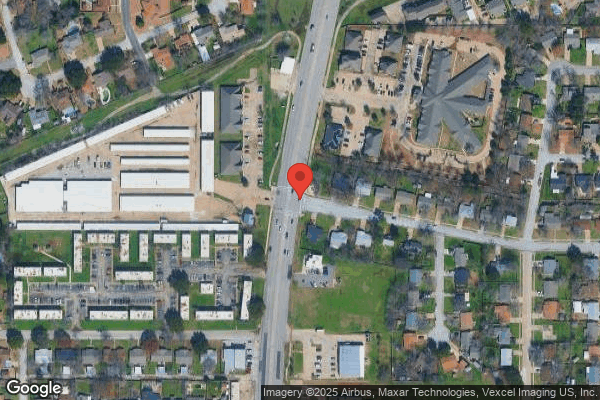
Apr 2025 2 deficiencies
CONCERN (E)

Potential for Harm - no one hurt, but risky conditions existed

Deficiency F0578 (Tag F0578)

Could have caused harm · This affected multiple residents

**NOTE- TERMS IN BRACKETS HAVE BEEN EDITED TO PROTECT CONFIDENTIALITY** Based on interview and record review the facility failed to ensure residents' had the right to request, refuse, and/or discontin...

Read full inspector narrative →
**NOTE- TERMS IN BRACKETS HAVE BEEN EDITED TO PROTECT CONFIDENTIALITY** Based on interview and record review the facility failed to ensure residents' had the right to request, refuse, and/or discontinue treatment, to participate in or refuse to participate in experimental research, and to formulate an advance directive for 2 of 8 residents (Resident #3 and resident #73) reviewed for advanced directives. The facility failed to ensure Resident #3's and Resident #73's Out-of-Hospital Do Not Resuscitate (OOH-DNR) documents had the Physician's Statements signed by the physician and included the physician's license number, rendering the document invalid. This failure could place residents at-risk of having their end of life wishes dishonored, and of having CPR performed against their wishes. Findings include: 1) Record review of Resident #3's face sheet, dated [DATE], reflected a [AGE] year-old female who was admitted to the facility on [DATE]. Record review of Resident #3's Quarterly MDS Assessment, dated [DATE], reflected she had a BIMS score of 03, which indicated severely impaired cognition. Her diagnoses included Alzheimer's Disease (a progressive disease that affects memory and mental functions); Non-Alzheimer's dementia (neurodegenerative disease causing dementia that is not Alzheimer's disease); hypertension (high blood pressure); and depression. Record review of Resident #3's Physician Order Report reflected the following order, dated [DATE],: Code Status: DNR. Record review of Resident #3's Care Plan reflected the following entry initiated [DATE]: Problem: Resident has an order for Do Not Resuscitate (DNR) Goal: Resident/Responsible Party's decision for DNR will be honored through the next review date. Approaches included: All aspects of DNR will be explained to resident or responsible party; In absence of b/p, pulse, respiration, CPR [procedure used in an attempt to revive a person who is at or near death] will not be initiated .Social Services to consult with resident and RP regarding their decision to continue DNR. Record review of Resident #3's Out-Of-Hospital Do-Not-Resuscitate (OOH-DNR) order reflected it was initiated and signed by Resident #3 on [DATE]. The Physician's Statement portion of the document reflected, I am the attending physician of the above-noted person and have noted the existence of this order in the person's medical records. I direct healthcare professionals acting in out-of-hospital settings, including a hospital emergency department, not to initiate or continue resuscitation measures for the person. The document contained an area designated for the physician's signature, date, license number and printed name. This portion was left blank on Resident #3's order. 2) Record review of Resident #73's face sheet, dated [DATE], reflected an [AGE] year-old female who was admitted to the facility on [DATE]. Record review of Resident #73's Quarterly MDS Assessment, dated [DATE], reflected she had a BIMS score of 03, which indicated severely impaired cognition. Her diagnoses included Non-Alzheimer's dementia and unspecified dementia with psychotic disturbance (dementia with symptoms such as hallucinations and paranoia). Record review of Resident #73's Physician Order Report reflected the following order, dated [DATE]: Code Status: DNR. Record review of Resident #73's Care Plan reflected the following entry initiated [DATE]: Problem: Resident has an order for Do Not Resuscitate (DNR) Goal: Resident/Responsible Party's decision for DNR will be honored through the next review date. Approaches included: All aspects of DNR will be explained to resident or responsible party; In absence of b/p, pulse, respiration, CPR [procedure used in an attempt to revive a person who is at or near death] will not be initiated .Social Services to consult with resident and RP regarding their decision to continue DNR. Record review of Resident #73's Out-Of-Hospital Do-Not-Resuscitate (OOH-DNR) order reflected it was initiated and signed by her Medical Power of Attorney on [DATE]. The Physician's Statement portion of the document reflected, I am the attending physician of the above-noted person and have noted the existence of this order in the person's medical records. I direct healthcare professionals acting in out-of-hospital settings, including a hospital emergency department, not to initiate or continue resuscitation measures for the person. The document contained an area designated for the physician's signature, date, license number and printed name. This portion was left blank on Resident #73's order. During an interview and record review on [DATE] at 6:52 AM, the DON stated the Social Worker was responsible for monitoring the resident's Advanced Directive and DNR forms. She reviewed Resident #3's and Resident #73's EMR and noted both had physician orders and Care Plans in place for DNR. She confirmed neither resident had physician signatures on their OOH-DNR forms. The DON stated she believed the risk to residents was low because both had active orders not to resuscitate and it was unlikely EMS would be called in the event they became nonresponsive. She stated the facility had never encountered an issue where emergency personnel refused to honor a DNR document. During an interview and record review on [DATE] at 6:55 AM, the DON asked the Social Worker to review the OOH-DNR documents she kept in a binder for the residents. The DON and Social Worker noted the documents in their binder were the same ones located in the residents' EMRs and neither contained a physician's signature. The Social Worker stated she assisted with the initiation of the documents and always ensured they were complete, but some residents arrived with them or had them initiated with hospice companies. She stated she performed audits to ensure they had the forms on file with the orders but had not always checked to ensure the documents were completed if they were initiated before she started there. She stated the risk included emergency personnel may not accept them if they were not completed properly and initiate CPR. The DON and Social Worker stated they planned to conduct a full audit of all resident documents. During an interview on [DATE] at 9:55 AM, the Administrator stated the Social Worker oversaw the advanced directives for the facility. He stated she retrieved the information from the resident's or Responsible parties and ensured they were included in the medical record and should have scanned the records to ensure they were completed. He stated he was aware of the findings and a full audit had been completed and no other incomplete documents were located. He stated the risk to residents was paramedics could question the validity of the DNR order and not follow the resident's wishes. The Administrator stated he felt confident the facility staff would have followed procedures and not called emergency services if a resident had an active DNR order. He stated all staff had received additional in-service training related to DNR orders and were aware of the facility's procedures. Record review of the facility's policy titled, Code Status Listing, dated 6/2022, reflected the following: Policy: It is the policy of this home to allow residents the opportunity to file an advance directive document declaring the resident/family/responsible party's end of life wishes . Procedure .1. Residents will be informed of their opportunity to file advanced directives upon admission and at least annually. 2. Social Services or designee will be responsible to keep the code status list current and updated whenever a change occurs. 3. Interdisciplinary Care Plan Team (IDCPT) will discuss advanced directives with resident/responsible party during quarterly care plan conference and update as necessary.
CONCERN (E)

Potential for Harm - no one hurt, but risky conditions existed

Food Safety (Tag F0812)

Could have caused harm · This affected multiple residents

Based on observations, interviews, and record review, the facility failed to store, prepare, distribute, and serve food in accordance with professional standards for food service safety for 1 of 1 kit...

Read full inspector narrative →
Based on observations, interviews, and record review, the facility failed to store, prepare, distribute, and serve food in accordance with professional standards for food service safety for 1 of 1 kitchen reviewed for kitchen safety. 1. The facility failed to seal opened items in plastic bags in the dry storage pantry, refrigerator, and freezer areas on 04/15/25. 2. The facility failed to ensure expired items in the dry storage pantry, refrigerator and freezer areas were removed on 04/15/25. 3. The facility failed to ensure the dented cans in the dry storage area were removed from the shelf on 04/15/25. These deficient practices could place residents at risk for cross contamination and other food-borne illnesses . Findings Include: Observation of the facility's kitchen dry storage, refrigerator and freezer areas on 04/15/25 at 8:40 AM, revealed the following food items were dented cans, unsealed packages and containers , expired , and dented cans. * 1 unsealed clear plastic container of cereal with a clear lid, with date of 2/2 and use by 6/2. The unsealed plastic container was exposed to air. * 1 unsealed clear plastic container of cereal with a clear lid, with date of 4/5 and use by 6/2. The unsealed plastic container was exposed to air. * 1 unsealed clear plastic container of cereal with a clear lid, with date of 4/2 and use by 6/4. The unsealed plastic container was exposed to air. *1 unsealed clear plastic container of cereal with a clear lid, with date of 4/10 and use by 6/10. The unsealed plastic container was exposed to air. * 1 unsealed plastic bag of cereal. The unsealed plastic bag was exposed to air. * 1 unsealed plastic bag of mini marshmallows. The unsealed plastic bag was exposed to air and did not have an expiration date. * 1 unsealed container of 80 oz. oats. The unsealed container was exposed to air. * 1 unsealed package of 10 oz. pasta. The unsealed package was wrapped in plastic wrap and was exposed to air. * 1 unsealed package of fish fry. The unsealed package was exposed to air. * 1 unsealed package of parboiled rice. The unsealed package was exposed to air. * 1 unsealed package of tortillas. The unsealed package was wrapped in plastic wrap and was exposed to air. * 1 dented 10 1b. can of cream style corn. * 1 dented 6 lb. can of tropical fruit. *1 dented 6 lb. can of sliced peaches * 1 dented 6 lb. can of pork and beans. Refrigerator area: * 1 clear plastic container with red lid labeled Grape Jelly was unsealed and exposed to air. Freezer area: *1 unsealed package of 5 hamburger patties labeled use by 04/13. The unsealed package was exposed to air. In an interview with the Dietary Manager on 04/15/25 at 9:53 AM, revealed she had been employed at the facility for 2 months. She stated she was unaware there were expired and unsealed items in the kitchen's dry storage, refrigerator, and freezer areas. The Dietary Manager stated she was unaware there were 4 dented cans stored on the shelves with the other canned food. She stated all kitchen staff were responsible for ensuring all food items in the kitchen's dry pantry, refrigerator, and freezer areas were sealed, labeled and checked for expiration dates. She stated there should not have been any dented cans on the shelf with the other dented cans . She stated the dented cans were to be separated from the other canned food on the shelves and placed in another place in the dry pantry area that was labeled, Dented Cans. She stated there should not be any food items in the kitchen's dry pantry, refrigerator, and freezer areas that were not sealed and expired . The Dietary Manager stated she had a total of 8 staff members who she supervised, and they worked various shifts. She stated the kitchen staff regularly received In-Service trainings on proper food handling, storage which included ensuring all food in the kitchen was dated, labeled, sealed, included food expiration, food handling and sanitization to prevent food-borne illness per the facility's policy. She stated the kitchen staff received in-service trainings at least two times per month on their paydays. She stated she would immediately throw away all expired items and unsealed items that were found in the kitchen. She stated she would audit the dry pantry, refrigerator, and freezer areas to ensure everything in the area was labeled, dated, sealed and check the expiration dates on the food items. The Dietary Manager stated it was her responsibility to oversee everything in the kitchen was audited which included all food items in the kitchen's dry pantry, refrigerator, and freezer areas were labeled correctly, sealed and checked for expiration dates. She stated her expectation was that if staff were to see anything in the kitchen's dry pantry, refrigerator and freezer areas not labeled, they were to place a label on the item (if not expired) and notify her. She stated her expectations were the same for the food items that were unsealed. The Dietary Manager stated if kitchen staff found anything that was unsealed in the kitchen's dry pantry, refrigerator and freezer areas that was not sealed, her expectations were for the staff immediately throw away the item(s) and notify her. She stated if staff saw a dented can on the shelves where the canned items were stored in the dry pantry area, they should immediately place the can(s) in the area in the dry pantry area that was labeled, dented cans. She stated her expectation for her staff, was that they were to use the FIFO (the principle and practice of maintaining precise production and conveyance sequence by ensuring that the first part to enter a process or storage location is also the first part to exit) procedures to ensure there were not any unsealed, and expired food items throughout the kitchen. She stated all staff in the kitchen were to use the First In, First Out Method, which meant kitchen staff should label the food with the dates they store them, and when staff were restocking the shelves, they were to put the older foods in front or on top so they could be used first. She stated this system allowed the kitchen staff to find the food quickly and use it more efficiently. The Dietary Manager stated the items found in the kitchen by the state surveyor was a mistake and she would continue to reeducate the staff to ensure everyone was on the same accord with her expectations in the kitchen and the facility's policy on Food Storage. She stated she would immediately retrain and reeducate all kitchen staff via in-service training on food storage. She stated the risk of someone, which included a resident eating food from the facility kitchen's dry storage, refrigerator and freezer areas, expired foods, dented cans was that they could become ill and become sick due to eating something that could cause food-borne illnesses. She stated there were risks of food borne illness anytime someone ingested food items from the kitchen any items that had not been labeled and stored properly and from dented cans. She stated the harm of someone, which included a resident ingesting food from the facility kitchen's dry storage, refrigerator and freezer areas, expired foods, eating something from a dented can could cause someone to have stomach aches, bowel issues, and food poisoning. She stated the harm of someone, which included a resident eating food from the facility kitchen's dry storage, refrigerator and freezer areas, expired foods, eating something from a dented can could cause bacteria to enter the areas if a container or package was unsealed. She stated insects could also enter any area that was not sealed properly. In an interview with the Dietary Aide on 04/15/25 at 10:14 AM, she stated she had been employed at the facility for 10 months. She stated she was unaware there were expired and unsealed items in the kitchen's dry storage, refrigerator and freezer areas. She stated she was unaware there were 4 dented cans on the shelves with the other canned food items. She stated all the staff were responsible for storing the items on the shelf and checking the expiration dates, dented cans to make sure there were not any unsealed items in the kitchen. She stated at least 2 times per month, the Dietary Manager in-serviced the kitchen staff on food storage, labeling and dating, removing expired items from the shelves in the dry pantry, freezer, and refrigerator areas and for dented cans and the use of the FIFO method. The Dietary Aide stated per her in-service trainings pertaining to the food items in the dry pantry, refrigerator, and freezer areas needed to be stored properly by labeling the food items, with the date the food item were placed in the proper area and the use by date. She stated the use by date indicated when the food items should be used. She stated if any food item that was in the facility's dry storage, refrigerator, and freezer areas had a use by date and it was expired, the food item should be immediately thrown away and then she would notify the Dietary Manager of what she found. The Dietary Aide stated if something was not labeled, she would label it in and make sure the item was not unsealed, if it were unsealed, she would throw the item away and notify the Dietary Manager. She stated if she found any dented cans in the dry storage area, she would immediately remove the dented can and place it in the Dented Can area in the dry pantry. She stated she would notify the Dietary Manager. She stated there were risks of food borne illness anytime someone ingested food items from the kitchen's dry pantry, refrigerator, and freezer areas any items that had not been labeled, stored, which included dented cans. The Dietary Aide stated if any of the above food were to be ingested by anyone, they could or would become ill and have possible food-borne illnesses. She stated the risk of anyone ingesting any of the aforementioned items, they could have stomach aches and vomiting and have other illnesses. Record review of the facility's policy titled, Food Storage dated, October 1, 2022, and revised, June 1, 2019, reflected: Policy: To ensure that all food served by the facility is of good quality and safe for consumption, all food will be stored according to the state, federal and US Food Codes and HAACP guidelines. Procedure: Dry storage rooms a. Keep the storage room well-ventilated with humidity controls to prevent mold growth . d. To ensure freshness, store opened and bulk items in tightly covered containers. All containers must be labeled and dated . f. Where possible, leave items in the original cartons placed with the date visible. g. Use the first-in, first-out (FIFO) rotation method. Date packages and place new items behind existing supplies, so that the older items are used first . 2. Refrigerators . d. Date, label and tightly seal all refrigerated foods .covered containers that are approved for food storage. e. Use all leftovers within 72 hours. Discard items that are over 72 hours old . 3. Freezers . e. Store frozen foods in moisture-proof wrap or containers that are labeled and dated . Record review of the U.S. Food and Drug Administration (FDA) Code (2022) revealed, PACKAGED FOOD shall be labeled as specified in LAW, including 21 CFR 101 FOOD Labeling, 9 CFR 317 Labeling, Marking Devices, and Containers, and 9 CFR 381 Subpart N Labeling and Containers, and as specified under § 3-202.18. FOOD shall be protected from contamination that may result from a factor or source not specified under Subparts 3-301 - 3-306.
Aug 2024 1 deficiency
CONCERN (E) 📢 Someone Reported This

A family member, employee, or ombudsman was alarmed enough to file a formal complaint

Potential for Harm - no one hurt, but risky conditions existed

Infection Control (Tag F0880)

Could have caused harm · This affected multiple residents

**NOTE- TERMS IN BRACKETS HAVE BEEN EDITED TO PROTECT CONFIDENTIALITY** Based on observations, interviews and record reviews, the facility failed to establish and maintain an infection control program...

Read full inspector narrative →
**NOTE- TERMS IN BRACKETS HAVE BEEN EDITED TO PROTECT CONFIDENTIALITY** Based on observations, interviews and record reviews, the facility failed to establish and maintain an infection control program designed to provide a safe, sanitary, and comfortable environment and to help prevent the development of communicable diseases and infections for 2 (Residents #1 and #2) of 5 residents reviewed for infection control, in that: PTA B failed to follow droplet precautions for Resident #1 by not donning an N95 mask respirator or eye protection prior to entering the room to perform therapy services. CNA C failed to follow droplet precautions for Resident #2 by not donning eye protection prior to entering the room to provide care services. These failures could affect residents and place them at risk for cross contamination and infections. Findings included: 1. Review of Resident #1's face sheet, dated 08/09/24, reflected the resident was a [AGE] year-old female who admitted to the facility on [DATE]. Review of Resident #1's admission MDS Assessment, dated 07/29/24, reflected she had a BIMS score of 15 indicating no cognitive impairment. Further review revealed she had active diagnoses of depression and a hip fracture. Review of Resident #1's undated Continuity of Care Document reflected a Problem of 2019-nCoV acute respiratory disease with an effective date of 08/02/24. Further review revealed under Results and COVID-19 Test was COVID-19 Test Viral Antigen with a date of 08/01/24 and the word Positive. Review of Resident #1's physician order report for 07/09/24 to 08/09/24 reflected the following: Isolation with droplet precautions for covid-19; Resident to remain in private room, all services to be provided to resident in resident's private room. [DX: 2019-nCoV acute respiratory disease] with a start dated of 08/02/24 and end date of 08/11/24. Review of Resident #1's care plan, dated 08/05/24, reflected the following: Problem: Problem Start Date: 08/02/2024, Category: Nursing, Resident requires isolation control precautions as evidence by droplet isolation precautions related to ____ .Approach: follow infection control policy . Observation on 08/09/24 at 9:15 AM, of Resident #1's room revealed there was a three-drawer-bin on the outside of her room next to her closed door. Inside of the bin was gowns, gloves, masks (both N95 and surgical), and bio-hazard trash bags. There was no eye protection in the drawers. There was a sign posted on the door with the following information written on it: a stop sign with the word stop in it on the top left and right of the page; writing that said DROPLET PRECAUTIONS .EVERYONE MUST: Clean their hands, including before entering and when leaving the room .[a picture with a bottle of ABHR and a drop of it's contents on top of a hand being stretched out towards it] .Make sure their eyes, nose and mouth are fully covered before room entry .[two pictures side by side, one with a person wearing a face shield and one with a person wearing goggles with the word 'or' between them] .Remove face protection before room exit. Resident #1's door was closed each time it was observed. Observation on 08/09/24 at 12:15 PM revealed PTA B entered Resident #1's room with a surgical mask, gown, and gloves on. PTA B did not put on eye protection such as a face shield or goggles or an N95 mask on. There was a box of N95 masks on top of the three-drawer bin outside of Resident #1's room where PTA B retrieved the gown and gloves. There was also a set of face shields in one of the drawers as well. Observation on 08/09/24 at 12:20 PM of Resident #1's room revealed PTA B opened the door to get CNA D's attention. PTA B was observed still wearing a surgical mask, a gown, and gloves. PTA B requested CNA D help him provide incontinent care to Resident #1. CNA D donned a gown, gloves, face shield, and N95 mask before entering Resident #1's room. Interview on 08/09/24 at 12:34 PM, PTA B revealed he was aware Resident #1 had COVID and was positive. PTA B said he wore all PPE including a gown, mask, and gloves into Resident #1's room. PTA B said he saw two boxes of masks on top of the three-drawer bin, one of surgical masks and one of N95 masks so he thought it was optional which one he needed to wear inside the room. PTA B said he did not wear eye protection because he did not think he had to wear that as well even though he saw a face shield was available in one of the drawers for him to wear. PTA B said he was providing therapy services to Resident #1 while he was in her room. Interview on 08/09/24 at 12:37 PM, CNA D revealed she went into Resident #1's room to assist PTA B with providing incontinent care to her. CNA D said when she went into the room, she saw PTA B wearing a surgical mask, gloves, and a gown. CNA D said PTA B was not wearing an N95 mask or any eye protection. 2. Review of Resident #2's face sheet, dated 08/09/24, reflected the resident was a [AGE] year-old male who admitted to the facility on [DATE]. Review of Resident #2's admission MDS assessment, dated 08/01/24, reflected he had a BIMS score of 03, indicating severe cognitive impairment. Further review revealed he had active diagnoses of vascular dementia and a stroke. Review of Resident #2's undated Continuity of Care Document reflected a Problem of 2019-nCoV acute respiratory disease with an effective date of 08/04/24. Further review revealed under Results and COVID-19 Test was COVID-19 Test Viral Antigen with a date of 08/04/24 and the word Positive. Review of Resident #2's care plan, dated 08/04/24, reflected the following: Problem; Problem Start Date: 08/04/2024, Category: Nursing, Resident requires isolation control precautions as evidenced by droplet precautions related to COVID DX 8/4 .Approach: follow infection control policy . Review of Resident #2's physician order report for 07/09/24 to 08/09/24 reflected the following: Isolation with droplet precautions for Covid 19; Resident to remain in room, all services to be provided to resident in resident's private room. [DX: 2019-nCoV acute respiratory disease] with a start dated of 08/05/24 and end date of 08/14/24. Observation on 08/09/24 at 9:16 AM of Resident #2's room revealed there was a three-drawer-bin on the outside of his room next to his closed door. Inside of the bin was gowns, gloves, masks (both N95 and surgical), and bio-hazard trash bags. There was no eye protection in the drawers. There was a sign posted on the door with the following information written on it: a stop sign with the word stop in it on the top left and right of the page; writing that said DROPLET PRECAUTIONS .EVERYONE MUST: Clean their hands, including before entering and when leaving the room .[a picture with a bottle of ABHR and a drop of it's contents on top of a hand being stretched out towards it] .Make sure their eyes, nose and mouth are fully covered before room entry .[two pictures side by side, one with a person wearing a face shield and one with a person wearing goggles with the word 'or' between them] .Remove face protection before room exit. Resident #2's door was closed each time it was observed. Observation on 08/09/24 at 9:30 AM, CNA C entered Resident #2's room r wearing an N95 mask, gown, and gloves. CNA C was observed wearing prescription glasses but no other eye protection such as a face shield or goggles. CNA C entered the room with a trash bag and left the door open to walk into Resident #2's bathroom to replace the trash bag. CNA C was observed to have walked up to Resident #2's bed and provided care, then walked back to the door and closed it. CNA C was still only wearing a N95 mask, gown, and gloves with her prescription glasses. Interview on 08/09/24 at 11:15 AM, CNA C revealed she knew Resident #2 was positive for COVID-19. CNA C said she had to dress up in PPE before entering his room with a blue gown, gloves, and mask. CNA C said she did not put a face shield on to enter Resident #2's room because the IP told her she didn't have to since she wore glasses which would protect her eyes. Interview on 08/09/24 at 1:28 PM, the IP revealed she made rounds during the day to ensure staff were donning and doffing their PPE correctly before and after entering a COVID positive resident's room. The IP said staff were expected to put on the following items when entering a COVID positive resident's room: a gown, a mask, a face shield or eye wear, and gloves. The IP specified that the mask should be a N95 mask. The IP said all PPE supplies were available to all staff throughout the day as when she made rounds in the facility she added supplies to the three-drawer bins located outside of each resident's room. The IP said all staff knew what PPE to put on before entering a COVID positive resident's room because they had been in-serviced so much on exactly what to do. The IP said she had not told one specific person that they could wear glasses instead of a face shield into a COVID positive resident's room. The IP said any COVID positive resident was on droplet precautions. The IP said that the risk of staff not donning the correct PPE was that they could get infected themselves or infect someone else since COVID was based on droplets it was easily transferrable . Review of the facility's undated policy, titled COVID-19 Refresher reflected the following: Facility to follow local health department and CDC guidelines .PPE for COVID + or COVID suspected- N95, gown, gloves, face shield .You should utilize N95s for Covid positive rooms . Interview on 08/09/24 at 11:00 AM, the Administrator revealed the refresher policy was what facility followed along with CDC guidelines for everything related to COVID. Review of website https://www.cdc.gov/covid/hcp/infection-control/index.html, accessed on 08/09/24, revealed the following: .2. Recommended infection prevention and control (IPC) practices when caring for a patient with suspected or confirmed SARS-CoV-2 infection .Personal Protective Equipment .HCP who enter the room of a patient with suspected or confirmed SARS-CoV-2 infection should adhere to Standard Precautions and use a NIOSH Approved particulate respirator with N95 filters or higher, gown, gloves, and eye protection (i.e., goggles or a face shield that covers the front and sides of the face).
Feb 2024 4 deficiencies
CONCERN (D)

Potential for Harm - no one hurt, but risky conditions existed

Deficiency F0635 (Tag F0635)

Could have caused harm · This affected 1 resident

**NOTE- TERMS IN BRACKETS HAVE BEEN EDITED TO PROTECT CONFIDENTIALITY** Based on observations, interviews, and record reviews, the facility failed to ensure that residents had physician orders for the...

Read full inspector narrative →
**NOTE- TERMS IN BRACKETS HAVE BEEN EDITED TO PROTECT CONFIDENTIALITY** Based on observations, interviews, and record reviews, the facility failed to ensure that residents had physician orders for the resident's immediate care for 1(Resident #17) of 5 residents reviewed for physician orders in that LVN-A failed to update the physician orders for Resident #17, to reflect changes in the physician's plan of care. This failure could place the resident at risk of not receiving the care intended by the physician. Findings included: Review of Resident #17's undated admission Record revealed she was a [AGE] year-old female admitted on [DATE] with diagnoses that included fracture of her left kneecap, non-displaced fracture of left arm, and a history of falls. Review of Resident #17's admission MDS, dated [DATE], revealed a BIMS score of 10 indicating she had mild cognitive impairment. Her functions Status indicated she required total assistance with most of her ADLs. Her Health Conditions listed fractures of the arm and knee. Review of Resident #17's care plan, dated 1/27/24, revealed she was at risk for pressure ulcers related to decreased mobility, and a decline in her ADL functions related to her fractured knee cap. Review of Resident #17's physician orders revealed an order dated 1/22/24 to keep the resident non-weight bearing on her left leg and to please keep immobilizer intact as tolerated to left leg due to left patellar fracture. No orders found addressing the resident's back brace. Review of Resident #17's Scanned Documents revealed on 2/13/24 the Physician had changed her leg immobilizer to a hinged knee brace and to remain non-weight bearing. On 2/27/24 the Physician ordered the resident to weight bear as tolerated. Observation and interview on 2/27/24 at 11:53 AM Resident #17 stated she had fallen at home, resulting in fractures to her left kneecap, left upper arm, and back. Resident #17 stated she had to wear her leg brace at all times, except to bathe and dress, and her back brace any time she was out of bed. She stated her left arm fracture had healed. Resident #17 stated she had just come from a follow up visit with her orthopedist and had been cleared to start weight bearing on her left leg. She was hopeful she could make better progress with her therapy now. Interview on 2/29/24 at 11:40 AM LVN-A stated Resident #17 wore her back brace only when she was out of bed, and her leg brace all the time. LVN-A stated Resident #17 was now able to weight bear on her left leg. When asked why Resident #17's physician orders had not been updated to reflect the changes LVN-A stated it was because nursing staff had not done so. When asked how he knew Resident #17 was now able to weight bear, he stated he had seen the order when she returned from her appointment on 2/27/24. When asked if he should have updated the order at that time, LVN-A stated he should have. When asked where the order for Resident #17's back brace was, LVN-A was not able to locate such an order. When asked how he knew Resident #17 had to have her brace on when out of bed, he stated it must have been passed on from nurse to nurse in report. LVN-A stated the risk of not having up to date orders for residents was they might not receive the care intended by the physician. The Administrator provided a policy Medication Orders but did not have a policy on updating physician orders specifically
CONCERN (D)

Potential for Harm - no one hurt, but risky conditions existed

Assessment Accuracy (Tag F0641)

Could have caused harm · This affected 1 resident

**NOTE- TERMS IN BRACKETS HAVE BEEN EDITED TO PROTECT CONFIDENTIALITY** Based on interview and record review, the facility failed to ensure assessments accurately reflected the resident status for 1 o...

Read full inspector narrative →
**NOTE- TERMS IN BRACKETS HAVE BEEN EDITED TO PROTECT CONFIDENTIALITY** Based on interview and record review, the facility failed to ensure assessments accurately reflected the resident status for 1 of 12 residents (Resident #74) reviewed for MDS assessment accuracy in that: Resident #74's quarterly MDS assessment dated [DATE] was coded incorrectly for insulin injections when he was not receiving insulin. This failure could place residents at risk of not receiving care and services to meet their needs. Findings included: Review of Resident #74's face sheet dated 02/29/2024 indicated Resident #74 was an [AGE] year-old male admitted to the facility on [DATE] and readmitted on [DATE]. Resident #74 had a diagnoses of chronic kidney disease, Type 2 diabetes mellitus (body does not make enough insulin) with diabetic neuropathy (nerve damage), essential hypertension (high blood pressure), acute kidney failure. Review of Resident #74's quarterly MDS dated [DATE] revealed Resident #74 had a BIMS score of 12 which indicated moderate impairment. The MDS Assessment for Resident #74 revealed Medications: Injections - Record the number of days that injections of any type were received during the last 7 days or since admission/entry or reentry if less than 7 days. - It was coded 7 days. Insulin - Insulin Injections - Record the number of days that insulin injections were received during the last 7 days or since admission/entry or reentry if less than 7 days It was coded 7 days. Review of Resident #74's care plan, revised date 01/29/24 revealed Problems: [Resident #74] has a diagnosis of Diabetes Mellitus. Goal: The resident will have no complications related to diabetes through the review date. Approach: Diabetes medication as ordered by doctor. Monitor/document for side effects and effectiveness. Review of Resident #74's Physician Orders from November 2023 through February 2024 revealed no orders for insulin. Review of Resident #74's Discontinued Physician Orders revealed insulin lispro solution; 100 unit/ml; amountt: Per Sliding Scale; order date: 09/20/23 discontinued date: 10/03/23. Review of Resident #74's October 2023 and November 2023 MAR revealed no insulin was administered. Interview on 02/27/24 at 11:35 AM with Resident #74 revealed he had a diagnosis of diabetes; however, he does not require insulin. Resident #74 stated he does not recall if he was ever on insulin. He stated he was getting his blood sugar checks but that had stopped months ago, resident could not recall how many months since his blood sugar checks were stopped. Interview on 02/29/24 at 10:00 AM with LVN B revealed he was the nurse assigned to Resident #74. LVN B stated Resident #74 was not on insulin, he stated resident had a physician order for PRN insulin, but it was discontinued around October 2023. He stated Resident #74's blood sugars were stable, and insulin was not needed. He stated Resident #74 was not provided with insulin 7 days a week. Interview on 02/29/24 at 01:26 PM with the MDS Coordinator and the Regional MDS revealed the MDS Coordinators were responsible for completing the MDS assessments and Regional MDS oversees the assessments. The MDS Coordinator stated she would gather all the resident's information during IDT meetings, care plan meetings, and reviewing clinical records to complete the residents initial, quarterly, and annual MDS's. She stated on the resident's MDS they trigger any special treatment the resident was receiving. The MDS Coordinator and Regional MDS reviewed Resident #74's quarterly MDS assessment dated [DATE] and reviewed resident physician orders; and stated the assessment was inaccurate. The Regional MDS stated she reviewed Resident #74's quarterly MDS assessment dated [DATE] and it was also inaccurately coded for insulin. The Regional MDS stated the previous MDS staff coded the incorrect medication treatments, she stated it was her responsibility to ensure MDS assessment were completed correctly. The Regional MDS stated there was no potential risk to the residents if assessments were not accurate. The Regional MDS stated the facility used the RAI manual as a reference and policy. Interview on 02/29/24 at 02:05 PM with the DON revealed the MDS Coordinator was responsible for completing MDS assessments. She stated the Regional MDS oversaw the assessments. She stated Resident #74 was on insulin for a couple of days but then the insulin order was discontinued. She stated her staff were only checking his blood sugars once the insulin order was discontinued. She stated the previous MDS Coordinator might have coded the wrong thing. The DON stated there was no risk to the resident if the MDS assessment was not accurate. Review of the Long-Term Care Facility Resident Assessment Instrument 3.0 User's Manual Version 1.18.11, October 2023, revealed the following: an accurate assessment requires collecting information from multiple sources, some of which are mandated by regulations. Those sources must include the resident and direct care staff on all shifts, and should also include the resident's medical record, physician, and family, guardian and/or other legally authorized representative, or significant other as appropriate or acceptable. It is important to note here that information obtained should cover the same observation period as specified by the MDS items on the assessment and should be validated for accuracy (what the resident's actual status was during that observation period) by the IDT completing the assessment. As such, nursing homes are responsible for ensuring that all participants in the assessment process have the requisite knowledge to complete an accurate assessment.
CONCERN (D)

Potential for Harm - no one hurt, but risky conditions existed

Comprehensive Care Plan (Tag F0656)

Could have caused harm · This affected 1 resident

**NOTE- TERMS IN BRACKETS HAVE BEEN EDITED TO PROTECT CONFIDENTIALITY** Based on observations, interviews, and record reviews the facility failed to develop a comprehensive care plan for 1 (Resident #...

Read full inspector narrative →
**NOTE- TERMS IN BRACKETS HAVE BEEN EDITED TO PROTECT CONFIDENTIALITY** Based on observations, interviews, and record reviews the facility failed to develop a comprehensive care plan for 1 (Resident #17) of 5 residents reviewed for comprehensive care plans. The MDS Coordinator failed to care plan to address Resident #17's orthopedic braces. This failure could result in the resident not receiving appropriate care for her fractures. Findings included: Review of Resident #17's undated admission Record revealed she was a [AGE] year-old female admitted on [DATE] with diagnoses that included fracture of her left knee cap, non-displaced fracture of left arm, and a history of falls. Review of Resident #17's admission MDS, dated [DATE], revealed a BIMS score of 10 indicating she had mild cognitive impairment. Her functions Status indicated she required total assistance with most of her ADLs. Her Health Conditions listed fractures of the arm and knee. Review of Resident #17's care plan, dated 1/27/24, revealed she was at risk for pressure ulcers related to decreased mobility, and a decline in her ADL functions related to her fractured knee cap. The resident was not care planned for orthopedic braces. Observation and interview on 2/27/24 at 11:53 AM Resident #17 stated she had fallen at home, resulting in fractures to her left knee cap, left upper arm, and back. Resident #17 stated she had to wear her leg brace at all times, except to bathe and dress, and her back brace any time she was out of bed. She stated her left arm fracture had healed. Resident #17 stated she had just come from a follow up visit with her orthopedist and had been cleared to start weight bearing on her left leg. She was hopeful she could make better progress with her therapy now. Review of Resident #17's physician orders revealed an order dated 1/22/24 to keep the resident non-weight bearing on her left leg and to please keep immobilizer intact as tolerated to left leg due to left patellar fracture. No orders found addressing the resident's back brace. Review of Resident #17's scanned documents revealed on 2/13/24 her leg immobilizer had been exchanged for a hinged knee brace and to remain non-weight bearing. On 2/27/24 the orthopedist ordered the resident to weight bear as tolerated. Interview on 2/29/24 at 11:35 AM the PTA stated he had worked with Resident #17 since her admission and they had been working on transfers with limited progress because she had been non-weight bearing, but now that she was able to bear weight he expected her to make fast progress. The PTA stated Resident #17 only had to wear her back brace when she was out of bed. Interview on 2/29/24 at 11:40 AM LVN-A stated Resident #17 only wears her back brace when she was out of bed, and she was able to weight bear as tolerated on her left leg. LVN-A was asked to locate the physician order for her back brace care and treatment, he was unable to locate an order. LVN-A was asked how he knew how to treat Resident #17's back brace, he stated he had been told in report that she was to wear it any time she was out of bed. When LVN-A was asked to locate the physician order changing the resident from a leg immobilizer to the hinged leg brace, he could not locate it as well. When asked to locate where in Resident #17's care plan it addressed her leg and back braces he could not locate anything. LVN-A stated the nurses were responsible for updating physician orders when a resident returned from a visit with a new order from the physician. LVN-A stated the nurses could also update the resident's care plan as needed but usually the MDS Coordinator updated the care plan. Interview on 2/29/24 at 2:40 PM the MDS Coordinator stated she was responsible for updating the resident's care plans as their needs changed. She stated she was made aware of the changes that needed to be made during the daily Interdisciplinary Team (IDT) meetings. She stated the nurses could also make changes as needed. Review of the facility's policy Care Plan-Resident, dated December 2018 reflected: The policy of the home was staff must develop a comprehensive care plan to meet the needs of the resident with long-term goals that must be measurable and must relate to the discharge goal.
CONCERN (D)

Potential for Harm - no one hurt, but risky conditions existed

Food Safety (Tag F0812)

Could have caused harm · This affected 1 resident

Based on observation, interview, and record review, the facility failed to store, prepare, distribute, and serve food in accordance with professional standards for food service safety for two of four ...

Read full inspector narrative →
Based on observation, interview, and record review, the facility failed to store, prepare, distribute, and serve food in accordance with professional standards for food service safety for two of four staff (Dietary [NAME] and Dietary Aide) reviewed for kitchen sanitation in that: The Dietary [NAME] and Dietary Aide failed to properly wear a beard restraint while in the food preparation area. This failure could place residents at risk for food contamination and foodborne illness. The findings include: Observation on 02/27/24 at 09:00 AM revealed the Dietary [NAME] had facial hair and was placing left over food into plastic containers. The Dietary [NAME] did not have on a beard restraint. Further observations revealed the Dietary Aide had facial hair and was observed washing dishes and walking through the kitchen putting items away. Interview on 02/27/24 at 09:10 AM with the Dietary [NAME] revealed the first thing staff should do prior to entering the kitchen would be to put on a hairnet and a beard guard. He stated he had one on but he stepped out the kitchen and when he returned, he forgot to put another one on. He stated the risk of not wearing a hair net or beard guard could lead to hair follicles falling in the food. Interview on 02/27/24 at 09:12 AM with the Dietary Aide revealed the first thing he does when he enters the kitchen was to put a hairnet on and beard guard. He stated the reason he did not have on a beard guard was because he forgot to put one on. He stated the risk would be hair follicles falling in the food and in the dishwasher. Interview on 02/28/24 at 01:11 PM with the Dietary Manager revealed her expectations were for her staff to wear a hair and beard restraint while in the kitchen. She stated she did not notice her Dietary [NAME] and Dietary Aide not wearing a beard guard yesterday (02/27/24). She stated the potential risk would be hair falling in the food. Review of the facility's policy Employee Sanitation dated October 1, 2018, reflected the following: . 3. Employee Cleanliness Requirements: b. Hairnets, headbands, caps, beard coverings or other effective hair restraints must be worn to keep hair from food and food contact surfaces.
Jan 2024 2 deficiencies
CONCERN (D) 📢 Someone Reported This

A family member, employee, or ombudsman was alarmed enough to file a formal complaint

Potential for Harm - no one hurt, but risky conditions existed

Deficiency F0675 (Tag F0675)

Could have caused harm · This affected 1 resident

**NOTE- TERMS IN BRACKETS HAVE BEEN EDITED TO PROTECT CONFIDENTIALITY** Based on interview, and record review, the facility failed to provide the necessary care and services to attain or maintain the ...

Read full inspector narrative →
**NOTE- TERMS IN BRACKETS HAVE BEEN EDITED TO PROTECT CONFIDENTIALITY** Based on interview, and record review, the facility failed to provide the necessary care and services to attain or maintain the highest practicable physical, mental, and psychosocial well-being, consistent with the resident's comprehensive assessment and plan of care for 1 (Residents #1) of 4 residents reviewed for quality of life. The facility did not ensure Residents #1 received a shower upon and after being admitted on [DATE]. Resident was not showered until 12/17/23. Resident #1 was not showered on his scheduled day of 12/15/23. This deficient practice had the potential to affect residents by placing them at an increased risk of poor self-esteem, infections, socialization, and a poor quality of life. Findings included: Record review of Resident #1's face sheet dated 12/24/23 reflected the resident was a [AGE] year-old male that was admitted on [DATE] and discharged on 12/20/23. His diagnosis included: hepatic encephalopathy (liver failure), altered mental status, unspecified, pain, cognitive communication deficit (difficulty communicating), alcoholic cirrhosis of liver without ascites (decline in liver functioning), muscle weakness (generalized), and unsteadiness on feet. Review of Resident Pain Management plan revealed no pain regimen necessary. Review of Resident #1's physician orders reflected an order dated 12/20/23 for tramadol 50 mg tablet BID (8:00 AM and 8:00 PM) ICD-10 Diagnosis: R52: Pain, unspecified. Verbal order by MD S, Created By: LVN K on 12/20/2023 14:45 [2:45 PM]. Record review of Resident #1's skilled nursing chart dated 12/20/23 reflected .impaired decision making .mood of overeating, decreased concentration. Cognition alert to person place and time, speech clear, unlabored breathing and regular heart rate call light in reach. Record review of Resident #1's BIMS dated 12/19/23 reflected a score of 3, indicating he had severe cognitive impairment. In an interview on 01/08/24 at 1:10 PM with Resident #1's family member (FM C) revealed upon arrival to the facility on [DATE], she observed Resident #1 with the same clothing on, not showered, and unshaven. She had brought clothing to the facility and hygiene products on 12/15/23. FM C approached the nurse, and the nurse said Resident #1 missed his shower. FM C asked a staff (name unknown) about the shower and then gave FM B towels to shower the resident. FM C said FM B, who was present, then showered and shaved Resident #1. FM C stated the staff (name unknown) did not offer a reason why he was not showered and would not shower the resident when requested. The staff member was later identified as CNA H. In an interview on 01/08/24 at 1:30 PM with CNA D, she stated she worked the 6:00 AM-2:00 PM shift on 12/17/23 with Resident #1. She denied having a conversation with FM B and FM C about showers; however, she observed FM B in the shower room with Resident #1 giving him a shower. She did not offer to assist. She said it was common for family to shower the residents. She said FM C nor FM B complained to her about Resident #1 not receiving shower. She did not know who provided the towels to FM B to shower Resident #1 on 12/17/23 nor who provided the location of the shower room to the FM B. In an interview on 01/08/24 at 2:30 PM with CNA J, she stated she was assigned to Resident #1 on 12/17/23, and Resident #1 was showered by the family member prior to her arriving to work at 2:00 PM. She said the family did not report any concerns about missing showers, and she conducted rounds in Resident #1's room every two hours throughout the shift. In an interview on 01/08/24 at 2:45 PM with CNA H, she stated FM B asked for the location of the shower room, so she showed FM B the shower room. CNA H told FM B that she would return and shower Resident #1 once she completed care task with another resident. CNA H said FM B replied he would shower Resident #1. CNA H provided towels and the location of the shower room to FM B on 12/17/23. In an interview on 01/8/24 at 4:27 PM, LVN M stated she was asked by FM C on 12/17/23 about Resident #1 not receiving a shower at approximately 1:51 PM. LVN M told FM C that Resident #1 missed his shower day. LVN M could not recall Resident #1's shower day when interviewed nor when Resident #1 was admitted . LVN M did not recall offering Resident #1 a shower, nor facility staff that were working on 12/17/23. LVN M said FM B gave Resident #1 a shower on 12/17/23. LVN M stated she expected aides to offer and administer showers according to the day assigned and as needed. A telephone interview was attempted with CNA I for an interview on 01/08/24 at 3:58 PM. A message was left for CNA I to contact the surveyor. On 01/09/24, a review of the surveyor's call log revealed CNA I had called on 01/08/24 at 7:01 PM and 7:02 PM. A message was left to return call. In an interview on 01/09/24 at 9:00 AM with FM B, the family member stated upon arrival to the facility with FM C for a visit with Resident #1, the resident smelled of urine and had not been shaved and showered. FM B did not recall if FM C asked the staff to shower Resident #1; however, the staff working (LVN M, CNA D, CNA H) did not offer to shower Resident #1, so FM B asked CNA H for the location of the shower room and FM B showered and shaved Resident #1. Resident #1 said he felt much better. In an interview on 01/09/24 at 11:10 AM with the DON, she stated upon further investigation CNA J stated Resident #1 refused a shower on 12/15/23. The DON provided the shower sheet for 12/15/23, 12/18/23, and 12/20/23 for review. The DON said it was her expectation for the charge nurse to ensure residents were offered a shower on their scheduled days. The DON stated she expected the aides to report to the charge nurse immediately when residents refused care and showers, and document on the shower sheets. In an interview on 01/09/24 at 11:15 AM with the Administrator, he stated Resident #1 refused showers on 12/15/23 and 12/18/23. The Administrator provided the shower sheets to the surveyor for the above dates. The Administrator was notified by the surveyor that staff (LVN M, CNA J, CNA H, and CNA D) working on 12/15/23 denied offering a shower to the Resident #1, and LVN M reported Resident #1 missed his shower on date. The Administrator said CNA I was working on 12/15/23. He was notified of the surveyor's attempts to reach CNA I by phone on 01/8/24 at 3:58 PM and that the surveyor had not received a response. A telephone interview was attempted with CNA I on 01/09/24 at 10:16 AM, and a message was left for CNA I to return the surveyor's call regarding the investigation. On 01/09/24 at 12:01 PM, 12:02 PM, 12:13 PM, and 12:21 PM, CNA I attempted to return surveyor calls. An attempted call to CNA I for an interview on 01/09/24 at 1:15 PM, with a message to return surveyor call regarding an investigation. In an interview on 01/09/224 at 4:33 PM CNA I stated upon arriving for work, she observed Resident #1 sitting in his wheelchair in the hallway dressed, in no distress. CNA, I did not shower Resident #1 on 12/15/23, 12/17/23, 12/18/23 or 12/20/23. CNA, I stated she did not remove his linen from his bed. CNA, I stated she does not know who was assigned prior to her arrival on 12/17/23 for the 6AM-2P shift . CNA, I stated she has not observed Resident #1 soiled or saturated with urine and denied that LVN M or family requested her to shower Resident #1 on 12/15/23, 12/17/23, 12/18/23 or 12/20/23. Record review of shower sheets dated 12/15/23, 12/18/23, and 12/20/23 reflected Resident #1 refused showers. This was the only resident who was reported to miss showers. Record review of facility's Nursing Policy and Procedure manual, Section A, effective date September 2022, reflected: POLICY: It is the policy of this home to assure residents have their activities of daily living needs met. EQUIPMENT: Grooming Supplies . GROOMING TASKS When doing grooming tasks, the following procedure should be followed: 1. It is preferable to do grooming tasks in front of the mirror in the bathroom. If not, then a small standing mirror should be provided on the bedside tray table. 2. Have resident collect grooming articles from nightstand and place in walker bag or lap to carry to sink. 3. Place all articles within reach, including towel and washcloth. 4. Position in good sitting or standing posture -- resident should stand at sink side if able. 5. Encourage use of affected upper extremity to hold containers or to assist with other grooming tasks such as smoothing on moisturizer or shave cream.
CONCERN (D) 📢 Someone Reported This

A family member, employee, or ombudsman was alarmed enough to file a formal complaint

Potential for Harm - no one hurt, but risky conditions existed

Safe Environment (Tag F0921)

Could have caused harm · This affected 1 resident

**NOTE- TERMS IN BRACKETS HAVE BEEN EDITED TO PROTECT CONFIDENTIALITY** Based on interviews and record review, the facility failed to provide a sanitary environment for 1 (Residents #1) of 4 residents...

Read full inspector narrative →
**NOTE- TERMS IN BRACKETS HAVE BEEN EDITED TO PROTECT CONFIDENTIALITY** Based on interviews and record review, the facility failed to provide a sanitary environment for 1 (Residents #1) of 4 residents reviewed for environmental conditions. The facility failed to ensure Resident #1 bed was made with linen, leaving the bed bare and resident lying directly on the mattress. The failure placed residents, who had their mattresses placed directly on the floor , at risk for unsanitary living conditions. Findings included : Record review of Resident #1's face sheet dated 12/24/23 reflected the resident was a [AGE] year-old male admitted on [DATE] and discharged on 12/20/23. His diagnosis included: hepatic encephalopathy (liver failure), altered mental status, unspecified, pain, cognitive communication deficit, (difficulty communicating), Alcoholic cirrhosis of liver without ascites (decline in liver functioning), muscle weakness (generalized), and unsteadiness on feet. Review of Resident Pain Management plan revealed no pain regimen necessary. Record review of Resident #1's skilled nursing chart dated 12/20/23 reflected impaired decision making Record review of Resident #1's BIMS dated 12/19/23 reflected a score of 3 indicating the resident had severe cognitive impairment. In an interview on 01/08/24 at 1:10 PM FM C she stated that upon arrival to the facility on [DATE], she observed Resident #1 bed with no sheets and lying on mattress. She asked LVN M, who removed Resident #1's. FM C was very upset and stated that LVN M could not provide a satisfying response. She said she was very angry that a suitable answer was not provided. In an interview on 01/08/24 at 1:30 PM CNA D worked the shift on 12/20/23 6:00 AM-2:00 PM, with Resident #1. CNA D observed Resident #1 bed not having linen. CNA D does not know who removed the linen. She observed Resident #1 lying on the mattress. CNA D said FM C complained that Resident #1 not having linen on the bed, and she was very upset. CNA D said all residents have the right to clean linen on their bed, and it was the facility protocol for clean environment. In an interview on 01/8/24 at 4:27 PM, LVN M was asked by FM C on 12/207/23, inquired about Resident #1 not having linen on his bed. LVN M told FM C that one of the aides had removed the sheets and was in the process of changing the linen. FM C was very upset that the LVN M was not responsive and followed up to resolve the issues. In an interview on 01/09/24 at 11:10 AM DON stated she did not know why Resident #1 did not have linen on the bed, and all staff are trained to remove linen, disinfect mattress, then return to put the linen back on the bed. It is her expectation for aides and nursing staff to ensure all resident beds have clean linen. In an interview on 01/09/24 at 11:15 AM Administrator stated Resident #1's linen was removed by a staff member and had not been without linen longer than 10 minutes on 12/20/23. At the time of the interview with the Administrator, he said CNA I had removed the linen from Resident #1's bed. In an interview on 01/09/24 at 4:33 PM CNA I stated she did not remove Resident #1's linen from his bed on 12/20/23. CNA, I did not observe Resident 1 lying on mattress without linen. CNA I did not receive a complaint from FM C about bed linen not being on the bed. She said it was unsanitary to allow residents to lay on mattresses without linen, and the facility protocol was to remove the linen, disinfect, then re-install the line. In a record review of an email from the Administrator dated 01/09/24 at 5:18 PM after exit 01/09/24 reflected: We have more details on Mr. [Resident #1] laying in the bed without sheets. CNA who gave him a shower on the afternoon of the '[ 12/20/ 23].' She gave him a bath and cleaned his bed. He did not want to wait on her to get sheets to get back into bed after cleaning and told her so. His Right to do so. His family also tried to get him to get up to allow sheets on, but he refused. The CNAs did come back to put sheets on. Can you call her as this should resolve both issues, RN was also here that evening and observed some of the happenings with the family. Record review of environment was not reviewed by surveyor.
Jan 2023 6 deficiencies
CONCERN (E)

Potential for Harm - no one hurt, but risky conditions existed

Deficiency F0558 (Tag F0558)

Could have caused harm · This affected multiple residents

**NOTE- TERMS IN BRACKETS HAVE BEEN EDITED TO PROTECT CONFIDENTIALITY** Based on observations, interviews, and record review, the facility failed to ensure residents receive services in the facility w...

Read full inspector narrative →
**NOTE- TERMS IN BRACKETS HAVE BEEN EDITED TO PROTECT CONFIDENTIALITY** Based on observations, interviews, and record review, the facility failed to ensure residents receive services in the facility with reasonable accommodation of resident needs for 4 of 18 residents (Residents #5, #31, #47, and #19) reviewed for call lights. The facility failed to ensure the call lights were within reach for Residents #5, #31, #47, and #19. This failure could place residents at risk for a delay in care and services, increased falls, and a decreased quality of life. Findings included: Review of Resident #5's Face sheet, dated 01/12/23, revealed the resident was an [AGE] year-old female who admitted to the facility on [DATE] with diagnoses of Alzheimer's disease with late onset, hypertensive heart disease without heart failure, psychotic disorder with delusions due to known physiological condition. Review of Resident #5's care plan, dated 11/11/22, revealed Resident #5 had an ADL self-performance deficit r/t Alzheimer's, Dementia, Impaired balance. The interventions included: Encourage use of bell to call for assistance. Review of Resident #5's quarterly MDS (assessment), dated 12/03/22, revealed a BIMS score of 05 which indicated the resident's cognition was severely impaired. The MDS further indicated Resident #5 limited assistance by one person for physical assistance with mobility. An observation on 01/10/23 at 11:02 AM of Resident #5 revealed the resident was seated on her bed. The call button was on top of the resident's overbed light and out of reach of the resident. An attempt was made to interview Resident #5, but Resident #5 was unable to answer any questions. Review of Resident #31's Face Sheet, dated 01/12/23, revealed the resident was an [AGE] year-old female who initially admitted to the facility on [DATE] and readmitted on [DATE] with diagnoses of dementia, without behavioral disturbance, cognitive communication deficits, hypertensive heart disease without heart failure. Review of Resident #31's care plan, dated 11/11/22, revealed, Resident #31 was at risk for falls r/t gait/balance problems; the resident will be free of falls through the review date; The interventions included: Be sure the resident's call light is with reach and encourage the resident to use it for assistance as needed. Review of Resident #31's quarterly MDS, dated [DATE], revealed the BIMS score was not completed due to the resident rarely/never being understood. The MDS further indicated Resident #5 limited assistance by one person for physical assistance with mobility. An observation on 01/10/23 at 11:05 AM of Resident #31 revealed the resident was seated on her bed. The resident's call button was on the floor, under the bed, and out of reach of the resident. An attempt was made to interview Resident #31, but Resident #31 was unable to answer any questions. Review of Resident #47's Face Sheet, dated 01/12/23, revealed the resident was a [AGE] year-old female who admitted to the facility on [DATE] with diagnoses of Alzheimer's disease, Parkinson's disease and other chronic pain. Review of Resident #47's quarterly MDS, dated [DATE], revealed the BIMS score was 11 which indicated moderate cognitive impairment. The MDS further indicated Resident #47 needed extensive assistance by two people for transfers from the bed, chair, wheelchair, and standing position. Review of Resident #47's care plan, dated 12/29/22, revealed, Resident #47 was a high risk for falls r/t weakness, Alzheimer's, Dementia. Her risk score was 18; the resident will be free of falls through the review date. The interventions included: Be sure the resident's call light is with reach and encourage the resident to use it for assistance as needed. The resident needs prompt response to all requests for assistance. An observation on 01/10/23 at 2:33 PM of Resident #47 revealed the resident was in bed sleeping. The call button was on the floor, under the bed, and out of reach of the resident. Review of Resident #19's Face sheet, dated 01/12/23, revealed the resident was an [AGE] year-old female who initially admitted to the facility on [DATE] and readmitted on [DATE] with a diagnosis of Alzheimer's disease with late onset, vascular dementia, unspecified severity, with anxiety. Review of Resident #19's quarterly MDS, dated [DATE], revealed the BIMS was not completed due to the resident rarely/never being understood. The MDS further indicated Resident #19 needed extensive assistance by two people for transfers from the bed, chair, wheelchair, and standing position. Review of Resident #19's care plan, dated 01/02/23, revealed, Resident #19 has a history of falling r/t diagnosis of dementia, decreased functional mobility, poor safety skill and poor endurance; resident will remain free from major injuries. The interventions included keep call light in reach at all times. An observation on 01/10/23 at 2:34 PM of Resident #19 revealed the resident was in bed sleeping. The call button was inside the resident's nightstand drawer and out of reach of the resident. During an observation and interview on 01/10/23 at 2:50 PM, CNA E revealed she was the aide for 300 Hall. She stated she completed her hall round after lunch around 1:00 PM-1:15 PM. She stated calls lights needed to be within reach of residents; even if the residents are not able to use it. She stated they usually placed the call lights in the residents' bed. CNA E stated all the residents on her hall had their call lights within reach. CNA E and the State Surveyor checked on Residents #5, #31, and #47. CNA E was observed to pick up and move the call lights closer to the residents. Observed Resident #19 to have her call light clipped to the bed. CNA E stated she was not aware that the call lights were not within reach. She stated the risk of not having call lights within reach could prevent resident from calling for help during an emergency. During an interview on 01/10/23 at 2:50 PM, LVN D revealed she was the nurse for 300 Hall. She stated she completed her rounds when she came into the unit around 2:15 PM. LVN D stated call lights should be placed within reach of the resident. LVN D stated it was everyone's responsibility to ensure that the call lights were within reach. She stated she was not aware that Residents #5, #31, #47, and #19 did not have their call lights within reach. She stated the risk of not having call lights within reach could prevent residents from calling for help. During an interview on 01/12/23 at 3:44 PM, the DON revealed her expectations were for staff to keep call lights within reach of residents and for staff to answer in a timely matter. She stated anyone working in the secure unit or the facility are responsible to ensure call lights are within reach of the residents. She stated the risk of not having them within reach was the resident would not be able to call for assistance. Review of the facility's policy entitled Call Light - Use of, dated June 2022, revealed: It is the policy of this home to ensure residents have a call light within reach that they are physically able to access and that they have been instructed on its use.
CONCERN (E)

Potential for Harm - no one hurt, but risky conditions existed

Comprehensive Care Plan (Tag F0656)

Could have caused harm · This affected multiple residents

**NOTE- TERMS IN BRACKETS HAVE BEEN EDITED TO PROTECT CONFIDENTIALITY** Based on observation, interview and record review the facility failed to develop and implement a comprehensive person-centered c...

Read full inspector narrative →
**NOTE- TERMS IN BRACKETS HAVE BEEN EDITED TO PROTECT CONFIDENTIALITY** Based on observation, interview and record review the facility failed to develop and implement a comprehensive person-centered care plan for each resident, consistent with the resident rights, that includes measurable objectives and time frames to meet a resident's medical, nursing, and mental and psychosocial needs that were identified in the comprehensive assessment for two of four residents (Residents #35, and #67) reviewed for comprehensive assessments. The facility failed to ensure Resident #35 and Resident #67 had a care plan that addressed the residents' need for oxygen use. This failure could place residents at risk for incomplete assessments which could cause incorrect care and services in oxygen support and could result in a decline in health. Findings included: 1. Review of Resident #35's face sheet, dated 01/12/23, revealed the resident was a [AGE] year-old female who was admitted to the facility on [DATE] and readmitted on [DATE] with diagnoses which included chronic obstructive pulmonary disease, Review of Resident #35's care plan, dated 12/02/22, revealed the care plan did not address the resident's oxygen use. Review of Resident #35's admission MDS, dated [DATE], revealed the resident had a BIMS score of 15, which indicated the resident was cognitively intact. The resident's active diagnoses included asthma, chronic obstructive pulmonary disease. The MDS reflected Resident #35 received oxygen therapy. Review of Resident #35's physician orders revealed: Change and date oxygen tubing/humidifier and nebulizer plastics (if in use) every Saturday NOC shift and include dated plastic bag for storage. Order dated: 11/09/22; Time: 10:00 PM - 06:00 AM. Review of Resident #35's physician orders revealed: Change O2 tubing and date. Special Instructions: Change tubing and date every Sunday on night shift. Order date: 05/30/22; Time: 10:00 PM - 06:00 AM General: Clean O2 concentrator filters, oxygen @ (blank) l/min via nasal canula (orders did not reflect oxygen flow rate) During observation and interview on 01/10/23 at 10:30 AM, Resident #35 was lying in bed, and she stated just finished breakfast. Resident #35 had a nasal canula in her nose. Observation of the tubing was dated 12/31/22 and the water bottle was empty with a date of 12/31/22. Resident #35 stated the facility was to change out the oxygen tubing and water bottle weekly. Resident #35 stated she was not aware of when the last time staff has come to change out the tubing and water. Resident #35 stated so far, she has not had any issues with her breathing or feeling ill due to the tubing and water not being changed. During observation and interview with Resident #35 on 01/12/23 at 11:40 AM revealed the oxygen tubing and water bottle were dated 01/11/23. Resident #35 stated staff on the overnight shift changed the tubing and water due to resident water had run out. 2. Review of Resident #67's face sheet, dated 01/12/23, revealed the resident was an [AGE] year-old male who was admitted to the facility on [DATE] with diagnoses which included disease of upper respiratory tract, presence of automatic (implantable) cardiac defibrillator, shortness of breath, cardiac arrhythmia, congestive heart failure. Review of Resident #67's care plan, dated 08/02/22, revealed the resident had COPD, The care plan goal reflected the resident would display optimal breathing pattern daily through review date. The care plan approaches reflected to give aerosol or bronchodilators as ordered, give oxygen therapy as ordered by the physician. Head of bed elevated, monitor for difficulty breathing on exertion, monitor for acute respiratory insufficiency. Review of Resident #67's admission MDS, dated [DATE], revealed the resident had a BIMS score of 15, which indicated the resident was cognitively intact. The resident's active diagnoses included coronary artery disease and heart failure. The MDS reflected no indication of oxygen use. Review of Resident #67's physician orders revealed: Change and date oxygen tubing/humidifier and nebulizer plastics (if in use) every Saturday NOC shift and include dated plastic bag for storage. Order date: 11/09/22; Time: 10:00 PM - 06:00 AM Review of Resident #67's physician order revealed: May have oxygen as needed due to anxiousness; Order date: 08/13/22. The orders did not reflect an oxygen flow rate. During observation and interview on 01/10/23 at 1:53 PM revealed Resident #67 lying in bed. Resident #67 was with oxygen tube in his nose. Observation of the tubing was dated on tape 01/10/23. Resident #67 stated staff ran in the room just prior to surveyor returning and placed tape around the tubing. Resident #67 stated staff are supposed to change out the tubing every weekend and that he does recall staff changing the tubing. Resident #67 stated the oxygen level is supposed to be set at 5, however when he was told the lever was set at 3.5, he stated he has to constantly ask them to increase. Resident #67 stated he was not having a hard time breathing currently but would like the oxygen to be where it was supposed to be set. During interview on 01/12/23 at 12:17 PM with LVN G revealed the night nursing staff are to change out resident's oxygen tubing and water bottles with labeling and dates on both. LVN G stated he did check Resident #35's portable oxygen before she left for a visit yesterday and noted it was dated 12/31/22. LVN G stated he was not aware that her oxygen in her room was also dated for 12/31/22. According to LVN G the ADON or DON would be responsible to check to ensure the tubing are getting changed out on a weekly basis. When asked who was responsible for updating resident care plans with oxygen use, LVN G stated he did not know who updates the care plans but he would ask the DON. LVN G stated not having oxygen therapy on the care plans puts residents at risk of not getting proper care. During interview on 01/12/23 02:30 PM with MDS Coordinator, revealed she was new to the facility and is working to review all resident files to include care plans. MDS Coordinator stated oxygen treatment was a service that should be care planned. She stated during stand-up meetings was when she was notified of new treatments ordered for residents and she updated their care plan at that time. MDS Coordinator stated not having resident care plans updated puts residents at risk by staff not being aware of any changes to resident care. During interview on 01/12/23 at 3:44 PM DON revealed the facility has a new MDS Coordinator who was responsible for completing and updating care plans. The DON stated residents' oxygen orders should be in the system obtained from the physician, the best practice was to have the exact variance of the order to best serve the resident. The DON stated residents that use oxygen should have their care plans updated within days of receiving the order and use. The DON stated she was not aware that there were some care plans that were not updated with resident oxygen orders. The DON stated she does not see any risk to residents by not having their care plans updated because they are in fact still receiving the oxygen as ordered. A Care Plan policy was requested; however, it was not provided prior to exit.
CONCERN (E)

Potential for Harm - no one hurt, but risky conditions existed

Respiratory Care (Tag F0695)

Could have caused harm · This affected multiple residents

**NOTE- TERMS IN BRACKETS HAVE BEEN EDITED TO PROTECT CONFIDENTIALITY** Based on observation, interview, and record review, the facility failed to ensure that residents were provided with respiratory ...

Read full inspector narrative →
**NOTE- TERMS IN BRACKETS HAVE BEEN EDITED TO PROTECT CONFIDENTIALITY** Based on observation, interview, and record review, the facility failed to ensure that residents were provided with respiratory care consistent with professional standards for 4 of 18 residents (Residents #21, #35, #6 and #67) reviewed for respiratory care in that: 1. Residents #21, #35, #6 and #67's oxygen tube and concentrator bottles were not dated per physician orders. 2. Resident #6's humidifier attached to the oxygen concentrator was empty. 3. Resident #35 oxygen tube and concentrator bottle had not been changed since 12/31/22. 4. Residents #21, #35, and #67 were receiving oxygen without any physician orders. These deficient practices could affect residents who received oxygen with inadequate oxygen support, infections and could result in a decline in health. Findings included: 1. Review of Resident #21's face sheet, dated 01/12/23, revealed the resident was a [AGE] year-old male who was admitted to the facility on [DATE] with diagnoses which included 2019-nCoV acute respiratory disease (Coronavirus disease 2019 (COVID-19), chronic obstructive pulmonary disease with acute exacerbation, chronic respiratory failure, cellulitis (bacterial skin infection) of left lower limb, muscle wasting and atrophy, and atherosclerosis of native arteries of left leg with ulceration of other part of lower leg. Review of Resident #21's admission MDS, dated [DATE], revealed the resident had a BIMS score of 15, which indicated the resident was cognitively intact. The resident's active diagnoses included: asthma, chronic obstructive pulmonary disease, and respiratory failure. The MDS reflected Resident #21 received oxygen therapy and hospice care. Review of Resident #21's care plan, dated 12/19/22, edited on 01/10/23 revealed the resident had oxygen therapy related to shortness of breath. The care plan goals were that the resident would not have signs or symptoms of poor oxygen absorption through the review date. The care plan approaches included: monitoring the resident for respiratory distress and reporting to the doctor. The care plan also reflected Resident #21 required hospice due to the terminal illness of COPD. The care plan reflected for hospice reflected in the approaches that the facility would communicate with hospice when there were any changes indicated in the resident's plan of care and to ensure the facility and hospice agency were aware of the other's responsibilities. 2. Review of Resident #35's face sheet, dated 01/12/23, revealed the resident was a [AGE] year-old female who was admitted to the facility on [DATE] and readmitted on [DATE] with diagnoses which included chronic obstructive pulmonary disease. Review of Resident #35's admission MDS, dated [DATE], revealed the resident had a BIMS score of 15, which indicated the resident was cognitively intact. The resident's active diagnoses included asthma and chronic obstructive pulmonary disease. The MDS reflected Resident #35 received oxygen therapy. Review of Resident #35's care plan, dated 12/2/22, revealed the care plan did not address the resident's oxygen use. Review of Resident #35's physician orders revealed: Change and date oxygen tubing/humidifier and nebulizer plastics (if in use) every Saturday NOC shift and include dated plastic bag for storage. Order date - 11/09/22 times: 10:00 PM - 06:00 AM. Review of Resident #35's physician order revealed: Change O2 tubing and date. Special Instructions: Change tubing and date every Sunday on night shift. Order date: 05/30/22 times: 10:00 PM - 06:00 AM General: Clean O2 concentrator filters, oxygen @ (blank) l/min via nasal canula The physician orders did not reflect a respiratory order for oxygen, and there was no order for how many liters per minute the resident was to receive. During observation and interview on 01/10/23 at 10:30 AM revealed Resident #35 lying in bed. Resident #35 stated she just finished breakfast. Resident #35 had with an oxygen nasal canula in her nose. Observation of the tubing revealed it was dated 12/31/22 and the water bottle was empty with a date of 12/31/22. Resident #35 stated the facility was supposed to change out the oxygen tubing and water bottle weekly. Resident #35 stated she was not aware of when the last time staff had come to change out the tubing and water. Resident #35 stated so far, she has not had any issues with her breathing or feeling ill due to the tubing and water not being changed. 3. Review of Resident #6's face sheet, dated 01/12/23, revealed the resident was a [AGE] year-old female who was admitted to the facility on [DATE] with diagnoses which included chronic obstructive pulmonary disease, acute bronchitis and Alzheimer's disease with late onset. Review of Resident #6's quarterly MDS, dated [DATE], revealed the resident had a BIMS score of 01, which indicated the resident's cognition was severely impaired. The resident's active diagnoses included chronic obstructive pulmonary disease. The MDS reflected Resident #6 received oxygen therapy. Review of Resident #6's care plan, dated 11/09/22, revealed Resident #6 had oxygen therapy related to congestive heart failure and respiratory illness. The care plan reflected the resident would have no signs or symptoms of poor oxygen absorption through the review date. The care plan interventions reflected the resident's would received oxygen via nasal canula at 2 liters per minute as needed for shortness of breath and low oxygen saturation. Review of Resident #6's physician orders revealed: Change and date oxygen tubing/humidifier and clean filters on concentrator once a day on Sunday. Order date - 06/01/22 times: 10:00 PM - 06:00 AM. Review of Resident #6's physician orders revealed: O2 at 2 lpm continuous for SOB, Every Shift; Days 6:00AM - 2:00PM, Evenings 2:00 PM - 10:00 PM, Nights 10:00 PM - 6:00 AM. Order date: 06/01/22 Observation on 01/10/23 at 2:16 PM of Resident #6 revealed the resident was in bed sleeping, observed resident to be on oxygen. Resident #6 oxygen tube and concentrator bottles were not dated. 4. Review of Resident #67's face sheet, dated 01/12/23, revealed the resident was an [AGE] year-old male who was admitted to the facility on [DATE] with diagnoses which included disease of upper respiratory tract, presence of automatic (implantable) cardiac defibrillator, shortness of breath, cardiac arrhythmia, congestive heart failure. Review of Resident #67's care plan, dated 08/02/22, revealed resident had COPD, Goal indicated Resident will display optimal breathing pattern daily through review date. Approach indicated to give aerosol or bronchodilators as ordered, give oxygen therapy as ordered by the physician. Head of bed elevated, monitor for difficulty breathing on exertion, monitor for acute respiratory insufficiency. Review of Resident #67's admission MDS, dated [DATE], revealed the resident had a BIMS score of 15, which indicated the resident was cognitively intact. The resident's active diagnoses included coronary artery disease and heart railure. The MDS did not reflect the resident used oxygen. Review of Resident #67's physician order revealed: Change and date oxygen tubing/humidifier and nebulizer plastics (if in use) every Saturday NOC shift and include dated plastic bag for storage. 11/09/22 10:00 PM - 06:00 AM Review of Resident #67 physician order revealed: May have oxygen as needed due to anxiousness 08/13/22. (Orders did not reflect a respiratory order for oxygen, and was with no liters per minute identified) During observation and interview on 01/10/23 at 1:53 PM revealed Resident #67 lying in bed. Resident #67 was with oxygen tube in his nose. Observation of the tubing was dated on tape 01/10/23. Resident #67 stated staff ran in the room just prior to surveyor returning and placed tape around the tubing for us both (Resident #21 and Resident #67). Resident #67 stated staff are supposed to change out the tubing every weekend and that he does recall staff changing the tubing. Resident #67 stated the oxygen level is supposed to be set at 5, however when he was told the lever was set at 3.5, he stated he has to constantly ask them to increase. Resident #67 stated he was not having a hard time breathing currently but would like the oxygen to be where it was supposed to be set. During interview and observation on 01/12/23 at 12:17 PM with LVN G revealed the night nursing staff are to change out resident's oxygen tubing and water bottles with labeling and dates on both. LVN G stated he did check Resident #35's portable oxygen before she left for a visit yesterday and noted it was dated 12/31/22. LVN G stated he was not aware that her oxygen in her room was also dated for 12/31/22. While viewing Resident #35's orders it was revealed there was no order to indicate liters per minute identified and the nurse entered #3 in the order. When asked why he entered #3 in the blank, he responded that Resident #35 had been on 3 liters since he began employment back in September 2022. When asked to see the original order LVN G stated he could not access the order. While reviewing Resident #35's care plan it did not reveal a focus area for Resident #35 being on oxygen therapy. LVN G was asked to review orders for Resident #67, upon review LVN G stated he could not find an order for Resident #67's oxygen. After looking at Resident #67's care plan, LVN G stated he would not be able to know or identify if Resident #67 was on any oxygen. According to LVN G the ADON or DON would be responsible to check to ensure the tubing are getting changed out on a weekly basis. When asked who is responsible for updating resident care plans with oxygen use, LVN G stated he did not know who updates the care plans but will ask the DON. LVN G stated not having clear orders on oxygen therapy can harm residents if they are not getting adequate amounts of oxygen. LVN G stated if a resident is receiving oxygen, it should be clear on the care plans if not it puts residents at risk of not getting proper care. During observation on 01/12/23 at 12:45 PM revealed humidifier attached to Resident #6's oxygen concentrator was empty. Resident #6 oxygen tube and concentrator bottles were not dated. During observation on 01/12/2023 at 3:00 PM of Resident #6 revealed the resident was in bed sleeping, she had her oxygen on. Observed humidifier to be empty. Resident #6 oxygen tube and concentrator bottles were not dated . During interview on 01/12/23 at 3:10 PM with LVN D revealed Resident #6 had an oxygen order and for oxygen tube to be change every Sunday. LVN D stated it is changed by the night nurse. LVN D stated any time an oxygen tube is changed it has to be labeled with the date of when it was changed. LVN D and State Surveyor entered Resident #6 room and LVN D stated Resident #6 did not have a date on her oxygen tubing and noticed that her humidifier had no water. LVN D stated she was not aware that Resident #6 oxygen tubing was not labeled. LVN D stated she was also not aware that Resident #6 humidifier had no water. LVN D stated they have other ways to ensure that the tubing had been changed; however, by labeling they can know that it had been changed. LVN D stated the risk of not labeling could cause bacteria and also not getting the proper care. During an interview on 01/12/23 at 3:48 PM, the DON stated MDS Coordinator was responsible for completing and updating care plans. The DON stated residents' oxygen orders should be in the system obtained from the physician, the best practice is to have the exact variance of the order to best serve the resident. The DON stated residents have a standing order for oxygen therapy at 3.5, when asked to see the original order from the physician The DON stated if LVN G could not provide it then she would not be able to and would need to complete an investigation. The DON stated she would need to investigate whether LVN G altered Resident #67's physician order by entering #3 in the blank which would indicate how much oxygen Resident #67 was to receive. The DON stated she was not aware that residents receiving oxygen their oxygen tubes were not dated, she stated she was also not aware that Resident #6 humidifier was empty. The DON stated she needed to talk to her staff regarding Resident #6 oxygen. A policy for Oxygen Storage and Assembly, Respiratory Care policy was requested; however, it was not provided prior to exit.
CONCERN (E)

Potential for Harm - no one hurt, but risky conditions existed

Deficiency F0849 (Tag F0849)

Could have caused harm · This affected multiple residents

**NOTE- TERMS IN BRACKETS HAVE BEEN EDITED TO PROTECT CONFIDENTIALITY** Based on interview, and record review, the facility failed to arrange for the provision of hospice care under a written agreemen...

Read full inspector narrative →
**NOTE- TERMS IN BRACKETS HAVE BEEN EDITED TO PROTECT CONFIDENTIALITY** Based on interview, and record review, the facility failed to arrange for the provision of hospice care under a written agreement to coordinate care provided by the LTC facility and hospice staff for 2 of 2 residents (Resident #15 and Resident #21) reviewed for hospice services, in that: The facility did not have Resident #15 or Resident #21's hospice plan of care, Hospice Consent and Election Form, Physician Certification of Terminal Illness, documentation of specific interdisciplinary hospice staff providing services to resident, specific to the resident in a location accessible and available to nursing staff for review and coordination of services. These failures could place residents who receive hospice services at-risk of receiving inadequate end-of-life care due to a lack of documentation, coordination of care and communication of resident needs. Findings included: 1. Record review of Resident #15's face sheet, dated 01/12/23, revealed the resident was an [AGE] year-old male who was admitted to the facility on [DATE] with diagnoses of acute respiratory failure with hypoxia, metabolic encephalopathy, bronchopneumonia, chronic kidney disease Stage 3, heart failure. Record review of Resident #15's admission MDS, dated [DATE], revealed the resident had a BIMS score of 08, which indicated the resident had moderately impaired cognition. The resident's active diagnoses included atrial fibrillation, coronary artery disease, renal insufficiency, renal failure, or end-stage renal The MDS did not indicate in Section O Special Treatments, Procedures, and Programs that the resident received hospice care. Record review of Resident #15's care plan, dated 09/22/22, edited on 01/10/23 revealed Resident #15 required hospice as evidenced by terminal illness of (enter diagnosis) and used [name of hospice company] Hospice. The care plan goal reflected: Dignity will be maintained, and the resident will be kept comfortable and pain free with meds as ordered or other interventions. The care plan approaches reflected: Ensure facility and hospice agency are aware of the others' responsibilities, Assist with activities of daily living and provide comfort measures as indicated, communicate with Hospice when any changes are indicated in residents plan of care, Ensure representative and resident are aware decreased appetite, weight loss, skin breakdowns are expected. Monitor for these and notify Hospice/doctor and representative as they occur. Monitor for increased pain and give medication as ordered for relief. Notify Hospice for any medication refills as needed. Record review of Resident #15's order summary report dated 01/12/23 revealed an order to admit to hospice services, with order date 10/04/22 and no end date. Record review of Resident #15's hospice medical record binder revealed there was no current documentation of Resident #15's hospice Plan of Care, Hospice Consent and Election Form, Physician Certification of Terminal Illness, or documentation of specific interdisciplinary hospice staff providing services to the resident. 2. Record review of Resident #21's face sheet, dated 01/12/23, revealed the resident was a [AGE] year-old male who was admitted to the facility on [DATE] with diagnoses of 2019-nCoV acute respiratory disease (Coronavirus disease 2019 (COVID-19), chronic obstructive pulmonary disease with (acute) exacerbation (sustained increase in cough), and chronic respiratory failure. Record review of Resident #21's admission MDS, dated [DATE], revealed the resident had a BIMS score of 15, which indicated the resident was cognitively intact. The resident's active diagnoses included asthma, chronic obstructive pulmonary disease, and respiratory failure. The MDS reflected the resident received hospice care. Record review of Resident #21's care plan, dated 12/19/22, edited on 01/10/23 revealed the resident required hospice as evidence by terminal illness of: COPD. The care plan goals reflected: Dignity will be maintained and the resident will be kept comfortable and pain free with meds as ordered. The care plan approaches reflected: communicate with Hospice when any changes are indicated in residents plan of care, ensure facility and hospice agency are aware of the other's responsibilities, assist with activity of daily living skills and provide comfort measures as indicated, Ensure representative and resident are aware decreased appetite, weight loss, skin breakdowns are expected. Monitor for these and notify Hospice/doctor and representative as they occur. Monitor for increased pain and give medication as ordered for relief. Notify Hospice for any medication refills as needed. Record review of Resident #21's order summary report dated 01/12/23 revealed an order to admit to hospice services, with order date 07/13/22 and no end date. Record review of Resident #21's hospice medical record binder revealed there was no current documentation of Resident #21's hospice Plan of Care, Hospice Consent and Election Form, Physician Certification of Terminal Illness, or documentation of specific interdisciplinary hospice staff providing services to the resident. During observation and interview on 01/11/23 at 1:50 PM with CNA G revealed Resident #21 was on hospice services; however, he would generally refuse assistance from staff for his activities of daily living. CNA G was asked how many times will Resident #21 refuse before completing the activity of daily living services, CNA G stated she had worked with Resident #21 a couple of times and Resident #21 had allowed her to complete his bed baths, wash his face, and attempt to brush his teeth but not that often. CNA G stated she did notify the floor nurse or whoever was on duty when Resident #21 was non-complaint. When asked if this information was being relayed to the hospice service, she replied there was a book located at the nursing station that would have documentation between hospice and the facility on when the resident refused services. CNA G was asked to retrieve Resident #21's hospice book from the nursing station, when surveyor and CNA G approached the nursing station CNA G stated she was not able to locate the hospice binder. The DON was present and was observed looking for the binder and stated she will have to locate the binder and deliver it soon after. During an observation and interview on 01/12/23 at 3:44 PM, with the DON revealed, the Administrator was in charge of handling the hospice agreements, The DON stated she was not sure why the agreement was not in the Hospice Book and would have to confer with the Administrator on the expectations and agreements with hospice agencies. The DON stated each hospice entity has a community liaison to help facilitate the care for their residents in the facility. The DON stated, typically, my floor nurses are responsible for communicating with hospice case managers when they enter, sign off on hospice iPad (which shows that hospice was visiting) and schedule care plan meetings. The DON stated hospice writes their own plan of care and they will fax it to us, or hospice will come in to put in the binders during their visit. The DON stated the facility did not have any documentation or information regarding Resident #21's hospice status either in the hospice binder or in the electronic medical record. The DON stated she called the hospice agency when records were requested by the surveyor and pulled what she could from the computer fax. The DON stated Resident #21 was on hospice, per his request was removed and then per his request went back on hospice. Resident #21 has discontinued the aides from coming because he was constantly refusing their service with assisting him with bathing. The DON stated now he only sees the nurse, and the facility was managing Resident #21's comfort and pain through hospice. The DON stated they were looking into the hospice service because they were needing to have better documentation, be notified of changes, and when they were being implemented. The DON further stated when it came to Resident #15's hospice binder, it was empty, and she contacted the hospice agency upon request of his hospice book so that there would be something in his binder. The DON stated it was the responsibility of the hospice agency to provide documentation for the hospice binder, set up care plan meetings, and notify the facility of any changes in care. The DON stated there were no risk for the residents because the facility was following physician's orders for their care. The surveyor requested to see the facility policy on their hospice care. A Hospice Care and Agreement policy was requested; however, it was not provided prior to exit.
CONCERN (E)

Potential for Harm - no one hurt, but risky conditions existed

Infection Control (Tag F0880)

Could have caused harm · This affected multiple residents

Based on observations and interviews the facility failed to maintain an infection prevention and control program designated to provide a safe, sanitary, and comfortable environment and to help prevent...

Read full inspector narrative →
Based on observations and interviews the facility failed to maintain an infection prevention and control program designated to provide a safe, sanitary, and comfortable environment and to help prevent the development and transmission of communicable disease and infection for 3 (Residents #79, #80, and #130) of 18 residents and 4 (100 & 400 Nurses carts and 2 rooms on 100 Hall) of 8 sharps containers reviewed for infection control. 1. The facility failed to ensure LVN A disinfected the blood pressure cuff in between blood pressure checks for Residents #78, #80, and #130. 2. The facility failed to ensure sharps containers were monitored and emptied when they were filled. These failures placed residents at-risk of cross contamination which could result in infections or illness. Findings included: Observation on 01/10/23 from 10:21 AM to 11:50 AM revealed the sharps containers (a rigid puncture-resistant container used for collection of discarded needles/sharps) for three rooms on the 400 Hall were overfilled. The sharps container for the shower room of 400 Hall was overfilled. Two rooms on 400 Hall had no sharps containers in the sharps box. Two rooms of the 400 Hall had sharps deposited on top of the sharps containers. Observation on 01/10/23 at 12:15 PM, the sharps container on the nurse medication cart for 100 and 400 Halls was overfilled. Observation on 01/10/23 at 12:18 PM revealed two rooms on 100 Hall that had sharps containers that were overfilled. Interview on 01/10/23 at 1:35 PM the DON stated nurses were responsible for changing out sharps containers when they were filled, and before they were overfilled. Failing to do so puts residents at risk of being exposed to bloodborne pathogens that might be present on used sharps. Observation on 01/11/23 from 7:50 AM to 8:28 AM. LVN A used the same blood pressure cuff to check the blood pressure on Residents #79, #80 and #130 without disinfecting the cuff between each resident. Interview on 01/11/23 at 8:50 AM LVN A stated it was her second day working as a nurse, and she was not aware she should disinfect the cuff between residents. Interview and observation on 01/11/23 at 8:54 AM LVN B stated she was training LVN A and had not noticed she did not disinfect the cuff between residents. LVN B stated it was important to sanitize the cuff between residents to prevent spreading any infections. LVN B checked her cart for disinfecting wipes and none were found. Observation on 01/11/23 at 9:10 AM the DON was placing disinfecting wipes on all medication carts. Interview on 01/11/23 at 9:15 AM. the DON stated failing to disinfect equipment between residents placed residents at risk of being cross contaminated from another resident. Interview on 01/11/23 at 1:29 PM, LVN C stated not disinfecting equipment between resident uses exposed residents to any infections the other residents may have. Review of facility's Infection Control-Cleaning and Disinfecting Resident Care Items and Equipment policy, dated 12/01/18, reflected: It is the policy of this home to clean and disinfect resident-care equipment, including reusable items and durable medical equipment per current CDC recommendations for disinfection and the OSHA Bloodborne Pathogens Standard. Reuseble items are cleaned and disinfected or sterilized between residents. Per CDC guidelines posted at CDC.gov reflected: Cleaning of Patient-Care Devices should include: Cleaning medical devices as soon as practical after use. Perform either manual cleaning or mechanical cleaning. Review of OSHA standards on sharps, as described on their website osha.gov, reflected: .1910.1030(c)(1)(i) Each employer having employees with occupational exposure to bloodborne pathogens shall establish an Exposure Control Plan designed to eliminate or minimize employee exposure .1910.1030(d)(1) General Universal precautions shall be observed to prevent contact with blood or other potentially infectious material. .1910.1030(d)(2)(i) Engineering and work practice controls shall be used to eliminate of minimize employee exposure to bloodborne pathogens .1910.1030(d)(2)(viii) Immediately, or as soon as possible after use, contaminated sharps shall be placed in appropriate containers. These containers shall be: . Puncture resistant . Labeled or color-coded . Leakproof .1910.1030(d)(4)(iii)(A)(2) During use containers for sharps shall be: . Easily accessible to personnel . Maintained upright throughout use . Replaced routinely and not be allowed to overfill . Containers should be closed immediately to prevent spillage or protrusions of contents during handling, storage, transport, or shipping.
CONCERN (F)

Potential for Harm - no one hurt, but risky conditions existed

Food Safety (Tag F0812)

Could have caused harm · This affected most or all residents

Based on observation, interview, and record review, the facility failed to store, prepare, distribute, and serve food in accordance with professional standards for food safety in the facility's only k...

Read full inspector narrative →
Based on observation, interview, and record review, the facility failed to store, prepare, distribute, and serve food in accordance with professional standards for food safety in the facility's only kitchen. The facility failed to ensure food items were labeled and dated. These failures could place residents at risk for food-borne illness. Findings included: During an observation of the kitchen on 01/10/23 at 8:48 AM, revealed the following: - 4 blocks of cheese in a plastic zip bag - unlabeled with no open date or use by date; - 1 bag of cut lettuce inside a bag wrapped in a clear wrap - unlabeled with no prepared date or use by date; - 3 bags of frozen fried chicken inside a clear bag- unlabeled with no open date or use by date; - 1 bag of frozen chicken legs in a plastic bag - unlabeled with no open date or use by date; - 1 bag of frozen hushpuppy in a plastic bag - unlabeled with no open date or use by date; - 1 bag of frozen biscuits in a plastic bag - unlabeled with no open date or use by date; - 1 bag of frozen okra - unlabeled with no open date or use by date; and - 2 bags of pasta - unlabeled with no open date or use by date. Interview on 01/10/23 at 8:56 AM with [NAME] F revealed today was her first day back from being off, and she was not sure when some of the food items were opened. [NAME] F stated any item that was open needed to have an open date. [NAME] F stated it was the kitchen staff's responsibility to make sure food items were labeled and dated. She stated the risk of not labeling could cause resident to get sick. Interview on 01/10/23 at 9:38 AM with the Dietary Manager revealed her staff and herself were responsible for labeling and dating all food items. The Dietary Manager stated she was the one who oversaw all food items were being labeled and dated. She stated every Tuesday and Thursday she did her rounds to make sure everything was labeled and mad sure to order any items that they did not have. She stated she just came in to her shift and had not completed her rounds today. She stated today was truck day so she would be completing her rounds when the truck arrived. She stated this failure would cause food borne illness. Review of the facility's Food Storage policy revised July 2019, reflected: Date, label and tightly seal all refrigerated foods using clean, nonabsorbent, covered containers that are approved for food storage. Review of the Food Code, U.S. Public Health Service, U.S. FDA, 2017, U.S. Department of H&HS, revealed 3-501.17, Ready-to-Eat, Time/Temperature Control for Safety Food, Date Marking, revealed (A) .food prepared and held in a food establishment for more than 24 hours shall be clearly marked to indicate the date or day by which the food shall be consumed on the premises, sold or discarded when held at a temperature 5 C (41 F) or less for a maximum of 7 days. The day of preparation shall be counted as Day 1 (B) .refrigerated, ready-to-eat time/temperature controlled for safety food prepared and packaged by a food processing plant shall be clearly marked, at the time the original container is opened in a food establishment and if the food is held for more than 24-hours, to indicate the date or day by which the food shall be consumed on the premises, sold, or discarded, based on the temperature and time combinations (2) The day or date marked by the food establishment ay not exceed a manufacturer's used-by date if the manufacturer determined the use-by date based on food safety.
Understanding Severity Codes (click to expand)
Life-Threatening (Immediate Jeopardy)
J - Isolated K - Pattern L - Widespread
Actual Harm
G - Isolated H - Pattern I - Widespread
Potential for Harm
D - Isolated E - Pattern F - Widespread
No Harm (Minor)
A - Isolated B - Pattern C - Widespread

Questions to Ask on Your Visit

  • "What changes have you made since the serious inspection findings?"
  • "Why is there high staff turnover? How do you retain staff?"
  • "Can I speak with families of current residents?"
  • "What's your RN coverage like on weekends and overnight?"

Our Honest Assessment

Strengths
  • • Licensed and certified facility. Meets minimum state requirements.
Concerns
  • • Multiple safety concerns identified: 2 life-threatening violation(s), $316,455 in fines. Review inspection reports carefully.
  • • 19 deficiencies on record, including 2 critical (life-threatening) violations. These warrant careful review before choosing this facility.
  • • $316,455 in fines. Extremely high, among the most fined facilities in Texas. Major compliance failures.
  • • Grade F (11/100). Below average facility with significant concerns.
Bottom line: Trust Score of 11/100 indicates significant concerns. Thoroughly evaluate alternatives.

About This Facility

What is Emerald Hills Rehabilitation And Healthcare Center's CMS Rating?

CMS assigns Emerald Hills Rehabilitation and Healthcare Center an overall rating of 2 out of 5 stars, which is considered below average nationally. Within Texas, this rating places the facility higher than 0% of the state's 100 nursing homes. A rating at this level reflects concerns identified through health inspections, staffing assessments, or quality measures that families should carefully consider.

How is Emerald Hills Rehabilitation And Healthcare Center Staffed?

CMS rates Emerald Hills Rehabilitation and Healthcare Center's staffing level at 2 out of 5 stars, which is below average compared to other nursing homes. Staff turnover is 56%, which is 10 percentage points above the Texas average of 46%. High turnover can affect care consistency as new staff learn residents' individual needs. RN turnover specifically is 67%, which is notably high. RNs provide skilled clinical oversight, so turnover in this role can affect medical care quality.

What Have Inspectors Found at Emerald Hills Rehabilitation And Healthcare Center?

State health inspectors documented 19 deficiencies at Emerald Hills Rehabilitation and Healthcare Center during 2023 to 2025. These included: 2 Immediate Jeopardy (the most serious level, indicating potential for serious harm or death) and 17 with potential for harm. Immediate Jeopardy findings are rare and represent the most serious regulatory concerns. They require immediate corrective action.

Who Owns and Operates Emerald Hills Rehabilitation And Healthcare Center?

Emerald Hills Rehabilitation and Healthcare Center is owned by a for-profit company. For-profit facilities operate as businesses with obligations to shareholders or private owners. The facility is operated by SUMMIT LTC, a chain that manages multiple nursing homes. With 118 certified beds and approximately 95 residents (about 81% occupancy), it is a mid-sized facility located in North Richland Hills, Texas.

How Does Emerald Hills Rehabilitation And Healthcare Center Compare to Other Texas Nursing Homes?

Compared to the 100 nursing homes in Texas, Emerald Hills Rehabilitation and Healthcare Center's overall rating (2 stars) is below the state average of 2.8, staff turnover (56%) is near the state average of 46%, and health inspection rating (2 stars) is below the national benchmark.

What Should Families Ask When Visiting Emerald Hills Rehabilitation And Healthcare Center?

Based on this facility's data, families visiting should ask: "What changes have been made since the serious inspection findings, and how are you preventing similar issues?" "How do you ensure continuity of care given staff turnover, and what is your staff retention strategy?" "Can you walk me through typical staffing levels on day, evening, and night shifts?" "Can I visit during a mealtime to observe dining assistance and food quality?" These questions are particularly relevant given the facility's Immediate Jeopardy citations, the facility's high staff turnover rate, and the below-average staffing rating.

Is Emerald Hills Rehabilitation And Healthcare Center Safe?

Based on CMS inspection data, Emerald Hills Rehabilitation and Healthcare Center has documented safety concerns. Inspectors have issued 2 Immediate Jeopardy citations (the most serious violation level indicating risk of serious injury or death). The facility has a 2-star overall rating and ranks #100 of 100 nursing homes in Texas. Families considering this facility should ask detailed questions about what corrective actions have been taken since these incidents.

Do Nurses at Emerald Hills Rehabilitation And Healthcare Center Stick Around?

Staff turnover at Emerald Hills Rehabilitation and Healthcare Center is high. At 56%, the facility is 10 percentage points above the Texas average of 46%. Registered Nurse turnover is particularly concerning at 67%. RNs handle complex medical decisions and coordinate care — frequent RN changes can directly impact care quality. High turnover means new staff may not know residents' individual needs, medications, or preferences. It can also be disorienting for residents, especially those with dementia who rely on familiar faces. Families should ask: What is causing the turnover? What retention programs are in place? How do you ensure care continuity during staff transitions?

Was Emerald Hills Rehabilitation And Healthcare Center Ever Fined?

Emerald Hills Rehabilitation and Healthcare Center has been fined $316,455 across 2 penalty actions. This is 8.7x the Texas average of $36,243. Fines at this level are uncommon and typically indicate a pattern of serious deficiencies, repeated violations, or failure to correct problems promptly. CMS reserves penalties of this magnitude for facilities that pose significant, documented risk to resident health or safety. Families should request specific documentation of what issues led to these fines and what systemic changes have been implemented.

Is Emerald Hills Rehabilitation And Healthcare Center on Any Federal Watch List?

Emerald Hills Rehabilitation and Healthcare Center is not on any federal watch list. The most significant is the Special Focus Facility (SFF) program, which identifies the bottom 1% of nursing homes nationally based on persistent, serious quality problems. Not being on this list means the facility has avoided the pattern of deficiencies that triggers enhanced federal oversight. This is a positive indicator, though families should still review the facility's inspection history directly.