

THE PARK IN PLANO

3208 THUNDERBIRD LN, PLANO, TX 75075 (972) 422-2214
For profit - Corporation 120 Beds CREATIVE SOLUTIONS IN HEALTHCARE Data: November 2025
Trust Grade
45/100
#857 of 1168 in TX
Last Inspection: January 2025

Within standard 12-15 month inspection cycle. Federal law requires annual inspections.

Overview

The Park in Plano has a Trust Grade of D, which means it is below average and has some concerning issues that families should be aware of. It ranks #857 out of 1168 facilities in Texas, placing it in the bottom half, and #20 out of 22 in Collin County, indicating limited better options nearby. The facility is worsening, with the number of identified issues increasing from 9 in 2024 to 11 in 2025. Staffing is a significant weakness, as they received a poor 1/5 star rating and have a high turnover rate of 67%, which is concerning compared to the Texas average of 50%. Although there have been no fines, which is good, recent inspector findings revealed serious shortcomings, such as failing to maintain adequate RN coverage for at least 8 hours a day, leading to potential risks for residents. Additionally, several resident rooms were found unclean, and some individuals did not receive necessary personal care services, impacting their hygiene and overall quality of life.

Trust Score
D
45/100
In Texas
#857/1168
Bottom 27%
Safety Record
Low Risk
No red flags
Inspections
Getting Worse
9 → 11 violations
Staff Stability
⚠ Watch
67% turnover. Above average. Higher turnover means staff may not know residents' routines.
Penalties
✓ Good
No fines on record. Clean compliance history, better than most Texas facilities.
Skilled Nurses
⚠ Watch
Each resident gets only 23 minutes of Registered Nurse (RN) attention daily — below average for Texas. Fewer RN minutes means fewer trained eyes watching for problems.
Violations
⚠ Watch
35 deficiencies on record. Higher than average. Multiple issues found across inspections.
★★☆☆☆
2.0
Overall Rating
★☆☆☆☆
1.0
Staff Levels
★★★☆☆
3.0
Care Quality
★★★☆☆
3.0
Inspection Score
Stable
2024: 9 issues
2025: 11 issues

The Good

  • Full Sprinkler Coverage · Fire safety systems throughout facility
  • No fines on record

Facility shows strength in fire safety.

The Bad

2-Star Overall Rating

Below Texas average (2.8)

Below average - review inspection findings carefully

Staff Turnover: 67%

21pts above Texas avg (46%)

Frequent staff changes - ask about care continuity

Chain: CREATIVE SOLUTIONS IN HEALTHCARE

Part of a multi-facility chain

Ask about local staffing decisions and management

Staff turnover is elevated (67%)

19 points above Texas average of 48%

The Ugly 35 deficiencies on record

Jun 2025 1 deficiency
CONCERN (D) 📢 Someone Reported This

A family member, employee, or ombudsman was alarmed enough to file a formal complaint

Potential for Harm - no one hurt, but risky conditions existed

Comprehensive Care Plan (Tag F0656)

Could have caused harm · This affected 1 resident

**NOTE- TERMS IN BRACKETS HAVE BEEN EDITED TO PROTECT CONFIDENTIALITY** Based on observation, interviews, and record reviews, the facility failed to develop and implement a comprehensive person-center...

Read full inspector narrative →
**NOTE- TERMS IN BRACKETS HAVE BEEN EDITED TO PROTECT CONFIDENTIALITY** Based on observation, interviews, and record reviews, the facility failed to develop and implement a comprehensive person-centered care plan for each resident consistent with the resident rights that included measurable objectives and time frames to meet the resident's medical, nursing, and psychosocial needs identified in the comprehensive assessment for 1 (Resident #1) of 4 residents reviewed for care plan review and revision. The facility failed to review and revise Resident #1's care plan after a fall on 05/06/2025 and a fall with major injury on 05/13/2025. This failure could affect all residents and contribute to residents not receiving the care and services they needed to prevent falls. The findings included: Record review of Resident #1's Face Sheet, dated 06/05/2025, reflected a [AGE] year-old female who was admitted to the facility on [DATE]. Resident #1 initially admitted to the facility on [DATE] with diagnoses which included Alzheimer's (loss of memory and cognitive ability that interferes with daily life) disease, diabetes (high blood sugar), lumbosacral disc degeneration (spinal disks of lower back break down) with discogenic (between vertebrae of spine) back pain, and atherosclerotic (hardening of arteries) heart disease. Record review of Resident #1's Quarterly MDS (tool used to measure health status) Assessment, dated 05/23/2025, reflected the resident had severely impaired cognition with a BIMS (tool used to assess cognition) score of 00. Section J (active diagnoses) reflected Resident #1 had a fall with major injury. Section I (active diagnoses) reflected Resident #1 was treated for a left femur (bone in upper leg) closed fracture with routine healing. Record review of Resident #1's Comprehensive Care Plan, dated 05/06/2025, reflected a fall risk focus related to unsteady gait/balance, poor cognition regarding safety, and a history of falls. This focus area had an initiation date of 02/13/2024 and a revision date of 03/21/2025. The care plan did not reflect the resident's two recent falls. An intervention was not added to the care plan after each fall. During an observation and interview on 06/05/2025 at 9:47 AM, Resident #1 was lying in bed with the head of the bed slightly elevated. Resident #1 stated she fell a while ago but did not remember how it happened. During an interview on 06/05/2025 at 3:20 PM, the Interim MDS Coordinator stated a resident's care plan should be updated after a fall. She stated she worked in the facility 3 days a week and updated care plans based on the MDS report. She stated the DON also updated care plans. The Interim MDS Coordinator opened the resident's chart and stated the resident's fall risk care plan was not updated after the resident fell on [DATE] and 05/13/2025. She stated all fall risk interventions were included in the resident's care plan prior to the recent falls. She stated one fall risk intervention was for the therapy department to evaluate the resident after each fall. She stated therapy always evaluated residents after a fall to assess gait and safety awareness. She stated she would ask how to update a fall risk care plan when all fall interventions had been used. During an interview on 06/05/2025 at 3:55 PM, the DON stated care plans were updated after a resident fell. She stated it was important to do this because it reflected the resident's needs and their plan of care. The DON stated she did not update Resident #1's care plan because it already included all fall risk interventions. She stated she would find out what to do next and ensure the care plan was updated. During an interview on 06/05/2025 at 4:15 PM, the Administrator stated an intervention should be added each time a resident falls. He stated the resident's fall risk care plan included all interventions and he was unsure of what could have been added. The administrator stated the facility did not have an acute care plan policy. Record review of the facility's policy, Comprehensive Care Planning, undated, reflected The facility will develop and implement a comprehensive person-centered care plan for each resident, consistent with the resident rights that includes measurable objectives and timeframes to meet a resident's medical, nursing, and mental and psychosocial needs that are identified in the comprehensive assessment. This care plan also reflected Residents' preferences and goals may change throughout their stay, so facilities should have ongoing discussions with the resident and resident representative, if applicable, so that changes can be reflected in the comprehensive care plan. Undated.
Apr 2025 2 deficiencies
CONCERN (D) 📢 Someone Reported This

A family member, employee, or ombudsman was alarmed enough to file a formal complaint

Potential for Harm - no one hurt, but risky conditions existed

Pharmacy Services (Tag F0755)

Could have caused harm · This affected 1 resident

**NOTE- TERMS IN BRACKETS HAVE BEEN EDITED TO PROTECT CONFIDENTIALITY** Based on interview, observations, and record review, the facility failed to provide pharmaceutical services (including procedure...

Read full inspector narrative →
**NOTE- TERMS IN BRACKETS HAVE BEEN EDITED TO PROTECT CONFIDENTIALITY** Based on interview, observations, and record review, the facility failed to provide pharmaceutical services (including procedures that assure the accurate acquiring, receiving, dispensing, and administering of all drugs and biologicals) to meet the needs for two (Resident #1 and Resident #2) of three residents reviewed for pharmacy services. The Charge Nurse failed to administer Resident #1 and Resident #2 medications within one hour before or after the scheduled medication time in the morning of 04/29/2025. 1. The facility failed to administer on time Resident #1's Ascorbic Acid Tablet 500 MG , Oral tablet two times a day as ordered on 03/24/2025. 2. The facility failed to administer on time Resident #1 Carvedilol Tablet 3.125 MG, 1 tablet by mouth two times a day for Hypertension on 04/29/25. 3. The facility failed to administer on time Resident # 1 Prostat , give 30cc two times a day for protein supplement. 4. The facility failed to administer on time Resident #1's Calcium Acetate Oral Tablet 667 MG (Calcium Acetate (Phosphate Binder-control high blood levels of phosphorus), 1 tablet by mouth three times a day for ESRD, take with meals. 5. The facility failed to administer on time Resident #1 Robaxin-750 Oral Tablet 750 MG (Methocarbamol-muscle relexant that calms overactive nerves in the body), 1 tablet by mouth three times a day related to Pain (Hold if drowsy). 6. The facility failed to administer on time Resident #2 Ciprofloxacin HCl Oral Tablet 250 MG (Ciprofloxacin HCI-bacerial infection treatment), 1 tablet by mouth two times a day for UTI for 7 days. 7. The facility failed to administer on time Resident #2 Gabapentin Oral Capsule 400 MG (Gabapentin), 1 capsule by mouth three times a day for pain. The failure could affect residents by placing them at risk for a delay in medical treatment or worsening in condition. Findings included: Record review of Resident #1's face sheet, dated 04/29/25, reflected a [AGE] year-old female, with an initial admission date of 03/03/25. Resident #1 had a diagnosis of Osteomyelitis of Vertebra (bacteria or fungal infection of the spine) Lumbar Region, Morbid (Severe) Obesity due to Excess Calories (body mass index of 40 or higher), Chronic Respiratory Failure with Hypoxia (respiratory system unable to provide enough oxygen to the blood), Hyperlipidemia (Unspecified) (elevated levels of lips, or fats, in the blood), Other Specified Depressive Episodes (depressive symptoms that don't fully meet the criteria for Major Depressive Disorder or Persistent Depressive Disorder), Essential (Primary) Hypertension(high blood pressure), Constipation (Unspecified) (infrequent bowel movements), Discitis (Unspecified) Lumbar Region (infection or inflammation of intervertebral discs), End Stage Renal Disease, Pain (Unspecified) (musculoskeletal pain followed by dialysis and nerve related pain), Other Fracture of Second Lumbar Vertebra (broken bone in L2 vertebra), Other Long-Term (Current) Drug Therapy (taking a medication on long-term basis), Acquired Absence of Other Specified Parts of Digestive Tract (absence of other parts of digestive system), Acquired Absence of Other Organs (organ lost due to post-procedural or post-traumatic event), Psoas Muscle Abscess (collection of pus in lower lumbar region), Wedge Compression Fracture of Second Lumbar Vertebra Sequela (long-term consequences of a fracture). Record review of Resident #1's physician's order dated 03/03/25 reflected an order for Calcium Acetate Oral Tablet 667 MG (Calcium Acetate (Phosphate Binder), 1 tablet by mouth three times a day for ESRD, take with meals. Record review of Resident #1's physician's order dated 03/03/25 reflected an order for Carvedilol Tablet 3.125 MG, give 1 tablet by mouth two times a day for Hypertension. Hold for SBP less than 110, DBP less than 60, HR less than 60. Record review of Resident #1's physician's order dated 03/06/25 reflected for an order for Robaxin-750 Oral Tablet 750 MG (Methocarbamol), give 1 tablet by mouth three times a day related to Pain, (Hold if drowsy). Record review of Resident #1's MDS, dated [DATE], reflected a BIMS score of 09 which meant Resident #1 had moderate cognition. Record review of Resident #1's physician's order dated 03/10/25 reflected an order for Prostat, give 30cc two times a day for protein supplement. Record review of Resident #1's physician's order dated 03/24/25 reflected an order for Ascorbic Acid Tablet 500 MG, give 1 tablet by mouth two times a day for wound healing. Record review of Resident #1's MAR, dated 04/29/25, reflected the following medications were to be administered at 08:00 AM: Ascorbic Acid Tablet 500 MG, Carvedilol Tablet 3.125 MG, Prostat 30cc, Calcium Acetate Oral Tablet 667 MG, and Robaxin-750 Oral Tablet 750 MG. Record review of Resident #2's face sheet, dated 04/29/25, reflected a [AGE] year-old female, with an admission date of 09/04/24. Resident #2 had a diagnosis of Acute Diastolic (Congestive) Heart Failure (sudden onset heart failure), Acute Pulmonary Edema (buildup of fluid in lungs), Chronic Obstructive Pulmonary Disease with (Acute) Exacerbation (sudden worsening of COPD), Depression (Unspecified) (symptoms of depression that don't meet criteria for specific type of depressive disorder), Anxiety Disorder (Unspecified) (experience anxiety but not specific), Other Thyrotoxicosis without Thyrotoxic Crisis or Storm (elevated thyroid hormone levels), Generalized Anxiety Disorder (persistent and excessive worry), Hereditary and Idiopathic Neuropathy (Unspecified) (nerve disorder), Coronary Atherosclerosis Due to Calcified Coronary Lesion (calcium build up), Esophageal Obstruction (prevention of food and liquid to pass normal through esophagus), Constipation (Unspecified)(infrequent bowel movements), Muscle Weakness (Generalized) (muscle fatigue throughout body), Difficulty Walking (Not Elsewhere Classified) (problem with balance, coordination, or pain when walking), Adult Failure to Thrive (adult decline in physical, psychological, functional well-being), Major Depressive Disorder (Recurrent, Moderate) (mood disorder), Essential (Primary) Hypertension (high blood pressure with unknown cause), Dyspnea (shortness breath or difficulty breathing). Record review of Resident #2's MDS, dated [DATE], reflected a BIMS score of 15 which indicated that Resident #2 was cognitively intact. Record review of Resident #2's physician order dated 04/22/25 reflected an order for Gabapentin Oral Capsule 400 MG (Gabapentin), give 1 capsule by mouth three times a day for pain. Record review of Resident #2's physician order dated 04/24/25 reflected an order for Ciprofloxacin HCL Oral Tablet 250 MG (Ciprofloxacin HCI), give 1 tablet by mouth two times a day for a UTI for 7 days. Record review of Resident #2's MAR, dated 04/29/25, reflected the following medication Ciprofloxacin HCl Oral Tablet 250 MG was to be administered at 08:00 AM and Gabapentin Oral Capsule 400 MG at 09:00 AM. In an interview and observation on 04/29/25 at 10:08 AM, the Charge Nurse was observed as she passed medications that were in red for Resident #1 and Resident #2. The medications that was listed in red for Resident #1 was Ascorbic Acid Tablet 500 MG, Carvedilol Tablet 3.125 MG, Prostat 30cc, Calcium Acetate Oral Tablet 667 MG, and Robaxin-750 Oral Tablet 750 MG. The medications that was listed in red for Resident #2 was Ciprofloxacin HCl Oral Tablet 250 MG and Gabapentin Oral Capsule 400 MG (which were her last two residents left to complete medication pass. During observation of medication pass, the Charge Nurse stated the color red was an indication that the medication was administered over the one hour grace period after the scheduled time. The Charge Nurse stated passing medications late was not the norm. She stated she had seven additional residents to medicate. The Charge Nurse stated the facility is one nurse short now but another nurse from a sister facility would be transferred to the current facility. She stated the Director of Nursing and the Assistant Director of Nursing usually assisted when they were short staffed. The Charge Nurse stated one of risks of late medication pass was medications ran close together. The Charge Nurse stated the insulin medications were not late, because she did all the insulin first thing in the morning. In an interview on 04/30/25 at 11:01 AM, the Assistant Director of Nursing stated medications should be administered one hour before or one hour after the scheduled medication time. She stated she was not aware residents received their medications late on 04/29/25. The Assistant Director of Nursing stated not all the medications she passed herself were on time. The Assistant Director of Nursing stated by the time she was informed that help was needed on the floor, the nurses were already behind on the medication pass. The Assistant Director of stated usually when help is needed the Assistant Director of Nursing or the Director of Nursing stepped in and assisted with medication pass. The Assistant Director of Nursing stated as an example, a staff person called in today and the Assistant Director got on the floor and assisted with medication pass. She stated the risk of a late medication pass or according to physician's order was medications were given too close together. She also stated another risk was the effectiveness of the medication. In an interview on 04/30/25 at 1:15 PM, the Director of Nursing stated she was made aware on today of the late medications pass on 04/29/25. The Director of Nursing stated the nurses did have to take on more residents due to losing staff. She stated the facility usually had 4 nurses and 67 residents which was usually based on the facility census. She stated on 04/29/25 each nurse had 23 residents which was more than their normal of 19 residents each. The Director of Nursing stated the Charge Nurse did not inform her she needed help on the floor passing medications. She stated she was unaware of how far behind the Charge Nurse was on the medication pass. She stated protocol was medications were passed one hour before or after the liberalized time frame. She stated the risk with late medications was the medications ran close together. She stated one of the risks was late blood pressure medication which could have caused an elevated heart rate. She also stated the risk of giving a diabetic medication late was high or low sugar levels. In an interview on 04/30/25 at 3:21 PM, the Administrator stated he was not aware the Charge Nurse passed the medications late on 04/29/25. The Administrator stated that the facility gave medications one hour before or one hour after but anything after that was considered late. The Administrator stated the risk was that could have caused a reverse effect of whatever the doctor was doing with the resident. Record review of the facility's undated policy titled Medication administration Procedures reflected the following: The five rights of medication should always be adhered to: 1. Right drug 2. Right dose 3. Right resident 4. Right time 5. Right route The Defining the schedules for administering medications to: Maximize the effectiveness (optimal therapeutic effect) of the medication.
CONCERN (D) 📢 Someone Reported This

A family member, employee, or ombudsman was alarmed enough to file a formal complaint

Potential for Harm - no one hurt, but risky conditions existed

Infection Control (Tag F0880)

Could have caused harm · This affected 1 resident

**NOTE- TERMS IN BRACKETS HAVE BEEN EDITED TO PROTECT CONFIDENTIALITY** Based on observation, interview, and record review, the facility failed to establish and maintain an infection prevention and co...

Read full inspector narrative →
**NOTE- TERMS IN BRACKETS HAVE BEEN EDITED TO PROTECT CONFIDENTIALITY** Based on observation, interview, and record review, the facility failed to establish and maintain an infection prevention and control program designed to provide a safe, sanitary, and comfortable environment and to help prevent the development and transmission of communicable diseases and infections for 1 (Resident #3) of 3 residents reviewed for infection control. 1. The Charge Nurse failed to sanitize the blood pressure cuff and the pulse oximeter between Resident #2 and Resident #3 on 04/29/25. This failure could put residents at risk of infection from cross contamination. Findings included: Record review of Resident #2's face sheet, dated 04/29/25, reflected a [AGE] year-old female, with an admission date of 09/04/24. Resident #2 had a diagnosis of Acute Diastolic (Congestive) Heart Failure (sudden onset heart failure), Acute Pulmonary Edema (buildup of fluid in lungs), Chronic Obstructive Pulmonary Disease with (Acute) Exacerbation (sudden worsening of COPD), Depression (Unspecified) (symptoms of depression that don't meet criteria for specific type of depressive disorder), Anxiety Disorder (Unspecified) (experience anxiety but not specific), Other Thyrotoxicosis without Thyrotoxic Crisis or Storm (elevated thyroid hormone levels), Generalized Anxiety Disorder (persistent and excessive worry), Hereditary and Idiopathic Neuropathy (Unspecified) (nerve disorder), Coronary Atherosclerosis Due to Calcified Coronary Lesion (calcium build up), Esophageal Obstruction (prevention of food and liquid to pass normal through esophagus), Constipation (Unspecified)(infrequent bowel movements), Muscle Weakness (Generalized) (muscle fatigue throughout body), Difficulty Walking (Not Elsewhere Classified) (problem with balance, coordination, or pain when walking), Adult Failure to Thrive (adult decline in physical, psychological, functional well-being), Major Depressive Disorder (Recurrent, Moderate) (mood disorder), Essential (Primary) Hypertension (high blood pressure with unknown cause), Dyspnea (shortness breath or difficulty breathing). Record review of Resident #3's face sheet, dated 04/29/25, reflected a [AGE] year-old female, with an admission date of 05/31/22. Resident #3 had a diagnosis of Alzheimer's Disease (disorder that affects memory, thinking, and behavior), Hypothyroidism (thyroid gland does not produce enough thyroid hormone), Hypertension (high blood pressure), and Muscle Weakness. In an observation 04/29/25 at 10:30 AM, The Charge Nurse was observed as she went into Resident #2's room and took the blood pressure and pulse of Resident #2. The Charge Nurse was then observed as she returned to the medication cart and placed the blood pressure cuff and pulse oximeter on the cart. The Charge Nurse did not sanitize the blood pressure cuff or the pulse oximeter. The Charge Nurse was then observed as she took the same blood pressure cuff and pulse oximeter into Resident #3's room and checked her vital signs. In an interview on 04/29/25 at 3:15 PM, The Charge Nurse stated she forgot to sanitize the blood pressure cuff and the pulse oximeter. She stated the expectation was for the cuff and the oximeter to be sanitized after each resident usage. The Charge Nurse stated she risked cross-contamination when she failed to sanitize the cuff and the oximeter before she checked the vitals of the next resident. In an interview on 04/30/25 at 11:01 AM, the Assistant Director of Nursing stated she was not aware the Charge Nurse failed to sanitize the blood pressure cuff or the pulse oximeter. She stated the staff were trained and required to sanitize the equipment between residents. The Assistant Director of Nursing stated the risk of not sanitizing the equipment was the spread of germs. In an interview on 04/30/25 at 1:15 PM, the Director of Nursing stated she was not aware the Charge Nurse failed to sanitize the blood pressure cuff or the pulse oximeter between residents. She stated the staff were expected to sanitize items like the blood pressure cuff and oximeter after each resident usage. The Director of Nursing stated the risk of not sanitizing the cuff or the oximeter was infection. In an interview on 04/30/25 at 3:22 PM, the Administrator stated The Charge Nurse should have sanitized the blood pressure cuff and the oximeter. The Administrator stated risk was infection. Record review of the facility's policy, titled, Infection Control Plan Overview, with an original date of 2019 and a revised date of 03/2024, reflected the following: Infection Control The facility will establish and maintain an infection control program designed to provide a safe, sanitary and comfortable environment and to help prevent the development and transmission of disease and infection. Ensures that reusable equipment is appropriately cleaned, disinfected, or reprocessed.
Jan 2025 8 deficiencies
CONCERN (D)

Potential for Harm - no one hurt, but risky conditions existed

Comprehensive Care Plan (Tag F0656)

Could have caused harm · This affected 1 resident

**NOTE- TERMS IN BRACKETS HAVE BEEN EDITED TO PROTECT CONFIDENTIALITY** Based on , interview and record review, the facility failed to develop and implement a comprehensive person-centered care plan f...

Read full inspector narrative →
**NOTE- TERMS IN BRACKETS HAVE BEEN EDITED TO PROTECT CONFIDENTIALITY** Based on , interview and record review, the facility failed to develop and implement a comprehensive person-centered care plan for each resident, consistent with the resident rights that included measurable objectives and timeframes to attain or maintain the resident's highest practicable mental nad psychosocial well-being for 1 of 5 residents (Resident #53) reviewed for care plans. The facility failed to ensure Resident #53 was care planned for the weekly psychological services being received based on physician orders dated 11/24/2024. This failure could place residents at risk of not receiving the necessary care and services needed. Findings include: Record review of Resident #53's face sheet, dated 01/28/2025, reflected a [AGE] year-old male who was admitted to the facility on [DATE]. Resident #53 was diagnosed with Post Traumatic Stress Disorder (stressful event). Record review of Resident #53's Quarterly MDS Assessment, dated 11/20/2024, reflected the resident had a severe cognitive impairment in cognition with a BIMS score of 08. The Comprehensive MDS Assessment indicated the resident had an active diagnosis of PTSD. Record review of Resident #53's Physician Order, dated 01/29/25, reflected Evaluate and treat for psychology. Record review of Resident #53's Comprehensive Care Plan, dated 12/06/2024, did not reflect the resident received services for weekly psychological services. In an interview and record review on 01/29/25 at 10:00 AM, the MDS nurse stated Resident #53 saw a psychologist to treat his mental illness. She stated the resident's care plan did not indicate the resident saw a psychologist at least monthly, and it should be care planned to ensure the resident was receiving care. She stated she thought the psychiatrist care planning was sufficient for the mental therapy the resident received. She confirmed that the resident was seeing a psychiatrist and psychologist. In an Interview on 01/29/25 at 09:55 AM, the DON was advised there was no care plan for Resident #53 seeing a psychologist to treat his PTSD. She stated the resident's care plan should indicate the resident saw a psychologist weekly and it should have been care planned to ensure the resident was receiving care. Record review of the facility's, undated, policy, Comprehensive Care Planning revealed The facility will develop and implement a comprehensive person-centered care plan for each resident, consistent with the resident rights that includes measurable objectives and timeframes to meet a resident's medical, nursing, and mental and psychosocial needs that are identified in the comprehensive assessment. The comprehensive care plan will describe the following - o The services that are to be furnished to attain or maintain the resident's highest practicable physical, mental, and psychosocial well-being
CONCERN (D) 📢 Someone Reported This

A family member, employee, or ombudsman was alarmed enough to file a formal complaint

Potential for Harm - no one hurt, but risky conditions existed

Incontinence Care (Tag F0690)

Could have caused harm · This affected 1 resident

**NOTE- TERMS IN BRACKETS HAVE BEEN EDITED TO PROTECT CONFIDENTIALITY** Based on observation, interview and record review the facility failed to ensure a resident who was incontinent of bladder receiv...

Read full inspector narrative →
**NOTE- TERMS IN BRACKETS HAVE BEEN EDITED TO PROTECT CONFIDENTIALITY** Based on observation, interview and record review the facility failed to ensure a resident who was incontinent of bladder received appropriate treatment and services to prevent urinary tract infections and restore continence to the extent possible for one of three residents (Resident #5) reviewed for Incontinent Care. The facility failed to ensure CNA D used proper technique to clean Resident 5's perineal area (area between the legs) on 01/29/2025. This failure could place residents at risk of cross-contamination and development of urinary tract infections. Findings include: Record review of Resident #5's face sheet, dated 01/30/2025, reflected an [AGE] year-old female who was admitted on the facility on 06/03/2024. Resident #5 had a diagnosis which included generalized muscle weakness. Record review of Resident #5's Comprehensive MDS Assessment, dated 12/24/2024, reflected the resident had a moderate impairment in cognition with a BIMS score of 11. The Comprehensive MDS Assessment indicated Resident #5 was incontinent for bowel and bladder. Record review of Resident #5's Comprehensive Care Plan, dated 12/31/2024, reflected the resident was incontinent for bowel and bladder and one of the interventions was to provide peri care after each incontinent episode. Observation on 01/29/2025 at 8:23 AM revealed CNA D was about to assist Resident #5 to go to the bathroom for a bowel movement. She sanitized her hands and put on a pair of gloves. She transferred the resident from the bed to the wheelchair and ushered the resident to the bathroom. CNA D then transferred the resident from the wheelchair to the toilet bowl and waited for the resident to be done with her bowel movement. When the resident was done with her bowel movement, CNA D instructed the resident to stoop forward so she could clean her bottom. The wipes used to clean the bottom had feces on it. After cleaning the resident's bottom, she washed her hands and changed her gloves. CNA D instructed the resident to stand up and hold on the arm rest of the wheelchair. She took a couple of wipes and cleaned the resident's perineal area. She cleaned the perineal area from back to front, from front to back, and then back to front again using the same wipes. She took some more wipes and did the same thing. She then took a brief and put it on the resident. In an interview with CNA D on 01/29/2025 at 8:38 AM, CNA D said the proper way of cleaning a female resident was from front to back to prevent whatever germs from the bottom to go the perineal area and cause infection. She said she cleaned Resident #5's bottom first but the probability the bottom still had feces was high. She said she should still clean the perineal area from front to back and not the other way around. She said she would be mindful with incontinent care to not compromise the residents' health. In an interview with the DON on 01/29/2025 at 12:12 PM, the DON stated the proper way to clean the bottom was from front to back to prevent the contaminants from the bottom to eventually come in contact with the resident's perineal area. She said cleaning the perineal area from back to front could cause urinary tract infections. The DON said the expectation was for the staff to do the proper perineal care to prevent infections. She said she would do an in-service about perineal care. In an interview with the Administrator on 01/30/2025 at 8:34 AM, the Administrator stated the staff should follow the right procedure in cleaning the residents to prevent cross contamination and infection. He said he would collaborate with the DON on how to go about the said issue. He said the staff would be monitored closely. Record review of facility policy, Perineal Care Policies and Procedure created 04/25/2022 reflected Purpose: This procedure aims . providing cleanliness and comfort to the resident, preventing infections and skin irritation, and observing the resident's skin condition . Procedure Content . 17. Gently perform perineal care, wiping from clean,' urethral area, to 'dirty,' rectal area, to avoid contaminating the urethral area - CLEAN to DIRTY! . Female resident: Working from front to back.
CONCERN (D) 📢 Someone Reported This

A family member, employee, or ombudsman was alarmed enough to file a formal complaint

Potential for Harm - no one hurt, but risky conditions existed

Tube Feeding (Tag F0693)

Could have caused harm · This affected 1 resident

**NOTE- TERMS IN BRACKETS HAVE BEEN EDITED TO PROTECT CONFIDENTIALITY** Based on observation, interview and record review, the facility failed to provide appropriate treatment and services to prevent ...

Read full inspector narrative →
**NOTE- TERMS IN BRACKETS HAVE BEEN EDITED TO PROTECT CONFIDENTIALITY** Based on observation, interview and record review, the facility failed to provide appropriate treatment and services to prevent complications of enteral feeding for one (Resident #52) of two residents reviewed for feeding tube (a way of providing nutrition directly to the stomach). The facility failed to ensure LVN A cleaned the syringe and flushed the g-tube during Resident #52's medication administration through gastrostomy tube (G-tube: a tube inserted through the abdomen that delivers nutrition directly to the stomach) on 01/28/2025. These failures could place residents with G-tubes were at risk for infection, dehydration, and drug-to-drug interaction. Findings included: Record review of Resident #52's Face Sheet dated 01/28/2025, reflected a [AGE] year-old male admitted to the facility on [DATE]. The resident was diagnosed with dysphagia (difficulty in swallowing). Record review of Resident #52's Comprehensive MDS Assessment, dated 12/13/2024, reflected the resident had a severe impairment in cognition with a BIMS score of 00. The Comprehensive MDS Assessment indicated the resident had a feeding tube (a way of providing nutrition directly to the stomach). Record review of Resident #52's Quarterly Care Plan, dated 12/24/2024, reflected the resident required tube feeding related to dysphagia and one of the interventions was see orders for water flushes. Record review of Resident #52's Physician Order, dated 10/13/2023, reflected every shift Flush tube with 30 ml water before and after medication and feedings. Record review of Resident #52's Physician Order, dated 10/13/2023, reflected every shift Flush with at least 5mls of water between each medication. Record review of Resident #52's Physician Order, dated 12/26/2024, reflected Baclofen Oral Tablet 5MG (Baclofen). Give 1 tablet via G-Tube two times a day for MUSCLE SPASMS. Record review of Resident #52's Physician Order, dated 12/26/2024, reflected Carbidopa-Levodopa Oral Tablet 25-100 MG (Carbidopa-Levodopa). Give 1 tablet via G-Tube three times a day for Parkinson's Disease (a disorder in the brain that affect movement). An observation on 01/28/2025 at 12:03 PM revealed LVN A was about to give Resident #52 his 12 PM medication. She said the resident will have baclofen and carbidopa. LVN A sanitized her hands, put each of the medication on a small plastic cup, crushed them one by one, and returned each crushed medication to their respective cups. She went inside the room to get the water that the resident's family provided for the resident's use. She poured 20 ml to a plastic calibrated cup. She said she would incorporate 10 cc to each medication to dissolve it. She did not sanitize her hands before preparing the medications. She put on a gown and a pair of gloves, took the stethoscope hanging on the laptop stand of the medication cart, went inside the resident's room with the cups of crushed medication and the 20 ml water, and placed them on the resident's overbed table. She took a 60 ml piston syringe from the resident's side table and placed it also on the overbed table. The barrel of the syringe was observed with residuals. She put 10 ml to one cup and put the other 10 ml to the other cup. She disconnected the g-tube from the formula, pulled the plunger of the syringe, took the stethoscope from around her neck and placed the diaphragm of the stethoscope on the resident's abdomen. She then attached the syringe on the g-tube, pushed the plunger of the syringe to check for placement, and pulled the plunger to check for residual. After checking for the residual, she detached the syringe, pulled the plunger of the syringe, and attached again the syringe to the g-tube. She then poured the medication one at a time. After pouring the medications, she detached the syringe and connected the g-tube to the formula. She placed the syringe inside its plastic bag. LVN A did not flush the g-tube before giving the medications, in between each medication, and after administering the medications. She washed her hands and left the room. LVN A left the syringe on overhead table and did not clean it after she used it. During an observation and interview with LVN A on 01/28/2025 at 12:32 PM, LVN A stated she used the same syringe on Resident #52's morning medications and she was not sure if she cleaned it. She said the syringe should be cleaned after every use to prevent bacterial growth inside the syringe. She said she forgot to clean the syringe again after the 12 PM medications. She said she would get a new syringe. She said the g-tube should be flushed to prevent clogging and to ensure the medications were pushed throughout the tube. She opened the Resident #52's profile and saw the orders for flushing before and after medications, as well as flushing in between medications. In an interview with the DON on 01/29/2025 at 12:12 PM, the DON stated the syringe should be cleaned after every use to prevent contamination and potential infection. She said cleaning the syringe after use could also prevent build-up of residual on the syringe. She said the g-tube should be flushed to prevent clogging, to separate the medications just in case there was a drug-to-drug interactions, and to ensure the tube was patent and functioning properly. She also said the amount of water used for the residents with g-tube were calculated to prevent dehydration. She said the expectation was for the staff to clean the syringes after every use and to flush the g-tube accordingly. She said she would do an in-service about g-tube. In an interview with the Administrator on 01/30/2025 at 8:34 AM, the Administrator stated the expectation was for the staff to follow the procedure in administering medications through g-tube. He said he would collaborate with the DON with regards to doing an in-service about g-tube. Review of the facility's policy Enteral (food or medication administration directly through the digestive system) Medication Administration Pharmacy Policy & Procedure manual revised 1/25/13 revealed 7. Flush the tube with 30 ml water or according to physician order . 8. Administer one medication at a time with a flush of 5-10 ml water or the amount ordered by the physician, between each medication and after the final medication is administered . 12. Change the medication syringe as directed by the manufacturer's label. If the syringe is used for 24 hours, clean after each use.
CONCERN (D) 📢 Someone Reported This

A family member, employee, or ombudsman was alarmed enough to file a formal complaint

Potential for Harm - no one hurt, but risky conditions existed

Respiratory Care (Tag F0695)

Could have caused harm · This affected 1 resident

**NOTE- TERMS IN BRACKETS HAVE BEEN EDITED TO PROTECT CONFIDENTIALITY** Based on observation, interview, and record review the facility failed to ensure that residents, who needed respiratory care, we...

Read full inspector narrative →
**NOTE- TERMS IN BRACKETS HAVE BEEN EDITED TO PROTECT CONFIDENTIALITY** Based on observation, interview, and record review the facility failed to ensure that residents, who needed respiratory care, were provided such care consistent with professional standards of practice, the comprehensive person-centered care plan, and the residents' goals and preferences for one (Resident #18) of twelve residents reviewed for Respiratory Care. The facility failed to ensure Resident #18's nasal cannula (flexible tube used to deliver oxygen to the nose through two prongs) was properly stored when not in use on 01/28/2025. This failure could place residents at risk for respiratory infection and not having their respiratory needs met. Findings included: Record review of Resident #18's Face Sheet, dated 01/28/2025, reflected a [AGE] year-old male who was admitted to the facility on [DATE]. Resident #18 was diagnosed with coronary heart disease (the blood vessels supplying blood to the heart get blocked). Record review of Resident #18's Comprehensive MDS Assessment, dated 12/04/2024, reflected the resident was cognitively intact with a BIMS score of 15. The Comprehensive MDS Assessment indicated the resident had coronary heart disease. Record review of Resident #18's Comprehensive Care Plan, dated 12/24/2024, reflected the resident had coronary artery disease and one of the interventions was to monitor for shortness of breath. Record review of Resident #18's Physician Orders, dated 01/27/2025, reflected May use oxygen @ 2 l/m via nasal canula every shift. Observation on 01/28/2025 at 9:27 AM revealed Resident #18 was not inside his room. An oxygen concentrator was observed at bedside with a nasal cannula connected to it. The nasal cannula was sitting on top of the oxygen concentrator and was not bagged. Observation and interview with LVN H on 01/28/2025 at 9:48 AM, LVN H stated the nasal cannula should be inside the bag to prevent cross contamination and respiratory infection. She went inside Resident #18's room and saw the nasal cannula sitting on top of the oxygen concentrator. She disconnected the nasal cannula and threw it on the trash can. She went out of the room, went to the storage room and took a plastic bag and a new nasal cannula. She said Resident #18 had an amputation and needed assistance during transfer. She said whoever transferred the resident should have made sure the nasal cannula was stored properly. Observation and interview with Resident #18 on 01/29/2025 at 8:16 AM revealed the resident was sitting in his bed, awake. It was observed that the resident had an above the knee amputation and was on oxygen administration via nasal cannula. The resident stated he used oxygen on a need basis only. He also said that he needed assistance during transfer from bed to wheelchair. He said whoever assisted him during transfers had also assisted him in taking off his nasal cannula. He said whoever assisted him should put the nasal cannula in the plastic bag tied to the railing of his bed. In an interview with the DON on 01/29/2025 at 12:12 PM, the DON stated the nasal cannulas should be bagged when the residents were not using them to prevent cross contamination and probable respiratory infection. She said whoever was caring for Resident #18 should check if the nasal cannula was bagged when not in use or needed to be changed because it touched something dirty. She said the expectation was for the nasal cannula be bagged when not in use. She said she would do an in-service about bagging the nasal cannula. In an interview with the Administrator on 01/30/2025 at 8:34 AM, the Administrator stated the nasal cannula should be properly stored to prevent respiratory infections. He said he would coordinate with the DON about doing an in-service regarding respiratory care. Review of facility policy, Oxygen Administration Nursing Policy & Procedure manual 2003 revised March 21, 2023 revealed Goals 1. The resident will maintain oxygenation with safe and effective delivery of prescribed oxygen. 2. The resident will maintain an effective breathing pattern with administration of oxygen. 3. The resident will be free from infection.
CONCERN (E) 📢 Someone Reported This

A family member, employee, or ombudsman was alarmed enough to file a formal complaint

Potential for Harm - no one hurt, but risky conditions existed

Safe Environment (Tag F0584)

Could have caused harm · This affected multiple residents

**NOTE- TERMS IN BRACKETS HAVE BEEN EDITED TO PROTECT CONFIDENTIALITY** Based on observation, interview and record review the facility failed to ensure the resident had the right to a safe, clean, com...

Read full inspector narrative →
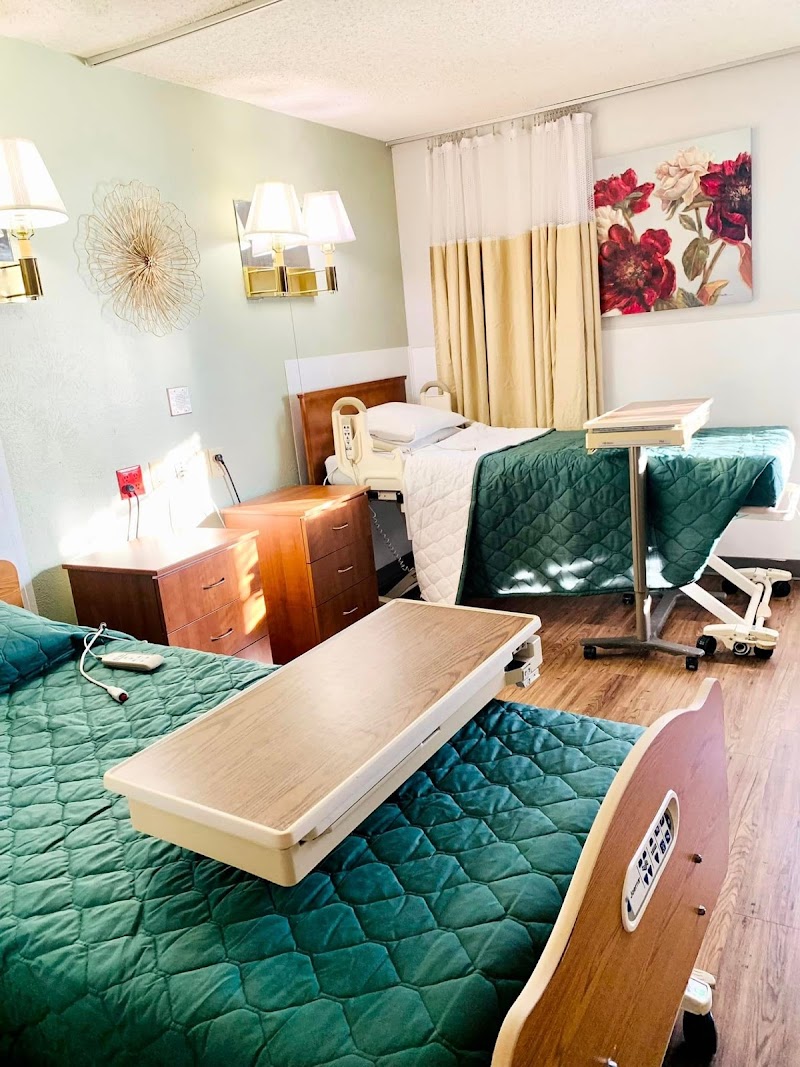
**NOTE- TERMS IN BRACKETS HAVE BEEN EDITED TO PROTECT CONFIDENTIALITY** Based on observation, interview and record review the facility failed to ensure the resident had the right to a safe, clean, comfortable, and homelike environment, including but not limited to receiving treatment and supports for daily living safely for 5 of 12 resident rooms (room [ROOM NUMBER], #2, #3, #4, and #5) reviewed for environment. The facility failed to ensure Resident Rooms #1, #2, #3, #4, and #5 were thoroughly cleaned and sanitized. This deficient practice could place residents at risk of living in an unclean and unsanitary environment which could lead to a decreased quality of life. Findings include: An observation on 01/28/25 at 10:28 AM of the Resident room [ROOM NUMBER] reflected the air condition unit had vents filled with black and brown dirt debris. An observation on 01/28/25 at 10:50 AM of the Resident room [ROOM NUMBER] reflected the air condition unit had vents filled with black and brown dirt debris. The unit's cover appeared to be separating from the wall and black dirt and grime could be observed. A wall near a wastebasket, had dark stains splattered on the lower part of the wall. An observation on 01/28/25 at 10:54 AM of the Resident room [ROOM NUMBER] reflected the air condition unit had vents filled with black and brown dirt debris. An observation on 01/28/25 at 11:03 AM of the Resident room [ROOM NUMBER] reflected the air condition unit had vents filled with black and brown dirt debris. An observation on 01/28/25 at 11:08 AM of the Resident room [ROOM NUMBER] reflected dark stains on the wall alongside the resident's bed. Inside the mini fridge had [NAME] reddish stains on the bottom inside of the fridge. In an interview on 01/30/25 at 08:48 AM, the Housekeeping Supervisor stated it was his second day at the facility. He stated he managed in housekeeping for 7 years. He was shown the pictures of the concerns with Resident rooms #1, #2, #3, #4, and #5, and he stated he would meet with staff to address the concerns. He stated he was unsure if his staff were responsible for cleaning the resident's refrigerators, but he would find out. He stated that risk of the concerns not being addressed could result in infections. In an interview on 01/30/25 at 9:00 AM, Housekeeping/Laundry Aid D stated he had been at the facility a month. He stated the floor technician and himself cleaned the halls, and he cleaned the resident rooms. He stated they were responsible for cleaning the walls, air condition units and refrigerators in the resident rooms. He was shown the pictures of the concerns observed in Resident rooms #1, #2, #3, #4, and #5, and he stated he would take care of the areas mentioned. He stated the risk of not addressing the issue could result in residents having trouble breathing. In an interview on 01/30/25 at 10:05 AM, the Administrator was shown pictures of the concerns observed in Resident rooms #1, #2, #3, #4, and #5. He stated he had just hired a new housekeeping supervisor and would meet with him to ensure the area of concerns were addressed. He stated the risk of these concerns not being addressed could result in an infection. Record review of the facility's policy on General Cleaning (2021) revealed It is the policy of this facility to maintain cleanliness in an orderly manner. The goal is to keep facilities clean and odor free, while providing the residents, their families, and staff with the safest environment possible and projecting a positive image. Following cleaning tasks should be completed daily. 2. Resident Room(s) o Each Room (including Closets)
CONCERN (E)

Potential for Harm - no one hurt, but risky conditions existed

ADL Care (Tag F0677)

Could have caused harm · This affected multiple residents

**NOTE- TERMS IN BRACKETS HAVE BEEN EDITED TO PROTECT CONFIDENTIALITY** Based on observation, interview and record review the facility failed to ensure a resident who was unable to carry out activitie...

Read full inspector narrative →
**NOTE- TERMS IN BRACKETS HAVE BEEN EDITED TO PROTECT CONFIDENTIALITY** Based on observation, interview and record review the facility failed to ensure a resident who was unable to carry out activities of daily living received the necessary services to maintain good nutrition, grooming, and personal and oral hygiene for 3 of 20 residents (Resident #11, #27, and Resident #29) reviewed for ADL care provided to dependent residents. 1. The facility failed to ensure Resident #11 received proper podiatry care to treat feet. 2. The facility failed to provide fingernail care for Residents #27 and #29. These failures could place residents at risk of not receiving necessary services to maintain good personal hygiene, skin integrity, or decreased self- esteem. Findings Include: 1. Record review of Resident #11's face sheet, dated 01/28/25, reflected an [AGE] year-old male who was originally admitted to the facility on [DATE]. Resident #11 had relevant diagnoses which included need for assistance for personal care, and muscle wasting and atrophy. Record review of Resident #11's Quarterly MDS assessment, dated 12/23/24, reflected the resident had a BIM score of 12, which indicated moderate impairment. The resident was dependent for all personal hygiene needs. Record review of Resident #11's Comprehensive Care Plan, dated 01/09/25, reflected the resident was care planned for having ADL self-care performance deficit and the goal for the resident was The resident will maintain or improve current levels of function in (Specify Bed Mobility, transfers, eating, dressing, grooming, toilet use and personal hygiene). An observation on 01/28/25 at 10:27 AM revealed Resident #11 laying in his bed. The resident's toenails were long and there was thick crust built up on the toenails of both feet. In an interview and resident observation on 01/29/25 at 10:15 AM, LVN V observed Resident #11's toes and stated he needed podiatry care. She stated the nursing staff were to monitor the resident's feet to ensure that it was manicured to avoid his feet from getting an infection. She stated she would contact the podiatrist to schedule an appointment for the resident. In an interview on 01/30/25 at 10:22 AM, the Social Worker stated she was responsible to setting up podiatry appointments. She stated staff, the resident, or family member could request for podiatry to see a resident. She stated no one notified her there was a concern with Resident #11's feet and toes because she would have scheduled for him to see the podiatrist the next time the podiatrist was scheduled to visit the facility on 02/05/25. In an interview on 01/30/25 at 10:22 AM, the DON stated the nurses were to conduct weekly skin assessments from head to toe, and one of the areas observed were the resident's feet. She stated Resident #11 did need to see a podiatrist to ensure his feet were manicured to avoid any infections. 2. Record review of Resident #27's face sheet, dated 01/30/2025, reflected an [AGE] year-old male who was admitted to the facility on [DATE]. Resident #27 had diagnoses which included hemiplegia (paralysis of one side of the body) and hemiparesis (weakness on one side of the body) following cerebral infarction (disrupted blood flow to the brain) affecting the left side of the body. Record review of Resident #27's Quarterly MDS Assessment, dated 01/07/2025, reflected the resident had a severe impairment in cognition with a BIMS score of 00. The Quarterly MDS Assessment indicated the resident was dependent for personal hygiene. Record review of Resident #27's Comprehensive Care Plan, dated 01/27/2025, reflected the resident had ADL self-care performance deficit and one of the interventions was to assist with personal hygiene. The Comprehensive Care Plan did not indicate the resident was refusing nail care. Record review of Resident #27's Progress Notes, dated 11/672024, to 01/28/2025 reflected no documented attempts or refusals for nail care. Observation and interview with Resident #27 on 01/28/2025 at 10:20 AM revealed the resident was in his bed, awake. It was observed his nails on both hands were long and dirty. When asked when was the last time his nails were cut, the resident did not reply. Observation on 01/28/2025 at 10:20 AM revealed CNA G was walking in the hallway and heard Resident #27 calling for help. CNA G went inside the room to check on the resident and saw the resident was throwing up . She went out of the room and said she would call the nurse. She came back to the room with LVN C behind her. LVN C assessed the resident, raised the head of the bed, and put a pillow on the resident's left side so the resident would be on a semi-side-[NAME]-lying position. She further assessed the resident to check how much was the secretion was and if there were secretions on the resident's body, clothing and beddings. While LVN C was assessing the resident, CNA G went to the bathroom to get a bucket of water and a face towel and said she would clean the resident. Nobody noticed the resident's fingernails were long and dirty. LVN C went out of the room and said she would notify the physician. Observation on 01/29/2025 at 10:16 AM revealed Resident #27's nails were still dirty. 3. Record review of Resident #29's face sheet, dated 01/30/2025, reflected a [AGE] year-old male who was admitted to the facility on [DATE]. Resident #27 Parkinsonism (umbrella term for conditions affecting movement). Record review of Resident #29's Quarterly MDS Assessment, dated 11/11/2024, reflected the resident had a severe impairment in cognition with a BIMS score of 03. The Quarterly MDS Assessment indicated the resident was dependent to staff for personal hygiene. Record review of Resident #29's Comprehensive Care Plan, dated 01/27/2025, reflected the resident had an ADL self-care performance deficit and one of the interventions was the resident required one staff participation with personal hygiene. The Comprehensive Care Plan did not indicate the resident was refusing nail care. Record review of Resident #27's Progress Notes, dated from 11/07/2024 to 01/28/2025, reflected no documented attempts or refusals for nail care. Observation and interview with Resident #29 on 01/28/2025 at 9:20 AM revealed the resident was sitting in his wheelchair, awake. When asked if his nails could be seen, the resident raised both hands. It was observed the resident's nails were visibly dirty with a black unknown substance under some of the nails. When asked when the last time was his nails were cut, the resident shrugged his shoulders. Observation on 01/29/2025 at 10:18 AM revealed Resident #29's nails were still dirty. Observation and interview with LVN C on 01/29/2025 at 10:19 AM, LVN C stated nail care checks should be done by everyone and nails were mostly checked during showers but could also be done in between showers when the nails were seen dirty. LVN C went inside Resident #29's room and looked at Resident #29's fingernails and saw the dirty fingernails. She said the resident's hands and fingernails should always be clean because the resident would sometimes pick-up his food. She said the resident might have stomach issues when he picked up food with dirty fingernails. She said she would get a trimmer and nail filer and would take care of Resident #29's nails. LVN C then went inside Resident #27's room and checked on the resident's fingernails. She said Resident #27's fingernails were long and dirty. LVN C said she did not notice the resident's fingernails were dirty when she assessed the resident the day before. She said long and dirty nails could lead to skin infections if the dirty nails were used to scratch the skin. She said she would take care of Resident #27's nails after she was done with Resident #29's nails. She said the nurses and the aides were responsible in ensuring the nails of the residents were clean. In an interview with CNA F on 01/30/2025 at 10:38 AM, CNA F stated basic nail care could be done by nurses or CNAs. CNA F said if the resident was diabetic or required more than basic nail care, she would notify a nurse. She said nail checking was done during showers . She said the nails should be clean because sometimes the residents picked their food or scratched their skin. She said dirty nails could result to stomach or skin problems. She said she was the CNA assigned for Resident #27 and #29. She said she would check the resident nails . In an interview with CNA G on 01/30/2025 at 11:33 AM, CNA G stated nail care was provided by CNAs, but the nurses would do the nail care if the resident was diabetic. She said she assisted LVN C when Resident #27 was throwing up two days before. She said she did not notice the resident's fingernails were long and dirty. She said if the fingernails were long and dirty, it should be trimmed and cleaned even if the resident was not scheduled for shower. In an interview with the DON on 01/29/2025 at 12:12 PM, the DON stated fingernail care should be provided by the CNAs during shower days. She said nails should be checked, trimmed, and cleaned especially if residents scratch themselves. She said the CNAs could provide nail care to residents who were not diabetic. She said long and dirty fingernails not only affected the dignity of the residents because their visitors could see that their fingernails were dirty and could also be a cause of infection. The DON said diabetic residents' fingernails were cut by the nurses or the podiatrist. She said her expectation was for staff to check the nails and do nail care as appropriate. She said if a CNA saw dirty nails of diabetic residents, at least let the nurses know so the nurses could take care of it or put them on the list for the podiatrist. She said the nails should be checked during showers. She said she would do an in-service regarding ADLs specific for nail care and would also check the nails of the other residents. In an interview with the Administrator on 01/30/2025 at 8:34 AM, the Administrator stated the expectation was for the staff to do nail care. He said he would coordinate with the DON regarding the nail care issue. Record review of the facility's, undated, policy Dressing and Personal Grooming Nursing Policy & Procedure, reflected Purpose: The purposes of this procedure . promote cleanliness
CONCERN (E)

Potential for Harm - no one hurt, but risky conditions existed

Food Safety (Tag F0812)

Could have caused harm · This affected multiple residents

Based on observation, interviews and record review the facility failed to store, prepare, distributed, and serve in accordance with professional standards for food service safety for the facility's on...

Read full inspector narrative →
Based on observation, interviews and record review the facility failed to store, prepare, distributed, and serve in accordance with professional standards for food service safety for the facility's only kitchen, reviewed for food and nutrition services. 1. The facility failed to ensure the food stored in the refrigerator and freezer were labeled with the date the product was received from the vendor or date the product was stored after being used. 2. The facility failed to ensure the food stored in the freezer was properly sealed from air-borne contaminants. 3. The facility failed to ensure the ice machine in the dining area was cleaned. 4. The facility failed to cover a large trash can stored in the kitchen area. These failures could place residents at risk for cross contamination and other air-borne illnesses. Findings include: Observations on 01/28/25 from 9:22 AM to 9:25 AM in the facility's only kitchen revealed: The ice machine door had white and brown dirt stains inside the door and a white plastic piece located above the ice had black dirt on them. One large trash can, which contained food and trash, in the kitchen area, was uncovered. One large zip locked bag of cooked meat, stored in the refrigerator, did not have the month, date and year the food was stored after use. Two bags of tortillas stored in the refrigerator, did not have the month, date, and year the food was stored when received from the vendor. One container of pie shells, stored in the freezer, did not have the month, date, and year the food was stored when received from the vendor. One large box of frozen sausages, located in the freezer, was unsealed and exposed to airborne contaminants. Two loaves of French bread, located in the freezer did not have the month, date, and year product was received from the vendor. In an interview on 01/29/25 at 01:35 PM, the DM stated he had been the DM for nearly 4 months. He was shown pictures of the concerns observed in the kitchen area. He stated he cleaned the ice machine at least once a month but would check it for cleanliness more frequently. He stated the trash can in the kitchen area should have been covered to avoid airborne contaminants. He stated he worked with staff to ensure all foods were dated and labeled properly but still had some items that may have been overlooked. He stated he would get with his team to remind them of the need for the complete month, date, and year when storing foods. He stated the following concerns could result in food contamination. In an interview on 01/30/25 at 10:05 AM, the Administrator was shown pictures of the concerns observed in the facility's only kitchen. He stated this was his first week as the Administrator at the facility, but he would follow up with the DM to address the concerns. He stated the concerns observed could result in residents experiencing food contamination. Record review of the facility's policy on Dietary Services Policy & Procedure Manual 2012, revealed 4. Open packages of food are stored in closed containers with covers or in sealed bags and dated as to when opened .6. When items are received from the vendor, they should be first examined for expiration date, and if an expiration date is present, it is beneficial to mark it by circling it so it is readily visible and noticeable. It is important to distinguish between an expiration date and a production date, or a 'best by' or 'use by' date . If an item does not have a date designated by the manufacturer as an expiration date, then the item should be dated as to when it is received, and shelf-stable items will be stored in a first in, first out manner, to be used within one year . All facility storage areas will be maintained in an orderly manner that preserves the condition of food and supplies. We will ensure storage areas are clean, organized, dry and protected from vermin, and insects. Record review of the U.S. Food and Drug Administration (FDA) Code (2022) revealed, Packaged Food shall be labeled as specified in LAW, including 21 CFR 101 food Labeling, 9 CFR 317 Labeling, Marking Devices, and Containers, and 9 CFR 381 Subpart N Labeling and Containers, and as specified under § 3-202.18. Food shall be protected from contamination that may result from a factor or source not specified under Subparts 3-301 - 3-306. Record review of Title 21--Food And Drugs Chapter I--Food And Drug Administration Department Of Health And Human Services Subchapter b - Food For Human Consumption part 110 -- current good manufacturing practice in manufacturing, packing, or holding human food.
CONCERN (E) 📢 Someone Reported This

A family member, employee, or ombudsman was alarmed enough to file a formal complaint

Potential for Harm - no one hurt, but risky conditions existed

Infection Control (Tag F0880)

Could have caused harm · This affected multiple residents

**NOTE- TERMS IN BRACKETS HAVE BEEN EDITED TO PROTECT CONFIDENTIALITY** Based observation, interview and record review the facility failed to establish and maintain an infection prevention and control...

Read full inspector narrative →
**NOTE- TERMS IN BRACKETS HAVE BEEN EDITED TO PROTECT CONFIDENTIALITY** Based observation, interview and record review the facility failed to establish and maintain an infection prevention and control program designed to provide a safe, sanitary, and comfortable environment and to help prevent the development and transmission of communicable diseases and infections for nine (Resident #5, Resident #6, Resident #18, Resident #26, Resident #27, Resident #33, Resident #39, Resident #43 and Resident #52) of eighteen residents reviewed for Infection Control. 1. The facility failed to ensure CNA G performed hand hygiene before checking on Resident #27 on 01/28/2025. 2. The facility failed to ensure LVN A did not bring the whole container of test strips used for checking blood sugar inside Resident #33's room on 01/28/2025. 3. The facility failed to ensure LVN A sanitized the diaphragm of the stethoscope before checking for Resident #52's g-tube placement during medication administration on 01/28/2025. 4. The facility failed to ensure LVN B sanitized her hands and the blood pressure cuff while administering medications to Residents # 6, #18, #26, #39, and #43 on 01/29/2025. 5. The facility failed to ensure CNA D changed her gloves and performed hand hygiene while providing incontinent care to Resident #5 on 01/29/2025. These failures could place residents at risk of cross-contamination and development of infections. Findings included: 1. Record review of Resident #27's Face Sheet, dated 01/30/2025, reflected an [AGE] year-old male who was admitted to the facility on [DATE]. Resident #27 was diagnosed with hemiplegia (paralysis of one side of the body) and hemiparesis (weakness on one side of the body) following cerebral infarction (disrupted blood flow to the brain) affecting the left side of the body. Record review of Resident #27's Quarterly MDS Assessment, dated 01/07/2025, reflected the resident had a severe impairment in cognition with a BIMS score of 00. The Quarterly MDS Assessment indicated the resident was dependent for activities of daily living. Record review of Resident #27's Comprehensive Care Plan, dated 01/27/2025, reflected the resident had ADL self-care performance deficit and one of the interventions was to assist with personal hygiene. Observation on 01/28/2025 at 10:20 AM revealed CNA G was walking in the hallway and heard the Resident #27 calling for help. CNA G went inside the room to check on the resident, put on a pair of gloves, and saw the resident was throwing up. She went out of the room and said she would call the nurse. She removed her gloves before going out of the room. She came back to the room and put on a pair of gloves. She did not do hand hygiene before providing care. She assisted the nurse in placing the resident in a side lying position to prevent aspiration. In an interview with CNA G on 01/30/2025 at 11:33 AM, CNA G stated hand hygiene should be done before providing care to a resident. She said hand hygiene was done to avoid infection. 2. Record review of Resident #33's Face Sheet, dated 01/30/2025, reflected a [AGE] year-old female admitted to the facility on [DATE]. The resident was diagnosed with diabetes mellitus (high blood sugar). Record review of Resident #33's Comprehensive MDS Assessment, dated 05/01/2024, reflected the resident was cognitively intact with a BIMS score of 15. The Comprehensive MDS Assessment indicated the resident had diabetes mellitus and was receiving insulin injections. Record review of Resident #33's Comprehensive Care Plan, dated 12/27/2024, reflected the resident had diabetes mellitus and one of the interventions was to acquire the fasting serum blood sugar (test that measures the amount of sugar in the blood) as ordered. Record review of resident #33's Physician Order, dated 09/15/2022, reflected FSBS checks two times a day related to DIABETES MELLITUS DUE TO UNDERLYING CONDITION WITHOUT COMPLICATIONS. Observation and interview with LVN A on 01/28/2025 at 11:32 AM, LVN A said she was going to check Resident #33's blood sugar. She sanitized her hands and prepared the things needed to check the resident's blood sugar. LVN A sanitized the glucometer, prepared two alcohol wipes, a push button safety lancet, and the container of test strips. LVN A went inside Resident #33's room and told the resident she would be checking her blood sugar. LVN A brought with her the wipes, the push button safety lancet, the glucometer, and the whole container of the test strips inside Resident #33's room and placed them on the resident's overbed table. LVN A put on a pair of gloves, took a strip from the container, and inserted it on the glucometer. She wiped the resident's left index finger, waited for it dry up, and then pricked the left index finger with the push button safety lancet. LVN A scooped a drop of blood from the resident's index finger with the tip of the test strip that was inserted in the glucometer. After scooping the blood, the glucometer displayed 168. She went back to her cart and put the container of strips on top of her cart. She turned on her computer and checked the resident's order for insulin. She said the resident would get 5 units of insulin. In an interview with LVN A on 01/28/2025 at 11:39 AM, LVN A said she brought with her the container of the test strips in case she needed another test strip. She said she should have left the container of test strips on top of the cart and just brought with her 2 strips in case the glucometer displayed error. She said bringing an item inside the resident's room, putting it on the resident's table, and then putting it on the cart again could result to cross contamination. She said she would make sure she would not bring the container of strips inside the room of the residents. 3. Record review of Resident #52's Face Sheet dated 01/28/2025, reflected a [AGE] year-old male admitted to the facility on [DATE]. The resident was diagnosed with dysphagia (difficulty in swallowing). Record review of Resident #52's Comprehensive MDS Assessment, dated 12/13/2024, reflected the resident had a severe impairment in cognition with a BIMS score of 00. The Comprehensive MDS Assessment indicated the resident had a feeding tube (a way of providing nutrition directly to the stomach). Record review of Resident #52's Quarterly Care Plan, dated 12/24/2024, reflected the resident required tube feeding related to dysphagia and one of the interventions was check for placement. Record review of Resident #52's Physician Order, dated 10/13/2023, reflected check for placement. An observation on 01/28/2025 at 12:03 PM revealed LVN A was about to give Resident #52 his 12 PM medication. LVN A sanitized her hands, prepared the medications and the water needed for medication administration through g-tube. She put on a gown and a pair of gloves, took the stethoscope hanging on the laptop stand of the medication cart, and went inside the resident's room. She took the stethoscope from around her neck and placed the diaphragm of the stethoscope on the resident's abdomen. She did not sanitize the diaphragm of the stethoscope before placing it on the resident's abdomen to check for placement. During an observation and interview with LVN A on 01/28/2025 at 12:32 PM, LVN A stated the diaphragm of the stethoscope should be sanitized as because it was used on other residents. She said the blood pressure cuff and the pulse oximeter should be sanitized to prevent cross contamination and infection. 4. Record review of Resident #43's Face Sheet, dated 01/30/2025, reflected a [AGE] year-old male who was admitted to the facility on [DATE]. The resident was diagnosed with hypertensive emergency (very high blood pressure). Record review of Resident #43's Comprehensive MDS Assessment, dated 11/08/2024, reflected the resident was cognitively intact with a BIMS score of 15. The Comprehensive MDS Assessment indicated the resident had hypertension (high blood pressure). Record review of Resident #43's Comprehensive Care Plan, dated 12/24/2024, reflected the resident had hypertension and one of the interventions was to monitor for signs and symptoms of hypertension. Record review of Resident #43's Physician Orders, dated 09/24/2024, reflected Hydralazine HCl Oral Tablet 100 MG (Hydralazine HCl) Give 1 tablet by mouth one time a day related to HYPERTENSIVE EMERGENCY. HOLD IF SBP<110, DBP<60, P<60. Observation on 01/29/2025 at 6:54 AM revealed LVN B was preparing Resident #43's medication. She picked up the blood pressure cuff from the medication cart and went inside the resident's room and placed the blood pressure cuff on the resident's arm. After the blood pressure reading was completed, LVN B placed the blood pressure cuff on top of the medication cart, prepared the medications, and gave the medications to Residents #43. She did not sanitize the blood pressure cuff and did not do hand hygiene before preparing the medications. Review of Resident #6's Face Sheet, dated 01/30/2025, reflected resident was a [AGE] year-old male admitted to the facility on [DATE]. The resident was diagnosed with hypertensive heart disease. Review of Resident #6's Comprehensive MDS Assessment, dated 11/30/2024, reflected the resident was cognitively intact with a BIMS score of 13. The Comprehensive MDS Assessment indicated the resident had hypertension. Review of Resident #6's Comprehensive Care Plan, dated 12/24/2024, reflected resident had hypertension and one of the interventions was give anti-hypertensive medications as ordered. Review of Resident #6's Physician's Order, dated 01/28/2025, reflected Losartan Potassium Oral Tablet 50 MG (Losartan Potassium) Give 1 tablet by mouth every day shift for Hypertension Hold for SBP less than 110, DBP less than 60 and HR less than 60. Observation on 01/29/2025 at 7:12 AM revealed LVN B was preparing Resident #6's medication. She picked up the blood pressure cuff from the medication cart and went inside the resident's room and placed the blood pressure cuff on the resident's arm. After the blood pressure reading was completed, LVN B placed the blood pressure cuff on top of the medication cart, prepared the medications, and gave the medications to Residents #6. She did not sanitize the blood pressure cuff and did not do hand hygiene before preparing the medications. Record review of Resident #18's Face Sheet, dated 01/28/2025, reflected a [AGE] year-old male who was admitted to the facility on [DATE]. Resident #18 was diagnosed with hypertension. Record review of Resident #18's Comprehensive MDS Assessment, dated 12/04/2024, reflected the resident was cognitively intact with a BIMS score of 15. The Comprehensive MDS Assessment indicated the resident had hypertension. Record review of Resident #18's Comprehensive Care Plan, dated 12/24/2024, reflected the resident had hypertension and one of the interventions was give anti-hypertensive medications as ordered. Record review of Resident #18's Physician Orders, dated 01/27/2025, reflected Vital signs every shift Notify provider for temp >101, pulse >110, or SBP < 90 Observation on 01/29/2025 at 7:41 AM revealed LVN B was preparing Resident #18's medication. Before she went inside the room, the Director Of Rehabilitation (DOR) approached LVN B and gave her a container of sanitizer. She took the container of sanitizer and put it on the last drawer of the nurse's cart. She picked up the other blood pressure cuff from the medication cart and went inside Resident #18's room and placed the blood pressure cuff on the resident's arm. After the blood pressure reading was completed, LVN B placed the blood pressure cuff on top of the medication cart, prepared the medications, and gave the medications to Residents #18. She did not sanitize the blood pressure cuff and did not do hand hygiene before preparing the medications. Review of Resident #39's Face Sheet, dated 01/28/2025, reflected a [AGE] year-old female who was admitted to the facility on [DATE]. The resident was diagnosed with depression. Review of Resident #39's Comprehensive MDS Assessment, dated 05/01/2024, reflected the resident was cognitively intact with a BIMS score of 15. The Comprehensive MDS Assessment indicated Resident #39 had depression. Review of Resident #39's Comprehensive Care Plan, dated 12/01/2024, reflected resident had potential had depression and interventions were administer medications as ordered and observe side effects like hypotension. Review of Resident #39's Physician's Order, dated 06/21/2023, reflected Bupropion HCl ER Oral Tablet Extended Release 12 Hour 150 MG (Bupropion HCl) Give 1 tablet by mouth one time a day related to DEPRESSION, UNSPECIFIED. Observation on 01/29/2025 at 7:56 AM revealed LVN B was preparing Resident #39's medication. She picked up the blood pressure cuff from the medication cart and went inside the resident's room and placed the blood pressure cuff on the resident's arm. After the blood pressure reading was completed, LVN B placed the blood pressure cuff on top of the medication cart, prepared the medications, and gave the medications to Residents #39. She did not sanitize the blood pressure cuff and did not do hand hygiene before preparing the medications. Review of Resident #26's Face Sheet, dated 01/30/2025, reflected a [AGE] year-old female admitted to the facility on [DATE]. The resident was diagnosed with hypertension. Review of Resident #26's Comprehensive MDS Assessment, dated 05/01/2024, reflected Resident #26 had a severe impairment in cognition with a BIMS score of 03. The Comprehensive MDS Assessment indicated the resident had hypertension. Review of Resident #26's Comprehensive Care Plan, dated 01/16/2025, reflected the resident had hypertension and one of the interventions was give anti-hypertensive medications. Review of Resident #26's Physician's Order, dated 05/21/2024, reflected Amlodipine Besylate Tablet 5 MG. Give 1 tablet by mouth one time a day for Hypertension hold for systolic <110, Diastolic <60, pulse < 60. Observation on 01/29/2025 at 8:16 AM revealed LVN B was preparing Resident #26's medication. She picked up the blood pressure cuff from the medication cart and went inside the resident's room and placed the blood pressure cuff on the resident's arm. After the blood pressure reading was completed, LVN B placed the blood pressure cuff on top of the medication cart, prepared the medications, and gave the medications to Residents #26. She did not sanitize the blood pressure cuff and did not do hand hygiene before preparing the medications. In an interview with LVN B on 01/29/2025 at 8:53 AM, LVN B stated she obtained the blood pressures of the residents before giving the medication for hypertension to know if the medication needed to be held or not. LVN B said the proper thing to do was to wash or sanitize her hands before and after giving medications. LVN B said the blood pressure cuff should be sanitized as well after using it and before using it on another resident. LVN B then acknowledged she forgot to sanitize the blood pressure cuff in between residents when she passed the medications. LVN B stated not sanitizing the blood pressure cuff in between residents could cause infection to transfer from one resident to another. LVN B added if a resident already had an infection, that infection could be transferred to another resident because the reusable item was not sanitized. In an interview with DOR on 01/30/2025 at 8:10 AM, the DOR stated she gave LVN B the sanitizer so she could use it to sanitize her blood pressure cuff and pulse oximeter. She said that was what they do in therapy. They sanitized the blood pressure cuff in between residents to prevent cross contamination and infection. 5. Review of Resident #5's Face Sheet, dated 01/30/2025, reflected an [AGE] year-old female admitted to the facility on [DATE]. The resident was diagnosed with muscle weakness. Review of Resident #5's Comprehensive MDS Assessment, dated 05/01/2024, reflected the resident had a moderate impairment in cognition with a BIMS score of 11. The Comprehensive MDS Assessment indicated the resident was incontinent for bowel and bladder. Review of Resident #5's Comprehensive Care Plan, dated 12/24/2024, reflected the resident was incontinent for bladder and bowel and one of the interventions was provide peri care after each incontinent episode. Observation on 01/29/2025 at 8:23 AM revealed CNA D was about to assist Resident #5 to go to the bathroom for a bowel movement. CNA D sanitized her hands and put on a pair of gloves. She transferred the resident from bed to wheelchair and ushered the resident to the bathroom. CNA D then transferred the resident from wheelchair to the toilet bowl and waited for the resident to be done with her bowel movement. When the resident was done with her bowel movement, CNA D instructed the resident to stoop forward so she could clean her bottom. After cleaning the resident's bottom, she washed her hands and changed her gloves. CNA D instructed the resident to stand up and hold on the arm rest of the wheelchair. She took a couple of wipes and cleaned the resident's perineal area. After cleaning the resident's perineal area, she took the brief that she hung by the railing and put it on the resident. She did not do hand hygiene before touching the new brief. In an interview with CNA D on 01/29/2025 at 8:38 AM, CNA D stated she washed her hands before incontinent care and sanitized her hands when she changed her gloves. She said after cleaning Resident #5's perineal area she was not able to change her gloves before touching the new brief. She said she was supposed to change her gloves from dirty to clean. She said her gloves were already considered soiled because she used them to clean the bottom of the resident. She said she would be mindful with incontinent care to not compromise the residents' health and cause infection. In an interview with the DON on 01/29/2025 at 12:12 PM, the DON stated hand hygiene was the most effective way to prevent cross contamination and infection. She said hands should be washed before and after any care. She said the staff should not bring the container of strips for blood sugar check inside the resident's room. She said the staff could bring two or three strips inside and then discard what were not used. She added the blood pressure cuff and the diaphragm of the stethoscope should be sanitized before using or every after use. She said gloves should be changed after cleaning the resident's perineal area and before touching the new brief. She said there might be no policy regarding sanitizing the blood pressure cuff and stethoscope or about not bringing the container of strips inside the room, but they were obviously infection control issues. She said the above issues could cause cross contamination and different kinds of infections. She said the expectations were for the staff to be mindful with how they take care of the residents. She said she would do an in-service regarding infection control and would specifically focus on the issues mentioned. In an interview with the Administrator on 01/30/2025 at 8:34 AM, the Administrator stated the staff should follow the policies and procedures of any procedure to prevent infection. He said he would collaborate with the DON with regards to infection control. Record review of facility policy, Hand Hygiene, undated, revealed Hand hygiene continues to be the primary means of preventing the transmission of infection. When to perform hand hygiene . Upon and after coming in contact with a resident's intact skin Record review of facility policy, Perineal Care Policies and Procedure created 04/25/2022 revealed Purpose: This procedure aims . providing cleanliness and comfort to the resident, preventing infections and skin irritation, and observing the resident's skin condition . Procedure Content . 10) Perform hand hygiene 11) [NAME] gloves . 24) Doff gloves and PPE . 25) Perform hand hygiene. Record review of facility policy, Infection Control Plan: Overview Infection Control Policy & Procedure Manual 2019 updated 3/2023 revealed Infection Control: The facility will establish and maintain an Infection Control Program designed to provide a safe, sanitary and comfortable environment and to help prevent the development and transmission of disease and infection . Implement hand hygiene (hand washing) practices consistent with accepted standards of practice, to reduce the spread of infections and prevent cross-contamination . Fundamentals of Infection Control Precautions . Hand Hygiene: Hand hygiene continues to be the primary means of preventing the transmission of infection . Before and after assisting a resident with personal care . After contact with a resident's mucous membranes and body fluids or excretions . After removing gloves . Wearing gloves does not replace the need for hand washing because gloves may have small inapparent defects or be torn during use, and hands can become contaminated during removal of gloves . Resident care equipment . Non-invasive resident care equipment is cleaned daily or as need between use.
Dec 2024 1 deficiency
CONCERN (D) 📢 Someone Reported This

A family member, employee, or ombudsman was alarmed enough to file a formal complaint

Potential for Harm - no one hurt, but risky conditions existed

Comprehensive Care Plan (Tag F0656)

Could have caused harm · This affected 1 resident

**NOTE- TERMS IN BRACKETS HAVE BEEN EDITED TO PROTECT CONFIDENTIALITY** Based on observations, interviews, and record review, the facility failed to develop and implement a comprehensive person-center...

Read full inspector narrative →
**NOTE- TERMS IN BRACKETS HAVE BEEN EDITED TO PROTECT CONFIDENTIALITY** Based on observations, interviews, and record review, the facility failed to develop and implement a comprehensive person-centered care plan for each resident, consistent with the resident rights set forth that included measurable objectives and timeframes to meet a resident's medical, nursing, and mental and psychosocial needs that were identified in the comprehensive assessment for a resident for two (Resident #1 and Resident #20) of eight residents reviewed for Care Plans. 1. The facility failed to ensure Resident #1 was care planned for oxygen administration. 2. The facility failed to ensure Resident #20 was care planned for oxygen therapy (oxygen delivered through a flexible tube to the nose through two prongs) and droplet precautions (prevent infection with germs that can be spread by speaking, sneezing, or coughing). These failures could place the residents at risk of not receiving the necessary care and services. Findings included: 1. Record review of Resident #1's Face Sheet, dated 12/18/2024, reflected that the resident was a [AGE] year-old male admitted on [DATE]. Resident #1 was diagnosed with acute respiratory failure (condition where there is not enough oxygen in the body or too much carbon dioxide in the body) with hypoxia (insufficient amount of oxygen in the body). Record review of Resident #1's Quarterly MDS Assessment, dated 10/13/2024, reflected that Resident #1 had severe impairment in cognition with a BIMS score of 00. Resident #1's Quarterly MDS Assessment indicated that the resident had oxygen therapy while a resident of the facility. Record review of Resident #1's Physician Order, dated 07/30/2024, reflected O2 at (3) liters per minute via nasal cannula. Record review of Resident #1's Physician Order, dated 07/30/2024, reflected May use oxygen @ 3 l/m via nasal canula every shift. Record review of Resident #1's Comprehensive Care Plan, dated 10/13/2024, reflected no care plan for oxygen therapy. Observation on 12/18/2024 at 10:09 AM revealed Resident #1 was not inside the room. It was noted that there was an oxygen concentrator at the resident's bedside. In an interview with LVN A on 12/18/2024 at 11:09 AM, LVN A stated the resident was in therapy. She said the resident had respiratory failure that was why there was a stand-by oxygen concentrator inside his room. She said the resident would not usually use it. Observation and interview with the DON on 12/18/2024 at 12:54 PM, the DON stated every resident needed a comprehensive care plan to make sure the residents received the applicable and appropriate care needed. She said the purpose of the care plan was to make sure the staff would be on the same page when providing care. She said the care plan should be resident-centered and should show what specific care the resident needed. She turned her computer, looked at Residents #1's care plan section and saw he did not have care plan for oxygen. She said the resident had a diagnosis of respiratory failure, had an oxygen concentrator inside the room, had an order for oxygen, then he should have a care plan for oxygen. She said she would make one for Resident #1. She said without the care plan, the staff could have confusion with regards to the resident's care. She said, the MDS Nurse was sick and she was responsible in doing and overseeing the care plans of the residents. She said the expectation was for all residents to have a complete and detailed care plan. She said she would check if those residents that were using oxygen had care plans for oxygen therapy. In an interview with the Administrator on 12/18/2024 at 1:26 PM, the Administrator stated all the residents should have a care plan appropriate to their needs. She said without the care plan, the staff would not know the goals and the interventions needed by the residents. The Administrator concluded that the expectation was for the staff to ensure that the residents were care planned accordingly. She said since the MDS Nurse was sick, the DON was responsible in doing the care plan. 2. Review of Resident #20's Face Sheet, dated 12/18/2024, reflected Resident #20 was an [AGE] year-old female admitted on [DATE]. Resident # 20 had a diagnosis of dementia and respiratory failure. Review of Resident #20's Quarterly MDS (tool used to measure health status) Assessment, dated 12/05/2024, reflected a BIMS (tool used to measure cognitive status) Assessment was not conducted because resident was rarely/never understood. Section C reflected was severely impaired related to cognitive skills for daily decision making. The Quarterly MDS Assessment was completed prior to the order of oxygen therapy and isolation precautions and does not reflect these. Review of Resident #20's Comprehensive Care Plan, dated 09/20/24, did not reflect any care plan for administration of oxygen and droplet precautions status for a respiratory illness. An observation 12/18/24 at 09:25 AM revealed a sign on the outside of Resident #20's door instructing to follow droplet precautions when in the room. A plastic unit with drawers was sitting outside Resident #20's door and stocked with PPE items (protective equipment worn to prevent the spread of infection). This surveyor used hand sanitizer and put on PPE items prior to entering Resident #20's room. Resident #20 was the only resident in that room and observed lying in bed asleep. An oxygen concentrator was next to the resident's bed and the Resident #20 was receiving oxygen at 2 liters per minute. PPE was removed and discarded in a trash bin near the door. Hand hygiene was performed in Resident #20's restroom before exiting the room. Record review of Resident #20's physician's order, dated 12/10/24, reflected to administer oxygen at 2 liters via nasal cannula. Record review of Resident #20's progress note, dated 12/13/24, reflected Resident #20 tested positive for RSV (virus that infects the respiratory tract and lungs) and was placed on droplet precautions. During an interview on 12/18/24 at 11:40 AM, the DON stated Resident #20 tested positive for RSV over the weekend and was placed on droplet precautions. The DON reviewed Resident #20's electronic medical record and stated the care plan should have included Resident #20 used oxygen and was on droplet precautions for RSV. The DON stated the MDS Coordinator was responsible for overseeing the care plans but had been out for a couple of weeks due to illness. The DON stated it was important for residents to have a care plan that reflected their needs, so everyone knew how to care for the residents. She stated that information was also included in the care plan meeting to let the family know how staff was providing care for their loved one. Review of facility's policy Comprehensive Care Planning reflected The facility will establish, document, and implement the care and services to be provided to each resident to assist in attaining or maintaining his or her highest practicable quality of life. Care planning drives the type of care and services that a resident receives. Undated.
Nov 2024 6 deficiencies
CONCERN (D) 📢 Someone Reported This

A family member, employee, or ombudsman was alarmed enough to file a formal complaint

Potential for Harm - no one hurt, but risky conditions existed

Deficiency F0558 (Tag F0558)

Could have caused harm · This affected 1 resident

**NOTE- TERMS IN BRACKETS HAVE BEEN EDITED TO PROTECT CONFIDENTIALITY** Based on observations, interviews, and record review the facility failed to ensure the right to reside and receive services in t...

Read full inspector narrative →
**NOTE- TERMS IN BRACKETS HAVE BEEN EDITED TO PROTECT CONFIDENTIALITY** Based on observations, interviews, and record review the facility failed to ensure the right to reside and receive services in the facility with reasonable accommodation of resident needs and preferences for two (Resident #1 and Resident #5) of twenty residents reviewed for Reasonable Accommodation of Needs. The facility failed to ensure the call light was in reach and accessible for Resident #1 and Resident #5 on 11/05/2024. This failure could place the residents at risk of being unable to obtain assistance when needed and help in the event of an emergency. Findings included: Review of Resident #1's Face Sheet, dated 11/05/2024, reflected the resident was a [AGE] year-old male admitted on [DATE]. Resident #1's pertinent diagnoses included metabolic encephalopathy (changes in how the brain works due to underlying conditions) and history of falls. Review of Resident #1's Quarterly MDS Assessment, dated 09/02/2024, reflected the resident had a severe impairment in cognition with a BIMS score of 00. The Quarterly MDS Assessment indicated the resident required dependent for toileting, dressing, and personal hygiene and the resident had highly impaired vision, but eyes could follow objects. Review of Resident #1's Comprehensive Care Plan, dated 09/02/2024, reflected the resident was at risk for fall and one of the interventions was to a safe environment with a working and reachable call light. Observation on 11/05/2024 at 9:28 AM revealed Resident#1 was in his bed, sleeping. It was observed that the resident's call light was on the floor, behind his roommate's side table. Observation and interview with CNA C on 11/05/2024 at 9:39 AM revealed CNA C went inside Resident #1's room and saw the resident's call light was behind his roommates. CNA C pulled Resident #1's call light and placed it beside the resident. She said she did not notice the resident's call light was not with the resident. She then said the resident did not need the call light because the resident was blind. When asked to repeat what she said, CNA C repeated the resident did not need the call light because the resident was blind. She said the resident was being assisted in feeding and every time she would assist him, she would put the resident's glass of juice on the same spot and the resident would know where his drinks would be. When asked if this technique would be applicable with the call light, CNA C did not answer. In an interview with LVN B on 11/05/2024 at 9:46 AM, LVN B stated Resident 1's vision was diminished, but he could still see. She said she already gave the resident his medications but did not notice the resident's call light was also on the floor when she was with the resident. She said the call light should be in a place accessible to the residents because the residents needed them to call the staff. LVN B said if the call lights were not within reach, the residents would not be able to call the staff and their needs would not be met. She said the call lights should be with the residents, regardless of their conditions. In an interview with the Interim Administrator on 11/06/2024 at 7:48 AM, the Interim Administrator stated the call lights should not be on the floor because the residents needed them to call the staff. The Administrator said the residents might be having an emergency and staff would not know. The Administrator said the staff should make sure the call lights were within reach every time they leave the room. The Administrator said he would coordinate with the DON regarding call lights and would constantly remind them to make sure the call lights were with the residents. The Administrator concluded that they would re-educate the staff about call lights within reach. In an interview with the DON on 11/06/2024 at 8:15 AM, the DON stated call lights were important for the residents and they should be placed where the residents could reach them. The DON said, for most residents, the call lights were their mode of security, that if they needed something, they could call the staff. She said the call lights should be the residents even the residents seldom use them. She said the call lights were for the dependent and independent residents, blind or not. She said all the staff were responsible in ensuring that the call lights were within reach of the residents. The DON said the expectation was for the staff would be mindful that every time they leave the residents' room, the call lights were within reach. The DON said she would conduct an in-service and check-off about the call lights for all the staff of the facility. Review of Resident #5's Face Sheet, dated 11/06/2024, reflected the resident was a [AGE] year-old female admitted on [DATE]. Resident #5 was diagnosed with left non-dominant side hemiplegia (paralyzed on one side of the body) following a stroke (blood flow to brain is blocked), cognitive deficits following a stroke, and repeated falls. Review of Resident #5's Quarterly MDS Assessment, dated 09/27/2024, reflected the resident had moderate cognitive impairment with a BIMS score of 10. Section GG indicated that the resident was dependent on staff for personal hygiene needs, toileting, and mobility. Review of Resident #5's Comprehensive Care Plan, dated 10/30/2024, reflected the resident was at high risk for falls related to left side hemiplegia. One intervention was to keep call light in reach at all times. An observation on 11/05/2024 at 9:30 AM revealed Resident #5's call light on the floor near the head of her bed. Resident #5 was lying in bed and stated she had just finished eating breakfast. Resident #5 stated that sometimes they move the call light where she can't reach it. Resident #5 stated that she feels safe here and they take great care of me. During an interview on 11/05/2024 at 11/06/24 at 9:33 AM, CNA C stated that the resident's call light should not have been on the floor. She stated that resident should be able to call the staff anytime she needs something. CNA C stated that it might cause a resident to feel neglected if they need us and cannot reach their call light. In an interview 11/06/24 at 11:05 AM, LVN B stated that keeping the call light within the resident's reach can save a life. She stated that if a resident is short of breath, they should be able to grab their call light. LVN B stated that some of their residents are forgetful, and staff must remind them where the call light was and how to call if they need anything. During an interview 11/06/24 at 11:18 AM, the DON stated that the call light should have been placed where the resident could reach it. She stated that staff should only move a call light when they are providing care for the resident and then put it back before leaving the resident's room. She stated that her expectation was for staff to ensure the residents' call lights are always within reach so residents can let staff know if they need anything. Facility's policy for call light requested on 10/05/2024 but was not provided prior to exit. The Interim Administrator said in his email on 11/06/2024 at 7:44 AM revealed The company does not have a specific policy on call lights.
CONCERN (D) 📢 Someone Reported This

A family member, employee, or ombudsman was alarmed enough to file a formal complaint

Potential for Harm - no one hurt, but risky conditions existed

ADL Care (Tag F0677)

Could have caused harm · This affected 1 resident

**NOTE- TERMS IN BRACKETS HAVE BEEN EDITED TO PROTECT CONFIDENTIALITY** Based on interviews and record reviews the facility failed to ensure that residents who were unable to carry out activities of d...

Read full inspector narrative →
**NOTE- TERMS IN BRACKETS HAVE BEEN EDITED TO PROTECT CONFIDENTIALITY** Based on interviews and record reviews the facility failed to ensure that residents who were unable to carry out activities of daily living received the necessary services to maintain good nutrition, grooming, and personal and oral hygiene for 1 (Residents #4) of 4 residents reviewed for (ADLs) care provided to dependent residents. The facility failed to ensure Resident #4 received scheduled bed baths reviewed from October 1, 2024 - October 31, 2024. This failure placed the resident at risk of not receiving necessary services to maintain good personal hygiene, skin breakdown, and decreased self- esteem. Findings included: Record review of Resident #4's Face Sheet, dated 11/06/2024, revealed she was an [AGE] year-old female admitted on [DATE]. Relevant diagnoses included muscle weakness, history of falling, and unsteadiness on feet. Record review of Resident #4's Quarterly Minimum Data Set (MDS) dated [DATE] revealed, she had a Brief Interview for Mental Status (BIMS) score of 12 (moderate impairment) and for ADL care it stated, for transfers, toileting, and bathing, the resident required total assistance. Record review of Resident #4's Comprehensive care plan dated 07/15/24 revealed the resident was care planned for potential for ADL selfcare performance, and an intervention included the resident requiring Limited Assist by 1 staff with showering on Monday, Wednesday, and Friday on shift 6:00 AM-2:00 PM and as necessary. In an interview on 11/06/24 at 12:00 PM, Resident #4 stated that she was scheduled to receive three showers a week, but she was lucky to get just one or two a week. She stated she had concerns with not getting her three showers a week. Resident #4 appeared to be clean without any odors at the time of the interview. Record review of the facility's shower sheet for Resident #4 from 10/01/24 to 10/31/24 reflected the following shower sheets: 10/14/24 10/16/24 10/21/24 10/23/24 10/25/24 In an interview on 11/06/24 at 10:54 AM, CNA S stated she had been at the facility for a month. She stated she did provide Resident #4 some of her scheduled showers but she was only at the facility on an as-needed-basis. She stated the resident was scheduled to receive her showers on Monday, Wednesday, and Friday. She stated she normally completed the resident's shower first thing in the morning. She stated the resident never refused any showers with her. She stated the CNA were required to complete shower sheets for all residents, regardless of if a shower was provided or refused. She stated she did not know why the resident only had 5 shower sheets on file for the month of October. She stated she risk of the resident not receiving her scheduled showers could result in bacteria growth, skin breakdown, and staff infections. In an interview on 11/06/24 at 11:08 AM, LVN C stated she was the nurse for the hall of Resident #4. She stated she had been at the facility since February 2024, and she was familiar with the resident. She stated she resident was scheduled to receive her showers on Monday, Wednesday, and Friday. She was advised that the resident was only showing five shower sheets on file for the month of October. She stated that during her shift, the resident often was not ready for her showers, but none of the CNAs went back to check with her later in the day. She stated the CNAs were required to complete shower sheets for all residents when they were scheduled. She stated the risk of the resident not receiving her showers could result in skin breakdown and she could get an infection. In an interview on 11/06/24 at 11:26 AM, The DON stated she was advised of Resident #4 not receiving her scheduled showers for the month of October 2024. She stated the resident would sometimes refuse showers because she may not be ready. She stated the CNAs were required to complete shower sheets for all residents, regardless of if they received a shower or refused a shower. She stated she did not know why the resident only had 5 shower sheets on file for the month. She stated the risk of the resident not receiving her showers could result in skin breakdown and it was a dignity issue. The facility's policy Bath, Tub/Shower (2003), reflected Bathing by tub bath or shower is done to remove soil, dead epithelial cells, microorganisms from the skin, and body odor to promote comfort, cleanliness, circulation, and relaxation. A medicated tub bath can also be provided to treat skin conditions. The aging skin becomes dry, wrinkled, thinner and blemished with various aging spots over time and is easily affected by environmental temperature and humidity, sun exposure, soaps, and clothing fabrics. The frequency and type of bathing depends on resident preference, skin condition, tolerance and energy level. Although a daily bath or shower is preferred and necessary for some, the aging skin can be maintained by bathing every two days or with partial bathing as needed.
CONCERN (D) 📢 Someone Reported This

A family member, employee, or ombudsman was alarmed enough to file a formal complaint

Potential for Harm - no one hurt, but risky conditions existed

Accident Prevention (Tag F0689)

Could have caused harm · This affected 1 resident

Based on observations, interviews, and record reviews, the facility failed to ensure that residents' environment remained free of accident hazards as was possible for 1 ( unknown Resident) of 68 resid...

Read full inspector narrative →
Based on observations, interviews, and record reviews, the facility failed to ensure that residents' environment remained free of accident hazards as was possible for 1 ( unknown Resident) of 68 residents at the facility reviewed for accident prevention . The facility failed to secure a coffee station on 11/06/24 that allowed for residents to self-serve coffee, which could result in skin burns. This failure could prevent residents from having an environment that was free and clear of accidents and hazards. Findings included: In an observation on 11/06/24 at 8:25 AM, an unknown resident was observed walking to a cart in front of the nurse's station, which contained hot coffee, and poured herself a cup of coffee (no lid) and walked away. The coffee at the station was poured into a cup for a temperature check using the index finger and withdrawn within seconds because of the heat. The coffee was not Lukewarm. In an interview and observation on 11/06/24 at 8:27 AM, Staffing Coordinator/CNA R stated the cart with the hot coffee had been placed there for resident to self-serve since she had been at the facility, which was one year. She stated they had not had a resident burn themselves since she was here. She stated the kitchen was supposed to check the temperature to ensure that it would not be too hot for the resident, but the nursing staff did not recheck the temperature to ensure that it was safe for the resident. She stated the risk of not checking the temperature of the coffee prior to allowing resident to get the coffee could result in the resident burning themselves. In an interview and observation on 11/06/24 at 8:30 AM, the DON stated that she had been at the facility for over a year and the self-serve coffee cart was always there and so far no resident had burned themselves. She stated the kitchen was responsible for checking the temperature to ensure that it was not a risk to the resident. She stated they did not have lids for the cups, and she stated they did have residents with skin integrity concerns and lacked coordination. She stated staff served those residents. She was advised that a resident was observed serving herself and no staff member was around. She stated they had removed the coffee cart from being in front of the nurse's station to now being located behind the nurse's stated where it would be more secured from the residents and prevent them from burning themselves. In an interview and observation on 11/06/24 at 9:00 AM, the Interim Administrator and Administrator in Training was advised of the self-serve coffee cart was left unsecured from residents that could potentially burn themselves. They advised that they had spoke with the DON and was advised that the coffee cart was moved to a more secured location that would prevent residents from burning themselves. Review of the facility's policy Guidelines on Serving Coffee in the Nursing Facility (undated), reflected 1. As there is no published federal or state regulation for minimum or maximum coffee temperature, the decision as to the temperature at which to serve the coffee rests with the administration of each facility, based on their resident's stated preferences, and the physical layout of their building, but balanced against the safety of their individual residents and their physical and mental limitations. 2. The standard for coffee service will be 140 degrees, unless the facility's residents have stated an overwhelming preference for coffee to be served at a higher temperature and additional safety measures have been implemented, or the safety of residents warrants a lower temperature. If coffee is served at 140 degrees, it will cool to 135 degrees when dispensed into a room-temperature coffee cup or mug, and per Time and Temperature Relationship to Serious Burns from the American Burn Association website, this temperature will allow approximately 15 seconds before a serious burn will occur, based on the physical condition of the individual person. 3. Any residents who have risk factors for coffee burns, such as significant cognitive impairment or extreme shaking may be evaluated for additional safety precautions using a hot beverage risk assessment. Safety precautions may include but are not limited to additional supervision when consuming coffee, insulated or non-insulated coffee mugs with sippy lids, coffee service at lower temperatures, or restricted coffee availability. 4. If coffee is served and held at a temperature lower than 140 degrees, then it will be discarded after four hours and its dispenser cleaned and sanitized before fresh coffee is added. 5. An investigation and evaluation will be performed for any resident who receives a coffee burn, and a plan to reduce this resident's risk of receiving future burns will be developed and implemented. 6. If local, state, or federal regulations or guidance for coffee temperatures are developed and/or published, then these standards will become the practice at the facility. Until that time, the facility administration must honor the resident's right to make risky decisions but balances these decisions against individual safety.
CONCERN (D) 📢 Someone Reported This

A family member, employee, or ombudsman was alarmed enough to file a formal complaint

Potential for Harm - no one hurt, but risky conditions existed

Respiratory Care (Tag F0695)

Could have caused harm · This affected 1 resident

**NOTE- TERMS IN BRACKETS HAVE BEEN EDITED TO PROTECT CONFIDENTIALITY** Based on observations, interviews, and record review, the facility failed to ensure that residents, who needed respiratory care,...

Read full inspector narrative →
**NOTE- TERMS IN BRACKETS HAVE BEEN EDITED TO PROTECT CONFIDENTIALITY** Based on observations, interviews, and record review, the facility failed to ensure that residents, who needed respiratory care, were provided such care consistent with professional standards of practice, the comprehensive person-centered care plan, and the residents' goals and preferences for two (Resident #2 and Resident #6) of twelve residents reviewed for Respiratory Care. 1. The facility failed to ensure that Resident #2's nasal cannula (flexible tube used to deliver oxygen to the nose through two prongs) was properly stored on 11/05/2024. 2. The facility failed to ensure that Resident #6's oxygen concentrator (machine that produces oxygen) had a humidification bottle (adds moisture to reduce nasal irritation) connected to it on 11/05/2024. These failures could place the residents at risk for respiratory infection and not having their respiratory needs met. Findings included: 1. Review of Resident #2's Face Sheet, dated 11/05/2024, reflected the resident was a [AGE] year-old female admitted on [DATE]. Resident #2 was diagnosed with chronic obstructive pulmonary disease (a chronic inflammatory lung disease that causes obstructed airflow from the lungs). Review of Resident #2's Comprehensive MDS Assessment, dated 10/06/2024, reflected the resident had a moderate impairment in cognition with a BIMS score of 09. Resident #2's Comprehensive MDS Assessment indicated the resident was on oxygen therapy while a resident of the facility. Review of Resident #2's Comprehensive Care Plan, dated 10/23/2024, reflected the resident had COPD and one of the interventions was give oxygen therapy as ordered. Review of Resident #2's Physician Order, dated 06/19/2023, reflected O2 . NC @ HS + prn if O2 drops < 90% or c/o SOB. Observation and interview on 11/05/2024 at 9:16 AM revealed Resident #2 was in her wheelchair, awake. It was observed that there was an oxygen concentrator inside the room and a nasal cannula was connected to the oxygen concentrator. The nasal cannula was coiled on top of the oxygen concentrator and was not bagged. Resident #2 said she was the one using the oxygen. She said she seldom use it. She said she never saw a plastic bag for her nasal cannula and said it was not her responsibility to put the nasal cannula inside the bag. Observation and interview with LVN A on 11/05/2024 at 11:43 AM, LVN A stated Resident #2 was not on continuous oxygen and would only sometimes use it at night. LVN A entered the resident's room and saw the resident's nasal cannula coiled on top of the oxygen concentrator. LVN A proceeded to disconnect the nasal cannula, threw it in a trash can, and said she would get a new one and would make sure it would be inside a bag when the resident was not using it. She said she did not notice the nasal cannula was not inside a bag and was just placed on top of the oxygen concentrator. She said a dirty nasal cannula could result to more respiratory issues. In an interview with the Interim Administrator on 11/06/2024 at 7:48 AM, the Interim Administrator stated the nasal cannula should be kept clean to prevent any respiratory infection. He said he would coordinate with the DON regarding the needed in-service about respiratory care. He said the expectation was for the staff to bag the nasal cannula every time the resident was not using it. In an interview with the DON on 11/06/2024 at 8:15 AM, the DON stated the nasal cannula should be stored properly when not in use to keep them clean. She said if the nasal cannula was not bagged, exposed, or touching surfaces that were not clean, there could be cross contamination, respiratory infection, and compromised oxygen administration. She said the expectation was for the staff to be mindful in making sure that the nasal cannula was properly stored. She said she would make an in-service and re-educate the staff about storing the nasal cannula was properly. She concluded it was the responsibility of the staff to make sure the nasal cannula was stored properly and not the residents. 2. Review of Resident #6's Face Sheet, dated 11/05/2024, reflected the resident was an [AGE] year-old female admitted on [DATE]. Resident #6 was diagnosed with chronic respiratory failure (airway to lungs becomes narrow and damaged) with hypoxia (low oxygen level) and dependence on supplemental air. Review of Resident #6's Comprehensive MDS Assessment, dated 10/10/2024, reflected the resident had moderate cognitive impairment with a BIMS score of 12. Resident #6's Comprehensive MDS Assessment indicated the resident was on oxygen therapy while a resident of the facility. Review of Resident #6's Comprehensive Care Plan, dated 10/23/2024, reflected the resident had COPD (a chronic lung disease) and one of the interventions was to give oxygen therapy as ordered by the physician. Review of documentation in Resident #6's Progress Notes, dated 11/05/24 at 9:09 AM, reflected The resident takes off her oxygen humidifier when one was put to her oxygen. Review of Resident #6's Physician Order, dated 06/04/24, reflected the resident may use oxygen at 3 liters per minute via nasal cannula every shift related to acute and chronic respiratory failure with hypoxia. An observation on 11/05/2024 at 9:05 AM revealed Resident #6 sitting on the side of her bed eating breakfast. Resident #6 was wearing the nasal cannula and receiving oxygen. The oxygen concentrator did not have a humidifier bottle attached to it. Resident #6 was unable to answer questions appropriately because of her cognitive status. An observation on 11/05/24 at 10:30 AM revealed a humidifier bottle was connected to Resident #6's oxygen concentrator. During an interview on 11/06/24 at 11:05 AM, LVN B stated there should have been a humidifier bottle attached to Resident #6's oxygen concentrator. She stated the moisture is needed so the resident does not get nose and throat dryness. She stated that she was told the resident removed it. She stated that residents cannot be forced to do anything, so the facility care plans a concern like that. During an interview on 11/06/24 at 11:18 AM, the DON stated that Resident #6's oxygen concentrator was supposed to have a humidifier bottle connected to it. She stated that this adds moisture and purifies the oxygen. She stated that the resident removed the humidifier bottle from the oxygen concentrator. She stated that staff educated the resident and told her the nurse is the only one that can do that. The DON stated that the resident doesn't remember, and that staff was responsible for monitoring the resident. Record review of facility's policy, Oxygen Administration Nursing Policy & Procedure Manual 2003 rev February 13, 2007, revealed Goals . 1. The resident will maintain oxygenation with safe and effective delivery of prescribed oxygen . 3. The resident will be free from infection. Facility's policy for bagging the nasal cannula requested on 10/05/2024 but was not provided prior to exit. The Interim Administrator said on his email on 11/06/2024 at 7:44 AM revealed The company does not have a specific policy about bagging the nasal cannula.
CONCERN (D) 📢 Someone Reported This

A family member, employee, or ombudsman was alarmed enough to file a formal complaint

Potential for Harm - no one hurt, but risky conditions existed

Pharmacy Services (Tag F0755)

Could have caused harm · This affected 1 resident

**NOTE- TERMS IN BRACKETS HAVE BEEN EDITED TO PROTECT CONFIDENTIALITY** Based on observations, interviews, and record review, the facility failed to ensure that one (Resident #3) of five residents wer...

Read full inspector narrative →
**NOTE- TERMS IN BRACKETS HAVE BEEN EDITED TO PROTECT CONFIDENTIALITY** Based on observations, interviews, and record review, the facility failed to ensure that one (Resident #3) of five residents were provided medications and/or biologicals and pharmaceutical services to meet their needs. The facility failed to ensure LVN A did not leave Resident #3's medications inside the resident's room on 11/05/2024. This failure could place the residents at risk of not receiving medications as ordered by the physician. Findings included: Review of Resident #3's Face Sheet, dated 11/05/2024, reflected the resident was a [AGE] year-old male admitted on [DATE]. Relevant diagnoses included type 2 diabetes mellitus and pain to right and left arm. Review of Resident #3's Quarterly MDS Assessment, dated 09/19/2024, reflected resident was cognitively intact with a BIMS score of 15. The Quarterly MDS Assessment also indicated Resident #3 had type 2 diabetes mellitus (high blood sugar) and pain to right and left arm. Review of Resident #3's Comprehensive Care Plan, dated 10/30/2024, reflected the resident had impaired cognitive function or impaired thought process and one of the interventions was to supervise as needed. Resident #3's Comprehensive Care Plan did not indicate that the resident could self-administer his medications. Review of Resident #3's List of Assessments on 11/05/2024 reflected no assessment for self-administration of medications, no clear instructions for self-administrations, and no assessment that the resident was competent to manage his own medications. Review of Resident #3's Physician Order for Neurontin, dated 03/14/2022, reflected Neurontin Capsule 300 MG (Gabapentin). Give 1 capsule by mouth two times a day for PAIN. Review of Resident #3's Physician Order for cyanocobalamin, dated 03/14/2022, reflected Cyanocobalamin Tablet 500 MCG. Give 4 tablet by mouth one time a day for SUPPLEMENT. Review of Resident #3's Physician Order for multivitamin, dated 6/12/2024, reflected Multivitamin Adult (Minerals) Oral Tablet (Multiple Vitamins w/ Minerals). Give 1 tablet by mouth one time a day for Vitamin. Review of Resident #3 's Physician Order for docusate sodium, dated 03/31/2023, reflected Docusate Sodium Tablet 100 MG. Give 1 tablet by mouth one time a day for constipation. Review of Resident #3 's Physician Order for metformin, dated 06/12/2024, reflected Metformin HCl Oral Tablet 500 MG (Metformin HCl). Give 1 tablet by mouth one time a day for type 2 diabetes mellitus. Observation and interview with Resident #3 on 11/05/2024 at 9:11 AM revealed the resident was in his bed, awake. It was observed that a small plastic cup with eight pills inside was noted on top of the resident's side table. According to Resident #3, his nurse left it with him a moment ago and he would take them as soon he was finished with what he was doing. Resident #3 then changed his mind and said he would take the medications. Resident #3 sat at the side of his bed, took the cup of medications from his side table, and took his medications. The resident said it was not the first time that his medications were left with him. He said all he could remember was his morning pills included his vitamins, medication for diabetes, and his pain pill. In an interview with LVN A on 11/05/2024 at 10:12 AM, LVN A stated she was the one who gave Resident #3's medication. She said she left the resident's morning pills with him. She said she should have stayed with the resident until the resident had taken the medications. He said the pills should not be left with the resident because the resident might not take them, throw them, or choke while taking them and no one would know. She said he would check if the resident took the medications. In an interview with the Interim Administrator on 11/06/2024 at 7:48 AM, the Interim Administrator stated staff should not leave medications unattended because of the risk of the resident not taking them or the pills not taken on time. He said he would coordinate with the clinicians on how to go forward to prevent untoward outcomes of leaving the medications with a resident. He said the expectation was for the staff to wait until the resident was done with their medications. In an interview with the DON on 11/06/2024 at 8:15 AM, the DON stated staff should never leave the medications at the bedside for the resident to take later. She said the staff must ensure the resident took his medications before leaving the room. She said if the resident was not yet ready for the medications, the staff should take them with them when they leave the room. She said it would be better to ask the residents if they were ready for their medications. She said the resident could hoard or hide the pills to avoid taking them. She said the residents could overdose on hoarded pills. The DON said she would do an in-service pertaining to not leaving the medications with a resident. In an interview with LVN A on 11/06/2024 at 8:46 AM, LVN A said the pills that she left with Resident #3 were four pink B12, one white metformin, one white stool softener, one red multivitamins, and one yellow Neurontin. She stayed with the resident until he was done with his medications. Record review of facility policy, Medication Administration Procedures Pharmacy Policy & Procedure Manual 2003 revised 10/25/17 revealed 1 . All medications are administered by licensed medical or nursing personnel . 4. Before administering the dose, the nurse must make certain to correctly identify the resident to whom the medication is being administered . 5. After the resident has been identified, administer the medication.
CONCERN (D) 📢 Someone Reported This

A family member, employee, or ombudsman was alarmed enough to file a formal complaint

Potential for Harm - no one hurt, but risky conditions existed

Infection Control (Tag F0880)

Could have caused harm · This affected 1 resident

**NOTE- TERMS IN BRACKETS HAVE BEEN EDITED TO PROTECT CONFIDENTIALITY** Based observations, interviews, and record review, the facility failed to maintain an Infection Prevention and Control Program d...

Read full inspector narrative →
**NOTE- TERMS IN BRACKETS HAVE BEEN EDITED TO PROTECT CONFIDENTIALITY** Based observations, interviews, and record review, the facility failed to maintain an Infection Prevention and Control Program designed to provide a safe, sanitary, and comfortable environment and to help prevent the development and transmission of communicable diseases and infections for one (Resident #4) of eight residents reviewed for Infection Control. The facility failed to ensure that CNA D changed her gloves and performed hand hygiene while providing incontinent care to Resident #4 on 11/06/2024. This failure could place the residents at risk of cross-contamination and development of infections. Findings included: Review of Resident #4's Face Sheet, dated 11/06/2024, reflected the resident was a [AGE] year-old female admitted on [DATE]. Resident #4 was diagnosed with need for assistance with personal care. Review of Resident #4's Comprehensive MDS Assessment, dated 08/29/2024, reflected the resident had a severe impairment in cognition with a BIMS score of 03. Resident #4's Quarterly MDS Assessment indicated the resident was always incontinent for bowel and bladder. Review of Resident #4's Comprehensive Care Plan, dated 09/12/2024, reflected the resident was incontinent and the interventions were clean peri-area with each incontinence episode and hand washing before and after delivery of care. Observation and interview on 11/06/2024 at 7:12 AM revealed CNA D was about to provide Resident #4's incontinent care. CNA D took with her same pairs of gloves, wipes, and a brief inside the room and placed them on the resident's overbed table. She put on a pair of gloves and then pulled the trash can beside her. She did not wash her hands before incontinent care and did not change her gloves after touching the trash can. She raised the bed and lowered the head of the bed. She unfastened the resident's brief and pushed it between the resident's legs. She cleaned the resident's front part from back to front. She assisted the resident to roll towards the wall and started to clean the resident's bottom. While in the process of cleaning the bottom, the resident had a bowel movement. When the resident was done, CNA D continued to clean the resident's bottom. After cleaning the resident's bottom, she rolled the soiled brief, pulled it, and threw it in the trash can. She cleaned the bottom some more when she noticed the resident's bottom was still soiled. She then took the new brief and placed it under the resident. She did not change her gloves before touching the new brief. She removed her gloves and went out of the room to get some cream from the nurse. She put on a new pair of gloves when she came back to the resident's room and put some cream on the resident's bottom. She did not do hand hygiene before putting on a new pair of gloves. After putting the cream on the resident's bottom, she changed her gloves, rolled back the resident, and fixed her brief. she did not wash her hands after incontinent care and was about to go out of the room. She stated hands should be washed before and after incontinent care. She said gloves should be changed after touching the trash can and after cleaning the resident's bottom. She said hands should be sanitized in between changing of gloves. She said she forgot to sanitize her hands when she changed her gloves. She said not washing her hands, not changing her gloves and not sanitizing in between could result to cross contamination and infection. She said she knew the reasons why the staff needed to do hand hygiene but forgot to do so. In an interview with the Interim Administrator on 11/06/2024 at 7:48 AM, the Interim Administrator stated staff should wash their hands, change their gloves after touching anything soiled and sanitize their hands before putting on new gloves. He said not washing the hands, not changing the gloves after touching soiled items, and not sanitizing the hands, could contribute to cross contamination and infection. He said the expectation was for the staff to follow the policy and procedures pertaining to infection control. He said he would collaborate with the DON to in-service the staff about infection control. In an interview with the DON on 11/06/2024 at 8:15 AM, the DON stated hand hygiene was the most effective way to prevent cross contamination and infection. She said staff should wash their hands before and after incontinent care. She said gloves should be changed after touching the soiled brief and after touching the trash to prevent transfer of microorganisms to any clean items. She said the staff should do hand hygiene before putting on a new pair of gloves. She said the expectation was for the staff to change their gloves when going from dirty to clean and to do hand hygiene when changing the gloves. She said she would do an in-service and skills check-off for infection control and hand hygiene. In an interview with LVN A on 11/06/2024 at 9:23 AM, LVN A stated hand hygiene was included in all the procedures of any care. She said the staff should do hand hygiene before and after any care, and in between changing of gloves. She said gloves should be changed after cleaning the residents' bottoms, after touching the trash can, before getting a new brief. She said not changing the gloves after touching soiled items, or after touching soiled body parts could result in cross contamination and probable infections. Review of facility policy, Handwashing Dietary Services Policy & Procedure Manual 2012, undated, revealed We will ensure proper hand washing procedures are utilized. Employees are to frequently perform hand washing. Review of facility policy, Perineal Care Female Nursing Policy and Procedure Manual 2003 rev December 8, 2009 revealed Purpose: To clean the female perineum without contaminating the urethral area . Procedural Guidelines . H. Wash hands and put on clean gloves for perineal care . I. Gently wash perineal area . AT ANYTIME YOUR GLOVES BECOME CONTAMINATED WITH FECES, CHANGE GLOVES . c. Continue to wash the rest of the perineal area . d. Change gloves . J. Cleaning the rectal and buttocks area . b. Gently wash the rectal area and buttocks . c. Change gloves . K. Closing steps . a. If gloved, remove and discard gloves. Wash hands.
Aug 2024 2 deficiencies
CONCERN (D) 📢 Someone Reported This

A family member, employee, or ombudsman was alarmed enough to file a formal complaint

Potential for Harm - no one hurt, but risky conditions existed

Resident Rights (Tag F0550)

Could have caused harm · This affected 1 resident

**NOTE- TERMS IN BRACKETS HAVE BEEN EDITED TO PROTECT CONFIDENTIALITY** Based on observation, interview, and record review, the facility failed to treat residents with respect and dignity for 1 of fiv...

Read full inspector narrative →
**NOTE- TERMS IN BRACKETS HAVE BEEN EDITED TO PROTECT CONFIDENTIALITY** Based on observation, interview, and record review, the facility failed to treat residents with respect and dignity for 1 of five (Resident #2) residents reviewed for dignity in that: The facility failed to ensure staff did not stand over Resident #2 while assisting the resident with her meal in the dining area on 08/21/2024 This failure could affect residents who require assistance with activities of daily living and placed them at risk for psychosocial harm due to a diminished quality of life. The findings were: Review of Resident #2's electronic face sheet printed 08/22/24 reflected a [AGE] year-old-female admitted on [DATE] with diagnoses including but not limited to senile degeneration of brain (cognitive decline in older people, particularly memory loss), dysphagia oropharyngeal phase (difficulty swallowing), and unspecified lack of coordination. Review of Resident #2's Quarterly MDS assessment, dated 06/09/2024 reflected the BIMS score was not completed. Review Resident #2's MDS section GG functional abilities and goals was not completed. Review of Resident #2's Care Plan revised 06/12/2024 reflected the following problems: The resident had potential for altered nutritional status regarding Dementia with interventions to include maintain adequate nutritional status and provide serve, diet as ordered and observe food intake. Review of Resident #2's physician order for diet dated 05/14/2024 revealed regular diet, pure texture. Observation and interview on 08/21/24 at 12:03 PM in the dining hall revealed LVN A was observed standing over Resident #2 and assisting her with feeding her the meal by placing food in her mouth with a utensil. There was no vacant chair. Interview with LVN A revealed she was assisting Resident #2 because she was not wanting to feed herself. LVN A stated there was no chair available which was why she decided to stand. Nurse A stated she was trying to get Resident #2 started with eating due to her putting her hands in the plate. LVN A stated Resident #2 did not normally need assistance with eating but she was not feeding herself. LVN A gave the spoon to Resident #2 and she began feeding herself. LVN A stated she was aware that she should have been sitting while assisting the resident with eating. Interview on 08/21/2024 at 2:48 PM with the Director of Nursing revealed if staff were assisting residents during meals, then the staff should be sitting down. She stated she saw LVN A standing over Resident #2 and immediatley in- serviced regarding resident dignity. The Director of Nursing stated the risk of staff standing over the resident while assisting with meals would be a resident right violation and dignity could be violated. Interview on 08/21/2024 at 2:45 PM with the Administrator revealed staff should not stand while assisting residents during meals. The Administrator stated the risk of staff standing would be the residents rights could be violated. Record review of the policy Resident rights revised 11/28/2016 A facility must treat each resident with respect and dignity and care for each resident in a manner and an environment that promotes maintenance or enhancement of his or her quality of life, recognizing each resident's individuality.
CONCERN (E) 📢 Someone Reported This

A family member, employee, or ombudsman was alarmed enough to file a formal complaint

Potential for Harm - no one hurt, but risky conditions existed

Deficiency F0760 (Tag F0760)

Could have caused harm · This affected multiple residents

**NOTE- TERMS IN BRACKETS HAVE BEEN EDITED TO PROTECT CONFIDENTIALITY** Based on interview and record review, the facility failed to ensure residents were free from significant medication errors for o...

Read full inspector narrative →
**NOTE- TERMS IN BRACKETS HAVE BEEN EDITED TO PROTECT CONFIDENTIALITY** Based on interview and record review, the facility failed to ensure residents were free from significant medication errors for one (Resident #1) of three residents reviewed for medication errors in that: The facility failed to administer Resident #1's blood pressure medications as ordered by the physician. This failure could place residents at risk of medical complications and a decrease in therapeutic dosages of their medications as ordered by the physician. Findings included: Review of Resident #1's electronic face sheet dated printed 08/21/2024 revealed a 90 year- old female initially admitted to the facility on [DATE] and re- admitted [DATE] with diagnosis that included but not limited to metabolic encephalopathy(a group of neurological disorders that cause brain dysfunction due to chemical imbalances in the blood), Venous insufficiency(a condition that occurs when veins in the legs have trouble pumping blood back to the heart), hypertension( high blood pressure) Review of Resident's care plan last reviewed 06/03/2024 revealed Resident #1 had hypertension and reflected the following: Focus: [Resident #1] has hypertension and is on lisinopril, metoprolol and amlodipine besylate Goal: Resident #1 will remain free of sign and symptoms related to hypertension through review date. Interventions: give anti-hypertensive medications as ordered. Review of Resident #1's annual MDS stated 05/13/2024 revealed a BIMS score of 04 which indicated the resident was cognitively impaired. Review of Resident #1's physician's order dated 10/26/2023 for metoprolol tartrate table revealed give 12.5 milligrams by mouth two times a day related to hypertension, hold for SBP less than 110, DBP less than 60, P less than 60. Review of Resident #1's MAR for the month of August 2024 reflected Resident #1's Metoprolol Tartrate was administered when out of parameters on the following days: - 08/12/2024 at 8:00 PM Resident #1's DBP was 56 and LVN C administered the medication outside of parameters. -08/14/2024 at 8:00 PM Resident #1's DBP was 56 and LVN C administered the medication outside of the parameters. -08/19/2024 at 8:00 PM Resident #1's DBP was 56 and LVN C administered the medication outside of the parameters - 08/21/2023 at 8:00 AM Resident #1's DBP was 58 and LVN B administered the medication outside of the parameters. Review of Resident #1's physician's order dated 05/21/2024 for hydralazine HCI oral tablet 100 MG revealed give 1 tablet by mouth every 12 hours related to hypertension, hold for systolic <110 or diastolic <60 or pulse<60. Review of Resident #1's MAR/ for the month of August 2024 reflected Resident #1' was administered hydralazine when out of parameters on the following days: - 08/08/24 at 8:00 PM Resident #1's DBP was 57 and LVN B administered the medication outside of parameters. -08/12/24 at 8:00 AM Resident #1's DBP was 56 and LVN C administered the medication outside of parameters. -08/13/24 at 8:00 PM Resident #1's DBP was 59 and LVN B administered the medication outside of parameters. -08/14/24 at 8:00 PM Resident #1's DBP was 56 and LVN B administered the medication outside of parameters. -08/21/24 at 8:00 AM Resident #1s DBP was 58 and LVN C administered the medication outside of parameters. Review of Resident #1's nurses' notes for the dates of 08/01/24 through 08/21/24 revealed there were not any notes related to Resident #1's blood pressure on 08/08/24, 08/12/24, 08/14/24, 08/19/24, 08/21/24. Interview was attempted on 08/21/2024 at 11:15 AM with Resident #1 however was unsuccessful. Interview on 08/21/2024 at 1:23 PM with LVN C revealed blood pressure was checked each shift before medication was given. She stated if blood pressure was outside of parameters, she would call the doctor to determine if the medication should be given. LVN C stated she would not give the medication if the blood pressure was outside of the parameters. LVN stated regarding Resident #1's medication being given outside of the parameter, she would have called the doctor and documented. However, she could not recall why it was not done. LVN B was not interviewed. In an interview on 08/21/2024 at 2:48 PM with the DON revealed if a resident's blood pressure was outside of parameters, then the physician should have been notified. The DON stated the ADON should have checked the MAR to ensure medication was being administered properly. However, she was not sure how often it was being done. The DON stated she was not aware of the blood pressure medication being given outside of the parameters. She stated the nursing notes were reviewed in the morning meeting. However, if issues with blood pressures were not being documented then it could have been overlooked. The DON stated the risk of giving medication outside of the parameters would be that the resident blood pressure could drop. Review of the facility's policy titled, Medication administration procedures , last revised 10/25/17 did not discuss properly administering medication according to physician orders.
Dec 2023 11 deficiencies
CONCERN (D) 📢 Someone Reported This

A family member, employee, or ombudsman was alarmed enough to file a formal complaint

Potential for Harm - no one hurt, but risky conditions existed

Resident Rights (Tag F0550)

Could have caused harm · This affected 1 resident

**NOTE- TERMS IN BRACKETS HAVE BEEN EDITED TO PROTECT CONFIDENTIALITY** Based on observation, interview, and record review the facility failed to treat each resident with respect and dignity for 1 of ...

Read full inspector narrative →
**NOTE- TERMS IN BRACKETS HAVE BEEN EDITED TO PROTECT CONFIDENTIALITY** Based on observation, interview, and record review the facility failed to treat each resident with respect and dignity for 1 of 8 residents (Resident #42) reviewed for resident rights. 1. The facility failed to ensure CNA A provided privacy to Resident #42 while transporting her to the shower room. This failure placed the residents at risk of not having their privacy respected. The findings included: 1. Record review of Resident #42's MDS assessment, dated 09/25/23, revealed she was a [AGE] year-old female who was admitted to the facility on [DATE]. Her cognitive status was moderately impaired, and her diagnoses included Alzheimer's disease. The resident was totally dependent on one staff for bathing. An observation and interview on 12/12/23 at 9:10 AM revealed Resident #42 was seated in a shower chair. CNA A pushed Resident #42 into the hallway from her room. Resident #42 had a sheet on her lap. The sheet did not cover the back of the resident. Part of the resident's buttocks and upper backs of her thighs were on display. The Surveyor stopped CNA A and asked if she was going to leave Resident #42 uncovered in the hallway. CNA A said she did not realize the resident was exposed and began tucking the sheet around the resident while she was still exposed in the hallway. An interview on 12/12/23 at 1:39 PM with CNA A revealed Resident #42 was uncovered because she did not realize the sheet was not tucked all the way around her. She said it was important to keep the resident covered for her dignity. An interview on 12/12/23 at 12:17 PM with the Administrator revealed it was her expectation that staff would ensure the resident was covered while they were in the shower chair. Review of the facility policy, Resident Rights, not dated, reflected: Respect and dignity - The resident has a right to be treated with respect and dignity .
CONCERN (D) 📢 Someone Reported This

A family member, employee, or ombudsman was alarmed enough to file a formal complaint

Potential for Harm - no one hurt, but risky conditions existed

ADL Care (Tag F0677)

Could have caused harm · This affected 1 resident

**NOTE- TERMS IN BRACKETS HAVE BEEN EDITED TO PROTECT CONFIDENTIALITY** Based on observation, interview, and record review, the facility failed to ensure a resident who was unable to carryout activiti...

Read full inspector narrative →
**NOTE- TERMS IN BRACKETS HAVE BEEN EDITED TO PROTECT CONFIDENTIALITY** Based on observation, interview, and record review, the facility failed to ensure a resident who was unable to carryout activities of daily living received services to maintain grooming and personal hygiene for 1 of 8 residents (Resident #43) reviewed for quality of life. The facility failed to ensure CNA B provided Resident #43 with timely incontinent care. These failures could place residents at risk for a decreased quality of life and pressure ulcers. Findings included: 1. Record review of Resident #43's MDS assessment, dated 08/25/23, reflected she was an [AGE] year-old female who admitted to the facility on [DATE]. Her cognitive status was moderately impaired. Her diagnoses included stroke and seizure disorder. Resident #43 required extensive assistance of two staff for toileting. Record review of Resident #43's Care Plan, dated 06/29/21, reflected: The resident had urinary incontinence and the facility intervention clean peri-area with each incontinent episode. The resident had bowel incontinence and the facility intervention was to check resident every two hours and assist with toileting as needed. An observation and interview on 12/12/23 at 11:26 AM revealed Resident #43 was lying in bed. The ADON said the resident needed incontinence care and CNA C assisted her. The ADON and CNA C performed hand hygiene and put on gloves. CNA C turned the resident to her left side. The resident's outer right thigh had dried bowel movement on it. The resident's brief was full of urine and leaking onto the mattress. The resident was rolled to her back. The brief was unfastened. The ADON provided peri-care to front area. The resident was rolled to her left side. The mattress was soaked with urine. CNA B entered the room and the ADON told CNA B that the resident was soaked down to the mattress. CNA B said she checked the resident earlier, but she had not changed her for the 6:00 AM - 2:00 PM shift because she had been busy and just finished showers. An interview on 12/12/23 at 1:44 PM with CNA B revealed the morning of 12/12/23 she made her first rounds at 6:30 AM. Two hours later she was busy with breakfast and did not check the resident. CNA B said 2 hours after that, at approximately 10:30 AM, she did not check the resident for incontinence because she was busy doing showers. She said she could call for help, but the other CNA and the nurse were all busy also. CNA B said it was important to perform timely incontinence care to prevent bed sores. An interview on 12/12/23 at 12:18 PM with the Administrator revealed incontinence care was to be provided as needed and staff were to round with residents every two hours. Review of the facility policy, Perineal Care, dated 05/11/22, reflected: An incontinent resident of urine and/or bowl should be identified, assessed, and provided appropriate treatment and services .
CONCERN (D) 📢 Someone Reported This

A family member, employee, or ombudsman was alarmed enough to file a formal complaint

Potential for Harm - no one hurt, but risky conditions existed

Tube Feeding (Tag F0693)

Could have caused harm · This affected 1 resident

**NOTE- TERMS IN BRACKETS HAVE BEEN EDITED TO PROTECT CONFIDENTIALITY** Based on observation, interview and record review, the facility failed to provide appropriate treatment and services to prevent ...

Read full inspector narrative →
**NOTE- TERMS IN BRACKETS HAVE BEEN EDITED TO PROTECT CONFIDENTIALITY** Based on observation, interview and record review, the facility failed to provide appropriate treatment and services to prevent complications of enteral feeding for one (Resident #45) of three residents reviewed for feeding tube. The facility failed to ensure LVN H would cap the tip of Resident #45's gastrostomy tube (G-tube-a tube inserted through the abdomen that delivers nutrition directly to the stomach) when not in use. This failure could place residents with G-tubes at risk of infection. Findings included: Review of Resident #45's Face Sheet dated 12/12/23 reflected Resident #45 was a [AGE] year-old male admitted on [DATE]. Relevant diagnoses included oropharyngeal phase dysphagia (difficulty in swallowing), dysphagia following cerebral infarction (insufficient oxygen in the brain causing stroke), and hemiplegia (paralysis of one side of the body) and hemiparesis (weakness on one side of the body) following cerebral infarction. Review of Resident #45's Quarterly MDS Assessment reflected resident had a severe cognitive impairment with a BIMS score of 00. Resident #70 was totally dependent for bed mobility, transfer, dressing, eating, toilet use, and personal hygiene. Review of Resident #45's Comprehensive Care Plan dated 11/12/2023 reflected resident was NPO (nothing by mouth) as per Dr's order and required G-tube feeding. One of the interventions was administer tube feeding as ordered by MD. Review of Resident #45's Physician Orders dated 11/23/2022/ reflected, every shift administer Jevity or Isosource 1.5 65 cc/hr (milliliter per minute) per GT (g-tube) with downtime (a pause from feeding) from 1000 - 14--. Provide 1950 kcal (kilo calorie), 88 gm (gram) protein and 2000 cc free water from feeding and flush. Observation on 12/12/2023 at 11:07 AM revealed Resident #45 was on his bed resting. It was noted the tube for the feeding formula was disconnected from the feeding port on Resident #45's left upper abdomen. The feeding tube was hanging on a pole with the tip uncovered and touching the pole of the feeding formula. The pole where the end of the feeding tube touched showed a small drop from the feeding formula. Observation and interview with LVN H on 12/12/2023 at starting at 11:19 AM, LVN H stated Resident #45 had a G-tube that runs for twenty hours. LVN H said the feeding formula was disconnected because it was his downtime. LVN H said the feeding formula will continue at 2:00 PM. LVN H acknowledged the tip of the feeding tube was touching the pole of the feeding tube. LVN H said she did not notice the tip was touching the pole when she disconnected and hanged the feeding tube. LVN said they do not use a cover for the tip when they disconnect the feeding tube. LVN said she would get a new one and change the tip. LVN H left the room and came back holding a package with a tip for the feeding tube inside. LVN H said the tip of the feeding tube should not be touching anything because it could result to infection. Observation and Interview with DON on 12/13/2023 starting at 3:13 PM, the DON stated the tip of the feeding tube should be covered when disconnected to prevent infection. The DON said their feeding tube kits come with covers. The DON showed a box filled with feeding tubes package with cover for the tip of the feeding tube included. The DON said she was made aware about the issue by LVN H, and she already started an in-service for the nurses pertaining to feeding tubes. The DON concluded the expectation was to cover the feeding tube tip when not in use. The DON said she would oversee the staff to make sure the right feeding tube care was done. Interview with LVN K on 12/13/2023 at 3:28 PM, LVN K stated the tip of a disconnected feeding tube must not be in contact with anything because it might catch anything that was dirty. If a dirty feeding tube tip will be connected again, it could cause the germs to go inside the body and could cause infections. She said the tip should be covered during downtime. LVN K added the feeding tube kit included a cover and she would usually set it aside to use when the feeding tube was disconnected. Interview with the Administrator on 12/14/2023 at 7:37 AM, the Administrator said she was not familiar with the procedure for tube feeding but said it was a basic knowledge that the tip should be kept clean because the tube was a conduit of Resident #45's food. The Administrator added if the tip of the feeding tube was touching the pole, it could cause infection. The Administrator said the expectation was for the staff to have a conscious effort when doing the tube feeding. Review of the facility's policy on Gastrostomy Tube Care, Nursing Policy & Procedure manual 2003 rev. February 13, 2007, revealed Gastrostomy is a surgically created abdominal opening into the stomach for the purpose of administering feedings. Goals 2. The resident will be free from infection .
CONCERN (D) 📢 Someone Reported This

A family member, employee, or ombudsman was alarmed enough to file a formal complaint

Potential for Harm - no one hurt, but risky conditions existed

Respiratory Care (Tag F0695)

Could have caused harm · This affected 1 resident

**NOTE- TERMS IN BRACKETS HAVE BEEN EDITED TO PROTECT CONFIDENTIALITY** Based on observation, interviews, and record review, the facility failed to ensure that a resident who needed respiratory care w...

Read full inspector narrative →
**NOTE- TERMS IN BRACKETS HAVE BEEN EDITED TO PROTECT CONFIDENTIALITY** Based on observation, interviews, and record review, the facility failed to ensure that a resident who needed respiratory care was provided such care consistent with professional standards of practice, the comprehensive person-centered care plan, and the residents' goals and preferences for one (Resident #67) of two residents reviewed for respiratory care. The facility failed to ensure Resident #67's oxygen concentrator had a humidifier. Findings included: Review of Resident #67's Face Sheet dated 12/12/2023 reflected resident was an [AGE] year-old female admitted on [DATE]. Relevant diagnoses included unspecified chronic obstructive pulmonary disease (a chronic inflammatory lung disease that causes obstructed airflow from the lungs) and shortness of breath. Review of Resident #67's Quarterly MDS assessment dated [DATE] reflected Resident #67 had a moderately intact cognition with a BIMS score of 10. Resident #67's required limited assistance for bed mobility, transfer, and dressing. Review of Resident #67's Comprehensive Care Plan dated 11/26/2023 reflected Resident #67 had Oxygen Therapy and one of the interventions was oxygen at 2 liters per minute per nasal cannula. Review of Resident #67's Physician Order dated 05/05/2023 reflected, may use oxygen @ 2 l/m (liter per minute) through nasal cannula. Observation and interview with Resident #67 on 12/12/2023 beginning at 10:33 AM revealed resident was on her with oxygen supplement via nasal cannula. The nasal cannula was connected to the oxygen concentrator. The oxygen concentrator did not have a humidifier. Resident #67 stated she had been on oxygen for the longest time. She said she had respiratory problem that was why she had oxygen. Resident #67 said sometimes the nurse would put a container with water inside on the oxygen concentrator but maybe the nurse forgot to put one. Interview with LVN H on 12/12/2023 at 11:19, LVN H acknowledged Resident #67's oxygen concentrator did not have a humidifier. LVN H said the humidifier keeps the nasal tract moistened to prevent dryness and irritations. LVN H said she would go ahead and get a humidifier. Observation on 12/12/2023 at 2:58 PM revealed Resident #67's oxygen concentrator had a humidifier. Interview with DON on 12/13/2023 at 3:13 PM, the DON stated an oxygen concentrator should have a humidifier to reduce the risks of potential sources of respiratory infections. The humidifier moistened up the nasal passage and prevent irritation to the throat and the nose. The DON concluded the staff must ensure the tubing of the nasal cannula and the mask were dated. She said she would continually remind and the educate the staff of the importance of a competent respiratory care. Interview with LVN K on 12/13/2023 at 3:28 PM, LVN K stated there should be a humidifier in an oxygen concentrator. LVN K continued the purpose of the humidifier was to provide moisture in the nasal passageway. She said the moisture would prevent irritation on the nose and the throat. If there was an irritation, it would be uncomfortable for the residents. Interview with the Administrator on 12/14/2023 at 7:37 AM, the Administrator stated she was not familiar with the procedure about respiratory care and will let the DON answer the questions. The Administrator said the expectation was the staff would follow the procedure and policy for respiratory care to ensure the residents using oxygen supplement would get a good quality air. Record review of facility's policy Oxygen Administration, Nursing Policy & Procedure manual 2003 rev. February 13, 2007, revealed Oxygen therapy includes the administration of oxygen (O2) in liters/minute (l/min) by cannula or face mask . Common oxygen sources for long-term administration include . or concentrator. All sources require humidification to prevent drying of mucous membranes and thickening of respiratory secretions if used routinely.
CONCERN (E) 📢 Someone Reported This

A family member, employee, or ombudsman was alarmed enough to file a formal complaint

Potential for Harm - no one hurt, but risky conditions existed

Deficiency F0558 (Tag F0558)

Could have caused harm · This affected multiple residents

**NOTE- TERMS IN BRACKETS HAVE BEEN EDITED TO PROTECT CONFIDENTIALITY** Based on observation, interview, and record review, the facility failed to ensure the right to reside and receive services in th...

Read full inspector narrative →
**NOTE- TERMS IN BRACKETS HAVE BEEN EDITED TO PROTECT CONFIDENTIALITY** Based on observation, interview, and record review, the facility failed to ensure the right to reside and receive services in the facility with reasonable accommodation of resident needs and preferences for two (Resident #70 and Resident #46) of eight residents reviewed for reasonable accommodation of needs. The facility failed to ensure the call light system in Residents #70 and #46's rooms was in a position that was accessible to the residents. This failure could place the residents at risk of being unable to obtain assistance when needed and help in the event of an emergency. Findings included: Review of Resident #70's Face Sheet dated 12/12/2023 reflected resident was a [AGE] year-old female admitted on [DATE]. Relevant diagnoses included muscle weakness, lack of coordination, and cognitive communication deficit. Review of Resident #70's Quarterly MDS assessment dated [DATE] reflected Resident #70 had a severe cognitive impairment with a BIMS score of 00. Resident #70 required extensive assistance for bed mobility, transfer, toilet use, and personal hygiene. Review of Resident #70's Comprehensive Care Plan dated 09/20/2023 reflected Resident #70 ad a communication problem related to poor cognitive status and one of the interventions was ensure/provide a safe environment by putting the call light within reach of the resident. Review of Resident #70's Comprehensive Care Plan dated 09/20/2023 reflected Resident #70 had a risk for fall related to unsteady gait/balance and generalized weakness to lower extremities. One of the interventions was to be sure the resident's call light is withing reach and encourage the resident to use it for assistance as needed. Observation and interview with Resident #70 on 12/12/2023 starting at 10:17 AM revealed resident sitting on a chair located at the end of her bed. Resident #70's call light was noted on the floor between the bedside table and the top part of the bed. There was a trash can in front of the call light on the floor making the call light not visible. Resident #70 was unable to tell where her call light was nor was able to explain why the call light was on the floor. Observation on 12/12/2023 at 2:23 PM revealed Resident #70's call light was still on the floor between the bedside table and the top part of the bed. The trash can was empty. Observation on 12/13/2023 at 7:29 AM revealed Resident #70's call light was still on the floor between the bedside table and the top part of the bed. The trash can was not in front of the call light on the floor but was in front of the bedside table. Interview and observation with CNA M on 12/13/2023 starting at 7:39 AM, CNA M stated call lights were extremely important for the residents. CNA M said the call lights were inside the rooms of the residents for a reason. CNA M continued the call lights were used by the residents if they wanted to communicate with the staff like if they were wet, thirsty, in pain, or even had a fall. CNA M added that for these reasons, the call lights should always be within the reach of the residents. She continued if the residents were on their beds, the call lights should be near the residents whether clipped on the pillows or blankets. If the residents were up, the call lights should be on top of the bed so the residents could easily reach it and call the staff for assistance. If the residents did not have the call lights, they won't be able to call the staff and their needs won't be met. CNA M acknowledged Resident #70's call light was not on the top of the bed and was on the floor between the side table. CNA M said she must had missed it when she made the bed. CNA M went inside the room, looked for the call light, picked it up from the floor, and placed it on top of the bed. CNA M concluded all residents should have their call light with them at all times whether the resident was mobile, or bed bound. Review of Resident #46's Face Sheet dated 12/14/2023 reflected resident was a [AGE] year-old male admitted on [DATE]. Relevant diagnoses included cerebral infarction and unspecified anxiety disorder. Review of Resident #46's Quarterly MDS assessment dated [DATE] reflected Resident #46 was unable to complete the interview to determine the BIMS score. Resident #46 required extensive assistance for bed mobility, transfer, eating, and toilet use. Review of Resident #46's Comprehensive Care Plan dated 11/12/2023 reflected Resident #46 had a communication problem and one of the interventions was to ensure/provide a safe environment by making sure the call light was within reach. Review of Resident #46's Comprehensive Care Plan dated 11/12/2023 reflected Resident #46 had a risk for fall and one of the interventions was to be sure the resident's call light was within reach and encourage the resident to use it. Review of Resident #46's Incident Report denoted Resident #46 had falls on 10/02/2023 and 10/25/2023. Observation on 12/13/2023 at 7:51 AM revealed Resident #46 was on his bed sleeping. The call light was noted on the floor mat at the side of the bed. Interview and observation with CNA Y on 12/13/2023 starting at 8:02 AM, CNA Y stated the call light should be placed within the reach of the residents at all times. CNA Y said the staff must make sure the call lights were with the residents before leaving the room. CNA Y added the resident used the call lights to call for assistance. If the call lights were not with the residents, they might try to stand up to do it by themselves. CNA Y said the residents might fall or might get frustrated if they could not call the attention of the staff. CNA Y said she was not aware Resident #46's call light was on the floor. She said she would go to Resident #46's room and pick up the call light and place it near Resident #46. CNA Y went inside the Resident #46's room and secured the call light at the side of the resident. Interview with LVN H on 12/13/2023 at 8:54 AM, LVN H stated she was not aware Resident #70 and Resident #46's call lights were on the floor. LVN H said the call lights should always be within the reach of the residents, at all times. LVN H said the call lights were used by the residents to call the attention of the staff if they needed something or if they needed help. LVN H added the call lights should be placed and secured within the reach of the residents. LVN H added aside from the needs not being met, the residents might fall if they tried to stand up to reach for what they needed. LVN H said she would go around to make sure the call lights were with the residents. Interview with DON on 12/13/2023 at 3:13 PM, the DON stated the call lights were used by the residents if they needed assistance from the staff. The DON said the residents might need a glass of water, a pain medication, or they needed to be changed. The DON added without the call lights, the residents would not be able to tell the staff they were thirsty, needed a snack, they were in pain, they need to go to the bathroom, or they were not feeling well. The DON further added that when the call lights were not within the reach of the residents, unfavorable incidents like falls, skin tears, and bumps could happen. The DON said the expectation was for the staff to ensure that the call lights were within reach of the residents. She also said she would do an in-service training with her staff about the importance of making sure that all call lights be left in reach of the residents. The DON concluded that moving forward, she would be on top of this issue to make sure the staff would make certain the call lights were with the residents at all times. Interview with LVN K on 12/13/2023 at 3:28 PM, LVN K stated the call light should not be on the floor or anywhere the residents could not reach it. LVN K said the call lights must always be by the residents at all times because the call lights were their form of communication. The residents used the call lights to let the staff know they needed something. LVN K added without the call lights, the needs of the resident won't be met and it could result to fall, injury, fear, and frustration. LVN A said she would check her residents if they had their call lights. Interview with LVN I on 12/13/2023 at 3:32 PM, LVN I stated the call lights were the resident's lifeline. LVN I said the residents use the call lights for basic reasons such as a glass of water, television remote, eyeglasses, or magazines. LVN I added the residents used the call lights if they were not feeling well or if they or if they need to go to the bathroom. If the call lights were far from the residents, the residents won't be able to call the staff and these needs won't be addressed. If the call lights were not with the residents, it could result to fall, dehydration, and annoyance. Interview with the Administrator on 12/14/2023 at 7:37 AM, the Administrator stated the call light must be within the reach of the residents or else the basic needs of the residents won't be addressed. The Administrator added not only the basic needs but also in times of emergencies. The Administrator added she would monitor the staff for this concern and would re-educate the nurses and the CNAs to ensure call lights were within the reach of the residents. Record review of facility's policy Resident Rights, revealed . respect and Dignity . 3. The right to reside and receive services in the facility with reasonable accommodation of resident needs and preferences except when to do so would endanger the health or safety of the resident or other residents .
CONCERN (E) 📢 Someone Reported This

A family member, employee, or ombudsman was alarmed enough to file a formal complaint

Potential for Harm - no one hurt, but risky conditions existed

Safe Environment (Tag F0584)

Could have caused harm · This affected multiple residents

Based on observations, interviews, and record review the facility failed to provide a safe, clean, comfortable, and homelike environment including but not limited to receiving treatment and supports f...

Read full inspector narrative →
Based on observations, interviews, and record review the facility failed to provide a safe, clean, comfortable, and homelike environment including but not limited to receiving treatment and supports for daily living safely for areas in the facility for 8 (Resident #'s 2, 10, 12, 31, 36, 38, 50, and 51's) of 27 resident rooms observed for a safe, clean, comfortable, and homelike environment. The facility failed to ensure that Resident #'s 2, 10, 12, 31, 36, 38, 50, and 51's rooms were cleaned, sanitized, and maintained, based on observations made on 12/12/23. This deficient practice could place residents at risk of infections and living in an uncomfortable environment leading to a decreased quality of life. Findings included: Observation of Residents #12 and #38's room on 12/12/23 at 11:22 AM revealed the wall alongside Resident's bed had light brownish stains going down the wall and there was a large circular scrap on the wall near the foot board. Both bed side tables in the room had dried-up brown stains and food crumbs in the drawer of the bed side tables. Observation of Residents #10 and #51's room on 12/12/23 at 11:26 AM revealed a white frame above the air-conditioned unit had brownish drop of stains on it. Observation of Residents #31 and #50's room on 12/12/23 at 11:31 AM revealed a mini fridge in the room that had displayed brown stains and black dirt particles on the inside bottom of fridge. The Resident bed frame had bright brownish stains along the bottom of the bed frames. One of the walls had dark stains along the top portion of the wall and brownish stains along the bottom of the wall. The wall alongside the resident's bed had light brownish stains and a wall nearing the entrance of the room had a circular brownish stain on the wall. Observation of Residents #2 and #36's room on 12/12/23 at 12:16 PM revealed a 12x12 inch square shaped, scraped wall. Both bed side tables in the room had dried-up brown stains and food crumbs in the drawer of the bed side tables. Interview on 12/14/23 at 10:16 PM with Housekeeping Manager, she stated she had been at the facility for three years. She stated she trained staff by showing them how to deep clean and how to daily clean. She stated for deep cleanings, they move furniture, wipe down walls, clean the vents on the air condition units, and thoroughly clean the bathrooms. She stated they deep clean two rooms a week. She stated she used a log to ensure that all rooms have been thoroughly cleaned. She stated for daily cleaning the staff are supposed to wipe down bed rails, bed side tables, sweep and mop, and clean the bathroom. She was shown pictures of the wall that had drywall damage, and she stated maintenance was aware of them and trying to make the repairs. She was shown pictures of the resident room walls, bed side tables, and others areas of the room that were of concerns and she stated that housekeeping should have cleaned those areas. She stated the risk of not thoroughly cleaning rooms could cause infections. Interview on 12/14/23 at 11:06 AM with Housekeeping M, she stated she had been at the facility for 4 years. She stated she was trained to clean the clean the entire room, including under the bed, wipe off items, and mopping and sweeping the floor. She stated she cleaned all rooms twice daily. She stated she started in the morning and returns in the afternoon to check for cleanliness. She stated they also clean the air filters. She stated she cleaned the 100 hall rooms. She stated she deep cleaned resident rooms daily. She stated she deep cleaned at least two rooms daily. She stated that a former co-worker had trained her to clean, and she had a history of cleaning homes and hotel rooms. She was shown the pictures of the concerns observed in the room and she stated that they should have cleaned, all of the areas mentioned by surveyor. She was asked the risk and she stated that all residents had the right to a clean room. She stated she was aware of the damaged walls in the rooms, but she had not reported it to maintenance. Interview on 12/14/23 at 11:40 AM with the Maintenance Director, stated he was made aware of the drywall damages in the resident rooms and stated that they are on his log for repair based on priority. He stated that maintenance concerns impacting Life Safety Code had priority and unfortunately these repairs were lower on the list. Interview on 12/14/23 at 01:00 PM with the DON, she stated she had been the DON at the facility for a year and two months. She stated that they complete Angel Rounds daily and the IDT conducts these daily and one of the things checked was the cleanliness of rooms and damages. The DON stated Angel Rounds were daily rounds conducted my members on the IDT team and the goal was to make daily visits to all of the residents to see how they are doing and to also observe the resident's environment. They stated that if there were any concerns, they would present them to the housekeeping and maintenance departments during their IDT meeting. She stated Angels rounds are completed before the daily IDT meetings. She stated that it could impact their home like environment. Interview on 12/14/23 at 01:15 PM with the Administrator, she stated the leadership team completed Angel Rounds daily, before their IDT meetings. She stated that one of the things that were checked was the cleanliness of rooms and for any maintenance concerns. She was advised of the concerns observed in the rooms and she stated they were aware of the damages to the walls and are in the process of trying to place barriers over the wall alongside the resident's bed to protect the wall from damages and heavy stains, but had not gotten to that hall yet. She stated the risk of these concerns not being addressed was not good for the residents. Review of the facility's policy on Environmental Services (November 2021) revealed To provide a clean, attractive, and safe environment for residents, visitors, and staff. High Dust Wall Articles: Damp Dust the Doors and Wall the tops of items along the resident's room and restroom walls (door frames, picture frames, clocks, over bed lighting, door closures, etc.) that are at or above your shoulder height. Clean and Disinfect the Room Furnishings: A. Clean all furnishings in the resident's room including the bed rails, IV poles, doorknobs, wheelchairs, walkers, and all other high contact surfaces
CONCERN (E) 📢 Someone Reported This

A family member, employee, or ombudsman was alarmed enough to file a formal complaint

Potential for Harm - no one hurt, but risky conditions existed

Deficiency F0604 (Tag F0604)

Could have caused harm · This affected multiple residents

**NOTE- TERMS IN BRACKETS HAVE BEEN EDITED TO PROTECT CONFIDENTIALITY** Based on observations and interviews, the facility failed to ensure the resident was free from any physical or chemical restrain...

Read full inspector narrative →
**NOTE- TERMS IN BRACKETS HAVE BEEN EDITED TO PROTECT CONFIDENTIALITY** Based on observations and interviews, the facility failed to ensure the resident was free from any physical or chemical restraints imposed for purposes of discipline or convenience, and not required to treat the resident's medical symptoms for 4 of 8 (Resident #2, #26, #35 and #43) residents reviewed for restraints. The facility failed to ensure Residents #2, #26, #35 and #43 had physician orders as of 12/12/2023 for the bolster side rails on their mattress . These failures could unnecessarily inhibit the residents' freedom of movement or activity. Findings included: 1. Record review of Resident #43's MDS assessment, dated 08/25/23, reflected she was an [AGE] year-old female who admitted to the facility on [DATE]. Her cognitive status was moderately impaired. Her diagnoses included stroke and seizure disorder. Record review of Resident #43's December 2023 Physician Orders reflected there were no orders for the bolster side rails ( a barrier attached to the side of a bed used to limit the ability to get out of bed) . An observation on 12/12/23 at 10:28 AM revealed Resident #43 was lying in bed. She had plastic, bolster side rails on both sides of her bed that limited her ability to get out of bed. An interview with the DON on 12/14/23 at 1:05 PM revealed Resident #43 had an air mattress and bed bolsters on each side of the bed to prevent her from falling out of bed. The DON said the resident did not have an order for the bed bolsters because it was an oversight and the resident had not been evaluated to have the bed bolsters. The DON said the resident had a fall from bed in March 2023 and the bed bolsters were placed at that time. The DON said she did not view the bed bolsters as a physical restraint. Record review of Resident #35's MDS assessment, dated 10/17/23, reflected she was a [AGE] year-old female who admitted to the facility on [DATE]. Her cognitive status was moderately impaired. Her diagnoses included end stage renal disease and non-Alzheimer's dementia. Record review of Resident #35's December 2023 Physician Orders reflected there was an order dated 12/13/23 for the bolster side rails. An observation on 12/12/23 at 11:00 AM revealed Resident #35 was lying in bed. She had plastic, bolster side rails on both sides of her bed that limited her ability to get out of bed. She also had a fall mat on the floor by her bed. An interview with the DON on 12/14/23 at 1:10 PM revealed Resident #35 had an air mattress and bed bolsters on each side of the bed to prevent her from falling out of bed. The DON said the resident had a history of falls from the bed. The DON said an order for the bed bolsters was not obtained until 12/13/23 because it was an oversight. The DON said she did not view the bed bolsters as a physical restraint. Record review of Resident #2's face sheet, dated 12/13/23, revealed an [AGE] year-old female who was admitted to the facility on [DATE]. Her diagnoses included schizoaffective disorder (mood disorder), Diabetes (low insulin), and Stage 3 chronic kidney disease. Record review of Resident #2's Minimum Data Set (MDS) assessment, dated 11/25/23, revealed she had a BIM score of 00 (severe cognitive impairment), and required a two -person physical assist for all activities of daily living assistance (ADL). Record review of Resident #2's Care Plan on 12/13/23, revealed the resident's last quarterly assessment being completed on 09/07/23. Some of the Resident's plan of care included high risk for falls, ADL self-care, Risk for pressure ulcers, kidney disease, and mood problems. Observation made on 12/12/23 at 12:14 PM of Resident #2 revealed the resident was observed to be laying on an air pressured mattress that had raised sides on both sides of the mattress measuring at least 6 inches in height (scoop mattress). Observation made on 12/12/23 of Resident #2's orders revealed the resident had no orders for any restraint devices. Nor were there any orders for scoop mattresses or the use of bolster bumpers ( a barrier attached to the side of a bed used to limit the ability to get out of bed) . Record review of Resident #26's face sheet, dated 12/13/23, revealed a [AGE] year-old male who was admitted to the facility on [DATE]. His diagnoses included Alzheimer's disease (memory loss) and left artificial hip. Record review of Resident #26's Minimum Data Set (MDS) assessment, dated 12/05/23, revealed he had a BIM score of 00 (severe cognitive impairment), and required a two -person physical assist for all activities of daily living assistance (ADL). Record review of Resident #26's Care Plan on 12/13/23, revealed the resident's last quarterly assessment being completed on 10/02/23. Some of the Resident's plan of care included resident a risk for wandering, risk for falls, and ADL self-care. Observation made on 12/12/23 at 12:26 PM of Resident #26 revealed the resident was observed to be laying on an air pressured mattress that had raised sides on both sides of the mattress measuring at least 6 inches in height (scoop mattres). Observation made on 12/12/23 of Resident #26's orders revealed the resident had no orders for any restraint devices. Nor were there any orders for scoop mattresses or the use of bolster bumpers. Interview on 12/13/23 at 1:25 PM with LVN D, she stated that she was the nurse for Resident #2 and Resident #26. She stated Hospice provided added the booster bumper to the bed to prevent the resident from falling out of the bed. She stated the resident moved a lot while sleeping and Hospice had brought it in the booster bumper for the resident's bed. She stated there were orders for Resident #26 and she had to locate it. LVN D returned with a signed physician orders for the Booster bumper effective 12/13/23 at 01:45 PM. She stated the risk of the resident not having the proper risk assessment prior to the device being added to the bed could result in the resident hurting herself when trying to get out of bed. Interview on 12/14/23 at 01:00 PM with the DON, she stated she had been the DON at the facility for a year and two months. She stated that Resident#2 and #26 had the bed bolsters because they were falling out of the bed, but they did not obtain physician orders before applying the device because it was an oversite. She stated she was unsure how long each resident had the bolsters added to their mattress. She stated the risk to the resident not having physician orders could result in the resident getting injured while trying to get out of the bed. Interview on 12/14/23 at 01:15 PM with the Administrator, she stated she was made aware by staff there were concerns with Residents having bed bolsters added to their beds but no physician orders. She stated that she had spoke with the DON and was advised that there was oversite and had gotten resolved. Record review of facility policy on Restraint/Seclusion, revised March 30. 2022, revealed Chemical/Physical restraints shall only be used upon the written order of a physician and after obtaining consent from the resident and/or representative, WITH THE EXCEPTION OF TEMPORARY BEHAVIORAL EMERGENCY.
CONCERN (E)

Potential for Harm - no one hurt, but risky conditions existed

Deficiency F0657 (Tag F0657)

Could have caused harm · This affected multiple residents

**NOTE- TERMS IN BRACKETS HAVE BEEN EDITED TO PROTECT CONFIDENTIALITY** Based on interviews and record reviews, the facility failed to ensure comprehensive care plans were reviewed and revised by the ...

Read full inspector narrative →
**NOTE- TERMS IN BRACKETS HAVE BEEN EDITED TO PROTECT CONFIDENTIALITY** Based on interviews and record reviews, the facility failed to ensure comprehensive care plans were reviewed and revised by the interdisciplinary team after each assessment, which included both the comprehensive and quarterly review assessments for 3 of 6 residents (Resident #2, #38, and #59) reviewed for Care Plans. The facility failed to ensure Resident #2, #38, and #59's Care Plan was reviewed and updated quarterly, based on record reviews made on 12/13/23. This failure could place residents at risk of their needs not being met. Findings included: Record review of Resident #2's face sheet, dated 12/13/23, revealed an [AGE] year-old female who was admitted to the facility on [DATE]. Her diagnoses included schizoaffective disorder (mood disorder), Diabetes (low insulin), and Stage 3 chronic kidney disease. Record review of Resident #2's Minimum Data Set (MDS) assessment, dated 11/25/23, revealed she had a BIM score of 00 (severe cognitive impairment), and required a two -person physical assist for all activities of daily living assistance (ADL). Record review of Resident #2's Care Plan, on 12/13/23, revealed the resident's last quarterly assessment being completed on 09/07/23. Some of the Resident's plan of care included high risk for falls, ADL self-care, Risk for pressure ulcers, kidney disease, and mood problems. Record review of Resident #38's face sheet, dated 12/13/23, revealed an [AGE] year-old female who was admitted to the facility on [DATE]. Her diagnoses included chronic kidney disease, dementia (memory loss), and schizoaffective disorder (mood disorder). Record review of Resident #38's Minimum Data Set (MDS) assessment, dated 10/04/23, revealed she had a BIM score of 00 (severe cognitive impairment), and required a two -person physical assist for all activities of daily living assistance (ADL). Record review of Resident #38's Care Plan, on 12/13/23, revealed the resident's last quarterly assessment being completed on 08/20/2023. Some of the Resident's plan of care included high risk for falls, ADL self-care, risk for pressure ulcers, and dementia. Record review of Resident #59's face sheet, dated 12/13/23, revealed an [AGE] year-old female who was admitted to the facility on [DATE]. Her diagnoses included acute kidney failure, dementia (memory loss), and schizoaffective disorder (mood disorder). Record review of Resident #59's Minimum Data Set (MDS) assessment, dated 11/29/23, revealed she had a BIM score of 08 (moderate cognitive impairment), and required a two -person physical assist for all activities of daily living assistance (ADL). Record review of Resident #59's Care Plan, on 12/13/23, revealed the resident's last quarterly assessment being completed on 08/27/2023. Some of the Resident's plan of care included communication problems, ADL self-care, risk for falls, and pain medication therapy. Interview on 12/14/23 at 10:52 Am with ADON, she stated she had been at the facility for 4 months. She stated that everyone participates in Care plan meetings and the DON inputted the information. She stated that care plans are reviewed quarterly and as needed. She had her laptop with her, and she was asked to review Resident # 2, #38, and #59's Care plan. She stated that all three residents should have had a quarterly update. She stated that care plans are updated when there had been a change in condition and quarterly. She stated the DON and MDS Nurse normally updated the care plan. Interview on 12/14/23 on 11:22 AM with MDS Nurse, she stated she had not been at the facility a month. She stated she was still in training. She stated care plans were to be updated quarterly or if there was a change in conditions. She was asked to review Resident # 2, #38, and #59's Care plans and she stated that all three residents should have had quarterly updates completed. She stated once she had completed training, she will be updating care plans, but she was unsure who was completing it prior to her starting at the facility. She stated the risk of care plans not being updated quarterly could result in the resident's care plan not being implemented accurately. Interview on 12/14/23 at 01:00 PM with the DON, she stated she had been the DON at the facility for a year and two months. She stated MDS updates the care plan quarterly. She was shown Resident # 2, #38, and #59's care plan and she stated that each resident did not have a quarterly update and it was because they were transitioning to a new MDS nurse, and she was trying to get caught up. She stated that the risk to the resident not having a current care plan could impact their care being received. Interview on 12/14/23 at 01:15 PM with the Administrator, she stated she was aware there were concerns with care plans not being updated quarterly. She stated that there was a performance improvement plan created to address the issue and now that they have a MDS nurse on staff, they hope to get caught up. She stated the risk of care plans not being updated could result in missed care. Record review of the Facility's policy on Care Plan Process reviewed March 27, 2023, revealed, The interdisciplinary team will coordinate with the resident and their legal representative an appropriate care plan for the resident's needs or wishes based on the assessment and reassessment process within the required time frames.
CONCERN (E)

Potential for Harm - no one hurt, but risky conditions existed

Food Safety (Tag F0812)

Could have caused harm · This affected multiple residents

**NOTE- TERMS IN BRACKETS HAVE BEEN EDITED TO PROTECT CONFIDENTIALITY** Based on observation, interviews, and record reviews the facility failed to ensure food was stored, prepared, distributed, and s...

Read full inspector narrative →
**NOTE- TERMS IN BRACKETS HAVE BEEN EDITED TO PROTECT CONFIDENTIALITY** Based on observation, interviews, and record reviews the facility failed to ensure food was stored, prepared, distributed, and served in accordance with professional standards for food service safety for the facility's only kitchen reviewed for kitchen sanitation. The facility failed to ensure foods in the facility's dry storage area, refrigerators, and freezer were labeled and dated according to guidelines and in a sanitary manner in the facility's only kitchen. The facility failed to ensure the kitchen was clean and sanitized. These failures could place residents at risk for cross contamination and other air-borne illnesses. Findings included: Observations on 12/12/23 from 09:10 AM to 09:20 AM in the facility's only kitchen revealed: The Ice Machine had dark black dirt stains along the inside door of the machine and along the inside walls of the machine. The lid of the ice machine hinges had rust and brownish dirt [NAME] in the springs of the door hinges. Just about the ice was a white panel that had black dirt grit sprinkled along the edge. The outside of the Ice Machine had white water stains going down the machine. One gallon container of poppyseed dressing, located in a stand-alone refrigerator, was undated. No expiration date observed. One frozen bag of tortellini was unlabeled and undated. No expiration date observed. Two large bags if frozen onion ring, located in the freezer was undated. No expiration date observed. Two frozen bags of English muffins (6 servings in each bag) were unlabeled and undated. No expiration date observed. One medium sized container of dark red jelly substance, located in a stand-alone refrigerator, was unlabeled and undated. Five large frozen pot roasts were undated. No expiration date observed. Two tubes of guacamole, located in the walk-in refrigerator, was unlabeled and undated. No expiration date observed. The kitchen floors under the cooking and storage equipment had thick built-up black dirt particles under them. Two large bags of corn tortilla chips were undated and no visible expiration date. Interview on 12/13/23 at 01:15 PM with the Dietary Manager, she was advised of all the concerns regarding the foods observed that were not labeled and dated and the cleanliness of the kitchen. Shé stated she did not have any dedicated person responsible for storing food when new inventory came in but based on all the concerns observed, she would in-service the kitchen staff on proper food storage, including dating and labeling food. She stated they deep clean the kitchen at least once a month but could not provide the exact date of the last kitchen deep clean. She stated the concerns addressed could result in food contamination and residents getting sick. Interview on 12/14/23 at 01:15 PM with the Administrator, she stated she had met with the Dietary Manager and was advised of some of the concerns observed in the kitchen. She stated she was confident that they would resolve the concerns observed in the kitchen. She stated the Dietary Manager works very closely with her team and will address the concerns observed. She stated the risk of not addressing the concerns could result in food contamination and residents getting sick. Record Review of the Facility's policy on Food Storage and Supplies dated 2012, revealed All facility storage areas will be maintained in an orderly manner that preserves the condition of food and supplies. Air-tight containers or bags are used for all opened packages of food. All containers are accurately labeled with the item and date opened. Review of the U.S. Food and Drug Administration (FDA) Code (2022) revealed, PACKAGED FOOD shall be labeled as specified in LAW, including 21 CFR 101 FOOD Labeling, 9 CFR 317 Labeling, Marking Devices, and Containers, and 9 CFR 381 Subpart N Labeling and Containers, and as specified under § 3-202.18. FOOD shall be protected from contamination that may result from a factor or source not specified under Subparts 3-301 - 3-306.
CONCERN (E) 📢 Someone Reported This

A family member, employee, or ombudsman was alarmed enough to file a formal complaint

Potential for Harm - no one hurt, but risky conditions existed

Infection Control (Tag F0880)

Could have caused harm · This affected multiple residents

**NOTE- TERMS IN BRACKETS HAVE BEEN EDITED TO PROTECT CONFIDENTIALITY** Based observation, interview, and record review, the facility failed to maintain an Infection Prevention and Control Program des...

Read full inspector narrative →
**NOTE- TERMS IN BRACKETS HAVE BEEN EDITED TO PROTECT CONFIDENTIALITY** Based observation, interview, and record review, the facility failed to maintain an Infection Prevention and Control Program designed to provide a safe, sanitary, and comfortable environment and to help prevent the development and transmission of communicable diseases and infections for 2 (Resident #43 and Resident #55 [NAME] Banks) of 8 residents reviewed for infection control. 1. The facility failed to ensure the ADON performed hand hygiene while providing incontinence care to Resident #43. 2. The facility failed to ensure the WCN performed hand hygiene while providing wound care to Resident #55. This failure could place residents at risk of cross-contamination resulting in infections. Findings included: 1. Record review of Resident #43's MDS assessment, dated 08/25/23, reflected she was an [AGE] year-old female who admitted to the facility on [DATE]. Her cognitive status was moderately impaired. Her diagnoses included stroke and seizure disorder. Resident #43 required extensive assistance of two staff for toileting. An observation and interview on 12/12/23 at 11:26 AM revealed Resident #43 was lying in bed. The ADON said the resident needed incontinence care and CNA C assisted her. The ADON and CNA C performed hand hygiene and put on gloves. CNA C turned the resident to her left side. The resident's outer right thigh had dried bowel movement on it. The resident's brief was full of urine and leaking onto the mattress. The resident was rolled to her back. The brief was unfastened. The ADON provided peri-care to front area. The resident was rolled to her left side. The ADON cleansed urine from the resident's buttocks, the ADON did not perform hand hygiene or change her gloves. The ADON placed a new brief under the resident, rolled her to her back, and fastened the brief. The Surveyor stopped the ADON and asked if she was supposed to perform hand hygiene during incontinence care. The ADON removed her gloves, washed her hands, and put on new gloves. An interview on 12/12/23 at 11:30 AM with the ADON revealed she forgot to perform hand hygiene while providing incontinence care to Resident #43. She said hand hygiene was important to prevent infection. 2. Record review of Resident #55's MDS assessment, dated 08/10/23, reflected she was a [AGE] year-old female who admitted to the facility on [DATE]. Her cognitive status was severely impaired. Her diagnoses included end stage renal disease requiring dialysis, stroke, and diabetes. The resident had one pressure ulcer. An observation and interview on 12/14/23 at 8:32 AM of wound care for Resident #55 revealed the WCN prepared her supplies. The WCN washed her hands and put on gloves. The resident had a wound on the area just below her right knee. The WCN removed the dressing, and the wound had a shallow opening, was approximately the size of quarter, and had no drainage. The WCN cleansed the wound and did not remove her gloves and perform hand hygiene. The WCN applied the treatment and a dressing to the wound. The WCN said she did not know that she needed to perform hand hygiene after removing the dressing and cleaning the wound. The WCN said she did not have hand sanitizer. An interview on 12/14/23 at 9:25 AM with the DON revealed hand hygiene was important to prevent infection and she expected staff to perform hand hygiene before, during, and after care. Review of the facility policy, Infection Control Plan: Overview, dated 2019, reflected: The facility will require staff to wash their hands after each direct resident contact for which hand washing is indicated by accepted professional practice .
CONCERN (F)

Potential for Harm - no one hurt, but risky conditions existed

Deficiency F0727 (Tag F0727)

Could have caused harm · This affected most or all residents

Based interviews and record reviews, the facility failed to maintain the services of a Registered Nurse (RN) for at least 8 consecutive hours a day, 7 days a week, for 21 days of the 4-month review pe...

Read full inspector narrative →
Based interviews and record reviews, the facility failed to maintain the services of a Registered Nurse (RN) for at least 8 consecutive hours a day, 7 days a week, for 21 days of the 4-month review period, reviewed for RN coverage. The facility failed to ensure the facility maintained the services of a registered nurse for at least 8 consecutive hours a day on Saturdays and Sundays for 21 days of the four months (July 20023 - December 2023) reviewed. This failure placed residents at risk of receiving higher levels of patient care. Findings included: Review of the facility provided time sheets for Registered Nurses (RN) for the review period from July 2023 to December 2023, the facility failed to have the required RN coverage of at least 8 consecutive hours a day, for the following dates: 07/16/23 - (6.2 hours recorded) 07/22/23 - (2 hours recorded) 09/09/23 - (2 hours recorded) 09/30/23 - (2 hours recorded) 11/19/23 - (6.3 hours recorded) 11/25/23 - (2 hours recorded) 11/26/23 - (2 hours recorded) 12/03/23 - (0 hours recorded) 12/10/23 - (0 hours recorded) Interview on 12/14/23 at 01:00 PM with the DON, she stated she had been the DON at the facility for a year and two months. She stated they had an RN that covered the weekends, but the person had quit. She stated they were seeking to hire an RN for weekend coverage and currently they were receiving assistance from the corporate nurse. She stated the risk of not having an RN available could result in missed skills being needed for care. Interview on 12/14/23 at 01:15 PM with the Administrator, she stated she was aware that there were concerns with RN coverage on the weekends and had their corporate nurse assisting them in coverage by covering for the facility whenever and RN had called out or was on vacation. She stated that they had an RN that covered weekends, but the person quit unexpectedly. She stated they were seeking to hire an RN supervisor to help with coverage. She stated it was needed for oversight of clinical care. She stated the facility had not policy referencing RN coverage. Review of the facility's policy on Quality of Care, undated, revealed Residents and their Families or representatives have the right to expect and receive the high-quality care that meets their individual needs and preferences.
Oct 2023 1 deficiency
CONCERN (D) 📢 Someone Reported This

A family member, employee, or ombudsman was alarmed enough to file a formal complaint

Potential for Harm - no one hurt, but risky conditions existed

Respiratory Care (Tag F0695)

Could have caused harm · This affected 1 resident

**NOTE- TERMS IN BRACKETS HAVE BEEN EDITED TO PROTECT CONFIDENTIALITY** Based on observation, interview, and record review, the facility failed to ensure that a resident who needs respiratory care was...

Read full inspector narrative →
**NOTE- TERMS IN BRACKETS HAVE BEEN EDITED TO PROTECT CONFIDENTIALITY** Based on observation, interview, and record review, the facility failed to ensure that a resident who needs respiratory care was provided with such care consistent with professional standards of practice, the comprehensive person-centered care plan, and the residents' goals and preferences for 1 of 3 residents (Resident #1) reviewed for respiratory care. The facility failed to ensure Resident #1 had oxygen concentrator filters free of sediment and debris. This failure could place residents at risk of not receiving proper delivery of oxygen, cross contamination, respiratory compromise and/or infection and residents not having their respiratory needs met. Findings Included: Review of Resident #1's face sheet on 10/19/2023 revealed she was an [AGE] year-old female re-admitted to the facility on [DATE]. Relevant diagnoses included stroke, difficulty swallowing and speaking, muscle wasting, asthma, and dementia. Review of Resident #1's annual MDS assessment dated [DATE] revealed her cognition was severely impaired with a BIMS score was 6. Review of Resident #1's Comprehensive Care Plan revealed: Respiratory: [Resident #1] is at risk for aspiration .Goal: [Resident #1] will not . experience SOB, chest congestion . Interventions: 6. Apply O2 for SOB [Resident #1] has asthma . Goal: [Resident #1] will remain free from complications of asthma . Interventions: Advise resident to minimize contact with known offending allergens . Encourage prompt treatment of any respiratory infection . Monitor for s/sx of impending asthma attack: coughing spells, decreased energy, rapid breathing, complaint of chest tightness or hurting, wheezing, shortness of breath, tightness of neck or chest muscles, malaise or fatigue. Review of Resident #1's physician orders on 10/19/2023 at 11:00am. revealed, Continuous oxygen @ 2 l/m via nasal cannula .every shift . with a start date of 06/15/2023 at 2:00PM. There were no orders related to care or maintenance of resident's oxygen concentrator and/or filters. In an observation of Resident #1 on 10/19/2023 at 11:18 am, revealed she was resting in bed with her oxygen concentrator turned on to 2 LPM . Resident #1's oxygen concentrator filters located to the left and the right of the device were observed to have significant brown, black, and grey debris sediment accumulation present. Resident was alert but had minimal verbal capabilities and was not appropriate for interview at this time. On 10/19/2023 at 12:02 pm, in an observation and interview with Resident #1's staff nurse for the day, LVN A, she stated that Resident #1 required oxygen continuously. Upon inspection of Resident #1's oxygen concentrator, she stated that both filters were dirty; but she was not certain the last time they were inspected or cleaned. Additionally, she was not certain whose responsibility it was to ensure resident oxygen concentrators and filters were maintained and cleaned. She speculated it was the maintenance departments responsibility but again stated she was not certain. She stated it could compromise the oxygen concentrator's function and delivery of oxygen to the resident if the filters were not kept clean. In interview with the ADON on 10/19/2023 at 12:30 pm, she stated she cleaned Resident #1's oxygen concentrator filters last week. She stated she was recently assigned to Resident #1 for leadership rounding every morning to ensure resident oxygen concentrators and filters were kept clean; but she did not notice this morning during her rounding. She stated if resident oxygen concentrator filters were not kept clean, particles in the air could go into her lungs and cause infection. In interview with the DON on 10/19/2023 at 1:30 pm, she stated it was her expectation that the weekend night shift nurse was responsible for wiping down and changing the filters on the oxygen concentrators. She stated it was her expectation, but it was not written down anywhere. Additionally, she stated that leadership rounded on each resident each morning and this should have been addressed that way. She stated she did not have any recent in-services related to oxygen therapy devices to provide for review. She stated if residents' oxygen concentrators and filters were not kept clean, it could have led to infection control issues for the residents. In interview with the Administrator on 10/19/2023 at 2:25 pm, she stated it was her expectation that nursing staff properly should have maintained resident oxygen concentrator devices and cleaned the filters when needed. She stated typically it was theweekend night shift nurse's responsibility, but her leadership team also rounds on each resident to ensure resident oxygen concentrators were maintained and filters were cleaned. She stated that if residents' oxygen concentrator and filters were not kept clean, it could compromise the flow of oxygen delivery to the resident. Review of facility policy, Oxygen Administration, rev. 02/13/207, revealed Goals . 1. The resident will maintain oxygenation with safe and effective delivery of prescribed oxygen . 15. Oxygen concentrators should be cleaned according to manufacture recommendations. 16. Change or clean oxygen concentrator filters according to manufactures' recommendations. Review of Resident #1's oxygen concentrator manufacturer manual, titled Invacare Platinum 10 L oxygen Concentrator, dated 06/17/2016, revealed 6. Usage . Warning Risk of Injury or Damage . To avoid injury or damage from airborne pollutants . position concentrator . so that air intake and air exhausts are not obstructed . keep the openings free from lint, hair, and similar foreign items . 7. Maintenance . 7.3 Cleaning the cabinet filter . Caution . Risk of Damage . Do not operate the concentrator . with a dirty filter.
Aug 2023 1 deficiency
CONCERN (D) 📢 Someone Reported This

A family member, employee, or ombudsman was alarmed enough to file a formal complaint

Potential for Harm - no one hurt, but risky conditions existed

Accident Prevention (Tag F0689)

Could have caused harm · This affected 1 resident

**NOTE- TERMS IN BRACKETS HAVE BEEN EDITED TO PROTECT CONFIDENTIALITY** Based on interview and record review, the facility failed to provide an environment that was free from accident hazards over whi...

Read full inspector narrative →
**NOTE- TERMS IN BRACKETS HAVE BEEN EDITED TO PROTECT CONFIDENTIALITY** Based on interview and record review, the facility failed to provide an environment that was free from accident hazards over which the facility has control and failed to provide supervision and assistive devices to each resident to prevent avoidable accidents for 1 of 1 resident (Resident #1) reviewed for accidents free of hazards. The facility failed to ensure Resident #1 did not elope from the facility on 07/17/2023. The deficient practice was identified as past noncompliance (PNC). The facility provided sufficient evidence that all alleged violations were investigated, corrected, further elopements prevented, and was in substantial compliance after the exit date of the last standard recertification and before the abbreviated survey began. This failure placed residents at risk of accidents and hazards once outside of the facility borders. Findings included: Record review of Resident #1's Face Sheet, dated 08/30/23, revealed the resident was a [AGE] year-old female admitted to the facility on [DATE]. Relevant diagnoses included senile degeneration of brain (memory decline) and psychotic disorder with delusions. Record review of Resident #1's MDS, dated [DATE], revealed she had severe cognitive impairment with a BIMS score of 05. The MDS reflected the resident had a presence for wandering. Record review of Resident #1's Care Plan dated 07/37/23 revealed it was last updated 05/29/23, and reflected Resident #1 is an elopement risk/wanderer r/t History of attempts to leave facility unattended, Impaired safety awareness. This was initiated on 04/15/2021. One of the interventions Reflected WANDER ALERT: (WANDERGUARD) LEFT ANKLE Device # Model 804A2501 Date Initiated: 04/22/2021. Record review of Resident #1's orders on 08/30/23 revealed Physician Orders for WanderGuard active on 06/19/20, but discontinued on 10/11/22. Record review of Resident #1's MARs for April 2023, May 2023, June 2023, and July 2023 on 08/30/23 revealed they only indicated the resident was observed on 07/17/23, which was the day of the elopement. Record review of Resident #1's Elopement Risk Assessment, dated 01/16/23 at 2:05 PM, revealed the resident had an Elopement Risk Score of 11 (Moderately high). Record review of the facility's progress notes for Resident #1 dated 07/17/23 at 5:28 PM reflected, Resident was transferred to [facility name] due to increased behavior of seeking exit. Interview with the Administrator and DON on 08/30/23 at 10:52 AM revealed on 07/17/23, they were alerted by a caregiver that Resident #1 was standing in a car repair shop parking lot. They stated they did an investigation and found out that Resident #2 had the code to the facility courtyard door and allowed Resident #1 to exit the facility and leave the courtyard area through the back gate which led to the parking lot of the car repair shop. They advised that the resident had not been gone but for 5 minutes before being alerted by a caregiver of another resident. They advised that the resident was wearing a wander guard but they were unsure if it had worked properly. The Administrator stated that they checked wander guards every shift change for functionality and they updated the testing on the facility's system of records. The Administrator stated that they tested the resident's wander guard the day of the elopement on 07/17/23, and it worked fine. She stated that because of the elopement, the resident was placed on one-on-one monitoring until she transferred to a facility with a secured Memory Care Unit. She advised that they were unsure how a resident got the code to the door. They advised that they changed the codes on all the doors and in-serviced staff on ensuring they did not disclose the door codes to residents. They advised that they were unable to identify if any staff member may have provided the resident the code or if the resident had observed a staff member inputting the door code. They advised that they attempted to interview the resident that was suspected of letting the resident out of the facility, but he was nonverbal and would not say anything. They advised that the resident did not have a history of exit seeking so they were not concerned about her being an elopement risk at the time. Interview attempt with Resident #2 on 08/30823 at 11:40 AM revealed he was asked his name and he replied incoherently. He was asked if he had the code to the door, and he smiled. He was asked if he had seen someone enter the door code or if someone had provided him the door code, and he smiled again and shook his head no. Interview with LVN C on 08/30/23 at 1:45 PM revealed she had been at the facility for 10 years, and she acknowledged being at the facility the day of the elopement. She stated she had observed Resident #1 following another resident around, but she was distracted with shift change. She stated she was contacted by CNA J that a family member had observed the resident outside of the facility and in the parking lot of the car repair shop. She stated the CNA went out to the parking lot and brought the resident back in where she completed a head-to-toe assessment and checked for heat exhaustion, and the resident was fine. She stated she did not know who provided Resident #2 the door code nor were they allowed to. She stated the risk to the resident eloping was that she could have had an accident. She stated they also contacted family, the Administrator, and the physician of the elopement. She stated they conducted one on one monitoring, which required her being observed every 15 minutes and that was done until her transfer to another facility. She was able to provide protocol for elopement and she explained the code orange, the search involved in the process, and the notification of pertinent parties. She denied ever observing the resident displaying exit seeking behavior. She admitted that the resident did not have a wander guard on, but she had never observed the resident exit seeking. Interview with CNA J on 08/30/23 at 2:01 PM revealed she was present when Resident #1 had eloped. She stated that she and other staff members were notified by another resident's family member, who recognized the resident, that Resident #1 was observed standing in the parking lot of the car shop located behind the facility. She stated she and another staff member brought the resident back to the facility and the charge nurse on duty completed an assessment before she was taken back to her room. She advised that she had never observed the resident exit seeking. She stated the risk of the resident eloping could result in her getting injured. She admitted that the resident did not have a wander guard on when the incident occurred, but she stated she had never observed the resident exit seeking. Interview with the Administrator and DON on 08/30/23 at 02:30 PM revealed they admitted that the resident did not have one a wander guard on at the time of her elopement. They advised the resident originally had orders for a wander guard because she was a high elopement risk; however, the orders for a wander guard were discontinued on 10/22/22 because the resident was not displaying exit seeking behavior. They advised that after the incident, they were able to obtain physician's orders for the resident to be fitted for a wander guard until her transfer to a more suitable facility. They advised the risk of the resident eloping onto a major intersection could result in her getting injured. The Administrator stated that because of the incident, they had changed their process to change all door codes monthly. She stated they already did wander guard checks every shift change and they checked the residents wearing wander guards to ensure it functioned properly when alerting of elopement attempts. She advised that staff had been re-educated about keeping door codes private and being aware of any residents looking over their shoulder as they entered the code. She advised that they started weekly door tests with the wander guard, and they would continue to have monthly elopement drills. She advised that they re-evaluated residents that were considered a high risk for elopement and ordered for a wander guard if they were assessed a high risk for elopement (3 residents). Record review of facility policy regarding Elopement Prevention, dated January 2023, revealed every effort will be made to prevent elopement episodes while maintaining the least restrictive environment for residents who are at risk of elopement.
Oct 2022 2 deficiencies
CONCERN (D)

Potential for Harm - no one hurt, but risky conditions existed

Infection Control (Tag F0880)

Could have caused harm · This affected 1 resident

**NOTE- TERMS IN BRACKETS HAVE BEEN EDITED TO PROTECT CONFIDENTIALITY** Based on observation, interview and record review the facility failed to establish and maintain an infection prevention and cont...

Read full inspector narrative →
**NOTE- TERMS IN BRACKETS HAVE BEEN EDITED TO PROTECT CONFIDENTIALITY** Based on observation, interview and record review the facility failed to establish and maintain an infection prevention and control program designed to provide a safe, sanitary and comfortable environment and to help prevent the development and transmission of communicable diseases and infections for 2 of 2 residents (Resident #18 and Resident #50) reviewed for infection control. 1. The facility failed to ensure LVN L sanitized pulse oximetry device and blood pressure device between Resident #18 and Resident #50's care. This failure could place residents at risk of potential development of new or worsening of infections and transmission-based illnesses. Findings include: 1. Record review of Resident #18's face sheet, dated 10/11/2022, revealed a [AGE] year-old male admitted to the facility on [DATE]. His diagnoses included seizures, intellectual disability, anxiety, heart disease, and repeated falls. Record review of Resident #18's Comprehensive Care Plan, dated 05/30/2022, revealed he had trouble understanding information and instructions because of developmental delays and had an ADL self-care performance deficit and required the assistance of one staff member. Record review of Resident #18's MDS, dated [DATE], revealed he was moderately cognitively intact with a BIMS score of 11. Resident #18 required supervision for bed mobility and transfers. 2. Record review of Resident #50's face sheet, dated 10/11/2022, revealed a [AGE] year-old male who was re-admitted to the facility on [DATE]. His diagnoses included infection of the spine and sacrum, type 2 diabetes, urinary tract infections and repeated falls. Record review of Resident #50's Comprehensive Care Plan, dated 05/23/2022, revealed he had various wound infections and ADL self-care performance deficit related to an activity intolerance. Record review of Resident #50's MDS, dated [DATE], revealed that his BIMS score was not able to be assessed. Resident #50 required extensive assistance of two or more staff for bed mobility and one staff member for dressing, toileting and personal hygiene. In an observation of LVN L on 10/11/2022 at 8:46 AM revealed she obtained Resident #18's vital signs in his room. She placed the pulse oximetry device on the residents left index finger and the blood pressure measuring device on his right wrist. LVN L then exited the room and placed the equipment on her medication cart and provided the resident with his medications. In an observation of LVN L on 10/11/2022 at 9:06 AM revealed she obtained equipment from her medication cart and obtained Resident #50's vital signs. LVN L placed the pulse oximetry device on the resident's right index finger and the blood pressure measuring device on his left wrist. LVN L failed to sanitize either device between direct resident contact. In an interview with LVN L on 10/11/2022 at 9:28 AM, she stated she did not sanitize equipment between residents because she did not have any wipes. She further stated she was aware it was necessary to sanitize equipment between residents, but she did not have any sanitizing wipes in her cart and said it was her mistake. She stated if equipment was not sanitized between residents, cross contamination and infection can occur. In interview with LPN N, the facility's infection control preventionist, on 10/11/2022 at 12:10 PM, she stated her expectations were for the staff to sanitize equipment before and between resident use. She stated there was a risk of cross contamination and infection if the equipment was not properly sanitized. In interview with DON on 10/11/2022 at 12:24 PM, she stated her expectations were for the staff to sanitize equipment before and between resident use. She stated if it was not completed, possible infection and cross contamination could occur. In interview with Administrator on 10/11/2022 at 12:38 PM, he stated his expectations were for the staff to sanitize equipment before and between resident use. He stated it was important to perform for infection control purposes. Record review of the facility policy titled Respiratory Policies and Procedures Manual, rev. 06/01/2006, revealed Policy: All respiratory equipment which cannot be immersed in water is cleaned with a disinfecting solution and allowed to dry. Disinfection is performed on all equipment . upon discontinuation from service . Respiratory equipment requiring disinfection includes: Sp02 monitors. Record review of the facility policy titled, Fundamentals of Infection Control Precautions, 2019, revealed 6. Resident care equipment and articles . 3. Non-invasive resident care equipment is cleaned . between use
CONCERN (E)

Potential for Harm - no one hurt, but risky conditions existed

Food Safety (Tag F0812)

Could have caused harm · This affected multiple residents

Based on observation, interview, and record review the facility failed to prepare, distribute, and serve food in accordance with professional standards for food service safety in the facility's only k...

Read full inspector narrative →
Based on observation, interview, and record review the facility failed to prepare, distribute, and serve food in accordance with professional standards for food service safety in the facility's only kitchen. 1. The facility failed to ensure kitchen staff wore the proper head coverings when preparing, distributing, and serving food in the kitchen area. These failures could place residents at risk for food-borne and transmission-based illnesses. Findings include: In an interview and observation with the Dietary Manager on 10/11/22 at 09:15 AM revealed the Dietary Manager was not wearing a hair restraint on his hair, which measured at least a quarter of an inch in length, while walking around the kitchen area. The Dietary Manager stated he was not wearing a hair restraint because he had just finished a meeting with leadership and forgot to put one on. He stated a head covering should be worn to reduce the risk of hair falling in the food and making the residents sick. The Dietary Manager proceeded to grab a hairnet and placed it on his head. In an interview and observation on 10/12/22 at 10:00 AM with Dietary Staff T revealed Dietary Staff T prepared a tray of baked cake with and was not wearing a hair restraint on his hair, which measured at least an inch in length. When the Dietary Staff T asked the policy on wearing a hair restraint he did not respond, he smiled and chuckled and grabbed a hairnet. Dietary Staff T was asked the risk of not wearing a hair restraint while in the kitchen and he smiled. The Dietary Manager overheard the discussion and spoke to him in Spanish, and the Dietary Manager stated that he had advised Dietary Staff T the importance of wearing a hairnet, which was to hair from falling in the residents' food and cause illness. In interview with LPN N, the facility's infection control preventionist, on 10/11/2022 at 12:10 PM, LPN N was advised of kitchen staff not wearing head coverings while in the kitchen and she was asked the facility's policy on head coverings in the kitchen and she stated that staff must put on a head covering once they enter the kitchen area to avoid food from being contaminated. She stated if staff were not wearing the appropriate head covering, they could contaminate the food and get residents' sick. In interview with DON on 10/11/2022 at 12:24 PM, she was advised of kitchen staff not wearing a head covering in the kitchen and she was asked the facility's policy on head coverings, and she stated all staff were required to wear a head covering at all times while in the kitchen. She stated the risk of residents not wearing an appropriate hair restraint was food could get contaminated, and residents could become ill. In interview with Administrator on 10/11/2022 at 12:38 PM, he was advised of kitchen staff not wearing a head covering while in the kitchen area. The Administrator stated only a limited amount of staff were allowed in the kitchen area and they all must wear a head covering while in the kitchen area. He stated if staff were not wearing the appropriate head covering they could contaminate the food with their hair, which could negatively impact the resident and possibly cause illness. Record Review of the facility's policy on Sanitization and Food Handling from the Dietary Services Policy & Procedure Manual 2012, revealed Hairnets or hats covering the hairline are worn at all times.
Understanding Severity Codes (click to expand)
Life-Threatening (Immediate Jeopardy)
J - Isolated K - Pattern L - Widespread
Actual Harm
G - Isolated H - Pattern I - Widespread
Potential for Harm
D - Isolated E - Pattern F - Widespread
No Harm (Minor)
A - Isolated B - Pattern C - Widespread

Questions to Ask on Your Visit

  • "Why is there high staff turnover? How do you retain staff?"
  • "Can I speak with families of current residents?"
  • "What's your RN coverage like on weekends and overnight?"

Our Honest Assessment

Strengths
  • • No major safety red flags. No abuse findings, life-threatening violations, or SFF status.
  • • No fines on record. Clean compliance history, better than most Texas facilities.
Concerns
  • • 35 deficiencies on record. Higher than average. Multiple issues found across inspections.
  • • Grade D (45/100). Below average facility with significant concerns.
  • • 67% turnover. Above average. Higher turnover means staff may not know residents' routines.
Bottom line: Trust Score of 45/100 indicates significant concerns. Thoroughly evaluate alternatives.

About This Facility

What is The Park In Plano's CMS Rating?

CMS assigns THE PARK IN PLANO an overall rating of 2 out of 5 stars, which is considered below average nationally. Within Texas, this rating places the facility higher than 0% of the state's 100 nursing homes. A rating at this level reflects concerns identified through health inspections, staffing assessments, or quality measures that families should carefully consider.

How is The Park In Plano Staffed?

CMS rates THE PARK IN PLANO's staffing level at 1 out of 5 stars, which is much below average compared to other nursing homes. Staff turnover is 67%, which is 21 percentage points above the Texas average of 46%. High turnover can affect care consistency as new staff learn residents' individual needs. RN turnover specifically is 67%, which is notably high. RNs provide skilled clinical oversight, so turnover in this role can affect medical care quality.

What Have Inspectors Found at The Park In Plano?

State health inspectors documented 35 deficiencies at THE PARK IN PLANO during 2022 to 2025. These included: 35 with potential for harm.

Who Owns and Operates The Park In Plano?

THE PARK IN PLANO is owned by a for-profit company. For-profit facilities operate as businesses with obligations to shareholders or private owners. The facility is operated by CREATIVE SOLUTIONS IN HEALTHCARE, a chain that manages multiple nursing homes. With 120 certified beds and approximately 69 residents (about 57% occupancy), it is a mid-sized facility located in PLANO, Texas.

How Does The Park In Plano Compare to Other Texas Nursing Homes?

Compared to the 100 nursing homes in Texas, THE PARK IN PLANO's overall rating (2 stars) is below the state average of 2.8, staff turnover (67%) is significantly higher than the state average of 46%, and health inspection rating (3 stars) is at the national benchmark.

What Should Families Ask When Visiting The Park In Plano?

Based on this facility's data, families visiting should ask: "How do you ensure continuity of care given staff turnover, and what is your staff retention strategy?" "Can you walk me through typical staffing levels on day, evening, and night shifts?" "Can I visit during a mealtime to observe dining assistance and food quality?" "How do you handle medical emergencies, and what is your hospital transfer rate?" These questions are particularly relevant given the facility's high staff turnover rate and the below-average staffing rating.

Is The Park In Plano Safe?

Based on CMS inspection data, THE PARK IN PLANO has a clean safety record: no substantiated abuse findings (meaning no confirmed cases of resident harm), no Immediate Jeopardy citations (the most serious violation level indicating risk of serious injury or death), and is not on the Special Focus Facility watch list (a federal program monitoring the lowest-performing 1% of nursing homes). The facility has a 2-star overall rating and ranks #100 of 100 nursing homes in Texas. While no facility is perfect, families should still ask about staff-to-resident ratios and recent inspection results during their visit.

Do Nurses at The Park In Plano Stick Around?

Staff turnover at THE PARK IN PLANO is high. At 67%, the facility is 21 percentage points above the Texas average of 46%. Registered Nurse turnover is particularly concerning at 67%. RNs handle complex medical decisions and coordinate care — frequent RN changes can directly impact care quality. High turnover means new staff may not know residents' individual needs, medications, or preferences. It can also be disorienting for residents, especially those with dementia who rely on familiar faces. Families should ask: What is causing the turnover? What retention programs are in place? How do you ensure care continuity during staff transitions?

Was The Park In Plano Ever Fined?

THE PARK IN PLANO has no federal fines on record. CMS issues fines when nursing homes fail to meet care standards or don't correct problems found during inspections. The absence of fines suggests the facility has either maintained compliance or corrected any issues before penalties were assessed. This is a positive indicator, though families should still review recent inspection reports for the full picture.

Is The Park In Plano on Any Federal Watch List?

THE PARK IN PLANO is not on any federal watch list. The most significant is the Special Focus Facility (SFF) program, which identifies the bottom 1% of nursing homes nationally based on persistent, serious quality problems. Not being on this list means the facility has avoided the pattern of deficiencies that triggers enhanced federal oversight. This is a positive indicator, though families should still review the facility's inspection history directly.