RED OAK HEALTH AND REHABILITATION CENTER
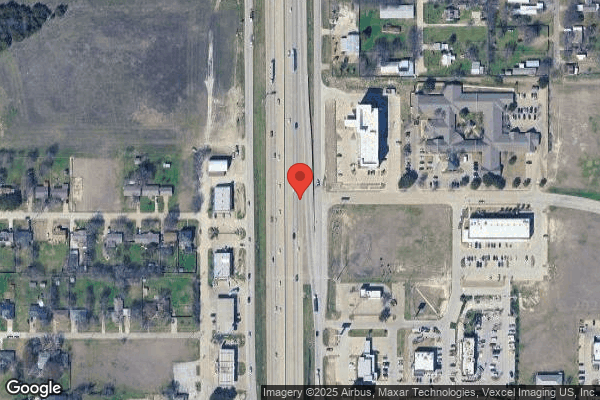
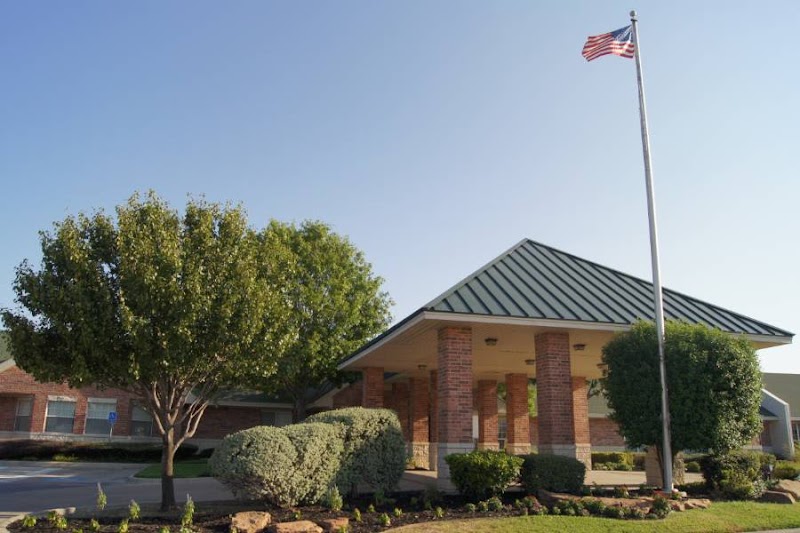
101 REESE DR, RED OAK, TX 75154 (469) 552-0500
For profit - Corporation 144 Beds HMG HEALTHCARE Data: November 2025 1 Immediate Jeopardy citation
Trust Grade
13/100
#547 of 1168 in TX
Last Inspection: January 2025

Within standard 12-15 month inspection cycle. Federal law requires annual inspections.

Overview

Red Oak Health and Rehabilitation Center has received a Trust Grade of F, indicating significant concerns about its operations and care quality. With a state rank of #547 out of 1,168 facilities in Texas, it is in the top half, but this ranking does not compensate for its poor trust grade. The facility's trend is stable, with the same number of issues reported in both 2024 and 2025, suggesting ongoing challenges. Staffing is average, with a 3/5 star rating and a turnover rate of 58%, which is close to the state average. However, the facility has incurred substantial fines totaling $190,196, reflecting compliance issues more severe than 87% of Texas facilities. There is good RN coverage, surpassing 83% of state facilities, which is beneficial for catching potential problems. Some concerning incidents reported include failures to manage residents' pain effectively, resulting in avoidable suffering, and neglect, as seen when some residents were not adequately assisted with personal hygiene or left unattended in distressing situations. Overall, while Red Oak has some strengths, such as RN coverage, the numerous issues and fines raise significant red flags for families considering this facility.

Trust Score
F
13/100
In Texas
#547/1168
Top 46%
Safety Record
High Risk
Review needed
Inspections
Holding Steady
5 → 5 violations
Staff Stability
⚠ Watch
58% turnover. Above average. Higher turnover means staff may not know residents' routines.
Penalties
✓ Good
$190,196 in fines. Lower than most Texas facilities. Relatively clean record.
Skilled Nurses
○ Average
Each resident gets 35 minutes of Registered Nurse (RN) attention daily — about average for Texas. RNs are the most trained staff who monitor for health changes.
Violations
⚠ Watch
23 deficiencies on record. Higher than average. Multiple issues found across inspections.
★★★☆☆
3.0
Overall Rating
★★★☆☆
3.0
Staff Levels
★★★☆☆
3.0
Care Quality
★★★☆☆
3.0
Inspection Score
Stable
2024: 5 issues
2025: 5 issues

The Good

  • Full Sprinkler Coverage · Fire safety systems throughout facility
  • No fines on record

Facility shows strength in fire safety.

The Bad

3-Star Overall Rating

Near Texas average (2.8)

Meets federal standards, typical of most facilities

Staff Turnover: 58%

12pts above Texas avg (46%)

Frequent staff changes - ask about care continuity

Federal Fines: $190,196

Well above median ($33,413)

Significant penalties indicating serious issues

Chain: HMG HEALTHCARE

Part of a multi-facility chain

Ask about local staffing decisions and management

Staff turnover is elevated (58%)

10 points above Texas average of 48%

The Ugly 23 deficiencies on record

1 life-threatening 3 actual harm
Jan 2025 5 deficiencies
CONCERN (D)

Potential for Harm - no one hurt, but risky conditions existed

Deficiency F0657 (Tag F0657)

Could have caused harm · This affected 1 resident

**NOTE- TERMS IN BRACKETS HAVE BEEN EDITED TO PROTECT CONFIDENTIALITY** Based on observation, interviews, and record review the facility failed to ensure comprehensive care plans were reviewed and rev...

Read full inspector narrative →
**NOTE- TERMS IN BRACKETS HAVE BEEN EDITED TO PROTECT CONFIDENTIALITY** Based on observation, interviews, and record review the facility failed to ensure comprehensive care plans were reviewed and revised by the interdisciplinary team including both the comprehensive and quarterly review assessments for 1 of 6 residents (Resident #20) reviewed for care plans. The facility failed to ensure Resident #20's comprehensive care plan was revised to reflect the need for and the use of a fall mat. This failure could place the residents at risk of not receiving the appropriate care and services to maintain their highest practical well-being. Finding include: Record review of Resident #20's Face Sheet revealed an eighty-two (82) year old female who was, admitted to the facility on [DATE]. Her diagnoses included essential (primary) hypertension (high blood pressure), type 2 diabetes mellitus with unspecified conditions (a chronic condition characterized by insulin resistance and elevated blood sugar levels), hyperlipidemia (high cholesterol), unspecified dementia (a decline in cognitive function), Alzheimer's Disease (a disease which commonly causes dementia), and muscle weakness. The resident's advance directive was full code/CPR. Record review of Resident #20's admission MDS Comprehensive Assessment revealed the assessment was completed on [DATE]. According to the assessment, Resident #20's BIMS was one, which indicated severely impaired cognition. Resident #20 had impaired vision, functional limitation in her range of motion with impairment in one side of her lower extremity, with no mobility devices used. Resident #20's functional abilities, which included sit to stand, chair/bed-to-chair transfer, walking ten (10) feet, walking 50 feet with 2 turns, and walking 150 feet was dependent on a helper or helpers to complete these activities. The MDS assessment did not address the resident's risk for falls. Record review of Resident #20's Comprehensive Care Plan last reviewed by the facility on [DATE], revealed Resident #20 also had a diagnosis of Unspecified Fracture of Shaft of Left Femur, Subsequent Encounter with Routine Healing. The comprehensive care plan did not to list a fall-injury prevention program as a focus area, with no goals or interventions listed, including the need for a fall mat. Record review of Resident #20's physician's orders revealed no physician's order(s) for any type of assistive device to prevent falls or injury from falls or the need for a fall-injury prevention program. Record review on of the facility's MDS Resident Matrix (a tool used to identify pertinent care categories for residents) completed by the ADM revealed that Resident #20 had no specific care areas marked, including fall, fall with injury, or fall with major injury. Observation of Resident #20 on [DATE]. 2025, at 10:49AM revealed the resident in bed, resting with her eyes open. The resident was slightly alert but did not verbally respond to questions asked of her. Resident #20 was observed to be in a single occupancy room, with her bed positioned against the wall on its left side. On the floor to the right of Resident #20's bed was a fall mat. (Fall mats are specially designed floor mats used to protect from serious physical trauma resulting from falls.) Observation of a photograph on the cell phone of Resident #20's RR on [DATE], at approximately 10:55AM, showed how Resident #20's RR found Resident #20 on [DATE]. The photograph depicted the resident in the condition as described below, torso laying across the bed, legs dangling off the side. In an interview on [DATE], at 10:49AM, Resident #20's RR stated that the resident was admitted to the facility after hip replacement surgery on [DATE]. Resident #20's RR stated on [DATE], at 8:00 AM, he arrived to the facility and found the resident lying sideways in her bed, her torso on the bed, and both legs dangling off of the side of the bed, as if she had been attempting to get out of bed and slid. The RR alerted staff and they assisted the resident back in bed properly. On or about [DATE], staff placed a thick fall mat next to the resident's bed as a safety measure. Resident #20's RR stated initially staff placed a very thick fall mat next to the resident's bed, but later replaced the thick mat with a thinner mat due to the thicker mat being seen as a hazard concerns. In an interview on [DATE] at 3:47 PM, the DON stated the MDS was responsible for completing the initial care plans and also for revising the care plans as needed. She stated she also updated care plans at times herself. She stated the MDS was trained on completing the care plans accurately. She stated it was her expectation that fall mats would be included in a resident's care plan. She stated she was not aware Resident #20 had fall mats or that the fall mats were not care planned. She stated she was going to find out about the fall mats and if Resident #20 was supposed to have them. She stated if fall mats were not included in a resident's care plan, it could lead to a resident falling and hurting themselves. In an interview on [DATE] at 3:56 PM, the MDS stated she was responsible for completing and updating the residents' care plans. She stated that she has beenwas trained on completing the care plans accurately. She stated she was aware Resident #20 had fall mats because she helped place the fall mats in Resident #20's room. She stated the fall mats were placed due to the family request and she did not realize that she had not care planned them until informed by the State Survey team. The MDS stated she was going to care plan the fall mats now that she had been informed this information was missing. The MDS stated she would normally care plan fall mats as an intervention when fall mats were placed. She stated if fall mats were not care planned, the staff may not be aware a resident needed fall mats, which could cause the mats not to be used to aide in a fall or injury or it could have caused a safety hazard and staff could have tripped over the fall mats if they had not known they were there. Record review of the facility's policy, Care Plans, Comprehensive Person-Centered, revised [DATE], reflected in part, A comprehensive, person-centered care plan that includes measurable objectives and timetables to meet the resident's physical, psychosocial and functional needs is developed and implemented for each resident .Assessments of residents is ongoing and care plans are revised as information about the residents' conditions change. Record review of the facility's policy and procedures, Falls, Clinical Protocol, revised [DATE], reflected in part: 5. The staff will evaluate, and document falls that occur while the individual is in the facility; for example, when and where they happen, any observations of the events
CONCERN (D)

Potential for Harm - no one hurt, but risky conditions existed

Infection Control (Tag F0880)

Could have caused harm · This affected 1 resident

**NOTE- TERMS IN BRACKETS HAVE BEEN EDITED TO PROTECT CONFIDENTIALITY** Based on observation, interview and record review the facility failed to establish and maintain an infection prevention and cont...

Read full inspector narrative →
**NOTE- TERMS IN BRACKETS HAVE BEEN EDITED TO PROTECT CONFIDENTIALITY** Based on observation, interview and record review the facility failed to establish and maintain an infection prevention and control program designed to provide a safe, sanitary and comfortable environment and to help prevent the development and transmission of communicable diseases and infections for 1 of 6 residents (Resident #36) reviewed for infection control. CNA A failed to wash or sanitize her hands while going from a dirty to clean surface while performing incontinent care on 01/14/25 at 1:30 PM for Resident #36. This deficient practice could place residents at risk for cross contamination and the spread of infection. Findings include: Record review of Resident #36's care plan, dated 11/13/24, reflected: Resident #36 was incontinent of bowel and bladder. Goal: Risk for septicemia will be minimized/prevented via prompt recognition and treatment of symptoms of UTI. To be clean, dry and odor free. Interventions: Check for incontinence during rounds; wash, rinse, dry perineum, and change clothing PRN after incontinence episodes. Observe/report to MD any s/sx of UTI: pain, burning, blood-tinged urine, increased frequency, fever, foul smelling urine, AMS. Record review of Resident #36's face sheet, dated 01/14/25, reflected a [AGE] year-old female with an admission date of 04/20/24. Resident #36 had diagnoses which included hemiplegia/hemiparesis (muscle weakness or partial paralysis on one side of the body that can affect the arms, legs, and facial muscles), diabetes (a group of diseases that result in too much sugar in the blood), anxiety (intense, excessive, and persistent worry and fear about everyday situations), and respiratory failure (results from inadequate gas exchange by the respiratory system meaning that the arterial oxygen, carbon dioxide, or both cannot be kept at normal levels). Record review of Resident #36's quarterly MDS assessment, dated 01/09/25, reflected Resident #36 had a BIMS score of 15, which indicated Resident #36 was cognitively intact. Resident #36 required supervision or touching assist with eating, and required substantial or maximal assist with bathing, toileting, and personal hygiene. Resident #36 was always incontinent of bowel and bladder. In an observation on 01/14/25 at 01:30 PM, CNA A performed incontinent care with assistance of IP for Resident #36. CNA A and IP washed their hands and applied their gloves. IP stood on Resident #36's right side and CNA A stood on Resident #36's left side. CNA A informed Resident #36 what she was going to do and removed the sheet which was covering Resident #36. CNA A unfastened Resident #36's brief and began incontinent care. When incontinent care was completed on the front, CNA A and IP turned Resident #36 on her right-side facing IP, and CNA A continued to perform incontinent care. CNA A removed her gloves, then applied new gloves and continued to perform incontinent care. CNA A had not washed or sanitized her hands in between glove change. CNA A placed Resident #36's clean brief under the dirty brief and removed the dirty brief from under Resident #36. CNA A placed the clean brief in the appropriate place on Resident #36 and fastened the brief. CNA A and IP removed their gloves and washed their hands . In an interview on 01/14/25 at 1:47 PM, the IP stated she saw CNA A perform the incontinent care on Resident #36 because she had assisted CNA A in positioning the resident. She stated she saw CNA A change her gloves multiple times but to be honest, she did not know the exact time CNA A had changed her gloves. She stated staff were supposed to change their gloves when they went from a dirty to a clean surface and they should have sanitized their hands in between the glove change. She stated she was in-serviced on infection control, handwashing, and peri-care. She stated if gloves were not changed and hands had not been sanitized when going from a dirty to clean surface, it could cause the spread of infection or a UTI. In an interview on 01/14/25 at 1:58 PM, CNA A stated she recently performed incontinent care for Resident #36. She stated after completing the incontinent care on the front and beginning incontinent care on Resident #36's backside, she removed her gloves and sanitized her hands. She stated she applied clean gloves and continued to clean Resident #36's backside and then she replaced the dirty brief by putting a clean brief under the dirty brief first, and then removed the dirty brief. She stated she usually changed her gloves after going from a dirty surface to a clean surface and she was just nervous because the State Surveyor was watching her. She stated she was in-serviced on infection control, handwashing, and incontinent care, and she knew she should have changed her gloves and sanitized her hands when going from a dirty to clean surface. She stated if staff had not changed their gloves or sanitized their hands when going from a dirty to clean surface, it could have caused infections for the residents. In an interview on 01/15/25 at 11:32 AM, the DON stated it was her expectation that staff changed their gloves and sanitized their hands in between gloved changes when going from a dirty to clean surface. She stated staff were trained often on infection control, incontinent care, and hand washing. She stated if staff had not changed their gloves or sanitized their hands in between the glove change, it could have caused the risk for infection, especially if they had feces on their gloves. In an interview on 01/15/25 at 11:43 AM, the ADM stated it was his expectation staff changed their gloves and sanitized their hands in between gloved changes when going from a dirty to clean surface, and staff were supposed to do this. He stated staff were trained often on infection control, incontinent care, and hand washing. He stated if staff had not changed their gloves or sanitized their hands in between the glove change, it could have caused a resident to get a UTI, sepsis, or an infection could have occurred. Record review of the facility's in-service titled In-Service Training Attendance Record and dated 10/01/24 with a subject of Gloves are NEVER to be worn in the hallways under no circumstances. Gloves are to be changed in between use and in between resident(s). Perform hand hygiene after doffing and donning gloves. reflected staff, inclcanng CNA A which had signed the document, had been trained on hand hygiene being performed after donning and doffing gloves. Instructor of in-service was the IP. Record review of the facility's in-service titled In-Service Training Attendance Record and dated 11/11/24 with a subject of Monitors - The following monitors must be completed during rounding and throughout the day. If you observe any of the following, make corrections immediately and notify the manager in charge. Hand Hygiene. reflected staff, including CNA A which had signed the document, had been trained on hand hygiene. Record review of the facility's Perineal Care policy, dated 2001 and revised December 2011, reflected the following: .2. Wash and dry your hands thoroughly. 12. Remove gloves and discard into designated container. Wash and dry your hands thoroughly. 13. Put on clean gloves and place new brief and secure in place. 18. Remove gloves and 19. Wash and dry your hands thoroughly
CONCERN (E)

Potential for Harm - no one hurt, but risky conditions existed

Deficiency F0761 (Tag F0761)

Could have caused harm · This affected multiple residents

**NOTE- TERMS IN BRACKETS HAVE BEEN EDITED TO PROTECT CONFIDENTIALITY** Based on observation, interview, and record review the facility failed to ensure that drugs and biologicals used in the facility...

Read full inspector narrative →
**NOTE- TERMS IN BRACKETS HAVE BEEN EDITED TO PROTECT CONFIDENTIALITY** Based on observation, interview, and record review the facility failed to ensure that drugs and biologicals used in the facility were stored properly for 1of 2 medication storage rooms (room located by hall 400) and 2 of 2 medication carts (Hall 400 Medication Aide's Cart and Hall 400 Nurse's Cart). 1. The facility failed to ensure expired medication administration supplies and Covid test were removed from 1 of 2 medication storage rooms (room located by hall 400). 2. The facility failed to follow policy and date opened medications on 2 of 2 medication carts (Hall 400 Medication Aide's Cart and Hall 400 Nurse's Cart). These failures could place residents at risk for ineffective treatments, incorrect diagnosis, cause a Peripheral IV Catheter to need replacement and or allow Covid infections to spread. Findings include: Observation on [DATE] at 12:23 PM of the 400 hall Medication Aide's Cart revealed the following medications were opened, but no date showed when they were opened: 1 Bottle of Geri Care-One daily Multivitamin-100 tabs 1 Bottle of Thiamine Vitamin B-1 100mg-100 tabs 1 Bottle of Magnesium Oxide 400mg-120 tabs 1 Bottle of Geri Care-Ferrous Sulfate 325 Mg Vitamins-100 tabs 1 Bottle of Melatonin 1 Mg-60 tabs 1 Bottle of Melatonin 5 Mg-90 tabs 1 Bottle of Vitamin C 500mg-100 tabs Observation on [DATE] at 1:34 PM of the Medication Storage Room located by the 400 hall revealed the following: 30 Covid-19 Ag Card test Covid test expired on [DATE]. 30 Extension Set Product 8 Expires 12 31 2024 01 Extension Set with Care site Luer-Access Device Expires [DATE] Observation on [DATE] at 1:46 PM of the 400 hall Nurse's Medication Cart revealed the following medications were opened, but no date showed when they were opened: Omeprazole 20mg 14 caps Allergy Relief 100 tablets (Diphenhydramine HCL 25mg) In an interview on [DATE] at 12:23 PM with MA-A, she stated the policy for opening new medication bottles was to date them when opened. She stated she knew better than to leave them undated and she would date them now. She said if medications were undated, they could become poisonous and cause residents to become sick or nauseous. In an interview on [DATE] at 1:34 PM, LVN-A stated the policy on expired medical supplies was to discard them in the bin. She stated the nurses were responsible for checking the medication rooms and dating opened medications. LVN-A stated expired items could lose their potency and the residents would not get the full potential of their medications. In an interview on [DATE] at 2:44 PM with the DON, she stated the policy on expired medical supplies was to remove them and it was the responsibility of the Assistant Director of Nurses to oversee it. The DON stated in the future she would oversee the medication rooms also. The DON stated the negative outcome to residents if expired items were used, was they could lose effectiveness and residents could get sick. The DON stated the policy on opening new medications was to date the bottles and it was the responsibility of the nurses and the nurse managers. She said it was important to date medicines when they were opened so you would know how long they had been on the cart. The DON stated the negative outcome to residents if medications were not dated would be the medicine could potentially lose effectiveness. In an interview on [DATE] at 2:50 PM with ADM, he stated the policy on expired medical supplies was to remove them from the medication room. He stated it was the responsibility of the Charge Nurses and the DON to check the medication room. The ADM stated expired items could lose effectiveness and cause health issues for residents. The ADM stated the policy was to date medications when they were opened, and it was the responsibility of the Charge Nurses and the DON to check the carts. He stated it was important to date medications, so you knew when to dispose of them. The ADM stated the negative outcome to residents if medications were not dated was the medications could lose their effectiveness. Record review of the facility's policy labeled Administering Medications, dated 2001 Med-Pass, Inc., (Revised 2012) reflected, When opening a multi-dose container, the date opened shall be recorded on the container. Record review of the facility's policy labeled Storage of Medications, dated 2001 Med-Pass, Inc., (Revised 2007) reflected: The nursing staff shall be responsible for maintaining medication storage AND preparation areas in a clean, safe, and sanitary manner The facility shall not use discontinued, outdated, or deteriorated drugs or biologicals. All such drugs shall be returned to the dispensing pharmacy or destroyed.
CONCERN (E)

Potential for Harm - no one hurt, but risky conditions existed

Deficiency F0802 (Tag F0802)

Could have caused harm · This affected multiple residents

Based on observation, interview, and record review the facility failed to employ sufficient staff with the appropriate competencies and skills sets to carry out the functions of the food and nutrition...

Read full inspector narrative →
Based on observation, interview, and record review the facility failed to employ sufficient staff with the appropriate competencies and skills sets to carry out the functions of the food and nutrition service, taking into consideration resident assessments, individual plans of care and the number, acuity and diagnoses of the facility's resident population in accordance with the facility assessment for five (5) staff reviewed for qualified dietary staff. The facility failed to ensure that dietary DS B, DS D, DS E, DS G, and DS H obtained and/or maintained their Texas Food Handler Certificates. This failure practice could place residents who ate from the facility's only kitchen at risk of foodborne illness and not having their nutritional needs met and at risk of contracting foodborne illnesses. Finding Include: Record review of the dietary staff personnel files completed on January 15, 2025, at 2:41 PM, revealed the following: DM's hire date to be 12/9/2024. DS F's hire date to be 11/28/2023. DS G's hire date to be 12/20/2024. DS H's hire date to be 7/10/24. Texas Food Manager Safety Certification for DDM with an expiration date of 5 years from the effective date of 7/5/2023. Food Allergens Essential Course certificate of completion for DDM issued on 9/23/2024 and valid 2 years from the issuance. Record review of additional dietary staff personnel records provided by the DDM on January 15, 2025, at 3:41 PM revealed the following: Texas Food Handler certificate for DS D issued on 1/13/2025. Staff schedules for the last 90 days which show that DS D worked 72 shifts between 10/1/2024-1/12/2025 without a confirmed or verified valid food handler certificate. Texas Food Handler certificate for DS E issued on 1/13/2025. Staff schedules for the last 90 days which show that DS E worked 19 shifts between 10/1/2024-1/12/2025 without a confirmed or verified valid food handler certificate. Texas Food Handler certificate for DS G issued on 1/13/2025. Staff schedules for the last 90 days which show that DS G worked eight (8) shifts from 12/20/2024-1/12/2025. Texas Food Handler certificate for DS H issued on 1/13/2025. Staff schedules for the last 90 days which show that DS G worked 70 shifts between 10/1/12024-1/12/2025 without a confirmed or verified valid food handler certificate. In an interview with the DDM on January 15, 2025, that began at approximately 3:45 PM, attempts were made to clarify staff, their roles and titles, and documents and records provided by the DDM for the dietary staff. The DDM explained that the this facility contracted with his employer for dietary and maintenance services. The DDM stated his title was District Manager in training. The DDM stated his manager was the RDM. The RDM was the Regional Manager in training. The current Dietary Manager in training was the DM, who would also be the facility's account manager. Per the DDM, all responsibility for the kitchen and dietary staff was the responsibility of the DDM until the DM was fully trained. The DDM was unfamiliar with all the staff members listed on the schedule and did not provide a complete roster of dietary personnel. The DDM provided conflicting information when answering questions regarding personnel and their qualifications. The DDM stated that the former DM had his own system of scheduling and keeping up with personnel records that the DDM was not entirely familiar with and could not fully explain. The DDM could not provide food handler certificates for staff as requested. The DDM stated initially that he was unsure as to why groups of dietary staff had the same recertification dates. The DDM then said that the dietary staff recertified on the same dates, but on separate computers within the office. The DDM denied the certificates were obtained fraudulently. The DDM admitted he did not have all the past and current food handler certificates as requested. The DDM stated he could not locate records maintained by the prior DM. The DDM stated he has been overseeing the facility's dietary services for the last couple of months since the former DM of 5-6 years resigned. The DDM stated the former DM handled all management duties, but he was now discovering a lapse in that management. The DDM stated all dietary staff confirmed to the DDM their Food Handler Certificates were current, and he accepted their confirmation as factual. In an interview with the DON and ADON collectively on January 15, 2025, at 4:56 PM, both stated that it was their expectation that the company who oversaw dietary and maintenance services would ensure their staff were properly trained and certified. Each stated a possible result of dietary staff in particular not being properly certified was that residents could become ill or this could cause food to become contaminated if staff were unaware of proper food handling techniques. In an interview with the ADM on January 15, 2025, at approximately 5:00 PM, the ADM stated it was his expectation the company they contracted with for dietary services maintained the highest level of service and knowledge, which included current certifications and training. The ADM stated a lack of such could lead to residents become ill. Record review of job descriptions for Cook and Dietary Aide show one qualification for both positions to be, Current ServSafe or Food Handler certification is required . Record review of the 2022 United States Food and Drug Administration Food Code, Section 2-103 entitled Duties, states in part: 2-103.11 PERSON IN CHARGE. The person in charge shall ensure that: (O) EMPLOYEES are properly trained in FOOD SAFETY .
CONCERN (E)

Potential for Harm - no one hurt, but risky conditions existed

Food Safety (Tag F0812)

Could have caused harm · This affected multiple residents

**NOTE- TERMS IN BRACKETS HAVE BEEN EDITED TO PROTECT CONFIDENTIALITY** Based on observation, interview and record review, the facility failed to store, prepare, distribute, and serve food in accordan...

Read full inspector narrative →
**NOTE- TERMS IN BRACKETS HAVE BEEN EDITED TO PROTECT CONFIDENTIALITY** Based on observation, interview and record review, the facility failed to store, prepare, distribute, and serve food in accordance with professional standards for food safety for one (1) of one (1) facility kitchen and one (1) of two (2) nourishment rooms reviewed for food safety (Station 2 Med Room). 1. The facility failed to ensure food items in the kitchen refrigerator were dated and labeled. 2. The facility failed to ensure the ice machine in the kitchen and in one (1) of two (2) nourishment rooms were cleaned and free of mold, mildew and slime. 3. The facility failed to discard a dented can. 4. The facility failed to discard food items past their expiration date. 5. The facility failed to maintain accurate freezer temperature logs for the freezer in the kitchen and one (1) of two (2) freezers in the nourishment rooms (Station 2 Med Room). 6. The facility failed to keep food properly sealed and covered in the refrigerator. 7. The facility failed to provide a thermometer for the measurement of the freezer temperature in one (1) of two (2) freezers in the nourishment rooms (Station 2 Med Room). 8. The facility failed to ensure staff were familiar with, trained, and able to operate kitchen equipment in accordance to safety regulations. These failures could place residents at risk for food-borne illness and cross contamination. Findings include: Observation of the dry goods storage area within the kitchen on 1/13/2025, at 9:09AM revealed one of five 6.56 lb cans of pears in light syrup to were dented and damaged. In a follow up trip to the kitchen, DDM was advised of the dented and damaged can and instructed to remove it from use. He obliged but offered no explanation as to why the product remained in the storage area. Observation of the kitchen refrigerator on January 13, 2025, at 9:12 AM revealed cups of liquids or soft food items were missing a label which indicated a thawed date and a use by date. Five of these cups of liquids or soft food items were missing a label identifying the substance in each of the cups. Observation of the kitchen refrigerator on January 13, 2025, at 9:13 AM revealed five 3lb containers of ricotta cheese were not discarded after their expiration or use by date of January 6, 2025. One (1) of the five (5) containers of ricotta cheese was open and used, with a prep date of 12/31 listed on the label only. Following this observation, DDM was notified of the expired items and instructed to dispose of the items. Upon re-inspection, these items were no longer in the refrigerator. The DDM offered no explanation as to why the products remained in the refrigerator. Observation of the kitchen refrigerator on January 13, 2025, at 9:13 AM revealed five (5) of five (5) 3lb containers of ricotta cheese were not properly labeled and dated with date of receipt or a use by date. Four unopened containers of ricotta cheese were stored in a box with 11/26/2024 written in black marker on the outside of the box, with no indication as to the significance of this date. Observation of the kitchen refrigerator on January 13, 2025, at 9:17 AM revealed five stacks of sliced American Cheese, of various counts (not individually wrapped), which were opened and wrapped in plastic wrap without an open or preparation date or use by date label on the products. One of the stacks of American Cheese had 1/9 written on the plastic wrap, with no indication as to the significance of this date. Observation of the kitchen refrigerator on January 13, 2025, at 9:17 AM revealed three containers of prepared food, lacking proper labels identifying the item contained within, preparation dates, and/or use by dates. One container had a partially completed label which stated, Item: Baked beans. Prep date: 1/10, but contained no use by date. Observation of the kitchen refrigerator on January 13, 2025, at 9:19 AM revealed a prepared pan of brown gravy covered by plastic wrap that did not fully cover the pan or seal the contents within. Observation of the kitchen freezer on January 13, 2025, at 9:20 AM revealed a pumpkin pie with the label on the item showed the name of the item, the date it was prepared, 1/9, but lacked a use by date. Observation of the kitchen ice machine on January 13, 2025, at 9:22 AM revealed the presence of black, grey, white, and pink patches with a slimy or fuzzy texture indicative of mold, mildew, and slime build-up on the interior under guard and drum of the machine. A follow up observation of the kitchen ice machine was conducted on January 14, 2025, at 10:01 AM. The presence of mold, mildew and slime build-up remained on the interior guard and drum of the machine. Observation of the freezer temperature log on January 14, 2025, at 10:09 AM revealed staff logged a temperature of 0 in advance for the morning of January 15, 20025. Observation of one (1) of two (2) nourishment rooms (Med room [ROOM NUMBER]) on January 14, 2025, at 10:25 AM, revealed a prepackaged, store bought, frozen meal in the freezer with a resident's first and last name written on the box in ballpoint pen. There were no dates and no room number on the box. The nourishment rooms were for the storage of resident items only. Observation of a sign posted in nourishment room [ROOM NUMBER] on January 14, 2025, at 10:25AM, read in part: Please Put Name, Room #, and Date on All Items!! .Nurse Management. Observation of the freezer compartment of the refrigerator in nourishment room [ROOM NUMBER] on January 14, 2025, at 10:26AM, revealed no working thermometer inside and no freezer temperatures logged for the month of January 2025. Observation of the ice machine in nourishment room [ROOM NUMBER] on January 14, 2025, at 10:27AM, revealed the presence of black, grey, white, and/or pink patches with a slimy or fuzzy texture indicative of mold, mildew, and/or slime build-up on the interior under guard and drum of the machine. In an interview with DS D on January 14, 2025, at 10:11 AM, while running the kitchen dishwasher, DS #4 stated he did not know the appropriate temperature parameters of the dishwasher or how to test for the correct chemical solution concentration level. DS D stated this was his first time running the dishwasher. DS D stated that he usually cooked or prepared food, but never washed dishes. DS D stated he was instructed to run the dishwasher by the DDM. While interviewing DS D, the DDM interjected and briefly explained to DS D how to check the temperature and disinfectant concentration level using the high temperature thermometer and chemical test strips. Interview with the DDM on January 14, 2025, at 11:39 AM, revealed the DDM was responsible for all auditing of food items in the dry goods storage area/pantry, refrigerators and freezers. The DDM said he was currently the account holder for the facility, so he ordered all facility dietary goods, hired, and trained staff, and ensured policy and procedures were followed. The DDM stated their procedure for food storage and labeling consisted of the dietary aides putting up delivered food products in their proper place (putting up the truck) and labeling all food items received with their delivery date and open date. In an interview with the MNT on January 15, 2025, at 3:20 PM, the MNT stated he had been employed with the facility for 2 years. He stated the facility contracted with his employer to provide dietary and maintenance services to the facility. The MNT stated that he checked equipment daily to ensure it was in proper working condition. The MNT stated he didn't always get the things he needed to properly do his job, such as support or resources, but he managed. The MNT stated this does did not cause a hardship for the residents as he would use alternatives means if necessary to ensure the facility and equipment were in working order. The MNT stated he was responsible for the maintenance and cleaning of the facility's ice machines. He stated he believed he cleaned the ice machines quarterly, but he does not maintain a cleaning and service log for this equipment. The MNT stated the last time the ice machines were cleaned was when the former DM was employed. The MNT confirmed the former DM left his position in about September 2024. In an interview with the DON and the ADON collectively on January 15, 2025, at 4:56 PM, both stated it was their expectation that the company that oversaw dietary and maintenance services would ensure their staff were properly trained and certified. Each stated that a possible result of dietary staff in particular not being properly certified is that residents could become ill or this could cause food to become contaminated if staff were unaware of proper food handling techniques. In an interview with the ADM on January 15, 2025, at approximately 5:00 PM, the ADM stated it is was his expectation that the company they contracted with for dietary services would maintain the highest level of service and knowledge, including current certifications and training. The ADM stated that a lack of such could lead to residents become ill. Record review of the facility's dietary policies indicated: Perishable foods must be stored in re-sealable containers with tightly fitting lids in a refrigerator. Record review of the facility's policies and procedures revealed the following information in part: Work Order/Maintenance Policy and Procedures indicates that it is the responsibility of the department directors, charge nurse and/or certified staff to fill out and forward work orders to the Maintenance Director. This would include work orders for thermometers or ice machines. Food Storage: Cold Foods Policy and Procedures indicates that an accurate thermometer will be kept in each refrigerator and freezer. A written record of daily temperatures will be recorded. All foods will be wrapped or in covered containers, labeled and dated, and arranged in a manner to prevent cross contamination. Receiving (of food items) Policy and Procedures indicates that all canned goods will be appropriately inspected for dents, rust or bulges. Damaged cans will be segregated and clearly identified for return to vendor or disposal, as appropriate. All food items will be appropriately labeled and dated either through manufacturer packaging or staff notation. Ice Policy and Procedures indicates ice will be prepared and distributed in a safe manner .The Dining Services Director will coordinate with the Maintenance Director to ensure that the ice machine will be disconnected, cleaned and sanitized quarterly and as needed, or according to manufacturer guidelines . Equipment (food service) Policy and Procedures indicates that all food service equipment will be clean, sanitary, and in proper working order. All staff members will be properly trained in the cleaning and maintenance of all equipment.
Nov 2024 1 deficiency
CONCERN (D) 📢 Someone Reported This

A family member, employee, or ombudsman was alarmed enough to file a formal complaint

Potential for Harm - no one hurt, but risky conditions existed

Deficiency F0761 (Tag F0761)

Could have caused harm · This affected 1 resident

**NOTE- TERMS IN BRACKETS HAVE BEEN EDITED TO PROTECT CONFIDENTIALITY** Based on observations, interviews, and record review, the facility failed to ensure that all drugs and biologicals used in the f...

Read full inspector narrative →
**NOTE- TERMS IN BRACKETS HAVE BEEN EDITED TO PROTECT CONFIDENTIALITY** Based on observations, interviews, and record review, the facility failed to ensure that all drugs and biologicals used in the facility were labeled and stored in accordance with professional standards for 1 of 8 residents (Resident #1) reviewed for pharmacy services. The facility failed to ensure MA A secured Resident 1's medication when she left Resident #1's medications on her bedside table for her to self-administer and did not ensure the resident took her medication. This failure could place residents at risk of not receiving drugs and biologicals as needed, medication errors, medication misuse, and drug diversion. Findings included: Record review of Resident #1's face sheet reflected she was a [AGE] year-old female, admitted to the facility on [DATE]. Her diagnoses included cerebral infarction (Stroke a disruption of the blood flow to the brain causing part of the brain to die), dehydration, post-traumatic stress syndrome, unspecified psychosis, and anxiety disorder. Record review of Resident #1's care plan dated 10/17/2023 reflected she was resistive to care related to episodes of refusing medication. Her goal was for her to cooperate with taking medications as per medical doctors orders through next review date. Interventions were If Resident #1 resist taking medications leave and return 5-10 minutes later and try again. If Resident #1 continues to refuse to take medications notify medical doctor and responsible party and document in chart. Record review of Resident #1's Quarterly MDS assessment, dated 10/24/2024, reflected she had a BIMS score of 15, which indicated she was cognitively intact. Resident #1 was coded Substantial Maximal Assistance with her ADLs (dressing, bathing, grooming, and toileting) indicating the helper or staff performed more than half the effort for the resident to complete the task . In an interview and observation on 11/20/24 at 10:30 AM Resident #1 stated she had no concerns with abuse or neglect and felt safe there. She stated she had a call light and staff get to her as soon as they could. She stated she received her medication as scheduled. Observed 2 clear oblong pills laying on the bedside table, Resident #1 stated they were fish oil pills. Resident #1 stated staff leave her medication, peanut butter crackers, and water on the bedside table and do not watch her take her medications. She stated MA A administered her morning medications. In an interview on 11/20/24 at 10:40 AM MA A stated she has worked at the facility for 2 years. She stated she was delegated to pass medication. She stated when passing medication she matched the name to the medication, matched the medication dosage, and read the directions on the medication. She provided the medication with water, watched the resident take the medication, and checked off the medication on the MAR. She stated if the resident refused, she must notify the nurse. She stated she administered Resident #1's medication this morning and watched her take her medication. She stated she administered the medication to Resident #1 and walked back to the medication cart to document it in the MAR. As she was documenting she was overseeing the resident, she thought the resident had taken all her medications, so she moved on to the next resident . MA A stated she was responsible for making sure residents swallowed and took their medications. She stated leaving medications at the bedside may result in the resident not taking her medications. In an interview on 11/20/24 at 11:47AM the ADM stated staff were not supposed to leave any medications in the room. He stated the staff were supposed to stay with the resident and make sure the medications were swallowed. The ADM stated staff were educated on the medication administration process by the DON, the ADON, and the unit mangers. The ADM stated the risk for leaving medications on the resident's bedside table and not ensuring residents were taking medications could result in subtherapeutic effects of medications, missed medications, or a demented resident could wonder in the room and take the medications that were not theirs. In an interview on 11/20/24 at 12:09 PM the DON stated MA A never should leave medications on beside tables. She stated she has recently educated all nurses and medication aides on medication pass step by step instructions. She stated she was responsible for educating the staff on the medication pass policy. The DON stated all staff were responsible for passing medications and were checked off visually on skills annually by the DON. She stated negative effects included the resident may not take their medications. Record review of facility Inservice titled Medication Pass Process dated 11/01/2024 reflected staff were never to leave the medications in the room for the resident to take later. The in-service was signed by MA A. Record review of facility policy titled Administering Medications dated 2001 and Revised December 2012 reflected, Medications shall be administered in a safe and timely manner, and as prescribed. Residents may self-administer their own medications only if the Attending Physician, in conjunction with the Interdisciplinary Care Planning Team, has determined that they have the decision-making capacity to do so safely.
Jul 2024 2 deficiencies
CONCERN (D) 📢 Someone Reported This

A family member, employee, or ombudsman was alarmed enough to file a formal complaint

Potential for Harm - no one hurt, but risky conditions existed

Deficiency F0558 (Tag F0558)

Could have caused harm · This affected 1 resident

**NOTE- TERMS IN BRACKETS HAVE BEEN EDITED TO PROTECT CONFIDENTIALITY** Based on observations, interviews, and record review the facility failed to ensure residents received services in the facility w...

Read full inspector narrative →
**NOTE- TERMS IN BRACKETS HAVE BEEN EDITED TO PROTECT CONFIDENTIALITY** Based on observations, interviews, and record review the facility failed to ensure residents received services in the facility with reasonable accommodations of resident's needs and preferences except when to do so would endanger the health and safety of the resident or other residents for 2 of 9 residents (Residents #1 and #2) reviewed for resident rights. The facility failed to ensure Resident #1 and #2's call lights were within reach on 07/17/24. This failure could place residents at risk of needs not being met. Findings included: Record review of Resident #1's admission Record dated 07/17/24 revealed a [AGE] year-old male admitted to the facility on [DATE] with diagnoses that included dementia (a syndrome associated with many neurodegenerative diseases, characterized by a general decline in cognitive abilities that affects a person's ability to perform everyday activities), anxiety (an emotion which is characterized by an inner turmoil and includes feelings of dread over anticipated events), seizures (uncontrolled jerking, loss of consciousness, blank stares, or other symptoms caused by abnormal electrical activity in the brain), and cerebral infarction (also known as ischemic stroke, pathological process that results in an area of necrotic tissue in the brain). Record review of Resident #1's Quarterly MDS dated [DATE] reflected a BIMS of 00 indicating Resident #1's cognitive level would not allow him to complete the interview. Section GG-Functional Abilities and Goals reflected Resident #1 required substantial/maximal assistance with bathing and was independent with toileting hygiene and personal hygiene. Record review of Resident #1's care plan which initiated on 01/27/23 and was revised on 07/27/23 reflected Resident #1's focus: had an ADL Self Care Performance Deficit r/t Alzheimer's, muscle weakness. Had a history of a right hip fracture, a goal: will be cleaned, well-groomed, appropriately dressed and weight maintained through next review date, and interventions: reflected extensive assistance X2 staff to use toilet, requires extensive assist X1 staff with personal hygiene care, and requires extensive assist X2 staff with transferring. In an observation on 07/17/24 at 10:15 AM revealed Resident #1's call light was observed on the floor to the right-hand side of the bed and out of the resident's reach. Resident #1 was lying in bed. Resident #1's sheets were saturated with milk, and it appeared the resident had spilled his milk. Observed an empty carton of milk which was lying on the foot of the bed. Resident #1 opened his eyes only to say hello then he shut them again. Record review of Resident #2's admission Record dated 07/17/24 revealed a [AGE] year-old male admitted to the facility on [DATE] with diagnoses that included dementia (a syndrome associated with many neurodegenerative diseases, characterized by a general decline in cognitive abilities that affects a person's ability to perform everyday activities), hyperlipidemia (abnormally high levels of any or all lipids or lipoproteins in the blood), anxiety (an emotion which is characterized by an inner turmoil and includes feelings of dread over anticipated events), and nontraumatic subdural hemorrhage (a rare condition that occurs when blood collects between the dura mater and arachnoid mater of the meninges surrounding the brain). Record review of Resident #2's Quarterly MDS dated [DATE] reflected a BIMS of 03 indicating Resident #2 had severe cognitive impairment. Section GG-Functional Abilities and Goals revealed Resident #2 required partial/moderate assistance with bathing, toileting hygiene, and personal hygiene. Record review of Resident #2's care plan which initiated on 08/01/23 and was revised on 08/23/23 reflected Resident #2's focus: had an ADL Self Care Performance Deficit r/t DX: Dementia, a goal: will be cleaned, well-groomed, appropriately dressed and weight maintained through next review date, and interventions: requires assistance X1 staff to use toilet, required extensive assistance X1 staff member with personal hygiene care, and requires physical assistance X1 staff member with transferring. In an observation and interview on 07/17/24 at 10:19 AM reveled Resident #2's call light was laying lying on the nightstand, out of the resident's reach. Resident #2 was observed in bed and stated everyone was treating him well. He stated he would just yell out if he needed help. In an interview on 07/17/24 at 10:24am, the ADON , she stated she expected call lights to be at bedside and in reach of residents. She stated staff were educated and in-serviced every month and as needed related to having their call light within reach. She stated if the resident's call lights were out of reach, the residents could fall or have an injury related to not being able to get assistance or not being clean and dry. In an interview on 07/17/2024 at 11:08 AM, LVN A stated residents' call lights should without a doubt be in their residents reach at all times. She stated she had been trained on call light placement. She stated if a call light was not in a resident's reach, it could cause a fall or some kind of trauma. In an interview on 07/17/2024 at 11:22 AM, CNA A stated residents' call lights should be in the residents reach at all times. She stated she had been trained on call light placement. She stated if a call light was not in resident reach, it could cause a resident to fall due to them reaching for it or could cause the resident to be in danger. In an interview on 07/17/2024 at 11:33 AM, CNA B stated residents' call lights should be in the residents reach at all times. She stated she had been trained on call light placement. She stated if a call light was not in resident reach, it could cause a fall. In an interview on 07/17/2024 at 11:42 AM, LVN B stated residents' call lights should be in residents their reach at all times. She stated she had been trained on call light placement. She stated if a call light was not in resident reach, it could cause a fall or harm to a resident. In an interview on 07/17/2024 at 11:42 AM, the DON stated residents' call lights should be in residents their reach at all times. She stated staff had been trained on call light placement. She stated if a call light was not in residents reach, a resident could possibly have a fall. In an interview on 07/17/2024 at 11:48 AM, the ADM stated residents' call lights should be in residents their reach at all times. He stated staff had been trained on call light placement. He stated if a call light was not in the residents reach, it could cause a resident to possibly have a delay in care. Record review of facility's policy titled Answering the Call Light dated 2001 (revised March 2012) revealed The purpose of this procedure is to respond to the resident's requests and needs. 5. When the resident is in bed or confined to a chair be sure the call light is within easy reach of the resident.
CONCERN (D) 📢 Someone Reported This

A family member, employee, or ombudsman was alarmed enough to file a formal complaint

Potential for Harm - no one hurt, but risky conditions existed

Safe Environment (Tag F0584)

Could have caused harm · This affected 1 resident

**NOTE- TERMS IN BRACKETS HAVE BEEN EDITED TO PROTECT CONFIDENTIALITY** Based on observations, interviews, and record review, the facility failed to have all residents receive treatment and care in ac...

Read full inspector narrative →
**NOTE- TERMS IN BRACKETS HAVE BEEN EDITED TO PROTECT CONFIDENTIALITY** Based on observations, interviews, and record review, the facility failed to have all residents receive treatment and care in accordance with professional standards of practice, the comprehensive care plan, for 1 of 7 (Resident # 1) residents reviewed for care. The facility failed to provide a clean comfortable environment for Resident #1 by allowing him to lay in a soiled bed . This failure could place residents at risk for further skin integrity impairment, untreated medical issues, and diminished quality of care. Findings included: Record review of Resident #1's admission Record dated 07/17/24 revealed a [AGE] year-old male admitted to the facility on [DATE] with diagnoses that included dementia (a syndrome associated with many neurodegenerative diseases, characterized by a general decline in cognitive abilities that affects a person's ability to perform everyday activities), anxiety (an emotion which is characterized by an inner turmoil and includes feelings of dread over anticipated events), seizures (uncontrolled jerking, loss of consciousness, blank stares, or other symptoms caused by abnormal electrical activity in the brain), and cerebral infarction (also known as ischemic stroke, pathological process that results in an area of necrotic tissue in the brain). Record review of Resident #1's Quarterly MDS dated [DATE] reflected a BIMS (- Brief Interview for Mental Status) of 00 indicating Resident #1 could not complete the interview. Section GG-Functional Abilities and Goals reflected Resident #1 required substantial/maximal assistance with bathing and was independent with toileting hygiene and personal hygiene. Record review of Resident #1's care plan which initiated on 01/27/23 and was revised on 07/27/23 reflected Resident #1's focus: has an ADL Self Care Performance Deficit r/t Alzheimer's, muscle weakness. Had a history of a right hip fracture, a goal: will be cleaned, well-groomed, appropriately dressed and weight maintained through next review date, and interventions requires extensive assistance X2 staff to use toilet, required extensive assist X1 staff with personal hygiene care, and requires extensive assist X2 staff with transferring. The care plan also reflected Resident #1 requires supervision of 1 staff to eat. A second focus area within the care plan reflected Resident #1 had an actual impairment of the skin with an intervention to Keep the skin clean and dry. Record review of Resident #1's weekly skin review dated 7/15/24 reflected Resident #1 had open wounds to his right buttocks, posterior (back) scrotum, and his lower sacrum. Resident #1 received wound care daily by the nurse and being followed weekly by the wound physician. In an observation on 7/17/24 at 10:15am revealed Resident #1 was lying in bed. His sheets were saturated with fluid, and an empty carton of milk was lying on the foot of the bed. Resident #1 opened his eyes only to say hello then shut them again. His call light was observed on the floor to the right-hand side of the bed. In an interview on 7/17/24 at 10:24am with the ADON, she stated she expected call lights to be at bedside and in reach of residents and sheets on the bed should be dry. Staff were educated by in-service every month and as needed related to residents having their call light within reach and keeping residents clean and dry. If the call light were to remain out of reach the residents could fall or have an injury related to not being able to get assistance or not be clean and dry. In an interview on 7/17/2024 at 11:08am with LVN A, she stated she had worked in the facility for about a month. She stated she was in-serviced regularly on abuse and neglect, resident rights, medication administration, ADL care, falls/fall prevention. She stated residents' sheets should be clean and dry. She stated it was common knowledge to ensure residents had clean and dry linens, including sheets. She stated if a resident were to lay in soiled or wet sheets for a period, it could cause bed sores. In an interview on 07/17/2024 at 11:22am with CNA A, she stated residents should be changed, turned, and repositioned every 2 hours and as needed. She stated if a resident was gotten out of bed, they should still be checked and changed every 2 hours and as needed. She stated residents' sheets should be clean and dry. She stated she was trained on linen care and ensuring residents had clean and dry linens, including sheets. She stated if resident were to lay in soiled or wet sheets for a period, it could cause bed sores. In an interview on 07/17/2024 at 11:55am with ADM and DON, they stated if a call light was not in a resident's reach, the resident could possibly have a delay in care or a fall. They stated residents' sheets should be clean and dry. They stated staff were trained on linen care and ensuring residents have clean and dry linens, including sheets. They stated if resident were to lay in soiled or wet sheets for a period, it could cause skin breakdown. Record review of facility policy titled Quality of Life-Dignity dated October 2009 reflected each resident shall be cared for in a manner that promotes and enhances quality of life. Record review of facility policy titled Routine Resident Checks dated December 2007 reflected Staff shall make routine resident checks to help maintain residents' safety. Routine residents check involves entering the resident's room and or identifying the resident elsewhere on the unit to determine the resident's needs are being met identifying any change in the resident's condition, identifying whether the resident has any concerns, and see if the resident is sleeping, needs toileting assistance etc.
Mar 2024 2 deficiencies 1 Harm
SERIOUS (G) 📢 Someone Reported This

A family member, employee, or ombudsman was alarmed enough to file a formal complaint

Actual Harm - a resident was hurt due to facility failures

Quality of Care (Tag F0684)

A resident was harmed · This affected 1 resident

**NOTE- TERMS IN BRACKETS HAVE BEEN EDITED TO PROTECT CONFIDENTIALITY** Based on interviews and record review the facility failed to provide adequate supervision and to prevent accidents for one resid...

Read full inspector narrative →
**NOTE- TERMS IN BRACKETS HAVE BEEN EDITED TO PROTECT CONFIDENTIALITY** Based on interviews and record review the facility failed to provide adequate supervision and to prevent accidents for one resident (Resident #1) of four reviewed for accidents and hazards. The facility failed to supervise Resident #1 when she was sitting at the nurse's station, which resulted in a fall with injuries on [DATE]. This failure placed residents at risk of accidents or falls resulting in injuries, pain, and hospitalization. Findings included: Review of Resident #1's face sheet dated [DATE] reflected a [AGE] year-old female admitted on [DATE] with diagnoses that included Chronic Kidney Disease, Dementia, Anemia (low iron in blood), Hyperlipidemia (high cholesterol), Glaucoma (eye disorder that clouds vision) and muscle weakness. Review of Resident #1's admission MDS dated [DATE] reflected a BIMS of zero (0) suggesting severe cognitive impairment. Review of MDS section Functional Abilities and Goals reflected resident used a wheelchair for a mobility device. Further review of this MDS section reflected resident needed substantial/maximum assistance for wheelchair mobility to wheel 50 feet with two turns. Review of Resident #1's undated care plan reflected the problem [Resident #1] is high risk for falls r/t DX Dementia with interventions be sure call light is within reach and encourage to use it for assistance as needed. Respond promptly to all requests for assistance. Ensure a safe environment, floors even and free from spills or clutter, adequate light, bed in low position, personal items within reach, Maintain a clear pathway, free of obstacles. Further review of care plan reflected another problem [Resident #1] has had an actual fall r/t Cognitive impairment [DATE] fall w/o injury, [DATE] fall w/o injury, [DATE], fall w/injury with interventions Falling star program, place fall mat at bedside, PT/OT consult for strength and mobility as needed, [DATE]: sent to ER for further eval. Review of Resident #1's fall assessment dated [DATE], reflected a score of 19 indicating Resident #1 was High Risk for falls. Review of Resident #1's progress notes dated [DATE] at 9:41 pm, but effective [DATE] at 7:45 pm by LVN A, reflected SN down hall passing medication and was called by kitchen staff that patient was in floor near nursing station. When SN arrived at nursing station patient was noted to be on floor near wheelchair. SN and other nursing staff removed patient from floor after assessment completed and patient noted to have a hematoma to the right forehead with scant blood at site. Patient transferred to room via wheelchair. While in room adjusting patient in bed patient noted to have closed eyes and when called by name, patient was unresponsive and showing no sign of life. 911 called and SN with assist of other nursing staff started CPR. Paramedics arrived and took over CPR administration. During an interview on [DATE] at 12:55 pm, FM stated they received a call from the AD at the facility on [DATE] and were told Resident #1 had been left unattended at the nurse's station and fell out of her wheelchair. He stated he was told the nurse got called away to another room and someone in dietary found her on the floor. They had no idea how long she was on the floor. He stated he had been up there that day at lunch time from about 12:15pm to almost 2PM and he fed Resident #1, and she acted very normal to him. He stated, she was doing well, had no heart issues, nothing, but did have a history of falls. During an interview on [DATE] at 1:43 pm, the ADON stated she was not working the night Resident #1 fell, but she reviewed the incident report the next day, [DATE]. She stated she was aware Resident #1 was often at the nurses station because she was a fall risk, but she was not set up to be 1:1, not required to be 1:1. When asked what she would have done in a similar circumstance she stated she would have made sure the wheelchair was locked and the resident was properly positioned in her wheelchair. She stated, I would walk away, but it would depend on how long I would be gone. If I was just going to help an aide change a brief, then it would be okay to walk away . but if I was doing a med pass that would be different because I would be gone for longer period of time .every situation is different . During an interview on [DATE] at 2:14 pm, LVN A stated she was the nurse on the 300 hall on the evening of [DATE]. She stated she had been sitting at the nurses station and Resident #1 was sitting in her wheelchair up at the nurses station. She stated she had gotten up to go down the hall and pass meds and a few minutes later a staff member was calling out for help. She went down to the nurse's station and Resident #1 was lying on her side on the floor and she was bleeding from her head. She stated it was a moderate amount of blood and there was a bump on her head. She stated Resident #1 was conscious and her eyes were open at that time. She assessed her for injuries and then her and other staff put her back in her wheelchair and took her to her room. When they got to Resident #1's room, they moved her from her wheelchair to the bed. At that point, the resident became lethargic and stopped responding. She stated one of the staff called 911 and she went and got the crash cart and then started CPR. LVN A revealed she had received training on falls and fall prevention and knew Resident #1 was a fall risk. When asked why she had left Resident #1 alone at the nurses station she stated, there were other people there and thought they would keep an eye on her. She stated she had not told anyone she was going down the hall to have a conversation with anyone or to keep an eye on Resident t#1. She admitted that the charge nurse was responsible for the residents. She further stated that if a resident was a fall risk and was left unattended they could fall, they could get hurt, go to the hospital. They can get hurt really bad. She stated she felt the fall could have been prevented if Resident #1 had been on 1:1 monitoring . During an interview on [DATE] at 2:46 pm, DA -B stated he had been working on the evening of [DATE] and had been making rounds passing out resident snacks. He stated when he got to the 300 hall nurse's station, about 7:45 pm, he saw a resident lying on the floor on her side, not moving. He stated he called down the hall for help and LVN A came out of one of the rooms. He stated LVN A immediately went to the resident and checked her out and then asked him to go get the nurse on the 100 hall, so he did. He further stated that he could not see if the resident was injured or bleeding because her back was to him when he saw her. He stated he clocked out shortly after that and did not see what else happened. During an interview on [DATE] at 3:35 pm, CNA C stated she had been working at the facility a month and often worked the hall that Resident #1 was on and was familiar with the resident. She stated Resident #1 was always getting up out of bed and her chair - all the time. She stated they had to keep an eye on her because if they didn't she could get up and fall. They kept her bed low and fall mats in place when she was in bed. She stated, it's everyone's responsibility to watch residents but ultimately it's the charge nurse's responsibility. She stated Resident #1 was often in her wheelchair at the nurses station so everyone could keep an eye on her . During an interview on [DATE] at 4:20 pm the DON stated she was familiar with the fall incident with Resident #1 on [DATE]. She stated she was called that night and was told Resident #1 fell and had a bump on her head and a scant amount of bleeding. She stated she had seen Resident #1 at the nurses station often and knew she was a fall risk, and this was done for safety - to keep eyes on her. The DON stated all the staff were responsible for the resident's but ultimately the nurse on the hall was responsible. She stated she felt staff responded well to the incident, but she didn't get a lot of detail until the next day. When the DON was asked how she felt about Resident #1 being left unattended at the nurses' station she stated Doesn't make me happy. We need to keep an eye on them, and we didn't do what we needed to do. She further stated she felt it could have been prevented if they had kept eyes on her. She also stated if residents that are high fall risk are not supervised, they can fall, get injured and have to go to the hospital . When asked what she might have done in the same situation she replied, I would have taken her down the hall with me . During an interview on [DATE] at 5:12 pm, the AD stated he was aware of the fall incident on [DATE] with Resident #1 and that she had fallen while seated up at the nurse's station in her wheelchair. He stated he had been notified of the fall that evening but did not get the full picture. He stated, all I was told is she fell, got hurt and we are sending her out. He stated he did not find out about Resident #1 becoming lethargic or them doing CPR until the next morning, [DATE]. He stated the staff knew she was a high fall risk and they had put interventions in place when she did fall. He stated Resident #1 was not on 1:1 monitoring. He stated he did tell the FM the nurse was initially at the nurse's station and then went to pass meds and got called in a room. When asked how the incident was handled by staff after the fall, he stated I think they did a good job. When asked if there was something the staff could have done to prevent the fall, he stated no. The AD stated we all are responsible for the residents. He stated CNAs provide direct care and they would to tell the charge nurse if something was going on with a resident and the charge nurse was ultimately responsible for the residents. He stated his expectation of staff supervision with high fall risk residents was making sure all interventions are in place - reporting in the morning meeting so they can be identified; we have the fall prevention program, use low beds, mats, and call lights . Review of facility policy Safety and Supervision of Residents dated [DATE] reflected Our facility strives to make the environment as free from accident hazards as possible. Resident safety and supervision and assistance to prevent accidents are facility-wide priorities. Further, Individualized, Resident-Centered Approach to Safety, 1. Our individualized, resident center centered approach to safety addresses safety and accident hazards for individual residents .3. The care team shall target interventions to reduce individual risks related to hazards in the environment, including adequate supervision and assistive devices.
CONCERN (D) 📢 Someone Reported This

A family member, employee, or ombudsman was alarmed enough to file a formal complaint

Potential for Harm - no one hurt, but risky conditions existed

Report Alleged Abuse (Tag F0609)

Could have caused harm · This affected 1 resident

**NOTE- TERMS IN BRACKETS HAVE BEEN EDITED TO PROTECT CONFIDENTIALITY** Based on interview and record review the facility failed to ensure that all alleged violations involving abuse or neglect, inclu...

Read full inspector narrative →
**NOTE- TERMS IN BRACKETS HAVE BEEN EDITED TO PROTECT CONFIDENTIALITY** Based on interview and record review the facility failed to ensure that all alleged violations involving abuse or neglect, including injuries of unknown source, were e reported immediately, or not later than 24 hours to other officials (including to the State Survey Agency) in accordance with State law through established procedures for one (1) resident (Resident #1) of seven (7) residents reviewed for abuse and neglect. The facility failed to report Resident #1's fall on [DATE], which resulted in a head injury, in a timely manner to the State. This failure could place residents at risk for abuse, neglect, and a decreased quality of life. Findings included: Review of Resident #1's face sheet dated [DATE] reflected a [AGE] year-old female admitted on [DATE] with diagnoses that included Chronic Kidney Disease, Dementia, Anemia (low iron in blood), Hyperlipidemia (high cholesterol), Glaucoma (eye disorder that clouds vision) and muscle weakness. Review of Resident #1's admission MDS assessment dated [DATE] reflected a BIMS score of zero (0) suggesting severe cognitive impairment. Review of MDS section Functional Abilities and Goals reflected resident used a wheelchair for a mobility device. Further review of this MDS section reflected resident needed substantial/maximum assistance for wheelchair mobility to wheel 50 feet with two turns. Review of Resident #1's undated care plan reflected the problem [Resident #1 ] is high risk for falls r/t DX Dementia with interventions be sure call light is within reach and encourage to use it for assistance as needed. Respond promptly to all requests for assistance. Ensure a safe environment, floors even and free from spills or clutter, adequate light, bed in low position, personal items within reach, maintain a clear pathway, free of obstacles. Further review of care plan reflected another problem [Resident #1] has had an actual fall r/t Cognitive impairment [DATE] fall w/o injury, [DATE] fall w/o injury, [DATE], fall w/injury with interventions Falling star program , place fall mat at bedside, PT/OT consult for strength and mobility as needed, [DATE]: sent to ER for further eval . Review of Resident #1's fall assessment dated [DATE], reflected a score of 19 indicating Resident #1 was at High Risk for falls. Review of Resident #1's progress notes dated [DATE] at 9:41 pm but effective [DATE] at 7:45 pm by LVN A reflected SN down hall passing medication and was called by kitchen staff that patient was in floor near nursing station. When SN arrived at nursing station patient was noted to be on floor near wheelchair. SN and other nursing staff removed patient from floor after assessment completed and patient noted to have a hematoma to the right forehead with scant blood at site. Patient transferred to room via wheelchair. While in room adjusting patient in bed patient noted to have closed eyes and when called by name, patient was unresponsive and showing no sign of life. 911 called and SN with assist of other nursing staff started CPR. Paramedics arrived and took over CPR administration . During an interview on [DATE] at 4:20 pm, the DON stated she was familiar with Resident #1's fall incident on [DATE]. She stated she knew Resident #1 was a fall risk and had seen her at the nurse's station. She stated, I saw her up there often. She stated staff often brought her up to the nurse's station in her wheelchair, for safety - to keep eyes on her. The DON stated she was told the resident had an unwitnessed fall out of her wheelchair and was found on the floor. She had a bump on her head and a scant amount of bleeding . The DON stated she wasn't sure if it was reported. She stated the AD would be the one responsible for reporting. During an interview on [DATE] at 4:57 pm, the AD stated the Falling Star Program is something they initiated for HMG facilities to help prevent falls. He said it could include interventions like yellow stars by a resident's name, fall mats, low beds and other interventions as needed. He stated it was internal and not a documented program or procedure. During an interview on [DATE] at 5:12 pm, the AD stated they did not have a policy on Abuse, Neglect, and Exploitation but followed the state provider letter. He stated he was aware of the fall incident on [DATE] with Resident #1 and that she had fallen while seated up at the nurse's station in her wheelchair. He stated he had been notified of the fall that evening but did not get the full picture. He stated, all I was told is she fell, got hurt and we are sending her out. He stated he did not find out about Resident #1 becoming lethargic or them doing CPR until the next morning, [DATE]. He said he called the governing bodies about the incident (his boss) and they said let's wait for the hospital report. That's what was directed to me. He stated later on Monday, [DATE], he got the hospital report, and he gave it to the governing bodies, and they decided it was not a reportable incident because she might have had a heart attack that led to cardiac arrest. We all collaborated and that was the decision they made. I said what I had to say, gave my opinion. He further stated that the incident was not reported but it was investigated. He stated he was the one that completed the investigation, and he would have been the one responsible for reporting it to the state agency . Review of Provider Letter 19-17 reflected 2.1, A NF must report to HHSC the following types of incidents, in accordance with applicable state and federal requirements: Abuse, Neglect .Death due to unusual circumstances. Further review reflected incidents of suspected abuse or neglect with serious bodily injury should be reported immediately but not later than 2 hours, and incidents that do not result in serious bodily injury but involves a death under unusual circumstances should be reported immediately, but not later than 24 hours after the incident occurs.
Dec 2023 3 deficiencies
CONCERN (D)

Potential for Harm - no one hurt, but risky conditions existed

Deficiency F0583 (Tag F0583)

Could have caused harm · This affected 1 resident

**NOTE- TERMS IN BRACKETS HAVE BEEN EDITED TO PROTECT CONFIDENTIALITY** Based on observations, interview and record review, the facility failed to respect the residents' right to personal privacy of m...

Read full inspector narrative →
**NOTE- TERMS IN BRACKETS HAVE BEEN EDITED TO PROTECT CONFIDENTIALITY** Based on observations, interview and record review, the facility failed to respect the residents' right to personal privacy of medical records and medical treatment for 3 of 10 Residents (Residents #70, #94 and #46) reviewed for privacy. The facility failed to ensure LVN C protected confidential resident healthcare information for Residents #70, #94, and #46 by leaving the information uncovered on a yellow paper tablet on top of her medication cart. This failure could place residents at risk of personal information being exposed to unauthorized persons, loss of dignity, and low self-esteem. Findings included: Record review of Resident #70's Face Sheet reflected she was a [AGE] year-old female who was admitted to the facility on [DATE] and readmitted on [DATE] with a diagnoses of Anoxic Brain Injury (brain cell damage due to lack of blood flow or decrease in oxygenation), Cardiac Arrest (sudden loss of heart function that leads to a lack of oxygen and nutrients reaching the brain and other tissues), Obstructive and Reflux Uropathy (blockage or obstruction in the urinary tract leading to a backflow of urine from the urinary bladder into the ureters and sometimes up into the kidneys). Record review of Resident #70's Quarterly MDS Section H dated 09/29/2023 reflected she had an indwelling catheter. Record review of a Care Plan dated 07/05/2022 for Resident #70 reflected she had an indwelling catheter related to Obstructive and Reflux Uropathy. Interventions: FC (Foley catheter) 20 French (indicating the external diameter of the catheter tube). Record review of Resident #94's Face Sheet reflected she was a [AGE] year-old female who was admitted to the facility on [DATE] with a diagnosis of Cerebral Infarction (lack of adequate blood supply depriving brain cells of oxygen and vital nutrients causing them to die and Dysphagia (difficulty swallowing). Record review of a Care Plan dated 05/16/2023 for Resident #94 reflected she required tube feeding related to Dysphagia. Document report aspiration, abnormal breath/lung sounds. Record review of Resident #46's Face Sheet reflected he was a [AGE] year-old male admitted to the facility on [DATE] with diagnoses of Type 2 Diabetes Mellitus (chronic condition that affects the way the body processes blood sugar, the body either doesn't produce enough insulin or it resists insulin) with unspecified complications. Observation on 11/30/2023 at 2:23 PM of a yellow lined paper tablet on top of the medication cart for 600 hall containing confidential medical information for three residents. Resident #70's confidential patient information stated Foley 20 Fr. (20 French indicating the external size of the indwelling urinary catheter). Resident #94 had her name and CXR/Congestion and a set of vital signs. and Resident #46 had information stating need Lantus insulin. In an interview on 11/30/2023 at 2:30 PM LVN G stated she had worked in the facility for a few days and was a new employee. She stated the yellow tablet she left unattended on top of her medication cart was her cheat sheet that she wrote resident information on prior to documenting it in their charts. She stated Resident #70 had an indwelling urinary catheter and Resident #94 had a CXR that morning and her vital signs were on the sheet, sShe stated Resident #46 needed his Lantus insulin reordered and she also wrote blood sugar results from that morning on the paper. She stated that medical information should not be exposed as it is confidential patient information. She further stated she had not been trained on patient confidentiality at the current facility but had been trained in the past. In an interview on 12/01/2023 at 10:32 AM ADON H stated she had worked at the facility for two years in that position and was the supervisor over the nurses for 600 hall. She stated anyone could have walked up and seen the confidential patient information left on the cart by LVN G. She stated her expectation was for nurses to keep everything with confidential information either closed or locked. She stated nurses could place a blank piece of a paper to cover the tablet or keep it with them. In an interview on 12/01/2023 10:36 AM with the Administrator who stated the nurse should not have allowed confidential information to be accessible to anyone walking by. He stated staff should safeguard resident information as it wasis a HIPAA violation. He stated the facility had given an in-service and training on confidentiality and LVN C had signed it. He stated his expectation was staff would ensure that resident information was always safeguarded and kept with them. Record review of a facility policy and procedure titled Confidentiality for Information dated December 2006, reflected Policy Statement: Our facility shall treat all resident information confidentially. Policy Interpretation and Implementation 1. The facility will safeguard all resident records, whether medical, financial, or social in nature, to protect the confidentiality of the information. 2. Access to resident medical records will be limited to staff and consultants providing services to the resident. (Note: Representatives of state and federal regulatory agencies have access to resident information without the resident's consent.)
CONCERN (E)

Potential for Harm - no one hurt, but risky conditions existed

ADL Care (Tag F0677)

Could have caused harm · This affected multiple residents

**NOTE- TERMS IN BRACKETS HAVE BEEN EDITED TO PROTECT CONFIDENTIALITY** Based on observation, interview and record review, the facility failed to ensure residents who were unable to carry out activiti...

Read full inspector narrative →
**NOTE- TERMS IN BRACKETS HAVE BEEN EDITED TO PROTECT CONFIDENTIALITY** Based on observation, interview and record review, the facility failed to ensure residents who were unable to carry out activities of daily living received the necessary services to maintain good grooming and personal hygiene for four of twenty-one (Resident # 41, Resident #45, Resident #50, and Resident #51) reviewed for ADL's. The facility failed to ensure Resident # 41's, Resident # 45's, Resident # 50's, and Resident # 51's fingernails were trimmed and cleaned. These failures could place residents at risk for poor hygiene, dignity issues and decreased quality of life. Findings included: 1. Record review of Resident #45's face sheet, dated 11/30/2023, reflected an 67 -year-old female admitted to the facility on [DATE] with diagnoses which included type one diabetes mellitus with ketoacidosis without coma, (develops when your body does not have enough insulin to allow blood sugar into your cells for use as energy), muscle weakness (when full effort does not produce a normal muscle movement) and, unspecified lack of coordination (a muscle control problem that causes inability to coordinate movements). Record review of Resident #45's Quarterly MDS assessment, dated 09/30/2023, reflected Resident # 45 was rarely/ never understood. Resident #45 was assessed to have poor short- and long-term memory recall. She was not able to recall current season, location of own room, staff names/faces, and that she was in a nursing home. Resident #45's decision making abilities were poor. She had difficulty focusing and was easily distracted. She did not reject care. Resident #45 required extensive assistance with personal hygiene and was total dependent on staff for bathing. Record review of Resident #45's Comprehensive Care Plan, dated 11/01/2023, reflected Resident #45 had an ADL self-care performance deficit. Intervention: Resident #45 required extensive assistance with personal hygiene. Observation on 11/29/2023 at 9:03 AM, reflected Resident #45 was lying in bed. She had embedded blackish substance underneath all nails on her right hand. In an interview on 11/29/2023 at 9:05 AM, Resident #45 did not speak or respond verbally or with gestures to any of the questions. Observation on 11/30/2023 at 10:03 AM, Resident #45 was lying in bed. She had embedded blackish substance underneath all nails on her right hand. Her right hand near her fingernails had an odor of feces. In an interview on 11/30 2023 at 10:5 AM Resident #45 did not communicate verbally or with gestures. 2. Record review of Resident #51's face sheet, dated 11/30/2023, reflected a 67 -year-old female admitted to the facility on [DATE] with diagnoses which included osteoarthritis, unspecified site (joint disease-occurs most frequently in the hands, hips, and knees), generalized muscle weakness (when full effort does not produce a normal muscle movement), and Alzheimer's disease (affects memory, thinking and behavior). Record review of Resident #51's Quarterly MDS assessment, dated 08/14/2023, reflected Resident # 51 had a BIMS score of 0 which indicated residents' cognition was severely impaired. She did not reject care. Resident #51 required extensive assistance with ADLs. She was dependent on staff for all her bathing needs. Record review of Resident #51's Comprehensive Care Plan, dated 11/02/2023, reflected Resident #51 had an ADL self-care performance deficit. Intervention: Resident #51 required extensive assistance with personal hygiene. Observation on 11/29/2023 at 9:23 AM, reflected Resident # 51 was lying in bed. Her fingernails on her right hand were jagged and long. Resident #51 had blackish hard substance underneath all nails on her right and left hands. In an interview on 11/29/2023 at 9:25 AM, Resident #51 did not communicate verbally or with gestures. Observation on 11/30/2023 at 10:10 AM, Resident #51 was lying in bed. Her fingernails on her right hand were long and jagged. She had blackish hard substance underneath all nails on her left and right hands. In an interview on 11/30/2023 at 10:12 AM, Resident #51 did not communicate verbally or with gestures. 3. Record review of Resident #50's face sheet, dated 11/30/2023, reflected a 76 -year-old female admitted to the facility on [DATE] and was readmitted on [DATE] with diagnoses which included type 2 diabetes mellitus with unspecified complications ( a disease that occurs when a person's body does not use insulin effectively), need for assistance with personal care (person cannot fully care for themselves), age- related osteoarthritis (person cannot fully care for themselves), muscle weakness (when full effort does not produce a normal muscle movement), and arthropathy (medical condition that causes inflammation in the joint region). Record review of Resident #50's Quarterly MDS assessment, dated 10/28/2023, reflected Resident # 50 was rarely/never understood. She had poor short- and long-term memory recall. Resident #50 unable to recall the current season, the location of her room, staff names and faces, and that she was living in a nursing home. She did not reject care. Resident #50 required assistance with personal hygiene. Record review of Resident #50's Comprehensive Care Plan, dated 09/22/2023, reflected Resident #50 had an ADL Self-Care performance deficit. Intervention: Resident #50 required extensive assistance of two staff participation with personal hygiene. Observation on 11/29/2023 at 9:44 AM, reflected Resident #50 was sitting in her wheelchair waiting to be transferred to dialysis. Resident # 50 had a black substance underneath her forefinger and ring finger on her right hand. Her middle finger, forefinger, and ring fingernails on her right hand were long and jagged. In an interview on 11/29/2023 at 9:45 AM, Resident #50 did not communicate verbally or using gestures. Observation on 11/30/2023 at 10:16 AM Resident #50 was lying in bed. Her middle finger, forefinger and ring finger on her right hand had a black substance underneath the nails and these nails were long and jagged. In an interview on 11/30/2023 at 10:18 AM Resident #50 did not communicate verbally or with gestures. 4. Record review of Resident #41's face sheet, dated 11/30/2023, reflected an 77 -year-old female admitted to the facility on [DATE] and readmitted on [DATE] with diagnoses which included type 1 diabetes mellitus with diabetic neuropathy unspecified, (destruction of insulin- producing pancreatic beta cells and neuropathy is a type of nerve damage that can occur if you have diabetes), need assistance with personal care ( person cannot fully care for themselves), muscle weakness (when full effort does not produce a normal muscle movement), unspecified lack of coordination (a muscle control problem that causes inability to coordinate movements) and, dementia ( impaired ability to remember, think, or make decisions that interferes with doing everyday activities). Record review of Resident #41's Quarterly MDS assessment, dated 09/15/2023, reflected Resident # 41 had a BIMS score of 5 which indicated residents' cognition was severely impaired. Resident #41 did not reject care. Resident #41 required extensive assistance with personal hygiene and was total dependent on staff for bathing. Record review of Resident #41's Comprehensive Care Plan, dated 09/20/2023, reflected Resident #41 had an ADL self-care performance deficit related to dementia (impaired ability to remember, think, or make decisions that interferes with doing everyday activities). Interventions: personal hygiene Resident #41 required assistance of one staff. Observation on 11/29/2023 at 10:17AM, reflected Resident #41 was lying in bed. She had blackish hard substance underneath each nail on her right and left hand. In an interview on 11/29/2023 at 10:19 AM, Resident #41 stated my nails are dirty and needed someone to clean them. I do not know who to ask to clean my nails. She changed the subject when asked if she reported her dirty nails to anyone. Observation on 11/30/2023 at 10:03 AM, reflected Resident #41 was lying in bed. Her nails had blackish hard substance underneath each nail on her right and left hand. The blackish substance was above the tip of her middle fingernail on her right hand. In an interview on 11/30/2023 at 10:05 AM, Resident #41 stated I told the girl last night to clean my nails and she did not. She stated she did not know the girl's name. She stated I am tired and do not want to talk anymore. In an interview on 12/01/23 at 8:35 AM, LVN A stated the nurses was responsible to trim and clean all residents with diagnosis of diabetes nails. She stated it was the CNA's responsibility to clean and trim all other residents' nails. LVN A stated the CNAs report to nurses of any diabetic residents' nails needed trimmed or cleaned. She stated the nurses makes rounds and check residents with diabetes nails. She also stated the CNAs usually did nail care when residents received a shower or as needed. LVN A stated if anyone observed a brownish and/or blackish substance underneath residents nails the nursing staff were expected to clean the residents' nails or ask the appropriate nurse to complete the nail care. She stated the blackish/ brownish substance possibility could be feces or any type of bacteria underneath the residents' nails. LVN A stated if a resident swallowed the bacteria there was a possibility a resident may become extremely ill with stomach issues such as diarrhea or vomiting. She also stated a resident may become dehydrated and may require to be transfer to hospital for further medical assessment. LVN A stated if a residents' nails were long or rough a resident may scratch themselves and cause a skin tear and there was a possibility the skin tear become infected. LVNA stated she was not aware of any of these residents refusing nail care. She also stated she had been assigned to 300 hall where Resident #45, Resident #51, Resident #50 and Resident #41 resided. In an interview on 12/01/23 at 8:48 AM, LVN B stated it was the nurses and CNAs responsibility to trim, cut and clean residents' fingernails. She stated only the nurses can trim and clean residents with diagnosis of diabetes. LVN B stated if a resident's nails were jagged there was a possibility a resident my infect their skin if the resident scratched themselves and develop a skin tear. LVN B stated if there was a blackish substance underneath a resident's nails there was a possibility the substance was feces. She stated if a resident placed their finger in their mouth the feces could transfer from their fingers to their mouth. LVN B also stated if the resident swallowed the feces or other bacteria a resident may develop a stomach infection such as E. Coli (a bacteria that is commonly found in the lower intestine and can cause serious food poisoning) and the resident may need to be treated at the emergency room. She stated the symptoms of a stomach infection may include the following: diarrhea, vomiting and/or loss of appetite. Resident # 45, Resident #51, Resident # 50, Resident #41 would require assistance from staff with all their fingernail care. She stated she knew two or three of these residents were diabetics and the nurse would need to do their nail care. LVN B also stated the CNAs completed nail care during showers and the CNAs would notify the nurses at that time if a resident with diagnosis of diabetes needed any nail care completed. In an interview on 12/01/23 at 9:03 AM, CNA C stated the CNAs were responsible for nail care unless a resident was a diabetic. She stated the CNAs usually trimmed, and cleaned nails during showers, however, the nails can be cleaned or trimmed by nurses or CNAs as needed. CNA C stated the nursing staff was expected to clean and trim residents' nails immediately if there were blackish substance underneath the residents' nails and/ or if their nails needed to be trimmed. She stated if the nursing staff waited until shower the resident had a potential of scratching themselves and develop a skin tear. She also stated it was a possibility the resident may get an infection from the skin tear. CNA C stated the blackish substance may be fecal matter underneath the residents' nails. She stated if a resident swallowed the blackish substance there was a possibility a resident may become ill with stomach issues or any type of intestinal issues. She stated a resident may need to be assessed at the emergency room if they became severely ill. She stated she had been in serviced on cleaning and cutting residents nails. CNA C stated she did not recall the date of the in-service. In an interview on 12/01/23 at 9:15 AM, The Director of Nurses stated if a resident had dirty nails such as a blackish substance there was a possibility of bacteria on their fingers and/or underneath the resident's nails. He stated there was a potential a resident could ingest bacteria from their fingernails into their mouth. He stated it depended on the type of bacteria of what type an illness a resident could receive from the bacteria. The Director of Nurses stated a resident potentially could become ill with stomach issues or any type of infection. He stated there was a possibility a resident may need to be assessed at the emergency room. He also stated a resident had a potential to scratch themselves and may develop a skin concern such as a skin tear and may develop an infection if the residents' nails were not trimmed properly. The Director of Nurses stated it was the nurse supervisor responsibility to monitor nursing staff to ensure residents were receiving proper nail care. He also stated the CNA's or Nurses was responsible cut, trim, and clean residents' nails. He also stated the nurses was responsible for the residents with diagnosis of diabetes. He stated the staff was required to trim, cut, and clean nails during their showers and as needed. In an interview on 12/01/23 at 10:15 AM, The Administrator stated the residents' nail care was the CNAs responsibility. He stated if a resident was a diabetic it was the nurse's responsibility. The Administrator stated nail care was expected to be taken care of when nails were visibly dirty or needed to be trimmed. He stated if the blackish substance was a certain type of bacterial a resident may become physically ill. He stated there was a possibility a resident may require medical care from the hospital and that depended on what type of bacteria a resident may ingest. He said it was the nurse supervisor's responsibility to monitor residents nail care. He also stated if a resident's nails were long and not smooth a resident may scratch themselves and cause a skin tear or a small scratch area on the skin. In an interview on 12/01/23 at 10:55 AM, CNA D stated she would report to a nurse if a resident with diabetes nails needed to be cut or cleaned. She stated the CNAs were responsible for all other resident's nail care such as cleaning, trimming, and filing the nails. She stated nail care was usually completed during showers or as needed. CNA D stated nail care was to be completed daily if a resident's nails were dirty. She also stated if a resident had a blackish/brownish substance underneath their nails it could be any type of germs. CNA D stated there was a possibility a resident may eat with their hands and the blackish substance may transfer from residents' hands to the food. She stated the resident may develop stomach problems such as nausea and vomiting. She stated it was a possibility a resident may need to be assessed at a hospital if it was severe. CNA D stated if a residents' nails were rough there was a possibility a resident may scratch themselves and develop a skin tear or could scratch their eyes and may develop an infection. She stated she had been in serviced to clean and trim residents' nails in the shower and/or as needed except for diabetic nails. She stated she did not recall when the last in-service on nail care was given by nurse supervisors. Review of the Facility Policy on Care of Fingernails, dated, 2010 reflected the purpose of this procedure are to clean the nail bed, to keep nails trimmed, and to prevent infections. Nail care includes daily cleaning and regular trimming. Proper nail care can aid in the prevention of skin problems around the nail bed. Trimmed and smooth nails prevent the resident from accidentally scratching and injuring his or her skin. Gently remove the dirt around and under each nail with an orange stick. Do not trim nails below the skin line or cut the skin. Trim fingernails in an oval shape. Smooth the nails with a nail file or emery board.
CONCERN (F)

Potential for Harm - no one hurt, but risky conditions existed

Food Safety (Tag F0812)

Could have caused harm · This affected most or all residents

Based on observation, interview, and record review, the facility failed to store, prepare, distribute food in accordance with professional standards for food service safety for one of one kitchen revi...

Read full inspector narrative →
Based on observation, interview, and record review, the facility failed to store, prepare, distribute food in accordance with professional standards for food service safety for one of one kitchen reviewed for kitchen sanitation. 1. The facility failed to ensure Dietary [NAME] E and Dietary Aide F wore a hair restraint while in the kitchen. 2. The facility failed to properly label and date leftover food in one of one walk-in refrigerator. 3. The facility failed to ensure Dietary [NAME] E properly sanitized her hands between tasks. These failures could place residents who were served from the kitchen at risk for health complications, foodborne illnesses, and decreased quality of life. Findings included: 1. Observation on 11/29/2023 between 8:30 AM - 9:00 AM revealed Dietary [NAME] E was standing over clean dishes, and food in a pan on the food prep table. She turned and began walking to the kitchen door leading to the dining room when surveyor entered the kitchen. Dietary [NAME] E had her hair pinned to the top of her head; however, she was not wearing a hair net. Observation on 11/29/2023 between 8:30 AM - 9:00 AM revealed Dietary Aide F was in the kitchen standing over clean dishes. Dietary Aide F had a head band around a portion of her hair. The top section of her hair was not covered by hair net or by the head band. 2. Observation on 11/29/2023 at 8:45 AM revealed the following: Leftover rice not in the original package was not labeled or dated. Nine left over sausage patties not completely wrapped in aluminum foil was not labeled or dated. Five pound left over mild cheddar cheese not completely covered with plastic wrapped was not labeled or dated and was stored in parmesan box. Left over parmesan cheese not in the original package and partially opened was not labeled or dated. Partially opened leftover approximately three inches ham slices were not in the original package was not labeled or dated. 3. Observation on 11/30/2023 at 10:35 AM revealed Dietary [NAME] E washed her hands and placed new pair of gloves on both hands. She began to prepare the puree chicken salad. She touched her pants, her arm and surveyor's shirt with her ring finger, middle finger, fore finger, and small finger on her right hand. Dietary [NAME] E did not change her gloves as she placed the chicken salad in the puree processor. Her fore finger and middle finger on her right hand touched the chicken salad as she placed it in the processor. Dietary [NAME] E continued the process of puree chicken salad and poured the puree chicken salad in sliver container to place in the refrigerator. In an interview on 11/29/2023 at 8:35 AM Dietary [NAME] E stated she was not wearing a hair net. She stated she was required to wear hair net when in the kitchen. She stated she did cook breakfast on 11/29/2023. Dietary [NAME] E stated hair may fall into food, cups, plates, or anything in the kitchen. She stated germs may be on the hair and if a resident had hair in their food the resident may have stomach problems such as vomiting or diarrhea. Dietary [NAME] E stated she had been in-serviced on wearing hair nets when in the kitchen. In an interview on 11/29/2023 at 8:40 AM Dietary Aide F stated she thought the hair band was covering all her hair and did not realize the top of her head was not covered. She stated she was expected for all her hair to be covered when in the kitchen. She also stated there was a possibility hair may fall on the clean plates to be used for the lunch meal. Dietary Aide F stated if a resident did swallow hair the resident may become ill with stomach problems such as vomiting from the germs may be on the hair. Dietary Aide F stated she had been in serviced to cover all her hair when in the kitchen. In an interview on 11/29/2023 at 1:17 PM the Registered Dietician stated all staff in the kitchen was required to wear hair nets. She stated if the staff was wearing hair wraps the hair was expected to be covered with the hair wraps. She stated if the hair wraps did not completely cover the staff's hair a hair net was required to be worn on the portion of the hair being exposed. Registered Dietician stated there was a potential of hair falling in food or on plates. She stated if a resident ingested the hair there was a possibility a resident may become physically ill with stomach issues such as vomiting and diarrhea. She also stated hair was contaminated. Registered Dietician stated all leftover foods in the refrigerator was required to be completely covered, labeled, and dated. She stated if leftover food was not labeled or dated and stayed in the refrigerator two or three weeks and was served to a resident the resident had a potential to become ill with a type of food borne illness such as food poisoning. She stated there was a possibility a resident may need to be assessed at the hospital. In an interview on 11/30/2023 at 10:50 AM Dietary [NAME] E stated the gloves on her right hand did touch her clothes, surveyor clothes and her arm. She stated she was expected to remove the gloves, wash her hands, and place new gloves on her hands. She stated it was a possibility germs and bacteria could have cross contaminated from her gloves onto the chicken salad when she accidentally touched the chicken salad. She stated a resident had a potential of becoming seriously ill such as vomiting and diarrhea from food poisoning. Dietary [NAME] E stated she had been in serviced on hand hygiene. In an interview on 12/01/2023 at 8:40 AM Dietary Manager stated all staff entering the kitchen was expected to wear a hair net. He stated a hair wrap was acceptable only if the hair wrap covered all the staff's hair. He stated if it did not cover all the staff hair, he expected the staff to also wear a hair net. He stated there was a possibility hair could fall in the food. He also stated hair was considered contaminated. Dietary Manager also stated hair may have bacteria on it and chemicals from hair products. He stated if a resident swallowed hair a resident may become ill with stomach issues such as diarrhea and vomiting. He stated if a resident was severely ill and became dehydrated the resident may need to be admitted to the hospital. Dietary Manager stated the staff was expected to change gloves and wash hands prior to placing new gloves on their hands whenever the gloves on their hands had contacted anything contaminated. He stated clothes would be considered contaminated. He also stated if the Dietary [NAME] E touched her clothes and another person clothes, she was expected to remove gloves, wash hands using soap and water prior to placing new gloves on her hands. He stated if the cook touched the chicken salad with the contaminated gloves there was a possibility germ from the gloves may transfer to the food. Dietary Manager stated there was a potential for a resident to become ill such as vomiting and diarrhea. He also stated any leftover food was required to be sealed, labeled, and dated. He stated any leftover food was required to be discarded within 48 hours. He stated if there was not a label or date on the leftover food the staff would not know when it was placed in the refrigerator. Dietary Manager also stated if the leftover food was not discarded and was in the refrigerator for approximately three weeks and staff served it to the residents there was a possibility a resident may become seriously ill with food poisoning. He stated if a resident had food poisoning the resident may need to be hospitalized . He stated all staff had been in serviced on hand hygiene, label and dating all foods, and wearing hair nets. In an interview on 12/01/2023 at 10:47 AM the Dietary District Manager of Healthcare Services stated he expected the staff to change gloves and wash hands with soap and water between each task or when the gloves touched anything considered contaminated such as clothes. He stated if the cook touched inside of the puree processor and touched the food being poured into the processor when wearing contaminated gloves there was a possibility the food may become contaminated. He stated if a resident at the contaminated food there was a potential the resident may become physically ill with a stomach virus. He stated a resident may need to be examined at the hospital if the resident had severe vomiting and diarrhea. He also stated all staff in the kitchen was expected to have all hair covered with hair net. He stated there was a possibility hair may fall into the food and if a resident ingested the hair there was a possibility a resident may become ill with a type of food borne illness. He also stated all left over food was expected to be completely sealed, labeled, and dated. He stated leftover food was expected to be discarded within 48 hours. He stated if the left-over food was not labeled or dated and left in the refrigerator approximately three or four weeks there was a possibility a resident may become ill with food poisoning. He also stated all staff had been in serviced on hand hygiene, properly storing food, and hair nets. Review of the facility's Policy on Staff Attire dated 10/2023 reflected all staff members will have their hair off the shoulders, confined in a hair net or cap and facial hair properly restrained. Review of the facility's Policy on Food Preparation dated 2/2023 reflected all staff will practice proper hand washing techniques and glove use. Dining Services staff will be responsible for food preparation procedures that avoid contamination by potentially harmful physical, biological, and chemical contamination. Review of the facility's Labeling and Dating not dated reflected Guidelines for Label and Dating: leftovers must be labeled and dated with the date they are prepared and the use by date. The day of preparation or opening is considered day one when establishing the use by date. Guidelines food is properly stored, covered, and handled. Review of the FDA Food Code 2022, Section 2-402 Hair Restraints, 2-402.11 Effectiveness reflected Food employees shall wear hair restraints such as hair coverings or nets, beard restraints . that are designed and worn to effectively keep their hair from contacting exposed food, clean equipment, utensils and linens and unwrapped single service and single-use articles. Review of the FDA Food Code 2022, 3-501.17 Ready to eat, Time/Temperature control for safety food, date marking reflected food shall be clearly marked, at the time the original container is opened in a food establishment and if the food is held for more than 24 hours, to indicate the date or day by which the food shall be consumed on the premises, sold, or discarded . 1) The day the original container is opened in the food establishment shall be counted as day 1, and 2)The day or date marked by the food establishment may not exceed a manufacturers use by date if the manufacturer determined the use-by date based on safety. Review of the FDA Food Code 2022 Section 2-301.14 When to wash reflected Food employees shall clean their hands and exposed portions of their arms immediately before engaging in food preparation including working with exposed food, clean equipment and utensils and unwrapped single service and single use articles and: A) After touching bare human body parts other than clean hands and clean, exposed portions of arms; E) After handling soiled equipment or utensils F) During food preparation, as often as necessary to remove soil and contamination and to prevent cross contamination when changing tasks.
Nov 2023 1 deficiency
CONCERN (E) 📢 Someone Reported This

A family member, employee, or ombudsman was alarmed enough to file a formal complaint

Potential for Harm - no one hurt, but risky conditions existed

Deficiency F0804 (Tag F0804)

Could have caused harm · This affected multiple residents

Based on observation, interview, and record review, the facility failed to serve food that was palatable, attractive, and at a safe and appetizing temperature for 1 of (1) kitchen reviewed. The facili...

Read full inspector narrative →
Based on observation, interview, and record review, the facility failed to serve food that was palatable, attractive, and at a safe and appetizing temperature for 1 of (1) kitchen reviewed. The facility failed to ensure meals were served hot and at a safe appetizing temperature. This failure could place residents at risk of reduced quality of life, weight loss, and food-borne illness. Findings included: During an observation on 11-05-2023 at 12:25 PM, tray cart was observed on hall 200 full of plates and not passed out to residents. During an observation on 11-05-2023 at 12:25 PM, tray cart was observed on hall 300 full of plates and not passed out to residents. During an observation on 11-05-2023 at 12:54 PM, a couple of food trays were still observed needing to be passed to residents. During an observation on 11-05-2023 at 12:55 PM, Resident #2 attempted to eat food but returned to CNA C after being delivered cold. Resident # 2 stated to CNA C he was not able to eat cold food like that. During an observation on 11-05-2023 at 1:35 PM, surveyor temperature checks were done Resident # 3 's food plate. Carrots- 80.1 degrees Mashed potatoes 80.0 degrees Smothered turkey patty-82.1 degrees. During an interview on 11-05-2023 at 11:30 AM, Resident #6 stated that the food had always been served cold. Resident #6 stated the ADM had known for a while that the food was cold. Resident #6 stated she had been used to eating the cold food that was served. During an interview on 11-05-2023 at 11:45 AM, Resident #5 stated the food would be better if it wasn't cold. Resident #5 stated the facility staff all knew the food was cold and that it was no use to report if nothing had been done. Resident #5 stated the cold food had been served that way for a very long time and he was used to eating the food cold. During an interview on 11-05-2023 at 11:20 AM, RP for Resident #1 stated Resident #1 complained so many times about cold food being served. The cold food concerns was made to the ADM with nothing being done about it. There is no reason any residents should be eating cold foods and they would not want any of their family members eating cold food. During an interview on 11-05-2023 at 12:30 PM, Resident #4 stated the facility had been knowing they served cold food. Resident # 4 stated she don't make any reports about the cold food as nothing had been done. Resident #4 stated the food is not good when it is cold, and she just eat the cold food. During an interview on 11-05-2023 at 12:40 PM, Resident #7 stated that the food had always been given to her cold. Resident #7 stated she don't like cold food and she just eat anyway. Resident # 7 stopped answering the surveyor when trying to obtain information on whether she had reported the cold food to any staff. During an interview on 11-05-2023 at 12:44 PM, Resident #1 stated being served cold food was her concern. Resident #1 stated the food is not enjoyable when it is delivered, and she do not want to eat. Resident # 1 stated that she couldn't recall the nursing staff that she reported to when the food was cold and didn't want to eat. During an interview on 11-05-2023 at 12:55 PM, Resident #2 stated he is the resident council president and it had always been a problem with the facility serving cold food. Resident #2 stated it had been brought to the ADM and the kitchen manager's attention. Resident # 2 stated no one had done anything about it and the residents had been used to eating their food cold. Resident #2 stated residents stopped making concerns about it in the resident council meeting. Resident #2 stated, It's a shame that food is not desirable when food is brought to residents cold. Who wants to eat food that is supposed to be hot but cold. Resident #2 stated he is fortunate to order food from the outside of the facility, but other residents are not able to do that. Resident #2 stated, It was really sad that they could do people like that. Trays are cold because they are sitting in the hall waiting to be passed out to residents. Resident #2 stated he did not want the food tray that CNA B brought in because it was cold and not desired to be eaten that way. During an interview on 11-05-2023 at 1:05 PM, Resident #8 stated the food was always cold when served. Resident #8 could not recall how long the food had been served like that but stated It's been like that for a while. Resident #8 stated, food was not desirable cold and who want to eat cold food. Resident # 8 stated, She have family to bring her food but not all resident's families do that. Resident # 8 stated the ADM had been told about the cold food so many times and nothing had been done about it. During an interview on 11-05-2023 at 1:15 PM, CNA A stated that is known by the entire facility that the food is cold when being served to residents. CNA A stated that the cart the trays are being delivered on are not heat insulated to keep the food warm. CNA A stated when the kitchen staff delivered the trays to the halls a nursing staff checked the trays and signed off on them. CNA A stated no one was notified that the trays were on the halls because the nursing staff had returned to her job duties and the trays were just sitting there. During an interview on 11-05-2023 at 1:35 PM, Resident #3 stated that the food he was eating was cold and he just dealt with it. Resident #3 stated, What else could he do. Resident #3 stated he had been dealing with the cold food for so long he had got used to it. Resident # 3 stated, he got to eat so he ate it cold. During an interview on 11-05-2023 at 1:45 PM, Dietary Aide A stated the facility had been knowing the food was delivered to the resident's cold. Dietary Aide A stated she was responsible for delivering the food carts to the halls. Dietary Aide A stated that when the cart is delivered it is checked and signed off by a nursing staff. Dietary Aide A stated the ADM and kitchen Manager had been told too many times about the trays just sitting on the halls when she had delivered them. Dietary Aide A stated the food was getting cold because the carts were not insulated with heat to keep warm. Dietary Aide A stated that food would be cold when the resident received their food. Dietary Aide A stated many food trays had been returned back to the kitchen unwanted due to being too cold to eat. Dietary Aide A stated that it was not a kitchen issue the food temperatures are taken before plates are sent out of the kitchen. The kitchen manager knew the food was cold and it had been brought to his attention by residents and staff. Dietary Aide A stated management is well aware of the food being cold and nothing had been done about it. Dietary Aide A stated there were no microwaves in the kitchen to reheat any food. During an interview on 11-05-2023 at 1:56 PM, Kitchen [NAME] A stated that the food in the kitchen was not coming out cold. The food temperatures are checked before food is sent out to residents. Kitchen [NAME] A stated the plates are being prepared on a heated hot plate, but the food cart is not insulated for the food to stay warm. Kitchen [NAME] A stated that the Kitchen manager was well aware the food was getting cold on the floor waiting to be passed out to residents. Kitchen A stated They would not want to eat cold food so why let the resident's food sit and get cold? Kitchen [NAME] A stated the food trays are sent out on a cart that is not insulated which caused the food to get cold while sitting on the halls waiting to be passed out. During an interview on 11-05-2023 at 2:00 PM, Dietary Aide B stated that the facility had known that the food was sitting on the halls getting cold while waiting to be passed to residents. The Kitchen Manager was well aware of the cold food. Dietary Aide B stated she assisted Kitchen [NAME] A in preparing the trays and temperature checks completed before sending the trays out to the floor to be delivered. During an interview on 11-05-2023 at 2:15 PM, The Kitchen Manager stated his kitchen had no issue with food coming out cold. Kitchen [NAME] A checked temperatures before food was sent out to the floor. The Kitchen Manager stated no one had mentioned to him anything about cold food and he don't' feel his kitchen was responsible for food getting cold while sitting and waiting to be passed out. During an interview on 11-05-2023 at 3:19 PM, The ADM stated no one had told him anything about cold food. The ADM stated he observed the lids not securing the plated properly on 11-1-2023 at lunchtime and had ordered insulated carts and metal plates to keep the plates warm while being delivered to the residents. The ADM stated the carts now are not insulated and this could cause food to become cold while delivered to residents. ADM stated is he had been told about cold food he would had the problem fixed. During an interview on 11-05-2023 at 3:34 PM, CNA B stated residents had mentioned to her that the food was cold and they send it back to the kitchen. CNA A stated sometimes staff don't know food trays are on the halls and no one is notifying the staff that the trays are there. Once the trays are seen staff immediately start passing the trays out to residents. The food is cold because there are no insulated carts that the food are being kept in. CNA B stated she reported cold food to the kitchen staff. During an interview on 11-05-2023 at 3:56 PM, CNA C stated that Resident #2 refused his food when it was cold and she returned to the kitchen every time. CNA C stated it was known the food was being served cold. The food is sitting on the floor waiting for staff to pass out to residents. Once the kitchen staff brought it to the floor the nurse checked and signed off on it. The nursing staff who sign off return to their duties and no one is assigned to pass out the trays. CNA C reported a cold food complaint to the kitchen manager. During an interview with LVN A on 11-05-2023 at 4:20 PM, LVN A stated she checked trays and signed off. Once she signed off on she returned to her normal nursing duties without assigning staff to pass trays. LVN A stated it is known the food cart is not insulated which is causing the food to get cold when the food is not passed out timely. Review of grievances dated August, September, and October 2023 reflected no related grievances. Review of Resident Council dated August, September, and October 2023 reflected no related complaints on cold food. Review of facility policy dated revised December 2009 and titled Resident Nutrition Services reflected the following: Each resident shall receive the correct diet, with preferences accommodated as feasible, and shall receive prompt meal service and appropriate feeding assistance.
Feb 2023 3 deficiencies 1 IJ (1 affecting multiple)
CRITICAL (K) 📢 Someone Reported This

A family member, employee, or ombudsman was alarmed enough to file a formal complaint

Immediate Jeopardy (IJ) - the most serious Medicare violation

Deficiency F0697 (Tag F0697)

Someone could have died · This affected multiple residents

**NOTE- TERMS IN BRACKETS HAVE BEEN EDITED TO PROTECT CONFIDENTIALITY** Based on interview and record review the facility failed to ensure pain management was provided to residents who required such s...

Read full inspector narrative →
**NOTE- TERMS IN BRACKETS HAVE BEEN EDITED TO PROTECT CONFIDENTIALITY** Based on interview and record review the facility failed to ensure pain management was provided to residents who required such services, consistent with professional standards of practice, the comprehensive person-centered care plan, and the residents' goals and preferences for two of three residents (Resident #1 and Resident #2) reviewed for pain. - 1. The facility failed to manage Resident #1's and Resident #2's pain. - - 2. The facility failed to administer Resident #1's scheduled pain medication of Tramadol at the times ordered for pain by the physician and failed to administer his PRN hydrocodone to adequately control his pain, and the facility failed to care plan pain for this resident despite it triggering on his assessment. This failure caused the residents to experience avoidable pain that was severe, and more than transient lasting for weeks and put all residents at the facility at risk of suffering pain which could prevent them from achieving their highest practicable physical, mental, and psychosocial outcome. On 02/24/23 at 5:15 PM an Immediate Jeopardy (IJ) was identified. While the IJ was removed on 02/26/23 at 12:53 PM, the facility remained out of compliance at a severity level of actual harm and a scope of pattern due to the facility continuing to monitor the implementation and effectiveness of their Plan of Removal. These failures put all residents at the facility at risk of suffering pain that could prevent them from achieving their highest practicable physical, mental, and psychosocial outcome. Findings included: RESIDENT 1 Record review of Resident #1's undated face sheet printed on 02/23/23 revealed a [AGE] year-old male who was admitted to the facility on [DATE] with diagnoses that included acute respiratory failure (sudden failure of lungs to deliver oxygen to the body), malignant neoplasm of the colon (colon cancer that has spread), major depressive disorder, anxiety disorder, human immunodeficiency virus (virus that kills immune cells, HIV) and malnutrition. Record review of Resident #1's Entry Minimum Data Set (MDS), dated [DATE], revealed: Section C for Brief Interview for Mental Status score revealed a score of 15, which indicated the resident's cognition was intact. Section G Functional Status indicated Resident #1 was marked as being in need of one person physical assist for bed mobility, dressing, toilet use, and hygiene. Section J Health Conditions: Question J0100 revealed in the past 5 days the resident used scheduled pain medicine, PRN pain medicine, and non-medication intervention for pain Question J0400 revealed the resident reported pain frequently in the last 5 days Question J0500 revealed pain had made it hard for the resident to sleep and had limited his day-to-day activities over the past 5 days Section V Care Area Assessment showed that the care area of pain triggered in column A and column B was marked to indicate that the triggered area is addressed in the care plan Record Review of Resident #1's care plan, last reviewed 01/10/23, revealed the following: there was no focus area that addressed pain on the active care plan on 02/23/23 Record review of Resident #1's Physician Orders, undated, accessed 02/23/23, revealed: Order Type: Prescription Start Date: 12/16/22 End Date: Open Ended Description: Hydrocodone-acetaminophen tablet 5-325 mg, give 1 tablet by mouth every 4 hours as needed for acute pain Ordered by: MD Order Type: Prescription Start Date: 1/11/23 End Date: Open Ended Description: Methocarbamol Tablet 500 MG, Give 2 tablet by mouth as needed for Pain-Severe TID PRN with Norco administration Ordered by: MD Order Type: Prescription Start Date: 1/23/23 End Date: Open Ended Description: TraMADol HCl Tablet 50 MG, Give 1 tablet by mouth every 6 hours for Pain- Moderate-Severe Ordered by: MD Record review of Resident #1's Medication Administration Record for the month of January revealed that on 01/11/23 NP added Methocarbamol 500 mg x2 to be given PRN with hydrocodone. This medication was only administered twice since 01/11/23 through 02/23/23. Record review of Resident #1's Medication Administration Record for the month of February revealed that Resident #1 had scheduled tramadol every 6 hours and Norco every 4 hours prn. This medication was only administered 3 times in early February, PRN hydrocodone given 3 times, methocarbamol was not given, hydrocodone was given 2/1/23 8:38 am; 2/2/23 5:48 pm; 2/7/23 6:50 pm Record review of Resident #1's Medication Admin Audit Report, printed on 02/24/23 by request, revealed the resident's scheduled tramadol every 6 hours was administered at the following times: 2/1/23 tramadol scheduled at 6 am given 10:03 am 2/3/23 tramadol scheduled at 6 am given 11:02 am (next dose is scheduled at 12:00 pm and given at 12:02 pm) 2/9/23 tramadol scheduled at 6 am given 7:14 am 2/11/23 tramadol scheduled at 6 am given 7:44 am 2/23/23 tramadol scheduled at 12:00 pm given 1:21 pm 1/24/23 tramadol scheduled 12:00 am given 3:59 am 1/26/23 tramadol scheduled 12:00 am given 1:27 am 1/27/23 tramadol scheduled 12:00 am given 5:41 am (1/27/23 tramadol scheduled at 6:00 am given at 5:41 am as well) 1/28/23 tramadol scheduled 12:00 am not showed as given in records 1/31/23 tramadol scheduled 12:00 am given 2:41 am 2/2/23 tramadol scheduled at 12:00 am given 2:51 am 2/4/23 tramadol scheduled at 12:00 am given 5:10 am (2/4/23 tramadol scheduled at 6:00 am not showed as given in records) 2/5/23 tramadol scheduled at 12:00 am given 2:39 am 2/6/23 tramadol scheduled at 12:00 am given 5:10 am (2/6/23 tramadol scheduled 6:00 am given 5:10 am, same time as midnight dose) 2/8/23 tramadol scheduled at 12:00 am given 1:44 am 2/9/23 tramadol scheduled at 12:00 am given 4:08 am 2/10/23 tramadol scheduled at 12:00 am given 2:44 am 2/11/23 tramadol scheduled at 12:00 am given 7:44 am (2/11/23 tramadol scheduled 6:00 am given 7:44 am, same time) Record review of Resident #1's progress notes printed on 02/23/23 revealed 3 progress notes in January state the resident has uncontrolled pain. Record Review of Resident #1's progress notes revealed the following: 1/11/23 9:00 am prn norco given and stated resident complained of pain, no pain scale was documented tied to administration in notes 1/11/23 11:18 am a note stated the pain medicine administered was ineffective and the resident's pain was at a 7 out of 10 1/11/23 12:01 pm noted resident and family member complained of prn hydrocodone pain medication was not working . it further stated that the nurse practitioner added methocarbamol 1000 mg 3 times a day along with hydrocodone administration 1/22/23 5:30 pm noted that the resident was given methocarbamol and pain medication, but the MAR dated January 2023 shows no methocarbamol was administered 1/23/23 2:19 pm noted Resident #1's RP expressed concern that residents pain was not being managed with PRN medication the nurse practitioner was informed and tramadol was scheduled every 6 hrs with hydrocodone prn for breakthrough In an observation and interview with Resident #1 on 02/23/23 at 3:03 pm, Resident #1 expressed uncontrolled 10 out of 10 pain every day for several hours a day since he admitted to facility on 12/22/22. Resident expressed that the pain leads to crying. He was laying in the bed curled in the fetal position with his jaw clenched in a grimacing expression and arms tensely curled. During interview, the resident was noted to have watery eyes and a blanket tightly curled around his upper body and was trembling while we spoke. In an interview on 02/23/23 at 4:05 pm, with Family1 on the Sunday before January 18th (January 15, 2023), she kept a journal and writes down everything that happened, Resident #1 was told if you keep pushing that button you won't get anything. Family 1 stated that Resident #1 had severe pain on a regular basis that caused him to cry. She stated that she had voiced her concerns to Resident #1's care givers at the facility. When asked how it made him feel, she stated it caused him to stay in bed and worsened his depression. Family stated that Resident #1 discharged from the hospital after being on morphine and transitioning to hydrocodone (Norco) before arriving at the facility. Family 1 denied knowledge of the order for PRN hydrocodone (Norco) for pain. In an observation and interview with Resident #1 on 2/23/23 at 4:55 pm, Resident #1 confirmed that he was in excruciating pain and he clearly rated it at 10 out of 10, but stated it was not time for his medicine yet. When asked if he was able to get extra medicine between the scheduled medicine and he said no, the nurses told him he had to wait for his next scheduled dose of medicine. During the interview, was tearful with a clenched jaw and curled into a fetal position with a blanket clenched in his fists at chest level. Resident #1 indicated pain affects his daily life leading him to stay in his room alone. Resident #1 denied telling staff his pain was at a zero and stated staff do not ask him even once a day, much less every shift, if he was in pain. Resident #1 denied knowledge of an order that allowed PRN hydrocodone for breakthrough pain. In an interview on 2/23/23 at 5:17 pm with DON and ADM, DON stated that Resident #1 never hit the call light and asked for pain medicine. DON stated it is the MDS nurse's responsibility to ensure care area's that are triggered on the MDS are reflected in the care plan for the resident. Adm stated that the resident was very depressed and resists care and efforts to get the resident out of his room due to his depression. In an interview on 2/24/23 at 9:55 am with DON she stated that facility-wide rounds were done on all residents to assess for adequate pain management. She stated that she would check into why pain was not care planned for Resident #1. She also stated she would check why Methocarbamol was not provided to Resident #1 when he expressed, he was in pain despite the existing order and why the PRN hydrocodone was only administered 3 times in February. In an interview on 02/24/23 at 10:25 am with AD, she stated she saw Resident #1 every other day and has assisted him with showers, haircut, and redirection. She stated he was very shy, but she felt they had formed a connection; he stated that he liked cats, so she tried to find cat items for him like the cat calendar she put in his room. She stated he never mentioned pain, but during one of his showers in early January, she saw him bend over to pick something up and the expression on his face showed he was in pain, so she reported this to the nurse immediately after. In an interview on 02/24/23 at 4:24 pm with CNA C, she stated Resident #1 doesn't push button, he only pushes his light for pain medicine. Med aides start at front of hall; he may push button 3-4 times and she would answer and tell him Med Aides are on their way. In an interview on 02/24/23 at 4:49 pm with RN D, she stated that Resident #1 always asks for pain medication and doesn't want to leave room, he is always in bed, and every 4 hours he wants his pain medicine; usually after a pain med he states he is ok, but will need pain med in 4 hours; he never hits the button before the 4 hour mark this was since he admitted he hits button for med at 4 hours daily. She stated that the twice daily pain assessments should be documented every shift, entered at beginning of the shift by the nurse. When asked why a 0 was documented for a resident pain level when administration of hydrocodone was done and the pain level was documented at a 7, she stated she is unsure why the 7 did not show up on the tab for vitals on the medical record and why a 0 would show up instead. She said it is possible a CNA documented something after the nurse did and the record only kept what the CNA documented. In an interview on 02/24/23 at 3:30 pm with LVN B, She stated it was the responsibility of the floor nurse to document the level of pain every shift for residents with that order. She stated the aides are not qualified or trained to perform a pain assessment, so it must be a nurse. She stated if a resident notified a CNA about being in pain, the CNA should inform the floor nurse, nurse should do assessment, then reach out to doc and put progress note that physician contacted. In an interview on 02/27/23 at 5:59 am with LVN E, she stated that Resident #1 may hit his call light 45 min after a dose of pain medicine was given or 1:15 after dose given and it is explained he just got a pain med 45 min ago, she is not comfortable giving another dose. When sked if she offered his PRN medicine she stated she was unaware of that order. She works the night shift and when asked why his scheduled tramadol was not given at the proper times she stated that she has a routine she follows, but sometimes residents need more care and sometimes it is a glitch with the medical record system. She said it could be given late or it could be that she did not document the medication at the time it was given. RESIDENT 2 Record review of Resident #2's undated face sheet printed on 02/24/23 revealed a [AGE] year-old male who was initially admitted to the facility on [DATE] and readmitted [DATE] with diagnoses that included type 2 diabetes mellitus (inability to process sugar), end stage renal disease (kidney failure), neuropathy (nerve pain), chronic pain syndrome (persistent pain that can last years), sciatica (pain along the sciatic nerve that travel from the lower back to the hips and down the legs), major depressive disorder (depression), and generalized anxiety disorder. Record Review of Resident #2's care plan, last reviewed 10/24/22, revealed the following: Resident was at risk for pain r/t spinal stenosis and at risk for chronic and/or acute pain due to spinal stenosis (narrowing of the spinal column causing pressure on the spinal cord and nerve endings) and the following interventions are planned: - Administer analgesia as per orders - Notify physician if interventions are unsuccessful or if current complaint is a significant change from residents past experience of pain - Report to Nurse if resident complaints of pain or requests for pain treatment - Report to Nurse any s/sx of non-verbal pain: changes in breathing, moans, restless, grimacing, curled up, more irritable, crying, teeth clenched - Acknowledge presence of pains and discomfort. Listen to resident's concerns - Administer pain medication as per MD orders, observe side effects and note the effectiveness - Give PRN meds for breakthrough as per MD orders and note the effectiveness Record review of Resident #2's Quarterly Minimum Data Set (MDS), dated [DATE], revealed: Section C for Brief Interview for Mental Status score revealed a score of 13, which indicated the resident's cognition was intact. Section V Care Area Assessment showed that the care area of pain triggered in column A and column B was marked to indicate that the triggered area is addressed in the care plan. Record review of Resident #2's Physician Orders, undated, accessed 02/24/23, revealed: Order Type: Prescription Description: Hydrocodone-acetaminophen tablet 10-325 mg, give 1 tablet by mouth every 6 hours as needed for pain-Moderate Ordered by: MD Order Type: Prescription Description: Tylenol with Codeine #3 tablet 300-30, give 1 tablet by mouth every 4 hours as needed for Pain-moderate; Pain-severe Ordered by: MD Record review of Resident #2's progress notes, printed 02/24/23 revealed that he declined dialysis on the following days in February 2023, but did not document a reason for the declination: 02/03/23, 02/08/23, 02/13/23, 02/20/23; further review revealed a note on 02/18/23 at 9:05 am in a nursing note for the administration of prn hydrocodone that his back was in severe pain 9/10, he stated that when he is lying in bed flat it helps but when sitting its unbearable . The next progress note dated 02/18/23 at 9:42 am entered in a nursing note that the resident was still in his wheelchair nurse entered room to assess resident and noted resident slumped in w/c Resident was assisted back to bed by this nurse. In an interview on 02/24/23 at 10:48 am with Resident #2, he stated CNAs get overwhelmed which led to poor care. Several times he has asked for pain medicine, and it was not brought in; something in his back was very painful, and he asked for increase in dosage or frequency, as he is on hydrocodone every 6 hours. He stated the medicine brings his pain down to bearable pain (a 3 or 4 out of 10 was acceptable according to him), but just getting out of bed was horrible pain in the back for the last 10-12 days, and no one has come to evaluation. His hydrocodone was prn, so he has to ask, the staff never ask him if he needs it. He said he gets Tylenol 3 as needed, but it was not stopping his pain; he has not been asked if he was in pain twice a day despite it being ordered by his physician. Today at 5:15 am he asked for pain medicine and did not get it until after 6 am because nurses change shift at 6 am, so he was left in what he clearly stated was 10 out of 10 pain, and he has a high tolerance for pain. He stated in the last 2 weeks he missed at least 2 dialysis appointments that he would usually attend due to pain. Resident #2 stated he was in daily in pain; his right arm because his shoulder needed replacement and depending on the day it can also get achy; after he takes his hydrocodone his pain goes from a 10 to a 3 or 4 (which is acceptable for him), but about 3.5 hours later his pain comes back. He states he gets spasms in right upper leg stump daily, and he was allergic to gabapentin, so he was given Flexeril which was not helping much, and it was very bad in the morning times. He stated prior to admission he had to go to a pain clinic in Dallas to get injections that controlled his pain, but since he moved to the facility, he was no longer treated by a pain specialist. He stated he was experiencing a loss of range of motion in his right shoulder since he arrived. In an interview on 02/24/23 at 3:30 pm with LVN B, She stated it was the responsibility of the floor nurse to document the level of pain every shift for residents with that order. She stated the aides are not qualified or trained to perform a pain assessment, so it must be a nurse. She stated if a resident notified a CNA about being in pain, the CNA should inform the floor nurse, nurse should do assessment, then reach out to doc and put progress note that physician contacted. When asked if she was informed about back pain in Resident #2, she stated yes, she was told on 18th, but the resident said when laying down he was ok, he said I may have to go to the hospital, but he declined, and the provider was not notified. In an interview on 02/24/23 at 4:49 pm with RN D, she stated the Resident #2 declined dialysis on occasion, but she did not recall him declining dialysis recently and she did not inquire why he declined when he did. She stated some days he will ask some he won't, says it is effective; some days takes hydrocode and in 2 hrs still in pain needs Tylenol 3; never had a time he asked for pain meds and was not able to have because too soon; he gets pain, usually his stump from his amputation, usually he requests a shower and he is given one when he requests, maybe it does not show if not on schedule day? Usually goes the 2 days to dialysis that he states he needs. In an interview and observation an 02/26/23, Resident #2 was not found in his room and it was determined he admitted to the hospital for uncontrolled pain and dialysis. He was still out of the facility on 02/27/23. On 02/24/23 at 5:15 pm the Administrator, DON, and a corporate nurse consultant were notified that the facility would be placed in immediate jeopardy status for failure to provide adequate pain management. The following Plan of Removal submitted by the facility was accepted on 02/26/23 at 12:53 pm and read as follows: Impact Statement: On 2/23/23 an abbreviated survey was initiated at Red Oak Health and Rehabilitation at 101 [NAME] Drive, Red Oak TX 75154. On 2/24/23 the facility was provided notification that the Survey Agency has determined that the conditions at the center constitute Immediate Jeopardy to resident health due to failure to protect 2 of 99 residents assigned to the charge nurses that day from being free of pain. What corrective actions have been implemented for the identified residents? 1. The following action items were implemented immediately on 2/24/23. a. Resident #1 record was reviewed by Director of Nursing on 2/24/23 with the resident's physician. The pain medication order for Hydrocodone 325mg was changed from PRN every Q4 hours to scheduled Q6 hours with PRN order for Tramadol 50 mg for breakthrough pain Q6 hours by on 2/24/23, with additional order for Methocarbamol 1000mg. If the pain is not relieved with the Tramadol 50 mg PRN. Resident's physician ordered Q4 hour pain assessment to be completed by licensed nurse, was scheduled 2/24/23 for Resident #1. Orders will be reassessed on 2/27/23 during the physicians next visit for Resident #1. At this time the physician will decide if the q 4-hour pain assessment will need to continue. The DON or Nurse manager will confirm on 2/27/23 that the physician did reassess patient. On 2/24/23 the pain assessment was completed and document in the resident electronic medication administration record every shift followed through as appropriate when patient verbalized pain was effectively addressed. Monitoring of completion of Q4 pain assessments will be conducted by a nurse manager as stated in 2.f. b. Resident #2 record was reviewed by Director of Nursing on 2/24/23 with the resident's physician. STAT kidney function labs ordered and x-ray to Lumbar spine on 2/24/23 and licensed nurse sent the order to the lab and received results 2/24/23 as confirmed by nurse manger on 2/25/23. Hydrocodone 10-325mg was ordered to be scheduled Q6 on 2/24/23 and continuing order for Tylenol #3 Q4 hours PRN which was originally ordered on 12/22/22. Q4 hour pain assessment to be completed by licensed nurse was scheduled 2/24/23 for Resident #2. Orders will be reassessed on 2/27/23 during the physicians next visit for Resident #1. At this time the physician will decide if the q 4 hour pain assessment will need to continue. The DON or Nurse manager will confirm on 2/27/23 that the physician did reassess patient. On 2/24/23 the pain assessment was completed and document in the resident electronic medication administration record every shift followed through as appropriate when patient verbalized pain was effectively addressed. Monitoring of completion of Q4 pain assessments will be conducted by a nurse manager as stated in 2.f. c. Resident #1 was assessed for pain by the Director of Nursing on 2/24/23 and resident stated he was at a pain level of 4 and that is his comfortable level. No concerns noted at this time. d. Resident #2 was assessed for pain at 16:00 at by Nurse Manger on 2/24/23 and resident stated he was at a pain level of 10. Nurse Manger reviewed residents' chart and identified that the last received pain medication, PRN Hydrocodone 10-325mg, was at 09:31am and his pain was re-assessed at 10:21 with results of pain level of 0. At this time charge nurse administered the resident's PRN medication Hydrocodone 10-325mg as order at 16:32 and re-assessed his pain at 17:36 with results of pain level of 0 pain level. e. On 2/24/23 a one-time pain assessment was completed by Nurse Mangers for all residents to ensure no other residents' pain was not being managed and that nurses were accurately assessing residents for pain with results of no residents reporting pain during their assessments other than resident #2 which was addressed as noted in 1.d. What does the facility need to change immediately to keep residents safe and ensure it does not happen again? a. An in-service was initiated to licensed nurses on 2/24/23, by the Director of Nursing on assessing residents Q shift or as ordered for pain by charge nurse verbally asking the resident their pain level and observing for non-verbal ques for pain indefinitely. If pain is noted during the assessment the nurse is to review the resident's orders to identify if PRN pain medication order is in resident's chart. If the resident has a PRN pain medication order the nurse is to administer medication as ordered and re-assess resident 30-45 minutes post pain medication to ensure medication was effective. If the resident does not have a PRN pain medication ordered or if the current pain medication prescribed to the resident is not effective in managing the resident's pain, the nurse is to contact the resident's physician to obtain guidance on how to address the pain. b. Director of Nursing contacted licensed nurses on 2/24/23 to complete in-service on assessing residents Q shift or as ordered for pain by verbally asking the resident their pain level and observing for non-verbal ques for pain. If pain is noted during the assessment the nurse is to review the resident's orders to identify if PRN pain medication order is in resident's chart. If the resident has a PRN pain medication order the nurse is to administer medication as ordered and re-assess resident 30-45 minutes post pain medication to ensure medication was effective. If the resident does not have a PRN pain medication ordered or if the current pain medication prescribed to the resident is not effective in managing the resident's pain, the charge nurse is to contact the resident's physician to obtain guidance on how to address the pain. Nurses that are unable to come to the facility by 2/24/23 will be educated via phone by the DON by 2/25/23. Nurses unable to contacted will be kept on employee roster list and will be educated upon their return prior to starting their shift by DON or a nurse manager who as previously been in serviced on the topic. Daily staffing sheets will be audited prior to each scheduled shift starting on 2/25/23 by staffing coordinator or nurse manager daily for 1 week or until determined effective to ensure all staff who have worked are in service prior to their shift. c. The facility DON or nurse manager will in-service new hires during orientation, on assessing residents Q shift or as ordered for pain by verbally asking the resident their pain level and observing for non-verbal ques for pain. If pain is noted during the assessment the nurse is to review the resident's orders to identify if PRN pain medication order is in resident's chart. If the resident has a PRN pain medication order the nurse is to administer medication as ordered and re-assess resident 30-45 minutes post pain medication to ensure medication was effective. If the resident does not have a PRN pain medication ordered, the nurse is to contact the resident's physician to obtain guidance on how to address the pain at the time pain was reported by the resident and order obtained will be carried out by the nurse receiving the order from the physician. Nurses that are unable to come to the facility by 2/24/23 will be educated via phone by the DON by 2/25/23. Nurses unable to contacted will be kept on employee roster list and will be educated upon their return prior to starting their shift by DON or a nurse manager who as previously been in serviced on the topic. Daily staffing sheets will be audited prior to each scheduled shift starting on 2/25/23 by staffing coordinator or nurse manager daily for a week or until determined effective to ensure all staff who have worked are in serviced prior to their shift. d. How will the system be monitored to ensure compliance? f. The DON or nurse manager will review all pain assessments in the residents' EMAR Q shift to ensure all assessments are completed and document by the licensed nurse appropriate to addressed patient pain was effectively daily for 2 weeks starting 2/24/23. Any discrepancies identified will be addressed immediately and further education by the DON or nurse manager. g. Starting 2/24/23 the DON or nurse manager will interview residents daily for 2 weeks to ensure the licensed charge nurses are assessing for pain q shift and pain needs are addressed timely by the licensed nurse. Post the daily monitoring on 3/10/23 the DON/nurse manager will review pain assessments to ensure pain is addressed effectively 2x week X 6 weeks or until it is determined the metric is met. Any discrepancies identified will be addressed immediately by the nurse manager and further education provided by the DON or designee when necessary. h. Administrator will review the pain assessment auditing and round on patients on a weekly basis to ensure nurse managers are following the plan of correction for six weeks or until it is determined the metric is met starting 2/24/23. Quality Assurance An impromptu Quality Assurance and Performance Improvement review of the plan of removal was completed on 2/24/23 with the Medical Director. The Medical Director has reviewed and agrees with this plan. On 02/27/23 the surveyor confirmed the plan of removal had been implemented sufficiently to remove the immediate jeopardy. Record review of the facility policy Pain assessment and Management revised in April 2009 revealed: - Commitment to resident comfort - Modifying approaches as necessary - Recognizing influences of a resident's ability or willingness to express pain Record review of the facility policy Administering Pain Medications revised in April 2009 revealed: - Review the resident care plan to assess for any special needs of the resident - based on a facility wide commitment to resident comfort - document results of the pain assessment, medication, dose, route of administration, and results of the medication (adverse or desired) Record review of the facility policy dated 2005, revised April 2007, titled Abuse and Neglect - Clinical Protocol, under assessment and recognition, statement #5 stated examples of neglect include ignoring patient wishes . Under treatment/management it stated that management will institute measures to address the needs of the residents and minimize the possibility of abuse and neglect. Record review of the facility policy dated 2001, revised April 2009, titled Administering Pain Medications, the purpose was stated as assessing resident's pain prior to administration of medication. The general guidelines state there is a facility-wide commitment to resident comfort. Statement 4 under general guidelines states be familiar with physiologic and behavioral (non-verbal) signs of pain. For example: A. Verbal expression such as groaning, crying, screaming B. Facial expressions such as grimacing, frowning, clenching of the jaw, etc;&qu[TRUNCATED]
SERIOUS (H) 📢 Someone Reported This

A family member, employee, or ombudsman was alarmed enough to file a formal complaint

Actual Harm - a resident was hurt due to facility failures

Free from Abuse/Neglect (Tag F0600)

A resident was harmed · This affected multiple residents

**NOTE- TERMS IN BRACKETS HAVE BEEN EDITED TO PROTECT CONFIDENTIALITY** Based on observation, interview and record review, the facility failed to ensure the resident's right to be free from neglect fo...

Read full inspector narrative →
**NOTE- TERMS IN BRACKETS HAVE BEEN EDITED TO PROTECT CONFIDENTIALITY** Based on observation, interview and record review, the facility failed to ensure the resident's right to be free from neglect for two (Resident #3, and #2) of five residents reviewed for abuse. The facility failed to ensure Resident #3 and Resident #2 were provided goods and services necessary to avoid mental anguish and emotional distress because: - Resident #3 was left on the toilet on a daily basis, which caused emotional distress and embarrassment for the resident and discomfort for other residents hearing his distress - Resident #2 was not showered three times per week and was refused showers when he specifically asked to be showered This failure could place all residents in the facility at risk for emotional distress and mental anguish, which could prevent them from achieving their highest practicable physical, mental, and psychosocial outcome. Findings Included: RESIDENT 3 Record review of Resident #3's undated face sheet printed on 02/23/23 revealed a [AGE] year-old male who was initially admitted to the facility on [DATE] and readmitted [DATE] with diagnoses that included cerebral infarction (stroke), schizoaffective disorder (mental health condition including schizophrenia and mood disorder symptoms), bipolar disorder (disorder associated with episodes of mood swings ranging from depressive lows to manic highs), hemiplegia of the left side (loss of use of the left side of the body), dementia, and seizures. Record Review of Resident #3's care plan, last reviewed 11/29/22, revealed the following: Focus area ADL Self Care Performance Deficit r/t impaired mobility and the intervention was TRANSFER: I require 1-2 staff participation with transfers; further review revealed a focus area has flaccid Hemiplegia affecting non dominant side r/t Stroke with an intervention that was listed as Assist with ADLs/Mobility as needed. The care plan further revealed he had social services needs due to mood and behavior issues; the intervention listed was to identify the cause of behaviors and intervene. Record review of Resident #3's Annual Minimum Data Set (MDS), dated [DATE], revealed: Section C for Brief Interview for Mental Status score revealed a score of 07, which indicated the resident's cognition was severely impaired. Section G Functional Status: Toilet use was marked as requiring a one-person assist; Personal hygiene was marked as requiring a one-person assist; Moving on and off the toilet was marked as Not steady, only able to stabilize with staff assistance. The facility was asked to provide a policy regarding assistance with toileting during meal distribution on 02/24/23, but the facility failed to provide this policy. In an interview with Resident #3 on 02/23/23 at 1:08 pm, the resident stated that staff do not help him lay down when he wants to lay down at night. In addition, he can get to his toilet without assistance, but need help getting up from the toilet and the staff leave him on the toilet. He stated he is left for 30 minutes on the toilet which causes him to yell out and bang on the walls calling for help. The resident stated this occurs every day. He further stated that he feel humiliation, embarrassment and anger at being left on the toilet for extended periods daily. In an observation and interview with Resident #4 on 02/23/23 at 1:20 pm stated, without prompting, that he feels very bad because everyday Resident #3 gets his coffee in the morning then needs to use the toilet. He only needs assistance getting off the toilet because the stroke caused him not to be able to use his left side, so he needed assistance pulling up his pant when he is done and getting back to his wheelchair. Resident #4 whose room was on the same hall hears Resident #3 hitting the wall and yelling out for help every single day and this can go on for more than 30 minutes. He stated that staff are annoyed by Resident #3 who got in frequent arguments with staff and that was why staff would not help him. It angers and worries Resident #4 that Resident #3 was left every day in need of help. In an interview on 2/24/23 at 10:05 am with Family 2, she stated that she hears Resident #3 hitting the walls and asking for help from the restroom and she hears this frequently. She stated often times he needed help during the lunch hour and that was why no one would help him. She also stated that she has heard Resident #3 calling for help because he was laying in his bed and his call light was attached to the left side of his bed, which was the side that does not function due to his stroke. She stated Resident #3 had to yell to get another resident to push the button and get staff assistance. In an interview on 02/24/23 at 3:30 pm with LVN B, she stated that Resident #3 was very rude and derogatory to staff and other residents and described him as a bully. She stated his roommate moved to another room, but due to the different temperature preferences of the new roommate he returned to the room with Resident #3. She stated that Resident #3, either on purpose or not, needed assistance frequently during the lunch hour and per policy there cannot be any incontinent care while trays are distributed. In an interview on 02/24/23 at 4:24 pm with CNA C, she stated Resident #3 was very rude, foul mouthed, and he disturbed other residents; she stated he gets on toilet in the middle of a meal, and she can't help with toileting during a meal. He used the restroom a lot, and he started pounding on the wall, hits switch on wall, and started pounding immediately. RESIDENT 2 Record review of Resident #2's undated face sheet printed on 02/24/23 revealed a [AGE] year-old male who was initially admitted to the facility on [DATE] and readmitted [DATE] with diagnoses that included type 2 diabetes mellitus (inability to process sugar), end stage renal disease (kidney failure), neuropathy (nerve pain), chronic pain syndrome (persistent pain that can last years), sciatica (pain along the sciatic nerve that travel from the lower back to the hips and down the legs), major depressive disorder (depression), and generalized anxiety disorder. Record Review of Resident #2's care plan, last reviewed 10/24/22, revealed no care plan that addressed showering. Record review of Resident #2's Quarterly Minimum Data Set (MDS), dated [DATE], revealed: Section C for Brief Interview for Mental Status score revealed a score of 13, which indicated the resident's cognition was intact. Section G for Functional Status related to bathing revealed Resident #2 required 1 person to assist with bathing and showering. Record review of the facility grievance log dated November 2022 revealed that on 11/17/22 Resident #2 filed a grievance that he requested a shower and a nurse stated it was not his shower day; facility response stated resident had an accident when he returned from dialysis, which was during meal time, staff educated on resident right to PRN showers and resident educated on policy/incontinent care during meal times. Record review of the facility grievance log dated December 2022 revealed that on 12/16/22, Resident #2 stated that he had not received a shower in over a week, his last shower was 12/05/22; the facility response was that the resident would be given a shower after dialysis that day. Record review of Resident #2's Documentation Survey, requested 02/24/23, revealed CNA documentation of daily assigned tasks for Resident #2 which showed he had a shower on 02/20/23 and that he had not been showered since 02/06/23. In an interview on 02/24/23 at 10:48 am with Resident #2, he stated CNAs get overwhelmed which led to poor care. He stated that he finally got a shower on Monday, but it had been 11 days since his shower. He stated this happens frequently because he was scheduled for MWF shower and dialysis. When he returned from dialysis, he was tired and takes a nap then wished to have his shower and was refused because it should have been handled by day shift. Resident #2 indicated he was refused showers and he just wanted them to follow their word. He is frustrated and embarrassed that he has to beg to be showered. In an interview on 02/24/23 at 2:00 pm with DON, a shower log was requested and she stated the facility does not keep shower logs, they shower residents in A beds during the day shift and B beds during the night shift. When asked what about their preference, she said they use the schedule to keep the work load balanced for the aides. She stated that showers could be done on request, but this was not the standard policy. She reiterated that Resident #2 refuses showers, dialysis and meals frequently. In an interview on 02/24/23 at 3:30 pm with LVN B, She stated showers are decided by which bed the resident was in, that A beds are showered on the day shift and B beds were showered in the evenings. In an interview on 02/24/23 at 4:24 pm with CNA C, she stated showers at night seemed to be an issue, and she frequently has to give residents a shower in the morning because they did not get one on the night shift. In an interview on 02/24/23 at 4:49 pm with RN D, she stated the Resident #2 declined dialysis on occasion, but she did not recall him declining dialysis recently and she did not inquire why he declined when he did. In an interview and observation an 02/26/23, Resident #2 was not found in his room and it was determined he admitted to the hospital for uncontrolled pain and dialysis. He was still out of the facility on 02/27/23. Record review of the facility policy dated 2005, revised April 2007, titled Abuse and Neglect - Clinical Protocol, under assessment and recognition, statement #5 stated examples of neglect include ignoring patient wishes, recurrent failure to provide incontinent care. Under treatment/management it stated that management will institute measures to address the needs of the residents and minimize the possibility of abuse and neglect.
CONCERN (E) 📢 Someone Reported This

A family member, employee, or ombudsman was alarmed enough to file a formal complaint

Potential for Harm - no one hurt, but risky conditions existed

Safe Environment (Tag F0584)

Could have caused harm · This affected multiple residents

**NOTE- TERMS IN BRACKETS HAVE BEEN EDITED TO PROTECT CONFIDENTIALITY** Based on observation, interview, and record review, the facility failed to maintain a clean, sanitary, comfortable, and homelike...

Read full inspector narrative →
**NOTE- TERMS IN BRACKETS HAVE BEEN EDITED TO PROTECT CONFIDENTIALITY** Based on observation, interview, and record review, the facility failed to maintain a clean, sanitary, comfortable, and homelike environment on the 300 hall as evidenced by: 1- The loud frequent sound from the door alarm at the end of 300 hall leading to employee parking lot and laundry room caused two residents (Resident #2 and Resident #4 to experience uncomfortable levels of sound that interfered with communication, social interaction, and rest. 2- The 100, 200 and 300 halls were observed to smell of urine. These deficient practices placed residents at risk for sleep deprivation, impaired communication, and living in an environment that was not homelike because of the noise level and urine odor. Findings include: Record review of Resident #2's undated face sheet printed on 02/24/23 revealed a [AGE] year-old male who was initially admitted to the facility on [DATE] and readmitted [DATE] with diagnoses that included type 2 diabetes mellitus (inability to process sugar), end stage renal disease (kidney failure), neuropathy (nerve pain), chronic pain syndrome (persistent pain that can last years), sciatica (pain along the sciatic nerve that travel from the lower back to the hips and down the legs), major depressive disorder (depression), and generalized anxiety disorder. Record Review of Resident #2's care plan, last reviewed 10/24/22, revealed the following: Resident was at risk for pain r/t spinal stenosis and at risk for chronic and/or acute pain due to spinal stenosis (narrowing of the spinal column causing pressure on the spinal cord and nerve endings) and the following interventions are planned: - Administer analgesia as per orders - Notify physician if interventions are unsuccessful or if current complaint is a significant change from residents past experience of pain - Report to Nurse if resident complaints of pain or requests for pain treatment - Report to Nurse any s/sx of non-verbal pain: changes in breathing, moans, restless, grimacing, curled up, more irritable, crying, teeth clenched - Acknowledge presence of pains and discomfort. Listen to resident's concerns - Administer pain medication as per MD orders, observe side effects and note the effectiveness - Give PRN meds for breakthrough as per MD orders and note the effectiveness Record review of Resident #2's Quarterly Minimum Data Set (MDS), dated [DATE], revealed: Section C for Brief Interview for Mental Status score revealed a score of 13, which indicated the resident's cognition was intact. Section V Care Area Assessment showed that the care area of pain triggered in column A and column B was marked to indicate that the triggered area is addressed in the care plan. Record review of Resident #4's undated face sheet printed on 02/24/23 revealed a [AGE] year-old male admitted [DATE] with diagnoses including Diabetes, hypertension (high blood pressure), major depressive disorder, anxiety disorder, and insomnia. Record review of Resident #4's care plan, last reviewed 01/12/23 revealed that he has insomnia and needs medication in order to sleep, and due to depression, document episodes of not sleeping. Record review of Resident #4's Quarterly Minimum Data Set (MDS), dated [DATE], revealed: Section C for Brief Interview for Mental Status score revealed a score of 15, which indicated the resident's cognition was intact. In an observation on 02/23/23 at 11:45 am, surveyor noted a strong odor of urine when walking beyond the dining room toward the nurse's station and the ordor increased at the start of the 100 hall, the 200 hall, and the 300 hall. In an interview with the Ombudsman on 02/23/23 at 12:30 pm, she stated that one of the concerns she had heard from residents was that last month the alarm in the 300-hall kept going off. Ombudsman also stated when she smelled urine, she would follow it to a room, check on the resident, and inform the administration that the resident needed assistance. In an observation and interview with Resident #4 on 02/23/23 at 1:20 pm, the door alarm could be heard throughout the interview, at least 8 times with one occurrence that lasted more than five minutes, with a shrill and loud tone that caused the surveyor to stop and cover her ears. Resident #4 paused on multiple occasions during the interview due to the high-pitched alarm. He stated that the back door went off very loudly, and the door is broken. He stated the noise improved after the state came out for a visit back in September or October because staff were told, and a sign was posted telling the staff to ensure the door closes completely behind them and that helped because staff read the sign and pushed the door closed when they exited. He stated the sign was no longer posted and he felt staff no longer prioritized ensuring the door closed properly so the alarm frequency was increasing. He stated the outside code thing did not work, and it won't let people back in. Any time the door doesn't close all the way it caused the alarm. He stated staff told him the alarm was necessary to prevent residents leaving without permission, but he watched on one occurrence when the alarm sounded for more than 10 minutes, and no staff responded. He voiced frustration that it interrupts his ability to take a nap during the day due to his room being next to the door and alarm. In an interview with CNA A on 02/23/23 at 2:00 pm, she stated she has heard the alarm and tried to close the door to stop the alarm because it bothers residents. In an interview with the DON on 2/24/23 at 10:30 am, she stated the alarm goes off when the door was not closed completely, and staff are aware they need to physically close the door. In an observation and interview with Resident #2 on 02/24/23 at 10:50 am, the resident stated that he gets tired of the door alarm going off. He stated the alarm disrupts his sleep at times and it was getting more frequent over the last month. During the interview with the resident, the door alarm was heard on at least four separate occasions. In an observation on 02/27/23 at 5:40 am surveyor noted there was an odor of urine noted at the nurse's station, the odor was less pungent than on Thursday (02/26/23), but still unpleasant and easily noticed. In an observation and interview with Resident #4 on 02/27/23 at 9:25 am, the resident stated that on Saturday 02/25/23 he timed the door alarm going off for over five minutes. He stated the Administrator spoke to him either on Friday night or Saturday, he wasn't certain which, and asked the resident how things were going, and the resident explained that the door alarm was frustrating and disruptive. The resident said the Administrator admitted that he knew the door alarm was an issue and that he was aware of it. The resident then stated he was so frustrated by the conversation that he told the Administrator he hoped the door did not get fixed so the facility would get fined, then maybe they would fix it correctly. The resident reiterated that he heard the at all hours of the day and night and on every day of the week the alarm disturbed him. Record review of the Grievance Log revealed a grievance was filed on 10/17/22 stating that the alarm is too loud and the facility response was staff education on closing the door, and it was completed on 10/18/22. Record review revealed Homelike Environment- Quality of Life policy dated August 2009 Residents are provided with a safe, clean, comfortable home like environment. The facility staff and management shall minimize to the extent possible the characteristics for the facility that reflect a depersonalized institutional setting. Record Review of the Annual Survey dated 09/29/2022 reflected the loud frequent sound from the door alarm at the end of 300 hall leading to employee parking lot and laundry room was cited at a scope and severity of E.
Sept 2022 6 deficiencies 1 Harm
SERIOUS (G)

Actual Harm - a resident was hurt due to facility failures

Deficiency F0740 (Tag F0740)

A resident was harmed · This affected 1 resident

**NOTE- TERMS IN BRACKETS HAVE BEEN EDITED TO PROTECT CONFIDENTIALITY** Based on observation, interview, and record review, the facility failed to ensure each resident received the necessary behaviora...

Read full inspector narrative →
**NOTE- TERMS IN BRACKETS HAVE BEEN EDITED TO PROTECT CONFIDENTIALITY** Based on observation, interview, and record review, the facility failed to ensure each resident received the necessary behavioral health care and services to attain or maintain the highest practicable mental and psychosocial well-being in accordance with the comprehensive assessment and plan of care for one of six residents (Resident #53) whose records were reviewed for behavioral health services. The facility failed to ensure Resident #53 received behavioral health services including effective interventions for behavior disturbance which resulted in him being attacked by other residents twice in a two-day period. This failure could place residents at risk for injury and decreased quality of life. Findings included: Review of Resident #53's face sheet dated 09/27/2022 revealed Resident #56 was an [AGE] year-old male admitted to the facility on [DATE] with diagnoses of dementia (impaired ability to remember, think, or make decisions that interferes with everyday activities), paranoid schizophrenia (mental disorder which can cause psychosis resulting in hallucinations and delusional thoughts), anxiety disorder, type 2 diabetes mellitus , Chronic Kidney Disease (gradual loss of kidney function which can cause dangerous levels of fluid, electrolytes and wastes to build up in your body), Major Depressive Disorder (persistent feeling of sadness and loss of interest), high blood pressure, chronic obstructive pulmonary disease (chronic inflammatory lung disease that causes obstructed airflow from the lungs) and unspecified psychosis (psychosis not due to a substance or physiological condition). Review of Resident #53's quarterly MDS assessment, dated 08/14/2022, revealed Resident #53 had a BIMS score of zero to indicating severe cognitive impairment. Resident #53 did not have any behaviors noted on the assessment. Resident #53 had active diagnoses of anxiety disorder, psychotic disorder and schizophrenia. Resident #53 was noted to receive anti-psychotic medications seven days per week and none on an as needed basis. Review of Resident #53's care plan, dated 09/27/2022, revealed Resident #53 had the potential to be physically and verbally aggressive related to dementia with behaviors noted: 03/19/2022 - aggressive behavior with staff and verbal aggressive behavior with other residents 05/29/2022 - physical aggression noted 06/06/2022 - physical and verbal aggression 09/25/2022 - hitting at another resident, received three scratches on his face Goals included the resident will demonstrate effective coping skills through the review date and the resident will not harm self or others through the review date. Interventions included: o3/19/2022- When the resident becomes agitated: Intervene before agitation escalates; Guide away from source of distress; Engage calmly in conversation; If response is aggressive, staff to walk calmly away, and approach later. Have psychological services assess and treat-adjust medication. o 5/29/22 Medication Review o 9/25/22 Staff to monitor resident when he approaches another resident and gets in their personal space o Administer ABH Gel as needed for aggressive behaviors o Administer medications as ordered. Monitor/document for side effects and effectiveness. o Analyze times of day, places, circumstances, triggers, and what de-escalates behavior and document. Date Initiated: 03/24/2021 o Assess and address for contributing sensory deficits Date Initiated: 03/24/2021 o Assess and anticipate resident's needs: food, thirst. toileting needs, comfort level, body positioning, pain etc. Date Initiated: 03/24/2021 o Be Cognizant when resident invades another resident's personal space Date Initiated: 09/26/2022 o COMMUNICATION: provide physical and verbal cues to alleviate anxiety; give positive feedback, assist verbalization of source of agitation, assist to set goals for more pleasant behavior, encourage seeking out of staff member when agitated. Date Initiated: 03/24/2021 o Monitor q shift Document observed behavior and attempted interventions in behavior log. oMonitor/document/report PRN any signs and symptoms of resident posing danger to self and others. Date Initiated: 03/24/2021 o Psychiatric/Psychogeriatric consult as indicated. Review of Resident #53's physician orders, dated 03/20/2022, revealed Resident #53 was prescribed Seroquel 25 mg one time a day for paranoid schizophrenia. Resident #53 was prescribed Seroquel 25 mg at bedtime for psychosis. Resident #53 was prescribed Depakote ER tablet Extended Release 24-hour 250 MG with instructions to give one tablet at bedtime for anxiety. Resident #53 was prescribed Donepezil HCl Tablet 10 MG with instructions to give one tablet by mouth at bedtime for memory care. An observation on 09/27/2022 at 10:47 AM revealed Resident #53 sat in his wheelchair and banged on the exit door of the locked unit. CNA L attempted to redirect him. Resident #53 was heard to calling CNA L a bitch. Overheard CNA L say to Resident #53, the ACT DIR would be there soon to take him outside. Resident #53 then wheeled himself down the hallway and started banging on the side exit door to the courtyard. CNA L attempted to redirect to an activity on the table. Resident #53 then wheeled himself down the hallway and started banging on the rear exit door. RN M said to Resident #53 you are going to break a window if you keep hitting it. Resident #53 opened and closed the fire extinguisher door on the wall and attempted to break the glass in it. CNA L redirected him down the hallway. Resident #53 wheeled himself back up the hallway towards the common area where six residents were sitting. Resident #53 removed a box of gloves from the side rail of the hallway and threw it down the hallway. CNA L attempted to stop Resident #53 and he swatted at her to try to hit her. Resident #53 said I am going to beat the shit out of you. He then grabbed the wrist BP cuff off the nurse medication cart and attempted to throw it when CNA N took it away from him. In an interview on 09/27/2022 at 10:54 AM, CNA N stated Resident #53's behavior was normal for him probably four out of seven days per week for several months at that time . She stated Resident #53 had a history of being combative with staff and residents. She said he just wanted out of the locked unit. She stated they tried to give him space and let him calm down. She said managing Resident #53's behavior was challenging at times. She said there were 23 residents on the locked unit with two CNA's and one charge nurse. She said at 2:00 PM, the ACT DIR came to help with residents and would take Resident #53 outside. In an observation on 09/27/2022 at 11:00 AM, Resident #53 banged on the front door and rattled the door handles on the locked unit multiple times. In an observation on 09/27/2022 at 11:06 AM, Resident #53 hit the side exit door multiple times and he attempted to hit CNA N. In an observation on 09/27/2022 at 12:36 PM, Resident #53 was hitting the front exit door of the locked unit and yelling. Resident #23 yelled at Resident #53 to stop hitting the door and then Resident #23 took the lid off his water cup and dumped the water on Resident #53. RN M redirected Resident #23 as CNA L and CNA N were feeding two other residents in the dining area. Resident #53 then wheeled himself to the side exit door in the dining area and started rattling the door handle and hitting the door. At 12:41 PM, Resident #17 stood up, went to Resident #53 and began yelling at him. RN M was in between them, separating them and made Resident #17 sit back down. Resident #17 and Resident #53 were yelling curse words at each other as eight residents continued to eat in the dining area. Resident #17 sat back down and began eating again. In an observation and interview on 09/27/2022 at 12:52 PM, RN M walked to the medication cart and said Resident #53 did not have any PRN medications for agitation. He picked up his phone to call the physician and as he turned back to the dining area, Resident #17 stood up from his table with his plate and smashed it on the back of Resident #53's head. Both CNA's that were feeding residents at front of dining room and nurse responded and separated the residents. Resident #53 complained of head pain and was taken to his room for assessment. Resident #17 sat back down at his table and was quiet. ADON P came in the locked unit and assisted with Resident #53. Resident #77 was upset and crying. In an observation on 09/27/2022 at 12:58 PM, RN M gave Resident #53 two Tylenol and paged his physician who said to send Resident #53 to the ER for evaluation for CT scan of head. Resident #53 had a large hematoma on the back, left side of his head. In an interview on 09/27/2022 at 1:05 PM, the DON stated Resident #17 had no history of aggressive behaviors with staff or residents. She was shocked Resident #17 would hit Resident #53 with his plate. Review of Resident #53's health status note dated 09/25/2022, written by LVN J, revealed Note text: this writer witnessed this resident starting to talk to another resident and the resident asked him to leave her alone, then this resident (Resident #53) started throwing punches at this other resident. head to toe assessment done by the nurse, noted three scratches marks on this resident (Resident #53) face, no open areas, no bleeding noted. VS WNL. MD notified, DON and family notified. Review of Resident #53's Investigation Follow-up, dated 09/25/2022, revealed primary nurse witnessed resident starting to talk to another resident and the resident asked him to leave her alone, then then this resident (Resident #53) started throwing punches at another resident, resident never hit the other resident. Residents separated and re-directed. Resident #53 was noted to have three scratch marks. Recommendations/interventions noted were separate residents, continue to re-direct. Psych services to eval/treat and medication review management. Continue to monitor every 15 minutes. In a follow-up interview on 09/27/2022 at 3:50 PM, CNA L stated Resident #53's behavior had been worse since July 2022. She said he used to be nice to her and CNA N, they were his favorites, but now he tried to hit them and cursed at them routinely. She said they redirected him or tried to engage him in activities. She said once he was agitated, it was difficult to redirect him. She said she was not working on 09/25/2022, when Resident #53 started to punch Resident #97 and Resident #97 scratched him on the face . She said when she returned to work today she was not told of any new interventions put into place for Resident #53 to prevent him from upsetting or attacking other residents. In a follow-up interview on 09/27/2022 at 3:55 PM, RN M stated he was not aware of any new behavioral interventions the facility put into place for Resident #53 after the incident on 09/25/2022. He stated there were no medication changes made for Resident #53 and did not know whether psychological services had been notified of his escalating behavior. He stated he did not normally work on the locked unit and was not as familiar with Resident #53. In a follow-up interview on 09/27/2022 at 4:05 PM, CNA N stated she was not aware of any additional interventions put into place for Resident #53 following the incident on 09/25/2022. She stated they tried to redirect and distract him when he became agitated. In a follow-up interview on 09/27/2022 at 4:38 PM, the DON stated Resident #53 was at the ER pending evaluation and they had no update regarding his head injury. She stated Resident #17 was put on one-on-one monitoring pending an evaluation by psychological services. She stated normally Resident #53 was easy to redirect and distract. She stated they would call his family who would speak with him on the phone and calm him down. She stated, in the past, Resident #53 had ABH gel ordered for when he became combative and unable to be calmed down. She stated his MD gave a one-time order for it on 09/26/2022 to be used for treatment of the scratches Resident #53 had from the altercation on 09/25/2022. She stated the other resident involved, was not injured. She stated the facility put additional interventions in place following the incident on 09/25/2022, including notifying psychological services to evaluate his medications. When asked why Resident #53 was not put one-on-one monitoring at that time pending the evaluation, she said she did not know and would find out. She stated the staff were to monitor him more closely and especially when interacting with other residents. In a follow-up interview on 09/28/2022 at 7:50 AM, the DON stated Resident #53 returned from the ER last night had no injury to his head besides the bruise. She said his CT scan was negative for any other injury. She stated Resident #53 was also on one-on-one monitoring since his return from the ER until he could be seen by psychological services. An observation on 09/28/2022 at 9:24 AM revealed Resident #53 had a staff member with him at all times and documentation every 15 minutes. Resident #53 sat in his wheelchair with his head on a pillow on the table sleeping beside staff members. In an interview on 09/28/2022 at 9:30 AM, LVN J stated she was the routine nurse for the locked unit and knew Resident #53 well and how to deal with his behaviors. She stated staff unknown to Resident #53 or agency nurses did not know how to deal with him. She stated she was his nurse on 09/25/2022 when he was agitated and upset. She said Resident #53 started throwing punches at Resident #97 who then scratched Resident #53 on the face. She said they were treating the scratches daily with normal saline. She said she and the aides started monitoring him more closely and did not leave him unattended when he was around other residents. She said Resident #53 was not put on one on ones and was not sure why since the facility immediately put Resident #17 on one on ones when he attacked Resident #53. She stated Resident #17 and Resident #97 were not typically aggressive or combative towards staff or residents, but seemed to be provoked or agitated by Resident #53's behavior. She stated one issue that increases his behavior was when he refused his medications. She stated she knew how to get him to take his medications and Resident #53 was doing well today. She said the activity aide would come at 2:00 PM, during the week, and that helped a lot with Resident #53 because she took him outside and he liked that. She stated besides watching Resident #53 closely, she was not aware of any additional interventions put into place by the facility that may have prevented the incident yesterday 09/27/2022. In a follow-up interview on 09/28/2022 at 1:48 PM, the DON stated Resident #53 was not put on one on ones after the 09/25/2022 incident and the facility's intervention was to refer to psychological services for a non-routine evaluation of his medications. In an interview on 09/29/2022 at 10:25 AM, NP R, mental health nurse practitioner for Resident #53, stated she did not feel any medication changes were necessary at this time. She stated she restarted the PRN ABH gel for agitation or refusal of care for 14 days and would reevaluate in 14 days, the need to continue the order. She stated she ordered for one on ones to continue until her visit next week for Resident #53 and to notify of her of any increased behaviors. In a follow-up interview on 09/29/2022 at 12:15 PM, the DON stated Resident #53 would remain on one on ones until behaviors were gone. She said after his behaviors were decreased, there would always be additional staff available, like the two ADON's and her to assist if Resident #53 was having a bad day. She said on the weekend, the house manager RN would assist if needed if Resident #53 had increased behaviors. She stated they would in-service the staff to notify of the need for additional assistance and updated Resident #53's care plan. She stated if they felt Resident #53 required additional PRN orders for the ABH gel, they would notify the physician. Review of Resident #53 Psychological progress note, written by a licensed psychologist dated 09/24/2022, revealed Resident #53 was seen weekly and was not displaying any risk factors including substance abuse, suicidal/self-injury, sexual acting out, homicidal or aggressive behavior. The psychologist documented Resident #53's target symptoms were anxiety, depression, and uncooperativeness which was noted as very mild. The plan for the next session was noted to be will explore reason for increased aggression and frustration. Review of Resident #53 Psychiatric Subsequent Assessment, dated 08/08/2022, written by NP R revealed the medical necessity for the visit was patient seen at staff request. Reason: Increased exit seeking behavior. It was noted that nursing staff reported patient was at the exit door multiple times but did not push on the door. No changes were made to Resident #53's medication regimen. Review of Resident #53's Health Status note, dated 09/26/2022 at 4:25 AM, revealed Resident #53 was alert and oriented with confusion, restless, attempting to get out from exit door. Agitated when redirect. ABH GELL applied to hands and shoulder with effective result. Three scratches to face is cleaned with normal saline. Review of Resident #53's Health Status note, dated 09/26/2022 at 11:08 AM, revealed Resident #53 was on follow up for altercation with another resident. Resident is alert, not violent to other residents nursing staff closely monitoring resident. Review of Resident #53's Health Status note, dated 09/27/2022 at 11:01 AM, revealed Resident #53 was noted to have Behavior: Resident is seeking exit, nursing staff closely monitoring and redirecting. Nonpharmacological interventions: Calm approach to redirect, offered snack but refused. PRN medications: NA Results: Helped a little bit. Review of Resident-to-Resident Altercations policy dated December 2016 revealed facility staff will monitor residents for aggressive/inappropriate behavior towards other residents, family members, visitors or to the staff. If two residents are involved in an altercation, staff will: a. Separate the residents, and institute measures to calm the situation . f. make any necessary changes in the care plan approaches to any or all of the involved individuals g. Document in the resident's clinical record all interventions and their effectiveness.
CONCERN (D)

Potential for Harm - no one hurt, but risky conditions existed

Deficiency F0805 (Tag F0805)

Could have caused harm · This affected 1 resident

**NOTE- TERMS IN BRACKETS HAVE BEEN EDITED TO PROTECT CONFIDENTIALITY** Based on observation, interview, and record review, the facility failed to prepare food in a form designated to meet individual ...

Read full inspector narrative →
**NOTE- TERMS IN BRACKETS HAVE BEEN EDITED TO PROTECT CONFIDENTIALITY** Based on observation, interview, and record review, the facility failed to prepare food in a form designated to meet individual needs for 1 (Resident #49) of six residents reviewed for diets. The facility failed to provide Resident #49 with mechanical soft meat as ordered at lunch and was provided a whole chicken thigh. This failure put residents at risk for poor oral intake, weight loss, malnutrition, and choking. Findings included: Review of Resident #49's face sheet, dated 09/29/2022, revealed Resident #49 was an [AGE] year-old female admitted to the facility on [DATE] with a diagnoses of dementia (impaired ability to remember, think, or make decisions that interferes with everyday activities), dysphagia (difficulty swallowing), high blood pressure, and chronic kidney disease (gradual loss of kidney function which can cause dangerous levels of fluid, electrolytes and wastes to build up in your body). Review of Resident #49's quarterly MDS assessment, dated 08/15/2022, revealed Resident #49 had a BIMS score of three indicating severe cognitive impairment. Resident #49 was noted to require a mechanically altered diet. Review of Resident #49's care plan, dated 05/13/2022, revealed Resident #49 required a therapeutic regular/dysphagia-advanced diet with regular consistency. Review of Resident #49's physician orders, dated 08/19/2022, revealed Resident #49 was ordered a regular diet, dysphagia advanced texture, regular consistency liquids. Review of Resident #49's Speech Therapy Plan of Care, dated 02/20/2022, revealed Resident #49 was admitted on a regular diet and then downgraded to a pureed diet due to not having teeth and extended chewing time. Resident #49 had the plan of care goal of being upgraded to a mechanical soft diet. Review of Resident #49's Speech Therapist Progress and Discharge summary dated [DATE] Resident #49 completed speech therapy and goal was met of Resident #49 safely upgraded to mechanical soft diet due to dentition status (teeth status). In an observation on 09/27/2022 at 12:18 PM, in the locked unit dining room, Resident #49 had a whole chicken thigh on her plate and it was not eaten. Review of Resident #49 Tray Card, dated 09/27/2022, revealed Resident #49 had a regular - dys adv diet order with ground marinated chicken thigh, parmesan noodles, sauteed green beans, dinner roll and chocolate pudding parfait. In an interview on 09/27/2022 at 12:20 PM, CNA L stated Resident #49 should have had a ground up chicken thigh instead of a whole chicken thigh because she has trouble chewing her food. She said she would cut it up for Resident #49, so Resident #49 could eat the chicken. She stated the nurse checked the trays prior to the trays being passed and Resident #49's was overlooked. She said she thought Resident #49's RP had requested Resident #49's diet order be upgraded but was not sure. In an observation on 09/27/2022 at 12:23 PM, Resident #49 was observed to eat the cut-up chicken thigh without issue. In an interview on 09/28/2022 at 11:35 AM, Resident #49's RP stated, via a Spanish interpreter, Resident #49 did not have teeth and required her food to be soft and cut-up for her. She said she had not requested a different diet order for Resident #49. She said she had not noticed an issue with Resident #49's food in the past when she visited her. In an interview on 09/28/2022 at 1:55 PM, LVN J stated she checked the trays when they were received from the kitchen prior to the aides passing them to the residents on the locked unit. She stated she verified the food on the tray matched the tray card and diet order. She said she did not know why Resident #49 received a whole chicken thigh instead of a mechanical soft ground chicken thigh since she did not have any teeth. In an interview on 09/29/2022 at 8:55 AM, the DM stated it was a mistake by the kitchen staff that Resident #49 received a whole chicken thigh and not mechanical soft ground chicken thigh, as required by the dysphagia advanced diet order. He stated the nurse checking the trays, on 09/27/2022, should have caught the error as well, but he did not either. He stated Resident #49 required a dysphagia advanced/mechanical soft diet order because she had no teeth and it made it easier for her to eat her food. In an interview on 09/29/2022 at 9:51 AM, the RD stated she was not involved in the recommendation for Resident #49 to have a dysphagia advanced/mechanical soft diet order. She stated the ST made the recommendation for Resident #49. She stated a resident who received the wrong food texture could be at risk for poor intake, weight loss, and choking. In an interview on 09/29/2022 at 10:13 AM, the ST stated Resident #49 required the dysphagia advanced/mechanical soft food texture because she had no teeth and it made it easier for her to eat her food. She stated Resident #49 did not have issues with swallowing her food and was not at risk of aspiration. She stated Resident #49 had oral dysphagia and did not have issues with swallowing that put her at risk of her food going into her lungs. She stated, as the ST, she assessed residents on admission and every three months for appropriate diets and made recommendations to the physician for the diet order. She stated the physician ordered the diet recommended and nursing staff entered the order. Nursing staff then communicated the diet order the dietary manager. In an interview on 09/29/2022 at 12:15 PM, the DON stated Resident #49 should have had the correct food texture on her tray. She stated the nurse on the locked unit, on 09/27/2022, should have checked Resident #49's tray versus her tray card and caught the mistake. She stated not receiving the correct diet order put residents at risk for decreased intake, weight loss and in some cases choking. Review of Therapeutic Diets Policy dated November 2015 revealed therapeutic diets shall be prescribed by the attending physician and the facility will strive for the fewest possible dietary restrictions. The food service manager will establish and use a tray identification system to ensure that each resident receives his or her diet as ordered.
CONCERN (D)

Potential for Harm - no one hurt, but risky conditions existed

Food Safety (Tag F0812)

Could have caused harm · This affected 1 resident

Based on observation, interview, and record review, the facility failed to store, prepare, distribute, and serve food under sanitary conditions in one (Nutrition Refrigerator #2) out of two nutrition ...

Read full inspector narrative →
Based on observation, interview, and record review, the facility failed to store, prepare, distribute, and serve food under sanitary conditions in one (Nutrition Refrigerator #2) out of two nutrition refrigerators reviewed for dietary services. The facility failed to date two thickened liquids cartons once opened in Nutrition Refrigerator #2. These failures could place residents who received thickened liquids at risk of foodborne illness and decreased product quality. Findings included: An observation on 09/28/2022 at 9:38 AM revealed in the nutrition room, near the 500 hallway, two cartons of opened thickened liquids with no open date. In an interview on 09/28/2022 at 9:40 AM, LVN T stated she did not know who maintained the nutrition refrigerators to ensure products were labeled and dated and not expired. She said the facility only had five or six residents who required thickened liquids that she knew of that day. She said the kitchen stored the unopened thickened liquids cartons and the opened ones were stored until used or thrown away on the unit. In an interview on 09/28/2022 at 1:54 PM, ADON K stated the opened thickened liquids containers should have an open date because they would need to be disposed of within three days of opening to prevent food borne illness. She said the open thickened liquids cartons in Nutrition Refrigerator #2 did not have an open date and she would have to speak with the medication aide that opened them to find out when they were opened. In an interview on 09/29/2022 at 8:55 AM, the DM stated they stocked the thickened liquid in small single serve cups in the nutrition refrigerators and checked the expiration dates to make sure none were expired. He said nursing staff were responsible for the cartons of thickened liquids and ensuring an open date was on them when they opened the cartons. He said they were good for three days after opening and then would have to be thrown away. He said using opened thickened liquids cartons past three days could put residents at risk for food borne illness. In an interview on 09/29/2022 at 9:51 AM, the RD stated she did not check the nutrition refrigerators or monitor them. She said the nursing staff that used the thickened liquids to administer medications or provide hydration to residents should have monitored the refrigerators for expired products. She said the opened thickened liquids should be dated upon opening and disposed of within three to five days. She said providing residents thickened liquids after the throw away date, could be at risk for spoilage and food borne illness. She said the product may not be as palatable for residents as well as resulting in decreased fluid intake. Review of Food Receiving and Storage Policy dated July 2014 revealed Foods shall be received and stored in a manner that complies with safe food handling practices. Food items and snacks kept on the nursing units must be maintained as indicated below .Beverages must be dated when opened and discarded after twenty-four (24) hours.
CONCERN (E)

Potential for Harm - no one hurt, but risky conditions existed

Safe Environment (Tag F0584)

Could have caused harm · This affected multiple residents

Based on observation, interview, and record review, the facility failed to maintain a clean, sanitary, comfortable, and homelike environment on the 300 hall as evidenced by: - The loud frequent sound...

Read full inspector narrative →
Based on observation, interview, and record review, the facility failed to maintain a clean, sanitary, comfortable, and homelike environment on the 300 hall as evidenced by: - The loud frequent sound from the door shutting at the end of the 300 hall leading to employee parking lot, laundry room, and vending machines caused 6 residents (#74, #25, #27, #36, #82, and #12 ) to not rest. - The loud frequent sound from the door alarm at the end of 300 hall leading to employee parking lot, laundry room, and vending machines caused 6 residents (#74, #25, #27, #36, #82, and #1 2) to not rest. - The loud frequent sound from the door shutting at the end of 300 hall leading to employee parking lot, laundry room, and vending machines caused Resident#82 to not rest when overnight employee asked him to get out of bed to silence the door alarm because she did not know the code. - The vibration caused from the door shutting at the end of 300 hall leading to employee parking lot, laundry room, and vending machines caused Resident #36 fear for the safety of his personal property because everything on the wall and dresser shook each time the door slammed . This deficient practice placed residents at risk for sleep deprivation and living in an environment that is not homelike because of the noise level. Findings Include: In an observation and interview with Resident#12 on 09/27/22 at 10:02 AM, she reported the back door is loud all day and night often causing her not to rest well. The door could be heard throughout the interview, slamming multiple times. She stated she had mentioned it to several aides but nobody had done anything about it. In an observation and interview with Resident#27 on 09/27/22 at 10:15 AM, he reported the back door was loud all day and night often causing him not to rest well. The door can be heard throughout interview slamming multiple times. He reported he did not file a complaint because it did not do any good. In an observation and interview with Resident#74 on 09/27/22 at 10:48 AM, he reported the back door was loud all day and night often causing him not to rest well. The door can be heard throughout interview slamming multiple times causing items on dresser to shake. In an observation and interview with Resident#82 on 09/27/22 at 10:57 AM, he reported the back door was loud all day and night often causing him not to rest well. Door can be heard throughout interview slamming multiple times causing items on dresser to shake. In an interview with Resident#36 on0 9/28/22 at 1:11 PM he reported back door was loud all day and night often causing him not to rest well. He said he feared his tv would fall off of the dresser because of the vibration when door slams shut. In an interview with Resident#82 on 09/28/22 at 1:11PM, he reported he did not sleep well last night because of the noise from back door. He said it was worse during the very early morning. He said the alarm went off last night and the overnight staff did not know the code so they had him get out of bed to type in the code because he knew the code but only if he typed the code in himself. In an observation and interview with Resident#27 on 09/28/22 at 1:18 PM, he reported the back door is loud all day and night often causing him not to rest well. The door can be heard throughout interview slamming multiple times. In an observation and interview with Resident#74 on 09/28/22 at 1:57 PM, he reported he did not sleep well last night because of the noise from back door. He said it is worse around 2:00 - 4:00 AM because staff was in and out of the door more frequently. The door can be heard throughout interview slamming multiple times causing items on dresser to shake. In an observation and interview with Resident#12 on 09/28/22 at 2:06 PM, she reported hearing the back door multiple times throughout the night causing her to wake up. She said she tried taking a nap before lunch, but the door was still loud. The door could be heard throughout interview slamming multiple times. In an interview on 09/28/22 at 9:05AM, LVN1 stated the door at the end of 300 hall was used throughout the day and night by multiple employees. She stated the door used to not be as loud but had been noisy for about 6 months. She stated she had heard residents on the 300 hall complain about the noise level from the door closing and the sound of the alarm frequently. She stated the noise from the door closing could prevent residents from sleeping. In an interview with the ADMIN and DON on 09/28/22 at 4:00PM, the ADMIN said they were aware the door on the 300 hall was loud and would have it fixed overnight. The DON said she would have an in-service started immediately regarding the response time to door alarms and make sure all employees knew the code. They said the loud noises from the door could prevent a resident from sleeping. In an observation and interview with Resident#74 on 09/29/22 at 9:40AM he reported the noise of the door was still very loud, but he did not hear the alarm as often last night. In an observation and interview with Resident#36 on 09/29/22 at 9:42AM, he reported he had been trying to take a nap that morning because he was unable to sleep last night because of the door slamming. He said the alarms were turned off in a timely manner the previous night, but the door slamming kept him up. The back door could still be heard throughout the interview slamming multiple times. In an observation and interview with Resident#82 on 09/29/22 at 9:45AM he reported the noise from the back door was still very loud and woke him up throughout the night. He stated the number of times the door was slammed decreased and the alarm at back door was reset in a timely manner last night and this morning. The door can be heard slamming while in the room multiple times during visit. In an observation and interview with Resident#12 on 9/29/22 at 9:50AM, she stated the door was not slammed as often last night but was still loud that morning. The door could be heard slamming from her room with door closed. In an observation and interview with Resident#27 on 09/29/22 at 10:00AM, he reported the noise of the door was still very loud, but he did not hear the alarm as often last night. Record review revealed Homelike Environment- Quality of Life policy dated August 2009 Residents are provided with a safe, clean, comfortable home like environment. The facility staff and management shall minimize to the extent possible the characteristics for the facility that reflect a depersonalized institutional setting.
CONCERN (E)

Potential for Harm - no one hurt, but risky conditions existed

Grievances (Tag F0585)

Could have caused harm · This affected multiple residents

Based on observation, interview, and record review, the facility failed to ensure resident rights to voice grievances by not making information on how to file a grievance or complaint available to res...

Read full inspector narrative →
Based on observation, interview, and record review, the facility failed to ensure resident rights to voice grievances by not making information on how to file a grievance or complaint available to residents reviewed for grievances. 1. The facility failed to post, in prominent areas, the process for filing a grievance. 2. The facility failed to make grievance forms readily and visibly available for residents to complete individually, confidentially, and/or anonymously. These failures could place residents at risk of unresolved grievances and diminished quality of life. Findings included: In an interview on 09/27/22 at 10:15 AM, Resident #27 stated, Reporting complaints does not make a difference and are often ignored until you call the State. In an interview on 09/27/2022 at 10:57 AM Resident #82 stated, They never responded to grievances. So, he stopped reporting things to them. Observation on 09/28/2022 at 11:00 AM of the facility revealed there were no visible grievance forms or a grievance box throughout the facility. In an interview on 09/28/2022 at 1:00 PM, RP #1 stated he told staff for a year to help find Resident #79's glasses and it still had not been resolved and no one had followed up with him. He would just like better communication when he voiced a complaint about a resolution or how the facility would take care of it. On 09/28/2022 at 02:00 PM, during the Resident Council Meeting, six alert, oriented residents (Resident #12, #27, #36, #46, #82, and #94), stated they did not know how to file a grievance because they did not know where to find the forms. They had neither completed one, nor seen them. They stated they could not find a grievance box within the facility. Residents stated if they had a concern or complaint, they usually told a staff member, and the form was filled out by staff and given to someone in the front office. They believed there were forms but the forms are not given to us to fill out. Observation on 09/28/2022 at 03:30 PM of the facility revealed there were no visible Grievance Forms or a grievance box throughout the facility. In a follow-up interview on 09/29/2022 at 09:05 AM, Resident #46 stated, If they had known how to complete and file a grievance form, the Surveyors would have had about 100 grievances to read prior to the Resident Council meeting. In an interview on 09/29/2022 at 9:30 AM, RP #2 stated, [Resident #23] had requested that a doctor call her for several months to obtain an update on [Resident #23] and no one called her. He said a nurse called and updated them every so often but not the doctor as requested. He said they complained, and they had still not received a resolution. Observation on 09/29/2022 at 09:55 AM revealed a hanging wall file located outside of the ADM's office, the DON's office, and the Activity Room with Grievance Forms. The Grievance Forms were not identifiable or at eye level to residents who were non-ambulatory. Observation on 09/29/2022 at 10:00 AM of the facility revealed Grievance Forms, a Resident's Rights Poster, the Ombudsman's contact information, and the Texas Health and Human Services contact information, all located in the front of the facility tucked away inside of a small-opened space that the facility's mobile workers used while working onsite at the facility. On 09/29/2022 at 10:15 AM, during a RR of all grievances within the last year reflected that all forms were filled out by various staff members and two forms were completed by family members. In an interview on 09/29/2022 at 10:35 AM, the AD stated she never saw the grievance policy. However, she had been in-serviced about reporting grievances and the Grievance Policy. The forms are located outside of the Administrator's office, and in the small room right next door. The resident would turn the form into the DON, or the Administrator. Some of the residents may turn it into their respective ADON. They can also slide the Grievance Form under the DON's or the Administrator's door. In an interview on 09/29/2022 at 11:00 AM, the DON stated residents are made aware of the Grievance Policy upon admission to the facility. They also had the information and forms listed in the small opened-area in the front of the facility. They conducted Ambassador Rounds Monday through Friday, and the residents could let their assigned Ambassador know if they had any concerns. The Ambassadors consisted of the Infection Preventionist, the Treatment Nurse, the 2 ADONS, the 2 MDS Nurses, Central Supply, the Admissions Coordinator, the Van Driver, and the Business Office Manager and each Ambassador was assigned a collection of rooms. For the residents that could not make it to the front of the facility, the Ambassadors would write the grievance out for them. She had never thought about if the residents wished to remain anonymous. She then stated, she was sure the Ambassador would be able to give them the information. They also had grievance forms at the Nursing stations. They would start in-services on the grievance forms. She stated she believed it was important that the residents and their families knew how to file a grievance and had a place to submit them anonymously. In an interview on 09/29/2022 at 11:30 AM, the ADM stated upon admission, they went over the Residents' Rights and the Grievance process with all new residents and their families. They have Grievance forms located outside of his office, the DON's office, the Activity Room, and at all the nurses' stations. All grievances regarding Abuse and Neglect need to be reported to him immediately. For individuals that are bed-bound, the Activity Director completes one-on-one activities with them and ask about concerns. The Social Worker also visits with the Residents about the Grievance Process. At the Care Plan Meetings, they address any concerns and if there are any, they complete a Grievance Form. They will be making posters of the Ombudsman's and the Texas Health and Human Services contact information to hang on the walls in each Residents' room. Review of Grievances/Complaints, Filing policy with a revision date of April 2017 reads the following: 1) Any resident, family member, or appointed resident representative may file a grievance or complaint concerning care, treatment, behavior of other residents, staff members, theft of property, or any other concerns regarding his or her stay at the facility. Grievances may also be voiced or filed regarding care that has not been furnished. 4) Upon admission, residents are provided with written information on how to file a grievance or complaint. A copy of our grievance/complaint procedure is posted on the resident bulletin board. 5) Grievances and/or complaints may be submitted orally or in writing and may be filed anonymously.
CONCERN (E)

Potential for Harm - no one hurt, but risky conditions existed

Infection Control (Tag F0880)

Could have caused harm · This affected multiple residents

**NOTE- TERMS IN BRACKETS HAVE BEEN EDITED TO PROTECT CONFIDENTIALITY** Based on observation, interview and record review, the facility failed to maintain an infection and prevention control program t...

Read full inspector narrative →
**NOTE- TERMS IN BRACKETS HAVE BEEN EDITED TO PROTECT CONFIDENTIALITY** Based on observation, interview and record review, the facility failed to maintain an infection and prevention control program that included, at a minimum, a system for preventing and controlling infections for 5 of 5 residents reviewed (Resident #8, Resident #94, Resident # 74, Resident #25 and Resident#27) for incontinence care, use of wrist blood pressure monitor, tracheostomy care and wound care as indicated by: 1. MA T and MA S did not sanitize the wrist blood pressure monitor after using it on Resident # 8 and before and after using on Resident #94. 2. CNA M did not wash or sanitize her hands before and after perineal care. She handled clean items with contaminated gloves while providing incontinent care on Residents # 8 and #94. 3. The facility's Wound Care Nurse did not wash hands and change gloves at appropriate times to prevent cross contamination. 4. Facility wound care nurse did not follow facility procedure to sterile gloves when physically touching the wound or holding a moist surface over the wound. These failures could place residents at risk for cross contamination and infection. Findings included: Review of Resident # 8's medical record reflected a [AGE] year-old female admitted on [DATE] with Diagnoses that includinged: Quadriplegia (paralysis of all four limbs), Type 2 Diabetes Mellitus, Essential (primary) Hypertension, COPD (Chronic Obstructive Pulmonary Disease) , Osteoarthritis (a degenerative joint disease), and Muscle weakness. Review of Resident # 8's MAR, for [DATE], reflected an order for Amlodipne Besylate Tablet 10 MG; Give 1 tablet by mouth one time a day for HTN hold for SBP <100, DBP <60, HR <60 Review of Resident # 94's medical record reflected a [AGE] year-old woman female initially admitted on [DATE] and the re-admitted on [DATE] with. Diagnoses including Cerebral infarction (stroke) , Dysphagia (difficulty swallowing), Psychosis , Generalized Anxiety Disorder, Insomnia due to other mental disorder, Bipolar II disorder, Vitamin D deficiency, Other Heart Failure , Hyperglycemia(high blood glucose), Hyperlipidemia ( High level of blood fats) , Bipolar Disorder, Anxiety Disorder, Arthropathies (a joint disease) , Chronic Kidney Disease, Adjustment Disorder ( an emotional or behavioral reaction to a stressful event or change in a person's life) ,Spastic hemiplegia ( part of the brain controlling movement is damaged) affecting left nondominant side, Herpes viral Vulvovaginitis (inflammation in the vagina and vulva), Type 2 diabetes Mellitus , Essential (primary) Hypertension, and Hypertrophic pyloric stenosis ( a thickening or swelling of the muscle between the stomach and the intestines). Review of Resident # 94's MAR, for [DATE], reflected an order for Coreg Tablet 6.25 MG (Carvedilol); Give 1 tablet by mouth two times a day related to essential (primary) hypertension hold if SBP<110 or DBP<60. Observations of taking blood pressure using a wrist blood pressure monitor on [DATE] beginning at 9:00 am, on residents with blood pressure related issues revealed MA-T and MA-S failed to sanitize the wrist blood pressure cuff after using it on Resident #8 and before and after using it on Resident #94 There were three wrist blood pressure cuffs on the med cart. MA-T took one of them, and used it on Resident #8. She kept it back on the med cart and helped MA-S in dispensing morning medication for Resident #8. After the completion of medication administration, MA-T took the same blood pressure cuff, and used it on Resident #94. After the use, she put it back on the cart. When the surveyor clarified with MA-T and MA-S about the procedure and facility's policy within using reusable medical equipment, MA-T immediately sanitized the blood pressure cuff with the sanitizing wipe from one of the drawers of the med cart. During the interview on [DATE] at 9:20 am, MA T stated that, per the facility sanitation policies and procedure for hand and equipment sanitization, all the healthcare providers should sanitize their hands as well as reusable medical equipment after the use. She said that it was a mistake from her side and will remember not to repeat the same mistake in the future. During an observation on [DATE] at 10:00 AM, CNA M provided incontinent care first to Resident # 8 and afterwards to Resident#94 who resided in the same room. CNA M entered the room, took a pair of gloves from her scrub pocket, and donned them without washing or sanitizing hands. CNA M removed Resident #8's brief which was soaked with urine and then cleaned resident's perineal area. She then turned the resident to the left side and cleaned the back of the resident. Resident #8 had stage 4 pressure ulcers at her coccyx and right hip area measuring 1.8 cm L x 1.5 cm W x 0.5 cm D and 2 cm L x 0.8cm W x 0.9 cm D respectively. CNA M applied cream at the back and perineal area and then picked up a new diaper, without sanitizing or washing hands or changing the gloves, and put it on the resident. After the completion of the care, with the same gloves, CNA M pulled back the blanket on Resident #8, tidied up the bed, and then adjusted the bed level by operating the remote. She then removed the soiled gloves and put on new pair of gloves from her scrub pocket without sanitizing the hands, and moved on to Resident #94 and repeated the same procedure. She did not wash or sanitize her hands, induring the entire process. After the completion of the care, she operated the bed remote after removing the gloves. CNA M then exited the room without washing or sanitizing her hands. During an interview on [DATE] at 11:10 a.m , CNA M stated she forgot to sanitize her hands before, during and after the procedure and said it was a mistake. She said she was aware of the importance of sanitation to stop spreading infectious diseases. An interview on [DATE] at 12:10 pm with the DON revealed that her expectation was that the nursing staff followed the facility's policy and /procedures for washing hands before and after wound care, handwashing/ or sanitization and clean techniques while providing perineal care. Staffs are expected to wash their hands after using sanitizer three times consecutively. She said sanitizing after the use of reusable medical equipment was also important to minimize the spread of infectious diseases. The DON added that they have infection control training on a monthly basis. The IP does audits and identifies deficiencies in infection control practices through direct observations. She stated In -services were provided to relevant staff members, when any deficiencies identified. Record review on [DATE] revealed that CNA M completed her proficiency Evaluation, that includes Perineal Care/ and Grooming, on [DATE]. There was in-serviced on Cleaning hands between passing meal trays and providing care to residents, donning and doffing of PPE, and how to wear a (surgical or (N95) mask, hand washing/ hand hygiene, cleaning medical equipment between residents, Kill time 3minute for micro kill bleach wipes, covid-19 prevention conducted on [DATE], [DATE],[DATE], [DATE], [DATE] and [DATE] . CNA M said she will be attending this In- Service next week. An interview on [DATE] at 12:10 pm with the DON revealed that her expectation was that the nursing staff followed the facility's policy and procedures for washinghands before and after wound care, handwashing or sanitization and clean techniques while providing perineal care. Staffs were expected to wash their hands after using sanitizer three times consecutively. She said sanitizing after the use of reusable medical equipment was also important to minimize the spread of infectious diseases. The DON added that they had infection control training on a monthly basis. The IP did audits and identified deficiencies in infection control practices through direct observations. She stated in-services were provided to relevant staff members when any deficiencies identified. An interview on [DATE] at 12:30 pm with the IP revealed that she was vigilant about infection control protocol violations. She observed procedures like perineal care, wound care, and medication administration on a regular basis. If any deficiencies were found, in-services would be provided immediately. Record review on [DATE] revealed that CNA-M completed her proficiency evaluation, that included Perineal Care and Grooming, on [DATE] and in-serviced on Cleaning hands between passing meal trays and providing care to residents, donning and doffing of PPE, and how to wear a (surgical or N95 mask, hand washing/ hand hygiene, cleaning medical equipment between residents, Kill time 3minute for micro kill bleach wipes, covid-19 prevention conducted on [DATE], [DATE],[DATE], [DATE], [DATE] and [DATE] . In an observation on [DATE] at 9:05 AM, the Wound Care Nurse LVN D provided wound care to Resident # 74's skin tear on the right elbow. She cleansed the top of the rollator walker. She set up supplies applied normal saline soaked gauze to Resident #74's skin tear, applied xeroform, and applied a bandage. She gathered the supplies, washed her hands, and left the room without cleaning the rollator walker top, used as a table. B. In an observation on [DATE] at 9:15 AM with CRT E performing tracheostomy care for Resident #25 , she used hand sanitizer at the bedside. She then gathered her supplies, adjusted resident, touched ventilator tubing, and touched ventilator machine. She put on sterile gloves without her washing hands, and moved suction package, that had fallen outside of sterile field and was lying on table, with her sterile right hand. She then held suction tubing with right hand that was no longer sterile and suctioned the resident. CRT E used hand sanitizer and opened a second set of sterile gloves. With her right hand, she touched outer package of Yanker suction that was tucked under resident's pillow in a wrapper, then picked up sterile suction tubing from bedside table with contaminated right hand and suctioned Resident #25. CRTE used hand sanitizer and opened another trach care tray. She touched her left hand to unsterile normal saline opening then placed sterile right hand to opening where unsterile left hand was. She cleansed around the trach with the unsterile right hand, then dipped gauze with right hand into sterile water. She continued to use her right hand to clean Resident #25's stoma. She touched the Yancher package under the resident's pillow and then put a gauze around trach with unsterile hands. In an interview on [DATE] at 9:48 AM, CRT E stated she knew she broke sterile field during tracheostomy care and switched gloves a couple times during tracheostomy care because of sterile field being broken. She stated she did not catch the times the sterile field was broken. She said the sterile field being broken, during tracheostomy care, can put the resident at an increased risk of infection. In an observation on [DATE] at 9:53 AM, LVN D washed her hands and gathered supplies before starting wound care on Resident #27wound to his left leg. LVN D put gloves on and removed old bandage. She washed hands and applied new gloves. She used a saline soaked gauze to wipe the wound. She then used the same gloves to apply the wound medication and bandage. In an interview on [DATE] at 10:04 AM , LVN D stated she was not aware of policy stating sterile gloves were to be worn when a wound was cleansed by touching saline soaked gauze to wound. She said she was aware she needed to change gloves and wash hands between cleansing wound and applying medication, but she forgot. She stated resident's are at an increased risk for infection when hands are not washed, gloves not changed, and wound care is not provided per facility policy using sterile gloves. In an interview on 09/28 /22 at 11:15 AM, the DON stated she was not aware of the policy stating sterile gloves were to be worn when a wound was cleansed by touching saline soaked gauze to wound and she knew gloves were to be changed and hands washed between going from clean to dirty during wound care. She stated anytime a sterile glove touched an unsterile field the gloves needed to be changed. She stated when the policy and procedure is not followed for wound care or tracheostomy care the residents are at a higher risk for infection. Record Review revealed Wound Care policy dated [DATE] revealed in step 9. Wear exam gloves for holding gauze to catch irrigation solutions poured directly over the wound. 10. Wear sterile gloves when physically touching the wound or holding a moist surface over the wound. Record review revealed tracheostomy care competency check off Suctioning the Upper Airway (Oral Pharyngeal Suctioning), and CPAP/BIPAP support for CRTE dated [DATE] and [DATE] stating sterile gloves are to be worn for tracheostomy care. Record review revealed the wound care competency check off for LVND dated [DATE], [DATE], and [DATE], stating hands are to be washed and gloves changed anytime gloves touched body fluids. Facility's policy Cleaning and disinfection of resident-care items and equipment' revised [DATE], it was stated that . c. non-critical items are those that come in contact with intact skin but not mucous membranes. 1. non-critical resident-care items include bedpans, blood pressure cuffs, crutches, and computers . d. Reusable items are cleaned and disinfected or sterilized between residents (e.g., stethoscope, durable medical equipment) . 3. Durable medical equipment (DME)must be cleaned and disinfected before reuse by another resident. 4. Reusable resident care equipment will be decontaminated and /or sterilized between residents according to manufacturer's instructions Review of the facility policy titled Handwashing/Hand Hygiene revised on August, 2015 stated, This facility considers hand hygiene the primary means to prevent the spread of infections All personnel shall follow the Handwashing/Hand Hygiene procedures to help prevent the spread of infections to other personnel, residents, and visitors Use an alcohol-based hand rub containing at least 62% alcohol; or, alternatively, soap (antimicrobial or non-antimicrobial) and water for the following situations .b. Before and after direct contact with residents ., c. Before preparing or handling medications , f. Before donning sterile gloves, g. Before handling clean or soiled dressings, gauze pads, etc. h. Before moving from a contaminated body site to a clean body site during resident care; i. After contact with a resident's intact skin .k. After handling used dressings, contaminated equipment, etc. l. After contact with objects (e.g., medical equipment) in the immediate vicinity of the resident; m. After removing gloves . Applying and removing gloves: 1. Perform hand hygiene before applying non-sterile gloves . 4. Hold the removed glove in the gloved hand and remove the other glove by rolling it down the hand and folding it into the first glove. 5. Perform hand hygiene. Review of the facility policy titled Perineal Care revised on 10/2010 stated, Steps in the Procedure: 1. Place the equipment on the bedside stand. Arrange the supplies so they can be easily reached. 2. Wash and dry your hands thoroughly. 7. Put on gloves. 11. discard disposable items into designated containers. 12. Remove gloves and discard into designated container. Wash and dry your hands thoroughly . 16. Clean the bedside stand. 17. Wash and dry your hands thoroughly. According to the website, https://www.cdc.gov/handhygiene/providers/guideline.html, dated [DATE], the Center for Disease Control (CDC) recommended the following for hand hygiene: Hand Hygiene Guidance The Core Infection Prevention and Control Practices for Safe Care Delivery in All Healthcare Settings recommendations of the Healthcare Infection Control Practices Advisory Committee (HICPAC) include the following strong recommendations for hand hygiene in healthcare settings. Healthcare personnel should use an alcohol-based hand rub or wash with soap and water for the following clinical indications: Immediately before touching a patient Before performing an aseptic task (e.g., placing an indwelling device) or handling invasive medical devices Before moving from work on a soiled body site to a clean body site on the same patient After touching a patient or the patient's immediate environment After contact with blood, body fluids, or contaminated surfaces Immediately after glove removal Healthcare facilities should: Require healthcare personnel to perform hand hygiene in accordance with Centers for Disease Control and Prevention (CDC) recommendations Ensure that healthcare personnel perform hand hygiene with soap and water when hands are visibly soiled Ensure that supplies necessary for adherence to hand hygiene are readily accessible in all areas where patient care is being delivered. Unless hands are visibly soiled, an alcohol-based hand rub is preferred over soap and water in most clinical situations due to evidence of better compliance compared to soap and water. Hand rubs are generally less irritating to hands and, in the absence of a sink, are an effective method of cleaning hands.
Understanding Severity Codes (click to expand)
Life-Threatening (Immediate Jeopardy)
J - Isolated K - Pattern L - Widespread
Actual Harm
G - Isolated H - Pattern I - Widespread
Potential for Harm
D - Isolated E - Pattern F - Widespread
No Harm (Minor)
A - Isolated B - Pattern C - Widespread

Questions to Ask on Your Visit

  • "What changes have you made since the serious inspection findings?"
  • "Why is there high staff turnover? How do you retain staff?"
  • "Can I speak with families of current residents?"
  • "What's your RN coverage like on weekends and overnight?"

Our Honest Assessment

Strengths
  • • Licensed and certified facility. Meets minimum state requirements.
Concerns
  • • Multiple safety concerns identified: 1 life-threatening violation(s), 3 harm violation(s), $190,196 in fines. Review inspection reports carefully.
  • • 23 deficiencies on record, including 1 critical (life-threatening) violation. These warrant careful review before choosing this facility.
  • • $190,196 in fines. Extremely high, among the most fined facilities in Texas. Major compliance failures.
  • • Grade F (13/100). Below average facility with significant concerns.
Bottom line: Trust Score of 13/100 indicates significant concerns. Thoroughly evaluate alternatives.

About This Facility

What is Red Oak Center's CMS Rating?

CMS assigns RED OAK HEALTH AND REHABILITATION CENTER an overall rating of 3 out of 5 stars, which is considered average nationally. Within Texas, this rating places the facility higher than 99% of the state's 100 nursing homes. This mid-range rating indicates the facility meets federal standards but may have areas for improvement.
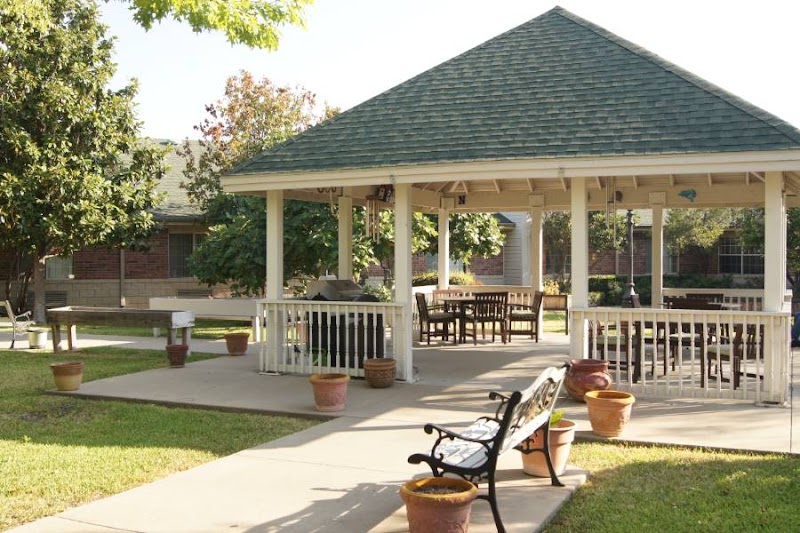
How is Red Oak Center Staffed?

CMS rates RED OAK HEALTH AND REHABILITATION CENTER's staffing level at 3 out of 5 stars, which is average compared to other nursing homes. Staff turnover is 58%, which is 12 percentage points above the Texas average of 46%. High turnover can affect care consistency as new staff learn residents' individual needs.

What Have Inspectors Found at Red Oak Center?

State health inspectors documented 23 deficiencies at RED OAK HEALTH AND REHABILITATION CENTER during 2022 to 2025. These included: 1 Immediate Jeopardy (the most serious level, indicating potential for serious harm or death), 3 that caused actual resident harm, and 19 with potential for harm. Immediate Jeopardy findings are rare and represent the most serious regulatory concerns. They require immediate corrective action.
Who Owns and Operates Red Oak Center?

RED OAK HEALTH AND REHABILITATION CENTER is owned by a for-profit company. For-profit facilities operate as businesses with obligations to shareholders or private owners. The facility is operated by HMG HEALTHCARE, a chain that manages multiple nursing homes. With 144 certified beds and approximately 105 residents (about 73% occupancy), it is a mid-sized facility located in RED OAK, Texas.
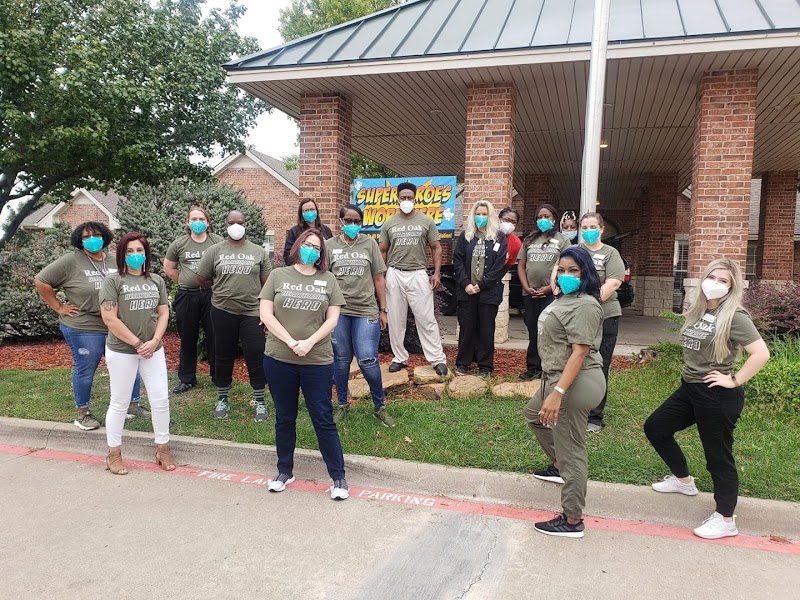
How Does Red Oak Center Compare to Other Texas Nursing Homes?

Compared to the 100 nursing homes in Texas, RED OAK HEALTH AND REHABILITATION CENTER's overall rating (3 stars) is above the state average of 2.8, staff turnover (58%) is significantly higher than the state average of 46%, and health inspection rating (3 stars) is at the national benchmark.

What Should Families Ask When Visiting Red Oak Center?

Based on this facility's data, families visiting should ask: "What changes have been made since the serious inspection findings, and how are you preventing similar issues?" "How do you ensure continuity of care given staff turnover, and what is your staff retention strategy?" "Can I visit during a mealtime to observe dining assistance and food quality?" "How do you handle medical emergencies, and what is your hospital transfer rate?" These questions are particularly relevant given the facility's Immediate Jeopardy citations and the facility's high staff turnover rate.

Is Red Oak Center Safe?

Based on CMS inspection data, RED OAK HEALTH AND REHABILITATION CENTER has documented safety concerns. Inspectors have issued 1 Immediate Jeopardy citation (the most serious violation level indicating risk of serious injury or death). The facility has a 3-star overall rating and ranks #1 of 100 nursing homes in Texas. Families considering this facility should ask detailed questions about what corrective actions have been taken since these incidents.

Do Nurses at Red Oak Center Stick Around?

Staff turnover at RED OAK HEALTH AND REHABILITATION CENTER is high. At 58%, the facility is 12 percentage points above the Texas average of 46%. High turnover means new staff may not know residents' individual needs, medications, or preferences. It can also be disorienting for residents, especially those with dementia who rely on familiar faces. Families should ask: What is causing the turnover? What retention programs are in place? How do you ensure care continuity during staff transitions?

Was Red Oak Center Ever Fined?

RED OAK HEALTH AND REHABILITATION CENTER has been fined $190,196 across 2 penalty actions. This is 5.4x the Texas average of $34,981. Fines at this level are uncommon and typically indicate a pattern of serious deficiencies, repeated violations, or failure to correct problems promptly. CMS reserves penalties of this magnitude for facilities that pose significant, documented risk to resident health or safety. Families should request specific documentation of what issues led to these fines and what systemic changes have been implemented.

Is Red Oak Center on Any Federal Watch List?

RED OAK HEALTH AND REHABILITATION CENTER is not on any federal watch list. The most significant is the Special Focus Facility (SFF) program, which identifies the bottom 1% of nursing homes nationally based on persistent, serious quality problems. Not being on this list means the facility has avoided the pattern of deficiencies that triggers enhanced federal oversight. This is a positive indicator, though families should still review the facility's inspection history directly.