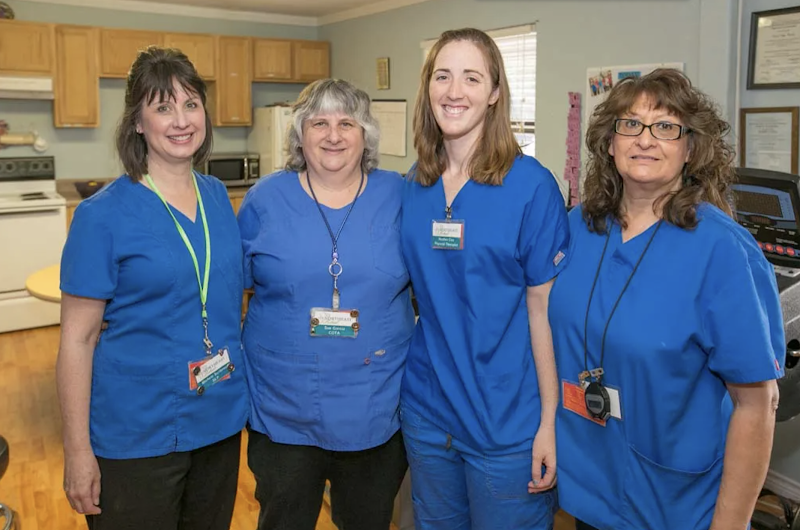
NORTHEAST REHABILITATION AND HEALTHCARE CENTER
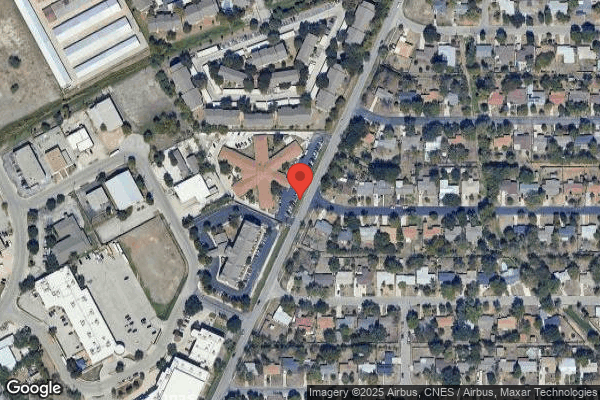
603 CORINNE ST, SAN ANTONIO, TX 78218 (210) 824-7331
Government - Hospital district 120 Beds THE ENSIGN GROUP Data: November 2025
Trust Grade
35/100
#791 of 1168 in TX
Last Inspection: March 2025

Within standard 12-15 month inspection cycle. Federal law requires annual inspections.

Overview

Northeast Rehabilitation and Healthcare Center has received a Trust Grade of F, indicating significant concerns about its quality of care. With a state rank of #791 out of 1168 in Texas, the facility is in the bottom half for nursing homes, and it ranks #33 out of 62 in Bexar County. The facility's trend is worsening, with issues increasing from 12 in 2024 to 17 in 2025, raising concerns about the quality of care. Staffing is rated at 2 out of 5 stars, with a turnover rate of 54%, which is around the state average, suggesting that while staff may not be highly stable, they are not excessively leaving. Importantly, the facility has not incurred any fines, which is a positive sign, but there are critical incidents that raise alarms. For example, medications were found unsecured at residents' bedsides, which could lead to misuse. Additionally, food safety standards were not followed, with items not properly dated and stored, posing a risk of foodborne illness. Lastly, there were multiple failures in infection control practices that could lead to cross-contamination and infections among residents. Overall, while there are some positive aspects, such as no fines, the significant number of concerns and a poor trust grade suggest families should carefully consider their options.

Trust Score
F
35/100
In Texas
#791/1168
Bottom 33%
Safety Record
High Risk
Review needed
Inspections
Getting Worse
12 → 17 violations
Staff Stability
⚠ Watch
54% turnover. Above average. Higher turnover means staff may not know residents' routines.
Penalties
✓ Good
No fines on record. Clean compliance history, better than most Texas facilities.
Skilled Nurses
⚠ Watch
Each resident gets only 21 minutes of Registered Nurse (RN) attention daily — below average for Texas. Fewer RN minutes means fewer trained eyes watching for problems.
Violations
⚠ Watch
40 deficiencies on record. Higher than average. Multiple issues found across inspections.
★★☆☆☆
2.0
Overall Rating
★★☆☆☆
2.0
Staff Levels
★★★★☆
4.0
Care Quality
★★☆☆☆
2.0
Inspection Score
Stable
2024: 12 issues
2025: 17 issues

The Good

  • 4-Star Quality Measures · Strong clinical quality outcomes
  • Full Sprinkler Coverage · Fire safety systems throughout facility
  • No fines on record

Facility shows strength in quality measures, fire safety.

The Bad

2-Star Overall Rating

Below Texas average (2.8)

Below average - review inspection findings carefully

Staff Turnover: 54%

Near Texas avg (46%)

Higher turnover may affect care consistency

Chain: THE ENSIGN GROUP

Part of a multi-facility chain

Ask about local staffing decisions and management

The Ugly 40 deficiencies on record

Aug 2025 4 deficiencies
CONCERN (D) 📢 Someone Reported This

A family member, employee, or ombudsman was alarmed enough to file a formal complaint

Potential for Harm - no one hurt, but risky conditions existed

Free from Abuse/Neglect (Tag F0600)

Could have caused harm · This affected 1 resident

**NOTE- TERMS IN BRACKETS HAVE BEEN EDITED TO PROTECT CONFIDENTIALITY** Based on interview, and record review, the facility failed to ensure the resident had the right to be free from abuse for 1 of 1...

Read full inspector narrative →
**NOTE- TERMS IN BRACKETS HAVE BEEN EDITED TO PROTECT CONFIDENTIALITY** Based on interview, and record review, the facility failed to ensure the resident had the right to be free from abuse for 1 of 11 residents (Resident #3) reviewed for abuse. The facility failed to ensure Resident #3 was free from verbal abuse when LVN-H said to the resident Shut up on 04/04/2025. These failures could place residents at risk of feelings of indignity, irritability, and sadness. The noncompliance was identified as PNC (Past Non-Compliance). The noncompliance began on 04/04/2025 and ended on 04/05/2025. The facility had corrected the noncompliance before the survey began. The findings included: Record review of Resident #3's face sheet, dated 08/21/2025, revealed the resident was [AGE] years old female, originally admitted to the facility on [DATE], and re-admitted on [DATE] with diagnoses of encephalopathy (any brain disease that alters brain function), type 2 diabetes mellitus (a condition where the body has trouble regulating blood sugar levels, leading to persistently high blood glucose levels), schizoaffective disorder (mental condition that is marked by a mix of schizophrenia - affects a person's ability to think and feel and mood disorder), and depression (lowering of a person's mood). Further record review of the resident's face sheet revealed the resident was discharged [DATE] to the resident's home. Record review of Resident #3's admission MDS, dated [DATE], revealed the resident's BIMS was 14 out of 15, which indicated the resident's cognitive was intact and required partial/moderate assistance (helper does less than half the effort) to sit to stand, chair to bed transfer, and toilet transfer. Record review of the facility's Provider Investigation Report, dated 04/11/2025, revealed Resident #3 reported to CNA supervisor that LVN-H said to the resident, Shut up! Let me talk on 04/04/2025. Further record review of the Provider Investigation Report revealed the facility administrator immediately suspended and fired LVN-H, notified this incident to the resident's medical doctor and responsible party, offer psych service to the resident, and completed in-services regarding abuse to all staff on 04/05/2025. Record review of the facility employee profile of LVN-H revealed the facility terminated LVN-H on 04/10/2025. During an interview on 08/20/2025 at 2:06 p.m. with hospital aide-I acknowledged that hospital aide-I saw and heard LVN-H say to Resident #3, Shut up. Let me talk! at the D-hall of the facility on 04/04/2025 around 7:00 a.m. Hospital aide-I said Resident #3 wanted to report this incident to CNA supervisor, so hospital aide-I helped the resident to meet CNA supervisor. During an interview on 08/20/2025 at 2:23 p.m. with CNA supervisor said Resident #3 was crying and said that LVN-H said to the resident, Shut up! Let me talk. CNA supervisor reported it to the administrator immediately. The surveyor tried to call LVN-H on 08/20/2025 at 2:23 p.m., but LVN-H did not answer the phone. The surveyor left voice message and send text message to LVN-H on 08/20/2025 at 2:35 p.m., but the nurse never called back. During an interview on 08/20/2025 at 2:59 p.m. with the administrator stated once the administrator received the incident from CNA supervisor, he immediately removed LVN-H from resident care, suspended LVN-H, started investigation, and then finally fired LVN-H on 04/10/2025. The administrator said the resident received psych services on 04/07/2025, and the resident did not have any emotional distress due to this incident. The administrator notified this incident to Resident #3's medical doctor and responsible party and completed in-services regarding abuse to all staff on 04/05/2025. During interviews from 08/19/2025 to 08/21/2025 with CNA-A, CNA-B, MDS/LVN-C, CNA-D, CNA-E, ADON-F, ADON-G, LVN-H, hospital aide-I, RN-J, medication aide-K, CNA-L, CNA-M, CNA-N, CNA-O, housekeeper-P, housekeeper-Q, CNA-R, CNA-s, CNA-T, CNA-U, CNA supervisor, maintenance, director of rehab, and wound care nurse stated the completed taking in-services regarding abuse on 04/05/2025. During interviews from 08/19/2025 to 08/21/2025 with Resident #1, #2, #4, #5, #6, #7, #8, #9, #10, and #11 stated they did not see any abuse in the facility. Record review of the facility policy, titled Resident Right - Abuse Prevention, undated, the facility had the policy of It is the policy of this facility that each resident has the right to be free from abuse, neglect, misappropriation of resident property, and exploitation and if the suspected perpetrator is an employee: remove employee immediately from the care of any resident and suspend employee during the investigation. The noncompliance was identified as PNC (Past Non-Compliance). The noncompliance began on 04/04/2025 and ended on 04/05/2025. The facility had corrected the noncompliance before the survey began.
CONCERN (D) 📢 Someone Reported This

A family member, employee, or ombudsman was alarmed enough to file a formal complaint

Potential for Harm - no one hurt, but risky conditions existed

Comprehensive Care Plan (Tag F0656)

Could have caused harm · This affected 1 resident

**NOTE- TERMS IN BRACKETS HAVE BEEN EDITED TO PROTECT CONFIDENTIALITY** Based on observation, interview and record review the facility failed to develop and implement a comprehensive person-centered c...

Read full inspector narrative →
**NOTE- TERMS IN BRACKETS HAVE BEEN EDITED TO PROTECT CONFIDENTIALITY** Based on observation, interview and record review the facility failed to develop and implement a comprehensive person-centered care plan for each resident, consistent with the resident rights that included measurable objectives and timeframes to meet a resident's nursing needs that were identified in the comprehensive assessment for 2 of 3 Residents (Resident #1 and Resident #2 reviewed for mechanical lift transfers. MDS Coordinator, LVN C failed to identify that Resident #1 and Resident #2 were transferred via mechanical lift on their Care Plan. This deficient practice could affect any resident and could result in staff not providing the required services during transfers. The findings were: 1.Review of Resident #1's face sheet, dated 8/21/25, revealed she was admitted to the facility on [DATE] with diagnoses including Chronic Obstructive Pulmonary Disease (characterized by shortness of breath, cough and sputum production) with (Acute) Exacerbation (sudden worsening) and Morbid (severe) morbid obesity. Review of Resident #1's quarterly MDS, dated [DATE], revealed her BIMS score was 13 of 15 reflective that she was cognitively intact and she dependent on staff for Chair/bed-to-chair transfer: The ability to transfer to and from a bed to a chair (or wheelchair). Review of Resident #1's Care Plan, dated 11/25/24, revealed Resident #1 had a self-performance deficit and she required physical assistance with transferring. Further review did not reveal that staff should transfer Resident #1 using a mechanical lift. Observation on 8/20/25 at 3:05 PM revealed CNA A and CNA B transferring Resident #1 from the wheelchair to the bed. 2. Review of Resident #2's face sheet, dated 8/21/25, revealed he was admitted to the facility on [DATE], with diagnoses including Vascular Parkinsonism (is a condition that's directly related to your vascular system and shares similarities to Parkinson's disease (PD). While vascular Parkinsonism isn't the same condition as PD, some of the symptoms are similar, including difficulty with large and small muscle control) and Vascular Dementia (is a general term describing problems with reasoning, planning, judgment, memory and other thought processes caused by brain damage from impaired blood flow to your brain). Review of Resident #2's quarterly MDS, dated [DATE], revealed his BIMS score was 13 of 15 reflective of moderate cognitive impairment and he dependent on staff for all ADL's including rolling left and right while in bed, sitting to lying while in bed and sitting to standing from bed. Further review revealed there had not been any attempts during the assessment period to transfer Resident #1 from Chair/bed-to-chair transfer: The ability to transfer to and from a bed to a chair (or wheelchair) because of his medical condition or safety concerns. Review of Resident #2's Care Plan, dated 2/28/25, revealed he required assistance with ADL's r/t to muscle weakness, muscle wasting and lack of coordinator and the only intervention identified was that he would use mobility bars to aide in bed for easy turning and repositioning while in bed. Further review revealed Resident #2 had a self-performance deficit and the only intervention identified was that he was encouraged to participate to the fullest extent possible with every interaction. Observation on 8/21/25 at 10:00 AM revealed CNA D and CNA E transferring Resident #2 from the wheelchair to the bed. Interview on 8/21/25 at 4:30 PM with MDS Coordinator/LVN C revealed Resident #1's and Resident #2's Care Plan did not identify they required 2 person, staff assistance with transfers via mechanical lift. LVN C stated she understood both Resident #1 and Resident #2 were transferred using a mechanical lift. She stated the Resident's Care Plan should identify the care areas, level of care and staff interventions to ensure Residents received the care and services they needed. LVN C stated otherwise it could contribute to staff not providing the level of care the Resident's needed to ensure their safety. Interview on 8/21/25 at 7:30 PM with the DON revealed Resident #1 and Resident #2 required a 2-person, staff assistance with transfers via mechanical lift. She stated the purpose of the Care Plan was to identify a Resident's care areas, needs, level of care and interventions the facility staff would provide while the Residents remained in the facility. The DON stated failure to identify that Resident #1 and Resident #2 required assistance with transfers via mechanical lift could contribute to an improper transfer and result in potential accidents and or injuries. Review of the facility policy Comprehensive Person-Centered Care Planning, revised on 12.2023, read It is the policy of this facility that the interdisciplinary team (IDT) shall develop a comprehensive person-centered care plan for each resident that includes measurable objectives and timeframes to meet a resident's medical, nursing, mental and psychosocial needs that are identified in the comprehensive assessment.
CONCERN (D) 📢 Someone Reported This

A family member, employee, or ombudsman was alarmed enough to file a formal complaint

Potential for Harm - no one hurt, but risky conditions existed

Accident Prevention (Tag F0689)

Could have caused harm · This affected 1 resident

**NOTE- TERMS IN BRACKETS HAVE BEEN EDITED TO PROTECT CONFIDENTIALITY** Based on observation, interview and record review the facility failed to ensure it provided assistive devices to each resident t...

Read full inspector narrative →
**NOTE- TERMS IN BRACKETS HAVE BEEN EDITED TO PROTECT CONFIDENTIALITY** Based on observation, interview and record review the facility failed to ensure it provided assistive devices to each resident to prevent avoidable accidents for 1 of 2 Residents (Resident #1) who were observed for mechanical lift transfers. CNA A and CNA B failed to use proper technique when transferring Resident #1 from the wheelchair to the bed on 8/20/25. CNA B walked away from Resident #1 while in mid-air, swinging side to side and while CNA A was attempting to position the mechanical lift under Resident #1's bed. CNA A continued to maneuver the mechanical lift on her own without CNA B's assistance as required according to facility policy. This deficient practice could affect residents who were transferred via mechanical lift, result in avoidable accidents and contribute to serious bodily injuries and possible death. The findiings were: Review of Resident #1's face sheet, dated 8/21/25, revealed she was admitted to the facility on [DATE] with diagnoses including Chronic Obstructive Pulmonary Disease (characterized by shortness of breath, cough and sputum production) with (Acute) Exacerbation (sudden worsening) and Morbid (severe) morbid obesity. Review of Resident #1's quarterly MDS, dated [DATE], revealed her BIMS score was 13 of 15 reflective that she was cognitively intact and she dependent on staff for Chair/bed-to-chair transfer: The ability to transfer to and from a bed to a chair (or wheelchair). Review of Resident #1's Care Plan, dated 11/25/24, revealed Resident #1 had a self-performance deficit and she required physical assistance with transferring. Further review did not reveal that staff should transfer Resident #1 using a mechanical lift. Observation and interview on 8/20/25 at 3:05 PM revealed CNA A stepping back into the hallway as she was pulling a mechanical lift backwards. Upon approaching the doorway observation revealed Resident #1 was in a sling, mid-air, swinging from side to side. Her legs were shaking. CNA B was standing between bed A and bed B. They were positioned horizontally to each other. Interview with CNA B revealed she had to move wheelchair away from the foot of the bed which she did and then moved bed A towards her. CNA B was not guiding Resident #1 while CNA A continued to operate the mechanical lift. Further observation revealed CNA A using her body weight (using force) as she pushed the mechanical lift sideways gliding the back wheels against the grain and across the floor. The legs were widened/in the opened position. CNA A managed to position the legs of the mechanical lift under the center of the bed, She then lowered Resident #1 onto the bed while CNA B guided Resident #1. Interview with CNA A revealed the back wheels were not rolling like they should be. Further interview revealed both CNA A and CNA B stated they should be working together while operating the mechanical lift. CNA B stated she was not assisting while CNA A was maneuvering the mechanical lift. CNA B stated her role was to guide Resident #1 to prevent any body parts from hitting the mechanical lift. She further stated that guiding Resident #1 also helped to stabilize the mechanical lift while Resident #1 was in the air. CNA A and CNA B both stated Resident #1 would have fallen and been injured had the mechanical lift tilted to the side. Both CNA A and CNA B stated it was not safe for one person to operate the mechanical lift and it placed Resident #1 in danger. Observation and interview at 3:30 PM with Resident #1 revealed she was doing fine. She stated she was not scared when on the mechanical lift. She stated her legs were shaking because her blood sugar dropped. She stated it was always two staff that transferred her when using a mechanical lift. Resident #1 stated the CNA A and CNA B were playing and rushing through care. Interview on 8/20/25 at 3:40 PM with CNA A revealed she had worked at the facility since [DATE]. She stated she was transferring Resident #1 from the wheelchair to the bed while struggling to maneuver the mechanical lift because the room was small and there was not enough space. CNA A stated she did not have an excuse and couldn't say anything that would make sense about why she did what she did. CNA A stated the wheels were not rolling and sometimes that would happen when there was hair build up around the wheels. She stated she did not check the wheels prior to using it which she should have. CNA A stated she used force and was pushing the mechanical lift at an angle because of the lack of space as she was attempting to position the legs underneath the bed. CNA A stated if the mechanical lift became unbalanced it could have tilted sideways, Resident #1 would have fallen and she could have been hurt. CNA A stated Resident #1 was a heavy woman, maybe about 300 pounds. She stated there was no way she could have prevented the mechanical lift from tilting over. She stated it was dangerous, she knew better, and stated she had been in-serviced several times on operating a mechanical lift. CNA A stated she would have been responsible for the fall. Interview on 8/20/25 at 4:07 PM with the DON revealed transferring a resident using a mechanical lift required 2 staff. She stated one staff operated the mechanical lift while the second staff guided the resident. The DON stated neither should step away from the mechanical lift leaving one staff to operate the mechanical lift. The DON was provided with details of the observation of CNA A and CNA B transferring Resident #1 via mechanical lift. The DON stated Resident #1 was a heavier lady. She stated CNA B should have never stepped away and stated she did not understand why CNA B was using force. She stated staff should check the mechanical lift prior to transferring a resident to ensure it was working properly. She stated no one had reported having any problems with the mechanical lift. She stated the MS was responsible for ensuring the mechanical lifts were functioning properly. The DON stated based on the description of the observation, the mechanical lift could have tilted sideways causing Resident #1 to fall and possibly being injured. It would have been a fall that could have been avoided. She stated CNA A should have stopped, locked the mechanical lift and asked for help if she was having problems maneuvering the mechanical lift. She stated it was not a safe transfer and one staff should never be left alone while operating the mechanical lift. Observation and interview on 8/20/25 at 4:30 PM revealed the MS, CNA A and the lead CNA standing in the hallway maneuvering the mechanical lift used to transfer Resident #1. The wheels were turning and rolling without any problems. The lead CNA stated she had experienced difficulties maneuvering the mechanical lift transferring a heavier resident. She stated it was difficult to maneuver when a resident was heavier. The MS stated he a local company had recently serviced the mechanical lift and did not find any problems with it. Observation and interview at 4:45 PM on 8/20/25 with the ADM revealed he reviewed the footage of CNA A when she pulled it back stepping out into the hallway. He stated the wheels on the back of the mechanical lift were rolling. He presented the video and the wheels were rolling. Further review of the footage showed CNA A using force and pushing the mechanical lift sideways when attempting to position the legs under the bed. The ADM stated the resident rooms had limited space. The ADM stated he wanted to ensure the residents were transferred safely and based on the details he learned about Resident #1's transfer, it was not a safe transfer. He stated there should always be 2 staff when providing a transfer using a mechanical lift and the staff should stop and get help if it was not properly working. Review of the mechanical lift User Manual, undated, read in relevant part, 2. Safety Operating the Lift: Although [name of company] recommends two assistants be used for all lift preparation, transferring from and transferring to procedures, our equipment will permit proper operation by one assistant. The use of one assistant is based on the evaluation of the health care professional for each individual case. Review of the facility policy, Routine Procedures, Hydraulic Lift, undated, read in relevant part, It is the policy of the facility to either provide Hydraulic lift transfers when necessary for safety measures. Procedures: Equipment: Hydraulic lift: 2 person at all times.
CONCERN (D) 📢 Someone Reported This

A family member, employee, or ombudsman was alarmed enough to file a formal complaint

Potential for Harm - no one hurt, but risky conditions existed

Medical Records (Tag F0842)

Could have caused harm · This affected 1 resident

**NOTE- TERMS IN BRACKETS HAVE BEEN EDITED TO PROTECT CONFIDENTIALITY** Based on interviews and record reviews, the facility failed to maintain medical records in accordance with accepted professional...

Read full inspector narrative →
**NOTE- TERMS IN BRACKETS HAVE BEEN EDITED TO PROTECT CONFIDENTIALITY** Based on interviews and record reviews, the facility failed to maintain medical records in accordance with accepted professional standards and practices for one (Resident #4) out of seven residents reviewed for documentations. The facility failed to document wound care dressing changes on the Treatment Administration Record (TAR) for Resident #4 on 08/15/2025, 08/16/2025, and 08/17/2025. These failures placed residents at risk for missed treatments and care which could result in the wound deterioration, and development of infection.Findings included: Record review of Resident #4's face sheet, dated 08/21/2025, revealed the resident was [AGE] years old male and admitted to the facility on [DATE] with diagnoses of surgical after care following surgery, muscle wasting and atrophy (loss of skeletal muscle mass), depression (lowering of a person's mood), old myocardial infarction (blockage of blood flow to the heart muscle), and muscle weakness. Record review of Resident #4's admission MDS assessment, dated 05/05/2025, revealed the resident's BIMS was 11 out of 15, indicated the resident had moderate cognitive impairment and required partial/moderate assistance (helper does less than half the effort) to sit to stand and chair to bed transfer, and supervision or touching assistance (helper provides verbal cues or touching /steadying and /or contact guard assistance as resident completes activity) to toilet transfer. Record review of Resident #4's comprehensive care plan, dated 05/01/2025, revealed [Resident #4] has a stage 3 pressure ulcer to coccyx - buttock area. For interventions - Administered treatment as ordered and monitor for effectiveness. Record review of Resident #4's physician orders, dated 05/01/2025, revealed the resident had the orders of cleans coccyx - buttock area - with normal saline and apply Triad paste and leave open to air, one time a day for wound care. Record review of Resident #4's treatment administration record, from 08/01/2025 to 08/31/2025, revealed there were empty blanks (no nurses' initials) on 08/15/2025, 08/16/2025, and 08/17/2025 for wound care to Resident #4's coccyx - buttock area - once a day. During an interview on 08/21/2025 at 9:00 a.m. with Resident #4 stated he did not have any pain at this time and received wound cares from nurses. During an interview on 08/19/2025 at 3:59 p.m. with RN-J stated she provided wound care to Resident #4 on 08/15/2025, 08/16/2025, and 08/17/2025 as ordered, but she forgot documenting on Resident #4's treatment administration record because she was very busy at those dates. Further interview with the RN-J stated she should have documented on Resident #4's treatment administration record after providing wound care on 08/15/2025, 08/16/2025, and 08/17/2025. It was RN-J's mistake, and the resident might have improper wound care due to lack of documentations. During an interview on 08/19/2025 at 4:00 p.m. with DON stated RN-J should have documented on Resident #4's treatment administration record after she provided wound care to the resident. It was basic nursing responsibility, and if they did not document correctly, it might cause improper wound care to Resident #4 due to lack of communications. Record review of the facility policy, titled Nursing Documentation, date 10/2024, revealed The following items should be noted in the resident chart - medication and/or treatment administration.
Mar 2025 11 deficiencies
CONCERN (D) 📢 Someone Reported This

A family member, employee, or ombudsman was alarmed enough to file a formal complaint

Potential for Harm - no one hurt, but risky conditions existed

Deficiency F0552 (Tag F0552)

Could have caused harm · This affected 1 resident

**NOTE- TERMS IN BRACKETS HAVE BEEN EDITED TO PROTECT CONFIDENTIALITY** Based on observation, interview, and record review, the facility failed to ensure residents had the right to be treated with res...

Read full inspector narrative →
**NOTE- TERMS IN BRACKETS HAVE BEEN EDITED TO PROTECT CONFIDENTIALITY** Based on observation, interview, and record review, the facility failed to ensure residents had the right to be treated with respect and dignity, including the right to be free from any physical restraints imposed for purposes of discipline or convenience, and not required to treat the resident's medical symptoms for 2 of 2 residents (Residents #46 and Resident #49) observed for physical restraints in that: 1. The facility failed to obtain a consent for Resident #46 to wear a wander guard. 2. The facility failed to obtain a consent for Resident #49 to wear a wander guard. This failure placed residents at risk of unnecessary restriction of their freedom of movement and diminished quality of life. The findings included: 1. Record review of Resident #46's admission record, dated 3/20/25 revealed a [AGE] year-old female admitted to the facility on [DATE] with diagnoses that included dementia (impaired ability to remember, think, or make decisions that interferes with doing everyday activities), cognitive communication deficit, and generalized anxiety disorder. Record review of Resident #46's annual MDS assessment dated [DATE] revealed the resident had severely impaired cognition for daily decision making. Record review of Resident #46's comprehensive care, revision date 3/13/25, revealed the resident was an elopement risk related to resident wanders aimlessly, significantly intrudes on the privacy or activities, and had a Wandergaurd on her left lower leg. Interventions included check wanderguard placement, distract resident from wandering by offering pleasant diversions, structured activities, food, conversation, television, book, identify pattern of wandering: Is wandering purposeful, aimless, or escapist? Is resident looking for something? Does it indicate the need for more exercise? Intervene as appropriate . Record review of Resident #46's Wandering/Elopement Risk Evaluation dated 12/16/24 indicated a high risk for elopement. Record review of Resident #46's Wandering/Elopement Risk Evaluation dated 12/16/24 indicated a low risk for elopement. Record review of Resident #46's physician's orders, dated 3/20/25 revealed: - Wander guard in place to assist in preventing the resident from exiting unaccompanied with an order date of 1/14/25 and no end date. -check wander guard to LLE for proper function every shift with a start date of 1/14/25. Record review of the electronic health record revealed that Resident #46 did not have a consent for the use of the wander guard. During an observation and interview on 3/21/25 at 1:12 p.m. revealed Resident #44 had a wander guard on her left ankle. CNA I stated the wander guard could not be removed unless it was cut off. CNA I stated once it was cut off they would need a new one. The Resident was not able to be interviewed. During an interview on 3/20/25 at 10:44 a.m. the DON stated they did not get consent from the resident's or their representatives for a wander guard. The DON stated they obtain an order, care plan it, inform the resident or RP and do not document that they notified the family they would be placing a wander guard on the resident. During an interview on 3/21/25 at 9:11 a.m. an assistant for a potential legal guardian for Resident #46 stated they did not have legal guardianship of the resident and were in the investigation stage of obtaining guardianship and did not deal with any of the resident's consents at that time. During an interview on 3/21/25 at 9:52 a.m. an RP who was listed as an emergency contact for Resident #46 stated they had MPOA and the facility contacted them about trying to get the resident into a memory care unit, about other financial reasons, and insurance applications. The RP stated he had never been informed about a wander guard or attended a care plan meeting. The RP stated they had been to the facility as recent as a week ago and was never asked to sign any consents. The RP stated another family member might have more information and provided the contact information. During an interview on 3/21/25 at 9:52 a.m. Resident #46's family member stated he was not aware of any medications the resident was on, had not attended or been invited to any care plan meetings. The family member stated the facility did not inform or discuss a wander guard with him. The family member stated the facility had spoken to him about finding the resident placement in a locked facility. The family member stated they had no idea about the wander guard and thought it was odd, could understand if they felt they needed it for the resident, but if the resident was going to a locked facility why would they need that. 2. Record review of Resident #49's admission record, dated 3/20/25 revealed a [AGE] year-old female admitted to the facility on [DATE] and readmitted on [DATE] with diagnoses that included cerebral infarction (occurs when the blood supply to part of the brain is blocked or reduced. This prevents brain tissue from getting oxygen and nutrients. Brain cells begin to die in minutes.), cognitive communication deficit, vascular dementia (problems with reasoning, planning, judgment, memory and other thought processes caused by brain damage from impaired blood flow to your brain), schizophrenia (chronic mental disorder characterized by symptoms such as hallucinations, delusions, and cognitive challenges), and anxiety disorder. Record review of Resident #49's quarterly MDS assessment dated [DATE] revealed the resident had moderately impaired cognition for daily decision making. The wander guard was not mentioned in the MDS. Record review of Resident #49's comprehensive care, revision date 1/14/25, revealed the resident was an elopement risk/wanderer related to impaired safety awareness resident wanders aimlessly, and Wandergaurd on her right lower leg. Interventions included Distract resident from wandering by offering pleasant diversions, structured activities, food, conversation, television, book. Elopement risk assessments to be completed per policy and prn. Monitor Wander Guard placement on RLE Qshift. Provide safe and secure surroundings that deter elopements. Record review of Resident #49's Wandering/Elopement Risk Evaluation dated 11/17/22 indicated a high risk for elopement. Record review of Resident #49's Wandering/Elopement Risk Evaluation dated 3/11/25 indicated a low risk for elopement. Record review of Resident #49's physician's orders, dated 3/18/25 revealed: - Monitor for placement every shift wander guard RLE Exp: 01/28 .Wander guard in place to prevent resident from exiting the facility unaccompanied. every shift for exit seeker, with an order date of 1/14/25, and no end date. -check wander guard to RLE for proper function every shift with a start date of 1/14/25. Record review of the electronic health record revealed that Resident #49 did not have a consent for use of the wander guard. During an observation on 3/20/25 at 11:30 a.m. revealed Resident #49 had a wander guard on her right ankle. Resident #49's RP was contacted by phone on 3/21/25 at 9:27 a.m. and did not answer or return the call. During a follow up interview on 3/21/25 at 11:35 a.m. the DON stated they should notify the resident's family if they placed a wander guard on them. The DON stated they should put a note in about the discussion in the resident's medical record. The DON stated they recently updated the orders for Resident #46's and Resident #49's wander guard because they were expired and needed new ones put on. The DON stated they did not consider the wander guard a restraint because it only applied to the front door and the residents could go out the side doors if they wanted. The DON stated that was why the facility would try to find another locked facility for the resident to go if they had wandering behaviors. The DON stated both residents were aware they had a wander guard on that could not be removed and stated Resident #49 called it her ankle monitor. Record review of the facility's policy titled Wandering Residents-Wanderguard, no date, revealed, It is the policy of this facility to allow each resident as much physical freedom as safely possible in order to maintain the resident's optimum function. Procedures: 1. All appropriate residents shall be assessed within twenty-four (24) hours of any suspected wandering behavior and if necessary, the use of a protective device. (See Elopement Risk Assessment) 2. If assessment of the resident shows there is wandering potential creating a safety issue, the DNS or designee will discuss this issue with the family/responsible party. 3. Resident at risk for wandering shall have a Wanderguard®. 4. The need for Wanderguard® shall be assessed a minimum of quarterly. The Wanderguard® is not a restraint and does not require a consent. 5. The family/responsible party shall be notified of the risk for wandering and that the Wanderguard® has been placed on the resident .
CONCERN (D) 📢 Someone Reported This

A family member, employee, or ombudsman was alarmed enough to file a formal complaint

Potential for Harm - no one hurt, but risky conditions existed

Deficiency F0578 (Tag F0578)

Could have caused harm · This affected 1 resident

**NOTE- TERMS IN BRACKETS HAVE BEEN EDITED TO PROTECT CONFIDENTIALITY** Based on, interviews, and record review, the facility failed to ensure the residents had the right to formulate an advanced dire...

Read full inspector narrative →
**NOTE- TERMS IN BRACKETS HAVE BEEN EDITED TO PROTECT CONFIDENTIALITY** Based on, interviews, and record review, the facility failed to ensure the residents had the right to formulate an advanced directive and determine the choice to receive or not receive CPR (cardiopulmonary resuscitation) for 1 (Resident #22) of 8 residents reviewed for accuracy and completeness of clinical records. The facility failed to ensure Resident #22's OOH DNR was signed by 2 witnesses. This failure could affect any residents who have medical records and could result in misinformation about professional care provided. Findings included: Record review of Resident #22's admission Record, dated [DATE], revealed a [AGE] year-old female admitted on [DATE], and readmitted on [DATE] with diagnoses of dementia without behavioral disturbance (a group of symptoms affecting memory, thinking, and social abilities, which interfere with daily life), dysphagia (difficulty swallowing), pneumonitis (when air sacs in the lungs become inflamed due to irritant substances and disturb the normal functioning of the lungs), anoxic brain damage (serious condition that occurs when there is a complete lack of oxygen supply to the brain. This can happen when oxygen levels drop to a dangerous level or when blood flow to the brain decreases to a threshold where brain cells begin to die. Brain cells begin to die after approximately four minutes of oxygen deprivation. Anoxic brain injury can cause permanent cognitive problem), and chronic kidney disease (a gradual loss of kidney function). The admission record did not specify the resident's code status. Record review of Resident #22's annual MDS assessment, dated [DATE], revealed the resident had severely impaired cognition for daily decision making. Record review of Resident #22's care plan, updated [DATE], revealed the resident had elected a DNR status with interventions of Do Not Resuscitate in the event of cardiac arrest, provide advanced directive education and support in directive completion, and update the resident's chart to reflect the elected code status, and staff must be aware of the code status election. Record review of Resident #22's order summary, dated [DATE], revealed an order for DNR with a start date of [DATE], and no end date. Record review of Resident #22's OOH DNR revealed it was signed by the legal guardian on [DATE], by 1 witness on [DATE], and the physician on [DATE]. A second witness signature was missing. During an interview on [DATE] at 11:24 a.m. the SW stated she was responsible for filling out the DNR forms or helping families to complete them. The SW stated she helped complete this form. The SW stated they forgot to get a 2nd witness signature on Resident #22's DNR. The SW stated the missing signature was a mistake and the DNR was not valid. The SW stated they may have to perform CPR if the resident needed it and would not honor the legal guardians wishes. During an interview on [DATE] at 11:49 a.m. the DON stated Resident #22's DNR was not valid because it was missing 2 witness signatures. The DON stated Resident #22 would be full code until the form was completed accurately which was not honoring the resident's or representatives wishes to not be resuscitated. Record review of the facility's policy titled Advance Directives, dated 11/2016, revealed, It is the policy of this facility that a resident's choice about advance directives will be recognized and respected .1. Prior to, upon, or immediately after admission, the Social Worker will ask residents, and/or their family members, about the existence of any advance directives. 2. Should the resident indicate that he or she has issued advance directives about his/her care and treatment, the facility will require that a copy of such directives be included in the medical record .b) Do Not Resuscitate -- Indicates that, in case of respiratory or cardiac failure, the resident, legal guardian, health-care proxy, or representative (sponsor) have directed that no cardiopulmonary resuscitation (CPR) is to be attempted .4. Once the advance directive or information regarding resident preferences regarding treatment options is received by the facility, it will be confirmed in the resident medical record and communicated to members of the care plan team. The facility will also notify the attending physician of advance directives so that, if necessary, appropriate orders can be documented in the resident's medical record and plan of care .
CONCERN (D) 📢 Someone Reported This

A family member, employee, or ombudsman was alarmed enough to file a formal complaint

Potential for Harm - no one hurt, but risky conditions existed

Assessment Accuracy (Tag F0641)

Could have caused harm · This affected 1 resident

**NOTE- TERMS IN BRACKETS HAVE BEEN EDITED TO PROTECT CONFIDENTIALITY** Based on observation, interview and record review, the facility failed to ensure the assessment accurately reflected the residen...

Read full inspector narrative →
**NOTE- TERMS IN BRACKETS HAVE BEEN EDITED TO PROTECT CONFIDENTIALITY** Based on observation, interview and record review, the facility failed to ensure the assessment accurately reflected the resident's status for 1 of 19 residents (Resident #91) reviewed for assessments: Resident #91's admission assessment MDS dated [DATE] did not accurately reflect the resident could not be rated for incontinence since the resident required an indwelling urinary catheter. This failure could place residents at risk for inadequate care due to inaccurate assessments. The findings included: Record review of Resident #91's face sheet dated 3/20/25 revealed an [AGE] year-old female admitted to the facility on [DATE] with diagnoses that included urinary tract infection, obstructive and reflux uropathy (condition in which the normal flow of urine is blocked leading to kidney damage; uropathy refers to kidney damage caused by backward flow of urine from the bladder into the ureters and kidney), and chronic kidney disease stage 3 (moderate decrease in kidney function). Record review of Resident #91's admission MDS assessment, dated 3/10/25 revealed the resident was moderately cognitively impaired for daily decision-making skills and utilized an indwelling urinary catheter. Further review of Resident #91's admission MDS assessment revealed the resident was Occasionally incontinent (less than 7 episodes of incontinence) of bladder. Record review of Resident #91's Order Summary Report dated 3/20/25 revealed the following: - MONITOR INDWELLING CATHETER OUTPUT every shift, with order date 3/12/25 and no end date. Record review of Resident #91's comprehensive care plan with revision date 3/13/25 revealed the resident had an indwelling urinary catheter related to obstructive uropathy with interventions that included to provide catheter care every shift and as needed, measure urinary output, position catheter bag and tubing below the level of the bladder and away from entrance room door, and use enhanced barrier precautions. During an observation and interview on 3/18/25 at 10:47 a.m., revealed Resident #91 asked for help to go to the bathroom. Resident #91 was observed holding her indwelling urinary catheter bag by the tubing and was unaware she had an indwelling urinary catheter. During an observation and interview on 3/18/25 at 4:40 p.m., ADON B was in Resident #91's room assisting the resident to a sitting position. ADON B acknowledged Resident #91 had an indwelling urinary catheter and believed the resident had the indwelling urinary catheter since her admission on [DATE]. ADON B stated, Resident #91 was confused and often asked to go to the bathroom. During an observation and interview on 3/20/25 at 5:08 p.m., CNA E acknowledged Resident #91 utilized an indwelling urinary catheter since her admission to the facility. CNA E further stated the resident was confused and often asked to go to the bathroom. CNA E revealed she had provided catheter care to Resident #91 at least once during her shift. During a joint interview on 3/21/25 at 10:33 a.m., MDS Coordinator C and MDS Coordinator D acknowledged they were working collaboratively on completing MDS assessments. MDS Coordinator C acknowledged she was responsible for completing Resident #91's admission assessment which included the resident utilized an indwelling urinary catheter. MDS Coordinator C stated she incorrectly marked the resident was occasionally incontinent of bladder but should have marked Not rated, resident had a catheter. MDS Coordinator C stated she took full responsibility for the error. Both MDS Coordinator D stated, the purpose of the MDS assessment was to determine the kind of care the resident was supposed to receive based on the assessment and the information the assessment helped to complete the comprehensive care plan. During an interview on 3/21/25 at 1:01 p.m., the DON stated, Resident #91's MDS assessment identified the resident as being occasionally incontinent of urine but acknowledged it was incorrect because the resident utilized an indwelling urinary catheter which meant the resident was incontinent. The DON further stated the purpose of the MDS assessment was for billing purposes and to ensure billing was appropriate. The DON stated, the MDS drives the care plan and tells you how to care for the resident. It gives a true picture of the resident. A request on 3/21/25 at 1:01 p.m. for an MDS policy was made but a policy was not provided at the time of the exit. Record review of the CMS RAI Version 3.0 Manual, Section H: Bladder and Bowel, dated October 2024 revealed the following, .The intent of the items in this section is to gather information on the use of bowel and bladder appliances .Each resident who is incontinent or at risk of developing incontinence should be identified, assessed, and provided with individualized treatment .and/or devices .and services to achieve or maintain as normal elimination function as possible .Urinary Continence .Coding Instructions .Code 9, not rated: if during the 7-day lool-back period the residnet had an indwelling bladder catheter .
CONCERN (D) 📢 Someone Reported This

A family member, employee, or ombudsman was alarmed enough to file a formal complaint

Potential for Harm - no one hurt, but risky conditions existed

Deficiency F0645 (Tag F0645)

Could have caused harm · This affected 1 resident

**NOTE- TERMS IN BRACKETS HAVE BEEN EDITED TO PROTECT CONFIDENTIALITY** Based on interviews and record review, the facility failed to identify a diagnosis of mental illness on the preadmission screeni...

Read full inspector narrative →
**NOTE- TERMS IN BRACKETS HAVE BEEN EDITED TO PROTECT CONFIDENTIALITY** Based on interviews and record review, the facility failed to identify a diagnosis of mental illness on the preadmission screening and resident review (PASRR) assessment for 2 of 2 residents (Resident #47 and Resident #90) whose records were reviewed for PASRR services. The facility failed to recognize on the Level I PASRR screening that Resident #47 and Resident #90 had the mental illness diagnosis of bipolar disorder which would qualify Resident #47 and Resident #90 for a PASRR evaluation. This deficient practice could place residents with mental illness at risk for not obtaining the services needed to treat their mental health diagnoses. The findings included: 1. Record review of Resident #47's admission sheet, dated 8/25/23, noted the resident was admitted to the facility on [DATE] with a diagnosis of bipolar disorder on admission [DATE]). Record review of Resident #47's quarterly MDS assessment, dated 2/5/25, noted the resident's BIMS was 2, indicating severe cognitive impairment; mood indicators were present including feeling down, depressed, or hopeless with social isolation and behaviors of delusions and verbal behaviors towards others; and diagnoses of depression, bipolar disorder, schizophrenia, and post-traumatic stress disorder (PTSD). Record review of Resident #47's order summary from March 2025 indicated the resident received Depakote (an anticonvulsant) 125mg twice daily for mood. Record review of Resident #47's care plan, revised on 1/15/25 noted the resident has the Potential for mood problem r/t Admission, Disease Process. One of the approaches was to Administer medications as ordered and Monitor/document for side effects and effectiveness. Record review of Resident #47's PASRR screening dated 8/25/23, noted an answer of 0 (No) in section C0100 Mental Illness in response to the question, Is there evidence or an indicator this is an individual with a Mental Illness? 2. Record review of Resident #90's admission sheet, dated 2/7/25, noted the resident was admitted to the facility on [DATE] with a diagnosis of bipolar disorder on admission [DATE]). Record review of Resident #90's quarterly MDS assessment, dated 2/10/25, noted the resident's BIMS was 10, indicating moderate cognitive impairment; with no mood or behaviors present; and a diagnosis of bipolar disorder. Record review of Resident #90's order summary from March 2025 indicated the resident received Olanzapine 20mg at bedtime related to bipolar disorder and Olanzapine 5mg at bedtime related to bipolar disorder. Record review of Resident #90's care plan, revised on 2/28/25 noted the resident has Anti psychotic medication use r/t bi-polar. One of the approaches was to Administer medication as prescribed-Olanzapine and Document side-effects: drowsiness, dry mouth, blurred vision, constipation, edema, extrapyramidal symptoms, urinary retention, stiff or tight muscles, tardive dyskinesia (a chronic movement disorder that can develop as a side effect of long-term use of certain medications, primarily antipsychotic drugs). Record review of Resident #90's, PASSR screening dated 2/7/25, noted an answer of 0 (No) in section C0100 Mental Illness in response to the question, Is there evidence or an indicator this is an individual with a Mental Illness? In an interview on 03/19/25 at 01:59 PM with MDS Coordinator C and MDS Coordinator D, MDS Coordinator D stated, When residents come here, they should have their PASRR included with their admission paperwork. MDS Coordinator D stated the facility uploads it and sends a copy to the local authority. MDS Coordinator D stated If the level one screening is negative the local authority acknowledges they receive it. MDS Coordinator D stated If the level one screening is positive, the local authority comes to the facility and assesses the resident, and attends the care plan meetings. MDS Coordinator D stated If it is negative there is no follow up. MDS Coordinator D stated If the facility notices a resident has a disability, they do another level one screening and repeat the process. MDS Coordinator D stated The clinical team suggests if a resident is showing signs of disability, and The clinical team would include staff who are hands on with the resident including the ADON, the social worker, and the activity director, and They would be the ones to suggest if the resident is showing signs of behaviors. MDS Coordinator D They rely on the PASSR screening from where the resident has been, like the hospital. When asked is it correct if the PASRR assessment should be left as 'No' if a resident has bipolar disorder, MDS Coordinator D stated Most of the time the PASRR says 'No', and they submit the hospital PASRR to the local authority and the MDS assessment. MDS Coordinator D stated in her experience if a resident had bipolar it wasn't enough to get services, because they don't have behaviors. When asked why Resident #90 was receiving an antipsychotic without behaviors, MDS Coordinator D stated Maybe in the past she had a behavior. MDS Coordinator D stated They are going to deny services for bipolar, MDS Coordinator D stated They have not submitted Resident #90's information to the local authority yet, and they have a 90 day period to do so. MDS Coordinator D stated she will submit the PASRR from the hospital to the local authority. When asked if the level one screening needed to be corrected before being submitted to the local authority MDS Coordinator D stated The PASRR from the hospital will not be updated. When asked what the risk to the resident was of putting 'No' on the level one screening if they have a mental illness, MDS Coordinator D stated she has never experienced a negative effect with a resident if they answer 'No' on the level one PASRR when the resident has a mental illness, because if they have behaviors they do mental screenings. When asked what the risk to the resident was if they don't mark 'Yes' to mental illness if a resident has bipolar disorder, MDS Coordinator D stated They have never had an issue with a resident because they have psych on the premises at the facility. In an interview on 03/19/25 at 04:22 PM with the DON, the DON stated she would talk to the MDS nurses about training since the residents have a mental illness diagnosis on admission but the hospital PASRR assessment is negative and is not getting updated before being sent to the local authority who is then not coming out to evaluate the resident. The DON stated she would educate them on getting the PASRR fixed moving forward especially if the residents are on medications. The DON stated, 'All residents get psych services, but moving forward they will make sure they take care of the PASRR correctly. The DON stated she wasn't sure what the risk to the resident was of a negative level one PASRR with evidence of a mental illness diagnosis, but stated The purpose of PASRR is to get residents services if they have a diagnosis of mental illness. Review of the facility policy, undated, titled Resident Assessment PASSAR Screening noted it is the policy of this facility to complete an accurate PASSAR screening for individuals with a mental disorder and individuals with intellectual disability.
CONCERN (D) 📢 Someone Reported This

A family member, employee, or ombudsman was alarmed enough to file a formal complaint

Potential for Harm - no one hurt, but risky conditions existed

Accident Prevention (Tag F0689)

Could have caused harm · This affected 1 resident

**NOTE- TERMS IN BRACKETS HAVE BEEN EDITED TO PROTECT CONFIDENTIALITY** Based on observation, interview, and record review, the facility failed to ensure the resident environment remained as free of a...

Read full inspector narrative →
**NOTE- TERMS IN BRACKETS HAVE BEEN EDITED TO PROTECT CONFIDENTIALITY** Based on observation, interview, and record review, the facility failed to ensure the resident environment remained as free of accident hazards as was possible for 1 of 24 residents (Resident #89) reviewed for accidents and hazards: The facility failed to ensure Resident #89 did not have a pair of scissors, a large pair of nail clippers, and a disposable razor in his room. This failure could place residents at risk of harm or injury and contribute to avoidable accidents and a decline in health. The findings included: Record review of Resident #89's face sheet dated 3/19/25 revealed a [AGE] year-old male admitted to the facility on [DATE] with diagnoses that included gastro-esophageal reflux disease with esophagitis (a chronic condition where stomach acid frequently flows back into the esophagus causing inflammation and irritation), duodenitis without bleeding (inflammation of the first part of the small intestine without gastrointestinal bleeding), dysphagia, oropharyngeal phase (difficulty swallowing in the mouth and throat), and cognitive communication deficit (difficulties with communication caused by impairments in cognitive function such as attention, memory, problem-solving, and executive functioning.) Record review of Resident #89's most recent quarterly MDS assessment dated [DATE] revealed the resident was moderately cognitively impaired for daily decision-making skills. Record review of Resident #89's comprehensive care plan with revision date 1/27/25 revealed the resident was at risk for impaired cognitive function/dementia or impaired thought processes, with interventions that included to use simple directive sentences when communicating with the resident. Record review of Resident #89's Functional Abilities assessment dated [DATE] revealed the resident needed Partial/moderate assistance with personal hygiene including shaving. During an observation and interview on 3/18/25 at 9:26 a.m., revealed Resident #89 was observed with a large a disposable razor on the bedside table. Further observation revealed a large pair of nail clippers under the left side of the resident's bed. Resident #89 stated, he last used the disposable razor to shave himself two days ago and would sometimes cut his own nails with the nail clippers. Resident #89 stated he last trimmed his fingernails about 10 days ago. Resident #89 stated he had purchased the disposable razor. During an observation and interview on 3/19/25 at 8:02 a.m., revealed Resident #89 was observed with a pair of yellow handle scissors, the same large nail clippers, and the disposable razor on the resident's bedside table. Resident #89 stated he used the large nail clippers to trim his own nails because sometimes they (staff) don't have nail clippers. Resident #89 stated he used the yellow handle scissors to trim his moustache. Resident #89 stated he last used the yellow handle scissors like a week ago. During an observation and interview on 3/19/25 at 8:07 a.m., CNA I stated when she usually came on shift, she would make rounds of the residents' rooms, including Resident #89, and ensure the residents were clean, the call light was within reach, ensure fall risk preventions were in place, and ensure there was nothing on the floor, no clutter. CNA I acknowledged Resident #89 had a yellow handle pair of scissors, a large pair of nail clippers, and a disposable razor on the resident's bedside table. CNA I stated, Resident #89 was not supposed to have the yellow handle pair of scissors, the large pair of nail clippers, and the disposable razor in his possession because he could cut himself. During an observation and interview on 3/19/25 at 8:16 a.m., LVN J acknowledged Resident #89 was not supposed to have the yellow handle pair of scissors, the large nail clippers, and the disposable razor. LVN J stated, the large nail clippers, the yellow handle scissors, and the disposable razor could cause the resident to cut himself and confiscated the items. During an interview on 3/19/25 at 4:09 p.m., the DON stated, for the residents' safety, and for residents who had dementia or were forgetful, items such as scissors, nail clippers, disposable razors, and medications were not supposed to be in the resident's possession. The DON further stated, residents needed to be supervised for their safety. The DON stated, the facility developed a system where facility management staff were assigned to make daily rounds to specifically look out for things like that. A request for a facility policy and procedure for Accidents/Hazards requested on 3/19/25 at 4:15 p.m. but was not provided at the time of exit.
CONCERN (D) 📢 Someone Reported This

A family member, employee, or ombudsman was alarmed enough to file a formal complaint

Potential for Harm - no one hurt, but risky conditions existed

Incontinence Care (Tag F0690)

Could have caused harm · This affected 1 resident

**NOTE- TERMS IN BRACKETS HAVE BEEN EDITED TO PROTECT CONFIDENTIALITY** Based on observation, interview, and record review, the facility failed to ensure a resident who was incontinent of bladder and ...

Read full inspector narrative →
**NOTE- TERMS IN BRACKETS HAVE BEEN EDITED TO PROTECT CONFIDENTIALITY** Based on observation, interview, and record review, the facility failed to ensure a resident who was incontinent of bladder and bowel received appropriate treatment and services to prevent urinary tract infections for 2 of 5 residents (Resident #49 and Resident #91) reviewed for incontinent care: 1. The facility failed to ensure CNA I and CNA N properly cleaned Resident #31's vaginal area, catheter tube, and buttock area during incontinent care. 2. The facility failed to ensure Resident #91's indwelling urinary catheter bag was not on the floor. These deficient practices could place residents at-risk for infection and skin break down due to improper care practices. The findings included: 1. Record review of Resident #49's admission record, dated 3/20/25 revealed a [AGE] year-old female admitted to the facility on [DATE] and readmitted on [DATE] with diagnoses that included type 2 diabetes mellitus (happens when the body cannot use insulin correctly and sugar builds up in the blood), hydronephrosis (when urine builds up in a kidney), obstructive and reflux uropathy (is when your urine can't flow (either partially or completely) through your ureter, bladder, or urethra due to some type of obstruction), and hypertension (high blood pressure). Record review of Resident #49's quarterly MDS assessment dated [DATE] revealed the resident had moderately impaired cognition for daily decision making. Section H showed the resident had an indwelling catheter and was always incontinent of bowel. Record review of Resident #49's comprehensive care plan, revision date 4/25/22 and 1/22/25, revealed the resident had has bowel/bladder incontinence related to muscle weakness, activity intolerance, impaired mobility, physical limitations and recent CVA with interventions to check as required for incontinence, wash, rinse, and dry perineum, change clothing PRN after incontinence episodes. The resident had Foley catheter related to diagnosis of obstructive and reflux uropathy. Record review of Resident #49's physician's orders dated 3/18/25 revealed an order for catheter care every shift and monitor for urethral site for signs and symptoms of skin breakdown, pain/discomfort, usual odors, urine characteristics or secretions, catheter pulling causing tension every shift with a start date of 1/8/24, and no end date. During on observation on 3//20/25 at 11:25 a.m. revealed CNA I and CNA N performed peri care and catheter care on Resident #49. CNA I handed CNA N a wipe and CNA N wiped the resident's upper pelvic area below her abdomen. CNA I then handed CNA N another wipe and CNA N then wiped from the front and down the resident's right side of her labia. CNA I then handed CNA N another wipe and CNA N then wiped the resident's urethral opening around the catheter tube with the crumpled wipe. CNA N then used the same crumpled wipe and cleaned the resident's catheter tube. CNA N did not clean the resident's left side of her labia. CNA N then had the resident turn to her side. CNA I then handed CNA N a wipe and CNA N wiped the resident's back/buttocks. CNA I handed CNA N another wipe and CNA N crumpled the wipe and wiped the resident's anus once and then again in the same area of the anus with the same part of the crumpled wipe. CNA N then removed the soiled brief from the resident and discarded it. CNA I and CNA N threw the brief in a trash bag. CNA I removed her gloves and sanitized her hands and put on new gloves. CNA N did not change her gloves or perform hand hygiene. CNA N then grabbed a bag with a clean brief and with the same gloves she used to clean the resident she put the clean brief on the resident. During a joint interview on 3/20/25 at 11:35 a.m. CNA N stated she needed 6 wipes to clean the resident's vaginal area. CNA I stated she did not hand CNA N 6 wipes to clean her vaginal area but thought CNA N used a folding technique where she used a new clean area of the wipe each time she wiped the resident. CNA N stated she thought she used the folding technique and did not notice if she crumpled the wipe or not. CNAN stated she forgot to change her gloves and should have changed them if they were soiled. CNA N stated they should not go from a dirty to a clean area to prevent germs from the soiled brief from getting on the new clean brief. During an interview on 3/20/25 at 5:30 p.m. the DON stated a wipe could be used once, flipped, and used again before being tossed. The DON stated crumpled wipes were messy and made it hard to know what part of the wipe had been used. The DON stated staff were expected to change their gloves and perform hand hygiene when handling a clean brief to prevent cross contamination from the dirty brief. 2. Record review of Resident #91's face sheet dated 3/20/25 revealed an [AGE] year-old female admitted to the facility on [DATE] with diagnoses that included urinary tract infection, obstructive and reflux uropathy (condition in which the normal flow of urine is blocked leading to kidney damage; uropathy refers to kidney damage caused by backward flow of urine from the bladder into the ureters and kidney), and chronic kidney disease stage 3 (moderate decrease in kidney function). Record review of Resident #91's admission MDS assessment, dated 3/10/25 revealed the resident was moderately cognitively impaired for daily decision-making skills and utilized an indwelling urinary catheter. Record review of Resident #91's Order Summary Report dated 3/20/25 revealed the following: - MONITOR INDWELLING CATHETER OUTPUT every shift, with order date 3/12/25 and no end date. Record review of Resident #91's comprehensive care plan with revision date 3/13/25 revealed the resident had an indwelling urinary catheter related to obstructive uropathy with interventions that included to provide catheter care every shift and as needed, measure urinary output, position catheter bag and tubing below the level of the bladder. During an observation on 3/21/25 at 9:53 a.m., revealed CNA F and CNA G were in Resident #91's room in preparation for catheter/incontinent care. Resident #91 was observed lying in the bed placed in the lowest position, and the indwelling urinary catheter tubing was observed on the right side of the bed with the urinary catheter bag resting on the floor. During a joint interview on 3/21/25 at 9:57 a.m., CNA F and CNA G acknowledged Resident #91's indwelling urinary catheter bag was on the floor and should not have been. CNA F and CNA G stated they were responsible for ensuring the indwelling urinary catheter bag was kept off the floor because it could result in the resident getting an infection or the bag or tubing could be stepped on causing an injury. During an interview on 3/21/25 at 10:10 a.m., LVN H acknowledged Resident #91 utilized an indwelling urinary catheter and it was the responsibility of the CNAs to ensure the indwelling urinary catheter bag was emptied, that there were no kinks in the tubing, including ensuring the indwelling urinary catheter bag was not on the floor. LVN H stated, Resident #91's indwelling urinary catheter bag on the floor could result in the resident getting an infection and it was considered a break in infection control. LVN H further stated the CNA staff, the charge nurses, and the managers were supposed to make rounds which included checking to make sure the indwelling urinary catheter bags were kept off the floor. During an interview on 3/21/25 at 1:01 p.m., the DON stated, indwelling urinary catheter bags observed on the floor placed the resident at an increased risk of infection. Record review of the facility's policy titled Incontinent Care, dated 5/2007, stated Policy: t is the policy of this facility to: 1. Remove urine or feces from skin. 2. Cleanse and lubricate skin. 3. Provide dry, odor free perennial care system. Procedures: Equipment: disposable incontinent brief, pad or resident's own undergarment (as a plan of care), linen, as needed Washcloth/bath towel, soap and/or peri wash/and or peri wipes, lotion. 1. Assemble equipment. Explain procedure. Provide privacy by closing door and securing privacy curtain. 2. Assist resident to turn on side with back toward you. Expose buttocks area. Wash, using front-to-back strokes, rinses, and dry exposed skin surfaces. Apply lotion. Remove soiled linen and replace clothing/linen as necessary. 3. Cloth undergarments. 4. Remove garment by rolling resident. Disposable incontinent briefs: A. Open brief fully on a flat surface. Place the end with the tapes at the back of the resident's body. Place the brief on the resident so that the back is slightly higher than the front. Pull the brief up into the crotch so that the flexible gathers fit into the creases of the resident's legs at the groin. B. Smooth the back flaps of the brief over the front flaps. Fasten the leg tapes (bottom tapes) on each side first. (The leg fit should be comfortably snug, like underwear, but not too tight.) Fasten the waist tapes on each side. C. A change in the color of the brief (grayish) indicates wetness. Men ordinarily wet the front of the crotch first; women wet the back D. Cleanse perennial/rectal area and apply a new brief. E. Wash hands . Record review of the facility's policy titled Catheter Care, no date, revealed, Policy: It is the policy of this facility that each resident with an indwelling catheter will receive catheter care daily and PRN for soiling. Monitoring of leg strap and level of drainage bag as indicated. PURPOSE: To promote hygiene, comfort and decrease risk of infection for catheterized residents. PROCEDURES: Equipment: Soap, Water, (Disposable wipes may be used as a substitute for soap and water), Gloves, Clean washcloth and trash bag . 5. Position resident comfortably. Do not expose unnecessarily. 6. Wash hands or Sanitize. 7. Put gloves on. 8. Using disposable wipes, clean the catheter insertion in a downward motion (front to back). Use each disposable wipes for one cleansing motion. 9. Repeat the procedure using the wipes. 10.May secure the tubing with securement device PRN to prevent migration of catheter/ friction/ tension. 11. Keep tubing below level of bladder 12. Cover drainage bag with privacy bag 13. Remove gloves and wash hands or sanitize. 14. Make the resident comfortable.
CONCERN (D) 📢 Someone Reported This

A family member, employee, or ombudsman was alarmed enough to file a formal complaint

Potential for Harm - no one hurt, but risky conditions existed

Respiratory Care (Tag F0695)

Could have caused harm · This affected 1 resident

**NOTE- TERMS IN BRACKETS HAVE BEEN EDITED TO PROTECT CONFIDENTIALITY** Based on observation, interview, and record review the facility failed to ensure that a resident who needs respiratory care, inc...

Read full inspector narrative →
**NOTE- TERMS IN BRACKETS HAVE BEEN EDITED TO PROTECT CONFIDENTIALITY** Based on observation, interview, and record review the facility failed to ensure that a resident who needs respiratory care, including tracheostomy care and tracheal suctioning, was provided such care, consistent with professional standards of practice, the comprehensive person-centered care plan, the resident's goals, and preferences for 1 of 2 residents (Resident #9) reviewed for oxygen therapy: Resident #9's oxygen concentrator filters were covered in a thick white/gray substance. This failure could affect residents who received respiratory therapy and put them at risk for inadequate or inappropriate amounts of oxygen delivery. The findings included: Record review of Resident #9's face sheet dated 3/20/25 revealed an [AGE] year-old male admitted to the facility on [DATE] with diagnoses that included acute and chronic respiratory failure (a condition in which the respiratory system fails to provide adequate oxygen to the blood or remove carbon dioxide from the body), dementia (decline in cognitive function severe enough to interfere with daily life), and chronic obstructive pulmonary disease (progressive lung disease characterized by persistent airflow limitation and respiratory symptoms). Record review of Resident #9's most recent quarterly MDS assessment dated [DATE] revealed the resident was cognitively intact for daily decision-making skills and required oxygen treatments. Record review of Resident #9's Order Summary Report dated 3/20/25 revealed the following: - CHANGE O2 TUBING & HUMIDIFIER BOTTLE every night shift every Sunday, ensure humidifier & all tubing are dated appropriately, with order date 9/11/24 and no end date - CHECK & RECORD O2 SATURATION every shift related to ACUTE AND CHRONIC RESPIRATORY FAILURE, with order date 2/22/24 and no end date - O2 at 2-5 L/MIN VIA NC to Maintain sats above 92% every shift for O2 Dependent with order date 6/25/24 and no end date Record review of Resident #9's comprehensive care plan with revision date 11/15/24 revealed the resident had altered respiratory status/difficulty breathing related to acute and chronic respiratory failure with interventions that included to provide oxygen as ordered. During an observation and attempted interview on 3/19/25 at 7:55 a.m., Resident #9 was in the bed with the oxygen concentrator operating via the nasal cannula. Resident #9 refused and was unwilling to answer any Surveyor questions. The resident's oxygen concentrator had two rectangular filters on the right and left side of the oxygen concentrator that appeared to be covered in a thick white/gray substance. During an observation and attempted interview on 3/20/25 at 2:29 p.m., Resident #9 was in the bed with the oxygen concentrator operating via the nasal cannula. Resident #9 refused and was unwilling to answer any Surveyor questions. The resident's oxygen concentrator had two rectangular filters on the right and left side of the oxygen concentrator that appeared to be covered in a thick white/gray substance. During an observation and interview on 3/20/25 at 2:33 p.m., RN L stated she made room rounds of the residents assigned to her, including Resident #9 at the beginning of her shift beginning at 6:00 a.m. RN L acknowledged the resident received oxygen and had been using the oxygen concentrator. RN L was asked by the State Surveyor about the filters to Resident #9's oxygen concentrator and initially could not find them. RN L stated, I don't know if this concentrator has a filter. RN L then observed the two rectangular filters on the left and right side of the oxygen concentrator and stated, this is what he is using for his source of air, it looks like he could be breathing a lot of bacteria through his lungs, it's like dust and it's not good. That's why we change our filters at home. RN L stated she had never checked the oxygen concentrator filters and believed it was the responsibility of the Maintenance Director. During an interview on 3/20/25 at 2:52 p.m., the Maintenance Director stated, the oxygen concentrators were checked by assigned upper management referred to as ambassadors assigned to different halls. The Maintenance Director stated he was assigned to the D hall as an ambassador and one of the duties was to check the oxygen concentrators which included making sure the oxygen filters were clean, and the humidifier canister and tubing were dated. The Maintenance Director stated, if he saw a problem he was supposed to report it to the nurses. The Maintenance Director stated he had removed oxygen filters when dirty and washed them. The Maintenance Director stated the HR Manager was the ambassador for the B hall where Resident #9 resided. During an interview on 3/20/25 at 3:04 p.m., the HR Manager stated she had been assigned the ambassador for the B hall and one of the duties assigned to her was to check the oxygen concentrator and ensure the humidifier canister and the tubing were dated. The HR Manager stated she did not like touching the oxygen concentrator, but if something did not look right, she would report it to the nurse. The HR Manager stated, the Maintenance Director already came to me because you (The State Surveyor) already talked to him about it. I have never cleaned the (oxygen) filters. The HR Manager stated she had made ambassador rounds earlier that morning in the B hall, including Resident #9's room, but revealed she had only glanced at the room itself as the resident was not in the room at the time and probably at dialysis. The HR Manager stated the DON and the Administrator had assigned upper management as ambassadors. During an interview on 3/20/25 at 3:31 p.m., the DON stated it was her expectation that the upper management staff assigned as ambassadors, as part of their duties, should be checking the oxygen concentrator filters to ensure they were clean and if they were not, they were supposed to wash them. The DON further stated, if the tubing on the oxygen concentrators needed to be addressed, the ambassadors were not allowed to touch them because removing them could alter the oxygen settings on the concentrator. The DON stated, if the ambassador missed it (the dirty oxygen concentrator filters) the nurses should have caught it. The DON stated, dirty oxygen filters could alter the concentrator and could clog like an air conditioning unit. The DON further stated, if the oxygen concentrator did not work properly, it could cause the resident to lose oxygen saturation. Record review of the facility policy and procedure titled, Oxygen Equipment, with revision date 5/2007, revealed in part, .It is the policy of this facility to maintain all oxygen therapy equipment in a clean and sanitary manner and to use disposable pre-filled humidifiers, tubing, masks and cannulas for residents receiving oxygen. This equipment is to be discarded after use. The facility will maintain clean tanks, connectors, and concentrators .Oxygen concentrator filters will be cleaned with water and detergent every week or according to manufacturers recommendations .
CONCERN (D) 📢 Someone Reported This

A family member, employee, or ombudsman was alarmed enough to file a formal complaint

Potential for Harm - no one hurt, but risky conditions existed

Deficiency F0698 (Tag F0698)

Could have caused harm · This affected 1 resident

**NOTE- TERMS IN BRACKETS HAVE BEEN EDITED TO PROTECT CONFIDENTIALITY** Based on observation, interview and record review, the facility failed to ensure that residents who required dialysis received s...

Read full inspector narrative →
**NOTE- TERMS IN BRACKETS HAVE BEEN EDITED TO PROTECT CONFIDENTIALITY** Based on observation, interview and record review, the facility failed to ensure that residents who required dialysis received such services, consistent with professional standards of practice for 1 of 3 residents (Resident #9) reviewed for dialysis: The facility did not maintain communication, coordination, and collaboration with the dialysis facility for Resident #9. This deficient practice could affect residents who received dialysis treatments and place them at risk for complications and not receiving proper care and treatment to meet their needs. The findings included: Record review of Resident #9's face sheet dated 3/20/25 revealed an [AGE] year-old male admitted to the facility on [DATE] with diagnoses that included end stage renal disease (condition in which the kidneys have lost nearly all their function and can no longer effectively filter waste, excess fluids, and toxins from the blood, resulting in dialysis or a kidney transplant), cognitive communication deficit (refers to difficulty with communication that result from impairments in cognitive processes such as attention, memory, problem-solving, organization, and executive function), dementia (decline in cognitive function severe enough to interfere with daily life), and dependence on renal dialysis (medical treatment that performs the function of the kidneys when they are no longer able to filter waste, excess fluids, and toxins from the blood effectively). Record review of Resident #9's most recent quarterly MDS assessment dated [DATE] revealed the resident was cognitively intact for daily decision-making skills and required dialysis treatments. Record review of Resident #9's Order Summary Report dated 3/20/25 revealed the following: - DIALYSIS COMMUNICATION FORM TO BE COMPLETED AND FILED/SCANNED IN CHART ON DIALYSIS DAYS, with order date 2/22/24 and no end date - HEMODIALYSIS 3 times per WEEK EVERY Tuesday, Thursday, and Saturday, with order date 5/17/24 and no end date Record review of Resident #9's comprehensive care plan with revision date 3/19/25 revealed the resident had end stage renal disease and received dialysis treatments with interventions that included for dialysis communication form to be completed and filed/scanned in chart on dialysis days. Record review of Resident #9's Renal Dialysis Communication Forms revealed the form had three sections. The top section of the Renal Dialysis Communication form, Facility Information Pre-Dialysis was supposed to be completed by the facility staff. The middle section of the form, Dialysis Center Information was supposed to be completed by the dialysis clinic while Resident #9 was at dialysis. The bottom portion of the form, Facility Information Post-Dialysis was supposed to be completed by the facility staff upon Resident #9's return from dialysis treatment. Record review of Resident #9's Renal Dialysis Communication Forms for March 2025 revealed the following: - 3/1/25- not provided - 3/4/25 - the dialysis center information and the facility information post dialysis sections were blank - 3/6/25 - the dialysis center information and facility information post dialysis sections were blank - 3/13/25 - not provided - 3/18/25 - not provided - 3/20/25 - the dialysis center information section was blank An attempt at an interview with Resident #9 on 3/19/25 at 7:55 a.m., and 3/20/25 at 2:29 p.m. were unsuccessful as the resident refused or was unwilling to answer Surveyor questions. During an interview on 3/21/25 at 11:47 a.m., RN L acknowledged Resident #9 went for dialysis treatments on Tuesday, Thursday, and Saturday. RN L stated she had provided Resident #9 with the Renal Dialysis Communication form on 3/20/25 and had filled in the top portion of the form. RN L stated, we have had issues with the dialysis clinic, because the sheets have been coming back blank. RN L further stated if the form was not filled out by the dialysis clinic or the form did not return with the resident, we would reach out to the dialysis clinic to get it. RN L stated, sometimes she would delegate the Medical Records Clerk to obtain the information from the dialysis clinic, and she believed ADON A also followed up on the Renal Dialysis Communication form. RN L acknowledged the Renal Dialysis Communication Form for Resident #9 provided on 3/20/25 was not filled out by the dialysis clinic and she gave ADON A the form to follow up with the dialysis clinic. RN A stated the importance of the Renal Dialysis Communication form was to determine if the resident had problems during dialysis or the dialysis clinic identified a change of condition or requested a medication adjustment or lab analysis. RN A stated, that should be communicated to us. During an interview on 3/21/25 at 11:59 a.m., the Medical Records Clerk stated, she received the Renal Dialysis Communication Forms for every resident who received dialysis treatments. The Medical Records Clerk acknowledged the form had three sections; the nurses fill in the top part, the patient then takes the form with them, and then after dialysis they (the dialysis clinic) give the resident the form and when they get here (to the facility) the form is returned to the nurse. The Medical Records Clerk stated, when the received the form, it is not my responsibility to make sure they are filled out, but if I get one with missing information, I notify the nurse. The Medical Records Clerk further stated she collected the Renal Dialysis Communication Forms at the end of each month and was not aware the forms had to be uploaded as they come. I have never been told I had to do it daily, it's a lot of paperwork. During an interview on 3/21/25 at 12:41 p.m., ADON A acknowledged Resident #9 received dialysis treatments on Tuesday, Thursday, and Saturday. ADON stated, the nurses get busy and were aware the Renal Dialysis Communication forms had to be filled in completely, but she was available to help. ADON A stated, nurses are responsible, for when the sheets come back, they are responsible for getting the fax number and send (back) to the dialysis clinic to make sure it is completed. ADON A stated the Medical Records Clerk would be allowed to fax the Renal Dialysis Communication forms or call the dialysis clinic for the nurses but preferred the nurses complete that task. The ADON stated the believed the purpose of the Renal Dialysis Communication form was to track the resident's weight and follow up on new medication orders or other recommendations requested by the dialysis clinic. ADON A stated, this is a failure because the facility and the dialysis clinic are not on the same page and we should all be on the same page. If we don't get the clinic to fill it out (the Renal Dialysis Communication forms), how would I know if they dialyzed correctly or anything that might affect the resident physically. ADON A further stated she depended on the dialysis clinic to fill in their portion of the form because that's how I get monthly weights on the resident; we depend on the dialysis clinic to get us those weights. ADON A stated it was ultimately the nurse's responsibility to ensure the forms were filled out completely. During an interview on 3/21/25 at 1:09 p.m., the DON acknowledged Resident #9 received dialysis treatments and nursing was responsible for ensuring the Renal Dialysis Communication forms were completed. The DON stated, we can accept the missing information on the dialysis section (of the Renal Dialysis Communication form), but we have to contact the dialysis clinic to get them to provide their portion of the sheet. The DON further stated, obtaining the missing information had to be done as soon as possible. The DON stated, the ADON was responsible for following up on the completion of the Renal Dialysis Communication forms and the Medical Records Clerk was only responsible for uploading the forms into the electronic record, but if the forms were missing documentation the Medical Records Clerk was supposed to notify the nurse. The DON stated the Renal Dialysis Communication forms were important because it communicated the condition of the resident while at dialysis and it helped the facility to monitor weights for those residents who received dialysis. Record review of the facility policy and procedure titled, Dialysis (Renal), Pre- and Post-Care, with revision date 12/2023 revealed in part, .It is the policy of this facility to .Assess resident daily for function related to renal dialysis .Participate in ongoing communication and collaboration with the dialysis facility regarding dialysis care and services .Collaboration and Communication of Care .The care of the resident receiving dialysis services will reflect ongoing communication, coordination, and collaboration between the nursing home and dialysis staff .Staff will immediately contact and communicate with the attending physician/practitioner, resident/resident representative, and designated dialysis staff .regarding any significant changes in the resident's status related to clinical complications or emergent situations that may impact the dialysis portion of the care plan .
CONCERN (E) 📢 Someone Reported This

A family member, employee, or ombudsman was alarmed enough to file a formal complaint

Potential for Harm - no one hurt, but risky conditions existed

Deficiency F0761 (Tag F0761)

Could have caused harm · This affected multiple residents

**NOTE- TERMS IN BRACKETS HAVE BEEN EDITED TO PROTECT CONFIDENTIALITY** Based on observation, interview and record review, the facility failed to ensure all drugs and biologicals were stored in accord...

Read full inspector narrative →
**NOTE- TERMS IN BRACKETS HAVE BEEN EDITED TO PROTECT CONFIDENTIALITY** Based on observation, interview and record review, the facility failed to ensure all drugs and biologicals were stored in accordance with currently accepted professional principles for 1 of 3 nurse medication carts and 2 of 24 residents (Resident #89 and Resident #66) reviewed for storage of drugs and biologicals. 1. The facility failed to ensure Resident #89 did not have medications at the bedside when a large bottle of antacids was found at the resident's bedside. 2. The facility failed to ensure Resident #66 did not have medications at the bedside when a bottle of hemp gummies and a bottle of blood flow supplements were found at the resident's bedside. 3. The facility failed to ensure medication carts were locked and secured when LVN M left a medication unlocked and unsecured on 03/20/2025. These failures could place residents at risk of medication misuse or drug diversion. The findings included: 1. Record review of Resident #89's face sheet dated 3/19/25 revealed a [AGE] year-old male admitted to the facility on [DATE] with diagnoses that included gastro-esophageal reflux disease with esophagitis (a chronic condition where stomach acid frequently flows back into the esophagus causing inflammation and irritation), duodenitis without bleeding (inflammation of the first part of the small intestine without gastrointestinal bleeding), dysphagia, oropharyngeal phase (difficulty swallowing in the mouth and throat), and cognitive communication deficit (difficulties with communication caused by impairments in cognitive function such as attention, memory, problem-solving, and executive functioning.) Record review of Resident #89's most recent quarterly MDS assessment dated [DATE] revealed the resident was moderately cognitively impaired for daily decision-making skills. Record review of Resident #89's Order Summary Report dated 3/19/25 revealed the following: - Maalox Max Oral Suspension 400-400-40 MG/5 ML, Give 30 ml by mouth every 6 hours as needed for indigestion, with order date 1/20/25 and no end date. - Tums Oral Tablet Chewable 500 MG, Give 1 tablet by mouth three times a day for low calcium related to hypocalcemia (low calcium levels), with order date 2/19/25 and no end date. Record review of Resident #89's comprehensive care plan with revision date 1/27/25 revealed the resident was at risk for impaired cognitive function/dementia or impaired thought processes, with interventions that included to use simple directive sentences when communicating with the resident. During an observation and interview on 3/18/25 at 9:26 a.m., revealed Resident #89 was observed with a large bottle of antacid tablets on the bedside table. Resident #89 stated he received his medications from the nurses in the morning and evenings. Resident #89 stated the nurses gave him antacids yesterday but had his own antacids for when he had heartburn. During an observation and interview on 3/19/25 at 8:07 a.m., CNA I stated when she usually came on shift, she would make rounds of the residents' rooms, including Resident #89, and ensure the residents were clean, the call light was within reach, ensure fall risk preventions were in place, and ensure there was nothing on the floor, no clutter. During the observation with Resident #89, he was asked where the bottle of antacids was, and the resident pointed to the top drawer of his dresser. CNA I took the bottle of antacids from the resident's top drawer of the dresser and held them for the nurse. During an observation and interview on 3/19/25 at 8:16 a.m., LVN J acknowledged Resident #89 was not supposed to have the bottle of antacids. LVN J stated, if Resident #89 took too many of the antacids he could get sick and he had not been assessed to self-medicate. 2. Record review of Resident #66's face sheet dated 3/19/25 revealed an [AGE] year-old male admitted to the facility on [DATE] and re-admitted on [DATE] with diagnoses that included type 2 diabetes (a chronic condition that affects how the body regulates blood sugar), acute respiratory failure (condition in which the lungs are unable to provide enough oxygen to the blood or remove enough carbon dioxide from the body), chronic obstructive pulmonary disease (a progressive lung disease that causes airflow obstruction, making it difficult to breath), hyperlipidemia (high levels of fats [lipids] such as cholesterol and triglycerides in the blood), hypertension (high blood pressure), and heart failure. Record review of Resident #66's most recent quarterly MDS assessment dated [DATE] revealed the resident was cognitively intact for daily decision-making skills. Record review of Resident #66's Order Summary Report dated 3/19/25 revealed the following: - Amiodarone tablet 200 MG, Give 1 tablet by mouth two times a day for abnormal heart rhythm with order date 2/6/25 and no end date - Apixaban Oral Tablet 2.5 MG, Give 1 tablet by mouth two times a day for blood clot with order date 2/6/25 and no end date - Atorvastatin Calcium Oral Tablet 40 MG, Give 1 tablet by mouth at bedtime for cholesterol with order date 2/6/25 and no end date - Clopidogrel Bisulfate Tablet 75 MG, Give 1 tablet by mouth one time a day for blood clot prevention with order date 2/6/25 and no end date - Insulin Glargine Solution 100 UNIT/ML, Inject 40 unit subcutaneously one time a day for diabetes with order date 3/7/25 and no end date - Insulin Lispro Injection Solution 100 UNIT/ML, Inject as per sliding scale before meals for diabetes with order date 2/6/25 and no end date Record review of Resident #66's comprehensive care plan with revision date 2/28/25 revealed the resident had altered cardiovascular status related to acute chronic congestive heart failure with interventions that included to give all cardiac medications as ordered by the physician. Further review of the comprehensive care plan revealed the resident had diabetes with interventions to administer diabetes medications as ordered by the doctor. Observation on 3/18/25 at 2:46 p.m. revealed Resident #66 sleeping in bed and a bottle of hemp gummies and a bottle of blood flow supplements on the resident's bedside table to the right of the bed. Observation and interview on 3/19/25 at 8:22 a.m. revealed Resident #66 sitting up in bed. Resident #66 stated he had a sleeping disorder and had been prescribed melatonin (a sleep aid) by the physician, but it did not help. Resident #66 acknowledged the bottle of hemp gummies at the bedside and stated he purchased them to help with his chronic obstructive pulmonary disease. Resident #66 stated he took the blood flow supplement pills he purchased every morning for help with filtering the blood. Resident #66 stated he was not aware if staff knew he had the hemp gummies or the blood flow supplement pills, but will talk to my doctor about using them. During an observation and interview on 3/19/25 at 8:40 a.m., CNA F acknowledged Resident #66 had a bottle of hemp gummies and a bottle of blood flow supplement pills at the bedside. CNA F stated she came on shift at 6:00 a.m. and had made rounds of the resident rooms, including Resident #66's room. CNA F stated making round consisted of ensuring the residents were clean and fall interventions were in place. CNA F stated she was not aware of any residents being able to self-medicate, including Resident #66. CNA F stated there should not be any medications left at a resident's bedside because all medications should be prescribed by the doctor, and from my own understanding he (Resident #66) could overdose and not realize how much he is taking. During an observation and interview on 3/19/25 at 8:48 a.m., LVN K stated she had come onto her shift at 6:00 a.m. and made rounds of the resident's rooms, including Resident #66. LVN K acknowledged she had seen Resident #66 earlier that morning sitting up in bed and watching television and had administered Resident #66 his insulin. LVN K observed Resident #66 in bed and acknowledged the resident had a bottle of hemp gummies and a bottle of blood flow supplement pills at the bedside. LVN K stated Resident #66 should not have had medications at the bedside and any medications received by the resident were supposed to be prescribed by the doctor. LVN K stated, He (Resident #66) could have complications, interactions with other medications and he could overdose with some of these, it's a risk. During an interview on 3/19/25 at 4:09 p.m., the DON acknowledged the facility did not have any residents who had been assessed to self-medicate or had expressed any interest in doing so. The DON further stated, for the residents' safety, and for residents who had dementia or were forgetful, items such as scissors, nail clippers, disposable razors, and medications were not supposed to be in the resident's possession. The DON further stated, residents needed to be supervised for their safety. The DON stated, the facility developed a system where facility management staff were assigned to make daily rounds to specifically look out for things like that. During a follow-up interview on 3/19/25 at 4:15 p.m., the DON stated Resident #66 had often ordered things online and any medications he ordered were supposed to be kept for the resident until his discharge. Record review of the facility policy and procedure, untitled and undated, revealed in part, .Medications .Residents and family are restricted from bringing medicine into the facility unless approved by the director of nursing in advance . 3. Observation on 3/20/25 at 4:48 p.m. revealed the nurse's medication cart was left unattended across from the laundry room entrance door and next to the nurse's station, facing out into the hall with the nurse's medication cart keys on the lock. LVN M was observed leaving the nurse's station and walked up to the unlocked nurse's medication cart, locked the cart, and took the keys. During an interview on 3/20/25 at 5:05 p.m., LVN M acknowledged she had left the nurse's medication cart unlocked, and unattended with the keys left in the lock. LVN M stated, leaving the nurse's medication cart unlocked and unattended was not acceptable because it was a safety issue, and anybody could get into the medication cart and obtain access to medications. LVN M stated she was summoned to the nurse's station to participate in an in-service training and forgot to lock the nurse's medication cart. During an interview on 3/20/25 at 5:28 p.m., the DON stated it was her expectation for the medication carts to remain locked when unattended as anybody could get in there, a resident could get in there, a family member, there are narcotics in there and patients could take the medications that did not belong to them. Record review of the facility policy and procedure titled, Medication Access and Storage, undated, revealed in part, .It is the policy of this facility to store all drugs and biological in locked compartments under proper temperature controls. The medication supply [sic] accessible only to licensed nursing personnel, pharmacy personnel, or staff members lawfully authorized to administer medications .Medication rooms, carts, and medication supplies are locked or attended by persons with authorized access .
CONCERN (E) 📢 Someone Reported This

A family member, employee, or ombudsman was alarmed enough to file a formal complaint

Potential for Harm - no one hurt, but risky conditions existed

Food Safety (Tag F0812)

Could have caused harm · This affected multiple residents

Based on observation, interview, and record review, the facility failed to store, prepare, distribute, and serve food in accordance with professional standards for food service safety for 1 of 1 kitch...

Read full inspector narrative →
Based on observation, interview, and record review, the facility failed to store, prepare, distribute, and serve food in accordance with professional standards for food service safety for 1 of 1 kitchen, in that: 1. The facility failed to date a bag of whipped cream in the fridge. 2. The facility failed to keep dry food delivery off the floor. 3. The facility failed to take and log temperatures for alternate items prior to meal service. These failures could place residents who received meals and/or snacks from the kitchen at risk for food borne illness. The findings included: 1. During an observation on 3/18/25 at 9:19 a.m. a bag of whipped nondairy cream was in the fridge. The bag had no date and was soft. The label read, best if used 1 year frozen (unopened) and 14 days refrigerated. During an interview on 3/18/25 at 9:19 a.m. the DS stated someone had just moved the whipped cream from the freezer box that day to use for meal service. The DS stated they should have dated it when they took it out of the box that had a date. 2. During an observation on 3/18/25 at 9:23 a.m. there was a case of water, a tub of peanut butter, and a bottle of BBQ sauce on the floor outside the kitchen. During an interview on 3/18/25 at 9:23 a.m. the DS stated they had received the items that morning during a delivery. The DS stated they would deliver the items to the facility and slide them off a pallet onto the floor. The DS stated they used to have their own pallet to keep the items off the floor but the pallet was in the way, and they did not use it any longer. 3. During an observation on 3/20/25 between 4:31 p.m. and 4:43 p.m. the DS took temperatures of: puree vegetables- 160 F puree pork-204 F puree potatoes- 202 F mechanical texture pork-169 F carrots- 200 F potato wedges-202 F pork chops- 197 F gravy-184 F hamburger patties-194 F The DS did not take temperature for a container of green beans and a container of pasta on the service well. The DS did not immediately write down the temperatures. During an interview and observation on 3/20/25 at 4:46 p.m. the DS stated he could recall all the temperatures he took later when he wrote them down. The DS stated he did not take the temperatures for the alternate items because he knew they were hot, and the log did not contain an area for him to record alternate items. The DS stated he should take the temperature of all the items he would serve that day and then took the temperature for a container of green beans and a container of pasta. During an interview on 3/21/25 at 1:39 p.m. the Administrator stated kitchen deliveries were usually dropped off outside the kitchen, it could be difficult to simultaneously put everything away, and some items maybe on the floor until put away. The Administrator stated he believed staff should be taking temperature off all food prior to serving it and they could add to the temperature list if there was not a dedicated line on the form. Record review of an untitled document, dated March 2025, showed a list of items to record temperatures on daily for breakfast, lunch and dinner. The dinner area had rows to document the temperature of the meat, vegetables, starch, mechanical entrée, puree entrée, pureed vegetable, pureed starch, dessert, milk, and cooks initials. The temperature for dinner items on 3/20/25 were recorded as: Meat-174 F Vegetables-202 F Starch- 201 F Mechanical entrée- none Pureed entrée- 165 F Pureed vegetable- 173 F Dessert- 32 F Milk- 32 F The log did not contain any temperature for alternate items on any of the dates. Record review of the facility's policy titled Food Storage, dated 8/2007, stated Policy: it is the policy of this facility that food storage areas shall be maintained in a clean, safe, and sanitary manner. Procedures .2. All foods or food items not requiring refrigeration shall be stored at least six (6) inches above the floor .on shelves, racks, dollies or other surfaces with facilitate thorough cleaning, in a ventilated room, not subject to sewage or wastewater backflow or contamination by condensation, leakage, rodent, or vermin. All packaged food, canned foods, or food items stored shall be kept clean and dry at all time. 3. Cold foods shall be maintained at temperatures of 40 F or below. Hot foods or potentially hazardous food shall leave the kitchen or steam table at 140 F or above .
CONCERN (E) 📢 Someone Reported This

A family member, employee, or ombudsman was alarmed enough to file a formal complaint

Potential for Harm - no one hurt, but risky conditions existed

Infection Control (Tag F0880)

Could have caused harm · This affected multiple residents

**NOTE- TERMS IN BRACKETS HAVE BEEN EDITED TO PROTECT CONFIDENTIALITY** Based on observation, interview, and record review, the facility failed to establish and maintain an infection control program d...

Read full inspector narrative →
**NOTE- TERMS IN BRACKETS HAVE BEEN EDITED TO PROTECT CONFIDENTIALITY** Based on observation, interview, and record review, the facility failed to establish and maintain an infection control program designed to provide a safe, sanitary, and comfortable environment and to help prevent the development of communicable diseases and infections for 3 of 3 residents (Residents #22, Resident #49, and Resident #147) reviewed for infection control. 1. The facility failed to ensure PTA O wore a gown while in providing care to resident #22 who was on EBP. 2. The facility failed to ensure CNA N performed hand hygiene and changed gloves during incontinent care on Resident #49. 3. The facility failed to ensure ADON B used appropriate infection control principles, including hand hygiene/glove changes during wound care. These failures could affect residents who required assistance with incontinent care and wound care treatments and could place residents at risk for cross contamination and infections. The finding included: 1. Record review of Resident #22's admission Record, dated 03/19/25, revealed a [AGE] year-old female admitted on [DATE], and readmitted on [DATE] with diagnoses of dementia without behavioral disturbance (a group of symptoms affecting memory, thinking, and social abilities, which interfere with daily life), dysphagia (difficulty swallowing), pneumonitis (when air sacs in the lungs become inflamed due to irritant substances and disturb the normal functioning of the lungs), anoxic brain damage (occurs when there is a complete lack of oxygen supply to the brain), muscle weakness and chronic kidney disease (a gradual loss of kidney function). Record review of Resident #22's annual MDS assessment, dated 2/5/25, revealed the resident had severely impaired cognition for daily decision making. Record review of Resident #22's care plan, updated 10/18/25, revealed the resident had a colostomy with interventions to change colostomy bag and wafer as ordered and provide colostomy care every shift and as needed per MD orders. Record review of Resident #22's order summary, dated 3/18/25, revealed an order for enhanced barrier precautions: PPE required for high resident contact care activities. Indication: colostomy, with a start date of 10/14/24 and no end date. During an observation on 3/18/25 at 10:11 a.m. PTA O was in Resident #22's room brushing her hair and then transferred her to her wheelchair. There was a small sign outside of Resident #22's room that stated Resident #22 was on EBP. PTA O only had on gloves and no gown. During an interview on 3/18/25 at 10:19 a.m. PTA O stated she was unsure what the sign outside of Resident #22's room was for or what it meant. During an interview on 3/19/25 at 4:23 p.m. the DON stated the signs outside the residents' rooms were for residents who were on enhanced barrier precautions to remind staff to wear a gown and gloves. The DON stated they would be required to wear a gown and gloves if they were providing direct care to a resident who had a colostomy, wound, catheter, picc line, etc. The DON stated she had training with all staff a few months ago to go over what the signs meant and what was required for EBP. During a follow up interview on 3/21/25 at 11:57 a.m. PTA O stated the signs outside the residents' rooms were to indicate they were on EBP, and staff needed to use a gown and gloves. PTA O stated she forgot about the resident's colostomy when she was providing care and transferring Resident #22 on 3/18/25. PTA O stated she had never paid attention to the signs before because she already knew what residents were on EBP and required the gown and gloves. PTA O stated she was just getting Resident #22 into her chair on 3/18/25 and helped her brush her hair before leaving the room. PTA O stated not using a gown for a resident on EBP could place them at risk of infection. Record review of a facility's Inservice titled Infection Control, dated 1/31/25, revealed one topic covered was Enhanced Barrier Precautions- dressing, bathing, transferring, brief changes, toileting, peg tubes, IVs, linen change, wound care. PTA O signed the in-service. 2. Record review of Resident #49's admission record, dated 3/20/25 revealed a [AGE] year-old female admitted to the facility on [DATE] and readmitted on [DATE] with diagnoses that included type 2 diabetes mellitus (happens when the body cannot use insulin correctly and sugar builds up in the blood), hydronephrosis (when urine builds up in a kidney), obstructive and reflux uropathy (is when your urine can't flow (either partially or completely) through your ureter, bladder, or urethra due to some type of obstruction), and hypertension (high blood pressure). Record review of Resident #49's quarterly MDS assessment dated [DATE] revealed the resident had moderately impaired cognition for daily decision making. Section H showed the resident had an indwelling catheter and was always incontinent of bowel. Record review of Resident #49's comprehensive care, revision date 4/25/22 and 1/22/25, revealed the resident had has bowel/bladder incontinence related to muscle weakness, activity intolerance, impaired mobility, physical limitations and recent CVA with interventions to check as required for incontinence, wash, rinse, and dry perineum, change clothing PRN after incontinence episodes. Resident had foley catheter related to diagnosis of obstructive and reflux uropathy. Record review of Resident #49's physician's orders, dated 3/18/25 revealed an order for catheter care every shift and monitor for urethral site for signs and symptoms of skin breakdown, pain/discomfort, usual odors, urine characteristics or secretions, catheter pulling causing tension every shift with a start date of 1/8/24, and no end date. During on observation on 3//20/25 at 11:25 a.m. CNA I and CNA N performed peri care and catheter care on Resident #49. Both aides worked to provide pericare to Resident #49 and remove her dirty brief. CNA I removed her gloves and sanitized her hands and put on new gloves, CNA N did not change her gloves or perform hand hygiene. CNA N then grabbed a bag with a clean brief and with the same gloves she used to clean the resident, she then put a clean brief on the resident. During a joint interview on 3/20/25 at 11:35 a.m. CNA N stated she forgot to change her gloves and should have changed them if they were soiled. CNA N stated they should not go from a dirty to a clean area to prevent germs from the soiled brief from getting on the new clean brief. During an interview on 3/20/25 at 5:30 p.m. the DON stated staff was expected to change their gloves and perform hand hygiene when handling a clean brief to prevent cross contamination from the dirty brief. 3. Record review of Resident #147's face sheet dated 3/20/25 revealed a [AGE] year-old male admitted to the facility on [DATE] with diagnoses that included enterocolitis due to clostridium difficile (an infection and inflammation of the colon caused the bacterium C. difficile), Escherichia coli (an infectious bacteria commonly found in the intestines), and stage 2 pressure ulcer (a pressure injury that involved partial-thickness skin loss). Record review of Resident #147's most recent comprehensive MDS assessment dated [DATE] revealed the resident was cognitively intact for daily decision-making skills and was identified with a stage 2 pressure ulcer/injury. Record review of Resident #147's Order Summary Report dated 3/20/25 revealed the following: - cleanse wound with N/S and pat dry apply barrier cream to coccyx. LOTA one time a day for wound care, with order date 3/20/25 and no end date Record review of Resident #147's comprehensive care plan with revision date 3/19/25 revealed the resident admitted to the facility with a stage 2 pressure ulcer to the sacral area with interventions that included to administer treatments as ordered and monitor for effectiveness and use Enhanced Barrier Precautions. Observation on 3/20/25 at 10:30 a.m., during wound care treatment, ADON A washed his hands in Resident #147's bathroom sink, put on a gown and gloves, pulled the resident's privacy curtain to provide privacy, removed his gloves, did not wash, or sanitize his hands and put on a new pair of gloves. ADON A then pulled back the resident's bed sheets, helped unfasten the resident's brief, removed his gloves, did not wash, or sanitize his hands and put on a new pair of gloves. ADON A then provided Resident #147 with wound care, removed his gloves, went to the resident's bathroom sink to wash his hands and then used his left hand to turn off the water faucet instead of using a disposable towel. ADON A then returned to Resident #147's bedside, put on a pair of gloves, and completed wound care. ADON A then took the wasted supplies used during wound care and placed them in a trash bag. ADON A then removed his gloves, did not wash, or sanitize his hands and put on a new pair of gloves. ADON A then helped to reposition Resident #147 onto his back, fastened the resident's brief and pulled the blanket over the resident's lower extremities. ADON A then removed his gloves, and gown, went into Resident #147's bathroom and washed his hands. ADON A then turned off the faucet with his left hand instead of using a disposable towel. During an interview on 3/20/25 at 10:52 a.m., ADON A stated he should have been sanitizing or washing his hands between glove changes to disinfect his hands and to get rid of organisms. ADON A further stated, he should not have touched the faucet after washing his hands because the faucet was dirty and should have used a towel instead. ADON A stated, it was important to practice proper infection control because you don't want to spread infection, and if cross contamination occurred it could cause the resident to get an infection and end up in the hospital or there was the possibility of spreading infection to other residents. During an interview on 3/20/25 at 5:34 p.m., the DON stated, washing hands before and after glove changes to disinfect the hands and get rid of organisms before putting on gloves was her expectation. The DON further stated, not practicing proper hand hygiene was a potential for spreading germs and risk of infection to the resident. The DON stated, when washing hands with soap and water, the faucet should not be touched because it was dirty and that would be a break in infection control. Record review of the facility's policy titled Infection Prevention and Control Program, no date, stated Policy Statement It is the policy of this facility to implement infection control measures to prevent the spread of communicable diseases and conditions . transmission based precautions are the second tier of basic infection control and are to be used in addition to standard precautions for patients who may be infected or colonized with certain infectious agents for which additional precautions are needed to prevent infection transmission. 1. Standard Precautions- are group of infection prevention practices that apply to the care of all residents, regardless of suspected or confirmed infection or colonization status. They are based on the principle that all blood, body fluids, secretions, and excretions (except sweat) may contain transmissible infectious agents. Proper selection and use of PPE, such as gowns and gloves, is one component of standard precautions, along with hand hygiene, safe injection practices, respiratory hygiene and cough etiquette, environmental cleaning, and disinfection, and reprocessing of reusable medical equipment. The use of PPE is based on staff interaction with residents and the potential for exposure to blood, body fluids, or pathogens (E. G., gloves are worn when contact with blood, body fluids, mucus membranes, non intact skin, or potentially contaminated surfaces or equipment are anticipated) .3. Enhanced Barrier precautions (EBP): expand the use of PPE and refer to the use of gown and gloves during high contact resident care activities that provide opportunities for transfer of MDROs to staff hands and clothing. MDROs maybe indirectly transferred from resident to resident during these high contact activities. Nursing home residents with wounds and indwelling medical devices are especially at high risk for both acquisition of and colonization of MDRO's. a. PPE: use of gown and gloves for high contact resident care activities is indicated, when contact precautions do not otherwise apply, for nursing home residents with: i. Wounds and/or indwelling medical devices regardless of the MDRO colonization as well as for residents ii. MDRO infection or colonization. B. Multi drug resistant organisms (MDRO) the MDROs for which the use of EBP applies are based on local epidemiology. At minimum, they should include resistant organisms targeted by the CDC and can also include other epidemiologically important MDROs .C. Examples of high contact resident care activities requiring gown and glove use for enhanced. Precautions include: i. Dressing, ii. Bathing poured flash showering, iii. Transferring, iv. Provide hygiene .
Mar 2025 2 deficiencies
CONCERN (D) 📢 Someone Reported This

A family member, employee, or ombudsman was alarmed enough to file a formal complaint

Potential for Harm - no one hurt, but risky conditions existed

Report Alleged Abuse (Tag F0609)

Could have caused harm · This affected 1 resident

**NOTE- TERMS IN BRACKETS HAVE BEEN EDITED TO PROTECT CONFIDENTIALITY** Based on interview and record review the facility failed to ensure all alleged violation involving abuse, neglect, exploitation ...

Read full inspector narrative →
**NOTE- TERMS IN BRACKETS HAVE BEEN EDITED TO PROTECT CONFIDENTIALITY** Based on interview and record review the facility failed to ensure all alleged violation involving abuse, neglect, exploitation or mistreatment, including injuries of unknown source and misappropriation of resident property, were reported immediately, but not later than 2 hours after the allegation was made if the events that caused the allegation involved abuse or resulted in serious bodily injury to the administrator of the facility and to other officials, including to the State Survey Agency and adult protective services where state law provides for jurisdiction in long-term care facilities, in accordance with State law through established procedures for 1 of 6 residents (Resident#2) reviewed for abuse and neglect. 1. The facility failed to report to the state survey agency an allegation of abuse reported by a family member of Resident #2. 2. The facility failed to report to the state survey agency an allegation of abuse when Resident #3 allegedly hit Resident #2. This failure could place residents at risk of allegations of abuse not being reported. Findings include: 1. Record review of Resident #2's, undated, face sheet revealed Resident #2 was an [AGE] year-old female who was admitted to the facility on [DATE]. Resident #2 had diagnoses which included Encephalopathy (a disease in which the function or structure of the brain is affected, typically caused by infection, tumor or stroke), Dementia (a general term for impaired ability to remember, think or make decisions), Legal Blindness and Anxiety (a feeling of worry, nervousness, or unease, typically about an imminent event or something with an uncertain outcome). Record review of Resident #2's MDS Assessment, dated 02/24/2025, revealed Resident #2 had a BIMS score of 7, which indicated severe cognitive impairment. Section E - Behaviors revealed Resident #2 exhibited a wandering behavior on a total of 1 to 3 days during the 7-day assessment period. Section GG - Functional Abilities revealed Resident #2 used a walker and a wheelchair for mobility and required partial assistance from staff to walk up to 50 feet and dependent on staff for wheelchair mobility. Record review of Resident #2's comprehensive care plan revealed a care plan, dated 12/17/2024, which stated Resident #2 was at risk for impaired cognitive function related to an impaired thought process, AMS, Encephalopathy and Dementia. An additional care plan, date initiated 12/20/2024, revealed Resident #2 was an elopement risk and wandered aimlessly. Record review of Resident #2's psychiatry initial evaluation, dated 01/20/2025, revealed Resident #2 had a history of AMS with auditory and visual hallucinations (hearing sounds or seeing shapes, objects or people who aren't there). The evaluation revealed Resident #2 was oriented to person, had impaired short-term memory and limited insight and judgment. During an interview with Resident #2's Family Member A, on 03/12/2025 at 4:00 p.m., Family Member A said Resident #2 told Family Member B a man had hurt her and twisted her when Family Member B visited Resident #2 one day last week. Family Member A stated they called the facility Administrator on 03/10/2025 and asked about Resident #2's allegation. Family Member A stated the Administrator told Family Member A the allegation was investigated and closed and if anyone hurt her, there would be an x-ray technician who recently administered an x-ray for Resident #2 because no one else was capable of hurting her. During an interview with Resident #2's Family Member B, 03/12/2025 at 4:18 p.m., Family Member B stated they were visiting Resident #2 at the facility on 03/04/2025 and Resident #2 told her some guy twisted her up and hurt her neck all the way down to her knees. Family Member B said Resident #2 would not give her a description of the man. Family Member B stated they notified the Administrator, and the Administrator came into Resident #2's room and asked Resident #2 what happened, and Resident #2 told the Administrator some man twisted her up and her neck and her body. Family Member B stated the Administrator asked Resident #2 several other questions and Resident #2 would not answer the questions, so Family Member B stepped out of the room to give the resident privacy while talking to the Administrator. Family Member B stated the Administrator was in the room approximately 5 minutes and then came out of the room and told Family Member B he was going to investigate it, to call him anytime they wanted an update and provided Family Member B a business card. Family Member B stated Family Member A called the Administrator on Monday, 03/10/2025 and was told the investigation was closed and it had to have been an x-ray technician when she had an x-ray recently. Family Member B stated Resident #2 did not have any bruises or discoloration and did not appear fearful or in distress during the visit. Family Member B stated Resident #2 had Dementia and was legally blind and hallucinated in the past. During an interview with Resident #2 on 03/13/2025 at 2:42 p.m., Resident #2 stated a man twirled me around in my chair and made my whole body hurt. Resident #2 could not give a description of when this occurred, who the man was or any other details of this alleged incident. Resident #2 stated she felt safe at the facility and facility staff were very good to me here. During an interview with the Social Worker on 03/17/2025 at 10:07 a.m., the Social Worker stated she was not aware of Resident #2 making any allegations of abuse the week of 03/04/2025 and stated Resident #2 had a severe memory deficit. The Social Worker stated the Administrator was the Abuse Prevention Coordinator and when an investigation was conducted into allegations of abuse or neglect, the Administrator would instruct her to conduct interviews with facility residents to validate there were no further allegations or concerns from other facility residents. The Social Worker stated she was not asked to conduct resident surveys around the time of the allegation on 03/04/2025. During an interview with the Administrator on 03/17/2025 at 10:24 a.m., the Administrator stated he was the Abuse Prevention Coordinator and when he received an allegation of abuse, he would start an investigation and report it to the state in a timely manner. The Administrator stated he would ask the Social Worker to do safe surveys with the residents, have a skin assessment completed on the resident, follow up with the families and formulate the best outcome he could from the information gathered in the investigation. The Administrator said all types of allegations of abuse should be investigated which included mental, physical and sexual abuse. The Administrator stated he was notified by Resident #2's family member on 03/04/2025 that Resident #2 stated a male had turned her too hard and the Administrator stated he did not know the family member and when he asked Resident #2 about it, she did not say anything happened to her. The Administrator stated he told the family member he would start an investigation. The Administrator stated he asked Resident #2's nurse if she was aware of any complaints from Resident #2 and the nurse said no. The Administrator stated no other resident or staff interviews were conducted, no skin assessment was completed, no abuse and neglect training or education was provided and he concluded that no facility staff could have harmed her because Resident #2 did not have any male staff providing patient care to her. The Administrator stated Resident #2 had a recent, possible chest x-ray, and he concluded it must have been the male x-ray technician. The Administrator stated he did not reach out to the x-ray vendor or the x-ray technician to conduct an interview. The Administrator stated he did not report the allegation to the state agency. The Administrator stated it was important that allegations of abuse and neglect were investigated and reported to ensure there was no abuse and neglect taking place and to keep the resident safe from abuse and neglect. 2. Record review of Resident #3's, undated, face sheet revealed Resident #3 was an [AGE] year-old male who was admitted to the facility on [DATE]. Resident #3 had diagnoses which included Dementia (a general term for impaired ability to remember, think or make decisions), Paranoid Schizophrenia (a disorder characterized by strong, unfounded beliefs of persecution, auditory hallucinations and delusions), Anxiety (a feeling of worry, nervousness, or unease, typically about an imminent event or something with an uncertain outcome) and Delusional Disorders (a disorder characterized by irrational, unshakeable beliefs that are untrue). Record review of Resident #3's quarterly MDS assessment, dated 01/10/2025, revealed Resident #3 had a short term and long-term memory problem Section E - Behavior revealed Resident #3 displayed episodes of verbal behavioral symptoms directed toward others on 4 to 6 days during the 7-day assessment period. Section GG - Functional Abilities revealed Resident #3 used a wheelchair for mobility. Record review of Resident #3's comprehensive care plan revealed a care plan, date initiated 03/14/2021, revealed Resident #3 had a history of trauma related to being a [NAME] from the Vietnam war and suffered from post-traumatic stress disorder (mental health condition that develops in some people who have experienced or witness a traumatic event) symptoms related to this event. Resident has a care plan, date initiated 11/09/2017, which revealed Resident #3 was at risk for impaired cognitive function or thought process related to Dementia. An additional care plan, date initiated 09/16/2019, revealed Resident #3 had multiple behaviors which included writing and placing scriptures and drawings all over the room, smearing food and drinks on chairs, and refused staff and housekeeping in his room. During an interview with LVN G on 03/13/2025 at 10:03 a.m., LVN G stated Resident #2 was moved to B hall on 03/12/2025 due to Resident #3 hitting Resident #2 with a stick. LVN G stated another charge nurse told her Resident #2 wandered into Resident #3's room and Resident #3 hit her with a stick so Resident #2 was moved to a different hall. LVN G stated Resident #2 never made any allegations of abuse to LVN G when providing care. During an interview with LVN C on 03/13/2025 at 10:49 a.m., LVN C stated she was at the nurse's station with RN B on 03/12/2025 around mid-morning and heard a commotion and [Resident #3] yelling 'she is in my room''. LVN C stated she and RN C ran down to the room and observed Resident #2 standing beside Resident #3's bed and they escorted her out of Resident #3's room. LVN C stated Resident #2 told LVN C Resident #2 was lying in Resident #3's bed and thought it was her room and Resident #3 hit her on the legs when she was in his bed. LVN C stated Resident #2 was taken to the nurse's station and RN B assessed Resident #2's legs. LVN C stated the Administrator was coming up to the nurse's station when they were assisting Resident #2 to the station. LVN C stated she did not tell the Administrator Resident #2 reported Resident #3 hit her on the legs, but LVN C stated she heard the Administrator talking to Resident #2 and overheard Resident #2 tell the Administrator Resident #3 hit her. LVN C stated Resident #2 was moved to another hallway after the incident. During an interview with Resident #3 on 03/13/2025 at 11:30 a.m., Resident #3 stated when he got into his room before lunch on 03/12/2025, he observed Resident #2 lying in his bed with the covers pulled up over her. Resident #3 stated he told her to get out of his bed and then pulled out a wood stick from his wheelchair that appeared to be approximately 12 inches long. Resident #3 stated, I took my stick and hit her on the legs like this and told her to get up. Resident #3 demonstrated a tapping motion with the stick-on top of his bed covers. Resident #3 stated staff members came in the room and removed Resident #2 from his room. During an interview with RN B on 03/13/2025 at 2:07 p.m., RN B stated another nurse was running down the hall toward Resident #3's room when she heard yelling, so RN B followed her to the room. RN B stated a therapist was already in the room and Resident #3 was shouting and Resident #2 was standing beside Resident #3's bed. RN B stated she and the other staff members assisted Resident #2 out of the room, placed her in the wheelchair in her room, and brought her to the nurse's station. RN B stated Resident #2 made a lot of different comments like I think he is on America's Most Wanted but RN B stated she did not recall Resident #2 stating Resident #3 hit her. RN B stated she assessed Resident #2's legs because we always assess when there is a conflict or something like that, but she never said he hit her. RN B stated she told the Administrator there was an altercation of shouting by Resident #3 when Resident #2 went into his room and Resident #2 was redirected. RN B stated Resident #2 stayed close to the nurse's station until Resident #2 was moved to a different hall to prevent her from potentially wandering into his room again. During an interview with Resident #2 on 03/13/2025 at 2:42 p.m., Resident #2 stated a man hit her with some hard plastic thing on her legs and stated, I told him to stop, or he is going to break my legs. Resident #2 stated when she started hollering, staff came in and took her away from the man. Resident #2 was unable to recall when the incident occurred. During an interview with the PTA on 03/13/2025 at 3:28 p.m., the PTA stated she was in another resident room on 03/12/2025 and heard Resident #3 and Resident #2 yelling. The PTA stated Resident #3 was in the doorway to his room and Resident #2 was lying in Resident #3's bed and yelled this is my house. The PTA stated Resident #2 was yelling it was her room and Resident #3 was yelling it was his room and they were going back and forth. The PTA stated two nurses entered the room and the PTA and the nurses assisted Resident #2 out of the room. The PTA stated Resident #2 was saying he doesn't pay a penny here and then stated, he hit me, did you see him hit me. The PTA stated she did not see Resident #3 hit Resident #2 and Resident #3 was in the doorway to the room when she observed him and Resident #2 was in the bed. During an interview with the Social Worker on 03/17/2025 at 10:07 a.m., the Social Worker stated she was unaware of Resident #2 making any allegations of abuse. The Social Worker stated she was present when the Administrator spoke to Resident #2 about the incident with Resident #3 on 03/12/2025 and she did not recall Resident #2 say she was hit by Resident #3. The Social Worker stated the Administrator asked her to complete resident safe surveys with other residents on 03/12/2025 and she completed the assessments and turned them into the Administrator. The Social Worker also stated Resident #2 was moved to a different hallway. During an interview with the PTA on 03/17/2025 at 11:10 a.m., the PTA stated she notified the Administrator Resident #2 was yelling, he was hitting me, he was hitting me on my legs. The PTA stated she notified the DOR who instructed her to go to the Administrator and notify him of the allegation. The PTA stated she wrote a statement and turned it into the Administrator and could not recall if she included Resident #2's allegation in her statement but Resident #2's allegation would have been an important fact to include in the statement. During an interview with the ADON on 03/17/2025 at 12:50 p.m., the ADON stated he completed a skin assessment on Resident #2 on 03/12/2025 due to Resident #2 making an allegation that Resident #3 hit her. The ADON stated his understanding was a therapist was present the whole time and did not observe a physical altercation but since it was an allegation, he completed a skin assessment. The ADON stated Resident #2 did not have any bruising or redness on her legs which indicated Resident #2 was injured. The ADON stated the completion of a skin assessment was a requirement for investigations into abuse and neglect allegations. During an interview with the Administrator on 03/17/2025 at 10:24 a.m., the Administrator stated he was aware of an incident on 03/12/2025 when Resident #2 went into Resident #3's room and got into his bed. The Administrator stated he was notified that a nurse and therapist got Resident #2 out of the room and Resident #2 did not say she was abused. The Administrator stated Resident #2 has Dementia and said, 'something about paying off a house and her grandkids and some other things but she did not mention abuse. The Administrator stated he spoke to Resident #2 and Resident #2 did not tell him Resident #3 hit her on the legs. The Administrator stated a therapist told him she heard Resident #3 yelling at Resident #2 to get out of his room and she went in the room and removed Resident #2. The Administrator stated he interviewed Resident #3 and Resident #3 said he yelled at Resident #2 to get out of the room and Resident #3 did not believe Resident #2 was crazy or blind. The Administrator stated he also spoke with RN B who told him the same information as the PTA and did not say Resident #2 alleged Resident #3 hit her. Record review of the facility's, undated, policy titled, Policy/Procedure-Nursing Administration documented the following: Under the section titled, Reporting/Response, the policy stated, all alleged violations will be reported via phone or email to the state licensing agency. Record review of the facility's in-service document, dated 02/18/2025, revealed the in-service topic was abuse and listed the objectives of the in-service as Abuse Coordinator, . If abuse is observed the resident should be moved to safety immediately and abuse should be reported. The document was signed by 119 employees.
CONCERN (D) 📢 Someone Reported This

A family member, employee, or ombudsman was alarmed enough to file a formal complaint

Potential for Harm - no one hurt, but risky conditions existed

Investigate Abuse (Tag F0610)

Could have caused harm · This affected 1 resident

**NOTE- TERMS IN BRACKETS HAVE BEEN EDITED TO PROTECT CONFIDENTIALITY** Based on interview and record review the facility failed to have evidence that all alleged violations were thoroughly investigat...

Read full inspector narrative →
**NOTE- TERMS IN BRACKETS HAVE BEEN EDITED TO PROTECT CONFIDENTIALITY** Based on interview and record review the facility failed to have evidence that all alleged violations were thoroughly investigated for 1 of 6 residents (Resident #2) reviewed for abuse. The facility failed to thoroughly investigate an allegation of abuse involving Resident #2. This failure could place residents at risk of allegations of abuse causing mental, physical or emotional harm. The findings include: Record review of Resident #2's, undated, face sheet revealed Resident #2 was an [AGE] year-old female who was admitted to the facility on [DATE]. Resident #2 had diagnoses which included Encephalopathy (a disease in which the function or structure of the brain is affected, typically caused by infection, tumor or stroke), Dementia (a general term for impaired ability to remember, think or make decisions), Legal Blindness and Anxiety (a feeling of worry, nervousness, or unease, typically about an imminent event or something with an uncertain outcome). Record review of Resident #2's MDS Assessment, dated 02/24/2025, revealed Resident #2 had a BIMS score of 7, which indicated severe cognitive impairment. Section E - Behaviors revealed Resident #2 exhibited a wandering behavior on a total of 1 to 3 days during the 7-day assessment period. Section GG - Functional Abilities revealed Resident #2 used a walker and a wheelchair for mobility and required partial assistance from staff to walk up to 50 feet and was dependent on staff for wheelchair mobility. Record review of Resident #2's comprehensive care plan revealed a care plan, dated 12/17/2024, which stated Resident #2 was at risk for impaired cognitive function related to an impaired thought process, AMS, Encephalopathy, and Dementia. An additional care plan, date initiated 12/20/2024, revealed Resident #2 was an elopement risk and wandered aimlessly. Record review of Resident #2's psychiatry initial evaluation, dated 01/20/2025, revealed Resident #2 had a history of AMS with auditory and visual hallucinations (hearing sounds or seeing shapes, objects or people who aren't there). The evaluation revealed Resident #2 was oriented to person, had impaired short-term memory and limited insight and judgment. During an interview with Resident #2's Family Member A, 03/12/2025 at 4:00 p.m., Family Member A said Resident #2 told Family Member B that a man had hurt her and twisted her when Family Member B was visiting Resident #2 one day last week. Family Member A stated they called the facility Administrator on 03/10/2025 and asked about Resident #2's allegation. Family Member A stated the Administrator told Family Member A the allegation had been investigated and closed and if anyone had hurt her, it had to have been an x-ray technician who had recently administered an x-ray for Resident #2 because no one else was capable of hurting her. During an interview with Resident #2's Family Member B, 03/12/2025 at 4:18 p.m.,. Family Member B stated they notified the Administrator that Resident #2 reported to her on 03/04/2025 that a man had hurt her. Family Member B stated the Administrator came into the room and asked Resident #2 what happened, and she told the Administrator that some man twisted her up and her neck and her body. Family Member B stated the Administrator said he was going to investigate it, to call him anytime they wanted an update and provided Family Member B a business card. Family Member B stated Family Member A called the Administrator on Monday, 03/10/2025, and was told the investigation was closed and it had to have been an x-ray technician when she had an x-ray recently. Family Member B stated Resident #2 did not have any bruises or discoloration and did not appear fearful or in distress during the visit. Family Member B stated Resident #2 has Dementia and is legally blind and has hallucinated in the past. During an interview with Resident #2, 03/13/2025 at 2:42 p.m., Resident #2 stated that a man twirled me around in my chair and made my whole body hurt. Resident #2 could not give a description of when this occurred, who man was or any other details of this alleged incident. Resident #2 stated she felt safe at the facility and facility staff were very good to me here. During an interview with the Social Worker, 03/17/2025 at 10:07 a.m., the Social Worker stated she was not aware of Resident #2 making any allegations of abuse the week of 03/04/2025 and stated Resident #2 had a severe memory deficit. The Social Worker stated the Administrator was the Abuse Prevention Coordinator and when an investigation was conducted into allegations of abuse or neglect, the Administrator would instruct her to conduct interviews with facility residents to validate there were no further allegations or concerns from other facility residents. The Social Worker stated she had not been asked to conduct resident surveys around the time of the allegation on 03/04/2025. During an interview with the Administrator, 03/17/2025 at 10:24 a.m., the Administrator stated he was the Abuse Prevention Coordinator and when he received an allegation of abuse, he would start an investigation and report it to the state in a timely manner. The Administrator stated he would ask the Social Worker to do safe surveys with the residents, have a skin assessment completed on the resident, follow up with the families and formulate the best outcome he could from the information gathered in the investigation. The Administrator said all types of allegations of abuse should be investigated including mental, physical and sexual abuse. The Administrator stated he was notified by Resident #2's family member on 03/04/2025 that Resident #2 had stated a male had turned her too hard and stated the Administrator stated he did not know the family member and when he asked Resident #2 about it, she did not say anything happened to her. The Administrator stated he told the family member he would start an investigation. The Administrator stated he asked Resident #2's nurse if she was aware of any complaints from Resident #2 and the nurse said no. The Administrator stated no other resident or staff interviews were conducted, no skin assessment was completed, no abuse and neglect training or education was provided and stated he concluded that no facility staff could have harmed her because Resident #2 did not have any male staff providing patient care to her. The Administrator stated Resident #2 had a recent, possible chest x-ray, and stated he concluded it must have been the male x-ray technician. The Administrator stated he did not reach out to the x-ray vendor or the x-ray technician to conduct an interview. The Administrator stated it was important that allegations of abuse and neglect were investigated and reported to ensure there was no abuse and neglect taking place and to keep the resident safe from abuse and neglect. During an interview with the Administrator on 03/17/2025 at 1:15 p.m., the Administrator stated he ruled out the other 17 males listed on the facility roster which included members of dietary, therapy, nurses and housekeeping because they did not provide direct care to Resident #2. Record review of Resident #2's x-ray report provided by the Administrator for review, 03/17/2025 at 1:25 p.m., revealed a cervical spine x ray completed on 02/13/2025. Record review of the facility's, undated, policy titled, Policy/Procedure-Nursing Administration Section: Resident Rights Subject: Abuse Prevention, Under the section titled, Investigation, revealed, all identified events are reported to the Administrator/Designee immediately and will be thoroughly investigated and goes on to say when an incident or allegation of resident abuse or injury of an unknown source is identified, the Administrator/Designee will initiate an investigation. A licensed nurse shall immediately examine the resident upon receiving reports of alleged physical or sexual abuse. The findings of the examination shall be recorded in the resident's medical record. The investigation shall consist of 1. An interview with the person (s) reporting the incident; 2. An interview with the resident (s); 3. interviews with any witnesses to the incident, including the alleged perpetrator, as appropriate; 4. A review of the resident's medical record; 5/ an interview with staff members (on all shifts) having contact with the resident (s) during the period of the alleged incident; 6. Interviews with other residents to whom the accused employee provides care or services; 7. An interview with staff members (on all shifts) having contact with the accused employee; and 8. A review of all circumstances surrounding the incident.
Aug 2024 2 deficiencies
CONCERN (D) 📢 Someone Reported This

A family member, employee, or ombudsman was alarmed enough to file a formal complaint

Potential for Harm - no one hurt, but risky conditions existed

Assessment Accuracy (Tag F0641)

Could have caused harm · This affected 1 resident

**NOTE- TERMS IN BRACKETS HAVE BEEN EDITED TO PROTECT CONFIDENTIALITY** Based on observation, interview, and record review, the facility failed to ensure the assessment accurately reflected the reside...

Read full inspector narrative →
**NOTE- TERMS IN BRACKETS HAVE BEEN EDITED TO PROTECT CONFIDENTIALITY** Based on observation, interview, and record review, the facility failed to ensure the assessment accurately reflected the resident's status for 2 of 8 residents (Residents #1 and #2) reviewed for resident assessments, in that: 1. The facility failed to ensure Resident #1 was coded on his Quarterly MDS, dated [DATE], for a physical behavior that occurred on 06/12/2024. 2. Resident #2's Discharge MDS , dated 06/30/2024, was inaccurately coded as discharged to Home/Community instead of to Hospital. These failures could place residents at risk of improper or incorrect care and services necessary for their physical, mental, and psychosocial well-being. The findings included: 1. Record review of Resident #1's admission Record, dated 08/07/2024, reflected Resident #1 was initially admitted on [DATE] and readmitted on [DATE]. He was [AGE] years old. Record review of Resident #1's Medical Diagnoses from the resident's electronic medical record, accessed 08/07/2024, reflected Resident #1 had diagnoses of chronic systolic (congestive) heart failure (a long-lasting condition resulting from heart failure in which the left side of the heart cannot pump blood efficiently), dementia (a general term for impaired ability to remember, think, or make decisions), and muscle wasting and atrophy (shrinking of muscle or nerve tissue). Record review of Resident #1's Quarterly MDS assessment, dated 06/17/2024 reflected Resident #1 had a BIMS (Brief Interview of Mental Status) score of 15 indicating he was cognitively intact and a PHQ-2 to 9 (Resident Mood Interview) score of 00 indicating he had not experienced symptoms of little interest or pleasure in doing things, feeling down, depressed, or hopelessness. Resident #1 was coded with 0 or Behavior not exhibited for Physical behavioral symptoms directed toward others under Behavioral Symptom- Presence and Frequency. Record review of Resident #1's Comprehensive Care Plan, accessed 08/07/2024, reflected a focus of [Resident #1] had a COC [Change of Condition] witnessed striking another resident [family member]. The focus was initiated and created on 06/12/2024. Record review of Resident #1's Change in Condition Evaluation, dated 06/12/2024 at 12:32 p.m., reflected Resident #1's change in condition was behavioral symptoms that started on 06/12/2024 morning. Resident #1's mental status evaluation was noted as increased agitation and his behavioral evaluation was noted as physical aggression, described as aggression (biting, hitting, kicking, or spitting). Record review of Resident #1's Nursing Progress Note, dated 06/12/2024 at 01:19 p.m., reflected Resident #1 was attempting to encourage his [family member] to take a shower which resulted in his [family member] telling him he was not going to tell her what to do and he proceeded to hit her across the left side of her face and neck. During an interview with Resident #1 on 08/07/2024 at 10:56 a.m., Resident #1 stated that prior to the incident he was not experiencing any concerns but his [family member] was experiencing increased problems due to increased confusion. Resident #1 stated that the facility separated him from his [family member] by putting them in separate rooms which helped him. Resident #1 denied experiencing any ongoing concerns and stated that he did not sustain any injuries during the incident. During an interview on 08/09/2024 at 11:43 a.m., MDS Nurse D stated a resident's behaviors would be documented into a resident's MDS Assessment only if the incident occurred within the last 7 days, which would be the look-back period. MDS Nurse D stated Resident #1's physical behavior incident, dated 06/12/2024, should have been captured in Resident #1's Quarterly MDS Assessment, dated 06/17/2024. MDS Nurse D stated she was working PRN (as needed) at the time of the incident and would not have attended the IDT (interdisciplinary team) meetings. MDS Nurse D stated that due to not attending the IDT meetings, it was possible that the incident was not communicated to her prior to her completing Resident #1's Quarterly MDS Assessment. MDS Nurse D stated that if the incident and behaviors were care planned and as long as the staff knew about the incident, she did not see that the incorrect coding in the MDS Assessment would have impacted Resident #1's care or the facility's actions taken for interventions. 2. Record review of Resident #2's admission Record, dated 08/07/2024, reflected Resident #2 was admitted on [DATE] and he was [AGE] years old. Record review of Resident #2's Medical Diagnoses from the resident's electronic medical record, accessed 08/07/2024, reflected Resident #2 had diagnoses of type 2 diabetes mellitus (a condition that develops with the way the body regulates and uses sugar as fuel), peripheral vascular disease (a circulatory condition in which narrowed blood vessels reduce blood flow to the limbs), and atherosclerotic heart disease (a buildup of fats in the arterial walls). Record review of Resident #2's Discharge MDS, dated [DATE] reflected Resident #2 had an unplanned discharge on [DATE]. Resident #2's discharge status coded as to Home/Community. Record review of Resident #2's Nursing Home to Hospital Transfer Form, dated 07/20/2024, reflected Resident #2 was transferred to [local hospital] on 07/20/2024 due to abnormal vital signs. Resident #2 noted with a blood pressure of 100/51 mm Hg (120/80 mm Hg would be considered a normal blood pressure range), considered low. Emergency transport services was noted to be called on 07/20/2024 at 10:05 a.m. for Resident #2 to be transferred to [local hospital]. Record review of Resident #2's Nursing Progress Note, dated 07/20/2024 at 09:56 a.m. by LPN C, reflected during wound care treatment on Resident #2, LPN C noted she was unable to obtain blood pressure manually related to faint heart rate. Apical heart rate (heart rate taken from the pulse point on the left side of the chest) faint, irregular. Notified DON. Notified weekend supervisor. Supervisor assumed care and called 911 (emergency services number). 911 transported [to local hospital] patient via stretcher. During an interview on 08/09/2024 at 12:11 p.m., MDS Nurse E stated planned discharges were discussed during the facility's morning stand-up meeting; however, unplanned discharges, such as a resident going to the hospital, would require a doctor's order to the nurses, the nurses would notify their nursing managers, the ADONs and DON, and then the nurses would send a secure message to a secure chat group, that included the DON, ADONs, unit managers, and MDS nurses about the unplanned discharge. MDS Nurse E stated she did not recall completing Resident #2's Discharge MDS on 07/20/2024 but stated the Discharge MDS should have been coded as Resident #2 having been discharged to the hospital. MDS Nurse E stated she had not experienced an incorrect coding for discharge impacting a resident's care but had observed miscoding for planned or unplanned discharges impacting the facility's scheduling when readmitting the same resident or possibly impacting billing. During an interview on 08/09/2024 at 02:24 p.m., the DON stated a resident having been miscoded on his Quarterly MDS for behaviors would not have impacted the care provided him because the nursing staff work off the resident's reports and progress notes. The DON stated a resident having been miscoded on his Discharge MDS for having been transferred to the hospital would not impact the resident's care because the nursing staff would have had to document his emergency transfer within their own nursing documentation. During an interview on 08/09/2024 at 02:48 p.m., the OM stated he did not believe a resident having been miscoded on his Quarterly MDS for behaviors would have impacted the resident's care, only their documentation. The OM stated the documentation wouldn't match up if it was wrong; however, the nursing staff would continue to address the resident's needs. The OM stated a resident having been miscoded on his Discharge MDS for having been transferred to the hospital would not impact the resident's care because the care would have been picked up by the hospital staff. The OM stated a miscoding for discharge could however impact the resident upon readmission because the care would be picked up from a hospital setting versus home setting. Record review of the facility's policy, Section: Resident Assessment, Subject: Comprehensive Assessment, revealed It is the policy of this facility to complete a comprehensive assessment of the resident's needs which are based on State's specific Resident Assessment Instrument (RAI) and the facility's interdepartmental assessment forms .Data collection time period has a no more than fourteen (14) day span .The second seven (7) days of the assessment period will be inclusive of the completion of the Minimum Data Set (MDS), as specified by the State.
MINOR (C) 📢 Someone Reported This

A family member, employee, or ombudsman was alarmed enough to file a formal complaint

Minor Issue - procedural, no safety impact

Staffing Information (Tag F0732)

Minor procedural issue · This affected most or all residents

Based on observation, interview, and record review, the facility failed to post daily information that included the facility name, current date, total number and actual hours worked by registered nurs...

Read full inspector narrative →
Based on observation, interview, and record review, the facility failed to post daily information that included the facility name, current date, total number and actual hours worked by registered nurses, licensed practical or licensed vocational nurses, certified nurse aides directly responsible for resident care per shift and the resident census for 6 days (07/31/2024 to 08/05/2024). The facility did not post the required current nurse staffing information from 07/31/2024 to 08/05/2024. This failure could place all residents, their families, and facility visitors at risk of not having access to information regarding staffing data and the facility census. Findings included: Observation on 08/06/2024 at 09:23 a.m., revealed a document labeled [facility name] DAILY NURSING CARE HOURS dated 07/30/2024, was posted on a wall across from the nurses' station. During an observation and interview on 08/06/2024 at 09:23 a.m., ADON A confirmed the posted nurse staffing document was dated 07/30/2024. ADON A stated the staffing coordinator (SC) was responsible for posting the daily census and nurse staffing document. ADON A was observed removing the posted document from the wall during the conversation. During an interview on 08/09/2024 at 10:16 a.m., the SC confirmed she was normally responsible for posting the daily census and nurse staffing document but stated she had been on vacation since 07/30/2024. The SC stated the ADONs were supposed to post the document while she was on vacation. The SC stated that the impact of the daily nurse staffing and census form not being posted would be that it would mainly ensure that the facility had safe nursing to resident ratios. The SC stated she had not seen residents or facility guests look at the posted document and therefore did no feel that it, not being posted for a few days, would impact resident care. During an interview on 08/09/2024 at 02:24 p.m., the DON stated that the SC was responsible for posting the daily census and nurse staffing information when she was in the facility and the ADONs were responsible when the SC was not present. The DON stated that the weekend treatment nurse was responsible for posting the daily census and nurse staffing information on the weekend. The DON stated she was not sure why the daily census and nurse staffing posting was not posted since 07/30/2024. The DON stated the posting was important so that staff knew the staffing hours for the day and daily census. The DON stated she was unsure if residents or facility guests understood the document and therefore did not feel that they would have been impacted by it not being posted for several days. During an interview on 08/09/2024 at 02:48 p.m., the OM stated that the SC was responsible for posting the daily census and nurse staffing document with the ADONs covering as her back-up. The OM stated that this document was how they determined the facility's staffing levels, based on census. The OM stated that due to the staffing levels having not fluctuated much during the dates the document was missed and because he did not believe the facility guests looked at the document, he did not feel that missing a few days would have made much of an impact in resident care or staffing ratios. Record review of facility policy, Section: Personnel, Subject: Schedule/Staffing, revealed It is the policy of this facility to ensure there is enough staff in facility to provide resident care .3. Staffing for halls will be based off on daily census.
Feb 2024 9 deficiencies
CONCERN (D) 📢 Someone Reported This

A family member, employee, or ombudsman was alarmed enough to file a formal complaint

Potential for Harm - no one hurt, but risky conditions existed

Deficiency F0583 (Tag F0583)

Could have caused harm · This affected 1 resident

Based on observation, interview, and record review, the facility failed to respect the residents' right to confidentiality in his or her personal and medical records for 1 of 1 residents (Resident #80...

Read full inspector narrative →
Based on observation, interview, and record review, the facility failed to respect the residents' right to confidentiality in his or her personal and medical records for 1 of 1 residents (Resident #80) reviewed for residents' rights, in that: The facility failed to ensure LVN C locked Medication Cart Hall D/E Computer and left Resident #80's information exposed. This failure could place residents at risk of resident-identifiable information being accessed by unauthorized persons. Findings included: Record review of Resident #80's face sheet, dated 02/16/2024, revealed the resident was admitted to the facilty on 01/16/2024 with diagnoses that included: Spina Bifida Unspecified, Paraplegia Unspecified, Sepsis Unspecified Organism, Tinea Pedis, and Anemia Unspecified. Observation on 02/15/2024 at 3:15 p.m. revealed a computer on LVN C's medication cart (Medication Cart Hall D/E Computer) in front the medication storage room and nurses' station was left unlocked and unattended with Resident #80's health information exposed for approximately one minute while LVN C went to open his office for another staff member. During an interview with LVN C on 02/15/2024 at 3:31 p.m., LVN C stated Resident #80's confidential health information was exposed on the computer on top of the Medication Cart for Halls D/E. LVN C state he should not have left the computer screen up because it was a violation of HIPAA. During an interview with the DON on 02/15/2024 at 11:14 p.m., the DON stated staff was expected to log out of the computer if they walked away because exposed patient health information was a HIPAA violation. Record review of the facility's policy titled, HIPAA, dated 2023, revealed, it is the policy of this facility to protect the privacy of patient/ resident health information. Procedure, 1. Protected health information that identifies patients/ residents or contains information that can used to identify patient/ resident must be kept safe, confidential, and protected. This may include: electronic, written, paper and/ or verbal format. 8. Do not leave computer screens open with patient/ resident information.
CONCERN (D) 📢 Someone Reported This

A family member, employee, or ombudsman was alarmed enough to file a formal complaint

Potential for Harm - no one hurt, but risky conditions existed

Incontinence Care (Tag F0690)

Could have caused harm · This affected 1 resident

**NOTE- TERMS IN BRACKETS HAVE BEEN EDITED TO PROTECT CONFIDENTIALITY** Based on observation, interview, and record review, the facility failed to ensure a resident who was incontinent of bladder rece...

Read full inspector narrative →
**NOTE- TERMS IN BRACKETS HAVE BEEN EDITED TO PROTECT CONFIDENTIALITY** Based on observation, interview, and record review, the facility failed to ensure a resident who was incontinent of bladder receives appropriate treatment and services to prevent urinary tract infections and to restore continence to the extent possible for 1 of 5 residents (Resident #1) reviewed for indwelling urinary catheter care, in that: Resident #1's indwelling urinary catheter drainage bag was on the floor. This failure could place the residents with indwelling urinary catheter devices at risk for the development of new or worsening urinary tract infections. The findings included: Record review of Resident #1's face sheet, dated 2/14/2024, revealed a [AGE] year-old male admitted to the facility on [DATE] with diagnoses that included anoxic brain damage (damage to the brain due to lack of oxygen supply), dementia (a group of symptoms affecting memory, thinking and social abilities) with behavioral disturbance and agitation, and need for assistance with personal care. Record review of Resident #1's most recent quarterly MDS assessment, dated 02/23/2024, revealed the resident was severely cognitively impaired for daily decision-making skills and required an indwelling urinary catheter. Record review of Resident #1's comprehensive care plan, revision date 06/06/23, revealed the resident had an indwelling urinary catheter related to a stage 4 pressure ulcer with goals for the resident to show no signs or symptoms of a urinary tract infection and to remain free from catheter-related trauma. Interventions included: Monitor for s/sx of discomfort on urination and frequency; monitor/document for pain/discomfort due to catheter; monitor/record/report to MD for s/sx UTI: pain, burning, blood tinged urine, cloudiness, no output, deepening of urine color, increased pulse, increased temp, urinary frequency, foul smelling urine, fever, chills, altered mental status, change in behavior, change in eating patterns; secure catheter to facilitate flow of urine, prevent kinking of tubing, and accidental removal. Record review of Resident #1's Order Summary Report, dated 02/23/2024, revealed the following orders: - Catheter type: Fr #16 ml 10 to closed urinary drainage system - diagnosis for use: PU Stage 4. - May flush Foley catheter as needed. - Check placement and reposition privacy bag & tubing below the level of the bladder every shift. - Change Foley catheter monthly on the 15th day of each month. Reinsert prn for accidental removal, dislodgement, obstruction of urine flow. - Change drainage bag monthly on 15th day of each month and prn. - Monitor indwelling catheter output. - Secure catheter with a leg strap/leg band to minimize catheter related injury and accidental removal or obstruction of urine outflow. Check placement of catheter care every shift. Monitor urethral site for s/s of skin breakdown, pain/discomfort, unusual odor, urine characteristic or secretions, catheter pulling causing tension. - Change leg strap every week and as needed. Observation on 02/13/2022 at 2:06 PM revealed Resident #1's indwelling urinary collection bag was 3/4 outside the dignity bag and the dignity bag was on the floor next to the resident's bed. During an interview with the DON on 02/13/2024 at 2:15 PM the DON acknowledged Resident #1's indwelling urinary collection bag was mostly outside the dignity bag and the bag was on the floor. The DON stated the urinary collection bag should be completely inside the dignity bag and the dignity bag should be off the floor to prevent the potential for infection, and it was the responsibility of the charge nurse to ensure the indwelling urinary catheter bag was properly attached to the resident's bed frame. Nurses receive training on proper indwelling catheter care during orientation. Record review of the facility's policy titled, Indwelling Urinary Catheter Care, revised 12/23, revealed: It is the policy of this facility that each resident with an indwelling catheter will receive catheter care daily and as needed (prn) to promote hygiene, comfort, and decrease the risk of infection.
CONCERN (D) 📢 Someone Reported This

A family member, employee, or ombudsman was alarmed enough to file a formal complaint

Potential for Harm - no one hurt, but risky conditions existed

Deficiency F0761 (Tag F0761)

Could have caused harm · This affected 1 resident

**NOTE- TERMS IN BRACKETS HAVE BEEN EDITED TO PROTECT CONFIDENTIALITY** Based on observation, interview and record review, the facility failed to ensure all drugs and biologicals were stored in accord...

Read full inspector narrative →
**NOTE- TERMS IN BRACKETS HAVE BEEN EDITED TO PROTECT CONFIDENTIALITY** Based on observation, interview and record review, the facility failed to ensure all drugs and biologicals were stored in accordance with currently accepted professional standard for 2 of 13 residents (Resident #24 and Resident #81) reviewed for storage of drugs. 1. The facility failed to prevent an unlabeled IV bag of normal saline hanging on an IV pole in Resident #81's room. 2. The facility failed to ensure LVN B administered an insulin that had been open 41 days prior, 13 days past the expiration date, to Resident #24. 3. The facility failed to ensure LVN C did not leave a medicine cup containing 2 tablets of acetaminophen unsecured and unattended on top of the nurse medication cart. These deficient practices could place residents at risk of medication not meeting therapeutic levels, misuse and diversion. The findings were: 1. Record review of Resident #81's face sheet, dated 02/16/24, revealed Resident #81 was admitted to the facility on [DATE] with diagnoses of nondisplaced fracture of greater trochanter of right femur, subsequent encounter for closed fracture with routine healing (broken right leg bone) and multiple sclerosis (disease that affects the brain and spinal cord because the immune system attacks the nerves). Record review of Resident #81's admission MDS assessment, dated 01/22/24, revealed Resident #81 had BIMS score of 11, signifying moderate cognitive impairment. Record review of Resident #81's orders, dated 01/16/24, revealed Resident #81 had the following order, dated 02/11/24: Normal Saline Flush Intravenous Solution 0.9 % (Sodium Chloride Flush) Use 1000 ml intravenously every shift for hydration *75ML/HR [hour] TO RUN CONTINUOUSLY WITH NO STOP DATE*, and no end date. Observation on 02/14/24 at 248 p.m. revealed a bag of 0.9% sodium chloride was connected to Resident #81's IV to his right arm. The bag did not contain a label with the Residents name, formula, date prepared, name of person who hung the IV bag, start date for administration, or the expiration date. 2. Record review of Resident #24's face sheet, dated 02/15/24 revealed a [AGE] year-old female admitted to the facility on [DATE] with diagnoses that included type II diabetes mellitus with hyperglycemia ( a chronic (long-lasting) health condition that affects how your body turns food into energy and high blood sugar) and hyperlipidemia (high cholesterol). Record review of Resident #24's order summary report, dated 02/15/24 revealed the following: -HumuLIN R 100 UNIT/ML Solution Inject as per sliding scale: if 151 - 200 = 2 units; 201 - 250 = 4 units; 251 - 300 = 6 units; 301 - 350 = 8 units ; 351 - 400 = 10 units; 401 - 450 = 12 units Give 12 units and call M.D, subcutaneously before meals for DM Record review of Resident #24's MAR, dated 02/15/24, Humulin R was ordered for 6:30 a.m. and was documented as administered at 9:00 a.m. on 02/15/24. During an observation at 9:03 a.m. on 02/15/24 LVN B planned to administer 4 units of Humulin R to resident #24. The vial of Humulin R insulin contained a label with an open date of 01/05/24. LVN B administered 4 units of the expired insulin to Resident #24 at 9:07 a.m. 3. Observation on 02/15/24 from 3:15 p.m. to 3:19 p.m. LVN C placed 2 tablets of 325 mg acetaminophen in a medication cup and placed it on top of the cart. LVN C then left the medication cart outside the main medication storage room and went inside the medication storage room. The cart with the acetaminophen was left unsecure and unattended for about 1 minute. During an interview on 02/15/24 at 3:31 p.m. LVN C stated he should not have left medication on top of the medication cart and walked away because another resident could have walked by and took the medication. During an interview on 02/16/24 at 11:14 a.m. the DON stated insulin expired 28 days after opening. The DON also stated the IV bag of saline should have contained a label with the nurses information, patient information, and the date they hung the IV bag. The DON stated staff should not have left medication on top of their medication carts unattended. Record review of the facility's policy titled, Nursing Clinical, Section: Care and Treatment, Subject: Medication and Access and Storage, dated 05/2007, revealed, it is the policy of this facility to store all drugs and biological in locked compartments under proper temperature controls. The medication supply is accessible only to licensed nursing personnel, pharmacy personnel, or staff members lawfully authorized to administer medications .13. Outdated, contaminated, or deteriorated medications and those in containers that are cracked, soil, or without secured closures are immediately removed from stock, disposed of according to procedures for medication destruction and reorder from the pharmacy, if a current order exists . Record review of the Facility's policy, titled Nursing Clinical, Section: Care and Treatment, Subject: Labeling of Medication and Biologicals, dated 05/2007, stated it is the policy of this facility that medications and biologicals are labeled in accordance with facility requirements, state and federal laws. Only the provider pharmacy modifies or changes prescription labels. Procedures: 1. each prescription medication label includes residents name, specific directions for use, including route of administration, . strength of medication . date and medication is dispensed, expiration date .
CONCERN (D) 📢 Someone Reported This

A family member, employee, or ombudsman was alarmed enough to file a formal complaint

Potential for Harm - no one hurt, but risky conditions existed

Smoking Policies (Tag F0926)

Could have caused harm · This affected 1 resident

Based on observation, interview, and record review, the facility failed to establish policies, in accordance with applicable Federal, State, and local laws and regulations, regarding smoking, smoking ...

Read full inspector narrative →
Based on observation, interview, and record review, the facility failed to establish policies, in accordance with applicable Federal, State, and local laws and regulations, regarding smoking, smoking areas, and smoking safety that also take into account nonsmoking residents for 1 of 1 non-designated smoking areas, in that: The facility failed to ensure there was a self-closing ash tray, fire blanket, or sign designating an area a smoking area. This deficient practice could result in harm to residents and staff due to improperly discarded and used cigarette butts if policies were not followed. The findings were: Observation on 02/14/2024 at 2:20 PM revealed Dietary Aide D sitting on top of a red metal trash can adjacent to the left wall of the facility. Further observation revealed there was no self-closing ash tray, fire blanket, or sign designating the area a smoking area. During an interview with Dietary Aide D on 02/14/2023 at 2:21 PM, Dietary Aide D revealed he was told by the Maintenance Supervisor that was the staff designated smoking area. Dietary Aide D acknowledged there was no sign designating the area as a smoking area and no self-closing ash tray. He stated he disposed of his cigarettes by placing them inside the red trash can. During an interview with the Administrator and the Maintenance Supervisor on 02/15/2023 at 12:50 PM, the Administrator and the Maintenance Supervisor stated the area where Dietary Aide D was observed smoking on 02/14/2024 was the staff smoking area, and it was missing a sign designating it as a smoking area, an approved self-closing ash tray and fire blanket. Both the Administrator and Maintenance Supervisor could not explain why those items were not present in the staff smoking area, and both acknowledged all the requirements for a smoking area were present in the smoking area designated for residents. Record review of the facility's policy titled, The Smoke Free Workplace Policy Number 212, Rev. May 2016, revealed: 1. Acting in accordance with OSHA regulations, the company prohibits the use of smoking materials when working near flammable substances or in non-smoking areas. 4. Smoking materials must be properly disposed of and exhaust ventilation fans, if available, must be used. 5. The company's smoking policy applies to all employees, residents/patients, visitors and other persons, including vendors.
CONCERN (E) 📢 Someone Reported This

A family member, employee, or ombudsman was alarmed enough to file a formal complaint

Potential for Harm - no one hurt, but risky conditions existed

Assessment Accuracy (Tag F0641)

Could have caused harm · This affected multiple residents

**NOTE- TERMS IN BRACKETS HAVE BEEN EDITED TO PROTECT CONFIDENTIALITY** Based on record review and interview, the facility failed to complete an assessment which accurately reflected the resident's st...

Read full inspector narrative →
**NOTE- TERMS IN BRACKETS HAVE BEEN EDITED TO PROTECT CONFIDENTIALITY** Based on record review and interview, the facility failed to complete an assessment which accurately reflected the resident's status for 4 of 24 residents (Residents #8, #32, and #33) reviewed for resident assessments, in that: 1. The facility failed to complete a BIMS for Resident #8 prior to the submission of the resident's quarterly MDS. 2. The facility failed to complete a BIMS for Resident #32 prior to the submission of the resident's quarterly MDS. 3. The facility failed to complete a BIMS for Resident #33 prior to the submission of the resident's quarterly MDS. These failures could result in inadequate care due to an incomplete assessment of the residents' mental status. The findings included: 1. Record review of Resident #8's face sheet dated 2/16/2024, revealed the resident was a [AGE] year old female admitted to the facility on [DATE] with diagnoses that included: Dementia (a term used to describe a group of symptoms affecting memory, thinking and social abilities), muscle wasting and atrophy (wasting or thinning of muscle mass), cognitive communication deficit (a difficulty with communication that is caused by a problem with thinking) and vascular dementia (a condition caused by the lack of blood that carries oxygen and nutrient to a part of the brain. It causes problems with reasoning, planning, judgment, and memory). Record review of Resident #8's most recent MDS (quarterly), ARD/Target date 01/12/2024, revealed in Section C, Brief Interview for Mental Status (BIMS), the section was coded Not assessed. Further review of the residents EHR revealed the resident was present in the facility during the 7-day period for this assessment. Record review of Resident #8's prior MDS (quarterly), ARD/Target date 10/12/2023, revealed in Section C, Brief Interview for Mental Status (BIMS), the score was 7, indicating the resident had severely impaired cognition. 2. Record review of Resident #32's face sheet, dated 2/16/2024, revealed the resident was [AGE] year old female admitted to the facility on [DATE] with diagnoses that included anoxic brain damage (damage to the brain due to lack of oxygen supply), muscle wasting and atrophy, and vascular dementia. Record review of Resident #32's most recent MDS (quarterly), ARD/Target date 01/12/2024, revealed in Section C, Brief Interview for Mental Status (BIMS), the section was coded Not assessed. Further review of the residents EHR revealed the resident was present in the facility during the 7-day period for this assessment. Record review of Resident #32's prior MDS (quarterly), ARD/Target date 10/12/2023, revealed in Section C, Brief Interview for Mental Status (BIMS), the score was 4, indicating the resident had severely impaired cognition. 3. Record review of Resident #33's face sheet dated 2/16/2024, revealed the resident was a [AGE] year old female admitted to the facility on [DATE] and readmitted on [DATE] with diagnoses that included: Dementia (a term used to describe a group of symptoms affecting memory, thinking and social abilities), muscle wasting and atrophy (wasting or thinning of muscle mass), and cognitive communication deficit (a difficulty with communication that is caused by a problem with thinking). Record review of Resident #33's most recent MDS (Annual), ARD/Target date 01/21/2024, revealed in Section C, Brief Interview for Mental Status (BIMS), the section was coded Not assessed. Section C for the staff assessment was also blank. Further review of the residents EHR revealed the resident was present in the facility during the 7-day period for this assessment. Record review of Resident #33's prior MDS (quarterly), ARD/Target date 12/22/2023, revealed in Section C, Brief Interview for Mental Status (BIMS), the score was 00, indicating the resident had severely impaired cognition. During an interview with MDS LVN E on 02/16/2024 at 5:00 PM, MDS LVN E revealed she was responsible for completing MDS assessments for managed care residents and the social worker was responsible for the assessments for long-term care residents. MDS LVN E further stated she had been employed by the facility since June 2023, was able to complete MDS assessments for all the residents and had not done so due to a miscommunication. During an interview with the MDS Resource on 02/16/2024 at 5:30 PM, the MDS Resource revealed it was concerning the BIMS assessments were not completed for several residents. There was more than one MDS LVN on the staff and it was clear the teamwork was not effective. There was a change in social worker; however, even if there was no social worker, one MDS coordinator could have completed all the assessments, as the assessment only takes about five minutes. During an interview with the DON and MDS LVN F on 02/16/2024 at 5:58 PM, the DON and MDS LVN F, who was contacted by phone, revealed the residents' BIMS on the assessments was not completed prior to the ARD and should have been. The DON stated MDS LVN F could have completed the assessment if the social worker was not present, and MDS LVN F confirmed she could have done the assessments. MDS LVN F acknowledged the ARD needed to be checked daily to ensure the assessments were completed in a timely manner and accurately reflected the residents' status. When asked for a policy on completing BIMS, the DON stated the facility used the CMS RAI manual. Record review of CMS RAI Version 3.0 Manual revealed: C0100: Should Brief Interview for Mental Status Be Conducted? Coding Instructions: Code 0, no: if the interview should not be conducted because the resident is rarely/never understood; cannot respond verbally, in writing, or using another method; or an interpreter is needed but not available. Code 1, yes: if the interview should be conducted because the resident is at least sometimes understood verbally, in writing, or using another method, and if an interpreter is needed, is available. Coding Tips. Attempt to conduct the interview with ALL residents. This interview is conducted during the look-back period of the Assessment Reference Date (ARD) and is not contingent upon item B0700, Makes Self Understood.
CONCERN (E) 📢 Someone Reported This

A family member, employee, or ombudsman was alarmed enough to file a formal complaint

Potential for Harm - no one hurt, but risky conditions existed

Deficiency F0698 (Tag F0698)

Could have caused harm · This affected multiple residents

**NOTE- TERMS IN BRACKETS HAVE BEEN EDITED TO PROTECT CONFIDENTIALITY** Based on observation, interview and record review, the facility failed to ensure that residents who required dialysis received s...

Read full inspector narrative →
**NOTE- TERMS IN BRACKETS HAVE BEEN EDITED TO PROTECT CONFIDENTIALITY** Based on observation, interview and record review, the facility failed to ensure that residents who required dialysis received such services, consistent with professional standards of practice for 3 of 3 residents (Resident #388, #9 and #65) reviewed for dialysis, in that: The facility did not maintain communication, coordination, and collaboration with the dialysis facility for Residents #388, #9 and #35. This deficient practice could affect residents who received dialysis treatments and place them at risk for complications and not receiving proper care and treatment to meet their needs. The findings included: 1. Record review of Resident #388's face sheet, dated 2/14/24 revealed a [AGE] year-old male admitted to the facility on [DATE] and re-admitted on [DATE] with diagnoses that included dependence on renal dialysis (process of removing excess water, solutes and toxins from the blood in people whose kidneys can no longer perform these functions naturally), type 2 diabetes (a chronic, long-lasting health condition that affects how your body turns food into energy), end stage renal disease (condition in which the kidneys cease functioning on a permanent basis), and hypertension (a common condition in which the long-term force of the blood against your artery walls is high enough that it may eventually cause health problems, such as heart disease). Record review of Resident #388's most recent comprehensive MDS assessment, dated 12/2/23 revealed the resident was moderately cognitively impaired for daily decision-making skills and received dialysis treatments. Record review of Resident #388's comprehensive care plan, revision date 11/7/23 revealed the resident had renal insufficiency related to end state renal disease and was scheduled for dialysis treatments on Monday, Tuesday and Wednesday with interventions that included, Dialysis Communication Form to be completed and filed/scanned in chart on dialysis days and to observe and report changes in mental status, lethargy, tiredness, fatigue, tremors and seizures. Record review of Resident #388's Order Summary Report, dated 2/14/24 revealed the following orders: - Dialysis Communication Form to be completed and filed/scanned in chart on dialysis days, with order date 2/13/24 and no end date - Hemodialysis 3 times a week every Monday, Wednesday, Friday with chair time 10:45 a.m., with order date 2/13/24 and no end date Record review of the Renal Dialysis Communication Forms for Resident #388 for the month of February 2024 revealed the following: - 2/2/24: The Dialysis Center Information section was missing a signature and the Facility Information Post Dialysis section was missing a blood sugar result - 2/12/24: The Facility Information Pre-Dialysis section was missing the blood pressure, temperature, pulse, and respiration. The Dialysis Center Information section was missing the post dialysis weight and order changes/recommendations was left blank. The Facility Information Post-Dialysis section was missing a blood sugar result. 2. Record review of Resident #9's face sheet dated 2/16/24 revealed a [AGE] year-old male admitted to the facility on [DATE] and re-admitted on [DATE] and 9/9/23 with diagnoses that included complications of amputation stump, end stage renal disease, acquired absence of right leg above knee, type 2 diabetes with diabetic chronic kidney disease and dependence on renal dialysis. Record review of Resident #9's most recent quarterly MDS assessment, dated 12/15/23 revealed the resident was moderately cognitively impaired for daily decision-making skills and received dialysis treatments. Record review of Resident #9's comprehensive care plan, revision date 6/6/23 revealed the resident had end stage renal disease with hemodialysis with interventions that included hemodialysis 3 times per week every Tuesday, Thursday and Saturday and Dialysis Communication Form to be completed and filed/scanned in chart on dialysis days. Record review of Resident #9's Order Summary Report, dated 2/16/24 revealed the following orders: - Dialysis Communication Form to be completed and filed/scanned in chart on dialysis days, with order date 5/18/23 and no end date - Hemodialysis 3 times a week, every Tuesday, Thursday and Saturday, with order date 5/18/23 and no end date Record review of the Renal Dialysis Communication Forms for Resident #9 for the month of January 2024 revealed the following: - 1/2/24: The Dialysis Center Information section was missing the post dialysis weight, whether the access site was intact, any precautionary measures, order changes/recommendations and Dialysis Staff signature - 1/4/24: The Dialysis Center Information section was missing the post dialysis weight, and any precautionary measures and the Facility Information Post-Dialysis section was missing a blood sugar result - 1/6/24: The Facility Information Pre-Dialysis section was missing the nurse's signature, the Dialysis Center Information section was missing the post dialysis weight, and any precautionary measures, order changes/recommendations. The Facility Information Post-Dialysis section was missing a blood sugar result. -1/9/24: The Dialysis Center Information section was missing the post dialysis weight, precautionary measures and order changes/recommendations. The Facility Information Post-Dialysis section was missing a blood sugar result and the shunt site checked for bruit or thrill, whether the dressing was intact and if there was bleeding were left blank. - 1/11/24: The Dialysis Center Information section was missing a dry weight, precautionary measures, order changes/recommendations and the Dialysis Staff signature was missing. The Facility Information Post-Dialysis section was missing a blood sugar results, and the shunt site checked for bruit or thrill, whether the dressing was intact and if there was bleeding were left blank. - 1/13/24: The Facility Information Pre-Dialysis section was missing a blood sugar result and medications administered. The Dialysis Center Information section was missing a dry weight and precautionary measures. The Facility Information Post-Dialysis section was missing a blood sugar result. - 1/16/24: The Facility Information Pre-Dialysis section was missing a blood pressure and pulse. The Dialysis Center Information section was missing the post dialysis weight, precautionary measure, order changes/recommendations and the Dialysis Staff signature. - 1/20/24: The Facility Information Pre-Dialysis section was missing a blood sugar result, medication administered and the nurse's signature. The Dialysis Center Information section was missing the post dialysis weight, precautionary measures, and order changes/recommendations. The Facility Information Post-Dialysis section was missing a blood sugar result. - 1/27/24: The Facility Information Pre-Dialysis section was missing a blood sugar result. The Dialysis Center Information section was missing a dry weight. The Facility Information Post-Dialysis section was missing a blood sugar result. - 1/30/24: The Facility Information Pre-Dialysis section was missing a blood sugar result. The Dialysis Center Information was missing the post dialysis weight, precautionary measures, order changes/recommendations and the Dialysis Staff signature. During an interview on 2/16/24 at 9:08 a.m., Resident #9 revealed he received dialysis treatments on Tuesday, Thursday and Saturdays. Resident #9 stated he was given a paper by the facility nurse to give to the dialysis staff. Resident #9 stated they (the dialysis staff) knew what to do with it and then the paper was given back to the resident to give to the facility nurse. 3. Record review of Resident #65's face sheet dated 2/16/24 revealed a [AGE] year-old male admitted to the facility on [DATE] and re-admitted on [DATE] and 3/19/23 with diagnoses that included dementia, cognitive communication deficit, need for assistance with personal care, end stage renal disease and dependence on renal dialysis. Record review of Resident #65's most recent comprehensive MDS, dated [DATE] revealed the resident was moderately cognitively intact for daily decision-making skills and received dialysis treatments. Record review of Resident #65's comprehensive care plan, revision date 6/6/26 revealed the resident had end stage renal disease with hemodialysis and interventions that included hemodialysis 3 times per week every Monday, Wednesday and Friday and Dialysis Communication Form to be completed and filed/scanned in chart on dialysis days. Record review of Resident #65's Order Summary Report, dated 2/16/24 revealed the following orders: - Dialysis Communication Form to be completed and filed/scanned in chart on dialysis days every day shift every Monday, Wednesday, and Friday with order date 4/4/23 and no end date -Hemodialysis 3 times a week every Monday, Wednesday and Friday, chair time at 5:00 a.m., with order date 5/15/23 and no end date Record review of the Renal Dialysis Communication Forms for Resident #65 for the month of January 2024 revealed the following: - 1/3/24: The Facility Information Pre-Dialysis section was missing a blood sugar result, medication administered and whether the access site was intact. The Dialysis Center Information section was missing precautionary measures. The Facility Information Post-Dialysis section was missing a blood sugar result. - 1/5/24: The Facility Information Pre-Dialysis section was missing whether the access site was intact. The Dialysis Center Information section was missing any precautionary measures. The Facility Information Post-Dialysis section was missing a blood sugar result. - 1/8/24: The Facility Information Pre-Dialysis section was missing a blood sugar result, medication administered, whether the access site was intact and the nurse's signature. The Dialysis Center Information section was missing precautionary measures, and order changes/recommendations. The Facility Information Post-Dialysis section was missing a blood sugar result. -1/10/24: The Facility Information Pre-Dialysis section was missing a blood sugar result and medication administered. The Facility Information Post Dialysis section was missing a blood sugar result. - 1/12/24: The Facility Information Pre-Dialysis section was missing whether the access was intact. The Dialysis Center Information section was missing the pre-dialysis weight, and precautionary measures. The Facility Information Post-Dialysis section was missing a blood sugar result. 1/22/24: The Facility Information Pre-Dialysis section was missing a blood sugar result. The Facility Information Post-Dialysis section was missing a blood sugar result. 1/24/24: The Facility Information Post-Dialysis section was missing a blood sugar results and the shunt site checked for bruit or thrill, whether the dressing was intact and if there was bleeding were left blank. 1/29/24: The Facility Information Post-Dialysis section was missing the blood pressure, temperature, pulse, respirations and a blood sugar result. Record review of the Renal Dialysis Communication Forms for Resident #65 for the month of February 2024 revealed the following: - 2/5/24: The Facility Information Post-Dialysis section was missing a blood sugar result. - 2/7/24: The Facility Information Post-Dialysis section was missing a blood sugar results and the shunt site checked for bruit or thrill, whether the dressing was intact and if there was bleeding were left blank. - 2/12/24: The Facility Information Pre-Dialysis section was missing a blood sugar result and medication administered. The Dialysis Center Information section was blank, and the Facility Information Post Dialysis section was blank. During an observation and interview on 2/15/24 at 8:15 a.m., revealed Resident #388 had the left upper arm wrapped in gauze which the resident identified as the access site where he received dialysis treatments. Resident #388 stated he was given paperwork to take with him to the dialysis clinic by the facility nurse. Resident #388 stated, the dialysis clinic takes the paperwork from the back of my wheelchair, it's like they know I have it, I think they put it back in my bag, I don't know, I think so, or maybe not I don't know. Resident #388 further stated he did not believe facility staff took back the paperwork after coming back from the dialysis clinic and believed the paperwork could still be in the resident's backpack. Resident #388 then retrieved the Renal Dialysis Communication Form, dated 2/12/24 from a bag sitting on the resident's bed. During an interview with LVN A on 2/16/24 at 9:28 a.m., LVN A revealed all the facilities associated with the company followed the same policy and procedure for dialysis. LVN A stated, before a resident went to dialysis, it was the facility's job to ensure the top portion of the Renal Dialysis Communication Form was completed before the resident went to dialysis. LVN A further revealed, once the resident returned from dialysis, the facility had to ensure the middle section of the form was completely filled out by dialysis staff and the bottom section was completed by the facility staff upon the resident's return from dialysis. LVN A stated, it the middle section of the Renal Dialysis Communication Form, reserved for the dialysis staff, was incomplete, the facility staff should be notifying the dialysis clinic either by phone or fax to obtain the information. LVN A stated the Renal Dialysis Communication Form had to be filled out completely before it was turned over to medical records. LVN A stated it was important to complete the Renal Dialysis Communication Form because it served as communication between the facility and the dialysis clinic on the resident's care and to document any significant change, such as a new order. An observation and interview on 2/16/24 at 10:05 a.m., the DON revealed the residents who received dialysis treatments were given a yellow folder which included a face sheet in case the resident was transported to the hospital, and the Renal Dialysis Communication Form. The DON further revealed, the top section of the form was filled out by the facility nursing staff, the middle section was completed by the dialysis clinic staff and the facility nursing staff completed the bottom section of the form upon the resident's return. The DON stated the former ADON used to be in charge of taking the Renal Dialysis Communication Form, checked them for completeness and then sent the forms to the medical records department to scan into the resident's record. The DON, after reviewing Resident #388, #9 and #65's Renal Dialysis Communication Forms revealed there were several missing items on most of all 3 sections of the forms. The DON stated she had been responsible for checking the Renal Dialysis Communication Forms for completeness but stated, I'm gonna be honest, I have not checked them this week. The DON further stated she wanted to check the form before they get scanned into the computer for completeness. The DON stated, after reviewing the Renal Dialysis Communication Forms revealed, It appeared the (former) ADON was making sure we were getting the communication sheets but not checking if they were actually completed. The DON revealed it was important to ensure the Renal Dialysis Communication Forms were complete because it gave information on how well the resident tolerated dialysis or how to take care of the resident if there should be any complications. The DON stated, the problem is we're not checking to make sure the form is completed, and the proper person signs it. Record review of the facility's policy and procedure titled, Dialysis (Renal), Pre- and Post-Care, revision date 12/2023 revealed in part, .It is the policy of this facility to .Participate in ongoing communication and collaboration with the dialysis facility regarding dialysis care and services .Collaboration and Communication of Care .The care of the resident receiving dialysis services will reflect ongoing communication, coordination and collaboration between the nursing home and dialysis staff .Staff will immediately contact and communicate with the attending physician/practitioner, resident/resident representative, and designated dialysis staff .regarding any significant changes in the resident's status related to clinical complications or emergent situations that may impact the dialysis portion of the care plan .Documentation related to pre- and post-dialysis care will be placed in the clinical record and included .Communication between facility and dialysis staff or medical provider .
CONCERN (E) 📢 Someone Reported This

A family member, employee, or ombudsman was alarmed enough to file a formal complaint

Potential for Harm - no one hurt, but risky conditions existed

Unnecessary Medications (Tag F0759)

Could have caused harm · This affected multiple residents

**NOTE- TERMS IN BRACKETS HAVE BEEN EDITED TO PROTECT CONFIDENTIALITY** Based on observation, interview, and record review the facility failed to ensure that it was free of medication error rate of 5 ...

Read full inspector narrative →
**NOTE- TERMS IN BRACKETS HAVE BEEN EDITED TO PROTECT CONFIDENTIALITY** Based on observation, interview, and record review the facility failed to ensure that it was free of medication error rate of 5 percent or greater. The facility had a medication error rate of 60% based on 15 out of 25 opportunities, which involved 8 of 13 Residents (Residents #14, #24, #27, #36, #38, #56, #57, and #99) reviewed for medication administration, in that: 1. The facility failed to ensure LVN B administered 8 medications within acceptable parameters for safe medication administration for Residents #14, #24, #36 #38, #56 #99 and #57. 2. The facility failed to ensure LVN C administered Resident #27's medications via PEG tube according to physician orders. 3. The facilty failed to ensure LVN C administered the correct medication to Resident #27 when LVN C administered a capsule of amantadine with out physician orders. These failures could place residents at risk for not receiving the intended therapeutic effects of their medications and could contribute to possible adverse reactions. The findings included: 1. a. Record review of Resident #14's face sheet, dated 02/16/24 revealed a [AGE] year-old male admitted to the facility on [DATE] with diagnoses that included type II diabetes mellitus with hyperglycemia (a chronic (long-lasting) health condition that affects how your body turns food into energy and high blood sugar) and acute kidney failure. Record review of Resident #14's order summary report, dated 02/15/24 revealed the following: - Admelog SoloStar 100 UNIT/ML Solution pen-injector Inject as per sliding scale: if 150 - 199 = 2units; 200 - 249 = 4units; 250 - 299 = 6units; 300 - 349 = 8units; 350 - 399 = 10units call MD if BS > 400, subcutaneously before meals and at bedtime related to TYPE 2 DIABETES MELLITUS WITH HYPERGLYCEMIA .*Hold for BS less than 100*, order date 12/31/23 and no end date Record review of Resident #14's MAR, dated 02/15/24, revealed Admelog solostar was ordered for 6:30 a.m. and was documented as administered at 8:47 a.m. on 02/15/24, 2 hours and 17 minutes after the scheduled time. During an observation and interview on 02/15/24 at 8:30 a.m. this surveyor approached LVN B to observe medication administration. LVN B computer screen showed a list of residents highlighted red. LVN B stated the color meant the medications were late. LVN B stated she got into work late that morning. During an observation at 8:47 a.m. on 02/15/24 LVN B administered 2 units of admelog to Resident #14. b. Record review of Resident #24's face sheet, dated 02/15/24 revealed a [AGE] year-old female admitted to the facility on [DATE] with diagnoses that included type II diabetes mellitus with hyperglycemia (a chronic (long-lasting) health condition that affects how your body turns food into energy and high blood sugar) and hyperlipidemia (high cholesterol). Record review of Resident #24's order summary report, dated 02/15/24 revealed the following: -HumuLIN R 100 UNIT/ML Solution Inject as per sliding scale: if 151 - 200 = 2 units; 201 - 250 = 4 units; 251 - 300 = 6 units; 301 - 350 = 8 units; 351 - 400 = 10 units; 401 - 450 = 12 units Give 12 units and call M.D, subcutaneously before meals for DM Record review of Resident #24's MAR, dated 02/15/24, Humulin R was ordered for 6:30 a.m. and was documented as administered at 9:00 a.m. on 02/15/24, 2 hours and 30 minutes after the scheduled time. During an observation at 9:07 a.m. on 02/15/24 LVN B administered 4 units of Humulin R to Resident #24. c. Record review of Resident #38's face sheet, dated 02/15/24 revealed a [AGE] year-old male admitted to the facility on [DATE] with diagnoses that included type II diabetes mellitus with hyperglycemia (a chronic (long-lasting) health condition that affects how your body turns food into energy and high blood sugar) and acquired absence of right leg above the knee. Record review of Resident #38's order summary report, dated 02/15/24 revealed the following: -Admelog SoloStar 100 UNIT/ML Solution pen-injector Inject 10 unit subcutaneously before meals related to TYPE 2 DIABETES MELLITUS WITH UNSPECIFIED COMPLICATIONS, order date 04/29/2023, and no end date. -Basaglar KwikPen Subcutaneous Solution Pen injector 100 UNIT/ML (Insulin Glargine) Inject 25 unit subcutaneously at bedtime for DM *Hold for BS less than 100*, order date 11/23/23, and no end date. Record review of Resident #38's MAR, dated 02/15/24, revealed Amelog insulin ordered for 6:30 a.m. and was documented as administered at 9:20 a.m. on 02/15/24, 2 hours and 50 minutes after the scheduled time. The MAR also revealed Basaglar was ordered for 7:30 a.m. and was documented as administered at 9:39 a.m. on 02/15/24, 2 hours and 9 minutes after the scheduled time. During an observation at 9:19 a.m. on 02/15/24 LVN B administered 10 units of ademlog insulin and 50 units of basaglar insulin to Resident #38. d. Record review of Resident #99's face sheet, dated 02/15/24 revealed a [AGE] year-old male admitted to the facility on [DATE] with diagnoses that included type II diabetes mellitus with hyperglycemia (a chronic (long-lasting) health condition that affects how your body turns food into energy and high blood sugar) and acquired absence of left leg above knee. Record review of Resident #99's order summary report, dated 02/15/24 revealed the following: -Insulin Glargine-yfgn Subcutaneous Solution Pen injector 100 UNIT/ML (Insulin Glargine-yfgn) Inject 15 unit subcutaneously one time a day related to TYPE 2 DIABETES MELLITUS WITH HYPERGLYCEMIA, with an order date of 02/15/2024, and no end date. Record review of Resident #99's MAR, dated 02/15/24, revealed Insulin Glargine was ordered for 8:30 a.m. and was documented as administered at 10:21 a.m. on 02/15/24, 1 hours and 49 minutes after the scheduled time. During an observation at 10:18 a.m. on 02/15/24 LVN B administered 15 units of insulin Glargine to Resident #99. e. Record review of Resident #57's face sheet, dated 02/15/24 revealed a [AGE] year-old male admitted to the facility on [DATE] with diagnoses that included type II diabetes mellitus with hyperglycemia (a chronic (long-lasting) health condition that affects how your body turns food into energy and high blood sugar) and heart failure. Record review of Resident #57's order summary report, dated 02/15/24 revealed the following: -Insulin Glargine Solution 100 UNIT/ML Inject 10 unit subcutaneously one time a day for Diabetes, with an order date of 11/15/23, and no end date. Record review of Resident #57's MAR, dated 02/15/24, revealed Insulin Glargine was ordered for 7:30 a.m. and was documented as administered at 10:34 a.m. on 02/15/24, 3 hours and 4 minutes after the scheduled time. During an observation at 10:31 a.m. on 02/15/24 LVN B administered 10 units of insulin Glargine to Resident #57. f. Record review of Resident #56's face sheet, dated 02/15/24 revealed a [AGE] year-old male admitted to the facility on [DATE] with diagnoses that included chronic obstructive pulmonary disease (chronic inflammatory lung disease that causes obstructed airflow from the lungs), unspecified dementia, delirium due to known physiological condition, and seborrheic dermatitis (Flaking skin (dandruff) on your scalp, hair, eyebrows, beard or mustache). Record review of Resident #56's quarterly MDS, dated [DATE], revealed the resident was moderately cognitively impaired. Record review of Resident #56 care plan, revised on 06/28/22, revealed Resident #55 had impaired cognitive function related to dementia as evidenced by altered thought process and chronic confusion. The care plan did not mention the resident may self administer medications. Record review of Resident #56's order summary report, dated 02/15/24 revealed the following: -Budesonide-Formoterol Fumarate Aerosol 160-4.5 MCG/ACT 2 puff inhale orally two times a day for COPD *Rinse mouth after use*, with a start date of 04/03/2023, and no end date. -Triamcinolone Acetonide Ointment 0.1 % Apply to affected area topically two times a day for Chronic Rash, with a start date of 02/02/22, and no end date. Record review of Resident #56's MAR, dated 02/15/24, revealed Budesonide inhaler was ordered to be administered at 8:30 a.m. and was documented as administered at 9:48 a.m. on 02/15/24, 1 hours and 18 minutes after the scheduled time. The MAR also revealed Triamcinolone ointment was ordered to be administered at 8:30 a.m. and was documented as administered at 9:48 a.m. on 02/15/24, 1 hours and 18 minutes after the scheduled time. During an observation at 9:46 a.m. on 02/15/24 LVN B handed Resident #56 the Budesonide inhaler and the Resident used the inhaler himself. LVN B did not have him rinse his mouth out after using the inhaler. LVN B then handed Resident #55 a medicine cup of the triamcinolone ointment and resident #56 applied it to his own face. g. Record review of Resident #36's face sheet, dated 02/15/24 revealed a [AGE] year-old male admitted to the facility on [DATE] with diagnoses that included chronic obstructive pulmonary disease (chronic inflammatory lung disease that causes obstructed airflow from the lungs), diagnoses that included type II diabetes mellitus with diabetic neuropathy (a chronic (long-lasting) health condition that affects how your body turns food into energy and high blood sugar, causing nerve damage) and unspecified dementia. Record review of Resident #36's annual MDS, dated [DATE], revealed the resident's cognition was intact. Record review of Resident #36 care plan, revised on 03/06/23, revealed Resident #36 was at risk for impaired cognitive function/dementia related to diagnosis of dementia. The care plan did not mention the resident may self-administer medications. Record review of Resident #36's order summary report, dated 02/15/24 revealed the following: -Anoro Ellipta 62.5-25 MCG/ACT Aerosol Powder, breath activated 1 inhalation inhale orally two times a day for COPD, with a start date of 11/05/22, and no end date. Record review of Resident #36's MAR, dated 02/15/24, revealed Anoro inhaler was ordered to be administered at 9:30 a.m. and was documented as administered at 11:48 a.m. on 02/15/24, 2 hours and 18 minutes after the scheduled time. During an observation at 11:54 a.m. on 02/15/24 LVN B handed Resident #36 the Anoro inhaler and the Resident administered the inhaler himself. 2. Record review of Resident #27's face sheet, dated 02/15/24 revealed a [AGE] year-old male admitted to the facility on [DATE] and readmitted on [DATE], with diagnoses that included unspecified injury of head, cognitive communication deficit, seizures, and gastrostomy status (a surgical procedure used to insert a tube, often referred to as a G-tube, through the abdomen and into the stomach). Record review of Resident #27's quarterly MDS, dated [DATE], revealed the resident cognition was severely impaired. Record review of Resident #27's care plan, initiated on 10/23/23, revised on 11/28/2023, revealed Resident #27 Has nutritional problem or potential nutritional problem Protein calorie malnutrition, dysphagia (is a medical term for difficulty swallowing), GT (Gastrostomy Tube) feedings with risk for weight loss, with interventions to: -every shift FLUSH TUBING WITH 5ml-10ml WATER BETWEEN EACH MEDICATION ADMINISTRATION - FLUSH ENTERAL-TUBE WITH 30-50 ML OF WATER BEFORE AND AFTER MEDICATION ADMINISTRATION -MIX EACH MEDICATION WITH 5-10 ML OF WATER THEN ADMINISTER MEDS PER ENTERAL-TUBE -MAY CRUSH / COMBINE MEDICATION FOR ADMINISTRATION IF NOT CONTRAINDICATED AND MIX WITH 4 OZ OF WATER. MAY USE SLOW PUSH TO FACILITATE CONSUMPTION -ELEVATE HEAD OF BED AT 30-45 DEGREES WHILE FEEDING IS GOING ON -RINSE SYRINGE AFTER EACH USE -INSPECT AND MONITOR GASTROSTOMY STOMA (a surgically made hole in the abdomen that allows body waste to be removed from the body directly through the end of the bowel into a collection bag) FOR SIGNS & SYPTOMS OF LOCAL INFECTION SUCH AS: REDNESS; PAIN; TENDERNESS; UNUSUAL ODOR, DRAINAGE OR DISCHARGE; HYPERGRANULATION (a common non-life threatening phenomena. Hypergranulation is characterised by the appearance of light red or dark pink flesh that can be smooth, bumpy or granular and forms beyond the surface of the stoma opening) OF TISSUE SURROUNDING STOMA. NOTIFY MD IF S/S NOTED -in the evening: *CHANGE ENTERAL ADMINISTRATION SET WITH EVERY FORMULA CHANGE* Date Initiated: 02/13/2024 Created on: 02/13/2024 Record review of Resident #27's order summary report, dated 02/15/24 revealed the following: -enulose solution 10 GM/15 ML give 30 mL enterally two times a day for constipation, with a start date of 10/23/23, and no end date. -levetiracetam 100 mg/mL give 15 mL enterally two times a day related to other seizures, with a start date 10/10/23 and no end date. -amatadine HCL syrup 50 mg/5ml give 100 mg enterally two times a day related to personal history of traumatic brain injury, with a start date of 10/10/23, and no end date. -apixaban tablet 5 mg give 1 tablet enterally two times a day for preventative -enteral feed order every shift flush enteral-tube with 30-50 ml of water before and after medication administration, with a start date of 10/10/23, and no end date -enteral feed order every shift flush tubing with 5ml-10ml water between each medication administration, with a start date of 10/10/23, and no end date. -enteral feed order every shift may crush/combine medication for administration if not contraindicated and mix with 4 oz of water. May use slow push to facilitate consumption. The start date was 10/10/23 and no end date. -enteral feed order every shift mix each medication with 5-10 ml of water then administer meds per enteral-tube, with a start date of 10/10/23, and no end date. -Nothing by mouth diet, nutritional needs met through enteral feeding, with a start date of 10/09/23, and no end date. During an observation at 3:00 p.m. on 02/15/24 LVN C prepared medication to Administer Resident #27 at the nurse medication cart. He took a plastic cup, a separate medication cup, measured 30 ml of enulose solution into the medication cup, poured the 30 mls of enulose into the plastic cup, measured 15 ml of levetiracetam into the medication cup, poured the 15 ml of levetiracetam into the plastic cup, opened a 100 mg capsule of amantadine (no order was found for this medication or documentation on the MAR) and emptied the contents into the plastic cup with the liquid medications, grabbed a 5 mg apixaban tablet with his bare hands, put the 5 mg tablet into a plastic bag and crushed the pill, stuck his bare index finger into the medication bag to open it up, and emptied the contents of the bag into the plastic cup with the other medications. LVN C then entered Resident #27's room, went to the sink and stated he got 30 mLs (30mls=1oz) of water out of the sink, grabbed a pair of gloves from a box on the wall in the residents room, checked the residents PEG tube for residual, returned the residual, drew up the medication mixture from the plastic cup, quickly pushed the medication mixture using the plunger with the syringe into the PEG tube, then drew up water the 30mLs of water, and flushed the PEG tube with the 30 mls of water. During an interview on 02/16/24 at 11:14 a.m. the DON stated when a nurse was late to work the staff coordinator was notified the employee was going to be late by the staffing agency or the staff member. The DON stated the ADON, or treatment nurse would take over administering medications to residents, so they were administered on time. The DON stated she did not know of any residents who could self-administer medications and staff should apply creams to the residents, but it was okay for residents to hold and inhale an inhaler on their own. The DON stated PEG tube medications should be administered with the amount of water the order states. Record review of the facility's policy, titled, Medication Administration, dated 05/2007, revealed, it is the policy of the facility to accurately prepare. Administer and document oral medications . essential point: 1. no medication is to be administered without a physician's written order. Record review of the facility's policy, titled, Medication Administration via Feeding Tube, dated 12/2023, revealed, it is the policy of the facility to ensure that medications administered via feeding tube are administered safely and accurately. A physicians order is required for the administration of any medication via feeding tube. Liquid dosage forms should be ordered if available. Tablets must be crushed prior to administration via feeding tube require a specific order. Guidelines 1. Follow the general professional standards for safe administration of medications by minimally checking the right resident, medication, time, dose, and route. 2. A physicians order is required for the administration of any medication via feeding tube. The order must specify the medication, dose route (tube), frequency, and volume of water to be administered with the medication. The amount of water used to flush, mix, and administer the medication must be considered when calculating the total free water prescribed by the physician .5. Liquid dosage forms should be ordered when available. Check with the pharmacist to determine if the liquid dosage form is available. Some liquid dosage forms are extremely viscous and may clog a small gauge feeding tube. Viscous liquid medications can be dissolved in 15-30 milliliters of warm water prior to administration .7. Tablets are crushed and capsules are open to facilitate mixing and administration. Tablets should be crushed to a fine consistency. Powder from crushed tablets or capsule contents should be dispersed well in 15-20 mL of water or another prescribed dilution. All the particles must be in solution prior to administering the medication. 8. Different medication should not be mixed together for administration .Procedure .9. Prepare prescribed medications for administration. Do not mix different medications. A. Crush tablets and dissolve in 15-20mL water or other appropriate liquid .b. empty capsule contents into 10mL water or other appropriate liquid .13. Flush the feeding tube with at least 30 mL of water or other prescribed flush. 14. Administer prescribed medication. Poor the liquified medication into the syringe and allow to flow by gravity into the tube never force fluid into the tube. Guidelines: 1. if administering several medications, administer each one separately. The tube should be flushed with at least 5mL of water between medication .2. Fluh tube with at least 30mL of water or prescribed flush to clear tube and decrease chance of clogging .Documentation: record medication on medication administration record, record amount of water used to dissolve medication and for flushing the tube.
CONCERN (E) 📢 Someone Reported This

A family member, employee, or ombudsman was alarmed enough to file a formal complaint

Potential for Harm - no one hurt, but risky conditions existed

Food Safety (Tag F0812)

Could have caused harm · This affected multiple residents

Based on observation, interview, and record review, the facility failed to store, prepare, distribute, and serve food in accordance with professional standards for food service safety for 1 of 1 kitch...

Read full inspector narrative →
Based on observation, interview, and record review, the facility failed to store, prepare, distribute, and serve food in accordance with professional standards for food service safety for 1 of 1 kitchen, in that: 1. There was plastic storage container of food thickener in the dry storage room that was not properly sealed. 2. There was a clear plastic bag with pieces of raw bacon in the reach in cooler that was not sealed, labeled or dated. 3. There was a box containing individual portions of roll dough in the walk in freezer that was open and the bag inside the box was open. These failures could place residents who received meals and/or snacks from the kitchen at risk for food borne illness. The findings included: 1. Observation on 02/13/2024 at 10:14 AM in the dry storage room revealed a white 10-gallon food storage container on a rack. The lid on the storage container was labeled Thickener 1/19/24 and was not properly sealed onto the container, exposing the contents to the ambient air in the dry storage room and potential contamination by pathogens, bacteria and pests. During an interview on 02/13/2024 at 10:16 AM with the DM he acknowledged the lid was not tightly sealed onto the container and the thickener inside the container was exposed to the ambient air in the dry storage room and potential bacterial and pest contamination. The DM stated all dietary employees were trained to label, date and completely seal all food stored in the dry storage room, and both he and the consultant dietitian provided training monthly. 2. Observation 02/13/2024 at 10:20 AM in the reach-in cooler revealed a clear plastic bag containing 5 pieces of raw bacon. The bag was placed in a quarter size 4 deep pan. The bag was not sealed and there was no label indicating the bag's contents or the date by which the bacon should be used or discarded. During an interview on 02/13/2024 at 10:22 AM with the DM he acknowledged the bag of bacon should have been properly sealed, labeled and dated with the use-by date, and stated the bag was probably not sealed and labeled because the staff was hurrying to prepare the breakfast meal. 3. Observation on 02/13/2024 at 10:26 AM in the walk-in freezer revealed a 15 lb. box containing individual 1-oz. units of white roll dough. The box was open and the bag inside the box containing the portions of dough was also open, exposing the contents to the ambient air in the freezer and subjecting the product to potential deterioration and spoilage. During an interview on 02/13/2024 at 10:27 AM with the DM he acknowledged both the bag holding the portions of roll dough in the box and the box were not properly sealed and the product was exposed to the ambient air of the freezer and potential deterioration. The DM further stated all staff storing food in both the coolers and freezers were responsible for properly sealing and labeling with the use-by date, and they were trained upon hire and periodically throughout the year. Record review of the facility's policy titled, Preventing Food Contamination From the Premises, undated, revealed: (a) Food Storage. (1) Food shall be protected from contamination by storing the food: (B) where it is not exposed to splash, dust or other contamination. Record review of the Food Code, U.S. Public Health Service, U.S. FDA, 2022, U.S. Department of H&HS, revealed 3-501.17 Ready-to-Eat/Time Temperature Control for Safety Food, Date Marking. (B) Except as specified in (E) -(G) of this section, refrigerated, ready-to-eat, time/temperature control for safety food prepared and packaged by a food processing plant shall be clearly marked, at the time the original container is opened in a food establishment and if the food is held for more than 24 hours, to indicate the date or day by which the food shall be consumed on the premises, sold, or discarded, based on the temperature and time combinations specified in (A) of this section and: (1) The day the original container is opened in the food establishment shall be counted as Day 1; and (2) The day or date marked by the food establishment may not exceed a manufacturer's use-by date if the manufacturer determined the use-by date based on food safety. Record review of the Food Code, U.S. Public Health Service, U.S. FDA, 2022, U.S. Department of H&HS, 3-305.11, revealed: Preventing Contamination from the Premises - Food Storage. (A) Except as specified in (B) and (C) of this section, FOOD shall be protected from contamination by storing the FOOD: (1) In a clean, dry location; (2) Where it is not exposed to splash, dust, or other contamination.
CONCERN (E) 📢 Someone Reported This

A family member, employee, or ombudsman was alarmed enough to file a formal complaint

Potential for Harm - no one hurt, but risky conditions existed

Infection Control (Tag F0880)

Could have caused harm · This affected multiple residents

**NOTE- TERMS IN BRACKETS HAVE BEEN EDITED TO PROTECT CONFIDENTIALITY** Based on observation, interview, and record review, the facility failed to maintain an infection prevention and control program ...

Read full inspector narrative →
**NOTE- TERMS IN BRACKETS HAVE BEEN EDITED TO PROTECT CONFIDENTIALITY** Based on observation, interview, and record review, the facility failed to maintain an infection prevention and control program designed to provide a safe, sanitary, and comfortable environment to help prevent the development and transmission of infections for 3 of 5 staff (LVN B, LVN C, and CNA G) reviewed for infection control, in that: 1. The facility failed to ensure CNA G sanitized the blood pressure cuff between Resident #81, #83, #100, and #101. 2. The facility failed to ensure LVN B did not enter Resident #9's room without the proper PPE for droplet precautions. 3. The facility failed to ensure LVN C did not touch Resident #27's medication with his bare hands during administation. These deficient practices could place residents at-risk for infections. The findings included: 1. During an observation on 02/13/23 at 3:21 p.m. CNA G checked blood pressures using one wrist blood pressure cuff for residents on the C hallway. CNA G checked Residents #81, #83, #100, and #101 blood pressure and did not sanitize the cuff between each resident. During an interview on 02/13/23 at 3:40 p.m. CNA G stated she did not have any sanitizer wipes available to her while she checked residents blood pressures. CNA G stated she should sanitize the blood pressure cuff between each resident to prevent cross contamination. CNA G stated the ADON brought her sainting wipes by the time of the interview, and she could have asked for wipes prior if she did not find any available. 2. Record review of Resident #9's face sheet, dated 02/15/24 revealed a [AGE] year-old male admitted to the facility on [DATE] and readmitted on [DATE] with diagnoses that included: type II diabetes mellitus with chronic kidney disease (a chronic (long-lasting) health condition that affects how your body turns food into energy), dependence on renal dialysis, and end stage renal disease. Record review of Resident #9's order summary report, dated 02/15/24 revealed the following: - Droplet precautions d/t (due to) covid exposure x 10 days, order date 02/08/24, and no end date. During an observation on 02/15/24 at 10:45 a.m. Resident #9's room contained signage on the door to stop and see the nurse before entering the room, other signs on how to put on and remove PPE for droplet precautions, and a PPE cart outside the room. LVN B went into Resident #9's room with only a surgical face mask. LVN B then retrieved a binder from bag hanging on the resident's wheelchair and brought it out of the room. LVN B then attempted to take Resident #9's blood pressure at the nurses' station with an automatic arm blood pressure cuff. The cuff did not work and LVN B then placed the cuff on the counter in the nurses' station and did not sanitize it. LVN B then borrowed a wrist blood pressure cuff from another nurse. LVN B did not sanitize the wrist blood pressure cuff. LVN B then used the blood pressure cuff on Resident #9. LVN B then returned the wrist blood pressure cuff to the other nurse. During an interview on 02/15/24 at 10:55 a.m. LVN B stated she did notice the signage to put on the PPE. LVN B stated Resident #9's roommate had tested positive for COVID and Resident #9 was on droplet precautions, prophylactically (to prevent), or just in case, but she should have put on the PPE to go in his room and take his vitals just in case he tested positive later. LVN B stated the rules always changed and were difficult to follow. 3. During an observation at 3:00 p.m. on 02/15/24 LVN C prepared medication to administer Resident #27 at the nurse medication cart. LVN C grabbed a 5 mg Apixaban tablet with his bare hands, put the 5 mg tablet into a plastic bag and crushed the pill, stuck his bare index finger into the medication bag to open it up, and emptied the contents of the bag into the plastic cup with the other medications. LVN C then entered Resident #27's room and administered the medications via a PEG tube. During an interview with LVN C on 02/15/24 at 3:00 p.m., LVN C stated he was unsure if a person could touch medications with their bare hands and he would need to find out if he could or not. During an interview with the DON on 02/16/24 at 11:14 a.m., the DON stated staff could not touch medications with their bare hands. The DON stated the staff were expected to wash their hands and put gloves on. The DON stated the staff were expected to sanitize the blood pressure cuff after each use to prevent the spread of infection. The DON stated staff are expected to follow droplet precautions for residents with the signnage on their doors which included an N95 mask, gown, face sheild, and gloves. Record review of the facility's policy titled, Infection Prevention and Control Program, dated 12/23, revealed, Policy, the infection prevention and control program is a facility wide effort involving all disciplines and individuals and is an integral part of the quality assurance and performance improvement program. The elements of infection prevention and control program consists of coordination/ oversight, surveillance data analysis, antibiotic stewardship, outbreak management, prevention of infection, and employee health and safety. The program will be carried out by the facilities infection preventionist. that is the policy of the facility provide the necessary supplies, education, and oversight to ensure health care workers perform hand hygiene based on acceptable standards . scope of infection control and prevention program: .2. process surveillance is the review of practices by staff directly related to resident care period some considerations for this process may include, but are not limited to: a. hand hygiene, b. appropriate use of personal protective equipment (PPE) .e. Infection control practices during the provision of resident care and treatment .g. cleaning and disinfection production and procedures for environmental services and equipment, h. appropriate use of transmission based precautions.
Jan 2024 1 deficiency
CONCERN (D) 📢 Someone Reported This

A family member, employee, or ombudsman was alarmed enough to file a formal complaint

Potential for Harm - no one hurt, but risky conditions existed

Deficiency F0624 (Tag F0624)

Could have caused harm · This affected 1 resident

**NOTE- TERMS IN BRACKETS HAVE BEEN EDITED TO PROTECT CONFIDENTIALITY** Based on interview, and record review, the facility failed to provide and document sufficient preparation to ensure safe and ord...

Read full inspector narrative →
**NOTE- TERMS IN BRACKETS HAVE BEEN EDITED TO PROTECT CONFIDENTIALITY** Based on interview, and record review, the facility failed to provide and document sufficient preparation to ensure safe and orderly discharge from the facility for one resident (Resident #1) of three residents reviewed for discharge. The facility failed to assure all the resident's medications were reviewed and provided when Resident #1 discharged home. This failure could place residents at risk of being discharged without preparation, causing a disruption in their care and place the residents at risk for anxiety or depression. Findings included: Review of Resident #1's Face Sheet, dated 01/24/2024, revealed a [AGE] year-old female originally admitted on [DATE], re-admitted on [DATE], and discharged on 01/10/2024 with diagnosis that included: cerebral palsy (a disorder that affects a person's ability to move and maintain balance and posture), diabetes mellitus (a condition that develops with the way the body regulates and uses sugar as fuel), and atherosclerotic heart disease (a buildup of fats in the arterial walls). Review of Resident #1's MDS discharge assessment, dated 01/10/2024, revealed she was anticipated to discharge to her home/community. Resident #1's BIMS was noted as 15, which indicates the resident's cognition was intact. The MDS reflected Resident #1 required setup or clean-up assistance with eating and oral hygiene, supervision or touching assistance with upper body dressing and transitioning on the bed, partial or moderate assistance with toileting hygiene, personal hygiene, sit-to-stand transfers (including bed to chair and car transfers), and to walk 10 feet; substantial or maximal assistance with showering or bathing self and lower body dressing, and was dependent for putting on or taking off footwear, transferring into or out of the shower or bath, and to walk 50 feet with two turns. Review of Resident #1's Discharge Summary and Post-Discharge Plan of Care, dated and signed by ADON A on 01/10/2024, reflected We have reconciled your pre-discharge and post-discharge medications with the subsequent provider and a list of your medications has been provided to them. The method the reconciled medication list was noted having been provided as paper based. Medication Instructions was noted as We have given you and/or your Representative instructions regarding your medications and process to re-order your medications and We have provided you any remaining medications, as instructed by you physician. Additional comments to progress note was noted as .Continue with home meds as ordered by your physician. Review of Resident #1's Order Recap Report, order dates noted as 01/31/2023 - 01/10/2024 with report dated 01/25/2024, reflect an order for May discharge to family home with home health services order date 01/09/2024 and end date 01/11/2024. Report included an order for Tizanidine HCl Oral Tablet 4 mg with directions to give every 8 hours as needed for moderate pain related to pain in right knee, ordered 06/08/2023 and end date 01/11/2024. Review of Resident #1's MAR, dated June 2023 through December 2023, revealed Tizanidine HCl was administered: 2 times in June 2023, 6 times in July 2023, 5 times in August 2023, 4 times in September 2023, 10 times in October 2023, 6 times in November 2023, 3 times in December 2023, and 0 times in January 2024. Review of Resident #1's Progress Notes, dated 01/10/2024 revealed no notes regarding a refill request for Tizanidine HCl. The Nursing Discharge summary, dated [DATE] at 05:12 p.m. and signed by ADON A revealed INSTRUCTIONS FOR ONGOING CARE: We have reconciled your pre-discharge and post-discharge medications with the subsequent provider and a list of your medications has been provided to them .We have provided you any remaining medications, as instructed by your physician and PHARMACY: No prescriptions were ordered at time of discharge. A Nursing note, dated 01/10/2024 at 06:19 p.m. and signed by ADON A revealed resident discharged home with medications and belongings [family member] transported her home via private vehicle. Review of Resident #1's Release of Responsibility for Medication document, signed 01/09/2023 [date on form in-error] by Resident #1's family member and by ADON A with note to D/C Home revealed Tizanidine HCl was not listed as having been provided to Resident #1's family member upon her discharge. Attempted to interview Resident #1 on 01/24/2024 at 02:12 p.m. Resident #1's RP stated Resident #1 wasn't available and he would have her call back. Resident #1 returned call at 07:34 p.m., 08:31 p.m., and 08:32 p.m. on 01/24/2024 but interviewer unavailable. Attempted return call to Resident #1 on 01/25/2024 at 10:59 a.m. but contact unsuccessful. Interview on 01/25/2024 at 11:08 a.m. with ADON A revealed she did not know why Tizanidine HCl was not listed on Resident #1's Release of Responsibility for Medication document and could not confirm if Resident #1 was discharged with a supply of Tizanidine HCl. ADON A revealed the impact of Resident #1 not having Tizanidine HCl upon discharge was that the medication was ordered PRN, so it would have been as needed. ADON A revealed the facility procedure at discharge was to pull all medications that a resident had under their name and to discharge them with those medications. ADON A revealed the facility does not release over-the-counter medications at discharge if they are not specifically assigned to a resident but stated Tizanidine HCl was not an over-the-counter medication. ADON A revealed she could not identify if Resident #1's Tizanidine HCl supply was exhausted and that she could not find any notation of a refill having been requested prior to Resident #1's discharge. Interview on 01/25/2024 at 02:18 p.m. with the DON revealed the facility procedure for a resident discharging was for all the resident's medications to be gathered, counted, and documented for what was sent with the resident. The DON stated that if there is a medication that the resident would need but that the facility did not have, the procedure was for the facility staff to ask if the resident or resident representative would like that medication refilled and if so, determine the resident or resident representative's preferred pharmacy and then call the resident's doctor for the refill request or order. The DON stated she could not determine the harm for Resident #1 not discharging with Tizanidine HCl because the medication was ordered as a PRN and did not know Resident #1's frequency of being administered the medication. The DON revealed facility staff are to review residents' active orders when reconciling medications for discharge. Interview on 01/25/2024 at 02:41 p.m. with Resident #1's Nurse Practitioner revealed he did not receive a request from the facility for a refill of Resident #1's Tizanidine HCl around the time of her discharge. He also stated that Resident #1 would contact him directly if she needed a medication refill but Resident #1 had not done that. He revealed that he would not have approved any refills of Tizanidine HCl for Resident #1 upon discharge because he did not recommend a muscle relaxer to be administered without proper supervision, such as in a home environment and he would have likely discontinued the medication or allowed the Resident #1 to continue use until the medication supply ran out. Review of facility policy titled, Section: Admission, Discharge and Transfer and Subject: Medications on admission and Discharge, revised date 05/2007, reflected the following: 2. Release of Medications on discharge: A. To home: Medications shall be released to residents on discharge on ly on the written authorization of the physician. Medications may not be given directly to the resident, but are handed to a member of the family, guardian or other responsible person. Receipt of medications must be signed.
Dec 2023 4 deficiencies
CONCERN (D) 📢 Someone Reported This

A family member, employee, or ombudsman was alarmed enough to file a formal complaint

Potential for Harm - no one hurt, but risky conditions existed

Free from Abuse/Neglect (Tag F0600)

Could have caused harm · This affected 1 resident

**NOTE- TERMS IN BRACKETS HAVE BEEN EDITED TO PROTECT CONFIDENTIALITY** Based on interviews and record reviews the facility failed to ensure that residents had the right to be free from abuse for 1 of...

Read full inspector narrative →
**NOTE- TERMS IN BRACKETS HAVE BEEN EDITED TO PROTECT CONFIDENTIALITY** Based on interviews and record reviews the facility failed to ensure that residents had the right to be free from abuse for 1 of 5 (Resident #6) residents reviewed for abuse, in that: Resident #6 was involved in an altercation on 02/20/2023 in which CNA F verbally abused, shouted in a threatening manner, and spoke offensive language to Resident #6. The non-compliance was identified as past non-compliance. The non-compliance began on 02/20/2023 and ended on 02/22/2023. The facility had corrected the non-compliance before the investigation began. This failure could affect the residents at the facility and place them at risk for physical, verbal, and/or psychosocial harm. The findings included: Record review of Resident #6's face sheet dated 12/05/2023 revealed an admission date of 12/17/2021 and a discharge date of 03/07/2023 and diagnoses which included: acute chronic systolic (congestive) heart failure, other recurrent depressive disorders, and cognitive communication deficit. Record review of Resident #6's Quarterly MDS, dated [DATE], revealed a BIMS score of 10, which indicated moderate cognitive impairment. Further review did not indicate any behavioral symptoms for the reporting period. Record review of Resident #6's Care Plan revealed the resident had a potential for a psychosocial well-being problem r/t dx of MDD (major depressive disorder). Intervention listed was allow time to answer question and to verbalize feelings, perceptions, and fears. Further review revealed resident had a potential for a mood problem r/t DX of MDD and was at risk for somnolence (excessive sleepiness), withdrawal, crying, agitation (side effects) to antidepressant medication used for the management of her depression. Record review of CNA F's New Employee Orientation Checklist, dated 01/26/2023, revealed a section under Curriculum, I. Resident Rights: No Abuse, Neglect and/or Unnecessary Restraints, checked as completed and initialed by CNA F. Record review of training titled Resident Rights and Protections revealed, Our residents are entitled to .#3. Be free from verbal, sexual, physical, mental abuse, corporal punishment; involuntary seclusion or neglect. Further review revealed a receipt and acknowledgement signed by CNA F on 01/27/2023. Record review of Resident #6's electronic medical record progress noted dated, 02/20/2023, revealed patient stated that a CNA called her a bitch, stupid bitch head to toe assessed at this time for injuries none noted. Patient states that she does not feel unsafe at this time and stated I'm ok. Attempted to contact RP at this time no answer from either number on patients profile. [Resident #6's] RP notified. No new orders at this time. Record review of the facility's provider investigation report dated 02/26/2023, revealed the former Administrator had interviewed Resident #6 and she had stated she was upset that her table had been taken from her room and stated she grabbed CNA F. Resident #6 further stated CNA F called her a bitch after she grabbed the CNA by the shirt. The former Administrator documented he had interviewed CNA F who stated she did tell Resident #6 not to touch her and not to come near her but denied calling her a name. The Administrator's investigation summary revealed multiple witnesses reported to him that staff assisted CNA F with removing Resident #6 from holding onto her scrub top and that Resident #6 was the aggressor however CNA F then stated to the resident let go of me bitch and that she didn't know what she would do if she did not let go. The former Administrator added since staff are educated to disengage from patients who become aggressive and let others intervene and this did not occur, CNA F was terminated. Record review of a statement by CNA F, dated 02/20/2023, revealed she denied any verbal altercation on her part towards Resident #6. CNA F stated Resident #6 called her a bitch, snatched the table away from her and that CNA F told Resident #6 she needed to stop. CNA F added that Resident #6 was being aggressive and grabbing her shirt in the room earlier and she stated to her that not okay and to please not touch me. I do want to apologize because I feel I shouldn't have let [Resident] get the best of me I know I am better than that. Record review of three witness statements by staff members included various accounts of the incident however all confirming CNA F's verbal abuse towards Resident #6. Record review of CNA F's Counseling/Disciplinary Notice dated 02/20/2023 revealed type of action taken: CNA F suspension, pending investigation, subject to discharge on [DATE]. CNA F was termed on 02/22/2023, with last day worked on 02/20/2023. Further review revealed the reason for counseling/disciplinary action as verbal altercation with resident. Corrective actions stated by CNA F's supervisor at the time revealed statements taken from witnesses of the event. Staff member terminated due to allegations being confirmed. CNA F did not include any comments on the notice. Record review of an in-service attendance record titled Abuse and Neglect, dated 02/20/2023, revealed the in-service was provided by the abuse coordinator, following the altercation between CNA F and Resident #6. In interviews on 12/07/2023 between 5:16 pm and 5:54 pm, staff interviewed confirmed they had received in-service training. All were able to name and describe types of abuse, the abuse coordinator and were aware of the reporting process. In an interview with the DON on 12/07/2023 at 6:22 p.m. the DON revealed the expectation for all staff would be to walk away and report the behavior right away to their supervisor, not letting themselves be drawn into the situation. In an interview with the Operations Manager on 12/07/2023 at 6:30 p.m. the OM confirmed he was the current abuse coordinator. The OM stated the new administrator was in transition to take over the building which would include that role. The OM confirmed all staff were in-serviced on abuse and neglect on hire and annually. Record review of the facility's policy titled Abuse: Prevention of and Prohibition Against, revised 01/2021, revealed, It is the policy of this Facility that each resident has the right to be free from abuse, neglect, misappropriation of resident property, and exploitation. Definitions: Verbal abuse includes the use of oral, written, or gestured language that willfully includes disparaging and derogatory terms to residents or their representatives, or within their hearing distance, regardless of their age, ability to comprehend, or disability.
CONCERN (D) 📢 Someone Reported This

A family member, employee, or ombudsman was alarmed enough to file a formal complaint

Potential for Harm - no one hurt, but risky conditions existed

PASARR Coordination (Tag F0644)

Could have caused harm · This affected 1 resident

**NOTE- TERMS IN BRACKETS HAVE BEEN EDITED TO PROTECT CONFIDENTIALITY** Based on interview and record review, the facility failed to incorporate recommendations from a PASRR evaluation report into a r...

Read full inspector narrative →
**NOTE- TERMS IN BRACKETS HAVE BEEN EDITED TO PROTECT CONFIDENTIALITY** Based on interview and record review, the facility failed to incorporate recommendations from a PASRR evaluation report into a resident assessment, care planning, and transition of care for 1 of 1 resident (Resident #7) reviewed for PASRR services, in that: The facility failed to submit a NFSS authorization request for PASRR specialized services (therapies and assessments OT and PT) through the TMHP Long Term Care (LTC) Portal for Resident #7 in the required timeframe. This failure could place residents at risk of not receiving specialized PASRR services which could contribute to a decline in physical, mental, and psychosocial well-being. The findings included: Record review of Resident #7's face sheet dated 12/06/2023 indicated Resident #7 was a [AGE] year-old male admitted to the facility on [DATE] with diagnoses that included: Parkinson's disease with dyskinesia (a chronic degenerative disorder of the central nervous system that affects both the motor system and non-motor systems with involuntary, erratic, writing movements of the face, arms, legs or trunk) and borderline intellectual functioning. Record review of Resident #7's quarterly MDS assessment dated [DATE] indicated a BIMS of 12, indicating moderately impaired cognition. The MDS further indicated the resident required substantial/maximal assistance for toileting hygiene and lower body dressing and was completely dependent for showering/bathing and transfers from chair to bed and to tub/shower. Review of Residents #7's PASRR Level 1 Screening dated 12/01/2022 indicated Resident #7 had been identified as having a PASRR positive status related to Intellectual Disability. Review of a PCSP form for Resident #7 dated 05/31/2023 indicated meeting type was a quarterly IDT meeting. It was agreed upon by the IDT that Resident #7 needed nursing facility specialized services of OT, PT and IDD specialized services of HC. The resident agreed to these services and the NF would complete the initial OT and PT assessments. Review of a PCSP form for Resident #7 dated 08/09/2023 indicated meeting type was a quarterly IDT meeting. The form indicated it was agreed upon by the IDT that Resident #7 needed the PT, OT and HC services, the resident wanted these services, and that the resident was no longer on hospice. Review of an August 2023 compliance call report spreadsheet provided by IDD services PASRR Unit for Resident #7 indicated the following: *IDT meeting was held on 02/22/2023 *PCSP was created on 03/01/2023, *IDT date plus 30 days was 03/24/2023. Further review of the spreadsheet indicated services needed was Specialized PT and Specialized OT. The spreadsheet indicated the administrator was notified on 08/16/2023 of forms being late. The spreadsheet indicated due date for NF to submit NFSS form in the LTC portal was 08/21/2023. Review of a document entitled PASRR Nursing Facility Specialized Services - NFSS Activity emailed by the facility on 10/11/2023 at 1:14 pm indicated the facility requested PT, OT and HC on 10/11/2023. The status on 10/11/2023 was pending submission and on 10/12/2023 was form submitted. The responses on 10/12/2023 were: TMHP: NFSS Form for PT was not submitted within 30 calendar days of the IDT meeting and TMHP: NFSS Form for OT was not submitted within 30 calendar days of the IDT meeting. An interview on 12/6/202 at 12:58 p.m. with MDS LVN G revealed she stated that the facility took Resident #7 off hospice in TMHP and completed their portion, but the hospice company had to do a section and discharge the resident from their service and they had not done it. As a result, the NFSS could not go through. The facility asked them repeatedly, but it took months for them to do it. The facility made sure he got services and re-submitted the NFSS. An interview on 12/06/2023 at 1:15 p.m. with Director of Rehabilitation H revealed the paperwork was resubmitted in October 2023. She believes it was originally denied because hospice was still carrying the resident. The facility picked Resident #7 up under Medicare Part B service services for PT and OT to ensure he got the services. Resident #7 admitted to the facility under Medicare A on 1/9/2023 and on 1/20/2023 he went on hospice. On 6/13/2023 he came off hospice and went back to long-term care. Residents are eligible for PASRR services even when they are on hospice, there was just more paperwork that needs to be completed. The facility submitted the paperwork but his hospice provider did not discharge him. The facility didn't go that route of requesting services for a resident on hospice because hospice was supposed to be out of the picture by that time. Review of an email received on 12/11/2023 at 1:51 p.m. from the PASRR Unit- Program Specialist, IDD Services indicated that as of that date, the facility remained out of compliance with the PASRR rules with regard to Resident #7. Review of facility policy titled PASRR, revised/reviewed 01/2022, revealed: Procedure: Nursing Individual MUST: C. Coordinate with the local authority to ensure that the individual is properly assessed for any specialized services recommended in the Level II evaluation as being needed when a determination of ID, DD, or MI is made. (Under 40 TAC Chapter 19, the NF is responsible for assessing the individual for PT, OT, and ST needs and for Durable Medical Equipment). D. Convene the IDT meeting within 14 days. E. Provide nursing facility specialized services agreed to in the IDT Meeting within 30 days of the IDT meeting. F. Coordinate with the LIDDA/LMHA Service Planning Team (SPT).
CONCERN (D) 📢 Someone Reported This

A family member, employee, or ombudsman was alarmed enough to file a formal complaint

Potential for Harm - no one hurt, but risky conditions existed

Deficiency F0726 (Tag F0726)

Could have caused harm · This affected 1 resident

**NOTE- TERMS IN BRACKETS HAVE BEEN EDITED TO PROTECT CONFIDENTIALITY** Based on interview, and record review, the facility failed to ensure that licensed staff were able to demonstrate the specific c...

Read full inspector narrative →
**NOTE- TERMS IN BRACKETS HAVE BEEN EDITED TO PROTECT CONFIDENTIALITY** Based on interview, and record review, the facility failed to ensure that licensed staff were able to demonstrate the specific competencies and skill sets necessary to care for resident's needs for 1 of 5 licensed staff (LVN A) reviewed for nursing competencies. The facility failed to ensure LVN A followed the physician's orders to test (Resident # 3) for COVID-19[Corona Virus Disease] not (resident # 2 ). This failure had the potential to affect residents by placing them at an increased and unnecessary risk of exposure to staff who lack the appropriate skills and competencies to provide care that was safe and capable of minimizing accidents from procedural errors and errors in medication administration. Findings included: 1. Record Review of Resident's # 2 face sheet dated 12/06/23 revealed a [AGE] year-old female admitted to the facility on [DATE] with the diagnosis that included: [ Cerebral palsy]: is a group of disorders that affect a person's ability to move and maintain balance and posture. [Type 2 diabetes] is a condition that happens because of a problem in the way the body regulates and uses sugar as a fuel, and [Depression] is a common and serious medical illness that negatively affects how you feel, the way you think, and how you act. Record Review of Resident # 2's Quarterly MDS dated [DATE] revealed a BIMS of 13, which indicates the resident's cognition was intact. 2.Record review of Resident # 3's face sheet dated 12/6/23 revealed a [AGE] year-old female admitted to the facility on [DATE] with the diagnosis that included: [Epilepsy] is a chronic brain disorder in which groups of nerve cells, or neurons, in the brain, sometimes send the wrong signals and cause seizures. [anxiety disorder] condition where people may experience excessive fear or worry about a specific situation, and [Bi-Polar Disorder] is a mental health condition that causes extreme mood swings. Record review of Residents # 3's Quarterly MDS dated [DATE] revealed a BIMS of 9, which indicates moderate cognitive impact. Record Review of Resident's # 2 physician orders for November 2023, did not reveal any orders for Chest X-ray (two Views), COVID-19 and Flu test. Record Review of progress notes for Resident # 3 , dated 12/1/2023 revealed LVN A completed COVID[Corona Virus Disease] Test and Flu test on Resident # 2, not Resident # 3. Record Review of Resident # 3's physician orders for November 2023 revealed physician orders for Chest X-ray (two Views), COVID-19[Corona Virus Disease] - and Flu test dated 11/29/23. Record Review of Resident's # 3 lab results dated 11/30/23 1:34 a.m. Revealed completed chest X-ray, two views negative for pneumonia. Record Review of Resident # 2's progress dated 11/30/23 revealed LVN A completed COVID[Corona Virus Disease] test and Flu test on Resident # 2 not Resident # 3. Interview with Resident # 2 on 12/6/2023 at 11:25 am, resident # 2 stated that on 12/1/2023, a nurse came into her room during the night shift and completed some tests on her nose. Record Review of Resident #3 progress notes dated 11/30/23-12/1/2023 did not reveal a progress note indicating a completed COVID[Corona Virus Disease]and Flu test for Resident # 3. Interview with LVN A on 12/6/23 at 11:20 a.m. revealed she was unaware she tested the wrong resident for COVID-19[Corona Virus Disease] and must have made an error as both patients had a letter H in their last name. LVN A stated that failure to identify residents before a procedure could possibly delay treatment, leading to possible adverse resident outcomes. COVID-19[Corona Virus Disease] and Flu, LVN A stated she was very preoccupied with nursing care that night (12/1/2023). Observation and interview with Resident # 3 on 12/6/23 begining 9:15 a.m. Revealed Resident # 3 was on Droplet / Contact precautions for diagnosis of COVID-19 [Corona Virus Disese](diagnosed on [DATE]). Resident # 3 stated that on 11/29/23, she could not recall when she notified staff that she was not feeling well . Interview with DON on 12/6/20233 at 11:45 a.m. revealed she was unaware of incident regarding resident # 2 and Resident # 3; as she had been off 11/29/23 - 12/1/23 due to a personal family matter. DON stated she expected licensed nurses to identify residents before proceeding with physician's orders, as failure to identify residents when completing physicians' orders correctly can lead to a possible delay in treatment. DON said she would in-service all nursing staff, and, moving forward, she would ensure all residents with any signs and symptoms of COVID-19[ Corona Virus Diease]would be placed in isolation pending COVID-19 [ Corona Virus Disease] test results. Record Review of facility policy. Medication and orders, dated 5/2007, revealed, Residents shall be identified prior to administration of medication or treatment.
CONCERN (D) 📢 Someone Reported This

A family member, employee, or ombudsman was alarmed enough to file a formal complaint

Potential for Harm - no one hurt, but risky conditions existed

Infection Control (Tag F0880)

Could have caused harm · This affected 1 resident

**NOTE- TERMS IN BRACKETS HAVE BEEN EDITED TO PROTECT CONFIDENTIALITY** Based on observation, interview, and record review, the facility failed to maintain an infection prevention and control program ...

Read full inspector narrative →
**NOTE- TERMS IN BRACKETS HAVE BEEN EDITED TO PROTECT CONFIDENTIALITY** Based on observation, interview, and record review, the facility failed to maintain an infection prevention and control program designed to provide a safe, sanitary, and comfortable environment to help prevent the development and transmission of communicable diseases and infections for two residents of 5 residents (Residents #2 and #3) observed for infection control, in that: LVN A failed to identify resident # 2 prior to conducting COVID-19 test [Corona Virus Disease] , leading to incorrect results reported and delay in treatment for Resident # 3 . This deficient practice could potentially affect Residents in the facility by placing them at risk of contracting, spreading, and/or exposing them to pathogens that could lead to the spread of communicable diseases. The findings included: 1 Record Review of Resident's # 2 face sheet dated 12/06/23 revealed a [AGE] year-old female admitted to the facility on [DATE] with the diagnosis that included: [ Cerebral palsy]: a group of disorders that affect a person's ability to move and maintain balance and posture. [Type 2 diabetes] a condition that happens because of a problem in the way the body regulates and uses sugar as a fuel, and [Depression] a common and serious medical illness that negatively affects how you feel, the way you think, and how you act. Record Review of Residents # 2's Quarterly MDS dated [DATE] revealed a BIMS of 13, which indicates the resident's cognition is intact. 2. Record review of Resident # 3's face sheet dated 12/6/23 revealed a [AGE] year-old female admitted to the facility on [DATE] with the diagnosis that included: [Epilepsy] is a chronic brain disorder in which groups of nerve cells, or neurons, in the brain, sometimes send the wrong signals and cause seizures. [anxiety disorder] condition where people may experience excessive fear or worry about a specific situation, and [Bi-Polar Disorder] is a mental health condition that causes extreme mood swings. Record review of Residents # 3's Quarterly MDS dated [DATE] revealed a BIMS of 9, which indicates moderate cognitive impact. Observation and interview with Resident # 3 on 12/6/23 beginging 9:15 a.m. Revealed Resident # 3 on Droplet / Contact precautions for diagnosis of COVID-19 - 19 (diagnosed on [DATE]). Resident # 3 stated that on 11/29/23, she could not recall exact time when she notified LVN B that she was not feeling well. Interview with LVN B on 12/6/2023 at 10:05 a.m. She states that Resident # 3 informed her on 11/29/23 at 11:58 a.m. that she was not feeling well. LVN B called the physician on 11/29/23 at 12:52 p.m. and received orders for a Chest X-ray, two views, COVID test, and a Flu test. LVN B states she ordered the Chest X-ray per the digital portal to be completed at the facility, and during the nursing report on 11/29/23 at 3 p.m., she notified LVN A to please complete the COVID Test and Flu test for resident # 3. Record review of Resident # 3's Nursing progress dated 11/29/23 revealed LVN B called the physician on 11/29/23 at 12:58 pm and received orders for a Chest X-ray two View, a COVID test, and a Flu test. Record Review of Resident # 3's physician orders for November 2023 revealed physician orders for Chest X-ray (two Views), COVID-19[Corona Virus Diseae] - and Flu test dated 11/29/23. Record Review of Resident's # 3 lab results dated 11/30/23 1:34 a.m. Revealed completed chest X-ray two view negative for pneumonia. Record review of the 24-hour nursing report dated 11/29/23 revealed that LVN B (6:00 a.m. - 2:00 p.m.) passed on to oncoming LVN A (2:00 p.m. - 0600 am) to complete the Flu and COVID[Corona Virus Disease] tests for Resident # 3. Interview with LVN A on 12/6/23 at 11:20 a.m., she stated she did not complete the COVID[Corona Virus Disease] test and Flu test on Resident # 3 on 11/30/23 as she did not know where the lab supplies were located. Interview with LVN B on 12/6/2023 at 10:05 a.m., stated that she received morning report from LVN A on 11/30/23. LVN B reported to LVN A that the Chest X-ray completed during the night shift on 11/30/23 was negative for pneumonia. LVN B said that she had not completed COVID[Corona Virus Disease] and Flu tests as she did not know where the lab supplies were located. LVN A stated she reported this incident to ADON D on 11/30/23. Interview with ADON D on 12/6/23 at 11:40 am revealed that she in-serviced LVN A on 11/30/23 regarding where to locate lab supplies. Record review of employee in service for 11/30/23 revealed in-service for LVN A regarding locating lab supplies. Interview with LVN B on 12/6/2023 at 10:05 a.m. revealed she did not complete the COVID or Flu test on 11/30/23 as she did not have time during her shift (0600 a.m. - 2 p.m.) but passed on the information to oncoming LVN A (2:00p.m - 10:00 p.m.) Interview with LVN A on 12/6/23 at 11:20 a.m. revealed she completed COVID[Corona Virus Disease] and Flu test on 11/30/23. Record Review of Resident # 2's progress dated 11/30/23 revealed LVN A completed COVID[Corona Virus Disease] test and Flu test on Resident # 2 not Resident # 3. Interview with Resident # 2 on 12/6/2023 begining 11:25 am, resident # 2 stated that on 12/1/2023, a nurse came into her room during the night shift and completed some tests on her nose. Record Review of Resident #3 progress notes dated 11/30/23 did not reveal a progress note indicating a completed COVID[Corona Virus Disease] and Flu test for Resident # 3. Interview with LVN B on 12/6/2023 at 10:05 a.m. Revealed that on 12/1/2023, LVN B received report from LVN A. During the shift report, LVN A stated she completed the COVID[Corona Virus Disease] test and Flu test for resident # 3. LVN B noted that during her morning rounds on 12/1/23, Resident # 2 requested follow-up testing (COVID-19 and Flu Test) results performed by the night nurse (LVN A). LVN B noted that LVN A completed the ordered testing on Resident # 2, not # 3. LVN B stated that on 12/1/2023 at 11:16 a.m., she tested Resident # 2 for COVID, and test revealed positive for COVID-19[Corona Virus Disease] ; she contacted the physician, responsible party and the resident was placed on Isolation. Interview with LVN A on 12/6/23 at 11:20 a.m. revealed she was unaware she tested the wrong resident for COVID-19 and Flu, LVN A stated she was very preoccupied with nursing care that night (12/1/2023) and must have made an error as both patients had a letter H in their last name. LVN A stated that failure to identify residents before a procedure could possibly delay treatment leading to possible adverse resident outcomes. Interview with DON on 12/6/20233 at 11:45 a.m. revealed she was unaware of incident regarding resident # 2 and Resident # 3; as she had been off 11/29/23 - 12/1/23 due to a personal family matter. DON stated she expected licensed nurses to identify residents prior to proceeding with physician's orders, as failure to identify residents when completing physicians' orders correctly can lead to a possible delay in treatment. DON said she would in-service all nursing staff, and, moving forward, she would ensure all residents with any signs and symptoms of COVID-19 would be placed in isolation pending COVID-19 test results. Record Review of facility policy. Medication and treatment orders, dated 5/2007, revealed, Residents shall be identified prior to administration of medication or treatment. Record Review of facilty policy Infection Control Program , dated 5/2007 , revealed, The goal of the Infection Control Program is to decrease the risk of infection to patients and personnel .
Nov 2023 1 deficiency
CONCERN (D) 📢 Someone Reported This

A family member, employee, or ombudsman was alarmed enough to file a formal complaint

Potential for Harm - no one hurt, but risky conditions existed

Comprehensive Care Plan (Tag F0656)

Could have caused harm · This affected 1 resident

**NOTE- TERMS IN BRACKETS HAVE BEEN EDITED TO PROTECT CONFIDENTIALITY** Based on interview and record review, the facility failed to develop and implement a comprehensive person-centered care plan for...

Read full inspector narrative →
**NOTE- TERMS IN BRACKETS HAVE BEEN EDITED TO PROTECT CONFIDENTIALITY** Based on interview and record review, the facility failed to develop and implement a comprehensive person-centered care plan for each resident, that includes measurable objectives and timeframes to meet a resident's medical, nursing, and mental and psychosocial needs that are identified in the comprehensive assessment for 1 of 3 residents (R#1), reviewed for care plan development. R#1 had a seizure on 07/12/23 requiring a hospitalization for three days and the care plan was not revised to reflect a goal and interventions for seizures. This deficient practice could place residents at risk for lack of coordination of services and continuity of care. The findings were: Record review of R#1's face sheet, dated 11/08/23 and EMR reflected, the resident was admitted on [DATE] and discharged to hospital on [DATE]; and re-admitted [DATE] and discharged [DATE] with diagnoses which included: seizures, [NAME] disease (overproduction of hormones) and lupus (inflammatory disease) . Resident was a female; age [AGE]. RP was listed as: the resident. Record review of R#1's quarterly MDS assessment, dated 7/7/23, reflected: o BIMS Score was 13 (moderate impairment of cognition) o ADLs: B/B: continent. Transfer: assistance with one staff member. Bed Mobility was assistance with one staff member. Record review of R#1's nurse note dated 07/12/23, reflected resident was sent to the ER for a seizure; and re-admitted on [DATE] back to the facility. Record review of R#1's hospital record dated 07/12/23, reflected the resident was admitted for a seizure episode. Record review of R#1's MD orders dated November 2023 reflected: - Levetiracetam 500 mgs twice per day for seizures. Record review of R#1's MAR dated November 2023, reflected medications given for seizures as ordered by the MD. Record review of the facility's discharge list for November 2023 reflected: R#1 was discharged on 11/04/23 to an acute care hospital. Record review of Resident# 1's Care Plan, undated, reflected there were no goals or interventions to address the resident's seizure on 07/12/23 or the diagnosis of seizure disorder. During an interview on 11/08/23 at 10:59 AM, the NP stated: the resident had a low critical stage for platelet count [end stage lupus] .low bone density .she became fragile over a period of time and that could easily create fractures .she has lupus end stage .former hospice patient and was non-compliant with end stage disease .she had high dosage of steroids and developed [NAME] Disease [too much body hormones] .it destroys the bones. Could not get injection for anti-bleeding state .PRP injection (platelet rich plasma injection) .no buildup of bone marrow .she is at high risk for dying .she is super fragile .her multiple fractures were a result of her co-morbidities .universal precautions for bleeding and falling .facility practiced universal precautions .resident was mobile and was given assistance .fractures were unavoidable. NP was not certain his assessment of the resident was captured in the CP and the history of seizure disorder. During telephone interview on 11/08/23 at 11:30 AM, R# 1 (in hospital) stated : I had a seizure in the nursing home .no other seizure before .I never fell or hit anything or was abused I got the care I needed .no complaints .do not know how I got the fractures .but I have fragile bones .not on hospice now I do have low platelet count .they helped me with bed transfer and moving around .there was no abuse or neglect .and I have [NAME]'s Disease R#1 stated she could not remember the first seizure she had in the facility on 07/12/23. During an interview on 11/08/23 at 12:10 PM, CNA A stated, on 11/4/23 at approximately 12:30 PM, R#1 was observed having a grand mal seizure. CNA A stated, R#1 had a seizure and was not restrained; and she called 911. CNA A was not certain whether R#1's CP captured the resident's seizure history and interventions and the surveyor should check with nursing. CNA A did not have any information about the seizure R#1 had on 07/12/23. During telephone interview on 11/08/23 at 1:01 PM, LVN B stated, on 11/04/23 while she was making rounds found R#1 having an active grand mal seizure that lasted 10 minutes; 911 was called. No one touched the resident. Resident was not alert and not oriented. LVN B stated, the resident had a history of seizures; newly diagnosed with seizures around July 2023. LVN B was not certain whether R#1's care plancaptured the resident's seizure history and interventions. LVN B stated, the interdisciplinary team contributed to care plandevelopment. The DON was responsible for nursing review of nursing goals and interventions in the care plan. During an interview with the DON on 11/08/23 at 1:07 PM, she stated: R#1 had a history of falls; newly diagnosed for seizures in July 2023. The DON expressed the opinion that R#1's fractures [diagnosed on [DATE]] likely resulted from her co-morbidities. During an interview on 11/08/23 at 3:28 PM, the DON stated she did not have an explanation as to why the care planwas not updated to capture the seizure disorder. The DON stated it was the responsibility of the DON to follow-up with the MDS nurse and monitor revisions to the care plan. The DON had no explanation as to why the seizure episode on 07/12/23 was not captured in the care plan. Record review of the facility's Care Planning policy, dated 05/2007, read: It is the policy of this facility that the interdisciplinary team (IDT) shall develop a comprehensive care plan for each resident . The policy did not address update to the care plan.
Mar 2023 1 deficiency
CONCERN (D) 📢 Someone Reported This

A family member, employee, or ombudsman was alarmed enough to file a formal complaint

Potential for Harm - no one hurt, but risky conditions existed

Laboratory Services (Tag F0770)

Could have caused harm · This affected 1 resident

**NOTE- TERMS IN BRACKETS HAVE BEEN EDITED TO PROTECT CONFIDENTIALITY** Based on interviews and record review, the facility failed to ensure laboratory services were obtained to meet the needs of 1 of...

Read full inspector narrative →
**NOTE- TERMS IN BRACKETS HAVE BEEN EDITED TO PROTECT CONFIDENTIALITY** Based on interviews and record review, the facility failed to ensure laboratory services were obtained to meet the needs of 1 of 7 (Resident #1) residents reviewed for laboratory services. The facility failed to ensure Resident #1's CBC (A complete blood count) ,BMP( A basic metabolic panel (BMP) is a group of blood tests. These tests show how well your kidneys work. They also show the levels of glucose (sugar) and electrolytes in your blood. Electrolytes, such as sodium and potassium, affect how your body works.) and A1C (Measuring the glycated form of hemoglobin to obtain the three-month average of blood sugar.)test was obtained per physicians orders dated on 2/21/2023. This deficient practice placed residents at risk for delay in identifying or diagnosing a problem such as infection, adjusting medications, and ensuring treatment needs were identified and addressed. Findings: Record review of Resident #1's face sheet revealed a [AGE] year-old male with an initial admission date of 2/21/2020 and with a readmission of 2/10/2023. Resident #1 with diagnosis which included developmental disorder and intellectual disability(are usually present at birth and that negatively affect the trajectory of the individual's physical, intellectual, and/or emotional development), Spastic Quadriplegia (a type of cerebral palsy that affects movement, muscle tone, balance, and posture.) , Heart Failure (A progressive heart disease that affects pumping action of the heart muscles. This causes fatigue, shortness of breath.), Blindness, Diabetes Mellitus 2 (an impairment in the way the body regulates and uses sugar (glucose) as a fuel.), Encephalopathy (a disease that affects brain structure or function. It causes altered mental state and confusion.), Hypernatremia (Electrolyte problem characterized by increased sodium concentration in the blood. This causes lethargy, confusion, and excessive thirst.), Protein Calorie Malnutrition (a type of undernutrition that happens when you don't consume enough essential nutrients), Chronic Constipation (Chronic constipation is when you have less than three bowel movements per week), Debility (physical weakness, especially as a result of illness), and Peg Tube Status (Percutaneous endoscopic gastrostomy (PEG) is the preferred route of feeding and nutritional support in patients with a functional gastrointestinal system who require long-term enteral nutrition. When they cannot eat by mouth.). Record review of Resident #1's MDS (Minimum Data Sheet) assessment dated [DATE] revealed a BIMS (Brief Interview for Mental Status - is a structured evaluation aimed at evaluating aspects of cognition in elderly patients.) score of 00, which indicated an inability to perform the test due to cognitive impairment. Record review of Resident #1's physician order dated 2/21/2023 revealed an order for CBC, BMP and A1C. Record review of Resident #1's clinical record revealed there was no lab results for CBC, BMP and A1C from physician order on 2/21/2023. During an interview on 3/9/2023 at 9:35 a.m. with LVN A she stated she was on duty when Nurse Practitioner B ordered a CBC, BMP, and A1c for Resident #1. She further revealed she filled out the lab requisition and placed it in the lab book at the nurse's station, which was the process in place for making sure the lab was ordered and the resident had lab work done. She stated all nurses are responsible to ensure the residents lab work gets done. During an interview on 3/9/2023 at 10:38 a.m. with Treatment Nurse, she stated she had recently been assigned to monitor lab work at the end of January 2023. She stated the nurses were responsible to place the lab requisition ordered by a physician in the lab book at the main nurses' station. She further revealed she monitors labs by checking each day to see if any have been ordered from the electronic lab portal. She stated, we are in transition of going from paper to computer with the lab. She stated she was not aware of any lab not being done on Resident #1. She further revealed when she looked for lab results that there were none, because it looks like they were not drawn by the lab. During an interview on 3/9/2023 at 10:56 a.m. with ADON B she revealed she was responsible for the residents who reside on halls B, D, and E. She stated Resident #1 was on hall B. She further revealed the primary nurse placed the order for lab in the computer and then the lab would obtain blood. She stated she did not know why Resident #1's labs were not drawn on 2/21/2023 as ordered. During a phone interview on 3/9/2023 at 2:50 NP B stated she had ordered a CBC, CMP and A1C for Resident #1 on 2/21/2023 because she was concerned of his blood glucose levels being high. She further revealed when she returned the following week on 2/28/2023, she noticed there were not any lab results from her previous orders on 2/21/2023 and ask a nurse where they were. She stated the nurse did not find any and NP B told her to get the CBC, BMP and A1C as previously ordered. When asked if a new order was written NPB stated no because it was the same order. During an interview on 3/9/2023 at 3:31 pm with the DON she stated was not aware of the labs not being obtained for Resident #1 on 2/21/23. When asked who was responsible for checking to make sure the labs are done, she revealed the Treatment nurse was responsible to daily check and make sure labs were done and if not then follow up to see why. The charge nurses also have some responsibility to track what's going on with their resident's and to use the 24-hour report to communicate to oncoming shifts. Because the lab was missed, on 3/8/2023 the DON informed the Treatment Nurse to do audits again on the labs. The DON stated there had not been any in services regarding labs because we just found out 3/8/20232 that a lab was missed. The DON further revealed it was important to have laboratory tests done on residents when ordered by the physician to make sure they were not ill. The DON revealed she was doing a process improvement plan as of 3/9/2023 and was going to QAPI (Quality Assurance and Performance Improvement - a data driven and proactive approach to quality improvement) 3/9/2023 but cancelled due to surveyor in the building. Record review of facility in services from 1/23/23 - 3/1/2023 revealed no in services performed regarding laboratory services or following physician orders. Record review of facility policy titled: Diagnostic Test Results Notification with original date of 11/2016 revised on 1/2022 stated: [It is the policy of the facility to obtain laboratory and radiology services when ordered by a Physician, Physician Assistant, Nurse Practitioner (NP) or Clinical Nurse Specialist (CNS) and to promptly notify the ordering provider of test results. Procedure: 1. Laboratory and Radiology services will be arranged as ordered.]
Dec 2022 5 deficiencies
CONCERN (D) 📢 Someone Reported This

A family member, employee, or ombudsman was alarmed enough to file a formal complaint

Potential for Harm - no one hurt, but risky conditions existed

Deficiency F0578 (Tag F0578)

Could have caused harm · This affected 1 resident

**NOTE- TERMS IN BRACKETS HAVE BEEN EDITED TO PROTECT CONFIDENTIALITY** Based on interview and record review, the facility failed to ensure the resident's right to formulate an advance directive for 1...

Read full inspector narrative →
**NOTE- TERMS IN BRACKETS HAVE BEEN EDITED TO PROTECT CONFIDENTIALITY** Based on interview and record review, the facility failed to ensure the resident's right to formulate an advance directive for 1 of 24 residents (Resident #137) reviewed for advance directives, in that: Resident #137's OOH-DNR form was incorrectly executed and was therefore invalid. This deficient practice could place residents at risk of having their wishes regarding advance directives unknown or not honored. The findings were: Record review of Resident #137's face sheet, dated 12/09/2022, revealed the resident was admitted to the facility on [DATE] with diagnoses including: Vascular Dementia, Cerebrovascular Disease, and Aphasia Following Unspecified Cerebrovascular Disease. Further review of Resident #137's facesheet revealed the names and contact information for two of the resident's family members. Record review of Resident #137's facility clinical record revealed an MDS assessment had not yet been completed for the resident due to his recent admission. Record review of Resident #137's BIMS assessment, dated 12/05/2022, revealed a BIMS score of 0, which indicated severe cognitive impairment. Record review of Resident #137's care plan, initiated 10/14/2022, revealed a focus, [resident #137] has elected DNR status, a goal, Advanced Directive preferences will be honored through review date, and interventions, [sic] Do Not Resuscitate in the event of cardiac arrest . Record review of Resident #137's facility clinical record as of 12/08/2022, revealed an order, DNR dated 12/01/2022. Record review of Resident #137's OOH-DNR form, dated 12/01/2022, revealed, Section C: Declaration by a qualified relative of the adult person who is incompetent or otherwise incapable of communication: I am the above noted person's spouse, parent, adult child . was not utilized. Further review of Resident #137's OOH-DNR form revealed Section F: Directive by two physicians on behalf of the adult, who is incompetent or unable to communicate or without guardian, agent, proxy, or relative; [sic] The person's interest are unknown, but resuscitation measures are, in reasonable medical judgement, considered ineffective or are otherwise not in the best interests of the person. I direct health care professionals acting in out-of-hospital settings, including a hospital emergency department, not to initiate or continue resuscitation measures for the person was signed by two physicians. During an interview with the Social Worker on 12/08/2022 at 9:24 a.m., the Social Worker stated Resident #137's OOH-DNR form had been completed at the hospital, prior to the resident's admission to the facility. The Social Worker confirmed she interviewed the resident upon admission and stated the resident was unable to make his wishes known regarding advanced directives. The Social Worker further stated she spoke with the resident's family member at the time of the resident's admission to the facility and confirmed that the family wished for Resident #137 to have an OOH-DNR. The Social Worker stated she did not review the OOH-DNR form provided to the facility upon admission. The Social Worker reviewed the form during the interview and confirmed the form was incorrectly executed by two physicians since the resident had a family member who was present, willing, and able to speak on behalf of the resident, and therefore the form was invalid. During an interview with the DON on 12/08/2022 at 9:36 a.m., the DON stated the facility had not previously has a policy or procedure in place to review for validity the OOH-DNR forms executed prior to a resident's admission to the facility. The DON spoke with the Medical Records Director and Surveyor and informed both that a new procedure was to be immediately implemented which called for the DON or Social Worker to review all OOH-DNR forms accompanying a resident upon admission to ensure incoming documentation was accurate and correct. During an interview by telephone with Resident #137's family member on 12/08/2022 at 9:42 a.m., Resident #137's family member stated she had not been asked by any physicians about Resident #137's wishes regarding advanced directives and was unaware an advance directive had been executed. Resident #137's family member further confirmed the facility Social Worker spoke with her at the time of admission regarding advance directives and verified her wishes on behalf of the resident. Record review of the Texas Health and Safety Code Title 2 Health, Subtitle H Public Health Provisions, Chapter 166 Advance Directives, effective 09/01/1999, revealed, Sec. 166.088. PROCEDURE WHEN PERSON HAS NOT EXECUTED OR ISSUED OUT-OF-HOSPITAL DNR ORDER AND IS INCOMPETENT OR INCAPABLE OF COMMUNICATION. (a) If an adult person has not executed or issued an out-of-hospital DNR order and is incompetent or otherwise mentally or physically incapable of communication, the attending physician and the person's legal guardian, proxy, or agent having a medical power of attorney may execute an out-of-hospital DNR order on behalf of the person. Record review of the Texas Health and Human Services webpage titled, Out of Hospital Do Not Resuscitate Program, updated 03/25/2019, revealed, Frequently Asked Questions for DNR: What happens if the form is not filled out correctly or EMS has doubts about any of the information? Health professionals can refuse to honor a DNR if they think: The form is not signed twice by all who need to sign it or is filled out incorrectly. Record review of the facility's policy titled, Advance Directives, revised 12/2017, revealed, Advance directives will be respected in accordance with state law and facility policy.
CONCERN (D) 📢 Someone Reported This

A family member, employee, or ombudsman was alarmed enough to file a formal complaint

Potential for Harm - no one hurt, but risky conditions existed

Incontinence Care (Tag F0690)

Could have caused harm · This affected 1 resident

**NOTE- TERMS IN BRACKETS HAVE BEEN EDITED TO PROTECT CONFIDENTIALITY** Based on observation, interview, and record review, the facility failed to ensure a resident who is incontinent of bladder recei...

Read full inspector narrative →
**NOTE- TERMS IN BRACKETS HAVE BEEN EDITED TO PROTECT CONFIDENTIALITY** Based on observation, interview, and record review, the facility failed to ensure a resident who is incontinent of bladder receives appropriate treatment and services to prevent urinary tract infections and to restore continence to the extent possible for 1 of 2 resident (Resident #23) reviewed for incontinent care, in that: While providing incontinent care for Resident #23, CNA B used a back to front motion to clean Resident #23's buttocks. This deficient practice could place residents at-risk for infection and skin break down due to improper care practices. The findings were: Record review of Resident #23's face sheet, dated 12/08/2022, revealed an admission date of 03/03/2022 and, a readmission date of 09/28/2022, with diagnoses which included: Urinary tract infection (09/28/2022), Diabetes mellitus (persistently high levels of sugar (glucose) in the blood), Hydronephrosis (urine collects in the kidneys because it is unable to flow to the bladder), Hypertension (High blood pressure), Irritable bowel syndrome (abdominal discomfort associated with altered bowel movements), End stage renal disease (kidney function has declined to the point that the kidneys can no longer function on their own) Record review of Resident #23's Quarterly MDS, dated [DATE], revealed Resident #23 had a BIMS score of 6, indicating severe cognitive impairment. Resident #23 was indicated to always be incontinent of bladder and bowel and needed extensive assistance with her activities of daily living. Review of Resident #23's care plan revealed a problem of [ .]requires assistance with toileting and incontinent episodes d/t muscle wasting, muscle weakness, OVERACTIVE BLADDER and debility, with an intervention of Monitor/document for s/sx UTI: pain, burning, blood tinged urine, cloudiness, no output, deepening of urine color, increased pulse,increased temp, Urinary frequency, foul smelling urine, fever, chills, altered mental status, change in behavior, change in eating patterns. Observation on 12/08/22 at 9:50 a.m. revealed while providing incontinent care for Resident #23, CNA B used a back to front motion to wipe the resident's buttocks and rectal area. During an interview on 12/08/2022 at 10:05 a.m. with CNA B, she confirmed she had wiped back to front instead of using a front to back motion. She added she thought she had used the correct motion but was nervous. During an interview with the DON on 12/09/2022 at 10:19 a.m., she confirmed the correct motion to clean the residents during perineal care was front to back to prevent fecal matter to get in contact with the urethra and possibly cause an infection. The staff was trained in the correct technique to provide perineal care and their competency was checked annually. Review of annual competency evaluation for CNA B revealed CNA B passed competency for Perineal care/incontinent care on 06/23/2022. Review of facility policy, titled Incontinence care, undated, revealed [ .] wash peri-area using front to back strokes Review of Hartman's Nursing assistant care The basics, Fifth edition, undated, revealed using a clean washcloth, wash and rinse buttocks and anal area. Work from front to back. Clean the anal area without contaminating the perineal area
CONCERN (D) 📢 Someone Reported This

A family member, employee, or ombudsman was alarmed enough to file a formal complaint

Potential for Harm - no one hurt, but risky conditions existed

Unnecessary Medications (Tag F0759)

Could have caused harm · This affected 1 resident

Based on observations, interviews, and record reviews the facility failed to ensure a medication error rate below 5% for 1 of 5 residents (Resident #8) and 1 of 1 staff LVN C reviewed for medication a...

Read full inspector narrative →
Based on observations, interviews, and record reviews the facility failed to ensure a medication error rate below 5% for 1 of 5 residents (Resident #8) and 1 of 1 staff LVN C reviewed for medication administration errors, in that LVN C administered late medications to Resident #8 resulting in an 8% medication administration error rate. This failure could place residents at risk for not receiving therapeutic effects of their medications and possible adverse reactions. The findings included: Record review of Resident #8's face sheet, dated 12/08/2022, revealed an admission date of 07/02/2022, with diagnoses which included: Dysphagia (difficulty in swallowing), Hypothyroidism (Decrease production of thyroid hormone), Hyperlipidemia (Elevated level of lipids (fat)), Depression (Mental state of low mood or aversion to activity), Hypertension(High blood pressure), chronic kidney disease(Gradual loss of kidney function) A record review of Resident #8's Medication administration schedule/MAR, for December 2022, revealed, Levothyroxine Sodium Tablet 100 MCG Give 1 tablet by mouth in the morning related to HYPOTHYROIDISM, UNSPECIFIED (E03.9)-Order Date-07/02/2022 1315 with an administration time of 6:30 a.m Further review revealed Metoprolol Succinate ER Tablet Extended Release 24 Hour 25 MG Give 1 tablet by mouth one time a day related to ESSENTIAL (PRIMARY) HYPERTENSION (I10) *DO NOT CRUSH* HOLD FOR SBP LESS THAN 110, OR PULSE LESS THAN 60-Order Date-08/12/2022 0928 with an administration time of 7:30 a.m During an observation on 12/08/2022, at 8:54 a.m. revealed LVN C prepared, dispensed, and administered to Resident #8, 1 Levothyroxine Sodium Tablet 100 MCG and 1 Metoprolol Succinate ER Tablet Extended Release 24 Hour 25 MG . During an interview on 12/08/2022, at 10:22 a.m. LVN C confirmed she administered the medications late to Resident #8. LVN C confirmed the medications were scheduled to be administered at 6:30 a.m. for the Levothyroxine and 7:30 a.m. for the Metoprolol and she could have a grace of 1 hour prior and 1 hour post the time of administration ordered. During an interview on 12/08/2022, at 4:28 p.m. the DON confirmed medications must be administered according to the time ordered with a 1 hour before or after period. The LVN did not tell her about the two medications being administered late. A record review of the facility's policy Medication Administration, dated 05/2017, revealed, [ .] Medications may be administered 1 hour before schedule or 1 hour after schedule time.
CONCERN (D) 📢 Someone Reported This

A family member, employee, or ombudsman was alarmed enough to file a formal complaint

Potential for Harm - no one hurt, but risky conditions existed

Medical Records (Tag F0842)

Could have caused harm · This affected 1 resident

**NOTE- TERMS IN BRACKETS HAVE BEEN EDITED TO PROTECT CONFIDENTIALITY** Based on record review and interview, the facility failed to maintain medical records that were medical records for each residen...

Read full inspector narrative →
**NOTE- TERMS IN BRACKETS HAVE BEEN EDITED TO PROTECT CONFIDENTIALITY** Based on record review and interview, the facility failed to maintain medical records that were medical records for each resident that were complete and accurately documented for 1 of 24 residents (Resident #75) reviewed for medical records, in that: Resident #75's face sheet indicated DNR or do not resuscitate, and the resident's care plan indicated full code or do resuscitate. This deficient practice could affect residents whose records were maintained by the facility and place them at risk for errors in care and treatment. The findings were: Record review of Resident #75's face sheet, dated [DATE], revealed the resident was admitted to the facility on [DATE] with diagnoses including: End Stage Renal Disease, Type 2 Diabetes Mellitus with Unspecified Complications, and Anemia in Chronic Kidney Disease. Further review of Resident #75's face sheet revealed Advance Directive: Status: DNR - Do Not Resuscitate. Record review of Resident #75's admission MDS, dated [DATE], revealed a BIMS score of 12, which indicated moderate cognitive impairment. Record review of Resident #75's care plan, initiated [DATE], revealed a focus, [resident #75] has elected Full Code status, a goal, Advanced Directive preferences will be honored through review date, and interventions, Initiate full code measures in case of cardiac arrest, to include CPR and AED . During an interview with the MDS Coordinator on [DATE] at 10:31 a.m., the MDS Coordinator confirmed Resident #75's facesheet stated DNR and the care plan stated full code. During an interview with the Medical Records Director on [DATE] at 10:49 a.m., the Medical Records Director confirmed the facility did not have an OOH-DNR form for Resident #75. During an interview with Resident #75 on [DATE] at 11:06 a.m., Resident #75 stated he had not executed an OOH-DNR. During an interview with the DON on [DATE] at 2:36 p.m., the DON confirmed the information contained within the residents' medical record should be consistent throughout the record. The DON further confirmed that inaccuracy of documentation regarding code status, or whether a resident has elected to be resuscitated if needed, could potentially lead to a resident being resuscitated who did not wish to be, or not receiving resuscitation when the resident did wish to be resuscitated. Record review of the facility policy, Resident Record Contents, undated, revealed, It is the policy of this [sic] Facility to ensure every resident has a record that contains those items required by state regulation.
CONCERN (D) 📢 Someone Reported This

A family member, employee, or ombudsman was alarmed enough to file a formal complaint

Potential for Harm - no one hurt, but risky conditions existed

Infection Control (Tag F0880)

Could have caused harm · This affected 1 resident

**NOTE- TERMS IN BRACKETS HAVE BEEN EDITED TO PROTECT CONFIDENTIALITY** Based on observation, interview, and record review, the facility failed to maintain an Infection prevention and control program ...

Read full inspector narrative →
**NOTE- TERMS IN BRACKETS HAVE BEEN EDITED TO PROTECT CONFIDENTIALITY** Based on observation, interview, and record review, the facility failed to maintain an Infection prevention and control program designed to provide a safe, sanitary and comfortable environment and to help prevent the development and transmission of communicable disease and infection for 1 of 6 residents (Resident #23) reviewed for infection control, in that: While providing incontinent care for Resident #8 CNA B did not wash or sanitize her hands between change of gloves, before touching the resident's briefs and after cleaning the resident's buttocks' area. These deficient practices could place residents at-risk for infection due to improper care practices. The findings include: Record review of Resident #23's face sheet, dated 12/08/2022, revealed an admission date of 03/03/2022 and, a readmission date of 09/28/2022, with diagnoses which included: Urinary tract infection (09/28/2022), Diabetes mellitus (persistently high levels of sugar (glucose) in the blood), Hydronephrosis (urine collects in the kidneys because it is unable to flow to the bladder), Hypertension (High blood pressure), Irritable bowel syndrome (abdominal discomfort associated with altered bowel movements), End stage renal disease (kidney function has declined to the point that the kidneys can no longer function on their own) Record review of Resident #23's Quarterly MDS, dated [DATE], revealed Resident #23 had a BIMS score of 6, indicating severe cognitive impairment. Resident #23 was indicated to always be incontinent of bladder and bowel and needed extensive assistance with her activities of daily living. Review of Resident #23's care plan, dated 10/31/2022, revealed a problem of [ .]requires assistance with toileting and incontinent episodes d/t muscle wasting, muscle weakness, OVERACTIVE BLADDER and debility, with an intervention of Monitor/document for s/sx UTI: pain, burning, blood tinged urine, cloudiness, no output, deepening of urine color, increased pulse,increased temp, Urinary frequency, foul smelling urine, fever, chills, altered mental status, change in behavior, change in eating patterns. Observation on 12/08/2022 at 9:50 a.m. revealed while providing incontinent for Resident #23, CNA B cleaned Resident #23's buttock, changed her gloves, then placed clean briefs on the resident. CNA B did not wash or sanitize her hands, between change of gloves, before touching the clean briefs and fastening the briefs to the resident. During an interview with CNA B on 12/08/2022 at 10:05 a.m., CNA B confirmed she did not wash or sanitize her hands, between change of gloves, before touching the clean briefs and fastening the briefs to the resident. CNA B confirmed she should have wash or sanitize her hands prior to place the new brief on Resident #23. She confirmed the staff was receiving infection control training regularly. During an interview with the DON on 12/09/2022 at 10:10 a.m., the DON confirmed the CNA should have washed or sanitize her hands, between change of gloves and, prior to placing the clean briefs under the resident to prevent risk of cross contamination and prevent infection for the resident. She confirmed the staff was receiving infection control training frequently and their skills were checked yearly. Review of CNA B's Incontinent care proficiency , dated 06/23/2022 revealed CNA B received competency for incontinent care. Review of facility's policy, titled Incontinent care, undated, revealed 7. Assist resident to turn and cleanse buttocks, 8. Sanitize and reapply clean gloves, 9. Assist the resident with donning a clean disposable incontinent brief or clean clothing as preferred by the resident
Understanding Severity Codes (click to expand)
Life-Threatening (Immediate Jeopardy)
J - Isolated K - Pattern L - Widespread
Actual Harm
G - Isolated H - Pattern I - Widespread
Potential for Harm
D - Isolated E - Pattern F - Widespread
No Harm (Minor)
A - Isolated B - Pattern C - Widespread

Questions to Ask on Your Visit

  • "What safeguards are in place to prevent abuse and neglect?"
  • "Can I speak with families of current residents?"
  • "What's your RN coverage like on weekends and overnight?"

Our Honest Assessment

Strengths
  • • No fines on record. Clean compliance history, better than most Texas facilities.
Concerns
  • • Multiple safety concerns identified: Federal abuse finding. Review inspection reports carefully.
  • • 40 deficiencies on record. Higher than average. Multiple issues found across inspections.
  • • Grade F (35/100). Below average facility with significant concerns.
Bottom line: This facility has a substantiated abuse finding. Extreme caution advised. Explore alternatives.

About This Facility

What is Northeast Rehabilitation And Healthcare Center's CMS Rating?

CMS assigns NORTHEAST REHABILITATION AND HEALTHCARE CENTER an overall rating of 2 out of 5 stars, which is considered below average nationally. Within Texas, this rating places the facility higher than 0% of the state's 100 nursing homes. A rating at this level reflects concerns identified through health inspections, staffing assessments, or quality measures that families should carefully consider.
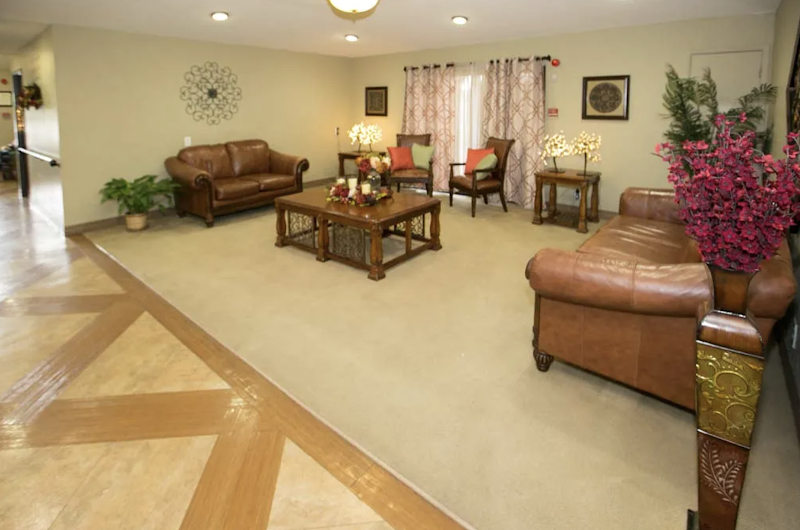
How is Northeast Rehabilitation And Healthcare Center Staffed?

CMS rates NORTHEAST REHABILITATION AND HEALTHCARE CENTER's staffing level at 2 out of 5 stars, which is below average compared to other nursing homes. Staff turnover is 54%, compared to the Texas average of 46%. RN turnover specifically is 67%, which is notably high. RNs provide skilled clinical oversight, so turnover in this role can affect medical care quality.

What Have Inspectors Found at Northeast Rehabilitation And Healthcare Center?

State health inspectors documented 40 deficiencies at NORTHEAST REHABILITATION AND HEALTHCARE CENTER during 2022 to 2025. These included: 39 with potential for harm and 1 minor or isolated issues.
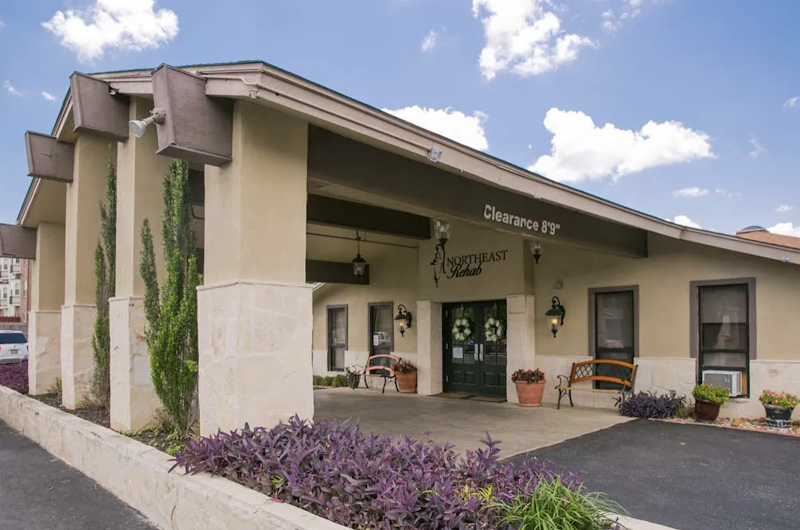
Who Owns and Operates Northeast Rehabilitation And Healthcare Center?

NORTHEAST REHABILITATION AND HEALTHCARE CENTER is owned by a government entity. Government-operated facilities are typically run by state, county, or municipal agencies. The facility is operated by THE ENSIGN GROUP, a chain that manages multiple nursing homes. With 120 certified beds and approximately 94 residents (about 78% occupancy), it is a mid-sized facility located in SAN ANTONIO, Texas.
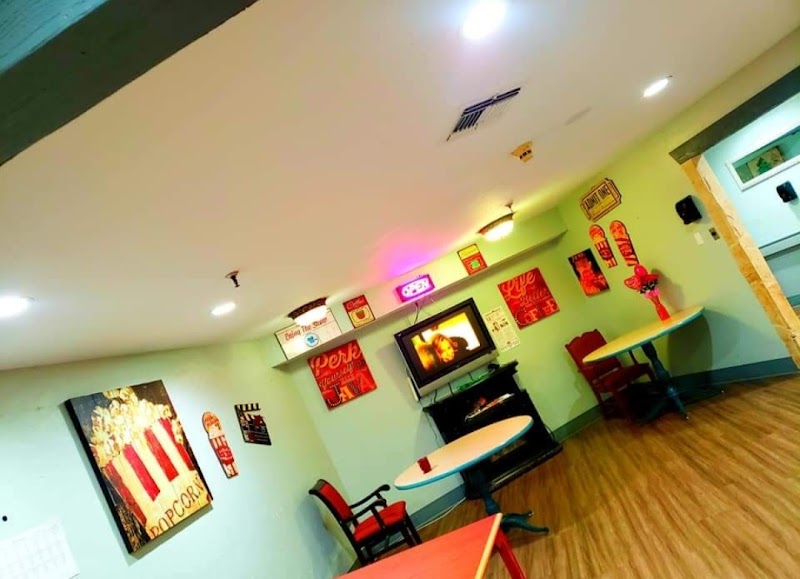
How Does Northeast Rehabilitation And Healthcare Center Compare to Other Texas Nursing Homes?

Compared to the 100 nursing homes in Texas, NORTHEAST REHABILITATION AND HEALTHCARE CENTER's overall rating (2 stars) is below the state average of 2.8, staff turnover (54%) is near the state average of 46%, and health inspection rating (2 stars) is below the national benchmark.

What Should Families Ask When Visiting Northeast Rehabilitation And Healthcare Center?

Based on this facility's data, families visiting should ask: "What safeguards and monitoring systems are in place to protect residents from abuse or neglect?" "Can you walk me through typical staffing levels on day, evening, and night shifts?" "Can I visit during a mealtime to observe dining assistance and food quality?" "How do you handle medical emergencies, and what is your hospital transfer rate?" These questions are particularly relevant given the substantiated abuse finding on record and the below-average staffing rating.

Is Northeast Rehabilitation And Healthcare Center Safe?

Based on CMS inspection data, NORTHEAST REHABILITATION AND HEALTHCARE CENTER has documented safety concerns. The facility has 1 substantiated abuse finding (meaning confirmed case of resident harm by staff or other residents). The facility has a 2-star overall rating and ranks #100 of 100 nursing homes in Texas. Families considering this facility should ask detailed questions about what corrective actions have been taken since these incidents.

Do Nurses at Northeast Rehabilitation And Healthcare Center Stick Around?

NORTHEAST REHABILITATION AND HEALTHCARE CENTER has a staff turnover rate of 54%, which is 8 percentage points above the Texas average of 46%. Moderate turnover is common in nursing homes, but families should still ask about staff tenure and how the facility maintains care continuity when employees leave.

Was Northeast Rehabilitation And Healthcare Center Ever Fined?

NORTHEAST REHABILITATION AND HEALTHCARE CENTER has no federal fines on record. CMS issues fines when nursing homes fail to meet care standards or don't correct problems found during inspections. The absence of fines suggests the facility has either maintained compliance or corrected any issues before penalties were assessed. This is a positive indicator, though families should still review recent inspection reports for the full picture.

Is Northeast Rehabilitation And Healthcare Center on Any Federal Watch List?

NORTHEAST REHABILITATION AND HEALTHCARE CENTER is not on any federal watch list. The most significant is the Special Focus Facility (SFF) program, which identifies the bottom 1% of nursing homes nationally based on persistent, serious quality problems. Not being on this list means the facility has avoided the pattern of deficiencies that triggers enhanced federal oversight. This is a positive indicator, though families should still review the facility's inspection history directly.