RJ MERIDIAN CARE OF SAN ANTONIO
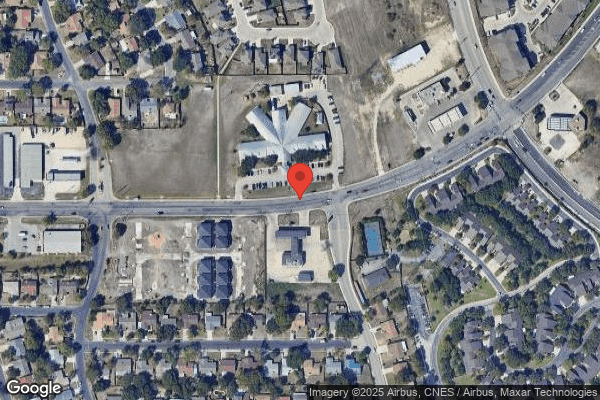
7181 CRESTWAY DR, SAN ANTONIO, TX 78239 (210) 599-3005
For profit - Limited Liability company 120 Beds Independent Data: November 2025 3 Immediate Jeopardy citations
Trust Grade
0/100
#1089 of 1168 in TX
Last Inspection: July 2025

Inspected within the last 6 months. Data reflects current conditions.

Overview

RJ Meridian Care of San Antonio has received a Trust Grade of F, indicating significant concerns about their care quality. They rank #1089 out of 1168 facilities in Texas, placing them in the bottom half, and #52 out of 62 in Bexar County, meaning there are very few local options that perform better. The facility is worsening, with issues doubling from 17 in 2024 to 34 in 2025, and has accumulated $81,590 in fines, which is higher than 77% of Texas facilities, suggesting ongoing compliance problems. Staffing is a weak point, with only 1 star out of 5 and concerning RN coverage, being lower than 91% of state facilities, which may impact the level of care residents receive. Specific incidents include a resident wandering away from the facility due to inadequate supervision, and two residents being improperly transferred, resulting in injuries, indicating serious lapses in safety and care practices. Families should weigh these significant weaknesses against the facility's higher quality measures rating of 4 out of 5, which may reflect some strengths in specific areas of care.

Trust Score
F
0/100
In Texas
#1089/1168
Bottom 7%
Safety Record
High Risk
Review needed
Inspections
Getting Worse
17 → 34 violations
Staff Stability
⚠ Watch
48% turnover. Above average. Higher turnover means staff may not know residents' routines.
Penalties
✓ Good
$81,590 in fines. Lower than most Texas facilities. Relatively clean record.
Skilled Nurses
⚠ Watch
Each resident gets only 14 minutes of Registered Nurse (RN) attention daily — below average for Texas. Fewer RN minutes means fewer trained eyes watching for problems.
Violations
⚠ Watch
64 deficiencies on record. Higher than average. Multiple issues found across inspections.
★☆☆☆☆
1.0
Overall Rating
★☆☆☆☆
1.0
Staff Levels
★★★★☆
4.0
Care Quality
★☆☆☆☆
1.0
Inspection Score
Stable
2024: 17 issues
2025: 34 issues

The Good

  • 4-Star Quality Measures · Strong clinical quality outcomes
  • Full Sprinkler Coverage · Fire safety systems throughout facility
  • No fines on record

Facility shows strength in quality measures, fire safety.

The Bad

1-Star Overall Rating

Below Texas average (2.8)

Significant quality concerns identified by CMS

Staff Turnover: 48%

Near Texas avg (46%)

Higher turnover may affect care consistency

Federal Fines: $81,590

Well above median ($33,413)

Moderate penalties - review what triggered them

The Ugly 64 deficiencies on record

3 life-threatening 2 actual harm
Jul 2025 16 deficiencies
CONCERN (D)

Potential for Harm - no one hurt, but risky conditions existed

Deficiency F0552 (Tag F0552)

Could have caused harm · This affected 1 resident

**NOTE- TERMS IN BRACKETS HAVE BEEN EDITED TO PROTECT CONFIDENTIALITY** Based on interview and record review, the facility failed to ensure the resident's right to be informed and make treatment decis...

Read full inspector narrative →
**NOTE- TERMS IN BRACKETS HAVE BEEN EDITED TO PROTECT CONFIDENTIALITY** Based on interview and record review, the facility failed to ensure the resident's right to be informed and make treatment decisions for 2 of 23 residents (Resident# 2 and Resident #82) reviewed, in that: Resident's #2 and #82 did not sign their own consent forms to receive psychoactive medications. This deficient practice could result in residents receiving medications and treatments for which they have not given informed consent. The findings were: Record review of Resident #2's face sheet, dated 07/18/2025, revealed the resident was admitted to the facility on [DATE] with diagnoses including: Other Schizoaffective Disorders, Adjustment Disorder with Anxiety, Type 2 Diabetes Mellitus Without Complications. Record review of Resident #2's Quarterly MDS, dated [DATE], revealed a BIMS score of 12 which indicated moderate cognitive impairment. Record review of Resident #2's care plan, no revision date, revealed, At risk for side effects R/T use of psychotropic medication for dx: schizophrenia. Further review revealed, I am at risk for side effects due to use of antidepressant medication r/t dx of depression and I use psychotropic medications -antipsychotic meds -antidepressant meds with an intervention, Staff to acquire consent prior to administering medication. Record review of Resident #2's order summary as of 07/18/2025, revealed Depakote Oral Tablet Delayed Release 250 MG (Divalproex Sodium) Give 1 tablet by mouth two times a day for MOOD order date 03/21/2025, SEROquel Oral Tablet 400 MG (Quetiapine Fumarate) Give 1 tablet by mouth at bedtime for SCHIZOPHRENIA order date 03/28/2025 and Sertraline HCl Tablet 100 MG Give 2 tablet by mouth one time a day for DEPRESSION 2 tabs to equal 200mg order date 05/05/2025. Record review of Resident #2's clinical record as of 07/18/2025, revealed Psychoactive Medication Therapy Informed Consent Form, dated 01/27/2025, to receive the medication Sertraline for depression which was signed by the resident's representative instead of the resident. Record review of Resident #2's clinical record as of 07/18/2025, revealed Psychoactive Medication Therapy Informed Consent Form, dated 03/21/2025, to receive the medication Xanax for anxiety which was signed by the resident's representative instead of the resident. Record review of Resident #2's clinical record as of 07/18/2025, revealed Psychoactive Medication Therapy Informed Consent Form, dated 03/02/2025, to receive the medication Alprazoiam for anxiety which was signed by the resident's representative instead of the resident. Record review of Resident #2's clinical record as of 07/18/2025, revealed Psychoactive Medication Therapy Informed Consent Form, dated 03/21/2025, to receive the medication Zoloft for depression which was signed by the resident's representative instead of the resident. Record review of Resident #2's clinical record as of 07/18/2025, revealed Psychoactive Medication Therapy Informed Consent Form, dated 03/21/2025, to receive the medication Seroquel for schizophrenia which was signed by the resident's representative instead of the resident. Record review of Resident #82's face sheet, dated 07/18/2025, revealed he was admitted on [DATE] with diagnoses including Generalized Anxiety Disorder, Anemia, and Type 2 Diabetes Mellitus. Record review of Resident #82's admission MDS, dated [DATE], revealed a BIMS score of 14 which indicated intact cognition. Record review of Resident #82's care plan, no revision date, revealed, I have episodes of Anxiety busPIRone HCl hydrOXYzine HCl; I am taking OLANZapine for episodes of Agitation; I am taking Divalproex Sodium for the treatment for mood; At risk for side effects R/T use of psychotropic medication Olanzapine dx: agitation.Record review of Resident #82's clinical record as of 07/18/2025, revealed Psychoactive Medication Therapy Informed Consent Form, dated 06/24/2025, to receive the medication Divalproex for mood disorder which was signed by the resident's representative instead of the resident. Record review of Resident #82's clinical record as of 07/18/2025, revealed Psychoactive Medication Therapy Informed Consent Form, dated 06/24/2025, to receive the medication Buspirone for anxiety which was signed by the resident's representative instead of the resident. Record review of Resident #82's clinical record as of 07/18/2025, revealed Psychoactive Medication Therapy Informed Consent Form, dated 06/24/2025, to receive the medication Olazapine for agitation which was signed by the resident's representative instead of the resident. Record review of Resident #82's clinical record as of 07/18/2025, revealed Psychoactive Medication Therapy Informed Consent Form, dated 06/24/2025, to receive the medication Hydroxyzine for anxiety which was signed by the resident's representative instead of the resident. Record review of Resident #82's clinical record as of 07/18/2025, revealed Psychoactive Medication Therapy Informed Consent Form, dated 06/24/2025, to receive the medication Xanax for anxiety which was signed by the resident's representative instead of the resident. Record review of Resident #82's clinical record as of 07/18/2025, revealed Psychoactive Medication Therapy Informed Consent Form, dated 06/24/2025, to receive the medication Remeron for depression which was signed by the resident's representative instead of the resident. Record review of Resident #82's clinical record as of 07/18/2025, revealed Psychoactive Medication Therapy Informed Consent Form, dated 06/24/2025, to receive the medication Trazadone for depression related insomnia which was signed by the resident's representative instead of the resident. During an interview with Resident #2 on 07/18/2025 at 6:00 p.m., Resident #2 stated he would like to have the opportunity to make treatment decisions for himself. During an interview with Resident #82 on 07/18/2025 at 6:15 p.m., Resident #82 stated he would like to have the opportunity to make treatment decisions for himself. During an interview with the DON on 07/18/2025 at 6:30 p.m., the DON stated residents should have the opportunity to give consent for themselves. The DON further stated the consents were obtained from the residents' representatives prior to the BIMS scores being obtained and the facility was not yet aware that the residents were able to speak for themselves. Record review of the facility policy, Resident Rights, revised February 2021, revealed, Federal and state laws guarantee certain basic rights to all residents of this facility. These rights include.: be informed of and participate in his or her care planning and treatment.
CONCERN (D)

Potential for Harm - no one hurt, but risky conditions existed

PASARR Coordination (Tag F0644)

Could have caused harm · This affected 1 resident

**NOTE- TERMS IN BRACKETS HAVE BEEN EDITED TO PROTECT CONFIDENTIALITY** Based on interview and record review the facility failed to refer all residents to PASARR with newly evident or possible serious...

Read full inspector narrative →
**NOTE- TERMS IN BRACKETS HAVE BEEN EDITED TO PROTECT CONFIDENTIALITY** Based on interview and record review the facility failed to refer all residents to PASARR with newly evident or possible serious mental disorder for level II resident review for 1 of 6 Residents (Resident #4) whose records were reviewed for PASARR assessments. The facility failed to refer Resident #4 for PASARR (Preadmission Screening and Resident Review) Level II comprehensive evaluation when Resident #4 was diagnosed with Major Depressive Disorder (causes a persistently low or depressed mood and a loss of interest in activities that you used to enjoy) on 4/1/23 and undifferentiated Schizophrenia (serious mental health condition that affects how people think, feel and behave. It may result in a mix of hallucinations, delusions, and disorganized thinking and behavior) on 2/16/24. This deficient practice could affect residents diagnosed with mental disorders and could result in the residents not receiving the necessary services from PASARR.The findings were:Based on interview and record review the facility failed to refer all residents to PASARR (Preadmission Screening and Review) with newly evident or possible serious mental disorder for level II resident review for 1 of 6 Residents (Resident #4) whose records were reviewed for PASARR assessments. The facility failed to refer Resident #4 for PASARR Level II comprehensive evaluation when Resident #4 was diagnosed with Major Depressive Disorder (causes a persistently low or depressed mood and a loss of interest in activities that you used to enjoy) on 4/1/23 and undifferentiated Schizophrenia (serious mental health condition that affects how people think, feel and behave. It may result in a mix of hallucinations, delusions, and disorganized thinking and behavior) on 2/16/24. This deficient practice could affect residents diagnosed with mental disorders and could result in the residents not receiving the necessary services from PASARR. The findings were: Review of Resident #4's face sheet, dated 7/18/25, revealed he was admitted to the facility on [DATE] with diagnoses including Major Depressive Disorder (causes a persistently low or depressed mood and a loss of interest in activities that you used to enjoy) and undifferentiated Schizophrenia (serious mental health condition that affects how people think, feel and behave. It may result in a mix of hallucinations, delusions, and disorganized thinking and behavior) and Generalized Anxiety. Further review revealed Resident #4 did not have a diagnosis of Dementia (loss of cognitive functioning it interferes with a person's daily life and activities). Review of Resident #4's annual MDS assessment, dated 5/7/25, revealed his BIMS score was 3 of 10 indicative of severe cognitive impairment. Further review revealed he had diagnoses including Anxiety, Depression and Schizophrenia (serious mental health condition that affects how people think, feel and behave. It may result in a mix of hallucinations, delusions, and disorganized thinking and behavior). Review of Resident #4's CP revised on 7/5/25 revealed he used psychotropic medications and was receiving psychological, psychiatry services for visits, and medication management. Review of Resident #4's consolidated physician orders for July 2025 revealed he was receiving Escitalopram Oxalate Oral Tablet 10 MG (Escitalopram Oxalate) Give 1 tablet via PEG-Tube one time a day for DEPRESSION. Start date was 5/01/2025. Review of Resident #4's PASRR Level 1 Screening, dated 8/25/22, revealed he did not meet the criteria for mental illness. Interview on 7/18/25 at 4:45 PM with the DON revealed Resident #4 did not have diagnosis of Dementia and was diagnosed with Major Depressive Disorder and Schizophrenia after being admitted to the facility. The DON stated usually the MDS Coordinator was responsible for referring residents for PASARR services, but that position was vacant. She stated he should have been referred to PASARR for evaluation to determine if he met the criteria for mental illness. The DON stated if he did, he would receive services which could improve his quality of life. Otherwise, he could suffer a decline in mental condition. The DON was asked for a PASARR policy on 7/18/25 at 4:45 PM and did not provide one by the end of the survey on 7/18/25 at 11:30 PM.
CONCERN (D)

Potential for Harm - no one hurt, but risky conditions existed

Deficiency F0657 (Tag F0657)

Could have caused harm · This affected 1 resident

**NOTE- TERMS IN BRACKETS HAVE BEEN EDITED TO PROTECT CONFIDENTIALITY** Based on interviews and record review, the facility failed to review and revise resident care plans after each assessment for 1 ...

Read full inspector narrative →
**NOTE- TERMS IN BRACKETS HAVE BEEN EDITED TO PROTECT CONFIDENTIALITY** Based on interviews and record review, the facility failed to review and revise resident care plans after each assessment for 1 of 18 residents (Resident #55) reviewed for care plan revision/timing. The facility failed to ensure Resident #55's care plan addressed changes in his smoking status regarding the resident could keep his cigarettes and lighter because he was very safe smoker after smoking assessment, dated 05/08/2025. This deficient practice could affect residents' care and services and may cause a delay in treatment and/or decline in health. Findings included:Record review of Resident #55's face sheet, dated 07/18/2025, revealed the resident was [AGE] years old male and admitted to the facility originally on 11/14/2024 and re-admitted on [DATE] with diagnoses of dry eye syndrome bilateral lacrimal glands (inflammation of the tear-shaped gland), fatty liver (fat builds up in the liver), paraplegia (loss of muscle function in the lower half of the body), hypertension (high blood pressure), and dysuria (the sensation of pain or burning when urination). Record review of Resident #55's quarterly MDS, dated [DATE], revealed the resident's BIMS score was 13 out of 15, which indicated the resident's cognitive was intact, and the resident required substantial/maximal assistant (Helper does more than half the effort) to chair to bed transfer and sit to stand. Record review of Resident #55's comprehensive care plan, dated 05/15/2025, revealed the resident is a smoker. For interventions - all cigarettes and lighter must be stored in med room and smoking assessment per social worker. Smoking in designated area only. Record review of Resident #55's smoking assessment, dated 05/08/2025, revealed The resident may smoke independently, smoke unsupervised in designated smoking area, and have been informed of smoking policies and procedures - Plan of care should be updated. Attempted interview on 07/18/2025 at 9:00 a.m. with Resident #55 revealed he refused the interview with the surveyor. Interview on 07/18/2025 at 9:21 a.m. with DON stated Resident #55 could keep his cigarettes and disposable lighter per the facility policy because he was safe and independent smoker after the smoking assessment, dated 05/08/2025. The current care plan was incorrect, and it should have been updated and revised after smoking assessment (dated 05/08/2025). The DON stated updating and revising care plan was MDS nurse's responsibility, but the facility did not have MDS nurse, so the company MDS nurse was helping, but the nurse was on vacation at this time. That might cause not updating care plans, and not updating care plan might cause improper care to the resident. Record review of the facility smoking policies, revised 08/2022, revealed . 12. Residents who have independent smoking privileges are permitted to keep cigarettes, electronic-cigarettes, pipes, tobacco, and other smoking items in their possession. Only disposable safety lighters are permitted. All others of lighters, including matches, are prohibited.
CONCERN (D)

Potential for Harm - no one hurt, but risky conditions existed

Deficiency F0687 (Tag F0687)

Could have caused harm · This affected 1 resident

**NOTE- TERMS IN BRACKETS HAVE BEEN EDITED TO PROTECT CONFIDENTIALITY** Based on observation, interview and record review the facility failed to ensure that residents received proper treatment and goo...

Read full inspector narrative →
**NOTE- TERMS IN BRACKETS HAVE BEEN EDITED TO PROTECT CONFIDENTIALITY** Based on observation, interview and record review the facility failed to ensure that residents received proper treatment and good foot health in accordance with professional standards of practice, including to prevent complications from the resident's medical condition for 1 of 1 Resident (Resident #9) whose records were reviewed for assessments. LVN/Treatment Nurse K failed to assess Resident #34's feet during a head-to-toe assessment and did not identify he had significantly long toenails and two ingrown toenails. This deficient practice could affect any resident and could contribute to pain, infections and loss of toes. The findings were:Review of Resident #9's face sheet, dated 7/17/25, revealed he was admitted to the facility on [DATE] with diagnosis including Critical Illness Myopathy (generalized weakness involving the muscles of the extremities, trunk, and respiration that frequently occurs in conjunction with severe illness and is associated with significant morbidity and mortality). Review of Resident #9's admission MDS assessment, dated 4/6/25, revealed his BIMS score was 15 of 15 reflective of not having impaired cognition and he did not have foot problems. Review of Resident #9's CP, dated 7/14/25, revealed he was at risk for skin breakdown and I am at risk for new pressure ulcers due to my impaired mobility and one of the interventions included Weekly Skin Assessment. Notify MD and Family of any skin breakdown or skin problems. Review of Resident #9's admission Nursing Assessment, dated 4/1/25, including an assessment of his feet, did not reveal any skin problems. Interview on 7/17/25 at 1:49 PM of Resident #9 revealed he was lying in bed. Resident #9 stated his feet hurt related to ingrown toenails. Resident's voice was faint and difficult to hear but also communicated with a communication board. Resident #9 stated he let nursing staff know about it since admission and stated he was waiting for staff to address the issue. Interview on 7/17/25 at 4:35 PM with LVN L, charge nurse revealed she was not aware of Resident #9 having any problems with his feet. Observation and interview on 7/17/25 at 5:13 PM with the DON and Resident #9 revealed she assessed Resident #9's feet. The DON stated his feet were scaly and dry and all of his toenails were long. She stated his toenails needed to be cut. The DON stated his left great toenail was significantly long and looked like it was ingrown. His great toenail was approximately 1 inch past his nail bed and there were red spots on the corners of the nail. The DON stated the right toenail on the 4th toe was curled over and under his toe. She stated the right great toenail also appeared to be ingrown. Resident #9 stated his toes hurt when he wore shoes. The DON stated the treatment nurse completed weekly skin assessments and should have seen the condition of his toenails. She stated the CNA's should also be completing any skin problems on Resident's shower sheets. The DON stated the result of Resident #9 not receiving care could lead to skin infections, other ingrown toenails and loss of toes. Interview on 7/18/25 at 9:55 AM with LVN/Treatment Nurse K revealed she had assumed her position about two months ago during May 2025. She stated she was responsible for completing weekly skin assessments on all residents and had completed assessments for Resident #9. She stated she had been focused on developing a system to ensure she completed all resident assessments. LVN K stated she did not remember assessing Resident #9's feet but it was part of the assessment and should have capture the condition of his feet. She stated she had been focused on developing a system to ensure she completed all resident assessments. LVN K stated not assessing Resident #9's delayed care, could cause infections and a decline in his overall physical health. Review of facility policy, Resident Examination and Assessment, revised 2014 read in relevant part, The purpose of this procedure is to examine and assess the resident for any abnormalities in health status, which provides a basis for the care plan. Physical Exam 8. Skin: a. intactness; b. moisture; c. color; d. texture; and presence of bruises, pressure sores, redness, edema, rashes.
CONCERN (D)

Potential for Harm - no one hurt, but risky conditions existed

Incontinence Care (Tag F0690)

Could have caused harm · This affected 1 resident

**NOTE- TERMS IN BRACKETS HAVE BEEN EDITED TO PROTECT CONFIDENTIALITY** Based on observations, interviews, and record review, the facility failed to ensure a resident who was incontinent of bladder re...

Read full inspector narrative →
**NOTE- TERMS IN BRACKETS HAVE BEEN EDITED TO PROTECT CONFIDENTIALITY** Based on observations, interviews, and record review, the facility failed to ensure a resident who was incontinent of bladder received appropriate treatment and services to prevent urinary tract infections and to restore continence to the extent possible for 1 of 2 residents (Resident #62) reviewed for incontinence care. When CNA-A was providing incontinent care to Resident #62 on 07/17/2025, CNA-A did not clean the resident's suprapubic area (the area of the abdomen located below the umbilical region). This failure could place residents who required incontinence care at risk for cross contamination and the development of new or worsening urinary tract infections. The findings included:Record review of Resident #62's face sheet, dated 07/18/2025, revealed the resident was a [AGE] year-old female and admitted to the facility originally on 06/06/2025, and re-admitted on [DATE] with the diagnoses of type 2 diabetes mellitus (not control blood sugar in the body), necrotizing fasciitis (serious bacteria infection that destroys tissue under the skin), chronic kidney disease (kidneys are less able to filter water and fluid out of the body), hypertension (high blood pressure), and heart failure (heart cannot pump enough oxygen-rich blood to meet the body's needs). Record review of Resident #62's admission MDS, dated [DATE], revealed the resident's BIMS score was 15 out of 15, which indicated the resident's cognitive function was intact, and the resident had indwelling urinary catheter and frequently incontinent to bowel. Resident #62 was dependent (helper does all of the effort) to sit-to-stand and chair-to-bed transfer, and for toilet transfer, not attempted due to medical condition or safety concerns. Record review of Resident #16's comprehensive care plan, dated 06/12/2025, revealed the resident has a Foley catheter (indwelling urinary catheter). For intervention - staff will clean the catheter every shift or as needed, and incontinent care every 2 hour and as needed for bowel incontinence. Observation on 07/17/2025 at 2:03 p.m. revealed CNA-A opened Resident #62's old and dirty brief and cleaned the resident's catheter, genital area by separating it with hand, and then cleaned the left and right groin area. CNA-A turned the resident to her right side without cleaning the suprapubic area, which the area was folded up with skin. CNA-A cleaned the resident's buttock area, then put a new and clean brief on the resident. Interview on 07/17/2025 at 2:17 p.m. with CNA-A stated she did not clean Resident #62's suprapubic area because she was nervous and forgot to clean the area. CNA-A said she should have opened and cleaned the area when providing peri-care to Resident #62 because the resident's suprapubic area was folded up with skin to prevent possible infection, especially fungus, and had peri-care training around two months ago. Interview on 07/17/2025 at 3:16 p.m. with DON said CNA-A should have opened and cleaned Resident #62's suprapubic area when providing peri-care to the resident because the area was folded up with skin to prevent infection. The DON stated DON had responsibility for monitoring CNA-A by checking off the CNA's skills two months ago. Record review of the facility policy, titled Perineal care, revised 02/2018, revealed The purpose of this procedures are to provide cleanliness and comfort to the resident to prevent infections and skin irritation and to observe the resident's skin condition. wash perineal area, wiping from front to back.
CONCERN (D)

Potential for Harm - no one hurt, but risky conditions existed

Tube Feeding (Tag F0693)

Could have caused harm · This affected 1 resident

**NOTE- TERMS IN BRACKETS HAVE BEEN EDITED TO PROTECT CONFIDENTIALITY** Based on observation, interview, and record review, the facility failed to ensure residents who were fed by enteral means receiv...

Read full inspector narrative →
**NOTE- TERMS IN BRACKETS HAVE BEEN EDITED TO PROTECT CONFIDENTIALITY** Based on observation, interview, and record review, the facility failed to ensure residents who were fed by enteral means received the appropriate treatment and services to prevent complications of enteral feeding for 1 (Resident #17) of 2 residents reviewed for enteral nutrition. When LVN-B flushed Resident #17's gastrostomy tube with 30 ml of water, LVN-B pushed water inside the barrel of the syringe with a plunger, instead of using gravity. This failure could place residents with gastrostomy tube at risk for complications, aspiration, and pneumonia. Findings included:Record review of Resident #17's face sheet, dated 07/18/2025, revealed the resident was [AGE] years old male, originally admitted on [DATE], and re-admitted to the facility on [DATE] with diagnoses of personal history of covid-19, seizures (sudden burst of electrical activity in the brain), peritonitis (redness and swelling of the lining of the belly or abdomen), hypertension (high blood pressures), and gastro-esophageal reflux disease (the stomach contents leak backward from the stomach into the esophagus). Record review of Resident #17's quarterly MDS, dated [DATE], revealed the resident's BIMS score was 0 out of 15, which indicated the resident had severe cognitive impairment and had a feeding tube. Record review of Resident #17's comprehensive care plan, dated 05/24/2025, revealed the resident was dependent on feeding tube for nutritional needs and at risk for aspiration. For intervention - administer tube feeding as ordered, check for placement prior to feeding and flushed administration, and provide flushed as ordered to maintain hydration and patency of tube. Record review of Resident #17's physician order, dated 01/16/2025, revealed the resident had the order of Flush gastrostomy tube with 30 ml of water before and after medication and 10 ml between medication. Observation on 07/17/2025 at 10:22 a.m. LVN-B checked the placement of Resident #17's gastrostomy tube and residual, then flushed the gastrostomy tube with 30 ml of water by pushing the water inside barrel of syringe with plunger, instead of using gravity. Interview on 07/17/2025 at 10:53 a.m. with LVN-B stated he flushed Resident #17's gastrostomy tube with 30 ml of water by pushing the water inside barrel of syringe with plunger, instead of using gravity. LVN-B said he thought pushing the water for flush was fine because Resident #17 did not have residual. However, LVN-B stated he should have used gravity when flushing Resident #17's gastrostomy tube to prevent possible aspiration and the resident's abdominal discomfort. The nurse said it was mistake. Interview on 07/17/2025 at 3:16 p.m. the DON said LVN-B should have used gravity when flushing Resident #17's gastrostomy tube, instead of pushing a plunger, to prevent possible aspiration and the resident's abdominal discomfort. The DON said if gravity could not be used due to blockage of tube, nurses could push a plunger gently. The facility did not have policy regarding using gravity for tube feeding.
CONCERN (D)

Potential for Harm - no one hurt, but risky conditions existed

Pharmacy Services (Tag F0755)

Could have caused harm · This affected 1 resident

Based on observations, interview, and record reviews, the facility failed to provide pharmaceutical services to administer drugs and biologicals that meet the needs of each resident for 1 of 9 (Cart #...

Read full inspector narrative →
Based on observations, interview, and record reviews, the facility failed to provide pharmaceutical services to administer drugs and biologicals that meet the needs of each resident for 1 of 9 (Cart #1 on 400 hall) medication carts observed for expired medication in that: The facility failed to remove expired medications from medication cart #1 1 bottle of Gentle Lax and 1 bottle of Extra Strength Tylenol 500mg This failure could result in residents decreased health response or misuse of medication.Findings included: Observation on 07/16/2025 at 10:40AM medication cart 1 of 4 for #400 hall revealed 1 bottle of Gentle Lax with an expiration date of 03/2025 and 1 bottle of Acetaminophen 500mg with expiration date of 04/2025. Interview on 7/16/2025 at 10:45AM LVN B said he missed the expiration dates on the medications. He said it would not be safe to give because it could cause an adverse reaction to the resident or it may not be as effective to use for effective results. Interview on 7/16/2025 at 11:10AM the DON said expired medications would not be as effective or not be able to have the therapeutic results for their use or it could cause an adverse reaction. Record review of facility policy titled “Medication Labeling and Storage” dated February 2023 stated under “Medication Storage” 3. “If the facility has discontinued, outdated or deteriorated medications or biologicals, the dispensing pharmacy is contacted for instructions regarding returning or destroying these medications. Findings included: Observation on 07/16/2025 at 10:40AM medication cart 1 of 4 for #400 hall revealed 1 bottle of Gentle Lax with an expiration date of 03/2025 and 1 bottle of Acetaminophen 500mg with expiration date of 04/2025. Interview on 7/16/2025 at 10:45AM LVN B said he missed the expiration dates on the medications. He said it would not be safe to give because it could cause an adverse reaction to the resident or it may not be as effective to use for effective results. Interview on 7/16/2025 at 11:10AM the DON said expired medications would not be as effective or not be able to have the therapeutic results for their use or it could cause an adverse reaction. Record review of facility policy titled “Medication Labeling and Storage” dated February 2023 stated under “Medication Storage” 3. “If the facility has discontinued, outdated or deteriorated medications or biologicals, the dispensing pharmacy is contacted for instructions regarding returning or destroying these medications.
CONCERN (D)

Potential for Harm - no one hurt, but risky conditions existed

Medical Records (Tag F0842)

Could have caused harm · This affected 1 resident

**NOTE- TERMS IN BRACKETS HAVE BEEN EDITED TO PROTECT CONFIDENTIALITY** Based on interviews and record reviews, the facility failed to maintain medical records that were complete and accurately docume...

Read full inspector narrative →
**NOTE- TERMS IN BRACKETS HAVE BEEN EDITED TO PROTECT CONFIDENTIALITY** Based on interviews and record reviews, the facility failed to maintain medical records that were complete and accurately documented in accordance with accepted professional standards and practices for 1 (Resident #7) out of 18 residents reviewed for medical records. Resident #7's psychiatric doctor added the resident's general anxiety as one of the resident's diagnosis and prescribed diazepam 2 mg three times a day for anxiety, but the facility did not add the new diagnosis to the resident's medical record. This failure placed residents at risk for missed treatment and medications which could result in decline in heal and well-being.Findings included: Record review of Resident #7's face sheet, dated 07/18/2025, revealed the resident was [AGE] years old female and admitted to the facility on [DATE] with diagnosis of abnormal findings in urine, type 2 diabetes mellitus (not control blood sugars in the body), hypertension (high blood pressures), hyperlipidemia (high fat in the body), cystitis (urinary bladder infection), and gastro-esophageal reflux disease (the stomach contents leak backward from the stomach into the esophagus). Further record review of Resident #7's face sheet did not have diagnosis of general anxiety. Record review of Resident #7's 5-days MDS, dated [DATE], revealed the resident's BIMS was 0 out of 15, which indicated the resident had severe cognitive impairment and receiving antianxiety as ordered. Record review of Resident #7's physician order, dated 05/23/2025, revealed the resident had the order of Diazepam oral tablet 2 mg Give one tablet enterally three times a day for anxiety. Record review of Resident #7's medication administration record from 07/01/2025 to 07/31/2025 revealed the resident's Diazepam oral tablet 2 mg Give one tablet enterally three times a day for anxiety was scheduled 7:00 am, 1:00 pm, and 7:00 pm. Record review of Resident #7's psychiatric physician note, dated 05/30/2025, revealed the resident's psychiatric doctor added the resident's general anxiety as one of the resident's diagnoses and currently used diazepam 2 mg three times a day for anxiety. Record review of Resident #7's medical diagnosis list of the resident's electronic medical record revealed there was no diagnoses of general anxiety. Interview on 07/18/2025 at 7:59 p.m. DON stated Resident #7 was receiving Diazepam 2 mg three times a day enterally for the resident's anxiety, and the resident's psychiatric doctor added the diagnoses of general anxiety, but the facility did not update it to the resident's medical record. The resident's medical record was not accurate. Updating medical record was one of MDS nurse's responsibilities, but the facility did not have MDS nurse, and it might cause inaccurate medical record. Inaccurate medical record might cause improper care to the resident. Record review of the facility policy, titled Electronic Medical Records, revised 03/2014, revealed Electronic medical records may be used on lieu of paper records when approved by the Administrator.
CONCERN (D)

Potential for Harm - no one hurt, but risky conditions existed

Safe Environment (Tag F0921)

Could have caused harm · This affected 1 resident

**NOTE- TERMS IN BRACKETS HAVE BEEN EDITED TO PROTECT CONFIDENTIALITY** Based on observations, interviews, and record review, the facility failed to provide a safe, functional, sanitary, and comfortab...

Read full inspector narrative →
**NOTE- TERMS IN BRACKETS HAVE BEEN EDITED TO PROTECT CONFIDENTIALITY** Based on observations, interviews, and record review, the facility failed to provide a safe, functional, sanitary, and comfortable environment for residents, staff, and the public for 1 (Resident #16) of 18 residents reviewed for environmental concerns. Resident #16's oxygen cylinder was stored in the resident room, but per the facility policy indicated Do not oxygen cylinder in any resident room or living area. This failure could place residents at risk of a diminished quality of life and respiratory status due to exposure to an environment that is unpleasant, unsanitary, and unsafe. The findings included:Record review of Resident #16's face sheet, dated 07/18/2025, revealed the resident [AGE] years old female, originally admitted to the facility on [DATE], and re-admitted on [DATE] with diagnosis of dysphagia (difficulty of swallowing), chronic pain, encephalopathy (brain damage), hyponatremia (level of sodium in the blood is too low), and personal history of covid-19. Record review of Resident #16's quarterly MDS, dated [DATE], revealed the resident's BIMS was 9 out of 15 indicated the resident had moderate cognitive impairment, required dependent on assist (Helper does ALL of the effort) to chair to bed transfer, and for toilet transfer, not attempted due to medical condition or safety concerns. Record review of Resident #16's comprehensive care plan, dated 06/23/2025, revealed the resident nebulizer breathing treatment ordered due to respiratory failure. For intervention - observe for sign and symptoms of adverse reactions: increased dyspnea (difficulty of breathing). Record review of Resident #16's physician order, dated 07/15/2025, revealed oxygen at 2 to 4 liters per minute via nasal canula to maintain oxygen saturation greater than 90 % and record saturation every shift. Observation on 07/15/2025 at 1:34 p.m. revealed there was one oxygen cylinder found in Resident #16's room, and the cylinder had full oxygen. Interview on 07/15/2025 at 1:34 p.m. LVN-D stated there was one oxygen cylinder found in Resident #16's room, and it should have been stored in the oxygen storage room, instead of resident's room for safety. LVN-D said she did not know how long it was stored in the room and what reason the oxygen cylinder was in Resident #16's room because the resident never use it. Interview on 07/18/2025 at 11:10 a.m. the DON said all oxygen cylinder should have been stored in the oxygen storage room for safety, instead of resident's room. Record review of facility policy, titled Fire Safety and Prevention, revised 05/2017, revealed Oxygen safety: . F. store oxygen cylinders in racks with chains, sturdy portable carts, or approved stands. Never leave oxygen cylinder free-standing. Do not oxygen cylinders in any resident room or living area.
CONCERN (E)

Potential for Harm - no one hurt, but risky conditions existed

Assessment Accuracy (Tag F0641)

Could have caused harm · This affected multiple residents

**NOTE- TERMS IN BRACKETS HAVE BEEN EDITED TO PROTECT CONFIDENTIALITY** Based on observation, interview, and record review, the facility failed to ensure the assessment accurately reflected the reside...

Read full inspector narrative →
**NOTE- TERMS IN BRACKETS HAVE BEEN EDITED TO PROTECT CONFIDENTIALITY** Based on observation, interview, and record review, the facility failed to ensure the assessment accurately reflected the resident's status for 6 residents out of 18 residents (Resident #3, Resident #4, Resident #8, Resident #7, Resident #11, and Resident #55) whose records were reviewed for assessments. 1. The nursing facility did not identify siderails were used as a restraint for Resident #32. The nursing facility did not identify siderails were used as a restraint for Resident #43. The nursing facility did not identify siderails were used as a restraint for Resident #74. The nursing facility did not identify siderails were used as a restraint for Resident #85. Resident #11's quarterly MDS, dated [DATE], inaccurately revealed the resident was receiving hospice care. 6. Resident #55's quarterly MDS, dated [DATE], inaccurately revealed the resident did not have surgical wound. This deficient practice could affect any resident and could result in the inaccurate status of the residents. The findings were: 1. Review of Resident #3's face sheet, dated 7/18/25, revealed he was admitted to the facility on [DATE] with diagnoses including Dementia in other diseases classified, severe and Acute and chronic respiratory failure with hypoxia[JM1] (low levels of oxygen in the body tissues). Review of Resident #3's annual MDS assessment, dated 5/9/25, revealed his BIMS score was 3 indicative of severe cognitive impairment and he had impaired range of motion on both lower extremities. Further review revealed the use of side rails was not identified as a restraint. Review of Resident #3's CP, revised 6/23/25, revealed he required total assistance by 1-2 persons with mobility. Further review revealed Resident #3 had established contractures of bilateral lower and upper extremities due to impaired mobility (upon admission). Review of Resident #3's ADL flowsheet from 7/4/25 to 7/17/25: Self-performance: How resident moves to and from lying position, turns side to side, and positions body while in bed or alternate sleep furniture revealed he required extensive assistance on a couple of days and total assistance on most days. Review of Resident #3’s consolidated physician orders for July 2025 revealed a side rail order “MAY HAVE 1/4 SIDE RAILS UP AS NEEDED FOR ENABLER Phone Active 05/19/2025.” Observation on 07/16/2025 at 10:16 AM revealed Resident #3 was lying in bed with padded 1/4 side rails on both sides of the bed. The side rails were up and locked and he also had mittens on both hands. Interview on 07/17/25 at 2:05 PM with LVN I revealed Resident #3 was totally dependent on staff for all ADL's and was not able to use the side rails for mobility especially since he wore mittens on both hands. She stated the side rails kept Resident #3 from pulling on his trachea which he would often do if he did not have mittens on. LVN I stated the side rails were used for safety because he would move throughout the bed and was a fall risk. She further stated the side rails kept him from falling out of bed. Interview on 07/17/25 at 2:10 PM with CNA H and CNA E revealed Resident #3 did not use the side rails for mobility. They stated the side rails kept him from falling out of bed because he would move all around his bed. Interview on 07/18/25 at 10:08 AM with the DON revealed Resident #3 was totally dependent on staff for all ADL's and did not use the side rails for mobility. She stated the side rails were used for safety to prevent falls since they were implemented. She stated they were in fact used as restraints.[JM2] [DG3] The DON stated the facility had flagged for restraints, but they did not have an MDS staff to update the MDS assessment. The DON stated it was necessary for the MDS assessment to adequately represent the resident's needs and overall status; otherwise, the result could be that the resident did not receive the necessary care and services as needed. 2. Review of Resident #4's face sheet, dated 7/18/25, revealed he was admitted to the facility on [DATE] with diagnoses including Cerebral Infarction (stroke), undifferentiated Schizophrenia and Generalized Anxiety. Review of Resident #4's annual MDS assessment, dated 5/7/25, revealed his BIMS score was 3 indicative of severe cognitive impairment and he had impaired range of motion on both upper and lower extremities. Further review revealed the use of side rails were not identified as restraint use. Review of Resident #4's CP revised on 7/5/25 revealed he required assistance with ADL's due to respiratory failure, muscle wasting and atrophy, unspecified lack of coordination, CVA, cognitive deficit. One of the interventions included Resident #3 required 2- person assistance with bed mobility. Review of Resident #4’s consolidated physician orders revealed an order for side rails, “MAY HAVE 1/4 SIDE RAILS UP AS NEEDED FOR ENABLER Phone Active 04/30/2025.” Observation on 07/16/2025 at 10:33 AM revealed Resident #4 lying in bed asleep, bed was in the low position with padded 1/4 side rails up and locked on both sides. There were mats on the floor on both sides of the bed, wedge bolsters towards the foot of the bed along both sides of the mattress and there was a pillow between the side rail and left shoulder. Resident #4 had socks on both hands. Interview on 07/17/25 at 2:05 PM with LVN I revealed Resident #4 was totally dependent on staff for all ADL's and did not use the side rails for mobility. She stated he was not able to use the side rails for mobility especially since he wore mittens or gloves on both hands. She stated the side rails kept Resident #4 from pulling on his trachea which he would often do if he did not have mittens or gloves on. LVN I stated the side rails were used for safety because he would move throughout the bed and was a fall risk. She further stated the side rails kept him from falling out of bed. Interview on 07/17/25 at 2:10 PM with CNA H and CNA E revealed Resident #4 did not use the side rails for mobility. They stated the side rails kept him from falling out of bed because he would move all around his bed. Interview on 07/18/25 at 10:08 AM with the DON revealed Resident #4 was totally dependent on staff for all ADL's and did not use the side rails for mobility. She stated the side rails were used for safety to prevent falls since they were implemented. She stated they were in fact used as restraints. The DON stated the facility had flagged for restraints, but they did not have an MDS staff to update the MDS assessment. The DON stated it was necessary for the MDS assessment to adequately represent the resident's needs and overall status; otherwise, the result could be that the resident did not receive the necessary care and services as needed. 3. Review of Resident #7's face sheet, dated 7/18/25, revealed she was admitted to the facility on [DATE] with diagnoses including Diffuse traumatic brain injury (happens when a sudden, external, physical assault damages the brain) and contracture joint. Review of Resident #7's MDS assessment, dated 5/30/25, revealed her BIMS score was 6 indicative of severe cognitive impairment. Resident had impaired range of motion on both upper and lower extremities and was dependent on staff for all ADL care including bed mobility. Interview on 07/17/25 at 2:05 PM with LVN I revealed Resident #7 was totally dependent on staff for all ADL's and was not able to use the side rails for mobility because both her hands were contracted. LVN stated the siderails were used for safety to ensure she did not fall out of bed. Observation on 07/16/2025 at 10:46 AM revealed Resident #7 lying in bed asleep with HOB up about 30 degrees. Resident #7's had contractures on both wrists/hands and ¼ side rails were up and locked on both sides of the bed. Interview on 07/17/25 at 2:10 PM with CNA H and CNA E revealed Resident #7 was not able to use the side rails for mobility because of the contractures on her hands. They stated the side rails were used for safety to prevent falls. Interview on 07/18/25 at 10:08 AM with the DON revealed Resident #7 was totally dependent on staff for all ADL's and did not use the side rails for mobility. She stated the side rails were used for safety to prevent falls since they were implemented. She stated they were in fact used as restraints. The DON stated the facility had flagged for restraints, but they did not have an MDS staff to update the MDS assessment. The DON stated it was necessary for the MDS assessment to adequately represent the resident's needs and overall status; otherwise, the result could be that the resident did not receive the necessary care and services as needed. 4. Review of Resident #8's face sheet, dated 7/18/25, revealed she was admitted to the facility on [DATE] with diagnosis to include Anoxic Brain Damage. Review of Resident #8's quarterly MDS assessment, dated, 6/28/25 revealed her BIMS score was coded as severe cognitive impairment and she had impaired range of motion on both upper extremities. Further review revealed the use of side rails were identified as restraint “used less than daily”. Review of Resident #8's CP revised on revealed she required total assistance with ADL's due to Anoxic Brain Injury. One of the interventions included Resident #8 required total assistance by 2- persons with bed mobility. Observation and attempted interview on 07/16/25 at 9:52 AM revealed Resident #8 was lying in bed with 1/4 side rails up and locked on both sides of the bed. Resident #8 had contractures on both wrists/hands. Resident #8 would move her eyes when spoken to but was non-verbal. Interview on 07/17/25 at 2:05 PM with LVN I revealed Resident #8 was totally dependent on staff for all ADL's and was not able to use the side rails for mobility because she had contractures on both hands. LVN I stated the siderails were used daily for safety to ensure Resident #8 did not fall out of bed. Interview on 07/17/25 at 2:10 PM with CNA H and CNA E revealed Resident #4 did not use the side rails daily for mobility because she had contractures on both hands. They stated the side rails were used for safety so that she did not fall out of bed. Interview on 07/18/25 at 10:08 AM with the DON revealed Resident #8 was totally dependent on staff for all ADL's and did not use the side rails for mobility. She stated the side rails were used for safety to prevent falls since they were implemented. She stated they were in fact used as restraints. The DON stated the facility had flagged for restraints, but they did not have an MDS staff to update the MDS assessment. The DON stated it was necessary for the MDS assessment to adequately represent the resident's needs and overall status; otherwise, the result could be that the resident did not receive the necessary care and services as needed. 5. Record review of Resident #11's face sheet, dated 07/18/2025, revealed the resident was [AGE] years old male and admitted to the facility on [DATE] with diagnoses of open-angle glaucoma (increased pressure inside eyes, potentially optic nerve damage and vision loss), type 2 diabetes mellitus (the body has trouble controlling blood sugar and using it for energy), cerebral infarction (area of brain tissue that dies as a result of localized low oxygen due to cessation of blood flow), chronic kidney disease-stage 3 (kidneys are less able to filter water and fluid out of the body), and hemiplegia and hemiparesis (weakness on one side of your body). Record review of Resident #11’s quarterly MDS, dated [DATE], revealed the resident's BIMS score was 14 out of 15, which indicated the resident's cognitive was intact, and in Section O (Special Treatment), it was coded that Resident #11 was receiving hospice care. However, the answer regarding “Does the resident have a condition or chronic disease that may result in a life expectancy of less than 6 months?) was coded “No,” instead of “Yes” in Section J (Health Conditions). Record review of Resident #11's comprehensive care plan, dated 02/28/2025, revealed The resident received hospice care related to chronic kidney disease - For intervention: coordinate care with hospice care and hospice care program as ordered. Record review of Resident #11’s Physician Certification of Terminal Illness, dated 02/28/2025, revealed hospice physician said, “I certify that I am a physician licensed in the State of Texas or a physician on duty with the United State military and that the recipient identified above is terminally ill with a medical prognosis of six months or less to live if the illness runs its normal course.” Interview on 07/18/2025 at 8:42 a.m. with DON stated because Resident #11 was receiving hospice are, Yes should have been coded to the answer regarding “Does the resident have a condition or chronic disease that may result in a life expectancy of less than 6 months?) of the resident's quarterly MDS, dated [DATE], instead of No. DON said it was mistake, coding accurately was a MDS nurse's responsibility, and inaccurate MDS assessment might affect improper care to Resident #11. Further interview with DON said the facility did not have MDS nurse, so the company MDS nurse was helping, but the nurse was on vacation at this time. 6. Record review of Resident #55's face sheet, dated 07/18/2025, revealed the resident was [AGE] years old male and admitted to the facility originally on 11/14/2024 and re-admitted on [DATE] with diagnoses of dry eye syndrome bilateral lacrimal glands (inflammation of the tear-shaped gland), fatty liver (fat builds up in the liver), paraplegia (loss of muscle function in the lower half of the body), hypertension (high blood pressure), and dysuria (the sensation of pain or burning when urination). Record review of Resident #55’s quarterly MDS, dated [DATE], revealed the resident's BIMS score was 13 out of 15, which indicated the resident's cognitive was intact, and in Section M (Skin Conditions), the resident’s surgical wound was coded “No.” Record review of Resident #55's comprehensive care plan, dated 05/15/2025, revealed the resident has current surgical wound that require treatment to his left groin. For intervention – Treatment per medical doctor’s orders. Record review of Resident #55’s physician order, dated 06/26/2025, revealed “wound care: Clean left groin post-surgical wound with ¼ strength Dakins, pat dry, apply calcium alginate, dry dressing daily and as needed.” Record review of Resident #55’s weekly sin assessment, dated 05/12/2025, revealed the resident had post-surgical wound of the left groin with no signs of infection. Interview on 07/18/2025 at 9:00 a.m. with Resident #55 refused interview with the surveyor, and the surveyor to observe his wound and wound care. Interview on 07/18/2025 at 9:21 a.m. with DON stated Resident #55 was receiving wound care currently because the resident had post-surgical wound to his groin, so the resident MDS, dated [DATE] regarding the resident’s surgical wound was coded “No” was inaccurate. It should have been coded “Yes.” DON said it was mistake, coding accurately was a MDS nurse's responsibility, and inaccurate MDS assessment might affect improper care to Resident #55. Further interview with DON said the facility did not have MDS nurse, so the company MDS nurse was helping, but the nurse was on vacation at this time. Record review of the facility policy, titled Resident Assessment, revised 03/2022, revealed . 7. All persons who have completed any portion of the MDS resident assessment form must sign the document attesting to the accuracy of such information.
CONCERN (E)

Potential for Harm - no one hurt, but risky conditions existed

Comprehensive Care Plan (Tag F0656)

Could have caused harm · This affected multiple residents

**NOTE- TERMS IN BRACKETS HAVE BEEN EDITED TO PROTECT CONFIDENTIALITY** Based on observation, interview and record review the facility failed to develop and implement a comprehensive person-centered c...

Read full inspector narrative →
**NOTE- TERMS IN BRACKETS HAVE BEEN EDITED TO PROTECT CONFIDENTIALITY** Based on observation, interview and record review the facility failed to develop and implement a comprehensive person-centered care plan for each resident, consistent that included measurable objectives and timeframes to meet a resident's medical, nursing, and psychosocial needs for 3 of 6 Residents (Resident #3, Resident #4 and Resident #7) whose Care Plans were reviewed. The facility failed to recognize Resident #3 used 1/4 side rails as a restraint and failed to implement interventions to ensure his safety.The facility failed to include Resident #4 used 1/4 side rails while in bed, that they were used as a restraint and failed to develop/implement interventions to ensure his safety.The facility failed to develop and implement interventions related to the fact Resident #7 had contractures on both wrists/hands and she used side rails while in bed. These failures could place residents at risk for not getting their medical, physical, and psychosocial needs met and not being provided with the necessary care or services and having personalized plans developed to address their specific needs. The findings were:Review of Resident #3's face sheet, dated 7/18/25, revealed he was admitted to the facility on [DATE] with diagnoses including Dementia (loss of cognitive functioning it interferes with a person's daily life and activities) in other diseases classified, severe and Acute and chronic respiratory failure with hypoxia (low oxygen levels). Review of Resident #3's annual MDS assessment, dated 5/9/25, revealed his BIMS score was 3 of 10 indicative of severe cognitive impairment and he had impaired range of motion on both lower extremities. Review of Resident #3's CP, completed on 6/23/25, revealed he required total assistance by 1-2 persons with mobility, he had established contractures of bilateral lower and upper extremities due to impaired mobility (upon admission). Further review revealed he used side rails for positioning while in bed. The CP did not identify the side rails were used as a restraint. Review of Resident #3's consolidated physician orders for July 2025 revealed a side rail order MAY HAVE 1/4 SIDE RAILS UP AS NEEDED FOR ENABLER Phone Active 05/19/2025. Observation on 07/16/2025 at 10:16 AM revealed Resident #3 was lying in bed with padded 1/4 side rails on both sides of the bed. The side rails were up and locked and he also had mittens on both hands. Interview on 07/17/25 at 2:05 PM with LVN I revealed Resident #3 was totally dependent on staff for all ADLs. LVN I stated the side rails were used for safety because he would move throughout the bed and was a fall risk. She further stated the side rails kept him from falling out of bed. Interview on 07/17/25 at 2:10 PM with CNA H and CNA E revealed Resident #3 used side rails to keep him from falling out of bed because he would move all around his bed. Interview on 07/18/25 at 10:08 AM with the DON revealed Resident #3 was totally dependent on staff for all ADLs. She stated the side rails were used for safety to prevent falls since they were implemented. She stated they were in fact used as restraints. The DON stated the facility had flagged for restraints, but they did not have an MDS Coordinator who also completed Care Plans. She stated the unit mangers/ADON's were responsible to ensure they were compliant. The DON stated the use of side rails should be identified as restraint use along with implementation of interventions in the CP. She stated this was necessary so that staff was aware to monitor the resident's safety and report any adverse effects. Otherwise, it could result in the resident being injured. 2. Review of Resident #4's face sheet, dated 7/18/25, revealed he was admitted to the facility on [DATE] with diagnoses including Cerebral Infarction (stroke), undifferentiated Schizophrenia (serious mental health condition that affects how people think, feel and behave. It may result in a mix of hallucinations, delusions, and disorganized thinking and behavior) and Generalized Anxiety. Review of Resident #4's annual MDS assessment, dated 5/7/25, revealed his BIMS score was 3 of 10 indicative of severe cognitive impairment and he had impaired range of motion on both upper and lower extremities. Review of Resident #4's CP completed on 7/5/25 revealed it did not address the use of bilateral 1/4 side rails while in bed and that they were used as a restraint. Review of Resident #4's consolidated physician orders revealed an order for side rails, MAY HAVE 1/4 SIDE RAILS UP AS NEEDED FOR ENABLER Phone Active 04/30/2025. Observation on 07/16/2025 at 10:33 AM revealed Resident #4 lying in bed asleep, bed was in the low position with padded 1/4 side rails up and locked on both sides. Interview on 07/17/25 at 2:05 PM with LVN I revealed Resident #4 was totally dependent on staff for all ADLs. LVN I stated the side rails were used for safety because he would move throughout the bed and was a fall risk. She further stated the side rails kept him from falling out of bed. Interview on 07/17/25 at 2:10 PM with CNA H and CNA E revealed Resident #4 used side rails to keep him from falling out of bed because he would move all around his bed. Interview on 07/18/25 at 10:08 AM with the DON revealed Resident #4 used the side rails for safety, to prevent falls. She stated the side rails were used for safety to prevent falls since they were implemented. She stated they were in fact used as restraints. The DON stated the facility had flagged for restraints, but they did not have an MDS Coordinator who also completed Care Plans. She stated the unit mangers/ADON's were responsible to ensure they were compliant. The DON stated the use of side rails should be identified as restraint use along with implementation of interventions in the CP. She stated this was necessary so that staff was aware to monitor the resident's safety and report any adverse effects. Otherwise, it could result in the resident being injured. 3. Review of Resident #7's face sheet, dated 7/18/25, revealed she was admitted to the facility on [DATE] with diagnoses including Diffuse traumatic brain injury (occurs when a sudden violent blow or jolt to the head causes damage to the brain) and contracture of the joint. Review of Resident #7's MDS assessment, dated 5/30/25, revealed her BIMS score was 6 of 10 indicative of severe cognitive impairment. Resident had impaired range of motion on both upper and lower extremities and was dependent on staff for all ADL care including bed mobility. Review of Resident #7's CP completed on 6/17/25 revealed she required assistance with all ADLs including bed mobility by 2 staff. The CP did not address or implement interventions related to the fact Resident #7 had contractures on both wrists/hands and she used side rails while in bed. Observation on 07/16/2025 at 10:46 AM revealed Resident #7 lying in bed asleep with HOB up about 30 degrees. Resident #7's had contractures on both wrists/hands and 1/4 side rails were up and locked on both sides of the bed. Interview on 07/17/25 at 2:05 PM with LVN I revealed Resident #7 had contractures on both wrists/hands and was totally dependent on staff for all ADLs. LVN I stated the siderails were used for safety and to ensure she did not fall out of bed. Interview on 07/17/25 at 2:10 PM with CNA H and CNA E revealed Resident #7 had contractures on her hands. They stated the side rails were used for safety to prevent falls. Interview on 07/18/25 at 10:08 AM with the DON revealed Resident #7 was totally dependent on staff for all ADL's related to having contractures on both wrists/hands. She stated the side rails were used for safety to prevent falls since they were implemented. She stated they were in fact used as restraints. The DON stated the facility had flagged for restraints, but they did not have an MDS Coordinator who also completed Care Plans. She stated the unit mangers/ADON's were responsible to ensure they were compliant. The DON stated the use of side rails should be identified as restraint use along with implementation of interventions in the CP. She stated this was necessary so that staff was aware to monitor the resident's safety and report any adverse effects. Otherwise, it could result in the resident being injured. Review of a facility policy, revised March 2022 read in relevant part, a comprehensive person-centered care plan that includes measurable objectives and timeframes to meet the resident's physical, psychosocial and functional needs is developed and implemented for each resident.
CONCERN (E)

Potential for Harm - no one hurt, but risky conditions existed

Respiratory Care (Tag F0695)

Could have caused harm · This affected multiple residents

**NOTE- TERMS IN BRACKETS HAVE BEEN EDITED TO PROTECT CONFIDENTIALITY** Based on observation, interview and record review the facility failed to ensure that a resident who needed respiratory care, inc...

Read full inspector narrative →
**NOTE- TERMS IN BRACKETS HAVE BEEN EDITED TO PROTECT CONFIDENTIALITY** Based on observation, interview and record review the facility failed to ensure that a resident who needed respiratory care, including tracheostomy care was provided such care, consistent with professional standards of practice and the comprehensive person-centered care plan for 3 of 9 Residents (Residents #1, Resident #2 and Resident #7) whose records were reviewed for oxygen use.Nursing staff failed to ensure Resident #1's oxygen concentrator was equipped with 2 filters while in use.Nursing staff failed to ensure Resident #2's oxygen concentrator was equipped with 2 filters while in use.Nursing staff failed to ensure Resident #7's oxygen concentrator was equipped with 2 filters while in use.This deficient practice could affect any respiratory on oxygen therapy and could contribute to respiratory distress, infections, pneumonia and an overall decline in their physical condition.The findings were: 1. Review of Resident #1's face sheet, dated 7/17/25, revealed he was admitted to the facility on [DATE] with diagnosis including Acute and Chronic respiratory failure respiratory failure (lungs have a hard time loading your blood with oxygen or removing carbon dioxide) with hypoxia (low levels of oxygen in your body tissues). Review of Resident 1's admission MDS assessment, dated 3/8/25, revealed his BIMS score was 11 of 15 reflective of moderate cognitive impairment, he received continuous oxygen therapy, tracheostomy care and had an invasive mechanical ventilator. Review of Resident #1's Care Plan dated 6/11/25 revealed he had ineffective breathing pattern related to inability to sustain spontaneous ventilation in which I require a mechanical ventilator. Some of the interventions included Maintain O2 setting at rate to maintain saturations above 90% and oxygen and rate per MD orders. Observation on 7/15/25 at 12:55 PM revealed Resident #1 was lying in bed asleep with a tracheostomy and ventilator in place. Resident #1 was receiving continuous oxygen at 3 liters per minute. Further observation revealed Resident #1's oxygen concentrator did not have filters, it was designed to have a filter on both sides of the concentrator. Resident #1 did not wake up to the call of his name. 2. Review of Resident #2's face sheet, dated 7/17/25, revealed he was admitted to the facility on [DATE] with diagnosis including Respiratory Failure (lungs have a hard time loading your blood with oxygen or removing carbon dioxide) with unspecified hypoxia (low levels of oxygen in your body tissues). Review of Resident #2's quarterly MDS assessment, dated 5/9/25, revealed his BIMS score was 12 of 15 reflective of moderate cognitive impairment and he received continuous oxygen therapy and used a non-invasive mechanical ventilator (BI pap, breathing machine). Review of Resident #2's CP, dated 7/5/25, revealed he received oxygen via nasal canula at times. Interventions included Administer O2 Per MD orders, Change Nasal Cannula and tubing per facility policy. Review of Resident #2's consolidated physician orders for July 2025 revealed an order for the use of the BiPap but not for the oxygen. Observation and interview on 7/15/25 at 12:45 PM revealed Resident #2 lying in bed receiving 02 via nasal cannula at 2 liters per hour. The oxygen concentrator did not have filters. The oxygen concentrator was designed to have a filter on both sides of the concentrator. Interview with Resident #2 stated he received oxygen for shortness of breath. 3. Review of Resident #7's face sheet, dated 7/17/25, revealed he was admitted to the facility on [DATE] with diagnosis including Acute and Chronic respiratory failure respiratory failure (lungs have a hard time loading your blood with oxygen or removing carbon dioxide) unspecified whether with hypoxia (low levels of oxygen in your body tissues) or Hypercapnia (elevated levels of carbon dioxide in the blood). Review of Resident 7's 5-day MDS assessment, dated 6/21/25, revealed his BIMS score had not been determined, he received continuous oxygen therapy, tracheostomy care and had an invasive mechanical ventilator. Review of Resident #7's Care Plan dated 7/14/25 revealed he had impaired cognition related to anoxic brain injury (brain damage due to loss of oxygen), history of cardiac arrest, he had ineffective breathing pattern related to inability to sustain spontaneous ventilation in which I require a mechanical ventilator. Some of the interventions included Maintain O2 setting at rate to maintain saturations above 90% and oxygen and rate per MD orders. Review of Resident #7's consolidated orders for July 2025 did not reveal an order for oxygen therapy. Observation on 7/15/25 at 12:50 PM revealed Resident #7 was lying in bed asleep with a tracheostomy and ventilator in place. Resident #7 was receiving continuous oxygen at 3 liters per minute. Further observation revealed Resident #1's oxygen concentrator did not have filters, it was designed to have a filter on both sides of the concentrator. Resident #7 did not wake up to the call of his name. Interview on 7/15/25 at 1:20 PM with LVN F revealed Resident 1#'s, Resident #2's and Resident #7s oxygen concentrator did not have filters. She stated the concentrators should have the filters to prevent debris from getting into the concentrator which could cause respiratory problems for the residents whose respiratory systems were already compromised. LVN F stated breathing in contaminated air could cause an infection or pneumonia. LVN F stated the assigned RT for the hall was responsible for changing out the filters/ensuring the filters were in place and had not seen him on the hall. She stated all nursing staff was responsible for ensuring the oxygen concentrators were equipped with filters. Interview on 07/15/2025 at 2:15 PM with RT G revealed he was assigned to the 300 hall on this date, 7/15/25. He stated today was the day to change out the filters on the oxygen concentrators. He stated he was in the process of changing them out when a new admission on 400 came in and he went to assist his co-worker to set up the tracheostomy equipment. RT G stated that it took longer than he expected. He stated he did not let the nurse know he was leaving the hall or that he was in the process of changing out the filter on the 300 hall. Interview on7/18/25 at 6:14 PM with the DON revealed the facility had MD standing PRN orders for oxygen use between 0 to 5 liters per min. The DON stated all oxygen concentrators should be equipped with a filter or filters. She stated the RT for the hall was responsible for ensuring the filters were changed out and in place. She stated if the RT was in the process of changing out the filters, she expected the RT to complete the task before moving onto another task. The DON further stated the RT should let the charge nurse know when leaving the hall if in the middle of replacing the filters because any nursing staff could also replace the filters. The DON stated leaving the oxygen concentrators unequipped with the filters could result in the resident suffering from respiratory distress, infections or pneumonia. The DON stated she would provide a copy of the standing orders and a policy on oxygen therapy. A policy for oxygen therapy and standing orders for PRN oxygen therapy were requested and was not received by the end of the survey on 7/18/25 at 11:30 PM.
CONCERN (E)

Potential for Harm - no one hurt, but risky conditions existed

Deficiency F0700 (Tag F0700)

Could have caused harm · This affected multiple residents

**NOTE- TERMS IN BRACKETS HAVE BEEN EDITED TO PROTECT CONFIDENTIALITY** Based on observation, interview and record review the facility failed to attempt to use appropriate alternatives prior to instal...

Read full inspector narrative →
**NOTE- TERMS IN BRACKETS HAVE BEEN EDITED TO PROTECT CONFIDENTIALITY** Based on observation, interview and record review the facility failed to attempt to use appropriate alternatives prior to installing a side or bed rail, assess the resident for risk of entrapment, to review the risks and benefits of bed rails with the resident or resident representative and obtain informed consent prior to installation of the bed rails for ? of 6 Residents (Resident #3, Resident #4, Resident #7 and Resident #8) whose records were reviewed for restraints. The facility failed to identify the use of bilateral use of side rails as a restraint and failed to ensure Resident #3's safety since his admission date of 05/02/2025. The facility failed to identify the use of bilateral use of side rails as a restraint and failed to ensure Resident #4's safety since his admission date of 8/10/22.The facility failed to identify the use of bilateral use of side rails as a restraint and failed to ensure Resident #7's safety since his admission date of 7/18/25. The facility failed to identify the use of bilateral use of side rails as a daily restraint and failed to ensure Resident #8's safety since his admission date of 6/7/23.This deficient practice could affect any resident using side rails and could result in serious avoidable accidents. The findings included: Review of Resident #3's face sheet, dated 7/18/25, revealed he was admitted to the facility on [DATE] with diagnoses including Dementia in other diseases classified ((loss of cognitive functioning it interferes with a person's daily life and activities), severe and Acute and chronic respiratory failure with hypoxia (low oxygen levels). Review of Resident #3's annual MDS assessment, dated 5/9/25, revealed his BIMS score was 3 indicative of severe cognitive impairment, and he had impaired range of motion on both lower extremities. Further review revealed the use of side rails was not identified as restraint use. Review of Resident #3's CP, revised 6/23/25, revealed he required total assistance by 1-2 persons with mobility. Further review revealed Resident #3 had established contractures of bilateral lower and upper extremities due to impaired mobility (upon admission). Review of Resident #3's consolidated physician orders for July 2025 revealed a side rail order MAY HAVE 1/4 SIDE RAILS UP AS NEEDED FOR ENABLER Phone Active 05/19/2025. Review of Resident #3's ADL flowsheet from 7/4/25 to 7/17/25: Self-performance: How resident moves to and from lying position, turns side to side, and positions body while in bed or alternate sleep furniture revealed he required extensive assistance on a couple of days and total assistance on most days. Review of Resident #3's assessments did not reveal a restraint assessment or consent for the use of side rail. Observation on 07/16/2025 at 10:16 AM revealed Resident #3 was lying in bed with padded 1/4 side rails on both sides of the bed. The side rails were up and locked and he also had mittens on both hands. Interview on 07/17/25 at 2:05 PM with LVN I revealed Resident #3 was totally dependent on staff for all ADL's and was not able to use the side rails for mobility especially since he wore mittens on both hands. She stated the side rails kept Resident #3 from pulling on his trachea which he would often do if he did not have mittens on. LVN I stated the side rails were used for safety because he would move throughout the bed and was a fall risk. She further stated the side rails kept him from falling out of bed. Interview on 07/17/25 at 2:10 PM with CNA H and CNA E revealed Resident #3 did not use the side rails for mobility. They stated the side rails kept him from falling out of bed because he would move all around his bed. Interview on 07/18/25 at 10:08 AM with the DON revealed Resident #3 was totally dependent on staff for all ADL's and did not use the side rails for mobility. She stated the side rails were used for safety to prevent falls so in fact they were used as restraints. The DON stated she was not aware of alternatives being used prior to installing the side rails. She stated an assessment, a consent including discussing the risks and benefits were not obtained for the use of side rails. The DON stated following these measures were important to ensure the safety of the resident and not taking these measures could result in the resident being injured. 2. Review of Resident #4's face sheet, dated 7/18/25, revealed he was admitted to the facility on [DATE] with diagnoses including Cerebral Infarction (stroke), undifferentiated Schizophrenia (serious mental health condition that affects how people think, feel and behave. It may result in a mix of hallucinations, delusions, and disorganized thinking and behavior) and Generalized Anxiety. Review of Resident #4's annual MDS assessment, dated 5/7/25, revealed his BIMS score was 3 of 10 indicative of severe cognitive impairment and he had impaired range of motion on both upper and lower extremities. Further review revealed the use of side rails were not identified as restraint use. Review of Resident #4's CP revised on 7/5/25 revealed he required assistance with ADL's due to respiratory failure, muscle wasting and atrophy, unspecified lack of coordination, CVA, cognitive deficit. One of the interventions included Resident #3 required 2- person assistance with bed mobility. Review of Resident #4's consolidated physician orders revealed an order for side rails, MAY HAVE 1/4 SIDE RAILS UP AS NEEDED FOR ENABLER Phone Active 04/30/2025. Review of Resident #4's assessments did not reveal a restraint assessment or consent for the use of side rail.Observation on 07/16/2025 at 10:33 AM revealed Resident #4 lying in bed asleep, bed was in the low position with padded 1/4 side rails up and locked on both sides. There were mats on the floor on both sides of the bed, wedge bolsters towards the foot of the bed along both sides of the mattress and there was a pillow between the side rail and left shoulder. Resident #4 had socks on both hands. Interview on 07/17/25 at 2:05 PM with LVN I revealed Resident #4 was totally dependent on staff for all ADL's and did not use the side rails for mobility. She stated he was not able to use the side rails for mobility especially since he wore mittens or gloves on both hands. She stated the side rails kept Resident #4 from pulling on his trachea which he would often do if he did not have mittens or gloves on. LVN I stated the side rails were used for safety because he would move throughout the bed and was a fall risk. She further stated the side rails kept him from falling out of bed. Interview on 07/17/25 at 2:10 PM with CNA H and CNA E revealed Resident #4 did not use the side rails for mobility. They stated the side rails kept him from falling out of bed because he would move all around his bed. Interview on 07/18/25 at 10:08 AM with the DON revealed Resident #4 was totally dependent on staff for all ADL's and did not use the side rails for mobility. She stated the side rails were used for safety to prevent falls so in fact they were used as restraints. The DON stated she was not aware of alternatives being used prior to installing the side rails. She stated an assessment, a consent including discussing the risks and benefits were not obtained for the use of side rails. The DON stated following these measures were important to ensure the safety of the resident and not taking these measures could result in the resident being injured. 3. Review of Resident #7's face sheet, dated 7/18/25, revealed she was admitted to the facility on [DATE] with diagnoses including Diffuse traumatic brain injury (occurs when a sudden violent blow or jolt to the head causes damage to the brain) and contracture of the joint. Review of Resident #7's MDS assessment, dated 5/30/25, revealed her BIMS score was 6 of 10 indicative of severe cognitive impairment. Resident had impaired range of motion on both upper and lower extremities and was dependent on staff for all ADL care including bed mobility. Review of Resident #7's assessments did not reveal a restraint assessment or consent for the use of side rail. Observation on 07/16/2025 at 10:46 AM revealed Resident #7 lying in bed asleep with HOB up about 30 degrees. Resident #7's had contractures on both wrists/hands and 1/4 side rails were up and locked on both sides of the bed. Interview on 07/17/25 at 2:05 PM with LVN I revealed Resident #7 was totally dependent on staff for all ADL's and was not able to use the side rails for mobility because both her hands were contracted. LVN I stated the siderails were used for safety to ensure she did not fall out of bed. Interview on 07/17/25 at 2:10 PM with CNA H and CNA E revealed Resident #7 was not able to use the side rails for mobility because of the contractures on her hands. They stated the side rails were used for safety to prevent falls. Interview on 07/18/25 at 10:08 AM with the DON revealed Resident #7 was totally dependent on staff for all ADL's and did not use the side rails for mobility. She stated the side rails were used for safety to prevent falls so in fact they were used as restraints. The DON stated she was not aware of alternatives being used prior to installing the side rails. She stated an assessment, a consent including discussing the risks and benefits were not obtained for the use of side rails. The DON stated following these measures were important to ensure the safety of the resident and not taking these measures could result in the resident being injured. 4. Review of Resident #8's face sheet, dated 7/18/25, revealed she was admitted to the facility on [DATE] with diagnosis to include Anoxic Brain Damage (damage to the brain due to a lack of oxygen supply). Review of Resident #8's quarterly MDS assessment, dated 6/28/25, revealed her BIMS score was severe cognitive impairment and she had impaired range of motion on both upper extremities. Further review revealed the use of side rails were not identified as daily restraint use. Review of Resident #8's CP completed on revealed she required total assistance with ADL's due to Anoxic Brain Injury. One of the interventions included Resident #8 required total assistance by 2- persons with bed mobility. Review of Resident #8's assessments did not reveal a restraint assessment or consent for the use of side rails as a restraint. Observation and attempted interview on 07/16/25 at 9:52 AM revealed Resident #8 was lying in bed with 1/4 side rails up and locked on both sides of the bed. Resident #8 had contractures on both wrists/hands. Resident #8 would move her eyes when spoken to but was non-verbal. Interview on 07/17/25 at 2:05 PM with LVN I revealed Resident #8 was totally dependent on staff for all ADL's and was not able to use the side rails for mobility because she had contractures on both hands. LVN I stated the siderails were used daily for safety to ensure Resident #8 did not fall out of bed. Interview on 07/17/25 at 2:10 PM with CNA H and CNA E revealed Resident #4 did not use the side rails for mobility because she had contractures on both hands. They stated the side rails were used daily for safety so that she did not fall out of bed. Interview on 07/18/25 at 10:08 AM with the DON revealed Resident #8 was totally dependent on staff for all ADL's and did not use the side rails for mobility. She stated the side rails were used daily for safety to prevent falls so in fact they were used as restraints. The DON stated she was not aware of alternatives being used prior to installing the side rails. She stated an assessment, a consent including discussing the risks and benefits were not obtained for the use of side rails. The DON stated following these measures were important to ensure the safety of the resident and not taking these.
CONCERN (E)

Potential for Harm - no one hurt, but risky conditions existed

Deficiency F0757 (Tag F0757)

Could have caused harm · This affected multiple residents

**NOTE- TERMS IN BRACKETS HAVE BEEN EDITED TO PROTECT CONFIDENTIALITY** Based on interview and record review, the facility failed to ensure each resident's drug regimen be free from unnecessary drugs ...

Read full inspector narrative →
**NOTE- TERMS IN BRACKETS HAVE BEEN EDITED TO PROTECT CONFIDENTIALITY** Based on interview and record review, the facility failed to ensure each resident's drug regimen be free from unnecessary drugs without adequate indications for its use for 3 of 5 (Resident #3, #61, and #82) residents reviewed for unnecessary medications., in that: 1. The facility failed to monitor the behaviors and side effects of Resident #3's Remeron for depression and Buspirone for anxiety. 2. The facility failed to ensure there was a correct diagnosis for the use of Zyprexa for agitation for Resident #61. 3. Resident #82 received psychoactive medications for which he did not have a documented diagnosis. This failure could lead to residents being prescribed medications without indication and place residents at risk of unnecessary side effects and a decline in overall health. The findings were: The findings included: Record review of Resident #61’s face sheet dated 7/18/2025 revealed a [AGE] year-old male was admitted on [DATE] to the facility with diagnoses that included: dementia without behavioral disturbance, psychotic disturbance, mood disturbance, and anxiety, end stage renal disease (kidney failure), and hypertension. Record review of Resident #61’s care plan dated 5/28/2025 revealed the resident was care planned for psychotropic medications with GDR interventions; falls due to lack of safety awareness with interventions side rails used as a reminder of edge of bed, staff to assist with transfers, call light in reach. He was not care planned for agitation or anxiety. Record review of Resident #61’s CMDS dated [DATE] he had a BIMS score of 14, indicative of intact cognitive status. Resident #61’s CMDS did not reveal a reason or diagnosis for anti-psychotic medication. Record review of physician orders dated 5/27/2025 revealed orders for: Zyprexa 5mg, 1 tab by mouth daily at bedtime for agitation; and Remeron 15mg 1 tab by mouth daily at bedtime for depression. Record review of Resident #61’s nursing notes for the month of May 2025 through July 2025 revealed no documentation of aggression. Record review of Resident #61's medication review dated 5/28/2025 revealed for albuterol nebulizer solution to be changed from every 2 hours prn to four times daily- every 6 hours and the changing dosage time for tamsulosin to be administered at night and potassium to be added to drug regimen because of low potassium. There was no review of Zyprexa or Remeron. Interview on 07/17/2025 11:19 AM the DON said the MDS Coordinator was on vacation. She looked into the MDS for Resident #61 and she said the resident was admitted on the medications and the doctor kept the medication until he was seen by psych. When he had the order for the eval, the NP that would have done it moved out of state, so they waited for a new person and the eval was done 7/11/2025. The DON said after he was seen by psych, they still had not taken him off the medications. Interview on phone 7/17/2025 at 2:56PM RP of Resident #61 said the resident did have a diagnosis of depression because he had been in and out of the hospital since late December 2024. She said he had never been aggressive with staff or anybody. The RP said he did have episodes of delirium when he first started dialysis because the dialysis, he received was too strong for him and when they realized it was too strong, they gave him a milder dialysis and the delirium stopped. She said she recalled a meeting she had on the phone while she was driving, they went through the medication fast, and they asked for consents for his medication, but she thought it was for his appetite, but he had never been aggressive. She said she lived in [NAME], and she did not come often, but they call her for everything that concerned him. She said she did not want him to take that because he did not have that behavior, and she would call the facility to inform them to stop it. Interview on 07/18/2025 09:13 AM Pharmacy Consultant said the medication Zyprexa was used for agitation and he was doing a report to send to the facility and he would put in a request to stop the medication. He said Zyprexa could be used in conjunction with Remeron for depression. He was informed by the surveyor that it was used for agitation and not depression. He said hospitals would discharge residents on Zyprexa and normally after 90 days if there were no behaviors, it would be discontinued. He said he would ask for GDR for Zyprexa. He was informed that the resident had no diagnosis for agitation. Interview on 7/18/2025 at 7:21PM the DON said there should be a diagnosis for administering psychotropic medication to ensure it was given for the correct reason and correct therapeutic effect. The DON said medications given without a diagnosis could cause adverse reactions or long-term issues. Record review of facility policy titled, “Pharmacy Services- Role of the Provider Pharmacy” revised 4/2019 stated in part, under subsection c. “Help the facility identify comply with its legal and regulatory requirements related to medications and medication management”, f. “Maintain a mediation profile for each patient, that includes all pertinent information, including that which is required by law and regulation”; g. “Screen new medication orders for key parameters, including appropriate indications.” Record review of the facility policy titled “Antipsychotic Medication Use,” revised 07/2022, stated in part “Antipsychotic medications shall generally be used only for the following diagnoses/conditions as documented in the record, consistent with the definition(s) in the Diagnostic and Statistical Manual of Mental Disorders: schizophrenia, schizoaffective disorder, schizophrenia disorder, delusional disorder, mood disorders (e.g., bipolar disorder, depression with psychotic features, and treatment refractory major depression), psychosis in the absence of dementia, and medical illness with psychotic symptoms and/or treatment-related psychosis or mania.” 1. Record review of Resident #3's face sheet, dated 07/18/2025, revealed the resident was [AGE] years old male and admitted to the facility originally on 05/02/2025, and re-admitted on [DATE] with the diagnosis of anemia (the blood does not have enough healthy red blood cells and hemoglobin), ), type 2 diabetes mellitus (the body has trouble controlling blood sugar and using it for energy), anxiety disorder, depression disorder, hypertension (high blood pressure), and respiratory failure (serious condition that makes it difficult to breathe on your own). Record review of Resident #3's 5-days MDS, dated [DATE]/25, revealed Resident #3's BIMS score was 99 reflecting the resident was unable to interview, dependent to all activities of daily living such as bed mobility, transfer, and personal hygiene, and receiving antianxiety and antidepressant as ordered. Record review of Resident #3’s comprehensive care plan, dated 05/19/2025, revealed “the resident had at risk for side-effects due to use of antidepressant and antianxiety. For intervention – monitor for behaviors manifested and notify medical doctor if medication can be reduced and monitor for side effects.” Record review of Resident #3’s physician orders, dated 05/19/2025, revealed the resident had the orders of “Remeron oral tablet 15 mg Give 0.5 tablet enterally at bedtime for depression and Buspirone oral tablet 15 mg Give one tablet enterally two times a day for anxiety.” Record review of Resident #3's medication administration record, dated from 07/01/2025 to 07/31/2025 revealed the resident was receiving his Remeron oral tablet 15 mg Give 0.5 tablet enterally at bedtime for depression at 8:00 pm and Buspirone oral tablet 15 mg Give one tablet enterally two times a day for anxiety at 8:00 am and 8:00 pm. Further record review of the medication administration record revealed there were no order and scheduled for monitoring Resident #3’s behaviors regarding anxiety and depression and side effects regarding antianxiety and antidepressant. Interview on 07/18/2025 at 7:11 p.m. DON stated Resident #3 was still taking his Remeron for depression at bedtime and buspirone for anxiety two times a day as ordered, but there were no monitoring the resident’s behaviors and side effects regarding antianxiety and antidepressant. The facility nurses should have monitored Resident #3’s behaviors and side effects regarding antianxiety and antidepressant per the facility policy, and it was a mistake and DON's responsibility to make sure following the facility policy to prevent possible unnecessary medications. Record review of Resident #82’s face sheet, dated 07/18/2025, revealed he was admitted on [DATE] with diagnoses including Generalized Anxiety Disorder, Anemia, and Type 2 Diabetes Mellitus. Record review of Resident #82’s admission MDS, dated [DATE], revealed a BIMS score of 14 which indicated intact cognition. Record review of Resident #82’s care plan, no revision date, revealed, “I have episodes of Anxiety busPIRone HCl hydrOXYzine HCl”; “I am taking OLANZapine for episodes of Agitation”; “I am taking Divalproex Sodium for the treatment for mood”; “At risk for side effects R/T use of psychotropic medication Olanzapine dx: agitation.” Record review of Resident #82’s order summary as of 07/18/2024, revealed, “Divalproex Sodium Oral Tablet Delayed Release 500 MG (Divalproex Sodium) Give 1 tablet by mouth at bedtime for Mood GIVE one 500mg tablet with 250mg tablet to equal 750mg at bedtime”, “Divalproex Sodium Oral Tablet Delayed Release 500 MG (Divalproex Sodium) Give 1 tablet by mouth one time a day for Mood”, “hydrOXYzine HCl Oral Tablet 50 MG (Hydroxyzine HCl) Give 1 tablet by mouth every 8 hours as needed for anxiety for 14 Days”, “traZODone HCl Oral Tablet 50 MG (Trazodone HCl) Give 0.5 tablet by mouth at bedtime for Depression GIVE 1/2 50MG TAB TO = 25MG”, “Xanax Oral Tablet 0.5 MG (Alprazolam) Give 1 tablet by mouth every 8 hours as needed for ANXIETY for 14 Days”, “ZyPREXA Oral Tablet 2.5 MG (Olanzapine) Give 1 tablet by mouth at bedtime for AGITATION for 7 Days.” Further review of Resident #82’s clinical record as of 07/18/2025, revealed no documentation of the resident having diagnoses of agitation or mood. During an interview with the DON on 07/18/2025 at 7:21 p.m., the DON stated that there should be a diagnosis for administering psychotropic medications to ensure the medication was given for the correct reason. The DON stated that giving medications without a diagnosis could cause adverse reactions or long-term issues for the residents. Record review of the facility policy, Antipsychotic Medication Use, dated July 2022, revealed, Residents will not receive medications that are not clinically indicated to treat a specific condition.
CONCERN (E)

Potential for Harm - no one hurt, but risky conditions existed

Food Safety (Tag F0812)

Could have caused harm · This affected multiple residents

Based on observations, interviews, and record reviews, the facility failed to store, prepare, distribute, and serve food in accordance with professional standards of food service safety for 1 of 1 kit...

Read full inspector narrative →
Based on observations, interviews, and record reviews, the facility failed to store, prepare, distribute, and serve food in accordance with professional standards of food service safety for 1 of 1 kitchen, in that: The dry storage area had 2 boxes of funnel cake mix with an expiration date of 10/31/2024 hand written on the box. The dry storage area had a box of 9 juice cups with spillage and gnats in the box. The dry storage area had 2 containers of sugar with the lids not secured. These failures could place residents who received meals and/or snacks from the kitchen at risk for food borne illness. The findings included: Observation on 7/15/2025 at 11:24AM in the dry storage area, there were 2 containers with sugar and the tops of the containers were not secured to the containers. There was a box with 9 individual servings of juice cups that had spillage in the box and when the box was moved, approximately 4 gnats flew out of the box. Observed 2 boxes of funnel cake mix with no manufacturer expiration date on the box, but there was a handwritten date on the box of 10/31/2024. Interview on 7/15/2025 at 11:24AM the DM said, When in doubt, throw it out and mumbled an explicit statement under his breath, Fuck! Shit!,when he saw the unsecured containers of sugar. Ther DM said it was important to make sure foods were not expired and to make sure foods were properly stored because contamination or cross contamination could happen and cause food borne illness for the residents. Interview on 7/17/2025 at 1:45PM the RD said it was important to keep food in airtight containers to protect the integrity of the food and to protect it from contamination and cross contamination. She said bugs or debris could contaminate containers that were not sealed properly. The RD said expired food should not be served because it could cause food borne illness to the residents that received food from the kitchen. The RD said an in-service would be done immediately with the kitchen staff. Interview on 7/18/2025 at 3:30PM The DM said it was important to store food properly to prevent food borne illness to the residents. He said food that was expired should not be stored to use because it could cause the residents to become ill and cause food borne illness. Record review of facility policy titled Food Receiving and Storage dated November 2022 stated: Foods shall be received and stored in a manner that complies with safe food handling practices. Under section titled: Dry Food Storage stated: 3. Dry foods and goods are handled and stored in a manner that maintains the integrity of the packaging until they are ready to use.
CONCERN (E)

Potential for Harm - no one hurt, but risky conditions existed

Infection Control (Tag F0880)

Could have caused harm · This affected multiple residents

**NOTE- TERMS IN BRACKETS HAVE BEEN EDITED TO PROTECT CONFIDENTIALITY** Based on observations, interviews, and record review, the facility failed to establish and maintain an infection control program...

Read full inspector narrative →
**NOTE- TERMS IN BRACKETS HAVE BEEN EDITED TO PROTECT CONFIDENTIALITY** Based on observations, interviews, and record review, the facility failed to establish and maintain an infection control program designed to provide a safe, sanitary, and comfortable environment and to help prevent the development of communicable diseases and infections for 2 (Resident #3, Resident #70) of 18 residents reviewed for infection control practices. 1. CNA-C changed her gloves without sanitizing or washing her hands during emptying Resident #3's colostomy bag on 07/17/2025. 2. RT-J changed her gloves without washing her hands or using hand sanitizer while providing tracheostomy care for Resident #70. 3. LVN-I touched curtains, bed rails with gloves before she administered medication through peg tube for Resident #3. These deficient practices could place residents at risk for cross contamination and infections.Facility Record review of Resident #70’s Care Plan dated 7/4/2025 revealed she required EBP; she was at risk of falls and the family did not want the bed lower because they want her to be in view of the camera; she used oxygen via tracheostomy. Record review of Resident #70’s QMDS dated [DATE] revealed she had a BIMS score of 99 indicative of severe cognitive deficit and unable to interview; peg tube; total dependent on staff for all assistance; oxygen therapy with tracheostomy, and suctioning. Observation on 07/17/2025 at 08:10 AM of medication pass LVN-I donned gloves and then the gown for EBP for Resident #3. With the clean gloves, closed the privacy curtain, touched the bed control and began administering the resident's medications through the peg tube without changing her gloves. Interview on 7/17/2025 at 8:35AM the DON said, “Oh my God. LVN-I should have changed her gloves after touching everything in the room or not wear gloves and wash her hands again before putting clean gloves on and rendering care to the resident”. The DON said RT-J should have either washed her hands or used hand sanitizer before she put on new gloves. The DON said not following infection control policy could cause bacteria and infection to be passed to the residents. Record review of policy titled “Hand Hygiene” not dated stated “Gloves are for protection, not prevention of pathogen transfer. Gloves prevent the transfer of pathogens to your hands, but they can still become contaminated. If gloves become contaminated, they should be removed and replaced”; “If your gloves touch anything outside the designated G-tube care field (e.g. bed rails, clothing, surfaces), remove and discard them immediately, wash your hands, and put on a fresh pair before continuing”; And “Avoid touching clean items or surfaces with potentially contaminated gloves’; “ if gloves are contaminated, change them immediately to prevent the spread of infection”. Record review of policy from CDC titled “Tracheostomy Care” dated 7/2025 stated 4. ‘When cleaning tracheostomy tube site, use aseptic technique and hand hygiene”. No Notes 1. Record review of Resident #3's face sheet, dated 07/18/2025, revealed the resident was [AGE] years old male and admitted to the facility originally on 05/02/2025, and re-admitted on [DATE] with the diagnosis of anemia (the blood does not have enough healthy red blood cells and hemoglobin), ), type 2 diabetes mellitus (the body has trouble controlling blood sugar and using it for energy), anxiety disorder, depression disorder, hypertension (high blood pressure), and respiratory failure (serious condition that makes it difficult to breathe on your own). Record review of Resident #3's 5-days MDS, dated [DATE], revealed Resident #3's BIMS score was 99 reflecting the resident was unable to interview, the resident had colostomy, and dependent to all activities of daily living such as bed mobility, transfer, and personal hygiene, and receiving antianxiety and antidepressant as ordered. Record review of Resident #3’s comprehensive care plan, dated 05/19/2025, revealed “the resident had colostomy. For intervention – staff to provide colostomy care every shift and as needed.” Observation on 07/17/2025 at 2:45 p.m. revealed CNA-C opened Resident #3’s colostomy bag and emptied feces to a plastic bag, then changed gloves without sanitizing or washing CNA-C’s hands. CNA-C cleaned the bag and closed the pouch clamp, then changed gloves without sanitizing or washing CNA-C’s hands. CNA-C removed all equipment and took off her gloves and sanitized her hands before leaving the resident’s room. Interview on 07/17/2025 at 2:55 p.m. CNA-C stated she changed gloves without sanitizing or washing hands after emptying Resident #3’s feces and cleaning the colostomy bag. Further interview with CNA-C said she received hand hygiene training and she said she should have sanitized or washed her hands between changing her gloves to prevent possible infection, especially contacting to body fluid. Interview on 07/18/2025 at 11:40 a.m. DON said CNA-C should have sanitized or washed her hands between changing her gloves to prevent possible infection, especially contacting to body fluid per the facility policy. It was infection control issue.
Jun 2025 6 deficiencies
CONCERN (D) 📢 Someone Reported This

A family member, employee, or ombudsman was alarmed enough to file a formal complaint

Potential for Harm - no one hurt, but risky conditions existed

Deficiency F0583 (Tag F0583)

Could have caused harm · This affected 1 resident

Based on observation, interview, and record review, the facility failed to ensure residents had a right to personal privacy and confidentiality of his or her personal and medical records for 1 of 6 re...

Read full inspector narrative →
Based on observation, interview, and record review, the facility failed to ensure residents had a right to personal privacy and confidentiality of his or her personal and medical records for 1 of 6 residents (Resident #4) reviewed for residents' rights. The facility failed to ensure LVN A locked the medication cart computer screen and left an unidentified resident's (Resident #4) information exposed. This failure could place residents at risk of resident-identifiable information being accessed by unauthorized persons. The findings included: Observation on 6/18/25 at 9:48 a.m. revealed a medication cart was left unlocked and unattended facing the hallway in the 200 hall and the computer screen on top of the medication cart counter was left opened with an Resident # 4's information exposed. Observation and interview on 6/18/25 at 9:49 a.m. revealed LVN A walked out of a resident room from across the hall on the 200 hall and walked up to the unlocked computer screen on top of the medication cart counter exposing an Resident # 4's information. LVN A stated, he had forgotten to lock the computer screen and leaving the computer screen open was a HIPAA violation and could result in an unauthorized person obtaining information from the resident and use their name fraudulently. During an interview on 6/18/25 at 4:13 p.m., the DON stated it was her expectation that staff locked the computer screens because exposed resident information was a HIPAA violation. The DON stated a resident's visible information could be used in the wrong way. Record review of the facility document titled, Resident Rights with revision date December 2016 revealed in part, .Federal and state laws guarantee certain basic rights to all residents of this facility. These rights include the resident's right to .The unauthorized release, access, or disclosure of resident information is prohibited .All .access, or disclosure of resident information must be in accordance with current laws governing privacy of information issues. All inquiries concerning the release of resident information should be directed to the HIPAA Compliance Officer .
CONCERN (D) 📢 Someone Reported This

A family member, employee, or ombudsman was alarmed enough to file a formal complaint

Potential for Harm - no one hurt, but risky conditions existed

Comprehensive Care Plan (Tag F0656)

Could have caused harm · This affected 1 resident

**NOTE- TERMS IN BRACKETS HAVE BEEN EDITED TO PROTECT CONFIDENTIALITY** Based on observation, interview and record review, the facility failed to develop and implement a comprehensive person-centered ...

Read full inspector narrative →
**NOTE- TERMS IN BRACKETS HAVE BEEN EDITED TO PROTECT CONFIDENTIALITY** Based on observation, interview and record review, the facility failed to develop and implement a comprehensive person-centered care plan for each resident, consistent with the resident rights, that includes measurable objectives and timeframes to meet a resident's medical, nursing, and mental and psychosocial needs that are identified in the comprehensive assessment for 1 of 6 residents (Resident #1) reviewed for care plans: The facility failed to ensure Residents #1's comprehensive care plan reflected he received a mechanically altered diet. This deficient practice could cause confusion for staff members responsible for providing direct care to the residents and place residents at risk of receiving improper care and services. The findings included: Record review of Resident #1's face sheet dated 6/18/25 revealed a [AGE] year-old male admitted to the facility on [DATE] with diagnoses that included malignant neoplasm (cancer) of brain, hemiplegia (paralysis) affecting the left dominant side, and aphasia (language disorder that affects the ability to communicate usually caused by damage to the brain). Record review of Resident #1's most recent admission MDS assessment dated [DATE] revealed the resident was moderately cognitively impaired for daily decision-making skills, was dependent on staff with eating, and required a mechanically altered diet. Record review of Resident #1's Order Summary Report dated 6/18/25 revealed the following: - Regular diet MECHANICAL SOFT texture, REGULAR consistency, Double Portions, Mighty Shake TID. Serve liquid(s) in Adult Sip cup. Assist with Feedings; Encourage dining room feedings, with order date 4/30/25 and no end date. Record review of Resident #1's comprehensive care plan with review date 4/28/25 revealed the resident was at risk for aspiration due to swallowing difficulty and had a diet order for regular diet, pureed texture, with interventions to provide diet as ordered. During an observation on 6/18/25 at 12:11 p.m., Resident #1 was sitting in the dining room waiting on the lunch service. The ADON was observed serving Resident #1 his lunch and the meal ticket revealed the resident was supposed to receive a mechanical soft diet texture with regular consistency fluids, double portions, and a Mighty Shake, which the resident received. During an interview on 6/19/25 at 8:51 a.m., the DON stated Resident #1's care plan should have been updated to reflect the resident received a mechanical soft diet instead of puree. The DON stated the DM was in charge of updating the care plan for Resident #1. During an interview on 6/19/25 at 11:05 a.m., the DM stated he was routinely involved in care plan meetings and concentrated on discussions regarding a resident's diet. The DM stated he had updated Resident #1's meal ticket to reflect the resident received a mechanical soft diet but had never updated a care plan. The DM stated he was aware where to find a care plan but had never been told he needed to make dietary updates on the care plan. During an interview on 6/19/25 at 1:11 p.m., LVN B stated she had received a telephone order from Resident #1's physician on 4/30/25 to change the resident's diet order from puree to mechanical soft. LVN B stated she should have updated the care plan to reflect the diet change because she had taken the order from the physician. LVN B stated, MDS, Nursing, Dietary, Activities can all update the care plan for their specific discipline. LVN B stated the care plan was important because it reflected the type of care the resident should be getting or what needs to be done. During an interview on 6/20/25 at 9:59 a.m., the MDS Coordinator stated she was responsible for auditing resident care plans and was the gatekeeper for ensuring accuracy and updating pertinent information, such as medications, code status, and dietary changes. The MDS Coordinator stated she was not aware if the DM was supposed to update care plans based on his discipline. The MDS Coordinator stated the care plan was important because it painted a picture of the resident and helped staff as a guide to follow on how to take care of a resident. Record review of the facility document titled Care Plans, Comprehensive Person-Centered, with revision date December 2016 revealed in part, .A comprehensive, person-centered care plan that includes measurable objectives and timetables to meet the resident's physical, psychosocial and functional needs is developed and implemented for each resident .The care plan interventions are derived from a thorough analysis of the information gathered as part of the comprehensive assessment .The care planning process will .Include measurable objectives and timeframes .Assessments of residents are ongoing and care plans are revised as information about the residents and the residents' conditions change .
CONCERN (D) 📢 Someone Reported This

A family member, employee, or ombudsman was alarmed enough to file a formal complaint

Potential for Harm - no one hurt, but risky conditions existed

Deficiency F0657 (Tag F0657)

Could have caused harm · This affected 1 resident

**NOTE- TERMS IN BRACKETS HAVE BEEN EDITED TO PROTECT CONFIDENTIALITY** Based on interview and record review the facility failed to ensure the comprehensive care plan was reviewed and revised by the i...

Read full inspector narrative →
**NOTE- TERMS IN BRACKETS HAVE BEEN EDITED TO PROTECT CONFIDENTIALITY** Based on interview and record review the facility failed to ensure the comprehensive care plan was reviewed and revised by the interdisciplinary team after each assessment including both the comprehensive and quarterly review assessments to reflect the current condition for 1 of 6 residents (Resident #2) reviewed for care plan revisions. The facility failed to ensure Resident #2's care plan was comprehensive and updated to reflect Resident #2 had an indwelling catheter and a stage 4 pressure ulcer to the sacrum. This deficient practice could place residents at risk of not receiving appropriate interventions to meet their current needs. The findings included: Record review of Resident #2's face sheet dated 6/20/25 revealed an [AGE] year-old male admitted to the facility on [DATE] with diagnoses that included severe protein-calorie malnutrition, heart failure, respiratory failure, dysphasia (medical condition characterized by a partial or total impairment of language ability that affects a person's ability to speak, understand spoken language, read, or write), kidney failure, and retention of urine. Record review of Resident #2's most recent admission MDS assessment dated [DATE] revealed the resident was cognitively intact for daily decision-making skills, utilized an indwelling urinary catheter, and had a stage 4 pressure ulcer. Record review of Resident #2's Order Summary Report dated 6/20/25 revealed the following: - CHANGE FOLEY CATHETER SECUREMENT DEVICE Q MONDAY AND PRN every night shift every Monday with order date 6/3/25 and no end date. - CHECK FOLEY CATHETER FOR SECUREMENT DEVICE AND PRIVACY BAG Q SHIFT - REPLACE AS NEEDED ever shift with order date 6/3/25 and no end date. - FOLEY CATHETER CARE Q SHIFT every shift with order date 6/3/25 and no end date. - MAY CHANGE FOLEY CATHETER AND BAG PRN as needed for occlusion or leakage with order date 6/3/25 and no end date - Wound care: Cleanse pressure wound of sacrum with wound cleaner, apply calcium alginate, and secure with bordered gauze island dressing, as needed for displacement/soilage with order date 6/5/25 and no end date. - Wound care: Cleanse pressure wound of sacrum with wound cleaner, apply calcium alginate, and secure with bordered gauze island dressing, for wound care with order date 6/5/25 and no end date. Record review of Resident #2's comprehensive care plan, undated, revealed the resident's use of an indwelling urinary catheter and the resident's stage 4 pressure wound to the sacrum was not included in the comprehensive care plan. During an interview on 6/20/25 at 9:59 a.m., the MDS Coordinator stated she was responsible for auditing resident care plans and was the gatekeeper for ensuring accuracy and updating pertinent information, such as medications, code status, and dietary changes. The MDS Coordinator stated the care plan was important because it painted a picture of the resident and helped staff as a guide to follow on how to take care of a resident. During wound care observation on 6/20/25 at 11:15 a.m., Resident #2 had an indwelling urinary catheter draining to gravity and a wound to the sacrum. Resident #2 stated he received wound care daily since his admission on [DATE]. During an interview on 6/20/25 at 12:11 p.m., the DON stated Resident #2's comprehensive care plan should have included the resident's wound and the indwelling urinary catheter. The DON stated she had planned on auditing care plans but had not gotten to it. The DON stated, since Resident #2 was newly admitted , and the admission MDS triggered the use of an indwelling catheter and the pressure wound, it should have been incorporated into the comprehensive care plan. The DON stated it was the responsibility of the MDS Coordinator to update the comprehensive care plan since Resident #2 was newly admitted . Record review of the facility document titled Care Plans, Comprehensive Person-Centered with revision date December 2016 revealed in part, .A comprehensive, person-centered care plan that includes measurable objectives and timetables to meet the resident's physical, psychosocial and functional needs is developed and implemented for each resident .The Interdisciplinary Team (IDT), in conjunction with the resident and his/her family or legal representative, develops and implements a comprehensive, person-centered care plan for each resident .The care plan interventions are derived from a thorough analysis of the information gathered as part of the comprehensive assessment .The comprehensive, person-centered care plan is developed within seven (7) days of the completion of the required comprehensive assessment (MDS) .
CONCERN (D) 📢 Someone Reported This

A family member, employee, or ombudsman was alarmed enough to file a formal complaint

Potential for Harm - no one hurt, but risky conditions existed

Tube Feeding (Tag F0693)

Could have caused harm · This affected 1 resident

**NOTE- TERMS IN BRACKETS HAVE BEEN EDITED TO PROTECT CONFIDENTIALITY** Based on observation, interview, and record review the facility failed to ensure that a resident who is fed by enteral means rec...

Read full inspector narrative →
**NOTE- TERMS IN BRACKETS HAVE BEEN EDITED TO PROTECT CONFIDENTIALITY** Based on observation, interview, and record review the facility failed to ensure that a resident who is fed by enteral means receives the appropriate treatment and services to prevent complications of enteral feeding for 1 of 1 resident (Resident #3) reviewed for enteral feeding: LVN C failed to flush Resident #3's enteral feeding tube per physician's orders. This deficient practice could place residents who received enteral nutrition and medications at increased risk of aspiration, infection, bloating discomfort, and not receiving the full benefit of the medications administered. The findings included: Record review of Resident #3's face sheet dated 6/19/25 revealed a [AGE] year-old male admitted to the facility on [DATE] with diagnoses that included pneumonitis due to inhalation of food and vomit, acute respiratory failure with hypoxia (deficiency of oxygen reaching the tissues of the body), gastroparesis (condition in which the stomach muscles do not function properly, causing delayed emptying of food from the stomach into the small intestine), and gastrostomy status (a surgical procedure in which a tube is inserted directly into the stomach through the abdominal wall to provide a way to deliver nutrition, fluids, or medications). Record review of Resident #3's most recent comprehensive MDS assessment dated [DATE] revealed the resident was severely cognitively impaired for daily decision-making skills and utilized an enteral feeding tube. Record review of Resident #3's Order Summary Report dated 6/19/25 revealed the following: - Change gtube [enteral feeding tube] spike set every change of formula and PRN every shift with order date 3/20/25 and no end date. - Flush Gtube [enteral feeding tube] with 30 ml of water before and after medication and 10 ml between medication every shift with order date 3/20/25 and no end date. Record review of Resident #3's comprehensive care plan with target date 9/25/25 revealed the resident utilized a feeding tube for nutritional needs and was at risk for aspiration and dehydration with interventions that included to provide water flushes per physician's orders and administer medications as ordered. Observation on 6/19/25 at 10:07 a.m., during the medication pass, revealed LVN C flushed Resident #3's enteral feeding tube with 10 ml of water prior to administering medications and then flushed the enteral feeding tube with 15 ml of water after medication administration instead of 30 ml per physician's orders. During an interview on 6/19/25 at 10:49 a.m., LVN C stated she forgot to flush Resident #3's enteral feeding tube with 30 ml of water before and after medication administration. LVN C stated she should have followed the physician's orders and not flushing the enteral feeding tube with enough water could result in the tube becoming clogged, and it could hurt the resident because of milking the tube. During an interview on 6/19/25 at 4:14 p.m., the DON stated the correct amount of flush administered to an enteral feeding tube was necessary to prevent the tube from clogging. The DON stated, if the (enteral feeding) tube clogs then medications could not be administered, and the enteral feeding tube would need to be replaced. Record review of the facility document titled Administering Medications through an Enteral Tube with revision date April 2018 revealed in part, .The purpose of this procedure is to provide guidelines for the safe administration of medications through an enteral tube .Administering each medication separately and flushing between medications is considered standard of practice .When the last of the medication begins to drain from the tubing, flush the tubing with 15 ml of warm water (or prescribed amount).
CONCERN (D) 📢 Someone Reported This

A family member, employee, or ombudsman was alarmed enough to file a formal complaint

Potential for Harm - no one hurt, but risky conditions existed

Deficiency F0761 (Tag F0761)

Could have caused harm · This affected 1 resident

Based on observation, interview and record review, the facility failed to ensure all drugs and biologicals were stored in accordance with currently accepted professional principles for 2 of 2 medicati...

Read full inspector narrative →
Based on observation, interview and record review, the facility failed to ensure all drugs and biologicals were stored in accordance with currently accepted professional principles for 2 of 2 medication carts reviewed for storage of drugs and biologicals. The facility failed to ensure the medication cart on 200 hall and 300 halls were locked and secured. These deficient practices could place residents at risk of medication misuse or drug diversion. The findings included: Observation on 6/18/25 9:48 a.m. revealed a medication cart was left unlocked and unattended facing the hallway in the 200 halls. Observation and interview on 6/18/25 at 9:49 a.m. revealed LVN A walked out of a resident room from across the hall on the 200 hall and walked up to the unlocked medication cart on the 200 hall. LVN A stated he was assigned to the medication cart on the 200 hall. LVN A stated he forgot to lock the medication cart and if unauthorized persons were to get into the medication cart, they could consume medications that did not belong to them and cause an allergic reaction. LVN A stated the medication cart should never be left unlocked and unattended. Observation on 6/19/25 at 10:07 a.m. revealed the medication cart on the 300 hall was left unlocked and unattended facing the hallway. Observation on 6/19/25 at 10:17 a.m. revealed the medication cart on the 300 hall was left unlocked and unattended facing the hallway. RT D (Respiratory Technician) was observed walking up to the medication cart on the 300 hall and locked it. During an interview on 6/19/25 at 10:49 a.m., LVN C stated, medication carts were never to be left unlocked and unsecured because somebody could have access to it, such as a resident, family member, or visitor and could take something they were not supposed to take. LVN C stated medication could be consumed that were not prescribed for them and could be used improperly. LVN C identified the medication cart on the 300 hall was assigned to RT D. During an interview on 6/19/25 at 10:56 a.m., RT D stated she believed she had forgotten to lock the medication cart assigned to her on the 300 hall and left it unlocked and unattended. RT D stated the medication cart was not supposed to be left unlocked and unattended because other people could have access to it and as you can see, we have a lot of breathing treatment medications. RT D stated the medication cart on the 300 hall was used for respiratory treatments and oxygen treatments and access to the breathing treatment medications by unauthorized persons could results in an allergic reaction and could affect their health. During an interview on 6/18/25 at 4:13 p.m., the DON stated it was her expectation the medication carts were supposed to be locked when not in use. The DON stated unauthorized persons could have access to medications that did not belong to them and cause them harm. The DON stated the facility had residents who wandered and could have access to the medications in an unlocked cart. During an interview on 6/19/25 at 1:11 p.m., LVN B, who stated she was also the Unit Manager stated medication carts, when not in use, were supposed to be locked. LVN B stated the facility had residents who wandered and if a medication cart was left unlocked and unattended, those residents who wandered could take medications from the unlocked cart and it was considered a safety issue. LVN B stated, the medications cart was supposed to be locked because residents can't be taking their own medications. During a follow up interview on 6/19/25 at 4:14 p.m., the DON stated, it was her expectation the medication carts were supposed to be locked when not in use. Record review of the facility document titled Security of Medication Cart with revision date April 2007 revealed in part, .The medication cart shall be secured during medication passes .The nurse must secure the medication cart during the medication pass to prevent unauthorized entry .Medication carats must be securely locked at all times when out of the nurse's view .
CONCERN (D) 📢 Someone Reported This

A family member, employee, or ombudsman was alarmed enough to file a formal complaint

Potential for Harm - no one hurt, but risky conditions existed

Deficiency F0810 (Tag F0810)

Could have caused harm · This affected 1 resident

**NOTE- TERMS IN BRACKETS HAVE BEEN EDITED TO PROTECT CONFIDENTIALITY** Based on observation, interview, and record review the facility failed to provide special eating equipment for residents who nee...

Read full inspector narrative →
**NOTE- TERMS IN BRACKETS HAVE BEEN EDITED TO PROTECT CONFIDENTIALITY** Based on observation, interview, and record review the facility failed to provide special eating equipment for residents who needed them and appropriate assistance to ensure that the resident could use the assistive devices when consuming meals for 1 of 1 resident (Resident #1) reviewed for special eating equipment and assistance when consuming meals. The facility failed to ensure Resident #1 was provided with an Adult Sip Cup to meet Resident #1's need for assistance while eating. This failure could place residents at risk for harm from weight loss, diminished independence, and self-esteem. The findings included: Record review of Resident #1's face sheet dated 6/18/25 revealed a [AGE] year-old male admitted to the facility on [DATE] with diagnoses that included malignant neoplasm (cancer) of brain, hemiplegia (paralysis) affecting the left dominant side, and aphasia (language disorder that affects the ability to communicate usually caused by damage to the brain). Record review of Resident #1's most recent admission MDS assessment dated [DATE] revealed the resident was moderately cognitively impaired for daily decision-making skills, was dependent on staff with eating, and required a mechanically altered diet. Record review of Resident #1's Order Summary Report dated 6/18/25 revealed the following: - Regular diet MECHANICAL SOFT texture, REGULAR consistency, Double Portions, Mighty Shake TID. Serve liquid(s) in Adult Sip cup. Asst w/Feedings; Encourage dining room feedings. Record review of Resident #1's comprehensive care plan with review date 4/28/25 revealed the resident was at nutritional risk secondary to cognitive impairment with interventions that included to provide adaptive feeding equipment as needed. Observation and interview on 6/18/25 at 12:11 p.m. revealed Resident #1 sitting in the dining room awaiting the lunch service. An unidentified staff was observed leaving two cups of a beverage on the resident's table. Resident #1 was observed taking a cup with the beverage and was observed attempting to drink from it from the left side of his mouth. Resident #1 was observed spilling most of the beverage onto himself. Resident #1 nodded and gave a thumbs up when asked if he was drinking tea. Resident #1 continued to attempt to drink from the cup and was observed spilling it. During an observation and interview on 6/18/25 at 12:22 p.m., the ADON delivered the lunch tray to Resident #1 and the Adult Sip Cup was observed on the lunch tray. The ADON opened the resident's milk shake and poured the contents of it into the Adult Sip Cup. Resident #1 took the Adult Sip Cup with the milk shake and began to drink from it. The ADON stated she was unsure if Resident #1 could consume beverages from regular cups and as far as she knew the only reason Resident #1 could not use the regular cups was because of dexterity. The ADON stated the resident was not at risk for aspiration and just had a history of seizures. An unidentified kitchen staff was then observed providing two Adult Sip Cups to the resident with water and tea. During an interview on 6/18/25 at 12:31 p.m., the DM stated Resident #1's meal ticket indicated the resident could have one beverage with the Adult Sip Cup, but beverages were offered by the floor staff. The DM stated, if the resident wanted another type or beverage, or more, the floor staff should be letting the kitchen staff know Resident #1 needed an Adult Sip Cup. The DM stated, when the lunch trays were assembled, there were three checks. The DM stated, one aide makes sure there are condiments and desserts; when it comes to the end of the line, we have another aide to make sure the texture is correct and checks for preferences or dislikes, and then we load them up in the carts for the halls. The DM stated, kitchen staff did not load up dining room trays until the nursing staff were in the dining room. The DM stated, I know what's on the ticket, he (Resident #1) needs the Adult Sip Cup to help him from spilling the beverage and it has a controlled flow, so he does not choke. During an interview on 6/18/25 at 12:37 p.m., CNA E stated, as far as she knew, Resident #1 was supposed to have an Adult Sip Cup and was not supposed to have a regular cup because the resident was unable to drink from a regular cup because of spillage. CNA E stated, the Adult Sip Cup was supposed to help to prevent Resident #1 from choking and stated, it's not like there is a shortage of sip cups. During an interview on 6/18/25 at 4:13 p.m., the DON stated, Resident #1 was supposed to be provided with an Adult Sip Cup to consume beverages and the use of the adaptive equipment was to prevent aspiration and dehydration. Record review of the facility document titled, Assistance with Meals with revision date March 2022 revealed in part, .Resident shall receive assistance with meals in a manner that meets the individual needs of each resident .Residents Who May Benefit from Assistive Devices .Adaptive devices (special eating equipment and utensils) will be provided from residents who need or request them. These may include devices such as .specialized cups .Assistance will be provided to ensure than (sic) residents can use and benefit from special eating equipment and utensils .
Mar 2025 5 deficiencies 1 IJ
CRITICAL (J) 📢 Someone Reported This

A family member, employee, or ombudsman was alarmed enough to file a formal complaint

Immediate Jeopardy (IJ) - the most serious Medicare violation

Accident Prevention (Tag F0689)

Someone could have died · This affected 1 resident

**NOTE- TERMS IN BRACKETS HAVE BEEN EDITED TO PROTECT CONFIDENTIALITY** Based on observation, interview, and record review, the facility failed to ensure the resident environment remained as free of a...

Read full inspector narrative →
**NOTE- TERMS IN BRACKETS HAVE BEEN EDITED TO PROTECT CONFIDENTIALITY** Based on observation, interview, and record review, the facility failed to ensure the resident environment remained as free of accident hazards as possible and each resident received adequate supervision to prevent accidents for 2 of 4 residents (Resident #1 and #2) reviewed for accidents and supervision. 1. Resident #1 was transferred without a mechanical lift on 10/25/24 and experienced pain to her right leg/sustained a distal fracture 2. Resident #2 was transferred by a single staff member instead of the required two during a mechanical lift on 09/25/2024 and the mechanical lift tipped over, dropping the resident, and resulting in a bump and laceration to her nose. The noncompliance was identified as PNC. The IJ began on 9/24/2024 and ended on 11/27/2024. The facility had corrected the noncompliance before the investigation began. This deficient practice could place residents at-risk of harm, serious injury, or death. The findings included: 1. Record review of Resident #1's admission record, dated 03/26/25, reflected a [AGE] year-old female initially admitted [DATE] and re-admitted [DATE] with diagnoses to include hemiplegia and hemiparesis (paralysis and partial weakness of one side), age-related physical debility, lack of coordination, and acquired absence of left leg below knee. Record review of Resident #1's MDS assessment, dated 10/16/24, reflected Resident #1 was dependent (helper does ALL of the effort) for chair/bed-to-chair transfers and had a BIMS of 15 (indicating she was cognitively intact). Record review of Resident #1's care plan, last reviewed 02/19/25, revealed that mechanical lift transfer was not listed. Resident #1's care plan reflected Transfer: I require supervision, limited to extensive assistance in self-performance with 1-person physical assistance for all transfers. I may require more help on days I feel weak. Record review of Facility Provider Investigation Report, dated 11/12/24, reflected . On 10/25/24 at approx. [8:48 PM] Resident was lowered to ground during transfer from chair to bed by [LVN B] and [CNA A]. [LVN B] reported to DON that during transfer x2 resident became unable to bear weight and was lowered to ground by her and [CNA A]. Resident did not hit head during incident . [Resident #1] not on therapy PT/OT services due to pending insurance claim. [Resident #1] assist x2 with transfers. [Mechanical lift] may be used prn after HD treatments when resident is weaker. Resident stated she did not think she needed [mechanical lift] at this time due to feeling ok after HD and M-F regular staff being present. Record review of Resident #1's nurse's progress note, dated 10/25/24 at 08:48 PM, reflected staff was attempting to assist resident out of bed when due to residents non weight bearing status, more staff was needed to assist resident. Resident was then placed in a sitting position and when more staff arrived she was transferred to a geri chair using the [mechanical lift]. Patient did complain of pain to her right knee due to sitting up with her legs out in front of her. Head to toe assessment performed and resident is injury free and has been medicated with prn norco, md and don notified Record review of Resident #1's October 2024 MAR, accessed on 03/28/25, reflected Resident #1 received HYDROcodone-Acetaminophen Oral Tablet 5-325 MG . for moderate to severe pain from 10/26/24 through 10/29/24. Record review of Resident #1's Tibia/Fibula (two long bones located in lower leg) X-ray, dated 10/26/24, reflected no fracture or dislocation. Record review of Resident #1's November 2024 MAR, accessed on 03/28/25, reflected Resident #1 received HYDROcodone-Acetaminophen Oral Tablet 5-325 MG . for moderate to severe pain 11/04/24-11/07/24, 11/09/24, and 11/11/24. Record review of Resident #1's radiology results report for a knee X-ray, dated 11/11/24, reflected an acute distal femoral diametaphyseal fracture. Record review of Resident #1's hospital documents, dated 11/12/24, reflected orthopedic surgery spoke with patient and recommended no surgical intervention as patient is nonambulatory and has advance osteoporosis has no foot function and recommended nonoperative treatment with immobilizer on the right knee for 4 to 6 weeks with follow-up with orthopedic surgery as an outpatient in 3 weeks for repeat imaging . Interview on 03/28/25 at 10:50AM, CNA A revealed Resident #1 was supposed to be transferred via mechanical lift on 10/25/24, but LVN B decided to transfer resident with 2 people and no mechanical lift. Interview on 03/28/25 at 11:00AM, LVN B revealed Resident #1 was transferred via mechanical lift, however on this day (10/25/24) they did not use the mechanical lift because all of the mechanical lifts were taken. Interview on 03/28/25 at 11:10 AM, Resident #1 revealed she had been transferred via mechanical lift for 3 years and she had told CNA A and LVN B to transfer her via mechanical lift during the incident on 10/25/24. Resident #1 revealed she felt weak during this transfer because she had been to dialysis earlier that day. She revealed she felt scared and upset when the staff did not transfer her via mechanical lift. Interview on 03/28/25 at 11:15AM, the DOR revealed Resident #1 was not seen by physical therapy until after her fall in October (10/25/24) due to insurance coverage so they did not assess how Resident #1 should be transferred. Interview on 03/28/25 at 11:25AM, LVN C and CNA D revealed Resident #1 had been a mechanical transfer since she had been at this facility. 2. Record review of Resident #2's Face Sheet, dated 03/28/2025, reflected a [AGE] year-old female resident initially admitted to the facility on [DATE] with diagnoses of diabetes mellitus (a group of diseases that result in too much sugar in the blood), dementia (a group of thinking and social symptoms that interferes with daily functioning), and quadriplegia (paralysis of all 4 limbs). Record review of Resident #2's Comprehensive Person-Centered Care Plan, undated, reflected I require assistance with my ADL's because I [sic] Diagnosis of: Quadriplegia with interventions to include, Transfer: I require total assistance in self performance with 2 person physical assistance staff support using a mechanical Hoyer lift. Record review of Resident #2's Quarterly MDS Assessment, dated 12/23/2024, reflected that Resident #2 required assistance with chair/bed-to-chair transfer and was Dependent on staff, meaning Helper does ALL the effort. Resident does none of the effort to complete the activity. Or, the assistance of 2 or more helpers is required for the resident to complete the activity. Record review of the Facility Provider Investigation Report, dated 10/01/2024, reflected, On 9/25/24 at approx. 930 am: Resident was transferred to gerichair from bed via hoyer by [CNA E] for breakfast. [CNA E] states that she transferred the resident to gerichair and as resident was lowered into gerichair hoyer lift tipped over. [CNA E] states she was able to catch resident to assist to floor. [LVN K went] in room and assessed resident. MD notified. Resident noted with abrasion to bridge of nose and head. [RT L and RT M] in room and evaluated, suctioned resident. [LVN K] called EMS to transport resident to ER for further eval. Resident positioned safely on floor until EMS arrived. [LVN K] informed family of incident and transfer for ER. [CNA E] suspended pending investigation. Record review of Resident #2's progress note, dated 09/25/2024 at 2:02 pm, reflected Resident returned from hospital. Abrasion to nose. CT and scans at hospital were negative. Continue neuros. MD notified. No new orders. Record review of Resident #2's Skin Assessment, dated 09/25/2024, reflected that Resident #2 had 1cm x 0.1cm x MD well approximated laceration to bridge of nose. No discernable drainage. No odor. Interview on 03/26/2025 at 11:56 AM, the DON stated that CNA E performed an unauthorized 1-person mechanical lift on Resident #2. The DON stated it is explicitly against policy to perform a 1-person transfer with a mechanical lift, and that any employees who are observed performing a 1-person mechanical lift are terminated. The DON stated that the only injury to Resident #2 was a bump and laceration on her nose, and that tests at the hospital did not reveal further injury. Interview on 03/27/2025 at 3:30 PM, LVN K stated she remembered the incident and was there after the resident had fallen. LVN K stated the only injury observed was the laceration on the residents nose. LVN K stated that after the incident occurred, the Director of Rehabilitation at the facility assisted in ensuring all staff had mechanical lift-trainings and that all staff were observed to ensure they passed competency tests on the use of a mechanical lift. Record review of staff competencies reflected that all nursing staff (CNA's, LVN's, and Respiratory Therapists) had a competency test on mechanical lifts between 09/25/2024 and 10/28/2024. Interview on 03/28/25 at 02:00PM, Maintenance worker J revealed the facility checked mechanical lifts quarterly and they all currently work. The facility implemented the following interventions: Interview with DON on 03/26/2024 at 11;56 AM revealed CNA E was not allowed to return to the facility due to not following facility policy regarding mechanical lifts. The DON further revealed that the mechanical lift had been replaced as a whole to prevent further injuries to residents. Observation on 03/28/25 at 01:45PM revealed there were 5 mechanical lifts in the building in working condition. Record review of Maintenance log 2024 reflected one mechanical lift was broken but fixed on 02/03/25. Record review of in-service training, dated 11/26-27/24, reflected all staff were in serviced on Abuse and Neglect. Record review of in-service training, dated 09/25/24, revealed all staff were trained on abuse neglect policy and procedure, resident assist x (0, 1, 2) status, [mechanical lift] policy and procedure, and reporting and removing of non-functioning equipment. Record review of Nursing Competency Evaluations was completed. Mechanical Lift Transfer competencies were completed between 09/25/2024 and 10/28/2024, with all direct care staff having completed a competency evaluation. Record review on 03/28/2025 of CNA Roster dated 03/28/2025 reflected Resident #1 was a 2 person transfer via mechanical lift. Interview on 03/27/2025 at 10:18 AM, CNA U stated she typically works from 6:00 AM until 2:00 PM, and that mechanical lifts always have to do 2 people. CNA U stated she regularly gets mechanical lift training, and has had one as recently as about a month ago. CNA U stated she has never seen anyone become injured during a mechanical lift, and if she ever saw another staff member doing a mechanical lift by herself she would contact her nurse, ADON, and DON. Interview on 03/27/2025 at 3:30 PM, LVN K stated she typically works from 8:00 AM until 5:00 PM, and the director of rehabilitation had trained staff on mechanical lifts after the incidents. LVN K stated she feels comfortable on how to use a mechanical lift and that training and competencies on mechanical lifts are done frequently. Interview on 03/27/2025 at 6:11 PM, CNA S stated he typically worked 10 PM until 6 AM and he recieved training on how to perform a mechanical lift last month. CNA S stated mechanical lifts must be done with 2 staff members and had never seen a 1 person mechanical lift. Interview on 03/27/2025 at 6:14 PM, CNA T stated they typically work 6:00 AM until 2:00 PM and had a mechanical lift training within the last month and that they have never seen a 1 person mechanical lift, as all mechanical lifts were completed with 2 people. Interview on 03/28/2025 at 8:33 AM, CNA V stated they typically work 2:00 PM until 10:00 PM and had a mechanical lift training last month. CNA V was able to describe the different duties for each person during a mechanical lift, why it was imperative that the mechanical lift was done by 2 people, and that they had never seen a resident become injured during a mechanical lift. Interview on 03/28/25 at 09:30 AM, CNA Z, typically worked 2PM-10PM, revealed she was trained on transferring residents via mechanical lift and knew how to find out if a resident was transferred via mechanical lift, to include following therapy recommendations for residents. Interview on 03/28/25 at 02:15PM LVN C, typically worked 2PM-10PM, revealed she had been trained on how to do mechanical lifts and what residents were transferred via mechanical lifts. Interview on 03/28/2025 at 2:19 PM, CNA X stated she typically worked 6:00 AM until 2:00 PM, but will regularly pick up shifts at other times. CNA X stated that it is explicitly against policy to do a 1 person mechanical lift and that they had never seen a person become injured during a mechanical lift. Interview on 03/28/2025 at 2:22 PM, CNA Y stated that she works as needed and has worked all shifts, but primarily works between 6:00 AM until 2:00 PM, or 2:00 PM until 10:00 PM. CNA Y stated that she has extensive training on mechanical lifts and has been trained by the facility within the last few months. CNA Y stated she had never seen a person do a 1 person mechanical lift transfer at the present facility or at any facility she has worked at. CNA Y stated if she saw a staff member attempting to do a 1 person mechanical lift, she would step in to assist to ensure it became a 2 person mechanical lift transfer, and then report it to the DON. Interview on 03/28/25 on 02:33 PM, RN P revealed he worked all shifts and he was trained on how to use the mechanical lifts properly and knew where to look to identify if a resident required a mechanical lift for transfer. He also got this information from report from the previous nursing staff. Interview on 03/28/25 on 02:37 PM, CNA Q, typically worked 2PM-10PM, revealed she was trained on how to properly transfer residents with mechanical lifts (to include needing 2 people to transfer) and what residents needed to be transferred via mechanical lift. She was trained frequently about mechanical lifts with the last training being last month. Interview on 03/28/25 at 02:38PM, LVN R, typically worked the 8AM to 5PM shift, revealed she knew what residents were to be transferred via mechanical lift by looking at the [NAME] or using CNA sheets at the nursing station. LVN R further revealed they needed 2 staff members to transfer residents via mechanical lift and she was trained frequently on using mechanical lifts. Facility policy titled, Safe Lifting and Movement of Residents, revised July 2017, reflected 1. Resident safety, dignity, comfort, and medical condition will be incorporated into goals and decisions regard the safe lifting and moving of residents . 3. Nursing staff, in conjunction with the rehabilitation staff, shall assess individual residents' needs for transfer assistance on an ongoing basis .8. Mechanical lifts shall be made readily available and accessible to staff 24 hours a day. 10. Maintenance staff shall perform routine checks and maintenance of equipment used for lifting to ensure that it remains in good working order. Facility policy titled, [Mechanical Lift] Policy, undated, reflected Every [mechanical lift] transfer requires 2 PERSON ASSIST for the safety of the resident and the staff members. The noncompliance was identified as PNC. The IJ began on 09/25/2024 and ended on 11/27/2024. The facility had corrected the noncompliance before the investigation began. The Administrator and the DON were notified on 03/28/2025 at 09:00 PM, a past non-compliance IJ situation had been identified due to the above failure.
CONCERN (D) 📢 Someone Reported This

A family member, employee, or ombudsman was alarmed enough to file a formal complaint

Potential for Harm - no one hurt, but risky conditions existed

Grievances (Tag F0585)

Could have caused harm · This affected 1 resident

**NOTE- TERMS IN BRACKETS HAVE BEEN EDITED TO PROTECT CONFIDENTIALITY** Based on observation, interviews, and record reviews the facility failed to ensure residents had the right to voice grievances t...

Read full inspector narrative →
**NOTE- TERMS IN BRACKETS HAVE BEEN EDITED TO PROTECT CONFIDENTIALITY** Based on observation, interviews, and record reviews the facility failed to ensure residents had the right to voice grievances to the facility or other agency or entity that hears grievances without discrimination or reprisal and without fear of discrimination or reprisal for 1 of 5 residents (Resident #4) reviewed for grievances. The facility failed to fully investigate and follow up with Resident #4's and Resident #4's family member about a grievance report on 1/12/25 of being sprayed with an unknown substance by an unknown staff member. This failure could place residents at risk for not having their grievances resolved. The findings included: Record review of Resident #4's admission record dated 3/28/25, revealed a [AGE] year-old female resident was admitted on [DATE] and readmitted on [DATE] with diagnosis that included chronic respiratory failure with hypoxia (your lungs have a hard time loading your blood with oxygen or removing carbon dioxide with low levels of oxygen in your body tissues), morbid obesity due to excess calories, myotonic muscular dystrophy (Myotonic muscular dystrophy is a genetic condition characterized by progressive muscle weakness and wasting), other asthma (your airways narrow and swell and may produce extra mucus. This can make breathing difficult and trigger coughing, a whistling sound (wheezing) when you breathe out and shortness of breath.), acute and chronic respiratory failure with hypercapnia (high carbon dioxide), and spina bifida (a birth disorder in which the spine doesn't fully develop). Record review of Resident #4's quarterly MDS assessment, dated 12/30/24, revealed her cognition was intact for daily decision making. Under section GG the MDS showed the resident was dependent on a helper to do all the effort with rolling from left to right in bed, sitting to lying, or chair/bed to chair transfer. A record review of Resident #4's care plan conference dated 1/24/25 revealed, Resident #4 had episodes of agitation and frustration when requests were not made immediately and often refused care. Interventions included reapproach when calmer. Another care area showed Resident #4 had ineffective/spontaneous ventilation inability to sustained/required the use of a ventilator for breathing pattern with interventions to assess vent settings every shift and readjust as needed. Record review of a grievance report, dated 1/12/25, revealed the weekend supervisor RN F filled out the form on behalf of Resident #4 and Resident #4's family member. The form stated Subject: (include specific details, dates, time, name of witness, ect (sic)): Resident reports she suspected her aide sprayed something in my room report this happened yesterday and request to know names of aides caring for her. Resident called 911 and was assessed by officers. Comments: (INCLUDE IMMEDIATE CORRECTIVE ACTION TAKEN ECT): Reassured Resident her request for specific aide not to care for her will be honored. Ensure resident not concerned about aerosol and her breathing. Obtained statement from aide of incident. Provided personal number to family member for follow up. Facilitated deep cleaning of room by [family memeber]. Report Received by [RN F's signature] date: 1/12/2025. Response by assigned department: (include action taken, investigation, plan to correct): Please have social worker follow up about calling emergency personnel. Department head signature: [was blank]. Administrator's signature [signed by the ADMIN] date: 1/13/25. Director of Nurse's signature: [signed by the DON] date: 1/13/25. Concerned Partys Response: [was blank]. Signature of DEPT Head Providing Response: [was blank]. Follow up Required? [was blank]. The form had a handwritten statement on the back [CNA G] statement- 1/12/15. [Resident #4] light was on. I entered to taker her off bed pan and put a grease on. I went down to pick up her charger from the floor and that's when a Mexican looking ladies came in and then walked out. I did not see her spray anything but [Resident #4] said who sprayed me? She was so angry she called 911 . Record review of the staff roster, dated 3/26/25, revealed CNA H was not found as a current employee. Record review of nursing department daily schedule/assignment sheet, dated 1/12/25, revealed CNA H and CNA I were assigned to Resident #4 hallway. CNA G was assigned to a different hallway. During an observation on 3/25/25 at 12:15 p.m. Resident #4 was in a private room. The light was off and there was a strong odor of urine. Resident #4 was awake lying in bed and had a ventilator. The Resident was laying on her side in bed facing the wall away from the door. During on observation on 3/28/25 at 12:03 p.m. an unknown staff was observed spraying a name brand name can of aerosol disinfectant spray down the 100 hallway. During an interview on 3/25/25 at 12:15 p.m. Resident #4 stated one night someone sprayed something on her. She stated she felt the mist of it hit her arm. She stated she was unable to turn herself and could not see who had entered her room and sprayed something. Resident #4 stated there was an aide already in her room picking up a charger off the floor. Resident #4 stated she requested to know who came in the room and CNA G told her no one else was in the room and laughed. The Resident stated she became very upset when no one would provide the name of the other staff who entered her room, and she called the police. The Resident stated no one from the facility ever followed up with her to find out who may have been in her room and wether they sprayed anything or not. The Resident stated she had not smelled anything, but she felt the mist and wetness after on her exposed arm and it upset her. During an interview on 3/27/25 at 2:44 p.m. the SW stated Resident #4 shuts her down and will not even let her in her room during meetings for her care. The SW stated she was unaware of the incident on 1/12/25 and had not spoken to or attempted to speak with Resident #4 about the incident. The SW stated the Administrator was responsible for reviewing all grievances. During an interview on 3/27/25 at 3:50 CNA G stated she saw a Hispanic CNA who she thought was an agency aide on 1/12/25 in the hallway. CNA G stated she did not see anyone else in the room or anyone who sprayed anything. CNA G stated staff is not allowed to have any sprays in resident rooms. During an interview on 3/27/25 at 4:18 p.m. the DON stated she was aware of the incident that occurred on 1/12/25 with Resident #4. The DON stated she thought it was a night shift CNA who was the Mexican lady in the statement, but she would need to ask RN F. The DON stated she recalled asking the resident if anything happened over the weekend of 1/12/25 and the residents told her no. The DON stated the resident would often refuses showers because she was particular on who she wanted to be showered by. The DON stated it was hard to be in Resident #4's room because of the strong odors. The DON stated aerosols were not allowed. The DON stated they did have cameras on the hallway but they could not see that far down the hallway to tell if someone had gone in her room and sprayed something. During an interview on 3/28/25 at 4:12 p.m. Resident #4's family member stated he came to visit the resident for her birthday after the incident. The family member stated they both filed a grievance with RN F about the incident and RN F provided her number to follow up about the incident. The family member stated on 1/19/25 they sent a text to inquire the status of the investigation and RN F never provided a response about the incident. During an interview on 3/28/25 at 5:09 p.m. RN F stated she was the weekend supervisor when Resident #4 reached out to her because she thought someone sprayed her with something in her room and had not seen who it was. RN F stated she asked the resident if she could smell anything and she stated no. RN F stated she thought the resident was worried about another aide, CNA H, who was already not allowed in her room, and the resident thought CNA H may have been the one in her room. RN F stated she asked Resident #4 if she was breathing ok and the resident just replied with expletives. RN F stated the resident could not tell her how the spray was affecting her. RN F stated she made sure there were no aerosols on the room or hallway. RN F stated the next day she interviewed CNA G and documented her statement. RN F stated CNA G told her she did not see anyone spray anything but there was another agency aide working with her. RN F stated she did not recall who the agency staff was, and the staff did not return to the facility or return her call for an interview. RN F stated she did not document who the 2nd unknown staff was or her attempts to interview the unknown staff. RN F stated she spoke with Resident #4 and the family member the next day, filled out the grievance, told them it was CNA G inside the room and an unknown agency staff standing outside the room, and provided her personal contact information. RN F stated the family member only reached out to her again to provide another point of contact. RN F stated she did not recall who the agency staff person was, but she knew the person was not on the schedule to return where it would have caused a threat to the resident. RN F stated she did not feel like this was an allegation of abuse, but the resident was just upset and needed some reassurance that CNA H was not in her room. During an interview on 3/27/25 at 5:45 p.m. the Administrator stated after the incident on 1/12/25 they did a sweep of all rooms and did locate 1 aerosol in a resident's room. The Administrator stated they had an issue with odor control in Resident #4's room. The Administrator stated they spoke with staff at the morning meeting not to use aerosols. The Administrator stated she did not know who the 2nd unknown person was she would have to review the schedule. The Administrator stated Resident #4 had her personal number to reach out to her if she had any concerns but had not said anything to her about the incident on 1/12/25. Record review of the facility's policy titled Grievances/Complaints, Filing, dated 2001 revised April 2007, stated Residents and their representatives have the right to file grievances, either orally or in writing, to the facility staff or to the agency designated to hear grievances (e.g. the State Ombudsman). The Administrator and staff will make prompt efforts to resolve grievances to the satisfaction of the resident and/or representative. Policy Interpretation and Implementation .3. All grievances, complaints or recommendations stemming from a resident or family groups concerning issues of resident care in the facility will be considered. Actions on such issues will be responded to in writing, including a rationale for the response .10. The grievance officer, the administrator and staff will take immediate action to prevent further potential violations of resident rights while the alleged violation is being investigated. 11. The administrator will review the findings grievance officer to determine what corrective actions, if any, need to be taken. 12. The resident, or person filing the grievance and/ or complaint on behalf of the resident, will be informed (verbally and in writing) of the findings of the investigation and the actions that will be taken to correct any identified problems. a. The administrator, or his or her designee, will make such reports orally within __ working days of the filing of the grievance or complaint with the facility. b. A written summary of the investigation will also be provided to the resident, and a copy will be filed with the business office .
CONCERN (D) 📢 Someone Reported This

A family member, employee, or ombudsman was alarmed enough to file a formal complaint

Potential for Harm - no one hurt, but risky conditions existed

Comprehensive Care Plan (Tag F0656)

Could have caused harm · This affected 1 resident

**NOTE- TERMS IN BRACKETS HAVE BEEN EDITED TO PROTECT CONFIDENTIALITY** Based on interview and record review the facility failed to ensure resident's care plans were revised by the interdisciplinary t...

Read full inspector narrative →
**NOTE- TERMS IN BRACKETS HAVE BEEN EDITED TO PROTECT CONFIDENTIALITY** Based on interview and record review the facility failed to ensure resident's care plans were revised by the interdisciplinary team after each assessment for 1 of 5 Residents (Resident #1) whose records were reviewed for care plan timing and revision, in that:. Resident #1's Care Plan did not reflect she required a mechanical lift for transfers. These deficient practices could affect any resident and could result in the inaccuracy of assessments and contribute to residents not receiving care for identified care needs. The findings were: Record review of Resident #1's admission record, dated 03/26/25, reflected a [AGE] year-old female initially admitted [DATE] and re-admitted [DATE] with diagnoses to include hemiplegia and hemiparesis (paralysis and partial weakness of one side), age-related physical debility, lack of coordination, and acquired absence of left leg below knee. Record review of Resident #1's MDS assessment, dated 10/16/24, reflected Resident #1 was dependent (helper does ALL of the effort) for chair/bed-to-chair transfers and had a BIMS of 15 (indicating she was cognitively intact). Record review of Resident #1's care plan, last reviewed 02/19/25, revealed that mechanical lift transfer was not listed. Resident #1's care plan reflected Transfer: I require supervision, limited to extensive assistance in self-performance with 1-person physical assistance for all transfers. I may require more help on days I feel weak. Record review of 3613 for an intake reflected, [Resident #1] assist x2 with transfers. [Mechanical lift] may be used prn after HD treatments when resident is weaker. Record review of the facility's CNA Roster, dated 03/28/25, reflected Resident #1 was a transfer via mechanical lift. Record review of the facility's incident and accident report since 10/25/24 reflect no fall incidents for Resident #1. Interview on 03/28/25 at 10:50AM, CNA A revealed Resident #1 was transferred on 10/25/24 via mechanical lift, but LVN B decided to transfer resident with 2 people and no mechanical lift. Interview on 03/28/25 at 11:00AM. LVN B revealed Resident #1 was transferred on 10/25/24 via mechanical lift, however on this day they did not use the mechanical lift because all of them were taken. Interview on 03/28/25 at 11:10 AM, Resident #1 revealed she had been transferred via mechanical lift for 3 years and she had told CNA A and LVN B to transfer her via mechanical lift during the incident on 10/25/24. Resident #1 revealed she felt weak during this transfer because she had been to dialysis earlier in the day. She revealed she felt scared and upset when the staff did not transfer her via mechanical lift. Interview on 03/28/25 at 11:15AM, the DOR revealed Resident #1 was not seen by physical therapy until after her fall in October due to insurance coverage. Interview on 03/28/25 at 11:15AM, MDS nurse revealed she had been working since Monday and could not provide any information about Resident #1. Interview on 03/28/25 at 12:45PM, MDS regional nurse consultant revealed care plans should be updated daily by looking at 24-hour report and incident/accident report. He revealed transfers for Resident #1 after the 10/25/24 incident may have been updated by the DON or other nurses if there was not an MDS nurse available during this time. He revealed the facility updated CNA assignment sheets to reflect how to transfer residents. Interview on 03/28/25 at 08:20PM, the DON revealed residents may not have mechanical lifts in their care plans, but that is why the facility used CNA tracking lists, because they had been looking for an MDS nurse to fulfill the MDS nurse duties. Record Review of the facility policy, revised March 2022, Care Plans, Comprehensive Person-Centered, reflected, 12. The interdisciplinary team reviews and updates the care plan: a. when there has been a significant change in the resident's condition .
CONCERN (D) 📢 Someone Reported This

A family member, employee, or ombudsman was alarmed enough to file a formal complaint

Potential for Harm - no one hurt, but risky conditions existed

Infection Control (Tag F0880)

Could have caused harm · This affected 1 resident

**NOTE- TERMS IN BRACKETS HAVE BEEN EDITED TO PROTECT CONFIDENTIALITY** Based on observation, interview, and record review, the facility failed to maintain an infection prevention and control program ...

Read full inspector narrative →
**NOTE- TERMS IN BRACKETS HAVE BEEN EDITED TO PROTECT CONFIDENTIALITY** Based on observation, interview, and record review, the facility failed to maintain an infection prevention and control program designed to provide a safe, sanitary, and comfortable environment and to help prevent the development and transmission of communicable disease and infection for 1 of 4 residents (Resident #2) reviewed for infection control: The facility failed to ensure CNA N and CNA O wore the proper PPE while transferring Resident #3 who was on EBP. These failures could place residents at-risk for infection due to improper care practices. The findings included: Record review of Resident #2's Face Sheet, dated 03/28/2025, reflected a [AGE] year-old female resident initially admitted to the facility on [DATE] with diagnoses of tracheostomy status (a hole that surgeons make through the front of the neck and into the windpipe, also known as the trachea. Surgeons place a tracheostomy tube into the hole to keep it open for breathing.), dependence on respirator [ventilator] status (machine or device used medically to support or replace the breathing of a person), diabetes mellitus (a group of diseases that result in too much sugar in the blood), dementia (a group of thinking and social symptoms that interferes with daily functioning), and quadriplegia (paralysis of all 4 limbs). Record review of Resident #2's Comprehensive Person-Centered Care Plan, undated, reflected I require assistance with my ADL's because I [sic] Diagnosis of: Quadriplegia with interventions to include, Transfer: I require total assistance in self performance with 2 person physical assistance staff support using a mechanical Hoyer lift. I require enhanced barrier precautions. Staff will doff/don PPE as needed per my EBP status. Record review of Resident #2's Quarterly MDS Assessment, dated 12/23/2024, reflected that Resident #2 required assistance with chair/bed-to-chair transfer and was Dependent on staff, meaning Helper does ALL the effort. Resident does none of the effort to complete the activity. Or, the assistance of 2 or more helpers is required for the resident to complete the activity. Section O showed the resident required tracheostomy care and used an invasive mechanical ventilator. During an observation on 3/28/25 at 3:06 p.m. CNA O and CNA P transferred Resident #2 with a mechanical lift out of her bed and into a chair. Both had on gloves and no PPE gowns. During a joint interview on 3/28/25 at 3:15 p.m. CNA O and CNA P stated they were not aware if Resident #2 was on enhanced barrier precautions and thought the signage for EBP on the door and PPE hanging on the door might be for the roommate of Resident #2. CNA O stated a gown was required for resident on EBP to for safety from body fluids. CNA O and CNA P stated they had training over infection topics often. During an interview on 3/28/25 at 6:53 p.m. the DON stated the CDC does not specifically state that a mechanical lift requires the use of a PPE gown for resident on EBP. The DON stated Resident #2 would be on EBP because of her tracheostomy. The DON stated she believed the MDROs precautions were out of control and unnecessary to use while transferring a residents. The DON stated there was a risk of transferring MDROs while transferring a resident, a risk of infection for the resident, and staff should wear a gown and gloves. Record review of the facility's policy titled Enhanced Barrier Precautions, dated 8/22, stated Enhanced barrier precautions (EBPs) are utilized to prevent the spread of multi-drug resistant organisms (MDROs) to residents. Policy Interpretation and Implementation. 1. Enhanced barrier precautions (EBPs) are used as an infection prevention and control intervention to reduce the spread of multi drug resistant organisms (MDROs) to residents. 2. EBPs employ targeted gown and glove use during high contact resident care contact precautions do not otherwise apply. A. Gloves and gown are applied prior to performing the high contact resident care activity (as opposed to before entering the room) .3. Examples of high contact resident care activities requiring the use of gown and gloves for EBPs include .c. transferring .5. EBPs are indicated .for residents with .indwelling medical devices .
MINOR (C) 📢 Someone Reported This

A family member, employee, or ombudsman was alarmed enough to file a formal complaint

Minor Issue - procedural, no safety impact

Deficiency F0839 (Tag F0839)

Minor procedural issue · This affected most or all residents

Based on interview and record review, the facility failed to ensure professional staff were licensed, certified, or registered in accordance with applicable State laws for 1 of 12 staff (Respiratory T...

Read full inspector narrative →
Based on interview and record review, the facility failed to ensure professional staff were licensed, certified, or registered in accordance with applicable State laws for 1 of 12 staff (Respiratory Therapy Director) reviewed for staff qualifications. The facility failed to ensure the Respiratory Therapy Director, while working as a Respiratory Therapist, was licensed to practice as a respiratory therapist in the state of Texas from August 2021 to August 2024. This failure could place residents at risk of not receiving care and services from staff who were properly licensed. The findings included: Record review of the Respiratory Therapy Director's personnel file revealed a license from the National Board for Respiratory Care. The only state licensure available in the Respiratory Therapy Director's personnel file was beginning January of 2025. Further review of the personnel file revealed that the Respiratory Therapy Director worked at the facility as a Respiratory Therapist between the following dates: 08/20/2021 and 06/29/2022, 09/01/2022 and 08/15/2024. Interview on 03/28/2025 at 10:10 AM, the HR department head stated that there was no need to have the Respiratory Therapy Director's state licensure because his national licensure was in his personnel file. Record review of Texas Board of Respiratory Care Remedial Plan for the Respiratory Therapy Director, dated 02/06/2025, reflected that the Respiratory Therapy Director practiced without a license between August of 2021 and August of 2024. Record review of facility policy titled, Licensure, Certification, and Registration of Personnel, undated, reflected, Personnel undergoing a background investigation, if employed, will not be permitted to perform any duties that require a license/certification/registration until such investigation reveal a current unencumbered license/certification/registration.
Feb 2025 5 deficiencies 1 IJ
CRITICAL (J) 📢 Someone Reported This

A family member, employee, or ombudsman was alarmed enough to file a formal complaint

Immediate Jeopardy (IJ) - the most serious Medicare violation

Free from Abuse/Neglect (Tag F0600)

Someone could have died · This affected 1 resident

**NOTE- TERMS IN BRACKETS HAVE BEEN EDITED TO PROTECT CONFIDENTIALITY** Based on observations, interviews, and record reviews, the facility failed to ensure the resident had the right to be free from ...

Read full inspector narrative →
**NOTE- TERMS IN BRACKETS HAVE BEEN EDITED TO PROTECT CONFIDENTIALITY** Based on observations, interviews, and record reviews, the facility failed to ensure the resident had the right to be free from abuse, neglect, misappropriation of resident property, and exploitation for one (Resident #2) of four residents reviewed for abuse. The facility failed to keep Resident #2 free from abuse when CNA A roughly provided bed mobility assistance and incontinent care on 02/11/2025 and 02/13/2025. The noncompliance was identified as past non-compliance IJ. The noncompliance began on 02/15/2025 and ended on 02/19/2025. The facility corrected the non-compliance before the investigation began. This deficient practice could affect any resident and result in emotional and physical abuse. The findings include: Record review of Resident #2's admission Record, dated 02/20/2025, reflected a [AGE] year-old male. He was initially admitted to the facility on [DATE] and re-admitted on [DATE]. He was noted to have a responsible party (RP) identified that was other than himself. Record review of Resident #2's Medical Diagnosis list, undated but accessed on 02/21/2025, reflected Resident #2 had diagnoses which included other specified trisomies and partial trisomies of autosomes (a genetic condition that results in abnormalities of the person's chromosomes which often cause severe physical and intellectual disabilities) and cerebral cysts (a fluid-filled sac in the brain that can be cancerous or noncancerous and may cause headaches, vision problems, or nausea). Record review of Resident #2's Quarterly MDS, signed as completed on 01/29/2025 by the DON, reflected Resident #2 had a BIMS score of 15, which indicated he was cognitively intact. His mood was documented as having never felt lonely or isolated over the last 2 weeks and he did not have any documented behavioral symptoms. He was documented as having had upper extremity (shoulder, elbow, wrist, hand) impairment on one side and lower extremity (hip, knee, ankle, foot) impairment on both sides. He used a wheelchair and was dependent (requiring a helper for all of the effort) for toileting hygiene and lower body dressing. He was always incontinent of urine and bowel. During an observation on 02/19/2025 at 04:30 p.m. revealed 2 pictures, with no date stamp and was submitted by Resident #2's RP on 02/18/2025, the first picture with deep purple bruising noted in multiple sites of upper right arm, ranging from mid upper interior side of right arm to the interior of the elbow. The second picture with deep purple bruising on the right hand, palm side of hand, extending from the little finger and ring finger to the palm of the hand. Source of bruising was not evident from pictures. During an observation on 02/20/2025 at 04:30 p.m. revealed 3 videos, with no date stamp and submitted by Resident #2's RP on 02/18/2025, CNA A was observed changing Resident #2's incontinence brief while in his bed. Due to the same clothing and positioning of CNA A, Resident #2, and Resident #3 visible on the videos, two of the three videos appeared to have been recorded on the same day and to have been recorded back-to-back. On one video, CNA A was observed to roughly grab Resident #2's left foot and with force push his foot against the right side of the bed, causing a visible bend in his foot and a compression of the mattress under his foot, and then she proceeded to grab Resident #2's right wrist, and roughly [NAME] Resident #2 onto his left side using only her handholds of the resident's right wrist and the pad of his left foot. On a separate video, which appeared to have occurred on a separate day, CNA A was observed to flick Resident #2's left leg, from a position of him turned onto his right side with both of his knees together, and then she abruptly pushed his left leg, still bent at the knee to the left side, which resulted in his legs to become fully opened at the hip. Audio on the videos was able to be heard but not sufficiently distinguished. Prior observation of images of Resident #2's bruises was not found to match possible injuries noted during video observation. During an interview on 02/20/2025 at 12:20 p.m., Resident #2's RP stated the videos she submitted were from Tuesday (02/11/2025) and Thursday (02/13/2025) at around 06:30 p.m.- 07:30 p.m. She stated she was unable to provide the videos with date and time stamps. She stated she last saw Resident #2 on Monday, 02/10/2025 and he did not have the bruises noted in the pictures at that time. She stated Resident #2 could not provide a lot of information regarding the incident, but he could give her the person's name. He named CNA A. She stated when she asked Resident #2 about the bruises, he mostly replied it happened during his showers, on Tuesdays and Thursdays. She stated the source or cause of the bruising on Resident #2's arm was still unknown. She stated Resident #2 was not aggressive, and he did not like to complain or accuse anyone of hitting him. During an interview on 2/20/25 at 11:40 a.m., the DON revealed that CNA A was terminated. During an observation and interview on 02/21/2025 at 11:07 p.m., revealed Resident #2 was observed to be sitting in his wheelchair in the hallway. His arms were noted to be covered up to his wrist, but light, dark purple bruising was noted on his right hand. Resident #2 stated he was pinched by CNA A in the shower hard and indicated an injury to his upper right arm. He stated the facility staff were nice except for CNA A. He stated, she hurt me, and I don't feel safe with CNA A. When asked about the bruise on his hand, Resident #2 stated he had blood taken last month and pointed toward the area in the facility where bloodwork would have been taken. During an interview on 02/24/2025 at 12:21 p.m., CNA A stated she worked the 2:00 p.m. to 10:00 p.m. shift, Monday to Friday, the week of Valentine's Day (02/10/2025- 02/14/2025). She stated she was assigned to work with the residents on 300-hall for those shifts. She stated Resident #2 was one of her patients for the week of 02/10/2025 to 02/14/2025. She stated after she assisted Resident #2 with a shower on Thursday, 02/13/2025, she put him on his bed to change his brief. She stated Resident #2's behaviors would start when he was taken back to his room following the shower. She stated he could be difficult if you didn't do what he said. She stated, he didn't want to go back into bed, and he didn't want to turn. She stated he tried to hit her, and she had stopped him by putting her arm up to block him. She stated any bruising or scratches he had was not from her. She stated she did see bruising on Resident #2 on Friday, 02/14/2025 but was under the impression they had already been reported. She stated she completed facility training documentation which indicated she was trained on incontinent care, resident rights, and abuse/neglect. She stated she knew the procedures. During an interview on 02/24/2025 at 12:36 p.m., the LSW stated she was familiar with Resident #2, since he had a tendency to come visit her during the day. She stated she had not observed any changes in his behaviors following the incident reported on 02/15/2025. She stated he had not expressed any concerns or fears of other staff members. She stated following the incident, she came into the facility and completed safe surveys with other residents and spoke with Resident #2. She stated no other residents reported concerns during the safe surveys. She stated she completed a trauma assessment on Resident #2 on 02/15/2025. She stated she documented that he reported to have had nightmares because that was the closest way to document on that specific form that he reported to her that the incident still bothered him, but he didn't want to think about it. She stated the nursing department had already started abuse and neglect training with staff by the time of her response to the incident. During an interview on 02/24/2025 at 05:11 p.m., LPN E stated he worked on the 300-hall, Monday to Friday during the 02:00 p.m. to 10:00 p.m. shift. He stated he recalled observing Resident #2's bruises but thought they were due to Resident #2's recent lab draw. He stated Resident #2 was upset with CNA A and CNA A did tell him Resident #2 was aggressive; however, he stated he did not observe Resident #2 having been aggressive. He stated CNA A told him Resident #2 did not want his shower and when he spoke with Resident #2, Resident #2 said he wanted his shower later. LPN E stated CNA A did shower Resident #2 later that shift. LPN E stated when he gave Resident #2 his 08:00 p.m. medications, Resident #2 did not say anything to him. LPN E stated he believed he first saw Resident #2's bruises on Thursday and asked Resident #2 what had happened. He stated Resident #2 reported to him that it was CNA A, but this report occurred after the facility had started an investigation. LPN E did not provide a date for when he observed Resident #2's bruises or a date for when he had a conversation with Resident #2 regarding CNA A. During an interview on 02/24/2025 at 08:47 p.m., LPN F stated she worked double weekends on the 300-hall. She stated the only prior behaviors she observed from Resident #2 was his preference to hang around in the hallways and he liked to talk and be social. She stated she was present at the time CNA B first reported Resident #2's allegation of abuse from another CNA. She stated CNA B told her of Resident #2's allegation and she went to assess and speak with Resident #2. She stated she noted quite a few bruises of differing size that were purple to brownish in color on his arm. She stated Resident #2 initially wouldn't tell her what happened but then he told her the same report he had given CNA B, that CNA A hit him. She stated she was unable to get a straight answer on when the incident occurred, but Resident #2 repeatedly stated it happened on his shower day and CNA A was mean, she hit him, and he was trying to fight back. LPN F stated Resident #2 did not appear to be scared or apprehensive of other CNAs. She stated following her assessment, she identified around 5 scattered bruises on Resident #2's arm and hand and 3 tiny bruises on his abdomen, which she stated Resident #2 identified as resulting from where CNA A pinched him. She identified a bruise on his ear, which Resident #2 stated was where CNA A pinched and pulled his ear. She stated an abuse allegation had to be reported within 2 hours and she immediately reported the allegation to the weekend supervisor, RNJ, who reported it to the administrator, who was the abuse coordinator. She stated the facility staff were in-serviced on abuse that same day she initially reported the allegation. During an interview on 02/24/2025 at 09:16 p.m., CNA B stated he worked weekends and primarily on 300-hall. He stated Resident #2 was typically talkative, happy, and wanted to say hi to everyone. He stated Resident #2 liked to get up in the morning, be in his wheelchair, and go to all the activities. He stated Resident #2 never refused care from him and always wanted his showers. CNA B stated he was the one to initially report Resident #2's allegation of abuse. He stated he noticed the bruising on Resident #2's right arm and even though Resident #2 tended to bruise easily when the facility did bloodwork, he asked Resident #2 what had happened because there were more bruises than normal. He stated Resident #2 replied that CNA A did it. CNA B stated he had never heard Resident #2 have hate towards anyone, but Resident #2 told him he hated CNA A. CNA B stated he noticed the additional bruising on Resident #2's right arm, bicep, ear cartilage, and right hand, but was more concerned about Resident #2 having stated he hated CNA A and she had hit him. CNA B stated following Resident #2 reporting what occurred, he finished Resident #2's shower, got him into his wheelchair, and then reported the allegation to LPN F. He stated following his report to LPN F, he observed LPN F reported the incident to the weekend supervisor and then the report escalated from there. He stated he felt as if the facility responded to the allegation appropriately, they immediately took action, which included having assessed Resident #2. He stated the staff had an in-service on abuse and neglect that same weekend of his initial report. During an interview on 02/25/2025 at 10:43 a.m., the DON stated Resident #2 attended bingo on 02/13/2025, which would have finished up around 03:00 p.m. She stated bingo was not scheduled on the activity calendar at that time, but the residents really loved bingo, so it was held more often. She stated CNA A had documented under Resident #2's Tasks his shower was taken at 02:49 p.m., but CNA A may have documented at that time because she was planning on going to get him for his shower at that time. The DON stated the Task screen was not visible under surveyor EMR access. During an interview on 02/25/2025 at 01:03 p.m., the DON stated the facility process for screening when hiring was human resources completed background, license, and reference checks upon hire and then background and license checks as scheduled. She stated CNA A had not had any noted concerns or complaints for possible abusive behaviors. She stated she was first notified of Resident #2's CNA A abuse allegation by the weekend supervisor. She stated the weekend supervisor had already called Resident #2's RP, his PCP, and taken CNA A's statement. She stated CNA A was put on leave at that time. She stated the weekend supervisor asked Resident #2's RP if she could review the camera footage from Resident #2's room. The DON stated the facility turned in a self-report of the incident and spoke to Resident #2's RP about wanting to do a police report. The DON stated the LSW ended up putting in the police report on Monday, 02/17/2025. The DON stated she came in on Saturday following the incident having been reported to her and the LSW and administrator also became involved in the investigation. The DON stated she believed the incident happened during the Thursday, 02/13/2025, 02:00 p.m. to 10:00 p.m. shift. She stated LPN E had gone into Resident #2's room that night and Resident #2 had told him he was okay. She stated LPN E did not report having had identified any indicators on Thursday night or Friday. She stated Resident #2 was not seen to have bruises on Friday, 02/14/2025 and he seemed fine during the facility Valentine's Day party, which he attended. She stated he did not report bruising or pain at that time. She stated the incident seemed to come back up for Resident #2 on Saturday, 02/15/2025 because it was another of his shower days and he really loved that CNA, CNA B. The DON stated it was her expectation the nurse would get involved when a resident refused a shower, to determine why they refused and to find out if there was a way to alleviate that reason. She stated for when a resident had behaviors, the CNA was supposed to separate themselves from the situation and go inform the nurse. She stated she would expect the nurse to intervene and possibly let her know if she needed to switch staffing assignments or follow up with the resident. The DON stated she did view the camera footage and would say that it was abuse, CNA A was rough with Resident #2. She stated that was not how she would want anyone to be treated. During an interview on 02/25/2025 at 01:31 p.m., the ADMIN stated staff were trained on abuse and neglect upon hire and as needed following every incident. The ADMIN stated she was notified of the incident involving Resident #2 and CNA A on Saturday, 02/15/2025 around 03:00 p.m. to 04:00 p.m. She stated the investigation, and the incident response was a group effort with the DON completing the investigation and interviews, and safe surveys were conducted. She stated with abuse allegations, the staff member would be immediately suspended with the primary goal to protect the resident until the investigation was completed. She stated CNA A had not had any previous complaints and as soon as they were notified of the abuse allegation, CNA A was put on suspension. The ADMIN stated the allegation of abuse was confirmed following their facility investigation and the facility was planning to refer CNA A. She stated Resident #2's RP did decide for a police report to be submitted for this incident. The ADMIN stated following this incident, Resident #2 did not require treatment other than responding to his emotional distress and his request for CNA A to not be back in his room. The ADMIN stated for any reason, if a resident was having behaviors, staff were trained and in-serviced to monitor for resistance to care and to let the nurse know. She stated her expectation was for staff to stop attempting the care and to notify the nurse. They may try to approach at a different time. The ADMIN stated CNA A's care did appear abusive on the camera footage, she [CNA A] was flopping his legs back and forth. The ADMIN stated following viewing of the camera footage it was pretty evident CNA A's behaviors were unprovoked by Resident #2. Record review of Resident #2's Progress Notes reflected the following entries: - Incident Note written by the DON, dated 02/15/2025 at 02:30 p.m., reflected On 2/15/25 Resident verbalized to [CNA B] and [LPN F] that [CNA A] made him leave bingo to take a shower. While in shower [CNA A] pulled his ear and pinched his stomach. Stated he tried to punch and kick her back. Then CNA put resident in bed after he stated he did not want to go to bed. Stated Employee [sic] punched him on arm in room. Resident has camera in room. [Resident #2 RP] notified of allegation and stated she would review footage. Resident with bruising to RUA [right upper arm], L [left] ear and abdomen. [Resident #2's PCP] notified. Skin and pain assessment completed. Employee suspended pending investigation. - Nursing note written by RN K, dated 02/15/2025 at 04:05 p.m. and noted as LATE ENTRY, reflected Resident's [Resident #2's RP] reviewed footage of personal camera that is in resident's room. Footage provided to this nurse by [Resident #2's RP]. 8 videos sent. In clips there are no obvious incidents of staff member hitting resident or of resident being combative. Noted resident pushed over to side, legs allowed to fall to bed instead of supporting through turns during peri care. [Resident #2's RP] states she will come by facility to visit resident tomorrow to see how he is doing. Informed RP resident is in good spirits and not complaining of pain or any other discomfort at this time. Staff continuing to monitor. - Nursing note written by RN K, dated 02/15/2025 at 04:11 p.m. and noted as LATE ENTRY, reflected Resident is up in power chair propelling self-down [sic] hall. Noted smiling and speaking to another resident at nurses [sic] station. No s/s of distress at this time. Will continue to monitor. - Incident Note written by LPN H, dated 02/15/2025 at 09:33 p.m. and noted as LATE ENTRY, reflected Patient presents with no behaviors at this time. Patients' [sic] vitals remain stable and states no pain to Rt arm. Received all nighttime medications. Will continue to monitor for changes. Patient is now in bed asleep. - Incident Note written by LPN H, dated 02/15/2025 at 10:21 p.m., reflected Patient presents with no behaviors at this time. Patients' [sic] vitals remain stable and states no pain to Rt arm. Received all nighttime medications. Will continue to monitor for changes. Patient is now in bed asleep. - Activities Note written by LPN H, dated 02/16/2025 at 05:39 a.m., reflected Patient slept through the night and presented with no behaviors. Vitals remain stable. - Incident Note written by LPN H, dated 02/16/2025 at 06:00 a.m., reflected Patient slept through the night and presented with no behaviors. Vitals remain stable. - Nursing Note written by RN K, dated 02/16/2025 at 03:14 p.m., reflected .Resident in a cheerful mood. No complaints verbalized to me or other staff members at this time. - Nursing Note written by LPN H, dated 02/16/2025 at 08:40 p.m., reflected Patient is in chair engaging in conversation with people. No signs of distress noted. Vitals are stable and no aggressive behavior observed. - Social Services Note written by the LSW, dated 02/18/2025 at 04:40 p.m., reflected This SW met with [officer name and badge number], with [county name] sheriff office. Case #[number documented]. He met with this resident to discuss the incident that occurred between himself and the CNA. [Officer M] also spoke with the DON and me, as well as this resident's [Resident's RP]. The officer is turning over his report to the Detective [sic] and he will follow up, after he reviews the case. - Social Services Note written by the LSW, dated 02/19/2025 at 08:29 a.m., reflected This SW spoke with this resident, about how he was doing and if he was feeling anxious or upset about the situation, that he had with his CNA. He said that he was fine and that he was happy. Record review of Resident #2's Care Plan, dated as last review completed 01/24/2025 and accessed 02/20/2025, reflected the following focuses with interventions: - Resident #2 required assistance with his ADLs because of his cerebral cysts. Interventions included: - Bed Mobility: I require limited to extensive assistance in self performance [sic] with 1 person [sic] physical assistance staff support. - Personal Hygiene: I require supervision, limited assistance in self performance [sic] with 1 person [sic] physical assistance staff support during my personal hygiene. - Toileting: I require limited to extensive assistance in self performance [sic] with 1 person [sic] physical assistance staff support. - Resident #2 is known to become upset very easily when I feel I am in trouble or done something wrong . Interventions included: - Approach in a calm and reassuring manner - Explain care procedures in simple terms - Staff to redirect resident in gentle manner when behaviors are noted. - 2/13/2025 Suspected physical abuse of resident by staff member as evidenced by: Resident report 2/15/25. Interventions included: - Arrange for psych consultation as ordered by primary MD. - Assess/record/report [sic] to MD prn noted s/sx of suspected abuse: Unexplained bruising, bleeding, swelling, other s/sx of trauma Unusual [sic] or unexplained behavioral symptoms (fearfulness, aggressiveness, acting out sexually) [sic] Vaginal bleeding or discharge Penile [sic] discharge Resident [sic], staff or family member reports of abusive behavior. - Discuss with resident/family concerns, fears or issues related to suspected abuse. - Document resident, family or staff member statements concerning the alleged abuse. - Immediately notify regulatory agencies of suspected abuse. Record review of facility investigation file for incident #564291, received 02/20/2025 upon entry for investigation, reflected the following documents: - an Employee Disciplinary Action Form, dated 02/15/2025 for counseling with CNA A. Notation of Decision on document included Suspension and Termination boxes checked with plan of correction written, Employee terminated due to investigation- intake #564261. - a document titled, Self-Reporting Protocol - Abuse and/or Neglect, dated 02/15/2025. The document reflected: - Notifications checked as completed included: abuse coordinator, the DON, Resident RP, Resident PCP, facility Medical Director, local law enforcement, and a report to THHS was completed within specified timeframe, - CNA A was suspended pending investigation on 02/15/2025, - Resident #2 was interviewed, a BIMS was conducted, and a head-to-toe skin assessment was completed on 02/15/2025, - Resident Safe Surveys were conducted, - incident reports in [EMR] were completed, and - abuse/neglect in-servicing was started for all staff. - a printed statement titled [CNA A] 2/15/2025. The statement included On Tuesday [02/11/2025] I did not have any issues with [Resident #2]. On Thursday [02/13/2025] when I was trying to transfer him [Resident #2] to the bed he started hitting everything, scratching his face. His friend from B bed [Resident #3] got up and was peeking through the curtain trying to talk to him and get his attention so I told him to go to the other side of the curtain. He was banging his arm on the rail. That's how he acts when I put him back to bed. I told the nurse he was acting out again. The nurse went in the room but by that time he was settled in bed and calm. I gave him a shower in the shower room and I didn't have any problems, it's when I try to put him in bed. I never hit [Resident #2], I put my arm up to keep him from hitting me. I did notice a healing bruise to his right shoulder area when I changed him. - a printed statement titled 8/15/2025 [Resident #2's] Statement. The statement included I don't like [CNA A] no more. I got mad with [CNA A] because she did not let me play games .I was trying to keep playing the games and [CNA A] don't let me play. She keeps punching me. Look, see? (shows bruising to right upper arm.) I hit [CNA A] and then she hit me on purpose. - Six Resident Safe Surveys, dated 02/15/2025, completed by RN K and the LSW on residents with rooms on 300-hall [hall Resident #2's room was located and CNA A's assigned hall]. All residents noted to select that they felt safe in the facility. - a copy of the self-report for incident #564291, sent by the ADMIN on 02/15/2025 at 03:32 p.m. - a copy of Resident #2's Trauma Informed Care Assessment, dated 02/15/2025 at 03:12 p.m. and signed by the DON. The assessment reflected Resident #2 had experienced an unusually or especially frightening, horrible, or traumatic event and he had nightmares about the event(s), but he did not need to try hard to not think about the event(s), was not on constant guard, did not feel detached from people or activities, or feel guilty or unable to stop blaming himself. - a copy of Resident #2's Pain Evaluation, dated 02/15/2025 at 03:12 p.m. and signed by the DON. The evaluation reflected, Resident #2 denied pain or hurting at any time in the last 5 days. Under Conclusion, NO pain, intervention is not necessary. Re-assess quarterly or with onset of pain. was selected and a documented note, assessment completed due to abuse allegation and bruising noted. Resident states he currently does not have pain. was included under Progress Notes. - a copy of Resident #2's Weekly Skin Assessment Report, dated 02/15/2025 at 03:14 p.m. and signed by the DON. The report reflected Resident #2 had three light yellow bruises on his abdomen, a purple bruise on his left ear, five yellow to purple bruises on his right upper arm. He did not have any open injuries and was not in pain. Resident #2's PCP and RP were noted to have been notified on 02/15/2025. Record review of the facility's document, Inservice Attendance Record, labeled with topic Abuse, Neglect, Self Report, Involuntary Exclusion, received 02/20/2025 but dated 02/25/2025, reflected 82 of 146 staff had completed the training. Of the clinical staff that completed the training, 16 of 34 were CNAs from multiple shifts, 13 of 22 were LPNs from multiple shifts, 2 were weekend RNS of 7 RNs, and 15 of 32 were therapy staff. 45 of the total facility staff were identified as not full-time staff with 10 staff labeled as part-time employees, 32 staff labeled as working PRN (as needed), and 3 staff labeled as LOA (on leave of absence). Record review of the police report, dated as reported 02/18/2025 at 03:24 p.m., reflected Resident #2's RP reported Resident #2 was assaulted by a staff member. The general report noted the officer spoke with the facility LSW, the DON, and Resident #2's RP at the facility. The report noted the officer was advised by his supervisor sergeant to notify the criminal investigation department. Record review of the facility's policy Abuse Prevention Program, dated as revised December 2016, reflected a policy statement which stated, Our residents have the right to be free from abuse, neglect, misappropriation of resident property and exploitation. This includes but is not limited to freedom from corporal punishment, involuntary seclusion, verbal, mental, sexual or physical abuse, and physical or chemical restraint not required to treat the resident's symptoms. Policy Interpretation and Implementation stated As part of the resident abuse prevention, the administration will: 1. Protect our residents from abuse by anyone including, but not necessarily limited to: facility staff . 4. Implement measures to address factors that may lead to abusive situations, for example: a. Provide staff with opportunities to express challenges related to their job and work environment without reprimand or retaliation; . The noncompliance was identified as past non-compliance IJ. The noncompliance began on 02/15/2025 and ended on 02/19/2025. The facility corrected the non-compliance before the investigation began.
CONCERN (D) 📢 Someone Reported This

A family member, employee, or ombudsman was alarmed enough to file a formal complaint

Potential for Harm - no one hurt, but risky conditions existed

Deficiency F0583 (Tag F0583)

Could have caused harm · This affected 1 resident

**NOTE- TERMS IN BRACKETS HAVE BEEN EDITED TO PROTECT CONFIDENTIALITY** Based on observations, interviews, and record reviews, the facility failed to ensure residents had the right to personal privacy...

Read full inspector narrative →
**NOTE- TERMS IN BRACKETS HAVE BEEN EDITED TO PROTECT CONFIDENTIALITY** Based on observations, interviews, and record reviews, the facility failed to ensure residents had the right to personal privacy which included accommodations, medical treatment, written and telephone communications, personal care, visits, and meetings of family and resident groups for two (Resident #2 and Resident #3) of seven residents reviewed for privacy. 1. The facility failed to ensure CNA A completely closed Resident #2's privacy curtain and obstructed Resident #2's AEM while providing incontinent care. 2. The facility failed to ensure Resident #3 had a signed consent and was not captured within view of his roommate's AEM. These failures could place residents at risk of being exposed and at risk of having medical or personal information or conversations recorded or exposed to others, and cause residents to feel a loss of privacy, dignity, and decreased self-worth and self-esteem. The findings included: 1. Record review of Resident #2's admission Record, dated 02/20/2025, reflected a [AGE] year-old male. He was initially admitted to the facility on [DATE] and re-admitted on [DATE]. He was noted to have a responsible party (RP) identified, other than himself. Record review of Resident #2's Medical Diagnosis list, undated but accessed on 02/21/2025, reflected Resident #2 had diagnoses which included other specified trisomies and partial trisomies of autosomes (a genetic condition that results in abnormalities of the person's chromosomes which often cause severe physical and intellectual disabilities) and cerebral cysts (a fluid-filled sac in the brain that can be cancerous or noncancerous and may cause headaches, vision problems, or nausea). Record review of Resident #2's Quarterly MDS, signed as completed on 01/29/2025 by the DON, reflected Resident #2 had a BIMS score of 15, which indicated he was cognitively intact. He was documented as having had upper extremity (shoulder, elbow, wrist, hand) impairment on one side and lower extremity (hip, knee, ankle, foot) impairment on both sides. He used a wheelchair and was dependent (requiring a helper for all of the effort) for toileting hygiene and lower body dressing. He was always incontinent of urine and bowel. Record review of Resident #2's Care Plan, dated as last review completed 01/24/2025, reflected Resident #2 required assistance with his ADLs because of his cerebral cysts. Interventions included: - Bed Mobility: I require limited to extensive assistance in self performance [sic] with 1 person [sic] physical assistance staff support. - Personal Hygiene: I require supervision, limited assistance in self performance [sic] with 1 person [sic] physical assistance staff support during my personal hygiene. - Toileting: I require limited to extensive assistance in self performance [sic] with 1 person [sic] physical assistance staff support. Record review of Resident #2's Request For Authorized Electronic Monitoring, signed on 03/04/2024 by Resident #2's RP, reflected Resident #2's RP on behalf of Resident #2 had authorized electronic monitoring with a video surveillance camera. The form noted .the camera should .be obstructed, under the following circumstances .During peri care [perineal care, involving cleaning the private areas]. 2. Record review of Resident #3's admission Record, dated 02/25/2025, reflected a [AGE] year-old male. He was admitted to the facility on [DATE]. He was noted to have a responsible party (RP) identified other than himself. Record review of Resident #3's Medical Diagnosis list, dated 02/25/2025, reflected Resident #3 had diagnoses which included other specified congenital malformation syndromes (structural or functional abnormalities that developed prior to birth and/or were identified at birth that impacted the body's development), mild intellectual disabilities (a condition that limits intelligence and disrupts the abilities necessary for independent living), and autistic disorder (a condition related to brain development which impacts how a person perceives and interacts with others). Record review of Resident #3's admission MDS, signed as completed on 12/13/2024 by the DON, reflected Resident #3 had a BIMS score of 12, which indicated he was mildly cognitively impaired. He was documented as highly hearing impaired with no speech clarity (an absence of spoken words) and impaired vision. He required partial to moderate assistance (a helper to provide less than half the effort) when moving from lying to sitting on the side of the bed, sitting to standing, and when walking 10 feet. He did not use a wheelchair and/or scooter. Record review of Resident #3's Care Plan, dated as last review completed 01/24/2025, reflected Resident #3 required assistance with his ADLs. Interventions included: - Bed Mobility: I require limited assistance in self performance [sic] with 1 person [sic] physical assistance staff support. - Personal Hygiene: I require limited assistance in self performance [sic] with 1 person [sic] physical assistance staff support during my personal hygiene. - Toileting: I require limited assistance in self performance [sic] with 1 person [sic] physical assistance for all transfers. I may require more help on days I feel weak. Record review of Resident #3's EMR on 02/25/2025 did not reflect a completed AEM consent. Record review of the facility's investigation file for incident #564291, received 02/20/2025, reflected a printed statement titled [CNA A] 2/15/2025. The statement included On Thursday [02/13/2025] when I was trying to transfer him [Resident #2] to the bed he started hitting everything, scratching his face. His friend from B bed [Resident #3] got up and was peeking through the curtain trying to talk to him and get his attention so I told him to go to the other side of the curtain. During an observation on 02/20/2025 at 04:30 p.m. of 3 videos, which were not date stamped and submitted by Resident #2's RP on 02/18/2025, CNA A was observed changing Resident #2's incontinence brief while in his bed. Resident #2's private area was observed to be fully visible on one video and was not obstructed. The privacy curtain located between Resident #2's and Resident #3's beds was noted to not be pulled closed on all three videos, exposing Resident #2's lower body to Resident #3's view. Resident #3's face and upper torso (shoulders) was noted to be visible within the camera range on all three videos. Resident #3 was not observed to move out of bed during the video or interact with Resident #2 or CNA A. Due to the same clothing and positioning of CNA A, Resident #2, and Resident #3 were visible on the videos, two of the three videos appeared to have been recorded on the same day and were recorded back-to-back. Audio was noted to be present on the videos, but words were not individually understandable. During an interview on 02/20/2025 at 12:20 p.m., Resident #2's RP stated the videos she submitted were from Tuesday (02/11/2025) and Thursday (02/13/2025) at around 06:30 p.m.- 07:30 p.m. She stated she picked the placement for the camera. She stated she was unable to provide the videos with date and time stamps. She stated the facility staff notified her after submitting the videos to the facility to review Resident #3, Resident #2's roommate, should not be captured within her camera's image range and audio had to be turned off. During an interview on 02/21/2025 at 11:04 p.m., Resident #2's RP stated she did not believe Resident #2 would have cared about the privacy curtain having not been completely closed between himself and his roommate during peri care. She stated she observed, during facility visits, the facility staff would close the resident room door and knock prior to entry, but they did not consistently close the curtain. She stated she did not believe Resident #2 would have felt uncomfortable regarding the camera capturing peri care. During an interview on 02/21/2025 at 11:07 p.m., Resident #2 stated he was aware of the camera in his room and did not indicate he had any concerns regarding the camera's placement. Resident #2 was unavailable for follow up questions regarding the open curtain between himself and his roommate during peri care. During an observation and attempted interview on 02/21/2025 at 01:05 p.m. with Resident #3, Resident #3 was observed to be living in a single (one-person occupancy) room. During an attempted interview, Resident #3 acknowledged the presence of the State Surveyor and made up and down head gestures; however, movements did not appear to corelate with conversation and no verbal responses were given. During an interview on 02/24/2025 at 11:55 a.m., Resident #3's RP stated Resident #3 was deaf and used sign language to communicate. He stated he was aware there was a camera in Resident #3's prior room because he noticed the camera during a facility visit. He stated he did not have any concerns about the camera having been present in Resident #3's prior room and did not believe Resident #3 would have understood or had concerns about having been captured on camera. During an interview on 02/24/2025 at 12:21 p.m., CNA A stated Resident #2 was one of her patients for the week of 02/10/2024 to 02/14/2025. She stated she worked the 2:00 p.m. to 10:00 p.m. shift, Monday to Friday, the week of Valentine's Day (02/10/2025- 02/14/2025). She stated after she assisted Resident #2 with a shower on Thursday, 02/13/2025, she put him on his bed to change his brief. She did not mention Resident #2's camera or closing the privacy curtain for Resident #2's privacy during incontinent care. She stated she completed facility training documentation that indicated she was trained on incontinent care, resident rights, and abuse/neglect. During an interview on 02/24/2025 at 12:36 p.m., the LSW stated for residents with AEM, she let the residents and/or resident RPs know they could not capture audio (sound), she has them complete the permission documentation, and she made sure the resident's roommate was aware of the camera. She stated for Resident #3, she notified Resident #3's RP about the camera in the resident's prior room. She stated the facility staff did not have the ability to verify the roommate would not be captured within the camera's scope. She stated she would check the camera's placement and try to determine where the lens was located or what the view would be; and, if she suspected the roommate's image would be captured, she stated she would have asked the family to adjust the camera's placement. She stated the facility had to go on trust regarding what the camera's field of range was. During an interview on 02/25/2025 at 01:03 p.m., the DON stated CNA A completed training on privacy. She stated her expectation for staff when performing incontinent care was to close the curtain and door. She stated part of the social worker's role was to speak with residents and families regarding AEM. She stated the facility had families with different requests regarding where they would prefer the camera to be placed. She stated some of the location preferences were due to how the camera's lens would have been impacted when the privacy curtain was closed. She stated the roommate would also have to sign the AEM consent form stating they knew the camera was there. She stated when a family signed a consent for AEM, the family would have to state the roommate would not be captured on camera. During an interview on 02/25/2025 at 01:31 p.m., the ADMIN stated when a camera was in a resident's room, the facility would get consent from the roommate and verify who had access to the camera footage. The ADMIN stated the facility left the placement of the camera up to the family and resident, and a sheet would be posted in the resident room, notifying anyone who entered the room of the camera. The ADMIN stated the facility used a secure messaging application to communicate resident and family wishes to staff regarding the camera use. During an interview on 02/25/2025 at 03:11 p.m., the ADMIN stated the LSW notified her that she did not obtain AEM consent for Resident #3. The ADMIN stated she called Resident #3's RP and he told her he saw the camera, was aware of its presence in the room, and did not have concerns. Record review of the facility's policy Dignity, dated as revised February 2021, reflected a policy statement that stated, Each resident shall be cared for in a manner that promotes and enhances his or her sense of well-being, level of satisfaction with life, and feelings of self-worth and self-esteem. Policy Interpretation and Implementation stated 11. Staff promote, maintain [sic] and protect resident privacy, including bodily privacy during assistance with personal care and during treatment procedures. Record review of the facility's policy Videotaping, Photographing, and Other Imaging of Residents, dated as revised April 2017, reflected a policy statement that stated, Residents will be protected from invasion of privacy and/or abuse that might occur from photographs, videotapes, digital images, and recordings during resident care or other facility activities. Policy Interpretation and Implementation stated 1. For the purpose of this policy, 'Resident image' means the likeness of a resident captured through still photography, videotaping, digital imaging, scans, audio recording, etc.3. Transmitting unauthorized images of any resident through email, internet or social media is considered a violation of resident rights.
CONCERN (D) 📢 Someone Reported This

A family member, employee, or ombudsman was alarmed enough to file a formal complaint

Potential for Harm - no one hurt, but risky conditions existed

Comprehensive Care Plan (Tag F0656)

Could have caused harm · This affected 1 resident

**NOTE- TERMS IN BRACKETS HAVE BEEN EDITED TO PROTECT CONFIDENTIALITY** Based on observations, interviews, and record reviews the facility failed to develop and implement a comprehensive person-center...

Read full inspector narrative →
**NOTE- TERMS IN BRACKETS HAVE BEEN EDITED TO PROTECT CONFIDENTIALITY** Based on observations, interviews, and record reviews the facility failed to develop and implement a comprehensive person-centered care plan for each resident, consistent with the resident rights, that included measurable objectives and time frames to meet a resident's medical, nursing and mental and psychosocial needs that were identified in the comprehensive assessment for 1 (Resident #4) of 5 residents reviewed for care plans. The facility failed to implement and ensure Resident #4 was assessed for physical and occupational therapy as care planned, dated 10/25/24. This deficient practice could place residents at risk of not being provided with the necessary care or services and implementing personalized plans developed to address their specific needs. The findings included: Record review of Resident #4's admission Record, dated 02/25/2025, reflected a 61- year-old male. He was admitted to the facility on [DATE]. Record review of Resident #4's Medical Diagnosis list, undated but accessed 02/25/2025, reflected Resident #4 was noted to have diagnoses which included cerebral infarction due to unspecified occlusion or stenosis of right cerebellar artery (a stroke caused by a blood vessel blockage on the right side of the brain) and age-related physical debility (a condition of worsening functional status such as increased muscle weakness, exhaustion, and frequent falls). Record review of Resident #4's Quarterly MDS, signed as completed on 02/24/2025 by the MDS Nurse, reflected Resident #4 had a BIMS score of 11, which indicated he was mildly cognitively impaired. He was documented as not having potential indicators of psychosis or behavioral symptoms. He was documented as having had upper extremity (shoulder, elbow, wrist, hand) impairment on one side and lower extremity (hip, knee, ankle, foot) impairment on both sides. He did not use a wheelchair and was dependent (requiring a helper for all of the effort) for all self-care abilities, to roll left and right, and for tub/shower transfers. He received zero (0) minutes of speech-language pathology and audiology services, occupational therapy, and physical therapy. He received seven (7) of seven (7) days of respiratory therapy. Record review of Resident #4's Care Plan, dated as last review completed 02/24/2025, reflected Resident #4 had the following focuses and interventions: - He required assistance with ADL's due to cognitive and physical impairment, with interventions including, Bed Mobility: I require assistance in self performance [sic] with 2 person [sic] physical assistance staff support. - He was at risk for falls due to an unsteady gait, with interventions including, Rehab Therapy will screen me PRN, or quarterly, or per facility protocol if I am needing any rehab therapy. Record review of Resident #4's Order Summary Report, dated 02/24/2025, reflected Resident #4 had an active order, dated 11/15/2024 for PT/OT/ST to evaluate and treat. Record review of Resident #4 Interdisciplinary Screen, dated 11/2024 with day of month not legible and year documented incorrectly, and signed by ST L. The screen was completed to indicate Resident #4 was recommended for referral to PT, OT, and ST with evaluation and treatment orders needed. Record review of Resident #4's Progress Notes reflected the following entries: - Nursing note written by LPN G, dated 12/15/2024 at 04:59 p.m., reflected Residents [sic] wife states his lower extremities have become increasingly harder for her to move and he is having increase [sic] discomfort. States that this is a big change while moving him. New order from [Resident #4's PCP] for PT/ OT to evaluate and treat. - Activities Note written by RN J, dated 12/18/2024 at 05:40 p.m., reflected Resident had unwitnessed fall and found sitting on floor at approximately 1710 [05:10 p.m.]. Resident stated, 'I put my bottom on the floor'. Resident denies hitting his head .Resident denies physical pain and states 'my [NAME] hurts is all' .No acute distress noted and will continue to monitor. - Interdisciplinary Note by ST L, dated 12/23/2024 at 03:28 p.m., reflected SLP cognitive communicative screen completed this date. Pt [patient] follows simple commands with moderate cues and with delayed auditory processing speed needed to respond in a timely manner. Pt speaks over the trach without the speaking valve; however, it is recommended to complete a full wear/tolerance PMSV assessment with RT at bedside. Reported to [the DON] .SLP to f/u with [the DOR's name], DOR in order to initiate skilled SLP services. During an observation and interview on 02/21/2025 at 11:16 a.m., Resident #4 was observed to be lying in bed. The resident stated he did not like living at the facility and he had not received therapy. He stated he was not sure why, but the staff did not want to do anything. He stated staff just walk in and walk out. That is all they do. He stated he did not believe he experienced a decline in his status, reporting I've been the same here. During an interview on 02/24/2025 at 01:12 p.m., the DOR stated referrals for therapy could be initiated following a resident fall and following a request for therapy. She stated the therapy referral would be reviewed by the business office first to determine if therapy could pick them up for services. The DOR stated if a resident was not approved for therapy by their insurance, they may go to restorative. She stated residents may be on restorative therapy by referral or need, but the DON or ADON would sign the paperwork. The DOR stated Resident #4 had not been on therapy yet due to his insurance having not approved payment. She stated he recently had a care plan meeting, which included his RP. She stated Resident #4's RP asked about a swallow study, but the ST found he was not a good candidate. She stated he was scheduled to be reassessed on 03/03/2025. During an interview on 02/24/2025 at 02:36 p.m., the DOR stated Resident #4 was screened by speech therapy at the time of his admission, 11/15/2024, and he was found to not be appropriate for speech therapy. She stated the screen included comments for Resident #4 to be referred to physical therapy and occupational therapy. She stated he was not referred to physical or occupational therapy at that time due to him having been Medicaid pending, meaning he did not have insurance coverage. She stated she was unsure if out-of-pocket payment was discussed. She stated in December 2024, Resident #4's RP was adamant about Resident #4 receiving speech therapy and he was screened again. She stated speech therapy completed a second screen and recommended Resident #4 be evaluated by respiratory therapy and speech did not pick Resident #4 up because of his payor source. The DOR stated Resident #4 would be switching to a different Medicaid soon, which was discussed during his 02/21/2025 care planning meeting with his RP and Resident #4 would be assessed for PT/OT/ST on 03/03/2025. The DOR stated Resident #4 had not received restorative care because it was ultimately up to PT, OT, and ST's discretion and ST assessed during his screen that he was high risk. She stated PT and OT determined Resident #4 was not appropriate for restorative and were waiting for insurance to approve skilled services or PT, OT, and ST. During an interview on 02/25/2025 at 09:29 a.m., Resident #4's RP stated Resident #4 had zero rehabilitation since he was admitted . She stated she was told it was due to insurance, that Resident #4 did not have the right insurance. She stated that she also couldn't pay for rehabilitation herself. She stated the facility had not mentioned providing restorative services. She stated Resident #4 had become a lot weaker, and he had not moved since he had been put in that bed. She stated they were not providing any type of movement for him, such as moving his arms or legs. She stated the facility should have at least provided him speech therapy, but that it all came down to finance or Medicaid. She stated one of her main concerns about his care at the facility was due to his lack of therapy. During an interview and record review on 02/25/2025 at 12:39 p.m., a policy on facility response to a therapy order was requested. The DON stated she was not sure if a policy existed because the order first went to insurance and other things. At 12:45 p.m., the DON brought the facility policy, Medication and Treatment Orders, dated as revised July 2016. The policy reflected, Orders for medications and treatments will be consistent with principles of safe and effective order writing. The policy did not mention the facility process for therapy referrals or treatment order provision. The DON stated this policy was all she could find. During an interview on 02/25/2025 at 11:00 a.m., the DOR stated the ST Interdisciplinary screen, completed in November of 2024, and the progress note by ST, dated 12/23/2024, were the only therapy assessment documents for Resident #4. She stated PT and OT verbally discussed Resident #4, but the PT and OT staff members never documented or completed screens or assessments on Resident #4. She stated she had since told her PT and OT staff her expectation was for them to document their assessments from now on. During an interview on 02/25/2025 at 01:03 p.m., the DON stated the process for therapy orders was for the order to go to therapy. She stated the DOR would generally discuss the order with myself and we would submit the evaluation or discuss it with the administrator about Pro bono (refers to professional work undertaken voluntarily and without payment) or about restorative services. She stated the insurance review would be completed first and therapy screening would depend on the resident's insurance type. She stated if a resident was at the facility for months, she would expect the resident to have received some type of therapy or restorative service. During an interview on 02/25/2025 at 01:31 p.m., the ADMIN stated following a therapy referral, the DOR would have been notified of the referral and the facility would look at the resident's payor source. She stated residents would often get enrolled into restorative care if there was a delay in therapy approval. The ADMIN stated residents and their families were educated on the options and barriers for insurance to approve therapy services. She stated if a resident had a detrimental effect from having not received therapy services, the facility would discuss the case individually. She stated a restorative order would come from a physician and therapy would discuss that order. She stated her expectation for residents would be that they should have received therapy or restorative, but there were times where she had to authorize it due to lack of payor source. She stated the impact of a resident having not received therapy or restorative over a few months would be individualized for each resident, case by case. Record review of the facility policy Requests for Therapy Services, dated as revised April 2007, reflected under Policy Statement, Therapy services must be ordered by the resident's attending physician., and under Policy Interpretation and Implementation, 2. Once an order is obtained, the director of nursing services shall forward a request to the therapist.
CONCERN (D) 📢 Someone Reported This

A family member, employee, or ombudsman was alarmed enough to file a formal complaint

Potential for Harm - no one hurt, but risky conditions existed

Deficiency F0825 (Tag F0825)

Could have caused harm · This affected 1 resident

**NOTE- TERMS IN BRACKETS HAVE BEEN EDITED TO PROTECT CONFIDENTIALITY** Based on interviews and record reviews, the facility failed to provide specialized rehabilitative services such as but not limit...

Read full inspector narrative →
**NOTE- TERMS IN BRACKETS HAVE BEEN EDITED TO PROTECT CONFIDENTIALITY** Based on interviews and record reviews, the facility failed to provide specialized rehabilitative services such as but not limited to physical therapy, speech therapy-language pathology, occupational therapy, respiratory therapy, and rehabilitative services for mental illness and intellectual disability or services of a lesser intensity as required in the resident's comprehensive plan of care for 1 (Resident #4) of 5 residents reviewed for specialized rehabilitative services. The facility failed to ensure Resident #4 received PT/OT/ST evaluations and treatments per physician order dated 11/15/2024. This deficient practice could place residents who required rehabilitative services at risk of a decline or decrease in their physical capabilities. The findings included: Record review of Resident #4's admission Record, dated 02/25/2025, reflected a 61- year-old male. He was admitted to the facility on [DATE]. Record review of Resident #4's Medical Diagnosis list, undated but accessed 02/25/2025, reflected Resident #4 was noted to have diagnoses which included cerebral infarction due to unspecified occlusion or stenosis of right cerebellar artery (a stroke caused by a blood vessel blockage on the right side of the brain) and age-related physical debility (a condition of worsening functional status such as increased muscle weakness, exhaustion, and frequent falls). Record review of Resident #4's Quarterly MDS, signed as completed on 02/24/2025 by the MDS Nurse, reflected Resident #4 had a BIMS score of 11, which indicated he was mildly cognitively impaired. He was documented as not having potential indicators of psychosis or behavioral symptoms. He was documented as having had upper extremity (shoulder, elbow, wrist, hand) impairment on one side and lower extremity (hip, knee, ankle, foot) impairment on both sides. He did not use a wheelchair and was dependent (requiring a helper for all of the effort) for all self-care abilities, to roll left and right, and for tub/shower transfers. He received zero (0) minutes of speech-language pathology and audiology services, occupational therapy, and physical therapy. He received seven (7) of seven (7) days of respiratory therapy. Record review of Resident #4's Care Plan, dated as last review completed 02/24/2025, reflected Resident #4 had the following focuses and interventions: - He required assistance with ADL's due to cognitive and physical impairment, with interventions including, Bed Mobility: I require assistance in self performance [sic] with 2 person [sic] physical assistance staff support. - He was at risk for falls due to an unsteady gait, with interventions including, Rehab Therapy will screen me PRN, or quarterly, or per facility protocol if I am needing any rehab therapy. Record review of Resident #4's Order Summary Report, dated 02/24/2025, reflected Resident #4 had an active order, dated 11/15/2024 for PT/OT/ST to evaluate and treat. Record review of Resident #4 Interdisciplinary Screen, dated 11/2024 with day of month not legible and year documented incorrectly, and signed by ST L. The screen was completed to indicate Resident #4 was recommended for referral to PT, OT, and ST with evaluation and treatment orders needed. Record review of Resident #4's Progress Notes reflected the following entries: - Nursing note written by LPN G, dated 12/15/2024 at 04:59 p.m., reflected Residents [sic] wife states his lower extremities have become increasingly harder for her to move and he is having increase [sic] discomfort. States that this is a big change while moving him. New order from [Resident #4's PCP] for PT/ OT to evaluate and treat. - Activities Note written by RN J, dated 12/18/2024 at 05:40 p.m., reflected Resident had unwitnessed fall and found sitting on floor at approximately 1710 [05:10 p.m.]. Resident stated, 'I put my bottom on the floor'. Resident denies hitting his head .Resident denies physical pain and states 'my [NAME] hurts is all' .No acute distress noted and will continue to monitor. - Interdisciplinary Note by ST L, dated 12/23/2024 at 03:28 p.m., reflected SLP cognitive communicative screen completed this date. Pt [patient] follows simple commands with moderate cues and with delayed auditory processing speed needed to respond in a timely manner. Pt speaks over the trach without the speaking valve; however, it is recommended to complete a full wear/tolerance PMSV assessment with RT at bedside. Reported to [the DON] .SLP to f/u with [the DOR's name], DOR in order to initiate skilled SLP services. During an observation and interview on 02/21/2025 at 11:16 a.m., Resident #4 was observed to be lying in bed. The resident stated he did not like living at the facility and he had not received therapy. He stated he was not sure why, but the staff did not want to do anything. He stated staff just walk in and walk out. That is all they do. He stated he did not believe he experienced a decline in his status, reporting I've been the same here. During an interview on 02/24/2025 at 01:12 p.m., the DOR stated referrals for therapy could be initiated following a resident fall and following a request for therapy. She stated the therapy referral would be reviewed by the business office first to determine if therapy could pick them up for services. The DOR stated if a resident was not approved for therapy by their insurance, they may go to restorative. She stated residents may be on restorative therapy by referral or need, but the DON or ADON would sign the paperwork. The DOR stated Resident #4 had not been on therapy yet due to his insurance having not approved payment. She stated he recently had a care plan meeting, which included his RP. She stated Resident #4's RP asked about a swallow study, but the ST found he was not a good candidate. She stated he was scheduled to be reassessed on 03/03/2025. During an interview on 02/24/2025 at 02:36 p.m., the DOR stated Resident #4 was screened by speech therapy at the time of his admission, 11/15/2024, and he was found to not be appropriate for speech therapy. She stated the screen included comments for Resident #4 to be referred to physical therapy and occupational therapy. She stated he was not referred to physical or occupational therapy at that time due to him having been Medicaid pending, meaning he did not have insurance coverage. She stated she was unsure if out-of-pocket payment was discussed. She stated in December 2024, Resident #4's RP was adamant about Resident #4 receiving speech therapy and he was screened again. She stated speech therapy completed a second screen and recommended Resident #4 be evaluated by respiratory therapy and speech did not pick Resident #4 up because of his payor source. The DOR stated Resident #4 would be switching to a different Medicaid soon, which was discussed during his 02/21/2025 care planning meeting with his RP and Resident #4 would be assessed for PT/OT/ST on 03/03/2025. The DOR stated Resident #4 had not received restorative care because it was ultimately up to PT, OT, and ST's discretion and ST assessed during his screen that he was high risk. She stated PT and OT determined Resident #4 was not appropriate for restorative and were waiting for insurance to approve skilled services or PT, OT, and ST. During an interview on 02/25/2025 at 09:29 a.m., Resident #4's RP stated Resident #4 had zero rehabilitation since he was admitted . She stated she was told it was due to insurance, that Resident #4 did not have the right insurance. She stated that she also couldn't pay for rehabilitation herself. She stated the facility had not mentioned providing restorative services. She stated Resident #4 had become a lot weaker, and he had not moved since he had been put in that bed. She stated they were not providing any type of movement for him, such as moving his arms or legs. She stated the facility should have at least provided him speech therapy, but that it all came down to finance or Medicaid. She stated one of her main concerns about his care at the facility was due to his lack of therapy. During an interview and record review on 02/25/2025 at 12:39 p.m., a policy on facility response to a therapy order was requested. The DON stated she was not sure if a policy existed because the order first went to insurance and other things. At 12:45 p.m., the DON brought the facility policy, Medication and Treatment Orders, dated as revised July 2016. The policy reflected, Orders for medications and treatments will be consistent with principles of safe and effective order writing. The policy did not mention the facility process for therapy referrals or treatment order provision. The DON stated this policy was all she could find. During an interview on 02/25/2025 at 11:00 a.m., the DOR stated the ST Interdisciplinary screen, completed in November of 2024, and the progress note by ST, dated 12/23/2024, were the only therapy assessment documents for Resident #4. She stated PT and OT verbally discussed Resident #4, but the PT and OT staff members never documented or completed screens or assessments on Resident #4. She stated she had since told her PT and OT staff her expectation was for them to document their assessments from now on. During an interview on 02/25/2025 at 01:03 p.m., the DON stated the process for therapy orders was for the order to go to therapy. She stated the DOR would generally discuss the order with myself and we would submit the evaluation or discuss it with the administrator about Pro bono (refers to professional work undertaken voluntarily and without payment) or about restorative services. She stated the insurance review would be completed first and therapy screening would depend on the resident's insurance type. She stated if a resident was at the facility for months, she would expect the resident to have received some type of therapy or restorative service. During an interview on 02/25/2025 at 01:31 p.m., the ADMIN stated following a therapy referral, the DOR would have been notified of the referral and the facility would look at the resident's payor source. She stated residents would often get enrolled into restorative care if there was a delay in therapy approval. The ADMIN stated residents and their families were educated on the options and barriers for insurance to approve therapy services. She stated if a resident had a detrimental effect from having not received therapy services, the facility would discuss the case individually. She stated a restorative order would come from a physician and therapy would discuss that order. She stated her expectation for residents would be that they should have received therapy or restorative, but there were times where she had to authorize it due to lack of payor source. She stated the impact of a resident having not received therapy or restorative over a few months would be individualized for each resident, case by case. Record review of facility policy Requests for Therapy Services, dated as revised April 2007, reflected under Policy Statement, Therapy services must be ordered by the resident's attending physician., and under Policy Interpretation and Implementation, 2. Once an order is obtained, the director of nursing services shall forward a request to the therapist.
CONCERN (E) 📢 Someone Reported This

A family member, employee, or ombudsman was alarmed enough to file a formal complaint

Potential for Harm - no one hurt, but risky conditions existed

Pharmacy Services (Tag F0755)

Could have caused harm · This affected multiple residents

**NOTE- TERMS IN BRACKETS HAVE BEEN EDITED TO PROTECT CONFIDENTIALITY** Based on observation, interview, and record review, the facility failed to provide pharmaceutical services (including procedures...

Read full inspector narrative →
**NOTE- TERMS IN BRACKETS HAVE BEEN EDITED TO PROTECT CONFIDENTIALITY** Based on observation, interview, and record review, the facility failed to provide pharmaceutical services (including procedures that assured the accurate acquiring, receiving, dispensing, and administering of all drugs and biologicals) to meet the needs of each resident for 1 of 4 residents (Resident #1) reviewed for pharmacy services. 1. The facility failed to administer Resident #1's ordered seizure medications of Lamictal and Phenobarbital on 2/18/2025 and 2/19/2025, resulting in 5 missed doses of Lamictal and 2 missed doses of Phenobarbital. 2. The facility failed to administer Resident #1's medication (Ativan) per physician's orders for two doses on 2/19/2025 and 2/20/2025. This PRN medication was ordered to be administered as needed for seizure and was administered for agitated and anxious behaviors. These failures could place residents at risk of increased seizure activity, unintended effects of a medication, or decline in health. Findings include: Record review of Resident #1's face sheet, dated 2/17/2025, indicated a [AGE] year old male who was admitted to the facility on [DATE]. Resident #1 had relevant diagnoses of tracheostomy (a surgically created opening in the windpipe to provide an airway for breathing) unspecified dementia (progressive disorder that impairs thought processes, such as memory, thinking, reasoning, and decision-making causing interference with daily life and activities), schizophrenia (chronic mental health condition that causes difficulty distinguishing reality from their own thoughts and affects a person's thoughts, feelings, and behavior), anxiety disorder (mental health condition characterized by excessive worry, fear, and/or nervousness that can significantly interfere with daily life), and other seizures (neurological condition that can cause loss of consciousness, convulsions, and changes in behavior). Record review of Resident #1's clinical file reflected the MDS was not available for review as resident was a new admission and the MDS had not been submitted at time of the survey. Record review of Resident #1's active orders included the following medications: 1. Lamictal oral tablet 25mg (Lamotrigine): Give 1 tablet enterally two times a day for seizures (start date 2/18/2025) 2. Phenobarbital oral tablet 64.8mg (Phenobarbital): Give 1 tablet enterally one time a day for seizures (start date 2/18/2025) 3. Phenobarbital oral tablet 97.2mg (Phenobarbital): Give 1 tablet enterally at bedtime for seizures (start date 2/18/2025) 4. Ativan oral tablet 1mg (Lorazepam): Give 1 tablet enterally every 6 hours as needed for seizures for 14 days (start date 2/18/2025) Record review of Resident #1's MAR for February 2025 reflected the following: 1. 2/18/2025: a. 08:00 AM Lamictal 25mg, not given (code 9) b. 08:00 PM Lamictal 25mg, not given (code 9) 2. 2/19/2025: a. 08:00 AM Lamictal 25mg, not given (code 9) b. 08:00 AM Phenobarbital 64.8mg, not given (code 9) c. 12:16 PM Ativan 1mg (code E) d. 08:00 PM Lamictal 25mg, not given/blank entry e. 08:00 PM Phenobarbital 97.2mg, not given/blank entry 3.2/20/2025: a. 12:24 AM Ativan 1mg (code E) b. 08:00 AM Lamictal 25mg, not given (code 9) The codes used within the MAR were notated within the legend. Code 9 represented other/see nurse's notes and code E represented effective. Record review of Resident #1's progress notes from 2/18/2025 did not reflect documentation regarding 08:00AM dose or 20:00 dose of Lamictal. Record review of Resident #1's progress notes from 2/19/2025, indicated on 08:00 AM entry the resident was transferred to the Emergency Department for replacement of foley catheter in the morning and returned by 12:19 PM entry. The time of departure from the facility was not explicitly stated, but the resident was able to receive other medications scheduled for 08:00 AM administration, as notated on the MAR. The 08:00AM omitted doses of Lamictal and Phenobarbital were not referenced in any entry on this day. The entry on 12:19 PM documented combative behavior requiring restraint application. This entry coincides with the time of PRN Ativan administration on the MAR. There was no documentation of seizure activity in any entry on 2/19/2025 warranting Ativan administration. There was also no entry on this date explaining the omission of 8:00 PM dose of Lamictal. Record review of Resident #1's Progress notes, from 2/20/2025, reflected the resident exhibited increase anxiousness, attempts to get out of bed, and resident fall. This entry noted corresponding Ativan administration from MAR (documented as given at 12:24 AM ). This entry did not describe seizure activity. Further review did not reflect any documentation on this date explaining the omitted 08:00 AM dose of Lamictal. Record review of Resident #1's Daily Skilled Nursing Assessments were present in the medical record for dates 2/19/2025 and 2/20/2025 but did not contain any documentation regarding medications Lamictal, Phenobarbital, or Ativan. These notes also did not contain any documentation of seizure activity. In an observation and interview conducted on 2/21/2025 at 2:56 PM, revealed LPN C was unsure why Resident #1 did not receive several medications on 2/18/2025 through 2/20/2025. LPN C initially stated Resident #1 was able to receive PRN Ativan for agitation. LPN C then recanted her statement and stated Ativan was ordered for seizure and she would not administer for agitation because the order stated seizure. LPN C stated she thought Resident #1 received the dose of Ativan the day prior (2/20/2025) for agitation but maybe the nurse who gave it (LPN D) saw a seizure. LPN C then asked LPN D if Resident #1 had any medication orders for agitation, LPN D replied yes, Resident #1 had an order for Ativan. LPN C asked if the resident still received the medication even though the medication was ordered for seizure. LPN D stated yes, but we also give it for anxiety, so the resident could get it. LPN D stated the medication was effective for managing agitation when given to this resident . An interview with NP I, a practitioner of the group providing care for Resident #1, was conducted on 2/25/2025 at 9:12 AM. NP I stated every medication, which included Ativan, should be administered specifically as ordered. NP I declined to answer any questions specific to the resident because she was the on-call practitioner for the group and had not entered the orders in question. An interview was conducted with the DON on 2/25/2025 at 12:55 PM. The DON stated upon admission, residents' medications were entered into the EMR and then faxed to the corresponding pharmacy and were typically delivered that evening or in the morning, depending on the time the orders were sent to the pharmacy. The DON stated if medications were unavailable from the pharmacy, then the staff would utilize medications from the e-kit stock. The DON stated if medications were also unavailable in the e-kit, the staff would let the doctor know, and the doctor may not want a different medication and request the staff just wait and administer the medication once it became available. The DON stated she monitored medications that were unavailable by reviewing daily pharmacy reports and followed up with the staff. The DON was unsure if Lamictal was included in the e-kit formulary . The DON stated when medications were omitted, staff used code 9 on the MAR to indicate the medication was not given. The documentation entered into the MAR would then populate to a progress note or a skilled nursing note. The DON was notified the documentation could not be found regarding omitted doses of medication on 2/18/2025 through 2/20/2025. The DON stated she was aware of Resident #1 not receiving some medications after admission because they were either specialty medications or there were insurance issues, but she was not sure which reason exactly. She was not sure why he did not receive medication Lamictal specifically. The DON indicated awareness that Resident #1 received PRN Ativan for agitation and the order stated seizure. She said the staff should have clarified with the doctor before administering the Ativan for agitation . Record review of the facility's policy Medication Orders (effective March 2015) section C. reflected the prescriber is contacted by nursing to verify or clarify an order (e.g . the directions are confusing) and section D. the prescriber is contacted by nursing for direction when delivery of a medication will be delayed or the medication is not or will not be available. Record review of the facility's policy Medication Ordering and Receiving From Pharmacy IC5: Emergency Pharmacy Service and Emergency Kits (updated 5/24/17), item G. revealed when medication for which there is a current prescription is not readily available . the nurse confers with the prescriber to determine whether the order is a true emergency, i.e ., order cannot be delayed until the scheduled pharmacy delivery . If the medication is not available in the State Safe, the nurse contacts the pharmacy, using the after-hours emergency number(s) if necessary.
Feb 2025 1 deficiency
CONCERN (D) 📢 Someone Reported This

A family member, employee, or ombudsman was alarmed enough to file a formal complaint

Potential for Harm - no one hurt, but risky conditions existed

Deficiency F0760 (Tag F0760)

Could have caused harm · This affected 1 resident

**NOTE- TERMS IN BRACKETS HAVE BEEN EDITED TO PROTECT CONFIDENTIALITY** Based on observations, interviews, and record reviews, the facility failed to ensure that residents were free of significant med...

Read full inspector narrative →
**NOTE- TERMS IN BRACKETS HAVE BEEN EDITED TO PROTECT CONFIDENTIALITY** Based on observations, interviews, and record reviews, the facility failed to ensure that residents were free of significant medication errors for 1 (Resident #1) of 3 residents reviewed for pharmacy services. The facility failed to ensure Resident #1 was free of significant medication errors when Resident #1 was administered another resident's medications, atorvastatin (medication to treat high cholesterol), labetalol (medication to treat high blood pressure), and hydralazine (medication to lower blood pressure) by LPN A on 11/09/2024. This failure could place residents at risk of adverse reaction related to taking medications not ordered by the physician. Findings included: Record review of Resident #1's admission Record, dated 02/06/2025, reflected Resident #1 was a [AGE] year-old female. She was initially admitted on [DATE] and readmitted on [DATE]. She was noted to have diagnoses including anoxic brain damage (a condition in which the brain loses oxygen supply which could cause serious, permanent brain damage), chronic respiratory failure with hypoxia (a condition in which the lungs cannot adequately oxygenate the blood leading to low oxygen levels), and other secondary hypertension (elevated blood pressure). Record review of Resident #1's Quarterly MDS, signed as completed on 01/16/2025, reflected Resident #1 was not assessed for her mental status due to her having been rarely/never understood. She was documented as having hypertension. She was documented as not receiving scheduled or PRN (as needed) pain medications in the last 5 days reviewed for the assessment. She was documented as having received nutrition through a feeding tube and received oxygen therapy with tracheostomy (surgical procedure in the front of the neck to allow air to fill the lungs) care. Her medication was documented to include anticoagulant (medication to treat and prevent blood clots), antiplatelet (medication to prevent blood clots), and anticonvulsant (medication to help prevent or treat seizures) medications. Record review of Resident #1's Care Plan, dated as last review completed 01/24/2025, reflected Resident #1 was taking medication for the treatment of seizures and nursing staff were required to assess resident for any change in condition and report any abnormal findings to the MD and family. Record review of Resident #1's Progress Notes reflected: - An Activities Note by the DON, effective date 11/09/2024 at 10:55 p.m. and noted to be LATE ENTRY, Nurse [LPN A] reports that she mistakenly administered incorrect medications to resident via peg tube [a type of feeding tube] at 2002 [08:02 p.m.] during HS med pass [medication administration at bedtime]. Resident was administered atorvastatin, labetalol, [sic] hydralazine. Nurse reports that she realized [sic] mistake less than halfway through medication pass and stopped immediately. Resident did receive correct scheduled medications as well. [MD D] was notified, and residents [sic] were reported and stable. Resident will continue on vital sign monitoring x72 hours. Resident's [family member] spoke with both DON, nurse [LPN A] 2-10 [02:00 p.m. to 10:00 p.m.] shift and [LPN B] 10-6 [10:00 p.m. to 06:00 a.m.] shift after incident. [Family member] reports that [second family member] was notified by her as she also has access to video monitoring system that they reviewed. - A Nursing Note by LPN A, effective date 11/10/2024 at 06:57 a.m., Resident assessed in am. Alert and awake. No s/s of pain or discomfort. Vital signs were noted and within normal range. - A Nursing Note by LPN B, effective date 11/10/2024 at 07:20 a.m., Alert and responsive head to toe assessment completed this morning pt [patient] is stable no signs of distress noted .patient was stable throughout the night. Will continue to monitor. Vital signs were noted and within normal range. - A Nursing Note by LPN A, effective date 11/10/2024 at 07:30 a.m., No s/s of pain or discomfort. Spoke to [family member]. Vital signs were noted and within normal range. - A Nursing Note by LPN A, effective date 11/10/2024 at 11:30 a.m., No s/s of pain or discomfort noted. Vital signs were noted and within normal range. - A Nursing Note by LPN B, effective date 11/10/2024 at 12:00 p.m., Patient continue on observation for medication, pt is stable .will continue to monitor. Vital signs were noted and within normal range. - A Nursing Note by LPN A, effective date 11/10/2024 at 01:08 p.m., No s/s of pain or discomfort noted. Vital signs were noted and within normal range. - A Nursing Note by LPN A, effective date 11/10/2024 at 02:30 p.m., No s/s of distress noted. Vital signs were noted and within normal range. - A Nursing Note by RN E, effective date 11/10/2024 at 10:00 p.m., Assessed resident due to medication error on 11/9/24 at approximately 6:45pm. [Resident #1] has No [sic] known allergies to medications. Medical history of seizures, HTN [hypertension], respiratory failure and anoxic brain injury. Upon entering room, resident resting with eyes closed. Opens eyes to sound of my voice. No distress noted. Remains stable at this time. Lung sounds are clear .Nurse reports resident Tolerating [sic] feeding well, with minimal residual and active bowel sounds. No adverse reaction noted at this time. MD and RP aware. Nurse will continue to monitor VS closely. Vital signs were noted and within normal range. - A Nursing Note by the DON, effective date 11/12/2024 at 09:29 a.m. and noted to be LATE ENTRY, Resident assessed .RT [respiratory therapist's name] in room with resident. Nurse [nurse's name] to administer medication. No s.s [sic] of distress noted. Vital signs were noted and within normal range. Record review of facility document labeled Medication Error, numbered 1554, and dated 11/09/2024 at 08:00 p.m. reflected a copy of the wording documented in the Activities Note by the DON on 11/09/2025 at 10:55 p.m. under incident description. Immediate action taken included Immediately assessed resident and found stable and reported to MD. Request to continue to monitor vs [vital signs] monitoring hourly. In contact with family member spoke to [named family member and relation]. Resident #1 noted to not be sent to the hospital. No injuries observed was noted for at the time of the incident. The family member was noted to be notified on 11/09/2024 at 10:50 p.m. and the physician on 11/09/2024 at 11:00 p.m. Record review of facility document labeled Nursing Assessment Form #17 with Resident #1's name, dated 11/09/2024 at 08:15 to 11/12/2024 at 10:00 p.m. to 6:00 a.m. shift, reflected a completed 72-hour monitoring assessment of Resident #1, which included: vital signs, pupil size and reaction, extremities, Glascow coma scale, seizure, headache, and vomiting. Vital signs and other monitoring scales were noted as completed and within normal range. Record review of facility Concern/Grievance Report, dated 11/09/2024 and initiated by Resident #1 family member, reflected under comments that the medication error was reported to family and the physician was notified, vital signs were being monitored, the nurse was counseled, her skills were validated, the policy and procedures were reviewed by the nurse, the resident was assessed, and the medications were reviewed by the physician. A copy of the facility policy, Adverse Consequences and Medication Errors, dated revised April 2014, was included with the grievance report, and had a hand-written statement I [LPN A] have reviewed medication error policy., with her signature on the bottom of the first page. Record review of facility document Competency Assessment Administering Medications through an Enteral Tube, dated 11/16/2024 and for employee LPN A, reflected LPN A demonstrated competencies for all competencies listed. RN E signed as observer/trainer with date completed on 11/17/2024. During an interview on 02/11/2025 at 03:50 p.m., the DON stated following the medication error, the nurse, LPN A was re-trained, and her skills check off was done. Attempted interview on 02/11/2025 at 04:22 p.m. with LPN A. Voice message left for requested return call. During an interview on 02/11/2025 at 05:18 p.m., MD D stated he was notified by the nurse (LPN A) about the medication error. He stated that since it was blood pressure medications, staff were told to monitor Resident #1 very closely, but nothing developed. MD D stated there were no adverse effects from the medication error. During an interview on 02/11/2025 at 05:52 p.m., the DON stated that she was notified of the medication error the evening of the incident through text by the Resident #1's family member, LPN A, and RN E. She stated that she expected staff to follow the facility policy for medication administration, providing medications to the right patient, the right medication, the right time, etc. The DON stated that she believed LPN A called the physician immediately since the nurses already had Resident #1's vitals by the time she had called them. The DON stated Resident #1's vitals were fine and there weren't any concerns for medication interactions. The DON stated that the doctor did not want to send Resident #1 out, only for staff to monitor the vital signs. Record review of facility policy Administering Medications, date revised December 2012, reflected: 5. The individual administering medications must verify the resident's identity before giving the resident his/her medications. Methods of identifying the resident include: a. Checking photograph attached to medical record; and b. if necessary, verifying resident identification with other facility personnel. 6. The individual administering the medication must check the label THREE (3) times to verify the right resident, right medication, right dosage, right time and right method (route) of administration before giving the medication. Record review of facility policy Adverse Consequences and Medication Errors, date revised April 2014, reflected under the policy statement, Adverse consequences shall be reported to the Attending Physician and Pharmacist, and to federal agencies as appropriate. The policy defined an adverse consequence as an unpleasant symptom or event that is due to or associated with a medication, such as an impairment or decline in an individual's mental or physical condition or functional or psychosocial status. An adverse consequence may include: a. Adverse drug/medication reaction; b. Side effect; c. Medication-medication interaction; or d. Medication-food interaction. The policy defined a medication error as the preparation or administration of drugs or biological which is not in accordance with physicians' orders, manufacturers specifications, or accepted professional standards and principles of professional(s) providing services. An example of medication errors included an Unauthorized drug- a drug is administered without a physician's order.
Jan 2025 1 deficiency
CONCERN (D) 📢 Someone Reported This

A family member, employee, or ombudsman was alarmed enough to file a formal complaint

Potential for Harm - no one hurt, but risky conditions existed

Infection Control (Tag F0880)

Could have caused harm · This affected 1 resident

Based on observations, interviews, and record reviews, the facility failed to establish and maintain an infection control program designed to provide a safe, sanitary, and comfortable environment and ...

Read full inspector narrative →
Based on observations, interviews, and record reviews, the facility failed to establish and maintain an infection control program designed to provide a safe, sanitary, and comfortable environment and to help prevent the development of communicable diseases and infections for 1 resident (Residents #1) of 4 residents reviewed for infection control. 1. The facility failed to ensure LVN A and CNA B wore a gown while providing wound care and peri care to Resident #1 who was on EBP (enhanced barrier precautions) on 1/25/2025. 2. The facility failed to ensure LVN A who was the weekend wound care nurse used appropriate infection control principles including wound care cleansing technique, hand hygiene/glove changes during care on 1/25/2025. These deficient practices affect residents who require assistance and wound care treatments and could place residents at risk for cross contamination and infections. The findings included: Record review of Resident #1's face sheet dated 1/28/2025 revealed an admission date of 1/23/2025 with diagnoses which included: anoxic brain damage (damage to the brain due to lack of oxygen), type 2 diabetes mellitus without complications and dependance on respirator (ventilator) status. Record review of Resident #1's MDS records revealed a complete MDS had not been completed due to new admission status. Record review of Resident #1's Baseline Care Plan initiated on 1/23/2025 revealed the resident was cognitively impaired and in a coma with multiple indwelling devices including an indwelling catheter, tracheostomy (a whole that surgeons make through the front of the neck and into the windpipe), feeding tube and had a current skin integrity issue. Record review of Resident #1's physician's order summary dated 1/30/2025 revealed an order to maintain enhanced barrier precautions during high-contact resident care activities which included .transferring, providing hygiene, linen changes, peri care/changing briefs/toileting, chronic wound care and all in-dwelling device care with an order date of 1/23/2025. Record review of Resident #1's physician order summary dated 1/30/2025 revealed an order for wound care: cleanse pressure ulcer to sacrum with wound cleanser, apply Medi-honey gel to wound bed, cover with alginate and secure with bordered foam dressing with an order date of 1/24/2025. During an observation of a video time stamped 1/25/2025 at 7:43 p.m.-7:48 p.m. revealed Resident #1 could be seen lying in bed connected to a ventilator via tracheostomy with oxygen, feeding pump (for feeding tube) and a Foley catheter. LVN A was observed entering Resident #1's bedside with wound care supplies on a bedside table wearing gloves and did not have on a gown. CNA B was observed at Resident #1's bedside performing peri-care, repositioning and assisting with positioning for the wound care. CNA B was observed wearing gloves but did not have on a gown. Both LVN A and CNA B were observed leaning on the bed which enabled their uniforms to touch the sides of the bed and the resident's linens without a gown to protect their uniforms. Further observation revealed, during wound care, LVN A touched the bed and bed linen, and then repositioned Resident #1 on her left side with the same gloved hands as when she entered the bed space on the camera view. LVN A then removed the old dressing from the wound and left it on the open brief in the bed. Without changing her gloves, she touched the clean wound care supplies. LVN A then used the wound care bottle to spray wound cleanser on the wound, LVN A sprayed the wound three times and wiped the wound 3 times using the same piece of gauze without using a clean piece of gauze with each wipe. LVN A continued with applying the new dressing to the wound without changing her gloves. She then removed the soiled dressing and placed it on Resident #1's sheets before moving it back to the used brief which was then discarded. LVN A continued to touch Resident #1 on her side, hip, legs, right arm, left hand and arm assisting CNA B with putting a new brief on the resident still with the same gloves that she had on when she entered the resident's bed space. LVN A then touched the trach, ventilator tubing and oxygen tubing, handled the Foley catheter tubing and catheter bag before again repositing Resident #1 while still wearing the same used gloves. LVN A had not changed her gloves and then touched the bed remote and ventilator machine before finally removing her gloves and exiting the resident's bedside taking the bedside table with her. LVN A did not change her gloves or perform any hand hygiene during the care. During an observation on 1/28/2025 at 4:30 p.m. revealed Resident #1's room was observed. There was a pod of PPE including gowns hanging on the exterior of the door with wording indicating the resident was on Enhanced Barrier Precautions. During a telephone interview on 1/29/2025 at 3:52 p.m. LVN A stated she was a change nurse on weekends and worked as the weekend wound care nurse. LVN A declined to come to the facility to review the video of Resident #1 dated 1/25/2025. LVN A stated she had been a nurse for over 20 years and could not specifically state how and when she was trained for wound care. She stated she was trained to get a bedside table, clean it, wash her hands, prepare items on a clean table. She stated she was trained to change her gloves after touching the resident, use hand sanitizer and then put on clean gloves. She stated she was trained not to take the entire wound care bottle into the room. She stated she was trained to use hand sanitizer after she touched the patient, after she touched something considered dirty. She stated she would change her gloves after removing an old/dirty dressing and then after cleaning the wound. She stated she was taught to toss the gauze after each cleaning and use a new piece of gauze with each cleaning. She stated she would change her gloves again after cleaning the wound. LVN A stated she was taught that she did not have to use hand hygiene between glove changes. She stated she could change her gloves 3 times without using hand sanitizer but after the 3rd time she would need to wash her hands. LVN A stated she could not remember Resident #1 or what happened on 1/25/2025. During an interview on 1/29/2025 at 5:03 p.m., the DON observed the video dated 1/25/2025. She stated she had not previously observed the video. After viewing the video in its entirety, the DON stated the wound care was all wrong. She stated there were infection control issues in the video including hand hygiene, changing gloves and EBP. The DON stated staff should have worn gowns for the wound care because Resident #1 was on EBP. During a telephone interview on 1/30/2025 at 11:19 a.m. LVN A again declined to view the video. She stated she did not remember the encounter with Resident #1 on 1/25/2025 exactly. She stated she may have deviated from the way she was trained to perform wound care because she was in a hurry. LVN A stated she should have used a new piece of gauze with each wipe of the wound. She stated she was not trained to use the same piece of gauze to wipe the wound multiple times. LVN A stated she should have tossed her gloves after cleaning the wound. She stated there was no excuse for her not changing her gloves. LVN A stated she was trained to utilize EBP including wearing a gown when she was doing anything related to trach care, wound care, or peri-care. She stated she did not know why she did not put on a gown. She stated she knew she was supposed to put on a gown when caring for Resident #1 because she was on EBP and stated there was no excuse for why she did not. During a telephone interview on 1/30/2025 at 11:39 a.m., CNA B declined to view the video of Resident #1 dated 1/25/2025. CNA B stated she was not aware Resident #1 was on EBP. She stated all the residents had gowns positioned on their doors. She stated she believed the gowns and other PPE were there as an option and were not a requirement because it was optional. CNA B stated she could not remember being trained on EBP. CNA B stated she was reliant on the nursing staff to inform her when she needed to use PPE. She stated LVN A was the wound care nurse and was usually adamant about using precautions, but LVN A did not say anything, so she did not know she needed to wear a gown. CNA B stated she knew she was supposed to wear gloves but not the gown. During an interview on 1/30/2025 at 11:35 a.m., the Administrator stated the DON was not at the facility. The Administrator stated the DON was the facility Infection Preventionist. During attempted contact on 1/30/2025 at 11:42 a.m. via telephone with the DON, a voicemail was left requesting a return call. No return call was received prior to exit. During an interview on 1/30/2025 at 11:48 a.m., LVN C stated she was currently working on obtaining her Infection Prevention certification and had completed approximately half of the required training. She stated provided supervision of staff to ensure they are following infection prevention principles including EBP, hand washing, and isolation procedures. She stated she also provided training to staff. LVN C stated EBP were for residents with invasive devices including pegs , traches, chronic wounds, Foley catheters, and other indwelling items on the body. LVN C stated Resident #1 met the criteria for EBP because she had all of those things. She stated Resident #1's door hand a teal hanger with gowns and a sign indicating EBP. She stated staff should wear a gown when providing care for any indwelling item. LVN C stated she did not know if a gown should be worn during peri-care. LVN C stated staff should change gloves and use hand hygiene after removing a dirty dressing and after cleansing the wound and after wound care if they continued to touch the resident. She stated any time gloves were changed hand hygiene either using hand sanitizer or washing the hands was expected. She stated she had never heard of changing gloves 3 times before utilizing hand hygiene. LVN C stated using appropriate infection control principles was important because they did not want to spread infection. She stated the residents at the facility were super susceptible because a lot of them had extra openings and they want to prevent the spread of infection. Record review of a facility policy titled Enhanced Barrier Precautions dated August 2022 revealed: Enhanced barrier precautions (EBPs) are utilized to prevent the spread of multi-drug resistant organisms (MDROs) to residents. 2. EBPs employ targeted gown and glove use during high contact resident care activities when contact precautions do not otherwise apply. A. Gloves and gown are applied prior to performing the high contact resident care activity (as opposed to before entering the room) 3. Examples of high-contact resident care activities requiring the use of gown and gloves for EBPs included: a. dressing e. changing linens f. changing briefs or assisting with toileting g. Device care or use (central line , urinary catheter, feeding tube, tracheostomy/ventilator, etc.) and h. wound care (any skin opening requiring a dressing). 5. EBPs are indicated for residents with wounds and/or indwelling medical devices regardless of MDRO colonization. Record review of a facility policy titled Handwashing/Hand Hygiene last revised August 2015 revealed: This facility considers hand hygiene the primary means to prevent the spread of infections. 7. Use an alcohol-based hand rub containing at least 62% alcohol; or alternatively, soap (antimicrobial or non-antimicrobial) and water for the following situations: b. before and after direct contact with residents d. before performing any non-surgical invasive procedures e. before and after handling invasive devices (e.g. urinary catheters, IV access sites), g. before handling clean or soiled dressings, gauze pads, etc. h. before moving from a contaminated body site to a clean body site during resident care i. after contact with a residents intact skin j. after contact with blood or bodily fluids k. after handling used dressings, contaminated equipment, etc. l. after contact with objects (e.g. medical equipment) in the immediate vicinity of the resident m. after removing gloves n. before and after entering isolation precaution settings 9. The use of gloves does not replace hand washing/hand hygiene. Integration of glove use along with routine hand hygiene is recognized as the best practice for preventing healthcare-associated infections. Record review of a facility policy, titled Wound Care last revised 2010 revealed: 2. Wash and dry and dry your hands thoroughly 3. Position resident 4. Put on exam glove. Loosen tape and remove dressing 5. Pull glove over dressing and discard into appropriate receptacle. Wash and dry your hands thoroughly. 6. Put on gloves. 8. Pour liquid solutions directly on gauze sponges on their papers 13. Dress wound .16. Discard disposable items into the designated container .remove disposable gloves and discard into designated container. Wash and dry your hands thoroughly.
Nov 2024 5 deficiencies
CONCERN (D) 📢 Someone Reported This

A family member, employee, or ombudsman was alarmed enough to file a formal complaint

Potential for Harm - no one hurt, but risky conditions existed

Comprehensive Care Plan (Tag F0656)

Could have caused harm · This affected 1 resident

**NOTE- TERMS IN BRACKETS HAVE BEEN EDITED TO PROTECT CONFIDENTIALITY** Based on interview and record review, the facility failed to develop and implement a comprehensive person-centered care plan for...

Read full inspector narrative →
**NOTE- TERMS IN BRACKETS HAVE BEEN EDITED TO PROTECT CONFIDENTIALITY** Based on interview and record review, the facility failed to develop and implement a comprehensive person-centered care plan for each resident, consistent with the resident rights, that includes measurable objective and timeframes to meet a resident's medical, nursing, and mental and psychosocial needs that are identified in the comprehensive assessment for 1 of 8 residents (Resident #8) reviewed for care plans. The facility failed to develop a person-centered care plan with interventions that addressed Resident #8's following care areas: Cognitive Loss/Dementia, Visual Function, Communication, Urinary Incontinence and Indwelling catheter, Psychosocial Well-Being, Activities, Nutritional Status, Feeding Tube, Dehydration/Fluid Maintenance, Pressure Ulcer, Physical Restraints, and Functional Abilities related to self-care and mobility. This deficient practice could affect residents and place them at risk for not having their needs and preferences met. Findings included: Record review of Resident #8's admission Record, dated 11/22/24, revealed the resident was admitted to the facility on [DATE] with diagnoses that included: Type 2 Diabetes (condition in which the body has trouble controlling blood sugar and using it for energy), Hyperlipemia (high levels of fat in the blood), Dry Eye Syndrome, Hypertension (high blood pressure), Nontraumatic Intracerebral Hemorrhage (bleeding in the brain), and Acute/Chronic Respiratory Failure (lung damage preventing adequate oxygenation of the blood), GERD (digestive disease in which stomach acid or bile irritates the food pipe lining) , Constipation, Shortness of Breath, Altered Mental Status, Localized Edema (swelling), Tracheostomy status (artificial opening in the windpipe to assist with breathing), and Gastrostomy status (surgical opening into the stomach for the introduction of food). Record review of Resident #8's comprehensive MDS assessment, dated 10/31/24, revealed the resident's cognitive skills for daily decision making were severely impaired. Further review of the MDS revealed: Resident #8 was dependent (Helper does all of the effort and the resident none of the effort to complete the activity. Or, the activity requires the assistance of 2 or more helpers) for eating, oral/personal hygiene, toileting hygiene, shower/bathe self, dressing, putting on/taking off footwear, repositioning, and transfers; Resident #8 had an indwelling catheter and was always incontinent of bowel; active diagnoses included: Hypertension, GERD, Diabetes Mellitus, Hyperlipidemia, Cerebrovascular Accident, Transient Ischemic Attack, or Stroke. Additional active diagnoses included: Dry Eye Syndrome, Constipation, Shortness of Breath, Altered Mental Status, Localized Edema, and Tracheostomy Status; required a feeding tube; was at risk of developing pressure ulcers/injuries and required a pressure reducing device for chair and bed; received anticoagulant (medication that prevents blood clots from forming) and antiplatelet (medication that prevents blood clots from forming) medication; required oxygen therapy, suctioning, and tracheostomy care; ST to start 10/28/24, PT to start 10/25/24; resident used bed rail daily; and preferred to remain in the facility. The MDS assessment revealed related care area (CAA) triggers included Cognitive Loss/Dementia, Visual Function, Communication, Urinary Incontinence and Indwelling catheter, Psychosocial Well-Being, Activities, Nutritional Status, Feeding Tube, Dehydration/Fluid Maintenance, Pressure Ulcer, and Physical Restraints. Record review of Resident #8's Care Plan revealed one focus area: An actual fall on 11/1/24. Record review of Resident #8's Order Summary Report, dated 11/22/24, revealed orders for the following: .NPO diet . BOLSTERS/ SCOOP MATTRESS TO BED-MONITOR FOR PLACEMENT Q SHIFT every shift for FALL MANAGMENT, .MAY HAVE 1/4 SIDE RAILS UP AS NEEDED FOR ENABLER, MAY HAVE ALCOHOL AND DIET OF CHOICE DURING ACTIVITIES .TUBE FEEDING ORDERS: DIABETESOURCE AT 65ML/HR X22HR. FW AT 40ML/HR X22HR. MAY BE DOWN FOR ADLS every shift, VERIFY TUBE PLACEMENT BY AUSCULATATION [sic] OF AIR BOLUS AND ASPIRATION OF GASTRIC RESIDUAL AFTER TUBE PLACEMENT AND BEFORE ADMINISTRATION OF MEDICATIONS, FEEDING AND FLUSHES. every shift . During an interview on 11/22/24 at 3:53 pm, RN I said she completed Resident #8's MDS assessment but did not complete the care plan, adding she was responsible for completing Resident #8's care plan. RN I further stated the care plans were completed after the MDS assessment was competed. RN I said it was important for care plans to be complete so that everyone was aware of the plan of care and knows how to appropriately care for the residents. During an interview on 11/22/24 at 4:34 pm, the DON said comprehensive care plans should be completed within 2 weeks of the residents' admission, after the MDS assessment was completed. The DON further stated the MDS assessment, and the care plans should contain the same information. The DON said it was important for the care plans to be complete to accurately reflect how to care for the residents and meet their needs. Record review of the facility's policy titled Care Plans, Comprehensive Person-Centered, revised December 2016, revealed: .A comprehensive, person-centered care plan that includes measurable objectives and timetables to meet the resident's physical, psychosocial and functional needs is developed and implemented for each resident . 1. The Interdisciplinary Team (IDT), in conjunction with the resident and his/her family or legal representative, develops and implements a comprehensive, person-centered care plan for each resident. 2. The care plan interventions are derived from a thorough analysis of the information gathered as part of the comprehensive assessment . 8. The comprehensive, person-centered care plan will: a. Include measurable objectives and timeframes; b. Describe the services that are to be furnished to attain or maintain the resident's highest practicable physical, mental, and psychosocial well-being; c. Describe services that would otherwise be provided for the above, but are not provided due to the resident exercising his or her rights, including the right to refuse treatment . e. Include the resident's stated goals upon admission and desired outcomes; f. Include the resident's stated preference and potential for future discharge, including his or her desire to return to the community and any referrals made to local agencies or other entities to support such a desire; g. Incorporate identified problem areas; h. Incorporate risk factors associated with identified problems; i. Build on the resident's strengths; j. Reflect the resident's expressed wishes regarding care and treatment goals; k. Reflect treatment goals, timetables and objectives in measurable outcomes; l. Identify the professional services that are responsible for each element of care; m. Aid in preventing or reducing decline in the resident's functional status and/or functional levels; n. Enhance the optimal functioning of the resident by focusing on a rehabilitative program; and o. Reflect currently recognized standards of practice for problem areas and conditions . 12. The comprehensive, person-centered care plan is developed within seven (7) days of the completion of the required comprehensive assessment (MDS) .
CONCERN (D) 📢 Someone Reported This

A family member, employee, or ombudsman was alarmed enough to file a formal complaint

Potential for Harm - no one hurt, but risky conditions existed

Respiratory Care (Tag F0695)

Could have caused harm · This affected 1 resident

**NOTE- TERMS IN BRACKETS HAVE BEEN EDITED TO PROTECT CONFIDENTIALITY** Based on observation, interview, and record review the facility failed to ensure that a resident who needs respiratory care, inc...

Read full inspector narrative →
**NOTE- TERMS IN BRACKETS HAVE BEEN EDITED TO PROTECT CONFIDENTIALITY** Based on observation, interview, and record review the facility failed to ensure that a resident who needs respiratory care, including tracheostomy care and tracheal suctioning, is provided such care, consistent with professional standards of practice, the comprehensive person-centered care plan, and the residents' goals, and preferences for 2 of 2 (Resident #8 and Resident #9) reviewed for respiratory care. 1. The facility failed to ensure the aerosol tubing for Resident #8 was replaced after it was found on the floor. 2. The facility failed to ensure the aerosol tubing for Resident #9 was replaced after it was found on the floor. This deficient practice could affect residents and place them at risk for respiratory infection and decline in health. Findings included: 1. Record review of Resident #8's admission Record, dated 11/22/24, revealed the resident was admitted to the facility on [DATE] with diagnoses that included: Acute/Chronic Respiratory Failure (lung damage preventing adequate oxygenation of the blood), Shortness of Breath, and Tracheostomy status (artificial opening in the windpipe to assist with breathing). Record review of Resident #8's comprehensive MDS assessment, dated 10/31/24, revealed the resident's cognitive skills for daily decision making were severely impaired. Further review of the MDS revealed Resident #8 required oxygen and tracheostomy care. Record review of Resident #8's Care Plan revealed it did not include Tracheostomy Status. Observation of incontinent care for Resident #8 on 11/22/24 beginning at 12:02 pm, revealed the aerosol tubing for the tracheostomy fell on the floor. CNA C picked up the aerosol tubing and placed it on the side table. CNA E left the room to notify the nurse; LVN J entered Resident #8's room and reconnected the aerosol tubing that was found on the floor to Resident #8's trach. 2. Record review of Resident #9's admission Record, dated 11/22/24, revealed the resident was readmitted to the facility on [DATE] with diagnoses that included: Dementia, Acute Respiratory Failure (lung damage preventing adequate oxygenation of the blood), and Tracheostomy status (artificial opening in the windpipe to assist with breathing). Record review of Resident #9's quarterly MDS assessment, dated 8/17/24, revealed the resident's BIMS score was 3, suggesting severely impaired cognition. Further review of the MDS revealed Resident #9 required oxygen and tracheostomy care. Record review of Resident #9's Care Plan, reviewed 9/23/24, revealed: Patient has tracheostomy. At risk for complications including .infection . Observation on 11/22/24 at 12:00 pm, revealed CNA E found Resident #9's aerosol tubing for tracheostomy on the floor, picked it up and placed it on the side table. CNA E left the room to notify the nurse. LVN J entered Resident #9's room and reconnected the aerosol tubing that was found on the floor to Resident #9's trach. During an interview on 11/22/24 at 12:53 pm, LVN J said the CNA E did not tell her the aerosol tubing for Resident #8 and Resident #9 was on the floor, adding she saw the tubing on the tables, so she just reconnected them. LVN J said if she had known the tubing had been on the floor, she would have told the RT so that the tubing system could be replaced. During an interview on 11/22/24 at 2:11 pm, CNA E said she had not mentioned to LVN J the aerosol tubing for Resident #8 and Resident #9 were found on the floor. CNA E further stated it was important to mention to the nurse if the aerosol tubing had been on the floor so that it could be replaced with a clean one for sanitary reasons. CNA E said reconnecting tubing that had been on the floor could cause an infection. During an interview on 11/22/24 at 4:34 pm, the DON said she expected the staff to mention if an aerosol tubing had been on the floor due to the risk for infection. Record review of the facility's policy titled Tracheostomy Care, undated, revealed: . It is the policy of this facility to provide tracheostomy care in accordance with current standards of practice to ensure airway patency, maintain skin integrity and prevent infection .
CONCERN (E) 📢 Someone Reported This

A family member, employee, or ombudsman was alarmed enough to file a formal complaint

Potential for Harm - no one hurt, but risky conditions existed

Deficiency F0583 (Tag F0583)

Could have caused harm · This affected multiple residents

**NOTE- TERMS IN BRACKETS HAVE BEEN EDITED TO PROTECT CONFIDENTIALITY** Based on observation, interview, and record review the facility failed to ensure the right to personal privacy during personal c...

Read full inspector narrative →
**NOTE- TERMS IN BRACKETS HAVE BEEN EDITED TO PROTECT CONFIDENTIALITY** Based on observation, interview, and record review the facility failed to ensure the right to personal privacy during personal care for 4 of 5 residents (Resident #5, Resident #6, Resident #7, and Resident #8) reviewed for dignity. 1. The facility failed to ensure Resident #5 was provided with privacy when checking for incontinence. 2. The facility failed to ensure Resident #6 was provided with privacy during incontinent care. 3. The facility failed to ensure Resident #7 was provided with privacy when checking for incontinence. 4. The facility failed to ensure Resident #8 was provided with privacy during incontinent care. These failures could affect residents by contributing to poor self-esteem, and decreased self-worth and quality of life. Findings included: 1. Record review of Resident #5's admission Record, dated 11/22/24, revealed the resident was admitted to the facility on [DATE] with diagnoses that included: Hypertension (high blood pressure), Type 2 diabetes (condition in which the body has trouble controlling blood sugar and using it for energy), Morbid Obesity (disorder that involves having too much body fat) , Tracheostomy status (artificial opening in the windpipe to assist with breathing). Record review of Resident #5's Care Plan, last reviewed 9/23/24, revealed: I am incontinence [sic] of bowel and bladder .INCONTINENT CARE Q SHIFT AND PRN Record review of Resident #5's quarterly MDS assessment, dated 10/18/24, revealed the resident's cognitive skills for daily decision making were severely impaired. Further review of this document revealed Resident #5 was incontinent of bowel and bladder. Observation of while CNA A checked Resident #5 for incontinence, on 11/21/24 beginning at 8:45 am, revealed CNA A did not pull the privacy curtain or close the blinds when she checked Resident #5 for incontinence. Resident #5 did not respond to the investigator's questions. 2. Record review of Resident #6's admission Record, dated 11/22/24, revealed the resident was admitted to the facility on [DATE] with diagnoses that included: Dysphagia (difficulty swallowing), Type 2 diabetes (condition in which the body has trouble controlling blood sugar and using it for energy), Tracheostomy status (artificial opening in the windpipe to assist with breathing), and Gastrostomy status (surgical opening into the stomach for the introduction of food). Record review of Resident #6's Care Plan, last reviewed 9/23/24, revealed: .I require bowel and bladder incontinence care . Record review of Resident #6's quarterly MDS assessment, dated 9/13/24, revealed the resident's BIMS score was 15, suggesting intact cognition. Further review of this document revealed Resident #6 was incontinent of bowel and bladder. Observation of incontinent care for Resident #6, on 11/22/24 beginning at 11:19 am, revealed CNA C did not pull the privacy curtain completely closed while he provided care for Resident #6. 3. Record review of Resident #7's admission Record, dated 11/22/24, revealed the resident was admitted to the facility on [DATE] with diagnoses that included: Seizures (burst of uncontrolled electrical activity between brain cells causing temporary abnormalities in muscle tone or movements, behaviors, sensations or states of awareness), Hypertension (high blood pressure), Anoxic Brain Damage (caused by complete lack of oxygen to the brain), and Chronic Respiratory Failure with Hypoxia (lung damage preventing adequate oxygenation of the blood). Record review of Resident #7's Care Plan, last reviewed 9/23/24, revealed: .I require bowel and bladder incontinence care . Record review of Resident #7's comprehensive MDS assessment, dated 10/6/24, revealed the resident's cognitive skills for daily decision making were severely impaired. Further review of this document revealed Resident #7 was incontinent of bowel and had a catheter. Observation of while RN D checked Resident #7 for incontinence and interview, on 11/22/24 beginning at 11:44 am, revealed RN D left the door and blinds open and did not pull the privacy curtain completely closed when she checked Resident #7 for incontinence. RN D said when care was provided to residents the door and the blinds were supposed to be closed and the privacy curtain pulled all the way. RN D said this was important because the residents were vulnerable, and their privacy must be protected. RN D further stated if the resident's privacy was not protected, they may feel humiliated and unsafe. Resident #7 did not respond to the investigator's questions. 4. Record review of Resident #8's admission Record, dated 11/22/24, revealed the resident was admitted to the facility on [DATE] with diagnoses that included: Hypertension (high blood pressure), Nontraumatic Intracerebral Hemorrhage (bleeding in the brain), and Chronic Respiratory Failure (lung damage preventing adequate oxygenation of the blood), Tracheostomy status (artificial opening in the windpipe to assist with breathing), and Gastrostomy status (surgical opening into the stomach for the introduction of food). Record review of Resident #8's Care Plan revealed it did not include incontinent care. Record review of Resident #8's comprehensive MDS assessment, dated 10/31/24, revealed the resident's cognitive skills for daily decision making were severely impaired. Further review of this document revealed Resident #8 was incontinent of bowel and had a catheter. Observation of incontinent care for Resident #8, on 11/22/24 beginning at 12:02 pm, revealed CNA E and CNA C did not pull the privacy curtain completely closed when Resident #8 was provided incontinent care. Resident #8 did not respond to the investigator's questions. During an interview on 11/22/24 at 2:11 pm, CNA E said when care was provided to residents the privacy curtain should be closed all the way because it was the residents' right to have privacy. CNA E further stated not providing the residents privacy could cause embarrassment and shame. During an interview on 11/22/24 at 2:23 pm, CNA C said the residents' privacy curtain should be pulled all the way when care was provided to residents. CNA C said this was important because it was the residents' right. CNA C further stated residents may feel uncomfortable when privacy was not provided. During an interview on 11/22/24 at 2:38 pm, CNA A said when care was provided to residents the privacy curtain should be pulled completely closed and the door and blinds should be closed. CNA A said this was important, so the resident felt protected. CNA A further stated if someone entered the resident's room, they were not able to see the resident receiving care. CNA A said when residents' privacy was not protected, they could feel embarrassed and ashamed. During an interview on 11/22/24 at 4:34 pm, the DON said she expected the staff to provide the residents with privacy when care was provided. The DON further stated the door, blinds and privacy curtains should be closed during resident care because the residents had a right to privacy. During an interview on 11/22/24 at 5:54 pm, the Administrator said she expected staff to close the door, blinds, and privacy curtains all the way when resident care was provided for dignity purposes. The Administrator further stated the residents could be affected emotionally if their privacy was not respected. Record review of the facility's policy titled Resident Rights, revised February 2021, revealed: .Employees shall treat all residents with kindness, respect, and dignity . 1. Federal and state laws guarantee certain basic rights to all residents of this facility. These rights include the resident's right to .privacy . Record review of the facility's policy titled Perineal care, revised February 2018, revealed: .Avoid unnecessary exposure of the resident's body . Record review of the facility's policy titled Dignity, revised February 2021, revealed: .Each resident shall be cared for in a manner that promotes and enhances his or her sense of well-being, level of satisfaction with life, and feelings of self-worth and self-esteem . 1. Residents are treated with dignity and respect at all times . 11. Staff promote, maintain and protect resident privacy, including bodily privacy during assistance with personal care and during treatment procedures .
CONCERN (E) 📢 Someone Reported This

A family member, employee, or ombudsman was alarmed enough to file a formal complaint

Potential for Harm - no one hurt, but risky conditions existed

Deficiency F0761 (Tag F0761)

Could have caused harm · This affected multiple residents

Based on observation, interview, and record review the facility failed to ensure, in accordance with state and federal laws, all drugs and biologicals were stored in locked compartments under proper t...

Read full inspector narrative →
Based on observation, interview, and record review the facility failed to ensure, in accordance with state and federal laws, all drugs and biologicals were stored in locked compartments under proper temperature controls and permitted only authorized personnel to have access to the keys for 2 of 6 medication carts (Respiratory Treatment Cart #1 and Wound Treatment Cart #2) reviewed for medication storage. 1. The facility failed to ensure the respiratory treatment cart on the 300 hall was locked. 2. The facility failed to ensure the wound treatment cart was locked on (2) occasions. This failure could place residents at risk of medication misuse and drug diversion. Findings included: 1. Observation and interview on 11/21/24 at 10:54 am revealed Respiratory Treatment cart #1 on the 300 hall was observed to be unlocked and unattended by the state investigator and the DON. There were mobile residents moving throughout the facility. RT H said the treatment cart was not supposed to be left unlocked. The DON said there were no medications in the cart and it only had respiratory supplies, such as trachs. 2. Observation on 11/22/24 at 9:00 am revealed LVN B left the Wound Treatment Cart #2 unlocked on the 200 hall when she entered a resident's room for an assessment. Observation on 11/22/24 at 9:14 am revealed LVN B left the Wound Treatment Cart #2 unlocked on the 300 hall when she entered a resident's room for an assessment. Observation and interview on 11/22/24 at 9:23 am revealed Wound Treatment Cart #2 contained treatments, such as: Triad (cream that help maintain a moist healing environment), Ammonium Lactate (cream used to treat dry skin and minor kin irritation), Wound Cleanser and Barrier Ointment. LVN B said there were mobile residents in the facility and the cart should not be unlocked because someone can get into it. LVN B further stated someone could ingest a product that could cause an adverse reaction. During an interview on 11/22/24 at 4:34 pm, the DON said she expected medications and treatment carts to be locked by the staff responsible for it when unattended. The DON further stated this was important so that people did not have access to the medications inside the carts, including mouthwash and respiratory treatments. The DON said it was possible for a resident or visitor to obtain access to the contents of the cart, ingest something, and have an adverse reaction. Record review of the facility's policy titled, Storage of Medications revised August 2020, revealed: The facility shall store all drugs and biologicals in a safe, secure, and orderly manner 7. Compartments (including, but not limited to, drawers, cabinets, rooms, refrigerators, carts, and boxes.) containing drugs and biologicals shall be locked when not in use, and trays or carts used to transport such items shall not be left unattended if open or otherwise potentially available to others .
CONCERN (E) 📢 Someone Reported This

A family member, employee, or ombudsman was alarmed enough to file a formal complaint

Potential for Harm - no one hurt, but risky conditions existed

Infection Control (Tag F0880)

Could have caused harm · This affected multiple residents

**NOTE- TERMS IN BRACKETS HAVE BEEN EDITED TO PROTECT CONFIDENTIALITY** Based on observations, interviews, and record review the facility failed to maintain an infection prevention and control program...

Read full inspector narrative →
**NOTE- TERMS IN BRACKETS HAVE BEEN EDITED TO PROTECT CONFIDENTIALITY** Based on observations, interviews, and record review the facility failed to maintain an infection prevention and control program designed to provide a safe, sanitary, and comfortable environment and to help prevent the development and transmission of communicable diseases and infections for 7 of 7 residents (Residents #1, Resident #2, Resident #4, Resident #5, and Resident #6, Resident #7, and Resident #8) reviewed for infection control. 1. The facility failed to use proper infection control practices during perineal care for Resident #1. 2. The facility failed to use proper infection control practices when checking Resident #2 for incontinence. 3. The facility failed to use proper infection control practices during incontinent care for Resident #4. 4. The facility failed to use proper infection control practices when checking Resident #5 for incontinence. 5. The facility failed to use proper infection control practices during perineal care for Resident #6. 6. The facility failed to use proper infection control practices when checking Resident #7 for incontinence. 7. The facility failed to use proper infection control practices during perineal care for Resident #8. These deficient practices could place residents at risk for infection and decline in health. Findings included: 1. Record review of Resident #1's admission Record, dated 11/21/24, revealed the resident was readmitted to the facility on [DATE] with diagnoses that included: Type 2 diabetes (condition in which the body has trouble controlling blood sugar and using it for energy) , Major Depressive Disorder (mental health disorder characterized by persistently depressed mood or loss of interest in activities) , Acute/Chronic Respiratory Failure (lung damage preventing adequate oxygenation of the blood), Morbid Obesity (disorder that involves having too much body fat), Myotonic Muscular Dystrophy (disorder that cause muscle weakness and wasting), Asthma (condition in which airways become inflamed, narrow, and produce extra mucus, making it difficult to breathe), Spina Bifida (a defect that occurs when the neural tube that develops into the spinal cord and brain does not close properly). Record review of Resident #1's comprehensive MDS assessment, dated 10/11/24, revealed the resident's BIMS score was 15, suggesting intact cognition. Further review of the MDS assessment revealed Resident #1 required substantial/maximal assistance with toileting hygiene and was frequently incontinent of bowel and bladder. Record review of Resident #1's Care Plan, reviewed 10/25/24, revealed: .I require assistance with my ADL's .I require bowel and bladder incontinence care . Observation of skin assessment and perineal care for Resident #1 on 11/22/24 beginning at 9:14 am, revealed CNA K removed Resident #1's wet brief, dropped a clean brief on the floor, and retrieved another clean brief without changing gloves or performing hand hygiene. Further observation revealed CNA K completed perineal care, picked up the brief off the floor and placed it in Resident #1's drawer and replaced the resident's table without changing gloves or performing hand hygiene. Further observation revealed CNA K and LVN B removed their gloves and LVN B washed her hands for 12 seconds. During an interview on 11/22/24 at 11:00 am, CNA K said she did not change her gloves after removing Resident #1's dirty brief and before placing the clean brief. CNA K further stated she was expected to change gloves before she touched anything clean, when going from clean to dirty, so that she did not transfer any germs or infections, such as, feces to the clean areas of the resident. CNA K said she should have disposed of the brief that fell on the floor, but instead placed it in the resident's dresser drawer. CNA K further stated it was important that she disposed of the brief that fell on the floor because it could have been contaminated, adding a lot of things could be on that floor. CNA K said she also contaminated the table because Resident #1 had personal belongings and food on the table and there was a possibility of cross contamination. CNA K said she was not thinking while she was providing care to Resident #1. 2. Record review of Resident #2's admission Record, dated 11/22/24, revealed the resident was readmitted to the facility on [DATE] with diagnoses that included: Major Depressive Disorder (mental health disorder characterized by persistently depressed mood or loss of interest in activities), Quadriplegia (paralysis from the neck down, affecting all four limbs), and Anxiety (feeling of dread, fear, or uneasiness). Record review of Resident #2's comprehensive MDS assessment, dated 10/11/24, revealed the resident's BIMS score was 15, suggesting intact cognition. Further review of the MDS assessment revealed Resident #2 had a catheter and was frequently incontinent of bowel. Record review of Resident #2's Care Plan, reviewed 9/23/24, revealed: .I require assistance with my ADL's .I require bowel incontinence care . Observation of LVN B checking Resident #2 for incontinence, on 11/22/24 at 9:00 am, revealed LVN B washed her hands for 8 seconds after completing the assessment. 3. Record review of Resident #4's admission Record, dated 11/21/24, revealed the resident was readmitted to the facility on [DATE] with diagnoses that included: Sepsis (life-threatening complication of an infection), Dementia (group of thinking and social symptoms that interferes with daily functioning), Major Depressive Disorder (mental health disorder characterized by persistently depressed mood or loss of interest in activities) , Anxiety (feeling of dread, fear, or uneasiness), and Urinary Incontinence. Record review of Resident #4's comprehensive MDS assessment, dated 8/19/24, revealed the resident's BIMS score was 7, suggesting severely impaired cognition. Further review of the MDS assessment revealed Resident #4 had a catheter and was frequently incontinent of bowel. Record review of Resident #4's Care Plan, reviewed 9/23/24, revealed: .I am At risk for skin integrity loss R/T incontinence of bowel and bladder .Observe skin for breakdown each shift and report any red or open areas . Observation of incontinent care for Resident #4 on 11/22/24 at 5:25 pm, revealed CNA F wiped Resident #4's vaginal area and turned her onto her side. Further observation revealed CNA F changed gloves without performing hand hygiene and wiped Resident #4's anal area and buttocks. CNA F removed the dirty brief and chuck pad and placed a clean chuck pad and brief under Resident #4 without changing gloves or performing hand hygiene. Further observation revealed CNA F removed the gloves, touching the outside of the gloves with her bare hand, without performing hand hygiene and donned clean gloves. CNA F positioned Resident #4 onto her back, removed wipes from the package and wiped her vaginal area again using the same surface of the wipe repeatedly. CNA F changed gloves without performing hand hygiene. Resident #4 was turned to the opposite side and CNA G removed the soiled brief and chuck pad and placed the clean brief and chuck pad without changing gloves or performing hand hygiene. CNA F pushed remaining wipes into the package and washed her hands for 9 seconds. 4. Record review of Resident #5's admission Record, dated 11/22/24, revealed the resident was admitted to the facility on [DATE] with diagnoses that included: Hypertension (high blood pressure), Type 2 diabetes (condition in which the body has trouble controlling blood sugar and using it for energy), Morbid Obesity (disorder that involves having too much body fat) , Tracheostomy status (artificial opening in the windpipe to assist with breathing). Record review of Resident #5's Care Plan, last reviewed 9/23/24, revealed: I am incontinence [sic] of bowel and bladder .INCONTINENT CARE Q SHIFT AND PRN Record review of Resident #5's quarterly MDS assessment, dated 10/18/24, revealed the resident's cognitive skills for daily decision making were severely impaired. Further review of this document revealed Resident #5 was incontinent of bowel and bladder. Observation of skin assessment for Resident #5, on 11/22/24 beginning at 8:45 am, revealed CNA A donned PPE before entering Resident #5's room without performing hand hygiene. 5. Record review of Resident #6's admission Record, dated 11/22/24, revealed the resident was admitted to the facility on [DATE] with diagnoses that included: Dysphagia (difficulty swallowing), Type 2 diabetes (condition in which the body has trouble controlling blood sugar and using it for energy), Tracheostomy status (artificial opening in the windpipe to assist with breathing), and Gastrostomy status (surgical opening into the stomach for the introduction of food). Record review of Resident #6's Care Plan, last reviewed 9/23/24, revealed: .I require bowel and bladder incontinence care . Record review of Resident #6's quarterly MDS assessment, dated 9/13/24, revealed the resident's BIMS score was 15, suggesting intact cognition. Further review of this document revealed Resident #6 was incontinent of bowel and bladder. Observation of incontinent care for Resident #6, on 11/22/24 beginning at 11:19 am, revealed CNA C performed hand hygiene, donned PPE, and then donned an additional pair of gloves. Further observation revealed after CNA C wiped Resident #6's vaginal area, he removed the top pair of gloves, removed a new pair of gloves from the box and donned the gloves over the pair he was already wearing. CNA C turned Resident #6 onto her side, wiped her anal area, and disposed of the soiled brief. CNA C removed the top pair of gloves and wiped Resident #6's buttocks. Resident #6 positioned herself onto her back. CNA C removed his gloves, removed a clean pair of gloves from the box without performing hand hygiene, donned the clean gloves and completed the perineal care. 6. Record review of Resident #7's admission Record, dated 11/22/24, revealed the resident was admitted to the facility on [DATE] with diagnoses that included: Seizures (burst of uncontrolled electrical activity between brain cells causing temporary abnormalities in muscle tone or movements, behaviors, sensations or states of awareness), Hypertension (high blood pressure), Anoxic Brain Damage (caused by complete lack of oxygen to the brain), and Chronic Respiratory Failure with Hypoxia (lung damage preventing adequate oxygenation of the blood). Record review of Resident #7's Care Plan, last reviewed 9/23/24, revealed: .I require bowel and bladder incontinence care . Record review of Resident #7's comprehensive MDS assessment, dated 10/6/24, revealed the resident's cognitive skills for daily decision making were severely impaired. Further review of this document revealed Resident #7 was incontinent of bowel and had a catheter. Observation of RN D checking Resident #7 for incontinence and interview, on 11/22/24 beginning at 11:44 am, revealed RN D did not perform hand hygiene prior to donning PPE. RN D said she was expected to perform hand hygiene before and after care was provided to residents to prevent the spread of infections, and to protect the client and herself from MRDOs. 7. Record review of Resident #8's admission Record, dated 11/22/24, revealed the resident was admitted to the facility on [DATE] with diagnoses that included: Hypertension (high blood pressure), Nontraumatic Intracerebral Hemorrhage (bleeding in the brain), and Chronic Respiratory Failure (lung damage preventing adequate oxygenation of the blood), Tracheostomy status (artificial opening in the windpipe to assist with breathing), and Gastrostomy status (surgical opening into the stomach for the introduction of food). Record review of Resident #8's Care Plan revealed it did not include incontinent care. Record review of Resident #8's comprehensive MDS assessment, dated 10/31/24, revealed the resident's cognitive skills for daily decision making were severely impaired. Further review of this document revealed Resident #8 was incontinent of bowel and had a catheter. Observation of incontinent care for Resident #8, on 11/22/24 beginning at 12:02 pm, revealed CNA C donned two pairs of gloves. Further observation revealed CNA E wiped Resident #8's genital and anal area, reached into the package of wipes and removed wipes without changing gloves or performing hand hygiene. CNA C removed Resident #8's soiled brief and placed a clean brief without changing gloves or performing hand hygiene. During an interview on 11/22/24 at 9:42 am, LVN B said she was expected to wash her hands and sing Happy Birthday twice or for 20 seconds. LVN B said that was she did, she sang Happy Birthday twice in her head and that it was 20 seconds. LVN B said it was Important to perform hand hygiene for the recommended amount of time to get all the microbes off the hands and prevent cross contamination of any pathogens. During an interview on 11/22/24 at 2:11 pm, CNA E said she was expected to change gloves as needed, if they were soiled. CNA E further stated she was not required to change gloves until they were visibly soiled with feces. CNA E said she did not take the gloves off until she disposed of everything and then she washed her hands. CNA E said she usually took out all the wipes needed but was nervous and did not do that today. CNA E further stated it was important not to reach into the package of wipes with dirty gloves to avoid cross contamination, adding her hands may not have been soiled but she touched the resident. CNA E said she should have changed gloves when going form dirty to clean. During an interview on 11/22/24 at 2:23 pm, CNA C said he did not know if double gloving was acceptable or not. CNA C further stated he had not been told not to wear more than one pair of gloves at a time. CNA C said he felt more protected with more than one pair of gloves on because sometimes the gloves tore. CNA C further stated he assumed when he removed the top pair of gloves, the second pair were clean so it was ok. CNA C said he was expected to perform hand hygiene before and after entering a resident's room and if your hands became soiled and when going from a dirty area to a clean area. During an interview on 11/22/24 at 2:38 pm, CNA A said she was expected to wash her hands before putting on PPE and after taking it off. CNA A further stated it was important to perform hand hygiene after touching a dirty surface for infection control. During an interview on 11/22/24 at 3:07 pm, CNA F said she was expected to sanitize her hands when changing gloves. CNA F further stated this was important to prevent bacteria from cross contamination. CNA F said the bacteria could cause the resident to develop a yeast infection from cross contamination. CNA F said she was expected to change gloves when going from a clean area to a dirty one, such as after removing a dirty brief and before putting on a clean one. CNA F said she was expected to wash her hands while she sang Happy Birthday twice, about 20 seconds. CNA F further stated it was important to perform hand hygiene for the recommended amount of time to ensure that her hands were clean because there's no telling what's under your fingernails and this could cause cross contamination. CNA F said it was important not to reach into the package of wipes without performing hand hygiene because it would get contaminated. During an interview on 11/22/24 at 4:34 pm, the DON said she was responsible for ensuring staff followed infection control policies. The DON further stated she expected staff to follow the hand hygiene policy and wash their hands for the adequate amount of time, 20 seconds, sanitize between glove changes, and wash their hands when they were visibly soiled. The DON said she did not know what the hand hygiene policy said. The DON further stated it was important for the staff to perform hand hygiene for the recommended amount of time to avoid the spread of infections. The DON said she expected staff to change gloves between clean and dirty areas, for example: after removing a dressing, after removing the brief and before cleaning the resident, and before putting on the clean brief. The DON said this was important to prevent infection. The DON said double gloving was not acceptable, because you can get stuff in between them and cannot perform hand hygiene of you don't take them both off. The DON further stated staff should not reach into the package with dirty gloves, for infection control purposes, adding the staff contaminated the package when this was done putting the residents at risk for infection. The DON said if a brief fell on the floor, she did not expect the staff to place the brief into the resident's dresser drawer due to infection control. During an interview on 11/22/24 at 5:54 pm, the Administrator said she expected staff to follow the policies, procedures related to infection control, hand hygiene, and standard precautions. The Administrator further stated the interdisciplinary team was responsible for ensuring staff followed infection control policies and procedures. The Administrator said it was important for staff to follow infection control policies and procedures to reduce exposure to infections and further stated infection control rates can be negatively affected. Record review of the facility's procedure titled, Perineal Care, revised February 2018, revealed: .Steps in the Procedure . 2. Wash and dry your hands thoroughly . Record review of the facility's guideline titled, Infection Control Guidelines for All Nursing Procedures, revised August 2012, revealed: .General Guidelines . 3. Employees must wash their hands for ten (10) to fifteen (15) seconds using antimicrobial or nonantimicrobial soap and water under the following conditions: a. Before and after direct contact with residents . d. After removing gloves; e. After handling items potentially contaminated with blood, body fluids, or secretions . 4. In most situations, the preferred method of hand hygiene is with an alcohol-based hand rub. If hands are not visibly soiled, use an alcohol-based hand rub containing 60-95% ethanol or isopropanol for all the following situations: a. Before and after direct contact with residents . f. Before moving from a contaminated body site to a clean body site during resident care; g. After contact with a resident's intact skin . i. After contact with objects (e.g., medical equipment) in the immediate vicinity of the resident; and j. After removing gloves. Record review of the webpage https://www.cdc.gov/niosh/healthcare/hcp/pandemic/conserving-disposable-gloves.html, dated October 22, 2024, revealed: . the CDC does not routinely recommend double gloving as a part of Standard or Transmission based precautions . Record review of PDF at https://stacks.cdc.gov > cdc > cdc_153879_DS1, Topic 8: Ppe part 2 - gloves, undated, revealed: .Do not wear two pairs of gloves at once, which can .Spread germs when removing and replacing the top layer .Wearing two pairs of gloves at once is not recommended for routine care and can be an infection control risk . Record review of the webpage https://www.cdc.gov/clean-hands/about/index.html, dated February 16, 2024, revealed: .How it works .3. Scrub your hands for at least 20 seconds .
Oct 2024 2 deficiencies
CONCERN (D) 📢 Someone Reported This

A family member, employee, or ombudsman was alarmed enough to file a formal complaint

Potential for Harm - no one hurt, but risky conditions existed

Medical Records (Tag F0842)

Could have caused harm · This affected 1 resident

**NOTE- TERMS IN BRACKETS HAVE BEEN EDITED TO PROTECT CONFIDENTIALITY** Based on interviews and record review, the facility failed to maintain medical records, in accordance with accepted professional...

Read full inspector narrative →
**NOTE- TERMS IN BRACKETS HAVE BEEN EDITED TO PROTECT CONFIDENTIALITY** Based on interviews and record review, the facility failed to maintain medical records, in accordance with accepted professional standards and practices, that are complete; and accurately documented for 1 of 6 residents (Resident #1) reviewed for administration: The facility failed to ensure Resident #1's Nurse Note, dated 9/29/24 and authored by LVN A, documented the insertion of a suprapubic catheter (a surgically created tube that drains urine from the bladder through a small incision in the lower abdomen) and urine output. Also, LVN A stated she did not check and document catheter care on 9/29/24. This failure could result in residents receiving catheter care not receiving continuity of care and a diminished quality of life. The findings were: Record review of Resident #1's face sheet, dated, revealed an admission date of 9/1/23 and discharged [DATE] to hospital with diagnoses that included: dissection of vertebral artery (surgery to the spine), bacterial infection, unspecified, neuromuscular dysfunction of bladder, and quadriplegia, unspecified. The resident was a male age [AGE]. The RP was listed as self. Record review of Resident #1's quarterly MDS (minimum data set) assessment, dated 9/10/24, reflected: Resident #1'sBIMS (brief interview of mental status) Score was 15 (cognitively intact). Also, Resident #1 had a suprapubic catheter for urine output. Record review of Resident# 1's Care Plan, undated, reflected, the goal of catheter care and interventions included: change catheter per physician order, assess urine quantity, clarity, color, and odor. Record review of Resident #1's ER H&P dated 9/30/24 read: Chief Complaint .Gross hematuria (blood in the urine), Suprapubic cath malfunction. Record review of Resident#1's Physician' Orders, dated September 2024: reflected: CHANGE SUPRAPUBIC CATHETER + BAG as needed for occlusion (blockage) or leakage. Record review of Resident #1's TAR dated 10/30/24 reflected: flush of catheter was done [no order for flush] Record review of Resident #1's POC documentation urine output revealed: no documentation for urine output on 9/28/28; t Record review of Resident #1's Nurse Notes dated 9/29/24 reflected no documentation that the resident's suprapubic catheter had been changed by LVN A. Observation and interview on 10/01/24 at 2:25 PM, revealed Resident #1 was in the ER bed, alert and oriented to person, place, and time, and receiving IV antibiotics. His catheter was present. Resident had paralysis to his upper and lower body. The resident stated that his catheter was changed on Sunday (9/29/24) around 7:30 PM by LVN A. The resident added that on Monday (9/30/24) at 9 AM, LVN A told him that she changed the catheter bag and told him, I flushed it and it worked. During a telephone interview on 10/3/24 at 10:22 AM, the MD stated the suprapubic catheter was changed on (Sunday) 9/29/24, and he had no concerns about facility nurses performing suprapubic catheter insertions. The MD stated that Resident #1 had a history of UTIs and was mobile in his motorized scooter. During an interview on 10/2/24 at 5:02 PM, LVN A stated she changed the suprapubic catheter on 9/29/24 at 8:30 PM. LVN A stated, I advanced the catheter into the bladder and urine came out and then filled the balloon to stabilize the foley .a little urine came out .I forgot to document [in the clinical record]. The LVN stated she changed the catheter because the resident was wet and was leaking from his penis which meant the catheter was not working. LVN A again stated, .I checked the catheter bag around 8:30 PM and saw urine draining into the bag and not leaking from his penis .I did not document .it was a busy night .I again checked at 10 PM and the Foley was draining properly. LVN A stated she had competencies in suprapubic catheter insertion and documentation. During an interview 10/03/24 at 9:30 AM, the DON stated LVN A did perform a suprapubic insertion on Resident #1 on 9/29/24 and did not document. The DON stated that major events needed to be documented, and if another nurse was present, the documentation should have been done in the progress notes. The DON stated that during catheter care the nurse staff should document that output occurred or any abnormal findings. The DON stated that LVN E was present when LVN A inserted the suprapubic catheter but did not document the procedure in the nurse progress notes. The DON stated that LVN D, throughout the shift (10:00 PM to 6:00 AM), checked on Resident #1 and the resident had urine output. . Record review of facility's Charting and Documentation policy dated revised July 2027 read: All services provided to the resident, progress toward the care plan goals, or any changes in the resident's, medical, physical, functional or psychosocial condition, shall be documented in the resident's medical record.
CONCERN (D) 📢 Someone Reported This

A family member, employee, or ombudsman was alarmed enough to file a formal complaint

Potential for Harm - no one hurt, but risky conditions existed

Infection Control (Tag F0880)

Could have caused harm · This affected 1 resident

**NOTE- TERMS IN BRACKETS HAVE BEEN EDITED TO PROTECT CONFIDENTIALITY** Based on observation, interview, and record review, the facility failed to establish and maintain an infection prevention and co...

Read full inspector narrative →
**NOTE- TERMS IN BRACKETS HAVE BEEN EDITED TO PROTECT CONFIDENTIALITY** Based on observation, interview, and record review, the facility failed to establish and maintain an infection prevention and control program designed to provide a safe, sanitary, and comfortable environment and to help prevent the development and transmission of communicable diseases and infections, for 1 of 11 residents (Resident #2) reviewed for infection control, in that: The facility failed to ensure Resident #2's catheter bag was anchored on the bed rail and not lying on the floor. This failure could result in the spread of disease and expose residents with catheters to infections and a diminished quality life. The Findings were: Record review of Resident #2's face sheet, dated 10/02/24, reflected a [AGE] year-old female, with an admission date of 09/19/24 and a re-admission date of 10/1/24 with diagnoses that included: type 2 diabetes (primary), a history of UTI (urinary tract infection), and end stage renal disease. The RP was listed as self. Record review of Resident#2's admission MDS (minimum data set), dated 9/19/24, reflected: a BIMS (brief interview of mental status) score was 15. (Cognitively intact). Also, Resident #2 had a Suprapubic catheter, and was occasionally incontinent of bowel. Record review of Resident # 2's Care Plan was in progress as a new admission. Record review of Resident #2's Physician' Orders, dated October 2024, reflected: change catheter every 15th day of the month. Record review of Resident # 2's TAR (treatment administration record), dated October 2024, reflected, as ordered, the resident received treatment on 10/1/24 which included: urine output and monitored the suprapubic care shift evening and day. Observation and interview on 10/2/24 at 11:10 AM, revealed Resident #2 was in bed, alert and oriented to person, place, and time. Resident #2's catheter bag was on the floor , and no urine present in the bag. Further observation revealed the catheter bag was not anchored to the bed rail; and no urine was flowing into the bag. There was clear and yellow urine in the tubing. Bed position was at 45 degrees. There were no kinks in the tubing. The resident stated that morning staff said it is not their role to empty the catheter bag. The resident added that she had no issues with the emptying of the catheter bag by the evening or night shift.[Resident #2 was not asked about the catheter not anchored to the bed on the floor.] During an interview on 10/2/24 at 11:25 AM, LVN F stated she observed Resident #2's catheter bag was on the floor, and it should not be on the floor because it could create an infection control issue. LVN F stated that nursing staff was responsible for checking on the anchoring of the bag. She had no explanation why the bag was on the floor and why the day shift did not check the placement of the bag. LVN F stated she was the charge nurse for the day shift that provided catheter care to Resident #2. During an interview on 10/2/24 at 11:30 AM, the DON stated she checked on Resident #2's catheter bag 10 minutes prior to the surveyor's interview with Resident #2 and the bag was anchored. She had no explanation why the bag was on the floor. The DON stated the bag on the floor presented an IC concern. Record review of facility's Catheter Care, Urinary policy revised September 2024 read: Be sure the catheter tubing and drainage bag are kept off the floor.
May 2024 3 deficiencies
CONCERN (D)

Potential for Harm - no one hurt, but risky conditions existed

Comprehensive Care Plan (Tag F0656)

Could have caused harm · This affected 1 resident

**NOTE- TERMS IN BRACKETS HAVE BEEN EDITED TO PROTECT CONFIDENTIALITY** Based on observation, interview, and record review, the facility failed to develop and implement a comprehensive person-centered...

Read full inspector narrative →
**NOTE- TERMS IN BRACKETS HAVE BEEN EDITED TO PROTECT CONFIDENTIALITY** Based on observation, interview, and record review, the facility failed to develop and implement a comprehensive person-centered care plan for each resident, consistent with the resident rights and describes the services that are to be furnished to attain or maintain the resident's highest practicable physical, mental, and psychosocial well-being for 1 of 6 residents (Resident #27), reviewed for care plans. Resident #27 had an order to remove his mitten restraints every 2 hours for ten minutes but the care plan documented to visually observe the mitten restraints every 2 hours. This failure could place residents at risk of not receiving necessary services to meet their needs, pain, blood flow complications, and contractions. The findings were: Record review of Resident #27's face sheet dated 5/30/24 revealed the resident was a [AGE] year-old male admitted to the facility on [DATE] with readmission on [DATE]. The diagnoses included other speech and language deficits following cerebral infarction (speech and language deficits occur as a result of disrupted blood flow to the brain), Tracheostomy status (an opening into the trachea (windpipe) from outside the neck for breathing), Anxiety Disorder (excessive, ongoing anxiety and worry that interferes with daily activities), and other schizophrenia (symptoms such as delusions, hallucinations, disorganized thinking and speech and bizarre and inappropriate motor behavior). Record review of Resident #27's quarterly MDS assessment dated [DATE] revealed the resident had unclear speech, was sometimes understood and could make simple concrete requests only, was sometimes able to understand but was limited to simple direct communication only. The resident had no BIMS score and was moderately cognitively impaired per assessment. His limb restraints were used in and out of bed daily. Record review of Resident #27's care plan, dated 5/30/24 revealed a focus for hand mitten restraints to prevent pulling of medical tubing with a goal the resident will not pull out his tubing and a goal with a target date of 8/22/24 that there would be no injury related to restraints, and tubing would remain in place. Interventions included to apply hand mittens to both hands and to visually check them every 2 hours. (There was no intervention to release the restraints for skin check or exercise) Record review of Resident #27's physician orders revealed an order dated 5/14/24 for soft mitten restraints may be placed to both hands to prevent pulling of trach and vent equipment and to release every 2 hours X (for in this instance) 10 minutes for skin check and exercise. (Soft mitten restraints encase the hands and fingers and secure at the wrist, the palm side of the mitten restraint is heavily padded and prevents the person from making a fist or otherwise using their fingers to remove medically necessary equipment) Record review of Resident #27's EMAR for May 2024 revealed the nursing staff were signing off the release of the restraints was completed as ordered every 2 hours. In an observation on 5/28/24 at 10:50 am, Resident #27 was in a low bed with mitten restraints on both of his hands, trach oxygen was at 4 liters per minute. The resident was moving his hands and would lay his head on his hands, that were inside the padded mitten restraints. The resident was unable to respond to questions. In an observation and interview on 05/31/24 at 12:15 p.m., LVN A was observed reapplying the mitten restraints for the resident and stated she did them one at a time because she has to hold his hand and talks to him calmly or he will pull out the trach so she talks to him about his family while checking the skin on his hand and finger exercises. LVN A further stated she was unsure why the care plan had only to visually check them because the order was to remove them every 2 hours to check his skin and exercise his hands and fingers and that was what the nurses did. In an interview on 5/31/24 at 11:00am, the DON confirmed the mitten restraints were being removed every 2 hours as ordered and she was unsure why the care plan had to only visually observe them. Review of the facility's policy on comprehensive assessments revealed the comprehensive assessments are conducted to assist in developing person-centered care plans. And .8. A significant error is an error in an assessment where: a. The resident's overall clinical status is not accurately represented on the erroneous assessment and or results in an inappropriate plan of care
CONCERN (E)

Potential for Harm - no one hurt, but risky conditions existed

Food Safety (Tag F0812)

Could have caused harm · This affected multiple residents

Based on observation, interview, and record review, the facility failed to store, prepare, distribute, and serve food in accordance with professional standards for 1 of 1 kitchen observed for food ser...

Read full inspector narrative →
Based on observation, interview, and record review, the facility failed to store, prepare, distribute, and serve food in accordance with professional standards for 1 of 1 kitchen observed for food service. The facility failed to ensure that items stored in the reach in refrigerator were labeled after opened. This failure affect the residents who received meals from the kitchen and place them at risk for foodborne illness. Findings included: Observation of the facility's reach in refrigerator on 05/23/2024 at 9:03 AM revealed two open (1) gallon jugs of ranch dressing unlabeled. Interview with the Dietary Manager (DM) on 05/23/2024 at 9:05 AM revealed all food was to be labeled after being open and stored either in the refrigerator, freezer, or in the dry storage. The DM stated staff were trained by her, when they started, that all food was to be labeled with the date opened and date to be used by after it was opened. The DM stated that all staff were responsible to label open food being stored. Record review of the facility's policy named Food Receiving and Storage dated 2022 revealed All foods stored in the refrigerator or freezer are covered, labeled and dated (use by date). Review of the Food Code, U.S. Public Health Service, U.S. FDA, 2017, U.S. Department of H&HS, revealed, 3-305.1, Food Storage, (A) Food shall be protected from contamination by storing the food: (1) in a clean, dry location; (2) Where it is not exposited to splash, dust, or other contamination.
CONCERN (E)

Potential for Harm - no one hurt, but risky conditions existed

Medical Records (Tag F0842)

Could have caused harm · This affected multiple residents

**NOTE- TERMS IN BRACKETS HAVE BEEN EDITED TO PROTECT CONFIDENTIALITY** Based on interview and record review, the facility failed to, in accordance with accepted professional standards and practices, ...

Read full inspector narrative →
**NOTE- TERMS IN BRACKETS HAVE BEEN EDITED TO PROTECT CONFIDENTIALITY** Based on interview and record review, the facility failed to, in accordance with accepted professional standards and practices, maintain medical records on each resident that were accurately documented for 5 of 30 residents (Residents #14, #20, #27, #32, and #236) , reviewed for administration. The facility failed to ensure blood pressures for Residents #14, #20, #27, #32, and #236 were documented as the same on different shifts on the same days when administering blood pressure medications. This failure could result in decreased continuity of care, medication errors, illness, and inaccurate assessments. The findings were: Record review of Resident #14's face sheet dated 5/31/24 revealed the resident was a [AGE] year-old female admitted to the facility on [DATE] with readmission on [DATE]. The diagnoses included essential primary hypertension (abnormally high blood pressure that's not the result of a medical condition). Record review of Resident #14's quarterly MDS assessment dated [DATE] revealed the resident was understood and able to understand and had a BIMS score of 15 indicating the resident was cognitively intact and the resident had a diagnosis of hypertension. Record review of Resident #14's care plan undated revealed a focus for hypertension medication with a goal with a target date of 8/1/24 that the resident's blood pressure will be stable, interventions included to monitor blood pressure as ordered and notify MD if results are high or low. Record review of Resident #14's physician orders revealed an order with a start date of 5/16/24 for metoprolol tartrate 25mg (medication used to treat hypertension) twice daily for hypertension and to hold the medication for a SBP<110 or pulse <60. Record review of Resident #14's EMAR for May 2024 revealed Metoprolol 25mg was administered by CMA B on 5/18/24 at 8:00 a.m. and the 8:00 p.m. dose with a B/P of 132/81 and on 5/26/24 at 8:00 a.m. and 8:00 p.m. with a B/P of 128/78. Record review of Resident #20's face sheet dated 5/31/24 revealed the resident was a [AGE] year-old male admitted to the facility on [DATE] with readmission on [DATE]. The diagnoses included essential primary hypertension (abnormally high blood pressure that is not the result of a medical condition). Record review of Resident #20's quarterly MDS dated [DATE] revealed the resident was usually understood and usually understands, had a BIMS score of 10/15 indicating the resident was moderately cognitively impaired and had hypertension. Record review of Resident #20's care plan undated revealed a focus for receiving medications to treat hypertension with a goal that his blood pressure will be stable with a target date of 6/11/24. Interventions included to monitor blood pressure as ordered and notify MD if results were high or low. Record review of Resident #20's physician orders revealed an order for metoprolol tartrate (medication used to treat hypertension) 25mg twice daily and to hold for SBP<110 or pulse<60. Record review of Resident #20's EMAR for May 2024 revealed Metoprolol was administered on 5/3/24 by CMA B at the 9:00 a.m. and 9:00 p.m. doses with the same B/P of 149/72 and P-64. Record review of Resident #27's face sheet dated 5/30/24 revealed the resident was a [AGE] year-old male admitted to the facility on [DATE] with readmission on [DATE]. The diagnoses included essential primary hypertension (abnormally high blood pressure that is not the result of a medical condition), and Atrial Fibrillation (abnormal heart rhythm). Record review of Resident #27's quarterly MDS assessment dated [DATE] revealed the resident had unclear speech, was sometimes understood and could make simple concrete requests only, was sometimes able to understand but was limited to simple direct communication only. The resident had no BIMS score and was moderately cognitively impaired. Record review of Resident #27's care plan undated but accessed on 5/30/24 revealed a focus for a potential for an irregular heart rate with a goal that the heart rate will not be less than 55 or greater than 100 with a target date of 8/22/24. Interventions included monitoring the resident's vital signs and reporting abnormal values to the MD. Record review of Resident #27's physician orders revealed an order dated 2/17/24 for metoprolol tartrate 25mg twice daily and to hold for SBP<110 or pulse<60. Record review of Resident #27's EMAR for May 2024 revealed LVN C documented administering metoprolol on 5/12/24 at 8:00 a.m. and 8:00 p.m. with B/P of 123/78. On 5/18/24 LVN C documented both the 8:00 a.m. and 8:00 p.m. with B/P of 118/67. On 5/19/24 LVN C documented both the 8:00 a.m. and 8:00 pm. doses with the B/P of 120/70. On 5/25/24 LVN C documented both the 8:00 a.m. and 8:00 pm. doses with the B/P of 142/86. And on 5/26/24 LVN C documented both the 8:00 a.m. and 8:00 pm. doses with the B/P of 122/73, P-58. Record review of Resident #32's face sheet dated 5/31/24 revealed the resident was an [AGE] year-old female admitted to the facility on [DATE] with readmission on [DATE]. The diagnoses included essential primary hypertension. Record review of Resident #32's admission MDS revealed the BIMS score was blank and the resident was moderately cognitively impaired per staff assessment. The resident was rarely or never understood or understands and had hypertension. Record review of Resident #32's care plan undated revealed a focus for receiving medications to treat hypertension with a goal that her blood pressure would be stable with a target date of 7/24/24. Interventions included to monitor blood pressure as ordered and notify the MD of high or low results. Record review of Resident #32's physician orders revealed an order dated 2/9/24 for metoprolol tartrate 50mg four times daily and to hold for SBP<110 or pulse<60. Record review of Resident #32's EMAR for May 2024 revealed metoprolol was documented as administered by LVN C on 5/4/24 at the 9:00 a.m. and 1:00 p.m. doses with a B/P of 126/78 P-92 and at the 5:00 p.m. and 9:00 p.m. doses with a B/P of 132/71. On 5/11/24 at the 9:00 a.m. and 1:00 p.m. doses with a B/P of 142/84 P-83, and at the 5:00 p.m. and 9:00 p.m. doses with a B/P of 136/80 P-88. On 5/12/24 at the 9:00 a.m. and 1:00 p.m. doses with a B/P of 136/80 P-74 and at the 5:00 p.m. and 9:00 p.m. doses with a B/P of 129/77. On 5/18/24 at the 5:00 p.m. and 9:00 p.m. doses with a B/P of 127/74 P-86. On 5/19/24 at the 9:00 a.m. and 1:00 p.m. doses with a B/P of 126/76 P-69 and at the 5:00 p.m. and 9:00 p.m. doses with a B/P of 134/74. On 5/25/24 at the 9:00 a.m. and 1:00 p.m. and at the 5:00 p.m. and 9:00 p.m. doses with a B/P of 130/70 P-78 (all doses that day). On 5/26/24 at the 9:00 a.m. and 1:00 p.m. doses with a B/P of 136/82 P-81 and at the 5:00 p.m. and 9:00 p.m. doses with a B/P of 136/82 P-85. Record review of Resident #236's face sheet dated 5/31/24 revealed the resident was a [AGE] year-old male admitted to the facility on [DATE]. The diagnoses included essential primary hypertension, and atrial fibrillation. Record review of Resident #236's admission MDS dated [DATE] revealed the resident had a BIMS of 15 indicating the resident was cognitively intact and the resident took medication for hypertension. Record review of Resident #236's care plan undated revealed a focus for receiving medications to treat hypertension with a goal for his blood pressure to be stable. Interventions included monitoring the blood pressure as ordered and reporting high or low readings to the MD. Record review of Resident #236's physician orders revealed an ordered dated 5/20/24 for metoprolol tartrate 25mg twice daily and to hold for SBP<110 or pulse<60. Record review of Resident #236's EMAR for May 2024 revealed metoprolol was documented as given by LVN D on 5/25/24 and 5/26/24 at the 7:00 p.m. doses with a B/P of 132/78 P-95. Record review of physician progress notes dated 5/31/24 revealed on 5/31/24 the MD was at the facility and documented he was aware of repeat vital signs and had reviewed the medical records for the residents affected and documented there was no ill effects or hospitalizations attributed to the vital signs documented. During an observation and interview on 5/30/24 at 3:59 p.m. of medication pass with CMA B revealed the CMA was taking blood pressures prior to administering medications. CMA B stated he always took the blood pressures prior to administering blood pressure medications. In an interview on 5/31/24 at 11:55am, LVN C stated she took her own vital signs and writes them down on a piece of paper she carries with her in case she is not able to put them in the computer right away. LVN C stated she must have hit the use last documented button but it would not happen again. LVN C stated she still has her papers that she documents the vital signs on and was giving it to the DON. In an interview on 5/31/24 at 12:03 p.m. LVN D stated he took his own vital signs and has his own machine that has memory on it and writes his vital signs on a piece of paper and he still has the paper and will get it to the DON. LVN D stated he preferred to take his own vital signs rather than trust someone else taking them. He further stated he would never give a blood pressure medication without checking the blood pressure and pulse first. Review of nursing staff papers provided to the DON by LVN C, LVN D, and CMA B on 5/31/24 revealed blood pressures were different than the ones documented and were within normal limits. There were no repeat blood pressures documented. During an interview on 5/31/24 at 12:30pm, the DON stated they investigated the repeat vital signs and have removed the use last documented button in PCC and have started medication error reports for all residents involved. The DON further stated the MD had been at the facility that morning and reviewed all the medical records of the residents affected and no ill effects or hospitalizations were attributed to the repeated vital signs. During an interview on 5/31/24 at 8:40 a.m., the Administrator said she and the DON started in-serviced the nurses that had recorded the same blood pressures repeatedly. Administrator stated that by not recording accurate blood pressures, the EMAR did not reflect the effectiveness of the medications. Administrator went on to state that the facility disabled the use last vitals feature PCC. Review of the DON documentation that the residents were interviewed on 5/31/24 and all stated their blood pressures were taken by the staff prior to receiving their blood pressure medications every time. Review of the facility's policy on administering medications revised April 2019, indicated the medications were administered in accordance with prescriber orders, including any required time frame.
Apr 2024 1 deficiency 1 IJ (1 affecting multiple)
CRITICAL (K) 📢 Someone Reported This

A family member, employee, or ombudsman was alarmed enough to file a formal complaint

Immediate Jeopardy (IJ) - the most serious Medicare violation

Accident Prevention (Tag F0689)

Someone could have died · This affected multiple residents

**NOTE- TERMS IN BRACKETS HAVE BEEN EDITED TO PROTECT CONFIDENTIALITY** Based on observations, interviews, and record reviews the facility failed to ensure each resident receives adequate supervision ...

Read full inspector narrative →
**NOTE- TERMS IN BRACKETS HAVE BEEN EDITED TO PROTECT CONFIDENTIALITY** Based on observations, interviews, and record reviews the facility failed to ensure each resident receives adequate supervision and assistance devices to prevent accidents for 5 of 79 residents (Resident #5, #7, #10, #11, and #12) reviewed for elopement. 1. Resident #5 was admitted on [DATE] with diagnoses which included dementia and was assessed on 02/26/2024 as a wander risk at 9 out of a possible 11 for high risk. Resident #5 walked out of the facility on 03/16/2024 around 3:00 to 4:00 PM and was discovered 13 miles away on a public street and returned to the facility at 9:40 PM. 2. Residents #7, #10, #11, and #12 have been assessed as at risk for wandering while the facility has a front door which was unlocked and unmonitored from 6:00 AM to 8:00 AM and 5:00 PM to 10:00 PM on Monday through Friday and unlocked and unmonitored from 6:00 AM to 8:00 AM and 7:00 to 10:00 PM on Saturdays and Sundays. The facility receptionist's monitors the front door from 6:00 to 5:00 Monday through Friday and from 6:00 AM to 7:00 PM on Saturdays and Sundays but are unaware of which residents are at risk for wandering and or elopement. An IJ was identified on 04/19/2024. The IJ template was provided to the facility on [DATE] at 02:44 PM. While the IJ was removed on 04/20/2024, the facility remained out of compliance at a scope of pattern and a severity level of no actual harm with the potential for more than minimal harm that was not an Immediate Jeopardy due to the facility staff had not been trained on measures to identify and support residents needs for safe outdoor activities. These failures could place residents at risk of harm, severe injury, and possible death to residents who require supervision to prevent elopement. The findings included: 1. A record review of Resident #5's admission record dated 04/18/2024 revealed an admission date of 02/23/2024 with diagnoses which included dementia (the loss of cognitive functioning and thinking, remembering, and reasoning - to such an extent that it interferes with a person's daily life and activities), altered mental status, restlessness and agitation, and noncompliance with medical treatment and regimen. A record review of Resident #5's admission MDS assessment, dated 03/01/2024, revealed Resident #5 was a [AGE] year-old male admitted for long term care with dementia safety needs and assessed with a BIMS score of 09 out of a possible 15 which indicated moderately impaired cognition. Further review revealed Resident #5 was assessed independent for indoor mobility (ambulation): code the resident's need for assistance with walking from room to room (with or without a device such as cane, crutch, or walker) prior to the current illness, exacerbation, or injury. Further review revealed Resident #5 was assessed as Partial/moderate assistance - Helper does LESS THAN HALF the effort. Helper lifts, holds, or supports trunk or limbs, but provides less than half the effort when assessed for Walk 150 feet: Once standing, the ability to walk at least 150 feet in a corridor or similar space. A record review of Resident #5's base line care plan dated 02/23/2024 revealed Resident #5 was assessed as needing no assistance with locomotion, Locomotion on unit: support provided 0. No setup or physical help from staff. A record review of Resident #5's Wander Risk assessment dated [DATE] revealed LVN D assessed Resident #5 as at Risk to Wander, out of a possible, low risk to wander, at risk to wander, and high risk to wander. During an interview on 04/17/2024 at 9:00 AM the Administrator stated on 03/16/2024 Resident #5 eloped from the facility and was returned the same evening around 9:00 PM. The Administrator stated after the elopement Resident #5 was placed on a 1 to 1 level of supervision and was discharged to another facility with a secured memory care unit. The Administrator stated she reported the incident to the state survey agency and provided in-service education for the staff for elopement protocols and provided a practice drill for elopement protocols. The Administrator stated she was in the process of securing bids to have a secured front door and back door to include a back fenced area. A record review of the facility's investigation report, dated 3/22/2024, revealed Resident #5 eloped from the facility on Saturday 03/16/2024 around 03:00 PM to 4:00 PM and was returned to the facility by Resident #5's POA around 10:00 PM. A record review of Resident #5's nursing progress notes dated 03/16/2024 revealed LVN C documented at 7:23 PM, 1713 (5:13 PM) went to assess resident and obtain vital signs for 2-10 PM shift but resident not in room; looked in dining room where residents are gathering for evening meal; resident not in dining room; searched for resident in all rooms on 100 and 200 hall; unable to locate resident; 1726 (5:26 PM) paged for CODE PINK overhead and informed weekend supervisor; all rooms, closets, shower rooms, storage rooms searched but unable to find resident; searched outside grounds, as well as convenience stores across street and across open field from facility; weekend supervisor notified administrator, DON, and family; placed call to IT (representative) to review camera footage; (Local) Sheriff Office notified and deputy dispatched; 1850 (6:50 PM) administrator called and informed weekend supervisor that resident had been located at (local) ER (emergency room); informed deputy who left to go make contact with resident at ER; 1950 (7:50 PM) deputy returned to facility and informed this nurse that administrator had been given incorrect information and that resident is not at (local) ER; deputy had notified maintenance director and requested that he return to facility to review camera footage to verify that resident did, in fact, leave premises; informed weekend supervisor who, in turn, informed administrator. A record review of Resident #5's nursing progress notes dated 03/16/2024 revealed LVN C documented at 9:37 PM, 2030 (8:30 PM) Resident #5's POA came to facility to report that resident had called him; resident had left facility on foot and got a ride to an old address, and got the people that live there now to take him to the west side; Resident #5's POA states that he is going to go try and find him in the not so nice place that he's at, and try and get him to come back, I will call y'all when I find him; 2140 (9:40 PM) Resident #5's POA arrived back at facility with resident; resident smiling and laughing; no acute distress noted; denies pain or discomfort; resident will be placed on 1:1 monitoring. During an interview on 04/20/2024 at 4:20 PM LVN C stated she was the charge nurse on 03/16/2024 and recalled she saw Resident #5 around 3:00 PM and then could not locate Resident around 5:00 and announced Code Pink which alerted the staff a Resident was missing. LVN C stated the staff began searching the facility and then searched the immediate neighborhood. LVN C stated she alerted the local police, the doctor, and Resident #5's POA. LVN C stated Resident #5's POA called the facility, around 8:00 PM and reported he had discovered Resident #5 downtown and would return shortly. During an interview on 04/18/2024 at 3:25 PM the DON stated Resident #5 was admitted on [DATE] and assessed as a wander risk due to his diagnoses of dementia and did not have any history of elopements and or verbalizations of ideations for elopement. The DON stated Resident stated the front doors are not locked from 6:00 AM to 10:00 PM and the receptionist monitors the doors from 8:00 to 5:00 PM. The DON stated the 10:00 PM to 6:00 AM nurse locked the front doors at 10:00 PM and unlocked the doors at 6:00 AM. The DON stated on 03/16/2024 at around 5:00 PM LVN C attempted to assess Resident #5 and discovered she could not find him and alerted the weekend Supervisor RN who initiated the elopement protocol. The DON stated the police were alerted and Resident #5's POA was alerted. The DON stated Resident #5's POA called the facility and reported he had discovered Resident #5 had boarded a public bus and traveled to an apartment he used to rent, and the landlord identified Resident #5 and drove Resident #5 to the downtown homeless shelter. The DON stated she and multiple facility staff independently used their vehicles to search the downtown homeless shelter area and Resident #5 was discovered by the homeless shelter and rode back to the facility with Resident #5's POA. During an interview on 04/19/2024 at 12:07 PM Resident #5's POA stated he had met Resident #5 several years ago and recognized Resident #5 had no family and or friends to look after him and so I began to follow his well-being .and became his POA. Resident #5's POA stated over the years Resident #5 was diagnosed with dementia and Resident #5's moments of clarity were becoming less and less. Resident #5's POA stated after Resident #5's recent hospitalization it was determined a safe discharge from the hospital would require long term care at the facility. Resident #5's POA stated on 03/16/2024 early evening he received a call from the facility reporting Resident #5 was missing. Resident #5's POA stated he was immediately concerned and drove to the facility to assist in Resident #5's search. Resident #5's POA stated during his time searching the facility's surrounding area for Resident #5 he recalled Resident #5 had a recollection of his previous address, so he decided to call Resident #5's previous landlord and learned from the previous landlord that Resident #5 had presented at the home and attempted to reside there. Resident #5's POA stated the landlord reported he drove Resident #5 downtown to a local charity and dropped him off. Resident #5's POA asked for specific details of a location and the landlord identified an area by a highway bridge. Resident #5's POA drove to the area and located Resident #5 on a public street by the local charity and a highway bridge. Resident #5's POA stated Resident #5 stated he did not know how he got there and was hungry. Resident #5's POA stated he drove Resident #5 back to the facility to be assessed. Resident #5's POA provided the address to Resident #5's previous address and the area where he found Resident #5. Resident #5's POA stated he learned from Resident #5 that he more than likely rode the bus to his previous address. A record review of the city's public transport system revealed a bus route from the facility to Resident #5's previous residence which ran directly without a need to change buses. Further review revealed the trip required 20 miles in distance, 1.5 hrs. in duration, and a walk of 7/10ths of a mile. 2. A record review of Resident #7's admission record dated 04/19/2024, revealed an admission date of 10/24/2023 with diagnoses which included schizophrenia (a serious mental disorder in which people interpret reality abnormally.) A record review of Resident #7's quarterly MDS assessment dated [DATE] revealed Resident #7 was a [AGE] year-old-male admitted from the hospital for long term care with needs for wandering and schizophrenia safety supports and assessed with a BIMS score of 12 out of 15 which indicated moderate cognitive impairment. Further review revealed Resident #7 used a wheelchair. A review of the Functional Abilities and Goals assessment, dated 04/08/2024, revealed Resident #7 was assessed to an ability to use a wheelchair as: Wheel 50 feet with two turns: Once seated in wheelchair/scooter, the ability to wheel at least 50 feet and make two turns .Setup or clean-up assistance - Helper sets up or cleans up; resident completes activity. Helper assists only prior to or following the activity and Wheel 150 feet: Once seated in wheelchair/scooter, the ability to wheel at least 150 feet in a corridor or similar space .Supervision or touching assistance - Helper provides verbal cues and/or touching/steadying and/or contact guard assistance as Resident completes activity. Assistance may be provided throughout the activity or intermittently. A record review of Resident #7's care plan dated 04/19/2024 revealed, Resident independent with ADLS (Activities of Daily Life). Maintain independence through review date: I may fluctuate on my ADL's Self-Performance score and fluctuate in my ADL. Support score because some days I may need more or less help due to my physical impairment and cognitive impairments .USES WALKER TO AMBULATE TRANSFERS-INDEPENDENT TO LIMITED ASSIST AT TIMES. A record review of Resident #7's Wandering Risk Scale dated 03/22/2024, revealed, Resident #7 was assessed by LVN D as At Risk for Wandering. A record review of Resident #10's admission record dated 04/19/2024 revealed an admission date of 04/19/2021 with diagnoses which included dementia (the loss of cognitive functioning and thinking, remembering, and reasoning - to such an extent that it interferes with a person's daily life and activities) and schizophrenia (a serious mental disorder in which people interpret reality abnormally.) A record review of Resident #10's quarterly MDS assessment dated [DATE] revealed Resident #10 was a [AGE] year-old-male admitted from the hospital for long term care with needs for wandering, dementia and schizophrenia safety supports and assessed with a BIMS score of 9 out of 15 which indicated severe cognitive impairment. A review of the Functional Abilities and Goals assessment, dated 01/22/2024, revealed Resident #10 was assessed with the ability to, Walk 150 feet: Once standing, the ability to walk at least 150 feet in a corridor or similar space with, Supervision or touching assistance - Helper provides verbal cues and/or touching/steadying and/or contact guard assistance as Resident completes activity. Assistance may be provided throughout the activity or intermittently. A record review of Resident #10's care plan dated 04/19/2024 revealed Resident #10 was at risk for falls related to generalized weakness, impaired cognition, use of psychoactive meds and irregular gait, dementia, poor safety awareness, hearing and visual impairment, psychotropic med use, and prior falls with interventions: Monitor resident every shift or as needed and keep watch .I use a walker . ensure resident's safety at all times and keep watch . I am at risk of injury as I have impaired visual functioning due to Cataracts and macular degeneration A record review of Resident #10's Wandering Risk Scale dated 03/17/2024, revealed, Resident #10 was assessed by LVN D as At Risk for Wandering. A record review of Resident #11's admission record dated 04/19/2024 revealed an admission date of 04/16/2020 with diagnoses which included dementia (the loss of cognitive functioning and thinking, remembering, and reasoning - to such an extent that it interferes with a person's daily life and activities), bipolar disorder (a mental illness that causes unusual shifts in a person's mood, energy, activity levels, and concentration), and legal blindness (a person cannot attain 20/200 vision even with prescription eyewear.) A record review of Resident #11's quarterly MDS assessment dated [DATE] revealed Resident #11 was a [AGE] year-old-male admitted from another facility for long term care with needs for wandering, dementia and blindness. Resident #11 was assessed with a BIMS score of 14 out of a possible 15 which indicated intact cognition. A review of the Functional Abilities and Goals assessment, dated 10/24/2023, revealed Resident #11 was assessed with the ability to, Walk 150 feet: Once standing, the ability to walk at least 150 feet in a corridor or similar space with, Supervision or touching assistance - Helper provides verbal cues and/or touching/steadying and/or contact guard assistance as Resident completes activity. Assistance may be provided throughout the activity or intermittently. Resident #11 had a need for a walker (a device that gives support to maintain balance or stability while walking). A review of the Functional Abilities and Goals assessment, dated 10/24/2023, revealed Resident #11 was assessed with the ability to, Walk 150 feet: Once standing, the ability to walk at least 150 feet in a corridor or similar space with, Setup or clean-up assistance - Helper sets up or cleans up; resident completes activity. Helper assists only prior to or following the activity. Assistance may be provided throughout the activity or intermittently. A record review of Resident #11's care plan dated 04/19/2024 revealed, I am at risk of injury as I have impaired visual functioning due to Blindness and cataracts . I am at risk for injuries or falls related to generalized weakness, use of psychoactive meds, dementia, and blindness . I require assistance with Activity Daily living due to due to impaired cognition related to diagnosis of Dementia, generalized weakness, blindness, depression . Pt requires INDEPENDENT WITH TRANSFERS AND LOCOMOTION/AMBULATION AT TIMES NEEDS supervision of one with Transfers, dressing, toileting, and walking in room. A record review of Resident #11's Wandering Risk Scale dated 03/17/2024, revealed, Resident #11 was assessed by LVN D as At Risk for Wandering. A record review of Resident #12's admission record revealed an admission date of 06/29/2020 with diagnoses which included dementia (the loss of cognitive functioning and thinking, remembering, and reasoning - to such an extent that it interferes with a person's daily life and activities), bipolar II disorder (a mental health condition that involves periods of depression and periods of elevated mood), and unspecified psychosis (thoughts and perceptions are disrupted and they may have difficulty recognizing what is real and what is not). A record review of Resident #12's quarterly MDS assessment dated [DATE] revealed Resident #12 was a [AGE] year-old-male admitted from a nursing facility for long term care with support needs for wandering and dementia. Resident #12 was assessed with a BIMS score of 13 out of a possible 15 which indicated intact cognition. Further review revealed Resident #12 had a need for a walker (a device that gives support to maintain balance or stability while walking). A review of the Functional Abilities and Goals assessment, 12/29/2023, revealed Resident #12 was assessed with the ability to, Walk 150 feet: Once standing, the ability to walk at least 150 feet in a corridor or similar space with, Setup or clean-up assistance - Helper sets up or cleans up; resident completes activity. Helper assists only prior to or following the activity. Assistance may be provided throughout the activity or intermittently. A record review of Resident #12's care plan dated 04/19/2024 revealed, I require assistance with activities of daily living due to lack of coordination, abnormal gait, muscle weakness which can impair my performance with mobility tasks (PMHx (past medical history): HTN (high blood pressure), Bipolar d/o (disorder), Neuropathy (nerve pain), Severe mood swing) .Ambulates with a walker .Encourage resident to perform as much of the activity as possible . I use walker for locomotion related to generalized weakness . Provide supervision at all times when resident is able to move around using his Walker . I am at risk for elopement related to wandering risk assessment score .Discuss with resident/family risks of elopement and wandering . A record review of Resident #12's Wandering Risk Scale dated 03/17/2024, revealed, Resident #12 was assessed by LVN D as At Risk for Wandering. During an interview on 04/20/2024 at 2:23 PM LVN D stated she used the facility's electronic program Wander Risk Scale for assessing residents for elopement risks. LVN D stated residents could be assessed as 1. Low risk, 2. at risk for wandering, and 3. high risk to wander. An observation on 04/18/2024 at 4:01 PM revealed Resident #7 use his wheelchair to ambulate out the facility's front automatic sliding front doors. Further observation revealed Resident #7 enjoying the outdoor weather and returning into the facility, several minutes later During an interview on 04/18/2024 at 4:10 PM Receptionist A stated she observed Resident #7 ambulate outside and return inside. Receptionist A stated residents are free to go outside and return when they choose. Receptionist A stated she had no list of residents who could and or could not go outdoors unsupervised. Receptionist A stated she worked from Monday through Friday from 08:00 AM to 5:00 PM and when she arrived the front doors were already opened, and the doors remained open when she left. During an interview on 04/18/2024 at 4:50 PM Receptionist B stated she was the receptionist on the weekends and was on duty from 8:00 AM to 7:00 PM. Receptionist B stated when she arrived the front doors were already opened, and the doors remained open when she left. Receptionist B stated she had worked at the facility 3 years and Resident #5 was new to her, but she was not concerned for his safety because he could walk and make his needs known. Receptionist B stated she had no list of residents who could and or could not go outdoors unsupervised. Receptionist B stated she worked on the day Resident #5 eloped and could not recall the exact time she saw Resident #5 outside of the facility but did recognize the time of day which was after lunch and before dinner . Receptionist B stated she recalled she heard the announcement Code Pink which indicated a Resident was missing and learned Resident #5 was missing. Receptionist B stated she and the staff began a search for Resident #5 to include the immediate neighborhood surrounding the facility. During an interview on 04/20/2024 at 1:55 PM the Director of Rehabilitation stated Residents #7, #10, #11, and #12 were not safe to ambulate out of the facility without supervision due they were all at risk for falls with severe injuries complicated by the various outdoor terrains and their inabilities to cope with those varied terrains. During an interview on 04/19/2024 at 2:40 PM the Administrator and the DON stated Resident #5 was not at risk for wandering due to a lack of elopement history, verbalizations of elopement, and his was alert and oriented to himself, his surroundings, and time. The Administrator and the DON stated Residents #7, #10, #11, and #12 were not at risk for wandering due to a lack of elopement histories, verbalizations of elopement, and were alert and oriented to themselves, their surroundings, and time. A record review of the facility's Elopements policy dated December 2007, revealed, staff shall investigate and report all cases of missing residents . staff shall promptly report any resident who tries to leave the premises or is suspected of being missing to the charge nurse or director of nursing. if an employee observes a resident leaving the premises, he or she should: attempt to prevent the departure in a courteous manner; get help from other staff members in the immediate vicinity, if necessary; and instruct another staff member to inform the charge nurse or director of nursing services that a resident has left the premises This was determined to be an Immediate Jeopardy (IJ) on 04/19/24 at 02:44 PM. The facility Administrator and the DON were notified. The Administrator was provided with the IJ template on 4/19/24 at 02:44 PM & a POR was requested. The following Plan of Removal submitted by the facilityApril 19, 2024, at 6:20pm as follows: The facility respectfully submits this plan of removal to abate the allegations of immediate jeopardy identified on April 19, 2024. Facility failed to have current interventions in place to monitor residents who are at risk for wandering out the front door as the front doors are not secured. Resident #5, with a BIMS of 8 and Wandering Risk Assessment score of 9 indicating Resident #5 was at risk to wander. Resident #5 ambulated outside to the facility front patio and from there left the premise to return to his previous home. Inservice completed on 3/17/24 - covering Elopement. Elopement drill completed on 3/21/24. Resident #5 was placed on 1:1 monitoring from the time of his return to the facility on 3/16/24 until his transfer to a secured unit on 4/5/24. Residents with the potential to be affected by the alleged deficient practice: The Facility immediately completed a 100% re-assessment of all residents' wander risk on 3/18/24. Any residents who were noted at risk for wandering at this time, were reviewed by the IDT Team and found not at risk for elopement . Each residents' care plan was updated to reflect this determination . Staff were in-serviced on Elopement , and an elopement drill was also subsequently completed. Bids were solicited and received for a keypad locking mechanism for the front entrance doors as well as the Hall 200 exit door. The incident was referred to the QAPI committee for review on the next scheduled QAPI meeting. Resident identified to have been affected by the alleged deficient practice: Resident #5 was located and returned to the facility on 3/16/24. Resident #5 was assessed for injury with none noted. Resident #5 was interviewed and stated he decided to go visit his previous home to inquire if it would be available for him to return to upon discharge from the Facility. The Facility launched an in-depth investigation to determine how and when Resident #5 left the premises. The Facility interviewed staff and residents to determine the details of Resident #5 leaving Facility property. The Facility interviewed Resident #5 to learn the reason why, and the way, Resident #5 left. Alternate placement was sought for security of Resident #5. The IDT team determined Resident #5 was aware of when he left premises and why (to visit his previous home). The IDT team felt Resident #5 had the potential to attempt to leave the premise again to visit and inquire about his previous home. As such, Resident #5 was placed on 1:1 monitoring in the Facility and alternate placement at a secured facility was obtained. Resident #5 transferred to the secure facility on 4/5/24. Systemic Measures: Receptionist Hours Extended: The Facility immediately extended the hours of Reception at the front entrance of the building. This will include the hours of 6am-8am and 5pm-8pm. Coverage of the front entrance will now include a total daily timeframe of 6am-8pm. The front entrance door will be locked between the hours of 8pm and 6am. Should the Receptionist need to leave the desk, he/she will either call for relief to step-in in his/her absence or lock the front door until returning to duty. Hall 200 Exit Door alarm/lock: The Facility immediately implemented a temporary door alarm that will sound when the door is opened. The bid for the keypad for this exit door was signed by the Administrator and will be placed by (contractor) Engineering on 4/23/24. Wander Risk Binder: The Facility immediately implemented a Wander Risk Binder that includes pictures of the five (5) residents whose Wander Risk Assessment currently scores each at risk for wandering, although all five (5) residents had previously been reviewed by the IDT Team at the time of the incident and deemed not at risk for elopement due to no documented attempts of exit seeking in the past. All five (5) residents' care plans were updated to reflect the wander risk assessment result, and the fact that the resident was not deemed an elopement risk by the IDT Team. The Wander Risk Binder will be placed at the front Receptionist desk and at the nurses' station. The binder will be updated by DON or designee. The binder will be reviewed daily. Locking Log: The Facility immediately implemented a locking log for staff to document the locking and unlocking of the front entrance door. Training: Will be completed by 4/20/24 as follows: a. Initiate staff in-servicing of the Wander Risk Binder located at front Reception and the nurses' station. b. Initiate staff in-servicing of Elopement protocol. c. Initiate staff in-servicing of new door alarm placed on 200 Hall exit door. d. Initiate staff in-servicing on Locking Log. Inservice sign in sheet will be cross reference with employee roster. Quality Assurance Performance Improvement: On 4/19/24 the Quality Assessment and Assurance Committee members to include the Medical Director, Administrator, and Director of Nursing, and the Regional Director of Clinical Services met to review and approve this plan. The Administrator and/or Designee will review the Locking Log daily for 3 months. The Administrator and/or Designee will review the Wander Risk Assessment Binders located at the reception and nurses' station daily for 3 months. The results of the Administrator and/or Designee reviews will be presented to the Quality Assessment and Assurance Committee for review of trends and/or negative findings and further recommendations during the scheduled meetings for 3 months. The committee will make recommendations for further education as warranted and develop further performance improvement plans as necessary. Date of Correction: April 19, 2024 Monitoring of the POR as follows: The facility respectfully submits this plan of removal to abate the allegations of immediate jeopardy identified on April 19, 2024. Plan submitted on April 19, 2024, at 6:20pm. Facility failed to have current interventions in place to monitor residents who are at risk for wandering out the front door as the front doors are not secured. Resident #5, with a BIMS of 8 and Wandering Risk Assessment score of 9 indicating Resident #5 was at risk to wander. Resident #5 ambulated outside to the facility front patio and from there left the premise to return to his previous home. Inservice completed on 3/17/24 - covering Elopement. Elopement drill completed on 3/21/24. Resident #5 was placed on 1:1 monitoring from the time of his return to the facility on 3/16/24 until his transfer to a secured unit on 4/5/24. Residents with the potential to be affected by the alleged deficient practice: The Facility immediately completed a 100% re-assessment of all residents' wander risk on 3/18/24. Any residents who were noted at risk for wandering at this time were reviewed by the IDT Team and found not at risk for elopement. Each residents' care plan was updated to reflect this determination. Staff were in-serviced on Elopement, and an elopement drill was also subsequently completed. Bids were solicited and received for a keypad locking mechanism for the front entrance doors as well as the Hall 200 exit door. The incident was referred to the QAPI committee for review on the next scheduled QAPI meeting. Resident identified to have been affected by the alleged deficient practice: &[TRUNCATED]
Mar 2024 1 deficiency
CONCERN (D) 📢 Someone Reported This

A family member, employee, or ombudsman was alarmed enough to file a formal complaint

Potential for Harm - no one hurt, but risky conditions existed

Medical Records (Tag F0842)

Could have caused harm · This affected 1 resident

**NOTE- TERMS IN BRACKETS HAVE BEEN EDITED TO PROTECT CONFIDENTIALITY** Based on observations, interviews, and record review, the facility failed to maintain medical records, in accordance with accept...

Read full inspector narrative →
**NOTE- TERMS IN BRACKETS HAVE BEEN EDITED TO PROTECT CONFIDENTIALITY** Based on observations, interviews, and record review, the facility failed to maintain medical records, in accordance with accepted professional standards and practices, which were complete and accurately documented for 1 of 5 residents (Resident #1) reviewed for documentation. Resident #'1's electronic medical record did not contain complete and accurate documentation that the resident received three meals on 3/9/24 and 3/10/24. This failure could result in residents' records not accurately documenting delivery of meals, any assistance provided to the resident in consuming meals,; and could result in documentation not showing meal consumption, loss of weight and dehydration, and a diminished quality of life. The findings included: Record review of Resident #1's face sheet, dated 3/18/24, revealed, the resident was admitted on [DATE] with diagnoses that included: dystonia (neurological disease), HTN (hypertension), and contractures. The resident was a female at the of age [AGE]. The RP was listed as: a family member. Record review of Resident#1's quarterly MDS assessment, dated 1/16/24, revealed: o BIMS Score was 15 (cognitively intact) o ADLs : incontinent of both bowel and bladder. Transfer was listed as total dependence (mechanical lift). Range of motion was impairment to upper and lower extremities. Section GG for feeding listed dependent for feeding. Record review of Resident# 1's Care Plan, undated, , revealed, the goals and interventions included: nutritional risk with the interventions of no added salt, regular texture, regular liquids, and double portions. The resident was listed as total dependence for eating. Record review of Resident#1's Physician's Orders, dated March 2024 read: NAS (No Added Salt) diet, REGULAR texture, REGULAR consistency .Double protein & veggies. Pt to have total assistance, sit upright at least 45 degrees, go slow, small bites and sips, alternate bites, and sips, remain upright s/p meal 45 mins. May have salads. (resident wants food cut up into bite size pieces by CNA) . Record review of Resident #1's initial assessment on 10/10/2020 read: Resident was screened for PT/OT/ST due to exposure to Covid-19. She is total dependent with ADL . She is tolerating prescribed PO diet without difficulty. Record review of Resident #1's POC for nutrition task revealed: 3/9/24-no meals documented. 3/10/24-no meals documented. Record review of Resident#1's Nurse Note revealed: no information that Resident #1 refused to eat on 3/9/24 and 3/10/24. During an interview on 3/18/24 at 2:38 PM, LVN E stated: meals were missing for the date range 3/9/24 and 3/10/24 which were due to lack of documentation by the nurse aides [CNA B and CNA C]. LVN E stated that there were no notes that the resident refused to eat on 3/8/24 to 3/13/24. LVN E stated the resident was fed but not documented by the nurse aides. During an interview on 3/18/24 at 3:14 PM, RN E stated: she was the supervisor for the weekend of 3/9/24 and 3/10/24 when agency staff were present. RN E stated that on the evening of 3/9/24 the dinner trays were late. RN E stated the resident called her spouse and he brought her food. The facility tried to deliver the dinner meal and the spouse and resident refused the dinner meal. RN E stated the resident did receive her breakfast and lunch meal on 3/9/24 and it was not documented by agency staff [CNA B and CNA C]. RN E added on 3/10/24 the resident got all her meals but not documented by the nurse aides. RN E stated, I fed her on 3/10/24 the dinner meal RNE stated she did not document the feeding and did not check on the documentation of CNA A and CNA B. no one checked on documentation. During a joint interview with the administrator and the DON on 3/18/24 at 3:42 PM, the DON stated: Resident #1was fed on 3/9/24 and 3/10/24 but the agency staff and the weekend supervisor did not document it in the POC . The resident was fed late on 3/10/24 by RN E. The Administrator stated that no specific training was done for agency staff or weekend staff on documenting feeding or refusal to be fed in the medical record The DON added the resident was not neglected on feeding, but documentation was lacking for 3/9/24 and 3/10/24. The Administrator and the DON stated the failure of documentation could cause confusion as to whether the resident was fed. During an interview on 3/19/24 at 10:15 AM, the DON stated that per her discussion with the weekend charge nurse, LVN A, Resident #1 was assisted with feeding on 3/9/24 and 3/10/24. On 3/9/24, CNA B fed the resident breakfast, lunch, and dinner. Also, on 3/10/24 CNA C fed the resident breakfast, lunch and RN D fed the dinner meal on 3/10/24. The DON stated the nursing staff did not document in the medical record that the meals were fed. The DON stated that the staff except RN D were agency nurses not fully oriented to the facility's documentation methods for feeding residents. The DON added that lack of documentation could create concerns as to whether the resident was fed and lead to unfounded allegations. In a telephone interview on 3/19/24 at 10:20 AM with LVN A, she stated that on 3/9/24 and 3/10/24 the resident was fed all three meals, but it was not documented in the POC because the aides did not have access to POC. LVN A added that no having access to POC could created misinformation as to whether residents were fed their meals. Record review of Resident #1's grievance dated 3/10/24 filed for the weekend of 3/9/24 revealed a family grievance of meals being late for Resident #1. Resolution: The DON called the family member and ensured the family member she would check on meal times for Resident #1 Grievance resolution revealed that RN E fed the dinner meal to the resident on 3/10/24. . Record review of facility's Charting and Documentation policy dated revised July 2027 read: All services provided to the resident, progress toward the care plan goals, or any changes in the resident's medical, physical, functional or psychosocial condition, shall be documented in the resident's medical record . Record review of the facility's Charting Errors and/Omissions policy dated revised December 2006 read: Accurate medical records shall be maintained by the facility .
Jan 2024 5 deficiencies
CONCERN (D) 📢 Someone Reported This

A family member, employee, or ombudsman was alarmed enough to file a formal complaint

Potential for Harm - no one hurt, but risky conditions existed

Notification of Changes (Tag F0580)

Could have caused harm · This affected 1 resident

**NOTE- TERMS IN BRACKETS HAVE BEEN EDITED TO PROTECT CONFIDENTIALITY** Based on interview and record review, the facility failed to immediately notify, consistent with his or her authority, a residen...

Read full inspector narrative →
**NOTE- TERMS IN BRACKETS HAVE BEEN EDITED TO PROTECT CONFIDENTIALITY** Based on interview and record review, the facility failed to immediately notify, consistent with his or her authority, a resident's representative when there was a significant change in resident's physical, mental, or psychosocial status for 1 of 20 residents (Resident #4) reviewed for notification of changes in that: The facility failed to notify Resident #4's responsible party when Resident #4 had unexpectedly removed her tracheostomy tube [a tube inserted through the neck and the windpipe to assist with breathing] and was immediately transferred to a local hospital. This deficient practice could place residents at risk not having their responsible party notified of changes. The findings were: Record review of Resident #4's face sheet, dated [DATE], revealed Resident #4 was admitted to the facility on [DATE] with diagnoses of hypothyroidism [when the thyroid does not produce enough hormones], unspecified, Vitamin D deficiency, unspecified, hyperosmolality [low levels of electrolytes, proteins and nutrients in the blood] and hypernatremia [low levels of sodium in the blood], and metabolic encephalopathy [a chemical imbalance in the blood that causes problems in the brain]. Record review of Resident #4's Transfer Form, dated [DATE] and written by the DON, revealed Resident #4's family member was contacted. Record review of a nursing progress note, dated [DATE] and written by LVN E, revealed: At 2215 [10:15 p.m.] RT walked into patient room noted that she had decannulated herself [removed her tracheostomy tube] holding the trach in her hand, he called the nurse who immediately went in the room, completed assessment no pulse found, code Blue [a medical response when the resident is found unresponsive] was activated and this nurse started CPR and called 911. At 2225 [10:25 p.m.] EMS Arrived and took over CPR, at 2228 [10:28 p.m.] pulse was found, 2235 [10:35 p.m.] patient was transfert [sic] to [local] hospital. There was no documentation regarding the notification of Resident #4's family. Record review of a nursing progress note, dated [DATE] and written by the DON, revealed: Followed up with [LVN E] regarding notification of family that resident was sent out 911 to hospital. Stated coworker [LVN F] notified family. Record review of a Grievance Report, dated [DATE] and written by the DON revealed the following: [Family member] called facility [and] informed DON that she was not notified that resident was transferred to hospital until hospital called her [the family member] early this [morning] and had questions as to what occurred to lead to this. Record review of LVN E's employee counseling report, dated [DATE], revealed the following: [Resident #4] sent out to hospital [DATE] at approximately [11:55 p.m. - 12:00 a.m.] for respiratory arrest. Employee did not follow policy [and] procedure . RP states she was not notified of transfer. EMPLOYEE COMMENT: contacted via phone in [morning] of [DATE]. [LVN E] stated he believed [LVN F] completed above. During an interview on [DATE] at 1:10 p.m., Resident #4's family member sated the facility did not notify her of the resident's transfer to the hospital until the hospital called her [the family member.] During an interview on [DATE] at 11:44 a.m., LVN F stated she did not notify Resident #4's family of Resident #4's transfer to the hospital because she thought LVN E notified Resident #4's family. LVN F stated LVN E did not tell her notify Resident #4's family of Resident #4's transfer. During an interview on [DATE] at 1:02 p.m., LVN E stated he did not notify the family because he told LVN F to notify the family while he was attending to Resident #4. During an interview on [DATE] at 2:10 p.m., the DON stated she was notified Resident #4 was sent out through 911. The DON stated the next morning, [DATE], Resident #1's family member called and the family member stated she was not notified. The DON stated she followed up with LVN E and LVN E stated he thought LVN F called Resident #4's family. The DON stated she followed up with LVN F and LVN F stated she did not call Resident #4's family and she [LVN F] did not know LVN E wanted her [LVN E] to call Resident #4's family. The DON stated she filled out Resident #4's transfer form and she documented that Resident #4's family member was contacted because of when she spoke to Resident #4's family member on the morning of [DATE]. The DON stated the family should be notified as son as possible after the event. The DON stated nursing management checked all transfers and discharges and changes in condition within 24 hours. When asked what sort of negative affects could occur to the resident if the resident's families were not notified, the DON stated, someone is trying to get ahold of them [the family] because of their wishes or if they need information and the family is not aware. Psychosocial distress, as well. Record review of a facility policy titled, Transfer and Discharge Notice, dated [DATE], revealed the following: Under the following circumstances, the notice will be given as soon as it is practicable but before the transfer or discharge: a. transfer is necessary for the resident's welfare and the resident's needs cannot be met in the facility.
CONCERN (D) 📢 Someone Reported This

A family member, employee, or ombudsman was alarmed enough to file a formal complaint

Potential for Harm - no one hurt, but risky conditions existed

Comprehensive Care Plan (Tag F0656)

Could have caused harm · This affected 1 resident

**NOTE- TERMS IN BRACKETS HAVE BEEN EDITED TO PROTECT CONFIDENTIALITY** Based on observation, interview and record review, the facility failed to develop and implement a person-centered care plan that...

Read full inspector narrative →
**NOTE- TERMS IN BRACKETS HAVE BEEN EDITED TO PROTECT CONFIDENTIALITY** Based on observation, interview and record review, the facility failed to develop and implement a person-centered care plan that included measurable objectives and timeframes to meet a resident's medical, nursing, and mental and psychosocial needs for 1 of 20 residents (Resident #1) reviewed for comprehensive care plans in that: Resident #1's care plan did not address Resident #1 preferred for his tracheostomy tube's [a tube inserted through the neck and the windpipe to assist with breathing] cuff to be deflated. This deficient practice could affect residents and place them at risk for insert applicable risk/ in residents not receiving appropriate treatment and services or activities: The findings were: Record review of Resident #1's face sheet, dated 1/18/24, revealed Resident #1 was admitted to the facility on [DATE] with diagnoses of essential (primary) hypertension, chronic viral hepatitis c [a viral infection that causes liver inflammation], chronic respiratory failure with hypoxia [low oxygen levels in the blood], and encounter for attention to tracheostomy. Record review of Resident #1's modification of annual MDS, dated [DATE] revealed Resident #1 had a BIMs score of 12, signifying moderate cognitive impairment. Further record review of this document, Section O, revealed resident #1 received tracheostomy care and invasive mechanical ventilator treatments. Record review of Resident #1's care plan, dated 12/21/23, revealed Resident #1's care plan did not include a care plan for deflating Resident #1's tracheostomy tube. Observation on 1/18/24 at 2:00 p.m. revealed Resident #1 had a tracheostomy tube in place. During an interview and record review on 1/23/24 at 1:13 p.m., when asked who was responsible for updating the care plan, MDS Coordinator H stated, It's everybody. The nurses, the DON, myself. I normally try to go over them [the care plans] and review them. MDS Coordinator H stated the resident's ADLs, transfer ability, and code status should be in the care plan. MDS Coordinator H stated if a resident preferred a deflated tracheostomy cuff, then it should be in the care plan. Resident #1's care plan was reviewed with MDS Coordinator H at this time and MDS Coordinator H confirmed Resident #1's care plan did not include a care plan for a deflated tracheostomy cuff. The MDS Coordinator stated she did not know why Resident #1's care plan did not include a care plan for a deflated tracheostomy cuff. When asked if the facility had a quality assurance process for care plans, MDS Coordinator H stated, we do care plan meetings for the residents and their families. And periodically I will review it. When asked what sort of negative affects could occur to the residents if they didn't have a care plan regarding their deflated tracheostomy cuffs, MDS Coordinator H stated, someone may inflate it. The resident may get short of breath. During an interview on 1/24/24 at 2:20 p.m., RT G stated Resident #1 preferred to have his tracheostomy cuff deflated and it is deflated all the time. RT G stated she ensured a resident could tolerate the tracheostomy cuff deflation by checking a resident's O2 saturation [the level of oxygen in the blood] and by checking if the resident was short of breath. During a follow-up interview on 1/24/24 at 4:25 p.m., Resident #1 stated his tracheostomy cuff was deflated. Record review of a facility policy, dated March 2022, revealed the following: The interdisciplinary team (IDT), in conjunction with the resident and his/her family or legal representative, develops and implements a comprehensive, person-centered care plan for each resident . The comprehensive, person-centered care plan: .describes the services that are to be furnished to attain or maintain the resident's higher practicable physical, mental, and psychosocial well-being, including: (1) services that would otherwise be provided for the above, but are not provided due to the resident exercising his or her rights, including the right to refuse treatment[.]
CONCERN (D) 📢 Someone Reported This

A family member, employee, or ombudsman was alarmed enough to file a formal complaint

Potential for Harm - no one hurt, but risky conditions existed

Deficiency F0761 (Tag F0761)

Could have caused harm · This affected 1 resident

**NOTE- TERMS IN BRACKETS HAVE BEEN EDITED TO PROTECT CONFIDENTIALITY** Based on observation, interview and record review, the facility failed to ensure all drugs and biologicals were stored in accord...

Read full inspector narrative →
**NOTE- TERMS IN BRACKETS HAVE BEEN EDITED TO PROTECT CONFIDENTIALITY** Based on observation, interview and record review, the facility failed to ensure all drugs and biologicals were stored in accordance with currently accepted professional principles in locked compartments and permit only authorized personnel to have access to the keys for 1 of 20 residents (Resident #19) reviewed for storage of drugs. Resident #19's Novolog [a type of injectable, short-acting medication that helps control high blood sugar levels] insulin pen was left unsecured and unattended on top of the 100 Hall nurse medication cart. This deficient practice could place residents at risk of medication misuse and diversion. The findings were: Record review of Resident #19's face sheet, dated 1/19/24, revealed Resident #19 was admitted to the facility on [DATE] with diagnoses of hypokalemia [low levels of potassium in the blood], vascular dementia [brain damage typically caused by multiple strokes], mild, without behavioral disturbance, psychotic disturbance[a disconnection from reality], mood disturbance, and anxiety, insomnia, and type 2 Diabetes Mellitus with diabetic neuropathy [nerve damage due to diabetes], unspecified. Record review of Resident #19's quarterly MDS, dated [DATE], revealed Resident #19 had BIMS score of 14, signifying little to no cognitive impairment. Record review of Resident #19's orders, dated 1/19/24, revealed Resident #19 had the following order, dated 9/16/23: NovoLOG PenFill Solution Cartridge 100 UNIT/ML (Insulin Aspart). Observation on 1/18/24 from 2:46 p.m. to 2:51 p.m., revealed Resident #19's pre-set, pre-filled Novolog insulin pen unsecured and unattended on the 100 hall nurse medication cart. A staff member was not nearby. During an interview on 1/18/24 at 2:51 p.m., CMA B confirmed Resident #19's Novolog insulin pen was on top of the 100 hall nurse medication cart. CMA B stated he did not know where the nurse was and confirmed the insulin pen should be locked inside the medication cart. During an interview on 1/19/24 at 2:10 p.m., the DON stated medications should be locked in the medication cart of in the medication room. The DON confirmed medications should not be left unattended on top of a medication cart. When asked if the facility had a quality assurance to ensure medication security, the DON stated we do walking arounds and the department heads also do walking rounds at least daily if not more times. When asked what sort of negative effects could occur to the residents if their medications were not secured, the DON stated, another resident could get ahold of it, it could go missing, or be tampered with. Record review of a facility policy titled, Medication Labeling and Storage, dated February 2023, revealed: The facility stores all medications and biologicals in locked compartments under proper temperature, humidity and light controls.
CONCERN (D) 📢 Someone Reported This

A family member, employee, or ombudsman was alarmed enough to file a formal complaint

Potential for Harm - no one hurt, but risky conditions existed

Infection Control (Tag F0880)

Could have caused harm · This affected 1 resident

**NOTE- TERMS IN BRACKETS HAVE BEEN EDITED TO PROTECT CONFIDENTIALITY** Based on observation, interview, and record review, the facility failed to maintain an infection prevention and control program ...

Read full inspector narrative →
**NOTE- TERMS IN BRACKETS HAVE BEEN EDITED TO PROTECT CONFIDENTIALITY** Based on observation, interview, and record review, the facility failed to maintain an infection prevention and control program designed to provide a safe, sanitary and comfortable environment and to help prevent the development and transmission of communicable diseases and infections for 3 of 20 residents (Resident #1, Resident #20, and Resident #5) reviewed for infection control in that: 1. Prior to performing Resident #1's tracheostomy [a hole in the neck and into the windpipe to assist with breathing.] care, RT A did not maintain sterile technique when putting on sterile gloves. 2. While performing Resident #20's tracheostomy care RT B placed a contaminated split 4x4 gauze on Resident #20's tracheostomy. 3. While performing Resident #5's incontinent care, CNA D did not perform hand hygiene between glove changes. This deficient practice could affect all residents and place them at risk for infection. The findings were: 1. Record review of Resident #1's face sheet, dated 1/18/24, revealed Resident #1 was admitted to the facility on [DATE] with diagnoses of essential (primary) hypertension, chronic viral hepatitis c [a viral infection that causes liver inflammation], chronic respiratory failure with hypoxia [low oxygen levels in the blood], and encounter for attention to tracheostomy. Record review of Resident #1's modification of annual MDS, dated [DATE] revealed Resident #1 had a BIMs score of 12, signifying moderate cognitive impairment. Further record review of this document, Section O, revealed resident #1 received tracheostomy care and invasive mechanical ventilator treatments. Observation on 1/18/24 at 2:00 p.m. r evealed RT A prepared to perform Resident #1's tracheostomy care. RT A performed hand hygiene, put on a pair of clean gloves, opened the tracheostomy care kit, and took out the sterile [meaning free from bacteria or microorganisms] gloves included in the tracheostomy care kit. RT A opened the sterile wrapping and touched the sterile part of the left glove cuff with her right clean glove, contaminating the sterility of the left sterile glove. RT A then used the contaminated left sterile glove to put on the right sterile glove, contaminating the sterility of the right sterile glove. RT A then proceeded with Resident #1's tracheostomy care. RT A poured normal saline into the well in the tracheostomy care kit, then disconnected the old tracheostomy inner cannula [the smaller tube inside the tracheostomy tube], and inserted the new sterile inner cannula. RT A cleansed the tracheostomy site with 4x4 gauze soaked in normal saline [a mixture of sodium chloride and water used to cleanse wounds, flushing lines, and treating dehydration]. RT A removed her sterile gloves, performed hand hygiene, put on a new pair of clean gloves, and then placed a clean split 4x4 gauze [a type of dressing that is cut to allow it to fit around tubing such as drains, catheters, tracheostomies, and I.V. tubes] around Resident #1's tracheostomy site. During an interview on 1/18/24 at 4:09 p.m. RT A stated she maintained sterility during tracheostomy care by trying to keep sterile on sterile. RT A stated she was not aware she should not have touched the sterile part of the sterile glove cuff. RT A confirmed she did touch the sterile part of the sterile glove cuff with her clean glove. 2. Record review of Resident #20's face sheet, dated 1/18/24, r evealed Resident #20 was admitted to the facility on [DATE] with diagnoses of combined forms of age-related cataract, bilateral, disorders of visual pathways in (due to) vascular disorders [a blood supply issue with the structures that carry visual information from the eye to the brain], left side, chronic respiratory failure with hypoxia [low oxygen levels in the blood], and encounter for attention to tracheostomy. Observation on 1/18/24 at 2:58 p.m., revealed RT C finished cleansing Resident #20's tracheostomy site. RT C then picked up the new clean split 4x4 gauze and then accidentally dropped it onto Resident #20's patient gown. RT C picked up the now contaminated split 4x4 gauze and placed it around Resident #20's tracheostomy site. During an interview on 1/18/24 at 3:10 p.m., RT C confirmed the split 4x4 gauze fell on Resident #20's gown and confirmed the split 4x4 gauze would not remain clean if it fell on Resident #20's gown. RT C stated she should have used a new, clean split 4x4 gauze. 3. Record review of Resident #5's face sheet, dated 1/18/24, revealed Resident #5 was admitted to the facility on [DATE] with diagnoses of paroxysmal atrial fibrillation [a rapid, erratic heart rate begins suddenly and then stops on its own within 7 days], chronic kidney disease, stage 3B, dysphagia [difficulty swallowing], oropharyngeal phase [the area in the throat behind the mouth], and gastrostomy status [an artificial opening to the stomach from the abdominal wall.] Record review of Resident #5's quarterly MDS, dated [DATE], revealed Resident #5 had a BIMS score of 15, signifying little or no cognitive impairment. During an interview on 1/18/24 at 12:00 p.m., the ADON stated she was also the facility's infection preventionist. Observation on 1/19/24 at 9:13 a.m. revealed CNA D cleansed Resident #5's front groin area. CNA D removed her contaminated gloves, did not perform hand hygiene, and put on a new pair of glove. CNA D assisted Resident #5 to turn to her left side. At this point, Resident #5 requested to be suctioned, CNA D removed her gloves, washed her hands, and then she [CNA D] excused herself to call a respiratory therapist. After Resident #5 was suctioned, the incontinent care continued. CNA D put on a new pair of clean gloves and cleansed Resident #5's buttocks. Resident #5 had a large bowl movement. CNA D removed her contaminated gloves, did not perform hand hygiene, and put on a new pair of gloves. CNA D cleansed Resident #5's buttocks again. CNA D removed her contaminated gloves and did not perform hand hygiene. During an interview on 1/19/24 at 9:03 a.m., a policy and/or procedure on sterile technique was requested from the ADON. No policy and/or procedure specifically on sterile technique was provided prior to exit. During an interview on 1/19/24 at 9:34 a.m., CNA D stated hand hygiene should be done before and after care and hand washing should be done between every third glove change. CNA D confirmed she did not do hand hygiene between most of the glove changes during Resident #5's incontinent care. CNA D stated she did not have hand sanitizer with her and there was no hand sanitizer in the room. CNA D confirmed she did not perform hand hygiene. During an interview on 1/19/24 at 1:23 p.m., the ADON stated the facility educated on hand hygiene during the yearly skills checks, upon hire, during orientation, and when there was a COVID-19 outbreak. The ADON stated education on tracheostomy care was done during the yearly skills checks, during new hire education, and as needed when the facility felt there was a need for re-education. The ADON stated the staff received education on sterile technique as part of tracheostomy care. The ADON stated staff members should perform hand hygiene all the time. Going into the room, before they start care, depending on how many times they're [the staff] are changing gloves, I think it's sanitize 3 times and then change . They can take their gloves off and sanitize their hands and then they have to wash their hands. When asked how staff maintain sterile technique during tracheostomy care, the ADON stated, your dominant hand should maintain sterile. So the nondominant hand could be clean. They [the staff] should be trained to do it . once they touch the dirty one it's no longer sterile. The ADON stated gloves should be donned in a sterile manner. The ADON stated the first sterile glove should be pulled on with the outside part of the cuff (the clean side of the glove), then the staff member can used the sterile-gloved hand to touch the sterile part of the second glove to put on the second glove. The ADON confirmed the staff members should not touch the sterile part of the first sterile glove in order to put it on. The ADON stated when the split 4x4 gauze goes on the patient, the split 4x4 gauze should be clean. The ADON stated if a staff member dropped the split 4x4 gauze on a resident's gown, then the staff member should have gotten another split 4x4 gauze. When asked if the facility had a quality assurance process to ensure hand hygiene is done appropriately, the ADON stated she was new to the position had not done hand hygiene audits yet and was not sure what her predecessor was conducting. The ADON stated the facility had done random skills checks to ensure hand hygiene was done appropriately during incontinent care. When asked what sort of negative effects could occur to the resident if hand hygiene was not done appropriately, the ADON stated, there's all kinds. In the trache [tracheostomy] care, it's directly into their [the resident's] lungs so that could be serious. For standard hand hygiene, it depends on what's going on in the building, that's how you spread C. diff [clostridium dificile, an organism that causes severe diarrhea] and all other nasty bugs or scabies. When asked if the facility had a quality assurance process to ensure sterile technique was maintained during tracheostomy care, the ADON stated, just their [the staff's] normal skills check. The ADON stated she currently does not conduct any audits on sterile technique during tracheostomy care. When asked what sort of negative effects could occur to the resident if sterile technique or infection control processes were not maintained during tracheostomy care, the ADON stated, They [the residents] could end up with some kind of respiratory infection on top of the ventilator-acquired ones they're already susceptible to. Record review of a facility policy titled, [Facility Name] Nursing Policies & Procedures Suctioning - Tracheal Suctioning, not dated, revealed the following: Apply sterile gloves. There was no verbiage regarding how to apply sterile gloves. Record review of a facility policy titled, Tracheostomy Care, dated August 2013, revealed the following: Aseptic technique [a method used to prevent contamination with microorganisms] must be used: .c. During tracheostomy tube changes, either reusable or disposable . Site and Stoma Care: .7. Apply fenestrated gauze pad [a type of dressing that will absorb liquid and not let the liquid leak through] around the insertion site. There was no verbiage regarding how to apply sterile gloves. Record review of a facility policy titled, Handwashing/Hand Hygiene, dated August 2015, revealed the following: Use alcohol-based hand rub . or, alternative, soap . and water for the following situations: m. after removing gloves. There was no verbiage regarding how to apply sterile gloves.
CONCERN (E) 📢 Someone Reported This

A family member, employee, or ombudsman was alarmed enough to file a formal complaint

Potential for Harm - no one hurt, but risky conditions existed

Respiratory Care (Tag F0695)

Could have caused harm · This affected multiple residents

**NOTE- TERMS IN BRACKETS HAVE BEEN EDITED TO PROTECT CONFIDENTIALITY** Based on observation, interviews and record review, the facility failed to ensure that a resident who needs respiratory care, is...

Read full inspector narrative →
**NOTE- TERMS IN BRACKETS HAVE BEEN EDITED TO PROTECT CONFIDENTIALITY** Based on observation, interviews and record review, the facility failed to ensure that a resident who needs respiratory care, is provided such care, consistent with professional standards of practice for 8 of 20 residents (Residents #11, #8, #14, #16, #5, #12, #2, and #10) reviewed for respiratory care in that: The facility did not ensure Residents #11, #8, #14, #16, #5, #12, #2, and #10 had an order to deflate their tracheostomy tube [a tube that is inserted through a hole in the neck and into the windpipe to assist with breathing] cuffs. This deficient practice could affect residents and result in infection, not receiving therapeutic benefits of oxygen, diminished quality of life, and respiratory compromise. The findings were: Record review of Resident #11's face sheet, dated 1/23/24, revealed Resident #11 was admitted to the facility on [DATE] with diagnoses of sepsis [a blood infection], unspecified organisms, essential (primary) hypertension, acute respiratory failure with hypoxia [low levels of oxygen in the blood], and encounter for attention to tracheostomy. Record review of Resident #11's physician orders, dated 1/23/24, revealed no order to deflate Resident #11's tracheostomy cuff. Record review of Resident #8's face sheet, dated 1/22/23, revealed Resident #8 was admitted to the facility on [DATE], with diagnoses of unspecified protein-calorie malnutrition, morbid (severe) obesity due to excess calories, hyperlipidemia, [high levels of fat in the blood] unspecified, acute infarction [a blockage of blood supply] of spinal cord (embolic) [a clot related to foreign material that reduces blood flow] (nonembolic)[not related to a clot of foreign material], and encounter for attention to tracheostomy. Record review of Resident #8's physician dated, dated 1/22/23, revealed no order to deflate Resident #8's tracheostomy tube cuff. Record review of Resident #14's face sheet, dated 1/23/24, revealed Resident #14 was admitted to the facility on [DATE] with diagnoses of insomnia, unspecified, primary open-angle glaucoma, bilateral, mild stage, hypokalemia [low levels of potassium in the blood], acute and chronic respiratory failure with hypoxia, and encounter for attention to tracheostomy. Record review of Resident #14's physician orders, dated 1/23/24, revealed no orders to deflate Resident #14's tracheostomy tube cuff. Record review of Resident #16's face sheet, dated 1/18/24, revealed Resident #16 was admitted to the facility on [DATE] with diagnoses of combined forms of age-related cataract [a combination of a type of cataract that causes cloudiness, hardening, and yellowing of the center of the eye's lens and another type of cataract that develops at the edges of the eye' lens], bilateral, unspecified fracture of right femur, initial encounter for closed fracture, anemia [low number of red blood cells] in chronic kidney disease, hypothyroidism [when the thyroid does not produce enough hormones], and encounter for attention to tracheostomy. Record review of Resident #16's physician orders, dated 1/18/24, revealed no orders to deflate Resident #16's tracheostomy tube cuff. Record review of Resident #5's face sheet, dated 1/18/24, revealed Resident #5 was admitted to the facility on [DATE] with diagnoses of paroxysmal atrial fibrillation [a rapid, erratic heart rate begins suddenly and then stops on its own within 7 days], chronic kidney disease, stage 3B, dysphagia [difficulty swallowing], oropharyngeal phase [the area in the throat behind the mouth], and encounter for attention to tracheostomy. Record review of Resident #5's orders, dated 1/18/24, revealed no orders to deflate Resident #5's tracheostomy tube cuff. Record review of Resident #12's face sheet, dated 1/23/24, revealed Resident #12 was admitted to the facility on [DATE] with diagnoses of Type 2 Diabetes Mellitus with other diabetic neurological complication, morbid (severe) obesity due to excess calories, hyperlipidemia, unspecified, and cocaine use, unspecified. Record review of Resident #12's physician orders, dated 1/23/24, revealed no orders to deflate Resident #12's tracheostomy tube cuff. Record review of Resident #2's face sheet, dated 1/22/24, revealed Resident #2 was admitted to the facility on [DATE] with diagnoses of Type 2 Diabetes Mellitus with diabetic neuropathy [nerve damage due to diabetes], unspecified, generalized anxiety disorder, other insomnia, hydronephrosis with renal and urethral calculous obstruction [when there is a blockage involving the tubular structures that connect the kidney to the bladder, preventing the kidney from getting rid of urine and causing the kidney to swell], and tracheostomy status. Record review of Resident #2's physician orders, dated 1/22/24, revealed no orders to deflate Resident #2's tracheostomy tube cuff. Record review of Resident #10's face sheet, dated 1/23/24, revealed Resident #10 was admitted to the facility on [DATE] with diagnoses of rash and other nonspecific skin eruption [when the skin becomes irritated or swollen], neuromuscular dysfunction of bladder [when the nerves and muscles in the bladder don't work together very well, causing the bladder to not fill or empty properly], unspecified, Type 2 Diabetes Mellitus with unspecified complications, hyperlipidemia, unspecified, and encounter for attention to tracheostomy. Record review of Resident #10's physician orders, dated 1/23/24, revealed no order to deflate Resident #10's tracheostomy cuff. Record review of a document provided by the facility titled, Trachcuff [tracheostomy tube cuff] deflated at some point, revealed Resident #11, #8, #14, #5, #12, #2, and #13 were highlighted, indicating these residents had deflated tracheostomy tube cuffs. During an interview on 1/22/24 at 10:55 a.m., Physician I stated, sometimes some of the patients may be pressuring the staff because they [the residents] like to communicate with the families. And I always here, when I'm on rounds I like to explain why the balloon [on the tracheostomy tube] is there. And it's there to keep the trach [tracheostomy] in place . I discourage it [deflation of the tracheostomy tube cuff], but we do it here and there . Usually they [the staff] will ask me and they'll say they will do it . I expect them to make an order. Physician I stated he could not recall which specific residents at the facility had a deflated tracheostomy tube cuff. During an interview on 1/23/24 at 10:06 a.m., LVN K stated she did not see any documentation regarding tracheostomy tube cuff deflation. LVN K stated, Some [residents' tracheostomy cuffs] are deflated, some are not. Everything is what the RT does . As far as I've worked here, they've never said that they [the cuffs] can be deflated or not. During an interview on 1/24/24 at 10:24 a.m., this surveyor requested a policy on deflating the tracheostomy tube cuffs from the Regional Nurse. During an interview on 1/23/24 at 10:44 a.m., RT J stated she did not document if the tracheostomy tube cuff was inflated or deflated. RT J stated there were no issues with the residents who had deflated tracheostomy tube cuffs because the tracheostomy collars kept the tracheostomy equipment secured. RT J stated, I think they're [the residents are] afraid they'd be voiceless and they couldn't call out. RT J stated she checked the resident's oxygen saturations to ensure the residents were tolerating the deflated tracheostomy tube cuff. During an interview on 1/23/24 at 3:42 p.m., the ADON stated she never saw an order for residents whose tracheostomy tube cuffs were deflated. When asked if there should be an order to deflate a resident's tracheostomy tube cuffs, the ADON stated, I don't know. When asked if the facility had a quality assurance process to ensure respiratory-related orders are input appropriately, the ADON stated she had a basic checklist when a resident was admitted to ensure the respiratory therapists were aware the resident was here and the resident had other tracheostomy-related orders such as trach size, ventilator weaning [decreasing the ventilation support in order to safely remove a resident from the ventilator machine which helps them breath], tracheostomy care orders, and ventilator machine settings. When asked if there could be negative effects if a resident did not have any orders for tracheostomy tube deflation, the ADON stated, I don't know. Record review of a facility policy titled, [Facility Name] Nursing Policies & Procedures Suctioning - Tracheal Suctioning, not dated, revealed no verbiage regarding deflating the tracheostomy tube cuff. Record review of a facility policy titled, Tracheostomy Care, dated August 2013, revealed no verbiage regarding deflating the tracheostomy tube cuff. Record review of a facility policy titled, Mechanical Ventilator: Setup and Monitoring, dated October 2010, revealed no verbiage regarding deflating the tracheostomy tube cuff. Record review of a facility policy titled, Oxygen Administration, dated October 2010, revealed no verbiage regarding deflating the tracheostomy tube cuff.
Dec 2023 2 deficiencies 1 Harm
SERIOUS (G) 📢 Someone Reported This

A family member, employee, or ombudsman was alarmed enough to file a formal complaint

Actual Harm - a resident was hurt due to facility failures

Accident Prevention (Tag F0689)

A resident was harmed · This affected 1 resident

**NOTE- TERMS IN BRACKETS HAVE BEEN EDITED TO PROTECT CONFIDENTIALITY** Based on observation, interview, and record review the facility failed to ensure that each resident receives adequate supervisio...

Read full inspector narrative →
**NOTE- TERMS IN BRACKETS HAVE BEEN EDITED TO PROTECT CONFIDENTIALITY** Based on observation, interview, and record review the facility failed to ensure that each resident receives adequate supervision and assistance devices to prevent accidents for 1 (Resident #1) of 5 residents reviewed for accidents and hazards. Resident #1 sustained a fall on 12/17/2023 during an attempted transfer when CNA B opted not to follow facility policies and procedures and care plan which require a 2 person physical assist. Resulting is Resident #1 having intense pain requiring PRN medications This failure could place residents requiring assistance with ADLs in danger of injury. Findings included: Record review of Resident #1's electronic facesheet revealed Resident #1 was originally admitted on [DATE] and was [AGE] years of age. Further review revealed Resident #1's diagnoses included: Chronic Respiratory Failure, Anxiety Disorder, Tracheostomya procedure to help air and oxygen reach the lungs by creating an opening into the trachea (windpipe) from outside the neck), Epilepsy, and Quadriplegia (paralysis of all four limbs). Record review of Resident #1's MDS (Quarterly), dated 10/9/2023, revealed Resident #1 had a BIMS of 14 (Cognitively Intact). Note-ADLs were disabled for this MDS. Record review of Resident #1's careplan, dated, 10/14/2023, stated, I am being transferred via Hoyer Lift. Goals included, I shall have minimal complications from the use of hoyer lift for transfers. My staff will have no problems/difficulties during hoyer lift transfers. Interventions included, staff will not use the hoyer lift sling or the hoyer lift machine if they detect any issues with either that pose a danger to (Resident #1) and will report these to charge nurse immediately Staff will use a 2 person assist with all hoyer lift transfers. During the transfer process staff will use both hands and place them under (Resident #1) while the resident is in the hoyer lift sling to help guide during the transfer and to provide additional support as a precaution. Record review of Resident #1's progress notes, dated 12/17/2023 at 12:30 PM, written by RN A, stated, Entered (Resident #1's) room to inquire about fall. Noted (Resident #1) resting in bed, head elevated, specialized call light within reach of right cheek. (Resident #1) is alert and oriented and able to make his needs known. Mood is pleasant. Pupils are equal, round and reactive to light and accommodation. Speech is at baseline. Denies nausea, headache or visual changes. VS remain within normal limits with neurological checks per protocol. Although he has decreased sensation to pain due to diagnosis of quadriplegia, he is able to feel pain to neck area and up as well as muscle spasms. States he has had localized sweating episodes that also let him know he when he is in pain. (Resident #1) states he was suctioned by RT and taken off the vent as is routine for him around this time every day to get up to chair. States the sling was placed under him and his aide, (CNA B), placed hoyer machine over him in preparation to transfer. (Resident #1) stated you may want to get two people. When asked what (CNA B) responded says he does not remember but she proceeded with transfer. (Resident #1) recalled chair was not where it usually is, at edge of bed in front of tv, but remained in front of foot of B bed. States he was elevated in hoyer and aide went to raise arm from chair. He started to feel himself slipping slowly. (Resident #1) says I didn't say anything because it happened so fast. My left side was slipping because I had a silky shirt on, and then my body turned in the sling. That's when I slid out.Assessed for pain and (Resident #1) states he is starting to have some pain and tightness to right posterior neck and base of head. Requests help repositioning. T3 administered. During interview (Resident #1's Physician) requests resident to be sent out for evaluation. (Resident #1) hesitant and reluctant but ultimately agrees to be sent to (Hospital Downtown). [sic] Record review of Resident #1's progress notes, dated 12/17/2023 at 3:00 PM, written by RN A, stated, Note Text: Ambulance here to transfer. (Resident #1) placed on vent for tranfer. Speaking valve kept at bedside in green case. IV to right arm flushed and patent. GTube flushed. No reports of pain at this time, just soreness to back of head. T3 effective. Noted some swelling to lower back of head. Quarter size redenned area to top of head, noted while up in stretcher. Cell phone and charger sent with resident, per request. Alert and orient x 4. No change in mental status. All personal items remain in room. [Sic] Observation and interview on 12/27/2023 at 2:59 PM, revealed Resident #1 lying in his bed. Further observation revealed the resident had a tracheostomy affixed to his throat and was bedbound. During an interview at this time, Resident #1 revealed he sustained a fall earlier several weeks prior. When asked how the fall occurred, Resident #1 stated CNA B attempted to transfer the resident via Hoyer Lift. Resident #1 said he informed CNA B that the transfer required 2 people and stated CNA B looked outside the door in an attempt to summon assistance but was unsuccessful. Resident #1 said CNA B proceeded to attempt to transfer Resident #1 by herself. Resident #1 said during the attempt, he fell head-first onto the floor and blacked out. Resident #1 said after he regained consciousness, he experienced intense pain to his head, neck, and shoulder. Telephone interview on 12/28/2023 at 11:15 AM, RN A stated she was the nurse supervisor when Resident #1 sustained the fall. RN A stated CNA B attempted to transfer Resident #1 without assistance which subsequently resulted in Resident #1 falling to the floor. RN A stated she counselled CNA B and sent her home. RN A stated CNA B was evening and had not been back to the facility since the incident. When asked what could have been done differently, RN A stated, Every single Hoyer transfer has to have 2 people, and said the facility's Aide Rosters clearly state which residents require a Hoyer transfer. When asked if Resident #1 sustained any injuries, RN A stated Resident #1 complained of pain to the right posterior neck and was treated with his prn pain medication. RN A further stated Resident #1 has a hard time verbalizing pain because he is a quadriplegic. RN A said Resident #1 returned from the hospital and said, everything was negative, though he continued to complain of pain to his shoulder neck and and was sent to the hospital following the fall. Resident #1 denied currently experiencing pain relative to this incident during the time of this interview. Interview on 12/28/2023 at 11:32 AM, the DON was asked if she was familiar with Resident #1's fall and the DON responded that she was. The DON said CNA B was counselled and had since left to another country. The DON said she would like to sit down with CNA B to discuss whether or not she should be retained for future employment. Interview on 12/28/2023 at 11:47 AM, the Administrator agreed that CNA B violated the facility's hoyer transfer policy. Interview on 12/29/2023 at 3:15 PM, CNA B stated she did not utilize assistance during the transfer of Resident #1 because her colleagues were on a smoke break but was aware Resident #1 required a 2 person physical assist during transfers. CNA B said when she initiated the transfer Resident #1 then sustained a fall. CNA B said she around and saw Resident #1 on the floor and was in shock and yelled for one of the facility's RT's to call for help. Record review of facility policy, titled, Lifting Machine, Using a Mechanical (Revied July 2017), stated, General Guidelines, 1. At least two (2) nursing assistants are needed to safely move a resident with a mechanical lift.
CONCERN (D) 📢 Someone Reported This

A family member, employee, or ombudsman was alarmed enough to file a formal complaint

Potential for Harm - no one hurt, but risky conditions existed

Report Alleged Abuse (Tag F0609)

Could have caused harm · This affected 1 resident

**NOTE- TERMS IN BRACKETS HAVE BEEN EDITED TO PROTECT CONFIDENTIALITY** Based on observation, interview and record review the facility failed to ensure that all allegations involving abuse, neglect, e...

Read full inspector narrative →
**NOTE- TERMS IN BRACKETS HAVE BEEN EDITED TO PROTECT CONFIDENTIALITY** Based on observation, interview and record review the facility failed to ensure that all allegations involving abuse, neglect, exploitation or mistreatment, including injuries of unknown source and misappropriation of resident property were reported immediately, but not later than 2 hours after the allegation was made, if the events that caused the allegation involved abuse or resulted in serious bodily injury, to the administrator of the facility and to other officials which included to the State Survey Agency, in accordance with State law through established procedures for one (Resident #1) of 5 residents reviewed for abuse/neglect. The facility staff did not report a fall Resident #1 sustained a fall on 12/17/2023 during an attempted transfer when CNA B opted not to follow facility policies and procedures which require a 2 person physical assist. This failure could place residents at risk for abuse or neglect. The findings include: Record review of Resident #1's electronic facesheet revealed the Resident #1 was originally admitted on [DATE] and was [AGE] years of age. Further review revealed Resident #1's diagnoses included: Chronic Respiratory Failure, Anxiety Disorder, Tracheostomya procedure to help air and oxygen reach the lungs by creating an opening into the trachea (windpipe) from outside the neck), Epilepsy, and Quadriplegia (paralysis of all four limbs). Record review of Resident #1's MDS (Quarterly), dated 10/9/2023, revealed Resident #1 had a BIMS of 14 (Cognitively Intact). Note-ADLs were disabled for this MDS. Record review of Resident #1's careplan, dated, 10/14/2023, stated, I am being transferred via Hoyer Lift. Goals included, I shall have minimal complications from the use of hoyer lift for transfers. My staff will have no problems/difficulties during hoyer lift transfers. Interventions included, staff will not use the hoyer lift sling or the hoyer lift machine if they detect any issues with either that pose a danger to (Resident #1) and will report these to charge nurse immediately Staff will use a 2 person assist with all hoyer lift transfers. During the transfer process staff will use both hands and place them under (Resident #1) while the resident is in the hoyer lift sling to help guide during the transfer and to provide additional support as a precaution. Record review of Resident #1's progress notes, dated 12/17/2023 at 12:30 PM, written by RN A, stated, Entered (Resident #1's) room to inquire about fall. Noted (Resident #1) resting in bed, head elevated, specialized call light within reach of right cheek. (Resident #1) is alert and oriented and able to make his needs known. Mood is pleasant. Pupils are equal, round and reactive to light and accommodation. Speech is at baseline. Denies nausea, headache or visual changes. VS remain within normal limits with neurological checks per protocol. Although he has decreased sensation to pain due to diagnosis of quadriplegia, he is able to feel pain to neck area and up as well as muscle spasms. States he has had localized sweating episodes that also let him know he when he is in pain. (Resident #1) states he was suctioned by RT and taken off the vent as is routine for him around this time every day to get up to chair. States the sling was placed under him and his aide, (CNA B), placed hoyer machine over him in preparation to transfer. (Resident #1) stated you may want to get two people. When asked what (CNA B) responded says he does not remember but she proceeded with transfer. (Resident #1) recalled chair was not where it usually is, at edge of bed in front of tv, but remained in front of foot of B bed. States he was elevated in hoyer and aide went to raise arm from chair. He started to feel himself slipping slowly. (Resident #1) says I didn't say anything because it happened so fast. My left side was slipping because I had a silky shirt on, and then my body turned in the sling. That's when I slid out.Assessed for pain and (Resident #1) states he is starting to have some pain and tightness to right posterior neck and base of head. Requests help repositioning. T3 administered. During interview (Resident #1's Physician) requests resident to be sent out for evaluation. (Resident #1) hesitant and reluctant but ultimately agrees to be sent to (Hospital Downtown). [sic] Record review of Resident #1's progress notes, dated 12/17/2023 at 3:00 PM, written by RN A, stated, Note Text: Ambulance here to transfer. (Resident #1) placed on vent for tranfer. Speaking valve kept at bedside in green case. IV to right arm flushed and patent. GTube flushed. No reports of pain at this time, just soreness to back of head. T3 effective. Noted some swelling to lower back of head. Quarter size redenned area to top of head, noted while up in stretcher. Cell phone and charger sent with resident, per request. Alert and orient x 4. No change in mental status. All personal items remain in room. [Sic] Observation and interview on 12/27/2023 at 2:59 PM, revealed Resident #1 lying in his bed. Further observation revealed the resident had a tracheostomy affixed to his throat and was bedbound. During an interview at this time, Resident #1 revealed he sustained a fall earlier several weeks prior. When asked how the fall occurred, Resident #1 stated CNA B attempted to transfer the resident via Hoyer Lift. Resident #1 said he informed CNA B that the transfer required 2 people and stated CNA B looked outside the door in an attempt to summon assistance but was unsuccessful. Resident #1 said CNA B proceeded to attempt to transfer Resident #1 by herself. Resident #1 said during the attempt, he fell head-first onto the floor and blacked out. Resident #1 said after he regained consciousness, he experienced intense pain to his head, neck, and shoulder. Telephone interview on 12/28/2023 at 11:15 AM, RN A stated she was the nurse supervisor when Resident #1 sustained the fall. RN A stated CNA B attempted to transfer Resident #1 without assistance which subsequently resulted in Resident #1 falling to the floor. RN A stated she counselled CNA B and sent her home. RN A stated CNA B was evening and had not been back to the facility since the incident. When asked what could have been done differently, RN A stated, Every single Hoyer transfer has to have 2 people, and said the facility's Aide Rosters clearly state which residents require a Hoyer transfer. When asked if Resident #1 sustained any injuries, RN A stated Resident #1 complained of pain to the right posterior neck and was treated with his prn pain medication. RN A further stated Resident #1 has a hard time verbalizing pain because he is a quadriplegic. RN A said Resident #1 returned from the hospital and said, everything was negative, though he continued to complain of pain to his shoulder neck and and was sent to the hospital following the fall. Resident #1 denied currently experiencing pain relative to this incident during the time of this interview. Interview on 12/28/2023 at 11:32 AM, the DON was asked if she was familiar with Resident #1's fall and the DON responded that she was. When asked if this incident was reported to the state, the DON said that it was not as she and the Administrator were told by their corporate office the incident did not need to be reported since Resident #1 did not sustain any serious injuries. The DON said CNA B was counselled and had since left to another country. The DON said she would like to sit down with CNA B to discuss whether or not she should be retained for future employment. Interview on 12/28/2023 at 11:47 AM, the Administrator agreed that CNA B violated the facility's hoyer transfer policy but stated the incident involving Resident #1 was not reported to the state because it did not involve, willful intent, so in her opinion, would not be classified as abuse. Interview on 12/29/2023 at 3:15 PM, CNA B stated she did not utilize assistance during the transfer of Resident #1 because her colleagues were on a smoke break but was aware Resident #1 required a 2 person physical assist during transfers. CNA B said when she initiated the transfer Resident #1 then sustained a fall. CNA B said she around and saw Resident #1 on the floor and was in shock and yelled for one of the facility's RT's to call for help. Record review of facility policy, titled, Lifting Machine, Using a Mechanical (Revied July 2017), stated, General Guidelines, 1. At least two (2) nursing assistants are needed to safely move a resident with a mechanical lift. Record review of facility policy, titled, Abuse, Neglect, Mistreatment and Misappropriation of Resident Property (undated), stated, (page 2) Section F Neglect is the failure of the facility, its employees or service providers to provide goods and services to a resident that are necessary to avoid physical harm, pain, mental anguish, or emotional distress. Further review stated, (page 3) Section H Immediately: means as soon as possible, but ought not to exceed 24 hours after discovery of the incident, in the absence of a shorter State time frame requirement. *Immediately for the purposes of reporting a crime resulting in serious bodily injury means covered individual shall report immediately, but not more than 2 hours after forming the suspicion.
Nov 2023 2 deficiencies 1 Harm
SERIOUS (G) 📢 Someone Reported This

A family member, employee, or ombudsman was alarmed enough to file a formal complaint

Actual Harm - a resident was hurt due to facility failures

Accident Prevention (Tag F0689)

A resident was harmed · This affected 1 resident

**NOTE- TERMS IN BRACKETS HAVE BEEN EDITED TO PROTECT CONFIDENTIALITY** Based on observation, interview, and record review, the facility failed to ensure each resident receives adequate supervision an...

Read full inspector narrative →
**NOTE- TERMS IN BRACKETS HAVE BEEN EDITED TO PROTECT CONFIDENTIALITY** Based on observation, interview, and record review, the facility failed to ensure each resident receives adequate supervision and assistance devices to prevent accidents for 2 of 11 residents (Resident #1 and Resident #2) reviewed for accidents and supervision, in that: 1. Resident #1 was not transferred properly to prevent a fall with injury of left femur fracture. 2. Resident #2 was not provided personal care in a manner to prevent a fall without injury. These failures could place residents who were at risk for falls at risk for avoidable accidents and could result in a decline in physical condition. The non-compliance was identified as past non-compliance. The non-compliance began on 08/09/2023 and ended on 10/24/2023. The facility had corrected the non-compliance before the survey began. The findings included: 1. Record review of Resident #1's face sheet, dated 11/08/2023, revealed Resident #1 was admitted to the facility on [DATE] with an original admission date of 01/05/2023 with diagnoses which included: encounter for other orthopedic aftercare, cellulitis of left lower limb, unspecified fracture of left femur, subsequent encounter for closed fracture with routine healing, dementia, history of falling, age-related osteoporosis without current pathological fracture, peripheral vascular disease, nontraumatic intracranial hemorrhage and unspecified atrial fibrillation, unspecified intellectual disabilities and hypertension. Resident review of Resident #1's care plan, with last care plan completed date 07/10/2023 revealed care plan stated Focus: I am at risk for injuries or falls related to generalized weakness, impaired cognition, impaired mobility, related to history of falls .Interventions: staff to provide appropriate level of assistance with ADLs. Record review of Resident #1's Quarterly MDS assessment, dated 07/26/2023, revealed the resident's BIMS score was 6, which indicated severe cognitive impairment. The resident required extensive assistance (staff provide weight bearing support) with two person's physical assistance for bed mobility, and transfers. Record review of Resident #1's fall risk assessment dated [DATE], revealed a total score of 10 or above represents HIGH RISK with Resident #1's score being a 9. Record review of Resident #1's Occupational Therapy Discharge Summary for dates of services 07/17/2023 to 08/08/2023 revealed Patient able to transfer Max assist via stand pivot. Record review of Resident #1's Incident note, dated 08/09/2023, revealed resident was being trans, to bed by the CNA, she got weak and was lower to the floor and into bed, resident suffered a left knee injury (swelling/tenderness), MD informed, x-ray ordered . Record review of Resident #1's Radiology Interpretation, dated 08/09/2023, revealed, Significant Findings, Left Knee X-ray 1-2V: Limited due to underpenetration and body habitus. There is an acute displaced fracture of the partially visualized distal femoral diaphysis. Degenerative changes most sever in the lateral compartment where there is essentially bone-on-bone. Bony demineralization. Soft tissue swelling. Small joint effusion . Impression: Technically limited. Soft tissue swelling and small joint effusion. Acute displaced fracture of the partially visualized distal femoral diaphysis. Record review of Resident #1's care plan, with last care plan start date 08/10/2023, revealed Focus: I have an ADL Self Care Performance Deficit r/t Dx: Osteoporosis. Interventions: TRANSFER: I require 2 staff participation with transfers. Record review of Resident #1's fall risk assessment dated [DATE], revealed a total score of 10 or above represents HIGH RISK with Resident #1's score being an 11. Observation and interview on 11/08/2023 at 5:14 p.m. revealed Resident #1 being transferred to bed by assistance of two CNAs using a mechanical lift. Resident #1 stated staff always have two people to help her with transfers. Resident #1 further stated she had hurt her leg sometime in August, stating when it happened, she sat down real hard, but everyone was wonderful and took great care of her. Resident #1 stated since her hurting her leg the staff use the sling to transfer her. 2. Record review of Resident #2's face sheet, dated 11/09/2023, revealed Resident #2 was admitted to the facility on [DATE] with an original admission date of 01/29/2022 with diagnoses which included: dementia, diabetes mellitus due to underlying condition with diabetic neuropathy, malignant neoplasm of unspecified kidney, encephalopathy, hypertension, acute and chronic respiratory failure with hypoxia, and acute kidney failure. Record review of Resident #2's Occupational Therapy Discharge summary, dated [DATE] - 06/22/2023, revealed, Patient to perform sideline bed mobility at [NAME] to facilitate transfers to W/C, and to off load sactrum to prevent skin break .Discharge 06/22/2023, Patient does not demo any attempts to initiate or participate in bed mob task req'ing Total A to complete. Record review of Resident #2's Quarterly MDS assessment, dated 08/09/2023, revealed Resident #2 with memory problems for both long- and short-term memory. The resident required total dependence (full staff performance every time during entire 7-day period) with two person's physical assistance for bed mobility, transfers, dressing, toilet use and personal hygiene. Resident review of Resident #2's care plan, with last care plan review completed date 08/09/2023 revealed care plan stated, Focus: I require assistance with my ADL's because I Physical Impairment .Intervention: Bed Mobility: I require total assistance in self-performance with 2-person physical assistance staff support. Personal Hygiene: I require total assistance in self-performance with 2-person physical assistance staff support during my personal hygiene. Toileting: I require total assistance in self-performance with 2-person physical assistance staff support. Record review of Resident #2's Incident note, dated 09/18/2023, revealed, While CNA doing patient care, resident had a fall at bedsite . Record review of Resident #2's Activities note, dated 09/18/2023, revealed Daughter called DON regarding concerns with mothers fall from bed. Concerned side rails were not up when incontinent care provided. Spoke with LVN and CNA regarding fall on 10-6 shift. CNA stated that ¼ side rails were up and resident slid from side of bed to knees on floor during care. CNA stated she was able to guide patient to floor but was unable to catch resident due to being on other side of bed. CNA stated that resident is on air mattress and pushed off mattress with her knees causing resident to slide to floor feet first Record review of Resident #2's Fall Risk Assessment Form, dated 09/18/2023, revealed a total score of 10 or above represents HIGH RISK with Resident #1's score being a 10. Observation 11/09/2023 at 4:00 p.m. Resident #2 observed in her bed with head of bed elevated, bed in lowest position, call light within reach and floor mat at bedside. Interview on 11/09/2023 at 11:35 a.m. the DON revealed after Resident #2's fall she in-serviced the CNA involved with the incident. The DON further stated she updated the CNA resident roster, and more in-services were given. The DON stated the CNA resident roster was updated during morning meetings by herself, and the ADONs, along with during nursing shifts if changes occurred, however the overall updates were the responsibility of the nursing management. The DON further stated when changes were made to the CNA resident roster the old roster was removed and new put in place. Interview on 11/08/2023 at 2:45 p.m. with CNA B stated she had been working for the facility for two weeks and had been orientated to the CNA binder which has the CNA resident roster which gives the staff a great deal of information regarding each resident including how the resident was to be transferred and how many staff it takes to provide care. Interview on 11/08/2023 at 3:00 p.m. with LVN C revealed the CNAs use a resident roster which provides the CNAs information regarding residents and during the beginning of the shift the nurses will talk about changes or updates on residents. LVN C further stated this information was passed on to CNAs. Interview on 11/08/2023 at 3:22 p.m. with CNA D revealed the CNAs use a book the DON had provided the staff which gives them the information regarding residents and their needs. Interview on 11/08/2023 at 3:30 p.m. with CNA E revealed she kept informed of residents needs by using the information sheets provided which list the residents with everything needed and how to care for them. CNA E further stated she would also talk to her nurse regarding any changes that may have occurred. Interview on 11/08/2023 at 4:15 p.m. the DON revealed the CNAs resident roster had been put in place after the first incident with Resident #1 and she had only fine tuned the tool. The DON further stated the CNA resident roster informed staff of level of care regarding transfers, mobility, and personal care. Interview on 11/08/2023 at 4:16 p.m. with the ADON A stated the CNA resident roster which was kept in the CNA binder was initiated after Resident #1's fall. The ADON A stated this was updated by the ADONs and DON upon changes. The ADON stated interventions were put in place and the staff had been in-serviced on the use of the CNA resident roster and it was to also be provided to agency staff when used so they were aware of resident needs. Interview on 11/09/2023 at 9:04 a.m. the DON stated since her and the administrator started, they noticed the facility had been using a great deal of agency staff of which they have decreased this use as they felt facility CNAs take more ownership of the care of the residents. The DON further stated when they would have to use agency staff, they tried to use the same ones to ensure familiarity with residents and their care. Interview on 11/09/2023 at 9:27 a.m. CNA F revealed she would ask other staff if she was not sure of the level of care of a resident and would also use the CNA sheet that would tell her the level of care a resident required. CNA F stated the CNA sheet told her whether she could perform the care by herself or if it required more than one person. Interview on 11/09/2023 at 9:45 a.m. RN G stated to prevent falls she would make sure items were in reach for the resident's use, place bed in low position, if fall mats were ordered use the fall mats, and many times she will place herself close to a resident's room she knew had the risk so she could observe the residents. RN G further stated she would also look at the CNA assignment book for recent updates on level of care. Interview on 11/09/2023 at 4:26 p.m. CNA H revealed the facility had a list of residents with the residents' levels of care, which told staff how many staff members it took to provide care such as mobility, transfers, feeding, personal care and showers. CNA H further stated the list let them know the staff what the resident needed. CNA H stated the ADON updated the list, and the nurses would also update the CNAs of any changes. Interview on 11/09/2023 at 4:45 p.m. CNA I stated she had been working for the facility for a week and there was a CNA binder available to the CNAs and it was easily accessible to the CNAs or staff to look for information regarding the residents. CNA I further stated the binder helped her know the care a resident needed. Record review of In-Service Training Report, dated 08/10/2023, revealed 40 of 73 nursing employees were in-serviced on the topics, stand pivot transfer/squat pivot transfer, gait belt training, education on communicating any concerns with current transfer method to IDT/Rehab screen for safest & most appropriate transfer method, new assignment sheet with transfer method discussed & explained in detail the location & importance in having assignment sheet on them. Record review of In-Service Training Report, dated, 09/14/2023, revealed 21 of 73 nursing employees were in-serviced on the topic, Falls in Older People. Record review of In-Service Training Report, dated, 09/18/2023, revealed, CNA involved in the incident for Resident #2 fall with no injury in-serviced on Educated CNA on asking for assistance with care and using CNA roster/POC to determine how much assistance resident requires. Reviewed safety, bed mobility, fall management with care., provided by the DON. Record review of In-Service sign-sheet, dated 10/24/2023, revealed, 26 of 73 nursing employees were in-serviced on the topic, CNA Roster: Please review CNA/Nurse roster binder located at nurses station daily. Record review of the facility's Falls and Fall Risk, Managing policy, revised March 2018, revealed Policy Statement: Based on previous evaluations, and current data, the staff will identify interventions related to the resident's specific risk and causes to try and to prevent the resident from falling and to try to minimize complications from falling. Record review of the facility's Resident Mobility and Range of Motion policy, revised July 2017, revealed Policy Statement: 3. Residents with limited mobility will receive appropriate services, equipment and assistance to maintain or improve mobility unless reduction in mobility is unavoidable.
CONCERN (E) 📢 Someone Reported This

A family member, employee, or ombudsman was alarmed enough to file a formal complaint

Potential for Harm - no one hurt, but risky conditions existed

Comprehensive Care Plan (Tag F0656)

Could have caused harm · This affected multiple residents

**NOTE- TERMS IN BRACKETS HAVE BEEN EDITED TO PROTECT CONFIDENTIALITY** Based on interview, and record review, the facility failed to develop and implement a comprehensive person-centered care plan fo...

Read full inspector narrative →
**NOTE- TERMS IN BRACKETS HAVE BEEN EDITED TO PROTECT CONFIDENTIALITY** Based on interview, and record review, the facility failed to develop and implement a comprehensive person-centered care plan for each that includes measurable objectives and timeframes to meet a resident's medical, nursing, and mental needs that are identified in the comprehensive assessment, and services that are to be furnished to attain or maintain the resident's highest practicable physical, mental, and psychosocial well-being for 2 of 2 resident (Resident #1, and Resident #2) reviewed for care plans. 1. The facility failed to develop a person-centered care plan for Resident #1 that would addresss resident's activities of daily living including transfers until after a fall on 08/09/2023. 2. The facility failed to ensure Resident #2's care plan was implemented for bed mobility resulting in a fall on 09/18/2023. This deficient practice could place residents at risk for not receiving proper care and services due to inaccurate care plans. The findings included: 1. Record review of Resident #1's face sheet, dated 11/08/2023, revealed Resident #1 was admitted to the facility on [DATE] with an original admission date of 01/05/2023 with diagnoses which included: encounter for other orthopedic aftercare, cellulitis of left lower limb, unspecified fracture of left femur, subsequent encounter for closed fracture with routine healing, dementia, history of falling, age-related osteoporosis without current pathological fracture, peripheral vascular disease, nontraumatic intracranial hemorrhage and unspecified atrial fibrillation, unspecified intellectual disabilities and hypertension. Resident review of Resident #1's care plan, with last care plan completed date 07/10/2023 revealed care plan stated Focus: I am at risk for injuries or falls related to generalized weakness, impaired cognition, impaired mobility, related to history of falls .Interventions: staff to provide appropriate level of assistance with ADLs. Record review of Resident #1's Quarterly MDS assessment, dated 07/26/2023, revealed the resident's BIMS score was 6, which indicated severe cognitive impairment. The resident required extensive assistance (staff provide weight bearing support) with two person's physical assistance for bed mobility, and transfers. Record review of Resident #1's Incident note, dated 08/09/2023, revealed resident was being trans, to bed by the CNA, she got weak and was lower to the floor and into bed, resident suffered a left knee injury (swelling/tenderness), MD informed, x-ray ordered . Record review of Resident #1's care plan, with last care plan start date 08/10/2023, revealed Focus: I have an ADL Self Care Performance Deficit r/t Dx: Osteoporosis. Interventions: TRANSFER: I require 2 staff participation with transfers. 2. Record review of Resident #2's face sheet, dated 11/09/2023, revealed Resident #2 was admitted to the facility on [DATE] with an original admission date of 01/29/2022 with diagnoses which included: dementia, diabetes mellitus due to underlying condition with diabetic neuropathy, malignant neoplasm of unspecified kidney, encephalopathy, hypertension, acute and chronic respiratory failure with hypoxia, and acute kidney failure. Record review of Resident #2's Quarterly MDS assessment, dated 08/09/2023, revealed Resident #2 with memory problems for both long- and short-term memory. The resident required total dependence (full staff performance every time during entire 7-day period) with two person's physical assistance for bed mobility, transfers, dressing, toilet use and personal hygiene. Resident review of Resident #2's care plan, with last care plan review completed date 08/09/2023 revealed care plan stated, Focus: I require assistance with my ADL's because I Physical Impairment .Intervention: Bed Mobility: I require total assistance in self performance with 2 person physical assistance staff support. Personal Hygiene: I require total assistance in self performance with 2 person physical assistance staff support during my personal hygiene. Toileting: I require total assistance in self performance with 2 person physical assistance staff support. Record review of Resident #2's Incident note, dated 09/18/2023, revealed, While CNA doing patient care, resident had a fall at bedsite . Record review of Resident #2's Activities note, dated 09/18/2023, revealed Daughter called DON regarding concerns with mothers fall from bed. Concerned side rails were not up when incontinent care provided. Spoke with LVN and CNA regarding fall on 10-6 shift. CNA stated that ¼ side rails were up and resident slid from side of bed to knees on floor during care. CNA stated she was able to guide patient to floor but was unable to catch resident due to being on other side of bed. CNA stated that resident is on air mattress and pushed off mattress with her knees causing resident to slide to floor feet first Interview on 11/09/2023 at 5:30 p.m. with the DON revealed corporate nurse and PRN MDS coordinator updates care plans with the ADONs and DON updating with acute care plans such as fall, infection control, someone having a major decline and weight loss. The DON further revealed at the time the facility did not have a full time MDS coordinator who would typically be responsible for care plan updates or revisions. Interview on 11/09/2023 at 5:36 p.m. with the MDS nurse consultant revealed everyone was involved from the interdisciplinary team are involved with ensuring care plans are updated or reflect the resident's needs. The MDS nurse consultant further stated the DON and ADONs were responsible for acute care plans. The MDS nurse consultant revealed Resident #1's care plan with last care plan review completed date of 07/10/2023 was too vague regarding the level of care Resident #1 required and should have been personalized. Record review of facility's Care Planning-Interdisciplinary Team policy, revised September 2013, revealed Policy Statement: Our facility's Care Planning/Interdisciplinary Team is responsible for the development of an individualized comprehensive care plan for each resident. Policy Interpretation and Implementation: 1. A comprehensive care plan for each resident is developed within seven (7) days of completion of the resident assessment (MDS). 2. The care plan is based on the resident's comprehensive assessment and is developed by a Care Planning/Interdisciplinary Team which includes but is not necessarily limited to the following personnel: j. Nursing Assistants responsible for the resident's care and K. others as appropriate necessary to meet the needs of the resident.
Mar 2023 8 deficiencies
CONCERN (D) 📢 Someone Reported This

A family member, employee, or ombudsman was alarmed enough to file a formal complaint

Potential for Harm - no one hurt, but risky conditions existed

Deficiency F0578 (Tag F0578)

Could have caused harm · This affected 1 resident

**NOTE- TERMS IN BRACKETS HAVE BEEN EDITED TO PROTECT CONFIDENTIALITY** Based on interview and record review, the facility failed to ensure the residents' right to request, refuse, and/or discontinue ...

Read full inspector narrative →
**NOTE- TERMS IN BRACKETS HAVE BEEN EDITED TO PROTECT CONFIDENTIALITY** Based on interview and record review, the facility failed to ensure the residents' right to request, refuse, and/or discontinue treatment, to participate in or refuse to participate in experimental research, and to formulate an advance directive for 2 (Resident #182 and Resident #13) of 22 residents reviewed for advanced directives, in that: 1. Resident #182's OOH-DNR form was improperly executed via verbal consent and not signed by the resident's representative. 2. Resident #13's OOH-DNR was improperly executed by a physician rather than the resident's representative. This deficient practice could place residents at-risk of having their end of life wishes dishonored and of having CPR performed against their will. The findings were: 1. Record review of Resident #182's face sheet, dated [DATE], revealed the resident was admitted to the facility on [DATE] with diagnoses including: Acute and Chronic Respiratory Failure with Hypoxia, Encounter for Attention to Tracheostomy, and Schizophrenia. Record review of Resident #182's quarterly MDS, dated [DATE], revealed a staff assessment for mental status was conducted and the resident had short and long-term memory problems. Record review of Resident #182's care plan, reviewed [DATE], revealed [Resident #182] have a DNR code status. Record review of Resident #182's physician orders revealed an order dated [DATE], Code Status: DNR. Record review of Resident #182's OOH-DNR form, dated [DATE], revealed, Section B. Declaration by legal guardian, agent, or proxy on behalf of the adult person who is in competent or otherwise incapable of communication. Based upon known desires of the person or a determination of the best interest of the person, direct that none of the following resuscitation measures be initiated or continued for the person: cardiopulmonary resuscitation (CPR), transcutaneous cardia pacing, defibrillation, advanced airway management, artificial ventilation had not been signed by the resident's responsible party. Further review revealed Section B of Resident #182's OOH-DNR form had been signed by two registered nurses who were facility staff members with the notation verbal consent given by [responsible party]. Further review revealed the last section of Resident #182's OOH-DNR, All persons who have signed above must sign below, acknowledging this document has been properly completed was not signed by Resident #182's responsible party, and the space designated for Guardian/Agent/Proxy/Relative signature was blank. Record review of the facility staff list as of [DATE], revealed neither of the two registered nurses who had signed the OOH-DNR form were employed by the facility as of [DATE]. During an attempted interview with Resident #182's Responsible Party on [DATE] at 3:36 p.m. failed to answer the phone and did not return Surveyor's voicemail. During an interview with the Social Worker on [DATE] at 3:16 p.m., the Social Worker confirmed Resident #182's OOH-DNR form was invalid because the form had been signed by two facility staff members with the notation verbal consent given by [responsible party]. The Social Worker reported that she is responsible for ensuring advanced directives are executed correctly and stated she was not on staff at the facility when Resident #182's OOH-DNR was created and would not have completed the form in that manner. The Social Worker further stated she reviews advance directives with the resident and their responsible party during quarterly care plan meetings. The Social Worker added that she would immediately initiate a review of every resident's advance directives to ensure the forms had been properly executed. 2. Record review of Resident #13's face sheet, dated [DATE], revealed the resident was admitted to the facility on [DATE] with diagnoses including: Cerebral Infarction Due to Thrombosis of Left Anterior Cerebral Artery, Type 2 Diabetes Mellitus with Diabetic Neuropathy, and Essential (Primary) Hypertension. Record review of Resident #13's quarterly MDS, dated [DATE], revealed a BIMS score of 10 which indicated moderate cognitive impairment. Record review of Resident #13's care plan, reviewed [DATE], revealed a focus: I [Resident #13] have executed No CPR directive, a goal: Respect resident's wishes for no resuscitation and artificial prolongation of life, and interventions: Adhere to no CPR request and Involve family, resident, and MD in decisions that may arise. Record review of Resident #13's annual MDS, dated [DATE], revealed a BIMS score of 12 which indicated moderate cognitive impairment. Record review of Resident #13's clinical record as of [DATE], revealed a Medical Power of Attorney form dated [DATE] in which Resident #13 named an agent to make health care decisions on her behalf in the event she became unable to maker her own decisions. The document states, This medical power of attorney takes effect if I become unable to make my own health care decisions and this fact is certified in writing by my physician. Record review of Resident #13's OOH-DNR, dated [DATE], revealed the document was executed by a single physician and was not signed by either Resident #13 on her own behalf, or by her designated agent in a Medical Power of Attorney. Further review of Resident #13's OOH-DNR revealed, Section D. Declaration by physician, based on directive to physicians by a person now incompetent or nonwritten communication to the physician by a competent person: I am the above-noted person's [Resident #13] attending physician and have seen evidence of his/her previously issued directive to physicians by the adult, now incompetent was signed by a physician. Record review of Resident #13's clinical record as of [DATE] revealed that a directive to physicians was not included in Resident #13's record. During an interview with Resident #13 on [DATE] at 2:18 p.m., Resident #13 confirmed she had named an agent in a Medical Power of Attorney and confirmed she had not issued a directive to physicians. During an attempted interview with Resident #13's agent in a Medical Power of Attorney on [DATE] at 2:46 p.m., Resident #13's agent in a Medical Power of Attorney failed to answer the phone and did not return Surveyor's voicemail. During an interview with the Social Worker on [DATE] at 3:21 p.m., the Social Worker confirmed that she assisted Resident #13 in executing a Medical Power of Attorney. The Social Worker confirmed that the physician who executed Resident #13's OOH-DNR was not the resident's attending physician, confirmed the physician was not associated with the facility, and stated she thought the physician was associated with a local military hospital in which the resident had been treated. The Social Worker confirmed that the resident has the right to execute his or her own advance directive and if a resident is unable to make his or her own health care decisions, then the resident's agent in a Medical Power of Attorney is the only person authorized to execute advanced directives on the resident's behalf. Record review of the Texas Health and Human Services webpage titled, Out of Hospital Do Not Resuscitate Program, updated [DATE], revealed, Filling out the Out-of-Hospital Do-Not-Resuscitate Form: Declaration A. This box is for patients who are competent B. This box is used when the order is being completed by a legal guardian, the person with medical power of attorney for the patient or a proxy in a directive to physician for a person who is incompetent or otherwise mentally or physically incapable of communication. Further review of the Texas Health and Human Services webpage titled, Out of Hospital Do Not Resuscitate Program, revealed, Frequently Asked Questions for DNR: What happens if the form is not filled out correctly or EMS has doubts about any of the information? Health professionals can refuse to honor a DNR if they think: The form is not signed twice by all who need to sign it or is filled out incorrectly. Record review of the facility policy, Advance Directives, revised [DATE], revealed, Advance directives will be respected in accordance with state law and facility policy.
CONCERN (D) 📢 Someone Reported This

A family member, employee, or ombudsman was alarmed enough to file a formal complaint

Potential for Harm - no one hurt, but risky conditions existed

Notification of Changes (Tag F0580)

Could have caused harm · This affected 1 resident

**NOTE- TERMS IN BRACKETS HAVE BEEN EDITED TO PROTECT CONFIDENTIALITY** Based on observation, interview, and record review the facility failed to notify, consistent with his or her authority, the resi...

Read full inspector narrative →
**NOTE- TERMS IN BRACKETS HAVE BEEN EDITED TO PROTECT CONFIDENTIALITY** Based on observation, interview, and record review the facility failed to notify, consistent with his or her authority, the resident representative(s) when there is a significant change in the resident's physical, mental, or psychosocial status (that is, a deterioration in health, mental, or psychosocial status in either life-threatening conditions or clinical complications) for 1 of 4 residents (Resident #10) reviewed for notifications. The facility failed to notify Resident #10's guardian that he was sent to the hospital. This failure could place residents at risk for their rights not being honored and could result in mental anguish, frustration, and anxiety for the resident and the family. The findings included: Record review of Resident #10's face sheet dated 3/16/23 revealed the resident was a [AGE] year-old male admitted to the facility on [DATE] with readmission on [DATE]. His diagnoses included unspecified focal traumatic brain injury with loss of consciousness greater than 24 hours without return to preexisting conscious level with patient surviving (A focal brain injury refers to areas of localized damage, a traumatic injury to the brain that occurs in a single location, however there could be multiple areas affected with loss of consciousness that does not return to baseline), acute and chronic respiratory failure with hypoxia (Acute respiratory failure results from acute or chronic impairment of gas exchange between the lungs and the blood causing a state in which oxygen is not available in sufficient amounts at the tissue level to maintain adequate homeostasis), contusion, laceration, and hemorrhage of brainstem with loss of consciousness greater than 24 hours without return to preexisting conscious level with patient surviving (areas of localized damage and includes contusions and lacerations. Contusions are multiple small hemorrhages in the surface layers of the brain (bruises). They can occur at the site of impact and/or at the opposite side of the brain from the site of impact.), and aphasia (loss of ability express speech, caused by brain damage). Review of Resident #10's quarterly MDS dated [DATE] revealed the resident did not speak, rarely or never understood and was rarely or never able to make himself understood. Staff assessment for cognitive status was blank, and cognitive skills for daily decision making was documented as a 3, severely impaired (never/rarely made decisions). The resident was total dependence of 2-person physical assist for bed mobility and transfers and was always incontinent of bowel and bladder. The resident had a tracheostomy and was on a ventilator, and a gastrostomy tube with tube feedings. Record review of Resident #10's progress notes revealed a social services note dated 6/3/22 at 2:22 p.m. written by the SW and indicated the resident's Guardian was concerned regarding a scratch to the resident's right arm and a hospital arm band dated 6/1/22 and the guardian was not notified and asked to speak to the Administrator and the DON, and they were informed and addressed the concern. Record review of Resident #10's progress notes revealed no documentation regarding the resident being sent to the hospital on 6/1/22. Record review of Resident #10's assessments revealed a transfer form dated 6/1/22 at 3:25 p.m. written by LVN C and documented the resident was sent to the hospital for gastrostomy tube blockage or displacement. The only Contacts listed were the facility by name as an agent and checked off notified of transfer and aware of clinical situation. LVN C was listed as the contact person and report called to hospital by LVN C on 6/1/22 at 3:25 p.m. Record review of Resident #10's assessments revealed a progress note dated 6/1/22 at 10:29 p.m. written by LVN C documented the resident had a new gastrostomy tube placement today and the resident's feeding was stopped. The DON and CN (Charge Nurse) were informed the resident was sent to the hospital for placement confirmation. And no feeding or medications were given at the time. Record review of Resident #10's assessments revealed a progress note dated 6/1/22 at 11:48 p.m. written by unknown and indicated the resident returned from the hospital, the gastrostomy tube was secured, in place, and to resume feedings and medications. Record review of Resident #10's assessments and progress notes revealed no other documentation regarding the resident's tube being blocked or notification of the resident's guardian. In an observation on 3/14/23 at 10:15 a.m. Resident #10 was resting in bed with his eyes open but no eye contact was made. Resident #10 was unable to communicate, had a Gastrostomy tube feeding was running as ordered. In a telephone interview on 3/15/23 at 12:35 p.m. Resident #10's guardian stated on June 3rd of 2022 they came to visit and found the resident was wearing a hospital arm band and no one could answer what happened, why he went to the hospital, and why she was never informed the resident had gone to the hospital. The guardian stated the arm band had an admission date of 6/1/22 and stated she did have a conversation with a regional manager for the facility, but no one could answer why she had not been notified. In an interview on 3/16/23 at 3:35 p.m. the SW stated she remembered resident #10's guardian was upset that she was not notified the resident went to the hospital and other concerns and she referred it to the Administrator and the DON at that time. The SW was unsure but thought the staff were in-serviced on notifying family for transfers/changes. In an interview on 3/17/23 at 11:05 a.m. the DON stated she was not the DON at the time of the incident and was unsure of how it was managed. The DON further stated the guardian or RP should be notified when a resident had a change in condition or was sent to the hospital and it was the facility policy and standard of care at the facility. In an interview on 3/17/23 at 2:10 p.m. the Administrator stated he was not the Administrator at the time of the incident but stated the RP or guardian should be notified when a resident was sent to the hospital. In an interview on 3/17/23 at 2:42 p.m. LVN C stated he did not recall the resident being sent to the hospital and was unable to answer if the guardian had been notified. In an interview on 3/17/23 at 3:00 p.m. the SW stated she did not find a grievance for the guardian's concerns or an in-service for staff training on notifications when a resident was sent to the hospital. Review of facility policy titled Change in a Resident's Condition or Status revised May 2017 Policy Statement Our facility shall promptly notify the resident, his or her attending physician, and representative (sponsor) of changes in the resident's medical/mental condition and/or status . 4. Unless otherwise instructed by the resident, a nurse will notify the resident's representative when: .b. there is a significant change in the resident's physical, mental, or psychosocial status; .e. It is necessary to transfer the resident to a hospital/treatment center.
CONCERN (D) 📢 Someone Reported This

A family member, employee, or ombudsman was alarmed enough to file a formal complaint

Potential for Harm - no one hurt, but risky conditions existed

Deficiency F0657 (Tag F0657)

Could have caused harm · This affected 1 resident

**NOTE- TERMS IN BRACKETS HAVE BEEN EDITED TO PROTECT CONFIDENTIALITY** Based on interview and record review, the facility failed to review and revise a person-centered care plan for 1 of 22 Residents...

Read full inspector narrative →
**NOTE- TERMS IN BRACKETS HAVE BEEN EDITED TO PROTECT CONFIDENTIALITY** Based on interview and record review, the facility failed to review and revise a person-centered care plan for 1 of 22 Residents (#66) in that: 1. The facility failed to revise a comprehensive care plan that addressed Residents #66's Do not resuscitate (DNR) order status. This deficient practice could place residents at risk of not having a change in code status followed by the facility. The findings included: Record review of Resident # 66's face sheet dated 03/16/23 revealed the resident was admitted on [DATE] with diagnoses including chronic respiratory failure with hypoxia (a condition that occurs when the lungs cannot get enough oxygen into the blood), peripheral vascular disease ( a circulatory condition in which narrowed blood vessels reduce blood flow to the limbs), and diabetes mellitus (a condition that affects the way the body processes blood sugar). Record review of the Physician order summary dated 3/16/23 for Resident #66 revealed a physician's order for DNR status made on 1/27/23. Record review on 3/16/23 of Resident # 66's care plan summary with the last facility review completed on 3/14/23 noted that a full code status care plan was still actively listed. During an interview with the DON and Regional MDS on 3/17/23 at 9:15 a.m., the DON and Regional MDS stated that Resident #66's care plan should have been changed to reflect the residents current code order status. The MDS staff stated this care plan revision was important for the correct resident care to be provided. Record review of the facility's policy for comprehensive person- centered care plans revised on 12/2016 stated that care plans were to be revised as conditions change.
CONCERN (D) 📢 Someone Reported This

A family member, employee, or ombudsman was alarmed enough to file a formal complaint

Potential for Harm - no one hurt, but risky conditions existed

Food Safety (Tag F0812)

Could have caused harm · This affected 1 resident

**NOTE- TERMS IN BRACKETS HAVE BEEN EDITED TO PROTECT CONFIDENTIALITY** Based on observation, interview, and record review, the facility failed to store, prepare, distribute, and serve food in accorda...

Read full inspector narrative →
**NOTE- TERMS IN BRACKETS HAVE BEEN EDITED TO PROTECT CONFIDENTIALITY** Based on observation, interview, and record review, the facility failed to store, prepare, distribute, and serve food in accordance with professional standards for food service safety for 1 of 1 kitchen, in that: The facility failed to ensure that the four (4) of the food container items in the storeroom were labeled with by use dates. This failure could place residents who received meals and snacks from the kitchen at risk for food borne illness. The findings included: Observation on 03/14/23 at 10:05 a.m in the kitchen storeroom revealed there were three seven (7) lb cans of My Hometown Vanilla Pudding and one (1) six (6) lb can of Red Pack Sloppy [NAME] Sauce that were undated. Interview with the Dietary Aide (DA) on 03/14/23 at 10:10 a.m. who stated that all four containers of food were not dated. The DA stated that the Vanilla Pudding had been in the kitchen storeroom since 03/10/23 and the Sloppy [NAME] Sauce had been in the storeroom since 03/07/23. When asked about the risks associated with food containers not being dated, the DA stated it was important for staff to have food items dated so that they were aware of the expiration date. The DA stated that dietary aides were responsible for ensuring all food items in the dry storage room were dated. Interview with the Dietary Supervisor on 03/15/23 at 10:20am noted that all of the food items in the storeroom were now properly labeled with by use dates which was confirmed. The Dietary Supervisor stated that the date labeling of food products was important to ensure that staff were aware of the expiration date. Record review of facility policy Food Receiving and Storage, dated 2014 revealed: food shall be received and stored in a manner that complies with safe food handling practices.
CONCERN (D) 📢 Someone Reported This

A family member, employee, or ombudsman was alarmed enough to file a formal complaint

Potential for Harm - no one hurt, but risky conditions existed

Deficiency F0943 (Tag F0943)

Could have caused harm · This affected 1 resident

Based on interview, and record review, the facility failed to provide resident abuse prevention training to 4 of 25 staff reviewed including ( C.N.A. LVN, RN staff, and the Activity Director). The fac...

Read full inspector narrative →
Based on interview, and record review, the facility failed to provide resident abuse prevention training to 4 of 25 staff reviewed including ( C.N.A. LVN, RN staff, and the Activity Director). The facility failed to ensure that 4 of 29 staff reviewed had completed their mandatory abuse annual training. This deficient practice could place residents at risk for care by C.N.A., LVN, and Activity staff who have been insufficiently trained while working in the facility. The findings included: Record review of the annual C.N.A., LVN, RN, and Activity training information provided by the Administrator revealed that C N.A-E(hired-5/30/18) , LVN-A (hired-4/2/20) , RN-C (hired-9/1/21), and the Activity Director ( hired-10/21/14), had not completed their mandatory abuse annual training During an interview with the Administrator and RN-A on 3/16/22 at 2:25pm the Administrator stated that there was not a record of a annual abuse training for C N.A-E, LVN-A, RN-C and the Activity Director. Record review of the facility policy on Staff Development Program dated 2001 noted that staff must complete the required annual mandatory training.
CONCERN (D) 📢 Someone Reported This

A family member, employee, or ombudsman was alarmed enough to file a formal complaint

Potential for Harm - no one hurt, but risky conditions existed

Deficiency F0944 (Tag F0944)

Could have caused harm · This affected 1 resident

Based on interview, and record review, the facility failed to ensure Quality Assurance Performance Improvement (QAPI) Training that outlines and informs staff of the elements and goals of the facility...

Read full inspector narrative →
Based on interview, and record review, the facility failed to ensure Quality Assurance Performance Improvement (QAPI) Training that outlines and informs staff of the elements and goals of the facility's QAPI program for 10 of 25 staff (CNAs D, E, F, H, I, J, RNs B and C, and LVNs A and B) reviewed for training, in that: The facility failed to ensure that 10 of 25 staff (CNAs D, E, F, H, I, J, RNs B and C, and LVNs A and B) staff had completed their mandatory QAPI annual training. This failure could place residents at risk for care by CNA, RN, and LVN staff who have been insufficiently trained while working in the facility. The findings included: Record review of the annual CNA, LVN, and RN training log revealed that: CNA D (hired-3/13/19), CNA E (hired-5/30/18), CNA (hired-6/27/19), CNA H (hired-4/6/11), CNA I (hired-1/11/07), CNA J (hired-4/15/21), RN B (hired-7/16/08), RN C (hired-9/1/21), and LVN A (hired-4/2/20), and LVN B (hired-10/7/19) had not completed their mandatory QAPI annual training During an interview with the Administrator and RN #1 on 3/16/22 at 2:25pm the Administrator stated that there was not a record of a annual QAPI training for CNA D, CNA E, CNA F, CNA H, CNA I, CNA J, RN B, RN C and LVN A and LVN B. Record review of the facility policy on Staff Development Program dated 2001 noted that staff must complete the required annual mandatory training.
CONCERN (D) 📢 Someone Reported This

A family member, employee, or ombudsman was alarmed enough to file a formal complaint

Potential for Harm - no one hurt, but risky conditions existed

Deficiency F0949 (Tag F0949)

Could have caused harm · This affected 1 resident

Based on interview, and record review, the facility failed to provide effective behavioral health mandatory training for four (4) of twenty-five (25) staff reviewed including C.N.A, LVN staff and the ...

Read full inspector narrative →
Based on interview, and record review, the facility failed to provide effective behavioral health mandatory training for four (4) of twenty-five (25) staff reviewed including C.N.A, LVN staff and the Activity Director. The facility failed to ensure that 4 of 25 staff had completed their mandatory behavioral health annual training This deficient practice could place residents at risk for care by C.N.A.,LVN, and Activity staff who have been insufficiently trained while working in the facility. The findings included: Record review of the annual C.N.A., LVN, and Activity training log revealed that C N.A-G (hired-4/3/19), C.N.A-H (hired-4/6/11)), C.N.A.-K (hired-1/13/20), LVN-B hired 10/7/19), and the Activity Director (hired 10/21/14) had not completed their mandatory behavioral health annual training During an interview with the Administrator and RN-A on 3/16/22 at 2:25pm the Administrator stated that there was not a record of a annual behavioral health training for C N.A-G, C.N.A-H, C.N.A.-K, LVN-B, and the Activity Director. Record review of the facility policy on Staff Development Program dated 2001 noted that staff must complete the required annual mandatory training.
MINOR (C) 📢 Someone Reported This

A family member, employee, or ombudsman was alarmed enough to file a formal complaint

Minor Issue - procedural, no safety impact

Staffing Information (Tag F0732)

Minor procedural issue · This affected most or all residents

Based on observation, interview, and record review, the facility failed to post the daily nurse staffing information for three(3) of 3 resident hallways. The Director of Nursing did not direct that th...

Read full inspector narrative →
Based on observation, interview, and record review, the facility failed to post the daily nurse staffing information for three(3) of 3 resident hallways. The Director of Nursing did not direct that the daily nursing staffing information including the total number of staff and the actual hours worked by staff was posted on 3/15/23. This failure could place residents at risk by the facility not revealing the staffing ratios that are scheduled to meet resident care needs. The findings include: Observation on 3/15/23 at 10:05a.m., on Resident hallways # 1, #3, and #4 revealed that there were no daily nursing staffing postings. During an interview with the (ADON) on 3/15/23 at 10:10 a.m., stated that the daily nursing staffing posting was not posted on 3 of the 4 Resident hallways-#1, #3, and #4 and hallway# 2 did not have any residents on the daily census. The ADON stated that she was not sure who was responsible for placing the daily nursing staffing posting. During an interview with the (DON) on 3/15/23 at 10:15a.m., stated that the daily nursing staffing posting was not completed on resident hallways #1, #3, and #4. The DON stated that she was not sure who was responsible for placing the daily staffing posting. She stated that having the daily nursing staffing posting completed is important so everyone is aware of who is working. During an interview with the DON on 3/15/23 at 10:55am she stated that the staffing coordinator, who was new to her position, was responsible for completing the daily posting assignment. The DON stated that she was not sure when the daily nursing staffing posting was last completed and that she usually does not look at it when she enters the building. Record review of the facility policy named the Posting Direct Care Daily Staffing Number revised on 07/2016 revealed the facility will post within two (2) hours of the beginning of each shift, the number of nursing personnel responsible for providing direct care to residents.
Mar 2023 1 deficiency
CONCERN (D) 📢 Someone Reported This

A family member, employee, or ombudsman was alarmed enough to file a formal complaint

Potential for Harm - no one hurt, but risky conditions existed

Pressure Ulcer Prevention (Tag F0686)

Could have caused harm · This affected 1 resident

**NOTE- TERMS IN BRACKETS HAVE BEEN EDITED TO PROTECT CONFIDENTIALITY** Based on interview and record review the facility failed to ensure residents with pressure ulcers received necessary treatment a...

Read full inspector narrative →
**NOTE- TERMS IN BRACKETS HAVE BEEN EDITED TO PROTECT CONFIDENTIALITY** Based on interview and record review the facility failed to ensure residents with pressure ulcers received necessary treatment and services, consistent with professional standards of practice, to promote healing, prevent infection and prevent new ulcers from developing, for 1 of 5 residents (Resident #3) reviewed for pressure ulcers in that: Resident #3's wound care for the back of her head and left lateral heel was not done on 2/25/23 and 2/26/23. This deficient practice could affect residents who receive wound care and place them at risk for worsening of existing pressure ulcers and skin sores or development of new pressure ulcers or skin sores. The findings were: Record review of Resident #3's face sheet, dated 3/7/23, revealed Resident #3 was admitted to the facility on [DATE] with diagnoses of morbid (severe) obesity due to excess calories, fluid overload, unspecified, obstructive sleep apnea [a condition in which breathing repeatedly stops and starts during sleep], ischemic heart disease [a condition in which the heart weakens due to a lack of blood flow to the heart], and acute on chronic diastolic (congestive) heart failure [a condition in which the heart doesn't pump blood as well as it should.] Record review of Resident #3's BIMS score, dated 2/27/23, revealed Resident #3's BIMS score was 7, signifying severe cognitive impairment. Record review of Resident #3's weekly skin assessment, dated 2/24/23 and written by RN E, revealed the following verbiage: Wounds: sacrum [the low back area], lower back, left ear, eschar [a collection of dry, dead tissue within a wound]/DTI [a form of unopened pressure ulcer or pressure sore] on left heel, eschars(4) on back of head. Record review of all of Resident #3's physician orders, obtained 3/7/23, revealed the following orders: - WOUND: POSTERIOR [back of] LATERAL [side of] HEAD- CLEAN W/NS [Normal saline, a mixture of sodium chloride and water used to cleanse wounds, flushing lines, and treating dehydration], PAT DRY, APPLY ANASEPT [an antibiotic liquid used in wound care that helps prevent infection], COVER W/ DRY DRESSING one time a day for WOUND CARE, which was dated 2/27/23. - WOUND: POSTERIOR LOWER HEAD- CLEAN W/NS, PAT DRY, APPLY ANASEPT, COVER W/ DRY DRESSING one time a day for WOUND CARE, which was dated 2/27/23. - WOUND: POSTERIOR UPPER HEAD- CLEAN W/NS, PAT DRY, APPLY ANASEPT, COVER W/ DRY DRESSING one time a day for WOUND CARE, which was dated 2/27/23. - WOUND: POSTERIOR HEAD- CLEAN W/ NS, PAT DRY, APPLY ANASEPT, APPLY XEROFORM [a special wound care dressing used to help keep wounds moist and prevent infection], COVER W/DRY DRESSING one time a day for WOUND CARE, which was dated 3/1/23. The earliest of these orders were dated on 2/27/23, 3 days after Resident #3 was admitted to the facility. Record review of Resident #3's February 2023 MAR and TAR, dated 3/7/23, revealed Resident #3 did not receive wound care on 2/25/23 and 2/26/23. Record review of Resident #3's progress notes revealed no progress notes between 2/24/23 and 2/27/23 in regards to obtaining wound care orders or performing wound care. Record review of Resident #3's hospital records revealed a Wound Care Physician Progress Note, dated 2/23/23, which read: Occipital [the area on the back of the head] Unstageable PU [Pressure Ulcer] . pain w/betadine [a type of iodine used to disinfect skin and wounds] daily . left lateral heel with unstageable PU . paint area daily with Betadine. During an interview on 3/8/23 at 7:23 a.m., LVN D stated she admitted Resident #3 with RN E. LVN D stated Resident #3 had wounds on her sacrum, four blisters on the back of the head, and some wounds behind the ear. LVN D stated RN E was the one who entered the wound care orders. During a joint interview and record review on 3/8/23 at 8:57 a.m. with Wound Care LVN C and Wound Care Physician H, Wound Care Physician H stated he was contacted by Wound Care LVN C about Resident #3's wounds on 2/27/23. Wound Care LVN C stated she first saw Resident #3 on 2/27/23. Resident #3's hospital records were reviewed and Wound Care Physician H stated Resident #3 had daily wound care to the back of the head. When Wound Care LVN C was asked if she knew if Resident #3 had wound care from the day of admission on [DATE] to 2/27/23, Wound Care LVN C stated, I might have to refer to our ADONs for that. When Wound Care LVN C was asked how the facility ensures wound care was done when she was not at the facility, Wound Care LVN C stated, Our DON ensures we have weekend staff. When Wound Care LVN C was asked who was responsible for wound care when she was not at the facility, Wound Care LVN C stated, we have a couple different ones. I'm not sure, I'd have to refer you to our ADON. During an interview on 3/8/23 at 9:22 a.m., Weekend Supervisor RN G stated she worked on 2/25/23 and 2/26/23. Weekend Supervisor RN G stated when a resident was admitted , she would oversee the admission. When asked about Resident #3's wound care, Weekend Supervisor RN G stated, I didn't do anything with Resident #3 whatsoever. I do know there was a nurse on the floor that was taking care of her. I know we have a wound care nurse in-house, but I personally did not take care of her. During an interview on 3/8/23 at 10:09 a.m., RN E stated he assisted in admitting Resident #3 on 2/24/23. RN E stated he helped the charge nurse with Resident #3's assessment. RN E stated the wounds at the sacrum was covered with dressing and I know I counted 3 or 4 eschars on the back of the head. And there was one on the heel . I can't recall if she had [wound care] orders, because usually when I do the orders, I go with the list of meds that came from the hospital. RN E stated he reviewed the paperwork from Resident #3's hospital but he did not recall looking at the wound care progress notes. RN E stated, I usually go by the list of discharge medication from the hospital. RN E stated he did not notice Resident #3 had two orders for daily wound care. RN E stated the person responsible for requesting wound care orders was the wound care nurse. RN E stated there was no wound care nurse that day. RN E stated there were standing orders for wound care, but was not able to recall the details of the standing orders. During an interview on 3/8/23 at 10:20 a.m., LVN F stated worked with Resident #3 on 2/25/23 and 2/26/23. LVN F stated she did not recall if Resident #3 had wounds or if she had wound care orders. LVN F stated she did not perform wound care on Resident #3 on 2/25/23 and 2/26/23 because the facility had a wound care nurse that weekend. LVN F stated LVN I was the wound care nurse during the weekend. During an interview on 3/8/23 at 10:58 a.m., LVN I stated she was the wound care nurse on 2/25/23 and 2/26/23. LVN I stated she did not perform Resident #3's wound care because Resident #3 did not have wound care orders. LVN I stated, when a new patient comes in the admitting nurse is the one who does the full assessment. And if [the resident] comes with wound care orders, those wound care orders are put into the computer. The only way I would know on the weekend if there are wound care orders if that process has been followed and wound care orders had been put in. LVN I stated she was not aware Resident #3 had daily wound care orders from the day she was admitted because there were no wound care orders put into the computer for Resident #3. During an interview on 3/8/23 at 11:27 a.m., the DON stated if the resident is admitted and we know that they have wounds, our goal is for the hospital to send their wound orders. And we carry those out until they're seen by the wound doctor. If the hospital says they don't have wounds and then they [the resident] get here and that's not the case, then we have a protocol . until the wound doctor gives us different orders.They [the staff] put the orders in, then it would go on the treatment record on the TAR. When the DON was asked what should the staff review to ensure they (the staff) correctly capture the resident's wound care orders, the DON stated the hospital paperwork should have a specific section regarding discharge orders that the facility's staff should review when a resident was admitted . The DON stated she would typically review the hospital records and do the referrals for wound care but did not recall reviewing Resident #3's hospital records until 3/3/23. The DON stated when a resident had wound care orders on admission, wound care should be implemented upon admission. When asked who ensured wound care was done, the DON stated we have a system with our wound care nurse. There is a component of self-responsibility. [Wound Care LVN C] is our Monday to Friday wound care nurse and she's responsible to do her wound care. And I do audits just glancing through to make sure everything is checked off. Talking with [Wound Care LVN C] and making sure her treatments are done. The DON stated, on the weekends, the wound care was done by LVN I. The DON stated Resident #3 should have had wound care done on 2/25/26 and 2/26/23. Record review of facility policy titled, Wound Care, dated October 2010, revealed no verbiage was seen in regards to ensuring continuity of wound care for newly-admitted residents.
Understanding Severity Codes (click to expand)
Life-Threatening (Immediate Jeopardy)
J - Isolated K - Pattern L - Widespread
Actual Harm
G - Isolated H - Pattern I - Widespread
Potential for Harm
D - Isolated E - Pattern F - Widespread
No Harm (Minor)
A - Isolated B - Pattern C - Widespread

Questions to Ask on Your Visit

  • "What changes have you made since the serious inspection findings?"
  • "What safeguards are in place to prevent abuse and neglect?"
  • "Can I speak with families of current residents?"
  • "What's your RN coverage like on weekends and overnight?"

Our Honest Assessment

Strengths
  • • Licensed and certified facility. Meets minimum state requirements.
Concerns
  • • Multiple safety concerns identified: Federal abuse finding, 3 life-threatening violation(s), 2 harm violation(s), $81,590 in fines. Review inspection reports carefully.
  • • 64 deficiencies on record, including 3 critical (life-threatening) violations. These warrant careful review before choosing this facility.
  • • $81,590 in fines. Extremely high, among the most fined facilities in Texas. Major compliance failures.
  • • Grade F (0/100). Below average facility with significant concerns.
Bottom line: This facility has a substantiated abuse finding. Extreme caution advised. Explore alternatives.

About This Facility

What is Rj Meridian Care Of San Antonio's CMS Rating?

CMS assigns RJ MERIDIAN CARE OF SAN ANTONIO an overall rating of 1 out of 5 stars, which is considered much below average nationally. Within Texas, this rating places the facility higher than 0% of the state's 100 nursing homes. A rating at this level reflects concerns identified through health inspections, staffing assessments, or quality measures that families should carefully consider.

How is Rj Meridian Care Of San Antonio Staffed?

CMS rates RJ MERIDIAN CARE OF SAN ANTONIO's staffing level at 1 out of 5 stars, which is much below average compared to other nursing homes. Staff turnover is 48%, compared to the Texas average of 46%. RN turnover specifically is 71%, which is notably high. RNs provide skilled clinical oversight, so turnover in this role can affect medical care quality.

What Have Inspectors Found at Rj Meridian Care Of San Antonio?

State health inspectors documented 64 deficiencies at RJ MERIDIAN CARE OF SAN ANTONIO during 2023 to 2025. These included: 3 Immediate Jeopardy (the most serious level, indicating potential for serious harm or death), 2 that caused actual resident harm, 57 with potential for harm, and 2 minor or isolated issues. Immediate Jeopardy findings are rare and represent the most serious regulatory concerns. They require immediate corrective action.

Who Owns and Operates Rj Meridian Care Of San Antonio?

RJ MERIDIAN CARE OF SAN ANTONIO is owned by a for-profit company. For-profit facilities operate as businesses with obligations to shareholders or private owners. The facility operates independently rather than as part of a larger chain. With 120 certified beds and approximately 80 residents (about 67% occupancy), it is a mid-sized facility located in SAN ANTONIO, Texas.

How Does Rj Meridian Care Of San Antonio Compare to Other Texas Nursing Homes?

Compared to the 100 nursing homes in Texas, RJ MERIDIAN CARE OF SAN ANTONIO's overall rating (1 stars) is below the state average of 2.8, staff turnover (48%) is near the state average of 46%, and health inspection rating (1 stars) is much below the national benchmark.

What Should Families Ask When Visiting Rj Meridian Care Of San Antonio?

Based on this facility's data, families visiting should ask: "What changes have been made since the serious inspection findings, and how are you preventing similar issues?" "What safeguards and monitoring systems are in place to protect residents from abuse or neglect?" "Can you walk me through typical staffing levels on day, evening, and night shifts?" "Can I visit during a mealtime to observe dining assistance and food quality?" These questions are particularly relevant given the facility's Immediate Jeopardy citations, the substantiated abuse finding on record, and the below-average staffing rating.

Is Rj Meridian Care Of San Antonio Safe?

Based on CMS inspection data, RJ MERIDIAN CARE OF SAN ANTONIO has documented safety concerns. The facility has 1 substantiated abuse finding (meaning confirmed case of resident harm by staff or other residents). Inspectors have issued 3 Immediate Jeopardy citations (the most serious violation level indicating risk of serious injury or death). The facility has a 1-star overall rating and ranks #100 of 100 nursing homes in Texas. Families considering this facility should ask detailed questions about what corrective actions have been taken since these incidents.

Do Nurses at Rj Meridian Care Of San Antonio Stick Around?

RJ MERIDIAN CARE OF SAN ANTONIO has a staff turnover rate of 48%, which is about average for Texas nursing homes (state average: 46%). Moderate turnover is common in nursing homes, but families should still ask about staff tenure and how the facility maintains care continuity when employees leave.

Was Rj Meridian Care Of San Antonio Ever Fined?

RJ MERIDIAN CARE OF SAN ANTONIO has been fined $81,590 across 5 penalty actions. This is above the Texas average of $33,895. Fines in this range indicate compliance issues significant enough for CMS to impose meaningful financial consequences. Common causes include delayed correction of deficiencies, repeat violations, or care failures affecting resident safety. Families should ask facility leadership what changes have been made since these penalties.

Is Rj Meridian Care Of San Antonio on Any Federal Watch List?

RJ MERIDIAN CARE OF SAN ANTONIO is not on any federal watch list. The most significant is the Special Focus Facility (SFF) program, which identifies the bottom 1% of nursing homes nationally based on persistent, serious quality problems. Not being on this list means the facility has avoided the pattern of deficiencies that triggers enhanced federal oversight. This is a positive indicator, though families should still review the facility's inspection history directly.