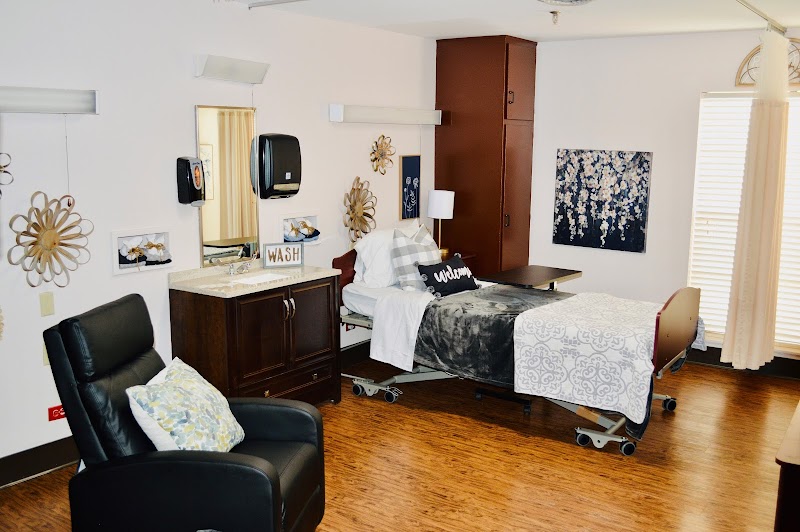
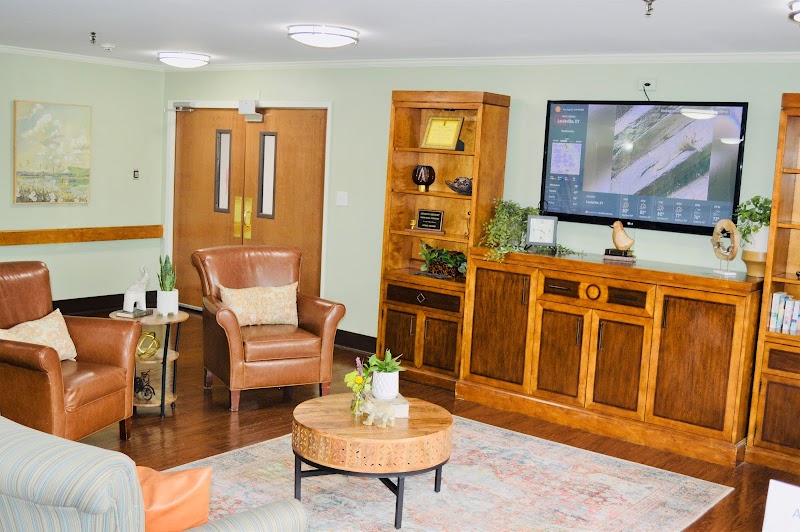
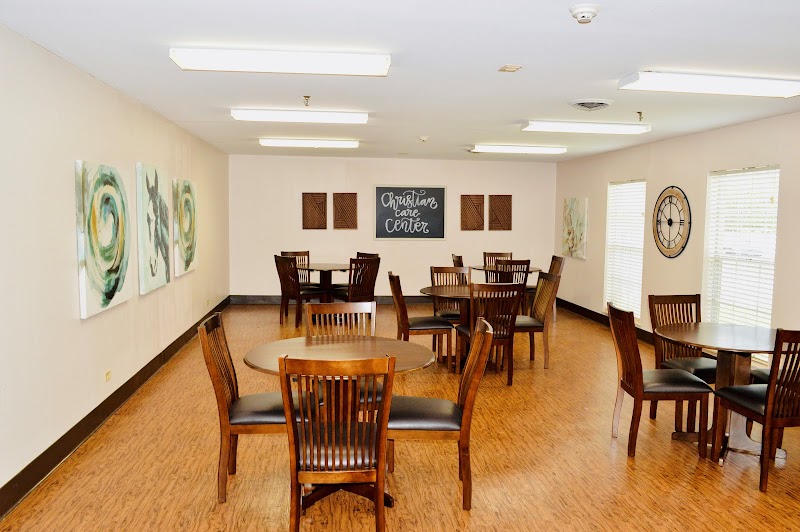
CHRISTIAN CARE CENTER

1008 CITIZENS TRAIL, TEXARKANA, TX 75501 (903) 838-9526
For profit - Limited Liability company 114 Beds SUMMIT LTC Data: November 2025 6 Immediate Jeopardy citations
Trust Grade
0/100
#673 of 1168 in TX
Last Inspection: August 2024

Within standard 12-15 month inspection cycle. Federal law requires annual inspections.

Overview

The Christian Care Center in Texarkana has received a Trust Grade of F, indicating significant concerns about the quality of care provided. It ranks #673 out of 1168 facilities in Texas, placing it in the bottom half, and #3 out of 7 in Bowie County, meaning only two local facilities are rated worse. While the facility's trend is improving, with a decrease in reported issues from 17 in 2023 to 12 in 2024, there are still serious deficiencies, including critical incidents of abuse and neglect involving staff behavior towards residents. Staffing is relatively strong with a 4/5 rating and a turnover rate of 44%, which is below the Texas average, suggesting consistency in care. However, the facility has incurred $138,256 in fines, which is concerning and indicates repeated compliance problems. Specific incidents reported include a staff member verbally abusing residents and failing to provide appropriate care as required by care plans, raising significant red flags for potential residents and their families.

Trust Score
F
0/100
In Texas
#673/1168
Bottom 43%
Safety Record
High Risk
Review needed
Inspections
Getting Better
17 → 12 violations
Staff Stability
○ Average
44% turnover. Near Texas's 48% average. Typical for the industry.
Penalties
○ Average
$138,256 in fines. Higher than 60% of Texas facilities. Some compliance issues.
Skilled Nurses
○ Average
Each resident gets 33 minutes of Registered Nurse (RN) attention daily — about average for Texas. RNs are the most trained staff who monitor for health changes.
Violations
⚠ Watch
38 deficiencies on record. Higher than average. Multiple issues found across inspections.
★★☆☆☆
2.0
Overall Rating
★★★★☆
4.0
Staff Levels
★★☆☆☆
2.0
Care Quality
★★☆☆☆
2.0
Inspection Score
Stable
2023: 17 issues
2024: 12 issues

The Good

  • 4-Star Staffing Rating · Above-average nurse staffing levels
  • Full Sprinkler Coverage · Fire safety systems throughout facility
  • No fines on record
  • Staff turnover below average (44%)

    4 points below Texas average of 48%

Facility shows strength in staffing levels, fire safety.

The Bad

2-Star Overall Rating

Below Texas average (2.8)

Below average - review inspection findings carefully

Staff Turnover: 44%

Near Texas avg (46%)

Typical for the industry

Federal Fines: $138,256

Well above median ($33,413)

Significant penalties indicating serious issues

Chain: SUMMIT LTC

Part of a multi-facility chain

Ask about local staffing decisions and management

The Ugly 38 deficiencies on record

6 life-threatening 2 actual harm
Aug 2024 5 deficiencies
CONCERN (D)

Potential for Harm - no one hurt, but risky conditions existed

Deficiency F0561 (Tag F0561)

Could have caused harm · This affected 1 resident

**NOTE- TERMS IN BRACKETS HAVE BEEN EDITED TO PROTECT CONFIDENTIALITY** Based on interview and record review, the facility failed to promote resident self-determination through support of resident cho...

Read full inspector narrative →
**NOTE- TERMS IN BRACKETS HAVE BEEN EDITED TO PROTECT CONFIDENTIALITY** Based on interview and record review, the facility failed to promote resident self-determination through support of resident choice for 1 of 11 residents (Resident #10) reviewed for resident rights. The facility failed to ensure Resident #10 was provided a shower per his preference instead of bed baths. This failure could place dependent residents at risk for feelings of depression, lack self-determination and decreased quality of life. Findings included: Record review of the face sheet dated 04/19/23 indicated Resident #10 was an [AGE] year old male admitted on [DATE] with diagnoses including Vascular Dementia (a chronic condition that affects memory, thinking, and behavior), Hypertension (a common condition that occurs when the pressure in your blood vessels is consistently too high), Muscle Weakness (a lack of muscle strength that can make it difficult for muscles to contract or move as easily as usual). Record review of the Quarterly MDS dated [DATE] indicated Resident #10 was understood and understood others. The MDS indicated a BIMS score of 8 which indicated moderate cognitive impairment. The MDS indicated Resident #10 required partial/moderate assistance with bathing. The MDS indicated Resident #10 required partial/moderate assistance on staff for chair/bed-to-chair transfers. Record review of a care plan last revised on 07/5/24 indicated Resident #10 required assistance with all his ADL's and wheelchair transfers. During an interview on 08/19/24 at 9:53 a.m., Resident #10said he wanted to complain about not getting a shower. He said he had not had a shower in over 6 weeks. He said he didn't remember the last time he had a shower. He said that he had bed baths, but he wanted to take a shower. He said every time he had been offered a shower, he said yes but staff rarely offered him a shower. He said he preferred showers over bed baths. During an interview on 08/20/24 at 02:02 p.m., he said that he had not received a shower since the last time the surveyor spoke to him. He said that he had not been in the shower room for many weeks. Record review of shower schedule dated from 7/22/24 to 8/20/24 reflected Resident #10 only received bed baths and no showers during that time period. During an interview on 08/20/24 at 2:21 p.m., with the DON she said that it was the responsibility of charge nurses to ensure residents are having their showers as scheduled. She said that the issue with Resident #10 was brought to her attention. She said that according to documentation Resident #10 had only received bed baths. She said that she in-serviced staff today on following posted shower schedules. She said that residents who did not have their choices respected or followed were at risk for low self-esteem and it could make them unhappy. During an interview on 08/21/24 at 12:20 p.m., with the ADM he said that it was the responsibility of nurses to ensure that residents shower schedule was being followed. He said that residents can be placed at risk for being dissatisfied with services the facility rendered. Review of a Resident Rights facility policy dated November 2021 indicated, Residents of Texas nursing facilities have all the rights, benefits, responsibilities, and privileges granted by the Constitution and laws of this state and the United States. They have the right to be free of interference, coercion, discrimination, and reprisal in exercising these rights as citizens of the United States Live in safe, decent and clean conditions.
CONCERN (D)

Potential for Harm - no one hurt, but risky conditions existed

Safe Environment (Tag F0584)

Could have caused harm · This affected 1 resident

**NOTE- TERMS IN BRACKETS HAVE BEEN EDITED TO PROTECT CONFIDENTIALITY** Based on observation, interview, and record review, the facility failed to provide a safe, functional, sanitary, and comfortable...

Read full inspector narrative →
**NOTE- TERMS IN BRACKETS HAVE BEEN EDITED TO PROTECT CONFIDENTIALITY** Based on observation, interview, and record review, the facility failed to provide a safe, functional, sanitary, and comfortable environment 1 of 11 residents reviewed for environment. (Resident #35) The facility failed to provide Resident #35 with a pillowcase. These failures could place residents at risk of an unsafe or uncomfortable environment and a decrease in quality of life and self-worth. Findings included: Record review of the face sheet dated 06/18/23 indicated Resident #35 was a [AGE] year-old male admitted on [DATE] with diagnoses including Hyperlipidemia (a condition where there are abnormally high levels of lipids or lipoproteins in the blood), Chronic Fatigue (a serious and often long-lasting illness that keeps people from doing their usual activities), Hypomagnesemia (a condition where the body has a lower-than-normal level of magnesium in the blood). Record review of the Quarterly MDS assessment dated [DATE] indicated Resident #35 was understood and understood others. The MDS indicated a BIMS score of 05 indicating Resident #35 was severely cognitively impaired. The MDS indicated Resident #35 required assistance from staff for activities of daily living. During an observation and interview on 8/19/24 at 9:47 a.m., Resident #35 was observed with a T-shirt underneath his head. He stated that he was lying on his T-shirt because he didn't want to lay on his pillow without its case. He said he didn't remember when it had been taken off, but he didn't want to lay on his pillow because the pillow was old and frayed. Resident #35's pillow was observed at his side near the middle of the bed lacking a pillowcase. The pillow appeared heavily used, frayed in areas, with parts of the pillow top layer peeling off. He said his pillow had been like that all night. He said he wanted the pillowcase put back on his pillow. During an observation and interview on 8/19/24 at 3:30 p.m., revealed Resident #35 was observed lying his head on the mattress with the pillow still lacking a pillowcase. He said that no one came and offered him a pillowcase. The Surveyor asked a staff in the hallway if they would bring him a pillowcase. Resident #35 said he was grateful to have a pillowcase which was provided to Resident #35. During an interview on 08/21/24 at 2:58 p.m., the DON said it was the responsibility of CNAs to ensure that residents bed linen was properly placed each day. She said that residents could be placed at risk of being dissatisfied with their environment if they lacked clean bed linens. During an interview on 08/21/24 at 4:24 p.m., the ADM said that it was the responsibility of CNAs to ensure that bed linens were on the bed after being cleaned and delivered by housekeeping. He said that residents could become dissatisfied with the services the facility rendered if they lacked clean bed linens. Requested a policy on 8/21/24 at 4:24 p.m. regarding a homelike environment from the DON. A policy regarding proper sanitation of bed linens was received.
CONCERN (D)

Potential for Harm - no one hurt, but risky conditions existed

Deficiency F0655 (Tag F0655)

Could have caused harm · This affected 1 resident

**NOTE- TERMS IN BRACKETS HAVE BEEN EDITED TO PROTECT CONFIDENTIALITY** Based on interview and record review, the facility failed to develop and implement a Baseline Care Plan that included the instru...

Read full inspector narrative →
**NOTE- TERMS IN BRACKETS HAVE BEEN EDITED TO PROTECT CONFIDENTIALITY** Based on interview and record review, the facility failed to develop and implement a Baseline Care Plan that included the instructions for resident care needed to provide effective and person-centered care for 1 of 5 residents reviewed for new admissions. (Resident #29) The facility failed to develop and implement a Baseline Care Plan for Resident #29 within 48 hours of admission. This failure could place residents at risk of not receiving care and services to meet their needs. Findings included: Record review of Resident #29's face sheet dated 8/19/24 indicated she was [AGE] years old and admitted to the facility initially on 5/04/24 and re-admitted on [DATE] with diagnoses including hypoxic ischemic encephalopathy (lack of oxygen causing damage to brain), dementia (forgetfulness) with mood disturbance, major depressive disorder (mood disorder that causes a persistent feeling of sadness and loss of interest), dysphagia (difficulty swallowing), weakness, cognitive communication deficit, heart disease, chronic obstructive pulmonary disease (lung disease that blocks airflow and makes it difficult to breath), respiratory failure, hypertension (high blood pressure), urinary tract infection, and sepsis (life-threatening complication of an infection). Record review of Resident #29's admission MDS assessment dated [DATE] indicated she was understood and understood others. Resident #29's BIMS score was 00 which indicated severely impaired cognition. Resident #29 had disorganized thinking. Resident #29 used a wheelchair for mobility. Resident #29 required maximal to moderate assistance for most ADL's. Resident #29 had an indwelling urinary catheter and was frequently incontinent of bowel. Resident #29 had a feeding tube and had a mechanically altered diet. Resident #29 was at risk for developing pressure ulcers. Resident #29 was on antianxiety and antidepressant medications. Resident #29 was receiving speech therapy, occupational therapy, and physical therapy. Record review of Resident #29's Baseline Care Plan revealed there was not a Baseline Care Plan completed. During an interview on 8/19/24 at 1:47 PM, Resident #29's RP said she was very satisfied with the care Resident #29 was receiving. Resident #29's RP said Resident #29 came from the hospital with a feeding tube (tube inserted into the stomach to administer nutrition) and a urinary catheter (tube placed in the bladder to drain urine). Resident #29's RP said Resident #29 no longer had the feeding tube or the urinary catheter. Resident #29's RP said Resident #29 admitted to the facility in May of 2024. On 8/20/24 at 3:25 PM, a Baseline Care Plan for Resident #29 was requested from the DON. The DON provided a care conference with the family done on 5/6/24. The Baseline Care Plan that was due within 48 hours of Resident #29's admission was requested. The DON said she was going back to look for it. During an interview on 8/21/23 at 9:30 AM, the Regional Nurse Consultant said there was not a Baseline Care Plan for Resident #29. During an interview on 8/21/24 at 10:55 AM, LVN C said she had worked at the facility for one and a half years and normally worked the 6 AM-6 PM shift. LVN C said the admitting nurse was responsible for completing the Baseline Care Plan. LVN C said the purpose of Baseline Care Plan was so staff knew what the resident was there for and what kind of care the resident needed, so everyone was on the same page to ensure the resident was getting the care that they needed. LVN C said if the Baseline Care Plan was not completed, staff would not know how to treat the resident effectively. LVN C said the Baseline Care Plan showed what medications the resident was, what the resident's discharge plans were, if they were a fall risk, what amount of assistance the resident needed, and any special needs or care the resident may need so staff can provide effective care. LVN C said if a resident had a feeding tube and/or a urinary catheter and the Baseline Care Plan was not completed, staff may not know how to care for them. During an interview on 8/21/24 at 11:19 AM, the ADON said the admission nurse was responsible for completing the Baseline Care Plan. The ADON said the purpose of Baseline Care Plan was to start developing the care of the resident and how the facility was going to take care of the resident, and to initiate the discharge plan or if the resident planned to reside long-term. The ADON said if there was no Baseline Care Plan, it would be difficult to communicate to the staff and family on how the facility was going to meet the resident's care needs. The ADON said nurse management, consisting of the ADON, DON, Treatment Nurse, MDS Nurse or anyone on the IDT team) was responsible for ensuring the Baseline Care Plan was completed. During an interview on 8/21/24 at 1:11 PM, the DON said the nurses were responsible for completing the Baseline Care Plan. The DON said the purpose of the Baseline Care Plan was to ensure that all parties knew how to care for the resident when the resident first arrived to the facility initially before the comprehensive care plan was built. The DON said the ADON or herself followed up behind the nurses to ensure the Baseline Care Plan was completed. The DON said the risk to the resident if there was not a Baseline Care Plan would be maybe the information might not get to the CNAs on what the resident required for care to meet their needs. The DON said nurses could visibly see a feeding tube or a foley catheter so they would know how to care for those, even if there was not a Baseline care Plan. Requested a policy for Baseline Care Plans on 8/21/24 at 1:25 PM from the DON. During an interview on 8/21/24 at 1:29 PM, the ADM said he would expect the Baseline Care Plan to be completed within 48 hours of admission. The ADM said the Baseline Care Plan was for the staff to know what care the resident needed. The ADM said the ADON and DON were responsible for ensuring the Baseline Care Plans were completed, along with the charge nurse. The ADM said the staff would not know the resident as well as they should know them if there was no Baseline Care Plan. On 8/21/24 at 1:46 PM, the DON said they did not have a policy on Baseline care plans.
CONCERN (D)

Potential for Harm - no one hurt, but risky conditions existed

ADL Care (Tag F0677)

Could have caused harm · This affected 1 resident

**NOTE- TERMS IN BRACKETS HAVE BEEN EDITED TO PROTECT CONFIDENTIALITY** Based on observation, interview, and record review, the facility failed to provide the necessary services to maintain personal h...

Read full inspector narrative →
**NOTE- TERMS IN BRACKETS HAVE BEEN EDITED TO PROTECT CONFIDENTIALITY** Based on observation, interview, and record review, the facility failed to provide the necessary services to maintain personal hygiene for residents who are unable to carry out activities of daily living for 1 of 16 residents reviewed for ADL's. (Resident #22) The facility failed to remove facial hair from female Resident #22. This failure could place residents who required assistance from staff for ADL's at risk of not receiving care and services to meet their needs which could result in poor care, risk for skin breakdown, feelings of poor self-esteem, lack of dignity and health. Findings included: Record review of a face sheet dated 08/20/24 revealed Resident #22 was an [AGE] year-old female and was admitted on [DATE] with diagnoses including Alzheimer's disease (a progressive disease that destroys memory and other important mental functions), major depressive disorder (A mental health disorder characterized by persistently depressed mood or loss of interest in activities, causing significant impairment in daily life), and generalize anxiety disorder (Severe, ongoing anxiety that interferes with daily activities). Record review of the most recent MDS dated [DATE] indicated Resident #22 was sometimes understood and sometimes understood others. The MDS indicated a BIMS score of 99 which indicated the resident was unable to complete the interview. The MDS indicated Resident #22 was dependent on staff for showers/baths and personal hygiene. Record review of a care plan dated 06/12/24 indicated Resident #22 had a diagnosis of depression. The care plan indicated the resident required assistance with ADL's. There was a long-term goal for the resident to maintain a sense of dignity by being clean, dry, odor free, and well groomed. There were interventions to assist Resident #22 with ADL's as needed and to assist/give showers, shave, provide oral, hair, and nail care as scheduled and as needed. There was no indication the resident refused care or was resistive to care. Record review of nurse's notes from 08/01/24 to 08/21/24 did not indicate Resident #22 had refused care or refused to be shaved. Record review of an undated Shower List indicated Resident #22 received baths on Tuesdays, Thursdays, and Fridays. Record review of a Point of Care History of ADL documentation dated 08/01/24 - 08/21/24 indicated Resident #22 had received her scheduled baths. The Point of Care History indicated CNA A had given Resident #22 partial bed baths on 08/19/24 and 08/20/24. During an observation on 08/19/24 at 12:14 p.m., revealed Resident #22 was in the dining room eating lunch. She had many gray chin hairs approximately 0.5 centimeters in length covering her chin. During an observation and interview on 08/20/24 at 7:55 a.m., revealed Resident #22 was sitting in bed eating breakfast. She had many gray chin hairs approximately 0.5 centimeters in length covering her chin and extending down to her neck. An attempt was made to interview the resident. She had garbled and unclear speech. What she was saying could not be understood. During an observation on 08/20/24 at 1:40 p.m., revealed Resident #22 was sleeping in bed. She had many gray chin hairs approximately 0.5 centimeters in length covering her chin and extending down to her neck. During an observation on 08/21/24 at 8:16 p.m., revealed Resident #22 was sleeping in bed. She had many gray chin hairs approximately 0.5 centimeters in length covering her chin and extending down to her neck. During an interview on 08/21/24 at 10:20 a.m., CNA A said she was the aide for Resident #22. She said she removed facial hair from female residents anytime she saw any. She said facial hair on female residents should at least be removed on bath days. She said residents were bathed three times a week. She said they had to be gentle with Resident #22. She said the last few days she had worked a different hall and had not provided care to Resident #22. She said she did not know why the resident's facial hair had not been removed. She said the facility had a lot of new aides. She said the new aides should at least attempt to remove facial hair from female residents. During an interview on 08/21/24 at 10:38 a.m., LVN B said the CNAs were responsible for removing facial hair from female residents. She said she usually helped the CNAs. She said facial hair should be removed on bath days if needed. She said some residents were bathed on Mondays, Wednesdays, and Fridays. Others were bathed on Tuesdays, Thursdays, and Saturdays. She said she was not sure what days Resident #22 was bathed. She said each resident was bathed three times a week. She said Resident #22 used to have a hospice aide that came to bathe her and remove her facial hair. She said Resident #22 did say no at times. She said any refusals should be charted in the progress notes. She said not removing facial hair from female residents could affect their confidence. During an interview on 08/21/24 at 12:32 p.m., the DON said the CNAs and nurses were responsible for removing facial hair from female residents. She said it was ultimately the nurses' responsibility to make sure it was done. She said facial hair should be removed from female residents when it could be seen. She said any refusals should be documented in the nurse's notes and care planned. She said she would have expected Resident #22's facial hair to have been removed or there have been some type of documentation indicated she refused. She said females with facial hair might feel embarrassed. During an interview on 08/21/24 at 12:48 p.m., the Administrator said unless a female wanted facial hair it needed to be shaved. He said if the female wanted the facial hair it should be care planned. He said CNAs were responsible for removing facial hair from female residents with oversight from the charge nurses and nurse management. He said the appearance of facial hair on females did not look good. Record review of a Shaving the Resident facility policy dated 12/2017 indicated, .It is the policy of this home to ensure that residents are groomed to include shaving to promote a sense of well-being and dignity . Record review of an Activities of Daily Living facility policy dated 12/2017 indicated, .It is the policy of this home to assure resident have their activities of daily living met .encourage resident to apply shave cream or electric preshave .
CONCERN (D)

Potential for Harm - no one hurt, but risky conditions existed

Medication Errors (Tag F0758)

Could have caused harm · This affected 1 resident

**NOTE- TERMS IN BRACKETS HAVE BEEN EDITED TO PROTECT CONFIDENTIALITY** Based on interviews and record review, the facility failed to ensure each residents' drug regimen was free from unnecessary psyc...

Read full inspector narrative →
**NOTE- TERMS IN BRACKETS HAVE BEEN EDITED TO PROTECT CONFIDENTIALITY** Based on interviews and record review, the facility failed to ensure each residents' drug regimen was free from unnecessary psychotropic drugs (without adequate behavior monitoring) for 1 of 7 residents (Resident #39) whose medications were reviewed in that: 1. The facility failed to ensure Resident #39 had side effect monitoring (monitoring for unintended responses to medication) for his prescribed Quetiapine (an antipsychotic medication used to treat several types of mental health conditions) during the months of July and August 2024. 2. The facility failed to ensure Resident #39 had behavior monitoring for his prescribed Quetiapine during the months of July and August 2024. These failures could place residents at risk of not receiving the intended therapeutic benefits of their psychotropic medications. Findings included: Record review of Resident #39's face sheet dated 8/19/24 indicated he was [AGE] years old and admitted to the facility initially on 11/29/22 and re-admitted on [DATE] with diagnoses including dementia, severe, with behavioral disturbance (severe forgetfulness with behavioral disturbances such as agitation, delusions (belief in things that were not real), hallucinations (seeing, hearing, or feeling things that were not there)), major depressive disorder (serious mood disorder that could affect how people feel, think, and function in their daily lives), and cognitive communication disorder. Record review of Resident #39's quarterly MDS assessment dated [DATE] indicated he was understood and usually understood others. Resident #39 had a BIMS score of 3 which indicated he had severe cognitive impairment. The MDS indicated Resident #39 had disorganized thinking. The MDS indicated Resident #39 had diagnoses including non-Alzheimer's dementia, depression, dementia, severe, with other behavioral disturbances. The MDS indicated Resident #39 was receiving antipsychotic medications. Record review of Resident #39's care plan last updated 8/19/24 revealed he had behavioral symptoms with episodes of inappropriate behaviors as evidenced by threatening other residents; he had impaired cognitive function; he had a diagnosis of depression; he resided in the secure unit related elopement/wandering; and he required psychotropic drugs (taken to effect the chemical makeup of the brain and nervous system, used to treat mental disorders, and included the anti-psychotic class of medications) for the treatment of depression with interventions to educate the resident/family/caregivers about the risks, benefits and side effects and/or toxic symptoms. Record review of Resident #39's Physician Order Report dated 7/21/24-8/21/24 revealed an order for Quetiapine 25 mg 2 tablets (50 mg) twice daily and 100 mg 2 tablets at bedtime with an order date of 7/25/24. Further review revealed there was no order for side effect monitoring or behavioral monitoring noted for antipsychotic medication. Record review of Resident #39's MAR dated 7/01/24-7/31/24 indicated Resident #39 was ordered and received Quetiapine 25 mg 2 tablets (50 mg) twice daily and 100 mg 2 tablets at bedtime with start dates of 7/25/24. There was no documentation of behavior or side effect monitoring noted for antipsychotic medications. Record review of Resident #39's MAR dated 8/01/24-8/21/24 indicated Resident #39 was ordered and received Quetiapine 25 mg 2 tablets (50 mg) twice daily and 100 mg 2 tablets at bedtime with start dates of 7/25/24. There was no documentation of behavior or side effect monitoring noted for antipsychotic medications . During an interview on 8/19/24 at 3:09 PM, Resident #39's RP said Resident #39 had to go to the behavioral hospital last month. Resident #39's RP said they had started Resident #39 on a new medication for his behaviors, but she could not remember the name of it. Resident #39's RP said the facility called her and asked if they could give him the new medication and she agreed. Resident #39's RP said she did not remember if they discussed the side effects of the medication. Resident #39's RP said she came to visit Resident #39 last week. During an interview on 8/19/24 at 3:51 PM, Resident #39 said he was doing good and making progress with his therapy. Resident #39 said he did not know what medication he was taking. During an interview on 8/21/24 at 10:55 AM, LVN C said she had worked at the facility for one and a half years and normally worked the 6 AM-6 PM shift in the memory care unit. LVN C said the ADON, or the DON put the side effect and behavioral monitoring into the Matrix software and the nurses put the actual medication into the Matrix software. LVN C said the purpose of having the side effect and behavioral monitoring was so the nurses could monitor side effects and behaviors to determine if the resident continued to need the medication or was having any adverse effects from the medication. LVN C said the risk to the resident if side effect and behavioral monitoring was not on the resident's chart was the resident could experience side effects of the medication or continue to have behaviors and it would not be documented. LVN C said if side effects or behaviors were not being monitored or documented, then they would not know there was an issue and know they would need to contact physician for something abnormal. LVN C said side effect and behavioral monitoring was on the MAR to prompt the nurses to document any behaviors and side effects and it listed side effects and behaviors to watch for and required documentation each shift. During an interview on 8/21/24 at 11:19 AM, the ADON said she had worked at the facility for about a year. The ADON said the nurses were responsible for adding the behavioral and side effect monitoring when entering the medications into the resident's chart. The ADON said the purpose of the behavioral and side effect monitoring was to make sure the resident was not having any side effects and to monitor if the medication was being effective in treating a specific behavior. The ADON said if there was no behavioral or side effect monitoring being documented related to an antipsychotic medication, then you would not be effectively caring for the resident. The ADON said nurses should be monitoring and documenting behaviors and side effects every shift. The ADON said the nurse management team was responsible for ensuring behavioral and side effect monitoring was added to the residents MAR, so the MAR would prompt the nurses to document any behaviors or side effects and any interventions attempted. During an interview on 8/21/24 at 1:11 PM, the DON said the nurses were responsible for adding the behavioral and side effect monitoring to the resident's chart when the new antipsychotic medication was started. The DON said the purpose of behavioral and side effect monitoring was to make sure the medication was working for the resident and not having behaviors and to ensure the resident was not having side effects to the medications. The DON said there should be an order for behavioral and side effect monitoring in the Matrix software and they should be documented on the MAR. The DON said if behavioral and side effect monitoring was not being documented in the resident's chart, it could delay treatment and other staff may not know the resident was having behaviors or side effects. The DON said if the behavioral and side effect monitoring was not documented, the physician may not see the continued behaviors or any side effects to determine if any treatment changes were needed. The DON said the ADON or herself were responsible for ensuring the monitoring for behaviors and side effects were added to the MAR . The DON said the residents should have documentation every shift for behavioral and side effect monitoring documented on the MAR. During an interview on 8/21/24 at 1:29 PM, the ADM said he would expect a resident on an antipsychotic medication to have behavioral monitoring and side effect monitoring. The ADM said you want to see the progress of the medication and effectiveness to see if any changes needed to be made. The ADM said he would not have sufficient documentation for that resident if there was no behavioral monitoring or side effect monitoring for an antipsychotic medication. The ADM said the behavioral and side effect monitoring should be documented in the progress notes. Record review of the facility's policy titled, Behavioral Management-Psychoactive Medication-Antipsychotic Drug Therapy, dated 12/2017, indicated . it was the policy of the home to use antipsychotic medications per CMS guidelines and to perform dose reductions and monitoring as required by regulation, to promote the highest level of resident care and safety . documenting the specific behaviors which the resident exhibits . for residents receiving an antipsychotic medication for behavioral symptoms related to an organic mental syndrome, all symptoms or behaviors which relate to the specific condition for the drug's use would be listed on the appropriate clinical software monitoring flow sheet . at the end of each shift, the nurse would document the number of times each behavior occurred . each month, the nursing staff would sum the occurrences of each behavior and record a total for each one . determining the need for a dose reduction . when the resident's behavior [NAME] was stable, that is, there was no instances of behaviors documented during a two month period consecutively, the consultant pharmacist would send a recommendation to the resident's physician . monitoring for adverse effects . on the behavior monitoring form or on the MAR, the nurse would indicate the presence of an adverse effect by checking off any appropriate adverse effect listed, or describing any others noted .
Jul 2024 2 deficiencies 2 IJ
CRITICAL (J) 📢 Someone Reported This

A family member, employee, or ombudsman was alarmed enough to file a formal complaint

Immediate Jeopardy (IJ) - the most serious Medicare violation

Free from Abuse/Neglect (Tag F0600)

Someone could have died · This affected 1 resident

**NOTE- TERMS IN BRACKETS HAVE BEEN EDITED TO PROTECT CONFIDENTIALITY** Based on interview and record review, the facility failed to ensure residents had the right to be free from abuse, neglect, misa...

Read full inspector narrative →
**NOTE- TERMS IN BRACKETS HAVE BEEN EDITED TO PROTECT CONFIDENTIALITY** Based on interview and record review, the facility failed to ensure residents had the right to be free from abuse, neglect, misappropriation of resident property, and exploitation for 1 (Resident #1) of 7 residents reviewed for abuse and/or neglect. The facility failed to prevent CNA A from physically and verbally abusing Resident #1 when she intentionally shoved and used derogatory language towards Resident # 1. The noncompliance was identified as PNC. The IJ noncompliance began on 10/7/23 and ended on 10/8/23. The facility had corrected the noncompliance before the investigation began. This failure could place residents at risk of abuse and neglect. Findings included: Record review of Resident #1's face sheet, dated 07/17/2024, indicated she was admitted to the facility on [DATE] with diagnoses including, Hypertension (A condition in which the force of the blood against the artery walls is too high), Gastro-esophageal reflux disease without esophagitis (a common condition in which the stomach contents move up into the esophagus and inflammation of the esophagus), Gastrostomy infection (a surgical operation for making an opening in the stomach). Record review of Resident #1's Quarterly MDS assessment, dated 10/16/23, reflected Resident #1 usually made herself understood and usually understood others. Resident #1 had severe cognitive impairment with a (BIMS score of 0. Resident #1 had no physical or verbal behaviors symptoms directed towards herself or others. Resident #1 had no behavior of rejecting care. Resident #1 was dependent on staff for all activities of daily living and was always incontinent of bowel and bladder. Record review of Resident #1's care plan dated 4/24/24, reflected Resident #1 was incontinent of bowel and bladder. Staff were to provide incontinent care after each episode. The care plan reflected that Resident #1 was totally dependent on staff for all of her activities of daily living. Record review of the facility's provider investigation report dated 10/8/23, reflected CNA B reported she witnessed CNA A shove Resident # 1, tell Resident #1 to, Turn your ass over, don't touch me you be playing in your pussy, and shut the hell up. It was indicated that the police were notified. Record review of CNA A's signed statement, dated 10/8/2023, reflected, I CNA A was taking to the nurse and She was saying that milk was every were in Resident #1 and her roommate She ask who got them I said another CNA had them I was looking for them could not fine them so I got CNA B to help clean them up when I come out I said them to fat motherfucker got them so by ther another CNA and who are you taking to I did not say not me and another CNA going back and for and I told another CNA did you here me call any by name out she no but we the only to white girl her I apologize if they thank I was toke to them.(Sic) Record review of CNA B's signed statement, dated 10/9/23, reflected I CNA B is stating that on 10/7/2023 at approximately 9:45 p.m I witness CNA A actually go in to Resident #1's room and went to the left side of the bed while I was standing on the right side of the bed CNA A actually pushed Resident #1 and told her to turn her ass over as CNA A begin to clean Resident # 1 she reached out to touch CNA A she made a statement don't touch me you be playing in your pussy Resident #1 moaned and CNA A told Resident # 1 to shut the hell up. During an interview on 7/16/24 at 10:35 a.m., Resident #1 said she did not remember someone by the name of CNA A. She said that no one has been mean to her. She said that she cannot remember if anyone had harmed her or said disrespectful words to her. She said she cannot say if anyone has hurt her feeling here. During an interview on 7/16/24 at 11:15 p.m., with the DON she said CNA A came back after the incident and gave a statement, but it had nothing to do with the actual incident. She said CNA A would not talk about the allegations CNA B made. She said the former ADM was in charge during this incident and the current ADM is only acting ADM until one is hired. She said CNA A was terminated as it was confirmed this incident took place. She said CNA B notified her on 10/8/2023 at 1:15 p.m. that on 10/7/2023 at 9:50 p.m. she witnessed CNA A shove and use verbally abusive language to Resident # 1 . She said that she was the first person that the incident was reported to. During an interview on 7/16/24 at 1:34 p.m. with CNA B she said that she remembered the incident with Resident #1 and CNA A. She said she witnessed CNA A shove Resident # 1 hard when turning her over to do peri care. She said she heard CNA A tell Resident # 1 to turn her ass over. She said then Resident # 1 touched CNA A and she told Resident # 1 to not touch her because she plays with her pussy. She said she heard CNA A then tell Resident # 1 to shut the hell up after Resident # 1 made a groaning noise. She said she reported this incident to the DON. During an attempted interview on 7/16/2024 at 2:50 p.m. CNA A was contacted via telephone. A voicemail was not left as the number was disconnected. During an interview on 7/16/2024 at 3:02 p.m., LVN C said that any type of abuse was to be reported immediately to the abuse coordinator, charge nurse, or DON. She said that she has been in-serviced on this topic as well as their abuse policy multiple times including immediately after the incident with Resident #1. She said she would also need to ensure the resident that was allegedly abused was safe after the allegation and remove the alleged perpetrator for access to any resident. During an interview on 7/16/2024 at 3:04 p.m., CNA D said if a resident made an allegation that they were abused then she would need to ensure the resident was safe, report to the abuse coordinator and any other management that was working, keep the resident safe, and prevent the person who allegedly did the abuse away from other residents. She said she has been in-serviced on all these principals multiple times. During an interview on 7/16/2024 at 3:07 p.m., LVN E said that she has been in-services on the facility abuse policy several times. She said that if an allegation of abuse is made, they are to immediately report the allegation to the abuse coordinator. She said she can also report to the charge nurse and the DON as well as call the abuse coordinator. She said that she would also need to ensure that the person who did the abuse did not have access to any resident and have them leave the building. During an interview on 7/16/2024 at 3:09 p.m., LVN F said that the abuse coordinator should be notified immediately after an allegation of abuse is made. She said that she can tell the abuse coordinator in person or call them. She said that she can also tell other management of an allegation of abuse. She said that she has been trained in this topic multiple times. She said the abuse policy is a topic that is trained frequently. She said that when abuse allegedly occurs she would also need to ensure that the resident and other residents are kept safe from the person who allegedly did the abuse. During an interview on 7/16/2024 at 3:20 p.m., with the former ADM he said he vaguely remembers this incident. He said he immediately suspended CNA A on 10/8/2023 before she came back to work. He said he then investigated the incident. He said he doesn't recall any type of statement from CNA A other than what is in the PIR. He said he doesn't recall the resident needing any counseling or showing any type of emotional response to the incident. He said he doesn't remember what time this was reported by CNA B but it will be located on the PIR. He said these were typically reported immediately to himself or the DON. He said he does not recall when he got the self-report for this incident. During an interview on 7/17/24 at 12:53 p.m., the Administrator said CNA A was immediately upon learning of the incident on 10/8/2024 at 1:15 p.m. suspended pending the investigation results. He said CNA A was terminated when it was determined that the allegations made against CNA A were true. He said that all staff were in-serviced over abuse, neglect and exploitation. The Administrator said abuse of residents would not be tolerated at the facility. Record review of a facility in-service dated 10/8/2023 revealed that CNA B was in-services for the facilities abuse policy. Abuse policy educates staff on identifying abuse and neglect as well as timeframes associated with reporting abuse and neglect to the State Agency. Record review of CNA A's personnel file on 07/17/24 indicated hire date of 9/5/23. The facility had performed background check and employee misconduct search. No concerns were identified. Record review of CNA A's Employee Disciplinary Report, dated 10/10/23, indicated she was terminated on 10/10/2023 for misconduct regarding allegations of Abuse and was not eligible for rehire. The administrator was notified of IJ PNC on 07/16/2024 at 5:16 p.m. due to the above failures. The administrator was provided with the IJ template on 07/16/2024 at 5:17 p.m. The noncompliance was identified as PNC. The IJ noncompliance began on 10/7/23 and ended on 10/8/23 . The facility had corrected the noncompliance before the investigation began. The surveyor confirmed the following actions had been implemented sufficiently to remove the immediacy by: Facility notification of abuse incident to responsible party, MD, Ombudsman and HHSC on 10/8/2023. Completion of in-services on abuse. Abuse policy educates staff on identifying abuse and neglect as well as timeframes associated with reporting abuse and neglect to the State Agency. Termination of confirmed perpetrator on 10/10/2023. Residents of facility interviewed did not indicate that they had been abused and were safe. Safe surveys were conducted with residents and no resident reported feeling unsafe. Record review of the facility's policy and procedure dated January 10th, 2017, titled Abuse/Reportable Events All residents have the right to be free from abuse, neglect, misappropriation of resident property, and exploitation. This includes but is not limited to freedom from corporal punishment, involuntary seclusion and any physical or chemical restraint not required to treat the resident's medical symptoms. Residents should not be subjected to abuse by anyone, including but not limited to, facility staff, other residents, consultants, or volunteers, staff of other agencies serving the resident, family members or legal guardians . Abuse: the willful infliction of injury, unreasonable confinement, intimidation, or punishment resulting in physical harm, pain or mental anguish . Mental Abuse: Includes, but is not limited to, humiliation, harassment, threats of punishment and deprivation.
CRITICAL (J) 📢 Someone Reported This

A family member, employee, or ombudsman was alarmed enough to file a formal complaint

Immediate Jeopardy (IJ) - the most serious Medicare violation

Abuse Prevention Policies (Tag F0607)

Someone could have died · This affected 1 resident

**NOTE- TERMS IN BRACKETS HAVE BEEN EDITED TO PROTECT CONFIDENTIALITY** Based on interview and record review the facility failed to implement written policies and procedures that prohibit and prevent ...

Read full inspector narrative →
**NOTE- TERMS IN BRACKETS HAVE BEEN EDITED TO PROTECT CONFIDENTIALITY** Based on interview and record review the facility failed to implement written policies and procedures that prohibit and prevent abuse of residents for 1 of 7 Residents (Resident #1) whose records were reviewed for abuse. CNA B failed to report an allegation of resident abuse within 2 hours after learning about the allegation per facility policy. The facility failed to conduct a thorough investigation when the DON completed only 4 safe surveys and did not interview the resident. The facility failed to prevent CNA A from physically and verbally abusing Resident #1 when she intentionally shoved and used derogatory language towards Resident # 1. The noncompliance was identified as PNC. The IJ noncompliance began on 10/7/23 and ended on 10/8/23. The facility had corrected the noncompliance before the investigation began. This deficient practice could affect any resident and contribute to further resident abuse. The findings were: Record review of the facility's policy and procedure dated January 10th, 2017, titled Abuse/Reportable Events All residents have the right to be free from abuse, neglect, misappropriation of resident property, and exploitation. This includes but is not limited to freedom from corporal punishment, involuntary seclusion and any physical or chemical restraint not required to treat the resident's medical symptoms. Residents should not be subjected to abuse by anyone, including but not limited to, facility staff, other residents, consultants, or volunteers, staff of other agencies serving the resident, family members or legal guardians . Abuse: the willful infliction of injury, unreasonable confinement, intimidation, or punishment resulting in physical harm, pain or mental anguish . Mental Abuse: Includes, but is not limited to, humiliation, harassment, threats of punishment and deprivation . Reporting: Facility employees must report all allegations of: abuse, neglect, exploitation, mistreatment of residents, misappropriation of resident property or injury of unknown source to the facility administrator. The facility administrator or designee will report the allegation to HHSC. If the allegations involve abuse or result in serious bodily Injury, the report Is to be made within 2 hours of the allegation. Record review of Resident #1's face sheet, dated 07/17/2024, indicated she was admitted to the facility on [DATE] with diagnoses including, Hypertension (A condition in which the force of the blood against the artery walls is too high), Gastro-esophageal reflux disease without esophagitis (a common condition in which the stomach contents move up into the esophagus), Gastrostomy infection (a surgical operation for making an opening in the stomach). Record review of the Resident #1's Quarterly MDS assessment, dated 10/16/23, reflected Resident #1 usually made herself understood and usually understood others. Resident #1 had severe cognitive impairment with a BIMS score of 0. Resident #1 had no physical or verbal behaviors symptoms directed towards herself or others. Resident #1 had no behavior of rejecting care. Resident #1 was dependent on staff for all activities of daily living and was always incontinent of bowel and bladder. Record review of Resident #1's care plan dated 4/24/24, reflected Resident #1 was incontinent of bowel and bladder. Staff were to provide incontinent care after each episode. The care plan reflected that Resident #1 was totally dependent on staff for all of her activities of daily living. Record review of the facility's provider investigation report dated 10/8/23, reflected CNA B reported she witnessed CNA A shove Resident # 1, tell Resident #1 to, Turn your ass over, don't touch me you be playing in your pussy, and shut the hell up. It was indicated that the police were notified. Record review of CNA B's signed statement, dated 10/9/23, reflected I CNA B is stating that on 10/7/2023 at approximately 9:45 p.m., I witness CNA A actually go in to Resident #1's room and went to the left side of the bed while I was standing on the right side of the bed CNA A actually pushed Resident #1 and told her to turn her ass over as CNA A begin to clean Resident # 1 she reached out to touch CNA A she made a statement don't touch me you be playing in your pussy Resident #1 moaned and CNA A told Resident # 1 to shut the hell up Record review of CNA A's signed statement, dated 10/8/2023, reflected, I CNA A was taking to the nurse and She was saying that milk was every were in Resident #1 and her roomate She ask who got them I said another CNA had them I was looking for them could not fine them so I got CNA B to help clean them up when I come out I said them to fat motherfucker got them so by ther another CNA and who are you taking to I did not say not me and another CNA going back and for and I told another CNA did you here me call any by name out she no but we the only to white girl her I apologize if they thank I was toke to them.(Sic) During an interview on 7/16/24 at 10:35 a.m., Resident #1 said she did not remember someone by the name of CNA A. She said that no one has been mean to her. She said that she cannot remember if anyone had harmed her or said disrespectful words to her. She said she cannot say if anyone has hurt her feeling here. During an interview on 7/16/24 at 11:15 p.m., with the DON she said CNA A came back after the incident and gave a statement, but it had nothing to do with the actual incident. She said CNA A would not talk about the allegations CNA B made. She said the former ADM was in charge during this incident and the current ADM is only acting ADM until one is hired. She said CNA A was terminated as it was confirmed this incident took place. She said CNA B notified her on 10/8/2023 at 1:15 p.m. that on 10/7/2023 at 9:50 p.m. she witnessed CNA A shove and use verbally abusive language to Resident # 1. She said that she was the first person that the incident was reported to. During an interview on 7/16/24 at 1:34 p.m. with CNA B she said that she remembered the incident with Resident #1 and CNA A. She said she witnessed CNA A shove Resident # 1 hard when turning her over to do peri care. She said she heard CNA A tell Resident # 1 to turn her ass over. She said then Resident # 1 touched CNA A and she told Resident # 1 to not touch her because she plays with her pussy. She said she heard CNA A then tell Resident # 1 to shut the hell up after Resident # 1 made a groaning noise. She said she reported this incident to the DON. During an interview on 7/16/2024 at 2:41 p.m., with the DON she said that all safe surveys were completed during the investigation of the allegations. She said that the safe surveys were also called psychosocial assessments. She said she was the first person the incident was reported to. She said that she thought 4 safe surveys was sufficient to determine if facility residents felt safe. She said that Resident # 1 was not interviewed after the incident, and she did not receive a safe survey. During an interview on 7/16/2024 at 3:02 p.m., LVN C said that any type of abuse was to be reported immediately to the abuse coordinator, charge nurse, or DON. She said that she has been in-serviced on this topic as well as their abuse policy multiple times including immediately after the incident with Resident #1. She said she would also need to ensure the resident that was allegedly abused was safe after the allegation and remove the alleged perpetrator for access to any resident. During an interview on 7/16/2024 at 3:04 p.m., CNA D said if a resident made an allegation that they were abused then she would need to ensure the resident was safe, report to the abuse coordinator and any other management that was working, keep the resident safe, and prevent the person who allegedly did the abuse away from other residents. She said she has been in-serviced on all these principals multiple times. During an interview on 7/16/2024 at 3:07 p.m., LVN E said that she has been in-services on the facility abuse policy several times. She said that if an allegation of abuse is made, they are to immediately report the allegation to the abuse coordinator. She said she can also report to the charge nurse and the DON as well as call the abuse coordinator. She said that she would also need to ensure that the person who did the abuse did not have access to any resident and have them leave the building. During an interview on 7/16/2024 at 3:09 p.m., LVN F said that the abuse coordinator should be notified immediately after an allegation of abuse is made. She said that she can tell the abuse coordinator in person or call them. She said that she can also tell other management of an allegation of abuse. She said that she has been trained in this topic multiple times. She said the abuse policy is a topic that is trained frequently. She said that when abuse allegedly occurs she would also need to ensure that the resident and other residents are kept safe from the person who allegedly did the abuse. During an interview on 7/16/2024 at 3:20 p.m., with the former ADM he said he vaguely remembers this incident. He said he immediately suspended CNA A on 10/8/2023 before she came back to work. He said he then investigated the incident. He said he doesn't recall any type of statement from CNA A other than what is in the PIR. He said he doesn't recall the resident needing any counseling or showing any type of emotional response to the incident. He said he doesn't remember what time this was reported by CNA B but it will be located on the PIR. He said these were typically reported immediately to himself or the DON. He said he does not recall when he got the self-report for this incident. During an interview on 7/16/24 at 4:26 p.m., with the Administrator, he said that he was the acting Administrator until a new Administrator was hired. He said if he became aware of abuse, he would be required to report it within two hours to the state. He said that as soon as he found out there was an alleged perpetrator, he would suspend the alleged perpetrator and remove their access to residents. He said when he is called, he will ask the person who called him to ensure that the resident was safe, what they were currently doing to ensure the safety of the resident and he will then give guidance if additional measures were needed. He said if it was necessary, he would then call the police. He said that he would then ensure there was an assessment completed for the resident to identify any potential issues. He said if the resident can speak, they would be interviewed and safe surveys would be completed, he would talk to family, talk to the physician, and police if necessary. He said if the resident could not tell what occurred, they would then rely on safe surveys and witness statements. He said that the number of residents that they have complete safe surveys depend on what happened, and the residents would be picked at random. During an interview on 7/17/24 at 12:53 p.m., the Administrator said CNA A was immediately suspended pending the investigation results. He said CNA A was terminated when it was determined that the allegations made against CNA A were true. He said that all staff were in-serviced over abuse, neglect and exploitation. The Administrator said abuse of residents would not be tolerated at the facility. He said that all allegations of abuse are reported within two hours after the incident occurred. Record review of CNA A's personnel file on 07/17/24 indicated hire date of 9/5/23. The facility had performed background check and employee misconduct search. No concerns were identified. Record review of CNA A's Employee Disciplinary Report, dated 10/10/23, indicated she was terminated for misconduct regarding allegations of Abuse and was not eligible for rehire. The administrator was notified of IJ PNC on 07/16/2024 at 5:16 p.m. due to the above failures. The administrator was provided with the IJ template on 07/16/2024 at 5:17 p.m. The surveyor confirmed the following actions had been implemented sufficiently to remove the immediacy by: facility notification of abuse incident to responsible party, MD, Ombudsman and HHSC. Completion of in-services on abuse on 10/8/2023. Abuse policy educates staff on identifying abuse and neglect as well as timeframes associated with reporting abuse and neglect to the State Agency. Staff and management recognizing the steps to report abuse and neglect. ADM and DON being able to articulate the steps of an investigation on 7/17/2024. Termination of confirmed perpetrator. The noncompliance was identified as PNC. The IJ noncompliance began on 10/7/23 and ended on 10/8/23. The facility had corrected the noncompliance before the investigation began.
Feb 2024 5 deficiencies 3 IJ (3 affecting multiple)
CRITICAL (K) 📢 Someone Reported This

A family member, employee, or ombudsman was alarmed enough to file a formal complaint

Immediate Jeopardy (IJ) - the most serious Medicare violation

Free from Abuse/Neglect (Tag F0600)

Someone could have died · This affected multiple residents

**NOTE- TERMS IN BRACKETS HAVE BEEN EDITED TO PROTECT CONFIDENTIALITY** Based on observation, interview, and record review, the facility failed to ensure the right of the residents to be free from abu...

Read full inspector narrative →
**NOTE- TERMS IN BRACKETS HAVE BEEN EDITED TO PROTECT CONFIDENTIALITY** Based on observation, interview, and record review, the facility failed to ensure the right of the residents to be free from abuse for 6 of 7 residents reviewed for abuse and neglect. (Resident #2, Resident #3, Resident #5, Resident #6, Resident #7, Anonymous Resident) The facility failed to ensure Resident #7 and AR did not suffer physical pain when CNA B provided ADL care to them. The facility failed to ensure Resident #3, Resident #5, Resident #7, and an AR did not suffer verbal and mental abuse, and mistreatment when CNA B would cuss and say hurtful things towards them. The facility failed to ensure CNA B did not remove Resident #5's food from him so he would not have a bowel movement on her. The facility failed to ensure Resident #2 did not experience verbal aggressive behaviors from CNA B. The facility failed to ensure Resident #6 did not experience emotional distress when CNA B would refuse to change her or speak to her in an unprofessional manner. An Immediate Jeopardy (IJ) situation was identified on 02/23/24 at 3:10 p.m. while the IJ was removed on 02/24/24 at 3:45 p.m., the facility remained out of compliance at a potential for actual harm with a scope of pattern with a potential for more than minimal harm, due to the facility's need to evaluate the effectiveness of the corrective systems. These failures could place residents at risk of abuse, physical harm, mental anguish, and emotional distress. Findings included: 1. Record review of Resident #3's face sheet printed 02/15/24 indicated Resident #3 was a [AGE] year-old male and admitted on [DATE] with diagnoses including schizoaffective disorder (is a mental health condition), generalized anxiety disorder (is a condition of excessive worry about everyday issues and situations), cognitive communication (problems with communication that have an underlying cause in a cognitive deficit), and muscle wasting and atrophy (shortening). Record review of Resident #3's quarterly MDS assessment dated [DATE] indicated Resident #3 was understood and had the ability to understand others. The MDS indicated Resident #3 had unclear speech, adequate hearing, and adequate vision. The MDS indicated Resident #3 had a BIMS score of 13 which indicated intact cognition. The MDS indicated Resident #3 did not have psychosis, behavioral symptoms, or rejection of care. The MDS indicated Resident #3 required substantial/maximal assistance (helper does more than half the effort) for toileting hygiene, shower/bathe self, lower body dressing, personal hygiene, and partial/moderate assistance (helper does less than half the effort) for oral hygiene, upper body dressing and toilet transfer. The MDS indicated Resident #3 was occasionally incontinent for urine and frequently incontinent for bowel. Record review of Resident #3's care plan dated 06/12/22, edited on 01/11/24 indicated Resident #3 had potential for injury related to falls due to history of previous fall. Intervention included remind/encourage resident to use call light to gain assistance. During an interview on 02/15/24 at 12:04 p.m., Resident #3 said CNA B acted like she was better than him. He said CNA B said mean stuff to him all the time. He said CNA B did cuss at him and recently cussed him out after she helped him in the shower. He said CNA B made him feel like an outcast. 2. Record review of Resident #5's face sheet printed 02/15/24 indicated Resident #5 was a [AGE] year-old male and admitted on [DATE] with diagnoses including hemiplegia (is paralysis that affects only one side of your body) and hemiparesis (is weakness or the inability to move on one side of the body, making it hard to perform everyday activities like eating or dressing) following cerebral infarction affecting non dominant side, cerebral infarction (stroke), acquired absence of right leg below knee, and end stage renal disease (is a medical condition in which a person's kidneys cease functioning on a permanent basis leading to the need for a regular course of long-term dialysis or a kidney transplant to maintain life). Record review of Resident #5's quarterly MDS assessment dated [DATE] indicated Resident #5 was understood and had the ability to understand others. The MDS indicated Resident #5 had adequate hearing, clear speech, and adequate vision. The MDS indicated Resident #5 had a BIMS score of 15 which indicated intact cognition. The MDS indicated Resident #5 had functional limitation range of motion to lower extremities to one side. The MDS indicated Resident #5 required partial/moderate assistance (helper does less than half the effort) for oral and toileting hygiene, shower/bathe self, dressing, and personal hygiene, and substantial/maximal assistance for sit to stand, chair/bed-to-chair, toilet, and tub/shower transfer. The MDS indicated Resident #5 had frequent incontinence for urine and bowel. Record review of Resident #5's care plan dated 01/20/24 indicated Resident #5 had an ADL self-care performance deficit and limited physical mobility. Intervention included the resident required extensive assistance for bed mobility, toilet use and transfer. During an interview on 02/15/24 at 12:00 p.m., Resident #5 said CNA B was not easy to work with. He said the facility wanted CNA B to use the mechanical lift to transfer him, but she did not which made her pick him up from the wheelchair and push him on the bed. He said she sometimes acted like she was afraid to transfer him because she thought he would put poop on her. He said sometimes she put his coat in his wheelchair to sit on so he could poop on it instead of the facility's linen. He said CNA B did not want him eating his snacks because it made him have loose bowels. He said CNA B talked rough to him and kind of turned and cleaned him rough. He said he was not afraid of her. He said sometimes she tells him, Don't talk to me! He said CNA B did not know how to talk to people. He said CNA B put him in hospital gowns instead of shirts, which he would ask for, but was always told gowns were easier. He said CNA B was not very nice to Resident #3, his roommate. He said she throws his clothes in the trash and talked rough to him. 3. Record review of Resident #7's face sheet printed on 02/15/24 indicated Resident #7 was a [AGE] year-old female and admitted on [DATE] and latest return on 02/15/24 with diagnoses including nontraumatic intracranial hemorrhage (brain bleed), flaccid hemiplegia affecting left side non dominant (the affected extremity exhibits decreased muscle tone and cannot be actively moved by the patient), legal blindness, muscle weakness, muscle wasting and atrophy (shortening), body mass index 50.0-59.9 (morbidly obese), major depressive disorder (a mental health disorder characterized by persistently depressed mood or loss of interest in activities, causing significant impairment in daily life), and anxiety disorder (persistent and excessive worry that interferes with daily activities). Record review of Resident #7's quarterly MDS assessment dated [DATE] indicated Resident #7 was understood and had the ability to understand others. The MDS indicated Resident #7 had adequate hearing, clear speech, and severely impaired vision. The MDS indicated Resident #7 had a BIMS score of 14 which indicated intact cognition. The MDS indicated Resident #7 had functional limitation in range of motion to her upper and lower extremities on one side. The MDS indicated Resident #7 required substantial/maximal assistance (helper does more than half the effort) for toileting hygiene, shower/bathe self, dressing, personal hygiene, roll left and right and dependent for chair/bed-to-chair transfer, toilet transfer, and tub/shower transfer. The MDS indicated Resident #7 was always incontinent for urine and bowel. Record review of Resident #7's care plan dated 06/10/22, edited 02/14/24 indicated Resident #7 had an ADL self-care performance deficit and limited physical mobility. Intervention included bed mobility, bathing and toilet use required extensive assistance and total assistance required for transfers. Record review of Resident #7's care plan dated 08/02/22, edited 02/14/24 indicated Resident #7 had demonstrated demanding behaviors towards others, yelling out for assistance when request for assistance is not answered immediately, desiring one on one constant help/assist from staff. Intervention included offer an outlet for resident to express feelings, wishes and frustrations. During an interview on 02/14/24 at 10:35 a.m., Resident #7 said she did not get along CNA B. She said CNA B jerked her arm and caused her pain when she got her up and called her fat. She said CNA B said things like I'm [CNA B] a buck 75 and you're [Resident #7] 300 pounds, so you need to help me or You [Resident #7] don't even try to help me [CNA B]. She said her left arm was bad so she could not help from that side. She said when CNA B said mean things to her, it made her sad. During an interview on 02/14/24 at 11:00 a.m., Resident #7's family member #1 said around December 2023, AE #1 called her at home and told her she needed to check on Resident #7 because CNA B was mistreating her. She said AE #1 told her she reported CNA B's mistreatment to the DON. She said when she filed the complaint on 12/26/23, she told the DON that CNA B said rude and hurtful things to her family member. She said she told the DON, CNA B always commented on Resident #7's weight. She said CNA B also told Resident #7, nobody cared if she told her family about things because if her family really cared about Resident #7, they would not have put her in nursing home. She said CNA B also said things like I don't have time to be doing this or I'm busy, so I ain't doing that. During an interview on 02/15/24 at 10:20 a.m., Resident #7's family member #2 said Resident #7 told her CNA B was rough, mean, and talked to her in a demeaning way. She said CNA B's behavior upset Resident #7 and when CNA B was not working, Resident #7 was happy and relieved. During an interview on 02/15/24 at 11:00 a.m., Resident #7's family member #3 said Resident #7 complained CNA B was rude to her and does not treat her right. He said Resident #7 complained CNA B commented on her weight and told him I can't stand her! He said CNA B even mentioned private family matters to Resident #7 causing her to become upset. 4. Record review of Resident #2's face sheet printed 02/15/24, indicated Resident #2 was an [AGE] year-old, female and admitted on [DATE] and 04/22/22 with diagnoses including unilateral primary osteoarthritis (is a chronic condition affecting the joints), depression (is a mood disorder that causes a persistent feeling of sadness and loss of interest), and generalized anxiety disorder (is a condition of excessive worry about everyday issues and situations). Record review of Resident #2's annual MDS assessment dated [DATE], indicated Resident #2 was understood and had the ability to understand others. The MDS indicated Resident #2 had adequate hearing, clear speech, and adequate vision. The MDS indicated Resident #2 had a BIMS score of 14 which indicated intact cognition. The MDS indicated Resident #2 required set-up or clean-up assistance for oral and toilet hygiene, shower/bathe self, and upper body dressing and supervision or touching assistance for lower body dressing, putting on/taking off footwear, transfers, and personal hygiene. The MDS indicated Resident #2 was occasionally incontinent of urine and bowel. Record review of Resident #2's care plan dated 03/01/22, edited on 01/30/24, indicated Resident #2 had potential for injury related to falls due to unsteady gait, attempted to stand unassisted, and lost balance easily. Intervention included resident educated on importance of using call light to gain assistance. During an interview on 02/14/24 at 12:45 p.m., Resident #2 said CNA B was verbally aggressive to her and other residents. She said the few times CNA B was verbally aggressive to her, it made her mad. 5. Record review of Resident #6's face sheet printed 02/15/24 indicated Resident #6 was an [AGE] year-old, female and admitted on [DATE] with diagnoses including age related cognitive decline (overall slowness in thinking and difficulties sustaining attention, multitasking, holding information in mind and word-finding), chronic obstructive pulmonary disease (a group of diseases that cause airflow blockage and breathing-related problems), and chronic kidney disease, stage 3 (is a type of kidney disease in which a gradual loss of kidney function occurs over a period of months to years). Record review of Resident #6's quarterly MDS assessment dated [DATE] indicated Resident #6 was understood and had the ability to understand others. The MDS indicated Resident #6 had adequate hearing, clear speech, and adequate vision. The MDS indicated Resident #6 had a BIMS score of 15 which indicated intact cognition. The MDS indicated Resident #6 required partial/moderate assistance for oral hygiene, upper body dressing, and personal hygiene and substantial/maximal assistance for toilet hygiene, shower/bathe self, lower body dressing, and putting on/taking off footwear. The MDS indicated Resident #6 was always incontinent of urine and bowel. During an interview on 02/15/24 at 10:03 a.m., Resident #6 said CNA B spoke to you a nasty way. She said when you asked CNA B for something, she would say, What you want? or Well, I [CNA B} ain't got no time for that! She said CNA B did not say those things in a joking manner. She said CNA B had smarted off at her and a bunch of folks. She said CNA B refused to change her and would get someone else to do it. She said CNA B's actions hurt her feelings and made her feel like she did something wrong. 6. Record review of Resident #4's face sheet printed 02/15/24 indicated Resident #4 was a [AGE] year-old, male and admitted on [DATE] and 03/28/23 with diagnoses including multiple sclerosis (is a potentially disabling disease of the brain and spinal cord (central nervous system)), anxiety disorder (a mental health disorder characterized by feelings of worry, anxiety, or fear that are strong enough to interfere with one's daily activities), and muscle wasting and atrophy (shortening). Record review of Resident #4's quarterly MDS assessment dated [DATE] indicated Resident #4 was understood and had the ability to understand others. The MDS indicated Resident #4 had adequate hearing, clear speech, and adequate vision. The MDS indicated Resident #4 had a BIMS score of 14 which indicated intact cognition. The MDS indicated Resident #4 required partial/moderate assistance for toileting hygiene, shower/bath self, and dressing. The MDS indicated Resident #4 was occasionally incontinent of urine and frequently incontinent of bowel. Record review of Resident #4's care plan dated 12/26/23, edited on 01/09/24 indicated Resident #4 had potential for injury related to falls due to history of previous falls. Intervention included encourage resident to participate in activities program that encourages exercise and physical activity for strengthening and improved mobility. During an interview on 02/14/24 at 1:15 p.m., Resident # 4 said CNA B intimated the poor, old ladies on her hall. He said CNA B was so mean to AR sometimes, AR would start shaking. He said about 1-2 weeks ago, he heard CNA B tell Resident #3, Now, take your a** back to your room after she helped him take a shower. He said LVN G was standing by the shower door, so he did not know how LVN G did not hear CNA B cussing at Resident #3. 7. During an interview and observation on 02/14/24 at 1:30 p.m., AR said he/she had been putting up with CNA B's behaviors for a while. AR said CNA B got a better attitude for a while then she went back to being bad. AR said she never hit her/him or anything, but CNA tells you to hurry up! AR said CNA B was always in a hurry and rough with cares. AR said she/he had pain in her/his arms and CNA B, who knew she/he had pain in the arms, would pull the arm up and yank her/his clothes off or pull on the hurt arm. AR said CNA B pushes you or throws you in the bed when she's transferring you. AR said she/he was afraid of CNA B. AR's body was shaking in the chair and increased as she/he talked. During an interview on 02/14/24 at 11:22 a.m., AE #1 said CNA B was mean and aggressive with cares. AE #1 said CNA B picked on Resident #7 all the time. AE #1 said CNA B made Resident #7 cry sometimes because of how bad she [CNA B] talked about her [Resident #7]. AE #1 said Resident #7 had behaviors of throwing herself out of the bed or wheelchair, but it was because she [Resident #7] was so mad and frustrated with CNA B picking on her all day long. AE #1 said she/he heard CNA B say things like, wipe your own a**! AE #1 said CNA B took Resident # 5's food away from him after he got back from dialysis, because sometimes he would be hungry and eat a lot of food since he did not eat at dialysis. AE #1 said she complained in front of Resident #5 if he ate too much, he was going to sh** everywhere. AE #1 said another resident [AR] complained CNA B was rude and rough with her/him, but the resident was too scared to report it because of retaliation. During an interview on 02/14/24 at 4:07 p.m., LVN G said she had worked at the facility for 22 years. She said she had never been told by a resident or staff CNA B was rough or rude to residents. She said she did not hear CNA B say cuss words to Resident #3. During an interview on 02/14/24 at 4:14 p.m., CNA E said she had worked at the facility for 5 years on the 2pm-10pm shift. She said she had heard residents being yelled at or staff refusing the resident care which she considered verbal abuse. She said it took the choices away from the resident making them feel helpless. She said she never saw who was verbally abusing the resident, just heard it. She said it happened on the 6am-2pm and 2pm-10pm shift. During an interview on 02/14/24 at 4:15 p.m., CNA B said she had been employed at the facility for a year. She said she normally worked the 2pm-10pm shift. She said she did not abuse any residents or was rough with cares. She said she did not have any issues with any of the residents. She said she did not have any issues with Resident #3, but she did try to take another person with her when she dealt with him. During an interview on 02/15/24 at 10:30 a.m., CNA J said she had been working for the facility since June 2022 but had previously worked at the facility for 4 years. She said she worked all shifts at the facility. She said she worked the middle hall (Rooms 201-216) and sometimes the B long hall (room [ROOM NUMBER]-228). She said several residents had complained about CNA B to her. She said Resident #3, Resident #5, Resident #7, and AR had complained about how CNA B talked to and treated them. She said CNA B's treatment of the residents made them feel like she did not like them. She said another resident told her CNA B cussed out Resident #3 and LVN G was there. She said when CNA B treats Resident #3 bad, he always says, I'm not putting with this sh**! During an interview on 02/15/24 at 11:22 a.m., CNA F said she had worked at the facility for 10 years on the 6am-2pm shift. She said she normally worked B long hall which were rooms 216-228. She said verbal and mental abuse was happening at the facility by CNA B. She said Resident #5 told her CNA B was too rough during cares and he was afraid of her. She said Resident #5 always asked the 6a-2pm shift to put him back to bed before they left because he did not want CNA B doing it. She said another resident reported to her CNA B was rough, talked harsh, and made them go to bed when she wanted them to. She said Resident #3 told her CNA B cussed at him and was ugly to him. She said the residents being abused probably felt sad, disgusted, or isolated themselves. During an interview on 02/15/24 at 1:20 p.m., the DON said she had known CNA B for a while and sometimes her tone was taken the wrong way. She said sometimes CNA B's tone and demeanor was aggressive. She said CNA B's aggressive tone or demeanor was not directed at the residents. She said it was just how CNA B was. She said she had done an in-service to all staff about their tone in November 2023. She said she had never done a 1:1 with CNA B about her tone and demeanor. She said CNA B had previous allegation of abuse last June (2023). She said staff had not recently told her of any residents complaining about CNA B's care or demeanor. She said recently Resident #3 told her CNA B and him had verbally got into, but he had called her a bit**. She said no formal disciplinary actions or report had been done on CNA B. During an interview on 02/15/24 at 2:09 p.m., the ADM said he was the abuse coordinator. He said CNA B had been verbally counseled a few times regarding how she spoke to residents. He said CNA B had been accused of abuse in June 2023. He said CNA B had employee disciplinary reports on file. He said CNA B had been monitored due to the previous abuse allegations by doing rounds. CNA B's employee disciplinary reports were requested during the interview and not received before exit. CNA B's employee disciplinary reports were received 6 days after exit. Record review of CNA B's proficiency dated 04/11/23 indicated .knowledge of abuse/neglect protocol .satisfactory .communication skills (respect/dignity) .satisfactory . Record review of CNA B's employee disciplinary report dated 02/02/24, indicated .CNA B .verbal counseling .Resident #3 complained that CNA B talked to him disrespectfully while attempting to provide care .reminded CNA B that this was the 2nd complaint regarding her tone with Resident #3 .another complaint would result in her suspension and/or termination .CNA B reported that she was only trying to get Resident #3 to get up and take a shower .Resident #3 needed to be cleaned up and was refusing .signature of supervisor presenting EDR:ADM .employee refused to sign .ADM (supervisor initial) .to be retained in employee's personnel file . The employee disciplinary report did not reveal CNA B's signature or date received and a witness initials of CNA B's refusal to sign. Record review of the facility's 12/23 staff sign in sheet indicated CNA B worked 24 days, 2pm-10pm shift on the hall where Resident #3, Resident #5, and Resident #7 resided. Record review of a facility's Be mindful of your tone and how you say things to and around the residents in-service dated 11/14/23 reflected CNA B's signature was noted on the attendance roster. Record review of a facility's Abuse, Neglect, and reportable events in-service dated 01/30/24 indicated .all resident have the right to be free from abuse, neglect .residents should not be subjected to abuse by anyone .it is everyone's responsibility to recognize, report, and promptly investigate actual or alleged abuse, neglect .and situations that may constitute abuse or neglect to any resident in the facility . CMA L, LVN G, LVN H, CNA E, CNA F signature was noted on the attendance roster. CNA B signature was not noted on the attendance roster. Record review of a facility's Abuse/Reportable Events policy dated 01/17 indicated .all residents have the right to be free from abuse, neglect .residents should not be subjected to abuse by anyone .it is everyone's responsibility to recognize, report, and promptly investigate actual or alleged abuse, neglect .and situations that may constitute abuse or neglect to any resident in the facility .abuse: the willful infliction of injury .intimidation .pain or mental anguish .it included verbal abuse, sexual abuse, physical abuse, and mental abuse .mental abuse .includes, but not limited to humiliation, harassment, threats of punishment or deprivation .verbal abuse .any use of oral, written or gestured language that willfully disparaging and derogatory terms to resident . This was determined to be an Immediate Jeopardy (IJ) on 02/23/24 at 3:10 p.m. The facility Administrator, and DON were notified. The Administrator was provided with the IJ template on 02/23/24 at 3:10 p.m. 2/24/2024 Plan of Removal - F 600 Immediate Action Taken Resident Specific CNA B was suspended pending investigation on 2/15/2024 at 3:30pm. CNA B was terminated on 2/21/2024 at 2:21pm. CNA B did not work in the facility after allegations of verbal abuse were brought to the Administrator, by the HHSC surveyor on 2/15/2024. Residents #3, #5, and #7 were interviewed by the Administrator on 2/15/2024. Residents #3, #5, and #7's Responsible Parties notified of the verbal abuse allegation on 2/15/2024. Residents #3, #5, and #7 had head to toe assessments performed by the Treatment Nurse on 2/15/2024. MD notified of the IJ on 2/23/2024 at 4:48pm by Administrator, no new orders received. System Changes All interviewable residents were interviewed by Administrator regarding abuse, safety, who to report concerns to, and complaint resolution on 2/23/2024. All non-interviewable residents received a head-to-toe skin assessment, to assess for any injuries or evidence of abuse, by Charge Nurses, Director of Nursing and Treatment Nurse on 2/23/2024. All residents in the facility received head to toe skin assessments, to assess for any injuries or evidence of abuse, by Charge Nurses, Director of Nursing and Treatment Nurse on 2/23/2024. Direct care staff interviewed on 2/24/2024 by Administrator regarding abuse and whether they have witnessed any abuse. All resident care plans revised to include being at risk for mental/emotional distress on 2/23/2024 by Regional Reimbursement Consultant. Abuse/Reportable Event policy reviewed on 2/23/2024 at 5:15pm by Administrator, Regional Nurse, and Director of Nursing. No changes made to policy at this time. Education Director of Nursing provided education to all staff regarding the Abuse/Reportable Event Policy, including types of abuse, definition of verbal and mental abuse, reporting requirements. All staff present in the facility were educated on 2/23/2024, at 6pm. Staff not present for the education will receive the education prior to their next shift. Director of Nursing provided education to all staff regarding the Grievance Policy, including how to file a grievance, timely resolution, and that residents are able to voice grievances without fear of reprisal or discrimination. All staff present in the facility were educated on 2/23/2024, at 6pm. Staff not present for the education will receive the education prior to their next shift. Regional Clinical Consultant provided education to Administrator and Director of Nursing regarding the Abuse/Reportable Event Policy on 2/23/2024 at 5:45pm. Regional Clinical Consultant provided education to Administrator and Director of Nursing regarding the Grievance Policy on 2/23/2024 at 5:45pm. On 02/24/24 a surveyor confirmed the facility implemented their plan of removal sufficiently to remove the IJ by: Record review of CNA B's termination letter. CNA B was suspended immediately and was officially terminated by telephone on 02/21/24. Record review of an Abuse Pre/Post test. The administrator said this was the test used for educational purposes concerning the staff. The test consisted of 20 questions covering the different types of abuse and reporting of allegations. There was a situation question at the end of the test. Record review of an In-Service Form indicated an in-service for the Administrator and the DON was held on 02/23/24. The in-service was presented by the Regional Clinical Consultant. The topic was the Grievance - Voicing and Resolution facility policy. The policy included how to file a grievance and promptly attempting to resolve grievances. Record review of an In-Service Form indicated an in-service for the Administrator and the DON was held on 02/23/24. The in-service was presented by the Regional Clinical Consultant The topic was Abuse/Neglect and reportable events. The In-service included definitions of abuse, screening of personnel, training of personnel, prevention of abuse, identification of abuse, reporting, and protection of the residents. Record review of an In-Service Form indicated an in-service for all staff was held on 02/23/24. The in-service was presented by the DON. The topic was the Grievance - Voicing and Resolution facility policy. The policy included how to file a grievance and promptly attempting to resolve grievances. Record review of an In-Service Form indicated an in-service for all staff was held on 02/23/24. The in-service was presented by the DON. The topic was Abuse/Neglect and reportable events. The In-service included definitions of abuse, screening of personnel, training of personnel, prevention of abuse, identification of abuse, reporting, and protection of the residents. Record review of Employee Disciplinary Reports for CNA E, CNA F, LVN G, and CNA J dated 02/24/24 indicated they received verbal counseling for failing to report an allegation of abuse/neglect to the Abuse Coordinator. The report indicated the employees were re-educated on the abuse/reportable events policy/procedure. Each employee had signed their report. During interviews and observations conducted on 2/24/24 beginning at 1:30 p.m. through 2:00 p.m., 12 of 51 residents were observed and they showed no signs of untimely care and there were no signs of abuse. Out of the 12 residents observed, 7 were interviewable. Each said they had been educated in the last 24 hours concerning abuse and who to report any abuse to. Each of the 7 residents denied abuse of any kind. The also said they had been assessed by a nurse. (Residents interviewed and observed were Resident #8, Resident #9, Resident #10, Resident #11, Resident #12, Resident #13, and Resident #14) (Non-interviewable observed were Resident #15, Resident #16, Resident #17, Resident #18, and Resident #19). Record review of the observed residents indicated each had been assessed by a nurse. There were skin assessments dated 2/23/24 for each of the 12 residents. Each of the 12 residents' care plan had been revised to include being at risk for mental/emotional distress on 2/23/2024. During interviews conducted on 02/24/24 beginning at 2:00 p.m. through 3:38 p.m., 19 of 33 of all staff in-serviced (including staff across all shifts that were the Administrator, the DON, the Treatment Nurse, CNAs, LVNs, RNs, Dietary Manager, Medical Records/Housekeeping Supervisor, and Activity Director) were interviewed. All staff said they received education on signs and symptoms of abuse, who and when to report abuse, types of abuse, reporting requirements, how to file a grievance, timely resolution, and resident being able to voice grievances without fear of reprisal or discrimination. The Treatment nurse said she had assisted in completing the head-to-toe assessments and skin assessments of each resident on 02/23/24. CNA E, CNA F, LVN G and CNA J said they had received verbal counseling on reporting abuse to the abuse coordinator immediately if they became
CRITICAL (K) 📢 Someone Reported This

A family member, employee, or ombudsman was alarmed enough to file a formal complaint

Immediate Jeopardy (IJ) - the most serious Medicare violation

Abuse Prevention Policies (Tag F0607)

Someone could have died · This affected multiple residents

**NOTE- TERMS IN BRACKETS HAVE BEEN EDITED TO PROTECT CONFIDENTIALITY** Based on observation, interview, and record review, the facility failed to develop and implement written policies and procedures...

Read full inspector narrative →
**NOTE- TERMS IN BRACKETS HAVE BEEN EDITED TO PROTECT CONFIDENTIALITY** Based on observation, interview, and record review, the facility failed to develop and implement written policies and procedures that prohibit mistreatment, neglect, and abuse of residents, and misappropriation of resident property and establish policies and procedures to report and investigate such allegations, for 6 of 7 residents (Resident #3, Resident #5, Resident #7, Resident #2, Resident #6, Anonymous Resident) reviewed for abuse/neglect. The facility failed to follow the facility's policy to ensure CNA B did not verbally and mentally abuse Resident #7, Resident #5, Resident #3, and Anonymous Resident. The facility failed to follow the facility's policy to ensure CNA B did not cause Resident #7 and Anonymous Resident pain when providing ADL care. The facility failed to follow the facility's policy to ensure Resident #2 did not experience verbally aggressive behaviors from CNA B. The facility failed to follow the facility's policy to ensure Resident #6 did not experience emotional distress when CNA B would refuse to change her or speak to her in an unprofessional manner. The facility failed to ensure when Resident #3 filed a complaint/grievance on 02/09/24 indicating CNA B treated him like trash, it was investigated by the facility's ADM/ Abuse Preventionist within 24 hours of the complaint/grievance per the facility's policy. The facility ADM/ Abuse Preventionist had not completed the investigation process until surveyor entrance on 02/14/24. The facility failed to ensure when Resident #3 filed a complaint/grievance on 02/09/24 indicating CNA B treated him like trash, it was reported to HHSC within 2 hours of allegation by the facility's ADM/ Abuse Preventionist per the facility's policy. The facility ADM/ Abuse Preventionist had not reported alleged allegations of abuse until surveyor entrance on 02/14/24. The facility failed to ensure the ADM/Abuse Preventionist, followed the facility's policy to identify, correct, and intervene in situations for possible abuse or mistreatment by CNA B when Resident #4 filed a complaint/grievance on 02/09/24 indicating CNA B was mean and he had overhead a CNA being ugly to another resident. The facility failed to ensure the ADM/Abuse Preventionist, CNA E, CNA J, CNA F, LVN G and AE #1, followed the facility's policy to implement measures to protect residents from harm during and following alleged allegations of abuse by CNA B. The facility failed to ensure CNA E, CNA J, CNA F, LVN G and AE #1 immediately verbally reported allegations of abuse and mistreatment to the ADM/Abuse Preventionist per the facility's policy. The facility failed to ensure AR was not afraid of retaliation for reporting abuse by CNA B. An Immediate Jeopardy (IJ) situation was identified on 02/23/24 at 3:10 p.m. while the IJ was removed on 02/24/24 at 3:45 p.m., the facility remained out of compliance at a potential for actual harm with a scope of pattern with a potential for more than minimal harm, due to the facility's need to evaluate the effectiveness of the corrective systems. These failures could place residents at risk of abuse, neglect, and decreased quality of life. Findings included: Record review of a facility's Abuse/Reportable Events policy dated 01/17 indicated .all residents have the right to be free from abuse, neglect .residents should not be subjected to abuse by anyone .it is everyone's responsibility to recognize, report, and promptly investigate actual or alleged abuse, neglect .and situations that may constitute abuse or neglect to any resident in the facility .abuse: the willful infliction of injury .intimidation .pain or mental anguish .it included verbal abuse, sexual abuse, physical abuse, and mental abuse .mental abuse .includes, but not limited to humiliation, harassment, threats of punishment or deprivation .verbal abuse .any use of oral written or gestured language that willfully disparaging and derogatory terms to resident .mistreatment: means inappropriate treatment or exploitation of a resident .all reports or suspicion of abuse/neglect .will investigated as facility protocol .investigations will be reviewed by the facility administrator and/or Abuse Preventionist within 24 hours of complaint .appropriate notification to state and home office will be the responsibility of the administrator .the facility will be responsible to identify, correct, and intervene in situations of possible abuse/neglect .facility employees must report all allegations of abuse, neglect, exploitation, mistreatment of residents .to the facility administrator .the facility administrator or designee will report the allegation to HHSC .if allegations involve abuse or result in serious bodily injury, the report is to be made within 2 hours of the allegation .comprehensive investigations will be the responsibility of the administrator and/or Abuse Preventionist .the facility will take necessary measure to protect residents and employees from harm during and following an abuse, neglect, exploitation, mistreatment of resident . Record review of the facility's Grievance/Complaint log dated 02/24 indicated .02/09/24 .Resident: Resident#3 .Person filing report: Resident #3, Date of Incident: 2/9/24 .Person Investigating: ADM .Date Resident/Family Informed of Findings: 2/9/24 .Disposition of Complaint: CNA treat him like trash . Record review of Resident #3 's Grievance/Complaint Investigation Report dated 02/09/24 indicated .Describe the incident as provided by the resident/individual: Res [Resident #3] states that CNA B treat him like trash .Recommendations/corrective action taken .CNA B have been counseled regarding their care administration and how they address Resident #3 . There was no documented date of when the recommendations/corrective action taken was done. There was no documentation noted for, Describe your findings of the incident, Was grievance/complaint resolved to the satisfaction of all concerned, Date resident/individual received report of findings, or .I, blank, certify that I have received a copy of the documents surrounding the grievance/complaint filed on . Record review of the facility's Grievance/Complaint log dated 02/24 indicated .02/09/24 Resident: Resident #4 .Person filing report: Resident #4 .Date of Incident: 2/9/24 . Person Investigating: ADM .Date Resident/Family Informed of Findings: 2/9/24 .Disposition of Complaint: CNA 's mean . Record review of Resident #4's Grievance/Complaint Investigation Report dated 02/09/24 indicated .Describe the incident as provided by the resident/individual: Res [Resident #4] state CNA's .CNA B .are mean .Res [Resident #4] has overheard CNA being ugly to other Res . There was no documentation noted for, Describe your findings of the incident, Recommendation/corrective action taken, Was grievance/complaint resolved to the satisfaction of all concerned, Date resident/individual received report of findings, or .I, 'blank', certify that I have received a copy of the documents surrounding the grievance/complaint filed on . 1. Record review of Resident #3's face sheet printed 02/15/24 indicated Resident #3 was a [AGE] year-old male and admitted on [DATE] with diagnoses including schizoaffective disorder (is a mental health condition), generalized anxiety disorder (is a condition of excessive worry about everyday issues and situations), cognitive communication (problems with communication that have an underlying cause in a cognitive deficit), and muscle wasting and atrophy (shortening). Record review of Resident #3's quarterly MDS assessment dated [DATE] indicated Resident #3 was understood and had the ability to understand others. The MDS indicated Resident #3 had unclear speech, adequate hearing, and adequate vision. The MDS indicated Resident #3 had a BIMS score of 13 which indicated intact cognition. The MDS indicated Resident #3 did not have psychosis, behavioral symptoms, or rejection of care. The MDS indicated Resident #3 required substantial/maximal assistance (helper does more than half the effort) for toileting hygiene, shower/bathe self, lower body dressing, personal hygiene, and partial/moderate assistance (helper does less than half the effort) for oral hygiene, upper body dressing and toilet transfer. The MDS indicated Resident #3 was occasionally incontinent for urine and frequently incontinent for bowel. Record review of Resident #3's care plan dated 06/12/22, edited on 01/11/24 indicated Resident #3 had potential for injury related to falls due to history of previous fall. Intervention included remind/encourage resident to use call light to gain assistance. During an interview on 02/15/24 at 12:04 p.m., Resident #3 said CNA B acted like she was better than him. He said CNA B said mean stuff to him all the time. He said CNA B did cuss at him and recently cussed him out after she helped him in the shower. He said CNA B made him feel like an outcast. 2. Record review of Resident #5's face sheet printed 02/15/24 indicated Resident #5 was a [AGE] year-old male and admitted on [DATE] with diagnoses including hemiplegia (is paralysis that affects only one side of your body) and hemiparesis (is weakness or the inability to move on one side of the body, making it hard to perform everyday activities like eating or dressing) following cerebral infarction affecting non dominant side, cerebral infarction (stroke), acquired absence of right leg below knee, and end stage renal disease (is a medical condition in which a person's kidneys cease functioning on a permanent basis leading to the need for a regular course of long-term dialysis or a kidney transplant to maintain life). Record review of Resident #5's quarterly MDS assessment dated [DATE] indicated Resident #5 was understood and had the ability to understand others. The MDS indicated Resident #5 had adequate hearing, clear speech, and adequate vision. The MDS indicated Resident #5 had a BIMS score of 15 which indicated intact cognition. The MDS indicated Resident #5 had functional limitation range of motion to lower extremities to one side. The MDS indicated Resident #5 required partial/moderate assistance (helper does less than half the effort) for oral and toileting hygiene, shower/bathe self, dressing, and personal hygiene, and substantial/maximal assistance for sit to stand, chair/bed-to-chair, toilet, and tub/shower transfer. The MDS indicated Resident #5 had frequent incontinence for urine and bowel. Record review of Resident #5's care plan dated 01/20/24 indicated Resident #5 had an ADL self-care performance deficit and limited physical mobility. Intervention included the resident required extensive assistance for bed mobility, toilet use and transfer. During an interview on 02/15/24 at 12:00 p.m., Resident #5 said CNA B was not easy to work with. He said the facility wanted CNA B to use the mechanical lift to transfer him, but she did not which made her pick him up from the wheelchair and push him on the bed. He said she sometimes acted like she was afraid to transfer him because she thought he would put poop on her. He said sometimes she put his coat in his wheelchair to sit on so he could poop on it instead of the facility's linen. He said CNA B did not want him eating his snacks because it made him have loose bowels. He said CNA B talked rough to him and kind of turned and cleaned him rough. He said he was not afraid of her. He said sometimes she tells him, Don't talk to me! He said CNA B did not know how to talk to people. He said CNA B put him in hospital gowns instead of shirts, which he would ask for, but was always told gowns were easier. He said CNA B was not very nice to Resident #3, his roommate. He said she throws his clothes in the trash and talked rough to him. 3. Record review of Resident #7's face sheet printed on 02/15/24 indicated Resident #7 was a [AGE] year-old female and admitted on [DATE] and latest return on 02/15/24 with diagnoses including nontraumatic intracranial hemorrhage (brain bleed), flaccid hemiplegia affecting left side non dominant (the affected extremity exhibits decreased muscle tone and cannot be actively moved by the patient), legal blindness, muscle weakness, muscle wasting and atrophy (shortening), body mass index 50.0-59.9 (morbidly obese), major depressive disorder (a mental health disorder characterized by persistently depressed mood or loss of interest in activities, causing significant impairment in daily life), and anxiety disorder (persistent and excessive worry that interferes with daily activities). Record review of Resident #7's quarterly MDS assessment dated [DATE] indicated Resident #7 was understood and had the ability to understand others. The MDS indicated Resident #7 had adequate hearing, clear speech, and severely impaired vision. The MDS indicated Resident #7 had a BIMS score of 14 which indicated intact cognition. The MDS indicated Resident #7 had functional limitation in range of motion to her upper and lower extremities on one side. The MDS indicated Resident #7 required substantial/maximal assistance (helper does more than half the effort) for toileting hygiene, shower/bathe self, dressing, personal hygiene, roll left and right and dependent for chair/bed-to-chair transfer, toilet transfer, and tub/shower transfer. The MDS indicated Resident #7 was always incontinent for urine and bowel. Record review of Resident #7's care plan dated 06/10/22, edited 02/14/24 indicated Resident #7 had an ADL self-care performance deficit and limited physical mobility. Intervention included bed mobility, bathing and toilet use required extensive assistance and total assistance required for transfers. Record review of Resident #7's care plan dated 08/02/22, edited 02/14/24 indicated Resident #7 had demonstrated demanding behaviors towards others, yelling out for assistance when request for assistance is not answered immediately, desiring one on one constant help/assist from staff. Intervention included offer an outlet for resident to express feelings, wishes and frustrations. During an interview on 02/14/24 at 10:35 a.m., Resident #7 said she did not get along CNA B. She said CNA B jerked her arm and caused her pain when she got her up and called her fat. She said CNA B said things like I'm [CNA B] a buck 75 and you're [Resident #7] 300 pounds, so you need to help me or You [Resident #7] don't even try to help me [CNA B]. She said her left arm was bad so she could not help from that side. She said her family member filed a grievance about CNA B treatment of her. She said the ADM and DON were aware of CNA B's being mean and saying hurtful things to her. She said when CNA B said mean things to her, it made her sad. She said the DON and CNA B were friends, and nothing seemed to happen when you complained about CNA B. During an interview on 02/14/24 at 11:00 a.m., Resident #7's family member #1 said she complained to the DON and ADM about CNA B being mean to Resident #7, but nothing happened. She said the first time she reported CNA B was probably in November 2023. She said the DON told her CNA B would not be Resident #7's CNA. She said as time went on CNA B still was Resident #7's aide. She said the family kind of dealt with CNA B still being Resident #7's aide because the facility was short staffed. She said around December 2023, AE #1 called her at home and told her she needed to check on Resident #7 because CNA B was mistreating her. She said AE #1 told her she reported CNA B's mistreatment to the DON. She said when she filed the complaint on 12/26/23, she told the DON that CNA B said rude and hurtful things to her family member. She said she told the DON, CNA B always commented on Resident #7's weight. She said CNA B also told Resident #7, nobody care is she told her family about things because if her family really cared about Resident #7, they would not have put her in nursing home. She said CNA B also said things like I don't have time to be doing this or I'm busy, so I ain't doing that. She said the family had been pretty much just accepting any care that was given from CNA B, because nothing was being done. She said CNA N and the DON were pretty cool with each other so maybe that was why nothing happened. During an interview on 02/15/24 at 10:20 a.m., Resident #7's family member #2 said Resident #7 told her CNA B was rough, mean, and talked to her in a demeaning way. She said CNA B behavior upset Resident #7 and when CNA B was not working, Resident #7 was happy and relieved. During an interview on 02/15/24 at 11:00 a.m., Resident #7's family member #3 said Resident #7 complained CNA B was rude to her and does not treat her right. He said Resident #7 complained CNA B commented on her weight and told him I can't stand her! 4. Record review of Resident #2's face sheet printed 02/15/24, indicated Resident #2 was an [AGE] year-old, female and admitted on [DATE] and 04/22/22 with diagnoses including unilateral primary osteoarthritis (is a chronic condition affecting the joints), depression (is a mood disorder that causes a persistent feeling of sadness and loss of interest), and generalized anxiety disorder (is a condition of excessive worry about everyday issues and situations). Record review of Resident #2's annual MDS assessment dated [DATE], indicated Resident #2 was understood and had the ability to understand others. The MDS indicated Resident #2 had adequate hearing, clear speech, and adequate vision. The MDS indicated Resident #2 had a BIMS score of 14 which indicated intact cognition. The MDS indicated Resident #2 required set-up or clean-up assistance for oral and toilet hygiene, shower/bathe self, and upper body dressing and supervision or touching assistance for lower body dressing, putting on/taking off footwear, transfers, and personal hygiene. The MDS indicated Resident #2 was occasionally incontinent of urine and bowel. Record review of Resident #2's care plan dated 03/01/22, edited on 01/30/24, indicated Resident #2 had potential for injury related to falls due to unsteady gait, attempted to stand unassisted, and lost balance easily. Intervention included resident educated on importance of using call light to gain assistance. During an interview on 02/14/24 at 12:45 p.m., Resident #2 said CNA B was verbally aggressive to her and other residents. She said the few times CNA B was verbally aggressive to her, it made her mad. She said she had not reported CNA B to the ADM because when she was admitted 2 years ago, other residents told her not to talk to the state or corporate people because the staff would retaliate. She said, so I've kept my mouth shut. 5. Record review of Resident #6's face sheet printed 02/15/24 indicated Resident #6 was an [AGE] year-old, female and admitted on [DATE] with diagnoses including age related cognitive decline (overall slowness in thinking and difficulties sustaining attention, multitasking, holding information in mind and word-finding), chronic obstructive pulmonary disease (a group of diseases that cause airflow blockage and breathing-related problems), and chronic kidney disease, stage 3 (is a type of kidney disease in which a gradual loss of kidney function occurs over a period of months to years). Record review of Resident #6's quarterly MDS assessment dated [DATE] indicated Resident #6 was understood and had the ability to understand others. The MDS indicated Resident #6 had adequate hearing, clear speech, and adequate vision. The MDS indicated Resident #6 had a BIMS score of 15 which indicated intact cognition. The MDS indicated Resident #6 required partial/moderate assistance for oral hygiene, upper body dressing, and personal hygiene and substantial/maximal assistance for toilet hygiene, shower/bathe self, lower body dressing, and putting on/taking off footwear. The MDS indicated Resident #6 was always incontinent of urine and bowel. During an interview on 02/15/24 at 10:03 a.m., Resident #6 said CNA B spoke to you a nasty way. She said when you asked CNA B for something, she would say, What you want? or Well, I [CNA B} ain't got no time for that! She said CNA B did not say those things in a joking manner. She said CNA B had smarted off at her and a bunch of folks. She said CNA B refused to change her and would get someone else to do it. She said CNA B's actions hurt her feelings and made her feel like she did something wrong. 6. Record review of Resident #4's face sheet printed 02/15/24 indicated Resident #4 was a [AGE] year-old, male and admitted on [DATE] and 03/28/23 with diagnoses including multiple sclerosis (is a potentially disabling disease of the brain and spinal cord (central nervous system)), anxiety disorder (a mental health disorder characterized by feelings of worry, anxiety, or fear that are strong enough to interfere with one's daily activities), and muscle wasting and atrophy (shortening). Record review of Resident #4's quarterly MDS assessment dated [DATE] indicated Resident #4 was understood and had the ability to understand others. The MDS indicated Resident #4 had adequate hearing, clear speech, and adequate vision. The MDS indicated Resident #4 had a BIMS score of 14 which indicated intact cognition. The MDS indicated Resident #4 required partial/moderate assistance for toileting hygiene, shower/bath self, and dressing. The MDS indicated Resident #4 was occasional incontinent of urine and frequently incontinent of bowel. Record review of Resident #4's care plan dated 12/26/23, edited on 01/09/24 indicated Resident #4 had potential for injury related to fall due to history of previous falls. Intervention included encourage resident to participate in activities program that encourages exercise and physical activity for strengthening and improved mobility. During an interview on 02/14/24 at 1:15 p.m., Resident # 4 said CNA B intimated the poor, old ladies on her hall. He said CNA B was so mean to AR sometimes, AR would start shaking. He said about 1-2 weeks ago, he heard CNA B tell Resident #3, Now, take your a** back to your room after she helped him take a shower. He said LVN G was standing by the shower door, so he did not know how LVN G did not hear CNA B cussing at Resident #3. He said he had filed a grievance at the beginning of the month about CNA behavior. He said it did not really do any good to report stuff because nothing happened. 7. During an interview and observation on 02/14/24 at 1:30 p.m., AR said he/she had been putting up with CNA B's behaviors for a while. AR said CNA B got a better attitude for a while then she went back to being bad. AR said she never hit her/him or anything, but CNA tells you to hurry up! AR said CNA B was always in a hurry and rough with cares. AR said she/he had pain in her/his arms and CNA B, who knew she/he had pain in the arms, would pull the arm up and yank her/his clothes off or pull on the hurt arm. AR said CNA B pushes you or throws you in the bed when she's transferring you. AR said she/he was afraid of CNA B. AR body was shaking in the chair and increased as she/he talked. During an interview on 02/14/24 at 11:22 a.m., AE #1 said CNA B was mean and aggressive with cares. AE #1 said CNA B picked on Resident #7 all the time. AE #1 said CNA B made Resident #7 cry sometimes because of how bad she [CNA B] talked about her. AE #1 said Resident #7 had behaviors of throwing herself out of the bed or wheelchair, but it was because she [Resident #7] was so mad and frustrated with CNA B picking on her all day long. AE #1 said she/he heard CNA B say things like, wipe your own a**! AE #1 said CNA B took Resident # 5's food away from him after he got back from dialysis, because sometimes he would be hungry and eat a lot of food since he did not eat at dialysis. AE #1 said she [CNA B] complained in front of Resident #5 if he ate too much, he was going to sh** everywhere. AE #1 said another resident [AR] complained CNA B was rude and rough with her/him, but the resident was too scared to report it because of retaliation. AE #1 said the resident [AR #5] was so scared about reporting CNA B, the resident [AR] was literally shaking from the fear of CNA B. AE #1 said she/he reported the resident [AR] complaint about CNA B's treatment to a nurse and the nurse said CNA B was being investigated. AE #1 said she/he did not want to disclose the nurse's name. During an interview on 02/14/24 at 4:07 p.m., LVN G said she had worked at the facility for 22 years. She said she had not heard or seen any abuse at the facility. She said she had never been told by a resident or staff CNA B was rough or rude to residents. She said she did not hear CNA B say cuss words to Resident #3. She said she knew to report abuse and neglect to DON or ADM immediately. During an interview on 02/14/24 at 4:14 p.m., CNA E said she had worked at the facility for 5 years on the 2pm-10pm shift. She said she had heard residents being yelled at or refusing staff the resident care which she considered verbal abuse. She said it took the choices away from the resident making them feel helpless. She said she never saw who was verbally abusing the resident, just heard it. She said it happened on the 6am-2pm and 2pm-10pm shift. She said she knew she was supposed to report abuse allegation but felt it was pointless because nothing happened to the person. She said not reporting abuse risked the abuse to keep happening. She said the verbal abuse made the residents defensive and not ask for help from staff. During an interview on 02/14/24 at 4:15 p.m., CNA B said she had been employed at the facility for a year. She said she normally worked the 2pm-10pm shift. She said she had recently received abuse training. She said she did not abuse any residents or was rough with cares. She said she did not have any issues with any of the residents. She said she did not have any issues with Resident #3, but she did try to take another person with her when she dealt with him. During an interview on 02/15/24 at 10:30 a.m., CNA J said she had been working for the facility since June 2022 but had previously worked at the facility for 4 years. She said she worked all shifts at the facility. She said she worked the middle hall (Rooms 201-216) and sometimes the B long hall (room [ROOM NUMBER]-228). She said several residents had complained about CNA B to her. She said Resident #3, Resident #5, Resident #7, and AR had complained about how CNA B talked to and treated them. She said she had reported the complaints, in the last 1-2 months, to the DON. She said CNA B's treatment of the residents made them feel like she did not like them. She said another resident told her CNA B cussed out Resident #3 and LVN G was there. She said when CNA B treats Resident #3 bad, he always said, I'm not putting with this sh**! During an interview on 02/15/24 at 11:22 a.m., CNA F said she had worked at the facility for 10 years on the 6am-2pm shift. She said she normally worked B long hall which were rooms 216-228. She said verbal and mental abuse was happening at the facility by CNA B. She said Resident #5 told her CNA B was too rough during cares and he was afraid of her. She said Resident #5 always asked the 6a-2pm shift to put him back to bed before they left because he did not want CNA B doing it. She said another resident reported to her CNA B was rough, talked harsh, and made them go to bed when she wanted them to. She said Resident #3 told her CNA B cussed at him and was ugly to him. She said she had reported the resident's complaint to LVN G, and she said CNA B treatment to resident had been reported. She said the residents being abused probably felt sad, disgusted, or isolated themselves. She said she had abuse training and knew the ADM was the abuse coordinator. During an interview on 02/15/24 at 1:20 p.m., the DON said she had known CNA B for a while and sometimes her tone was taken the wrong way. She said sometimes CNA B's tone and demeanor was aggressive. She said CNA B's aggressive tone or demeanor was not directed at the residents. She said it was just how CNA B was. She said staff had not recently told her of any residents complaining about CNA B's care or demeanor. She said recently Resident #3 told her CNA B and him had verbally got into, but he had called her a bit**. She said no formal disciplinary actions or report had been done on CNA B. She said she did not know if a safe survey had been done recently because the SW did those. She said staff should first report abuse allegations to the ADM and then her (DON). She said staff should report abuse allegation to the ADM or DON, immediately. During an interview on 02/15/24 at 2:09 p.m., the ADM said he was the abuse coordinator. He said CNA B had employee disciplinary reports on file. He said CNA B had been monitored due to the previous abuse allegations by doing rounds. He said he expected staff to immediately notify him of any allegation of abuse. He said staff were told in orientation and in-serviced on the abuse policy. He said residents were educated on reporting abuse allegations in resident council meetings and he had an open-door policy. He said he had communicated with staff and resident that retaliation would not occur if they reported allegations of abuse. CNA B's employee disciplinary reports were requested during the interview and not received before exit. CNA B's employee disciplinary reports were received 6 days after exit. During an interview on 02/15/24 at 2:26 p.m. the SW said she was responsible for documenting resident's grievances on the grievance/complaint log and report. She said the grievance then went to department heads the complaint was related to. She said she did not remember receiving a complaint/grievance about abuse from a resident. She said she had received a complaint from Resident #4, but it was a CNA but not CNA B. During an interview on 02/15/24 at 2:30 p.m., the ADM said CNA B had been mentioned in February 2024 grievances by Resident #4. He said he had not given February's grievance report when requested at entrance because he was still investigating the allegations. During an interview on 02/23/24 at 3:26 p.m., the ADM said typically Social Services wrote up any grievance or complaints and brought them to him to be resolved. He said he then went to the appropriate department heads for resolution. He said he was working through the grievances and there were 3 - 4 that had not been resolved at the time of the initial complaint investigation. He said it had only been 2 - 3 days since he had received the grievances when the initially investigation started on 02/14/24. Record review of CNA B's proficiency dated 04/11/23 indicated .knowledge of abuse/neglect protocol .satisfactory .communication skills (respect/dignity) .satisfactory . Record review of CNA B's employee disciplinary report dated 02/02/04, indicated .CNA B .verbal counseling .Resident #3 complained that CNA B talked to him disrespectfully while attempting to provide care .reminded CNA B that this was the 2nd complaint regarding her tone with Resident #3 .another complaint would result in her suspension and/or termination .CNA B reported that she was only trying to get Resident #3 to get up and take a shower .Resident #3 needed to be cleaned up and was refusing .signature of supervisor presenting EDR:ADM .employee refused to sign .ADM (supervisor initial) .to be retained in employee's personnel file . The employee disciplinary report did not reveal CNA B's signature or date received and a witness initials of CNA B's refusal to sign. Record review of the facility's 12/23 staff sign in sheet indicated CNA B worked 24 days, 2pm-10pm shift on the hall where Resident #3, Resident #5, and Resident #7 resided. Record review of a facility's Be mindful of your tone and how you say things to and around the residents[TRUNCATED]
CRITICAL (K) 📢 Someone Reported This

A family member, employee, or ombudsman was alarmed enough to file a formal complaint

Immediate Jeopardy (IJ) - the most serious Medicare violation

Report Alleged Abuse (Tag F0609)

Someone could have died · This affected multiple residents

Based on interview and record review, the facility failed to ensure all alleged violations involving mistreatment, neglect, abuse, or misappropriation of resident property were reported immediately, b...

Read full inspector narrative →
Based on interview and record review, the facility failed to ensure all alleged violations involving mistreatment, neglect, abuse, or misappropriation of resident property were reported immediately, but not later than 2 hours after the allegation is made, if the event that cause the allegation involved abuse to the administrator of the facility and to other officials (including to the State Agency) for 2 of 7 residents (Resident #3 and Resident #4) and 6 of 9 staff members (ADM, CNA E, CNA J, CNA F, LVN G, and AE #1) reviewed for reporting of abuse, neglect and mistreatment. The facility failed to ensure when Resident #3 filed a complaint/grievance on 02/09/24 indicating CNA B treated him like trash, it was reported to HHSC within 2 hours of allegation by the facility's ADM/ Abuse Preventionist. The facility ADM/ Abuse Preventionist had not reported alleged allegations of abuse by CNA B . The facility failed to ensure when Resident #4 filed a complaint/grievance on 02/09/24 indicating CNA B was mean and he had overhead a CNA being ugly to another resident it was reported to HHSC within 2 hours of allegation by the facility's ADM/ Abuse Preventionist. The facility ADM/ Abuse Preventionist had not reported alleged allegations of abuse by CNA B . The facility failed to ensure CNA E reported to the ADM when she heard staff verbally abusing residents. CNA E did not report verbal abuse because it was pointless because nothing would happen. The facility failed to ensure CNA J reported to the ADM when she received multiple complaints of abuse and mistreatment from CNA B. The facility failed to ensure CNA F reported to the ADM when she received multiple complaints of abuse from CNA B. CNA F only informed LVN G of the allegations of abuse and mistreatment from CNA B. LVN G informed CNA F, CNA B's mistreatment to the residents had been reported. The facility failed to ensure LVN G reported to the ADM when CNA F reported allegations of abuse and mistreatment from CNA B. The facility failed to ensure AE #1 reported to the ADM when she received complaints of abuse and witnessed verbal/mental abuse from CNA B. An Immediate Jeopardy (IJ) situation was identified on 02/23/24 at 3:10 p.m. while the IJ was removed on 02/24/24 at 3:45 p.m., the facility remained out of compliance at a potential for actual harm with a scope of pattern with a potential for more than minimal harm, due to the facility's need to evaluate the effectiveness of the corrective systems. These failures could place residents at risk for continued alleged violations, diminished quality of life and harm. Findings included: Record review of the facility's Grievance/Complaint log dated 02/24 indicated .02/09/24 .Resident: Resident #3 .Person filing report: Resident #3, Date of Incident: 2/9/24 .Person Investigating: ADM .Date Resident/Family Informed of Findings: 2/9/24 .Disposition of Complaint: CNA treat him like trash . Record review of the facility's Grievance/Complaint log dated 02/24 indicated .02/09/24 Resident: Resident#4 .Person filing report: Resident #4 .Date of Incident: 2/9/24 . Person Investigating: ADM .Date Resident/Family Informed of Findings: 2/9/24 .Disposition of Complaint: CNA 's mean . During an interview on 02/14/24 at 11:22 a.m., AE #1 said CNA B was mean and aggressive with cares. AE #1 said she/he reported the resident [AR] complaint about CNA B's treatment to a nurse, not the ADM, and the nurse said CNA B was being investigated. AE #1 said she/he did not want to disclose the nurse's name. AE #1 said she/he did not report the incident to the ADM because she/he was told it was being investigated. During an interview on 02/14/24 at 4:07 p.m., LVN G said she had never been told by a resident or staff CNA B was rough or rude to residents. She said she did not hear CNA B say cuss words to Resident #3. She said she knew to report abuse and neglect to DON or ADM immediately. During an interview on 02/14/24 at 4:14 p.m., CNA E said she had heard residents being yelled at or staff refusing the resident care which she considered verbal abuse. She said she knew she was supposed to report abuse allegations but felt it was pointless because nothing happened to the person. She said not reporting abuse risked the abuse to keep happening. During an interview on 02/15/24 at 10:30 a.m., CNA J said several residents had complained about CNA B to her. She said she had reported the complaints, in the last 1-2 months, to the DON, not the ADM. During an interview on 02/15/24 at 11:22 a.m., CNA F said verbal and mental abuse was happening at the facility by CNA B. She said another resident reported to her CNA B was rough, talked harsh, and made them go to bed when she wanted them to. She said she had reported the resident's complaint to LVN G but not the DON or ADM, and she said CNA B's treatment to residents had been reported. She said which was why she did not report the complaints to the DON and ADM. She said she had abuse training and knew the ADM was the abuse coordinator. Unable to interview AE #1 due to AE #1 calling from an undisclosed phone number. During an interview on 02/15/24 at 1:20 p.m., the DON said staff had not recently told her of any residents complaining about CNA B's care or demeanor. She said staff should first report abuse allegations to the ADM and then her (DON). She said staff should report abuse allegations to the ADM or DON, immediately. During an interview on 02/15/24 at 2:09 p.m., the ADM said he was the abuse coordinator. He said he expected staff to immediately notify him of any allegation of abuse. He said abuse allegation had been reported to him a couple months ago in November or December 2023. He said he did not recall the resident and staff involved in the allegation, but he had made a self-report. He said CNA B had been verbally counseled a few times regarding how she spoke to residents. He said CNA B had been accused of abuse during full book survey in June 2023. He said he did not know the results of investigation but if CNA B was guilty, she would not still be working at the facility. He said CNA B had employee disciplinary reports on file. He said CNA B had been monitored due to the previous abuse allegations by doing rounds. He said staff were told in orientation and in-serviced on the abuse policy. During an interview on 02/23/24 at 2:50 p.m., LVN G said the abuse coordinator was the ADM. She said any abuse of any kind should be reported to him immediately. She said any staff could get in trouble for not reporting abuse to the Abuse Coordinator. She said not reporting abuse could hurt a resident. During an interview on 02/23/24 at 2:57 p.m., CNA F said the DON was the Abuse Coordinator. She said if she saw anything wrong, she would tell the whole thing. She said, We are there to take care of them. She said she would report any abuse immediately. During an interview on 02/23/24 at 3:17 p.m., CNA E said the ADM was the Abuse Coordinator. She said she would report any kind of abuse to him. This included verbal abuse, financial abuse, physical abuse, and sexual abuse. She said any abuse should be reported immediately. She said not reporting abuse could cause residents to have mood changes and/or depression. During an interview on 02/23/24 at 3:26 p.m., the ADM said typically Social Services wrote up any grievance or complaints and brought them to him to be resolved. He said he then went to the appropriate department heads for resolution. He said he was working through the grievances and there were 3 - 4 that had not been resolved at the time of the initial complaint investigation. He said it had only been 2 - 3 days since he had received them. During an interview on 02/23/24 at 3:40 p.m., CNA J said the ADM and DON were the Abuse Coordinators. She said she would report any form of abuse. She said abuse could be physical, financial, sexual, or verbal. She said she would report anything concerning that was going on with the resident. She said not reporting abuse puts the residents in danger and would make her as bad at the one giving the abuse. Record review of a facility's Abuse, Neglect, and reportable events in-service dated 01/30/24 indicated .it is everyone's responsibility to recognize, report, and promptly investigate actual or alleged abuse, neglect . LVN G, CNA E, and CNA F's signatures were noted on the attendance roster. CNA J's signature was not noted on the attendance roster. Record review of a facility's Abuse/Reportable Events policy dated 01/17 indicated .all resident have the right to be free from abuse, neglect . it is everyone's responsibility to recognize, report, and promptly investigate actual or alleged abuse, neglect . facility employees must report all allegations of abuse, neglect, exploitation, mistreatment of residents .to the facility administrator .the facility administrator or designee will report the allegation to HHSC .if allegations involve abuse or result in serious bodily injury, the report is the be made within 2 hours of the allegation . This was determined to be an Immediate Jeopardy (IJ) on 02/23/24 at 3:10 p.m. The facility Administrator, and DON were notified. The Administrator was provided with the IJ template on 02/23/24 at 3:10 p.m. 2/24/2024 Plan of Removal - F 609 Immediate Action Taken Resident Specific Allegations of verbal abuse brought to the Administrator on 2/15/2024 at 3:30pm. Allegations of verbal abuse reported to HHSC by the Administrator on 2/15/2024 at 4:00pm. CNA B was suspending pending investigation on 2/15/2024 at 3:30pm. CNA B was terminated on 2/21/2024 at 2:21pm. CNA B did not work in the facility after allegations of verbal abuse were brought to the Administrator, by the HHSC surveyor on 2/15/2024. Residents #3, #5, and #7 were interviewed by the Administrator on 2/15/2024. Residents #3, #5, and #7's Responsible Parties notified of the verbal abuse allegation on 2/15/2024. Residents #3, #5, and #7 had head to toe assessments performed by the Treatment Nurse on 2/15/2024. MD notified of the IJ on 2/23/2024 at 4:48pm by Administrator, no new orders received. CNA E, CNA J, CNA F, and LVN G were given 1:1 in-service regarding abuse reporting - who to report to and when to report, on 2/24/2024 by Director of Nursing. CNA E, CNA J, CNA F, and LVN G were given documented verbal disciplinary action for failing to follow the facility's abuse policy, on 2/24/2024 by Administrator. System Changes All interviewable residents were interviewed by Administrator regarding abuse, safety, who to report concerns to, and complaint resolution on 2/23/2024. All non-interviewable residents received a head-to-toe skin assessment, to assess for any injuries or evidence of abuse, by Charge Nurses, Director of Nursing and Treatment Nurse on 2/23/2024. All residents in the facility received head to toe skin assessments, to assess for any injuries or evidence of abuse, by Charge Nurses, Director of Nursing and Treatment Nurse on 2/23/2024. All resident care plans revised to include being at risk for mental/emotional distress on 2/23/2024 by Regional Reimbursement Consultant. Abuse/Reportable Event policy reviewed on 2/23/2024 at 5:15pm by Administrator, Regional Nurse, and Director of Nursing. No changes made to policy at this time. Education Director of Nursing provided education to all staff regarding signs and symptoms of abuse, and who/when to report it on 2/23/2024, at 6pm. Staff not present for the education will receive the education prior to their next shift. Director of Nursing provided education to all staff regarding the Abuse/Reportable Event Policy, including types of abuse, definition of verbal and mental abuse, reporting requirements. All staff present in the facility were educated on2/23/2024, at 6pm. Staff not present for the education will receive the education prior to their next shift. Director of Nursing provided education to all staff regarding the Grievance Policy, including how to file a grievance, timely resolution, and that residents are able to voice grievances without fear of reprisal or discrimination. All staff present in the facility were educated on2/23/2024, at 6pm. Staff not present for the education will receive the education prior to their next shift. Director of Nursing provided education to all staff regarding Examples of Mental/Verbal Abuse, how to report those allegations, and that retaliation should never occur. All staff present in the facility were educated on 2/24/2024, at 11:30am. Staff not present for the education will receive the education prior to their next shift. Regional Clinical Consultant provided education to Administrator and Director of Nursing regarding the Abuse/Reportable Event Policy including types of abuse, definition of verbal and mental abuse, and reporting requirements to HHSC, on 2/23/2024 at 5:45pm. Regional Clinical Consultant provided education to Administrator and Director of Nursing regarding the Grievance Policy including how to file a grievance, their responsibility to investigate, assess and resolve, timely resolution of the grievance, and that residents are able to voice grievances without fear of reprisal or discrimination on 2/23/2024 at 5:45pm. On 02/24/24 a surveyor confirmed the facility implemented there plan of removal sufficiently to remove the IJ by: Record review of CNA B's termination letter. CNA B was suspended immediately and was officially terminated by telephone on 02/21/24. Record review of an Abuse Pre/Post test. The administrator said this was the test used for educational purposes concerning the staff. The test consisted of 20 questions covering the different types of abuse and reporting of allegations. There was a situation question at the end of the test. Record review of an In-Service Form indicated an in-service for the Administrator and the DON was held on 02/23/24. The in-service was presented by the Regional Clinical Consultant. The topic was the Grievance - Voicing and Resolution facility policy. The policy included how to file a grievance and promptly attempting to resolve grievances. Record review of an In-Service Form indicated an in-service for the Administrator and the DON was held on 02/23/24. The in-service was presented by the Regional Clinical Consultant The topic was Abuse/Neglect and reportable events. The In-service included definitions of abuse, screening of personnel, training of personnel, prevention of abuse, identification of abuse, reporting, and protection of the residents. Record review of an In-Service Form indicated an in-service for all staff was held on 02/23/24. The in-service was presented by the DON. The topic was the Grievance - Voicing and Resolution facility policy. The policy included how to file a grievance and promptly attempting to resolve grievances. Record review of an In-Service Form indicated an in-service for all staff was held on 02/23/24. The in-service was presented by the DON. The topic was Abuse/Neglect and reportable events. The In-service included definitions of abuse, screening of personnel, training of personnel, prevention of abuse, identification of abuse, reporting, and protection of the residents. Record review of Employee Disciplinary Reports for CNA E, CNA F, LVN G, and CNA J dated 02/24/24 indicated they received verbal counseling for failing to report an allegation of abuse/neglect to the Abuse Coordinator. The report indicated the employees were re-educated on the abuse/reportable events policy/procedure. Each employee had signed their report. During interviews and observations conducted on 2/24/24 beginning at 1:30 p.m. through 2:00 p.m., 12 of 51 residents were observed and they showed no signs of untimely care and there were no signs of abuse. Out of the 12 residents observed, 7 were interviewable. Each said they had been educated in the last 24 hours concerning abuse and who to report any abuse to. Each of the 7 residents denied abuse of any kind. The also said they had been assessed by a nurse. (Residents interviewed and observed were Resident #8, Resident #9, Resident #10, Resident #11, Resident #12, Resident #13, and Resident #14) (Non-interviewable observed were Resident #15, Resident #16, Resident #17, Resident #18, and Resident #19). Record review of the observed residents indicated each had been assessed by a nurse. There were skin assessments dated 2/23/24 for each of the 12 residents. Each of the 12 residents' care plan had been revised to include being at risk for mental/emotional distress on 2/23/2024. During interviews conducted on 02/24/24 beginning at 2:00 p.m. through 3:38 p.m., 19 of 33 of all staff in-serviced (including staff across all shifts that were the Administrator, the DON, the Treatment Nurse, CNAs, LVNs, RNs, Dietary Manager, Medical Records/Housekeeping Supervisor, and Activity Director) were interviewed. All staff said they received education on signs and symptoms of abuse, who and when to report abuse, types of abuse, reporting requirements, how to file a grievance, timely resolution, and resident being able to voice grievances without fear of reprisal or discrimination. The Treatment nurse said she had assisted in completing the head-to-toe assessments and skin assessments of each resident on 02/23/24. CNA E, CNA F, LVN G and CNA J said they had received verbal counseling on reporting abuse to the abuse coordinator immediately if they became aware of any abuse. During an interview on 2/24/24 at 3:27 p.m., the DON said she conducted the initial in-service on 02/23/24 and another on the morning of 02/24/24. She said she planned to in-service every shift as they come on duty, until ever staff member was in-serviced. She said she had in-serviced not just nursing staff but all staff in the facility. She said in-services were about the grievance policy, the abuse and neglect policy, reporting of abuse, and signs and symptoms of abuse. The DON said she was by the Regional Nurse Consultant. She said she was in-serviced on the different types of abuse and reporting abuse. She said the Administrator was the Abuse Coordinator. The DON said she was in-serviced on grievance and following up on them. She said grievances should be followed up on immediately and at least within 24 hours. She said all abuse should be report immediately. During an interview on 2/24/24 at 3:34 p.m., Regional Clinical Consultant said she in-serviced the Administrator and DON on the evening of 2/23/24. She said she in-serviced them on abuse and the reporting abuse. She said she in-serviced them on reporting abuse immediately. She said she in-serviced them on grievances being taken very seriously and following up on them immediately. She said they focused on verbal abuse and mental abuse but did discuss all types of abuse including physical, financial, and sexual abuse. They also discussed neglect. During an interview on 2/24/24 at 3:38 p.m., the Administrator said he was in-serviced the evening of 2/23/24 by Regional Nurse Consultant. He was in-serviced on abuse policy, grievance policy and reporting abuse. He said they went through the whole thing the different types of abuse, reporting of abuse, and following up timely on grievances. The Administrator was informed the Immediate jeopardy was removed on 02/24/24 at 3:45 p.m. the facility remained out of compliance at a severity level of potential harm with a scope of a pattern due to the facility's need to evaluate the effectiveness of the corrective systems that were put into place.
SERIOUS (G) 📢 Someone Reported This

A family member, employee, or ombudsman was alarmed enough to file a formal complaint

Actual Harm - a resident was hurt due to facility failures

Accident Prevention (Tag F0689)

A resident was harmed · This affected 1 resident

**NOTE- TERMS IN BRACKETS HAVE BEEN EDITED TO PROTECT CONFIDENTIALITY** Based on observation, interview, and record review, the facility has failed to ensure that the resident environment remains as f...

Read full inspector narrative →
**NOTE- TERMS IN BRACKETS HAVE BEEN EDITED TO PROTECT CONFIDENTIALITY** Based on observation, interview, and record review, the facility has failed to ensure that the resident environment remains as free of accident hazards as possible and provide supervision to prevent avoidable accidents for 1 of 3 residents reviewed for accidents. (Residents #7) The facility failed to ensure CNA A provided Resident #7 incontinence care with staff assist x2 per the care plan, which resulted in a fall on 02/08/24. The facility failed to ensure CNA B provided Resident #7 a bed bath with staff assist x2 per the care plan, which resulted in a fall with a laceration to the right foot and probable fracture to the fifth toe on 02/09/24. The facility failed to ensure MR D was trained to operate the mechanical lift for Resident #7's transfer on 02/09/24. These failures could place residents at risk of injury from accident and hazards. Findings included: Record review of Resident #7's face sheet printed on 02/15/24 indicated Resident #7 was a [AGE] year-old female and admitted on [DATE] and latest return on 02/15/24 with diagnoses including nontraumatic intracranial hemorrhage (brain bleed), flaccid hemiplegia affecting left side non dominant (the affected extremity exhibits decreased muscle tone and cannot be actively moved by the patient), legal blindness, muscle weakness, muscle wasting and atrophy (shortening), body mass index 50.0-59.9 (morbidly obese) and laceration to right foot. Record review of Resident #7's quarterly MDS assessment dated [DATE] indicated Resident #7 was understood and had the ability to understand others. The MDS indicated Resident #7 had adequate hearing, clear speech, and severely impaired vision. The MDS indicated Resident #7 had a BIMS score of 14 which indicated intact cognition. The MDS indicated Resident #7 had functional limitation in range of motion to her upper and lower extremities on one side. The MDS indicated Resident #7 required substantial/maximal assistance (helper does more than half the effort) for toileting hygiene, shower/bathe self, dressing, personal hygiene, roll left and right and dependent for chair/bed-to-chair transfer, toilet transfer, and tub/shower transfer. The MDS indicated Resident #7 was always incontinent for urine and bowel. Record review of Resident #7's care plan dated 06/26/22, edited on 02/14/24 indicated Resident #7 has potential for injury related to falls due to unsteady gait, history of previous falls, visual deficits, attempt to stand unassisted, and loses balance easily. Interventions included staff to assist x2 with bed mobility, transfer, and incontinent care. Record review of Resident #7's care plan dated 06/10/22, edited 02/14/24 indicated Resident #7 had an ADL self-care performance deficit and limited physical mobility. Intervention included bathing and bed mobility required extensive assistance. Record review of Resident #7's care plan dated 08/02/22, edited 02/14/24 indicated Resident #7 had impaired visual functioning and was at risk for decrease in ADL's and injuries. Intervention included alert resident for changes in environment, announce self by name, and call resident by name. Record review of Resident #7's event report dated 02/08/24 at 7:57 a.m., completed by LVN C, indicated .aide [CNA A] was giving personal care to resident when she turned the resident to clean her back side up the resident and the mattress slid halfway to the floor with the resident. The event details, pain observation, body observation, neurological check, mental status, possible contributing factors, and interventions were not documented. Record review of Resident #7's event report dated 02/09/24 at 5:39 p.m., completed by LVN C, indicated .fall .resident room .laying in bed fixing to get a bed bath stated reached for a rail that is not there and rolled herself out of the bed .fall not witnessed .resident complain of right hip pain .moderate pain .right toes the three middle toes have lacerations to the bottom of the toes, complain of pain to right hip .laceration .alert wakefulness (perceives the environment clearly and responds appropriately to stimuli .clear speech . Record review of Resident #7's hospital record dated 02/09/24 indicated .patient [Resident #7] with fairly extensive laceration across the plantar aspect (sole) of the right foot directly where the toes join the foot .full-thickness (wounds that extend past the two layers of skin (dermis and epidermis) and extend into the subcutaneous tissue (fat and muscle)) and relatively deep .x-ray foot right 3 view .final result .probable fracture of the fifth proximal phalanx distal diaphysis(pinky toe) .x-ray hip left 2 view .no acute findings . operating room washout and closure of laceration . During an interview and observation in a local hospital, on 02/14/24 at 10:35 a.m., Resident #7 was sitting up in the hospital bed with her left arm contracted. She said CNA B was giving her a bed bath by herself and turned her on her side and left. She said the next thing she knew she was on the floor. She said she was trying to reach for the side rails, but CNA B said there were no side rails. During an interview on 02/14/24 at 3:18 p.m., LVN C said she had recently started at the facility. She said she worked the 6am-6pm shift. She said she was the nurse who worked the two days Resident #7 had falls. She said on Thursday morning (02/08/24), CNA A was providing incontinence care for Resident #7 by herself. She said 2 people are needed for Resident #7's care. She said when she arrived after the fall that involved CNA A, on 02/08/24, Resident #7 was on the right side of the bed with the bed mattress partially underneath her. She said CNA A must have moved Resident #7's bed from against the wall to provide care. She said Resident #7's fall mat was on the left side of the bed but thankfully when Resident #7 fell, the mattress partially slid with her. She said Resident #7 slid out of her wheelchair sometime after lunch on the same day. She said on Friday (02/09/24), she was told by CNA B, that her and another staff from laundry put the resident back to bed because Resident #7 was about to get a bed bath. She said CNA B said Resident #7 reached for the rail, which she did not have on her bed, and fell out of the bed. She said Resident #7 was blind and had learned Resident #7 had a history of falling. She said when she arrived after the fall, the mechanical lift pad was on the bed and Resident #7 was on the left side of the bed. She said Resident #7's was bleeding, and they could not figure out what caused the foot to bleed. During an interview on 02/14/24 at 3:45 p.m., CNA A said she had been working at the facility since 18th of last month (January 2024). She said she worked the 6am-2pm shift. She said she had provided incontinent care to Resident #7 alone. She said she thought Resident #7 required 2 people for incontinent care. She said Resident #7 was blind and needed to be directed where things were. She said Resident #7's right side of the bed was normally on the wall. She said she was turning Resident #7 towards her right side to change her, and she reached out for the rail and fell. She said Resident #7's body when she fell made the mattress partially fall with her. She said Resident #7's right side of the bed was away from the wall. She said after the incident Resident #7 complained of shoulder pain but refused to go the emergency room. She said Resident #7 just wanted her pain medication. She said turning Resident #7 to the right side was hard but her left side was easier. She said she thought the care plans told staff what assistance the resident needed for ADLs. She said she had not seen Resident #7's care plan to know the amount of assistance she required. She said she had not been shown how to access the care plans on the facility's electronic charting system. She said when she started working at the facility, she was not told the amount of assistance Resident #7 required. She said having the right number of staff members for ADL care prevented falls. She said falls risked the resident passing away, hitting their head, bleeding, or hurting something. During an interview on 02/14/24 at 4:07 p.m., LVN G said she had worked at the facility for 22 years. She said Resident #7 required 2 people for turning and changing. She said she observed staff to ensure the correct amount of assistance was provided to residents. She said if 2 CNAs were not available to assist, she offered to help. She said not having the correct amount of assistance for ADL care could cause injuries and kill them. During an interview on 02/14/24 at 4:14 p.m., CNA E said she had worked at the facility for 5 years on the 2pm-10pm shift. She said Resident #7 required 2 people to put her back to bed but 1 person for changing. She said sometimes Resident #7 could help on one side. She said she did not know what Resident #7's care plan said her assistance was for ADLs. She said she had access to Resident #7's care plan on the electronic charting system. She said not having enough assistance for ADL care could cause falls. She said falls could result in injuries. During an interview on 02/14/24 at 4:35 p.m., LVN H said she had been working at the facility since May 2023. She said Resident #7 required 1 person for turning or changing on a good day. She said if Resident #7 had behaviors, she required 2 people. She said she believed Resident #7's care plan said she required 2 people. She said care plans were accessed on the electronic charting system. She said she made observations of CNAs to ensure they used the required number of staff for ADLs. She said if staff did not use the required number of staff for ADLs, falls could happen. She said the falls could result in injuries. During an interview on 02/14/24 at 4:14 p.m., CNA B said she had been employed at the facility for a year. She said she normally worked the 2pm-10pm shift. She said she was the CNA involved in Resident #7's fall on Friday (02/09/24). She said she and MR D transferred Resident #7 to her bed. She said MR D left the room to put the mechanical lift away and was coming back. She said she was getting supplies ready for Resident #7's bed bath. She said she turned her back on Resident #7 to put water in a basin. She said while she was putting water in the basin, she told Resident #7, do not roll over. She said suddenly Resident #7 was on the floor on the left side of her bed. She said she asked Resident #7 what happened, and Resident #7 said I was reaching for the rail. She said Resident #7 required 2 people for ADL care. She said not having the required staff placed residents at risk for falls and hurting themselves. During an interview on 02/15/24 at 10:30 a.m., CNA J said she had been working for the facility since June 2022 but had previously worked at the facility for 4 years. She said she worked all shifts at the facility. She said she worked the middle hall (Rooms 201-216) and sometimes the B long hall (room [ROOM NUMBER]-228). She said Resident #7 required 2 people assistance with cares. She said not having the required staff placed residents at risk to hurt themselves. During an interview on 02/15/24 at 10:47 a.m., LVN K said she had been working at the facility since 2021. She said she was prn and had worked all the halls. She said Resident #7 required 2 people for cares. She said her left arm was contracted and flaccid. She said Resident #7 was completely blind and staff had to tell her where things were placed and push her in the wheelchair. She said the required number of staff needed for ADLs was in the care plan. She said all staff had access to resident's care plans. She said without the required number of staff, there was a risk of residents falling or rolling out of the bed. She said residents could develop brain bleeds or fractures from falls or rolling out of the bed. She said nurses, ADON, and DON should monitor the CNAs to ensure they used the required number of staff. During an interview on 02/15/24 at 10:57 a.m., MA L said she had worked at the facility for a year and half. She said she worked the 6am-2pm shift on all the halls. She said MR D was not a CNA and normally only passed out food trays. She said she did not think she should be using the mechanical lift. During an interview on 02/15/24 at 11:00 a.m., Resident #7's family member #3 said when Resident #7 mentioned rails, she was referring to the bed frame. Family member #3 said Resident #7 had been blind since her stroke 10 years ago. Family member #3 said Resident #7 grabbed the bed frame when she was turned. During an interview on 02/15/24 at 11:35 a.m., MR D said she worked in medical records and was not a CNA. She said she helped CNA B put Resident #7 back to bed last Friday (02/09/24). She said she had not been trained to operate the mechanical lift. She said she pushed the buttons on the mechanical lift controller and CNA B guided Resident #7's body during the transfer. She said after she helped place Resident #7 in the bed, she left the room with no intention to return to help with the bed bath. She said immediately after helping CNA B transfer Resident #7, she clocked out to go home for a family emergency. She said as she clocked out, she heard a splat then heard CNA B scream out Resident #7 fell out the bed. She said she heard CNA B say, I told you not to move! During an interview on 02/15/24 at 1:20 p.m., the DON said Resident #7 required 2 persons assistance with cares per her care plan. She said all staff had access to resident's care plan on the electronic charting system. She said new employees were taught in training and during orientation on how to access resident's care plans. She said she ensured care plans were followed by having care plan meetings and educating staff on how to access them. She said residents could get hurt when the care plan was not followed. She said she did not know all the details related to Resident #7's falls on 02/08/24. She said a note was written about the incident on 02/08/24 but not an incident report. She said she needed to contact LVN C about the report. She said she also did not know all the details about Resident #7's fall on 02/09/24. She said family member #1 saw her in the hallway and told her about it. She said from what she gathered, CNA B was about to give Resident #7 a bed bath and was getting stuff ready for it. She said she was told CNA B told Resident #7 not to turn but she did anyway. She said she was told Resident #7 was grabbing a rail. She said Resident #7's left side was weak, but she had witnessed her turning herself left to right without assistance. She said Resident #7 possibly could have been turned on her left side before she fell. She said she would have rather not had CNA B step away from Resident #7, if she was on her side, when she was alone in the room. She said the risk of 2 people not being in the room with Resident #7 was a fall and deep laceration in her foot. She said MR D was not trained to use the mechanical lift nor was she a CNA. She said she did not know if both people operating the mechanical lift had to be trained. She said she would have rather both people operating the mechanical lift on 02/09/24 were trained. She said staff members operating the mechanical lift without training could hurt someone. She said CNAs and nurses knew only trained staff should us the mechanical lift for transfers. During an interview on 02/15/24 at 2:09 p.m., the ADM he did not know the details about Resident #7's falls, he was just notified she went to the hospital. He said he expected care plan intervention to be followed such as 2 people for cares. He said when interventions were not followed it placed residents at risk for negative outcomes. He said charge nurses should make observations and when staff made rounds to ensure care plan interventions were followed. He said only direct care staff such as nurses and CNAs should operate the mechanical lift. He said staff were trained or checked off during annual competencies and returned demonstration. He said if MR D was not a CNA, then she should not have been using the mechanical lift. He said if untrained staff used the mechanical lift, negative outcomes could happen. He said the CNAs should be observed and monitored to ensure only trained staff operated the mechanical lift. A policy on mechanical lift was requested and received. A policy on accident, hazards, and supervision was requested but not received prior to or after exit. During an interview on 02/15/24 at 2:20 p.m., the DON said she just spoke to therapy and Resident #7 did not require two people for bed mobility. During an interview on 02/15/24 at 2:39 p.m., COTA N said Resident #7 was on occupational therapy services 01/31/24-02/09/24. She said Resident #7's OT plan of care worked on grooming, self-feeding, sit/balance time, and upper body strength. She said she could not definitely say what type of ADL assistance such as bed mobility, Resident #7 needed because PT worked on that not OT. She said Resident #7 could maintain her balance on her side, in the center of the bed, but she would not be able to self-correct if something happened during cares. Record review of Resident #7's Occupational Therapy Discharge summary dated [DATE] indicated .start date 01/31/23 .discharge date [DATE] .balance/coordination .prior status .poor .maximal assist to maintain position standing balance in order to complete ADLS while .current .the patient will demonstrate balance in order to while .Strength .prior status .fair bilateral upper extremities strength in order the complete ADLs .current . fair bilateral upper extremities strength in order the complete ADLs .self-care .personal hygiene .significant functional progress gains due to improved strength . The discharge summary did not indicate mobility or rolling left, and right being worked on during therapy sessions. Record review of a facility's Mechanical lift policy dated 12/2017 did not reveal who could or could not operate a mechanical lift. Record review of a facility's Falls-Evaluation and Prevention policy dated 12/2017 indicated .it is the policy of this home to evaluate residents for their fall risk and develop intervention for prevention .the goal is to prevent falls if possible and avoid any injury related to falls .
CONCERN (D) 📢 Someone Reported This

A family member, employee, or ombudsman was alarmed enough to file a formal complaint

Potential for Harm - no one hurt, but risky conditions existed

Comprehensive Care Plan (Tag F0656)

Could have caused harm · This affected 1 resident

**NOTE- TERMS IN BRACKETS HAVE BEEN EDITED TO PROTECT CONFIDENTIALITY** Based on observation, interview and record review, the facility failed to develop and implement a comprehensive person-centered ...

Read full inspector narrative →
**NOTE- TERMS IN BRACKETS HAVE BEEN EDITED TO PROTECT CONFIDENTIALITY** Based on observation, interview and record review, the facility failed to develop and implement a comprehensive person-centered care plan to meet each resident's medical, nursing, mental and psychosocial needs for 1 of 4 residents reviewed for care plans. (Resident# 7) The facility failed to place Resident #7's bed in the lowest position per her care plan, after she had recently returned (02/15/24) from the hospital after a fall with injury (02/09/24). This failure could place residents at risk of not having individual needs met and cause residents not to receive needed services. Findings included: Record review of Resident #7's face sheet printed on 02/15/24 indicated Resident #7 was a [AGE] year-old female and admitted on [DATE] and latest return on 02/15/24 with diagnoses including nontraumatic intracranial hemorrhage (a brain bleed), flaccid hemiplegia affecting left side non dominant (the affected extremity exhibits decreased muscle tone and cannot be actively moved by the patient), legal blindness, and laceration to right foot. Record review of Resident #7's quarterly MDS assessment dated [DATE] indicated Resident #7 was understood and had the ability to understand others. The MDS indicated Resident #7 had adequate hearing, clear speech, and severely impaired vision. The MDS indicated Resident #7 had a BIMS score of 14 which indicated intact cognition. The MDS indicated Resident #7 had functional limitation in range of motion to her upper and lower extremities on one side. The MDS indicated Resident #7 required substantial/maximal assistance (helper does more than half the effort) for toileting hygiene, shower/bathe self, dressing, personal hygiene, roll left and right and dependent for chair/bed-to-chair transfer, toilet transfer, and tub/shower transfer. Record review of Resident #7's care plan dated 06/26/22, edited 02/15/24 indicated Resident #7 has potential for injury related to falls due to unsteady gait, history of previous fall, visual deficits, attempt to stand unassisted, and loses balance easily. Intervention included may have low bed (12/10/23) and place bed in lowest position while resident is in bed (12/13/23). During an observation on 02/15/24 at 9:25 a.m., Resident #7 was sitting up in bed with her bed not low to the ground. The right side of her bed was on the wall with a positioning bar attached. During an observation and interview on 02/15/24 at 9:40 a.m., Resident #7 was sitting up in bed with her bed not low to the ground. The right side of her bed was on the wall with a positioning bar attached. The DON arrived in Resident #7's and stated, Resident #7 your bed needs to be lowered. The DON looked around for the bed controller and had to move the bed to reach it. The bed controller was behind the bed on the floor. The DON lowered the bed to the floor with the bed controller. Resident #7 said she was blind and could not tell when her bed was not low to the floor. During an interview on 02/15/24 at 10:30 a.m., CNA J said she had been working for the facility since June 2022 but had previously worked at the facility for 4 years. She said she worked all shifts at the facility. She said she worked the middle hall (Rooms 201-216) and sometimes the B long hall (room [ROOM NUMBER]-228). She said she worked with Resident #7 and was assigned to her today (02/15/24). She said Resident #7 was a fall risk and the facility interventions to prevent falls were putting the call light near her hand, fall mat, and her bed in lowered position. She said when she started her shift at 6am, Resident #7's bed was not low to the ground. She said she had not lowered Resident #7's bed to the lowest position. She said if Resident #7's bed was not in the lowest position she could hurt herself. She said it was everyone's responsibility to make sure Resident #7's bed was low to the ground. During an interview on 02/15/24 at 10:47 a.m., LVN K said she had been working at the facility since 2021. She said she was prn and had worked all the halls. She said Resident #7 was a fall risk and her fall interventions were low bed, get her out of the bed as soon as possible and out her room to be watched, and a fall mat. She said everybody was responsible to make sure Resident #7's bed was in the lowest position. She said when her bed was not in the lowest position, it placed Resident #7 at risk for falls. She said when residents had falls, they could develop a brain bleed or fracture something. During an interview on 02/15/24 at 1:20 p.m., the DON said Resident #7 had returned to the facility this morning (2/15/24) from a hospital stay due to a fall. She said all staff had access to resident's care plan on the electronic charting system. She said new employees were taught in training and during orientation on how to access resident's care plans. She said she ensured care plans were followed by having care plan meetings and educating staff on how to access them. She said Resident #7 had a history of falling from her bed and wheelchair. She said the facility had tried different interventions to prevent falls for Resident #7. She said Resident #7's bed should be in the lowest position to prevent injury if she had a fall. She said when she went into Resident #7's room this morning her bed was not low to the ground. She said staff should ensure Resident #7's bed was in the lowest position. She said all staff had access to Resident #7's care plan to know her fall interventions. During an interview on 02/15/24 at 2:09 p.m., the ADM said he expected care plan interventions to be followed. He said when interventions were not followed it placed residents at risk for negative outcomes. He said charge nurses should make observations and when staff made rounds to ensure care plan interventions were followed. Record review of a facility's Falls-Evaluation and Prevention policy dated 12/2017 indicated .it is the policy of this home to evaluate residents for their fall risk and develop intervention for prevention .the goal is to prevent falls if possible and avoid any injury related to falls .intervention suggestions for fall prevention .place bed in lowest position and lock wheels .
Jul 2023 14 deficiencies 1 IJ
CRITICAL (J)

Immediate Jeopardy (IJ) - the most serious Medicare violation

Accident Prevention (Tag F0689)

Someone could have died · This affected 1 resident

**NOTE- TERMS IN BRACKETS HAVE BEEN EDITED TO PROTECT CONFIDENTIALITY** Based on observation, interview, and record review, the facility failed to ensure each resident received adequate supervision to...

Read full inspector narrative →
**NOTE- TERMS IN BRACKETS HAVE BEEN EDITED TO PROTECT CONFIDENTIALITY** Based on observation, interview, and record review, the facility failed to ensure each resident received adequate supervision to prevent accidents for one of five residents (Resident #38) reviewed for accidents and hazards in that: 1. The facility failed to ensure Resident #38 did not elope after he was identified to be of high risk for elopement. Resident #38 eloped on 06/09/23 through his window. 2. The facility failed to put alarms on all unit windows after the elopement as indicated in the PIR. 3 windows were missing alarms. 2 of 3 windows had screws to keep them permanently closed. 3. The facility failed to establish a system to monitor alarms. 4. The facility failed to have sufficient staff to safely monitor residents on the secured unit. These failures resulted in the identification of an Immediate Jeopardy (IJ) on 07/10/23 at 03:59 PM. While the IJ was removed on 07/11/23 at 2:59 PM, the facility remained out of compliance at a scope of isolated and a severity level of potential for more than minimal harm that is not immediate jeopardy due to the facility's need to evaluate the effectiveness of the corrective systems. This deficient practice could place the residents at risk for harm, serious injury, or death. Findings included: Record review of Resident #38's undated face sheet indicated he was a [AGE] year-old male, admitted to the facility on [DATE]. He had diagnoses that included Alzheimer's disease (a progressive disease that destroys memory and other important mental functions) and depression (a mental health disorder characterized by persistently depressed mood or loss of interest in activities, causing significant impairment in daily life). Record review of Resident #38's admission MDS, dated [DATE], indicated he had a BIMS score of 05, which indicated severe cognitive impairment. Resident #38 was independent in bed mobility and transfers. He required supervision assistance for walking and locomotion on unit, dressing, toileting, eating, and personal hygiene. He received antipsychotics, antidepressants, and anticoagulants 7 of 7 days of the assessment window. Record review of Resident #38's physician's orders, dated 07/11/23, indicated he had this order: *Admit to secured unit related to wandering / elopement risk. The start date was 05/15/23. Record review of Resident #38's care plan, with a review date of 06/09/23, indicated a focus of elopement risk as evidenced by elopement on 06/09/23. The interventions included staff will monitor resident's location frequently and to monitor and record behavior when it occurs. Record review of Resident #38's progress notes, dated 06/09/23 through 06/30/23, indicated Resident #38 eloped on 06/09/23, and was later found 25-30 minutes later down the street. The progress notes further indicated that on 06/17/23 the alarm in Resident #38's room had been removed from the window and was reapplied by facility staff. Record review of Resident #38's elopement/wandering observation, dated 05/16/23, indicated he was a high risk for wandering. The assessment further indicated that Resident #38 had a history of elopement, exhibited wandering behavior, has shown exit seeking behavior, is likely to follow someone through a facility exit, and resident was physically able to exit on foot or by wheelchair. Record review of Resident #38's elopement/wandering observation, dated 06/09/23, indicated he was a high risk for wandering. The assessment further indicated that Resident #38 had a history of elopement, exhibited wandering behavior, had shown exit seeking behavior, is likely to follow someone through a facility exit, had verbalized the need and/or desire to go home or to another location and had the ability to act on that verbalization, and resident was physically able to exit on foot or by wheelchair. Record review of Resident #38's elopement incident report, dated 06/09/23, indicated he was found at 10:05 AM on 06/09/23. Record review of the Provider Investigation Report, dated 06/15/23, indicated Resident #38 was noted missing from the facility on 06/09/23 at approximately 9:30 AM. Facility staff searched the facility and were unable to locate him internally. The facility expanded their search outside and Resident #38 was found at an EZ Mart gas station down the street. The report indicated that the facility staff estimated Resident #38 was out of the facility for an estimated 20-25 minutes. The PIR indicated the facility had taken action by placing alarms on all occupied resident room windows. Record review of Resident #38's vital signs after his elopement indicated his vital signs were taken on 06/09/23 at 10:24AM and his blood pressure was 125/81 and his pulse was 99 beats per minute. No temperature reading was found. No respiration reading was found. During an observation and interview on 07/10/23 at 10:57 AM, Resident #38 was observed walking out of his room [ROOM NUMBER] in the secured unit. He was independently able to open and close his bedroom door and ambulate throughout the unit. He said he remembered leaving the unit and said he was trying to go visit his mom and dad. During an observation on 07/10/23 at 10:59 AM, room [ROOM NUMBER], at the end of the unit, was observed with the door open. Residents wandering in the unit had open access to this room. The window alarm for the window in this room was not attached to the window and was laying in the windowsill. This surveyor was able to open the window fully and the alarm did not make any noise. During an observation and interview on 07/10/23 at 11:06 AM, CNA E said she was not working the day Resident #38 eloped. She said she was familiar with him and she monitors him if he started fidgeting or exit seeking. She said she tries to keep him occupied. She took this surveyor into Resident #38's room ( room [ROOM NUMBER]) and the window had a screw in the frame so it could not be opened. It did not have an alarm attached. During an interview on 07/10/23 at 11:14 AM, RN F said she was taking care of Resident #38 that day. She said she was not working the day he eloped. She said when he starts exit seeking, she attempts to distract him by talking to him or having him call his daughter. During an interview on 07/10/23 at 11:18 AM, the Social Worker said she was in her office on the day Resident #38 eloped when she noticed staff were looking for him so she went outside to help. She said she was unable to find him in the facility so she jumped into her car to assist looking for him. She had looked around the neighborhood and they had already found him when she came back to the facility. She said the staff gave him water and assessed him. She said it was warm outside, and he had a sweater on. She said he looked tired and hot. She said she did not talk to him directly. She said the Marketing, business office, and medical records staff found Resident #38 and brought him back. During an interview on 07/10/23 at 11:30AM, CNA G said she was the CNA that noticed Resident #38 was not in his room. She said she was not assigned to the unit that day. She said she was weighing residents around the facility that day. She said she was trying to go get Resident #38 to weigh him and was unable to locate him in his room. She said she told the nurse Resident #38 was not in his room or in the unit. She said she then left the unit to weigh another resident. After this she came back to the unit to assist the nurse in finding Resident #38. She said her and the nurse looked around the unit and then notified the DON. Then the facility staff searched the facility for Resident #38 and were unable to locate him. She said they eventually found him near a busy roadway at a gas station about 0.8 miles away from the facility. She said he was gone from the facility about an hour. She said when he returned he was wearing a sweater and he was hot and sweaty. She said he eloped from the unit through the window in his room. She said this was the first time that she recalls Resident #38 eloping from the facility. She said there was only typically one staff member assigned to the unit. She said there was only a nurse assigned to the unit on the day Resident #38 eloped. She said the Marketing Director brought Resident #38 back to the facility. She said the facility put window alarms in place to keep the unit residents from eloping and Resident #38 likes to take the alarms off the windows. During an observation on 07/10/23 at 11:47AM, the Super Bingo and the EZ Mart were both located off of N [NAME] Road, approximately 0.6 to 0.8 miles from the facility. The speed limit was 35 miles per hour. It was a busy 4 lane street. The EZ mart was on the opposite side of the street and Resident #38 would have crossed the street to reach the EZ mart. During an interview on 07/10/23 at 12:05PM, LVN D said she was assigned to the unit the day Resident #38 eloped. She said she was in the middle of medication pass. She said she was giving the resident next door to Resident #38 and noticed Resident #38 had walked down the hallway and entered his room. She said a CNA came to get Resident #38's weight and said he was not in his room. She said she immediately stopped medication pass and searched for Resident #38. She said she could not find him in the dining area and the MDS coordinator came to help. She said had not heard any alarms. She said her and the MDS coordinator searched all over the unit. She said she noticed the screen in Resident #38's room window appeared to be bent. She said she was unable to open the window. She then notified the DON and they searched all over the facility. She said eventually other facility staff found Resident #38 offsite. She assessed him and he was hot and sweaty. She said he was found first at the EZ Mart and then they finally picked him up at the Super Bingo hall. She said she obtained his vitals and he had a sweat shirt on and long pants. She said they got him some ice water because he was tired and sweaty. She said it was hot outside. She said Resident #38 had no bruises or injuries. She said Resident #38 told the staff he wanted to go walking. She said He has not eloped at this facility but he has eloped before at another facility before he came to this one. She said they put alarms on the windows to ensure the residents do not escape through the windows. She said she checks the windows at least once a shift, but she was not told by administration how often she should check them. She said she works back in the unit by herself most of the time. She said she has only had another staff member assigned with her about 5-6 times since she started working there in February of 2023. She said she does her nursing duties as well as the CNA duties when she was the only staff assigned to the unit. She said she performed incontinent care when she was back there alone. She said she tries to do as many baths as possible and will notify the next shift when she was not able to complete all the baths. She said there were typically around 9 residents back in the unit. She said she saw Resident #38 about 10 mins before anyone noticed he was missing. During an interview on 07/10/23 at 12:21PM, the Marketing Director said she went out front to help the Social Worker look for Resident #38. After they searched the facility she and the Business Office Manager jumped into her car to look for Resident #38. She said they found him at a bingo hall near a busy roadway. She said Resident #38 was leaning against the telephone pole. He was hot and sweaty and was wearing a sweater. They got him into the car and brought him back to the building and got him some water. They handed him back to the nurse assigned to the unit that day. During an interview on 07/10/23 at 12:25PM, the Business Office Manager said the DON asked her if she saw Resident #38. She said the staff looked all over the facility for the resident. She said she and the Marketing Director went out the side door to make sure he was not out in the patio. She said they hopped in the Marketing Director's vehicle to look for Resident #38. She said they travelled down a busy roadway and found him near the bingo hall. She said she got out of the vehicle and talked to Resident #38 and he said he was walking. They got him back in the vehicle to take him back to the facility. She said he was wearing a sweater, hat and long pants. She said he was hot and sweaty. They got him back to the facility and used cool rags to cool him off. She said she notified Resident #38's daughter. She said she left him with the nursing staff. She said it was warm outside that day. During an interview on 07/10/23 at 12:30PM, the Maintenance Supervisor said after Resident #38 eloped they put a screw in Resident #38's room window and the window next door to his room to make the window stay closed. He said he put alarms on all windows in the unit and made sure the alarms on the unit doors were functioning properly. He said he tries to check the window alarms in the unit at least 3 times a week. He said he will also go check on them if he was notified by the CNAs in the unit. He said he did not keep any log or documentation of him checking the alarms. During an interview on 07/10/23 at 12:36PM, CNA E said she checks the alarms as often as possible. She said she was not told by administration how often to check the alarms. She said she did not keep a log of when she has checked the alarms. During an interview on 07/10/23 at 12:37PM, RN F said she does not routinely check the alarms. She said she did not keep a log of when they were checked. She said she thought the maintenance director was responsible for checking the alarms routinely. During an observation on 07/10/23 at 2:15PM, the middle window in the secured unit dining room had no alarm attached to the window. There were residents in the room and they had free access to it. There was a screw in the frame of the window that was supposed to keep it from opening. During an observation on 07/10/23 at 2:20PM, Resident #38's room [ROOM NUMBER] had no alarm attached to the window. The screw was still in place on the window frame. During an observation on 07/10/23 at 2:30PM, room [ROOM NUMBER] alarm was still in the windowsill, not attached to the window. This surveyor was able to lift the window open and then close it back. During an interview on 07/11/23 at 9:45AM, the DON said the facility does not have a policy that addresses supervision of residents. She said they do not have a policy that addresses alarms or monitoring of alarms. During an interview on 07/11/23 at 02:50PM, Resident #38's Responsible Party said she was not surprised when the facility notified her that Resident #38 had eloped. She said he had eloped before he came to this facility. During an interview on 07/12/23 at 1:12PM, the ADON said she did not work in this facility when Resident #38 eloped. She said she started working in this facility on 06/20/23. The incident occurred on 06/09/23. She said she was not aware of anyone being assigned to check the alarms routinely before surveyor intervention this week. She said before surveyor intervention this week, they tried to have two staff members assigned to the unit during the day, and only one staff nurse assigned from 10pm-6am. She said she does not think one staff member assigned in the unit was enough staff to properly monitor all the unit residents and keep them from eloping. She said the one staff member would not be able to get their work done, or even leave the unit to go to the bathroom. During an interview on 07/12/23 at 02:01PM, the DON said after Resident #38 eloped they installed window alarms on occupied rooms and the room next to him. She said they did not put a procedure in place to monitor the alarms. She said the staff would report the alarms missing whenever they saw it. She said they did in-services about the alarms. there were 1 -2 staff members assigned to the unit at times, there was not a specific set schedule of how many people should have been back there at a time. She said she did not have enough staff to assign more staff to the unit. She said there was an average of eight residents back in the unit at a time. She said they did not increase staff immediately after the elopement. She said on 07/05/23 they increased staffing to 2 staff assigned to the unit all the time except for 10PM to 6AM. she said they finally had enough staff then to be able to permanently assign more staff back in the unit. She said she did not feel like one nurse would be able to adequately monitor the residents in the unit while passing medications. She said the nurse that was assigned to the unit was primarily responsible for ensuring the residents did not elope. She said it was ultimately all staff's responsibility to prevent residents from eloping. She said there was risk to all residents if they eloped for serious injury, serious harm, or death. During an interview on 07/12/23 at 2:20PM, the ADON said if a resident eloped like Resident #38 did there was a potential for serious injury, serious harm, or death. During an observation on 07/12/23 at 2:44PM, the Administrator said after Resident #38 eloped, they put window alarms on all occupied rooms in the unit. He said they increased rounding and supervision of Resident #38. He said they reported the elopement to the state, notified his family and the doctor. He said the MD director was notified. He said the nurse took an assessment of Resident #38 and they gave him water and made sure he did not suffer heat exhaustion. He said the Administrator, Maintenance and all other staff were responsible for ensuring that the alarms were in place. He said that the Administrator and the other management were constantly replacing window alarms in the unit. He said they did not document that they were checking alarms. He said he was in the unit daily along with maintenance and other staff assigned to the unit, and they were checking the alarms. He said there was no documentation that logged the staff checking the alarms. He did not know without checking the schedule if there was only one staff assigned to the unit at a time before 07/05/23. He said on 7/05/23 they changed the staffing to ensure that 2 staff members were assigned to the unit all the time except for 10pm to 6am. He said after surveyor intervention on 07/10/23 the staffing was changed to ensure 2 staff were assigned to the unit at all times. He said he expected one nurse to be able to take care of 8 residents in the unit while passing meds. He said he expected the nurse to be able to keep the 8 residents from eloping. He said that all staff were responsible for ensuring that the residents do not elope, but the nurse was assigned to take care of the residents in the unit that day. He said a resident that eloped like Resident #38 was at risk for heat stroke, heat exhaustion, a possible vehicle accident, fall, serious harm, serious injury, or death. The Administrator was notified of an IJ on 07/10/23 at 3:59PM and was given a copy of the IJ template and a Plan of Removal (POR) was requested. The Plan of Removal was accepted on 07/11/23 at 9:45AM and included the following: 7/11/2023 Plan of Removal - F 689 Immediate Action Taken Resident Specific * Resident #38 was located by Business Office Manager and Marketer on 6/9/2023 at 10:02am and returned to the facility. * Resident #38 assessed by licensed nurse on 6/9/2023 at 10:15am. Findings documented in Matrix. No injuries or adverse effect noted. * Elopement Risk Assessment for Resident #38 completed on 6/9/2023 at 11:13am by RN. * Elopement Risk Careplan for Resident #38 updated on 6/9/2023 at 11:30am by RN. * NP notified of elopement on 6/9/2023 at 10:15am by LVN. No new orders received. * Responsible party notified of elopement on 6/9/2023 at 10:15am by LVN. No concerns voiced. * MD notified of the IJ on 7/10/2023 at 4:45pm by Director of Nursing, no new orders received. * Resident #38 remains in the Secured Unit and has had no further elopement attempts. System Changes * Elopement Risk Assessments completed for all residents in the facility on 6/9/2023 at 1:40pm by DON and RN. * Window alarms placed on windows of all occupied rooms on 6/9/2023 at 12:30pm. * Window alarms placed on all secured unit windows on 7/10/23 at 4:45pm. * Staff increased in Secured Unit to 1 Licensed Nurse and 1 Nurse Aide, from 6am to 10pm on 7/5/23. * Staff increased in Secured Unit to 1 Licensed Nurse and 1 Nurse Aide, 24 hours a day on 7/10/2023. * Secured Unit rounds established on 7/10/2023 at 6:00pm. This is to monitor that all windows have alarms, alarms are functioning properly, and all residents are in place. * All windows in the Secured Unit secured and raise a minimum of 4 inches, as of 7/11/23 at 6:30am. * Elopement policy reviewed on 6/9/23 at 11:30am by Administrator, Regional Nurse, and Director of Nursing. No changes made to policy at this time. Education * Director of Nursing provided education to all staff regarding the Elopement Policy. All staff present in the facility were educated on 7/10/2023, at 5pm. Staff not present for the education will receive the education prior to their next shift. * Director of Nursing provided education to nursing staff regarding the Secured Unit Rounds to ensure residents are in place, alarms are on windows, and alarms are functioning properly. All nursing staff present in the facility were educated on 7/10/2023, at 5pm. Staff not present for the education will receive the education prior to their next shift. * Director of Nursing provided education to nursing staff regarding the Secured Unit staffing pattern - 2 staff members on all shifts. All nursing staff present in the facility were educated on 7/11/2023, at 8:30am. Staff not present for the education will receive the education prior to their next shift. Monitoring * Administrator/designee to review Secured Unit rounds 5x/week to ensure compliance. The surveyor verification of the Plan of Removal from 07/11/23 was as follows: During an observation on 07/11/23 at 7:56AM room [ROOM NUMBER] has an alarm on the window and the screw was removed. Resident #38's room [ROOM NUMBER] had an alarm on the window and the screw was removed. During an observation on 07/11/23 at 7:59AM, all three unit dining room windows had alarms and the screw in the middle window was removed. During an observation on 07/11/23 at 08:05AM, two staff members were assigned and working in the unit. During an observation on 07/11/23 at 10:54AM, it was observed that all windows in the unit had alarms installed and they were turned on. During interviews conducted from 07/11/23 11:52AM through 3:20PM, 21 of 38 staff (15 from day shift, and 6 from night shift and including CNAs, LVNs, and RNs) were interviewed. All staff said they received education on elopement, rounding on the unit and checking alarms every two hours, and that there will be two staff assigned to the unit at all times. Record review of in-service training, dated 06/09/23, after the elopement, indicated training related to window alarms in the secured unit was provided to facility staff. The training stated: .Residents on the unit will have window alarms on their windows, please ensure the alarm is on and functioning, if you find one that does not work, please contact Admin/DON/maintenance director. If you hear any alarms going off, you are to respond immediately. The Weather Underground website, accessed on 07/13/23 at 10:59AM, indicated that the temperature in the city of Texarkana was 82 degrees Fahrenheit on 06/09/23 at 9:53AM. The wind speed was 5 miles per hour with 0 miles per hour wind gusts. There was 0.0 inches of precipitation and the condition was fair. The humidity was 67%. Record review of facility's policy titled Elopement, effective December 2017, stated: It is the policy of this home to provide a systematic approach to searching for a resident who may have left the home and/or home grounds. Procedure The following steps are to be followed when a resident is noted absent and is not found on initial search of the home. This also includes when a resident leaves the home grounds without staff notification. Home staff will: *Search the home and grounds *Send staff member(s) out to locate the resident *Notify Administrator or on-call person immediately *If resident is not located within 30 minutes, call the local police Charge Nurse will: *Notify responsible party (this may be done when the search is initiated) *Notify the resident's physician *Assess the resident on return to the home *Document the time resident absence is noted, time of return, assessment of resident, and notification of physician and responsible party *Complete and incident report in the clinical software *Follow-up charting for 24 hours if no injuries . .Administrative / supervisory staff will: *Determine if elopement is reportable to state regulatory agency *Interview staff and obtain written statements . *Establish a monitoring system for resident until flight risk is resolved *Determine what measures can be taken to prevent it from happening again On 07/11/23 at 02:59PM, the Administrator was notified the IJ was removed. However, the facility remained out of compliance at a scope of isolated and a severity level of potential for more than minimal harm that is not immediate jeopardy due to the facility's need to evaluate the effectiveness of the corrective systems.
CONCERN (D)

Potential for Harm - no one hurt, but risky conditions existed

Assessment Accuracy (Tag F0641)

Could have caused harm · This affected 1 resident

**NOTE- TERMS IN BRACKETS HAVE BEEN EDITED TO PROTECT CONFIDENTIALITY** Based on interview and record review, the facility failed to ensure an accurate MDS assessment was completed for 2 of 20 residen...

Read full inspector narrative →
**NOTE- TERMS IN BRACKETS HAVE BEEN EDITED TO PROTECT CONFIDENTIALITY** Based on interview and record review, the facility failed to ensure an accurate MDS assessment was completed for 2 of 20 residents reviewed for MDS accuracy. (Resident # 36 and #17) 1. The facility failed to accurately document Resident #36's significant weight change 2. The facility failed to accurately document Resident #17's upper extremity contractures. These failures could place residents at risk for not receiving needed care and services. Findings included: 1. Review of Resident #36's undated electronic face sheet revealed that she was admitted to the facility on [DATE] with diagnoses of dementia (the loss of cognitive functioning - thinking, remembering, and reasoning - to such an extent that it interferes with a person's daily life and activities), hypothyroidism (a common condition where the thyroid doesn't create and release enough thyroid hormone into your bloodstream), and insomnia (having trouble falling asleep, staying asleep, or getting good quality sleep). Record review of Resident #36's significant change MDS assessment dated [DATE] revealed a BIMS with a score of 09, which indicated Resident #36 had a moderate cognitive deficit. The MDS also revealed, Resident #36, was independent with set up for eating and had limited range of motion to one side of her upper and lower body. There was no weight loss noted. Record review of Resident #36's care plan revealed Resident #36 had a significant unplanned/unexpected weight loss as evidence by 4.9% loss in 30 days dated 05/22/2023 with interventions of giving the residents supplements as ordered. Record review of Resident #36's weight logs revealed Resident #36 had a 16 pound/ 17% weight loss in 30 days. Resident #36's monthly weight for May 2023 was 90 pounds and June 2023 weight was 74 pounds. 2. Review of Resident #17's undated electronic face sheet revealed that she was admitted to the facility on [DATE] with diagnoses of rheumatoid arthritis (an autoimmune and inflammatory disease, which means that your immune system attacks healthy cells in your body by mistake, causing inflammation (painful swelling) in the affected parts of the body), diabetes mellitus type 2 (group of diseases that result in too much sugar in the blood (high blood glucose), and depression ( a common and serious medical illness that negatively affects how you feel, the way you think and how you act). Record review of Resident #17's quarterly MDS assessment dated [DATE] revealed a BIMS with a score of 15, which indicated resident #17 had no cognitive deficit. The MDS also revealed, Resident #17, required extensive assistance of one staff member for eating and no limited range of motion was noted on the MDS. Record review of Resident #17's care plan dated 05/24/2023 indicated Resident # 17 had contractures to her bilateral upper extremities which increased her risk for skin breakdown, pain, and injury. The intervention listed for the contracture care plan for Resident #17 was to assist with repositioning often, use positioning devices to maintain proper body alignment and position bilateral upper extremities on pillows for comfort. During an observation on 07/10/2023 at 8:33 a.m., Resident #17 had bilateral upper extremity contractures to shoulders, elbows, wrists, hands, and fingers. During an interview on 7/12/2023 at 2:43 p.m., the MDS Nurse stated that she was responsible for completing MDS in the facility. She stated that she was aware that Resident #17 had contractures to her upper extremities and the contractures should have been on the 05/23/2023 MDS. The MDS Nurse stated accuracy of the MDS was important so the care plans would be correct. During an interview on 07/12/2023 at 3:25 p.m., the DON said she expected the MDS to be accurately coded. She stated that the MDS Nurse was responsible for the accuracy of the MDS. She stated that residents could be placed at risk of not receiving the services they require with an inaccurate MDS. Record review of CMS Manual provided by the facility as their guidance to MDS updated in October 2019. Chapter 1: Resident Assessment Instrument shows that, Care Area Triggers are specific resident responses for one or a combination of MDS elements. The triggers identify residents who have or at risk for developing specific functional problems and require further assistance. Care Area Assessment is the further investigation of triggered areas, to determine if the care area triggers require interventions and care planning. The key to successfully using the resident assessment instrument is to understand that its structure is designed to enhance resident care, increase a resident's active participation in care, and promote the quality of a resident's life. The resident assessment has multiple regulatory requirements The assessment accurately reflects the resident's status.
CONCERN (D)

Potential for Harm - no one hurt, but risky conditions existed

Deficiency F0679 (Tag F0679)

Could have caused harm · This affected 1 resident

**NOTE- TERMS IN BRACKETS HAVE BEEN EDITED TO PROTECT CONFIDENTIALITY** Based on observation, interview, and record review, the facility failed to provide an ongoing program of activities in accordanc...

Read full inspector narrative →
**NOTE- TERMS IN BRACKETS HAVE BEEN EDITED TO PROTECT CONFIDENTIALITY** Based on observation, interview, and record review, the facility failed to provide an ongoing program of activities in accordance with the comprehensive assessment to meet the interests and the physical, mental, and psychosocial well-being for 2 of 10 residents reviewed for activities. (Residents # 7 and Resident # 36.) The facility failed to provide Resident # 7 and Resident #36 with consistent, scheduled activities. This failure could place residents at risk for not having activities to meet their interests or needs and a decline in their physical, mental, and psychosocial well-being. Findings included: 1. Record review of a face sheet dated 11/07/2023 revealed Resident #7 was a [AGE] year-old female admitted on [DATE] with diagnoses Chronic obstructive pulmonary disease (group of diseases that cause airflow blockage and breathing-related problems), Muscle wasting and atrophy (the wasting or thinning of muscle mass), Dysuria (Discomfort when urinating can have causes that aren't due to underlying disease), Personal history of urinary (tract) infections (An infection in any part of the urinary system, the kidneys, bladder, or urethra) , and Anxiety disorder (persistent and excessive worry that interferes with daily activities.). Record review of Resident #7's annual MDS dated [DATE] revealed a BIMS with a score of 4, which indicated resident #7 has severely impaired cognition. Revealed that it was very important for Resident # 7 to do her favorite activities. Revealed that Resident #7 required a one-person physical assist for locomotion on unit. Record review of Resident #71's care plan problem dated 05/04/2023 revealed Resident #7 is dependent on staff for activities, cognitive stimulation, social interaction. The resident needs out of room social, spiritual, and stimulus activities and mental stimulation. Resident will be encouraged to attend participate in activities 3 times per week in group setting through the review date. The resident will maintain involvement in cognitive stimulation, social activities as desired 1:1 and in small group setting through review date. Resident also enjoys playing bingo, listening to gospel music as well as religious services, resident enjoys the outdoors when weather permits as well as visits from family and friends, she enjoys getting her nails done and facetime visit with church members and grandson who serves in military. 2. Record review of a face sheet dated 03/16/2023 revealed Resident #36 was a [AGE] year old female and was admitted on [DATE] with diagnosis including dementia (the loss of cognitive functioning - thinking, remembering, and reasoning - to such an extent that it interferes with a person's daily life and activities), psychotic disturbance (severe mental disorders that cause abnormal thinking and perceptions), hypothyroidism (happens when your thyroid gland doesn't make enough thyroid hormones to meet your body's needs), and muscle wasting and atrophy (wasting or thinning of muscle mass.) Record review of Resident #36's MDS dated [DATE] revealed Resident # 36 had a BIMS score of 9 which indicated moderate cognitive impairment. Revealed that it was very important for Resident # 36 to do her favorite activities. Revealed that locomotion on the unit did not occur for rResident #36. Record review of Resident #3627's care plan last reviewed on 03/16/2023 revealed Resident #36 will be provided 1:1 activities when needed. Revealed that resident will attend 3 activities per week. Record review of a Weekly Calendar for the Month of May 2023 indicated the following 1:1 activities: Monday at 11:15 a.m. Activities to go 1:1 activities. Tuesday at 11:15 a.m. Activities to go 1:1 activities. Wednesday at 11:15 a.m. Activities to go 1:1 activities. Thursday at 11:15 a.m. Activities to go 1:1 activities. Friday at 11:15 a.m. Record review of a Weekly Calendar for the Month of June 2023 indicated the following 1:1 activities: Monday at 11:15 a.m. Activities to go 1:1 activities. Tuesday at 11:15 a.m. Activities to go 1:1 activities. Wednesday at 11:15 a.m. Activities to go 1:1 activities. Thursday at 11:15 a.m. Activities to go 1:1 activities. Friday at 11:15 a.m. Record review of a Weekly Calendar for the Month of July 2023 indicated the following 1:1 activities: Monday at 11:15 a.m. Activities to go 1:1 activities. Tuesday at 11:15 a.m. Activities to go 1:1 activities. Wednesday at 11:15 a.m. Activities to go 1:1 activities. Thursday at 11:15 a.m. Activities to go 1:1 activities. Friday at 11:15 a.m. During an observation on 07/11/2023 at 11:13 a.m., Resident # 7 was not engaged in activities. Resident #7 was laying in bed unengaged. There were no activities ongoing for Resident #7. During an observation on 07/11/2023 at 11:20 a.m., Resident # 36 was not engaged in activities. Resident # 36 was laying in bed unengaged. There were no activities ongoing for Resident # 36. No staff entered Resident #36's room to provide 1:1 activities. During an interview on 07/12/2023 at 9:00 a.m., Resident #7 stated that she has not had an activity done in her room. She stated she did not know what activities are available to her and she has never played any games or had anyone do anything fun with her in her room. She stated that she had not had any one-on-one activities in her room with anyone ever. During an interview on 7/12/23 at 9:20 a.m., Resident # 36 stated that she doesn't do any activities and she just lays in bed most of the day. She stated that it has been like this since March. She stated that there was a woman that came into her room and did activities with her for two or three weeks but no one has done anything with her in a long time. During an observation on 07/12/2023 at 11:24 a.m., Resident # 7 was not engaged in activities. Resident #7 was laying in bed unengaged. There were no activities ongoing for Resident #7. During an observation on 07/12/2023 at 11:28 a.m., Resident # 36 was not engaged in activities. Resident # 36 was laying in bed unengaged. There were no activities ongoing for Resident # 36. No staff entered Resident #36's room to provide 1:1 activities. During an interview on 7/12/2023 at 2:10 p.m. LVN B stated that she has not seen any of the staff complete activities for Resident #7. She stated that residents who are bedfast are supposed to get directed activities in their room however she has not personally witnessed any of the bedfast residents having activities in their room. During an interview on 7/12/2023 at 2:10 p.m., CNA H stated that the activities director used to do activities with residents down the hall. She stated that since the activities director has been on medical leave no activities are done with the bedfast residents. She stated that it gets busy and they don't always have time to do activities with the bedfast residents. She stated that it is normal for the bedfast residents that can't go to the group activities to not have any planned activities at all. During an interview on 7/12/2023 at 2:20 p.m., RN C She stated that she has not seen any staff ding activities for Resident # 36. She stated that staff have been filling in to do activities for residents but I have not seen any staff do an activity for Resident #36. She stated that she has no idea who is supposed to be doing one on one activities with the residents that aren't able to participate in the group activities. During an interview on 7/12/2023 at 1:11 p.m., the ADM stated that their activities director has been out, for approved leave. He stated that they have been assigning department heads to do different activities for residents. He stated that there is also other residents who have taken up leading activities such as a resident led bingo. He stated that he expects that all residents have activities available to them including the residents that are dependent and bedfast. He stated that the activity logs do not go past May for the 1:1 activities is because the activity director has not completed them and the logs do not exist. He stated that there is no policy regarding activities to provide. During an interview on 7/12/2023 at 1:39 p.m. the DON stated that residents who are dependent and bedfast should have activities brought to their room if they are unable to participate in the group activities. She stated that this includes the 1:1 resident activities. She stated that she does not know why the 1:1 residents are not receiving activities in their room. Record review of facility observation report for resident activities dated from 5/1/2023 to 6/1/2023 revealed that 1:1 activities were completed for residents. However, there are no activities for 1:1 residents logged past 5/19/2023 as the activities director was out on approved leave and 1:1 activities ceased to be documented afterwards. Shows that both Resident # 7 and Resident # 36 did not have any 1:1 activities past 5/19/2023.
CONCERN (D)

Potential for Harm - no one hurt, but risky conditions existed

Pressure Ulcer Prevention (Tag F0686)

Could have caused harm · This affected 1 resident

**NOTE- TERMS IN BRACKETS HAVE BEEN EDITED TO PROTECT CONFIDENTIALITY** Based on observation, interview, and record review the facility failed to ensure a resident with pressure ulcers received necess...

Read full inspector narrative →
**NOTE- TERMS IN BRACKETS HAVE BEEN EDITED TO PROTECT CONFIDENTIALITY** Based on observation, interview, and record review the facility failed to ensure a resident with pressure ulcers received necessary treatment and services, consistent with professional standards of practice, to promote healing, prevent infection and prevent new ulcers from developing for 1 of 4 residents, (Resident #4) reviewed for skin integrity in that: The facility failed to provide Resident #4 with proper wound care. This failure could place residents at risk of wound deterioration, increased pain, infection, and a decline in health. The findings were: Record review of Resident #4's face sheet dated 7/12/2023 revealed Resident # 4 was a [AGE] year-old-female with an admission date of 03/17/2023 with diagnoses that included quadriplegia (a symptom of paralysis that affects all a person's limbs and body from the neck down), morbid obesity (a complex chronic disease in which a person has a body mass index (BMI) of 40 or higher or a BMI of 35 or higher and is experiencing obesity-related health conditions), and stage 4 sacral pressure ulcer (full-thickness skin loss extending through the fascia with considerable tissue loss). Record review of Resident #4's most recent quarterly MDS assessment, dated 6/07/2023 revealed the resident had a BIMS of 14, which indicated minimal cognitive impairment. Further review of the quarterly MDS assessment revealed Resident #4 had (1) stage 4 pressure ulcer that was present on admission to the facility. The MDS also revealed (4) unstageable (ulcers covered with slough or eschar) pressure ulcers, not present on admit classified as deep tissue injury ulcers (when a deep pressure injury is suspected but can't be confirmed. The area of skin may look purple or dark red, or there may be a blood-filled blister). Record review of Resident #4's care plan dated 07/10/2023 revealed the resident had an unstageable pressure ulcer located on the sacrum with an intervention to provide treatment to pressure ulcer per physician's order. Record review of Resident #4's physician's orders, dated 06/12/2023 revealed the following orders for the following treatments: 1. Stage 4 sacral pressure ulcers- cleanse wound with wound cleanser, pat dry, pack with dilute sodium hypochlorite (NaClO) solution wet to moist, cover with dry dressing daily. 2. Stage 4 Right lower buttock- cleanse wound with wound cleanser, pat dry, pack with dilute sodium hypochlorite (NaClO) solution wet to moist, cover with dry dressing daily. 3. Right 4th toe unstageable, paint with betadine daily 4. Right 3rd toe unstageable (DTI), paint with betadine daily. 5. Right Heel unstageable (DTI), with betadine daily. 6. Left 1st toe stage 3, paint with betadine daily Record review of last wound care physician consult dated 06/14/2023 indicated no change in Stage 4 pressure ulcer to sacrum or Stage 4 pressure ulcer to R lower buttock and listed the following wounds and treatment recommendations: 1. Stage 4 pressure ulcer to sacrum, treatment of dilute sodium hypochlorite (NaClO) solution-soaked gauze ¼ strength wet to moist; cover with gauze island dressing with border; apply house barrier cream to peri-wound once daily. 2. Stage 4 pressure ulcer to right lower buttock-treatment dilute sodium hypochlorite (NaClO) solution-soaked gauze ¼ strength wet to moist; cover with gauze island dressing with border; apply house barrier cream to peri-wound once daily 3. Right 4th toe unstageable, paint with betadine daily 4. Right 3rd toe unstageable (DTI), paint with betadine daily. 5. Right Heel unstageable (DTI), with betadine daily. 6. Left 1st toe stage 3, paint with betadine daily. During the observation of wound care for Resident #4, on 07/11/2023 at 11:30 a.m., LVN Q cleaned Resident #4's sacral wound improperly, using a piston syringe to irrigate the wound and touching the tip of the piston syringe to the sides and base of the wound. LVN Q then dressed the wound without using barrier cream to the peri-wound as recommended by the wound care physician. LVN Q proceeded to cleanse Resident #4's stage 4 pressure ulcer to her lower right buttock using the same piston syringe used for the sacral wound and once again touched the tip of the piston syringe to the sides and base of the buttock wound. LVN Q noted an area of skin bleeding around the buttock wound and wiped the blood with the dilute sodium hypochlorite (NaClO) solution-soaked gauze prepared for packing the buttock wound. LVN Q then cut out the area of dilute sodium hypochlorite (NaClO) solution-soaked gauze she wiped the blood with and packed the stage 4 buttock wound with the remainder of the contaminated gauze. LVN Q did not change her gloves before packing the wound and did not use barrier cream to the peri wound as ordered. LVN Q proceeded with the treatments and painted all prescribed areas with betadine as ordered. During an interview on 07/12/2023 at 11:50 a.m., LVN Q stated the proper technique to cleanse the stage 4 wounds to the sacrum and buttock would have been to spray wound cleanser to the wound and wipe them out gently with gauze. LVN Q stated she did not think about using two separate pistons to irrigate the wounds. LVN Q stated she should have changed gloves between cleaning the wound and applying a fresh dressing and should have gotten another dilute sodium hypochlorite (NaClO) solution-soaked gauze when she wiped the blood up with first one. LVN Q stated she was unaware the wound care doctor's recommendations to apply barrier cream to the peri-wound. LVN Q stated barrier cream would protect the wound edges from the dilute sodium hypochlorite (NaClO) solution. LVN Q stated the treatment nurse was responsible for the reviewing the wound doctor's notes and transcribing them for them to end up on the TAR. LVN Q stated improper wound care treatment of the pressure ulcer could hinder the healing process. During an interview on 7/8/22 at 9:46 a.m., the DON stated, LVN Q should not have used a piston to irrigate the stage 4 wound to Resident #4's sacrum or buttock. The DON stated LVN Q should have used wound cleanser-soaked gauze and cleansed the wound in a center to outward motion. The DON stated she was unaware the wound care doctor recommended barrier cream to the peri wound for the stage 4 pressure ulcers, but she would call him for clarification. The DON stated changing gloves from dirty to clean was a must to prevent infection. The DON stated using a soiled gauze to pack a wound even if you cut out the soiled part was not acceptable practice for wound care. At the time of the exit on 07/12/2023, the facility did not provide a policy and procedure for wound care.
CONCERN (D)

Potential for Harm - no one hurt, but risky conditions existed

Deficiency F0692 (Tag F0692)

Could have caused harm · This affected 1 resident

**NOTE- TERMS IN BRACKETS HAVE BEEN EDITED TO PROTECT CONFIDENTIALITY** Based on observation, interview, and record review, the facility failed to ensure an acceptable parameter of nutritional status ...

Read full inspector narrative →
**NOTE- TERMS IN BRACKETS HAVE BEEN EDITED TO PROTECT CONFIDENTIALITY** Based on observation, interview, and record review, the facility failed to ensure an acceptable parameter of nutritional status was maintained for 1 of 20 residents (Resident #36) who was reviewed for nutritional status, in that: 1. Resident #36 had a significant weight loss of 21.5 pounds, a 22% loss, in less than 180 days. The facility did not follow RD recommendations or provide nutritional supplements as ordered. This failure could place residents at risk for further weight loss and decline in health due to nutritional needs not being met. Finding included: 1.Review of Resident #36's undated electronic face sheet revealed that she was admitted to the facility on [DATE] with diagnoses of dementia (the loss of cognitive functioning - thinking, remembering, and reasoning - to such an extent that it interferes with a person's daily life and activities), hypothyroidism (a common condition where the thyroid doesn't create and release enough thyroid hormone into your bloodstream), and insomnia (having trouble falling asleep, staying asleep, or getting good quality sleep). Record review of Resident #36's significant change MDS assessment dated [DATE] revealed a BIMS with a score of 09, which indicated resident #36 had a moderate cognitive deficit. The MDS also revealed, Resident #36, was independent with set up for eating and had limited range of motion to one side of her upper and lower body. There was no weight loss noted. There was no therapeutic diet noted. There were no behaviors of refusal or signs of depression noted on the MDS for Resident #36. Record review of Resident #36's care plan revealed it was last updated 05/22/2023. Resident #36 required set up and supervision for eating and had no care plan for limited range of motion. Resident #36 had a significant unplanned/unexpected weight loss as evidence by 4.9% loss in 30 days dated 05/22/2023 with interventions of giving the residents supplements as ordered. Record review of the weight log for Resident #36 revealed the following weights: March 2023- 95.6 pounds April 2023- 94.6 pounds May 2023- 90 pounds June 2023- 74 pounds July 2023- 71.4 pounds Record review of an RD assessment dated [DATE] indicated Resident #36 weighed 90 pounds. The RD assessment indicated Resident #36 was underweight, was on a regular diet, consumed 26-75% of meals. The RD assessment indicated Resident #36's current intake appeared to be inadequate as evidenced by weight loss. RD assessment revealed the facility would offer nutrition intervention in an attempt to halt weight loss and support weight gain toward a healthy weight range for Resident #36. RD Recommendations were to add fortified foods three times a day with meals for 90 days, house shakes 4 ounces twice daily between meals to add 400 calories and 12 grams of protein for 60 days. Record review of an RD assessment dated [DATE] at 1:56 p.m., indicated Resident #36 weighted 86.6 pounds, was underweight, and had a 9.4% in 69 days, and her intake was 1-25% of meals. Recommendations for Resident #36 were whole milk with lunch and dinner, ice cream twice daily with lunch and dinner, House shakes daily at bedtime. Record review of consolidated physician orders revealed Resident #36 had a diet order of regular diet, regular texture, thin liquids dated 03/16/2023. An order for house shakes once a day at bedtime was ordered on 06/22/2023. An order for Remeron (antidepressant with weight gain side effects) 15mg once daily at bedtime was ordered 06/23/2023. Record review of the history and physical dated 03/23/2023 did not address Resident #36's weight or nutrition status. History and physical dated 05/16/2023 did not address Resident #36's weight or nutritional status. History and physical dated 06/23/2023 was the addressed weight loss with new order for Remeron 15mg once daily at bedtime. Record review of meal intake dated 06/01/2023 to 07/11/2023 revealed 20 refusals of meals, 38 meals 1-25% consumption, and 1 meal 26-50% consumption. During an observation and interview on 07/10/2023 at 8:00 a.m., Resident #36 was lying in her bed on her right side with bed in lowest position. Resident #36's breakfast tray was sitting on a rolling overbed table that was in the highest position. Resident #36 stated she could not see or reach what was on her overbed table. Resident #36 stated she was not going to eat her breakfast but did want the milk to drink. No milk was on the tray for Resident #36, only water and coffee. During an observation and interview on 07/10/2023 at 12:40 p.m., Resident #36 had an untouched lunch tray on her rolling overbed table. No milk, no ice cream, no fortified foods were noted on tray. Resident #36 asked if she could have a drink of milk because the red punch was too sweet and hurt her stomach. During an observation on 07/11/2023 at 12:38 p.m., Resident #36 had an untouched meal tray on her overbed table. No milk, no ice cream, no fortified food was noted on tray. During an interview on 07/11/2023 at 12:45 p.m., CNA P stated Resident #36 could feed herself if she felt like eating. CNA P stated Resident #36 had refused almost every meal for the last month. CNA P stated she was unaware Resident #36 should have milk or ice cream on her tray and she had never seen milk or ice cream on her tray unless they had ice cream for dessert. During an interview on 07/11/2023 at 12:55 p.m., LVN Q stated Resident #36 refused almost every meal. LVN Q stated Resident #36 was on a regular diet with house shake at bedtime. LVN Q stated she was unaware the dietician made recommendations for fortified food, milk twice daily, or ice cream twice daily. LVN Q stated Resident #36 liked milk and ice cream. LVN Q stated it was the DON's responsibility to follow up on all RD recommendations, put them in place, and notify the kitchen of the changes to residents' diet. During an interview on 07/11/2023 at 2:12 p.m., the DM stated she was unaware of Resident #36 having any changes to her diet. The DM stated normally, the DON or ADON would provide a dietary change slip to the kitchen staff if fortified food or supplements were added. The DM stated she had not received any dietary change slips for Resident #36. During an interview on 07/12/2023 at 2:15 p.m., the DON stated it was her responsibility to review dietary recommendations and put interventions in place for weight loss. The DON stated she was aware of the weight loss Resident #36 was unsure how the dietary recommendations were overlooked. The DON stated she expected dietary recommendations to be followed even if the resident refused meals. The DON stated Resident #36's family decided to sign her up on hospice because of her refusal to eat. During an interview on 07/12/2023 at 2:25 p.m., the Administrator stated he expected for dietary recommendations to be followed to promote healthy weights for all residents. The Administrator stated it was the responsibility of the DON to follow up on dietary recommendations and ensure all parties are notified of any changes. The Administrator stated he was aware Resident #36 was refusing most meals and instructed social services to call the physician and family and discuss the next step in intervention for Resident #36. Review of the facility policy dated 12/2017 indicated the dietician will assess and make recommendations in areas which may include: a. Fortified food diet changes b. Vitamin/mineral supplementation c. Supplements/shakes d. Appetite stimulants e. Meal assistance f. Diet texture g. Labs h. Weight changes i. Alternate means of nutritional support. The recommendations made by the consultant dietician will be addressed by Director of Nursing or designee within 72 hours, if possible, after exit by the consultant dietician.
CONCERN (D)

Potential for Harm - no one hurt, but risky conditions existed

Deficiency F0697 (Tag F0697)

Could have caused harm · This affected 1 resident

**NOTE- TERMS IN BRACKETS HAVE BEEN EDITED TO PROTECT CONFIDENTIALITY** Based on interviews and record review, the facility failed to ensure that pain management was provided to residents who require ...

Read full inspector narrative →
**NOTE- TERMS IN BRACKETS HAVE BEEN EDITED TO PROTECT CONFIDENTIALITY** Based on interviews and record review, the facility failed to ensure that pain management was provided to residents who require such services, consistent with professional standards of practice for 1 of 20 residents reviewed for pain management. (Resident #47) The facility failed to manage Resident #47's pain by not administering an ordered as needed pain medication. This failure placed residents at risk for increased pain, decline in mobility, functioning, inability to perform activities of daily living and decreased quality of life. Findings Include: Record review of a face sheet dated 07/10/23 revealed Resident #47 was [AGE] years old and was admitted on [DATE] with diagnoses including dementia, muscle spasms, and Parkinson's Disease (a disorder of the central nervous system that affects movement, including tremors). Record review of current physician's orders indicated an open-ended order with a start date of 06/27/23 for Tylenol #3 (an opioid pain medication), 1 tab every 4 hours as needed for pain. The orders indicated an open-ended order with a start date of 10/05/22 for Tramadol (narcotic used to treat moderate to severe pain) 50 milligrams every 6 hours as needed for pain. Record review of the most recent MDS dated [DATE] indicated Resident #47 was understood and understood others. The MDS indicated a BIMS of 15 indicating no cognitive impairment for Resident #47. The MDS indicated Resident #47 an active diagnosis of unspecified pain. The MDS indicated Resident #47 had received scheduled pain medication and PRN (as needed) pain medication during the 5 previous days. The MDS was electronically signed on 06/06/23 by the MDS Coordinator indicating she had completed the assessment for Section J of the MDS. Record review of a care plan last revised on 07/09/2023 indicated Resident #47 did not indicate pain as a problem area. Record review of a Medication Administration History dated 07/01/23 - 07/12/23 indicated a Tylenol #3 had been administered to Resident #47 at 9:15 a.m. There was no indication of a dose being administered at 5:00 a.m. The Medication Administration History indicated Tramadol 50 milligrams was administered at 4:41 p.m. and a stat (immediate) dose was given but did not indicate the time given. Record review of a Controlled Drug Record dated 06/20/23 - 07/10/23 for Resident #47 indicated a Tramadol 50 milligram was signed out at 10:54 a.m. on 7/10/23. There was no Tramadol signed out at an earlier time on that 07/10/23. The Controlled Drug Record indicated on 7/10/23 a Tylenol #3 was signed out at 5:00 a.m. and 9:15 a.m. Record review of an Inservice Form dated 05/03/23 indicated, .Staff to provide frequent checks on (Resident #47) . The form was signed by LVN B indicated she had been inserviced. During an observation and interview on 07/10/23 at 9:00 a.m., Resident #47 said she had been hurting since 5 a.m. She said she was hurting in her back, right arm, and right shoulder. On a pain scale of 1 to 10 with 10 being the worst pain, she rated her pain a 10. The resident was shaking and tearful. She said she told the aide changing her clothes that she was hurting. She said she did get her morning medications, but she was not sure if it was pain medicine or not. During an interview on 07/10/23 at 9:07 a.m., CNA A said she did tell the nurse that Resident #47 was hurting. She was not sure if anything else had been done. She said, this is normal for her. During an interview on 07/10/23 at 9:10 a.m., LVN B said Resident #47 had something for pain at 5:00 a.m. She said her pain medicine was just now due and as soon as she was finished with another resident, she will give her the next dose. During an observation on 07/10/23 at 10:10 a.m., Resident #47 was in bed. LVN B was at bedside. The resident's lips were quivering, and she appeared uncomfortable. During an observation on 07/10/23 at 10:40 a.m., LVN B said the night nurse reported to her that Resident #47 was administered a Tylenol #3 at 5:00 a.m. She said the Tylenol #3 was not charted on the medication administration record. She said the Tylenol #3 was signed out on the narcotic sign out sheet by the previous nurse. LVN B said she was in the dining room at 7:00 a.m. and did not know Resident #47 was still in pain. She said that was why she had not given standing order for Tramadol. During an interview 07/10/23 at 11:13 a.m., CNA A said she came into work at 6:00 a.m. She said she reported to LVN B that Resident #47 was in pain and shaking at approximately 7:30 a.m. She said Resident #47 had her good days and her bad days. She said on Resident #47's bad days she was hurting and crying. During an interview on 07/10/23 at 12:14 p.m., LVN B said she first saw Resident #47 while making her first rounds. She said she saw the resident at approximately 6:30 a.m. She said the resident did not appear to be in pain at that time. She said did not chart a follow up on the Tylenol 3 that was given at 5:00 a.m. because it was not charted on the medication administration record. She said the CNA and the therapist did come and tell her the resident was in pain, but she was not sure what time they told her. She said the resident told her at 9:15 that she was having hip pain and rated the pain 10 out of 10. She said she was given a one-time dose of Tramadol at 10:54 a.m. During an interview on 07/12/23 at 2:49 p.m., the DON said she would have expected the pain medication that was given on 07/10/23 at 5:00 a.m. to have been marked on the medication administration record and that would have triggered a follow up. She said she would have expected Resident #47's pain to have been treated when it was reported to the nurse by the aide at approximately 7:30 a.m. She said pain not being treated in a timely manner could cause the resident to continue to be in pain. During an interview on 07/12/23 at 3:15 p.m., the Administrator said he would have expected Resident #47's pain to have been addressed timely. He said no one wants to be in pain and they were there to help ensure that they were not. Review of a Pain Management facility policy dated 12/2017 indicated, .It is the policy of this home that residents experiencing pain will be assessed and pain management provided to the degree possible to provide comfort and enhance the resident's quality of life .Resident will be re-assessed 30 - 60 minutes after pain management interventions to determine the effectiveness of the intervention .nursing staff will assess how pain is affecting mood, activities of daily living, sleep and the resident's quality of life .Resident's with unrelieved pain will be evaluated by the nurse and the physician notified .
CONCERN (D)

Potential for Harm - no one hurt, but risky conditions existed

Infection Control (Tag F0880)

Could have caused harm · This affected 1 resident

**NOTE- TERMS IN BRACKETS HAVE BEEN EDITED TO PROTECT CONFIDENTIALITY** Based on observation, interview, and record review the facility failed to maintain an infection prevention and control program d...

Read full inspector narrative →
**NOTE- TERMS IN BRACKETS HAVE BEEN EDITED TO PROTECT CONFIDENTIALITY** Based on observation, interview, and record review the facility failed to maintain an infection prevention and control program designed to provide a safe, sanitary, and comfortable environment and to help prevent the development and transmission of communicable diseases and infections for 2 of 5 residents (Residents #7, Resident #60) reviewed for infection control practices. The facility failed to ensure Resident #7 and Resident #60's room was sanitized and free from soiled adult briefs. These failures placed residents at risk for cross contamination and infection. Findings included: 1. Record review of a face sheet dated 11/07/2023 revealed Resident #7 was a [AGE] year-old female admitted on [DATE] with diagnoses Chronic obstructive pulmonary disease (group of diseases that cause airflow blockage and breathing-related problems), Muscle wasting and atrophy (the wasting or thinning of muscle mass), Dysuria (Discomfort when urinating can have causes that aren't due to underlying disease), Personal history of urinary (tract) infections (An infection in any part of the urinary system, the kidneys, bladder, or urethra) , and Anxiety disorder (persistent and excessive worry that interferes with daily activities). Record review of Resident #7's annual MDS dated [DATE] revealed a BIMS with a score of 4, which indicated Resident #7 has severely impaired cognition. The MDS also revealed, Resident #7, required total dependence with hygiene. And extensive assistance with dressing. Resident #7 required one-person physical assistance with dressing and hygiene. Record review of a care plan dated 05/04/2023 shows that Resident #7 needs assistance with ADLs as required during the activity. 2. Record review of a face sheet dated 01/14/2023 revealed Resident #60 was a [AGE] year-old male admitted on [DATE] with diagnoses including dementia (the loss of cognitive functioning - thinking, remembering, and reasoning - to such an extent that it interferes with a person's daily life and activities), psychotic disturbance (A mental disorder characterized by a disconnection from reality), Psychotic disorder with delusions (Paranoid delusion and delusions of grandeur are two examples of psychotic delusions), Anxiety disorder (persistent and excessive worry that interferes with daily activities), and Cellulitis (common bacterial skin infection that causes redness, swelling, and pain in the infected area of the skin). Record review of Resident #60's annual MDS dated [DATE] revealed a BIMS with a score of 07, which indicated Resident #60 has severely impaired cognition. The MDS also revealed, Resident #60, required extensive assistance with personal hygiene and required a two person assist. Record review of a care plan dated 05/23/23, revealed that Resident #60 has the following long-term goal, Will maintain a sense of dignity by being clean, dry, odor free and well-groomed over next 90 days. During an observation and interview on 07/10/2023 at 7:26 a.m., Resident #7 had soiled briefs on the floor of her bedroom. The room smelled of feces and urine. When asked if it bothered the resident, she did not answer the question and spoke of a different matter. During an observation and interview on 07/10/2023 at 11:25 a.m., Resident #7 had soiled briefs on the floor of her bedroom. During an observation and interview on 07/10/2023 at 2:31 p.m., Resident #7 had soiled briefs on the floor of her bedroom. During an interview and observation on 7/10/2023 at 7:36 a.m., Resident #60 stated that he is being treated well by staff and has no problems. He stated that he urinates in his briefs. He stated that he did not care. He stated that he did not want a nurse to clean him up. Observed that the room had a strong smell of ammonia and urine. Observed used and soiled briefs laying on the tile floor under a sink in the main bedroom. Resident #60 stated that they have been there all night. During an interview on 07/10/23 at 11:19 a.m., Housekeeper M. She stated that she works 4 days a week Mon through Thursday. She stated that sometimes she takes soiled diapers out of the rooms. She stated that it is the CNAs job to remove the dirty diapers from rooms because she is not supposed to touch anything with bodily fluids on it. She stated that she disposes of soiled diapers when the aides don't do it. She stated that she has scrubbed the floor multiple times in Resident #60's room and she can't get rid of the ammonia and urine smell. She stated that everybody knows that the ammonia and urine smell this bad. She stated that she tries to clean his room the best she can. She stated that Resident #60 urinates on himself because he doesn't want to get up to go urinate in the bathroom. She stated that she has to clean his room every time she goes in there because of the urine. She stated that often times soiled diapers are laying on the floor. During an interview and observation on 07/11/2023 at 11:57 a.m., Resident #60 stated again that he did not want to be cleaned up. The smell an odor from Resident #60's room carried into the hallway. Resident #60 had soiled briefs laying on the tile floor under a sink in the main bedroom. During an interview on 07/11/23 at 12:03 p.m., LVN B stated that she works down the hall with Resident #60. She stated that his room always smells like urine and feces. She stated that he refuses care frequently. She stated that he does let staff shower him about once a week with a lot of encouragement. She stated that she hasn't heard any other residents voice concerns about Resident #60. She stated that he usually doesn't start leaving his room until afternoon around 2:00 p.m. or 3:00 p.m. She stated that it is best to not go into his room early because he is more likely to refuse treatment. She stated that his smell is pretty bad. She stated that you can smell him in the hallways. She stated that sometimes you can smell him inside his room from out in the hallway even after staff clean the room. She stated that his room smells like urine and feces. She stated that in his room there are often times soiled adult briefs on the floor. She stated that primarily it is the CNAs responsibility to ensure that soiled briefs are disposed of and not left on the floor but any staff including herself can do that. During an interview on 7/12/2023 at 1:11 p.m., with the ADM, he stated that he expects that his CNAs dispose of dirty briefs in the rooms of residents. He stated that it is not okay to leave dirty briefs on the tile floor. He stated that there is a potential for infection when a staff leaves dirty briefs on the floor. He stated that any staff that saw the dirty briefs should have disposed of them rather than let them lay on the floor. During an interview on 7/12/2023 at 1:39 p.m., with the DON, she stated that she expects staff to follow company policy regarding infection control. She stated that she expects staff to not leave dirty briefs on the floor anywhere in the facility. She stated that soiled briefs should be placed in a trash bag in the room and then take them into the soiled linen room where there is a place to dispose of soiled briefs. She stated that residents can be placed at risk for infections if the resident were to touch the brief or touch the floor where the brief was located. Review of facility policy effective December of 2017 titled, Infection control - Prevent Spread of Infection revealed that the purpose of this policy was to, It is the policy of this home that residents with infectious diseases are isolated appropriately and that employees with communicable diseases or infectious lesions will not perform client care or handle resident food to prevent the spread of infection. The Director of Nursing or Designee will develop, in conjunction with the physician and the Interdisciplinary Care Plan Team, a plan of care to contain the spread of infection, with the least amount of restriction or isolation to the resident.
CONCERN (E)

Potential for Harm - no one hurt, but risky conditions existed

Deficiency F0558 (Tag F0558)

Could have caused harm · This affected multiple residents

**NOTE- TERMS IN BRACKETS HAVE BEEN EDITED TO PROTECT CONFIDENTIALITY** Based on observation, interview, and record review, the facility failed to ensure residents had the right to reside and receive ...

Read full inspector narrative →
**NOTE- TERMS IN BRACKETS HAVE BEEN EDITED TO PROTECT CONFIDENTIALITY** Based on observation, interview, and record review, the facility failed to ensure residents had the right to reside and receive services in the facility with reasonable accommodation of resident needs and preferences for 4 of 20 residents (Residents #17, #36, #56, and #15) reviewed for reasonable accommodations. The facility failed to ensure Residents #17, #36, #56, and #15's call lights were accessible. This failure could place residents at risk of injuries, health complications and decreased quality of life. Findings included: 1. Review of Resident #17's undated electronic face sheet revealed she was admitted to the facility on [DATE] with diagnoses of rheumatoid arthritis (an autoimmune and inflammatory disease, which means that your immune system attacks healthy cells in your body by mistake, causing inflammation (painful swelling) in the affected parts of the body), diabetes mellitus type 2 (group of diseases that result in too much sugar in the blood (high blood glucose), and depression (a common and serious medical illness that negatively affects how you feel, the way you think and how you act). Record review of Resident #17's quarterly MDS assessment dated [DATE] revealed a BIMS with a score of 15, which indicated Resident #17 had no cognitive deficit. The MDS also revealed, Resident #17, required extensive assistance of one staff member for eating and no limited range of motion was noted on the MDS. Record review of Resident #17's care plan dated 05/24/2023 indicated Resident # 17 had contractures to her bilateral upper extremities which increased her risk for skin breakdown, pain, and injury. The intervention listed for the contracture care plan for Resident #17 was to assist with repositioning often, use positioning devices to maintain proper body alignment and position bilateral upper extremities on pillows for comfort. During an interview and observation on 07/10/2023 at 08:35 a.m., Resident # 17 had no call light in reach. The touch pad call light was secured to the privacy curtain, approximately 3 feet from Resident #17's bed. A sign was observed above the bed of Resident #17 that read: Ensure (Resident #17) had call light in hand prior to leaving the room. Resident #17 said the CNAs told her they do not have time to answer her call light every hour. Resident #17 said her call light is rarely in her reach because of her contractures. Resident #17 said the call light must be placed on left side for her to reach it. Resident #17 said she does press the call light more than most when it was in reach because she had muscle spasms, and her limbs would start to hang off the bed after a while and she needed to be repositioned or she would fall. During an observation on 07/10/2023 at 1:55 p.m., Resident # 17 had no call light within reach. Resident #17's call light was pinned to the privacy curtain, approximately 3 feet from Resident #17's bed. During an observation on 07/10/2023 at 3:40 p.m., Resident #17 was observed had no call light within reach. Resident #17's call light was pinned to the privacy curtain, approximately 3 feet from Resident #17's bed. 2. Review of Resident #36's undated electronic face sheet revealed that she was admitted to the facility on [DATE] with diagnoses of dementia (the loss of cognitive functioning - thinking, remembering, and reasoning - to such an extent that it interferes with a person's daily life and activities), hypothyroidism (a common condition where the thyroid doesn't create and release enough thyroid hormone into your bloodstream), and insomnia (having trouble falling asleep, staying asleep, or getting good quality sleep). Record review of Resident #36's significant change MDS assessment dated [DATE] revealed a BIMS score of 09, which indicated resident #36 had a moderate cognitive deficit. The MDS also revealed, Resident #36, was independent with set up for eating and had limited range of motion to her upper and lower extremities on one side. Record review of Resident #36's care plan revealed the last updated was 05/22/2023. Resident #36's ADL care plan revealed she required set up and supervision for eating and had no care plan was initiated for limited range of motion. During and observation and interview on 07/10/2023 8:20 a.m., Resident #36 was noted to be in bed on her right side. The bed was in lowest position, approximately 6-12 inches from the floor. Resident #36's breakfast tray with cover was on rolling bedside table in high position, approximately 3.5 feet from the floor. Resident #36 was unable to see or reach her tray. Resident #36 was asked if she was going to eat, and she replied she was just thirsty and did not want the food. Resident #36 said she could not reach her drink. Resident #36's call light was not in reach; it was pinned to the privacy divider curtain 4 to 6 feet from resident. During an observation on 07/11/2023 at 12:38 p.m., Resident #36's call light was pinned to privacy curtain, 4-6 feet from the reach of Resident #36. Resident #36 stated it would be nice to be able to able to reach the call light so she could get someone to help her get a drink when she was thirsty. 3. Review of Resident #56's undated electronic face sheet revealed that she was admitted to the facility on [DATE] with diagnoses of Alzheimer's disease (a gradual decline in memory, thinking, behavior and social skills), major depressive disorder (mental health disorder characterized by persistently depressed mood or loss of interest in activities, causing significant impairment in daily life), psychotic disorder with delusions (person with psychosis will often believe an individual or organization is making plans to hurt or kill them). Record review of Resident #56's quarterly MDS assessment dated [DATE] revealed a BIMS with a score of 12, which indicated resident #56 had a mild cognitive deficit. The MDS also revealed, Resident #56, was extensive assist of one staff member for eating. Record review of Resident #56's care plan revealed it was last updated 01/16/2023. Resident #56 had a care plan for fall risk with an intervention of keeping call light within reach. During an interview and observation on 07/10/2023 at 7:35 a.m., Resident #56's call light was behind headboard on floor. Resident #56 said she needed to be adjusted in bed because her back hurt. Resident #56 said she had been waiting for a while (unable to give exact amount of time) for someone to come along. During observation on 07/11/2023 at 10:30 a.m., Resident #56's call light was pinned to top of fitted sheet out of the reach of resident. 4. Review of Resident #15's undated electronic face sheet revealed that she was admitted to the facility on [DATE] with diagnoses of dementia (the loss of cognitive functioning - thinking, remembering, and reasoning - to such an extent that it interferes with a person's daily life and activities), hypertension (when the pressure in your blood vessels is too high (140/90 mmHg or higher), and chronic kidney disease (your kidneys are damaged and can't filter blood the way they should). Resident #15's quarterly MDS assessment dated [DATE] revealed a BIMS with a score of 03, which indicated resident #15 had a severe cognitive deficit. The MDS also revealed, Resident #15, was extensive assist of one staff member for all ADLs except eating. Eating for Resident #15 was coded as supervision of staff member. Record review of Resident #15's care plan revealed it was last updated 07/05/2023. Resident #15 had a care plan for fall risk with an intervention of keeping call light within reach. During an observation on 07/10/2023 at 7:38 a.m., Resident #15's call light was pinned on the privacy curtain approximately 6-8 feet from resident's reach. During observation and interview on 07/11/2023 at 11:00 a.m., Resident #15 was attempting to get out of bed with empty water pitcher in hand. Resident #15 said he was going to get some iced water. Resident #15's call light was pinned on the privacy curtain approximately 6-8 feet from resident's reach. During an interview on 07/11/2023 at 10:12 a.m., CNA P said she was aware that all residents should have their call lights within reach of the resident. CNA P said call lights were to be in reach so the residents could ask for assistance or signal they had an emergency. During an interview on 07/11/2023 at 3:45 p.m., CNA R said she worked the 2-10 p.m. shift and worked short 2 out of 4 days per week that she worked. CNA R said there may have been a time or two that she was working so quickly that she failed to put a call light back in the reach of a resident. CNA R said she understood the residents needed to be able to signal for assistance by having a call light in reach. During an interview on 07/11/2023 at 4:00 p.m., LVN Q said that all residents should always have their call lights within reach. LVN Q said it was important for the residents to be able to call for help in case of an emergency or if they needed assistance with going to the restroom or transferring. LVN Q said she sometimes (maybe once per week) found the call lights out of reach of the residents but would clip them to the resident or the bed when she found them. LVN Q said she would remind the CNAs to be mindful of call light placement. During an interview on 07/12/2023 at 3:00 p.m., the DON said she expected every resident to have a call light in reach. The DON said she was unaware that Resident #17, #36, #56, and #15's call light was not in reach on multiple observations. The DON said it was important to prevent injury for residents at risk for falls to have their call lights in reach. During an interview on 07/12/2023 at 3:30 p.m., the Administrator said it was very important for all residents to have access to their call lights. The Administrator said it was his expectation that each resident be able to always call for assistance day and night to prevent accidents and to ensure the residents feel their needs were being met.
CONCERN (E) 📢 Someone Reported This

A family member, employee, or ombudsman was alarmed enough to file a formal complaint

Potential for Harm - no one hurt, but risky conditions existed

Safe Environment (Tag F0584)

Could have caused harm · This affected multiple residents

**NOTE- TERMS IN BRACKETS HAVE BEEN EDITED TO PROTECT CONFIDENTIALITY** Based on observation, interview, and record review, the facility failed to provide a safe, functional, sanitary, and comfortable...

Read full inspector narrative →
**NOTE- TERMS IN BRACKETS HAVE BEEN EDITED TO PROTECT CONFIDENTIALITY** Based on observation, interview, and record review, the facility failed to provide a safe, functional, sanitary, and comfortable environment for 3 of 10 residents reviewed for environment. (Resident #60, Resident #57, and Resident #28) The facility failed to control Resident #60's odor and provide a comfortable environment. These failures could place residents at risk of an unsafe or uncomfortable environment and a decrease in quality of life and self-worth. Findings included: 1. Record review of a face sheet dated 01/14/2023 revealed Resident #60 was a [AGE] year-old male admitted on [DATE] with diagnoses including dementia (the loss of cognitive functioning - thinking, remembering, and reasoning - to such an extent that it interferes with a person's daily life and activities), psychotic disturbance (A mental disorder characterized by a disconnection from reality), Psychotic disorder with delusions (Paranoid delusion and delusions of grandeur are two examples of psychotic delusions), Anxiety disorder (persistent and excessive worry that interferes with daily activities), and Cellulitis (common bacterial skin infection that causes redness, swelling, and pain in the infected area of the skin.) Record review of Resident #60's annual MDS dated [DATE] revealed a BIMS with a score of 07, which indicated resident #60 has severely impaired cognition. The MDS also revealed, Resident #60, required extensive assistance with personal hygiene and required a two person assist. Record review of a care plan dated 05/23/23, revealed that Resident #60 has the following long-term goal, Will maintain a sense of dignity by being clean, dry, odor free and well-groomed over next 90 days. 2. Record review of a face sheet dated 03/28/2023 revealed Resident #57 was a [AGE] year-old male admitted on [DATE] with diagnoses including Multiple sclerosis (a potentially disabling disease of the brain and spinal cord (central nervous system), Muscle wasting and atrophy (the wasting or thinning of muscle mass), and Anxiety disorder (persistent and excessive worry that interferes with daily activities.) Record review of Resident #57's annual MDS dated [DATE] revealed a BIMS with a score of 15, which indicated resident #57is cognitively intact. 3. Record review of a face sheet dated 01/09/2023 revealed Resident # 28 was a [AGE] year-old male admitted on [DATE] with diagnoses including diabetes mellitus (a disease of inadequate control of blood levels of glucose), Gastro-esophageal reflux disease (A digestive disease in which stomach acid or bile irritates the food pipe lining), Muscle weakness (commonly due to lack of exercise, ageing, muscle injury or pregnancy), Cognitive communication deficit (difficulty with thinking and how someone uses language.) Record review of Resident #28's annual MDS dated [DATE] revealed a BIMS with a score of 07, which indicated resident #28 has severely impaired cognition. During an interview on 07/11/2023 at 11:15 a.m., Resident # 57 stated that Resident #60's smell bothers him. He stated that he thinks that staff should force him to take a shower. He stated that he felt Resident #60 should take a shower or leave the building. He stated that every time he is near Resident #60 the smell is enough to make him vomit. He said that he doesn't want to eat in the dining room because of his terrible smell. He stated that he has complained about it but staff said that he refuses to shower or let anyone clean him or his room. He stated that his smell travels down the hallway and you can smell him even after he passes by. He stated that the smells coming from him made him want to find somewhere else to live. During an interview on 07/11/2023 at 11:45 a.m., Resident #28 stated that he knows who Resident # 60 is. He stated that he calls him, stinky. He stated that he stinks to High Heaven. He stated that his smell bothers him because he can smell him all the way across the hall. He stated that he also smells him when he is sitting in the lobby area. He stated that he can smell him because he is always going down the hall so he can go outside and smoke. He said the smells are affecting his life at the facility. He said that if Resident #60 was in the lobby he would leave and not go sit and watch outside the window like he prefers to do. During an attempted interview on 07/11/2023 at 11:57 a.m., Resident # 60, Attempted to speak to resident about showering and cleaning up. He refused to speak. During an interview on 07/11/23 at 12:01 p.m., Housekeeper M stated that Resident # 60 refuses to do anything about the way he smells or his hygiene. She stated that he gets violent about it when you ask him because he does not want to get up to shower or allow you to change his sheets. She stated that he sometimes is able to be encouraged to shower by giving him extra cigarettes. She stated that he has been like this since he has been here at the facility. She stated that when he refuses all they can do is tell the charge nurse because he has the right to refuse to bathe. She stated that residents down his hall complain about the smell, but you can't get the bad smell out by mopping or cleaning because it is him and his clothes that smell so bad. She stated that usually when he does get up and goes to get a cigarette they will go into his room and try to clean up and change his sheets before he gets back. During an interview on 07/11/23 at 12:13 p.m., LVN # B stated that she works down the hall with Resident # 60 She stated that his room always smells like urine and feces. She stated that he refuses care frequently including allowing staff to bathe him and to change his sheets and clothes. She stated that he does let them shower him about once a week with a lot of encouragement. She stated that she hasn't heard any other residents voice concerns about Resident #60's odors. She stated that he usually doesn't start leaving his room until afternoon around 2:00 p.m. or 3:00 p.m. She stated that it is best to not go into his room early because he is more likely to refuse treatment. She stated that his smell is pretty bad as you can smell him in the hallways even when he isn't there or after he gone down the hall to smoke. She stated that sometimes you can smell him inside his room from out in the hallway even after they clean the room. She stated that his room smells like urine and feces constantly. She stated that in his room there are often soiled adult briefs on the floor. She stated that it is primarily the CNAs responsibility to ensure that soiled briefs are disposed of and not left on the floor but any staff including herself can do that. During an interview and observation on 07/11/23 at 12:20 p.m., CNA N. She stated that she works the hall with Resident #60. She stated that Resident #60 has hygiene issues. She stated that she was able last to get him take a shower last Saturday, 7/8/2023. She stated that she has asked him to take a shower before he smokes but he will just refuse. She stated that he got pissed at her when she asked but he needed it really bad. She stated that he refuses to take a shower or let staff clean the room. She stated that he will cuss at staff and fight them to not clean up. She stated that she tried yesterday to clean his sheets and he yelled, Get the F out of here. She stated that he comes down the hall all nasty and dirty wanting cigarettes. She stated that the residents in this hall have complained about the smell. She stated that Resident #28 and Resident # 57 complained to her saying they were offended by the smells. She stated that she gets tired of smelling it too. She stated that she doesn't blame them for smelling. She stated that even after staff clean the room, he smells so bad it gets the room back smelling terrible. Went down hall and tried to get Resident #60 to shower and change bed sheets. Resident #60 refused. During an interview on 07/12/2023 at 1:39 p.m., the ADM stated that he expects that staff keep odors from residents to a reasonable level and that other residents will not be affected by the odors coming from the room of residents with hygiene issues. The ADM stated that there is no facility policy regarding maintaining a homelike environment or controlling odors. During an interview on 07/12/2023 at 1:39 p.m., the DON stated that she expects staff to reasonably control odors in the building and prevent offensive odors from effecting the quality of life of other residents. She stated that Resident's rooms should be cleaned, and interventions should be in place to ensure that odors are controlled.
CONCERN (E)

Potential for Harm - no one hurt, but risky conditions existed

Comprehensive Care Plan (Tag F0656)

Could have caused harm · This affected multiple residents

**NOTE- TERMS IN BRACKETS HAVE BEEN EDITED TO PROTECT CONFIDENTIALITY** Based on interview, and record review, the facility failed to develop and implement a comprehensive person-centered care plan to...

Read full inspector narrative →
**NOTE- TERMS IN BRACKETS HAVE BEEN EDITED TO PROTECT CONFIDENTIALITY** Based on interview, and record review, the facility failed to develop and implement a comprehensive person-centered care plan to meet each resident's medical, nursing, mental and psychosocial needs for 3 of 20 residents reviewed for care plans. (Resident #270, Resident #47, and Resident #36) The facility failed to develop a comprehensive person-centered care plan including an active problem of diabetes mellitus for Resident #270. The facility failed to develop a comprehensive person-centered care plan including an active problem of pain for Resident #47. The facility failed to develop a comprehensive person-centered care plan for a significant change in status for Resident #36. These failures could place residents at risk of not having individual needs met, a decreased quality of life, and cause residents not to receive needed services Findings include: 1. Record review of a face sheet dated 03/20/2023 revealed Resident #270 was [AGE] years old female and was admitted on [DATE] with diagnoses including Type 2 diabetes mellitus (problem in the way the body regulates and uses sugar as a fuel), Muscle wasting and atrophy (the wasting or thinning of muscle mass), abnormalities of gait and mobility (General causes of abnormal gait may include: Arthritis of the spine, hip, leg, or foot joints). Record review of the most recent MDS dated [DATE] indicated Resident #270 was understood and understood others. The MDS indicated a BIMS score of 15 showing that Resident #270 was cognitively intact. Record review shows that Resident #270 MDS section V care area assessment summary was triggered for ADL Functional/Rehabilitation Potential, Urinary Incontinence and Indwelling Catheter, Falls, Nutritional Status, and Pressure Ulcers. Also revealed that Resident #270 had an active diagnosis of Diabetes. Record review of a care plan dated 03/29/2023 revealed Resident #270 was not care planned for ADL Functional/Rehabilitation Potential, Urinary Incontinence and Indwelling Catheter, Falls, Nutritional Status, Pressure Ulcers, and Diabetes. During an interview on 7/12/2023 at 1:11 p.m., the ADM stated that he expects that their care plans accurately reflect their resident's needs. He expects that if a resident needed to have their blood sugar checked with a finger stick blood sugar test it would be on their care plan as well as with any other active diagnoses or treatments ordered. During an interview on 7/12/2023 atn1:39 p.m. the DON stated that she expects that resident's care plans are accurate and up to date. She stated that caregivers who take care of a resident may not know the needs of a resident if all care for that specific resident is not documented in the resident's file. She stated that finger stick blood sugar tests should be care planned and that Resident #270 had a doctor's order for this test to be completed. She stated that all of Resident's care should be documented on their care plan. She stated that she did not know why Resident # 270's care plan had not been fully developed. Review of facility policy titled, Care Plans, Comprehensive Person-Centered facility policy dated December 2017 indicated, It is the policy of this home that staff must develop a comprehensive care plan to meet the needs of the resident. Review CAA (Care Area Assessment) triggers on the MDS. If the interdisciplinary Team decides to proceed with care planning, list the problem. The specific problem as well as the underlying cause should be listed. 2. Record review of a face sheet dated 07/10/23 revealed Resident #47 was [AGE] years old and was admitted on [DATE] with diagnoses including dementia, muscle spasms, and Parkinson's Disease (a disorder of the central nervous system that affects movement, including tremors). Record review of current physician's orders indicated an open-ended order with a start date of 06/27/23 for Tylenol #3 (an opioid pain medication), 1 tab every 4 hours as needed for pain. The orders indicated an open-ended order with a start date of 10/05/22 for Tramadol (narcotic used to treat moderate to severe pain) 50 milligrams every 6 hours as needed for pain. Record review of the most recent MDS dated [DATE] indicated Resident #47 was understood and understood others. The MDS indicated a BIMS of 15 indicating no cognitive impairment for Resident #47. The MDS indicated Resident #47 an active diagnosis of unspecified pain. The MDS indicated Resident #47 had received scheduled pain medication and PRN (as needed) pain medication during the 5 previous days. The MDS was electronically signed on 06/06/23 by the MDS Coordinator indicating she had completed the assessment for Section J of the MDS. Record review of a care plan last revised on 07/09/2023 indicated Resident #47 did not indicate pain as a problem area. During an interview on 07/13/23 at 2:17 p.m., the MDS Coordinator she said problems that were triggered on the MDS should have been care planned as soon as the MDS was complete. She said she did not know why Resident #47's pain had not been care-planned. She said 07/10/23 was the first day she knew Resident #47 had a problem with pain. She said the problem had not been reported to her. She said nurses looking at Resident #47 care-plan would not know about the problem. She said the nurses did not look at the care plans. She said a care plan was used to give a plan of care for each resident. Review of a Pain Management facility policy dated 12/2017 indicated, .A care plan will be completed with goals for pain treatment, pharmacological and non-pharmacological interventions. Plan will be updated appropriately . 3. Review of Resident #36's undated electronic face sheet revealed that she was admitted to the facility on [DATE] with diagnoses of dementia (the loss of cognitive functioning - thinking, remembering, and reasoning - to such an extent that it interferes with a person's daily life and activities), hypothyroidism (a common condition where the thyroid doesn't create and release enough thyroid hormone into your bloodstream), and insomnia (having trouble falling asleep, staying asleep, or getting good quality sleep). Record review of Resident #36's significant change MDS assessment dated [DATE] revealed a BIMS with a score of 09, which indicated resident #36 had a moderate cognitive deficit. The MDS also revealed, Resident #36, was independent with set up for eating and had limited range of motion to one side of her upper and lower body. Record review of Resident #36's care plan revealed no care plans were created for Care Area Assessments trigged on 06/22/2023 significant change MDS assessment. Care Areas Triggered were cognitive status, ADL status, incontinence, nutritional status, pressure ulcers, and psychotropic drug use. During an interview on 07/12/2023 at 2:45 p.m., the MDS Coordinator stated that a significant change assessment required a new comprehensive care plan to be developed. The MDS Coordinator was unaware that a comprehensive care was not developed for Resident #36. The MDS Coordinator stated the care plan was used as a guide to ensure care specific to each resident was delivered. During an interview on 07/12/2023 at 3:30 p.m., the DON stated it was the responsibility of the MDS Coordinator to ensure all care plans were developed and current, and it was the responsibility of the interdisciplinary team (social worker, activities director, dietary manager, nursing, therapy) to add resident specific problems and interventions to the care plan once developed. The DON stated care plans were a map to direct specific resident care and needed to be as accurate as possible. During an interview on 07/12/2023 at 3:45 p.m., the Administrator stated it was the MDS Coordinator's responsibility to initiate MDS triggered care plans. The Administrator stated it was the responsibility of everyone that worked with the resident to ensure the care plans were resident specific. The Administrator stated it was his expectation that the care plans were up to date and resident specific at all times. Review of a facility policy titled Care Plans dated 12/2017 revealed the resident care plan was used to plan and assign care for all disciplines. The resident care plan must be kept current at all times.
CONCERN (E)

Potential for Harm - no one hurt, but risky conditions existed

ADL Care (Tag F0677)

Could have caused harm · This affected multiple residents

**NOTE- TERMS IN BRACKETS HAVE BEEN EDITED TO PROTECT CONFIDENTIALITY** Based on observation, interview, and record review, the facility failed to provide the necessary services to maintain personal h...

Read full inspector narrative →
**NOTE- TERMS IN BRACKETS HAVE BEEN EDITED TO PROTECT CONFIDENTIALITY** Based on observation, interview, and record review, the facility failed to provide the necessary services to maintain personal hygiene for 5 of 20 residents reviewed for ADLs (Resident #2, Resident #33, Resident #37, Resident #10, and Resident #44). The facility failed to remove facial hair from female Resident #2 and female resident #37. The facility failed to clean the fingernails of Resident # 33. The facility failed to provide scheduled baths/showers for Resident #10 and Resident #44. These failures could place residents who required assistance from staff for ADLs at risk of not receiving care and services to meet their needs which could result in poor care, risk for skin breakdown, feelings of poor self-esteem, lack of dignity and health. Findings included: 1. Review of Resident #2's electronic face sheet dated 03/20/2023 revealed that she was admitted to the facility on [DATE] with diagnoses of senile degeneration of brain (severe cortical atrophy and cell loss as well as a high index of dementia as measured by numbers of neurofibrillary tangles (NFT) and neuritic plaques (NP) in neocortex and hippocampus), obsessive-compulsive disorder (chronic, and long-lasting disorder in which a person has uncontrollable, reoccurring thoughts (obsessions) and/or behaviors (compulsions) that he or she feels the urge to repeat over and over), expressive language disorder (trouble using language), severe intellectual disabilities (major delays in development, and individuals often have the ability to understand speech but otherwise have limited communication skills), major depressive disorder (A mental health disorder characterized by persistently depressed mood or loss of interest in activities, causing significant impairment in daily life) Record review of Resident #2's annual MDS dated [DATE] revealed a BIMS with a score of 5, which indicated resident #12 has severely impaired cognition. The MDS also revealed, Resident #2, required extensive assistance with personal hygiene. Resident #2 required one-person physical assistance with personal hygiene, including shaving. During an interview and observation on 07/10/2023 at 07:40 AM Resident # 2 had multiple chin hairs approximately 8 that appeared to be one to one and a half inches in length. Resident #2 did not respond to being asked, if it bothered her that she had long chin hairs on her face she continued to yell unintelligible words. Surveyor asked if she would like her face to be shaved and she was unable to answer. During an observation on 07/11/2023 at 09:05 a.m., Resident # 2 was observed with chin hairs approximately one to one and a half inches in length. There were approximately 8 chin hairs visible to the surveyor. During an observation on 07/11/2023 at 2:02 p.m., Resident # 2 was observed with chin hairs approximately one to one and a half inches in length. There were approximately 8 chin hairs visible to the surveyor. During an interview on 07/12/2023 at 1:39 p.m., the ADM stated that he expects that his staff are to shave residents who are dependent of care. He stated that it is a dignity issue that residents who prefer to be clean shaved have facial hair. He stated that staff are to follow all facility policies including their policy on ADLs During an interview on 07/12/2023 at 1:39 p.m., the DON stated that she expects her staff to follow facility policies regarding ADLs and to ensure that dependent residents are shaved. She stated that residents who would prefer to be shaved but could not do this task for themselves were at risk for feeling low self-esteem and a loss of their dignity. 2. Record review of the face sheet dated 07/12/23 indicated Resident #37 was [AGE] years old and admitted on [DATE] with diagnoses including unsteadiness on feet, muscle wasting, and heart failure. Record review of the MDS dated [DATE] indicated Resident #37 was understood and understood others. The MDS indicated a BIMS score of 15 which indicated Resident #37 was cognitively intact. The MDS indicated Resident #37 required supervision with personal hygiene. Record review of a care plan revised on 05/24/23 indicated Resident #37 had an ADL self-care performance deficit. The goal was for Resident #37 to be clean and well-groomed with staff assistance for the next 90 days. There was an intervention for limited assistance with personal hygiene. Record review of a Point of Care ADL Report for Resident #37 and dated 07/01/23 - 07/12/2023 indicated the resident last received assistance with personal hygiene on 07/10/23 and had last been bathed on 07/09/23. The documentation did not indicate any refusals for personal hygiene or bathing. Record review of Progress Notes for Resident #37 did not indicate any progress notes for 07/23. During an observation on 07/10/23 at 9:22 a.m., Resident #37 was sitting on her bed in her room. The resident had many dark hairs and a few gray hairs approximated 0.25 centimeters in length on the chin and many dark hairs on her upper lip. During an observation on 07/11/23 at 1:14 p.m., Resident #37 was walking in hallway with her walker. The resident had many dark hairs and a few gray hairs approximated 0.25 centimeters in length on the chin and many dark hairs on her upper lip. During an observation and interview on 07/12/23 at 1:16 p.m., Resident #37 said she did not like when her chin hairs were grown out. She said she had hair to her upper lip too. She said there had been times when she had asked staff for a razor. She said it was embarrassing having facial hair. During the interview the resident was tearful. 3. Record review of the face sheet dated 07/11/23 indicated Resident #33 was [AGE] years old and admitted on [DATE] with diagnoses including dementia, generalized anxiety disorder, and major depressive disorder (a mood disorder that causes a persistent feeling of sadness and loss of interest). Record review of the MDS dated [DATE] indicated Resident #33 was usually understood and usually understood others. The MDS indicated a BIMS score of 7 which indicated Resident #33 was severely cognitively impaired. The MDS indicated Resident #33 required extensive to total assistance from staff for activities of daily living. Resident #33 was totally dependent for personal hygiene. Record review of a care plan revised on 06/26/23 indicated Resident #33 had an ADL self-care performance deficit and limited mobility. The care plan indicated Resident #33 required total assistance with bathing. Record review of a Point of Care ADL Report for Resident #37 and dated 07/01/23 - 07/12/2023 indicated the resident had received assistance with personal hygiene 07/01/23 - 707/12/23 and had received scheduled baths. The documentation did not indicate any refusals for personal hygiene or bathing. Record review of Progress Notes dated 07/23 for Resident #33 did not indicate any refusals of care or family being notified of a refusal. During an observation on 07/10/23 at 8:00 a.m., Resident #33 was eating in the dining room with a dark substance under his fingernails on his left hand. When asked what was under his nails he said, probably shit. During an observation on 07/10/23 at 2:50 p.m., Resident #33 was in bed. There was a dark substance under his fingernails on his left hand. During an observation and interview on 07/11/23 at 3:36 p.m., Resident #33 was lying in bed. Dark brown substance under fingernails on left hand. He said no one ever cleans under his nails. He said he would like his nails clean and trimmed. During an interview on 07/12/23 at 1:50 p.m., CNA J said the aides were responsible for removing facial hair from women. She said that was part of providing care. She said anytime she saw facial hair on women she removed the hair. She said she checked fingernails on shower days. She said she offered to cut Resident #33's nails on 07/07/23 and he had refused. She said did not chart the refusal but had reported it to the nurse. She said some days Resident #33 would let you provide care and some days he would not. During an interview on 07/12/23 at 2:00 p.m., CNA H said aides were responsible for removing facial hair on women. She said if the aides saw facial hair on women, it should be removed if the resident allows. She said refusals were reported to the nurse. She said refusals were then charted in the ADL charting. She said aides were responsible for cleaning under residents' fingernails. She said since Resident #33's nails were dirty an aide should have cleaned them. During an interview on 07/12/23 at 2:07 p.m., LVN B said nursing staff was responsible for removing facial hair and cleaning out resident's fingernails. She said aides were to report refusals to the nurses. She said the nurses chart any refusals in the progress notes. She said Resident #33 refusing nail care had not been reported to her. She said facial hair should be removed from females as soon as it could be seen. She said any refusals should be noted in the progress notes. During an interview on 07/12/23 at 2:32 p.m., CNA K said women like to be cute and they should be shaved if they have facial hair. She said the aides were responsible for removing facial hair from the residents. She said if any resident refused, they reported the refusal to the nurse. She said Resident #33 was easy to do and he listened to her. She said she felt like he would let her clean his nails. During an interview on 07/12/23 at 2:49 p.m., the DON said CNAs were responsible for removing facial hair from female residents. She said as soon as the aide saw the facial hair, the hair should be removed. She said she would have expected for Resident #37's facial hair to have been removed. She said females with facial hair could cause a decrease in their self-esteem and be embarrassed by it. She said CNAs or nurse could clean fingernails. She said nails should be cleaned if they were dirty. She said if the resident refused, staff should re-attempt to clean their nails or get another person to attempt. She said the refusal should have been reported to the nurse. She said if the resident still refused, a family member should be contacted to see if they can help. She said refusals should be charted in the ADL documentation and in the progress notes. During an interview on 07/12/23 at 3:15 p.m., the Administrator said CNAs were responsible for ADL care, including removing facial hair and nail care. He said his expectation for facial hair on women was for it not to be there. He said he would expect all residents' nails to be kept clean. He said women with facial hair could contribute to less sense of dignity and dirty nails could be an infection control issue. 4. Review of Resident #44's face sheet revealed Resident #44 was an [AGE] year-old female, admitted on [DATE] with the diagnosis of diabetes mellitus type 2 (chronic condition that affects the way the body processes blood sugar (glucose), anxiety (a feeling of fear, dread, and uneasiness), and cellulitis (a common bacterial skin infection that causes redness, swelling, and pain in the infected area of the skin). Record review of Resident #44's quarterly MDS assessment dated [DATE] indicated Resident #44 had a BIMs of 10, which indicated a moderate memory impairment. The MDS indicated Resident # 44 required extensive assistance of staff member for bathing. No refusals of care were noted. Record review of Resident #44's care plan dated 07/05/2023 indicated Resident #44 required limited assist of one to two staff members for bathing. Resident #44 had a care plan for incontinence with an intervention to keep skin clean and dry. No refusals of care were care planned. Record review of the point of care ADL report dated 05/26/2023 to 07/12/2023 indicated, Resident #44 received a bath/shower on 06/05/2023, 06/07/2023, 06/12/2023, and 06/23/2023. No other bath/showers were documented. Resident #44's bath/shower schedule was every Monday, Wednesday, and Friday on the 2-10 shift. Resident #44 missed baths/showers on 05/26/2023, 05/29/2023, 05/31/2023, 06/02/2023, 06/09/2023, 06/14/2023, 06/16/2023, 06/19/2023, 06/21/2023,06/26/2023, 06/28/2023, 06/30/2023, 07/03/2023, 07/05/2023, 07/07/2023, and 07/10/2023. During an interview on 07/10/2023 at 8:19 a.m., Resident #44 stated she had not received a bath in over one week. Resident #44 stated she admitted in March and had not gotten more than one bath in a week since admission. Resident #44 stated she was incontinent at times and her skin itched from not being bathed regularly and she had cellulitis currently on her lower extremities. Resident #44 stated her husband was her roommate and he kept a calendar of when they received bathes/showers. Resident #44 stated the staff told her they were short staffed an unable to get to all bathes. 5.Review of Resident #10's undated face sheet revealed Resident #10 was an [AGE] year-old male, admitted on [DATE] with the diagnosis of anemia (a condition that develops when your blood produces a lower-than-normal amount of healthy red blood cells), hypertension (when the pressure in your blood vessels is too high (140/90 mmHg or higher), and depression (A group of conditions associated with the elevation or lowering of a person's mood). Record review of Resident #10's quarterly MDS assessment dated [DATE] indicated Resident #10 had a BIMs of 15, which indicated a no memory impairment. The MDS indicated Resident #10 required extensive assistance of 1 staff member for bathing. The MDS also indicated Resident #10 was occasionally incontinent of bladder and frequently incontinent of bowel. No refusals of care were noted. Record review of Resident #10's care plan dated 07/05/2023 indicated Resident #10 required limited assist of one to two staff members for bathing. No refusals of care were care planned. Record review of the point of care ADL report dated 05/26/2023 to 07/12/2023 indicated, Resident #10 received a bath/shower on 05/26/2023, 05/31/2023,06/05/2023, 06/07/2023, 06/12/2023, and 06/23/2023. No other bath/showers were documented. Resident #10's bath/shower schedule was every Monday, Wednesday, and Friday on the 2-10 shift. Resident #10 missed baths/showers on 05/29/2023, 06/02/2023, 06/09/2023, 06/14/2023, 06/16/2023, 06/19/2023, 06/21/2023,06/26/2023, 06/28/2023, 06/30/2023, 07/03/2023, 07/05/2023, 07/07/2023, and 07/10/2023. During an interview on 07/10/2023 at 8:25 a.m., Resident #10 stated he kept a calendar of the dates that he and his wife (Resident #44) received their bath/shower. Resident #10 stated they were supposed to get a bath every Monday, Wednesday, and Friday on 2-10 shift. Resident #10 stated he received a bath at most once a week. Resident #10 stated there had been weeks when he had not received a bath at all. Resident # 10 stated the staff always used the excuse of being short staffed. Resident #10 stated he felt dirty and as if he smelled like a cow pasture, and the smell embarrassed him. During an interview on 07/11/2023 at 10:12 a.m., CNA P stated she worked short about half of the time she worked. CNA P stated there were days when the facility was short that it was not possible to feed all meals, get everyone up and down, cleaned, dried, and give all bathes. CNA P stated she reported it to the nurse and the oncoming CNA when she was unable to get to a resident's bath. During an interview on 07/11/2023 at 3:45 p.m., CNA R stated she worked the 2-10 p.m. shift and worked short 2 out of 4 days per week that she worked. CNA R stated there were days she had to skip giving a bath or two because there was no time to complete the bath with the other tasks, she was responsible for. CNA R stated she tried to give a quick wash off to the residents she could not bath. CNA R described the wash off as wiping the residents face, arm pits and pubic area with a washcloth. During an interview on 07/12/2023 at 3:30 p.m., the DON stated all residents were scheduled to have assistance with bathing three days per week. The DON stated Resident #44 and Resident #10 were Monday, Wednesday, Friday bathes on the 2-10 p.m. shift. The DON stated she was not aware of Resident #44 and Resident #10 missing bathes. The DON stated bathes are important for skin integrity and self-esteem. During an interview on 07/12/2023 at 3:45 p.m., the Administrator stated he expected all residents to get a bath at least 3 days per week. The Administrator stated he was unaware Resident #44 and Resident #10 were missing bathes. The Administrator stated Resident #10 usually came to him with any problems he had. The Administrator stated bathes were important for dignity and hygiene. Review of the facility policy and procedure on care of Activities of Daily Living dated effective December 2017 revealed that the purpose of the policy is that It is the policy of this home to assure residents have their activities of daily living needs met. Encourage resident to apply shave cream or electric pre-shave himself. Use shaving cream dispenser handle if unable to depress valve with hand. Use build-up razor handle or electric razor holder as necessary. Those with arthritic hands or wrists may find this more comfortable. Physical assist - Assistance will be given (with discretion) for those who need help to initiate or complete various portions of tasks.
CONCERN (E)

Potential for Harm - no one hurt, but risky conditions existed

Pharmacy Services (Tag F0755)

Could have caused harm · This affected multiple residents

Based on observations, interviews, and record review, the facility failed to ensure drugs and biologicals used in the facility were labeled in accordance with currently accepted professional principle...

Read full inspector narrative →
Based on observations, interviews, and record review, the facility failed to ensure drugs and biologicals used in the facility were labeled in accordance with currently accepted professional principles, included the appropriate accessory and cautionary instructions, and the expiration date when applicable for two of three medication carts reviewed for medications storage (A Wing Nurse Medication Cart and C Wing Nurse Medication Cart). 1. The facility failed to remove expired over the counter medications from the A Wing Nurse Medication Cart. 2. The facility failed to remove expired over the counter medications from the C Wing Nurse Medication Cart. These failures could place residents at risk for not receiving the therapeutic benefit of medications or adverse reactions to medications. Findings included: During an observation on 07/12/23 at 9:53 AM, this surveyor reviewed the A Wing Nurse Medication Cart with RN C and found these medications: *1 stool softener docusate sodium 100mg, Expired April 2023 *1 calcium carbonate 500mg, Expired December 2022 *1 nasal spray oxymetazoline HCL 0.05% Nasal decongestant, Expired September 2022 During an interview on 07/12/23 at 09:56 AM, RN C said she was using the A Wing Nurse Cart that day. She said the nurses were responsible for checking the carts to ensure expired medications were removed. She said she was not taught specific times or a routine to check the cart for expired medications. She said she usually checks for expired medications in her free time. She said if residents had received an expired medication the medication could be ineffective, the residents could suffer unexpected side effects, or it could make the residents sick. During an observation on 07/12/23 at 10:05 AM, this surveyor reviewed the C wing nurse Medication Cart with LVN D and found these medications: *1 vitamin B12 100 mcg, expired June 2023 *1 bottle of Nutricia pro-stat advanced wound care liquid protein, expired 05/20/23. During an interview on 07/12/23 at 10:11 AM, LVN D said she was using the C Wing Nurse Medication Cart this day. She said the nurses were supposed to check the carts for expired medications. She said she was not taught by administration on how often she should have checked the medication carts for expired medications. She said she tried to do it at least once a shift. She said if a resident received an expired medication, it could have been ineffective, could make a resident sick, or caused possible side effects. During an interview on 07/12/23 at 01:12 PM, the ADON said she did not expect the carts to have expired meds. She said started working for the facility on 06/20/23. She said she was going to start checking the carts for expired medications herself. She said she was not sure how often the facility requires the nurses to check the carts for expired medications. She said as a nurse she expected the nurses to check the carts to make sure there was not any expired meds on the cart. She said it was the ADON's responsibility to monitor that the nurses were checking the carts. During an interview on 07/12/23 at 02:01 PM, the DON said she expected the nurses and medication aides to check the med carts and remove the expired medications. She expected the nurses and medication aides to check the cart at least daily to ensure there were no expired meds on the carts. She said the ADON and DON were responsible for monitoring that the nurses were checking the carts for expired medications. She said if a resident received an expired medication that could cause an adverse reaction or the medication could be ineffective. During an interview on 07/12/23 at 02:20 PM, the ADON said if a resident received an expired medication it could be contaminated, cause adverse side effects, or the medication could be ineffective. During an interview on 07/12/23 at 02:44 PM, the Administrator said he did not expect the nurses and medication aides to have expired medications in the medication carts. He said the charge nurses and medication aides were responsible for ensuring the med carts do not have expired medications in them. He said the ADON and DON were responsible for auditing the carts. He said there should have been plenty of opportunity to catch the expired medications. He said residents could have suffered an adverse effect if they took an expired medication. Record review of the facility's policy, Medication Storage - in the home, effective December 2017, stated: .12. Outdated, contaminated, or deteriorated medications and those in containers that are cracked, soiled, or without secure closures are immediately removed from stock, disposed of per procedures for medications destruction, and reordered from the pharmacy, if a current order exists . The policy did not address a routine or how often the medications should be checked.
CONCERN (F)

Potential for Harm - no one hurt, but risky conditions existed

Deficiency F0725 (Tag F0725)

Could have caused harm · This affected most or all residents

**NOTE- TERMS IN BRACKETS HAVE BEEN EDITED TO PROTECT CONFIDENTIALITY** Based on observation, interview and record review, the facility failed to provide services by sufficient numbers of other nursin...

Read full inspector narrative →
**NOTE- TERMS IN BRACKETS HAVE BEEN EDITED TO PROTECT CONFIDENTIALITY** Based on observation, interview and record review, the facility failed to provide services by sufficient numbers of other nursing personnel, which included but not limited to nurse aides, on a 24-hour basis to provide nursing care to all residents in accordance with resident care plans for 6 of 20 residents (Residents #38, Resident #33, Resident #37, Resident #44, Resident #10, and #17) reviewed for care and services. The facility failed to provide sufficient staff on the 6a-2pm, 2pm-10pm,10pm-6am on Friday- Sunday from 04/09/2023 to 07/09/2023 to meet the needs of the residents who required assistance with activities of daily living. This failure could place residents at risk of injury, skin breakdown, low self-esteem, depression, embarrassment, and psychological harm. Findings included: Record review of the PBJ staffing Data Report dated 04/01/2023 to 06/30/2023 indicated the facility triggered for one star staff rating. Record review of the Facility Assessment Tool updated 04/10/2023 indicated the average daily census was 54 residents and the total minimum number of hours of care per patient day (ppd) would be 3.0 per patient day. During an interview on 07/10/2023 at 8:38 a.m., the Administrator said the facility attempted to staff 5 CNAs on days shift, 5 CNAs on evening shift, and 3 to 4 CNAs on the night shift. The Administrator said there were 3 nurses on each shift and a medication aide that assisted 100 and 200 hall nurses during the day. The Administrator said that there was just 1 nurse assigned to the secured unit until 07/05/2023, when the census increased and called for a nurse and aide to be on the unit from 6 a.m. to 10 p.m. Record review of the Staffing Schedule for the weekends (Friday-Sunday) dated 04/09/2023 to 07/09/2023 indicated: *04/09/23- PPD was 1.86- 5 CNAs on days; 3 CNAs on evenings and 3 CNAs on nights Census was 63 total; 5 on secured unit *04/14/23- PPD was 2.55- 5 CNAs on days; 4 CNAs on evenings and 3 CNAs on nights Census was 66 total; 6 on secured unit *04/28/23- PPD was 2.6- 7 CNAs on days; 3 CNAs on evenings and 3 CNAs on nights Census was 69 total; 7 on secured unit *04/29/23- PPD was 2.37- 6 CNAs on days; 4 CNAs on evenings and 3 CNAs on nights Census was 69 total; 7 on secured unit *04/30/2023- PPD was 2.34- 4 CNAs on days; 4 CNAs on evenings and 3 CNAs on nights Census was 68 total; 7 on secured unit *05/05/23- PPD was 2.93- 6 CNAs on days; 4 CNAs on evenings and 3 CNAs on nights Census was 65 total; 7 on secured unit *05/06/23- PPD was 2.61- 6 CNAs on days; 3 CNAs on evenings and 2 CNAs on nights Census was 64 total; 7 on secured unit *05/07/23- PPD was 2.10- 6 CNAs on days; 3 CNAs on evenings and 2 CNAs on nights Census was 65 total; 7 on secured unit *05/12/23- PPD was 2.88- 4 CNAs on days; 3 CNAs on evenings and 3 CNAs on nights Census was 66 total; 6 on secured unit. *05/13/23- PPD was 2.31- 4 CNAs on days; 2 CNAs on evenings and 2 CNAs on nights Census was 66 total; 6 on secured unit *05/14/23- PPD was 2.35- 4 CNAs on days; 2 CNAs on evenings and 3 CNAs on nights Census was 66 total; 6 on secured unit *05/19/23- PPD was 2.27- 4 CNAs on days; 4 CNAs on evenings and 2 CNAs on nights Census was 68 total; 6 on secured unit *05/20/23- PPD was 2.10- 4.5 CNAs on days; 4 CNAs on evenings and 2 CNAs on nights Census was 67 total; 7 on secured unit *05/21/23- PPD was 2.10- 5 CNAs on days; 3 CNAs on evenings and 2 CNAs on nights Census was 68 total; 7 on secured unit *06/09/23- PPD was 2.60- 4 CNAs on days; 3 CNAs on evenings and 4 CNAs on nights Census was 66 total; 8 on secured unit *06/10/23- PPD was 2.61- 7 CNAs on days; 3 CNAs on evenings and 3 CNAs on nights Census was 66 total; 8 on secured unit *06/24/23- PPD was 1.90- 3 CNAs on days; 3 CNAs on evenings and 2 CNAs on nights Census was 65 total; 9 on secured unit *07/01/23- PPD was 2.50- 3 CNAs on days; 4 CNAs on evenings and 2 CNAs on nights Census was 69 total; 11 on secured unit *07/02/23- PPD was 2.46- 3 CNAs on days; 4 CNAs on evenings and 2 CNAs on nights Census was 68 total; 11 on secured unit *07/07/23- PPD was 2.88- 4 CNAs on days; 3 CNAs on evenings and 3 CNAs on nights Census was 67 total; 11 on secured unit *07/08/23- PPD was 2.91- 5 CNAs on days; 3 CNAs on evenings and 3 CNAs on nights Census was 67 total; 11 on secured unit *07/09/23- PPD was 2.62- 4 CNAs on days; 3 CNAs on evenings and 3 CNAs on nights Census was 67 total; 11 on secured unit Record review of the CMS 672 dated 07/10/2023 indicated a census of 67 residents with the following: *30 residents required assist of one or two staff for bathing. *29 residents were dependent for bathing. *50 residents required assist of one or two staff for dressing. *7 residents were dependent for dressing. *30 residents required assist of one or two staff for transfers. *16 residents were dependent for transfers. *26 residents required assist of one or two staff for toilet use. *23 residents were dependent for toilet use. *41 residents required assist of one or two staff for eating: and *3 residents were dependent for eating. 1. Record review of Resident #38's undated face sheet indicated he was a [AGE] year-old male, admitted to the facility on [DATE]. He had diagnoses that included Alzheimer's disease (a progressive disease that destroys memory and other important mental functions) and depression (a mental health disorder characterized by persistently depressed mood or loss of interest in activities, causing significant impairment in daily life). Record review of Resident #38's admission MDS, dated [DATE], indicated he had a BIMS score of 05, which indicated severe cognitive impairment. Resident #38 was independent in bed mobility and transfers. He required supervision assistance for walking and locomotion on unit, dressing, toileting, eating, and personal hygiene. He received antipsychotics, antidepressants, and anticoagulants 7 of 7 days of the assessment window. Record review of an incident report dated 06/09/2023 revealed Resident #38 eloped from the secured unit through his bedroom window and was undiscovered for approximately 30-60 minutes. Record review of staff sign in sheet for 06/09/2023 revealed LVN D was working the secured unit alone. During an interview on 07/10/23 at 12:05PM, LVN D said she was assigned to the unit the day Resident #38 eloped. She said she was in the middle of medication pass. She said she was giving the resident next door to Resident #38 and noticed Resident #38 had walked down the hallway and entered his room. She said a CNA came to get Resident #38's weight and said he was not in his room. She said she immediately stopped medication pass and searched for Resident #38. She said she works back in the unit by herself most of the time. She said she has only had another staff member assigned with her about 5-6 times since she started working there in February of 2023. She said she does her nursing duties as well as the CNA duties when she was the only staff assigned to the unit. She said she performed incontinent care when she was back there alone. She said she tries to do as many baths as possible and will notify the next shift when she was not able to complete all the baths. She said there were typically around 9 residents back in the unit. She said it was nearly impossible to watch everyone at every moment by herself. 2. 2. Record review of the face sheet dated 07/11/23 indicated Resident #33 was [AGE] years old and admitted on [DATE] with diagnoses including dementia, generalized anxiety disorder, and major depressive disorder (a mood disorder that causes a persistent feeling of sadness and loss of interest). Record review of the MDS dated [DATE] indicated Resident #33 was usually understood and usually understood others. The MDS indicated a BIMS score of 7 which indicated Resident #33 was severely cognitively impaired. The MDS indicated Resident #33 required extensive to total assistance from staff for activities of daily living. Resident #33 was totally dependent for personal hygiene. During an interview on 07/12/23 at 1:50 p.m., CNA J said the aides were responsible for providing nail care on shower days. She said she checked fingernails when she could but Resident #33 was hospice and they should be providing the care. She said if hospice did not show up it was her responsibility to care for Resident #33's ADL needs. CNA J said day shift was hectic with two meals to feed, people to get up and bathes to be given. CNA J said honestly there were days not everything got done because there was not enough time with the heavy resident load each section had. 3. Record review of the face sheet dated 07/12/23 indicated Resident #37 was [AGE] years old and admitted on [DATE] with diagnoses including unsteadiness on feet, muscle wasting, and heart failure. Record review of the MDS dated [DATE] indicated Resident #37 was understood and understood others. The MDS indicated a BIMS score of 15 which indicated Resident #37 was cognitively intact. The MDS indicated Resident #37 required supervision with personal hygiene. Record review of a care plan revised on 05/24/23 indicated Resident #37 had an ADL self-care performance deficit. The goal was for Resident #37 to be clean and well-groomed with staff assistance for the next 90 days. There was an intervention for limited assistance with personal hygiene. Record review of a Point of Care ADL Report for Resident #37 and dated 07/01/23 - 07/12/2023 indicated the resident last received assistance with personal hygiene on 07/10/23 and had last been bathed on 07/09/23. The documentation did not indicate any refusals for personal hygiene or bathing. During an interview on 07/12/23 at 1:50 p.m., CNA J said the aides were responsible for removing facial hair from women. CNA J said she does her best to do all the grooming items when she gives baths but there was only so much time in a day to get everything done and at times, she felt there was not enough to complete every task assigned to her. 4. Review of Resident #44's face sheet revealed Resident #44 was an [AGE] year-old female, admitted on [DATE] with the diagnosis of diabetes mellitus type 2 (chronic condition that affects the way the body processes blood sugar (glucose), anxiety (a feeling of fear, dread, and uneasiness), and cellulitis (a common bacterial skin infection that causes redness, swelling, and pain in the infected area of the skin). Record review of Resident #44's quarterly MDS assessment dated [DATE] indicated Resident #44 had a BIMs of 10, which indicated a moderate memory impairment. The MDS indicated Resident # 44 required extensive assistance of 1 staff member for bathing. No refusals of care were noted. Record review of Resident #44's care plan dated 07/05/2023 indicated Resident #44 required limited assist of one to two staff members for bathing. Resident #44 had a care plan for incontinence with an intervention to keep skin clean and dry. No refusals of care were care planned. Record review of the point of care ADL report dated 05/26/2023 to 07/12/2023 indicated, Resident #44 received a bath/shower on 06/05/2023, 06/07/2023, 06/12/2023, and 06/23/2023. No other bath/showers were documented. Resident #44's bath/shower schedule was every Monday, Wednesday, and Friday on the 2-10 shift. Resident #44 missed baths/showers on 05/26/2023, 05/29/2023, 05/31/2023, 06/02/2023, 06/09/2023, 06/14/2023, 06/16/2023, 06/19/2023, 06/21/2023,06/26/2023, 06/28/2023, 06/30/2023, 07/03/2023, 07/05/2023, 07/07/2023, and 07/10/2023. 5. Review of Resident #10's undated face sheet revealed Resident #10 was an [AGE] year-old male, admitted on [DATE] with the diagnosis of anemia (a condition that develops when your blood produces a lower-than-normal amount of healthy red blood cells), hypertension (when the pressure in your blood vessels is too high (140/90 mmHg or higher), and depression (A group of conditions associated with the elevation or lowering of a person's mood). Record review of Resident #10's quarterly MDS assessment dated [DATE] indicated Resident #10 had a BIMs of 15, which indicated a no memory impairment. The MDS indicated Resident #10 required extensive assistance of 1 staff member for bathing. The MDS also indicated Resident #10 was occasionally incontinent of bladder and frequently incontinent of bowel. No refusals of care were noted. Record review of Resident #10's care plan dated 07/05/2023 indicated Resident #10 required limited assist of one to two staff members for bathing. No refusals of care were care planned. Record review of the point of care ADL report dated 05/26/2023 to 07/12/2023 indicated, Resident #10 received a bath/shower on 05/26/2023, 05/31/2023,06/05/2023, 06/07/2023, 06/12/2023, and 06/23/2023. No other bath/showers were documented. Resident #10's bath/shower schedule was every Monday, Wednesday, and Friday on the 2-10 shift. Resident #10 missed baths/showers on 05/29/2023, 06/02/2023, 06/09/2023, 06/14/2023, 06/16/2023, 06/19/2023, 06/21/2023,06/26/2023, 06/28/2023, 06/30/2023, 07/03/2023, 07/05/2023, 07/07/2023, and 07/10/2023. During an interview on 07/10/2023 at 8:25 a.m., Resident #10 said he kept a calendar of the dates that he and his wife (Resident #44) received their bath/shower. Resident #10 said they were supposed to get a bath every Monday, Wednesday, and Friday on 2-10 shift. Resident #10 stated he received a bath at most once a week. Resident #10 said there had been weeks when he had not received a bath at all. Resident # 10 said the staff always used the excuse of being short staffed. Resident #10 said he felt dirty and as if he smelled like a cow pasture, and the smell embarrassed him. During an interview on 07/11/2023 at 10:12 a.m., CNA P said she worked short about half of the time she worked. CNA P said there were days when the facility was short that it was not possible to feed all meals, get everyone up and down, cleaned, dried, and give all bathes. CNA P said she reported it to the nurse and the oncoming CNA when she was unable to get to a resident's bath. During an interview on 07/11/2023 at 3:45 p.m., CNA R said she worked the 2-10 p.m. shift and worked short 2 out of 4 days per week that she worked. CNA R said there were days she had to skip giving a bath or two because there was no time to complete the bath with the other tasks, she was responsible for. CNA R said she tried to give a quick wash off to the residents she could not bath. CNA R described the wash off as wiping the residents face, arm pits and pubic area with a washcloth. 6.Review of Resident #17's undated electronic face sheet revealed that she was admitted to the facility on [DATE] with diagnoses of rheumatoid arthritis (an autoimmune and inflammatory disease, which means that your immune system attacks healthy cells in your body by mistake, causing inflammation (painful swelling) in the affected parts of the body), diabetes mellitus type 2 (group of diseases that result in too much sugar in the blood (high blood glucose), and depression (a common and serious medical illness that negatively affects how you feel, the way you think and how you act). Record review of Resident #17's quarterly MDS assessment dated [DATE] revealed a BIMS with a score of 15, which indicated resident #17 had no cognitive deficit. The MDS also revealed, Resident #17, required extensive assistance of one staff member for eating and no limited range of motion was noted on the MDS. Record review of Resident #17's care plan dated 05/24/2023 indicated Resident # 17 had contractures to her bilateral upper extremities which increased her risk for skin breakdown, pain, and injury. The intervention listed for the contracture care plan for Resident #17 was to assist with repositioning often, use positioning devices to maintain proper body alignment and position bilateral upper extremities on pillows for comfort. During an observation and interview on 07/10/2023 at 08:35 a.m., Resident # 17 had no call light in reach. The touch pad call light was secured to the privacy curtain, approximately 3 feet from Resident #17's bed. A sign was observed above the bed of Resident #17 that read: Ensure (Resident #17) had call light in hand prior to leaving the room. Resident #17 said the CNAs told her they do not have time to answer her call light every hour. Resident #17 said her call light is rarely in her reach because of her contractures. Resident #17 said the call light must be placed on left side for her to reach it. Resident #17 said she does press the call light more than most when it was in reach because she had muscle spasms, and her limbs would start to hang off the bed after a while and she needed to be repositioned or she would fall. During an interview on 07/11/2023 at 3:36 p.m., CNA R said Resident #17 used a pad call light because she was unable to move her hands well enough to use a regular call light. CNA R said Resident #17 mashed the call light more than most residents and the staff did not always have time to answer her light 5 and 6 times a shift. CNA R said she knew all call lights were to be in the residents reach at all times. During an interview on 07/12/2023 at 3:30 p.m., the DON said she was responsible for staffing the building. The DON said she was told by the Administrator to run 4 CNAs on days, 4 on evening shift, and 3 on night shift. The DON said there had been some staffing challenges and they had in the past offered referral bonuses and ran an ad on Indeed looking for CNAs. The DON said she and other department head staff work the floor when there was no one to cover the shift. The DON said shifts had to be covered by department head staff regularly. The DON was unaware the facility assessment indicated a ppd of 3.0 for an average census of 54. During an interview on 07/12/2023 at 3:45 p.m., the Administrator said the facility attempted to schedule no less than 5 aides on days, 5 on evenings, and 3 on night shift. The Administrator said the facility ran ads on internet employment sites and the facility was going to be short staffed, the department head nurses were assigned to work the spots. Record review of Appropriate Nurse Staffing Levels for U.S. Nursing Homes (06/29/2020), www.ncbi.nlm.nih.gov/pmc/srticles/PMC7328494 was assessed on 07/12/2023 indicated US nursing homes are required to have sufficient nursing staff with the appropriate competencies to assure resident safety and attain or maintain the highest practicable level of physical, mental, and psychosocial well-being of each resident .nursing homes must take into account the resident acuity to assure they have adequate staff levels to meet the needs of residents .
CONCERN (F)

Potential for Harm - no one hurt, but risky conditions existed

Food Safety (Tag F0812)

Could have caused harm · This affected most or all residents

Based on observation, interview, and record review the facility failed to store, prepare, distribute, and serve food in accordance with professional standards in 1 of 1 kitchen reviewed for food servi...

Read full inspector narrative →
Based on observation, interview, and record review the facility failed to store, prepare, distribute, and serve food in accordance with professional standards in 1 of 1 kitchen reviewed for food service safety. The facility failed to ensure cardboard boxes were not stored on the floor. The facility failed to ensure all food items were labeled and dated in Refrigerator #1, walk-in cooler, Freezer #1 and Freezer #2. The facility failed ensure all food items were properly stored in Refrigerator #1. The facility failed to safely thaw meat. The facility failed to ensure spoiled food items were removed from the pantry and walk-in cooler. The facility failed to ensure the chlorine test strips for the dishwasher were not expired. The facility failed to ensure an air conditioner, food carts, and areas of the stove top were clean. These failures could place residents at risk of foodborne illness and food contamination. Findings include: Record review of a blank Daily Cleaning Schedule indicated, .wash & sanitize prep tables/countertops .wash & sanitize beverage table .clean stovetop/grill .clean food carts . Record review of a blank Weekly Cleaning Schedule indicated, .clean shelves . During an observation on 07/10/23 at 7:04 a.m., there were 3 boxes of cranberry cocktail and 4 boxes of white foam containers stacked on the floor in the kitchen area. During an observation on 07/10/23 at 7:06 a.m., in Freezer #1 there were 2 bottles of clear liquid with no date. One was a soda bottle and the other was a water bottle. There were 2 bags of an unknown cube shaped food item with no date or label, 1 bag of unknown breaded food item with no date or label, 1 bag of dark brown round meat with no date or label, and 1 bag of dark brown link shaped food item with no date or label. During an observation on 07/10/23 at 7:11 a.m., in Refrigerator #1 there was 1 large bag of a yellow food item with no label, 1 package of sliced cheese open to air, and 1 bag of oven roasted turkey with no date. During an observation on 07/10/23 at 7:14 a.m., in Freezer #2 there was 1 bag of a breaded vegetable with no date, a bag of beige colored stick shaped food item with no date or label, there was a food item wrapped in brown paper and inside a plastic bag with no label, 1 bag of one small brown breaded food item with no date or label, large blue bag with breaded unknown food item with no date or no label and a bag of round beige food item with dark brown chips with no date or label. During an observation on 07/10/23 at 7:17 a.m., there were 5 unknown pieces of meat out of package soaking in the sink in standing water. The meat was directly in the sink. There was no running water. During an observation on 07/10/23 at 7:19 a.m., in the pantry there was a bin of potatoes with multiple rotten potatoes and insects flying around inside the bin, on the potatoes, and all areas of the pantry. There was 1 bag of round (cookies) brown food item unlabeled. During an observation on 07/10/23 at 7:22 a.m., in walk in cooler there was a tray with 5 foam cups with plastic lids with a red liquid inside. There was no date or label. There was a box of bell peppers with 2 peppers with soft spots covered in a black and gray fuzzy substance. During an observation and interview on 07/10/23 at 7:25 a.m., the chlorine test strips for the dishwasher expired on 3/2023. The Dietary Manager said the man from the company just came to the facility and those were the strips he had left. During an observation on 07/11/23 at 11:00 a.m., the window unit air conditioner, above the table where purees were being prepared, was on and blowing cool air over the table. The front cover of the air conditioner was covered in fuzzy gray particles. During an observation on 07/11/23 on 12:00 p.m., during preparation of meal trays there was a cart with six stacks of insulated plate covers sitting at the end of the steam table. The insulated plate covers were being used to cover each plate as it was prepared. The cart had 3 different shelves. The sides of the shelves were covered in a dark substance. The substance felt greasy and sticky. All four legs of the cart had a round rubber piece and each rubber piece was covered in a greasy residue and food splashes. The metal shelf above the burners on the cookstove was dusty and greasy. The metal ledge below the knobs on the stove were dusty and greasy. During an observation on 07/11/23 at 12:16 p.m., during meal preparation there was a cart sitting next to the steam table holding a bowl of dinner rolls being served. The bottom rail of the cart was covered in a dark greasy residue. All four legs of the cart had a round rubber piece and each rubber piece was covered in a greasy residue and food splashes. During an interview on 07/12/23 at 10:29 a.m., [NAME] L said everybody was responsible for dating and labeling food items. She said as soon as items come out of the box they should have been dated and labeled. She said then the older foods are placed in the front and the newer foods placed in the back. She said everybody was responsible for keeping boxes off the floor. She said the cook was responsible for removing any spoiled food items. She said spoiled food items should be removed daily. She said she cleaned and washed the equipment she used daily. She said this included the cooktop. She said all staff were responsible for cleaning tables and carts. During an interview on 07/12/23 at 10:45 a.m., the Dietary Manager said boxes were supposed to be stored off the floor. She said nothing should be stored on the floor at all. She said all staff were responsible for keeping boxes off the floor. She said boxes on the floor could get wet or get bugs in them causing the item inside to be soiled. She said all staff members were responsible for dating and labeling food items. She said staff would need to know what the foods were and how long they had been there. She said new food items should have been dated when they were received. She said undated food items could cause a resident to get sick. She said when a food item was undated you would not know how long it had been there. She said thawing meat should be thawed under running cold water and in a bowl. She said meat not being thawed properly could cause a resident to become sick. She said everyone was supposed to remove any spoiled food items. She said when a staff member saw spoiled foods they should be removed. She said spoiled food items could make residents sick. She said the cooks were responsible for cleaning the stove top. She said everyone was responsible for cleaning carts. She said the stove top should be wiped down everyday. She said the carts should be wiped down every day and deep cleaned twice a week. She said she did have a cleaning schedule. She was not sure what the staff had done with the schedule. She said she would look for the completed schedule. She said all staff were responsible for wiping down the front of the air conditioner. She said the air conditioner should be wiped down daily and as needed. She said since it was over the table it could have food splashes. She said equipment not being properly cleaned could cause something to get into the resident's food and make them sick. During an interview on 07/12/23 at 11:14 a.m., the Dietary Manager said she could not find a daily or weekly cleaning schedule that had been completed by staff. During an interview on 07/12/23 at 3:15 p.m., the Administrator said all kitchen staff were responsible for kitchen sanitation. He said not knowing expiration dates on food could cause health issues due to spoiled food. He said improper storage of cardboard boxes could lead to bug infestation and unsanitary storage conditions. He said unsanitary conditions can promote cross contaminations issues and lead to health concerns. Review of a Food Storage facility policy dated 06/01/19 indicated, .To ensure that all food served by the facility is of good quality and safe for consumption, all food will be stored according to the state, federal and US Food Codes and HACCP guideline .To ensure freshness, store opened and bulk items in tightly covered containers. All containers must be labeled and dated .where possible, leave items in the original cartons placed with the date visible .Use the first-in, first-out rotation method. Date packages and place new items behind existing supplies, so that the older items are used first .Store all items at least 6 (6 inches) above the floor .to protect from overhead pips and other contamination .keep fresh meat, poultry .in the refrigerator at an internal temperature of 41 degrees F or less .Date, label and tightly seal all refrigerated foods using clean, nonabsorbent, covered containers that are approved for food storage . Review of a General Kitchen Sanitation facility policy dated 04/26/19 indicated, .The facility recognizes that food-borne illness has the potential to harm elderly and frail residents. All Nutrition & Foodservice employees will maintain a clean, sanitary kitchen facilities in accordance with the state and US Food Codes in order to minimize the risk of infection and food borne illness .Clean and sanitize all food preparation areas, food-contact surfaces .After each use, clean and sanitize .food-contact surface of equipment .Keep food-contact surfaces of all cooking equipment free of encrusted grease deposits and other accumulated soil .Clean non-food contact surfaces of equipment at intervals as necessary to keep them free of dust, dirt, and food particles and otherwise in a clean and sanitary condition .
Feb 2023 3 deficiencies
CONCERN (D) 📢 Someone Reported This

A family member, employee, or ombudsman was alarmed enough to file a formal complaint

Potential for Harm - no one hurt, but risky conditions existed

Resident Rights (Tag F0550)

Could have caused harm · This affected 1 resident

**NOTE- TERMS IN BRACKETS HAVE BEEN EDITED TO PROTECT CONFIDENTIALITY** Based on observation, interview and record review the facility failed to ensure the resident had a right to a dignified existenc...

Read full inspector narrative →
**NOTE- TERMS IN BRACKETS HAVE BEEN EDITED TO PROTECT CONFIDENTIALITY** Based on observation, interview and record review the facility failed to ensure the resident had a right to a dignified existence, and to treat each resident with respect and dignity for 1 (Resident #1) of the 5 residents reviewed for resident rights. The facility failed to dress or cover Resident #1 appropriately for a physician's appointment outside the facility. This failure placed residents at risk for diminished quality of life, and loss of dignity and self-worth. Findings included: 1. Record review of a face sheet dated 2/16/23 revealed Resident #1 was a [AGE] year-old female that admitted to the facility on [DATE] with the diagnoses of kidney failure, pain, metabolic encephalopathy (disorder that affects brain function), hypertension (high blood pressure), pulmonary hypertension (type of high blood pressure that affects arteries in the lungs and in the heart), congestive heart failure (the heart does not pump blood as well as it should), dementia (progressive or persistent loss of intellectual functioning; impairment of memory, thinking, and often personality changes), and atrial fibrillation (irregular, often rapid heart rate that commonly causes poor blood flow). Record review of Resident #1's admission MDS revealed it had not been completed as of 2/16/23. Record review of pictures provided by Resident #1's representative dated Tuesday at 11:19 AM (2/14/23) revealed Resident #1 was wearing a short night gown that revealed the resident's bare upper thighs and barely covering her perineal area (private area) with a waist length black leather type jacket over her gown sitting in a wheelchair. She was also wearing blue non-skid socks and no shoes in the photo. During an interview on 2/16/23 at 11:13 AM with Resident #1's representative revealed Resident #1 had an appointment at 11:00 AM with her heart doctor on 2/14/23. Resident #1's representative said she was waiting at the physician's office in the foyer and waited for the van driver to bring Resident #1 to the appointment. Resident #1's representative said the van driver arrived at 10:35 AM and it was raining and cold outside and there was no covered area for unloading. Resident #1's representative said the van driver brought Resident #1 off the van lift in a wheelchair backwards and her feet were dragging the ground and her socks got wet from the ground being wet. Resident #1's representative said she was wearing a night gown that came up high on her upper thighs and Resident #1 had a leather jacket on over the night gown, but the jacket was only waist length. Resident #1's representative said Resident #1 also was not wearing a bra. Resident #1's representative said Resident #1 would have never gone to a doctor's appointment dressed like that and Resident #1 was also complaining of being so cold. Resident #1's representative said she asked the van driver about the way Resident #1 was dressed and he told her he did not work for the facility and was a third-party transport, but the facility said she was ready, so he loaded Resident #1 in the van for the appointment. Resident #1's representative said Resident #1 had plenty of clothes in the drawers in her room and Resident #1 could have been dressed appropriately, including sweat suits with shirts and pants, bras, and socks. Resident #1's representative said Resident #1 had a pair of tennis shoes sitting on the rollator walker in her room and asked surveyor to visualize the clothes in Resident #1's room. Resident #1's representative said she called the facility to talk to the DON about how Resident #1 was dressed, but the DON was not working at the facility that day. She said she spoke to the ADON and was told the CNAs gave Resident #1 a bath that morning and dressed her for her appointment. During an observation of Resident #1's room in the facility at Resident #1's representative's request revealed Resident #1 had one long dress hanging in her closet, a pair of tennis shoes sitting on the seat of the rollator walker, and 2 drawers full of clothes that included warm-up tops and pants, bras, and socks. During an interview on 2/16/23 at 1:30 PM with LVN A revealed LVN A had worked at the facility for approximately 6 months. LVN A said the facility had an appt book the nurses looked at first thing in the mornings to see which residents have appointments and then the nurse would let the CNA know which residents needed to be bathed and dressed for appointments. LVN A said the residents pick out their clothing if they are capable, and the staff would make sure the resident was dressed appropriately for the weather and send the resident's jacket if it was cold. LVN A said residents would not be sent to a physician's office in a gown. She said the only time a resident might be sent out in a gown, would be if they were going by ambulance to the hospital and the resident could not be dressed, but the resident would be covered with a sheet or blanket for privacy. LVN A said contract transportation would be notified when the resident was ready for pick up and then the driver would come to the front lobby, and the resident would be waiting in the front lobby if they were able, or the driver would be escorted to the resident's room and the drivers usually bring their own wheelchairs. During an interview on 2/16/23 at 2:45 PM with ADON B revealed she had worked at the facility for a year and a half. ADON B said her duties included skin assessments, infection control logs, schedules, turning residents, and a little bit of everything to ensure residents were taken care of. ADON B said the facility had a 24-hour report that alerts the nurses if residents have an upcoming appointment. ADON B said the nurses would then tell the CNAs which residents have appointments and needed to be bathed and dressed to be ready for transportation to their appointments. ADON B said if a resident was dependent the transport van driver would bring their own wheelchairs, and then they come to the resident's room and to get them. ADON B said she did not know if there was a designated person that oversees to ensure the resident is appropriately dressed. ADON B said the transportation driver would come in and let them know that they were there to pick up resident and then a staff member would accompany the resident to the front lobby to meet the driver. ADON B said the charge nurses were responsible to make sure the CNAs were getting residents ready and dressed appropriately. During an observation and continued interview on 2/16/23 at 3:01 PM with ADON B revealed she reviewed the transportation logbook for 2/13/23 and 2/14/23. She said Resident #1 had a doctor's appointment on 2/14/23, but ADON B said she did not see Resident #1 leave the building. ADON B said she did not know who notified the transportation van that day to let him know Resident #1 was ready for pick up. ADON B said she saw Resident #1 that morning and informed CNA C to get Resident #1 showered and ready for her doctor's appointment. ADON B said she assisted CNA C to transfer Resident #1 to the shower bench. ADON B said Resident #1's representative called and was upset that resident had not been bathed and ADON B let Resident #1's representative know that Resident #1 was bathed because ADON B was in the shower room that morning assisting the CNA. ADON B said Resident #1's Representative was also upset with the way the resident was dressed in a gown and no shoes. ADON B said CNA C had told her the resident only had a dress and asked her if it would be okay, because they would not ever intentionally send a resident out of the facility in a gown. ADON B said she was the Charge nurse that day and she would have been responsible for ensuring the resident was dressed appropriately and had everything she needed, but the resident was wheeled out of the facility without her knowledge. ADON B said she did not know who wheeled Resident #1 out of the facility. ADON B said it would not be appropriate to send a resident out of the facility in a gown. ADON B said she remembered CNA C telling her she tried to put the resident's shoes on, but the shoes would not fit, so she put the non-slip socks over Resident #1's regular socks. During an interview on 2/16/23 at 3:24 PM with CNA C revealed CNA C had worked at the facility since December 2022. CNA C said the nurse had told her early on the morning of 2/14/23 that Resident #1 had a doctor's appointment and needed to be showered and dressed to be ready for transport. CNA C said Resident #1 only had her personal gown hanging in her closet, so that was what CNA C put on her. CNA C said the gown had a design on it, but CNA C could not remember what design it was. CNA C said she did not see any other clothes in the resident's room. CNA C said she put clean socks on Resident #1 and tried to put her shoes on. CNA C said the shoes would not fit, so CNA C put non-slip socks on Resident #1 and then took Resident #1 to the lobby. CNA C said she tried to take the resident's scarf off her head to fix her hair, but the resident screamed at her to stop, so CNA C did. CNA C left the resident in the lobby under the supervision of the SW until the transport van came to pick her up. During an interview on 2/16/23 at 3:54 PM with SW D revealed SW D remembered Resident #1 going to a doctor's appointment Tuesday, 2/14/23, but did not remember exactly how Resident #1 was dressed. SW D said the resident did complain of being cold, but Resident #1 was always cold. SW D said she thought Resident #1 was wearing a dress and it was short, maybe just above her knees. SW D said the aides got the residents dressed for appointments and ready for their days. SW D said she did not remember her clothing being inappropriate for her doctor's appointment. During an interview on 2/16/23 at 5:42 PM with LVN E revealed he had worked at the facility since April 2022. He said it would not be appropriate to send a resident to a doctor's appointment in a short gown. He said the resident should at least be covered with a blanket if they did not have any other clothing. He said, I would not want my grandmother sent to a doctor's appointment like that. He said it would be a dignity issue and not being clothed appropriately for the weather could make the resident susceptible to illness. During an interview on 2/16/23 at 5:49 PM with the DON revealed she was on Covid leave 2/8/23 through 2/16/23 and 2/16/23 was her first day back to work. She said she had not met Resident #1. She said it would not be appropriate to send a resident to a doctor's appointment in a short gown and it would be a dignity issue. She said she would expect residents to be dressed appropriately when transported outside the facility. During an interview on 2/16/23 at 6:00 PM with ADON B revealed sending a resident to an appointment in a short gown and not covered would be a dignity issue and could make the resident feel bad. She said they would never intentionally send a resident to an appointment in a short gown. During an interview on 2/16/23 at 6:09 PM with the Administrator, he said he saw Resident #1 and even had sat with her while she waited for the transportation van. He said he did not remember anything that struck him as inappropriate clothing, but he could not remember what she was wearing. He said he if had felt she was not dressed appropriately, he would have notified the nursing staff that she needed a wardrobe change prior to her leaving the facility. Record review of the facility Resident Rights policy dated 12/01/2018 revealed .residents of Texas nursing facilities have all the rights, benefits, responsibilities, and privileges granted by the Constitution and laws of this state and the United States . they have the right to be free of interference, coercion, discrimination, and reprisal in exercising these rights as citizens of the United States . dignity and respect . have the right to be treated with dignity, courtesy, consideration, and respect . participate in activities inside and outside the facility .
CONCERN (D) 📢 Someone Reported This

A family member, employee, or ombudsman was alarmed enough to file a formal complaint

Potential for Harm - no one hurt, but risky conditions existed

Deficiency F0655 (Tag F0655)

Could have caused harm · This affected 1 resident

**NOTE- TERMS IN BRACKETS HAVE BEEN EDITED TO PROTECT CONFIDENTIALITY** Based on interview and record review, the facility failed to develop and implement a baseline care plan for each resident that i...

Read full inspector narrative →
**NOTE- TERMS IN BRACKETS HAVE BEEN EDITED TO PROTECT CONFIDENTIALITY** Based on interview and record review, the facility failed to develop and implement a baseline care plan for each resident that includes the instructions needed to provide effective and person-centered care of the resident that meet professional standards of quality care within 48 hours of a resident's admission including the minimum healthcare information necessary to properly care for 2 of 2 residents reviewed for new admissions (Resident #1 and Resident #2). The facility failed to develop and implement a baseline care plan within 48 hours of admission for Resident #1 and Resident #2. These failures could place residents at risk of not receiving care and services to meet their needs. Findings included: 1. Record review of a face sheet dated 2/16/23 revealed Resident #1 was a [AGE] year-old female that admitted to the facility on [DATE] with the diagnoses of kidney failure, pain, metabolic encephalopathy (disorder that affects brain function), hypertension (high blood pressure), pulmonary hypertension (type of high blood pressure that affects arteries in the lungs and in the heart), congestive heart failure (the heart does not pump blood as well as it should), dementia (progressive or persistent loss of intellectual functioning; impairment of memory, thinking, and often personality changes), atrial fibrillation (irregular, often rapid heart rate that commonly causes poor blood flow), and MRSA (methicillin resistant Staphylococcus aureus infection). Record review of Resident #1's admission MDS revealed it had not been completed as of 2/16/23. Record review of the 2/08/2023 to 2/16/2023 Active Physician Orders revealed Resident #1 received alendronate 70 mg once a morning on Fridays (increases bone density, reducing risk of bone fractures), digoxin 125 mcg once daily (treats heart failure), donepezil 10 mg at bedtime (treats dementia), farxiga 10 mg once daily (treats adults with heart failure and kidney disease), furosemide 40 mg daily (diuretic to remove fluid build-up due to heart failure or kidney disease), linezolid 600mg intravenously (in the vein) every 12 hours (antibiotic), oxybutynin 5 mg twice daily (for overactive bladder), pantoprazole 40 mg once daily (for heart burn, stomach acid), ropinirole 0.5 mg every evening (for restless legs), and tamsulosin 0.4 mg once daily (used for bladder issues). The orders revealed Resident #1 had an order for a 1500 ml fluid restriction, daily weights, oxygen at 2 liters via nasal cannula continuously, regular diet, and she had a full code status. Record review of Resident #1's online chart for the Baseline Care Plan revealed a baseline care plan had not been developed. Record review of Resident #1's progress notes ranging from 2/08/23-2/14/23 revealed the resident had a PICC line (peripherally inserted central catheter used to give medications into the bloodstream), and was receiving zyvox (linezolid) through the PICC line every 12 hours, required oxygen at 2 liters continuously, able to ambulate with walker and assist of one person to the bathroom, found in the floor on 2/09/23, and she was able to make needs known. Record review of Resident #1's hospital Discharge summary dated [DATE] revealed her diagnoses were MRSA bacteremia (MRSA bacteria in the blood), kidney failure, urinary tract infection, dementia, elevated troponin levels (lab test that can indicate heart muscle damage), heart failure, atrial fibrillation, pulmonary hypertension, metabolic encephalopathy, and hypertension. 2. Record review of a face sheet dated 2/16/23 revealed Resident #2 was an [AGE] year-old female that admitted to the facility on [DATE] with the diagnoses of a stroke (damage to the brain from interruption of blood supply) with weakness to left side of the body, kidney failure (kidneys lose ability to remove waste and balance fluids), pain, high cholesterol, low potassium, and acid reflux (stomach acid or bile flows into the food pipe and irritates the lining). Record review of Resident #2's admission MDS revealed it had not been completed as of 2/16/23. Record review of Resident #2's base line care plan revealed the observation date was 1/30/23 and it was completed on 2/16/23. During an interview on 2/16/23 at 1:30 PM with LVN A revealed she had worked at the facility for approximately 6 months. She said they send their own oxygen tanks with the resident if they required oxygen continuously and some of the contract transport agencies had their own oxygen. LVN A does not know which transport agency had their own on their wheelchairs or oxygen. During an interview on 2/16/23 at 2:45 PM with ADON B revealed the charge nurse was responsible to ensure an oxygen dependent resident had oxygen to go to the appointments. During an interview on 2/16/23 at 5:42 PM with LVN E revealed he had worked at the facility since April 2022. He said he thought the ADON did the baseline care plans. He said baseline care plans should include the resident's ADLs, behaviors, catheters, and anything that would be important in taking care of the resident. He said if the resident does not have a baseline care plan that guided the resident's care, the resident may not receive the appropriate care they needed. During an interview on 2/16/23 at 5:49 PM with the DON revealed she was on sick leave 2/8/23 through 2/15/23 and 2/16/23 was her first day back to work. The DON said the charge nurse who admitted the resident would be responsible for completing the baseline care plans within 48 hours of admission. The DON said the ADON was responsible to ensure the baseline care plans were being completed by the admitting nurses. The DON said the baseline care plan should include what care the resident needs. The DON said discharge plans, PICC line, antibiotic therapy, heart failure, oxygen needs should be included on the baseline care plan. The DON said if the baseline care plan was not completed, it could result in a block of communication for everyone taking care of the resident. The DON also confirmed Resident #1 did not have a base line care plan. The DON provided surveyor with Resident #2's baseline care plan that revealed it was created on 1/30/23 and completed on 2/16/23. During an interview on 2/16/23 at 6:00 PM with ADON B revealed she did not know she was responsible to ensure the baseline care plans were being completed and she would have to check into that. During an interview on 2/16/23 at 6:09 PM with the Administrator revealed not having a baseline care plan failed to address what the resident needed to tend to their diagnoses. He said their software had questions that generated the baseline care plan and should be completed shortly after admission by the charge nurse. Record review of the facility Care Plans-Resident Policy dated December 2017 revealed . it was the policy of this home that staff must develop a comprehensive care plan to meet the needs of the resident . The policy did not address Baseline Care Plans.
CONCERN (D) 📢 Someone Reported This

A family member, employee, or ombudsman was alarmed enough to file a formal complaint

Potential for Harm - no one hurt, but risky conditions existed

Respiratory Care (Tag F0695)

Could have caused harm · This affected 1 resident

**NOTE- TERMS IN BRACKETS HAVE BEEN EDITED TO PROTECT CONFIDENTIALITY** Based on observation, interview, and record review the facility failed to ensure that residents who need respiratory care are pr...

Read full inspector narrative →
**NOTE- TERMS IN BRACKETS HAVE BEEN EDITED TO PROTECT CONFIDENTIALITY** Based on observation, interview, and record review the facility failed to ensure that residents who need respiratory care are provided with such care, consistent with professional standards of practices for 1 or 5 residents (Resident #1) reviewed for respiratory care. The facility failed to follow physician orders for continuous oxygen for Resident #1. This failure could place residents at risk of having respiratory complications. Findings included: 1. Record review of a face sheet dated 2/16/23 revealed Resident #1 was a [AGE] year-old female that admitted to the facility on [DATE] with the diagnoses of kidney failure, pain, metabolic encephalopathy (disorder that affects brain function), hypertension (high blood pressure), pulmonary hypertension (type of high blood pressure that affects arteries in the lungs and in the heart), congestive heart failure (the heart does not pump blood as well as it should), dementia (progressive or persistent loss of intellectual functioning; impairment of memory, thinking, and often personality changes), atrial fibrillation (irregular, often rapid heart rate that commonly causes poor blood flow), and MRSA (methicillin resistant Staphylococcus aureus infection). Record review of Resident #1's admission MDS revealed it had not been completed as of 2/16/23. Record review of the 2/08/2023 to 2/16/2023 Active Physician Orders revealed Resident #1 received oxygen at 2 liters via nasal cannula continuously. Record review of Resident #1's online chart revealed there was no care plan. Record review of Resident #1's progress notes ranging from 2/08/23-2/14/23 revealed the resident required oxygen at 2 liters continuously. Record review of Resident #1's hospital Discharge summary dated [DATE] revealed her diagnoses were MRSA bacteremia (MRSA bacteria in the blood), kidney failure, urinary tract infection, dementia, elevated troponin levels (lab test that can indicate heart muscle damage), heart failure, atrial fibrillation, pulmonary hypertension, metabolic encephalopathy, and hypertension. Record review of Resident #1's hospital history and physical dated 2/14/23 revealed she was sent to the hospital by her physician for hypotension (low blood pressure) and was admitted to the hospital with diagnoses of sepsis (life-threatening complication of an infection) with hypotension, MRSA bacteremia, and kidney injury with kidney disease. The was no documentation indicating Resident #1's oxygen levels were low. During an interview on 2/16/23 at 11:13 AM with Resident #1's representative revealed Resident #1 had an appointment at 11:00 AM with her heart doctor on 2/14/23. Resident #1's representative also said the heart doctor sent Resident #1 to the emergency room because Resident #1 had low blood pressure and the hospital admitted Resident #1 on 2/14/23. Resident #1's representative said Resident #1 was supposed to be on continuous oxygen and the facility transported her to her heart doctor appointment without her oxygen and when Resident #1 arrived at the ER, her oxygen levels were low, and the hospital put oxygen on Resident #1. Resident #1's representative said she had even offered to leave a portable oxygen bottle for the nursing facility to use to transport Resident #1, but Resident #1's representative was told they had their own oxygen they would use. During an interview on 2/16/23 at 1:30 PM with LVN A revealed she had worked at the facility for approximately 6 months. She said they send their own oxygen tanks with the resident if they required oxygen continuously and some of the contract transport agencies had their own oxygen. LVN A does not know which transport agency had their own on their wheelchairs or oxygen. During an interview on 2/16/23 at 2:45 PM with ADON B revealed the charge nurse was responsible to ensure an oxygen dependent resident had oxygen to go to the appointments. During an observation and continued interview on 2/16/23 at 3:01 PM with ADON B revealed she reviewed the transportation logbook for 2/13/23 and 2/14/23. She said Resident #1 had a doctor's appointment on the 2/14/23 and had orders for oxygen at 2 liters continuously, but ADON B said she did not see Resident #1 leave the building. She said she was the Charge nurse that day and she would have been responsible for ensuring the resident had oxygen, but the resident was wheeled out of the facility without her knowledge. She said she did not know who wheeled her out. She said there was a lot going on the 14th with the DON being out sick and she was having to work as the charge nurse due to a call in. During an interview on 2/16/23 at 3:24 PM with CNA C revealed she had worked at the facility since December 2022. She said the nurse had told her early on the morning of 2/14/23 that Resident #1 had a doctor's appointment and needed to be showered and dressed to be ready for transport. She said she did not have oxygen on Resident #1 during her shower, but she did put her oxygen back on her when she took Resident #1 back to her room. She said no one told her Resident #1 required continuous oxygen. She said she dressed Resident #1 and took her to the lobby and left her under the supervision of the SW while Resident #1 waited for the transport van to pick her up. She said there was no oxygen on the wheelchair or on Resident #1 when she took her to the lobby. During an interview on 2/16/23 at 3:54 PM with SW D revealed she remembered Resident #1 going to a doctor's appointment Tuesday and waiting in the facility's lobby for transportation, 2/14/23, but she knew the resident was not wearing oxygen. During an interview on 2/16/23 at 5:42 PM with LVN E revealed he had worked at the facility since April 2022. He said the nurses notified the aides of residents having appointments so they could get the resident ready. He said the nurse on shift would be responsible to ensure residents had oxygen if the resident required oxygen for transport. He said it was very important to follow physician orders for the best outcomes for the resident. He said if physician orders were not followed, it could possibly result in harm to the resident or even death depending on what order was not followed. During an interview on 2/16/23 at 5:49 PM with the DON revealed she was on sick leave 2/8/23 through 2/15/23 and 2/16/23 was her first day back to work. The DON said if a resident required oxygen continuously and did not have their oxygen, then the resident could have problems breathing. The DON said it was very important to follow physician orders and if physician orders were not followed, it would not be caring for the resident appropriately. During an interview on 2/16/23 at 6:00 PM with ADON B revealed physician orders must be followed. She said a resident that required continuous oxygen could have issues with low oxygen saturations for one thing if the resident did not have their continuous oxygen on. During an interview on 2/16/23 at 6:09 PM with the Administrator revealed not following physician orders for continuous oxygen could affect the resident's cognition and overall wellness.
Dec 2022 1 deficiency 1 Harm
SERIOUS (G) 📢 Someone Reported This

A family member, employee, or ombudsman was alarmed enough to file a formal complaint

Actual Harm - a resident was hurt due to facility failures

Accident Prevention (Tag F0689)

A resident was harmed · This affected 1 resident

**NOTE- TERMS IN BRACKETS HAVE BEEN EDITED TO PROTECT CONFIDENTIALITY** Based on observation, interview, and record review the facility failed to ensure each resident receives adequate supervision and...

Read full inspector narrative →
**NOTE- TERMS IN BRACKETS HAVE BEEN EDITED TO PROTECT CONFIDENTIALITY** Based on observation, interview, and record review the facility failed to ensure each resident receives adequate supervision and assistance devices to prevent accidents for 1 of 3 residents reviewed for accident hazards (Resident #1). The facility transporter did not ensure Resident #1's safety lap belt was fastened during transport to a doctor's appointment on 9/29/22. On 9/29/22 Resident #1 fell out of her wheelchair during transport and sustained a sprain to her left ankle. (A sprain is defined as an injury that occurs when the ankle rolls, twists, or turns in an awkward way causing stretching or tearing to the tough bands of tissue (ligaments) that help hold the ankle bones together. A sprained ankle causes swelling, pain, and limited range of motion.) This failure could place dependent residents at risk for injury, pain, and hospitalization. Findings included: Record review of the Resident #1's face sheet indicated she was [AGE] years old readmitted to the facility on [DATE] with diagnoses including history of pain in the thoracic spine (runs from the base of the neck to the base of the rib cage), disease of spinal cord, rheumatoid arthritis (an autoimmune and inflammatory disease, in which your immune system attacks healthy cells in your body by mistake, causing inflammation /painful swelling in the affected parts of the body), osteoarthritis (when the protective cartilage that cushions the ends of the bones wears down over time), muscle wasting and atrophy (Loss of muscle leading to its shrinking and weakening), muscle weakness , muscle spasm (sudden involuntary contraction of a muscle or group of muscles), history of falling, high blood pressure and type II diabetes. Record review of the MDS dated [DATE] indicated Resident #1 usually made herself understood and usually understood others. The MDS indicated she had no cognitive impairment (BIMS of 15) and no behavior of rejecting care. The MDS indicated Resident #1 was totally dependent on staff for bed mobility, transfers, locomotion in her wheelchair, eating, bathing, and personal hygiene. The MDS indicated she normally used a wheelchair (manual or electric). The MDS indicated Resident #1 was always incontinent of bowel and bladder. The care plan revised on 9/30/22 indicated Resident #1 had an injury to her left ankle related to a fall on 9/29/22. The care plan interventions included administer pain, and anti-inflammatory medications as ordered; handle resident gently when moving or positioning; keep splint on affected area, apply ice and elevate as directed by MD. The care plan indicated Resident #1 was at risk for falls, with an actual fall on 9/29/22. The care plan interventions were updated on 9/29/22 with the intervention, Resident #1 was to be transported to appointments in a standard wheelchair. The care plan interventions prior to 9/29/22 included place Resident #1's bed in the lowest position while she was in the bed; place call light in reach; and place frequently used items within reach. There were no care plan interventions prior to 9/29/22 that addressed how Resident #1 was to be transported to doctor appointments. Record review of the facility investigation report dated 10/4/22 indicated on 9/29/22 while being transported to a doctor's appointment Resident #1 slid out of her reclined Broda chair (Broda is a brand of wheelchair that traditionally offers tilt-in space positioning and comfort tension seating). The report indicated the van driver immediately contacted the administrator. The administrator, DON, treatment nurse and maintenance supervisor immediately responded to the van's location. The DON and treatment nurse performed an assessment of Resident #1 with no abnormalities noted and Resident #1 had no complaints of pain at the time. Resident #1 was returned to her chair and proceeded to her doctor's appointment. While at the appointment, Resident #1 indicated she was starting to have pain to her left ankle. The report indicated a doctor's order for a mobile x-ray was received and performed. The results of the mobile x-ray showed diffused osteoporosis and a sclerotic (induration or hardening) line in the talus (ankle bone). The MD was notified of the results and ordered Resident #1 to be transferred to the hospital for better imaging and treatment. The provider investigation indicated the hospital records reported Resident #1 had not sustained a fracture. The provider investigation report indicated the maintenance supervisor inspected the wheelchair lift and seat belt equipment to ensure they were in working order. The report indicated the van driver was suspended during the investigation. Record review of the mobile x-ray to Resident #1'a left ankle dated 9/29/22 indicated Resident #1 had osteoporosis and noted a sclerotic (induration or hardening) line across the talus (ankle bone). The x-ray indicated the sclerotic line could be indicative of an acute impaction fracture. Record review of the x-ray of Resident #1's left tibia and fibula (leg bones) dated 9/29/22 at 3:28 p.m. (obtained at the hospital), indicated there was no acute fracture or malalignment. The image did note osteoarthrosis (degenerative joint disease condition when bone strength weakens and is susceptible to fracture) and mild soft tissue swelling. Record review of the x-ray of Resident# 1's left ankle dated 9/29/22 at 3:28 p.m. (obtained at hospital), noted osteoporotic bones but indicated there was no fracture or dislocation. Record review of the hospital discharge paperwork for Resident #1 dated 9/29/22 at 5:29 p.m., indicated she had a left ankle sprain. During an interview and observation on 12/5/22 at 2:00 p.m., Resident #1 said she could not remember if both the lap and shoulder belts were on when she was initially transported from the facility on 9/29/22. She said she was sitting in her chair just like this [reclined in a semi-Fowler (head of the resident is laid back in a 15-45-degree angle and knees to ankles are in relatively same level) position in her BRODA chair] and we hit a bump in the road. Resident #1 said she just slid right out of the chair. Resident #1 said she went to the doctor and her ankle started to hurt. Resident #1 said her ankle hurt pretty bad. Resident #1 said when she got back to the facility, she received x-rays and then was sent to the hospital. Resident #1 said at the hospital, the emergency room doctor told her the ankle was not broken and it was just a bad sprain. Resident #1 said the facility applied ice, administered pain medication, and applied a splint. She said her ankle was better now. Resident #1 said she had been transported since the incident and there were no problems. During an interview on 12/6/22 at 9:35 a.m., the DON said when she arrived at the van on 9/29/22 Resident #1 was laying on the floor of the van. The DON said she and the treatment nurse performed a prompt assessment and found no obvious injuries. She said Resident #1 had no complaints of pain at the time of the assessment. The DON said she did not really pay attention/note the position of the wheelchair safety belts (whether or not they were latched or not) because she was focused on providing immediate care to Resident #1. The DON said the treatment nurse with her on 9/29/22 was no longer with the facility. During an interview on 12/6/22 at 9: 40 a.m., the van driver said the day he transported Resident #1 to her doctor's appointment she was in her Broda chair in a reclined position. The van driver said he secured the front and back securements to the wheelchair wheels. The van driver said he applied the shoulder safety belt. The van driver said he did not apply the lap belt to Resident #1 because it would not fit over the resident and the chair. The van driver said while driving, he hit a pothole and Resident #1 said I'm sliding out. The van driver said he turned around and Resident #1 was on the van floor. The van driver said he asked if she was hurt, and Resident #1 indicated she was ok. The van driver said he placed a pillow under her head and called the administrator. The van driver said he should have notified the administrator that the lap belt would not fit over the resident and the chair. The van driver said he should not have transported the resident without the lap belt secured because it was probably part of the reason, she slid out of the Broda chair. He said when the maintenance director arrived, he (the maintenance director) obtained the extender piece from the equipment box. The van driver said he did not obtain the extender piece from the equipment box before transport of Resident #1 because he did not know it was in there. The van driver clarified he knew the extender piece existed; he just did not know where it was. The van driver said he was in-serviced after the incident and understood the lap belt must be secured. During an interview on 12/6/22 at 10:00 a.m., the maintenance director said when he arrived to the van on 9/29/22 he helped to get Resident #1 back into her chair. The maintenance director said he checked all the equipment, and it was in good working order. The maintenance director said he obtained the lap belt extender from the equipment box (in the van) and secured Resident #1 with both the lap and shoulder belt. He said the lap belt would not go over Resident #1 and the chair without the extender. During an interview on 12/6/22 at 11:00 a.m., the business office manager said she rarely provided transport but did so occasionally when van driver was unavailable, and the third-party transport team was not being used. The business office manager said she had been in-serviced before the incident over basic transport guidelines and indicated staff received in-service after the incident over basic transport guidelines. She said it was very important to ensure both the lap and shoulder belts were secured during transport. The business office manager said in the event there was any issue that impeded the use of either lap or shoulder safety belts, she would not transport the resident and would notify the administrator. During an interview on 12/6/22 at 12:00 p.m., the administrator said the Broda chair had been okayed for transportation and indicated the 3rd party transport company, the facility used at times, did routinely transfer residents in Broda chairs. The administrator said the facility would no longer transfer Resident #1 in her Broda chair because in meetings with the corporate office after the facilities investigation of the incident, it was felt the Broda chair was causative factor in the incident. The administrator said he conducted a facility in-service with transportation personnel (the van driver and business office manager) and maintenance director after incident over transport safety/ discontinued use of Broda chairs during transport. He said the in-service required transportation personnel to demonstrate transport safety concepts where in staff had to use him as the resident in a wheelchair and perform all transportation elements. The administrator said he was not aware that the van driver had not fastened the lap belt across Resident #1 on 9/29/22. He said the lap belt not being secured was probably a causative factor in Resident #1 sliding out of the chair. The administrator indicated that ensuring both the lap and shoulder belt were part of in-service training the transportation personnel received. During an interview on 12/6/22 at 12:30 p.m., the 3rd party transport company employee said they did transfer Residents with Broda chairs frequently. The employee said all Broda chairs were safe to use during transport if safety precautions were taken. She said these safety precautions would include the securement of the lap belt. Record review of the employee file for the van driver indicated he had been working for the facility in the role of van driver since 12/1/2020. Record review of the van drivers Orientation of transportation Personnel Checklist dated 4/28/22 indicated the van driver had been educated and demonstrated he was able to apply lap/shoulder safety belts. Record review of the van drivers Orientation of transportation Personnel Checklist dated 9/29/22 indicated the van driver had been educated and demonstrated he was able to apply lap/shoulder safety belts. Record review of the facility policy and procedure titled Orientation - Transportation Personnel dated December 2018 stated POLICY: It is the policy of this home to ensure [Orientation Check] list is provided to transportation personnel. PROCEDURE; (1) Prior to providing transportation to any resident in community van/bus they will be completely trained on transportation requirements .(4) General areas covered: .(e.) Wheelchair and Occupant Securement System . Record review of the facility orientation of Transportation Personnel Check List dated 12/1/28 indicated personnel would have to check off on several elements of the Wheelchair and Occupant Securement System. These elements included Able to apply lap/shoulder belts.
May 2022 8 deficiencies
CONCERN (D)

Potential for Harm - no one hurt, but risky conditions existed

Resident Rights (Tag F0550)

Could have caused harm · This affected 1 resident

**NOTE- TERMS IN BRACKETS HAVE BEEN EDITED TO PROTECT CONFIDENTIALITY** Based on interview and record review the facility failed to ensure personal items were appropriately inventoried for 1 of 13 res...

Read full inspector narrative →
**NOTE- TERMS IN BRACKETS HAVE BEEN EDITED TO PROTECT CONFIDENTIALITY** Based on interview and record review the facility failed to ensure personal items were appropriately inventoried for 1 of 13 residents (Resident #194) reviewed for resident rights. The facility failed to ensure Resident #194s personal items, including a blanket, notebook, trashcan, decorations, and purse were appropriately inventoried to ensure upon discharge there were no discrepancies. This failure could place residents at risk of not obtaining their personal items in a timely manner upon discharge. Findings included: Review of Resident #194's face sheet and current physician orders dated 05/23/22 revealed resident was, a [AGE] year-old female, admitted to this facility on 04/13/22 and discharged on 04/29/22. Her diagnosis included mild cognitive impairment with attention and concentration deficits. Review of Resident #194's admission MDS assessment dated [DATE] revealed a BIMS of 11, indicating moderately impaired cognition. Resident #194 rated it as very important to take care of her personal belongings and things. Review of Resident #194's Comprehensive Care Plan dated 04/25/22 revealed no personal items noted. Review of the signed admission Packet for Resident #194 dated 04/20/22 revealed on page 67 of the 92 pages, the Resident Inventory of Personal Effects was left blank on admission and not updated to include personal belongings brought in by family during her stay at the facility from 04/13/22 to 04/29/22. Review of the filed Grievance/Complaint Investigation Report dated 05/02/22 revealed Resident #194 was not allowed to take her belongings provided by family up discharge on [DATE] including: decorations, blanket, blue notebook, black trash can and her purse. Review of the Administrator statement dated 05/05/22 revealed the following personal items were returned to Resident #194 on 05/04/22 (5 days after discharge from the facility): a maroon blanket, decorations including pink/yellow framed artwork and water pitcher containing faux spring arrangement and a blue journal. During an interview with the BOM on 05/24/22 at 03:29 PM revealed during the admission process, the facility explained to the resident and family that they must notify when personal items were brought in, or when a new personal item was brought into the facility. An inventory list was not created on admission because the resident did not have personal items on the admission date but must have received personal items later after admission. Any direct care staff could notify a nurse to update a resident's personal items inventory list as new personal items were received to the resident during their stay. During an interview with the Wound Care Nurse on 05/25/22 at 10:54 AM revealed she remembered the following personal items for Resident #194: a book, clothing and a bag full of stuff. She said she did not remember a red blanket or a black trashcan, but if the resident has a personal item brought in, an inventory form that has to be filled out with personal items on admission with the BOM. She stated she thought family members fill out an inventory form and then the form scanned to the resident chart. During an interview with the Social Worker on 05/25/22 at 11:33 AM revealed personal items were not documented, but the residents name was placed on anything she brought personal. She stated, an inventory list of personal items should be made upon admission with the BOM and updated as new personal items were brought in for the resident. The staff could have notified me or the activity director of new items to add to the resident's inventory list. The day the resident discharged ; Resident #194 did not want to leave without her blanket but was not allowed to take her blanket because there was confusion on if it was hers. If the inventory list had been filled out and the residents name appropriately placed on all personal items, this incident could have been avoided. Going forward, the facility will update/label all personal belongings and inventory sheets appropriately. Interview with the DON on 05/25/22 at 11:48 AM revealed the inventory list should be updated when staff noted a new personal item and the residents name placed on the item as well. She stated the resident's purse had been locked in the medication room on admission, but since it was not documented, it was not given to the resident upon discharge, later it was found and returned. All of the resident's personal items should have been recorded on the inventory sheet on admission and throughout her stay to ensure this incident did not happen, then she would have received her personal items without any problems; inventory lists for any residents' personal items would be completed and updated appropriately from now on. Review of a blank admission Packet, specifically the Resident admission Guide, last revised 12/01/18 revealed for resident personal items, the guide lacks information about how the facility documents a resident's personal items. Review of an undated facility Resident Rights policy revealed the resident has the right to be treated with dignity, respect, courtesy, consideration and respect. Residents also have the right to make their own choices regarding personal care and services. Residents have the right to receive all care necessary to have the highest possible level of health.
CONCERN (D)

Potential for Harm - no one hurt, but risky conditions existed

Deficiency F0561 (Tag F0561)

Could have caused harm · This affected 1 resident

**NOTE- TERMS IN BRACKETS HAVE BEEN EDITED TO PROTECT CONFIDENTIALITY** Based on observation, interview, and record review the facility failed to ensure the residents had the right to make choices abo...

Read full inspector narrative →
**NOTE- TERMS IN BRACKETS HAVE BEEN EDITED TO PROTECT CONFIDENTIALITY** Based on observation, interview, and record review the facility failed to ensure the residents had the right to make choices about aspects of his or her life in the facility that were significant for 1 (Resident #37) of 13 residents reviewed for self-determination. The facility failed to ensure Resident #37 could make decisions about daily care routines of choosing clothing to wear for the day and when Resident #37 was allowed to get out of bed. This failure could place residents at risk for not having the opportunity to exercise their rights of autonomy. The findings included: Record review of the undated resident face sheet revealed Resident #37 was a [AGE] year-old male that was admitted on [DATE]. His diagnoses included dementia, diabetes mellitus type II, anxiety, a colostomy (a surgical operation in which a piece of the colon is diverted to an artificial opening in the abdominal wall so as to bypass a damaged part of the colon), and Ogilvie syndrome (Acute colonic pseudo-obstruction (ACPO), also known as Ogilvie's syndrome, is a condition characterized by massive colonic distension in the absence of mechanical obstruction). Record review of the most recent comprehensive MDS dated [DATE] revealed Resident #37 was sometimes understood and sometime understood others. The MDS revealed Resident #37 had adequate hearing without the use of hearing aid, clear speech, and adequate vision without the use of corrective lenses. The MDS revealed Resident #37 had a BIMS score of 00 which indicated severe cognitive impairment. The MDS revealed Resident #37 required total assistance for ADLs. The MDS revealed Resident #37 was a fall risk related to impaired gait and psychotropic medication usage. The MDS revealed Resident #37 had preferences on having a bed bath, having snacks between meals, family involvement in care decisions, listening to music, doing things with groups of people, spending time outdoors, and participating in religious activities. Record review of the care plan dated 08/29/2021 revealed Resident #37 was at risk for injury related to history of falls. Interventions listed included keeping Resident #37 highly visible. Encourage to call for assistance, leave call bell within reach while in bed or chair, and answer promptly. During an observation on 05/23/22 at 9.40AM, Resident #37 noted to be in bed with a gown on, lying flat on his back. The curtain was drawn, and the resident was not visible from the hallway. Resident #37 was wearing a hospital gown. During an observation on 05/23/22 at 10:35 AM, Resident #37 was noted to be lying in bed with hospital gown on, lying flat on his back. The privacy curtain was still drawn and the resident not able to see into the hallway. The room was a single occupancy room. During an observation and interview on 05/23/22 at 1:48 PM, Resident #37 was lying flat on his back staring up at the ceiling. Resident #37 continued to wear a hospital gown and the curtain was closed blocking the resident's view of the hallway. During an observation and interview on 05/24/22 at 09:46 AM, Resident #37 was in bed with his curtain drawn and surveyor was unable to see resident from the door. Resident #37 was unable to see out open door because of drawn curtain. Resident points to wheelchair in corner and motions with thumb up. When asked do you want to get up? Resident responded with a head nod of affirmation. During an interview on 05/24/2022 at 10:00 am, CNA D stated Resident #37 got up a few days per week for therapy and on the other days he just kind of chilled. CNA D stated he was up for therapy yesterday (5/23/22) and further explained that only therapy gets him up. CNA D stated she did not get him up or see him up, but therapy normally came for him on second shift (2-10). CNA D stated the Resident #37 was a fall risk and could fall and hurt himself if they were unable to ask for help or the curtain was drawn. CNA D stated she had never talked with Resident #37 about his preferences or asked the family about his clothing choices. CNA D stated Resident #37 was difficult to deal with at times. CNA D stated Resident #37 yelled and fought at times during care. CNA D stated he had a hospital gown on because it was easier to clean someone in the bed without pants on. During an interview on 05/24/2022 at 1:00PM, RN H stated that Resident #37 has behaviors of screaming out and it happens daily between 3pm and 5 pm. RN H stated she was not certain of Resident #37's preference to get dressed daily or how often he wanted to be up. During an interview on 5/24/2022 at 4:45 PM, Resident #37's family member was interviewed over the phone and stated that she had made the facility aware on more the one occasion of Resident #37's preferences. Resident #37's family member said she had a meeting about getting him up out of the bed at least 3 times per week with the previous administration. The family member could not recall the date or time the meeting occurred. Resident #37's family member said Resident #37 was always out in the community looking presentable and was fully dressed prior to breakfast before he came to the nursing home and that was his preference for his dressing routine. She stated he would like to be up every day for a few hours and did not like wearing gowns. She stated he would never want the curtains drawn so he could not see people passing by in the hallway. During a record review on 5/24/2022 at 5:00PM the Point of Care History dated 03/24/2022-05/24/2022 indicated that between 03/24/2022 and 05/02/2022 there was no coding that a transfer occurred for Resident #37. The only information coded for that time frame for Resident #37 was activity did not occur under the section titled How did the Resident Transfer?. During an interview with DON on 5/25/2022 at 10:00am, the DON stated that residents getting choices like getting out of bed and what clothes they wear was important for the psychological well-being of the resident. The DON stated that Resident #37 was probably wearing a hospital gown for convenience because he was in bed. The DON stated if the residents were not allowed to make choices, they could become depressed and feel isolated. The DON stated there was no meeting with Resident #37's family regarding his preferences since she had been the DON. The DON stated the activities coordinator does a preference section on the MDS and if the resident is unable to communicate the preferences, the coordinator called the family. During an interview on 5/22/2022 at 10:15 am the Administrator stated it was extremely important to allow the resident to make choices about everyday life. He stated it was important to be able to decide what clothes to wear and when they wanted to get up. The Administrator said that not having those choices could lead to feelings of isolation. A policy was requested for Resident Preferences. The policy for Resident Rights was presented with no mention of resident preferences prior to exit.
CONCERN (D)

Potential for Harm - no one hurt, but risky conditions existed

Deficiency F0578 (Tag F0578)

Could have caused harm · This affected 1 resident

**NOTE- TERMS IN BRACKETS HAVE BEEN EDITED TO PROTECT CONFIDENTIALITY** Based on interview and record review the facility failed to ensure residents' right to formulate an advanced directive for 1 of ...

Read full inspector narrative →
**NOTE- TERMS IN BRACKETS HAVE BEEN EDITED TO PROTECT CONFIDENTIALITY** Based on interview and record review the facility failed to ensure residents' right to formulate an advanced directive for 1 of 13 residents (Resident #23) reviewed for advanced directive. The facility failed to ensure Resident #23's advanced directive for her code status of DNR (Do Not Resuscitate) was updated in her EHR (Electronic Health Record) resident chart. This failure could place residents at risk of the facility not honoring a resident's decision related to advanced directives in relation to being a full code (CPR performed if needed) or a DNR. Findings included: Review of Resident #23's face sheet and current physician orders dated [DATE] revealed resident was a [AGE] year-old female that was admitted to this facility on [DATE]. Her diagnosis included: Dementia, anemia, morbid obesity, schizoaffective disorder, pain, and DM. Her code status was noted as a Full Code. Review of Resident #23's Quarterly MDS dated [DATE] revealed a BIMS of 15 indicating intact cognition. Review of Resident #23's Comprehensive Care Plan dated [DATE] revealed staff will follow advanced directives as written. Review of Resident #23's EHR chart on [DATE] at 11:19 AM revealed, Resident #23's EHR face sheet documented her code status as Full Code. Review of Resident #23's scanned document dated [DATE] DNR, signed by the resident and her physician, revealed her wishes were to be a DNR, not a full code. Interview with the Administrator on [DATE] at 11:21 AM, he stated, everything I see in Resident #23's chart says she is a full code on her face sheet. Where did you find a DNR?. This surveyor told him that the DNR was in the scanned documents of Resident #23's EHR chart. Interview with Resident #23 on [DATE] at 09:46 AM revealed she would not want CPR if she stopped breathing, she is a DNR. During an interview with LVN E on [DATE] at 08:58 AM revealed, the residents code status was in their EHR chart on the face sheet because that was the fastest way to know whether they were a full code or a DNR. If the nurse or social worker placed a signed DNR in the resident's chart, the EHR face sheet should have been updated to reflect the change. She continued, if the correct code status was not reflected, the facility staff could perform CPR on a resident that had a DNR, which was against their advanced directive wishes. During an interview with CNA J on [DATE] at 09:33 AM revealed a resident's code status could be found on the EHR face sheet to know the resident's wishes for their advanced directives. During an interview with CNA F on [DATE] at 09:50 AM revealed staff looked on the EHR face sheet for the resident's code status. During an interview with Wound Care Nurse on [DATE] at 10:54 AM revealed, staff looked on the EHR face sheet for the code status and then start CPR or not. She continued, normally, the nurse updated the EHR face sheet with any updated advanced directive DNR orders that came in for a resident. During an interview with the DON on [DATE] at 11:48 AM revealed, depending on who received the updated advanced directives related to code status, that nursing staff should update the EHR face sheet code status and the physician orders. She did not know what Resident #23's code status was without looking at her face sheet. If the code status was not appropriately updated, she stated this could negatively affect any resident in that their wishes may not be followed in relation to their advanced directives for their code status. Review of the 12/2017 Code Status Listing policy revealed the facility allowed residents the opportunity to file an advance directive document declaring the resident's end of life wishes.
CONCERN (D)

Potential for Harm - no one hurt, but risky conditions existed

Deficiency F0657 (Tag F0657)

Could have caused harm · This affected 1 resident

**NOTE- TERMS IN BRACKETS HAVE BEEN EDITED TO PROTECT CONFIDENTIALITY** Based on record review and interview, the facility failed to ensure the comprehensive care plan was reviewed and revised by the ...

Read full inspector narrative →
**NOTE- TERMS IN BRACKETS HAVE BEEN EDITED TO PROTECT CONFIDENTIALITY** Based on record review and interview, the facility failed to ensure the comprehensive care plan was reviewed and revised by the interdisciplinary team after each assessment for 1 of 12 residents (Residents #37) reviewed for care plans. The facility failed to update Resident #37's care plan to indicate the use of a colostomy, antipsychotic medication usage, behaviors and interventions, antidepressant usage, and therapeutic diet with weight loss interventions. This failure could place residents with comprehensive person-centered care plans and result in inaccurate or missed care. Finding included: Record review of the undated resident face sheet revealed Resident #37 was a [AGE] year-old male that admitted on [DATE] with diagnoses included dementia, diabetes mellitus type II, anxiety, a colostomy (a surgical operation in which a piece of the colon is diverted to an artificial opening in the abdominal wall so as to bypass a damaged part of the colon), and Ogilvie syndrome (Acute colonic pseudo-obstruction (ACPO), also known as Ogilvie's syndrome, is a condition characterized by massive colonic distension in the absence of mechanical obstruction) Record review of the most recent comprehensive MDS dated [DATE] revealed Resident #37 was sometimes understood and sometime understood others. The MDS revealed Resident #37 had adequate hearing without the use of hearing aid, clear speech, and adequate vision without the use of corrective lenses. The MDS revealed Resident #37 had a BIMS score of 00 which indicated severe cognitive impairment. The MDS revealed Resident #37 required total assistance for ADLs. The MDS revealed Resident #37 was a fall risk related to impaired gait and psychotropic medication usage. The MDS revealed Resident #37 had a colostomy and had behaviors of refusing care 1-3 days a week. No weight loss was coded on the MDS. Record review of the care plan dated 08/29/2021 revealed: No care plan was noted for the presence and care of Resident #37's colostomy. No care plan was noted for antipsychotic drug usage and/or the monitoring of behaviors or side effects of the medications. No care plan was noted for antidepressant usage and/or the monitoring of behaviors or side effects of the medications. A care plan dated 10/27/2021 indicated Resident #37 was on a low concentrated sweet diet puree with thin liquids. There was no care plan for the fortified foods twice daily with lunch and supper ordered on 02/09/2022. There was no revision of the care plan interventions to include the instructions added on 4/21/2022 of a puree diet with regular liquids. Send 2 bowls of oatmeal, cream of wheat, or grits for breakfast started on 04/21/2022. There was no mention of the double entrée portion at meals three times daily for 60 days related to weight loss that was started on 05/19/2022. A care plan updated 6/20/2021 stated Resident #37 had impaired cognition and yelled out. No review or revision of the care plan or interventions for behaviors was done since 06/20/2021. During a record review of physician's orders and MAR dated 4/25/2022 to 5/25/2022 the following was revealed No colostomy orders were entered for Resident #37 prior to 5/23/2022. On 5/23/2022 the orders to change the colostomy wafer and bag weekly were added. An order to provide colostomy care daily was added at that time. An order for Seroquel 75mg twice daily was ordered on 12/23/2021 and was taken routinely to treat paranoid schizophrenia. An order for Paxil 10mg once daily was ordered on 12/14/2021 and was taken routinely for mood disorder. An order for Depakote sprinkles 250mg twice daily was ordered on 3/27/2022 and taken routinely for dementia with behavioral disturbances. Fortified Foods twice daily with breakfast and lunch was ordered on 2/9/2022. Regular pureed diet with thin liquids, send 2 bowls of oatmeal, cream of wheat, or grits with breakfast was ordered on 2/9/2022 Double entrée portions at meals three times daily for 60 days was also noted ordered on 5/19/2022 by RD for weight loss. During a record review on 5/25/2022 at 11:50 am the progress notes revealed the following RN H wrote on 5/19/2022-per dietary recommendations new order rec'd and noted. Double portions at meals TID x 60 days. Kitchen notified. Resident yells out randomly during the shift with an increase at approx. 1400 each day. All needs met and when asked if he needed anything he said no .can speak a few words at times ie yes, no, naw, ok and come here baby as well as a few others. RD wrote on 05/19/2022- RD consult for resident with significant weght change. CBW (current body weight): 123.8 lbs. Weight changes: -5.4% in 30 days .Recommend double portions at meals TID x 60 days. During a phone interview on 5/25/22 at 12:11 PM with the current acting MDS Coordinator, she said the facility does not have a full-time MDS coordinator. She said she came to the facility every other week and usually stayed 3-4 days. She said she completed the MDS assessments upon admission, quarterly, and if there was a significant change. She said the team met every Thursday at 11:00 AM to review and/or revise the care plans. She stated the DON was responsible for updating the care plans at that time. She said she was only responsible for developing/implementing the care plan after the admission MDS assessment is completed. She said she did not think the residents would be negatively impacted if the care plans were not completed or revised timely. When asked how staff would know what interventions were in place for the residents if the care plan was not completed or revised, she stated, I guess they would not know how to care for residents if it was not care planned. During an interview on 5/22/22 at 10:00 AM with the DON, she said she expected the staff to read the care plans for interventions on how to care for each residents' individual needs. The DON stated it was the responsibility of the MDS Coordinator to complete the care plan and revise the interventions with each MDS and the corporate MDS nurse generally did audits for accuracy and completion of both MDS and care plans. The DON stated she and other administrative staff help update acute care plans like falls. The DON said care plans were important for the residents to have so the staff would be aware of individual needs of residents. The DON said she did not think there was any negative outcomes related to not having up to date care plans. The DON said she updated fall care plans with interventions so the staff would be aware of any changes in interventions. The DON said there was no specific training for the nurses or CNA's on the need to read care plans as a care guide. During an interview on 5/22/22 at 10:15 AM with the Administrator, he said care plans were guides to mediate care and are important to direct patient-centered care. The Administrator said not having care plans created and updated timely could have a negative impact on person driven care by not knowing resident specific preferences and interventions for problem areas. Record review of the facility's care plan policy titled Care Plan - Resident dated 12/2017 revealed, .staff must develop a comprehensive care plan to meet the needs of the resident . the care plan will be person centered to provide person centered care . must be measurable . must be time limited . review Care Area Assessment triggers on the MDS . sources like, but not limited to: problems related to diagnoses, physician orders, dietary problems, psychosocial problems, activity problems, rehabilitation problems, behavior problems, problems related to provision of safety, all problems identified on all assessments, and specialized services .
CONCERN (D)

Potential for Harm - no one hurt, but risky conditions existed

Pharmacy Services (Tag F0755)

Could have caused harm · This affected 1 resident

**NOTE- TERMS IN BRACKETS HAVE BEEN EDITED TO PROTECT CONFIDENTIALITY** Based on interview and record review the facility failed to ensure appropriate medication administration for 1 of 13 residents (...

Read full inspector narrative →
**NOTE- TERMS IN BRACKETS HAVE BEEN EDITED TO PROTECT CONFIDENTIALITY** Based on interview and record review the facility failed to ensure appropriate medication administration for 1 of 13 residents (Resident #194) reviewed for medications. The facility failed to ensure Resident #194s physician order for antibiotic eye drops included an end date, resulting in the resident receiving the medication longer than per standard practice. This failure could place residents at risk of receiving medications longer than normally prescribed for an antibiotic eye drop. Findings included: Review of the face sheet and current physician orders dated 05/23/22 for Resident #194 revealed a [AGE] year-old female, admitted to this facility on 04/13/22. His diagnoses included Bilateral conjunctivitis (infection in both eyes). Review of Resident #194s admission MDS assessment dated [DATE] revealed a BIMS of 11, indicating moderately impaired cognition. She received 4 days of antibiotics in the review period. Review of Resident #194s Comprehensive Care Plan dated 04/25/22 revealed staff should administer medications as ordered. Review of Resident #194s Grievance/Complaint Investigation Report dated 05/02/22, filed by a family member, revealed Resident #194 received eye drops, that only should have been given for a set number of days, were administered continuously from admission until the resident discharged from the facility. Review of Resident #194s Physician orders dated 04/14/22 revealed an for Ciprofloxacin HCl 0.3% 1 drop ophthalmic (antibiotic eye drops) every 4 hours for acute bilateral conjunctivitis with no end date. Review of Resident #194s MAR (Medication Administration Record) dated 04/14/22 revealed the resident received Ciprofloxacin HCl 0.3% 1 drop ophthalmic (antibiotic eye drops) every 4 hours for acute bilateral conjunctivitis from 04/14/22 until discharged [DATE]. During an interview with the Wound Care Nurse on 05/25/22 at 10:54 AM revealed Resident #194 did have eye drops that the facility staff administered, but she only worked with the resident in the beginning of her stay. She said she did not remember if the antibiotic had an end date. During an interview with the DON on 05/25/22 at 11:48 AM revealed that, Resident #194 received antibiotic eye drops during her stay with no end date, this was not caught by the nurse. She continued, the admitting staff should have clarified an end date for the antibiotic eye drops and they did not. Usually those end after 7 to 10 days approximately, but the resident received the medication from 04/14/22 to when she discharged on 04/29/22. I am not aware of any negative effects from the resident receiving the eye drops longer than expected. I talked with the nurse practitioner and was told the antibiotic eye drops should have ended between 7-10 days after being started. Review of the 12/2017 Medication Administration policy revealed medications will be administered as ordered by the physician and in accordance with state regulations. Prior to administration, the medication and dosage schedule on the resident's MAR is compared with the medication label. If there is any reason to question the directions, the physician's orders are checked for the correct dosage schedule.
CONCERN (E)

Potential for Harm - no one hurt, but risky conditions existed

Deficiency F0558 (Tag F0558)

Could have caused harm · This affected multiple residents

**NOTE- TERMS IN BRACKETS HAVE BEEN EDITED TO PROTECT CONFIDENTIALITY** Based on observation, interview, and record review the facility failed to ensure residents received services in the facility wit...

Read full inspector narrative →
**NOTE- TERMS IN BRACKETS HAVE BEEN EDITED TO PROTECT CONFIDENTIALITY** Based on observation, interview, and record review the facility failed to ensure residents received services in the facility with reasonable accommodation of needs and preferences for 4 (Resident #1, Resident #36, Resident #37, Resident #38) of 13 residents reviewed for activities of daily living. The facility failed ensure Resident #1, Resident #36, Resident #37, and Resident #38 call light was accessible. This failure could place residents at risk for unmet needs and decreased quality of life. Findings included: 1. Record review of the consolidated physician orders dated 4/25/22-5/25/22 revealed Resident #1 was [AGE] years old, female and admitted on [DATE] with diagnoses including cerebrovascular disease (affect blood flow and the blood vessels in the brain), hypertension (the long-term force of the blood against your artery walls is high), vascular dementia with behavioral disturbance (changes to memory, thinking, and behavior resulting from conditions that affect the blood vessels in the brain), gastrostomy status (an opening into the stomach from the abdominal wall, made surgically for the introduction of food), and lack of coordination. Record review of the quarterly MDS dated [DATE] revealed Resident #1 was sometimes understood and sometimes understood others. The MDS revealed Resident #1 had minimal difficult hearing, unclear speech, impaired vision with corrective lenses. The MDS revealed Resident #1 was unable to complete the BIMS due to being rarely/understood. The MDS revealed Resident #1 had short-and-long term memory problems and severely impaired cognitive skills for daily decision making. The MDS revealed Resident #1 required extensive assistance-total dependence for ADLs. The MDS revealed Resident #1 had upper and lower extremity impairment on both sides. The MDS revealed Resident #1 had no falls since admission/entry, reentry, or prior assessment. Record review of the care plan dated 5/12/22 revealed Resident #1 had potential for injury related to falls due to history of previous fall, decline in medical condition, and impulsiveness. Actual falls on 2/6/22 and 4/30/22. The care plan revealed long term goals of minimize the risk of the resident falls and injury through the review period. Interventions included frequent checks dated 5/2/22, scooped mattress to help define borders dated 2/9/22, fall mat dated 2/8/22, bed in lowest position dated 2/8/22, and call light within reach dated 2/8/22. The care plan revealed Resident #1 had impaired physical mobility related to ride side with contractures to all extremities. Required total assist of staff for bed mobility, transfers, and ADLs. The care plan revealed Resident #1 was non-verbal but could respond with shaking head Yes/No questions, can point with left hand, and make occasional verbalizations. The care plan long goal was to have all needs met by staff. Interventions included anticipate and meet needs, ask simple yes or no questions, and communicate while facing resident. During an observation and interview on 5/23/22 at 10:52 a.m., Resident #1 was in bed watching television with a fall mat at the bedside, but no scoop mattress noted. Resident #1 could only respond to questions by nodding her head. Resident #1's call light was on the floor and when asked where it was, she shrugged her shoulders. Resident #1 indicated with hand gestured she wanted to be pulled up, this surveyor had to get assistance for resident. During an observation on 5/24/22 at 8:39 a.m., Resident #1's door was closed. This surveyor knocked then entered the room to find Resident #1 asleep. Resident #1's call light was on her bed but above her severely contracture arm and hand. During an observation on 5/24/22 at 10:00 a.m., Resident #1's call was placed above her right severely contracture hand/arm. During an observation on 5/24/22 at 2:30 p.m., Resident #1's call light was tucked underneath the fitted sheet above her right severely contracture hand/arm. During an interview on 5/25/22 at 8:15 a.m. CNA D said Resident #1 had a contracted right arm and her call light was placed by her left arm that can move and it be pressed. CNA D said if call light was being put by her arm that she could not use she wouldn't be able to call for help. CNA D said Resident #1 could use the button call light effectively because she works the remote on her tv. CNA D said call light should be accessible to the hand that she has that works. During an interview on 5/25/22 at 8:58 a.m. LVN E said Resident #1's call light should be on her good side, she thought the left side. LVN E said she can reach with her other arm and if it was up above head or under the sheet, she could not reach the call light. During an interview on 5/25/22 at 9:33 a.m. CNA J said Resident #1 could use her call light, but her right side was contracted. CNA J said her call light should be to where she can grab it in her hand. She said Resident was a fall risk, and call light should be in reach because they don't want her to fall out of bed and she could call if she needs it. During an interview on 5/25/22 at 9:50 a.m. CNA F said Resident #1 could use her call light. She said her call light should be within reach in case she needs anything or if anything could happen like her safety. During an interview on 5/25/22 at 11:05 a.m. Wound Care Nurse said Resident #1 was a fall risk. She said her call light, glasses, and remote controls were within reach. She said Resident #1 kept call light tucked under her chuck and she could reach up by her shoulder. She said she had not seen call light under her fitted sheet. 2. Record review of the consolidated physician order dated 4/25/22-5/25/22 revealed Resident #36 was an 87 year was old female that admitted on [DATE]. Her diagnoses included chronic obstructive pulmonary disease (a condition involving constriction of the airways and difficulty or discomfort in breathing), hypertension (abnormally high blood pressure), pressure ulcer of left buttock (an ulcer that has full thickness tissue loss but is either covered by extensive necrotic tissue or by an eschar), anxiety disorder, respiratory disorder (affect the airways in the lungs), and muscle wasting and atrophy (decrease in size and wasting of muscle tissue). Record review of the annual MDS dated [DATE] revealed Resident #36 was understood and understood others. The MDS revealed Resident #36 had minimal difficulty hearing without hearing aids, clear speech, and adequate vision. The MDS revealed Resident #36 had a BIMS score of 3 which indicated severe cognitive impairment with acute mental status change of inattention and disorganized thinking. The MDS revealed Resident #36 did not hallucinate or have delusions. The MDS revealed Resident #36 had no falls since admission/entry, reentry, or prior assessment. Record review of the care plan dated 5/5/22 revealed Resident #36 had problems to address risk for falls related to non-ambulatory status with actual fall with no injuries on 11/6/21 start dated on 2/4/20 and edited on 5/25/22. The interventions included IV antibiotic therapy given in ER related to UTI with start date of 11/7/21, may be up in Geri chair as tolerated with start date of 4/24/20, and mechanical lift for transfers with start date of 2/4/20. The care plan revealed Resident #36 had potential for injury related to falls due to history of previous fall with start date of 5/19/22 and created on 5/25/22 by the DON. The long-term goal was to minimize the risk of falls and injury. Intervention with start date of 5/19/22 and created on 5/25/22 by the DON revealed fall mat at bedside, place call light within reach with start date of 5/19/22 and created on 5/25/22, and bed in lowest position with start date of 5/19/22 and created on 5/25/22. During an observation and interview on 5/23/22 at 10:18 a.m., Resident #36's privacy curtain was pulled and blocking full view of resident. Resident #36 was sitting up in bed, dressed in housecoat with a nasal cannula on her face. Resident #36 had a fall mat at the bedside. Resident #36's call light was behind the head of the bed. When this surveyor asked Resident #36 where her call light was, she said I do not know. During an observation on 5/24/22 at 8:24 a.m., Resident #36 was sitting up in bed eating breakfast. Resident #36's call was in the nightstand drawer near the head of the bed. During an interview on 5/25/22 at 8:15 a.m. CNA D said Resident #36 could use her call light and she was a fall risk. CNA D said her call light should be within reach if she needs anything, as she likes to wiggle and get close to the edge, that was how she fell last time and she has a lot of pain and needs to be able to call for pain medication. CNA D said she did not notice that any resident call lights were out of place yesterday. During an interview on 5/25/22 at 8:58 a.m. LVN E said Resident #36 was a fall risk and had fallen the other day. LVN E said her call light should be within reach and if it was on her dresser it would not be within reach. LVN E said it should be within reach in case they need help or need anything. During an interview on 5/25/22 at 9:33 a.m. CNA J said Resident #36 was a fall risk and she had fallen recently. She said Resident #36 used her call light. CNA J said if she needed to get assistance she would not try to get up, she would call out for assistance, if call light was on her dresser, she would not be able to reach it. During an interview on 5/25/22 at 9:50 a.m. CNA F said Resident #36 was a fall risk and could use her call light. CNA F said if her call light was on her dresser it would not be within her reach. She said it was important for call light to be within reach since she was a fall risk. During an interview on 5/25/22 at 11:05 a.m. Wound Care Nurse said Resident #36 could use her call light, she was a fall risk, and thought she had a fall recently. She said if her call light was on her nightstand, she could reach it, but if it was on the floor, she could not reach it. She said Resident #36 needs call light in reach in case she needs anything at all. 3. Record review of the undated resident face sheet revealed Resident #37 was a [AGE] year-old male. He was admitted on [DATE] with diagnoses including dementia, diabetes mellitus type II, anxiety, a colostomy (a surgical operation in which a piece of the colon is diverted to an artificial opening in the abdominal wall so as to bypass a damaged part of the colon), and Ogilvie syndrome (Acute colonic pseudo-obstruction (ACPO), also known as Ogilvie's syndrome, is a condition characterized by massive colonic distension in the absence of mechanical obstruction) Record review of the most recent comprehensive MDS dated [DATE] revealed Resident #37 was sometimes understood and sometime understood others. The MDS revealed Resident #37 had adequate hearing without the use of hearing aid, clear speech, and adequate vision without the use of corrective lenses. The MDS revealed Resident #37 had a BIMS score of 00 which indicated severe cognitive impairment. The MDS revealed Resident #37 required total assistance for ADLs. The MDS revealed Resident #37 was a fall risk related to impaired gait and psychotropic medication usage. Record review of the care plan dated 08/29/2021 revealed Resident #37 was at risk for injury related to history of falls. Interventions listed included keeping Resident #37 highly visible. Encourage to call for assistance, leave call bell within reach while in bed or chair, and answer promptly. During an observation on 05/23/22 at 09:40AM, Resident #37 was noted to be in bed with a gown on and lying flat on his back. The call light was on the floor beside the bed out of the reach of the resident. During an observation on 05/23/22 at 10:35 AM, Resident #37 was noted to be lying in bed with hospital gown on, lying flat on his back. The privacy curtain was still drawn and the resident not able to see into the hallway. The room was a single occupancy room. The call light was moved to the dresser and continued to be out of reach of resident. During an observation and interview on 05/23/22 at 1:48 PM, Resident#37 was lying flat on back staring up at the ceiling. RN H was in the room and explained that Resident #37 should have his call light within reach. RN H stated that she was not sure if he could use the call light properly. RN H stated that Resident #37 was currently on therapy services. During an observation on 05/24/22 at 09:46 AM, Resident #37 was in bed with his curtain drawn and surveyor was unable to see resident from the door. Resident #37 was unable to see out open door because of drawn curtain. Resident points to wheelchair in corner and motions with thumb up. When asked do you want to get up? Resident responded with a head nod of affirmation. Resident #37's call light was beside the bed on his dresser and Resident #37 was unable to reach the call light. During an interview on 05/24/2022 at 10:00 am, CNA D stated Resident #37 got up a few days per week for therapy and on the other days he just kind of chilled. CNA D stated he was up for therapy yesterday (5/23/22) and further explained that only therapy gets him up. CNA D stated she did not get him up or see him up, but therapy normally came for him on second shift (2-10). CNA D stated it was important for call lights to be in reach of the residents. CNA D stated the residents that were fall risks could fall and hurt themselves if they were unable to ask for help. CNA D stated it was the responsibility of all direct care staff to make sure the call light is in reach. CNA D stated she was unsure if Resident #37 was able to use his call light appropriately. 4. Record review of the consolidated physician order dated 4/25/22-5/25/22 revealed Resident #38 was a [AGE] year old female, admitted on [DATE]. Her diagnoses included dementia without behavioral disturbance (impaired ability to remember, think, or make decisions that interferes with doing everyday activities), schizoaffective disorder (chronic mental health condition), bipolar type (episodes of mania and sometimes depression), metabolic encephalopathy (a problem in the brain. It is caused by a chemical imbalance in the blood), altered mental status, paranoid schizophrenia (delusions and hallucinations), attention and concentration deficit, cognitive communication deficit, and muscle weakness. Record review of the admission MDS dated [DATE] revealed Resident #38 had adequate hearing, unclear speech, and adequate vision with corrective lenses. The MDS revealed Resident #38 was sometimes understood and sometimes understood others. The MDS revealed Resident #38 had a BIMS score of 3 which indicated severe cognitive impairment and required limited-extensive assistance for ADLs. The MDS revealed Resident #38 had falls in the last month, last 2-6 months, and since prior to admission/entry or reentry with no injury. Record review of the undated care plan revealed Resident #38 had ADL self-care performance deficit and limited physical mobility with interventions of total assist for bathing, limited assist for bed mobility, encourage resident to use call light to gain assistance, and supervision with transfers. The care plan revealed Resident #38 had cognitive impairment as evidence by diagnosis of dementia, schizophrenia, and BIMS score less than 13. The care plan revealed Resident #38 had potential for injury related to falls due to unsteady gait, history of previous falls, and actual falls. Interventions included fall mats, low bed, non-skid socks, and call light within reach. During an observation and interview on 5/23/22 at 10:52 a.m., Resident #38 was in her bed with fall mats x2 at the bedside. Resident #38's call light was on the floor bedside the bed, when asked where it was, she said, I do not know. During an observation and interview on 5/24/22 at 8:42 a.m., Resident #38 was sitting in her wheelchair looking out the window. She said she had switched rooms yesterday because she had an infection in her urine and was isolation. Resident #38's call light was hanging on the other side of the bed not within reach. During an observation on 5/24/22 at 10:00 a.m., Resident #38 was sitting in her wheelchair looking out the window. Resident #38's call light was hanging on the other side of the bed not within reach. During an interview on 5/25/22 at 8:15 a.m. CNA D said Resident #38 knew how to use the call light. CNA D said if someone was in their wheelchair and they can roll around, the call light being on the bed is okay. CNA D said Resident #38 was a fall risk. CNA D said having the call light within reach was important so that Resident #38 does not think she could stand, get the call light and end up falling. During an interview on 5/25/22 at 8:58 a.m. LVN E said Resident #38 could use her call light. LVN E said if someone was in a wheelchair the call light should be within her reach. LVN E said Resident #38 was a fall risk and would try to get up if she could not reach her light to get help. During an interview on 5/25/22 at 9:33 a.m. CNA J said Resident #38 could use her call light. CNA J said if Resident #38 was in her wheelchair they tried to place the call light on her armrest or across her lap. She said she was a fall risk and call light should be within reach if she needed assistance. During an interview on 5/25/22 at 9:50 a.m. CNA F said Resident #38 could use her call light. She said it was always placed on her chest so that she could reach it. She thought her right side was contracted. CNA F said if Resident #38 was up in her wheelchair the call light should be within reach of the hand she could use. She said Resident #38 was a fall risk and her bed was always at the lowest setting. During an interview on 5/25/2022 at 10:00 am the DON, she stated she expected the nurses and CNAs to put the call lights within reach of the residents. The DON stated call lights being in reach was important for the resident to be able to communicate their needs with the staff. The DON stated that not having call lights in reach could result in falls, incontinence issues, and unmet resident needs. She stated it was the responsibility of the charge nurse to ensure all direct care staff was placing the call lights within reach of each resident. During an interview on 5/25/2022 at 10:15 am the Administrator stated it he expected for residents to have their call light within reach for safety. The Administrator stated call lights were important for communication with staff and not having a call light in reach could cause anxiety, feelings of isolation, and potential for skin breakdown. Record review of a facility use of call light policy dated 12/2017 revealed .it is the policy of this home to ensure residents have a call light within reach that they are physically able to access .all nursing personnel must be aware of call lights at all times .be sure call lights are placed near the resident, never on the floor or bedside stand .
CONCERN (E)

Potential for Harm - no one hurt, but risky conditions existed

Comprehensive Care Plan (Tag F0656)

Could have caused harm · This affected multiple residents

**NOTE- TERMS IN BRACKETS HAVE BEEN EDITED TO PROTECT CONFIDENTIALITY** Based on observation, interview, and record review the facility failed to develop and implement a comprehensive person-centered ...

Read full inspector narrative →
**NOTE- TERMS IN BRACKETS HAVE BEEN EDITED TO PROTECT CONFIDENTIALITY** Based on observation, interview, and record review the facility failed to develop and implement a comprehensive person-centered care plan for each resident, consistent with the resident rights, that includes measurable objectives and timeframes to meet a resident's medical, nursing, mental and psychosocial needs that are identified in the comprehensive assessments for 5 of 13 residents reviewed for care plans. (Resident #1, Resident #10, Resident #33, Resident #34, Resident #36) 1. The facility failed to implement Resident #1's fall care plan intervention of a scooped mattress. 2. The facility failed to include smoking on Resident #10's comprehensive care plan. 3. The facility failed to develop a comprehensive care plan for Resident #33. Care Area Assessments (CAAs) were not care planned. The MDS indicated in section V (Care Area Assessment Summary) the facility decision to care plan the following CAA's (care area assessments): Cognitive loss/dementia, ADL Functional/ Rehabilitation Potential, Urinary Incontinence/ Indwelling Catheter, Falls, Nutritional Status, Psychotropic Drug Use and Return to Community Referral/Discharge Planning. These areas were not care planned. 4. The facility failed to develop a comprehensive care plan for Resident #34 which had no problems to address triggered CAAs from the admission MDS of cognitive loss/dementia, ADL functional/Rehabilitation potential, urinary incontinence, and indwelling catheter, falls, nutritional status, dental care, pressure ulcer, psychotropic drug use, and pain. 5. The facility failed to develop a comprehensive care plan for Resident #36 which had no problems to address triggered CAAs from the admission MDS of delirium, cognitive loss/dementia, or communication. These failures could place the residents at risk for not receiving the care and/or services to meet their individual needs. Findings included: 1. Record review of the consolidated physician orders dated 4/25/22-5/25/22 revealed Resident #1 was [AGE] years old, female and admitted on [DATE]. Her diagnoses included cerebrovascular disease (affect blood flow and the blood vessels in the brain), hypertension (the long-term force of the blood against your artery walls is high), vascular dementia with behavioral disturbance (changes to memory, thinking, and behavior resulting from conditions that affect the blood vessels in the brain), gastrostomy status (an opening into the stomach from the abdominal wall, made surgically for the introduction of food), and lack of coordination. Record review of the quarterly MDS dated [DATE] revealed Resident #1 was sometimes understood and sometimes understood others The MDS revealed Resident #1 was unable to complete the BIMS due to being rarely/understood. The MDS revealed Resident #1 had no falls since admission/entry, reentry, or prior assessment. Record review of the care plan dated 5/12/22 revealed Resident #1 had potential for injury related to falls due to history of previous fall, decline in medical condition, and impulsiveness. Actual falls on 2/6/22 and 4/30/22. The care plane revealed long term goals of minimize the risk of the resident falls and injury through the review period. Interventions included frequent checks dated 5/2/22, scooped mattress to help define borders dated 2/9/22, fall mat dated 2/8/22, bed in lowest position dated 2/8/22, and call light within reach dated 2/8/22. During an observation and interview on 5/23/22 at 10:52 AM, Resident #1 was in bed watching television with a fall mat at the bedside, but no scoop mattress noted. Resident #1 could only respond to questions my nodding her head. Resident #1's call light was on the floor and when asked where it was, she shrugged her shoulders. Resident #1 indicated with hand gestured she wanted to be pulled up, this surveyor had to get assistance for resident. During an observation on 5/24/22 at 8:39 AM, Resident #1's door was closed. This surveyor knocked then entered the room to find Resident #1 asleep. Resident #1 had 2 fall mats at the bedside, but no scooped mattress noted. Resident #1's call light was on her bed but above her severely contracture arm and hand. 2. Record review of Resident #10's face sheet dated 5/25/22 revealed a [AGE] year-old male who was admitted on [DATE]. His diagnoses included nicotine dependence, difficulty walking, unsteadiness on feet, attention and concentration deficit, cognitive communication deficit, mild cognitive impairment, weakness, hepatitis C (liver disease), high blood pressure, and heart disease. Record review of Resident #10's Comprehensive MDS dated [DATE] revealed the resident's BIMS was 15 indicating he was cognitively intact. The MDS indicated the resident was independent with set up assistance only for ADL's and he currently used tobacco. Record review of Resident #10's care plan on 5/23/21 at 11:30 AM with admit date of 11/19/21 revealed it did not include objectives, timeframes, and interventions for smoking. On 5/25/22, care plan showed to have been edited on 5/23/22 at 3:40 PM and smoking had been added to the care plan. Record review of the facility's smokers list titled Residents that smoke . not dated, but was provided to survey team on 5/23/22, listed Resident #10 as a resident that smoked. During an interview on 5/23/22 at 10:38 AM with Resident #10, he said he had been a resident at the facility for almost six months and he participated in smoking. He said he had to retrieve his cigarettes from the nurse's station for the scheduled smoke break times. He said a staff member accompanied the residents outside during the scheduled smoke breaks. 3. A record review of an undated face sheet revealed Resident #33 was a [AGE] year-old-male that was admitted on [DATE]. His diagnoses included dementia, paraplegia (paralysis of the legs and lower body, typically caused by spinal injury or disease), bipolar disorder (a mental condition marked by alternating periods of elation and depression), colostomy status, (a surgical operation in which a piece of the colon is diverted to an artificial opening in the abdominal wall so as to bypass a damaged part of the colon) and pressure ulcer stage IV to left buttock (a skin condition in which full thickness skin loss with extensive destruction). A record review of a physician's order report dated 4/8/22 revealed an order for Resident #33 to have a mechanically altered diet, mechanical soft no dry meats, no pork products, and regular thin liquids with no straws. An order dated 4/5/22 revealed for Seroquel 25mg one orally at bedtime. An order dated 5/02/22 revealed a supra pubic catheter 22FR with 10cc balloon. A record review of an admission MDS dated [DATE], indicated Resident #33 was understood and understood others. The MDS indicated Resident #33 had a BIMS (Brief Interview of Mental Status) score of 11 which indicated some cognitive impairment but able to be prompted to give correct responses. The MDS indicated that Resident #33 required total assistance with ADLs. The MDS indicated that Resident #33 took antipsychotic medications daily and received a mechanically altered diet daily. The MDS indicted Resident #33 had a catheter and colostomy. The MDS indicated Resident #33 had a stage IV pressure ulcer. The MDS indicated in section V (Care Area Assessment Summary) the facility decision to care plan the following CAA's (care area assessments): Cognitive loss/dementia, ADL Functional/ Rehabilitation Potential, Urinary Incontinence/ Indwelling Catheter, Falls, Nutritional Status, Psychotropic Drug Use and Return to Community Referral/Discharge Planning. A record review of a care plan for Resident #33 with a start date of 4/06/22 revealed no care plan for the triggered CAA's (care areas assessment). Resident #33's triggered care areas were: Cognitive loss/dementia, ADL Functional/ Rehabilitation Potential, Urinary Incontinence/ Indwelling Catheter, Falls, Nutritional Status, Psychotropic Drug Use and Return to Community Referral/Discharge Planning. The comprehensive care plan revealed only two total care planned problems. 4. Record review of the consolidated physician order dated 4/25/22-5/25/22 revealed Resident #34 was a [AGE] year old female admitted on [DATE]. Her diagnoses included anxiety disorder, alcohol dependence, attention and concentration deficit (mental fogginess and confusion), muscle wasting and atrophy (decrease in size and wasting of muscle tissue), and emphysema (the air sacs of the lungs are damaged and enlarged). Record review of the admission MDS dated [DATE] revealed Resident#34 was understood and understood others. The MDS revealed Resident #34 had adequate hearing, clear speech, and adequate vision with corrective lenses. The MDS revealed Resident #34 had a BIMS score of 8 which indicated moderate cognitive impairment. The MDS revealed Resident #34 was supervision for all ADLs except bathing which required total dependence. The MDS revealed Resident #34 had Care Area Assessment (for each triggered care area, indicate whether a new care plan, care plan revision, or continuation of care plan is necessary to address the problems identified) for cognitive loss/dementia, ADL functional/Rehabilitation potential, urinary incontinence and indwelling catheter, falls, nutritional status, dental care, pressure ulcer, psychotropic drug use, and pain. Record review of the care plan dated 3/25/22 revealed Resident #34 had only social services related to discharge planning dated 5/24/22, nursing related to CPR status dated 5/23/22, social services related to smoking status dated 3/23/22, activities participant status dated 3/25/22, and skin condition/abrasion dated 3/23/22. The care plan revealed Resident #34 had no problems to address triggered CAAs from the admission MDS of cognitive loss/dementia, ADL functional/Rehabilitation potential, urinary incontinence and indwelling catheter, falls, nutritional status, dental care, pressure ulcer, psychotropic drug use, and pain. 5. Record review of the consolidated physician order dated 4/25/22-5/25/22 revealed Resident #36 was an 87 year was old female admitted on [DATE]. Her diagnoses included chronic obstructive pulmonary disease (a condition involving constriction of the airways and difficulty or discomfort in breathing), hypertension (abnormally high blood pressure), pressure ulcer of left buttock (an ulcer that has full thickness tissue loss but is either covered by extensive necrotic tissue or by an eschar), anxiety disorder, respiratory disorder (affect the airways in the lungs), and muscle wasting and atrophy (decrease in size and wasting of muscle tissue). The consolidated physician order dated 11/3/21 revealed Lorazepam (sedative), due to diagnosis of anxiety disorder, as needed. Record review of the annual MDS dated [DATE] revealed Resident #36 was understood and understood others. The MDS revealed Resident #36 had minimal difficulty hearing without hearing aids, clear speech, and adequate vision. The MDS revealed Resident #36 had a BIMS score of 3 which indicated severe cognitive impairment with acute mental status change of inattention and disorganized thinking. The MDS revealed Resident #36 did not hallucinate or delusions. The MDS revealed Resident #36 had no falls since admission/entry, reentry, or prior assessment. The MDS revealed Resident #36 had Care Area Assessment (for each triggered care area, indicate whether a new care plan, care plan revision, or continuation of care plan is necessary to address the problems identified) for delirium, cognitive loss/dementia, and communication. Record review of the care plan dated 5/5/22 revealed Resident #36 had problems to address risk for falls related to non-ambulatory status with actual fall with no injuries on 11/6/21 start dated on 2/4/20 and edited on 5/25/22. The interventions included IV antibiotic therapy given in ER related to UTI with start date of 11/7/21, may be up in Geri chair as tolerated with start date of 4/24/20, and mechanical lift for transfers with start date of 2/4/20. The care plan revealed Resident #36 had potential for injury related to falls due to history of previous fall with start date of 5/19/22 and created on 5/25/22 by the DON. The long-term goal was to minimize the risk of falls and injury. Intervention with start date of 5/19/22 and created on 5/25/22 by the DON revealed fall mat at bedside, place call light within reach with start date of 5/19/22 and created on 5/25/22, and bed in lowest position with start date of 5/19/22 and created on 5/25/22. The care plan revealed problems addressing urinary tract infection with start date of 4/30/21, pressure ulcer with start date of 5/9/22, activities with start date of 4/4/22, infection control/isolation with start date of 5/3/21, dietary with start date of 11/2/20, psychosocial well-being with start date of 4/24/20, psychotropic medication use with start date of 4/24/20, and incontinence with start date of 4/24/20. The care plan did not reveal problems to address CAAs of delirium, cognitive loss/dementia, or communication. Record review of progress note completed by RN H dated 10/26/21 revealed Resident #36 believed men were trying to get her from the television. The progress note revealed RN H wrote resident associates whatever is on TV with her life, cartoon and lighthearted programs to be kept on the TV. Record review of a progress note completed by LVN K dated 5/19/22 revealed Resident #36 was found sitting upright next to her bed. The progress note revealed Resident #36 stated, If I had my socks I would not have slipped. The progress note revealed Resident #36 was assessed, found to be alert with confusion noted and no injuries found. Record review of the fall safety event report completed by LVN K dated 5/19/22 revealed Resident #36 had an unwitnessed fall in her room. The progress note revealed Resident #36 had a change in mental status of new onset of agitation, anxiety, confusion, and restlessness. The progress note revealed the care plan was review on 5/20/22. The progress note revealed from the evaluation notes that a fall mat was placed at the bedside and care plan updated. Record review of Resident #36's nursing order completed by the Regional nurse dated 5/25/22 revealed target behavior for hallucinations to be recorded every shift and intensity level documented. During an interview on 5/25/22 at 8:45 AM, LVN E said Resident #36 was a fall risk and had a recent fall. She said she did not know the specific intervention that were put in place after the fall. She said Resident #36 believed her roommate's television was talking to her. She said the privacy curtain was pulled so she cannot see the roommate's television. During an interview on 5/25/22 at 9:15 AM, CNA J said Resident #36 was a fall risk and had a recent fall. She said Resident #36 did not watch the roommate's television but heard it and made comments. She said having the privacy curtain pulled could be a hazard for Resident #1 due to her being a fall risk. During an interview on 5/25/22 at 9:50 AM, CNA F said Resident #36 was a fall risk and had issues with television. She said staff pulled the privacy curtain to keep Resident #36 from seeing the television, but the curtain should be pulled back to see her. During an interview on 5/25/22 at 10:40 AM, CNA J said Resident #1 did not have a scooped mattress. During an interview on 5/25/22 at 10:45 AM, LVN E said Resident #1 did not have a scooped mattress but maybe at one point of time she did. During an interview and observation on 5/25/22 at 11:05 AM, the treatment nurse said Resident #1 had a recent fall and she performed the skin assessments. She said Resident #1 had a scooped mattress because she was the one who dug it out of storage. At 11:40 AM, this surveyor went into Resident #1's room with the treatment nurse. The treatment nurse stated, aww, that is not a scooped mattress. She said she found the scooped mattress for Resident #1 but did not ensure she was placed on it. The treatment nurse said Resident #36 had a recent fall but was not sure how it happened. She said Resident #36 believed people on the television tried to kill her. She said it was part of her dementia process that caused her to hallucinate or see things. She said Resident #36 got worked up over the roommate's television, so they pull the curtain to block her view. She said staff should be pulling curtain to block the television but still be able to view Resident #36. During an interview on 5/25/2022 at 11:16 AM, LVN E stated the care plans were guides to know how to care for each resident's individual needs. LVN E stated she does not look at the care plans daily but does look at them if she has questions about someone's care. During an interview on 5/22/22 at 10:00 AM with the DON, she said she expected the staff to read the care plans for interventions on how to care for each residents' individual needs. The DON said care plans were important for the residents to have so the staff would be aware of individual needs of residents. The DON said she did not think there was any negative outcomes related to not having up to date care plans. The DON said she updated fall care plans with interventions so the staff would be aware of any changes in interventions. The DON said there was no specific training for the nurses or CNA's on the need to read care plans as a care guide. During an interview on 5/22/22 at 10:15 AM with the Administrator, he said care plans were guides to mediate care and was important to direct patient-centered care. The Administrator said not having care plans created and updated timely could have a negative impact on person driven care by not knowing resident specific preferences and interventions for problem areas. During an interview on 5/25/22 at 11:22 AM with the DON, she said residents should have smoking included on their care plans with interventions for safety. She said she did not feel that smoking not being included on the care plan would negatively impact the residents. She said they provide supervision for all smokers during smoke breaks to ensure they are safe while smoking. During a phone interview on 5/25/22 at 12:11 PM with the current acting MDS Coordinator, she said the facility does not have a full-time MDS coordinator. She said she comes to the facility every other week and usually stays 3-4 days. She said she completes the MDS assessments upon admission, quarterly, and if there was a significant change. She said the team meets every Thursday at 11:00 AM to review and/or revise the care plans. She said the DON was responsible for updating the care plans at that time. She said she was responsible for developing/implementing the care plan after the admission MDS assessment is completed. She said she does not think the residents would be negatively impacted, if the care plans were not completed or revised timely. When asked how staff would know what interventions were in place for the residents if the care plan was not completed or revised, she stated, I guess they would not know how to care for residents if it was not care planned. During an interview on 5/25/22 at 2:00 PM, the DON said Resident #1 was a fall risk and had a fall on 4/30/21. She said after Resident #1 recent fall the facility gave her a bed frame that went lower to the floor. She said Resident #1's fall intervention was fall mat, scooped mattress, and call light within reach. She said Resident #1 had a scooped mattress up until 4/30/22 but when the bed frame was switched, nursing staff did not ensure the scooped mattress was placed. She said after Resident #1's fall on 2/9/22, the scooped mattress was implemented for boundaries because she liked to roll around. She said CNAs, which she could not remember who, switched the bed frame but nursing staff should have made sure the scooped mattress was replaced. She said Resident #1 not having her fall prevention intervention of the scooped mattress could potentially cause more falls. The DON said Resident #36 had hospice orders for anxiety medication needed after her roommate expired. She said staff pulled the privacy curtain to help with Resident #36's issue with the roommate's television. She said she believed the hallucinations were triggered by seeing the television not so much hearing it. She said Resident #1 had a recent fall on 5/19/22 and her roommate called for assistance. She said she could assume the privacy curtain was not pulled fully blocking Resident #36 because her roommate was able to see on the floor and call for help. She said nursing staff should be charting behaviors on the MAR/TAR. She said the most recent note documented about hallucinations was on 5/15/22. She said Resident #36 did not have a care plan problem initiated for hallucination and no interventions had been discussed to assist the resident. She said staff that worked with Resident #36, knew about her hallucination brought on by the roommate's television and kept the privacy curtain pulled. She said with no formal intervention in place, staff who pulled the privacy curtain fully concealing Resident #36 could increase her falls. Record review of the facility's care plan policy titled Care Plan - Resident dated 12/2017 revealed, .staff must develop a comprehensive care plan to meet the needs of the resident . the care plan will be person centered to provide person centered care . must be measurable . must be time limited . review Care Area Assessment triggers on the MDS . sources like, but not limited to: problems related to diagnoses, physician orders, dietary problems, psychosocial problems, activity problems, rehabilitation problems, behavior problems, problems related to provision of safety, all problems identified on all assessments, and specialized services . Record review of the facility's smoking policy titled Smoking dated 12/2017 revealed, .the policy of this home was that all residents who smoke will be supervised . a Smoking Safety Evaluation would be completed . the results of the Smoking Safety Evaluation would be entered in the resident's Care Plan and reviewed and updated with change of condition and monthly . Record review of a facility falls, evaluation and prevention dated 12/2017 revealed .it is the policy of this home to evaluate residents for their fall risk and develop interventions for prevention .evaluated for their fall risk .following any change of status that may affect balance, mobility, or safety .following a fall .upon admission, the nursing staff. interdisciplinary care team should determine if a resident is at risk for falls and develop appropriate interventions based on the evaluation .the care plan should only specify a few interventions at a time so that staff can determine what intervention is not successful and needs to be changed .
CONCERN (F)

Potential for Harm - no one hurt, but risky conditions existed

Food Safety (Tag F0812)

Could have caused harm · This affected most or all residents

Based on observation, interview, and record review the facility failed to store, prepare, distribute, and serve food in accordance with professional standards in 1 of 1 kitchen reviewed for food servi...

Read full inspector narrative →
Based on observation, interview, and record review the facility failed to store, prepare, distribute, and serve food in accordance with professional standards in 1 of 1 kitchen reviewed for food service safety. The facility failed to ensure all food items were labeled and dated in the two freezer, one refrigerator, a walk-in cooler, and the pantry. These failures could place residents at risk of foodborne illness. Findings included: During an observation on 2/23/22 at 9:06 a.m., revealed in Freezer #1 - 1 package of biscuit dough with no date, 1 package of round slices of red meat with no label, 1 box of corn dogs with no received date, an unknown breaded meat with no date or label, 1 package of round balls of unknown meat with no label, 1 package of unknown meat patties with no label, 1 package of square light colored meat patties with no label, 5 boxes of omelets with no labels, 1 package of square breaded unknown food item with no date or label,1 package of pork tamales with no date, 1 package of an unknown sliced meat with no label and 4 pizzas with no label. During an observation on 5/23/2022 at 9:13 a.m., in a refrigerator - 1 package of lunch meat wrapped in plastic wrap with no label, 2 packages of an unknown meat with no label, 1 carton reduced fat 2% milk that expired on 5/22/22, and cheese slices wrapped in plastic wrap with no label. During an observation on 5/23/22 at 9:16 a.m., in freezer #2 - 3 bags of unknown small square beige items with no label, a package of an unknown light brown breaded food items with no label, 2 bags of a brown round food item with no label, and on the bottom shelf a breaded frozen food item in a blue bag with no date or label During an observation on 5/23/22 at 9:18 a.m., there were 2 packages of an unknown meat thawing in a sink full of water. The water faucets were off and not running over the meat. During an observation on 5/23/22 9:20 a.m., in a walk-in cooler there was 1 gallon of 2% milk expired on 5/17/22 and 1 plastic tub of a thick yellow substance with no label. During an observation on 5/23/22 at 9:22 a.m., in the pantry were 7 bags of marshmallows with no date and 2 white packages of an unknown mix with no label. There were two cardboard boxes of 3 compartment hinged containers stacked on top of each other sitting directly on the floor holding the pantry door open. During an observation and interview on 5/24/22 at 10:30 a.m., the Dietary Manager revealed he did not have enough cooks and he was having to be the dietary manager and be a cook on some days. He said that all kitchen staff that were stocking food items should have been dating the food when it was being stocked. He said left over food items should be wrapped, labeled, and dated when it was put away. While making purees the dietary manager had a gallon of milk in his hand about to pour in a puree, he said, something is wrong with this milk. The milk expired on 5/17/22. During an observation 5/24/22 at 10:35 a.m., there were two cardboard boxes of 3 compartment hinged containers stacked on top of each other sitting directly on the floor holding the pantry door open. During an observation on 5/24/22 at 10:39 a.m., Dietary Aide A was icing a cake. The Dietary Aide's hair was pulled up on top of her head. The aide did not have a hair net on. During an interview on 5/24/22 at 2:05 p.m., Dietary Aide A revealed she did not have a hair net on while icing the cake. She said she later realized she did not have one on. She said she was just busy and forgot to wear one. She said anyone entering the kitchen should have a hair net on. She said whoever does the truck should be dating the food as it was placed in the freezer or refrigerator. She said, normally the dietary aide and the cook were responsible for putting up the food items from the truck and dating them. She said it was the cook's responsibility to date and label opened or leftover food items. She said she had not had any in-services concerning hair nets or dating and labeling food. During an interview on 5/25/22 at 9:12 a.m., Dietary Aide B revealed she always wears a hair net. She said, this is a must. She said the dietary aides and the cook put up the food received from the food supply truck. She said each food item was to be dated as it is stocked. She said all opened food items should be wrapped up, dated, and labeled before it was stored. She said every shift she worked, herself and the cook checked for expired food items. She said anything expired was thrown in the trash. I don't want to take the chance of serving something bad to my residents. She said the boxes propping open the pantry door had been there a week and should have been moved to the storage closet. She was not sure why they had not been moved. During an interview on 5/25/22 at 9:16 a.m., [NAME] C revealed it was every staff member's job to date and label food items as they were being put away. She said she worked 12 hour shifts and she checked for expired food items every shift she worked. She said she always wears a hair net, and it was policy to wear them. She said they were kept by the door leading into the kitchen. During an interview on 5/25/22 at 9:30 a.m., the Dietary Manager revealed it did not make sense for the expired milk to have been left in the cooler. He said they have a truck delivery every Wednesday and they clean out the refrigerator, cooler, and freezer's the day before or the day the truck arrives. He said all expired items were to be removed at that time. He said as new food items come in kitchen staff should be dating each item with a received date. He said that anything out of the original packaging should be dated and labeled by staff. He said some labels had come off in the freezer. He said that any staff member that touches a food items should make sure the items was dated and labeled appropriately. He said he did notice Dietary Aide A did not have a hair net on while icing the cake and asked her to put one on. He said he had not had a problem with anyone not wearing a hairnet in the past. He said he expected all staff to wear hair nets while in the kitchen. He said hair nets were supplied at the door. He said not wearing a hair net could cause hair to end up in the food. He said this could make the resident not want to eat and could lead to weight loss. He said expired foods could cause a food borne illness if served to a resident. He said it could make them vomit and could interfere with medication administration. He said meat should be thawed in the refrigerator or under running water at 70 degrees or less. He said improperly thawed meat could cause food borne pathogens to grow and lead to illness. During an interview on 5/25/22 at 10:28 a.m., the Administrator said any food items should be labeled and dated appropriately by any kitchen staff. He said whoever was putting away the food items was responsible. He said food items that were not dated or labeled appropriately, staff could not tell when the food was prepared or had arrived, and the freshness could not be determined. He said expired food items should be disposed of to prevent an adverse reaction to a resident. He said hairnets should be always worn in the kitchen. He said hair could contaminate food during the food preparation process. He said at minimum cardboard boxes should at the very least be stored on a pallet and off the floor and should not be stored for long periods of time in the pantry. He said improper storage goes back to any contamination brought in inside the cardboard box and passed on to the resident. Review of page 28 of an undated Employee Handbook indicated, .dietary staff must wear hair nets while in the dietary department . Review of an undated facility Food Storage policy indicated, .Food is stored and prepared in a clean safe sanitary manner that complies with state and federal guidelines .to minimize contamination and bacteria .food is stored at least 6 inches from the floor .all food not in original containers will be labeled, dated and stored in NSF approved containers . Review of an undated facility Labeling Food Items policy indicated, .open food items must also include a use by date .to prevent food items from being confused with one another or with chemicals, the type of food item should be clearly identified on the label .fi dry or frozen food is removed from a box and has no identification on the packaging, it should be labeled with the type of food item and today's date .once the name of the food item is written on the label, the date that the item was opened and the use by date should also be written there .
Understanding Severity Codes (click to expand)
Life-Threatening (Immediate Jeopardy)
J - Isolated K - Pattern L - Widespread
Actual Harm
G - Isolated H - Pattern I - Widespread
Potential for Harm
D - Isolated E - Pattern F - Widespread
No Harm (Minor)
A - Isolated B - Pattern C - Widespread

Questions to Ask on Your Visit

  • "What changes have you made since the serious inspection findings?"
  • "Can I speak with families of current residents?"
  • "What's your RN coverage like on weekends and overnight?"

Our Honest Assessment

Strengths
  • • 44% turnover. Below Texas's 48% average. Good staff retention means consistent care.
Concerns
  • • Multiple safety concerns identified: 6 life-threatening violation(s), 2 harm violation(s), $138,256 in fines. Review inspection reports carefully.
  • • 38 deficiencies on record, including 6 critical (life-threatening) violations. These warrant careful review before choosing this facility.
  • • $138,256 in fines. Extremely high, among the most fined facilities in Texas. Major compliance failures.
  • • Grade F (0/100). Below average facility with significant concerns.
Bottom line: This facility has 6 Immediate Jeopardy findings. Serious concerns require careful evaluation.

About This Facility

What is Christian's CMS Rating?

CMS assigns CHRISTIAN CARE CENTER an overall rating of 2 out of 5 stars, which is considered below average nationally. Within Texas, this rating places the facility higher than 0% of the state's 100 nursing homes. A rating at this level reflects concerns identified through health inspections, staffing assessments, or quality measures that families should carefully consider.

How is Christian Staffed?

CMS rates CHRISTIAN CARE CENTER's staffing level at 4 out of 5 stars, which is above average compared to other nursing homes. Staff turnover is 44%, compared to the Texas average of 46%. This relatively stable workforce can support continuity of care.

What Have Inspectors Found at Christian?

State health inspectors documented 38 deficiencies at CHRISTIAN CARE CENTER during 2022 to 2024. These included: 6 Immediate Jeopardy (the most serious level, indicating potential for serious harm or death), 2 that caused actual resident harm, and 30 with potential for harm. Immediate Jeopardy findings are rare and represent the most serious regulatory concerns. They require immediate corrective action.

Who Owns and Operates Christian?

CHRISTIAN CARE CENTER is owned by a for-profit company. For-profit facilities operate as businesses with obligations to shareholders or private owners. The facility is operated by SUMMIT LTC, a chain that manages multiple nursing homes. With 114 certified beds and approximately 51 residents (about 45% occupancy), it is a mid-sized facility located in TEXARKANA, Texas.

How Does Christian Compare to Other Texas Nursing Homes?

Compared to the 100 nursing homes in Texas, CHRISTIAN CARE CENTER's overall rating (2 stars) is below the state average of 2.8, staff turnover (44%) is near the state average of 46%, and health inspection rating (2 stars) is below the national benchmark.

What Should Families Ask When Visiting Christian?

Based on this facility's data, families visiting should ask: "What changes have been made since the serious inspection findings, and how are you preventing similar issues?" "Can I visit during a mealtime to observe dining assistance and food quality?" "How do you handle medical emergencies, and what is your hospital transfer rate?" "Can I speak with family members of current residents about their experience?" These questions are particularly relevant given the facility's Immediate Jeopardy citations.

Is Christian Safe?

Based on CMS inspection data, CHRISTIAN CARE CENTER has documented safety concerns. Inspectors have issued 6 Immediate Jeopardy citations (the most serious violation level indicating risk of serious injury or death). The facility has a 2-star overall rating and ranks #100 of 100 nursing homes in Texas. Families considering this facility should ask detailed questions about what corrective actions have been taken since these incidents.

Do Nurses at Christian Stick Around?

CHRISTIAN CARE CENTER has a staff turnover rate of 44%, which is about average for Texas nursing homes (state average: 46%). Moderate turnover is common in nursing homes, but families should still ask about staff tenure and how the facility maintains care continuity when employees leave.

Was Christian Ever Fined?

CHRISTIAN CARE CENTER has been fined $138,256 across 4 penalty actions. This is 4.0x the Texas average of $34,461. Fines at this level are uncommon and typically indicate a pattern of serious deficiencies, repeated violations, or failure to correct problems promptly. CMS reserves penalties of this magnitude for facilities that pose significant, documented risk to resident health or safety. Families should request specific documentation of what issues led to these fines and what systemic changes have been implemented.

Is Christian on Any Federal Watch List?

CHRISTIAN CARE CENTER is not on any federal watch list. The most significant is the Special Focus Facility (SFF) program, which identifies the bottom 1% of nursing homes nationally based on persistent, serious quality problems. Not being on this list means the facility has avoided the pattern of deficiencies that triggers enhanced federal oversight. This is a positive indicator, though families should still review the facility's inspection history directly.