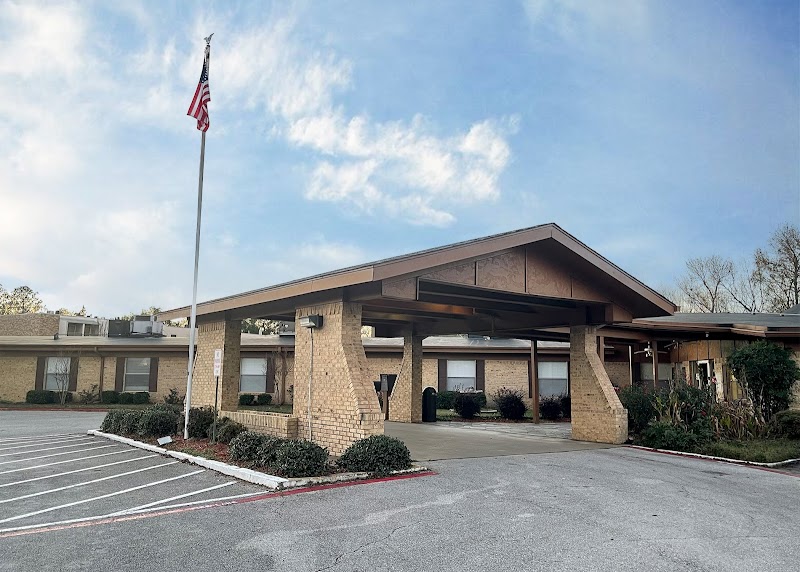
AZALEA HEIGHTS

3505 OLD JACKSONVILLE RD, TYLER, TX 75701 (903) 561-2011
For profit - Corporation 120 Beds TOUCHSTONE COMMUNITIES Data: November 2025 3 Immediate Jeopardy citations
Trust Grade
9/100
#636 of 1168 in TX
Last Inspection: September 2024

Within standard 12-15 month inspection cycle. Federal law requires annual inspections.

Overview

Azalea Heights in Tyler, Texas has received a Trust Grade of F, indicating significant concerns about the quality of care provided. Ranking #636 out of 1168 facilities in Texas places it in the bottom half, and #11 out of 17 in Smith County means there are only a few local options that are better. The facility is showing signs of improvement, having reduced reported issues from 5 in 2024 to 1 in 2025. However, the staffing situation is average, with a 58% turnover rate that is similar to the state average, and the facility has incurred $28,145 in fines, which is also average but still raises some concerns. Specific incidents noted include a resident falling from a bed and suffering a fracture due to insufficient supervision and not consulting with a physician when a resident's health deteriorated significantly, which led to a critical emergency situation. Overall, while there are some improvements, the facility has serious weaknesses that families should consider.

Trust Score
F
9/100
In Texas
#636/1168
Bottom 46%
Safety Record
High Risk
Review needed
Inspections
Getting Better
5 → 1 violations
Staff Stability
⚠ Watch
58% turnover. Above average. Higher turnover means staff may not know residents' routines.
Penalties
✓ Good
$28,145 in fines. Lower than most Texas facilities. Relatively clean record.
Skilled Nurses
⚠ Watch
Each resident gets only 21 minutes of Registered Nurse (RN) attention daily — below average for Texas. Fewer RN minutes means fewer trained eyes watching for problems.
Violations
⚠ Watch
16 deficiencies on record. Higher than average. Multiple issues found across inspections.
★★☆☆☆
2.0
Overall Rating
★★☆☆☆
2.0
Staff Levels
★★☆☆☆
2.0
Care Quality
★★☆☆☆
2.0
Inspection Score
Stable
2024: 5 issues
2025: 1 issues

The Good

  • Full Sprinkler Coverage · Fire safety systems throughout facility
  • No fines on record

Facility shows strength in fire safety.

The Bad

2-Star Overall Rating

Below Texas average (2.8)

Below average - review inspection findings carefully

Staff Turnover: 58%

12pts above Texas avg (46%)

Frequent staff changes - ask about care continuity

Federal Fines: $28,145

Below median ($33,413)

Moderate penalties - review what triggered them

Chain: TOUCHSTONE COMMUNITIES

Part of a multi-facility chain

Ask about local staffing decisions and management

Staff turnover is elevated (58%)

10 points above Texas average of 48%

The Ugly 16 deficiencies on record

3 life-threatening
Sept 2025 1 deficiency 1 IJ
CRITICAL (J) 📢 Someone Reported This

A family member, employee, or ombudsman was alarmed enough to file a formal complaint

Immediate Jeopardy (IJ) - the most serious Medicare violation

Accident Prevention (Tag F0689)

Someone could have died · This affected 1 resident

**NOTE- TERMS IN BRACKETS HAVE BEEN EDITED TO PROTECT CONFIDENTIALITY** Based on observation, interview and record review the facility failed to ensure the resident environment remained as free of acc...

Read full inspector narrative →
**NOTE- TERMS IN BRACKETS HAVE BEEN EDITED TO PROTECT CONFIDENTIALITY** Based on observation, interview and record review the facility failed to ensure the resident environment remained as free of accident hazards as was possible and each resident received adequate supervision and assistance devices to prevent accidents for 1 of 4 residents (Resident #1)The facility failed to prevent Resident #1 from sustaining a fall from the bed on 08/28/2025 which resulted in a fractured right femur. The noncompliance was identified as PNC (past noncompliance). The IJ began on 08/28/2025 and ended on 09/02/2025. The facility had corrected the noncompliance before the survey began.This failure could place residents at risk of potential accidents, injuries, harm, or death.Findings included:Record review of Resident #1's face sheet on 09/29/2025 indicated a [AGE] year-old female who was admitted to the facility on [DATE] with diagnoses including: anoxic brain damage (a medical emergency that occurs when the brain does not get enough oxygen, even when blood flow is adequate), convulsions, aphasia (disorder that affects how you communicate), nonpsychotic mental disorder (a mental health condition that does not involve psychosis and includes anxiety disorders, depression and personality disorders), pseudobulbar affect (inappropriate involuntary laughing and crying due to a nervous system disease), and high blood pressure.Record review of a quarterly MDS dated [DATE] indicated Resident #1 had no speech, sometimes understood others and was sometimes understood, she had a BIMS score of 00 indicating severe cognitive impairment. She required total assistance with ADLs and could not feed herself. She was incontinent of bladder and bowel. She was dependent with mobility and walking unassisted. She had one fall with major injury since the prior MDS assessment. She received a mechanically altered diet. She had a surgical wound.Record review of care plans for Resident #1 indicated she had a care plan initiated on 10/18/2023 and revised on 05/02/2024 which indicated she was at risk for falls due to debility, weakness, and cognitive impairment. Goals included: The resident will be free from falls and/or will not experience significant injuries associated with falls through next review date. Care plan interventions included: bed at appropriate height when unattended and a bolster on mattress for safe boundaries to minimize risk for rolling out of bed.Review of Resident #1's Progress Notes in the electronic record indicated the following:Progress note dated 8/28/2025 at 2:55 PM indicated resident noted lying on her right side on the floor by her bed, laceration noted to face just under left eyebrow, purple bruise noted to right knee, decreased length and internal rotation noted to right lower extremity, resident shows signs and symptoms of pain when she attempts to move, all other extremities have normal ROM, EMS notified and in route, DON, Administrator, NP and family notified, attempted to make resident as comfortable as possible on floor without excessive movement, will continue to observe. Progress note dated 8/28/2025 at 3:08 PM indicated EMS in facility to transfer resident, resident in route to ER, attempted to call report in to hospital, nurse at ER stated she will receive report from EMS.Progress notes dated 8/31/2025 at 6:22 PM indicated Resident came from hospital after right hip surgery. resident currently stable, alert, and without acute distress. Dressing to surgical wound dry and intact. v/s BP 103/56, temp. 99.3 oxygen saturation 100% on room air heart rate 109. Will continue routine care and monitoring.During an observation on 09/29/2025 at 8:20 AM Resident #1 was at the nurses' station in her specialized wheelchair with the back tilted backwards. She was alert to her surroundings and looking about. She was clean and dressed appropriately for the day.During an observation on 09/29/2025 at 2:20 PM Resident #1 was in her bed. The head of the bed was elevated 45 degrees and she was lying on her left side. She opened her eyes when the room was entered but laid her head back down and closed her eyes. The bed was in the low position and bolsters were present on the bed on both sides of the resident. The bolsters were short in length and covered the middle length of the mattress.During an interview on 09/29/2025 at 2:25 PM CNA U was in Resident #1's room and said she had worked at the facility about a year. She said Resident #1 was to have bolsters on her bed when she was in the bed because she moved around a lot and could fall out of bed.During an interview on 09/29/2025 at 3:15 PM, ADON A said she was next door to Resident #1's room on the afternoon of 08/28/2025 and heard a loud bump or thud sound; She said LVN Q was making his start of shift rounds and called to her to come to Resident #1's room. She said the resident was on the floor. She said a wedge cushion was in front of the closet at the foot of the roommate's bed. She said the bed was also left in the higher position where it would normally be during a mechanical lift transfer. She said she did not see any bolsters or wedge cushions on the bed or around the resident. She said the resident required the bolsters because she wiggled and moved about in the bed and had very poor control over her body. During an observation on 09/30/2025 at 9:25 AM Resident #1 was sitting in her specialized wheelchair at the bedside. LVN E was taking the resident's blood pressure prior to administering medications. Resident #1 was calm and alert and did not exhibit any fear. Bolsters were present on both sides of her bed.During an interview on 09/30/2025 at 9:45 AM the DON said CNA B said she had placed a black wedge positioning device under the sheet on Resident#1's bed on 08/28/2025 when she returned her to bed between 1:00 PM-1:30 PM prior to leaving her shift. She said the resident was asleep in bed when she left at 2:00 PM. She said LVN Q told her he did not see the wedge when Resident #1 was found on the floor. She said CNA B demonstrated how she placed the black wedge on the bed. She said CNA B told her the bolsters were not on the bed when she came on shift at 6:00 AM and the black wedge was being used. She said the CNA B said she did not know why the bolsters were not being used as in the past, but she used the wedge like she had seen that morning. The DON said CNA B was suspended immediately pending the results of the investigation. She said the bolsters were found in front of the closet in the resident's room. She said all direct care staff had access to the Kardex through computers on the hall, in the break room and at the nurses' station. She said the Kardex designated care needs and procedures to be done for each individual resident in the facility. She said it was a plan of care and contained everything a staff member may need to know to properly care for a resident including positioning/safety devices. She said she had verified with CNA B she knew how to use the Kardex and she indicated she did. She said the facility immediately began developing an action plan regarding the fall with major injury.During an interview on 09/30/2025 at 4:00 PM LVN Q said he was making his beginning of shift rounds on 08/28/2025 and found Resident #1 on the floor by her bed. He said he could not recall for sure if there was a black positioning wedge present on or around her bed. He said he received assistance from ADON A who happened to be next door. He said the resident had small cuts on her left eyebrow and her right leg was turned inward, and she expressed pain when being repositioned. LVN Q said he along with all staff received in-services on fall prevention and safety, abuse and neglect, resident rights and use of the Kardex. He said he made rounds at least 2-3 times per shift and always at the beginning and end of shift. Record review of a printed form of the Kardex for Resident #1 dated 08/28/2025 indicated under Safety bolster on mattress to for safe boundaries to minimize risk for rolling out of bed and under Monitors bed at appropriate height when left unattended.A review of the facility investigation report indicated the incident occurred on 08/28/2025 at 2:55 PM and was reported to the state agency on 08/28/2025 at 6:16 PM. Resident #1 was found lying on the floor beside her bed. She had a laceration to her left eyebrow and under her left eye. Her right leg was turned inward and she expressed pain and discomfort upon movement. She was immediately sent to the ER and she was diagnosed with a fracture to her right femur. The resident was supposed to have bolsters on the mattress to minimize risk of rolling out of bed. The CNA had used a black wedge instead of the bolsters when the resident was returned to bed prior to her leaving her shift at 2:00 PM. The CNA was immediately suspended during the investigation. Record review of a handwritten statement dated 08/28/2025 CNA B stated she had put Resident #1 to bed after lunch and placed a pad under her.Record review of a handwritten statement dated 08/28/2025 at 7:45 PM by an unknown interviewer indicated CNA B got Resident #1 out of bed for breakfast and she stayed up through lunch. She was put back to bed after lunch, and she inserted a black pad underneath the sheet. The CNA stated the resident was asleep in bed when she left the facility at 2:00 PM.Record review of a handwritten statement dated 08/28/2025 at 9:00 PM by the DON indicated CNA B was interviewed at the facility regarding her activities with Resident #1 on 08/28/2025. The CNA said the resident did not have any special devices in bed with her. When asked about the bolsters she said she used the small one which was the same one on the bed that morning. She said the resident usually had long ones but someone must have taken them off the bed and replaced them with the small one. The DON had the CNA demonstrate how she placed the black wedge on the bed in the room. She asked the CNA about the long bolsters she was referring to and the CNA indicated 2 bolsters half the length of the mattress in front of the closet. When asked why she did not use the bolsters she replied she did not know why and shrugged her shoulders. She said she just put back what had been there that morning. She said she usually used the bolsters but did not because they had been taken off the bed. The CNA was then told she was suspended pending the rest of the investigation.During multiple interviews on 09/30/2025 with nurses, CNAs, and MAs from two shifts (6AM-2PM and 2PM-10PM) (RN D, LVN E, CNA/MA F, CNA G, CNA H, CNA J, CNA/MA K, CNA L, LVN M, CNA N, CNA P, CNA R, CNA/MA S, CNA/MA T, CNA U, CNA V, CNA W, CNA/MA X, CNA Y) from 9:25 AM-11:38 AM and 4:00 PM 4:35 PM indicated they were trained on Fall Prevention and Safety, Abuse and Neglect, Resident Rights, and use of the Kardex. They could explain what information was contained in the Kardex and knew how to access the Kardex for any information regarding residents' care. They were aware Resident #1's need for bolsters when she was in bed and for the bed to be in a low position.The Administrator was informed of PNC IJ on 09/30/2025 at 2:40 PM.The facility completed the following to correct the noncompliance prior to state surveyor entrance:CNA B was immediately suspended pending investigation and terminated 09/02/2025 due to disregard for resident safety.Record review of documentation of training of all staff conducted beginning 08/28/2025 after the fall and completed 09/01/2025 on Fall Prevention and Safety, Abuse and Neglect, Resident Rights, and use of the Kardex.Record review of documentation indicated the MDS Coordinator completed 100% care plan and Kardex audit to validate accuracy of level of care needed with ADLs and transfers was completed 08/28/2025.Record review of documentation of Safe Surveys done on random residents and staff completed 08/29/2025. Residents indicated they felt safe in the facility and had no incidents of mistreatment by staff.Record review of documentation of Monitoring Response indicated: 1) weekly rounds to validate interventions related to fall prevention are in place 1-7 days for 2 months; 2) conduct random skills validation regarding Kardex use 3-7 days a week for 2 months. 3) additional education based on needs observed during this process; 4) all findings to be reported to QAIP during monthly meeting until 100% compliance was met.The noncompliance was identified as PNC. The IJ began on 08/28/2025 and ended on 09/02/2025. The facility had corrected the noncompliance before the survey began.
Sept 2024 2 deficiencies
CONCERN (D)

Potential for Harm - no one hurt, but risky conditions existed

Medical Records (Tag F0842)

Could have caused harm · This affected 1 resident

**NOTE- TERMS IN BRACKETS HAVE BEEN EDITED TO PROTECT CONFIDENTIALITY** Based on observations, interviews, and record review, the facility failed to maintain clinical records in accordance with accept...

Read full inspector narrative →
**NOTE- TERMS IN BRACKETS HAVE BEEN EDITED TO PROTECT CONFIDENTIALITY** Based on observations, interviews, and record review, the facility failed to maintain clinical records in accordance with accepted professional standards and practices that were completed and accurately documented for 1 of 4 residents (Resident #281) reviewed for medical records accuracy. The facility failed to ensure an order for enteral feedings (liquid nutrition delivered via a tube inserted into the body) from the hospital was documented in Resident #281 s physician's orders at the facility. The facility failed to document the administration of liquid nutrition for 4 consecutive days after Resident #281 was admitted to the facility. These failures could place residents at risk for not receiving the appropriate care and services to maintain the highest level of well-being. Findings included: Record review of Resident #281's face sheet and physician's orders dated 09/17/2024 indicated he was a [AGE] year-old male who admitted to the facility on [DATE] with diagnoses which included, dysphagia (difficulty swallowing), gastrostomy tube (a tube inserted through the abdominal wall, into the stomach for the purpose of delivering liquid nutrition), cardiac arrest, respiratory failure, and hypertension. Record review of the physician's orders dated 09/13/2024 indicated there was no order for Resident #281 to receive any enteral nutrition. Record Review of Resident #281's MAR for September 2024, indicated there was no documentation he received Jevity 1.2 @ 70 ml/hour with 60 ml water flushes every 4 hours on 9/13/2024, 9/14/2024, 9/15/2024, 9/16/2024, and 9/17/2024. Record review of Resident #281's Hospital Discharge Records indicated an order for him to receive Jevity 1.2 at 70ml/hour with a water flush of 30ml/hour via the gastrostomy tube. During an observation on 09/16/2024 at 10:20 a.m., Resident #281 was non-interview able and was observed to be lying in bed with his eyes closed with the head of the bed elevated approximately 30 degrees. A container of Jevity 1.2 (liquid nutrition) was noted to be hanging from a metal pole and infusing via a tube leading to the resident's stomach at a rate of 70ml/hour. Resident #281 was again observed to be receiving the same liquid nutrition on 09/16/2024 at 3:30 p.m., on 09/17/2024 at 9: 30 a.m., and on 09/18/2024 at 10:00 a.m . During an interview on 09/18/2024 at 1:30 p.m., the MDS RN said a physician order for Jevity 1.2 @ 70 ml/hr. with 60 ml water flush every 4 hours, was entered into electronic health records, and on the MAR but it was entered late at 3:30 p.m., as a start date for 09/17/2024 . During an interview on 09/18/2024 at 2:30 p.m., the Director of Clinical Operations Nurse said, LVN B received report at the change of shift from the day shift agency nurse and completed the New admission form. She said LVN B failed to enter Resident #281's physician order for external feedings into his EHR. She said all of Resident #281's other admission orders were entered into his EHR accurately . During an interview on 09/18/2024 at 4:30 p.m., LVN B said he had worked for the facility for 13 years, he stated on 09/13/2024, he received, and accepted report at the change of shift from the day shift agency nurse, she had received a verbal order from the hospital for the external feeding. LVN B stated, the agency nurse had completed the setup and the external feeding (Jevity 1.2 @ 70 ml/hour.), it was already hanging. LVN B stated he proceeded with the admission assessment and failed to enter Resident #281's external feeding order into his EHR. LVN B said all other orders were entered into the electronic health records accurately . During an interview on 09/18/2024 at 5:30p.m., the DON, said the two facility's ADON's were responsible for checking and reviewing all new admissions, re-admissions, check lists, and physician orders to ensure orders were put in accurately. She said the ADON's were responsible for ensuring Medication administration orders were entered into the EHR for the correct patient, correct time, correct route, correct dose, correct medication, and the correct documentation accurately . Reviewed the facility Professional Standard of Care Policy dated implemented 02/2017 and revised on 01/2024 stated, . Nurses should conduct assessments or evaluations and document within the medical record in the following instance: 1) admission, re-admission, and as clinically indicated. 2) at the time of an incident or change in conditions. 3) when exceptions are identified. 4) as otherwise directed.
CONCERN (F)

Potential for Harm - no one hurt, but risky conditions existed

Food Safety (Tag F0812)

Could have caused harm · This affected most or all residents

**NOTE- TERMS IN BRACKETS HAVE BEEN EDITED TO PROTECT CONFIDENTIALITY** Based on observation, interview and record review, the facility failed to store, prepare, distribute, and serve food under sanit...

Read full inspector narrative →
**NOTE- TERMS IN BRACKETS HAVE BEEN EDITED TO PROTECT CONFIDENTIALITY** Based on observation, interview and record review, the facility failed to store, prepare, distribute, and serve food under sanitary conditions in the facility's only kitchen observed for kitchen sanitation. The paper towel dispensers at the hand wash sink and employee restroom had no paper towels. The bulk flour bin had a large scoop stored inside the product on 09/16/24 and 09/17/24. The utensil drawer was soiled with food debris and dried liquid. A 25 lb. bag of brown sugar and 2-16 oz. bags of potato chips were opened and not re-sealed. The 3 compartment sink was not sanitizing and was being used. The 3 compartment sink and dish machine logs had been pre-filled with results for the entire day (09/16/24) when the noon and evening meals had not occurred. The results indicated temperatures and sanitizing conditions. The large ice machine in the dining area contained copious amounts of black debris on the ice chute. In the 2 door stainless steel reach in cooler 1-46 oz. nectar thick orange juice had been opened and not labeled with the open date. These failures could place residents who ate food from the kitchen at risk of foodborne illness. Findings included: During observations, interviews and record reviews on 09/16/24 of the kitchen the following was noted: *at 9:10 AM there were no paper towels in the dispenser at the hand washing sink by the dish room. *at 9:18 AM in the employee restroom there were no paper towels in the dispenser. *at 9:21 AM the bulk flour bin contained a scoop in the flour. *at 9:26 AM the utensil drawer under the prep table by the French door oven had dried food debris in the bottom of the drawer and the edge of the drawer had dried liquid where food crumbs had stuck to it. The DM said the drawer was cleaned weekly and then said 2 to 3 times. *at 9:30 AM in the dry pantry one light brown sugar 25 lb bag was opened and not re-sealed, *at 9:32 AM 2-16 oz. potato chip bags were opened and the tops were rolled down and not secured or placed in a re-sealable bag, *at 9:42 AM [NAME] A was washing pans and placing them in the rinse water sink and then into the sanitizing sink. The DM checked the sanitizing sink with a quarternary test strip and the test strip indicated the solution was not sanitizing. [NAME] A said she had just made up the 3 sinks but did not test the sink for sanitizing solution. She said she did not take the temperatures because she knows the temperature by the feel of it on her hands. The DM said they are supposed to check the sanitizer when they make a fresh sink. He asked [NAME] A when they put on the new bottle of sanitizer and she said on Saturday. The DM said the sanitizing solution should test between 200 and 400 ppm. He said the kitchen staff were to check the sanitizer when they wash the dishes for each meal and log it on the Test Strip Log for the Three Compartment Sink. Review of the log at 9:54 AM on 09/16/2024 indicated the whole day (3 meal times) had already been filled in. It indicated the sanitizer was reading 200 ppm and the temperatures of the wash and rinse water were 150 degrees. A review of the Dish Machine & Sanitizing Log on 09/16/2024 at that same time indicated the log had been filled out for the lunch and evening meals. The DM was asked about the log being pre-filled and he got a liquid paper dispenser in order to cover the entries. A copy was made before it was changed. The DM said he would call the vendor to recalibrate the dispenser. *at 10:00 AM in the large ice machine in the dining area the ice chute was wiped with a paper towel and returned with copious amounts of black debris. The Maintenance Supervisor said the machine was cleaned one month ago by the vendor. He said the vendor said the black debris was from the local water supply. He said there was a filter on the incoming water line into the machine. He said the vendor deep cleaned the machine every 3 months and he cleaned the coils, emptied the bin and cleaned it, cleaned the fins, and put in a new filter. He said the filter usually just had a bit of silt or [NAME] material. He showed his receipt on his phone from the vendor where the machine had been deep cleaned on 08/27/2024. He said he cleaned the machine on 09/02/2024. He said the kitchen staff were supposed to clean the chute, door and entry front of the machine at least weekly if not more often. There was no documentation provided by the dietary manager as to the kitchen cleaning the front of the ice machine. The small ice machine adjacent to the large machine was clean and received water through the same water line as the large machine. There was no debris on the chute. During an observation of the kitchen on 09/17/24 at 11:27 AM the bulk flour bin had a large scoop stored in the flour. At 11:28 AM the 2 door stainless steel reach in cooler had 1-46 oz. nectar thick orange juice that had been opened and not labeled with the open date. The package indicated Once opened may be kept up to 7 days under refrigeration. Record review of a Dietary Service policy, revised date of January 2023, indicated the following: .The community ensures that the nutritive value of food is not compromised and destroyed by the following: prolonged food storage and exposure to light and air . .The community procures food from sources approved or considered satisfactory by federal, state, or local authorities and stores, prepares, distributes, and serves food under sanitary conditions.Sanitary conditions are defined as the proper storage, preparation, distribution, and serving of food to prevent food borne illness. .Water temperatures .Manual: Compartment sink (wash, rinse, sanitize): Sanitizing solution used according to manufacturer's instructions. Record review of the General Kitchen Sanitation policy, undated, indicated the following: . 5. After cleaning and until use, store and handle all food-contact surfaces of equipment and multi-use utensils in a manner that protects the surfaces from manual contact, splash, dust, dirt, insects and other contaminants .11. Check retrooms regularly throughout the shift, and be sure they are stocked with soap, toilet paper and paper towels 12. Make sure hand-washing facilities are easily accessible and supplied with soap and paper towels. Record review of the Manual Cleaning and Sanitizing of Utensil and Portable Equipment policy, undated, indicated the following: .6. In the first sink, immerse the equipment or utensils in a hot, clean detergent solution at a temperature of no less than 120 degrees F. 7. Rinse in the second sink using clear, clean water between 120 degrees F and 140 degrees F to remove all traces of food, debris and detergent. 8. Sanitize all multi-use eating and drinking utensils and the food-contact surfaces of other equipment in the third compartment by one of the following methods: . b. Immerse for t least 60 seconds in a clean sanitizing solution containing: . iii. Any other chemical sanitizing agent which has demonstrated to be effective and non-toxic under use conditions and for which a suitable field test is available. Such other sanitizing agents, in-use solutions, shall provide the equivalent sanitizing effect of a solution containing at least 50 parts per million of available chlorine at a temperature not less than 75 degrees F. The concentration and contact time for quaternary ammonium compounds shall be in accordance with the manufacturer's label directions. 9. Test and record the parts per million concentration of the solution.
Apr 2024 3 deficiencies
CONCERN (D) 📢 Someone Reported This

A family member, employee, or ombudsman was alarmed enough to file a formal complaint

Potential for Harm - no one hurt, but risky conditions existed

Accident Prevention (Tag F0689)

Could have caused harm · This affected 1 resident

**NOTE- TERMS IN BRACKETS HAVE BEEN EDITED TO PROTECT CONFIDENTIALITY** Based on observation, interview and record review the facility failed to ensure each resident receives adequate supervision to p...

Read full inspector narrative →
**NOTE- TERMS IN BRACKETS HAVE BEEN EDITED TO PROTECT CONFIDENTIALITY** Based on observation, interview and record review the facility failed to ensure each resident receives adequate supervision to prevent accidents for 1 of 2 residents reviewed for accident hazards (Resident #3). The facility failed to ensure Resident #3 had no history of elopement before accepting her as resident (the facility did not have a secure unit nor a wander guard system and thus would not accept residents with a history of elopement). The facility did not accurately assess Resident #3's physical ability to leave the facility upon her admission on [DATE]. This failure could place residents with recent at risk for inadequate supervision elopement and significant injury. Findings included: Record review of the face sheet for Resident #3 dated 4/26/24 indicated she was [AGE] years old, admitted to the facility on [DATE] with diagnoses including Dementia, high blood pressure, atherosclerosis (buildup of cholesterol plaque in the walls of arteries causing obstruction of blood flow), osteoporosis (A condition in which bones become weak and brittle) and high cholesterol. Record review of the baseline care plan for Resident #3 dated 4/24/24 indicated Resident #3 had a diagnosis of Dementia and would be provided care and safety checks throughout each shift. The care plan was updated on 4/25/24 and indicated Resident #3 was exit seeking and at risk for elopement and/or wandering with unsafe boundaries. The care plan indicated Resident #3 had a history of actual attempts to leave the facility unattended. The care plan interventions included 1 on 1 observation (1 staff member with the Resident at all times) until she could be transferred to a memory care unit. Record review of the nursing note dated 4/25/24 at 11:30 a.m. for Resident #3 indicated the nurse heard the D hall alarm go off the nurse responded to the alarm and saw Resident #3 walking across the parking lot. The nursing note indicated the nurse followed Resident #3 and asked her to come back to the facility but Resident #3 continued heading down the sidewalk when another employee joined her and was able to catch up to Resident #3. The note indicated the facility staff were able to convince Resident #3 to come back to the facility and call her family. The nursing note indicated upon return to the facility Resident #3 was placed on 1 to 1 observation. During an interview on 4/26/24 at 1:00 p.m., RN A said Resident #3's elopement incident occurred early in the morning on 4/25/24 at approximately 7:45 a.m. RN A said she was at the nursing station when the D hall alarm went off. RN A said she went to the D hall exit door and looked outside and saw Resident #3. RN A said Resident #3 was approximately 20 feet from the exit door walking briskly and started across the parking lot. RN A said she just couldn't keep up with her and said she could not run to get her. RN A said she continued to follow Resident #3 across the parking lot when human resources staff E pulled into the parking lot. RN A said Resident #3 crossed the side street and started onto the sidewalk (across the side street from the facility). RN A said human resources staff E ran and got Resident #3 by the hand. RN A said human resources staff E stood talking with Resident #3 until she (RN A) could reach her (Resident #3). RN A said Resident #3 was then taken back into the facility. RN A said she immediately notified the DON who instructed her to ensure Resident #3 was placed on 1 to 1 observation. RN A said 1 to 1 observation meant a staff member was to stay with Resident #3 at all times and have no other assignment. RN A said she knew nothing of Resident #3's elopement history. During an interview on 4/26/24 at 1:10 p.m., human resources staff E said as she arrived to the facility at approximately 7:45 a.m. on 4/25/24, she saw Resident #3 walking across the parking lot. Human resources staff E said she was not sure at first that Resident #3 was a resident and thought perhaps she was just someone out walking, cutting across the parking lot. Human resources staff E explained Resident #3 was walking at a brisk pace and did not seem confused or lost. Human resources staff said as she pulled into her parking spot Resident #3 had crossed the side street and started onto the sidewalk. Human resources staff E said she saw RN A walking across the parking lot and asked her if the lady walking was a resident. Human resources staff E said RN A yelled Yes, and so she ran up to Resident #3 held her hand and started talking to her. Human resources staff E said RN A caught up to them and they took her (Resident #3) back into the facility. During an observation and interview on 4/26/24 at 1:40 p.m., Resident #3 said she just left the facility because she needed to call her family. Resident #3 sat smoking a cigarette in the smoking area with staff beside her. Resident #3 was asked again about leaving the facility and she said, Oh I don't know about that. During an interview on 4/26/24 at 2:09 p.m. Resident #3's family member #2 said she spoke with the admissions coordinator last Friday (4/19/24) and sent over all the necessary paperwork to have her admitted . Family member #2 said Resident #3 was admitted to facility in the afternoon on 4/25/24 but could not say exactly what time. Family member #2 said the facility contacted her on 4/26/24 and told her Resident #3 had eloped from the facility. Family member #2 said they were keeping someone with Resident #3 at all times and would do so until they could find a facility with a secure unit for her. During an interview on 4/26/24 at 2:13 p.m., Resident #3's family member said Resident #3 was admitted into the facility on 4/25/24 sometime after 1:30 p.m. in the late afternoon. Resident #3's family member said he had been contacted and told Resident #3 had eloped from the facility and that the facility was seeking out a home that could provide a secured unit for Resident #3. The family member said he understood the need for a secured unit and had no problem with the transfer but was a little frustrated because the whole reason the family sought long-term care was because Resident #3 had wandered off from her apartment and was found by the police. The family member said they (the family) was upfront with the facility and had told them of the event. Record review of Resident #3's admission paperwork found no documentation of elopement history or the incident described by Resident #3's family member in which she left her apartment and was found by police. During an interview on 4/26/24 at 3:20 p.m., admissions coordinator B said she had talked to the Resident #3's family member #2 last Friday (4/19/24) regarding an admission for Resident #3. Admissions coordinator B said when she spoke with family member #2, she told her the family was seeking admission into long term care because she (Resident #3) had reached a point she would call family members constantly and the care she needed was just too much for them. Admissions coordinator B said family member #2 said she/he worked during the day and could not check on Resident #3 as often was needed and could not take her calls as often as she would call. Admissions coordinator B said the family seemed to be in a rush to get her admitted and had all the necessary paperwork to them on Friday (4/29/24). Admissions coordinator B said the facility used a centralized admission process. She explained that once all the necessary paperwork was gathered it was sent to the company's central office for review. Admissions coordinator B said sometimes the central office will send back notes or conditions after reviewing the paperwork. Admissions coordinator B said for example a nurse may have to go out and evaluate the potential resident. Admissions coordinator B said this was not the case for Resident #3 as the central office had cleared her for admission. Admissions coordinator B said family member #2 said nothing to her about Resident #3 having eloped from her independent living apartment and being found by the police. Admissions coordinator B said the facility did not take Residents with a history of elopement. During an interview on 4/26/24 at 3:32 p.m., the DON said she knew nothing of Resident #3's history of elopement and there was nothing in the records received regarding a history of elopement. The DON said the facility simply would not have accepted Resident #3, had they known about the elopement history. The DON said the facility did not have a wander guard system nor a secured unit and therefore did not accept residents with an elopement history. The DON said the facility had secured placement for Resident #3 in a facility with a secured unit, but the facility could not take her until Monday (4/29/24). The DON said Resident #3 would remain on 1 on 1 observation until she was transferred to the facility with the secured unit. During an interview on 4/29/24 at 10:40a.m., Resident #1's family member said the family had decided Resident #3 needed to be placed in long term care because she had left her apartment and was found by the police on 4/18/24. The family member said Resident #3 lived independently in her apartment until that incident. The family member said the facility had been contacted regarding possible admission and all the required paperwork was sent 4/19/24. The family member said admissions coordinator B, business office manager C and social worker D all were aware of Resident #3's history of eloping from her apartment and being found by the police on 4/18/24. During an interview on 4/29/24 at 10:50 a.m., admissions coordinator B said she had spoken with family member #2 and it was never relayed to her that Resident #3 had eloped form her apartment. Admissions coordinator B said the facility just would not have taken her and had just denied someone placement last week because they had a history of elopement. During an interview on 4/29/24 at 10:55 a.m., business office manager C said the family had not told her anything about Resident #3's elopement history. Business office manager C said she had only discussed financial aspects and payor sources with the family as that was what her job entailed. During an interview on 4/29/24 at 11:04 a.m., social worker D said the family had not said anything to her about Resident #3 having a history of elopement. Social worker D said she helped the family complete a DNR and completed PASRR paperwork and the family never mentioned Resident #3 had left her apartment and was found by police. Record review of the admission assessment dated [DATE] at 4:08 p.m. section L Exit seeking tool, indicated Resident #3 did not have the physical ability to leave the building on her own. This section of the admission assessment had no further assessment questions answered as the tool stated . (1) Is the resident physically able to leave the building on their own? If no, disregard remaining questions. This assessment was completed by LVN F. During an interview on 4/29/24 at 1:30 p.m., ADON G said she could not say why LVN F would have marked no on the admission assessment, as Resident #3 had the physical ability to leave the building but said she did not feel this assessment would have prevented Resident #3 from eloping the facility. ADON G said the remaining questions on the exit seeking tool if the question, Is the resident physically able to leave the building on their own? was marked yes asked about wandering, wandering history, exit seeking, exit seeking history, and the display of behaviors related to wandering and exit seeking. ADON G said at the time the assessment had been completed Resident #3 had been in the facility a few hours and Resident #3 had not displayed any of those behaviors. The ADON said she knew nothing of Resident #3's elopement history. ADON G said the facility does not accept resident with exit seeking behavior. During an interview on 4/29/24 at 1:35 p.m., the DON said Resident #3 had been transferred to a facility with a secured unit. The DON said she had always taken the question on the admission assessment under section L Exit seeking tool to mean would the resident leave the building on their own. The DON said after re-reading the question she understood the question to ask whether or not a resident had the physical ability to leave the building. The DON said she did not feel the assessment would have prevented Resident #3's elopement from the building. She said the remaining questions on the exit seeking tool if the question, Is the resident physically able to leave the building on their own? was marked yes asked about wandering, wandering history, exit seeking, exit seeking history, and the display of behaviors related to wandering and exit seeking. The DON said at the time the assessment had been completed Resident #3 had been in the facility a few hours and Resident #3 had not displayed any of those behaviors. The DON said she knew nothing of Resident #3's elopement history. The DON said had she have known Resident #3 had a history of elopement the facility would have not accepted her. During an interview on 4/29/24 at 2:17 p.m., LVN F said she marked no on the admission assessment under section L Exit seeking tool because she understood the question to mean would the resident leave the building on their own. LVN F said Resident #3 had been in the facility a few hours but had not displayed any exit seeking behaviors and was content in her room when she cared for her. Record review of the facility policy and procedure revised January 2023, titled Elopement Response & Exit Seeking Management stated, .A. Elopement Response: Unable to locate resident (1) If a resident is unable to be located or the alarms have sounded, immediately initiate a search of the entire community both inside and outside premises B. Response following the location of the resident: (1) Once located and safety confirmed, conduct an assessment. (2) Place resident on enhanced monitoring, consider 1:1 for a specified time as needed to ensure the safety of resident or consider placement in secured unit for continued monitoring and safety. The facility policy and procedure did not detail the facility would not accept Resident's with a history of elopement. During an interview on 4/29/24 at 2:20 p.m., the corporate RN said the facility did not have a policy and procedure that specifically addressed the accurate completion of admission assessments or regarding the centralized admission process. Record review of the facility policy and procedure revised January 2023, titled Professional Standards of Care, stated, .Nurses should conduct assessments or evaluations and document nurses' notes in the following instances: 1) routine charting for residents should reflect the recipient's ability as assessed upon admission, re-admission and as clinically indicated; and 2) at the time of accidents, incidents or change in condition. All exceptions to stable, baseline or usual status should be recorded as exceptions and included in the clinical record .
CONCERN (D) 📢 Someone Reported This

A family member, employee, or ombudsman was alarmed enough to file a formal complaint

Potential for Harm - no one hurt, but risky conditions existed

Medication Errors (Tag F0758)

Could have caused harm · This affected 1 resident

**NOTE- TERMS IN BRACKETS HAVE BEEN EDITED TO PROTECT CONFIDENTIALITY** Based on interviews and record review, the facility failed to ensure each residents' drug regimen was free from unnecessary psyc...

Read full inspector narrative →
**NOTE- TERMS IN BRACKETS HAVE BEEN EDITED TO PROTECT CONFIDENTIALITY** Based on interviews and record review, the facility failed to ensure each residents' drug regimen was free from unnecessary psychotropic drugs (without adequate monitoring) for 1 (Resident # 1) of 4 residents whose medications were reviewed for pharmacy services. The facility failed to ensure Resident #1 was consistently and adequately monitored for adverse side effects of Lorazepam (medication used to treat anxiety, lorazepam belongs to a class of drugs known as benzodiazepines which act on the brain and nerves [central nervous system] to produce a calming effect). This failure could place residents at risk of possible medication side effects, adverse consequences, decreased quality of life, and dependence on unnecessary medications. Findings included: Record review of the face sheet dated 4/22/24 for Resident #1 indicated he was [AGE] years old, admitted to the facility on [DATE] with diagnoses including, Alzheimer's disease, high blood pressure, restlessness and agitation, anxiety disorder, heart disease, neuropathy (Weakness, numbness, and pain from nerve damage), visual hallucinations, major depressive disorder, agoraphobia (Fear of places and situations that might cause panic, helplessness, or embarrassment), and orthostatic hypotension (low blood pressure that happens when standing up from sitting or lying down). Record review of the MDS for Resident #1 dated 4/6/24 indicated he usually made himself understood and usually understood others. The MDS indicated Resident #1 had short-term and long-term memory problems. The MDS indicated he had severely impaired cognitive skills for decision machining. The MDS indicated he had no behavior of rejecting care. The MDS indicated he had no indicators of psychosis and displayed no physical or verbal behaviors towards others or himself. The MDS indicated he was dependent on staff for ADLS. Record review of the care plan dated 4/2/24 indicated Resident #1 required the use of anti-anxiety medication, the care plan interventions included administer medications per MD orders, monitor/document/report to the MD any adverse reactions to anti-anxiety therapy (drowsiness, lack of energy, clumsiness, slow reflexes, slurred speech, confusion, disorientation, depression, dizziness, lightheadedness, impaired thinking, and judgement, memory loss, forgetfulness, nausea, stomach upset, blurred or double vision) or unexpected side effects (mania, hostility, rage, aggressive or impulsive behavior, hallucinations). Record review of Resident #1's physician order dated 4/1/24 indicated he was to be administered Lorazepam Oral Tablet 0.5 MG by mouth at bedtime for anxiety hold for sedation. This order was discontinued on 4/10/24. Record review of Resident #1's physician order dated 4/2/24 indicated Resident #1 was to be monitored for the following Antianxiety Side Effects Monitoring: sedation/drowsiness, increased falls/dizziness, hypotension, anxiety/agitation, blurred vision, sweating/rashes, weakness, headache, dystonia, urinary retention/hesitancy, anticholinergic symptoms, cardiac abnormalities, hangover effect. The order indicated any other side effects noted should be documented in a progress note. This order was discontinued on 4/10/24. Record review of Resident #1's physician order dated 4/10/24 indicated he was to be administered Lorazepam Oral Tablet 0.5 MG by mouth three times a day for anxiety hold for sedation. This order was discontinued on 4/14/24. Record review of Resident #1's physician order dated 4/14/24 indicated he was to be administered Lorazepam Oral Tablet 0.5 MG by mouth two times a day for anxiety hold for sedation. This order was discontinued on 4/18/24. Record review of Resident #1's physician order dated 4/18/24 indicated he was to be administered Lorazepam Oral Tablet 0.5 MG by mouth at bedtime for anxiety hold for sedation. This order was discontinued on 4/23/24. Record review of Resident #1's MAR for April 2024 indicated he had been administered his Lorazepam as ordered by the physician from 4/1/24 to 4/18/24. Record review of the MAR indicated Resident #1 was monitored for the following Antianxiety Side Effects Monitoring: sedation/drowsiness, increased falls/dizziness, hypotension, anxiety/agitation, blurred vision, sweating/rashes, weakness, headache, dystonia, urinary retention/hesitancy, anticholinergic symptoms, cardiac abnormalities, hangover effect, from 4/2/24 to 4/10/24. The MAR did not indicate Resident #1 was monitored for the antianxiety side effects from 4/11/24 to 4/19/24. Record review of Resident #1's nurse's notes dated 4/11/24-4/13/24 found the following documentation related to antianxiety side effects monitoring: *4/11/24 at 3:00 a.m., no adverse effects of lorazepam *4/12/24 at 1:39 a.m., no adverse effects of lorazepam *4/13/24 - no notes related to antianxiety side effects monitoring were documented Record review of Resident #1's nursing note dated 4/14/24 at 1:34 p.m., stated .resident responding to verbal and physical stimuli very slowly. Resident family requesting that Ativan (brand name for lorazepam) be put on hold until resident is more alert. Notified MD .received new order . Record review of Resident #1's nurse's notes dated 4/15/24-4/17/24 found the following documentation related to antianxiety side effects monitoring: *4/15/24 - no notes related to antianxiety side effects monitoring were documented *4/16/24- no sedation noted *4/17/24- no notes related to antianxiety side effects monitoring were documented Record review of Resident #1's nursing progress note dated 4/18/24 at 1:34 p.m., indicated an order for all psychotropic medications to be put on hold had been obtained due to lethargy. During an interview on 4/24/24 at 12:14 p.m., LVN J said she took care of Resident #1 regularly. LVN J said she took care of Resident #1 on 4/13/24. LVN J said there were a lot of changes with Resident #1's lorazepam. LVN J said nurses should assess residents on antianxiety medications at least once a shift and document on the MAR. LVN J said there was a place to document antianxiety side effects monitoring on the MAR. LVN J said it would be especially important to assess/document for antianxiety side effects monitoring for residents having changes in dosage like Resident #1. LVN J said if for some reason the antianxiety side effects monitoring was not on the MAR the nurse should document the antianxiety side effects monitoring on a nursing progress note. LVN J said she had not realized she had not documented antianxiety side effects monitoring for Resident #1 on 4/13/24. LVN J said she did document when Resident #1 was found over sedated and notified the MD on 4/14/24. LVN J said Resident #1 was not over sedated on 4/13/24 or she would have documented and notified the MD at that time. During an interview on 4/24/24 at 1:26 p.m., LVN K said she took care of Resident #1 on 4/17/24. LVN K said there was a place to document antianxiety side effects monitoring on the MAR. LVN K said it would be especially important to assess/document for antianxiety side effects monitoring for residents having changes in dosage like Resident #1. LVN K said if for some reason the antianxiety side effects monitoring was not on the MAR, she would document the antianxiety side effects monitoring on a nursing progress note. LVN K said she had not realized she had not documented antianxiety side effects monitoring for Resident #1 on 4/17/24. During an interview on 4/24/24 at 1:30 p.m., ADON I said he had spoken to the MD and received the order for the increase of Resident #1's lorazepam on 4/10/24. ADON I said he had dc'd the old order for the lorazepam but did not realize the side effect monitoring was dc'd at the time. ADON I said it was important to monitor residents on antianxiety medications especially after an increase in dosage to ensure they were not overly sedated or experiencing any adverse effects. ADON I said he wasn't sure if he had to enter the monitoring as a separate order or if it was coupled with lorazepam order. During an interview on 4/24/24 at 3:30 p.m., the DON said she expected nurses to monitor and document for adverse effects/side effects of antianxiety medications at least once a shift. The DON said she did not understand how the antianxiety side effect monitoring was removed from Resident #1's MAR. The DON said antianxiety side effect monitoring should have remained on the MAR the entire time Resident #1 was on the antianxiety medication. The DON said it was especially important for antianxiety side effect monitoring to be performed with the increase in dosage Resident #1 was ordered. The DON said there had not been a specific system in place to ensure nurses were monitoring/documenting for psychotropic adverse/side effects prior to 4/19/24. The DON said she was know monitoring resident's receiving psychotropic medications weekly to ensure they received appropriate monitoring. A facility policy and procedure regarding the monitoring residents on psychotropic medications was requested but not received.
CONCERN (E) 📢 Someone Reported This

A family member, employee, or ombudsman was alarmed enough to file a formal complaint

Potential for Harm - no one hurt, but risky conditions existed

ADL Care (Tag F0677)

Could have caused harm · This affected multiple residents

**NOTE- TERMS IN BRACKETS HAVE BEEN EDITED TO PROTECT CONFIDENTIALITY** Based on observation, interview and record review, the facility failed to provide the necessary services to maintain acceptable ...

Read full inspector narrative →
**NOTE- TERMS IN BRACKETS HAVE BEEN EDITED TO PROTECT CONFIDENTIALITY** Based on observation, interview and record review, the facility failed to provide the necessary services to maintain acceptable grooming and personal hygiene for 2 of 3 residents reviewed for ADLs (Resident's #1 and Resident #2). The facility failed to ensure Resident #1's received a bath until 5 days after his admission. The facility failed to ensure Resident #2 received a bath/shower for 4 weeks. This failure could place dependent residents at risk for poor personal hygiene, skin infections and decreased quality of life. Findings included: Record review of the face sheet dated 4/22/24 for Resident #1 indicated he was [AGE] years old, admitted to the facility on [DATE] with diagnoses including, Alzheimer's disease, high blood pressure, restlessness and agitation, anxiety disorder, heart disease, neuropathy (Weakness, numbness, and pain from nerve damage), visual hallucinations, major depressive disorder, agoraphobia (Fear of places and situations that might cause panic, helplessness, or embarrassment), and orthostatic hypotension (low blood pressure that happens when standing up from sitting or lying down). Record review of the MDS for Resident #1 dated 4/6/24 indicated he usually made himself understood and usually understood others. The MDS indicated Resident #1 had short-term and long-term memory problems. The MDS indicated he had severely impaired cognitive skills for decision machining. The MDS indicated he had no behavior of rejecting care. The MDS indicated he was dependent on staff for eating, oral hygiene, toileting, showers/bathing, dressing (both the upper and lower body), putting on footwear, and personal hygiene. The MDS indicated he was always incontinent of bowel and bladder. Record review of the care plan dated 4/2/24 indicated Resident #1 was at risk for self-care deficit. The care plan interventions included 2-person assistance with bed mobility, hygiene, transfers, and toileting. During an interview on 4/25/24 at 10:39 a.m., Resident #1's family member said she visited Resident #1 every day while he was in the facility. Resident #1's family member said he remained in the same clothes for the first 4 days he was in the facility (4/1/24 to 4/4/24) and did not think he had received a shower. Record review of Resident #1's ADL documentation did not indicate he had received a shower or bath from 4/1/24 to 4/5/24. 2. Record review of the face sheet for Resident #2 dated 4/26/24 indicated he was [AGE] years old, admitted to the facility on [DATE] with diagnoses including paraplegia (Paralysis that affects all or part of the trunk, legs, and pelvic organs), COPD (group of lung diseases that block airflow and make it difficult to breathe), artificial openings of the urinary tract status, colostomy (an opening in the large intestine, or the surgical procedure that creates one. The opening is formed by drawing the healthy end of the colon through an incision in the anterior abdominal wall and suturing it into place), and depression. Record review of the MDS dated [DATE] for Resident #2, indicated he made himself understood and understood others. The MDS indicated he had no cognitive impairment (BIMS of 15). The MDS indicated he had no behavior of rejecting care. The MDS indicated Resident #2 required substantial/maximal assistance with toileting. The MDS indicated he was dependent on staff for shower/bathing. During an observation and interview on 4/26/24 at 12:40 p.m., revealed Resident #2 laid in his bed. His hair appeared greasy. Resident #2 had a faint smell of body odor. Resident #2 said he had not received a shower or bed bath in 4 weeks. Resident #2 said he had not asked any staff about not receiving a bath or shower but knew he was supposed to receive them. Resident #2 said he felt staff had not provided him a shower because doing so was a bit of process. Resident #2 explained he had to be lifted from the bed with a mechanical lift and lowered onto a shower bed. Resident #2 said he felt staff just didn't want to go through the process of providing him a shower. During an interview and observation on 4/29/24 at 9:35 a.m., Resident #2 laid in his bed. His hair appeared greasy. Resident #2 had a faint smell of body odor. Resident #2 said he had not received a shower or bed bath since 4/26/24. Resident #2 said his gown was changed but he was not given a shower. Resident #2 said he asked for a washcloth to wash his face and arm pits but was not provided one. Resident #2 said he did not know the name of the CNA he asked for a washcloth. Record review of the ADL documentation for Resident #2 from 4/13/24 to 4/29/24 indicated he received a bath/shower on the following dates: *4/27/24- documented by CNA L *4/25/24- documented by CNA M *4/20/24- documented by CNA N *4/18/24- documented by CNA O *4/16/24- documented by CNA P During an interview on 4/29/24 at 1:26 p.m., CNA M said she did not give a bath or shower to Resident #2 on 4/25/24. CNA M said she was not even assigned to him on that day. CNA M said she gave her sign in information to agency staff so they could document and that was why the documentation reflected she had documented Resident #2 had received a bath on that day (4/25/24). CNA M said she could not remember the agency staff members name. CNA M said she had given her sign in information to multiple agency staff. During an interview on 4/29/24 at 2:37 p.m., CNA L said she had provided Resident #2 a bed bath when she worked on 4/27/24. CNA L said Resident #2 received a bed bath on 4/27/24 because he refused to a shower. An interview with CNA N regarding Resident #2 was attempted on 4/29/24 but was not completed due to no returned phone call. An interview with CNA O regarding Resident #2 was attempted on 4/29/24 but was not completed due to no returned phone call. An interview with CNA P regarding Resident #2 was attempted on 4/29/24 but was not completed due to no returned phone call. During an interview on 4/29/24 at 2:15 p.m., CNA L said it was important residents received scheduled bathing/showers in order to maintain hygiene and identify any skin changes. CNA L said the administration of showers/baths were documented in EMR record. During an interview on 4/29/24 at 2:17 p.m., LVN F said it was important for residents to receive showers/baths to ensure good hygiene and make the resident feel better. During an interview on 4/29/24 at 2:37 p.m., the DON said she expected CNAs to provide residents with showers/baths. The DON said it was important for residents to receive their showers/baths to promote hygiene. Record review of the facility policy and procedure titled Activities Daily Living revised January 2023 stated .each resident's abilities to perform activities of daily living will not diminish .Activities of daily living include: personal hygiene . The facility policy and procedure did not specifically address ensuring dependent resident received showering/bathing.
Oct 2023 5 deficiencies 2 IJ
CRITICAL (J) 📢 Someone Reported This

A family member, employee, or ombudsman was alarmed enough to file a formal complaint

Immediate Jeopardy (IJ) - the most serious Medicare violation

Notification of Changes (Tag F0580)

Someone could have died · This affected 1 resident

**NOTE- TERMS IN BRACKETS HAVE BEEN EDITED TO PROTECT CONFIDENTIALITY** Based on interview and record review, the facility failed to consult with the resident's physician when there was a significant ...

Read full inspector narrative →
**NOTE- TERMS IN BRACKETS HAVE BEEN EDITED TO PROTECT CONFIDENTIALITY** Based on interview and record review, the facility failed to consult with the resident's physician when there was a significant change in the resident's physical and mental status that is, a deterioration in health, mental, or psychosocial status in either life-threatening conditions or clinical complications for 1 of 4 (Resident #1) residents reviewed for resident rights. The facility failed to notify Resident #1's physician of elevated blood sugars resulting in her being sent to the emergency department unresponsive and with a blood sugar of 946 (normal blood sugar ranges are 70-110) This failure resulted in an identification of an Immediate Jeopardy (IJ) at 3:00 p.m. on 10/4/23. While the IJ was removed on 10/6/23 at 10:39 a.m. the facility remained out of compliance at actual harm that is not immediate jeopardy with a scope identified as isolated due to the facility's need to complete in-service training and evaluate the effectiveness of the corrective systems. This failure could result in diabetic residents suffering injury, hospitalization, or death related elevated blood sugars. Findings Include: 1. Record review of a face sheet dated 10/6/23 indicated Resident #1 was a [AGE] year-old female admitted to the facility om 3/3/04 with diagnoses including diabetes, dementia, major depressive disorder, and hypertension (elevated blood pressure). Record review of the MDS assessment dated [DATE] indicated Resident #1 was understood by others and usually understood others. The MDS indicated Resident #1 had a BIMS score of 09 and was moderately cognitively impaired. Record review of Resident #1's care plan last updated 8/31/23 indicated Resident #1 had diabetes and was at risk for complications associated with diabetes such as frequent infections, diabetic wounds, vision impairment, and hyper\hypo-glycemia. Interventions included administer medications as recommended by the doctor, monitor labs as indicated, and promptly report abnormal labs results and significant clinical findings to the doctor. Record review of the physician orders dated 10/4/23 indicated Resident #1 had an order for Humalog (a fast-acting insulin to treat diabetes) 100u/ml inject 14 unit subcutaneously before meals related to diabetes starting 9/4/23. The physician orders indicated Resident #1 had an order for Lantus (a long-acting insulin to treat diabetes) 100u/ml Inject 12 unit subcutaneously two times a day for diabetes starting 9/4/23. Record review of the MAR indicated on 9/24/23 Resident #1 had a blood sugar readings of 409 at 7:00 a.m., 502 at 12:00 p.m., and 600 at 5:00 p.m. Record review of the nursing progress notes dated 9/24/23 indicated there had not been physician notification regarding the three elevated blood sugar readings. Record review of the nursing progress note dated 9/25/23 at 3:50 a.m. written by RN A indicated she, received a phone call from the 2:00 p.m.-10:00 p.m. nurse stating that she had forgotten to tell me about [Resident #1's] p.m. blood sugar. Record review of the hospital record dated 9/25/23 indicated Resident #1 admitted to the emergency department via EMS after being found unresponsive at the facility. The hospital records indicated RN A reported Resident #1 had been found unresponsive at approximately 3:00 a.m. The hospital records indicated RN A reported Resident #1 had a blood glucose reading of HI (blood sugar reading greater than 600) and continued to have an undetectable blood glucose reading. The hospital records indicated due to the undetectable blood glucose reading the decision was made to send Resident #1 to the hospital. The hospital records indicated Resident #1 was sedated and intubated. The hospital records indicated Resident #1 had a blood glucose reading of 946. Record review of the hospital Discharge summary dated [DATE] indicated Resident #1 had diagnoses including diabetic ketoacidosis with coma related to diabetes (a process that forms toxic acids known as ketones (measure in the blood or urine and high blood sugar resulting in coma) and non-ST elevated myocardial infarction (heart attack). During an interview on 10/4/23 at 1:49 p.m., the NP said she remembered receiving a phone call at approximately 4:30 a.m. on 9/25/23 regarding Resident #1's blood sugars. The NP said she had not been previously notified of Resident #1 having an elevated blood sugar. The NP said the 10:00 p.m.- 6:00 a.m. nurse had called her and informed her the nurse who had worked 2:00 p.m.-10:00 p.m. the previous shift called the 10:00 p.m.-6:00 a.m. nurse at approximately 3:00 a.m. and told her she had forgot to let her know about Resident #1's elevated blood sugar. The NP said the 10:00 p.m.-6:00 a.m. nurse did not have current vital signs or a current blood sugar for Resident #1 when she called. The NP said the 10:00 p.m.-6:00 a.m. nurse told her she waited 1.5 hours to notify her of Resident #1's elevated blood sugars from the previous shift because she was passing medications. The NP said she gave orders for Resident #1's blood sugar to be checked. The NP said when she received the blood sugar results, she gave an order to administer insulin and recheck in one hour. The NP said when the nurse called her back after re-checking Resident #1's blood sugar an hour later, the nurse informed her Resident #1 was unresponsive. The NP said she gave an order for Resident #1 to be transported to the emergency department for evaluation. The NP said she was not informed of Resident #1's blood sugar being 946 when she arrived at the hospital. The NP said she expected the nurses to notify her of a blood sugar of 400 or greater. During an interview on 10/6/23 at 2:59 p.m., LVN C said she worked a double shift from 6:00 a.m.-10:00 p.m. on 9/24/23. LVN C said she did not notify the physician of Resident #1's elevated blood sugars because she got sidetracked. LVN C said she should have notified the physician and just did not do it. LVN C said she did not think about Resident #1's elevated blood sugars again until approximately 1:00 a.m. LVN C said jumped up and called the night nurse at that time. LVN C said she did not tell the nurse about Resident #1's elevated blood sugars during report due to the fact she had forgotten about it. LVN C said she called back the next morning and found out Resident #1 had been sent to the hospital. During an interview on 10/6/23 at 3:17 p.m., the DON said she expected the nurses to report any blood sugar over 400 to the physician or NP immediately. Record review of the facility's Diabetic Management policy last revised January 2023 indicated, Diabetic Management involves both preventative measures and treatment of complications .The interdisciplinary team assesses the diabetic resident/patient upon admission, validated the orders with the attending physician and initiates plan of care that may include: blood glucose monitoring as ordered .Blood glucose measurements shall be take per the physician order. Results outside of order parameters should be communicated to the physician per orders .Acute Complication Management: It is best practice to avoid hypoglycemic events in the older adult .For acute events, the clinical record shall include the following information: resident's condition indicated clinical presentation, blood glucose test levels, interventions provided, resident's response to treatment or interventions administered, and notification of the physician and any new orders . The Administrator was notified on 10/4/23 at 3:22 p.m. that an Immediate Jeopardy situation was identified due to the above failure. The Administrator was provided the Immediate Jeopardy template on 10/4/23 at 3:26 p.m. The facility's Plan of Removal was accepted on 10/5/23 at 4:48 p.m. and included: Situation: Resident # 1 was discharged to the hospital on 9-5-23 due to a change in condition. Resident was diagnosed and treated for Urinary Sepsis secondary ESBL secondary chronic indwelling foley catheter. Resident re-admitted to facility on 9-10-23 with a diagnosis of Urinary Sepsis as well as Diabetes Mellitus. Resident #1 was being treated with antibiotic therapy and completed the regimen on 9-15-23 as per physician's orders. On 9/24/23 Resident # 1 presented with abnormal blood glucose levels and on 9/25/23 Resident #1 experienced an acute change in condition. Upon identifying the change in condition, the nurse evaluated the patient's condition, notified the physician and at 4:40am nurse received new orders to administer Humalog 10units, at 5:50am the nurse re-checked the blood glucose following the administration of the insulin and the nurse notified the medical provider and received new order to send Resident #1 to the emergency department for evaluation and treatment. Outcome: Resident was admitted and treated in the hospital on 9/25/23, was noted to be at medical and cognitive baseline and has been readmitted to facility on 10/3/23. Regional Nurse Consultant re-educated the Director of Nursing / Assistant Director of Nursing regarding the expected management of a diabetic patient, assessing/evaluating and responding to the urgent needs of the diabetic patient based on presenting symptoms of hyper and hypoglycemia, observing and monitoring a resident's condition, evaluation of the resident's status, reporting changes in condition to the physician, obtaining physician's orders, following physician's recommendations/orders, documenting clinical findings and orders within the medial record (SBAR/progress note) as well as complete and document notifications of the change in status to the MD/PCP and resident/resident's representative accordingly. Date commenced: 10/4/23 Date of completion: 10/4/23 The Director of Nursing Services/Assistant Director of Nursing conducted education to all licensed nurses the expected management of a diabetic patient, how to respond to signs and symptoms of hyper/hypoglycemia, assessing/evaluating and responding to the needs of the diabetic patient based on presenting symptoms of hyper and hypoglycemia, reviewing and validating the plan of care with regards to blood glucose monitoring, sliding scale insulin orders routinely and/or as needed, prescriber's plan of care and management of the diabetic resident and following physician's orders/recommendations. Date completed: 10/4/2023 The Director of Nursing Services/Assistant Director of Nursing conducted and education to all licensed nurses regarding the process for observing and monitoring a resident's condition, proceed with an assessment / evaluation of the resident's status, reporting changes in condition to the physician, obtaining physician's orders, following physician's recommendations/orders, documenting clinical findings and orders within the medial record (SBAR/progress note) as well as complete and document notifications of the change in status to the MD/PCP and resident/resident's representative accordingly. Date commenced: 10/4/23 Date to be completion: 10/4/2023 Risk Response: All residents who are diabetic may potentially be affected by the deficient practice. Administrator and Director of Nursing and Medical Director conducted an Ad Hoc QAPI to review issue and community's response plan in place. Date of Completion: 10/5/2023 Director of Nursing Services/Assistant Director of Nursing Services completed a 100% audit on all residents who receive insulin. Physician orders were audited to ensure blood sugar parameters where in place as well as notifications to the MD/NP with the indicated parameters for all residents who receive insulin. Date completed: 10/4/2023 The Director of Nursing / Assistant Director of Nursing/Licensed Nurse will review all diabetic patients' current plan of care with the attending MD/NP to ensure that the appropriate orders are in place per MD/NP's prescribed plan of care and confirm accuracy of diabetic management orders. The nurse will document the MD/NP's orders should any new or changes in the plan of care be provided by the prescriber. Date Commenced: 10/4/23 Date to be completion: 10/4/2023 Systemic Response: Inservice training & re-education will be provided to all licensed nurses regarding topics: Director of Nursing / Assistant Director of Nursing conducted retraining for all licensed nursing staff prior to assuming next shift/assignment. Inservice topics included but not limited to the following: the expected management of a diabetic patient, how to respond to signs and symptoms of hyper/hypoglycemia. assessing/evaluating and responding to the needs of the diabetic patient based on presenting symptoms of hyper and hypoglycemia, reviewing and validating the plan of care with regards to blood glucose monitoring, sliding scale insulin orders routinely and/or as needed, prescriber's plan of care and management of the diabetic resident and following physician's orders/recommendations. The process for observing and monitoring a resident's condition, proceed with an assessment / evaluation of the resident's status, reporting changes in condition to the physician, obtaining physician's orders, following physician's recommendations/orders, documenting clinical findings and orders within the medial record (SBAR/progress note) as well as complete and document notifications of the change in status to the MD/PCP and resident/resident's representative accordingly. We are using the education on abuse, neglect, and exploitation as an opportunity for our team members. Date completed: 10/4/2023 10:00PM Director of Nursing / Assistant Director of Nursing will ensure all licensed nursing staff to include anyone on leave/agency/PRN staff will be in serviced prior to working next shift. Director of Nursing / Assistant Director of Nursing will ensure administrative nursing staff in the community to provide in-service/education prior team members working their assigned shift. The trainings will also be conducted with new hires. Date completed 10/4/2023. Director of Nursing / Assistant Director of Nursing in-serviced all C.N.As and M.As prior to assuming their next shift regarding reporting changes in residents' condition to the licensed nurse. Date of completed: 10/5/2023. All staff will be in-serviced on Abuse, Neglect and Exploitation- Prevention, Identification, Protecting and Reporting. This is used for educational purposes. Date Commenced: 10/4/2023 Date to be completion: 10/5/2023 Community Director of Nursing / ADON will ensure all licensed nurses on leave/agency/PRN staff are in serviced prior to working their shift. Community Director of Nursing / Designee will ensure administrative nursing staff in the community to provide in-service/education prior team members working their assigned shift. Monitoring Response The Director of Nursing/Assistant Director of Nursing will conduct 3 random audits per week of diabetic patients' plan of care and physician orders to validate the prescribed plan of care is being followed specifically reviewing orders for blood glucose monitoring for both labs being monitored and/or routine finger-stick blood glucose accu-checks monitoring as prescribed by the medical provider. The Director of Nursing/Assistant Director of Nursing will conduct random interviews during random shifts to ensure licensed nurses are able to identify signs and symptoms of hyper/hypoglycemia. Director of Nursing/Assistant Director of Nursing will also conduct daily reviews during the clinical start-up meeting (1-7days per week) to review new admissions, new orders for diabetic blood glucose monitoring ordered, review the 24hr report, pertinent progress notes, and SBARs (changes in condition documentation) to ensure that appropriate interventions are in place and to identify additional follow up interventions has been assigned. This plan will remain in place for the next 1-2 months to ensure compliance or to identify any further training needs. Findings of those observations will be reported to the QAPI committee during monthly meeting for the next 1- 2 months. On 10/6/23 the surveyor confirmed the facility implemented their plan of removal sufficiently to remove the Immediate Jeopardy (IJ) by: Record review of the facility's Diabetic Management policy updated 10/4/23 indicated the policy had been updated to include both hyper and hypo-glycemia signs and symptoms and what to do in the event of a resident experiencing hyper or hypo-glycemia. Record review of a random selection of residents with diagnosis of diabetes who receive insulin's orders indicated orders had been updated to include blood glucose parameters and to notify the physician if the resident's blood sugar was outside of the parameters. Record review of the Ad Hoc QAPI meeting sign in sheet dated 10/4/23 indicated a QAPI meeting had been conducted regarding the above failure. Interviews with licensed nurses (LVN D, LVN E, RN F, LVN G, LVN H, and LVN J) on 10/6/23 between 9:17 a.m. and 10:35 a.m. were performed. During these interviews the nurses were able to name signs and symptoms of hyper and hypo-glycemia, blood sugar parameters and when to notify the physician, all types of abuse, what to do in the event of witnessed of reported abuse, and documentation of clinical findings and physician notification. Interviews with CNAs (CNA K, CNA L, CNA M, CNA N, and CNA P) on 10/6/23 between 9:17 a.m. and 10:35 a.m. were performed. During these interviews CNAs were able to identify changes in condition, when to report a change in condition, who to report a change in condition to, all types of abuse and what to do in the event of witnessed or reported abuse. On 10/6/23 at 10:39 p.m., the Administrator was informed the IJ was removed; however, the facility remained out of compliance at actual harm with a scope identified as isolated due to the facility's need to complete in-service training and evaluate the effectiveness of the corrective systems.
CRITICAL (J) 📢 Someone Reported This

A family member, employee, or ombudsman was alarmed enough to file a formal complaint

Immediate Jeopardy (IJ) - the most serious Medicare violation

Quality of Care (Tag F0684)

Someone could have died · This affected 1 resident

**NOTE- TERMS IN BRACKETS HAVE BEEN EDITED TO PROTECT CONFIDENTIALITY** Based on interview and record review the facility failed to ensure that residents receive treatment and care in accordance with ...

Read full inspector narrative →
**NOTE- TERMS IN BRACKETS HAVE BEEN EDITED TO PROTECT CONFIDENTIALITY** Based on interview and record review the facility failed to ensure that residents receive treatment and care in accordance with professional standards of practice for 1 of 4 (Resident #1) residents reviewed for quality of care. 1. The facility failed to monitor Resident #1's condition following elevated blood sugar readings. 2. The facility failed to notify Resident #1's physician of elevated blood sugars resulting in her being sent to the emergency department unresponsive and with a blood sugar of 946 (normal blood sugar ranges are 70-110) 3. The facility's Diabetic Management policy failed to address high blood sugars. 4. The facility failed to include blood sugar parameters for physician notification in Resident #1's physician orders. These failures resulted in an identification of an Immediate Jeopardy (IJ) at 3:00 p.m. on 10/4/23. While the IJ was removed on 10/6/23 at 10:39 a.m., the facility remained out of compliance at actual harm that is not immediate jeopardy with a scope identified as isolated due to the facility's need to complete in-service training and evaluate the effectiveness of the corrective systems. These failures could result in diabetic residents suffering injury, hospitalization, or death related elevated blood sugars Findings include: Record review of a face sheet dated 10/6/23 indicated Resident #1 was a [AGE] year-old female admitted to the facility om 3/3/04 with diagnoses including diabetes, dementia, major depressive disorder, and hypertension (elevated blood pressure). Record review of the MDS assessment dated [DATE] indicated Resident #1 was understood by others and usually understood others. The MDS indicated Resident #1 had a BIMS score of 09 and was moderately cognitively impaired. Record review of the care plan last updated 8/31/23 indicated Resident #1 had diabetes and was at risk for complications associated with diabetes such as frequent infections, diabetic wounds, vision impairment, and hyper\hypo-glycemia. Interventions included administer medications as recommended by the doctor, monitor labs as indicated, and promptly report abnormal labs results and significant clinical findings to the doctor. Record review of the physician orders dated 10/4/23 indicated Resident #1 had an order for Humalog (a fast-acting insulin to treat diabetes) 100u/ml inject 14 unit subcutaneously before meals related to diabetes starting 9/4/23. The physician orders indicated Resident #1 had an order for Lantus (a long-acting insulin to treat diabetes) 100u/ml Inject 12 unit subcutaneously two times a day for diabetes starting 9/4/23. Record review of the MAR indicated on 9/24/23 Resident #1 had a blood sugar readings of 409 at 7:00 a.m., 502 at 12:00 p.m., and 600 at 5:00 p.m. Record review of the nursing progress notes dated 9/24/23 indicated there had not been physician notification regarding the three elevated blood sugar readings. Record review of the nursing progress note dated 9/25/23 at 3:50 a.m. written by RN A indicated she had, received a phone call from the 2:00 p.m.-10:00 p.m. nurse stating that she had forgotten to tell me about [Resident #1's] p.m. blood sugar. I checked the resident's blood sugar and the reading was HI [blood sugar reading greater than 600] . Call placed to [the physician] and received voicemail that instructed me to text and wait for response. Awaiting response. Record review of the nursing progress dated 9/25/23 at 4:20 a.m. written by RN A indicated Spoke with [the NP]. Order received to recheck blood glucose [on Resident #1]. Blood glucose rechecked and still reads HI. 4:40 a.m. called [the NP] and new order received. 4:50 a.m. [Resident #1] was given 10units of Humalog Insulin. Record review of the nursing progress note dated 9/25/23 at 5:50 a.m. written by RN A indicated Recheck of [Resident #1's] blood glucose revealed glucometer still reading HI. Call placed to [the NP] and was instructed to send resident to hospital. EMS called and resident transferred to [hospital]. Record review of the hospital record dated 9/25/23 indicated Resident #1 admitted to the emergency department via EMS after being found unresponsive at the facility. The hospital records indicated RN A reported Resident #1 had been found unresponsive at approximately 3:00 a.m. The hospital records indicated RN A reported Resident #1 had a blood glucose reading of HI and continued to have an undetectable blood glucose reading. The hospital records indicated due to the undetectable blood glucose reading the decision was made to send Resident #1 to the hospital. The hospital records indicated Resident #1 was sedated and intubated. The hospital records indicated Resident #1 had a blood glucose reading of 946. Record review of the hospital Discharge summary dated [DATE] indicated Resident #1 had diagnoses including diabetic ketoacidosis with coma related to diabetes (a process that forms toxic acids known as ketones (measure in the blood or urine and high blood sugar resulting in coma) and non-ST elevated myocardial infarction (heart attack). During an interview on 10/4/23 at 1:45 p.m. RN B said the facility did not have standing orders to add blood sugar parameters of when to notify the physician for blood sugar readings if too high or too low. RN B said some residents did have individualized parameters in place for when to notify the physician regarding their blood sugars. RN B said blood sugar parameters of when to notify the physician were normally if the blood glucose level was less than 60 or greater than 400. RN B said if she had a resident who had a blood sugar of 400, 500, or 600 she would notify the physician. RN B said physician notification and new orders should have been documented. During an interview on 10/4/23 at 1:49 p.m. The NP said she remembered receiving a phone call at approximately 4:30 a.m. on 9/25/23 regarding Resident #1's blood sugars. The NP said she had not been previously notified of Resident #1 having an elevated blood sugar. The NP said the 10:00 p.m.-6:00 a.m. nurse had called her and informed her the nurse who had worked 2:00 p.m.-10:00 p.m. the previous shift called the 10:00 p.m.-6:00 a.m. nurse at approximately 3:00 a.m. and told her she had forgot to let her know about Resident #1's elevated blood sugar. The NP said the 10:00 p.m.-6:00 a.m. nurse did not have current vital signs or a current blood sugar for Resident #1 when she called. The NP said the 10:00 p.m.-6:00 a.m. nurse told her she waited 1.5 hours to notify her of Resident #1's elevated blood sugars from the previous shift because she was passing medications. The NP said she gave orders for Resident #1's blood sugar to be checked. The NP said when she received to blood sugar results she gave an order to administer insulin and recheck in one hour. The NP said when the nurse called her back after re-checking Resident #1's blood sugar an hour later the nurse informed her Resident #1 was unresponsive. The NP said she gave an order for Resident #1 to be transported to the emergency department for evaluation. The NP said she was not informed of Resident #1's blood sugar being 946 when she arrived at the hospital. The NP said she expected the nurses to notify her of a blood sugar of 400 or greater. During an interview on 10/5/23 at 12:38 p.m. RN A said she was employed at the facility since March 2023. RN A said on 9/25/23 at approximately 4:00 a.m., the nurse who worked the 2:00 p.m.-10:00 p.m. shift on 9/24/23 called and informed her she had forgot to tell her Resident #1's blood sugar was high. RN A said she immediately went to take Resident #1's blood sugar and it only read high. RN A said she called the physician and when he did not answer she waited approximately 30 minutes and then called the on-call for the administration. RN A she spoke RN B who was on-call for administrative call and was told to call the NP. RN A she called the NP and was told to administer 10u of Humalog and recheck in 1 hour RN A said Resident #1 was not very responsive when she administered the Humalog. After re-checking the blood sugar and it was still HI, she reported to NP, and called 911. She said Resident #1 was semi-conscious when she left for the hospital. RN A said she was unsure whether the facility had standing parameters of when to notify a physician regarding blood sugars. RN A said the physician or NP should have been notified if the glucometer read HI when checking a blood sugar. RN A said a glucometer reading of HI was usually over 600. RN A said she would probably notify the physician of a blood sugar reading of 400 or 500. During an interview on 10/6/23 at 2:59 p.m. LVN C worked a double shift from 6:00 a.m.-10:00 p.m. on 9/24/23. LVN C said she did not notify the physician of Resident #1's elevated blood sugars because she got sidetracked. LVN C said she should have notified the physician and just did not do it. LVN C said she did not think about Resident #1's elevated blood sugars again until approximately 1:00 a.m. LVN C said jumped up and called the night nurse at that time. LVN C said she did not tell the nurse about Resident #1's elevated blood sugars during report due to the fact she had forgotten about it. LVN C said she called back the next morning and found out Resident #1 had been sent to the hospital. During an interview on 10/6/23 at 3:17 p.m. the DON said she expected the nurses to report any blood sugar over 400 to the physician or NP immediately. Record review of the undated EvenCare G2 Blood Glucose Monitoring System's Healthcare Professional Operator's Manual indicated a reading of HI meant the patient's blood glucose was greater than 600. Record review of the facility's Diabetic Management policy last revised January 2023 indicated, Diabetic Management involves both preventative measures and treatment of complications .The interdisciplinary team assesses the diabetic resident/patient upon admission, validated the orders with the attending physician and initiates plan of care that may include: blood glucose monitoring as ordered .Blood glucose measurements shall be take per the physician order. Results outside of order parameters should be communicated to the physician per orders .Acute Complication Management: It is best practice to avoid hypoglycemic events in the older adult .For acute events, the clinical record shall include the following information: resident's condition indicated clinical presentation, blood glucose test levels, interventions provided, resident's response to treatment or interventions administered, and notification of the physician and any new orders . The Administrator was notified on 10/4/23 at 3:22 p.m. that an Immediate Jeopardy situation was identified due to the above failure. The Administrator was provided the Immediate Jeopardy template on 10/4/23 at 3:26 p.m. The facility's Plan of Removal was accepted on 10/5/23 at 4:48 p.m. and included: Situation: Resident # 1 was discharged to the hospital on 9-5-23 due to a change in condition. Resident #1 was diagnosed and treated for Urinary Sepsis secondary ESBL secondary chronic indwelling foley catheter. Resident re-admitted to facility on 9-10-23 with a diagnosis of Urinary Sepsis as well as Diabetes Mellitus. Resident #1 was being treated with antibiotic therapy and completed the regimen on 9-15-23 as per physician's orders. On 9/24/23 Resident # 1 presented with abnormal blood glucose levels and on 9/25/23 Resident #1 experienced an acute change in condition. Upon identifying the change in condition, the nurse evaluated the patient's condition, notified the physician and at 4:40am nurse received new orders to administer Humalog 10units, at 5:50am the nurse re-checked the blood glucose following the administration of the insulin and the nurse notified the medical provider and received new order to send Resident #1 to the emergency department for evaluation and treatment. Outcome: Resident was admitted and treated in the hospital on 9/25/23, was noted to be at medical and cognitive baseline and has been readmitted to facility on 10/3/23. Regional Nurse Consultant re-educated the Director of Nursing / Assistant Director of Nursing regarding the expected management of a diabetic patient, assessing/evaluating and responding to the urgent needs of the diabetic patient based on presenting symptoms of hyper and hypoglycemia, observing and monitoring a resident's condition, evaluation of the resident's status, reporting changes in condition to the physician, obtaining physician's orders, following physician's recommendations/orders, documenting clinical findings and orders within the medial record (SBAR/progress note) as well as complete and document notifications of the change in status to the MD/PCP and resident/resident's representative accordingly. Date commenced: 10/4/23. Date of completion: 10/4/23 The Director of Nursing Services/Assistant Director of Nursing conducted education to all licensed nurses regarding the expected management of a diabetic patient, how to respond to signs and symptoms of hyper/hypoglycemia, assessing/evaluating and responding to the needs of the diabetic patient based on presenting symptoms of hyper and hypoglycemia, reviewing and validating the plan of care with regards to blood glucose monitoring, sliding scale insulin orders routinely and/or as needed, prescriber's plan of care and management of the diabetic resident and following physician's orders/recommendations. Date completed: 10/4/2023. The Director of Nursing Services/Assistant Director of Nursing conducted education to all licensed nurses regarding the process for observing and monitoring a resident's condition, proceed with an assessment / evaluation of the resident's status, reporting changes in condition to the physician, obtaining physician's orders, following physician's recommendations/orders, documenting clinical findings and orders within the medical record (SBAR/progress note) as well as complete and document notifications of the change in status to the MD/PCP and resident/resident's representative accordingly. Date commenced: 10/4/2023. Date to be completion: 10/4/2023. Risk Response: All residents who are diabetic may potentially be affected by the deficient practice. Administrator and Director of Nursing and Medical Director conducted an Ad Hoc QAPI to review issue and community's response plan in place. Date to be completed: 10/5/2023. Director of Nursing Services/Assistant Director of Nursing Services completed a 100% audit on all residents who receive insulin. Physician orders were audited to ensure blood sugar parameters where in place as well as notifications to the MD/NP with the indicated parameters for all residents who receive insulin. Date completed: 10/4/2023. The Director of Nursing / Assistant Director of Nursing/Licensed Nurse will review all diabetic patients' current plan of care with the attending MD/NP to ensure that the appropriate orders are in place per MD/NP's prescribed plan of care and confirm accuracy of diabetic management orders. The nurse will document the MD/NP's orders should any new or changes in the plan of care be provided by the prescriber. Date completed: 10/4/2023. Systemic Response: Inservice training & re-education will be provided to all licensed nurses regarding topics: Director of Nursing / Assistant Director of Nursing conducted retraining for all licensed nursing staff prior to assuming next shift/assignment. Inservice topics included but not limited to the following: the expected management of a diabetic patient, how to respond to signs and symptoms of hyper/hypoglycemia. assessing/evaluating and responding to the needs of the diabetic patient based on presenting symptoms of hyper and hypoglycemia, reviewing and validating the plan of care with regards to blood glucose monitoring, sliding scale insulin orders routinely and/or as needed, prescriber's plan of care and management of the diabetic resident and following physician's orders/recommendations. The process for observing and monitoring a resident's condition, proceed with an assessment / evaluation of the resident's status, reporting changes in condition to the physician, obtaining physician's orders, following physician's recommendations/orders, documenting clinical findings and orders within the medial record (SBAR/progress note) as well as complete and document notifications of the change in status to the MD/PCP and resident/resident's representative accordingly. Date completed: 10/4/2023. 10:00PM Director of Nursing / Assistant Director of Nursing will ensure all licensed nursing staff to include anyone on leave/agency/PRN staff will be in serviced prior to working next shift. Director of Nursing / Assistant Director of Nursing will ensure administrative nursing staff in the community to provide in-service/education prior team members working their assigned shift. The trainings will also be conducted with new hires. Date completed: 10/4/2023. Director of Nursing / Assistant Director of Nursing in-serviced all C.N.As, and M.As prior to assuming their next shift regarding reporting changes in residents' condition to the licensed nurse. Date completed: 10/5/2023 All staff will be in-serviced on Abuse, Neglect and Exploitation, Prevention, Identification, Protecting and Reporting. This is for educational purposes for our employees. Date Commenced: 10/4/2023 Date to be completion: 10/5/2023 Community Director of Nursing / ADON will ensure all licensed nurses on leave/agency/PRN staff are in serviced prior to working their shift. Community Director of Nursing / Designee will ensure administrative nursing staff in the community to provide in-service/education prior team members working their assigned shift. Monitoring Response for the plan of correction. The Director of Nursing/Assistant Director of Nursing will conduct 3 random audits per week of diabetic patients' plan of care and physician orders to validate the prescribed plan of care is being followed specifically reviewing orders for blood glucose monitoring for both labs being monitored and/or routine finger-stick blood glucose accu-checks monitoring as prescribed by the medical provider. The Director of Nursing/Assistant Director of Nursing will conduct random interviews during random shifts to ensure licensed nurses are able to identify signs and symptoms of hyper/hypoglycemia. Director of Nursing/Assistant Director of Nursing will also conduct daily reviews during the clinical start-up meeting (1-7days per week) to review new admissions, new orders for diabetic blood glucose monitoring ordered, review the 24hr report, pertinent progress notes, and SBARs (changes in condition documentation) to ensure that appropriate interventions are in place and to identify additional follow up interventions has been assigned. This plan will remain in place for the next 1-2 months to ensure compliance or to identify any further training needs. Findings of those observations will be reported to the QAPI committee during monthly meeting for the next 1- 2 months. On 10/6/23 the surveyor confirmed the facility implemented their plan of removal sufficiently to remove the Immediate Jeopardy (IJ) by: Record review of the facility's Diabetic Management policy updated 10/4/23 indicated the policy had been updated to include both hyper and hypo-glycemia signs and symptoms and what to do in the event of a resident experiencing hyper or hypo-glycemia. Record review of a random selection of residents with diagnosis of diabetes who receive insulin's orders indicated orders had been updated to include blood glucose parameters and to notify the physician if the resident's blood sugar was outside of the parameters. Record review of Resident #1's physician orders for insulin indicated she had insulin orders starting 10/4/23 which included diabetic parameters to notify the physician for blood sugar readings of less than 60 or greater than 400. Record review of the Ad Hoc QAPI meeting sign in sheet dated 10/4/23 indicated a QAPI meeting had been conducted regarding the above failure. Interviews with licensed nurses (LVN D, LVN E, RN F, LVN G, LVN H, and LVN J) on 10/6/23 between 9:17 a.m. and 10:35 a.m. were performed. During these interviews the nurses were able to name signs and symptoms of hyper and hypo-glycemia, blood sugar parameters and when to notify the physician, all types of abuse, what to do in the event of witnessed of reported abuse, and documentation of clinical findings and physician notification. Interviews with CNAs (CNA K, CNA L, CNA M, CNA N, and CNA P) on 10/6/23 between 9:17 a.m. and 10:35 a.m. were performed. During these interviews CNAs were able to identify changes in condition, when to report a change in condition, who to report a change in condition to, all types of abuse and what to do in the event of witnessed or reported abuse. On 10/6/23 at 10:39 p.m., the Administrator was informed the IJ was removed; however, the facility remained out of compliance at actual harm with a scope identified as isolated due to the facility's need to complete in-service training and evaluate the effectiveness of the corrective systems.
CONCERN (D) 📢 Someone Reported This

A family member, employee, or ombudsman was alarmed enough to file a formal complaint

Potential for Harm - no one hurt, but risky conditions existed

Comprehensive Care Plan (Tag F0656)

Could have caused harm · This affected 1 resident

**NOTE- TERMS IN BRACKETS HAVE BEEN EDITED TO PROTECT CONFIDENTIALITY** Based on interview and record review, the facility failed to develop and implement a comprehensive person-centered care plan for...

Read full inspector narrative →
**NOTE- TERMS IN BRACKETS HAVE BEEN EDITED TO PROTECT CONFIDENTIALITY** Based on interview and record review, the facility failed to develop and implement a comprehensive person-centered care plan for each resident, consistent with resident rights for 1 of 9 (Resident #5) residents reviewed for care plans, The facility failed to ensure Resident #6's refusal of care was care planned. This failure could place the residents at increased risk of not having their individual needs met and a decreased quality of life. Findings Include: 1. Record review of the face sheet dated 10/6/23 indicated Resident #5 was a [AGE] year-old female admitted to the facility on [DATE] with diagnoses including hemiparesis and hemiplegia following a cerebral infarction (paralysis and weakness of one side following a stroke), contracture (a condition of shortening and hardening of muscles, tendons, or other tissues, often leading to deformity and rigidity of joint) of the right wrist, contracture of the right hand, and weakness. Record review of the MDS assessment dated [DATE] indicated Resident #5 was usually understood by others and usually understood others. The MDS indicated Resident #5 had a BIMS score of 03 and was severely cognitively impaired. The MDS indicated Resident #5 required extensive assistance with dressing, toileting, and personal hygiene. Record review of the care plan dated 8/6/23 indicated Resident #5 had a self-care deficit related to poor physical functioning. The care plan indicated interventions included bathing, dressing and grooming, and hygiene assistance times 1 person assist. Record review of the Documentation Survey Report dated August 2023 indicated Resident #5 was scheduled for showers on Tuesdays, Thursdays, and Saturdays. The Documentation Survey Report indicated Resident #5 refused her scheduled showers on 8/1/23, 8/8/23, 8/10/23, 8/12/23, 8/15/23, 8/17/23, 8/22/23, 8/26/23, and 8/29/23. Record review of the Documentation Survey Report dated September 2023 indicated Resident #5 refused her scheduled showers on 9/2/23, 9/7/23, 9/12/23, 9/14/23, and 9/21/23. During an interview on 10/6/23 at 10:35 a.m. LVN J said if a resident refused it should have been reported to the nurse. LVN J said the nurse should reapproach the resident and ask them about taking a shower. LVN J said if the resident continued to refuse the nurse should document the refusal. LVN J said if something was not documented it could not be proved it was done. LVN J said a resident who repeatedly refused their showers should have the refusal of care in their care plan. During an interview on 10/6/23 at 3:17 p.m. the DON said if a resident refused their scheduled shower the charge nurse was supposed to go ask the resident again. The DON said sometimes when the CNA askedhe resident about taking a shower the resident refuses because the resident wants their shower at a different time. The DON said the CNAs did not always make it back at a later time to provide the resident with their shower. The DON said when a resident routinely refuses their showers the facility would speak with the resident's family to get them to assist in getting the resident to take their shower. The DON said continuous refusals should be care planned. The DON said Resident #5 refused showers but would receive bed baths. The DON said a bed bath and a shower would be documented in the same place on the Documentation Survey Report. The DON said she was not sure why Resident #5's refusals had not been care planned. The DON said the nursing management was responsible for the resident care plans. The DON said the importance of care planning refusals was so staff would know exactly what was going on with a resident. Record review of the facility's Activities of Daily Living policy dated February 2017 indicated, Each resident's abilities to perform activities of daily living will not diminish unless the individual's clinical condition demonstrates that diminution was unavoidable. Activities of daily living include: personal hygiene .Residents who refuse care and treatment will be offered alternative treatment options and be advised of the negative impact of the continued refusal to accept treatment and care Record review of the facility's Care Plans policy dated February 2017 indicated, The community develops a comprehensive care plan for each resident that includes measurable objectives and timetables to meet a resident's medical, nursing, mental, and psychosocial need that are identified and in the comprehensive assessment .
CONCERN (D) 📢 Someone Reported This

A family member, employee, or ombudsman was alarmed enough to file a formal complaint

Potential for Harm - no one hurt, but risky conditions existed

Tube Feeding (Tag F0693)

Could have caused harm · This affected 1 resident

**NOTE- TERMS IN BRACKETS HAVE BEEN EDITED TO PROTECT CONFIDENTIALITY** Based on observation, interview, and record review, the facility failed to ensure a resident who is fed by enteral means receive...

Read full inspector narrative →
**NOTE- TERMS IN BRACKETS HAVE BEEN EDITED TO PROTECT CONFIDENTIALITY** Based on observation, interview, and record review, the facility failed to ensure a resident who is fed by enteral means receives the appropriate treatment and services to prevent complications of enteral feeding for 2 of 4 (Resident #2 and Resident #3) residents reviewed for quality of care. 1. The facility failed to ensure Resident #2's tube feeding formula was labeled clearly with the correct formula. 2. The facility failed to ensure Resident #2's tube feeding water flush was labeled with the date and time it was started. 3. The facility failed to ensure Resident #3's tube feeding formula was labeled with the time and date it was started. These failures could place residents receiving tube feedings at risk of gastrointestinal disturbances (relating to the stomach and the intestines), and bacterial infection. Findings included: 1. Record review of the face sheet dated 10/6/23 indicated Resident #2 was an [AGE] year-old male admitted to the facility on [DATE] with diagnoses including cerebral infarction (stroke), diabetes, hypertension (elevated blood pressure), and kidney failure. Record review of the MDS assessment dated [DATE] indicated Resident #2 was rarely/never understood by others and rarely/never understood others. The MDS indicated Resident #2 required extensive assistance with bed mobility, eating, dressing, toileting, and personal hygiene. The MDS indicated Resident #2 required tube feeding. Record review of the care plan last revised 9/27/23 indicated Resident #2 required a feeding tube related to difficulty swallowing. Record review of the physician orders dated 10/6/23 indicated Resident #2 had an order for enteral feed (tube feeding) every shift Jevity 1.5 @ 50 ml/hr starting 10/4/23 and every shift water flushes concurrently with feeding at 50ml/hr starting 10/4/23. During an observation on 10/4/23 at 12:55 p.m. Resident #2's flush water was not dated. Resident #2's feeding in bag was labeled with a handwritten label that read Glucerna [discontinued] Jevity 1.5 10/4/23 at 5:45 a.m. During interview and observation on 10/4/23 at 1:05 p.m. LVN R observed Resident #2's tube feeding with surveyor. LVN R said Resident #2 should be on Glucerna formula for feeding. LVN R said with the feeding formula being poured into a bag and the label reading Glucerna [discontinued] Jevity 1.5, it could not have been determined what formula was actually in the bag. LVN R said a new label should have been made if the resident was not on Glucerna and on Jevity instead. LVN R said the water flush bag should have been dated. LVN R said without the water flush bag being dated one could not determine when it was last changed. LVN R said not changing the bag routinely could have led to bacteria growth inside the bag that could enter the resident's body during the flush period of his feedings. 2. Record review of the face sheet dated 10/6/23 indicated Resident #3 admitted to the facility on [DATE] with diagnoses including nontraumatic intracerebral hemorrhage (stroke), hypertension, and seizures. Record review of the care plan dated 10/6/23 indicated Resident #3 required tube feeding. Record review of the physician orders dated 10/6/23 indicated Resident #3 an order for enteral feed every shift Jevity 1.5 at 50 ml/hr. During an observation on 10/4/23 at 12:25 pm Resident #3's bottle of Jevity 1.5. was not dated or timed. During an interview on 10/6/23 at 10:35 a.m. LVN J said feeding tube formula, piston syringes, and water flushes should have been dated daily. LVN J said if the feeding tube formula, piston syringe, and water flushes were not dated you could not confirm when they were first used and bacteria growth could occur and enter the resident's body. LVN J said the labels and dates on formula should be clear. LVN J said if a label on formula read Glucerna [discontinued] Jevity 1.5, there would not be a way to determine which formula a resident was receiving. During an interview on 10/6/23 at 2:59 p.m. LVN C she worked the night of 10/3/23-10/4/23. LVN C said she was orientating a new nurse at the facility. LVN C said the nurse she was orientating was the one who hung the feeding tube formula and flushes that night. LVN C said the new nurse did not have computer credentials and they had to use her credentials to sign off tasks performed and medications given. LVN C said she did not go back to check the nurse had correctly labeled and dated feeding tube formulas, flushes, and piston syringes. During an interview on 10/6/23 at 3:17 p.m. the DON said feeding tube tubing and formula should be changed every 48 hours. The DON said feeding tube water flushes and piston syringes should have been changed every 24 hours. The DON said feeding tube formula, water flushes, and syringes should be dated with the date they were hung/changed. The DON said a feeding tube formula bag should be labeled with what type of formula was being used, the rate the formula was running at, and the date and time it was hung. The DON said if a label read Glucerna [discontinued] Jevity 1.5, it could not be determined what type of formula was in the bag. The DON said it was important to date the formula, water flush, and syringe for infection control and to ensure the formula did not spoil. The DON said the resident should be administered the formula prescribed by the physician. During an interview on 10/6/23 at 3:35 p.m. the Administrator said he was not confident in answering questions regarding feeding tubes. Record review of the facility's Enteral Nutrition policy revised 1/25/22 indicated, .Enteral feedings are typically indicated for the resident who cannot eat normally because of dysphagia [difficulty swallowing], oral or esophageal obstruction, or injury .A resident who is fed by nasogastric or gastrostomy tube receives the appropriate treatment and services to prevent aspiration pneumonia, diarrhea, vomiting, dehydration, metabolic abnormalities, and nasopharyngeal ulcers .The nurse checks the orders for the enteral feeding, enteral flush frequency orders for pre and post meds and free water orders for enteral nutrition/hydration .If an open delivery system is used, administration sets shall be changed every 24 hours or per manufacture's direction. If a closed delivery system is used, the administration set shall be changed every 24-36 hours dependent on the hang times .The irrigation syringe shall be changed every 24 hours and is labeled with the resident's name and date .
CONCERN (E) 📢 Someone Reported This

A family member, employee, or ombudsman was alarmed enough to file a formal complaint

Potential for Harm - no one hurt, but risky conditions existed

ADL Care (Tag F0677)

Could have caused harm · This affected multiple residents

**NOTE- TERMS IN BRACKETS HAVE BEEN EDITED TO PROTECT CONFIDENTIALITY** Based on observation, interview, and record review, the facility failed to ensure a resident who was unable to carry out activit...

Read full inspector narrative →
**NOTE- TERMS IN BRACKETS HAVE BEEN EDITED TO PROTECT CONFIDENTIALITY** Based on observation, interview, and record review, the facility failed to ensure a resident who was unable to carry out activities of daily living received the necessary services to maintain grooming and personal hygiene were provided for 3 of 9 (Resident #4, Resident #5, and Resident #6) residents reviewed for ADLs . 1.The facility failed to provide assistance with facial hair removal for Resident #4 and Resident #5. 2. The facility failed to ensure Resident #5's fingernails were trimmed. 3. The facility failed to provide scheduled showers to Resident #6 This failure could place residents at risk of not receiving services/care, decreased quality of life, and decreased self-esteem. Findings Include: 1. Record review of the face sheet dated 10/6/23 indicated Resident #4 was an [AGE] year-old female admitted to the facility on [DATE] with diagnoses including dementia, COPD, hemiparesis and hemiplegia following a cerebral infarction (paralysis and weakness of one side following a stroke), and hypertension (elevated blood pressure). Record review of the MDS assessment dated [DATE] indicated Resident #4 was understood by other and usually understood others. The MDS indicated Resident #4 had a BIMS score of 04 and was severely cognitively impaired. The MDS indicated Resident #4 required extensive assistance with dressing and toileting. The MDS indicated Resident #4 required total dependence for bathing. Record review of the care plan dated 8/24/23 indicated Resident #4 had a self-care deficit related to poor physical functioning. The care plan indicated interventions included bathing, dressing and grooming, and hygiene assistance times 1 person assist. During an observation and interview on 10/5/23 at 1:23 p.m. Resident #4 had thick white/grey chin hair approximately 0.5cm in length. Resident #4 said she would love to have assistance with removing her chin hair. Resident #4 said some of the staff would assist with chin hair removal and others would not. Resident #4 said she did receive her scheduled showers when she wanted them. 2. Record review of the face sheet dated 10/6/23 indicated Resident #5 was a [AGE] year-old female admitted to the facility on [DATE] with diagnoses including hemiparesis and hemiplegia following a cerebral infarction (paralysis and weakness of one side following a stroke), contracture (a condition of shortening and hardening of muscles, tendons, or other tissues, often leading to deformity and rigidity of joint) of the right wrist, contracture of the right hand, and weakness. Record review of the MDS dated [DATE] indicated Resident #5 was usually understood by others and usually understood others. The MDS indicated Resident #5 had a BIMS of 03 and was severely cognitively impaired. The MDS indicated Resident #5 required extensive assistance with dressing, toileting, and personal hygiene. The MDS indicated Resident #4 Record review of the care plan dated 8/6/23 indicated Resident #5 had a self-care deficit related to poor physical functioning. The care plan indicated interventions included bathing, dressing and grooming, and hygiene assistance times 1 person assist. During an observation and interview on 10/5/23 at 1:29 p.m. Resident #5 had chin hair approximately 0.5cm in length. Resident #5 said she would like her chin hair removed. Resident #5 had a contracture to her right hand and fingernails to her right hand approximately 1-2cm in length above the tip of her finger. Resident #5 said she wanted staff to cut her fingernails short. 3. Record review of the face sheet dated 10/6/23 indicated Resident #6 was a [AGE] year-old female admitted to the facility on [DATE] with diagnoses including muscle weakness, lack of coordination, schizoaffective disorder-bipolar type (a mental illness that can affect your thoughts, mood, and behavior), and mood disorder. Record review of the MDS dated [DATE] indicated Resident #6 was understood by others and understood others. The MDS indicated Resident #6 had a BIMS score of 15 and was cognitively intact. The MDS indicated Resident #6 required supervision with dressing and toileting. The MDS indicated Resident #6 required limited assistance with personal hygiene. The MDS indicated Resident #6 required supervision with bathing. Record review of the care plan dated 9/27/23 indicated Resident #6 had a self-care or mobility deficit related to immobility or weakness. Record review of the Documentation Survey Report dated September 2023 indicated Resident #6 was scheduled for showers on Mondays, Wednesdays, and Fridays. The Documentation Survey report indicated Resident #6 did not receive a shower on 9/1/23, 9/8/23, 9/15/23, 9/18/23, 9/22/23, and 9/25/23. The Documentation Survey Report indicated Resident #6 received showers on 9/4/23, 9/6/23, 9/11/23, 9/20/23, 9/27/23, and 9/29/23. The Documentation Survey Report indicated Resident #6 refused her shower on 9/13/23. During an interview on 10/5/23 at 1:33 p.m. Resident #6 said she did not receive her scheduled showers. Resident #6 said the CNAs complained because she had long hair and it took too long to shampoo. Resident #6 said she received a shower on 10/04/23 and prior to that it had been approximately a week since she had received a shower. Resident #6 said the staff did not think about the fact the residents wanted to be clean and go to bed clean like the staff had the option to do when they got home from work. During an interview on 10/6/23 at 10:05 a.m. LVN G said CNAs were responsible for providing residents their scheduled showers. LVN G said the importance of ensuring residents received their scheduled showers was to prevent skin breakdown, urinary tract infections, and fungal rashes. During an interview on 10/6/23 at 10:35 a.m. LVN J said the CNAs were responsible for resident showers. LVN J said facial hair removal for women should have been done daily or as needed. LVN J said resident's nails should be cared for by facility policy or on shower days. LVN J said the importance of facial hair removal, nail care, and showers was dignity, hygiene, fungal infection and rash prevention, and skin integrity. During an interview on 10/6/23 at 3:17 p.m. the DON said CNAs were responsible for showers, facial hair removal, and nail care. The DON said she had issues with agency staff not providing showers to the residents. The DON said she had received grievance regarding residents not receiving their showers. The DON said the importance for providing scheduled showers, facial hair removal, and nail care was for the residents' overall well-being and to make them feel good. During an interview on 10/6/23 at 3:35 p.m. the Administrator said the only thing about showers he really was comfortable saying was resident showers should be scheduled and provided according to the resident's preference. Record review of the facility's Activities of Daily Living policy dated February 2017 indicated, Each resident's abilities to perform activities of daily living will no diminish unless the individual's clinical condition demonstrates that diminution was unavoidable. Activities of daily living include: personal hygiene . Record review of the facility's Certified Nurse Aide Standards of Clinical Practice policy dated 3/12/19 indicated, .The CNA assists the resident in activities of daily living such as feeding, drinking, turning and positioning, ambulating, bathing, grooming, toileting, dressing, and socialization .
Aug 2023 4 deficiencies
CONCERN (D)

Potential for Harm - no one hurt, but risky conditions existed

Assessment Accuracy (Tag F0641)

Could have caused harm · This affected 1 resident

**NOTE- TERMS IN BRACKETS HAVE BEEN EDITED TO PROTECT CONFIDENTIALITY** Based on interview and record review, the facility failed to ensure an accurate MDS assessment was completed for 1 of 5 resident...

Read full inspector narrative →
**NOTE- TERMS IN BRACKETS HAVE BEEN EDITED TO PROTECT CONFIDENTIALITY** Based on interview and record review, the facility failed to ensure an accurate MDS assessment was completed for 1 of 5 residents (Resident # 21) reviewed for accuracy of MDS assessments. The facility failed to accurately code Resident # 21's antipsychotic medication usage on the MDS assessment. This failure could place residents at risk for not receiving needed care and services. Findings include: A review of Resident #21's face sheet for August 2023 indicated Resident # 21 was a [AGE] year-old male who admitted to the facility on [DATE] with diagnoses including cerebral infarction (stroke), Parkinson's disease, and paranoid schizophrenia. A review of Resident #21's Quarterly MDS, dated [DATE] revealed he was coded as receiving antipsychotic medication on each of the 7 days of the observation period. A review of the physician's orders noted an order on 04/11/2023 to discontinue the administration of Olanzapine, an antipsychotic drug. A review of the April 2023 Medication Administration Record (MAR) indicated the drug was discontinued as ordered. There was no record of Resident #21 receiving any antipsychotic medication after 04/11/2023. During an interview with the DON on 07/07/2023, she said the facility did not have a full time MDS Coordinator.
CONCERN (D)

Potential for Harm - no one hurt, but risky conditions existed

Tube Feeding (Tag F0693)

Could have caused harm · This affected 1 resident

**NOTE- TERMS IN BRACKETS HAVE BEEN EDITED TO PROTECT CONFIDENTIALITY** Based on observation, interview, and record review the facility failed to ensure residents who are fed by enteral means received...

Read full inspector narrative →
**NOTE- TERMS IN BRACKETS HAVE BEEN EDITED TO PROTECT CONFIDENTIALITY** Based on observation, interview, and record review the facility failed to ensure residents who are fed by enteral means received the appropriate treatment and services to prevent complications of enteral feeding for 1 of 2 residents (Resident #15) reviewed for gastrostomy tube management. The facility failed to ensure Resident #15's head of bed was elevated at a minimum of 30-degree angle during medication administration via gastrostomy tube (G-tube) (a tube directly inserted through the skin to the stomach to deliver nutrition). This failure could place residents who receive enteral feedings by G-tube at risk for injury, aspiration into the lungs (fluid or food enter the lungs accidently), decreased quality of life, hospitalization and decline in health. Findings include: Record review of Resident #15's face sheet dated 08/08/23, indicated she was a [AGE] year-old female who admitted to the facility on [DATE] with diagnoses including Rett's syndrome (genetic condition that affects brain development and causes severe impairments in movement, communication and cognition), aphasia (disorder that affects how you communicate), dysphagia (difficulty in swallowing food or liquid), and gastrostomy (an opening into the stomach from the abdominal wall, made surgically for the introduction of food and medication). Record review of Resident #15's MDS, dated [DATE] revealed she had severely impaired cognition was not able to answer questions. She had a feeding tube used for nutrition. Record review of Resident #15's care plan dated 05/03/23 and last reviewed on 06/21/23 indicated she required a feeding tube related to dysphagia and interventions included the head of bed should be elevated when in bed, avoid flat while feeding is on/pump running. Record review of Resident #15's physician order dated 05/04/23 revealed an order for Phenobarbital 60mg (prevent and control seizures) tablet and to give one tablet via G-Tube (a tube directly inserted through the skin to the stomach to deliver nutrition and medications) two times a day. During an observation and interview on 08/08/23 at 8:19 a.m., LVN C prepared Resident #15's medication then entered her room. Resident #15 was in bed with the head of bed elevated. Resident #15 was slouched downwards with her torso in the middle of the bed lying flat on her back. LVN C did not reposition Resident #15 and administered her medication. Resident #15 was not elevated at least 30 degrees when LVN C administered her medication. LVN C said a resident with a G-Tube should be elevated at least 30-degrees when administering medications to prevent them from aspirating (fluid or food enter the lungs accidently). LVN C said she did not have Resident #15 elevated at 30-degrees when she administered her medication. LVN C said Resident #15 was at risk for aspirating and she should have repositioned her before she administered her medication. During an interview on 08/08/23 at 9:06 a.m., the DON said LVN C notified her she did not have Resident #15 elevated at 30-degrees when she administered her medication. The DON said a resident with a G-Tube should be elevated at least 30-degrees when administering medications to prevent them from aspirating and expected the staff to do so. The DON said Resident #15 was at risk for aspirating when LVN C administered her medication without elevating her first. Record review of the facility's Medication Administration via Enteral Tube policy dated 03/15/19 indicated, .To administer medication through an enteral tube in an accurate, safe, timely and sanitary manner .Guidelines: .6. Elevate head of bed to Fowler's position (elevating the head and upper body at a 30 to 45-degree angle to reduce the risk of aspiration) .
CONCERN (E)

Potential for Harm - no one hurt, but risky conditions existed

Deficiency F0657 (Tag F0657)

Could have caused harm · This affected multiple residents

**NOTE- TERMS IN BRACKETS HAVE BEEN EDITED TO PROTECT CONFIDENTIALITY** Based on interview and record review, the facility's interdisciplinary team failed to develop a comprehensive care plan within 7...

Read full inspector narrative →
**NOTE- TERMS IN BRACKETS HAVE BEEN EDITED TO PROTECT CONFIDENTIALITY** Based on interview and record review, the facility's interdisciplinary team failed to develop a comprehensive care plan within 7 days after completion of the comprehensive assessment or no more than 21 days after admission for 1 of 5 residents (Resident #74) and failed to review and revise the person-centered care plan to reflect the current condition for 1 of 5 residents (Resident #74) reviewed for care plan revisions. The facility failed to review and revise Resident #74's baseline care plan within the required timeframe with a comprehensive care plan. This failure could affect residents by placing them at risk of not receiving appropriate interventions to meet their current needs. Findings included: Record review of Resident #74's face sheet dated 08/09/23 indicated she was a [AGE] year-old female admitted on [DATE]. Her diagnoses included protein-calorie malnutrition, physical debility, diabetes, stage 4 (wound to the bone) pressure ulcer of sacral region, chronic peripheral venous insufficiency (narrowed blood vessels causing reduced blood flow in the limbs), glaucoma (eye condition that can cause blindness), high blood pressure, and osteomyelitis (inflammation of the bone caused by infection) of the vertebra, sacral and sacrococcygeal region. Review of Resident #74's quarterly MDS dated [DATE] indicated she had clear speech, could understand and be understood by others, a BIMS of 11 indicating a mild cognitive decline, required extensive assistance of 1-2 staff with ADLs, had an indwelling urinary catheter, was incontinent of bowel, had a feeding tube, and had a stage 4 pressure sore on the sacral region and a stage 4 pressure sore on the right heel. During an interview and record review on 08/09/23 at 09:30 AM the DON pulled up Resident #74's care plan in the EMR. The DON said she was responsible for care plans. She said when the 48-hour (baseline) care plans are initiated by the charge nurses on admission she reviews and signs them. She said the facility has not had an MDS coordinator for over a year and MDS reviews have been done remotely by different individuals. She said she thought they had had a care plan meeting with Resident #74 but could not remember for certain. She said the SW planned the meetings. She said because they have not had a consistent MDS coordinator there had not been any generation of the care plans. She said when the comprehensive resident assessment was done for Resident #74, no care plans were generated at that time. She reviewed the EMR and it indicated Resident #74 had an admission MDS on 04/14/23 and Quarterly MDS on 07/15/23 and 07/28/23 and no care plans were initiated or reviewed within that period. She said the resident had some care plans initiated on 08/05/23 by a corporate registered nurse. During an interview on 08/09/23 at 09:45 AM the SW said she remembered meeting with Resident #74's husband and trying to set up a formal care plan meeting with him and his wife. She said he did not really wish to attend a formal meeting and said to just have it with his wife. She said Resident #74's husband came to the facility almost daily and she and other staff may discuss things with him when he visited but none of those interactions were documented. She said she had tried to schedule the meeting after the 07/15/23 quarterly assessment and he could not attend and then she said she moved it to 07/28/23 and she said different circumstances that kept her from scheduling and meeting on that date. She said a care plan meeting was not currently scheduled. A review of Resident #74's electronic record indicated there was no comprehensive care plans initiated and reviewed during the two quarterly MDS assessments on 07/15/23 and 07/28/23. The record indicated only a baseline care plan initiated by the charge nurse on admission [DATE].
CONCERN (E)

Potential for Harm - no one hurt, but risky conditions existed

Respiratory Care (Tag F0695)

Could have caused harm · This affected multiple residents

**NOTE- TERMS IN BRACKETS HAVE BEEN EDITED TO PROTECT CONFIDENTIALITY** Based on observations, interviews, and record reviews. the facility failed to ensure that a resident who needs respiratory care,...

Read full inspector narrative →
**NOTE- TERMS IN BRACKETS HAVE BEEN EDITED TO PROTECT CONFIDENTIALITY** Based on observations, interviews, and record reviews. the facility failed to ensure that a resident who needs respiratory care, including tracheostomy care and tracheal suctioning is provided such care consistent with professional standards of practice, the comprehensive person-centered care plan and the residents goals and preferences for 1 of 2 residents (Resident #29) reviewed for oxygen therapy, in that: Resident #29's oxygen was set to 3 LPM on 3 consecutive days instead of 2 LPM as ordered by the physician. This failure could place residents who receive oxygen therapy at risk for respiratory distress. The findings were: Review of Resident #29's electronic face sheet for August 2023 indicated she was admitted to the facility on [DATE] with diagnoses including cerebral palsy and hypertension. Review of Resident #29's MDS assessment dated [DATE] indicated she scored a 15/15 on her BIMS which indicated she was cognitively intact. A review of Resident #29's s physician orders for August 2023 indicated she was to receive oxygen via nasal canula at 2 LPM (liters per minute) as needed. During observations Resident #29 was receiving oxygen at 3 LPM on the following dates and times: - 08/07/2023 at 03:50 PM, -08/08/2023 at 07:50 AM, -08/08/2023 at 03:30 PM, and - 08/09/2023 at 11:01 AM. During an interview on 08/09/2023 at 11:20 AM with LVN D, she said Resident #29's oxygen rate was ordered for 3 LPM. When asked to clarify, LVN D reviewed the physician's orders and said the oxygen rate was ordered for 2 LPM. LVN D went to Resident # 29's room, inspected the oxygen setting, and said it was set at 3 LPM. The nurse lowered the setting to 2 LPM. LVN D could not identify any risks for a resident receiving oxygen at a rate higher than what is ordered by the physician. LVN B said Resident #29 had been receiving oxygen therapy since she was admitted . During interviews with ADON A and ADON B on 08/09/2023 at 10:05 AM, they both said the charge nurses were responsible for monitoring oxygen administration. During an interview on 08/09/2023 at 10:30 AM, charge nurse, LVN C, said the charge nurses were responsible for monitoring oxygen therapy to ensure flow rates are set as ordered by the physician. A review of the facility's Oxygen Administration Policy dated 03/14/2019 indicated the following: 3. Obtain physician orders for oxygen administration. Orders should include the following: c. flow rate delivery .
Jun 2022 1 deficiency
CONCERN (E)

Potential for Harm - no one hurt, but risky conditions existed

Food Safety (Tag F0812)

Could have caused harm · This affected multiple residents

Based on observation, interview and record review, the facility failed to prepare, distribute, and serve food in accordance with professional standards for food service safety for 1 of 1 kitchen. The ...

Read full inspector narrative →
Based on observation, interview and record review, the facility failed to prepare, distribute, and serve food in accordance with professional standards for food service safety for 1 of 1 kitchen. The facility failed to ensure the large ice machine in the main dining area was clean. This failure could place residents who ate meals prepared in the kitchen at risk of food being served in unsanitary conditions and for food-borne illnesses. The findings included: During an observation of the main dining area on 06/20/22 at 9:45 a.m., the large ice machine in the main dining area was observed with black, slimy scum on the back inner most portion of the large ice machine door. During an interview with the Dietary Manager on 06/20/22 at 10:06 a.m., she said the large ice machine should have been cleaned last week. She said maintenance was responsible for cleaning it every Wednesday, but she was not sure if it was cleaned. During an interview with the Administrator on 06/21/22 at 5:05 p.m., she said it was the Dietary Manager's responsibility to see that the ice machine was cleaned. During an interview with the Maintenance Director on 06/22/22 at 10:44 a.m., he said he was responsible for changing the filter and getting air conditioning repairs made to the large ice machine. The Director produced a log, indicating dates the filter was changed in the large ice machine. He said he does not clean the ice machine; dietary was responsible for cleaning the ice machine. During an interview with the Dietary Manager on 06/22/22 at 10:48 a.m., she said dietary was responsible for cleaning the ice machine. She said the ice machine was last cleaned on 06/15/22. When asked, the Dietary Manager did not produce a scheduled cleaning log for the large ice machine. Review of the facility provided an undated cleaning policy titled FourCooks Senior Care, LLC, Section 9 - Dietary/Food Services - Policy: Cleaning #1 All equipment, food contact surfaces and utensils shall be cleaned: #7 Refrigerator units and ice machines must be cleaned monthly.
Understanding Severity Codes (click to expand)
Life-Threatening (Immediate Jeopardy)
J - Isolated K - Pattern L - Widespread
Actual Harm
G - Isolated H - Pattern I - Widespread
Potential for Harm
D - Isolated E - Pattern F - Widespread
No Harm (Minor)
A - Isolated B - Pattern C - Widespread

Questions to Ask on Your Visit

  • "What changes have you made since the serious inspection findings?"
  • "Why is there high staff turnover? How do you retain staff?"
  • "Can I speak with families of current residents?"
  • "What's your RN coverage like on weekends and overnight?"

Our Honest Assessment

Strengths
  • • Licensed and certified facility. Meets minimum state requirements.
Concerns
  • • Multiple safety concerns identified: 3 life-threatening violation(s), $28,145 in fines. Review inspection reports carefully.
  • • 16 deficiencies on record, including 3 critical (life-threatening) violations. These warrant careful review before choosing this facility.
  • • $28,145 in fines. Higher than 94% of Texas facilities, suggesting repeated compliance issues.
  • • Grade F (9/100). Below average facility with significant concerns.
Bottom line: This facility has 3 Immediate Jeopardy findings. Serious concerns require careful evaluation.

About This Facility

What is Azalea Heights's CMS Rating?

CMS assigns AZALEA HEIGHTS an overall rating of 2 out of 5 stars, which is considered below average nationally. Within Texas, this rating places the facility higher than 0% of the state's 100 nursing homes. A rating at this level reflects concerns identified through health inspections, staffing assessments, or quality measures that families should carefully consider.

How is Azalea Heights Staffed?

CMS rates AZALEA HEIGHTS's staffing level at 2 out of 5 stars, which is below average compared to other nursing homes. Staff turnover is 58%, which is 12 percentage points above the Texas average of 46%. High turnover can affect care consistency as new staff learn residents' individual needs.

What Have Inspectors Found at Azalea Heights?

State health inspectors documented 16 deficiencies at AZALEA HEIGHTS during 2022 to 2025. These included: 3 Immediate Jeopardy (the most serious level, indicating potential for serious harm or death) and 13 with potential for harm. Immediate Jeopardy findings are rare and represent the most serious regulatory concerns. They require immediate corrective action.

Who Owns and Operates Azalea Heights?

AZALEA HEIGHTS is owned by a for-profit company. For-profit facilities operate as businesses with obligations to shareholders or private owners. The facility is operated by TOUCHSTONE COMMUNITIES, a chain that manages multiple nursing homes. With 120 certified beds and approximately 79 residents (about 66% occupancy), it is a mid-sized facility located in TYLER, Texas.

How Does Azalea Heights Compare to Other Texas Nursing Homes?

Compared to the 100 nursing homes in Texas, AZALEA HEIGHTS's overall rating (2 stars) is below the state average of 2.8, staff turnover (58%) is significantly higher than the state average of 46%, and health inspection rating (2 stars) is below the national benchmark.

What Should Families Ask When Visiting Azalea Heights?

Based on this facility's data, families visiting should ask: "What changes have been made since the serious inspection findings, and how are you preventing similar issues?" "How do you ensure continuity of care given staff turnover, and what is your staff retention strategy?" "Can you walk me through typical staffing levels on day, evening, and night shifts?" "Can I visit during a mealtime to observe dining assistance and food quality?" These questions are particularly relevant given the facility's Immediate Jeopardy citations, the facility's high staff turnover rate, and the below-average staffing rating.

Is Azalea Heights Safe?

Based on CMS inspection data, AZALEA HEIGHTS has documented safety concerns. Inspectors have issued 3 Immediate Jeopardy citations (the most serious violation level indicating risk of serious injury or death). The facility has a 2-star overall rating and ranks #100 of 100 nursing homes in Texas. Families considering this facility should ask detailed questions about what corrective actions have been taken since these incidents.

Do Nurses at Azalea Heights Stick Around?

Staff turnover at AZALEA HEIGHTS is high. At 58%, the facility is 12 percentage points above the Texas average of 46%. High turnover means new staff may not know residents' individual needs, medications, or preferences. It can also be disorienting for residents, especially those with dementia who rely on familiar faces. Families should ask: What is causing the turnover? What retention programs are in place? How do you ensure care continuity during staff transitions?

Was Azalea Heights Ever Fined?

AZALEA HEIGHTS has been fined $28,145 across 7 penalty actions. This is below the Texas average of $33,360. While any fine indicates a compliance issue, fines under $50,000 are relatively common and typically reflect isolated problems that were subsequently corrected. Families should ask what specific issues led to these fines and confirm they've been resolved.

Is Azalea Heights on Any Federal Watch List?

AZALEA HEIGHTS is not on any federal watch list. The most significant is the Special Focus Facility (SFF) program, which identifies the bottom 1% of nursing homes nationally based on persistent, serious quality problems. Not being on this list means the facility has avoided the pattern of deficiencies that triggers enhanced federal oversight. This is a positive indicator, though families should still review the facility's inspection history directly.