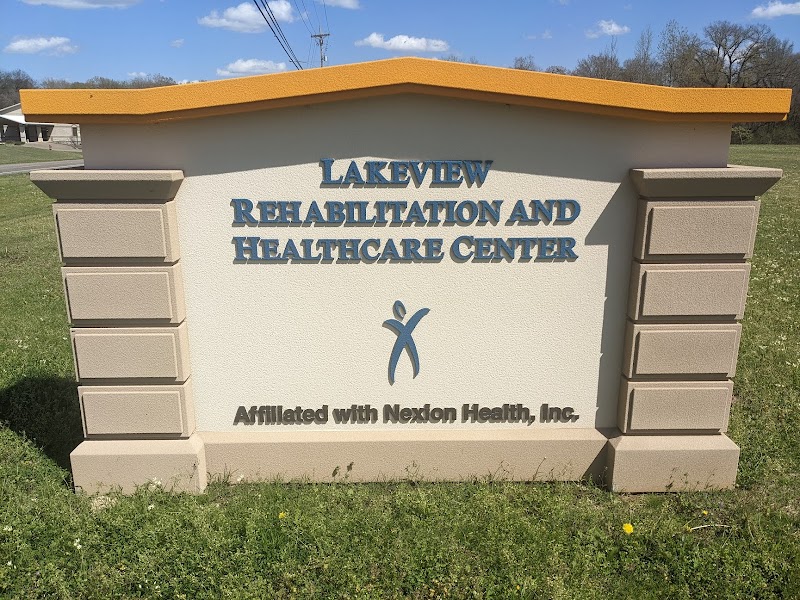
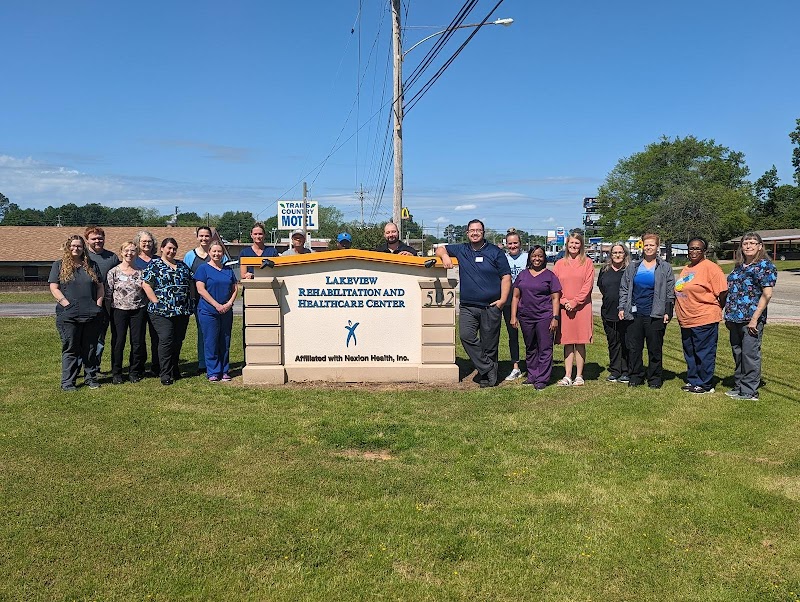
LAKEVIEW REHABILITATION & HEALTHCARE CENTER

502 EAST COKE RD, WINNSBORO, TX 75494 (903) 342-6951
Government - Hospital district 60 Beds NEXION HEALTH Data: November 2025 4 Immediate Jeopardy citations
Trust Grade
0/100
#751 of 1168 in TX
Last Inspection: November 2024

Within standard 12-15 month inspection cycle. Federal law requires annual inspections.

Overview

Lakeview Rehabilitation & Healthcare Center has received a Trust Grade of F, which indicates significant concerns regarding the care provided. They rank #751 out of 1168 nursing homes in Texas, placing them in the bottom half, and #3 out of 5 in Wood County, meaning only two local options are better. The facility's trend is stable, with 12 issues reported consistently in both 2023 and 2024. Staffing is rated average with a turnover rate of 39%, which is better than the Texas average of 50%, and they provide more RN coverage than 81% of facilities, a positive sign for resident care. However, they have incurred $47,253 in fines, which is concerning and indicates compliance issues, and troubling incidents included a resident being emotionally abused and physically restrained against their will, highlighting serious deficiencies in care. Overall, while there are some strengths, the critical incidents and poor trust grade raise significant red flags for families considering this facility.

Trust Score
F
0/100
In Texas
#751/1168
Bottom 36%
Safety Record
High Risk
Review needed
Inspections
Holding Steady
12 → 12 violations
Staff Stability
○ Average
39% turnover. Near Texas's 48% average. Typical for the industry.
Penalties
✓ Good
$47,253 in fines. Lower than most Texas facilities. Relatively clean record.
Skilled Nurses
○ Average
Each resident gets 33 minutes of Registered Nurse (RN) attention daily — about average for Texas. RNs are the most trained staff who monitor for health changes.
Violations
⚠ Watch
24 deficiencies on record. Higher than average. Multiple issues found across inspections.
★★☆☆☆
2.0
Overall Rating
★★★☆☆
3.0
Staff Levels
★★★☆☆
3.0
Care Quality
★★☆☆☆
2.0
Inspection Score
Stable
2023: 12 issues
2024: 12 issues

The Good

  • Full Sprinkler Coverage · Fire safety systems throughout facility
  • No fines on record
  • Staff turnover below average (39%)

    9 points below Texas average of 48%

Facility shows strength in fire safety.

The Bad

2-Star Overall Rating

Below Texas average (2.8)

Below average - review inspection findings carefully

Staff Turnover: 39%

Near Texas avg (46%)

Typical for the industry

Federal Fines: $47,253

Above median ($33,413)

Moderate penalties - review what triggered them

Chain: NEXION HEALTH

Part of a multi-facility chain

Ask about local staffing decisions and management

The Ugly 24 deficiencies on record

4 life-threatening 2 actual harm
Nov 2024 12 deficiencies 2 Harm
SERIOUS (H)

Actual Harm - a resident was hurt due to facility failures

Notification of Changes (Tag F0580)

A resident was harmed · This affected multiple residents

**NOTE- TERMS IN BRACKETS HAVE BEEN EDITED TO PROTECT CONFIDENTIALITY** Based on observation, interview, and record review the facility failed to consult with the resident's physician when there was a...

Read full inspector narrative →
**NOTE- TERMS IN BRACKETS HAVE BEEN EDITED TO PROTECT CONFIDENTIALITY** Based on observation, interview, and record review the facility failed to consult with the resident's physician when there was a significant change in the resident's physical and mental status that is, a deterioration in health, mental, or psychosocial status in either life-threatening conditions or clinical complications for 1 of 15 (Resident #19) residents reviewed for notification of change. The facility failed to ensure Resident #19's physician was notified of his increased pain following a wound debridement (removal of dead or unhealthy tissue from the wound to promote the healing process) by the Wound Care NP on 11/12/2024. This failure could place residents at risk for experiencing unnecessary pain, not receiving necessary treatments and medications, and a decreased quality of life. Findings included: Record review of a face sheet dated 11/20/2024 indicated Resident #19 was a [AGE] year-old male initially admitted to the facility on [DATE] and re-admitted on [DATE] with diagnoses which included pressure ulcer of sacral region, stage 4 (sore that extends below the subcutaneous fat into the deep tissues, including muscle, tendons, ligaments, and bone in the lower back, buttocks area) and pain. Record review of Resident #19's Quarterly MDS assessment dated [DATE] indicated he was understood by others and was able to understand others. The MDS assessment indicated Resident #19 had a BIMS score of 15, which indicated his cognition was intact. The MDS assessment indicated Resident #19 was dependent for showering/bathing, toileting hygiene, and required supervision or touching assistance for personal hygiene. The MDS assessment indicated Resident #19 received pain medications as needed. The MDS assessment did not indicate Resident #19 received non-medication intervention for pain. The MDS assessment indicated Resident #19 experienced pain occasionally, it occasionally affected his sleep, and it rarely or not at all interfered with his therapy and day-to-day activities. Record review of Resident #19's care plan with a target date of 01/21/2025 indicated he had acute/chronic pain related to low backpain, gout (pain, swelling of the joints), and rhabdomyolysis (muscle injury or breakdown). Interventions included to administer allopurinol, Tylenol, oxycodone as per orders to give half an hour before treatments or care, anticipate the residents need for pain relief and respond immediately to any complaint of pain, and evaluate the effectiveness of pain interventions, review for compliance, alleviating of symptoms, dosing schedules and resident satisfaction with results, impact on functional ability and impact on cognition. Resident #19's care plan indicated he had a stage 4 pressure injury/ulcer to left buttock related to obesity, immobility, and refusal of care. Interventions included to administer medications as ordered, monitor/document for side effects and effectiveness, administer treatments as ordered and monitor for effectiveness, and to treat pain as per orders prior to treatment/turning to ensure the resident's comfort. Record review of Resident #19's Order Summary Report dated 11/19/2024 indicated: Oxycodone 10 mg give 1 tablet by mouth every 4 hours as needed for severe pain may use oxycodone 5 mg 2 tablets to equal 10 mg with a start date of 03/19/2024. Tylenol give 1000 mg by mouth every 8 hours as needed for pain with a start date of 03/19/2024. Hydrocodone-Acetaminophen 7.5-325 mg give 1 tablet by mouth every 6 hours as needed for pain related to pressure ulcer of sacral region, stage 4 with a start date of 09/29/2024. Wound left buttock apply lidocaine 5% to wound center prior to procedure. Cleanse wound and peri-wound (around the wound) with normal saline, apply barrier cream around wound, apply collagen with silver, finish packing with normal saline moistened Kerlix AMD (gauze dressing used to reduce the growth of bacteria), cover with gauze and abdominal pad, secure with tape, change daily every day shift with a start date of 11/12/2024. Wound left buttock apply lidocaine 5% to wound center prior to procedure. Cleanse wound and peri-wound with normal saline, apply barrier cream around wound, apply collagen with silver, finish packing with normal saline moistened Kerlix AMD, cover with gauze and abdominal pad, secure with tape, change daily every day shift with a start date of 11/13/2024. Hydrocodone-Acetaminophen 5-325 mg give 2 tablets by mouth every 24 hours as needed for pain related to pressure ulcer of sacral region, stage 4 give prior to wound care treatments with a start date of 11/19/2024. Hydrocodone-Acetaminophen 7.5-325 mg give 2 tablets by mouth every day shift related to pain give daily prior to wound care with at start date of 11/19/2024. Record review of Resident #19's Wound-Weekly Observation Tool dated 11/10/2024 indicated he had a stage 4 pressure ulcer to the left buttock which he admitted with. The measurements were length 2 cm, width 1.4 cm, depth 2.5 cm. The wound had undermining (a wound complication that occurs when the edges of the wound separate this creates a pocket of dead space beneath the skin, the damage extends underneath). The Wound-Weekly Observation tool indicated Resident #19 had pain prior to wound treatment. The rating of the resident's pain was left unanswered. Pain interventions included pain medication prior to treatment and lidocaine cream applied in the wound bed. Record review of Resident #19's Wound-Weekly Observation Tool dated 11/12/2024 indicated he had a stage 4 pressure ulcer to the left buttock which he admitted with. The measurements were length 2.9 cm, width 1.4 cm, depth 2.3 cm. The wound had undermining (a wound complication that occurs when the edges of the wound separate this creates a pocket of dead space beneath the skin, the damage extends underneath). The Wound-Weekly Observation tool indicated Resident #19 had pain prior to wound treatment. The rating of the resident's pain was left unanswered. Pain interventions included pain medication prior to treatment and lidocaine cream applied in the wound bed. Record review of Resident #19's progress notes dated 11/12/2024-11/19/2024 did not indicate Resident #19's wound was debrided by the Wound Care NP, and they did not indicate Resident #19 had increased pain. Record review of Resident #19's November 2024 MAR indicated. is this resident in pain? 0 indicated no pain, 1-3 indicated mild pain, 4-6 indicated moderate pain, 7-10 indicated severe pain. 11/12/2024: day shift, evening shift, and night shift indicated 0 (no pain). 11/13/2024: day shift and evening shift indicated 0 (no pain), night shift indicated 4 (moderate pain). 11/14/2024: day shift and evening shift indicated 0 (no pain), night shift indicated 4 (moderate pain). 11/15/2024: day shift 1 (mild pain), evening shift 4 (moderate pain), night shift 0 (no pain). 11/16/2024: day shift 4 (moderate pain), evening shift 4 (moderate pain), night shift 0 (no pain). 11/17/2024: day shift 0 (no pain), evening shift 3 (mild pain), night shift 0 (no pain). 11/18/2024: day shift 5 (moderate pain), evening shift 0 (no pain), night shift 0 (no pain). Record review of Resident #19's November 2024 MAR indicated, Norco 7.5-325 mg (Hydrocodone-Acetaminophen) give 1 tablet by mouth every 6 hours as needed for pain related to pressure ulcer of sacral region, stage 4 order date 09/29/2024: Administered 11/13/2024 for pain level of 5, 10:08 AM and was effective. Administered 11/14/2024 for pain level of 4, 8:56 AM and was effective. Administered 11/15/2024 for pain level of 4, 7:30 AM and was effective. Administered 11/15/2024 for pain level of 4, 5:47 PM and was effective. Administered 11/17/2024 for pain level of 9, 9:32 AM and was effective. Administered 11/18/2024 for pain level of 5, 9:01 AM and was effective. Record review of Resident #19's November 2024 MAR indicated; Tylenol Oral Tablet (Acetaminophen) give 1000 mg by mouth every 8 hours as needed for pain order date 03/19/2024: Administered 11/17/2024 for pain level of 8, 5:05 AM and was effective. Administered 11/18/2024 for pain level of 8, 4:59 AM and was effective. Administered 11/18/2024 for pain level of 3, 10:15 AM and was effective. Record review of Resident #19's November 2024 TAR indicated: Apply lidocaine 5% to wound center prior to procedure. Cleanse wound and peri wound with non-cytotoxic agent-normal saline, apply barrier cream around wound, apply collagen with silver, finish packing with NS moistened Kerlix AMD, cover with gauze and abdominal pad, secure with medipore tape change daily every day shift order date 10/30/2024, discontinued date 11/12/2024. The TAR indicated this was completed daily from 11/1/2024-11/11/2024. Lidocaine External Cream 5 % Apply to L buttocks topically every day shift for pain control & apply prior to wound care and leave for 2 minutes order date 06/15/2024 discontinued date 11/11/2024. The TAR indicated this was completed daily from 11/1/2024-11/10/2024. Wound #1 to left buttock apply lidocaine 5% to wound center prior to procedure. Cleanse wound and periwound with non-cytotoxic agent-normal saline, apply barrier cream around wound, apply collagen with silver, finish packing with NS moistened Kerlix AMD, cover with gauze and abdominal pad, secure with medipore tape change daily every day shift order date 11/12/2024. The TAR indicated this was completed daily from 11/13/2024-11/18/2024. During an interview on 11/18/2024 at 11:32 AM, Resident #19 said the wound care doctor had debrided his wound last week (11/12/2024), and he had been having increased pain during wound ever since. Resident #19 said the pain was while the wound care was being performed. Resident #19 said the pain did not affect his daily activities, eating, or sleep. Resident #19 said he had been asking the nurses to up his pain medication because every nerve ending is on fire. Resident #19 said they had been offloading the wound to help the pain. Resident #19 said he used to be an RN, so he was not big on narcotics (he tried not to use a lot of narcotic medications). Resident #19 said when he could he used Tylenol extra strength which usually took his pain away, but when they did the wound care, he wanted the narcotics because he did not want to hurt. Surveyor asked Resident #19 if observation of wound care could be done. Resident #19 said surveyor was going to get to listen to him holler and curse because the wound care was painful. Resident #19 said today's (11/18/2024) wound care had been completed, but surveyor could observe the wound care tomorrow (11/19/2024) since it was completed daily. Resident #19 said he could not refuse to have the wound care performed because his insurance required him to be compliant with the doctor's orders. During an observation of wound care with the Wound Care NP and LVN B on 11/19/2024 starting at 10:04 AM, Resident #19 was in bed. The Wound Care NP removed Resident #19's dressing and Resident #19 hollered out due to the pain. The Wound Care NP asked if Resident #19 wanted him to stop. Resident #19 said no to continue. The Wound Care NP continued, removed the old dressing, and measured the wound. The Wound Care NP did not apply any spray or creams to Resident #19. The Wound Care NP left, and LVN B started the wound treatment. LVN B started cleaning the wound and Resident #19 hollered out and said he had been in pain ever since the wound was debrided. LVN B asked Resident #19 if he wanted her to stop and he said no. LVN B continued and applied collagen, and Resident #19 continued to holler and said, it feels like somebody's taken a blow torch to my ass, careful please it's very sensitive. LVN B stopped and asked Resident #19, Can you take it?. Resident #19 said don't stop keep going. LVN B continued to pack the wound and Resident #19 again said feels like a torch to my butt. LVN B continued and finished the wound care. During an interview on 11/19/2024 at 10:57 AM, LVN B said Resident #19 received two hydrocodone 5-325 mg tablets prior to his wound care treatment today (11/19/2024). LVN B said Resident #19 started seeing the wound care NP last Tuesday (11/12/2024), and the wound care NP debrided Resident #19's wound on 11/12/2024. LVN B said ever since it was debrided Resident #19 had been hollering and screaming more with the wound care. LVN B said she had not contacted the doctor until yesterday afternoon (11/18/2024) and received an order for 2 hydrocodone tablets before wound care treatments. LVN B said Resident #19 was receiving oxycodone, but it was changed to hydrocodone because his insurance would not cover the oxycodone. LVN B said the order for oxycodone should have been discontinued from Resident #19's orders. LVN B said they used lidocaine prior to performing the wound care to help the pain, but when the wound care NP did his wound visits he used lidocaine spray, so she did not apply the lidocaine to Resident #19's wound prior to wound care today (11/19/2024). LVN B said she did not notice the wound care NP did not spray Resident #19 with lidocaine. LVN B said since Resident #19 had been hollering with pain she should have contacted the doctor to have his pain during wound care addressed when she noticed he had increased pain. LVN B said Resident #19 had been complaining of having a burning type of pain and said it was a burning sensation. LVN B said the lidocaine gel helped with the burning sensation, but Resident #19 was still complaining of pain. LVN B said Resident #19's pain tolerance was not very good, and he had a low pain tolerance. LVN B said pain was what the resident said it was. LVN B said she had not reported to the doctor that Resident #19 was having a burning type of pain. LVN B said Resident #19's pain was better today (11/19/2024), but he was still hurting therefore the medication was not effective. LVN B said she would contact the doctor to let him know the medication was not effective during wound care. LVN B said it was important for pain to be adequately addressed because they did not want to hurt Resident #19 and it could cause depression, a decline, and his nutrition to decline. During an attempted phone interview on 11/19/2024 at 12:29 PM, the Medical Director did not answer the phone. During an interview on 11/19/2024 at 12:31 PM, RN D said Resident #19 received pain management prior to starting his wound care. RN D said Resident #19 had a low pain tolerance, and he did complain about pain during the wound care. RN D said she put the lidocaine on the wound prior to doing his wound care and he received hydrocodone 7.5 mg prior to his wound treatment. RN D said she barely removed the tape and Resident #19 hollered with pain, and she would ask him if he wanted her to stop and Resident #19 said to proceed. RN D said the lidocaine relieved some of Resident #19's pain. RN D said Resident #19 described the pain to the wound as sore. RN D said she did not report to the doctor Resident #19 was having pain because he had pain every single time they did the wound care. RN D said the doctor was notified initially and that was why they had the order for the lidocaine and hydrocodone. RN D said Resident #19 wanted them to continue with the wound care because he knew it had to be done. RN D said she stopped and asked him if he wanted her to stop, but he had been having pain with wound care since his admission to the facility. RN D said pain was uncomfortable and it affected someone intensely. RN D said it was not good for the residents to have pain and everybody had a different type of pain. During an interview on 11/19/2024 at 1:27 PM, the Wound Care NP's wound evaluation for 11/12/2024 was requested from the DON and not received upon exit of the facility. During an interview on 11/19/2024 at 2:11 PM, the DON said pain medications should be administered 30 minutes prior to wound care. The DON said lidocaine should be applied to Resident #19's wound bed prior to wound care. The DON said in the past she had assessed Resident #19's pain and talked to him about what he wanted them to do. The DON said Resident #19 was having pain and they increased his pain medication hydrocodone 5 mg to 7.5 mg a few days ago. The DON said it was hard to judge Resident #19's pain because even if they got a wipe and just touched him and started turning him, he had the same type of expression of pain as he did during wound care. The DON said ever since the wound was debrided last week (11/12/2024) the wound had been more sensitive and sharper. The DON said the pain medication was increased to 2 tabs today (11/19/2024). The DON said prior to today the nurses had not notified her Resident #19 was having increased pain to his wound. The DON said the nurses should have called the doctor and let him know he was debrided, and the pain medication was no longer sufficient. The DON said if there was a change in condition the nurses should notify the doctor. The DON said they were not going to stop Resident #19 from hollering out. The DON said if Resident #19 was saying the pain medication was not working, they needed to make sure the medication was changed. The DON said the nurses should be assessing the pain and asking the residents if it was something new, where the location was, had the intensity changed, if it was acute or chronic pain, and ask the resident if the medication was effective. The DON said they would also try alternatives for pain relief such as a low air loss mattress, ice pack, repositioning, pain patches. The DON said she did not think their pain assessment included the type of pain the patient was experiencing such as if it was throbbing or burning or what type of pain. The DON said it was hard with someone that was bedbound to do more interventions. The DON said Resident #19 was not receiving therapy for his wound, but he was receiving physical therapy to maintain his mobility. The DON said if a resident's pain was not managed properly, it could affect their mood and their day-to-day activity. During an attempted phone interview on 11/20/2024 at 11:49 AM, the Medical Director did not answer the phone. During an interview on 11/20/2024 at 12:06 PM, the Wound Care NP said last Tuesday (11/12/2024) was the first time he had seen Resident #19, and he may have debrided Resident #19's wound but he was not sure because he usually did not debride on the first visit. The Wound Care NP said Resident #19 had yelled out due to the pain during the first visit, but they asked him if he wanted them to stop and Resident #19 replied no. The Wound Care NP said the way Resident #19 acted during the wound visit this week (11/19/2024) was the example of how he had acted the previous week. The Wound Care NP said, not that I remember he did not have any pain. The Wound Care NP said he only used lidocaine spray when he debrided wounds, therefore he did not use the lidocaine spray on Resident #19 on 11/19/2024. The Wound Care NP said when people are premedicated they do a lot better. The Wound Care NP said Resident #19 had been premedicated on the visit for 11/19/2024. The Wound Care NP said when people received pain medications prior to the wound care visit they did better and were less sensitive. The Wound Care NP said if a person was reporting pain and burning pain, they needed to address the pain with medications. The Wound Care NP said the facility should consider giving Resident #19 pain medications prior to his treatment because he was sensitive to pain. The Wound Care NP said the mental anticipation of pain was making Resident #19's pain more severe. The Wound Care NP said if the current medications being used for pain during wound care were not working, they needed to see what we need to do, increase the dose or have additional medication to help the pain. The Wound Care NP said the facility was responsible for contacting the facility's medical director to obtain orders for pain medication. During an interview on 11/20/2024 at 3:22 PM, the Administrator said if a resident was having pain, he expected the nurses to contact the doctor. The Administrator said they wanted to keep pain as low as feasibly possible. The Administrator said some residents had concerns regarding the use of medications for pain, but they should give them over the counter medications and try to abide by their wishes. The Administrator said it was important for the residents' pain to be addressed because pain affected the resident's quality of life in a dramatic fashion. The Administrator said increased pain could be a sign of something emergent and that could be the only warning sign of a condition. Record review of the facility's policy titled, Pain Management Program Policy, revised 01/2023, indicated, The facility will ensure that residents receive the treatment and care in accordance with professional standards of practice, the comprehensive care plan, and the resident's choices, related to pain management .4. The facility will identify any situations or interventions where an increase in the resident's pain may be anticipated, for example, wound care, ambulation, or repositioning. Obtain orders for pharmaceutical interventions, pain medications, and or nonpharmaceutical interventions such as heat, cold, massage and relaxation etc. and/or refer to therapy for skilled therapeutic interventions . With a new onset of pain, complete a pain evaluation in the EMR. Determine an appropriate pharmacological intervention under the direction of the physician or a nonpharmacological intervention. Re-evaluate the resident after 45 min to one hour to determine if your intervention has been effective and document outcome in the EMR/Progress Notes and ensure new orders and updated care plan are completed .The ongoing evaluation of the status (presence, increase or reduction) of a resident's pain is vital, including the status of underlying causes, the response to interventions to prevent or manage pain, and the possible presence of adverse consequences of treatment .If pain has not been adequately controlled, it may be necessary to reconsider the current approaches and revise or supplement them as indicated .
SERIOUS (H) 📢 Someone Reported This

A family member, employee, or ombudsman was alarmed enough to file a formal complaint

Actual Harm - a resident was hurt due to facility failures

Deficiency F0697 (Tag F0697)

A resident was harmed · This affected multiple residents

**NOTE- TERMS IN BRACKETS HAVE BEEN EDITED TO PROTECT CONFIDENTIALITY** Based on observation, interview, and record review the facility failed to ensure pain management was provided to residents who r...

Read full inspector narrative →
**NOTE- TERMS IN BRACKETS HAVE BEEN EDITED TO PROTECT CONFIDENTIALITY** Based on observation, interview, and record review the facility failed to ensure pain management was provided to residents who require such services, consistent with professional standards of practice for 1 of 3 residents (Resident #19) reviewed for pain. The facility failed to ensure Resident #19 received adequate pain management during wound care after he reported increased pain following a wound debridement (removal of dead or unhealthy tissue from the wound to promote the healing process) by the Wound Care NP on 11/12/2024. This failure could place residents at risk for experiencing unnecessary pain and a decreased quality of life. Findings included: Record review of a face sheet dated 11/20/2024 indicated Resident #19 was a [AGE] year-old male initially admitted to the facility on [DATE] and re-admitted on [DATE] with diagnoses which included pressure ulcer of sacral region, stage 4 (sore that extends below the subcutaneous fat into the deep tissues, including muscle, tendons, ligaments, and bone in the lower back, buttocks area) and pain. Record review of Resident #19's Quarterly MDS assessment dated [DATE] indicated he was understood by others and was able to understand others. The MDS assessment indicated Resident #19 had a BIMS score of 15, which indicated his cognition was intact. The MDS assessment indicated Resident #19 was dependent for showering/bathing, toileting hygiene, and required supervision or touching assistance for personal hygiene. The MDS assessment indicated Resident #19 received pain medications as needed. The MDS assessment did not indicate Resident #19 received non-medication intervention for pain. The MDS assessment indicated Resident #19 experienced pain occasionally, it occasionally affected his sleep, and it rarely or not at all interfered with his therapy and day-to-day activities. Record review of Resident #19's care plan with a target date of 01/21/2025 indicated he had acute/chronic pain related to low backpain, gout (pain, swelling of the joints), and rhabdomyolysis (muscle injury or breakdown). Interventions included to administer allopurinol, Tylenol, oxycodone as per orders to give half an hour before treatments or care, anticipate the residents need for pain relief and respond immediately to any complaint of pain, and evaluate the effectiveness of pain interventions, review for compliance, alleviating of symptoms, dosing schedules and resident satisfaction with results, impact on functional ability and impact on cognition. Resident #19's care plan indicated he had a stage 4 pressure injury/ulcer to left buttock related to obesity, immobility, and refusal of care. Interventions included to administer medications as ordered, monitor/document for side effects and effectiveness, administer treatments as ordered and monitor for effectiveness, and to treat pain as per orders prior to treatment/turning to ensure the resident's comfort. Record review of Resident #19's Order Summary Report dated 11/19/2024 indicated: Oxycodone 10 mg give 1 tablet by mouth every 4 hours as needed for severe pain may use oxycodone 5 mg 2 tablets to equal 10 mg with a start date of 03/19/2024. Tylenol give 1000 mg by mouth every 8 hours as needed for pain with a start date of 03/19/2024. Hydrocodone-Acetaminophen 7.5-325 mg give 1 tablet by mouth every 6 hours as needed for pain related to pressure ulcer of sacral region, stage 4 with a start date of 09/29/2024. Wound left buttock apply lidocaine 5% to wound center prior to procedure. Cleanse wound and peri-wound (around the wound) with normal saline, apply barrier cream around wound, apply collagen with silver, finish packing with normal saline moistened Kerlix AMD (gauze dressing used to reduce the growth of bacteria), cover with gauze and abdominal pad, secure with tape, change daily every day shift with a start date of 11/12/2024. Wound left buttock apply lidocaine 5% to wound center prior to procedure. Cleanse wound and peri-wound with normal saline, apply barrier cream around wound, apply collagen with silver, finish packing with normal saline moistened Kerlix AMD, cover with gauze and abdominal pad, secure with tape, change daily every day shift with a start date of 11/13/2024. Hydrocodone-Acetaminophen 5-325 mg give 2 tablets by mouth every 24 hours as needed for pain related to pressure ulcer of sacral region, stage 4 give prior to wound care treatments with a start date of 11/19/2024. Hydrocodone-Acetaminophen 7.5-325 mg give 2 tablets by mouth every day shift related to pain give daily prior to wound care with at start date of 11/19/2024. Record review of Resident #19's Wound-Weekly Observation Tool dated 11/10/2024 indicated he had a stage 4 pressure ulcer to the left buttock which he admitted with. The measurements were length 2 cm, width 1.4 cm, depth 2.5 cm. The wound had undermining (a wound complication that occurs when the edges of the wound separate this creates a pocket of dead space beneath the skin, the damage extends underneath). The Wound-Weekly Observation tool indicated Resident #19 had pain prior to wound treatment. The rating of the resident's pain was left unanswered. Pain interventions included pain medication prior to treatment and lidocaine cream applied in the wound bed. Record review of Resident #19's Wound-Weekly Observation Tool dated 11/12/2024 indicated he had a stage 4 pressure ulcer to the left buttock which he admitted with. The measurements were length 2.9 cm, width 1.4 cm, depth 2.3 cm. The wound had undermining (a wound complication that occurs when the edges of the wound separate this creates a pocket of dead space beneath the skin, the damage extends underneath). The Wound-Weekly Observation tool indicated Resident #19 had pain prior to wound treatment. The rating of the resident's pain was left unanswered. Pain interventions included pain medication prior to treatment and lidocaine cream applied in the wound bed. Record review of Resident #19's progress notes dated 11/12/2024-11/19/2024 did not indicate Resident #19's wound was debrided by the Wound Care NP, and they did not indicate Resident #19 had increased pain. Record review of Resident #19's November 2024 MAR indicated. is this resident in pain? 0 indicated no pain, 1-3 indicated mild pain, 4-6 indicated moderate pain, 7-10 indicated severe pain. 11/12/2024: day shift, evening shift, and night shift indicated 0 (no pain). 11/13/2024: day shift and evening shift indicated 0 (no pain), night shift indicated 4 (moderate pain). 11/14/2024: day shift and evening shift indicated 0 (no pain), night shift indicated 4 (moderate pain). 11/15/2024: day shift 1 (mild pain), evening shift 4 (moderate pain), night shift 0 (no pain). 11/16/2024: day shift 4 (moderate pain), evening shift 4 (moderate pain), night shift 0 (no pain). 11/17/2024: day shift 0 (no pain), evening shift 3 (mild pain), night shift 0 (no pain). 11/18/2024: day shift 5 (moderate pain), evening shift 0 (no pain), night shift 0 (no pain). Record review of Resident #19's November 2024 MAR indicated, Norco 7.5-325 mg (Hydrocodone-Acetaminophen) give 1 tablet by mouth every 6 hours as needed for pain related to pressure ulcer of sacral region, stage 4 order date 09/29/2024: Administered 11/13/2024 for pain level of 5, 10:08 AM and was effective. Administered 11/14/2024 for pain level of 4, 8:56 AM and was effective. Administered 11/15/2024 for pain level of 4, 7:30 AM and was effective. Administered 11/15/2024 for pain level of 4, 5:47 PM and was effective. Administered 11/17/2024 for pain level of 9, 9:32 AM and was effective. Administered 11/18/2024 for pain level of 5, 9:01 AM and was effective. Record review of Resident #19's November 2024 MAR indicated; Tylenol Oral Tablet (Acetaminophen) give 1000 mg by mouth every 8 hours as needed for pain order date 03/19/2024: Administered 11/17/2024 for pain level of 8, 5:05 AM and was effective. Administered 11/18/2024 for pain level of 8, 4:59 AM and was effective. Administered 11/18/2024 for pain level of 3, 10:15 AM and was effective. Record review of Resident #19's November 2024 TAR indicated: Apply lidocaine 5% to wound center prior to procedure. Cleanse wound and peri wound with non-cytotoxic agent-normal saline, apply barrier cream around wound, apply collagen with silver, finish packing with NS moistened Kerlix AMD, cover with gauze and abdominal pad, secure with medipore tape change daily every day shift order date 10/30/2024, discontinued date 11/12/2024. The TAR indicated this was completed daily from 11/1/2024-11/11/2024. Lidocaine External Cream 5 % Apply to L buttocks topically every day shift for pain control & apply prior to wound care and leave for 2 minutes order date 06/15/2024 discontinued date 11/11/2024. The TAR indicated this was completed daily from 11/1/2024-11/10/2024. Wound #1 to left buttock apply lidocaine 5% to wound center prior to procedure. Cleanse wound and periwound with non-cytotoxic agent-normal saline, apply barrier cream around wound, apply collagen with silver, finish packing with NS moistened Kerlix AMD, cover with gauze and abdominal pad, secure with medipore tape change daily every day shift order date 11/12/2024. The TAR indicated this was completed daily from 11/13/2024-11/18/2024. During an interview on 11/18/2024 at 11:32 AM, Resident #19 said the wound care doctor had debrided his wound last week (11/12/2024), and he had been having increased pain during wound ever since. Resident #19 said the pain was while the wound care was being performed. Resident #19 said the pain did not affect his daily activities, eating, or sleep. Resident #19 said he had been asking the nurses to up his pain medication because every nerve ending is on fire. Resident #19 said they had been offloading the wound to help the pain. Resident #19 said he used to be an RN, so he was not big on narcotics (he tried not to use a lot of narcotic medications). Resident #19 said when he could he used Tylenol extra strength which usually took his pain away, but when they did the wound care, he wanted the narcotics because he did not want to hurt. Surveyor asked Resident #19 if observation of wound care could be done. Resident #19 said surveyor was going to get to listen to him holler and curse because the wound care was painful. Resident #19 said today's (11/18/2024) wound care had been completed, but surveyor could observe the wound care tomorrow (11/19/2024) since it was completed daily. Resident #19 said he could not refuse to have the wound care performed because his insurance required him to be compliant with the doctor's orders. During an observation of wound care with the Wound Care NP and LVN B on 11/19/2024 starting at 10:04 AM, Resident #19 was in bed. The Wound Care NP removed Resident #19's dressing and Resident #19 hollered out due to the pain. The Wound Care NP asked if Resident #19 wanted him to stop. Resident #19 said no to continue. The Wound Care NP continued, removed the old dressing, and measured the wound. The Wound Care NP did not apply any spray or creams to Resident #19. The Wound Care NP left, and LVN B started the wound treatment. LVN B started cleaning the wound and Resident #19 hollered out and said he had been in pain ever since the wound was debrided. LVN B asked Resident #19 if he wanted her to stop and he said no. LVN B continued and applied collagen, and Resident #19 continued to holler and said, it feels like somebody's taken a blow torch to my ass, careful please it's very sensitive. LVN B stopped and asked Resident #19, Can you take it?. Resident #19 said don't stop keep going. LVN B continued to pack the wound and Resident #19 again said feels like a torch to my butt. LVN B continued and finished the wound care. During an interview on 11/19/2024 at 10:57 AM, LVN B said Resident #19 received two hydrocodone 5-325 mg tablets prior to his wound care treatment today (11/19/2024). LVN B said Resident #19 started seeing the wound care NP last Tuesday (11/12/2024), and the wound care NP debrided Resident #19's wound on 11/12/2024. LVN B said ever since it was debrided Resident #19 had been hollering and screaming more with the wound care. LVN B said she had not contacted the doctor until yesterday afternoon (11/18/2024) and received an order for 2 hydrocodone tablets before wound care treatments. LVN B said Resident #19 was receiving oxycodone, but it was changed to hydrocodone because his insurance would not cover the oxycodone. LVN B said the order for oxycodone should have been discontinued from Resident #19's orders. LVN B said they used lidocaine prior to performing the wound care to help the pain, but when the wound care NP did his wound visits he used lidocaine spray, so she did not apply the lidocaine to Resident #19's wound prior to wound care today (11/19/2024). LVN B said she did not notice the wound care NP did not spray Resident #19 with lidocaine. LVN B said since Resident #19 had been hollering with pain she should have contacted the doctor to have his pain during wound care addressed when she noticed he had increased pain. LVN B said Resident #19 had been complaining of having a burning type of pain and said it was a burning sensation. LVN B said the lidocaine gel helped with the burning sensation, but Resident #19 was still complaining of pain. LVN B said Resident #19's pain tolerance was not very good, and he had a low pain tolerance. LVN B said pain was what the resident said it was. LVN B said she had not reported to the doctor that Resident #19 was having a burning type of pain. LVN B said Resident #19's pain was better today (11/19/2024), but he was still hurting therefore the medication was not effective. LVN B said she would contact the doctor to let him know the medication was not effective during wound care. LVN B said it was important for pain to be adequately addressed because they did not want to hurt Resident #19 and it could cause depression, a decline, and his nutrition to decline. During an attempted phone interview on 11/19/2024 at 12:29 PM, the Medical Director did not answer the phone. During an interview on 11/19/2024 at 12:31 PM, RN D said Resident #19 received pain management prior to starting his wound care. RN D said Resident #19 had a low pain tolerance, and he did complain about pain during the wound care. RN D said she put the lidocaine on the wound prior to doing his wound care and he received hydrocodone 7.5 mg prior to his wound treatment. RN D said she barely removed the tape and Resident #19 hollered with pain, and she would ask him if he wanted her to stop and Resident #19 said to proceed. RN D said the lidocaine relieved some of Resident #19's pain. RN D said Resident #19 described the pain to the wound as sore. RN D said she did not report to the doctor Resident #19 was having pain because he had pain every single time they did the wound care. RN D said the doctor was notified initially and that was why they had the order for the lidocaine and hydrocodone. RN D said Resident #19 wanted them to continue with the wound care because he knew it had to be done. RN D said she stopped and asked him if he wanted her to stop, but he had been having pain with wound care since his admission to the facility. RN D said pain was uncomfortable and it affected someone intensely. RN D said it was not good for the residents to have pain and everybody had a different type of pain. During an interview on 11/19/2024 at 1:27 PM, the Wound Care NP's wound evaluation for 11/12/2024 was requested from the DON and not received upon exit of the facility. During an interview on 11/19/2024 at 2:11 PM, the DON said pain medications should be administered 30 minutes prior to wound care. The DON said lidocaine should be applied to Resident #19's wound bed prior to wound care. The DON said in the past she had assessed Resident #19's pain and talked to him about what he wanted them to do. The DON said Resident #19 was having pain and they increased his pain medication hydrocodone 5 mg to 7.5 mg a few days ago. The DON said it was hard to judge Resident #19's pain because even if they got a wipe and just touched him and started turning him, he had the same type of expression of pain as he did during wound care. The DON said ever since the wound was debrided last week (11/12/2024) the wound had been more sensitive and sharper. The DON said the pain medication was increased to 2 tabs today (11/19/2024). The DON said prior to today the nurses had not notified her Resident #19 was having increased pain to his wound. The DON said the nurses should have called the doctor and let him know he was debrided, and the pain medication was no longer sufficient. The DON said if there was a change in condition the nurses should notify the doctor. The DON said they were not going to stop Resident #19 from hollering out. The DON said if Resident #19 was saying the pain medication was not working, they needed to make sure the medication was changed. The DON said the nurses should be assessing the pain and asking the residents if it was something new, where the location was, had the intensity changed, if it was acute or chronic pain, and ask the resident if the medication was effective. The DON said they would also try alternatives for pain relief such as a low air loss mattress, ice pack, repositioning, pain patches. The DON said she did not think their pain assessment included the type of pain the patient was experiencing such as if it was throbbing or burning or what type of pain. The DON said it was hard with someone that was bedbound to do more interventions. The DON said Resident #19 was not receiving therapy for his wound, but he was receiving physical therapy to maintain his mobility. The DON said if a resident's pain was not managed properly, it could affect their mood and their day-to-day activity. During an attempted phone interview on 11/20/2024 at 11:49 AM, the Medical Director did not answer the phone. During an interview on 11/20/2024 at 12:06 PM, the Wound Care NP said last Tuesday (11/12/2024) was the first time he had seen Resident #19, and he may have debrided Resident #19's wound but he was not sure because he usually did not debride on the first visit. The Wound Care NP said Resident #19 had yelled out due to the pain during the first visit, but they asked him if he wanted them to stop and Resident #19 replied no. The Wound Care NP said the way Resident #19 acted during the wound visit this week (11/19/2024) was the example of how he had acted the previous week. The Wound Care NP said, not that I remember he did not have any pain. The Wound Care NP said he only used lidocaine spray when he debrided wounds, therefore he did not use the lidocaine spray on Resident #19 on 11/19/2024. The Wound Care NP said when people are premedicated they do a lot better. The Wound Care NP said Resident #19 had been premedicated on the visit for 11/19/2024. The Wound Care NP said when people received pain medications prior to the wound care visit they did better and were less sensitive. The Wound Care NP said if a person was reporting pain and burning pain, they needed to address the pain with medications. The Wound Care NP said the facility should consider giving Resident #19 pain medications prior to his treatment because he was sensitive to pain. The Wound Care NP said the mental anticipation of pain was making Resident #19's pain more severe. The Wound Care NP said if the current medications being used for pain during wound care were not working, they needed to see what we need to do, increase the dose or have additional medication to help the pain. The Wound Care NP said the facility was responsible for contacting the facility's medical director to obtain orders for pain medication. During an interview on 11/20/2024 at 3:22 PM, the Administrator said if a resident was having pain, he expected the nurses to contact the doctor. The Administrator said they wanted to keep pain as low as feasibly possible. The Administrator said some residents had concerns regarding the use of medications for pain, but they should give them over the counter medications and try to abide by their wishes. The Administrator said it was important for the residents' pain to be addressed because pain affected the resident's quality of life in a dramatic fashion. The Administrator said increased pain could be a sign of something emergent and that could be the only warning sign of a condition. Record review of the facility's policy titled, Pain Management Program Policy, revised 01/2023, indicated, The facility will ensure that residents receive the treatment and care in accordance with professional standards of practice, the comprehensive care plan, and the resident's choices, related to pain management .2. The facility will assess each individual for pain upon admission to the facility, at the quarterly review, whenever there is a significant change in condition, and when there is onset of new pain or worsening of existing pain. 3. The facility will identify the characteristics of pain such as location, intensity, frequency, pattern, and severity .4. The facility will identify any situations or interventions where an increase in the resident's pain may be anticipated, for example, wound care, ambulation, or repositioning. Obtain orders for pharmaceutical interventions, pain medications, and or nonpharmaceutical interventions such as heat, cold, massage and relaxation etc. and/or refer to therapy for skilled therapeutic interventions .For pain that is not managed through the current care plan, whether pharmaceutical or non-pharmaceutical, the resident should be assessed for new causes of the pain and/or the need for a change in frequency, dose or a new intervention. Break through pain may require the use of a PRN or additional type of pain medication .7. Resident pain should also be assessed prior to dressing changes (wound care) and properly medicated (typically 30 minutes or more before wound care) to reduce or alleviate pain appropriately. Resident may also benefit from Physical Therapy wound care modalities to reduce pain with wound care .With a new onset of pain, complete a pain evaluation in the EMR. Determine an appropriate pharmacological intervention under the direction of the physician or a nonpharmacological intervention. Re-evaluate the resident after 45 min to one hour to determine if your intervention has been effective and document outcome in the EMR/Progress Notes and ensure new orders and updated care plan are completed .The ongoing evaluation of the status (presence, increase or reduction) of a resident's pain is vital, including the status of underlying causes, the response to interventions to prevent or manage pain, and the possible presence of adverse consequences of treatment .If pain has not been adequately controlled, it may be necessary to reconsider the current approaches and revise or supplement them as indicated .
CONCERN (D)

Potential for Harm - no one hurt, but risky conditions existed

Deficiency F0558 (Tag F0558)

Could have caused harm · This affected 1 resident

**NOTE- TERMS IN BRACKETS HAVE BEEN EDITED TO PROTECT CONFIDENTIALITY** Based on observation, interview, and record review the facility failed to ensure each resident had the right to reside and recei...

Read full inspector narrative →
**NOTE- TERMS IN BRACKETS HAVE BEEN EDITED TO PROTECT CONFIDENTIALITY** Based on observation, interview, and record review the facility failed to ensure each resident had the right to reside and receive services in the facility with reasonable accommodation of resident needs and preferences for 1 of 15 residents (Resident #12) reviewed for reasonable accommodations. The facility failed to ensure Resident #12's call light was within reach while in bed. This failure could place residents at risk for a delay in assistance and decreased quality of life. Findings include: Record review of a face sheet dated 11/20/2024 indicated Resident #12 was a [AGE] year-old male admitted to the facility on [DATE] with diagnoses which included unspecified sequelae of unspecified cerebrovascular disease (residual neurological effects of a stroke), vascular dementia unspecified severity, without behavioral disturbance, psychotic disturbance, mood disturbance, and anxiety (a condition caused by the lack of blood that carries oxygen and nutrient to a part of the brain and it causes problems with reasoning, planning, judgment, and memory), and acquired absence of the right and left leg above the knee, Record review of the Quarterly MDS assessment dated [DATE] indicated, Resident #12 was sometimes understood by others and sometimes understood others. The MDS assessment indicated Resident #12 had a BIMS score of 00, which indicated his cognition was severely impaired. The MDS assessment indicated Resident #12 was dependent on staff for toileting, showering/bathing self, and personal hygiene. The MDS assessment indicated Resident #12 was dependent for rolling and transfers. Record review of the care plan revised 08/05/2024 indicated Resident #12 was a high risk for falls to anticipate and meet his needs, be sure his call light was within reach, encourage the resident to use it for assistance as needed, and he needed a prompt response to all his requests for assistance. During an observation and interview on 11/18/2024 at 2:07 PM, Resident #12 was in his bed and said he needed assistance with his TV. Instructed Resident #12 to use his call light for staff assistance. Resident #12 said, I ain't got one. Upon observation of Resident #12's call light it was on the floor by the edge of his nightstand out of his reach. Surveyor stopped MA C to assist Resident #12. During an observation on 11/19/2024 at 8:03 AM Resident #12's call light was on the floor by the edge of his nightstand out of his reach. During an observation and interview on 11/19/2024 at 3:21 PM, CNA E said Resident #12 was able to use a call light. CNA E said they should be checking the residents to ensure they had their call lights every round and at least every 2 hours. CNA E said it was important for the residents to have their call light accessible to them in case they needed assistance. CNA E said if they did not have their call light accessible to them, they were not getting the care they needed at the moment. CNA E went into Resident #12's room and pulled the call light off the floor where it laid close to the edge of the nightstand beside Resident #12's bed out of his reach. CNA E gave Resident #12's call light to him, asked him to press it, to ensure it was functioning properly. Resident #12 activated the call light, and it was functioning. During an interview on 11/20/2024 at 3:00 PM, the DON said when the staff left the room, they should make sure the call light was within reach. The DON said she had made rounds and ensured all the residents call lights were within reach, so she knew at one point he had it. The DON said sometimes when Resident #12 turned and repositioned himself he knocked it off the bed onto the floor. The DON said all the staff were responsible for making sure call lights were within reach. The DON said if the call light was not within reach, they would not be able to push the call light to get the staff's attention. During an interview on 11/20/2024 at 3:26 PM, the Administrator said all residents should have their call light within reach, and if it was not within arm's reach, it was in the wrong spot. The Administrator said typically the CNAs were responsible for ensuring the residents' call lights were within reach, but anyone moving the resident or repositioning them could ensure their call light was within reach. The Administrator said it was important for the residents to have their call lights within reach because it was their only means of communication. The Administrator said the residents could need something small or they could be choking so they needed to have their call light so staff could respond in a timely and efficient manner. Record review of the facility's policy titled, Resident Call System, reviewed 03/28/2023, indicated, Policy Residents are provided with a means to call staff for assistance through a communication system that directly calls a staff member or a centralized workstation Policy Interpretation and Implementation 1. Each resident is provided with a means to call staff directly for assistance from his/her bed .
CONCERN (D)

Potential for Harm - no one hurt, but risky conditions existed

Safe Environment (Tag F0584)

Could have caused harm · This affected 1 resident

Based on observation, interview, and record review, the facility failed to provide a safe, clean, and comfortable homelike environment for 1 of 2 dining rooms (back dining room) reviewed for cleanline...

Read full inspector narrative →
Based on observation, interview, and record review, the facility failed to provide a safe, clean, and comfortable homelike environment for 1 of 2 dining rooms (back dining room) reviewed for cleanliness of the physical environment. The facility failed to ensure the windowsill in the back dining room was free of cobwebs, bugs, and dust from 11/18/24 to 11/20/24. This failure could place residents at risk for a decreased quality of life and an unsanitary environment. The findings included: During an observation on 11/18/24 at 11:51 AM, the windowsill of the back dining room had numerous cobwebs, dead bugs, and a thick layer of gray dust. During an observation on 11/19/24 at 8:34 AM, the windowsill of the back dining room had numerous cobwebs, dead bugs, and a thick layer of gray dust. During an observation on 11/20/24 at 10:31 AM, the windowsill of the back dining room had numerous cobwebs, dead bugs, and a thick layer of gray dust. During an interview on 11/20/24 beginning at 1:03 PM, the Housekeeping Supervisor stated the housekeeping staff were responsible for ensuring the back dining room was cleaned. The Housekeeping Supervisor stated the housekeeping staff worked together to clean the back dining room. The Housekeeping Supervisor stated she worked the floor along with her housekeeping staff. The Housekeeping Supervisor stated cleaning the dining room included: the blinds, windowsills, and walls. The Housekeeping Supervisor stated she should have cleaned the windowsill each time the dining room was cleaned but she had not had time this week. The Housekeeping Supervisor stated it was important to ensure the windowsills were free from cobwebs, bugs, and dust to prevent cross contamination and to ensure the environment was cleaned. During an interview on 11/20/24 beginning at 2:51 PM, the Administrator stated the housekeeping staff were responsible for ensuring the back dining room was cleaned. The Administrator stated the windowsills should have been cleaned at least 3 - 4 times per week. The Administrator stated the facility had recently taken the decorations away to add the fall decorations but hadn't gotten to cleaning the windowsill yet. The Administrator stated the Housekeeping Supervisor was responsible for monitoring to ensure the windowsills were cleaned. The Administrator stated it was important to ensure the windowsills were free from cobwebs, bugs, and dust so it was more hygienic. The Administrator stated it was also important to maintain the cleanliness of the facility to promote resident happiness and comfort. Record review of the Homelike Environment policy, revised February 2021, reflected the facility staff and management maximizes, to the extent possible, the characteristics of the facility that reflect a personalized, homelike setting. These characteristics include .clean, sanitary and orderly environment .
CONCERN (D)

Potential for Harm - no one hurt, but risky conditions existed

Assessment Accuracy (Tag F0641)

Could have caused harm · This affected 1 resident

**NOTE- TERMS IN BRACKETS HAVE BEEN EDITED TO PROTECT CONFIDENTIALITY** Based on interview and record review the facility failed to ensure assessments accurately reflected the resident status for 1 of...

Read full inspector narrative →
**NOTE- TERMS IN BRACKETS HAVE BEEN EDITED TO PROTECT CONFIDENTIALITY** Based on interview and record review the facility failed to ensure assessments accurately reflected the resident status for 1 of 15 residents (Resident # 13) reviewed for MDS assessment accuracy. The facility failed to ensure Resident # 13's dialysis treatments were accurately reflected on her Quarterly MDS assessment with an ARD of 10/28/2024. This failure could place residents at risk of not receiving care and services to meet their needs. Findings included: Record review of a face sheet dated 11/20/2024 indicated Resident #13 was a [AGE] year-old female initially admitted to the facility on [DATE] and re-admitted on [DATE] with diagnoses which included end stage renal disease (kidneys cease functioning on a permanent basis). Record review of the Quarterly MDS assessment dated [DATE] indicated Resident #13 was usually understood by others and usually understood others. The MDS assessment indicated Resident #13 had a BIMS score of 10, which indicated her cognition was moderately impaired. The MDS assessment indicated Resident #13 required partial/moderate assistance with toileting, showering/bathing self, and supervision or touching assistance with personal hygiene. Resident #13's MDS assessment in Section O, 0110J1 did not indicate she received dialysis while a resident at the facility. Record review of Resident #13's Order Summary report dated 11/19/2024 indicated resident to receive dialysis 3 days a week on Tuesday, Thursday, and Saturday at the dialysis center with a start date of 08/24/2024. Record review of Resident #13's care plan reviewed 11/19/2024 indicated she required hemodialysis related to renal failure. Resident #13's care plan indicated to encourage resident to go for the scheduled dialysis appointments on Tuesday, Thursday, and Saturday. Record review of Resident #13's Dialysis Communication Forms indicated she went to dialysis on 10/22/2024 and 10/24/2024. During an interview on 11/20/2024 at 2:41 PM, the DON said she was the RN that signed the MDS assessments. The DON said there was a care plan review tab that she used so she could review the MDS assessments before signing them. The DON said if dialysis was on the MDS they should have checked it for Resident # 13 because she received dialysis. The DON said she did not know if she had just missed it or what. The DON said it was important for the MDS to be accurate so they knew who triggered (required special monitoring) and they could monitor them. The DON said she did not know how the MDS not being accurate could negatively affect the residents. During an interview on 11/20/2024 at 3:19 PM, the MDS Coordinator said Resident #13's dialysis should have been coded on the MDS assessment. The MDS Coordinator said she just missed it. The MDS Coordinator said it was important to code the MDS assessments accurately to ensure the MDS accurately reflected the resident's status for accurate reimbursement and to make sure the MDS assessment painted the picture of the resident's care and services. During an interview on 11/20/2024 at 3:17 PM, the Administrator said he expected for the MDS to be accurate, and it should reflect what was being done at the facility. The Administrator said he expected for the MDS Coordinator and the DON to complete the MDS assessments accurately. The Administrator said it was important for the MDS to be coded accurately so it accurately reflected what they did and what the residents needs were and for them to be reimbursed properly. Record review of the facility's, MDS Coding Policy, reviewed January 4, 2023, indicated, .utilize the most up to date Resident Assessment Instrument (RAI) manual for determination of coding each section of the Resident Assessment, timely and accurately. The most current RAI manual may be found on the CMS.gov website. Record review of the Resident Assessment Instrument 3.0 User's Manual, dated October 2024, indicated .O0110J1 code peritoneal or renal dialysis which occurs at the nursing home or at another facility .
CONCERN (D)

Potential for Harm - no one hurt, but risky conditions existed

Deficiency F0657 (Tag F0657)

Could have caused harm · This affected 1 resident

**NOTE- TERMS IN BRACKETS HAVE BEEN EDITED TO PROTECT CONFIDENTIALITY** Based on interview and record review, the facility failed to ensure each resident's person-centered comprehensive care plan was ...

Read full inspector narrative →
**NOTE- TERMS IN BRACKETS HAVE BEEN EDITED TO PROTECT CONFIDENTIALITY** Based on interview and record review, the facility failed to ensure each resident's person-centered comprehensive care plan was reviewed and revised by the interdisciplinary team after each assessment for 1 of 15 residents (Residents #29), reviewed for care plans. The facility failed to revise Resident #29's care plan to reflect the need for weekly weights and ensure plus three times a day for his weight loss. This failure could affect residents of the facility by not addressing their physical, mental, and psychosocial needs for each to attain or maintain their highest practicable physical, mental, and psychosocial outcome. Findings included: Record review of the Resident #29's order summary report dated 11/20/24, indicated Resident #29 was an [AGE] year-old male who admitted to the facility on [DATE] with diagnoses of anxiety, protein-calorie malnutrition (inadequate intake of food such as a source of protein, calories, and other essential nutrients), muscle wasting and atrophy (loss of muscle mass and strength), and dysphagia (difficulty swallowing). The order summary report indicated Resident #29 had the following orders: *Enhanced diet, mechanical soft texture, honey thickened consistency, large portions, Nutra freeze cup, with lunch and dinner, double desserts related to unspecified protein-calorie malnutrition with an order start date of 10/17/24. *Ensure Plus three times a day combine with 4 pumps of the simply thick to bring to honey thick consistency with a start date of 09/13/24. *Weekly weight one time a day every Wednesday with a start date 08/28/24. Record review of Resident #29's quarterly MDS assessment dated [DATE], indicated Resident #29 was sometimes understood and sometimes understood others. The MDS assessment indicated Resident #29 had a BIMS score of 0, indicating his cognition was severely impaired. Resident #29 was independent with eating. The MDS assessment indicated Resident #29 had a weight loss of 5% or more in the last month or loss of 10% or more in the last 6 months. Resident #29 was on a mechanically altered diet. Record review of Resident #29's comprehensive care plan revised on 09/27/24, indicated Resident #29 had a potential nutritional problem related to moderate nutritional risk evaluation and weight loss. The care plan interventions indicated for regular diet, mechanical soft texture honey thickened consistency, large protein portions, Nutra freeze cup with lunch and dinner and double desserts. The care plan failed to address Resident #29's orders for weekly weights and ensure plus three times a day. During an interview on 11/20/24 at 1:47 PM, LVN A said Resident #29's care plan should reflect the weekly weights and the ensure plus. LVN A said Resident #29's care plan should be updated so it was known to all staff and charge nurses Resident #29 was being monitored for weight loss. LVN A said failure to update Resident #29's care plan could cause Resident #29 to not receive his supplement or his weekly weight not be obtained. LVN A said she was unsure of who was responsible for updating the care plans. During an interview on 11/20/24 at 1:55 PM, the DON said she expected Resident #29's weight loss interventions to be under his nutrition care plan so staff was aware of what was going on. The DON said since the orders for Resident #29's weekly weight and ensure plus were on his MAR, staff was still able to do the interventions to ensure Resident #29 did not have a weight loss. The DON said the MDS nurse was responsible for ensuring the care plans were updated. During an interview on 11/20/24 at 2:15 PM, the Administrator said he expected the residents' care plans to be based on their assessments to ensure their goals were reached. The Administrator said if the goals changed, then the care plan should be adjusted to reflect the changes. The Administrator said the care plan interventions should have been updated as the care plan was a record, they could use to gage the effectiveness of interventions for future references. The Administrator said the DON and MDS Coordinator were responsible for ensuring the care plans were being updated. During an interview on 11/20/24 at 3:19 PM, the MDS Coordinator said she reviewed physician orders daily and updated the care plan according to the physician's orders. The MDS Coordinator said she also updated the care plans according to the MDS schedule. The MDS Coordinator said she was responsible for updating the care plans. The MDS Coordinator said she missed putting Resident #29's interventions for his weight loss on the care plan. The MDS Coordinator said it was important to ensure the care plans were updated so the CNA's could have properly taken care of the residents. Record review of the facility's policy Care plans- Comprehensive Person-Centered reviewed 2023, indicated . A comprehensive, person-centered care plan that included measurable objectives and timetables to meet the resident's physical, psychosocial and functional needs is developed and implemented for each resident . 8. The comprehensive, person-centered care plan will: a. include measurable objectives and timeframes; b. describe the services that are to be furnished to attain or maintain the resident's highest practicable physical, mental and psychological well-, being . 13. Assessments of residents are ongoing and care plans are revised as information about the residents and the residents conditions change .
CONCERN (D)

Potential for Harm - no one hurt, but risky conditions existed

Incontinence Care (Tag F0690)

Could have caused harm · This affected 1 resident

**NOTE- TERMS IN BRACKETS HAVE BEEN EDITED TO PROTECT CONFIDENTIALITY** Based on observation, interview, and record review, the facility failed to ensure a resident who was incontinent of bladder rece...

Read full inspector narrative →
**NOTE- TERMS IN BRACKETS HAVE BEEN EDITED TO PROTECT CONFIDENTIALITY** Based on observation, interview, and record review, the facility failed to ensure a resident who was incontinent of bladder received appropriate treatment and services to prevent urinary tract infections and to restore continence to the extent possible for 1 of 1 resident (Resident #198) reviewed for incontinence. The facility failed to ensure Resident #198 was provided prompt incontinent care on 11/18/24 when his bed sheets and clothing were wet up to his shoulders and were brown around the edges of the wet spots. These failures could place residents at risk for urinary tract infections, skin breakdown, and a decreased quality of life. The findings included: Record review of the face sheet dated 11/20/24, reflected Resident #198 was an [AGE] year-old male who admitted to the facility on [DATE] with diagnoses of hemiplegia and hemiparesis following cerebral infarction affecting his right dominant side (weakness or paralysis of the right side after having a stroke). The face sheet reflected Resident #198 developed a urinary tract infection on 11/13/24. Record review of the admission MDS assessment, dated 11/05/24, reflected Resident #198 had clear speech and was usually understood by others. The MDS reflected Resident #198 was usually able to understand others. The MDS reflected Resident #198 had a BIMS score of 14, which indicated no cognitive impairment. The MDS reflected Resident #198 had no behaviors or refusal of care. The MDS reflected Resident #198 required substantial/maximal assistance with toileting hygiene (helper does more than half the effort). The MDS reflected Resident #198 was frequently incontinent of urine. Record review of the comprehensive care plan, revised on 11/13/24, reflected Resident #198 had a urinary tract infection. Record review of the comprehensive care plan, revised on 11/18/24, reflected Resident #198 was incontinent of his bladder. The interventions included: staff to perform incontinent care during daily care and as needed .change clothing as needed after incontinence episodes. Record review of the SBAR assessment dated [DATE], reflected Resident #198 had a suspected UTI. The assessment reflected Resident #198 had symptoms which included increased confusion, and urinary frequency. The assessment reflected the physician ordered blood work and a urinalysis. Record review of the culture and sensitivity report dated 11/12/24, reflected Resident #198 had a high range of Enterococcus Faecalis (pathogen) detected in his urine sample. Record review of the order summary report dated 11/20/24, reflected Resident #198 had an order, which started on 11/13/24, for Levaquin (antibiotic) 500 mg by mouth one time a day for a urinary tract infection. Record review of the MAR dated November 2024 reflected Resident #198 received Levaquin (antibiotic) 500 mg by mouth one time a day for a urinary tract infection. The MAR indicated the order was started on 11/13/24 and was scheduled to end on 11/22/24. During an observation and interview on 11/18/24 beginning at 9:27 AM, Resident #198 was lying in the bed with the head of his bed elevated slightly. Resident #198's sheets were visible wet near his shoulders and the edges of the wet spots on the sheets were brown. Resident #198 stated he wanted assistance getting out of the bed. Resident #198 stated he used his urinal when he was able to reach it. Resident #198 stated he had been wet all night. Resident #198 said he was not affected by his sheets being wet. During an observation and interview on 11/18/24 beginning at 9:35 AM, CNA M and CNA N entered Resident #198 and provided incontinent care. Resident #198 had his urinal under the blankets that was filled with urine. CNA M removed the urinal and told Resident #198 she would have to change his incontinent brief because it was tore to pieces. CNA M and CNA N agreed that Resident #198's bed and bedsheets were wet up to his shoulders. During an interview on 11/19/24 beginning at 3:23 PM, CNA N stated Resident #198 normally used his urinal, but he leaked around it most of the time. CNA N said Resident #198 did not normally require a full bed or linen change due to urine incontinence. CNA N said she was unsure when the night crew completed their last round. CNA N said she normally started her rounds after breakfast. CNA N said she had just started rounding at approximately 9:30 AM when they changed Resident #198. CNA N said it was important to ensure Resident #198 was changed promptly after urination to prevent stinging from the urine and skin breakdown. CNA N stated it could have made Resident #198 smell if it was not cleaned up. During an attempted telephone interview on 11/19/24 at 4:30 PM NA P did not answer the phone. Surveyor was unable to leave a voicemail related to a full voicemail box. A brief text message was sent, and no response was obtained upon exit of the facility. During an interview on 11/19/24 beginning at 4:37 PM, CNA O said rounds were completed typically every 2 - 3 hours. CNA O stated she worked double shifts on evening and night shifts. CNA O said she did not work with Resident #198 on the early morning of 11/18/24. CNA O said NA P was assigned to Resident #198's hall. CNA O stated the last round was started on 11/18/24 at approximately 3:45 AM. During an attempted telephone interview on 11/20/24 at 9:16 AM NA P did not answer the phone. Surveyor was unable to leave a voice message related to the mailbox being full. No return call upon exit of the facility. During an interview on 11/20/24 beginning at 10:36 AM, CNA M stated she worked on the day shift. CNA M said she normally started rounds after breakfast. CNA M said Resident #198 sometimes required a full linen bed change due to incontinence. CNA M said Resident #198 used his urinal. CNA M stated on 11/18/24 at approximately 9:30 AM was the first time she had laid eyes on Resident #198. CNA M said she was unsure what time night shift completed their rounds. CNA M said rounds should have been completed at least every 2 hours. CNA M said it was important to ensure Resident #198 was changed promptly after urination to prevent skin breakdown, redness, or open areas. CNA M said not changing Resident #198 promptly after urination could have made his UTI worse. During an interview on 11/20/24 beginning at 1:37 PM, LVN B said incontinent rounds should have been completed at least every 2 hours. LVN B said Resident #198 required total assistance with incontinent care. LVN B said Resident #198 should have been checked at least every 2 hours. LVN B stated she was responsible for monitoring to ensure the CNAs completed their rounds every two hours. LVN B said she looked at the residents first thing in the morning when she arrived, at approximately 7 AM to ensure everything was okay. LVN B stated the CNAs did not report Resident #198 had required a full linen bed change related to incontinence or that his bed had brown rings. LVN B said she expected the CNAs to report those things to her. LVN B said she was unsure what time night shift completed their last rounds. LVN B said it was important to ensure prompt incontinent care was performed to prevent skin breakdown and prevent infections from becoming worse. During an interview on 11/20/24 beginning at 2:18 PM, the DON stated she expected the facility staff to ensure incontinent rounds were completed. The DON stated rounds were constantly completed by the day shift staff. The DON stated she expected night shift to start the last round at approximately 4:30 AM to 5 AM. The DON stated the last round should not have been started any earlier than 4:30 AM and if it was, that was not the normal routine. The DON stated the day shift crew normally started their first rounds after breakfast at approximately 8 AM to 8:30 AM. The DON stated it was important for prompt incontinent care to have been performed to avoid adverse effects such as skin breakdown. The DON stated not performing prompt incontinent would have had no effect on Resident #198's urinary tract infection. During an interview on 11/20/24 beginning at 2:51 PM, the Administrator stated he expected incontinent rounds to have been completed at the start of their shift, during their shift, and at the end of their shift. The Administrator stated if there was down time, they should have been rounding. The Administrator stated the first round and last round were non-negotiable. The Administrator stated the nurse on the hall was responsible for monitoring to ensure incontinent round were completed. The Administrator stated residents who were found wet to their shoulders with the wet spots brown around the edges should have been reported to the charge nurse. The Administrator stated it was important to ensure residents were provided prompt incontinent care to maintain their comfort. The policy for bladder incontinence was requested and not provided upon exit of the facility. During an interview during the exit conference on 11/20/24 beginning at 4:25 PM, the Regional Nurse stated she spoke with NA P regarding Resident #198. The Regional Nurse stated NA P reported he checked Resident #198 at approximately 4:45 AM on 11/18/24 and provided care at that time. No documentation was provided by the Regional Nurse.
CONCERN (D)

Potential for Harm - no one hurt, but risky conditions existed

Deficiency F0699 (Tag F0699)

Could have caused harm · This affected 1 resident

**NOTE- TERMS IN BRACKETS HAVE BEEN EDITED TO PROTECT CONFIDENTIALITY** Based on interviews and record review, the facility failed to ensure that residents who are trauma survivors receive culturally ...

Read full inspector narrative →
**NOTE- TERMS IN BRACKETS HAVE BEEN EDITED TO PROTECT CONFIDENTIALITY** Based on interviews and record review, the facility failed to ensure that residents who are trauma survivors receive culturally competent, trauma-informed care in accordance with professional standards of practice and accounting for residents' experiences and preferences in order to eliminate or mitigate triggers that may cause re-traumatization of the resident for 1 of 2 residents (Resident #35) reviewed for trauma-informed care The facility failed to adequately assess Resident #35's history of trauma. This failure could place residents at an increased risk for severe psychological distress due to re-traumatization. The findings included: Record review of Resident #35's face sheet dated 11/20/24, indicated a [AGE] year-old male who admitted to the facility initially on 08/24/22 and readmitted on [DATE]. Resident #35 had diagnosis of paranoid schizophrenia (mental disorder characterized by disruptions in thought processes, perceptions, emotional responsiveness, and social interactions), tracheostomy (an opening surgically created through the neck into the trachea (windpipe) to allow air to fill the lungs), post-traumatic stress disorder (a mental health condition that's caused by an extremely stressful or terrifying event), personality disorder (mental health condition that involves long-lasting, disruptive patterns of thinking, behavior, mood and relating to others) and major depression (mental health disorder characterized by persistently depressed mood or loss of interest in activities, causing significant impairment in daily life). Record review of Resident #35's quarterly MDS assessment dated [DATE], indicated Resident was usually understood and usually understood others. The MDS assessment indicated Resident #35 had a BIMS score of 13, indicating his cognition was intact. The MDS assessment indicated Resident #35 had a diagnosis of Post Traumatic Stress Disorder. Record review of Resident #35's comprehensive care plan revised on 11/19/24, indicated Resident #35 had the potential to be physically aggressive related to anger (PTSD), and poor impulse control. The care plan interventions included for psychiatric consult as indicated, and to document observed behavior and attempted interventions in behavior log. The care plan did not address Resident #35's triggers for his PTSD. Record review of the psychiatric progress notes dated 10/28/24, indicated Resident #35 had a medical necessity related to anxiety disorder, paranoid schizophrenia, personality disorder, and post-traumatic stress disorder. The progress note indicated the goals were to reduce anxiety through weekly psychotherapy with emphasis on coping with depression and anxiety, while identifying triggers. Record review of Resident #35's initial social history assessment with an effective date of 08/24/22 and completed by the previous SW, indicated Resident #35 had a psychiatric history and had a psychiatric admission 7 months previously for a crisis regarding his family member's health. The social history assessment did not indicate his PTSD diagnosis or his triggers. During an interview on 11/19/24 at 2:37 PM, Resident #35 said he had a diagnosis of PTSD because in 1978 he was at a party, had been intoxicated and some men took him to a room and held him down. He said they blindfolded him, was given a gun and was told to shoot. Resident #35 said he heard screaming and was extremely bothered by it. Resident #35 said his triggers were that he could not stand being in an enclosed area, the blinds being closed, or being by himself . Resident #35 did not indicate if he had any triggers while at the facility. During an interview on 11/19/24 at 2:52 PM, LVN A said she was unsure if Resident #35 had a diagnosis of PTSD. LVN A reviewed Resident #35's EMR and said Resident #35 did have a diagnosis of PTSD. LVN A said there were no documented triggers on Resident #35's care plan and she was not aware of any triggers Resident #35 had. LVN A said Resident #35 was being seen by psychiatric services for his schizophrenia diagnosis and behaviors. LVN A said the trauma assessments were completed by the social worker. LVN A said she would assume if a resident had a diagnosis of PTSD, then his triggers should be documented so staff was aware. LVN A said failure to identify Resident #35's triggers could cause him to become unsafe, agitated, and potentially become a danger to himself. During an interview on 11/19/24 at 3:03 PM, the SW said she had been working at the facility for 11 months. The SW said the trauma assessments were completed on admission and as needed. The SW said she was aware of Resident #35's diagnosis of PTSD but was unfamiliar with his triggers. The SW said staff should be aware of Resident #35's triggers to know how to handle them. The SW said the MDS Coordinator was responsible for updating the care plans. The SW said the identified triggers should be on the care plan so the behavior could be prevented. During an interview of 11/19/24 at 3:11 PM, the MDS Coordinator said she was responsible for updating the care plans. The MDS Coordinator said she was aware of Resident #35's diagnosis of PTSD but was unsure of his triggers. The MDS Coordinator said if a resident had a diagnosis of PTSD, then the identified triggers should be on their comprehensive care plan to ensure the staff knew what set them off and how to care for the resident. During an interview on 11/20/24 at 12:09 PM, CNA N said she was unaware of Resident #35's diagnosis of PTSD or any triggers. CNA N said staff should be aware of any triggers so they could know how to care for the resident. CNA N said the nurse was responsible for relaying any identified triggers to the CNAs. During an interview on 11/20/24 at 1:55 PM, the DON said Resident #35 had never said anything to her about trauma or triggers in his life at any time. The DON said staff needed to be aware of any triggers so Resident #35 could have a good quality of life. The DON said trauma assessments were completed by the SW on admission. The DON said it was never brought to her attention Resident #35 had a diagnosis of PTSD and if they had known, they would have put the proper measures in place. During an interview on 11/20/24 at 2:15 PM, the Administrator said he was not personally aware of Resident #35's diagnosis of PTSD. The Administrator said Resident #35 had attention seeking behavior and had a tendency of making up a lot of things . The Administrator said Resident #35 had said some things he was unsure of if they were factually correct or were told to just get a rise out of someone. The Administrator said Resident #35 had never spoken to him about any triggers. The Administrator said he took mental distress very seriously. He said it was important to identify someone's triggers so they could know what to avoid and be ready for when those triggers occurred to provide the resident with comfort and solace. The Administrator said social services was responsible for ensuring the trauma assessments were completed with the updated care plan with triggers in place. The Administrator said he was unsure of when the trauma assessments were to be completed but assumed on admission or during annual review. Record review of the facility policy Trauma-Informed and Culturally Competent Care reviewed January 2023, indicated . To guide staff in providing care that is culturally competent and trauma-informed in accordance with professional standards of practice. To address the needs of trauma survivors by minimizing triggers and/or re-traumatization . Trauma results from an event, series of events, or set of circumstances that is experienced by an individual as physically or emotionally harmful, or life threatening and that has lasting adverse effects on the individuals functioning and mental, physical, social, emotional, or spiritual well-being Resident screening. 1. Perform universal screening of residents, which includes a brief, non-specialized identification of possible exposure to traumatic events . 3. Screening may include information such as: a. trauma history, including type, severity and duration . f. historical mental health diagnosis . 4. Utilize initial screening to identify the need for further assessment and care. Resident Care planning. 1. Develop individualized care plans that address past trauma in collaboration with the resident and family, as appropriate. 2. Identify and decrease exposure to triggers that may re-traumatize the resident .
CONCERN (D)

Potential for Harm - no one hurt, but risky conditions existed

Deficiency F0760 (Tag F0760)

Could have caused harm · This affected 1 resident

**NOTE- TERMS IN BRACKETS HAVE BEEN EDITED TO PROTECT CONFIDENTIALITY** 2. Record review of Resident #41's face sheet dated 11/20/24, indicated an [AGE] year-old female who admitted to the facility on...

Read full inspector narrative →
**NOTE- TERMS IN BRACKETS HAVE BEEN EDITED TO PROTECT CONFIDENTIALITY** 2. Record review of Resident #41's face sheet dated 11/20/24, indicated an [AGE] year-old female who admitted to the facility on [DATE] with diagnoses which included cerebral infarction (condition that occurs when blood flow to the brain is blocked, resulting in brain tissue death), atrial fibrillation (irregular heart rhythm), essential hypertension (high blood pressure), and hyperlipidemia (excess of lipids or fats in the blood). Record review of Resident #41's quarterly MDS assessment dated [DATE], indicated Resident #41 was sometimes understood and sometimes understood others. The MDS assessment indicated Resident #41 had a BIMS score of 02, which indicated her cognition was severely impaired. The MDS assessment indicated Resident #41 had an active diagnosis of hypertension. Record review of Resident #41's comprehensive care plan dated 09/23/24, indicated Resident #41 had altered cardiovascular status related to atrial fibrillation, hypertension, and hyperlipidemia. The care plan interventions indicated to give carvedilol as ordered. Record review of Resident #41's order summary reported dated 11/20/24, indicated Resident #41 had an order for carvedilol 25 mg tablet give one tablet two times a day related to essential hypertension and to hold if systolic blood pressure less than 100, diastolic blood pressure less than 60, or heart rate less than 55 with an order date of 06/19/24. Record review of Resident #41's medication administration record dated 11/1/24- 11/30/24, indicated Resident #41 had orders for carvedilol 25mg one tablet by mouth two times a day for essential hypertension with instructions to hold for SBP less than 100, DBP less than 60, or HR less than 55. * On 11/09/24 for AM dose, Resident #41's blood pressure was 95/65. The medication administration record had a check mark which indicated Resident #41 was administered a carvedilol 25mg tablet outside the ordered parameters by LVN G. During an interview on 11/20/2024 starting at 11:32 AM, LVN G said she did not hold Resident #13's amlodipine. LVN G said she administered Resident #13's blood pressure medication when Resident #13's blood pressure was 99/71 on 11/16/2024. LVN G said she was aware Resident #13's orders were to hold for systolic blood pressure <100. LVN G said she administered the amlodipine even though Resident #13's blood pressure was low because she knew when Resident #13 went to dialysis her blood pressure went up, so she needed it. LVN G said she had administered Resident #41's carvedilol when her blood pressure was 95/65. LVN G said she was aware Resident #41's orders instructed to hold blood pressure for systolic blood pressure <100. LVN G said she administered the carvedilol because Resident #41's blood pressure went up later in the day. LVN G said the nurses that had trained her instructed her to give blood pressure medication if the resident's blood pressure was out of parameters, but it was borderline. LVN G said to her knowledge Resident #13 and Resident #41 had not been affected by her administering the blood pressure medications with their blood pressures out of the required parameters. LVN G said it was different nurses who trained her. LVN G said if residents received blood pressure medication when the blood pressure was lower than the required parameters, their blood pressures could go down more, they might have to go to the ER, or get even more sick. During an interview on 11/20/2024 at 3:04 PM, the DON said if during medication administration a resident's blood pressure was low the nurses could call the doctor, and he could advise them or they could hold the medication, go back later, and check the blood pressure to see if it had gone up. The DON said if the resident's blood pressure was not within parameters, the nurses should not give the medication, they should hold it. The DON said Resident #13's amlodipine besylate should not have been administered if her blood pressure was 99/71, and the doctors order was to hold for systolic blood pressure <100. The DON said Resident #41's carvedilol should not have been administered if her blood pressure was 95/65, and the doctors order was to hold for systolic blood pressure <100. The DON said in the past she had in serviced the nurses and let them know that they should follow the parameters ordered by the doctor. The DON said she did not review resident's MARs, and she had no system in place for monitoring the nurses to ensure they were administering medications within the required parameters. The DON said administering blood pressure medications when the blood pressure was not within the required parameters could result in the blood pressure being lowered more and in lethargy (drowsy, tired, decreased alertness) and syncope episodes (fainting). During an interview on 11/20/24 at 3:42 PM, the Administrator said he expected the nurses to follow proper administration protocols for all medications. If the blood pressure was out of range the nurses should not give the medication until the blood pressure was back in range. The Administrator said the DON was responsible for providing oversight to ensure the nurses were properly administering medications. The Administrator said on the weekend the RN supervisor should monitor the nurses and report to the DON any issues. The Administrator said it was important for the parameters to be followed because it can throw it (blood pressure) in the opposite direction. The Administrator said if the blood pressure was high or low it could cause the opposite problem for the resident. Record review of the facility's policy Medication Administration dated 07/08/24, indicated . Medications are administered in a safe and timely manner, and as prescribed . 11. The following information is checked/verified for each resident prior to administering medications: a. allergies to medications; and b. vital signs, if necessary . Based on interview and record review, the facility failed to ensure that residents were free of significant medication errors for 2 of 6 residents (Resident #13 and Resident #41) reviewed for pharmacy services. The facility failed to ensure Resident #13's amlodipine (medication that lowers blood pressure) was not administered when her blood pressure was outside of the ordered parameters on 11/16/24. The facility failed to ensure Resident #41's carvedilol (medication that lowers blood pressure) was not administered when her blood pressure was outside of the ordered parameters on 11/09/24. These failures could place residents at risk of medical complications and not receiving the therapeutic effects of their medications. Findings included: 1. Record review of a face sheet dated 11/20/2024 indicated Resident #13 was a [AGE] year-old female initially admitted to the facility on [DATE] and re-admitted on [DATE] with diagnoses which included end stage renal disease (kidneys cease functioning on a permanent basis) and hypertension (high blood pressure). Record review of the Quarterly MDS assessment dated [DATE] indicated Resident #13 was usually understood by others and usually understood others. The MDS assessment indicated Resident #13 had a BIMS score of 10, which indicated her cognition was moderately impaired. The MDS assessment indicated Resident #13 required partial/moderate assistance with toileting, showering/bathing self, and supervision or touching assistance with personal hygiene. Record review of Resident #13's Order Summary report dated 11/19/2024 indicated an order for amlodipine 10 mg give 1 tablet by mouth one time a day hold for systolic blood pressure (top number and refers to the amount of pressure experienced by the arteries when the heart beats) <100 (less than 100) or diastolic blood pressure (bottom number and refers to the amount of pressure while the heart is resting) <60 (less than 60). Record review of Resident #13's care plan reviewed 11/19/2024 did not address management of Resident #13's hypertension. Record review of Resident #13's November 2024 MAR indicated: Amlodipine 10 mg give 1 tablet by mouth one time a day hold for systolic blood pressure <100 or diastolic blood pressure <60 with an order date of 09/09/2024. On 11/16/2024 Resident #13's blood pressure was 99/71, which indicated the systolic blood pressure was less than 100. The medication was marked as administered by LVN G.
CONCERN (D)

Potential for Harm - no one hurt, but risky conditions existed

Infection Control (Tag F0880)

Could have caused harm · This affected 1 resident

Based on observation, interview, and record review the facility failed to maintain an infection prevention and control program designed to provide a safe, sanitary, and comfortable environment and to ...

Read full inspector narrative →
Based on observation, interview, and record review the facility failed to maintain an infection prevention and control program designed to provide a safe, sanitary, and comfortable environment and to help prevent the development and transmission of communicable diseases and infections, for 1 of 1 linen cart reviewed for infection control. The facility failed to ensure Laundry Aide H completely covered the linen cart while delivering the residents clean clothing on 11/20/2024. This failure could place residents at risk for cross-contamination and the spread of infection. Findings included: During an observation on 11/20/2024 at 8:10 AM, Laundry Aide H was observed going down the hallway passing out the residents clean clothing with the clothing exposed. Laundry Aide H had the linen cart halfway uncovered with a blanket. During an interview with the Housekeeping Supervisor and Laundry Aide H on 11/20/2024 at 11:56 AM, Laundry Aide H said when she was passing the clean laundry, she should make sure the linen cart was completely covered and the clothes were not exposed. Laundry Aide H said she thought the blanket she had used over the linen cart had covered the clothes enough. Laundry Aide H said the linen cart with the clean clothes should be covered because of germs. The Housekeeping Supervisor said when the laundry aides were passing the clean laundry out to the residents, they should make sure the linen cart was completely covered. The Housekeeping Supervisor said they should use a flat white sheet to ensure the clothes were completely covered to prevent cross contamination. During an interview on 11/20/2024 at 3:28 PM, the Administrator said when the residents' clothes were passed on the linen cart it should be covered. The Administrator said they did not want clothes exposed to pathogens, dirt or anything that was going to undermine the sanitization process in between the laundry room and getting to the residents' closets. Record review of the facility's policy titled, Departmental (Environmental Services) - Laundry and Linen, reviewed January 2023, indicated, Purpose The purpose of this procedure is to provide a process for the safe and aseptic handling, washing, and storage of linen . Clean linen will remain hygienically clean (free of pathogens in sufficient numbers to cause human illness) through measures designed to protect it from environmental contamination, such as covering clean linen carts .
CONCERN (E)

Potential for Harm - no one hurt, but risky conditions existed

Deficiency F0698 (Tag F0698)

Could have caused harm · This affected multiple residents

**NOTE- TERMS IN BRACKETS HAVE BEEN EDITED TO PROTECT CONFIDENTIALITY** Based on interview and record review the facility failed to ensure residents who require dialysis received such services, consis...

Read full inspector narrative →
**NOTE- TERMS IN BRACKETS HAVE BEEN EDITED TO PROTECT CONFIDENTIALITY** Based on interview and record review the facility failed to ensure residents who require dialysis received such services, consistent with professional standards of practice, the comprehensive person-centered care plan and the residents' goals and preferences for 1 of 1 resident (Resident #13) reviewed for dialysis. The facility failed to keep ongoing communication with the dialysis facility for Resident #13 on 09/12/2024, 09/14/2024, 09/21/2024, 09/28/2024, 10/10/2024, 10/12/2024, 10/19/2024, 10/26/2024, 11/02/2024, and 11/09/2024. These failures could place residents at risk for complications and not receiving proper care and treatment to meet their needs. Findings included: Record review of a face sheet dated 11/20/2024 indicated Resident #13 was a [AGE] year-old female initially admitted to the facility on [DATE] and re-admitted on [DATE] with diagnoses which included end stage renal disease (kidneys cease functioning on a permanent basis). Record review of the Quarterly MDS assessment dated [DATE] indicated Resident #13 was usually understood by others and usually understood others. The MDS assessment indicated Resident #13 had a BIMS score of 10, which indicated her cognition was moderately impaired. The MDS assessment indicated Resident #13 required partial/moderate assistance with toileting, showering/bathing self, and supervision or touching assistance with personal hygiene. Resident #13's MDS assessment in Section O, 0110J1 did not indicate she received dialysis while a resident at the facility. Record review of Resident #13's Order Summary report dated 11/19/2024 indicated resident to receive dialysis 3 days a week on Tuesday, Thursday, and Saturday at the dialysis center with a start date of 08/24/2024. Record review of Resident #13's care plan reviewed 11/19/2024 indicated she required hemodialysis related to renal failure. Resident #13's care plan indicated to encourage resident to go for the scheduled dialysis appointments on Tuesday, Thursday, and Saturday. Record review of Resident #13's Dialysis Communication Forms for September 2024, October 2024, and November 2024 indicated there was no communication forms for 09/12/2024, 09/14/2024, 09/21/2024, 09/28/2024, 10/10/2024, 10/12/2024, 10/19/2024, 10/26/2024, 11/02/2024, and 11/09/2024. During an interview on 11/19/2024 at 4:33 PM, Dialysis RN F said she was the charge nurse at the dialysis clinic, and Resident #13 received treatments on Tuesday, Thursday, and Saturday. Dialysis RN F said sometimes they received a communication sheet for Resident #13 and sometimes they did not. Dialysis RN F said the dialysis communication sheets were completed to communicate with the facility if there were any problems with the patient during dialysis and any changes with orders. Dialysis RN F said vital signs (blood pressure, heart rate) and weights were also wrote on the communication sheet to monitor the patient for changes and so the facility had an accurate weight for the patient. During an interview on 11/20/2024 at 9:43 AM, LVN A said Resident #13's dialysis communication sheets should be completed every time she went to dialysis. LVN A said the dialysis communication sheets were used to communicate with the dialysis clinic regarding Resident #13's dialysis treatments. LVN A said Resident #13's scheduled dialysis days were Tuesday, Thursday, and Saturday. LVN A said about three weeks ago Resident #13 had been moved rooms to her side, and she may have missed some (missed filling out dialysis communication sheets) when she was moved over. LVN A said it was important for the dialysis communication sheets to be filled out, so the dialysis clinic knew who Resident #13's nurses were in case they needed something or needed to report anything abnormal and for the dialysis clinic to know who they needed to get in touch with for any questions. During an interview on 11/20/2024 starting at 11:32 AM, LVN G said she completed dialysis communication sheets for Resident #13. LVN G said she did not remember if she had missed some or not, but if she had missed some it might have been a mistake. LVN G said it was important for them to use the dialysis communication sheets to ensure they were not missing anything, for any changes in orders, and to see if Resident #13 had any changes from her baseline. During an interview on 11/20/2024 at 10:44 AM, Dialysis RN F said in September 2024, October 2024, and November 2024 the only missed treatments for Resident #13 were on 09/03/2024, 09/07/2024, and 11/14/2024. During an interview on 11/20/2024 at 2:45 PM, the DON said the nurses should be sending the dialysis communication form for proper communication with the dialysis clinic, so they knew what was going on with the resident. The DON said she did not have a monitoring system in place to ensure this was being done. The DON said if communication with the dialysis clinic was not occurring the dialysis clinic would not know if there were any changes with the residents. During an interview on 11/20/2024 at 3:20 PM, the Administrator said the nurse on the hall was responsible for sending the communication form and communicating with the dialysis clinic. The Administrator said the DON was over the nurses and should monitor this. The Administrator said it was important for the dialysis communication forms to be completed to ensure they were aware of the residents' condition if the appointment went bad or if they were having issues, it gave them information to better prepare the residents for the next treatment. Record review of the facility's policy titled, QA-Dialysis Protocol, revised 08/11/2020, indicated, The following steps are being taken to ensure that the facility has an effective and functional protocol . 2. When a resident is sent to dialysis center, a transfer sheet (communication sheet) will accompany the resident to dialysis center . 3. On completion of the treatment at dialysis center a communication form will be sent with resident on return .
CONCERN (E)

Potential for Harm - no one hurt, but risky conditions existed

Food Safety (Tag F0812)

Could have caused harm · This affected multiple residents

**NOTE- TERMS IN BRACKETS HAVE BEEN EDITED TO PROTECT CONFIDENTIALITY** Based on observation, interview, and record review, the facility failed to store, prepare, distribute, and serve food in accorda...

Read full inspector narrative →
**NOTE- TERMS IN BRACKETS HAVE BEEN EDITED TO PROTECT CONFIDENTIALITY** Based on observation, interview, and record review, the facility failed to store, prepare, distribute, and serve food in accordance with professional standards for food safety in the facility's only kitchen. The facility failed to ensure: the toaster was clean. the fryer and oil were clean. An opened loaf of bread was labeled and stored properly. Opened enchilada sauce was stored properly. An opened box of corn dogs was stored properly. An opened box of bacon was stored properly. A container of leftover beans dated 11/13/2024 was discarded. An opened ½ gallon of chocolate milk with a best by date of 11/14/2024 was discarded. The temperature of the top freezer in the dining room was monitored. The top freezer did not have brown residue in it. These failures could place residents at risk for foodborne illness. Findings included: During an observation of the kitchen on 11/18/2024, starting at 9:14 AM, accompanied by the Dietary Manager the following observations were made: Cooking area the fryer had oil that was dark with many crumbs in the oil and around the fryer. the toaster had many crumbs in the bottom and around it. Dry storage room an opened loaf of bread with no open date on it, the end of the bag had been tucked up underneath it, it was not sealed properly. opened enchilada sauce container dated 07/11 (no year) label instructed to refrigerate after opening. Right Freezer opened corn dog box was not sealed properly, corn dogs had freezer burn on them. Refrigerator in the kitchen opened box of bacon not properly sealed. container with leftover beans dated 11/13/2024. Milk box ½ gallon of chocolate milk opened with a best by date 11/14/2024. During an observation and interview on 11/18/2024 at 11:52 AM, the refrigerator in the dining room did not have a thermometer in the top freezer. There were 18 loaves of frozen bread in the top freezer. There was thick brown residue inside the top freezer on the second shelf of the door which had also leaked onto the bottom of the top freezer. Dietary Aide K said there was not a thermometer in the top freezer, and there had not been one in there. Dietary Aide K said they had been checking the temperature of the bottom part of the refrigerator but not the top freezer. The Dietary Manager said the dietary staff should be monitoring the temperature of all the freezers and refrigerators daily. The Dietary Manager said she thought the dietary aides were checking the temperature of the freezer. The Dietary Manager said she was not aware the freezer did not have a thermometer, but it should have its own separate thermometer for the dietary staff to monitor the temperatures. The Dietary Manager said she was not aware of the top freezer having brown residue, and that the dietary staff should be cleaning the top freezer and refrigerator. The Dietary Manager said she would take care of it. During an attempted phone interview on 11/2024 at 2:37 PM, Dietary Aide K did not answer the phone. During an attempted phone interview on 11/20/2024 at 2:38 PM, [NAME] L did not answer the phone. During an interview on 11/20/2024 at 2:29 PM, the Dietary Manager said the fryer and oil were dirty because they only cleaned it once a week, and she had cleaned it last week. The Dietary Manager said all the cooks were responsible for cleaning the fryer and oil, but she was the one that cleaned it. The Dietary Manager said it was important for the fryer and oil to be clean so the food would taste better. The Dietary Manager said if food was labeled to refrigerate after opening it should be placed the refrigerator after opening it. The Dietary Manager said it was important to follow the instructions to prevent the residents from getting sick. The Dietary Manager said everything in the freezer and refrigerator that had been opened should be stored in a Ziploc bag or something closed, it should not be left exposed. The Dietary Manager said it was important to ensure food was stored sealed to prevent freezer burn and because it could make someone sick and freezer burn did not taste good. The Dietary Manager said whoever opened the item should make sure it was stored properly, and that it was a team effort. The Dietary Manager said ultimately, she was supposed to make sure food was stored properly. The Dietary Manager said she was supposed to check every day, but if she was the cook, she did not have the time to check. The Dietary Manager said the person that opened the food should label it, seal it, and date it. The Dietary Manager said it was important to open it, seal it, and date it to prevent rodents and bugs. The Dietary Manager said they had a milk man that brought them milk and placed it in the milk box. The Dietary Manager said he took out the old milk and replaced it with new milk, but they should not have trusted him to do that. The Dietary Manager said she could not say they had been checking the milk for expiration dates. The Dietary Manager said she thought they could store leftovers for 7 days that she was not aware it was 72 hours. The Dietary Manager said it was important to discard food because it could cause people to be sick. The Dietary Manager said she went through the fridge daily to ensure everything was discarded promptly. The Dietary Manager said the toaster was cleaned weekly, but it should be cleaned before if they noticed it was dirty. The Dietary Manager said it was important for the toaster to be clean to prevent buildup because it could catch on fire and to prevent pests. The Dietary Manager said she was not thinking about the refrigerator and freezer in the dining room being separate and requiring separate temperature checks. The Dietary Manager said proper temperatures and monitoring the temperatures was important to prevent freezer burn and for food not to thaw out and go bad. The Dietary Manager said the temperatures not being monitored could result in the residents getting bad food and they could have diarrhea, vomiting, and e. coli (bacteria can cause serious food poisoning or other diseases). During an interview on 11/20/24 at 3:31 PM, the Administrator said anytime the fryer was visibly splashed, it should be cleaned. The Administrator said the frying oil should be clean. The Administrator said he expected for the food to be covered and sealed, and if possible dated. The Administrator said it was important for the food to be protected from direct exposure. The Administrator said milk should be thrown out past its best by date. The Administrator said he expected for all items in the kitchen to be dated when opened, so if anything went past the date where there was a risk for contamination, they should get rid of it and replace it. The Administrator said he expected for temperatures on the freezer and refrigerators to be monitored and each to have its own thermometer. The Administrator said this allowed them to better safeguard the resident's health by preventing serving them anything spoiled and unsanitary. The Administrator said it was important to check the temperatures to ensure they were kept below the FDAs regulated safe temperatures. The Administrator said it was important for there to be cleanliness in the kitchen to ensure it was a sanitary environment and keeping the area free of crumbs and dirt avoided attracting vermin and insects to keep the kitchen a more sanitary area. Record review of the facility's Weekly Cleaning Log for November 2024, indicated there were no initials listed next to the fryer to indicate it had been cleaned in the month of November 2024, and the toaster was not listed on the cleaning log. Record review of the facility's undated policy titled, Dry Storage, indicated, .9. If an item is opened, the food must be tightly sealed. It should be dated with the date that it was opened. If the product was removed from its original container, then the product should also have the name of the product. If using large bags to seal open items in their original packaging, the bag maybe reused, but needs to be re-dated. IF the food is directly in the bag, the bag must be labeled and dated, and when the bag is emptied, it should be discarded. Bags must be sealed .11. Bags of bread products should be closed and dated with the date that it was opened . Record review of the facility's undated policy titled, Refrigerator and Freezer Storage, indicated, .All left over foods should be labeled and dated with the date in and the date out (date the food is to be discarded) -this date can be no more than 72 hours after it was put in the refrigerator .All expired foods must be removed from the refrigerator and freezer .If an item is opened, the food must be tightly sealed. It should be dated with the date that it was opened .The refrigerator and freezers should have inside thermometers. The temperature should be recorded twice a day . Record review of the facility's undated policy titled, Developing A Cleaning Schedule, indicated, Purpose: To establish and maintain the kitchen in a sanitary manner. Procedure: Manager will use either the approved [NAME] cleaning schedule Form that has been modified to meet their facility, or develop a cleaning schedule for their facility. Must have a form for Daily, Weekly and monthly, to assure that all areas of the kitchen are cleaned .
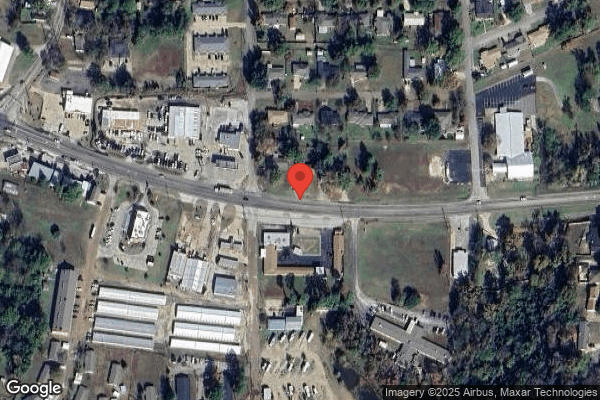
Oct 2023 8 deficiencies
CONCERN (D)

Potential for Harm - no one hurt, but risky conditions existed

Comprehensive Care Plan (Tag F0656)

Could have caused harm · This affected 1 resident

**NOTE- TERMS IN BRACKETS HAVE BEEN EDITED TO PROTECT CONFIDENTIALITY** 2.Record review of Resident #29's face sheet, dated 10/10/23 indicated Resident #29 was an [AGE] year-old female admitted to the...

Read full inspector narrative →
**NOTE- TERMS IN BRACKETS HAVE BEEN EDITED TO PROTECT CONFIDENTIALITY** 2.Record review of Resident #29's face sheet, dated 10/10/23 indicated Resident #29 was an [AGE] year-old female admitted to the facility on [DATE] and re-admitted on [DATE] with diagnoses which included dementia (the loss of cognitive functioning - thinking, remembering, and reasoning), major depression (a mood disorder that causes a persistent feeling of sadness), and generalized anxiety (a feeling of fear, dread, and uneasiness). Record review of Resident #29's quarterly MDS assessment, dated 09/05/23, indicated Resident #29 was usually understood and usually understood by others. Resident #29's BIMs score was 05, which indicated she was cognitively severely impaired. Resident #29 required extensive assistance with toileting, personal hygiene, transfer, dressing, bed mobility, bathing, and eating. The MDS indicated she had 5 days of antidepressant medication and 1 day of antianxiety medication during the 7-day look-back period. Record review of Resident #29's physician's orders dated 08/17/23 indicated, Cymbalta 60mg, give 1 tablet by mouth at bedtime for depression. Record review of Resident #29's physician's orders dated 09/08/23 indicated, Lorazepam 0.5mg, give 1 tablet by mouth twice a day for anxiety. Record review of Resident #29's physician's orders dated 07/05/23 indicated, Trazodone 50mg, give 1 tablet by mouth at night for depression. Record review of Resident #29's MAR record dated 10/01/23 through 10/11/23 revealed Resident #29 received Cymbalta 60mg, Lorazepam 0.5mg, and Trazodone 50mg as ordered. Record review of Resident #29's comprehensive care plan, dated 06/06/22, revealed Resident #29's diagnoses of Major Depressive Disorder and Generalized Anxiety Disorder were not addressed in the resident's care plan. During an interview on 10/10/23 at 3:05 p.m., the MDS coordinator verbally confirmed Resident #29's diagnoses of major depressive disorder with medications use of Cymbalta and Trazadone and generalized anxiety disorder with the medication use of Lorazepam were not addressed by the resident's care plan. The MDS coordinator said she was responsible for ensuring the care plans were updated. The MDS coordinator said the diagnoses and medication should have been listed in Resident #29's care plan and those omissions were an oversight. The MDS coordinator said the nurses/caregivers may not be aware of how to properly care for Resident #29 because her diagnoses and/or medications were not listed in her plan of care. During an interview on 10/11/23 at 11:20 a.m., the ADON said any nurse could add things to a resident's care plan. She said the MDS nurse was responsible for the care plans and the DON was the overseer of care plans. The ADON said they had morning meetings and clinical meetings Monday through Friday where they talked about changes and sometimes the MDS nurse would add or update care plans during those meetings. She said it was important to have a care plan for the care of each resident. She said the intent of the care plan was for staff to be able to meet the resident's needs. During an interview on 10/11/23 at 12:03 p.m., the DON said the MDS nurse was responsible for ensuring care plans were updated with any changes. She said the MDS nurse came to the morning meetings and had access to the resident's orders and the 24-hour report to update the resident's care plans as needed. She said she was not sure where the breakdown occurred for Resident #29's care plan which had not been implemented with her current diagnoses and medications. The DON said care plans should be complete and accurate to ensure residents receive proper care. During an interview on 10/11/23 at 12:49 p.m., the Administrator said he expected all residents to have a care plan. He said they talked about the resident's care and needs during the morning meeting, and he expected the care plan to be updated to reflect the resident's care. He said the MDS nurse was responsible, and the DON was the overseer of care plans. He said the facility needed to tailor a care plan for each individual resident because all resident needs were not the same. He said without care plans being accurate, it was his opinion that care could be missed. Record review of a policy, Care Plans, Comprehensive Person-Centered, dated 10-2022 and reviewed January 2023 indicated a comprehensive, person-centered care plan that included measurable objectives and timetables to meet the resident's physical, psychosocial and functional needs is developed and implemented for each resident. 8. The comprehensive, person-centered care plan will: . b. Describe the services that are to be furnished to attain or maintain the resident's highest practicable physical, mental, and psychosocial well-being. Based on observation, interview, and record review the facility failed to implement a comprehensive person-centered care plan for each resident, that includes measurable objectives and timeframes to meet a resident's medical, nursing, and mental and psychosocial needs, for 2 of 3 (Resident #s 26 and 29) residents reviewed for care plans. The facility failed to ensure Resident #26's comprehensive care plan addressed that she required a daily application of a right hand splint. The facility failed to ensure Resident #29's comprehensive care plan addressed that she received Cymbalta (antidepressant), Trazodone (antidepressant), and Lorazepam (antianxiety). These failures could place residents at risk of not receiving necessary medications and services. The findings included: 1) Record review of a face sheet dated 10/10/2023 indicated Resident #26 was a [AGE] year-old female, who admitted to the facility on [DATE] with the diagnoses of a stroke with right-sided paralysis, dementia, and a right-hand contracture (tightening of tissue causing the fingers to bend forward). Record review of the Significant Change MDS dated [DATE] indicated Resident #26 was sometimes understood and sometimes understood others. The MDS indicated Resident #26's BIMS score was a 3 indicating severe cognitive deficit. The MDS indicated Resident #26 did not display rejection of care. The MDS indicated Resident #26 required extensive assistance of two staff with bed mobility, dressing, and transfers. The MDS indicated Resident #26 had functional limitation in range of motion on one side with the upper and lower extremities. Record review of an Orders-Administration Note dated 9/13/2023 indicated Resident #26 had a physician's order dated 9/13/2023 for a right-hand splint to be applied after breakfast and removed before lunch daily. Record review of the administration record dated October 2023 indicated Resident #26's right hand splint was applied daily. Record review of a comprehensive care plan dated 7/01/2022 indicated Resident #26 had an alteration in musculoskeletal status related to a contracture of the right hand. The care plan indicated Resident #26 would be free of pain and free of injuries or complications. The interventions of the care plan failed to indicate Resident #26 was to wear a splint to her right hand. Record review of a Therapy Screening Form dated 8/07/2023 indicated Resident #26 had limited range of motion to her right upper extremity and was at risk for contractures. Record review of an Occupational Therapy Discharge summary dated [DATE] indicated Resident #26 met the goal to safely wear a resting hand splint on her right hand and right wrist for up to 2 hours with minimal symptoms of redness, swelling, discomfort, or pain. During an observation on 10/09/2023 at 9:51 a.m., revealed Resident #26 was not wearing a right-hand splint. During an observation on 10/09/2023 at 10:56 a.m., revealed Resident #26 was not wearing a right-hand splint. During an observation on 10/10/2023 at 10:46 a.m., revealed Resident #26 was not wearing a right-hand splint. During an interview on 10/10/2023 at 9:30 a.m., Resident #26's family member said he visited Resident #26 every day. The family member said the hand splint had not been placed on Resident #26 for numerous days. During an interview on 10/10/2023 at 2:43 p.m., the MDS coordinator reviewed the entire comprehensive care plan and said she believed she discontinued the care plan for Resident #26 to wear the right hand/wrist splint when she discontinued restorative care. The MDS coordinator said she was responsible for the care planning of splints. The MDS coordinator said she updated the care plans as she reviewed the 24-hour report and after receiving daily updates. The MDS coordinator said Resident #26's hand contracture could worsen without the splint application to her right hand/wrist. During an interview on 10/10/2023 at 2:16 p.m., LVN A said she was Resident #26's nurse. LVN A said she was responsible for applying Resident #26's right-hand splint as ordered. LVN A said she had documented today on the electronic record she applied Resident #26's splint but she said she failed to correct the documentation when Resident #26's refused the splint. LVN A said she documented the application of the splint on 10/09/2023 but she failed to apply Resident #26's right-hand splint. LVN A said contractures could worsen without application of the splints. During an interview on 10/11/2023 at 12:01 p.m., the DON said she communicated with the MDS coordinator for care plan needs. The DON said the care plan directed Resident #26's care needs including the right-hand splint. The DON said she expected the right-hand splint to be applied, monitored, removed, and a skin check completed daily as ordered. The DON said she had not monitored the placement of the splints daily. During an interview on 10/11/2023 at 12:49 p.m., the Administrator said every resident should have a care plan, the care plan must be updated to better treat the residents. The Administrator said the care plan needs were discussed in the morning meeting and the care plan was updated at that time. The Administrator said the MDS coordinator was responsible for ensuring the care plan was updated and the DON was responsible for monitoring. The Administrator said when the care plan was not updated then an aspect of the resident's care could go underserved or at a provided at a suboptimal level. The Administrator said he expected Resident #26's right hand splint to be in place as ordered to prevent loss of range of motion increasing the right-hand contracture.
CONCERN (D)

Potential for Harm - no one hurt, but risky conditions existed

Deficiency F0657 (Tag F0657)

Could have caused harm · This affected 1 resident

**NOTE- TERMS IN BRACKETS HAVE BEEN EDITED TO PROTECT CONFIDENTIALITY** Based on interview and record review the facility failed to review and revise the person-centered care plan to reflect the curre...

Read full inspector narrative →
**NOTE- TERMS IN BRACKETS HAVE BEEN EDITED TO PROTECT CONFIDENTIALITY** Based on interview and record review the facility failed to review and revise the person-centered care plan to reflect the current condition for 1 of 3 (Resident #38) residents reviewed for care plan revisions. The facility failed to ensure Resident #38's care plan was updated to reflect she was receiving Valium ([Diazepam] a medication used to relieve symptoms of anxiety and used off-labeled to treat insomnia) and discontinuation of anxiety medication of Lorazepam and Buspar. This deficient practice could affect residents by placing them at risk of not receiving appropriate interventions to meet their current needs. Findings included: Record review of Resident #38's face sheet, dated 10/10/23 indicated Resident #38 was an [AGE] year-old female admitted to the facility on [DATE] and re-admitted on [DATE] with diagnoses which included generalized anxiety (a feeling of fear, dread, and uneasiness), dementia (the loss of cognitive functioning - thinking, remembering, and reasoning), major depression (a mood disorder that causes a persistent feeling of sadness), and insomnia (common sleep disorder that can make it hard to fall asleep). Record review of Resident #38's quarterly MDS assessment, dated 08/01/23, indicated Resident #38 was sometimes understood and sometimes understood by others. Resident #38's BIMs score was 05, which indicated she was cognitively severely impaired. Resident #38 required total assistance with bathing, extensive assistance with toileting, personal hygiene, transfer, dressing, bed mobility, and set-up assistance with eating. The MDS indicated she received 7 days of antianxiety medication during the 7-day look-back assessment period. Record review of Resident #38's physician's orders dated 07/26/23 indicated, Diazepam 5mg, give 1 tablet at bedtime for insomnia. Record review of Resident #38's physician's orders dated 08/17/23 indicated, Diazepam 2mg, give 1 tablet twice a day for anxiety. Record review of Resident #38's physician's orders dated 07/10/23 indicated discontinuation of Lorazepam 1mg for anxiety. Record review of Resident #38's physician's orders dated 08/17/23 indicated, discontinuation of Buspar 10mg for anxiety. Record review of Resident #38's MAR record dated 10/01/23 through 10/11/23 revealed Resident #38 received Valium as ordered. It The MAR did not reveal the medications of Buspar or Lorazepam. Record review of Resident #38's comprehensive care plan, dated 04/12/23 indicated Resident #38 used antianxiety medication related to anxiety. The interventions of the care plan were for staff to administer Buspar and Lorazepam medication as ordered by the physician and monitor for side effects and effectiveness every shift. Resident #38's care plan did not address Valium. During an interview on 10/09/23 at 10:58 a.m., the MDS coordinator said she was responsible for updating care plans. She said she updated care plans based on the information she received from morning meetings, 24-hour reports, physician's orders, or during her quarterly, significant changes, and/or annual assessments. The MDS coordinator verified by looking at Resident #38's care plan and said she had not updated her care plan to reflect Valium. She said it was important to update the care plan because it indicated how to take care of the residents. During an interview on 10/11/23 at 11:20 a.m., the ADON said any nurse could update a care plan. The ADON said they had morning meetings and clinical meetings Monday through Friday where they talked about changes. She said the MDS nurse was responsible for updating care plans and the DON was the overseer. She said the intent of the care plan was to show what needs to be done to meet the resident's needs and if care plans were not being updated some vital information could be missed. During an interview on 10/11/23 at 12:03 p.m., the DON said all nurses could update a care plan. She said the MDS nurse was responsible for making sure all care plans were updated and she was the overseer. The DON said she was unsure why Resident #38's care plan had not been updated for discontinuation of Lorazepam or Buspar and updated to reflex Valium. The DON said it was important to update a care plan because it reflected the resident's care and needs. During an interview on 10/11/23 at 12:49 p.m., the Administrator said the care plan should reflect a picture of the resident's care needs. He said if a resident had a change of medication, then his/her care plan should reflect the change. The Administrator said the MDS nurse and DON were responsible for updating and monitoring the care plan for needed revisions. Record review of facility policy titled, Care Plans, Comprehensive Person-Centered, dated 01/23, indicated, A comprehensive, person-centered care plan that includes measurable objectives and timetables to meet the resident's physical, psychosocial and functional needs developed and implemented for each resident.#13. Assessments of residents are ongoing and care plans are revised as information about the residents and the residents' conditions change.
CONCERN (D)

Potential for Harm - no one hurt, but risky conditions existed

ADL Care (Tag F0677)

Could have caused harm · This affected 1 resident

**NOTE- TERMS IN BRACKETS HAVE BEEN EDITED TO PROTECT CONFIDENTIALITY** Based on observation, interview, and record review, the facility failed to ensure residents unable to carry out activities of da...

Read full inspector narrative →
**NOTE- TERMS IN BRACKETS HAVE BEEN EDITED TO PROTECT CONFIDENTIALITY** Based on observation, interview, and record review, the facility failed to ensure residents unable to carry out activities of daily living received the necessary services to maintain grooming and personal hygiene were provided for 2 of 3 residents (Resident #s 36 and 37) reviewed for ADLs. The facility failed to provide fingernail care for Resident #s 36 and 37. These failures could place residents at risk of not receiving services and care, infection, and a decreased quality of life. Findings included: 1) Record review of a face sheet dated 10/10/2023 indicated Resident #36 was an [AGE] year-old male who admitted to the facility on [DATE] with the diagnoses of moderate intellectual disability, difficulty swallowing, and high blood pressure. Record review of a Significant Change MDS dated [DATE] indicated Resident #36 was usually understood and usually understood others. The MDS indicated Resident #36 was severely cognitively impaired. The MDS indicated Resident #36 had not rejected care. The MDS indicated Resident #36 required extensive assistance of two staff for bed mobility, and transfers. The MDS indicated Resident #36 required extensive assistance of one staff with dressing, eating, toilet use and personal hygiene. Record review of the comprehensive care plan dated 5/06/2021 and revised 8/17/2023 indicated Resident #36 had an ADL self-care performance deficit. The goal of the care plan was Resident #36 would maintain his current level of function. The care plan interventions for Resident #36 included he required extensive assistance of one person for personal hygiene. Record review of the Documentation Survey Report V2 dated October 2023 indicated under the section of personal hygiene indicated Resident #36 had personal hygiene care on 10/01/2023 with limited assistance of one staff. During an observation on 10/08/2023 at 9:14 a.m., revealed Resident #36 had ¼ inch long jagged fingernails with a brown, black colored material underneath the fingernails. During an observation on 10/09/2023 at 8:00 a.m., revealed Resident #36 continued to have jagged fingernails with brown, black colored material underneath the fingernails while consuming his morning meal. Resident #36 was not interviewable. 2) Record review of a face sheet dated 10/10/2023 indicated Resident #37 was an [AGE] year old male who admitted to the facility on [DATE] with the diagnoses of diabetes, intellectual disabilities, and obesity. Record review of a Significant Change MDS dated [DATE] indicated Resident #37 was sometimes understood and understood others. The MDS indicated Resident #37 had not refused care during the assessment period. The MDS indicated Resident #37 required extensive assistance of two staff with personal hygiene, bed mobility, transfers, and dressing. Record review of the comprehensive care plan dated 8/17/2021 and revised on 8/28/2021 indicated Resident #37 had an ADL self-care deficit. The goal of the care plan was Resident #37 would improve his current level of function. The intervention for Resident #37 included he required total assistance by 2 staff for personal hygiene. During an observation on 10/08/2023 9:14 a.m., revealed Resident #37's fingernails were jagged with black material underneath them. During an observation on 10/09/2023 at 8:00 a.m., revealed Resident #37 continued to have dirty, jagged fingernails while consuming breakfast. Resident #37 was not interviewable. Record review of the Documentation Survey Report V2 dated October 2023 indicated Resident #37 received total assistance with personal hygiene once on 10/01/2023. During an interview on 10/10/2023 at 2:00 p.m., the Shower Aide said nail care should be done daily by the nurse aides or nurses. The Shower Aide said she did nail care in the shower. The Shower Aide said without good nail care infections could occur. The Shower Aide said she had showered Resident #'s 36 and 37. During an interview on 10/10/2023 at 2:10 p.m., CNA B said Resident #36's fingernails should be done every other day while Resident #37 required daily nail care. CNA B said both Resident #36 and #37 were showered on Monday, Wednesday, and Friday on the day shift. CNA B said when the resident's nail were not clean infections could occur from feces underneath the fingernails. During an interview on 10/10/2023 at 2:16 p.m., LVN A said the treatment nurse was responsible for nail care. LVN A said she expected the CNAs to ensure fingernails were clean to prevent infections. During an interview on 10/11/2023 at 8:04 a.m., the Treatment Nurse said she and the weekend RN were responsible for cutting and cleaning residents fingernails. The Treatment Nurse said she had never been employed anywhere where the CNAs were not responsible for nail care. The Treatment Nurse said she had cleaned Resident #s 36 and 37 nails 10/10/2023. The Treatment Nurse was unable to indicate why Resident #36 and #37's fingernails were dirty. The Treatment Nurse said sometimes residents got fecal material underneath their nails. During an interview on 10/11/2023 at 11:16 a.m., the ADON said fingernail care was generally completed by the treatment nurses. The ADON said the Activity Director also had a nail day and nails could have been cleaned during the activity. The ADON said nurse aides should have cleaned the fingernails when dirty. The ADON said the nurse managers monitored the ADLs by reviewing the electronic documentation record, and with walking rounds at least daily. The ADON indicated the facility management had assigned residents for the company program neighbor where that was monitored but the program has not been fully implemented yet. The ADON said skin tears, skin infections, and oral/fecal infections could occur due to dirty fingernails. During an interview on 10/11/2023 at 12:01 p.m., the DON said she expected the residents to be clean and well-groomed including their fingernails. The DON said she had several systems in place to ensure nail care was completed. The DON said she expected the CNAs to provide nail care during showers or anytime the fingernails were dirty; the wound nurse should look at the fingernails, the transportation aide will do fingernails when not on transport and the activity director has a nail day. The DON said she had seen Resident #36 and Resident #37's nails were dirty on 10/10/2023 and had asked a CNA to perform nail care. The DON said the CNA must have gotten busy and forgotten the task. During an interview on 10/11/2023 at 12:49 p.m., the Administrator said he expected the residents to have nail care on a timely basis to ensure the fingernails were free of debris and look presentable. The Administrator said the DON was ultimately responsible to ensure ADL's were completed. The Administrator said dirty fingernails could possibly lead to a dignity issue, and possibly an infection control problem. The Administrator said ADLs were monitored in the electronic documentation record. Record review of an Activities of Daily Living, supporting policy dated March 2018 indicated residents will be provided with care, treatment, and services as appropriate to maintain or improve their ability to carry out activities of daily living (ADLs). Residents who are unable to carry out activities of daily living independently will receive the services necessary to maintain good nutrition, grooming, personal and oral hygiene. 2. Appropriate care and services will be provided for residents who are unable to carry out ADLs independently, with the consent of the resident and in accordance with plan of care, including appropriate support and assistance with: a. hygiene (bathing, dressing, grooming, and oral care).
CONCERN (D)

Potential for Harm - no one hurt, but risky conditions existed

Accident Prevention (Tag F0689)

Could have caused harm · This affected 1 resident

**NOTE- TERMS IN BRACKETS HAVE BEEN EDITED TO PROTECT CONFIDENTIALITY** Based on observation, interviews, and record reviews the facility failed to ensure that the resident environment remains as free...

Read full inspector narrative →
**NOTE- TERMS IN BRACKETS HAVE BEEN EDITED TO PROTECT CONFIDENTIALITY** Based on observation, interviews, and record reviews the facility failed to ensure that the resident environment remains as free of accident hazards as is possible and each resident receives adequate supervision and assistance devices to prevent accidents for 1 of 11 (Resident #30) residents reviewed for accidents hazards and supervision. The facility failed to secure and store a microwave. This failure could place residents at risk for injury. The findings included: Record review of a face sheet dated 10/10/2023 indicated Resident #30 was a [AGE] year-old male who originally admitted to the facility on [DATE] and readmitted on [DATE] with the diagnoses of kidney disease, high blood pressure, and cirrhosis of the liver (impaired liver function). Record review of an Annual MDS dated [DATE] indicated Resident #30 was understood and understood others. The MDS indicated Resident #30's BIMS score was 13 indicating an intact cognition. The MDS indicated Resident #30 required cueing for recall. The MDS indicated Resident #30 had a balance deficit indicating he was not steady but able to stabilize himself without staff assistance. The MDS indicated Resident #30's height was 6 feet or 72 inches. Record review of a comprehensive care plan dated 7/13/2021 and revised on 10/17/2021 indicated Resident #30 had impaired cognitive function or impaired thought process related to metabolic encephalopathy (a problem in the brain caused by a chemical imbalance). The goal of the care plan was Resident #30 would be able to communicate basic needs on a daily basis. The interventions included ask yes/no questions to determine Resident #30's needs and document changes in function. During an observation and interview on 10/08/2023 at 9:15 a.m., revealed Resident #30 had a microwave sitting on the top of a dorm size refrigerator. The dorm sized refrigerator was sitting on top of a bedside table. The height of the stacked appliances was 6 feet. The stacked items were not secured with any brackets or securing devices to the floor or wall. Resident #30 said the microwave was his personal microwave and the Administrator allowed him to have the microwave in his room. During an interview on 10/10/2023 at 2:57 p.m., LVN C said she was the nurse for Resident #30. LVN C said she had voiced concern regarding Resident #30's microwave to the administration. LVN C said the height of the microwave was an issue, burns could occur with removing food from the microwave at that height. LVN C said for the surveyor to see the Administrator for further questions regarding the microwave. During an interview on 10/11/2023 at 12:01 p.m., the DON said the decision to allow Resident #30 to have a microwave in his room was not her decision. The DON said she had no say regarding the risks the microwave imposed. The DON said he could heat up his food too hot causing burns, reheating insufficiently causing food borne illness, and could fall on Resident #30 or another resident. During an interview on 10/11/2023 at 12:49 p.m., the Administrator said he was not used to having residents having a microwave in their rooms. The Administrator said Resident #30 was considered competent to use his microwave, and his roommate could not use the microwave. The Administrator indicated the appliances tripled stacked to a height of six foot did give him pause. The Administrator said there were residents who wandered residing in the facility. The Administrator said another resident could wander in the room and this could potentially cause an accident for the other resident. The Administrator said he had called his corporate and requested permission to allow the microwave in Resident #30's room. During a record review of a policy for Resident Incident and Visitor Accident Report dated 10/08/2020 and reviewed January 2023 reflected iit did not address safety hazards with heating devices such as microwaves.
CONCERN (D)

Potential for Harm - no one hurt, but risky conditions existed

Incontinence Care (Tag F0690)

Could have caused harm · This affected 1 resident

**NOTE- TERMS IN BRACKETS HAVE BEEN EDITED TO PROTECT CONFIDENTIALITY** Based on observation, interview, and record review the facility failed to ensure that a resident who was incontinent of bladder ...

Read full inspector narrative →
**NOTE- TERMS IN BRACKETS HAVE BEEN EDITED TO PROTECT CONFIDENTIALITY** Based on observation, interview, and record review the facility failed to ensure that a resident who was incontinent of bladder received appropriate treatment and services, and an indwelling catheter is not used unless there is valid medical justification for catheterization and the catheter is discontinued as soon as clinically warranted for 1 of 2 residents (Resident #150) reviewed for urinary catheters. 1. Resident #150 had an indwelling urinary catheter since admission on [DATE] without a physician's order with an acceptable diagnosis for use. 2. The facility failed to ensure Resident #150's order for bladder training for Foley catheter removal was implemented. These deficient practices could affect residents who had urinary catheters at risk of not receiving care needed. Findings included: Record review of Resident #150's face sheet dated 10/10/23 indicated that she was an [AGE] year-old female who admitted to the facility on [DATE] with the diagnoses of anxiety (a feeling of nervousness or unease), urinary tract infection, and high blood pressure. Record review of Resident #150's Entry MDS dated [DATE] indicated she did not have a completed comprehensive assessment and it was not due. Record review of Resident #150's baseline care plan 09/29/23 indicated she had an indwelling catheter. Record review of Resident #150's hospital Discharge summary dated [DATE] indicated she had a Foley catheter in the hospital for acute urinary retention, and she would discharge from the hospital to the facility with Foley catheter with a need for bladder training at the facility. Record review of Resident #150's physician's orders active as of the date 10/10/23 indicated she had the following orders: Foley Catheter 16 FR 30 CC bulb change PRN as needed with a start date of 10/03/23 with no diagnosis. During an observation on 10/08/23 at 09:41 AM revealed Resident #150 was lying in bed and had a Foley catheter at bed side hanging to gravity with dark amber urine noted. During an observation on 10/08/23 at 12:10 PM revealed Resident #150 was up in her wheelchair in dining room with a Foley catheter with a dignity bag noted. During an interview on 10/11/23 at 11:13 AM LVN A said she was the nurse who admitted Resident #150 to the facility and her diagnoses was urinary retention. She said she did not input the orders nor diagnosis for the Resident #150 and did not see the discharge summary to complete bladder training for the resident. She said she was unsure of who input the orders or diagnoses in the computer. She said the resident admitted at the end of her shift, so she only completed the admission assessment. She said it was important for Resident #150 to have the diagnosis for use of the Foley catheter and bladder training. LVN A said not knowing that the discharge summary had the bladder training in place could place the resident at risk for having the catheter and not truly need it. During an interview on 10/11/23 at 11:42 AM the ADON said when residents admitted to the facility the charge nurse was responsible for completing the admission and ensuring orders and diagnosis were in the computer. She said the MDS nurse followed up on the orders and diagnosis the day of or after admission to ensure the diagnosis was in the computer. The ADON said it was important to have a proper diagnosis for use of a Foley catheter and the bladder training if ordered, should have been begun and the catheter discontinued if possible. She said the failure placed the resident a risk for infection. During an interview on 10/11/23 at 12:32 PM the DON said normally when a resident was admitted she would look at the diagnosis but did not with Resident #150 and she said she missed the discharge summary saying they needed to provide the bladder training on admission. She said all catheters should have a diagnosis at the time of admission, or it should have been taken out. The DON said in the case with Resident #150 she was busy completing investigations and missed checking her admission paperwork. She said Resident #150 should have had bladder training and had the catheter removed to determine if the catheter could be left out or replaced. The DON said she was fully involved in admitting residents, but the charge nurses should be aware of the need for a diagnosis for the catheters. She said the failure placed the resident at risk for infection. During an interview on 10/11/23 at 01:18 PM the Administrator said when residents were admitted to the facility, the nurses should have been very thorough at going through the discharge orders and ensuring they corresponded with the medical director to ensure they were following the physician's orders. He said the nurses were responsible for ensuring orders were in place for catheters and diagnosis and he expected the DON to monitor them. The Administrator said the risk to the resident was an increased risk for infection, UTIs, and discomfort. Record review of the facility's policy for Foley Catheters date 01/2023 revealed it did not address any information related to orders and diagnosis for use of Foley catheters.
CONCERN (D)

Potential for Harm - no one hurt, but risky conditions existed

Medication Errors (Tag F0758)

Could have caused harm · This affected 1 resident

**NOTE- TERMS IN BRACKETS HAVE BEEN EDITED TO PROTECT CONFIDENTIALITY** Based on interview and record review the facility failed to have target behavioral monitoring in place for behaviors associated ...

Read full inspector narrative →
**NOTE- TERMS IN BRACKETS HAVE BEEN EDITED TO PROTECT CONFIDENTIALITY** Based on interview and record review the facility failed to have target behavioral monitoring in place for behaviors associated with the use of psychotropic medications and documented in the clinical record for 2 of 5 residents reviewed for unnecessary psychotropic drugs (Resident #23 and Resident #150). 1.The facility failed to adequately monitor Resident #23's behaviors regarding his antidepressant and antianxiety medications. 2.The facility failed to adequately monitor Resident #150's behaviors regarding his antidepressant and antianxiety medications. These failures could place residents at risk of receiving unnecessary psychotropic medications with possible medication side effects, adverse consequences, decreased quality of life and dependence on unnecessary medications. Findings included: 1.Record review of Resident #23's face sheet dated 10/10/23 indicated the resident was a [AGE] year-old female who admitted to the facility on [DATE] with the diagnoses of diabetes (a group of diseases that result in too much sugar in blood), major depression, anxiety (a feeling of nervousness or unease), and high blood pressure. Record review of Resident #23's admission MDS dated [DATE] indicated that she was usually understood and sometimes understood others. The MDS indicated Resident #23 had a BIMS score of 5 which indicated her cognition was severely impaired. The MDS also indicated Resident #23 required extensive assistance with bed mobility, transfers, locomotion, dressing, toileting, personal hygiene and was totally dependent on staff on bathing. The MDS indicated Resident #23 received antianxiety medications and antidepressant medications on 7 days of 7 days of the look back period. Record review of Resident #23's care plan initiated on 08/31/23 indicated she used an antianxiety medication and had intervention to monitor/document/report PRN any adverse reactions to antianxiety therapy: drowsiness, lack of energy, clumsiness, slow reflexes, slurred speech, confusion, and disorientation, depression, dizziness, lightheadedness, impaired thinking and judgement, memory loss, forgetfulness, nausea, stomach upset, blurred or double vision. The care plan also indicated that she used an antidepressant and had an intervention to monitor/document/report PRN any adverse reactions to antidepressant therapy: change in behavior/mood/cognition, hallucinations/delusions, social isolation, suicidal thoughts, withdrawal, decline in ADLs, continence, no voiding, constipation, diarrhea, gait changes, tremors, balance problems, muscle cramps, falls, dizziness, fatigue, and insomnia. Record review of Resident #23's physician's orders active as of the date 10/10/23 indicated that she had the following orders: Bupropion HCL ER (antidepressant medication) 150mg tablet by mouth one time a day for depression with a start date of 08/19/23. Diazepam (antianxiety medication) 2mg tablet one tablet by mouth two times a day for anxiety with a start date of 08/19/23. Fluoxetine HCL (antidepressant medication) 3 10mg capsules by mouth at bedtime for depression with a start date of 08/18/23. The physician's orders report did not indicate Resident #23 had any behavior monitoring for the use of antidepressant or antianxiety medications. Record review of Resident # 23's medication administration record dated 10/01/23-10/31/23 indicated she had been receiving Bupropion HCL ER (antidepressant medication) 150mg tablet by mouth one time a day for depression, Diazepam (antianxiety medication) 2mg tablet one tablet by mouth two times a day for anxiety, and Fluoxetine HCL (antidepressant medication) 3 10mg capsules by mouth at bedtime for depression, but there was no monitoring in place. 2.Record review of Resident #150's face sheet dated 10/10/23 indicated that she was an [AGE] year-old female who admitted to the facility on [DATE] with the diagnoses of anxiety (a feeling of nervousness or unease), urinary tract infection, and high blood pressure. Record review of Resident #150's Entry MDS dated [DATE] indicated she did not have a completed comprehensive assessment and it was not due. Record review of Resident #150's baseline care plan 09/29/23 indicated she did not take an antidepressant medication nor an antianxiety medication on admission. Record review of Resident #150's physician's orders active as of the date 10/10/23 indicated she had the following orders: Buspirone HCL (antianxiety medication) 15mg tablet by mouth every day and evening for anxiety with a start date of 10/04/23. Duloxetine HCL delayed released particles (antidepressant medication) 30mg capsule by mouth at bedtime for depression with a start date of 10/03/23. The physician's orders report did not indicate Resident #23 had any behavior monitoring for the use of antidepressant or antianxiety medications. Record review of #150's medication administration record dated 10/01/23-10/31/23 indicated she had been receiving Buspirone HCL (antianxiety medication) 15mg tablet by mouth every day and evening for anxiety and Duloxetine HCL delayed released particles (antidepressant medication) 30mg capsule by mouth at bedtime for depression, but there was no monitoring in place. During an interview on 10/11/23 at 09:16 AM LVN C said she could not find any monitoring of the antidepressant nor the antianxiety medications in Resident #23's nor Resident #150's records. LVN C said she was unsure of who was responsible for placing the orders in for monitoring when they received an order for an antianxiety or antidepressant medication. She said she had never placed the order in for the monitoring of the medications. LVN C said without the orders for monitoring being placed in the computer, the nurses could not monitor for the side effects of the medication for the resident. During an interview on 10/11/23 at 11:45 AM the ADON said when the floor nurse placed the orders in the computer for the antianxiety and antidepressant medications, they should have entered the order for monitoring of the medications. She said the charge nurses were responsible for placing the monitoring order in the computer for the antianxiety and antidepressant medications. The ADON said the ADON and DON reviewed the orders daily for the medications that were input in the system on the day before. She said she and the DON missed seeing the medications because they were working on investigations. The ADON said the risk to the resident was for them to have had unnecessary medications and the charge nurse not knowing what side effects or symptoms look for while the residents were taking the medication. During an interview on 10/11/23 at 12:40 PM the DON said when the antianxiety or antidepressant medications ordered were placed into the system, the monitoring orders should have been placed in the system. The DON said she normally monitored the orders daily to ensure they were placed into the system as well as the monitoring. She said she had a face-to-face in-service with the charge nurses and discussed placing the monitoring with medications but did not document it. The DON said the failure would cause the charge nurse to not know what interventions or side effects to look for with the residents were taking the antianxiety or antidepressant medications, nor would the nurse know the behaviors to monitor for. During an interview on 10/11/23 at 01:25 PM the Administrator said his expectation was for the monitoring to be in place for any orders for psychotropic medications. He said any resident with the antianxiety or antidepressant medications should have been monitored to identify how the resident was responding to the medication and be aware of the need tailor the medication regimen to the residents' needs. The Administrator said without the monitoring in place, the residents' mental state, could decline or it could cause an exacerbation of behaviors or side effects, or prevent the residents from relief as the medications should have provided. The Administrator said the DON was responsible for ensuring the monitoring was in place. Record review of the facility's Psychotropic/ Psychoactive Medication Policy revised 01/2023 indicated: Policy Statement A psychotropic drug is any drug that affects brain activities associated with mental processes and behavior. These drugs include, but are not limited to, drugs in the following categories: (i) Antipsychotic; (ii) Anti-depressant; (iii) Anti-anxiety; and (iv) Hypnotic. Other medications which affect brain activity will also be subject to psychotropic medication requirements if documented use is a substitution for a psychotropic medication rather than the approved or original indication. Psychotropic medications are used only when appropriate and at the lowest possible dose to enhance the residents' quality of life, maximize functional ability or promote overall well-being. Policy Implementation 1. Residents will only receive antipsychotic medications when necessary to treat specific conditions for which they are indicated and effective . 1. Residents will be monitored for behaviors to include behavior changes and for side effects and complications related to psychoactive medications, for example, sedation, lethargy, agitation, mental status changes, or behavior changes that affect ability to perform adl's or interact with others that causes the resident to withdrawal or decline from usual social patterns or shows the resident has a decreased engagement in activities and or cause diminished ability to think or concentrate. Abnormal involuntary movement, and anorexia daily
CONCERN (D)

Potential for Harm - no one hurt, but risky conditions existed

Deficiency F0761 (Tag F0761)

Could have caused harm · This affected 1 resident

Based on observation, interview, and record review the facility failed to ensure all drugs were stored in a locked compartment, only accessible by authorized personnel for 1 of 2 medication carts and ...

Read full inspector narrative →
Based on observation, interview, and record review the facility failed to ensure all drugs were stored in a locked compartment, only accessible by authorized personnel for 1 of 2 medication carts and 1 of 1 medication room observed for medication storage. The facility failed to ensure the lock box that contained narcotic medications was permanently affixed to the refrigerator in the medication room. The facility did not ensure East Hall medication cart was secured and unable to be accessed by unauthorized personnel. These failures could place residents at risk for not receiving drugs and biologicals as needed, medications being used passed their effective or expiration date, and a drug diversion. Findings include: During an observation and interview on 10/08/2023 at 8:15 AM, revealed LVN D left the medication cart unattended in the middle of the [NAME] hallway unlocked. LVN D stated she thought a resident was about to fall and left the cart to help the resident. During an observation and interview on 10/10/2023 at 3:24 PM, revealed the facility's medication room storage was observed and inside the medication refrigerator was the narcotic lock box that was not permanently affixed. LVN A stated there were narcotic medications inside the lock box. LVN A opened the narcotic medication box and inside was one card of Dronabinol 5mg which was a narcotic. LVN A stated she was unaware the narcotic medication box needed to be permanently affixed to the refrigerator. LVN A stated the nurses were the only ones with keys to the medication room so hopefully no one could get into the medication room to take the narcotic box. LVN A stated if someone were to have access to the narcotic medication box and took medication that was not prescribed to them, they would have to look up the side effects and call the doctor immediately. During an interview on 10/10/2023 at 3:52 PM, LVN D stated it was her responsibility to ensure the medication cart was locked. LVN D stated a resident was leaning over like she was going to fall out of bed, and she ran in to help her. LVN D stated she normally pulled the medication cart in front of resident's room, closed the computer screen and locked the cart when giving medications. LVN D stated if the medication cart was unlocked anybody could take anything out. LVN D stated one of the residents could get something that could be dangerous to them, or they could overdose. LVN D stated it was important to lock the medication cart so no one coul steal out of it and to keep everyone honest. During an interview on 10/10/2023 at 4:00 PM, the DON stated she expected the medication carts to be locked whenever they are not in the nurse's sight. The DON stated she monitored the medication cart when walking around and if she saw them unlocked, she would lock them. The DON stated if the medication cart was left unlocked someone could get into it that shouldn't. The DON stated leaving the medication cart unlocked could harm a resident if a resident got into the cart and took something they could have an adverse reaction to. The DON stated she was aware the narcotic box should be affixed to the refrigerator. The DON Stated it was important for the narcotic box to be affixed to the refrigerator so nobody could remove it. The DON stated someone could take the narcotic box and the resident does not have their medication. During an interview on 10/11/2023 at 11:50 AM, the ADON stated the nurse that has the key was responsible for locking the medication cart. The ADON stated she expected the medication carts to be locked when the nurse was not there to supervise it. The ADON stated it was important to keep the medication cart lock because a confused resident get into it. The ADON stated she monitored when walking by the medication cart. The ADON stated leaving a medication cart unlocked could be harmful if a resident got something out that could harm them. The ADON stated she was aware the narcotic medication box in the refrigerator was supposed to be affixed to the refrigerator. The ADON stated the narcotic box in the refrigerator was affixed at one time and wasn't aware the narcotic box was no longer affixed to the refrigerator. The ADON stated it was important for the narcotic box to be affixed to the refrigerator so no one could carry it off. During an interview on 10/11/2023 at 1:06 PM, the Administer stated he expected the medication carts to be locked anytime they are not directly in use, if the medication cart was out of the nurses sight it needs to be locked. The Administer stated the nurses are responsible for locking the medication cart. The Administer stated the DON monitored by spot checks. The Administer stated it was important the medication carts are locked because you don't want someone to have access to the medication if they're not the one who was authorized to have access. The Administer stated that could affect the resident by providing unrestricted access to otherwise restricted medication. The Administer stated he was not aware the narcotic medication box should be affixed to the refrigerator. The Administer stated it was important to affix the narcotic to the refrigerator because it makes it more difficult to take and provides a second layer of security. The Administer stated if someone took the narcotic medication box it could result in one of the residents not having their necessary medication available until the pharmacy sends replacement medication. The Administer stated for anyone stealing medication that were very dangerous in amounts that were uncontrolled and unsupervised. Record review of the facility's policy titled, Medication Labeling and Storage dated 2/2023, revealed, the facility stores all medications and biologicals in locked compartments under proper temperature, humidity, and light controls. Only authorized personnel have access to keys
CONCERN (D)

Potential for Harm - no one hurt, but risky conditions existed

Infection Control (Tag F0880)

Could have caused harm · This affected 1 resident

**NOTE- TERMS IN BRACKETS HAVE BEEN EDITED TO PROTECT CONFIDENTIALITY** 2.Record review of Resident #14's face sheet, dated 10/10/23 indicated Resident #14 was an [AGE] year-old female admitted to the...

Read full inspector narrative →
**NOTE- TERMS IN BRACKETS HAVE BEEN EDITED TO PROTECT CONFIDENTIALITY** 2.Record review of Resident #14's face sheet, dated 10/10/23 indicated Resident #14 was an [AGE] year-old female admitted to the facility on [DATE] and re-admitted on [DATE] with diagnoses which included, respiratory failure (a serious condition that makes it difficult to breathe on your own), Diabetes (a condition that happens when your blood sugar (glucose) is too high), major depression (a mood disorder that causes a persistent feeling of sadness), generalized anxiety (a feeling of fear, dread, and uneasiness) and hypertension (high blood pressure). Record review of Resident #14's significant change in status MDS assessment, dated 08/15/23, indicated Resident #14 was usually understood and usually understood others. Resident #14's BIMs score was 06, which indicated she was cognitively severely impaired. Resident #14 required total assistance with bathing, extensive assistance with toileting, personal hygiene, transfer, dressing, bed mobility, and set-up assistance with eating. The MDS indicated Resident #14 was always incontinent of the bladder and frequently incontinence of the bowel. Record review of Resident #14's comprehensive care plan, dated 03/12/22 indicated Resident #14 had an ADL self-care performance deficit related to decreased mobility, obesity, and cognitive impairment. Resident #14 was incontinent of bowel and bladder. The interventions of the care plan were for staff to check Resident #14 every 2 hours and provide assistance with toilet use. During an observation and interview on 10/08/23 at 10:40 a.m., revealed CNA H was providing incontinent care for Resident #14 who had an incontinent episode. CNA H wiped the vaginal area and then without changing his gloves or performing hand hygiene assisted Resident #14 to turn onto her left side. CNA H started cleaning the buttock area, then applied her brief without hand hygiene or changing his gloves. CNA H took off his gloves, left the room, proceeded into another resident's room, and then performed hand hygiene. CNA H said he was not aware he needed to perform hand hygiene or change his gloves during peri-care from peri care from front to back or when he went from a dirty surface to a clean surface. He said he forgot to perform hand hygiene before leaving the room. He said he had been trained on hand washing and peri care. He said he knew without hand hygiene he could spread germs. Record review of competencies skills revealed CNA H had been checked off on handwashing 08/09/23 but did not reveal a checkoff on peri-care. During an interview on 12/15/2022 at 5:54 PM, the ADON said she expected CNAs to perform incontinent care correctly. The ADON said CNAs were expected to change their gloves and provide hand hygiene between dirty and clean. She said the CNAs were checked off by LVN A and LVN G monthly. The ADON said she was unsure why CNA H failed to change his gloves and perform hand hygiene appropriately. The ADON said changing gloves and performing hand hygiene correctly could prevent cross-contamination, UTIs, and infection. During an interview on 10/11/23 at 12:03 p.m., the DON said she expected staff to perform incontinent care and hand hygiene correctly as per protocol. She said hand hygiene should be performed when hands were soiled, from dirty to clean, and when entering or exiting a room. She said LVN G was responsible for skill checkoffs on hire and yearly and she was the overseer. She said she did not know why CNA H did not have his peri-care skill checkoffs completed. The DON said failure to perform hand hygiene properly could lead to infection issues. During an interview on 10/11/23 at 12:49 p.m., the Administrator said he expected the aides to perform incontinent care and hand hygiene per policy. He said nurse management was responsible for ensuring the aides were competent in their skill sets. The Administrator said if the aides were not following policy and procedure on incontinent care and hand hygiene it could lead to infection issues. Record review of the facility policy, hand washing, and hand hygiene policy dated 03/01/20 indicated, This facility considers hand hygiene the primary means to prevent the spread of infections. 1. All personnel shall be trained and regularly in-serviced on the importance of hand hygiene in preventing the transmission of healthcare-associated infections. 2. All personnel shall follow the handwashing/hand hygiene procedures to help prevent the spread of infections to other personnel, residents, and visitors. 6. Wash hands with soap (antimicrobial or non-antimicrobial) and water for the following situations: a. when hands are visibly soiled, and b. After contact with a resident with infectious diarrhea. 7. Use an alcohol-based hand rub containing at least 62% alcohol; or, alternatively, soap (antimicrobial or non-antimicrobial) and water for the following situations: A. Before and after coming on duty, B. Before and after direct contact with residents, I. After contact with a resident's intact skin, M. After removing gloves; 8. Hand hygiene is the final step after removing and disposing of personal protective equipment. 9. The use of gloves does not replace hand washing/hand hygiene. Integration of glove use along with routine, 10. Hand hygiene is recognized as the best practice for preventing healthcare-associated infections. Record review of the facility policy PERINEAL CARE POLICY AND PROCEDURE revised 10-2020 indicated: Purpose: The purposes of this procedure are to provide cleanliness and comfort to the resident, to prevent infections and skin irritation, and to observe the resident's skin condition. Preparation: 1. Review the resident's care plan to assess for any special needs of the resident. 2. Assemble the equipment and supplies as needed. Equipment and Supplies: gloves, bed protector, basin, soap/peri-wash, water, toilet paper, washcloths, towels, trash bag and protective barriers. Steps in the Procedure: . 3. Toilet resident if on toileting program (even if wet) . 4. Wash hands and apply gloves . 8. Rinse thoroughly if using soap. Dry with a towel. 9. Change gloves. Reposition patient for comfort . Record review of the facility policy Catheter Care, Urinary revised January 2023 indicated: Purpose The purpose of this procedure is to prevent catheter-associated urinary tract infections . Steps in the Procedure 1. Place the clean equipment on the bedside stand or overbed table. Arrange the supplies so they can be easily reached. 2. Wash and dry your hands thoroughly . 1. Put on gloves . 2. Place bed protector under resident. 3. Wash the resident's genitalia and perineum thoroughly with soap and water. Rinse the area well and towel dry. 4. Pour wash water down the commode. Flush the commode. 5. Place soiled linen into designated container. 6. Put on clean gloves. 7. Remove gloves and discard into the designated container. Wash and dry your hands thoroughly. Based on observation, interview, and record review, the facility failed to maintain an infection prevention and control program designed to provide a safe, sanitary, and comfortable environment and to help prevent the development and transmission of communicable diseases and infections for 2 of 2 residents (Resident #150 and Resident #14) reviewed for infection control practices. The facility failed to ensure CNA E changed her gloves and performed hand hygiene while providing Peri-care and catheter care to Resident #150. The facility failed to ensure CNA H changed gloves or performed hand hygiene while providing incontinent care for Resident #14. These failures could place residents and staff at risk for cross contamination and the spread of infection. Findings included: 1. Record review of Resident #150's face sheet dated 10/10/23indicated that she was an [AGE] year-old female who admitted to the facility on [DATE] with the diagnoses of anxiety (a feeling of nervousness or unease), urinary tract infection, and high blood pressure. Record review of Resident #150's Entry MDS dated [DATE] indicated she did not have a completed comprehensive assessment and it was not due. Record review of Resident #150's baseline care plan 09/29/23 indicated she had an indwelling catheter. Her baseline care plan also indicated she required 1-person physical assist with personal hygiene, toileting, transfers, ad bathing. During an observation and interview on 10/09/23 at 2:41 PM, revealed CNA E and CNA F entered Resident #150's room to perform peri care and catheter care. CNA E and CNA F said they had already washed their hands. CNA E and CNA F applied gloves. CNA E performed peri care and catheter care while CNA F was assisting her. CNA E used the same gloves throughout the whole peri care and catheter care process. CNA E never changed her gloves or performed hand hygiene. CNA E said she should have changed her gloves and used hand sanitizer after cleaning Resident #150 and before applying the clean brief because her gloves were considered dirty. CNA E said she was nervous and not changing gloves and hand hygiene during care could have caused Resident #150 a urinary tract infection. CNA E said she had been checked off for peri care and incontinent care. Record review of the facility CNA competencies revised 1/2023 indicated CNA E completed competency for catheter care and incontinent care on 07/26/23 with all skills met by LVN G. During an interview on 10/11/23 at 11:39 AM the ADON said her expectation was for the CNAs to change their gloves between clean and dirty. She said LVN A and LVN G were responsible for completing peri-care check offs and catheter care check offs. She said monthly check offs were performed for hand washing with all the CNAs. The issue it could cause by not changing gloves in between dirty and clean could cause infection and UTI. It could be worsening for a resident who already had a UTI. During an interview on 10/11/23 at 12:37 PM the DON said her expectations were for the CNAs to complete catheter care as trained. She said she expected the CNAs to change gloves, wash or sanitize between dirty and clean and after completion of care. The DON said LVN G was responsible for checking the CNAs off for peri care and ensuring they could provide care properly. The DON said she monitored and provided the packets they used when they were due for training. She said the failure of the CNAs improperly providing catheter care placed Resident #150 at risk for infection. During an interview on 10/11/23 at 01:21 PM the Administrator said the CNAs were expected to clean residents and change gloves and wash hands when going from a dirty area to a clean area. He was not as familiar with the catheter care as the peri care. The Administrator said the risk to the resident was risk of infection, as well as infection to the CNAs. He said the nursing managers were responsible for ensuring the CNAs provided proper peri care and catheter care.
Aug 2023 4 deficiencies 4 IJ
CRITICAL (J) 📢 Someone Reported This

A family member, employee, or ombudsman was alarmed enough to file a formal complaint

Immediate Jeopardy (IJ) - the most serious Medicare violation

Free from Abuse/Neglect (Tag F0600)

Someone could have died · This affected 1 resident

**NOTE- TERMS IN BRACKETS HAVE BEEN EDITED TO PROTECT CONFIDENTIALITY** Based on interview and record review, the facility failed to ensure residents were free from abuse for 1 of 8 residents (Residen...

Read full inspector narrative →
**NOTE- TERMS IN BRACKETS HAVE BEEN EDITED TO PROTECT CONFIDENTIALITY** Based on interview and record review, the facility failed to ensure residents were free from abuse for 1 of 8 residents (Resident #1) reviewed for abuse in that: Resident #1 was gotten out of bed against his wishes, made to sit up all night on 2/24/23 by the orders of LVN A. Resident #1 was threatened, and emotionally abused on 2/24/23 by LVN A and LVN E. Resident #1 said he was being punished for hollering out. The noncompliance was identified as PNC. The IJ began on 2/24/23 and ended on 3/4/23. The facility corrected the noncompliance before the survey began. This failure placed residents at risk for continued abuse, fear, and intimidation. Findings included: Record review of Resident #1's face sheet dated 8/8/23 indicated he was a [AGE] year-old male who admitted to the facility on [DATE]. Some of his diagnoses were Hemiplegia (Paralysis on one side of the body) following a stroke, mild cognitive impairment, abnormal posture, anxiety disorder, and schizoaffective disorder bipolar type. Record review of Resident #1's quarterly MDS assessment dated [DATE] indicated his cognitive status was moderately impaired. His bed mobility was extensive assistance with two people. Resident #1 required the assistance of two people for transfers. Record review of Resident #1's care plan initiated on 10/22/21 with a focused area of behaviors related to frequently yelling out instead of using the call light, attention seeking, as evidence by asking to have pillow fluffed multiple times within minutes of doing so. A history of climbing out of bed and screaming when up in chair wanting to go back to bed within less than 30 minutes of being up. Some of the interventions were to be supportive of all needs and requests to maintain comfort. Encourage him to sit up for as long as possible. If multiple requests were made to go back, please put him back to bed. Maintain a calm, restful safe environment. A focused area of ADL self-care performance deficit related to left sided hemiplegia. Resident #1 required extensive assistance of two staff for positioning and tuning in bed for proper body alignment as necessary. The resident had limited range of motion of the left upper extremity, hand, and lower extremity. Resident #1 required extensive assistance by 2 staff for dressing toilet use and transfers. The resident was transferred by Hoyer lift. Record review of a Social Services note dated 7/13/23 indicated Resident #1 preferred to stay in bed, but occasionally went to the dining room and participated in activities. Written by the social worker. Record review of the Provider Investigation report dated 3/11/22 indicated Resident #2 crawled to Resident #1's bed and was trying to hit him with a remote. He was verbally aggressive towards Resident #1 and threatening to kill him. Resident #1 was hollering for staff. The staff intervened and Resident #2 was removed and taken to the emergency room for evaluation. Record review of a general in service dated 2/23/23 (prior to the incident) indicated an in-service on abuse and neglect. The sign in sheet indicated LVN A and LVN E attended. Record review of the Provider Investigation Report dated 2/27/23 indicated during an investigation the facility was made aware of an additional concern related to LVN A and LVN E. During the investigation of LVN E's treatment of residents, there was an incident that arose regarding LVN A. The allegations regarding LVN A were substantiated. The police were notified, life satisfaction rounds were conducted with residents, and staff questionaries to identify if this happened elsewhere. The LVN A and LVN E were terminated. The report contained a statement dated 2/24/23 written by CNA B that indicated Resident #1 pulled his light a few times. This annoyed LVN A and LVN E to the point they wanted him out of bed. Around 12:00 a.m. CNA B and CNA D got Resident #1 up and they would not let us put him down until closer to 7 :00 a.m. While he was up, they kept telling him to shut up. The nurses laughed at him along with torturing him with past events of a former roommate beating Resident #1 up for talking. They proceeded to say, if you don't shut up Resident #2 was going to come and get you again. The Report contained a statement dated 3/1/23 by Resident #1 written by the Administrator. The statement indicated CNA D took him to the front lobby on Friday night 2/24/23 as punishment from the nurses for hollering. He said LVN A did not like it when he hollered. He said LVN A said, You remember that guy that beat you up? Well, I am gone bring him out here if you don't stop hollering. A statement dated 2/27/28 written by CNA D indicated on the 11 to 7 shift on 2/24/23 Resident #1 was on his call light quite a bit. About 12:00 a.m. LVN A said to get him up. He was not yelling when they got him up but yelled the rest of the night. The aide said she did not hear everything, but the nurses were hollering back to him from the nurses' station. She said they said something about an old roommate that had beat him up. The statement said CNA D and CNA B put Resident #1 to bed about 6:30 a.m. the aide said she returned to work at 3:00 p.m. on 2/26/23 and was told the resident slept all day and did not eat. She said he did not wake up to pull his light until 9:00 p.m. A statement with no date written by LVN A indicted Resident #1 was sitting in the front dining room and frequently yelled out nurse. This nurse told him to quiet down because there were 3 or 4 other residents close to him. At the desk myself and LVN E was talking about the time his former roommate hit him with a remote due to his constant loud yelling. During an interview on 8/8/23 at 10:25 a.m. with Resident #1 and the Administrator, Resident #1 said he was doing fine now. He said remembered the incident that occurred a few months ago when two aides were told to get him up and put him in his chair around 11:00 p.m. or so, it was after the night shift came in. He said they got him up and he did not really want to get up. He said when he was asked to be put to bed, they would not put him to bed until morning. He said he could not put himself to bed, so he just had to sit there all night. Resident #1 said LVN A did that as punishment because she knew he did not like to stay up long. Resident #1 said LVN A threatened him with his former roommate beating him up if he did not stop hollering. The resident said he was upset by the incident and began to cry. After leaving the room, the Administrator said he did not know what upset Resident #1 more, the incident with LVN A up all night or the threat of Resident #2 beating him up. The Administrator said due to Resident #1 being upset he did not want to dig too deeply into his feelings, but it was obvious he was still upset by the whole thing. During a telephone interview on 8/2/23 at 11:50 a.m., CNA B said she heard LVN A talking to Resident #1 on 2/24/23. She said she heard LVN A threaten Resident #1 with someone beating him up. CNA B said LVN A told her and CNA D to get Resident #1 up and would not let them put him to bed all night. She said he did not like to stay up long. According to her, Resident #1 wanted to lay back down. CNA B said when they told LVN A he wanted to lay down, LVN A told them not to put Resident #1 back to bed until daylight. She said Resident #1 was dependent on staff and could not put his self-back to bed. CNA B said she did not report the incident but had been in-serviced on reporting abuse after the incident happened. During an interview on 8/2/23 at 1:14 p.m., CNA C said she worked at the facility for 4 years. She said Resident #1 liked attention and would holler for help. She said she heard about them getting him up and keeping him up all night. She said when Resident #1 got up, after about 10 minutes, he wanted to lay back down. She said Resident #1 liked to stay in the bed. CNA C said if they kept him up all night, it would have been punishment for him. She said Resident #1 told her, LVN A made him get up and stay up all night because he was hollering, as a punishment. She said Resident #1 was dependent on staff and could not put his self-back to bed. During a telephone interview on 8/8/23 at 1:55 p.m., CNA D said Resident #1 yelled down the hall quite often. He was not yelling down the hallway on the night of 2/24/23She said when they arrived at work at 11:00 p.m. that night Resident #1 was pulling the call light quite a bit. They had only been at work a short time and he had pulled the light about 5 times. LVN A said if Resident #1 pulled the call light again she wanted her and CNA B to get him up. CNA D said he pulled the light again and LVN A told them to get him up. Resident #1 said he did not want to get up. She said they told LVN A he did not want to get up and LVN A told them to get him up anyway. CNA D said after about 2 hours Resident #1 wanted to go to bed. She said LVN A said do not put him to bed. CNA D said after about another hour and a half he asked again and LVN A said no. She said Resident #1 was dependent on staff and could not put himself self-back to bed. She said LVN A told them not put him to bed until day light. CNA D said Resident #1 was sliding out of his chair. She said Resident #1 was in a high-backed wheelchair and kept sliding down and they had to pull him up. CNA D said she did not hear all the comments that night between LVN A and LVN E. She said she heard parts of the conversation about a former roommate beating Resident #1 up and they were laughing. CNA D said she was sure Resident #1 could hear them. He was sitting in the entry way area not too far from the nurse's station. They were talking loudly, and she heard them from a couple of rooms down the hallway. She said she was doing what she was instructed to do by her nurse. She said she did not think too much of it at the time, but it was abuse. She did not report the incident but had been counseled and in-serviced since the incident. During an interview on 8/2/23 at 11:29 a.m., the Administrator said he was investigating another abuse allegation regarding LVN E and discovered LVN A was abusive to Resident #1. The Administrator said on the night of 2/24/23, LVN A had told aides to get Resident # 1 out of bed due to his hollering out and to keep him up. He said LVN A also threatened Resident #1 by telling him a former roommate was going to beat him up. The Administrator said when he spoke to Resident #1, and Resident #1 said he felt like he was being punished. The Administrator said he did not know the exact date he found out about the incident, the staff did not come and report the abuse. When he was asked about LVN E, then CNA B and CNA D started to talk about the incident with Resident #1. He said it may be a day or two later when he found about the abuse to Resident #1. The Administrator said he started the investigation into LVN E on the morning of 2/25/23 because it was reported that morning. The two aides worked mostly nights and weekends. He said when he was informed what had happened to Resident #1, LVN A was suspended immediately. He said he terminated LVN E not because he could prove that she had abused a resident but because there were so many negative statements about her behavior all together on 3/4/23. He terminated LVN A because the abuse was substantiated on 3/4/23. He referred both their license, in serviced staff, and took the incident to QIPP. He said he completed the in-service and had the staff to take a test to ensure their knowledge of what was considered abuse, and when to report abuse. They were told if a resident did not want to get up then do not force them. If the nurse insisted, to contact him to determine what needed to be done on 3/4/23. During an interview on 8/18/23 at 2:10 p.m. CNA C said she worked at the facility for 4 years. She said they had in services all the time about abuse and neglect. Abuse was making a resident do something against their will. She said Resident #1 did not like to get up and the staff do not make him get up. CNA C said occasionally they can talk him into getting up, but Resident #1 did not like to stay up long. She said he had been like that ever since she had been at the facility. CNA C said the facility bought him a fancy wheelchair, give pain meds, but he still did not like to get up. She said if a nurse told her to get him up and he did not want to get up, She would call the abuse coordinator. CNA C said they should make him get up, they must honor the resident wishes. She said putting Resident # 1 in his chair and making him stay there could be a restraint. CNA C said Resident #1 could not get out of the chair without assistance. She said they were serviced on reporting and not doing things against resident wishes. Record review of the facility corrective actions prior to the initiation of the survey revealed: Record review of a QIPP worksheet dated 3/14/23 indicated the identified concern was two nurses involved in the mistreatment of residents. The alleged perpetrator was suspended pending investigation on 2/25/23. Systemic Actions were the corporate nurse and facility administrative staff completed a thorough investigation on abuse neglect, mistreatment, involuntary seclusion on 3/4/23. In-services were completed on 3/4/23 to include detailed discussion on abuse triggers, abuse scenarios as well as what to do when you encounter a situation where you feel the resident is being mistreated. Monitoring was initiated and complete on 6/9/23. LVN A and LVN E were both suspended on 2/26/23 and both were terminated on 3/4/23. Record review of an in service dated 3/4/23 indicated the Administrator presented the topic Abuse, Neglect, Mistreatment, and Involuntary Seclusion. The in-service sign in sheet had 51 signatures to include CNA B and CNA D. Record review of a time sheet for LVN A indicated she worked full shifts on 2/24/23 and 2/25/23- from 11p to 7a. The time sheet indicated that her last day at work was 2/25/23 at 7:18 a.m. Record review of a time sheet for LVN E indicated she worked full a shift on 2/24/23 from 11p- 7a. The time sheet indicated that her last day at work was 2/24/35 at 7:17 a.m. Interviews were conducted LVNs on 8/2/23 between 10:43 a.m. and 4:41 p.m. about the training they received in regard to abuse, restraints and seclusion: At 10:43 a.m. LVN H At 11:02 a.m. LVN I At 8/2/23 at 3:58 p.m. LVN G At 8/2/23 at 4:41 p.m. LVN J The LVNs said she had received an in service on abuse with a focus on seclusion. They informed to always honor the residents' rights and wishes. If a resident did not want to get up, do not make them got up, and do not force them to stay up in a chair. The nurses said they knew better than to make a resident do things against their will, and if they did that was abuse. They would not intentionally place a resident alone, in a room or a chair, if they were dependent on staff to meet their needs they would take care of the residents needs. They said they had received in services many times on abuse and neglect and was familiar with what constituted abuse, who to report to and to report immediately. Record review of the Abuse Prohibition Policy last revised March 2023 indicated the intent of this protocol was intended to assist in the prevention of abuse, neglect, and misappropriation of property. Each resident has the right to be free from abuse, mistreatment, neglect, corporal punishment, involuntary seclusion, and financial abuse. The policy indicated the facility will prohibit neglect, mental or physical abuse, including involuntary seclusion and misappropriation of property or finances of residents. The definition of abuse means the willful infliction of injury, withholding or misappropriation or property or money, unreasonable confinement, intimidation, or punishment with resulting physical harm, pain, or anguish. Any employee who becomes aware of an allegation of abuse, neglect, or misappropriation of resident property, shall report the incident to the Abuse Coordinator immediately. Failure to do so will result in disciplinary action, up to and including termination. Training of all new and current employees will receive training and reinforcement on all aspects of abuse probation program. Training will include prohibiting and preventing all forms of abuse, identifying what constitutes all forms of abuse, recognizing signs and symptoms of all abuse, and reporting all forms of abuse. Prevention of abuse included facility staff will immediately correct, intervene in reports, or identified situation in which abuse/neglect is at risk for occurring. Protection indicated all residents will be immediately protected from harm.
CRITICAL (J) 📢 Someone Reported This

A family member, employee, or ombudsman was alarmed enough to file a formal complaint

Immediate Jeopardy (IJ) - the most serious Medicare violation

Deficiency F0604 (Tag F0604)

Someone could have died · This affected 1 resident

**NOTE- TERMS IN BRACKETS HAVE BEEN EDITED TO PROTECT CONFIDENTIALITY** Based on interview and record review, the facility failed to ensure residents were free from physical restrains for 1 of 5 resid...

Read full inspector narrative →
**NOTE- TERMS IN BRACKETS HAVE BEEN EDITED TO PROTECT CONFIDENTIALITY** Based on interview and record review, the facility failed to ensure residents were free from physical restrains for 1 of 5 residents (Resident #1) reviewed for restraints in that: Resident #1 was gotten out of bed against his wishes, made to sit up all night in his wheelchair on 2/24/23 by the orders of LVN A. Resident #1 wanted to lay back down but was not allowed to do so and he was totally dependent on staff for assistance. Resident #1 said he was being punished for hollering out. The noncompliance was identified as PNC. The IJ began on 2/24/23 and ended on 3/4/23. The facility corrected the noncompliance before the survey began. This failure could place residents at risk for being restrained against their will. Findings included: Record review of Resident #1's face sheet dated 8/8/23 indicated he was a [AGE] year-old male who admitted to the facility on [DATE]. Some of his diagnoses were Hemiplegia (Paralysis on one side of the body) following a stroke, mild cognitive impairment, abnormal posture, anxiety disorder, and schizoaffective disorder bipolar type. Record review of Resident #1's quarterly MDS assessment dated [DATE] indicated his cognitive status was moderately impaired. His bed mobility was extensive assistance with two people. Resident #1 required the assistance of two people for transfers. Record review of Resident #1's care plan initiated on 10/22/21 with a focused area of behaviors related to frequently yelling out instead of using the call light, attention seeking, as evidence by asking to have pillow fluffed multiple times within minutes of doing so. A history of climbing out of bed and screaming when up in chair wanting to go back to bed within less than 30 minutes of being up. Some of the interventions were to be supportive of all needs and requests to maintain comfort. Encourage him to sit up for as long as possible. If multiple requests were made to go back, please put him back to bed. Maintain a calm, restful safe environment. A focused area of ADL self-care performance deficit related to left sided hemiplegia. Resident #1 required extensive assistance of two staff for positioning and tuning in bed for proper body alignment as necessary. The resident had limited range of motion of the left upper extremity, hand, and lower extremity. Resident #1 required extensive assistance by 2 staff for dressing toilet use and transfers. The resident was transferred by Hoyer lift. Record review of a Social Services note dated 7/13/23 indicated Resident #1 preferred to stay in bed, but occasionally went to the dining room and participated in activities. Written by the social worker. Record review of the Provider Investigation report dated 3/11/22 indicated Resident #2 crawled to Resident #1's bed and was trying to hit him with a remote. He was verbally aggressive towards Resident #1 and threatening to kill him. Resident #1 was hollering for staff. The staff intervened and Resident #2 was removed and taken to the emergency room for evaluation. Record review of a general in service dated 2/23/23 (prior to the incident) indicated an in-service on abuse and neglect. The sign in sheet indicated LVN A and LVN E attended. Record review of the Provider Investigation Report dated 2/27/23 indicated during an investigation the facility was made aware of an additional concern related to LVN A and LVN E. During the investigation of LVN E's treatment of residents, there was an incident that arose regarding LVN A. The allegations regarding LVN A were substantiated. The police were notified, life satisfaction rounds were conducted with residents, and staff questionaries to identify if this happened elsewhere. The LVN A and LVN E were terminated. The report contained a statement dated 2/24/23 written by CNA B that indicated Resident #1 pulled his light a few times. This annoyed LVN A and LVN E to the point they wanted him out of bed. Around 12:00 a.m. CNA B and CNA D got Resident #1 up and they would not let us put him down until closer to 7 :00 a.m. While he was up, they kept telling him to shut up. The nurses laughed at him along with torturing him with past events of a former roommate beating Resident #1 up for talking. They proceeded to say, if you don't shut up Resident #2 was going to come and get you again. The Report contained a statement dated 3/1/23 by Resident #1 written by the Administrator. The statement indicated CNA D took him to the front lobby on Friday night 2/24/23 as punishment from the nurses for hollering. He said LVN A did not like it when he hollered. He said LVN A said, You remember that guy that beat you up? Well, I am gone bring him out here if you don't stop hollering. A statement dated 2/27/28 written by CNA D indicated on the 11 to 7 shift on 2/24/23 Resident #1 was on his call light quite a bit. About 12:00 a.m. LVN A said to get him up. He was not yelling when they got him up but yelled the rest of the night. The aide said she did not hear everything, but the nurses were hollering back to him from the nurses' station. She said they said something about an old roommate that had beat him up. The statement said CNA D and CNA B put Resident #1 to bed about 6:30 a.m. the aide said she returned to work at 3:00 p.m. on 2/26/23 and was told the resident slept all day and did not eat. She said he did not wake up to pull his light until 9:00 p.m. A statement with no date written by LVN A indicted Resident #1 was sitting in the front dining room and frequently yelled out nurse. This nurse told him to quiet down because there were 3 or 4 other residents close to him. At the desk myself and LVN E was talking about the time his former roommate hit him with a remote due to his constant loud yelling. During an interview on 8/8/23 at 10:25 a.m. with Resident #1 and the Administrator, Resident #1 said he remembered the incident that occurred a few months ago when two aides were told to get him up and put him in his chair around 11:00 p.m. or so, it was after the night shift came in. He said they got him up and he did not really want to get up. He said when he was asked to be put to bed, they would not put him to bed until morning. He said he could not put himself to bed, so he just had to sit there all night. Resident #1 said LVN A did that as punishment because she knew he did not like to stay up long. Resident #1 said LVN A threatened him with his former roommate beating him up if he did not stop hollering. The resident said he was upset by the incident and began to cry. After leaving the room, the Administrator said he did not know what upset Resident #1 more, the incident with LVN A up all night or the threat of Resident #2 beating him up. The Administrator said due to Resident #1 being upset he did not want to dig too deeply into his feelings, but it was obvious he was still upset by the whole thing. During a telephone interview on 8/2/23 at 11:50 a.m., CNA B said she heard LVN A talking to Resident #1 on 2/24/23. She said she heard LVN A threaten Resident #1 with someone beating him up. CNA B said LVN A told her and CNA D to get Resident #1 up and would not let them put him to bed all night. She said he did not like to stay up long. According to her, Resident #1 wanted to lay back down. CNA B said when they told LVN A he wanted to lay down, LVN A told them not to put Resident #1 back to bed until daylight. She said Resident #1 was dependent on staff and could not put his self-back to bed. CNA B said she did not report the incident but had been in-serviced on reporting abuse after the incident happened. She said if anything like that happened again, she would let the Administrator know immediately. During an interview on 8/2/23 at 1:14 p.m., CNA C said she worked at the facility for 4 years. She said Resident #1 liked attention and would holler for help. She said she heard about them getting him up and keeping him up all night. She said when Resident #1 got up, after about 10 minutes, he wanted to lay back down. She said Resident #1 liked to stay in the bed. CNA C said if they kept him up all night, it would have been punishment for him. She said Resident #1 told her, LVN A made him get up and stay up all night because he was hollering, as a punishment. She said Resident #1 was dependent on staff and could not put his self-back to bed. During a telephone interview on 8/8/23 at 1:55 p.m., CNA D said Resident #1 yelled down the hall quite often. He was not yelling down the hallway on the night of 2/24/23She said when they arrived at work at 11:00 p.m. that night Resident #1 was pulling the call light quite a bit. They had only been at work a short time and he had pulled the light about 5 times. LVN A said if Resident #1 pulled the call light again she wanted her and CNA B to get him up. CNA D said he pulled the light again and LVN A told them to get him up. Resident #1 said he did not want to get up. She said they told LVN A he did not want to get up and LVN A told them to get him up anyway. CNA D said after about 2 hours Resident #1 wanted to go to bed. She said LVN A said do not put him to bed. CNA D said after about another hour and a half he asked again and LVN A said no. She said Resident #1 was dependent on staff and could not put himself self-back to bed. She said LVN A told them not put him to bed until day light. CNA D said Resident #1 was sliding out of his chair. She said Resident #1 was in a high-backed wheelchair and kept sliding down and they had to pull him up. CNA D said she did not hear all the comments that night between LVN A and LVN E. She said she heard parts of the conversation about a former roommate beating Resident #1 up and they were laughing. CNA D said she was sure Resident #1 could hear them. He was sitting in the entry way area not too far from the nurse's station. They were talking loudly, and she heard them from a couple of rooms down the hallway. She said she was doing what she was instructed to do by her nurse. She said she did not think too much of it at the time, but it was abuse. She did not report the incident but had been counseled and in-serviced since the incident. She said if anything like that happened again, she would let the Administrator know immediately. During an interview on 8/2/23 at 11:29 a.m., the Administrator said he was investigating another abuse allegation regarding LVN E and discovered LVN A was abusive to Resident #1. The Administrator said on the night of 2/24/23, LVN A had told aides to get Resident # 1 out of bed due to his hollering out and to keep him up. He said LVN A also threatened Resident #1 by telling him a former roommate was going to beat him up. The Administrator said when he spoke to Resident #1, and Resident #1 said he felt like he was being punished. The Administrator said he did not know the exact date he found out about the incident, the staff did not come and report the abuse. When he was asked about LVN E, then CNA B and CNA D started to talk about the incident with Resident #1. He said it may be a day or two later when he found about the abuse to Resident #1. The Administrator said he started the investigation into LVN E on the morning of 2/25/23 because it was reported that morning. The two aides worked mostly nights and weekends. He said when he was informed what had happened to Resident #1, LVN A was suspended immediately. He said he terminated LVN E not because he could prove that she had abused a resident but because there were so many negative statements about her behavior all together on 3/4/23. He terminated LVN A because the abuse was substantiated on 3/4/23. He referred both their license, in serviced staff, and took the incident to QIPP. He said he completed the in-service and had the staff to take a test to ensure their knowledge of what was considered abuse, and when to report abuse. They were told if a resident did not want to get up then do not force them. If the nurse insisted, to contact him to determine what needed to be done on 3/4/23. During an interview on 8/18/23 at 1:50 p.m. the Activity Director said they had in services all the time on abuse and neglect. She said just today, there was an Inservice that came up on her computer about abuse and neglect and when to report. She said they were to report any suspicion of abuse immediately to the Administrator. The Activity Director said if the Administrator was not there, they call him. She said they were not allowed to use restraints in the facility. She said restraints could be chemical, locking someone in a chair, or side rails. She said Resident #1 did not like to get up a lot. If someone put him in a chair and would not lay him down, it was a restraint because he could not lay down by himself. During an interview on 8/18/23 at 2:10 p.m. CNA C said she worked at the facility for 4 years. She said they had in services all the time about abuse and neglect. Abuse was making a resident do something against their will. She said Resident #1 did not like to get up and the staff do not make him get up. CNA C said occasionally they can talk him into getting up, but Resident #1 did not like to stay up long. She said he had been like that ever since she had been at the facility. CNA C said the facility bought him a fancy wheelchair, give pain meds, but he still did not like to get up. She said if a nurse told her to get him up and he did not want to get up, She would call the abuse coordinator. CNA C said they should make him get up, they must honor the resident wishes. She said putting Resident # 1 in his chair and making him stay there could be a restraint. CNA C said Resident #1 could not get out of the chair without assistance. She said they were serviced on reporting and not doing things against resident wishes. During an interview on 8/18/23 at 2:13 p.m. CNA F said she worked at the facility for 10 years. She said she was aware of what abuse and neglect was, when, and who to report to. CNA F said if a nurse told her to do something to a resident that was not right, she would report her. She said they were in serviced on involuntary seclusion. CNA F said a restraint-could be holding someone against their will and not allowing them to do what they wanted. She said if a resident wanted to lay down and could be a restraint. She said Resident #1 could not lay down himself. CNA F said it was the resident right, to lay down or to get help. Record review of the facility corrective actions prior to the initiation of the survey revealed: Record review of a QIPP worksheet dated 3/14/23 indicated the identified concern was two nurses involved in the mistreatment of residents. The alleged perpetrator was suspended pending investigation on 2/25/23. Systemic Actions were the corporate nurse and facility administrative staff completed a thorough investigation on abuse neglect, mistreatment, involuntary seclusion on 3/4/23. In-services were completed on 3/4/23 to include detailed discussion on abuse triggers, abuse scenarios as well as what to do when you encounter a situation where you feel the resident is being mistreated. Monitoring was initiated and complete on 6/9/23. LVN A and LVN E were both suspended on 2/26/23 and both were terminated on 3/4/23. Record review of an in service dated 3/4/23 indicated the Administrator presented the topic Abuse, Neglect, Mistreatment, and Involuntary Seclusion. The in-service sign in sheet had 51 signatures to include CNA B and CNA D. Record review of a time sheet for LVN A indicated she worked full shifts on 2/24/23 and 2/25/23- from 11p to 7a. The time sheet indicated that her last day at work was 2/25/23 at 7:18 a.m. Record review of a time sheet for LVN E indicated she worked full a shift on 2/24/23 from 11p- 7a. The time sheet indicated that her last day at work was 2/24/35 at 7:17 a.m. Interviews were conducted LVNs on 8/2/23 between 10:43 a.m. and 4:41 p.m. about the training they received regarding abuse, restraints and seclusion: At 10:43 a.m. LVN H At 11:02 a.m. LVN I At 8/2/23 at 3:58 p.m. LVN G At 8/2/23 at 4:41 p.m. LVN J The LVNs said she had received an in service on abuse with a focus on seclusion. They informed to always honor the residents' rights and wishes. If a resident did not want to get up, do not make them got up, and do not force them to stay up in a chair. The nurses said they knew better than to make a resident do things against their will, and if they did that was abuse. They would not intentionally place a resident alone, in a room or a chair, if they were dependent on staff to meet their needs they would take care of the residents needs. They said they had received in services many times on abuse and neglect and was familiar with what constituted abuse, who to report to and to report immediately. Record review of the facility's Policy on Restraints and Involuntary seclusion last revised October 2022 and reviewed in March 2023. The policy indicated residents have the right to be free from any physical restrains imposed for the purposes of discipline or convenience and when not required to treat the residents' medical conditions. Residents have the right to function at the highest practicable level in the least restrictive environment possible. Restraints will never be used for the discipline or staff convenience. A physical restraint is any manual method, or physical, or mechanical device, material or equipment attached or adjacent to the resident's body that the individual cannot remove easily which restricts freedom of movement or normal access to one's body. Discipline is defined as any action taken by the facility for the purpose of punishing or penalizing the resident. Record review of the Abuse Prohibition Policy last revised March 2023 indicated the intent of this protocol was intended to assist in the prevention of abuse, neglect, and misappropriation of property. Each resident has the right to be free from abuse, mistreatment, neglect, corporal punishment, involuntary seclusion, and financial abuse. The policy indicated the facility will prohibit neglect, mental or physical abuse, including involuntary seclusion and misappropriation of property or finances of residents. The definition of abuse means the willful infliction of injury, withholding or misappropriation or property or money, unreasonable confinement, intimidation, or punishment with resulting physical harm, pain, or anguish. Any employee who becomes aware of an allegation of abuse, neglect, or misappropriation of resident property, shall report the incident to the Abuse Coordinator immediately. Failure to do so will result in disciplinary action, up to and including termination. Training of all new and current employees will receive training and reinforcement on all aspects of abuse probation program. Training will include prohibiting and preventing all forms of abuse, identifying what constitutes all forms of abuse, recognizing signs and symptoms of all abuse, and reporting all forms of abuse. Prevention of abuse included facility staff will immediately correct, intervene in reports, or identified situation in which abuse/neglect is at risk for occurring. Protection indicated all residents will be immediately protected from harm.
CRITICAL (J) 📢 Someone Reported This

A family member, employee, or ombudsman was alarmed enough to file a formal complaint

Immediate Jeopardy (IJ) - the most serious Medicare violation

Abuse Prevention Policies (Tag F0607)

Someone could have died · This affected 1 resident

**NOTE- TERMS IN BRACKETS HAVE BEEN EDITED TO PROTECT CONFIDENTIALITY** Based on interview and record review, the facility failed to ensure they implemented the written policies and procedures that pr...

Read full inspector narrative →
**NOTE- TERMS IN BRACKETS HAVE BEEN EDITED TO PROTECT CONFIDENTIALITY** Based on interview and record review, the facility failed to ensure they implemented the written policies and procedures that prevented abuse and neglect for (Resident #1) in that: Resident #1 was gotten out of bed against his wishes, made to sit up all night on 2/24/23 by the orders of LVN A. Resident #1 was threatened, and emotionally abused on 2/24/23 by LVN A and LVN E. The staff failed to prevent and protect Resdient#1 from continued abuse and involuntary seclusion. Resident #1 said he was being punished for hollering out. The noncompliance was identified as PNC. The IJ began on 2/24/23 and ended on 3/4/23. The facility corrected the noncompliance before the survey began. This failure could place residents at risk for continued abuse, fear, and intimidation. Findings included: Record review of Resident #1's face sheet dated 8/8/23 indicated he was a [AGE] year-old male who admitted to the facility on [DATE]. Some of his diagnoses were Hemiplegia (Paralysis on one side of the body) following a stroke, mild cognitive impairment, abnormal posture, anxiety disorder, and schizoaffective disorder bipolar type. Record review of Resident #1's quarterly MDS assessment dated [DATE] indicated his cognitive status was moderately impaired. His bed mobility was extensive assistance with two people. Resident #1 required the assistance of two people for transfers. Record review of Resident #1's care plan initiated on 10/22/21 with a focused area of behaviors related to frequently yelling out instead of using the call light, attention seeking, as evidence by asking to have pillow fluffed multiple times within minutes of doing so. A history of climbing out of bed and screaming when up in chair wanting to go back to bed within less than 30 minutes of being up. Some of the interventions were to be supportive of all needs and requests to maintain comfort. Encourage him to sit up for as long as possible. If multiple requests were made to go back, please put him back to bed. Maintain a calm, restful safe environment. A focused area of ADL self-care performance deficit related to left sided hemiplegia. Resident #1 required extensive assistance of two staff for positioning and tuning in bed for proper body alignment as necessary. The resident had limited range of motion of the left upper extremity, hand, and lower extremity. Resident #1 required extensive assistance by 2 staff for dressing toilet use and transfers. The resident was transferred by Hoyer lift. Record review of a Social Services note dated 7/13/23 indicated Resident #1 preferred to stay in bed, but occasionally went to the dining room and participated in activities. Written by the social worker. Record review of the Provider Investigation report dated 3/11/22 indicated Resident #2 crawled to Resident #1's bed and was trying to hit him with a remote. He was verbally aggressive towards Resident #1 and threatening to kill him. Resident #1 was hollering for staff. The staff intervened and Resident #2 was removed and taken to the emergency room for evaluation. Record review of a general in service dated 2/23/23 (prior to the incident) indicated an in-service on abuse and neglect. The sign in sheet indicated LVN A and LVN E attended. Record review of the Provider Investigation Report dated 2/27/23 indicated during an investigation the facility was made aware of an additional concern related to LVN A and LVN E. During the investigation of LVN E's treatment of residents, there was an incident that arose regarding LVN A. The allegations regarding LVN A were substantiated. The police were notified, life satisfaction rounds were conducted with residents, and staff questionaries to identify if this happened elsewhere. The LVN A and LVN E were terminated. The report contained a statement dated 2/24/23 written by CNA B that indicated Resident #1 pulled his light a few times. This annoyed LVN A and LVN E to the point they wanted him out of bed. Around 12:00 a.m. CNA B and CNA D got Resident #1 up and they would not let us put him down until closer to 7 :00 a.m. While he was up, they kept telling him to shut up. The nurses laughed at him along with torturing him with past events of a former roommate beating Resident #1 up for talking. They proceeded to say, if you don't shut up Resident #2 was going to come and get you again. The Report contained a statement dated 3/1/23 by Resident #1 written by the Administrator. The statement indicated CNA D took him to the front lobby on Friday night 2/24/23 as punishment from the nurses for hollering. He said LVN A did not like it when he hollered. He said LVN A said, You remember that guy that beat you up? Well, I am gone bring him out here if you don't stop hollering. A statement dated 2/27/28 written by CNA D indicated on the 11 to 7 shift on 2/24/23 Resident #1 was on his call light quite a bit. About 12:00 a.m. LVN A said to get him up. He was not yelling when they got him up but yelled the rest of the night. The aide said she did not hear everything, but the nurses were hollering back to him from the nurses' station. She said they said something about an old roommate that had beat him up. The statement said CNA D and CNA B put Resident #1 to bed about 6:30 a.m. the aide said she returned to work at 3:00 p.m. on 2/26/23 and was told the resident slept all day and did not eat. She said he did not wake up to pull his light until 9:00 p.m. A statement with no date written by LVN A indicted Resident #1 was sitting in the front dining room and frequently yelled out nurse. This nurse told him to quiet down because there were 3 or 4 other residents close to him. At the desk myself and LVN E was talking about the time his former roommate hit him with a remote due to his constant loud yelling. During an interview on 8/8/23 at 10:25 a.m. with Resident #1 and the Administrator, Resident #1 said he remembered the incident that occurred a few months ago when two aides were told to get him up and put him in his chair around 11:00 p.m. or so, it was after the night shift came in. He said they got him up and he did not really want to get up. He said when he was asked to be put to bed, they would not put him to bed until morning. He said he could not put himself to bed, so he just had to sit there all night. Resident #1 said LVN A did that as punishment because she knew he did not like to stay up long. Resident #1 said LVN A threatened him with his former roommate beating him up if he did not stop hollering. The resident said he was upset by the incident and began to cry. After leaving the room, the Administrator said he did not know what upset Resident #1 more, the incident with LVN A up all night or the threat of Resident #2 beating him up. The Administrator said due to Resident #1 being upset he did not want to dig too deeply into his feelings, but it was obvious he was still upset by the whole thing. During a telephone interview on 8/2/23 at 11:50 a.m., CNA B said she heard LVN A talking to Resident #1 on 2/24/23. She said she heard LVN A threaten Resident #1 with someone beating him up. CNA B said LVN A told her and CNA D to get Resident #1 up and would not let them put him to bed all night. She said he did not like to stay up long. According to her, Resident #1 wanted to lay back down. CNA B said when they told LVN A he wanted to lay down, LVN A told them not to put Resident #1 back to bed until daylight. She said Resident #1 was dependent on staff and could not put his self-back to bed. CNA A said she did not report the incident but had been in-serviced on reporting abuse after the incident happened. She said if anything like that happened again, she would let the Administrator know immediately. During an interview on 8/2/23 at 1:14 p.m., CNA C said she worked at the facility for 4 years. She said Resident #1 liked attention and would holler for help. She said she heard about them getting him up and keeping him up all night. She said when Resident #1 got up, after about 10 minutes, he wanted to lay back down. She said Resident #1 liked to stay in the bed. CNA C said if they kept him up all night, it would have been punishment for him. She said Resident #1 told her, LVN A made him get up and stay up all night because he was hollering, as a punishment. She said Resident #1 was dependent on staff and could not put his self-back to bed. During a telephone interview on 8/8/23 at 1:55 p.m., CNA D said Resident #1 yelled down the hall quite often. He was not yelling down the hallway on the night of 2/24/23She said when they arrived at work at 11:00 p.m. that night Resident #1 was pulling the call light quite a bit. They had only been at work a short time and he had pulled the light about 5 times. LVN A said if Resident #1 pulled the call light again she wanted her and CNA B to get him up. CNA D said he pulled the light again and LVN A told them to get him up. Resident #1 said he did not want to get up. She said they told LVN A he did not want to get up and LVN A told them to get him up anyway. CNA D said after about 2 hours Resident #1 wanted to go to bed. She said LVN A said do not put him to bed. CNA D said after about another hour and a half he asked again and LVN A said no. She said Resident #1 was dependent on staff and could not put himself self-back to bed. She said LVN A told them not put him to bed until day light. CNA D said Resident #1 was sliding out of his chair. She said Resident #1 was in a high-backed wheelchair and kept sliding down and they had to pull him up. CNA D said she did not hear all the comments that night between LVN A and LVN E. She said she heard parts of the conversation about a former roommate beating Resident #1 up and they were laughing. CNA D said she was sure Resident #1 could hear them. He was sitting in the entry way area not too far from the nurse's station. They were talking loudly, and she heard them from a couple of rooms down the hallway. She said she was doing what she was instructed to do by her nurse. She said she did not think too much of it at the time, but it was abuse. She did not report the incident but had been counseled and in-serviced since the incident. She said if anything like that happened again, she would let the Administrator know immediately. During an interview on 8/2/23 at 11:29 a.m., the Administrator said he was investigating another abuse allegation regarding LVN E and discovered LVN A was abusive to Resident #1. The Administrator said on the night of 2/24/23, LVN A had told aides to get Resident # 1 out of bed due to his hollering out and to keep him up. He said LVN A also threatened Resident #1 by telling him a former roommate was going to beat him up. The Administrator said when he spoke to Resident #1, and Resident #1 said he felt like he was being punished. The Administrator said he did not know the exact date he found out about the incident, the staff did not come and report the abuse. When he was asked about LVN E, then CNA B and CNA D started to talk about the incident with Resident #1. He said it may be a day or two later when he found about the abuse to Resident #1. The Administrator said he started the investigation into LVN E on the morning of 2/25/23 because it was reported that morning. The two aides worked mostly nights and weekends. He said when he was informed what had happened to Resident #1, LVN A was suspended immediately. He said he terminated LVN E not because he could prove that she had abused a resident but because there were so many negative statements about her behavior all together on 3/4/23. He terminated LVN A because the abuse was substantiated on 3/4/23. He referred both their license, in serviced staff, and took the incident to QIPP. He said he completed the in-service and had the staff to take a test to ensure their knowledge of what was considered abuse, and when to report abuse. They were told if a resident did not want to get up then do not force them. If the nurse insisted, to contact him to determine what needed to be done on 3/4/23. During an interview on 8/18/23 at 1:50 p.m. the Activity Director said they had in services all the time on abuse and neglect. She said just today, there was an Inservice that came up on her computer about abuse and neglect and when to report. She said they were to report any suspicion of abuse immediately to the Administrator. The Activity Director said if the Administrator was not there, they call him. She said they were not allowed to use restraints in the facility. She said restraints could be chemical, locking someone in a chair, or side rails. She said Resident #1 did not like to get up a lot. If someone put him in a chair and would not lay him down, it was a restraint because he could not lay down by himself. During an interview on 8/18/23 at 2:10 p.m. CNA C said she worked at the facility for 4 years. She said they had in services all the time about abuse and neglect. Abuse was making a resident do something against their will. She said Resident #1 did not like to get up and the staff do not make him get up. CNA C said occasionally they can talk him into getting up, but Resident #1 did not like to stay up long. She said he had been like that ever since she had been at the facility. CNA C said the facility bought him a fancy wheelchair, give pain meds, but he still did not like to get up. She said if a nurse told her to get him up and he did not want to get up, She would call the abuse coordinator. CNA C said they should make him get up, they must honor the resident wishes. She said putting Resident # 1 in his chair and making him stay there could be a restraint. CNA C said Resident #1 could not get out of the chair without assistance. She said they were serviced on reporting and not doing things against resident wishes. During an interview on 8/18/23 at 2:13 p.m. CNA F said she worked at the facility for 10 years. She said she was aware of what abuse and neglect was, when, and who to report to. CNA F said if a nurse told her to do something to a resident that was not right, she would report her. She said they were in serviced on involuntary seclusion. CNA F said a restraint-could be holding someone against their will and not allowing them to do what they wanted. She said if a resident wanted to lay down and could be a restraint. She said Resident #1 could not lay down himself. CNA F said it was the resident right, to lay down or to get help. Record review of the facility corrective actions prior to the initiation of the survey revealed: Record review of a QIPP worksheet dated 3/14/23 indicated the identified concern was two nurses involved in the mistreatment of residents. The alleged perpetrator was suspended pending investigation on 2/25/23. Systemic Actions were the corporate nurse and facility administrative staff completed a thorough investigation on abuse neglect, mistreatment, involuntary seclusion on 3/4/23. In-services were completed on 3/4/23 to include detailed discussion on abuse triggers, abuse scenarios as well as what to do when you encounter a situation where you feel the resident is being mistreated. Monitoring was initiated and complete on 6/9/23. LVN A and LVN E were both suspended on 2/26/23 and both were terminated on 3/4/23. Record review of an in service dated 3/4/23 indicated the Administrator presented the topic Abuse, Neglect, Mistreatment, and Involuntary Seclusion. The in-service sign in sheet had 51 signatures to include CNA B and CNA D. Record review of a time sheet for LVN A indicated she worked full shifts on 2/24/23 and 2/25/23- from 11p to 7a. The time sheet indicated that her last day at work was 2/25/23 at 7:18 a.m. Record review of a time sheet for LVN E indicated she worked full a shift on 2/24/23 from 11p- 7a. The time sheet indicated that her last day at work was 2/24/35 at 7:17 a.m. Interviews were conducted LVNs on 8/2/23 between 10:43 a.m. and 4:41 p.m. about the training they received regarding abuse, restraints, and seclusion: At 10:43 a.m. LVN H At 11:02 a.m. LVN I At 8/2/23 at 3:58 p.m. LVN G At 8/2/23 at 4:41 p.m. LVN J The LVNs said she had received an in service on abuse with a focus on seclusion. They informed to always honor the residents' rights and wishes. If a resident did not want to get up, do not make them got up, and do not force them to stay up in a chair. The nurses said they knew better than to make a resident do things against their will, and if they did that was abuse. They would not intentionally place a resident alone, in a room or a chair, if they were dependent on staff to meet their needs they would take care of the residents needs. They said they had received in services many times on abuse and neglect and was familiar with what constituted abuse, who to report to and to report immediately. Record review of the facility's Policy on Restraints and Involuntary seclusion last revised October 2022 and reviewed in March 2023. The policy indicated residents have the right to be free from any physical restrains imposed for the purposes of discipline or convenience and when not required to treat the residents' medical conditions. Residents have the right to function at the highest practicable level in the least restrictive environment possible. Restraints will never be used for the discipline or staff convenience. A physical restraint is any manual method, or physical, or mechanical device, material or equipment attached or adjacent to the resident's body that the individual cannot remove easily which restricts freedom of movement or normal access to one's body. Discipline is defined as any action taken by the facility for the purpose of punishing or penalizing the resident. Record review of the Abuse Prohibition Policy last revised March 2023 indicated the intent of this protocol was intended to assist in the prevention of abuse, neglect, and misappropriation of property. Each resident has the right to be free from abuse, mistreatment, neglect, corporal punishment, involuntary seclusion, and financial abuse. The policy indicated the facility will prohibit neglect, mental or physical abuse, including involuntary seclusion and misappropriation of property or finances of residents. The definition of abuse means the willful infliction of injury, withholding or misappropriation or property or money, unreasonable confinement, intimidation, or punishment with resulting physical harm, pain, or anguish. Any employee who becomes aware of an allegation of abuse, neglect, or misappropriation of resident property, shall report the incident to the Abuse Coordinator immediately. Failure to do so will result in disciplinary action, up to and including termination. Training of all new and current employees will receive training and reinforcement on all aspects of abuse probation program. Training will include prohibiting and preventing all forms of abuse, identifying what constitutes all forms of abuse, recognizing signs and symptoms of all abuse, and reporting all forms of abuse. Prevention of abuse included facility staff will immediately correct, intervene in reports, or identified situation in which abuse/neglect is at risk for occurring. Protection indicated all residents will be immediately protected from harm.
CRITICAL (J) 📢 Someone Reported This

A family member, employee, or ombudsman was alarmed enough to file a formal complaint

Immediate Jeopardy (IJ) - the most serious Medicare violation

Report Alleged Abuse (Tag F0609)

Someone could have died · This affected 1 resident

**NOTE- TERMS IN BRACKETS HAVE BEEN EDITED TO PROTECT CONFIDENTIALITY** Based on interview and record review, the facility failed to ensure they implemented the written policies and procedures that pr...

Read full inspector narrative →
**NOTE- TERMS IN BRACKETS HAVE BEEN EDITED TO PROTECT CONFIDENTIALITY** Based on interview and record review, the facility failed to ensure they implemented the written policies and procedures that prevented abuse and neglect. (Resident #1) CNA B and CNA D did not report the abuse of Resident #1 to the Administrator. The administrator discovered the abuse while investigation another abuse allegation. The facility failed to ensure the abuse of Resident #1 was reported within 2 hours as required by their policy. The noncompliance was identified as PNC. The IJ began on 2/24/23 and ended on 3/4/23. The facility corrected the noncompliance before the survey began. This failure could place residents at risk for continued abuse, fear, and intimidation. Findings included: Record review of Resident #1's face sheet dated 8/8/23 indicated he was a [AGE] year-old male who admitted to the facility on [DATE]. Some of his diagnoses were Hemiplegia (Paralysis on one side of the body) following a stroke, mild cognitive impairment, abnormal posture, anxiety disorder, and schizoaffective disorder bipolar type. Record review of Resident #1's quarterly MDS assessment dated [DATE] indicated his cognitive status was moderately impaired. His bed mobility was extensive assistance with two people. Resident #1 required the assistance of two people for transfers. Record review of Resident #1's care plan initiated on 10/22/21 with a focused area of behaviors related to frequently yelling out instead of using the call light, attention seeking, as evidence by asking to have pillow fluffed multiple times within minutes of doing so. A history of climbing out of bed and screaming when up in chair wanting to go back to bed within less than 30 minutes of being up. Some of the interventions were to be supportive of all needs and requests to maintain comfort. Encourage him to sit up for as long as possible. If multiple requests were made to go back, please put him back to bed. Maintain a calm, restful safe environment. A focused area of ADL self-care performance deficit related to left sided hemiplegia. Resident #1 required extensive assistance of two staff for positioning and tuning in bed for proper body alignment as necessary. The resident had limited range of motion of the left upper extremity, hand, and lower extremity. Resident #1 required extensive assistance by 2 staff for dressing toilet use and transfers. The resident was transferred by Hoyer lift. Record review of a Social Services note dated 7/13/23 indicated Resident #1 preferred to stay in bed, but occasionally went to the dining room and participated in activities. Written by the social worker. Record review of the Provider Investigation report dated 3/11/22 indicated Resident #2 crawled to Resident #1's bed and was trying to hit him with a remote. He was verbally aggressive towards Resident #1 and threatening to kill him. Resident #1 was hollering for staff. The staff intervened and Resident #2 was removed and taken to the emergency room for evaluation. Record review of a general in service dated 2/23/23 (prior to the incident) indicated an in-service on abuse and neglect. The sign in sheet indicated LVN A and LVN E attended. Record review of the Provider Investigation Report dated 2/27/23 indicated during an investigation the facility was made aware of an additional concern related to LVN A and LVN E. During the investigation of LVN E's treatment of residents, there was an incident that arose regarding LVN A. The allegations regarding LVN A were substantiated. The police were notified, life satisfaction rounds were conducted with residents, and staff questionaries to identify if this happened elsewhere. The LVN A and LVN E were terminated. The report contained a statement dated 2/24/23 written by CNA B that indicated Resident #1 pulled his light a few times. This annoyed LVN A and LVN E to the point they wanted him out of bed. Around 12:00 a.m. CNA B and CNA D got Resident #1 up and they would not let us put him down until closer to 7 :00 a.m. While he was up, they kept telling him to shut up. The nurses laughed at him along with torturing him with past events of a former roommate beating Resident #1 up for talking. They proceeded to say, if you don't shut up Resident #2 was going to come and get you again. The Report contained a statement dated 3/1/23 by Resident #1 written by the Administrator. The statement indicated CNA D took him to the front lobby on Friday night 2/24/23 as punishment from the nurses for hollering. He said LVN A did not like it when he hollered. He said LVN A said, You remember that guy that beat you up? Well, I am gone bring him out here if you don't stop hollering. A statement dated 2/27/28 written by CNA D indicated on the 11 to 7 shift on 2/24/23 Resident #1 was on his call light quite a bit. About 12:00 a.m. LVN A said to get him up. He was not yelling when they got him up but yelled the rest of the night. The aide said she did not hear everything, but the nurses were hollering back to him from the nurses' station. She said they said something about an old roommate that had beat him up. The statement said CNA D and CNA B put Resident #1 to bed about 6:30 a.m. the aide said she returned to work at 3:00 p.m. on 2/26/23 and was told the resident slept all day and did not eat. She said he did not wake up to pull his light until 9:00 p.m. A statement with no date written by LVN A indicted Resident #1 was sitting in the front dining room and frequently yelled out nurse. This nurse told him to quiet down because there were 3 or 4 other residents close to him. At the desk myself and LVN E was talking about the time his former roommate hit him with a remote due to his constant loud yelling. During an interview on 8/8/23 at 10:25 a.m. with Resident #1 and the Administrator, Resident #1 said he remembered the incident that occurred a few months ago when two aides were told to get him up and put him in his chair around 11:00 p.m. or so, it was after the night shift came in. He said they got him up and he did not really want to get up. He said when he was asked to be put to bed, they would not put him to bed until morning. He said he could not put himself to bed, so he just had to sit there all night. Resident #1 said LVN A did that as punishment because she knew he did not like to stay up long. Resident #1 said LVN A threatened him with his former roommate beating him up if he did not stop hollering. The resident said he was upset by the incident and began to cry. After leaving the room, the Administrator said he did not know what upset Resident #1 more, the incident with LVN A up all night or the threat of Resident #2 beating him up. The Administrator said due to Resident #1 being upset he did not want to dig too deeply into his feelings, but it was obvious he was still upset by the whole thing. During a telephone interview on 8/2/23 at 11:50 a.m., CNA B said she heard LVN A talking to Resident #1 on 2/24/23. She said she heard LVN A threaten Resident #1 with someone beating him up. CNA B said LVN A told her and CNA D to get Resident #1 up and would not let them put him to bed all night. She said he did not like to stay up long. According to her, Resident #1 wanted to lay back down. CNA B said when they told LVN A he wanted to lay down, LVN A told them not to put Resident #1 back to bed until daylight. She said Resident #1 was dependent on staff and could not put his self-back to bed. CNA B said she did not report the incident but had been in-serviced on reporting abuse after the incident happened. She said if anything like that happened again she would let the Administrator know immediately. She said if anything like that happened again, she would let the Administrator know immediately. During an interview on 8/2/23 at 1:14 p.m., CNA C said she worked at the facility for 4 years. She said Resident #1 liked attention and would holler for help. She said she heard about them getting him up and keeping him up all night. She said when Resident #1 got up, after about 10 minutes, he wanted to lay back down. She said Resident #1 liked to stay in the bed. CNA C said if they kept him up all night, it would have been punishment for him. She said Resident #1 told her, LVN A made him get up and stay up all night because he was hollering, as a punishment. She said Resident #1 was dependent on staff and could not put his self-back to bed. During a telephone interview on 8/8/23 at 1:55 p.m., CNA D said Resident #1 yelled down the hall quite often. He was not yelling down the hallway on the night of 2/24/23She said when they arrived at work at 11:00 p.m. that night Resident #1 was pulling the call light quite a bit. They had only been at work a short time and he had pulled the light about 5 times. LVN A said if Resident #1 pulled the call light again she wanted her and CNA B to get him up. CNA D said he pulled the light again and LVN A told them to get him up. Resident #1 said he did not want to get up. She said they told LVN A he did not want to get up and LVN A told them to get him up anyway. CNA D said after about 2 hours Resident #1 wanted to go to bed. She said LVN A said do not put him to bed. CNA D said after about another hour and a half he asked again and LVN A said no. She said Resident #1 was dependent on staff and could not put himself self-back to bed. She said LVN A told them not put him to bed until day light. CNA D said Resident #1 was sliding out of his chair. She said Resident #1 was in a high-backed wheelchair and kept sliding down and they had to pull him up. CNA D said she did not hear all the comments that night between LVN A and LVN E. She said she heard parts of the conversation about a former roommate beating Resident #1 up and they were laughing. CNA D said she was sure Resident #1 could hear them. He was sitting in the entry way area not too far from the nurse's station. They were talking loudly, and she heard them from a couple of rooms down the hallway. She said she was doing what she was instructed to do by her nurse. She said she did not think too much of it at the time, but it was abuse. She did not report the incident but had been counseled and in-serviced since the incident. She said if anything like that happened again she would let the Administrator know immediately. She said if anything like that happened again, she would let the Administrator know immediately. During an interview on 8/2/23 at 11:29 a.m., the Administrator said he was investigating another abuse allegation regarding LVN E and discovered LVN A was abusive to Resident #1. The Administrator said on the night of 2/24/23, LVN A had told aides to get Resident # 1 out of bed due to his hollering out and to keep him up. He said LVN A also threatened Resident #1 by telling him a former roommate was going to beat him up. The Administrator said when he spoke to Resident #1, and Resident #1 said he felt like he was being punished. The Administrator said he did not know the exact date he found out about the incident, the staff did not come and report the abuse. When he was asked about LVN E, then CNA B and CNA D started to talk about the incident with Resident #1. He said it may be a day or two later when he found about the abuse to Resident #1. The Administrator said he started the investigation into LVN E on the morning of 2/25/23 because it was reported that morning. The two aides worked mostly nights and weekends. He said when he was informed what had happened to Resident #1, LVN A was suspended immediately. He said he terminated LVN E not because he could prove that she had abused a resident but because there were so many negative statements about her behavior all together on 3/4/23. He terminated LVN A because the abuse was substantiated on 3/4/23. He referred both their license, in serviced staff, and took the incident to QIPP. He said he completed the in-service and had the staff to take a test to ensure their knowledge of what was considered abuse, and when to report abuse. They were told if a resident did not want to get up then do not force them. If the nurse insisted, to contact him to determine what needed to be done on 3/4/23. During an interview on 8/18/23 at 1:50 p.m. the Activity Director said they had in services all the time on abuse and neglect. She said just today, there was an Inservice that came up on her computer about abuse and neglect and when to report. She said they were to report any suspicion of abuse immediately to the Administrator. The Activity Director said if the Administrator was not there, they call him. She said they were not allowed to use restraints in the facility. She said restraints could be chemical, locking someone in a chair, or side rails. She said Resident #1 did not like to get up a lot. If someone put him in a chair and would not lay him down, it was a restraint because he could not lay down by himself. During an interview on 8/18/23 at 2:10 p.m. CNA C said she worked at the facility for 4 years. She said they had in services all the time about abuse and neglect. Abuse was making a resident do something against their will. She said Resident #1 did not like to get up and the staff do not make him get up. CNA C said occasionally they can talk him into getting up, but Resident #1 did not like to stay up long. She said he had been like that ever since she had been at the facility. CNA C said the facility bought him a fancy wheelchair, give pain meds, but he still did not like to get up. She said if a nurse told her to get him up and he did not want to get up, She would call the abuse coordinator. CNA C said they should make him get up, they must honor the resident wishes. She said putting Resident # 1 in his chair and making him stay there could be a restraint. CNA C said Resident #1 could not get out of the chair without assistance. She said they were serviced on reporting and not doing things against resident wishes. During an interview on 8/18/23 at 2:13 p.m. CNA F said she worked at the facility for 10 years. She said she was aware of what abuse and neglect was, when, and who to report to. CNA F said if a nurse told her to do something to a resident that was not right, she would report her. She said they were in serviced on involuntary seclusion. CNA F said a restraint-could be holding someone against their will and not allowing them to do what they wanted. She said if a resident wanted to lay down and could be a restraint. She said Resident #1 could not lay down himself. CNA F said it was the resident right, to lay down or to get help. Record review of the facility corrective actions prior to the initiation of the survey revealed: Record review of a QIPP worksheet dated 3/14/23 indicated the identified concern was two nurses involved in the mistreatment of residents. The alleged perpetrator was suspended pending investigation on 2/25/23. Systemic Actions were the corporate nurse and facility administrative staff completed a thorough investigation on abuse neglect, mistreatment, involuntary seclusion on 3/4/23. In-services were completed on 3/4/23 to include detailed discussion on abuse triggers, abuse scenarios as well as what to do when you encounter a situation where you feel the resident is being mistreated. Monitoring was initiated and complete on 6/9/23. LVN A and LVN E were both suspended on 2/26/23 and both were terminated on 3/4/23. Record review of an in service dated 3/4/23 indicated the Administrator presented the topic Abuse, Neglect, Mistreatment, and Involuntary Seclusion. The in-service sign in sheet had 51 signatures to include CNA B and CNA D. Record review of a time sheet for LVN A indicated she worked full shifts on 2/24/23 and 2/25/23- from 11p to 7a. The time sheet indicated that her last day at work was 2/25/23 at 7:18 a.m. Record review of a time sheet for LVN E indicated she worked full a shift on 2/24/23 from 11p- 7a. The time sheet indicated that her last day at work was 2/24/35 at 7:17 a.m. Interviews were conducted LVNs on 8/2/23 between 10:43 a.m. and 4:41 p.m. about the training they received regarding abuse, restraints, and seclusion: At 10:43 a.m. LVN H At 11:02 a.m. LVN I At 8/2/23 at 3:58 p.m. LVN G At 8/2/23 at 4:41 p.m. LVN J The LVNs said she had received an in service on abuse with a focus on seclusion. They informed to always honor the residents' rights and wishes. If a resident did not want to get up, do not make them got up, and do not force them to stay up in a chair. The nurses said they knew better than to make a resident do things against their will, and if they did that was abuse. They would not intentionally place a resident alone, in a room or a chair, if they were dependent on staff to meet their needs they would take care of the residents needs. They said they had received in services many times on abuse and neglect and was familiar with what constituted abuse, who to report to and to report immediately. Record review of the facility's Policy on Restraints and Involuntary seclusion last revised October 2022 and reviewed in March 2023. The policy indicated residents have the right to be free from any physical restrains imposed for the purposes of discipline or convenience and when not required to treat the residents' medical conditions. Residents have the right to function at the highest practicable level in the least restrictive environment possible. Restraints will never be used for the discipline or staff convenience. A physical restraint is any manual method, or physical, or mechanical device, material or equipment attached or adjacent to the resident's body that the individual cannot remove easily which restricts freedom of movement or normal access to one's body. Discipline is defined as any action taken by the facility for the purpose of punishing or penalizing the resident. Record review of the Abuse Prohibition Policy last revised March 2023 indicated the intent of this protocol was intended to assist in the prevention of abuse, neglect, and misappropriation of property. Each resident has the right to be free from abuse, mistreatment, neglect, corporal punishment, involuntary seclusion, and financial abuse. The policy indicated the facility will prohibit neglect, mental or physical abuse, including involuntary seclusion and misappropriation of property or finances of residents. The definition of abuse means the willful infliction of injury, withholding or misappropriation or property or money, unreasonable confinement, intimidation, or punishment with resulting physical harm, pain, or anguish. Any employee who becomes aware of an allegation of abuse, neglect, or misappropriation of resident property, shall report the incident to the Abuse Coordinator immediately. Failure to do so will result in disciplinary action, up to and including termination. Training of all new and current employees will receive training and reinforcement on all aspects of abuse probation program. Training will include prohibiting and preventing all forms of abuse, identifying what constitutes all forms of abuse, recognizing signs and symptoms of all abuse, and reporting all forms of abuse. Prevention of abuse included facility staff will immediately correct, intervene in reports, or identified situation in which abuse/neglect is at risk for occurring. Protection indicated all residents will be immediately protected from harm. The facility will orient new staff to the reporting requirements upon hire and annually notify covered individuals that the obligation is to comply with reporting requirements. Each individual shall report immediately, but not later than 2 hours after forming the suspicion, , if the events that cause suspicion result in serious bodily injury, or not later than 24 hours if the events tat cause the suspicion do not result in serious bodily harm.
Understanding Severity Codes (click to expand)
Life-Threatening (Immediate Jeopardy)
J - Isolated K - Pattern L - Widespread
Actual Harm
G - Isolated H - Pattern I - Widespread
Potential for Harm
D - Isolated E - Pattern F - Widespread
No Harm (Minor)
A - Isolated B - Pattern C - Widespread

Questions to Ask on Your Visit

  • "What changes have you made since the serious inspection findings?"
  • "Can I speak with families of current residents?"
  • "What's your RN coverage like on weekends and overnight?"

Our Honest Assessment

Strengths
  • • 39% turnover. Below Texas's 48% average. Good staff retention means consistent care.
Concerns
  • • Multiple safety concerns identified: 4 life-threatening violation(s), 2 harm violation(s), $47,253 in fines. Review inspection reports carefully.
  • • 24 deficiencies on record, including 4 critical (life-threatening) violations. These warrant careful review before choosing this facility.
  • • $47,253 in fines. Higher than 94% of Texas facilities, suggesting repeated compliance issues.
  • • Grade F (0/100). Below average facility with significant concerns.
Bottom line: This facility has 4 Immediate Jeopardy findings. Serious concerns require careful evaluation.

About This Facility

What is Lakeview Rehabilitation & Healthcare Center's CMS Rating?

CMS assigns LAKEVIEW REHABILITATION & HEALTHCARE CENTER an overall rating of 2 out of 5 stars, which is considered below average nationally. Within Texas, this rating places the facility higher than 0% of the state's 100 nursing homes. A rating at this level reflects concerns identified through health inspections, staffing assessments, or quality measures that families should carefully consider.

How is Lakeview Rehabilitation & Healthcare Center Staffed?

CMS rates LAKEVIEW REHABILITATION & HEALTHCARE CENTER's staffing level at 3 out of 5 stars, which is average compared to other nursing homes. Staff turnover is 39%, compared to the Texas average of 46%. This relatively stable workforce can support continuity of care.

What Have Inspectors Found at Lakeview Rehabilitation & Healthcare Center?

State health inspectors documented 24 deficiencies at LAKEVIEW REHABILITATION & HEALTHCARE CENTER during 2023 to 2024. These included: 4 Immediate Jeopardy (the most serious level, indicating potential for serious harm or death), 2 that caused actual resident harm, and 18 with potential for harm. Immediate Jeopardy findings are rare and represent the most serious regulatory concerns. They require immediate corrective action.

Who Owns and Operates Lakeview Rehabilitation & Healthcare Center?

LAKEVIEW REHABILITATION & HEALTHCARE CENTER is owned by a government entity. Government-operated facilities are typically run by state, county, or municipal agencies. The facility is operated by NEXION HEALTH, a chain that manages multiple nursing homes. With 60 certified beds and approximately 46 residents (about 77% occupancy), it is a smaller facility located in WINNSBORO, Texas.

How Does Lakeview Rehabilitation & Healthcare Center Compare to Other Texas Nursing Homes?

Compared to the 100 nursing homes in Texas, LAKEVIEW REHABILITATION & HEALTHCARE CENTER's overall rating (2 stars) is below the state average of 2.8, staff turnover (39%) is near the state average of 46%, and health inspection rating (2 stars) is below the national benchmark.

What Should Families Ask When Visiting Lakeview Rehabilitation & Healthcare Center?

Based on this facility's data, families visiting should ask: "What changes have been made since the serious inspection findings, and how are you preventing similar issues?" "Can I visit during a mealtime to observe dining assistance and food quality?" "How do you handle medical emergencies, and what is your hospital transfer rate?" "Can I speak with family members of current residents about their experience?" These questions are particularly relevant given the facility's Immediate Jeopardy citations.

Is Lakeview Rehabilitation & Healthcare Center Safe?

Based on CMS inspection data, LAKEVIEW REHABILITATION & HEALTHCARE CENTER has documented safety concerns. Inspectors have issued 4 Immediate Jeopardy citations (the most serious violation level indicating risk of serious injury or death). The facility has a 2-star overall rating and ranks #100 of 100 nursing homes in Texas. Families considering this facility should ask detailed questions about what corrective actions have been taken since these incidents.

Do Nurses at Lakeview Rehabilitation & Healthcare Center Stick Around?

LAKEVIEW REHABILITATION & HEALTHCARE CENTER has a staff turnover rate of 39%, which is about average for Texas nursing homes (state average: 46%). Moderate turnover is common in nursing homes, but families should still ask about staff tenure and how the facility maintains care continuity when employees leave.

Was Lakeview Rehabilitation & Healthcare Center Ever Fined?

LAKEVIEW REHABILITATION & HEALTHCARE CENTER has been fined $47,253 across 2 penalty actions. The Texas average is $33,551. While any fine indicates a compliance issue, fines under $50,000 are relatively common and typically reflect isolated problems that were subsequently corrected. Families should ask what specific issues led to these fines and confirm they've been resolved.

Is Lakeview Rehabilitation & Healthcare Center on Any Federal Watch List?

LAKEVIEW REHABILITATION & HEALTHCARE CENTER is not on any federal watch list. The most significant is the Special Focus Facility (SFF) program, which identifies the bottom 1% of nursing homes nationally based on persistent, serious quality problems. Not being on this list means the facility has avoided the pattern of deficiencies that triggers enhanced federal oversight. This is a positive indicator, though families should still review the facility's inspection history directly.