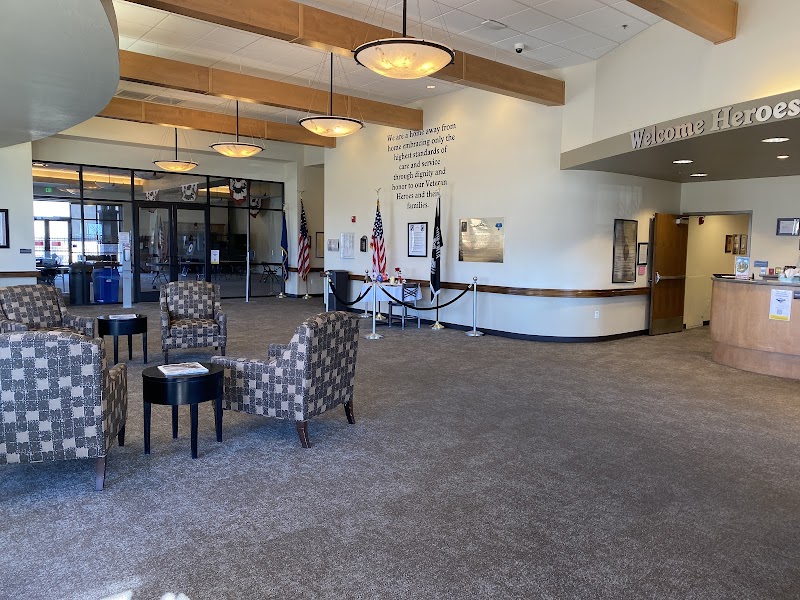
Mervyn Sharp Bennion Central Utah Veterans Home

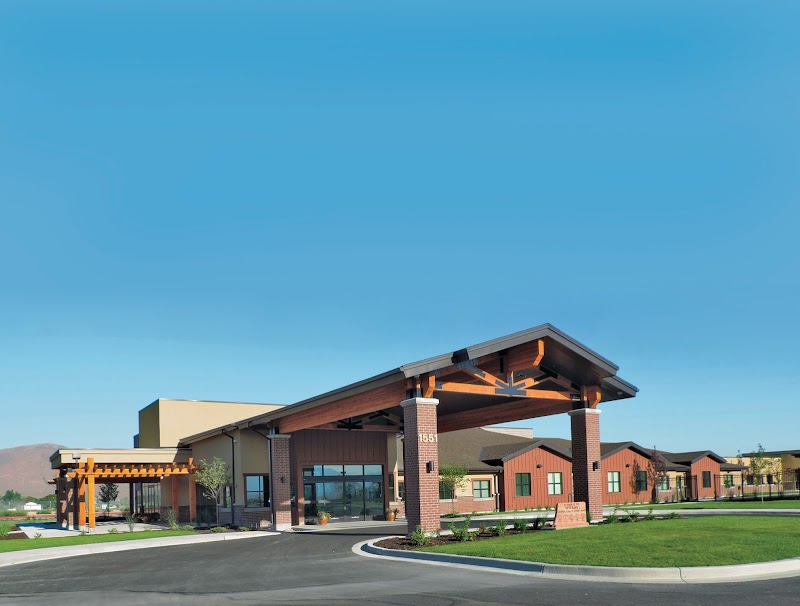
1551 North Main Street, Payson, UT 84651 (801) 465-5400
For profit - Limited Liability company 108 Beds AVALON HEALTH CARE Data: November 2025
Trust Grade
83/100
#13 of 97 in UT
Last Inspection: March 2024

Within standard 12-15 month inspection cycle. Federal law requires annual inspections.

Overview

Mervyn Sharp Bennion Central Utah Veterans Home has a Trust Grade of B+, which means it is recommended and performs above average compared to similar facilities. It ranks #13 out of 97 nursing homes in Utah, placing it in the top half, and #2 out of 13 in Utah County, indicating only one local option is better. The facility shows an improving trend, with the number of issues decreasing from 7 in 2022 to 5 in 2024. Staffing is a strong point, rated 5 out of 5 stars, with a turnover rate of 26%, significantly lower than the state average of 51%, suggesting that staff members are experienced and familiar with residents’ needs. On a positive note, there are no fines recorded, which reflects well on their compliance. However, there have been some concerning incidents, including a serious issue where a resident did not receive timely treatment for a urinary tract infection, and food safety violations where food was not stored or prepared according to safety standards, leading to potential contamination risks. Overall, while the home has strong staffing and a solid reputation, families should be aware of these recent health and safety concerns.
Trust Score
B+
83/100
In Utah
#13/97
Top 13%
Safety Record
Moderate
Needs review
Inspections
Getting Better
7 → 5 violations
Staff Stability
✓ Good
26% annual turnover. Excellent stability, 22 points below Utah's 48% average. Staff who stay learn residents' needs.
Penalties
✓ Good
No fines on record. Clean compliance history, better than most Utah facilities.
Skilled Nurses
✓ Good
Each resident gets 107 minutes of Registered Nurse (RN) attention daily — more than 97% of Utah nursing homes. RNs are the most trained staff who catch health problems before they become serious.
Violations
⚠ Watch
17 deficiencies on record. Higher than average. Multiple issues found across inspections.
★★★★★
5.0
Overall Rating
★★★★★
5.0
Staff Levels
★★★★★
5.0
Care Quality
★★★☆☆
3.0
Inspection Score
Stable
2022: 7 issues
2024: 5 issues

The Good

  • 5-Star Staffing Rating · Excellent nurse staffing levels
  • 5-Star Quality Measures · Strong clinical quality outcomes
  • Low Staff Turnover (26%) · Staff stability means consistent care
  • Full Sprinkler Coverage · Fire safety systems throughout facility
  • No fines on record
  • Staff turnover is low (26%)

    22 points below Utah average of 48%

Facility shows strength in staffing levels, quality measures, staff retention, fire safety.

The Bad

Chain: AVALON HEALTH CARE

Part of a multi-facility chain

Ask about local staffing decisions and management

The Ugly 17 deficiencies on record

1 actual harm
Mar 2024 5 deficiencies
CONCERN (D) 📢 Someone Reported This

A family member, employee, or ombudsman was alarmed enough to file a formal complaint

Potential for Harm - no one hurt, but risky conditions existed

Report Alleged Abuse (Tag F0609)

Could have caused harm · This affected 1 resident

**NOTE- TERMS IN BRACKETS HAVE BEEN EDITED TO PROTECT CONFIDENTIALITY** Based on observation, interview, and record review, for 1 of 31 residents sampled, that the facility did not ensure that all all...

Read full inspector narrative →
**NOTE- TERMS IN BRACKETS HAVE BEEN EDITED TO PROTECT CONFIDENTIALITY** Based on observation, interview, and record review, for 1 of 31 residents sampled, that the facility did not ensure that all alleged violations involving abuse, neglect, exploitation or mistreatment, including injuries of unknown source, were reported immediately, but not later than 2 hours after the allegation was made, to the State Survey Agency. Specifically, a resident had a fall which resulted in a dislocation with fracture and the State Survey Agency was not notified within 2 hours after the allegation was identified. Resident identifiers: 153. Findings include: Resident 153 was initially admitted to the facility on [DATE] and readmitted on [DATE] with diagnoses which included hypertensive chronic kidney disease stage 3, age related osteoporosis, Alzheimer's, need for assistance with personal care, fracture of fifth metacarpal bone on right hand, dementia, and major depressive disorder. A form titled Exhibit 358 documented that the facility reported to the State Survey Agency on 5/5/23 at 3:37 PM that on 5/4/23 at 3:22 AM the resident had a fall and received a bruise on his hip and a dislocation with a small fragment noted. Resident 153's medical record was reviewed on 3/28/24. A care plan focus of ADL (Activities of Daily Living) SELF-CARE DEFICITS: ADL SELF-CARE DEFICITS documented that resident 153's strength, coordination, and mobility had deteriorated. He needed assistance with some of the things that he used to do on his own and that he did not want to fall or have any other injury this quarter with a revision date of 12/5/23. With an intervention that included resident required up to substantial / maximal assist x (times) 1 staff for toileting which was revised on 12/5/23. Another care plan focus documented resident 153 was at risk for falling related to weakness and balance/gait instability, initiated on 1/10/18 and revised on 12/5/23. Intervention included staff to increase rounds during resting hours. A nursing progress note dated 4/14/23 at 11:42 AM documented, While CNA (certified nursing assistant) was getting pt (patient) up for the morning, CNA discovered new skin tears x (times) 2 on left elbow. Pt states that he fell out of bed during the night. Pt alert and oriented to self only and unable to give detailed explanation of fall. Pt reporting mild pain in left elbow, but stating that he does not need medication for pain management. Neuro checks initiated. New intervention for staff to increase rounds on patient during resting hours. RN (registered nurse) Supervisor, wound nurse, and son [name omitted] notified of fall. A nursing progress note dated 5/3/23 at 3:22 AM documented, CNA called for help, found resident [153] on bathroom floor after hearing a noise and going to check. Resident had attempted to self transfer to the bathroom. is confused. Had urinal and call light in reach of bed. Brief was around ankles. Wound on left thumb and left hip. Hip is bruised with hard bump. Pt (patient) states it hurts but is able to move and walk on it without a limp. Notified rn supervisor. helped pt back to bed. Checked vital signs. On 3/28/24 at 9:28 AM, an interview was conducted with CNA 3. CNA 3 stated residents were checked on every 2-4 hours depending on their level of need. CNA 3 stated resident 153 was no longer in the facility but was usually an every 4 hour check. CNA 3 stated the aides could check on him sooner if needed or if they were going by his room. On 3/28/24 at 9:35 AM, an interview was conducted with LPN 2. LPN 2 stated resident 153 did have some falls while at the facility. LPN 2 stated the resident was sent to receive orthopedic care after the last fall for his injured finger. On 3/28/24 at 12:19 PM, an interview was conducted with the DON. The DON stated they would only report to the state if the incidences were serious and a report from the hospital would give them that answer. The DON stated serious bodily injury was subjective and reporting would cause them to burden the local agencies with problems that did not need to happen. On 2/28/24 at 11:32 AM, an interview was conducted with the Administrator (ADM). The ADM stated he was the abuse coordinator and if there was an allegation the staff were to make him aware of it immediately. The ADM stated if an incident caused a resident to be sent out to the hospital he would report the incident within 2 hours of the hospital making them aware if there was a significant injury or not. The ADM stated if a resident did not need to be sent out to the hospital then the incident was deemed as not reportable. The ADM stated if they reported every instance they would ruin relationships with the local police department, Ombudsman and Adult Protective Services. The ADM agreed both of these instances could be considered a significant injury according to the description provided on the 358 form.
CONCERN (D)

Potential for Harm - no one hurt, but risky conditions existed

Respiratory Care (Tag F0695)

Could have caused harm · This affected 1 resident

**NOTE- TERMS IN BRACKETS HAVE BEEN EDITED TO PROTECT CONFIDENTIALITY** Based on observation, interview, and record review it was determined, for 1 of 31 sampled residents, that the facility did not e...

Read full inspector narrative →
**NOTE- TERMS IN BRACKETS HAVE BEEN EDITED TO PROTECT CONFIDENTIALITY** Based on observation, interview, and record review it was determined, for 1 of 31 sampled residents, that the facility did not ensure that a resident who needed respiratory care was provided such care, consistent with professional standards of practice. Specifically, facility staff were not changing the residents oxygen tubing on the concentrator and portable oxygen tank weekly. Resident identifiers: 89. Findings included: Resident 89 was admitted to the facility on [DATE] with diagnoses which included muscle wasting and atrophy, hypoxemia, essential hypertension, adult failure to thrive, anxiety disorder, solitary pulmonary nodule, post traumatic stress disorder and major depressive disorder. Resident 89's medical record was reviewed on 3/26/24. On 3/25/24 at 12:20 PM, an interview was conducted with resident 89. Resident 89 stated the staff sometimes change the oxygen tubing on his concentrator but they never change it on his portable oxygen tank. Resident 89 stated the portable tubing had not been change for a couple of months. On 3/25/24 at 12:25 PM, an observation was made of an oxygen concentrator to the left of resident 89's recliner. The oxygen tubing was not dated and there was no storage bag on the concentrator. Resident 89's portable oxygen tank was to the right of the recliner sitting on his walker, no date was observed on the tubing. The oxygen tubing on the concentrator and the portable tank were observed on the following dates with no date documented on the tubing: a. 3/26/24 at 9:00 AM. b. 3/27/24 at 1:41 PM. c. 3/28/24 at 12:18 PM. No Physician orders for changing the oxygen tubing could be located in the medical record. No documentation could be located in the medical record of the oxygen tubing being changed and dated. A care plan focus of oxygen therapy r/t (related to) Ineffective Gas Exchange was initiated on 12/2/23, with a goal for resident 89 to have no s/sx (signs/symptoms) of poor oxygen absorption with oxygenation saturation greater than 90 % (percent). No interventions for changing the oxygen tubing were noted. On 3/27/24 at 1:35 PM, an interview was conducted with Certified Nursing Assistant (CNA) 1. CNA 1 stated she was not quite certain what happened with the oxygen tubing process. CNA 1 stated she would guess they changed it once a week and would chart it in the back office somewhere. CNA 1 stated she was unsure what they do with the portable oxygen tubing. CNA 1 stated she would not know if the oxygen tubing had been changed if it was not labeled with the date it was changed. On 3/27/24 at 1:40 PM, an interview was conducted with CNA 2. CNA 2 stated the oxygen tubing was changed on Sunday evenings. CNA 2 stated she was unsure it if it was charted anywhere and that the only way she would know it had been changed was if the tubing was labeled with the date it was changed. On 3/28/24 at 9:28 AM, an interview was conducted with CNA 3. CNA 3 stated oxygen tubing was changed once a week on Sundays by the CNAs and it was charted in the medical record under supplies. This charting was done for all the supplies that were changed not just the oxygen tubing so if they oxygen tubing was not labeled with the date the other staff would not know if it had been changed. The portable oxygen was supposed to be changed on Sundays as well. On 3/28/24 at 9:30 AM, an interview was conducted with Licensed Practical Nurse (LPN) 2. LPN 2 stated the oxygen tubing was changed on Sundays by the CNAs and they should label it with the date it was changed. LPN 2 stated the nurses do the Continuous Positive Airway Pressure (CPAP) machines. On 3/28/24 at 9:40 AM, an interview was conducted with the Director of Nursing (DON). The DON stated the CNAs on Sunday stock the supplies for the week, they swap out what was needed. The DON stated the CNAs were expected to label the tubing with the date it was changed, including the tubing that goes on the concentrators and the portable oxygen tanks.
CONCERN (D)

Potential for Harm - no one hurt, but risky conditions existed

Deficiency F0757 (Tag F0757)

Could have caused harm · This affected 1 resident

**NOTE- TERMS IN BRACKETS HAVE BEEN EDITED TO PROTECT CONFIDENTIALITY** Based on interview and record review it was determined, for 1 out of 31 sampled residents, that the facility did not ensure that...

Read full inspector narrative →
**NOTE- TERMS IN BRACKETS HAVE BEEN EDITED TO PROTECT CONFIDENTIALITY** Based on interview and record review it was determined, for 1 out of 31 sampled residents, that the facility did not ensure that each resident's drug regimen was free from unnecessary drugs. An unnecessary drug was any drug when used in excessive dose; or for excessive duration; or without adequate monitoring; or without adequate indications for use; or in the presence of adverse consequences. Specifically, a medication was administered when it should have been held per the physician ordered parameters, and a medication was not documented as administered per the physician ordered parameters. Resident identifier: 57. Findings included: Resident 57 was admitted to the facility on [DATE] with diagnoses which included congestive heart failure, atrial fibrillation, chronic kidney disease, rheumatic valve disease, hypertension and chronic pain. On 3/26/24, resident 57's medical records were reviewed. Resident 57's physician orders revealed the following: a. An order for Gabapentin Capsule 300 milligram (mg), give 300 mg by mouth three times a day for muscle pain was initiated on 1/3/24 and discontinued on 2/26/24. b. An order for Carvedilol Tablet 3.125 mg, give one tablet by mouth two times a day related to hypertension. Hold for systolic blood pressure less than 110, diastolic blood pressure less than 60, or heart rate less than 60. Resident 57's February and March 2024 Medication Administration Record (MAR) revealed the following: a. On 2/14/24, the Gabapentin 300 mg three times a day was not documented as administered for the 2:00 PM to 6:00 PM dose. b. On 2/24/24, the Gabapentin 300 mg three times a day was not documented as administered for the 2:00 PM to 6:00 PM dose. c. On 3/9/24, resident 57's blood pressure was 109/56 and the Carvedilol was documented as administered when it should have been held per the physician orders. d. On 3/15/24, resident 57's blood pressure was 112/55 and the Carvedilol was documented as administered when it should have been held per the physician orders. On 3/27/24 at 9:19 AM, an interview was conducted with Licensed Practical Nurse (LPN) 1. LPN 1 stated that any parameters to hold a medication would be on the MAR. LPN 1 stated that if the physician needed to be informed of any medication changes or change in condition they would inform the supervisor and they would inform the physician. On 3/27/24 at 11:30 AM, an interview was conducted with Registered Nurse (RN) 4. RN 4 stated that the medication parameters would be in the order summary. RN 4 stated that she would always check them first because different providers had different medication parameters. RN 4 stated that if a medication should have parameters she would check with the supervisor if the vital signs were outside of a standard blood pressure parameter such as less than 110/60. RN 4 stated that if there was a pulse below 60 she would have the supervisor notify the physician. RN 4 stated that they should hold medications for those blood pressure readings that were below parameters. The facility is really strict about parameters. RN 4 stated that management did monthly audits on the medications to see if any medication was given outside of parameters. RN 4 stated that they would speak to the nurse and focus on education, but if it continued it would be escalated because safety was paramount. On 3/28/24 at 8:55 AM, an interview was conducted with the Director of Nursing (DON). The DON stated that the licensed nurse should follow any physician ordered parameters, unless they communicated with the physician and was provided different directions. The DON stated that they had been providing education on parameters since different physician's had different parameters. The DON stated that parameters would be noted in the order on the MAR. The DON stated that if the vital signs were re-checked then it would documented in the vitals section, and she did not see any additional blood pressure readings on the days that the Carvedilol should have been held. The DON stated that she did not see anything in the progress notes to indicate that the resident was not available for the Gabapentin administration. The DON stated that it was unusual that there was a hole in the MAR with no documentation. The DON stated that there was a code for absent from the facility or refused and she would expect to see a code to indicate why the medication was not administered. The DON stated that the licensed nurse may have missed signing out the Gabapentin on the dates with no documentation.
CONCERN (D)

Potential for Harm - no one hurt, but risky conditions existed

Infection Control (Tag F0880)

Could have caused harm · This affected 1 resident

**NOTE- TERMS IN BRACKETS HAVE BEEN EDITED TO PROTECT CONFIDENTIALITY** Based on observation and interview it was determined, for 1 of 31 sampled residents, that the facility did not maintain an infec...

Read full inspector narrative →
**NOTE- TERMS IN BRACKETS HAVE BEEN EDITED TO PROTECT CONFIDENTIALITY** Based on observation and interview it was determined, for 1 of 31 sampled residents, that the facility did not maintain an infection prevention and control program designed to provide a safe and sanitary environment to help prevent the development and transmission of communicable diseases and infections. Specifically, an observation was made of a staff member preparing and handling residents food bare handed. Resident identifier: 49 and 65. Findings included: 1. Resident 49 was admitted to the facility on [DATE] with diagnoses which consisted of muscle wasting and atrophy, dementia, abnormal weight loss, dysphagia, and essential tremor. On 3/27/24 at 10:26 AM, an observation was made of the Certified Nurse Assistant Coordinator (CNAC). The CNAC was observed cutting an apple for resident 49. The CNAC was holding the apple in the palm of her hand while she cut the apple into slices. The CNAC was observed to handle and cut the apple bare handed. The CNAC gave the apple slices to resident 49 to take with him to an activity. 2. Resident 65 was admitted to the facility on [DATE] with diagnoses which consisted of palliative care, aphasia, cerebral infarction, anarthria, and unspecified protein-calorie malnutrition. On 3/27/24 at approximately 10:49 AM, and observation was made of the CNAC preparing toast for resident 65. The CNAC was observed to remove a slice of bread from a bag and placed it into the toaster. The CNAC was observed to remove the bread from the toaster and spread butter on top. While spreading the butter with the knife the CNAC held the bread in place with her hand. All handling of the bread by the CNAC was done bare handed. On 3/27/24 at 11:48 AM, an interview was conducted with the CNAC. The CNAC stated that when she was preparing food she should make sure to not touch anything around it to keep it clean. The CNAC stated that she does not put gloves on when touching the food, but instead made sure she washed her hands. The CNAC stated that she washed her hands and then the apple and held it in her hand while cutting it. On 3/28/24 at 11:26 AM, an interview was conducted with the Director of Nursing (DON). The DON stated that they had done a lot of training with infection control. The DON stated that staff should not claw any dishware and they needed to wash their hands before food preparation. The DON stated that staff should wear gloves if they needed to touch the resident food items.
CONCERN (F)

Potential for Harm - no one hurt, but risky conditions existed

Food Safety (Tag F0812)

Could have caused harm · This affected most or all residents

Based on observation, interview, and record review, the facility did not store, prepare, distribute, and serve food in accordance with professional standards for food service safety. Specifically, the...

Read full inspector narrative →
Based on observation, interview, and record review, the facility did not store, prepare, distribute, and serve food in accordance with professional standards for food service safety. Specifically, the walk-in refrigerator did not maintain a temperature of 41 degrees Fahrenheit or less, and observations were made of cross contamination during the food preparation and plating. Resident identifiers: 16 and 31. Findings include: 1. On 3/25/2024 at 09:10 AM, an initial tour of the kitchen was conducted. The walk-in refrigerator showed a temperature of 44 degrees Fahrenheit on the outside thermometer and 42 degrees Fahrenheit on the thermometer inside the refrigerator. 2. On 3/27/2024 at 10:55 AM, the temperature of the walk-in refrigerator showed a temperature of 44 degrees Fahrenheit on the outside thermometer and 43 degrees Fahrenheit on the thermometer inside the refrigerator. 3. On 3/27/2024 at 1:04 PM, the temperature of the walk-in refrigerator showed a temperature of 44 degrees Fahrenheit on the outside thermometer and 42 degrees Fahrenheit on the thermometer inside the refrigerator. 4. On 3/28/24 at 8:35 AM, the temperature of the walk-in refrigerator showed a temperature of 45 degrees Fahrenheit on the outside thermometer and 42 degrees Fahrenheit on the thermometer inside the refrigerator. 5. On 3/28/24 at 8:39 AM, a temperature check on a cup of milk from inside the walk-in refrigerator had a temperature of 41.9 degrees Fahrenheit. 6. On 3/28/24 at 9:18, a temperature check on bacon from inside the walk-in refrigerator had a temperature of 42 degrees Fahrenheit. A review of the refrigerator and freezer temperature logs were completed. The logs showed that for the month of March 2024, the walk-in refrigerator showed a range between 34-38 degrees Fahrenheit. On 03/28/2024 at 9:13 AM, an interview was conducted with the Director of Nutritional Services (DNS). The DNS stated that she noticed the walk-in refrigerator temperature began to be out of range the week before. The DNS stated the refrigerator should maintain a range of 36-41 degrees Fahrenheit. The DNS stated that she had notified maintenance regarding this issue, but maintenance was unable to fix the walk-in refrigerator. The DNS stated that if the temperature of randomly selected items from the walk-in refrigerator was greater than 41 degrees Fahrenheit, they were disposed of. The DNS stated a work order for the walk-in refrigerator was placed on 03/25/2024. On 3/28/2024 at 9:20 AM, an interview was conducted with the kitchen cook who performed the morning temperature logs. The kitchen cook stated that they recorded the temperature from the digital thermometer on the top of the outside of the walk-in refrigerator. On 3/28/2024 at 9:21 AM, a follow-up interview was conducted with the DNS regarding the digital thermometer on the outside of the walk-in refrigerator. The DNS stated that this was not a digital thermometer that was used to check the temperature, but the temperature that the walk-in refrigerator was set to. On 3/28/2024 at 9:34 AM, an interview was conducted with the Director of Maintenance (DM). The DM stated that he was informed of the change in temperature of the walk-in refrigerator the week before and attempted to fix it, but was unable to. The DM stated he received a work order for the refrigerator that was placed on 3/25/2024 and he contacted the repair company to come and fix the refrigerator. The DM stated there had not been a timeframe as to when the repair company would be out to fix the refrigerator and the facility had not been notified of the repair company's availability. 7. The following observations were made during lunch service on 3/25/24 on the 700 hallway: a. On 3/25/24 at 12:33 PM, an observation was made of Dietary Aide (DA) 1. DA 1 was observed to use hand hygiene and donn gloves. DA 1 was then observed to remove the lids to the food containers, touch a thermometer, touch a pen, and reposition the food cart. DA 1 was then observed to pick up a plate and placed her thumb on the face of the plate. DA 1 was observed to reach inside a food container and picked up two hotdogs with the same gloved hand and placed them on the plate and held them with a gloved hand to cut them into pieces. The DA 1 was then observed to grasp the inside of the warming cover and placed it over the hotdog meal. The meal was then taken to resident 16. b. On 3/25/24 at 12:24 PM, an observation was made of DA 1. DA 1 was observed to not change gloves or perform hand hygiene. DA 1 picked up a plate with her thumb touching the face of the plate, unwrapped a grilled cheese sandwich and placed it on the plate. DA 1 was observed to have touched the food container lids, plates, cups, the counter prior to touching the grilled cheese sandwich meal. The meal was then given to resident 31. c. On 3/25/24 at 12:30 PM, an observation was made of DA 1. DA 1 grasped the inside of the warming cover with dirty gloves and placed them over resident meals. d. On 3/25/24 at 12:39 PM, an observation was made of DA. DA 1 grasped the inside of two warming covers with dirty gloves and placed them over resident meals. 8. The following was observed during lunch service on the 800 hallway: a. On 3/25/24 at 12:44 PM, an observation was made of DA 1. DA 1 washed her hands and donned gloves. DA 1 then touched the food cart, the thermometer, opened the food cart drawer to write down the temperatures, lifted the lids off of the food containers, and touched the resident meal tickets. DA 1 was then observed to grasp the inside of the warming covers with the same gloved hands and place them over the resident's meals. On 3/25/24 at 1:00 PM, an interview was conducted with DA 1. DA 1 stated hand hygiene was done prior to putting on gloves and passing out the food. The DA 1 stated the staff were not to touch the food with their gloves. The DA 1 stated the staff try to keep the plates and covers clean by only touching the edges. On 3/28/24 at 9:40 AM, an interview was conducted with the Director of Nutritional Services (DNS). The DNS stated the staff are expected to wash their hands before serving the food to the residents. The DNS stated the staff should never touch the food with their hands, they should use the tongs provided. The DNS stated the staff should not touch the plates where the food will go or touch the inside of the warming covers. The DNS stated the staff are expected to use good hand hygiene when plating and handling the food.
Apr 2022 7 deficiencies 1 Harm
SERIOUS (G)

Actual Harm - a resident was hurt due to facility failures

Incontinence Care (Tag F0690)

A resident was harmed · This affected 1 resident

**NOTE- TERMS IN BRACKETS HAVE BEEN EDITED TO PROTECT CONFIDENTIALITY** Based on interview and record review, it was determined for 1 of 35 sampled residents, the facility did not ensure a resident re...

Read full inspector narrative →
**NOTE- TERMS IN BRACKETS HAVE BEEN EDITED TO PROTECT CONFIDENTIALITY** Based on interview and record review, it was determined for 1 of 35 sampled residents, the facility did not ensure a resident received the necessary treatment and service to prevent a urinary tract infection. Additionally, the facility did not take the necessary action to evaluate the presence of a urinary tract infection, in an appropriate timeframe, based on the resident's presenting symptoms. Resident identifier: 53. Findings include: Resident 53 was admitted to the facility on [DATE] with medical diagnoses which included Parkinson's disease, chronic atrial fibrillation, restless leg syndrome, major depressive disorder recurrent, chronic obstructive pulmonary disease, multiple myeloma not having achieved remission, acquired absence of kidney, and personal history of other malignant neoplasm of kidney. On 4/4/22 at 11:44 AM, an interview was conducted with resident 53. Resident 53 stated that he had gone to the hospital but did not remember why. Resident 53's medical record was reviewed on 4/7/22. A review of resident 53's progress notes showed that resident 53 had a urinary tract infection (UTI) and was sent to the hospital on 2/6/22. Nurses notes for resident 53 were reviewed and revealed the following: a. On 2/3/22 at 2:10 PM: Straight Cath [catheter] q [every] shift PRN [as needed] every 12 hours as needed for Dysuria, Distended Bladder Res [resident] had 1300 ml [milliliters] output of foul odor, dark amber color urine. MD [medical doctor], POA [power of attorney] Notified. b. On 2/3/22 at 4:03 PM: Res had a very distended bladder and was in a lot of pain. Talked with MD and Order for a straight cath was initiated. 1300 ml output. Burning sensation and foul odor. POA and Daughter notified and are arranging for a Urology appointment. WCTM [will continue to monitor] c. On 2/4/22 at 4:05 PM: Res was complaining about dysuria and a burning sensation. Res stated that he was unable to urinate. Palpated abd. [abdominal] area and noted that bladder was very distended. Obtained an order from the MD to do a straight cath again. 900 mls output dark amber urine. MD notified. POA was present during straight cath. She stated that she has a urology appt [appointment] set up for Monday. PRN Order for Straight cath q shift PRN. WCTM d. On 2/5/22 at 7:00 AM: Resident continues to experience dysuria and burning w/ [with] urination. He had a low grade temp [temperature] on shift. He was in a lot of pain around 0200 [2:00 AM] and was straight cathed w/ 800 ml UO [urine output]. Urine is amber in color w/ a foul odor. LN [licensed nurse] notified the RN [registered nurse] supervisor and a message was sent to the MD requesting a UA [urinalysis] and CBC [complete blood count]. WCTM and wait for further instruction from MD. e. On 2/5/22 at 10:00 PM: Situation: .Resident has had an increase in temperature which is now 103.0, aches, and bladder distension. That began on 02/05/2022 12:00 AM and have gotten worse since the onset. Moving the resident to change brief. Straight catheter insertion in patient. make the symptoms worse, while Nothing has been working improve the symptoms. These symptoms have not occurred before The most recent VS [vital signs] are: BP [blood pressure] - BP 140/65 - 2/5/2022 22:13 [10:13 PM] Position: Lying l [left]/arm T [temperature] - T 103.0 - 2/5/2022 22:13 Route: Forehead (non-contact) P [pulse] - P 81 - 2/5/2022 22:14 Pulse Type: Regular R - R 20.0 - 2/5/2022 22:14 O2 Sats [oxygen saturation] - O2 96.0 % - 2/5/2022 22:14 Method: Room Air The relevant areas to the change in condition is: Respiratory Status Changes GU [genitourinary]/Urinary Changes, Shortness of breath, Labored breathing, Decreased urine output, Blood in urine, New or worsening incontinence, . Recent abnormal labs are on 2/05/2022 Assessment : The current problem seems to be related to Respiratory, Infection, Change in mental status, Resident seems unstable, may get worse. Resident has been given Tylenol 650mg for fever. Cefuroxime 500mg for UTI. Continues with high fever and overall bodyache and fatigue. Respirations have escalated to 30 per minute. Recommendation: [Physician] was notified and made aware of the resident's current status. The following orders were received: Cefuroxime 500 mg tablet po [by mouth] bid [twice daily] for 3 days for UTI. The family that was made aware is (sic) 02/06/2022 4:20 AM. f. On 2/6/22 at 6:09 AM: Resident was sent out to [name] hospital d/t [due to] his change in condition. Resident left with EMS [emergency medical services] at 0500 [5:00 AM]. POA, MD and DON [Director of Nursing] all notified. NNO [no new orders]. Hospital records for resident 53 were reviewed and revealed that resident 53 was admitted to the hospital on [DATE] with complaints of fever and confusion. Resident 53 was found to have severe sepsis secondary to an acute UTI with associated acute metabolic encephalopathy and acute kidney injury. A PICC (peripherally inserted central catheter) line was placed in resident 53's left arm and he was started on a six-week course of the IV (intravenous) antibiotic, ceftriaxone, to treat the severe sepsis and acute UTI. Resident 53 had an indwelling urinary catheter placed. Resident 53 was discharged from the hospital back to the facility on 2/10/22. Resident 53's medical records revealed that upon his return to the facility, resident 53 continued to receive IV ceftriaxone until it was discontinued on 3/22/22. Resident 53's PICC line was discontinued on 3/23/22. Resident 53's indwelling urinary catheter remained in place. On 4/7/22 at 8:45 AM, an interview was conducted with RN 2. RN 2 started the certified nursing assistant (CNA) reported to her that resident 53 had a distended bladder and was in pain on 2/3/22. RN 2 stated at night resident 53 had a do not disturb sign on his door, because resident 53 did not want brief changes at night. RN 2 stated that in the morning resident 53's brief was not very wet. RN 2 stated resident 53 had gone all night without urinating. RN 2 stated resident 53 told her he could not pee. RN 2 stated she assessed resident 53 and then got an order to use a straight catheter one time. RN 2 stated resident 53's initial output using a straight catheter was 1300 mL of dark amber colored urine with a foul odor. RN 2 stated resident 53's family member came in later and was notified of what happened. RN 2 stated resident 53's family member was going to make an appointment with the urologist. RN 2 stated nursing staff were using straight catheters once a shift initially, then started to use the straight catheter more often. RN 2 stated she did not suspect a UTI, stated she was looking more at retention. RN 2 stated resident 53 was alert and making sense. RN 2 stated resident was declining, getting weaker, not wanting to get out of bed, and was lethargic on her shift, but stated resident 53 was not at the point where he needed to be sent to the emergency room. RN 2 stated resident 53 had a gradual decline over the next two days then a significant decline on 2/6/22. On 4/7/22 at 9:36 AM, a follow-up interview was conducted with RN 2. RN 2 stated that on 2/3/22 she felt resident 53 was at his normal. RN 2 stated resident 53 did not want to get out of bed. RN 2 stated in order to suspect a UTI, there would need to be a fouler odor to his urine, abnormal vital signs, more confusion, more lethargy, weaker in general, resident stating he did not feel well, and the appearance of urine with sediment. RN 2 stated the initial foul odor was the smell of concentrated urine. RN 2 stated resident 53 did not have sediment in his urine, stated it was just darker because resident 53 did not drink much. RN 2 stated when she called the supervisor to get an order for a straight catheter, she told the supervisor about the retention. RN 2 stated she received an order to use a straight catheter one time. RN 2 stated she did not call the doctor directly. RN 2 stated nursing staff called the supervisor who contacted the doctor. RN 2 stated the doctor was notified that resident 53 had 1300 mL urine output but the doctor was not notified of the other symptoms resident 53 had experienced. RN 2 stated the doctor ordered a urology consult. RN 2 stated she was thinking more of benign prostatic hypertrophy rather than a UTI. RN 2 stated that when resident 53 had a second episode of bladder distention she notified the doctor and got an order for straight catheterization every shift and as needed. RN 2 stated she notified the doctor that resident 53 had an appointment with the urologist on 2/7/22. On 4/7/22 at 10:12 AM, an interview was conducted with the Director of Nursing (DON). The DON stated the facility used McGeer's Definitions of Infection to determine if a resident had a UTI. The DON stated the nurses looked for signs and symptoms of UTI such as confusion without symptoms, blood or drainage from the catheter, and a fever. The DON stated if a nurse suspected a UTI, the nurse should reach out to the supervisor, check the resident's vital signs, medical history, frequency UTIs and fluid intake. The DON stated the supervisor reached out to the doctor, and if ordered, the nurse would have labs drawn and get a urine sample for a UA. The DON stated the facility did not have standing physician's orders for UAs to be obtained. On 4/7/22 at 11:08 AM, an interview was conducted with Medical Doctor (MD) 2. MD 2 stated the facility tried to follow McGeer's Definitions of Infection to actively identify infections and determine when to treat UTIs with antibiotics. MD 2 stated this was what they were doing as part of the antibiotic stewardship program. MD 2 stated he was not resident 53's physician but he was aware of resident 53's UTI. On 4/7/22 at 11:41 AM, an interview was conducted with the DON and the Assistant Director of Nursing (ADON). The DON and ADON stated resident 53 did not meet criteria according to McGeer's initially because he only had dysuria. The DON stated that once resident 53 developed a fever, he met the criteria for McGeer's and treatment was initiated. The DON stated nursing staff received orders for a UA, a complete blood count, and an antibiotic. The DON stated there was not delay in care; she stated the facility was trying to follow their antibiotic stewardship program. The DON and ADON stated that McGeer's Definition of Infection was the protocol for UTIs for every resident. The facility provided the McGeer's Definitions of Infection which revealed that for residents without an indwelling catheter, both criteria 1 and criteria 2 must be present. Criteria 1 was sign or symptom subcriteria, which included acute dysuria or acute pain. Criteria 2 was microbiologic subcriteria, which included a specified number or organisms in a voided urine sample, or a specimen collected by in-and-out catheter. A urine sample must be obtained and tested for bacteria for a resident without an indwelling catheter to meet McGeer's Definition of Infection for a UTI. On 4/7/22 at 12:00 PM, a phone interview was conducted with MD 1. MD 1 stated she was first notified of resident 53 not feeling well on 2/4/22 at 4:47 PM. MD 1 stated she had not been notified of resident 53's condition prior to that date. MD 1 stated she had not been made aware of any issues with resident 53 on 2/3/22. MD 1 stated her text from 2/4/22 read, the resident complains of not able to urinate, and his belly was distended and asked if it was ok to straight cath the resident? MD 1 stated she told them yes it was ok to use a straight catheter on the resident and told them to let her know what the volume of urine output was. MD 1 stated she was not sure if distention was a common issue with resident 53. MD 1 stated the staff informed her the volume of urine output was 900 mL and that the resident had a urology appointment on Monday. MD 1 stated she was not told resident 53 had urine with a foul odor, dark amber color, pain, or any other symptoms. MD 1 stated the foul odor and distention were possibly indicative of an infection. MD 1 stated she received a text on 2/5/22 at 5:42 AM but did not read it until 2 hours later when she awoke. The text stated resident 53 had a low-grade temperature and that they had used a straight catheter on him. MD 1 stated she was asked to order a UA and CBC. MD 1 stated she ordered the labs. MD 1 stated she was not notified of the lab results until 5:21 PM that day, so she ordered an antibiotic, Ceftriaxone, pending the culture. MD 1 stated her expectation of the nurses and the facility when a resident had a change in status or change from their baseline would be for the nurse to contact MD 1 and make her aware of what was going on with the resident. On 4/7/22 at 12:22 PM, a follow-up interview was conducted with the DON. The DON stated RN 2 talked to the supervisor on duty on 2/3/22 and the supervisor talked to MD 2 who ordered the use of a straight catheter one time for resident 53. On 4/7/22 at 12:52 PM, a follow-up interview was conducted with MD 2. MD 2 stated he was usually at the facility on Thursdays and the nursing staff asked him questions if they were waiting for MD 1 to respond. MD 2 stated resident 53 was having a retention issue. MD 2 stated the supervisor asked MD 2 for an order for a straight catheter for resident 53. MD 2 stated he was unsure which supervisor reported the issue and asked for an order. MD 2 stated he ordered the straight catheter. MD 2 stated it was not a problem for him to order a catheter for retention to relieve the discomfort. MD 2 stated he asked the supervisor to follow up with MD 1. MD 2 stated the supervisor did not notify him of resident 53's urine output or symptoms. MD 2 stated he would expect the nurse to report back to him or MD 1, so he assumed the supervisor reported back to MD 1. MD 2 stated that another order was placed after his initial order by MD 1 for straight catheterization PRN for resident 53. MD 2 stated he thought resident 53 had a history of urinary retention which was why he was going to the urologist, but stated he was unsure how long resident 53 had experienced urinary retention.
CONCERN (D)

Potential for Harm - no one hurt, but risky conditions existed

Deficiency F0578 (Tag F0578)

Could have caused harm · This affected 1 resident

**NOTE- TERMS IN BRACKETS HAVE BEEN EDITED TO PROTECT CONFIDENTIALITY** Based on interview and record review it was determined, for 1 of 35 sample residents, that the facility did not ensure that resi...

Read full inspector narrative →
**NOTE- TERMS IN BRACKETS HAVE BEEN EDITED TO PROTECT CONFIDENTIALITY** Based on interview and record review it was determined, for 1 of 35 sample residents, that the facility did not ensure that resident's had the right to request, refuse, and /or discontinue treatment and to formulate an advance directive. Specifically, a resident's advanced directives was not accurately documented in the medical records. Resident identifiers: 66. Findings include: Resident 66 was admitted to the facility on [DATE] with diagnoses which included muscle spasms, type 2 diabetes mellitus with diabetic neuropathy, and urine retention. Resident 66's medical record was reviewed on 4/5/22. Resident 66's electronic medical record revealed resident 66 was a full code. An advance directive dated 10/2/19 revealed resident 66 initialed a section, I choose not to receive care for the purpose of prolonging life, including food and fluids by tube, antibiotics, CPR [cardiopulmonary resuscitation], or dialysis being using to prolong my life. I always want comfort care and routine medical care that will keep me as comfortable and functional as possible, even if that care may prolong my life. The form was signed by resident 66 and a witness. A Provider order for Life-Sustaining Treatment (POLST) form dated 11/23/18 revealed resident 66 desired to have CPR. An Interdisciplinary care plan conference form dated 2/28/22 revealed that resident 66 POLST Full Code, Full treatment, trial period of artificial nutrition. On 4/5/22 at 4:00 PM, an interview was conducted with Registered Nurse (RN) 3. RN 3 stated upon admission nursing staff discussed a POLST form with the resident, the resident then filled out the form, and sign it. RN 3 stated that a copy was made of the POLST form and placed into a binder at the nurses station and a copy was sent to the physician to be signed. RN 3 stated when the signed form returned from the physician it was placed into a POLST binder at the nurses station. RN 3 stated if a resident had an advanced directive, that was scanned into the medical record. RN 3 stated the nurse completed the code section in the electronic medical record and then 48 hour later the supervisor completed a chart audit to make sure the code status was correct. RN 3 stated resident 66 was a full code. RN 3 stated if a resident's code status in the electronic medical record was different from the POLST she followed the POLST that was in the binder at the nurses station. RN 3 was observed to open the POLST binder and resident 66's POLST revealed he was a full code. RN 3 stated that she was not aware of resident 66's advance directive and his desire for comfort measures. On 4/5/22 at 4:17 PM, an interview was conducted with the Director of Nursing (DON). The DON stated upon residents admission, nursing staff asked the resident and the family what preferences they had regarding life-sustaining treatments. The DON stated the POLST was reviewed upon readmission and if a resident had a change in condition. The DON stated nursing staff entered the resident's code status into the electronic medical record. The DON stated nursing supervisors completed an audit comparing the POLST forms, the code status in the electronic medical record and the care plan a while ago. The DON stated that following advanced directives all depended on the date it was signed. The DON confirmed the advanced directives from 10/2/19 did not match the code status in resident 66's medical record. The DON stated resident 66 would have been treated as a full code. On 4/6/22 at 7:51 AM, a follow-up interview was conducted with the DON. The DON stated when an IDT conference was conducted with the resident and family, staff asked about resident 66's life sustaining preferences. The DON stated that in February 2022 resident 66 desired to be a full code according to the care plan conference documentation. The DON stated that a new POLST form should have been completed in February 2022. The DON stated they wanted to full fill each resident's wishes.
CONCERN (D)

Potential for Harm - no one hurt, but risky conditions existed

Comprehensive Care Plan (Tag F0656)

Could have caused harm · This affected 1 resident

**NOTE- TERMS IN BRACKETS HAVE BEEN EDITED TO PROTECT CONFIDENTIALITY** Based on observation, interview, and record review it was determined, for 1 of 35 sample residents, that the facility did not de...

Read full inspector narrative →
**NOTE- TERMS IN BRACKETS HAVE BEEN EDITED TO PROTECT CONFIDENTIALITY** Based on observation, interview, and record review it was determined, for 1 of 35 sample residents, that the facility did not develop and implement a comprehensive person-centered care plan for each resident, consistent with the resident rights, that included measurable objectives and timeframe's to meet a resident's medical, nursing, mental and psychosocial needs that were identified in the comprehensive assessment. Specifically, a resident with pain did not have a pain care plan. Resident identifier: 60. Findings include: Resident 60 was admitted to the facility on [DATE] then readmitted on [DATE] with diagnoses which included spastic paraplegia, melanoma of the skin, post traumatic stress disorder, neuromuscular dysfuction of the bladder, essential hypertension and pain. On 4/4/22 at 11:15 AM, an interview was conducted with resident 60. Resident 60 stated he had been experiencing a bad pain in his belly for the last 3 months. Resident 60 stated he was given pain medication every 8 hours but the pain remained the same. Resident 60 stated the doctor did change his pain medication about 2 weeks ago but it did not seem to be helping. Resident 60 stated the doctor administered an injection into his abdomen and was going to set him up for getting a tube with a camera to be put down my throat to see what is going on. Resident 60 stated he had told the staff about his pain and what the doctor said. On 4/5/22 resident 60's medical record was reviewed. The Quarterly Minimum Data Set (MDS) dated [DATE] revealed a pain interview was completed. Resident 60 reported pain was occasionally present, that the pain did make it hard to sleep at night and PRN (as needed) pain medication had been recieved. There was no care plan located in resident 60's medical record regarding pain. On 1/21/22 a MD (medical doctor) communication form revealed, resident continues to complain of 10/10 pain in his abdomen nurse assessed found no indicators of pain. New orders from MD revealed, Amylase, Lipase and Percocet 5mg (milligrams) Q (every) 8 hours PRN (as needed) for 2 weeks. Resident 60's Medication Administration Record (MAR) for January 2022 revealed, Percocet Tablet 5- 325 MG (oxyCODONEAcetaminophen) to administer 1 tablet by mouth every 6 hours as needed for Pain for 2 weeks. Physician orders for resident 60 revealed, Oxycodone-Acetaminophen Tablet 5- 325 MG (milligrams). Give 1 tablet by mouth every 8 hours as needed for pain, with a start date of 2/7/22. Resident 60's MAR for February, March and April revealed, Oxycodone-Acetaminophen was administered to resident 60 ranging from 1 to 4 times a day for pain with a nurses note stating medication effective for pain with each administration. A nursing note dated 2/15/21 revealed, resident continues to often rate his pain level at 10/10 and describes it as 'someone wringing out a wet towel that never stops.' On 4/6/22 at 9:05 AM, an interview was conducted with Registered Nurse (RN) 1. RN 1 stated care plans were made for residents when they were admitted and then updated when needed. RN 1 stated nurses used the care plans to know the needs of the residents. RN 1 stated the nurses can update the care plans. RN 1 stated resident 60 should have an area addressing his pain. RN 1 stated care plan meetings were held to make sure the interventions that were put in the residents care plans were effective and to determine if anything needed to be changed. RN 1 stated she believed the Director of Nursing, Assistant Director of Nursing, Social Work, and RN supervisor were usually in attendance at the meetings.
CONCERN (D)

Potential for Harm - no one hurt, but risky conditions existed

Quality of Care (Tag F0684)

Could have caused harm · This affected 1 resident

**NOTE- TERMS IN BRACKETS HAVE BEEN EDITED TO PROTECT CONFIDENTIALITY** Based on interview and record review, it was determined that 1of 35 sample residents the facility did not ensure the resident re...

Read full inspector narrative →
**NOTE- TERMS IN BRACKETS HAVE BEEN EDITED TO PROTECT CONFIDENTIALITY** Based on interview and record review, it was determined that 1of 35 sample residents the facility did not ensure the resident received the necessary treatment and care to attain or maintain his highest practicable well-being. Resident 60 experienced pain in his belly for three months and the facility had not ensured follow up was conducted to evaluate the cause of the resident's pain. Findings included: Resident 60 was admitted to the facility on [DATE] then readmitted on [DATE] with diagnoses which included spastic paraplegia, melanoma of the skin, post traumatic stress disorder, neuromuscular dysfunction of the bladder, essential hypertension and pain. On 4/4/22 at 11:15 AM, an interview was conducted with resident 60. Resident 60 stated he had been experiencing a bad pain in his belly for the last 3 months. Resident 60 stated he was given pain medication every 8 hours but the pain remained the same. Resident 60 stated that the doctor did change his pain medication about 2 weeks ago but it did not seem to be helping. Resident 60 stated the doctor administered an injection into his abdomen and was going to set him up for getting a tube with a camera put down my throat to see what is going on. Resident 60 stated he had told the staff about his pain and what the doctor had said but I don't know when I am going to get the camera thing done. Resident 60's medical record was reviewed on 4/7/22. On 3/23/22, resident 60 was seen for an outpatient gastroenterology consult. No follow-up appointment was scheduled in resident 60's medical record. On 4/5/22 at 9:05 AM, an interview was conducted with RN 1. RN 1 stated when a resident needed an appointment made a form titled, MD communication form, was filled out and sent to the transportation department. RN 1 stated after the appointment, the MD communication form was returned to the nurses and orders were entered in the electronic medical record and the form was scan into the medical record. RN 1 stated the paperwork did not always return with the resident, so the nurses on shift were responsible for calling and obtaining the information from the visit. On 4/6/22 at 11:03 AM, an interview was conducted with Business Office Manager (BOM). The BOM stated when the MD Communication Forms were returned to the transportation department and an appointment was scheduled. The BOM stated resident 60 went to his primary care doctor on March 23rd and no other appointments had been made as of yet for his surgery. On 4/6/22 at 12:03 PM, an interview with the DON was conducted. The DON stated the MD communication form was not in the resident medical record. The DON stated the process for scheduling residents for appointments was after they had returned from an outside visit, the nurses took the orders and entered them into the electronic medical record. The DON stated the MD communication form was then provided to the transportation department. The DON stated that the transportation department arranged the needed appointment and transportation for the needed service. The DON stated that if the nurses did not fill out the transport form then the appointment did not get scheduled. The DON stated the expectation was that the nurses entered the orders into the electronic medical record and followed through to make sure everything was taken care of. The DON stated the transportation team did not go in with the residents into their appointments. The DON stated the information was passed from nurse to nurse through report and the resident was put on alert charting so they knew to watch for the needed appointment. The DON stated the transportation team had been in contact with the local medical facility to schedule the needed test via email. The DON had a document with her dated 3/23/22. The DON stated the correspondence stated the transportation team had called the local medical facility on 4/1/22 and tried to call them again on 4/8/22 to get the appointment scheduled. The DON was unable to state what happened between the resident's visit on 3/23/22 and the correspondence with the facility on 4/1/22. On 4/6/22 at 12:20 PM, an interview was conducted with the Transportation Coordinator (TC). The TC stated the paperwork, including the MD communication form, was sent with the residents to their appointments and then returned with the residents. The TC stated the nurses gave the MD communication form to her and she knew what to schedule for the resident. The TC stated the way she knew resident 60 needed another appointment was because he came to the transportation office on 4/1/22 and made her aware. The TC stated resident 60's physician's visit was on 3/23/22 when the test was ordered.
CONCERN (D)

Potential for Harm - no one hurt, but risky conditions existed

Medical Records (Tag F0842)

Could have caused harm · This affected 1 resident

**NOTE- TERMS IN BRACKETS HAVE BEEN EDITED TO PROTECT CONFIDENTIALITY** Based on interview and record review it was determined, for 2 of 35 sample residents, that the facility did not maintain medical...

Read full inspector narrative →
**NOTE- TERMS IN BRACKETS HAVE BEEN EDITED TO PROTECT CONFIDENTIALITY** Based on interview and record review it was determined, for 2 of 35 sample residents, that the facility did not maintain medical records on each resident that were complete and accurately documented. Specifically, documentation regarding a resident's paracentesis procedures were not included in the resident's medical record. In addition, another resident's physicians visit form was not in the medical record. Resident identifier: 18 and 77. Findings included: 1. Resident 18 was admitted to the facility on [DATE] with diagnoses which included type 2 diabetes, cirrhosis of the liver, congestive heart failure, edema, idiopathic gout, gastro-esophageal reflux disease, muscle weakness and post traumatic stress disorder. On 4/6/22 resident 18's medical record was reviewed. The weight task revealed resident 18's weight decreased from 250 pounds on 11/11/21 to 208 pounds on 4/5/22. A Nurses Note dated 10/16/21 revealed, Resident has a Hx (history) of ascites with occasional weeping. MD (medical doctor) notified with N/O (new order) for a therapeutic paracentesis at radiology. A Skin and Weight Meeting Note dated 10/21/21 revealed, Resident weight has not changed over the last week and has increased 6.8% over the last month .MD notified and recommends paracentesis. A Skilled Nurses Note dated 10/21/21 revealed, resident had residual weakness resulting from paracentesis earlier in the day. No documentation was found in medical record for paracentisis performed on 10/21/21. A Physician Note dated 11/4/21 revealed, resident has wide weight fluctuations, this is when he is in between parecentesis. A Skin and Weight Meeting note dated 1/6/22 revealed, Resident weight has not changed over the last week and has increased 6.8% over the last month. MD notified and recommends paracentesis. A Nursing Note dated 2/3/22 revealed, MD aware of weight loss due to paracentesis. No documentation was found in the medical record for the paracentesis performed on 1/26/22. On 4/6/22, documentation for the paracentesis that occurred on 11/16/21 was provided by the Director of Nursing (DON) after being requested during survey. On 4/7/22, documentation for the paracentesis that occurred on 10/20/20 and 1/26/22 was provided by the Health Information Manager (HIM) after being requested during survey. On 4/7/22 at 9:05 AM, an interview was conducted with HIM. HIM stated the records were scanned into the medical record by HIM or the Registered Nurse. HIM stated for any outside paperwork the nurses or aides asked her to obtain it from the other facilities. HIM stated unless she was made aware that the information was needed from a test or medical procedure she did not know to ask for it. HIM stated she requested the information for the January paracentesis on 4/6/22, because it was not in the resident's medical record. HIM stated she requested the last 6 months of the resident's records on 4/7/22, since they were not in the medical record. 2. Resident 77 was admitted to the facility on [DATE] and readmitted on [DATE] with diagnoses which included cerebral infarction, hemiplegia, schizophrenia, post-traumatic stress disorder, diabetes mellitus, and pressure ulcer. Resident 77's medical record was reviewed on 4/7/22. A form titled MD Communication Form dated 3/23/22 revealed Vitamin D3 and Metformin were prescribed after his last appt (appointment) in Dec (December) 21, but these are note on his active medication list. Will re-check labs today and re-order if needed. A review of resident 77's MD communication forms. There was no form located in resident 77's medical record for December 2021. On 4/6/22 at 11:37 AM, an interview was conducted with Licensed Practical Nurse (LPN) 1. LPN 1 stated that the physician did not send paperwork back with resident 77 in December 2021. LPN 1 stated she was not aware that new medications were recommended. LPN 1 stated there were MD communication forms, face sheet and recent medication list sent with the resident to an outside physician's visit. LPN 1 stated there was a place for the reason for the appointment and follow up information on the form. LPN 1 stated when the resident returned from an appointment, the nurse made a note regarding the appointment in the electronic medical record and the form was scanned into the electronic medical record. LPN 1 stated if there were new orders, she let supervisor know and informed the resident of the new medications and made sure the resident was okay with taking the medication. LPN 1 stated if the form was not returned with the resident then the nurse tried to contact the physician's office. LPN 1 stated that the floor nurse should contact the office and then contact supervisor if they were unable to contact the doctors office. LPN 1 stated the nurse also asked the transportation staff member if they have paperwork. On 4/6/22 at 12:22 PM, an interview was conducted with the Transportation Coordinator (TC). The TC stated there was an MD communication form that was completed by the facility nurse that was sent with the resident to the appointment. The TC stated that the form was then filled out by the physician. The TC stated the form was brought back to the nurse and the nurse entered new orders into the system. The TC stated that the transportation driver did not do anything with the communication forms. The TC stated if a resident was not alert and oriented then a family member went to the appointment or the transportation staff member stayed with the resident to prevent a miscommunication. On 4/6/22 at 12:28 PM, an interview was conducted with the Director of Nursing (DON). The DON stated that nurses should call the doctors office, if the MD communication form was blank or missing when the resident returned. The DON stated nurses were encouraged to keep calling so we did not miss something critical. On 4/7/22 at 10:58 AM, an interview was conducted with Medical Director (MD) 2. MD 2 stated that he was not aware of the physician's recommendations in December 2021 until after resident 77's appointment in March 2022. On 4/7/22 at 9:05 AM, an interview was conducted with the HIM. The HIM stated that she requested the MD communication form for resident 77 from December 2021 on 4/6/22 and scanned it into the medical record. The HIM stated she was not aware of the form until 4/6/22.
CONCERN (E)

Potential for Harm - no one hurt, but risky conditions existed

Food Safety (Tag F0812)

Could have caused harm · This affected multiple residents

**NOTE- TERMS IN BRACKETS HAVE BEEN EDITED TO PROTECT CONFIDENTIALITY** Based on observation and interview it was determined that the facility did not store, prepare, distribute and serve food in acco...

Read full inspector narrative →
**NOTE- TERMS IN BRACKETS HAVE BEEN EDITED TO PROTECT CONFIDENTIALITY** Based on observation and interview it was determined that the facility did not store, prepare, distribute and serve food in accordance with professional standards for food service safety. Specifically, there were areas of soiled in the kitchen and steam tables were soiled. Findings include: 1. On 4/4/22 at 10:15 AM, an initial tour of the kitchen was conducted. The following was observed: a. A large log of thawed raw ground beef was stored on the same shelf next to 3 containers of veggies with holes in the metal containers in the walk-in refrigerator. The ground beef did not have a date on it. An interview was conducted with the Dietary Manager (DM). The DM stated that the ground beef was pulled out of a box that was below it. The DM stated there was a date on the box. The DM stated she did not know why the raw ground beef was stored next to the vegetables. [NAME] 1 stated that she removed the ground beef from the box but did not have room to cook it on her stove so she placed it back in the refrigerator on the shelf until she was ready to cook it. b. Under and behind the fryer there were tater tots on the floor. c. The side of the double oven next to the fryer was soiled. The oven doors were soiled with black and brown substance. The bottom oven had a large black colored clump in it. d. The alternative cook area had debris under the sink. e. The main cooking area had food splatter on the walls behind the griddle, stove, and tilt skillet. There was debris and food splatter on the table under the griddle. There was food and debris under the tilt skillet. f. There was a container labeled French toast mix dated 4/3 and use by 4/7 in the preparation cook reach in refrigerator. There was a cart in the reach in refrigerator that was soiled on the sides and on the wheels. g. The [NAME] had a dried substance that had dripped down the glass door. h. The dish machine area had dried food splatter on the wall behind the scrapping area. There was a black substance on the wall next to the loading area of the dish machine. There was a substance on the legs of the dish machine. 2. On 4/6/22 at 12:45 PM, an observation was made of the 100 hall steam cart and there was white substance splattered on the black fabric around the outside of the cart. There was food splatter on the bottom under the shelves on the cart and a dried substance that dripped onto the wheels. 3. On 4/7/22 at 8:18 AM, a follow-up kitchen tour was conducted. The following was observed: a. There were tater tots on the floor and a tong behind the fryer. The DM stated that tater tots were served on 4/1/22 according to the menu but tater tots were prepared for residents as an alternative almost daily. 2. There was crumbs and debris on the outside under the dials of the double ovens. Inside there was a black and brown substance on the doors and on the bottoms. The DM stated that ovens were deep cleaned weekly. 3. There was a cart in the preparation cook reach in refrigerator that was soiled on the sides and on the wheels. The DM stated that the carts were deep cleaned weekly. 4. The proofer had a dried substance that had dripped down the glass. The DM stated that the proofer was deep cleaned weekly. 5. Behind the stove, tilt skillet and the griddle the wall was soiled. Under the griddle there was food and debris on the table. The DM stated that area was cleaned monthly as an extra item. 6. There was a substance on the hot water heater under the clean side of the dish machine. There was a black substance on the wall behind the soiled dish area where the nozzle sprayer was at. Under the soiled dish area, the table there was a black substance on the wall. There was a substance on the legs of the dish machine. The DM stated the dish machine area was cleaned daily. The DM stated there was sealant on wall and the black substance was under the sealant. The DM stated that underneath the dish machine on the legs was grim build. 7. Under the three compartment sink in the dish machine area there was a black substance on the wall. 8. There was a steam table with a black fabric around it. There were white and yellow substances on the black fabric, crumbs and debris under the drawers, and a dried substance on the wheels that had dripped down. There were 3 other steam tables in the hallway outside of the kitchen. The steam tables were observed to have food and debris under the drawers. An interview was conducted with [NAME] 2. [NAME] 2 stated that the steam tables were wiped down after every meal service. [NAME] 2 stated that the black fabric did not come clean. [NAME] 2 stated the facility was getting new steam tables that did not have fabric on them. [NAME] 2 stated she wiped off the top of the steam table and the handles. [NAME] 2 state she did not wipe off out the drawers or under the drawers. One of the steam tables was labeled 500-600. The steam table had food on the shelves, and crumbs in the drawer with the domes that touched the residents food. There were crumbs and debris under the drawers, next to the cooler and black substance and crumbs on top of the steam table. Dietary Aide (DA) 1 was interviewed. DA 1 stated the steam tables were cleaned after every meal. DA 1 stated that she wiped the handles, the cooler, the corners, and on top of it. DA 1 stated that the black substance on the steam tables did not wipe off and was a stain. The DM was interviewed. The DM stated that steam tables were to be wiped off after every meal and were deep cleaned weekly. The DM stated that the black fabric on the steam table was getting replaced. The DM stated that her and that Assistant Dietary Manager were filling in cooking and as dietary aides, so there was not a lot of time to oversee the cleanliness of the kitchen. On 4/7/22 at 11:50 AM, an interview was conducted with the Administrator. The Administrator stated that they did a deep cleaning of the kitchen a few months back but it needed another deep cleaning.
CONCERN (E)

Potential for Harm - no one hurt, but risky conditions existed

Infection Control (Tag F0880)

Could have caused harm · This affected multiple residents

Based on observation and interview it was determined that the facility did not establish and maintain an infection prevention and control program. The program was designed to provide a safe, sanitary ...

Read full inspector narrative →
Based on observation and interview it was determined that the facility did not establish and maintain an infection prevention and control program. The program was designed to provide a safe, sanitary and comfortable environment to help prevent the development and transmission of communicable diseases and infections. Specifically, hand hygiene was not performed during dining and food was transported in the hallways uncovered. Findings include: On 4/4/22 at 12:53 PM, an observation was made of a Certified Nursing Assistant (CNA). CNA 3 was observed with ungloved hands to obtain drinking glasses from the cupboard, fill them with juice from the refrigerator, obtain a loaf of bread from the refrigerator, remove a slice of bread from the bag and place it in the toaster. CNA 3 used her ungloved hand to grab the top of the drinking glasses to move them along the counter, filled the drinking glasses and then placed clear wrap over the drinking glasses. CNA 3 took a straw, unwrapped it, placed her bare thumb over the resident end of the straw and pushed it through the clear plastic wrap on one of the drinking glasses. CNA 3 then gave the cup to a resident. CNA 3 went to the toaster and picked up the piece of toast and placed it on a plate and gave it to a resident. No hand hygiene was observed. On 4/6/22 at 12:40 PM, an observation was made of CNA 3. CNA 3 was observed to touch multiple dishes, the refrigerator, sink and residents food without performing hand hygiene. On 4/4/22 at 1:03 PM, an observation was made of cookies and drinks being transported down the resident 400 hallway uncovered. On 4/6/22 at 12:57 PM, an observation was made of CNA 1 and CNA 2. CNA 1 was observed to transport desserts uncovered through the 200 hallway from the dining room. CNA 2 was observed to transport a cup of ice and 2 desserts uncovered from the dining room in the 200 pod to the end of the 200 hallway. On 4/7/22 at 9:00 AM, an interview was conducted with the Dietary Manager (DM). The DM stated the food and drink were to be covered when they left the dining room into the hallway. The DM stated that desserts and drinks needed to be covered. On 4/7/22 at 2:01 PM, an interview was conducted with the Assistant Director of Nursing (ADON). The ADON stated infection control was discussed in orientation, and ongoing training, but specifically for meals we tell them to avoid grabbing a drink by the rim of the cup. The ADON stated hand hygiene should be occurring before and in between meal service. The ADON stated food and drinks were to be covered when transporting through the hallway.
Oct 2019 5 deficiencies
CONCERN (D)

Potential for Harm - no one hurt, but risky conditions existed

Assessment Accuracy (Tag F0641)

Could have caused harm · This affected 1 resident

**NOTE- TERMS IN BRACKETS HAVE BEEN EDITED TO PROTECT CONFIDENTIALITY** Based on observation, interview, and record review it was determined, for 1 of 27 sampled residents, that the facility did not a...

Read full inspector narrative →
**NOTE- TERMS IN BRACKETS HAVE BEEN EDITED TO PROTECT CONFIDENTIALITY** Based on observation, interview, and record review it was determined, for 1 of 27 sampled residents, that the facility did not accurately assess residents. Specifically, a resident's Minimum Data Set (MDS) did not accurately reflect his Pre-admission Screening and Resident Review (PASRR) level II assessment. Resident identifier: 9 Findings include: Resident 9 was admitted to the facility on [DATE] with diagnoses which included depression and post traumatic stress disorder. On 10/8/19, resident 9's 6/26/19 PASRR Level II was reviewed and documented the following information. Resident 9 had a long history of recurrent depression episodes and ongoing Post Traumatic Stress Disorder (PTSD). Resident 9 had a service connected disability for PTSD and depression and was followed psychiatrically. The evaluation included recommendations for specialized services for mental health treatment: Resident would benefit from supportive counseling services if willing. Psychiatric follow up. Continued follow up at (mental health provider). Resident 9's Section 8.1 recommendations for categorical determinations: convalescent care stay. A social services progress note dated 6/28/19 at 10:25 AM documented the following: PASRR LVL (level) I reviewed. PASRR LVL II was received and reviewed. [Resident 9] is currently on a Convalescent Stay 6/26/19 - 10/24/19. If [Resident 9] stays past 10/24/19 [social worker] will call in for re-eval of Convalescent Stay. (The progress note indicated that it was created on 7/1/19 at 10:31 AM.) Resident 9's admission MDS dated [DATE] indicated that resident 9 did not have a level II evaluation. On 10/8/19 at 1:20 PM, the MDS-Coordinator (MDS-C) was interviewed. The MDS-C stated that the facility social workers tracked residents who were receiving level II services. The MDS-C stated that when completing that section of the MDS he checked for the PASRR Level II to be uploaded in the resident's medical record. The MDS-C stated that if the file was not uploaded when the MDS was completed it would not be captured on that MDS but should be captured on the next. The MDS-C confirmed that at the time the resident 9's admission MDS was completed he had a completed Level II evaluation indicating a serious mental illness that was not reflected on the MDS.
CONCERN (D)

Potential for Harm - no one hurt, but risky conditions existed

Quality of Care (Tag F0684)

Could have caused harm · This affected 1 resident

Based on observation, interview, and record review it was determined, for 1 of 27 sampled residents, that the facility did not ensure that a resident received treatment and care in accordance with pro...

Read full inspector narrative →
Based on observation, interview, and record review it was determined, for 1 of 27 sampled residents, that the facility did not ensure that a resident received treatment and care in accordance with professional standards of practice and the comprehensive person-centered care plan. Specifically, facility staff did not monitor and reassess a resident after resident experienced a hypoglycemic or hyperglycemic episodes in which one of the hypoglycemic episodes possibly contributed to one of residents falls. Resident identifier: 14. Findings include: Resident 14 was admitted to the facility with diagnoses which included heart failure, type II diabetes, vascular dementia, long term use of insulin, and repeated falls. On 10/8/19 at 8:30 AM, resident 14 was observed sitting in the dining room. Resident 14 was sleeping. He was observed to wake up when one of the staff members approached him. Resident 14's hands were shaky. Resident 14 was able to drink and eat on his own. On 10/8/19 at 9:26 AM, resident 14's medical records were reviewed. Resident 14's physician's orders included an order for Humalog (Insulin Lispro) to be administered per sliding scale before meals and at bed time. Per this order, if resident 14's blood sugar (BS) was higher than 400 then MD (Medical Doctor) should be notified. If resident 14's BS was less than 80, resident 14 should be treated per hypoglycemic protocol until stable. This order was started on 11/26/17. Resident 14's care plan for diabetes was started on 1/24/16, next revision date 10/29/19, included the goal, resident 14 will be free from any signs and symptoms of hypoglycemia and hyperglycemia. The intervention listed by the facility was diabetic medication provided as ordered by doctor. Monitor/document for side effects and effectiveness. The following history was documented regarding falls with low blood sugards for resident 14. a. MAR for August revealed that on 8/3/19 resident 14's BS was 63. The nursing progress notes revealed following: at 7:07 am resident 14 was found on the floor in front of his recliner. 5 minutes before the incident, [resident 14] was in his recliner and was able to take all of his med's without issue. His blood sugar was 62. The LN (licensed nurse) left to get him a glass of juice and gauze for his leg and came back to him already have fallen. The CNA (certified nursing assistant) and LN was able to assist him back to his recliner. He denied pain or injury and did not show any signs of injury at the time. He was able to drink a full glass of juice and ate his breakfast later when it came. His follow up blood sugar was 245 .Neuros have been started. RN (Registered Nurse) supervisor, MD, DON (Director of Nursing), and POA (Power of Attorney) have been notified. Medication Administration Records (MAR) from July 2019 to October 2019 were reviewed. b. Medical records further revealed that on 8/3/19 the facility provided Huddle regarding resident 14's hypoglycemia. Per this document when resident 14 has hypoglycemic episode, please stay with him. If he needs snack or some juice, please call for another staff member to assist you, so you don't leave [resident 14] alone. Some symptoms of hypoglycemia are: blood sugar reading less than 70, confusion, dizziness, shakiness. Let's do all we can to give these veterans the best care and prevent future falls. Eleven staff members signed this training sheet. c. The Interdisciplinary Team (IDT) note dated 8/20/19 revealed following: [Resident 14] was reviewed in our clinical IDT. [Resident 14] reportedly had a blood sugar of 62, he remained alert and oriented and took his medications. Nurse went to retrieve a cup of juice to bring [resident 14's] blood sugar up and when she returned he had slipped out of his recliner, onto the floor. [Resident 14] reported that he was too close to the edge and when he attempted to stand up from recliner he slid out. Nursing staff plan to ensure [resident 14]is safely positioned in recliner prior to leaving his room. IDT agrees that hypoglycemic symptoms likely contributed to this fall. Follow up blood sugar was obtained and in the 200s. Resident 14's MAR for July 2019 through September 2019 were reviewed. On the following dates resident 14 had a blood sugar less than 80 and there was no documentation that the MD was notified or that the hypoglycemic protcol was implemented. a. On 7/28/19, BS was 77. b. On 8/19/19, BS was 76. c. On 9/24/19, BS was 71. On the following dates, resident 14's blood sugar was greater than 400 and there was no documentation that the MD was notified per the physician's order. a. On 8/17/19, BS was 409. b. On 9/5/19, BS was 593. On 10/8/19 at 2:15 PM, the surveyor requested the hypoglycemic protocol from the Director of Nursing (DON). The DON provided the hypoglycemic protocol and stated that they trained staff on each unit on hypoglycemic protocol on 2/4/19. The DON stated that per protocol, if a resident's BS falls bellow 70, then the nurse should use the protocol meaning to provide some juice, crackers, monitor resident until his/ hers BS became stable and to notify MD. The DON stated that all instances of low or high BS's and interventions were charted under nursing progress notes. The DON stated that she was not sure why some of the residents orders still had hypoglycemic protocol listed as 80 instead of 70 for BS's. The Hypoglycemic protocol provided by the DON revealed that in each unit staff members were trained on the hypoglycemic protocol on 2/4/19. Per this protocol therapeutic range for blood glucose was between 70 and 400. Mild hypoglycemia was if BS was between 51-70. Per this protocol, if a resident demonstrated signs and symptoms of hypoglycemia, LN may offer whatever form of juice containing sugar that is available on the community. If no juice is available, LN may give resident 1-2 sugar packets located in the dining room or in the Emergency cart. Recheck blood glucose within 30 minutes and repeat until blood glucose is therapeutic. Notify MD. The DON also provided a High Priority Huddle sheet which they used to remind nurses to review hypoglycemia protocol in nurse playbook and notify MD if BS is LESS THAN 70. This sheet was dated 10/8/19. On 10/9/19 9:05 AM, Licensed Practical Nurse (LPN) 1 was interviewed. LPN 1 stated that per protocol, for residents who experienced BS below 70, they notified the doctor, gave juice or some food to resident. She stated that if the doctor gave new orders they followed the order. LPN 1 stated that if resident became unresponsive they administered glucagon gel. She stated that they checked resident who experienced hypoglycemic episode every 15 minutes, continued treatment until resident BS got to safe levels. LPN 1 stated that if residents BS was higher than 400, she notified the doctor, provided insulin, checked on resident every 15 minutes and if there was a new order from the doctor they followed it. LPN 1 stated that she always charted blood sugar levels and interventions under nursing progress notes. On 10/9/19 at 2:35 PM, LPN 2 was interviewed. LPN 2 stated that each resident had different sliding scale orders for diabetes. LPN 2 stated that if some residents BS was higher than 400, then he notified MD and followed new new orders if given. LPN 2 stated that if any resident BS was lower than 80 then the staff followed hypoglycemic protocol which was to give orange juice and/ or some crackers. LPN 2 stated that they also notified MD and followed if there was a new order. He stated that he checked on resident with low or high BS every 15 minutes until his or hers BS got to a normal state. LPN 2 stated that he charted all instances of low or high blood sugars and interventions under nursing progress notes. On 10/9/19 at 3:00 PM, the DON stated that all previous orders where hypoglycemic protocol was listed to start if BS was 80 or less were changed to 70 or less on 10/8/19 and 10/9/19.
CONCERN (D)

Potential for Harm - no one hurt, but risky conditions existed

Pressure Ulcer Prevention (Tag F0686)

Could have caused harm · This affected 1 resident

**NOTE- TERMS IN BRACKETS HAVE BEEN EDITED TO PROTECT CONFIDENTIALITY** Based on observation, interview, and record review, it was determined, for 1 of 27 sampled residents, that the facility did not ...

Read full inspector narrative →
**NOTE- TERMS IN BRACKETS HAVE BEEN EDITED TO PROTECT CONFIDENTIALITY** Based on observation, interview, and record review, it was determined, for 1 of 27 sampled residents, that the facility did not ensure that residents with pressure ulcers received necessary treatment and services, consistent with professional standards of practice, to promote healing, prevent infection and prevent new ulcers from developing. Specifically, one resident who had a healed pressure ulcer on her heel, had wound care orders for Podus Boots which had not been implemented. Resident identifier: 81. Findings include: Resident 81 was admitted to the facility on [DATE] and readmitted to the facility on [DATE] with diagnoses which included cholecystitis with obstruction, congestive heart failure, chronic kidney disease, diabetes mellitus type II, dysphagia, malnutrition, hypothyroidism, and dementia. On 10/7/19 at 9:22 AM, an observation was made of resident 81 as she was lying in bed. Resident 81 was observed to not have Podus Boots on her feet. Resident 81 was observed to have a foam pad boot on her right foot and a cloth boot on her left foot. Both feet were observed to be resting on resident 81's mattress. On 10/7/19, resident 81's medical record was reviewed. Physician's orders for resident 81 included the following orders: a. 7/12/19 - Assess wound to bottom of left foot for signs and symptoms of infection until resolved. b. 9/13/19 - Podus Boot to Bilat (bilateral) feet while in bed. On 10/7/19 at 2:05 PM, an observation was made of resident 81 as she was lying in bed. Resident 81 was observed to not have Podus Boots on her feet. Resident 81 was observed to have a foam pad boot on her right foot and a cloth boot on her left foot. Both feet were observed to be resting on resident 81's mattress. On 10/8/19 at 8:14 AM, an observation was made of resident 81 as she was lying in bed. Resident 81 was observed to not have Podus Boots on her feet. Resident 81 was observed to have a foam pad boot on her right foot and a cloth boot on her left foot. Both feet were observed to be resting on resident 81's mattress. On 10/9/19 at 2:33 PM, an observation was made of resident 81 as she was lying in bed. Resident 81 was observed to not have Podus Boots on her feet. Resident 81 was observed to have a foam pad boot on her right foot and a cloth boot on her left foot. Both feet were observed to be resting on resident 81's mattress. On 10/9/19 at 2:35 PM, an interview was conducted with Registered Nurse (RN) 1. RN 1 stated that a Podus boot was a soft cloth bootie that cradles the foot. RN 1 stated that he had never seen anything specific to a Podus boot and had never seen anything in the facility other than cloth booties. RN 1 stated that when a physician's order was for a resident to have a Podus boot, it was meant that the resident was to have a soft cloth bootie. On 10/9/19 at 3:15 PM, an interview was conducted with the facility Director of Nursing (DON). The facility DON stated that she thought the order just meant an offloading boot. The facility DON called for the facility wound nurse. On 10/9/19 at 3:22 PM, an interview was conducted with the facility wound nurse. The facility wound nurse stated that the order meant that resident 81 should have an offloading boot. The facility wound nurse stated that resident 81 had an offloading boot on her foot. On 10/9/19 at 3:30 PM, an observation was made with the facility wound nurse of resident 81 as she was lying in bed. Resident 81 was observed to have a foam boot to her right foot and a large foam boot covered with cloth to her left foot. Both feet were observed to be lying on the foam and lying on the mattress. On 10/9/19 at 3:32 PM, an interview was conducted with the facility wound nurse. The facility wound nurse stated that the boot that resident 81 was wearing was a Prevalon Boot which had a cutout in the heel area for offloading and keeping resident 81's heel off the mattress. The facility wound nurse stated that the foam boot on resident 81's right heel also had a cut out in the heel area for the heel to be placed into to provide offloading for the heel. The facility wound nurse stated that although the purpose of the Prevalon Boot and the foam bootie was to provide the offloading for both of resident 81's heels, resident 81 was not positioned properly for her heels to be placed into the cut out of the Prevalon Boot nor the foam bootie to keep resident 81's heels from resting on the foam pads of the boots and on the mattress. On 10/9/19 at 3:34 PM, an observation was made of the facility wound nurse as she repositioned resident 81 and placed her left heel inside the cut out of the Prevalon Boot and resident 81's right heel inside the cut out in the foam bootie. On 10/9/19 at 3:45 PM, an interview was again conducted with the facility wound nurse. The facility wound nurse stated that they had conducted huddles with facility staff to inservice them regarding the proper placement of all resident's heels while using protective boots. The facility wound nurse provided the paperwork to show that the huddles had taken place in each of the nine pods. The facility huddles did not provide a date but were signed by multiple staff regarding the inservicing of using protective boots.
CONCERN (D)

Potential for Harm - no one hurt, but risky conditions existed

Medical Records (Tag F0842)

Could have caused harm · This affected 1 resident

**NOTE- TERMS IN BRACKETS HAVE BEEN EDITED TO PROTECT CONFIDENTIALITY** 2. Resident 31 was admitted to the facility on [DATE] with diagnoses which included anemia. On 10/9/19, a review of resident 31...

Read full inspector narrative →
**NOTE- TERMS IN BRACKETS HAVE BEEN EDITED TO PROTECT CONFIDENTIALITY** 2. Resident 31 was admitted to the facility on [DATE] with diagnoses which included anemia. On 10/9/19, a review of resident 31's medical record was completed. Resident 31's physician's orders included an order for 1 milliliter (ml) of cyanocobalamin solution to be injected on the 28th of every month for low vitamin B12 levels related to anemia. Resident 31's Medication Administration Record documented on 9/28/19 that cyanocobalamin was not administered and to see the progress notes. An orders - Administration note dated 9/28/19 at 10:14 PM documented Medication not available at this time. Will be given upon delivery from pharmacy. MD (medical doctor) notified. There was no further documentation to show when resident 31's September cyanocobalamin was administered. On 10/9/19 at 2:03 PM, Licensed Practical Nurse (LPN) 3 was interviewed. LPN 3 stated that if a medication was not available for administration nursing staff would check the emergency supply, notify them physician and check that it was okay to hold the medication, and notify the pharmacy. LPN 3 stated that if the medication was to be given monthly it would be given as soon as it was delivered. LPN 3 stated that nursing staff should have entered an order and document that the medication was given on the MAR. LPN 3 did not see documentation that the cyanocobalamin was administered in September. On 10/9/19 at 3:00 PM, the Director of Nursing was interviewed. The DON stated that she was able to confirm with a nurse that the medication was administered on 9/30/19. The DON stated that the nurse was educated to ensure medication administration was documented. The DON stated that resident 31 reported receiving his cyanocobalamin on 9/30/19. On 10/10/19, the DON provided a copy of proof of deliver from the pharmacy which documented that resident 31's cyanocobalamin was delivered to the facility on 9/30/19 at 7:21 PM. Based on interview and record review it was determined, for 2 of 27 sampled residents, that the facility did not maintain medical records on each resident that were accurately documented. Specifically, Resident identifiers: 14 and Findings include: 1. Resident 14 was admitted to the facility with diagnoses which included heart failure, major depressive disorder, generalized anxiety disorder, bipolar disorder, type II diabetes, vascular dementia, long term use of insulin, repeated falls, and chronic pain. On 10/8/19 at 8:30 AM, resident 14 was interviewed. He stated that he had pain in his shoulders, hips and in his feet. He stated that he received pain medications for his pain and some days they helped and some they did not. On 10/8/19 at 9:26 AM, resident 14's medical records were reviewed. Medical records revealed that resident 14's physician on 11/21/18 prescribed Norco (Hydrocodone-Acetaminophen 10-325 milligrams) 1 tablet to be administered every 6 hours as needed (PRN). Care plan for resident 14's pain was created on 4/6/17, with target date of 10/29/19. Per care plan resident 14 had a history of chronic pain in his left shoulder, hips related to arthritis and diabetic neuropathy. One of the goals listed by the facility was that resident 14 will be effectively managed without adverse medication side effects as evidenced as self-report pain score of 3 or less out of 10 daily. The interventions listed were to monitor/ record/ report to nurse resident 14's complaint of pain or request for pain treatment, to anticipate residents needs for pain relief, respond immediately for any complaint of pain, and evaluate the effectiveness of pain every shift. Medication Administration Records (MAR) and Narcotic Logs from July 2019 to October 2019 were reviewed. Narcotic Log for July revealed that Norco was administered on 7/23/19 at 3:30 AM, and on 7/24/19 at 5:20 AM. The MAR did not have Norco administration listed for those 2 days. There were no pre-administration or post-administration pain score on those two days. Narcotic Log for September revealed that Norco was administered on 9/9/19 at 12:49 PM and on 9/14/19 at 4:30 AM. The MAR did not have documented administration of Norco on those 2 days. There were no pre-administration or post-administration pain score on those two days. On 10/8/19 at 2:15 PM, the Director of Nursing (DON) was interviewed. The DON stated that their staff were just were retrained about narcotic logs/ MAR inconsistency again on 10/8/19. The DON stated that one nurse who documented narcotic log wrong was on bed rest due to her pregnancy issues and was not able to come and change dates on 7/24/19 and 7/25/19 medication administration. The DON stated that instead of 7/24/19 at 5:20 AM, Norco was administered on 7/25/19 at 5:20 AM. The other nurse came back and fixed the log/ MAR inconsistency on 10/8/19. The DON stated that Norco listed to be given on 9/9/19 was administered on 9/10/19 and that dose of Norco given on 9/14/19 at 4:30 AM was not documented under MAR. The DON also provided High Priority Huddle sheet, dated 10/8/19, which was used to remind nurses to make sure that the date and time for each medication administration was accurate. The eMAR and Narcotic sheets should reflect the time the medication was administered. This sheet also included note for the night shift nurses:it will be particularly important for you to remember that the date changes in the middle of your shift and you need to have your documentation show the accurate date. Six staff members signed this sheet. The DON provided in-service sign-in sheets from 7/3/19 on PRN medication administration. Per this in-service: All PRN pain and psychotropic medications are reviewed every 1-2 weeks per regulation to ensure that the medication continues to be appropriate as prescribed. It has been noticed that medications are being administered and documented on the narcotic record, but not in the MAR. When medications are not documented in the MAR it makes difficult to justify continued use of that medication. Please make sure that you are following all the rights of medication administration (right person, right medication, right dose, right time, right route). Going forward these will be counted as medication errors. Sixty one staff members signed this in-service. The DON provided copy of their process improvement plan dated 7/18/19. Per this plan, the facility recognized that there was a variance between narcotic log book and eMAR. The target listed on this plan was Narcotic log books will match every patient's eMAR. Follow up plan listed on the improvement plan was 100% compliance rate with nurses signing out PRN medications in eMAR and Narcotic log. On 10/9/19 at 8:43 AM, Certified Nursing Assistant (CNA) 1 stated that resident 14 complained of pain to her or nurses from time to time. CNA 1 stated that she reported resident 14's pain to the nurse as soon as resident complained to her. CNA 1 stated that resident 14 was able to express his needs and his pain levels. CNA 1 stated that resident 14 refused some cares when he was in pain. On 10/9/19 at 9:05 AM, Licensed Practical Nurse (LPN) 1 was interviewed. LPN 1 stated that resident 14 was alert, oriented and able to express his needs and pain level. LPN 1 stated that if any resident complained of pain, as a nurse she did pain assessment, then administered pain medication and in half hour assessed resident pain again. LPN 1 stated that if resident pain was not controlled well after pain medication administration, then she did offer other pain medication or non-pharmaceutical treatments and notified physician who may prescribe more or other pain medications. LPN 1 stated that all narcotics were signed on the Narcotic log, on the MAR and under nursing progress note. LPN 1 stated that that Narcotic log and MAR should be consistent. She was not sure when was the last time they were trained on Narcotic log / MAR consistency; they had monthly and quarterly training's on different topics. On 10/9/19 at 2:35 PM, LPN 2 was interviewed. LPN 2 stated that when resident complained of pain, he assessed resident for pain level, then he administered pain medication and check on resident again in an hour to see if medication administration was effective. LPN 2 stated that they have pain levels evaluation before medication administration, but not after. LPN 2 stated that charting on pain medication administration was done on MAR and on Narcotic log if pain medication was narcotic. He stated that besides those 2 he charted residents pain levels and effectiveness under nursing progress notes. He stated that they had training on MAR/ Narcotic log inconsistency few months ago.
CONCERN (E)

Potential for Harm - no one hurt, but risky conditions existed

Infection Control (Tag F0880)

Could have caused harm · This affected multiple residents

**NOTE- TERMS IN BRACKETS HAVE BEEN EDITED TO PROTECT CONFIDENTIALITY** Based on observation, interview and record review it was determined the facility did not maintain an infection prevention and co...

Read full inspector narrative →
**NOTE- TERMS IN BRACKETS HAVE BEEN EDITED TO PROTECT CONFIDENTIALITY** Based on observation, interview and record review it was determined the facility did not maintain an infection prevention and control program to provide a safe, sanitary and comfortable environment and to help prevent the transmission of communicable diseases and infections. Specifically, the facility did not ensure reusable durable medical equipment (DME); hoyer and sit to stand lifts, were cleaned and disinfected prior to use by another resident. Findings include: On 10/10/19 at 08:30 AM, a Hoyer Lift was observed being stored in the Soiled Utility Room on the 700 Hall. On 10/10/19 at 08:30 AM, an interview with CNA 2 revealed a habitual practice of storing the Hoyer Lift in the Soiled Utility Room located on 700 Hall. CNA 2 described a process of using the lift that did not include cleaning or disinfecting prior to or after usage, We would bring the lift out of the (soiled utility) room and wheel it to the resident room. We would assist the resident then return to lift to the (soiled utility) room. On 10/10/19 at 08:35 AM, during an interview with CNA 3 regarding usage of lift equipment on the 800 Hall, CNA 3 stated, We don't have a lift here. We share the lift from the 700 Hall. On 10/10/19 at 08:38 AM, CNA 4 escorted me to the Solid Utility Room on the 900 Hall. CNA 4 described usage of the Hoyer Lift that did not include cleaning or disinfecting prior to or after use. CNA 4 stated, The slings are shared between residents. I haven't seen them taken to laundry. On 10/10/19 at 08:38 AM, a Hoyer Lift was observed being stored in the Soiled Utility Room on the 900 Hall. The lift was position with the legs straddling the hopper. The cross bar and hooks were dangling above the open basin of the hopper. The hopper is used to flush fecal matter, similar to a toilet. On 10/10/19 at 08:40 AM, an interview with CNA 5 revealed a common practice of storing the Hoyer Lift in the Soiled Utility Room on the 400 Hall. I asked CNA 5 to show me the lifts and describe the usage process. CNA 5 escorted me to the Solid Utility Room but the Hoyer LIft was not currently there. CNA 5 described a usage process that includes cleaning and disinfecting the lift prior to returning the lift to the Soiled Utility Room. CNA 5 states, The slings stay in resident rooms. On 10/10/19 at 08:42 AM, an interview with CNA 6 revealed one Hoyer Lift stored in the bathroom of a resident of the 100 Hall. CNA 6 stated, It is stored here because he is the only one who uses it and that (nodding) is his personal sling (from home) stored with it. CNA 6 stated, The lift would be cleaned between residents if we needed to use it for someone else. On 10/10/19 at 08:43 AM, CNA 7 escorted me to the Soild Utility Room on the 200 Hall and described a lift usage process that does not include cleaning or disinfecting after usage. On 10/10/19 at 08:43 AM, I observed a Hoyer Lift and a Sit to Stand Lift being stored in the Soiled Utility Room on the 200 Hall. The Sit to Stand Lift was visibly soiled with what appeared to be dried liquid splatter spots and dust. On 10/10/19 at 08:44 AM, CNA 7 was re-interviewed and stated, I let my nerves get the best of me. I forgot to tell you we wipe down the lifts with the sani-wipes, I believe it is the red lid ones. On 10/10/19 at 08:45 AM, during an interview with Infection Control Nurse, together we observed the Hoyer Lift in the Soiled Utility Room on 700 Hall. She stated, The lift would be wiped with disinfectant wipes before being used with another resident. On 10/10/19 at 09:10 AM, a review of the infecton prevention and control program revealed the following policy statement, Resident-care equipment, including reusable items and durable medical equipment will be cleaned and disinfected according to current CDC recommendations for disinfection and the OSHA Bloodborne Pathogens Standard. According to policy interpretation and implementation, Reusable items are cleaned and disinfected or sterizlized between residents. (e.g., stethoscopes, durable medical equipment). On pages 18 and 19 of Using the Heath Care Physical Environment to Prevent and Control Infection, A Best Practice Guide to Help Health Care Organizations Create Safe, Healing Environments we are reminded that included in the best practices in hospital design for reducing the spread of infection are, Remember that seperation of clean and dirty functions to limit cross contamination is fundamental to infection prevention. and Ensure adequate storage on patient units for reusable patient care equipment and a location where these items may be cleaned. According to F. [NAME], MD, MPH, et al, in a letter to the editor, published in Infection Control and Hospital Epidemiology, December 2013, Vol. 34, No. 12, page 1331, their research finding concluded, Utilizing a standardized survey tool that combined observations of equipment cleaning with hand hygeine monitoring, we noted that common mulituse medical equipment often was not cleaned between use on different patients. Cleaning practices were better - but still poor - for equipment used in contact precautions room compared with other rooms. In addition to inadequate hand hygeine, the failure to clean equipment between patient encounters may contribute to the transmissions of pathogens in hospitals. Observations of equipment cleaning can be incorporated into ongoing hand hygiene monitoring programs to provide feedback and guide improvement of practices in hospital settings. Regulation Interpretation: PREVENTION AND CONTROL OF TRANSMISSION OF INFECTION Infectious organisms (e.g., bacteria, viruses, or parasites) may be transmitted by direct contact (e.g., skin-to-skin) or indirect contact (e.g., inanimate objects). Healthcare staff and resident care equipment often move from resident to resident and therefore may serve as a vehicle for transferring infectious organisms.
Understanding Severity Codes (click to expand)
Life-Threatening (Immediate Jeopardy)
J - Isolated K - Pattern L - Widespread
Actual Harm
G - Isolated H - Pattern I - Widespread
Potential for Harm
D - Isolated E - Pattern F - Widespread
No Harm (Minor)
A - Isolated B - Pattern C - Widespread

Questions to Ask on Your Visit

  • "Can I speak with families of current residents?"
  • "What's your RN coverage like on weekends and overnight?"

Our Honest Assessment

Strengths
  • • Grade B+ (83/100). Above average facility, better than most options in Utah.
  • • No fines on record. Clean compliance history, better than most Utah facilities.
  • • 26% annual turnover. Excellent stability, 22 points below Utah's 48% average. Staff who stay learn residents' needs.
Concerns
  • • 17 deficiencies on record, including 1 serious (caused harm) violation. Ask about corrective actions taken.
Bottom line: Generally positive indicators. Standard due diligence and a personal visit recommended.

About This Facility

What is Mervyn Sharp Bennion Central Utah Veterans Home's CMS Rating?

CMS assigns Mervyn Sharp Bennion Central Utah Veterans Home an overall rating of 5 out of 5 stars, which is considered much above average nationally. Within Utah, this rating places the facility higher than 99% of the state's 100 nursing homes. This rating reflects solid performance across the metrics CMS uses to evaluate nursing home quality.
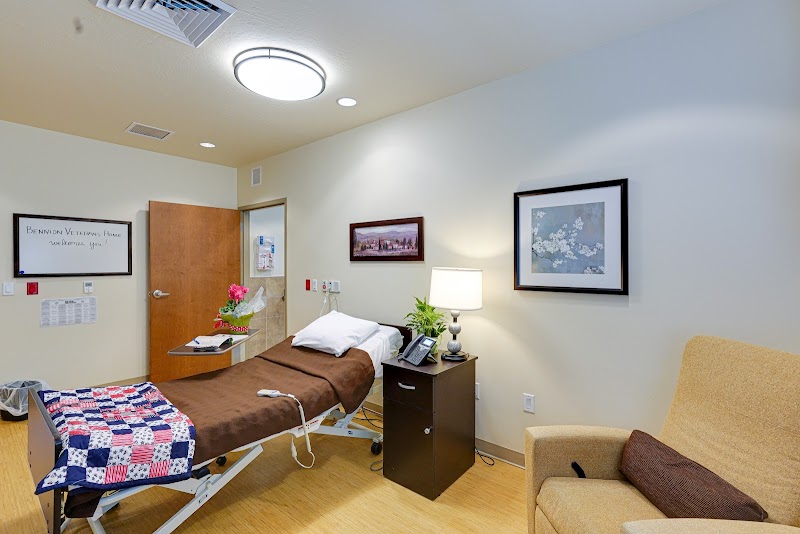
How is Mervyn Sharp Bennion Central Utah Veterans Home Staffed?
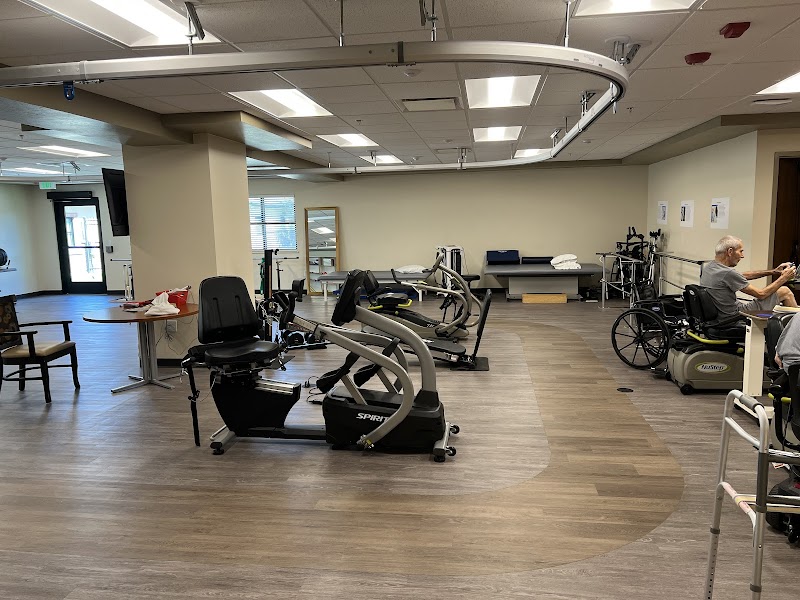
CMS rates Mervyn Sharp Bennion Central Utah Veterans Home's staffing level at 5 out of 5 stars, which is much above average compared to other nursing homes. Staff turnover is 26%, compared to the Utah average of 46%. This relatively stable workforce can support continuity of care.

What Have Inspectors Found at Mervyn Sharp Bennion Central Utah Veterans Home?

State health inspectors documented 17 deficiencies at Mervyn Sharp Bennion Central Utah Veterans Home during 2019 to 2024. These included: 1 that caused actual resident harm and 16 with potential for harm. Deficiencies causing actual harm indicate documented cases where residents experienced negative health consequences.

Who Owns and Operates Mervyn Sharp Bennion Central Utah Veterans Home?

Mervyn Sharp Bennion Central Utah Veterans Home is owned by a for-profit company. For-profit facilities operate as businesses with obligations to shareholders or private owners. The facility is operated by AVALON HEALTH CARE, a chain that manages multiple nursing homes. With 108 certified beds and approximately 100 residents (about 93% occupancy), it is a mid-sized facility located in Payson, Utah.

How Does Mervyn Sharp Bennion Central Utah Veterans Home Compare to Other Utah Nursing Homes?

Compared to the 100 nursing homes in Utah, Mervyn Sharp Bennion Central Utah Veterans Home's overall rating (5 stars) is above the state average of 3.4, staff turnover (26%) is significantly lower than the state average of 46%, and health inspection rating (3 stars) is at the national benchmark.

What Should Families Ask When Visiting Mervyn Sharp Bennion Central Utah Veterans Home?

Based on this facility's data, families visiting should ask: "Can I visit during a mealtime to observe dining assistance and food quality?" "How do you handle medical emergencies, and what is your hospital transfer rate?" "Can I speak with family members of current residents about their experience?"

Is Mervyn Sharp Bennion Central Utah Veterans Home Safe?

Based on CMS inspection data, Mervyn Sharp Bennion Central Utah Veterans Home has a clean safety record: no substantiated abuse findings (meaning no confirmed cases of resident harm), no Immediate Jeopardy citations (the most serious violation level indicating risk of serious injury or death), and is not on the Special Focus Facility watch list (a federal program monitoring the lowest-performing 1% of nursing homes). The facility has a 5-star overall rating and ranks #1 of 100 nursing homes in Utah. While no facility is perfect, families should still ask about staff-to-resident ratios and recent inspection results during their visit.

Do Nurses at Mervyn Sharp Bennion Central Utah Veterans Home Stick Around?

Staff at Mervyn Sharp Bennion Central Utah Veterans Home tend to stick around. With a turnover rate of 26%, the facility is 20 percentage points below the Utah average of 46%. Low turnover is a positive sign. It means caregivers have time to learn each resident's needs, medications, and personal preferences. Consistent staff also notice subtle changes in a resident's condition more quickly. Registered Nurse turnover is also low at 15%, meaning experienced RNs are available to handle complex medical needs.

Was Mervyn Sharp Bennion Central Utah Veterans Home Ever Fined?

Mervyn Sharp Bennion Central Utah Veterans Home has no federal fines on record. CMS issues fines when nursing homes fail to meet care standards or don't correct problems found during inspections. The absence of fines suggests the facility has either maintained compliance or corrected any issues before penalties were assessed. This is a positive indicator, though families should still review recent inspection reports for the full picture.

Is Mervyn Sharp Bennion Central Utah Veterans Home on Any Federal Watch List?

Mervyn Sharp Bennion Central Utah Veterans Home is not on any federal watch list. The most significant is the Special Focus Facility (SFF) program, which identifies the bottom 1% of nursing homes nationally based on persistent, serious quality problems. Not being on this list means the facility has avoided the pattern of deficiencies that triggers enhanced federal oversight. This is a positive indicator, though families should still review the facility's inspection history directly.