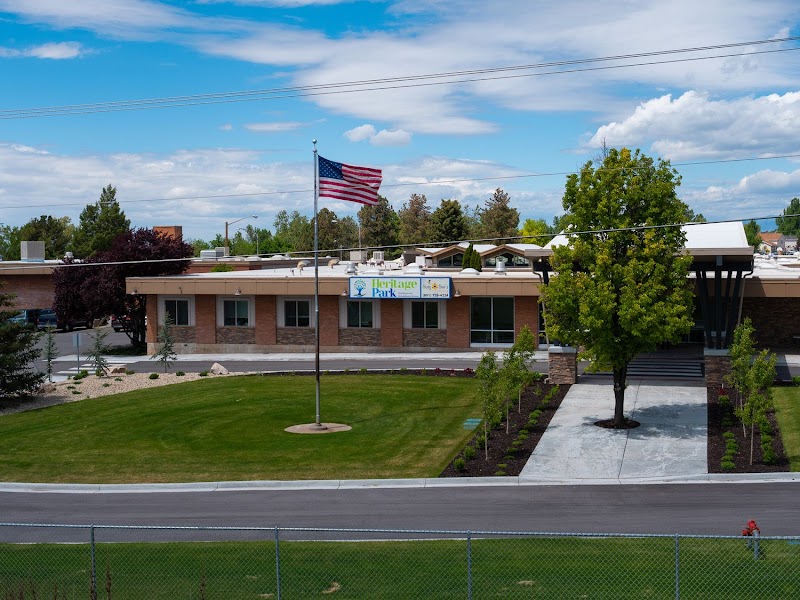
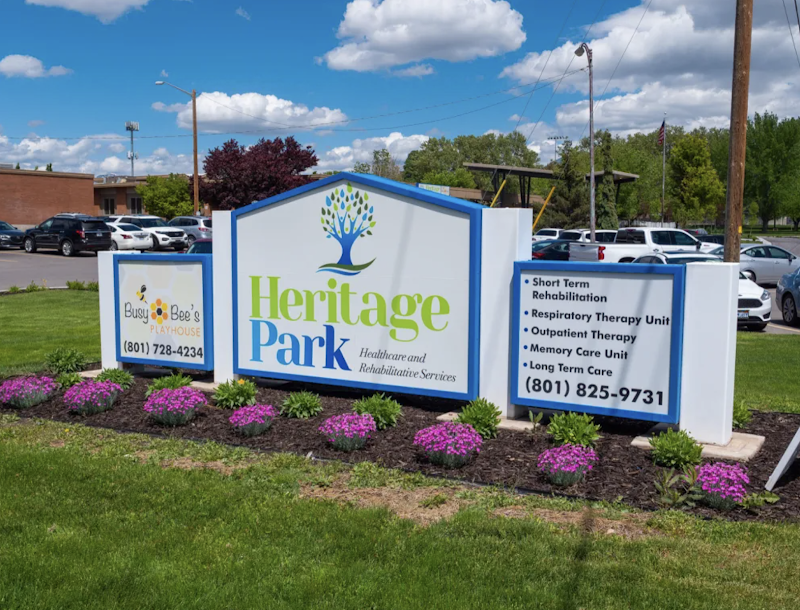
Heritage Park Healthcare and Rehabilitation

2700 West 5600 South, Roy, UT 84067 (801) 825-9731
For profit - Partnership 176 Beds THE ENSIGN GROUP Data: November 2025
Trust Grade
25/100
#50 of 97 in UT
Last Inspection: July 2024

Within standard 12-15 month inspection cycle. Federal law requires annual inspections.

Overview

Heritage Park Healthcare and Rehabilitation has a Trust Grade of F, which indicates significant concerns about the quality of care provided. They rank #50 out of 97 facilities in Utah, placing them in the bottom half, and #5 out of 10 in Weber County, meaning only four local options are worse. The facility is worsening, with the number of issues increasing from 1 in 2023 to 12 in 2024. Staffing is rated at 3 out of 5 stars, and while turnover is slightly better than the state average at 46%, the RN coverage is only average, which may impact the quality of care. Despite a high quality measure rating of 5 out of 5, there have been serious incidents, including a resident being inappropriately touched by another resident, and another resident being transferred improperly, resulting in falls. Additionally, a resident sustained a laceration during a mechanical lift transfer, raising concerns about safety protocols. Overall, families should weigh these significant weaknesses against the facility's strengths before making a decision.

Trust Score
F
25/100
In Utah
#50/97
Bottom 49%
Safety Record
High Risk
Review needed
Inspections
Getting Worse
1 → 12 violations
Staff Stability
⚠ Watch
46% turnover. Above average. Higher turnover means staff may not know residents' routines.
Penalties
✓ Good
$35,081 in fines. Lower than most Utah facilities. Relatively clean record.
Skilled Nurses
✓ Good
Each resident gets 55 minutes of Registered Nurse (RN) attention daily — more than average for Utah. RNs are trained to catch health problems early.
Violations
⚠ Watch
27 deficiencies on record. Higher than average. Multiple issues found across inspections.
★★★☆☆
3.0
Overall Rating
★★★☆☆
3.0
Staff Levels
★★★★★
5.0
Care Quality
★★☆☆☆
2.0
Inspection Score
Stable
2023: 1 issues
2024: 12 issues

The Good

  • 5-Star Quality Measures · Strong clinical quality outcomes
  • Full Sprinkler Coverage · Fire safety systems throughout facility
  • No fines on record

Facility shows strength in quality measures, fire safety.

The Bad

3-Star Overall Rating

Near Utah average (3.3)

Meets federal standards, typical of most facilities

Staff Turnover: 46%

Near Utah avg (46%)

Higher turnover may affect care consistency

Federal Fines: $35,081

Above median ($33,413)

Moderate penalties - review what triggered them

Chain: THE ENSIGN GROUP

Part of a multi-facility chain

Ask about local staffing decisions and management

The Ugly 27 deficiencies on record

3 actual harm
Jul 2024 12 deficiencies 2 Harm
SERIOUS (G) 📢 Someone Reported This

A family member, employee, or ombudsman was alarmed enough to file a formal complaint

Actual Harm - a resident was hurt due to facility failures

Free from Abuse/Neglect (Tag F0600)

A resident was harmed · This affected 1 resident

**NOTE- TERMS IN BRACKETS HAVE BEEN EDITED TO PROTECT CONFIDENTIALITY** 2. A. Resident 85 was admitted to the facility on [DATE] with diagnoses including hemiplegia and hemiparesis following cerebral ...

Read full inspector narrative →
**NOTE- TERMS IN BRACKETS HAVE BEEN EDITED TO PROTECT CONFIDENTIALITY** 2. A. Resident 85 was admitted to the facility on [DATE] with diagnoses including hemiplegia and hemiparesis following cerebral infarction affecting left non-dominant side, and unspecified dementia of unspecified severity without behavioral disturbance, psychotic disturbance, mood disturbance, and anxiety. Resident 85's medical record was reviewed from 6/24/24 through 7/2/24. On 4/26/24, resident 85's annual MDS Assessment documented that a BIMS score was not conducted due to resident 85 being rarely or never understood. Resident 85's progress notes revealed the following: a. On 3/17/24 at 9:00 AM , the nurse note documented, [Resident 85] was sitting next to another resident [Resident 167] this morning at breakfast. [Resident 167] placed his hands down [Resident 85's] blouse and rubbed her breasts. [Resident 85] was agitated and anxious, once the situation subsided and [Resident 167] was moved, [Resident 85's] demeanor was better and she ate her breakfast. Checked on [Resident 85] every hour since incident and she is stable with no issues. b. On 3/17/24 at 9:00 AM, the late entry nurse noted documented, Staff quickly moved and separated both residents, and male resident away from females [sic] residents in the dinning [sic] room. c. On 3/17/24 at 11:59 PM, the nurse note documented,no new res to res incidents noted this shift. Other peer involved in the incident has been kept away from resident. She went to bed following evening meal, and is resting for NOC [night shift] without noted distress. d. On 3/18/24 at 5:00 PM, the incident noted documented,Resident was assessed post resident to resident incident from 3/17/27 [sic], she is alert and oriented x self only, she is confused and forgetful, and needs redirection and reminding of current situation. Resident is unable to state what led to incident or whatoccurred [sic] during incident. Resident shows no S/Sx of pain, no pain stated. Resident shows no new injuries. Resident shows no changes to behaviors or mood, no distress noted. She has been at baseline with her mood and behaviors. Resident shows no new issues at this time. Family has been in today with resident, she has been doing her regular daily activities, with no distress noted. Nurse on Unite Description: [Resident 85] was sitting next to another resident [Resident 167]. [Resident 167] placed his hands down [Resident 85's] blouse and rubbed he breasts. [Resident 85] became agitated and anxious. [CNA 13] quickly stopped the situation and moved [Resident 167] away from [Resident 85]. Her anxiety subsided and she ate her breakfast. [Resident 85] has been fine since the incident. Action Taken: [CNA 13] stopped the behavior and moved [Resident 167] away from [Resident 85] and all other female residents. NP was notified of incident on 3/17/24, no new orders at this time. Administrator and SW were notified on 3/17/24, a report was sent in. Family was notified on 3/17/24. Police Officers were notified of incident, and came back to facility to investigate incident, and spoke to resident's family. Staff to continue to monitor resident for changes in mood or behaviors, or any distress noted. e. On 3/19/24 at 1:07 PM, the nurse note documented, No apparent distress noted due to resident having a Res to Res incident with another resident. Resident has been sleepy. Daughter in law in for visit. f. On 3/19/24 at 3:23 PM, the interdisciplinary team (IDT) note documented, IDT was held today at 13:30 [1:30 PM] with resident, [family member name omitted], [family member name omitted], Ombudsman, ED [Executive Director], DON, DOR [Director of Rehab], SS, Dietary Manager, CNA Coordinator, and Unit Manager to discuss concerns with care and sexual abuse encounter that occurred on 03/17/2024. It was discussed that there isa [sic] high possibility that the abuse will be coming back to the building. Staff discussed that if family and resident choose, staff will help find alternative placement for [Resident 85]. All concerns have been addressed and will be added to the care plan. CNA huddles and education have already been conducted. During our next all staff, staff will be educated on repositioning and placement of residents. SS will continue to follow and support resident and family throughout their stay at [facility name omitted]. Review of the facility investigation documentation for resident 85 revealed the following: The facility initial investigation, form 358, documented that an allegation of sexual abuse against Resident 85 perpetrated by Resident 167 occurred on 3/17/24 at 8:00 AM. CNA 13 observed Resident 167 with his hands down Resident 85's shirt. CNA 13 separated Resident 167 and Resident 85. The facility final investigation summary, form 359, documented that the conclusion of the investigation was that the allegation was verified. The form documented, The allegation was verified by CNA, concierge, kitchen staff, and other residents. On 3/21/24 at 11:00 AM, the Resident Advocate (RA) interviewed resident 52. The interview documented, I was walking into the dining room when I saw [Resident 167] with his hands down [Resident 85's] shirt rubbing her boob. I started yelling for the CNA that was in the room near the dining room to come and help [Resident 85]. She then came and helped [Resident 167] sit down at a table. On 3/18/24 at 9:30 AM, the RA interviewed CNA 13. The interview documented, I was in room [ROOM NUMBER] on C hall when [Resident name omitted] and the concierge were calling out my name to help with [Resident 167] in the dining room. I stopped what I was doing and proceeded to the dining room. When I walked in the door, I could see that [Resident 167] had his left hand down the neckline of [Resident 85's] shirt on her breast and his right hand under her shirt in the back towards her hip and low back. [Resident 85] seemed agitated and I took [Resident 167] by both wrist [sic] and moved his hands from [Resident 85]. I directed him away from her to a new chair and moved her to a different spot at the table near myself where she usually sits at. I reported the incident right away to the nurse and documented in the chart. On 3/17/24, the CNA Coordinator interviewed the concierge. The interview documented, [Resident 167] went up to [Resident 85] and put his hands down her shirt. I called for the CAN [sic] to come and help and separated him. B. Resident 167 was admitted to the facility on [DATE], discharged [DATE] with diagnoses including other frontotemporal neurocognitive disorder, dementia in other diseases classified elsewhere severe with mood disturbance, bipolar disorder unspecified, social pragmatic communication disorder, cognitive communication deficit, attention and concentration deficit, unspecified psychosis not due to a substance or known physiological condition, delusional disorders, unspecified mood disorder, and anxiety disorder due to known physiological condition. Resident 167's medical record was reviewed from 6/24/24 through 7/2/24. On 2/9/24, Resident 167's discharge MDS assessment documented a BIMS score of a 4, indicating a severe cognitive impairment. Resident 167's progress notes revealed the following: a. On 3/17/24 at 9:04 AM, the nurse note documented, Incident in dining room this morning between [Resident 167] and [Resident 85]. [Resident 167] placed his hands down [Resident 85's] blouse and rubbed her breasts. CNA quickly moved [Resident 167] away from [Resident 85] and all other females in the dining room. b. On 3/17/24 at 9:04 AM, the late entry nurse note documented, Staff quickly moved and separated both residents, and moved this resident away from females [sic] residents in the dinning [sic] room. c. On 3/17/24 at 11:57 PM, the nurse note documented, No new res to res incidents noted this shift. Resident has been kept away from dining room and other residents. He is presently resting in bed with eyes closed at this time, no distress noted. d. On 3/18/24 at 11:47 AM, the nurse note documented, Resident was placed on 1:1 with staff during day while he was awake following incident on 3/17/24. Resident remained at nursing station with staff until he went to bed and was asleep in the evening on 3/17/2024. He was assisted to eat by c.n.a [sic] coordinator at lunch and dinner time and was seated away from females during entire meal process. e. On 3/18/24 at 3:13 PM, the nurse note documented, Due to the resident to resident incident from 3/17/24 that involved sexually touching another female resident, Administrator contacted Police Officials about incident. Police Officers came to facility on 3/18/24 to investigate the incident. Police Officers spoke with female resident's family and attempted to interview this resident and spoke with his wife. Due to being a sexual incident, Police Officers ordered to have resident sent to the Hospital ER [Emergency Room] for evaluation due to not possibly being safe withother [sic] residents. Police Officer ordered for a Blue Sheet to be completed by the inhouse [sic] provider to be able to send resident out to the Hospital. NP came in and completed the Blue Sheet requested by the Police Officers and the Police Officer called EMS [emergency medical services] to come and transfer resident to [Hospital name omitted] ER for eval [evaluation] and tx [treat]. Resident's Wife was called by this nurse and notified her that resident would be transported to [Hospital Name omitted] ER per Police Officer request and she stated she was aware, and that the Police Officer had spoken to her as well. Resident was cooperate with EMTs [emergency medical technicians] and he was transferred to [Hospital Name omitted] ER per EMS. Facesheet, Medication List and H&P [history and physical] were all sent with resident at the time of transfer. f. On 3/18/24 at 4:38 PM, the incident note documented, Resident was assessed post resident to resident incident from 3/17/24, he is alert and oriented x self only, he confused [sic] and forgetful, and needs redirection and remind from staff for all types of situations. Resident is unable to sate what led to incident or how incident occurred. Resident is one a one to one at this time. He is assisted with all cares and ambulating, no changes in mobility at this time. Resident has males [sic] staff assist with him cares or 2 females with cares. Resident shows no new injuries at this time. Resident needs much redirection from staff. Resident is placed by male residents in dinning [sic] room or activities. Police was contacted due to incident, and police officers recommended resident to be Blue Sheeted and transferred out to theER [sic] for eval and tx, resident transferred to [Hospital Name omitted] ER. Nurse on Unit Description: Resident was sitting next to a female resident (Resident 85) in dining hall. [Resident 167] reached his hands down her blouse and rubbed her breasts. [Resident 85] was agitated and her level of anxiety increased during the incident. Once incident was resolved by [CNA 13], [Resident 85] was fine and ate her breakfast. Action Taken: CNA saw the incident and removed [Resident 167] from the [sic] [Resident 85] and moved him away from all female residents. A male CAN was asked to assisted [Resident 167] with cares for the remainder of the day and [Resident 167] will not be placed by any female residents. NP was notified of incident on 3/17/24, no new orders at that time. Administrator and SW were notified on 3/17/24, a report was sent in. Family notified on 3/17/24. CP [care plan] updated: Resident may only sit next to male residents in Dinning [sic] room or common areas. Resident is currently at [Hospital Name omitted] ER. On 6/24/24 at 1:19 PM, an interview was attempted with Resident 85. Resident 85 was unable to complete the interview. Resident 167 no longer resided at the facility at the time of the investigation. On 6/26/24 at 11:28 AM, an interview was conducted with CNA 13. CNA 13 stated that the incident between Resident 167 and Resident 85 occurred right as staff were moving residents into the dining room for lunch around 11:30 AM. CNA 13 stated that resident 85 was not seated in her usual spot and had been seated next to resident 167. CNA 13 stated that she walked into the dining room after the concierge grabbed her attention and saw Resident 167 with one of his hands down Resident 85's shirt and his other hand on Resident 85's backside. CNA 13 stated that she told resident 167 no, grabbed his hand, and pulled him away from resident 85. CNA 13 stated that Resident 85 seemed agitated and uncomfortable after the incident. CNA 13 stated that she told the nurse on shift immediately after the incident occurred. CNA 13 stated that she did not recall why resident 167 had been moved from a different hallway. CNA 13 stated that after the incident, staff received training on identifying and reporting abuse. CNA 13 stated that after the incident, new interventions were put into place including keeping Resident 85 and Resident 167 separated and monitoring for changes in Resident 85's behavior. On 6/26/24, an interview was conducted with RN 7. RN 7 stated that the CNA that witnessed the event reported it to RN 7 immediately. RN 7 stated that she ensured that the CNA had separated both of the residents. RN 7 stated that she immediately messaged the DON, the administrator, and the unit manager. RN 7 stated that she got all of the CNAs together and made a plan to not let Resident 167 not be near anyone near the dining hall again. RN 7 stated that after the incident, Resident 167 was placed on a one on one observation and that his medications were adjusted. RN 7 stated that she did not witness the event occur and that the CNA had reported the incident to her. RN 7 stated that resident 85 was nonverbal, but could express herself through eye movements and moans. RN 7 stated that staff at the facility receive abuse training twice a month. Based on observation, interview, and record review, the facility did not ensure that the resident had the right to be free from abuse, neglect, misappropriation of property and exploitation. Specifically, for 5 out of 50 sampled residents, three female residents had incidents of sexual abuse by two male residents. Resident identifiers: 12, 33, 42, 52, 63, 85, and 167. Findings included: 1. A. Resident 63 was admitted to the facility on [DATE] with diagnoses which included Alzheimer's disease, dementia, mood disorder, anxiety disorder, chronic pain, lumbar region intervertebral disc degeneration, and dysphagia. Resident 63's medical record was reviewed from 6/24/24 through 7/2/24. On 12/6/23, resident 63's quarterly Minimum Data Set (MDS) assessment documented that a Brief Interview for Mental Status (BIMS) score was not conducted due to resident 63 being rarely or never understood. The assessment documented that resident 63 was dependent and the helper did all the effort for oral hygiene, toileting hygiene, shower/bathing hygiene, upper and lower body dressing, and personal hygiene. Resident 63's progress notes revealed the following: a. On 2/11/24 at 6:48 PM, the nurse note documented, We found her hugging and kissing a male resident. There was no tongue action just their lips were touching. It was a slow kiss and they both had their eyes closed when I found them. They weren't moving much. They both had their clothes on and were not touching each other inapropriatley [sic]. We seperated [sic] them immediately [sic]. No distress was noted. Notified the unit manager. Will continue to monitor. b. On 2/11/24 at 6:50 PM, the nurse note documented, Contacted their emegerncy [sic] contact on file, [name omitted], about the kissing but they did not answer the phone. c. On 2/12/24 at 6:41 PM, the incident note documented, Upon Further investigation, with staff, it was stated that, when resident was removed and both residents were separated, it was noted that the male resident had bowel movement noted to his hand's. Bowel movement was noted to be from this resident. d. On 2/12/24 at 6:41 PM, the incident note documented, Administrator, SW [Social Worker], and DON [Director of Nursing] notified of incident of 2/11/24, incident was reported and a report was sent in. e. On 2/12/24 at 6:41 PM, a late entry incident note documented, Resident was assessed post res [resident] to res incident from 2/11/24, she is alert and oriented x [times] self only, she will states noncoherent speech or words. She is forgetful and confused per baseline. Resident is unable to state what led to res to res incident. She is ambulating on her own, and appears to be smiling and interacting with staff and other residents with no distress noted. Resident shows no behavior of upset episodes, no crying episodes, no agitated episodes, no changes in mood or behaviors. Resident shows no changes in mood towards staff or other residents. Resident shows no injuries. Resident is redirected by staff and assisted with all cares. Resident shows no changes at this time. Nurse on Unit Description: We found her hugging and kissing a male resident. There was no tongue action just their lips were touching. It was a slow kiss and they both had their eyes closed when I found them. They weren't moving much. They both had their clothes on and were not touching each other inappropriately. We separated them immediately. No distress was noted. Notified the unit manager. Will continue to monitor. Action Taken: Notified the unit manager. NP [Nurse Practitioner] was notified of incident on 2/11/24. Family notified of incident on 2/11/24. Staff to continue to monitor resident for any changes in mood, behaviors or distress. f. On 2/25/24 at 11:55 PM, the nurse note documented, No interaction this shift with male peer involved in res/res. Resident smiled often this shift. No s/sx [signs or symptoms] anxiety or distress. g. On 2/26/24 at 5:24 PM, the incident note documented,Resident was assessed post resident to resident incident from 2/24/24, she is alert and oriented x self only. She is confused and forgetful per baseline, she needs redirection and reminding to current situation. Resident will state non-coherent words, sheis [sic] unable to state what led to incident or what occurred during incident. Resident is alert, she is self ambulating on her own, she is smiling and giggling with staff and other residents. Resident shows no changes to mood, behaviors, she shows no crying, no agitation, and no distress noted. Resident shows no changes to mood with other resident and staff members. Resident will go up to staff members and attempt to hold their hands or hug them, and does it without sexual intent. Resident shows no changes at this time. Nurse on Unit Description: This resident was in hallway, male residents hands were down her pants. Resident was not visibly upset or fighting. Residents were separated. Proper authorities notified. Action Taken: Residents separated immediately. DON, UM [Unit Manager], provider, administrator and family notified. NP was notified of incident on 2/24/24, no new orders for resident at that time. Family was notified of 2/24/24. Administrator and SW were notified of incident on 2/24/24, incident was reported and a report was sent in. CP [Care plan] Updated: Resident is very physical and will attempt to hold people's hands, go up to people and hug them, attempts to snuggle or gets close to people. Staff to continue to monitor any changes to mood or behaviors. h. On 2/26/24 at 11:26 PM, the nurse note documented, No interaction this shift with male peer involved in res/res. Male peer has been moved off of this unit. No s/sx anxiety or distress. i. On 4/11/24 at 1:28 PM, the nurse note documented, Pt [patient] was ambulating the hallway when a male resident pulled her close and started rubbing her breasts. CNA [Certified Nursing Assistant] witnessed the incident and immediately removed her from the situation. This nurse assessed female resident for injuries and/or distress. Resident did not appear in any pain or distress at this time. Will continue to monitor. j. On 4/11/24 at 11:18 PM, the nurse note documented, No further interaction with male peer involved in res/res. Staff kept them at opposite ends of the hallway from each other. No s/sx distress or anxiety this shift. Resident smiled often. k. On 4/12/24 at 5:48 PM, the incident note documented, Resident was assessed post resident to resident incident from 4/11/24, she is alert and oriented x to self only. Resident is confused and forgetful per baseline and needs much redirection and reminding from staff. Resident is unable to state what led incident or what occurred during incident. Resident is self ambulating on the unit, and wanders through the unit on her own. Resident is smiling and mumbling words but doses [sic] not make sense, she shows no new distress or changes in mood, or any anger, upset episodes noted. Resident has all needs anticipated by staff and is assisted with ADLs [Activities of Daily Living] and cares with extensive assistance from staff. Resident has not had changes in behaviors towards staff when assisting them. Resident shows no new issues today, no changes in mood or behaviors towards male or female residents. Nurse on Unit Description: Pt was ambulating the hallway when a male resident pulled her close and started rubbing her breasts over her clothes. CNA witnessed the incident and immediately removed her from the situation. This nurse assessed female resident for injuries and/or distress. Resident did not appear in any pain or distress at this time. Will continue to monitor. Action Taken: CNA witnessed the incident and immediately removed her from the situation. This nurse assessed female resident for injuries and/or distress. Resident did not appear in any pain or distress at this time. Will continue to monitor. NP was notified of incident on 4/11/24, no new orders at this time. Administrator, SW, and DON notified on 4/11/24, and a report was sent in on 4/11/24. Family was notified on 4/11/24. Staff will continue to monitor resident's behaviors and mood for any changes. l. On 4/12/24 at 11:48 PM, the nurse note documented, No interaction this shift with male peer involved in res/res incident. Staff vigilant to keep them apart. No s/sx distress or anxiety this shift. Resident smiled often. m. On 4/14/24 at 11:14 PM, the nurse note documented, No s/sx distress or anxiety this shift. Resident smiled and laughed often. No interaction this shift with male peer involved in res/res incident. Staff vigilant to keep them apart. Review of resident 63's incident reports revealed the following: a. On 2/11/24 at 3:00 PM, the incident report documented, We found her hugging and kissing a male resident. There was no tongue action just their lips were touching. It was a slow kiss and they both had their eyes closed when I found them. They weren't moving much. The both had their clothes on and were not touching eachother [sic] inappropriately. We seperated [sic] them immediately [sic]. No distress was noted. Notified the unit manager. Will continue to monitor. b On 2/24/24 at 3:28 PM, the incident report documented, This resident was in hallway, male residents hands were down her pants. Resident was not visibly upset or fighting. Residents were separated. Proper authorities notified. c. On 4/11/24 at 1:02 PM, the incident report documented, Pt was ambulating the hallway when a male resident pulled her close and started rubbing her breasts over her clothes. CNA witnessed the incident and immediately removed her from the situation. This nurse assessed female resident for injuries and/or distress. Resident did not appear in any pain or distress at this time. Review of the facility investigation documentation for resident 63 revealed the following: a. The facility initial investigation, form 358, documented that the Resident Advocate (RA) was interviewing staff on the D hall about resident 167's sexual behaviors. CNA 2 reported to the RA that she witnessed resident 167 and resident 63 kissing on the couch. CNA 2 reported that when she and CNA 3 separated the residents they witnessed resident 167 pull his hands out of resident 63's pants and it had feces on it. CNA 2 reported that she escorted resident 63 back to her room and cleaned her up. The report documented that the alleged incident occurred on 2/11/24 at 3:00 PM. The facility final investigation summary, form 359, documented that the conclusion of the investigation was that the allegation was inconclusive. The form documented, Facility is able to substantiate that [resident 167] did have his hands inside the upper area of [resident 63's] backside/buttocks. However, facility is unable to substantiate (inconclusive), any additional interaction(s) outside of this and conclude, anything else unlikely happened due to the position of the residents and time frame allotted prior to staff intervening. On 2/16/24 at 5:25 PM, the DON interviewed Registered Nurse (RN) 3. The interview documented in response to any sexually inappropriate behaviors with resident 167, He has come up behind [resident 63] and given her bear hugs. We quickly redirect him. On 2/16/24 at 5:40 PM, the RA interviewed CNA 2. The interview documented, Yea, the other day [CNA 3] and I had to separate [resident 63] and [resident 167] while they were on the couch kissing. When they separated I watched [resident 167] pull his hand out of the back of her pants and he had poop on his hand. I brought [resident 63] back to her room to change her and clean her up. On 2/16/24 at 5:45 PM, the RA interviewed RN 2. The interview documented, The other day he [resident 167] was kissing [resident 63] on the couch and I asked the two CNAs to separate them immediately. They separated easily no one was in distressed, and there were no behavior or mood changes. I notified family and staff. I did see [resident 167] walk pass with poop on his hand. On 2/16/24 at 5:50 PM, the RA interviewed CNA 3. The interview documented, When I worked last I was coming off of break and [RN 2] asked me to separate [resident 63] and [resident 167]. They were laying on the couch together kissing. When we asked them to separate I watched [resident 167] take his hand out of [resident 63] pants. He had poop on his hands so I took him to his room to clean up. Yes, his hand was down the back of her pants. b. The facility initial investigation, form 358, documented that on 2/24/24 at 2:30 PM, it was reported that resident 63 was walking away from the nurse's station when resident 167 followed behind her and began to put his hands down the top of her pants on her back side. Staff was present and were able to separate the residents. The report documented that the facility implemented a one on one (1:1) monitoring for resident 167 for 72 hours. The facility final investigation summary, form 359, documented that the facility investigation concluded that the allegation was verified. The form further documented that the corrective action taken was that resident 167 was removed from the memory unit to another hallway away from resident 63. His meds [medications] have been adjusted accordingly by provider. He will only have male caregivers and they will continue cares in pairs. On 2/25/24, a hand written statement documented, I was walking out of the linen room I saw that [resident 167] had his hands down [resident 63] pants playing with her. I separated the two of them and went and found a nurse to tell them what happened. The statement was signed but the signature was not legible. c. The facility initial investigation, form 358, documented that on 4/11/24 at 1:20 PM ,CNA 5 reported that resident 12 was across from the nursing station and resident 63 was walking past him. [Resident 12] reached out and held both of [resident 63's] hands and she walked closer to him, sitting in his wheelchair. He then reached up and grabbed her right breast and started rubbing it (over the clothes). The form documented that CNA 5 witnessed the incident and intervened by stating, No, you cannot do that [name of resident 12 omitted]. The form documented that the residents were separated. On 4/11/24, the RA interviewed two male residents and one female resident post incident. All residents reported feeling safe and had no concerns with any other resident. On 4/11/24 at 1:57 PM, the RA interviewed RN 4. RN 4 reported that resident 12 had not displayed any behaviors like this recently, No, he's been doing so good. The facility final investigation summary, form 359, documented the conclusion of the investigation as verified. Allegation was substantiated d/t [due to] witnesses seeing and intervening. The form documented that the provider was notified and resident 12 was placed on Depakote 250 milligrams by mouth two times a day for sexual behaviors. The form documented the other corrective action was that staff would redirect resident 12 away from other female residents. On 3/19/24, resident 63 had a care plan initiated for had the potential to demonstrate physical behaviors related to being very physical, attempting to hug and hold people's hands, and attempting to snuggle or get close to people due to dementia. Interventions identified included to document observed behavior and attempt interventions; give as many choices as possible about care and activities; and intervene as necessary to protect the rights and safety of others. On 6/24/24 at 2:15 PM, an interview was attempted with resident 63 and a Spanish speaking interpreter with the State Survey Agency. Resident 63 was asked if she had any problems with any male residents and the resident was not able to reply. Resident 63 was mumbling nonsensical words. B. Resident 12 was admitted to the facility on [DATE] with diagnosis which included Alzheimer's disease, dementia, congestive heart failure, chronic kidney disease, type 2 diabetes mellitus, morbid obesity, atrial fibrillation, dysphagia, anxiety disorder, major depressive disorder, and cognitive communication deficit. Resident 12's medical record was reviewed from 6/24/24 through 7/2/24. On 6/8/23, resident 12's admission MDS assessment documented a B[TRUNCATED]
SERIOUS (G)

Actual Harm - a resident was hurt due to facility failures

Accident Prevention (Tag F0689)

A resident was harmed · This affected 1 resident

**NOTE- TERMS IN BRACKETS HAVE BEEN EDITED TO PROTECT CONFIDENTIALITY** 2. Resident 166 was admitted to the facility on [DATE] and discharged on 4/21/24 with the following diagnoses of unspecified dem...

Read full inspector narrative →
**NOTE- TERMS IN BRACKETS HAVE BEEN EDITED TO PROTECT CONFIDENTIALITY** 2. Resident 166 was admitted to the facility on [DATE] and discharged on 4/21/24 with the following diagnoses of unspecified dementia with agitation and anxiety, unsteadiness on feet, generalized muscle weakness, repeated falls, and mild cognitive impairment. Resident 166's medical record was reviewed on 6/25/24. On 11/14/23, a MDS assessment documented that resident 166 had a BIMS score of 5 which indicated severe cognitive impairment. On 10/31/23, an elopement/wandering evaluation documented resident 166 was a high wander risk and documented resident had dementia and they were alert and oriented. The elopement history for the last six months documented resident 166 had no history of elopement. It noted that resident 166 had a history of wandering but had not exhibited wandering behavior and their wander did not place resident 166 at a significant risk of getting in a potentially dangerous place. On 10/31/23, an annual smoking assessment documented, Resident is supervised at this time due to having a wanderguard in place. Resident is safe to smoke. Resident 166's wander guard care plans were reviewed and documented the following: a. A care plan focus area initiated on 10/31/23 and resolved on 11/3/23, documented [Resident 166] has a Wanderguard r/t [related to] Wandering. b. A care plan focus area initiated on 11/20/23, documented [resident 166] is elopement risk/wanderer r/t History of attempts to leave facility unattended. Documented interventions included: 1. Distract resident from wandering by offering pleasant diversions, structured activities, food, conversation, television, book. 2. Document wandering behavior and attempted diversional interventions. Resident 166's physician orders were reviewed and documented the following wander guard orders: a. An order with a start date of 10/31/23 and an end date of 11/1/23, documented Wander guard. one time only for 1 Day. b. An order with a start date of 10/31/23 and an end date of 11/3/23, documented Monitor placement and functioning of wander guard QS [every shift] (+)=in place and function correctly (-)=not working and replaced. every shift. Resident 166's progress notes and facility documentation were reviewed and documented the following: a. On 10/31/23, a previous facility history and physical documented that on 6/5/22, resident 166 was pink sheeted and brought to the emergency when they had been found wandering outside the facility. The facility administrator stated, they felt they were unable to care for resident 166 since they frequently left the facility and needed to be chased down several blocks while running into oncoming traffic secondary to confusion. b. On 10/31/23 at 10:42 PM, a nurse note documented, Resident arrived to this facility via house transport. He came with his daughter. Pt [patient] came from [facility name removed] in [name of city removed]. Family wanted pt closer to them. Pt has a Hx [history] of dementia. He is A&O [alert and oriented] x 2-3 [person, place, and time]. He is pleasant and cooperative. Daughter states that he may get lostfinding [sic] his room and may need directing. Pt ambulates independently, He is a smoker and a wanderer. A wander-guard was placed on pt's left wrist at time of arrival. Pt is a supervised smoker. c. On 11/1/23 at 1:00 AM, an encounter note documented, . Patient is a [AGE] year-old male a known history of dementia who lives in skilled nursing facility who was brought to the emergency department on a pink sheet psychiatric hold when he was found wandering outside this facility. Patient states he was trying to go to his girlfriend's has there is someone who lives demonstrate that he wants to marry. Reportedly patient was to transfer to [name of facility removed] in [name of city removed] tomorrow, however after he was found wandering his current facility did not want to bring him back. d. On 11/2/23 at 5:40 PM, a nurse note documented, Resident has been agitated and asking for wander guard to be taken off. Since nurse was explaining he has to keep it on, resident went off and started cussing. Went back to room after he came back out asking for smokes and it wasn't time he went off on the staff again and became very agitated again. Resident ambulating well with no issues noted. Eating meals in his room. Taking AM pills well with no problems. Continues with supervised smoking sessions. e. On 11/3/23 at 6:47 PM, a nurse note documented, Resident has not shown any attempts of trying to elope, he remains on the unit and is now oriented to the unit. Resident appears to be more agitated with the wanderguard in place, and gets easily upset. Wanderguard was removed, his sister- [name removed] was present while it was removed. No new issues noted. f. On 11/5/23 at 9:49 AM, a nurse note documented, Resident appears to be adjusting well to facility. Takes meds [medications] without problems. Goes out to smoke and does well without supervision. Ambulates independently around facility. Able to make needs known. g. On 11/7/23 at 2:26 PM, a nurse note documented, Resident becomes confused with time and is constantly reminded about smoking times. He comes and asks staff for his cigarettes. No attempts of elopement up to the moment. h. On 11/25/23 at 10:37 AM, a nurse note documented, Resident managed to get outside this morning and was seen in the parking lot. When it was discovered that resident was missing, CNA coordinator got in her car and drove down the road and was able to find him walking down to the [name of local gas station removed]. He stated he was going to get a cheap pack of cigarettes and a beer. Once resident was returned to hallway a wandergard [sic] was applied to his left ankle. Sister was notified of incident. Will continue to monitor. i. On 11/27/23 at 6:42 PM, an incident note documented, Resident was assessed post elopement incident from 11/25/23, he is alert and oriented x self and family only, he answers simple questions, and is confused and forgetful to current situation, he is unable to state what city he is in. Resident is unable to remember incident due to forgetfulness. Resident out on the hall and will go to his room and back to the hall and ask what time it is so he can go out to smoke, or will ask if he can get a beer. Resident told this nurse 'I have been here for three years and you guys should know the routine', this nurse reminded him that he had been at the facility for about a month, and he stated 'you're stupid'. Resident can get very agitated or upset when staff ask him questions or want to work with him. Resident has not attempted to elope again, and has not made statements about leaving. He has maintained himself on the hall. Resident forgets he has cigarettes and has to be reminded that he has plenty of cigarettes. Resident had a wanderguard placed and resident has left the wanderguard in place and has not cut it off, he agrees to the wanderguard and showed it to this nurse without stress noted. Resident shows no new issues at this time. CP Updated: Place wanderguard to alert staff of resident possibly elopement. A form titled exhibit 358 was submitted to the State Survey Agency (SSA) on 11/29/23 at 9:40 AM. The form documented an allegation of elopement had been made and the resident involved was resident 166. It documented staff had become aware of the incident on 11/25/23 at 10:20 and the administrator was informed at 10:45 AM. The form documented the steps taken to protect residents included, [Resident 166] was found within approx [approximately] 15 mins [minutes] of last known location. Wander Guard placed and 15 mins checks established. A form titled exhibit 359 was submitted to the SSA on 11/29/23 at 10:30 AM. The form 359 documented resident 166 was found walking down the street from the facility towards a gas station to buy cigarettes and beer. A witness interview summary documented, CNA coordinator found resident 166 walking down the street. She states that she saw him outside when she first arrived at the facility. Staff mentioned that he wanders and was missing. CNA coordinator got in her care [sic] and went down the street where she found him. He told her he was going to get cigarettes. She reminded him he already had some at the facility and was able to get him back to the facility. A written witness statement by the CNA coordinator documented, On Sat. [Saturday] Nov [November] 25, 23, I answered a call from the community about a resident in the parking lot. I went to check the parking lot seen the resident went and grabbed the nurse to go with me in the parking lot. Nurse [name removed] and I didn't see the resident. I then got on the radio asking all halls to check for the fall residents. C hall responded right away what resident it was. Myself and a CNA [CNA 1] went to drive looking for resident. [CNA 1] and I found resident over the via duct walking on the sidewalk. [CNA 1] approached resident and was able to bring resident back to facility. Resident wanted a beer and ciggerettes [sic]. The provided investigation summary documented resident 166 had a diagnosis of dementia and he often needed redirection. A wander guard was place when resident 166 returned to the facility. The conclusion of the investigation verified resident 166 had eloped. On 6/26/24 at 2:26 PM, an interview was conducted with Registered Nurse (RN) 5. RN 5 stated if there was a resident with frequent wandering behavior, they needed to be in the locked unit for safety. RN 5 stated if a resident had a diagnosis of dementia, behaviors were monitored to see if they needed more supervision or needed a wander guard. RN 5 stated the Unit Managers were notified of resident behaviors. RN 5 stated if a resident had been moved from the locked unit to the C hall, staff observed if the resident was trying to leave the hall or the building. RN 5 stated if a resident was considered a high elopement risk, they needed to be monitored every 15 minutes. RN 5 stated the doors alarmed when a resident with a wander guard got too close to the doors. RN 5 stated a resident was considered to elope if they were outside the building. On 6/26/24 at 2:48 PM, an interview was conducted with the CNA Coordinator. The CNA Coordinator stated if a new admission had behaviors such as trying to get out of the building, they were considered a high elopement risk, and the unit manager was notified. The CNA Coordinator stated if a resident wandered, they were able to do a one-on-one supervision with the resident or applied a wander guard. The CNA Coordinator stated they recalled the CNAs in the hall were observing resident 166 walk around. The CNA Coordinator stated when it was noticed resident 166 was not located, they called a code for a missing resident. The CNA Coordinator stated resident 166 had not been considered an elopement risk at that time. The CNA Coordinator stated resident 166 was seen walking to the top of the viaduct and notified CNA 1. The CNA Coordinator stated CNA 1 drove and picked resident 166 up and brought them back to the facility. On 6/27/24 at 11:29 AM, an interview was conducted with UM 1. UM 1 stated an initial assessment was conducted when resident's were admitted to the facility. UM 1 stated one of the assessments done was the elopement assessment which consisted of five questions. UM 1 stated if a resident scored a 0 to 9 on the elopement assessment, they were considered a low elopement risk. UM 1 stated if a resident had scored as a high elopement risk, then a care plan was added. UM 1 stated it was possible for a resident to be considered a low elopement risk and have a cognitive impairment. UM 1 stated they monitored residents for wandering or exit seeking behavior such as them stating they wanted to go home. UM 1 stated if behaviors were exhibited, they considered if the resident needed a wander guard. UM 1 stated the wander guard was checked daily to make sure it was functional. UM 1 stated the doors alarmed and locked if a resident with a wander guard got too close. UM 1 stated the wander guard was care planned and they did not need a doctor's order for it. UM 1 stated resident 166 was diagnosed with dementia, had a short-term memory deficit, and they were assessed as a high elopement risk. UM 1 stated resident 166's family had requested a wander guard needed to be placed on them due to something that happened at a previous facility. UM 1 stated resident 166 was refusing the wander guard and progress notes stated he was agitated and upset by it. UM 1 stated before removing a wander guard staff attempted to change the location of the wander guard, but UM 1 stated they were unsure if this had been done before it had been removed. UM 1 stated they expected resident 166 to be on 15 minute checks since they had cognitive deficits. On 6/27/24 at 1:33 PM, an interview was conducted with the DON. The DON stated resident 166 came to the facility because the family wanted them closer to home. The DON stated when resident 166 was admitted , they were aware of his elopement history which happened a long time ago. The DON stated resident 166 was considered a high elopement risk at admission. The DON stated resident 166 had orders for a wander guard from their previous facility. The DON stated resident 166 initially agreed to the placement of a wander guard but then it caused them more agitation and they wanted it off. The DON stated resident 166's family was present when they removed the wander guard. The DON stated they gave resident 166 a try without the wander guard and it had worked well for a few weeks. The DON stated they monitored resident 166 for a few days after the wander guard had been removed and resident 166 had made no attempts to elope. The DON stated resident 166 had been doing well without the wander guard since they were responding better to people and resident 166's quality of life had been better since they were happier. The DON stated they did not believe staff were doing specific 15 minute checks, but staff were watching resident 166 closer and they had increased monitoring in place since they had removed the wander guard. The DON stated resident 166 had been placed on alert charting for at least three days after the wander guard had been removed and noticed resident 166's behavior had improved, and they were more calm and pleasant. The DON stated resident 166 had not made any prior attempts to elope. The DON stated at the previous facility, resident 166 had a wander guard in place and when they refused to wear it, the previous facility had documented 15 minutes checks and monitoring. Based on observation, interview, and record review, the facility did not ensure that the resident environment remained as free of accident hazards as was possible; and each resident received adequate supervision and assistance devices to prevent accidents. Specifically, for 2 out of 50 sampled residents, a resident sustained a burn after spilling coffee on himself and a resident eloped from the facility. Resident identifiers: 21 and 166. Findings included: 1. Resident 21 was admitted to the facility on [DATE] with diagnoses which included Alzheimer's Disease, dementia, cerebral infarction, dysphagia, type 2 diabetes mellitus, chronic kidney disease, and mood disorder. Resident 21's medical record was reviewed from 6/24/24 through 7/2/24. On 2/26/24, resident 21's annual Minimum Data Set (MDS) assessment documented a Brief Interview for Mental Status (BIMS) score of 1 out of 15, which would indicate a severe cognitive impairment. The MDS assessment also documented that resident 21 required partial to moderate assistance for eating. On 4/28/24 at 11:45 AM, resident 21's incident report documented, Resident was feeding self in dining room and spilled coffee on his leg. Resident has burn to L [left] upper thigh. Blister still intact. No treatment done up to this moment. The incident report documented that the Nurse Practitioner (NP), Unit Manager (UM), and Director of Nursing (DON) were notified. Resident 21's physician orders revealed the following: a. On 4/30/24, an order for Apply BG [bordered gauze] dressing to burn on L upper thigh. every 72 hours for Burn like wound to L upper thigh was initiated. The order was discontinued. b. On 4/30/24, an order for LEFT UPPER THIGH: Apply Surprep to blisters and may cover if needed. every shift was initiated. The order was discontinued. c. On 5/17/24, an order for left upper thigh: cleanse with wound cleanser, pat dry, paint wound with betadine, leave OTA [Open to Air]. every day shift was initiated. The order was discontinued. Resident 21's progress notes revealed the following: a. On 4/28/24 at 11:45 AM, the nurse note documented, Resident was feeding self in dining room and spilled coffee on his leg. Resident has burn to L upper thigh. Blister still intact. No treatment done up to this moment. b. On 4/29/24 at 5:14 PM, the incident note documented, Resident was assessed post skin alteration incident from 4/28/24, he is alert and oriented x [times] self only, he is confused and forgetful and needs redirection and reminding from staff to current situation. Resident speak Spanish. He is unable to remember what occurred or that he had spilled his coffee. Resident is laying in bed, he appears comfortable, no S/Sx [signs and symptoms] of pain noted, he stated no new pain. Resident has an intact blister to his upper left thigh, area shows no redness, no S/Sx of infection noted to site, area is covered with a bordered dressing in place. Resident is able to self feed himself and able to hold items. No changes to dexterity, he is able to move extremities with ROM [range of motion]. No other skin issues noted at this time. Nurse on Unit Description: Resident was feeding self in dining room and spilled coffee on his leg. Resident has burn to L upper thigh. Blister still intact. No treatment done up to this moment. Action Taken: NP, UM, DON and wound care made aware. NP was notified of skin alteration on 4/28/24, no new orders at that time. Emergency Contact notified on 4/28/24. CP [Care Plan] Updated: May have a lid to his coffee mug. c. On 4/30/24 at 1:56 PM, the note documented, New order per NP: Silvadene applied to L upper thigh Qd [daily] x3 days. and apply BG dressing to area Q3 [every three] days until healed. d. On 4/30/24 at 7:07 PM, the skin/wound note documented, Resident acquired a burn to left upper thigh from coffee. Area assessed today. treatment order placed the day incident happened. 1. left upper thigh, burn/blister, (IN): 2.0cm [centimeter] L [length] x5.5cmW [width] xUTD [unable to determine] cmD [depth]. wound bed: intact fluid filled blister. wound edges: attached to base. periwound: intact. drainage: none. odor: none. culture: no. pain: 0/10. will continue with current treatment. resident tolerated assessment well. no acute concerns. will continue to monitor. e. On 4/30/24 at 11:08 PM, the nurse note documented, Res [resident] continues to be treated and monitored for coffee burn to L upper thigh. Site remains red and blistered. Silvadene cream applied as ordered with dressing covering for protection. Res tolerated treatment with no signs or verbalizations of pain. f. On 5/2/24 at 11:45 PM, the nurse note documented, Dressing in place to left thigh coffee burns. Resident resting with eyes closed in bed. No s/sx pain or discomfort. g. On 5/3/24 at 5:13 PM, the skin/wound note documented, It was reported that blister to left upper thigh popped. this nurse in to assess today. 1. left upper thigh, burn/blister, (IN): 1.5cmLx5.0cmWx0.1cmD. wound bed: 100% light pink granulation tissue. wound edges: attached to base. periwound: intact. drainage: scant/min, serous. odor: none. culture: no. pain: 0/10. will continue with current treatment. resident tolerated dressing change well. no acute concerns. will continue to monitor. h. On 5/7/24 at 6:20 PM, the skin/wound note documented, skin to left upper thigh assessed today. wound is healing well, almost resolved. 1. left upper thigh, burn/blister, (IN): 1.0cmLx1.5cmWx0.1cmD. wound bed: 100% light pink granulation tissue. wound edges: attached to base. periwound: intact. drainage: none. odor: none. culture: no. pain: 0/10. will continue with current treatment. resident tolerated dressing change well. no acute concerns. will continue to monitor. i. On 5/16/24 at 6:49 PM. the skin/wound note documented, skin to left upper thigh assessed today. wound remains stable, scabbing noted today. 1. left upper thigh, burn/blister, (IN): 1.0cmLx1.5cmWxUTDcmD. wound bed: 80% scab, 20% epithelialization. wound edges: attached to base. periwound: intact. drainage: none. odor: none. culture: no. pain: 0/10. treatment order updated as follows: left upper thigh: cleanse with wound cleanser, pat dry, paint wound with betadine, leave OTA. resident tolerated dressing change well. no acute concerns. will continue to monitor. j. On 5/22/24 at 6:32 PM, the skin/wound note documented, skin to left upper thigh assessed today. wound remains stable, wound continues to be scabbed. 1. left upper thigh, burn/blister, (IN): 1.0cmLx1.5cmWxUTDcmD. wound bed: 100% scab. wound edges: attached to base. periwound: intact. drainage: none. odor: none. culture: no. pain: 0/10. will continue with current treatment no acute concerns. will continue to monitor. k. On 5/31/24 at 10:42 AM, the skin/wound note documented, skin to left upper thigh assessed today. wound remains stable and scabbed. almost resolved. 1. left upper thigh, burn/blister, (IN): 0.5cmLx1.0cmWxUTDcmD. wound bed: 100% scab. wound edges: attached to base. periwound: intact. drainage: none. odor: none. culture: no. pain: 0/10. will continue with current treatment no acute concerns. will continue to monitor. l. On 6/6/24 at 9:10 AM, the skin/wound note documented, skin to left upper thigh assessed today. wound resolved. 1. left upper thigh, burn/blister, (IN): RESOLVED. treatment discontinued. no acute concerns. will continue to monitor as needed for any acute concerns. On 6/24/24, the skin evaluation documented, No new issues noted, skin is clean dry and intact. Pressure reducing devices in place per facility protocols and assessments. On 4/20/24, resident 21 had a care plan created for had the potential for pressure ulcer development related to diabetes mellitus, peripheral vascular disease, incontinence, impaired mobility, and edema. The care plan documented a history of a burn/blister to the left upper thigh. Interventions identified included to administer supplements to promote wound healing; administer treatments as ordered and monitor for effectiveness; assess/record/monitor wound healing; call light in reach, diabetic shoes; educate resident and family on importance of taking care during ambulation and mobility; encourage to turn and reposition, provide assistance as necessary; inform resident/family of any new area of skin breakdown; monitor nutritional status; monitor/document/report any changes in skin status; notify nurse immediately of any new skin breakdown; wound specialist to evaluate and treat; pressure relieving device on bed/chair; and weekly head to toe skin assessment. On 4/28/24, resident 21 had an intervention of May have a lid to his coffee mug added to the care plan for nutritional problems. On 4/28/24, resident 21 had May have a lid to his coffee mug added to the resident's [NAME]. On 7/1/24 at 1:11 PM, an interview was conducted with Certified Nurse Assistant (CNA) 13. CNA 13 stated that resident 21 required a one to two person assistance for cares. CNA 13 stated that resident 21 could stand a bit with help, was incontinent of bowel and bladder, and on good days could sit on the toilet. CNA 13 stated that more frequently resident 21 was more tired and sleepy, His wakeful periods aren't as long and he wants to be more asleep. CNA 13 stated that resident 21 had a mark on the upper left thigh that would leave a bit of a scar. CNA 13 stated that the injury was from coffee when resident 21 burned himself. CNA 13 stated that she was present the day that resident 21 burned himself. CNA 13 stated that resident 21 was served coffee without a lid. CNA 13 stated that they were still putting lids on the coffee cups and he was given the coffee cup without a lid. CNA 13 stated that resident 21's hands shook and he spilled on himself and then he dropped the rest of the coffee. CNA 13 stated that since the injury they had changed resident 21's cup that had a handle with a lid and the lid completely covered the top. CNA 13 also stated that they now only fill resident 21's cup half full. CNA 13 stated that prior to the burn resident 21's cups did not have lids. CNA 13 stated that they had identified a day or so prior to the injury that they needed to put lids on resident 21's cups. CNA 13 stated that they noticed that resident 21's hands were starting to tremble, and it was a new tremor. CNA 13 stated that most of the time the coffee coming out of the kitchen was too cold, and that day was a freak accident. On 7/2/24 at 10:35 AM, an interview was conducted with Dietary Aide (DA) 1. DA 1 stated the coffee was brewed between meals and for snacks. DA 1 stated she was working on making coffee right then. DA 1 stated she did not know who obtained temperatures of the coffee. On 7/2/24 at 10:36 AM, an interview was conducted with DA 2. DA 2 stated she started brewing coffee for lunch at 10:15 AM. DA 2 stated the coffee was sent to the dining rooms about 11:25 AM. DA 2 stated she documented the coffee temperatures before sending the coffee to the hallway. DA 2 stated coffee was to be below 165 degrees. [Note: All temperatures were in degrees Fahrenheit.] A form titled Food Temperature log was reviewed and revealed coffee to be served between 140 to 155. The temperatures for the coffee at breakfast on 7/1/24, was 140 and the coffee for lunch was 155. On 7/2/24 at 11:25 AM, an observation was made of the coffee temperature in the D hallway dining room. The coffee was on a wheeled cart outside the dining room. The coffee temperature was 164.3. On 7/2/24 at 11:31 AM, a follow up interview was conducted with DA 2. DA 2 stated that the temperature of the coffee was 174 before it was transported to the D dining room. On 7/2/24 at 11:33 AM, an observation was made of the coffee being taken into the dining room from the hallway. At 11:38 AM, resident 21 was served a red colored beverage. There was a lid with a straw on the cup. On 7/2/24 at 11:41 AM, a staff member was observed to remove the lid from resident 21's red colored beverage. On 7/2/24 at 11:46 AM, an observation was made of the coffee in the D hallway dining room. The coffee temperature was 162. On 7/2/24 at 11:47 AM, an interview was conducted with CNA 9. CNA 9 stated some of the residents in the D hallway dining room liked coffee. CNA 9 stated some of the residents had shaky hands and could spill. CNA 9 stated she did not give hot coffee to anyone on the assisted table. Resident 21 was observed to be at the assisted dining table. CNA 9 stated a year ago there was an incident when the resident spilled hot beverages on the table and the staff did not want that to happen again. On 7/2/24 at 11:49 AM, an interview was conducted with CNA 8. CNA 8 stated none of the residents at the assisted dining table were provided coffee. CNA 8 stated that resident 21 liked chocolate milk. CNA 8 stated she did not remember any residents sustaining a burn from hot liquids. On 7/2/24 at 11:52 AM, an interview was conducted with CNA 12. CNA 12 stated she had not been provided instructions regarding serving hot liquids to residents with dementia. CNA 12 stated if a resident asked for coffee, then the resident was aware the liquid was hot. CNA 12 stated no residents at the assisted table were served coffee. CNA 12 stated residents that required assistance were offered juices to get them hydrated because they rarely drank fluids and residents drank juices more than coffee. Resident 21 was observed to have a cup with a red substance and a straw to drink. CNA 12 stated resident 21 started to loose a lot of his cognition, so not sure why he had a cup with a lid and straw. CNA 12 stated resident 21 liked coffee in a mug, but since he had a cognitive decline he was not drinking coffee. CNA 12 stated she was not aware of any residents that sustained a burn from hot liquids. On 7/2/24 at 11:57 AM, an interview was conducted with the Dietary Manager (DM). The DM stated that coffee was brewed and depending on the time of day, the coffee was out for an hour before it was served to the residents. The DM stated the coffee was transported on a drink cart to the dining rooms in a thermal pot. The DM stated coffee should not be served above 160. A form titled Food Temperature Log was provided by the Dietary Manager for 4/28/24. The Coffee temperature was 140 at breakfast, 145 at lunch and 155 at dinner. On 7/2/24 at 12:57 PM, an interview was conducted with the DON. The DON stated the policy and procedure was for coffee to be served between 140 to 160. The DON stated there were no residents with actual burns. The DON stated that residents had complained of the coffee being too hot. The DON stated she did remember the incident on 4/28/24, and resident 21 was feeding himself, spilled, and sustained a burn to his upper left thigh. The DON stated there was an intact blister. The DON stated there were no signs and symptoms of infection. The DON stated resident 21 was able to hold items and was assessed for dexterity and there was no change. The DON stated resident 21 was able to feed himself in April and did not require assistance. The DON stated she did not know what temperature the coffee came out of the kitchen on 4/28/24. The DON stated resident 21 had cognitive impairments and poor safety awareness. The DON stated she was not aware of the temperature that could cause a third degree burn. The DON stated after the incident the facility added lids to the coffee in the secured unit.
CONCERN (D)

Potential for Harm - no one hurt, but risky conditions existed

Safe Environment (Tag F0584)

Could have caused harm · This affected 1 resident

**NOTE- TERMS IN BRACKETS HAVE BEEN EDITED TO PROTECT CONFIDENTIALITY** Based on interview and record review, the facility did not exercise reasonable care for the protection of the resident's propert...

Read full inspector narrative →
**NOTE- TERMS IN BRACKETS HAVE BEEN EDITED TO PROTECT CONFIDENTIALITY** Based on interview and record review, the facility did not exercise reasonable care for the protection of the resident's property from loss or theft. Specifically, for 1 out of 50 sampled residents, a resident who was missing a personal item did not have the missing item located or replaced in a timely manner. Resident identifier: 65. Findings included: Resident 65 was admitted to the facility on [DATE] and readmitted on [DATE] with diagnoses which included, but were not limited to, chronic respiratory failure with hypoxia, malignant neoplasm of larynx, emphysema, hypertensive heart disease with heart failure, major depressive disorder, generalized anxiety disorder, chronic pain syndrome, tracheostomy status, and acquired absence of larynx. On 6/24/24 at 3:03 PM, an interview was conducted with resident 65. Resident 65 stated that he had an issue with the housekeeping staff coming into his room and stuff would go missing. Resident 65 stated that he had a jacket that went missing and other items but resident 65 could not remember what other items had gone missing. Resident 65 stated that his personal papers had been put in the trash by the housekeeping staff. Resident 65's medical record was reviewed on 6/25/24. The Grievance Log was reviewed from February 2024 to current. There were no lost items or grievances filed by resident 65. An Inventory List was unable to be located for resident 65. On 6/27/24 at 12:03 PM, an interview was conducted with the Resident Advocate (RA). The RA stated if a resident was missing an item the process would usually depend on the item that was missing. The RA stated that she would look in the laundry room and the laundry room lost and found for the missing item. The RA stated that she also had a lost and found in her office for items that were found around the facility with no name on them. The RA stated that a grievance form could be filled out if the missing item was not found. The RA stated the facility would replace the missing item but it would depend on what the missing item was. The RA stated the Certified Nursing Assistants (CNA) would complete an inventory list for the residents upon admission. The RA stated that she would check the resident's inventory list to see if the missing item was on the list. The RA stated that resident 65 had reported that he was missing a zip up jacket. The RA stated that resident 65 told the prior Administrator about the missing item and it was passed to her. The RA stated that herself and the prior Administrator were trying to figure out if resident 65's missing item was actually at the facility. The RA stated that herself and the prior Administrator were discussing if they were going to replace resident 65's missing item. The RA stated that resident 65's missing jacket was at a stand still with the new Administrator starting at the facility a few weeks ago. On 6/27/24 at 12:40 PM, a interview was conducted with resident 65. Resident 65 stated that when the jacket went missing he had reported it to the laundry staff but they did not do anything. Resident 65 stated the laundry staff had looked for the jacket for a while and then gave up. Resident 65 stated the laundry staff were trying to tell him that it was a cheap windbreaker jacket that he had lost. Resident 65 stated the laundry staff told him to tell the Administrator. Resident 65 stated that it was the prior Administrator that he reported the missing jacket to. Resident 65 stated that he could not remember an exact date when he reported the missing jacket but it was a long long time ago. On 6/27/24 at 1:21 PM, a follow up interview was conducted with the RA. The RA stated that a grievance form was not completed for resident 65's missing item because the missing item was discussed in the morning meeting and everyone was working on looking for the missing item. The RA stated usually the CNA would have the resident complete a grievance form for a missing item if the RA was not available or if the missing item was not immediately found. The RA stated that sometimes she was present when the missing item was reported and she would just go find the item. The RA stated with resident 65 she believed they were all looking for the item and completing a grievance form just slipped her mind. On 6/27/24 at 1:47 PM, an interview was conducted with the Housekeeping and Laundry Supervisor. The Housekeeping and Laundry Supervisor stated that if there was a missing item the resident would usually give laundry a description of the item and the laundry staff would start looking for the item. The Housekeeping and Laundry Supervisor stated there was a room within the laundry room where items without names were stored. The Housekeeping and Laundry Supervisor stated if the resident's lost item could not be found the laundry staff would start looking in resident rooms with similar names. The Housekeeping and Laundry Supervisor stated if the resident's lost item was not found after two or three weeks she would get with the RA to replace the item. The Housekeeping and Laundry Supervisor stated that resident 65 had reported to her that he was missing a jacket. The Housekeeping and Laundry Supervisor stated that resident 65's jacket was reported missing maybe two or three weeks after resident 65 admitted to the facility. The Housekeeping and Laundry Supervisor stated that resident 65 was on the A hall at the time the jacket was reported missing. The Housekeeping and Laundry Supervisor stated that after resident 65 reported the missing jacket to her she went to the A hall and started asking the CNAs that admitted resident 65 if they had seen resident 65 in a jacket or seen the jacket. The Housekeeping and Laundry Supervisor stated that she was told by the CNAs that resident 65 would not let them do an inventory list. The Housekeeping and Laundry Supervisor stated that she was told by the CNAs that they had never seen resident 65 with any jacket like resident 65 had described. The Housekeeping and Laundry Supervisor stated that maybe three or four weeks after looking for the jacket resident 65 came to the laundry room and asked if the jacket was found and the Housekeeping and Laundry Supervisor stated that she told resident 65 they had not seen the jacket. The Housekeeping and Laundry Supervisor stated that she reported resident 65's missing jacket to the RA and was told by the RA that maybe they would replace the jacket. The Housekeeping and Laundry Supervisor stated this all happened with the prior Administrator. On 6/27/24 at 3:25 PM, an interview was conducted with the Administrator. The Administrator stated if a resident was missing an item we would get together and discuss it in the Interdisciplinary Team meeting, look in the resident rooms, laundry, and forward the missing item to the RA. The Administrator stated that he was aware of resident 65's missing jacket. The Administrator stated that resident 65 refused to fill out an inventory list upon admission. The Administrator stated he had contacted the facility that resident 65 was at prior to see if they had an inventory list and resident 65 refused to complete a list at the prior facility also. On 7/1/24 at 12:26 PM, an interview was conducted with the RA. The RA stated that she found out that resident 65's jacket was missing on 3/12/24, and she started to look into the missing jacket. The RA stated that resident 65 had refused to complete the inventory list upon admission. The RA stated that resident 65 had changed the missing jacked from a zip up jacket to a winter jacket. The RA stated they kept trying to get resident 65 to complete an inventory list. The RA stated on 4/16/24, she noted to replace the jacket and talk with the prior Administrator.
CONCERN (D)

Potential for Harm - no one hurt, but risky conditions existed

MDS Data Transmission (Tag F0640)

Could have caused harm · This affected 1 resident

**NOTE- TERMS IN BRACKETS HAVE BEEN EDITED TO PROTECT CONFIDENTIALITY** Based on interview and record review, the facility did not electronically transmit encoded, accurate, and complete Minimum Data ...

Read full inspector narrative →
**NOTE- TERMS IN BRACKETS HAVE BEEN EDITED TO PROTECT CONFIDENTIALITY** Based on interview and record review, the facility did not electronically transmit encoded, accurate, and complete Minimum Data Set (MDS) data to the Centers for Medicare & Medicaid Services (CMS) system within 14 days of completing a resident's assessment. Specifically, for 1 out of 50 sampled residents, the facility did not transmit a resident's completed discharge MDS assessment to CMS. Resident Identifier: 95. Findings Included: Resident 95 was admitted to the facility on [DATE] and readmitted on [DATE] with diagnoses including end stage renal disease, type 2 diabetes mellitus with diabetic chronic kidney disease, chronic obstructive pulmonary disease, and acute and chronic respiratory failure with hypoxia. Resident 95's medical record was reviewed from 6/24/24 through 7/2/24. A Death in Facility MDS assessment was completed on 3/8/24. Question A0140 of the assessment had the response, Unit is neither Medicare nor Medicaid certified and MDS data is not required by the State. The assessment submission information stated, Do not submit to CMS. On 6/26/24 at 10:20 AM, an interview was conducted with the MDS Coordinator. The MDS Coordinator stated that the MDS assessment for resident 95 should have been transmitted to CMS, but the option for the assessment to be transmitted had not been selected in the electronic medical record.
CONCERN (D)

Potential for Harm - no one hurt, but risky conditions existed

Deficiency F0697 (Tag F0697)

Could have caused harm · This affected 1 resident

**NOTE- TERMS IN BRACKETS HAVE BEEN EDITED TO PROTECT CONFIDENTIALITY** Based on observation, interview, and record review, the facility did not ensure that pain management was provided to residents w...

Read full inspector narrative →
**NOTE- TERMS IN BRACKETS HAVE BEEN EDITED TO PROTECT CONFIDENTIALITY** Based on observation, interview, and record review, the facility did not ensure that pain management was provided to residents who required such services, consistent with professional standards of practice, the comprehensive person-centered care plan, and the residents' goals preferences. Specifically, for 1 out of 50 sampled residents, a resident was observed to complain about pain and pain medications were not available. Resident identifier: 9. Findings included: Resident 9 was admitted to the facility on [DATE] and readmitted on [DATE] with diagnoses which included paraplegia, cirrhosis of liver, hepatic encephalopathy, psychosis, and hypertension. On 6/24/24 at 1:58 PM, an interview was conducted with resident 9. Resident 9 stated that he was in pain and that he did not want to complete the interview because he was in a lot of pain. Resident 9 was observed to have rested his head in the palm of his hand. Resident 9 was observed to have facial grimacing. On 6/27/24 at 8:11 AM, an observation was conducted of resident 9. Resident 9 was observed at the medication cart waiting for the Medication Technician to prepare the medications. Resident 9 was observed to have facial grimacing, was crying, and was rubbing his right leg. Resident 9's medical record was reviewed on 7/1/24. A quarterly Minimum Data Set (MDS) assessment dated [DATE], revealed resident 9 had scheduled and as needed pain medication for the previous five days. There were no non-medical interventions used. The MDS assessment revealed resident 9 reported pain almost constantly. In addition, resident 9 reported pain effected his sleep and day-to-day activities. The MDS assessment revealed resident 9 had intensity of a pain level of 10 out of 10. A care plan dated 9/14/22, revealed [Resident 9] has acute/chronic pain r/t [related to] left femur fx [fracture], chronic pain syndrome, neuropathy, muscle spasm, mood d/o [disorder]. The goal was Will not have an interruption in normal activities due to pain through the review date. The interventions included Administer analgesia medication as per orders. Give 1/2 hour before treatments or care; Anticipate need for pain relief and respond immediately to any complaint of pain; Follow the pain scale to medicate as ordered; Monitor/document for side effects of pain medication. Observe for constipation; new onset or increased agitation, restlessness, confusion, hallucinations, dysphoria; nausea; vomiting; dizziness and falls. Report occurrences to the physician; Monitor/record pain characteristics: Quality (e.g. sharp, burning); Severity (1 to 10 scale); Anatomical location; Onset; Duration (e.g., continuous, intermittent); Aggravating factors; Relieving factors; and Monitor/record/report to Nurse any s/sx [signs and symptoms] of non-verbal pain: Changes in breathing (noisy, deep/shallow, labored, fast/slow); Vocalizations (grunting, moans, yelling out, silence); Mood/behavior (changes, more irritable, restless, aggressive, squirmy, constant motion); Eyes (wide open/narrow slits/shut, glazed, tearing, no focus); Face (sad, crying, worried, scared, clenched teeth, grimacing) Body (tense, rigid, rocking, curled up, thrashing). A physician's order dated 3/26/24, revealed Cyclobenzaprine HCl [hydrochloride] tablet. Give 5 mg [milligrams] by mouth at bedtime for pain. The progress notes revealed on 6/27/24 at 7:52 PM, 6/28/24 at 7:06 PM, 6/29/24 at 7:15 PM, and 6/30/24 at 7:15 PM, Cyclobenzaprine HCl Oral Tablet. Give 5 mg by mouth at bedtime for Pain. Waiting on medication from pharmacy. On 7/2/24 at 9:43 AM, an interview was conducted with Registered Nurse (RN) 1. RN 1 stated if medications were unavailable, it depended on the medication and if the medication was in the emergency supply. RN 1 stated if it was an antibiotic or pain medication that could be used from the emergency medication supply, then the emergency supply was used. RN 1 stated when a resident was out of medications the nurse was to call the pharmacy, notify the resident's physician, and get guidance from the physician. RN 1 stated nurses should never write the medication was not available because the resident needed their medication, so the nurse needed to follow up. On 7/2/24 at 11:00 AM, a follow-up interview was conducted with RN 1. RN 1 was observed to review resident 9's Medication Administrator Record. RN 1 stated resident 9 was not administered the muscle relaxer on 6/27/24 through 6/30/24. RN 1 stated a resident could have increased pain if the pain was coming from tense muscles. RN 1 stated resident 9 was up and down with his pain from moment to moment. RN 1 stated resident 9 was usually at his medication cart at 6:00 AM, for his medication but had not been recently. RN 1 stated resident 9 had been experiencing a decline and the physician was aware. RN 1 stated resident 9 had not been waking up until about 10:00 AM, because mornings had been harder for him. RN 1 stated resident 9 maybe in a little more pain in the morning but there were other psychological issues and a recent urinary tract infection that was contributing to it. On 7/2/24 at 11:05 AM, an interview was conducted with the Director of Nursing (DON). The DON stated if a resident did not have medications available, the nurse was to contact the pharmacy. The DON stated there was a direct order system to the pharmacy through the medical record system. The DON stated she would need to check into resident 9's medications. On 7/2/24 at 1:06 PM, a follow-up interview was conducted with the DON. The DON stated medications should be re-ordered three to four days prior to when the medications were going to run out. The DON stated resident 9 was not administered the Cyclobenzaprine.
CONCERN (D)

Potential for Harm - no one hurt, but risky conditions existed

Pharmacy Services (Tag F0755)

Could have caused harm · This affected 1 resident

**NOTE- TERMS IN BRACKETS HAVE BEEN EDITED TO PROTECT CONFIDENTIALITY** 2. Resident 111 was admitted to the facility on [DATE] with the diagnoses of amyotrophic lateral sclerosis, acute respiratory fa...

Read full inspector narrative →
**NOTE- TERMS IN BRACKETS HAVE BEEN EDITED TO PROTECT CONFIDENTIALITY** 2. Resident 111 was admitted to the facility on [DATE] with the diagnoses of amyotrophic lateral sclerosis, acute respiratory failure with hypoxia, type 1 diabetes mellitus without complications, post-traumatic stress disorder, interstitial emphysema, anxiety disorder, mild neurocognitive disorder due to known physiological condition with behavioral disturbance, and mood disorder due to known physiological condition with depressive features. Resident 111's medical record was reviewed on 7/2/24. A physician's order with a start date of 5/17/24, documented QUEtiapine Fumarate Oral Tablet 25 MG (Quetiapine Fumarate). Give 25 mg enterally two times a day for psychoses, frontal temporal dementia. On 6/17/24 at 6:44 AM, an electronic (e)Mar- Medication Administration Note documented, QUEtiapine Fumarate Oral Tablet 25 MG. Give 25 mg enterally two times a day for psychoses, frontal temporal dementia. out of medication - will notify hospice On 6/17/24 at 7:46 PM, an eMar- Medication Administration Note documented, QUEtiapine Fumarate Oral Tablet 25 MG. Give 25 mg enterally two times a day for psychoses, frontal temporal dementia. Reordered, not received. Will administer when available/delivered. On 6/18/24 at 9:29 AM, an eMar- Medication Administration Note documented, QUEtiapine Fumarate Oral Tablet 25 MG. Give 25 mg enterally two times a day for psychoses, frontal temporal dementia. med [medication] unavailable, ordered. On 6/18/24 at 9:03 PM, an eMar- Medication Administration Note documented, QUEtiapine Fumarate Oral Tablet 25 MG. Give 25 mg enterally two times a day for psychoses, frontal temporal dementia. medication unavailable, reordered and not delivered at this time. It should be noted resident 111 did not receive their quetiapine for two days. On 7/2/24 at 11:21 AM, an interview was conducted with Licensed Practical Nurse (LPN) 1. LPN 1 stated if a medication supply was noticed to be low, the nurse in charge reordered it in the computer. LPN 1 stated they had multiple ways to reorder medication. LPN 1 stated they were also able to pull the sticker off the medication card and faxed it to the pharmacy but that was the old way of doing it. LPN 1 stated staff were flagged to reorder medication when the remaining pills were in the blue section of the medication card. LPN 1 stated how fast medication was delivered depended on the pharmacy in use. LPN 1 stated they use to get medication delivered the same day but it had slowed down a bit. LPN 1 stated they had two medication deliveries a day. LPN 1 stated if they had not received the medication by the first delivery then they called the pharmacy and notified them. LPN 1 stated the provider was notified if a resident was unable to receive the ordered medication and a progress note was written. On 7/2/24 at 11:26 AM, an interview was conducted with LPN 2. LPN 2 stated the computer system sent a notification when it believed it was time to reorder more medication. LPN 2 stated there were multiple ways to reorder medication. LPN 2 stated the electronic way was clicking the reorder button that popped up next to the medication. LPN 2 stated they also ordered medication by printing the prescription and sending it to the pharmacy. LPN 2 stated another way to reorder medication was to pull off the tab from the medication card and send it to the pharmacy. LPN 2 stated depending on when the medication was reordered, it normally arrived by the evening or the next day. LPN 2 stated the pharmacy was called if they knew they did not have the morning dose of the medication. LPN 2 stated a progress note was written if a medication was unavailable. LPN 2 stated if a medication was not available, first they notified the pharmacy and then the provider was notified. LPN 2 stated the provider was notified through a secure conversation and was asked for further instructions on the unavailable medication. LPN 2 stated if the provider replied the resident was fine to miss a dose, then they tried to write a progress note. LPN 2 stated if a medication was ordered, then it needed to be given as ordered by the provider. On 7/2/24 at 11:38 AM, an interview was conducted with the DON. The DON stated staff were able to reorder medication from the computer when it was due. The DON stated they were also able to fax a request to the pharmacy. The DON stated if the nurse had ordered the medication and noticed they had not received the medication then they needed to call the pharmacy. The DON stated if the nurse did not have the medication available when it was time to be given then they needed to notify the provider. The DON stated provider notification was documented in either the progress notes or the MAR. The DON stated they had two to three pharmacy deliveries a day. The DON stated if a medication had been reordered then it was expected to be here the same day or the following day at the latest. On 7/2/24 at 12:45 PM, an interview was conducted with Unit Manager (UM) 1. UM 1 stated based on the pharmacy medication order status, the medication order was submitted on 6/18/24 at 7:08 AM. UM 1 stated it did not look like the medication had been reordered on 6/17/24. Based on observation, interview, and record review, the facility did not provide pharmaceutical services which included procedures that assure the accurate acquiring, receiving, dispensing, and administering of all drugs and biologicals to meet the needs of each resident. Specifically, for 2 out of 50 sampled residents, a resident did not have Cyclobenzaprine available and another resident did not have Seroquel available for administration. Resident identifiers: 9 and 111. Findings included: 1. Resident 9 was admitted to the facility on [DATE] and readmitted on [DATE] with diagnoses which included paraplegia, cirrhosis of liver, hepatic encephalopathy, psychosis, and hypertension. On 6/24/24 at 1:58 PM, an interview was conducted with resident 9. Resident 9 stated that he was in pain and that he did not want to complete the interview because he was in a lot of pain. Resident 9 was observed to have rested his head in the palm of his hand. Resident 9 was observed to have facial grimacing. On 6/27/24 at 8:11 AM, an observation was conducted of resident 9. Resident 9 was observed at the medication cart waiting for the Medication Technician to prepare the medications. Resident 9 was observed to have facial grimacing, was crying, and was rubbing his right leg. A quarterly Minimum Data Set assessment dated [DATE], revealed resident 9 had scheduled and as needed pain medication for the previous five days. There were no non-medical interventions used. A care plan dated 9/14/22, revealed [Resident 9] has acute/chronic pain r/t [related to] left femur fx [fracture], chronic pain syndrome, neuropathy, muscle spasm, mood d/o [disorder]. The goal was Will not have an interruption in normal activities due to pain through the review date. The interventions included Administer analgesia medication as per orders. Give 1/2 hour before treatments or care; Anticipate need for pain relief and respond immediately to any complaint of pain; Follow the pain scale to medicate as ordered; Monitor/document for side effects of pain medication. Observe for constipation; new onset or increased agitation, restlessness, confusion, hallucinations, dysphoria; nausea; vomiting; dizziness and falls. Report occurrences to the physician; Monitor/record pain characteristics: Quality (e.g. sharp, burning); Severity (1 to 10 scale); Anatomical location; Onset; Duration (e.g., continuous, intermittent); Aggravating factors; Relieving factors; and Monitor/record/report to Nurse any s/sx [signs and symptoms] of non-verbal pain: Changes in breathing (noisy, deep/shallow, labored, fast/slow); Vocalizations (grunting, moans, yelling out, silence); Mood/behavior (changes, more irritable, restless, aggressive, squirmy, constant motion); Eyes (wide open/narrow slits/shut, glazed, tearing, no focus); Face (sad, crying, worried, scared, clenched teeth, grimacing) Body (tense, rigid, rocking, curled up, thrashing). A physician's order dated 3/26/24, revealed Cyclobenzaprine HCl [hydrochloride] tablet. Give 5 mg [milligrams] by mouth at bedtime for pain. The progress notes revealed on 6/27/24 at 7:52 PM, 6/28/24 at 7:06 PM, 6/29/24 at 7:15 PM, and 6/30/24 at 7:15 PM, Cyclobenzaprine HCl Oral Tablet. Give 5 mg by mouth at bedtime for Pain. Waiting on medication from pharmacy. The June 2024 Medication Administrator Record (MAR) revealed Cyclobenzaprine was not administered on 6/27/24, 6/28/24, 6/29/24, and 6/30/24. On 7/2/24 at 9:43 AM, an interview was conducted with Registered Nurse (RN) 1. RN 1 stated if medications were unavailable, an emergency medication supply was available. RN 1 stated when a resident was out of medications the nurse was to call the pharmacy, notify the resident's physician, and get guidance from the physician. RN 1 stated nurses should never write the medication was not available because the resident needed their medication, so the nurse needed to follow up. On 7/2/24 at 11:00 AM, a follow-up interview was conducted with RN 1. RN 1 was observed to review resident 9's MAR. RN 1 stated resident 9 did not have the muscle relaxer available. RN 1 stated a resident could have increased pain if the pain was coming from tense muscles. RN 1 stated resident 9 was up and down with his pain from moment to moment. RN 1 stated resident 9 was usually at the medication cart at 6:00 AM, for his medication but has not been recently. RN 1 stated resident 9 had been experiencing a decline and the physician was aware. RN 1 stated resident 9 had not been waking up until about 10:00 AM, because mornings had been harder for him. RN 1 stated resident 9 was maybe in a little more pain in the morning but there were other psychological issues and a recent urinary tract infection that was contributing to it. On 7/2/24 at 11:05 AM, an interview was conducted with the Director of Nursing (DON). The DON stated if a resident did not have medications available, the nurse was to contact the pharmacy. The DON stated there was a direct order system to the pharmacy through the medical record system. The DON stated she would need to check into resident 9's medication. On 7/2/24 at 1:06 PM, a follow-up interview was conducted with the DON. The DON stated medications should re-ordered three to four days prior to when the medications were going to run out. The DON stated Medicaid provided 120 pills for the whole month and a lot of times the facility paid out of pocket when the payer source was long term Medicaid. The DON stated depending on which Medicaid program the resident had, the doctors had to order certain medications that were on the formulary provided. The DON stated that February was the only time that the medications lasted the whole month. The DON stated depending on what type of medications were on the formulary, the physician had to submit information. The DON stated usually the medication ordering process could be delayed because of the Medicaid system. The DON stated resident 9 was not administered the Cyclobenzaprine.
CONCERN (D)

Potential for Harm - no one hurt, but risky conditions existed

Deficiency F0757 (Tag F0757)

Could have caused harm · This affected 1 resident

**NOTE- TERMS IN BRACKETS HAVE BEEN EDITED TO PROTECT CONFIDENTIALITY** Based on interview and record review, the facility did not ensure that each resident's drug regimen was free from unnecessary dr...

Read full inspector narrative →
**NOTE- TERMS IN BRACKETS HAVE BEEN EDITED TO PROTECT CONFIDENTIALITY** Based on interview and record review, the facility did not ensure that each resident's drug regimen was free from unnecessary drugs. An unnecessary drug is any drug when used in excessive dose; or for excessive duration; or without adequate monitoring; or without adequate indications for its use; or in the presence of adverse consequences which indicate the dose should be reduced or discontinued; or any combinations of the reasons above. Specifically, for 2 out of 50 sampled residents, resident's receiving blood pressure support medication for hypotension did not have the medication held when the systolic blood pressure (SBP) was outside of the physician's ordered parameters. In addition, a resident receiving insulin did not have the medication held when the blood sugar was below the physician's ordered parameters. Resident identifiers: 35 and 65. Findings included: 1. Resident 35 was admitted to the facility on [DATE] and readmitted on [DATE] with diagnoses which included, but were not limited to, cerebral infarction, end stage renal disease, type 2 diabetes mellitus, hypertensive chronic kidney disease with stage 5 chronic kidney disease, major depressive disorder, generalized anxiety disorder, dependence on renal dialysis, epilepsy, hepatitis A without hepatic coma, hypotension, low back pain, and insomnia. Resident 35's medical record was reviewed on 7/1/24. On 1/8/24, a physician's order documented Midodrine HCl [hydrochloride] Oral Tablet (Midodrine HCl) Give 10 mg [milligrams] by mouth three times a day for Hypotension Given if SBP is < [less than] 90. The physician's order documented administration times were 7:00 AM to 9:00 AM, 11:00 AM to 1:00 PM, and 8:00 PM to 10:00 PM. A review of the June 2024 Medication Administration Record (MAR) documented when the SBP was greater than 90 and the Midodrine was administered to resident 35 when it should have been held according to the physician's order. a. On 6/2/24 at 7:00 AM to 9:00 AM, 103. b. On 6/2/24 at 11:00 AM to 1:00 PM, 103. c. On 6/2/24 at 8:00 PM to 10:00 PM, 99. d. On 6/3/24 at 11:00 AM to 1:00 PM, 110. e. On 6/3/24 at 8:00 PM to 10:00 PM, 104. f. On 6/5/24 at 7:00 AM to 9:00 AM, 95. g. On 6/6/24 at 11:00 AM to 1:00 PM, 142. h. On 6/8/24 at 7:00 AM to 9:00 AM, 98. i. On 6/8/24 at 11:00 AM to 1:00 PM, 98. j. On 6/9/24 at 7:00 AM to 9:00 AM, 97. k. On 6/9/24 at 11:00 AM to 1:00 PM, 97. l. On 6/19/24 at 7:00 AM to 9:00 AM, 101. m. On 6/19/24 at 11:00 AM to 1:00 PM, 101. n. On 6/20/24 at 7:00 AM to 9:00 AM, 101. o. On 6/21/24 at 7:00 AM to 9:00 AM, 99. p. On 6/21/24 at 11:00 AM to 1:00 PM, 99. q. On 6/22/24 at 7:00 AM to 9:00 AM, 99. r. On 6/22/24 at 11:00 AM to 1:00 PM, 99. s. On 6/26/24 at 7:00 AM to 9:00 AM, 106. t. On 6/26/24 at 11:00 AM to 1:00 PM, 106. u. On 6/28/24 at 7:00 AM to 9:00 AM, 99. v. On 6/28/24 at 11:00 AM to 1:00 PM, 99. On 1/19/24, a physician's order documented NovoLOG Injection Solution 100 UNIT/ML [milliliters] (Insulin Aspart) Inject 8 unit subcutaneously with meals related to TYPE 2 DIABETES MELLITUS WITH DIABETIC CHRONIC KIDNEY DISEASE; TYPE 2 DIABETES MELLITUS WITH MODERATE NONPROLIFERATIVE DIABETIC RETINOPATHY WITHOUT MACULAR EDEMA, BILATERAL Hold insulin if blood sugar below 120. A review of the June 2024 MAR documented when the blood sugar was below 120 and the Novolog was administered to resident 35 when it should have been held according to the physician's order. a. On 6/3/24 at 8:00 AM, 93. b. On 6/4/24 at 8:00 AM, 108. c. On 6/11/24 at 8:00 AM, 112. d. On 6/13/24 at 8:00 AM, 119. e. On 6/24/24 at 8:00 AM, 119. f. On 6/25/24 at 8:00 AM, 119. On 7/1/24 at 1:28 PM, an interview was conducted with Registered Nurse (RN) 1. RN 1 stated that resident 35 would get one Midodrine in the morning before dialysis and resident 35 would take the noon Midodrine with her to dialysis and the dialysis nurse would determine if resident 35 got the noon dose or not. RN 1 stated that dialysis should have the same parameters as the physician's order. RN 1 stated that he would give the scheduled dose of Midodrine and if the Midodrine was not scheduled he would give the as needed (PRN) dose. RN 1 stated the Certified Nursing Assistant's would check resident 35's vital signs at 3:00 PM, when swing shift started. RN 1 stated the PRN Midodrine was available if resident 35 needed it. RN 1 stated the PRN Midodrine parameters were to give if the SBP was less than 100. RN 1 stated the scheduled medications could be given an hour before or an hour after the scheduled time and the PRN medication should be given outside of those times. On 7/2/24 at 10:03 AM, an interview was conducted with the Director of Nursing (DON). The DON stated that resident 35 was on dialysis and if staff were to hold the Midodrine resident 35's blood pressure would drop. The DON stated that resident 35 received dialysis five days a week. The DON stated it was hard to maintain resident 35's blood pressure when dialysis was pulling off water five days a week. The DON stated that resident 35 received regular scheduled vital signs. The DON stated if resident 35 was complaining of symptoms resident 35 could ask for the PRN Midodrine. The DON stated if resident 35 was in dialysis and was dropping, dialysis could call the staff for an extra dose of the Midodrine. On 7/2/24 at 1:03 PM, an interview was conducted with RN 1. RN 1 stated that resident 35's Novolog had hold parameters but RN 1 had never noticed resident 35's blood sugar being low. RN 1 stated that resident 35 would refuse the Novolog if her blood sugar was below 150. RN 1 stated that staff should hold the Novolog if resident 35's blood sugar was below 120. RN 1 stated that resident 35 knew how close to meals she was or what she had eaten prior to the administration of the Novolog. 2. Resident 65 was admitted to the facility on [DATE] and readmitted on [DATE] with diagnoses which included, but were not limited to, chronic respiratory failure with hypoxia, malignant neoplasm of larynx, emphysema, hypertensive heart disease with heart failure, major depressive disorder, generalized anxiety disorder, chronic pain syndrome, tracheostomy status, and acquired absence of larynx. Resident 65's medical record was reviewed on 6/25/24. On 4/10/24, a physician's order documented Midodrine HCl Oral Tablet (Midodrine HCl) Give 2.5 mg by mouth two times a day for Hypotension ***HOLD for SBP > [greater than] 90. A review of the June 2024 MAR documented when the SBP was greater than 90 and the Midodrine was administered to resident 65 when it should have been held according to the physician's order. a. On 6/6/24 at 7:00 AM, 128. b. On 6/21/24 at 7:00 AM, 118. c. On 6/26/24 at 7:00 AM, 92. d. On 6/28/24 at 7:00 AM, 92. e. On 6/29/24 at 7:00 AM, 92. On 7/2/24 at 1:06 PM, an interview was conducted with RN 1. RN 1 stated that resident 65 would refuse the Midodrine almost every single morning. RN 1 stated staff would check vital signs around 5:00 AM or 5:30 AM, and today resident 65 was 80/50. RN 1 stated that resident 65 had refused the Midodrine from the night nurse. RN 1 stated that he had rechecked resident 65's blood pressure and it was 92/53. RN 1 stated that he eventually talked resident 65 into taking the Midodrine. RN 1 stated that he was unaware if resident 65's Midodrine even had hold parameters. RN 1 stated that resident 65 would usually run low on his blood pressure. RN 1 stated that he would hold the Midodrine if it was below the ordered parameters.
CONCERN (D)

Potential for Harm - no one hurt, but risky conditions existed

Laboratory Services (Tag F0770)

Could have caused harm · This affected 1 resident

**NOTE- TERMS IN BRACKETS HAVE BEEN EDITED TO PROTECT CONFIDENTIALITY** Based on interview and record review, the facility did not provide or obtain timely laboratory services to meet the needs of the...

Read full inspector narrative →
**NOTE- TERMS IN BRACKETS HAVE BEEN EDITED TO PROTECT CONFIDENTIALITY** Based on interview and record review, the facility did not provide or obtain timely laboratory services to meet the needs of the residents. Specifically, for 1 out of 50 sampled residents, a Depakote lab was not obtained or followed-up on for 10 days and a Complete Blood Count (CBC) was not obtained or followed-up on for seven days. Resident identifier: 55. Findings included: Resident 55 was admitted to the facility on [DATE] and re-admitted on [DATE] with diagnoses which included a fracture of the right femur, hypertension, hypothyroidism, depression, hyperlipidemia, dementia, pain right leg, dysphagia, right artificial hip joint, cognitive communication deficit, benign prostatic hyperplasia, thrombocytosis, and anemia. Resident 55's medical record was reviewed from 6/24/24 through 7/2/24. On 5/6/24, resident 55's physician ordered a Depakote level. On 5/8/24, resident 55's physician ordered a CBC. Review of the laboratory results revealed the following: a. On 5/6/24, the lab report documented, A plasma specimen was received with no test indicated. The report documented that the sample was received on 5/7/24 and reported on 5/9/24. On 5/6/24, the Valproic Acid (Depakote) test documented, Test not performed. Gel barrier tube unsuitable for test ordered. The report documented that the specimen was received on 5/7/24 and reported on 5/20/24. The report had a hand written note that documented that the sample was drawn again on 5/21/24. b. On 5/9/24, the lab report documented that the CBC with differential was not performed due to Insufficient specimen to perform or complete. The report documented that the sample was received on 5/10/24 and reported on 5/17/24. On 7/1/24 at 8:38 AM, an interview was conducted with the Director of Nursing (DON). The DON stated that the specimen for the Depakote test was sent on 5/6/24, and the lab responded back with no test indicated. The DON stated that the facility responded to the requisition regarding what test was ordered and the lab did not redo the test. The DON stated that the facility responded to the lab on 5/10/24, with the test that was indicated. The DON stated that the lab then replied back on 5/20/24, that the test was not performed because the gel barrier was unsuitable. The DON stated that the sample was collected again on 5/21/24, and the results were received on 5/22/24. The DON stated that initially they were going to draw the sample again, but the lab informed them that they could still run the old sample. The DON stated she would have to talk to Unit Manager (UM) 1 to see what caused the delay in following up with the lab. The DON stated that UM 1 should have followed up within three days after the sample was sent to the lab. The DON stated that the CBC collected on 5/9/24, was redrawn on 5/16/24, because the facility did not have the results. The DON stated that the facility was informed of the insufficient sample with the original specimen on 5/17/24. The DON stated that the process was for staff to check lab results daily, and if they did not see a result they should call the lab after three days.
CONCERN (D)

Potential for Harm - no one hurt, but risky conditions existed

Infection Control (Tag F0880)

Could have caused harm · This affected 1 resident

Based on observation and interview, the facility did not maintain an infection prevention and control program designed to provide a safe, sanitary and comfortable environment and to help prevent the d...

Read full inspector narrative →
Based on observation and interview, the facility did not maintain an infection prevention and control program designed to provide a safe, sanitary and comfortable environment and to help prevent the development and transmission of communicable diseases and infections. Specifically, for 5 out of 50 sampled residents, a Certified Nursing Assistant (CNA) assisted multiple residents with dining and hand hygiene was not performed when environmental surfaces and resident objects were touched. Resident identifiers: 21, 24, 40, 63, and 84. Findings included: On 6/26/24, a dining observation was made for the breakfast meal on the D hallway. On 6/26/24 at 8:08 AM, CNA 6 was observed to serve a bite of food to resident 84. CNA 6 then handed a stool over the top of the table to another CNA. The stool was passed over resident 24's meal. CNA 6 then cleaned spilled milk off the floor. CNA 6 did not perform hand hygiene. On 6/26/24 at 8:13 AM, CNA 6 assisted resident 40, resident 24, and resident 63 with a bite of food. CNA 6 then provided resident 21 with a drink of a beverage while touching the straw and area that came into contact with resident 21's mouth. CNA 6 did not perform hand hygiene. On 6/26/24 at 8:21 AM, CNA 6 provided multiple bites of food to resident 84, resident 40, and resident 21 without sanitizing their hands in between. CNA 6 was observed to touch her eyeglasses repeatedly, pushing them up onto her nose, while assisting the residents with their meal. On 6/26/24 at 9:03 AM, an interview was conducted with CNA 8. CNA 8 stated that they should be performing hand hygiene in between passing meal trays and in between feeding different residents. On 6/27/24 at 7:20 AM, an interview was conducted with the CNA Coordinator. The CNA Coordinator stated that staff should perform hand hygiene when they were serving food if they touched any environmental surfaces that could cross contaminate. CNA 6 stated that the CNAs should wash their hands if they touched a resident's straw that came into contact with the resident's mouth before moving on with assisting another resident with dining.
CONCERN (E)

Potential for Harm - no one hurt, but risky conditions existed

Report Alleged Abuse (Tag F0609)

Could have caused harm · This affected multiple residents

**NOTE- TERMS IN BRACKETS HAVE BEEN EDITED TO PROTECT CONFIDENTIALITY** Based on interview and record review, the facility did not ensure that all alleged violations involving abuse, neglect, exploita...

Read full inspector narrative →
**NOTE- TERMS IN BRACKETS HAVE BEEN EDITED TO PROTECT CONFIDENTIALITY** Based on interview and record review, the facility did not ensure that all alleged violations involving abuse, neglect, exploitation, or mistreatment, including injuries of unknown source and misappropriation of resident property, are reported immediately, but not later than two hours after the allegation was made if the events that cause the allegation involve abuse or result in serious bodily injury. Specifically, for 3 out of 50 sampled residents, the facility did not report an allegation of mental/verbal abuse until seven days after the incident occurred, the facility did not report an allegation of sexual abuse until five days after the incident occurred, and the facility did not report an additional allegation of sexual abuse to Adult Protective Services (APS) or the police within two hours of the allegation being made. Resident Identifiers: 21, 63, 85, and 167. Findings Included: 1. Resident 85 was admitted to the facility on [DATE] with diagnoses including hemiplegia and hemiparesis following cerebral infarction affecting left non-dominant side, unspecified dementia of unspecified severity without behavioral disturbance, psychotic disturbance, mood disturbance and anxiety. On 3/17/24 at 10:28 AM,a facility initial notification, form 358, was submitted to the State Survey Agency (SSA). The form documented an incident of sexual abuse. The form documented that staff had become aware of the incident on 3/17/24 at 8:00 AM. The form documented that the incident was reported by Certified Nursing Assistant (CNA) 13 to Registered Nurse (RN) 7 that another resident had reached inside resident 85's shirt. Documentation shows that APS was notified on 3/20/24, that police were notified on 3/18/24 at 8:30 AM, and the Ombudsman was notified on 3/19/24, and again on 3/22/24. On 6/26/24 at 2:59 PM, a telephone interview was conducted with RN 7. RN 7 stated that the CNA reported the incident to her right away. RN 7 stated that she immediately messaged the Director of Nursing, the Administrator, and the Unit Manager. RN 7 stated the facility went over abuse training at every staff meeting with all of the staff, nurses meetings, and twice a month. 2. Resident 21 was admitted to the facility on [DATE] and was re-admitted on [DATE] with diagnoses which included of Alzheimer's Disease, dementia, cerebral infarction, dysphagia, type 2 diabetes mellitus, chronic kidney disease, and mood disorder. On 12/27/23 at 12:04 PM, a facility initial notification, form 358, was submitted to the SSA. The form documented an incident of mental/verbal abuse. The form documented that staff had become aware of the incident on 12/20/23 at 12:00 PM. The form documented that it was reported by CNA 10 that resident 21 had asked CNA 12 to stop showering him and CNA 12 replied back in Spanish, No porque paeta a mierda which translates to no because you stink like poop. It should be noted that the initial SSA notification occurred seven days after the incident occurred. No documentation could be found to indicate that APS was notified of the allegation of abuse. 3. Resident 63 was admitted to the facility on [DATE] with diagnoses which included Alzheimer's disease, dementia, mood disorder, anxiety disorder, chronic pain, lumbar region intervertebral disc degeneration, and dysphagia. a. On 2/16/24 at 6:46 PM, the facility initial notification, form 358, was submitted to the SSA. The form documented an incident of sexual abuse. The form documented that staff had become aware of the incident on 2/11/24 at 3:00 PM. The form documented that it was reported by CNA 2 that they had witnessed resident 167 kissing resident 63 on the couch and that resident 167 had his hand down resident 63's pants. On 2/16/24 at 6:44 PM, the Report of Suspected Dependent Adult/Elder Abuse report was submitted to APS. It should be noted that the initial SSA and APS notification occurred over five days after the incident had occurred. b. On 2/25/24 at 3:32 PM, the facility initial notification, form 358, was submitted to the SSA. The form documented an incident of attempt at Physical affection/contact. The form documented that staff became aware of the incident on 2/24/24 at 2:30 PM. The form documented that RN 3 witnessed resident 167 put his hands down the top of resident 63's pants on her back side. It should be noted that the initial SSA notification occurred over 24 hours after the incident occurred. No documentation could be found to indicate that APS was notified of the allegation of abuse. On 6/26/24 at 11:28 AM, an interview was conducted with CNA 13. CNA 13 stated that the Administrator was the abuse coordinator. CNA 13 stated the facility provided training about abuse. CNA 13 stated abuse training came up during meetings, and staff were to report abuse to the Administrator within an hour or two so the Administrator could do the paperwork within the timeline. CNA 13 stated that most often anything we see would be reported to the nurse directly. CNA 13 stated she had not gone to the Administrator herself. On 7/1/24 at 9:51 AM, a telephone interview was conducted with the Previous Administrator (PADM). The PADM stated that the goal was to report to the SSA and APS within two hours of all allegations of abuse. The PADM stated that all the staff were aware of the timeframe for reporting and knew to report to him. The PADM stated that they had conducted extensive education on abuse with the types of abuse and the timeframe for reporting.
CONCERN (E)

Potential for Harm - no one hurt, but risky conditions existed

Deficiency F0804 (Tag F0804)

Could have caused harm · This affected multiple residents

Based on observation, interview and record review, the facility did not provide food that was palatable, attractive, and at a safe and appetizing temperature. Specifically, for 5 out of 50 sampled res...

Read full inspector narrative →
Based on observation, interview and record review, the facility did not provide food that was palatable, attractive, and at a safe and appetizing temperature. Specifically, for 5 out of 50 sampled residents, residents complained about the food being served cold, the resident council minutes had concerns documented regarding food being served cold, and the food items on the test tray were cold. Resident identifiers: 25, 37, 72, 268, and 274. Findings included: 1. On 6/24/24 at 10:17 AM, an interview was conducted with resident 37. Resident 37 stated that the food was not always as warm as it should be. Resident 37 stated the staff would start passing meal in the dining room and then at the end of the hall. Resident 37 stated that she was almost the last to get her meal but she understood. 2. On 6/24/24 at 10:32 AM, an interview was conducted with resident 274. Resident 274 stated the food was cold when it was served and the food was not that good. 3. On 6/24/24 at 12:11 PM, an interview was conducted with resident 25. Resident 25 stated that sometimes the food was cold by the time it got to the hallway. 4. On 6/25/24 at 8:37 AM, an interview was conducted with resident 72. Resident 72 stated that sometimes the food was cold. Resident 72 stated sometimes the food was good and sometimes it was not. 5. On 6/25/24 at 9:08 AM, an interview was conducted with resident 268. Resident 268 stated that sometimes the food was cold by the time it reached him at the end of the hallway. 6. Resident council notes were reviewed between 6/24/24 and 7/2/24. Repeated concerns included: a. On 12/6/23, New business included, Food not always hot on hall carts. A response dated 1/3/24, revealed Will continue to monitor time/temp [temperature]. b. On 1/3/24, Old business included, Food not always hot on hall trays. This item was marked, not resolved. c. On 4/10/24, new business included, Food is not always served hot. Action taken revealed, Assure all thermal insulators being used and spot temp. Old business included, Food trays are sitting too long in the C & D dining room before getting served. Action taken was, resolved. d. On 5/9/24, old business included, Food is not always served hot. Action taken revealed, kitchen and marked as resolved. e. On 6/24/24, new business included, Food not always being served hot. 7. On 6/27/24 at 12:42 PM, a test tray was requested. At 12:46 PM, the meal cart left the kitchen for the A hallway. At 1:17 PM, the last resident meal was taken from the meal cart and served to the resident. The test tray was taken from the meal cart, temperatures were obtained, and the food was sampled: a. Barbeque chicken was 89 degrees Fahrenheit. The chicken was moist, had a good flavor, and was easy to chew. b. Pasta salad was 67.5 degrees Fahrenheit. The pasta salad was colorful, had a good flavor with a variety of ingredients. c. Mushroom salad was 64.4 degrees Fahrenheit. The mushroom salad did not look appetizing, and was not very flavorful. d. Ice cream was 21.2 degrees Fahrenheit. The strawberry ice cream was partially melted. On 6/27/24 at 3: 12 PM, an interview was conducted with the Registered Dietitian (RD). The RD stated she did an audit of the kitchen every other month. The RD stated the audit included watching tray line, checking food temperatures, and tasting the food. On 7/2/24 at 11:00 AM, an interview was conducted with the Dietary Manager (DM). The DM stated she attended resident council meetings when invited. The DM stated the RD was in the kitchen frequently and if she saw something that needed to be corrected she would notify the DM. The DM stated the RD completed audits quarterly that included tray audits. The DM stated the RD also ate at the facility so she was aware of the taste and temperature of the food. The DM stated to address resident concerns about cold food she had started doing more batch cooking. The DM also stated dietary aids were using plate warmers to ensure food was hot. The DM stated she had tested the temperature of the food and sometimes it is not the hottest, but it is still palatable.
CONCERN (E)

Potential for Harm - no one hurt, but risky conditions existed

Food Safety (Tag F0812)

Could have caused harm · This affected multiple residents

Based on observation and interview, the facility did not distribute and serve food in accordance with the professional standards of food service safety. Specifically, food items in the dry storage roo...

Read full inspector narrative →
Based on observation and interview, the facility did not distribute and serve food in accordance with the professional standards of food service safety. Specifically, food items in the dry storage room, walk in refrigerator and walk in freezer were open to air, the kitchen was not clean, and there were broken tiles in the kitchen. Findings included: On 6/24/24 at 8:26 AM, an initial walkthrough of the kitchen was conducted. In the dry storage room, bulk storage bins were open to air and were not labeled. These included oats, chocolate powder, sugar, flour, cake mix, and potato chips. In the walk-in refrigerator, a box containing bacon was open to air. In the walk-in freezer, a box containing biscuit dough and a box of beef patties were open to air. The floor under and behind the grill was dirty and along the base of the wall, with what appeared to be food pieces under the grill. A tile near the ice cream freezer had a hole in it with what appeared to be dirt and dried food particles in it. On 6/27/24 at 12:40 PM, an observation was conducted of the kitchen. Tiles between two ovens were observed to be broken. The floors under and behind the ovens had food bits on the floor, and the baseboard area appeared to be encrusted with crumbs and debris. On 7/2/24 at 9:09 AM, a second walkthrough was conducted in the kitchen. The walk-in refrigerator contained a box of gluten free sausage links that was open to air. The walk-in freezer contained a box of frozen peas that was open to air, a box of frozen vegetables that was open to air, tilapia filets in a box were open to air, and a box of sausage links was open to air. Broken tiles between two ovens were observed. The bins in the dry storage room were covered, however, the flour bin, a bin containing a yellow powder, and the potato chips were not labeled. Also a box of gluten free elbow pasta was open to air. On 6/27/24 at 3:12 PM, an interview was conducted with the Registered Dietitian (RD). The RD stated she was auditing the kitchen. The RD stated that kitchen audits included sanitation, tray line, food temperature, and taste. The RD stated she conducted the audits every other month and was available for questions throughout the day. The RD stated after she completed an audit, the information went to the Dietary Manager (DM) and the Administrator (ADM). On 7/2/24 at 11:00 AM, an interview was conducted with the DM. The DM stated there were cleaning logs for each shift and many of the tasks needed to be done weekly, so they would be checked off once per week. The DM stated kitchen staff were cleaning behind the ovens once per month. The DM stated floors were mopped throughout the day, and a thorough mopping at the end of each day. The DM stated spills were cleaned up whenever they happened. The DM stated she was not aware of the broken tiles between the ovens. The DM stated if tiles were broken or other maintenance needs were discovered, a request was put into the TELLS system for maintenance. The DM stated maintenance staff were usually very quick to fix things, and within a few days. The DM stated the RD was frequently in the kitchen and would alert her if she observed something that needed to be corrected. The DM stated the RD completed quarterly audits of the kitchen, including tray audits. The DM stated her expectation when food was returned to the refrigerator or freezer would be that food remaining in the box would be wrapped and sealed. The DM stated if the food item was out of the box it should be labeled and dated. The DM stated food items being returned to the refrigerator or freezer could become contaminated or get freezer burn if not wrapped and sealed appropriately. The DM stated the bulk storage bins in the dry food storage room should be labeled and dated. The DM stated that the stickers came off easily. The DM stated that lids to these bins should be labeled with the name of the item and the use-by date.
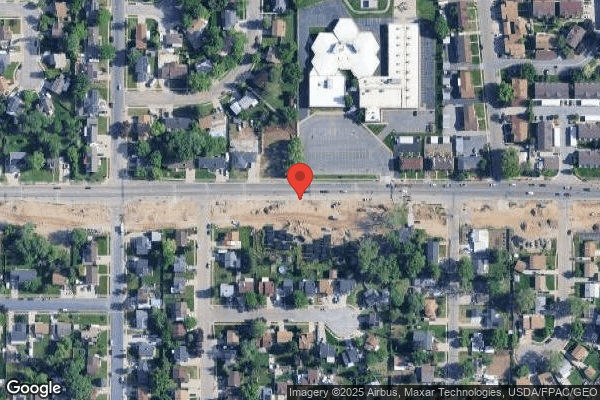
Oct 2023 1 deficiency
CONCERN (E) 📢 Someone Reported This

A family member, employee, or ombudsman was alarmed enough to file a formal complaint

Potential for Harm - no one hurt, but risky conditions existed

Investigate Abuse (Tag F0610)

Could have caused harm · This affected multiple residents

**NOTE- TERMS IN BRACKETS HAVE BEEN EDITED TO PROTECT CONFIDENTIALITY** Based on interview and record review, it was determined, in response to allegations of abuse, neglect, exploitation, or mistreat...

Read full inspector narrative →
**NOTE- TERMS IN BRACKETS HAVE BEEN EDITED TO PROTECT CONFIDENTIALITY** Based on interview and record review, it was determined, in response to allegations of abuse, neglect, exploitation, or mistreatment, the facility failed to have evidence that all alleged violations were thoroughly investigated. Specifically, for 6 out of 13 sampled residents, the facility did not thoroughly investigate resident to resident altercations, a resident with an injury of unknown origin, and a family to resident altercation. Resident Identifiers: 2, 3, 4, 5, 8 and 10. Findings included: 1. Resident 2 was admitted to the facility on [DATE] with diagnosis which included Alzheimer's disease, dementia, stage 3 chronic kidney disease, type 2 diabetes mellitus, and mood disorder. Resident 2's medical record was reviewed on 10/23/23. On 3/13/23, an annual Minimum Data Set (MDS) documented resident 2 had a Brief Interview for Mental Status (BIMS) score of 1 which indicated severe cognitive impairment. A care plan initiated on 5/9/23 documented, [Resident 2] has potential for a behavior problem r/t [related to] confusion and memory loss. Some of the interventions initiated on 5/9/23 included: a. Intervene as necessary to protect the rights and safety of others. Approach/Speak in a calm manner. Divert attention. Remove from situation and take to alternate location as needed. b. Monitor behavior episodes and attempt to determine underlying cause. Consider location, time of day, persons involved, and situations. Document behavior and potential causes. On 2/22/23 at 11:38 AM, a nursing progress note documented, Resident having increased number of agitated and aggressive episodes. Attempting to use w/c [wheelchair] as weapon and ram other residents and staff. Staff intervenes quickly . On 2/23/23 at 10:00 AM, a nursing progress note documented, This nurse heard screaming from resident's room. When I ran in there this Pt [patient] had another female Pt in the corner of his room by his closet and was forcefully pushing his FWW [front wheeled walker] into her. Residents were removed from the situation and assessed for injuries. No injuries sustained to this resident. He was given a snack and soda. Pt is now sitting in his room pleasant and calm. Therapy notified of incident. Per PT [physical therapy], FWW will be removed and therapy is working on purchasing Pt new diabetic shoes. Administrator, DON [Director of Nursing], UM [Unit Manager], SW [Social Worker], Family notified. On 2/23/23 at 10:55 PM, a nursing progress note documented, No further interaction with female peer involved in res/res [resident to resident] this shift. No aggression this shift. Agitated a couple of times. Required redirecting from staff as he was going into several different bedrooms. Staff quick to redirect. Several snacks given. On 2/24/23 at 3:16 PM, a nursing progress note documented, No new res/res incidents noted this shift. Pt continues to be agitated c [with] peers however no physical aggression noted this shift. On 2/24/23 at 7:48 PM, an incident note documented, Resident was assessed post resident to resident incident from 2/23/23, he is alert and oriented x 1 [person], he communicates his needs, and is able to answer simple questions, he is forgetful and confused and needs redirecting and reminding from staff. Resident is a Spanish speaker and communicates better in Spanish. Resident is unable to state or remember what led to incident but is aware that the female resident goes into rooms and takes objects. Resident is walking on his own, with a steady gait and is doing well without his walker. Resident is able to move all extremities with ROM [range of motion] and no [sic] stating new pain. Resident has not showed aggression towards the female resident, he will get upset at times but will be redirected by staff. No other new behaviors or changes in mood noted . Action Taken: Residents were removed from the situation and assessed for injuries. No injuries sustained to this resident. He was given a snack and soda. Pt is now sitting in his room pleasant and calm. Therapy notified of incident. Per PT, FWW will be removed and therapy is working on purchasing Pt new diabetic shoes. Administrator, DON, UM, SW, Family notified. NP [nurse practitioner] was notified of incident on 2/23/23, NP ordered to start on Wellbutrin and Hydroxyzine, she ordered a UA [urinalysis] for resident, and a UA was sent out on 2/23/23. Physical Therapy assessed resident and he is able to self ambulate without his walker with a steady gait and felt it is better for resident to use walker since he uses as it weapon and not to assist with walking . Resident 3 was admitted to the facility on [DATE] with diagnoses that included Alzheimer's disease, dementia, insomnia, and cachexia. Resident 3's medical record was reviewed on 10/23/23. On 2/6/23, a Quarterly MDS documented resident 3 had a BIMS score of 0 which indicated severe cognitive impairment. A care plan initiated on 11/20/22 documented, [Resident 3] has potential for a behavior problem r/t hoarding items d/t dementia. One identified intervention documented, Intervene as necessary to protect the rights and safety of others. Approach/Speak in a calm manner. Divert attention. Remove from situation and take to alternate location as needed. On 2/23/23 at 10:12 AM, a nursing progress note documented, This nurse heard screaming from other resident's room. When I ran in there another Pt had resident 3 in the corner of his room by his closet and was forcefully pushing his FWW into her. Residents were removed from the situation and assessed for injuries. Bruise noted to her right shin. She was given a snack and taken to watch a movie. Pt is now sitting in a chair pleasant and calm. Administrator, DON, UM, SW, Family notified. On 2/23/23 at 11:03 PM, a nursing progress note documented, No further interaction with male peer involved in res/res. Resident continues to wander into other resident's rooms. Requires much redirection from staff. No s/sx [signs/symptoms] distress or anxiety R/T [related to] incident . On 2/24/23 at 7:39 PM, an incident note documented, Resident was assessed post resident to resident incident from 2/23/23, she is alert and oriented x self only, she is confused and forgetful, will state short phrases or words only. Resident is unable to state what led to incident. Resident a wanderer on the unit and goes into other resident's room and will attempts to take their belongings or just wander into room and walk out. Resident is able to self ambulate and have ambulating with a very good gait, no issues noted with ROM to extremities. Resident shows slight swelling to her right shin. No other injuries noted a this time. Resident is constantly redirected by staff. Resident shows no changes in behaviors, or mood, no behaviors noted towards other residents or the male resident, no distress noted. Resident is redirected by staff . Action Taken: Residents were removed from the situation and assessed for injuries. Bruise noted to her right shin. She was given a snack and taken to watch a movie. Pt is now sitting in a chair pleasant and calm. Administrator, DON, UM, SW, Family notified. NP was notified of incident on 2/23/23, no new orders at that time. On 2/24/23 at 11:06 PM, a nursing progress note documented, No interaction with male peer involved in res/res incident this shift. Resident continues to wander into other resident's rooms. Requires much redirection from staff. No s/sx distress or anxiety R/T incident . On 2/25/23 at 11:03 PM, a nursing progress note documented, Resident continues to wander into other resident's rooms. Attempted to go into the room of peer involved in res/res several times this shift. Requires much redirection from staff. No s/sx distress or anxiety R/T incident. The Facility Incident reports, Exhibit 358 and Exhibit 359 Sample Forms for Facility Reported Incidents were reviewed and documented the following additional information: a. The incident report provided for resident 3 had no additional information about the resident to resident altercation. [Note: An incident report for resident 2 was not provided.] b. On 2/23/23, Exhibit form 358 documented that an allegation of physical abuse was made between residents 2 and 3. Resident 2 was identified as the alleged perpetrator and described that he had backed resident 3 into a corner of his room after resident 3 had wandered into the room. After the incident resident 3 presented with a small bruise to the right shin. It documented that both residents were separated after the incident and they were unable to answer any questions about what had happened between them due to residing in the memory care unit. Identified actions taken by the facility to protect the residents included the removal of resident 2's walker. c. On 3/2/23, Exhibit form 359 documented the incident between resident 2 and resident 3 was unprovoked. Resident 2 was in a bad mood that day and did not want to associate with anyone. The results of the investigation determined that abuse was unsubstantiated. [Note: It stated that staff were interviewed but did not specify who was interviewed and what was asked/documented in the interview.] On 10/24/23 at 10:52 AM, an interview was conducted with Registered Nurse (RN) 2. RN 2 stated resident 2 was very confused. RN 2 stated resident 2 got agitated with some of the residents. RN 2 stated resident 2 established his personal space by using his walker. RN 2 stated resident 2 had tried to use his walker as a weapon in the past but he could not swing/lift up the walker. RN 2 stated when resident 2 became agitated with other residents, they redirected him. RN 2 stated there was an incident between resident 2 and resident 3 but they were unable to remember the exact details. RN 2 stated they were unsure if resident 2's walker made any contact with resident 3 but it did hit a nightstand. RN 2 stated when a resident to resident altercation happened, they notified the social worker and the abuse coordinator. RN 2 stated they were unsure if they were interviewed about the resident to resident altercation between resident 2 and resident 3. RN 2 stated sometimes during the investigations, they were interviewed about what they saw but stated being interviewed by the administration did not happen all the time. 2. Resident 4 was initially admitted to the facility on [DATE] and readmitted on [DATE] with diagnoses which include schizoaffective disorder, Alzheimer's disease, dementia, polyneuropathy, hypothyroidism, anxiety disorder, kidney disease, osteoarthritis, unsteadiness on feet, difficulty in walking, atherosclerotic heart disease, mild cognitive impairment, hyperlipidemia, dermatitis, insomnia, and GERD. Resident 4 was discharged on 8/23/23. Resident 4's medical record was reviewed on 10/23/23. On 7/24/23, a Quarterly MDS documented resident 4 had a BIMS score of 10, which indicated moderate cognitive impairment. A document titled [Name of facility] Progress Notes dated 10/24/23 was reviewed. a. A Note Text from 5/16/23 at 8:47 PM documented, This nurse was outside of the dining room and noticed that resident [4] had slight redness and purple around her left eye, mostly on the inner part of her eye. This nurse asked her what had happened and she stated That guy hit me he was swinging his arms around and accidentally hit me in the eye. This nurse asked her if it was intentional or on accident and she stated it was on accident. Resident shows no open areas, slight bruising only, no increased swelling noted, no pain stated to area, no other injuries noted. This nurse asked her when it occurred and she stated it was about 1-2 weeks ago, bruising looks fairly new. Resident shows no new distress noted, no new issues noted. Resident statement: 'that guy hit me' 'it was on accident'. Action taken: Resident [4] was assessment, NP was notified, SW and Administrator notified. DON notified. Resident's daughter notified, voice message left for resident. b. A Note Text from 5/17/23 at 5:58 PM documented, Resident was assessment post incident 5/16/23, he is alert and oriented x2 [person and place], she is forgetful and confused at times and needs redirecting and reminding of current situation. Resident stated she was on the hall in her wheelchair, and the male resident was walking and walked past her and was moving his hands and hit her on the eye, she stated that the incident was on accident. Resident has slight redness, and purple colored bruising to left eye, she stated no pain to left eye. Resident shows no other new injuries. Resident is able to move around in her wheelchair on her own, she can self transfer and self reposition. Resident shows no changes to behaviors, or mood, she shows no distress, no upset mood. Resident stated no new issues. Nurse on Unit description: This nurse was outside of the dining room and noticed that resident had slight redness and purple around her left eye, mostly on the inner part of her eye. This nurse asked her what had happened and she stated, 'That guy hit me' he was swinging his arms around and accidentally hit me in the eye. This nurse asked her if it was intentional or on accident and she stated it was on accident. Resident shows no open areas, slight bruising only, no increased swelling noted, no pain stated to area, no other injuries noted. This nurse asked her when it occurred and she stated it was about 1-2 weeks ago, bruising look fairly new. Resident shows no new distress noted, no new issues noted .Administration and SW were notified 5/16/23, a report was sent in. Staff to continue to monitor resident's behaviors and any changes in mood. Resident 5 was admitted to the facility on [DATE] with diagnoses of cerebral infarction, alcohol dependence, morbid obesity, chronic kidney disease, hypothyroidism, bilateral primary osteoarthritis, dementia, aphasia, hypopituitarism, chronic pain, hyperlipidemia, acute kidney failure, edema, and glaucoma. Resident 5 was discharged on 9/14/23. On 8/7/23, a Quarterly MDS documented resident 5 had a BIMS score of 1, which indicated severe cognitive impairment. The Quarterly MDS revealed that resident 5 had physical behavioral symptoms directed towards others 4 to 6 days. And Other behavioral symptoms not directed towards other 1 to 3 days. A care plan initiated 8/17/23 documented, [Resident 5] has potential for a behavioral problem r/t combative w/ cares, refusing cares, attempting to remove clothes, combative w/ peers d/t sequelae cerebral infarction, ETOH [alcohol] dependence with dementia, dementia w/ anxiety and aggressive features. The goal stated, Will have fewer episodes of behaviors by review date. Some of the interventions initiated on 8/17/23 included; A. Anticipate and meet needs. B. Approach in a calm manner. Due to blindness to left eye, do not approach [resident 5] from the side. C. Document behaviors, and resident response to interventions. D. Intervene as necessary to protect the rights and safety of others. E. Maintain other residents out of reach of this [resident 5]. The Facility Incident reports, Exhibit 358 and Exhibit 359 Sample Forms for Facility Reported Incidents were reviewed and documented the following additional information: a. On 5/16/23, Exhibit 358 documented an allegation type as physical abuse, identifying the alleged victim as resident 4 and the alleged perpetrator as resident 5. Under the section that stated provide all steps taken immediately to ensure resident(s) are protected Exhibit 358 documented, Residents will be monitored. Upon initial questioning of resident [4]. She said 'that guy [resident 5] hit me'. She was on the hall in her WC [wheelchair] and he was swinging his arms and accidentally hit her left eye. Staff asked if it was on purpose or accident and she said on accident, not intentinal [sic]. No signs of distress and cannot remember when it happened, she said it was about 1-2 weeks ago, but it appears fairly new (today). The document reported no witnesses. b. Exhibit 359 documented steps taken to investigate the allegation as, [Resident 4] was interviewed and she stated that 'that guy hit me' and pointed to [resident 5]. Staff asked her if [it] was intentional, she stated it was on accident. That [resident 5] was just swinging his arms and accidentally hit her. [Resident 4] stated it happened about a week ago, but it appeared new. [Resident 5] does not remember incident. Both [resident 5] and [resident 4] reside in the memory care unit. The allegation of abuse was unsubstantiated, and the correction actions taken stated, [Resident 4] was asked to inform staff if anything happens again, she agreed. [It should be noted that the investigation did not include interviews with other residents who may have had contact with the alleged perpetrator, or interviews with staff responsible for oversight and supervision of the location where the alleged victim and perpetrator reside.] On 10/23/23 at 11:35 AM, an interview with RN 1 was conducted. RN 1 stated that she conducted the investigation for the incident between resident 4 and resident 5. RN 1 stated that resident 5 was often aggressive with cares. RN 1 stated that resident 5 would often use the hand rail to propel himself in this wheelchair and he would swing his other arm out in front of him. RN 1 stated that she asked another nurse if they saw what had happened and the nurse reported that they did not witness anything. [It should be noted that the investigation report did not include interviews with other staff members]. RN 1 stated that she reported the incident to the NP, the daughter of resident 4, and the administrator. 3. Resident 10 was admitted to the facility on [DATE] with diagnoses which included calculus of gallbladder, type 2 diabetes mellitus, atherosclerotic heart disease, heart failure, sick sinus syndrome, chronic atrial fibrillation, hyperlipidemia, muscle weakness, unsteadiness on feet, edema, cardiac pacemaker, and long term use of anticoagulants. Resident 10 was discharged from the facility on 9/18/23. Resident 10's medical record was reviewed. On 9/14/23, an admission MDS documented resident 10 had a BIMS score of 6, which indicated moderate cognitive impairment. Resident 10's progress notes were reviewed. A progress note from 9/8/23 at 12:09 AM revealed, Heard commotion and then a big thump coming from resident's room. This nurse ran to check what happened and [resident 10] was on the floor by the heater/AC. Son-in-law states he was trying to help [resident 10] when [resident 10] got combative and hit him. After [resident 10] swung, he fell and hit his head and back on the heater/AC. No injuries noted to resident's head. Abrasions noted to L [left] scapula and R [right] side mid back. 3 skin tears noted to R forearm near elbow. Daughter was in the facility at the time of the fall. Neuro checksinitiated [sic]. A progress note from 9/8/23 at 4:25 PM revealed, This nurse assessed resident post fall on 9/7/23. Resident appears to be alert and oriented X [times] 1-2 with some confusion and forgetfulness. Resident is pleasant and cooperative with post fall assessment, appears to be adjusting well to facility. Resident currently denies any pain or injuries r/t fall. Skin tears to right elbow sustained r/t fall . No s/s infection to site noted. Wound care nurse notified of skin alterations. Neurological checks started at time of fall, all vital signs remain within normal limits .Concerns noted after reports of son-in-law pushing resident a little bit in 'self defense'. Concern reported DON, Administrator and SSW and was reported to APS per facilityprotocol [sic]. Daughter reports resident had been combative during his hospital stay. Resident attempting to pack bags and leave upon admission and required frequent reorientation and redirection throughout the NOC [night shift]. Resident agreed to stay the night and eventually fell asleep. Daughter refused all interventions for a secure unit and wander guard for elopement risk and any pharmacological interventions. NP was notified at time fall, no new orders. All staff are frequently monitoring and redirecting as needed. Nursing Description: Heard commotion between [resident 10] and son-in-law and then a big thump coming from resident's room. This nurse ran to check what happened and [resident 10] was on the floor by the heater/AC. Son-in-law states he was trying to help [resident 10] when [resident 10] got combative and hit him. After [resident 10] swung, he fell and hit his head and back on the heater/AC. No injuries noted to resident's head. Abrasions noted to L [left] scapula and R [right] side mid back. 3 skin tears noted to R forearm near elbow. Daughter was in the facility at the time of the fall. CNA [Certified Nursing Assistant] reported that he told her he pushed him a little in self-defense. Resident Description: Resident says son-in-law was trying to hit him so he swung back and son-in-law pushed him and he lost his balance. Description of action taken: Vital signs taken. Neuros initiated. Skin tears cleaned and dressed. Care plan updated: Orient to environment and redirect as needed. A progress note from 9/11/23 at 2:48 PM documented, Social Service Summary: [Resident 10] is a recent admit. He is alert and oriented to name with frequent confusion. He is verbally able to communicate his wants/needs. He is pleasant and cooperative with staff. He has a son and daughter who live close by and help take care of him. He states staff have been kind and has no concerns. Exhibit 359 documented additional/updated information related to the reported incident as, On 9/8/23 RN heard a thump from [resident 10's] room. When she entered his room he was on the floor by the AC. Steps taken to investigate the allegation were documented as, [Resident 10's] Son in Law (SIL) was in the room and sated [sic] that he was trying to help [resident 10], during which [resident 10] became combative and tried to hit the SIL. SIL states that [resident 10] swung, and he fell and hit his head. [Resident 10] stated that he got in a [NAME] with his son in law and he got pushed into the bedside table. Nurse did an assessment and there was an abrasion to his R [right] elbow. Son in law stated that when [resident 10] got aggressive, he tried to prevent [resident 10] from hitting and as a result [resident 10] lost his balance. [Resident 10] was pleasant afterwards. He has a history of sundowning. [Resident 10] states he is ok with his SIL still visiting. The conclusion documented that the abuse allegation was unsubstantiated. The facility investigator was identified as the Resident Advocate (RA). [It should be noted that the investigation did not include interviews with other residents who may have had contact with the alleged perpetrator, or interviews with staff responsible for oversight and supervision of the location where the alleged victim resided].4. Resident 8 was admitted to the facility on [DATE], 10/3/23 and passed away 10/15/23 with diagnoses which include diabetes mellitus, vascular dementia, chronic obstructive pulmonary disease, major depressive disorder and palliative care. A form titled exhibit 358 revealed resident 8 had an injury of unknown source. The form revealed resident 8 had a large bruise and goose egg was noted on [resident 8's] left forehead. A form titled exhibit 359 revealed the Unit Manager did an assessment and there was bruising was purple but no open areas. The form revealed when resident 8 was asked what had happened, he did not know. Resident 8 was asked if anyone hurt him and he stated nope. Resident 8 was asked if he had fallen and he stated nope. The staff were interviewed and no one saw resident 8 fall or any incident. Resident 8 was unsteady on his feet and he used a walker and had a history of falls. Resident 8 also had dementia and was forgetful. The staff reminded him to use his walker and staff to intervene when he forgot. The abuse was unsubstantiated. There was no corrective action. The exhibit 359 was submitted by the Administrator. Resident 8's medical record was reviewed 10/24/23. A quarterly MDS dated [DATE] revealed resident 8 had a BIMS of 00 which revealed resident was severely cognitively impaired. The MDS revealed resident 8 required supervision with bed mobility, transfers, walk in room walk in corridor, locomotion on and off the unit, dressing, eating, toilet use. The MDS further revealed resident 8 was steady at all times when moving from seated to standing position, walking, turning around and facing opposite direction while walking, moving on and off the toilet, surface to surface transfer. Resident 8 used a walker for mobility. On 8/30/23 at 5:56 AM, A large bruise and goose egg was noted on pt's left forehead. Pt doesn't know what happened. He states 'it was short and sweet'. NP, UM notified. will continue to monitor. An incident note dated 8/30/23 at 7:43 PM revealed, Resident was assessed post incident from 8/30/23, where he was found to have bruising noted to his left side of his forehead. Bruising is noted to be purple in color, he stated no new pain, slightly raised, no open areas noted. Resident was asked if he had fallen and he stated 'nope', he was asked if someone had hit him and he stated 'nope', he was asked if he bumped his head and he stated 'nope'. Resident appears in no distress, no sadness, no anger, no agitation. He is calm sitting on his bed and is cooperative. He shows no issues with other residents. Resident has a clear path in room, his mattress is well positioned and fitting correctly on his bed. Resident is wearing his shoes, he has his walker with him, he shows a slow steady walk with his walker. Resident is able to move his extremities with ROM at baseline. Resident stated no new pain. He shows no other injuries or bruising, old scabbing to his right knee. Resident is alert and oriented x 2 per baseline. Has been joining smoking breaks as per usual, and will ambulate the unit as per his norm. Nurse on unit Description: A large bruise and goose egg was noted on pt's left forehead. Pt doesn't know what happened. He states 'it was short and sweet'. NP, UM notified. will continue to monitor. Resident's Description: Pt doesn't know what happened. He states 'it was short and sweet'. Action Taken: Resident was assessed post injury for any other injuries. NP was notified of incident on 8/30/23, no new orders. Administrator, DON, and SW were notified on 8/30/23, a report was sent in. Staff to continue to monitor resident for any changes in mood, behaviors or changes in cognition. Continue to monitor for any changes in physical well being. There was no additional information located that revealed a thorough investigation completed. On 10/24/23 at 11:20 AM, an interview was conducted with the RA and the Administrator (Admin). The RA stated they had problems with the exhibit 359 form at the beginning and stated that was why staff used both the old and new forms interchangeably. The RA stated they tried to submit the new exhibit 359 form when they could. The Admin stated during an abuse investigation they were making sure they were doing 3 random interviews with both staff and residents. The Admin stated the nurse in the memory care unit was the one responsible for interviewing the residents right away and documenting the interview in the medical record. The Admin stated that the abuse investigation was started with the incident report. The Admin stated they relied on the department heads to help with the different staff and resident interviews about an incident. The Admin stated that there was a lot of chatter about what had happened with resident 10. The Admin stated that staff were trying to sift though all the information. The Admin stated he thought interviews were completed but was unable to find the interviews. The Admin stated he was unable to find interviews completed with staff for the incidents with resident 8, resident 2 and resident 3, and resident 4 and resident 5. On 10/24/23 at approximately 1:00 PM, an interview was conducted with the DON. The DON stated the nursing team always did their own in-depth abuse investigation apart from the Administrator's investigation. The DON stated the Unit Managers were the ones to do the interviews. The DON stated the follow up to the investigation included asking nursing what occurred and updating the resident care plans. On 10/24/23 at 1:30 PM, a follow up interview was conducted with the Admin. The Admin stated they do not conduct interviews if an incident was witnessed. The Admin stated they used the documented progress note about the incident to guide them in determining if the incident was intentional or unintentional.
Nov 2022 8 deficiencies 1 Harm
SERIOUS (G)

Actual Harm - a resident was hurt due to facility failures

Accident Prevention (Tag F0689)

A resident was harmed · This affected 1 resident

**NOTE- TERMS IN BRACKETS HAVE BEEN EDITED TO PROTECT CONFIDENTIALITY** Based on interview and record review, it was determined, the facility did not ensure that the resident's environment remained as...

Read full inspector narrative →
**NOTE- TERMS IN BRACKETS HAVE BEEN EDITED TO PROTECT CONFIDENTIALITY** Based on interview and record review, it was determined, the facility did not ensure that the resident's environment remained as free of accident hazards as was possible. Specifically, for 2 out of 36 sampled residents, a resident sustained a scrotal laceration during a transfer with a mechanical lift. The deficient practice identified was found to have occurred at a harm level. Additionally, a resident sustained a fall during a one person assistance with a slideboard transfer. Resident identifiers: 73 and 77. Findings included: 1. Resident 77 was admitted to the facility on [DATE] with diagnoses which included, but were not limited to, quadriplegia Cervical (C) 5 through C7 incomplete, type 2 diabetes mellitus, dysphagia, reduced mobility, anemia, mood disorder with depressive features, anxiety disorder, epilepsy, metabolic encephalopathy, hypotension, chronic respiratory failure, pressure ulcer of right buttocks stage 4, pressure ulcer of back, buttocks and hip stage 4, pressure-induced deep tissue damage of right heel, traumatic brain injury, and tracheostomy status. On 11/7/22 at 12:22 PM, an interview was conducted with resident 77. Resident 77 stated that approximately three months ago a Hoyer lift ripped his scrotum open and he had to have surgery to repair it. Resident 77 stated that the Hoyer lift sling was not the correct sling. Resident 77 stated that the sling was too tight and that was why it ripped his scrotum open. Resident 77 stated that was why he did not like to take showers or get up in his wheelchair because he was afraid of the Hoyer lift sling. On 11/7/22, resident 77's medical record was reviewed. Review of resident 77's progress notes revealed the following: a. On 8/14/22 at 11:06 PM, the note documented, At approximately 1850 [6:50 PM], right after being transferred into bed by the CNAs [Certified Nurse Assistant] via the mechanical lift, it was reported to this nurse that resident was bleeding from his right testicle. This nurse went to assess him and discovered that the top layer of the scrotal sac was torn and exposing his right testicle. VS [vital signs]: [blood pressure] 103/64, p [pulse] 70, rr [respiratory rate] 14, t [temperature] 97.3, SpO2 [oxygen saturation] 94% on room air. He denied pain to this right testicle and after being cleaned was no longer bleeding. A dry sterile dressing was placed on the right testicle to protect it. The MD [medical doctor] on call was notified of this even (sic) and ordered to have this resident see a urologist tomorrow (8/15/2022) and to continue protecting the right testicle with a dry sterile dressing. No distress noted from resident. UM [Unit Manager] and DON [Director of Nursing] were also notified. He is currently laying quietly in bed with his eyes closed and call light within reach. b. On 8/15/22 at 8:50 AM, the note documented, This nurse contacted resident urologist [name omitted] regarding trauma to right testicle. Per [name of urologist omitted], resident is to be evaluated at ED [emergency department]. Will arrange non emergent transport. c. On 8/15/22 at 6:19 PM, the note documented, Resident was sent to [name of hospital emergency room omitted] at 0910 [9:10 AM] this AM. Resident was sent per urologist [name omitted]. Resident was sent d/t [due to] outer layer of skin torn exposing R [right] testicle. Resident had the site repaired in SDS [Same Day Surgery]. Resident arrived back to the facility at 1810 [6:10 PM]. d. On 8/16/22 at 1:37 AM, the note documented, Throughout the night post op [operative] surgical wound to scrotum has been monitored. NO active bleeding present. NO bruising or swelling noted AT THIS TIME. No drainage. Resident returned with a large wad of gauze over surgical site and mesh underwear in place. Gauze left in place until wound care nurse can examine sutured site in the AM to determine plan of care. We will need to attempt to get a copy of the wound care instructions from Single Day Surgery [name of hospital omitted] as it did not make it back w/ [with] resident. e. On 8/16/22 at 5:12 PM, the skin wound note documented, . 5. Scrotum, skin tear (surgically repaired), (IN): date acquired: 8/14/22. Measurement: 5cmL [centimeter Length], closed with glue and edges well approximated. Wound progress: initial evaluation, wound healing status will be updated after initial treatment plan has been applied. Drainage: none. Odor: none. culture: no. On 8/14/22 at 6:30 PM, an incident report documented that it was reported to the nurse that the resident's scrotum did not look right. The nurse assessed the skin and discovered that resident 77's right testicle was exposed, and the sectoral layer over the right teste had been torn apart. The CNA reported that they noticed the skin alteration after transferring him into bed using the crisscross sling and pulling his clothes down. A dry sterile bandage was placed on the right testicle to protect it. The report documented that resident 77 believed that the crisscross sling caused the injury and that he did not want to be transferred using that sling anymore. The report documented that the MD was notified on 8/14/22 at 6:36 PM. On 8/14/22, the weekly skin evaluation documented, This skin assessment was done on 8/14/2022, noc [night] shift: Skin to right scrotum is torn and exposing the right testicle. No bleeding or drainage noted. A dry sterile dressing was placed on the right testicle to help protect it. MD, UM, DON, and wound nurse are all aware. On 8/15/22, the hospital History & Physical documented that resident 77 reported that the care facility used a Hoyer lift to get him from his bed to a chair and back into his bed again. There was a strap that goes buttock and legs that he says sometimes rubs awkwardly and he has told them about this before. Strap somehow pinched and tore his scrotum yesterday. He is not sure if this happened at 10:00 a.m. when he got out of bed into a chair or at 7:00 p.m. when he transferred back into his bed. He thinks that happened more likely at 7:00 p.m. This was noted by nursing staff applied a dressing around 9:00 p.m. yesterday evening. It causes a only minimal pain because he has minimal sensation. The physical exam documented, There is a laceration about 5 cm [centimeters] in length involving the right hemiscrotum with the testicle partially protruding. There is no active bleeding. The report further documented that after consultation with Urology it was determined that it would be best to take resident 77 to the operating room to wash out the wound and close it. The consultation report documented that the evaluation revealed a large laceration of the right hemiscrotum with bulging of the testicle. The tunica baginalis cannot be visualized just the underlying dartos muscle layer, not dermis layer, but the underline dartos layer. The plan was to take resident 77 to the operating room to wash out the incision and the scrotal skin. On 8/15/22, the operative report documented the wound was lavaged and cleansed with two liters of saline and then was coated with Betadine. I then used a #3-0 vicryl to do a running baseball closure of the dartos layer. After that was done, I then closed the skin with a running subcuticular stitch of #4-0 vicryl. I then placed a #3-0 chromic and placed about 6 or 7 interrupted stitches about a centimeter apart to reinforce the closure. I then used Dermabond could be placed over the incision followed by fluffs and some mesh panties. On 7/29/22, resident 77's quarterly Minimum Data Set (MDS) assessment documented that resident 77 was a two person physical assistance with total dependence for transfers. Review of resident 77's care plan revealed a care area for Activities of Daily Living (ADL) self care deficit related to quadriplegia. Interventions identified included: Restorative Nurse Assistant and CNA would assist with transfers and positioning in power wheelchair as tolerated (initiated 7/29/22), and Requires Hoyer lift two person physical assistance with transferring (initiated on 4/20/22). No care plan could be found for the scrotal laceration that required surgical repair or any identified interventions to prevent the accident from reoccurring. Review of the manufacturer instructions for use of the U-Shaped Seated Slings documented that the base of the u-shaped sling should be positioned underneath/behind the patient, aligning the base of the sling with the resident's coccyx. The instructions documented three ways to properly apply the leg straps. In each method the leg straps should be applied under the resident's thighs, making sure the material was flat and reaches entirely underneath the thigh. Method 1 (Most common) was to place the straps under each leg, cross straps in middle and attach to the lift. In Method 2 the straps may be left uncrossed when attached to the lift. Method 3 was to place both straps under both thighs and attach to the lift. Regardless of the method used always perform a final visual check to make sure all loop lengths match from side-to-side. The guidance was last updated in 2022. On 11/14/22 at 8:58 AM, an interview was conducted with CNA 1. CNA 1 stated that resident 77 was total dependence for his care needs. CNA 1 stated that resident 77 was transferred with a Hoyer lift. CNA 1 stated a blue sling was utilized with the Hoyer lift, and that it was a medium sized sling. CNA 1 stated that resident 77 did not mind using the Hoyer lift and had no objections when it was used. CNA 1 stated she was not aware of resident 77 having sustained any injuries while using the Hoyer lift in the past. CNA 1 stated she was not aware of any injuries to resident 77's testicles. On 11/14/22 at 9:13 AM, an interview was conducted with CNA 2. CNA 2 stated that resident 77 was a total dependence for transfers with the Hoyer lift and a two person assist. CNA 2 stated that something had happened to resident 77's testicles a few months back, but she was not here at the time it occurred. CNA 2 stated that resident 77 reported that something happened with the sling from the Hoyer lift. I think that when they put the sling on something happened. CNA 2 stated that now when they transfer resident 77 with the Hoyer lift he would tell CNA 2 to be careful. CNA 2 stated that resident 77 used a medium sized sling. CNA 2 stated that the cross leg sling was not used with resident 77 because he did not like it. CNA 2 stated that resident 77 used a full body sling that did not crisscross the legs. On 11/14/22 at 9:31 AM, an interview was conducted with Registered Nurse (RN) 1. RN 1 stated that resident 77 was a maximum assistance with total dependence. RN 1 stated that resident 77 had an injury to his scrotum. RN 1 stated she was not totally sure how the incident occurred. RN 1 stated that she was informed that the injury occurred during a transfer with a Hoyer lift. RN 1 stated that since the injury they used a different sling now. RN 1 stated that at the time of the injury they used a sling that crossed, and now they used a whole body sling so there was no chance of sheering or pinching. On 11/15/22 at 9:37 AM, an interview was conducted with the DON. The DON stated that resident 77 was in his wheelchair and when the staff transferred him back to bed they found blood in the scrotal area. The DON stated that the nurse immediately assessed the injury and notified the MD. The DON stated that the nurse placed a wet to dry dressing on the wound. The DON stated that resident 77 did not know he was injured. The DON stated that at the time of the incident resident 77 was wearing clothing, that the injury was related to the transfer, but they could not determine the exact cause. The DON stated that resident 77 believed that the injury was caused by the Hoyer lift sling. The DON stated that they did not use the crisscross sling with resident 77 anymore. The DON stated that resident 77 did not know how the injury occurred. The DON stated that it could have been his clothes or brief that caused it, or it could have been a combination of the sling and clothes. It should be noted that resident 77 did not wear a brief. The DON stated that care plans were updated with any resident transfers for any reason. The DON stated that she would look in the ADL care plan to see if it was updated to show the type of sling to be used with resident 77's transfers. The DON was observed to check resident 77's care plan and stated that they would update the care plan. The DON stated that the [NAME] documented that resident 77 should be transferred with a Hoyer lift, but did not specify the type of sling to use. The DON confirmed that the [NAME] was how resident care information was communicated to the CNAs. The DON stated that resident 77 would tell the CNAs what his care needs were and the staff communicated with each other. The DON stated that they would update the care plan so that it stated which sling was to be utilized with resident 77's transfers. The DON stated that the injury healed within a week. 2. Resident 73 was admitted to the facility on [DATE] and was re-admitted on [DATE] with diagnoses which included, but were not limited to, chronic obstructive pulmonary disease, type 2 diabetes mellitus, schizoaffective disorder, chronic kidney disease, obstructive sleep apnea, morbid obesity, acquired absence of right leg above the knee, sepsis, bacteremia, hypertension, anemia, anxiety disorder, phantom limb syndrome with pain, chronic pain, and mood disorder. On 11/7/22, resident 73's medical record was reviewed. Resident 73's progress notes revealed the following: a. On 6/12/22 at 8:11 AM, the note documented that resident 73 used a Hoyer lift for transfers. b. On 6/21/22 at 6:28 AM, the note documented two person assistance with Hoyer for transfers. c. On 6/22/22 at 6:28 AM, the note documented that resident 73 had a right above the knee amputation for which Hoyer transfers were required. d. On 7/20/22 at 3:19 PM, the note documented, Resident had a witnessed fall @1430 [2:30 PM] while transferring via slide board with two person assistance. He slid off the board and onto the floor. He did not hit his head, he did not sustain any injuries. Immediately the CNAs informed this nurse, he was assess for injuries and pain. With the aid of a Hoyer lift he was transferred into bed. VSS [vital signs stable]. The resident representative, DON, Nurse Practitioner (NP), and UM were notified. On 7/20/22 at 2:30 PM, resident 73's incident report documented that the resident had a witnessed fall while transferring via slide board with a two person assistance. He slid off the board and onto the floor. He did not hit his head, he did not sustain any injuries. Resident 73 was assessed for injuries by the licensed nurse and transferred into bed with a Hoyer lift. The report documented predisposing factors to the fall were improper footwear. The NP was informed at 3:18 PM. The incident report documented that CNA 3 and CNA 4 were witnesses to the incident. On 6/23/22, resident 73's admission MDS assessment documented that the resident was a two person physical assistance with total dependence for transfers. Review of the Physical Therapy Evaluation for the certification period of 6/21/22 through 7/19/22, documented a goal of would perform slide board transfers with partial to moderate assistance with the ability to right self to achieve/maintain balance in order to decrease level of assistance from caregivers. The evaluation documented that resident 73's functional mobility status for transfers from chair/bed to chair was dependent. The assessment summary documented that resident 73 had bilateral lower extremity weakness, impaired core strength and sitting balance, inability to perform standing, inability to ambulate, impaired transfer ability, impaired standing balance, and impaired cardiovascular endurance. On 6/30/22, the physical therapy notes documented, Therapist instructed patient on slideboard transfer training from w/c [wheelchair] to mat table and back to improve safety and independence with transferring. Patient performs with SBA [standby assistance], no assistance for placing slideboard but assistance with removing board. Patient cleared to perform slideboard transfers with staff. The note was authored by Physical Therapist (PT) 1. On 7/13/22, the physical therapy notes documented, Instructed and assisted pt. [patient] in slideboard transfers w/c to mat table SBA to min [minimum] A [assist] with extra time required. Education on safe set up. Pt requires mod [moderate] A to remove slideboard. The note was authored by Physical Therapist Assistant (PTA) 1. Resident 73's care plan revealed a care area for ADL self care deficit related to acute hypercapnic respiratory failure, toxic encephalopathy, obstructive sleep apnea, chronic kidney disease, hypertension, type 2 diabetes mellitus, and above the knee amputation. Interventions identified for transfers was Requires 2 person assist using slideboard or Hoyer as needed with transferring. The interventions was initiated on 6/30/22. Resident 73's [NAME] report for transfers documented, Requires 2 person assist using slideboard or hoyer as needed with transferring. On 11/15/22 at 1:26 PM, an interview was conducted with CNA 3. CNA 3 provided a description of how to perform a slideboard transfer. CNA 3 stated the bed should be positioned slightly above the level of the wheelchair. CNA 3 stated that there was a certain edging on slideboard that should be angled downward. CNA 3 stated to position the slideboard under the butt/thigh area, trying to get 1/4 of the board under the resident thigh area. CNA 3 stated they would place a gate belt around the resident's waist to assist. CNA 3 stated that they would then assist with transfer sliding to the w/c on the board. CNA 3 stated that it should only take one person to assist, but sometimes it can take two people to make sure that the board did not move and was stationary. CNA 3 stated that some people have weird chairs or the resident would stick to the board and not slide easily. CNA 3 stated that the training on slideboard transfers was done by the therapy department. CNA 3 stated that resident 73 was using the slideboard and she received training from PT prior to using the slideboard with resident 73. CNA 3 stated that resident 73 was able to assist with using the slideboard to help transfer himself into the chair. CNA 3 stated that resident 73 was now a two person assist using a Hoyer lift for transfers. CNA 3 stated that resident 73 was only able to utilize the slideboard for a short period of time. CNA 3 stated that at the time, depending on resident 73's strength it could be a difficult transfer using the slideboard. CNA 3 stated that on the days that resident 73 was not feeling well and his strength was not optimal she would help assist him in using the slideboard. CNA 3 stated that resident 73 was convinced that he could still perform the slideboard transfer and they would let him try to transfer with the slideboard. CNA 3 stated that the slideboard transfer method was not working for resident 73 any longer. CNA 3 stated that prior to transitioning to a Hoyer lift they explained to resident 73 that he was not transferring himself on the slideboard, but they were doing it for him. CNA 3 stated that was when they stopped using the slideboard and started using a Hoyer lift. CNA 3 stated that for safety reasons because resident 73 was no longer able to assist with the transfer board they changed to a different transfer method. CNA 3 stated that instead of a single person assisting with the slideboard transfer it was taking two persons to transfer. CNA 3 stated that once the resident required two staff to assist with transfers the slideboard was not an appropriate transfer method. CNA 3 stated that if resident 73 sustained a fall with the slideboard then it could be because the board was not positioned properly. CNA 3 stated that the transfer was improperly done and could be caused by how the board was placed, the board not being secure, or the positioning of the board was wrong. CNA 3 stated that the weight should be on the bed or on the chair and the body floats on the board from one stationary position to the next. On 11/15/22 at 1:41 PM, an interview was conducted with PT 2 and PT 3. PT 2 stated that using a slideboard depended on the resident and their functional ability. PT 2 stated that the transfer process was to have the resident lateral lean and place slide board under their hip, and then the hand goes outside and the resident laterally shifts and scoots. The slide board should be positioned across the resident's sacrum. PT 2 stated that a slideboard transfer should be a two person assist if it was performed by CNAs for safety and depending on the resident's capabilities. PT 2 stated that they had provided training to CNAs on how to use slideboards in the past. PT 3 stated that once they had determined that the resident could safely use the slideboard then they trained the CNAs on how to use the slideboard. PT 3 stated that they had worked with resident 73 awhile ago. PT 3 stated that resident 73 got to the point of refusing therapy and they just initiated Hoyer transfers. PT 3 stated that she was aware that resident 73 was trained previously with the slideboard, but recently he had been refusing training. PT 3 stated that they had determined for safety reasons that a Hoyer was more appropriate. PT 3 stated that they should have been using two CNAs for the slideboard transfer with resident 73. PT 3 stated that sometimes the resident was not able to position the slideboard so the CNA would assist with positioning. PT 3 stated that for safety having one CNA in front of the patient with the other CNA on the side or behind, but definitely one person in front for safety. PT 2 and PT 3 stated that for resident 73, based on his size, two CNAs would have been appropriate for safety reasons. PT 3 stated that if resident 73 fell she would first look at the setup and position of the board. PT 3 stated that if set up correctly then there was the least amount of risk for falls. PT 3 stated that the two transfer surfaces should be as close as possible to ensure a safe transfer. Then look at the position of the CNAs during transfer. PT 3 stated it would also determine if the CNA used a gait belt and if non-slip socks were used. PT 2 stated that resident 73 only had the one lower extremity, and if that was positioned correctly he would have been able to help assist with reducing the slide. PT 2 stated that the slideboard was the preferred method of transfer for amputees. PT 3 stated that the position of the board, the level and transfer distance between surfaces and the position of the staff were key to a safe transfer. Both PT 2 and PT 3 stated that they were not working with resident 73 at the time of the incident. PT 2 stated that PT 1 and PTA 1 who were working with resident 73 at the time, and they were no longer working at the facility. On 11/15/22 at 2:24 PM, an interview was conducted with the DON. The DON stated that resident 73 had a fall using the slideboard. The DON stated that resident 73 was care planned to use the slideboard and it was one of his preferred methods for transfers. The DON stated that he was still care planned to use the slideboard or Hoyer lift for transfers. The DON stated that it depended on how resident 73 felt, and some of it was independence and wanting to do what he could. The DON stated that for either transfer method it was care planned as a two person assist. The DON stated that during the fall the slideboard tilted and he slid off of it. The DON stated that the staff were able to help lower resident 73 to the ground. The DON stated that at the time of the fall he was working with therapy. The DON stated that when using the slideboard the CNAs would have to make sure it was under the resident, was secure, and he had strong arms. The DON stated that it was resident 73 that was using his arms to slide across the board. The DON stated that the incident occurred because the resident slid off of it, and not that it was positioned wrong. The DON stated that the staff were there to prevent resident 73 from falling, and maybe because of his weight they were using two people safely. On 11/15/22 at 2:48 PM, an interview was conducted with CNA 4. CNA 4 stated that she did not recall much of the slideboard fall. CNA 4 stated that she did recall telling resident 73 that she did not think the slideboard was on correctly. CNA 4 stated that resident 73 kept getting stuck on his shorts, and as he started transferring he started sliding off the slideboard. CNA 4 stated that she assisted resident 73 to the ground. CNA 4 stated that the board was positioned half way under resident 73's buttocks and on the bed. CNA 4 stated that when resident 73 was halfway across on the board he started sliding off. CNA 4 stated that the bed should have been lowered more so he would go straight to the bed, and he would not have to use more strength to transfer. CNA 4 stated that she was positioned in front of resident 73. CNA 4 stated that resident 73's chair was positioned towards the head of the bed, and she could not get behind him or the chair so that was why she was in front. CNA 4 stated that she transferred resident 73 by herself, and there was no other CNA present. CNA 4 stated that she had not been provided training on how to transfer resident 73. CNA 4 stated that she asked the other CNA who was working at the time and was told that he was an extensive one person assist with the slideboard. CNA 4 stated that she could also find the resident's transfer method by looking on the [NAME]. CNA 4 stated she did not look at the [NAME] prior to transferring resident 73. CNA 4 stated that she had used a slideboard prior but just not with resident 73. CNA 4 stated she received training on slideboard transfers when she first started working at the facility. On 11/15/22 at 3:06 PM, an interview was conducted with the Director of Rehabilitation (DOR). The DOR stated that with any transfer anything could happen. The DOR stated that a two person assist with transfers was put in the [NAME] for safety. The DOR stated that as therapy staff they monitored and made sure the [NAME] adequately reflected the resident's needs.
CONCERN (D)

Potential for Harm - no one hurt, but risky conditions existed

Notification of Changes (Tag F0580)

Could have caused harm · This affected 1 resident

**NOTE- TERMS IN BRACKETS HAVE BEEN EDITED TO PROTECT CONFIDENTIALITY** Based on interview and record review, it was determined, the facility did not immediately consult with the resident's physician ...

Read full inspector narrative →
**NOTE- TERMS IN BRACKETS HAVE BEEN EDITED TO PROTECT CONFIDENTIALITY** Based on interview and record review, it was determined, the facility did not immediately consult with the resident's physician when there was a need to alter treatment significantly. Specifically, for 1 out of 36 sampled residents, the facility nursing staff did not notify the provider when a resident's blood sugar (BS) was lower than 60 and greater than 400 as ordered by the physician. Resident identifier: 53. Findings included: Resident 53 was admitted to the facility on [DATE] with diagnoses which included chronic obstructive pulmonary disease, Type 1 diabetes mellitus, obstructive sleep apnea, and iron deficiency anemia. On 11/7/22 at 10:22 AM, an interview was conducted with resident 53. Resident 53 stated he had been a type 1 diabetic since he was 18. Resident 53 stated that the staff checked his blood sugars four times a day and the staff gave him insulin. Resident 53 stated the he was being undermedicated on his insulin. Resident 53 stated that he had asked various nurses for more insulin but the nurses told him he could not get more. Resident 53 stated he did not have the usual symptoms when his blood sugar was low. Resident 53's medical record was reviewed on 11/9/22. Resident 53's care plan was reviewed and revealed a care area for type 1 diabetes mellitus. Interventions were identified and included: 1. Diabetes medications as ordered by provider and to monitor/ document for side effects and effectiveness. 2. Monitor/Document/Report to provider signs and symptoms of hypoglycemia and hyperglycemia. The care plan was initiated on 6/1/20. A physician's order dated 7/8/22, documented Insulin Lispro Solution: Inject as per sliding scale. Notify provider if blood sugar was less than 60 for further instructions. Notify provider if blood sugar was greater than 400 for further instructions. A review of the daily blood sugar summary for the months of September and October 2022 revealed the following blood sugars: a. On 9/2/22, BS 52 b. On 9/8/22, BS 49 c. On 9/11/22, BS 54 d. On 10/22/22, BS 48 e. On 10/24/22, BS 40 and BS 511 f. On 10/25/22, BS 452 No documentation could be located indicating that the provider had been notified when the BS was below and above the physician ordered parameters. On 11/9/22 at 12:59 PM, an interview was conducted with Licensed Practical Nurse (LPN) 1. LPN 1 stated there was a protocol in place when resident 53's blood sugar was below 80. LPN 1 stated if resident 53 was conscious with a low blood sugar, the staff had resident 53 eat and drink; but if resident 53 was unconscious with a low blood sugar, the staff gave resident 53 glucagon. LPN 1 stated if resident 53's blood sugar was above the indicated amount for sliding scale, the staff notified the provider through tiger text. LPN 1 stated that some nurses added a progress note stating the provider was notified and other nurses did not. LPN 1 was unable to find any documentation where the provider was notified of resident 53's blood sugars for the month of October 2022. On 11/14/22 at 10:56 AM, an interview was conducted with Registered Nurse (RN) 2. RN 2 stated that the staff had protocols in place when resident 53's blood sugar was either below 60 or above 400. RN 2 stated that when resident 53's blood sugars were below 60, the staff gave glucagon first and then notified the provider through their text message system. RN 2 stated that the staff rechecked resident 53's blood sugar 15 minutes after resident 53 had received the glucagon to make sure resident 53's blood sugar had increased. RN 2 stated after the provider had been notified through tiger text, the staff generally wrote a progress note indicating they had notified the provider and what new orders were received at that time. RN 2 was unable to find any progress notes where the provider was notified of resident 53's low and high blood sugars for the months of September and October 2022. On 11/14/22 at 11:45 AM, an interview was conducted with the Unit Manager (UM). The UM stated that if a nurse notified the provider, there should be a progress note that stated the provider was notified and what orders were received. On 11/14/22 at 1:20 PM, an interview was conducted with the Director of Nursing (DON). The DON stated that nurses notified providers through a system called tiger text but the facility had switched over to a new system. The DON stated that she only had access to tiger text messages for 14 days once the message had been sent. The DON stated that when a provider was notified, it was best practice for the nurses to include a progress note stating the provider was notified and what new orders were received. The DON stated that sometimes the providers did not want to be notified if they had orders in place. The DON stated that the nurses were following orders as indicated. The DON was unable to find documentation where the provider was notified for resident 53's blood sugars for the months of September and October 2022. On 11/15/2022 at 9:59 AM, an interview was conducted with the Nurse Practitioner (NP). The NP stated that resident 53's diabetes was well managed because resident 53's hemoglobin A1C was 5.1. [Note: Hemoglobin A1C was a test that shows the average glucose levels for the past three months.] The NP stated the nurses notified her every time resident 53's blood sugar was above 400 or below 60. The NP stated that the nurses use to communicate with her through tiger text but they had switched over to a new system. The NP was unable to show documentation that she was notified of resident 53's blood sugars on 9/2/22, 9/8/22, 9/11/22, 10/22/22, 10/24/22, and 10/25/22.
CONCERN (D)

Potential for Harm - no one hurt, but risky conditions existed

Comprehensive Care Plan (Tag F0656)

Could have caused harm · This affected 1 resident

**NOTE- TERMS IN BRACKETS HAVE BEEN EDITED TO PROTECT CONFIDENTIALITY** Based on interview and record review, it was determined, the facility did not develop and implement a comprehensive person-cente...

Read full inspector narrative →
**NOTE- TERMS IN BRACKETS HAVE BEEN EDITED TO PROTECT CONFIDENTIALITY** Based on interview and record review, it was determined, the facility did not develop and implement a comprehensive person-centered care plan for each resident that included measurable objectives and timeframes to meet a resident's medical, nursing, and mental, and psychosocial needs. Specifically, for 1 out of 36 sampled residents, a resident's Activities of Daily Living (ADL) care plan was not revised after the resident sustained an injury during a Hoyer lift transfer. Furthermore, the care plan did not have a focus area that addressed the resident's scrotal laceration with identified interventions. Resident identifier: 77. Finding included: Resident 77 was admitted to the facility on [DATE] with diagnoses which included, but were not limited to, quadriplegia Cervical (C) 5 through C7 incomplete, type 2 diabetes mellitus, dysphagia, reduced mobility, anemia, mood disorder with depressive features, anxiety disorder, epilepsy, metabolic encephalopathy, hypotension, chronic respiratory failure, pressure ulcer of right buttocks stage 4, pressure ulcer of back, buttocks and hip stage 4, pressure-induced deep tissue damage of right heel, traumatic brain injury, and tracheostomy status. On 11/7/22 at 12:22 PM, an interview was conducted with resident 77. Resident 77 stated that approximately three months ago a Hoyer lift ripped his scrotum open and he had to have surgery to repair it. Resident 77 stated that the sling was not the correct sling for the Hoyer lift. Resident 77 stated that the sling was too tight and that was why it ripped his scrotum open. Resident 77 stated this was why he did not like to take showers or get up in his wheelchair because he was afraid of the Hoyer lift sling. On 11/7/22, resident 77's medical record was reviewed. On 8/14/22 at 6:30 PM, an incident report documented that it was reported to the nurse that the resident's scrotum did not look right. The nurse assessed the skin and discovered that resident 77's right testicle was exposed, and the sectoral layer over the right teste had been torn apart. The CNA [Certified Nursing Assistant] reported that they noticed the skin alteration after transferring him into bed using the crisscross sling and pulling his clothes down. A dry sterile bandage was placed on the right testicle to protect it. The report documented that resident 77 believed that the crisscross sling caused the injury and that resident 77 did not want to be transferred using that sling anymore. On 8/14/22 at 11:06 PM, a progress note documented, At approximately 1850 [6:50 PM], right after being transferred into bed by the CNAs via the mechanical lift, it was reported to this nurse that resident was bleeding from his right testicle. This nurse went to assess him and discovered that the top layer of the scrotal sac was torn and exposing his right testicle. VS [vital signs]: [blood pressure] 103/64, p [pulse] 70, rr [respiratory rate] 14, t [temperature] 97.3, SpO2 [oxygen saturation] 94% on room air. He denied pain to this right testicle and after being cleaned was no longer bleeding. A dry sterile dressing was placed on the right testicle to protect it. The MD [medical doctor] on call was notified of this even (sic) and ordered to have this resident see a urologist tomorrow (8/15/2022) and to continue protecting the right testicle with a dry sterile dressing. No distress noted from resident. UM [Unit Manager] and DON [Director of Nursing] were also notified. He is currently laying quietly in bed with his eyes closed and call light within reach. Review of resident 77's care plan revealed a care area for ADL self care deficit related to quadriplegia. Interventions identified included: Restorative Nurse Assistant and CNA would assist with transfers and positioning in power wheelchair as tolerated (initiated 7/29/22), and Requires Hoyer lift two person physical assistance with transferring (initiated on 4/20/22). No care plan could be found for the scrotal laceration that required surgical repair or any identified interventions to prevent the accident from reoccurring. On 11/15/22 at 9:37 AM, an interview was conducted with the DON. The DON stated that resident 77 was in his wheelchair and when the staff transferred him back to bed they found blood in the scrotal area. The DON stated that the nurse immediately assessed the injury and notified the MD. The DON stated that the nurse placed a wet to dry dressing on the wound. The DON stated that resident 77 did not know he was injured. The DON stated that at the time of the incident resident 77 was wearing clothing, that the injury was related to the transfer, but they could not determine the exact cause. The DON stated that resident 77 believed that the injury was caused by the Hoyer lift sling. The DON stated that the staff did not use the crisscross sling with resident 77 anymore. The DON stated that resident 77 did not know how the injury occurred. The DON stated that it could have been resident 77's clothes or brief that caused it, or it could have been a combination of the sling and clothes. It should be noted that resident 77 did not wear a brief. The DON stated that care plans were updated with any resident transfers for any reason. The DON stated that she would look in the ADL care plan to see if it was updated to show the type of sling to be used with resident 77's transfers. The DON was observed to check resident 77's care plan and stated that they would update the care plan. The DON stated that the [NAME] documented that resident 77 should be transferred with a Hoyer lift, but did not specify the type of sling to use. The DON confirmed that the [NAME] was how resident care information was communicated to the CNAs. The DON stated that resident 77 would tell the CNAs what his care needs were and the staff communicated with each other. The DON stated that they would update the care plan so that it stated which sling was to be utilized with resident 77's transfers.
CONCERN (D)

Potential for Harm - no one hurt, but risky conditions existed

Respiratory Care (Tag F0695)

Could have caused harm · This affected 1 resident

**NOTE- TERMS IN BRACKETS HAVE BEEN EDITED TO PROTECT CONFIDENTIALITY** Based on observation, interview, and record review, it was determined, the facility did not ensure that a resident who needed re...

Read full inspector narrative →
**NOTE- TERMS IN BRACKETS HAVE BEEN EDITED TO PROTECT CONFIDENTIALITY** Based on observation, interview, and record review, it was determined, the facility did not ensure that a resident who needed respiratory care was provided such care, consistent with professional standards of practice. Specifically, for 1 out of 36 sampled residents, facility staff did not have a process implemented on how often an oxymask needed to be changed. Resident identifier: 53 Findings included: Resident 53 was admitted to the facility on [DATE] with diagnoses which included chronic obstructive pulmonary disease, Type 1 diabetes mellitus, obstructive sleep apnea, and iron deficiency anemia. On 11/7/22 at 10:22 AM, an observation was made of resident 53's oxygen mask that appeared very used due to an off yellow coloring and flimsy material. An interview was immediately conducted with resident 53. Resident 53 stated the staff did not change his oxygen mask often and was unable to give a date when it was last changed. Resident 53's medical record was reviewed on 11/9/22. A quarterly Minimum Data Set assessment dated [DATE], documented that resident 53 had a Brief Interview for Mental Status (BIMS) score of 13. A BIMS score of 13 to 15 suggests the resident was cognitively intact. No physician's orders were found on how often the oxymask needed to be changed. No documentation was found on the Medication Administration Record or the Treatment Administration Record (TAR) indicating when the oxymask was last replaced. A daily skilled note dated 9/14/22, documented that resident 53 received oxygen via nasal cannula. No other documentation was located on when resident 53 was placed on the oxymask. On 11/9/22 at 1:17 PM, an interview was conducted with Licensed Practical Nurse (LPN) 1. LPN 1 stated that resident 53 had an oxymask since he did not want to use a nasal cannula. LPN 1 stated that oxygen tubing was changed every Sunday and respiratory therapy had to changed that mask since it was a special-order item. LPN 1 stated she was unsure how long resident 53 had that mask but believed it had been less than two weeks since he was given the oxymask. LPN 1 was unable to find any documentation on when the mask was last changed. On 11/9/22 at 3:05 PM, an interview was conducted with the Directory of Respiratory Therapy (DORT). The DORT stated that resident 53 had an oxymask and the oxymask helped mouth breathers get air. The DORT stated the oxymask was disposable and that she had a couple on hand. The DORT stated the mask lasted two weeks unless it was visibly soiled and at that point it would be changed. On 11/14/22 at 11:00 AM, an interview was conducted with Registered Nurse (RN) 2. RN 2 stated they changed resident 53's mask every two weeks and as needed if it appeared soiled. RN 2 stated she was unsure when his mask was last changed. RN 2 was unable to find any orders on how often the mask needed to be changed or when it was last changed. RN 2 stated there was no order to change resident 53's mask. On 11/14/22 at 11:15 AM, an interview was conducted with the Unit Manager (UM). The UM stated they just learned the oxymask was changed every two weeks. The UM stated that they believed the oxymask was changed the same time as oxygen tubing. [Note: Upon reviewing resident 53's TAR, the oxygen tubing was changed on 11/13/22. while the oxymask was changed on 11/12/22.] On 11/17/22 at 3:46 PM, the facility provided additional information in the form of a typed statement and documentation. In the additional documentation, the oxymask manufacture guidelines stated the oxymask needed to be changed every 30 days if being used occasionally. The DORT stated that the oxymask was changed every two weeks at the facility. A respiratory equipment log inventory documented that resident 53 was given the oxymask on October 28, 2022, and it was replaced on November 12, 2022.
CONCERN (D)

Potential for Harm - no one hurt, but risky conditions existed

Deficiency F0757 (Tag F0757)

Could have caused harm · This affected 1 resident

**NOTE- TERMS IN BRACKETS HAVE BEEN EDITED TO PROTECT CONFIDENTIALITY** Based on interview and record review, it was determined, the facility did not ensure that the resident's drug regimen was free f...

Read full inspector narrative →
**NOTE- TERMS IN BRACKETS HAVE BEEN EDITED TO PROTECT CONFIDENTIALITY** Based on interview and record review, it was determined, the facility did not ensure that the resident's drug regimen was free from unnecessary drugs. An unnecessary drug was any drug when used in excessive dose; or for excessive duration; or without adequate monitoring; or without adequate indications for its use; or in the presence of adverse consequences which indicated the dose should be reduced or discontinued; or any combination of the reasons stated in this section. Specifically, for 2 out of 36 sampled residents, a Certified Nurse Assistant (CNA) administered a medication to a resident that was obtained from inside the resident's backpack, and a Registered Nurse (RN) connected an intravenous antibiotic to a resident's peripherally inserted central catheter (PICC) and did not start the antibiotic infusion for sixty minutes after connecting the antibiotic. Resident identifiers: 77 and 218. Findings included: 1. Resident 77 was admitted to the facility on [DATE] with diagnoses which included, but were not limited to, quadriplegia Cervical (C) 5 through C7 incomplete, type 2 diabetes mellitus, dysphagia, reduced mobility, anemia, mood disorder with depressive features, anxiety disorder, epilepsy, metabolic encephalopathy, hypotension, chronic respiratory failure, pressure ulcer of right buttocks stage 4, pressure ulcer of back, buttocks and hip stage 4, pressure-induced deep tissue damage of right heel, traumatic brain injury, and tracheostomy status. On 11/7/22, resident 77's medical record was reviewed. On 12/4/21 at 5:55 PM, the incident report documented that the CNA reported to the nurse that resident 77 asked the CNA to give him a pill out of his backpack and she did. He took Ivermectin, and antiparasitic, experimentally used to treat COVID [Coronavirus disease]. Resident 77 reported that he did not feel good that day and was worried about getting COVID. The resident stated that the medication was prescribed by a doctor and that they were expensive. The nurse assessed resident 77 and determined that the medication was obtained by a doctor online. The medication was confiscated, and resident 77 was reminded of the facilty policy on self-administering medications. The Medical Director was notified on 12/4/21 at 6:00 PM. The report documented that the Director of Nursing (DON) provided education to the Nursing Assistants and CNAs and instructed then that they may not give medications to residents. The DON further educated that if they found medications in a resident's room they were to be turned over to the nurse. On 12/4/21 at 6:02 PM, the nursing progress note documented, At 1730 [5:30 PM] this nurse was notified by a CNA that the resident had asked her to give him a pill out of his backpack and that she did. He took Ivermectin, and antiparasitic, experimentally used to treat COVID. This nurse immediately assessed resident, he stated that he got the medication prescribed by a doctor online. The medications were confiscated, the resident was reminded of our policy on self-administering medications, the provider and UM [unit manager] on call were notified.' Resident 77's physician's orders were reviewed and did not reveal any orders that stated resident 77 may self-administer medications. The orders for Milk [NAME] one capsule by mouth every 24 hours as needed and Tumeric Capsule 500 milligrams by mouth every 24 hours as needed did not indicate that they may be stored at resident 77's bedside. On 11/14/22 at 9:13 AM, an interview was conducted with CNA 2. CNA 2 stated that resident 77 was a total dependence for cares and needed assistance with dining. CNA 2 stated that resident 77 was able to move his hands and could use his computer independently. CNA 2 stated that the resident had never asked her to give him any medications from his room. CNA 2 stated that resident 77 did not have any medications stored inside his room. CNA 2 stated that if resident 77 were to ask her to administer a medication she would inform the nurse. On 11/14/22 at 9:31 AM, an interview was conducted with RN 1. RN 1 stated that resident 77 was a maximum assist with total dependence. RN 1 stated that resident 77 had some range of motion in the arms but fine motor skills in the fingers was not good. RN 1 stated that in the past resident 77 had stored supplements in the room. RN 1 stated that they had talked to the provider to see if it was appropriate, and they had an order to keep the Milk [NAME] Capsule and Tumeric Capsule at the bedside. RN 1 stated that no prescription medications were kept at the bedside. RN 1 stated that at one time resident 77 had Ivermectin stored in his room. RN 1 stated that the medication was not prescribed by their provider and was removed by the staff. RN 1 stated she believed he asked a staff member to administer the medication to him. RN 1 stated she was not sure if the staff administered the medication, but she did not believe so. RN 1 stated that she thinks that a CNA gave resident 77 the medication. On 11/15/22 at 10:56 AM, an interview was conducted with the DON. The DON stated that resident 77 had asked the CNA to give him medication from his backpack and she gave it. The DON stated that they conducted an investigation and determined that it was Ivermectin. The DON stated that they educated the CNA. The DON stated that resident 77 could be intimidating and threatening. The DON stated that as soon as the CNA gave resident 77 the medication she informed the nurse, but at that point he had already taken it. The DON stated that the CNA involved in the incident was CNA 5, and was still employed at the facility. The DON stated that she informed CNA 5 that she was not allowed to give medications to a resident and if she knew he had stuff like that to notify the nurse. The DON stated that they did not have any Medication Technicians at the facility. The DON stated that the CNA should have had prior knowledge that she was not allowed to administer medication per her certification guidelines and education. The DON stated that the Ivermectin medication was obtained from an online order and provider. The DON stated that resident 77 did not have any orders that the resident could have medications at bedside and could self administer. The DON stated that she was not aware if resident 77 was capable of self administration of medications. 2. Resident 218 was admitted to the facility on [DATE] with diagnoses which included, but were not limited to, osteomyelitis, sepsis, methicillin resistant staphylococcus aureus (MRSA) infection, and paraplegia. On 11/8/22 at 10:09 AM, an interview was conducted with resident 218. Resident 218 stated that he was getting an intravenous (IV) antibiotic for the MRSA infection in his left leg. An observation was made of a bag of Vancomycin 200 milliliter (ml) that was hung and attached to resident 218's left PICC line. The infusion pump was not infusing the IV medication and the pump was not turned on. RN 3 entered the resident room a short time later to address resident 218's alarming tube feed pump. RN 3 was asked about the IV antibiotic and why the pump was not infusing. RN 3 stated that she thought she had started the infusion and that it had been running. RN 3 stated she would flush the PICC line again since it was not infusing. RN 3 cleaned the PICC line hub with an alcohol swab and flushed the line with 10 ml normal saline. RN 3 then started the IV infusion at a rate of 100 ml per hour. It should be noted that the total fluid volume was 200 ml and with the rate of infusion it would finish in two hours. After RN 3 exited the room, resident 218 stated that the infusion was hooked up at 8:20 AM. Resident 218 stated that he knew it was exactly that time because RN 3 had fixed the time on the clock because it was running fast. Resident 218 stated that was the last time the PICC line was flushed also. Resident 218's physician's orders revealed an order for Vancomycin solution, 1000 milligrams (mg) intravenously two times a day for MRSA. The medication was scheduled to be administered at 9:30 AM and at 9:30 PM. The order was initiated on 11/4/22, and discontinued on 11/9/22. On 11/9/22, the Vancomycin solution was increased to 1250 mg two times a day. On 11/8/22 at 9:03 AM, the November 2022 Medication Administration Record documented that the Vancomycin was administered by RN 3. On 11/8/22 at 10:30 AM, a progress note documented, NP [Nurse Practitioner] notified of IV vanco [Vancomycin] starting 55 min [minutes] after being hung, requested to continue for the morning, and continue as scheduled. On 11/15/22 at 11:12 AM, a follow-up interview was conducted with RN 3. RN 3 stated that when she notified the NP of the delayed medication administration the NP had stated to continue with the same dose and maintain the next scheduled dose. Review of the Lippincott Nursing Procedures documented under the Implementation of IV Pump Use to Confirm that the IV pump's display screen displays the right information . Observe the IV pump for 1 to 2 minutes to make sure it's delivering the infusion at the proper rate. Wolters Kluwer. Lippincott Nursing Procedures. Ninth Edition, Philadelphia, PA. (2023), pp. 505. On 11/17/22 at 10:30 AM, the facility provided additional information in the form of a typed statement. In the additional information the facility documented that the nurse began preparation for the Vancomycin at 9:30 AM, but did not start the infusion. The statement documented that the nurse went back to the resident's room at 10:23 AM, to assist the resident with care and started the Vancomycin at 10:25 AM.
CONCERN (D)

Potential for Harm - no one hurt, but risky conditions existed

Deficiency F0761 (Tag F0761)

Could have caused harm · This affected 1 resident

Based on observation, interview, and record review, it was determined, the facility must store all drugs and biologicals under proper temperature controls. Specifically, medications were not stored at...

Read full inspector narrative →
Based on observation, interview, and record review, it was determined, the facility must store all drugs and biologicals under proper temperature controls. Specifically, medications were not stored at the proper temperature according to manufacturer's recommendations. Findings included: On 11/9/22 at 11:36 AM, an observation of the medication refrigerator located in the medication storage room on Hall A was conducted. The thermometer located on the top shelf of the refrigerator read 32 degrees Fahrenheit (F). The freezer was located directly above the top shelf where the medications were stored. The following medications were observed located on top shelf of the refrigerator: a. Trulicity Pen 45 milligrams/0.5 milliliter (ml) b. Prevnar 13 syringe 0.5 ml c. NovoLog 100 unit/ml FlexPen The Refrigerator and Freezer Temperature Log was reviewed for October and November 2022. The log had documented temperatures and staff initials for each day the refrigerator temperature had been checked. The following dates were noted to be out of range of manufacturer's recommendations. a. On 10/9/22, 33 degrees F. b. On 10/21/22, 34 degrees F. c. On 10/26/22, 30 degrees F. d. On 10/30/22, 35 degrees F. e. 11/2/22, 34 degrees F. f. 11/5/22, 32 degrees F. g. 11/6/22, 34 degrees F. On 11/9/22 at 1:03 PM, an interview was conducted with Registered Nurse (RN 2). RN 2 verified the temperature of the thermometer, on the top shelf of the refrigerator, on the Hall A. RN 2 verified the temperature was 32 degrees F. RN 2 was asked what the temperature of the medication refrigerator should be at, RN 2 referred to the Refrigerator and Freezer Temperature Log taped on the front door of medication refrigerator. The bottom of the log sheet documented Refrigerator range 44° [degrees] F or below. A second thermometer was observed on the bottom shelf of the medication refrigerator. RN 2 verified the temperature was 40 degrees F. RN 2 stated that the night shift documented the temperatures on the log sheet. On 11/9/22 at 2:04 PM, an interview was conducted with the Director of Nursing (DON). The DON verified the temperature of the thermometer on the top shelf of the medication refrigerator at 34 degrees F. The DON was asked what temperature medications should be stored at. The DON was observed to grab the medication Prevnar 13, located on the top shelf of the medication refrigerator, and looked at the packaging. The DON pointed out on the packaging and stated the medication should be stored between 36 degrees F to 46 degrees F. A review of the Trulicity Pen manufacturer's recommendations according to the website, https://uspl.lilly.com/trulicity/trulicity.html#ug, documented to store medication in the refrigerator between temperatures of 36 degrees F to 46 degrees F. A review of the Prevnar 13 manufacturer's recommendations according to the website, https://labeling.pfizer.com/showlabeling.aspx?id=501#section-14, documented Upon receipt, store refrigerated at 2°C [Celsius] to 8°C [36 degrees F to 46 degrees F]. A review of the NovoLog Flexpen manufacturer's recommendations according to the website, https://www.mynovoinsulin.com/insulin-products/novolog/taking-novolog.html, documented to store unused NovoLog pens in the refrigerator at 36 degrees F to 46 degrees F until expiration.
CONCERN (D)

Potential for Harm - no one hurt, but risky conditions existed

QAPI Program (Tag F0867)

Could have caused harm · This affected 1 resident

Based on interview and record review, it was determined, the facility did not ensure the Quality Assessment and Assurance (QAA) committee developed and implemented appropriate plans of correction to c...

Read full inspector narrative →
Based on interview and record review, it was determined, the facility did not ensure the Quality Assessment and Assurance (QAA) committee developed and implemented appropriate plans of correction to correct identified quality deficiencies. Specifically, the facility was found to be in non-compliance with F880, which was cited within the facility's 2019 and 2021 recertification survey. Findings included: A standard recertification survey was completed on 2/21/2019. During the survey deficiencies F684, F688, F710, F761, F810, F812, and F880 were cited. A standard recertification survey was completed on 4/8/2021. During the survey deficiencies F584, F600, F607, F842, F880, and F924 were cited. Based on observation, interview, and record review, it was determined, the facility did not maintain an infection prevention and control program designed to provide a safe, sanitary and comfortable environment and to help prevent the development and transmission of communicable diseases and infections. Specifically, for 1 out of 36 sampled residents, observations were made of cross contamination, gloves not changed, and hand hygiene not performed during a dressing change. Resident identifier: 77. [Cross reference F880] On 11/15/22 at 3:20 AM, an interview was conducted with the Administrator. The Administrator stated the facility held a QAA meeting monthly, and the Administrator ensured the Medical Director (MD) was there at least quarterly, but the Administrator would try to get the MD to attend as much as he could. The Administrator stated that most all of the department heads would attend the monthly meetings. The Administrator stated the last QAA quarterly meeting was held on 9/23/22. The Administrator stated they had stand up meetings daily where the department heads met to discuss issues and concerns that arose in the QAA meeting. The Administrator stated he would have each department bring issues to the QAA meeting and the team would use discussion, graphs, and audits to come up with a plan to solve the issue at the root of the problem. The Administrator stated staff meetings, education, and trainings were used to improve care for the residents. The Administrator stated the nursing department had specific trainings directed toward falls, infections, wound care and other resident care areas. The Administrator stated he felt the QAA meetings were effective.
CONCERN (D)

Potential for Harm - no one hurt, but risky conditions existed

Infection Control (Tag F0880)

Could have caused harm · This affected 1 resident

**NOTE- TERMS IN BRACKETS HAVE BEEN EDITED TO PROTECT CONFIDENTIALITY** Based on observation, interview, and record review, it was determined, the facility did not maintain an infection prevention and...

Read full inspector narrative →
**NOTE- TERMS IN BRACKETS HAVE BEEN EDITED TO PROTECT CONFIDENTIALITY** Based on observation, interview, and record review, it was determined, the facility did not maintain an infection prevention and control program designed to provide a safe, sanitary and comfortable environment and to help prevent the development and transmission of communicable diseases and infections. Specifically, for 1 out of 36 sampled residents, observations were made of cross contamination, gloves not changed, and hand hygiene not performed during a dressing change. Resident identifier: 77. Findings included: Resident 77 was admitted to the facility on [DATE] with diagnoses which included but were not limited to quadriplegia Cervical (C) 5 through C7 incomplete, type 2 diabetes mellitus, dysphagia, reduced mobility, anemia, mood disorder with depressive features, anxiety disorder, epilepsy, metabolic encephalopathy, hypotension, chronic respiratory failure, pressure ulcer of right buttocks stage 4, pressure ulcer of back, buttocks and hip stage 4, pressure-induced deep tissue damage of right heel, traumatic brain injury, and tracheostomy status. On 11/7/22, resident 77's medical record was reviewed. Review of resident 77's physician's orders revealed the following: a. Bilateral Buttocks/Right hip: 10 minute Dakins soak, pat dry, apply skin prep to periwound, Calmoseptine mixed with small amount of A & D to intact skin, apply collagen sheet to wound beds (open areas), apply calcium alginate over wound beds as needed for excessive drainage, cover with abdominal (ABD), every day shift and as needed replace dressing if soiled, loose, or dislodged. The order was initiated on 9/20/22. b. Bilateral Buttocks/Right hip: replace ABDs and calcium alginate every night shift and as needed due to excessive drainage every night shift and as needed. The order was initiated on 9/7/22. c. Soak Buttocks with Dakins moistened gauze for 10 minutes prior to dressing change every day shift. The order was initiated on 8/10/22. Resident 77's care plans were reviewed and revealed a care area for had pressure ulcers and had the potential to develop pressure ulcers. The care plan identified moisture associated skin damage to the buttocks, right inferior hip, right hip, and right lower buttocks. Interventions were identified and included to administer treatments as ordered and monitor for effectiveness. The care plan was initiated on 4/20/21 and was revised on 11/11/22. On 11/14/22 at 9:31 AM, an interview was conducted with Registered Nurse (RN) 1. RN 1 stated that resident 77 was a maximum assistance with total dependence. RN 1 stated resident 77 had open wounds on the left and right buttocks, and the left side was almost healed. RN 1 stated that the right buttocks still had two open wounds, but nothing that required a vacuum dressing. RN 1 stated that the plan was to perform a skin graft this week. RN 1 stated that resident 77 was on antibiotics last month for an infection in the buttocks wound. RN 1 stated that the dressings were completed two times a day. RN 1 stated that resident 77 would often refuse the nighttime dressing change, but generally did not refuse the morning dressing change. RN 1 stated that they soaked the wounds with Dakins for 10 minutes, cleansed with normal saline, and then placed collagen and calcium alginate over the wound. RN 1 stated that they applied Calmoseptine mixed with A & D cream to the surrounding wound area and then applied an ABD pad over the top. On 11/14/22 at 10:16 AM, an observation was made of resident 77's wound care completed by RN 1 and assisted by Certified Nurse Assistant (CNA) 2. RN 1 and CNA 2 donned gloves. RN 1 and CNA 2 positioned resident 77 on the left lateral side. CNA 2 maintained the position while RN 1 provided the wound care. RN 1 removed the soiled dressing from resident 77's buttocks and discarded into the trash receptacle. Multiple ABD pads were observed overlapping on both buttocks and were secured to the resident's skin with tape. RN 1 stated that there was minimum to moderate drainage on the soiled ABD pads. The skin on resident 77's buttocks was macerated. On the right buttocks were two open areas, the wounds were not measured. On the left buttocks was one open area, the wound was not measured. RN 1 was observed to apply multiple soaked gauze dressing to the entire buttocks that were contained within a disposable plastic cup. RN 1 stated that the Dakins solution was applied to the gauze in the resident room prior to application. RN 1 did not change her gloves or perform hand hygiene between removal of the old dressing and application of the Dakins soaked gauze to the wound bed. RN 1 doffed the dirty gloves and performed hand hygiene with alcohol based hand rub (ABHR) upon completion of the gauze application. On 11/14/22 at 10:41 AM, RN 1 was observed to mix Calmoseptine and A & D ointment in a medication cup. RN 1 mixed the two creams using a tongue depressor obtained from the medication cart bulk stock. RN 1 placed gauze 4 by 4 pad soaked with normal saline (NS) in a disposable plastic cup. RN 1 obtained scissors obtained from her pocket and cleaned with Microkill, germicidal wipes. RN 1 then placed the cleaned scissors on top of the medication cart. RN 1 performed hand hygiene with ABHR. The dressing items were placed on the bedside table. RN 1 exited the residents room. At 10:58 AM, RN 1 returned to the resident's room. CNA 2 was at resident 77's bedside. RN 1 performed hand hygiene and donned new gloves. RN 1 was observed to move resident 77's cup on the bedside table with gloved hands. The scissors were placed on top of the alginate wound dressing package. RN 1 removed resident 77's bed covers. RN 1 was observed to handle resident 77's ventilator tubing and absorbent chuck pad. RN 1 then removed the Dakins gauze from the wound bed. RN 1 doffed the soiled gloves and donned new gloves. No hand hygiene was performed between glove application. RN 1 cleansed the wounds with the NS soaked gauze working from the center outward. RN 1 was observed to position resident 77 in a more left lateral position by pushing the residents hip with the left gloved hand. RN 1 opened the collagen dressing package and placed four collagen pads on the wound bed. It should be noted that RN 1's left hand was used for the application of the collagen dressing. RN 1 then applied the mixed A & D cream with Calmoseptine cream to her gloved right hand with the tongue depressor. The cream was spread over the peri wound of the right buttocks and all over the left buttocks with the gloved hand. RN 1 doffed the soiled gloves and new gloves were donned. No hand hygiene was performed between glove application. RN 1 then cut the alginate with the scissors. At this point the observation was completed. On 11/14/22 at 1:24 PM, a follow-up interview was conducted with RN 1. RN 1 stated that hand hygiene should be completed prior to removing an old dressing. RN 1 stated that the gloves should be changed and hand hygiene should be performed before applying any new dressing, and if any environmental surfaces were touched. On 11/15/22 at 9:37 AM, an interview was conducted with the Director of Nursing (DON). The DON stated that gloves should be changed and hand hygiene performed when removing a dirty dressing and before applying a clean dressing. The DON stated that if environmental surfaces were touched during a dressing change then gloves should be doffed, hand hygiene performed, and new gloves applied. The DON stated that when creams were mixed the applicator that was used to apply the cream to the wound bed should be from a package.
Apr 2021 6 deficiencies
CONCERN (D)

Potential for Harm - no one hurt, but risky conditions existed

Free from Abuse/Neglect (Tag F0600)

Could have caused harm · This affected 1 resident

**NOTE- TERMS IN BRACKETS HAVE BEEN EDITED TO PROTECT CONFIDENTIALITY** Based on interview and record review it was determined, for 2 of 50 sampled residents, that the facility did not ensure that all...

Read full inspector narrative →
**NOTE- TERMS IN BRACKETS HAVE BEEN EDITED TO PROTECT CONFIDENTIALITY** Based on interview and record review it was determined, for 2 of 50 sampled residents, that the facility did not ensure that all residents were free from abuse, neglect, misappropriation of residential property and exploitation. Specifically, staff observed a resident to resident abuse from resident 72 directed to resident 47. Resident 72 also admitted to resident abuse and agitation towards resident 47. Resident identifiers: 47 and 72. Findings include: Resident 72 was admitted to the facility on [DATE] with diagnoses which included but not limited to a history of cerebral infarction, major depression, hypothyroidism, bipolar disorder, morbid obesity, epilepsy, osteoarthritis, dysphagia, insomnia, and obstructive sleep disorder. On 4/8/2021 at 10:43 AM, an interview was conducted with Resident 72. Resident 72 stated he did not get along with his roommate, resident 47. Resident 72 stated that resident 47 frequently moaned and answered for him which resident 72 stated was annoying. Resident 72 stated that because of this, he would yell at resident 47. Resident 72 stated that he would sometimes do things to agitate and annoy resident 47 like slap on his own arm, and would call resident 47 names. Resident 72 stated there was no physical contact between himself and resident 47. Resident 72 stated that he liked to annoy resident 47. On 04/8/2021 at 10:52 AM, an interview was conducted with Certified Nurse Assistant (CNA) 11. CNA 11 stated that she had witnessed resident 72 yelling at resident 47 frequently. CNA 11 stated that she separated the residents and reported the altercation to the on duty nurse when it happened. CNA 11 stated that resident 72 was frequently triggered by resident 47's moaning. On 4/8/2021 at 10:55 AM, an interview was conducted with CNA 12. CNA 12 stated that she had heard resident 72 yell at resident 47 occasionally. CNA 12 could not recall the exact phrases used by resident 72, but stated that there were good days and bad days. CNA 12 stated that when this happened, she separated the residents, tried to de-escalate the situation, and then reported the incident to the Registered Nurse on duty. On 4/8/2021 at 12:09 PM, a follow-up interview was conducted with CNA 12. CNA 12 stated that resident 72 frequently called resident 47 the B word. CNA 12 stated that this happened almost every day, and multiple times a day. CNA 12 stated that she knew who to report abuse to, which was the administrator. CNA 12 stated that if she were in resident 47's shoes that she would consider that treatment abuse.
CONCERN (D)

Potential for Harm - no one hurt, but risky conditions existed

Abuse Prevention Policies (Tag F0607)

Could have caused harm · This affected 1 resident

**NOTE- TERMS IN BRACKETS HAVE BEEN EDITED TO PROTECT CONFIDENTIALITY** Based on interview and record review it was determined for, 2 of 50 sampled residents, that the facility did not implement polic...

Read full inspector narrative →
**NOTE- TERMS IN BRACKETS HAVE BEEN EDITED TO PROTECT CONFIDENTIALITY** Based on interview and record review it was determined for, 2 of 50 sampled residents, that the facility did not implement policies to ensure that all alleged violations involving abuse, neglect, exploitation or mistreatment, including injuries of unknown source and misappropriation of resident property, were reported immediately, but not later than 24 hours. Specifically, nursing staff did not report a witnessed incident of resident to resident verbal abuse. Resident identifiers: 47 and 72. Findings include: Resident 72 was admitted to the facility on [DATE] with diagnoses which included but not limited to a history of cerebral infarction, major depression, hypothyroidism, bipolar disorder, morbid obesity, epilepsy, osteoarthritis, dysphagia, insomnia, and obstructive sleep disorder. Review of the facility Policy and Procedure for Abuse documented that all allegations or suspicions of abuse was to be reported to the administrator immediately. Review of the facility training records for abuse revealed Abuse training was provided on 2/10/2021. Logs showed that Certified Nursing Assistant (CNA) 11, CNA 12, and Registered Nurse (RN) 6 all attended this training. On 4/8/2021 at 10:52 AM, an interview was conducted with CNA 11. CNA 11 stated that she had witnessed resident 72 yelling at resident 47 frequently. CNA 11 stated that she separated the residents and reported the altercation to the on duty nurse when it happened. CNA 11 stated that resident 72 was frequently triggered by resident 47's moaning. On 4/8/2021 at 10:55 AM, an interview was conducted with CNA 12. CNA 12 stated that she had heard resident 72 yell at resident 47 occasionally. CNA 12 could not recall the exact phrases used by resident 72, but stated that there were good days and bad days. CNA 12 stated that when this happened, she separated the residents, tried to de-escalate the situation, and then reported the incident to the RN on duty. On 4/8/2021 at 11:01 AM, an interview was conducted with RN 6. When RN 6 was asked about the altercations between resident 72 and resident 47, RN 6 stated that she had not noticed any yelling or incidents. RN 6, also stated that she did not recall any notifications by CNA's of any incidents. On 4/8/2021 at 1130 AM, an interview was conducted with the Resident Advocate (RA). The RA stated that she was unaware of any allegations of abuse or resident to resident interactions with resident 72 and resident 47. On 4/8/2021 at 12:09 PM, a follow-up interview was conducted with CNA 12. CNA 12 stated that resident 72 frequently called resident 47 the B word. CNA 12 stated that this happened almost every day, and multiple times a day. CNA 12 stated that she knew who to report abuse to, which was the administrator. CNA 12 stated that if she were in resident 47's shoes that she would consider that treatment abuse. On 4/8/2021 at 12:20 PM, an interview was conducted with the Administrator. The Administrator stated that he was just informed of the situation between resident 72 and resident 47. The administrator stated that he was currently working on fixing the situation.
CONCERN (D)

Potential for Harm - no one hurt, but risky conditions existed

Medical Records (Tag F0842)

Could have caused harm · This affected 1 resident

**NOTE- TERMS IN BRACKETS HAVE BEEN EDITED TO PROTECT CONFIDENTIALITY** Based on record review and interview, it was determined the facility did not maintain medical records on each resident that were...

Read full inspector narrative →
**NOTE- TERMS IN BRACKETS HAVE BEEN EDITED TO PROTECT CONFIDENTIALITY** Based on record review and interview, it was determined the facility did not maintain medical records on each resident that were complete and readily accessible. Additionally, the facility did not keep confidential all information contained in the resident's records, regardless of the form of storage method of the records. Specifically, for 1 of 50 sampled residents, physician visit notes including an evaluation of the resident's condition and total program of care were not included in the medical record. Additionally, on four separate occasions the facility did not safeguard medical record information. Resident identifier: 17 and 73. Findings include: 1. Resident 73 was admitted to the facility on [DATE] with diagnoses which included but not limited to bilateral osteoarthritis of hip, pre-diabetes, muscle weakness, reduced mobility, glaucoma, dorsalgia, essential hypertension, history of falling, and other specified symptoms and signs involving the circulatory and respiratory systems. Resident 73's medical record was reviewed on 4/6/2021. During the medical record review the last physician or provider visit note was documented on 12/29/2020. On 4/7/2021 at approximately 2:00 PM, an interview was conducted with the Medical Records Director (MRD). The MRD was asked if additional physician visit notes were available after 12/29/2020. The MRD stated she was relatively new at the position and was backlogged on getting records into the system. The MRD stated that she would look for resident 73's records and get back to this surveyor. On 4/8/2021 at approximately 8:30 AM, the Administrator provided Nurse Practitioner (NP) notes dated 2/10/2021, 3/23/2021, 3/25/2021, 3/29/2021, and 4/1/2021. The Administrator stated the NP notes were faxed to the facility on 4/7/2021. On 4/8/2021 at approximately 11:20 AM, an interview was conducted with the MRD regarding the process for obtaining physician visit notes. The MRD was asked who was in charge of obtaining visit notes from the medical providers. The MRD stated she had a binder with a list of residents who need to be seen by the physician and when. The MRD stated the physician would check the residents off the list if they were seen during the visit to the facility. The MRD stated the physician would bring the completed documentation to the facility on the following visit and place the documentation on her desk. The MRD stated the documentation would be returned to the facility usually within a week. The MRD was asked what was done if the documentation was not returned at the next visit by the physician. The MRD stated she had each physician and medical provider's personal cell phone number and she would call them and remind them of the documents that need to be returned. The MRD was asked what action would be taken if the documents still did not come back. The MRD stated she would keep hounding them until they were brought into the office. The MRD stated the facility had one NP that came to the facility Monday through Friday, one physician that came to the facility every Thursday, and one physician that came to the facility every other week. The MRD stated the facility also had an additional NP and two physician assistants that came to the facility when needed. The MRD was asked how she knew if a physician was asked to see a resident by a nurse that may not be on the schedule. The MRD stated the physician or medical provider would come to her office, they all have a key, and write-in the resident on the schedule for that day. The MRD was asked specifically about resident 73's physician visit notes and why the physician visit notes were not in resident 73's medical record. The MRD stated she was unsure why resident 73's physician visit notes were not at the facility. The MRD stated sometimes they get behind on notes and so then they'll bring in a big stack of them all at one time. The MRD was asked how laboratory and x-ray results were put into the medical record. The MRD stated the notes were loaded directly from the lab or the x-ray provider. The MRD also stated if resident medical records were faxed to the facility someone would print them off for the physician to sign, but she did not know who. 2. On 4/5/2021 at 2: 53 PM, an observation was made of resident 17 sitting behind the nurses' station talking on the desk phone. The nurses' station was observed to have paperwork sitting face up with resident protected health information (PHI) visible. The computer at the nurses' station was also observed to be open to the facility electronic charting system. Resident 17 was able to view all of the resident PHI that was left open and uncovered. On 4/5/2021 at 3:10 PM, an observation was made of the resident vital sign record sheet face up on the vital's cart, and visible to anyone who passed by. On 4/6/2021 at 10:21 AM, an observation was made of Registered Nurse (RN) 3. RN 3 was observed to leave the nurses' cart with the computer screen open to resident PHI, which was visible to anyone that passed by. RN 3 returned at 10:24 AM, and locked the computer screen. On 4/7/2021 at 11:43 AM, an interview was conducted with Certified Nursing Assistant (CNA) 5. CNA 5 stated that all papers with resident information should always be face down or covered. On 4/7/2021 at 11:45 AM, an interview was conducted with RN 2. RN 2 stated that all private resident information had to be covered up and all computer screens locked. RN 2 stated that they did allow residents to sit at the nurses' station to use the phone, but any visible resident information should be covered. On 4/7/2021 at 11:51 AM, an interview was conducted with CNA 4. CNA 4 stated that all resident information had to be covered or placed in a cabinet to keep it protected. On 4/8/2021 at 10:28 AM, an interview was conducted with the Director of Nursing (DON). The DON stated that staff should lock their computer screens any time they walked away from them, and all paperwork should also be turned over. The DON stated if a resident was using the phone at the nurses' station, then there should not be any visible PHI that the resident could see.
CONCERN (E)

Potential for Harm - no one hurt, but risky conditions existed

Safe Environment (Tag F0584)

Could have caused harm · This affected multiple residents

Based on observation, interview, and record review, it was determined the facility did not provide a safe, clean, comfortable, and homelike environment. Specifically, observations were made of residen...

Read full inspector narrative →
Based on observation, interview, and record review, it was determined the facility did not provide a safe, clean, comfortable, and homelike environment. Specifically, observations were made of residents smoking in close proximity to the facility creating smoking odors in the resident hallways. Findings include: On 4/5/2021 at 10:56 AM, an observation was conducted of residents smoking outside the D hall exit door on the patio. Residents were observed smoking near the No Smoking sign, which was located within 25 feet of the doorway. A vertical ashtray was located next to the No Smoking sign. A Smoking Permitted sign was around the corner on the patio with a fire extinguisher hanging underneath the sign. Residents were supervised by staff. On 4/6/2021 at 10:36 AM, an observation was conducted of 4 residents smoking outside the D hall exit door on the patio near the No Smoking. Residents were supervised by staff. On 4/6/2021 at 10:40 AM, an observation was conducted of 2 residents that came inside the facility after smoking on the D hall patio. Cigarette smoke could be smelled inside the facility. Residents were supervised by staff. On 4/6/2021 at 10:42 AM, it was observed that there was a strong cigarette smoke smell in the day room on the D hall while 2 residents were smoking near the exit door on the patio in the No Smoking area. Residents were supervised by staff. On 4/7/2021 at 10:50 AM, it was observed that residents on the D hall were directed to the area of the Smoking Permitted sign by staff. A vertical ashtray was located by the No Smoking sign and exit door. A resident in the D hall shouted you don't want to go down there, it stinks. The smoke smell was observed to still be present inside the facility at this time. Residents were supervised by staff. On 4/7/2021 at 2:44 PM, an observation was conducted of the D hall residents smoking by the No Smoking sign. A vertical ashtray was moved to the smoking area. Residents were supervised by staff. On 4/7/2021 at 2:55 PM, an observation was conducted of the C hall residents smoking within 25 feet of the exit door to the smoking patio. Cigarette smoke could be smelled in C hall. Residents were supervised by staff. On 4/7/2021 at 3:00 PM, in an interview with the Director of Nursing (DON). The DON stated that the expectation of the smoking concierge was that they would direct any unsafe smoking practices, which would include smoking in the appropriate areas. The DON stated the smoking areas were indicated by the Smoking Signs.
CONCERN (E)

Potential for Harm - no one hurt, but risky conditions existed

Deficiency F0924 (Tag F0924)

Could have caused harm · This affected multiple residents

**NOTE- TERMS IN BRACKETS HAVE BEEN EDITED TO PROTECT CONFIDENTIALITY** Based on observation and interview it was determined, that the facility did not ensure that all handrails in the facility were s...

Read full inspector narrative →
**NOTE- TERMS IN BRACKETS HAVE BEEN EDITED TO PROTECT CONFIDENTIALITY** Based on observation and interview it was determined, that the facility did not ensure that all handrails in the facility were secured on each side of the hallways. Findings include: On 4/7/2021 at approximately 10:00 AM, it was observed that loose handrails were found at the following locations: a. C Hall between rooms [ROOM NUMBERS]. b. C Hall between the hallway lavatory and room [ROOM NUMBER]. c. D Hall near the nurses station. d. D Hall next to the smoking patio. e. Main Hall in the middle of hallway. f. Main hall next to Heritage Square. On 4/7/2021 at 2:40 PM, an interview was conducted with the Maintenance Staff Member (MSM). The MSM stated that requests for maintenance come through the computer system which prioritizes work orders. The MSM stated that he was unaware of any handrails which were loose, and that staff must not have been reporting them.
CONCERN (F)

Potential for Harm - no one hurt, but risky conditions existed

Infection Control (Tag F0880)

Could have caused harm · This affected most or all residents

**NOTE- TERMS IN BRACKETS HAVE BEEN EDITED TO PROTECT CONFIDENTIALITY** Based on observation, interview and record review it was determined, for 12 of 50 sampled residents, that the facility did not m...

Read full inspector narrative →
**NOTE- TERMS IN BRACKETS HAVE BEEN EDITED TO PROTECT CONFIDENTIALITY** Based on observation, interview and record review it was determined, for 12 of 50 sampled residents, that the facility did not maintain an infection prevention and control program designed to provide a safe, sanitary, and comfortable environment and to help prevent the development and transmission of communicable diseases and infections. Specifically, observations were made of a staff reconnecting a ventilator tubing to a resident's tracheostomy connector barehanded after it had fallen to the floor, new admissions were not quarantined and isolated on contact/droplet precautions, a resident exposed to a positive COVID-19 infection was not quarantined and isolated on contact/droplet precautions, a hoyer lift used in a contact precautions isolation room was not disinfected prior to use with another resident, vital sign equipment was not disinfected between resident use, dialysis staff were observed not wearing a face mask, hand hygiene was not performed during a dressing change, hand hygiene was not performed during meal tray delivery, hand hygiene was not performed between residents that required assistance during dining, meals were delivered uncovered and open to air, and meal items were delivered to residents with bare handed contact with the food item. Resident identifiers: 9, 29, 33, 49, 58, 69, 75, 160, 162, 408, 409, and 509. Findings include: 1. Resident 509 was admitted to the facility on [DATE] with diagnoses which included acute respiratory distress syndrome, acute respiratory failure, tracheostomy status, end stage renal disease, dependence on renal dialysis, other specified diseases of upper respiratory tract, and history of COVID-19. Review of resident 509's physician's orders revealed the following: a. Meropenem 500 milligrams (mg) intravenously (IV) in the afternoon for elevated [NAME] Blood Cells (WBC's) for 14 days. Start medication once Peripherally Inserted Central Catheter (PICC) line was placed. The order was initiated on 4/7/2021. b. Vancoymcin 125 mg, use 750 mg/milliliter IV one time a day every Monday through Friday for increased WBC. Administer 750 mg Vanco after Dialysis. The order was initiated on 4/7/2021. c. Mobile IV team to place PICC line. The order was initiated on 4/6/2021. d. Tracheostomy care every shift and as needed, rinse with normal saline (NS) and pat dry. The order was initiated on 4/2/2021. e. Change Ventilator circuit as needed to include valved tee adaptor the first of every month. The order was initiated on 4/2/2021. f. Maintain Ambu bag and spare trach available for emergency. The order was initiated on 4/2/2021. g. Change trach (size 6) cuffed every 30 days and as needed for dislodgement/cuff failure. The order was initiated on 4/2/2021. h. Change trach inner cannula (size 6) every day and as needed. The order was initiated on 4/3/2021. Review of progress notes on 4/6/2021 at 10:10 AM, revealed Resident post covid tx (treatment), acute respiratory failure, acute kidney failure, PNA (pneumonia) d/t (due to) coronavirus; droplet precautions: acinetobacter Baumannii Complex sputum. Resident tolerating Interventions well. No other progress notes dated 4/6/2021 documented care provided by Respiratory Therapist (RT) 1. Review of resident 509's Respiratory Therapy (RT) Administration Record for 4/6/2021, revealed that RT 1 documented that the Ambu bag and spare trach was available for emergency use. On 4/2/2021, the discharge instructions from the transferring facility documented Droplet and Contact Precautions: Other Viral Respiratory Infection: Acinetobacter Baumannii Complex SPUTUM. Personal Protective Equipment (PPE) upon entering, contain all soiled wastes and linens before leaving room. Use specific patient blood pressure cuff and stethoscope; leave at bedside. Use purple top disinfectant wipe to clean any equipment that leaves the room (thermometers, sat monitors, cough assist, etc .). On 4/5/2021 at 11:17 AM, an observation was made of resident 509's room. A sign was located on the door that stated new admission preventative quarantine with admit date of 4/2/2021, day 7 of 4/9/2021, and day 14 end quarantine end date on 4/16/2021. No stop sign was observed on the door directing visitors to see the nurse, nor the type of precautions to be implemented. A PPE cart was located outside the resident room and contained reusable cloth gowns and disinfecting wipes. Gloves were observed inside the resident room near the door. On 4/6/2021 at 10:25 AM, an observation was made of resident 509 transferring back to his room from dialysis in a recliner/chair. Resident 509 was being pulled by RT 1 and pushed by dialysis staff (DS) 2. Resident 509 was observed wearing a surgical face mask. RT 1 and DS 2 were observed wearing a surgical mask and face shield. An observation was made of resident 509's ventilator tubing disconnecting from the trach connector and falling to the floor. The end of the tubing was observed to make contact with the floor. RT 1 stated to DS 2 to pick it up. RT 1 was then observed to pick the tubing up off the floor and re-connect it to resident 509's trach, barehanded. The observation occurred on the B hallway next to the nurse's station and the RT supply cart. RT 1 was observed to push resident 509 into the doorway of his room and donn a reusable cloth gown. RT 1 was observed to ask a passing staff member to obtain more gloves for resident 509's room. On 4/7/2021 at 7:37 AM, an interview was conducted with RT 2. RT 2 stated that they change the connecter to the trach one time per week and as needed. The circuit or tubing was changed one time per month or as needed. RT 2 stated that if the connection to the trach were to fall to the ground it would need to be changed, and it should not be reconnected to the resident. On 4/7/2021 at 7:42 AM, an interview was conducted with Registered Nurse (RN) 1. RN 1 stated that resident 509 was on Transmission Based Precautions (TBP) due to Acinetobacter bacteria in the sputum. RN 1 stated that resident 509 was on droplet precautions and staff should donn PPE of a mask, face shield, gown, and gloves when entering resident 509's room. RN 1 stated that the universal PPE required inside the facility was a mask and eye protection. RN 1 stated that the ventilator was a contained system and resident 509 would wear a face mask while outside the room on either the face or over the trach. RN 1 stated that staff have not been wearing a gown or gloves during transfer of resident 509 to and from dialysis. RN 1 stated that resident 509 was not quarantining for new admission as he was status post COVID positive on 2/25/2021. On 4/7/2021 at 11:37 AM, an observation was made of two staff members entering resident 509's room without donning a gown and gloves. One staff member was observed to move a sealed surgical kit from resident 509's bedside table and placed it on the top of the dirty gown bin. An immediate interview was conducted with RT 3. RT 3 stated that the staff that entered resident 509's room were with the mobile PICC line team. On 4/7/2021 at 11:50 AM, two PICC line team members were observed in resident 509's room without gowns and gloves. The staff were observed to exit the room and obtain an item from their bag which was located in the hallway and re-enter the room without donning additional PPE. On 4/7/2021 at 12:04 PM, an follow-up interview was conducted with RN 1. RN 1 stated again that the PPE required for any staff entering resident 509's room was a mask, eye protection, gown, and gloves. RN 1 stated that the PICC team was informed of precautions by the door sign and she would let them know about the TBP. RN 1 also stated that when the order was called into the mobile team and they would ask about TBP. RN 1 stated that when the mobile PICC team arrived she informed them that resident 509 was on isolation precautions, but did not specify droplet. RN 1 stated that resident 509 should have a blue precautions sign on the door that says stop and see the nurse. RN 1 confirmed that resident 509 did not have a blue precautions stop sign on the door to alert visitors. RN 1 stated that she observed the two PICC line team members in the room with sterile gowns donned for the procedure. RN 1 stated that the staff did not have an isolation gown donned under the sterile gown. RN 1 stated that she was going to place a stop sign on the door now stating that the resident was on droplet precautions. On 4/7/2021 at 12:52 PM, an interview was conducted with the Director of Nursing (DON). The DON stated that in resident rooms with droplet precautions staff should donn upon entrance a gown and gloves in addition to the universally worn surgical mask and eye protection. The DON stated that resident 509 was on a ventilator and all droplets were contained within the vent as it was a closed system. The DON stated that until the resident was determined to be resistant to or colonized with a bacterial infection they should be isolated with contact/droplet precautions and the staff would need to donn a surgical mask and face shield. The DON stated that during respiratory treatments the staff would use a higher level mask, gown, and gloves. The DON stated that during a situation with the trach tubing coming off the staff would need to ensure that the life saving ventilator was in place and maybe that was what had happened. The DON stated that resident 509's WBC were elevated and he was having a midline central catheter placed today to receive IV antibiotics. On 4/8/2021 at 8:02 AM, a follow-up interview was conducted with RT 2. RT 2 stated that the storage/medication cart at the nurse's station had supplies such as tubing connectors for the ventilator, nasal cannula tubing, and nebulizer supplies. RT 2 stated that every resident ventilator had an Ambu bag attached to it in the event of an emergency such as ventilator malfunction or disconnection. RT 2 stated that whenever a resident was transferred the Ambu bag goes with them. 2. Resident 49 was admitted to the facility on [DATE] with diagnoses which included neurogenic bladder, alcohol abuse, type 2 diabetes, hypertension, major depressive disorder, hyperlipidemia, insomnia, and gastro-esophageal reflux disease. On 4/5/2021 at 12:56 PM, resident 49 was observed to ambulate on hall A, while wearing a mask. Resident 49 stated that he was just coming back from lunch in the dining room. On 4/8/2021 at 7:56 AM, resident 49 was observed ambulating on hall A. Resident 49 was wearing a mask. On 4/5/2021, resident 49's medical record was reviewed. A progress note on 3/29/2021 at 2:16 PM, documented .Resident was reviewed by IDT (interdisciplinary team) for skill in place waiver d/t prolonged exposure to COVID-19 positive individual and ongoing monitoring for s/s (signs and symptoms) of COVID-19. Resident was exposed to a positive staff member [Certified Nursing Assistant] who provided direct care on 3/22/21 who was confirmed positive on 3/27/21. Another progress note on 3/30/2021 at 6:00 PM, documented COVID-19 Note: Evaluation is being completed due to: Close personal exposure to COVID-19 positive individual necessitating quarantine period of transmission based precautions and elevated monitoring and evaluation. A review of resident 49's physician's orders revealed no orders for resident 49 to be on any type of isolation precautions following his staff exposure on 3/22/2021. Resident 49's immunization record was reviewed and showed that resident 49 declined the Covid-19 vaccine. Additionally, resident 49 had not been diagnosed with Covid-19 in the previous 90 days. On 4/8/2021 at 7:51 AM, an interview was conducted with RN 5. RN 5 stated that staff were doing Covid exposure charting for resident 49, which consisted of monitoring and documenting symptoms. On 4/8/2021 at 7:57 AM, an interview was conducted with Certified Nursing Assistant (CNA) 13. CNA 13 stated that if a resident was exposed to Covid-19, then the resident would be placed on isolation precautions for 14 days. CNA 13 stated the staff would don a gown, gloves, mask, and goggles to enter the resident room, and the resident was not allowed to leave their room unless for smoke breaks or for necessary appointments. CNA 13 stated she had not been notified that resident 49 had been exposed to Covid-19. On 4/8/2021 at 9:44 AM, an interview was conducted with Physical Therapist (PT) 1. PT 1 stated that if a resident was exposed to Covid-19, then the resident would be placed on a 14 day isolation and monitored for signs and symptoms of Covid-19. PT 1 stated that the resident would still be allowed to leave for therapy starting on day 7, just like new admits were. On 4/8/2021 at 10:06 AM, an interview was conducted with the DON. The DON stated that if a resident were exposed to Covid-19, staff did increased monitoring and charting for 14 days. The DON stated that resident 49 should have been placed on isolation following his 3/22/2021 exposure. The DON stated that when a resident was placed on isolation, staff were notified of a need for isolation precautions for a resident by a sign on the resident's door and a PPE cart outside the resident room. The DON stated that a physician order for isolation would also be entered into the electronic charting system. A review of the Centers for Disease Control and Prevention guidelines found at https://www.cdc.gov/coronavirus/2019-ncov/hcp/long-term-care.html stated Residents who have had close contact with someone with SARS-CoV-2 infection should be placed in quarantine for 14 days after their exposure. 3. Resident 409 was admitted to the facility on [DATE] with a diagnoses of dementia. On 4/5/2021 at 10:38 AM, an observation was made of resident 409's room. Resident 409's room was observed to have an isolation cart outside by the door and a sign on the door which stated Droplet precautions/isolation day 1-7. All therapy and meals in room. limit staff entering room Day 7- 4/2/21 May come out of room after hand washing, wearing mask and accompanied by therapy/nursing. End quarantine 4/9/21. On 4/5/2021 at 12:18 PM, an observation was made of a CNA asking resident 409 if she wanted to eat in the dining room or in her room. Resident 409 stated that she wanted to eat in the dining room. An observation was made of resident 409 leaving her room without a mask or hand hygiene; resident 409 walked to the dining room and sat next to another resident to eat lunch. On 4/5/2021 at 3:19 PM, an observation was made of resident 409 outside of her room without a mask, gown, or gloves. On 4/6/2021 at 8:47 AM, an observation was made of resident 409 eating in the main dining room on D hall, while other residents were eating within six feet of resident 409. On 4/6/2021 at 9:40 AM, an observation was made of resident 409 in room [ROOM NUMBER] which was not her room. Resident 409 did not have a mask or gown on. A housekeeper was present and tried to direct resident 409 out of room [ROOM NUMBER]. On 4/7/2021 at 8:51 AM, an observation was made of CNA 10. CNA 10 entered resident 409's room to collect her breakfast tray. CNA 10 did not don any PPE beyond the mask and goggles the CNA was already wearing. CNA 10 was observed to exit resident 409's room and entered room [ROOM NUMBER] without performing hand hygiene. On 4/8/2021 at 8:09 AM, an observation was made of resident 409 in the dining room for breakfast. On 4/5/2021, resident 409's medical record was reviewed. Resident 409 was admitted 10 days prior to the first observation, on 3/26/2021. Resident 409's electronic immunization record revealed that resident 409 had not been vaccinated for Covid-19. Further review revealed that resident 409 had not been diagnosed with Covid-19 in the previous 90 days. A physician's order, initiated on 3/26/2021 and scheduled to be completed on 4/9/2021, documented Isolation Precautions: droplet May resolve associated diagnoses . at the conclusion of these precautions Additionally, another physician's order was initiated on 3/27/2021, and documented Document Temp (temperature) and monitor for the following symptoms: Fever, Cough, New shortness of breath or difficulty breathing, Chills, Repeated shaking with chills, Muscle pain, Headache, Sore throat, New loss of taste or smell, Congestion, Runny Nose. GI (gastro-intestinal) Symptoms: Diarrhea/Nausea/ Vomiting every day shift A review of resident 409's Treatment Administration Record revealed that on 3/31/2021, there was no documentation that resident 409 was monitored for signs and symptoms of Covid-19 per the physician's order. A review of resident 409's progress notes documented: a. On 3/28/2021 at 11:25 PM, Resident alert and oriented to self only. Ambulating with steady gait. Wandering into peers' room's requiring much redirection. b. On 3/30/2021 at 12:42 PM, . Delusions of use of objects and their use. Wanders hall with her hands full of things. c. On 3/30/2021 at 11:39 PM, Resident alert and oriented to self only. Ambulating with steady gait. Wandering into peers' room's requiring much redirection. d. On 3/31/2021 at 12:42 PM, . Cognitive symptoms described as resident able to follow simple directions. knows who she is. is able to locate her room most of the time but will often be found in other rooms. e. On 3/31/2021 at 11:30 PM, Resident continues to wander into peers' rooms' requiring much redirecting. Staff show her to her room about 12 times a shift but she still continues to wander out as soon as she gets in it. f. On 4/1/2021 at 12:42 PM, . Delusions of use of objects and their use. Wanders hall with her hands full of things. g. On 4/2/2021 at 12:42 PM, . Delusions of use of objects and their use. Wanders hall with her hands full of things. h. On 4/3/2021 at 12:42 PM, . Delusions of use of objects and their use. Wanders hall with her hands full of things. Resident 409's eating assistance needs were reviewed from 3/26/2021 to 4/7/2021, and documented that resident 409 was INDEPENDENT - No help or staff oversight at any time 19 of the 37 meals documented for resident 409. Resident 409 was documented to be SUPERVISION - Oversight, encouragement or cueing 17 of the 37 meals documented for resident 409. On 4/5/2021 at 11:04 AM, an interview was conducted with RN 5. RN 5 stated that staff tried to encourage the residents to wear a face mask, but that the residents usually did not keep them on. On 4/5/2021 at 2:42 PM, a follow up interview was conducted with RN 5. RN 5 stated that resident 409 was supposed to be on 14 day isolation due to being a new admission. RN 5 stated that staff were supposed to wear a gown, gloves, mask, and goggles any time they entered resident 409's room. RN 5 stated that resident 409 left her room sometimes but that staff tried to direct her back to her room. RN 5 stated that after 7 days on isolation then resident 409 was allowed to leave her room for therapy if she wore her mask. On 4/5/2021 at 2:46 PM, an interview was conducted with CNA 8. CNA 8 stated that resident 409 was still on her 14 day quarantine because she was a new admission. CNA 8 stated that staff had to wear a gown, gloves, mask, and face shield when they entered resident 409's room. CNA 8 stated that resident 409 was allowed to leave her room and go sit in the main dining room to eat with the other residents. CNA 8 stated that staff had to wear full PPE when they entered resident 409's room, but the CNA did not know what PPE resident 409 was supposed to wear when she came out of her room. On 4/7/2021 at 9:32 AM, an interview was conducted with CNA 5. CNA 5 stated that staff wore gloves and a gown when they entered resident 409's room, in addition to their regular mask and face shield which they wore all day. CNA 5 stated that staff tried to keep resident 409 in her room as much as possible, but that resident 409 normally came down to the dining room for lunch and dinner. CNA 5 stated that resident 409 had been eating her meals in the dining room with the other residents since her admission on [DATE]. On 4/7/2021 at 9:36 AM, an interview was conducted with CNA 10. CNA 10 stated that staff were supposed to wear full PPE when they entered resident 409's room. CNA 10 stated that he should have donned PPE when he entered resident 409's room to collect her meal tray. On 4/7/2021 at 9:41 AM, an interview was conducted with RN 2. RN 2 stated that staff were supposed to be performing contact and droplet precautions when they entered resident 409's room. RN 2 stated that the new facility admission protocol was for all new admits to be on contact and droplet precautions for 14 days after admission. RN 2 stated that even after day 7, the resident still could not go down to the dining room to eat. On 4/8/2021 at 8:11 AM, an additional follow up interview was conducted with RN 5. RN 5 stated that residents on isolation were allowed to come out of their rooms, after 7 days from admission date, for therapy or smoking if they were wearing a mask. RN 5 stated that it was too hard for the therapists to always do therapy in the resident rooms. On 4/8/2021 at 9:40 PM, an interview was conducted with PT 1. PT 1 stated that new admissions were not isolated if they had been fully vaccinated or if they had been diagnosed with Covid-19 in the previous 90 days. PT 1 stated that if a resident was on isolation then the therapy staff did therapy in the resident room for the first 7 days, while wearing full PPE. PT 1 stated that after the 7 days then the resident could come out of their rooms to do therapy while wearing a mask. On 4/8/2021 at 9:53 AM, an interview was conducted with the Dietary Manager (DM). The DM stated that her records showed that resident 409 was to eat her meals in the dining room. The DM stated that newly admitted residents were allowed to eat in the dining room if they were fully vaccinated against Covid-19, or if they had been diagnosed with Covid-19 in the previous 90 days. The DM stated that the CNA's or the nurses were the ones that notified the kitchen staff if a resident could eat in the dining room, or if the resident had to eat in their room. On 4/8/2021 at 10:04 AM, an interview was conducted with the DON. The DON stated that new admits were isolated for 14 days and were only allowed out for one-on-one smoke breaks, and doctor appointments. The DON stated that residents on isolation should not be going to meals in the dining room. The DON stated that resident 409 required help to eat due to her severe dementia, which might have been why the resident was going down to the dinning room. The DON stated that there would be some concern with resident 409 being a new admit and not being isolated, which could have possibly spread Covid-19. [Note: documentation showed that resident 409 did not require help with eating.] 4. Resident 162 was admitted to the facility on [DATE] with diagnoses which included cerebral palsy, muscle weakness, and injury of sciatic nerve. On 4/5/2021 at approximately 1:00 PM, an observation was made of resident 162's room. A sign was observed on resident 162's door which stated that resident 162 was admitted to the facility on [DATE] and was on isolation precautions. On 4/6/2021, a further observation was made of resident 162, between approximately 1:00 PM and 2:30 PM, in which resident 162 ambulated in his wheelchair in the A hall with Occupational Therapist (OT) 1. On 4/6/2021 at 10:16 AM, an observation was made of resident 162. Resident 162 was observed in his wheelchair ambulating with the therapist to the therapy gym. On 4/6/2021 at 11:20 AM, resident 162 was observed in the hallway working with the therapist. On 4/6/2021 at 11:30 AM, resident 162 was observed wheeling himself back to his room. On 4/6/2021 at 11:30 AM, an interview was conducted with resident 162. Resident 162 stated that he had not ever had Covid-19 and that he had not yet been immunized. Resident 162 stated that he requested the immunization but had not received it yet. On 4/7/2021, resident 162's medical record was reviewed. A review of resident 162's immunization record revealed no facility record that resident 162 had received the Covid-19 vaccine. A review of resident 162's medical history revealed no past diagnosis of Covid-19. A physician's order, initiated on 3/29/2021 and scheduled to be completed 4/12/2021, stated Isolation Precautions: droplet May resolve associated diagnoses . at the conclusion of these precautions. On 4/5/2021 at 3:20 PM, an interview was conducted with OT 1. OT 1 stated that after a resident was at the facility for 7 day, the resident was able to leave their room as long as they performed hand hygiene and wore a mask. OT 1 stated that 14 days after admit the resident was able to come off of isolation precautions. On 4/8/2021 at 7:52 AM, an interview was conducted with RN 5. RN 5 stated that they did not know why resident 162 was coming out of his room. RN 5 stated that resident 162 was supposed to be on a 14 day new admit isolation precautions; which included a gown, gloves, mask, and goggles every time a staff member entered resident 162's room. RN 5 stated that he thought residents were allowed to leave their room for therapy after 7 days, so long as they wore a mask. On 4/8/2021 at 7:59 AM, an interview was conducted with CNA 13. CNA 13 stated that resident 162 was supposed to be on isolation precautions because he was a new admit. CNA 13 stated that resident 162 was only supposed to be allowed out of his room for showers. On 4/8/2021 at 9:09 AM, an interview was conducted with CNA 7. CNA 7 stated that new admit residents were supposed to be on isolation and only leave their room for showers. CNA 7 stated that staff were supposed to wear gowns, gloves, mask, and goggles any time they entered the resident room. On 4/8/2021 at 9:47 AM, an interview was conducted with PT 1. PT 1 stated that resident 162 was allowed out of his room with therapy staff because it had been more than 7 days since his admission. PT 1 stated that she did not know why facility policy allowed the resident's out after day 7, since most other facilities required a full 14 day isolation. On 4/8/2021 at 10:06 AM, an interview was conducted with the DON. The DON stated that 7 days after a resident was admitted to the facility, the resident was allowed out one-on-one with therapy but they should not be in the therapy gym or common areas. The DON stated that all residents were tested for Covid-19 prior to admission to the facility plus weekly while at the facility. The DON stated that she did not know why resident 162 was out of his room and in common areas with the therapist. A copy of an all staff in-service dated 2/10/2021 was provided by the DON, and documented: .3. Isolation Types: Contact, Droplet a. Sign, Cart at door. New admits x 14 days b. PPE: Change gown each time, place in bin. Take down to laundry during your shift. A review of the Centers for Disease Control and Prevention guidelines found at https://www.cdc.gov/coronavirus/2019-ncov/hcp/long-term-care.html stated . In general, all other new admissions and readmissions should be placed in a 14-day quarantine, even if they have a negative test upon admission. 5. On 4/5/2021 at 12:25 PM, an observation was made of CNA 2 and Concierge 1 donning a gown and gloves and entering room [ROOM NUMBER] with a hoyer lift. room [ROOM NUMBER] had a stop sign located on the door and a PPE cart outside the door. An immediate interview was conducted with RN 1. RN 1 stated that the resident in room [ROOM NUMBER] was on contact precautions due to a Methicillin-resistant Staphylococcus aureus (MRSA) infection in the coccyx wound. At 12:39 PM, CNA 2 exited room [ROOM NUMBER] with the hoyer lift. The hoyer lift was placed in the hallway outside of the room. At 12:42 PM, the hoyer lift was taken into room [ROOM NUMBER] by Concierge 1 and CNA 2. No observation was made of cleaning the hoyer lift after it exited the TBP room [ROOM NUMBER]. On 4/5/2021 at 12:58 PM, an observation was made of CNA 3 placing the hoyer lift in the communal shower room across from the nurse's station. An immediate interview was conducted with CNA 3. CNA 3 stated that the shower room was where the resident care equipment was stored. On 4/5/2021 at 1:28 PM, an interview was conducted with CNA 2. CNA 2 stated that the resident care equipment was cleaned once a shift, and was not sure how often hoyer lifts were cleaned. CNA 2 stated that the cleaning process was to clean the hoyer lifts with a bleach wipe after use and before using with another resident. CNA 2 stated that she did not clean the hoyer lift between resident use in the TBP room [ROOM NUMBER] and room [ROOM NUMBER]. Review of the facility Policy and Procedures for Transmission Based Precautions and Isolation documented under Multi-drug Resistant Organisms (MDRO) such as MRSA that Dedicated use of non-critical care equipment (i.e., sphygmomanometer, stethoscope and thermometer) will be provided to MDRO resident(s), when available. This equipment should be disinfected after each use whether dedicated to MDRO resident or shared. The policy was last revised on 9/29/2017. On 4/8/2021 at 10:03 AM, an interview was conducted with the DON. The DON stated that shared resident equipment should be cleaned after use with a bleach or disinfecting wipe. The DON stated that hand hygiene should be performed after entering and exiting rooms, during meal times with tray delivery, and anytime staff are touching a resident or providing resident care. 6. On 4/5/2021 at 3:01 PM, an observation was made of a CNA taking the Hoyer lift out of room [ROOM NUMBER] on the D hall, after using it to transfer a resident. The CNA was observed to take the Hoyer lift to the shower room and leave it there. The CNA did not clean the Hoyer lift after use. On 4/5/2021 at 3:04 PM, an observation was made of CNA 8. Between 3:04 PM and 3:11 PM, CNA 8 was observed to take three different resident's vital signs. CNA 8 did not clean the vital sign equipment in-between residents. On 4/5/2021 at 3:14 PM, an observation was made of CNA 9. Between 3:14 PM and 3:28 PM, CNA 9 was observed to take five different resident's vital signs. CNA 9 did not clean the vital sign equipment in-between residents. CNA 9 was also not observed to perform hand hygiene in-between different residents. On 4/6/2021 at 9:02 AM, a CNA was observed to enter room [ROOM NUMBER] with the sit-to-stand lift, the CNA was observed to exit the room at 9:09 AM with the lift. The CNA was then observed to take the lift to the shower room and leave it there. The CNA did not clean the lift after use. On 4/6/2021 at 10:21 AM, an observation was made of a CNA ta[TRUNCATED]
Understanding Severity Codes (click to expand)
Life-Threatening (Immediate Jeopardy)
J - Isolated K - Pattern L - Widespread
Actual Harm
G - Isolated H - Pattern I - Widespread
Potential for Harm
D - Isolated E - Pattern F - Widespread
No Harm (Minor)
A - Isolated B - Pattern C - Widespread

Questions to Ask on Your Visit

  • "What safeguards are in place to prevent abuse and neglect?"
  • "Can I speak with families of current residents?"
  • "What's your RN coverage like on weekends and overnight?"

Our Honest Assessment

Strengths
  • • Licensed and certified facility. Meets minimum state requirements.
Concerns
  • • Multiple safety concerns identified: Federal abuse finding, 3 harm violation(s), $35,081 in fines. Review inspection reports carefully.
  • • 27 deficiencies on record, including 3 serious (caused harm) violations. Ask about corrective actions taken.
  • • $35,081 in fines. Higher than 94% of Utah facilities, suggesting repeated compliance issues.
  • • Grade F (25/100). Below average facility with significant concerns.
Bottom line: This facility has a substantiated abuse finding. Extreme caution advised. Explore alternatives.

About This Facility

What is Heritage Park Healthcare And Rehabilitation's CMS Rating?

CMS assigns Heritage Park Healthcare and Rehabilitation an overall rating of 3 out of 5 stars, which is considered average nationally. Within Utah, this rating places the facility higher than 0% of the state's 100 nursing homes. This mid-range rating indicates the facility meets federal standards but may have areas for improvement.

How is Heritage Park Healthcare And Rehabilitation Staffed?

CMS rates Heritage Park Healthcare and Rehabilitation's staffing level at 3 out of 5 stars, which is average compared to other nursing homes. Staff turnover is 46%, compared to the Utah average of 46%. This relatively stable workforce can support continuity of care.

What Have Inspectors Found at Heritage Park Healthcare And Rehabilitation?

State health inspectors documented 27 deficiencies at Heritage Park Healthcare and Rehabilitation during 2021 to 2024. These included: 3 that caused actual resident harm and 24 with potential for harm. Deficiencies causing actual harm indicate documented cases where residents experienced negative health consequences.

Who Owns and Operates Heritage Park Healthcare And Rehabilitation?

Heritage Park Healthcare and Rehabilitation is owned by a for-profit company. For-profit facilities operate as businesses with obligations to shareholders or private owners. The facility is operated by THE ENSIGN GROUP, a chain that manages multiple nursing homes. With 176 certified beds and approximately 112 residents (about 64% occupancy), it is a mid-sized facility located in Roy, Utah.

How Does Heritage Park Healthcare And Rehabilitation Compare to Other Utah Nursing Homes?

Compared to the 100 nursing homes in Utah, Heritage Park Healthcare and Rehabilitation's overall rating (3 stars) is below the state average of 3.3, staff turnover (46%) is near the state average of 46%, and health inspection rating (2 stars) is below the national benchmark.

What Should Families Ask When Visiting Heritage Park Healthcare And Rehabilitation?

Based on this facility's data, families visiting should ask: "What safeguards and monitoring systems are in place to protect residents from abuse or neglect?" "Can I visit during a mealtime to observe dining assistance and food quality?" "How do you handle medical emergencies, and what is your hospital transfer rate?" "Can I speak with family members of current residents about their experience?" These questions are particularly relevant given the substantiated abuse finding on record.

Is Heritage Park Healthcare And Rehabilitation Safe?

Based on CMS inspection data, Heritage Park Healthcare and Rehabilitation has documented safety concerns. The facility has 1 substantiated abuse finding (meaning confirmed case of resident harm by staff or other residents). The facility has a 3-star overall rating and ranks #100 of 100 nursing homes in Utah. Families considering this facility should ask detailed questions about what corrective actions have been taken since these incidents.

Do Nurses at Heritage Park Healthcare And Rehabilitation Stick Around?

Heritage Park Healthcare and Rehabilitation has a staff turnover rate of 46%, which is about average for Utah nursing homes (state average: 46%). Moderate turnover is common in nursing homes, but families should still ask about staff tenure and how the facility maintains care continuity when employees leave.

Was Heritage Park Healthcare And Rehabilitation Ever Fined?

Heritage Park Healthcare and Rehabilitation has been fined $35,081 across 1 penalty action. The Utah average is $33,430. While any fine indicates a compliance issue, fines under $50,000 are relatively common and typically reflect isolated problems that were subsequently corrected. Families should ask what specific issues led to these fines and confirm they've been resolved.

Is Heritage Park Healthcare And Rehabilitation on Any Federal Watch List?

Heritage Park Healthcare and Rehabilitation is not on any federal watch list. The most significant is the Special Focus Facility (SFF) program, which identifies the bottom 1% of nursing homes nationally based on persistent, serious quality problems. Not being on this list means the facility has avoided the pattern of deficiencies that triggers enhanced federal oversight. This is a positive indicator, though families should still review the facility's inspection history directly.