Bennington Health & Rehab
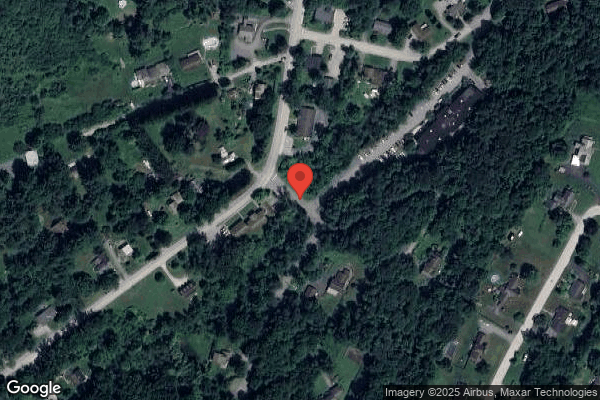

2 Blackberry Lane, Bennington, VT 05201 (802) 442-8525
For profit - Limited Liability company 100 Beds GENESIS HEALTHCARE Data: November 2025 4 Immediate Jeopardy citations
Trust Grade
0/100
#27 of 33 in VT
Last Inspection: October 2024

Within standard 12-15 month inspection cycle. Federal law requires annual inspections.

Overview

Bennington Health & Rehab has received a Trust Grade of F, indicating significant concerns with care quality. Ranking #27 out of 33 facilities in Vermont places it in the bottom half, and #4 out of 4 in Bennington County means there are no local options that perform worse. The facility's situation is stable, having consistently reported 7 issues over the past two years. Staffing is a concern with a 2/5 star rating and a high turnover rate of 74%, significantly above the state average, which suggests that staff may not be familiar with residents' needs. Furthermore, the facility has incurred $167,424 in fines, indicating more compliance issues than 76% of Vermont facilities. However, the facility does have some strengths, such as a 4/5 star rating in quality measures, suggesting good outcomes in specific areas. Unfortunately, there have been critical incidents, including staff entering a COVID-19 positive resident's room without proper protective gear, which risks infection spread. Additionally, there were failures to act on signs of medication toxicity leading to a resident's death, raising serious concerns about the quality of care and oversight. Overall, families should weigh these serious weaknesses against the few strengths when considering this facility for their loved ones.

Trust Score
F
0/100
In Vermont
#27/33
Bottom 19%
Safety Record
High Risk
Review needed
Inspections
Holding Steady
7 → 7 violations
Staff Stability
⚠ Watch
74% turnover. Very high, 26 points above average. Constant new faces learning your loved one's needs.
Penalties
✓ Good
$167,424 in fines. Lower than most Vermont facilities. Relatively clean record.
Skilled Nurses
⚠ Watch
Each resident gets only 26 minutes of Registered Nurse (RN) attention daily — below average for Vermont. Fewer RN minutes means fewer trained eyes watching for problems.
Violations
⚠ Watch
77 deficiencies on record. Higher than average. Multiple issues found across inspections.
★☆☆☆☆
1.0
Overall Rating
★★☆☆☆
2.0
Staff Levels
★★★★☆
4.0
Care Quality
★☆☆☆☆
1.0
Inspection Score
Stable
2024: 7 issues
2025: 7 issues

The Good

  • 4-Star Quality Measures · Strong clinical quality outcomes
  • Full Sprinkler Coverage · Fire safety systems throughout facility
  • No fines on record

Facility shows strength in quality measures, fire safety.

The Bad

1-Star Overall Rating

Below Vermont average (2.7)

Significant quality concerns identified by CMS

Staff Turnover: 74%

27pts above Vermont avg (46%)

Frequent staff changes - ask about care continuity

Federal Fines: $167,424

Well above median ($33,413)

Significant penalties indicating serious issues

Chain: GENESIS HEALTHCARE

Part of a multi-facility chain

Ask about local staffing decisions and management

Staff turnover is very high (74%)

26 points above Vermont average of 48%

The Ugly 77 deficiencies on record

4 life-threatening 4 actual harm
Jul 2025 3 deficiencies
CONCERN (D) 📢 Someone Reported This

A family member, employee, or ombudsman was alarmed enough to file a formal complaint

Potential for Harm - no one hurt, but risky conditions existed

Safe Environment (Tag F0584)

Could have caused harm · This affected 1 resident

Based on observation, interview, and record review the facility failed to ensure that 1 of 5 residents in the applicable sample (Resident #1) who was moved from one room to another room within the fac...

Read full inspector narrative →
Based on observation, interview, and record review the facility failed to ensure that 1 of 5 residents in the applicable sample (Resident #1) who was moved from one room to another room within the facility was provided a safe homelike environment. Findings include: Per review of Resident #1's census information s/he was transferred to a new room within the facility on 7/12/2025.During an observation tour of the facility on 7/15/2025 at 12:22 PM Resident #1's room was noted to have two beds, one on each side of the room. The bed near the window was made with facility bedding, while the bed by the door was noted to be un-made with a bare mattress on the bed. On top of the mattress was a standing wet floor sign, two wheelchair leg rests, a cushion, a bare pillow, several papers, and an unattached foot board. There were four wheelchairs next to the bed. Along the wall there was a dresser with books and other items on the top, a desk with a laundry basket filled with personal items, and two shopping bags filled with items. There was a chair that had a large clear plastic bag that was filled with linens and three pillows without cases stacked on top of the bag. Per interview on 7/15/2025 at approximately 3:30 PM with the facility Administrator, Resident #1 had recently been moved to this room. The Administrator confirmed that Resident #1's room was not homelike, that their personal belongings should have been unpacked, the bed should not be piled with the items, and the wheelchairs did not belong to the Resident and should not have been in the room.
CONCERN (F) 📢 Someone Reported This

A family member, employee, or ombudsman was alarmed enough to file a formal complaint

Potential for Harm - no one hurt, but risky conditions existed

Deficiency F0802 (Tag F0802)

Could have caused harm · This affected most or all residents

Based on observation, interview, and record review the facility failed to ensure the contracting food service department employed sufficient staff with the appropriate competencies and skills sets to ...

Read full inspector narrative →
Based on observation, interview, and record review the facility failed to ensure the contracting food service department employed sufficient staff with the appropriate competencies and skills sets to carry out the functions of the food and nutrition service. This deficiency has the potential to impact all residents. Findings include: During observations of the facility kitchen on 7/15/2025 at 8:50 AM there were several concerns with kitchen cleanliness, food storage, safety, and sanitization noted. Review of the facility Grievance Log and actual grievances from April 2025 - July 2025 revealed 5 grievances dated 4/7, 4/21, 4/25, 6/10, and 6/12 related to food quality, temperature, raw meats, over and under cooked foods including chicken, pork, and hamburger. Per interview on 7/15/2025 at 10:35 AM with the Regional Dietary Manager (RDM) when asked if there was a process to ensure that staff were competent in food service activities, he stated that the Dietary Manager supervises the food service process. The RDM was asked to provide evidence of education for three cooks and three dietary aides regarding food services. Review of documented training provided by the RDM revealed the following:Cook #1 the RDM was unable to produce evidence of any documented training or competency. [NAME] #2 revealed that in 2023 he had completed in-service training and quizzes regarding topics such as food safety, preparation, and labeling. In 2024 the only documented trainings were an in-service quiz regarding cross contamination completed on 2/9/2024 and knives, slicers, and cutting boards completed on 1/22/24. There was no documented training for 2025. There was also no documented evidence that cook #1 had ever been assessed for competency related to food service activities. [NAME] #3 the only documented trainings regarding food service in 2024 were an in-service quiz regarding cross contamination completed on 2/9/2024 and knives, slicers, and cutting boards completed on 1/22/24. There was no documented training for 2025. There was also no documented evidence that [NAME] #2 had ever been assessed for competency related to food service activities.Dietary Aide #1 the RDM was unable to produce evidence of any documented training or competency in food service.Dietary Aide #2 the only training documented for 2024 was knives, slicers, and cutting boards in-service quiz completed on 1/22/24 and a cross contamination in-service quiz completed on 2/9/2024. There was no documented evidence the Dietary aide had ever been assessed for competency related to food service. Dietary Aide #3 the only training documented for 2024 was knives, slicers, and cutting boards in-service quiz completed on 1/22/24 and cross contamination in-service quiz completed on 2/9/2024. There was no documented evidence the Dietary aide had ever been assessed for competency related to food service. The RDM conformed that there was no documentation that demonstrated that the dietary staff had been assessed for competency related to dietary services including food storage, preparation, cooking, and serving. Per interview on 7/15/2025 at 3:00 PM with the facility Administrator, the consulting food service agency is responsible for training and competency of the food service staff. She was not aware of the status of training and competency. The Administrator confirmed the above concerns had been reported through the grievance process and had been addressed with the DM and RDM. Ref. F812
CONCERN (F) 📢 Someone Reported This

A family member, employee, or ombudsman was alarmed enough to file a formal complaint

Potential for Harm - no one hurt, but risky conditions existed

Food Safety (Tag F0812)

Could have caused harm · This affected most or all residents

Based on observation and interview the facility failed to store food in accordance with professional standards for food service safety. This deficiency has the potential to impact all residents in the...

Read full inspector narrative →
Based on observation and interview the facility failed to store food in accordance with professional standards for food service safety. This deficiency has the potential to impact all residents in the facility. Findings include:Per observation of the main kitchen on 7/15/25 at 8:50 AM, it was noted upon entry that there were fruit flies flying around the food prep and cooking area. The cook and the Dietary Manager (DM) were present. The DM stated that the fruit flies have been there for about a week. He also stated that they have been flushing the drains with bleach, and he has been cleaning and mopping the kitchen every morning. In the dish room there were more fruit flies flying around, an osculating fan was on and there was fly tape hanging from the ceiling that was being blown around by the fan with dead fruit flies stuck to it.On the bottom shelf of a 3-tier metal rack was a large bin of flour that was uncovered with the lid slid off to the side. on the 3rd shelf there were two uncovered bins filled with kitchen utensils. Further observations of the kitchen revealed that there was a large amount of dead fruit flies on the rack under the juice dispenser, live fruit flies in the dry storage area, an open box of potatoes, and an open box of watermelons on the third shelf of a metal rack. The large mixer was uncovered, and the bowl had dried debris in it. When asked about the mixer the DM stated, I keep that covered and removed the bowl.During observations of the walk-in refrigerator it was noted that there was an open large bag of cheddar cheese on a shelf and on the bottom shelf there was a cardboard box with two bags of raw chicken and a large build-up of liquid from the thawed chicken had formed. There was no date on the bags of chicken or the box identifying when it had been thawed or when it expired. The DM confirmed that there was no date.A two doored refrigerator holding prepped deserts, juices, and condiments was noted to have moisture on the outside. Each side of the refrigerator had thermometers one read 48 degrees Fahrenheit (F) and the other read 46 degrees F. The DM stated that it was probably because they had been opening and closing the doors and he would check them in an hour. During a walk-through of the kitchen with the regional Dietary Manager (RDM) on 7/15/25 at 10:35 AM he confirmed there were fruit flies in the on the fans in the dish room and the fly paper hanging from the ceiling, however the fans were not running at this time. He also confirmed that the bins with the utensils were not and should be covered. The raw chicken in the refrigerator remained but was now in a stainless-steel pan with a date on it. When the RDM was told that it was the chicken that had been in the box with no date on it during the initial observation he told the DM to throw it out. The RDM also confirmed that the refrigerator temperatures were still 46 degrees F and 48 degrees F. Per interview with the facility Administrator on 7/15/2025 at 3:00 PM she confirmed that there were concerns related to the cleanliness of the kitchen.
Mar 2025 4 deficiencies 2 IJ
CRITICAL (J) 📢 Someone Reported This

A family member, employee, or ombudsman was alarmed enough to file a formal complaint

Immediate Jeopardy (IJ) - the most serious Medicare violation

Deficiency F0658 (Tag F0658)

Someone could have died · This affected 1 resident

**NOTE- TERMS IN BRACKETS HAVE BEEN EDITED TO PROTECT CONFIDENTIALITY** Based on interview and record review the facility failed to ensure that services being provided meet professional standards of q...

Read full inspector narrative →
**NOTE- TERMS IN BRACKETS HAVE BEEN EDITED TO PROTECT CONFIDENTIALITY** Based on interview and record review the facility failed to ensure that services being provided meet professional standards of quality for one of 3 sampled residents [Resident #1]. Resident #1 was receiving the medication Lithium Carbonate and physician orders for blood work were not completed as ordered and the physician was not notified of this or changes in the resident's condition. Additionally, the facility failed to act upon signs and symptoms of lithium toxicity while continuing to administer the medication, which eventually ended in the resident's death, and altered the resident's record to reflect compliance and notifications after they had been transferred out to the facility. This citation is at the immediate jeopardy level due to the lack of process for notification and consultation with the physician regarding lab work not completed as ordered and with significant changes in resident statuses putting all residents at risk for serious injury or death because of the noncompliance. Per record review, prior to their admission to the long-term care facility, Resident #1 was hospitalized with alteration in mental status- acute mania and psychotic break. At the end of their stay in the hospital, hospital notes dated [DATE] record Resident #1 is now taking [h/her] medication, has been in much better mood. [S/he] has been interacting much more with the staff, allowing personal care, showering, bed changes, etc. [S/he] has been up into the halls during the day in a wheelchair, going outside at times when the weather is good. Nursing Progress notes from the hospital dated [DATE] record the resident is acting with improved mood, patient is smiling and allowing care throughout shift. Patient resting comfortably.' Resident #1 was discharged from the hospital on [DATE] and transferred to the long-term care facility. Review of Resident #1's Nursing admission Assessment, dated [DATE], identified the resident as speaking clearly, alert, and oriented to person. During an interview with Resident #1's Unit Manager [UM] on [DATE] at 3:10 PM, the UM stated when Resident #1 came to the facility, [s/he] was quiet for a couple of days, afterwards [s/he] was very bubbly, [s/he] was funny, outgoing. While at the hospital, Resident #1 was receiving the medication Lithium for a diagnosis of Schizoaffective disorder [Schizoaffective disorder is a mental health condition that is marked by a mix of hallucinations and delusions, and symptoms such as depression and mania-an over-the-top level of activity or energy] [Lithium is a natural salt that reduces the symptoms of mania (high energy, racing thoughts, rapid speech). The medication has a narrow range of safety, so it doesn't take much to have too much lithium in your body. Lithium toxicity is a life-threatening condition that causes intestinal and neurological symptoms. It requires immediate medical care in a hospital. Lithium toxicity (overdose) happens when you have too much of the prescription medication lithium in your body. If you don't receive treatment for lithium toxicity, it can be fatal. Healthcare providers check lithium levels with a blood test.] (https://my.clevelandclinic.org/health/diseases/25207-lithium-toxicity) During their stay at the hospital, Resident #1 was receiving regular monthly blood work to check on their lithium levels. During their 7-month stay in the hospital, Resident #1's lithium level remained in therapeutic range all but one time, when the level was found to be high. It was immediately re-checked and found to be slightly below therapeutic range. The lithium levels were checked every month through [DATE], and the resident was discharged on [DATE] and transferred to the long-term care facility prior to a December lithium level being drawn. A Physician admission History & Physical was conducted at the long-term care facility on [DATE]. The Physician's Assessments/Plans records I do have some concerns that [s/he] may be overmedicated at this point .[s/he] may benefit from some titration of [h/her] mediations over a period of likely months . Records indicate [s/he] has not had some titration of [h/her] medications over the last several months, these could be considered for gradual dose reduction in the future. The Physician records the resident has managed currently on lithium [and 2 other medications]. We will check lithium levels for baseline. Review of Physician Orders dated [DATE] reveal an order for a lithium level to be obtained by a blood draw. Review of medication orders for Resident #1 reveals an order for Lithium Carbonate Oral Capsule 300 milligrams- give 2 capsules by mouth at bedtime. The start date for the medication order is the day of admission, [DATE]. Next to the medication on the Nursing Medication Administration Record [MAR] is a Black Box Warning. Per interview with Resident #1's Unit Manager [UM] on [DATE] at 11:40 AM, nursing should click on the box prior to administering the medication and read the warning in full. For lithium, the Black Box warning reads: Black Box Warning Details- Monitoring. Lithium toxicity is closely related to serum lithium levels and can occur at doses close to therapeutic levels facilities for prompt and accurate serum lithium determination should be available before initiating therapy. Per record review, Resident #1's medical record includes a Psychotropic Medication Administration Disclosure listing the risks and benefits of psychotropic medications the resident was prescribed. Under Lithium, the disclosure lists Of Special Concern: seizures, muscle reflex, stupor, coma. Toxic Levels of Lithium are close to therapeutic levels and require routine laboratory monitoring. Review of Resdient #1's Medication Administration Record and Treatment Administration Record [MAR/TAR] reveal the ordered lithium level blood draw signed off by nursing as 'completed' on [DATE] at 10:12 AM, one day after the Physician's order was entered. Of note, The MAR/TAR includes the notation no site of lab administration data found for lab administration record. Review of Resident #1's medical record includes a Nursing Progress note labeled Late Entry, with the entry marked as created on [DATE], with an effective date recorded as [DATE] [43 days earlier]. The [DATE] effective date is 2 days after the blood draw was signed off as completed and reads attempt x3 to obtain blood as ordered. Unable x3. MD notified, will attempt at later time. The note contains prompts to Show on Shift Report, Show on 24 hour Report, and Show on MD/Nursing Communications Report, with none of the prompts check marked to activate them. Per interview on [DATE] at 4:01 PM, the facility's Director of Nursing Services [DNS] confirmed that there was no documentation on [DATE] that the lithium blood draw was unable to be completed as ordered despite the MAR recording the blood draw had been done. The DNS confirmed the note reporting that the blood draw being unsuccessful was dated 2 days after the attempts were made but was written 43 days later on [DATE]. The DNS further confirmed that there was no documentation available to confirm the Physician had been notified 2 days after the unsuccessful blood draw attempts as the Late Entry recorded. Per interview with the Unit Manager [UM] on [DATE] at 3:10 PM, the UM confirmed the note reporting the blood draw was unsuccessful was dated 2 days after the attempts were made but was written 43 days later on [DATE]. When asked why Resident #1's medical record was altered on [DATE], 43 days later, the Unit Manger stated because we knew it was going to be looked at [by the state regulatory agency]. Further review of Resident #1's Medication Administration Record [MAR] reveals the resident continued to receive the lithium on a daily basis despite no lab results available to determine if their levels were out of therapeutic range. An interview with the Assistant Director of Nursing Services [ADNS] on [DATE] at 11:51 AM revealed that in addition to the information about the drug contained in the Black Box Warning, Nursing can view if lab work for the medication has been ordered and completed, and what the results are. The ADNS confirmed there were no results available for any lithium levels for Resident #1. The ADNS reported that if labs were not completed as ordered on a Black Box medication, staff should contact the Physician or On-Call Provider for further orders, including an order to hold the medication until it can be determined if the medication level in the resident is at a safe and therapeutic level. The ADNS stated the risk of holding the medication is less than the risk of giving it if the levels were not in range. The ADNS confirmed there was no documentation regarding any Physician response to lithium levels not being obtained for Resident #1, and the resident continued to receive daily lithium doses. According to the National Library of Medicine: Lithium toxicity signs are obvious and can be identified and managed easily; however, ignoring it can be fatal. Indeed, in some cases, lithium toxicity can lead to coma, brain damage, or even death. During lithium treatment, the healthcare team including physicians and nurses should make sure serum levels are checked regularly to make sure of the treatment course. If any signs of early toxicity appear, the patient should stop the medication and seek medical counsel. (https://www.ncbi.nlm.nih.gov/books/NBK499992/) Review of Resident #1's medical record records dated 1/5, 1/6, & [DATE] record the resident displaying behaviors. Nursing notes on [DATE] record resident noted to be yelling out, difficult to understand what [s/he] is saying, agitated with care, swinging at Nurses' Aides during care. Behaviors continued on 1/8 and 1/9, with the resident threw [h/her] drink at this nurse, refused to allow nebulizer treatment to be administered, very agitated at this nurse. Nursing Notes dated [DATE] reveal Resident #1 was hallucinating and delusional and staff were unable to get resident to cooperate. On [DATE], Resident #1 was yelling out, screaming, hysterically laughing and screaming out again, inconsolable. Resident #1 was evaluated remotely by a physician via Tele-Medicine [face to face via computer and camera] on [DATE]. The Physician noted upon admission [Resident #1] could communicate [h/her] needs, slowly transitioned to manic behaviors. Today, [Resident #1] is found in bed tearful and then angry, pointing and unable to communicate [h/her] needs. Under Assessment/Recommendations, the Physician records will need lab results to review prior to recommendations: lithium. A Change in Condition form was entered on [DATE] for altered mental status for Resident #1. Nursing observations record Resident is exhibiting signs of agitation with hallucinations and delusions. According to the Pharmaceutical Journal: Lithium toxicity may occur in some patients despite a normal lithium level; therefore, recognizing the clinical features of toxicity is important. The central nervous system (CNS) is most affected by chronic toxicity, with an altered level of consciousness being the most common sign. Other CNS signs and symptoms include slurred speech, confusion . Signs of severe toxicity include increased disorientation and seizures, possibly leading to coma. Patients with long-term conditions, including diabetes and schizophrenia are at increased risk of developing lithium toxicity. [Per record review, Resident #1's diagnoses include both diabetes and schizophrenia.] If there are signs or symptoms of lithium toxicity, lithium should be withheld, and an urgent lithium level should be taken, with specialist advice sought. (https://pharmaceutical-journal.com/article/ld/lithium-monitoring-and-toxicity-management) Nursing Progress notes dated [DATE], 3 days after the Telemedicine recommendation for lithium levels read unable to obtain blood draw for lithium level. Attempt x 3. A Nursing Progress note dated 4 days later is again labeled Late Entry with an effective date labeled [DATE], and created on [DATE] [27 days later]. The Late Entry note reads Dr. notified of difficulty obtaining lab draws. Per interview with the Assistant Director of Nursing Services [ADNS] on [DATE] the ADNS confirmed there was no documentation regarding any Physician response to lithium levels not being obtained for Resident #1, and the resident continued to receive daily lithium doses. An interview was conducted with Resident #1's physician on [DATE] at 4:30 PM. The physician stated if nursing observed symptoms consistent with medication toxicity, the medication should be held with notification to the physician. The physician stated s/he had not heard any organized characterizations or evolution of symptoms from nursing regarding possible medication side effects. The physician further stated that it was h/her expectation that lab work would be completed as ordered and after the blood work was unable to be drawn the first time on [DATE], the physician should have been notified and Resident #1 should have been sent to an outpatient facility to have it done. Per record review, 10 days later, on [DATE], a third attempt was made to obtain a lithium level. The sample obtained was determined to be too small to conduct the lithium test. Per interview on [DATE] at 4:01 PM, the facility's Director of Nursing Services [DNS] stated that the facility had the option to send the resident to a nearby hospital to have the blood draw completed, but this was not done after any of the three attempts performed at the facility. Review of Nursing Progress notes dated [DATE] record the resident is screaming out unrecognizable words, talks to self, hallucinations, delusions. On [DATE], the resident is assessed as semi- alert. On [DATE] the resident is refusing h/her continuous oxygen treatment. There is no documentation of the Physician being notified of the resident's hallucinations, delusions or semi-alert condition. An interview was conducted on [DATE] at 2:36 PM with Resident #1's nurse who was caring for the resident on [DATE]. The nurse stated I came in at 7:00 AM on [DATE], and my aides [Licensed Nurses' Aides] told me that [Resident #1] looked wrong. They were worried [s/he] was not themselves, not interacting, eyes were tracey[uncontrolled movements]. I had been off for 4 days, and it was a complete change in condition from when I last laid eyes on [h/her], their blood pressure was low, they weren't eating and drinking much. I called telehealth between 7:30 & 9:00 AM, telehealth said hold the psychotics [including lithium]. Then next shift nurse [the shift starting at 3:00 PM] called the provider and [Resident #1] was sent out to the hospital. On [DATE], at 10:51 AM, Nursing Progress notes record multiple medications being held due to the resident's altered mental status, lethargy. Per the National Library of Medicine regarding the levels of lithium toxicity: Severe intoxication: Coma, seizures, and hypotension [low blood pressure]. The Cleveland Clinic notes: If you have moderate to severe lithium toxicity, you'll likely get neurological symptoms. These include: Mental status changes that can range from mild confusion to delirium. Slurred speech (dysarthria). Uncontrolled eye movements (nystagmus). Seizures (severe cases). (https://my.clevelandclinic.org/health/diseases/25207-lithium-toxicity) A Change in Condition form was entered on [DATE] for Resident #1 five hours after medications were held. The Change in Condition form was for Altered mental status. Talks/communicates less. Tired, weak, confused or drowsy and Abnormal vital signs (low blood pressure). Nursing observations include Resident #1 in bed with eyes open, nystagmus noted both eyes. Resident looks when called but is unable to respond verbally. Unable to squeeze hands or apply pressure with feet when asked. Resident grimacing with what appears to be pain. Resident took one bite of dinner and vomited. The On-call Telemedicine Physician was contacted. Review of the Physician Notes dated [DATE] at 6:00 PM record the resident is Unresponsive . lying in bed with eyes fixed open, saliva running out of side of mouth, and unresponsive to stimuli. Staff states that [s/he] has been in this state since this AM and had some intermittent lateral eye movements that then resolves into the fixed stare. [S/he] has been unable to swallow since this AM, so no intake by mouth. Labs ordered during a previous consult, but RN was only able to draw enough blood for complete blood count [not lithium level]. Blood pressure is below baseline . Condition is guarded. This is an acute new problem: seizure vs hyperthyroid vs infection. Orders: Transfer to Emergency Department. Per review of Emergency Department notes dated [DATE]: Patient presents from [long term care facility] where [s/he] was recently admitted . [S/he] had possible seizure activity with staff where [s/he] had abnormal twitching movements and has been somnolent [sleepy, drowsy] throughout the day up to this point. Patient not following directions. Normally [s/he] is quite loud and boisterous per staff . Patient presents possible seizure activity and significant altered mental status. [S/he] does not have a documented history of seizures. Spoke with nursing staff there, decline started yesterday, normally alert and oriented to self and interactive and able to follow commands. Procedure: Critical Care. The high probability of life or limb threatening condition required a high level of direct monitoring and care. The services I provided to this patient involved treatment to stabilize presenting septic, altered mental status. In the early morning hours of [DATE], Resident #1 was transferred to the Intensive Care Unit [ICU]. ICU notes dated [DATE] at 6:30 AM record Rapid Response [emergency response team] was called because of seizure-like activities. Patient never presented this way before .loss of about 3-4 minutes. Per review of ICU Physician notes, dated [DATE], the resident is assessed with Severe lithium toxicity, altered mental status, seizure, acute renal failure. The physician notes that lithium has been on hold for at least 2 nights [since the resident was sent to the hospital] and that Patient's lithium level is 3.0 this morning. [Regarding Lithium toxicity: A safe blood level of lithium is 0.6 to 1.2 milliequivalents per liter (mEq/L). Lithium toxicity can happen when this level reaches 1.5 mEq/L or higher. Severe lithium toxicity happens at a level of 2.0 mEq/L and above, which can be life-threatening in rare cases. Levels of 3.0 mEq/L and higher are considered a medical emergency.] (https://www.healthline.com/health/lithium-toxicity) Per review of ICU Physician notes, dated [DATE]: Problem List: - Severe lithium toxicity associated with acute renal failure, seizure events and delirium - Unresolved toxic encephalopathy thought related to multiple seizure events associated with lithium toxicity with suspected brain injury - Free water deficiency in association with lithium toxicity - Initial shock thought related to medication toxicity Subjective: [Resident #1] remains in a poor condition. [S/he] is not wakeful. [H/her] eyes are open and [s/he] is staring off to the left. I have concerns that [s/he] has irreversible brain injury given [h/her] multiple seizure events and the prolonged nature of [h/her] lithium toxicity. Assessment and Plan: [Resident #1] has a history of schizophrenia who comes in with severe lithium toxicity shock secondary to lithium versus infection who has seizure activity and altered mental status, An infection was not definitively proven. Initial blood culture results are thought more likely to be contaminant. An additional seizure event took place on [DATE]. [S/he] had another seizure event that was very brief early this morning. - Severe lithium toxicity altered mental status seizure acute renal failure: Lithium has been on hold and will remain so for now - Seizure activity: This could be in the setting of lithium toxicity. Patient has not had history of seizures in the past. - Toxic metabolic encephalopathy: This is likely medication related - Acute renal failure: In the setting of lithium toxicity - Shock infectious versus lithium: Would favor lithium toxicity Disposition: Patient is Do Not Resuscitate/Do Not Intubate with a consideration of transition to comfort measures soon given [h/her] decline. Further record review reveals Resident #1 expired on [DATE] at 9:20 AM. Per review of the Lippincott Manual of Nursing, Common Departures from the Standards of Nursing Care include: failure to follow physician orders, follow appropriate nursing measures, communicate information about the patient. The standards of care for professional nursing include assessment, diagnosis, outcome identification, planning, implementation and evaluation. [Lippincott Manual of Nursing Practice-11th Edition 2018] The DNS confirmed that the facility failed to follow professional standards regarding: Failure to follow physician orders regarding obtaining blood draws and therapeutic drug levels. The DNS confirmed During lithium treatment, the healthcare team including physicians and nurses should make sure serum levels are checked regularly to make sure of the treatment course (https://www.ncbi.nlm.nih.gov/books/NBK499992/) and Resident #1's Medication Orders for Lithium included Black Box Warning Details- Monitoring. Lithium toxicity is closely related to serum lithium levels and can occur at doses close to therapeutic levels, Lithium toxicity is a life-threatening condition (https://my.clevelandclinic.org/health/diseases/25207-lithium-toxicity). The DNS confirmed that the facility had the option to send Resident #1 to a nearby hospital to have the blood draw completed, but this was not done after any of the three attempts performed at the facility, and there was no documentation to support Resident #1's physician was notified of the failed attempts. The DNS confirmed the facility failed to monitor signs and symptoms of lithium toxicity and continued lithium administration without knowledge of therapeutic levels. According to the National Library of Medicine: Lithium toxicity signs are obvious and can be identified and managed easily; however, ignoring it can be fatal .If any signs of early toxicity appear, the patient should stop the medication and seek medical counsel. (https://www.ncbi.nlm.nih.gov/books/NBK499992/) The DNS confirmed the facility documented signs and symptoms of lithium toxicity including altered mental status, confusion, delirium, low blood pressure, and nystagmus (uncontrolled eye movements) while continuing to administer the medication and without notifying the physician, with the resident's condition eventually transitioning into seizures and resulting in Resident #1's death. According to the American Nurses Association's, Principles for Nursing Documentation, professional standards of documentation include guiding principles as follows: * Documentation that is incomplete, inaccurate, untimely, illegible, or that is false, or misleading can lead to a number of undesirable outcomes such as jeopardizing the legal rights of patients and health care providers, impeding legal fact finding, and putting providers at risk of liability. * Authenticated: that is, the information is truthful, the author is identified, and nothing has been added or inserted inaccurately. The DNS confirmed the facility failed to maintain and accurately document resident records in a timely manner related to orders signed as completed and late entries added to Resident #1's medical record regarding physician notification and in fact physician orders not being completed. The DNS confirmed entries were added to the medical record after the resident had been transferred out the facility and were created without documentation to support their content.
CRITICAL (J) 📢 Someone Reported This

A family member, employee, or ombudsman was alarmed enough to file a formal complaint

Immediate Jeopardy (IJ) - the most serious Medicare violation

Medication Errors (Tag F0758)

Someone could have died · This affected 1 resident

**NOTE- TERMS IN BRACKETS HAVE BEEN EDITED TO PROTECT CONFIDENTIALITY** Based on interview and record review, the facility failed to carry out critical medication level monitoring that was ordered and...

Read full inspector narrative →
**NOTE- TERMS IN BRACKETS HAVE BEEN EDITED TO PROTECT CONFIDENTIALITY** Based on interview and record review, the facility failed to carry out critical medication level monitoring that was ordered and failed to consider whether the onset or worsening of symptoms, or a change of condition, may be related to the medication and failed to respond to the presence of adverse consequences related to the use of a high-risk medication for 1 of 3 sampled residents [Resident #1], which resulted in Resident #1's death. This citation is at the immediate jeopardy level due to the lack of an effective process to ensure medications are only administered with adequate monitoring of laboratory values, per manufacturers specifications and accepted professional standards for high risk medications, and not administered in the presence of adverse consequences which indicate the dose should be reduced or discontinued, putting all residents at risk for serious injury or death because of the noncompliance. Findings include: Per record review, prior to their admission to the long-term care facility, Resident #1 was hospitalized with alteration in mental status- acute mania and psychotic break. At the end of their stay in the hospital, hospital notes dated [DATE] record Resident #1 is now taking [h/her] medication, has been in much better mood. [S/he] has been interacting much more with the staff, allowing personal care, showering, bed changes, etc. [S/he] has been up into the halls during the day in a wheelchair, going outside at times when the weather is good. Nursing Progress notes from the hospital dated [DATE] record the resident is acting with improved mood, patient is smiling and allowing care throughout shift. Patient resting comfortably.' Resident #1 was discharged from the hospital on [DATE] and transferred to the long-term care facility. Review of Resident #1's Nursing admission Assessment, dated [DATE], identified the resident as speaking clearly, alert, and oriented to person. During an interview with Resident #1's Unit Manager [UM] on [DATE] at 3:10 PM, the UM stated when Resident #1 came to the facility, [s/he] was quiet for a couple of days, afterwards [s/he] was very bubbly, [s/he] was funny, outgoing. While at the hospital, Resident #1 was receiving the medication Lithium for a diagnosis of Schizoaffective disorder [Schizoaffective disorder is a mental health condition that is marked by a mix of hallucinations and delusions, and symptoms such as depression and mania-an over-the-top level of activity or energy] [Lithium is a natural salt that reduces the symptoms of mania (high energy, racing thoughts, rapid speech). The medication has a narrow range of safety, so it doesn't take much to have too much lithium in your body. Lithium toxicity is a life-threatening condition that causes intestinal and neurological symptoms. It requires immediate medical care in a hospital. Lithium toxicity (overdose) happens when you have too much of the prescription medication lithium in your body. If you don't receive treatment for lithium toxicity, it can be fatal. Healthcare providers check lithium levels with a blood test.] (https://my.clevelandclinic.org/health/diseases/25207-lithium-toxicity) During their stay at the hospital, Resident #1 was receiving regular monthly blood work to check on their lithium levels. During their 7-month stay in the hospital, Resident #1's lithium level remained in therapeutic range all but one time, when the level was found to be high. It was immediately re-checked and found to be slightly below therapeutic range. The lithium levels were checked every month through [DATE], and the resident was discharged on [DATE] and transferred to the long-term care facility prior to a December lithium level being drawn. A Physician admission History & Physical was conducted at the long-term care facility on [DATE]. The Physician's Assessments/Plans records I do have some concerns that [s/he] may be overmedicated at this point .[s/he] may benefit from some titration of [h/her] mediations over a period of likely months . Records indicate [s/he] has not had some titration of [h/her] medications over the last several months, these could be considered for gradual dose reduction in the future. The Physician records the resident has managed currently on lithium [and 2 other medications]. We will check lithium levels for baseline. Review of Physician Orders dated [DATE] reveal an order for a lithium level to be obtained by a blood draw. Review of medication orders for Resident #1 reveals an order for Lithium Carbonate Oral Capsule 300 milligrams- give 2 capsules by mouth at bedtime. The start date for the medication order is the day of admission, [DATE]. Next to the medication on the Nursing Medication Administration Record [MAR] is a Black Box Warning. Per interview with Res.#1's Unit Manager [UM] on [DATE] at 11:40 AM, nursing should click on the box prior to administering the medication and read the warning in full. For lithium, the Black Box warning reads: Black Box Warning Details- Monitoring. Lithium toxicity is closely related to serum lithium levels and can occur at doses close to therapeutic levels facilities for prompt and accurate serum lithium determination should be available before initiating therapy. Per record review, Resident #1's medical record includes a Psychotropic Medication Administration Disclosure listing the risks and benefits of psychotropic medications the resident was prescribed. Under lithium, the disclosure lists Of Special Concern: seizures, muscle reflex, stupor, coma. Toxic Levels of Lithium are close to therapeutic levels and require routine laboratory monitoring. Review of Resident #1's Medication Administration Record and Treatment Administration Record [MAR/TAR] reveal the ordered lithium level blood draw signed off by Nursing as completed on [DATE] at 10:12 AM, one day after the Physician's order was entered. Of note, The MAR/TAR includes the notation no site of lab administration data found for lab administration record. Review of Resident #1's medical record includes a Nursing Progress note labeled Late Entry, with the entry marked as created on [DATE], with an effective date recorded as [DATE] [43 days earlier]. The [DATE] effective date is 2 days after the blood draw was signed off as completed, and reads attempt x3 to obtain blood as ordered. Unable x3. MD notified, will attempt at later time. The note contains prompts to Show on Shift Report, Show on 24-hour Report, and Show on MD/Nursing Communications Report, with none of the prompts check marked to activate them. Per interview on [DATE] at 4:01 PM, the facility's Director of Nursing Services [DNS] confirmed that there was no documentation on [DATE] that the lithium blood draw was unable to be completed as ordered despite the MAR recording the blood draw had been done. Per interview with the Unit Manager [UM] on [DATE] at 3:10 PM, the UM confirmed the note reporting the blood draw was unsuccessful was dated 2 days after the attempts were made but was written 43 days later on [DATE]. When asked why Resident #1's medical record was altered on [DATE], 43 days later, the Unit Manger stated because we knew it was going to be looked at [by the state regulatory agency]. Further review of Resident #1's Medication Administration Record [MAR] reveals the resident continued to receive the lithium on a daily basis despite no lab results available to determine if their levels were out of therapeutic range. An interview with the Assistant Director of Nursing Services [ADNS] on [DATE] at 11:51 AM revealed that in addition to the information about the drug contained in the Black Box Warning, nursing can view if lab work for the medication has been ordered and completed, and what the results are. The ADNS confirmed there were no results available for any lithium levels for Resident #1. The ADNS reported that if labs were not completed as ordered on a Black Box medication, staff should contact the Physician or On-Call Provider for further orders, including an order to hold the medication until it can be determined if the medication level in the resident is at a safe and therapeutic level. The ADNS stated the risk of holding the medication is less than the risk of giving it if the levels were not in range. The ADNS confirmed despite lithium levels not being obtained for Resident #1, the resident continued to receive daily lithium doses. An interview was conducted with Resident #1's physician on [DATE] at 4:30 PM. The physician stated it was h/her expectation that lab work would be completed as ordered and after the blood work was unable to be drawn the first time on [DATE], Resident #1 should have been sent to an outpatient facility to have it done. The physician further stated that if nursing observed symptoms consistent with medication toxicity, the medication should be held with notification to the physician. According to the National Library of Medicine: Lithium toxicity signs are obvious and can be identified and managed easily; however, ignoring it can be fatal. Indeed, in some cases, lithium toxicity can lead to coma, brain damage, or even death. During lithium treatment, the healthcare team including physicians and nurses should make sure serum levels are checked regularly to make sure of the treatment course. If any signs of early toxicity appear, the patient should stop the medication and seek medical counsel. (https://www.ncbi.nlm.nih.gov/books/NBK499992/) Review of Resident #1's medical record records dated 1/5, 1/6, and [DATE] record the resident displaying behaviors. Nursing notes on [DATE] record resident noted to be yelling out, difficult to understand what [s/he] is saying, agitated with care, swinging at Nurses' Aides during care. Behaviors continued on 1/8 and 1/9, with the resident threw [h/her] drink at this nurse, refused to allow nebulizer treatment to be administered, very agitated at this nurse. Nursing Notes dated [DATE] reveal Resident #1 was hallucinating and delusional and staff were unable to get resident to cooperate. On [DATE], Resident #1 was yelling out, screaming, hysterically laughing and screaming out again, inconsolable. Resident #1 was evaluated remotely by a physician via Tele-Medicine' [face to face via computer and camera] on [DATE]. The Physician noted upon admission [Resident #1] could communicate [h/her] needs, slowly transitioned to manic behaviors. Today, [Resident #1] is found in bed tearful and then angry, pointing and unable to communicate [h/her] needs. Under Assessment/Recommendations, the Physician records will need lab results to review prior to recommendations: lithium. A Change in Condition form was entered on [DATE] for altered mental status for Resident #1. Nursing Observations record Resident is exhibiting signs of agitation with hallucinations and delusions. According to the Pharmaceutical Journal: Lithium toxicity may occur in some patients despite a normal lithium level; therefore, recognizing the clinical features of toxicity is important. The central nervous system (CNS) is most affected by chronic toxicity, with an altered level of consciousness being the most common sign. Other CNS signs and symptoms include slurred speech, confusion . Signs of severe toxicity include increased disorientation and seizures, possibly leading to coma. Patients with long-term conditions, including diabetes and schizophrenia are at increased risk of developing lithium toxicity. [Per record review, Res.#1's diagnoses include both diabetes and schizophrenia.] If there are signs or symptoms of lithium toxicity, lithium should be withheld, and an urgent lithium level should be taken, with specialist advice sought. (https://pharmaceutical-journal.com/article/ld/lithium-monitoring-and-toxicity-management) Per interview with Resident #1's physician on [DATE] at 4:30 PM the physician stated a change in mental status would be a departure from the normal [for Resident #1] with new clinical features and confirmed that telehealth notes on [DATE] recorded a change in mental status and that having Resident #1 sent out for a blood draw would have been appropriate. Review of Resident #1's medical record reveals no order for lithium levels to be drawn per the tele-health recommendation on [DATE], and no documentation that any attempts were made for 3 days after the tele-health note. Nursing Progress notes dated [DATE], 3 days after the Telemedicine recommendation for lithium levels read unable to obtain blood draw for lithium level. Attempt x 3. Further record review reveals Res.#1 continued to receive daily doses of Lithium Carbonate despite displaying clinical features of toxicity. Per record review, 10 days later, on [DATE], a third attempt was made to obtain a lithium level. The sample obtained was determined to be too small to conduct the lithium test. Per interview on [DATE] at 4:01 PM, the facility's Director of Nursing Services [DNS] stated that the facility had the option to send the resident to a nearby hospital to have the blood draw completed, but this was not done after any of the three attempts performed at the facility. Review of Nursing Progress notes dated [DATE] record the resident is screaming out unrecognizable words, talks to self, hallucinations, delusions. On [DATE], the resident is assessed as semi- alert. On [DATE] the resident is refusing h/her continuous oxygen treatment. There is no documentation of the Physician being notified of the resident's hallucinations, delusions or semi-alert condition. An interview was conducted on [DATE] at 2:36 PM with Resident #1's nurse who was caring for the resident on [DATE]. The nurse stated I came in at 7:00 AM on [DATE], and my aides [Licensed Nurses' Aides] told me that [Resident #1] looked wrong. They were worried [s/he] was not themselves, not interacting, eyes were tracey[uncontrolled movements]. I had been off for 4 days, and it was a complete change in condition from when I last laid eyes on [h/her], their blood pressure was low, they weren't eating and drinking much. I called telehealth between 7:30 & 9:00 AM, telehealth said hold the psychotics [including lithium]. Then next shift nurse [the shift starting at 3:00 PM] called the provider and [Resident #1] was sent out to the hospital. On [DATE], at 10:51 AM, Nursing Progress notes record multiple medications being held due to the resident's altered mental status, lethargy. Per the National Library of Medicine regarding the levels of lithium toxicity: Severe intoxication: Coma, seizures, and hypotension [low blood pressure]. The Cleveland Clinic notes: If you have moderate to severe lithium toxicity, you'll likely get neurological symptoms. These include: Mental status changes that can range from mild confusion to delirium. Slurred speech (dysarthria). Uncontrolled eye movements (nystagmus). Seizures (severe cases). (https://my.clevelandclinic.org/health/diseases/25207-lithium-toxicity) A Change in Condition form was entered on [DATE] for Res.#1, five hours after medications were held. The Change in Condition form was for Altered mental status. Talks/communicates less. Tired, weak, confused or drowsy and Abnormal vital signs (low blood pressure). Nursing observations include Resident #1 in bed with eyes open, nystagmus noted both eyes. Resident looks when called but is unable to respond verbally. Unable to squeeze hands or apply pressure with feet when asked. Resident grimacing with what appears to be pain. Resident took one bite of dinner and vomited. The On-call Telemedicine Physician was contacted. Review of the Physician Notes dated [DATE] at 6:00 PM record the resident is Unresponsive . lying in bed with eyes fixed open, saliva running out of side of mouth, and unresponsive to stimuli. Staff states that [s/he] has been in this state since this AM and had some intermittent lateral eye movements that then resolves into the fixed stare. [S/he] has been unable to swallow since this AM, so no intake by mouth. Labs ordered during a previous consult, but RN was only able to draw enough blood for complete blood count [not lithium level]. Blood pressure is below baseline . Condition is guarded. This is an acute new problem: seizure vs hyperthyroid vs infection. Orders: Transfer to Emergency Department. Per review of Emergency Department notes dated [DATE]: Patient presents from [long term care facility] where [s/he] was recently admitted . [S/he] had possible seizure activity with staff where [s/he] had abnormal twitching movements and has been somnolent [sleepy, drowsy] throughout the day up to this point. Patient not following directions. Normally [s/he] is quite loud and boisterous per staff . Patient presents possible seizure activity and significant altered mental status. [S/he] does not have a documented history of seizures. Spoke with nursing staff there, decline started yesterday, normally alert and oriented to self and interactive and able to follow commands. Procedure: Critical Care. The high probability of life or limb threatening condition required a high level of direct monitoring and care. The services I provided to this patient involved treatment to stabilize presenting septic, altered mental status. In the early morning hours of [DATE], Resident #1 was transferred to the Intensive Care Unit [ICU]. ICU notes dated [DATE] at 6:30 AM record Rapid Response [emergency response team] was called because of seizure-like activities. Patient never presented this way before .loss of about 3-4 minutes. Per review of ICU Physician notes, dated [DATE], the resident is assessed with Severe lithium toxicity, altered mental status, seizure, acute renal failure. The physician notes that lithium has been on hold for at least 2 nights [since the resident was sent to the hospital] and that Patient's lithium level is 3.0 this morning. [Regarding Lithium toxicity: A safe blood level of lithium is 0.6 to 1.2 milliequivalents per liter (mEq/L). Lithium toxicity can happen when this level reaches 1.5 mEq/L or higher. Severe lithium toxicity happens at a level of 2.0 mEq/L and above, which can be life-threatening in rare cases. Levels of 3.0 mEq/L and higher are considered a medical emergency.] (https://www.healthline.com/health/lithium-toxicity) Per review of ICU Physician notes, dated [DATE]: Problem List: - Severe lithium toxicity associated with acute renal failure, seizure events and delirium - Unresolved toxic encephalopathy thought related to multiple seizure events associated with lithium toxicity with suspected brain injury - Free water deficiency in association with lithium toxicity - Initial shock thought related to medication toxicity Subjective: [Resident #1] remains in a poor condition. [S/he] is not wakeful. [H/her] eyes are open and [s/he] is staring off to the left. I have concerns that [s/he] has irreversible brain injury given [h/her] multiple seizure events and the prolonged nature of [h/her] lithium toxicity. Assessment and Plan: [Resident #1] has a history of schizophrenia who comes in with severe lithium toxicity shock secondary to lithium versus infection who has seizure activity and altered mental status, An infection was not definitively proven. Initial blood culture results are thought more likely to be contaminant. An additional seizure event took place on [DATE]. [S/he] had another seizure event that was very brief early this morning. - Severe lithium toxicity altered mental status seizure acute renal failure: Lithium has been on hold and will remain so for now - Seizure activity: This could be in the setting of lithium toxicity. Patient has not had history of seizures in the past. - Toxic metabolic encephalopathy: This is likely medication related - Acute renal failure: In the setting of lithium toxicity - Shock infectious versus lithium: Would favor lithium toxicity Disposition: Patient is Do Not Resuscitate/Do Not Intubate with a consideration of transition to comfort measures soon given [h/her] decline. Further record review reveals Resident #1 expired on [DATE] at 9:20 AM. An interview was conducted with the facility's Administrator [ADM], Director of Nursing Services [DNS], the Director of Operations, and the Regional Clinical Director on [DATE] at 4:01 PM. During the interview, the facility's Director of Nursing Services [DNS] confirmed the facility recognized that Resident #1 was ordered and administered a critical medication with which presented significant risks to the resident. The DNS confirmed that in addition to monitoring lab levels of the medication, it was essential to monitor the physical and mental/neurological status of the resident and report these changes to the Physician to ensure the resident's health and safety. The DNS confirmed that Medication Administration Records prompted Nursing to review lab levels and assess for signs and symptoms of toxicity with every administration of the lithium, which was given daily. The DNS confirmed that therapeutic levels of lithium differ only slightly from levels that can result in serious harm. Per the interview on [DATE] at 4:01 PM, the DNS and ADM confirmed that blood work orders for Resident #1 were not completed as ordered. The DNS & ADM confirmed that attempts to obtain critical lab values of lithium levels were conducted weeks apart with no rationale for the delay. The DNS confirmed the facility failed to contact the Physician in regard to whether to continue or hold the lithium administration while blood work monitoring was not completed. The DNS & ADM confirmed that Resident #1 exhibited signs and symptoms of lithium toxicity on multiple days without the Physician being notified, including [DATE], when Resident #1 was unable to accept medications due to lethargy and unspecified altered mental status and the Physician was not contacted until approximately 4 hours later, at 3:51 PM.
CONCERN (E) 📢 Someone Reported This

A family member, employee, or ombudsman was alarmed enough to file a formal complaint

Potential for Harm - no one hurt, but risky conditions existed

Deficiency F0726 (Tag F0726)

Could have caused harm · This affected multiple residents

Based on interview and record review, the facility failed to ensure that licensed nurses have the specific competencies necessary to care for Residents' needs as identified through resident assessment...

Read full inspector narrative →
Based on interview and record review, the facility failed to ensure that licensed nurses have the specific competencies necessary to care for Residents' needs as identified through resident assessments and the plan of care. Findings include: Per review of 5 licensed nurses' employee education files, 3 Licensed Practical Nurses did not have evidence that they had been assessed for medication administration competencies. The Facility Assessment (an assessment that determines what resources are necessary to care for the residents competently during both day-to-day operations and emergencies), dated 1/23/25, reads, The staff competencies and skill sets that are necessary to provide the level and types of care need for the Facility's specific resident population are as follows and lists the competencies and skills needed for licensed nursing staff which include medication administration. Per interview and record review, on 3/25/25 at approximately 1:45 PM, the Director of Nursing (DON) explained that all licensed nurses are evaluated prior to taking an assignment to see if they are competent to provide nursing care using the checklist, Nurse Skills Day Checklist. A review of this checklist shows a list of skills that nurses need to demonstrate. This list does not include medication administration skills, other than injections and Narcan administration. The DON was unable to produce a medication administration competency check for licensed nurses. Per interview on 3/25/25 at 3:01 PM, the Administrator confirmed that licensed nurse competencies did not include medication administration.
CONCERN (F) 📢 Someone Reported This

A family member, employee, or ombudsman was alarmed enough to file a formal complaint

Potential for Harm - no one hurt, but risky conditions existed

Deficiency F0841 (Tag F0841)

Could have caused harm · This affected most or all residents

**NOTE- TERMS IN BRACKETS HAVE BEEN EDITED TO PROTECT CONFIDENTIALITY** Based on interview, record review, and policy review, the facility failed to ensure the Medical Director assisted the facility w...

Read full inspector narrative →
**NOTE- TERMS IN BRACKETS HAVE BEEN EDITED TO PROTECT CONFIDENTIALITY** Based on interview, record review, and policy review, the facility failed to ensure the Medical Director assisted the facility with the development and implementation of resident care policies, specifically related to laboratory services. This deficient practice has the potential to affect all residents residing in the facility. Findings include: Per record review, Resident #1 was admitted to the facility on [DATE] after being hospitalized with alteration in mental status- acute mania and psychotic break, and the diagnosis of Schizoaffective disorder [Schizoaffective disorder is a mental health condition that is marked by a mix of hallucinations and delusions, and symptoms such as depression and mania-an over-the-top level of activity or energy]. Resident #1's physician orders reveal an order for Lithium Carbonate Oral Capsule 300 milligrams- give 2 capsules by mouth at bedtime, with a start date of [DATE]. A Physician admission History & Physical dated [DATE] reads do have some concerns that [s/he] may be overmedicated at this point .[s/he] may benefit from some titration of [h/her] mediations over a period of likely months . The Physician records the resident has managed currently on lithium [and 2 other medications]. We will check lithium levels for baseline. Review of Physician Orders dated [DATE] reveal an order for a lithium level to be obtained by a blood draw. There was no evidence in Resident #1's medical record that lithium levels were obtained prior to being transferred to the hospital on [DATE]. There was no documentation in Resident #1's medical record that the physician was notified that the lithium blood draw was unable to be completed as ordered until [DATE]. Resident #1's Medication Administration record reveals that s/he received lithium every day prior to [DATE]. A [DATE] Change in Condition form reveals that Resident #1 was transferred to the hospital on [DATE] for altered mental status. Per review of ICU Physician notes, dated [DATE], the resident was assessed with Severe lithium toxicity, altered mental status, seizure, acute renal failure. Further record review reveals Resident #1 expired on [DATE] at 9:20 AM. See F658 for more information. Per interview on [DATE] at 3:09 PM, the Unit Manager acknowledged that the facility identified problems related to obtaining Resident #1's lithium levels. She was unsure if there was a policy or written process regarding lab services and results, but stated that the facility has done education about the process since the facility identified the issue. Per interview on [DATE] at 3:01 PM, the Administrator provided a policy titled Lab Draw Collection Policy which revealed a process in which the physician should be notified, and attempts should be documented in the resident's medical record, when blood specimens cannot be obtained. This policy is dated effective as of [DATE], 81 days after the physician had ordered Resident #1's lithium level to be obtained by a blood draw. The Administrator provided evidence of when the Medical Director last reviewed nursing policies and procedures. A sign off sheet documenting who participated in a review of nursing policy and procedures revealed that the Medical Director last reviewed nursing policies and procedures on [DATE]. Per phone interview on [DATE] at 4:18 PM, the Medical Director stated that there should be a policy and a process that is followed regarding laboratory services. He revealed that he was unaware that the facility did not have a laboratory services policy and confirmed that there should be. The physician stated s/he was not familiar with how policy is created and couldn't say what they [the policies] are.
Oct 2024 2 deficiencies
CONCERN (D) 📢 Someone Reported This

A family member, employee, or ombudsman was alarmed enough to file a formal complaint

Potential for Harm - no one hurt, but risky conditions existed

Notification of Changes (Tag F0580)

Could have caused harm · This affected 1 resident

Based on interview and record review the facility failed to notify a Resident Representative of a change in condition related to a worsening wound, abnormal laboratory results, and transfer to the hos...

Read full inspector narrative →
Based on interview and record review the facility failed to notify a Resident Representative of a change in condition related to a worsening wound, abnormal laboratory results, and transfer to the hospital. Findings include: Per interview on 10/23/2024 at 9:35 AM Resident #104's Representative stated that s/he had not been notified by the facility that Resident #104's wound had worsened. The Representative also stated that s/he had not been notified by the facility that the Resident's blood work was abnormal, and that the Resident had been transferred to the hospital. Per record review Resident #104 was admitted to the facility in September 2024 with a stage 2 pressure ulcer (partial thickness loss of dermis presenting as a shallow open ulcer with a red or pink wound bed, without slough. May also present as an open/ruptured serum-filled blister) on his/her coccyx and venous stasis ulcers. A care plan focus for Advanced Directives states Inform resident/patient and/or healthcare decision maker of any change in status or care needs. A skin assessment was completed on 9/8/23 reveals a wound measuring: 1. Area 0.4 cm2 2. Length 1.4 cm 3. Width 0.5 cm 4. Depth 0.2 cm 5. Undermining Not Applicable 6. Tunneling Not Applicable On 9/18/23 the wound measured 1. Area 1.9 cm2 2. Length 2.0 cm 3. Width 1.3 cm 4. Depth Not Applicable 5. Undermining Not Applicable 6. Tunneling 0.3 cm Review of the Nurse Practitioner progress note dated 9/17/2024 stated the wound had progressed to a stage 3 pressure ulcer (Full-thickness skin loss with damage to subcutaneous tissue extending down to (but not including) the underlying fascia (connective tissue)). There is no documented evidence that the Resident #104's Representative was notified of the worsening wound. Review of progress notes dated 9/24/23, Resident #104 was noted to be lethargic and seems different than usual. The Physician was notified and the nurse received orders for blood work. The Resident's Representative was notified of the Resident's condition and the order for blood work. Upon receiving the results of the blood work Resident #104 was sent to the Emergency department for treatment. Per the hospital Emergency Report the Resident had a markedly elevated sodium level. There is no documented evidence that the facility notified the Resident's Representative of the elevated sodium level, or the need to transfer the Resident to the hospital. During interview on 10/23/2024 at approximately 2:15 PM the Assistant Director of Nursing confirmed that there was no documented evidence that the Representative was notified of the worsening wound, the results of the blood work, or the transfer to the hospital. *https://learning.lww.com/files/BacktotheBasicsWoundAssessmentManagementandDocumentation-1662480009184.pdf
CONCERN (E)

Potential for Harm - no one hurt, but risky conditions existed

Incontinence Care (Tag F0690)

Could have caused harm · This affected multiple residents

**NOTE- TERMS IN BRACKETS HAVE BEEN EDITED TO PROTECT CONFIDENTIALITY** Based on observation, interview and record review, the facility failed to assess Residents for urinary and bowel incontinence on...

Read full inspector narrative →
**NOTE- TERMS IN BRACKETS HAVE BEEN EDITED TO PROTECT CONFIDENTIALITY** Based on observation, interview and record review, the facility failed to assess Residents for urinary and bowel incontinence on admission to ensure that a resident who is incontinent receives appropriate treatment and services to restore continence to the extent possible for 3 of 4 Residents in the sample (Resident #31, #48, and #105). Findings include: Per record review Resident #105 was admitted in October 2024. A care plan focus and the Resident [NAME] indicate that he/she is incontinent, interventions identified include 1 assist with perineal care as needed, multi-void disposable briefs to contain incontinence. Another care plan focus reflects that Resident #105 is incontinent of urine and is unable to cognitively or physically participate in a retraining program due to Dementia. There is no documented evidence of a urinary or bowel continence assessment in the record. Per interview on 10/22/2024 at 2:45 PM a Licensed Nursing Assistant (LNA) stated that on admission, staff were told that Resident #105 was continent of urine however, he/she was not. The LNA stated that staff check the Resident's brief about every two hours and s/he did not know if there was a specific schedule when to do so. The LNA said that he/she would have to check the Resident's care plan to know if there was a schedule. Review of Resident #105's toileting documentation shows several hour gaps, between toileting assistance. Examples of these gaps include 10/18/24, when staff documented that the Resident was toileted at 9:47 AM and then not until 10:11 PM; on 10/20/24, when staff documented that the Resident was toileted at 8:42 AM then not until 7:56 PM; and on 10/22/24 when staff documented that the Resident was toileted at 12:13 AM and then not until 1:23 PM. Per facility Continence Management policy, if the Resident is incontinent upon admission, complete a Urinary Incontinence Evaluation, address the transient causes for incontinence and initiate the Three Day Continence Management Diary. Per interview with the Unit Manager (UM) on 10/23/2024 at 11:30 am residents are evaluated for bowel and bladder continence on admission using the Nursing V 11 admission Assessment. During the interview the UM accessed Resident #105's admission Assessment; the urinary continence evaluation had not been completed. The admission Assessments for Residents #31 and #48 were also reviewed with the UM revealing that their urinary continence evaluations were also not completed. The UM confirmed that Residents #105, #31, and #48 had not been assessed for continence on admission, and that the facility policy had not been followed.
Jul 2024 3 deficiencies
CONCERN (D) 📢 Someone Reported This

A family member, employee, or ombudsman was alarmed enough to file a formal complaint

Potential for Harm - no one hurt, but risky conditions existed

Deficiency F0697 (Tag F0697)

Could have caused harm · This affected 1 resident

Based on interview, and record review, the facility failed to ensure that pain management was consistent with professional standards of practice and the comprehensive person-centered care plan was fol...

Read full inspector narrative →
Based on interview, and record review, the facility failed to ensure that pain management was consistent with professional standards of practice and the comprehensive person-centered care plan was followed for 1 of 3 residents in the sample (Resident #1) as evidenced by a lack of documentation for monitoring of the presence of pain and evaluating the effectiveness of regularly scheduled pain medication. Findings include: Per record review Resident #1 has diagnoses that include chronic pain syndrome, opioid dependence, opioid use disorder /substance abuse disorder (OUD/SUD), and arthritis. Per review of physician's orders Resident #1 has been receiving opioid medications for pain control since admission. A Physician's order dated 6/25/24 states Buprenorphine HCl Sublingual [under the tongue] Tablet Sublingual 8 MG (Buprenorphine HCl) Give 1 tablet sublingually every 12 hours for pain. Another Physician's order dated 6/26/24 states Buprenorphine HCl Sublingual [under the tongue] Tablet Sublingual 2 MG (Buprenorphine HCl) Give 3 tablet sublingually two times a day for pain for 28 Days . The resident was receiving the pain medication on a routine basis; however, the record does not reflect consistent pain monitoring or the resident's response to the administration of the pain medication. A care plan focus initiated on 8/2/2023 related to verbal and physical behaviors lists an intervention of Attempt non-pharmacologic interventions to alleviate pain and document effectiveness. Administer pain medication as ordered and document effectiveness/side effects. Another care plan focus states that Resident #1 exhibits or is at risk for alterations in comfort related to chronic pain and history of opiate dependency [and] chronic [right] shoulder pain. Listed interventions include Evaluate pain characteristics: quality, severity, location, precipitating/relieving factors, Utilize pain scale, Medicate [resident] as ordered for pain and monitor for effectiveness and monitor for side effects, report to physician as indicated. Review of Resident #1's documented Pain Level Summary for the months of April, May, and June 2024 revealed that a numeric pain rating was documented 3 of 30 days in April. There were 6 documented numeric pain ratings in May. Per facility policy titled NSG227 Pain Management, Section 2.1 When opioids are used, the lowest possible effective dosage should be prescribed for the shortest amount of time possible after considering all medical needs. the patient should be monitored for effectiveness and any adverse drug reactions. Section 5. states At a minimum of daily, patients will be evaluated for the presence of pain by making an inquiry of the patient or observing for signs of pain. Section 9. Patients receiving interventions for pain will be monitored for the effectiveness and/or side effects/adverse reactions ( .) Document: 9.3 Ineffectiveness of routine or PRN [as needed] medications including interventions, follow-up, and physician . notification; Per interview on 7/3/24 at 1:20 PM, the Director of Nursing confirmed that there was no regular pain monitoring or evaluation for effectiveness performed for Resident #1.
CONCERN (D) 📢 Someone Reported This

A family member, employee, or ombudsman was alarmed enough to file a formal complaint

Potential for Harm - no one hurt, but risky conditions existed

Deficiency F0741 (Tag F0741)

Could have caused harm · This affected 1 resident

Based on observation, interviews, and record review the facility failed to ensure that staff was provided the necessary training and possessed the necessary competencies to care for residents with dia...

Read full inspector narrative →
Based on observation, interviews, and record review the facility failed to ensure that staff was provided the necessary training and possessed the necessary competencies to care for residents with diagnoses of OUD (opioid use disorder), SUD (substance abuse disorder), and PTSD (post-traumatic stress disorder) for 1 of 7 sampled residents (Resident #1). Findings include: Per review of 3 Licensed Nursing Assistant's (LNA's) employee training files. 2 of the 3 LNAs had not received any training related to OUD or SUD. 1 of 3 LNAs files revealed no evidence of training related to PTSD and trauma informed care. Per review of 3 Staff Nurse employee files, 1 Registered Nurse (RN) file revealed no evidence of training related to SUD, OUD, PTSD, and trauma informed care. Per interview with the Registered Nurse assigned to Resident #1 on 7/3/24 at 8:35 AM S/he was recently hired on 7/3/24. The RN confirmed that S/he had not received resident specific training regarding SUD, OUD, PTSD, and trauma informed care since being hired. When asked if S/he knew of any residents on her/his assignment who had a diagnosis of SUD, OUD, or trauma, the RN stated that they did not know of any residents with those diagnoses.
CONCERN (E) 📢 Someone Reported This

A family member, employee, or ombudsman was alarmed enough to file a formal complaint

Potential for Harm - no one hurt, but risky conditions existed

Deficiency F0692 (Tag F0692)

Could have caused harm · This affected multiple residents

**NOTE- TERMS IN BRACKETS HAVE BEEN EDITED TO PROTECT CONFIDENTIALITY** Based on interview and record review the facility failed to monitor weights and verify potential significant weight loss and gai...

Read full inspector narrative →
**NOTE- TERMS IN BRACKETS HAVE BEEN EDITED TO PROTECT CONFIDENTIALITY** Based on interview and record review the facility failed to monitor weights and verify potential significant weight loss and gains as needed for 5 of 6 residents sampled (Residents #2, #3, #4, #5, and #6). Findings include: 1. Per record review Resident #2 has a Physicians order for monthly weights. Review of the Resident's Weight Summary revealed significant weight changes of 12.60% weight loss over one month and 10.82% over six months. On 1/3/24 the Resident's weight was documented as 245 lbs. one month later, on 2/3/24 the weight was documented as 256.0 lbs., an 11 lb. weight gain. There is no evidence that the resident was reweighed. On 5/15/24 the Resident's weight was documented as 250 lbs., on 6/3/24 the weight was documented as 218.5 lbs., a 31.5 lb. weight loss. There is no documentation that reweighs were obtained. 2. Per record review Resident #3 had documented significant weight loss of 6.72% over one month and 10.39% loss over six months. Review of the Resident's Weight Summary reveals that on 1/16/24 the Resident weighed 139.5 lbs., on 5/15/24 the Resident weighed 134 lbs., and on 6/19/24 the Resident's weight was 125 lbs., a 9 lb. weight loss over one month and 14.5 lb. weight loss. There were no documented reweighs in the record. 3. Per record review Resident #4 was admitted to the facility on [DATE]. Review of Resident #4's care plan reveals that they are at risk for unplanned weight changes with a goal of maintain weight within +/- 5 pounds [for] 90 days. Review of Resident #4's weight record for 5/30/24- 6/28/24 reveals that daily weights were not obtained on 8 of the 30 days. Further review also revealed that Resident #4 had significant fluctuations in weight with no documented reweight. On 6/3/2024 the Resident's weight was documented as 408.5 Lbs. On 6/4/2024 the Resident's weight was documented as 368.4 Lbs., a 40.1 lb. discrepancy. On 6/9/24 their weight was documented as 372.0 Lbs., and on 6/10/2024 it was documented as 379.3 Lbs., a 7.3 lb. weight gain in one day. On 6/19/24 their weight was 370.2 lbs., and on and 6/21/2024 358.0 lbs. indicating a 22 lb. weight loss. There was no documentation that Resident #4 was reweighed on any of the following dates to rule out changes in clinical status or verify if it was an accurate weight. 4. Per record review Resident #5 has a Physicians Order for monthly weights. Review of the Resident's Weight Summary reveals a significant weight gain over one month. On 6/3/24 the Resident's weight was documented as 302.7 lbs., and on 7/1/24 their weight was 319.4 lbs., indicating a 16.7 lb. weight increase which is a 5.52 % gain. There is no documented evidence that the Resident was reweighed to ensure accurate weights and rule out a clinical change in health status. 5. Per record review Resident #6's weight record shows that Resident #6's monthly weights from 1/8/2024 - 6/18/2024 identified a gradual weight loss of 11 lbs. On 6/18/2024 Resident #6 was weighed using a mechanical lift, their weight was documented as 203.2 lbs. On 7/1/2024 Resident #6 was weighed using a mechanical lift and their weight was documented as 194.8 lbs., an 8.4 lb. (4.13 %) weight loss in one month. There was no documented evidence that Resident #6 was reweighed to rule out a clinical change in condition or ensure the results were accurate. Per review of the facility procedure titled Weights and Heights Section 1. Obtaining and Documenting Weight: 1.1.4 If the body weight is not as expected, re-weigh the patient. Section 1.2 1.2.1 The Weights Exception Report will be reviewed by a licensed nurse with follow-up as indicated. Section 2. Significant Weight Change Management: 2.1 Significant weight changes will be reviewed by the licensed nurse for assessment. 2.1.1 Significant weight change is defined as: 2.1.1.1 5% in one month 2.1.1.2 10% in six months 2.2 The licensed nurse will: 2.2.1 Notify the physician/APP and Dietician of significant weight changes; 2.2.2 Document notification of physician/APP and Dietician in the PCC [Point Click Care] Weight Change Progress Note. 2.3 The licensed nurse will notify the: 2.3.1 Physician/APP of the Dietician recommendation; 2.3.2 Patient representative of the weight change and Dietician recommendations. Notification will be documented. Per interview with the Dietitian on 7/2/24 at 2:16 PM when a resident is weighed and there is a significant discrepancy from the previous documented weight, they should be reweighed to determine accuracy of the weight. The Physician and Dietitan should be notified if the weight discrepancy is found to be accurate. The Dietician confirmed that the facility policy was not consistently being followed. During an interview on 7/3/24 at 1:20 PM The Director of Nursing (DON) stated that if there was an identified discrepancy when weighing a resident staff should reweigh them to verify the change. The DON confirmed that the facility policy was not followed, and that documented reweighs were not available for review in the record.
May 2024 1 deficiency
CONCERN (D) 📢 Someone Reported This

A family member, employee, or ombudsman was alarmed enough to file a formal complaint

Potential for Harm - no one hurt, but risky conditions existed

Resident Rights (Tag F0550)

Could have caused harm · This affected 1 resident

Based on interview and record review the facility failed to ensure that a resident's right to be treated with dignity and respect was maintained for 1 of 3 residents in the sample (Resident #1). Findi...

Read full inspector narrative →
Based on interview and record review the facility failed to ensure that a resident's right to be treated with dignity and respect was maintained for 1 of 3 residents in the sample (Resident #1). Findings include: During an interview on 5/1/24 at approximately 12:35 PM Resident #1 stated, I have lost my rights as a person, and I feel like I am being targeted . The previous Director of Nursing (DON) hung letters about me at the nurse's station and had things in my care plan that were not true. The resident was visibly upset about the content of the letters, stating s/he felt humiliated that this note was hung for everyone to see. Resident #1 also said that months ago a Nurse who is now the Interim DON had called the police on her/him because s/he got angry when the Nurse would not let her/him go outside alone. Per review of the letter that Resident #1 said had been hung up at the nurses station, it specified three Licensed Nursing Assistants (LNAs) by name who should not provide personal care, and one LNA who should not go in Resident #1's room for any reason unless a true emergency. The note says that Resident #1 is independent in personal care once provided with a basin of water and fresh towels, s/he does not require an LNA to wash, or apply creams to her/his genitals. It further states that Resident #1 [name written] has completed her/his rehab plan of care and is independent and should not be allowed to pull the young girls/boys into her/his room insisting that they wash her/his genitals, stating that this is a behavior, not a personal care need. Finally, the note states that s/he also does not require an hour long shower; 20 minutes for a shower is more than adequate and should not be provided by the young LNAs whom s/he is targeting. Per interview on 5/2/24 at approximately 1:30 PM with an Licensed Practical nurse (LPN) who was familiar with the care needs of Resident #1, the Resident is not hard to get along with if you just listen to her/his concerns. The LPN confirmed that the note that discussed Resident #1's personal information had been posted at the nurse's station, and pointed to an area that was visibly accessible to anyone standing at the station, including other residents and visitors. The LPN also stated s/he understands why the Resident would be upset about a note like that being posted. Per record review, there were two occasions on 10/5/23 where it appears that the treatment by staff triggered emotions and subsequently behaviors, when other approaches could have prevented escalation. These resulted in police being contacted for the angered response of the resident when staff did not allow them to exercise their right to go outside and when staff refused to administer requested pain medication and inappropriately outlined the work that would need to be done by nursing to give them their scheduled pain medication. Per record review a nursing progress note written on 10/5/2023 states This writer arrived at BHR for work at [6:45 PM] when [ I ] saw [Resident #1] wheeling [themselves] into the lobby. This writer approached the resident and asked [her/him] where [s/he] was going. The resident responded that [s/he] was leaving and going outside to be alone and not to follow [them]. The nurse documented that after s/he provided education to Resident #1 about concerns for their safety and why s/he could not be left alone unsupervised outside. Resident #1 became verbally irate towards staff. After speaking with a different staff member for a period of time the staff member was asked to leave as their shift had ended. At this time the resident became verbally aggressive again. The note states This resident was given many chances to return to the floor with multiple different staff members, all of which [s/he] refused. At this time, this writer contacted the DON and was advised to call the local police and EMS (Emergency Medical Assistance). The resident continued to refuse the option to return to the floor and refused to be transported to the ER. At this time EMS and local police left the scene and this writer sat one on one with the resident in the lobby. A nursing progress note written on 10/5/2023 states At [9:15 PM] the resident wheeled [her/himself] into the elevator and returned back to the 3rd floor. At approximately 9:35 PM the Resident demanded their pain medication and the nurse said that the Resident could no longer receive her/his scheduled 8:00 PM dose because it was outside the one hour window and that the doctor would have to be contacted to have the time changed. The note states that the resident began verbally assaulting the staff and demanded the Nurse give [her/his] pain medication now. Resident #1 escalated and the Nurse called the local police at [9:39 PM]. The Nurse was advised by the Administrator to have the resident removed from the facility as [s/he] was continuing to verbally and physically assault staff. When the police arrived at the facility the resident refused to leave. At this time a decision was made by the administrator, police officer and staff that [Resident #1] could remain here but if [s/he] were to become escalated with staff again the police would come remove [her/him] from the facility immediately. During an interview on 5/2/24 at 1:35 PM the DON confirmed that Resident #1 became aggressive on 10/5/23 when the Nurse had told her/him that s/he could not go outside alone and s/he had called the police. Staff had been instructed to do so if Resident #1 became aggressive.
Feb 2024 1 deficiency
CONCERN (D) 📢 Someone Reported This

A family member, employee, or ombudsman was alarmed enough to file a formal complaint

Potential for Harm - no one hurt, but risky conditions existed

Deficiency F0687 (Tag F0687)

Could have caused harm · This affected 1 resident

**NOTE- TERMS IN BRACKETS HAVE BEEN EDITED TO PROTECT CONFIDENTIALITY** Based on interviews, and record reviews the facility failed to ensure that 1 of 3 residents in the sample (Resident #1) received...

Read full inspector narrative →
**NOTE- TERMS IN BRACKETS HAVE BEEN EDITED TO PROTECT CONFIDENTIALITY** Based on interviews, and record reviews the facility failed to ensure that 1 of 3 residents in the sample (Resident #1) received necessary treatment and services consistent with professional standards of practice to prevent infection and a new wound from developing. As a result, Resident #1 developed a toe wound and osteomyelitis (infection of bone) which led to a partial amputation of the toe. Findings include: Per record review Resident #1 was admitted to the facility on [DATE] with a diagnosis of type 2 diabetes. An admission Nursing Progress Note dated 9/1/2023 reflects that Resident #1 had no wounds on admission. Review of Resident#1's care plan initiated on 9/18/2023 reveals that the resident is at risk for skin breakdown. The care plan also identifies a diagnosis of diabetes and reflects an intervention of diabetic foot check daily. Observe feet/toes/ankles/soles/heels noting alteration in skin integrity, color, temperature, and cleanliness. Toenails for shape, length, and color. Inspect shoes for proper fit. There is no documented evidence in the medical record that the care planned diabetic foot checks were completed. A Nursing Progress Note written on 2/9/2024 indicates that Resident #1 reported pain in their left great toe at a 9 of 10 level (using a pain scale of 0-10, 10 being the worst pain). The resident received a dose of as needed Tylenol however, there is no documented evidence that the nurse further investigated or assessed the resident's toe to identify what was causing the 9 of 10 pain. During an interview on 2/27/24 at 1:14 PM, Resident #1's family member reported that on 2/17/2023 another family member was visiting when Resident #1 complained of pain in their left foot. When the family member removed Resident #1's sock they discovered a wound that was black in color and covered the top of the resident's great toe. The family member then reported the wound to the nursing staff. A Nurse Progress note dated 2/17/24 indicates that Resident #1's family member contacted the facility and demanded that Resident #1 be sent to the hospital due to multiple skin issues and the inability to care for the resident appropriately. The nurse then went to check on Resident #1 and noted a scab like formation over the toenail, brownish color, no redness, no swelling, not open, no drainage. The resident was sent to the emergency department via rescue squad at 4:30 PM. An Emergency Department Report written on 2/17/24 reveals a 1 cm (centimeter) area on left great toe which has an ulcer and some necrotic changes, dry appearing, there is no significant breakdown, no probing to bone or deep involvement visible. Resident #1 was admitted to the hospital with cellulitis and osteomyelitis. A hospital physicians Progress Note written 2/22/24 reveals a problem list that includes Osteomyelitis distal phalanx left great toe, type 2 diabetes, and peripheral neuropathy. The physician's physical examination states Extremities: Left great toe with black eschar at the tip. There are small black dots on the toenails of the second and third toe on the left . The resident subsequently underwent amputation of the left toe on February 23, 2024. During an interview on 2/21/2024 at approximately 11:45 AM the Director of Nursing (DON) confirmed that there is no documented evidence on 2/9/2024 that the nurse who provided Resident #1 with Tylenol for 9 on 10 pain had assessed the resident's toe to determine the cause of the pain. The DON also confirmed that that there was no documented evidence that diabetic foot checks were being completed per care plan. The American Diabetes Association Standards of Care in Diabetes-2024 reveals on page S237-243 the recommendation for diabetics to perform daily examination of the feet to identify early foot problems.
Nov 2023 25 deficiencies 1 Harm
SERIOUS (H)

Actual Harm - a resident was hurt due to facility failures

Deficiency F0760 (Tag F0760)

A resident was harmed · This affected multiple residents

Based on observation, interview, and record review the facility failed to ensure that 2 of 29 residents in the sample were free from significant medication errors related to the administration of a me...

Read full inspector narrative →
Based on observation, interview, and record review the facility failed to ensure that 2 of 29 residents in the sample were free from significant medication errors related to the administration of a medication prescribed for seizure management (Resident #1), and an antithrombotic (treatment and prevention of blood clots) medication (Resident #9). 1. Per observation of the lunch meal on 10/30/2023 at 11:45 AM Resident #1 was sitting in a specialized wheelchair eating her/his meal. S/he was observed with her/his arms raised above her/his head with a scared facial expression and drool coming from her/his mouth. This surveyor asked her/him if they were alright, and s/he stated in a barely audible voice can you help me? The nurse who was assisting another resident with their meal was alerted, and after speaking to Resident #1 they took her/him to their room. When the nurse came back into the dining area s/he stated that the resident was sick. At 5:20 PM Resident #1 was still in her/his room. S/he stated that s/he still did not feel good. Per record review Resident #1 has received clonazepam 1 MG by mouth three times a day for seizure management since 11/9/2020. A physician's order with a start date of 9/25/23 states clonazepam 1 MG by mouth three times a day for seizure management. Review of Resident #1's medication administration record (MAR) for the month of October 2023 revealed that clonazepam is to be administered at 9:00 AM, 1:00 PM, and 9:00 PM. The MAR also revealed that clonazepam was not administered per order on 10/28/23 at 9:00 AM through 10/30/23 at 9:00 PM, missing 9 doses. According to the American Addiction Center Clonazepam should not be stopped suddenly or without direct supervision and guidance of a medical professional. and Withdrawal from clonazepam can be dangerous and even life threatening. Progress notes written between 10/28 - 10/30 reflect that the medication was not available and had not been delivered from the pharmacy. There was no documented evidence that the physician was notified at the time of any of the omissions. A summary to the physician written on 10/30/23 at 3:05 PM states that the resident was experiencing nausea and/or vomiting. Per interview with the Unit Manager (UM) on 10/31/23 at 3:01 PM the nurse who was responsible for medication administration should have checked the Pyxis (an automated medication dispensing machine that is used to provide storage of commonly prescribed medications) to see if the clonazepam was available. If the medication was not available in the Pyxis, the nurse then should have called the on-call provider to inform them that the medication was not available and inquire about any alternative orders. The UM agreed that based on the symptoms that Resident #1 had been exhibiting on 10/30/23 s/he may be experiencing withdrawal from the missed medication. Review of the facility's policy titled NSG306 Medication Errors: A medication error is defined as a discrepancy between what the physician/advanced practice provider ordered and what the resident/patient received. Types of errors include; medication omission . The facility Medication Error procedure states: 1. Evaluate the patient for adverse effects. 2. Report immediately to the Director of Nursing or designee. 3. Notify physician/advanced practice provider, patient, and responsible party. Obtain orders, if indicated. 4. Initiate orders, if any. 5. Monitor the patient On 10/31/23 at 5:15 PM while observing the Pyxis machine on the 2 North Unit the medication nurse stated that s/he did have access to the Pyxis however, she was unable to do so because s/he had never used it. S/he went to get the UM who provided a list of medications that are available in the Pyxis. The UM confirmed that clonazepam was on the list as being available. A physician's progress note dated 11/1/23 states that Resident #1 had an episode last weekend as [s/he] went without clonazepam for several doses due to system issues. [S/he] had fatigue, altered mental status over the weekend in concurrence to that event. [/S/he] is feeling better today with no complaints. Per interview on 11/1/23 at 12:58 PM with the UM the physician had a phone conversation with Resident #1 this morning. The physician gave no new orders and instructed the UM to continue to monitor for further symptoms of withdrawal from the clonazepam. 2. Per record review Resident #9 has a diagnosis of Atrial Fibrillation (afib, an irregular, often rapid heart rate that commonly causes poor blood flow increasing the risk of blood clots). Physician's orders reflect an order for Pradaxa 150 MG orally two times a day for afib. Review of Resident #9's Medication Administration Record revealed that the morning dose of Pradaxa was not administered on 9/5/2023 and 9/11/2023. Electronic Medication Administration Record Progress Notes dated 9/5/2023 and 9/11/2023 state that the Pradaxa is on order from pharmacy. According to the American Heart Association missing doses of Pradaxa may increase your risk of stroke. There is no evidence in the record that the physician was notified of the missed doses or contacted for alternative orders. During an interview on 11/1/23 at 1:04 PM the Unit Manager confirmed that Resident #9 did not receive the Pradaxa as ordered on 9/5/23 and 9/11/23 and that the nurse should have notified the physician of the missing doses. References: American Addiction Center, Clonazepam Withdrawal Symptoms, Timeline & Detox Treatment, americanaddictioncenters.org American Heart Association, A Patient's Guide to Taking Dabigatran Etexilate (Pradaxa), ahajournals.org
CONCERN (D)

Potential for Harm - no one hurt, but risky conditions existed

Deficiency F0554 (Tag F0554)

Could have caused harm · This affected 1 resident

**NOTE- TERMS IN BRACKETS HAVE BEEN EDITED TO PROTECT CONFIDENTIALITY** Based on observations, interviews, and record review, the facility failed to determine whether it is clinically appropriate for ...

Read full inspector narrative →
**NOTE- TERMS IN BRACKETS HAVE BEEN EDITED TO PROTECT CONFIDENTIALITY** Based on observations, interviews, and record review, the facility failed to determine whether it is clinically appropriate for residents to self-administer medications for 1 of 29 residents (Resident #20). Findings include: Per record review, Resident #20 was admitted to the facility on [DATE] with diagnoses that include congestive heart failure, respiratory failure, and a need for assistance with personal care. Per observation of Resident #20's room on 10/30/2023 at 11:00, an Albuterol Inhaler (Albuterol is a medication used to prevent the muscles that line the airways from tightening, resulting in wheezing and coughing], was on the bedside table. Per interview on 10/30/23 at approximately 11:00, Resident # 20 stated that she/he uses the inhaler a few times daily. She/he does not advise the nurses when it is used. Review of the facility policy for Medication Self Administration initiated on 6/1/1996 and reviewed by the facility on 3/1/2022, states the following: Patients who request to self-administer medications will be evaluated for safe and clinically appropriate capability based on the patient's functionality and health condition If it is determined that the patient can self-administer, A physician's order is required, Self-administration and medication self-storage must be care planned, and the patient must be instructed in self-administration, and an evaluation of capability must be performed initially, quarterly, and with any significant change in condition. Further record review revealed that the medical record had no documentation of a physician's order to self- administer, or a capability assessment. The self-administration of the medication is not evident in the care plan. The Medication Administration Record has no documentation that the Resident used the Albuterol Inhaler in the last 30 days. Per interview on 11/1/2023 at aproximately 9:00 AM, a Licensed Practical Nurse (LPN) stated that she/he does not know when the resident uses the inhaler. Per interview on 11/1/2023 at 10:00 AM with the DON (Director of Nursing), She/he confirmed that a physician's order was not obtained, an assessment was not completed, and the self-medication was not documented in the care plan according to the facility policy.
CONCERN (D)

Potential for Harm - no one hurt, but risky conditions existed

Deficiency F0557 (Tag F0557)

Could have caused harm · This affected 1 resident

**NOTE- TERMS IN BRACKETS HAVE BEEN EDITED TO PROTECT CONFIDENTIALITY** Based on observations, interviews, and record reviews, the facility failed to treat 1 of 29 sampled residents (Resident # 53) wi...

Read full inspector narrative →
**NOTE- TERMS IN BRACKETS HAVE BEEN EDITED TO PROTECT CONFIDENTIALITY** Based on observations, interviews, and record reviews, the facility failed to treat 1 of 29 sampled residents (Resident # 53) with respect and dignity and recognize the resident's individuality. Findings include: Per interview on 10/30/2023 at approximately 11:30 AM with the family of resident #53, a concern was voiced that Resident #53 was called by her/his first name and not her/his middle name as she/he preferred. She/he had requested that their middle name be posted on the room door to alert the staff. Per interview on 10/31/2003 at approximately 10:00 AM an LNA (Licensed Nursing Assistant) stated she/he knew Resident #53 by her/his middle name as it had been told to her several times by family. She/he said the preference should be found in the special instructions area of the medical record. Per record review, Resident #53 was admitted to the facility on [DATE]. A discharge summary from the transfer facility has a note under the resident's legal name that states Prefers to be called [Resident #53's middle name]. Resident #53's care plan does not reflect the preference; the displayed name on her/his room is her/his first and last name. There is no entry under special instructions in the medical record. Per interview on 11/1/2023 at aproximately 3:00 PM, the Director of Nursing confirmed that the care plan should reflect the preference of Resident #53 to be called by her/his middle name, the medical record is not updated to reflect her/his preference, as well as the name on Resident #53's door. She/he confirmed the facility failed to respect the dignity and recognize Resident # 53's individuality.
CONCERN (D)

Potential for Harm - no one hurt, but risky conditions existed

Deficiency F0583 (Tag F0583)

Could have caused harm · This affected 1 resident

**NOTE- TERMS IN BRACKETS HAVE BEEN EDITED TO PROTECT CONFIDENTIALITY** Based upon observation and interview, the facility failed to ensure the right to personal privacy and confidentiality of persona...

Read full inspector narrative →
**NOTE- TERMS IN BRACKETS HAVE BEEN EDITED TO PROTECT CONFIDENTIALITY** Based upon observation and interview, the facility failed to ensure the right to personal privacy and confidentiality of personal and medical records for 2 residents [Res.#259 and #53] of 29 sampled residents. Findings include: Per observation on 10/31/23 at 8:45 AM during the medication pass on the 3rd floor resident unit, the computer screen on the medication cart was open to a resident name [Res.#259], photograph, medications, and diagnoses. The Staff nurse administering medications was away from cart and in resident room [ROOM NUMBER]. Per observation, 2 residents were in proximity of the medication cart with the open resident screen. Additionally, per observation a second medication cart was located against the wall abutting the elevator across from the nurse's station. Visible in the trash container affixed to the side of the medication cart was a medication blister pack with a label listing a resident's name [Res. #53] and medication name. Per observation, 2 residents were in proximity of the medication cart with the blister pack and resident label. An interview was conducted with the Director of Nursing [DON] on 11/1/23 at 1:00 PM. The DON confirmed both the open computer screen and the medication label visible in the trash breached residents' rights to personal privacy and confidentiality of his or her personal and medical records.
CONCERN (D) 📢 Someone Reported This

A family member, employee, or ombudsman was alarmed enough to file a formal complaint

Potential for Harm - no one hurt, but risky conditions existed

Transfer Requirements (Tag F0622)

Could have caused harm · This affected 1 resident

**NOTE- TERMS IN BRACKETS HAVE BEEN EDITED TO PROTECT CONFIDENTIALITY** Based on interviews and record review the facility failed to permit each resident to remain in the facility, and not transfer or...

Read full inspector narrative →
**NOTE- TERMS IN BRACKETS HAVE BEEN EDITED TO PROTECT CONFIDENTIALITY** Based on interviews and record review the facility failed to permit each resident to remain in the facility, and not transfer or discharge the resident from the facility without ensuring documentation in the resident's medical record of the danger that failure to transfer or discharge would pose. Additionally, the facility failed to document in the resident's medical record communication with and the provision of required information to the receiving provider by the resident's physician for 1of 2 residents sampled (Resident's # 56) Findings include: Resident #56 was transferred on 10/3/23 with the intent to be discharged and not readmitted . Resident #56 was admitted from home 16 days prior to being transferred and discharged to the local acute care hospital. Resident #56 was admitted for long-term care with a primary diagnosis of severe vascular dementia with psychotic disturbance. During this brief stay, Resident #56 demonstrated impulsive behaviors including sexual aggression, a severe lack of safety awareness demonstrated by climbing on top of unsteady items of furniture, tireless wandering, and self-injurious head banging. On 10/2/23 following a display of numerous difficult behaviors including head banging, Resident #56 was sent emergently to the local acute care hospital by the facility physician for evaluation of falls, other change in condition. Resident #56 was returned to the facility with no significant findings. On 10/3/23 Resident #56 was again sent emergently to the local acute care hospital with behavioral symptoms. Per the medical record of 10/3/23 the following entry was placed by the Director of Nursing (DON) Case Managers from Southern [NAME] Medical Center (SVMC) had contacted Genesis Central Admissions Director to discuss the plan for [name]. We had sent a copy of notice of discharge with [name] to SVMC. I had told his/her spouse that we had done so when I notified him/her that we were sending [name] to ER, as well as what the factors were which precipitated the transfer and the discharge. In a follow-up note on the same day, the DON added SVMC nurse called to state [name] lab work was good and spouse reported [name] behaviors were typical for him/her and s/he was cleared for return to [NAME] Health and Rehab. I advised the ER Nurse that BHR had discharged [name] and all Parties were duly informed (spouse and SVMC ER at the time of transfer, as well as SVMC case managers, additionally, we had emailed the notice of discharge to [NAME] [staff name] as well as to Ombudsman Office. On 11/1/23 at approximately 1:45 PM the facility Administrator, Director of Nursing, and the Market Clinical Advisor were interviewed regarding this occurrence. There was consensus that the intent of the transport on 10/3/23 was to discharge the resident without opportunity for return thus a facility-initiated transfer/discharge not originating through a resident's verbal or written request and is not in alignment with the admitting goals for care. The administrative team confirmed there are no entries in the medical record made by the resident's physician that include: The specific resident needs the facility could not meet; The facility efforts to meet those needs; or The specific services the receiving facility will provide to meet the needs of the resident which cannot be met at the current facility When asked for copies of the required information provided to the receiving provider by the facility physician which must include a minimum of the following information, the surveyor was advised this information had not been provided in writing. (A) Contact information of the practitioner responsible for the care of the resident; (B) Resident representative information including contact information; (C) Advance Directive information; (D) All special instructions or precautions for ongoing care, as appropriate; (E) Comprehensive care plan goals; (F) All other necessary information, including a copy of the resident's discharge summary, consistent with §483.21(c)(2) as applicable, and any other documentation, as applicable, to ensure a safe and effective transition of care. The administrative team confirmed an inability to produce documentation or other evidence that this information had been provided by the physician as required.
CONCERN (D)

Potential for Harm - no one hurt, but risky conditions existed

Comprehensive Assessments (Tag F0636)

Could have caused harm · This affected 1 resident

**NOTE- TERMS IN BRACKETS HAVE BEEN EDITED TO PROTECT CONFIDENTIALITY** Based on staff interview and record review, the facility failed to complete a comprehensive assessment within 14 days of admissi...

Read full inspector narrative →
**NOTE- TERMS IN BRACKETS HAVE BEEN EDITED TO PROTECT CONFIDENTIALITY** Based on staff interview and record review, the facility failed to complete a comprehensive assessment within 14 days of admission for 1 of 29 sampled residents (Resident #210). Findings include: Per record review, Resident #210 was admitted to the facility on [DATE]. As of 11/1/23, 19 days after their admission, a comprehensive Minimum Data Set (MDS; a comprehensive assessment used as a care-planning tool) was not completed for Resident #210. Per interview on 11/1/23 at 9:25 AM, the MDS Coordinator confirmed that Resident #210 did not have a complete MDS assessment within 14 days of admission as required.
CONCERN (D)

Potential for Harm - no one hurt, but risky conditions existed

Deficiency F0645 (Tag F0645)

Could have caused harm · This affected 1 resident

**NOTE- TERMS IN BRACKETS HAVE BEEN EDITED TO PROTECT CONFIDENTIALITY** Based on record review and interviews, the facility failed to conduct a Level I Pre-admission Screening and Resident Review (PAS...

Read full inspector narrative →
**NOTE- TERMS IN BRACKETS HAVE BEEN EDITED TO PROTECT CONFIDENTIALITY** Based on record review and interviews, the facility failed to conduct a Level I Pre-admission Screening and Resident Review (PASARR) for 1 of 29 sampled residents (Resident #46). This failure had the potential for Resident #46 to not receive specialized services. Findings include: Record review reveals that Resident #46 was admitted to the facility on [DATE] for rehabilitation related to pain management, cancer, and hip fracture. On admission, Resident #46 had a principal diagnosis of schizophrenia. Review of the electronic medical record Documents tab revealed a State of [NAME] Pre-admission Screening and Resident Review (PASRR): Level I For Mental Illness, Intellectual Disability, or Related Condition form signed by a physician for an exemption for a short- stay of 30 days or less. There is no date recorded on this screening form but the document tab reveals it was entered into the record on 3/6/23. There is no evidence that an updated PASARR was completed in full by the facility once Resident #46 exceeded their less than 30 days stay exemption. Per interview on 10/31/23 at 1:01 PM, the Social Service Director explained that the full PASARR form for Resident #46 was most likely not completed because there had not been social service staff in the facility for approximately six months. The Social Service Director confirmed that a full PASARR was not completed for Resident #46 after they exceeded a 30 day stay at the facility and should have been.
CONCERN (D) 📢 Someone Reported This

A family member, employee, or ombudsman was alarmed enough to file a formal complaint

Potential for Harm - no one hurt, but risky conditions existed

Comprehensive Care Plan (Tag F0656)

Could have caused harm · This affected 1 resident

Based on interview and record review the facility failed to create a comprehensive care plan including the participation of professionals in disciplines as determined by the resident's needs for 1 of ...

Read full inspector narrative →
Based on interview and record review the facility failed to create a comprehensive care plan including the participation of professionals in disciplines as determined by the resident's needs for 1 of 29 sampled residents (Resident #8). Findings include: The care plan for Resident #8 does not include evidence of participation of or input from physical or occupational therapists. Per record review Resident #8 was admitted for skilled rehabilitation services from a local acute care hospital following an accident in which they suffered a knee injury. admission orders for Resident #8 included both physical and occupational therapy evaluations and treatment as recommended. On 9/5/23 Resident #8 was evaluated by the therapy department and a plan of treatment was created to include physical and occupational therapy five times per week. A review of Resident #8's care plan revealed entries from the nursing department for risk for falls which included transfer assistance and an entry for mobility assistance including PT/OT screen as indicated (Physical and Occupational therapies). There is no evidence of interdisciplinary input from the therapy department regarding the skilled rehabilitation services the resident was admitted for . There are no goals or benchmarks regarding skilled physical or occupational therapy. There are no specialized instructions from the therapy departments intended to promote the goal of physical rehabilitation. During interview on October 31, 2023, at 11:45 AM an occupational therapy assistant reviewed the documentation and confirmed that the care plan does not contain personalized interventions from the therapy department for Resident #8, adding that the facility therapy department is short-staffed.
CONCERN (D) 📢 Someone Reported This

A family member, employee, or ombudsman was alarmed enough to file a formal complaint

Potential for Harm - no one hurt, but risky conditions existed

Deficiency F0692 (Tag F0692)

Could have caused harm · This affected 1 resident

Based on interviews and record review the facility failed to ensure acceptable parameters of nutritional status were monitored for 1 of 29 residents sampled (Resident #8). Findings include: Resident ...

Read full inspector narrative →
Based on interviews and record review the facility failed to ensure acceptable parameters of nutritional status were monitored for 1 of 29 residents sampled (Resident #8). Findings include: Resident #8 was not weighed per physician orders. Per record review Resident #8 was admitted with diagnoses including diabetes, morbid obesity, hypertension (elevated blood pressure), congestive heart failure (a weakness of the heart muscle resulting in less efficient fluid management), and hyperlipidemia (high cholesterol). A physician order with a start date of 9/2/23 instructs to obtain the weight of Resident #8 every evening shift for 3 days AND every day shift every Wednesday without an end date. Further record review reveals one weight recorded on 9/2/23 which is 228#, there is no weight recorded on 9/3 or 9/4. The next 4 Wednesdays' weight is recorded as #228 each time (9/6,13, 20 and 27th). In October there are no weights recorded on the dates due which are 10/4, 11, 18, and 25 or at all. On 10/31/23 at approximately 10 AM the Director of Nursing confirmed the weight of Resident #8 had not been obtained as ordered by the physician.
CONCERN (D)

Potential for Harm - no one hurt, but risky conditions existed

Deficiency F0697 (Tag F0697)

Could have caused harm · This affected 1 resident

**NOTE- TERMS IN BRACKETS HAVE BEEN EDITED TO PROTECT CONFIDENTIALITY** Based on observations, interviews, and record review, the facility failed to recognize when a resident experienced pain and ensu...

Read full inspector narrative →
**NOTE- TERMS IN BRACKETS HAVE BEEN EDITED TO PROTECT CONFIDENTIALITY** Based on observations, interviews, and record review, the facility failed to recognize when a resident experienced pain and ensure that pain management was provided to a resident who required such services for 1 of 29 sampled residents (Resident #7). Findings included: On 10/30/2023 at approximately 1:40 PM, Resident # 7 was observed sitting by her/his bedside crying. She/he states she/he has so much pain. She/he reported that she/he gets pain patches in the morning on her/his back and hip, but the staff has been too busy to get them. She/he was told she/he would get them later in the day. Record review indicates Resident # 7 was admitted to the facility on [DATE] for therapy and pain management. Her/his diagnoses include chronic pain and Diabetes. She/he requires assistance with care. Per a review of Resident #7's Medication Administration Record (MAR), there is an order for a Lidocaine External Patch 5% [Lidocaine is a medication that eases pain by numbing the nerves and making them less sensitive to pain] with the following instructions: Apply to the lower back topically one time a day for pain; another order for a Lidocaine External Patch reads: Apply to bilateral hips topically one time a day for pain, apply once daily for twelve hours then remove for 12 hours. Another order dated 9/25/2023 reads: Remove Lidocaine patches to bilateral hips and lower back at bedtime, scheduled for 8:00 PM. Review of the care plan reveals an intervention to medicate resident as ordered for pain and monitor for effectiveness, report to the physician as indicated. Per interview on 10/30/2023 at approximately 1:45 PM with a Licensed Practical Nurse (LPN), she/he stated the pain patches were due to be applied by 9:00 AM, but she was busy and had not gotten to them. She/he said she/he had not noticed Resident # 7 crying and would administer the pain medication immediately. Per interview on 10/31/2023 at aproximately 10:00 AM, the Director of Nursing, confirmed that Resident # 7 was not provided pain management as per the order. She/he confirmed that the Lidocaine patches were not applied at 8:00 AM per the physician's order; she/he also confirmed that the physician was not notified that the medication was administered over 5 hours past due. She/he also confirmed Resident #7 was not monitored for pain and was not administered her/his pain medication until this surveyor made the staff aware of her/his distress five hours later.
CONCERN (D)

Potential for Harm - no one hurt, but risky conditions existed

Deficiency F0742 (Tag F0742)

Could have caused harm · This affected 1 resident

**NOTE- TERMS IN BRACKETS HAVE BEEN EDITED TO PROTECT CONFIDENTIALITY** Based on observations, interviews, and record review, the facility failed to develop an individualized care plan that addresses ...

Read full inspector narrative →
**NOTE- TERMS IN BRACKETS HAVE BEEN EDITED TO PROTECT CONFIDENTIALITY** Based on observations, interviews, and record review, the facility failed to develop an individualized care plan that addresses the assessed emotional and psychosocial needs of the resident and failed to provide services that address the assessed needs of the resident for 1 of 29 residents (Resident #210). Findings include: Per record review, Resident #210 was admitted to the facility on [DATE] for post operative care and antibiotic therapy related to surgical amputation to his/her left toes. An admission nursing assessment dated [DATE] reveals that Resident #210 has a history of a mental health disorder and confusion, has anxiety about their surroundings, and has expressed the desire to leave the facility. A progress note dated 10/15/23 reveals that Resident #210 has expressed sadness or symptoms of depression and experiences loss of interest daily or almost daily. A 10/19/23 Physician assessment reveals that Resident #210 is experiencing a moderate episode of recurrent major depressive order and is prescribed citalopram (an antidepressant). Per review of Resident #210's care plan, the baseline care plan does not address Resident #210's diagnosis of depression or use of an antidepressant. Per interview and observation on 10/30/23 at 1:04 PM, Resident #210 was observed in bed. S/He was weepy and expressed that s/he does not want to be at the facility. On 10/31/23 at 9:42 AM, Resident #210 was teary and expressed that staff do not seem interested in what s/he needs. On 10/31/23 at approximately 4:20 PM, Resident #210 indicated that s/he was sad and wanted to go home. A provider communication log located at the unit nursing station reveals that nursing staff informed the provider staff that Resident #210 was depressed on 10/17/23 and requested a psych consult for Resident #210 on 10/24/23 because s/he was weepy and is communicating that s/he is feeling depressed. Per review of Resident #210's medical record, there was no evidence that s/he had a psychological consult. Per interview on 11/1/23 at 10:13 AM, the Social Service Director explained that s/he was not aware of Resident #210's mood concerns because nursing staff have not relayed that information and confirmed that if s/he was aware of this issue, s/he would have created a care plan. Per interview on 10/31/23 at approximately 1:30 PM, the Market Clinical Advisor confirmed that Resident #210 did not have a baseline care plan that addressed depression and should have.
CONCERN (D)

Potential for Harm - no one hurt, but risky conditions existed

Unnecessary Medications (Tag F0759)

Could have caused harm · This affected 1 resident

Based on observations and record review the facility failed to maintain a medication error rate of less than 5%. Findings include: Between 10/30 and 11/1/23 41 medications were observed being administ...

Read full inspector narrative →
Based on observations and record review the facility failed to maintain a medication error rate of less than 5%. Findings include: Between 10/30 and 11/1/23 41 medications were observed being administered with 8 of those medications being given in contrast to facility policy, professional standards, and a prescriber's order resulting in an error rate of 19.5%. On 19/31/23 at 8:26 AM during medication pass observation the surveyor observed a Licensed Practical Nurse (LPN) administer 8 medications simultaneously to Resident #53 via a gastrostomy tube (G-tube) is a tube that is inserted into the stomach to provide nutritional support in patients with impaired swallowing secondary to various disorders). The medications given were: Hyoscyamine 0.125 mg 1 tablet - used for Parkinson's disease. Amlodipine 10mg 1 tablet- used for elevated blood pressure. Multiple Vitamin 1 tablet- used for health maintenance. Vitamin D 1 tablet- used for health maintenance. Citalopram 20 mg 1 tablet- used to treat depression. Eliquis 5 mg 1 tablet- used to avoid blood clots. Prednisone 20 mg 3 tablets- steroid medication Solifenacin 5 mg 1 tablet - used to treat overactive bladder. The LPN was observed putting the 8 individual medications (one medication dose required 3 individual pills) equaling 10 tablets into a small bag and using a pill crusher crushing the medications together and then mixing them into an unspecified amount of water. Per the LPN I mix them with water because it tends to clog the tube. When asked if s/he had given this resident medication this way before s/he said they had. The surveyor and the LPN entered the resident's room where the LPN raised the bed but did not elevate the head of the bed, s/he donned gloves without performing hand hygiene, using a piston syringe s/he aspirated stomach contents with scant return. The LPN then using the piston syringe administered 30 cc of water added the medication/water mixture to the syringe and administered it. The LPN then rinsed the medication residue out of the syringe and followed by flushing the tube with 30cc of water. Following the final instillation of water, the medication cup was noted to have medication residue on the bottom of the cup including yellow powder and small bits of what appeared to be white pills. The cup with medication residue was shown to the LPN who agreed there was medication left over but made no attempt to further administer the residue. A review of the medical orders for Resident #53 includes an order instructing the nurse to elevate the head of the bed 60 minutes after medication administration via tube. A review of the facility provided Specific Medication Administration Procedures in section IIB13: Enteral Tube Medication Administration under procedures: A. If resident is in bed, elevate head of bed to 30-45 degree angle. C. Wash hands and wear gloves. L. Administer each medication separately, flushing tube with 5 ml of water after each dose. N. Leave head of bed elevated for 30 minutes to prevent aspiration of stomach contents. At 9:15 AM the cup with residue was provided to the Market Clinical Advisor who stated the expectation for giving crushed medications via g-tube would be to give them one at a time and agreed the residue in the cup represented partial doses that were not administered. The Market Clinical Advisor was also notified that the head of the bed had not been elevated and returned to the surveyor to confirm it had not been, but s/he had raised it. As these medications were given in a manner that disregards the potential incompatibility between them when mixed and given as one* and in contrast to the facility procedure and the prescribers order to elevate the head of the bed 60 minutes after medication administration via tube they are each considered having been given in error. *Reference: Preventing Errors when Administering Drugs Via an Enteral Feeding Tube (May 6, 2010) Institute for Safe medication Practices Retrieved from http://www.ismp.org
CONCERN (D) 📢 Someone Reported This

A family member, employee, or ombudsman was alarmed enough to file a formal complaint

Potential for Harm - no one hurt, but risky conditions existed

Deficiency F0808 (Tag F0808)

Could have caused harm · This affected 1 resident

Based on observations, interviews, and record review the facility failed to provide a therapeutic diet as ordered for 1 of 29 residents sampled (Resident #8). Findings include: Resident # 8 was not p...

Read full inspector narrative →
Based on observations, interviews, and record review the facility failed to provide a therapeutic diet as ordered for 1 of 29 residents sampled (Resident #8). Findings include: Resident # 8 was not provided with the therapeutic diet as ordered. Resident #8 was admitted with diagnoses including diabetes, morbid obesity, hypertension, congestive heart failure, and hyperlipidemia (high cholesterol). The diet order placed as active on 9/12/23 created by the facility's registered dietician and signed by the nurse practitioner was noted to be a consistent carbohydrate diet (a diet intended to keep blood sugar levels stable), regular texture NO high processed breakfast foods, low sodium heart healthy. On 10/30/23 at 12:10 PM during an interview with Resident #8 his/her lunch tray was served with the following components noted: kielbasa and sauerkraut, scalloped potatoes, mixed vegetables, a roll, and a brownie (there were no condiments included). The lunch ticket on the tray included Resident #8's name confirming this was the correct lunch tray for this resident, the ticket listed the diet as a 2-gram sodium diet with NO salt packet, bacon, sausage, processed meats, tomato sauce, fried foods. Resident #8 stated I always get things I don't think I should have when asked about the tray contents. On 10/31/23 at 9:30 AM the registered dietician was interviewed regarding the diet order versus the diet being provided. The registered dietician confirmed the active order to be correct. When asked if the diet provided for lunch yesterday met the parameters of either a consistent carb diet or the 2-gram sodium diet listed on the diet ticket, the registered dietician confirmed this lunch tray did not meet the parameters of either diet.
CONCERN (D) 📢 Someone Reported This

A family member, employee, or ombudsman was alarmed enough to file a formal complaint

Potential for Harm - no one hurt, but risky conditions existed

Deficiency F0825 (Tag F0825)

Could have caused harm · This affected 1 resident

Based on interview and record review the facility failed to provide specialized rehabilitative services as ordered for 1 of 29 residents sampled (Resident #8). Findings include: Resident #8 did not re...

Read full inspector narrative →
Based on interview and record review the facility failed to provide specialized rehabilitative services as ordered for 1 of 29 residents sampled (Resident #8). Findings include: Resident #8 did not receive skilled physical therapy 12 out of 35 opportunities during a 7-week period. Resident #8 was admitted for skilled rehabilitation services from a local acute care hospital following an accident in which they suffered a knee injury. admission orders for Resident #8 included both physical and occupational therapy evaluations and treatment as recommended. On 9/11/23, Resident# 8 was evaluated by the physical therapy department and a plan of treatment was created to include physical therapy five times per week. A review of the Service Log Matrix on which documentation of the minutes per day of therapy are recorded revealed that in the 7 weeks since Resident #8 began to receive physical therapy s/he should have received treatment 35 times. However, the Service Log Matrix from September 5-October 30 reveals s/he received therapy 20 times with 15 sessions being missed. Of these 15 missed opportunities, the resident is coded to have refused twice and been sick for one day leaving 12 unaccounted for missed opportunities. During interview on October 31, 2023, at 11:45 AM an occupational therapy assistant reviewed the documentation and confirmed the missed therapy opportunities adding that the facility therapy department is short-staffed.
CONCERN (E) 📢 Someone Reported This

A family member, employee, or ombudsman was alarmed enough to file a formal complaint

Potential for Harm - no one hurt, but risky conditions existed

Deficiency F0625 (Tag F0625)

Could have caused harm · This affected multiple residents

**NOTE- TERMS IN BRACKETS HAVE BEEN EDITED TO PROTECT CONFIDENTIALITY** Based on interview and record review the facility failed to provide required notice of the bed-hold policy before transferring a...

Read full inspector narrative →
**NOTE- TERMS IN BRACKETS HAVE BEEN EDITED TO PROTECT CONFIDENTIALITY** Based on interview and record review the facility failed to provide required notice of the bed-hold policy before transferring a resident to the hospital for 2 of 2 residents sampled (Residents #56 and #309). Findings include: 1. Resident #56 was transferred without receiving notice of the facility bed-hold policy. Resident #56 was admitted from home 16 days prior to being transferred and discharged to the local acute care hospital. On 10/3/23 Resident #56 was sent emergently to the local acute care hospital with behavioral symptoms. Per the medical record, a copy of the written discharge notice was sent with the resident and his/her spouse had been notified verbally of the transfer with intent to discharge. On 11/1/23 at 11:30 AM during an interview with the Administrator, Director of Nursing, and Market Clinical Advisor it was confirmed that a bed-hold notice had not been provided. 2. Per record review Resident #309 was admitted to the facility on [DATE] and transferred to the hospital on 7/18/23. Further review of the medical record revealed no documentation that Resident #309 was provided a bed-hold notice when transferred. Per interview on 11/1/2023 at approximately 4:45 PM with the Administrator, the Director of Nursing, and the Clinical Marketing Advisor, it was confirmed that the facility failed to provide Resident #309 with a bed-hold notice at the time of, or after transfer to the local hospital on 7/18/2023.
CONCERN (E) 📢 Someone Reported This

A family member, employee, or ombudsman was alarmed enough to file a formal complaint

Potential for Harm - no one hurt, but risky conditions existed

Safe Transfer (Tag F0626)

Could have caused harm · This affected multiple residents

**NOTE- TERMS IN BRACKETS HAVE BEEN EDITED TO PROTECT CONFIDENTIALITY** 2. Per an anonymous complaint submitted to the State Agency on 7/24/23, Resident #309 arrived at the ED (Emergency Department) o...

Read full inspector narrative →
**NOTE- TERMS IN BRACKETS HAVE BEEN EDITED TO PROTECT CONFIDENTIALITY** 2. Per an anonymous complaint submitted to the State Agency on 7/24/23, Resident #309 arrived at the ED (Emergency Department) on 7/18/2023 from [NAME] Health and Rehab with a letter in hand that told him/her [Resident #309] the facility would not take her/him back. The complaint information alleged that the facility stated that they would not take the Resident #309 back because [s/he] masturbated and [s/he] grabbed one of their nurses. The Complainant stated that the resident was diagnosed with a UTI (urinary tract infection) upon admission to the hospital and was treated; it was confirmed that s/he does masturbate but has been respectful of others and has not had negative interactions with staff. The Complainant reports that Resident #309's medications were reviewed and adjusted and that Resident #309 was assessed and is not a danger to himself/herself or others. Per interview on 11/1/2023 at 3:00 PM with the Director of Nursing (DON), Administrator, and the Clinical Marketing Advisor, the DON stated she/he had received multiple reports of Resident #309 exhibiting such behaviors as sitting in open doorways watching residents of the opposite sex, inappropriately touching staff of the opposite sex and residents, masturbating in front of staff, requesting entry into residents of opposite sex rooms. Per the medical record, Resident #309 was admitted to the facility for long-term care in July 2023 with diagnoses of Type II Diabetes, Hemiplegia on the left side due to a stroke, COPD (Chronic Obstructive Pulmonary Disease, a disease of the lungs) and Alcohol and Nicotine Dependence. S/he was discharged to the local hospital on 7/18/2023. Resident #309 was sent to the local hospital for evaluation with the intent to transfer back to the location the resident was admitted from (a non-local hospital) on 7/18/2023. An entry dated 7/18/2023 by the DON states multiple phone calls to the non-local hospital with conflicting information on whether they would receive Resident #309. The final phone call was documented, I received a second call from another supervisor who was refused admission to the ED (Emergency Department) as well as access to the VA center; I did inform [her/him] that I had clearance from the ER (Emergency Room) doctor as well as admissions and that I was discharging [her/him] with notice to not return to BHR ([NAME] Health and Rehab) due to being a risk to others, [s/he] agreed that [s/he] could go to [non-local hospital] after medical clearance at SVMC ER (Southwest Medical Center Emergency Room.) An emergency room Report dated 7/18/2023 states that Resident # 309 is being treated for a Urinary Tract Infection and was not exhibiting the behaviors that caused the acute transfer to the local hospital. Additionally, the note indicates that the non-local hospital was contacted and confirmed they do not have an available bed. Per interview on 11/1/23 at approximately 4:45 PM, the facility Administrator, Director of Nursing, and Market Clinical Advisor confirmed that the transport on 7/18/2023 was intended to discharge the resident without opportunity for return. Resident #309 was not reassessed or evaluated by the facility to establish the resident's current condition prior to refusing to allow her/him to return to the facility. Based on interview and record review the facility failed to permit a resident to return to the facility after a hospitalization resulting in a facility-initiated discharge for 2 of 2 residents sampled (Residents #56 and #309). Findings include: 1. On 10/3/23 Resident #56 was sent emergently and discharged to the local acute care hospital with behavioral symptoms. Resident #56 was admitted from home 16 days prior to being transferred and discharged to the local acute care hospital. Resident #56 was admitted with a primary diagnosis of severe vascular dementia with psychotic disturbance. During this brief stay, Resident #56 demonstrated impulsive behaviors including sexual aggression, a severe lack of safety awareness demonstrated by climbing on top of unsteady items of furniture, tireless wandering, and self-injurious head banging. Per the medical record on 10/3/23 the following entry was placed by the Director of Nursing (DON) Case Managers from Southern [NAME] Medical Center (SVMC) had contacted Genesis Central Admissions Director to discuss the plan for [name]. We had sent a copy of notice of discharge with [name] to SVMC. I had told his/her spouse that we had done so when I notified him/her that we were sending [name] to ER, as well as what the factors were which precipitated the transfer and the discharge. In a follow-up note on the same day, the DON added SVMC nurse called to state [name] lab work was good and spouse reported [name] behaviors were typical for him/her and s/he was cleared for return to [NAME] Health and Rehab. I advised the ER Nurse that BHR had discharged [name] and all Parties were duly informed (spouse and SVMC ER at the time of transfer, as well as SVMC case managers, additionally, we had emailed the notice of discharge to [NAME] [staff name] as well as to Ombudsman Office. On 11/1/23 at approximately 11 AM a document without indication of being a formal corporate document was provided to the surveyor by the Market Clinical Advisor. This document dated 10/3/23 identifies the resident and resident representative by name and states We are transferring [name] to Southwestern [NAME] Medical Center because the welfare and the resident's needs cannot be met in the facility as evidenced by: with a list of behaviors included. On 11/1/23 at approximately 1:45 PM the facility Administrator, Director of Nursing, and Market Clinical Advisor were interviewed regarding this occurrence. There is consensus that the intent of the transport on 10/3/23 was to discharge the resident without opportunity for return, agreeing that this was a facility-initiated transfer/discharge not originating through a resident's verbal or written request and is not in alignment with the admitting goals for care. Refer to F622 for additional details regarding violations of transfer/discharge requirements for Resident #56.
CONCERN (E)

Potential for Harm - no one hurt, but risky conditions existed

Deficiency F0655 (Tag F0655)

Could have caused harm · This affected multiple residents

**NOTE- TERMS IN BRACKETS HAVE BEEN EDITED TO PROTECT CONFIDENTIALITY** 3. Per record review, Resident # 33 was admitted to the facility on [DATE] with diagnoses of Chronic Obstructive Pulmonary Disea...

Read full inspector narrative →
**NOTE- TERMS IN BRACKETS HAVE BEEN EDITED TO PROTECT CONFIDENTIALITY** 3. Per record review, Resident # 33 was admitted to the facility on [DATE] with diagnoses of Chronic Obstructive Pulmonary Disease, Respiratory failure, Mild cognitive impairment, and Disorientation. A care plan was created for Resident #33 on 10/30/2023. However, there was no documentation in Resident #33's medical record that a baseline care plan had been developed within 48 hours of her/his admission per regulatory requirements. Per interview on 11/1/2023 at approximately 2:00 PM, the Director of Nursing stated that Resident #33's initial care plan was created on 10/30/2023, 12 days after Resident #33 was admitted to the facility. Per interview, on 11/1/2023 at aproximately 2:15 PM, the Clinical Marketing Advisor confirmed that a baseline care plan, due within 48 hours, had not been created for Resident #33 until 10/30/2023, 12 days later. Based on interview and record review, the facility failed to develop and implement a baseline care plan within 48 hours of admission that included the minimum healthcare information necessary to properly care for the resident for 3 of 29 sampled residents (Residents #210, #212, and #33). Findings include: 1. Per record review, Resident #210 was admitted to the facility on [DATE] for post operative care and antibiotic therapy related to surgical amputation to his/her left toes. An admission nursing assessment dated [DATE] reveals that Resident #210 has a history of a mental health disorder and confusion, has moderately impaired vision, has anxiety about their surroundings, and has expressed the desire to leave the facility. A progress note dated 10/15/23 reveals that Resident #210 has expressed sadness or symptoms of depression and experiences loss of interest daily or almost daily. A 10/19/23 Physician assessment reveals that Resident #210 is experiencing a moderate episode of recurrent major depressive order and is prescribed an antidepressant. Per review of Resident #210's care plan, the baseline care plan does not address Resident #210's diagnosis of depression, use of an antidepressant, or impaired vision. Per interview and observation on 10/30/23 at 1:04 PM, Resident #210 was observed in bed. A folded letter was at the bottom of his/her bed. S/He explained that s/he did not know about the letter because s/he was unable to see it. S/He explained that s/he was unable to read what it stated, and staff had not attempted to communicate the information to him/her. S/He was weepy and expressed that s/he does not want to be at the facility. Per interview 10/31/23 at 12:50 PM, the Unit Manager indicated that s/he was not aware that Resident #210 had vision problems and was surprised that something had not been triggered to add this issue to his/her care plan. Per interview on 10/31/23 at approximately 1:30 PM, the Market Clinical Advisor confirmed that Resident #210 did not have a baseline care plan that addressed vision or depression and should have. Per interview on 11/1/23 at 10:13 AM, the Social Service Director explained that s/he was not aware of Resident #210's mood concerns because nursing staff had not relayed that information and confirmed that if s/he was aware of this issue, s/he would have created a care plan. 2. Per record review, Resident #212 was admitted to the facility on [DATE] with diagnoses that include end stage renal disease that requires dialysis, diabetes, dysphagia (difficulty swallowing), and malnutrition. Residents with the following diagnoses generally require specific dietary orders that restrict certain foods or are prepared with specific consistencies. Review of Resident #212's baseline care plan reveals that they were not care planned for nutrition until 10/25/23, five days after admission, and the baseline care plan did not address dietary orders. Per interview on 11/1/23 at approximately 3:30 PM, the Market Clinical Advisor confirmed that Resident #212 did not have dietary orders or a care plan for dietary orders within 48 hours of admission and should have.
CONCERN (E) 📢 Someone Reported This

A family member, employee, or ombudsman was alarmed enough to file a formal complaint

Potential for Harm - no one hurt, but risky conditions existed

Deficiency F0657 (Tag F0657)

Could have caused harm · This affected multiple residents

Based on interview and record review, the facility failed to review and revise resident's care plans after each assessment and with the required team for 9 of 29 sampled residents (Residents #37, #42,...

Read full inspector narrative →
Based on interview and record review, the facility failed to review and revise resident's care plans after each assessment and with the required team for 9 of 29 sampled residents (Residents #37, #42, #16, #31, #10, #14, #45, #9, and #1). Findings include: 1. Per record review during an interview on 11/1/23 at 3:43 PM with the Social Service Director the following was revealed regarding care plan meetings: • Resident #37 had the following assessment dates: 5/3/23 and 7/19/23. A 5/12/23 care plan meeting note following the 5/3/23 assessment does not indicate that the attending physician, a nurse aide, or a food and nutrition service staff member were in attendance or provided input in the development and revision of the care plan. There is no explanation that participation from Resident #37 was not practicable in their medical record. The Social Service Director reported that Resident #37 had a care plan meeting on 8/3/23 but could not produce documentation of the meeting, or any evidence of who was in attendance. • Resident #42 had the following assessment dates: 5/17/23 and 8/2/23. A 6/1/23 care plan meeting note following the 5/17/23 assessment does not indicate that the attending physician, a registered nurse (RN), a nurse aide, or a food and nutrition service staff member were in attendance or provided input in the development and revision of the care plan. There is no explanation that participation from Resident #42's Representative was not practicable in Resident #42's medical record. The Social Service Director reported that Resident #42 had a care plan meeting on 8/17/23 but could not produce documentation of the meeting, or any evidence of who was in attendance. • Resident #16 had the following assessment dates: 5/23/23 and 8/9/23. While there is evidence of a care plan meeting invitation to Resident #16's Representative for a 6/8/23 care plan meeting, there is no evidence that the interdisciplinary team met to review and revise Resident #16's care plan following their 5/23/23 assessment. There is no evidence that the interdisciplinary team met to review and revise Resident #16's care plan following their 8/9/23 assessment. • Resident #31 had the following assessment dates: 4/26/23 and 7/12/23. A 5/11/23 care plan meeting note following the 4/26/23 assessment does not indicate that the attending physician, an RN, a nurse aide, or a food and nutrition service staff member were in attendance or provided input in the development and revision of the care plan. There is no evidence that the interdisciplinary team met to review and revise Resident #31's care plan following their 7/12/23 assessment. • Resident #10 had the following assessment dates: 5/10/23 and 7/26/23. A 5/25/23 care plan meeting note following the 4/19/23 assessment does not indicate that a nurse aide or a food and nutrition service staff member were in attendance or provided input in the development and revision of the care plan. There is no explanation that participation from Resident #10 was not practicable in their medical record. The Social Service Director reported that Resident #10 had a care plan meeting on 8/17/23 but could not produce documentation of the meeting, or any evidence of who was in attendance. • Resident #14 had the following assessment dates: 6/21/23 and 8/8/23. The Social Service Director reported that Resident #14 had a care plan meeting on 7/6/23 but could not produce documentation of the meeting, or any evidence of who was in attendance. There is no evidence that the interdisciplinary team met to review and revise Resident #14's care plan following their 8/8/23 assessment. • Resident #45 had the following assessment dates: 6/28/23 and 9/28/23. A 7/13/23 care plan meeting note following the 6/28/23 assessment does not indicate that a nurse aide or a food and nutrition service staff member were in attendance or provided input in the development and revision of the care plan. There is no evidence that the interdisciplinary team met to review and revise Resident #45's care plan following their 9/28/23 assessment. The Social Service Director reported that a care plan meeting was scheduled for 10/25/23 and rescheduled for November 2023 so that Resident #45's Representative could attend. • Resident #9 had the following assessment dates: 6/20/23, 7/12/23, and 10/12/23. A 6/29/23 care plan meeting note following the 6/20/23 assessment does not indicate that the attending physician, an RN, a nurse aide, or a food and nutrition service staff member were in attendance or provided input in the development and revision of the care plan. Social Service Director reports that Resident #9 had a care plan meeting on 7/23/23 but could not produce documentation of the meeting, or any evidence of who was in attendance. A 11/1/23 care plan meeting note following the 10/12/23 assessment does not indicate that the attending physician, an RN, a nurse aide, or a food and nutrition service staff member were in attendance or provided input in the development and revision of the care plan. • Resident #1 had the following assessment dates: 5/3/23, and 7/19/23. A 5/18/23 care plan meeting note following the 5/3/23 assessment does not indicate that the attending physician, an RN, a nurse aide, or a food and nutrition service staff member were in attendance or provided input in the development and revision of the care plan. An 8/3/23 care plan meeting note following the 7/19/23 assessment does not indicate that the attending physician, a nurse aide, or a food and nutrition service staff member were in attendance or provided input in the development and revision of the care plan. When asked about gaps in care plan meetings, The Social Service Director stated that the facility had been missing a Social Service Director for months prior to their starting work at the facility over the summer. Also, multiple meetings have needed to be rescheduled due to staff illness. S/He confirmed that the meetings listed above did not have attendance from the required interdisciplinary team members.
CONCERN (E)

Potential for Harm - no one hurt, but risky conditions existed

Deficiency F0658 (Tag F0658)

Could have caused harm · This affected multiple residents

**NOTE- TERMS IN BRACKETS HAVE BEEN EDITED TO PROTECT CONFIDENTIALITY** 2. On 10/31/23 at 8:26 AM during medication pass observation the surveyor observed a Licensed Practical Nurse (LPN) administer 8...

Read full inspector narrative →
**NOTE- TERMS IN BRACKETS HAVE BEEN EDITED TO PROTECT CONFIDENTIALITY** 2. On 10/31/23 at 8:26 AM during medication pass observation the surveyor observed a Licensed Practical Nurse (LPN) administer 8 medications simultaneously to Resident #53 via a G-Tube. The LPN was observed putting the 8 individual medications (one medication dose required 3 individual pills) equaling 10 tablets into a small bag and using a pill crusher crushing the medications together and then mixing them into an unspecified amount of water. Per the LPN I mix them with water because it tends to clog the tube. When asked if s/he had given this resident medication this way before s/he said they had. The surveyor and the LPN entered the resident's room where the LPN raised the bed but did not elevate the head of the bed, s/he donned gloves without performing hand hygiene, using a piston syringe aspirated stomach contents with scant return. The LPN then using the piston syringe administered 30 cc of water, added the medication/water mixture to the syringe and administered it. The LPN then rinsed the medication residue out of the syringe and followed by flushing the tube with 30cc of water. Following the final instillation of water, the medication cup was noted to have medication residue on the bottom of the cup including yellow powder and small bits of what appeared to be white pills. The cup with medication residue was shown to the LPN who agreed there was medication left over but made no attempt to further administer the residue. At 9:15 AM the cup with residue was provided to the Market Clinical Advisor who stated the expectation for giving crushed medications via g-tube would be to give them one at a time and agreed the residue in the cup represented partial doses that were not administered. The Market Clinical Advisor was also notified that the head of the bed had not been elevated and returned to the surveyor to confirm it had not been, but s/he had raised it. A review of the medical orders for Resident #53 includes an order instructing the nurse to elevate the head of the bed 60 minutes after medication administration via tube. A review of the facility provided Specific Medication Administration Procedures in section IIB13: Enteral Tube Medication Administration under procedures: A.If resident is in bed, elevate head of bed to 30-45 degree angle. C. Wash hands and wear gloves. L. Administer each medication separately, flushing tube with 5 ml of water after each dose. N. Leave head of bed elevated for 30 minutes to prevent aspiration of stomach contents. A literature review regarding the instillation of medication via a G-tube was conducted and in a May 6, 2010 article entitled 'Preventing Errors when Administering Drugs Via an Enteral Feeding Tube published by the Institute for Safe Medication Practices (ismp.org) it states Each medication should be administered separately through the feeding tube noting compatibility between multiple drugs being administered together can be a problem, particularly if two or more drugs are crushed and mixed together before administration. Mixing two or more drugs together .creates a brand new, unknown entity with an unpredictable mechanism of release and bioavailability (relating to absorption of the medication). Based on observation and interview the facility failed to provide services meeting professional standards regarding the use and monitoring of an IV (intravenous line) (Resident #210), and medication administration through a gastrostomy tube (G-tube- a tube that is inserted into the stomach to provide nutritional support in patients with impaired swallowing secondary to various disorders) (Resident #53) for 2 of 29 residents in the sample. Findings include: 1. Per record review, Resident #210 was admitted to the facility on [DATE] for post operative care and IV antibiotic therapy related to surgical amputation to his/her left toes. An admission nursing assessment dated [DATE] reveals that Resident #210 has a left upper arm PICC line (peripherally inserted central catheter; IV). A 10/26/23 progress note reveals that Resident #210's IV became completely dislodged from their left upper arm. A 10/27/23 skin assessment reveals that Resident #210 has a left lower arm IV line. Review of Resident #210 Medication Administration Record (MAR) reveals physician orders for Ertapenem Sodium (antibiotic) administered intravenously every 24 hours for 28 days, started on 10/14/23, and observation of the IV site every shift, from 10/13/23 through 10/30/23. Review of Resident #210's care plan reveals an intervention to inspect the catheter site every shift. Per observation on 10/30/23 at 3:45 PM, Resident #210 has an IV site on his/her left lower arm dated 10/16/23 and an IV site on his/her upper left arm dated 10/27/23. Per interview on 10/31/23 at 4:30 PM, a Licensed Practical Nurse explained that s/he was unsure why Resident #210 had two IV sites. At 4:31 PM, a Registered Nurse explained that Resident #210 recently had a new IV site placed and thinks that the other IV site was never removed but would have to check. Professional standards indicated that the goal is to remove an IV site as soon as possible to prevent further complications and nurse documentation of IV site monitoring should be complete and accurate. There is no evidence that both IV sites were monitored for complications, instructions in the physician orders as to what IV site was meant to be used for IV antibiotic administration, or a plan was made to remove the unused IV site. [NAME] M. [NAME], MSN, ANP-BC, ed. 2019. Lippincott Manual of Nursing Practice - 11th Ed. Philadelphia, PA. [NAME] & [NAME].
CONCERN (E)

Potential for Harm - no one hurt, but risky conditions existed

ADL Care (Tag F0677)

Could have caused harm · This affected multiple residents

**NOTE- TERMS IN BRACKETS HAVE BEEN EDITED TO PROTECT CONFIDENTIALITY** Per observation, interview, and record review, the facility failed to provide showers as needed for 2 of 29 sampled residents (R...

Read full inspector narrative →
**NOTE- TERMS IN BRACKETS HAVE BEEN EDITED TO PROTECT CONFIDENTIALITY** Per observation, interview, and record review, the facility failed to provide showers as needed for 2 of 29 sampled residents (Residents #210 and #212) and failed to provide transfer assistance within a reasonable amount of time for 1 of 29 residents (Resident #212). Findings include: 1. Per record review, Resident #210 was admitted to the facility on [DATE] for post operative care and antibiotic therapy related to surgical amputation to his/her left toes. Review of Resident #210's care plan reveals a focus [Resident #210] requires assistance for ADL [activities of daily living] care related to: Recent illness, fall, hospitalization, etc resulting in fatigue, activity intolerance, confusion, etc. Amputation of toes., created 10/13/23, with the intervention, provide resident/patient with limited assist of 1 for bathing, created on 10/13/23. Per observation and interview on 10/30/23 at 1:04 PM, Resident #210 explained that s/he has not been offered a shower since s/he has been here. S/He explained that s/he has been cleaning his/herself up in bed but s/he wants a shower. Resident #210 has dirt underneath all his/her fingernails and his/her hair is greasy. Per review of Licensed Nursing Aide (LNA) documentation, Resident #210 did not have a shower between 10/13/23 through 10/30/23. 2. Per record review, Resident #212 was admitted to the facility on [DATE] for management of diabetes, renal disease, and weakness. Review of Resident #212's care plan reveals a focus [Resident #212] requires assistance for ADL care in bathing, grooming, personal hygiene, dressing, eating, bed mobility, transfer, locomotion, toileting related to: recent illness, fall, hospitalization, etc. resulting in fatigue, activity intolerance, confusion, etc., chronic disease/condition, created on 10/20/23, with the following interventions, provide [Resident #212] with total assist of 2 for transfers via Hoyer [lift], created 10/20/23, and Provide [Resident #212] with extensive assist of 2 for bathing, created on 10/20/23. Per observation and interview on 10/30/23 at 2:33 PM, Resident #212 was in his/her wheelchair with food on their face and clothes. S/He stated that s/he has not had a shower since they were admitted and would like one but s/he is unable to get help from staff when s/he needs it. Per observation and interview on 10/31/23 at 9:32 AM, Resident #212 was heard from the hall screaming hello, over and over again. When asked, Resident #212, who was in bed, said that s/he had been waiting at least 30 minutes for someone to help him/her out of bed. At 10:04 AM, it was brought to staff's attention that Resident #212 had been observed calling for help for over 30 minutes and reported to be waiting even longer to get out of bed. Staff were observed entering Resident #212's room to assist him/her out of bed at 10:05 AM, approximately an hour after Resident #212 reported that s/he first asked for help. Per observation and interview on 10/31/23 at 3:48 PM, Resident #212 was sitting next to his/her bed in their wheelchair. S/He stated that s/he had been waiting a long time for staff to come and get him/her into bed. At 4:06 PM, a Licensed Nursing Aide (LNA) went into Resident #212's room and turned off the call light. This LNA was asked if s/he was going to get Resident #212 into bed. The LNA said yes but s/he had to wait for someone else to help because the resident requires two staff for transfers and the unit is short staffed, so sometimes it takes a while. Per review of Licensed Nursing Aide documentation, Resident #212 did not have a shower between 10/20/23 through 10/30/23. Per interview on 10/31/23 at 4:29 PM, a Registered Nurse confirmed that Residents #210 and #212 had not been put on the unit's showering schedule yet.
CONCERN (E)

Potential for Harm - no one hurt, but risky conditions existed

Deficiency F0679 (Tag F0679)

Could have caused harm · This affected multiple residents

Based on observation, interviews, and record review, the facility failed to provide an ongoing program to support residents designed to meet the interests of and support the physical, mental, and psyc...

Read full inspector narrative →
Based on observation, interviews, and record review, the facility failed to provide an ongoing program to support residents designed to meet the interests of and support the physical, mental, and psychosocial well-being of each resident, encouraging both independence and interaction in the community for residents on the second-floor unit. Findings include: 1. Per observation on 10/30/23 between 10:55 AM and 11:10 AM, 4 residents were observed in the common area. A movie is playing on the television but none of the 4 residents are paying attention to the movie. One of the residents, Resident #31 is yelling out phrases about dying and her father. There are no staff present during this time. Per observation on 10/30/23 between approximately 3:30 PM and 4:30 PM, three residents were sitting around the second-floor nursing station not doing anything while staff assisted other residents with care. Per observation on 10/31/23 between 9:00 AM and 10:15 AM five residents were sitting around the second-floor nurses' station at 9:20 AM another resident was brought to the nurse's station. The residents were unattended and not engaged in any type of activity. Between 10/31/23 and 11/1/23, while some activities occurred off the unit, no activities listed on the activities calendar were observed on the unit. Multiple times throughout this time frame, groups of 3 to 6 residents would sit by the nursing station for extended periods of time without any engagement. 2. Resident #42's care plan for activities states, While in the facility, [Resident #42] states that it is important that [s/he] has the opportunity to engage in daily routines that are meaningful relative to [his/her] preference, created on 11/30/22, with interventions to encourage and facilitate [Resident #42]'s activity preferences, created on 11/30/22, I would like pet visits and prefer to join the scheduled therapy dogs, created on 11/30/22, and it is important for me to engage in my favorite activities, created on 11/30/22. There are no interventions that explain what activities are meaningful of his/her favorite in regard to activities, other than pet visits. Review of Resident #42's activity log for October 2023 reveals that Resident #42 participated in only 2 activities in October (pet therapy), other than socially visiting with others. There was no evidence that Resident #42 participated in any additional activities during October. Resident #31's care plan for activities states, While in the facility, resident/patient states that it is important that s/he has the opportunity to engage in daily routines that are meaningful relative to their preference, created on 12/12/22, with interventions that include enjoy listening to music soft music, created on 12/12/22, and would like pet visits therapy dog visits, created on 12/12/22. Review of Resident #31's activity log for October 2023 reveals that Resident #31 participated in only 3 activities during October, other than watching movies or TV, and socially visiting with others. There was no evidence that Resident #31 attended or refused to attend any music activities or pet therapy visits. 3. Per interview on 10/30/23 at approximately 3:00 PM, a Licensed Nursing Aide (LNA) explained that there was not much going on today for activities since s/he is the only one doing activities and s/he is also scheduled as an LNA for the unit. S/He explained that there is no Activity Director in the building anymore, as their last day was last week. Per interview on 10/31/23 at 11:33 AM, an LNA on the second floor stated that there was a lot less going on for activities now because there is not any activity staff. Per interview on 10/31/23 at 2:43 PM, an LNA stated that there is not much going on for activities on this floor. S/He explained that s/he has a background in dementia care and the limited activities that are available do not engage the resident population. Per interview on 11/1/23 at 12:52 PM, an LNA working on the second floor stated that since the Activities Director stopped working in the facility last week, nothing has been going on for the residents. Per interview on 11/1/23 at 11:11 AM with the facility's Activities Director s/he has resigned her/his position. However, s/he will be continuing to complete assessments, care planning, and planning the activity calendar until the facility can recruit a new director. The Center Executive Director (CED) is responsible for overseeing the activities in the building and the staff at this time. During interview on 11/1/23 at 12:30 PM the CED confirmed that the Activity Director had resigned, and s/he is assisting with assessments, care planning, and the activity calendar until a new Activity Director is recruited. .
CONCERN (E)

Potential for Harm - no one hurt, but risky conditions existed

Deficiency F0712 (Tag F0712)

Could have caused harm · This affected multiple residents

**NOTE- TERMS IN BRACKETS HAVE BEEN EDITED TO PROTECT CONFIDENTIALITY** Based on staff interview and record review, the facility failed to ensure that required physician visits occurred every 30 days ...

Read full inspector narrative →
**NOTE- TERMS IN BRACKETS HAVE BEEN EDITED TO PROTECT CONFIDENTIALITY** Based on staff interview and record review, the facility failed to ensure that required physician visits occurred every 30 days for the first 90 days after admission and at least 60 days thereafter for 10 of 29 sampled residents (Residents #9, #31, #16, #37, #46, #1, #10, #14, #45, and #42). Findings include: Per record review, the following residents did not have documentation of all regulatory physician visits from 1/1/2023 through 10/31/23: • Resident #9 was admitted to the facility on [DATE]. Resident #9 did not have the required regulatory physician visits for March 2023 or August 2023. • Resident #31 was admitted to the facility on [DATE]. Resident #31 did not have the required regulatory physician visit for August 2023. • Resident #16 was admitted to the facility on [DATE]. Resident #16 did not have the required regulatory physician visit for May 2023. • Resident #37 was admitted to the facility on [DATE]. Resident #37 did not have the required regulatory physician visits for April 2023 or August 2023. • Resident #46 was admitted to the facility on [DATE]. Resident #46 did not have the required regulatory physician visits for April 2023, May 2023, or August 2023. • Resident #1 was admitted to the facility on [DATE]. Resident #1 did not have the required regulatory physician visits for January 2023, March 2023, or July 2023. • Resident #10 was admitted to the facility on [DATE]. Resident #10 did not have the required regulatory physician visits for August 2023. • Resident #14 was admitted to the facility on [DATE]. Resident #14 did not have the required regulatory physician visits for January 2023, March 2023, or August 2023. • Resident #45 was admitted to the facility on [DATE]. Resident #45 did not have the required regulatory physician visits for January 2023, March 2023, May 2023, or September 2023. • Resident #42 was admitted to the facility on [DATE]. Resident #42 did not have the required regulatory physician visits for January 2023, March 2023, or September 2023. Per interview on 11/1/23 at 2:28 PM, the Market Clinical Advisor confirmed the above residents did not have evidence of required regulatory physician visits in their medical records for the above dates.
CONCERN (E)

Potential for Harm - no one hurt, but risky conditions existed

Infection Control (Tag F0880)

Could have caused harm · This affected multiple residents

Based on observations, interviews, and record reviews, the facility failed to ensure standard precautions were followed to prevent the spread of infection related to hand hygiene and equipment cleanin...

Read full inspector narrative →
Based on observations, interviews, and record reviews, the facility failed to ensure standard precautions were followed to prevent the spread of infection related to hand hygiene and equipment cleaning. On 10/31/2023 at approximately 8:55 AM on the third floor, the Licensed Practice Nurse (LPN) was observed administering medications. She/he administered a nebulizer treatment to Resident #1, assisting the resident to put on an Oxygen mask, then was observed returning to the medication cart, preparing medications for the next resident without performing hand hygiene. She/he was observed donning gloves to administer an Insulin pen, removing the gloves, and returning to the medication cart to continue setting up medications without performing hand hygiene on two occasions during the medication pass. Per a review of the Hand Hygiene policy, it read, Perform hand hygiene before resident care, before an aseptic procedure, after any contact with blood or other body fluids, even if gloves are worn, after patient /resident care, after contact with patient/resident's environment. The policy has an effective date of 12/15/ 01 and a review date of 5/1/2023. Per Interview on 10/31/2023 at 10:00 AM, the LPN confirmed s/he did not sanitize her/his hands after donning and doffing gloves or after contact with a resident and the resident's environment. Per observation on 10/31/2023 at approximately 12:00 PM, the LPN was observed checking the blood glucose of a resident using a glucometer, which utilizes a sample of blood to obtain a blood glucose reading. She/he returned to the medication cart without cleaning the machine and did not sanitize her/his hands before and after using the device. Per interview on 10/31/2023 at 12:10 PM, she/he stated that s/he thought [s/he] should wipe the glucometer down with alcohol. She/he confirmed that the device is used for more than one resident. The LPN confirmed she/he did not clean the glucometer per the facility policy, and she/he did not sanitize her/his hands before and after donning and doffing gloves. Per the facility policy, the device should be cleaned and disinfected with Sani Cloth Bleach Disposable wipes after every use. The Centers for Disease Control (CDC) indicates the following: If blood glucose meters must be shared, the device should be cleaned and disinfected after every use, per the manufacturer's instructions, to prevent carry-over of blood and infectious agents. If the manufacturer does not specify how the device should be cleaned and disinfected, then it should not be shared. https;//www.cdc.gov/injectionsafety/blood-glucose-monitoring.html Per interview on 10/31/2023 at approximately 12:30 PM with the clinical marketing advisor, she/he confirmed that the LPN failed to adhere to infection control policies related to hand hygiene and cleaning and sanitization of glucometers.
CONCERN (F)

Potential for Harm - no one hurt, but risky conditions existed

Grievances (Tag F0585)

Could have caused harm · This affected most or all residents

Based on staff interview, record review, and review of facility policy, the facility failed to establish a grievance policy that ensures written grievance decisions meet documentation requirements of ...

Read full inspector narrative →
Based on staff interview, record review, and review of facility policy, the facility failed to establish a grievance policy that ensures written grievance decisions meet documentation requirements of issuing a written decision that includes the date the decision was issued to all residents. Findings include: Facility policy titled OPS204 Grievance/Concern, last revised 7/19/23, states that the department manager will Notify the person filing the grievance of resolution in a timely manner. Provide written resolution for Civil Rights grievances, and upon request for all other grievances, by giving a copy of the Grievance/Concern Form to the patient/representative. The policy does not address the regulatory requirements that all residents, not just those that have Civil Rights grievances, be issued a written decision and that the written decision should include the date the written decision was issued. 4 of 4 grievance forms sampled did not indicate that a written decision, or the date that the decision was issued, was provided to the resident. Per interview on 11/1/23 at approximately 4:56 PM, the Administrator stated that s/he does not provide a written copy of the grievance decision to residents unless they ask for it and was not aware that s/he had to. Per interview on 11/1/23 at 4:58 PM the Market Clinical Advisor confirmed that written notices need to be given and dated as given to all residents following resolution of the grievance.
CONCERN (F)

Potential for Harm - no one hurt, but risky conditions existed

Deficiency F0725 (Tag F0725)

Could have caused harm · This affected most or all residents

**NOTE- TERMS IN BRACKETS HAVE BEEN EDITED TO PROTECT CONFIDENTIALITY** Based on observation, resident and staff interviews, and record review, the facility failed to ensure there are a sufficient num...

Read full inspector narrative →
**NOTE- TERMS IN BRACKETS HAVE BEEN EDITED TO PROTECT CONFIDENTIALITY** Based on observation, resident and staff interviews, and record review, the facility failed to ensure there are a sufficient number of skilled licensed nurses, nurse aides, and other nursing personnel to provide care and respond to each resident's basic needs and individual needs as required by the resident's diagnoses, medical condition, or plan of care impacting all residents of the facility. Findings include: 1. Review of facility direct care staff schedules and PPD (direct care staff to resident ratios) for September and October 2023 reveals that the facility failed to maintain required minimum staffing levels to allow for 2.0 hours of direct care per resident per day (PPD) on a weekly average by Licensed Nursing Assistants (LNAs) for 7 of the 8 sampled weeks in September and October 2023 and failed to maintain required minimum staffing levels to allow for 3.0 hours of direct care per resident per day (PPD) on a weekly average, including nursing care, personal care, and restorative nursing care for 4 of 8 sampled weeks in September and October 2023. Per interview on 11/1/23 at 8:37 AM, the Nursing Scheduler stated that the facility has been short staffed due to the lack of staff available to be scheduled and fill in when staff members call out of work. S/He confirmed that the direct care PPD as referenced above did not meet the 2.0 and 3.0 hour requirements for the weeks reviewed. Per review of the Facility assessment dated [DATE], the percentage of residents that require a one person assist for activities of daily living (ADL) is 76.5% and 55.7 % for residents that require a two person assist for ADLS. The facility determined the staffing needs to meet the care requirements of the resident population is based on meeting or exceeding the minimum PPD requirements. 2. Per interview on 10/30/23 at 1:19 PM, Resident #37 explained that sometimes s/he has to wait hours to get changed because s/he has been told that staff are not allowed to help with care while meals are being served and sometimes s/he has to sit in urine so long that it starts to puddle. S/He stated that over the weekend it took over an hour for staff to answer his/her call light and help him/her. His/Her oxygen tubing had fallen onto the floor and it gave him/her a lot of anxiety because s/he is unable to get out of bed without staff assistance. Per observation on 10/31/23 at 9:32 AM, 8 call lights were going off at the same time on the third floor. There were no Licensed Nursing Aide staff present in the hallway. Resident. #212 was heard in the hall screaming hello, over and over again. When asked, Resident #212, who was in bed, said that s/he had been waiting at least 30 minutes for someone to help him/her out of bed. On 10/31/23 at 9:45 AM, an LNA indicated that there was not enough staff to handle the needs of the residents and s/he can't do it all. S/He explained that it is typical for the facility to be short staffed. S/He stated that last week s/he was the only aide on the 2 floor unit for the day and evening shift for almost a week. On 10/31/23 at 9:58 AM, the Unit Manager explained that having 8 active call lights at same time is typical because the unit has a lot of needs. The care is non-stop all day long. On 10/31/23 at 10:04 AM, it was brought to staff's attention that Resident #212 had been observed screaming for help for over 30 minutes and reported to be waiting even longer to get out of bed. Staff were observed entering Resident #212's room to assist him/her out of bed at 10:05 AM, approximately an hour after Resident #212 reported that s/he first asked for help. On 10/31/23 at 10:05 AM, 6 call lights were still active on the third floor. Per observation and interview on 10/31/23 at 3:48 PM, Resident #212 was sitting next to his/her bed in his wheelchair. S/He stated that s/he had been waiting a long time for staff to come and get him/her into bed. At 4:06 PM, a Licensed Nursing Aide (LNA) went into Resident #212's room and turned off the call light. This LNA was asked if s/he was going to get Resident #212 into bed. The LNA said yes but s/he had to wait for someone else to help because the resident requires two staff for transfers and the unit is short staffed, so sometimes it takes a while.
Aug 2023 2 deficiencies
CONCERN (D) 📢 Someone Reported This

A family member, employee, or ombudsman was alarmed enough to file a formal complaint

Potential for Harm - no one hurt, but risky conditions existed

Deficiency F0657 (Tag F0657)

Could have caused harm · This affected 1 resident

**NOTE- TERMS IN BRACKETS HAVE BEEN EDITED TO PROTECT CONFIDENTIALITY** Based on observation, record review and interview, the facility failed to review and revise care plan interventions for one resi...

Read full inspector narrative →
**NOTE- TERMS IN BRACKETS HAVE BEEN EDITED TO PROTECT CONFIDENTIALITY** Based on observation, record review and interview, the facility failed to review and revise care plan interventions for one resident (#2). Review of resident #2's medical record indicates this resident was admitted on [DATE]. S/he has dysphagia due to a stroke. The resident was hospitalized per a Southern [NAME] Medical Center Emergency Department note (08/17/21) for pneumonia due to aspiration. This resident is on a diet consisting of puree foods and thickened liquids and per a nutrition note (07/11/23) all meals are to be taken out of bed per provider. A care plan (date initiated 07/21/23) intervention indicates Resident will remain out of bed 20 min after meals as tolerated but does not show that all meals are to be taken out of bed. Progress notes indicate the resident refuses to get out of bed for meals most of the time, however one note (08/07/23) indicates Resident unable to get out of bed due to staffing shortage. One LNA on South wing. Observation of the resident and interview with the second-floor nurse, on 08/23/23 at 12:25pm during the lunch hour, revealed that the resident was new to the unit as s/he had moved from the 3rd floor just the day before. This nurse was not familiar with the resident's physician orders. In looking at the orders with the nurse, the record was noted to show a change in the order to read Out of bed as tolerated for meals (08/11/23). The resident was not out of bed at the time due to refusal but would be assisted to eat when her meal arrived per this nurse. The nurse confirmed that the care plan was not updated to show this change.
CONCERN (D) 📢 Someone Reported This

A family member, employee, or ombudsman was alarmed enough to file a formal complaint

Potential for Harm - no one hurt, but risky conditions existed

Accident Prevention (Tag F0689)

Could have caused harm · This affected 1 resident

**NOTE- TERMS IN BRACKETS HAVE BEEN EDITED TO PROTECT CONFIDENTIALITY** Based on review of documentation, record review and interview, the facility failed to provide adequate safety supervision and as...

Read full inspector narrative →
**NOTE- TERMS IN BRACKETS HAVE BEEN EDITED TO PROTECT CONFIDENTIALITY** Based on review of documentation, record review and interview, the facility failed to provide adequate safety supervision and assistance to prevent an accident for one resident (#1). Findings include: On 08/23/23 review of resident #1's medical record indicates the resident was admitted on [DATE] with the following diagnoses: Pneumonia, Chronic Respiratory Failure, Chronic Kidney Disease, Chronic Lower Leg Ulcers and other comorbidities. S/he requires light assistance with ADLs, is continent of urine/bowels and ambulates with a walker. The admission assessment reveals a Brief Interview for Mental Status (BIMS) score of 14. A score of 13-15 suggests the resident is cognitively intact. A nurse note (08/05/23-15:26) reveals the resident was sitting near the elevator and stated, [his/her] father is picking [him/her] up in a black car, refused treatment and would not go back to their room. The resident was later observed sitting south side stairwell by 2nd floor by 2nd floor nurse. Staff assisted [him/her] to [his/her] wheelchair which the resident left at the top of the 3rd floor North side stairwell as noted on 08/05/23 at 17:15. The resident was assessed, and no injuries were noted. Labs were ordered. The facility Investigation Elopement Report (08/05/23) indicates the Resident's wheelchair parked inside stairwell at the top of the stairs and wheelchair breaks were locked. The resident was observed sitting on the second floor southside stairwell by a second-floor nurse. The report notes the resident stated, I am going home and walked downstairs. This report also indicates that some staff did not hear the alarm and a travel staff member thought what s/he heard was a fan and was not aware that the doors were alarmed. This incident occurred between approximately 4:45pm and 5:15pm. According to a physician progress note and assessment (08/07/23 - 01:00), the resident displayed mental confusion, weakness and was unable to transfer. Labs were obtained a few days before on 08/05/23 and a urinalysis was ordered due to this change in condition. These labs were reviewed, and the patient was transferred to the emergency room (ER) for further evaluation. Interview with the Director of Nursing (DON) and Administrator on 08/23/23 confirmed that the resident was found in the stairwell due to increased confusion which came on quickly related to a decline in health, and staff were unable to hear the door alarm. It was confirmed that a travel staff member was not aware that exit doors are alarmed.
Jul 2023 5 deficiencies
CONCERN (D) 📢 Someone Reported This

A family member, employee, or ombudsman was alarmed enough to file a formal complaint

Potential for Harm - no one hurt, but risky conditions existed

Deficiency F0744 (Tag F0744)

Could have caused harm · This affected 1 resident

Based on observations, interview, and record review the facility failed to implement individualized interventions as well as revise the care plan accordingly, to address the resident's dementia care n...

Read full inspector narrative →
Based on observations, interview, and record review the facility failed to implement individualized interventions as well as revise the care plan accordingly, to address the resident's dementia care needs related to wandering, elopement risks, and person-centered activities for 1 resident in the applicable sample (Resident #1). Findings include: Per record review Resident #1 was admitted to the facility with diagnoses that include frontotemporal dementia and anxiety disorder. S/he was transferred from the 3rd floor to the 2 South unit on 3/1/2023. An interview with a Registered Nurse (RN) conducted on 7/6/23 at 4:45 PM revealed that Resident #1 had recently cut their Wander Guard off on two occasions. On the second occasion s/he was noted to have a pair of scissors in her/his room. Upon investigation the facility concluded that s/he had obtained the scissors while participating in an activity on the third floor. It was determined that s/he would no longer be able to attend activities on the third floor due to the inability to supervise her/him while s/he is there. The RN stated that the resident continues to try to gain access to the elevator, and that there are no activities to engage the residents on the 2 South unit. A progress note dated 6/11/23 reflects that Resident #1 requires a Wander Guard/Wander Elopement Device (a wander management system that alarms when a resident attempts to exit a certain area) due to poor safety awareness. A progress note dated 6/12/2023 reflects that the resident was given new bands for her/his Wander Guard, and an hour later s/he gave them to the nurse stating, I don't want to wear these stupid things. The nurse looked in her/his room and found and removed a pair of scissors. New bands were placed on the resident's left arm, as s/he did not want them on her/his ankle. A progress note dated 6/13/23 reflects that the resident removed the Wander Guard to left wrist. Progress notes written every day from 6/16/23 to 7/2/23 reflect that Resident #1 did not have the Wander Guard on. A progress note dated 6/14/23 reveals that the resident exhibits wandering daily or almost daily and poses significant risk and/or is intruding on others. Resident is experiencing impulsive behavior . shadowing staff/other patients. Exhibits behavior: hovering Near exits. On 6/20/23 a note written by the Nurse Practitioner (NP) reflects that nursing reports increased wandering and attention seeking behaviors from resident to include opening closing windows and doors, entering, and exiting patient rooms as well as the kitchen area. When nursing attempts to redirect the resident s/he becomes agitated requiring multiple attempts by multiple people. An elopement evaluation completed on 7/2/23 reflects that the resident has a history of actual elopement or attempted elopement. Review of the resident's care plan reveals that there is no care plan in place that addresses wandering, and elopement risk specifically related to removing the Wander Guard and exit seeking. Nor does the care plan specify interventions for staff to implement to ensure the resident does not exit unsupervised or to manage exit seeking behaviors. A behavior note written on 7/3/2023 states the resident tried to enter the dining room while it was closed. The resident was redirected with a lot of talking and education regarding safety and why it is closed. Resident continues to bang on the door for it to be opened. A behavior note dated 7/5/23 states resident has been going into other residents' rooms, found [her/him] in the solarium yelling at the window look at them kids come here come here she was seeing the tv reflection in the window. Resident was also holding onto resident's wheelchairs not allowing them to go down the hall. Another progress note dated 7/5/23 states Has not slept all shift/Freq ambulating to nurses' station and in hallway .When ambulating [frequently] going into other residents' rooms/Very difficult to redirect/Insisting [s/he] be allowed in rooms to see what is going on/Belligerent and argumentative with attempts to redirect/Trying to push staff so [s/he] could walk around them to get into rooms/Required 1:1 supervision for [approximately] 30min until this behavior subsided . A progress note dated 7/9/2023 states Unable to redirect [resident] away from the hall entrance to the kitchen, resident was banging on the door using foul language. A progress note written on 7/7/2023 reveals that the resident was found in another resident's bathroom and resisted redirection. A care plan focus initiated on 6/1/23 reveals that Resident #1 has a history of lack of safety awareness as evidenced by unsafe behaviors due to dementia. The stated goal is the resident will not experience major injury related to unsafe behaviors x 90 days. A care plan initiated on 6/26/2023 indicates that Resident #1 is at risk for being a victim of potential abuse by other dementia residents due to poor safety awareness and doesn't understand personal boundaries and invaded other's personal space. The care plan does not indicate interventions to prevent the resident from entering other resident rooms, and behaviors related to attempting to gain entrance to the dining area and unit kitchenette. There are also no interventions in place to assist staff in effective management of these behaviors. Review of the resident's activity care plan initiated on 8/24/2022 reveals that the resident exhibits or is at risk for limited and/or meaningful engagement related to: Indicators of anxious behavior. Cognitive loss/dementia. Ambulates independently. Alert, pleasant. The care plan does not reflect appropriate interventions to ensure that the resident is able to participate in activities that promote their highest practicable well-being or indicate interventions to ensure that the resident is safe attending the activities on the third floor such as supervision. There are no interventions implemented that ensure that the resident is engaged in activities on the 2 South unit. Per interview with the Center Executive Director on 7/6/23 at 12:00 PM the residents on the 2 South unit are bored. There is not enough going on to keep them engaged. There is a plan to increase the amount and improve the content of activities provided on 2 South. However, there is no consistent activity program being offered at this time. Per interview on 6/7/23 at 4:00 PM the Therapeutic Recreation Director (TRD) residents with dementia were moved to the 2 South unit because the facility was planning on implementing an activity program that would better meet their needs. However, the activities program does not have enough staff to implement a program that supports dementia specific activities. The TRD confirmed that Resident #1 used to enjoy activities on the third floor, and s/he is no longer allowed to attend them. The TRD also confirmed that currently there is no activity program in place on the 2 South unit that focuses on the needs of the residents with dementia.
CONCERN (E) 📢 Someone Reported This

A family member, employee, or ombudsman was alarmed enough to file a formal complaint

Potential for Harm - no one hurt, but risky conditions existed

Resident Rights (Tag F0550)

Could have caused harm · This affected multiple residents

Per observations, interview, and record review the facility failed to develop and implement policies and procedures related to secured/locked areas, including criteria for placement and ongoing assess...

Read full inspector narrative →
Per observations, interview, and record review the facility failed to develop and implement policies and procedures related to secured/locked areas, including criteria for placement and ongoing assessment to assure that the resident meets the criteria. Findings include: Per review of the facility Detailed Census Report there are 20 residents who currently reside on the second floor of the facility (2 South). During unit observations on 7/6/2023 at 12:15 PM a metal cover with two small holes was noted to be fastened over the elevator buttons preventing the ability to push the buttons that call for the elevator. Per interview on 7/6/2023 at 12:20 PM with the Licensed Practical Nurse (LPN) there are 20 residents to care for on the unit. The residents with dementia were moved from the third floor down to the second floor a few months ago. There are several residents who wander around getting into others rooms and try to get in the elevator to leave. In order to access the elevator a pen or pencil must be inserted into one of the holes in the cover that hides the buttons. This is because some of the residents try to get out. Per interview with the Center Executive Director (CED) and the Director of Nursing (DON) on 7/7/2023 at approximately 4:30 PM the residents who reside on the 2nd floor have dementia and wander the unit, at times they attemt to get on the elevator and leave. The elevator buttons are covered to prevent residents who wander from accessing the buttons, getting on the elevator, and getting outside the building unsupervised. When asked if the facility had policies and procedures related to secured/locked units the CED and DON both confirmed that none had been developed or implemented for this unit.
CONCERN (E) 📢 Someone Reported This

A family member, employee, or ombudsman was alarmed enough to file a formal complaint

Potential for Harm - no one hurt, but risky conditions existed

Safe Environment (Tag F0584)

Could have caused harm · This affected multiple residents

Per observation and interview the facility failed to ensure the temperature in the halls and resident rooms remained at a comfortable temperature for residents and staff, by not providing air conditio...

Read full inspector narrative →
Per observation and interview the facility failed to ensure the temperature in the halls and resident rooms remained at a comfortable temperature for residents and staff, by not providing air conditioners and fans in extreme heat. During an interview with Resident #7 on 7/6/23 at 2:30 PM s/he was observed laying in her/his bed with just a gown folded up covering her/his brief area. The resident stated that it was very hot in her/his room. S/he said that it was cooler than it had been the day before, but it was still too hot. When asked if s/he had told staff that it was hot s/he said yes, they said that there is nothing they can do about it. Per interview with maintenance staff on 7/6/2023 at 2:40 PM s/he stated that all the air conditioners and fans available in the building were already in use by other residents. S/he also stated that getting an air conditioner or fan was based on need, if the resident was having problems with their breathing, they would get one first. Per interview with the Unit Manager (UM) on 7/6/2023 at 2:45 PM the heating and cooling vents in the hall do not always blow cool air from them and it gets extremely warm on hot days especially if a resident prefers to keep their door shut. Residents and family members have complained, and some have purchased their own fans because it is too hot. The UM confirmed that it was hot in many rooms on the unit especially the 3 South side. On 7/7/2023 at 1:30 PM Resident #8 was observed in their room working with therapy. The resident and therapist reported that it was extremely warm in the room, and s/he was very uncomfortable. Using an infrared thermometer this surveyor obtained surface temperatures in several areas in the room. When reading the temperature of the surface of the bed the reading was noted as 82.5 degrees. During an interview with Resident #9 and her/his family members on 7/7/2023 at approximately 3:30 PM Resident #5 stated it was hot in her/his room. The family was observed assembling a fan that they had purchased for the resident. Using an infrared thermometer this surveyor obtained the surface temperature on the wall furthest from the window and obtained a reading of 86.5 degrees. During an interview with the Director of Nursing on 7/6/2023 at 4:45 PM it was revealed that the facility does have fans and air conditioners in storage, but they have not been able to access them. The decision of who does and doesn't get an air conditioner is not made by nursing. The DON confirmed that many rooms in the building too hot, and the residents and staff are not comfortable.
CONCERN (E) 📢 Someone Reported This

A family member, employee, or ombudsman was alarmed enough to file a formal complaint

Potential for Harm - no one hurt, but risky conditions existed

Deficiency F0679 (Tag F0679)

Could have caused harm · This affected multiple residents

The facility failed to provide an ongoing program to support residents who reside on the 2 South unit in their choice of activities, designed to meet the interests of and support the physical, mental,...

Read full inspector narrative →
The facility failed to provide an ongoing program to support residents who reside on the 2 South unit in their choice of activities, designed to meet the interests of and support the physical, mental, and psychosocial well-being of each resident, encouraging both independence and interaction in the community. Per Interview with the Center Executive Director on 7/6/2023 at 11:30 AM there have been several altercations between residents on the 2 South unit. A facility review of the incidents revealed that the residents are bored. The facility plans to implement activities appropriate for residents with dementia, however, there are currently no activities offered for the residents who decline participation in the third-floor activities. Per observations conducted on 7/6/2023 between 12:00 - 12:30 PM on the 2 South unit there were three residents in wheelchairs self-propelling throughout the unit. There were 4 residents finishing lunch in the dining room.,one Licensed Practical Nurse (LPN) and two Licensed Nursing Assistants on duty. Per interview on 7/6/23 at 12:20 PM with a Licensed Practical Nurse (LPN) who was working on the 2 South unit there have been an increase in resident-to-resident altercations and other behaviors on the unit. The LPN stated that there is not enough staff to supervise the residents who wander and there are no activities on the unit. S/he stated that s/he feels that the residents are bored.' The LPN stated that activity staff come to the second floor and invite some of the residents to the activities on the third floor, but most refuse and then that is it, they stay on the second floor with nothing to do. There is no opportunity for the residents who refuse to participate to attend after the initial offer as they are unable to access the elevator and go to the 3rd floor. Per observations made between 7/6 and 7/7/23 the 2 South elevator access buttons had a metal plate over them. Staff insert a pen or pencil into a small hole in the plate in order to push the button and call for the elevator. This prohibits the residents who reside on 2 South from leaving the unit without staff assistance. During an interview with the Therapeutic Recreation Director (TRD) on 7/7/2023 at 4:00 PM the Participation Reports were reviewed. The TRD stated that each resident on 2 South gets the Chronicles delivered to their room. During this delivery activity staff are to check in and see how the resident is doing and if they need anything. This is coded on the Participation Report as active participation with Chronicles. The TRD confirmed that there have been no scheduled activities on the second floor, and most of the second floor residents decline participation in the third floor activities.
CONCERN (F) 📢 Someone Reported This

A family member, employee, or ombudsman was alarmed enough to file a formal complaint

Potential for Harm - no one hurt, but risky conditions existed

Deficiency F0725 (Tag F0725)

Could have caused harm · This affected most or all residents

Per observation, interview, and record review the facility failed to ensure that there was sufficient staff to administer medications per physicians' orders and facility policy for 5 of 5 residents in...

Read full inspector narrative →
Per observation, interview, and record review the facility failed to ensure that there was sufficient staff to administer medications per physicians' orders and facility policy for 5 of 5 residents in the sample (Residents #2, #3, #4, #5, and #6), and failed to provide adequate supervision to maintain the safety of the residents on the 2 South unit. 1. Per interview with the 3rd floor Unit Manager (UM) on 7/6/2023 at 1:15 PM the 3 North nurses have been responsible for providing primary nursing attending to all resident care needs such as providing or assisting with personal care, medication administration, and performing treatments for up to 9 residents. The unit has been staffed with no Licensed Nurse Assistant (LNA). Per interview on 7/6/2023 at 1:30 PM the Registered Nurse (RN) on the 3 North unit s/he has been scheduled to work on the 3 North unit alone, providing personal care, medications, and treatments for 8 to 9 residents. S/he thinks that the expectation is that the Licensed Nursing Assistants (LNAs) from 3 South will come to help when needed, but that does not usually happen because they are busy caring for the 20 residents on 3 South. The RN stated that s/he must prioritize and take care of the residents' personal care needs the best s/he can. Medications and treatments are often late and there is no time to document in the medical record because s/he is responsible for providing all care and nursing duties. Review of the 7/6/2023 facility census there were currently 9 residents residing on the 3 North unit. The LNA assignment sheets reflect 8 residents who require 1 assist with activities of daily living (dressing, grooming, bathing, and toileting), 4 residents who require 1 staff assist for transfers, 1 resident who requires two extensive assist, and 1 who requires two staff assist with a stand lift for transfers. Facility staffing sheets for 6/1 - 7/7/23 (37 days) reveal that on 26 days there was one nurse and no LNAs scheduled on 2 North for the 7:00 AM - 3:00 PM shifts and 15 evenings where there was one nurse with no LNAs scheduled for the 3:00 PM - 11:00 PM shifts. There were eight 3:00 PM - 11:00 PM shifts with one nurse scheduled to work both 3 North and 3 South units. Per review of five residents' Medication Administration Audit Reports for 6/1 - 7/7/2023 revealed the following medication administration discrepancies: Resident #2 received 956 medications over 60 minutes after the ordered administration time. Resident #3 received 199 medications over 60 minutes after the ordered administration time. Resident #4 received 95 medications over 60 minutes after the ordered administration time. Resident #5 received 280 medications over 60 minutes after the ordered administration time. Resident #6 received 54 medications over 60 minutes after the ordered administration time. Review of the facility policy titled HA2: Medication Administration-General Guidelines revealed in Section B. 10) Medications are administered within 60 minutes of scheduled time. During an interview on 7/7/23 at 4:00 PM the RN confirmed that medications are not administered timely due to a lack of staff on the unit. Per interview on 7/7/2023 at 4:45 PM with the Director of Nursing (DON) staffing levels are established by calculating the Per Patient Day (PPD, a measurement used to compare total number of direct care hours to total number of patients served), not based the needs and acuity of the specific residents who reside in the facility. There is a resident on 2 South who requires a staff member to be with them at all times, this staff member is included in the PPD calculation. The DON confirmed that there had been only one nurse scheduled to provide care, medications, and treatments for the residents on the 3 North unit. S/he also confirmed that the five residents in the sample did not receive their medications within the established time frame and it is the facility policy to do so. 2. During observations of the 2 South unit on 7/6/2023 at 12:10 PM there was one Licensed Practical Nurse (LPN) who was currently passing medications to the residents and two Licensed Nursing Assistants who were in resident rooms providing care. Per interview with the Licensed Practical Nurse (LPN) assigned to the 2 South unit there are 20 residents who require assistance with care, medication administration, and treatments. There are several residents with behaviors and who wander into other's rooms. There has been an increase in resident-to-resident altercations because staff get busy and there is no one watching them and nothing for them to do. S/he tries to stay up on PRNs (as needed) medications to help decrease behaviors but s/he can't always do it because it gets too busy. Per review of the facility 7/6/2023 census there are currently 20 residents who reside on 2 South. Licensed Nurse Assistants (LNA) team assignment sheets provided by the Director of Nursing (DON) reflect that 10 of the 20 residents require 2 staff assist using a Hoyer (mechanical) lift for all transfers. 12 residents require one staff assist with care, 3 require 1-2 assist with care depending on behaviors, and 3 require 2 staff assist with care. During unit observations on 7/7/2023 at between 6:00 PM and 6:30 PM one resident was wandering around with a cell phone asking for help and where to go. This resident appeared anxious and was repeating the words come help me honey. Another resident who is care planned for 1 assist/supervision with a walker and gait belt for transfers/ambulating was ambulating unassisted toward the LPN with no gait belt or walker. Another resident who is being titrated off 1:1 as of 7/6/2023 was ambulating in and out of resident rooms unsupervised, and three residents were self-propelling in the hall in their wheelchairs. Per interview on 7/7/2023 at 6:00 PM with the LPN on the 2 South unit the residents who reside there have dementia and require a lot of care. Many residents wander around the unit and go in and out of other's rooms. There are two LNAs assigned to the unit and between the three staff they cannot provide the supervision needed for the residents. The LPN stated that there have been several resident-to-resident altercations and the residents are under supervised and bored. Per interview on 7/7/2023 at 6:15 PM with a Licensed Nurse Assistant on the 2 South unit there is not enough staff to keep an eye on the residents. S/he stated that there are so many residents who require 2 staff assist with care and transfers with a Hoyer lift, when staff are in resident's rooms providing care there is no one in the halls watching the residents who wander around. The LNA stated there is just no way that we can be providing care and watch the residents at the same time. Per interview on 7/7/2023 at 4:45 PM with the Director of Nursing there are a lot of residents on the 2 South unit who have behaviors and require supervision. The DNS confirmed that at times there is not enough staff to maintain supervision of the residents.
Jun 2023 1 deficiency
MINOR (B) 📢 Someone Reported This

A family member, employee, or ombudsman was alarmed enough to file a formal complaint

Minor Issue - procedural, no safety impact

Deficiency F0741 (Tag F0741)

Minor procedural issue · This affected multiple residents

Based on interview and record review the facility failed to ensure that 2 of 5 sampled staff members had the necessary training and competencies to provide care for residents with dementia. Findings i...

Read full inspector narrative →
Based on interview and record review the facility failed to ensure that 2 of 5 sampled staff members had the necessary training and competencies to provide care for residents with dementia. Findings include: Per review of 5 sampled employee files, two Licensed Practical Nurses (LPNs) did not have evidence of required dementia specific training in their education file. Per interview with the Center Executive Director and the Director of Nursing (DON) on 6/20/23 at approximately 4:30 PM the DON confirmed that there was no evidence that the two LPNs had received any dementia specific training or been assessed for competency related to dementia care services since hire.
Apr 2023 2 deficiencies
CONCERN (D) 📢 Someone Reported This

A family member, employee, or ombudsman was alarmed enough to file a formal complaint

Potential for Harm - no one hurt, but risky conditions existed

Report Alleged Abuse (Tag F0609)

Could have caused harm · This affected 1 resident

Based on interviews and record review, the facility failed to implement policies and procedures for ensuring the reporting of an alleged violation involving abuse not later than two hours after the al...

Read full inspector narrative →
Based on interviews and record review, the facility failed to implement policies and procedures for ensuring the reporting of an alleged violation involving abuse not later than two hours after the allegation is made, to the administrator of the facility and to other officials, including to the State survey and certification agency and adult protective services in accordance with State law for one applicable resident (Resident #4); and failed to report findings of abuse to Licensing Boards for 3 applicable residents (Residents #1, #2, and #3). Findings include: Facility policy titled OPS300 Abuse Prohibition states: 6.1 Anyone that witnesses an incident of suspected abuse, neglect, involuntary seclusion, injuries of unknown origin, or misappropriation of patient property is to tell the abuser to stop immediately and report the incident to his/her supervisor immediately, regardless of shift worked. 6.1.1 The notified supervisor will report the suspected abuse immediately to the Administrator or designee and other officials in accordance with state law. 7. Immediately upon receiving information concerning a report of suspected or alleged abuse, mistreatment, or neglect, the Administrator or designee will perform the following . 7.2 Report allegations involving abuse (physical, verbal, sexual, mental) not later than 2 hours after the allegation is made. 7.5 Notify local law enforcement, Licensing Boards and Registries, and other agencies as required. 7.7 Initiate an investigation within 2 hours of an allegation of abuse that focuses on: 7.7.1 whether abuse or neglect occurred and to what extent. 1. Per review of facility alleged abuse investigation documentation regarding allegations of abuse regarding Licensed Practical Nurse (LPN) #1, a statement taken by the facility from a Registered Nurse (RN) on 4/10/2023 reveals that LPN #1 had reported to him/her that [Resident #4] had refused a Foley [catheter], but [LPN#1] had administered it anyway against [his/her] wishes. Conclusion of this statement reveals that the Administrator had educated this RN about the importance of communicating any concerns about patient care or rights immediately to his/her Supervisor, the Director of Nursing (DON), or Administrator. This RN statement was obtained by the Administrator and another staff member. Investigation documentation also reveals that 3 alleged abuse investigations had substantiated that LPN #1 was abusive to other residents (Residents #1, #2, and #3) approximately one week after the incident above. See F600 for additional information regarding abuse findings. Per interview with the Administrator and DON on 4/14/2023 at 2:30 PM it was determined that this event must have taken place sometime during the first weekend of April because LPN #1's was hired on 3/27/2023, was scheduled to work weekend shifts, and Resident #4 was discharged from the facility on 4/6/2023. The DON and Administrator confirmed that this RN did not report this event prior to 4/10/2023. The DON also confirmed that the facility did not report this allegation to the State Agency or Adult Protective Services because s/he would like to talk to the resident before they start an investigation or report it to any agency. 2. Per review of facility alleged abuse investigation documentation, the facility had substantiated abuse to Residents #1, #2, and #3. All three investigations, dated and signed by the DON on 4/13/2023, state that LPN #1 no longer works for this center and has been reported to the VT Board of Registration in Nursing. On 4/18/23 at 3:47 PM a request for a copy of the report to the Office of Professional Regulation [OPR; VT Board of Registration in Nursing] was made to the Administrator. At this time, the Administrator stated that LPN #1 has not yet been reported to OPR for abuse to Residents #1, #2, and #3.
CONCERN (E) 📢 Someone Reported This

A family member, employee, or ombudsman was alarmed enough to file a formal complaint

Potential for Harm - no one hurt, but risky conditions existed

Free from Abuse/Neglect (Tag F0600)

Could have caused harm · This affected multiple residents

Based on interview and record review, the facility failed to protect the residents' right to be free from physical and verbal abuse by staff for 3 of 6 sampled residents (Residents #1, #2, and #3). Fi...

Read full inspector narrative →
Based on interview and record review, the facility failed to protect the residents' right to be free from physical and verbal abuse by staff for 3 of 6 sampled residents (Residents #1, #2, and #3). Findings include: 1. Per facility investigation report dated 4/13/2023, victim and staff statements reveal that Resident #1 had told a Registered Nurse (RN) on 4/10/2023 that s/he had been smacked on the hand by Licensed Practical Nurse (LPN) #1 on 4/9/2023 hard enough for it to be painful. The final report of the alleged abuse investigation, completed by the Director of Nursing (DON), substantiated physical abuse to Resident #1 by LPN #1. 2. Per facility investigation report dated 4/13/2023, victim and staff statements reveal that Resident #2 reported that LPN #1 yelled at her/him when s/he requested pain medication. Resident #2 heard LPN #1 state that s/he is glad I don't have to work down here all the time. I would hate working with them. This was confirmed by Resident #2's roommate, who was woken up by LPN #1 screaming at Resident #2. The final report of the alleged abuse investigation, completed by the DON, substantiated verbal abuse to Resident #2 by LPN #1. On 4/17/2023 at 2:05 PM, Resident #2 described the alleged incident with no deviation from the statement given to the facility. Resident #2's roommate also confirmed the incident occurred as stated by Resident #2. Resident #2 stated that this event made her/him nervous and feel disrespected. 3. Per facility investigation report dated 4/13/2023, victim and staff statements reveal that Resident #3 had reported that LPN #1 was very rude and rough with him/her over the past weekend. Resident #3 was having difficulty with her/his oxygen and LPN #1 was rough and screaming at her/him when requesting assistance. Resident #3 stated that LPN #1 told her/him that s/he would leave and not come back. The final report of the alleged abuse investigation, completed by the DON, substantiated verbal abuse to Resident #3 by LPN #1. On 4/17/2023 at 1:41 PM, Resident #3 stated that LPN #1 had threatened her/him not to help with her/his oxygen machine and was swearing at her/him. S/he stated that s/he felt sick without her/his oxygen, and it made her/him feel scared. S/He felt disrespected by the way the LPN #1 talked to her/him. 4. On 4/17/2023 at 2:30 PM, the Administrator and DON confirmed that LPN #1 did not have appropriate behaviors and the investigations of abuse to Residents #1, #2, and #3 were substantiated.
Feb 2023 2 deficiencies
CONCERN (F) 📢 Someone Reported This

A family member, employee, or ombudsman was alarmed enough to file a formal complaint

Potential for Harm - no one hurt, but risky conditions existed

Deficiency F0726 (Tag F0726)

Could have caused harm · This affected most or all residents

Based on staff interview and record review the facility failed to ensure that 4 of 4 Licensed Nursing Assistants (LNA) (LNAs #1, #2, #3, and #4) possessed necessary competencies to care for the reside...

Read full inspector narrative →
Based on staff interview and record review the facility failed to ensure that 4 of 4 Licensed Nursing Assistants (LNA) (LNAs #1, #2, #3, and #4) possessed necessary competencies to care for the resident needs based on their plans of care. *This is a repeat deficiency. Review of 4 Licensed Nursing Assistants' education files revealed the following: LNA #1's education file revealed that there was no evidence that LNA #1 was assessed for any competencies since 2020. LNA #2's education file revealed two Clinical Competency Evaluations titled Hand Hygiene and Turn and Reposition the Patient dated 6/21/2022. There was no evidence that the LNA had been evaluated for any other competencies related to the care of the residents. LNA #3's education file revealed that a Resident Lift/Transfer Safety Observation Form was completed on 6/6/22. There was no evidence of competency evaluation. LNA #4's education file revealed a Hand Hygiene Clinical Competency Evaluation on 6/16/2022 and a Resident Lift/Transfer Safety Observation Form dated 7/6/22. There was no evidence of any other competency evaluations since 2021. Per interview with the Director of Nursing (DON) on 2/7/23 at 3:55 PM s/he does not know what the past educator did for competencies. The DON confirmed that the LNAs education files did not have evidence that the LNAs had been assessed for necessary competencies required to care for the Residents.
CONCERN (F) 📢 Someone Reported This

A family member, employee, or ombudsman was alarmed enough to file a formal complaint

Potential for Harm - no one hurt, but risky conditions existed

Deficiency F0838 (Tag F0838)

Could have caused harm · This affected most or all residents

Based on interview and record review the facility failed to address in the facility assessment the trainings and competencies necessary to provide the level and types of care needed by the population ...

Read full inspector narrative →
Based on interview and record review the facility failed to address in the facility assessment the trainings and competencies necessary to provide the level and types of care needed by the population identified in the facility assessment. Findings include: During an interview with the Director of Nursing (DON) on 2/7/23 at 3:55 PM regarding staff competencies s/he was asked how the facility determined what competencies were necessary to provide care of the Residents in their care. The DON stated that s/he did not know what the previous Staff Educator had done regarding training and competencies and asked what competencies would be expected to be evaluated with staff. When the DON was asked if the Facility Assessment was used to identify necessary competencies s/he stated that s/he was in the process of developing the Facility Assessment using a new computer program. S/he had completed up the staff training and competency section. S/he was not aware of a current Facility Assessment. During interview on 2/7/23 at 4:00PM the Administrator, Administrator in training, and DON confirmed that they were unable to locate the current Facility Assessment. Per review of a Facility Assessment provided by the Interim Administrator via email on 2/8/2023 reflects the following: Part 2 II. Staffing, Training, Services & Personnel A.1. Function - Sufficiency Analysis Summary . Health-Stream/ Vital Learn System for Staff Education and training, RN NPE [Nurse Practice Educator] Genesis Healthcare has a Comprehensive Educational policy and Procedure manual for each department complete with competencies. We have a Central Staff Scheduler, A Human Resource Manager and a Nursing Educator to ensure the Overall Staffing, Staff Competencies, and Services provided meet the needs of the residents. The provided Facility Assessment does not indicate what specific competencies are necessary to provide care to the Residents who reside in the facility. Nor does the assessment indicate which competencies will be evaluated. .
Oct 2022 26 deficiencies 2 IJ (2 facility-wide)
CRITICAL (L)

Immediate Jeopardy (IJ) - the most serious Medicare violation

Deficiency F0726 (Tag F0726)

Someone could have died · This affected most or all residents

⚠️ Facility-wide issue

**NOTE- TERMS IN BRACKETS HAVE BEEN EDITED TO PROTECT CONFIDENTIALITY** Based on observations, record review and interviews the facility failed to ensure that all nursing staff possess the competencie...

Read full inspector narrative →
**NOTE- TERMS IN BRACKETS HAVE BEEN EDITED TO PROTECT CONFIDENTIALITY** Based on observations, record review and interviews the facility failed to ensure that all nursing staff possess the competencies and skills necessary to protect residents from exposure to COVID-19 during an outbreak by maintaining proper infection control practices, and to provide care to residents based on their individual medical care needs. The lack of staff training and competency in infection prevention and control placed the residents in immediate jeopardy of harm and/or death related to exposure to COVID-19. Findings include: 1. During observation on 10/9/2022 at approximately 9:15 PM a Licensed Nursing Assistant (LNA) assigned to 3 South was observed entering the room of a COVID-19 positive resident (room [ROOM NUMBER]) without applying a gown or gloves. A sign on the door indicated that Transmission Based Precautions should be followed when entering the room to include the donning of a gown and gloves. When asked if the residents in room [ROOM NUMBER] were Covid positive the LNA stated I don't know. When directed to the sign on the door that indicated the use of Personal Protective Equipment (PPE), the LNA confirmed that s/he should have used PPE when entering the room. The LNA was asked if anyone from the facility had shown her/him how and when to don PPE s/he stated No. 2. Per interview with 3 agency LNAs on 10/11/2022 at approximately 9:30 AM they had been assigned to the facility due to the Covid 19 outbreak. They all confirmed that they had not received any training prior to beginning their assignment nor had the facility assessed them for competency in proper use of PPE and hand hygiene. During interview on 10/13/2022 at 10:46 AM the staff educator confirmed that the facility had not provided the emergency staff with training related to infection control such as proper use of PPE nor were they assessed by the facility for the skills necessary to prevent the spread of COVID-19 prior to their assignment. Review of a list provided by the facility of emergency response staff, there were 15 emergency response staff which included 7 nurses and 8 LNAs scheduled during the current Covid outbreak. Of the 15 emergency responders the there was no evidence that they received training or were assessed for competency related to proper use of PPE and other infection control practices prior to assuming a resident assignment. 3. On 10/12/2022 at 12:00 PM a LNA who was observed entering and exiting a room while wearing the following PPE: a plastic uniform covering gown, gloves, N95 mask and eye protection. They identified themself as agency staff and admitted to not knowing when to wear PPE or how to dispose of it. Per interview with the RN (registered nurse) Staff Educator and the RN Infection Control Preventionist on 10/11/22 at 10:30 AM agency/contract staff were not evaluated or trained prior to assuming an assignment to ensure their competencies and skills to care for the facility's resident population during the current Covid-19 outbreak. Per the Infection Preventionist aside from getting them computer access we don't even know who they are. Per the Staff Educator who had been working on the unit and was relieved by one agency staff nurse, I reviewed the medication room location, door codes, personal protection equipment location, I did not review any competencies. On 10/13/2022 at 10:46 AM during a subsequent interview with the Staff Educator it was further clarified that when nursing staff are obtained through a staffing agency it is the expectation of the facility that all competencies are completed by the staffing agency. When asked to provide facility documentation to review required competencies for agency/contract staff, the facility contacted the staffing agency and obtained evidence of staff self-evaluations and check lists indicating training provided by the staffing agency. 4. Review of the Resident Roster Matrix and the nursing assignment sheet for the second floor, revealed that Resident #52 had a midline IV (Intravenous) for antibiotic administration related to a diagnosis of an infected wound. Review of the residents TAR (Treatment Administration Record) revealed that the resident had an order for a wound vac (a treatment that promotes vacuum-assisted closure of a wound) to her/his left thigh related to a community acquired stage 4 pressure ulcer that was surgically debrided. Interview on 10/10/22 at 10:05 AM with the LPN Rapid Response nurse who stated she had not received any training or competencies specific to the care and medication administration of the Midline IV or the wound vac. Review of Resident #52's 10/1/2022 - 10/31/22 MAR (Medication Administration Record) revealed the following orders: Biopatch on Midline, change with weekly and prn [as needed] dressing changes one time a day every 7 day(s) for IV Care with a start date of 10/01/2022 - this order was signed off as being done on 10/8/22; Ertapenem Sodium Solution Reconstituted 1 GM [gram] Use 1 gram intravenously one time a day for Infected Wound for 28 Days SASH [saline antibiotic saline heparin] FLUSH via MIDLINE with a start date of 10/01/2022 - this order was signed off as being done every day from 10/1/22 - 10/13/22; Heparin Lock Flush Solution 10 UNIT/ML [milliliter] (Heparin Lock Flush) Use 3 ml [milliliter] intravenously two times a day for SASH technique for 28 Days after administration of saline with a start date of 10/01/2022 - this order was signed off every day from 10/1/22 - 10/13/22 at 1000 hours and every evening from 10/1/22 - 10/5/22 and 10/7/22 - 10/8/22, and 10/10/22 - 10/12/22 at 2100 hours; IV: Change Midline Needless Connector one time a day every 7 day(s) for IV Care weekly with a start date of 10/1/2022 at 0900 hour - this order was signed off on 10/8/22 (Monday, 10/1/22 was not signed as being completed); Normal Saline Flush Solution Use 10 ml Intravenously one time a day for SASH/SAS [saline antibiotic saline] technique after med administration with a start date of 10/01/2022 at 1000 hour - this order was signed off every day from 10/1/22 - 10/13/22; Normal Saline Flush Solution Use 10 ml Intravenously one time a day for SASH/SAS technique prior to med administration with a start date of 10/01/2022 - this order was signed off every day at 0900 hours from 10/1/22 - 10/13/22. Review of Resident #52's 10/1/2022 - 10/31/2022 TAR revealed the following orders: Negative Pressure Wound Therapy To LLE SET Unit to 125 mmhg [millimeter of mercury] specify CONTINUOUSLY Cleanse with (NSS[Normal Sterile Saline]/Wound Cleanser/other) Place black foam into wound. Apply skin prep to intact skin around the wound Cover with occlusive dsg [dressing] and secure tubing per manufacturer guide as needed for Surgically Debrided Stage IV [4] PU [pressure ulcer] if NWPT [Negative Wound Pressure Therapy] needs to be turned off for any care, tests/procedures (Bathing, MRI, etc), or for transport; remove dsg entirely, cleanse wound (NSS/Skinintegrity [sic]) and apply hydrogel gauze and secure with ABD [abdominal pad] with a start date of 09/30/2022 at 1711 hours - this order was indicated as completed on 10/11/22. Negative Pressure Wound Therapy To LLE SET Unit to 125 mmhg [millimeter of mercury] specify CONTINUOUSLY Cleanse with (NSS[Normal Sterile Saline]/Wound Cleanser/other) Place black foam into wound. Apply skin prep to intact skin around the wound Cover with occlusive dsg and secure tubing per manufacturer guide every day shift every Mon, Wed, Fri for Debrided Stage IV PU prior to admission - with a start date of 10/03/2022 at 0700 - this order was indicated as completed on Monday 10/3/22 and Wednesday 10/5/22. There was no documentation to represent the the order was implemented/completed on 10/7/22, 10/10/22 or 10/12/22. Interview on 10/14/22 at 10:30 AM with the Infection Control Preventionist (ICP) regarding when and how nurses receive training and competencies to ensure residents are receiving the correct care and treatment of midline IV's and wound vacs. The ICP stated she/he could not find any competencies or policy and procedures regarding trainings for nurses specific to these specialty services. The ICP agreed that nurses are not typically trained to provide care of these specialties unless there was a need in the building. Since there is a wound vac and a midline in the building, he confirmed that training should have been provided as well as competencies on those who are providing care to the midline and the wound vac. There has been no training provided to any of the nurses, per the ICP. Interview on 10/14/22 at 1:05 PM with the Market President for Genesis, which is the owner/licensee of the facility, confirmed that there were no trainings or competencies provided to the facility staff or the emergency response staff for midline IV's or wound vacs. A Google search at www.cdc.gov under Infection Control, subtitled: Guidelines for the prevention of Intravascular Catheter-Related Infections, (2011) under section 1, titled, Education, training and staffing revealed the following guidance: '1. Education, Training and Staffing Educate healthcare personnel regarding the indications for intravascular catheter use, proper procedures for the insertion and maintenance of intravascular catheters, and appropriate infection control measures to prevent intravascular catheter-related infections. Periodically assess knowledge of and adherence to guidelines for all personnel involved in the insertion and maintenance of intravascular catheters. Designate only trained personnel who demonstrate competence for the insertion and maintenance of peripheral and central intravascular catheters.
CRITICAL (L)

Immediate Jeopardy (IJ) - the most serious Medicare violation

Infection Control (Tag F0880)

Someone could have died · This affected most or all residents

⚠️ Facility-wide issue

**NOTE- TERMS IN BRACKETS HAVE BEEN EDITED TO PROTECT CONFIDENTIALITY** Based on observations, interviews, and review of documentation, the facility failed to establish and maintain an infection preve...

Read full inspector narrative →
**NOTE- TERMS IN BRACKETS HAVE BEEN EDITED TO PROTECT CONFIDENTIALITY** Based on observations, interviews, and review of documentation, the facility failed to establish and maintain an infection prevention and control program designed to provide a safe, sanitary, and comfortable environment and to prevent the development and transmission of COVID-19 and other communicable diseases and infections. The deficient practices related to lack of infection control measures specifically to source control and containment led to the determination that the residents who resided in the facility were in immediate jeopardy of harm and/or death. At the time that immediate jeopardy was called on 10/11/2022, review of the facility provided list of residents who had tested as COVID-19 positive since the beginning of the facility outbreak that began on 10/1/2022, there were 30 COVID-19 positive residents residing throughout the facility. During the outbreak, there had been three residents who died while COVID-19 positive. Findings include: 1. Per record review Resident # 7 was found by facility staff to be unresponsive on 10/5/2022 and was transferred to the local Emergency Department. Review of the hospital Emergency Department Report written on 10/5/2022 revealed that the admitting diagnoses were acute hypoxic respiratory failure, shock, and COVID-19. Review of Resident #7's [NAME] Certificate of Death states that the primary cause of death was COVID-19 infection. 2. Per observations made during the initial tour of the third floor (Unit 3 North and South) on 10/9/2022 at 8:45 PM, the 3 South Licensed Practical Nurse (LPN) was observed in the hall preparing medications for administration without eye protection. When asked how many of the residents on the South unit were positive for COVID-19 s/he stated, I think three However, there were 11 confirmed COVID-19 positive residents in her/his care. 3. On 10/9/2022 at approximately 9:15 PM a Licensed Nursing Assistant (LNA) assigned to 3 South was observed entering two COVID-19 positive resident's room (#316) without the required personal protective equipment (PPE), a gown or gloves. A sign on the door indicated that Transmission Based Precautions should be followed when entering the room of a COVID-19 positive resident to include the donning of a gown and gloves. When asked if the residents in room [ROOM NUMBER] were Covid positive the LNA stated I don't know. When directed to the sign on the door that indicated the use or PPE, the LNA confirmed that s/he should have used PPE when entering the room. The LNA was asked if anyone from the facility had shown her/him how and when to don PPE s/he stated No. On 10/9/2022 at approximately 9:20 PM the Director of Nursing (DNS) entered the facility. When approached by this surveyor s/he stated that s/he had not been feeling well and that s/he was going to take a COVID test. When this surveyor returned the DNS stated that she was positive for COVID and that s/he was trying to contact the Executive Director. The DNS remained in the facility in her/his office. S/he was there when the surveyors exited the facility at approximately 1:00AM. On 10/9/2022 at approximately 9:45 PM the Infection Control Preventionist (ICP) was informed of the infection control concerns related to the use of PPE (personal protective equipment) and the potential spread of COVID-19 that had been identified. S/He was asked if it was the expectation that staff wear a face shield or goggles as PPE when on the unit the ICP stated yes, it is. At approximately 10:15 s/he was seen on the unit talking with staff. 4. On 10/9/2022 at 10:20 PM an agency LNA assigned to the 3rd North and South Unit was observed exiting a room of a COVID-19 positive resident (room [ROOM NUMBER]), without removing the gown and gloves that s/he had been wearing in the room. The LNA walked down the hall with the contaminated gown and gloves from the COVID-19 positive room, to retrieve incontinence care products. S/he then returned walking back into the resident's room. When asked if s/he should have removed the gown and gloves and washed her hands when s/he exited the room s/he confirmed that s/he should have. 5. Review of the facility list of residents who were Covid-19 positive, provided by the ICP on 10/9/2022, revealed that 7 of the 12 residents residing on the 2nd floor (2 North) were COVID-19 positive, and one additional resident was currently admitted to the hospital with COVID-19. Of the 19 residents on the 3rd floor North Hall, 12 of them were COVID-19 positive. On the 3rd floor South Hall there were 20 residents total with 11 that were COVID-19 positive. On 10/10/2022 at 9:34 AM during interview with the facility Executive Director s/he confirmed the above COVID-19 cases and provided documentation (the facility Heat list On 10/11/2022 the list was updated to reflect two new COVID-19 positive residents on 2nd floor Unit 2). When informed of the multiple concerns identified throughout the facility on 10/9/2022, s/he stated we are in the middle of a COVID outbreak, and we have travelers and emergency staff working. Things were getting better until this outbreak happened. 6. Per observation on 10/10/22 at 12:15 PM, a LNA was seen in a resident's room (#317) delivering a lunch tray to a COVID-19 positive resident without wearing the required gown and gloves. Upon leaving the room, s/he did not perform any hand sanitization. Signage was posted on the wall outside the room indicating that Transmission-Based Precautions (TBP) were to be followed and that required Personal Protective Equipment (PPE) was to be worn prior to entering the room. When asked why s/he failed to wear the required PPE or wash hands or perform any hand sanitizing, s/he stated, I just didn't think about it, I'm agency. 7. The sanitizer mechanism located on the wall unit outside of room [ROOM NUMBER], on the left side of the North Hall, was empty and did not contain any hand cleaning product. room [ROOM NUMBER], a room which required the use of PPE for transition-based precautions, did not contain any hand sanitizer, and there was no receptacle available to place soiled PPE in prior to exiting the room, thus causing staff to exit the room and remove their gown in the receptacle in the hall, increasing the risk of spread. The missing sanitizer and receptacles were confirmed by housekeeping at the time they were found to need replacing. 8. Observation on 10/10/22 at 12:30 PM revealed an LNA in the resident hallway outside of room [ROOM NUMBER], wearing an N95 mask with the top elastic strap laying across the top of mask on her/his nose. At the time of this observation, the LNA was observed walking by the ICP, who acknowledged the LNA and failed to correct her/his inappropriate use of PPE. Interview on 10/10/22 at 12:55 PM with the ICP regarding the observation noted above. The ICP confirmed that the LNA was not wearing her/his PPE correctly, as the top elastic strap should be placed around her/his head as per the manufacturer's recommendations for use. 9. During observation on Unit 3 South on 10/11/2022 at 9:20AM an agency LNA was observed entering a Covid positive resident's room (#317) without the required person protective equipment (PPE) on, other than a face shield. When s/he exited the room s/he was asked if the resident in that room was positive for COVID-19 and if the resident was on precautions s/he stated yes, I should have put on a gown before I went in there. 10. During observation on Unit 3 South on 10/11/22 at 11:00 AM a LNA was seen entering a room (#324) of two COVID-19 positive residents without a protective gown and gloves and set up a meal tray for the resident. Upon exit of the room this surveyor asked the LNA if the residents in the room were positive for COVID or if they no longer required use of PPE, the LNA confirmed that they were COVID-19 positive, and s/he should have had it on. 11. Per observation on 10/12/22 at 12:00 PM an LNA entered a resident room on a COVID-19 positive unit on the third floor to respond to a call light. The facility was amid a Covid 19 outbreak and following transmission-based precautions to include all staff wearing N-95 masks and eye covering. When entering a resident room designated as having residents with Covid-19 by a sign at the door the additional infection control measure included donning a disposable plastic gown to protect clothing and protect residents from cross contamination. The LNA approached the room already dressed in PPE to include plastic clothes covering gown, gloves, an N-95 mask and a face shield, upon entering the room the LNA handled the call bell to turn it off, put his/her hand on the resident's arm and exited the room without removing the PPE or sanitizing his/her hands. The LNA confirmed he/she was unsure of when to Donn or doff his/her PPE. 12. Per observation on 10/12/2022 at 12:10 PM a trash receptacle inside room [ROOM NUMBER] designated as having Covid-19 positive residents was observed to be overflowing with disposable PPE with soiled linens on the floor next to it. This practice increases non-infected residents' risk of exposure to COVID-19. The unit LPN confirmed used PPE and linens did not belong on the floor. 13. Per observation at 10/12/2022 12:15 PM on the third floor in the empty resident dining area 2 LNA's were observed standing near the food service area having a conversation without wearing masks or eye protection, when questioned both LNA's confirmed they should be wearing N-95's and eye protection. On 10/12/2022 at approximately 12:50 PM the Regional Nurse Consultant confirmed that the staff should be wearing masks and eye protection when on the Unit. 14. Observation on 10/12/22 at 1:34 PM an LNA was observed coming out of resident room [ROOM NUMBER] which housed a resident who was COVID-19 positive. The LNA leaned out over the door threshold with a tray of dishes and attempted to flag down a staff member to come take the tray. Another LNA came and took the tray without gloves on and placed the tray inside the tray cart. She/he did not perform hand hygiene and immediately proceeded to room [ROOM NUMBER], where she/he was observed going into this room and no hand hygiene was performed before entering. room [ROOM NUMBER] does not house a COVID-19 positive resident at the time of this observation. The same LNA was observed coming out of room [ROOM NUMBER] with a tray that contained dishes, paper towels were observed as a barrier between the tray and her/his hands. She/he took the tray to the tray cart, placed the tray inside the cart and proceeded to the kitchenette entrance door where she/he entered the lock code on the code pad, opened the door to the kitchenette and entered. She/he did not perform hand hygiene between putting the tray from room [ROOM NUMBER] into the tray cart and entering the lock code on the kitchenette door. Interview on 10/12/22 at 1:38 PM with this above noted LNA, regarding the differences in her/his practice of picking up trays from a COVID-19 positive room vs. the non-COVID-19 positive room. She/he said it was not clear what she/he was supposed to be doing at that point. She/he stated that she/he had received some additional training regarding infection control practices, but it was quick and not entirely clear what the process is supposed to be for tray pick up. 15. On 10/13/22 at 9:40 AM a laundry person was noted putting a gown on and going into room [ROOM NUMBER] (not designated a covid positive room). She/he was interviewed on 10/13/22 at 9:42 AM regarding her/his practice of wearing a disposable gown into a non-covid room and she/he stated that the gowns and gloves are required in rooms that have signs on the doors. When asked if room [ROOM NUMBER] had a sign on the door and she/he didn't know. room [ROOM NUMBER] did not have a sign indicating the room was a precaution room. At 9:52 AM on 10/13/22 this same laundry staff was observed going into a COVID-19 positive resident's room (#213) with a few hangers of laundry and entered the room without a disposable gown or gloves. There was a sign outside room [ROOM NUMBER] indicating the requirement for the use of PPE. Interview with the laundry staff who confirmed that she/he should be wearing a disposable gown and gloves to enter any room that is indicated by a sign that the room is a precaution room. The laundry staff member did not see any sign - the sign was pointed out to the laundry staff, as well as the orange sign that was inside the door on the left side of the wall indicating the need to wear PPE, she/he stated that she/he was used to the sign being a little higher and that she/he did not see it. 16. Interview on 10/13/22 at 1:20 PM with the ICP regarding the training and competency of staff related to infection control and COVID-19 prevention, revealed that Genesis employees must do their annual mandatory educational training on the Vital Learn Electronic System. The ICP can run reports for tracking and states I do spot checks for extra training when we have unit managers. The ICP keeps records of education but not always. If agency staff are hired, when they come through the door, the ICP reviews their agency packet to see what's needed. Per the ICP We lag on this. Audits are conducted in the housekeeping/laundry department on a weekly basis. Observations of meal service are conducted weekly to observe hand hygiene, gloving, and wearing proper personal protective equipment (PPE) during delivery of meal trays to COVID positive rooms and dietary staff serving behind the line. Observations are done in the kitchen monthly to observe preparation of food, and cleanliness of kitchen. The ICP states audits have not been done in a while since we came back to Genesis [this occurred in July] and no evidence related to the above was provided. On 10/14/22 at 09:21 AM a list of examples of training/audits (minus the mandatory annual education which another nurse educator works on) was given to the ICP. This list included items such as cleansing of equipment (glucometer, mechanical lift, wheelchairs, et.), hand hygiene, COVID education, reporting breaches of the integrity of equipment. There is no documented evidence of audits related to infection control. The ICPs response at 11:52 AM when asked for the above information regarding any audits/education was No, I don't have any of this. Additional findings of non-compliance related to infection control that were identified during the survey include: 1. Observation in room [ROOM NUMBER], on 10/13/22 at 10:45 AM of Resident #52's midline IV was place in her/his left upper arm. A dressing was observed over the midline IV that was grayish in color and appeared dirty - the dressing was dated 9/29/22. Interview on 10/13/22 at 10:45 AM with the resident, who is A&Ox3 and stated that this dressing is the dressing that was put on at the hospital prior to her/his admission to this facility. This was reviewed with the nurse, who confirmed she/he was part of the emergency response team and was an LVN (Licensed Vocational Nurse). She/he confirmed that Resident #52's dressing appeared dirty, and she/he also confirmed the date on the dressing as being 9/29/22 and that this resident was admitted to this facility on 9/30/2022. 2. Observation on 10/9/22 at 8:40 PM of the second floor (Unit 2) revealed a long hallway with an open nurses station in the middle. The portion of hall to the left of the nurses station housed 12 residents, 7 of these residents were Covid-19 positive. One additional COVID-19 positive resident was currently admitted to the hospital. The portion of the hallway to the right of the nurses station was empty of residents. The hallway that was housing residents was observed to have a lot of debris on the floor, consisting of gloves, clear plastic wrappers, small pieces of paper, and long pieces of thin blue plastic, as well as dirt/sand. To the right side of the resident's hallway were 2 uncovered bins, 1 contained what appeared to be dirty gloves, and the other appeared to be empty. Interview on 10/9/22 at 8:35 PM with an LNA, who stated one bin is for trash and the other bin she/he believed was for linens. She/he stated, I do not know if they should be covered, this is only my third shift here and I don't know the policy for having the bins covered or uncovered. Interview on 10/9/22 at 8:50 PM with the nurse on duty who identified her/himself as an emergency response nurse, confirmed the hallway where resident rooms are located was littered with debris that consisted of gloves, pieces of blue plastic that she/he identified as pieces of the disposable gowns that are used to go into the rooms of residents who are on precautions due to a covid positive status, clear plastic wrappers, she/he identified as the packaging to protective eyewear, small pieces of paper and dirt. She/he stated that staff have not had time to clean on the unit and to her/his knowledge there are no housekeeping staff available. When asked about the uncovered bins in the resident's hallway, she/he stated they were for dirty linens and disposable items and thought they probably should be covered and labeled, she/he did not know the facility policy regarding bins in the hallway. 3. Observation on 10/9/22 at 9:08 PM of the tub/shower/whirlpool room revealed a shower area that was separated from a second shower area and a whirlpool tub area. Upon entering the tub/shower/whirlpool room to the left is a shower area that was noted to be dirty, the floor had many broken tiles, some missing pieces of tile, most of the grout that was between the remaining tiles was gray, black, or yellow in color, there was a washcloth that was draped over the shower bar at the right side of the shower wall. The washcloth appeared dirty, it was gray in color, it was hard/crusty and formed to the shower bar. To the right of the entrance door, across from the first shower area (referenced above) was a bariatric sized tub chair and upon it was an unfolded towel hanging off the left side of the shower chair. To the left of the tub/shower/whirlpool room, to the right of the first shower area was a second shower area that revealed a PVC (polyvinyl chloride) pipe shower bed with thick plastic foam covered mattress that was in disrepair. The headrest of the plastic foam covered mattress revealed 3 slits and a piece of clear plastic tape that exposed the foam mattress. Upon touch of the foam mattress, it was noted to be moist and with a little applied pressure a clear liquid oozed out of the foam mattress. On the floor of this second shower area was a gray plastic strap that is used to secure residents in the tub chair for transport and use of the whirlpool tub. To the right of this second shower area was a covered plastic bin and atop of the cover was a neatly folded [NAME] that had some pieces of white plastic type material that resembled drier sheets, and 2 face masks around and on top of the [NAME]. Interview on 10/9/22 at 9:30 PM with the emergency response nurse, who confirmed that the shower room was a mess, had several infection control issues as noted above, and that s/he would leave a note for the oncoming shift nurse to address these identified concerns. Interview on 10/9/22 at 1:00 AM with a facility staff nurse who had relieved the emergency response nurse, who stated she/he was not aware the equipment was in disrepair but confirmed the slits in the plastic covering of the mattress which exposed the foam mattress. She/he also confirmed that the tub/shower/whirlpool room was dirty, tiles were broken or missing. 4. Observation on 10/9/22 at 9:15 PM of the Clean Utility room revealed a small room that was dirty, the floor had empty syringe wrappers, a covered blood draw needle, trash can with what appeared to be a dried bouquet of flowers that was holding the cover of the trash can open, a box of N95 masks open to and laying on its side on a dusty metal shelf, 4 glass jars, 1 labeled BANDAGES and contained cotton balls and was covered with a metal cover, 1 labeled GAUZE that was empty and was covered with a metal cover, a second glass jar that was labeled GAUZE that was full of 2x2 gauze squares and was not covered , and 1 labeled APPLICATORS that was full of tongue depressor sticks, that was not covered. 5. Observation on 10/9/22 at 9:30 of the 2nd floor kitchenette and dining area revealed a full trash can, dishes with food on trays, a refrigerator with dirty shelves and inside doors, a large mouse trap under a commercial utility shelving unit, a rat trap between the kitchenette wall and the refrigerator of the serving area, dried food on counters, doors, and the microwave. The bottom part of the doorway and floor into the kitchenette had a thick black substance that was also present in the spaces between the wood floor at the doorway. The 3 compartments in the steam table each had dirty water in them with what appeared to be food particles and debris. 6. Observation on 10/9/22 at 11:53 PM the survey team did a walkthrough of the facility's main kitchen with the ICP, the following issues were observed: a.) Ice scoop was inside the ice machine with the handle of the scoop exposed to the ice. b.) A box of Instant Food Thickener was observed in an open plastic bag and set inside a box that was labeled by the manufacturer as the contained food product. c.) The commercial blender was dirty with crumbs and debris around the blender motor and on the table the equipment was sitting on d.) The food puree machine pitcher was cracked all the way around the bottom of the container just above where the blades are located inside the pitcher e.) An air conditioner was observed in one of the windows across from the table where the mixer, puree machine and various other equipment for food prep were stored. The air conditioner was noted to have a thick and sticky substance on the front grill where the cool air comes out of the conditioner and into the environment. Within this thick and sticky substance was noted some hair, dust, and insects. In front of the air conditioner was a spray can of non-stick spray that was without the cover, and beside that spray can of non-stick spray was a second can of the same product, also without a cap. f.) An opened box of cornstarch was noted on the counter next to the air conditioner, in front of three, 4-inch binders - 1 labeled Breakfast, 1 labeled Lunch, and 1 labeled Dinner g.) On a 3-tiered utility rack, it was noted the top and middle rack housed 18 plastic containers of spices on the top rack of which 6 were open to the environment h.) A commercial sized mixer was noted on a table and was covered with a black trash bag. Upon removing the black trash bag to view the mixer, it was noted to be dirty - the wire guard, the mixing bowl, and underneath the mixer above where the mixing bowl would sit were all spattered with dried material, as was the table the mixer sat on. i.) A commercial can opener was attached to a table and was noted to have a thick sticky red substance on the blade of the can opener and the bracket that holds the removable can opener had a thick black and yellow sticky substance with what appeared to be hair. j.) A large refrigerator was observed and upon opening the doors, a full container/pitcher with a light-yellow liquid inside, revealed a tag and upon the tag was written Orange - Use by 9/16. A full second container/pitcher was noted with a tangerine-colored liquid inside and there was no tag on the container. k.) A steam table with 3 separate sections were noted to be full of hot dirty water l.) A sideboard attached to the steam table was visibly dirty with a white greasy substance m.) In the corner of the kitchen, behind the 2nd entrance/exit door was a sticky mouse trap that was covered with various sizes of black spots. Upon closer inspection these black spots were ants, spiders, flies (large and small), and various other insects and dirt. To the left of the sticky trap was a large mousetrap. n.) In front of the above-mentioned sticky trap was a substance that was dark brown with variations of brown, yellow, black, and red. This substance appeared wet and was noted to be sitting in an area that was wet with a clear grayish color that extended from the sticky trap and mouse trap and encompassed this unidentified brown object. The object could not be identified. This was shown to the ICP person who stated that she/he did not know what this brown object was as I'm not a biologist but I can tell you that's not mouse shit or rat shit. o.) The grout in the kitchen was noted to be black and crusty over most parts of the floor. p.) A large commercial utility rack revealed stacked square and round plastic containers and there were moisture/water droplets between the layers of stacked containers. q.) A second large commercial utility rack revealed stacked square metal containers and there were moisture/water droplets between the layers of stacked containers. r.) A steam machine was noted to be wet inside on the sides and top of the machine. s.) Under the oven/stove was a thick sticky and greasy substance black in color, that extended under a utility rack and a light-yellow substance was noted dripping down the front of the stove on the oven door and was pooling on the lip at the bottom of the stove/oven. t.) The inside of the oven was noted to have a large thick pool of black and red gel like substance on the inside base of the oven. At the time of the kitchen walk-through, the ICP was present for the entire walk-through, and as issues presented, they were shown and confirmed by the ICP person. The ICP confirmed that it is the expectation that the dietary staff clean the kitchen prior to leaving for the night, especially when managing an identified issue with rodents. 7. Observation on 10/10/22 at 8:45 AM in the kitchen revealed a staff member in the dish room with her/his mask under her/his chin. Interview with this staff person regarding her/his role was in the kitchen, she/he pulled her/his mask up under her/his nose. The Food Service Director (FSD) and her/his supervisor were present at the time of this observation and interview with the staff, and when ask if the staff member was wearing her/his mask/PPE (Personal Protective Equipment) correctly, the Food Service Director Supervisor confirmed she/he was not and she/he spoke to the staff member telling her/him that she/he needed to wear her/his mask correctly. The staff member at that time pulled her/his mask up over her/his nose demonstrating appropriate PPE use at that time. A walk-through of the kitchen with the Food Service Director and her/his supervisor, the above findings from 10/9/22 were discussed and confirmed by the FSD's supervisor. 8. Observation on 10/10/22 at 12:33 PM it was noted that a tray with dishes, utensils, and napkins were placed on top of the infection control cart outside of room [ROOM NUMBER]. This was brought to the attention of the Infection Control Preventionist (ICP) on 10/10/22 at 1:32 PM. The ICP confirmed the tray atop the infection control cart and stated that nothing should be placed on top of the infection control carts as these carts are considered a clean surface. 9. On 10/11/22 at 08:45AM observation of the 3rd floor unit, revealed a door across from nurse station which is labeled clean utility with a key code pad. This same room is also labeled as such on the facility map. This surveyor asked a Licensed Nurse Assistant (LNA) what the door code was. This LNA knew the door code and stated, it's the same for all other utility rooms and proceeded to let two surveyors in. Upon entrance, the small room appeared to be a medication storage area rather than a Clean Utility room. It contained over the counter medications in a cabinet, a blue plastic tote full of medications on the floor, Lab supplies, syringes with needles (box of 26G x1/2 syringe) in a cabinet, and other supplies. The utility room was filthy with debris on the floor and a dark quarter sized area of sticky substance. The LNA confirmed that the floor was dirty, and that s/he did not ever really need anything in here. 10. Observation on 10/11/22 at 01:27 PM of the laundry department, contains laundry carts, for the transport of soiled linens. One cart was noted to be unclean with various items of built-up debris such as used gloves, food particles, paper products, a hair tie, a meal ticket, and other unrecognizable particles. There were layers of lint, dust and debris under a wooden pallet that contains large buckets of washing machine chemicals. Interview at the time of observation with a laundry attendant, confirmed the appearance of the dirty laundry cart and dirt/grime build up under the wooden pallet. Another observation of the laundry department and interview with the Infection Control Preventionist (ICP) was conducted the same afternoon on 10/11/22 at 4:15PM. The ICP confirmed that the laundry cart and under the wood pallet near the washing machines were filthy. The ICP confirmed that cleaning visible soiled areas and disinfecting linen carts had not been done. Observation and interview on 10/11/22 at 2:17PM with a housekeeper confirmed that the floor was dirty and s/he does usually wash the clean Utility floor but has been out for two weeks. This housekeeper revealed that all of 3rd floor is her/his cleaning responsibility. S/he stated that s/he had never had a nurse observe while [s/he] cleans the floor to this room and was not aware that [s/he] should not enter due to it containing medications but did know the code. 11. Observation of the 3rd floor Clean Utility room and Interview on 10/11/22 at 4:45PM with the ICP confirmed that the floor was dirty and that the room was clearly labeled Clean Utility outside the door and on the facility map but was being used as a medication room which did not contain such items as one would expect to have in a clean utility room. For example, Linens. The ICP confirmed that this room had not been cleaned in a while and that only nurses should have access. A day later, on the afternoon of 10/12/22 at 2:30PM, Observation and interview with a Genesis Nurse Consultant confirmed the room was not being used as a Clean Utility and indeed did not contain linens as one would expect, and the floor was still dirty. 12. Observation on 10/13/22 upon exiting room [ROOM NUMBER] at 10:58 AM, it was noted that the mattress on the bed next to the door in room [ROOM NUMBER] had been stripped of linens leaving just the mattress and at the foot of the mattress there was an area of approximately 2-foot diameter that showed significant wear to the fabric covering the mattress. This area was where the manufacturer had stamped on the mattress the name of the company, mattress type and various other unreadable information - most of this manufacturer stamp was gone. The integrity of the mattress is poor and unable to be cleaned adequately. The nurse, who was exiting the room at the same time confirmed the appearance of this mattress and she/he stated that the mattress was not usable and needed to be replaced. This was brought to the attention of the Clinical Quality Consultant and the Market President on 10/13/22 at approximately 11:15 AM.
SERIOUS (H)

Actual Harm - a resident was hurt due to facility failures

Comprehensive Care Plan (Tag F0656)

A resident was harmed · This affected multiple residents

**NOTE- TERMS IN BRACKETS HAVE BEEN EDITED TO PROTECT CONFIDENTIALITY** 3. Per record review Resident # 204 was admitted to the facility on [DATE] with medical diagnoses that include: Type 2 Diabetes ...

Read full inspector narrative →
**NOTE- TERMS IN BRACKETS HAVE BEEN EDITED TO PROTECT CONFIDENTIALITY** 3. Per record review Resident # 204 was admitted to the facility on [DATE] with medical diagnoses that include: Type 2 Diabetes Mellitus, Frontal Lobe and Executive Function Deficit Following Cerebral Infarction, Other Reduced Mobility, Pressure Ulcer of Sacral Region, Stage 2, Dysphagia Oropharyngeal Phase. Muscle Weakness (Generalized) Unspecified Convulsions. a) Observation on 10/11/22 10:00 AM of Resident #204 revealed her/his breakfast tray was placed in front of her/him unsupervised on the over bed table and had been unopened. An attempt to interview Resident #204 revealed s/he was very groggy and lethargic and was not able to participate in the interview. At 12:22 PM revealed Resident #204's room door was closed, and upon the doorframe was a picture of a star. Interview on 10/11/22 at 12:24 PM with Licensed Nursing Assistant (LNA) who confirmed the sign was an indication that the resident was a fall risk, stated she/he was not sure if Resident #204 was an actual fall risk or not. Review of the Minimum Data Set (MDS) with an Assessment Reference date (ARD) 10/5/22, (5-day assessment), Care Area Assessment (CAA) revealed that resident is a fall risk, and the facility will proceed with a fall risk care plan. There was no comprehensive care plan in place for fall risk for Resident #204. The facility fall policy, titled, NSG215 FALL MANAGEMENT under Practice Standards, section #2, reads Implement and document patient-centered interventions according to individual risk factors in the patient's plan of care. Interview on 10/14/22 at 12:09 PM with the MDS Coordinator, Licensed Practical Nurse (LPN) who confirmed the resident's admission assessment revealed the resident is a fall risk, it was triggered on the Care Area Assessment (CAA), and was indicated to proceed with care plan for fall risk. The LPN MDS Coordinator confirmed there was no fall care plan in place for resident #204. Per record review Resident #204 was admitted to the facility with a G-Tube. Physicians' orders revealed there are no orders for G-Tube care or flushes, Medical Director progress note dated 10/06/22 does revealed that the resident required a G-tube in the hospital due to severe oropharyngeal dysphagia. A MD progress note dated 10/6/22, revealed the following order for Resident #204: speech and swallow to follow. Interview on 10/14/22 at 8:30 AM the COTA (Certified Occupational Therapy Assistant) stated that the speech-language pathologists (SLP) was aware of the G-tube and the diagnosis of dysphagia on residents' admission. She/he confirmed that SLP has not screened Resident #204. She/he stated that SLP is only per diem, and s/he was the only therapist in the building on this day. Review of Resident #204's Care Area Assessment (CAA) revealed Nutritional status is triggered as an area where the resident required additional assistance and the facility documented that they would proceed with care plan. There was no evidence of a nutritional care plan for Resident #204. Interview on 10/14/22 at 12:09 PM with the LPN MDS coordinator confirmed that the CAA did trigger for Nutrition and Resident #204 does not have a care plan in place for nutrition that would help to prevent nutritional decline. b) Record review on 10/12/22 04:09 PM revealed a Physician's orders for Santyl External Ointment 250 UNIT/GM (Collagenase) that read: Apply to Right Groin and coccyx topically everyday shift for wound care cleanse with normal saline (NS) and pat dry, cover with dry protective dressing AND apply to right groin topically as needed for wound care. admission assessment dated [DATE] revealed resident was admitted with a Right groin incision dehisced, coccyx open, left, and right buttocks shearing multiple areas. Section M 0210 Unhealed pressure ulcers was code as: Does this resident have one or more unhealed pressure ulcers/injuries was coded Yes. The 5-day admission MDS with Assessment Reference Date (ARD) of 10/5/22, the Care Area Assessment (CAA) section revealed the facility documented they would proceed with care plan for Pressure ulcer. Review of the resident's care plans revealed there was no care plan in place for pressure ulcers. Interview on 10/13/22 12:58 PM with the LPN MDS Coordinator confirmed the MDS section M0100 A is coded incorrectly, since the resident does have a stage 2 pressure ulcer on her/his coccyx, and there is no care plan that addresses the resident's stage 2 pressure ulcer. Review of facility policy on 10/14/22, titled NSG236 Skin Integrity and wound management Policy stated, A comprehensive initial and ongoing nursing assessment of intrinsic and extrinsic factors that influence skin health, skin/wound impairment, and the ability of a wound to heal will be performed. The plan of care for the patient will be reflective of assessment findings from the comprehensive patient assessment and wound evaluation. Staff will continually observe and monitor patients for changes and implement revisions to the plan of care as needed. 4. Per record review Resident #37 was readmitted to the facility after a hospital admission with the following diagnoses: Hemiplegia and Hemiparesis following cerebral infarction affecting left non dominant side, calculus of Gallbladder and Bile Duct without Cholecystitis without obstruction, and Cerebral infarction. Review of Physicians' orders reflects that Resident # 37 does not have a physician order for a diet. The Minimum Data Set (MDS) with an assessment reference date (ADR) of 8/17/22, Section G revealed the resident required Supervision and set up only. The CAA revealed the facility documented they would proceed with a care plan for nutrition for Resident's #37. Review of the resident's care plan revealed that the resident does not have a care plan in place for nutrition with goals and intervention to avoid decline. Interview on 10/14/22 at 11:54 AM with LPN MDS coordinator confirmed the facility documented they would proceed with a dietary care plan, and there is no dietary care plan in place for resident #37. Based on observation, interview, and record review the facility failed to develop and implement a comprehensive person-centered care plan to assure that the resident's care needs were met for 4 of the 37 residents in the survey sample (Residents #5, #256, #204, & #37). Findings include: 1. Per record review Resident #5 has a care plan focus regarding assistance for ADLs [activities of daily living] care in bathing, grooming, personal hygiene, dressing, eating, bed mobility, transfers, locomotion, and toileting related to dx [diagnosis] of CHF [congestive heart failure] and COPD [chronic obstructive pulmonary disease]. Review of ADL interventions reveal the only ADL that specifies the assistance needed is ambulation. The care plan does not identify the level of staff assistance needed for; bathing, bed mobility, dressing, transfer, toileting, or eating. Resident #5 also has a care plan focus that was initiated on 1/6/2022 and revised on 4/20/2022 that states Resident may be nutritionally at risk related to [prior] covid recovered, hx [history] of pressure areas, use of mechanically altered diet, use of diuretic therapy, obesity status, diabetes, CHF, recent hospitalization with sig wt [significant weight] change r/t [related to] diuresis' An intervention initiated on 1/6/2022 directs staff to Record and monitor intakes and Record and monitor weights Another care plan focus initiated on 1/5/2021 of [Name omitted] has a diagnosis of diabetes: non-insulin dependent with an intervention initiated on 1/5/2021 of monitor meal consumption each meal. Per review of the licensed nursing assistant documentation for 10/1 - 10/14/22 meal intakes were not consistently monitored per care plan. There were 42 opportunities to document the assistance provided and the percentage of the meal consumed. Of the 42 opportunities, 36 were left blank, not completed. Per interview with a Registered Nurse (RN) on 10/14/2022 at approximately 2:45 PM regarding the above concerns s/he stated that the licensed nursing assistants (LNAs) would find the ADL interventions to include assistance needed for eating on the resident care [NAME]. However, while viewing the [NAME] the RN confirmed that the care plan and [NAME] were not complete, and the care needs were not identified on the resident [NAME] or care plan. S/he also confirmed that the LNA documentation was not complete. 2. Per record review Resident # 256 was transferred to the facility from another Genesis facility 5/25/2022 with a discharge summary written on 5/25/2022 that states that her/his skin was intact. During her/his stay at this facility s/he has refused getting out of bed and refused assistance with personal hygiene putting her/him at risk for developing pressure ulcers. A Nursing Evaluation completed on 5/25/2022 indicates that the resident is a high risk for pressure ulcers. Per review of the resident's nursing progress notes, a note written on 8/21/2022 reflects that a Licensed Nursing Assistant informed the Licensed Practical Nurse that the resident was found to have an open area on her/his left calf. The progress notes states Area red and draining yellow/green drainage. Resident reports pain in the area 7/10. Scheduled Tylenol administered. Open area measured 4cm L by 1.5 cm W. Information given to {Name omitted RN (Registered Nurse) supervisor to f/u [follow up] with PCP [Primary care Physician] for treatment . A progress note written on 8/21/2022 reflects that an antibiotic was ordered to treat the new open area to L (left) medial leg. No ill effects noted. The resident's care plan was reviewed and revealed that there is no care plan focus in place that addresses the high risk of pressure ulcer development and no interventions implemented to decrease or manage the risk or the actual pressure ulcer that developed on 8/21/2022. During an interview with the Executive Director on 10/10/2022 at 9:30 AM when asked if s/he recalled a resident by the name of [name omitted] s/he said yes s/he did. S/he was asked if there had been review of pressure ulcers or injuries to her/his left leg during morning meeting or any type of risk meeting. The ED stated No, I don't remember anything with her/him like that. The ED was asked if there was any documentation related to the wound. The ED did not provide additional information to this surveyor throughout the survey.
SERIOUS (H)

Actual Harm - a resident was hurt due to facility failures

Pressure Ulcer Prevention (Tag F0686)

A resident was harmed · This affected multiple residents

**NOTE- TERMS IN BRACKETS HAVE BEEN EDITED TO PROTECT CONFIDENTIALITY** 5. Per record review Resident # 204 was admitted to the facility on [DATE] with medical diagnoses of Non-ST Elevation (NSTEMI) M...

Read full inspector narrative →
**NOTE- TERMS IN BRACKETS HAVE BEEN EDITED TO PROTECT CONFIDENTIALITY** 5. Per record review Resident # 204 was admitted to the facility on [DATE] with medical diagnoses of Non-ST Elevation (NSTEMI) Myocardial Infarction, Type 2 Diabetes Mellitus Without Complications, Acute Pulmonary Edema, Frontal Lobe and Executive Function Deficit Following Cerebral Infarction, Other Reduced Mobility, Pressure Ulcer of Sacral Region, Stage 2, Dysphasia Oropharyngeal Phase. Muscle Weakness (Generalized) Unspecified Convulsions (Not all inclusive). Record review on 10/12/22 reveals a Physician diagnosis of Pressure Ulcer of Sacral Region, stage 2. Physician orders reflect order for Santyl External Ointment 250 UNIT/GM (Collagenase) Apply to Right Groin and coccyx topically every day shift for wound care cleanse with NS and pat dry, cover with dry protective dressing AND apply to right groin topically as needed for wound care. Unable to find measurements/description of the coccyx wound in the medical record. Review of medication administration record (MAR) reveals Santyl External Ointment 250 UNIT/GM (Collagenase) Apply to Right Groin and coccyx topically everyday shift for wound care cleanse with NS and pat dry, cover with Dry protective dressing and Santyl External Ointment 250 UNIT/GM (Collagenase) Apply to right groin topically as needed for wound care. The above treatment for the month of [DATE] There were no nurse initials for the dates of 10/6/22 and 10/7/22, 10/10/22, 10/11/22. Which indicates the treatment was not done on those dates. 10/1/22 was initialed but coded as unknown 10/12/22 was coded see nurse note. Progress notes of 10/12/22 at 1940 (7:40 PM) reflects that the resident refused a number of time and treatment was not administered. The Minimum Data Set (MDS) with Assessment Reference Date (ARD) of 10/5/22 Section M- A skin conditions is coded as follows; Resident has a pressure ulcer/ injury a scar over boney prominence or a non-removable dressing/ device, this was coded NO. However there was a pressure ulcer presant at the time of the MDS completetion. Section M 0210 Unhealed pressure ulcers. Does this resident have one or more unhealed pressure ulcers/injuries coded Yes. Care plan has no problem for a stage 2 pressure ulcer to provide goals, and interventions to encourage heeling or to prevent pressure ulcer from becoming worse. On 10/13/22 at 12:58 PM, interview with Licensed Practical Nurse (LPN) MDS Coordinator confirms that the MDS section M0100 A is coded incorrectly the Nurse confirms that the resident does have a state 2 pressure ulcer on her coccyx and the care plan does not reflect that there is a stage 2 pressure ulcer. 4. A Nurses Note, titled admission Note, dated 9/30/2022 at 15:50 revealed, [proper name omitted] was admitted to 205-B. Arrived by ambulance stretcher information upon admission obtained Patient Chart Reason for admission is Special Treatment Program. An assessment note dated 9/30/2022 at 17:10 revealed, A new pressure wound Stage 4 presented on admission Location: Left Thigh (Lateral) was assessed today. A Nurses Note dated 9/30/2022 at 17:52 revealed, .[pronoun omitted] does have a pressure injury noted to left thigh. Resident has an above the knee amputation to right leg. Resident will require wound care to left thigh three days a week on M-W-F [Monday Wednesday Friday] using a wound vac at this time. A Nursing assessment dated [DATE] at 15:50, page 5 of 15 revealed the residents mental status was alert, her/his memory was unimpaired, her/his mood was sadness/Depression, and her/his affect was Appropriate. Page 14 of 15 revealed she/he had a skin impairment that was present and the site was documented as, pressure injury noted to left thigh. A Skin & Wound Evaluation was noted in the resident medical record that revealed she/he had a pressure ulcer that was a Stage 4 (full thickness skin and tissue loss) and it was present on admission. Wound measures were listed as Area 32.2 cm2, Length 10.0 cm, Width, 5.0 cm, and Depth was listed as Not Applicable and a dressing was noted to be intact, the Primary Dressing was listed as Negative Pressure Wound Therapy. A Nurses Note, titled General dated 10/1/2022 at 05:55, revealed ,Alert/oriented/Pleasant/Wound VAC intact and running. A Nurses Note, titled, General, dated 10/11/22 at 13:33 revealed, .pt is receiving skilled services for l thigh wound w/ wound vac, wound infx [infection] and Wound vac in place. [pronoun omitted] continues on iv [intravenous] abx [antibiotic] for wound infx w/ good results. A Nurses Note, titled, notification note, on 10/12/22 at 5:51 PM, revealed Primary Chief Complaint: Lines / Tubes / Pump Issues: Wound Vac Issue and a summary, Patient currently has a wound VAC and is receiving IV antibiotics. The wound VAC has failed and they are currently awaiting delivery of supplies however [pronoun omitted and incorrect] currently does not have any dressing. Staff is requesting an order for appropriate dressing to be applied. A Nurses Note, titled, General on 10/12/2022 at 07:53 revealed, Slept in long naps\No c/o [complaint] pain during night/Dressing to left thigh intact (l). A Nurses Note, titled, General dated 10/12/2022 at 20:22 revealed, [physician's name from telehealth contractor services omitted] ordered a more appropriate dressing be applied until the wound vac supplies arrive. The dressing is Maxorb II in wound covered with Optifoam changes q3 [every 3] days and PRN [as needed]. Review of Resident #52's TAR (Treatment Administration Record) for the 10/1/2022 - 10/31/2022 period, revealed the following order: Negative Pressure Wound Therapy to LLE SET Unit to 125 mmHg specify CONTINUOUSLY Cleanse with (NSS/Wound Cleanser/other) Place black foam into wound. Apply skin prep to intact skin around the wound Cover with occlusive dsg and secure tubing per manufacturer guide every day shift every Mon, Wed, Fri for Debrided Stage IV [4] PU [pressure ulcer] surgically Debrided prior to admission -Start Date- 10/3/2022 0700. Entries for the NPWT dressing change should have been documented on Friday 10/7/22, Monday 10/10/22, Wednesday 10/12/22, and Friday 10/14/22. The only documentation for the NPWT dressing change was dated on Monday 10/3/22 and Wednesday 10/5/22. The following new order revealed: apply temporary dressing until wound vac supplies arrive: pack wound with Maxorb II Ag and cover with Optifoam change q3days [every 3 days] and PRN [as needed] every day shift every 3 day(s) for Wound care Discontinue when wound vac supplies arrive. -Start Date- 10/15/2022 0700. Interview on 10/12/22 at approximately 11:30 AM, with RN/NPE, who was working as a floor nurse on this date revealed that the residents dressing failed last Friday, which would have been 10/7/22. She/he stated that she/he had already called and notified the doctor that the dressing had failed and requested a temporary order for a dressing until the supplies for the residents wound vac were received. Review of the resident MAR (Medication Administration Record) revealed the following order: Biopatch on Midline, change with weekly and prn dressing changes one time a day every 7 day(s) for IV Care - Start Date- 10/1/2022 0900. This order was noted to be signed off as having been completed on 10/8/22, however, the Biopatch is applied around the Midline IV at the entrance site of the body and was covered by a dressing - the dressing was dated 9/29/22. The following order was also noted on the same MAR: IV: Change Catheter Site Transparent Dressing. Indicate external catheter length and upper arm circumference (10 cm above antecubital space), Notify practitioner if the external length has changed since last measurement as needed for IV Care -Start Date- 09/30/2022 1706. Interview on 10/14/22 at approximately 2:30 PM, with Resident #52, who was alert and oriented to person, place, time, and situation. She/he confirmed that her/his wound vac dressing was last changed on last Friday, 10/7/22. The resident did have a dressing in place to her/his left posterior thigh that was quite saturated and had been leaking onto her/his bed linens. This was confirmed by the travel nurse that accompanied this writer to Resident #52. The resident was also noted to have a midline IV in her/his left upper arm, that was covered by dressing that appeared soiled and was grayish in color and was dated 9/29/22 - Resident #52 confirmed that her/his midline IV dressing was last changed at the hospital, prior to coming to this facility. The travel nurse confirmed that the Midline dressing was dated 9/29/22 and did not look very clean. The travel nurse stated that for the Biopatch to have been changed, the outer dressing would had to have been removed to access the Biopatch since the Biopatch is placed around the Midline IV, at the entrance where the Midline IV enters the upper arm and the outer dressing is the one that was dated 9/29/22. Therefore, the Biopatch had not been changed since admission to this facility and the outer dressing had not been changed since admission to this facility. Based on observation, interview, and record review the facility failed to ensure that 5 of 7 residents reviewed for pressure ulcers (Residents #5, 14, 45, 256, and 204) received necessary treatment and services consistent with professional standards of practice, to promote healing, prevent infection and prevent new ulcers from developing. 1. Per record review of three Skin & Wound Evaluations completed on 10/6/2022 reflects that Resident #5 has three inhouse acquired stage 2 pressure ulcers that include a 0.5 cm2 area, 1.0 cm Length, 0.8cm width, 0.2cm depth stage 2 pressure ulcer on her/his coccyx, a 3.0 cm2 area, 3.3cm Length, 1.2 width stage 2 pressure ulcer on her/his right buttock, and a 0.4 cm [squared] area, 1.4cm length, 0.8cm width stage 2 pressure area on her/his left buttock. There is a care plan focus of [Name omitted] is at risk for skin breakdown related to limited mobility, muscle weakness, and chronic pain. ***Has chronic recurrent MASD (moisture related skin damage inflammation or skin erosion caused by prolonged exposure to a source of moisture such as urine, stool, sweat, wound drainage) areas bilateral buttocks. 5/26/2022 chronic recurrent MASD buttocks wounds are re-open. 9/26/2022 Coccyx newly reopened and 10/6/2022 Coccyx resolved. A care plan goal states [Name omitted] will not show signs of skin irritation or breakdown through next review period, and 9/12/2022 [Name omitted] continues to have chronic open wounds revised on 10/10/2022. Interventions include Daily dressing change to bilateral buttocks, cleanse wounds, place calcium alginate and sure view dressing. and Treatments as ordered. A Physicians order for cleanse buttocks wounds (MASD) with Wound Cleanser apply calcium alginate to wounds, skin prep surrounding skin and cover with Derma view Transparent Dressing Daily and PRN (as needed) Apply Transparent Dressing so that there are no bridges, gaps, or air spaces. every day shift for MASD AND as needed for dressing soiled or comes off. During observation of incontinence care on 10/9/2022 at approximately 10:00PM Resident #5 was laying on their back in bed, the Licensed Nursing Assistant asked her/him to roll to the left and removed the resident's brief exposing her/his buttocks. There was an open redden wound on both right and left buttocks and a pink and red coccyx, there was no dressing in place. There was no evidence in the brief that there had been a dressing that had fallen off. Per interview with the Licensee Practical Nurse on 10/9/2022 at approximately 10:20 PM s/he was not aware of any wound or treatment ordered. S/he stated that the nurse that s/he relieved may have done a dressing, but s/he did not have it on her/his list. Resident #5 has also experienced a severe (greater than 10%) weight loss of 14.1% over a six-month period that was not identified and/or addressed. On 10/14/22 at 09:27 AM the Registered Dietician (RD) was asked about concerns related to resident #5's weight loss as nutritional status effects the prevention and healing of pressure ulcers. S/he stated that s/he is aware of Resident #5's pressure ulcers and the resident is on liquid proteins. 2. Per record review Resident #14 developed an in house acquired wound that was identified on 10/10/2022, and experienced a delay in treatment of the wound. A Nursing Evaluation completed on 7/27/2022 identified the resident as being very high risk for pressure ulcer development. On 9/10/2022 an assessment note was written that states A skin check was performed. the following skin injury/wound(s) were previously identified and were evaluated as follows: MASD-Moisture Associated Skin Damage(s): Location(s): buttocks A progress note written by a licensed Practical nurse (LPN) on 10/10/2022 at 11:33 PM states Pt. [resident] coccyx is open and bleeding. There are 2 purple areas with redness all around. [Name omitted], RN (Registered Nurse) came and looked at [her/his] wound. No treatment order at this time. The area was kept clean and dry. Pt. was positioned off the area, from side to side. During observation of incontinence care on 10/12/2022 at 2:20 PM as the licensed nursing assistant (LNA) began to remove resident #14's brief the resident stated oh, don't hurt my [NAME]! as the LNA pulled the brief away from her skin the resident said ouch, ouch, ouch that hurts! There was a beefy red open wound noted on the right buttock with no dressing covering it and a patch of thick white paste covering an open area on the left buttock. Per LNA there should be a dressing over it and the thick white paste was not what should be used on the wounds. When exiting the room, the LNA asked if I would ask the nurse to come to the room to see the wound. Per Licensed Practical Nurse (LPN) there was no treatment ordered but s/he would go and look at it. A progress note written on 10/12/2022 at 16:21 states Pt [patient] remains alert [with] confusion. Pt noted [with] open areas to left and right buttocks. Area cleansed [with] saline and pat dried. pt. repositioned to l side. communication left [regarding] need for wound care consult/orders. On 10/12/2022 at 2:35 PM during an interview with the RN who was identified in the above note written on 10/10/2022, s/he stated I think that I had heard something about [the Resident] having a pressure ulcer in morning meeting but I'm not sure. On 10/13/2022 during record review it was noted that there was no evidence of physician notification of the wound, any treatment, or other interventions in place after the identification of the wounds. There had also been no weekly skin checks documented since 9/10/2022. Per interview with the Unit 2 Nurse Manager (UM) on 10/13/2022 at approximately 10:15 AM confirmation was made that there was no treatment in place for the pressure ulcer that had been identified on 10/10/2022. At approximately 11:00 AM the UM informed this surveyor that a skin evaluation had been complete and a physician's order to cleanse the area to coccyx and apply Opti foam was obtained. 3. Per record review Resident # 256 was transferred to the facility from another Genesis facility 5/25/2022 with a discharge summary written on 5/25/2022 that states that her/his skin was intact. During her/his stay at this facility s/he has refused getting out of bed and assistance with personal hygiene putting her/him at risk for developing pressure ulcers. A Nursing Evaluation completed on 5/25/2022 indicates that the resident is a high risk for pressure ulcers. On 8/21/2022 a Licensed Nursing Assistant informed the Licensed Practical Nurse that the resident was found to have an open area on her/his left calf. The progress notes states Area red and draining yellow/ green drainage. Resident reports pain in the area 7/10. Scheduled Tylenol administered. Open area measured 4cm L by 1.5 cm W. Information given to {Name omitted} RN (Registered Nurse) supervisor to f/u [follow up] with PCP [Primary care Physician] for treatment . A progress note written on 8/21/2022 at 23:16 reflects that an antibiotic was ordered to treat the new open area to L (left) medial leg. No ill effects noted. The resident's care plan was reviewed and revealed that there is no care plan that addresses the high risk of pressure ulcer development and no interventions implemented to decrease or manage the risk or the actual pressure ulcer that developed on 8/21/2022. During an interview with the Executive Director on 10/10/2022 at 9:30 AM when asked if s/he recalled a resident named [name omitted] and s/he said yes s/he did. S/he was asked if there had been review of pressure ulcers or injuries to her/his left leg during morning meeting or any type of risk meeting. The ED stated No, I don't remember anything with her/him like that. When asked if s/he did have any documentation related to the wound to provide it to this surveyor. The ED did no provide additional information to this surveyor throughout the survey.
SERIOUS (H)

Actual Harm - a resident was hurt due to facility failures

Deficiency F0692 (Tag F0692)

A resident was harmed · This affected multiple residents

**NOTE- TERMS IN BRACKETS HAVE BEEN EDITED TO PROTECT CONFIDENTIALITY** 4. Per record review Resident #37 was readmitted to the facility on [DATE] after a hospital admission with the following diagnos...

Read full inspector narrative →
**NOTE- TERMS IN BRACKETS HAVE BEEN EDITED TO PROTECT CONFIDENTIALITY** 4. Per record review Resident #37 was readmitted to the facility on [DATE] after a hospital admission with the following diagnoses: Hemiplegia and Hemiparesis following cerebral infarction affecting left non dominant side, calculus of Gallbladder and Bile Duct without Cholecystitis without obstruction, Paroxysmal Atrial Fibrillation, Cerebral infarction unspecified, Major Depressive Disorder, Recurrent Moderate, Shortness of Breath, abnormal weight loss. Observation on 10/11/22 at 9:15 AM revealed Resident #37 sitting up on the edge of her/his bed with a breakfast tray in front of her/him unsupervised. Resident declined interview at this time. Record review revealed that resident #37 did not have a physician order for her/his diet. Review of Minimum Data Set (MDS) with an assessment reference date (ADR) of 8/17/22, Section G revealed Supervision set up only. On the Care Area Assessment (CAA), the facility documented that they would proceed with a nutrition care plan. Review of Resident #37's care plans revealed the resident does not have a dietary care plan in place. Interview on 10/14/22 at 11:54 AM with Licensed Practical Nurse (LPN) MDS coordinator who confirmed the MDS CAAs revealed the facility documented they would proceed with developing a dietary care plan. The LPN/MDS Coordinator confirmed that there was no current dietary order in place and there was no dietary care plan in place for resident #37. Based on observation, interview, and record review the facility failed to ensure that 4 of 7 residents in the sample (Residnet #9, #5, #18, & #37) recieved adequate assistance, assessment, and monitoring of nutritional status to meet prevent significant weight loss and maintain acceptable parameters of nutritional status. 1. Per record review Resident #9 was admitted on [DATE] with diagnoses that include adult failure to thrive and cerebral palsy. An admission weight of 94.5lbs was documented on 3/18/2022. Review of weekly weights documented between 3/18/2022 and the last documented weight on 7/11/2022 the resident had experienced a severe weight loss of 18.1%. There is no evidence of weights being obtained after 7/11/2022. A care plan focus reflects that [name omitted] may be nutritionally at risk related to severe protein-calorie malnutrition, dysphasia, and adult failure to thrive, low body weight/BMI, use of mechanically altered diet, total dependence for food/fluid intake. Care plan goals include [name omitted] will consume [greater than]50% at all meals through the next review period. and Maintain weight of 82.4# with no significant wt [weight] loss thru next review and Weight gain would be beneficial for resident, and [name omitted] will consume [greater than] 75% of nutritional supplements daily through next review. A Dietary note written by the previous Registered Dietician on 5/27/2022 at 2:07 PM states Weight monitoring: reweight obtained and resident current wt 77.9#. This represents a 2.1#/2.6% wt decrease x 30 days and an overall decrease of 6.6#/7.8% since admission in March. [S/He] has nutrition interventions in place currently to promote kcal/protein intake. [Her/His] intakes while variable appear to be at his baseline. Reviewed available advanced directives which indicate an interest in short-term feeding tube. Attempted to have discussion with [Resident] to review that desire however [s/he] is asleep at this time after eating lunch. Discussed with floor nurse. Left message for social services. Will reattempt to determine if this is still [her/his] desire. There are no further documented dietary notes to indicate follow up on the resident's nutritional status. On 5/27/2022 the Social Service (SS) Director wrote a note stating Spoke with Dietitian about [resident's] health care wishes for wanting a feeding tube for short time due to weight loss. SS reviewed Advanced Directivities. SS went to speak to resident however resident was fast asleep. SS and Nurse Manager will talk to [her/him] about [her/his] wishes/wants. After that conversation with resident occurs with resident, SS will reach out to [her/his] Health Care proxy and soon to be POA to update. Resident at this time is able to make [her/his] own health care needs, unless [s/he] states [s/he] wants [her/his] Health Care proxy to make the decision for [her/him]. Review of Resident #9's weekly weights documented between 3/18/2022 and 5/27/22 the resident had been experiencing a severe weight loss of 17.57%, not the 7.8% that the dietician had documented. The last documented weight on 7/11/2022 revealed that the resident had been experiencing a severe weight loss of 18.1% over the 4 months residing in the facility. There have been no weights obtained since, and there have been no Dietary notes addressing this severe weight loss or follow up related to the use of a feeding tube documented since 5/27/2022. Per phone interview with the RD on 10/14/22 at 09:27 AM s/he is new to this position since September. S/he stated that if there is an issue identified related to resident's weights the Unit Managers would reach out to her/him for a consult. reviews weights monthly and if the resident is at risk s/he would review weekly. Confirmed that based on her/his BMI he would be considered at nutritional risk and that there was no documented weight since July 11, 2022. 2. Per record review Resident #5 experienced a severe (greater than 10%) weight loss of 11.7% over a six-month period. Review of the resident's weight record revealed the recorded weight on 4/1/2022 was 248.5 lbs. and on 10/3/2022 the recorded weight was 221lbs, a 27.5 lb. weight loss over 6 months. A care plan focus of [Name omitted] requires assistance for ADL [activities of daily living] care in bathing, grooming, personal hygiene, dressing, eating, bed mobility, transfers, locomotion, and toileting related to dx [diagnosis] of CHF [congestive heart failure] and COPD [chronic obstructive pulmonary disease]. However, the only ADL addressed under the care plan interventions is ambulation. The care plan does not identify the level of staff assistance needed for eating. A care plan focus initiated on 1/6/2022 and revised on 4/20/2022 states that Resident may be nutritionally at risk related to [prior] covid recovered, hx [history] of pressure areas, use of mechanically altered diet, use of diuretic therapy, obesity status, diabetes, CHF, recent hospitalization with sig wt [significant weight] change r/t [related to] diuresis' An intervention initiated on 1/6/2022 directs staff to Record and monitor intakes and Record and monitor weights Resident #5 also has a care plan focus initiated on 1/5/2021 of [Name omitted} has a diagnosis of diabetes: non-insulin dependent with an intervention initiated on 1/5/2021 of monitor meal consumption each meal. Per phone interview with the consulting Registered Dietician (RD) on 10/14/22 at 9:35 AM s/he started consulting in September of 2022. When asked if s/he was aware that the resident has had a 11.7% weight loss in six months s/he stated yes, I was going to do [her/his] quarterly review today. When asked how staff communicated high risk residents or weight concerns to her/him, s/he stated I gave them a list of weights that I was missing and asked if there were any nutritional risks. There was nothing that they noted as a concern when I sent the email. The RD confirmed that she had not been notified of any concerns related to Resident #5's weight loss or nutritional status. The RD was asked about concerns related to resident #5's pressure ulcers and s/he stated that s/he is aware of pressure ulcer concerns and the resident is on liquid proteins. Per review of the licensed nursing assistant documentation for 10/1 - 10/14/22 there were 42 opportunities to document the assistance provided and the percentage of the meal consumed. Of the 42 opportunities, 36 were left blank, not completed. Per interview with the MDS (Minimum Data Set) Nurse on 10/14/22 at 2:14 PM the Rehab Director had not been notified of the resident's weight loss and the resident will now be screened by Occupational Therapy. Per interview with a Registered Nurse (RN) on 10/14/2022 at approximately 2:45 PM regarding the above concerns s/he stated that the licensed nursing assistants (LNAs) would find the ADL interventions to include assistance needed for eating on the resident care [NAME]. However, while viewing the [NAME] the RN confirmed that the care plan and [NAME] were not complete, and the care needs were not identified on the resident [NAME] or care plan. S/he also confirmed that the LNA documentation was not complete. 3. Per record review Resident #18 was admitted on [DATE]. An admission weight on 4/28/2022 was documented as 153.5 Lbs. A physician order states, Weigh every bath day/shower day every day shift every Thursday (every Thursday) for Health Monitoring AND everyday shift for weight monitoring daily X 3 days until 5/2/2022 23:59. The last weight documented was 150.5Lbs. on 7/26/2022. The resident had experienced a three Lb. weight loss since admission and had not been monitored for additional weight loss or basic nutritional health status since the 7/26/2022 weight. A care plan focus of Resident may be nutritionally at risk related to recent history of aspiration pneumonia, dementia, bipolar disorder, and hypothyroidism. Care plan goals include resident will consume >50% of all meals through next review and maintain weight of 154lbs +/- 5 lbs. thru next review. In addition to the nutrition care plan Resident #18 also has a care plan focus of [name omitted] requires assistance with dressing, personal hygiene, walking, transferring, toileting, changing position in bed, and eating related to: Anxiety, Behavioral symptoms, Change in Cognitive Status, [Pneumonia [spelling corrected], Recent hospitalization. The documented interventions list eating but do not specify the amount of assistance from staff that the resident needs. Review of LNA documentation for the month of September 2022, revealed that out of 90 meals assistance and percentage of meal consumed were only documented on 24 occasions, and 6 of the 24 documented meals were refused. Review of the October 1-11th 2022 LNA documentation revealed that out of 33 meals assistance and consumption was only documented 4 times. Per interview with the RD on 10/14/2022 at 9:31 AM s/he confirmed that there had been no recent weights documented as ordered for Resident #18. S/he stated that s/he had learned from staff that the resident often refuses to allow weights but did not know if this was the issue and why it is not documented. Also, staff had not made her/him aware that the resident was at nutritionally at risk, or that there were concerns related to meal intake. During interview on 10/14/2022 at 3:30 PM a RN confirmed that the care plan did not identify the residents need for assistance for meals. S/He also confirmed that it was not reflected on the [NAME].
CONCERN (D)

Potential for Harm - no one hurt, but risky conditions existed

Resident Rights (Tag F0550)

Could have caused harm · This affected 1 resident

**NOTE- TERMS IN BRACKETS HAVE BEEN EDITED TO PROTECT CONFIDENTIALITY** Based on observation and interview it was determined that the facility failed to ensure that care was provided to residents in a...

Read full inspector narrative →
**NOTE- TERMS IN BRACKETS HAVE BEEN EDITED TO PROTECT CONFIDENTIALITY** Based on observation and interview it was determined that the facility failed to ensure that care was provided to residents in a dignified manner for 1 resident (Resident #33) in a standard survey sample of 35. Findings include: Observation on 10/9/22 at 9:00 PM revealed a Licensed Nursing Assistant (LNA) who entered room [ROOM NUMBER]. The staff member proceeded to the window bed where it was noted the privacy curtain was pulled to approximately 3/4 of the way down towards the foot of the bed. The staff member went behind the partially pulled curtain where the residents bare/naked thighs and a yellow brief was visible on the resident from the doorway of room [ROOM NUMBER]. The staff member was observed pulling the back of the yellow brief down revealing the residents buttocks, and providing incontinence care to Resident #33. Interview on 10/9/22 at 9:10 PM with the LNA revealed she/he was an LNA who was working as emergency relief staff. The LNA stated this was her/his 3rd shift in this facility. The LNA confirmed that she/he was providing peri care to Resident #33 and she/he confirmed that the privacy curtain was not pulled over far enough to ensure privacy for the resident to ensure and maintain his/her dignity.
CONCERN (D)

Potential for Harm - no one hurt, but risky conditions existed

Report Alleged Abuse (Tag F0609)

Could have caused harm · This affected 1 resident

Based on observation, record review, and staff interview the facility failed to ensure that all alleged violations involving abuse, neglect, exploitation, or mistreatment, including injuries of unknow...

Read full inspector narrative →
Based on observation, record review, and staff interview the facility failed to ensure that all alleged violations involving abuse, neglect, exploitation, or mistreatment, including injuries of unknown source and misappropriation of resident property, are reported immediately, but not later than 2 hours after the allegation is made to the appropriate State Agencies for one resident (Resident #11) of two investigated. Findings include: During a review of the facility grievance book a note from Social Services dated 9/7/22 containing information regarding an allegation of sexual abuse from Resident #11 was found. The note appeared to be an initiation of an investigation of the grievance from Resident #11 regarding personal care received from a LNA (Licensed Nursing Assistant) in which he/she complained of the staff rubbing my chest a little too much for my liking and cleaned my crotch a little too good. There were no conclusions drawn or indication this had been reported to any State Agencies, it was confirmed with the State Division of Licensing and Protection that this incident had not been reported. At approximately 2PM on 10/14/22 the facility Administrator confirmed the allegation had not been reported to any State Agencies.
CONCERN (D)

Potential for Harm - no one hurt, but risky conditions existed

Assessment Accuracy (Tag F0641)

Could have caused harm · This affected 1 resident

**NOTE- TERMS IN BRACKETS HAVE BEEN EDITED TO PROTECT CONFIDENTIALITY** Based on Observation, interview and record review, it was determined that the facility failed to complete accurate assessments f...

Read full inspector narrative →
**NOTE- TERMS IN BRACKETS HAVE BEEN EDITED TO PROTECT CONFIDENTIALITY** Based on Observation, interview and record review, it was determined that the facility failed to complete accurate assessments for 2 of 37 residents in a standard survey sample. (Residents #49, and 204) Findings include: 1. Per record review Resident number #49 was admitted to the facility on [DATE] with diagnosis of Chronic Obstructive Pulmonary Disease with (Acute) Lower Respiratory Infection, Acute and Chronic Respiratory Failure with Hypoxia, Morbid (Severe) Obesity with Alveolar Hypoventilation, Shortness of Breath, and Dependence on Supplemental Oxygen (Not all inclusive). Review of the Physician orders revealed a signed order for the use of Bi-PAP dated 09/16/22. During interview on 10/12/22 at 2:45 PM the resident stated that s/he is to use a Bi-PAP machine (a Bi- PAP machine is used as a form of non-invasive ventilation (NIV) therapy used to facilitate breathing) while s/he is napping during the day and at night when s/he is sleeping. The resident stated that s/he used this at home and should be using it in the nursing facility. Interview on 10/12/22 at 3PM with the Registered Nurse (RN)/Nurse Practice Educator (NPE) who stated that the resident refuses to wear the Bi-PAP, it's not even set up and it should just be discontinued The RN/NPE stated that the Bi-PAP company and/or a respiratory therapist have not been consulted to do a re-evaluation of the resident's BI-PAP needs in relation to the resident's refusal and complaints of blowing air too hard for her/him to tolerate. Minimum Data Set (MDS) assessment reference date (ARD) 9/23/22 in SECTION O part G. Non-Invasive Mechanical Ventilator (BiPAP/CPAP) is coded NO indicating not used prior to this admission to the facility and is coded NO, indicating not used while a resident. Interview on 10/14/22 at 10:47 AM with the Licensed Practical Nurse (LPN) MDS coordinator, who confirmed the Bi-PAP was not coded correctly on the admission MDS ARD 9/23/22. The LPN/MDS Coordinator confirmed that the BI-PAP should have been coded as being used prior to this admission and currently, while a resident. 2. Per record review Resident # 204 was admitted to the facility on [DATE] with medical diagnoses Type 2 Diabetes Mellitus Without Complications, Frontal Lobe and Executive Function Deficit Following Cerebral Infarction, Pressure Ulcer of Sacral Region Stage 2, Dysphagia Oropharyngeal Phase. An admission assessment dated [DATE] reflects that the resident was admitted with a G-Tube (a tube that allows for food, fluids, and medication to be given directly to the stomach without swallowing). During interview on 10/12/22 3:00 PM with Registered Nurse (RN) Nurse practice educator (NPE) s/he stated that s/he has not seen the resident's G tube and nursing doesn't do anything with it, it is not used. Record review performed with this RN at this time who confirmed that there are no orders for the G-tube site assessment, or care/treatment. The Minimum Data Set (MDS) with Assessment Reference Date (ARD) of 1/5/22 Section K 0310 part B coding indicates there was no G tube in place while not a resident or currently as a resident in this facility. Interview on 10/13/22 12:58 PM with the Licensed Practical Nurse (LPN) MDS coordinator, who confirmed the MDS section K 0310-part B is incorrectly coded and the resident in fact has a G-Tube in place and there are no treatment orders in place for the G- tube and that there is no care being provided for the G-Tube.
CONCERN (D)

Potential for Harm - no one hurt, but risky conditions existed

Deficiency F0657 (Tag F0657)

Could have caused harm · This affected 1 resident

Based on and interview and record review the facility failed to ensure that the residents' comprehensive Care plan was revised to reflect the needs of 1 of 37 residents. (Resident #256). Findings incl...

Read full inspector narrative →
Based on and interview and record review the facility failed to ensure that the residents' comprehensive Care plan was revised to reflect the needs of 1 of 37 residents. (Resident #256). Findings include: 1, Per record review Resident # 256 was transferred to the facility from another Genesis facility 5/25/2022 with a discharge summary written on 5/25/2022 that states that her/his skin was intact. During her/his stay at this facility s/he has refused getting out of bed and assistance with personal hygiene putting her/him at risk for developing pressure ulcers. A Nursing Evaluation completed on 5/25/2022 indicates that the resident is a high risk for pressure ulcers. On 8/21/2022 a Licensed Nursing Assistant informed the Licensed Practical Nurse that the resident was found to have an open area on her/his left calf. The progress notes states Area red and draining yellow/ green drainage. Resident reports pain in the area 7/10. Scheduled Tylenol administered. Open area measured 4cm L by 1.5 cm W. Information given to {Name omitted} RN (Registered Nurse) supervisor to f/u [follow up] with PCP [Primary care Physician] for treatment . A progress note written on 8/21/2022 23:16 reflects that an antibiotic was ordered to treat the new open area to L (left) medial leg. No ill effects noted. The resident's care plan was reviewed and revealed that there is no care plan that addresses the high risk of pressure ulcer development and no interventions implemented to decrease or manage the risk or the actual pressure ulcer that developed on 8/21/2022. Further review of the resident's care plan revealed that no revisions were made after the development of the wound regarding the care needed to manage the wound. During an interview with the Executive Director on 10/10/2022 at 9:30 AM when asked if s/he recalled a resident named [name omitted] and s/he said yes s/he did. S/he was asked if there had been review of pressure ulcers or injuries to her/his left leg during morning meeting or any type of risk meeting. The ED stated No, I don't remember anything with her/him like that. When asked if s/he did have any documentation related to the wound to provide to this surveyor, the ED did no provide additional information to this surveyor throughout the survey.
CONCERN (D)

Potential for Harm - no one hurt, but risky conditions existed

Deficiency F0658 (Tag F0658)

Could have caused harm · This affected 1 resident

**NOTE- TERMS IN BRACKETS HAVE BEEN EDITED TO PROTECT CONFIDENTIALITY** Based on record review and interview, the facility failed to conduct and document assessments to accurately reflect the resident...

Read full inspector narrative →
**NOTE- TERMS IN BRACKETS HAVE BEEN EDITED TO PROTECT CONFIDENTIALITY** Based on record review and interview, the facility failed to conduct and document assessments to accurately reflect the resident's status care and services provided according to accepted standards of clinical practice for two residents (#40 and #54) in a sample size of 37. Findings include: 1. Record review reveals that resident #54 was admitted to the facility on [DATE] and died at the facility on [DATE] due to acute chronic hypoxic respiratory failure secondary to aspiration pneumonitis and advanced dementia per a practitioner note ([DATE]). This resident had the following diagnoses: Dementia, Delirium, Depression, A-fib, Benign Prostatic Hyperplasia, glaucoma, Hypothyroidism and Dysphagia. This resident contracted COVID-19 virus said to be resolved on [DATE] per a practitioner note ([DATE]). This was a resident transferred from another nursing home facility. Further review of the medical record indicates that this resident had a fall on [DATE]. A nurse note reveals LNA (Licensed Nurse Assistant) reported hearing loud bang while in the room across the hall from [name omitted], when she entered the room saw pt. laying on the floor next to his bed, this nurse entered the room after being notified by LNA and saw pt. laying on his right side next to his bed, small abrasion noted to top of head, neuro vital signs WNL (within normal limits), VSS [vital signs stable], no indication of fx [fracture] or other injury, floor mats in place, bed in lowest position, assisted back to bed with Hoyer lift and two assist. There is evidence of an initial change in condition SBAR assessment completed for this resident, however further documentation related to neurological checks/vital signs could not be found in the medical record as one would expect for a patient with a head injury (noted above-abrasion to top of head). The Neurological status of a resident can change abruptly and suddenly, so ensuring that neuro checks usually every hour for at least four hours, then every eight hours for the first 24 hours after a fall is an important nursing assessment. (Post-Fall Care Nursing Algorithm) https://rn-journal.com It was confirmed by the Regional Nurse Consultant on [DATE] at 01:30PM that there was no documentation of post fall neurological assessments in resident #54's medical record. 2. Upon record review for Resident #40 on [DATE], it was found that this resident had been transferred to the hospital on [DATE] due to hypoglycemia (low blood sugar level) with a resulting unresponsive episode per a scanned hospital discharge record from Southwestern [NAME] Hospital. There is no evidence that an assessment had been done to reflect an acute change in this resident's condition. Upon the resident's return from the hospital on [DATE] there was no assessment to reflect the resident's health status at that time. There were no notes of any kind entered into the EMR progress notes between the dates of [DATE] and [DATE]. Resident #40 is very medically complex with a diagnosis list that includes: Bladder Cancer, End Stage Renal Disease requiring dialysis, Hypertension, History of MI (heart attack), Coronary Artery Disease, Diabetes, and multiple events in the past of unresponsive episodes and recurrent hypoglycemia. The Director of Nursing Services (DNS) from a sister facility confirmed on [DATE] at 2:45 PM that this resident's medical record revealed no medical assessment was entered into the EMR progress notes on [DATE] when the resident was transferred to the hospital for an acute change in condition, there was no follow up assessment after the resident returned from the emergency room, and no nursing note was entered into the EMR progress notes regarding this incident. (Refer to cross over tag F842) Reference: Lippincott Manual or Nursing Practice (9th ed). Wolters Kluwer Health/[NAME] & [NAME], pg. 17.
CONCERN (D)

Potential for Harm - no one hurt, but risky conditions existed

Accident Prevention (Tag F0689)

Could have caused harm · This affected 1 resident

Based on observation, interview, and record review the facility failed to ensure 1 out of 35 residents sampled were safe from accident hazards (Resident #49). Findings include: Per observation on 10/1...

Read full inspector narrative →
Based on observation, interview, and record review the facility failed to ensure 1 out of 35 residents sampled were safe from accident hazards (Resident #49). Findings include: Per observation on 10/10/22 at 11:00 AM of resident #49's environment, on the resident's over the bed table there was a container labeled Nystatin powder and a container labeled Afrin Nasal spray. Interview on 10/10/22 at 11:10 AM resident #49 confirmed that s/he is unable to take these medications independently, s/he stated the Afrin Spray is for nose bleeds s/he has been experiencing. S/he stated that s/he is still using the nasal spray and that the staff apply the powder to his/her skin. Record review revealed the following order: Dose check cannot be performed. The unit of measure selected does not match the medispan recommended unit of measure for this medication. Nystatin External Powder 100000 UNIT/GM (Nystatin (Topical)Apply to Skin folds topically as needed for Apply twice daily as needed to skin folds with fungal rash. No order for Afrin spray was found on current physician orders. Review of the October 2022 Medication Administration Record (MAR) revealed the following order: Afrin Sinus nasal solution 1 unit in both nostrils three times a day for epistasis x 3 days. The start date of this order was 10/6/22 there were 9 administrations of this medication. The stop date of this order was10/9/22, and there is no order in place to have medications at bed side. Interview and MAR review on 10/12/22 1510 with Registered Nurse (RN) specific to leaving Nystatin at the bed side, s/he stated that s/he has the LNA apply when they are doing care. The RN confirmed that Nystatin powder requires an MD order, and LNA's should not be directed to apply this medication. The MAR and Physician orders were reviewed with this RN who confirmed the Afrin spray was discontinued on 10/9/22. The RN also confirmed that the Afrin nasal spray should not be left at bed side as there is no Physician order to do so.
CONCERN (D)

Potential for Harm - no one hurt, but risky conditions existed

Respiratory Care (Tag F0695)

Could have caused harm · This affected 1 resident

Based on observations, record review and staff interview, the facility failed to provide oxygen services including the safe handling, humidification, cleaning, storage, and dispensing of oxygen for 2 ...

Read full inspector narrative →
Based on observations, record review and staff interview, the facility failed to provide oxygen services including the safe handling, humidification, cleaning, storage, and dispensing of oxygen for 2 residents (Resident #23 & Resident #27) of a sample of 4. Observations include: 1. Per record review and obsevation on 10/9/22 Resident #27 was positive for Covid-19 and actively receiving supplemental oxygen through an oxygen concentrator. The oxygen tubing on the concentrator did not have a label to indicate the last time it was changed. The humidifier bottle on the oxygen concentrator was also not labeled as to when it was last changed. Per inspection of the concentrator, it was noted to be sticky on the top with a layer of dust on the flat surfaces. Per interview on 10/9/22 at 10 AM the unit LPN (Licensed Practical Nurse) observed the concentrator and tubing and confirmed the concentrator needed to be cleaned and the tubing should be labeled. 2. Per record review and observation on 10/10/22 Resident #23 was positive for Covid-19 and actively receiving supplemental oxygen through an oxygen concentrator. The oxygen tubing was very long and coiled on the floor under the resident's bed, the floor in the resident room was sticky and there was an accumulation of dust under the bed. The oxygen tubing did not have a label to indicate the last time it was changed. Per interview on 10/10/22 at 1PM the unit LPN confirmed the floor was dirty and the tubing should be labeled.
CONCERN (D)

Potential for Harm - no one hurt, but risky conditions existed

Drug Regimen Review (Tag F0756)

Could have caused harm · This affected 1 resident

Based on observations, record review and staff interview the facility failed to ensure the pharmacist performs a Medication Regimen Review (MRR) reporting any irregularities to the attending physician...

Read full inspector narrative →
Based on observations, record review and staff interview the facility failed to ensure the pharmacist performs a Medication Regimen Review (MRR) reporting any irregularities to the attending physician and the facility's medical director and director of nursing, and that these reports are acted upon. Findings include: Per record review on 9/1/22 following the monthly MRR (a thorough evaluation of the medication regimen of a resident with the goal of promoting positive outcomes and minimizing adverse consequences and potential risks associated with medication) of Resident #27's medication regimen the pharmacist made the following recommendations: 1. Currently receiving Atorvastatin for dyslipidemia (a cholesterol lowering medication for elevated cholesterol levels). Unable to locate recent serum lipid profile in chart recommended 3 months after start then annually thereafter. Please consider ordering. 2. Currently receiving Oxycodone PRN (a narcotic pain reliever taken as needed) without a stop date. Please evaluate duration of therapy. Consider add a stop date of 14 days, if appropriate. During subsequent record review a response from the physician was not located, there was no evidence of the suggested laboratory test or of a stop date being applied to the Oxycodone. Per interview with the Director of Nursing from a sister facility who was providing clinical responses during the survey, the documentation could not be located, and he/she confirmed there was no action taken on these recommendations.
CONCERN (D)

Potential for Harm - no one hurt, but risky conditions existed

Deficiency F0757 (Tag F0757)

Could have caused harm · This affected 1 resident

**NOTE- TERMS IN BRACKETS HAVE BEEN EDITED TO PROTECT CONFIDENTIALITY** Based on staff interview and record review, the facility failed to ensure one applicable resident (Resident #40) was free from u...

Read full inspector narrative →
**NOTE- TERMS IN BRACKETS HAVE BEEN EDITED TO PROTECT CONFIDENTIALITY** Based on staff interview and record review, the facility failed to ensure one applicable resident (Resident #40) was free from unnecessary drugs. Unnecessary drugs include medications administered in excessive doses. Findings include: Per record review, Resident #40 was administered Lispro insulin in excessive doses. This resident had two different sliding scale insulin orders; one to be used if s/he was eating, and one to be used if s/he wasn't eating. Each of the Lispro sliding scale orders in the Electronic Medical Record system (EMR) indicate they are to be administered at the same times of day, except for an 0300 time for administration on the sliding scale for use when s/he would typically not be eating a meal or significant snack. There is also an order in the EMR which is signed by the nurses each shift which reads, 2 different sliding scales based on whether she is having a meal/significant snack or not. Every shift for type 1 DM, be careful to read both scales! The times the orders appear in the EMR for administration are 0900, 1300, 1800, 2100, and 0300 only on the sliding scale as specified above. Insulin orders were effective as of 07/16/2022 and read as follows: 1) Insulin: Lispro Solution 100 unit/ml: Inject as per sliding scale: if 76 - 100 = 3 units with meals or significant HS Snack including popcorn; 101 - 175 = 4 units with meals or significant HS Snack including popcorn; 176 - 225 = 5 units with meals or significant HS Snack including popcorn; 226 - 275 = 6 units with meals or significant HS Snack including popcorn; 276 - 325 = 7 units with meals or significant HS Snack including popcorn; 326 - 375 = 8 units with meals or significant HS Snack including popcorn; 376+ = 9 units with meals or significant HS Snack including popcorn, subcutaneously after meals and at bedtime for Diabetes AC Chem Sticks, ** If Not Eating a meal refer to other (this is the exact wording of the order) 2) Insulin: Lispro Solution 100 unit/ml: Inject as per sliding scale: if 76 - 100 = 0 If Not eating a meal or significant Snack; 101 - 175 = 0 If Not eating a meal or significant Snack; 176 - 225 = 0 If Not eating a meal or significant Snack; 226 - 275 = 1 unit If Not eating a meal or significant Snack; 276 - 325 = 2 units If Not eating a meal or significant Snack; 326 - 999 = 3 units If Not eating a meal or significant Snack, subcutaneously five times a day if not eating a meal or significant snack. On the days and times, the insulin was given from both scales at the same time, it is unclear which dose resident #40 should have received. This is due to missing meal intake documentation in the Activities of Daily Living task section of the medical record, but it is clear s/he received both doses erroneously. There was documentation of 100 percent meal intake on 09/13/22 at noon, which resulted in the resident receiving one extra unit of Lispro at that time. Lispro insulin administration errors were made on the following dates, at the specified times, and the total units (u) administered include the number of units given from each scale combined: 09/04/22 at 2100, 7 u were administered, without food 1u would have been the correct dose. 09/08/22 at 2100, 7u were administered, without food 1u would have been the correct dose. 09/09/22 at 0900, 11u were administered, without food 3u would have been the correct dose. 09/13/22 at 1300, 7u were administered, without food 1u would have been the correct dose. 10/04/22 at 0800 12u were administered, without food 3u would have been the correct dose. 10/08/22 at 0900, 11u were administered, without food 3u would have been the correct dose. 10/12/22 at 1300 9u were administered, without food 2u would have been the correct dose. On 10/14/2022 at 11:45 AM, a Registered Nurse confirmed the medication errors. At 2:45 PM the DNS confirmed there was missing meal documentation which made it unclear as to which dose of Lispro the resident should have received. This resident has a diagnosis of Diabetes and End Stage Renal Disease which requires dialysis. S/he was transferred to the emergency room on October 03, 2022, due to hypoglycemia. This was not a date where Lispro insulin had been given in excess, but it is an example of the fragile condition of this resident. Physician documentation in the medical record on October 06, 2022, includes the following statement, XXX[AGE] year-old [gender omitted] with a history of diabetes, .hyperglycemia (high blood sugar levels), ., and hypoglycemia (low blood sugar levels) who presented to the ED (emergency department) after being found to have hypoglycemia. [S/he] has had multiple events in the past of unresponsiveness and low blood sugar. S/he does have Type 1 DM (diabetes mellitus).
CONCERN (E)

Potential for Harm - no one hurt, but risky conditions existed

Safe Environment (Tag F0584)

Could have caused harm · This affected multiple residents

**NOTE- TERMS IN BRACKETS HAVE BEEN EDITED TO PROTECT CONFIDENTIALITY** 4. Observation on 10/9/22 at 8:40 PM of the second floor, revealed a lot of debris in the hallway where resident rooms are locat...

Read full inspector narrative →
**NOTE- TERMS IN BRACKETS HAVE BEEN EDITED TO PROTECT CONFIDENTIALITY** 4. Observation on 10/9/22 at 8:40 PM of the second floor, revealed a lot of debris in the hallway where resident rooms are located. Interview on 10/9/22 at 8:50 PM with the emergency relief Licensed Practical Nurse (LPN), who confirmed the hallway where resident rooms are located was littered with debris consisting of gloves, pieces of blue plastic that were pieces of the disposable gowns, clear plastic wrappers that are the packaging to protective eyewear, small pieces of paper and dirt. She/he stated that staff have not had time to clean on the unit and to her/his knowledge there are no housekeeping staff at that time available. 5. Observation on 10/9/22 at 9:41 PM of the second floor dining area revealed the following issues in the resident dining area and kitchenette: *tray with dirty dishes and exposed food; *dirty refrigerator and freezer with spills inside on the shelves and on the inside of the door shelves; *11 pieces of cheese partially wrapped in plastic wrapped, that are curled and dried on one corner of each piece; *cabinet drawers with miscellaneous kitchen disposables (small paper bags, pieces of various sizes of tinfoil, packets of tea, hot cocoa and a binder clip) scattered through the drawer and what appeared to be coffee grounds mixed in with these items; *Another drawer with small plastic disposable lids, some in the plastic protective sleeve and many out of the sleeve and scattered throughout the drawer, an individual package of crackers, and various single serve condiment packets, and what appeared to be coffee grounds mixed in with these items; *dirty microwave; *large metal mouse trap noted under the a utility rack in the kitchenette serving area; *a rat trap located between the refrigerator and the wall of the kitchenette serving area. Observation on 10/10/22 at 8:15 AM revealed the above noted issues identified on 10/9/22 at 9:41 PM were still present. Interview on 10/10/22 at 8:45 AM with the Food Service Director Supervisor, who confirmed the above findings. She/he revealed that some parts of the kitchenettes and serving areas are the responsibility of housekeeping and some by nursing. 6. Observation on 10/10/22 at 9:00 AM revealed resident rooms #201, #205B, #207A, #210, #211B, and #212B were not personalized to the resident, no pictures on the walls, or other items that revealed resident self-expression. room [ROOM NUMBER] was very cluttered with clothes that were draped over furniture, window sills, and other flat surfaces. Interview on 10/10/22 at 10:00 AM with the LPN, who was an emergency staff relief nurse, confirmed that there were rooms that did not contain personal items other than clothes and personal care products - she/he was unsure as to why resident rooms are not personalized. Based on observations and interviews, the facility failed to provide residents with a safe, clean, comfortable, and homelike environment, as evidenced by poor performance of Housekeeping, Maintenance, Infection Control and Nursing Services necessary to maintain a sanitary and orderly facility. Findings include: 1. Observation on 10/11/22 at 01:27 PM of the laundry department, contained laundry carts, for the transport of soiled linens. One cart was noted to be unclean with various items of built-up debris such as used gloves, food particles, paper products, a hair tie, a meal ticket, and other unrecognizable particles. There were layers of lint, dust and debris under a wooden pallet that contains large buckets of washing machine chemicals. Interview at the time of observation with a laundry attendant, confirmed the appearance of the dirty laundry cart and dirt/grime build up under the wooden pallet. Another observation of the laundry department and interview with the Infection Control Preventionist (ICP) was conducted the same afternoon on 10/11/22 at 4:15PM. The ICP confirmed that the laundry cart and under the wood pallet near the washing machines were filthy. The ICP confirmed that cleaning visible soiled areas and disinfecting linen carts had not been done and should be to deter pests and prevent the spread of communicable diseases. 2. On 10/11/22 at 08:45AM observation of the 3rd floor unit, revealed a door across from nurse station which is labeled clean utility with a key code pad. This same room is also labeled as such on the facility map. This surveyor asked a Licensed Nurse Assistant (LNA) what the door code was. This LNA knew the door code and stated, it's the same for all other utility rooms and proceeded to let two surveyors in. Upon entrance, the small room appeared to be a medication storage area rather than a Clean Utility room. It contained over the counter medications in a cabinet, a blue plastic tote full of medications on the floor, Lab supplies, syringes with needles (box of 26G x1/2 syringe) in a cabinet, and other supplies. The utility room was filthy with debris on the floor and a dark quarter sized area of sticky substance. The LNA confirmed that the floor was dirty, and that s/he did not ever really need anything in here. Observation and interview on 10/11/22 at 2:17PM with a housekeeper confirmed that the floor was dirty and s/he does usually wash the 'clean Utility' floor but has been out for two weeks. This housekeeper revealed that all of 3rd floor is her/his cleaning responsibility. S/he stated that s/he had never had a nurse observe while she cleans the floor to this room and was not aware that s/he should not enter due to it containing medications, but did know the code. Observation of the 3rd floor Clean Utility room and Interview on 10/11/22 at 4:45PM with the ICP confirmed that the floor was dirty and that the room was clearly labeled Clean Utility outside the door and on the facility map but was being used as a medication room which did not contain such items as one would expect to have in a clean utility room. The ICP confirmed that this room had not been cleaned in a while and that only nurses should have access. A day later, on the afternoon of 10/12/22 at 2:30PM, Observation and interview with a Genesis Nurse Consultant confirmed the room was not being used as a Clean Utility and the floor was still dirty. 3. Observation on 10/10/22 at 3:10PM of the 3rd floor South unit, room [ROOM NUMBER] revealed two stripped unmade beds, with resident #45 lying on the bed closest to the window. This resident has dementia and chose the wrong bed to rest on. S/he does not have a room- mate. Both beds have pressure reducing mattresses and are not protected from being soiled. Interview at this time with a Licensed Practical Nurse (LPN) who is familiar with this resident, stated We leave the beds unmade in room [ROOM NUMBER], because the resident is a heavy wetter and goes through all linens constantly, so we make his bed at 7:30PM. Interview with a travel nurse on 10/10/22 at 3:25PM confirmed that there were no sheets on the beds in room [ROOM NUMBER]. Observation on 10/11/22 at 10:30AM revealed both beds were unmade throughout the day. Observation on 10/12/22 at 09:00AM, resident's bed was made and at 1:25PM it was not made. Interview with the Regional Nurse Consultant confirmed that both beds in room [ROOM NUMBER] were without linens and both beds should be made every day.
CONCERN (E)

Potential for Harm - no one hurt, but risky conditions existed

Grievances (Tag F0585)

Could have caused harm · This affected multiple residents

Based on observations, interviews and record review the facility failed to ensure that all written grievance decisions include the date the grievance was received, a summary statement of the resident'...

Read full inspector narrative →
Based on observations, interviews and record review the facility failed to ensure that all written grievance decisions include the date the grievance was received, a summary statement of the resident's grievance, the steps taken to investigate the grievance, a summary of the pertinent findings or conclusions regarding the resident's concerns(s), a statement as to whether the grievance was confirmed or not confirmed, any corrective action taken or to be taken by the facility as a result of the grievance, and the date the written decision was issued. Findings include: On 10/14/22 at 1 PM during a review of the facility grievance book it was noted that there were numerous names (2 in January 2022, 2 in April 2022, 3 in July 2022, 2 in September 2022) indicating a grievance had been filed by the named individuals without evidence of investigation or a summary of findings. Among these grievances was one alleging abuse which had not been reported to any State Agency but was investigated as part of the survey. Upon interview with the Administrator, he/she confirmed he/she did not know what happened with the grievances and he/she had no process to monitor these or ensure follow up.
CONCERN (E)

Potential for Harm - no one hurt, but risky conditions existed

Deficiency F0655 (Tag F0655)

Could have caused harm · This affected multiple residents

**NOTE- TERMS IN BRACKETS HAVE BEEN EDITED TO PROTECT CONFIDENTIALITY** 2. Per record review, Resident # 204 was admitted to the facility on [DATE] with medical diagnoses of Type 2 Diabetes Mellitus W...

Read full inspector narrative →
**NOTE- TERMS IN BRACKETS HAVE BEEN EDITED TO PROTECT CONFIDENTIALITY** 2. Per record review, Resident # 204 was admitted to the facility on [DATE] with medical diagnoses of Type 2 Diabetes Mellitus Without Complications, Frontal Lobe and Executive Function Deficit Following Cerebral Infarction, Pressure Ulcer of Sacral Region, Stage 2, Dysphagia Oropharyngeal Phase. An admission assessment dated [DATE] reflects that the resident was admitted with a G-Tube ( a tube used to provide food, fluid, and medications directly to the stomach). Physicians' orders revealed there are no orders for G-Tube care or flushes. a) 10/12/22 3:00 PM Interview with Registered Nurse (RN) Nurse practice educator (NPE) who was working the medication cart at the time of this interview. He/she indicates that he/she has not seen the resident's G tube, and stated that nursing doesn't do anything with it, it is not used. Record review performed with this RN at this time and date confirms that there are no orders for G- tube site assessment, no flush, and no treatment. The resident's base line care plan was reviewed revealing no care plan in place for the residents existing G-Tube. On 10/13/22 at 10:30 am an LNA confirmed that the resident had a G-Tube and offered to assist the resident, who agreed to allow surveyors to look at her/his dressings. The resident was observed as having a G-tube in place. 10/13/22 12:58 PM Interview with Licensed Practical Nurse (LPN) MDS coordinator confirmed that there isn't treatment for the G- tube in place, and there was not a baseline care plan for the G-Tube. b) On 10/11/22 12:22 PM Observed resident door was closed, it has a sign on the door that had a star on it. This was confirmed at this time and date by a LNA that the sign was an indication that the resident was a fall risk. The Minimum Data Set (MDS) Assessment Reference date (ARD) 10/5/22 5-day assessment Section Care Area Assessment (CAA) indicates that resident is fall risk and will proceed with care plan. However, there is no fall risk care plan in the baseline care plan that is in place. Interview on 10/14/22 at 12:09 PM with the MDS (Minimum Data Set) Coordinator, (Licensed Practical Nurse) LPN who confirmed that the resident's admission assessment revealed the resident is a fall risk and she/he confirmed there was no fall risk care plan in place on the base line care plan for resident #204. c) Record review revealed a Physician's orders for Santyl External Ointment 250 UNIT/GM (Collagenase) that read: Apply to Right Groin and coccyx topically everyday shift for wound care cleanse with NS and pat dry, cover with Dry protective dressing AND apply to right groin topically as needed for wound care. admission assessment dated [DATE] indicates Resident was admitted with a Right groin incision dehisced, coccyx open, left, and right buttocks shearing multiple areas. The 5-day admission Minimum Data Set (MDS) with Assessment Reference Date (ARD) of 10/5/22 Section M part A skin conditions is coded as follows; Resident has a pressure ulcer/ injury a scar over bony prominence or a non-removable dressing/ device, this was coded NO. Section M 0210 Unhealed pressure ulcers. Does this resident have one or more unhealed pressure ulcers/injuries coded Yes. (A pressure injury is an area on the skin that has been damaged related to pressure). 10/13/22 12:58 PM interview with Licensed Practical Nurse (LPN) MDS Coordinator confirms that the resident does have a stage 2 pressure ulcer on her coccyx and the base line care plan does not reflect that there is a stage 2 pressure injury. There are no goals, or intervention related to the stage 2 pressure injury to prevent pressure injury from becoming worse. 3. Resident #37 was readmitted to the facility on [DATE] after a hospital admission with the following diagnoses: Hemiplegia and Hemiparesis following cerebral infarction affecting left non dominant side, calculus of Gallbladder and Bile Duct without Cholecystitis without obstruction, Paroxysmal Atrial Fibrillation, Cerebral infarction unspecified, Major Depressive Disorder, and Shortness of Breath. Per medical record review resident # 37 does not have a physician order for a diet. Review of Minimum Data Set (MDS) assessment reference date (ADR) 8/17/22 Section G indicates Supervision set up only Care Area Assessment (CAA) yes to proceed with nutrition problem on resident's base line care plan. Further medical record review reveals that the resident does not have a Dietary base line care plan in place. 10/14/22 at 11:54 AM interview with Licensed Practical Nurse (LPN) MDS coordinator confirms at this time that there is no base line dietary care plan in place for resident #37. Based on observation, interview, and record review, it was determined that the facility failed to develop and implement a baseline care plan for 3 of 37 residents in a standard survey sample. (Resident identifiers #37, 52, and 204) Findings include: 1. Observation of Resident #52 revealed that she/he has a right sided BKA (below the knee amputation), and a right legged prosthetic was noted at her/his bedside. Record review revealed that Resident #52 was admitted to the facility from the hospital on 9/30/2022 after a surgical debridement of a stage 4 pressure ulcer on her/his left posterior thigh. Review of the resident's care plan revealed that the resident is not care planned specifically for a pressure ulcer. The resident is care planned for being at risk for decreased ability to perform ADL's [Activities of Daily Living] however the only intervention is PT/OT/SP treatment as ordered by physician/mid-level provider and did not include how care would be provided or the ADL's that the resident would require assistance with. A review of the resident's diagnosis list includes but is not limited to Pressure Ulcer of Left Hip, Stage 4. The resident does not have a base line care plan specific to her/his mobility needs although the resident's admission assessment dated [DATE] at 15:50 hours, revealed that the resident has impaired vision requiring glasses, has broken and/or loosely fitting full or partial dentures, and uses a walker, wheelchair, and a limb prosthesis however these are no baseline care plans for these identified issues. Interview on 10/11/22 at 2:15 PM with an emergency response LPN (Licensed Practical Nurse), confirmed that the resident does have a stage 4 pressure ulcer and the baseline care plan is not specific to a stage 4 pressure ulcer. Interview on 10/13/22 with staff RN/NPE (Registered Nurse/Nurse Practice Educator) revealed that the resident does have a stage 4 pressure ulcer and was admitted with a Wound VAC ( vacuum-assisted closure (VAC) is method of decreasing air pressure around a wound to assist in healing).
CONCERN (E)

Potential for Harm - no one hurt, but risky conditions existed

Medical Records (Tag F0842)

Could have caused harm · This affected multiple residents

**NOTE- TERMS IN BRACKETS HAVE BEEN EDITED TO PROTECT CONFIDENTIALITY** 6. Record review reveals that resident #54 was admitted to the facility on [DATE] and died at the facility on [DATE] due to acut...

Read full inspector narrative →
**NOTE- TERMS IN BRACKETS HAVE BEEN EDITED TO PROTECT CONFIDENTIALITY** 6. Record review reveals that resident #54 was admitted to the facility on [DATE] and died at the facility on [DATE] due to acute chronic hypoxic respiratory failure secondary to aspiration pneumonitis and advanced dementia per a practitioner note ([DATE]). This resident had the following diagnoses: Dementia, Delirium, Depression, A-fib, Benign Prostatic Hyperplasia, glaucoma, Hypothyroidism and Dysphagia. This resident contracted COVID-19 virus said to be resolved on [DATE] per a practitioner note ([DATE]). This was a resident transferred from another nursing home facility. Further review of the medical record indicates that this resident had a fall on [DATE]. A nurse note reveals LNA (Licensed Nurse Assistant) reported hearing loud bang while in the room across the hall from [name omitted], when [s/he] entered the room saw pt. laying on the floor next to his bed, this nurse entered the room after being notified by LNA and saw pt. laying on [her/his] right side next to [her/his] bed, small abrasion noted to top of head, neuro vital signs WNL, VSS, no indication of fx or other injury, floor mats in place, bed in lowest position, assisted back to bed with Hoyer lift and two assist. There is evidence of an initial change in condition SBAR assessment complete for this resident, however further documentation related to neurological checks/vital signs could not be found in the medical record as one would expect for a patient with a head injury (noted above-abrasion to top of head). The Neurological status of a resident can change abruptly and suddenly, so ensuring that neuro checks usually every hour for at least four hours, then every eight hours for the first 24 hours after a fall is an important nursing assessment. (Post-Fall Care Nursing Algorithm) https://rn-journal.com) It was confirmed by the Regional Nurse Consultant on [DATE] at 01:30PM that there was no documentation of post fall neurological assessments in resident #54s medical record. (Refer also to F658) Based on review of information, the facility failed to maintain complete and accurate medical records in accordance with accepted professional standards for 5 residents (#14, #18, #5, #54, #40) in a sample size of 37. Findings include: 1. Per record review Resident #14's Licensed Nursing Assistant (LNA) documentation of care needs provided such as bathing, dressing, bed mobility, toileting, assistance needed and percentage of meal consumed during the month of September revealed documentation was completed on only 8 day shifts, 11 night shifts and there was no documentation completed on evening shift throughout the entire month. LNA documentation for [DATE] - [DATE]th had multiple spaces that were not completed. Day shift documentation for all care areas was completed on 3 shifts between 10/1- 10/14, there was no documentation completed on evening shift, and night shift documentation of all care areas was only 5 shifts. 2. Per record review Resident #18 LNA documentation of care needs provided such as bathing, dressing, bed mobility, toileting, assistance needed and percentage of meal consumed during the month of September revealed documentation was completed on only 10 day shifts, 11 night shifts and there was no documentation completed on evening shift throughout the entire month. LNA documentation for [DATE] - [DATE]th had multiple spaces that were not completed. Day shift documentation for all care areas was completed on 2 shifts between 10/1- 10/14, there was no documentation completed on evening shift, and night shift documentation of all care areas was only 4 shifts. 3. Per record review Resident #5's LNA documentation of care needs provided such as bathing, dressing, bed mobility, toileting, assistance needed, and percentage of meal consumed from [DATE] - [DATE]th has multiple spaces that were not completed. Day shift documentation for all care areas was completed on 3 shifts between 10/1- 10/14, there was no documentation completed on evening shift, and night shift documentation of all care areas was only 5 shifts. During interview on [DATE] at 2:30 PM with the Infection Control Preventionist [ICP] regarding the lack of LNA documentation, particularly the evening shift, while reviewing the LNA documentation flow sheet the ICP confirmed that the LNAs had failed to document care provided. S/he stated that all staff including agency LNAs, and emergency staff have access to the electronic health record, and they can and should be documenting the care provided. 4. Upon record review on [DATE] Resident #40 did not have accurate meal documentation recorded in the Activities of Daily Living (ADL) task section of the electronic medical record (EMR). This information is part of a complete medical record and in this case was also needed because Resident #40 had insulin orders that required dosing based on meal intake. In reviewing the ADL records for September and October of 2022, there are multiple blank boxes for meal recording. There was other required ADL information missing in the EMR such as: dressing, transfers, bed mobility, personal hygiene, etc. On this same date at 2:45 PM an Registered Nurse (RN) confirmed there was missing ADL documentation to include meal documentation required for complete medical records and insulin administration. 5. Upon record review for Resident #40 on [DATE], it was found that this resident had been transferred to the hospital on [DATE] due to hypoglycemia. This information was found on a hospital discharge record from Southwestern [NAME] Hospital which was scanned into the EMR. No medical assessment was entered into the EMR progress notes on that date indicating an acute change in this resident's condition requiring a hospital transfer, and no medical assessment or other entry was found in the EMR progress notes of the resident's return from the hospital. There was an Interact hospital transfer form found scanned into the medical record. This is a form used for hospital transfers and includes data such as pertinent medical history, acute changes in a resident's medical status that requires transfer to the hospital at that time and the most recent vital signs, etc. The Interact hospital transfer form was not filled out with accurate or organized information. The date of transfer was entered as [DATE], but it also included medical information dated [DATE]. The form could not be utilized to gather information for either October or September reliably as it was filled out inaccurately. Upon interview on [DATE] at 2:45 PM with the Genesis Regional Nurse Consultant and an RN acknowledged the 2 different dates of information on the same Interact form. The only other information found in the EMR related to this transfer was a scanned in fax form to the provider stating, Resident had unresponsive episode accompanied by low BS (blood sugar level). We would like a PRN (as needed) Glucagon (Glucagon is a medication used to increase blood sugar levels quickly) IM shot (an injection into the muscle) when she is unable to take the gel po (by mouth).
CONCERN (F)

Potential for Harm - no one hurt, but risky conditions existed

Deficiency F0725 (Tag F0725)

Could have caused harm · This affected most or all residents

Based on interviews and record review the facility failed to designate a licensed nurse to serve as a charge nurse on each tour of duty. Findings include: Per interview with the Unit 3 South Licensed ...

Read full inspector narrative →
Based on interviews and record review the facility failed to designate a licensed nurse to serve as a charge nurse on each tour of duty. Findings include: Per interview with the Unit 3 South Licensed Practical Nurse (LPN) on 10/9/2022 at approximately 8:45 PM this was her/his second day assigned to the facility, and s/he was emergency agency staff. When asked if there was a nursing supervisor or someone in charge in the building s/he stated that s/he did not know. Per interview with the Unit 3 North LPN on 10/9/2022 at approximately 8:50 PM s/he was an agency nurse that has been assigned to the facility and not emergency staff. S/he was informed that the survey team was in the building and asked if we could speak to who was in charge. S/he stated that there was an RN on call and that s/he would text her/him and the Director of Nursing Services to inform them that the survey team was in the building. The LPN confirmed that there was no-one designated as being in charge during the evening shift. During interview with the Unit 2 LPN on 10/9/2022 at 8:45 PM s/he stated that s/he was an emergency response nurse. When informed that the survey team was in the building and asked if there was a nursing supervisor in the building s/he responded I don't know. I don't think so. Per review of the actual worked schedule for 10/9/22 it was noted that all assigned nurses, with the exception of one Licensed Practical Nurse (LPN) on one unit for one 8-hour shift, were all contract/agency nurses. There was no designation to indicate anyone having been assigned the responsibility of charge nurse. During an interview on 10/11/22 at 11:00 AM with the facility scheduler it was confirmed that no one had been in charge on 10/9/2022.
CONCERN (F)

Potential for Harm - no one hurt, but risky conditions existed

Deficiency F0727 (Tag F0727)

Could have caused harm · This affected most or all residents

Based on interview and record review the facility failed to use the services of a registered nurse for at least 8 consecutive hours a day, 7 days a week. Findings include: During a review of the sched...

Read full inspector narrative →
Based on interview and record review the facility failed to use the services of a registered nurse for at least 8 consecutive hours a day, 7 days a week. Findings include: During a review of the schedule provided by the facility for actual hours worked on 10/9/22 it was noted that all the nurses who worked during the 24 hours were Licensed Practical Nurses (LPN's), there were no Registered Nurses (RN's) working during the timeframe reviewed. In addition to no one having been designated to function as a charge nurse there were no nurses who by licensure (RN's) were able to perform an assessment of residents during the active Covid 19 outbreak being experienced by the facility. Nursing assessment is the gathering of information about a resident's physiological, psychological, sociological, and spiritual status by a licensed Registered Nurse. Accurate assessments are crucial to recognizing critical changes in a resident's status to report to the provider to ensure resident's care needs are met in a timely fashion. The facility staffing coordinator confirmed the accuracy of the schedule and that there were no RN's working during the 24 hours of 10/9/22.
CONCERN (F)

Potential for Harm - no one hurt, but risky conditions existed

Deficiency F0761 (Tag F0761)

Could have caused harm · This affected most or all residents

**NOTE- TERMS IN BRACKETS HAVE BEEN EDITED TO PROTECT CONFIDENTIALITY** Based on surveyor observation and staff interview, the facility failed to adhere to proper labeling and storage of drugs and bio...

Read full inspector narrative →
**NOTE- TERMS IN BRACKETS HAVE BEEN EDITED TO PROTECT CONFIDENTIALITY** Based on surveyor observation and staff interview, the facility failed to adhere to proper labeling and storage of drugs and biologicals. Findings include: 1. On the facility's third floor across from the nursing station is a room labeled clean utility with a key code pad used to access the room. On 10/11/22 at 8:45 am, a licensed nurse assistant (LNA) was asked if s/he knew the code to the utility room. This LNA knew the code and stated it's the same code for all other utility rooms, linen rooms, etc. All staff with knowledge of the key code were able to access this room. The medications and biologicals were not stored in locked compartments to be accessed by authorized personnel only. The following items were found in the utility room: a large blue unsecured tote filled with prescription medications on the floor, over the counter medications were in an unlocked medication cabinet, multiple trays of expired blood draw tubes (vacutainers) were in a cabinet, and there was a box of 26 gauge by ½ inch syringes with needles on the counter near the sink. The counters were cluttered, there was debris and filth on the floor, and a hole in the sheetrock wall. In the lab draw caddy there were also multiple expired vacutainers. On 10/11/ 22, at 8:50 AM an Licensed Practical Nurse (LPN) confirmed the expired vacutainers and confirmed LNA's have access to this room but should not have access where medications are stored. On 10/11/22 at 4:45PM the facility Infection Preventionist (IP) was interviewed and confirmed that the floor was dirty, and the room was clearly labeled Clean Utility outside the door and on the facility map but was being used as a medication room which did not contain such items as one would expect to have in a clean utility room. S/he confirmed that the vacutainers used for blood draws were expired and only nurses should have access to this room. On 10/12/22 at 2:17 PM a housekeeper was asked if she was able to enter the utility room where medications were stored. The housekeeper knew the code and entered the room. S/he stated, I do usually wash the floor and clean this area, but I have been out for two weeks. On 10/12/22 at 2:30 PM a Genesis Regional Nurse Consultant confirmed the surveyor's findings and stated, Only nurses should have access. We will change out the locks, and keys will only be given to the nurses. 2. Observation on 10/9/22 at 8:56 PM, a LPN poured medication, which consisted of a Morphine Sulfate 15 mg tablet. The residents orders was for 7.5 mg. The nurse cut the pill in 1/2 with a pill cutter - she/he placed 1/2 of the pill in a medication administration cup and the other 1/2 of the pill in a medication cup which she/he placed inside a larger plastic cup (240 cc cup) and then placed the plastic cup inside the narcotics drawer in the medication cart. Review of the facility policy and procedure titled, DISPOSAL OF MEDICATIONS AND MEDICATION-RELATED SUPPLIES, subtitle, 1E1: CONTROLLED MEDICATION DISPOSAL, subsection, Policy, Medications included in the Drug Enforcement Administration (DEA) classification as controlled substances are subject to special handling, storage, disposal, and recordkeeping in the facility in accordance with federal and state laws and regulations., subsection, Procedures, section A, The director of nursing and the consultant pharmacist are responsible for the facility's compliance with federal and state laws and regulations in the handling of controlled medications. Only authorized licensed nursing and pharmacy personnel have access to controlled medications, section B, When a dose of a controlled medication is removed from the container for administration but refused by the resident or not given for any reason, it is not placed back in the container. It is destroyed in the presence of two licensed nurses, and the disposal is documented on the accountability record on the line representing that dose. The same process applies to the disposal of unused tablets and unused portions of single dose ampules and doses of controlled substances wasted for any reason. Review on 10/9/22 of the narcotic book for this medication cart revealed that the 1/2 tablet of Morpine Sulfate had been wasted according to nursing standards are care that requires a controlled substance to be wasted in the presence of 2 licensed nurses. Interview on 10/10/22 at approximately 1:00 AM with the relieving/on coming 3 rd shift nurse, who confirmed she/he was a staff LPN. She/he confirmed that the LPN she/he relieved did not present any medications that required wasting. The oncoming staff LPN looked in the medication cart to check and see if perhaps the medication was left in the medication cart somewhere but there was nothing there to be wasted. It is unknown what happened to that 1/2 (7.5 mg) Morphine Sulfate tablet. The 3rd shift staff nurse also confirmed that the above noted refrigerator was an insulin refrigerator and it is supposed to be kept locked as it contains medications. She/he confirmed that upon her/his arrival to the unit for her/his shift that this refrigerator was unlocked. Interview with the above mentioned LPN at approximately 9:05 PM, confirmed that she/he did not lock the medication cart prior to leaving the medication cart and she/he walked away from the medication cart leaving the medication cart out of her/his sight. She/he stated that she/he does not usually leave the medication cart unlocked and unattended. When asked about the eye drops that were left on the top of the medication cart she/he confirmed that she/he had left them on the top of the cart but did not offer a reason why. The LPN, confirmed that the small refrigerator is the insulin refrigerator and that it is always unlocked when she/he has been on shift and that she/he doesn't even know if she/he has a key on the medication key ring for the lock on this refrigerator. Review of the facility policy, titled, MEDICATION STORAGE IN THE FACILITY ID 1: STORAGE OF MEDICATIONS, section Policy, Medications and biological's are stored safely, securely, and properly, following manufacturer's recommendations or those of the supplier. The medication supply is accessible only to licensed nursing personnel, pharmacy personnel, or staff members lawfully authorized to administer medications. Under subsection, titled, Procedures B. Only licensed nurses, pharmacy personnel, and ethos lawfully authorized to administer medications are allowed access to medications. Medication room, carts, and medication supplies are locked and attended by persons with authorized access. 3. On 10/9/22 at approximately 9:18 PM, the locked Clean Utility on the second floor was observed and noted to consist of several cabinets above, and below the sink. A metal bar with a pad lock was noted across 2 of the upper cabinets and a label that specified back up medications were contained within those cupboards. Just inside the entry door on the counter was a pink basin that contained a bottle of Saline Nasal Spray, Ventolin, a box of Enoxaparin Sodium Injection 40mg/0.4ml, a box of Nicotrol Inhaler 10 mg/cartridge (4 mg delivered), and a 1/2 full quart size see-through plastic (ziplock) bag containing a variety of different colored pills or various shapes and sizes. Interview on 10/9/22 at approximately 9:25 PM with the LPN on the second floor regarding the locked Clean Utility room and the pink basin full of medications, she/he stated that these were expired medications that were there to be destroyed. Interview on 10/9/22 at approximately 9:30 PM with a LNA regarding the Clean Utility and if she/he knew the code to enter this room, she/he provided the correct code to access this Clean Utility room. When asked how she/he knew the code and if she/he ever goes in this locked room, she/he stated that she/he doesn't usually go in the Clean Utility but the access code to all locked doors is the same throughout the facility. 4. Observation on 10/10/22 at 12:45 PM revealed a Central Supply room on the first floor. The door to this supply room was fully opened and accessible to unauthorized individuals and there were no staff present in the room at the time of this observation. This room contained the facility's stock medications/Over-The-Counters (OTC's) and the liquid supplements. There were 26 individual containers of Glucerna that were expired on [DATE]. Interview on 10/10/22 at 12:58 PM with the RN/ Infection Control Preventionist (ICP) who confirmed the above findings and stated the Central Supply room needs to be kept locked to prevent unauthorized individual access. The ICP also confirmed that there were 26 individual servings of Glucerna that were expired on [DATE]. 5. Interview on 10/10/22 at approximately 4:15 PM with a second floor, [temporary agency] Licensed Practical Nurse (LPN) regarding access to emergency medications and access to a pixus type device revealed that she/he did not have access to this medication system. She/he stated that none of the Emergency Response staff have access to the pixus type system. She/he explained that she/he would need to find someone in the building that actually has access in order to get medications out of this system. When asked if there was ever a time she/he needed to get med's from this system and there was no one in the building to get the medications for patient needs - she/he confirmed that this has happened. When asked for further details and who the resident was - she/he stated it was a couple weeks ago, it was for a pain medication and there were only travelers in the building. She/he stated that the resident was a male and she/he did not remember his name. She/he said that the resident was angry because he couldn't get his pain addressed so he left the facility Against Medical Advice (AMA). Interview with a second [temporary agency] Registered Nurse (RN) confirmed that she/he also did not have access to the pixus type medication system. When asked what she/he would do if there was no one in the building who could gain access to this system in the building at a time of need, she/he stated she/he would start looking for phone numbers to find someone to call. When asked if she/he received any orientation to this facility specific to emergency numbers and a phone tree for who to call for certain situations/needs she/he stated nothing like that was provided. Interview on 10/11/22 at approximately 11:30 AM with the Market President and the Regional Nurse Consultant regarding access to Emergency Medications in the pixus type system, specific to access rights to travelers and the Emergency Response nurses. The Regional Nurse Consultant stated that she/he does not give access to travelers or the Emergency Response nurses only to staff nurses. When asked how these medications are accessed for residents who need them when there is not a staff nurse in the building, she/he explained that there is always a nurse available to access these medications and phone numbers are available to call someone with access in an emergent situation. 6. Observation on 10/12/22 at approximately 10:30 AM on the second floor revealed the Nurse Practice Educator (NPE)/RN (Registered Nurse) who was working at the medication cart and providing medications to residents. She/he was observed leaving the medication cart with a cup of liquid and a small cup of pills, she/he entered a resident room, leaving the medication cart in the unlocked position. Interview with the above mentioned RN at approximately 8:40 AM, confirmed that she/he did not lock the medication cart prior to leaving the medication cart and the medication cart was out of her/his line of sight.
CONCERN (F)

Potential for Harm - no one hurt, but risky conditions existed

Food Safety (Tag F0812)

Could have caused harm · This affected most or all residents

Based on Observation and interview, it was determined that the facility failed to ensure safe food and beverage storing, preparing, distribution, and serving in accordance with professional standards ...

Read full inspector narrative →
Based on Observation and interview, it was determined that the facility failed to ensure safe food and beverage storing, preparing, distribution, and serving in accordance with professional standards for food service safety. Per observation on 10/9/22 at 11:53 PM the survey team did a walkthrough of the facility's main kitchen with the ICP (Infection Control Preventionist), the following issues were observed: a.) Ice scoop was inside the ice machine with the handle of the scoop exposed to the ice. b.) A box of Instant Food Thickener was observed in an open plastic bag and set inside a box that was labeled by the manufacturer as the contained food product. c.) The commercial blender was dirty with crumbs and debris around the blender motor and on the table the equipment was sitting on. d.) The food puree machine pitcher was cracked all the way around the bottom of the container just above where the blades are located inside the pitcher. e.) An air conditioner was observed in one of the windows across from the table where the mixer, puree machine and various other equipment for food prep were stored. The air conditioner was noted to have a thick and sticky substance on the front grill where the cool air comes out of the conditioner and into the environment. Within this thick and sticky substance was noted some hair, dust, and insects. In front of the air conditioner was a spray can of non-stick spray that was without the cover, and beside that spray can of non-stick spray was a second can of the same product, also without a cap. f.) An opened box of cornstarch was noted on the counter next to the air conditioner, in front of three, 4-inch binders - 1 labeled Breakfast, 1 labeled Lunch, and 1 labeled Dinner; g.) On a 3-tiered utility rack, it was noted the top and middle rack housed bulk spices of which 18 plastic containers of spices were on the top rack, of which 6 were open to the environment. h.) A commercial sized mixer was noted on a table and was covered with a black trash bag. Upon removing the black trash bag to view the mixer, it was noted to be dirty - the wire guard, the mixing bowl, and underneath the mixer above where the mixing bowl would sit were all spattered with dried material, as was the table the mixer sat on. i.) A commercial can opener was attached to a table and was noted to have a thick sticky red substance on the blade of the can opener and the bracket that holds the removable can opener had a thick black and yellow sticky substance with/containing what appeared to be a hair. j.) A large refrigerator was observed and upon opening the doors, a full container/pitcher with a light-yellow liquid inside, revealed a tag and upon the tag was written Orange - Use by 9/16. A full second container/pitcher was noted with a tangerine-colored liquid inside and there was no tag or markings to reveal the contents or an expiration/use by date on the container. k.) A steam table with 3 separate sections were noted to be full of hot dirty water. l.) A sideboard attached to the steam table was visibly dirty with a white greasy substance. m.) In the corner of the kitchen, behind the 2nd entrance/exit door was a sticky mouse trap that was covered with various sizes of black spots. Upon closer inspection these black spots were ants, spiders, flies (large and small), and various other insects and dirt. To the left of the sticky trap was a large mousetrap. n.) In front of the above-mentioned sticky trap was a substance that was dark brown with variations of brown, yellow, black, and red. This substance appeared wet and was noted to be sitting in an area that was wet with a clear grayish color that extended from the sticky trap and mouse trap and encompassed this unidentified brown object. The object could not be identified. This was shown to the ICP person who stated that she/he did not know what this brown object was as I'm not a biologist but I can tell you that's not mouse [droppings] or rat [droppings]. o.) The grout in the kitchen was noted to be black and crusty over most parts of the floor. p.) A large commercial utility rack revealed stacked square and round plastic containers and there were moisture/water droplets between the layers of stacked containers. q.) A second large commercial utility rack revealed stacked square metal containers and there were moisture/water droplets between the layers of stacked containers. r.) A steam machine was noted to be wet inside on the sides and top of the machine. s.) Under the oven/stove was a thick sticky and greasy substance black in color, that extended under a utility rack and a light-yellow substance was noted dripping down the front of the stove on the oven door and was pooling on the lip at the bottom of the stove/oven. t.) The inside of the oven was noted to have a large thick pool of black and red gel like substance on the inside base of the oven. At the time of the kitchen walk-through, the ICP was present for the entire walk-through, and as issues presented, they were shown and confirmed by the ICP person. The ICP confirmed that it is the expectation that the dietary staff clean the kitchen prior to leaving for the night, especially when managing an identified issue with rodents. (see F925) Observation on 10/10/22 at 8:45 AM in the kitchen revealed a staff member in the dish room with her/his mask under her/his chin. Interview with this staff person regarding her/his role in the kitchen, she/he pulled her/his mask up under her/his nose. The Food Service Director (FSD) and her/his supervisor were present at the time of this observation and interview with the staff, and when ask if the staff member was wearing her/his mask/PPE (Personal Protective Equipment) correctly, the Food Service Director Supervisor confirmed she/he was not and she/he spoke to the staff member telling her/him that she/he needed to wear her/his mask correctly. The staff member at that time pulled her/his mask up over her/his nose demonstrating appropriate PPE use at that time. A walk-through of the kitchen with the Food Service Director and her/his supervisor, the above findings from 10/9/22 were discussed and confirmed by the FSD's supervisor. She/he stated that she/he had already cleaned the equipment, and the air conditioner and would be scraped along with the grease under the stove and extending areas. She/he stated that a pressure washer would be the best way to keep the floors clean, but the facility does not allow for pressure washers in their kitchens. During this walk-through the utility racks where the square metal pans, and the round and square plastic containers were observed were found to again/still be wet inside between the containers and pans. The FSD Supervisor confirmed that this is not sanitary and is a breeding ground for organisms. The mouse traps were observed and the FSD and FSD Supervisor confirmed that there are mice in the facility. When asked about whether they had seen any rats, they confirmed that they had in the past and plastic tubs were purchased to store and protect food from rodents. Several plastic tub lids were noted to have large holes that appeared to have teeth marks. When asked about these holes and quetionable teeth marks both staff responded that the rats had chewed through the covers and some of the heavy-duty storage tubs. A mouse trap was observed in the dry storage area under a commercial utility rack along with a square black box. When asked what this box was, the FSD Supervisor picked it up and looked it over and said she/he didn't really know but said she/he would get the maintenance man to help figure it out. At approximately 9:15 AM a maintenance staff person came to the dry storage area and explained that the black box was a bait box for rats and confirmed that the facility has had an issue with rats and a professional company had been involved but now the maintenance department was responsible for checking the traps. A walk-through with the FSD and her/his supervisor continued and the unidentified brown item/substance that had been noted the evening before was observed in the same place. When asked what the item was, neither the FSD or her/his supervisor could identify the item but the supervisor stated the kitchen floor is swept and washed every night. The FSD put on a glove and picked up the unidentified item/substance and said she/he thought it was a piece of petrified sausage.
CONCERN (F)

Potential for Harm - no one hurt, but risky conditions existed

Deficiency F0888 (Tag F0888)

Could have caused harm · This affected most or all residents

**NOTE- TERMS IN BRACKETS HAVE BEEN EDITED TO PROTECT CONFIDENTIALITY** Based on interview and review of records, the facility failed to verify and ensure staff are fully vaccinated when using emergen...

Read full inspector narrative →
**NOTE- TERMS IN BRACKETS HAVE BEEN EDITED TO PROTECT CONFIDENTIALITY** Based on interview and review of records, the facility failed to verify and ensure staff are fully vaccinated when using emergency, temporary staff. Per review of the facilities staff vaccination policy IC604 COVID-19 Vaccination dated 11/15/21, the National Healthcare Safety Network (NHSN) website, 3 different employee vaccine lists and other documentation revealed discrepancies with the facilities staff vaccination status. Per interview with the Infection Control Preventionist on 10/13/22 01:20 PM, There are 2 unvaccinated staff with exemptions. Now that we are Genesis again, these two staff are grandfathered in, but any Genesis employee must be vaccinated upon hire. The Facility provided a list of TLC nursing contracted emergency staff that consists of a combination of 16 Licensed Nurses Assistants (LNA's) and Nurses, and a copy of an Email to the agency, dated 10/13/22 time stamped 10:25AM, requesting vaccination verification for the 16 individuals on the list. Upon entrance to the facility, the evening of day one of survey (Sunday [DATE]th), according to the facilities actual working schedule Genesis Daily Placement Sheet there were a handful TLC staff working. The TLC nursing schedule sent via email from the agency dated 10/13/22 time stamped 2:37PM, reveals that these 16-nursing staff were scheduled as of 10/4/22. The ICP and a Regional Nurse Consultant confirmed that staff vaccination status was not provided on 10/10/2022 as requested, or again on 10/12/22, and that a list was provided on day 5 (10/13/22) at 1:00PM of survey. This list did not include agency staff. It was confirmed on this day, that the facility did not have staff vaccinations status for 16 TLC nursing staff prior to their working in the building. A new updated list was provided on day 6 of the survey (10/14/22).
CONCERN (F)

Potential for Harm - no one hurt, but risky conditions existed

Room Equipment (Tag F0908)

Could have caused harm · This affected most or all residents

Based on observation and interview, it was determined that the facility failed to ensure all patient care equipment was maintained in safe operating condition. 1.) Observation on 10/9/22 at 9:08 PM o...

Read full inspector narrative →
Based on observation and interview, it was determined that the facility failed to ensure all patient care equipment was maintained in safe operating condition. 1.) Observation on 10/9/22 at 9:08 PM of the tub/shower/whirlpool room revealed a shower area that was separated from a second shower area and a whirlpool tub area. Upon entering the tub/shower/whirlpool room to the left is a shower area that was noted to be dirty, the floor had many broken tiles, some missing pieces of tile, most of the grout that was between the remaining tiles was gray, black, or yellow in color. To the left of the tub/shower/whirlpool room, to the right of the first shower area was a second shower area that revealed a PVC (polyvinyl chloride) pipe shower bed with thick plastic foam covered mattress that was in disrepair. The headrest of the plastic foam covered mattress revealed 3 slits and a piece of clear plastic tape that exposed the foam mattress. Upon touch of the foam mattress, it was noted to be moist and with a little applied pressure a clear liquid oozed out of the foam mattress. Interview on 10/9/22 at 9:30 PM with the emergency response nurse, who confirmed that the shower room was a mess, had several issues as noted above, and that s/he would leave a note for the oncoming shift nurse to address these identified concerns. Interview on 10/9/22 at 1:00 AM with a facility staff nurse who had relieved the emergency response nurse, who stated she/he was not aware the equipment was in disrepair but confirmed the slits in the plastic covering of the mattress which exposed the foam mattress. She/he also confirmed that the tub/shower/whirlpool room was dirty, tiles were broken or missing. 2.) Observation on 10/9/22 at 11:53 PM the survey team did a walkthrough of the facility's main kitchen with the ICP (Infection Control Preventionist), the following issues were observed and confirmed by the ICP person at the time of these observations: a.) The food puree machine pitcher was cracked all the way around the bottom of the container just above where the blades are located inside the pitcher. b.) The food puree machine pitcher was cracked all the way around the bottom of the container just above where the blades are located inside the pitcher. c.) An air conditioner was observed in one of the windows across from the table where the mixer, puree machine and various other equipment for food prep were stored. The air conditioner was noted to have a thick and sticky substance on the front grill where the cool air comes out of the conditioner and into the environment. Within this thick and sticky substance was noted some hair, dust, and insects. d.) Several plastic tub lids were noted to have large holes that appeared to have teeth marks. When asked about these holes and quetionable teeth marks in the identified lids, the Food Service Director (FSD) and her/his supervisor responded that the rats had chewed through the covers of some of the heavy-duty storage tubs where dry goods/foods are being kept since the mice and rat issue started. Observation on 10/10/22 at 8:45 AM of the kitchen with the FSD and her/his supervisor. A walk-through of the kitchen occurred and revealed the above findings from the evening of 10/9/22 to continue to be identified issues. Interview on 10/10/22 at approximately 9:45 AM with the FSD and her/his supervisor, both confirmed the above findings.
CONCERN (F)

Potential for Harm - no one hurt, but risky conditions existed

Deficiency F0925 (Tag F0925)

Could have caused harm · This affected most or all residents

Based on observation, interview, and record review, it was determined that the facility failed to maintain an effective pest control program that ensures the facility is free of pests and rodents. Fin...

Read full inspector narrative →
Based on observation, interview, and record review, it was determined that the facility failed to maintain an effective pest control program that ensures the facility is free of pests and rodents. Findings include: Tour on 10/9/22 at approximately 8:35 PM of the second floor, revealed a small room behind the nurses station that revealed a clipboard hanging on the wall to the left of the room entrance. The clipboard contained a form that was titled, TRAP CHECK DATE LOG 2022 with the following information documented: 8/15/22 small rat over cooler; 8/16/22 med rat diet office; 10/3/22 checked traps all; 10/10/22 checked traps all; 9/7/22 check all; 9/16/22 check all; 9/23/22 check all; 9/30/22 check all The third floor Pest Log had one entry on 9/19/2022 that stated RT (Rat) Caught in trap in ceiling at nursing station. The above referenced form was not in chronological order and was documented as is written above. Observation on 10/9/22 at 9:41 PM of the second floor dining area revealed the following issues in the resident dining area and kitchenette: *tray with dirty dishes and exposed food; *dirty refrigerator and freezer with spills inside on the shelves and on the inside of the door shelves; *11 pieces of cheese partially wrapped in plastic wrapped, that are curled and dried on one corner of each piece; *cabinet drawers with miscellaneous kitchen disposables (small paper bags, pieces of various sizes of tinfoil, packets of tea, hot cocoa and a binder clip) scattered through the drawer and what appeared to be coffee grounds mixed in with these items. *Another drawer with small plastic disposable lids, some in the plastic protective sleeve and many out of the sleeve and scattered throughout the drawer, an individual package of crackers, and various single serve condiment packets, and what appeared to be coffee grounds mixed in with these items. *dirty microwave; *large metal mouse trap noted under the a utility rack in the kitchenette serving area; *a rat trap located between the refrigerator and the wall of the kitchenette serving area. Observation on 10/10/22 at 8:15 AM revealed the above noted issues identified on 10/9/22 at 9:41 PM were still present. Interview on 10/10/22 at 8:45 AM with the Food Service Director (FSD) and FSD's Supervisor, who confirmed the above findings. They stated that some parts of the kitchenettes and serving areas are the responsibility of housekeeping and some by nursing. Observation on 10/10/22 at approximately 8:50 AM during a kitchen walk-through/kitchen tour with the FSD and her/his supervisor revealed numerous food sources for pests and rodents. In the corner of the kitchen, behind the 2nd entrance/exit door at opened to the first floor hallway, was a sticky mouse trap that was covered with various sizes of black spots. Upon closer inspection these black spots were ants, spiders, flies (large and small), and various other insects and dirt. To the left of the sticky trap was a large metal mousetrap. In front of the above-mentioned sticky trap was a substance that was dark brown with variations of brown, yellow, black, and red. This substance appeared wet and was noted to be sitting in an area that was wet with a clear grayish color that extended from the sticky trap and mouse trap and encompassed this unidentified brown object. The object could not be identified on 10/9/22 by the survey team or the accompanying Infection Control Preventionist (ICP). The FDS put on a glove and picked up the unidentified item/substance and said she/he thought it was a piece of petrified sausage. The mouse traps were observed and the FSD and FSD Supervisor confirmed that there are mice in the facility. When asked about whether they had seen any rats, they confirmed that they had in the past and plastic tubs were purchased to store and protect food from rodents. Several plastic tub lids were noted to have large holes that appeared to have teeth marks. When asked about these holes and questionable teeth marks both staff responded that the rats had chewed through the covers and some of the heavy-duty storage tubs. A mouse trap was observed in the dry storage area under a commercial utility rack along with a square black box. When asked what this box was, the FSD Supervisor picked it up and looked it over and said she/he didn't really know but said she/he would get the maintenance man to help figure it out. At approximately 9:15 AM a maintenance staff person came to the dry storage area and explained that the black box was a bait box for rats and confirmed that the facility has had an issue with rats and a professional company had been involved but now the maintenance department was responsible for checking the traps. The maintenance staff was asked if she/he had actually seen rats in the building and she/he responded with, yes. When asked when the last time was that she/he saw a rat in the building and where she/he saw the rat, she/he stated, last month we caught a large one in the rat trap in the ceiling above the second floor nurses station. She/he was asked to explain the bait box and how that works. She/he stated that the maintenance department does not have access to the bait boxes but that [pest control company name] had placed these boxes throughout the inside and outside of the facility and that they were the only ones who could open these boxes to refill them with bait for the rats. When asked how often the pest control company checks these traps, the maintenance person stated that she/he believed it was several times a week but that they hadn't been there since some time this past August due to a disagreement between the pest control company and the facility something to do with payment. Interview on 10/10/22 at approximately 11:15 AM with the Director Of Maintenance confirmed that there are many mouse and rat traps throughout the building and outside the building. She/he explained that there was a disagreement between the facility and the pest control company regarding an outstanding bill. She/he explained that she/he believed the $6,000 bill was from the previous management and that the new management was trying to work out the particulars regarding the past due amount. Copies of pest control reports revealed that the pest control company was last in the building providing services in August of 2022. Further interview with the facility Administrator on 10/14/22 at 10:24 AM who confirmed that the [name of pest control company] came in yesterday. She/he explained that there was an issue with payment and that is why [name of pest control company] has not been providing services to the facility since this past August - she/he stated that she/he paid them with her/his personal credit card and a new contract was in process.
CONCERN (F)

Potential for Harm - no one hurt, but risky conditions existed

Deficiency F0943 (Tag F0943)

Could have caused harm · This affected most or all residents

Based on interviews and record review the facility failed to provide training to all staff that at a minimum educates staff to include agency/contract staff on activities that constitute abuse, neglec...

Read full inspector narrative →
Based on interviews and record review the facility failed to provide training to all staff that at a minimum educates staff to include agency/contract staff on activities that constitute abuse, neglect, exploitation, and misappropriation of resident property. Findings include: While investigating an allegation of abuse, staff training records specific to abuse, neglect, exploitation, and misappropriation of resident property were requested and reviewed. The Staff Educator and Infection Preventionist were interviewed on 10/11/22 at 1030 AM, it was revealed that the facility uses agency staffing to fill projected vacancies and emergency temporary agency staffing during the current Covid-19 outbreak. When questioned regarding the qualifications and competencies of the emergency staff the Infection Preventionist replied aside from getting them computer access we don't even know who they are. Records regarding training for the agency staff were obtained by the facility from the agency per surveyor's request, the records provided included self-assessments and contained various check lists of education related to competencies without evidence of measurable patterns of knowledge related to abuse, neglect, exploitation, or misappropriation of resident property. Per review of a list of emergency response staff provided by the facility, there were 15 emergency response staff which included 7 nurses and 8 Licensed Nursing Assistants (LNAs) scheduled during the current Covid outbreak. Of the 15 emergency responders there was no evidence that the facility provided training or were assessed for competency related to abuse prevention or response prior to assuming a resident assignment. During an interview on 10/13/2022 at 10:46 AM the staff educator confirmed that the 15 emergency responders did not receive training, nor were they assessed for competencies related to abuse.
Understanding Severity Codes (click to expand)
Life-Threatening (Immediate Jeopardy)
J - Isolated K - Pattern L - Widespread
Actual Harm
G - Isolated H - Pattern I - Widespread
Potential for Harm
D - Isolated E - Pattern F - Widespread
No Harm (Minor)
A - Isolated B - Pattern C - Widespread

Questions to Ask on Your Visit

  • "What changes have you made since the serious inspection findings?"
  • "Why is there high staff turnover? How do you retain staff?"
  • "Can I speak with families of current residents?"
  • "What's your RN coverage like on weekends and overnight?"

Our Honest Assessment

Strengths
  • • Licensed and certified facility. Meets minimum state requirements.
Concerns
  • • Multiple safety concerns identified: 4 life-threatening violation(s), Special Focus Facility, 4 harm violation(s), $167,424 in fines. Review inspection reports carefully.
  • • 77 deficiencies on record, including 4 critical (life-threatening) violations. These warrant careful review before choosing this facility.
  • • $167,424 in fines. Extremely high, among the most fined facilities in Vermont. Major compliance failures.
  • • Grade F (0/100). Below average facility with significant concerns.
Bottom line: This facility is on CMS's Special Focus list for poor performance. Consider alternatives strongly.

About This Facility

What is Bennington Health & Rehab's CMS Rating?

CMS assigns Bennington Health & Rehab an overall rating of 1 out of 5 stars, which is considered much below average nationally. Within Vermont, this rating places the facility higher than 0% of the state's 100 nursing homes. A rating at this level reflects concerns identified through health inspections, staffing assessments, or quality measures that families should carefully consider.

How is Bennington Health & Rehab Staffed?

CMS rates Bennington Health & Rehab's staffing level at 2 out of 5 stars, which is below average compared to other nursing homes. Staff turnover is 74%, which is 27 percentage points above the Vermont average of 46%. High turnover can affect care consistency as new staff learn residents' individual needs. RN turnover specifically is 67%, which is notably high. RNs provide skilled clinical oversight, so turnover in this role can affect medical care quality.

What Have Inspectors Found at Bennington Health & Rehab?

State health inspectors documented 77 deficiencies at Bennington Health & Rehab during 2022 to 2025. These included: 4 Immediate Jeopardy (the most serious level, indicating potential for serious harm or death), 4 that caused actual resident harm, 68 with potential for harm, and 1 minor or isolated issues. Immediate Jeopardy findings are rare and represent the most serious regulatory concerns. They require immediate corrective action.

Who Owns and Operates Bennington Health & Rehab?

Bennington Health & Rehab is owned by a for-profit company. For-profit facilities operate as businesses with obligations to shareholders or private owners. The facility is operated by GENESIS HEALTHCARE, a chain that manages multiple nursing homes. With 100 certified beds and approximately 72 residents (about 72% occupancy), it is a mid-sized facility located in Bennington, Vermont.

How Does Bennington Health & Rehab Compare to Other Vermont Nursing Homes?

Compared to the 100 nursing homes in Vermont, Bennington Health & Rehab's overall rating (1 stars) is below the state average of 2.7, staff turnover (74%) is significantly higher than the state average of 46%, and health inspection rating (1 stars) is much below the national benchmark.

What Should Families Ask When Visiting Bennington Health & Rehab?

Based on this facility's data, families visiting should ask: "What changes have been made since the serious inspection findings, and how are you preventing similar issues?" "How do you ensure continuity of care given staff turnover, and what is your staff retention strategy?" "Can you walk me through typical staffing levels on day, evening, and night shifts?" "Can I visit during a mealtime to observe dining assistance and food quality?" These questions are particularly relevant given the facility's Immediate Jeopardy citations, the facility's high staff turnover rate, and the below-average staffing rating.

Is Bennington Health & Rehab Safe?

Based on CMS inspection data, Bennington Health & Rehab has documented safety concerns. Inspectors have issued 4 Immediate Jeopardy citations (the most serious violation level indicating risk of serious injury or death). The facility is currently on the Special Focus Facility watch list (a federal program monitoring the lowest-performing 1% of nursing homes nationwide). The facility has a 1-star overall rating and ranks #100 of 100 nursing homes in Vermont. Families considering this facility should ask detailed questions about what corrective actions have been taken since these incidents.

Do Nurses at Bennington Health & Rehab Stick Around?

Staff turnover at Bennington Health & Rehab is high. At 74%, the facility is 27 percentage points above the Vermont average of 46%. Registered Nurse turnover is particularly concerning at 67%. RNs handle complex medical decisions and coordinate care — frequent RN changes can directly impact care quality. High turnover means new staff may not know residents' individual needs, medications, or preferences. It can also be disorienting for residents, especially those with dementia who rely on familiar faces. Families should ask: What is causing the turnover? What retention programs are in place? How do you ensure care continuity during staff transitions?

Was Bennington Health & Rehab Ever Fined?

Bennington Health & Rehab has been fined $167,424 across 2 penalty actions. This is 4.8x the Vermont average of $34,753. Fines at this level are uncommon and typically indicate a pattern of serious deficiencies, repeated violations, or failure to correct problems promptly. CMS reserves penalties of this magnitude for facilities that pose significant, documented risk to resident health or safety. Families should request specific documentation of what issues led to these fines and what systemic changes have been implemented.

Is Bennington Health & Rehab on Any Federal Watch List?

Bennington Health & Rehab is currently an SFF Candidate, meaning CMS has identified it as potentially qualifying for the Special Focus Facility watch list. SFF Candidates have a history of serious deficiencies but haven't yet reached the threshold for full SFF designation. The facility is being monitored more closely — if problems continue, it may be added to the official watch list. Families should ask what the facility is doing to address the issues that led to this status.