Vermont Veterans' Home
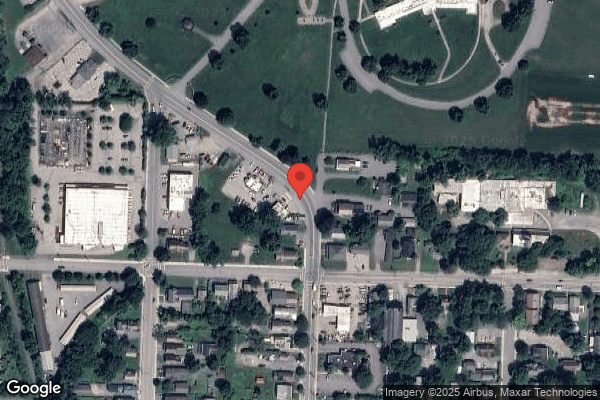
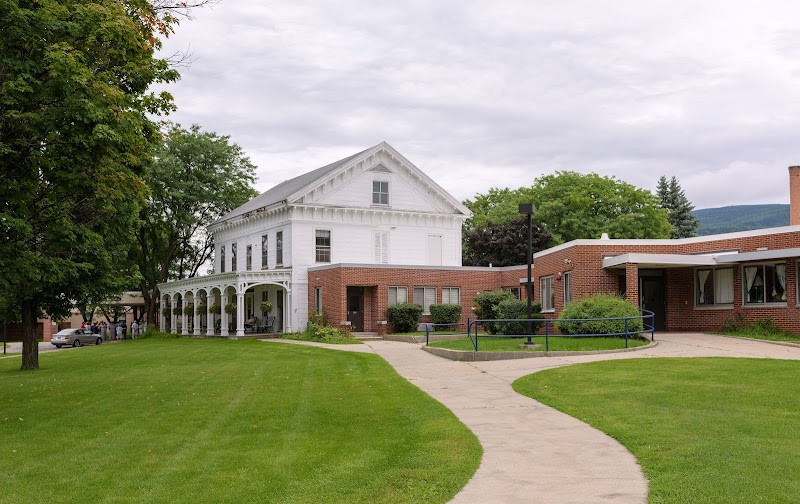
325 North Street, Bennington, VT 05201 (802) 447-6510
Government - State 177 Beds Independent Data: November 2025
Trust Grade
40/100
#24 of 33 in VT
Last Inspection: January 2025

Within standard 12-15 month inspection cycle. Federal law requires annual inspections.

Overview

The Vermont Veterans' Home has a Trust Grade of D, indicating below-average quality and some concerns about care. Ranked #24 out of 33 facilities in Vermont, it is in the bottom half of the state's nursing homes, and #3 out of 4 in Bennington County suggests limited options for better care nearby. The facility is worsening, with issues increasing from 1 in 2024 to 3 in 2025, which raises red flags for families. Staffing is a significant concern, earning only 1 out of 5 stars, and while turnover is a bit lower than average at 40%, this still indicates instability. Notably, the home has $168,575 in fines, which is concerning and suggests ongoing compliance issues. Recent incidents include a lack of supervision leading to resident altercations and failure to protect residents from potential physical abuse, highlighting serious safety risks that families should consider. Overall, while the health inspection rating is decent at 4 out of 5, the staffing and safety issues present clear weaknesses that may impact resident care.
Trust Score
D
40/100
In Vermont
#24/33
Bottom 28%
Safety Record
High Risk
Review needed
Inspections
Getting Worse
1 → 3 violations
Staff Stability
○ Average
40% turnover. Near Vermont's 48% average. Typical for the industry.
Penalties
✓ Good
$168,575 in fines. Lower than most Vermont facilities. Relatively clean record.
Skilled Nurses
○ Average
RN staffing data not reported for this facility.
Violations
⚠ Watch
14 deficiencies on record. Higher than average. Multiple issues found across inspections.
★★☆☆☆
2.0
Overall Rating
★☆☆☆☆
1.0
Staff Levels
★☆☆☆☆
1.0
Care Quality
★★★★☆
4.0
Inspection Score
Stable
2024: 1 issues
2025: 3 issues

The Good

  • Full Sprinkler Coverage · Fire safety systems throughout facility
  • No fines on record
  • Staff turnover below average (40%)

    8 points below Vermont average of 48%

Facility shows strength in fire safety.

The Bad

2-Star Overall Rating

Below Vermont average (2.8)

Below average - review inspection findings carefully

Staff Turnover: 40%

Near Vermont avg (46%)

Typical for the industry

Federal Fines: $168,575

Well above median ($33,413)

Significant penalties indicating serious issues

The Ugly 14 deficiencies on record

Jan 2025 3 deficiencies
CONCERN (D)

Potential for Harm - no one hurt, but risky conditions existed

Deficiency F0699 (Tag F0699)

Could have caused harm · This affected 1 resident

**NOTE- TERMS IN BRACKETS HAVE BEEN EDITED TO PROTECT CONFIDENTIALITY** Based on interview and record review, the facility failed to ensure that two residents [Res. #29 & #33 ] of 13 sampled residents...

Read full inspector narrative →
**NOTE- TERMS IN BRACKETS HAVE BEEN EDITED TO PROTECT CONFIDENTIALITY** Based on interview and record review, the facility failed to ensure that two residents [Res. #29 & #33 ] of 13 sampled residents who are trauma survivors receive culturally competent, trauma-informed care in accordance with professional standards of practice and accounting for residents' experiences and preferences in order to eliminate or mitigate triggers that may cause re-traumatization of the resident. Findings include: 1. Per review of Res.#29's medical record, the resident was admitted to the facility with diagnoses that include Post Traumatic Stress Disorder [PTSD]. Review of Physician Notes dated 12/27/24 record the resident is well known to myself and the staff here from past admissions. The Physician recorded when [Res.#29] gets irritable, [s/he] goes and hides because afraid [s/he] will blow up, at high risk of decompensation, very depressed, Military History: Army/ combat / communications - was all over Vietnam / still with flashbacks at times, startles easily - if have to awaken [h/her] - touch toes and call [h/her]. An interview was conducted with Social Services [SS] on 1/28/25 at 4:12 PM. SS stated that the facility utilizes a 'Behavioral Health Clinical Assessment' as an assessment tool to identify concerns related to the resident's condition and plan of care. Review of Res.#29's Behavioral Health Clinical assessment dated [DATE] records the admission Reason/Presenting Problem as respite and recovery. Further review of the Behavioral Health Clinical Assessment for Res.#29 reveals no further information recorded. Blank areas in the assessment include: -Summary of Current Mental Health or Psychiatric Issues -History of trauma -Type of trauma experienced -Symptoms experienced -Triggers -Identified needs -Recommended services/plan of care Review of Res. #29's Care Plan revealed the resident as not identified as suffering from PTSD, and no interventions identified related to experiences and preferences in order to eliminate or mitigate triggers that may cause re-traumatization of the resident. Per interview with Social Services [SS] on 1/28/25 at 4:12 PM, SS confirmed that Res. #29 was well known to the facility as diagnosed with PTSD. SS confirmed the resident was not care planned for h/her diagnosis of PTSD and was not assessed for trauma-related care and should have been. 2. Per record review, Resident #61 was admitted to the facility with a diagnosis of PTSD, anxiety, and depression. A document that is titled Behavioral Health Clinical Assessment, dated 9/14/24 identifies that Resident # 61 has a history of trauma. The section Type of trauma experienced is not completed. The form does not contain any further information. Per review of Resident #61's record, no evidence was found that the resident was assessed for triggers that may re-traumatize the resident. No evidence was found in Resident 61's plan of care regarding the resident's triggers or how staff can provide care that avoids re-traumatizing the resident. Per an interview on 1/28/2025 at approximately 4:15 PM with Social Services and the Director of Social Services, the Licensed Social Worker indicated s/he was not aware of a trauma assessment format that the facility uses, and had not been assessing the residents for triggers related to their traumas as outlined in the facility policy. The Director of Social Services confirmed that Resident #61's trauma-specific triggers had not been identified , and Resident #61 should have had a trauma care plan.
CONCERN (D)

Potential for Harm - no one hurt, but risky conditions existed

Deficiency F0790 (Tag F0790)

Could have caused harm · This affected 1 resident

**NOTE- TERMS IN BRACKETS HAVE BEEN EDITED TO PROTECT CONFIDENTIALITY** Based on interview and record review, the facility failed to provide routine dental services for 1 resident [Res. #26] of 3 resi...

Read full inspector narrative →
**NOTE- TERMS IN BRACKETS HAVE BEEN EDITED TO PROTECT CONFIDENTIALITY** Based on interview and record review, the facility failed to provide routine dental services for 1 resident [Res. #26] of 3 residents sampled with identified dental issues. Findings include: Per review of Res. #26's medical record, the resident was admitted to the facility with diagnoses including dysphagia [a condition with difficulty in swallowing food or liquid]. Review of Res. #26's Nutrition Assessment conducted for admission to the facility dated 10/28/2024 assessed the resident as having some 'chewing' difficulty related to temporary dentures only with the resident edentulous [lacking teeth], Has temporary dentures. Needs permanent ones. Further record review reveals Res. #26 was seen by a dentist on 10/31/24. Dental Notes record The patient had teeth extracted in June or July and expected a new set [of dentures] to be made after healing. I will contact [Veterans Administration] and see what has been approved and whether I can take over here. An interview was conducted with Res. #26 on 1/27/25 at 3:00 PM. Res. #26 stated There is one thing I would like; to know when my next dentist appointment is. I was seen and told I need new dentures and I have not heard anything since. Review of Res. #26's Nutrition assessment dated [DATE] records the resident at nutritional risk with the resident reports some trouble chewing related to being edentulous with only temporary dentures. Saw dentist on 10/31/24. Needs permanent dentures per MD. Review of Res. #26's Care Plan confirms the resident is edentulous with only temporary dentures .Needs permanent dentures per MD. An interview was conducted with Res. #26's Unit Manager [UM] on 1/28/25 at 4:25 PM. The UM confirmed that Res.#26 was identified as needing dentures upon admission in October 2024. The UM stated that after the resident saw the dentist on 10/31/24 the facility's process is to reach out to the Veterans Administration per the dentist's instructions to see if services were in place. The UM confirmed this was not done and could not ensure that the resident's need for new dentures was being addressed.
CONCERN (E) 📢 Someone Reported This

A family member, employee, or ombudsman was alarmed enough to file a formal complaint

Potential for Harm - no one hurt, but risky conditions existed

Accident Prevention (Tag F0689)

Could have caused harm · This affected multiple residents

**NOTE- TERMS IN BRACKETS HAVE BEEN EDITED TO PROTECT CONFIDENTIALITY** Based on observation, interview, and record review, the facility failed to ensure 4 out of 17 sampled residents (Resident #13, #...

Read full inspector narrative →
**NOTE- TERMS IN BRACKETS HAVE BEEN EDITED TO PROTECT CONFIDENTIALITY** Based on observation, interview, and record review, the facility failed to ensure 4 out of 17 sampled residents (Resident #13, #17, #40, #52) received sufficient supervision to prevent resident to resident altercations, and failed to ensure the environment remains as free of accident hazards as is possible for 1 of 17 sampled residents (Resident # 1). Findings include: 1). A facility investigation report of a resident to resident altercation on 6/20/24 submitted to the State Agency stated staff heard veterans yelling in the porch area. When staff found the two residents [Resident #40] was holding [Resident #52's] right forearm. [Resident #52] stated, [S/he] hit me. Per the facility investigation, both residents were in the porch area without staff present when the altercation occurred. Per an Incident Note dated 6/13/24, [Resident #52] had red areas on the right lateral forehead and one red area on the left temple and mild redness on right lateral forearm. Per review of Resident #40's care plan dated 8/24/22 [Resident #40] mood can be labile going from happy go lucky to angry. During [his/her] angry outbursts [S/he] can have verbal aggression; yelling, screaming, and using abusive language with a history of resident to resident altercations. [S/He] can become physically aggressive and violent [toward staff and other residents]. Interventions per his/her care plan include anticipate and meet resident needs. Per review of Resident #52's care plan dated 2/14/23 [Resident #52] has a diagnosis of Alzheimer's disease and anxiety. Sometimes [his/her] reality can be disturbing, and [S/he] will be upset, anxious and use vulgar language . During these alternate realities [Resident #52] can become quite argumentative and agitated. During these times [S/he] may raise [his/her] fist, kick, hit or push [others], resident has history of resident altercations and per his/her care plan [Resident #52] is at risk to wander r/t dementia, disoriented to place, Impaired safety awareness. Per further review of his/her careplan, on 4/19/2023 [Resident #52] wandered into another Veteran's room which resulted in an altercation. The care plan includes the following intervention dated 10/30/23, When [Resident #52] becomes irritable and agitated and stands up, go with it! Use this as an opportunity to walk [him/her] away from the person or situation. Per the Facility assessment dated [DATE], the facility cares for residents with mental and behavioral health diagnosis that include complex mental health, medical conditions and medication- related issues causing psychiatric symptoms and behavior[s]. The facility's goal per report is to identify and implement interventions to help support individuals with these through the assessment of the [individual residents], early identification of problems/deterioration, management of medical and psychiatric symptoms and conditions . There was no evidence provided by the facility that staff were providing supervision to Resident #40 or Resident #52 while on the porch on 6/14/24. Per interview on 1/29/25 at 2:00 PM with the Deputy Administrator and the Chief Executive Officer, both confirmed that Resident #40 and Resident #52 were on the porch together without supervision with a history of resident-to-resident altercations. 2). Per record review, Resident #17 has a care plan focus dated 5/11/23 that states [S/he] has repeatedly gone into other Veterans' rooms. [S/he] can be difficult to redirect from theses space[s]. Resident #17's care plan does not have any interventions in place to provide supervision or to address Resident #17's wandering or entering other residents' rooms. Per a progress note dated 6/13/2024, Resident #17 was self propelling down a hallway. Resident #13 was walking in the opposite direction, and when Resident #17 passed, Resident #13 turned and tapped him/her on the head. Resident #17 stopped propelling and raised his/her arm. An Incident Note dated 6/14/24 stated Resident #13 was at the end of the hall and was seen by a staff member standing behind the wheelchair of [Resident #17], pulling [his/ her] hair and hitting [him/her] on the top of the head. [Resident #13] stated that s/he is sick of [Resident#17] opening [his/her] door. Per facility investigation on 6/14/24 [Resident #13] was trying to stop [Resident #17] from going into his room. Per the facility investigation, the event occurred near the end of the hall outside of Resident #13 room. During an interview on 1/29/25 at 2:00 PM with the Deputy Administrator and the Chief Executive Officer, both confirmed that the above incidents occurred at the facility. 3) Per observation and interview on 1/27/25 at 10:45 AM, Resident #1 had multiple scratches and abrasions in various states of healing on each of his/her knees. Resident #1 stated that when s/he transfers from their wheelchair using the grab bar mounted to their bathroom wall with a 1-person physical assist, they often scrape their knees on the toilet paper holder that is mounted to the wall next to the toilet. Resident #1 stated that they have asked several LNAs [licensed nursing assistants] to please get someone to move this toilet paper holder as it is hurting their knees on a regular basis. Resident #1 expressed feeling upset and disrespected stating that All I ever did was go fight in a war for them, I guess it is too much to ask [to have the toilet paper holder moved]. Facility policy VVH [[NAME] Veterans Home] Policy & Procedure Maintenance Repair Requisitions (effective date 5/11/22) states, It is the policy of this facility that maintenance repair requisitions will be generated by staff to provide notice and a record of repairs as necessary .Repair requests are to be entered into the MaintenanceCare system which can be accessed via VVH computer. Veterans/Members, Visitors, etc. are to notify staff members of their maintenance requests and staff will enter their requests into the MaintenanceCare system. In an interview on 1/28/25 at 4:10 PM, the Unit Manager confirmed that all staff have access to an online portal to enter maintenance requests and all staff are expected to do so if a resident asks them to. In an interview on 1/29/25 at 12:40 PM with the Director of Environmental Services, they confirmed that over the last 12 months no staff member has entered Resident #1's request to have their toilet paper holder moved. The Director of Environmental Services confirmed that all staff on the unit have access to the online portal for maintenence requests and should have entered this request into the system per facility policy.
Feb 2024 1 deficiency
CONCERN (D) 📢 Someone Reported This

A family member, employee, or ombudsman was alarmed enough to file a formal complaint

Potential for Harm - no one hurt, but risky conditions existed

Report Alleged Abuse (Tag F0609)

Could have caused harm · This affected 1 resident

Based on staff interviews and record review the facility failed to ensure that an allegation of staff to resident abuse was reported to the State Licensing Agency as required. Findings include: Durin...

Read full inspector narrative →
Based on staff interviews and record review the facility failed to ensure that an allegation of staff to resident abuse was reported to the State Licensing Agency as required. Findings include: During an interview on 2/12/2024 at 2:30 PM Resident #1's significant other reported that she/he had placed a camera with no sound recording in Resident #1's room when visitation was being restricted due to COVID. The significant other stated that on 1/22/2022 while viewing the camera she/he witnessed a licensed nursing assistant (LNA) abuse her/his spouse. According to the significant other this allegation was not reported to the facility until 1/4/2023, on the same day an email was sent to the Deputy Administrator reporting the allegation. At this time the significant other was under the impression that the LNA was let go. On 12/5/2023 approximately one year after the initial allegation, while visiting Resident #1 she/he saw the LNA walk down the hall that Resident #1 resides in and realized that the LNA was allowed to return to work. Per the significant other she/he was very upset to see the LNA back and she/he sent another email to the Deputy Administrator asking how they could allow a known abuser to return to work. Per review of emails provided by the facility the Deputy Administrator, on 1/4/2023 Resident #1's significant other sent an email alleging that in the early evening of 1/22/2022 she/he witnessed a LNA holding the handles of Resident #1's wheelchair and proceeded to suddenly, rapidly, and abruptly, drop the wheelchair into a fully reclined position. This movement startled Resident #1 as evidenced by the resident shooting his/her hands out with palms up. The significant other alleged that the resident stated something like, Hey! Take it easy! and that the LNA stepped in front of the resident and in an angry pose, pointed his/her finger like S/he was scolding the resident. The facility did not report this incident to the licensing agency at the time. Approximately one year later on 12/5/23, after seeing the LNA in the hall, Resident #1's significant other sent another email to the Deputy Administrator asking how a known abuser of helpless defenseless residents could be allowed to return to work. Per interview on 2/13/24 at 10:45 AM with the Deputy Administrator, S/he stated that when Resident #1's significant other reported this concern, the LNA was put on leave, and an investigation was completed by the Human Resource Department (HR). The Deputy Administrator confirmed that the allegation had not been reported to the State Licensing Agency. During an interview on 2/13/24 at approximately 12:30 PM the facility Administrator confirmed that the 1/4/2023 or the 12/5/23 abuse allegations had not been reported to the State Licensing Agency. Per the Administrator the initial report made by Resident #1's significant other was considered a customer service or resident right issue, not an abuse allegation. The second allegation was not reported because it had been investigated by HR in the past and was found unsubstantiated.
Dec 2023 1 deficiency
CONCERN (E) 📢 Someone Reported This

A family member, employee, or ombudsman was alarmed enough to file a formal complaint

Potential for Harm - no one hurt, but risky conditions existed

Free from Abuse/Neglect (Tag F0600)

Could have caused harm · This affected multiple residents

**NOTE- TERMS IN BRACKETS HAVE BEEN EDITED TO PROTECT CONFIDENTIALITY** Based on staff interviews, and record review, the facility failed to protect the resident's right to be free from physical abuse...

Read full inspector narrative →
**NOTE- TERMS IN BRACKETS HAVE BEEN EDITED TO PROTECT CONFIDENTIALITY** Based on staff interviews, and record review, the facility failed to protect the resident's right to be free from physical abuse by a resident for 3 of 6 residents in the sample (Resident #1, #3, and #4). Findings include: 1 . Per record review Resident #1 was admitted to the facility on [DATE] with the diagnosis of Alzheimer's Disease. Review of Resident #1's progress notes and care plan reveal that Resident #1 has exhibited aggression toward staff and other residents, such as yelling, slapping, throwing dishes, grabbing, and being combative with care. Review of Resident #2's record reveals that s/he was admitted to the facility on [DATE] with the diagnosis of Alzheimer's Disease and resides on the facility's licensed memory care unit. Resident #2's progress notes and care plan reveal that Resident #2 can be territorial with his/her perceived space and can exhibit aggression towards others. On 10/26/2023 at 8:30 PM Resident #1 was found by staff in Resident #2's room on the floor on top of Resident #2. Resident #2 sustained injuries from the incident and was sent to the hospital emergency department (ED) for evaluation and treatment. While in the ED Resident #2 required the administration of IM (intramuscular) Haldol (an antipsychotic medication) for agitation. Per a progress note written in Resident #1's record, on 10/26/23 at 8:30 PM Resident #1 was found in Resident #2's room, on top of Resident #2 swinging his/her hands and arms toward Resident #2. Resident #1 was separated from Resident #2 and was escorted to their room where s/he got in bed and went to sleep. Progress notes written in Resident #2's record on 10/26/23 and 10/27/23 reflect that Resident #2 was on the floor with Resident #1 on top of him/her on 10/26. Resident #1 was removed, and Resident #2 was assessed by charge registered nurse (RN). Resident #2 has multiple abrasions and open areas on body including shoulder, arms, back, and right leg. S/he was unable to clearly give an account of what happened. Resident #2 was sent to the hospital by rescue squad. An Incident Note written on 10/26/23 states Staff noted [Resident #2] was on the floor in [her/his] room while another veteran was swinging [her/his] hands and arms at [them]. Veterans were separated by staff and were assessed for pain and injury. Small scratches, some bleeding noted to right upper thigh, left shoulder, left back of arms and chest. Abrasions noted to right should blade and left tricep. Large skin tear noted to right elbow with moderate bleeding noted. Subcutaneous tissue/?? bone exposed . Areas cleansed and covered. Range of motion intact per norm of veteran. Denies pain. An Acute Visit Provider Note written on 10/27/2023 states that Resident #2 sustained multiple wounds, mostly superficial except for [his/her] right elbow which involved steri strips and bandage. Review of the facility incident file, a witness statement completed by a Licensed Practical Nurse (LPN) who responded to the incident states Resident #2 was in bedroom and seen on floor in bedroom cradled by another resident, while attempting to defend self. Resident is cornered on the floor, blood is dripping, nurse attempting to break up altercation. Resident has bruising, scratches, and deep laceration on elbow (right). and [Resident #1] in another resident's bedroom and seen cradling over another resident. [Resident #1] is punching other resident, while blood is on the floor from other resident. [Resident #1] is separated off top of other veteran, and [s/he] immediately goes in [her/his] room and falls back asleep. During a phone interview with the LPN on 12/5/23 at 2:15 PM when s/he responded to the incident s/he saw Resident #1 on-top of Resident #2 and they were pretty much duking it out, they were punching each other . and I had to get in and break them apart. [Resident #1] was crouched over [Resident #2] and both were making contact with each other. Prior to the incident Resident #1 had been on 15-minute checks. The LPN also stated that Resident #1 is typically more aggressive and volatile. S/he was placed on the Buddy 1 to 1 staff to resident after the incident. Per interview with the Director of Social Services at 1:30 PM it is likely that Resident #1 had entered Resident #2's bedroom through the adjoining bathroom and woke Resident #2. The Director of Social Services confirmed that the Resident-to-Resident altercation occurred however, due to cognitive issues and the inability for either Resident to recall the event it is undetermined by the facility who the initial aggressor was. 2. Per record review Resident #1 was admitted to the facility on [DATE] with the diagnosis of Alzheimer's Disease and resides on the licensed memory care unit. Review of Resident #1's progress notes and care plan reveal that Resident #1 has exhibited aggression toward staff and other residents, such as yelling, slapping, throwing dishes, grabbing, combativeness with care, and recent history of Resident-to-Resident physical abuse. Per record review Resident #4 was admitted to the facility with the diagnosis of Alzheimer's Disease and resides on the licensed memory care unit. On 11/27/23 at 2:45 PM Resident # 4 was the victim of Resident-to-Resident physical abuse when staff witnessed Resident #1 striking him/her twice with a plastic garbage pail. Per a nurses Incident Note written on 11/27/23, when the nurse and licensed nursing assistant (LNA) responded, they saw Resident #4 sitting on the floor against their dresser. The LNA had witnessed Resident #1 striking Resident #4 twice with a plastic garbage pail. Resident #4 had bruising to the area above her/his left elbow, some redness and a scratch to their left side of their back, and a small abrasion across the bridge of his/her nose. Resident #4 denied pain but said that it hurt when s/he was hit. Per interview with the Director of Social Services on 12/5/23 at 1:30 PM Resident #1 is unpredictable and it is difficult to pinpoint when s/he will become aggressive. The care team has huddles after each incident to review the possible cause of the escalation, and Resident #1 is now on staff 1-1 Buddy. 3. Per record review, on 11/25/23 Resident #1 was ambulating down the hall on the memory care unit. As s/he was walking by, Resident #3 punched her/him in the left side of her/his face. Per interview on 12/4/23 at 2:00 PM the LNA who witnessed the altercation confirmed that Resident #3 hit Resident #1. The LNA stated that when Resident #1 was struck s/he stepped back and leaned into the wall with a confused look on her/his face. Resident #1 did not engage in the altercation and the two residents were separated. During an interview on 12/5/23 at 1:30PM the Director of Social Services confirmed that Resident #3 had hit Resident #1 in the face, and that after review of the incident staff were unable to determine why Resident #3 had struck Resident #1. Although Resident #1 seemed to recall the incident for a brief time, there have been no other altercations between the two residents since.
Oct 2023 4 deficiencies
CONCERN (D)

Potential for Harm - no one hurt, but risky conditions existed

Resident Rights (Tag F0550)

Could have caused harm · This affected 1 resident

**NOTE- TERMS IN BRACKETS HAVE BEEN EDITED TO PROTECT CONFIDENTIALITY** Based on interview and record review the facility failed to ensure that staff treated each resident with respect and dignity for...

Read full inspector narrative →
**NOTE- TERMS IN BRACKETS HAVE BEEN EDITED TO PROTECT CONFIDENTIALITY** Based on interview and record review the facility failed to ensure that staff treated each resident with respect and dignity for 1 of 26 sampled residents (Resident #18) by making remarks related to call bell usage. Findings include: Resident #18 was admitted to the facility in August 2023, and prior to admission Resident #18 had suffered a cerebral vascular accident (a blockage or rupture of an artery to the brain blocking the blood flow to the brain) resulting in right-sided hemiplegia (paralysis of the right arm and leg), and right-hand contracture (shortening and stiffening of the joints preventing normal movement). On October 23, 2023, when Resident #18 was asked if s/he felt they were treated with dignity and respect s/he stated Not when someone comes in and says you rang your bell twice in the same hour and the other guy did too. We're not going to spend the whole night coming down here. Resident #18 became visibly upset with a furrowed brow and raised tone as s/he described needing assistance due to their inability to walk and having one hand with very limited use which s/he demonstrated for the surveyor. Resident #18 could not recall what assistance they had rang the call bell for or if they had received the assistance. Resident #18 has a BIMS (Brief Interview for Mental Status) score of 15 indicating intact cognition and was able to identify the time of this interaction as the night before at approximately midnight. A review of Resident #18's care plan contained focus areas mentioning reliance on call bell use including: 1. Activities of daily living deficit for which interventions included- Encourage to use call bell for assist. Extensive assist for dressing, Set up assist for eating, Stand lift with 2 assist for toilet and transfer. [name removed] requires limited assistance by 1 staff to turn and reposition in bed as necessary. 2. [Name removed] is (at) risk for serious injury from falls related to hemiplegia, bladder and bowel incontinence, psychoactive drug use, impaired mobility. Be sure [name removed] call light is within reach and encourage him/her to use it for assistance as needed. [name removed] needs prompt response to all requests for assistance. On 10/24/23 at 1 p.m., the unit manager was interviewed regarding the allegation of the disrespectful response reported by Resident #18. To determine the identity of the staff working at the time of the alleged incident the nursing supervisor joined the discussion and provided a paper copy of the schedule in question. When the staff members were identified the surveyor asked if, based on the staff present at the time of the allegation they would be surprised by the report of this disrespectful interaction. Per both the unit manager and the supervisor it would not be surprising if any of the four staff on duty at the time had used a tone or made [NAME] statements. On 10/25/23 at approximately 2 p.m., the facility administrator provided a copy of the interview conducted by social services with Resident #18 earlier that day. Statements in this interview include- When asked about how he feels his nursing care is going, [name removed] stated that everyone is good and helpful. One person is impossible, I don't speak with her. [Name removed] then stated about 4 days ago at 6 a.m., s/he rang his/her bell to have his/her urine collection device emptied. [name removed] said s/he had to ring a few minutes later because s/he wanted a washcloth for his/her eye. S/he said that a staff member came back to his/her room and said, We have been in here for five calls in five minutes and something about getting out the door. [name removed] reports s/he told him/her to 'get the hell out of my room now.
CONCERN (D)

Potential for Harm - no one hurt, but risky conditions existed

Deficiency F0554 (Tag F0554)

Could have caused harm · This affected 1 resident

**NOTE- TERMS IN BRACKETS HAVE BEEN EDITED TO PROTECT CONFIDENTIALITY** Based on observation, interview, and record review the facility failed to ensure that a resident who was capable of self-adminis...

Read full inspector narrative →
**NOTE- TERMS IN BRACKETS HAVE BEEN EDITED TO PROTECT CONFIDENTIALITY** Based on observation, interview, and record review the facility failed to ensure that a resident who was capable of self-administration of medications was able to store them safely and securely. Findings include: During an interview with Resident #50 on 10/23/23 at 3:12PM it was noted that there were several bottles of dietary and herbal supplements on their overbed table, dresser, shelf, and in a three-drawer plastic bin. These supplements included Chewable Vitamin C, Inflama-Rest (support for healthy inflammation response), RejuvenZyme (heart, joint, and immune support), Magnesium [NAME], Wellness Formula, Ashwagandha (rejuvenating tonifier), Tums, and Ultra-Cal Night, Daily essential Enzymes. Per record review Resident #50 has been assessed as capable for self-administration of these supplements. A physician's order states that the resident may self-administer [his/her] supplements based on [his/her] last self-administration assessment. Review of the facility policy titled Veteran/Member Supplement Use states, 5) The Veteran, Member, responsible party and VVH staff will follow the facility's self-administration of medication policy. The policy titled Medication Administration, Self Storage 1. Any Veteran/Member deemed able to self administer medications may choose to have his/her medications stored in the medication cart room on the unit or in their room. 2. If a Veteran/Member stores medication in his/her room the following must be implemented: A. The medications will remain in a locked container at all times i.e., a locked box. During an interview on 10/25/23 at 11:49 AM the administrator confirmed that the supplement policy does refer to the Medication Administration, Self-policy and that the supplements should be kept secure.
CONCERN (D)

Potential for Harm - no one hurt, but risky conditions existed

Comprehensive Care Plan (Tag F0656)

Could have caused harm · This affected 1 resident

**NOTE- TERMS IN BRACKETS HAVE BEEN EDITED TO PROTECT CONFIDENTIALITY** Based on interview and record review the facility failed to ensure that each resident has a person-centered comprehensive care p...

Read full inspector narrative →
**NOTE- TERMS IN BRACKETS HAVE BEEN EDITED TO PROTECT CONFIDENTIALITY** Based on interview and record review the facility failed to ensure that each resident has a person-centered comprehensive care plan developed and implemented to address the resident's medical needs for 1 of 26 residents sampled (Resident #18) regarding impaired cardiac output. Findings include: Resident #18 was admitted to the facility in August 2023, prior to admission Resident #18 had suffered a cerebral vascular accident (a blockage or rupture of an artery to the brain blocking the blood flow to the brain) resulting in right-sided hemiplegia (paralysis of the right arm and leg), and right-hand contracture (shortening and stiffening of the joints preventing normal movement). Additional diagnoses include permanent atrial fibrillation (an abnormal heart rhythm characterized by rapid and irregular beating of the heart) and unspecified bradycardia (an abnormally slow resting heart rate). Per record review on 8/31/23 Resident #18 was sent emergently to the hospital with symptomatic bradycardia and long pauses (abnormally long intervals between heartbeats), s/he was sent to [NAME] Medical Center to be evaluated for a pacemaker and per the provider note it is not completely {clear} why s/he did not receive a pacemaker in [NAME] Medical Center. The resident returned to the facility from [NAME] Medical Center on 9/7/23. On 10/10/23 Resident #15 became dyspneic (short of breath), and hypoxic (low oxygen level in the blood), and coughing. Resident #15 was again sent emergently to the local hospital and admitted with congestive heart failure and probable bacterial pneumonia. Resident #15 was admitted to the hospital and on 10/16/23 s/he had a pacemaker placed. A review of the care plan revealed that there was no area relating to the resident's cardiac status nor was there mention of the resident having a pacemaker. During an interview with the unit manager on 10/24/23 at 1:45 p.m. s/he confirmed the care plan did not but should contain reference to the pacemaker and of the the impaired cardiac status of the resident.
CONCERN (D)

Potential for Harm - no one hurt, but risky conditions existed

Deficiency F0657 (Tag F0657)

Could have caused harm · This affected 1 resident

**NOTE- TERMS IN BRACKETS HAVE BEEN EDITED TO PROTECT CONFIDENTIALITY** Based upon interview and record review the facility failed to ensure the plan of care for 1 resident [Res.#83] of 20 sampled res...

Read full inspector narrative →
**NOTE- TERMS IN BRACKETS HAVE BEEN EDITED TO PROTECT CONFIDENTIALITY** Based upon interview and record review the facility failed to ensure the plan of care for 1 resident [Res.#83] of 20 sampled residents with falls was reviewed and revised to prevent future falls and injury. Findings include: Review of Res. #83's medical record reveals the resident was admitted to the facility with diagnoses that included Degenerative Arthritis with severe chronic pain. Per review of Res. #83's Care Plan, the resident is identified as at risk for fall related injury related to deconditioning, symptoms of pain from arthritis, reports history of fall prior to admission along with sustained a witnessed fall with no injury, related to Poor Balance, Unsteady gait. Review of Res.#83's medical record reveals the resident suffered 4 falls between August and September 2023. Progress notes record: - 8/16/2023 Incident Note. Resident was calling for help, when LNA [Licensed Nurse's Aide] went to room, [Res.#83] was sitting on the floor in front of [their] recliner. [They] stated [they] slid off recliner . Neurological checks and vital signs initiated per fall protocol. - 8/19/23 Called to the unit by nursing staff to eval [Res.#83] who had rang [their] bell and was noted lying on the floor when staff entered. - 9/7/2023 [Res.#83] left the dining room (in electric wheelchair) after eating [their] breakfast. Was self-transferring and lost [their] balance. [Res.#83] was noted on the floor with a head wound. [Res.#83] was assisted (via Hoyer lift) off the floor to [their] recliner. Due to the head wound and feeling oozy [Res.#83] was transported to Southwestern [NAME] Medical Center. A re-admission update when Res.#83 returned to the Veteran's Home reveals [Res.#83] was sent from Southwestern [NAME] Medical Center [SVMC] to [NAME] Medical Center after a fall. [They] had a 12 hour stay in the local Emergency Department. [They were] sent to [NAME] Medical Center from SVMC where [they were] diagnosed with a subdural hemorrhage ., [A subdural hemorrhage is a kind of intracranial hemorrhage, which is the bleeding in the area between the brain and the skull. Specifically, it is a bleed just under the dura, which is one of the protective layers of tissue that surrounds the brain]. (www.rwjbh.org/treatmentcare/neuroscience/neurology/conditions/subdural-hemorrhage) Further review of Progress Notes for Res.#83 reveals 2 days after the fall with injury on 9/7/23, the resident fell again. - 9/9/2023 Incident Note: Resident noted on the floor by rest room door. Pillow placed under resident's head. Per LNA resident was being assisted out of restroom, in which resident started sliding to the floor. LNA in turn assisted resident to floor landing resident on [their] buttocks. Did not hit head .Resident voiced pain of 7/10 pain to [their] buttock. Per review of the '[NAME] Veteran's Home Falls Program' [dated March 19, 2014], the policy states All Veteran/members experiencing a fall will receive appropriate care and investigation of the cause. Assess Veteran/member's condition immediately to determine extent of injury for both witnessed and unwitnessed falls. The Falls policy also includes the statement Update care plan with new interventions and communicate interventions to staff. After the fall on 9/9/23, Res.#83's Care Plan was revised with the interventions: - Continue interventions on the at-risk plan, dated 9/9/2023 [after the 4th documented fall] along with 'new' interventions listed as monitoring the resident for 72 hours and determining factors contributing to the fall, which according to the '[NAME] Veteran's Home Falls Program' are applied to all residents after all falls. Further review of Care Plan revisions related to fall risk and actual falls for Res.#83 include the interventions: Implemented bariatric non-skid socks: listed as a new revision and dated 9/9/2023 but repeating the intervention Ensure that [Res.#83] is wearing . h/her anti-skid socks dated 4/11/2023. Per record review, after assessing the resident as able to ambulate with rolling walker unsupervised and noting that the resident asks for help despite not needing it, after 3 falls, an intervention to prevent future falls was added as Remind [Res.#83] to call for assistance if walker/wheelchair is not in [h/her] reach before transferring dated 9/7/23, and then repeated as a new intervention and revision after another fall as Educated resident use of walker, dated 9/9/23. An interview and record review were conducted with Res. #83's Unit Manager on 10/25/23 at 9:50 AM. The Unit Manager confirmed that new interventions to prevent future falls were not added after a fall on 9/7/23 which resulted in a subdural hemorrhage. The resident suffered another fall on 9/9/23 shortly after returning to the facility, again with no new interventions added to prevent future falls. The Unit Manager also reported that if any interventions were attempted but not put in Res.#83's care plan, there was no process in place to communicate those changes to staff on a continuing basis. Additionally, the Unit Manager confirmed that Care Plan interventions dated as added after falls on 9/7/23 and 9/9/23 were not new interventions or revisions, but identical interventions attempted before that did not prevent future falls, and/or repeating the facility's Falls Policy which is in effect for all residents at all times.
Jun 2023 1 deficiency
CONCERN (D) 📢 Someone Reported This

A family member, employee, or ombudsman was alarmed enough to file a formal complaint

Potential for Harm - no one hurt, but risky conditions existed

Deficiency F0557 (Tag F0557)

Could have caused harm · This affected 1 resident

Based on interview and record review the facility failed to ensure that one of three residents (Resident #1) in the applicable sample were treated with dignity and respect. Findings include: Per reco...

Read full inspector narrative →
Based on interview and record review the facility failed to ensure that one of three residents (Resident #1) in the applicable sample were treated with dignity and respect. Findings include: Per record review, Resident #1 has diagnoses that include major depressive disorder, personality change, frontal lobe and executive function deficit, cerebrovascular disease, dementia, and behavioral disturbances. Per record review, on 4/8/23 at approximately 8:40 AM a Licensed Nurse Assistant (LNA) was working as a buddy, sitting in a chair 1 door down from Resident #1's room. Per documented witness interview conducted by the Deputy Administrator, Resident #1 and the LNA were yelling like a husband and wife were fighting and [Resident #1] yelled 'get the fuck out of my room and fuck off' [the LNA] said as exiting the room 'right back at you I hope you choke on your food.' According to the facility investigation, 20-30 minutes after the incident the LNA who had overheard the verbal exchange saw the LNA involved re-enter the room and say to Resident #1 I'm so sorry [name omitted], do you forgive me? Per interview with the Licensed Nursing Home Administrator (LNHA) on 6/5/2023 at 12:25 PM there had been no concerns with the LNA's interactions with any Residents in the past, and the LNA had recently received education related to this specific Resident's behaviors. The LNHA confirmed there had been a verbal altercation between Resident #1 and the LNA who was in her/his room, and that the Resident had not been treated with dignity and respect.
Nov 2022 4 deficiencies
CONCERN (D)

Potential for Harm - no one hurt, but risky conditions existed

Deficiency F0657 (Tag F0657)

Could have caused harm · This affected 1 resident

Based on staff interview and record review the facility failed to revise the plan of care to include providing additional fluids for one resident (Resident #38) of 38 residents sampled. Findings inclu...

Read full inspector narrative →
Based on staff interview and record review the facility failed to revise the plan of care to include providing additional fluids for one resident (Resident #38) of 38 residents sampled. Findings include: On October 12, 2022 Resident #38 was sent to the emergency room for evaluation of decreased responsiveness. The resident was returned to the facility after receiving treatment including 1 liter of intravenous fluid. Based on concerns regarding hydration status the provider wrote an order on October 13, 2022, for nursing to sign off that Resident #38 received 1500 ml's (milliliters) of fluid on the first and second shifts. The medication administration record was reviewed from October 14-October 31, 2022 where it was noted of 34 opportunities to provide the resident the ordered 1500 ml this goal was met 11 times and missed 23 times. Resident #38's plan of care was reviewed and it was noted the care plan had not been revised to include the provision of additional fluids. On 11/1/22 the unit manager confirmed the plan of care should have been revised to provide this direction for the nursing staff but had not been.
CONCERN (D)

Potential for Harm - no one hurt, but risky conditions existed

Deficiency F0692 (Tag F0692)

Could have caused harm · This affected 1 resident

Based on record review and staff interview the facility failed to provide sufficient fluid intake to maintain proper hydration and health for one resident (#38) of 38 residents sampled findings includ...

Read full inspector narrative →
Based on record review and staff interview the facility failed to provide sufficient fluid intake to maintain proper hydration and health for one resident (#38) of 38 residents sampled findings include: On 10/12/22 Resident #38 was noted to become increasingly drowsy with slowed response to stimulation and was sent to the emergency room where he/she received treatment including 1 liter of intravenous fluid and was returned to the facility. After a discussion between the provider and Resident #38's spouse who expressed concern regarding Resident #38 not receiving adequate fluids which may have led to his/her requiring emergent care an order was placed for nursing staff to sign off indicating the resident received 1500 milliliters of fluids every first and second shift. The medication administration record was reviewed from October 14-October 31, 2022 where it was noted of 34 opportunities to provide the resident the ordered 1500 ml this goal was met 11 times and missed 23 times. On 11/1/22 the unit manager confirmed there were no other places the information may have been documented and that the ordered amounts had not been provided. When asked as to his/her expectation if an order cannot be followed he/she replied the expectation would be a nurses note and notification of the provider, he/she confirmed this had not been done.
CONCERN (E)

Potential for Harm - no one hurt, but risky conditions existed

Food Safety (Tag F0812)

Could have caused harm · This affected multiple residents

Based upon observation, interview, and record review, the facility failed to ensure refrigerator temperatures on resident units were maintained to prevent the potential for food borne illness. Finding...

Read full inspector narrative →
Based upon observation, interview, and record review, the facility failed to ensure refrigerator temperatures on resident units were maintained to prevent the potential for food borne illness. Findings include: Per observation of the resident food/snack refrigerator in the 'Sports Bar' area of the facility's North unit, on 11/2/22 at 11:18 AM, the temperature sensor located on the outside of the refrigerator read 49.5 degrees F. [Fahrenheit]. A review was conducted of the written refrigerator temperature log for the Sports Bar refrigerator. The temperature log includes the notation Fridge temp 36-40 degrees F. If temperature is out of range, notify maintenance department right away, put out of order sign in the door, inspect and remove items if needed. Review of the temperature log from July 31, 2022, through the date of the survey 11/2/22 revealed the highest temperature recorded as 54.8 degrees F. on 8/15/22, with the temperature reaching over 50 degrees 6 times during the review period. Additionally, no recorded temperature was listed as 41 degrees or below on any date, and no temperatures were recorded in the written log for 24 days during the period reviewed. Per interview with the facility's Administrator [ADM] and the Maintenance Director on 11/2/22 at 12:20 PM, staff are assigned daily to record the resident refrigerator temperatures on all resident units. If the refrigerator's temperatures are out of range [per facility policy Fridge temp 36-40 degrees F.] the maintenance department is to be notified. Per interview with the Maintenance Director, there is no record that the maintenance department was notified on any date regarding the out of range temperatures during the greater than 3 month period reviewed for the 'Sports Bar' resident refrigerator. Review of the facility's Nursing Schedule reveals a section listing The following staff is responsible for checking unit refrigerator temps and documenting, with a staff member assigned to each resident unit. Per review of the resident food/snack refrigerator log for the American Way unit for October 2022, temperatures were not recorded as taken on 18 of 31 days. An interview was conducted with the American Way Unit Manager [UM] on 11/2/22 at 11:33 AM. The UM stated that resident refrigerator temperatures are to be recorded twice daily. The UM confirmed that temperatures were missing on 18 of 31 days, and that temperatures were not taken twice daily on any of the 31 days, despite the form having sections for 'AM' and 'PM' on each date. A review was conducted on 11/2/22 of the resident food/snack refrigerator log for the residents' Activities Room for October 2022. The review revealed that temperatures were not recorded as taken on 27 of 31 days. Further review on 11/2/22 revealed no November 2022 temperature log had been initiated.
CONCERN (F)

Potential for Harm - no one hurt, but risky conditions existed

Infection Control (Tag F0880)

Could have caused harm · This affected most or all residents

Based on record review and interview it was determined that the facility failed to develop and implement measures to prevent the growth of Legionella and other opportunistic waterborne pathogens in th...

Read full inspector narrative →
Based on record review and interview it was determined that the facility failed to develop and implement measures to prevent the growth of Legionella and other opportunistic waterborne pathogens in the buildings water systems. Review of the facility's Infection Control Program revealed there were no policies or educational curriculum in place to ensure the facility had a process in place that ensured an adequate water management program to prevent the growth of Legionella or other opportunistic waterborne pathogens. Interview on 11/2/22 at 2:40 PM with the Infection Control Nurse and the Director of Nurses confirmed that the facility's current Infection Control Program did not include measures to educate staff on the prevention of Legionella or a system to monitor the facility's water systems for potential opportunistic waterborne pathogens, to include Legionella.
Understanding Severity Codes (click to expand)
Life-Threatening (Immediate Jeopardy)
J - Isolated K - Pattern L - Widespread
Actual Harm
G - Isolated H - Pattern I - Widespread
Potential for Harm
D - Isolated E - Pattern F - Widespread
No Harm (Minor)
A - Isolated B - Pattern C - Widespread

Questions to Ask on Your Visit

  • "Can I speak with families of current residents?"
  • "What's your RN coverage like on weekends and overnight?"

Our Honest Assessment

Strengths
  • • 40% turnover. Below Vermont's 48% average. Good staff retention means consistent care.
Concerns
  • • Multiple safety concerns identified: $168,575 in fines. Review inspection reports carefully.
  • • 14 deficiencies on record. Higher than average. Multiple issues found across inspections.
  • • $168,575 in fines. Extremely high, among the most fined facilities in Vermont. Major compliance failures.
  • • Grade D (40/100). Below average facility with significant concerns.
Bottom line: Trust Score of 40/100 indicates significant concerns. Thoroughly evaluate alternatives.

About This Facility

What is Vermont Veterans' Home's CMS Rating?

CMS assigns Vermont Veterans' Home an overall rating of 2 out of 5 stars, which is considered below average nationally. Within Vermont, this rating places the facility higher than 0% of the state's 100 nursing homes. A rating at this level reflects concerns identified through health inspections, staffing assessments, or quality measures that families should carefully consider.
How is Vermont Veterans' Home Staffed?
CMS rates Vermont Veterans' Home's staffing level at 1 out of 5 stars, which is much below average compared to other nursing homes. Staff turnover is 40%, compared to the Vermont average of 46%. This relatively stable workforce can support continuity of care.

What Have Inspectors Found at Vermont Veterans' Home?

State health inspectors documented 14 deficiencies at Vermont Veterans' Home during 2022 to 2025. These included: 14 with potential for harm.

Who Owns and Operates Vermont Veterans' Home?

Vermont Veterans' Home is owned by a government entity. Government-operated facilities are typically run by state, county, or municipal agencies. The facility operates independently rather than as part of a larger chain. With 177 certified beds and approximately 82 residents (about 46% occupancy), it is a mid-sized facility located in Bennington, Vermont.

How Does Vermont Veterans' Home Compare to Other Vermont Nursing Homes?

Compared to the 100 nursing homes in Vermont, Vermont Veterans' Home's overall rating (2 stars) is below the state average of 2.8, staff turnover (40%) is near the state average of 46%, and health inspection rating (4 stars) is above the national benchmark.

What Should Families Ask When Visiting Vermont Veterans' Home?

Based on this facility's data, families visiting should ask: "Can you walk me through typical staffing levels on day, evening, and night shifts?" "Can I visit during a mealtime to observe dining assistance and food quality?" "How do you handle medical emergencies, and what is your hospital transfer rate?" "Can I speak with family members of current residents about their experience?" These questions are particularly relevant given the below-average staffing rating.

Is Vermont Veterans' Home Safe?

Based on CMS inspection data, Vermont Veterans' Home has a clean safety record: no substantiated abuse findings (meaning no confirmed cases of resident harm), no Immediate Jeopardy citations (the most serious violation level indicating risk of serious injury or death), and is not on the Special Focus Facility watch list (a federal program monitoring the lowest-performing 1% of nursing homes). The facility has a 2-star overall rating and ranks #100 of 100 nursing homes in Vermont. While no facility is perfect, families should still ask about staff-to-resident ratios and recent inspection results during their visit.

Do Nurses at Vermont Veterans' Home Stick Around?

Vermont Veterans' Home has a staff turnover rate of 40%, which is about average for Vermont nursing homes (state average: 46%). Moderate turnover is common in nursing homes, but families should still ask about staff tenure and how the facility maintains care continuity when employees leave.

Was Vermont Veterans' Home Ever Fined?

Vermont Veterans' Home has been fined $168,575 across 1 penalty action. This is 4.8x the Vermont average of $34,765. Fines at this level are uncommon and typically indicate a pattern of serious deficiencies, repeated violations, or failure to correct problems promptly. CMS reserves penalties of this magnitude for facilities that pose significant, documented risk to resident health or safety. Families should request specific documentation of what issues led to these fines and what systemic changes have been implemented.

Is Vermont Veterans' Home on Any Federal Watch List?

Vermont Veterans' Home is not on any federal watch list. The most significant is the Special Focus Facility (SFF) program, which identifies the bottom 1% of nursing homes nationally based on persistent, serious quality problems. Not being on this list means the facility has avoided the pattern of deficiencies that triggers enhanced federal oversight. This is a positive indicator, though families should still review the facility's inspection history directly.