Mountain View Center Genesis Healthcare
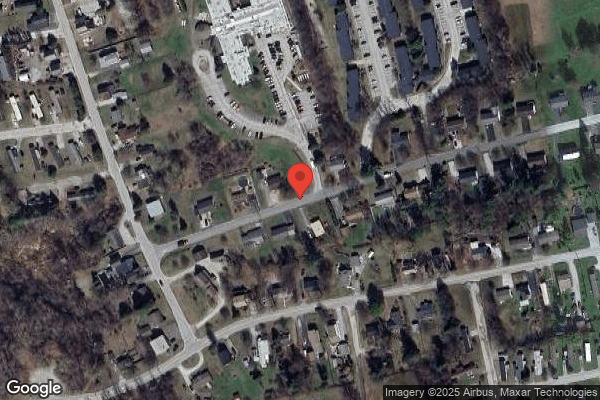
9 Haywood Avenue, Rutland, VT 05701 (802) 775-0007
For profit - Limited Liability company 158 Beds GENESIS HEALTHCARE Data: November 2025
Trust Grade
63/100
#7 of 33 in VT
Last Inspection: April 2024

Within standard 12-15 month inspection cycle. Federal law requires annual inspections.

Overview

Mountain View Center Genesis Healthcare has a Trust Grade of C+, indicating it is slightly above average but not exceptional. It ranks #7 out of 33 facilities in Vermont, placing it in the top half, and #2 out of 3 in Rutland County, meaning it has only one local competitor performing better. The facility is currently improving, having reduced issues from 14 in 2024 to just 1 in 2025. Staffing is a positive aspect, with a rating of 3 out of 5 stars and a turnover rate of 42%, which is lower than the Vermont average of 59%, indicating staff stability. However, there are some concerns, including $9,770 in fines, which is average, and specific incidents like a resident experiencing untreated constipation that led to a 15-day rehospitalization, and failure to provide a comfortable living environment due to constant loud alarms disrupting residents. Overall, while there are strengths such as good RN coverage and quality measures, families should be aware of the facility's areas needing improvement.
Trust Score
C+
63/100
In Vermont
#7/33
Top 21%
Safety Record
Moderate
Needs review
Inspections
Getting Better
14 → 1 violations
Staff Stability
○ Average
42% turnover. Near Vermont's 48% average. Typical for the industry.
Penalties
✓ Good
$9,770 in fines. Lower than most Vermont facilities. Relatively clean record.
Skilled Nurses
✓ Good
Each resident gets 55 minutes of Registered Nurse (RN) attention daily — more than average for Vermont. RNs are trained to catch health problems early.
Violations
⚠ Watch
31 deficiencies on record. Higher than average. Multiple issues found across inspections.
★★★★☆
4.0
Overall Rating
★★★☆☆
3.0
Staff Levels
★★★★★
5.0
Care Quality
★★★☆☆
3.0
Inspection Score
Stable
2024: 14 issues
2025: 1 issues

The Good

  • 5-Star Quality Measures · Strong clinical quality outcomes
  • Full Sprinkler Coverage · Fire safety systems throughout facility
  • No fines on record
  • Staff turnover below average (42%)

    6 points below Vermont average of 48%

Facility shows strength in quality measures, fire safety.

The Bad

Staff Turnover: 42%

Near Vermont avg (46%)

Typical for the industry

Federal Fines: $9,770

Below median ($33,413)

Minor penalties assessed

Chain: GENESIS HEALTHCARE

Part of a multi-facility chain

Ask about local staffing decisions and management

The Ugly 31 deficiencies on record

1 actual harm
Jun 2025 1 deficiency
CONCERN (D) 📢 Someone Reported This

A family member, employee, or ombudsman was alarmed enough to file a formal complaint

Potential for Harm - no one hurt, but risky conditions existed

Free from Abuse/Neglect (Tag F0600)

Could have caused harm · This affected 1 resident

Based on interviews and record review, the facility failed to protect one resident (Resident #281) of 10 sampled residents from abuse. Findings include: Per review of the facility's OPS 300 Abuse Proh...

Read full inspector narrative →
Based on interviews and record review, the facility failed to protect one resident (Resident #281) of 10 sampled residents from abuse. Findings include: Per review of the facility's OPS 300 Abuse Prohibition policy [last revised 10/24/22] states, Centers prohibit abuse, mistreatment, neglect, misappropriation of resident/patient (hereinafter patient) property, and exploitation of all residents .Verbal abuse is any use of oral, written, or gestured language that willfully includes disparaging and derogatory terms to patients of their families . Per review of Resident #281's medical record s/he has diagnoses of acute respiratory failure with hypoxia, CHF [Congestive Heart Failure], and CKD [chronic kidney disease]. S/he had a BIMS [Brief Interview of Mental Status] of 13 out of 15 on 2/14/25 indicating shis/her cognitive function is intact. The MDS [Minimum Data Set] states that Resident #281 is independent with ADLs [Activities of Daily Living] and is continent of bowel and bladder. Per record review of the facility's internal investigation of the alleged abuse dated 2/18/25, Resident #281 reported verbal abuse that occurred on 2/17/25. Per the internal investigation, Resident #281 stated that LNA [Licensed Nursing Assistant] #1 entered his/her room after the resident had episode of incontinence and stated, If you haven't been incontinent at home why are you doing it here? .Do you poop your pants at home? Resident #281 and his/her roommate confirmed the same statements made by LNA#1 in interviews documented in the facility's internal investigation. Per the facility internal investigation, LNA#1 made the following statement: She stated that she did yell but she did tell the resident that it isn't going to help [him/her] here in rehab if [s/he] is doing this and [s/he] normally doesn't do it at home. An email statement from another LNA on 2/19/25 stated, I do not know what she said to [him/her] but I do know that when she came out of the room she was mad that she had to do a full bed on [him/her] because [s/he] was incontinent of stool. She stated that s/he [Resident #1] just Laid there and [expletive] [his/herself] .She was very unhappy to have to clean this resident and made it very clear to me and another LNA. Per record review of the facility's internal investigation, the verbal abuse was confirmed by the facility. Per interview with the Administrator on 6/4/25 at 12:07 PM, the Administrator confirmed that the verbal abuse occurred and that Resident #281 was not free from abuse.
Apr 2024 13 deficiencies
CONCERN (D) 📢 Someone Reported This

A family member, employee, or ombudsman was alarmed enough to file a formal complaint

Potential for Harm - no one hurt, but risky conditions existed

Deficiency F0557 (Tag F0557)

Could have caused harm · This affected 1 resident

Based on observation and interview the facility failed to ensure that 2 of 36 sampled residents were treated with dignity and respect, in relation to staff to resident interaction (Resident #66) and n...

Read full inspector narrative →
Based on observation and interview the facility failed to ensure that 2 of 36 sampled residents were treated with dignity and respect, in relation to staff to resident interaction (Resident #66) and not providing assistance with meals and nutrition while other residents seated at the same table were served and eating their meal (Resident #99). Findings include: 1. Per record review, Resident # 66 has resided in the facility since 11/12/21 and has a diagnosis of Dementia. Per observation on 4/10/24 at approximately 5:10 PM, Resident # 66 was overheard saying, I can't do it. They were seen sitting alone at a table in the dining room. A Licensed Nursing Assistant ( LNA) was standing nearby. The LNA was heard loudly saying, Just try! The resident repeated that s/he could not do it. The LNA grabbed the knife and fork and forcefully cut up the resident's food. Resident #66 then pointed to their drink and asked what it was. The LNA turned their back without acknowledging the drink and replied, I don't know, and walked away from the resident. The resident was seen pushing away their food and resting their head on the table, clearly distressed by the interaction. Per interview with the LNA on 4/10/24 at approximately 5:15 PM, the LNAstated that s/he was trying to get the resident to do more for themselves. This surveyor directed the LNA's attention to the resident, who was observed with his/her head in his/her hands. The LNA agreed that his/her approach toward Resident #66 was undignified and disrespectful. Per interview with Resident #66 on 4/10/24 at aproximately 5:20 PM, S/he indicated I'm just upset, I don't want to eat. Per interview with the facility Administrator on 4/10/24 at approximately 5:30 PM, the administrator confirmed that the LNA had displayed undignified and disrespectful behavior toward Resident #66. 2. Per record review Resident #99 was admitted to facility on 02/04/2024 with the following diagnoses: Alzheimer's dementia, stroke with aphasia (inability to express speech), and heart failure. Resident # 99 has a care plan dated 02/14/2024 that states resident is at risk for malnutrition related to mechanical soft diet, need for assistance with meals. A nursing note written by the Unit Manager (UM) dated 4/10/2024 reflects that Resident # 99 has evidence of weight loss. The note states Resident triggers for weight loss. Meal intake varies at 50-100% for meals with snacks offered. During observation on 4/09/2024 at 4:30 PM in the Cherry Tree Country Kitchen area, Resident # 99 was sitting in his/her wheelchair at the table with two other residents that eat independently. Per record review all three Residents at the table have a diagnosis of Dementia. At 4:50 PM the start of meal service began. At 4:55 pm the two other residents at the table received their dining trays. Resident # 99 was not offered a tray or a beverage. A licensed nursing assistant (LNA) left the resident's table and continued to pass other trays. At 5:00 pm the resident to the left of Resident #99 picked up a canned pear off his/her plate and with bare hands handed it to Resident # 99. Resident # 99 took the pear and began to eat it, until it slipped from their fingers and dropped to the floor. At 5:05 pm Resident # 99's tray arrived at the dining area. A LNA placed Resident # 99's plate with a cover over it in the middle of the table out of Resident # 99's reach. The LNA was observed walking away from the table and did not interact with Resident #99. At 5:20 pm Resident # 99 sat forward, stretched across the table, and removed the cover from the food. Resident # 99 looked around the room, staff did not assist Resident #99 at this time or notice that Resident #99 removed the cover of the food. At 5:25 pm Resident # 99 took his/her paper menu, folded it up, and began scooping the condensation out of the food cover and bringing it to her/his mouth. Resident # 99 repeated this action over and over as if eating. Staff did not approach Resident # 99 to help. At 5:30 pm no staff had attempted to provide food or beverage to Resident # 99. There were two LNA's assisting two other residents with their meals at the back of the room with their backs turned away from the dining area for 45 minutes during observation. At 5:40 pm the Dietary Manager entered the dining area. This surveyor alerted them that the resident has still not been assisted with their meal and requested temperatures be completed on Resident # 9's food prior to it being served as it had been sitting out for 40 minutes. At 5:45 pm using their own thermometer the Dietary Manager and this surveyor checked the temperature of the food on Resident # 99 s plate and confirmed the temperature of the food on Resident # 99's plate was no longer palatable. The Dietary Manager confirmed based on the temperature of the meal for Resident # 99 it should not be served and removed the plate from in front of Resident # 99. At 5:55 pm the Kitchen Manager returned with a new plate of food for Resident # 99. At 6:00 PM a Licensed Practical Nurse (LPN) began to assist Resident # 99 with their meal, while the other residents left the dining room. The LPN on duty stated that Resident # 99 does require assistance with eating but can also eat on their own. The LPN confirmed Resident # 99 should have been offered their food while others were dining. The LPN stated that some residents require assistance in their room, and others in the dining room, making assisting all residents with their meals at the same time challenging.
CONCERN (D) 📢 Someone Reported This

A family member, employee, or ombudsman was alarmed enough to file a formal complaint

Potential for Harm - no one hurt, but risky conditions existed

Report Alleged Abuse (Tag F0609)

Could have caused harm · This affected 1 resident

Based on interview and record, the facility failed to ensure that an alleged incident of a resident-to-resident altercation, which resulted in potential verbal abuse, was reported to the State Survey ...

Read full inspector narrative →
Based on interview and record, the facility failed to ensure that an alleged incident of a resident-to-resident altercation, which resulted in potential verbal abuse, was reported to the State Survey Agency for 1 of 36 of the applicable sample (Resident#66) Findings Include: Per record review, a nursing progress note reveals an entry dated March 31, 2024, This writer observed patient demonstrating verbal and aggressive behavior towards roommate due to frustration of time spent in the bathroom and patients inability to use facilities sooner causing incontinence. Patient attempted to throw self out of bed while screaming [I'm gonna beat [him/her!]! and other obscenities were yelled. This writer assisted RN with boosting patient back into bed to prevent fall/injury. Roommate exited bathroom and began instigating patient in bed, this writer then intervened between both patients while this patient was attempting to throw him/herself towards the roommate. LNA came into room to provide further assistance, roommate was redirected to his/her side of the room with curtain drawn to prevent escalation of situation. Patient assisted to bathroom with care provided and is now sitting in WC watching TV in room with intermittent supervision from RN. Per review of the facility policy with a title of Abuse Prohibition, #6, Anyone who witnesses an incident of suspected abuse, neglect, involuntary seclusion, injuries of unknown origin, or misappropriation of patient property is to tell the abuser to stop immediately and report the incident to his/her supervisor immediately, regardless of shift worked. 6.1 The notified supervisor will report the suspected abuse immediately to the Administrator or designee and other officials in accordance with state law. Per interview on 4/10/24 at approximately 5:15 PM with the Administrator, s/he revealed that the incident between the two residents was not reported to him/her and not reported to the State Agency.
CONCERN (D)

Potential for Harm - no one hurt, but risky conditions existed

Deficiency F0658 (Tag F0658)

Could have caused harm · This affected 1 resident

**NOTE- TERMS IN BRACKETS HAVE BEEN EDITED TO PROTECT CONFIDENTIALITY** Based on resident interview and record review, the facility failed to ensure that services provided meet professional standards ...

Read full inspector narrative →
**NOTE- TERMS IN BRACKETS HAVE BEEN EDITED TO PROTECT CONFIDENTIALITY** Based on resident interview and record review, the facility failed to ensure that services provided meet professional standards as evidenced by failing to follow physicians' orders for 1 of 36 sampled residents (Resident #15). Findings include: Per record review, Resident #15 has diagnoses that include anxiety disorder and major depressive disorder. Resident #15's care plan states Resident/patient exhibits or is at risk for distressed/fluctuating mood symptoms related to: History of Sadness/depression and Anxiety, created on 9/1/2020. Resident #15 has physician orders for the following antianxiety medications: Hydroxyzine HCl Oral Tablet 25 MG (Hydroxyzine HCl) Give 25 mg by mouth as needed [PRN] for anxiety for 14 Days Administer 1 capsule PO TID PRN for anxiety\ X 14 days\ -Start Date- 03/04/2024 and Hydroxyzine HCl Tablet 25 MG (Hydroxyzine HCl) Give 1 tablet by mouth every 12 hours as needed for anxiety for 30 Days -Start Date- 03/21/2024 In addition to the above medications there is a physician order for Non-Pharmacological Intervention(s) used before PRN anti-depressant, antianxiety, anti-psychotic or sedative/hypnotic medication Document by number:1 Reposition for comfort 2 massage 3 involve in activity/alt. activity to divert 4 provide quiet setting with reduced stimuli as needed 5 relaxation technique 6 music 7 remove from area 8 direction/distraction 9 toilet 10 ambulate 11 provide food/drink 12 educated 13 one:one 14 other -add to PN the description -Start Date- 03/04/2024. Per review of Resident #15's Medication Administration Record (MAR) Resident #15 was administered PRN Hydroxyzine on 3/4/24 through 3/11/14, 3/13/24, 3/17/24, 3/22/24 through 3/25/24, 3/27/24 through 3/29/24, 4/1/24, 4/5/24, 4/6/24, 4/8/24, and 4/10/24 for anxiety. The MAR shows documentation that a non-pharmacological intervention was used before PRN antianxiety medication only 5 of the 22 times the medication was administered (3/5/24, 3/13/24, 3/22/24, 3/23/24, 4/1/24). Per interview on 4/11/24 at approximately 5:45 PM the Director of Nursing stated a non-pharmacological intervention should be attempted and documented prior to administering PRN medications and confirmed that this did not happen every time a PRN was administered for Resident #15. Ref: Lippincott Manual of Nursing Practice (9th Edition) Wolters, Kluwer Health/[NAME], [NAME], & [NAME].
CONCERN (D)

Potential for Harm - no one hurt, but risky conditions existed

Quality of Care (Tag F0684)

Could have caused harm · This affected 1 resident

Based on observation, record review, interview, and policy review, the facility failed to provide safe and effective skin and wound care for 2 of 36 sampled residents (Resident #125 and #94) by failin...

Read full inspector narrative →
Based on observation, record review, interview, and policy review, the facility failed to provide safe and effective skin and wound care for 2 of 36 sampled residents (Resident #125 and #94) by failing to regularly and accurately perform and document weekly skin checks and non-pressure ulcer wound evaluations consistent with professional standards of practice and facility policy. Findings include: Facility policy titled NSG236 Skin Integrity and Wound Management, last revised on 2/1/2023, states that a licensed nurse will perform weekly skin inspections and complete wound evaluations weekly and with unanticipated decline. 1. Per interview and observation on 4/09/24 at 3:14 PM, Resident #94 is in bed and their wheelchair has a white towel on its seat that has a 2 inch spot of bright red blood. When asked about the blood, Resident #94 said they had a wound on their bottom that hurts a lot, so much that it is hard for him/her to stay in his/her wheelchair sometimes. S/He stated that because the wound causes him/her so much pain, s/he is not able to attend activities like s/he would like to. This surveyor asked a Licensed Nursing Assistant (LNA) to position Resident #94 so their bottom could be observed. The LNA stated that the wound had been there for a while. Resident #94 had bilateral redness on both thighs that measured approximately 3 by 1 inches on each thigh. Resident #94's right thigh had open damage that measured approximately 2 by 1.5 centimeters and was bleeding. Per record review, Resident #94 has diagnoses that include morbid obesity, type 2 diabetes, and mixed urinary incontinence. Resident #94's care plan states, Resident at risk for skin breakdown related to recently healed PU, weakness, limited mobility, incontinence, tendency to scratch and pick at skin, and excessive moisture with skin folds. Actual skin breakdown: Chronic bilateral posterior thighs (MASD [moisture-associated skin damage]), revised on 3/1/2024. Resident #94 has a physician order for Desitin External Cream 13 % (Zinc Oxide (Topical)) Apply to Posterior thighs topically two times a day for MASD, with a start date of 5/27/2023. Per record review Resident #94's last documented skin assessment was on 2/22/2024. There are no weekly skin assessments after this date. According to the facility's policy and professional standards, there should have been a minimum of 6 weekly skin assessments during this time. There are no initial or weekly wound assessments during this time for the MASD present on Resident #94's thigh. Per interview on 4/11/24 at 10:52 AM, a Licensed Practical Nurse stated that Resident #94's wound had gotten worse since s/he had last seen in a couple weeks ago. S/He stated that wound assessments should be done weekly and confirmed that Resident #94's did not have a wound assessment that reflected Resident #94's wound. Per interview on 4/11/2024 at 11:50 AM, the Director of Nursing confirmed that skin checks should be completed weekly and wounds should be assessed weekly per facility policy. S/He confirmed that the facility was not completing weekly wound assessment for Resident #94's MASD. 2. Per record review, Resident #125 has diagnoses that include venous insufficiency, type 2 diabetes, and need for assistance with personal care. Resident #125's care plan states, Resident at risk for skin breakdown related to weakness, limited mobility, vascular disease, initiated on 1/27/2024 with the following intervention Weekly skin check by license nurse, created on 7/15/2023. A 3/22/2024 skin assessment reveals that Resident #125 does not have any wounds. Per record review, a 4/1/2024 nursing note states dressing done to coccyx. On 4/1/2024 Resident #125's record does not have a care plan for a coccyx wound, a wound evaluation, a change of condition notifying a provider of a wound on Resident #125's coccyx, or any physician orders to treat a wound to the coccyx. On 4/2/2024, Resident #15's care plan is updated to reflect skin breakdown. The following physician order was started on 4/5/2024, Wound Treatment (coccyx slit): Cleanse with Remedy cleansing lotion. Pat dry. Apply a thin layer of Remedy Zinc Oxide Protectant Paste combined with anti-fungal powder to the affected area. Do not scrub. Use Remedy cleansing lotion with a wipe to gently cleanse only the soiled layer. Every day shift for MASD. A skin check dated 4/5/2024 does not accurately reflect Resident #125's skin status as it stated that there are no skin injuries or wounds identified. As of 4/10/2024, there are no wound assessments of the wound on Resident #125's coccyx. Per interview on 4/11/2024 at 11:50 AM, the Director of Nursing confirmed that there was no initial or weekly wound assessment for Resident #125's coccyx wound.
CONCERN (D)

Potential for Harm - no one hurt, but risky conditions existed

Drug Regimen Review (Tag F0756)

Could have caused harm · This affected 1 resident

**NOTE- TERMS IN BRACKETS HAVE BEEN EDITED TO PROTECT CONFIDENTIALITY** Based on interview and record review the facility failed to follow Pharmacy Recommendations related to monitoring of heartrate p...

Read full inspector narrative →
**NOTE- TERMS IN BRACKETS HAVE BEEN EDITED TO PROTECT CONFIDENTIALITY** Based on interview and record review the facility failed to follow Pharmacy Recommendations related to monitoring of heartrate prior to administration of digoxin (a medication to slow the heartrate) for 1 Resident out of 6 sampled (Resident # 47). Findings include: Per record review Resident #47 admitted to the facility on [DATE] with diagnosis of cerebral vascular accident (CVA) with left sided weakness and atrial fibrillation fast (irregular heartbeat). Resident # 47 has the following medication order prescribed on 10/26/23 Digoxin 125 mcg one time a day by mouth for atrial fibrillation (atrial fibulation is an abnormal heart rhythm). Digoxin helps the heart beat more efficiently in adults and pediatric patients and decreases the heart rate at rest during abnormal rhythms in adults (FDA, 2011). Per Pharmacy Review and Recommendations on 3/5/2024 states Medication requires monitoring due to risk of cardiac arrythmias (irregular heartbeat). Prior to administration check an apical pulse, if less than 60 beats per minute hold digoxin and contact provider. Pharmacy review was signed by the provider on 03/21/2024. Record review revealed no evidence of instructions to check pulse (heart rate) for Resident # 47 prior to administration of digoxin According to National Library of Medicine, (2024), digoxin may be contraindicated in individuals experiencing bradycardia. ( heart rate less then 60 beats per minute). Per interview on 4/11/2024 at approximately 4:00 PM Unit Manager confirmed that medication parameters to check pulse and hold medication would need to be written on the actual order to be seen by nurse. During interview the Unit Manger confirmed that there was no evidence of parameters on the digoxin order, or evidence that the pulse was checked prior to administration. The Unit Manager confirmed that there should be an order and a pulse should be documented on the medication administration record. Reference: [NAME] MNV, [NAME] M. Digoxin. [Updated 2023 [DATE]]. In: StatPearls [Internet]. Treasure Island (FL): StatPearls Publishing; 2024 Jan-. Available from: https://www.ncbi.nlm.nih.gov/books/NBK556025/
CONCERN (E)

Potential for Harm - no one hurt, but risky conditions existed

Safe Environment (Tag F0584)

Could have caused harm · This affected multiple residents

Based on observation and interview, the facility failed to provide a homelike environment for 1 of 4 units (Unit D) resulting in all residents on the unit being subjected to continuous loud alarms thr...

Read full inspector narrative →
Based on observation and interview, the facility failed to provide a homelike environment for 1 of 4 units (Unit D) resulting in all residents on the unit being subjected to continuous loud alarms throughout the day. Findings include: Per observation on Unit D during the recertification survey on 4/9/2024 through 4/11/2024, call bell alarms were repeatedly going off for extended periods of time. Unit D has approximately 50 residents. There is a large multipurpose room in the center of the unit which serves as a living area and dining area. There is a television located on the wall. Observations were made during lunch and dinner on 4/9/2024, breakfast, lunch, and dinner on 4/10/204, and lunch and dinner on 4/11/2024. There was an average of 8 to 10 residents eating in the common area during the above meals. Call bell alarms went off for at least 10 minutes and up to 40 minutes straight for all of the meals observed. Once stopped, the call bell alarms usually started back up again a few minutes later. The alarm bell sounds was at a loud volume the entire time; as loud as the surveyors speaking voice. Per observations on 4/9/2024 the call bell alarms were going off on Unit D at 10:50 AM through 11:20 AM straight with only a couple 30 second pauses. 8 residents were sitting in the common area during this time. Per interview on 4/9/2024 at approximately 4:30 PM, Resident #94 stated that the call bell alarms were bothersome. Per observation and interview on 4/10/2024 at 8:30 AM, Resident #30 was sitting in the common area at a table eating breakfast watching TV. S/He stated that s/he hated the call bells and that they were very loud. The call bell alarms were louder than the TV volume. Per interview on 4/10/24 at 4:45 PM, a Licensed Nurse Aide (LNA) explained that the call bells go off non-stop, all day long, every day. Per interview on 4/11/24 at 10:49 AM, LNA #2 stated that the call bell alarms are going off all the time and a Licensed Practical Nurse agreed. Per interview on 4/11/2024 at approximately 5:45 PM, the Administrator confirmed that the alarms were very loud for an area that is frequently used by residents.
CONCERN (E)

Potential for Harm - no one hurt, but risky conditions existed

Comprehensive Care Plan (Tag F0656)

Could have caused harm · This affected multiple residents

Based on observations, interviews and record review the facility failed to develop a person-centered comprehensive care plan for 3 of 36 residents sampled (Resident #72, #3, and #83). Findings include...

Read full inspector narrative →
Based on observations, interviews and record review the facility failed to develop a person-centered comprehensive care plan for 3 of 36 residents sampled (Resident #72, #3, and #83). Findings include: 1. Per observation and interview on 4/10/24 at 10:05 AM, Resident #72 stated that s/he has lost a lot of weight being at the facility. While s/he is speaking, it appears as though s/he has no top teeth and most of the bottom teeth that remain are extremely decayed and most of his/her bottom teeth are so loose that they are moving around in his/her mouth. Per record review, Resident #72 weighed 175.2 pounds on 7/2/22. The next weight entered into his/her medical record is 139.0 pounds, taken on 2/28/2024. Resident #72's 1/26/24 Minimum Data Set (MDS; a comprehensive assessment used as a care-planning tool) reveals s/he is at risk of malnutrition. While a 1/26/24 Nutritional Assessment completed by the Dietician reveals that there were no nutritional concerns identified, the assessment was completed based on the 7/2/2022 weight. There are no nutritional assessments completed following Resident #72's 2/28/2024 weight of 139.0, a 36 pound difference from the weight used for the previous month's nutritional assessment. Resident #72's care plan does not include goals, measurable objectives, interventions, and timeframes for how staff will meet the resident's needs for nutrition. Per interview on 4/11/2024 at 5:01 PM, the Director of Nursing confirmed that Resident #72's care plan did not adequately address nutrition or risk for weight loss. 2. Per interview on 4/09/24 at 5:18 PM, Resident #3 explained that s/he has not had his/her face shaved in three weeks and his/her preference is to be shaved twice a week. S/He explained that having his/her face shaved is really important to him/her and because s/he cannot use his/her hands to shave his/her face, s/he has to depend on staff entirely to complete this task. Per record review, Resident #3's care plan states Patient is at risk for decreased ability to perform ADL's [activities of daily living] in bathing, grooming, personal hygiene, dressing, eating, bed mobility, transfer, locomotion, and toileting, related to: MS [multiple sclerosis] and Limited mobility, weakness, revised on 8/25/2023 with an intervention to Provide 2 assist with ADLs, revised on 5/05/2023. There are no interventions in Resident #3's care plan that describe his/her preference to be shaved twice a week. Per interview on 4/10/24 at 4:45 PM, a Licensed Nurse Aide explained that there is not a system to alert staff about when to shave a resident and indicated that s/he is not sure where s/he would find Resident #3's preferences documented. Per interview on 4/11/2024 at 9:21 AM, the acting Unit Manager explained that Resident #3's shaving preferences should be on his/her care plan. 3. Per observation and interview on 4/9/2024 at 1:36 PM, Resident #83 explained that s/he has contractures in his/her hand because s/he has Parkinson's (a disorder of the central nervous system that affects movement). S/He explained that she likes to have staff help him/her open his/her hands at least three times a day so s/he can exercise her hands in order to maintain the function s/he has left in her hands. While s/he was talking, s/he demonstrated for this surveyor how s/he couldn't open his/her hands and wanted to. S/He stated that it is very important to remain as independent as possible. Per record review, a 12/7/2023 nursing note reveals that Resident #83 has Left upper extremity contracture. Right upper extremity contracture. Left lower extremity contracture. Right lower extremity contracture. Upper extremity impairments on both sides. Lower extremity impairments on both sides. Resident #83's care plan reveals that Patient is at risk for decreased ability to perform ADLs related to activity intolerance, weakness, limited mobility, Parkinson's disease, long term care need, revised on 7/5/2023, with the goal to improve current level of function in ADLs by next review as evidenced by improved ADL scores, revised on 3/1/2024, and an intervention that s/he eats independently after set up, created on 5/4/2023. There are no interventions that address Resident #83's contractures or the care that s/he as expressed as being important to her (such as assistance with range of motion exercises in her hands).
CONCERN (E)

Potential for Harm - no one hurt, but risky conditions existed

ADL Care (Tag F0677)

Could have caused harm · This affected multiple residents

2. Per interview on 4/09/24 at 5:18 PM, Resident #3 explained that s/he has not had his/her face shaved in three weeks and his/her preference is to be shaved twice a week. S/He explained that having h...

Read full inspector narrative →
2. Per interview on 4/09/24 at 5:18 PM, Resident #3 explained that s/he has not had his/her face shaved in three weeks and his/her preference is to be shaved twice a week. S/He explained that having his/her face shaved is really important to him/her and because s/he cannot use his/her hands to shave his/her face, s/he has to depend on staff entirely to complete this task. S/He stated that staff report to him/her that they are too busy to shave him/her because they are short staffed. Per record review, Resident #3's care plan states Patient is at risk for decreased ability to perform ADL's [activities of daily living] in bathing, grooming, personal hygiene, dressing, eating, bed mobility, transfer, locomotion, and toileting, related to: MS [multiple sclerosis] and Limited mobility, weakness, revised on 8/25/2023 with an intervention to Provide 2 assist with ADLs, revised on 5/05/2023. There are no interventions in Resident #3's care plan that describe his/her preference to be shaved twice a week. Per interview on 4/10/24 at 4:45 PM, a Licensed Nurse Aide (LNA) explained that Resident #3 likes to be shaved frequently but staff have a hard time getting to it because they are so busy. This LNA explained that s/he had been shaving Resident #3's face the previous month and was unable to complete the task due to the workload. S/He had informed the oncoming evening shift to shave the other half of Resident #3's face but they never did. It had to be done the next day and Resident #3 was very upset. Per interview on 4/11/2024 at 9:21 AM, the acting Unit Manager explained that Resident #3's shaving preferences should be on his/her care plan. 3. Per observation and interview on 4/9/2024 at 1:36 PM, Resident #83 explained that s/he needs her toenails cut but no one is doing them. His/her toenails are very long, appearing to be at least a half inch past the end of his/her toes. Per record review Resident #83's care plan reveals that Patient is at risk for decreased ability to perform ADLs related to activity intolerance, weakness, limited mobility, Parkinson's disease [a disorder of the central nervous system that affects movement], long term care need, revised on 7/5/2023, with the goal to improve current level of function in ADLs by next review as evidenced by improved ADL scores, revised on 3/1/2024. While there are no interventions related to hygiene, or nail cutting in Resident #83's care plan, a 3/4/2024 Minimum Data Set (MDS; a comprehensive assessment used as a care-planning tool) reveals that s/he is dependent on staff for all personal hygiene. 4. Review of wound documentation for residents pressure ulcer on her/his right great toe that required amputation revealed wound pictures that showed toe nails that were thick and long - each wound assessment picture showed additional growth and thickening of the residents nails. Interview on this date at approximately 2:30 PM with Licensed Practical Nurse (LPN) stated that there is currently no access to podiatry services and residents need to be sent out for these service. Per record review revealed pictures of a wound on the residents right great toe. In a picture taken from the inner side of the residents right foot, dated December 6, 2023 at 07:23 of this wound, showed the resident is noted to have long and thick toenails. A picture taken from the inner side of the residents right foot, of the same wound dated December 14, 2023 at 13:20 revealed the residents nails were longer than in the picture on 12/6/23. A picture taken from the inner side of the residents right foot, of the same wound dated Decemeber 23, 2024 at 13:32 revealed the residents nails were longer than in the picture on 12/14/23. A picture taken from the inner side of the residents right foot, of the same wound dated January 2, 2024 at 12:16, revealed the residents nails were longer than in the picture on 12/23/24. A picture taken at a different angle, looking down at the tips of the residents toes, revealed the same wound dated January 3, 2024 at 10:41, showed the residents nails were noted to be long and thick with a thick placque/debris under their right great toenail. A picture taken on January 11, 2024 at 09:48, from a similar angle to the picture on 1/3/24 revealed long and thick toenails. A picture taken on January 17, 2024 at 08:57 taken from the bottom of the residents right foot, looking at the underside of the toenails, revealed long and thick toenails with the toenail of the great toe extending beyond the end of the residents toe. Interview on 4/11/24 at approximately 4 PM with a unit LPN, who confirmed that the residents toenails were quite long however the facility did not have a podiatrist at the time. When asked what the process was for residents receiving podiatry care, s/he stated that a call is made to the residents doctor for an order and then once the order is received a call is made to a local podiatrist and an appointment is made. S/he stated that there is no log book kept for residents needing podiatry. This was confirmed by an RN who was also present during this interview. The resident has since passed away. Based on observation, interviews, and record review, the facility failed to ensure that residents who are unable to carry out activities of daily living receive the necessary services to maintain good hygiene as evidenced by excessively long fingernails, long thick toe nails, not providing showers, shaving, and range of motion exercises, for 4 of 36 sampled residents (Resident #102, #40, #83, and #3). Findings include: 1. Per observation on 4/9/24 at 2:17 PM Resident #102 was noted to have long fingernails with chipped nail polish and brown substance under their nails. Resident #102 was sitting in their wheelchair in their room with their hand up to her/his eye rubbing it. Resident #102 also was noted to have approximately 1/4 inch stubble on their chin. Per record review Resident #102's care plan reflects that staff should provide extensive assist for dressing and personal hygiene. On 4/11/2024 at 4:00 PM during an interview with the Unit Manager (UM) Resident #102's fingernails were again observed long with chipped nail polish and brown substance under the nails. The UM confirmed that Resident #102's nails were long and dirty and that it is the expectation that nursing staff would trim and clean finger nails when needed. The UM confirmed that the resident's nails were long and dirty. Resident #102 also was noted to have facial hair growth on their chin. The UM also confirmed that staff are expected to shave residents when they have hair growth on their face.
CONCERN (E)

Potential for Harm - no one hurt, but risky conditions existed

Deficiency F0679 (Tag F0679)

Could have caused harm · This affected multiple residents

**NOTE- TERMS IN BRACKETS HAVE BEEN EDITED TO PROTECT CONFIDENTIALITY** 3. Per interview on 4/09/24 at 11:56 AM, Resident #95 explained that the only thing s/he does is watch TV and play bingo. S/He l...

Read full inspector narrative →
**NOTE- TERMS IN BRACKETS HAVE BEEN EDITED TO PROTECT CONFIDENTIALITY** 3. Per interview on 4/09/24 at 11:56 AM, Resident #95 explained that the only thing s/he does is watch TV and play bingo. S/He likes bingo but wished there were other activities to participate in. On 4/11/2024 at 5:44 PM, Resident #95 explained that s/he would like to participate in more activities but they do not have much for him/her to participate in and no one does any kind of activities, like 1 on 1 visits, in his/her room. S/He explained that s/he does not go out for walks or go outside and s/he would like to. S/He said s/he is very bored. Per record review, Resident #95's care plan states While in the facility, [Resident #95] states that it is important that [s/he] has the opportunity to engage in daily routines that are meaningful relative to [his/her] preferences, created on 12/15/2022, with interventions that include [Resident #95] will plan and choose to engage in preferred activities .I like to participate in social activities with groups of people .It is important for me to engage in my favorite activities .It is important for me to go outside when the weather is good and enjoy sitting/relaxing and talking/visiting, all created on 12/15/2022. Resident #95 does not have any activity interventions in their care plan created or revised after 12/15/2022. Review of Resident #95's activity logs for February, March, and April 2024 reveal the following: In February 2024, other than bingo and watching TV, Resident #95's participation in activities included salon/painting nails 5 times, 2 social visits, and receiving the newsletter; in March 2024, other than bingo and watching TV, Resident #95's participation in activities included salon/painting nails 4 times and 2 social visits; and in April 2024, other than bingo and watching TV, Resident #95's participation in activities included 5 social visits and receiving the newsletter. Of note, the activity log for April 2024 was reviewed on 4/11/2024 and the activity log was filled out through the end of the month for TV and social visits. 4. Per interview on 4/10/24 at 10:05 AM, Resident #72 indicated that there is nothing to do for activities that interests him/her in the facility. S/He said, all they have is bingo or toss the ball, but there is nothing to do and they used to have more. S/He said s/he would like to sit outside for a little bit or go for a walk but doubt that will happen since they are short staffed. Per record review, Resident #72's care plan states it is important that [s/he] has the opportunity to engage in daily routines that are meaningful relative to [his/her] preferences, revised on 10/13/2020, with interventions to Encourage and facilitate [Resident #72's] activity preferences .It is important for me to go outside when the weather is good and enjoy sitting, talking/visiting, walking. A recreation assessment dated [DATE] states Recreation will encourage more participation in group activities as they have decreased since the pandemic. Review of Resident #72's activity logs reveals that s/he does not have a log for February or March 2024 and April 2024's log reveals that the only participation Resident #72 had in activities was receiving the newsletter. There is no record of additional group, individual, or independent engagement for this period. There is no evidence on the log that Resident #72 refused to participate in activities. 5. Per interview on 4/09/24 at 12:31 PM, Resident #15 explained that s/he likes bingo, but there is not too much other than that. On 4/11/2024 at 5:20 PM, s/he explained that s/he would like to do more activities in his/her room. S/He explained that s/he would also like to go outside but can't because there is no one to bring [him/her] since they are so short staffed. Per record review, Resident #15's care plan states, While in the facility, [Resident #15] states that it is important that [s/he] has the opportunity to engage in daily routines that are meaningful relative to [his/her] preferences, revised on 5/24/2021, with interventions that include It is important for me to engage in my favorite activities .It is important for me to go outside when the weather is good and enjoy sitting/relaxing, revised on 5/24/2021. Review of Resident #15's activity logs for February, March, and April 2024 reveal that the only participation in activities was receiving the newsletter. There is no record of additional group, individual, or independent engagement for this period. Based on observation, interview, and record review, the facility failed to ensure that the activities program meets the needs of each resident for 5 of 9 Sampled Residents (Residents #91, #19, #15, #95, and #72). Findings include: 1. Per interview on 4/9/24 at approximately 6:00 PM, Resident #91's daughter stated that since admission on [DATE], Resident #91 has spent their days sitting in their room with no activities or stimulation other than the television. At home, Resident #91 would color, listen to music, do puzzles or cards, as well as get stimulation from their visiting aides. At the facility, they don't give Resident #91 anything to do. No one in the facility has asked her about what activities Resident #91 likes. Per record review, Resident #91 has diagnoses of Parkinson's Disease and Dementia. Their admission MDS (Minimum Data Set Assessment) from 3/24/24 lists their BIMS (brief interview of mental status) score as 4, indicating serious impairment of cognitive abilities. Their MDS activities assessment lists having family involved in discussions about care and doing their favorite activities as somewhat important. Resident #91's care plan for activities, created on 3/28/24, lists the following interventions: - It is important for me to have family or a close friend involved in discussions about my care. - I like to listen to music, look out the window, lay down/rest, watch TV/movies by myself in my room. - It is important for me to engage in my favorite activities. Per review of the facility's activities participation logs for Residents, no log could be found for Resident #91. Per observations on 4/9/24 at 2:00 PM, 6:00 PM, and on 4/10/24 at 10:00 AM, 2:00 PM, 5:00 PM, and 6:00 PM, Resident #91 was observed to be sitting in a recliner looking out the window or watching TV with an empty tray table in front of them and no activities or engaging materials in the room. There were also no signs of any visitation by facility staff for the purposes of engagement during these observations. Per observation/interview on 4/11/24 at approximately 9:00 AM, Resident #91 was observed with a packet that contained a list of the day's group activities, a selection of news articles, and a crossword puzzle. This surveyor asked Resident #91 if they were interested in any of the group activities today. Resident #91 said no. This surveyor then asked if Resident #91 would like to do more activities in their room. Resident #91 nodded and said yes. This Surveyor asked if Resident #91 would like to do the crossword puzzle. Resident #91 nodded and looked around for a writing utensil. There were no writing utensils in the room. Per interview on 4/11/24 at approximately 9:10 AM, an activities assistant confirmed that every resident in the building gets a packet each morning with a list of the day's group activities as well as news articles and a puzzle. When asked how residents who choose to/must stay in their rooms are engaged in the activities program, the activities assistant stated that one-on-one visits are done for some residents, but they aren't sure how these residents are determined to need one-on-one visits or how frequently they are expected to happen. The activities assistant stated that every new Resident gets assessed by an activities staff member on admission for their activities interests but that Resident representatives are not regularly included in this assessment, even if the resident has cognitive deficits. Per interview on 4/11/24 at approximately 9:30 AM, the Activities Director stated that they don't attend initial care plan meetings with residents and/or representatives. Newly admitted Residents will have an initial activities assessment done with them to determine their preferences for activities. Resident representatives are only consulted on this assessment if the resident is unable to answer questions, and the Resident's mental status is not taken into account. The Activities Director stated that some Residents receive regular one-on-one visits, but there is no formal process for determining which Residents should receive these or how frequently. One-on-one visits are also not regularly documented as having been conducted on activities logs for Residents. The Activities Director confirmed that Resident #91 does not wish to attend group activities and does not receive one-to-one visits or activities support from the activities program. On 4/11/24 at 11:00 AM and 12:00 AM, Resident #19 was again observed to be sitting in a recliner looking out the window or watching TV with an empty tray table in front of them and no activities or engaging materials in the room. 2. Interview on 4/9/24 at approximately 2:45 PM, Resident #19 stated s/he is not able to leave their room, or sit in a wheelchair because they are not able to support their own weight due poor upper body strength. Resident #19 was asked what activities they are able to participate in, they replied they are not able to leave their room, so they are not able to participate in group activities. This surveyor asked what activities are provided to the resident in their room and s/he stated there is nothing provided to them in their room. When asked if they were happy doing independent activities or if they would like to have additional activities provided to them in their room, they stated they would enjoy some facility activities instead of having to entertain themselves all the time. Review of Resident #19's activity logs for February, March, and April 2024 reveal the following: In February 2024, Resident #19's participation in activities included independent Computer/Tablet/Technology Use for 29 of 29 days, and independent Current Events/News/Mail for 13 of 29 days; in March 2024, Resident #19's participation in activities included independent Current Events/News/Mail for 16 of 31 days; and in April 2024, Resident #19's participation in activities included independent Current Events/News/Mail for 5 of 10 days. Review of Resident #19's current care plan revealed s/he is care planned for activities of [pronoun omitted] preference - it is documented that [pronoun omitted] enjoys doing activities in [pronoun omitted] room like listening to music, using [pronoun omitted] cell phone, watching the news etc.
CONCERN (E)

Potential for Harm - no one hurt, but risky conditions existed

Deficiency F0725 (Tag F0725)

Could have caused harm · This affected multiple residents

Based on observation and resident and staff interview, the facility failed to ensure there are a sufficient number of skilled licensed nurses, nurse aides, and other nursing personnel to provide care ...

Read full inspector narrative →
Based on observation and resident and staff interview, the facility failed to ensure there are a sufficient number of skilled licensed nurses, nurse aides, and other nursing personnel to provide care and respond to each resident's basic needs and individual needs impacting 2 of 4 units (Units Dogwood and Cherry Tree). Findings include: 1. Per interview on 4/09/24 at 11:52 AM, Resident #95 expressed frustration that there are not enough staff in the facility and sometimes the staff are miserable because of how few staff are on. S/He explained that she had to wait for 45 minutes for staff to help him/her get off of the toilet recently. S/He explained that s/he would like to get up and walk everyday but there are not enough staff to help him/her do that and s/he ends up just sitting 13 hours straight in his/her wheelchair. Per observation and interview on 4/9/2024 at 1:36 PM, Resident #83 explained that s/he needs her toenails cut but no one is doing them. His/her toenails are very long, appearing to be at least a half inch past the end of his/her toes. Resident #83 explained that s/he has contractures in his/her hand because s/he has Parkinsons. S/He explained that she likes to have staff help him/her open his/her hands at least three times a day so s/he can exercise her hands in order to maintain the function s/he has left in her hands. While s/he was talking, s/he demonstrated for this surveyor how s/he couldn't open his/her hands and wanted to. S/He stated that it is very important to remain as independent as possible. S/He stated that s/he is not getting these things done because there are not enough staff and the ones that are on are too busy. Per interview on 4/09/24 at 3:14 PM, Resident #94 stated that there are many times when there are not enough staff to help. S/He explained that sometimes s/he needs a bed pan and sometimes s/he is incontinent before s/he gets help. S/He explained there is about a 50/50 chance that staff will get to him/her on time to help him/her before s/he has an accident. Per interview on 4/09/24 at 4:16 PM, Resident #15 stated that the facility is short staffed. S/He said it is hard for her to get help doing things, like having someone put lotion on him/her or cut his/her nails. Per interview on 4/09/24 at 5:18 PM, Resident #3 explained that s/he has not had his/her face shaved in three weeks and his/her preference is to be shaved twice a week. S/He explained that having his/her face shaved is really important to him/her and because s/he cannot use his/her hands to shave his/her face, s/he has to depend on staff entirely to complete this task. S/He stated that staff report to him/her that they are too busy to shave him/her because they are short staffed. Per observation and interview on 4/10/24 at 8:32 AM, Resident #107 was sitting in the dining room. S/He explained that s/he has to sit and wait in the dining room for a very long time after s/he finishes eating, sometimes for an hour, before staff are able to bring him/her back to his/her room, every day. S/He said s/he cannot bring herself back to his/her room on his/her own and does not want to be in the dining area. S/He reports that staff tell her they are too busy to take him/her back all the time. 2. Per interview on 4/11/24 at 10:49 AM, LNA #2 stated that aides cannot get all their patient care done when there are only 3 or 4 aides working on the unit. S/He explained that there are many times on weekends when there are only 3 aides working on the unit. Per interview on 4/10/24 at 4:45 PM, a Licensed Nurse Aide explained that it is hard to get resident care done if there are less than 5 aides on the unit and extremely hard if there are less than 4 aides on the unit. She explained that staff run around like chickens with their heads cut off a lot of the time because there is so much work to do. S/He explained that call bells are going off non-stop throughout her shift all the time. 3. Per record review Resident # 99 has the following care plan dated 02/14/2024 that states resident is at risk for malnutrition related to mechanical soft diet, need for assistance with meals. During observation on 4/09/2024 at 4:30 PM in the Cherry Tree Country Kitchen area, Resident # 99 was sitting in his/her wheelchair at the table with two other residents that eat independently. Per record review all three Residents at the table have a diagnosis of Dementia. At 4:50 PM the start of meal service began. At 4:55 pm the two other residents at the table received their dining trays. Resident # 99 was not offered a tray or a beverage. A licensed nursing assistant (LNA) left the resident ' s table and continued to pass other trays. At 5:00 pm the resident to the left of Resident #99 picked up a canned pear off his/her plate and with bare hands handed it to Resident # 99. Resident # 99 took the pear and began to eat it, until it slipped from their fingers and dropped to the floor. Staff who were present in the dining room did not notice the interaction or the dropped pear. At 5:05 pm Resident # 99's tray arrived at the dining area. A LNA placed Resident # 99's plate with a cover over it in the middle of the table out of Resident # 99 ' s reach. The LNA was observed walking away from the table and did not interact with Resident #99. At 5:55 PM, 50 minutes after Resident #99's meal had been placed on the table, after being made aware of the situation, the Kitchen Manager provided a new plate of food for Resident # 99. At 6:00 PM a Licensed Practical Nurse (LPN) began to assist Resident # 99 with their meal, while the other residents left the dining room. The LPN on duty stated that Resident # 99 does require assistance with eating but can also eat on their own. The LPN confirmed Resident # 99 should have been offered their food while others were dining. The LPN stated that some residents who eat in their room require assistance with eating, and others in the dining room, making assisting all residents with their meals at the same time challenging. See F-557
CONCERN (E)

Potential for Harm - no one hurt, but risky conditions existed

Medication Errors (Tag F0758)

Could have caused harm · This affected multiple residents

**NOTE- TERMS IN BRACKETS HAVE BEEN EDITED TO PROTECT CONFIDENTIALITY** 3. Per record review Resident # 98 was admitted to the facility on [DATE] with diagnoses that include dementia with behavioral d...

Read full inspector narrative →
**NOTE- TERMS IN BRACKETS HAVE BEEN EDITED TO PROTECT CONFIDENTIALITY** 3. Per record review Resident # 98 was admitted to the facility on [DATE] with diagnoses that include dementia with behavioral disturbances, agitation, restlessness, and hyperactive behaviors. Resident # 98 has the following orders written by advance nurse practitioner, prescription last updated on 4/01/2024: Seroquel 50 mg by mouth. Directions give 50 mg of Seroquel two times a day by mouth for delusions, psychosis, and agitation, and 25 mg as needed. Hold for Lethargy (excessive tiredness) and Trazadone 25 mg by mouth three times a day for agitation and 25 mg every 8 hours as needed, hold for lethargy. Resident # 98 has been receiving psychotropic medications since 10/09/2023 without an order to monitor behavior or adverse reaction to medication. Review of medication administration record for March and April 2024 shows that Resident # 98 received all scheduled doses of psychotropic medications without monitoring for behaviors or adverse effects. Resident # 98's care plan initiated on 10/09/2023 Resident is at risk for complications related to the use of psychotropic drugs Medication: Trazadone- agitation, restlessness Seroquel- agitation/psychotropic medications. Monitor for changes in mental status and functional level and report to MD (Physician). Monitor for continued need of medication as related to behavior and mood. Per observations of Resident # 98 on 04/09, 04/10, and 04/11/2024, on the unit in the Cherry Tree Country Kitchen area, Resident # 98 was sleeping in their wheelchair on several occasions. Resident #98 was observed frequently sleeping though meals each day at different mealtimes. Review of the medication administration record for March and April 2024 there is no documented evidence that Resident #98 was evaluated for adverse effects prior to medication administration. There is no evidence that psychotropic medications were held related to sleepiness. Facility Policy Psychotropic Medication Use, last revised, 10/24/2022 states All medications used to treat behaviors must have a clinical indication and be used in the lowest possible does to achieve the desired therapeutic effect. All medications used to treat behaviors should be monitored for efficacy, risks, benefits, and harm or adverse consequences. Policy also states medications used to treat behaviors will be monitored for harm of adverse consequences. Per interview 4/11/2024 at approximately 3:00 pm the License Practical Nurse (LPN) Unit Manager (UM), confirmed that Resident #98 has had an increase in sleepiness thought to be due to a recent pneumonia. However there is no evidence of monitoring for adverse effects or increased behaviors related to the psychotropic medications. The Unit Manager confirmed that the expectation would be to have an order to monitor and document in the medical record any adverse effects or behaviors. The Unit Manager also confirmed that Resident # 98 received all scheduled doses of Seroquel and Trazadone for the months of March and April 2024. Based on interview and record review, the facility failed to ensure that residents who use psychotropic drugs are accurately monitored for behaviors and/or side effects for 3 of 6 sampled residents (Residents #15, #10, and #98). Findings include: 1. Per record review, Resident #15 has diagnoses that include anxiety disorder and major depressive disorder. Resident #15's care plan states, Resident is at risk for complications related to the use of psychotropic drugs- Sertraline- major depressive disorder. Hydroxyzine- anxiety, revised on 10/23/2023. Resident #15 has physician orders for the following psychotropic medications: Hydroxyzine HCl Tablet 25 MG (Hydroxyzine HCl) Give 1 tablet by mouth every 12 hours as needed for anxiety for 30 Days -Start Date- 03/21/2024 and Sertraline HCl Oral Tablet 50 MG (Sertraline HCl) Give 1 tablet by mouth one time a day for depression -Start Date- 02/21/2024. Per review of Resident #15's Medication Administration Record (MAR) Resident #15 was administered Hydroxyzine on 3/22/24, 3/23/24, 3/24/24, 3/25/24, 3/27/24, 3/28/24, 3/29/24, 4/1/24, 4/5/24, 4/6/24, 4/8/24, 4/10/24 for anxiety. There is no documentation on Resident #15's MAR, Treatment Administration Record (TAR), or in Resident #15's POC (point of care; electronic documentation system for Licensed Nursing Assistants) that Resident #15 was experiencing any behaviors and there were no orders or tasks to monitor behaviors. Resident #15's care plan did not include interventions to monitor behaviors. 2. Per record review, Resident #10 has diagnoses that include schizophrenia, bipolar disorder, major depressive disorder, and anxiety. Resident #10's care plan states, Resident is at risk for complications related to the use of psychotropic drugs Medication: risperidone-schizophrenia paxil-depression, revised on 1/20/2024 with an intervention to Complete behavior monitoring flow sheet, created on 11/5/2019. Resident #10 has physician orders for the following psychotropic medications: Paroxetine HCl Oral Tablet 10 MG (Paroxetine HCl) [Paxil] Give 0.5 tablet by mouth at bedtime for depression given with 20mg tab to equal 25mg at Bedtime -Start Date- 01/18/2024; Paroxetine HCl Oral Tablet 20 MG (Paroxetine HCl) [Paxil] Give 20 mg by mouth at bedtime for depression -Start Date- 01/19/2024; and risperidone Oral Tablet 1 MG (Risperidone) Give 1 mg by mouth in the morning for antipsychotic -Start Date- 01/19/2024. There is no documentation on Resident #10s MAR, TAR or in Resident #10's POC that Resident #10 was experiencing any behaviors and there were no orders or tasks to monitor behaviors. Per interview on 4/11/24 at approximately 5:45 PM the Director of Nursing stated that behaviors should be monitored 3 times a day for residents taking psychotropic medications and confirmed that Resident #15 and #10 did not have behavior monitoring.
CONCERN (E)

Potential for Harm - no one hurt, but risky conditions existed

Deficiency F0804 (Tag F0804)

Could have caused harm · This affected multiple residents

**NOTE- TERMS IN BRACKETS HAVE BEEN EDITED TO PROTECT CONFIDENTIALITY** Based on observation and interview the facility failed to serve food that is palatable and at an appetizing temperature to 3 of ...

Read full inspector narrative →
**NOTE- TERMS IN BRACKETS HAVE BEEN EDITED TO PROTECT CONFIDENTIALITY** Based on observation and interview the facility failed to serve food that is palatable and at an appetizing temperature to 3 of 36 sampled residents (Resident # 99, #11 and #12) Findings include: 1. Per record review Resident #99 was admitted to facility on 02/04/2024 with the following diagnosis: Alzheimer ' s dementia, stroke with aphasia (inability to express speech), and heart failure. Resident # 99 has the following care plan dated 02/14/2024 that states resident is at risk for malnutrition related to mechanical soft diet, need for assistance with meals. A nursing note written by the Unit Manager (UM) dated 4/10/2024 reflects that Resident # 99 has evidence of weight loss note states Resident triggers for weight loss. Meal intake varies at 50-100% for meals with snacks offered. During observation on 4/09/2024 at 4:30 PM until 6:00 pm in the Cherry Tree Country Kitchen area, Resident # 99 was sitting in his/her wheelchair at the table with two other residents. At 4:50 PM the start of meal service began.At 4:55 pm the two other residents at the table received their dining trays. Resident # 99 was not offered a tray or a beverage. A licensed nursing assistant (LNA) left the resident's table and continued to pass other trays. At 5:40 pm the Dietary Manager entered the dining area. This surveyor alerted them that the resident has still not been assisted with their meal and that meal was sitting on the table, uncovered for several mintues. Requested temperatures be completed on Resident # 99 ' s food prior to it being served as it had been sitting out for 40 minutes. At 5:45 pm using their own thermometer the Dietary Manager and this surveyor checked the temperature of the food on Resident # 99's plate and confirmed the temperature of the food on Resident # 99's plate was no longer palatable. The Dietary Manager confirmed based on the temperature of the meal for Resident # 99 it should not be served and removed the plate from in front of Resident # 99. At 5:55 pm the Kitchen Manager returned with a new plate of food for Resident # 99. 2. Observation on 4/9/24 at 5:45 PM of the [NAME] Tree BLVD (Boulevard) dining room revealed resident's #11, #12 and # 17 sitting at a table together. Resident #17 was eating their dinner while Resident #11 and Resident #12 watched Resident #17 eat. It was noted that at 6:00 PM Resident #11 and Resident #12 had still not received their meals. The RN/Unit Manager was observing the staff passing trays in the dining room, and had observed two surveyors discussing this particular observation. The RN/Unit Manager went over and spoke to an LNA who had been passing trays in the dining room. This LNA gathered a tray from the food cart and brought it to the table for Resident #12. This LNA immediately returned to the food cart and gathered a second tray which they brought to the table for Resident #11. Interview on 4/9/24 at 6:10 PM with an LNA who was preparing drinks for the food trays and who was present at the time of these observations, stated that the food carts had arrived late and staff were trying to get the meals out. They stated that the food carts usually arrive between 5:15 PM and 5:30 PM. This LNA was asked about the dining process and if it is typical for a table of 3 residents to not all have their meals at the same time. S/he stated that they (staff) try to serve restaurant/dining style where everyone gets served together, however, with the food carts arriving late, staff were trying to get all the trays out and this was missed.
CONCERN (E)

Potential for Harm - no one hurt, but risky conditions existed

Food Safety (Tag F0812)

Could have caused harm · This affected multiple residents

Based on observation and interview the facility failed to ensure that refrigerated food temperatures were maintained at a safe level (Below 41 degrees) in the unit refrigerator in the Cherry Tree Coun...

Read full inspector narrative →
Based on observation and interview the facility failed to ensure that refrigerated food temperatures were maintained at a safe level (Below 41 degrees) in the unit refrigerator in the Cherry Tree Country Kitchen. Findings include: Per observation on 4/9/2024 at 5:26 PM the refrigerator in the Cherry Tree Country Kitchen that is use to store resident drinks and snacks such as juices, milk, sandwiches, and deserts was noted to be open approximately 2 inches. This surveyor looked inside the refrigerator to determine if something was protruding into the doorway preventing it from closing. When pushed shut, the door would bounce back open between 1-2 inches. There were no items preventing the door from closing. Review of the temperature monitoring log on the refrigerator listed temps of 41 degrees between 4/1/24 - 4/9/24. However, the temperature at 5:26 PM was noted to be 56 degrees. Per interview with a Licensed Nursing Assistant (LNA) on 4/9/2024 at 5:27 PM s/he stated that the refrigerator had been broken for sometime now and was not sure if anyone knew about it. When asked if the refrigerator was at the proper temp the LNA said that it was the kitchen's job to do that. The LNA stated that they did not work on Cherry Tree that often so s/he was not sure exactly how long it was broken. Per interview with the Dietary Manager (DM) on 4/09/24 at 5:30 PM s/he confirmed that the fridge was broken and that the temp inside was 58 degrees. The DM stated that all of the food and drinks in the refrigerator would be thrown out and the refrigerator would not be used. Per interview with the administrator on 4/9/2024 at approximately 6:00 PM this particular refrigerator has had trouble with the seal and it has been replaced several times. S/he was not aware that there was still an issue. The administrator confirmed that a new refrigerator was being purchased to replace the broken one on Cherry Tree.
Jan 2024 1 deficiency
CONCERN (E) 📢 Someone Reported This

A family member, employee, or ombudsman was alarmed enough to file a formal complaint

Potential for Harm - no one hurt, but risky conditions existed

Infection Control (Tag F0880)

Could have caused harm · This affected multiple residents

**NOTE- TERMS IN BRACKETS HAVE BEEN EDITED TO PROTECT CONFIDENTIALITY** Based on staff interview and record review, the facility failed to implement a system for controlling infections that follows ac...

Read full inspector narrative →
**NOTE- TERMS IN BRACKETS HAVE BEEN EDITED TO PROTECT CONFIDENTIALITY** Based on staff interview and record review, the facility failed to implement a system for controlling infections that follows accepted national standards as evidenced by not following accepted guidance for testing of staff to prevent the spread of COVID-19. Findings include: Per VDH ([NAME] Department of Health) records, a staff positive COVID-19 case was identified on 11/16/23 by the facility. Since that time, the facility has had an active outbreak of COVID-19 in the facility that had not yet resolved by the date of the investigation (meaning that the facility has not gone at least 14 days without a new positive staff or resident COVID-19 case since 11/16/23). The positive COVID-19 cases spanned all resident care units and involved multiple employee departments. Per the facility's communication records with VDH, an email titled COVID-19 Outbreak Response Recommendations sent by a VDH staff member to facility leadership on 12/28/23 reads, When a facility is experiencing a large outbreak that has transmission beyond a designated group or unit, it becomes difficult to identify close contacts and therefore broad-based testing is recommended as noted above. Per the CDC, in the event of ongoing transmission within a facility that is not controlled with initial interventions, strong considerations should be given for implementation of broad-based testing (rather than only testing symptomatic or close contacts). For broad-based testing, this could mean unit-based or facility-wide depending on spread. We generally recommend doing this testing every 3-7 days if using PCR tests, or every 2 days if using antigen tests, until there are no new cases for 14 days .Per our discussion on 12/15, and the number of cases reported on different units at the time, we recommended implementing broad-based testing on all units for all staff and residents, regardless of symptoms every 48 hours (excluding those who have already tested positive during this outbreak). In consideration of your challenges with test kit supply, we suggested focusing initially on staff testing to include asymptomatic staff until additional kits were supplied as this was identified as a high-risk source of transmission at your facility. These recommendations reflect both VDH and CDC guidance and were specifically identified by our team for your current outbreak. An additional email sent from a VDH epidemiologist to facility leadership on 1/16/24 states, As of now we still stand by the recommendations and guidance we provided last time (virtual meeting on 12/15/24 and [VDH staff member's] email on 12/28/24). Most notably, testing of all staff and residents on days 1, 3 and 5. If a positive is identified we recommend that the facility starts over with 'day 0.' Per review of facility staff and resident testing records, all staff, including asymptomatic staff, were tested on [DATE] and 12/21/23. There are no other dates throughout the duration of the outbreak in which the facility tested all staff as recommended by VDH, following CDC (Centers for Disease Control and Prevention - the United States' national public health authority) guidelines. Released CDC guidance titled Interim Infection Prevention and Control Recommendations for Healthcare Personnel During the Coronavirus Pandemic 2019 Pandemic, last updated 5/8/2023, states the following: - The recommendations in this guidance continue to apply after the expiration of the federal COVID-19 Public Health Emergency. - If healthcare-associated transmission is suspected or identified, facilities might consider expanded testing of HCP [healthcare personnel] and patients as determined by the distribution and number of cases throughout the facility and ability to identify close contacts. For example, in an outpatient dialysis facility with an open treatment area, testing should ideally include all patients and HCP. Depending on testing resources available or the likelihood of healthcare-associated transmission, facilities may elect to initially expand testing only to HCP and patients on the affected units or departments, or a particular treatment schedule or shift, as opposed to the entire facility. If an expanded testing approach is taken and testing identifies additional infections, testing should be expanded more broadly. If possible, testing should be repeated every 3-7 days until no new cases are identified for at least 14 days. - Healthcare facilities responding to SARS-CoV-2 transmission within the facility should always notify and follow the recommendations of public health authorities. - 2. Recommended infection prevention and control (IPC) practices when caring for a patient with suspected or confirmed SARS-CoV-2 [the virus that causes COVID-19] infection under the section Nursing Homes states Responding to a newly identified SARS-CoV-2-infected HCP or resident: When performing an outbreak response to a known case, facilities should always defer to the recommendations of the jurisdiction's public health authority. A single new case of SARS-CoV-2 infection in any HCP or resident should be evaluated to determine if others in the facility could have been exposed. The approach to an outbreak investigation could involve either contact tracing or a broad-based approach; however, a broad-based (e.g., unit, floor, or other specific area(s) of the facility) approach is preferred if all potential contacts cannot be identified or managed with contact tracing or if contact tracing fails to halt transmission. Perform testing for all residents and HCP identified as close contacts or on the affected unit(s) if using a broad-based approach, regardless of vaccination status. Per interview on 1/31/24 at approximately 11:00 AM, the Administrator confirmed that the facility did not conduct facility-wide employee COVID-19 testing outside of 12/19/23 and 12/21/23 as recommended by VDH in accordance with CDC guidelines.
Sept 2023 1 deficiency
MINOR (B) 📢 Someone Reported This

A family member, employee, or ombudsman was alarmed enough to file a formal complaint

Minor Issue - procedural, no safety impact

Deficiency F0582 (Tag F0582)

Minor procedural issue · This affected multiple residents

Based on interview and record review, the facility failed to ensure that each resident is refunded charges already paid for days the resident did not reside in the facility within 30 days of discharge...

Read full inspector narrative →
Based on interview and record review, the facility failed to ensure that each resident is refunded charges already paid for days the resident did not reside in the facility within 30 days of discharge for Resident #1. Findings include: Per record review, Resident #1 was discharged from the facility on 3/15/23. An outstanding account activity report provided for Resident #1 shows that a refund for $6,970.00 was submitted by the facility's business office manager on 4/11/23. However the current balance of the account on 9/18/23 was still -$6,790.00. A note was entered into the account on 7/27/23 that states Per [facility corporate business office employee], no refund to be done until [insurance provider] has paid. Per interview on 9/18/23 at approximately 10:00 AM, the Administrator confirmed that one of Resident #1's secondary insurance providers had not paid the facility for covered services rendered to Resident #1 after their Medicare part A benefits had been exhausted. The insurance provider claims that Resident #1's services were not skilled services and therefore not eligible for coverage, though the facility claims that it was skilled care. The Administrator also confirmed that Resident #1 and their representatives had paid for the month of March up front, but that the facility does not require this of residents. Certain managed care providers end up denying payment, or take a very long time to submit payment for services, so the facility will ask residents or families with these managed care providers if they would like to pay for the month up front and get reimbursed for any services covered later. Per interview on 9/18/23 at approximately 11:30 AM, a Corporate Business Office employee confirmed that the managed care provider initially submitted payment for services but then took the payment back, claiming that Resident #1 was not receiving skilled services at the time and requested more documentation from the facility. Their boss instructed the facility not to issue reimbursement until the managed care provider submitted payment. The employee also stated that it was the facility's responsibility to follow up with the managed care provider to ensure that they had all the documentation they needed to confirm Resident #1 was receiving skilled services. Per interview on 9/18/23 at approximately 11:45 AM, the facility BOM (Business Office Manager) stated that they were instructed by the Corporate Office not to initiate the reimbursement until the managed care provider payment came through. The BOM stated that they spoke with Resident #1's representative to confirm that it was ok to wait for payment to come through before issuing the refund, but the BOM has no record of this conversation. The BOM also stated that, while they submitted all the requested documentation to the managed care provider, it was their understanding that it was the Corporate Office who would be following up to ensure the payment status of the managed care provider. Per interview on 9/18/23 at approximately 12:00 PM, the facility confirmed that the process for issuing reimbursements to Residents with outstanding balances is unclear and allowed Resident #1 to not receive their reimbursement within the regulatory timeframe of 30 days.
Apr 2023 8 deficiencies 1 Harm
SERIOUS (G)

Actual Harm - a resident was hurt due to facility failures

Quality of Care (Tag F0684)

A resident was harmed · This affected 1 resident

**NOTE- TERMS IN BRACKETS HAVE BEEN EDITED TO PROTECT CONFIDENTIALITY** Based on observation, interview, and record review the facility failed to ensure that residents receive treatment and care in ac...

Read full inspector narrative →
**NOTE- TERMS IN BRACKETS HAVE BEEN EDITED TO PROTECT CONFIDENTIALITY** Based on observation, interview, and record review the facility failed to ensure that residents receive treatment and care in accordance with professional standards of practice related to proper wheelchair positioning and follow through on physical therapy recommendations for 1 resident (Resident #87) and failed to identify and provide needed care and services regarding bowel management to prevent rehospitalization for 1 Resident (Resident #58) in a sample of 31 Residents. Findings include: 1. Per record review of the facility January Bowel Record reveals that resident #58 had no documented bowel movements from 1/1 - 1/7/2023 and 1/23 - 1/27/2023. The Resident experienced untreated constipation resulting in a 15 day rehospitalization. Physician orders written on 10/4/2022 state: Milk of Magnesia Suspension 400mg/5ml (Magnesium Hydroxide) Give 30 ml (milliliters) by mouth as needed for constipation, give at bedtime if no BM (Bowel Movement) in 3 days. Bisacodyl Rectal Suppository 10mg. Insert 1 application rectally every 24 hours as needed for constipation if no result from MOM (Milk of Magnesia). Fleet Enema Rectal Enema (Sodium Phosphates). Insert 1 application rectally as needed for constipation if no result from bisacodyl within 2 hours. However, the Resident's Medication Administration Record (MAR) for the month of January reveals that during the 7-day period from January 1st to January 7th and the 5 day period between 1/23- 1/27/23 the resident did not receive any of the above ordered medications. A Nurse progress note written on 1/21/23 at 4:51 AM states that resident #58 had been complaining of stomachache and cramps all during the night and had had an episode of vomiting with am and no further complaints. S/he was sent to the hospital later in the day with abdominal pain and was admitted . The Resident returned to facility on 1/23/23. On 1/26/2023 at 5:12 PM the resident was vomiting, and claimed s/he had not had a recent bowel movement. The nurse listened to the resident's bowel sounds and they were present in all quadrants, and her/his abdomen was soft and non-tender. On 1/27/23 the Resident continued to complain of nausea and vomiting, and received Milk of Magnesia. At 10:40 AM the Resident was transferred to the hospital with the diagnosis of bowel obstruction (a serious problem that happens when something blocks your bowels, either your large or small intestine). Review of the hospital Emergency Documentation dated 1/27/2023 the Resident's last bowel movement was 1/22/23 and is experiencing coffee ground emesis (vomit that looks like coffee grounds). While at the hospital the Resident underwent a computed tomography scan (CT Scan, a medical imaging technique used to obtain detailed internal images of the body), a nasogastric tube was placed for decompression, the Resident received intravenous fluids, and laxative suppositories resulting in bowel movements. The resident returned to the facility on 2/10/23, 15 days later. Per interview on 04/04/23 at 2:05 PM with the Unit Manager (UM), Licensed Practical Nurse (LPN) the facilities process for bowel management includes the night nurse is to check all the resident's bowel movement records and make a bowel list every night (a list of residents that have no had a bowel movement in 3 days or more). This list is given to the day shift nurse who starts the bowel protocol. The bowel protocol follows Milk of Magnesia on day 3 of no bowel movement, Bisacodyl suppository to follow on the 4th day of no bowel movement, Fleet enema on 5th day of no bowel movement. The UM confirmed that there was no documentation that the Resident had a bowel movement during 1/1 - 1/7 and 1/23-1/27 and that the facility bowel management protocol had not been followed. The UM also confirmed that the resident should have received the as needed laxatives as ordered but did not. 2. On 04/03/2023 Resident #87 was observed in the common area of the Dogwood Unit positioned in his/her wheelchair as follows: leaning towards the right with no lateral support, the resident's right arm was pressed against the right armrest of the wheelchair putting pressure just below his/her shoulder, and the resident's bilateral lower extremities were noted to be dangling above the floor with no foot pedals attached to the wheelchair. Resident #87 has contractures of his/her left arm, left hand, and bilateral feet. Resident #87 was interviewed on 04/03/2023 at 1:53 PM and stated that s/he has some discomfort of his/her right upper arm associated with his/her positioning in the wheelchair. The resident stated s/he was, possibly getting a new wheelchair and support for my right side, I've been waiting 8 months. Record review on 04/03/2023 shows Resident #87 was admitted to the facility on [DATE] with diagnoses to include: Parkinson's disease, osteoarthritis, unspecified muscle weakness (generalized), age-related osteoporosis, flexion deformity of left finger joints, scoliosis, acquired deformities of the right foot, acquired deformities of the left foot, abnormal posture, flexion deformity of the left wrist, flexion deformity of the left elbow, and adult failure to thrive. This resident's BIMS score (a BIMS score is a Brief Interview for Mental Status, used as an assessment tool to identify cognitive impairment) was recorded as fifteen, which indicates the resident's cognition is intact. This resident was alert, and able to clearly voice concerns upon interview. Upon interview on 04/04/2023 the Dogwood Unit Manager (UM) was asked if Resident #87 complained of discomfort due to wheelchair positioning to her/him or other staff members of which s/he was aware. The UM replied that Resident #87 usually sits in the communal area on the Dogwood Unit where s/he is easily observed and can access staff and voice his/her needs but, has not complained of discomfort to her/him. This surveyor asked the UM when the last time Resident #87 was referred to therapy for wheelchair positioning or other therapy needs, s/he referred me to the therapy department for further information as s/he had no recent evaluation or treatment record s/he could access in the electronic medical record. When asked if this resident could self-propel in his/her wheelchair s/he stated the resident used to be able to but hasn't in months. An interview with a Physical Therapy/Occupational Therapy Assistant (PTA) on 04/04/2023 at 01:20 PM reveals that Resident #87 was evaluated by Physical Therapy in April of 2022 which resulted in an order being placed for adjustable height armrests for this resident's wheelchair. A follow-up to ensure proper positioning and functionality was going to be completed once the equipment was obtained. After the PTA reviewed therapy records, the staff member stated, It looks like the armrests were never followed up on. The PTA stated he/she .remember the armrests were going to cost about $150.00 but I don't know why they weren't received and why there was no follow-up. The PTA also stated, The nursing department was supposed to notify the therapy department when the armrests arrived. The PTA then went to the Dogwood unit to observe the resident's positioning in his/her wheelchair and to confirm the adjustable height armrests were not on the chair. Upon returning from the unit s/he confirmed the armrests were not adjustable and stated the resident's positioning in the wheelchair was horrible. The PTA printed out and provided this surveyor with the PT Initial Evaluation Form from April of 2022 for review. The PTA then went to administration for help in determining the cause of oversight in providing this resident with adjustable height armrests, which also resulted in a lack of re-evaluation for proper functionality and positioning in the resident's wheelchair for the past year from April of 2022 through April of 2023. Review of the Physical Therapy Initial Evaluation Form dated for the period of 04/01/2022-04/30/3022 revealed that Resident #87 was, Referred for PT (physical therapy) due to new complaints of R UE (right upper extremity) discomfort during W/C (wheelchair) mobility. Pt (patient) presents with severe posture abnormalities and L UE and BL LE (left upper extremity and bilateral lower extremity) deformities .Pt would benefit from PT services to assess for optimal W/C seating system to support the above postural abnormalities to promote decreased R UE pain during W/C propulsion .and promote maximal independence with W/C propulsion . Pt demonstrates good rehabilitation potential .Pt reports recent R UE discomfort due to height of W/C armrest. At the time of this therapy evaluation, records show Resident #87 could self-propel for approximately 10 minutes using her/his right upper extremity and bilateral lower extremities but would then experience discomfort as high as a five on a pain scale of 1-10, with ten being the worst pain. Records show the pain would limit further propulsion and risk injury to the right upper extremity. On 04/05/2023 at 08:30 AM The Administrator confirmed the armrests were not obtained and Resident #87 has not had follow-up from the therapy department for wheelchair positioning and functionality for the past year as was the documented plan of action in the Physical Therapy Initial Evaluation Form dated in April of 2022. It was confirmed this oversight resulted in poor wheelchair positioning since April of 2022, discomfort, and the inability for self-propulsion in the current wheelchair for Resident #87. The administrator stated, I didn't work in the facility at the time of the PT evaluation last year so I don't know why the armrests weren't received, but a new wheelchair will be ordered for this resident immediately. The physical therapy screen was already placed (to determine the chair that best meets the resident's needs). Reference: Lippincott Manual of Nursing Practice (9th ed.). Wolters Kluwer Health/[NAME], [NAME] & [NAME], pg 17.
CONCERN (D)

Potential for Harm - no one hurt, but risky conditions existed

Deficiency F0679 (Tag F0679)

Could have caused harm · This affected 1 resident

**NOTE- TERMS IN BRACKETS HAVE BEEN EDITED TO PROTECT CONFIDENTIALITY** Based on interviews, observations, and record review the facility failed to provide, based on the preferences of each resident, ...

Read full inspector narrative →
**NOTE- TERMS IN BRACKETS HAVE BEEN EDITED TO PROTECT CONFIDENTIALITY** Based on interviews, observations, and record review the facility failed to provide, based on the preferences of each resident, an ongoing program to support residents in their choice of activities, for (2) residents, (resident #46, and #96) of 31 sampled residents. Findings include: Per interview on 04/03/23 at 11:52 AM Resident #46 stated s/he has had, no activities offered in or out of my bedroom since I got here. This resident also stated, I haven't been out of my room since I got here. Upon record review Resident #46 was admitted to the facility on [DATE]. The resident's Problem List shows current diagnoses to include a recent below the knee amputation of the left lower extremity, a current urinary tract infection, history of a stroke, and Type II Diabetes. The resident's progress notes read, Resident has positive affect, cooperative with staff. (S/he) is alert and oriented x3. Patient able to make needs known. The medical record reveals a BIMS score of 15 (the BIMS score is a Brief Interview for Mental Status, used as an assessment tool to identify cognitive impairment). A BIMS score of 15 indicates the resident is cognitively intact. An interview was performed on 04/04/23 at 1:08 PM with the Unit Manager on the Dogwood Unit where Resident #46 resides. The Unit Manager was asked if this resident has been offered activities either in a group, or one-on-one in the resident's bedroom. The Unit Manager stated Resident #46 refuses to get out of bed and refuses activities outside of the room. The unit manager further stated the resident refuses a multitude of activities such as participating in physical therapy and eating in the unit's dining room. S/he showed documentation of Resident #46's refusal of physical therapy. When asked if activities were offered in the residen'ts room, the Unit Manager stated this surveyor would need to ask the Activity Director for more information specific to activity program participation. On 04/05/23 at 12:11 PM the resident's Activity Participation Record for the month of March was reviewed with the Activity Director and the Administrator. In reviewing the March Activity Participation Record, the record reveals Resident #46 was offered and accepted the activity Manicure/Aromatherapy/Massage/Painting Nails/Salon/Spa three times in the month. The record reads the resident was recorded to have participated in the independent activity of Relaxing/Looking out the window/Resting/Thinking twice in the month. There were four documented refusals of activities offered, and the rest of the month was blank except for zeros recorded on eleven days out of the month indicating the resident was not in the building on those days. When the Activity Director was asked what the process is for documenting the offering of and refusal of activities, s/he stated they would be recorded on the Activity Participation Record. On 04/05/2023 at 12:15 PM the Administrator and Activity Director confirmed the lack of documentation specific to activity participation or refusal of activity program participation. It was confirmed that a lack of socialization and participation in a resident's preferred activity program, whether group or independent, has the potential for a negative psychosocial impact on Resident #46, which this resident voiced during the interview process. 2. Per observations made over the three days of survey Resident #96 was seen throughout the days sitting in a wheelchair in the dining/activity area. During these observations s/he was not engaged in activity. On 4/3/23 at approximately 11:15 AM the Resident was observed at a table in the dining /activity area. Staff were preparing for lunch. At 3:15 PM Resident #96 was sitting at a table with four other Residents. Staff members offered the Residents fluids but then exited the room. Residents were talking with each other and periodically arguing. One resident was crying and asking for help to get out of there. Another Resident was saying don't let them bully you. I'll shoot them right in the head. Be proud of yourself and don't let them bully you. The television had been on same channel with a fishing show playing loudly since arrival to unit at approximately 11:15 AM. At 3:59 PM Resident #96 was still sitting at the table. On 4/04/23 at 8:26 AM Resident #96 was again observed in the dining/activity area, s/he had just finished breakfast. The television was up loud on the history channel. S/he was sitting in her/his wheelchair sleeping. At 12:50 PM staff were assisting Residents in and out of the room but there was no activity other than a very loud cartoon on the television. At 1:24 PM the television remained on. There was no staff present to engage Residents in the dining/activity room. At 3:47 PM a cartoon movie (Abominable) was on the television very loud. Resident #96 was at a table occasionally watching the movie. At 3:55 PM Resident #96 was still sitting at a table with no staff present in the room with the Residents. At 4:16 PM the Residents were being assisted by staff with hand washing. A Spiderman cartoon movie was on the television playing loudly. Per record review Resident #96 has a diagnosis of Alzheimer's disease and resides on the Dementia Unit. Review of the Activity Participation Record reflects that her/his activities preferences and interests include movies/TV, outside/gardening/ nature/tanning, reading/auto books, and socializing/socials/talking on phone/visits/sending cards. The Participation Record documentation for 4/1 - 4/4/23 reflects that the only activities that the Resident independently participated in were movie/TV on 4/1 and reading audio books on 4/2. Per interview with the Unit Manager (UM) on 4/5/23 at approximately 10:15 AM staff should be interacting with the Residents who are in the dining/activity room. The UM confirmed that lack of activity throughout the day can have a negative impact on the Residents and cause increased behaviors. Per interview on 4/5/23 at 11:22 AM the facility Administrator and the Director of Therapeutic Recreation, activities occur in the primary activity room and all Residents on the Cherry Tree Unit are invited. There are usually activities on the Cherry Tree Unit however, the staff member who is assigned to Cherry Tree has been out. There have been some activities such as coffee and doughnuts but not as much as usual.
CONCERN (E)

Potential for Harm - no one hurt, but risky conditions existed

Deficiency F0655 (Tag F0655)

Could have caused harm · This affected multiple residents

**NOTE- TERMS IN BRACKETS HAVE BEEN EDITED TO PROTECT CONFIDENTIALITY** Based on interview and record review, the facility failed to develop a baseline care plan within 48 hours of admission that incl...

Read full inspector narrative →
**NOTE- TERMS IN BRACKETS HAVE BEEN EDITED TO PROTECT CONFIDENTIALITY** Based on interview and record review, the facility failed to develop a baseline care plan within 48 hours of admission that included the minimum healthcare information necessary to properly care for the resident for 6 of 37 sampled residents (Residents #7, #10, #16, #71, #77, and #273). Findings include: 1. Record review reveals that Resident #7 was admitted to the facility on [DATE] and has diagnoses that include: dementia, urge incontinence (sudden need to urinate that is difficult to delay), adult failure to thrive, dysphagia (difficulty swallowing), type 2 diabetes, and unsteadiness on feet. Resident #7's care plan for ADLs (activities of daily living) and risk for falls was created on 5/27/2022, 42 days after admission. 2. Record review reveals that Resident #10 was admitted to the facility on [DATE] and has diagnoses that include heart failure, arthritis, stage 3 kidney disease, type 2 diabetes, abnormalities of gait and mobility, and the need for assistance with personal care. Resident #10's care plans for ADLs and risk for falls was created on 7/5/2022, 144 days after admission. 3. Record review reveals that Resident #16 was admitted to the facility on [DATE] and has diagnoses that include heart failure, COPD (chronic obstructive pulmonary disease), morbid obesity, acute kidney failure, obstructive uropathy (disorder due to obstructed urinary flow), frequent urinary tract infections, type 2 diabetes, and the need for assistance with personal care. Resident #16's care plan for ADLs was created on 5/4/2023, 9 days after admission. 4. Record review reveals that Resident #71 was admitted to the facility on [DATE] and has diagnoses that include history of stroke, dysphagia, type 2 diabetes, and the need for assistance with personal care. Resident #71's care plan for ADLs was created on 2/26/23, 10 days after admission. 5. Record review reveals that Resident #77 was admitted to the facility on [DATE] and has diagnoses that include end stage renal disease, polyneuropathy (nerve pain), cognitive communication deficit, heart failure, type 2 diabetes, contact dermatitis related to incontinence, and the need for assistance with personal care. Resident #77's admission Minimum Data Set (MDS; a comprehensive assessment) dated 7/6/2022 reveals that s/he was admitted to the facility with bowel incontinence. Resident #77's care plan for ADLs was created on 7/6/2022, five days after admission, and bowel incontinence was created on 4/4/2023, 277 days after admission. 6. Record review reveals that Resident #273 was admitted to the facility on [DATE] and has diagnoses that include heart failure, history of stroke, abnormalities of gait and mobility, and the need for assistance with personal care. S/He was admitted to the facility with an indwelling catheter. Resident #273's care plan for ADLs was created on 3/10/23, 14 days after admission, and s/he did not have a care plan for risk for falls or indwelling catheter care within 48 hours of admission. Facility policy titled OPS416 Person-Centered Care Plan states that a baseline care plan must be developed within 48 hours and include the minimum healthcare information necessary to properly care for a patient . On 4/5/2023 at 7:46 AM, the Unit Manger confirmed that baseline care plans should include care plans for a resident's diagnoses, medications, ADLs, skin integrity, falls, and pain. On 4/5/2023 at 1:40 PM, the Director of Nursing confirmed that baseline care plans should include care needs, including catheter care, ADLS, and falls.
CONCERN (E)

Potential for Harm - no one hurt, but risky conditions existed

Comprehensive Care Plan (Tag F0656)

Could have caused harm · This affected multiple residents

**NOTE- TERMS IN BRACKETS HAVE BEEN EDITED TO PROTECT CONFIDENTIALITY** 8. Per record review Resident #58 did not have a documented Bowel Movement for seven days January 1st to January 7th 2023, and f...

Read full inspector narrative →
**NOTE- TERMS IN BRACKETS HAVE BEEN EDITED TO PROTECT CONFIDENTIALITY** 8. Per record review Resident #58 did not have a documented Bowel Movement for seven days January 1st to January 7th 2023, and four days from January 23rd to January 27th 2023. At that time, the Resident was admitted to the hospital with a diagnosis of bowel obstruction. Record review reveals that during these episodes of constipation, resident was not administered the laxatives that were ordered for constipation. Constipation is generally described as having fewer than three bowel movements a week. Review of The Facility Continence Management Guide: process section states Develop a treatment plan . Review of residents #58's care plan reveals that there was no care plan for constipation in place prior to hospitalization, and was not implemented after the return from the hospital. On 4/4/23 at 2:06 PM, interview with Licensed Practical Nurse Unit Manager confirms that S/he would expect that a care plan that address the Residents bowel status and management would be in place for resident #58. S/he also confirmed that there is no care plan in place. Based on interview and record review, the facility failed to develop a comprehensive care plan that is individualized and meets the needs identified on the resident's comprehensive assessment related to activities of daily living (ADL) for 6 Residents (Residents #7, #10, #16, #71, #77, #179 and #273), Dialysis needs for 1 Resident (Resident #179), and Bowel management for 1 Resident (Resident #58) in the sample of 31. Findings include: 1. Record review reveals that Resident #7 was admitted to the facility on [DATE] and has diagnoses that include: dementia, urge incontinence (sudden need to urinate that is difficult to delay), adult failure to thrive, dysphagia (difficulty swallowing), type 2 diabetes, and unsteadiness on feet. Resident #7's Minimum Data Set (MDS; a comprehensive assessment used as a care-planning tool) dated 1/30/2023 reveals that s/he requires a one person assist for dressing, toileting, and personal hygiene, and set up assistance for eating. Resident #7's care plan includes the following focus: Patient requires assistance for ADL care related to: chronic conditions resulting in weakness and activity intolerance, created on 5/27/2022. Interventions include: Assist with ADLs as needed, created on 6/6/2022. There are no interventions as to what type of assistance Resident #7 needs for dressing, toileting, personal hygiene, or eating in their care plan. 2. Record review reveals that Resident #10 was admitted to the facility on [DATE] and has diagnoses that include heart failure, arthritis, stage 3 kidney disease, type 2 diabetes, abnormalities of gait and mobility, and the need for assistance with personal care. Resident #10's MDS dated [DATE] reveals that s/he requires a one person assist for transfers, dressing, toileting, and personal hygiene, and set up assistance for bed mobility and eating. Resident #10's care plan includes the following focus: Resident is at risk for decreased ability to perform ADLs, recent MI [heart attack], created on 7/5/2022. Interventions include: assist with ADL's as needed, created on 7/5/2022. There are no interventions as to what type of assistance Resident #10 needs for transfer, mobility, dressing, toileting, personal hygiene, or eating in their care plan. 3. Record review reveals that Resident #16 was admitted to the facility on [DATE] and has diagnoses that include heart failure, COPD (chronic obstructive pulmonary disease), morbid obesity, acute kidney failure, frequent urinary tract infections, type 2 diabetes, and the need for assistance with personal care. Resident #16's MDS dated [DATE] reveals that s/he requires a two person assist for dressing, toileting, and personal hygiene, eating, and a one person assist for eating. Resident #16's care plan includes the following focus: Resident requires assistance for ADL care related to: weakness, limited mobility, created on 4/30/2022. Interventions include: Assist with ADL's as needed, created on 5/4/2022. There are no interventions as to what type of assistance Resident #10 needs for dressing, toileting, personal hygiene, or eating in their care plan. 4. Record review reveals that Resident #71 was admitted to the facility on [DATE] and has diagnoses that include history of stroke, dysphagia, type 2 diabetes, and the need for assistance with personal care. Resident #71's MDS dated [DATE] reveals that s/he requires a one person assist for transfers, dressing, toileting, and personal hygiene, a two person assist for bed mobility, and set up assistance for eating. Resident #71's care plan includes the following focus: Patient is at risk for decreased ability to perform ADL(s) related to: Recent hospitalization, CVA [stroke] created on 2/26/23. Interventions include: Assist with ADL's as needed, created on 2/26/23. There are no interventions as to what type of assistance Resident #71 needs for transfer, mobility, dressing, toileting, personal hygiene, or eating in their care plan. 5. Record review reveals that Resident #77 was admitted to the facility on [DATE] and has diagnoses that include end stage renal disease, polyneuropathy, cognitive communication deficit, heart failure, type 2 diabetes, contact dermatitis related to incontinence, and the need for assistance with personal care. Resident #77's MDS dated [DATE] reveals that s/he requires a one person assist for bed mobility, dressing, toileting, and personal hygiene, and set up assistance for eating. Resident #77's care plan includes the following focus: Patient is at risk for decreased ability to perform ADL(s) related to chronic illness requiring HD [hemodialysis] and weakness, created on 7/6/2022. Interventions include: Provide assist with ADL's as needed, created on 7/6/2022. There are no interventions as to what type of assistance Resident #77 needs for bed mobility, dressing, toileting, personal hygiene, or eating in their care plan. 6. Record review reveals that Resident #273 was admitted to the facility on [DATE] and has diagnoses that include heart failure, history of stroke, spinal stenosis, abnormalities of gait and mobility, and the need for assistance with personal care. Resident #273's MDS dated [DATE] reveals that s/he requires a two person assist for bed mobility, dressing, toileting, and personal hygiene, and set up assistance for eating. Resident #273's care plan includes the following focus: Resident/Patient is at risk for decreased ability to perform ASL(s) related to: Recent fall, hospitalization, created on 3/10/23. Interventions include: Assist with ADL's as needed, created on 3/31/23. There are no interventions as to what type of assistance Resident #273 needs for bed mobility, dressing, toileting, personal hygiene, or eating in their care plan. Facility policy titled OPS416 Person-Centered Care Plan states that the interdisciplinary team, in conjunction with the patient and/or patient representative, as appropriate, will establish expected goals and outcomes of care, the type, amount, frequency, and duration of care, and any other factors related to the effectiveness of the plan of care. Documentation will show evidence of .Patient's status in triggered Care Area Assessments (CAAs) [CAAs are key issues identified from the MDS used to identify areas for care planning]; Development of care planning interventions for all CAAs triggered by the MDS. Per interview on 4/4/2023, at 4:17 PM, the Director of Nursing stated that the ALD intervention assist with ADLs as needed is used as an ADL intervention so staff could decide what type of assistance they needed, and that staff should know what type of assistance is needed by their transfer status. S/He confirmed that the care plans did not describe what type of assistance is needed for all ADL care for the above residents. On 4/5/2023 at 9:25 AM, a Licensed Nursing Assistant stated that s/he knows what type of assistance a resident needs for ADL care by asking a nurse, looking at a binder, meal ticket slip, or previous charting if it is not on the [NAME] [a quick reference of care plan interventions]. S/He stated it would be beneficial to have that information in the [NAME]. 7. Per record review on 4/5/23, there is no care plan to address Resident # 179's needs related to dialysis. Resident # 179 was admitted on [DATE] and receives hemodialysis every Monday, Wednesday and Friday. On 04/05/23 at 08:38 AM the Unit Manager stated that there should be a care plan to address Resident # 179's needs related to dialysis and confirmed that there was no care plan to address those needs. .
CONCERN (E)

Potential for Harm - no one hurt, but risky conditions existed

Accident Prevention (Tag F0689)

Could have caused harm · This affected multiple residents

**NOTE- TERMS IN BRACKETS HAVE BEEN EDITED TO PROTECT CONFIDENTIALITY** Based on interview and record review, the facility failed to ensure 3 of 31 sampled residents (Residents #34, #7, and #10) remai...

Read full inspector narrative →
**NOTE- TERMS IN BRACKETS HAVE BEEN EDITED TO PROTECT CONFIDENTIALITY** Based on interview and record review, the facility failed to ensure 3 of 31 sampled residents (Residents #34, #7, and #10) remained free of accident hazards as possible regarding implementing interventions to reduces hazards and risks and assessing interventions for effectiveness. The facility also failed to provide a safe, and functional environment for residents in five rooms, and ensure that a heating register located in a common area was maintained at a safe temperature to prevent burns. Findings include: Findings include: 1. Record review reveals that Resident #34 was admitted to the facility on [DATE] and has diagnoses that include Parkinson's, dementia, history of falling, dysphagia (difficulty swallowing), and the need for assistance with personal care. Resident #34's Minimum Data Set (MDS; a comprehensive assessment) dated 2/10/2023 reveals that s/he requires a two person assist for transfers, dressing, toileting, and personal hygiene, and bed mobility. Resident #34's care plan includes the following focus: [Resident #34] is at risk for falls: H/O [history of] repeat falls, mild cognitive impairment, pain in left hip, low back pain, and dx [diagnosis] of glaucoma, created on 3/16/2018. Per review of facility incident reports, Resident #34 had falls on 10/23/2022, 11/8/2022, 11/22/2022, 2/2/2023, 3/30/2023. There were no revisions made to the fall care plan after any of the above falls. 2. Record review reveals that Resident #7 was admitted to the facility on [DATE] and has diagnoses that include: dementia, urge incontinence (sudden need to urinate that is difficult to delay), adult failure to thrive, dysphagia, type 2 diabetes, and unsteadiness on feet. Resident #7's MDS dated [DATE] reveals that s/he requires a two person assist for transfers, and a one person assist for dressing, toileting, and personal hygiene. Resident #7's care plan includes the following focus: Resident is at risk for falls related to deconditioning, created on 5/27/2022. Per review of facility incident reports, Resident #7 had a fall on 11/15/2022. There were no revisions made to the fall care plan on or after 11/15/2022. 3. Record review reveals that Resident #10 was admitted to the facility on [DATE] and has diagnoses that include heart failure, arthritis, stage 3 kidney disease, type 2 diabetes, abnormalities of gait and mobility, and the need for assistance with personal care. Resident #10's MDS dated [DATE] reveals that s/he requires a one person assist for transfers, dressing, toileting, and personal hygiene. Resident #10's care plan includes the following focus: Resident is at risk for falls: impaired mobility, created on 7/6/2022. Per review of facility incident reports, Resident #10 had a fall on 8/4/2022. There were no revisions made to the fall care plan on or after 8/4/2022. Facility policy NSG215 Falls Management states under practice standards that staff are to Implement and document patient-centered interventions according to individual risk factors in the patient's plan of care. Adjust and document individualized intervention strategies as patient condition changes. Per interview on 4/5/2023 at 8:33 AM, the Director of Nursing stated that care plans should be updated with new interventions after every fall. S/He confirmed that care plans were not updated with new interventions to prevent falls for Residents #7, #10, and #34. 4. Per observation by two surveyors on 04/04/23 at 11:46 AM, in room [ROOM NUMBER], and #105 on the TCU unit, toilet safety bars over resident toilets were loose, creating an unsafe environment. Metal and plastic toilet safety bars were attached to the back of the toilet, but not attached to the floor. The safety bars are hinged with the ability to raise up and down. The bars were very loose and were able to move more than one foot from side to side creating a potential for injury to the residents. Each room was occupied with residents who utilized the toilets with assistance from staff. On 04/05/23 at 01:27 PM, a Licensed Nursing Aide (LNA) confirmed that the toilet safety bars were very loose. On 04/05/23 the Administrator also confirmed the toilet safety bars on the Dogwood Unit in rooms #517, #413, and #520 were very loose. On 04/05/23 at 11:00 AM, the Administrator and Director of Maintenance confirmed the toilet safety bars were loose and could potentially lead to resident injury. 5. On 4/4/23 at 3:00 PM an electric baseboard radiator located in the Cherry Tree Unit dining/activity room was noted to be hot to the touch. Using an infrared thermometer this surveyor obtained a temperature reading of 146 degrees Fahrenheit. At 140 degrees, a first-degree burn will occur in approximately 3 seconds. This temperature corresponds to the threshold between maximum pain and numbness, as well as the threshold between reversible injury and possible irreversible injury (ASTM International Standard C1055-03, titled Standard Guide for Heated System Surface Conditions that Produce Contact Burn Injuries. American Society for Testing and Materials (ASTM) Standard C 1055 -03). At 3:11 PM this surveyor and the Director of Environmental Services (DES) checked the radiator using two separate infrared thermometers obtaining a reading of 143 degrees Fahrenheit, The DES confirmed that the register was above acceptable heat range and posed a danger to the Residents who sit at the table. S/he immediately turned the heat down and removed the control dial. Per continued interview the DES stated that all other radiators in the facility are connected to a wall mounted control that is regulated. On 4/4/2023 at 3:45 PM the Administrator reported that the facility contracted electrician had been called and will be coming in to add a wall mounted control for that register.
CONCERN (E)

Potential for Harm - no one hurt, but risky conditions existed

Deficiency F0744 (Tag F0744)

Could have caused harm · This affected multiple residents

**NOTE- TERMS IN BRACKETS HAVE BEEN EDITED TO PROTECT CONFIDENTIALITY** Based on observation, interview, and record review the facility failed to provide the necessary care and services to support the...

Read full inspector narrative →
**NOTE- TERMS IN BRACKETS HAVE BEEN EDITED TO PROTECT CONFIDENTIALITY** Based on observation, interview, and record review the facility failed to provide the necessary care and services to support the Resident's highest practicable level of physical, mental, and psychosocial well-being by not identifying risks, underlying causes of behaviors, or Resident specific interventions for two of seven residents in the sample (Residents #96, and #20). Findings include: 1. Per record review Resident #96 was admitted to the facility on [DATE] with diagnoses that include: Alzheimer's disease, unspecified Dementia without behavioral disturbance, psychotic disturbance, mood disturbance, and anxiety, repeated falls, cerebral infarct, and major depressive disorder. Review of the Resident's February Medication Administration Record revealed that on 2/16/23 an order for Zyprexa 5mg by mouth every 12 hours as needed for anxiety/agitation was written. The MAR further revealed that Zyprexa was administered on 2/17, 2/18, 2/22, 2/23, 2/25, and 2/26. Progress notes reveal that the resident experienced behaviors including exit seeking leading to the use of the as needed Zyprexa. Review of the Resident's care plan revealed that there is no consideration of the risk of behaviors or identification of underlying causes or interventions specific to preventing or decreasing behavior expressions. Care plan focuses include impaired/decline in cognitive function or impaired thought process related to a condition other than delirium: Alzheimer's disease, Resident is at risk for distressed/fluctuating mood symptoms related to depression and anxiety. During interview on 4/5/2023 at 2:32 PM the Unit Manager (UM) confirmed that Resident # 96's care plan does not identify specific behavior or anxiety triggers, underlying causes of distress, or Resident specific interventions. 2. Per record review Resident #20 was admitted to the facility on [DATE] with diagnoses that include Lewy Body Dementia, Restlessness and Agitation, violent behavior, major depressive disorder, Delusional disorder, anxiety disorder, and psychosis. Nursing progress notes reflect that the resident exhibits behaviors that include hitting, biting, exit seeking, crying, and yelling. Per review of the Residents medication administration record for the month of March Resident #20 received Haldol 2mg 14 times and received Lorazepam 0.5mg 30 times for aggressive behaviors, exit seeking, and anxiety. Care plan focuses include impaired cognition, risk for distressed/fluctuating mood related to depression and anxiety, and risk for complications related to the use of psychotropic drugs; Haldol-Delusional disorder, psychosis, Seroquel- Delusional disorder, psychosis, Sertraline-anxiety, depression, Lorazepam- Anxiety. Further review of the Residents care plan reveals that there are no identified triggers, risks, or underlying causes of distress. Nor are there specific interventions identified to assist staff to manage the Resident's behavior expressions. Per interview with the UM on 4/5/23 at 2:20 PM the Resident has a fear of being left alone. The UM stated that some things that are triggers for the Resident's behaviors include after family comes in to visit then leaves, and when s/he gets over tired. The UM also stated that when s/he reverts back to when s/he was is a kid s/he triggers. The UM confirmed that the Resident's care plan does not address these triggers or any others, and the care plan does not address non-pharmacological interventions.
CONCERN (E)

Potential for Harm - no one hurt, but risky conditions existed

Unnecessary Medications (Tag F0759)

Could have caused harm · This affected multiple residents

Based on observation, interveiw, and record review the facility failed to ensure that its medication error rates were not 5 percent or greater. Findings include: On 04/04/2023 at approximately 10:00 A...

Read full inspector narrative →
Based on observation, interveiw, and record review the facility failed to ensure that its medication error rates were not 5 percent or greater. Findings include: On 04/04/2023 at approximately 10:00 AM, a medication administration pass was observed on the Dogwood Unit. The medications being administered were ordered for a 7:00 AM administration time; they were administered outside of the practice standard for medication administration parameters of administration being within one hour before or one hour after the time they were ordered to be administered. The RN administering the medications stated the medication pass is heavy and by the time s/he gets to the end of the pass it becomes challenging to get all of the medications administered within the required timeframe. Record review of the Physician's orders shows the medication administration time for the following medications to be 7:00 AM. Review of the Medication Administration Audit Report shows the medications were administered to Resident #50 at the following times: 10:11AM Finasteride 5MG (milligrams), one tablet 10:13AM Metoprolol Succinate ER (extended release) 25MG, 1/2 tablet 10:13AM Midodrine 5MG, one tablet 10:13AM Nitrofurantoin 50MG, one tablet 10:14AM Tamsulosin 0.4MG, one tablet 10:15AM Cholecalciferol 125 MCG/5000 Units, one capsule This resulted in 6 medication errors recorded in a sampling of 31 medication observations. This medication error rate is 19.35%. On 04/05/2023 at 10:09AM The Director of Nursing confirmed the medication administration times were out of compliance with the practice standard for medication administration, which is to administer medications within the two-hour timeframe of one hour before, or one hour after the ordered administration time. The DNS confirmed the medications should have been given no later than 8:00 AM.
CONCERN (E)

Potential for Harm - no one hurt, but risky conditions existed

Deficiency F0883 (Tag F0883)

Could have caused harm · This affected multiple residents

Based on staff interview and record review, the facility failed to ensure that each resident receives optimal protection against the pneumococcal infection by not vaccinating eligible residents with t...

Read full inspector narrative →
Based on staff interview and record review, the facility failed to ensure that each resident receives optimal protection against the pneumococcal infection by not vaccinating eligible residents with the pneumococcal vaccine(s) for 4 of 5 sampled residents (Residents #61, #72, #75, and #99). Findings include: Review of Residents #61, #72, #75, and #99's vaccination history revealed that they were not up to date with the recommended pneumococcal vaccinations. In December 2022, the above residents and/or their representatives signed a form consenting to the administration of the pneumococcal vaccine. There was no evidence in their medical records that the vaccine was administered to these residents. Facility policy IC601 Pneumococcal Vaccination, last revised on 11/15/22, states the following: 2. Based on the patient's pneumococcal vaccination history, offer (unless the vaccination is medically contraindicated or the patient has already been vaccinated) the appropriate vaccination following the recommended schedule. 3. Patient/Resident representative signs the Pneumococcal Consent form. 4. Administer the vaccine. Per interview on 4/4/2023 at 3:23 PM, Infection Preventionist confirmed that Residents #61, #72, #75, and #99 were not up to date with pneumococcal vaccines and the vaccines had not been administered prior to 4/4/2023.
Apr 2022 7 deficiencies
CONCERN (D)

Potential for Harm - no one hurt, but risky conditions existed

Deficiency F0578 (Tag F0578)

Could have caused harm · This affected 1 resident

**NOTE- TERMS IN BRACKETS HAVE BEEN EDITED TO PROTECT CONFIDENTIALITY** Based on staff interview and record review, the facility failed to ensure the resident's right to formulate an advanced directiv...

Read full inspector narrative →
**NOTE- TERMS IN BRACKETS HAVE BEEN EDITED TO PROTECT CONFIDENTIALITY** Based on staff interview and record review, the facility failed to ensure the resident's right to formulate an advanced directive that is accurate in the medical record for one of 32 residents (Resident #8). Findings include: Per record review, Resident #8 had a COLST (Clinician Orders for Life Sustaining Treatment) in the paper record signed by the physician on [DATE]. The COLST listed the resident's wishes as CPR (cardiopulmonary resuscitation), should they be found unresponsive without a heartbeat. Per review of the resident's electronic medical record, there is an order placed on [DATE] that reads Do Not Resuscitate (DNR). This order was active at the time of review. This order for DNR status also shows in the banner towards the top of the electronic health record screen for Resident #8 and is prominently visible on every page of the electronic health record for that resident. Review of the resident's care plan also shows a care plan focus entered on [DATE] that reads, Resident is a DNR. Per interview on [DATE] at approximately 10:50 AM, an LPN stated that if they needed to know the code status of a resident in an emergency, that they would reference the physician order (via the banner alert) in the electronic health record to know whether to perform CPR or not. Per interview on [DATE] at approximately 11:00 AM, the Nurse Manager stated that nurses are expected to look in the paper chart at the COLST form to know whether to perform CPR on a resident or not during an emergency. Per interview on [DATE] at approximately 10:00 AM, an RN stated that the COLST form in the paper chart or the alert banner in the electronic health record can be used to determine the code status of a resident in an urgent situation. Per interview on [DATE] at approximately 10:30 AM, the Director of Nursing confirmed that the COLST form and the electronic health record order from the physician should match and that the physician should be updating the orders when a new COLST form is signed with changes.
CONCERN (D)

Potential for Harm - no one hurt, but risky conditions existed

Deficiency F0604 (Tag F0604)

Could have caused harm · This affected 1 resident

**NOTE- TERMS IN BRACKETS HAVE BEEN EDITED TO PROTECT CONFIDENTIALITY** Based on observation, resident and staff interview, and record review the facility failed to assess, care plan, and obtain a phy...

Read full inspector narrative →
**NOTE- TERMS IN BRACKETS HAVE BEEN EDITED TO PROTECT CONFIDENTIALITY** Based on observation, resident and staff interview, and record review the facility failed to assess, care plan, and obtain a physician's order prior to the use of a physical restraint for one of 32 residents in the applicable sample (Resident #99). Findings include: Per record review Resident #99 was admitted on [DATE] with diagnoses that include advanced multiple sclerosis and diabetes mellites. S/he has minimal use of her/his left arm/hand and no use of other extremities. An admission progress note written on 3/19/2022 reflects that s/he is alert and oriented X4 (to person, place, time, and event). During an interview on 04/11/2022 at 1:00PM with resident #99, s/he was seated in an electric wheelchair in a reclined position. Her/his legs were elevated to hip height and extended, supported by his/her motorized wheelchair. A buckled seatbelt was noted to be fastened across his/her lower abdomen and a green/grey belt approximately 4 inches in width was wrapped around his/her lower legs midway between ankle and knee, securing his/her legs to the wheelchair. This belt was fastened with a loop closure buckle that was comprised of two metal D shaped pieces through which the end of the strap was threaded and tightened. The Resident stated that the strap around his/her legs was a belt from home, and that he/she required both the waist and leg restraint as he/she experiences seizures to include whole body spasms that result in sudden stiffening of his/her body that could result in him/her sliding out of the chair. Resident #99 also stated he/she could not independently release these devices, and that the LNA's (Licensed Nursing Assistants) apply and remove them. A subsequent record review revealed that there was no evidence of a Provider order, assessment, or care plan reflecting the use of restraints. An MDS dated [DATE] reflects that no restraints are used while out of bed in chair. An at risk for seizure activity care plan states In the event of a seizure: loosen any tight clothing, lower to floor if not in bed, protect head, DO NOT attempt to restrain limbs, maintain airway without placing anything in mouth/turn on side, and a care plan focus for at risk for falls do not address the use of the belts. During interview conducted on 04/12/2022 at 11:00AM the Unit Manager reported that s/he was unaware that the restraints were in use. S/he reported that s/he thought that the resident could release them her/himself however, when asked, the resident reported that s/he could not. The UM confirmed that there was no Provider order for the restraints and that there was no evidence of assessment or care plan related to the use of the restraints. Per observation on 4/13/2022 at 11:00 AM Resident #99 was positioned in her/his wheelchair. The lap belt was unfastened, however the belt used to hold her/his legs to the wheelchair was in place. S/he stated the LNA had told her/him that s/he would be back to buckle the lap belt and complete her/his AM care. The resident confirmed that it is usually buckled.
CONCERN (D)

Potential for Harm - no one hurt, but risky conditions existed

Deficiency F0637 (Tag F0637)

Could have caused harm · This affected 1 resident

**NOTE- TERMS IN BRACKETS HAVE BEEN EDITED TO PROTECT CONFIDENTIALITY** Based on staff interview and record review the facility failed to ensure that one of 32 sampled residents (Resident #46) a resid...

Read full inspector narrative →
**NOTE- TERMS IN BRACKETS HAVE BEEN EDITED TO PROTECT CONFIDENTIALITY** Based on staff interview and record review the facility failed to ensure that one of 32 sampled residents (Resident #46) a resident who experienced a significant change was comprehensively assessed using the CMS - specified Resident Assessment Instrument (RAI) process (MDS). Findings include: Per record review Resident #46 was admitted to the facility on [DATE]. On 1/28/2022 Resident #46 was transferred and admitted to the hospital with acute sepsis, fever, severe dehydration related to malnutrition, acute renal failure, and chronic kidney disease. S/he had also experienced an unplanned weight loss of 60 pounds during the past year, and had a coccygeal pressure ulcer related to poor nutrition and poor mobility. A Physicians progress note written on 03/03/2022 states It seems that the patients' prognosis will be quite poor as he/she is deteriorating in front of our eyes without any understanding of what the cause of his/ her weight loss is. On 03/22/2022 the resident's goal of care ordered by the Physician was changed from DNR/DNI (Do Not Resuscitate, Do Not Intubate) to Comfort Care measures only: No Labs, No G-Tube, or any other feeding tubes. A Wound Note written on 4/6/2022 reflects that the resident has a wound on her/his buttocks as well as a new wound on her/his left calf that developed last week. The note also states [S/he] lost about 60 pounds and [S/he] seems to be much smaller than the size that [S/he] used to be. Review of completed MDSs revealed that a significant change assessment had not been conducted as the changes in the resident's condition warranted. On April 14, 2022 at 1:20 PM during an interview with the MDS Coordinator, he/she confirmed that based on the residents change in condition a MDS significant change assessment should have been completed to reflect these changes. · ·
CONCERN (D)

Potential for Harm - no one hurt, but risky conditions existed

Comprehensive Care Plan (Tag F0656)

Could have caused harm · This affected 1 resident

Based upon interview and record review, the facility failed to implement care plan interventions regarding administering medications as ordered for one resident [Res. #48] of 32 sampled residents. Fi...

Read full inspector narrative →
Based upon interview and record review, the facility failed to implement care plan interventions regarding administering medications as ordered for one resident [Res. #48] of 32 sampled residents. Finding include: Review of Res. #48's medical record reveals the resident was admitted to the facility with diagnoses that include Diabetes Mellitus with diabetic chronic kidney disease. Review of Physician Orders for Res. #48 include 'Glipizide XL Tablet Extended Release 24 Hour- 5 milligrams- Give 1 tablet by mouth one time a day for Diabetes Mellitus.' Review of Res. #48's Care Plan includes the intervention administer medications as ordered. A review of Res. #48's Medication Administration Record [MAR] for March 2022 reveals that Res. #48 did not receive the Glipizide medication for 4 consecutive days, from 3/11/22 through 3/14/22. The MAR indicates that a Nurses Note accompanies each date the medication was not given as ordered. Review of Nurses Notes for Res. #48 for 3/11/22 through 3/14/22 reveal notations that read awaiting pharmacy on 3/11/22, then awaiting from pharmacy for the next 3 days. Further review reveals no documentation that the Physician was notified that the medication was not administered as ordered. An interview was conducted with the Unit Manager [UM] on Res. #48's unit on 4/13/22 at 9:08 AM. The UM stated that the facility's pharmacy comes to facility twice a day to deliver medications and is also available for emergency delivery. Additionally, the UM reported the Glipizide medication was also available in the facility's 'Pyxis' medication dispensing system on site in facility. The UM demonstrated that a list of medications available in the 'Pyxis', which included Glipizide, was hanging on a bulletin board inside the Nurses' Station on Res. #48's unit. Per interview and record review with the UM, the UM confirmed that Res. #48's March Medication Administration Record [MAR] documented that the Glipizide medication was not administered from 3/11/22 through 3/14/22 per Care Plan interventions and per Physician Orders. The UM also confirmed that the medication was available in the facility's 'Pyxis' medication dispensing system but was still not administered as ordered.
CONCERN (D)

Potential for Harm - no one hurt, but risky conditions existed

Deficiency F0658 (Tag F0658)

Could have caused harm · This affected 1 resident

Based upon observation, interview, and record review, the facility failed to ensure services provided met professional standards of quality regarding resident medications administered as ordered for 1...

Read full inspector narrative →
Based upon observation, interview, and record review, the facility failed to ensure services provided met professional standards of quality regarding resident medications administered as ordered for 1 resident [Res. #48] of 32 sampled residents. Findings include: Review of the American Nurses Association's Standards of Professional Nursing Practice (Nursing: Scope and Standards of Practice (wordpress.com)) reveals The Standards of Professional Nursing Practice are authoritative statements of the duties that all registered nurses, regardless of role, population, or specialty, are expected to perform competently. Under 'Standard 5. Implementation: -The registered nurse implements the identified plan. - Implements the plan in a timely manner in accordance with patient safety goals. -Documents implementation and any modifications, including changes or omissions, of the identified plan'. Review of Res. #48's medical record reveals the resident was admitted to the facility with diagnoses that include Diabetes Mellitus with diabetic chronic kidney disease. Review of Physician Orders for Res. #48 include 'Glipizide XL Tablet Extended Release 24 Hour- 5 milligrams- Give 1 tablet by mouth one time a day for Diabetes Mellitus.' Review of Res. #48's Care Plan includes the intervention administer medications as ordered. A review of Res. #48's Medication Administration Record [MAR] for March 2022 reveals that Res. #48 did not receive the Glipizide medication for 4 consecutive days, from 3/11/22 through 3/14/22. The MAR indicates that a Nurses Note accompanies each date the medication was not given as ordered. Review of Nurses Notes for Res. #48 for 3/11/22 through 3/14/22 reveal notations that read awaiting pharmacy on 3/11/22, then awaiting from pharmacy for the next 3 days. Further review reveals no documentation that the Physician was notified that the medication was not administered as ordered. An interview was conducted with the Unit Manager [UM] on Res. #48's unit on 4/13/22 at 9:08 AM. The UM stated that the facility's pharmacy comes to facility twice a day to deliver medications and is also available for emergency delivery. Additionally, the UM reported the Glipizide medication was also available in the facility's 'Pyxis' medication dispensing system on site in facility. The UM demonstrated that a list of medications available in the 'Pyxis', which included Glipizide, was hanging on a bulletin board inside the Nurses' Station on Res. #48's unit. Per interview and record review with the UM, the UM confirmed that Res. #48's March Medication Administration Record [MAR] documented that the Glipizide medication was not administered from 3/11/22 through 3/14/22 per Care Plan interventions and per Physician Orders. Additionally, the UM stated that if a medication is not given or is unavailable, the provider should be notified but was not. The UM also confirmed that the medication was available in the facility's 'Pyxis' medication dispensing system but was still not administered as ordered.
CONCERN (E)

Potential for Harm - no one hurt, but risky conditions existed

Deficiency F0657 (Tag F0657)

Could have caused harm · This affected multiple residents

Based on observations, interview and record reviews the facility failed to ensure the plan of care for 3 of 32 sampled residents (#46, #64 & #3) was revised to reflect necessary care and services. Fi...

Read full inspector narrative →
Based on observations, interview and record reviews the facility failed to ensure the plan of care for 3 of 32 sampled residents (#46, #64 & #3) was revised to reflect necessary care and services. Findings include: 1.) During an interview on April 11, 2022 with resident #46 he/she expressed worry about the sore on my back and leg and now I have one on my foot and toe he/she began to cry stating I think my leg will die. A record review included a note written by a Nurse Practitioner on 04/06/2022 following weekly wound rounds. This note included reference to numerous wounds including: an ulceration on the coccyx (bedsore on tailbone area) which had been present prior since January 2022, a new wound on the left lateral calf, a deep tissue injury (a unique serious type of pressure ulcer that arises in skeletal muscle tissue) on the left heel noted on 3/15/2022 and an ulceration on the left great toe which had been noted on 3/23/2022. A review of the care plan revealed the following entry dated 01/10/2022: Resident at risk for skin breakdown related to decreased activity , frail fragile skin, incontinence, limited mobility. Actual open area left inner thigh (hidradenitis) MASD buttock. DTI left heel and left great toe with the following goals: Healing Goal: open area to right inner thigh will heal within the next 10 days The resident will not show new signs of skin breakdown x 90 days MASD to buttock will heal within the next 10 days. For clarification hidradenitis is defined generally as an inflammation of sweat glands, this is has not been included in the residents' medical diagnosis. MASD is moisture associated skin damage. On 4/12/2022 during an interview with the Director of Nursing he/she confirmed this care plan did not reflect an accurate assessment of the residents' skin status nor of the necessary care and services required. 2.) Review of Res. #64's medical record reveals the resident was admitted to the facility with diagnoses that include repeated falls, dementia with behavioral disturbance, cognitive decline, and psychosis. Per review of Res. #64's Care Plan, the resident is identified as continues to be at risk for falls due to: Impaired mobility, weakness, personal history of falls, poor safety awareness, non-compliance, and history of urinary tract infections. The Care Plan also identifies the resident as having impaired/decline in cognitive function or impaired thought processes related to a condition other than delirium: Short/long term memory loss and cognitive decline and requires assistance for Activities of Daily Living: care in bathing, grooming, personal hygiene, dressing, eating, transfer, locomotion, toileting relating to risk for falls, cognitive impairment, poor safety awareness. An interview was conducted with the Unit Manager [UM] on Res. #64's unit on 4/13/22 at 8:40 AM. The UM stated that the facility's Falls Procedure includes Risk Management assessing the root cause of a resident's fall, and then formulating an intervention to prevent future falls. The UM stated that the new intervention is placed in the resident's Care Plan, and that a new intervention is added after every fall. Per record review, the facility's Falls Procedure contains a 'Falls Checklist', which includes Care Plan updated with same intervention put into RMS [Risk Management System]. Per review of Res. #64's medical record, the resident suffered a fall on 4/3/22. A 'Change in Condition' form notes Res. #64 was Found sitting in front of wheelchair in dining room. Full range of motion to all extremities without pain. The form notes a mechanical lift was required to place the resident back in the wheelchair. Review of Res. #64's Care Plan reveals no new interventions added after 4/3/22 to prevent future falls. Additionally, Res. #64's electronic medical record contains no 'Repeat Falls Post Falls Root Cause Checklist', no 'Falls Checklist', no 'Neurological Evaluation Flow Sheet' for an unwitnessed fall such as Res. #64's, and no 'Witness Interview' record: all of which the UM stated was part of the facility's protocol to prevent future falls. Further review of Res. #64's medical record reveals 8 days later the resident fell again. Per Change in Condition notes dated 4/11/22, staff went into room and resident on floor mat next to bed. Per interview and record review with the Unit Manager [UM] on 4/13/22 at 8:40 AM, the UM confirmed there were no new interventions added to Res. #64's Care Plan after h/her fall on 4/3/22 to prevent future falls. The UM confirmed that since the fall on 4/3/22, the resident had fallen again on 4/11/22, and that since that second fall, no new interventions had been added yet to again prevent future falls. 3.) Review of Res. #3's medical record reveals the resident was admitted to the facility with diagnoses that include a history of falling, lack of coordination, dizziness, unsteadiness on feet, and dementia with behavioral disturbance. Per review of Res. #3's Care Plan, the resident is identified as continues to be at risk for falls due to: Cerebral Vascular Accident-CVA [stroke], receiving anti-anxiety and antidepressant medications daily, poor safety awareness and history of falls. The Care Plan also lists the resident as having impaired/decline in cognitive function or impaired thought processes related to a condition other than delirium: CVA and cognitive impairment along with At risk for or exhibits symptoms of delirium related to: disorganized and incoherent thinking, problems focusing and is easily distracted in conversation. Per review of Res. #64's medical record, the resident suffered a fall on 2/2/22. Nursing Notes record Resident had an unwitnessed fall at foot of bed this morning at approx. 9:50 AM. Another resident alerted staff of the fall. Upon staff's arrival to the room the resident was getting [h/herself] off the floor and back onto [h/her] bed. Resident lying in bed when this writer was called to assess. Resident is alert and confused to baseline. [H/she] is a poor historian but was able to tell this writer that [h/she] fell straight back on [h/her] bottom- unable to tell this writer if [h/she] hit [h/her] head. An interview was conducted with the Unit Manager [UM] on Res. #3's unit on 4/13/22 at 8:40 AM. The UM stated that the facility's Falls Procedure includes Risk Management assessing the root cause of a resident's fall, and then formulating an intervention to prevent future falls. The UM stated that the new intervention is placed in the resident's Care Plan, and that a new intervention is added after every fall. Per record review, the facility's Falls Procedure contains a 'Falls Checklist', which includes Care Plan updated with same intervention put into RMS [Risk Management System]. Review of Res. #3's Care Plan reveals no new interventions added after the 2/2/22 fall to prevent future falls. Additionally, Res. #3's electronic medical record contains a 'Falls Checklist'. The space on the Checklist where Care Plan updated with same intervention put into RMS [Risk Management System] is to be marked as completed is blank. Per interview and record review with the Unit Manager [UM] on 4/13/22 at 8:40 AM, the UM confirmed there were no new interventions added to Res. #3's Care Plan after h/her fall on 2/2/22 to prevent future falls. The UM confirmed that since the fall on 2/2/22, the resident had fallen again on 4/10/22.
MINOR (B)

Minor Issue - procedural, no safety impact

Deficiency F0883 (Tag F0883)

Minor procedural issue · This affected multiple residents

**NOTE- TERMS IN BRACKETS HAVE BEEN EDITED TO PROTECT CONFIDENTIALITY** Based on staff interview and record review, the facility failed to ensure that each resident or resident's representative receiv...

Read full inspector narrative →
**NOTE- TERMS IN BRACKETS HAVE BEEN EDITED TO PROTECT CONFIDENTIALITY** Based on staff interview and record review, the facility failed to ensure that each resident or resident's representative receives education, and that each resident's medical record includes documentation that indicates each resident or resident representative receives education, regarding the benefits and potential side effects of each annual influenza vaccine for two of five sampled residents (Residents #20 and #12). Findings include: 1. Per record review, Resident #12 was admitted to the facility on [DATE]. Per the electronic health record, Resident #12 refused the influenza vaccine for the year of 2021. The electronic health record immunization records show that Resident #12 was offered the vaccine and refused it on 4/12/2022, but that the education for the benefits and potential side effects of the flu vaccine was provided on 9/1/2020. There is no evidence in the medical record that Resident #12 received education on the benefits and potential side effects of the 2021 flu vaccine. Per interview on 4/13/2022 at approximately 3:30 PM, the DON could only provide documentation from Resident #12's medical record with evidence that Resident #12 was provided education on the flu vaccine's benefits and side effects during the 2020 flu season, but not the 2021 flu season. 2. Per record review, Resident #20 was admitted to the facility on [DATE]. Resident #20's family member is listed as their health care representative and their legal guardian. Resident #20's medical record contains a signed consent form for influenza immunization from 5/30/2017 signed by Resident #20's representative that has a check mark next to the line, I hereby give the center permission to administer an appropriate influenza vaccination annually. There is no signed consent form or documented evidence in the medical record that confirms that the resident representative received education regarding the benefits and potential side effects of the 2021 influenza vaccine. Per interview on 4/13/2022 at approximately 2:00 PM, the IP (Infection Preventionist) stated that the facility's process is to have resident representatives sign an initial consent for the annual flu vaccine to be given every year during the first influenza season following admission. For each consecutive year, the facility sends the annual VIS (vaccine information statement) and a consent already obtained letter alerting them to the VIS and the facility's intention to give the annual vaccine to their resident via mail. The IP confirmed that they do not require written or verbal confirmation from the representative that they have received the mailed information and consent to administration of the flu vaccine for each consecutive flu season following the first flu season after admission. Per interview on 4/13/2022 at approximately 2:45 PM, the DON (Director of Nursing) confirmed that resident representatives are not required to provide new consent (via writing or verbally) each consecutive year for the resident to receive that year's influenza vaccine and that the facility does not confirm the representatives' receipt of the VIS for that year's influenza vaccine.
Understanding Severity Codes (click to expand)
Life-Threatening (Immediate Jeopardy)
J - Isolated K - Pattern L - Widespread
Actual Harm
G - Isolated H - Pattern I - Widespread
Potential for Harm
D - Isolated E - Pattern F - Widespread
No Harm (Minor)
A - Isolated B - Pattern C - Widespread

Questions to Ask on Your Visit

  • "Can I speak with families of current residents?"
  • "What's your RN coverage like on weekends and overnight?"

Our Honest Assessment

Strengths
  • • 42% turnover. Below Vermont's 48% average. Good staff retention means consistent care.
Concerns
  • • 31 deficiencies on record, including 1 serious (caused harm) violation. Ask about corrective actions taken.
Bottom line: Mixed indicators with Trust Score of 63/100. Visit in person and ask pointed questions.

About This Facility

What is Mountain View Center Genesis Healthcare's CMS Rating?

CMS assigns Mountain View Center Genesis Healthcare an overall rating of 4 out of 5 stars, which is considered above average nationally. Within Vermont, this rating places the facility higher than 99% of the state's 100 nursing homes. This rating reflects solid performance across the metrics CMS uses to evaluate nursing home quality.
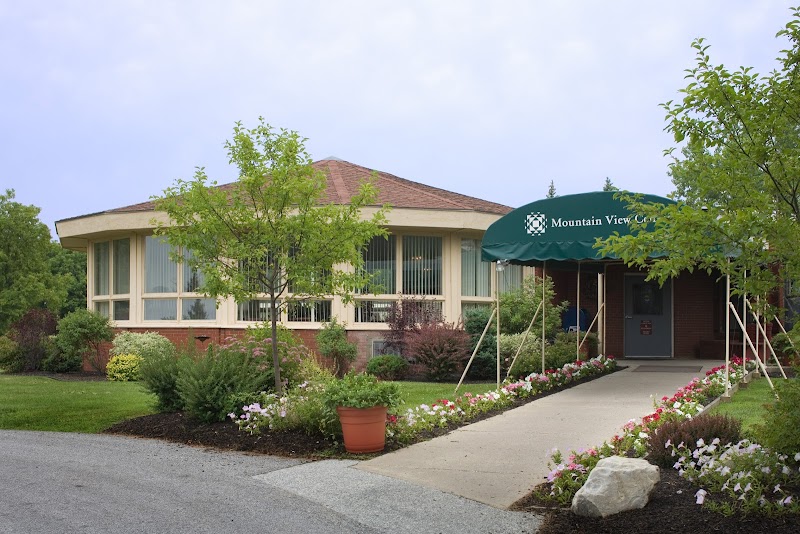
How is Mountain View Center Genesis Healthcare Staffed?

CMS rates Mountain View Center Genesis Healthcare's staffing level at 3 out of 5 stars, which is average compared to other nursing homes. Staff turnover is 42%, compared to the Vermont average of 46%. This relatively stable workforce can support continuity of care.

What Have Inspectors Found at Mountain View Center Genesis Healthcare?

State health inspectors documented 31 deficiencies at Mountain View Center Genesis Healthcare during 2022 to 2025. These included: 1 that caused actual resident harm, 28 with potential for harm, and 2 minor or isolated issues. Deficiencies causing actual harm indicate documented cases where residents experienced negative health consequences.

Who Owns and Operates Mountain View Center Genesis Healthcare?

Mountain View Center Genesis Healthcare is owned by a for-profit company. For-profit facilities operate as businesses with obligations to shareholders or private owners. The facility is operated by GENESIS HEALTHCARE, a chain that manages multiple nursing homes. With 158 certified beds and approximately 131 residents (about 83% occupancy), it is a mid-sized facility located in Rutland, Vermont.

How Does Mountain View Center Genesis Healthcare Compare to Other Vermont Nursing Homes?

Compared to the 100 nursing homes in Vermont, Mountain View Center Genesis Healthcare's overall rating (4 stars) is above the state average of 2.8, staff turnover (42%) is near the state average of 46%, and health inspection rating (3 stars) is at the national benchmark.

What Should Families Ask When Visiting Mountain View Center Genesis Healthcare?

Based on this facility's data, families visiting should ask: "Can I visit during a mealtime to observe dining assistance and food quality?" "How do you handle medical emergencies, and what is your hospital transfer rate?" "Can I speak with family members of current residents about their experience?"

Is Mountain View Center Genesis Healthcare Safe?

Based on CMS inspection data, Mountain View Center Genesis Healthcare has a clean safety record: no substantiated abuse findings (meaning no confirmed cases of resident harm), no Immediate Jeopardy citations (the most serious violation level indicating risk of serious injury or death), and is not on the Special Focus Facility watch list (a federal program monitoring the lowest-performing 1% of nursing homes). The facility has a 4-star overall rating and ranks #1 of 100 nursing homes in Vermont. While no facility is perfect, families should still ask about staff-to-resident ratios and recent inspection results during their visit.

Do Nurses at Mountain View Center Genesis Healthcare Stick Around?

Mountain View Center Genesis Healthcare has a staff turnover rate of 42%, which is about average for Vermont nursing homes (state average: 46%). Moderate turnover is common in nursing homes, but families should still ask about staff tenure and how the facility maintains care continuity when employees leave.

Was Mountain View Center Genesis Healthcare Ever Fined?

Mountain View Center Genesis Healthcare has been fined $9,770 across 1 penalty action. This is below the Vermont average of $33,177. While any fine indicates a compliance issue, fines under $50,000 are relatively common and typically reflect isolated problems that were subsequently corrected. Families should ask what specific issues led to these fines and confirm they've been resolved.

Is Mountain View Center Genesis Healthcare on Any Federal Watch List?

Mountain View Center Genesis Healthcare is not on any federal watch list. The most significant is the Special Focus Facility (SFF) program, which identifies the bottom 1% of nursing homes nationally based on persistent, serious quality problems. Not being on this list means the facility has avoided the pattern of deficiencies that triggers enhanced federal oversight. This is a positive indicator, though families should still review the facility's inspection history directly.