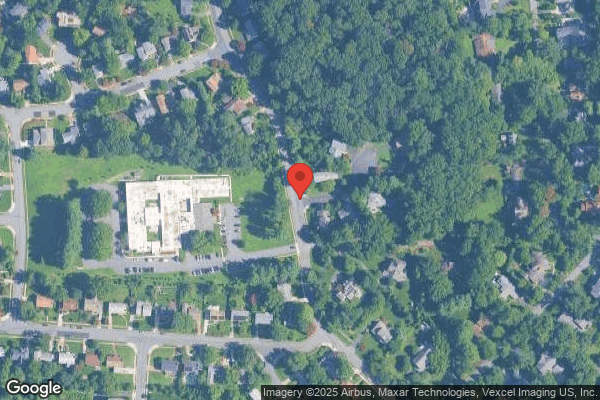
VIERRA FALLS CHURCH

2100 POWHATAN STREET, FALLS CHURCH, VA 22043 (703) 538-2400
For profit - Individual 160 Beds VIERRA COMMUNITIES Data: November 2025
Trust Grade
40/100
Last Inspection: August 2022

Over 2 years since last inspection. Current conditions may differ from available data.

Overview

Vierra Falls Church has received a Trust Grade of D, indicating below-average quality with some significant concerns. They rank #None of None in Virginia and #None of None in Fairfax County, meaning there are no other facilities to compare them to, underscoring their low standing. The facility is worsening, with issues increasing from 6 in 2023 to 8 in 2024, which raises alarms for potential future problems. Staffing is a relative strength, boasting a turnover rate of 32%, which is below the Virginia average of 48%, and they have good RN coverage, surpassing 89% of facilities in the state, suggesting stable care for residents. However, there have been concerning incidents, such as restricting residents' visitation rights contrary to federal guidelines and employing a dietary manager without the proper credentials, which raises questions about compliance and oversight. Overall, while there are some staffing strengths, the facility's declining trend and specific compliance failures are concerning for families considering this nursing home.

Trust Score
D
40/100
In Virginia
#112/223
Top 50%
Safety Record
Low Risk
No red flags
Inspections
Getting Worse
6 → 8 violations
Staff Stability
○ Average
32% turnover. Near Virginia's 48% average. Typical for the industry.
Penalties
✓ Good
No fines on record. Clean compliance history, better than most Virginia facilities.
Skilled Nurses
✓ Good
Each resident gets 53 minutes of Registered Nurse (RN) attention daily — more than average for Virginia. RNs are trained to catch health problems early.
Violations
⚠ Watch
29 deficiencies on record. Higher than average. Multiple issues found across inspections.
☆☆☆☆☆
0.0
Overall Rating
☆☆☆☆☆
0.0
Staff Levels
☆☆☆☆☆
0.0
Care Quality
☆☆☆☆☆
0.0
Inspection Score
Stable
2023: 6 issues
2024: 8 issues

The Good

  • Licensed Facility · Meets state certification requirements
  • No fines on record
  • Staff turnover below average (32%)

    16 points below Virginia average of 48%

This facility meets basic licensing requirements.

The Bad

Staff Turnover: 32%

14pts below Virginia avg (46%)

Typical for the industry

Chain: VIERRA COMMUNITIES

Part of a multi-facility chain

Ask about local staffing decisions and management

The Ugly 29 deficiencies on record

Jun 2024 2 deficiencies
CONCERN (D) 📢 Someone Reported This

A family member, employee, or ombudsman was alarmed enough to file a formal complaint

Potential for Harm - no one hurt, but risky conditions existed

Deficiency F0757 (Tag F0757)

Could have caused harm · This affected 1 resident

**NOTE- TERMS IN BRACKETS HAVE BEEN EDITED TO PROTECT CONFIDENTIALITY** Based on staff interview, facility document review, and clinical record review, the facility staff failed to ensure a resident w...

Read full inspector narrative →
**NOTE- TERMS IN BRACKETS HAVE BEEN EDITED TO PROTECT CONFIDENTIALITY** Based on staff interview, facility document review, and clinical record review, the facility staff failed to ensure a resident was free from unnecessary medication for one of five residents in the survey sample, Resident #1. The findings include: For Resident #1 (R1), the facility staff failed to administer the physician prescribed dose of the IV (intravenous) medication Acyclovir (1). Instead, the facility staff administered ten times the prescribed dose. R1 was transferred to the hospital for evaluation. Acyclovir injection is used to treat herpes simplex (a herpes virus infection of the skin and mucus membranes), herpes zoster (shingles; a rash that can occur in people who have had chickenpox in the past), and herpes simplex encephalitis (brain infection with swelling caused by the herpes virus). This information was obtained from the website: https://medlineplus.gov/druginfo/meds/a681036.html. A review of R1's clinical record revealed a physician's order dated [DATE] that documented, Acyclovir Sodium Intravenous Solution 50 MG (milligrams)/ML (milliliter) (Acyclovir Sodium) Use 500 mg intravenously every 12 hours for encephalitis for 10 Days. Give 500 mg into a venous catheter every 12 hours x (times) 10 days. A review of R1's [DATE] MAR (medication administration record) revealed the medication was administered at night on [DATE]. A nurse's note dated [DATE] at 2:31 a.m. documented, Resident complete [sic] her IV (intravenous) meds and tolerated well but CO (complained of) SOB (shortness of breath), PRN (as needed) O2 (oxygen) 2 liter was given via NC (nasal cannula). A nurse's note dated [DATE] at 5:42 a.m. documented, Resident also having chest congestion, one time order of Ipratropium Bromide (2) 0.5mg and Albuterol sulfate (3) 3mg, give 3ml via neb (nebulizer) treatment for SOB. NP (Nurse Practitioner) (name) was made aware. Still monitoring. A nurse's note dated [DATE] at 12:59 p.m. documented, Resident noted SOB, Disoriented and confused this morning the beginning of the shift. Vs (Vital signs) Bp (blood pressure) 107/63 P (pulse)67 Spo2 (oxygen level) 94 on 2 L (liters) oxygen via nasal canula Temp (temperature) 97.6 RR (respiratory rate) 19 wither [sic] notified NP (name) rounded on resident and give [sic] order to send resident ED (Emergency Department) via 911 for farther [sic] evaluation. 911 pick [sic] the resident 10:00 am this morning and transfer to (name of hospital). A note signed by the Director of Nursing on [DATE] at 4:31 p.m. documented, On [DATE], at 11am nurse called patient RP (responsible party) (name) to inform him about patient transferred [sic] to ER r/t (related to) AMS (altered mental status). At 15:30 (3:30 p.m.), nurse received a call from ER (Emergency Room) MD (Medical Doctor) (name) to get more detailed about the reason for patient's transfer, nurse explained to MD and MD stated that patient is currently at ER for treatment following labs result. At 16:30 (4:30 p.m.), nurse called RP to follow up on patient's status, RP stated that patient is still in ER awaiting lab result. A nurse's note dated [DATE] at 10:15 p.m. documented, A follow up call with night nurse (name) who confirmed with writer that resident is been admitted to (name of hospital) for AKI (Acute Kidney Injury) as a result of possible drug overdose. A hospital history and physical dated [DATE] documented, Reason for admission: aki (acute kidney injury) in the setting of acyclovir toxicity. Chief Complaint: Altered mental status, acyclovir overdose. Assessment/Plan: Acute kidney injury superimposed on chronic kidney disease, Acyclovir-induced nephrotoxicity .Patient with encephalopathy in the setting of acyclovir overdose (5 G [grams] given overnight instead of the scheduled 500 mg in her nursing home) and clinical diagnosis of encephalitis due to human HSV (herpes simplex virus). Patient in acute on chronic kidney injury with a creatinine [sic] has doubled over the past 2 days in the setting of acyclovir-induced nephrotoxicity .History of Present Illness: (Name of R1) is a 88 y.o. (year old) female .recent admission in the (name) hospital system for ecephalopathy [sic] and a seizure felt to be secondary to HSV encephalitis who presents with altered mental status and acyclovir overdose. The patient was initially hospitalized at (name of hospital) for metabolic encephalopathy, left arm cellulitis, and a superficial thrombosis. A lumbar puncture was discussed but was not performed due to overall goals of care for the patient. Ultimately decision was made to treat the patient empirically for HSV encephalitis with IV acyclovir 500 mg twice daily. The patient was transferred to skilled nursing, but the facility had difficulties obtaining acyclovir so ultimately the patient was admitted to the (name of hospital) from 5/20 to 5/22. Patient was transferred back to the nursing facility on 5/22 with an appropriate supply of IV acyclovir to last through 5/31. The patient is unable to provide any history due to altered mental status. According to her daughter-in-law she was awake alert and coherent last night. It was verified with the nursing facility by both the emergency room physician (name) and the medical HS (hospitalist) (name) that the patient was given 10 bags of 500 mg IV acyclovir overnight (instead of 1 bag of 500 mg). She was transferred to the emergency department as such. In the emergency department she was given IV fluids and had urgent evaluations by multiple consultants including nephrology. Poison control was contacted by the ED team which recommended dialysis . A hospital infectious disease consult dated [DATE] documented, Pt (Patient was given 5g (grams) IV Acyclovir yesterday. Plan: No Acyclovir for now. Would need HD (hemodialysis) to remove excess Acyclovir, and family is leaning against it and may elect for comfort measures .Discussed with primary team, family, and pharmacy re: acyclovir dosing and situation. I have urgently evaluated this patient, who is critically ill. Patient is at increased risk of clinical decline . LPN (licensed practical nurse) #3, the nurse who administered the Acyclovir on [DATE], was not available for interview during the survey. A statement signed by LPN #3 on [DATE] documented, At about 1600 pm (4:00 p.m.) came into work saw patient in bed, do [sic] regular assessment. Saw an order in PCC (computer software program) that Acyclovir sodium IV sol (solution) 50 mg/ml. Use 500mg/ml every 12 hours for encephalitis for 10 days. Give 500 mg into a venous catheter every 12 hours x (times) 10 days. I call [sic] pharmacy spoke with (name) and told her to show me how to dilute this meds [sic] before administering. She ask [sic] how many vial [sic] I have and I told 20 vials and she put me on hold and later transfer [sic] me (to name of pharmacist), and (name of pharmacist) ask [sic] me what was the order. I read back the order. 50mg/ml- give 500mg/ml but the bottle has 500 mg per 10 ml (in 50mg/ml). She told me I need 10 vials of 50mg/ml which will give 500mg/10ml and dilute it with 100ml of normal saline (0.9% sodium) to give it to patient with a rate of 100ml/hr (hour). I read back the order to (name of pharmacist) just as she had instructed me and she said that was right, and I should administer the medication. I also told her all the 10 vials should be given at once and she said yes put all the 10 vials into 100 ml of 0.9% sodium chloride and give it to the patient. I drew the 10 ml of each vial and put it in the 100 ml of sodium chloride (0.9%) and runs [sic] it at the rate of 100ml/hr. Resident was stable after administration and all vitals was within normal limit. At about 3:00 a.m. [DATE] writer hear [sic] resident calling for help and when assess [sic] she was having difficulty breathing and her oxygen of 87% on RA (room air). I call [sic] supervisor and we put on oxygen 2 liters via NC (nasal cannula) and oxygen came up to 96%. She was admitted with SOB (shortness of breath), wheezing, chest congestion, I ask {sic} supervisor if we could give her neb (nebulizer) treatment. I notified NP (Nurse Practitioner) (name) and she said will f/u (follow up) with resident when she come [sic] to the facility in the morning. The pharmacist who LPN #3 spoke to on [DATE] was not available for interview during the survey. An email sent from the pharmacy account manager to the facility Director of Nursing on [DATE] documented, Spoken to (name of pharmacist) in regards to the verbal instruction that was given to the nurse. She cannot recall the name of the nurse. She confirmed with the nurse twice of what vials she received from the outside pharmacy and was told that the vial says 50mg/ml. Also asked if it was a powder or solution- nurse indicated that it was already a solution. After confirmed that there was no allergies, (name of pharmacist) proceeded to tell her that she will need to withdraw 10 mls from the vials and put it in the 100 ml normal saline bag and infuse that over 60 minutes. A final summary of a facility synopsis of events dated [DATE] documented, This serves as the final report relating to the facility-reported incident sent to you on [DATE] concerning (R1), who was given an overdose of her IV Acyclovir medication in error by her assigned nurse .On [DATE], the patient was admitted to the facility with orders for Acyclovir 500mg injection every twelve (12) hours for ten (10) days. On [DATE] at approximately 2:30am, the nurse reported that the patient completed her first dose of the medication. At approximately 3:00am, the nurse stated that the patient called for assistance. Upon assessment, the patient was reportedly having difficulty. At this time, the patient's oxygen level was reported to be 87%. The nurse supervisor was notified and ordered Ipratropium Bromide 0.5mg and Albuterol Sulfate 3mg via nebulizer. At approximately 7:00am, the patient was noted with shortness of breath and confusion. At this time, the provider was notified, assessed the patient, and ordered for the patient to be sent to the (name of hospital) Emergency Department (ED). The patient's responsible party (RP) was also notified at this time. The patient was admitted to (name of hospital) for acute kidney injury (AKI). Upon investigation, the nurse who administered the dose of IV Acyclovir 500mg was questioned and stated that she administered ten (10) vials of the medication. When asked why she administered this amount of the medication, the nurse stated that she spoke with a representative of the facility's contracted pharmacy who instructed her to administer this dosage. The nurse was unable to offer an explanation as to why she did not attempt to clarify the medication order with the provider, nurse supervisor, or Director of Nursing. The nurse associated with the medication administration error was, therefore, suspended pending further investigation, and later terminated as a consequence of the outcome of the investigation. A report to the Virginia Board of Nursing has been filed as a result of this error. The facility spoke with the pharmacy representative with whom the nurse consulted, who stated that she instructed the nurse to withdraw the correct amount of medication for infusion. It was reported to the facility that the patient expired in the hospital after the family elected comfort measures on [DATE]. As a result of this incident, a quality improvement process has been initiated to include a review of the facility's IV Therapy policy, a review of the orders of all patients on IV therapy, the observation of the administration of IV medications for nurses with patients on IV therapy, in-servicing to all nurses on IV medication administration, and an ongoing QA (Quality Assurance) audit on all patients on IV therapy to ascertain that dose directions are clear and that no medication error has occurred . A facility 5-step action plan with a compliance date of [DATE] documented, 5-STEPS ACTION PLAN: IV THERAPY MANAGEMENT. The Situation: On [DATE] a medication administration error occurred involving (R1), who was given the wrong dose of IV Acyclovir sodium 500mg for encephalitis .Plan: 1. (R1) was assessed by the attending Nurse Practitioner and RP was notified on [DATE]- NP ordered for the patient to be transferred to the ER for further evaluation. Patient transferred to the ER on [DATE] and was admitted for AKI. Administrative disciplinary measures initiated against the nurse associated with the medication error. IV Therapy policy reviewed and revised accordingly on [DATE] to prevent similar medication errors in the future. 2. All patients are at risk. Nursing management will review MAR of all patients on IV therapy to ensure dose directions are clear and that there has not been any error in the administration of their IV medications. Nursing management to observe the administration of IV medication for nurses with patients on IV therapy. 3. DON/UMs (Unit Managers)/Appropriate Designee to in-service the nurses on the following: a) NURC-020: Intravenous Therapy policy and procedures. b) Six rights of medication administration- right resident, medication, dose, time, route, and documentation. c) IV therapy protocol as per policy number NURC-020. d) Managing IV therapy. 4. Nursing management will audit 10% of all current patients on IV therapy weekly x 4 weeks and then monthly to ascertain that the dose direction is clear, and no medication error has occurred. Any noted deficient practice will be corrected immediately as appropriate. Result of the audit will also be forwarded to the Weekly Risk Meeting for further review/guidance until the meeting determines that the audit is no longer needed. 5. Date of compliance: [DATE]. All credible evidence regarding the action plan was reviewed and verified during the survey. On [DATE] at 8:38 a.m., ASM (administrative staff member) #2 (the Director of Nursing) presented a vial of Acyclovir and stated that was the medication that was administered to R1. The label on the vial documented, ACYCLOVIR SODIUM INJECTION. 500 mg per 10mL* (50 mg per mL). *Each mL contains acyclovir sodium equivalent to 50 mg acyclovir. On [DATE] at 9:37 a.m., an interview was conducted with ASM (administrative staff member) #3 (the Nurse Practitioner). ASM #3 stated that prior to [DATE], she had not seen R1 but knew the resident's name because R1 was admitted to the facility during the previous week but was transferred back to the hospital because the facility could not obtain the resident's medication. ASM #3 stated R1 returned to the facility and was on the nurse practitioners' list to be evaluated but had not been seen (prior to [DATE]). ASM #3 stated that on [DATE], the manager asked her to see R1 because the resident was in distress and the staff figured out the resident had been given ten times the prescribed dose of Acyclovir. ASM #3 stated R1 presented with an altered mental status and labored breathing and was sent to the hospital. On [DATE] at 12:42 p.m., an interview was conducted with ASM #1 (the Administrator) and ASM #2 (the Director of Nursing). ASM #2 stated that R1 was admitted to the facility but then sent back to the hospital because the facility could not obtain the resident's medication. ASM #2 stated that the day prior to R1's return to the facility, the admissions coordinator stated the resident was coming to the facility from the hospital with 20 vials of Acyclovir and the medication could be administered at the facility. ASM #2 stated that on [DATE], a nurse said R1 only had ten vials of Acyclovir, so he checked the medication and confirmed there was only ten vials present. ASM #2 stated he was concerned there was a medication error, so he assessed R1, and she didn't look right so he told the nurse practitioner who assessed R1 and decided to transfer the resident to the ER. ASM #2 stated he spoke with LPN #3 who stated she administered ten vials of Acyclovir. ASM #2 stated LPN #3 was focused on the vial containing 50 milligrams per one milliliter and ignored the vial was a ten-milliliter vial. ASM #2 stated LPN #3 thought there was one milliliter in each vial and confused one milliliter with one vial. ASM #1 stated LPN #3 spoke with the pharmacist and the pharmacist was clear with what she instructed LPN #3 to administer but LPN #3 misunderstood the pharmacist's instructions. ASM #1 stated his assessment was that LPN #3 sincerely misunderstood milligrams, milliliters, and vials. On [DATE] at 1:00 p.m., ASM #1 and ASM #2 were made aware of the above concern and the concern for harm. The facility policy titled, Intravenous Therapy documented, The facility will adhere to accepted standards of practice regarding infusion practices. Only licensed nurses will perform IV infusion therapy .Intermittent Medication Infusion: 1. Review and verify practitioner's order for infusion solution or medication, dose, frequency, and route of administration .6. Compare medication/solution label against the order for accuracy . References: (1) Acyclovir injection is used to treat herpes simplex (a herpes virus infection of the skin and mucus membranes), herpes zoster (shingles; a rash that can occur in people who have had chickenpox in the past), and herpes simplex encephalitis (brain infection with swelling caused by the herpes virus). This information was obtained from the website: https://medlineplus.gov/druginfo/meds/a681036.html. (2) Ipratropium bromide is used to prevent wheezing, difficulty breathing, chest tightness, and coughing. This information was obtained from the website: https://medlineplus.gov/druginfo/meds/a601063.html. (3) Albuterol sulfate is used to prevent wheezing, difficulty breathing, chest tightness, and coughing. This information was obtained from the website: https://medlineplus.gov/druginfo/meds/a601063.html. PAST NON-COMPLIANCE
CONCERN (D) 📢 Someone Reported This

A family member, employee, or ombudsman was alarmed enough to file a formal complaint

Potential for Harm - no one hurt, but risky conditions existed

Infection Control (Tag F0880)

Could have caused harm · This affected 1 resident

Based on observation, staff interview, facility document review, and clinical record review, the facility staff failed to implement infection control practices for one of five residents in the survey ...

Read full inspector narrative →
Based on observation, staff interview, facility document review, and clinical record review, the facility staff failed to implement infection control practices for one of five residents in the survey sample, Resident #3. The findings include: For Resident #3 (R3), the facility staff failed to implement enhanced barrier precautions (a gown) while administering IV (intravenous) medication to the resident. A review of R3's clinical record revealed a physician's order dated 5/15/24 for enhanced barrier precautions for the resident's PICC (1) line on the left upper arm, and a physician's order dated 5/15/24 for Unasyn (2) three grams IV every six hours for empyema (3). On 6/4/24 at 8:26 a.m., LPN (licensed practical nurse) #2 was observed administering IV Unasyn to R3. LPN #2 did not wear a gown while administering IV medication to R3. A sign on R3's door documented, ENHANCED BARRIER PRECAUTIONS. EVERYONE MUST: Clean their hands, including before entering and when leaving the room. PROVIDERS AND STAFF MUST ALSO: Wear gloves and a gown for the following High-Contact Resident Care Activities. Device care or use: central line . On 6/4/24 at 9:19 a.m., an interview was conducted with LPN #1. LPN #1 stated that when a resident has an IV line, the staff are supposed to follow enhanced barrier precautions and wear gloves and a gown while administering IV medications. LPN #1 stated the nurses are in contact with a lot of residents and an IV line goes to a resident's vein, so enhanced barrier precautions are supposed to protect that resident. On 6/4/24 at 1:00 p.m., ASM (administrative staff member) #1 (the Administrator) and ASM #2 (the Director of Nursing) were made aware of the above concern. The facility policy titled, Enhanced Barrier Precautions documented, 'Enhanced barrier precautions' refer to the use of gown and gloves for use during high-contact resident care activities for residents known to be colonized or infected with a MDRO (multidrug-resistant organism) as well as those at increased risk of MDRO acquisition (e.g., residents with wounds or indwelling medical devices). The Centers for Disease Control and Prevention documented, Enhanced Barrier Precautions are an infection control intervention designed to reduce transmission of multidrug-resistant organisms (MDROs) in nursing homes. Enhanced Barrier Precautions involve gown and glove use during high-contact resident care activities for residents known to be colonized or infected with a MDRO as well as those at increased risk of MDRO acquisition (e.g., residents with wounds or indwelling medical devices). Assuming Contact Precautions do not otherwise apply, Enhanced Barrier Precautions are recommended for residents with any of the following: 1) infection or colonization with a MDRO or 2) a wound or indwelling medical device, even if the resident is not known to be infected or colonized with a MDRO. While prior iterations of the Enhanced Barrier Precautions guidance were intended for use solely during public health response activities, Enhanced Barrier Precautions are currently recommended to be used broadly, in all units across the whole facility, for residents who meet the above criteria. This broader application includes facilities where targeted MDROs have not yet been identified and is intended to minimize the transmission of MDROs in nursing homes. This information was obtained from the website: https://www.cdc.gov/long-term-care-facilities/hcp/prevent-mdro/faqs.html#:~:text=Enhanced%20Barrier%20Precautions%20are%20an%20infection%20control%20intervention,transmission%20of%20multidrug-resistant%20organisms%20%28MDROs%29%20in%20nursing%20homes. References: (1) A peripherally inserted central catheter (PICC) is a long, thin tube that goes into your body through a vein in your upper arm. The end of this catheter goes into a large vein near your heart. This information was obtained from the website: https://medlineplus.gov/ency/patientinstructions/000461.htm. (2) Unasyn is used to treat certain infections caused by bacteria. This information was obtained from the website: https://medlineplus.gov/druginfo/meds/a693021.html. (3) Empyema is a collection of pus in the space between the lung and the inner surface of the chest wall (pleural space). This information was obtained from the website: https://medlineplus.gov/ency/article/000123.htm.
Feb 2024 6 deficiencies
CONCERN (D) 📢 Someone Reported This

A family member, employee, or ombudsman was alarmed enough to file a formal complaint

Potential for Harm - no one hurt, but risky conditions existed

Notification of Changes (Tag F0580)

Could have caused harm · This affected 1 resident

**NOTE- TERMS IN BRACKETS HAVE BEEN EDITED TO PROTECT CONFIDENTIALITY** Based on staff interview, facility document review, and clinical record review, the facility staff failed to notify the physicia...

Read full inspector narrative →
**NOTE- TERMS IN BRACKETS HAVE BEEN EDITED TO PROTECT CONFIDENTIALITY** Based on staff interview, facility document review, and clinical record review, the facility staff failed to notify the physician of medications not administered to two of four residents in the survey sample, Residents #1 and #2. The findings include: 1. For Resident #1 (R1), the facility staff failed to notify the physician of medications not administered on 11/23/23 and 11/24/23. R1 was admitted to the facility on [DATE] and discharged from the facility on 11/26/23. A review of R1's physician orders revealed the following orders: 11/22/23 Apremilast Oral Tablet (1) 30 MG (milligram) Give 1 tablet by mouth one time a day for PSORIASIS. 11/22/23 Clobetasol Propionate E External Cream (2) 0.05 % (Clobetasol Propionate Emollient Base) Apply .TOPICALLY two times a day for PSORIASIS. 11/22/23 Procrit Injection Solution (3) 10000 UNIT/ML (Epoetin Alfa) Inject 1 ml (milliliter) subcutaneously one time a day every 7 day(s) for ANEMIA. 11/22/23 Sodium Bicarbonate Oral Tablet (4) 650 MG (Sodium Bicarbonate (Antacid)) Give 1 tablet by mouth two times a day for STOMACH ACID. Spiriva Respimat Inhalation Aerosol Solution (5) 2.5 MCG micrograms (Tiotropium Bromide Monohydrate) 2 puff inhale orally one time a day for WHEEZING. A review of R1's November 2023 MAR (medication administration record) revealed he did not receive the Apremilast as ordered on 11/23/23 or 11/24/23. He did not receive the Procrit, Spiriva, Clobetasol, or Sodium Bicarbonate on 11/23/23. A review of R1's progress notes failed to reveal evidence that the physician was notified that the resident did not receive any of these medications. A review of the facility's list of medications available for nurses to access in a central location (Cubex) revealed that none of these five medications was available for nurses to administer to R1. On 2/21/24 at 9:55 a.m., RN (registered nurse) #1 was interviewed and stated if a medication is not available at the time it is due to be given, they would first call the pharmacy to see if the medication had been delivered to the facility, and perhaps been misplaced. If the medication had not been misplaced somewhere in the facility, they would see if it is in the Cubex system. If it is not in the Cubex system, they would call the physician to see if the physician wanted to change the medication or take some other action. RN#1 stated the physician notification should be documented by the nurse in the progress notes. On 2/21/24 at 3:35 p.m., ASM (administrative staff member) #1, the administrator, ASM #2, the director of nursing, and ASM #3, the regional director of clinical services, were informed of these concerns. A review of the facility policy, Unavailable Medications, revealed, in part: A STAT supply of commonly used medications is maintained in-house for timely initiation of medications .Staff shall take immediate action when it is known that the medication is unavailable .Notify physician of inability to obtain medication .Obtain alternate treatment orders and/or specific orders for monitoring resident while medication is on hold. No further information was provided prior to exit. References (1) Apremilast is used to treat psoriatic arthritis (a condition that causes joint pain and swelling and scales on the skin). It is also used to treat moderate to severe plaque psoriasis (skin disease in which red, scaly patches form on some areas of the body) in people who may benefit from medications or phototherapy (a treatment that involves exposing the skin to ultraviolet light). this information is taken from the website https://medlineplus.gov/druginfo/meds/a614022.html. (2) Clobetasol topical is used to treat the itching, redness, dryness, crusting, scaling, inflammation, and discomfort of various scalp and skin conditions, including psoriasis (a skin disease in which red, scaly patches form on some areas of the body) and eczema (a skin disease that causes the skin to be dry and itchy and to sometimes develop red, scaly rashes). Clobetasol is in a class of medications called corticosteroids. It works by activating natural substances in the skin to reduce swelling, redness, and itching. This information is taken from the website https://medlineplus.gov/druginfo/meds/a686008.html. (3) Epoetin alfa injection products are used to treat anemia (a lower than normal number of red blood cells) in people with chronic kidney failure (condition in which the kidneys slowly and permanently stop working over a period of time). This information is taken from the website https://medlineplus.gov/druginfo/meds/a692034.html. (4) Sodium bicarbonate is an antacid used to relieve heartburn and acid indigestion. Your doctor also may prescribe sodium bicarbonate to make your blood or urine less acidic in certain conditions. This information is taken from the website https://medlineplus.gov/druginfo/meds/a682001.html. (5) Tiotropium (Spiriva) is used to prevent wheezing, shortness of breath, coughing, and chest tightness in patients with chronic obstructive pulmonary disease (COPD, a group of diseases that affect the lungs and airways) such as chronic bronchitis (swelling of the air passages that lead to the lungs) and emphysema (damage to air sacs in the lungs). Tiotropium is in a class of medications called bronchodilators. It works by relaxing and opening the air passages to the lungs to make breathing easier. This information is taken from the website https://medlineplus.gov/druginfo/meds/a604018.html. 2. For Resident #2 (R2), the facility staff failed to notify the physician of medications not administered on 1/31/24 and 2/2/24. A review of R2's physician orders revealed the following: 1/30/24 Cefazolin Sodium Injection Solution Reconstituted (1) 2 GM (grams) (Cefazolin Sodium) Use 2 gram intravenously every 8 hours for Bacteremia. 1/30/24 Diclofenac Sodium Oral Tablet Delayed Release (2) 75 MG (milligrams) (Diclofenac Sodium) Give 1 tablet by mouth two times a day for pain for 14 Days. 2/1/24 Valtrex Oral Tablet (3) 1 GM (Valacyclovir HCl) Give 1 tablet by mouth one time a day for HSV1 (herpes simplex virus type 1) for 3 Days. A review of R2's January and February 2024 MAR s(medication administration records) revealed she did not receive the Cefazolin and Diclofenac as ordered on 1/31/24. This review also revealed R2 did not receive the Valtrex as ordered on 2/2/24. A review of R2's progress notes failed to reveal evidence that the physician was notified that the resident did not receive any of these medications. A review of the facility's list of medications available for nurses to access in a central location (Cubex) revealed that none of these three medications was available for nurses to administer to R2. On 2/21/24 at 9:55 a.m., RN (registered nurse) #1 was interviewed and stated if a medication is not available at the time it is due to be given, they would first call the pharmacy to see if the medication had been delivered to the facility, and perhaps been misplaced. If the medication had not been misplaced somewhere in the facility, they would see if it is in the Cubex system. If it is not in the Cubex system, they would call the physician to see if the physician wanted to change the medication or take some other action. RN#1 stated the physician notification should be documented by the nurse in the progress notes. On 2/21/24 at 3:35 p.m., ASM (administrative staff member) #1, the administrator, ASM #2, the director of nursing, and ASM #3, the regional director of clinical services, were informed of these concerns. No further information was provided prior to exit. References (1) Cefazolin injection is used to treat certain infections caused by bacteria including skin, bone, joint, genital, blood, heart valve, respiratory tract (including pneumonia), biliary tract, and urinary tract infections. Cefazolin injection also may be used before, during, and sometimes for a brief period after surgery in order to prevent the patient from getting an infection. Cefazolin injection is in a class of medications called cephalosporin antibiotics. It works by killing bacteria. This information is taken from the website https://medlineplus.gov/druginfo/meds/a682731.html. (2) Diclofenac capsules (Zipsor, Zorvolex) and tablets (Cataflam) are used to relieve mild to moderate pain. Diclofenac extended-release tablets (Voltaren XR), tablets (Cataflam), and delayed-release tablets (available generically) are used to relieve pain, tenderness, swelling, and stiffness caused by osteoarthritis (arthritis caused by a breakdown of the lining of the joints), and rheumatoid arthritis (arthritis caused by swelling of the lining of the joints). This information is taken from the website https://medlineplus.gov/druginfo/meds/a689002.html. (3) Valacyclovir is used to treat herpes zoster (shingles) and genital herpes. It does not cure herpes infections but decreases pain and itching, helps sores to heal, and prevents new ones from forming. This information is taken from the website https://medlineplus.gov/druginfo/meds/a695010.html.
CONCERN (D) 📢 Someone Reported This

A family member, employee, or ombudsman was alarmed enough to file a formal complaint

Potential for Harm - no one hurt, but risky conditions existed

Deficiency F0655 (Tag F0655)

Could have caused harm · This affected 1 resident

**NOTE- TERMS IN BRACKETS HAVE BEEN EDITED TO PROTECT CONFIDENTIALITY** Based on observation, resident interview, staff interview, facility document review, and clinical record review, the facility st...

Read full inspector narrative →
**NOTE- TERMS IN BRACKETS HAVE BEEN EDITED TO PROTECT CONFIDENTIALITY** Based on observation, resident interview, staff interview, facility document review, and clinical record review, the facility staff failed to formulate a baseline care plan to address the resident's basic needs for two of four residents in the survey sample, Residents #3 and #1. The findings include: For Resident #3 (R#), the facility staff failed to formulate a baseline care plan for bilateral compression wraps on the resident's legs and failed to formulate a baseline care plan for his central venous access line (1). 1.a. For Resident #3 (R#3), the facility staff failed to formulate a baseline care plan for bilateral compression wraps on the resident's legs. R3 was admitted to the facility on [DATE] with a history of pneumonitis, sepsis, congestive heart failure, lymphedema (swelling caused by an absence of lymph nodes), right leg cellulitis (skin infection), and a history of rectal cancer requiring chemotherapy treatment. On the admission nursing assessment dated [DATE], he was found to be oriented to person, place, and situation. On 2/21/24 at 9:16 a.m., R3 was observed sitting up in bed. He stated: I am fairly comfortable, well, as comfortable as I can be with these. R3 pulled the linens away from his lower body, exposing his legs. Both legs were wrapped with a thick compression wrapping extending from just below the knee to just below the ankle. Both feet had socks and an additional compression device. He stated the facility staff had not removed them since he had been admitted because I only want my daughter to take them off. She needs to show the facility how to do it. R3 stated he was unsure of how long it had been since his legs had been unwrapped and assessed. He stated: It was before I went to the hospital, I think. A review of R3's clinical record revealed no information related to the care of the compression wraps, including a schedule for removing them to assess the underlying skin. The review failed to reveal evidence of appointments with an outside provider who might be managing the care of the compression wraps. A review of the admission nursing summary dated 2/16/24 revealed, in part: Right leg was noted to be bigger than the right leg. Resident has both compression socks and garment on both legs. A review of R3's baseline care plan failed to reveal any information related to the resident's bilateral compression wraps. On 2/21/24 at 11:34 a.m., RN (registered nurse) #1, who was assigned to care for R3 that day, was interviewed and stated R3 had just moved to his current room in the late afternoon on 2/20/24. When asked if they had been told anything from the off going nurse about R3's legs, RN#1 stated: I was not told anything in report about his legs. When asked what would need to be done for a resident who had bilateral compression wraps on his leg, RN #1 stated: We would definitely need to unwrap and check the skin, and added the nurses would need an order from the physician to know how often to remove the wraps, and if the resident's legs could be bathed or needed any additional treatments. On 2/21/24 at 3:15 p.m., LPN (licensed practical nurse) #2, a unit manager, was interviewed. She stated nursing is responsible for the baseline care plan, and the care plan should be initiated by the admitting nurse. She stated the supervisors review, update, and follow up on any needed information within 24 hours of the resident's admission (unless it is a weekend). She stated a resident's baseline care plan needs to contain all the information required to provide basic care to the resident. She stated if a resident has compression wraps to the legs, the compression wraps should definitely be included in the base line care plan as a device. On 2/21/24 at 3:35 p.m., ASM (administrative staff member) #1, the administrator, ASM #2, the director of nursing, and ASM #3, the regional director of clinical services, were informed of these concerns. A review of the facility policy, Baseline Care Plan, revealed, in part: The facility will develop and implement a baseline care plan for each resident that includes the instructions needed to provide effective and person-centered care of the resident that meet professional standards of quality of care .The baseline care plan will be developed within 48 hours of a resident's admission .Include the minimum health care information necessary to properly care for a resident .The admitting nurse, or supervising nurse on duty, shall gather information from the admission physical assessment .and discussion with the resident Interventions shall be initiated that address the resident's current care needs including .any special needs such as for IV therapy .or wound care. No further information was provided prior to exit. 1.b. For R3, the facility staff failed to formulate a baseline care plan for his central venous access line (1). On 2/21/24 at 9:16 a.m., R3 was observed sitting up in bed. He stated he receives IV (intravenous) antibiotics each day through an access in his left upper arm. R3 rolled up his left sleeve, which was tight fitting and completely covering the central venous access site. Once exposed, the access site had one lumen (line), and a clean, dry, intact bandage dated 2/20/24. R3 stated: I like this shirt, but it's hard for them to get to it to give me my antibiotic. But they put up with me. When asked if the staff is flushing the central venous access and assessing it at times other than when they are administering the daily antibiotic, he stated: I don't think so. I've usually got it locked up tight. A review of R3's clinical record revealed a physician's order to administer a daily antibiotic through the central venous access line, and to flush the line with saline before and after the antibiotic, but did not reveal any other orders for care of the central line, other than a weekly dressing and cap change. A review of R3's baseline care plan failed to reveal evidence of information related to care of R3's central line. On 2/21/24 at 3:15 p.m., LPN (licensed practical nurse) #2, a unit manager, was interviewed. She stated nursing is responsible for the baseline care plan, and the care plan should be initiated by the admitting nurse. She stated the supervisors review, update, and follow up on any needed information within 24 hours of the resident's admission (unless it is a weekend). She stated a resident's baseline care plan needs to contain all the information required to provide basic care to the resident. She stated if a resident has a central line, this should be included in the baseline care plan. On 2/21/24 at 3:35 p.m., ASM (administrative staff member) #1, the administrator, ASM #2, the director of nursing, and ASM #3, the regional director of clinical services, were informed of these concerns. No further information was provided prior to exit. (1) A device used to draw blood and give treatments, including intravenous fluids, drugs, or blood transfusions. A thin, flexible tube is inserted into a vein, usually below the collarbone. It is guided (threaded) into a large vein above the right side of the heart called the superior vena cava. This information is taken from the website https://www.cancer.gov/publications/dictionaries/cancer-terms/def/central-venous-access-catheter. 2. For Resident #1 (R1), the facility staff failed to formulate a baseline care plan for a central venous access line (1). On the most recent MDS (minimum data set), a five-day assessment with an ARD (assessment reference date) of 11/26/23, R1 was coded as receiving iv (intravenous) medications through a central venous access. R1 was admitted to the facility on [DATE] and discharged from the facility on 11/26/23. A review of R1's clinical record revealed orders for, and evidence he received, two antibiotics through a central venous access on 11/23/23, 11/24/23, and 11/25/23. A review of R1's admission summary dated [DATE] revealed, in part: IV (intravenous) access on the right upper chest. A review of R1's clinical record did not reveal any other orders for routine care of the central line, other than a weekly dressing and cap change and flushing the line with saline before and after the antibiotic administration, i.e. assessment of the area for infection or bleeding. A review of R1's baseline care plan failed to reveal evidence of information related to care of R3's central line. On 2/21/24 at 3:15 p.m., LPN (licensed practical nurse) #2, a unit manager, was interviewed. She stated nursing is responsible for the baseline care plan, and the care plan should be initiated by the admitting nurse. She stated the supervisors review, update, and follow up on any needed information within 24 hours of the resident's admission (unless it is a weekend). She stated a resident's baseline care plan needs to contain all the information required to provide basic care to the resident. She stated if a resident has a central line, this should be included in the baseline care plan. On 2/21/24 at 3:35 p.m., ASM (administrative staff member) #1, the administrator, ASM #2, the director of nursing, and ASM #3, the regional director of clinical services, were informed of these concerns. No further information was provided prior to exit. (1) A device used to draw blood and give treatments, including intravenous fluids, drugs, or blood transfusions. A thin, flexible tube is inserted into a vein, usually below the collarbone. It is guided (threaded) into a large vein above the right side of the heart called the superior vena cava. This information is taken from the website https://www.cancer.gov/publications/dictionaries/cancer-terms/def/central-venous-access-catheter.
CONCERN (D) 📢 Someone Reported This

A family member, employee, or ombudsman was alarmed enough to file a formal complaint

Potential for Harm - no one hurt, but risky conditions existed

Pressure Ulcer Prevention (Tag F0686)

Could have caused harm · This affected 1 resident

Based on observation, staff interview, facility document review, and clinical record review, the facility staff failed to implement interventions to treat a pressure injury for one of four residents i...

Read full inspector narrative →
Based on observation, staff interview, facility document review, and clinical record review, the facility staff failed to implement interventions to treat a pressure injury for one of four residents in the survey sample, Resident #3. The findings include: For Resident #3 (R3), the facility staff failed to implement interventions to treat a right toe pressure injury. On 2/21/24 at 9:16 a.m., R3 was observed sitting up in bed. He stated: I am fairly comfortable, well, as comfortable as I can be with these. R3 pulled the linens away from his lower body, exposing his legs. Both legs were wrapped with a thick compression wrapping extending from just below the knee to just below the ankle. Both feet had socks and a separate compression device. A review of R3's admission nursing summary dated 2/16/24 revealed, in part: Deep tissue injury on right heel, open area on (sic) under the right big toe with drainage. A review of R3's skilled nursing notes dated 2/16/24, 2/17/24, 2/18/24 and 2/19/24 all revealed, in part: Skin issue .Right toe(s). Wound odor: Yes. A review of R3's clinical record, including MARs (medication administration records) and TARs (treatment administration records) failed to reveal evidence that a treatment was implemented for the wound on R3's right toe until 2/20/24. R3's physician orders included the following order dated 2/17/24: Collagenase ointment Wound: cleanse right plantar wound with wound cleanser or normal saline, pat dry. Apply Santyl ointment over wound and cover with Aquacel foam dressing. Change every M/W/F (Monday, Wednesday, Friday) and as needed. every day shift every Tue, Wed, Fri notify provider of any s/s of infection or increased drainage and as needed. This order for treatment for R3's right toe was dated 2/17/23, but was listed on the TAR as an as-needed order. It was not scheduled to start until 2/20/24. There was no evidence that the treatment had been implemented prior to 2/20/24. A review of R3's wound NP's (nurse practitioner) note dated 2/20/24 revealed, in part: Pt has lymphedema wraps to bilateral lower extremities and declines removal of wraps for skin assessment. The wound NP assessed a lumbar pressure wound, and wrote orders for treatment of it. However, the note did not contain any information about R3's toe wound. On 2/21/22 at 12:11 p.m., ASM (administrative staff member) #1, the administrator, and ASM #2, the director of nursing, were informed of these concerns. ASM #2 stated: They did a skin assessment on admission. They removed the compression stockings on admission. He stated the order for treatment of the right toe wound had been entered incorrectly, and showed up as an as-needed order instead of a scheduled order. He was asked to provide evidence that the as-needed order had been implemented. On 2/21/24 at 2:27 p.m., ASM #5, the wound NP, was interviewed. She stated when she saw R3 on 2/20/24, she was not made aware of any wounds the facility had already identified. She stated she did not look at the resident's right toes. She stated: He had wraps covering his lower extremities. And he had another wrap covering his whole foot. She stated she told the resident she would like to take the wraps off his legs and feet to look at his skin, but the resident refused. On 2/21/24 at 9:55 a.m., LPN (licensed practical nurse) #3 and RN (registered nurse) #2, a unit manager, were interviewed. RN #3 stated R3 had an open pressure injury to his right toe on the plantar surface. She stated she had just become aware of the pressure injury on 2/20/21 (after the wound NP saw the resident), and she applied the treatment and corrected the way the order was listed on the TAR. She stated she was able to remove the sock and compression device on just the resident's right foot, and did not remove the compression wrap on the right leg. She stated the treatment would be administered as ordered going forward. On 2/21/24 at 3:13 p.m., LPN #2, a unit manager, was interviewed. When asked how nurses provide evidence that they have completed a treatment for a pressure injury, she stated: They sign it on the TAR. A review of the facility policy, Pressure Injury Prevention and Management, revealed, in part: The facility shall establish and utilize a systemic approach for pressure injury prevention and management, including prompt assessment and treatment .Evidence-based treatments in accordance with current standards of practice will be provided for all residents who have a pressure injury present. No further information was provided prior to exit.
CONCERN (D) 📢 Someone Reported This

A family member, employee, or ombudsman was alarmed enough to file a formal complaint

Potential for Harm - no one hurt, but risky conditions existed

Deficiency F0710 (Tag F0710)

Could have caused harm · This affected 1 resident

**NOTE- TERMS IN BRACKETS HAVE BEEN EDITED TO PROTECT CONFIDENTIALITY** Based on observation, resident interview, staff interview, facility document review, and clinical record review, the facility st...

Read full inspector narrative →
**NOTE- TERMS IN BRACKETS HAVE BEEN EDITED TO PROTECT CONFIDENTIALITY** Based on observation, resident interview, staff interview, facility document review, and clinical record review, the facility staff failed to provide physician supervision of care for one of four residents in the survey sample, Resident #3. The findings include: For Resident #3 (R3), the attending physician and wound NP (nurse practitioner) failed to provide supervision and care for the resident's bilateral leg compression wraps. R3 was admitted to the facility on [DATE] with a history of pneumonitis, sepsis, congestive heart failure, lymphedema (swelling caused by an absence of lymph nodes), right leg cellulitis (skin infection), and a history of rectal cancer requiring chemotherapy treatment. On the admission nursing assessment dated [DATE], he was found to be oriented to person, place, and situation. On 2/21/24 at 9:16 a.m., R3 was observed sitting up in bed. He stated: I am fairly comfortable, well, as comfortable as I can be with these. R3 pulled the linens away from his lower body, exposing his legs. Both legs were wrapped with a thick compression wrapping extending from just below the knee to just below the ankle. Both feet had socks and an additional compression device. He stated the facility staff had not removed them since he had been admitted because I only want my daughter to take them off. She needs to show the facility how to do it. R3 stated he was unsure of how long it had been since his legs had been unwrapped and assessed. He stated: It was before I went to the hospital, I think. A review of R3's clinical record revealed no information related to the care of the compression wraps, including a schedule for removing them to assess the underlying skin. The review failed to reveal evidence of appointments with an outside provider who might be managing the care of the compression wraps. A review of the admission nursing summary dated 2/16/24 revealed, in part: Right leg was noted to be bigger than the right leg. Resident has both compression socks and garment on both legs. A review of R3's baseline care plan failed to reveal any information related to the resident's bilateral compression wraps. A review of the attending physician's initial assessment dated [DATE] revealed, in part: Review of Systems .Cardiovascular (nothing checked) .Skin (nothing checked) .PHYSICAL EXAM .Findings .Musculoskeletal .[check mark] Muscle Strength RLE (right lower extremity) .[check mark] Muscle Strength LLE (left lower extremity) .Skin .[check mark] Pitting edema RLE .[check mark] pitting edema LLE .RLE bandaged .Assessment and Plan: RLE cellulitis with MDR (multidrug resistant) organisms - hx (history) of .Discussed with .staff. On 2/21/24 at 11:34 a.m., RN (registered nurse) #1, who was assigned to care for R3 that day, was interviewed. When asked what would need to be done for a resident who had bilateral compression wraps on his leg, RN #1 stated: We would definitely need to unwrap and check the skin, and added the nurses would need an order from the physician to know how often to remove the wraps, and if the resident's legs could be bathed or needed any additional treatments. On 2/21/24 at 2:11 p.m., ASM (administrative staff member) #4, the attending physician, was interviewed. During the interview, ASM #4 confirmed he was accessing R3's clinical record from his office. ASM #4 stated he read extensively about R3 before he saw the resident on 2/19/24. He stated he knew the resident had a history of cellulitis on his legs. He stated: If I see something or have read something about the skin, I get a wound care consult. The nurses do a full skin assessment on admission. I defer to the nurses .I talk to the nurses in the hallway, and I let the NPs (nurse practitioners) know - they are in the facility on a daily basis. He stated the NPs have more constant contact with the staff and residents, and they take care if something pops up. He stated he talked to R3 about the compression wraps. He added: They are very expensive. He goes somewhere else for follow up. He stated he was no sure when the last time the resident's compression wraps had been removed and the skin assessed. He stated: We would have wound care look at it. We go off what the wound care team has said. When asked how often compression wraps should be removed and the underlying skin assessed, he stated: I would not strip it down if it had been wrapped recently. But I would want the wound care team to do it when they first see the resident. He stated he would have to look in the hospital documentation to see if the compression wraps had been changed once a week, but added: I would think no more than 24 to 48 hours after the resident gets here, it needs to be seen. Every building has a different way of doing it. Sometimes they send me pictures. Sometimes they are right there in the room with me. No more than 48 hours. He ended by saying: I'm not sure we would know how to re-wrap it here. He stated he remembered R3 refusing to have the compression wraps removed. When asked if he educated the resident about the risks of skin breakdown if it could not be regularly assessed, he stated: If they don't let us take it down, at some point, they can't be my patient anymore. He added he was not sure if he had this conversation with R3. On 2/21/24 at 2:27 p.m., ASM #5, the Wound Care NP, a physician extender, was interviewed. She stated she did not remove R3's compression wraps on her initial visit with the resident on 2/20/24. She stated: He refused. He said his daughter wrapped them for him not too long ago. She stated this was her first time meeting R3, and she thought the wraps were in place to help manage the resident's lymphedema. When asked if she usually performs a full body skin assessment, she stated: Yes, and that would usually include unwrapping his legs. But he declined. She stated she did not remember having a conversation with ASM #4 about the resident's compression wraps. On 2/21/24 at 3:35 p.m., ASM (administrative staff member) #1, the administrator, ASM #2, the director of nursing, and ASM #3, the regional director of clinical services, were informed of these concerns. A review of the facility policy, Physician Visits and Physician Delegation, revealed, in part: It is the policy of this facility to ensure the physician takes an active role in supervising the care of residents .The Physician should .review the resident's total program of care, including medications and treatments at each visit. No further information was provided prior to exit.
CONCERN (D) 📢 Someone Reported This

A family member, employee, or ombudsman was alarmed enough to file a formal complaint

Potential for Harm - no one hurt, but risky conditions existed

Pharmacy Services (Tag F0755)

Could have caused harm · This affected 1 resident

**NOTE- TERMS IN BRACKETS HAVE BEEN EDITED TO PROTECT CONFIDENTIALITY** Based on staff interview, facility document review, and clinical record review, the facility staff failed to provide medications...

Read full inspector narrative →
**NOTE- TERMS IN BRACKETS HAVE BEEN EDITED TO PROTECT CONFIDENTIALITY** Based on staff interview, facility document review, and clinical record review, the facility staff failed to provide medications for administration to two of four residents in the survey sample, Residents #1 and #2. The findings include: 1. For Resident #1 (R1), the facility staff failed to provide medications for administration on 11/23/23 and 11/24/23. R1 was admitted to the facility on [DATE] and discharged from the facility on 11/26/23. A review of R1's physician orders revealed the following orders: 11/22/23 Apremilast Oral Tablet (1) 30 MG (milligram) Give 1 tablet by mouth one time a day for PSORIASIS. 11/22/23 Clobetasol Propionate E External Cream (2) 0.05 % (Clobetasol Propionate Emollient Base) Apply .TOPICALLY two times a day for PSORIASIS. 11/22/23 Procrit Injection Solution (3) 10000 UNIT/ML (Epoetin Alfa) Inject 1 ml (milliliter) subcutaneously one time a day every 7 day(s) for ANEMIA. 11/22/23 Sodium Bicarbonate Oral Tablet (4) 650 MG (Sodium Bicarbonate (Antacid)) Give 1 tablet by mouth two times a day for STOMACH ACID. Spiriva Respimat Inhalation Aerosol Solution (5) 2.5 MCG micrograms (Tiotropium Bromide Monohydrate) 2 puff inhale orally one time a day for WHEEZING. A review of R1's November 2023 MAR (medication administration record) revealed he did not receive the Apremilast as ordered on 11/23/23 or 11/24/23. He did not receive the Procrit, Spiriva, Clobetasol, or Sodium Bicarbonate on 11/23/23. A review of the facility's list of medications available for nurses to access in a central location (Cubex) revealed that none of these five medications was available for nurses to administer to R1. On 2/21/24 at 9:55 a.m., RN (registered nurse) #1 was interviewed and stated if a medication is not available at the time it is due to be given, they would first call the pharmacy to see if the medication had been delivered to the facility, and perhaps been misplaced. If the medication had not been misplaced somewhere in the facility, they would see if it is in the Cubex system. If it is not in the Cubex system, they would call the physician to see if the physician wanted to change the medication or take some other action. On 2/21/24 at 3:35 p.m., ASM (administrative staff member) #1, the administrator, ASM #2, the director of nursing, and ASM #3, the regional director of clinical services, were informed of these concerns. A review of the facility policy, Pharmacy Services, revealed, in part: It is the policy of this facility to ensure that pharmaceutical services .are provided to meet the needs of each resident .The facility will provide pharmaceutical services to include procedures that ensure the accurate acquiring, receiving, dispensing, and administering of all routine and emergency drugs and biologicals to meet the needs of each resident .The pharmacy will .strive to assure that medications are requested, received, and administered in a timely manner as ordered by the authorized prescriber. No further information was provided prior to exit. References (1) Apremilast is used to treat psoriatic arthritis (a condition that causes joint pain and swelling and scales on the skin). It is also used to treat moderate to severe plaque psoriasis (skin disease in which red, scaly patches form on some areas of the body) in people who may benefit from medications or phototherapy (a treatment that involves exposing the skin to ultraviolet light). this information is taken from the website https://medlineplus.gov/druginfo/meds/a614022.html. (2) Clobetasol topical is used to treat the itching, redness, dryness, crusting, scaling, inflammation, and discomfort of various scalp and skin conditions, including psoriasis (a skin disease in which red, scaly patches form on some areas of the body) and eczema (a skin disease that causes the skin to be dry and itchy and to sometimes develop red, scaly rashes). Clobetasol is in a class of medications called corticosteroids. It works by activating natural substances in the skin to reduce swelling, redness, and itching. This information is taken from the website https://medlineplus.gov/druginfo/meds/a686008.html. (3) Epoetin alfa injection products are used to treat anemia (a lower than normal number of red blood cells) in people with chronic kidney failure (condition in which the kidneys slowly and permanently stop working over a period of time). This information is taken from the website https://medlineplus.gov/druginfo/meds/a692034.html. (4) Sodium bicarbonate is an antacid used to relieve heartburn and acid indigestion. Your doctor also may prescribe sodium bicarbonate to make your blood or urine less acidic in certain conditions. This information is taken from the website https://medlineplus.gov/druginfo/meds/a682001.html. (5) Tiotropium (Spiriva) is used to prevent wheezing, shortness of breath, coughing, and chest tightness in patients with chronic obstructive pulmonary disease (COPD, a group of diseases that affect the lungs and airways) such as chronic bronchitis (swelling of the air passages that lead to the lungs) and emphysema (damage to air sacs in the lungs). Tiotropium is in a class of medications called bronchodilators. It works by relaxing and opening the air passages to the lungs to make breathing easier. This information is taken from the website https://medlineplus.gov/druginfo/meds/a604018.html. 2. For Resident #2 (R2), the facility staff failed to provide medications for administration on 1/31/24 and 2/2/24. A review of R2's physician orders revealed the following: 1/30/24 Cefazolin Sodium Injection Solution Reconstituted (1) 2 GM (grams) (Cefazolin Sodium) Use 2 gram intravenously every 8 hours for Bacteremia. 1/30/24 Diclofenac Sodium Oral Tablet Delayed Release (2) 75 MG (milligrams) (Diclofenac Sodium) Give 1 tablet by mouth two times a day for pain for 14 Days. 2/1/24 Valtrex Oral Tablet (3) 1 GM (Valacyclovir HCl) Give 1 tablet by mouth one time a day for HSV1 (herpes simplex virus type 1) for 3 Days. A review of R2's January and February 2024 MAR s(medication administration records) revealed she did not receive the Cefazolin and Diclofenac as ordered on 1/31/24. This review also revealed R2 did not receive the Valtrex as ordered on 2/2/24. A review of R2's progress notes failed to reveal that the physician was notified that the resident did not receive any of these medications. A review of the facility's list of medications available for nurses to access in a central location (Cubex) revealed that none of these three medications was available for nurses to administer to R2. On 2/21/24 at 9:55 a.m., RN (registered nurse) #1 was interviewed and stated if a medication is not available at the time it is due to be given, they would first call the pharmacy to see if the medication had been delivered to the facility, and perhaps been misplaced. If the medication had not been misplaced somewhere in the facility, they would see if it is in the Cubex system. If it is not in the Cubex system, they would call the physician to see if the physician wanted to change the medication or take some other action. On 2/21/24 at 3:35 p.m., ASM (administrative staff member) #1, the administrator, ASM #2, the director of nursing, and ASM #3, the regional director of clinical services, were informed of these concerns. No further information was provided prior to exit. References (1) Cefazolin injection is used to treat certain infections caused by bacteria including skin, bone, joint, genital, blood, heart valve, respiratory tract (including pneumonia), biliary tract, and urinary tract infections. Cefazolin injection also may be used before, during, and sometimes for a brief period after surgery in order to prevent the patient from getting an infection. Cefazolin injection is in a class of medications called cephalosporin antibiotics. It works by killing bacteria. This information is taken from the website https://medlineplus.gov/druginfo/meds/a682731.html. (2) Diclofenac capsules (Zipsor, Zorvolex) and tablets (Cataflam) are used to relieve mild to moderate pain. Diclofenac extended-release tablets (Voltaren XR), tablets (Cataflam), and delayed-release tablets (available generically) are used to relieve pain, tenderness, swelling, and stiffness caused by osteoarthritis (arthritis caused by a breakdown of the lining of the joints), and rheumatoid arthritis (arthritis caused by swelling of the lining of the joints). This information is taken from the website https://medlineplus.gov/druginfo/meds/a689002.html. (3) Valacyclovir is used to treat herpes zoster (shingles) and genital herpes. It does not cure herpes infections but decreases pain and itching, helps sores to heal, and prevents new ones from forming. This information is taken from the website https://medlineplus.gov/druginfo/meds/a695010.html.
CONCERN (E) 📢 Someone Reported This

A family member, employee, or ombudsman was alarmed enough to file a formal complaint

Potential for Harm - no one hurt, but risky conditions existed

Quality of Care (Tag F0684)

Could have caused harm · This affected multiple residents

**NOTE- TERMS IN BRACKETS HAVE BEEN EDITED TO PROTECT CONFIDENTIALITY** Based on observation, resident interview, staff interview, facility document review, and clinical record review, the facility st...

Read full inspector narrative →
**NOTE- TERMS IN BRACKETS HAVE BEEN EDITED TO PROTECT CONFIDENTIALITY** Based on observation, resident interview, staff interview, facility document review, and clinical record review, the facility staff failed to provide care and services to promote a resident's highest level of well being for three of four residents in the survey sample, Residents #3, #1, and #4. The findings include: For Resident #3 (R#3), the facility staff failed to provide evidence of assessment, orders, and care for bilateral compression wraps on the resident's legs and failed to provide evidence of routine central venous access line care. 1.a. The facility staff failed to provide evidence of assessment, orders, and care for bilateral compression wraps on the resident's legs. R3 was admitted to the facility on [DATE] with a history of congestive heart failure, lymphedema (swelling caused by an absence of lymph nodes), and right leg cellulitis (skin infection). On the admission nursing assessment dated [DATE], he was found to be oriented to person, place, and situation. On 2/21/24 at 9:16 a.m., R3 was observed sitting up in bed. He stated: I am fairly comfortable, well, as comfortable as I can be with these. R3 pulled the linens away from his lower body, exposing his legs. Both legs were wrapped with a thick compression wrapping extending from just below the knee to just below the ankle. Both feet had socks and an additional compression device. He stated the facility staff had not removed them since he had been admitted because I only want my daughter to take them off. She needs to show the facility how to do it. R3 stated he was unsure of how long it had been since his legs had been unwrapped and assessed. He stated: It was before I went to the hospital, I think. A review of R3's clinical record revealed no information related to the care of the compression wraps, including a schedule for removing them to assess the underlying skin. The review failed to reveal evidence of appointments with an outside provider who might be managing the care of the compression wraps. A review of the admission nursing summary dated 2/16/24 revealed, in part: Right leg was noted to be bigger than the right leg. Resident has both compression socks and garment on both legs. A review of R3's baseline care plan failed to reveal any information related to the resident's bilateral compression wraps. A review of the attending physician's initial assessment dated [DATE] revealed, in part: Review of Systems .Cardiovascular (nothing checked) .Skin (nothing checked) .PHYSICAL EXAM .Findings . Musculoskeletal .[check mark] Muscle Strength RLE (right lower extremity) .[check mark] Muscle Strength LLE (left lower extremity) .Skin .[check mark] Pitting edema RLE .[check mark] pitting edema LLE .RLE bandaged .Assessment and Plan: RLE cellulitis with MDR (multidrug resistant) organisms - hx (history) of .Discussed with: staff. On 2/21/24 at 11:34 a.m., RN (registered nurse) #1, who was assigned to care for R3 that day, was interviewed and stated R3 had just moved to his current room in the late afternoon on 2/20/24. When asked if they had been told anything from the off going nurse about R3's legs, he stated: I was not told anything in report about his legs. When asked what would need to be done for a resident who had bilateral compression wraps on his leg, RN #1 stated: We would definitely need to unwrap and check the skin, and added the nurses would need an order from the physician to know how often to remove the wraps, and if the resident's legs could be bathed or needed any additional treatments. On 2/21/22 at 12:11 p.m., ASM (administrative staff member) #1, the administrator, and ASM #2, the director of nursing, were informed of these concerns. ASM #2 stated: They did a skin assessment on admission. They removed the compression stockings on admission. On 2/21/24 at 2:11 p.m., ASM #4, the attending physician, was interviewed. During the interview, ASM #4 confirmed he was accessing R3's clinical record from his office. ASM #4 stated he read extensively about R3 before he saw the resident on 2/19/24. He stated he knew the resident had a history of cellulitis on his legs. He stated: If I see something or have read something about the skin, I get a wound care consult. The nurses do a full skin assessment on admission. I defer to the nurses .I talk to the nurses in the hallway, and I let the NPs (nurse practitioners) know - they are in the facility on a daily basis. He stated the NPs have more constant contact with the staff and residents, and they take care if something pops up. He stated he talked to R3 about the compression wraps. He added: They are very expensive. He goes somewhere else for follow up. He stated he was no sure when the last time the resident's compression wraps had been removed and the skin assessed. He stated: We would have wound care look at it. We go off what the wound care team has said. When asked how often compression wraps should be removed and the underlying skin assessed, he stated: I would not strip it down if it had been wrapped recently. But I would want the wound care team to do it when they first see the resident. He stated he would have to look in the hospital documentation to see if the compression wraps had been changed once a week, but added: I would think no more than 24 to 48 hours after the resident gets here, it needs to be seen. Every building has a different way of doing it. Sometimes they send me pictures. Sometimes they are right there in the room with me. No more than 48 hours. He ended by saying: I'm not sure we would know how to re-wrap it here. He stated he remembered R3 refusing to have the compression wraps removed. When asked if he educated the resident about the risks of skin breakdown if it could not be regularly assessed, he stated: If they don't let us take it down, at some point, they can't be my patient anymore. He added he was not sure if he had this conversation with R3. On 2/21/24 at 2:27 p.m., ASM #5, the Wound Care nurse practitioner, was interviewed. She stated she did not remove R3's compression wraps on her initial visit with the resident on 2/20/24. She stated: He refused. He said his daughter wrapped them for him not too long ago. She stated this was her first time meeting R3, and she thought the wraps were in place to help manage the resident's lymphedema. When asked if she usually performs a full body skin assessment, she stated: Yes, and that would usually include unwrapping his legs. But he declined. On 2/22/24 at 8:08 a.m., ASM #1 stated the facility did not have a policy regarding compression wraps. He provided the following excerpt from the facility nursing standard, Lippincott Manual of Nursing Practice, 11th edition: Preventing Other Hazards of Immobility .Apply compression stockings as directed. Check color, warmth, and capillary refill through opening at the toe if using open-toe stockings, and remove at least once per day to look for skin changes, pressure points, and calf tenderness. No further information was provided prior to exit. 1.b. For R3, the facility staff failed to provide evidence of routine central venous access line care. On 2/21/24 at 9:16 a.m., R3 was observed sitting up in bed. He stated he receives iv (intravenous) antibiotics each day through an access in his left upper arm. R3 rolled up his left sleeve, which was tight fitting and completely covering the central venous access site. Once exposed, the access site had one lumen (line), and a clean, dry, intact bandage dated 2/20/24. R3 stated: I like this shirt, but it's hard for them to get to it to give me my antibiotic. But they put up with me. When asked if the staff is flushing the central venous access and assessing it at times other than when they are administering the daily antibiotic, he stated: I don't think so. I've usually got it locked up tight. A review of R3's clinical record revealed a physician's order to administer a daily antibiotic through the central venous access line, and to flush the line with saline before and after the antibiotic, but did not reveal any other orders for care of the central line, i.e. assessment of the area for infection or bleeding, other than a weekly dressing and cap change. A review of R3's February 2024 MAR (medication administration record) and TAR (treatment administration record) failed to reveal evidence of central line care other than a weekly dressing and cap change. A review of R3's baseline care plan failed to reveal evidence of information related to care of R3's central line. On 2/21/24 at 11:34 a.m., RN (registered nurse) #1 was interviewed and stated a central venous access required assessment every shift. RN #1 stated: You assess the site, make sure the dressing is intact, change the dressing, ask the resident if they have pain or irritation. They stated the nurse needs to make sure there is not bleeding at the site or any signs of infection. He stated the physician orders all the care for the central line, including assessment every shift of the access site. He stated the MAR (medication administration record) is the place where the nurse provides evidence of the central line care. On 2/21/24 at 3:35 p.m., ASM #1, the administrator, ASM #2, the director of nursing, and ASM #3, the regional director of clinical services, were informed of these concerns. No further information was provided prior to exit. (1) A device used to draw blood and give treatments, including intravenous fluids, drugs, or blood transfusions. A thin, flexible tube is inserted into a vein, usually below the collarbone. It is guided (threaded) into a large vein above the right side of the heart called the superior vena cava. This information is taken from the website https://www.cancer.gov/publications/dictionaries/cancer-terms/def/central-venous-access-catheter. 2. For Resident #1 (R1), the facility staff failed to provide evidence of routine care for a central venous access line (1). On the most recent MDS (minimum data set), a five-day assessment with an ARD (assessment reference date) of 11/26/23, R1 was coded as receiving IV (intravenous) medications through a central venous access. R1 was admitted to the facility on [DATE] and discharged from the facility on 11/26/23. A review of R1's clinical record revealed orders for, and evidence he received, two antibiotics through a central venous access on 11/23/23, 11/24/23, and 11/25/23. A review of R1's admission summary dated [DATE] revealed, in part: IV (intravenous) access on the right upper chest. A review of R1's clinical record did not reveal any other orders for routine care of the central line, other than a weekly dressing and cap change and flushing the line with saline before and after the antibiotic administration, i.e. assessment of the area for infection or bleeding. On 2/21/24 at 11:34 a.m., RN (registered nurse) #1 was interviewed. He stated a central venous access required assessment every shift. He stated: You assess the site, make sure the dressing is intact, change the dressing, ask the resident if they have pain or irritation. He stated the nurse needs to make sure there is not bleeding at the site or any signs of infection. He stated the physician orders all the care for the central line, including assessment every shift of the access site. He stated the MAR (medication administration record) is the place where the nurse provides evidence of the central line care. On 2/21/24 at 3:35 p.m., ASM (administrative staff member) #1, the administrator, ASM #2, the director of nursing, and ASM #3, the regional director of clinical services, were informed of these concerns. No further information was provided prior to exit. (1) A device used to draw blood and give treatments, including intravenous fluids, drugs, or blood transfusions. A thin, flexible tube is inserted into a vein, usually below the collarbone. It is guided (threaded) into a large vein above the right side of the heart called the superior vena cava. This information is taken from the website https://www.cancer.gov/publications/dictionaries/cancer-terms/def/central-venous-access-catheter. 3. For Resident #4 (R4), the facility staff failed to provide evidence of routine assessments for skin and circulation on her right arm, which had a hard cast. R4 was admitted to the facility on [DATE] after having surgery to repair a right wrist fracture. On the admission MDS (minimum data set) with an ARD (assessment reference date) of 2/8/24, R4 was coded as having no cognitive impairment for making daily decisions. She was coded as having had major orthopedic surgery prior to admission, and as having limited range of motion on one side of her upper extremities. On 2/20/24 at 2:59 p.m., R4 was observed sitting in a chair beside her bed. She stated she had just returned from the orthopedist, who had removed the cast that had been on her right arm. When asked if the staff had been checking her right arm and hand on a regular basis while the cast was on, she stated: No. I'm a nurse, and they weren't doing that. But I knew what to look for. A review of R4's clinical record, including orders, MARs (medication administration records), and TARs (treatment administration records) failed to reveal evidence of routine monitoring of the resident's casted arm for skin and circulation concerns. On 2/21/24 at 12:38 p.m., RN (registered nurse) # 1 was interviewed. She stated if a resident has a cast, the nurse should be checking the extremity (arm or leg) every shift for warmth, pain, swelling, and capillary refill. She stated the cast should not be causing any kind of irritation or skin breakdown at its edges. She stated there should be an order to do so, and the nurse should sign off on this assessment each shift. She stated: When they come in with [a cast], there is an order that tells us what to look for. On 2/21/24 at 2:11 p.m., ASM (administrative staff member) #4, the attending physician, was interviewed. He stated if a resident has a cast, the nurses should be looking above it and below it for signs of swelling and skin breakdown. He stated the nurses should check regularly for capillary refill to make sure the cast is not impairing the resident's circulation. On 2/21/24 at 3:35 p.m., ASM (administrative staff member) #1, the administrator, ASM #2, the director of nursing, and ASM #3, the regional director of clinical services, were informed of these concerns. On 2/22/24 at 8:08 a.m., ASM #1 stated the facility did not have a policy regarding compression wraps. He provided the following excerpt from the facility nursing standard, Lippincott Manual of Nursing Practice, 11th edition: Complications associated with casts .Nursing interventions .Assess for .discoloration of the limb .tingling or numbness .slow capillary refill .skin integrity .severe pain over bony prominences .odor .drainage on the cast. No further information was provided prior to exit.
Nov 2023 2 deficiencies
CONCERN (D) 📢 Someone Reported This

A family member, employee, or ombudsman was alarmed enough to file a formal complaint

Potential for Harm - no one hurt, but risky conditions existed

Deficiency F0658 (Tag F0658)

Could have caused harm · This affected 1 resident

**NOTE- TERMS IN BRACKETS HAVE BEEN EDITED TO PROTECT CONFIDENTIALITY** Based on staff interview, facility document review and clinical record review, it was determined that the facility staff failed ...

Read full inspector narrative →
**NOTE- TERMS IN BRACKETS HAVE BEEN EDITED TO PROTECT CONFIDENTIALITY** Based on staff interview, facility document review and clinical record review, it was determined that the facility staff failed to follow professional standards of practice for one of four residents in the survey sample; Resident #1. The facility provided an acceptable plan of correction, having already identified the concern on 10/27/23. This is cited at past non-compliance. The findings include: The facility staff failed to implement the physician's order to provide orthopedic follow up aftercare for staple removal for Resident #1. Resident #1 was admitted to the facility on [DATE] and discharged on 10/20/23 and had the diagnosis of but not limited to osteoporosis with current pathological fracture status post surgery with staples to the right hip. A review of the clinical record revealed the hospital discharge instructions dated 10/2/23 (from the hospital to the facility). These instructions included, Date of most recent surgery 9/21/23 .ORIF (Open reduction internal fixation) Please contact the office as soon as possible to schedule a follow-up appointment with (name of orthopedic surgeon). You will need to be seen approximately 2 weeks after your discharge from the hospital . A review of the physician's orders revealed one dated 10/3/23 for COMMUNICATION ORDER: ORTHOPEDIC FOLLOW-UP needs to be scheduled for patient postop surgical visit and staple removal. A nurse's note dated 10/3/23 documented, Observed on admission 4 surgical sites to right hip area with 24 staples all together NP (Nurse Practitioner) notified orders received. A wound care nurse practitioner note dated 10/5/23 documented, The patient has a surgical wound Needs surgical follow up ASAP (as soon as possible), due today (2 weeks post op). Notified facility via post rounds report. A medical nurse practitioner note dated 10/5/23 documented, right hip fracture s/p (status post) ORIF/ortho after care f/u (follow up) ortho. A wound care nurse practitioner note dated 10/10/23 documented, The patient has a surgical wound. Recommend f/u with surgeon asap Notified facility via post rounds report. A nurse's note dated 10/13/23 documented, Called her geriatric case worker/(name) for (Resident #1) to find out when is (Resident #1's) surgeon f/u appointment but no answer (according to unit manager, POA (Power of Attorney) will make appointment- called her son/(name) But he said (name of geriatric case worker) will take care of this matter). Left message on (phone number)/(geriatric case worker) to call use back regarding surgeon f/u appointment- made unit manager aware of this matter & (and) e-mailed to (agency) case manager too. A medical nurse practitioner note dated 10/16/23 documented, .right hip fracture s/p ORIF/ortho after care f/u ortho . A wound care nurse practitioner note dated 10/17/23 documented, The patient has a surgical wound. Recommend f/u with surgeon asap Notified facility via post rounds report. The resident was discharged on 10/20/23 to home with 24 staples still intact. No further documentation was noted regarding the status of any follow up with orthopedic surgeon and staple removal. On 11/28/23 at 2:07 PM an interview was conducted with RN #1 (Registered Nurse) the unit manager. She stated that the care manager from the community came to the facility and was told that the resident needed to see the orthopedic doctor. She stated that the care manager said she would schedule the appointment. She stated that the care manager never got back with the facility on when the appointment would be. She stated that the care manager spoke to the nurse practitioner regarding the staples. She stated that the facility called the care manager and left a message to return call regarding the orthopedic appointment. She stated that she was not aware of her ever returning the call. She stated that this was right after the resident was admitted . When asked if she followed up any further regarding the appointment, she stated that she did not follow up a second time which I should have done. On 11/28/23 at 2:24 PM an interview was conducted with LPN #2 (Licensed Practical Nurse) the wound care nurse. She stated that the care manager in the community asked if the facility could remove the staples. She stated that she said yes but the surgeon needed to send an order to do so, because sometimes they want to do an x-ray first. She stated that the care manager said ok I am gonna make an appointment and left. She stated that she was not aware if anyone followed up. She stated that she did not recall if she followed up with anyone about the staples because they only see residents for wound care once a week. She stated that the facility had not received anything from the surgeon about removing them. She stated that she saw the care manager twice and both times she said she was making the appointment. She stated that she told the care manager both times the facility needed the order. She stated We never received the order. On 11/29/23 at 9:00 AM an interview was conducted with ASM #4 (Administrative Staff Member) the Nurse Practitioner. She stated that typically sutures and staples are removed after 14 days post surgery. She stated that it was a bit excessive that the resident had staples for approximately one month, given that surgery was on 9/21/23 and was discharged to home on [DATE]. She stated that the need for orthopedic follow up and staple removal was relayed to the facility staff multiple times and that she did not know why it was not done. She stated that if an outside individual (family member, case manager, etc.) had stated they were going to make the follow up appointment and then did not follow through, she would expect the facility to follow through with ensuring the appointment was made and the resident was seen. The facility policy, Verbal Orders documented, 6. Follow through with orders by making appropriate contact or notification (e.g , lab or pharmacy). On 11/29/23 at 3:30 PM, ASM #1 the Administrator, was made aware of the findings. A plan of correction was provided and documented as follows: Initiated on 10/27/23. 5-Steps Action Plan Surgical Wound/Voiding Trial/Pressure Injuries Management The Situation: On 10/27/23, the Administrator received an allegation of neglect call from the Care Manager of (Resident #1), a post-surgical skilled patient that was at the facility from 10/2/23 -10/20/23. The complaint entails three allegations; viz: failure of the facility to remove or facilitate removal of patient's surgical staples, failure to discontinue the patient's foley catheter for voiding trial, and failure to notify the family of the presence of wounds on the patient. The quality assurance questions, therefore, explored by the facility included the following: What may have led to the possible alleged inadequacies in the management of the above-stated patient's surgical staples, voiding trial, and notification of the family about the patient's pressure injuries? What framework does the facility have in place to holistically manage surgical wounds, voiding trial, and family notification of patients' pressure injuries at the facility? What additional resources could have been put in place to mitigate the incidence of the alleged inadequacies in care provision at the facility? It is against the above quality assurance questions that the facility will implement the following action plan below: The 5-Steps Action Plan: 1. (Resident #1) was discharged from the facility on 10/20/23. Facility attempted to coordinate an appointment with the surgeon on 10/13/23 but was unsuccessful - no order received to discontinue (Resident #1's) staples up to the date of her discharge on [DATE]. Facility received an order for a voiding trial on 10/19/23 from her urologist and discontinued the foley catheter on 10/20/23 for a trial - patient voided before discharge. (Resident #1) was admitted with SDTI (suspected deep tissue injury) to bilateral heels from the hospital - her comprehensive care plan that included all active wounds and foley catheter were discussed with the family and resident during her CP (care plan) conference. (Resident #1) son was also notified about the admitted -with bilateral pressure injuries to her heels on 10/5/23 and again on 10/12/23. 2. All residents are at risk. DON/UMs (Director of Nursing/Unit Managers) will review all current surgical/pressure injury wounds and foley catheter to ensure that those requiring follow-up with the surgeon has been completed, staples removed as ordered, family notifications for pressure injuries completed, and foley catheter with potential for voiding trial undertaken accordingly. Any inadequacies/deficient practices noted will be corrected accordingly and as appropriate. Facility will also develop a post-surgical wound protocol to guide the nurses in the management of all surgical wounds. 3. The DON/Unit Mangers/Appropriate Designee will complete the following education with the nurses: i. Post-surgical wound management protocol and wound policies/procedures. ii. Management of admitted with and inhouse acquired pressure injuries. iii. Foley catheter and voiding trial management. iv. Completing documented family notification. 4. The DON/Ums/appropriate designee will audit 10% of all current patients with surgical wounds, pressure ulcers, and foley catheters weekly x4 weeks and then monthly to ascertain that the post-surgical protocol is being followed by the nurses, foley catheter with voiding trial request/order completed timely, and the notification of family about active pressure ulcers. Any noted deficient practice will be corrected immediately as appropriate. Result of the audit outcome will also be forwarded to the Weekly Risk Meeting and/or the QAPI Committee for further review/guidance until the meeting determines that it is no longer needed. 5. Date of Compliance: 11/27/23. (End of POC) The POC documented that a policy was developed for Post-Surgical Wound Management Protocol. This policy documented, in full: The admission and management of post-surgical patients is an integral part of the skilled services provided by all (facility company name). To help the facility to adequately manage all post-surgical patients, particularly their surgical wounds, the below protocol in addition to the policies and procedures of the company related to the subject matter will be followed by the staff accordingly: 1. All post-surgical patients admitted at the facility will immediately have a follow-up appointment scheduled with their surgeon within 24-72 hours of their admission. 2. All post-surgical patients' incision sites will be assessed on admission for staples and/or sutures to determine their discontinuation pathway in consultation with the facility attending physician/practitioner and the residents' surgeons. 3. All surgical wounds must be evaluated daily even when no treatment was ordered by the surgeon at the time of discharge from the hospital or post admission follow-up with the surgeon. 4. Where directed by the attending facility physician/practitioner for an order from the patient surgeon to remove staple/suture, the nurse should ensure to have such an order from the surgeon within 24 hours of receiving such an instruction from the attending physician/practitioner. 5. Definitive determination to remove surgical staples/sutures from a post-surgical patient's incision site must be made within 24-72 hours of the patient admission to the facility. 6. Responsible party (RP), where applicable, will be updated on the progress of healing of the patient's post-surgical incision sites. 7. All surgical sites must be evaluated by the discharging nurse to determine their status at time of discharge and document the evaluation outcome in the patient's clinical record accordingly. 8. Collaborate closely with the wound specialist in coordinating post-surgical patients' incision site management. (End of policy) This policy was signed by the Director of Nursing on 11/15/23. The facility's plan of correction and credible evidence was reviewed, including identification of the issue, audits of all other residents, education of staff, policy development, and ongoing audits of the implemented plan of correction, on 11/29/23. There were no identified concerns with current residents reviewed. This deficiency is cited at past non-compliance.
CONCERN (D) 📢 Someone Reported This

A family member, employee, or ombudsman was alarmed enough to file a formal complaint

Potential for Harm - no one hurt, but risky conditions existed

Quality of Care (Tag F0684)

Could have caused harm · This affected 1 resident

**NOTE- TERMS IN BRACKETS HAVE BEEN EDITED TO PROTECT CONFIDENTIALITY** Based on staff interview, facility document review and clinical record review, it was determined that the facility staff failed ...

Read full inspector narrative →
**NOTE- TERMS IN BRACKETS HAVE BEEN EDITED TO PROTECT CONFIDENTIALITY** Based on staff interview, facility document review and clinical record review, it was determined that the facility staff failed to arrange for the provision of follow up care for one of four residents in the survey sample; Resident #1. The facility provided an acceptable plan of correction, having already identified the concern on 10/27/23, therefore, this is cited at past non-compliance. The findings include: The facility staff failed to arrange follow up aftercare with the orthopedic surgeon per the physician's order. The resident was admitted on [DATE] with 24 staples in a right hip surgical incision. Multiple orders and notes documented the need to follow up with the orthopedic surgeon. The follow up was never obtained and the resident was discharged to home on [DATE] with 24 staples still intact. This was approximately one month after the surgery, which was 9/21/23. The facility policy, Special Needs documented, 3. If necessary, the facility will assist residents in making appropriate appointments with a qualified person or facility and arranging for transportation to and from such appointments. The facility policy, Provision of Physician Ordered Services documented, 2. Qualified nursing personnel will submit timely requests for physician ordered services (laboratory, radiology, consultations) to the appropriate entity 5. In instances where diagnostic testing or consultations are not available to be performed on-site OR the Physician has requested that services be performed at an off-site facility, this facility will work with the resident and their family to secure appropriate transportation arrangements for such appointments. Resident #1 was admitted to the facility on [DATE] and discharged on 10/20/23 and had the diagnosis of but not limited to osteoporosis with current pathological fracture status post surgery with staples to the right hip. A review of the clinical record revealed the hospital discharge instructions dated 10/2/23 (from the hospital to the facility). These instructions included, Date of most recent surgery 9/21/23 .ORIF (Open reduction internal fixation) Please contact the office as soon as possible to schedule a follow-up appointment with (name of orthopedic surgeon). You will need to be seen approximately 2 weeks after your discharge from the hospital . A review of the physician's orders revealed one dated 10/3/23 for COMMUNICATION ORDER: ORTHOPEDIC FOLLOW-UP needs to be scheduled for patient postop surgical visit and staple removal. A nurse's note dated 10/3/23 documented, Observed on admission 4 surgical sites to right hip area with 24 staples all together NP (Nurse Practitioner) notified orders received. A wound care nurse practitioner note dated 10/5/23 documented, The patient has a surgical wound Needs surgical follow up ASAP (as soon as possible), due today (2 weeks post op). Notified facility via post rounds report. A medical nurse practitioner note dated 10/5/23 documented, right hip fracture s/p (status post) ORIF/ortho after care f/u (follow up) ortho. A wound care nurse practitioner note dated 10/10/23 documented, The patient has a surgical wound. Recommend f/u with surgeon asap Notified facility via post rounds report. A nurse's note dated 10/13/23 documented, Called her geriatric case worker/(name) for (Resident #1) to find out when is (Resident #1's) surgeon f/u appointment but no answer (according to unit manager, POA (Power of Attorney) will make appointment- called her son/(name) But he said (name of geriatric case worker) will take care of this matter). Left message on (phone number)/(geriatric case worker) to call use back regarding surgeon f/u appointment- made unit manager aware of this matter & (and) e-mailed to (agency) case manager too. A medical nurse practitioner note dated 10/16/23 documented, .right hip fracture s/p ORIF/ortho after care f/u ortho . A wound care nurse practitioner note dated 10/17/23 documented, The patient has a surgical wound. Recommend f/u with surgeon asap Notified facility via post rounds report. The resident was discharged on 10/20/23 to home with 24 staples still intact. No further documentation was noted regarding the status of any follow up with orthopedic surgeon and staple removal prior to discharge. On 11/28/23 at 2:07 PM an interview was conducted with RN #1 (Registered Nurse) the unit manager. She stated that the care manager from the community came to the facility and was told that the resident needed to see the orthopedic doctor. She stated that the care manager said she would schedule the appointment. She stated that the care manager never got back with the facility on when the appointment would be. She stated that the care manager spoke to the nurse practitioner regarding the staples. She stated that the facility called the care manager and left a message to return call regarding the orthopedic appointment. She stated that she was not aware of her ever returning the call. She stated that this was right after the resident was admitted . When asked if she followed up any further regarding the appointment, she stated that she did not follow up a second time which I should have done. On 11/28/23 at 2:24 PM an interview was conducted with LPN #2 (Licensed Practical Nurse) the wound care nurse. She stated that the care manager in the community asked if the facility could remove the staples. She stated that she said yes but the surgeon needed to send an order to do so, because sometimes they want to do an x-ray first. She stated that the care manager said ok I am gonna make an appointment and left. She stated that she was not aware if anyone followed up. She stated that she did not recall if she followed up with anyone about the staples because they only see residents for wound care once a week. She stated that the facility had not received anything from the surgeon about removing them. She stated that she saw the care manager twice and both times she said she was making the appointment. She stated that she told the care manager both times the facility needed the order. She stated We never received the order. On 11/29/23 at 9:00 AM an interview was conducted with ASM #4 (Administrative Staff Member) the Nurse Practitioner. She stated that typically sutures and staples are removed after 14 days post surgery. She stated that it was a bit excessive that the resident had staples for approximately one month, given that surgery was on 9/21/23 and was discharged to home on [DATE]. She stated that the need for orthopedic follow up and staple removal was relayed to the facility staff multiple times and that she did not know why it was not done. She stated that if an outside individual (family member, case manager, etc.) had stated they were going to make the follow up appointment and then did not follow through, she would expect the facility to follow through with ensuring the appointment was made and the resident was seen. On 11/29/23 at 3:30 PM, ASM #1 the Administrator, was made aware of the findings. A plan of correction was provided and documented as follows: Initiated on 10/27/23. 5-Steps Action Plan Surgical Wound/Voiding Trial/Pressure Injuries Management The Situation: On 10/27/23, the Administrator received an allegation of neglect call from the Care Manager of (Resident #1), a post-surgical skilled patient that was at the facility from 10/2/23 -10/20/23. The complaint entails three allegations; viz: failure of the facility to remove or facilitate removal of patient's surgical staples, failure to discontinue the patient's foley catheter for voiding trial, and failure to notify the family of the presence of wounds on the patient. The quality assurance questions, therefore, explored by the facility included the following: What may have led to the possible alleged inadequacies in the management of the above-stated patient's surgical staples, voiding trial, and notification of the family about the patient's pressure injuries? What framework does the facility have in place to holistically manage surgical wounds, voiding trial, and family notification of patients' pressure injuries at the facility? What additional resources could have been put in place to mitigate the incidence of the alleged inadequacies in care provision at the facility? It is against the above quality assurance questions that the facility will implement the following action plan below: The 5-Steps Action Plan: 1. (Resident #1) was discharged from the facility on 10/20/23. Facility attempted to coordinate an appointment with the surgeon on 10/13/23 but was unsuccessful - no order received to discontinue (Resident #1's) staples up to the date of her discharge on [DATE]. Facility received an order for a voiding trial on 10/19/23 from her urologist and discontinued the foley catheter on 10/20/23 for a trial - patient voided before discharge. (Resident #1) was admitted with SDTI (suspected deep tissue injury) to bilateral heels from the hospital - her comprehensive care plan that included all active wounds and foley catheter were discussed with the family and resident during her CP (care plan) conference. (Resident #1) son was also notified about the admitted -with bilateral pressure injuries to her heels on 10/5/23 and again on 10/12/23. 2. All residents are at risk. DON/UMs (Director of Nursing/Unit Managers) will review all current surgical/pressure injury wounds and foley catheter to ensure that those requiring follow-up with the surgeon has been completed, staples removed as ordered, family notifications for pressure injuries completed, and foley catheter with potential for voiding trial undertaken accordingly. Any inadequacies/deficient practices noted will be corrected accordingly and as appropriate. Facility will also develop a post-surgical wound protocol to guide the nurses in the management of all surgical wounds. 3. The DON/Unit Mangers/Appropriate Designee will complete the following education with the nurses: i. Post-surgical wound management protocol and wound policies/procedures. ii. Management of admitted with and inhouse acquired pressure injuries. iii. Foley catheter and voiding trial management. iv. Completing documented family notification. 4. The DON/Ums/appropriate designee will audit 10% of all current patients with surgical wounds, pressure ulcers, and foley catheters weekly x4 weeks and then monthly to ascertain that the post-surgical protocol is being followed by the nurses, foley catheter with voiding trial request/order completed timely, and the notification of family about active pressure ulcers. Any noted deficient practice will be corrected immediately as appropriate. Result of the audit outcome will also be forwarded to the Weekly Risk Meeting and/or the QAPI Committee for further review/guidance until the meeting determines that it is no longer needed. 5. Date of Compliance: 11/27/23. (End of POC) The POC documented that a policy was developed for Post-Surgical Wound Management Protocol. This policy documented, in full: The admission and management of post-surgical patients is an integral part of the skilled services provided by all (facility company name). To help the facility to adequately manage all post-surgical patients, particularly their surgical wounds, the below protocol in addition to the policies and procedures of the company related to the subject matter will be followed by the staff accordingly: 1. All post-surgical patients admitted at the facility will immediately have a follow-up appointment scheduled with their surgeon within 24-72 hours of their admission. 2. All post-surgical patients' incision sites will be assessed on admission for staples and/or sutures to determine their discontinuation pathway in consultation with the facility attending physician/practitioner and the residents' surgeons. 3. All surgical wounds must be evaluated daily even when no treatment was ordered by the surgeon at the time of discharge from the hospital or post admission follow-up with the surgeon. 4. Where directed by the attending facility physician/practitioner for an order from the patient surgeon to remove staple/suture, the nurse should ensure to have such an order from the surgeon within 24 hours of receiving such an instruction from the attending physician/practitioner. 5. Definitive determination to remove surgical staples/sutures from a post-surgical patient's incision site must be made within 24-72 hours of the patient admission to the facility. 6. Responsible party (RP), where applicable, will be updated on the progress of healing of the patient's post-surgical incision sites. 7. All surgical sites must be evaluated by the discharging nurse to determine their status at time of discharge and document the evaluation outcome in the patient's clinical record accordingly. 8. Collaborate closely with the wound specialist in coordinating post-surgical patients' incision site management. (End of policy) This policy was signed by the Director of Nursing on 11/15/23. The facility's plan of correction and credible evidence was reviewed, including identification of the issue, audits of all other residents, education of staff, policy development, and ongoing audits of the implemented plan of correction, on 11/29/23. There were no identified concerns with current residents reviewed. This deficiency is cited at past non-compliance.
Sept 2023 4 deficiencies
CONCERN (D) 📢 Someone Reported This

A family member, employee, or ombudsman was alarmed enough to file a formal complaint

Potential for Harm - no one hurt, but risky conditions existed

Deficiency F0573 (Tag F0573)

Could have caused harm · This affected 1 resident

Based on clinical record and facility documentation reviews, the facility staff failed to provide copies of the clinical record as per written request for one resident (Resident #3) in a survey sample...

Read full inspector narrative →
Based on clinical record and facility documentation reviews, the facility staff failed to provide copies of the clinical record as per written request for one resident (Resident #3) in a survey sample of eight (8) residents. The findings included: For Resident #3, the facility staff failed to complete a request for medical records timely and failed to provide all the requested records. On 09/06/2023 and 09/07/2023, a closed clinical record review of Resident #3's chart was conducted. This review revealed no documentation regarding a request from the family of Resident #3 for copies of the clinical record. On 9/6/23 at 11:21 a.m., an interview was conducted with the Medical Records Employee. The medical records employee provided Surveyor C with a paper chart of Resident #3's documents. There was a second folder of documents that read, [facility name redacted] Copies of requested med rec by family 3/27/23 not completed as of yet and had Resident #3's name. Enclosed in this folder was a form entitled, Consent to Release Medical Information, which had been completed by Resident #3's family member on 03/27/2023 requesting, .from 3/5/23 through 3/25/23. The specific information requested shall include the following items: MAR- specific clinical details related to every medication administered (exact day and time), all charting, progress notes, etc . In the aforementioned folder with records, the family requested it contained the following items, a face sheet [demographic page], labs done 3/16/23, diagnosis list, physician orders but the way they were printed appeared to be a screen shot and you couldn't read the order details, an order recap report, progress notes, a care plan which was 17 pages, vital signs, a screen shot of the immunization tab, and a screen shot of the allergy tab of the clinical record. There was also a document titled, Documentation Survey Report, that had activities of daily living but there was a handwritten note on the top of these pages that read, not sent per clinical department head. The medical records employee stated, They [referring to Resident #3's family] weren't happy because they had to go to an attorney to get executor done. Surveyor asked about the family's request for the medication administration record (MAR) and explained that the folder contained no copy of the MAR in the documents provided to the family. The medical records employee said when she went to pull the MAR, she did not have access, so she went to Employee C, the regional director of clinical services. On 09/07/2023 at 11:48 a.m., an interview was conducted with Employee C, the Regional Director of Clinical Services. Employee C was asked about the request from the family of Resident #3 for records. Employee C said the Administrator and social services were working on this request. When asked about the MAR, that medical records had said she did not have access, he said he printed that document but gave it to the Administrator. On 09/07/2023 at 1:33 p.m., a telephone interview was conducted with the family member of Resident #3. During this interview, the family member stated they still had not received the requested information for the details of medications administered to Resident #3 from 03/05/2023-03/15/2023. On 09/07/2023 at approximately 5:00 p.m., an end of day meeting was held with the facility Administrator, Director of Nursing and Regional Director of Clinical Services. They were made aware the family of Resident #3 reports, despite multiple phone calls and emails, they still have not received the requested records. The facility Administrator placed a call to the family during this meeting and said he would be happy to meet with them to review what documents they have not received and facilitate getting them any requested records. The family agreed to reach out later to arrange a meeting. The facility administration provided Surveyor C with a Medical Records Receipt Form indicating that Resident #3's family was given records on 05/15/2023. It listed 13 items that were provided, which listed . 3. Medical Administration Record (MAR) . However, there was no indication the family received the details of the medication dates and times administered as requested, as the MAR doesn't have that information. Employee C then showed Surveyor C on his computer where he ran those reports and saved them on 05/17/2023. During the above interview with Employee C and when questioned that the documents requested were generated 2 days after the family picked up the records, Employee C said after they received the records and reviewed them, they requested the details of the date and time medications were administered and this report was generated and provided then. However, they had no documentation that the family had been given those copies. Employee C reported the family tore up the Medical Records Receipt Form. When asked if they would normally make a note regarding this information, Employee C said he would normally make a note or email but in this case he had not. Review of the facility policy titled, Medical Records Request was conducted. This policy did not address the time frame in which record requests are to be processed. No further information was provided.
CONCERN (D) 📢 Someone Reported This

A family member, employee, or ombudsman was alarmed enough to file a formal complaint

Potential for Harm - no one hurt, but risky conditions existed

Notification of Changes (Tag F0580)

Could have caused harm · This affected 1 resident

**NOTE- TERMS IN BRACKETS HAVE BEEN EDITED TO PROTECT CONFIDENTIALITY** Based on interview, clinical record review, and facility documentation review, the facility staff failed to notify the family of...

Read full inspector narrative →
**NOTE- TERMS IN BRACKETS HAVE BEEN EDITED TO PROTECT CONFIDENTIALITY** Based on interview, clinical record review, and facility documentation review, the facility staff failed to notify the family of a resident's change in condition in a timely manner for one resident (Resident #3) in a survey sample of eight (8) residents. The findings included: For Resident #3, the facility staff failed to notify the family of the resident's expiration, the family came in to visit and found that the resident was deceased . On [DATE] and [DATE], a closed clinical record review of Resident #3's chart was conducted. This review revealed the following: A progress note dated [DATE] at 7:25 a.m. read, Around 07:15 am, Patient was found unresponsive to all stimuli, pupils fixed and dilated, no BP, Pulse, Respirations, Patient was pronounced dead at 07:20 am by Supervisor on duty. And family and Hospice will be contacted soon to notified them about patient passing [sic]. There was no indication that a call was made to the family until a note at 11:59 a.m. that read, Mortician picked up the body at 11:30 am. [funeral home name redacted] is the funeral home. Family (daughter and son) was at bed side and took his personal belongings. There was a progress note from hospice scanned into the clinical record that read, [DATE] HRN [hospice registered nurse] visit to pronounce death. TOD [time of death] 7:20 AM per facility. Family present at bedside and distraught that they found pt in bed this morning and passed away. Family called hospice to report death. HRN called FH [funeral home] and offered condolences. On [DATE] during an end of day meeting, the facility Administrator and Director of Nursing were made aware of the above findings. When asked what the expectation is on family notification when a resident expires, the Director of Nursing said, Immediately. Employee C, the Regional Director of Clinical Services (RDCS) stated they had implemented a 5-point plan in response to this. They were asked to provide any evidence to the survey team. The RDCS returned to the conference room and presented Surveyor C with a 3-page document titled, Hospice Management Framework. When asked to describe what this was, the RDCS said it was a protocol for hospice that they implemented following the incident with Resident #3. There was also an in-service sign-in sheet that was dated [DATE] that indicated, Reason for in-service/education: Hospice procedures in house. Only 17 employees had attended the education, which included 7 licensed practical nurses (LPN), 8 certified nursing assistants (CNA), and 2 registered nurses (RN), one of which was the Director of Nursing. When asked about the training of other staff, since only RNs can pronounce death in Virginia, they indicated this was the staff working the day of the training and was all they had to present. No further information was provided.
CONCERN (D) 📢 Someone Reported This

A family member, employee, or ombudsman was alarmed enough to file a formal complaint

Potential for Harm - no one hurt, but risky conditions existed

Deficiency F0658 (Tag F0658)

Could have caused harm · This affected 1 resident

**NOTE- TERMS IN BRACKETS HAVE BEEN EDITED TO PROTECT CONFIDENTIALITY** Based on staff interview, clinical record review, and facility documentation review, the facility staff failed to provide care b...

Read full inspector narrative →
**NOTE- TERMS IN BRACKETS HAVE BEEN EDITED TO PROTECT CONFIDENTIALITY** Based on staff interview, clinical record review, and facility documentation review, the facility staff failed to provide care based on standards of nursing practice for two residents (Residents #3 and #5) in a survey sample of eight (8)residents. The findings included: 1. For Resident #3, the facility staff failed to administer morphine and prednisone within accordance with physician orders. On 09/06/2023-09/07/2023, a closed clinical record review was conducted of Resident #3's clinical chart. It was noted that the resident went on hospice care on 03/16/2023. Resident #3 had several changes to his orders for morphine that increased the dosage and frequency. The medication administration records (MAR) and the Controlled Drug Receipt/Record/Disposition Form were reviewed regarding the morphine. It was noted on several occasions the morphine was not given timely, in a few instances it was greater than 4 hours after the scheduled time being administered. On several occasions it was documented that the wrong dosage was administered. Specifically, on 03/25/2023, Resident #3's order for morphine was changed to give 0.75 ml by mouth 4 times a day. On 03/25/2023, according to the controlled drug receipt/record/disposition form, both doses of morphine given were at 0.5 ml. Review of the MARs and physician orders revealed that the prednisone was to be given at 8:00 a.m. On multiple occasions it was not administered timely. Specifically on 03/13/2023, it was administered at 10:55 a.m. On 03/14/2023 it was not administered until 10:57 a.m. There were several other instances of medications being administered significantly after the ordered/scheduled time. On 09/07/2023 at 2:20 p.m., an interview was conducted with LPN B. When asked about the administration times of medications, LPN B stated, we can give it an hour before and an hour after. When asked why the timing of medication administration was important, LPN B said, for some meds you have to give in a timeframe for it to be effective. A review of the facility's medication administration policy was conducted. Excerpts from this policy read, . 1. Medications can generally be administered by a licensed nurse withing [sic] one hour before or after the scheduled time, unless for some medications requiring a specified administration time consistently, such as seizure medications, or the physician ordered it to be given at a specified timeframe/time . On 09/07/2023 during an end of day meeting with the facility Administrator, Director of Nursing (DON) and Regional Director of Clinical Services (RDCS) the above concerns were shared. The DON identified that the facility nursing staff follows [NAME] standards of nursing practice. When asked about the timing of medication administration, the DON said they are to be given within the hour prior or hour following being scheduled. When asked why the RDCS said to maintain therapeutic levels. Review of Lippincott Manual of Nursing Practice Eighth Edition on page 17 read, Common Departures from the Standards of Nursing Care. Claims most frequently made against professional nurses include failure to make appropriate assessments, follow physician orders . No further information was provided. 2. For Resident #5, the facility staff failed to administer the correct dose of morphine as ordered by the physician. On 09/06/2023, Resident #5 was visited in his room. Resident #5 was not able to answer questions about the timing and administration of his medication. Resident #5 did verbalize that he was having pain. On 09/07/2023, a clinical record review was conducted of Resident #5's chart. This review revealed the resident had orders for morphine that read, Hydromorphone Solution 1 MG/ML, give 0.5 ML (0.5 MG) by mouth or sublingually every hour hours as needed for pain and shortness of breath. According to the Controlled Drug Receipt/Record/Disposition Form on 09/03/2023, two administrations were given at 0.25 and again on 09/06/2023, which equaled 0.25 mg. On 09/07/2023, during an end of day meeting with the facility Administrator, Director of Nursing (DON) and Regional Director of Clinical Services (RDCS) the above concerns were shared. The DON identified that the facility nursing staff follows [NAME] standards of nursing practice. The DON stated that such errors should have been avoided by using the 5 rights of medication administration. Review of Lippincott Manual of Nursing Practice Eighth Edition on page 17 read, Common Departures from the Standards of Nursing Care. Claims most frequently made against professional nurses include failure to make appropriate assessments, follow physician orders . No further information was provided.
CONCERN (D) 📢 Someone Reported This

A family member, employee, or ombudsman was alarmed enough to file a formal complaint

Potential for Harm - no one hurt, but risky conditions existed

Medical Records (Tag F0842)

Could have caused harm · This affected 1 resident

Based on interviews, clinical record review, and facility documentation review, the facility staff failed to ensure a complete clinical record was maintained for two residents (Residents #3 and #5) in...

Read full inspector narrative →
Based on interviews, clinical record review, and facility documentation review, the facility staff failed to ensure a complete clinical record was maintained for two residents (Residents #3 and #5) in a survey sample of eight (8) residents. The findings included: 1. For Resident #3, the facility staff failed to ensure the clinical record was complete and accurate regarding the times and quantity of morphine administered. On 08/06/2023 and 08/07/2023, a closed clinical record review of Resident #3's chart was conducted. Review of the medication administration record (MAR), medication audit report and controlled drug receipt/record/disposition forms were conducted. Special attention was paid to the administration of morphine. There were three instances on 03/23/2023, that morphine was signed out on the controlled drug receipt/record/disposition form and not documented on the MAR as having been administered. A review was conducted of the facility's Medication Administration policy. This policy read, . 15. Administer medication as ordered in accordance with manufacturer specifications. 16. Observe resident consumption of medication . 18. Sign MAR after administered. 19. If medication is a controlled substance, sign narcotic book . On 08/07/2023 during an end of day meeting, the above findings were reviewed with the facility Administrator, Director of Nursing and Regional Director of Clinical Services. No further information was provided. 2. For Resident #4, the facility staff failed to maintain a complete clinical record to include the amount of insulin administered. On 08/07/2023, a clinical record review was conducted of Resident #4's chart. This included the medication administration record (MAR) and physician orders. Special attention to the administration of insulin was given. There were orders on 08/21/2023, for Humalog insulin to be administered as per a sliding scale before meals and at bedtime. The sliding scale orders for insulin was changed on 08/23/2023. Review of the MAR revealed no record of the amount/number of units administered to Resident #4. On 08/07/2023 during an end of day meeting, the Regional Director of Clinical Services (RDCS) and Director of Nursing (DON) were asked about this. The RDCS stated the order did not have the option for nursing staff to record the number of units administered. When asked if he would consider this a complete clinical record without this information, he said, Ideally they should be documenting that. No further information was provided.
Aug 2022 15 deficiencies
CONCERN (D)

Potential for Harm - no one hurt, but risky conditions existed

Resident Rights (Tag F0550)

Could have caused harm · This affected 1 resident

Based on observation, interview, clinical record review, and facility documentation, the facility staff failed to ensure Residents are treated with dignity for 1 Resident (#53) in a Survey Sample of 1...

Read full inspector narrative →
Based on observation, interview, clinical record review, and facility documentation, the facility staff failed to ensure Residents are treated with dignity for 1 Resident (#53) in a Survey Sample of 16 Residents. The findings included: For Resident #53, the facility staff referred to the Resident as A Feeder while speaking to the Surveyor as well in progress notes in his clinical record. On 8/3/22 at approximately 12:00 PM while observing medication administration for Resident # 53, LPN B stated she was unsure of how the Resident would take his medication. She stated she usually crushes the medications but she was not sure how he would take the capsule of neurontin. When asked how she usually does it, she stated that she usually opened the capsule, But I am not sure if I should do that or not. She further stated that Resident #53 is a Feeder and has trouble swallowing at times. Sometimes he does ok sometimes he doesn't. She then proceeded to get ice cream and put the whole pills in the ice cream. When asked what she meant by the term Feeder she stated that meant someone has to feed him he cannot feed himself. Surveyor E said You mean he requires assistance with meals? LPN B said , Yes that is what I mean. After donning PPE and going to the bedside the nurse did not address the Resident by his name she said I'm going to give you your medicine now ok?' The Resident was non verbal and just continued looking at the television. The Resident accepted the medication in the ice cream swallowed it without incident and the nurse said, Thank you and doffed PPE washed her hands and left the room. A review of the clinical record revealed the following excerpt from Resident #53's progress notes: 5/14/2022 16:48 Note Text: Resident is alert and oriented to self. He is a feeder, ate >75% of his meals today. Resident took his meds as ordered, no S/S of pain or discomfort noted On 8/5/22 at approximately 4:00 PM an interview was conducted with the DON who stated it is not acceptable to call a Resident a feeder nor is it acceptable for a nurse to fail to address a Resident by his or her name. When asked why she stated that is a dignity issue. On 8/5/22 during the end of day meeting the Administrator was made aware of the concerns and no further information was provided.
CONCERN (D)

Potential for Harm - no one hurt, but risky conditions existed

Safe Environment (Tag F0584)

Could have caused harm · This affected 1 resident

Based on observation, interview, clinical record review and facility documentation the facility staff failed to ensure a clean comfortable homelike environment for 1 Resident (#8) in a survey sample o...

Read full inspector narrative →
Based on observation, interview, clinical record review and facility documentation the facility staff failed to ensure a clean comfortable homelike environment for 1 Resident (#8) in a survey sample of 16 Residents. The findings included: For Resident #8 the facility staff failed to assist her in cleaning and organizing her room as she is physically unable to do so, and they told her she could not hang up her personal artwork in her room. On 8/2/22 at approximately 12:00 PM the Surveyor E knocked on the door and was told to enter. Upon entering the room it was noted that the bed was filled with several large folded blankets and a box. A large display table with 2 levels contained various pieces of artwork pottery and ceramic masks, paintings were tucked between the table and the dresser. Resident #8 was sitting in a recliner chair and she greeted the surveyor. The Resident immediately apologized for the clutter on the bed and dresser. Resident #8 stated she had resided at the facility since 4/19/22 and was unhappy about a couple of things. Resident #8 stated that she had diagnoses of rheumatoid arthritis, fibromyalgia, chronic pain syndrome, history of back and neck surgeries and was on oxygen related to COPD. The Resident stated since she moved in she has been asking for someone to help her get her room cleaned and organized however no one had done so yet. She stated that she has asked the Social Worker and that she said she would help her but as of yet it had not been done. The Resident stated that she would like to get her paintings put up on her walls but the former DON had told her she was not allowed to put holes in the walls with nails. The Resident stated I want to display my own things. Resident #8 explained that she was an artist and she used to make pottery and ceramic masks and would like to display them. On the morning of 8/3/22 a review of Resident #8's care plan revealed the following: FOCUS: The resident is Moderate, risk for falls r/t Deconditioning, Psychoactive drug use, impaired mobility, impaired balance and generalized weakness. Date Initiated: 04/20/2022 GOAL: The resident will not sustain serious injury through the review date. Date Initiated: 04/20/2022 INTERVENTIONS: The resident needs a safe environment with even floors free from spills and/or clutter; . Date Initiated: 04/20/2022 On 8/4/22 at 3:59 PM an interview was conducted with Employee E, who was asked about assisting Resident #8 with getting her room cleaned and organized. Employee E stated that currently only works part time, she stated that she met with the Resident today and told her she would try to help her get things organized. On 8/4/22 during the end of day meeting the Administrator was made aware of the concerns no further information was provided.
CONCERN (D)

Potential for Harm - no one hurt, but risky conditions existed

Comprehensive Care Plan (Tag F0656)

Could have caused harm · This affected 1 resident

Based on interview observation, clinical record review and facility documentation the facility staff failed to develop and implement a comprehensive care plan for 1 Resident (#8) in a survey sample of...

Read full inspector narrative →
Based on interview observation, clinical record review and facility documentation the facility staff failed to develop and implement a comprehensive care plan for 1 Resident (#8) in a survey sample of 16 Residents. The findings included: For Resident #8 the care plan does not address Resident #8 sleeping in a recliner instead of her bed. On 8/2/22 at approximately 12:40 PM an interview was conducted with Resident #8 stated that she did not sleep in the bed. She stated that it is her preference to sleep in her recliner due to her mobility issues and pain. She further explained that no one Makes her bed. Resident #8 stated that they make the bed and change the sheets however she does not sleep in the bed. She stated the staff never fluff the pillows behind her or change the sheet under her (referring to recliner where she sleeps). Resident #8 stated that she can feel every wrinkle in the pad and sheet under her. She also stated that it has been a month since anyone has offered to make up recliner with fresh linens. She stated that she has been at the facility since 4/18/22 and has only had the recliner linens changed a handful of times. A review of the care plan revealed that the comprehensive care plan did not give any information about Resident #8's preference for sleeping in the recliner. On the morning of 8/4/22 an interview was conducted with LPN B who stated she was aware of the Resident not sleeping in her bed stating that Resident #8 prefers to sleep in her recliner. When asked who changes the linens on the recliner LPN B stated she thought the CNA's did it. On 8/4/22 at approximately 10:50 AM an interview was conducted with CNA B who stated that the CNA's make the bed. CNA B was asked when CNA's change the linens in the chair and fix the pillows and CNA B stated they will do it when the Resident asks them to. On 8/4/22 an interview was conducted with the DON about care planing and she stated that the comprehensive care plan should outline everything you need to know to care for the Resident, including meds, treatments, preferences, and types of assistance needed. She also stated the care plan should be updated quarterly and as needed with changes in condition, treatment or care needs. On 8/4/22 during the end of day meeting the Administrator was made aware of the concerns and no further information was provided.
CONCERN (D)

Potential for Harm - no one hurt, but risky conditions existed

Deficiency F0657 (Tag F0657)

Could have caused harm · This affected 1 resident

**NOTE- TERMS IN BRACKETS HAVE BEEN EDITED TO PROTECT CONFIDENTIALITY** Based on observation, representative interview, staff interview, clinical record review, and facility documentation review, the ...

Read full inspector narrative →
**NOTE- TERMS IN BRACKETS HAVE BEEN EDITED TO PROTECT CONFIDENTIALITY** Based on observation, representative interview, staff interview, clinical record review, and facility documentation review, the facility staff failed to revise the care plan for one Resident (Resident #16) in a sample size of 16 Residents. For Resident #16, the facility staff failed to revise the care plan to include a goal and interventions after Resident #16 pulled out her peripherally-inserted central catheter (PICC) on 06/24/2022. The findings included: On 08/02/2022 at 1:45 P.M., the Responsible Party (RP) for Resident #16 was interviewed. When asked if they were notified for changes in Resident #16's condition, the RP stated, Yes and explained that the facility staff called him when Resident #16 pulled her PICC line out. When asked what the facility staff implemented to mitigate that happening again, the RP stated that [Resident #16]'s arm is wrapped to prevent her from fiddling with it. On 08/03/2022, Resident #16's clinical record was reviewed. Resident #16's admission Minimum Data Set, dated [DATE] coded the Brief Interview for Mental Status as 2 out of possible 15 indicative of severe cognitive impairment. An excerpt of a nurse's note dated 06/24/2022 at 7:25 A.M. documented, Around 5:15am picc line was out, sticked on the side of the bed. NO bleeding noted. The care plan was reviewed. There was no evidence the care plan was revised to include goals and interventions for this behavior of pulling out the PICC line catheter. On 08/04/2022 at 9:30 A.M., Certified Nursing Assistant D (CNA D) was interviewed. When asked if Resident #16 had any behaviors, CNA D stated No. When asked if Resident #16 ever pulled at the PICC line catheter, CNA D indicated they hadn't seen Resident #16 pulling at the PICC line catheter and was unaware Resident #16 had a history of pulling out the PICC line catheter. On 08/04/2022 at approximately 9:35 A.M., this surveyor and Registered Nurse B (RN B) entered Resident #16's room to observe the PICC line site. The PICC line site was in the antecubital region (where the arm bends at the elbow) of the right arm and dressed with a transparent dressing. A gauze wrap was observed at Resident #16's right wrist. The PICC line catheter was exposed and accessible to Resident #16. When asked if this is how the PICC line site dressing should look, RN B stated No. RN B explained that the gauze wrap slipped down and that Resident #16 had pulled out her PICC line before so the gauze wrap should cover the PICC line site and catheter. RN B then obtained a new gauze wrap and completely covered the PICC line site and catheter. On 08/04/2022, the facility's policy entitled, Care Plan Revisions Upon Status Change was reviewed. In Section 1, it was documented, The comprehensive care plan will be reviewed, and revised as necessary, when a resident experiences a status change. On 08/04/2022 at approximately 3:45 P.M., the Administrator and Director of Nursing (DON) were notified of findings. At 4:15 P.M., the DON indicated there was no further information or documentation to submit.
CONCERN (D)

Potential for Harm - no one hurt, but risky conditions existed

Deficiency F0658 (Tag F0658)

Could have caused harm · This affected 1 resident

**NOTE- TERMS IN BRACKETS HAVE BEEN EDITED TO PROTECT CONFIDENTIALITY** Based on observation and staff interview the facility staff ailed to initial and date the PICC (peripherally-inserted central ca...

Read full inspector narrative →
**NOTE- TERMS IN BRACKETS HAVE BEEN EDITED TO PROTECT CONFIDENTIALITY** Based on observation and staff interview the facility staff ailed to initial and date the PICC (peripherally-inserted central catheter) line site dressing as observed on 08/04/2022 for one residents (#16) in a survey sample of 16 residents. The findings include: On 08/03/2022, Resident #16's clinical record was reviewed. A physician's order dated 07/11/2022 documented, PICC-LINE DRESSING CHANGE EVERY 7 DAYS AND AS NEEDED PER PROTOCOL. every day shift every Tue[Tuesday] for IV Therapy for 8 Weeks. The Treatment Administration Record entry associated with this order was signed off as administered on 08/02/2022. On 08/04/2022 at approximately 9:35 A.M., this surveyor and Registered Nurse B (RN B) entered Resident #16's room to observe the PICC line site. The PICC line site was in the antecubital region (where the arm bends at the elbow) of the right arm and dressed with a transparent dressing. The transparent dressing was not initialed or dated. When asked about the expectation, RN B indicated that the PICC dressing should be dated. According to [NAME] Nursing Procedures, Seventh Edition, 2016, under the header Changing the dressing on a central venous access catheter, an excerpt documented, Label the dressing with the date, the time, and your initials. On 08/04/2022 at approximately 3:45 P.M., the Administrator and Director of Nursing (DON) were notified of findings. At 4:15 P.M., the DON indicated there was no further information or documentation to submit.
CONCERN (D)

Potential for Harm - no one hurt, but risky conditions existed

Deficiency F0679 (Tag F0679)

Could have caused harm · This affected 1 resident

Based on observation, interview, and clinical record review the facility staff failed to provide activities to meet the interests of the Resident for 1 Resident (#8) in a survey sample of 16 Residents...

Read full inspector narrative →
Based on observation, interview, and clinical record review the facility staff failed to provide activities to meet the interests of the Resident for 1 Resident (#8) in a survey sample of 16 Residents. The findings included: For Resident #8 the facility staff failed to provide the Resident with painting materials, or craft projects. On 8/2/22 at approximately 12:00 PM, Surveyor E knocked on the door and was told to enter. Upon entering the room it was noted that the bed was filled with several large folded blankets and a box. A large display table with 2 levels contained various pieces of artwork pottery and ceramic masks, paintings were tucked between the table and the dresser. Resident #8 was sitting in a recliner chair and she greeted the surveyor. The Resident immediately apologized for the clutter on the bed and dresser. Resident #8 stated that she would like to have some form of Art Projects to do. When asked if she had expressed that to the Activities Director she stated that they had done an evaluation when she was admitted but no one has offered her more than Bingo, word search, and coloring sheets. Resident #8 stated I feel like my mind is going because I sit in this room day after day with just the TV for company. Nothing to interest me or keep me occupied. A review of the care plan revealed the following entry from the Activities director: FOCUS: [Resident #8 name redacted] is independent for meeting emotional, intellectual, physical, and social needs Date Initiated: 04/20/2022 [Activities Director name redacted] GOAL: [Resident #2 name redacted] will maintain involvement in cognitive stimulation and social activities as desired through review date. Date Initiated: 04/20/2022[Activities Director name redacted] INTERVENTIONS: The resident needs assistance/escort to activity functions. Date Initiated: 04/20/2022 (Activities Director) The resident prefers the following TV channels: TCM, Paramount movies, news Date Initiated: 04/20/2022[Activities Director name redacted] The resident's preferred activities are: Watching television/movies, going outdoors when weather is nice, and arts and crafts. Date Initiated: 04/20/2022 [Activities Director name redacted]. On the afternoon of 8/3/22 an interview was conducted with the Social Worker who stated that Resident #2 was an accomplished artist and would be bored by bingo, word searches and coloring pages. She stated that Resident #2 was articulate and bright and not suffering from any cognitive decline so she would speak to the Activities Director about some sort of art projects. On 8/4/22 several attempts were made to contact the Activities Director without success. On 8/4/22 during the end of day meeting the Administrator was made aware of the concerns no further information was provided.
CONCERN (D)

Potential for Harm - no one hurt, but risky conditions existed

Accident Prevention (Tag F0689)

Could have caused harm · This affected 1 resident

**NOTE- TERMS IN BRACKETS HAVE BEEN EDITED TO PROTECT CONFIDENTIALITY** Based on observation, representative interview, staff interview, and clinical record review, the facility staff failed to ensure...

Read full inspector narrative →
**NOTE- TERMS IN BRACKETS HAVE BEEN EDITED TO PROTECT CONFIDENTIALITY** Based on observation, representative interview, staff interview, and clinical record review, the facility staff failed to ensure the environment remained free of accident potential for one Resident (Resident #16) in a sample size of 16 Residents. For Resident #16 (with a known behavior and history of pulling out the peripherally-inserted central catheter (PICC)), the facility staff failed to ensure the intervention of wrapping the PICC line site was effective and in place. The PICC line was exposed and accessible to Resident #16 on 08/04/2022. The findings included: On 08/02/2022 at 1:45 P.M., the Responsible Party (RP) for Resident #16 was interviewed. When asked if they were notified for changes in Resident #16's condition, the RP stated, Yes and explained that the facility staff called him when Resident #16 pulled her PICC line out. When asked what the facility staff implemented to mitigate that happening again, the RP stated that [Resident #16]'s arm is wrapped to prevent her from fiddling with it. On 08/03/2022, Resident #16's clinical record was reviewed. Resident #16's admission Minimum Data Set, dated [DATE] coded the Brief Interview for Mental Status as 2 out of possible 15 indicative of severe cognitive impairment. An excerpt of a nurse's note dated 06/24/2022 at 7:25 A.M. documented, Around 5:15am picc line was out, sticked on the side of the bed. NO bleeding noted. The care plan was reviewed. There was no evidence the care plan was revised to include goals and interventions for this behavior of pulling out the PICC line catheter. On 08/04/2022 at 9:30 A.M., Certified Nursing Assistant D (CNA D) was interviewed. When asked if Resident #16 had any behaviors, CNA D stated No. When asked if Resident #16 ever pulled at the PICC line catheter, CNA D indicated they hadn't seen Resident #16 pulling at the PICC line catheter and was unaware Resident #16 had a history of pulling out the PICC line catheter. On 08/04/2022 at approximately 9:35 A.M., this surveyor and Registered Nurse B (RN B) entered Resident #16's room to observe the PICC line site. The PICC line site was in the antecubital region (where the arm bends at the elbow) of the right arm and dressed with a transparent dressing. The transparent dressing was not initialed or dated. A gauze wrap was observed at Resident #16's right wrist. The PICC line catheter was exposed and accessible to Resident #16. When asked if this is how the PICC line site dressing should look, RN B stated No. RN B explained that the gauze wrap slipped down and that Resident #16 had pulled out her PICC line before so the gauze wrap should cover the PICC line site and catheter. RN B then obtained a new gauze wrap and completely covered the PICC line site and catheter. On 08/04/2022 at approximately 3:45 P.M., the Administrator and Director of Nursing (DON) were notified of findings. At 4:15 P.M., the DON indicated there was no further information or documentation to submit.
CONCERN (D)

Potential for Harm - no one hurt, but risky conditions existed

Medication Errors (Tag F0758)

Could have caused harm · This affected 1 resident

Based on observation, interview, clinical record review and facility documentation the facility staff failed to ensure Residents were free from unnecessary psychotropic medications for 1 Resident (#2)...

Read full inspector narrative →
Based on observation, interview, clinical record review and facility documentation the facility staff failed to ensure Residents were free from unnecessary psychotropic medications for 1 Resident (#2) in a survey sample of 16 Residents. The findings included: Resident #2 was prescribed Remeron (an antidepressant) For appetite stimulation. On 8/2/22 at 12:43 PM Resident # 2, was observed in her room alone with the lunch tray in front of her head of bed elevated to 45 degrees. Resident #2 was eating a cookie from her tray. The sandwich, and juice untouched. The soup still covered in the bowl. A review of the clinical record revealed progress notes from the RD that read: 4/21/22 -Resident requires set-up and assistance with meals. Mechanical soft with pureed meats and thin liquids. On 8/3/22 during clinical record review it was discoursed that Resident #2 had an order that read as follows: Mirtazepine Tablet 15 MG [Trade name Remeron; an antidepressant] Give 1 tablet by mouth at bedtime for appetite stimulant -Start Date- 04/06/2021 2000 On 8/4/22 at approximately 1:00 PM an interview was conducted with the RD who stated that Resident #2 did not currently have a significant weight loss but her BMI was low for her age. When asked if she required assistance with meals she stated that she did require assistance as she could manage finger foods but could not manage a spoon and fork on her own. When ask if she needed to be fed by staff, the RD stated that she did. On 8/4/22 at approximately 1:45 PM an interview was conducted with the DON who was asked about the prescribing of Remeron for appetite stimulant, the DON stated she would look into it as she was a new DON at this facility and was not familiar with all of the Residents histories yet. At approximately 2:00 PM the DON came back and stated she did see the order and would contact the prescribing doctor about it. She stated Remeron is an antidepressant and should be prescribed for depression, there are drugs marketed specifically for appetite stimulation and she stated she would suggest the MD prescribe one of those. On 8/4/22 during the end of day meeting the Administrator was made aware of the concerns and no further information was provided.
CONCERN (D)

Potential for Harm - no one hurt, but risky conditions existed

Medical Records (Tag F0842)

Could have caused harm · This affected 1 resident

**NOTE- TERMS IN BRACKETS HAVE BEEN EDITED TO PROTECT CONFIDENTIALITY** Based on observation, interview, clinical record review and facility documentation the facility staff failed to maintain an accu...

Read full inspector narrative →
**NOTE- TERMS IN BRACKETS HAVE BEEN EDITED TO PROTECT CONFIDENTIALITY** Based on observation, interview, clinical record review and facility documentation the facility staff failed to maintain an accurate clinical record for 1 Resident (#52) in a survey sample of 16 Residents. The findings included: For Resident # 52 the facility staff failed to accurately assess Resident #52 for elopement risk. Resident #52 was admitted to the facility on [DATE] a review of the care plan revealed the following excerpt: FOCUS: The resident is an elopement risk. Date Initiated: 07/08/2021 Revision on: 08/18/2021 GOAL: The resident's safety will be maintained through the review date. Date Initiated: 07/08/2021 Target Date: 08/10/2021 INTERVENTIONS: Distract resident from wandering by offering pleasant diversions, structured activities, food, conversation, television, book. Resident prefers: (space left blank) Date Initiated: 07/08/2021 Provide structured activities: toileting, walking inside and outside, reorientation strategies including signs, pictures and memory boxes. Date Initiated: 07/08/2021 On 8/3/22 an interview was conducted with the DON who was asked about Resident # 52 being an elopement risk. The DON stated she was not aware of Resident #52 being and elopement risk. She stated she would review his documents and his clinical records . On the morning of 8/4/22 the DON stated that she could not find an elopement assessment for Resident #52 and she could not find any documentation of elopement attempts, or exit seeking behaviors since admission. She stated she also looked into his admission record and could not find any elopement attempts prior to admission. When asked if the care plan was accurate she stated that it was not. On 8/4/22 during the end of day meeting the Administrator was made aware of the concerns and no further information was provided.
CONCERN (D)

Potential for Harm - no one hurt, but risky conditions existed

Infection Control (Tag F0880)

Could have caused harm · This affected 1 resident

Based on observations, staff interviews, and facility documentation review, the facility staff failed to adhere to The Centers for Disease Control and Prevention (CDC) guidance for the proper wearing/...

Read full inspector narrative →
Based on observations, staff interviews, and facility documentation review, the facility staff failed to adhere to The Centers for Disease Control and Prevention (CDC) guidance for the proper wearing/removing personal protective equipment (PPE) for 2 Residents (Resident #3, Resident #53) in a sample size of 16 Residents. 1. For Resident #3, a known COVID-19 positive Resident on isolation precautions, the facility staff failed to do the following: a) doff (remove) their PPE before exiting the room on 08/03/2022 and b) properly wear their PPE while giving care on 08/04/2022. 2. For Resident #53, a known COVID Positive Resident who is on isolation precautions, the facility staff failed to properly wear PPE in the Residents room and failed to perform proper hand washing prior to exiting the room. The findings included: 1. For Resident #3, a known COVID-19 positive Resident on isolation precautions, the facility staff failed to do the following: a) doff (remove) their PPE before exiting the room on 08/03/2022 and b) properly wear their PPE while giving care on 08/04/2022. On 08/03/2022 at approximately 12:50 P.M., this surveyor observed the signage on Resident #3's room door which included but were not limited to the following signs: a) The CDC guidance on how to safely remove PPE. An excerpt of the sign documented, Remove all PPE before exiting the patient room . b) CDC sign for Contact Precautions. An excerpt of the sign document, Everyone must .Put on gown before room entry. Discard gown before room exit. On 08/03/2022 at 12:55 P.M., this surveyor, Surveyor E, and the Director of Nursing (DON) observed Certified Nursing Assistant B (CNA B) exit Resident #3's room with an isolation gown on (not tied in the back), no gloves, and carrying a disposable food tray toward the tray cart down the hall. The DON told CNA B to return to the room to remove the isolation gown and dispose of the lunch tray in the room. At approximately 1:00 P.M., CNA B exited the room. When asked why they left the room with the isolation gown on and the disposable tray, CNA B stated, I forgot I was supposed to leave it in the room. On 08/04/2022 at 9:15 A.M., this surveyor observed CNA D giving care to Resident #3. CNA D's gown was untied, off the shoulders and hanging down around the wrists. CNA D then looked up and saw this surveyor making the observation from the hall. CNA D then reached for the gown and pulled it up over their shoulders and tied the top and bottom ties in the back of the gown. CNA D then approached the trash can in the room, removed the PPE, washed their hands, and exited the room. When asked what happened with the gown, CNA D stated that the ties were loose and when they bent over the bed to straighten the sheets for Resident #16, the gown fell off. On 08/03/2022, the facility staff provided a copy of their policy entitled, Novel Corona Virus Prevention and Response. In Section 5(f)(g)(i)entitled, Interventions to prevent the spread of respiratory germs within the facility: it was documented, Educate staff on proper use of personal protective equipment and application of standard, contact, droplet, and airborne precautions, including eye protection. Promote easy and correct use of personal protective equipment (PPE) by: posting signs on the door or wall outside of the resident room that clearly describe the type of precautions needed and required PPE. 2. For Resident #53, a known COVID Positive Resident who is on isolation precautions, the facility staff failed to properly wear PPE in the Residents room and failed to perform proper hand washing prior to exiting the room. On 8/3/22 at 12:10 PM, CNA B was observed coming out of Resident # 53's room with N-95 mask below his nose. Resident #53 is known to be COVID positive. This surveyor, and LPN B were preparing to enter the room of Resident #53. This surveyor asked LPN B (charge nurse) if she saw any problems with the way CNA B was wearing his mask. LPN B stated he needs to cover his nose. CNA B adjusted his mask. LPN B asked him to assist her in the room with Resident #53. The Surveyor, LPN B and CNA B all donned PPE and entered the Resident's room. LPN B gave Resident #53 his medication in ice cream, and some spilled down his chin. LPN B asked CNA B to get her a napkin or paper towel. CNA B doffed his PPE by reaching behind him to unfasten the gown at the top and bottom removing the gown then the gloves. He kept his and face shield on and started to leave the room. LPN B told him not to leave the room but to get the paper towel from the bathroom. CNA B, who is only wearing a mask and face shield, got the paper towel, dampened it, gave it to LPN B and then leaned on the top rails of Resident #53's bed. He stood there a few more minutes to see if the nurse would need him and then left the room without washing his hands. Note: CDC Signs for proper donning and doffing PPE were posted on the Resident's door. The Surveyor and LPN B doffed PPE in the correct order and washed hands prior to leaving the room. On 8/3/22 at approximately 12:25 PM an interview was conducted with CNA B, who when asked about hand washing prior to leaving the Resident's room, stated that he forgot. Per the CDC Guidance found online at: https://www.cdc.gov/handhygiene/providers/guideline.html Healthcare personnel should use an alcohol-based hand rub or wash with soap and water for the following clinical indications: Immediately before touching a patient Before performing an aseptic task (e.g., placing an indwelling device) or handling invasive medical devices Before moving from work on a soiled body site to a clean body site on the same patient After touching a patient or the patient ' s immediate environment After contact with blood, body fluids, or contaminated surfaces Immediately after glove removal Healthcare facilities should: Require healthcare personnel to perform hand hygiene in accordance with Centers for Disease Control and Prevention (CDC) recommendations On 8/4/22 during the end of day meeting the Administrator was made aware of the concerns and no further information was provided
CONCERN (D)

Potential for Harm - no one hurt, but risky conditions existed

Deficiency F0888 (Tag F0888)

Could have caused harm · This affected 1 resident

Based on observation, staff interview and facility documentation review, one facility unvaccinated staff member (staff 8), in a sample of 8 staff failed to wear a source control N-95 or higher respira...

Read full inspector narrative →
Based on observation, staff interview and facility documentation review, one facility unvaccinated staff member (staff 8), in a sample of 8 staff failed to wear a source control N-95 or higher respirator during the course of an active COVID-91 facility outbreak. The findings included; Staff #8 failed to comply with CDC (Centers for Disease Control) and CMS (Centers for Medicare/Medicaid Services) guidelines for the prevention of COVID-19 infections. On 8-2-22 upon initial entrance the survey team was greeted by the Staff #8. Staff #8 was wearing a paper procedure mask. The survey team was told that the building was experiencing an active outbreak of COVID-19, and all other staff were wearing source control N-95 respirators. During the course of the survey it was determined that Staff #8 was not vaccinated against COVID-19, however, was being tested twice weekly. Staff #8 was seen in close contact with the Social Worker, Director of Nursing, Regional Corporate Registered Nurse, Maintenance Director, Surveyors, and other staff who work with, and were in close proximity to, the resident population and other staff members who provide direct care. At no time was an N-95 respirator worn by Staff #8. On 8-4-22 at the exit conference Staff #8 had donned an N-95 respirator after being told by surveyors that this was a concern. No further information was presented by facility staff.
CONCERN (E)

Potential for Harm - no one hurt, but risky conditions existed

Pharmacy Services (Tag F0755)

Could have caused harm · This affected multiple residents

Based on observation, interview, and facility record review the facility staff failed to implement a system of records of receipt and disposition of all controlled drugs in sufficient detail to enable...

Read full inspector narrative →
Based on observation, interview, and facility record review the facility staff failed to implement a system of records of receipt and disposition of all controlled drugs in sufficient detail to enable an accurate reconciliation. There were 17 empty spaces where one or both nurses did not sign off for the narcotic count between 7/3/22 and 8/3/22. The findings included: For the facility the facility staff failed to ensure the system of verifying narcotics was completed by the oncoming and off-going nurses both counting and signing the narcotic book. On 8/3/22 at 09:02 AM, an interview was conducted with LPN C who stated that he had already finished all of his medication pass for the morning. On 08/03/22 at 09:34 AM an interview was conducted with LPN B who was asked the process for signing off narcotics. LPN B stated the oncoming and offgoing nurses count together to be sure that the count is correct. They both sign the narcotic count sheet before the keys are handed over. A review of the Narcotic Book revealed that nurses were not signing off on narcotic counts together. There were 17 empty spaces where one or both nurses did not sign off for the narcotic count between 7/3/22 and 8/3/22. LPN B stated the empty spots are where the agency nurses do not sign the book. When asked why the agency nurses do not sign the narcotics sign off sheet she stated she did not know. On 08/03/22 at 09:40 AM - LPN C was observed signing the individual Resident Narcotic sheets after he stated he had completed his medication pass. (Meaning he pulled the medication, gave it to the Resident prior to the interview at 9:02 AM and at 9:40 AM was signing that he had pulled the medication.) 08/03/22 09:42 AM - Interview with DON who stated it is the expectation that all oncoming and off going nurses perform narcotic counts at the beginning and end of shift. This includes agency staff. All medications are to be signed off as they are removed from the narcotic drawer not at the end of med pass. When asked why this is the practice she stated that if they wait until after they have completed their med pass they may forget to sign it out and it will create a discrepancy in the count. On 8/4/22 at the end of day meeting the Administrator was made aware of the concerns and no further information was provided.
CONCERN (F)

Potential for Harm - no one hurt, but risky conditions existed

Deficiency F0563 (Tag F0563)

Could have caused harm · This affected most or all residents

Based on observation, representative interview, staff interview, and facility documentation review, the facility staff restricted resident rights for visitation for all Residents. The findings includ...

Read full inspector narrative →
Based on observation, representative interview, staff interview, and facility documentation review, the facility staff restricted resident rights for visitation for all Residents. The findings included: The CMS (Centers for Medicare and Medicaid Services) memorandum entitled, QSO-20-39 NH REVISED updated on 03/10/2022, documented the following excerpt: Visitation is allowed for all Residents at all times. On 08/02/2022 at approximately 11:30 A.M., a sign posted on the front door of the facility documented, Visting [sic] hours 11:00AM-6:00PM. The sign was observed on the front door on 08/03/2022 and 08/04/2022 as well. On 08/02/2022 at 1:45 P.M., the Responsible Party (RP) for Resident #16 was interviewed. When asked about visiting hours, the RP stated that visiting hours were from 11:00 A.M. until 6:00 P.M. Resident #16's RP also stated that they would like to have more liberal visiting hours and be able to have more time for visits. The RP added that it limits visitation for people who work during the day. On 08/04/2022 at approximately 8:45 A.M., the front desk receptionist, Employee H, was interviewed. When asked about visiting hours, Employee H stated that visiting hours were from 11:00 A.M. until 6:00 P.M. and that the front doors were locked at 6:00 P.M. On 08/04/2022 at 10:00 A.M., Registered Nurse B (RN B) was interviewed. When asked about visiting hours, RN B stated there were no restrictions on visiting hours. When asked about the process if a visitor arrived after 6:00 P.M. when the front doors were locked, RN B stated that the visitor would ring the bell, a staff member would screen the visitor, then the visitor would be allowed in. On 08/04/2022 at approximately 4:00 P.M., the Administrator, Director of Nursing, and Regional Corporate Nurse were notified of findings. When asked about the visiting hours, the administrator stated the visiting hours were 11:00 A.M. through 6:00 P.M. which was implemented when the previous Director of Nursing worked at the facility. The Regional Corporate Nurse then stated that there were no restrictions to visitation and there may be a miscommunication.
CONCERN (F)

Potential for Harm - no one hurt, but risky conditions existed

Deficiency F0801 (Tag F0801)

Could have caused harm · This affected most or all residents

Based on staff interview and facility documentation review, the facility staff failed to employ a dietary manager with the appropriate credentials. The findings included: On 08/03/2022 at approximatel...

Read full inspector narrative →
Based on staff interview and facility documentation review, the facility staff failed to employ a dietary manager with the appropriate credentials. The findings included: On 08/03/2022 at approximately 12:25 P.M., the Director of Nursing provided the credentials for the dietary manager as requested. The Director of Nursing stated that the dietary manager does not have the right credentials because he did not complete the full course for certification. The credentials document provided was an identification (ID) card entitled, Northern Virginia Food Manager ID. On 08/03/2022 at 3:30 P.M., the dietary manager was interviewed. The dietary manager confirmed he was not a certified dietary manager. When asked about the ID entitled Food Manager, the dietary manager stated that he received that ID as a result of obtaining ServSafe certification. The dietary manager then provided a copy of his ServSafe certification dated 11/11/2019. On 08/04/2022 at approximately 3:45 P.M., the Administrator and Director of Nursing were notified of findings.
CONCERN (F)

Potential for Harm - no one hurt, but risky conditions existed

Food Safety (Tag F0812)

Could have caused harm · This affected most or all residents

**NOTE- TERMS IN BRACKETS HAVE BEEN EDITED TO PROTECT CONFIDENTIALITY** Based on observation, staff interview, and facility documentation review, the facility staff failed to maintain safe holding tem...

Read full inspector narrative →
**NOTE- TERMS IN BRACKETS HAVE BEEN EDITED TO PROTECT CONFIDENTIALITY** Based on observation, staff interview, and facility documentation review, the facility staff failed to maintain safe holding temperatures for 3 out of 3 cold beverages tested on [DATE]. The findings included: On 08/03/2022 at 11:45 A.M., this surveyor observed the facility staff on the tray line in preparation to distribute lunch to the Residents. There were trays lined up with cold beverages on them in preparation to be delivered to Residents. This surveyor observed the dietary manager check the temperature of the milk on one tray. The temperature was 57.2 degrees Fahrenheit. The dietary manager disposed of that milk. The dietary manager checked the temperature of another milk from a different tray. It was 55.4 degrees Fahrenheit and the dietary manager disposed of that milk as well. The dietary manager checked the temperature of a cup of apple juice from another tray and the temperature was 65.3 degrees. When asked about the expectation for holding temperatures for cold beverages, the dietary manager stated, 40 degrees. When asked about the process for distributing cold beverages, the dietary manager opened the walk-in refrigerator to show milk and juices in a container on ice. The dietary manager explained that a few minutes before tray lines begins, all the cold beverages are distributed to the trays. The facility staff continued with tray line. The cold beverages on the remaining trays were not checked or removed in light of discovering 3 out of the 3 beverages were holding at unsafe temperatures. On 08/03/2022 at 12:05 P.M., the Director of Nursing was notified of findings. On 08/03/2022, the facility staff provided a copy of their policy entitled, Record of Food Temperatures. In Section 4, it was documented, Potentially hazardous cold food temperatures will be kept at or below 41 degrees Fahrenheit.
Understanding Severity Codes (click to expand)
Life-Threatening (Immediate Jeopardy)
J - Isolated K - Pattern L - Widespread
Actual Harm
G - Isolated H - Pattern I - Widespread
Potential for Harm
D - Isolated E - Pattern F - Widespread
No Harm (Minor)
A - Isolated B - Pattern C - Widespread

Questions to Ask on Your Visit

  • "Can I speak with families of current residents?"
  • "What's your RN coverage like on weekends and overnight?"

Our Honest Assessment

Strengths
  • • No major safety red flags. No abuse findings, life-threatening violations, or SFF status.
  • • No fines on record. Clean compliance history, better than most Virginia facilities.
  • • 32% turnover. Below Virginia's 48% average. Good staff retention means consistent care.
Concerns
  • • 29 deficiencies on record. Higher than average. Multiple issues found across inspections.
  • • Grade D (40/100). Below average facility with significant concerns.
Bottom line: Trust Score of 40/100 indicates significant concerns. Thoroughly evaluate alternatives.

About This Facility

What is Vierra Falls Church's CMS Rating?

VIERRA FALLS CHURCH does not currently have a CMS star rating on record.

How is Vierra Falls Church Staffed?

Staff turnover is 32%, compared to the Virginia average of 46%. This relatively stable workforce can support continuity of care.

What Have Inspectors Found at Vierra Falls Church?

State health inspectors documented 29 deficiencies at VIERRA FALLS CHURCH during 2022 to 2024. These included: 29 with potential for harm.

Who Owns and Operates Vierra Falls Church?

VIERRA FALLS CHURCH is owned by a for-profit company. For-profit facilities operate as businesses with obligations to shareholders or private owners. The facility is operated by VIERRA COMMUNITIES, a chain that manages multiple nursing homes. With 160 certified beds and approximately 141 residents (about 88% occupancy), it is a mid-sized facility located in FALLS CHURCH, Virginia.

How Does Vierra Falls Church Compare to Other Virginia Nursing Homes?

Compared to the 100 nursing homes in Virginia, VIERRA FALLS CHURCH's staff turnover (32%) is significantly lower than the state average of 46%.

What Should Families Ask When Visiting Vierra Falls Church?

Based on this facility's data, families visiting should ask: "Can I visit during a mealtime to observe dining assistance and food quality?" "How do you handle medical emergencies, and what is your hospital transfer rate?" "Can I speak with family members of current residents about their experience?"

Is Vierra Falls Church Safe?

Based on CMS inspection data, VIERRA FALLS CHURCH has a clean safety record: no substantiated abuse findings (meaning no confirmed cases of resident harm), no Immediate Jeopardy citations (the most serious violation level indicating risk of serious injury or death), and is not on the Special Focus Facility watch list (a federal program monitoring the lowest-performing 1% of nursing homes). The facility has a 0-star overall rating and ranks #100 of 100 nursing homes in Virginia. While no facility is perfect, families should still ask about staff-to-resident ratios and recent inspection results during their visit.

Do Nurses at Vierra Falls Church Stick Around?

VIERRA FALLS CHURCH has a staff turnover rate of 32%, which is about average for Virginia nursing homes (state average: 46%). Moderate turnover is common in nursing homes, but families should still ask about staff tenure and how the facility maintains care continuity when employees leave.

Was Vierra Falls Church Ever Fined?

VIERRA FALLS CHURCH has no federal fines on record. CMS issues fines when nursing homes fail to meet care standards or don't correct problems found during inspections. The absence of fines suggests the facility has either maintained compliance or corrected any issues before penalties were assessed. This is a positive indicator, though families should still review recent inspection reports for the full picture.

Is Vierra Falls Church on Any Federal Watch List?

VIERRA FALLS CHURCH is not on any federal watch list. The most significant is the Special Focus Facility (SFF) program, which identifies the bottom 1% of nursing homes nationally based on persistent, serious quality problems. Not being on this list means the facility has avoided the pattern of deficiencies that triggers enhanced federal oversight. This is a positive indicator, though families should still review the facility's inspection history directly.