DULLES HEALTH & REHAB CENTER
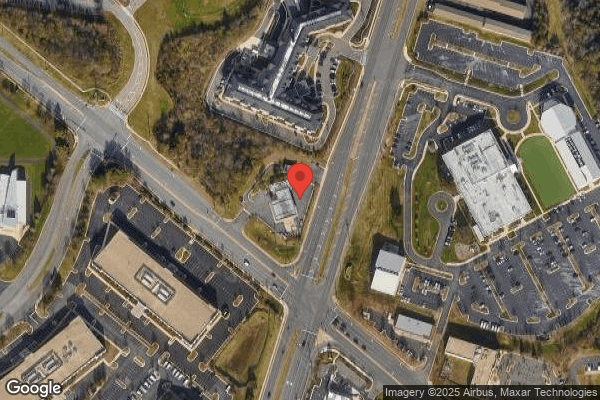
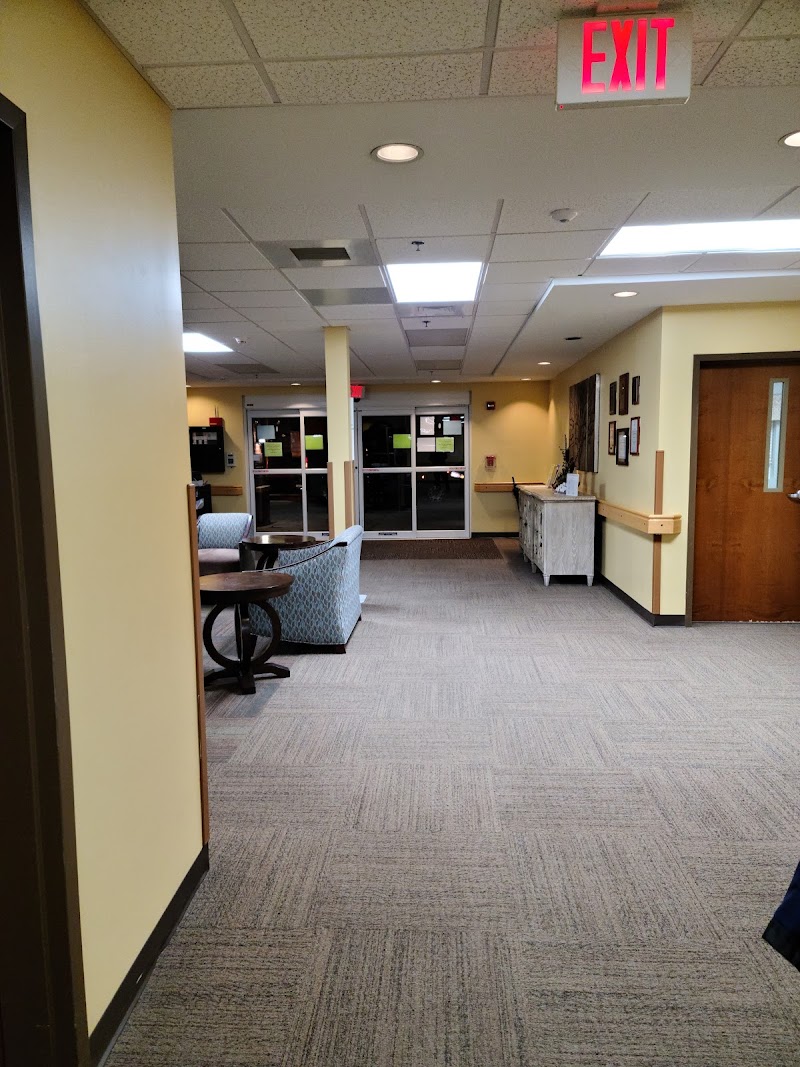
2978 CENTREVILLE ROAD, HERNDON, VA 20171 (703) 934-5000
For profit - Corporation 166 Beds COMMONWEALTH CARE OF ROANOKE Data: November 2025
Trust Grade
75/100
#71 of 285 in VA
Last Inspection: August 2021

Over 2 years since last inspection. Current conditions may differ from available data.

Overview

Dulles Health & Rehab Center has a Trust Grade of B, which means it is considered a good option for families looking for care. It ranks #71 out of 285 nursing homes in Virginia, placing it in the top half, and #4 out of 12 in Fairfax County, indicating only three other local facilities are ranked higher. The facility is improving, with a reduction in issues from 4 in 2022 to 2 in 2023. Staffing is a strength with a turnover rate of 17%, significantly lower than the state average of 48%, but it has less RN coverage than 79% of Virginia facilities, which may impact care. There were no fines reported, which is a positive sign, but the inspector found concerning issues such as failure to respond promptly to residents' call lights and not investigating allegations of abuse properly, suggesting areas that need attention despite the facility's strengths.

Trust Score
B
75/100
In Virginia
#71/285
Top 24%
Safety Record
Low Risk
No red flags
Inspections
Getting Better
4 → 2 violations
Staff Stability
✓ Good
17% annual turnover. Excellent stability, 31 points below Virginia's 48% average. Staff who stay learn residents' needs.
Penalties
✓ Good
No fines on record. Clean compliance history, better than most Virginia facilities.
Skilled Nurses
⚠ Watch
Each resident gets only 26 minutes of Registered Nurse (RN) attention daily — below average for Virginia. Fewer RN minutes means fewer trained eyes watching for problems.
Violations
⚠ Watch
39 deficiencies on record. Higher than average. Multiple issues found across inspections.
★★★★☆
4.0
Overall Rating
★★★☆☆
3.0
Staff Levels
★★★★★
5.0
Care Quality
★★★☆☆
3.0
Inspection Score
Stable
2022: 4 issues
2023: 2 issues

The Good

  • 5-Star Quality Measures · Strong clinical quality outcomes
  • Low Staff Turnover (17%) · Staff stability means consistent care
  • Full Sprinkler Coverage · Fire safety systems throughout facility
  • No fines on record
  • Staff turnover is low (17%)

    31 points below Virginia average of 48%

Facility shows strength in quality measures, staff retention, fire safety.

The Bad

Chain: COMMONWEALTH CARE OF ROANOKE

Part of a multi-facility chain

Ask about local staffing decisions and management

The Ugly 39 deficiencies on record

Nov 2023 2 deficiencies
CONCERN (D) 📢 Someone Reported This

A family member, employee, or ombudsman was alarmed enough to file a formal complaint

Potential for Harm - no one hurt, but risky conditions existed

Deficiency F0583 (Tag F0583)

Could have caused harm · This affected 1 resident

Based on observation, interview, clinical record review and facility documentation review, the facility staff failed to ensure the Resident's right to privacy for 1 Resident (Resident #3), in a survey...

Read full inspector narrative →
Based on observation, interview, clinical record review and facility documentation review, the facility staff failed to ensure the Resident's right to privacy for 1 Resident (Resident #3), in a survey sample of 4 Residents. The findings included: For Resident #3, the facility staff failed to ensure Resident #4, who was a Resident with dementia and wandering behaviors, did not wander into Resident #3's room at will. On 11/14/23 at 1:00 PM Resident #4 was observed in the hall self-propelling wheelchair down hall. She was observed to stop and stay in the doorway and look in the rooms. On 11/14/23 at 1:20 PM an interview was conducted with CNA B (certified nursing assistant-B) who stated they try to keep Residents that wander, out of other Residents rooms however it is not always possible. CNA B stated that Resident #4 has had to be redirected on many occasions out of Resident #3's room. CNA B stated that Resident #4 is easily redirected. On 11/15/23 at approximately 10:30 AM an interview was conducted with Resident #3 who was asked about issues with other Residents. Resident #3 stated That a lady wanders in his room from next door. She comes in, but she doesn't knock it makes me mad if I'm using my urinal or if I'm washing up. That's why I keep my door closed all the time. On 11/15/23 a review of the clinical record revealed that Resident #3 has care planned to keep his door closed to deter Resident #4 from entering his room. On 11/15/23 at approximately 11:00 AM an interview was conducted with the Administrator who stated she was aware that Resident #4 had a wander guard as a result of the assessment in August. When asked if it was her expectation that the information on wandering behaviors and placement of a wander guard be in the care plan she stated that it was her expectation. When asked if she expected there to be interventions to protect the privacy of other Residents and she stated that it was. During the end of day meeting on 11/15/23, the Administrator was made aware of the concerns and no further information was provided.
CONCERN (D) 📢 Someone Reported This

A family member, employee, or ombudsman was alarmed enough to file a formal complaint

Potential for Harm - no one hurt, but risky conditions existed

Deficiency F0657 (Tag F0657)

Could have caused harm · This affected 1 resident

Based on observation, interview, clinical record review and facility documentation review, the facility staff failed to ensure care plans were reviewed and revised to accurately reflect changes in car...

Read full inspector narrative →
Based on observation, interview, clinical record review and facility documentation review, the facility staff failed to ensure care plans were reviewed and revised to accurately reflect changes in care for 1 Resident (Resident #4) in a survey sample of 4 Residents. The findings included: For Resident #4 the facility staff failed to add the wandering risk assessment results, the addition of the wander guard, and interventions for wandering to the comprehensive care plan. On 11/14/23 at 1:00 PM Resident #4 was observed self-propelling the wheelchair down the hallway. She was observed to stop and stay in the doorway and look in the rooms. On 11/14/23 at 1:20 PM an interview was conducted with CNA B (certified nursing assistant-B) who stated they try to keep Residents that wander, out of other Residents rooms however it is not always possible. CNA B stated that Resident #4 has had to be redirected on many occasions out of Resident #3's room. CNA B stated that Resident #4 is easily redirected. On 11/15/23 at approximately 10:30 AM an interview was conducted with Resident #3 who stated he has no issues with the facility. When asked about issues with other Residents he stated That lady wanders in here from next door. She comes in, but she doesn't knock it makes me mad if I'm using my urinal or if I'm washing up. Resident #3's room was next door to Resident #4, and Resident #4 has a dementia diagnosis with wandering behaviors. On 11/15/23 a review of the clinical record revealed that Resident #3 had care planned to keep his door closed to deter Resident #4 from entering his room. A review of the clinical record revealed a wandering risk assessment was completed on 8/14/23. Resident #4 was found to be at risk for wandering and had a wander guard placed on her at that time. A review of the care plan for Resident #4 revealed that her care plan did not address elopement risk or the wandering assessment nor does it have any care planned interventions for wandering. On 11/15/23 at approximately 11:00 AM an interview was conducted with the Administrator who stated she was aware that Resident #4 had a wander guard as a result of the assessment in August. When asked if it was her expectation that the information on wandering behaviors and placement of a wander guard be in the care plan she stated that it was her expectation. When asked if she expected there to be interventions to protect the privacy of other Residents and she stated that it was. During the end of day meeting the Administrator was made aware of the concerns and no further information as provided
Dec 2022 4 deficiencies
CONCERN (E) 📢 Someone Reported This

A family member, employee, or ombudsman was alarmed enough to file a formal complaint

Potential for Harm - no one hurt, but risky conditions existed

Grievances (Tag F0585)

Could have caused harm · This affected multiple residents

Based on Resident interview, facility staff interview, clinical record review, facility documentation review, and in the course of a complaint investigation, the facility staff failed to respond to, a...

Read full inspector narrative →
Based on Resident interview, facility staff interview, clinical record review, facility documentation review, and in the course of a complaint investigation, the facility staff failed to respond to, and take measures to resolve, concerns affecting residents on 4 of 4 nursing units. The findings included: The facility staff failed to respond in an effective manner to ensure resolution of ongoing concerns regarding the lack of call bell responses. On 12/5/22, in the course of a complaint investigation, a review of grievance forms from multiple residents revealed concerns reported to the facility staff of ongoing issues of facility staff not responding to call lights. The grievance forms documented the following: i. On 8/5/22, Resident #18 reported that her call light goes unanswered for a long time. ii. On 8/12/22 Resident #11's family reported that staff do not answer her call light promptly. iii. On 8/17/22, Resident #11's family reported another concern with regards to the resident call bell. iv. On 8/22/22, Resident #10's family reported that the Resident's call bell was taken away from her and she was told she uses it too much and not to call them/staff. v. On 10/4/22, Resident #20 reported that she engaged her call bell at 3:45 AM, and it wasn't until 9:30 AM that staff responded to her request. vi. On 11/18/22, Resident #22's family reached out to facility staff to notify them that Resident #22 had pressed her call bell and it was over 30 minutes before staff responded to the call bell. vii. On 11/24/22, Resident #23 reported that the staff do not respond to the call bell. viii. On 11/25/22, Resident #14 reported that the facility staff do not respond to her call bell. On 12/6/22 at 9 AM, the maintenance director confirmed that the facility is unable to provide any kind of report or log to indicate how long call bells are engaged before the staff respond or disengage them. Resident interviews were conducted and revealed the following: i. On 12/6/22 at 1:11 PM, an interview was conducted with Resident #20. When asked about the call bells Resident #20 said, I've used it at 4 AM and not heard from anyone until 9 AM. They see it and say, 'Oh, she just wants something heated up,' so they don't' even come. Resident #20 went on to say, I've quit using the call bell because they won't answer it. ii. On 12/6/22 at 4 PM, an interview was conducted with Resident #14. Resident #14 reported that, I don't like to complain but no one helps me when I use my call bell. I have to call my son on the phone and get him to call to get someone to come help me. The resident went on to say, The other night I was calling and calling with the call bell, I kept my son on the phone so he could see how long it takes them. I am so thankful I can call my son so he can get them to come help me when I need it. iii. On 12/7/22 at 8:20 AM, an interview was conducted with Resident #22. Resident #22 said that several times I've had to call the main number to get someone to come in to help me because they wouldn't answer the call bell. iv. On 12/7/22 at approximately 8:30 AM, an interview was conducted with Resident #20 in response to the resident's request. When asked about call bell response, the Resident said, I've called between 3-4 AM, and they didn't come until 8:30 AM. Resident #20 stated she has reported it to the facility staff. v. On 12/7/22 at 9:15 AM, an interview was conducted with Resident #6. When asked about the call bell response time, the Resident said, The night shift forbids me from getting up on my own, they are scared of falls. One night I cut my call bell on and waited 20 minutes. I couldn't wait anymore so I got up and went to the bathroom and came back. It was 2 hours and 18 minutes before anyone came in to see what I needed. This has happened several times. Staff were interviewed regarding call bells and the following was noted: i. On 12/6/22 at 9:15 AM, an interview was conducted with CNA (certified nursing assistant) K. CNA K stated that call bells are used for the Residents to get in touch with facility staff for any needs they may have. CNA K added that all staff are to answer call bells and staff are to respond immediately. She stated, The policy is to answer within 1 minute. ii. On 12/7/22 at 8:45 AM, an interview was conducted with CNA D. CNA D reported, They always say they call, and no one came during the night- sometimes it's true because they remember. I tell the supervisor so they can look into it. iii. On 12/7/22 at 9 AM, an interview was conducted with LPN (licensed practical nurse) C. LPN C was asked about call bells and if Residents ever report that they have called for assistance, and it took a long time for staff to respond, or they didn't respond at all. LPN C said, At times when I come in, they all are asking for water because they didn't get any overnight. iv. On 12/7/22 at 9:59 AM, an interview was conducted with Employee E, the receptionist. Employee E confirmed that frequently she will receive phone calls from the Residents and families reporting that Residents need assistance and staff are not responding to the call lights. Employee E said the calls are more frequent from some Residents than others, but that it is an ongoing thing, and she will always call the station and try to get someone to respond. A review of the facility policy, Call Lights: Accessibility and Timely Response, revealed, in part: All employees who see or hear an activated call light are responsible for responding. If the employee cannot provide what the patient desires, the appropriate personnel should be notified. A review of the facility grievance policy revealed, in part: All information about the grievance and any resulting actions will be recorded on the Grievance/Concern Form. 12. All staff involved in the grievance investigation or resolution should make prompt efforts to resolve the grievance in coordination with the Grievance Official, or designee. 13. the Grievance Official, or designee, will keep the patient appropriately apprised of progress toward resolution of the grievance . In the mid-morning of 12/7/22, a meeting was held with the facility Administrator, Director of Nursing and Corporate Clinical Specialist. When asked if they had identified any concerns or systemic problems with regards to call lights, they said, No not lately. Surveyor B told them there was a significant number of complaints regarding staff not responding to call bells, and during Resident interviews, many reported this is an ongoing issue. The Administrator stated that the last time call lights were a focus was September 2022, but they have an upcoming Quality Assurance meeting next week and can look into it. The facility staff then provided evidence of multiple in-services being conducted in August with regards to call bells and then once in November and again on 12/6/22. Each in-service contained approximately 5-10 staff signatures. Complaint related deficiency.
CONCERN (E) 📢 Someone Reported This

A family member, employee, or ombudsman was alarmed enough to file a formal complaint

Potential for Harm - no one hurt, but risky conditions existed

Abuse Prevention Policies (Tag F0607)

Could have caused harm · This affected multiple residents

**NOTE- TERMS IN BRACKETS HAVE BEEN EDITED TO PROTECT CONFIDENTIALITY** Based on staff interview, facility documentation review and in the course of a complaint investigation, the facility staff faile...

Read full inspector narrative →
**NOTE- TERMS IN BRACKETS HAVE BEEN EDITED TO PROTECT CONFIDENTIALITY** Based on staff interview, facility documentation review and in the course of a complaint investigation, the facility staff failed to implement their abuse policy for 7 Residents (Resident #15, 12, 2, 11, 16, 13, and 14), in a survey sample of 25 Residents. The findings included: 1. For Residents #15, 11, 16, 13, 14, and 12, the facility staff failed to implement their abuse policy with regards to conducting investigations in response to allegations of abuse. On 12/5/22, during the course of a complaint investigation it was determined that multiple Residents had reported allegations of abuse to the facility staff, and the facility staff failed to conduct an investigation regarding the allegations. i. Resident #15 had reported on 10/25/22 that an assigned CNA (certified nursing assistant(CNA H) was very argumentative and unprofessional. Review of the grievance form revealed that LPN E had written a statement that read, In the morning while passing medications standing in front of [room number redacted], I heard staff talking loud. I called him immediately to come outside which he [CNA H] did. I asked him what happened and told him I could hear him from outside and he said, Let me talk this resident is alert and let me tell her the truth .This nurse went into resident's room to give her her scheduled medications and resident told her that a staff was yelling at her for putting on her call light, when all she wanted was a cup of water, crying telling this nurse that staff doesn't know what she has been through. She continues at 7 years of age I was sexually abuse by my own father and since then if anyone speaks to me in a loud voice I become frighten and my whole day is spoil .[sic] ii. Resident #11's spouse had reported to a facility staff member on 8/12/22, that he is not happy with the way staff treat his wife. The complaint read, Last night a staff told his wife to shut up when she want to ask question [sic] . A grievance form was completed and contained no supporting evidence of any investigation being conducted. The grievance official follow up read, review plan of care with staff and educated on good customer service and techniques with understanding verbalized. Educated on resident's rights as well. UM [unit manager] spoke with RP [responsible party]/spouse and patient at bedside and concerns addressed to satisfactory with all questions answered. iii. A grievance was filed by Resident #16 on 9/8/22, who reported to a facility staff member that [CNA B's name redacted] was not gentle with her while changing her and the CNA had an attitude. The grievance form indicated that the Resident reported the same to the unit manager upon interview. The CNA was educated and provided with a counseling form that indicated First Incident- In-service. iv. Resident #13 reported on 10/27/22 a male staff member was very rough while providing care. He was angry and very curt with patient. The facility's response was, Staff was in-service on caring for resident. There was no evidence provided that an investigation was conducted. v. For Resident #14, their family member reported on 11/25/22, 3-11 shift CNA was pushing on patient's forehead. The facility's response was, frequent rounding recommended by staff. Adhere and respond to patient and family concerns as soon as possible. Staff should identify themselves with name and how they can be of help. Staff instructed to be gentle with care and explain care proceeding before care. vi. For Resident #12, whose family reported the Resident felt harassed by nursing staff and treated like an animal, the facility staff failed to conduct an investigation. On 12/5/22, during the course of a complaint investigation, Surveyor B noted in facility documentation that Resident #12's family reported to facility staff on 8/18/22 that the Resident felt harassed by nursing staff and treated like an animal. The grievance form was written by Employee H, the social services director. However, there was no grievance follow-up noted on the form. Attached was a second grievance form dated the same day, completed by another staff member. The allegations of the Resident feeling that she was harassed by nursing staff and treated like an animal were not noted on the second form. Therefore, this allegation had no follow-up/investigation, etc. On 12/5/22 and 12/6/22, review of the facility reported incidents, facility provided investigation files, and grievances for the above Residents were reviewed. There was no supporting evidence that the above allegations of abuse were investigated. On 12/5/22 and 12/6/22, clinical record reviews were conducted for each of the above Residents. There was no documentation within any of the Resident's records to indicate an investigation had been conducted. On 12/6/22 at 10:49 AM, an interview was conducted with Employee G, a social worker. When asked to explain what abuse is, Employee G said, It can be mental, physical, psychosocial, it comes in many forms. When asked what she does if someone reports abuse, Employee G said, I contact my immediate supervisor, then I go into the room and follow-up on what they said. When asked if this conversation gets documented, Employee G said, yes, and further explained it would be in the Resident's progress notes. When asked if a Resident or family must specifically use the word abuse for it to be considered abuse, Employee G said no. On 12/6/22 at 4:12 PM, an interview was conducted with the Social Services Director/Employee H. Employee H defined abuse and neglect and explained that anyone can report abuse, including the Resident, a family member, a staff member, or a visitor. Employee H stated that the facility Administrator investigates and will at times ask the Social Services Department to assist. Employee H said she maintains a folder with interview information and other investigation documents in her office. Employee H was asked to provide any such files she may have that took place from August 2022 to the present. On 12/6/22 at 4:24 PM, Employee H returned to Surveyor B and said she had not conducted any investigations and had no such documents for the requested time frame. A review of the facility policy, Abuse Prevention, revealed, in part: V. Investigation: A. Designated staff will immediately review and investigate all reported incidents or allegations. B. Investigations will include collecting physical and documentary evidence which may include taking photographs, as necessary, interviewing residents and staff with personal knowledge of the incident or alleged incident, requesting witness statements, collecting relevant evidence, and documenting each step taken during the investigation. C. The Quality Assurance Committee will conduct analysis for trends. D. Outside investigative bodies, such as the local police will be contacted as directed by the Administrator in accordance with state and local law and Center policy. E. Investigations will be conducted and completed within 5 working days, if possible, of the incident or allegation. In the event the investigation has not been completed a report will be submitted to the state licensing and certification containing as much information as is possible. The Center shall continue investigations until complete On 12/7/22 at 10:20 AM, a meeting with the facility Administrator, Director of Nursing and Corporate Clinical Specialist was held. These concerns were shared with the facility staff, and the Administrator stated that the above complaints should have prompted an investigation. They were asked to provide any additional documents or evidence they may have to indicate that investigations were conducted. No further information was received, and the facility notified the survey team they had submitted all documentation they had to provide. Complaint related deficiency. 2. For Residents #15, 12, 2, 11, 16, 13, and 14, the facility staff failed to implement their abuse policy with regards to reporting allegations of abuse to the state survey agency and adult protective services. i. Resident #15 had reported on 10/25/22, that an assigned CNA (CNA H) was very argumentative and unprofessional. ii. Resident #12's family reported an allegation of abuse on 8/18/22, that the Resident felt harassed by nursing staff and treated like an animal. iii. Resident #2's family reported to facility staff an allegation of abuse that the patient reported they were hurting her during care, when they turned her side to side. iv. Resident #11's spouse reported to facility staff an allegation of abuse on 8/12/22, that he is not happy with the way staff treat his wife. The complaint read, Last night a staff told his wife to shut up when she want to ask question [sic] . v. Resident #16 filed a grievance on 9/8/22, telling a facility staff member, that [CNA B's name redacted] was not gentle with her while changing her and the CNA had an attitude. vi. Resident #13 reported on 10/27/22, a male staff member was very rough while providing care. He was angry and very curt with patient. vii. Resident #14's family member reported on 11/25/22, 3-11 shift CNA was pushing on patient's forehead. For each of the above allegations of abuse, the facility staff failed to provide any evidence that the allegations were reported to the state survey agency and adult protective services. On 12/6/22 at 4:12 PM, an interview was conducted with the Social Services Director/Employee H. Employee H defined abuse and neglect and explained that anyone can report abuse, including the Resident, a family member, a staff member, or a visitor. Employee H stated that the facility Administrator investigates and will at times ask the Social Services Department to assist. Employee H was able to verbalize the reporting of allegations to the required entities and indicated that the facility Administrator handled that . A review of the facility policy Abuse Prevention revealed, in part: .VII. Reporting/Response. A. Allegations of abuse, neglect, misappropriation of property, exploitation: The center Administrator, DON (director of nursing), or designee must timely report all alleged incidents of abuse, neglect, exploitation, or mistreatment . using the Virginia Office of Licensure & Certification Facility Reported Incident form to the (OLC) and to all other required agencies including Adult Protective Services (APS) and local law enforcement. A final report with results of the investigation is filed with the OLC within 5 working days of the alleged incident . On 12/7/22 at 10:20 AM, a meeting was held with the facility Administrator, Director of Nursing and Corporate Clinical Specialist, and they were made aware of these findings. They were asked to provide any additional documents or evidence they may have to indicate that the allegations were reported to the state survey agency and adult protective services. No further information was received, and the facility notified the survey team they had submitted all documentation they had to provide. Complaint related deficiency.
CONCERN (E) 📢 Someone Reported This

A family member, employee, or ombudsman was alarmed enough to file a formal complaint

Potential for Harm - no one hurt, but risky conditions existed

Report Alleged Abuse (Tag F0609)

Could have caused harm · This affected multiple residents

**NOTE- TERMS IN BRACKETS HAVE BEEN EDITED TO PROTECT CONFIDENTIALITY** Based on Resident interview, staff interview, clinical record review, facility documentation review and during the course of a c...

Read full inspector narrative →
**NOTE- TERMS IN BRACKETS HAVE BEEN EDITED TO PROTECT CONFIDENTIALITY** Based on Resident interview, staff interview, clinical record review, facility documentation review and during the course of a complaint investigation, the facility staff failed to report to the State Survey Agency/Office of Licensure and Certification and Adult protective services allegations of abuse and neglect for 7 Residents (Resident #15, 12, 2, 11, 16, 13 and 14) in a survey sample of 25 Residents. The findings included: 1. For Resident #15, who had an allegation of abuse, the facility staff failed to report the incident to the state survey agency and adult protective services. On 12/5/22, during the course of a complaint investigation it was determined that Resident #15 had reported on 10/25/22 that an assigned CNA (certified nursing assistant), CNA H, was very argumentative and unprofessional. Review of the grievance form revealed that LPN (licensed practical nurse) E had written a statement that read, In the morning while passing medications standing in front of [room number redacted], I heard staff talking loud. I called him immediately to come outside which he [CNA H] did. I asked him what happened and told him I could hear him from outside and he said, 'Let me talk. This resident is alert, and let me tell her the truth.' This nurse went into resident's room to give her .scheduled medications and resident told her that a staff was yelling at her for putting on her call light, when all she wanted was a cup of water, crying telling this nurse that staff doesn't know what she has been through. She continues, 'At 7 years of age I was sexually abuse by my own father and since then if anyone speaks to me in a loud voice I become frighten and my whole day is spoil .[sic].' Review of the grievance indicated, associate is counselled and educated to be professional with our resident and treat them with respect and good customer service. There was no evidence that this allegation had been reported to the state survey agency or adult protective services. On 12/5/22, in the afternoon, Surveyor B met with Resident #15. Resident #15 verbalized that she was verbally, mentally, and sexually abused as a child and has PTSD (post-traumatic stress disorder) and bipolar. When asked if she has had any problems with staff mistreating her she said, There was one but we have worked it out and he apologized. On 12/6/22, Surveyor B asked to review the employee file for CNA H. Upon review it was noted that CNA H had an Associate Counseling Form dated 10/26/22, that read, First Incident- Verbal. Detailed description of Incident: Pt [patient] reported assigned CNA [CNA H name redacted] was very argumentative and unprofessional. Action Taken: Associate was counselled and education to be professional with our resident and treat them with good customer service . On 12/7/22, Surveyor B met with the facility Administrator, Director of Nursing and Corporate Clinical Director and discussed this incident. The facility staff was asked to provide any additional evidence with regards to this incident/allegation of abuse being reported to the state survey agency or adult protective services. A review of the facility policy titled; Abuse Prevention, revealed, in part: .VII. Reporting/Response. A. Allegations of abuse, neglect, misappropriation of property, exploitation: The center Administrator, DON (director of nursing), or designee must timely report all alleged incidents of abuse, neglect, exploitation, or mistreatment . using the Virginia Office of Licensure & Certification Facility Reported Incident form to the (OLC) and to all other required agencies including Adult Protective Services (APS) and local law enforcement. A final report with results of the investigation is filed with the OLC within 5 working days of the alleged incident . The facility provided no additional information. 2. For Resident #12, whose family reported an allegation of abuse, the facility staff failed to report the allegation and any investigation results to the Office of Licensure and Certification and adult protective services. On 12/5/22, during the course of a complaint investigation, Surveyor B noted in facility documentation that Resident #12's family reported to facility staff on 8/18/22 that the Resident felt harassed by nursing staff and treated like an animal. The grievance form was written by Employee H, the social services director. However, there was no grievance follow-up noted on the form. Attached was a second grievance form dated the same day, completed by another staff member. The allegations of the Resident feeling that she was harassed by nursing staff and treated like an animal were not noted on the second form. There was no indication that this allegation was reported to the state survey agency or adult protective services. Review of the clinical record for Resident #12 revealed that she had been discharged from the facility and, therefore, was not able to be interviewed. Review of the progress notes revealed an entry on 8/18/22 at 15:19 (3:19 p.m.) that read, UM [unit manager] along with care team met with resident and family to discuss concerns along with plan of care as ordered. patient concerns were acknowledged and addressed, pain management and bowel regimen was reviewed and order changes initiated per md order and consultation. plan of care reviewed with staff nurses and aides. all parties involved verbalized understanding of plan of care and care concerns as well. resident remains stable. The note made no mention of the report of feeling harassed and treated like an animal. Resident #12's clinical chart revealed that a Medicare/5 day assessment/MDS (minimum data set) was conducted 8/12/22. During this assessment, Resident #12 scored a 12 out of 15 on the brief interview for mental status, which indicated moderately impaired cognition. On 12/7/22 at 10:20 AM, during an interview with the facility Administrator, Director of Nursing and Corporate Clinical Specialist, several Resident reports were reviewed, to include Resident #12's allegation of feeling harassed and treated like an animal. The Administrator said, There is definitely an emotional component. It would prompt an investigation and based on the findings we would send a FRI [facility reported incident]. The facility staff were asked to provide any additional information they may have to indicate that this allegation was reported to the state survey agency or adult protective services. The facility had nothing to provide. No additional information was provided. 3. For Resident #2, who reported staff hurting her during care, the facility staff failed to report the allegation of abuse to the state survey agency and adult protective services. On 12/5/22, during an entrance conference held with the facility Administrator, the facility staff were asked to provide all facility reported incidents (FRI's) from August 2022 through December 2022. The facility staff provided 2 FRI's, which were not regarding Resident #2. On 12/5/22, during the course of a complaint allegation, Surveyor B noted that Resident #2's family reported to facility staff that the patient reported they were hurting her during care, when they turned her side to side. The complaint was noted on a grievance form and in the section for Grievance Official Follow-up it read, Please see attached'. There was attached a typed statement that read, SW (social worker met with patient to discuss her concerns. Patient stated that staff was hurting her on her neck and shoulders when providing care/turning her from side to side. Patient stayed that she asked the staff to stop hurting her [sic]. Patient did state that she did not think the staff was intentionally hurting her. SW asked patient, if they staff had explained what they were going to do and how she could assist if that would have helped prevent the staff from hurting her. Patient said yes that would have helped a lot . Resident #2 had been discharged from the facility and was not available for interview. A clinical record review was conducted. This review revealed that Resident #2 had a Medicare 5 day assessment/MDS (minimum data set) conducted on 11/30/22. This assessment coded Resident #2 as having had a brief interview for mental status score of 12 out of 15. This indicated Resident #2 had moderately impaired cognition. The entire clinical record for Resident #2 was reviewed with no significant finding and no details regarding the allegation of abuse reported on 11/25/22. On 12/6/22 at 4:30 PM, Surveyor B met with the facility Administrator and Director of Nursing. When asked about the allegation regarding Resident #2, the Administrator said, The daughter called while we were in morning meeting, and we went to talk with the patient. When the CNA was turning her, she was leaning on her stroke affected side and it hurt her. The mother called the daughter. When we went in, she was in her chair eating, she said she was telling the CNA (CNA J) she was hurting her, and she wasn't paying attention and feels like she was rushing through. During the above interview with the Administrator, she was asked if a Resident says staff are rough, if that would be an allegation of abuse. The Administrator said, Yes, usually social worker gets that kind of concern and will interview the resident and get details, ask if they feel safe, if they feel like it was intentional. It's still an allegation. On 12/7/22 at 10:20 AM, a meeting was held with the facility Administrator, Director of Nursing and Corporate Clinical Specialist. During this interview, the Administrator acknowledged that when Residents report staff are rough, it is an allegation of abuse, and an investigation and reporting is required. The facility was advised that all documentation provided thus far doesn't reveal this was done. The facility was instructed to provide any additional information. No further information was provided with regards to Resident #2's allegation of abuse to indicate that the allegation of abuse was reported to the state survey agency or adult protective services. 4. For Resident #11, whose spouse reported to facility staff an allegation of abuse, the facility staff failed to report the allegation and failed to report the results of an investigation. On 12/5/22, during the entrance conference held with the facility Administrator and Director of Nursing, the facility staff were asked to provide any Facility Reported Incidents (FRI's) and investigations conducted from August through the present. The facility provided 2 FRI's, neither of which involved Resident #11. On 12/5/22, during the course of a complaint investigation, Surveyor B determined that Resident #11's spouse had reported to a facility staff member on 8/12/22, that he is not happy with the way staff treat his wife. The complaint read, Last night a staff told his wife to shut up when she want to ask question [sic] . A grievance form was completed and contained no supporting evidence of any investigation being conducted. The grievance official follow up read, review plan of care with staff and educated on good customer service and techniques with understanding verbalized. Educated on resident's rights as well. UM [unit manager] spoke with RP [responsible party]/spouse and patient at bedside and concerns addressed to satisfactory with all questions answered. Resident #11 was discharged from the facility and was not able to be interviewed. Review of the clinical record revealed that on 8/17/22 and on 10/11/22, a MDS (minimum data set) (an assessment tool) was conducted, and Resident #11 had a BIMS (brief interview for mental status) score of 15 on both assessments. This score indicated that Resident #11 had answered all questions correctly and was cognitively intact. Both assessments were also coded as Resident #11 not having any symptoms of delirium. There was no documentation within the progress notes with regards to the above allegation. Resident #11 had a care plan initiated on 8/11/22, that read, [Resident #11's name redacted] is adjusting to a new environment r/t [related to] new admission. The interventions associated with this care plan read, Allow patient/resident to express/discuss feelings and provide reassurance and support, encourage family, friends and other support persons to visit., Introduce to staff and other patients/residents on the unit. On 8/17/22, Resident #11's spouse reported another complaint, and it was recorded on a facility grievance form. The details of the complaint read, On Monday 8/15/22 at 7 PM; CNA came into the room and changed my spouse's brief at 7PM & stated, This is the last change for the night CNA closed the door and didn't leave the call bell within reach. She was frightened. She did not get brief changed until the next day. The facility staff wrote on the grievance form that this grievance was resolved on 8/17/22 and the follow-up read, CNA and staff on shift educated with good customer services and techniques, Patient's rights and communication skills with understanding verbalized. Resident has right to call for incontinence checks and assistance at all times. There was no evidence of the education provided to staff, any investigation into who the CNA was that told the Resident this and then neglected to provide any further care that night. On the morning of 12/7/22, the facility Administrator was asked to provide any and all evidence of any investigation and reports made regarding the above allegations. The Administrator stated she had called the former Administrator, who is out on leave, and they had no further documents to provide. No evidence of the allegation of abuse being reported to the status survey agency or adult protective services was provided prior to the conclusion of the survey. On 12/7/22 at 10:20 AM, during an interview with the facility Administrator, Director of Nursing and Corporate Clinical Specialist, several Resident reports, to include Resident #11's allegation of being told to shut up were discussed. The facility Administrator acknowledged that this could be emotional abuse and an investigation should have been conducted. When asked, What if a Resident's call bell is taken away or they are told that is the last change for the night? The Administrator immediately said, Oh that's abuse. The facility staff provided no further evidence with regards to Resident #11's allegations prior to the survey exit and stated they had submitted all evidence they had. 5. For Resident #16 who reported a staff member was not gentle during care, the facility staff failed to report the allegation of abuse to the state survey agency and adult protective services. On 12/5/22, during a complaint investigation, Surveyor B noted a grievance filed by Resident #16 on 9/8/22, who reported to a facility staff member, that [CNA B's name redacted] was not gentle with her while changing her and the CNA had an attitude. The grievance form indicated that the Resident reported the same to the unit manager upon interview. The CNA was educated and provided with a counseling form that indicated First Incident- In-service. There was no evidence that the facility staff reported the allegation nor filed a report within 5 days of the results of an investigation to the state survey agency or adult protective services. On 12/5/22, in the afternoon, Surveyor B met with Resident #16 in their room. Resident #16 was asked about the above noted allegation. Resident #16 only responded to questions by nodding her head and indicated that no one had come to talk with her about her complaint. Review of Resident #16's clinical record revealed an MDS that was a quarterly assessment completed 11/29/22. Resident #16 had a BIMs score of 14, which indicated the Resident was cognitively intact. There were no progress notes with regards to the allegation. On 12/7/22 at 10:20 AM, during an interview with the facility Administrator, Director of Nursing and Corporate Clinical Specialist, several Resident reports were reviewed, to include Resident #16's allegation of a staff not being gentle and having an attitude. The Administrator stated, We would have to look into it and investigate. The facility staff provided no further evidence with regards to Resident #16's allegations prior to the survey exit and stated they had submitted all evidence they had. 6. For Resident #13 who reported an allegation of abuse, the facility staff failed to report the allegation and results of an investigation to the state survey agency and adult protective services. On 12/5/22, during the course of a complaint investigation, Surveyor B determined through facility records that Resident #13 reported on 10/27/22, a male staff member was very rough while providing care. He was angry and very curt with patient. The facility's response was, Staff was in-service on caring for resident. There was no evidence provided that the allegation was reported to the state survey agency and adult protective services. There was also no evidence that the results of an investigation were reported. Resident #13 had been discharged from the facility and was not able to be interviewed. Review of the clinical record revealed no documentation with regards to this reported incident. Resident #13 had an admission MDS/assessment completed 10/24/22. During this assessment Resident #13 had a BIMS score of 14, which indicated she was cognitively intact and a reliable historian. On 12/7/22 at 10:20 AM, during an interview with the facility Administrator, Director of Nursing and Corporate Clinical Specialist several Resident reports were reviewed, to include Resident #13's allegation of a staff being rough. The Administrator said, we would have to interview and look at willfulness. When asked if this would mean an investigation would have to be conducted, the Administrator said, Yes. The Administrator further stated that reports of or allegations of abuse have to be reported to the OLC (Office of Licensure and Certification) (state survey agency), Adult Protective services and the Ombudsman. The facility staff provided no further evidence with regards to Resident #13's allegations prior to the survey exit and stated they had submitted all evidence they had. 7. For Resident #14, who had an allegation of possible abuse reported by a family member, the facility staff failed to report the allegation to the state survey agency and adult protective services. On 12/5/22, during the course of a complaint investigation, Surveyor B determined through facility records that Resident #14's family member reported on 11/25/22, 3-11 shift CNA was pushing on patient's forehead. The facility's response was, frequent rounding recommended by staff. Adhere and respond to patient and family concerns as soon as possible. Staff should identify themselves with name and how they can be of help. Staff instructed to be gentle with care and explain care proceeding before care. On 12/6/22 at 4 PM, Surveyor B met with Resident #14. Resident #14 was asked about staff treatment. Resident #14 said, They are rough, I tell them Hey I'm 75, be easy. I've had them push me on the back of my head to move me, they get frustrated. I feel safe but I don't know that I would recommend this place to anyone. Resident #14 was asked if she knew if the facility investigated her concerns, and Resident #14 said she was not aware. Review of Resident #14's clinical record revealed she had an admission MDS/assessment completed 11/30/22. During this assessment Resident #14 had a BIMS score of 14, which indicated she was cognitively intact. On 12/7/22 at 10:20 AM, during an interview with the facility Administrator, Director of Nursing and Corporate Clinical Specialist, several Resident reports were reviewed, to include Resident #14's allegation of a staff pushing on the patient's forehead. The Administrator was able to identify the staff member by name who was involved, and said it was during care she pressed against her forehead. When asked where documentation would be if it had been reported, and if an investigation was conducted, she said, it would be on the grievance form. There were no such details on the grievance form to indicate any investigation had been conducted. No evidence was present to indicate the allegation had been reported to the state agency or adult protective services. The facility staff provided no further evidence with regards to Resident #14's allegations prior to the survey exit and stated they had submitted all evidence they had. On 12/6/22 at 10:49 AM, an interview was conducted with Employee G, a social worker. When asked to explain what abuse is, Employee G said, It can be mental, physical, psychosocial, it comes in many forms. When asked what she does if someone reports abuse, Employee G said, I contact my immediate supervisor, then I go into the room and follow-up on what they said. When asked if this conversation gets documented, Employee G said, yes and further explained it would be in the Resident's progress notes. When asked if a Resident or family must specifically use the word abuse for it to be considered abuse, Employee G said no. On 12/6/22 at 4:12 PM, an interview was conducted with the Social Services Director/Employee H. Employee H defined abuse and neglect and explained that anyone can report abuse, including the Resident, a family member, a staff member, or a visitor. Employee H stated that the facility Administrator investigates and will at times ask the Social Services Department to assist. Employee H was able to verbalize the reporting of allegations to the required entities and indicated that the facility Administrator handled that. Employee H said she maintains a folder with interview information and other investigation documents in her office. Employee H was asked to provide any such files she may have that took place from August 2022 to the present. On 12/6/22 at 4:24 PM, Employee H returned to Surveyor B and said she had not conducted any investigations and had no such documents for the requested time frame. During an end of day meeting with the facility Administrator, Director of Nursing and Corporate Clinical Specialist, they were made aware of the above findings, and asked to provide any additional documents or evidence they may have to indicate that the allegations were reported to the state survey agency and adult protective services. No further information was received, and the facility notified the survey team they had submitted all documentation they had to provide. Complaint related deficiency.
CONCERN (E) 📢 Someone Reported This

A family member, employee, or ombudsman was alarmed enough to file a formal complaint

Potential for Harm - no one hurt, but risky conditions existed

Investigate Abuse (Tag F0610)

Could have caused harm · This affected multiple residents

**NOTE- TERMS IN BRACKETS HAVE BEEN EDITED TO PROTECT CONFIDENTIALITY** Based on Resident interview, staff interviews, clinical record review, facility documentation review and in the course of a comp...

Read full inspector narrative →
**NOTE- TERMS IN BRACKETS HAVE BEEN EDITED TO PROTECT CONFIDENTIALITY** Based on Resident interview, staff interviews, clinical record review, facility documentation review and in the course of a complaint investigation, the facility staff failed to investigate allegations of abuse/neglect for 6 Residents (Resident #15, 11, 16, 13, 14 and 12) in a survey sample of 25 Residents. The findings included: 1. For Resident #15, who had an allegation of abuse, the facility staff failed to conduct a complete and through investigation. On 12/5/22, during the course of a complaint investigation it was determined that Resident #15 had reported on 10/25/22 that an assigned CNA (certified nursing assistant), CNA H, was very argumentative and unprofessional. Review of the grievance form revealed that LPN (licensed practical nurse) E had written a statement that read, In the morning while passing medications standing in front of [room number redacted], I heard staff talking loud. I called him immediately to come outside which he [CNA H] did. I asked him what happened and told him I could hear him from outside and he said, 'Let me talk. This resident is alert, and let me tell her the truth.' This nurse went into resident's room to give her .scheduled medications and resident told her that a staff was yelling at her for putting on her call light, when all she wanted was a cup of water, crying telling this nurse that staff doesn't know what she has been through. She continues, 'At 7 years of age I was sexually abuse by my own father and since then if anyone speaks to me in a loud voice I become frighten and my whole day is spoil .[sic].' Review of the grievance indicated, associate is counselled and educated to be professional with our resident and treat them with respect and good customer service. There was no evidence that this allegation had been reported to the state survey agency or adult protective services. On 12/5/22, in the afternoon, Surveyor B met with Resident #15. Resident #15 presented to be alert and oriented. Resident #15 verbalized that she was verbally, mentally, and sexually abused as a child and has PTSD (post-traumatic stress disorder) and bipolar. When asked if she has had any problems with staff mistreating her, she said, There was one, but we have worked it out and he apologized. Review of the clinical record for Resident #15 revealed that she had a quarterly MDS (minimum data set) (an assessment) conducted on 11/16/22. On this assessment Resident #15 had a BIMS (brief interview for mental status) score of 15 out of 15, which indicated she was cognitively intact. The progress notes were reviewed and had no documentation with regards to the report of abuse. Review of Resident #15's care plan revealed a focus area that read, Behavior Concerns misinterpreting the truth . that was initiated 6/11/18 and revised on 9/9/20. Interventions for this care plan included but were not limited to: .Observe for and report unusual or negative behaviors promptly, Observe/assess for triggers to negative behaviors. Report for further assessment . On 12/6/22, Surveyor B asked to review the employee file for CNA H. Upon review it was noted that CNA H had an Associate Counseling Form dated 10/26/22, that read, First Incident- Verbal. Detailed description of Incident: Pt [patient] reported assigned CNA [CNA H name redacted] was very argumentative and unprofessional. Action Taken: Associate was counselled and education to be professional with our resident and treat them with good customer service There was no evidence that CNA H had been suspended during the course of an investigation. On 12/7/22, Surveyor B met with the facility Administrator, Director of Nursing and Corporate Clinical Director and discussed this incident. The facility staff was advised there was no evidence of an investigation being conducted. The Administrator stated she would have the unit manager come talk to Surveyor B. On 12/7/22 at 10:50 AM, RN B, the unit manager came to the conference room and spoke with Surveyor B about Resident #15's allegation. RN B said, It happened during the 11 pm-7 am shift, when I came in, I heard about it. I went to talk to the Resident and apologize. When I talked to her, she had calmed down. She is bipolar and gets very upset and then after a while she calms down. She [Resident #15] put on her call light and said [CNA H's name redacted] said he was in another room, the way he is talks is loud and she felt like she wasn't respected. Sometimes he will be having a normal conversation and will be loud, he apologized- she said he apologized, and she feels he is a good CNA. I talked to him, and he was taken off the schedule for the rest of the week. I did an interview with the rest of the staff, so no one repeats it. RN B was asked if she talked to any witnesses or did an investigation, RN B stated she only talked to the Resident and the staff member, no one else. When shown the written statement from the nurse, LPN E and asked who wrote that, RN B stated it was the statement from CNA H. She was told that it was from a nurse that had witnessed the incident. Review of the timecard for CNA H revealed that he worked the night of 10/24/22, when the incident happened and didn't return until 10/31/22. The facility Administrator confirmed that CNA H is prn (an as needed) employee and calls daily to see if there are shifts he can work when he is available, therefore his time card didn't reveal any scheduled shifts from 10/25-10/31. The facility Administrator did show Surveyor B a text message that was sent to the supervisor's cell phone on 10/31/22, asking if CNA H was able to work, as an indication that the scheduler knew he had been suspended and unable to work for a period of time. A review of the facility policy, Abuse Prevention, revealed, in part: .V. Investigation: A. Designated staff will immediately review and investigate all reported incidents or allegations. B. Investigations will include collecting physical and documentary evidence which may include taking photographs, as necessary, interviewing residents and staff with personal knowledge of the incident or alleged incident, requesting witness statements, collecting relevant evidence, and documenting each step taken during the investigation. C. The Quality Assurance Committee will conduct analysis for trends. D. Outside investigative bodies, such as the local police will be contacted as directed by the Administrator in accordance with state and local law and Center policy. E. Investigations will be conducted and completed within 5 working days, if possible, of the incident or allegation. In the event the investigation has not been completed a report will be submitted to the state licensing and certification containing as much information as is possible. The Center shall continue investigations until complete No further information was provided. 2. For Resident #11, whose spouse reported to facility staff an allegation of abuse, the facility staff failed to conduct an investigation. On 12/5/22, during the entrance conference held with the facility Administrator and Director of Nursing, the facility staff were asked to provide any Facility Reported Incidents (FRI's) and investigations conducted from August to the present. The facility provided 2 FRI's, neither which involved Resident #11. On 12/5/22, during the course of a complaint investigation, Surveyor B determined that Resident #11's spouse had reported to a facility staff member on 8/12/22, that he is not happy with the way staff treat his wife. The complaint read, Last night a staff told his wife to shut up when she want to ask question [sic] . A grievance form was completed and contained no supporting evidence of any investigation being conducted. The grievance official follow up read, review plan of care with staff and educated on good customer service and techniques with understanding verbalized. Educated on resident's rights as well. UM [unit manager] spoke with RP [responsible party]/spouse and patient at bedside and concerns addressed to satisfactory with all questions answered. Resident #11 was discharged from the facility and was not able to be interviewed. Review of the clinical record revealed that on 8/17/22 and on 10/11/22, a MDS (minimum data set) (an assessment tool) was conducted, and Resident #11 had a BIMS (brief interview for mental status) score of 15 on both assessments. This score indicated that Resident #11 had answered all questions correctly and was cognitively intact. Both assessments were also coded as Resident #11 not having any symptoms of delirium. There was no documentation within the progress notes with regards to the above allegation. Resident #11 had a care plan initiated on 8/11/22, that read, [Resident #11's name redacted] is adjusting to a new environment r/t [related to] new admission. The interventions associated with this care plan read, Allow patient/resident to express/discuss feelings and provide reassurance and support, encourage family, friends and other support persons to visit., Introduce to staff and other patients/residents on the unit. On 8/17/22, Resident #11's spouse reported another complaint that was recorded on a facility grievance form. The details of the complaint read, On Monday 8/15/22 at 7 PM; CNA came into the room and changed my spouse's brief at 7PM & stated, 'This is the last change for the night.' CNA closed the door and didn't leave the call bell within reach. She was frightened. She did not get brief changed until the next day. The facility staff wrote on the grievance form that this grievance was resolved on 8/17/22, and the follow-up read, CNA and staff on shift educated with good customer services and techniques, Patient's rights and communication skills with understanding verbalized. Resident has right to call for incontinence checks and assistance at all times. There was no evidence of the education provided to staff, any investigation into who the CNA was that told the Resident this and then neglected to provide any further care that night. On the morning of 12/7/22, the facility Administrator was asked to provide any and all evidence of any investigations that had been conducted that had been conducted and had not been submitted with the FRI's. The Administrator stated she had called the former Administrator, who is out on leave, and they had no further documents to provide. No evidence of an investigation was provided with regards to Resident #11's allegation of being told to shut up prior to the conclusion of the survey. On 12/7/22 at 10:20 AM, during an interview with the facility Administrator, Director of Nursing and Corporate Clinical Specialist several Resident reports, to include Resident #11's allegation of being told to shut up, were discussed. The facility Administrator acknowledged that this could be emotional abuse and an investigation should have been conducted. When asked, What if a Resident's call bell is taken away or they are told that is the last change for the night? The Administrator immediately said, Oh that's abuse. The facility staff provided no further evidence with regards to Resident #11's allegations prior to the survey exit and stated they had submitted all evidence they had. 3. For Resident #16 who reported a staff member was not gentle during care, the facility staff failed to investigate to determine if abuse had occurred. On 12/5/22, during a complaint investigation, Surveyor B noted a grievance filed by Resident #16 on 9/8/22, who reported to a facility staff member, that [CNA B's name redacted] was not gentle with her while changing her and the CNA had an attitude. The grievance form indicated that the Resident reported the same to the unit manager upon interview. The CNA was educated and provided with a counseling form that indicated First Incident- In-service. There was no evidence that the facility staff investigated the allegation to determine if other Residents had experienced the same behavior by CNA B, or any other staff. On 12/5/22, in the afternoon, Surveyor B met with Resident #16 in their room. Resident #16 was asked about the above noted allegation. Resident #16 only responded to questions by nodding her head and indicated that no one had come to talk with her about her complaint. Review of Resident #16's clinical record revealed an MDS that was a quarterly assessment completed 11/29/22. Resident #16 had a BIMs score of 14, which indicated the Resident was cognitively intact. There were no progress notes with regards to the allegation. On 12/7/22 at 10:20 AM, during an interview with the facility Administrator, Director of Nursing and Corporate Clinical Specialist, several Resident reports were reviewed, to include Resident #16's allegation of a staff not being gentle and having an attitude. The Administrator stated, We would have to look into it and investigate. The facility staff provided no further evidence with regards to Resident #16's allegations prior to the survey exit and stated they had submitted all evidence they had. 4. For Resident #13, who reported an allegation of abuse, the facility staff failed to conduct an investigation. On 12/5/22, during the course of a complaint investigation, Surveyor B determined through facility records that Resident #13 reported on 10/27/22, a male staff member was very rough while providing care. He was angry and very curt with patient. The facility's response was, Staff was in-service on caring for resident. There was no evidence provided that an investigation was conducted. Resident #13 had been discharged from the facility and was not able to be interviewed. Review of the clinical record revealed no documentation with regards to this reported incident. Resident #13 had an admission MDS/assessment completed 10/24/22. During this assessment Resident #13 had a BIMS score of 14, which indicated she was cognitively intact and a reliable historian. On 12/7/22 at 10:20 AM, during an interview with the facility Administrator, Director of Nursing and Corporate Clinical Specialist several Resident reports were reviewed, to include Resident #13's allegation of a staff being rough. The Administrator said, we would have to interview and look at willfulness. When asked if this would mean an investigation would have to be conducted, the Administrator said, Yes. The facility staff provided no further evidence with regards to Resident #13's allegations prior to the survey exit and stated they had submitted all evidence they had. 5. For Resident #14, who had an allegation of possible abuse reported by a family member, the facility staff failed to conduct an investigation. On 12/5/22, during the course of a complaint investigation, Surveyor B determined through facility records that Resident #14's family member reported on 11/25/22, 3-11 shift CNA was pushing on patient's forehead. The facility's response was, frequent rounding recommended by staff. Adhere and respond to patient and family concerns as soon as possible. Staff should identify themselves with name and how they can be of help. Staff instructed to be gentle with care and explain care proceeding before care. On 12/6/22 at 4 PM, Surveyor B met with Resident #14. Resident #14 was asked about staff treatment. Resident #14 said, They are rough, I tell them Hey I'm 75, be easy. I've had them push me on the back of my head to move me, they get frustrated. I feel safe but I don't know that I would recommend this place to anyone. Resident #14 was asked if she knew if the facility investigated her concerns, Resident #14 said she was not aware. Review of Resident #14's clinical record revealed she had an admission MDS/assessment completed 11/30/22. During this assessment Resident #14 had a BIMS score of 14, which indicated she was cognitively intact. On 12/7/22 at 10:20 AM, during an interview with the facility Administrator, Director of Nursing and Corporate Clinical Specialist several Resident reports were reviewed, to include Resident #14's allegation of a staff pushing on the patient's forehead. The Administrator was able to identify the staff member by name who was involved and said it was during care she pressed against her forehead. When asked about the location of documentation if an investigation was conducted, she said, it would be on the grievance form. There were no such details on the grievance form to indicate any investigation had been conducted. The facility staff provided no further evidence with regards to Resident #14's allegations prior to the survey exit and stated they had submitted all evidence they had. 6. For Resident #12, whose family reported the Resident felt harassed by nursing staff and treated like an animal, the facility staff failed to conduct an investigation. On 12/5/22, during the course of a complaint investigation, Surveyor B noted in facility documentation that Resident #12's family reported to facility staff on 8/18/22, that the Resident felt harassed by nursing staff and treated like an animal. The grievance form was written by Employee H, the social services director. However, there was no grievance follow-up noted on the form. Attached was a second grievance form dated the same day, completed by another staff member. The allegations of the Resident feeling that she was harassed by nursing staff and treated like an animal were not noted on the second form. Therefore, this allegation had no follow-up/investigation, etc. Review of the clinical record for Resident #12 revealed that she had been discharged from the facility and therefore, was not able to be interviewed. Review of the progress notes revealed an entry on 8/18/22 at 15:19, that read, UM [unit manager] along with care team met with resident and family to discuss concerns along with plan of care as ordered. Patient concerns were acknowledged and addressed, pain management and bowel regimen were reviewed and order changes initiated per md order and consultation. plan of care reviewed with staff nurses and aides. all parties involved verbalized understanding of plan of care and care concerns as well. resident remains stable. The note made no mention of the report of feeling harassed and treated like an animal. Resident #12's clinical chart revealed that a Medicare/5 day assessment/MDS (minimum data set) was conducted 8/12/22. During this assessment, Resident #12 scored a 12 out of 15 on the brief interview for mental status, which indicated moderately impaired cognition. On 12/7/22 at 10:20 AM, during an interview with the facility Administrator, Director of Nursing and Corporate Clinical Specialist several Resident reports, to include Resident #12's allegation of feeling harassed and treated like an animal. The Administrator said, There is definitely an emotional component. It would prompt an investigation and based on the findings we would send a FRI [facility reported incident]. The facility staff were asked to provide any additional information they may have to indicate that an investigation had been conducted with regards to Resident #12. No additional information was provided. On 12/6/22 at 10:49 AM, an interview was conducted with Employee G, a social worker. When asked to explain what abuse is, Employee G said, It can be mental, physical, psychosocial, it comes in many forms. When asked what she does if someone reports abuse, Employee G said, I contact my immediate supervisor, then I go into the room and follow-up on what they said. When asked if this conversation gets documented, Employee G said, yes and further explained it would be in the Resident's progress notes. When asked if a Resident or family must specifically use the word abuse for it to be considered abuse, Employee G said no. On 12/6/22 at 4:12 PM, an interview was conducted with the Social Services Director/Employee H. Employee H defined abuse and neglect and explained that anyone can report abuse, including the Resident, a family member, a staff member, or a visitor. Employee H stated that the facility Administrator investigates and will at times ask the Social Services Department to assist. Employee H said she maintains a folder with interview information and other investigation documents in her office. Employee H was asked to provide any such files she may have that took place from August 2022 to the present. On 12/6/22 at 4:24 PM, Employee H returned to Surveyor B and said she had not conducted any investigations and had no such documents for the requested time frame. During an end of day meeting with the facility Administrator, Director of Nursing and Corporate Clinical Specialist, they were made aware of the above findings and asked to provide any additional documents or evidence they may have to indicate that investigations were conducted. No further information was received, and the facility notified the survey team they had submitted all documentation they had to provide. Complaint related deficiency.
Aug 2021 4 deficiencies
CONCERN (D)

Potential for Harm - no one hurt, but risky conditions existed

Abuse Prevention Policies (Tag F0607)

Could have caused harm · This affected 1 resident

Based on staff interview and facility documentation review, the facility staff failed to implement their abuse policy regarding the screening of employees for 12 employees (Employee D, Employee F, Emp...

Read full inspector narrative →
Based on staff interview and facility documentation review, the facility staff failed to implement their abuse policy regarding the screening of employees for 12 employees (Employee D, Employee F, Employee G, CNA F, CNA G, LPN H, LPN J, LPN I, RN B, RN C, RN D and RN E) in a sample of 25 employee records reviewed. 1. The facility staff failed to obtain a criminal background check within 30 days of hire for 3 Employees (Employee D, Employee F and RN E). 2. The facility staff failed to perform professional license verification to ensure nursing employees held current licensure or certification and to determine if they had been subject to disciplinary action against their license as a result of abuse, neglect or mistreatment for 3 employees (LPN H, LPN J and RN D). 3. The facility staff failed to check references prior to hire for 9 employees (Employee D, Employee F, Employee G, CNA F, CNA G, RN B, RN C, RN E and LPN I). The findings included: On 8/3/21 during the afternoon, Surveyor E met with Employee A, the facility Administrator to review the above noted employee file findings. Employee A confirmed that the documents were not present as listed above. On 8/4/21 at 10:20 AM, The Administrator was asked about the importance of these verifications and checks prior to or at the time of hire and she stated, so that that we hire staff that come recommended and in good standing in the community. On 8/4/21, Surveyor E met with the facility Administrator and reviewed all of the above noted items. The facility Administrator stated no further information was available. On 8/4/21, a review of the facility policy titled, Abuse Prevention was conducted. This policy read, Sccreening: A) Potential associates will be screened during the application process and references will be checked with previous and current employers, and/or professional and personal sources. B) State licensure and certification agencies, and applicable registries will be contacted to ensure current licensure or certification and to determine if the potential associate has been subject to disciplinary action against his professional license as a result of a finding of abuse, neglect, and exploitation, mistreatment of residents or misappropriation of resident property. For purposes of this section a reprimand is considered disciplinary action. C) Potential associates will be subject to a criminal background check and will not be employed if any conviction of abuse, neglect, exploitation, misappropriation, misappropriation of property or mistreatment is found. The Administrator and Director of Nursing (DON) were made aware of the findings on 8/4/21. No further information was received.
CONCERN (D)

Potential for Harm - no one hurt, but risky conditions existed

Deficiency F0676 (Tag F0676)

Could have caused harm · This affected 1 resident

**NOTE- TERMS IN BRACKETS HAVE BEEN EDITED TO PROTECT CONFIDENTIALITY** Based on observation, staff interview and clinical record review, the facility staff failed to ensure necessary services for com...

Read full inspector narrative →
**NOTE- TERMS IN BRACKETS HAVE BEEN EDITED TO PROTECT CONFIDENTIALITY** Based on observation, staff interview and clinical record review, the facility staff failed to ensure necessary services for communication with one non English speaking Resident (Resident # 86) in a survey sample of 45 Residents. Findings included: For Resident # 86, the facility staff failed to ensure an effective means of communication for an a non English speaking resident. Resident # 86, a [AGE] year old female was admitted to the facility on [DATE]. Diagnoses included but were not limited to: Dementia, Anemia, Anxiety Disorder, Insomnia, and Adjustment Disorder. Resident # 86's most recent Minimum Data Set (MDS) was a quarterly assessment with an Assessment Reference Date (ARD) of 6/16/2019. The MDS coded Resident # 86 with a BIMS (Brief Interview for Mental Status) score of 00 out of 15, indicating severe cognitive impairment. Resident # 86 was coded as requiring extensive to total assistance of one to two staff persons for ADLs (Activities of Daily Living). Resident # 86 was coded as always incontinent of bowel and bladder. During the initial tour on 8/02/21 07:38 PM, Resident # 86 was observed lying in bed watching TV. Resident # 86 did not answer questions asked by the surveyor and did not make eye contact with the surveyor. Resident # 86's roommate stated She (Resident # 68) does not speak English. Her daughter usually translates for her but she's gone for a few weeks. I'm looking out for her. Review of the clinical record was conducted on 8/3/2021. Review of the care plan revealed documentation about communication deficits (Resident # 86 spoke Mandarin) and interventions to use a communication board and the translation line. Problem: has a communication problem r/t (related to) dementia, speak only Mandarin · Goal: will be able to make basic needs known by on a daily basis through the review date. Interventions included: Encourage resident to continue stating thoughts even if resident is having difficulty. Focus on a word or phrase that makes sense, or responds to the feeling resident is trying to express. Mandarin speaking. Communication binder given to patient. Monitor/document residents ability to express and comprehend language, memory, reasoning ability, problem solving ability and ability to attend. Monitor/document/report to MD( medical doctor) PRN (as needed) changes in: Ability to communicate, Potential contributing factors for communication problems, Potential for improvement. Observe for effectiveness of communication strategies and assistive devices Observe for / document physical/ nonverbal indicators of discomfort or distress, and follow-up as needed. Observe for / record confounding problems: decline in cognitive status, mood, decline in ADL, deterioration in respiratory status, oral motor function, hearing impairment (ear discharge and cerumen (wax) accumulation, poor fitting/missing dental appliances etc. OT/PT(Occupational Therapy/Physical Therapy)/Nurse to evaluate resident dexterity/ability to use communication board, writing, use computer or use of sign language as alternate communication to speech. On 8/3/2021 at 9:45 AM, Resident # 86 was observed lying in bed with her eyes closed. Resident # 86 did not answer when Surveyor C called her name. Resident # 86 opened her eyes and looked around the room when Surveyor C was leaving the room. On 8/3/2021 at approximately 11:55 AM, a CNA (Certified Nursing Assistant) was observed in the room with Resident # 86. The CNA (CNA H) asked Resident # 86 how she was doing. Resident # 86 did not respond. CNA H stated the staff used the translation line to communicate with Resident # 86 if they could not communicate with her, CNA H stated Resident # 86's daughter translated for them often. On 8/04/21 at 10:15 AM, an interview was conducted with the Activities Director (Employee M) and Activities Assistant (Employee N) who both stated they used the translation line to communicate with Resident # 68. On 8/04/21 at 10:20 AM, an interview with the Unit Manager (Employee J) was conducted. Employee J stated the staff used the translation line and a communication board to communicate with Resident # 86. Employee J stated the staff would call the resident's daughter to translate too. Employee J stated Resident # 86 understood some English and was able to say hello and a few words. Employee J went with Surveyor C to Resident # 86's room and looked for a communication board. None was seen in the room. Employee J stated the clinical staff did not speak the same language as Resident # 86. Surveyor C asked Resident # 86 if she had eaten breakfast. Resident #86 looked at the surveyor with a blank stare and did not respond. Employee J asked the Resident if she had eaten breakfast. Resident # 86 eventually looked at Employee J and did not respond. A few moments later, Resident # 86 smiled but did not speak. Employee J looked in the night stand, on the dresser and on the wall near the bed for the communication board. Employee J stated she did not see a communication board. Employee J stated she would contact Physical Therapy to get a communication board. There was no Mandarin speaking Communication binder noted at the bedside. On 8/04/21 at 10:30 AM, an interview with CNA (Certified Nursing Assistant) M was conducted. She stated that the Certified Nursing Assistants used gestures to communicate with the resident and called the daughter to translate. CNA M stated the resident's daughter visited the facility often. CNA M also stated the staff used the translation line to communicate with Resident # 86. CNA M also stated the staff looked at the resident for nonverbal communication like staff would look for frowning if the resident was in pain. CNA M stated she did not see a communication board in Resident # 86's room. On 8/3/2021 at 11:15 AM, an interview was conducted with the Director of Nursing who stated the facility staff used the translation line and a communication board to communicate with Resident # 86. The Director of Nursing stated communication was important to make sure the resident's needs were met. On 8/04/2021 at 12:08 PM, an interview was conducted with Employee J who stated she obtained a Communication board from the Physical Therapy Department. During the end of day debriefing, the facility Administrator, Director of Nursing and other administrative staff were informed of the findings. The Administrator and Director of Nursing stated the facility staff should have an effective means of communicating with Resident # 86. They stated a communication board should be used by staff to help with communication. No further information was provided.
CONCERN (D)

Potential for Harm - no one hurt, but risky conditions existed

Deficiency F0761 (Tag F0761)

Could have caused harm · This affected 1 resident

**NOTE- TERMS IN BRACKETS HAVE BEEN EDITED TO PROTECT CONFIDENTIALITY** Based on observation, staff interview, clinical record review, and facility documentation review, the facility staff failed to p...

Read full inspector narrative →
**NOTE- TERMS IN BRACKETS HAVE BEEN EDITED TO PROTECT CONFIDENTIALITY** Based on observation, staff interview, clinical record review, and facility documentation review, the facility staff failed to properly label medications in 2 out of 6 medication carts. Specifically, there were vials of insulin and one bottle of ophthalmic solution observed opened and undated on 08/03/2021. The names of the Residents on the medication containers were identified and placed in the sample as Resident #3, Resident #106, Resident #19, and Resident #356. The findings included: Resident #3, a [AGE] year-old male, was admitted to the facility on [DATE]. Diagnoses included but were not limited to renal insufficiency and hypertension. Resident #3's most recent Minimum Data Set with an Assessment Reference Date of 04/26/2021 was coded as a quarterly assessment. The Brief Interview for Mental Status was coded as 15 out of possible 15 indicative of intact cognition. Resident #106, a [AGE] year old female, was admitted to the facility 05/14/2019. Diagnoses included but were not limited to hypertension and renal insufficiency. Resident #106's most recent Minimum Data Set with an Assessment Reference Date of 07/06/2021 was coded as a quarterly assessment. The Brief Interview for Mental Status was coded as 15 out of possible 15 indicative of intact cognition. Resident #19, a [AGE] year-old female, was admitted to the facility on [DATE]. Diagnoses included but were not limited to coronary artery disease, hypertension, and diabetes mellitus. Resident #19's most recent Minimum Data Set with an Assessment Reference Date of 05/12/2021 was coded as a quarterly assessment. The Brief Interview for Mental Status was coded as 6 out of possible 15 indicative of severe cognitive impairment. Resident #356, a [AGE] year-old female, was admitted to the facility on [DATE]. Diagnoses included but were not limited to diabetes mellitus type 2 and end stage renal disease. Resident #356's most recent Minimum Data Set assessment was not completed. On 08/03/2021 at 3:15 P.M., this surveyor and Licensed Practical Nurse E (LPN E) observed the contents of Medicine Cart #2 on the 300 unit. A bottle of ophthalmic solution was stored inside a small, clear plastic bag with Resident #3's name on both the bag and the bottle. The bag had a handwritten date of 07/30/21. The top of ophthalmic solution was not sealed indicating it had been opened. LPN E verified that the handwritten date of 07/30/21 on the bag was the date the bottle was opened. The bottle of ophthalmic solution was undated. When asked about the process for labeling medications, LPN E indicated when a medication is opened, both the bottle and the bag should be dated. On 08/03/2021 at approximately 3:25 P.M., this surveyor and LPN F observed the contents of Medication Cart #1 on the 300 unit. The following observations were made: 1) For Resident #106, a vial of insulin (insulin glargine) was stored inside a small, clear plastic bag with Resident #106's name on both the bag and the vial. The bag had a handwritten date of 07/03/21. The protective cap was not on the vial indicating it had been opened. LPN F verified that the handwritten date of 07/03/21 on the bag was the date the vial was opened. The vial was a little more than half full. The vial of insulin glargine was undated. Also, a vial of insulin (Insulin Aspart) was stored inside a small, clear plastic bag with Resident #106's name on both the bag and the vial. The bag had a handwritten date of 07/03/21. The protective cap was not on the vial indicating it had been opened. LPN F verified that the handwritten date of 07/03/21 on the bag was the date the vial was opened. The vial was more than half full. The vial of Insulin Aspart was undated. 2) For Resident #19, a vial of insulin (insulin glargine) was stored inside a small, clear plastic bag with Resident #19's name on both the bag and the vial. The bag had a handwritten date of 07/03/21. The protective cap was not on the vial indicating it had been opened. LPN F verified that the handwritten date of 07/03/21 on the bag was the date the vial was opened. The vial was a little more than half full. The vial of insulin glargine was undated. Also, a vial of insulin (insulin regular human) was stored inside a small, clear plastic bag with Resident #19's name on both the bag and the vial. The bag had a handwritten date of 07/03/21. The protective cap was not on the vial indicating it had been opened. The vial was less than half full. LPN F verified that the handwritten date of 07/03/21 on the bag was the date the vial was opened. When asked about the process for labeling medications, LPN F indicated when a medication is opened, both the vial and the bag should be dated. 3) For Resident #356, a vial of insulin (Insulin Aspart) was stored inside a small, clear plastic bag with Resident #356's name on both the bag and the vial. The bag had a handwritten date of 07/20/21. The protective cap was not on the vial indicating it had been opened. LPN F verified that the handwritten date of 07/20/21 on the bag was the date the vial was opened. The vial was more than half full. The vial of Insulin Aspart was undated. When asked about the process for labeling medications, LPN F indicated when a medication is opened, both the vial and the bag should be dated. When asked how long insulin could be stored after it was opened, LPN F stated, 30 days. On 08/03/2021 at 3:45 P.M., the unit manager, LPN G, was notified of findings. When asked about the expectation for labeling medications, LPN G stated that both the vial and the bag should be labeled with the date it was opened. When asked why, LPN G stated so staff will know exactly when the vial was opened in case it got separated from the bag. On 08/03/2021 at 5:40 P.M., the administrator and the Director of Nursing (DON) were notified of findings. When asked about the expectation for labeling medications, the DON stated the expectation is for staff to label the vial at the time it is opened. A copy of their policy for medication storage and the manufacturer's information for each unlabeled medication were requested. On 08/04/2021, the facility staff provided a copy of the manufacturer's information for the medications. The manufacturer's information for insulin glargine under the header Storage documented that vials in-use may be stored for 28 days refrigerated or room temperature. The manufacturer's information for insulin regular human under the header Storage and Handling and sub-header After the vial has been opened an excerpt documented Throw away the opened vial after 40 days, even if there is still insulin left in the vial. The manufacturer's information for insulin regular human under the header After the vials have been opened an excerpt documented Throw away all opened vials after 28 days, even if they still have insulin left in them. On 08/04/2021, the facility staff provided a copy of their policy entitled, Medication Storage. An excerpt under the header entitled, Policy, it was documented, Medications and biologicals are stored safely, securely, and properly following manufacturer's recommendations or those of the supplier. On 08/05/2021 by the end of survey, the administrator stated they had no further documentation to submit.
CONCERN (D)

Potential for Harm - no one hurt, but risky conditions existed

Infection Control (Tag F0880)

Could have caused harm · This affected 1 resident

**NOTE- TERMS IN BRACKETS HAVE BEEN EDITED TO PROTECT CONFIDENTIALITY** Based on observation, interview, facility documentation and clinical record review the facility staff failed to maintain infecti...

Read full inspector narrative →
**NOTE- TERMS IN BRACKETS HAVE BEEN EDITED TO PROTECT CONFIDENTIALITY** Based on observation, interview, facility documentation and clinical record review the facility staff failed to maintain infection control program to help prevent the development of communicable diseases and infections. For facility staff, 3 of the 5 CNA's working on the Chesapeake Unit did not don appropriate PPE prior to entering the room of a Resident on contact precautions. The findings included: Resident # 20, [AGE] year-old male admitted to the facility on five 721 diagnoses of but not limited to hypertension renal insufficiency diabetes wound infection septicemia hyper hypertension and stage renal disease dependent on dialysis. The resident's most recent MDS (minimum data set) with an ARD assessment reference date of 5/7/21 was reviewed. It coded the resident as having a BIMS (brief interview of mental status) score of 12 - indicating mild cognitive impairment. The resident was coded as requiring the extensive physical assistance of two persons for bed mobility, transfers, dressing, toilet use, and personal hygiene. He required the assistance of one person for bathing, and for meals he only required supervision and set up. He The resident had functional limitations in range of motion impairment on one side for the upper extremities, as well as the lower extremities. He used the wheelchair, and was unable to stand, bear weight, or walk. On 8/3/21 at approximately 8:15 AM Surveyor D was observing Med Pass on the Great Falls Unit, and observed Employee K (housekeeping staff) walk across the barrier set up to separate the Covid Observation Unit without donning a face shield. The nurse working on that unit stopped her and redirected her back off of the unit. At 8:30 AM the housekeeping supervisor brought a translator down to explain the Covid guidelines and PPE in Employee K's native language. On 8/3/21 at approximately 8:45 AM Surveyor D observed CNA H go into a Resident's room without donning PPE. The plastic bin containing PPE was full, and there was a sign on the door in English and Spanish explaining how to put on the PPE correctly, and which items were required (gown, gloves, mask and face shield). Surveyor D asked CNA H why the Resident is on Precautions. She stated that she did not know. When asked if she should be wearing the PPE when caring for the Resident. She stated I just went in for a minute. On 8/3/21 at approximately 9:45 AM, an interview was conducted with the unit manager who stated that the expectation is that anyone going into the room of an isolation patient, Covid or not, they should obey the signs outside the door. The signs and the PPE are there for them. On 8/4/21 at 9:20 AM, Surveyor A observed CNA I in a room on isolation precautions on the Chesapeake Unit. CNA I was observed to have only a procedure mask on, and was at the bedside of the Resident in D bed. CNA I then went over to the roommate, in W bed, and within 2 feet of each of the Residents. Upon CNA I's exit from the room, Surveyor A asked her why the signage was outside the room indicating that PPE (Personal Protective Equipment) of eye protection, isolation gown and gloves was required for entry into the room. CNA I stated, I was supposed to put it on.'' On 8/4/21 at approximately 11:30 AM an interview was conducted with the Infection Preventionist who stated that it was her expectation that when the CNA's see a PPE bin outside the door, and signage, they should go ask the nurse if they have any questions about the PPE or the reason for precautions. A review of the CDC guidelines revealed: https://www.cdc.gov/coronavirus/2019-ncov/hcp/long-term-care.html#new-admissions 1. New Admissions and Residents who leave the Facility 2. Create a Plan for Managing New Admissions and Readmissions 3. In general, all other new admissions and readmissions should be placed in a 14-day quarantine, even if they have a negative test upon admission. 4. Guidance addressing placement, duration, and recommended PPE when caring for residents in quarantine is described in Section: Manage Residents who have had Close Contact with Someone with SARS-CoV-2 Infection. 5. Managing Residents with Close Contact 6. Manage Residents who had Close Contact with Someone with SARS-CoV-2 Infection https://www.cdc.gov/coronavirus/2019-ncov/hcp/long-term-care.html#residents-close-contact 1. HCP should wear an N95 or higher-level respirator, eye protection (i.e., goggles or a face shield that covers the front and sides of the face), gloves, and gown when caring for these residents. On 8/4/21 during the end of day conference the Administrator was made aware of the concerns and no further information was provided.
Sept 2018 18 deficiencies
CONCERN (D)

Potential for Harm - no one hurt, but risky conditions existed

Deficiency F0554 (Tag F0554)

Could have caused harm · This affected 1 resident

**NOTE- TERMS IN BRACKETS HAVE BEEN EDITED TO PROTECT CONFIDENTIALITY** Based on observation, resident interview, staff interview, facility documentation, and clinical record review the facility denie...

Read full inspector narrative →
**NOTE- TERMS IN BRACKETS HAVE BEEN EDITED TO PROTECT CONFIDENTIALITY** Based on observation, resident interview, staff interview, facility documentation, and clinical record review the facility denied 1 resident (Resident #199) in a survey sample of 33 residents the right to self administer medication. For Resident #199, on admission the facility assessed the resident as capable of having her inhaler medication at her bedside however; the facility did not allow her to keep it at the bedside. The findings include: Resident #199 was admitted to the facility on [DATE] with diagnoses of but not limited to Osteoporosis with current fractured vertebrae, weakness and asthma. Since Resident was a new admission, she did not yet have (Minimum Data Set) MDS completed. On 9/25/2018 at 1:30 PM during an interview with Resident #199 she stated that on the previous night she was feeling chest tightness and wanted her inhaler but it took so long for the nurse to get if for her and she had an asthma attack. On 9/25/2018 during a clinical record review there was no mention of asthma attack or respiratory distress noted for the night shift however the nurses note dated 9/25/2018 at 12:00 am stated Resident preferred O2 via nasal cannula for comfort with her anxiety O2 Sat 97% at 2 L/MIN via NC Will cont. to monitored the status call light w/in reach On 9/25/2018 during clinical record review, Resident #199 was noted to not have order for O2, However she had an order for Ventolin (Asthma Inhaler) at bedside. On 9/26/2018 at 1:00 pm an interview with LPN C was conducted LPN C stated that Resident #199 uses her inhaler when we bring it to her and she knows she can have it but she has to ask. The facility care plan stated that Resident #199 will be provided a lock box and her inhaler. During an interview Resident #199 stated she was never offered either the lock box or the inhaler to keep at bedside. On 9/27/2018 in an interview with the Administrator, the administrator provided proof that the Resident was assessed for self administration of meds and had the order for the inhaler to be at bedside. No further information was provided.
CONCERN (D)

Potential for Harm - no one hurt, but risky conditions existed

Deficiency F0558 (Tag F0558)

Could have caused harm · This affected 1 resident

**NOTE- TERMS IN BRACKETS HAVE BEEN EDITED TO PROTECT CONFIDENTIALITY** Based on observation, staff and Resident interview, facility documentation and clinical record review the facility failed to all...

Read full inspector narrative →
**NOTE- TERMS IN BRACKETS HAVE BEEN EDITED TO PROTECT CONFIDENTIALITY** Based on observation, staff and Resident interview, facility documentation and clinical record review the facility failed to allow accommodation of needs when obtaining weights for 1 Resident, (Resident #70) in a survey sample of 33 Residents. The facility failed to allow the Resident the right to choose the scale she prefers to obtain her weight. The finding include: Resident #70 a [AGE] year old female was admitted to the facility on [DATE] with diagnoses of but not limited to Chronic Respiratory Failure, Hypertension, Bilateral Arthritis of the Knees, Morbid obesity, sleep apnea, asthma and non pressure related ulcers. Resident #70 was coded in the MDS (minimum data set) as having a Brief Interview of Mental Status score of 15 indicating no cognitive impairment. On 9/25/2018 at 2:15 PM an interview was conducted with the Resident #70 and she stated she was unaware of how much she weighed because they haven't weighed her in a long time. She stated she knew she had lost a significant amount of weight and was fasting for religious purposes at the present time. On 9/26/2018 during a review of the clinical record it was found that the last weight obtained on the resident was in November of 2017. Documentation in nurses notes stated that Resident #70 refused to be weighed. On 9/26/2016 at 10:10 AM, during another interview with Resident #70 she stated I don't refuse to get weighed that's not true. I do refuse to let them weigh me in the Hoyer Lift Scale because it hurts my legs, I have bad knees and its painful. I have a perfectly good scale on this bed if they would bother to learn to use it. Resident #70 has a Bariatric bed with a built in bed scale and indicated the scale was at the foot of the bed. Bed scale was unplugged from the bed at the time observed. On 9/26/2018 during the clinical record review it was found that the Resident had been care planned for refusing weights. The care plan stated When resident declines to be weighed, monitor for weight changes by observing for differences I the way clothes fit changes in intake and or measure the mid arm weight circumference date initiated was 1/13/2016. During a staff interview on 9/27/2018 at 2:00 PM with CNA A she stated Resident #70 does not like us to weigh her she doesn't like the scale. She says it hurts her too much. On 9/27/2018 at 2:00 PM during interview with the Administrator she stated that she was unaware that the bed scale was not being utilized and that she would have someone check on it. The Administrator stated that she was going to provide a list of measurements done as outlined in the care plan. On 9/27/2018 at 4:30 PM, the Administrator stated that the staff had initiated using the bed scale and obtained the Residents current weight. She had no further information or documentation on this issue or the measurements that should have been obtained in the absence of weights. No further information was provided.
CONCERN (D)

Potential for Harm - no one hurt, but risky conditions existed

Deficiency F0565 (Tag F0565)

Could have caused harm · This affected 1 resident

Based on observation, resident interview, and staff interview, the facility staff did not allow a private Resident council meeting with state agency surveyors for 6 Resident attendees. Staff entered t...

Read full inspector narrative →
Based on observation, resident interview, and staff interview, the facility staff did not allow a private Resident council meeting with state agency surveyors for 6 Resident attendees. Staff entered the Private group council meeting, while in progress, to remove Resident #100, and then interrupted it again to return Resident #100, approximately 10 minutes later. The findings included; A Resident council private session with state agency surveyors commenced on 9-26-18 at 11:00 a.m. In attendance were 6 members of the resident population to include the Resident council President. Approximately 20 minutes into the session, and during Resident disclosure of grievances, the Medication nurse from the 200 hall entered the private meeting. The nurse knocked on the door as she entered, with no hesitation for an answer, and the surveyor stated this is a private resident only meeting, you can not enter here now. The nurse proceeded to grab the handles of Resident #100's wheel chair. The nurse said nothing directly to Resident #100, and replied to the surveyor it's ok, I need this one for just a few minutes. The surveyor stated this was a private meeting and she would have to wait until it concluded in about 30 minutes. The nurse continued repeating It's ok, I'll bring her right back, It's ok I'll bring her right back, and left the room wheeling Resident #100, without telling the Resident why she was removing her from the meeting. In approximately 10 minutes the nurse reentered the room where the meeting was being held, again interrupting, and this time did not knock, and simply opened the door to enter. The nurse stated See I brought her back. The surveyor stated yes, and now the privacy of the Residents and their council meeting has been interrupted twice. The nurse smiled saying nothing more and exited the room. The Residents in the council meeting stated unanimously at that time, that staff were not interested in when the residents wanted care or services, staff simply decided when residents would get care based on staff schedule, and according to when it was most beneficial for staff. The Administrator and Director of Nursing were made aware of the incident at the end of day meeting on 9-26-18. No further information was supplied by the facility.
CONCERN (D)

Potential for Harm - no one hurt, but risky conditions existed

Notification of Changes (Tag F0580)

Could have caused harm · This affected 1 resident

**NOTE- TERMS IN BRACKETS HAVE BEEN EDITED TO PROTECT CONFIDENTIALITY** Based on observation, staff interview, facility documentation review and clinical record review the facility staff failed to not...

Read full inspector narrative →
**NOTE- TERMS IN BRACKETS HAVE BEEN EDITED TO PROTECT CONFIDENTIALITY** Based on observation, staff interview, facility documentation review and clinical record review the facility staff failed to notify the physician of significant weight loss for one resident (Resident #81) of 33 residents in the survey sample. For Resident #81, the facility staff did not notify the doctor of the Resident's two significant weight losses in August and September of 2018. The findings included: Resident #81 was admitted to the facility on [DATE]. Diagnoses included; weakness, dysphagia, hypertension, chronic kidney disease, anemia, cognitive communication deficit, history of dehydration, and dementia. Resident #81's most recent Minimum Data Set (MDS) assessment was a 30 day assessment with an assessment reference date of 8-25-18. The Resident was coded with a Brief Interview of Mental Status score of 4 indicating severe cognitive impairment. The document coded Resident #81 as requiring extensive assistance from staff for eating, and was coded as having no abnormal behaviors. In the MDS document, Section K, Swallowing/Nutritional Status, question #K0100 asked if there were any swallowing or eating disorders, and the staff coded none of the above. K0200 coded the Resident as 192 pounds, and facility weight records, revealed she actually weighed between 181, and 185 pounds during the 7 day look back. This was an error. Between 8-9-18 and 8-16-18 the weight loss of Resident #81 was; 192 pounds to 181.2 pounds (10.8 pound loss), and between 9-4-18 and 9-11-18 the loss was 181.2 pounds to 171.8 pounds (9.4 pound loss). Because of the timing of the MDS, the two significant weight losses were not coded on the document as significant. Facility weight records were reviewed and revealed the Resident was documented as weighing 192.0 pounds on 8-9-18, and 181.2 pounds on 8-16-18, denoting a 10 pound weight loss in one week, with no diuretic medications being administered to this Resident. On 8-23-18, the Resident was documented as weighing 185.6 pounds which revealed a regain of 4.4 pounds in the week following the 8-16-18 weight loss of 10 pounds. The physician's orders, and medication administration records, were reviewed and revealed that the 4 pound weight gain occurred immediately after intravenous (IV) 1 liter bags of half normal saline and dextrose 5% in water, fluid infusions, were ordered by a doctor. The IV infusions were administered on 8-14-18, 8-15-18, 8-16-18, 8-21-18, 8-22-18, and 8-23-18 for the doctor's diagnosis of dehydration. The only 2 physician diet orders that existed in the clinical record were signed 8-3-18. They were reviewed for Resident #81, and were as follows: Regular diet pureed texture, Thin consistency. One time a day magic cup at lunch (supplement). Nursing progress notes, and physician progress notes were reviewed and revealed no changes to the Residents orders, care plan or diet after 2 significant weight loss events. Those events follow: admission 7-30-18 - 188 pounds 8-9-18 - 192 pounds 8-16-18 - 181.2 pounds (10.8 pound loss) 9-4-18 - 181.2 pounds 9-11-18 - 171.8 pounds (9.4 pound loss) On 9-25-18 - the Resident was documented as weighing 174 pounds, and staff were asked repeatedly on 9-26-18, and 9-27-18 to reweigh the Resident for a current weight. That weight was never obtained by staff as requested by surveyors. On 9-26-18 at 11:30 a.m., the Registered Dietician (RD) was interviewed, and stated, The Resident had edema when she came from the hospital, and that was therapeutic weight loss. When asked why the doctor would then administer IV fluids for dehydration if loosing fluid weight was therapeutic for this Resident, she stated I didn't know that. Physician progress notes were reviewed and revealed that all since admission, documented the Resident's weight as 188 on admission with no updates. The progress notes went on to document each evaluation of Dysphagia as either SLP (speech Language Pathologist following, or RD (registered Dietician), and SLP following. There is no further documentation after the initial evaluation from the SLP. The SLP was not following the Resident, and the physician was unaware. The Resident's care plan was initiated 8-3-18, and revised by the RD on 9-5-18. The document was reviewed and revealed the current 7 interventions for the focus of increased risk for weight loss, those interventions follow below; 1. Assist with feeding as needed. 2. Diet as ordered, see MD (doctor) orders. 3. Observe and note intake, report significant changes to RN/RD (registered nurse/registered dietician) 4. Provide high calorie foods per RD. 5. Provide vitamins/minerals as ordered. 6. SLP (speech language pathology) interventions as indicated. 7. Weights as ordered per protocol. Report significant changes to MD/RD. The failure of staff to recognize significant weight loss and to notify the doctor and revise the diet care plan for this Resident was reviewed with the Administrator and Director of Nursing at the end of day meeting on 9-26-18, and 9-27-18. No further information was provided by the facility.
CONCERN (D)

Potential for Harm - no one hurt, but risky conditions existed

Abuse Prevention Policies (Tag F0607)

Could have caused harm · This affected 1 resident

**NOTE- TERMS IN BRACKETS HAVE BEEN EDITED TO PROTECT CONFIDENTIALITY** Based on resident & family interview, staff interview, facility documentation review, and clinical record review, the facility s...

Read full inspector narrative →
**NOTE- TERMS IN BRACKETS HAVE BEEN EDITED TO PROTECT CONFIDENTIALITY** Based on resident & family interview, staff interview, facility documentation review, and clinical record review, the facility staff failed to implement their abuse policies during an allegation of abuse for one Resident (Resident #149) in a survey sample of 33 Residents. Resident #149 reported an allegation of physical abuse by staff, to staff members, who did not institute the abuse policies and protocols of the facility, and mandated reporters. The findings included: Resident #149 was initially admitted to the facility on [DATE]. Diagnoses included acute reversible ischemia of large intestine, weakness, asthma, hypertension, osteoarthritis, and hypothyroidism. Resident #149's MDS (minimum data set) had not been completed, as she was a new admission. No cognitive impairment is documented in the care plan, or nursing progress notes. Resident #149 required the assistance of one staff member to perform her activities of daily living. The Resident was admitted for , and participating in physical therapy for strengthening after acute hospitalization, to return home to an independent lifestyle. On 9-25-18, during the initial tour and interviews in the facility, Resident #149 was observed in her wheelchair at her bedside, with her son in the room visiting. The Resident was found to be alert and oriented to person, place, time, and situation, and was a good historian, as her son corroborated all of her statements in a separate interview outside of the room, after the Resident interview. After introductions were concluded the Resident was asked, among other questions, if anyone in the facility had ever harmed or frightened her. She immediately stated yes. She was asked to describe the event. That incident follows; The Resident stated that a day or two after I got here, she was sitting on the bedside commode at around midnight, and needed help returning to bed, so she rang the call bell to summon staff to the room. She went on to say A Large male staff member came in alone and was so rough, and he scared me to death. He didn't even speak, didn't say what he was going to do, not a word, just yanked me up, and flipped me from the chair into the bed pulling on my hurt shoulder. Even when I screamed you're hurting me he didn't stop. I know everyone within a mile could have heard me screaming. I was afraid he would come back and kill me so I stayed very quiet the rest of the night. When asked if she reported this to anyone she stated yes, I reported it to the nurses. My daughter reported it to the case worker (Admin L) and the nursing supervisor (RN C) the morning after it occurred, and yesterday my son and I reported it again (9-24-18) to the admission director. I don't ever want him near me again. I haven't seen him, since that night, and don't want to. She was asked if she had seen him prior to the event, and she stated she had, but not since that night. Review of the nurses notes since admission revealed no documentation of the allegation of abuse, nor reporting of it. The Administrator was immediately made aware on 9-25-18 of the allegation, and was asked to supply all incident complaints for this Resident. The Administrator returned with 4 Grievance/Concern forms, and stated this is all we have. The forms revealed that on 9-18-18 the Resident had complained after the incident to staff licensed practical nurse LPN (E) that the staff had been rough and hurt her shoulder despite her complaints to the individual who hurt was hurting her, and that she wanted to leave the facility. This was never reported to the administration, and simply put in the concern box for the Administrator, according to the Administrator during interview. The Administrator said there had been no investigation, as she was unaware the incident had occurred a week ago. The Administrator was made aware that the allegation of abuse had been reported by the Resident, the Resident's daughter, and the Resident's son to the Admissions Director, the RN supervisor, the case worker, and LPN (E). None of these individuals alerted the abuse coordinator (Administrator) and they were all mandated reporters. The Administrator was asked if the facility educates staff of abuse, and she responded yes, upon hire, and annually. Facility polices on abuse were then requested. On 9-26-18 the Administrator delivered the abuse policies, and stated none of the individuals taking the allegation of abuse reports told her of the situation. The staff had simply put it on a concern form and left it in her concern box. She stated she was starting an investigation immediately, and would report it to the state in a FRI (facility reported incident) shortly. The Admissions Director was with the Administrator and reported that she had not told the Administrator in error. The Administrator was asked if they had identified who the male staff member was that night that Resident #149 had accused of abuse, and she stated they were still investigating, and there were several it could be, but she did not know yet. The Facility policy Abuse Prevention, was reviewed and revealed the following, under training (c) The initial steps include: remove the resident from danger immediately, report immediately, report to charge nurse, supervisor, Director of Nursing, Administrator, Social worker. Under number (5) Investigation it states that Designated staff will immediately review and investigate all incident reports. It does not reveal who the designated individuals are. Reporting/Response, to the state agency and others is within 2 hours if serious bodily injury occurs, otherwise, within 24 hours. On 9-26-18, at the end of the day debriefing, the Administrator and DON were notified of the staff failure to report, protect, investigate, and implement their own policies during an allegation of abuse. The facility presented no further information.
CONCERN (D)

Potential for Harm - no one hurt, but risky conditions existed

Report Alleged Abuse (Tag F0609)

Could have caused harm · This affected 1 resident

**NOTE- TERMS IN BRACKETS HAVE BEEN EDITED TO PROTECT CONFIDENTIALITY** Based on Resident & family interview, staff interview, facility documentation review, and clinical record review, the facility s...

Read full inspector narrative →
**NOTE- TERMS IN BRACKETS HAVE BEEN EDITED TO PROTECT CONFIDENTIALITY** Based on Resident & family interview, staff interview, facility documentation review, and clinical record review, the facility staff failed to report, an allegation of abuse for two Residents (Resident #149, and #78) in a survey sample of 33 Residents. 1. Resident #149 reported an allegation of physical abuse by staff, to staff members, who did not report the allegation of abuse to the administrator or State Agency (SA). 2. The facility did not report a resident to resident abuse incident timely for Resident #78. The initial and final report were submitted 13 days later. The findings included: Resident #149 was initially admitted to the facility on [DATE]. Diagnoses included acute reversible ischemia of large intestine, weakness, asthma, hypertension, osteoarthritis, and hypothyroidism. Resident #149's MDS (minimum data set) had not been completed, as she was a new admission. No cognitive impairment is documented in the care plan, or nursing progress notes. Resident #149 required the assistance of one staff member to perform her activities of daily living. The Resident was admitted for , and participating in physical therapy for strengthening after acute hospitalization, to return home to an independent lifestyle. On 9-25-18, during the initial tour and interviews in the facility, Resident #149 was observed in her wheelchair at her bedside, with her son in the room visiting. The Resident was found to be alert and oriented to person, place, time, and situation, and was a good historian, as her son corroborated all of her statements in a separate interview outside of the room, after the Resident interview. After introductions were concluded the Resident was asked, among other questions, if anyone in the facility had ever harmed or frightened her. She immediately stated yes. She was asked to describe the event. That incident follows; The Resident stated that a day or two after I got here, she was sitting on the bedside commode at around midnight, and needed help returning to bed, so she rang the call bell to summon staff to the room. She went on to say A Large male staff member came in alone and was so rough, and he scared me to death. He didn't even speak, didn't say what he was going to do, not a word, just yanked me up, and flipped me from the chair into the bed pulling on my hurt shoulder. Even when I screamed you're hurting me he didn't stop. I know everyone within a mile could have heard me screaming. I was afraid he would come back and kill me so I stayed very quiet the rest of the night. When asked if she reported this to anyone she stated yes, I reported it to the nurses. My daughter reported it to the case worker (Admin L) and the nursing supervisor (RN C) the morning after it occurred, and yesterday my son and I reported it again (9-24-18) to the admission director. I don't ever want him near me again. I haven't seen him, since that night, and don't want to. She was asked if she had seen him prior to the event, and she stated she had, but not since that night. Review of the nurses notes since admission revealed no documentation of the allegation of abuse, nor reporting of it. The Administrator was immediately made aware on 9-25-18 of the allegation, and was asked to supply all incident complaints for this Resident. The Administrator returned with 4 Grievance/Concern forms, and stated this is all we have. The forms revealed that on 9-18-18 the Resident had complained after the incident to staff licensed practical nurse LPN (E) that the staff had been rough and hurt her shoulder despite her complaints to the individual who hurt was hurting her, and that she wanted to leave the facility. This was never reported to the administration, and simply put in the concern box for the Administrator, according to the Administrator during interview. The Administrator said there had been no investigation, as she was unaware the incident had occurred a week ago. The Administrator was made aware that the allegation of abuse had been reported by the Resident, the Resident's daughter, and the Resident's son to the Admissions Director, the RN supervisor, the case worker, and LPN (E). None of these individuals alerted the abuse coordinator (Administrator) and they were all mandated reporters. The Administrator was asked if the facility educates staff of abuse, and she responded yes, upon hire, and annually. Facility polices on abuse were then requested. On 9-26-18 the Administrator delivered the abuse policies, and stated none of the individuals taking the allegation of abuse reports told her of the situation. The staff had simply put it on a concern form and left it in her concern box. She stated she was starting an investigation immediately, and would report it to the state in a FRI (facility reported incident) shortly. The Admissions Director was with the Administrator and reported that she had not told the Administrator in error. The Administrator was asked if they had identified who the male staff member was that night that Resident #149 had accused of abuse, and she stated they were still investigating, and there were several it could be, but she did not know yet. The Facility policy Abuse Prevention, was reviewed and revealed the following, under training (c) The initial steps include: remove the resident from danger immediately, report immediately, report to charge nurse, supervisor, Director of Nursing, Administrator, Social worker. Under number (5) Investigation it states that Designated staff will immediately review and investigate all incident reports. It does not reveal who the designated individuals are. Reporting/Response, to the state agency and others is within 2 hours if serious bodily injury occurs, otherwise, within 24 hours. On 9-26-18, at the end of the day debriefing, the Administrator and DON were notified of the staff failure to report, protect, investigate, and implement their own policies during an allegation of abuse. The facility presented no further information. 2. The facility did not report a resident to resident abuse incident timely for Resident #78. The initial and final report were submitted 13 days later. Resident #78 was admitted to the facility on [DATE]. Diagnoses included High blood pressure, dementia and traumatic brain injury. The most recent Minimum Data Set assessment was a quarterly assessment with an assessment reference date of 8/21/18. Resident #78 was coded with a Brief Interview of Mental Status score of 3 out of a possible 15, or severe cognitive impairment and required extensive to total assistance of two staff members with activities of daily living. There were no behaviors coded for this resident in the last seven days. On 9/26/18 at 10:49 AM, review of the nurse's notes dated 6/15/18 revealed the resident was pushed/hit by another resident. Resident #78 was observed ambulating in the dining area, was encouraged by staff to sit down, but would shortly begin ambulating again. On 9/27/18 at 08:51 AM, review of the FRI (facility reported incident) revealed the incident occurred on 6/15/18, but a FRI was not submitted until 6-28-18. On 9/27/18 at 10:24 AM, an interview with the Administrator revealed the following statement: We don't have to submit a FRI if it (incident) is not intentional. On 9/27/18 at 4:00 PM, the Administrator and DON (director of nursing) were notified of the above incident.
CONCERN (D)

Potential for Harm - no one hurt, but risky conditions existed

Investigate Abuse (Tag F0610)

Could have caused harm · This affected 1 resident

**NOTE- TERMS IN BRACKETS HAVE BEEN EDITED TO PROTECT CONFIDENTIALITY** Based on Resident & family interview, staff interview, facility documentation review, and clinical record review, the facility s...

Read full inspector narrative →
**NOTE- TERMS IN BRACKETS HAVE BEEN EDITED TO PROTECT CONFIDENTIALITY** Based on Resident & family interview, staff interview, facility documentation review, and clinical record review, the facility staff failed to protect, investigate, and further report, an allegation of abuse to the state agency (SA) for one Resident (Resident #149) in a survey sample of 33 Residents. Resident #149 reported an allegation of physical abuse by staff, to staff members, who did not protect the resident and investigate the allegation. The findings included: Resident #149 was initially admitted to the facility on [DATE]. Diagnoses included acute reversible ischemia of large intestine, weakness, asthma, hypertension, osteoarthritis, and hypothyroidism. Resident #149's MDS (minimum data set) had not been completed, as she was a new admission. No cognitive impairment is documented in the care plan, or nursing progress notes. Resident #149 required the assistance of one staff member to perform her activities of daily living. The Resident was admitted for , and participating in physical therapy for strengthening after acute hospitalization, to return home to an independent lifestyle. On 9-25-18, during the initial tour and interviews in the facility, Resident #149 was observed in her wheelchair at her bedside, with her son in the room visiting. The Resident was found to be alert and oriented to person, place, time, and situation, and was a good historian, as her son corroborated all of her statements in a separate interview outside of the room, after the Resident interview. After introductions were concluded the Resident was asked, among other questions, if anyone in the facility had ever harmed or frightened her. She immediately stated yes. She was asked to describe the event. That incident follows; The Resident stated that a day or two after I got here, she was sitting on the bedside commode at around midnight, and needed help returning to bed, so she rang the call bell to summon staff to the room. She went on to say A Large male staff member came in alone and was so rough, and he scared me to death. He didn't even speak, didn't say what he was going to do, not a word, just yanked me up, and flipped me from the chair into the bed pulling on my hurt shoulder. Even when I screamed you're hurting me he didn't stop. I know everyone within a mile could have heard me screaming. I was afraid he would come back and kill me so I stayed very quiet the rest of the night. When asked if she reported this to anyone she stated yes, I reported it to the nurses. My daughter reported it to the case worker (Admin L) and the nursing supervisor (RN C) the morning after it occurred, and yesterday my son and I reported it again (9-24-18) to the admission director. I don't ever want him near me again. I haven't seen him, since that night, and don't want to. She was asked if she had seen him prior to the event, and she stated she had, but not since that night. Review of the nurses notes since admission revealed no documentation of the allegation of abuse, nor reporting of it. The Administrator was immediately made aware on 9-25-18 of the allegation, and was asked to supply all incident complaints for this Resident. The Administrator returned with 4 Grievance/Concern forms, and stated this is all we have. The forms revealed that on 9-18-18 the Resident had complained after the incident to staff licensed practical nurse LPN (E) that the staff had been rough and hurt her shoulder despite her complaints to the individual who hurt was hurting her, and that she wanted to leave the facility. This was never reported to the administration, and simply put in the concern box for the Administrator, according to the Administrator during interview. The Administrator said there had been no investigation, as she was unaware the incident had occurred a week ago. The Administrator was made aware that the allegation of abuse had been reported by the Resident, the Resident's daughter, and the Resident's son to the Admissions Director, the RN supervisor, the case worker, and LPN (E). None of these individuals alerted the abuse coordinator (Administrator) and they were all mandated reporters. The Administrator was asked if the facility educates staff of abuse, and she responded yes, upon hire, and annually. Facility polices on abuse were then requested. On 9-26-18 the Administrator delivered the abuse policies, and stated none of the individuals taking the allegation of abuse reports told her of the situation. The staff had simply put it on a concern form and left it in her concern box. She stated she was starting an investigation immediately, and would report it to the state in a FRI (facility reported incident) shortly. The Admissions Director was with the Administrator and reported that she had not told the Administrator in error. The Administrator was asked if they had identified who the male staff member was that night that Resident #149 had accused of abuse, and she stated they were still investigating, and there were several it could be, but she did not know yet. The Facility policy Abuse Prevention, was reviewed and revealed the following, under training (c) The initial steps include: remove the resident from danger immediately, report immediately, report to charge nurse, supervisor, Director of Nursing, Administrator, Social worker. Under number (5) Investigation it states that Designated staff will immediately review and investigate all incident reports. It does not reveal who the designated individuals are. Reporting/Response, to the state agency and others is within 2 hours if serious bodily injury occurs, otherwise, within 24 hours. On 9-26-18, at the end of the day debriefing, the Administrator and DON were notified of the staff failure to report, protect, investigate, and implement their own policies during an allegation of abuse. The facility presented no further information.
CONCERN (D)

Potential for Harm - no one hurt, but risky conditions existed

Transfer Notice (Tag F0623)

Could have caused harm · This affected 1 resident

**NOTE- TERMS IN BRACKETS HAVE BEEN EDITED TO PROTECT CONFIDENTIALITY** Based on staff interview and clinical record review, the facility staff failed to, for three residents (Resident #37, #73, #150)...

Read full inspector narrative →
**NOTE- TERMS IN BRACKETS HAVE BEEN EDITED TO PROTECT CONFIDENTIALITY** Based on staff interview and clinical record review, the facility staff failed to, for three residents (Resident #37, #73, #150), in a survey sample of 33 residents, to give notice before transfer. 1. Resident # 37 was transferred to the hospital without documentation of notice to the RP (responsible party) as well as the ombudsman. 2. Resident #73 was transferred to the hospital without documentation of notice to the RP (responsible party) as well as the ombudsman. 3. Resident #150 transferred to the hospital without documentation of notice to the RP (responsible party) as well as the ombudsman. The findings included: 1. Resident # 37 was transferred to the hospital without documentation of notice to the RP (responsible party) as well as the ombudsman. Resident #37 was admitted to the facility on [DATE]. Diagnoses included High blood pressure, hemiplegia and depression. The most recent Minimum Data Set assessment was a quarterly assessment with an assessment reference date of 7-19-18. Resident #37 was coded with a Brief Interview of Mental Status score of 11 out of a possible 15, or mild cognitive impairment and required extensive to total assistance of two staff members with activities of daily living. The MDS coded the resident as speaking Spanish as his preferred language. Review of the clinical record revealed the resident was transferred to the hospital on 4-2-18. On 9/27/18 at 9:57 AM, review of the clinical record revealed Resident #37 was sent to the hospital with respiratory symptoms. He was diagnosed with bilateral aspiration pneumonia. On 9/27/18 at 12:15 PM, an interview was conducted with the Social Services assistant. She stated when asked for documentation the RP and the ombudsman had been notified, I don't know about notifying the ombudsman . Nursing reaches out to RP by phone for the most part. However, there was no documentation of discharge to hospital to the RP in writing. 2. Resident #73 was transferred to the hospital without documentation of notice to the RP (responsible party) as well as the ombudsman. Resident #73 was admitted to the facility on [DATE]. Diagnoses included congestive heart failure, diabetes and bipolar disorder. The most recent Minimum Data Set assessment was a quarterly assessment with an assessment reference date of 8-19-18. Resident #73 was coded with a Brief Interview of Mental Status score of 12 out of a possible 15, or no cognitive impairment and required extensive to total assistance of two staff members with activities of daily living. On 9/26/18 at 9:07 AM, Resident #73 was interviewed. She stated she was in the hospital with a bad infection, but didn't know what type. On 9/26/18 at 1:50 PM, review of the clinical record revealed the resident was admitted to the hospital 4-28-18 with low oxygen saturation and lethargy. The diagnosis was respiratory failure and sepsis. On 9/27/18 at 12:15 PM An interview was conducted with the Social Services assistant. She stated when asked for documentation the RP and the ombudsman had been notified, I don't know about notifying the ombudsman Nursing reaches out to RP by phone for the most part. However, there was no documentation of discharge to hospital to the RP in writing. 3. Resident #150 transferred to the hospital without documentation of notice to the RP (responsible party) as well as the ombudsman. Resident #150 was admitted to the facility on [DATE]. Diagnoses included High blood pressure, dementia and chronic obstructive pulmonary disease (COPD). The most recent Minimum Data Set assessment was a quarterly assessment with an assessment reference date of 9-11-18. Resident #150 was coded with a Brief Interview of Mental Status score of 10 out of a possible 15, or mild cognitive impairment and required limited to extensive assistance of one staff member with activities of daily living. Review of the clinical record revealed Resident #150 was transferred to the hospital on 9-27-18 due to behaviors which included trying to stab staff with a kitchen knife. On 9/27/18 at 12:15 PM, an interview was conducted with the Social Services assistant. She stated when asked for documentation the RP and the ombudsman had been notified, I don't know about notifying the ombudsman Nursing reaches out to RP by phone for the most part. However, was no documentation of discharge to hospital to the RP in writing. On 9-27-18 at 4:00 PM, the Administrator and DON (director of nursing) were notified of above findings.
CONCERN (D)

Potential for Harm - no one hurt, but risky conditions existed

Deficiency F0637 (Tag F0637)

Could have caused harm · This affected 1 resident

**NOTE- TERMS IN BRACKETS HAVE BEEN EDITED TO PROTECT CONFIDENTIALITY** Based on observation, staff interview and clinical record review, the facility staff failed to, for one Resident (Resident #40) ...

Read full inspector narrative →
**NOTE- TERMS IN BRACKETS HAVE BEEN EDITED TO PROTECT CONFIDENTIALITY** Based on observation, staff interview and clinical record review, the facility staff failed to, for one Resident (Resident #40) in a survey sample of 33 residents, to complete a SCSA (significant change in status assessment). Resident #40 developed a facility acquired pressure injury and weight loss during the quarterly assessment lookback, but was not coded for a SCSA. The findings included: Resident #40 was admitted to the facility on [DATE]. Diagnoses included, but not limited to diabetes, paraplegia, cauda equina syndrome and chronic kidney disease. Resident #40's Minimum Data Set (MDS, an assessment protocol) with an Assessment Reference Date of 7-19-18 coded Resident #40 with no cognitive impairment. The MDS was completed as a quarterly assessment. The resident required extensive to total care with ADL's (activities of daily living such as bed mobility and toileting) of one to two staff members. The resident had an indwelling urinary catheter and was incontinent of bowel. There were two pressure wounds documented on the MDS; a stage 2 ulcer and an unable to stage ulcer measuring 6 cm by 5 cm with 100 % eschar. The wounds were documented as being present on admission, when in fact the wounds had been acquired while in the facility. Review of the admission MDS in November revealed the resident was admitted without pressure ulcers. The resident was coded as being at risk for the development of pressure ulcers. On 9/26/18 at 1:23 PM, Review of the clinical record revealed a pressure injury report dated 7-10-18 which was documented as a DTI (deep tissue injury) 100% eschar tissue present, 6.0 cm by 5.0 cm. In comparison, the wound was the size between a golf ball (5 cm) and a tennis ball (7 cm). The resident was still residing in the facility. The resident was discharged to the hospital on 7-11-18. On 9/27/18 at 12:25 PM The MDS Coordinator (LPN -licensed practical nurse) A was questioned as to when a SCSA should be done. She stated, If they have decline in two areas of ADL's, if the resident has an illness that may be resolved in a couple of weeks, Would monitor progress, change in weight and look at guidelines in the RAI (resident assessment instrument) manual for SCSA. LPN (A) stated, I will look up the guidelines and get back with you. On 9/27/18 at 1:45 PM Administration (I) , the MDS regional stated: A SCSA was not needed. The MDS regional was asked if there was a significant weight loss and a new wound would a SCSA be indicated. She stated, I would do a SCSA for the wounds and the weight loss. On 9-27-18 at 4:00 PM, the Administrator and DON (director of nursing) were notified of above findings.
CONCERN (D)

Potential for Harm - no one hurt, but risky conditions existed

Assessment Accuracy (Tag F0641)

Could have caused harm · This affected 1 resident

**NOTE- TERMS IN BRACKETS HAVE BEEN EDITED TO PROTECT CONFIDENTIALITY** 2. For Resident #81, the facility staff did not code weight correctly for a Resident with weight loss. Resident #81 was admitted...

Read full inspector narrative →
**NOTE- TERMS IN BRACKETS HAVE BEEN EDITED TO PROTECT CONFIDENTIALITY** 2. For Resident #81, the facility staff did not code weight correctly for a Resident with weight loss. Resident #81 was admitted to the facility on [DATE]. Diagnoses included; weakness, dysphagia, hypertension, chronic kidney disease, anemia, cognitive communication deficit, history of dehydration, and dementia. Resident #81's most recent Minimum Data Set (MDS) assessment was a 30 day assessment with an assessment reference date of 8-25-18. The Resident was coded with a Brief Interview of Mental Status score of 4 indicating severe cognitive impairment. The document coded Resident #81 as requiring extensive assistance from staff for eating, and was coded as having no abnormal behaviors. In the MDS document, Section K, Swallowing/Nutritional Status, question #K0100 asked if there were any swallowing or eating disorders, and the staff coded none of the above. K0200 coded the Resident as 192 pounds, and facility weight records, revealed she actually weighed between 181, and 185 pounds during the 7 day look back. This was an error. The Resident's actual weights were as follows; admission 7-30-18 - 188 pounds 8-9-18 - 192 pounds 8-16-18 - 181.2 pounds (10.8 pound loss) Between 8-9-18 and 8-16-18 the weight loss of Resident #81 was; 192 pounds to 181.2 pounds (10.8 pound loss), and between 9-4-18 and 9-11-18 the loss was 181.2 pounds to 171.8 pounds (9.4 pound loss). Because of the timing of the MDS, the two significant weight losses were not coded on the document as significant. On 9-26-18 at 10:40 a.m. the licensed practical nurse (LPN A) responsible for this MDS assessment, and the Corporate MDS Registered Nurse (Admin T) were interviewed about the accuracy of Resident #81's MDS. After reviewing, Both stated the weight was coded in error, and that the significant weight loss was not captured because the significant weight loss happened before the 7 day look back from 8-25-18 which would have been 8-18-18 to 8-25-18. The significant weight loss was noted two days prior to this look back chosen by the facility in their allowed time frame. These findings were reviewed with the administrator and director of nursing on 9-26-18, and 9-27-18. No further information was provided by the facility. Based on observation, staff interview and clinical record review, the facility staff failed to, for two Residents (Resident #40, #81) in a survey sample of 33 residents, to ensure an accurate RAI (resident assessment instrument) assessment was completed. 1. Resident #40 developed a facility acquired pressure injury on 7-1-10 and on the next quarterly assessment (7-19-18) the assessment coded the resident with an admitted unable to stage wound. 2. For Resident #81, the facility staff did not code weight correctly for a Resident with weight loss. The findings included: 1. Resident #40 developed a facility acquired pressure injury on 7-1-10 and on the next quarterly assessment (7-19-18) the assessment coded the resident with an admitted unable to stage wound. Resident #40 was admitted to the facility on [DATE]. Diagnoses included, but not limited to diabetes, paraplegia, cauda equina syndrome and chronic kidney disease. Resident #40's Minimum Data Set (MDS, an assessment protocol) with an Assessment Reference Date of 7-19-18 coded Resident #40 with no cognitive impairment. The MDS was completed as a quarterly assessment. The resident required extensive to total care with ADL's (activities of daily living such as bed mobility and toileting) of one to two staff members. The resident had an indwelling urinary catheter and was incontinent of bowel. There were two pressure wounds documented on the MDS; a stage 2 ulcer and an unable to stage ulcer measuring 6 cm by 5 cm with 100 % eschar. The wounds were documented as being present on admission, when in fact the wounds had been acquired while in the facility. Review of the admission MDS in November revealed the resident was admitted without pressure ulcers. The resident was coded as being at risk for the development of pressure ulcers. On 9/26/18 at 1:23 PM, Review of the clinical record revealed a pressure injury report dated 7-10-18 which was documented as a DTI (deep tissue injury) 100% eschar tissue present (actually an unable to stage wound because of the eschar), measuring 6.0 cm by 5.0 cm. In comparison, the wound was the size between a golf ball (5 cm) and a tennis ball (7 cm). The resident was still residing in the facility. The resident was discharged to the hospital on 7-11-18. Information from the CMS MDS 3.0 RAI Manual, version 1.15, and revised 12/15/17 as located at: https://www.cms.gov/Medicare/Quality-Initiatives-Patient-Assessment- Instruments/NursingHomeQualityInits/MDS30RAIManual.html: How to code a facility acquired pressure injury as: Page M-7: 5. If a resident who has a pressure ulcer that was originally acquired in the facility is hospitalized and returns with that pressure ulcer at the same numerical stage, the pressure ulcer should not be coded as present on admission because it was present and acquired at the facility prior to the hospitalization. On 9-27-18 at 4:00 PM, the Administrator and DON (director of nursing) were notified of above findings.
CONCERN (D)

Potential for Harm - no one hurt, but risky conditions existed

Deficiency F0645 (Tag F0645)

Could have caused harm · This affected 1 resident

**NOTE- TERMS IN BRACKETS HAVE BEEN EDITED TO PROTECT CONFIDENTIALITY** Based on staff interview, facility documentation and clinical record review the facility staff failed to obtain an accurate PASA...

Read full inspector narrative →
**NOTE- TERMS IN BRACKETS HAVE BEEN EDITED TO PROTECT CONFIDENTIALITY** Based on staff interview, facility documentation and clinical record review the facility staff failed to obtain an accurate PASARR screening prior to or on admission for 1 Resident #115 in a survey sample of 33 Residents. For Resident #115 the facility failed to obtain an PASARR screening LEVEL II based on admission information. The findings include: Resident # 115 a [AGE] year old woman admitted to the facility on [DATE] diagnoses of but not limited to Acute kidney failure, Severe Anemia, Influenza, Depression and anxiety, Schizophrenia, medical non compliance. On 9/26/2018 a review of the clinical record revealed that Resident #115 was seen by primary care MD on 1/5/2018 and referred to the ER. Resident #115 refused to go to the ER and her home health RN was contacted by the physician and she was unable to get the Resident to go to the ER either. The discharge summary from hospital states that on 1/22/2018 the Resident went to the ER and was found to be severely anemic and in need of blood transfusion, she was also in Acute Renal Failure. According to the discharge summary Resident #115 refused to consent to Hemodialysis even if Acute Renal Failure (ARF) Results in death. The hospital then ordered capacity determination and Resident #115 underwent a capacity determination by a psychiatrist and was deemed incapacitated. On 9/26/2018 a review of the PASARR Level I screening showed that Resident #115 had a screening done prior to admission to the facility. The Level I was dated 1/29/2018 and under question #2 the Resident is listed as not having a serious mental illness. Under question 2 A- Is this a major mental illness diagnosable under DSM-I-V the box was checked as NO Under question 2 B - Has the disorder resulted in functional limitations in major life events in pat 3-6 months particularly with regard to interpersonal functioning concentration persistent e or pace and adaptation to change the box was checked NO Under 2 C Does the treatment history indicate that the individual has experienced psychiatric treatment more intensive than outpatient care more than once in past 2 yrs or has the individual experienced within the last 2 yrs an episode of significant disruption to the normal living situation due to mental disorder. The box was checked NO. The Resident was deemed incapacitated unable to make medical decisions and according to the discharge summary the son refused to be POA for this resident. The hospital recommended SNF for this Resident. On 9/27/2018 at 2:45 PM an interview with Social Worker (employee B) was conducted. Social Worker stated that she was unaware of the patient being deemed incompetent on admission to the facility. She also stated a LEVEL II should have been completed based on the fact the Resident had a capacity testing done prior to admission and has a diagnosis of Schizophrenia that deemed her unable to make medical decision. On 9/27/2018 the administration was made aware and no further information was provided.
CONCERN (D)

Potential for Harm - no one hurt, but risky conditions existed

Comprehensive Care Plan (Tag F0656)

Could have caused harm · This affected 1 resident

**NOTE- TERMS IN BRACKETS HAVE BEEN EDITED TO PROTECT CONFIDENTIALITY** Based on observation, staff interview, facility documentation review and clinical record review, the facility staff failed to co...

Read full inspector narrative →
**NOTE- TERMS IN BRACKETS HAVE BEEN EDITED TO PROTECT CONFIDENTIALITY** Based on observation, staff interview, facility documentation review and clinical record review, the facility staff failed to complete a comprehensive care plan for significant weight loss for two residents (Resident #81, and #108) of 33 residents in the survey sample. 1. For Resident #81, the facility staff did not denote and provide a comprehensive care plan for 2 significant weight losses in August and September of 2018. 2. Resident #108 was administered Seroquel antipsychotic medication without a comprehensive care plan for measurable non-pharmacological interventions, and the care plan was not completed timely. The findings included: 1. For Resident #81, the facility staff did not denote and provide a comprehensive care plan for 2 significant weight losses in August and September of 2018. Resident #81 was admitted to the facility on [DATE]. Diagnoses included; weakness, dysphagia, hypertension, chronic kidney disease, anemia, cognitive communication deficit, history of dehydration, and dementia. Resident #81's most recent Minimum Data Set (MDS) assessment was a 30 day assessment with an assessment reference date of 8-25-18. The Resident was coded with a Brief Interview of Mental Status score of 4 indicating severe cognitive impairment. The document coded Resident #81 as requiring extensive assistance from staff for eating, and was coded as having no abnormal behaviors. In the MDS document, Section K, Swallowing/Nutritional Status, question #K0100 asked if there were any swallowing or eating disorders, and the staff coded none of the above. K0200 coded the Resident as 192 pounds, and facility weight records, revealed she actually weighed between 181, and 185 pounds during the 7 day look back. This was an error. Between 8-9-18 and 8-16-18 the weight loss of Resident #81 was; 192 pounds to 181.2 pounds (10.8 pound loss), and between 9-4-18 and 9-11-18 the loss was 181.2 pounds to 171.8 pounds (9.4 pound loss). Because of the timing of the MDS, the two significant weight losses were not coded on the document as significant. Facility weight records were reviewed and revealed the Resident was documented as weighing 192.0 pounds on 8-9-18, and 181.2 pounds on 8-16-18, denoting a 10 pound weight loss in one week, with no diuretic medications being administered to this Resident. On 8-23-18, the Resident was documented as weighing 185.6 pounds which revealed a regain of 4.4 pounds in the week following the 8-16-18 weight loss of 10 pounds. The only 2 physician diet orders that existed in the clinical record were signed 8-3-18. They were reviewed for Resident #81, and were as follows: Regular diet pureed texture, Thin consistency. One time a day magic cup at lunch (supplement). Resident #81 was observed on initial tour of the facility on 9-25-18 in the dining room, sitting alone at a table with an untouched meal (lunch) tray in front of her at 12:30 p.m. She was the only Resident in the dining room, and 2 staff members were busily cleaning the kitchen area as the lunch meal was completed and all other residents were gone. At 1:51 p.m. the Resident's tray was removed by CNA (A) and the Resident had consumed 75% of the meal, and 50% of the magic cup. The Cake still remained on the table on a small plate covered in plastic wrap, in front of the Resident, and went untouched for 30 minutes more. At 2:45, it was observed that one half of the regular (not pureed) chocolate cake had been fed to Resident #81 who was still sitting alone in the dining room, and the other half of the slice of cake was discarded, ending Resident #81's lunch at 2:45 p.m. The LPN unit manager was asked when supper would commence, and she stated Around 5:30 p.m Resident #81's lunch meal trays were observed on 9-25-18, and 9-26-18. Regular pureed diet with magic cup was documented on the tray ticket, and was supplied. The Resident had to be fed by staff, and was observed to have consumed 75% both days. Review of the meal intake record documented by the certified nursing assistants (CNA's), who fed the Resident, documented that she only ate 26%-50%. This was an error. Nursing progress notes, and physician progress notes were reviewed and revealed no changes to the Residents orders, care plan or diet after 2 significant weight loss events. Those events follow: admission 7-30-18 - 188 pounds 8-9-18 - 192 pounds 8-16-18 - 181.2 pounds (10.8 pound loss) 9-4-18 - 181.2 pounds 9-11-18 - 171.8 pounds (9.4 pound loss) The Resident's care plan was initiated 8-3-18, and revised by the RD on 9-5-18. The document was reviewed and revealed the current 7 interventions for the focus of increased risk for weight loss, those interventions follow below; 1. Assist with feeding as needed. 2. Diet as ordered, see MD (doctor) orders. 3. Observe and note intake, report significant changes to RN/RD (registered nurse/registered dietician) 4. Provide high calorie foods per RD. 5. Provide vitamins/minerals as ordered. 6. SLP (speech language pathology) interventions as indicated. 7. Weights as ordered per protocol. Report significant changes to MD/RD. The Resident was observed as not fed timely on 9-25-18, no high calorie foods indications or orders were denoted on the tray card to guide preparation of the tray for kitchen staff, and no vitamins and minerals were ordered for this Resident with the one exception of Iron for anemia. The care plan does not denote the 2 significant weight losses that occurred for this Resident, nor were there any changes or new interventions added after losses. No changes were made after the original 8-3-18 initiation of the care plan. The magic cup supplement was instituted on 8-3-18, however, does not appear in the nursing care plan. A comprehensive care plan for 2 significant weight losses was not developed nor instituted for this Resident. The findings were reviewed with the Administrator and Director of Nursing at the end of day meeting on 9-26-18, and 9-27-18. No further information was provided by the facility. 2. Resident #108 was administered Seroquel antipsychotic medication without a comprehensive care plan for measurable non-pharmacological interventions, and the care plan was not completed timely. Resident #108 was admitted to the facility initially on 1-28-18, then discharged . She was readmitted on [DATE], and discharged home. Then finally readmitted on [DATE]. Primary Diagnoses included; Alzheimer's Dementia, weakness, cognitive communication deficit, hypertension, chronic kidney disease, type 2 diabetes with insulin administration, anemia, high cholesterol, Gastro-esophageal reflux disease, and peripheral vascular disease. Two Secondary diagnoses were made during the Resident's stay at the facility which were not part of her medical record prior to admission to this facility. Those diagnoses were Major depressive Disorder, and Dementia with behavioral disturbance made by the facility's primary care physician. Resident #108's most recent MDS (minimum data set) with an ARD (assessment reference date) of 9-2-18 was coded as a quarterly assessment. Resident #108 was coded as having a BIMS (brief interview of mental status) score, of 14, or no cognitive impairment. Resident #108 was also coded as requiring extensive to total assistance of one to two staff members to perform activities of daily living, such as bed mobility. The Resident was coded as exhibiting no adverse behaviors, and received daily routine antipsychotic medication. The initial MDS upon this admission with an ARD of 8-9-18 was also reviewed, and revealed that the Resident was coded as exhibiting no adverse behaviors, and received daily routine antipsychotic medication. A screening for Mental Illness form (DMAS-95) was completed one year before this admission on [DATE], and was found in the clinical record. The document describes Resident #108 as No current serious mental illness that may lead to chronic disability, and no referral for active treatment is required. On 9-26-18 at 11:25 a.m., Resident #108 was observed in the hallway in a wheelchair, with a staff member talking to her, in preparation for lunch. No behaviors were observed. Review of the clinical record revealed the resident had a physician's order for Seroquel dated 8-3-18, the day after admission, for diagnoses of agitation and anxiety. That diagnosis was changed to BPSD (behavioral and psychological symptoms of dementia) on 8-20-18. The Medication Administration Record (MAR) for August and September 2018 were reviewed and revealed the order for Seroquel (Quetiapine) 50 mg (milligrams) one tablet by mouth two times per day for BPSD. The MAR was signed as administered by staff twice every day at 9:00 a.m., and 5:00 p.m. The MAR also revealed areas for documenting behaviors. Each day was signed by staff indicating and documenting Resident #108 had no behaviors. Guidance for the administration of Seroquel antipsychotic medication is provided The National Institutes of Health at www.nlm.nih.gov: That information follows; Studies have shown that older adults with dementia (a brain disorder that affects the ability to remember, think clearly, communicate, and perform daily activities and that may cause changes in mood and personality) who take antipsychotics (medications for mental illness) have an increased chance of death during treatment. In the elderly population, the largest number of prescriptions for atypical antipsychotics is written for the neuropsychiatric symptoms (NPS) of dementia. (NPS (e.g., delusions, depression, agitation) affect up to 97% of people with dementia over the course of their illness. No atypical antipsychotic is FDA-approved for the treatment of any NPS in persons with dementia. Review of nursing progress notes revealed that on admission the Resident was her own responsible party and needed no guardian. The Resident had been living at home with the help of a private duty aide. No aberrant behaviors were documented in the nursing notes as having occurred. Review of all physician progress notes in the clinical record revealed that neither the doctor, nor the Registered nurse practitioner, had documented psychosis. On 8-3-18 upon admission the doctor saw the Resident and documented, neuro intact, oriented times 3, normal mood, history dementia with aricept and namenda ordered, and history of depression with Cymbalta ordered. A psychiatric evaluation by the nurse practitioner was completed on 8-8-18, and documented that the Resident had a behavioral disturbance, however, no behaviors were documented or described anywhere else in the clinical record. On 9-6-18 the most recent psychiatrist examination included a completed Decisional Capacity Evaluation on Resident #108. The diagnosis documented only Alzheimer's type dementia. The examination describes the Resident as memory impaired, however, oriented to person, place, and time, behavior normal, behavior is goal oriented, judgement poor, Dementia with major neuro-cognitive disorder, and paranoid when agitated. The most recent Social Work evaluation dated 9-4-18 describes the Resident as without behaviors, no feelings of depression or anxiety, and as self directed in leisure activities. Registered pharmacist evaluations were reviewed and reveal that on 8-22-18, and 9-13-18 the pharmacist documented no irregularity,and gave no recommendations even though the Resident was receiving a psychotropic medication contra-indicated for it's use due to documented dementia. Review of the Behaviorcare plan dated 8-24-18 revealed the following: (name of resident) has exhibited behavior concerns as evidenced by yelling/screaming at staff. Wandering. There were 3 interventions for this care plan. The 3 care plan interventions were as follows; 1. Observe for and report unusual or negative behaviors promptly. 2. Observe/assess for triggers to negative behaviors. Report for further assessment. 3. Redirect as possible to maintain patient safety (self and others). Only one time in the clinical record was yelling/screaming at staff documented, and it was on 8-14-18 at 6:00 p.m., as she was seeking help for her room mate who was crying in pain and wanted to go to the hospital. No aimless or exit seeking wandering is documented in the clinical record for this Resident. The Psychoactive medication care plan was reviewed and dated 9-25-18. The Resident was ordered to be administered psychoactive medications on admit 8-3-18. This care plan should have been completed within 7 days of the comprehensive admission MDS, which was signed as completed on 8-13-18. This care plan thus should have been completed by 8-20-18. There were 5 interventions for this care plan. The 5 care plan interventions were as follows; 1. Administer medications as ordered; observe for side effects and effectiveness of medications, see MAR. 2. Conduct medication regimen review monthly by consulting pharmacist. 3. Consult and coordinate care with mental health professional. See MD order. 4. Observe and report signs/symptoms of tardive dyskinesia; complete AIMS (alteration in mental status) or equivalent assessment per facility policy. 5. Utilize non-pharmacological interventions whenever possible to address symptoms/behaviors. No non-pharmacological interventions were specified. This goal is not measurable, and there is no documentation of what this intervention may mean, and does not guide staff in the provision of care. No behaviors were ever documented. On 9-26-18, at the end of day debrief the DON (director of nursing) was asked what non-pharmacological interventions were conducted for this Resident, she stated she would find out. No answer was ever given. On 9-27-18 at 2:00 p.m., the DON and Administrator were notified of above findings. No further information was presented by the facility.
CONCERN (D)

Potential for Harm - no one hurt, but risky conditions existed

Quality of Care (Tag F0684)

Could have caused harm · This affected 1 resident

**NOTE- TERMS IN BRACKETS HAVE BEEN EDITED TO PROTECT CONFIDENTIALITY** Based on observation, staff interview, facility documentation and clinical record review, the facility staff failed to ensure th...

Read full inspector narrative →
**NOTE- TERMS IN BRACKETS HAVE BEEN EDITED TO PROTECT CONFIDENTIALITY** Based on observation, staff interview, facility documentation and clinical record review, the facility staff failed to ensure the highest practicable well being for 1 resident (Resident #46) in a survey sample of 33 residents. After readmission from the hospital, Resident #46 did not receive her ordered Pantoprazole for three days. The resident had a history of an esophageal ulcer. The findings included: Resident #46 was admitted to the facility on [DATE]. Diagnoses included, but not limited to diabetes, high blood pressure and esophageal ulcer. The resident was discharged to the hospital on 7-19-18 and was readmitted back to the facility on 7-23-18. Resident #46's Minimum Data Set (MDS, an assessment protocol) with an Assessment Reference Date of 7-28-18 coded Resident #46 with no cognitive impairment. The MDS was completed as a quarterly assessment. The resident required extensive to total care with ADL's (activities of daily living such as bed mobility and toileting) of one to two staff members. Review of the clinical record revealed a pharmacy recommendation dated 8-16-18 which read: There does appear to be a lapse in treatment on 7-25-18- this could be problematic due to her history of having an esophageal ulcer back in April, 2018 Additionally hospital paperwork indicated her Pantoprazole was to be 40 mg (milligrams) bid (twice daily). Further review of the discharge summary from the hospital dated 7-23-18 indicated the resident had an order for Pantoprazole 40 mg 2 times daily. Review of the MAR (medication administration record) for July, 2018 revealed the resident received one dose of Pantoprazole on 7-24-18 and had not received further doses until Omeprazole 20 mg once daily, started on 7-26-18. There was no documentation as to why the Pantoprazole had not been given as ordered. On 9-27-18 at 4:00 PM, the Administrator and DON (director of nursing) were notified of the above findings.
CONCERN (D)

Potential for Harm - no one hurt, but risky conditions existed

Accident Prevention (Tag F0689)

Could have caused harm · This affected 1 resident

**NOTE- TERMS IN BRACKETS HAVE BEEN EDITED TO PROTECT CONFIDENTIALITY** Based on observation, staff interview, facility documentation and clinical record review, the facility staff failed to, for one ...

Read full inspector narrative →
**NOTE- TERMS IN BRACKETS HAVE BEEN EDITED TO PROTECT CONFIDENTIALITY** Based on observation, staff interview, facility documentation and clinical record review, the facility staff failed to, for one resident (Resident #150), in a survey sample of 33 residents, was provided adequate supervision to prevent an elopement. Resident #150 had been observed exit seeking, but a Wanderguard was not placed until after the resident left the facility and was found across the street. The findings included: Resident #150 was admitted to the facility on [DATE]. Diagnoses included High blood pressure, dementia and chronic obstructive pulmonary disease (COPD). The most recent Minimum Data Set assessment was a quarterly assessment with an assessment reference date of 9-11-18. Resident #150 was coded with a Brief Interview of Mental Status score of 10 out of a possible 15, or mild cognitive impairment and required limited to extensive assistance of one staff member with activities of daily living. On 9/27/18 at 2:24 PM Review of clinical record revealed a nurse's note dated 8-22-18 that the resident had been exit seeking the night of 6-26-18, had been up most of the night seeking exit. Also hitting and kicking, cursing, throwing. On the same day at 3:00 PM, the resident was found across the street at the Public Storage. A wanderguard bracelet was provided at 3:34 PM after the elopement. On 9/27/18 at 3:57 PM The DON (director of nursing) was questioned about who can place Wanderguards. The DON stated, Nurse's can order Wanderguards. The Administrator stated that the IDT (interdisciplinary team) assessed the resident for elopement risk prior to placing a wanderguard. She stated the resident should have been reassessed. On 9-27-18 at 4:00 PM, the Administrator and DON were notified of above findings.
CONCERN (D)

Potential for Harm - no one hurt, but risky conditions existed

Deficiency F0692 (Tag F0692)

Could have caused harm · This affected 1 resident

**NOTE- TERMS IN BRACKETS HAVE BEEN EDITED TO PROTECT CONFIDENTIALITY** Based on observation, staff interview, facility documentation review and clinical record review the facility staff failed to pro...

Read full inspector narrative →
**NOTE- TERMS IN BRACKETS HAVE BEEN EDITED TO PROTECT CONFIDENTIALITY** Based on observation, staff interview, facility documentation review and clinical record review the facility staff failed to provide feeding assistance timely, and to prevent significant weight loss for one resident (Resident #81) of 33 residents in the survey sample. For Resident #81, the facility staff did not start to feed the Resident lunch until 1:30 p.m., after all other residents had eaten, and the unit kitchen had been cleaned. The staff also failed to intervene during two significant weight losses in August and September of 2018. The findings included: Resident #81 was admitted to the facility on [DATE]. Diagnoses included; weakness, dysphagia, hypertension, chronic kidney disease, anemia, cognitive communication deficit, history of dehydration, and dementia. Resident #81's most recent Minimum Data Set (MDS) assessment was a 30 day assessment with an assessment reference date of 8-25-18. The Resident was coded with a Brief Interview of Mental Status score of 4 indicating severe cognitive impairment. The document coded Resident #81 as requiring extensive assistance from staff for eating, and was coded as having no abnormal behaviors. In the MDS document, Section K, Swallowing/Nutritional Status, question #K0100 asked if there were any swallowing or eating disorders, and the staff coded none of the above. K0200 coded the Resident as 192 pounds, and facility weight records, revealed she actually weighed between 181, and 185 pounds during the 7 day look back. This was an error. Between 8-9-18 and 8-16-18 the weight loss of Resident #81 was; 192 pounds to 181.2 pounds (10.8 pound loss), and between 9-4-18 and 9-11-18 the loss was 181.2 pounds to 171.8 pounds (9.4 pound loss). Because of the timing of the MDS, the two significant weight losses were not coded on the document as significant. Facility weight records were reviewed and revealed the Resident was documented as weighing 192.0 pounds on 8-9-18, and 181.2 pounds on 8-16-18, denoting a 10 pound weight loss in one week, with no diuretic medications being administered to this Resident. On 8-23-18, the Resident was documented as weighing 185.6 pounds which revealed a regain of 4.4 pounds in the week following the 8-16-18 weight loss of 10 pounds. The physician's orders, and medication administration records, were reviewed and revealed that the 4 pound weight gain occurred immediately after intravenous (IV) 1 liter bags of half normal saline and dextrose 5% in water, fluid infusions, were ordered by a doctor. The IV infusions were administered on 8-14-18, 8-15-18, 8-16-18, 8-21-18, 8-22-18, and 8-23-18 for the doctor's diagnosis of dehydration. The only 2 physician diet orders that existed in the clinical record were signed 8-3-18. They were reviewed for Resident #81, and were as follows: Regular diet pureed texture, Thin consistency. One time a day magic cup at lunch (supplement). Resident #81 was observed on initial tour of the facility on 9-25-18 in the dining room, sitting alone at a table with an untouched meal (lunch) tray in front of her at 12:30 p.m. She was the only Resident in the dining room, and 2 staff members were busily cleaning the kitchen area as the lunch meal was completed and all other residents were gone. CNA (A) stated she has not eaten yet, and I will feed her after I finish cleaning up the kitchen. At the nursing station a nurse practitioner and the unit manager LPN were watching this exchange as the Resident was sitting approximately 20 feet from the nursing station. Interviews and observations were continued on the unit while observing the dining area. After initial tour was completed at 1:30 p.m. Resident #81 was again approached sitting in the same location, and had not yet been fed. CNA (A) again walked over from the kitchen and stated I am feeding her now, it's ok, it's ok. She opened the tray and began to feed the Resident. I asked CNA (A) if the meal was cold, as it had been sitting there for at least an hour, and she stated no, I just heated it. I asked the dining services staff member in the kitchen to bring a thermometer and take a temperature of the food. The tray contained one (240 milliliter) plastic glass two thirds full of red liquid to drink, one 120 milliliter magic cup (resembling a small cup of ice cream), one half cup scoop of each pureed carrots, pureed potatoes, and pureed chicken (approximately 4 ounces each). The tray also contained one slice of whole (not pureed) chocolate cake with frosting. The temperatures of the hot foods were as follows. Pureed carrots - 143 degrees fahrenheit Pureed potatoes - 133 degrees fahrenheit Pureed chicken - 128 degrees fahrenheit Safe food holding temperatures should be maintained at above 135 degrees fahrenheit. According to the US F.D.A. (US Food and Drug Administration) hot food held below 135 degrees is in the danger zone of producing food borne illness. The dining services staff member stated that needs to be reheated, CNA (A) stated it's ok, it's ok I heated it and continued to feed the Resident. The surveyor stated it needed to be reheated it's not safe, and CNA (A) just continued feeding the Resident and stated it's ok, It's ok, I heated it, she likes it, see. and ignored the dining services staff member, and the surveyor. At 1:51 p.m. the Resident's tray was removed by CNA (A) and the Resident had consumed 75% of the meal, and 50% of the magic cup. The Cake still remained on the table on a small plate covered in plastic wrap, in front of the Resident, and went untouched for 30 minutes more. At 2:45, it was observed that one half of the regular (not pureed) chocolate cake had been fed to Resident #81 who was still sitting alone in the dining room, and the other half of the slice of cake was discarded, ending Resident #81's lunch at 2:45 p.m. The LPN unit manager was asked when supper would commence, and she stated Around 5:30 p.m Resident #81's lunch meal trays were observed on 9-25-18, and 9-26-18. Regular pureed diet with magic cup was documented on the tray ticket, and was supplied. The Resident had to be fed by staff, and was observed to have consumed 75% both days. Review of the meal intake record documented by the certified nursing assistants (CNA's), who fed the Resident, documented that she only ate 26%-50%. This was an error. Nursing progress notes, and physician progress notes were reviewed and revealed no changes to the Residents orders, care plan or diet after 2 significant weight loss events. Those events follow: admission 7-30-18 - 188 pounds 8-9-18 - 192 pounds 8-16-18 - 181.2 pounds (10.8 pound loss) 9-4-18 - 181.2 pounds 9-11-18 - 171.8 pounds (9.4 pound loss) On 9-25-18 - the Resident was documented as weighing 174 pounds, and staff were asked repeatedly on 9-26-18, and 9-27-18 to reweigh the Resident for a current weight. That weight was never obtained by staff as requested by surveyors. On 9-26-18 at 11:30 a.m., the Registered Dietician (RD) was interviewed, and stated, The Resident had edema when she came from the hospital, and that was therapeutic weight loss. Indicating she was aware of the weight loss. When asked why the doctor would then administer IV fluids for dehydration if loosing fluid weight was therapeutic for this Resident, she stated I didn't know that. Physician progress notes were reviewed and revealed that all since admission, documented the Resident's weight as 188 on admission with no updates, indicating no knowledge of weight loss. The progress notes went on to document each evaluation of Dysphagia as either SLP (speech Language Pathologist following, or RD (registered Dietician), and SLP following. There is no further documentation after the initial evaluation from the SLP. The SLP was not following the Resident, and the physician was unaware. The Resident's care plan was initiated 8-3-18, and revised by the RD on 9-5-18. The document was reviewed and revealed the current 7 interventions for the focus of increased risk for weight loss, those interventions follow below; 1. Assist with feeding as needed. 2. Diet as ordered, see MD (doctor) orders. 3. Observe and note intake, report significant changes to RN/RD (registered nurse/registered dietician) 4. Provide high calorie foods per RD. 5. Provide vitamins/minerals as ordered. 6. SLP (speech language pathology) interventions as indicated. 7. Weights as ordered per protocol. Report significant changes to MD/RD. The Resident was observed as not fed timely on 9-25-18, no high calorie foods indications or orders were denoted on the tray card to guide preparation of the tray for kitchen staff, and no vitamins and minerals were ordered for this Resident with the one exception of Iron for anemia. The care plan does not denote the 2 significant weight losses that occurred for this Resident, nor were there any changes or new interventions added after losses. No changes were made after the original 8-3-18 initiation of the care plan. The magic cup supplement was instituted on 8-3-18, however, does not appear in the nursing care plan. The failure of staff to recognize significant weight loss and intervene timely, to notify the doctor, and to revise the diet care plan for this Resident was reviewed with the Administrator and Director of Nursing at the end of day meeting on 9-26-18, and 9-27-18. No further information was provided by the facility.
CONCERN (D)

Potential for Harm - no one hurt, but risky conditions existed

Drug Regimen Review (Tag F0756)

Could have caused harm · This affected 1 resident

**NOTE- TERMS IN BRACKETS HAVE BEEN EDITED TO PROTECT CONFIDENTIALITY** Based on observation, staff interview facility record review, and clinical record review, facility pharmacy evaluations failed t...

Read full inspector narrative →
**NOTE- TERMS IN BRACKETS HAVE BEEN EDITED TO PROTECT CONFIDENTIALITY** Based on observation, staff interview facility record review, and clinical record review, facility pharmacy evaluations failed to recommend a gradual dose reduction, or discontinuance of a psychotropic medication without indications for use for one Resident, (Resident #108) in a survey sample of 33 residents. Resident #108 was administered Seroquel antipsychotic medication, without clinical justification and without using non-pharmacological interventions which the Pharmacist (RPH) failed to identify. The findings included: Resident #108 was admitted to the facility initially on 1-28-18, then discharged . She was readmitted on [DATE], and discharged home. Then finally readmitted on [DATE]. Primary Diagnoses included; Alzheimer's Dementia, weakness, cognitive communication deficit, hypertension, chronic kidney disease, type 2 diabetes with insulin administration, anemia, high cholesterol, Gastro-esophageal reflux disease, and peripheral vascular disease. Two Secondary diagnoses were made during the Resident's stay at the facility which were not part of her medical record prior to admission to this facility. Those diagnoses were Major depressive Disorder, and Dementia with behavioral disturbance made by the facility's primary care physician. Resident #108's most recent MDS (minimum data set) with an ARD (assessment reference date) of 9-2-18 was coded as a quarterly assessment. Resident #108 was coded as having a BIMS (brief interview of mental status) score, of 14, or no cognitive impairment. Resident #108 was also coded as requiring extensive to total assistance of one to two staff members to perform activities of daily living, such as bed mobility. The Resident was coded as exhibiting no adverse behaviors, and received daily routine antipsychotic medication. The initial MDS upon this admission with an ARD of 8-9-18 was also reviewed, and revealed that the Resident was coded as exhibiting no adverse behaviors, and received daily routine antipsychotic medication. A screening for Mental Illness form (DMAS-95) was completed one year before this admission on [DATE], and was found in the clinical record. The document describes Resident #108 as No current serious mental illness that may lead to chronic disability, and no referral for active treatment is required. This reveals no history of mental illness. On 9-26-18 at 11:25 a.m., Resident #108 was observed in the hallway in a wheelchair, with a staff member talking to her, in preparation for lunch. No behaviors were observed. Review of the clinical record revealed the resident had a physician's order for Seroquel dated 8-3-18, the day after admission, for diagnoses of agitation and anxiety. That diagnosis was changed to BPSD (behavioral and psychological symptoms of dementia) on 8-20-18. The Medication Administration Record (MAR) for August and September 2018 were reviewed and revealed the order for Seroquel (Quetiapine) 50 mg (milligrams) one tablet by mouth two times per day for BPSD. The MAR was signed as administered by staff twice every day at 9:00 a.m., and 5:00 p.m. The MAR also revealed areas for documenting behaviors. Each day was signed by staff indicating and documenting Resident #108 had no behaviors. Guidance for the administration of Seroquel antipsychotic medication is provided The National Institutes of Health at www.nlm.nih.gov: That information follows; Studies have shown that older adults with dementia (a brain disorder that affects the ability to remember, think clearly, communicate, and perform daily activities and that may cause changes in mood and personality) who take antipsychotics (medications for mental illness) have an increased chance of death during treatment. In the elderly population, the largest number of prescriptions for atypical antipsychotics is written for the neuropsychiatric symptoms (NPS) of dementia. (NPS (e.g., delusions, depression, agitation) affect up to 97% of people with dementia over the course of their illness. No atypical antipsychotic is FDA-approved for the treatment of any NPS in persons with dementia. Review of nursing progress notes revealed that on admission the Resident was her own responsible party and needed no guardian. The Resident had been living at home with the help of a private duty aide. No aberrant behaviors were documented in the nursing notes as having occurred. Review of all physician progress notes in the clinical record revealed that neither the doctor, nor the Registered nurse practitioner, had documented psychosis. On 8-3-18 upon admission the doctor saw the Resident and documented, neuro intact, oriented times 3, normal mood, history dementia with aricept and namenda ordered, and history of depression with Cymbalta ordered. A psychiatric evaluation by the nurse practitioner was completed on 8-8-18, and documented that the Resident had a behavioral disturbance, however, no behaviors were documented or described anywhere else in the clinical record. On 9-6-18 the most recent psychiatrist examination included a completed Decisional Capacity Evaluation on Resident #108. The diagnosis documented only Alzheimer's type dementia. The examination describes the Resident as memory impaired, however, oriented to person, place, and time, behavior normal, behavior is goal oriented, judgement poor, Dementia with major neuro-cognitive disorder, and paranoid when agitated. The most recent Social Work evaluation dated 9-4-18 describes the Resident as without behaviors, no feelings of depression or anxiety, and as self directed in leisure activities. Registered pharmacist evaluations were reviewed and reveal that on 8-22-18, and 9-13-18 the pharmacist documented no irregularity, and gave no recommendations even though the Resident was receiving a psychotropic medication without an accepted diagnosis for it's use, and contra-indication for it's use due to documented dementia. Review of the Behavior care plan dated 8-24-18 revealed the following: (name of resident) has exhibited behavior concerns as evidenced by yelling/screaming at staff. Wandering. There were 3 interventions for this care plan. The 3 care plan interventions were as follows; 1. Observe for and report unusual or negative behaviors promptly. 2. Observe/assess for triggers to negative behaviors. Report for further assessment. 3. Redirect as possible to maintain patient safety (self and others). Only one time in the clinical record was yelling/screaming at staff documented, and it was on 8-14-18 at 6:00 p.m., as she was seeking help for her room mate who was crying in pain and wanted to go to the hospital. No aimless or exit seeking wandering is documented in the clinical record for this Resident. The Psychoactive medication care plan was reviewed and dated 9-25-18. The Resident was ordered to be administered psychoactive medications on admit 8-3-18. This care plan should have been completed within 7 days of the comprehensive admission MDS, which was signed as completed on 8-13-18. This care plan thus should have been completed by 8-20-18. There were 5 interventions for this care plan. The 5 care plan interventions were as follows; 1. Administer medications as ordered; observe for side effects and effectiveness of medications, see MAR. 2. Conduct medication regimen review monthly by consulting pharmacist. 3. Consult and coordinate care with mental health professional. See MD order. 4. Observe and report signs/symptoms of tardive dyskinesia; complete AIMS (alteration in mental status) or equivalent assessment per facility policy. 5. Utilize non-pharmacological interventions whenever possible to address symptoms/behaviors. No non-pharmacological interventions were specified. This goal is not measurable, and there is no documentation of what this intervention may mean, and does not guide staff in the provision of care. The purpose of the care plan, is to guide staff in the provision of care in a uniform and consistent manner. No behaviors were ever documented. On 9-26-18, at the end of day debrief the DON (director of nursing) was what non-pharmacological interventions were conducted for this Resident, she stated she would find out. No answer was ever given. On 9-27-18 at 2:00 p.m., the DON and Administrator were notified of above findings. No further information was presented by the facility.
CONCERN (D)

Potential for Harm - no one hurt, but risky conditions existed

Medication Errors (Tag F0758)

Could have caused harm · This affected 1 resident

**NOTE- TERMS IN BRACKETS HAVE BEEN EDITED TO PROTECT CONFIDENTIALITY** Based on observation, staff interview facility record review, and clinical record review, the facility staff failed to ensure th...

Read full inspector narrative →
**NOTE- TERMS IN BRACKETS HAVE BEEN EDITED TO PROTECT CONFIDENTIALITY** Based on observation, staff interview facility record review, and clinical record review, the facility staff failed to ensure the resident was free from un-necessary medications for one Residents, (Resident #108) in a survey sample of 33 residents. 1. Resident #108 was administered Seroquel antipsychotic medication without clinical justification. The findings included: Resident #108 was admitted to the facility initially on 1-28-18, then discharged . She was readmitted on [DATE], and discharged home. Then finally readmitted on [DATE]. Primary Diagnoses included; Alzheimer's Dementia, weakness, cognitive communication deficit, hypertension, chronic kidney disease, type 2 diabetes with insulin administration, anemia, high cholesterol, Gastro-esophageal reflux disease, and peripheral vascular disease. Two Secondary diagnoses were made during the Resident's stay at the facility which were not part of her medical record prior to admission to this facility. Those diagnoses were Major depressive Disorder, and Dementia with behavioral disturbance made by the facility's primary care physician. Resident #108's most recent MDS (minimum data set) with an ARD (assessment reference date) of 9-2-18 was coded as a quarterly assessment. Resident #108 was coded as having a BIMS (brief interview of mental status) score, of 14, or no cognitive impairment. Resident #108 was also coded as requiring extensive to total assistance of one to two staff members to perform activities of daily living, such as bed mobility. The Resident was coded as exhibiting no adverse behaviors, and received daily routine antipsychotic medication. The initial MDS upon this admission with an ARD of 8-9-18 was also reviewed, and revealed that the Resident was coded as exhibiting no adverse behaviors, and received daily routine antipsychotic medication. A screening for Mental Illness form (DMAS-95) was completed one year before this admission on [DATE], and was found in the clinical record. The document describes Resident #108 as No current serious mental illness that may lead to chronic disability, and no referral for active treatment is required. This reveals no history of mental illness. On 9-26-18 at 11:25 a.m., Resident #108 was observed in the hallway in a wheelchair, with a staff member talking to her, in preparation for lunch. No behaviors were observed. Review of the clinical record revealed the resident had a physician's order for Seroquel dated 8-3-18, the day after admission, for diagnoses of agitation and anxiety. That diagnosis was changed to BPSD (behavioral and psychological symptoms of dementia) on 8-20-18. The Medication Administration Record (MAR) for August and September 2018 were reviewed and revealed the order for Seroquel (Quetiapine) 50 mg (milligrams) one tablet by mouth two times per day for BPSD. The MAR was signed as administered by staff twice every day at 9:00 a.m., and 5:00 p.m. The MAR also revealed areas for documenting behaviors. Each day was signed by staff indicating and documenting Resident #108 had no behaviors. Guidance for the administration of Seroquel antipsychotic medication is provided The National Institutes of Health at www.nlm.nih.gov: That information follows; Studies have shown that older adults with dementia (a brain disorder that affects the ability to remember, think clearly, communicate, and perform daily activities and that may cause changes in mood and personality) who take antipsychotics (medications for mental illness) have an increased chance of death during treatment. In the elderly population, the largest number of prescriptions for atypical antipsychotics is written for the neuropsychiatric symptoms (NPS) of dementia. (NPS (e.g., delusions, depression, agitation) affect up to 97% of people with dementia over the course of their illness. No atypical antipsychotic is FDA-approved for the treatment of any NPS in persons with dementia. Review of nursing progress notes revealed that on admission the Resident was her own responsible party and needed no guardian. The Resident had been living at home with the help of a private duty aide. No aberrant behaviors were documented in the nursing notes as having occurred. Review of all physician progress notes in the clinical record revealed that neither the doctor, nor the Registered nurse practitioner, had documented psychosis. On 8-3-18 upon admission the doctor saw the Resident and documented, neuro intact, oriented times 3, normal mood, history dementia with aricept and namenda ordered, and history of depression with Cymbalta ordered. A psychiatric evaluation by the nurse practitioner was completed on 8-8-18, and documented that the Resident had a behavioral disturbance, however, no behaviors were documented or described anywhere else in the clinical record. On 9-6-18 the most recent psychiatrist examination included a completed Decisional Capacity Evaluation on Resident #108. The diagnosis documented only Alzheimer's type dementia. The examination describes the Resident as memory impaired, however, oriented to person, place, and time, behavior normal, behavior is goal oriented, judgement poor, Dementia with major neuro-cognitive disorder, and paranoid when agitated. The most recent Social Work evaluation dated 9-4-18 describes the Resident as without behaviors, no feelings of depression or anxiety, and as self directed in leisure activities. Registered pharmacist evaluations were reviewed and reveal that on 8-22-18, and 9-13-18 the pharmacist documented no irregularity,and gave no recommendations even though the Resident was receiving a psychotropic medication without an accepted diagnosis for it's use, and contra-indication for it's use due to documented dementia. Review of the Behaviorcare plan dated 8-24-18 revealed the following: (name of resident) has exhibited behavior concerns as evidenced by yelling/screaming at staff. Wandering. There were 3 interventions for this care plan. The 3 care plan interventions were as follows; 1. Observe for and report unusual or negative behaviors promptly. 2. Observe/assess for triggers to negative behaviors. Report for further assessment. 3. Redirect as possible to maintain patient safety (self and others). Only one time in the clinical record was yelling/screaming at staff documented, and it was on 8-14-18 at 6:00 p.m., as she was seeking help for her room mate who was crying in pain and wanted to go to the hospital. No aimless or exit seeking wandering is documented in the clinical record for this Resident. The Psychoactive medication care plan was reviewed and dated 9-25-18. The Resident was ordered to be administered psychoactive medications on admit 8-3-18. This care plan should have been completed within 7 days of the comprehensive admission MDS, which was signed as completed on 8-13-18. This care plan thus should have been completed by 8-20-18. There were 5 interventions for this care plan. The 5 care plan interventions were as follows; 1. Administer medications as ordered; observe for side effects and effectiveness of medications, see MAR. 2. Conduct medication regimen review monthly by consulting pharmacist. 3. Consult and coordinate care with mental health professional. See MD order. 4. Observe and report signs/symptoms of tardive dyskinesia; complete AIMS (alteration in mental status) or equivalent assessment per facility policy. 5. Utilize non-pharmacological interventions whenever possible to address symptoms/behaviors. No non-pharmacological interventions were specified. This goal is not measurable, and there is no documentation of what this intervention may mean, and does not guide staff in the provision of care. No behaviors were ever documented. On 9-26-18, at the end of day debrief the DON (director of nursing) was what non-pharmacological interventions were conducted for this Resident, she stated she would find out. No answer was ever given. On 9-27-18 at 2:00 p.m., the DON and Administrator were notified of above findings. No further information was presented by the facility.
CONCERN (E)

Potential for Harm - no one hurt, but risky conditions existed

Food Safety (Tag F0812)

Could have caused harm · This affected multiple residents

Based on Observation and Staff Interview, facility staff failed to maintain the kitchen areas in a manner to prevent the spread of infections. During tour of the kitchen, a powder scoop was stored ins...

Read full inspector narrative →
Based on Observation and Staff Interview, facility staff failed to maintain the kitchen areas in a manner to prevent the spread of infections. During tour of the kitchen, a powder scoop was stored inside a bin of thickener powder. The findings included: A tour of the kitchen was performed on 9/25/2018. At 1:15 p.m.,. a plastic bin labeled Thickener Powder In: 8/8/18 Out: 11/8/18 was observed with a scoop inside the bin, resting on the powder. Employee G, the Dietary Manager, was asked about the facility policy on storage of dry goods scoops. She replied, It should be stored on top of the bin, not inside. Employee G then asked another kitchen employee to take the scoop out of the bin, saying Its supposed to be on top. The Administrator and Director of Nursing were informed of the findings at the end of day meeting on 9/27/2018. No further information was provided.
Jul 2017 11 deficiencies
CONCERN (D)

Potential for Harm - no one hurt, but risky conditions existed

Deficiency F0225 (Tag F0225)

Could have caused harm · This affected 1 resident

**NOTE- TERMS IN BRACKETS HAVE BEEN EDITED TO PROTECT CONFIDENTIALITY** Based on staff interview, facility documentation review, clinical record review, the facility staff failed to investigate and re...

Read full inspector narrative →
**NOTE- TERMS IN BRACKETS HAVE BEEN EDITED TO PROTECT CONFIDENTIALITY** Based on staff interview, facility documentation review, clinical record review, the facility staff failed to investigate and report to the state agency an injury of unknown origin for Resident #2. 1. Resident #2 was sent to the hospital with a fractured hip and an investigation was not conducted and a report was not sent to the state agency. Findings included: Resident #2, an [AGE] year old male, was admitted to the facility on [DATE] and readmitted on [DATE]. His diagnoses included deep vein thrombosis, chronic kidney disease, anemia, dementia, benign prostate hypertrophy, TIA (transient ischemic attack), and hypertension. Resident #2's most recent MDS (Minimum Data Set) with an ARD (Assessment Reference Date) of 6/6/2017 was coded as a quarterly assessment. Resident #2 was coded as having severe cognitive impairment by a staff assessment. He was coded as needing extensive assistance of one person for his activities of daily living, and as being always incontinent of bowel and bladder. A clinical record review was conducted on 7/24/2017 at 4:15 PM and it revealed the following progress notes: 11/21/2016 12:27 PM-Called to room by CNA (Certified Nursing Assistant). Edema observed in right hip and bruise observed in upper right leg. Resident complains of pain when touched. Order received for x-ray. 11/21/2016 11:22 PM-X-ray result faxed to MD. New order received to send Resident to hospital via 911. 11/22/2016 12:04 AM- .patient x-ray shows fracture on right hip. The results of Resident #2's x-ray were: 1. Osteopenia (lower than normal bone density) 2. Acute prominently deformed intertrochanteric fracture of the hip without dislocation. On 7/26/2017 at 10:00 AM this incident investigation report was requested. Administration A, Facility Administrator, stated that there was no report. She felt that an investigation was not necessary since Resident #2 had osteopenia, and that she considered the fracture pathological in nature. She was informed that there was no investigation and therefore the cause of the fracture remains unknown. An investigation of an injury of unknown origin was required along with a FRI (Facility Reported Incident) to the Office of Licensure and Certification. The administration was informed of findings on 7/27/2017 at 11:00 AM.
CONCERN (D)

Potential for Harm - no one hurt, but risky conditions existed

Deficiency F0226 (Tag F0226)

Could have caused harm · This affected 1 resident

**NOTE- TERMS IN BRACKETS HAVE BEEN EDITED TO PROTECT CONFIDENTIALITY** Based on staff interview, facility documentation review, clinical record review the facility staff failed to operationalize the ...

Read full inspector narrative →
**NOTE- TERMS IN BRACKETS HAVE BEEN EDITED TO PROTECT CONFIDENTIALITY** Based on staff interview, facility documentation review, clinical record review the facility staff failed to operationalize the facility abuse policy for Resident #2. 1. Resident #2 was sent to the hospital with a fractured hip and an investigation was not conducted and a report was not sent to the state agency per the facility abuse policy. Findings included: Resident #2, an [AGE] year old male, was admitted to the facility on [DATE] and readmitted on [DATE]. His diagnoses included deep vein thrombosis, chronic kidney disease, anemia, dementia, benign prostate hypertrophy, TIA (transient ischemic attack), and hypertension. Resident #2's most recent MDS (Minimum Data Set) with an ARD (Assessment Reference Date) of 6/6/2017 was coded as a quarterly assessment. Resident #2 was coded as having severe cognitive impairment by a staff assessment. He was coded as needing extensive assistance of one person for his activities of daily living, and as being always incontinent of bowel and bladder. A clinical record review was conducted on 7/24/2017 at 4:15 PM and it revealed the following progress notes: 11/21/2016 12:27 PM-Called to room by CNA (Certified Nursing Assistant). Edema observed in right hip and bruise observed in upper right leg. Resident complains of pain when touched. Order received for x-ray. 11/21/2016 11:22 PM-x-ray result faxed to MD. New order received to send Resident to hospital via 911. 11/22/2016 12:04 AM- .patient x-ray shows fracture on right hip. The results of Resident #2's x-ray were: 1. Osteopenia (lower than normal bone density) 2. Acute prominently deformed intertrochanteric fracture of the hip without dislocation. On 7/26/2017 at 10:00 AM this incident investigation report was requested. Administration A, Facility Administrator, stated that there was no report. She felt that an investigation was not necessary since Resident #2 had osteopenia, and that she considered the fracture pathological in nature. She was informed that there was no investigation and therefore the cause of the fracture remains unknown. The facility Abuse Prevention policy stated: V. Investigation-The facility will investigate and report incidents or occurrences in accordance with federal and state guidelines. VII. Reporting/ Response- The Facility Administrator, DON (Director of Nursing), or designee must report all alleged incidents of abuse, neglect, exploitation, or mistreatment including injuries of unknown origin. If there is an allegation of abuse or injury of unknown source that results in serious bodily injury to the resident, a report must be filed with the Office of Licensure and Certification within 2 hours of the allegation. The administration was informed of findings on 7/27/2017 at 11:00 AM.
CONCERN (D)

Potential for Harm - no one hurt, but risky conditions existed

Deficiency F0280 (Tag F0280)

Could have caused harm · This affected 1 resident

**NOTE- TERMS IN BRACKETS HAVE BEEN EDITED TO PROTECT CONFIDENTIALITY** Based on staff interview and clinical record review, the facility staff failed to review and revise the comprehensive care plan....

Read full inspector narrative →
**NOTE- TERMS IN BRACKETS HAVE BEEN EDITED TO PROTECT CONFIDENTIALITY** Based on staff interview and clinical record review, the facility staff failed to review and revise the comprehensive care plan. Resident #22's care plan listed her as a Full Code, however the code status order had been changed to a DNR (do not resuscitate). The findings included: Resident #22 was admitted to the facility on [DATE] and was discharged to the hospital on 3/21/17. Her diagnoses included, but not limited to, anoxic brain injury due to Tylenol overdose; aspiration pneumonia, pericardial effusion, dysphagia with feeding tube, severe malnutrition, pressure wounds, catatonic disorder, anemia, deep venous thrombosis (DT) of right upper extremity, contractors of bilateral hands, ankles, and feet with chronic pain. Resident #22 no longer resided at the facility therefore a closed record review was conducted. Resident #22's admission Minimum Data Set assessment with an Assessment Reference Date of 2/24/17 coded Resident #22 severe cognitive impairment; was dependent on staff for locomotion on and off the unit, eating, toileting, hygiene and bathing; required extensive assistance from 2 staff for bed mobility, transfers, and dressing; had range on motion impairment on bilateral upper and lower extremities; was always incontinent of bowel and bladder. On 7/26/17 at 8:30 a.m. Resident #22's electronic clinical record was reviewed. The review revealed physician orders which included code status dated 2/17/17 as Full Code and an order dated 2/22/17 for DNR. Resident #22's care plan with a date initiated and created on as 2/24/17 listed the Focus as Resident has a Full Code status. Under Goal a revision date of 3/6/2017 was listed however the code status was not updated to reflect the DNR order from 2/22/17. On 7/26/17 at 2:40 p.m. the Administrator and Director of Nursing (Employee-B) were informed of the finding. The surveyor asked for clarification. On 7/27/17 at 8:20 a.m. when Employee-B was asked about the code status on the care plan, Employee-B stated the Care plan needed to be revised, she was a DNR. No further information was provided by the facility staff.
CONCERN (D)

Potential for Harm - no one hurt, but risky conditions existed

Deficiency F0309 (Tag F0309)

Could have caused harm · This affected 1 resident

**NOTE- TERMS IN BRACKETS HAVE BEEN EDITED TO PROTECT CONFIDENTIALITY** Based on staff interview, facility documentation and clinical record review, and in the course of a complaint investigation, the...

Read full inspector narrative →
**NOTE- TERMS IN BRACKETS HAVE BEEN EDITED TO PROTECT CONFIDENTIALITY** Based on staff interview, facility documentation and clinical record review, and in the course of a complaint investigation, the facility staff failed, for one Resident (Resident #19) in a survey sample of 31 residents, to maintain the highest practicable well being. Resident #19 did not receive her physician ordered pain medication as ordered. The findings included: Resident #19 was admitted to the facility 2/20/17. Diagnoses included asthma, recent right knee replacement and sleep apnea. The resident arrived at the facility on 2/20/17 at 8:30 PM. The resident left the faciity on 2/21/17 and was re-admitted to the hospital. A comprehensive MDS (minimum data set) was not completed for this resident, but a Medicare five day assessment with an ARD (assessment reference date) of 2/21/17 coded the resident as having no short or long term memory loss. The resident required extensive to total assistance of one staff member for bed mobility and transferring. Review of the resident's MAR (medication administration record) for February, 2017, included the following medication orders for pain: Gabapentin (nerve pain) 300 mg (milligrams) twice daily. The 2/20/17 evening dose was not documented as given. Norco tablet 10/325 mg every 4 hours as needed for pain. Norco (Percocet) is a opoid schedule II narcotic used for mild to moderately severe pain. There was no documentation that this medication was given during the resident's stay. The nurses notes dated 2/20/17 at 10:55 PM read as followed: She stated pain on a scale of 0 to 10 was 5. Prn (as needed) pain med Tylenol 2 tabs given. There was no follow up documented as to the effectiveness of the Tylenol. The next nurses note was dated 2/212/17 at 7:21 AM, which read: Resident is alert and oriented x 3 new admit day 1/3 no complaints noted. On c-pap no signs or symptoms of respiratory distress, surgical wound to right leg with dressing intact, visible bleeding noted on dressing no signs or symptoms of infection noted. The last nurses note dated 2/21/17 at 10:24 AM noted, Resident alert and oriented x 3, new admit day 1/3, complain (sic) of right knee on a pain scale of 4/10. Prn Norco and Ativan (antianxiety) at 9:20 AM right knee surgical site noted bleeding with some redness, area is warm to touch, call paced to MD . Patient insist she go to the hospital .transferred at 10:30 AM. Vital signs: Temperature 99.0, heart rate 81, respirations 20 and blood pressure 106/51, O 2 sat (oxygen in blood) 98% on room air. Review of the initial nursing assessment dated [DATE] revealed, the resident reported pain frequently in the last 5 days, which made it harder to sleep. It was also noted on the assessment the resident had been taking Percocet. Review of the emergency room records and the assessment and plan dated 2/21/17 by the nurse practitioner revealed Intractable pain, poor pain control at the SNF (skilled nursing facility). The History and Physical documented on 2/21/17 contained the following: Patient did not have the expected care and follow up in the SNF that she was in. Patient states she did not get any pain medication, her knee was accidentally bumped, and that started bleeding, making the pain worse and per patient did not receive any pain meds for that either. Patient had to be brought back to the hospital for pain management. On 7/26/17 at 10:00 AM, a phone interview was conducted with LPN (licensed practical nurse A). LPN (A) was asked about why the resident did not receive her physician ordered Percocet during the night. LPN (A) stated, I was told the medication would be delivered in the morning as we did not have the medication available. She went on to state the resident was given Tylenol at 8:30 PM and she slept until 5:30 AM or 6:00 AM. The pain level documented at this time was 5 on a scale of 0-10. There was no documentation of the effectiveness of the Tylenol. She continued that the resident did not have any complaints and did not call for anything. LPN A then stated, I handed it over to the day nurse to give right now. The Percocet and Ativan were given to the resident on 2/21/17 at 9:20 AM. On 7/26/17 at 10:30 AM, the DON (director of nursing) was asked for the list of stat (emergency) medications, including narcotics, available for emergency use. The list did contain the physician ordered Percocet. On 7/27/17 at 11:00 AM, the DON was asked what the nurse should have done to ensure the resident received her pain medication. She stated, She should have called the physician to let him know it was unavailable so he could order something else. The above allegation is substantiated with a deficiency as the resident did not receive her physician ordered pain medication until the following morning. In addition, the nurse failed to document the effectiveness of the Tylenol that was given.
CONCERN (D)

Potential for Harm - no one hurt, but risky conditions existed

Deficiency F0323 (Tag F0323)

Could have caused harm · This affected 1 resident

Based on observation and staff interview the facility staff failed to provide a safe environment on 1 of 4 units. A medication cart was left unlocked and unattended on Unit 1. The findings included: ...

Read full inspector narrative →
Based on observation and staff interview the facility staff failed to provide a safe environment on 1 of 4 units. A medication cart was left unlocked and unattended on Unit 1. The findings included: A medication pour and pass observation was conducted on 7/25/17 at 8:10 a.m. with Registered Nurse A (RN A). At the start of the observation, RN A stated that she needed to re-stock the applesauce on her cart. When RN A left her cart, she left it unlocked. RN A was not within sight of the cart. The back of the cart was against the wall, the front of the cart, to include the medication drawers, faced the hallway. There were no residents near the cart. While RN A was away from the cart, the Education Coordinator walked up to the cart, pressed in the lock so that the cart was now locked. This surveyor stated to the Education Coordinator that RN A needed to know that her cart was left unlocked. Once RN A came back to her cart with the applesauce, the Education Coordinator approached RN A and reviewed that the medication cart needed to be locked. The issue was reviewed with the Administrator and Director of Nursing on 7/26/17 at 12:15 p.m. The Administrator stated that she was aware that the cart had been left unlocked.
CONCERN (D)

Potential for Harm - no one hurt, but risky conditions existed

Deficiency F0367 (Tag F0367)

Could have caused harm · This affected 1 resident

**NOTE- TERMS IN BRACKETS HAVE BEEN EDITED TO PROTECT CONFIDENTIALITY** 2. For Resident #22, the facility staff failed to order and initiate tube feeding in a timely manner. Resident #22 was admitted ...

Read full inspector narrative →
**NOTE- TERMS IN BRACKETS HAVE BEEN EDITED TO PROTECT CONFIDENTIALITY** 2. For Resident #22, the facility staff failed to order and initiate tube feeding in a timely manner. Resident #22 was admitted to the facility on [DATE] and was discharged to the hospital on 3/21/17. Her diagnoses included, but not limited to, anoxic brain injury due to Tylenol overdose; aspiration pneumonia, pericardial effusion, dysphagia with feeding tube, severe malnutrition, pressure wounds, catatonic disorder, anemia, deep venous thrombosis (DT) of right upper extremity, contractors of bilateral hands, ankles, and feet with chronic pain. Resident #22's admission Minimum Data Set assessment with an Assessment Reference Date of 2/24/17 coded Resident #22 severe cognitive impairment; was dependent on staff for locomotion on and off the unit, eating, toileting, hygiene and bathing; required extensive assistance from 2 staff for bed mobility, transfers, and dressing; had range on motion impairment on bilateral upper and lower extremities; was always incontinent of bowel and bladder. On 7/26/17 at 8:30 a.m. Resident #22's electronic clinical record was reviewed. The review included the following: Tube feeding: The hospital discharge instructions included the following: Diet Instructions for after discharge Continuous Tube Feedings: TwoCal HN (or equivalent 2Kcal/ml formula) at 35ml/hr with 1 packet of Prosource per day, 2 packets of Juven per day, 2 packets of Nutrisource fiber BID (2 times daily), additional free water flushes 75 ml Q4hrs (every 4 hours) Can shorten duration of feeds to 16 hrs by running TwoCal HN at 55ml/hr x16hrs with 1 packet of Prosource per day, 2 packets of Juven per day, 2 packets of Nutrisource fiber BID, additional free water flushes 75ml Q4hrs. Review of facility documentation upon admission revealed the following documentation and orders: A PHYSICIAN NARRATIVE NOTE was dated and timed for 2/17/2017 at 8:19 p.m. included: XXX[AGE] year old with PMH (past medical history) of anoxic brain injury after tylenol overdose in 2006, nonverbal, with contractures of all extremities. admitted to hospital, had extended stay, diagnosed with recurrent HCAP/aspiration PNA (health care acquired pneumonia), fungal bacteremia, RUE DVT ., pericardial effusion .Here for total care, PT/OT (physical and occupational therapy) .Lab results/Radiology reports-extensive hospital results reviewed . Assessment & Plan- .7. dysphagia-enteral feeds, SLP (speech-language pathologist) and RD (registered dietitian) following 8. severe malnutrition-RD following . The first nursing progress note was dated and timed for 2/18/17 at 1:57 AM and included: .head to toe nursing assessment noted, no s/s (signs/symptoms) of discomfort noted patient in nonverbal .peg tube is intact .open wound right ankle, MD made aware, bed in lowers position .Feeding is in progress. The time of Resident #22's arrival to the facility was not included in the documentation. On 7/26/17 at 12:05 p.m. the Director of Nursing (Employee-B) was asked what time the resident arrived to the facility on 2/17/17. She presented a Wandering Risk Assessment form dated and timed for 2/17/17 at 17:53 (5:53 p.m.). Employee-B stated Resident #22 was admitted around 5 o'clock. At 1:40 p.m. the Administrator presented an internal facility notification email dated and timed for 2/17/17 at 3:37 p.m. which read Pt has arrived. The resident's name was included on the subject line of the email. The first order for tube feeding was documented as: Order Date: 02/18/2017 00:20 (12:20 a.m.) Communication Method: Phone Order Summary: Enteral Feed Order every shift Continue Isosource HN 1.2 AT 35 ml/hr. Flush with free water flushes 75ml Q4hrs (until dietitian evaluate and d/c order) The order was Confirmed By: (Name) RN Supervisor. The medication administration record for February 2017 listed the order as written above, however it was first documented as administered on 2/18/17 on the day shift which was 7 a.m. to 3 p.m. From email notification to the time the tube feeding order was received was approximately 8 hours. On 7/26/17 at 3:15 p.m. an interview was conducted with Employee-B. She presented the physician's order from 2/18/17 at 12:20 a.m. She stated The admission note states the tube feed was in progress. She also stated the doctor was in the day Resident #22 was admitted . Reviewed with the Director of Nursing that the doctor's note was dated 2/17/17 at 8:19 p.m. and it did not include documentation that the tube feeding was running. Employee-B stated the nurse wrote the order late but the feeding was in progress upon admission. On 7/27/17 at 8:20 a.m. an interview was conducted with the Registered Dietitian (Employee-D). Documentation and discussion revealed Employee-D evaluated Resident #22 on 2/18/17 at 3:11 p.m. and changed the tube feeding order to an easily digestible formula called Peptamen. She stated when the resident got to me she was severely malnourished. During the course of her stay Resident #22 had an approximate weight gain of 12 pounds. On 7/27/17 at 9:10 a.m. an interview was conducted with the Central Supply staff (Employee-L). When asked about the process when a new admit arrives with tube feedings she explained: She remembered she brought Isorsource 1.5 ready to hang and pump and pole to the unit around 4 p.m. Employee-L stated she would be informed by nursing what to bring to the unit. She stated she does not keep documentation on exact times or items brought to unit. On 7/27/17 at 10:00 a.m., the Administrator and Director of Nursing were informed that the concern remains of tube feeding not ordered until midnight and requested to speak with the RN Supervisor. The Director of Nursing provided his phone number to surveyor and stated he worked another job so he might not answer. On 7/27/17 at 10:04 a.m. a message was left on RN-B's voice mail to return surveyor's call. No return call was received. On 7/27/17 at 10:25 a.m. the Administrator and Director of Nursing were informed the concern of the delay in obtaining and initiating the tube feeding remained. No further information was provided by the facility staff. Complaint Deficiency. Based on staff interview, clinical record review, facility document review, and in the course of a complaint investigation, the facility staff failed to provide a therapeutic diet as per physician's orders for two Residents (Resident #12, and #22) in a survey sample of 31 Residents. 1. For Resident #12, the Resident's enteral feeding was not infusing as per physician's therapeutic diet orders on 7-26-17. 2. For Resident #22, the facility staff failed to order and initiate tube feeding in a timely manner. The findings included: 1. For Resident #12, the Resident's enteral feeding was not infusing as per physician's therapeutic diet orders on 7-26-17. Resident #12 was admitted to the facility on [DATE]. Diagnoses for Resident #12 included but were not limited to; Gastrostomy tube for feeding and medication administration, stroke, hypertension, atrial fibrillation, hypothyroidism, high cholesterol, osteoporosis, prosthetic heart valve, and transient ischemic attacks. Resident #12's most recent Minimum Data Set (MDS), was not yet completed, as the Resident had not been in the facility a full week upon entrance to the survey. Review of nursing notes, observation, and the initial care plan indicated that the Resident required extensive assistance for all Activities of Daily Living care. On 7-26-17 beginning at 8:30 a.m., surveyor observations were conducted, by 2 surveyors. From 8:30 a.m., until 11:00 a.m. no tube feeding was infused. The Resident was laying in bed clothed. At 11:00 a.m. the Resident's spouse came in to take the Resident out for a neurological appointment. The mechanical pump which instilled the feeding was at bedside turned off, and when turned on, showed no history of the last infusion. A review of Resident #12's clinical record was conducted during the survey. The review showed five current tube feeding physician's orders dated 7-19-17. The orders read that Resident #12 was to have the following; 1. Two times a day Isosource HN @ 75 ml/hr (milliliters per hour) x 16 hours (1200 ml) up at 1800 (6:00 p.m.) down at 1000 (10:00 a.m.). 2. Continuous feeding: check residual every 8 hours. If 100 ml (milliliters) or over, hold feeding for one hour and recheck: If residual 100 ml or over, notify the physician. Document amount of residual every shift. 3. Document Intake every shift. 4. Two times a day 40 ml H2O (water) every hour x 16 hours (640 ml) with enteral feeding. up at 6:00 p.m., and down at 10:00 a.m. 5. NPO (nothing by mouth) A review of Resident #12's Medication and Treatment Administration Records (MAR/TAR) for July 2017, revealed that Resident #12 did not have a residual check for the continuous feeding on 7-24-17 in the morning, nor that evening. The nurse placed an X in the area designated for residual amount in the morning, and did not sign the MAR at all for the evening. There were no nursing notes to explain the omissions. On the second order, for intake documentation, there was no documentation of any intake on 7-24-17 on evening, or night shifts. On 7-26-17 there was no documentation for the day shift, of the feeding amount even though the feeding had been discontinued prior to 8:30 a.m On 7-26-17 the feeding order was signed at 10:00 a.m., as if the full administration of feeding had occurred, however, surveyors observed no feeding infusing from 8:30 a.m. through 10:00 a.m., a loss of 112.5 ml of feeding, and 60 ml of water. The MAR further revealed that on 7-20-17 Levothyroxine for hypothyroidism was administered in the morning via the gastrostomy tube, and Leflunomide for Rheumatoid Arthritis was not administered, nor noted in the nurse notes. The MAR states other/see nurse notes for both medications. The nursing notes stated refused to open mouth. The Resident was NPO. On 7-26-17 at approximately 4:00 p.m., an interview was conducted with the Director of Nursing (DON), and Administrator, and they were made aware of the absence of feeding and hydration at the above observations. The DON and Administrator stated they would look into the issue. The facility policy on medication administration stated give medications as ordered. On 7-27-16, the DON entered with the unit manager RN (Registered Nurse) C, who stated the nurse had just taken the feeding down the previous day at 9:00 a.m. because they were allowed a window of 1 hour before and 1 hour after the stated order time to administer medications. It was explained at that time that this allowance in the standards was for medication administration which had no effect on potency of a drug, however, that is not true of calorie intake, and water intake. Omissions of over an hour of tube feeding, and water occurred as the feeding had not been infusing at 8:30 a.m. The reason for the 16 hour order, was to meet the required caloric, and hydration needs of this Resident. The Director of Nursing gave Lippincott as the standard for nursing practice in the facility. Fundamentals of Nursing, by Lippincott, provides guidance for nursing standards. The reference stated The physician is responsible for directing medical treatment. Nurses follow physicians' orders unless they believe the orders are in error or harm clients. The facility administration was informed of the findings during the end of day debriefing on 7-26-17 at 5:00 p.m., and 7-27-17 at 11:00 a.m. No further evidence was able to be provided by the facility.
CONCERN (D)

Potential for Harm - no one hurt, but risky conditions existed

Deficiency F0386 (Tag F0386)

Could have caused harm · This affected 1 resident

**NOTE- TERMS IN BRACKETS HAVE BEEN EDITED TO PROTECT CONFIDENTIALITY** Based on staff interview, facility documentation review, and clinical record review the physician failed to accurately review Re...

Read full inspector narrative →
**NOTE- TERMS IN BRACKETS HAVE BEEN EDITED TO PROTECT CONFIDENTIALITY** Based on staff interview, facility documentation review, and clinical record review the physician failed to accurately review Resident #11's medications. 1. For Resident #11, the physician approved duplicate orders for Lorazapam. Findings included: Resident #11, a [AGE] year old female, was admitted to the facility on [DATE] and readmitted on [DATE]. Resident #11's diagnoses included CVA (Cerebral Vascular Accident-stroke), epilepsy, anxiety, lupus, anemia, and hypertension. Resident #11 receives nutrition via a feeding tube implanted in the stomach. Resident #11's most recent MDS (Minimum Data Set) with an ARD (Assessment Reference Date) of 6/27/2017 was coded as a quarterly assessment. Resident #11 was coded as having severe cognitive impairment by a staff assessment. She was coded as being totally dependent on 2-3 persons for her activities of daily living, and as being always incontinent of bowel and bladder. On 7/25/2017 at 11:00 AM a review of Resident #11's clinical record was conducted and it revealed the latest POS (Physician Order Sheet) dated 6/27/2017. There was a physician signature on this POS dated 6/29/2017. This POS contained the following duplicate orders for Lorazapam, a sedative: 5/5/2017-Lorazapam tablet 0.5 mg (milligram) give 0.25 mg via g-tube every 6 hours as needed for anxiety 5/7/2017-Lorazapam tablet 0.5 mg give 0.5 tablet via g-tube every 4 hours as needed for agitation 5/4/2017-Lorazapam tablet 0.5 mg give one tablet via g-tube every 4 hours as needed for agitation 3/2/2017-Lorazapam tablet 0.5 mg give one tablet via g-tube every 4 hours as needed for increased agitation The MAR (Medication Administration Record) for May, June, and July 2017 was examined. All four Lorazapam orders were on these Mar's, but no Lorazapam was administered during that time per these orders. On 7/26/2017 at 10:10 AM an interview was conducted with Employee B, Director of Nursing, who stated that there should not be four separate orders for Lorazapam and did not know how these four orders were on the POS and why no one questioned the order. Administration was informed of the findings on 7/27/2017 at 11:00 AM.
CONCERN (D)

Potential for Harm - no one hurt, but risky conditions existed

Deficiency F0428 (Tag F0428)

Could have caused harm · This affected 1 resident

**NOTE- TERMS IN BRACKETS HAVE BEEN EDITED TO PROTECT CONFIDENTIALITY** Based on staff interview, facility documentation review, and clinical record review the pharmacy staff failed to identify and re...

Read full inspector narrative →
**NOTE- TERMS IN BRACKETS HAVE BEEN EDITED TO PROTECT CONFIDENTIALITY** Based on staff interview, facility documentation review, and clinical record review the pharmacy staff failed to identify and report a medication order irregularity to the attending physician. 1. During the monthly medication reviews for Resident #11, the pharmacist noted no irregularities despite there being four orders for Lorazapam on the POS (Physician Order Sheet). Resident #11, a [AGE] year old female, was admitted to the facility on [DATE] and readmitted on [DATE]. Resident #11's diagnoses included CVA (Cerebral Vascular Accident-stroke), epilepsy, anxiety, lupus, anemia, and hypertension. Resident #11 receives nutrition via a feeding tube implanted in the stomach. Resident #11's most recent MDS (Minimum Data Set) with an ARD (Assessment Reference Date) of 6/27/2017 was coded as a quarterly assessment. Resident #11 was coded as having severe cognitive impairment by a staff assessment. She was coded as being totally dependent on 2-3 persons for her activities of daily living, and as being always incontinent of bowel and bladder. On 7/25/2017 at 11:00 AM a review of Resident #11's clinical record was conducted and it revealed the latest POS (Physician Order Sheet) dated 6/27/2017. This POS contained the following duplicate orders for Lorazapam, a sedative: 5/5/2017-Lorazapam tablet 0.5 mg (milligram) give 0.25 mg via g-tube every 6 hours as needed for anxiety 5/7/2017-Lorazapam tablet 0.5 mg give 0.5 tablet via g-tube every 4 hours as needed for agitation 5/4/2017-Lorazapam tablet 0.5 mg give one tablet via g-tube every 4 hours as needed for agitation 3/2/2017-Lorazapam tablet 0.5 mg give one tablet via g-tube every 4 hours as needed for increased agitation The monthly pharmacy review for Resident #11's medications took place on 6/13/2017 and 7/14/2017. On both occasions the pharmacist noted No irregularity. The MAR (Medication Administration Record) for May, June, and July 2017 was examined. All four Lorazapam orders were on these Mar's, but no Lorazapam was administered during that time per these orders. On 7/26/2017 at 10:10 AM an interview was conducted with Employee B, Director of Nursing, who stated that there should not be four separate orders for Lorazapam and did not know how these four orders were on the POS and no one brought it to the attention of the physician. Administration was informed of the findings on 7/27/2017 at 11:00 AM.
CONCERN (E)

Potential for Harm - no one hurt, but risky conditions existed

Deficiency F0157 (Tag F0157)

Could have caused harm · This affected multiple residents

**NOTE- TERMS IN BRACKETS HAVE BEEN EDITED TO PROTECT CONFIDENTIALITY** 3. For Resident #12 the physician was not notified of medication omissions. Resident #12 was admitted to the facility on [DATE]...

Read full inspector narrative →
**NOTE- TERMS IN BRACKETS HAVE BEEN EDITED TO PROTECT CONFIDENTIALITY** 3. For Resident #12 the physician was not notified of medication omissions. Resident #12 was admitted to the facility on [DATE]. Diagnoses for Resident #12 included but were not limited to; Gastrostomy tube for feeding and medication administration, stroke, hypertension, atrial fibrillation, hypothyroidism, high cholesterol, osteoporosis, prosthetic heart valve, and transient ischemic attacks. Resident #12's most recent Minimum Data Set (MDS), was not yet completed, as the Resident had not been in the facility a full week upon entrance to the survey. Review of nursing notes, observation, and the initial care plan indicated that the Resident required extensive assistance for all Activities of Daily Living care. On 7-26-17 beginning at 8:30 a.m., surveyor observations were conducted, by 2 surveyors. From 8:30 a.m., until 11:00 a.m. no tube feeding was infused. The Resident was laying in bed clothed. At 11:00 a.m. the Resident's spouse came in to take the Resident out for a neurological appointment. The mechanical pump which instilled the feeding was at bedside turned off, and when turned on, showed no history of the last infusion. A review of Resident #12's clinical record was conducted during the survey. The review showed five current tube feeding physician's orders dated 7-19-17. The orders read that Resident #12 was to have the following; 1. Two times a day Isosource HN @ 75 ml/hr (milliliters per hour) x 16 hours (1200 ml) up at 1800 (6:00 p.m.) down at 1000 (10:00 a.m.). 2. Continuous feeding: check residual every 8 hours. If 100 ml (milliliters) or over, hold feeding for one hour and recheck: If residual 100 ml or over, notify the physician. Document amount of residual every shift. 3. Document Intake every shift. 4. Two times a day 40 ml H2O (water) every hour x 16 hours (640 ml) with enteral feeding. up at 6:00 p.m., and down at 10:00 a.m. 5. NPO (nothing by mouth) A review of Resident #12's Medication and Treatment Administration Records (MAR/TAR) for July 2017, revealed that Resident #12 did not have a residual check for the continuous feeding on 7-24-17 in the morning, nor that evening. The nurse placed an X in the area designated for residual amount in the morning, and did not sign the MAR at all for the evening. There were no nursing notes to explain the omissions. On the second order, for intake documentation, there was no documentation of any intake on 7-24-17 on evening, or night shifts. On 7-26-17 there was no documentation for the day shift, of the feeding amount even though the feeding had been discontinued prior to 8:30 a.m On 7-26-17 the feeding order was signed at 10:00 a.m., as if the full administration of feeding had occurred, however, surveyors observed no feeding infusing from 8:30 a.m. through 10:00 a.m., a loss of 112.5 ml of feeding, and 60 ml of water. The MAR further revealed that on 7-20-17 Levothyroxine for hypothyroidism was administered in the morning via the gastrostomy tube, and Leflunomide for Rhematoid Arthritis was not administered, nor noted in the nurse notes. The MAR states other/see nurse notes for both medications. The nursing notes stated refused to open mouth. The Resident was NPO. On 7-26-17 at approximately 4:00 p.m., an interview was conducted with the Director of Nursing (DON), and Administrator, and they were made aware of the absence of feeding and hydration at the above observations. The DON and Administrator stated they would look into the issue. The facility policy on medication administration stated give medications as ordered. On 7-27-16, the DON entered with the unit manager RN (Registered Nurse) C, who stated the nurse had just taken the feeding down the previous day at 9:00 a.m. because they were allowed a window of 1 hour before and 1 hour after the stated order time to administer medications. It was explained at that time that this allowance in the standards was for medication administration which had no effect on potency of a drug, however, that is not true of calorie intake, and water intake. Omissions of over an hour of tube feeding, and water occurred as the feeding had not been infusing at 8:30 a.m. The reason for the 16 hour order, was to meet the required caloric, and hydration needs of this Resident. The Director of Nursing gave Lippincott as the standard for nursing practice in the facility. Fundamentals of Nursing, by Lippincott, provides guidance for nursing standards. The reference stated The physician is responsible for directing medical treatment. Nurses follow physicians' orders unless they believe the orders are in error or harm clients. The facility administration was informed of the findings during the end of day debriefing on 7-26-17 at 5:00 p.m., and 7-27-17 at 11:00 a.m. No further evidence was able to be provided by the facility. 4. For Resident #21 the physician was not notified of medication omissions. Resident #21 was admitted to the facility on [DATE]. Diagnoses for Resident #21 included but were not limited to; congestive obstructive pulmonary disease (COPD), Oxygen dependence, sleep apnea, Pleural effusion, congestive heart failure, obesity, Gastroesophageal reflux disease, hypertension, diabetes, depression, and chronic kidney disease. Resident #21's most recent Minimum Data Set (MDS), was an admission assessment with an ARD (assessment reference date) of 12-24-16. The resident was coded as having no cognitve impairment, and required extensive to total assistance on staff for activities of daily living such as dressing, and bathing. The Resident was discharged home on 1-23-17 (37 day stay), and so a closed record review was conducted. A review of Resident #21's clinical record was conducted during the survey. The review showed four physician's orders that were not administered as ordered by the physician. The orders read that Resident #21 was to have the following; 1. Atorvastatin tab 20 mg (milligrams) give 0.5 tablet by mouth at bedtime for HLD (high cholesterol) give total of 10 mg. To be administered at 9:00 p.m. 2. Prednisone 5 mg give 2 tablets by mouth one time per day for COPD for 3 days. To be administered at 9:00 a.m. 3. O2 (oxygen) at 2-3 liters per minute via nasal cannula, continuously every shift for shortness of breath. Which the Resident used at home and was admitted to the hospital, and nursing facility with due to acute respiratory distress and hypoxia. 4. Ipratropium-Albuterol (hand held nebulizer) solution 0.5-2.5 (3) mg per 3 ml. Give 3 ml inhale orally every 4 hours around the clock. A review of Resident #21's Medication and Treatment Administration Records (MAR/TAR) for December 2016, and January 2017, revealed that Resident #21 did not receive Atorvastatin on 12-18-16, prednisone on 12-21-16, and 12-22-16, Oxygen 12-17-16, 12-18-16, and part of 12-19-16, and Ipratropium-Albuterol (hand held nebulizer) 1-1-17, and 1-3-17 at 1:00 a.m. both times, musing notes stated asleep and comfortable, and was not even attempted. No notes describe why these medications were omitted, and no indication is documented that the doctor was ever made aware of the omissions. On 7-26-17 at approximately 4:00 p.m., an interview was conducted with the Director of Nursing (DON), and Administrator, and they were made aware of the absence of the medications and oxygen. The DON and Administrator stated they would look into the issue. The facility policy on medication administration stated give medications as ordered. The Director of Nursing gave Lippincott as the standard for nursing practice in the facility. Fundamentals of Nursing, by Lippincott, provides guidance for nursing standards. The reference stated The physician is responsible for directing medical treatment. Nurses follow physicians' orders unless they believe the orders are in error or harm clients. The facility administration was informed of the findings during the end of day debriefing on 7-26-17 at 5:00 p.m., and 7-27-17 at 11:00 a.m. No further evidence was able to be provided by the facility. 2. For Resident #20, the facility staff failed to notify the physician of a change in condition. Resident #20 was an [AGE] year old who was admitted to the facility on [DATE], and discharged home 1/9/17. Resident #20's diagnoses included Right Femur Fracture upon admission, Muscle Weakness - Generalized, Hypertension, Incontinence of Bowel, and Incontinence of Bladder. The Minimum Data Set, which was an admission Assessment with an Assessment Reference Date of 1/4/17, coded Resident #20 as having a brief Interview of Mental Status Score of 3, indication severe cognitive impairment. In addition, he was coded as being frequently incontinent of bowel and bladder. On 7/25/17 a review was conducted of Resident #20's clinical record, revealing a Nurse's Progress Note dated 1/7/17 at 6:47 P.M. It read, This nurse was called to the room by the daughter, observed the pt. (patient) in the shower chair not verbally responding to the daughter's voice, the pt's mouth was moving as if he wanted to speak but was not able to verbalize, sternal rub initiated with no response, this occurred for about 2-3 mins, vital obtained and the pt began to speak (entire time of the incident was 3-4 min) pt then began to speak and answer questions, b/p(blood pressure) was taken prior to being transfer reading; 101/66 with 66 pulse with 66 pulse, when this episode occurred and b/p taken it was 92/59, with 69 pulse, oxygen 99% room air, pt is now in the bed with daughters at bedside, only ate small bites of dinner for the family, alert and cognition is at baseline. The nurse who wrote this note was not available to be interviewed. There was no facility documentation of Resident #20's physician being contacted regarding his change in condition. On 7/26/17 an investigation was conducted of a complaint submitted by Resident #20's daughter on 7/6/17. It read, The complainant states her father had what appeared to be a seizure; he was never evaluated by the physician. On 7/27/17, the Administrator (Employee A), and Director of Nursing (Employee B) were informed of the findings. No further information was received. Based on staff interview, facility documentation and clinical record review, and in the course of a complaint investigation, the facility staff failed for four residents, (Resident #19, #20, #12, and #21) in a survey sample of 31 residents, to notify the physician of a significant change in condition. 1. The facility failed to notify the physician of unavailability of physician ordered pain medication for Resident #19. 2. For Resident #20 the facility staff failed to notify the physician of a change in condition. 3. For Resident #12 the physician was not notified of medication omissions. 4. For Resident #21 the physician was not notified of medication omissions. The findings included: 1. The facility failed to notify the physician of unavailability of physician ordered pain medication for Resident #19. Resident #19 was admitted to the facility 2/20/17. Diagnoses included asthma, recent right knee replacement and sleep apnea. The resident arrived at the facility on 2/20/17 at 8:30 PM. The resident left the faciity on 2/21/17 and was admitted to the hospital. A comprehensive MDS (minimum data set) was not completed for this resident, but a Medicare five day assessment with an ARD (assessment reference date) of 2/21/17 coded the resident as having no short or long term memory loss. The resident required extensive to total assistance of one staff member for bed mobility and transferring. Review of the resident's MAR (medication administration record) for February, 2017, included the following medication orders for pain: Gabapentin (nerve pain) 300 mg (milligrams) twice daily. The 2/20/17 evening dose was not documented as given. Norco tablet 10/325 mg every 4 hours as needed for pain. Norco (Percocet) is a opoid schedule II narcotic used for mild to moderately severe pain. There was no documentation that this medication was given during the resident's stay. The nurses notes dated 2/20/17 at 10:55 PM read as followed: She stated pain on a scale of 0 to 10 was 5. Prn (as needed) pain med Tylenol 2 tabs given. There was no follow up documented as to the effectiveness of the Tylenol. The next nurses note was dated 2/212/17 at 7:21 AM, which read: Resident is alert and oriented x 3 new admit day 1/3 no complaints noted. On c-pap no signs or symptoms of respiratory distress, surgical wound to right leg with dressing intact, visible bleeding noted on dressing no signs or symptoms of of infection noted. The last nurses note dated 2/21/17 at 10:24 AM noted, Resident alert and oriented x 3, new admit day 1/3, complain (sic) of right knee on a pain scale of 4/10. Prn Norco and Ativan (antianxiety) at 9:20 AM right knee surgical site noted bleeding with some redness, area is warm to touch, call paced to MD Patient insist she go to the hospital .transferred at 10:30 AM. Vital signs: Temperature 99.0, heart rate 81, respirations 20 and blood pressure 106/51, O 2 sat (oxygen in blood) 98% on room air. Review of the initial nursing assessment dated [DATE] revealed, the resident reported pain frequently in the last 5 days, which made it harder to sleep. It was also noted on the assessment the resident had been taking Percocet. Review of the emergency room records and the assessment and plan dated 2/21/17 by the nurse practitioner revealed Intractable pain, poor pain control at the SNF (skilled nursing facility). The History and Physical documented on 2/21/17 contained the following: Patient did not have the expected care and follow up in the SNF that she was in. Patient states she did not get any pain medication, her knee was accidentally bumped, and that started bleeding, making the pain worse and per patient did not receive any pain meds for that either. Patient had to be brought back to the hospital for pain management. On 7/26/17 at 10:00 AM, a phone interview was conducted with LPN (licensed practical nurse A). LPN (A) was asked about why the resident did not receive her physician ordered Percocet during the night. LPN (A) stated, I was told the medication would be delivered in the morning as we did not have the medication available. She went on to state the resident was given Tylenol at 8:30 PM and she slept until 5:30 AM or 6:00 AM. The pain level documented at this time was 5 on a scale of 0-10. There was no documentation of the effectiveness of the Tylenol. She continued that the resident did not have any complaints and did not call for anything. LPN A then stated, I handed it over to the day nurse to give right now. The Percocet and Ativan were given to the resident on 2/21/17 at 9:20 AM. On 7/26/17 at 10:30 AM, the DON (director of nursing) was asked for the list of stat (emergency) medications, including narcotics, available for emergency use. The list did contain the physician ordered Percocet. On 7/27/17 at 11:00 AM, the DON was asked what the nurse should have done to ensure the resident received her pain medication. She stated, She should have called the physician to let him know it was unavailable so he could order something else. Complaint deficiency
CONCERN (E)

Potential for Harm - no one hurt, but risky conditions existed

Deficiency F0281 (Tag F0281)

Could have caused harm · This affected multiple residents

**NOTE- TERMS IN BRACKETS HAVE BEEN EDITED TO PROTECT CONFIDENTIALITY** 4. The facility staff failed to alert the physician regarding multiple orders for Lorazapam on the Physician Order Sheet for Res...

Read full inspector narrative →
**NOTE- TERMS IN BRACKETS HAVE BEEN EDITED TO PROTECT CONFIDENTIALITY** 4. The facility staff failed to alert the physician regarding multiple orders for Lorazapam on the Physician Order Sheet for Resident #11. Resident #11, a [AGE] year old female, was admitted to the facility on [DATE] and readmitted on [DATE]. Resident #11's diagnoses included CVA (Cerebral Vascular Accident-stroke), epilepsy, anxiety, lupus, anemia, and hypertension. Resident #11 receives nutrition via a feeding tube implanted in the stomach. Resident #11's most recent MDS (Minimum Data Set) with an ARD (Assessment Reference Date) of 6/27/2017 was coded as a quarterly assessment. Resident #11 was coded as having severe cognitive impairment by a staff assessment. She was coded as being totally dependent on 2-3 persons for her activities of daily living, and as being always incontinent of bowel and bladder. On 7/25/2017 at 11:00 AM a review of Resident #11's clinical record was conducted and it revealed the latest POS (Physician Order Sheet) dated 6/27/2017. This POS contained the following duplicate orders for Lorazapam, a sedative: 5/5/2017-Lorazapam tablet 0.5 mg (milligram) give 0.25 mg via g-tube every 6 hours as needed for anxiety 5/7/2017-Lorazapam tablet 0.5 mg give 0.5 tablet via g-tube every 4 hours as needed for agitation 5/4/2017-Lorazapam tablet 0.5 mg give one tablet via g-tube every 4 hours as needed for agitation 3/2/2017-Lorazapam tablet 0.5 mg give one tablet via g-tube every 4 hours as needed for increased agitation The MAR (Medication Administration Record) for May, June, and July 2017 was examined. All four Lorazapam orders were on these Mar's, but no Lorazapam was administered during that time per these orders. On 7/26/2017 at 10:10 AM an interview was conducted with Employee B, Director of Nursing, who stated that there should not be four separate orders for Lorazapam and did not know how these four orders were on the POS and no one brought it to the attention of the physician. Administration was informed of the findings on 7/27/2017 at 11:00 AM. Complaint deficiency 3. For Resident #22, the facility staff failed to clarify and have discontinued one of two tube feeding orders that were on the Medication Administration Record (MAR). Resident #22 was admitted to the facility on [DATE] and was discharged to the hospital on 3/21/17. Her diagnoses included, but not limited to, anoxic brain injury due to Tylenol overdose; aspiration pneumonia, pericardial effusion, dysphagia with feeding tube, severe malnutrition, pressure wounds, catatonic disorder, anemia, deep venous thrombosis (DT) of right upper extremity, contractors of bilateral hands, ankles, and feet with chronic pain. Resident #22's admission Minimum Data Set assessment with an Assessment Reference Date of 2/24/17 coded Resident #22 severe cognitive impairment; was dependent on staff for locomotion on and off the unit, eating, toileting, hygiene and bathing; required extensive assistance from 2 staff for bed mobility, transfers, and dressing; had range of motion impairment on bilateral upper and lower extremities; was always incontinent of bowel and bladder. On 7/26/17 at 8:30 a.m. Resident #22's electronic clinical record was reviewed. The review revealed a physician's order dated 2/18/17 which read Enteral Feed Order every shift Continue Isosource HN 1.2 AT 35ml/hr (milliliters per hour). Flush with free water flushes 75ml Q 4hrs (every 4 hours) (until dietitian evaluate and d/c (discontinues order) and an order dated 2/18/17 which read Enteral Feed Order one time a day Peptamen 1.5 @ 60ml/hr x 20 hours (1200ml) up at 1400 (2 p.m.) down at 1000 (10:00 a.m.). The dietitian had evaluated Resident #22 on 2/18/17 at 3:11 p.m. and changed the tube feeding order from Isosource to Peptamen. The MAR had both orders listed on it with nurses initials as administered from 2/18/17 through 2/23/17 when the order for Isosource HN was removed. On 7/26/17 at 2:40 p.m. the Administrator and Director of Nursing were informed of the two different tube feeding orders being on the MAR and signed as administered. On 7/27/17 at 8:20 a.m. an interview was conducted with the Registered Dietitian (Employee-D) and the Director of Nursing (Employee-B). The tube feeding orders was discussed. Employee-D stated On Saturday (2/18/17) I actually brought the bag (Peptamen) to the unit and saw it hung. She stated I know both feedings were not hung at the same time. Employee-B stated there was No way both feedings could be administered. When asked what she would expect happen with the orders, Employee-B stated she Would expect nurse to discontinue the order. Guidance given from [NAME] and [NAME], Fundamentals of Nursing, Eighth Edition, page 305 read: Nurses follow health care providers' orders unless they believe the orders are in error or harm patients. Therefore you need to assess all orders; if you find one to be erroneous or harmful, further clarification from the health care provider is necessary. Page 584 read: To prevent medication errors, follow the six rights of medication administration consistently every time you administer medications. Many medication errors can be linked, in some way, to an inconsistency in adhering to these rights: 1. The right medication 2. The right dose 3. The right patient 4. The right route 5. The right time 6. The right documentation When asked what professional reference source the facility uses, Employee-B stated [NAME]. No further information was provided by the facility staff. Complaint deficiency. Based on staff interview, clinical record review, facility documentation review, and in the course of a complaint investigation, the facility staff failed to follow the professional standards of practice for four Residents (Res. #12, 21, 22, and #11) in a survey sample of 31 Residents. 1. For Resident #12, the facility staff failed to follow physician's orders by attempting to administer synthroid medication by mouth when the Resident was to have nothing by mouth, and failed to administer enteral feedings and water as prescribed. The physician was not notified, of these omissions. 2. For Resident #21, the facility staff failed to follow physician's orders by omitting the administration of atorvastatin, prednisone, Oxygen, and nebulizer treatments. The physician was not notified, of these omissions. 3. For Resident #22, the facility staff failed to clarify and have discontinued one of two tube feeding orders that were on the Medication Administration Record (MAR). 4. The facility staff failed to alert the physician regarding multiple orders for Lorazapam on the physician order sheet for Resident #11. The findings included: 1. For Resident #12, the facility staff failed to follow physician's orders by attempting to administer synthroid medication by mouth when the Resident was to have nothing by mouth, and failed to administer enteral feedings and water as prescribed. The physician was not notified, of these omissions. Resident #12 was admitted to the facility on [DATE]. Diagnoses for Resident #12 included but were not limited to; Gastrostomy tube for feeding and medication administration, stroke, hypertension, atrial fibrillation, hypothyroidism, high cholesterol, osteoporosis, prosthetic heart valve, and transient ischemic attacks. Resident #12's most recent Minimum Data Set (MDS), was not yet completed, as the Resident had not been in the facility a full week upon entrance to the survey. Review of nursing notes, observation, and the initial care plan indicated that the Resident required extensive assistance for all Activities of Daily Living care. On 7-26-17 beginning at 8:30 a.m., surveyor observations were conducted, by 2 surveyors. From 8:30 a.m., until 11:00 a.m. no tube feeding was infused. The Resident was laying in bed clothed. At 11:00 a.m. the Resident's spouse came in to take the Resident out for a neurological appointment. The mechanical pump which instilled the feeding was at bedside turned off, and when turned on, showed no history of the last infusion. A review of Resident #12's clinical record was conducted during the survey. The review showed five current tube feeding physician's orders dated 7-19-17. The orders read that Resident #12 was to have the following: 1. Two times a day Isosource HN @ 75 ml/hr (milliliters per hour) x 16 hours (1200 ml) up at 1800 (6:00 p.m.) down at 1000 (10:00 a.m.). 2. Continuous feeding: check residual every 8 hours. If 100 ml (milliliters) or over, hold feeding for one hour and recheck: If residual 100 ml or over, notify the physician. Document amount of residual every shift. 3. Document Intake every shift. 4. Two times a day 40 ml H2O (water) every hour x 16 hours (640 ml) with enteral feeding. up at 6:00 p.m., and down at 10:00 a.m. 5. NPO (nothing by mouth) A review of Resident #12's Medication and Treatment Administration Records (MAR/TAR) for July 2017, revealed that Resident #12 did not have a residual check for the continuous feeding on 7-24-17 in the morning, nor that evening. The nurse placed an X in the area designated for residual amount in the morning, and did not sign the MAR at all for the evening. There were no nursing notes to explain the omissions. On the second order, for intake documentation, there was no documentation of any intake on 7-24-17 on evening, or night shifts. On 7-26-17 there was no documentation for the day shift, of the feeding amount even though the feeding had been discontinued prior to 8:30 a.m On 7-26-17 the feeding order was signed at 10:00 a.m., as if the full administration of feeding had occurred, however, surveyors observed no feeding infusing from 8:30 a.m. through 10:00 A.M., a loss of 112.5 ml of feeding, and 60 ml of water. The MAR further revealed that on 7-20-17 Levothyroxine for hypothyroidism was administered in the morning via the gastrostomy tube, and Leflunomide for Rheumatoid Arthritis was not administered, nor noted in the nurse notes. The MAR states other/see nurse notes for both medications. The nursing notes stated refused to open mouth. The Resident was NPO. On 7-26-17 at approximately 4:00 p.m., an interview was conducted with the Director of Nursing (DON), and Administrator, and they were made aware of the absence of feeding and hydration at the above observations. The DON and Administrator stated they would look into the issue. The facility policy on medication administration stated give medications as ordered. On 7-27-16, the DON entered with the unit manager RN (Registered Nurse) C, who stated the nurse had just taken the feeding down the previous day at 9:00 a.m. because they were allowed a window of 1 hour before and 1 hour after the stated order time to administer medications. It was explained at that time that this allowance in the standards was for medication administration which had no effect on potency of a drug, however, that is not true of calorie intake, and water intake. Omissions of over an hour of tube feeding, and water occurred as the feeding had not been infusing at 8:30 a.m. The reason for the 16 hour order, was to meet the required caloric, and hydration needs of this Resident. The Director of Nursing gave [NAME] as the standard for nursing practice in the facility. Fundamentals of Nursing, by [NAME], provides guidance for nursing standards. The reference stated The physician is responsible for directing medical treatment. Nurses follow physicians' orders unless they believe the orders are in error or harm clients. The facility administration was informed of the findings during the end of day debriefing on 7-26-17 at 5:00 p.m., and 7-27-17 at 11:00 a.m. No further evidence was able to be provided by the facility. 2. For Resident #21, the facility staff failed to follow physician's orders by omitting the administration of atorvastatin, prednisone, Oxygen, and nebulizer treatments. The physician was not notified, of these omissions. Resident #21 was admitted to the facility on [DATE]. Diagnoses for Resident #21 included but were not limited to; congestive obstructive pulmonary disease (COPD), Oxygen dependence, sleep apnea, Pleural effusion, congestive heart failure, obesity, Gastroesophageal refux disease, hypertension, diabetes, depression, and chronic kidney disease. Resident #21's most recent Minimum Data Set (MDS), was an admission assessment with an ARD (assessment reference date) of 12-24-16. The resident was coded as having no cognitve impairment, and required extensive to total assistance on staff for activities of daily living such as dressing, and bathing. The Resident was discharged home on 1-23-17 (37 day stay), and so a closed record review was conducted. A review of Resident #21's clinical record was conducted during the survey. The review showed four physician's orders that were not administered as ordered by the physician. The orders read that Resident #21 was to have the following: 1. Atorvastatin tab 20 mg (milligrams) give 0.5 tablet by mouth at bedtime for HLD (high cholesterol) give total of 10 mg. To be administered at 9:00 p.m. 2. Prednisone 5 mg give 2 tablets by mouth one time per day for COPD for 3 days. To be administered at 9:00 a.m. 3. O2 (oxygen) at 2-3 liters per minute via nasal cannula, continuously every shift for shortness of breath. Which the Resident used at home and was admitted to the hospital, and nursing facility with due to acute respiratory distress and hypoxia. 4. Ipratropium-Albuterol (hand held nebulizer) solution 0.5-2.5 (3) mg per 3 ml. Give 3 ml inhale orally every 4 hours around the clock. A review of Resident #21's Medication and Treatment Administration Records (MAR/TAR) for December 2016, and January 2017, revealed that Resident #21 did not receive Atorvastatin on 12-18-16, prednisone on 12-21-16, and 12-22-16, Oxygen 12-17-16, 12-18-16, and part of 12-19-16, and Ipratropium-Albuterol (hand held nebulizer) 1-1-17, and 1-3-17 at 1:00 a.m. both times, nusing notes stated asleep and comfortable, and was not attempted. No notes describe why these medications were omitted, and no indication was documented that the doctor was ever made aware of the omissions. On 7-26-17 at approximately 4:00 p.m., an interview was conducted with the Director of Nursing (DON), and Administrator, and they were made aware of the absence of the medications and oxygen. The DON and Administrator stated they would look into the issue. The facility policy on medication administration stated give medications as ordered. The Director of Nursing gave [NAME] as the standard for nursing practice in the facility. Fundamentals of Nursing, by [NAME], provides guidance for nursing standards. The reference stated The physician is responsible for directing medical treatment. Nurses follow physicians' orders unless they believe the orders are in error or harm clients. The facility administration was informed of the findings during the end of day debriefing on 7-26-17 at 5:00 p.m., and 7-27-17 at 11:00 a.m. No further evidence was able to be provided by the facility.
CONCERN (E)

Potential for Harm - no one hurt, but risky conditions existed

Deficiency F0371 (Tag F0371)

Could have caused harm · This affected multiple residents

Based on observation, staff interview and facility documentation review, the facility staff failed to serve food according to professional standards. Dietary staff failed to use proper hand washing t...

Read full inspector narrative →
Based on observation, staff interview and facility documentation review, the facility staff failed to serve food according to professional standards. Dietary staff failed to use proper hand washing technique. The findings included: An initial tour of the main kitchen took place on 7/24/17 at 2:02 p.m. Employee H was working at the dish machine. She proceeded to the hand washing sink in the dish room and washed her hands. Employee H did not use a paper towel to turn off the faucet after washing her hands. She used her bare hands. At 2:30 p.m., while still on tour in the main kitchen, Employee I was observed to wash her hands. She did not use a paper towel to turn off the faucet after washing her hands. She used her bare hands. On 7/24/17 at 5:12 p.m., dinner service was observed with Employee J in the Unit 4 kitchen. Employee J washed her hands. She did not use a paper towel to turn off the faucet after washing her hands. Employee J washed her hands again at 5:16 p.m. She washed for about 10 seconds and did not use a paper towel to turn off the faucet after washing her hands. She washed her hands again at 5:27 p.m. and did not use a paper towel to turn off the faucet after washing her hands. The facility policy Procedure for Hand washing was reviewed. The policy read 4. Dry hands well. When finished, turn off faucet with a clean paper towel. Discard the towel in an appropriate trash container. On 7/26/17 at approximately 10:00 a.m., the issue with the hand washing was reviewed with the Dietary Director. It was reviewed that three staff were observed to shut off the faucet with their bare hands instead of using a paper towel. The Dietary Director stated that he had just completed hand washing training with the staff on 7/25/17. He stated that the policy Procedure for Hand washing (referenced above) was reviewed with the dietary staff during the training. The hand washing issue was also reviewed with the Administrator and Director of Nursing on 7/26/17 at 12:15 p.m.
Understanding Severity Codes (click to expand)
Life-Threatening (Immediate Jeopardy)
J - Isolated K - Pattern L - Widespread
Actual Harm
G - Isolated H - Pattern I - Widespread
Potential for Harm
D - Isolated E - Pattern F - Widespread
No Harm (Minor)
A - Isolated B - Pattern C - Widespread

Questions to Ask on Your Visit

  • "Can I speak with families of current residents?"
  • "What's your RN coverage like on weekends and overnight?"

Our Honest Assessment

Strengths
  • • No major safety red flags. No abuse findings, life-threatening violations, or SFF status.
  • • No fines on record. Clean compliance history, better than most Virginia facilities.
  • • 17% annual turnover. Excellent stability, 31 points below Virginia's 48% average. Staff who stay learn residents' needs.
Concerns
  • • 39 deficiencies on record. Higher than average. Multiple issues found across inspections.
Bottom line: Generally positive indicators. Standard due diligence and a personal visit recommended.

About This Facility

What is Dulles Health & Rehab Center's CMS Rating?

CMS assigns DULLES HEALTH & REHAB CENTER an overall rating of 4 out of 5 stars, which is considered above average nationally. Within Virginia, this rating places the facility higher than 99% of the state's 100 nursing homes. This rating reflects solid performance across the metrics CMS uses to evaluate nursing home quality.
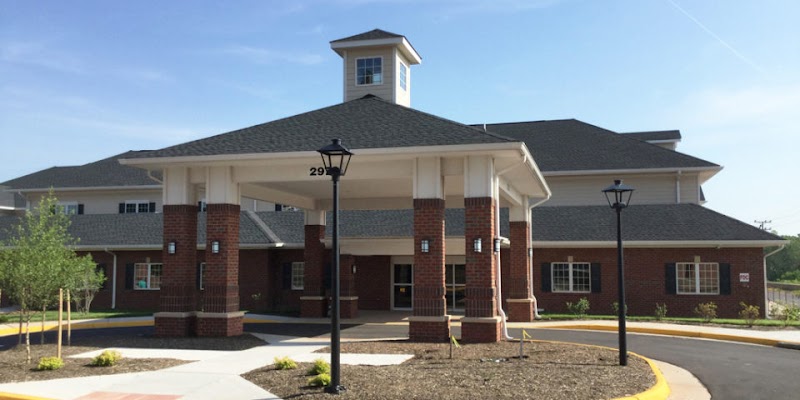
How is Dulles Health & Rehab Center Staffed?

CMS rates DULLES HEALTH & REHAB CENTER's staffing level at 3 out of 5 stars, which is average compared to other nursing homes. Staff turnover is 17%, compared to the Virginia average of 46%. This relatively stable workforce can support continuity of care.

What Have Inspectors Found at Dulles Health & Rehab Center?

State health inspectors documented 39 deficiencies at DULLES HEALTH & REHAB CENTER during 2017 to 2023. These included: 39 with potential for harm.
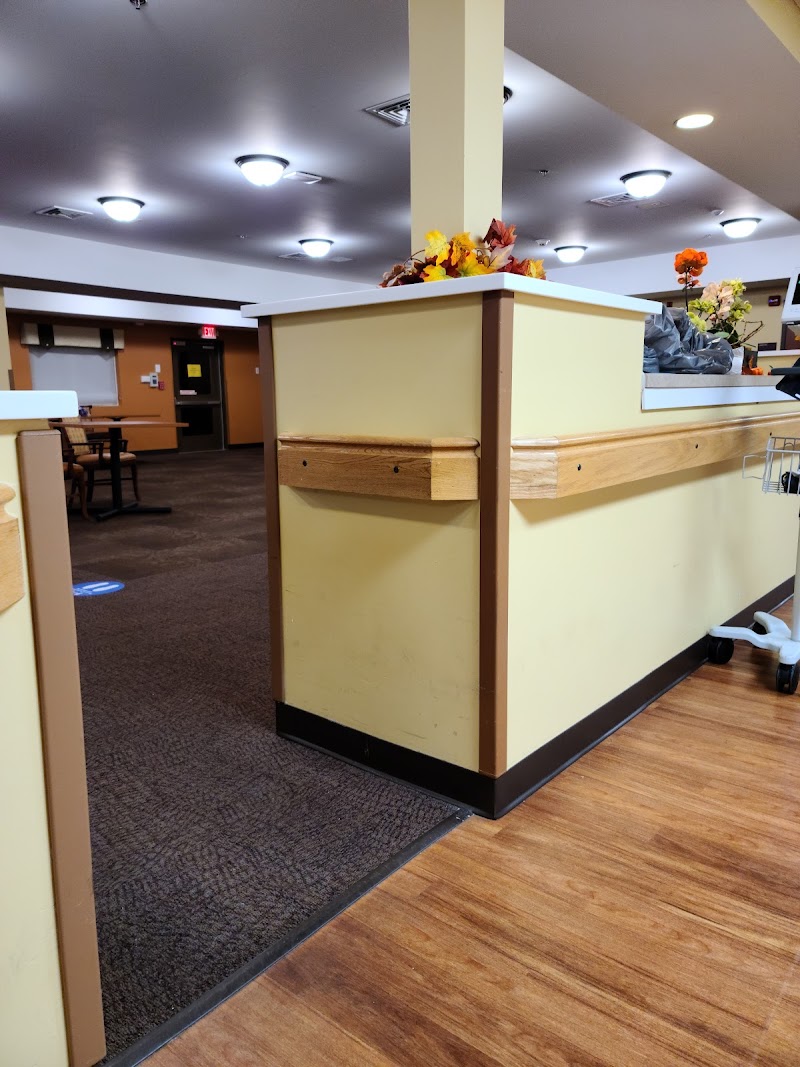
Who Owns and Operates Dulles Health & Rehab Center?

DULLES HEALTH & REHAB CENTER is owned by a for-profit company. For-profit facilities operate as businesses with obligations to shareholders or private owners. The facility is operated by COMMONWEALTH CARE OF ROANOKE, a chain that manages multiple nursing homes. With 166 certified beds and approximately 158 residents (about 95% occupancy), it is a mid-sized facility located in HERNDON, Virginia.
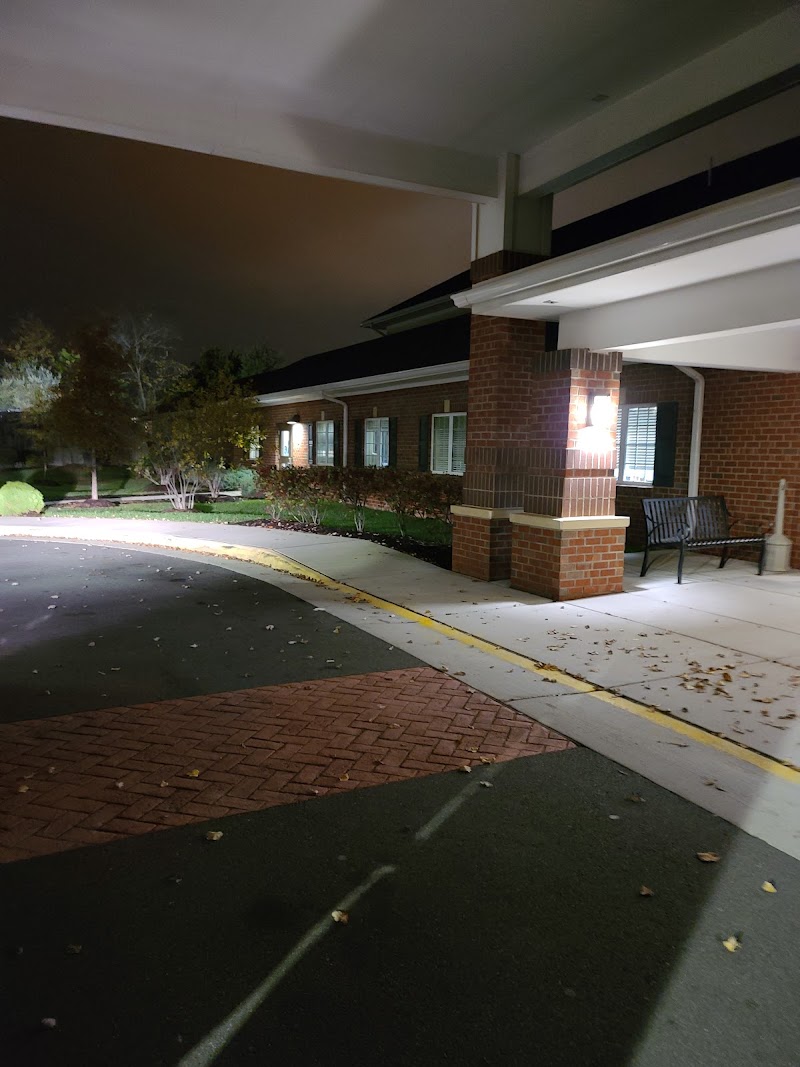
How Does Dulles Health & Rehab Center Compare to Other Virginia Nursing Homes?

Compared to the 100 nursing homes in Virginia, DULLES HEALTH & REHAB CENTER's overall rating (4 stars) is above the state average of 3.0, staff turnover (17%) is significantly lower than the state average of 46%, and health inspection rating (3 stars) is at the national benchmark.

What Should Families Ask When Visiting Dulles Health & Rehab Center?

Based on this facility's data, families visiting should ask: "Can I visit during a mealtime to observe dining assistance and food quality?" "How do you handle medical emergencies, and what is your hospital transfer rate?" "Can I speak with family members of current residents about their experience?"

Is Dulles Health & Rehab Center Safe?

Based on CMS inspection data, DULLES HEALTH & REHAB CENTER has a clean safety record: no substantiated abuse findings (meaning no confirmed cases of resident harm), no Immediate Jeopardy citations (the most serious violation level indicating risk of serious injury or death), and is not on the Special Focus Facility watch list (a federal program monitoring the lowest-performing 1% of nursing homes). The facility has a 4-star overall rating and ranks #1 of 100 nursing homes in Virginia. While no facility is perfect, families should still ask about staff-to-resident ratios and recent inspection results during their visit.

Do Nurses at Dulles Health & Rehab Center Stick Around?

Staff at DULLES HEALTH & REHAB CENTER tend to stick around. With a turnover rate of 17%, the facility is 29 percentage points below the Virginia average of 46%. Low turnover is a positive sign. It means caregivers have time to learn each resident's needs, medications, and personal preferences. Consistent staff also notice subtle changes in a resident's condition more quickly. Registered Nurse turnover is also low at 25%, meaning experienced RNs are available to handle complex medical needs.

Was Dulles Health & Rehab Center Ever Fined?

DULLES HEALTH & REHAB CENTER has no federal fines on record. CMS issues fines when nursing homes fail to meet care standards or don't correct problems found during inspections. The absence of fines suggests the facility has either maintained compliance or corrected any issues before penalties were assessed. This is a positive indicator, though families should still review recent inspection reports for the full picture.

Is Dulles Health & Rehab Center on Any Federal Watch List?

DULLES HEALTH & REHAB CENTER is not on any federal watch list. The most significant is the Special Focus Facility (SFF) program, which identifies the bottom 1% of nursing homes nationally based on persistent, serious quality problems. Not being on this list means the facility has avoided the pattern of deficiencies that triggers enhanced federal oversight. This is a positive indicator, though families should still review the facility's inspection history directly.