MARTINSVILLE HEALTH AND REHAB

1607 SPRUCE STREET, MARTINSVILLE, VA 24112 (276) 632-7146
For profit - Corporation 140 Beds TRIO HEALTHCARE Data: November 2025
Trust Grade
10/100
#261 of 285 in VA
Last Inspection: June 2022

Over 2 years since last inspection. Current conditions may differ from available data.

Overview

Martinsville Health and Rehab has a Trust Grade of F, indicating significant concerns and a poor overall quality of care. They rank #261 out of 285 facilities in Virginia, placing them in the bottom half of nursing homes in the state, and #3 out of 3 in Martinsville City County, meaning there are no better local options available. The facility's trend is stable, with 8 issues reported in both 2022 and 2024, suggesting ongoing problems without improvement. Staffing is a concern, with a turnover rate of 100%, which is significantly higher than the Virginia average of 48%, indicating that staff do not stay long enough to build relationships with residents. Although there have been no fines, which is a positive aspect, the care provided has been lacking, as seen in serious incidents like a resident suffering from excessive vaginal bleeding without intervention and another resident experiencing a fall due to improper lift positioning. Overall, while they have no fines and could improve with better staffing, the facility's numerous deficiencies raise serious concerns about the quality of care provided.

Trust Score
F
10/100
In Virginia
#261/285
Bottom 9%
Safety Record
High Risk
Review needed
Inspections
Holding Steady
8 → 8 violations
Staff Stability
⚠ Watch
100% turnover. Very high, 52 points above average. Constant new faces learning your loved one's needs.
Penalties
✓ Good
No fines on record. Clean compliance history, better than most Virginia facilities.
Skilled Nurses
⚠ Watch
Each resident gets only 29 minutes of Registered Nurse (RN) attention daily — below average for Virginia. Fewer RN minutes means fewer trained eyes watching for problems.
Violations
⚠ Watch
78 deficiencies on record. Higher than average. Multiple issues found across inspections.
★☆☆☆☆
1.0
Overall Rating
★★☆☆☆
2.0
Staff Levels
★☆☆☆☆
1.0
Care Quality
★★☆☆☆
2.0
Inspection Score
Stable
2022: 8 issues
2024: 8 issues

The Good

  • Full Sprinkler Coverage · Fire safety systems throughout facility
  • No fines on record

Facility shows strength in fire safety.

The Bad

1-Star Overall Rating

Below Virginia average (3.0)

Significant quality concerns identified by CMS

Staff Turnover: 100%

53pts above Virginia avg (47%)

Frequent staff changes - ask about care continuity

Chain: TRIO HEALTHCARE

Part of a multi-facility chain

Ask about local staffing decisions and management

Staff turnover is very high (100%)

52 points above Virginia average of 48%

The Ugly 78 deficiencies on record

4 actual harm
Jan 2024 8 deficiencies
CONCERN (D) 📢 Someone Reported This

A family member, employee, or ombudsman was alarmed enough to file a formal complaint

Potential for Harm - no one hurt, but risky conditions existed

Notification of Changes (Tag F0580)

Could have caused harm · This affected 1 resident

3. For Resident #2, the facility staff failed to notify the physician following a resident-to-resident altercation. Resident #2's diagnosis list indicated diagnoses, which included, but was not limite...

Read full inspector narrative →
3. For Resident #2, the facility staff failed to notify the physician following a resident-to-resident altercation. Resident #2's diagnosis list indicated diagnoses, which included, but was not limited to Unspecified Dementia/ Unspecified Severity/with other Behavioral Disturbance, AMS (altered mental status), Cognitive Communication Deficit, Generalized Anxiety Disorder and Unspecified Mood (Affective) Disorder. On a MDS (minimum data set), a quarterly assessment with an ARD (assessment reference date) of 9/25/23, R2 was coded as being severely cognitively impaired for making decisions, having scored zero out of 15 on the BIMS (brief interview for mental status). A review of Resident #2's clinical record revealed a general progress note dated, 10/14/2023 14:15 (2:15 PM) General Note, Called to room via call bell. As this writer approached room, res (resident) stepped into doorway. Res stated she hit me I asked where, res stated here pointing to left cheek. Roommate was sitting in chair in corner with legs on bed. This writer asked res if roommate hit her with her hand. Res shrugged shoulder. Skin check completed; no areas of skin impairment observed. Res denies pain Res assisted to common area. When asked roommate if she had been near resident, roommate stated I haven't been near that woman. Res asked if she could go back to room and take a nap. Res back in room resting in bed with eyes closed. Staff checked on residents frequently during the day. Res asking roommate if she has any cookies. SW (social worker), UM (unit manager) & ED (executive director) notified. V/S (vital signs) 136/88 temp 97.3 02 (oxygen) 96% Ra (room air), resp (respirations) 18 p (pulse) 80. Surveyor was unable to locate evidence of physician notification following the resident-to-resident altercation on 10/14/23. Surveyor reported the concern to the administrator, unit manager and social worker during interviews on 1/30/24. Surveyor reported the concern again at the end of day meeting on 1/30/24 with the administrator, director of nursing, unit managers, regional vice president of operations and social worker. Surveyor requested and received the facility policy on abuse. The following information was found in a facility policy titled, Policy and Procedure, Title: Resident Abuse (with a revision date of 1/2023): POLICY, Section E Number 2: The Licensed Nurse in charge or Director of Nursing shall perform and document a thorough assessment, and notify the attending physician. No further information regarding this concern was presented to the survey team prior to the exit conference on 1/31/24. Based on staff interview, clinical record review, and facility document review the facility staff failed to notify physician and/or responsible party of a change in condition for 3 of 13 residents, Resident #4, Resident #7, and Resident #2. The findings included: 1. For Resident #4 the facility staff failed to notify the physician and responsible party of a fall. Resident #4's face sheet listed diagnoses which included but not limited to COVID-19, weakness, dementia, and difficulty walking. Resident #4's most recent minimum data set with an assessment reference date of 09/07/22 coded the resident as having both short and long-term memory loss with severely impaired cognitive skills for daily decision making. Resident #4's clinical record was reviewed and contained nurse's progress notes which read in part, 09/07/2022 17:34 Note Text: Resident sustained an unwitnessed fall. Obtained a ST (skin tear) to right elbow and it is unclear whether or not he hit his head, there are no discolorations noted at present time. VS (vital signs): 117/86, 93, 18, 97.5 & 93 % on RA (room air). ROM (range of motion) is WNL (within normal limits) for resident. Resident is very weak/unsteady on his feet. Neuro's initiated. Will continue to monitor and 09/17/2022 20:14 Note Text: Resident found sitting in floor on bottom beside bed. Resident unable to verbalize what happened. No apparent injury and resident did not hit his head. VS: 108/71, 97.1, 82, 18, 95 % on RA. ROM WNL for resident. No c/o (complaints of) acute distress of SOB (shortness of breath) noted at this time. No c/o pain. Communication placed in MD folder. Will have day shift contact POA (power of attorney) in the AM. Will continue to observe and 09/19/2022 08:44 Note Text: Resident unresponsive this AM with b/p (blood pressure) 81/52 hr (heart rate) 120 resident is very pale. Breathing is labored. NP (nurse practitioner) into see patient. Order to send to ER for eval and treatment. Left message for son that we are sending to ER. 911 contacted. They are in route to pick up resident. Surveyor requested fall assessments related to the falls sustained on 09/07/22 and 09/17/22. Director of nursing provided a Fall Investigation form dated 09/17/22 which read in part, 4. Physician notified: yes 9/17/22. Time: 2000 (placed in comm [communications] folder). Family notified: No. Will notify in A.M. Surveyor was not provided any fall assessment related to fall on 09/07/22. Resident #4's clinical record contained an acute care visit note dated 09/19/22 which read in part, 9/19/2022 Acute Visit. History of Present Illness: . seen this morning following staff report of acute change in condition with hypotension, tachycardia noted Staff report this morning that pt also had a fall 9/17 and was found sitting on the floor at his bedside and also noted during review of nurses notes that pt refused all of his meds on 9/18 . Surveyor could not locate any documentation the indicate that the resident's emergency contact/POA (power of attorney) or MD had been notified of the fall on 09/07/22 or that emergency contact was notified of the fall on 09/17/22. The concern of not notifying the physician or resident's responsible party of a fall was discussed with the administrator, director of nursing, unit manager #1, unit manager #2, and regional vice president of operations on 01/31/24 at 1:45 pm. No further information was provided prior to exit. 2. For Resident #7, facility staff failed to notify the responsible party (RP) of a significant change in status requiring hospitalization. Resident #7 was admitted to the facility with diagnoses including epilepsy and convulsions, dysphagia with presence of feeding tube, aphasia, cognitive communication deficits and other sequelae of cerebral infarction, hemiplegia, hemiparesis, and contractures of joints after cerebral infarction, diabetes mellitus as a result of underlying condition, and hypertension. On the most recent Minimum Data Set assessment, the resident scored 9/15 on the Brief Interview for Mental Status and was assessed as without signs of delirium, psychosis, or behaviors affecting care. A nursing note dated 12/31/2023 documented the nurse called physician on call with change of condition and received order to send to hospital for evaluation and treatment. The nursing progress note did not state the responsible party was notified. The surveyor interviewed the social worker (SW) on 1/30/2024. SW stated that the allegation addressed a weekend transfer. The nurse called the on call physician but did not notify the responsible party (RP complainant) before transferring the resident to the hospital. The social worker called on Monday to notify the RP of the transfer and discuss bed hold rights. At that time, the RP reported the hospital had notified the RP of the transfer on 12/31/2023. The concern with RP notification was reported to the administrator, director of nursing, unit managers, social worker, and regional vice president of operations during a summary meeting on 1/30/2024.
CONCERN (D) 📢 Someone Reported This

A family member, employee, or ombudsman was alarmed enough to file a formal complaint

Potential for Harm - no one hurt, but risky conditions existed

Abuse Prevention Policies (Tag F0607)

Could have caused harm · This affected 1 resident

Based on staff interview, clinical record review and facility document review, it was determined that the facility failed to implement facility policy and procedures regarding reporting and investigat...

Read full inspector narrative →
Based on staff interview, clinical record review and facility document review, it was determined that the facility failed to implement facility policy and procedures regarding reporting and investigating a resident-to-resident altercation for 1 of 13 residents, Resident #2. The findings included: For Resident #2 the facility failed to implement facility policy in regard to reporting and investigating a resident-to-resident altercation occurring on 10/14/23. Resident #2's diagnosis list indicated diagnoses, which included, but was not limited to Unspecified Dementia/ Unspecified Severity/with other Behavioral Disturbance, AMS (altered mental status), Cognitive Communication Deficit, Generalized Anxiety Disorder and Unspecified Mood (Affective) Disorder. On a MDS (minimum data set), a quarterly assessment with an ARD (assessment reference date) of 9/25/23, R2 was coded as being severely cognitively impaired for making decisions, having scored zero out of 15 on the BIMS (brief interview for mental status). Resident #2's comprehensive care plan was reviewed and contained a care plan for, I sometimes have behaviors which include Tearing things up, taking people's belongings, and throwing my food away to clean the plate. throwing water into others rooms and making faces at them. The goal for this care plan is, My behavior will stop with staff intervention. A review of Resident #2's clinical record revealed a general progress note dated, 10/14/2023 14:15 (2:15 PM) General Note, Called to room via call bell. As this writer approached room, res (resident) stepped into doorway. Res stated she hit me I asked where, res stated here pointing to left cheek. Roommate was sitting in chair in corner with legs on bed. This writer asked res if roommate hit her with her hand. Res shrugged shoulder. Skin check completed; no areas of skin impairment observed. Res denies pain Res assisted to common area. When asked roommate if she had been near resident, roommate stated I haven't been near that woman. Res asked if she could go back to room and take a nap. Res back in room resting in bed with eyes closed. Staff checked on residents frequently during the day. Res asking roommate if she has any cookies. SW (social worker), UM (unit manager) & ED (executive director) notified. V/S (vital signs) 136/88 temp 97.3 02 (oxygen) 96%Ra (room air), resp (respirations) 18 p (pulse) 80. This note was written by Unit Manager #1. On 1/29/2024 at 3:39 PM, Social Worker (SW) informed the surveyor there were no Facility Reported Incidents (FRI's) for Resident #2 in 2023. On 1/30/24 at 10:00 AM, surveyor interviewed Unit Manager #1 (UM#1). Surveyor asked UM#1 the process for a resident-to-resident altercation. UM#1 stated, When there is a resident-to-resident altercation the residents are separated, and they get them (residents) to safety. UM#1 stated they notify the Responsible Party (RP) and the physician and monitor the residents. UM#1 stated they do not put the residents back together until the physician says it's okay. When asked how staff ensure residents are kept safe or how staff keep them from becoming anxious after an altercation, UM#1 stated, We spend time with them (residents) and attempt to re-direct them (residents) as with activities. UM#1 stated, We report resident-to-resident altercations to the administrator immediately and the administrator initiates the FRI and investigates. When asked why Resident #2 was not put in a different room when Resident #2 wanted to lie down, UM#1 stated Resident #2's roommate would have been in a common area and not in the room. On 1/30/24 at 10:15 AM, surveyor interviewed LNHA (licensed nursing home administrator). Surveyor asked LNHA the process for physical altercations from resident-to-resident. LNHA stated, Staff immediately separate them and alert the family. LNHA stated they would do an immediate room change. LNHA stated after the incident is reported, staff would do skin checks to check for bruising and/or injuries. When asked about the process for ensuring residents are safe after a resident-to-resident altercation, LNHA stated staff or himself would check on them and talk with them and complete an investigation. When asked if the resident-to-resident altercation on 10/14/23 should have been reported and investigated, LNHA administrator stated, I would normally report the incident on a FRI. LNHA also stated there would normally be a room change if there was an immediate threat. Surveyor informed LNHA Resident #2's roommate was not moved until 1/4/24. LNHA stated he did not have an investigation of the incident that occurred on 10/14/23. On 1/30/24 at 10:38 AM, surveyor interviewed SW. SW was asked the process for resident-to-resident altercation. SW stated when she is notified about an altercation, she does follow-up with weekly documentation. When asked about the incident on 10/14/23 involving Resident #2, SW stated she did not have any documentation about the incident. SW stated the administrator initiates the FRI and the interdisciplinary team (IDT) would determine if a room change was needed. The concern of the facility not reporting or investigating the incident of the resident-to-resident altercation that occurred on 10/14/23 was discussed with the administrator, unit managers, director of nursing, social worker and regional vice president of operations at the end of day meeting on 1/30/2024. On 1/31/2024 at 8:48 AM, LNHA brought surveyor FRI dated 1/30/24 about the resident-to-resident altercation that occurred on 10/14/23. The ombudsman, adult protective services and Virginia Department of Health had been notified of the altercation on 1/30/24. On 1/31/24 at 8:48 AM, LNHA brought surveyor a copy of the facility abuse policy. Surveyor reviewed the facility policy entitled, Policy and Procedure, Title: Resident Abuse (with a revision date of 1/2023) which read in part, .Procedure for Reporting Abuse, . Upon completion of the investigation, a detailed report shall be prepared . The Abuse Coordinator of the facility will refer any or all incidents and reports of resident abuse to the appropriate state agencies . All incidents of resident abuse are to be reported immediately to the licensed nurse in charge, Director of Nursing, or the Administrator. Once reported to one of those three officials, the prescribed forms are to be completed and delivered to the Abuse Coordinator or his/her designee for an investigation. The facility shall report to the state agency and one or more law enforcement entities any reasonable suspicion of a crime against any individual who is a resident of, or is receiving care from, the facility If the events that caused the suspicion did NOT result in serious bodily injury the facility shall report within 24 hours . No further information regarding this concern was presented to the survey team prior to the exit conference on 1/31/24.
CONCERN (D) 📢 Someone Reported This

A family member, employee, or ombudsman was alarmed enough to file a formal complaint

Potential for Harm - no one hurt, but risky conditions existed

Report Alleged Abuse (Tag F0609)

Could have caused harm · This affected 1 resident

Based on staff interview, clinical record review, and facility document review, it was determined that the facility failed to report an incident of alleged resident-to-resident abuse for 1 of 13 resid...

Read full inspector narrative →
Based on staff interview, clinical record review, and facility document review, it was determined that the facility failed to report an incident of alleged resident-to-resident abuse for 1 of 13 residents in the survey sample, Resident #2. The findings included: For Resident #2, the facility failed to report a resident-to-resident altercation occurring on 10/14/23. Resident #2's diagnosis list indicated diagnoses, which included, but was not limited to Unspecified Dementia/ Unspecified Severity/with other Behavioral Disturbance, AMS (altered mental status), Cognitive Communication Deficit, Generalized Anxiety Disorder and Unspecified Mood (Affective) Disorder. On a MDS (minimum data set), a quarterly assessment with an ARD (assessment reference date) of 9/25/23, R2 was coded as being severely cognitively impaired for making decisions, having scored zero out of 15 on the BIMS (brief interview for mental status). A review of Resident #2's clinical record revealed a general progress note dated, 10/14/2023 14:15 (2:15 PM) General Note, Called to room via call bell. As this writer approached room, res (resident) stepped into doorway. Res stated she hit me I asked where, res stated here pointing to left cheek. Roommate was sitting in chair in corner with legs on bed. This writer asked res if roommate hit her with her hand. Res shrugged shoulder. Skin check completed; no areas of skin impairment observed. Res denies pain Res assisted to common area. When asked roommate if she had been near resident, roommate stated I haven't been near that woman. Res asked if she could go back to room and take a nap. Res back in room resting in bed with eyes closed. Staff checked on residents frequently during the day. Res asking roommate if she has any cookies. SW (social worker), UM (unit manager) & ED (executive director) notified. V/S (vital signs) 136/88 temp 97.3 02 (oxygen) 96%Ra (room air), resp 18 p (pulse) 80. This note was written by Unit Manager #1 (UM#1). On 1/29/2024 at 3:39 PM, Social Worker (SW) informed the surveyor there were no Facility Reported Incidents (FRI's) for Resident #2 in 2023. On 1/30/24 at 10:00 AM, surveyor interviewed Unit Manager #1 (UM#1). Surveyor asked UM#1 the process for a resident-to-resident altercation. UM#1 stated, We report resident-to-resident altercations to the administrator immediately and the administrator initiates the FRI and investigates. On 1/30/24 at 10:15 AM, surveyor interviewed LNHA (licensed nursing home administrator). When asked if the resident-to-resident altercation on 10/14/23 should have been reported, LNHA administrator stated, I would normally report the incident on a FRI. On 1/30/24 at 10:38 AM, surveyor interviewed SW. When asked about the incident on 10/14/23 involving Resident #2, SW stated she did not have any documentation about the incident. SW stated the administrator initiates the FRI. The concern of the facility not reporting the incident of the resident-to-resident altercation that occurred on 10/14/23 was discussed with the administrator, unit managers, director of nursing, social worker and regional vice president of operations at the end of day meeting on 1/30/2024. On 1/31/2024 at 8:48 AM, LNHA brought surveyor FRI dated 1/30/24 about the resident-to-resident altercation that occurred on 10/14/23. The ombudsman, adult protective services and Virginia Department of Health had been notified on 1/30/24. On 1/31/24 at 8:48 AM, LNHA brought surveyor a copy of the facility abuse policy. On 1/31/24 at 8:48 AM, LNHA brought surveyor a copy of the facility abuse policy. Surveyor reviewed the facility policy entitled, Policy and Procedure, Title: Resident Abuse (with a revision date of 1/2023) which read in part, .Procedure for Reporting Abuse, E . Upon completion of the investigation, a detailed report shall be prepared . The Abuse Coordinator of the facility will refer any or all incidents and reports of resident abuse to the appropriate state agencies . All incidents of resident abuse are to be reported immediately to the licensed nurse in charge, Director of Nursing, or the Administrator. Once reported to one of these those three officials, the prescribed forms are to be completed and delivered to the Abuse Coordinator or his/her designee for an investigation . The facility shall report to the state agency and one or more law enforcement entities any reasonable suspicion of a crime against any individual who is a resident of, or is receiving care from, the facility .If the events that caused the suspicion did NOT result in serious bodily injury the facility shall report within 24 hours . The concern of the facility not reporting or investigating the incident of the resident-to-resident altercation was again discussed with the administrator, unit managers, director of nursing and regional vice president of operations at the pre-exit meeting on 1/31/2024. No further information regarding this concern was presented to the survey team prior to the exit conference on 1/31/24.
CONCERN (D) 📢 Someone Reported This

A family member, employee, or ombudsman was alarmed enough to file a formal complaint

Potential for Harm - no one hurt, but risky conditions existed

Investigate Abuse (Tag F0610)

Could have caused harm · This affected 1 resident

Based on staff interview, clinical record review, and facility document review, it was determined that the facility failed to investigate an incident of alleged resident-to-resident abuse for 1 of 13 ...

Read full inspector narrative →
Based on staff interview, clinical record review, and facility document review, it was determined that the facility failed to investigate an incident of alleged resident-to-resident abuse for 1 of 13 residents in the survey sample, Resident #2. The findings included: For Resident #2 the facility failed to investigate an incident of alleged resident-to-resident abuse during a resident-to-resident altercation on 10/14/23. Resident #2's diagnosis list indicated diagnoses, which included, but was not limited to Unspecified Dementia/ Unspecified Severity/with other Behavioral Disturbance, AMS (altered mental status), Cognitive Communication Deficit, Generalized Anxiety Disorder and Unspecified Mood (Affective) Disorder. On a MDS (minimum data set), a quarterly assessment with an ARD (assessment reference date) of 9/25/23, R2 was coded as being severely cognitively impaired for making decisions, having scored zero out of 15 on the BIMS (brief interview for mental status). Resident #2's comprehensive care plan was reviewed and contained a care plan for, I sometimes have behaviors which include Tearing things up, taking people's belongings, and throwing my food away to clean the plate. throwing water into others rooms and making faces at them. The goal for this care plan is, My behavior will stop with staff intervention. A review of Resident #2's clinical record revealed a general progress note dated, 10/14/2023 14:15 (2:15 PM) General Note, Called to room via call bell. As this writer approached room, res (resident) stepped into doorway. Res stated she hit me I asked where, res stated here pointing to left cheek. Roommate was sitting in chair in corner with legs on bed. This writer asked res if roommate hit her with her hand. Res shrugged shoulder. Skin check completed; no areas of skin impairment observed. Res denies pain Res assisted to common area. When asked roommate if she had been near resident, roommate stated I haven't been near that woman. Res asked if she could go back to room and take a nap. Res back in room resting in bed with eyes closed. Staff checked on residents frequently during the day. Res asking roommate if she has any cookies. SW (social worker), UM (unit manager) & ED (executive director) notified. V/S (vital signs) 136/88 temp 97.3 02 (oxygen) 96%Ra (room air), resp (respirations) 18 p (pulse) 80. This note was written by Unit Manager #1 (UM#1). On 1/29/2024 at 3:39 PM, Social Worker (SW) informed the surveyor there were no Facility Reported Incidents (FRI's) for Resident #2 in 2023. On 1/30/24 at 10:00 AM, surveyor interviewed Unit Manager #1 (UM#1). Surveyor asked UM#1 the process for a resident-to-resident altercation. UM#1 stated, We report resident-to-resident altercations to the administrator immediately and the administrator initiates the FRI and investigates. On 1/30/24 at 10:15 AM, surveyor interviewed LNHA (licensed nursing home administrator). Surveyor asked LNHA the process for physical altercations from resident-to-resident. LNHA stated, Staff immediately separate them and alert the family. LNHA stated they would do an immediate room change. LNHA stated after the incident is reported, staff would do skin checks to check for bruising and/or injuries. When asked about the process for ensuring residents are safe after a resident-to-resident altercation, LHNA stated staff or himself would check on them and talk with them and complete an investigation. When asked if the resident-to-resident altercation on 10/14/23 should have been reported and investigated, LNHA administrator stated, I would normally report the incident on a FRI. LNHA also stated there would normally be a room change if there was an immediate threat. Surveyor informed LNHA Resident #2's roommate was not moved until 1/4/24. LNHA stated he did not have an investigation of the incident that occurred on 10/14/23. On 1/30/24 at 10:38 AM, surveyor interviewed SW. SW was asked the process for resident-to-resident altercation. SW stated when she is notified about an altercation, she does follow-up with weekly documentation. When asked about the incident on 10/14/23 involving Resident #2, SW stated she did not have any documentation about the incident. SW stated the administrator initiates the FRI and the interdisciplinary team (IDT) would determine if a room change was needed. The concern of the facility not investigating the incident of the resident-to-resident altercation that occurred on 10/14/23 was discussed with the administrator, unit managers, director of nursing, social worker and regional vice president of operations at the end of day meeting on 1/30/2024. On 1/31/2024 at 8:48 AM, LNHA brought surveyor FRI dated 1/30/24 about the resident-to-resident altercation that occurred on 10/14/23. The ombudsman, adult protective services and Virginia Department of Health had been notified on 1/30/24. On 1/31/24 at 8:48 AM, LNHA brought surveyor a copy of the facility abuse policy. Surveyor reviewed the facility policy entitled, Policy and Procedure, Title: Resident Abuse (with a revision date of 1/2023) which read in part, . All reported events (bruises, skin tears, falls, inappropriate or abusive behaviors) will be investigated by the Director of Nursing. Patterns or trends will be identified that might constitute abuse. This information will be forwarded to the Administrator, who will serve as the facility's Abuse Coordinator, and an abuse investigation will be conducted .The Abuse Coordinator or his/her designee shall investigate all reports of suspected abuse . The concern of the facility not investigating the incident of the resident-to-resident altercation was discussed with the administrator, unit managers, director of nursing and regional vice president of operations at the pre-exit meeting on 1/31/2024. No further information regarding this concern was presented to the survey team prior to the exit conference on 1/31/24.
CONCERN (D) 📢 Someone Reported This

A family member, employee, or ombudsman was alarmed enough to file a formal complaint

Potential for Harm - no one hurt, but risky conditions existed

Deficiency F0658 (Tag F0658)

Could have caused harm · This affected 1 resident

Based on staff interview, clinical record review, and facility document review the facility staff failed to follow professional standards of practice for the administration of medications for 1 of 13 ...

Read full inspector narrative →
Based on staff interview, clinical record review, and facility document review the facility staff failed to follow professional standards of practice for the administration of medications for 1 of 13 residents, Resident #1. The findings included: Resident #1's face sheet listed diagnoses which included but not limited to other cerebrovascular disease, vascular dementia, type 2 diabetes mellitus, and personal history of urinary tract infection. Resident #1's most recent minimum data set with an assessment reference date of 01/04/24 assigned the resident a brief interview for mental status score of 7 out of 15 in section C, cognitive patterns. This indicates that the resident is severely cognitively impaired. Resident #1's clinical record was reviewed and contained a physician's order summary which read in part, SPS Oral suspension 15 GM/60 ML (Sodium Polystyrene Sulfonate). Give 60 ml by mouth one time a day for hyperkalemia. Order Date: 01/03/2024. Start Date: 01/04/2024. Discontinue: 01/15/2024, Sodium Polystyrene Sulfonate Oral Suspension 15 GM/60 ML (Sodium Polystyrene Sulfonate). Give 30 ml by mouth one time only for supplement for 1 day. Order Date: 01/15/2024. Start Date: 01/15/2024. End Date: 01/16/2024, and Sodium Polystyrene Sulfonate Oral Suspension 15 GM/60 ML (Sodium Polystyrene Sulfonate). Give 15 gram by mouth one time a day for hyperkalemia. Order Date: 01/15/2024. Start Date: 01/15/2024. Resident #1's electronic medication administration record was reviewed and contained entries as above. These entries were initialed as administered on 01/04/24-01/07/24 (4 doses), not available on 01/08 and 01/09/24, administered on 01/10/24-01/15/24 (6 doses), not available on 01/15/24, administered on 01/16/24-01/19/24 (4 doses), and not available 01/20-01/23/24. It was also initialed for the one-time dose on 01/16/24. Resident #1's clinical record was reviewed and contained a physician's progress noted dated 01/15/24 which read in part, Date of Service: 01/15/2024. Visit Type: Acute Visit. Chief Complaint/Nature of Presenting Problem: Hyperkalemia. History of Present Illness: . seen today following review of labs with potassium of 6.1. Upon review of patient's orders patient currently has an order for Kayexalate twice daily. Initial order by MD on 1/4, right to continue order on 1/12 as written daily, and additional pm dose was added by staff making current dose BID (twice daily). Pharmacy contacted and states that 1 dose of Kayexalate was sent by pharmacy on 1/4. Staff unsure if pt has received doses of Kayexalate. Surveyor spoke with pharmacy technician on 01/31/24 at 9:00 am regarding Resident #1's medications. Surveyor asked pharmacy technician when and how much of the SPS oral suspension had been sent to the facility and pharmacy technician stated, We sent a small bottle on 01/03/24 and on 01/25/24, and a large bottle on 01/26/24. Surveyor asked how many doses were in each bottle and pharmacy technician stated, A small bottle is 60 ml, so one dose, and a large bottle is 473 ml. Surveyor confirmed with pharmacy tech that only 2 small bottles of one dose each were sent to the facility between 01/03/24 and 01/25/24. Pharmacy technician stated, It's available in their stat box, if they need it. Surveyor spoke with the director of nursing (DON) on 01/31/24 at 10:45 am regarding Resident #1's SPS oral suspension. Surveyor asked DON where the nurses could have gotten the medication to administer if the pharmacy had not sent it, and DON stated they could have pulled it from the stat box. DON then called the pharmacy to ask when/if medication had been removed from stat box. Pharmacy technician stated that medication had been removed from the stat box on 01/05, 01/12, 01/3, and 01/15. Unit manager (UM) #1 provided surveyor with a list of medications in the stat box and stated there are three stat boxes in the facility, one for each unit, but only 2 have SPS oral suspension. UM #1 provided a list for each of the two stat boxes. These lists included SPS oral suspension 60 ml, 4 doses in each box. UM #2 provided surveyor with copies of Emergency Drug Kit Usage Report forms dated 01/12/24 at 9 am and 9:30 pm and 01/19/24 2 pm and 10:30 pm. Each of these forms indicated that one dose of the medication had been removed from the stat box at each time, for a total of 4 doses removed from stat box. Surveyor requested and was provided with a facility policy entitled Medication Administration General Guidelines which read in part, Medications are administered as prescribed in accordance with manufacturers' specifications, good nursing principles and practices and only by persons legally authorized to do so. Medication Administration: 1. Medications are administered in accordance with written orders of the prescriber. Documentation: 1. The individual who administers the medication dose, records the administration on the resident's MAR (medication administration record) following the medication being given. The concern of nurses signing for a medication that was not available for administration was discussed with the administrator, DON, UM #1, UM #2, and regional vice president of operations on 01/31/24 at 1:45 pm. No further information was provided prior to exit.
CONCERN (D) 📢 Someone Reported This

A family member, employee, or ombudsman was alarmed enough to file a formal complaint

Potential for Harm - no one hurt, but risky conditions existed

Quality of Care (Tag F0684)

Could have caused harm · This affected 1 resident

Based on resident interview, staff interview, clinical record review, and facility document review, the facility staff failed to follow medical provider orders for 1 of 13 residents in the survey samp...

Read full inspector narrative →
Based on resident interview, staff interview, clinical record review, and facility document review, the facility staff failed to follow medical provider orders for 1 of 13 residents in the survey sample, Resident #9. The findings included: For Resident #9, the facility staff failed to obtain blood sugar readings as ordered by the provider. Resident #9's diagnosis list indicated diagnoses, which included, but not limited to Multiple Sclerosis, Chronic Obstructive Pulmonary Disease, Type 2 Diabetes Mellitus, and Bipolar Disorder. The most recent minimum data set (MDS) with an assessment reference date (ARD) of 1/17/24 coded the resident as being independent in cognitive skills for daily decision making. Resident #9's current physician orders included orders dated 1/23/24 to obtain fasting blood sugar in the morning every Monday, Wednesday, Friday and obtain blood sugar at 4:00 PM every Tuesday, Thursday, and Saturday. Surveyor reviewed Resident #9's clinical record and was unable to locate blood sugar results as ordered. The most recent blood sugar documented on the resident's Blood Sugar Summary in the clinical record was dated 10/13/23. According to Resident #9's Diagnostic Imaging Administration Record, blood sugar readings were not obtained on 1/23/24, 1/24/24, 1/25/24, 1/26/24, 1/28/24, 1/29/24, or 1/30/24. On 1/30/24 at 1:45 PM, surveyor spoke with Resident #9 who stated they thought staff were checking their blood sugar every morning and night. On 1/30/24 at 2:55 PM, surveyor spoke with Licensed Practical Nurse (LPN) #4 who reviewed Resident #9's clinical record and stated the orders to check blood sugars were incorrectly entered into the electronic clinical record as a diagnostic order instead of an order for the MAR (Medication Administration Record). On 1/30/24 at 4:32 PM, the survey team met with the Administrator, Regional [NAME] President of Clinical Services, Director of Nursing, Social Worker, and Unit Managers and discussed the concern of the facility staff failing to obtain Resident #9's blood sugars as ordered. A 1/30/24 6:53 PM nursing progress note read in part Notified on call provider (name omitted) of med error. Order was entered to begin obtaining fasting and evening blood sugars and due to med transcription error - values were not obtained. Per on call physician corrected order to begin obtaining BS (blood sugar) levels, and follow up with attending provider tomorrow . No further information regarding this concern was presented to the survey team prior to the exit conference on 1/31/23.
CONCERN (E) 📢 Someone Reported This

A family member, employee, or ombudsman was alarmed enough to file a formal complaint

Potential for Harm - no one hurt, but risky conditions existed

Pharmacy Services (Tag F0755)

Could have caused harm · This affected multiple residents

Based on staff interview and clinical record review the facility staff failed to ensue medications were available for administration for 1 of 13 residents, Resident #1. The findings included: For Resi...

Read full inspector narrative →
Based on staff interview and clinical record review the facility staff failed to ensue medications were available for administration for 1 of 13 residents, Resident #1. The findings included: For Resident #1 the facility staff failed to ensure the medication SPS Oral solution (Sodium Polystyrene Sulfonate [Kayexalate]) was available for administration. Resident #1's most recent minimum data set with an assessment reference date of 01/04/24 assigned the resident a brief interview for mental status score of 7 out of 15 in section C, cognitive patterns. This indicates that the resident is severely cognitively impaired. Resident #1's clinical record was reviewed and contained a physician's order summary which read in part, SPS Oral suspension 15 GM/60 ML (Sodium Polystyrene Sulfonate). Give 60 ml by mouth one time a day for hyperkalemia. Order Date: 01/03/2024. Start Date: 01/04/2024. Discontinue: 01/15/2024, Sodium Polystyrene Sulfonate Oral Suspension 15 GM/60 ML (Sodium Polystyrene Sulfonate). Give 30 ml by mouth one time only for supplement for 1 day. Order Date: 01/15/2024. Start Date: 01/15/2024. End Date: 01/16/2024, and Sodium Polystyrene Sulfonate Oral Suspension 15 GM/60 ML (Sodium Polystyrene Sulfonate). Give 15 gram by mouth one time a day for hyperkalemia. Order Date: 01/15/2024. Start Date: 01/15/2024. Resident #1's electronic medication administration record was reviewed and contained entries as above. These entries were coded 7 on 01/08, 01/09, 01/15, 01/20, 01/22, and 01/23/24 and coded 3 on 01/21 and 01/25/24. Chart code 7 is equivalent to Other/See Nurses Notes. Chart code 3 is equivalent to Hold/See Nurses Notes. Resident #1's clinical record was reviewed and contained nurse's notes which read in part, 01/08/2024 17:20 Note Text: SPS Oral Sustention GM/60 ML. Give 60 ml by mouth one time a day for hyperkalemia waiting to arrive from pharmacy, 01/09/2024 09:39 Note Text: SPS Oral Suspention15 GM/60 ML. Give 60 ml by mouth one time a day for hyperkalemia waiting to arrive from pharmacy, 01/14/2024 09:41 Note Text: SPS Oral Suspention15 GM/60 ML. Give 60 ml by mouth one time a day for hyperkalemia waiting for pharmacy to deliver, 01/20/2024 21:56 Note Text: SPS Oral Suspention15 GM/60 ML. Give 60 ml by mouth one time a day for hyperkalemia on order spoke with pharmacy waiting on confirmation, 01/21/2024 21:07 Note Text: SPS Oral Suspention15 GM/60 ML. Give 60 ml by mouth one time a day for hyperkalemia on order waiting on pharmacy confirmation, 01/22/2024 21:46 Note Text: SPS Oral Suspention15 GM/60 ML. Give 60 ml by mouth one time a day for hyperkalemia Waiting for medication from Pharmacy, 01/23/2024 21:39 Note Text: SPS Oral Suspention15 GM/60 ML. Give 60 ml by mouth one time a day for hyperkalemia Waiting for medication from Pharmacy, and 01/24/2024 21:10 Note Text: SPS Oral Suspention15 GM/60 ML. Give 60 ml by mouth one time a day for hyperkalemia on order waiting on pharmacy md aware. Surveyor requested and was provided with a facility policy entitled Medication Shortages which read in part, The facility nurse must make every effort to ensure that a medication ordered for the resident is available to meet the needs their needs. The concern of not ensuring medications were available for administration was discussed with the administrator, director of nursing, unit manager #1, unit manager #2, and regional vice president of operations on 01/31/24 at 1:45 pm. No further information was provided prior to exit.
CONCERN (E) 📢 Someone Reported This

A family member, employee, or ombudsman was alarmed enough to file a formal complaint

Potential for Harm - no one hurt, but risky conditions existed

Deficiency F0760 (Tag F0760)

Could have caused harm · This affected multiple residents

Based on staff interview, clinical record review, and facility document review the facility staff failed to ensure 2 of 13 resident were free of significant medication errors, Resident #1 and Resident...

Read full inspector narrative →
Based on staff interview, clinical record review, and facility document review the facility staff failed to ensure 2 of 13 resident were free of significant medication errors, Resident #1 and Resident #1 and Resident #10. The findings included: 1. For Resident #1 the facility staff failed to administer the medications insulin glargine, metoprolol, and SPS Oral solution (sodium polystyrene sulfonate) per the physician's orders. Resident #1's most recent minimum data set with an assessment reference date of 01/04/24 assigned the resident a brief interview for mental status score of 7 out of 15 in section C, cognitive patterns. This indicates that the resident is severely cognitively impaired. Resident #1's comprehensive care plan was reviewed and contained a care plan for I am a diabetic and . has the diagnosis of hypertension . Interventions for these care plans included Diabetes medications as ordered by the physician and Medications as ordered by the physician. Resident #1's clinical record was reviewed and contained a physician's order summary for the month of January 2024 which read in part, Insulin Glargine Subcutaneous Solution. Inject 16 units subcutaneously one time a day for hyperglycemia. Hold if BS (blood sugar) < (less than) 130, Metoprolol Tartrate 50 MG. Give 1 tablet by mouth two times a day for blood pressure and Sodium Polystyrene Sulfonate Oral Solution 15 GM/60 ML. Give 15 gm by mouth one time a day for hyperkalemia. Resident #1's electronic medication administration recorded (eMAR) for the month of January 2024 was reviewed and contained entries as above. The entry for insulin glargine was administered on 01/03/24 with a BS of 116, on 01/04/24 with a BS of 128, held on 01/07/24 with a BS of 134, administered on 01/08/24 with a BS of 126, and administered on 01/09/24 with a BS of 120. Resident #1's metoprolol was not initialed as administered on 01/07/24, 01/11/24 and 01/12/24 for the 5 pm dose. Resident #1's SPS oral solution was not documented as administered on 01/08/24, 01/09/24, 01/15/24, 01/20-23/24 and 01/25/24. Surveyor requested and was provided with a facility document entitled Medication Administration General Guidelines which read in part, Medications are administered as prescribed in accordance with manufacturers' specifications, good nursing principles and practices and only by persons legally authorized to do so. Medication Administration: 1. Medications are administered in accordance with written orders of the prescriber. The concern of not ensuring Resident #1 was free of significant medications errors was discussed with the administrator, director of nursing, unit manager #1, unit manager #2, and regional vice president of operations on 01/31/24 at 1:45 pm. No further information was provided prior to exit. 2. For Resident #10, facility staff failed to hold insulin per hold parameters in the insulin order. Resident #10 was admitted to the facility with diagnoses including orthopedic after care post fracture, type 2 diabetes mellitus, kidney disease, hypertension, morbid obesity, arthritis, anxiety, long-term use of aspirin and long-term use of insulin. The clinical record did not yet contain a completed Minimum Data Set assessment. During clinical record review, the surveyor noted a physician order dated 1/19/2024 for Insulin Aspart Injection Solution 100 units per milliliter Inject 15 unit subcutaneously three times a day for DM 2 (type 2 diabetes mellitus) hold if BS (blood sugar) <150. The Medication Administration Record (MAR) for January 2024 documented administration of insulin with blood sugar less than 150 one time on 1/19, three times on 1/21, and one time on 1/25/2024. On 1/30/2024 at 9:30 AM, the surveyor interviewed LPN #1, who signed the 5 instances. LPN #1 Stated would not have given insulin on 1/21/24 at 16:30 when the BS was 74, the documentation error occurred when charting medications at the end of the shift. LPN #1 stated the other 4 doses where BS was less than 150 and documented as administered had likely been administered as charted. On 1/30/2024 at 10:20 AM, the surveyor showed the printed MAR with medication errors highlighted and summarized the conversation with LPN #1. The DON stated the insulin should have been held per order parameters. The surveyor discussed the issue during a summary meeting on 1/31/2024 with the administrator and director of nursing.
Jun 2022 8 deficiencies
CONCERN (D)

Potential for Harm - no one hurt, but risky conditions existed

Assessment Accuracy (Tag F0641)

Could have caused harm · This affected 1 resident

Based on resident interview, staff interview and clinical record review, the facility staff failed to accurately complete an admission minimum data set (MDS) assessment for 1 of 23 Residents, Resident...

Read full inspector narrative →
Based on resident interview, staff interview and clinical record review, the facility staff failed to accurately complete an admission minimum data set (MDS) assessment for 1 of 23 Residents, Resident #91. The facility staff failed to code the MDS to indicate Resident #91 was receiving dialysis. The findings included: Section C (cognitive patterns) of Resident #91's admission MDS assessment with an assessment reference date (ARD) of 05/31/22 included a brief interview for mental status (BIMS) summary score of 14 out of a possible 15 points. Section O (special treatments/procedures/programs) had been coded to indicate the resident was not receiving dialysis. Resident #91's clinical record included the diagnoses end stage renal disease, dependence on renal dialysis, and acquired absence of kidney. Resident #91's physician orders included dialysis three times a week. The order date was documented as 05/30/22. Resident #91's comprehensive care plan included the focus area alteration in kidney function due to end stage renal disease evidenced by hemodialysis. During initial tour of the facility on 06/12/22, Resident #91 stated to the surveyor they received dialysis three times a week. 06/13/22 9:00 a.m., the MDS coordinator reviewed Resident #91's admission MDS assessment and stated it was not marked for dialysis. 06/13/22 3:52 p.m., the Regional Clinical Director, Regional [NAME] President, and Director of Nursing (DON) were made aware of the incomplete MDS assessment in regards to dialysis. 06/14/22 8:00 a.m., the facility staff provided the surveyor with a copy of a modification of admission MDS. This MDS had been updated to include Resident #91's dialysis status. No further information regarding this issue was provided to the survey team prior to the exit conference.
CONCERN (D)

Potential for Harm - no one hurt, but risky conditions existed

Deficiency F0661 (Tag F0661)

Could have caused harm · This affected 1 resident

Based on staff interview, clinical record review, and facility document review, the facility staff failed to ensure a discharge summary was completed for 1 of 3 closed resident record reviews, Residen...

Read full inspector narrative →
Based on staff interview, clinical record review, and facility document review, the facility staff failed to ensure a discharge summary was completed for 1 of 3 closed resident record reviews, Resident #97. The facility staff failed to complete a discharge summary when Resident #97 was discharged home. The findings included: This was a closed record review. Resident #97's diagnosis list indicated diagnoses, which included, but not limited to Respiratory Failure, Chronic Obstructive Pulmonary Disease, Heart Failure, Chronic Kidney Disease Stage 3, and Cerebrovascular Disease. The admission minimum data set (MDS) with an assessment reference date (ARD) of 3/17/22 assigned the resident a brief interview for mental status (BIMS) summary score of 15 out of 15 indicating Resident #97 was cognitively intact. The resident was coded as requiring extensive assistance with bed mobility, transfers, dressing, toileting, personal hygiene and being independent in eating. A discharge return not anticipated MDS with an ARD of 4/06/22 coded the resident as being discharged to the community on 4/06/22. A progress note dated 4/06/22 at 4:47 pm stated in part resident discharged home at 2:40 pm transported via private care accompanied by brother in law. Resident left with discharge instructions and medication list in hand . Surveyor reviewed Resident #97's clinical record and was unable to locate a discharge summary. On 6/15/22 at 8:22 am, surveyor spoke with the DON who stated they did not have a discharge summary for Resident #97. Surveyor asked the DON who monitors for the completion of discharge summaries and they stated I would say medical records. Surveyor requested and received the facility policy entitled, Interdisciplinary Discharge Summary which read in part: Policy: All residents discharged from the facility will have an Interdisciplinary Discharge Summary completed as part of the Medical Record. 5. Medical Records personnel or designee will ensure a complete recapitulation of the resident's stay (Interdisciplinary Discharge Summary) is placed in the resident's medical record. No further information regarding this concern was presented to the survey team prior to the exit conference on 6/15/22.
CONCERN (D)

Potential for Harm - no one hurt, but risky conditions existed

Quality of Care (Tag F0684)

Could have caused harm · This affected 1 resident

Based on observation, interviews, clinical record reviews, and facility document reviews, facility staff failed to ensure ordered medications were administered for 2 of 23 sampled current residents (#...

Read full inspector narrative →
Based on observation, interviews, clinical record reviews, and facility document reviews, facility staff failed to ensure ordered medications were administered for 2 of 23 sampled current residents (#47, #70). 1- For Resident #47, the antidepressant medication Wellbutrin was unavailable and the ordered dose of Adderall was not available. Resident #47 was admitted to the facility with diagnoses that included sequelae of cerebral infarction, encounter for surgical aftercare following surgery on the digestive system, dementia, major depressive disorder, fibromyalgia, rheumatoid arthritis, attention deficit hyperactivity disorder, dysphagia, hemiplegia and hemiparesis following cerebral infarction on right dominant side, and iron deficiency anemia. On the minimum data set assessment with assessment reference date 5/2/2022, the resident scored 10/15 on the brief interview for mental status (indicating some cognitive impairment) and was assessed as without signs of delirium, psychosis, or behaviors affecting care. On 6/13/2022 at 10:21 AM during medication pass and pour observation, Licensed Practical nurse (LPN) #7 administered medications to Resident #47. LPN #7 stated that Wellbutrin 300 milligrams was unavailable. The nurse checked that the medication had been ordered and charted the medication as not administered. LPN #7 administered Adderall 15 mg. Adderall 15 mg was in the narcotic book and the nurse signed out the dose and noted that the count on the drug card matched the signout sheet. The Order Summary Report with active orders as of 6/14/2022 included orders for Wellbutrin and Adderall: 6/9/2022 Wellbutrin XL tablet extended release 24 Hour 300 milligram (MG) Give 300 mg by mouth one time a day related to major depressive disorder, recurrent, moderate 6/10/2022 Adderall 10 MG Give 10 mg by mouth in the morning for ADHD The resident's June 2022 Medication Administration Record Documented that Wellbutrin XL Extended Release 300 milligrams by mouth one time a day Was Marked 7=Other/See Nurse Notes on June 4, 5, 9, 11, 12, and 13. The June 4, 5, and 11 notes stated not received from pharmacy. The June 9 and 11 notes stated ordered not received from pharmacy. The June 12 note stated medication not available ordered from pharmacy. The resident's June 2022 Medication Administration Record Documented that Adderall 15 MG was administered June 1 through June 10, then Adderall 10 MG was administered June 11-13. The surveyor reported the concerns during an end of day meeting on June 13, 2022. The surveyor and director of nursing checked the resident's medications together on 6/13/22 at approximately 4:30 PM. They found a full card of Wellbutrin 300 MG with fill date 6/13/22 and a card containing Adderall 15 mg with 27 doses remaining. The final dose was signed out on 6/13/2022. The surveyor and director of nursing did not find a supply of Adderall 10 MG. The surveyor asked the director of nursing if there was a pharmacy record of delivery of Wellbutrin that could have been administered on June 6, 7, 8, and 10. On June 14, the director of nursing reported that the pharmacy had not delivered Wellbutrin between June 4 and June 13. 2- For Resident #70, facility staff failed to administer the ordered dose of Vitamin D. Resident #70 was admitted to the facility with diagnoses that included diabetes mellitus, hypertension, schizoaffective disorder, psychosis, bipolar disorder, anxiety, and depression. On the minimum data set assessment with assessment reference date 5/20/2022, the resident scored 11/15 on the brief interview for mental status and was assessed as without signs of delirium, psychosis, or behaviors affecting care. On 6/14/2022 at 10:54 AM, during medication pass and pour observation, the surveyor observed LPN #10 administer medications to Resident #70. The resident received vitamin D 10 mg. The Order Summary Report with active orders as of 6/15/2022 included an order for Vitamin D3 capsule 125 mcg (5000 UT) (cholecalciferol) Give 1 capsule by mouth 1 time per day. The resident's June 2022 Medication Administration Record Documented administration of Vitamin D 3 capsule 125 mcg (5000 UT) daily June 1 through 13. The surveyor reported the concern during an end of day meeting on June 13, 2022. On June 14, the director of nursing offered documentation that the correct dose of Vitamin D had been obtained and placed in the medication cart and the resident and physician had been notified that the wrong dose was administered.
CONCERN (D)

Potential for Harm - no one hurt, but risky conditions existed

Pharmacy Services (Tag F0755)

Could have caused harm · This affected 1 resident

Based on observation, staff interview, clinical record review, facility document review, and in the course of a complaint investigation, the facility staff failed to ensure medications were available ...

Read full inspector narrative →
Based on observation, staff interview, clinical record review, facility document review, and in the course of a complaint investigation, the facility staff failed to ensure medications were available for administration for 2 of 26 sampled residents, Resident #96 and Resident 47. Resident #96's eye drops, Amiodarone, and Spironolactone were not available for administration. Resident #47's Wellbutrin was not available for administration. The findings included: 1. This was a closed record review. Section C (cognitive patterns) of Resident #96's admission minimum data set (MDS) assessment with an assessment reference date (ARD) of 01/11/22 included a brief interview for mental status (BIMS) summary score of 15 out of a possible 15 points. Indicating Resident #96 was alert and orientated. Resident #96's clinical record included the diagnoses, congestive heart failure, diabetes, urinary retention, chronic kidney disease, and dementia. Resident #96's clinical record included the following orders. Ketorolac Tromethamine solution 1 drop in left eye two times a day order date 01/07/22. The start date was documented as 01/08/22 at 9:00 a.m. Prednisolone acetate suspension 1 drop in left eye two times a day. The order date was documented as 01/07/22. The start date was documented as 01/08/22 at 9:00 a.m. Brimonidine Tartrate 1 drop in right eye two times a day. Order date 01/07/22. Start date 01/08/22 9:00 a.m. A review of Resident #96's medication administration records (MARs) revealed that the facility nursing staff documented a 7 for all three of these eye drops on 01/08/22 at 9:00 a.m. Per the preprinted code on the MARs a 7=Other/See Nurses Notes. 01/08/22, Licensed Practical Nurse (LPN) #7 documented med ordered not received from pharmacy for all 3 of these eye drops. 01/08/22, LPN #7 had also documented that the medication Amiodarone 200 mg was not given as it was .ordered not received from pharmacy. The order date for this medication was documented as 01/07/22. The start date was documented as 01/08/22 at 9:00 a.m. 01/11/22, Registered Nurse (RN) #1 documented the medication Spironolactone was not given as it was .held until arrives from pharmacy, MD notified with NNO (no new orders) given. The order date was documented as 01/11/22 and the start date was documented as 01/11/22 at 9:00 a.m. 06/13/22 2:12 p.m., LPN #7 stated if a resident was admitted and did not have their medications, they would check their back up supply and if the medication was not available for administration in the back up supply they would contact the pharmacy. 06/13/22, the facility staff provided the surveyor with a copy of their policy titled, Medication Ordering and Receiving From Pharmacy Provider Medication Shortages. This policy read in part, .The facility nurse must make every effort to ensure that a medication ordered for the resident is available to meet their needs .The pharmacy staff shall .suggest alternative, comparable drug(s) and dosage of drug(s) that is/are available .Nursing staff shall, if the shortage will impact the patient's immediate need of the ordered product: Notify the attending physician of the situation explain the circumstances, expected availability and optional therapy(ies) that are available. Obtain a new order and cancel/discontinue the order for the non-available medication . 06/14/22 at approximately 8:30 a.m., the Director of Nursing (DON) provided the surveyor with a copy of the back up box list. None of these medications were listed as being available for administration in the back up box. 06/14/22 4:00 p.m., during an end of the day meeting with the DON, Regional [NAME] President, and Regional Clinical Director the issue regarding the unavailability of Resident #96's medication was reviewed. No further information regarding this issue was provided to the survey team prior to the exit conference. This is a complaint deficiency. 2. For Resident #47, the antidepressant medication Wellbutrin was unavailable and the ordered dose of Adderall was not available. Resident #47 was admitted to the facility with diagnoses that included sequelae of cerebral infarction, encounter for surgical aftercare following surgery on the digestive system, dementia, major depressive disorder, fibromyalgia, rheumatoid arthritis, attention deficit hyperactivity disorder, dysphagia, hemiplegia and hemiparesis following cerebral infarction on right dominant side, and iron deficiency anemia. On the minimum data set assessment with assessment reference date 5/2/2022, the resident scored 10/15 on the brief interview for mental status (indicating some cognitive impairment) and was assessed as without signs of delirium, psychosis, or behaviors affecting care. On 6/13/2022 at 10:21 AM during medication pass and pour observation, Licensed Practical nurse (LPN) #7 administered medications to Resident #47. LPN #7 stated that Wellbutrin 300 milligrams was unavailable. The nurse checked that the medication had been ordered and charted the medication as not administered. LPN #7 administered Adderall 15 mg. Adderall 15 mg was in the narcotic book and the nurse signed out the dose and noted that the count on the drug card matched the signout sheet. The Order Summary Report with active orders as of 6/14/2022 included orders for Wellbutrin and Adderall: 6/9/2022 Wellbutrin XL tablet extended release 24 Hour 300 milligram (MG) Give 300 mg by mouth one time a day related to major depressive disorder, recurrent, moderate 6/10/2022 Adderall 10 MG Give 10 mg by mouth in the morning for ADHD The resident's June 2022 Medication Administration Record Documented that Wellbutrin XL Extended Release 300 milligrams by mouth one time a day Was Marked 7=Other/See Nurse Notes on June 4, 5, 9, 11, 12, and 13. The June 4, 5, and 11 notes stated not received from pharmacy. The June 9 and 11 notes stated ordered not received from pharmacy. The June 12 note stated medication not available ordered from pharmacy. The resident's June 2022 Medication Administration Record Documented that Adderall 15 MG was administered June 1 through June 10, then Adderall 10 MG was administered June 11-13. The surveyor reported the concerns during an end of day meeting on June 13, 2022. The surveyor and director of nursing checked the resident's medications together on 6/13/22 at approximately 4:30 PM. They found a full card of Wellbutrin 300 MG with fill date 6/13/22 and a card containing Adderall 15 mg with 27 doses remaining. The final dose was signed out on 6/13/2022. The surveyor and director of nursing did not find a supply of Adderall 10 MG. The surveyor asked the director of nursing if there was a pharmacy record of delivery of Wellbutrin that could have been administered on June 6, 7, 8, and 10. On June 14, the director of nursing reported that the pharmacy had not delivered Wellbutrin between June 4 and June 13.
CONCERN (D)

Potential for Harm - no one hurt, but risky conditions existed

Laboratory Services (Tag F0770)

Could have caused harm · This affected 1 resident

Based on interviews, clinical record reviews, and facility document review, the facility staff failed to ensure a medical provider ordered laboratory test was completed for 1 of 23 sampled current res...

Read full inspector narrative →
Based on interviews, clinical record reviews, and facility document review, the facility staff failed to ensure a medical provider ordered laboratory test was completed for 1 of 23 sampled current residents, Resident #44. For Resident #44, the facility staff failed to obtain a Basic Metabolic Panel (BMP) laboratory test. A potassium level is part of a BMP. The findings include: Resident #44's minimum data set (MDS) assessment, with an assessment reference date (ARD) of 5/5/22, was dated as completed on 5/6/22. Resident #44 was assessed as usually able to make self understood and as usually able to understand others. Resident #44's Brief Interview of Mental Status (BIMS) summary score was documented as a zero (0) out of 15; this indicated severe cognitive impairment. Resident #44 was documented as requiring assistance with bed mobility, dressing, toilet use, and personal hygiene. Resident #44's diagnoses included, but were not limited to: anemia, heart disease, high blood pressure, and malnutrition. Resident #44's care plan included a current 'focus' for Risk for Cardiac Distress . An intervention for this 'focus' area was Lab work or X-rays as ordered by physician. Resident #44's clinical record included a medical provider order for a BMP laboratory test; this order was dated 4/20/22. The Order Summary for this order stated one time only for Follow [sic] up d/c (discontinue) of K+ (potassium). The results for this BMP order was not found in Resident #44's clinical record. Resident #44's clinical record included the following nursing note dated 4/20/22 at 1:39 p.m.: Received new order from NP (nurse practitioner) (NP name omitted): Check BMP next lab day to follow up d/c (discontinue) or K+ (potassium). On 6/13/22 at 3:51 p.m., the Director of Nursing (DON) was interviewed about Resident #44's 4/20/22 BMP order. The DON reported Resident #44 had not had their potassium checked on 4/20/22 or since; the DON reported a medical provider had been notified of the resident not having the aforementioned BMP completed. Prior to the conclusion of the survey, the survey team was provided a copy of BMP laboratory results obtained for Resident #44 on the morning of 6/14/22; Resident #44's potassium level was within normal limits. On 6/14/22 at 4:00 p.m., the survey team had a meeting with the facility's Regional Clinical Director, Director of Nursing (DON), and Regional Vice-President. The failure of the facility staff to obtain Resident #44's aforementioned laboratory BMP test was discussed. On 6/15/22 at 8:23 a.m., the DON reported the laboratory (lab) technician was training two (2) new lab technicians and Resident #44 refused to allow one of the lab technicians in training to draw their blood for the 4/20/22 BMP laboratory blood test. The DON reported the facility staff was not notified that Resident #44 blood sample was not obtained. The DON reported the facility's Unit Managers were expected to monitor for laboratory test results; the DON stated the Unit Managers did not catch that Resident #44's 4/20/22 BMP laboratory test was not obtained. The DON reported the facility did not have a laboratory policy; the DON stated the facility uses the policies of the laboratory company. The laboratory company policies provided to the survey team did not address situations when a laboratory sample was not obtained by the lab technician.
CONCERN (E)

Potential for Harm - no one hurt, but risky conditions existed

Unnecessary Medications (Tag F0759)

Could have caused harm · This affected multiple residents

Based on observation and clinical record review, the facility staff failed to ensure the medication error rate was 5% or less during medication pass and pour observation on 6/13/2022. During medicati...

Read full inspector narrative →
Based on observation and clinical record review, the facility staff failed to ensure the medication error rate was 5% or less during medication pass and pour observation on 6/13/2022. During medication pass and pour observation on 6/13/2022, the surveyor observed 25 opportunities for error. The surveyor observed 3 medication errors affecting 2 residents. The calculated error rate was 12% (3/25=.12 X 100%= 12%). Error observation detail: 1- For Resident #47, the antidepressant medication Wellbutrin was unavailable and the ordered dose of Adderall was not available. Resident #47 was admitted to the facility with diagnoses that included sequelae of cerebral infarction, encounter for surgical aftercare following surgery on the digestive system, dementia, major depressive disorder, fibromyalgia, rheumatoid arthritis, attention deficit hyperactivity disorder, dysphagia, hemiplegia and hemiparesis following cerebral infarction on right dominant side, and iron deficiency anemia. On the minimum data set assessment with assessment reference date 5/2/2022, the resident scored 10/15 on the brief interview for mental status (indicating some cognitive impairment) and was assessed as without signs of delirium, psychosis, or behaviors affecting care. On 6/13/2022 at 10:21 AM during medication pass and pour observation, Licensed Practical nurse (LPN) #7 administered medications to Resident #47. LPN #7 stated that Wellbutrin 300 milligrams was unavailable. The nurse checked that the medication had been ordered and charted the medication as not administered. LPN #7 administered Adderall 15 mg. Adderall 15 mg was in the narcotic book and the nurse signed out the dose and noted that the count on the drug card matched the signout sheet. The Order Summary Report with active orders as of 6/14/2022 included orders for Wellbutrin and Adderall: 6/9/2022 Wellbutrin XL tablet extended release 24 Hour 300 milligram (MG) Give 300 mg by mouth one time a day related to major depressive disorder, recurrent, moderate 6/10/2022 Adderall 10 MG Give 10 mg by mouth in the morning for ADHD The resident's June 2022 Medication Administration Record Documented that Wellbutrin XL Extended Release 300 milligrams by mouth one time a day Was Marked 7=Other/See Nurse Notes on June 4, 5, 9, 11, 12, and 13. The June 4, 5, and 11 notes stated not received from pharmacy. The June 9 and 11 notes stated ordered not received from pharmacy. The June 12 note stated medication not available ordered from pharmacy. The resident's June 2022 Medication Administration Record Documented that Adderall 15 MG was administered June 1 through June 10, then Adderall 10 MG was administered June 11-13. The surveyor reported the concerns during an end of day meeting on June 13, 2022. The surveyor and director of nursing checked the resident's medications together on 6/13/22 at approximately 4:30 PM. They found a full card of Wellbutrin 300 MG with fill date 6/13/22 and a card containing Adderall 15 mg with 27 doses remaining. The final dose was signed out on 6/13/2022. The surveyor and director of nursing did not find a supply of Adderall 10 MG. The surveyor asked the director of nursing if there was a pharmacy record of delivery of Wellbutrin that could have been administered on June 6, 7, 8, and 10. On June 14, the director of nursing reported that the pharmacy had not delivered Wellbutrin between June 4 and June 13. 2- For Resident #70, facility staff failed to administer the ordered dose of Vitamin D. Resident #70 was admitted to the facility with diagnoses that included diabetes mellitus, hypertension, schizoaffective disorder, psychosis, bipolar disorder, anxiety, and depression. On the minimum data set assessment with assessment reference date 5/20/2022, the resident scored 11/15 on the brief interview for mental status and was assessed as without signs of delirium, psychosis, or behaviors affecting care. On 6/14/2022 at 10:54 AM, during medication pass and pour observation, the surveyor observed LPN #10 administer medications to Resident #70. The resident received vitamin D 10 mg. The Order Summary Report with active orders as of 6/15/2022 included an order for Vitamin D3 capsule 125 mcg (5000 UT) (cholecalciferol) Give 1 capsule by mouth 1 time per day. The resident's June 2022 Medication Administration Record Documented administration of Vitamin D 3 capsule 125 mcg (5000 UT) daily June 1 through 13. The surveyor reported the concern during an end of day meeting on June 13, 2022. On June 14, the director of nursing offered documentation that the correct dose of Vitamin D had been obtained and placed in the medication cart and the resident and physician had been notified that the wrong dose was administered. The error rate was reported to the administrator and director of nursing during a summary meeting on 6/15/2022.
CONCERN (E)

Potential for Harm - no one hurt, but risky conditions existed

Food Safety (Tag F0812)

Could have caused harm · This affected multiple residents

Based on observation, staff interview, and facility document review, the facility staff failed to ensure food was stored under safe and sanitary conditions in 1 of 1 dry storage rooms and 2 of 3 nursi...

Read full inspector narrative →
Based on observation, staff interview, and facility document review, the facility staff failed to ensure food was stored under safe and sanitary conditions in 1 of 1 dry storage rooms and 2 of 3 nursing unit pantries, North Unit and South Unit. In the dry storage room, two (2) cans of tomato soup and three (3) cans of evaporated milk had exceed the best by dates. The [NAME] Unit pantry refrigerator contained an unlabeled container of cut watermelon, two (2) unlabeled fast food sub sandwiches, and an open, unlabeled package of precooked bacon. The South Unit pantry contained an open, unrefrigerated container of grated parmesan cheese. The findings included: On 6/12/22 at 2:00 pm, in the emergency food section of the dry storage room, surveyor observed a 51 ounce can of tomato soup with a printed best by date of 1/15/22 and a 51 ounce can of tomato soup with a printed best by date of 3/13/21. The dietary account manager was present and also observed the best by date printed on each can of tomato soup. On the other side of the dry storage room, surveyor observed three (3) 12 ounce cans of evaporated milk each with a printed best if used by date of 1/26/22. The dietary account manager stated they do not use the evaporate milk. On 6/12/22 at approximately 3:40 pm, surveyor notified the regional vice president of clinical services (RVPCS) of the above findings. On 6/14/22 at 9:25 am, surveyor observed the refrigerator containing resident food in the North Unit pantry. The refrigerator contents included an unlabeled/undated container of cut watermelon, two (2) unlabeled/undated fast food sub sandwiches, and an open, unlabeled/undated package of precooked bacon. On 6/14/22 at 9:30 am, surveyor observed an open 8 ounce container of grated parmesan cheese located in an upper cabinet in the South Unit pantry with refrigerate after opening printed on the label. On 6/14/22 at 10:55 am, surveyor notified the district manager of dietary services (DMDS) of the North and South Unit pantry observations. The DMDS returned at 2:13 pm and stated all items of concern were thrown out and the dietary account manager had checked the refrigerators earlier that day and the aforementioned items were not present in the North Unit pantry refrigerator at that time. On 6/14/22 at 4:00 pm, surveyor notified the RVPCS, director of nursing, and the regional director of clinical services of the pantry observations. Surveyor requested and received the facility policy entitled Food: Safe Handling for Food from Visitors which read in part: 4. When food items are intended for later consumption, the responsible facility staff member will: Label foods with the resident name and the current date 5. Refrigerator/freezers for storage of foods brought in by visitors will be properly maintained and: Daily monitoring for refrigerated storage duration and discard of any food items that have been stored for ?7 days. (Storage of frozen foods and shelf stable items may be retained for 30 days). On 6/15/22 at 9:01 am, surveyor spoke with the dietary account manager and requested the facility process to ensure expired food items are discarded and they stated they were not sure and the RD (registered dietitian) was also supposed to check. No further information regarding this concern was presented to the survey team prior to the exit conference on 6/15/22.
MINOR (C)

Minor Issue - procedural, no safety impact

Staffing Information (Tag F0732)

Minor procedural issue · This affected most or all residents

Based on observations, staff interviews, and facility document review, the facility staff failed to ensure the completion and posting of the facility's daily 'nurse staffing information.' The findings...

Read full inspector narrative →
Based on observations, staff interviews, and facility document review, the facility staff failed to ensure the completion and posting of the facility's daily 'nurse staffing information.' The findings include: On the afternoon of 6/12/22, the facility staff's posting of 'nurse staffing information, was observed to be posted in the front lobby of the facility. The posted 'nurse staffing information' was dated 6/9/22. The failure of the facility staff to post the facility's 'nurse staffing information' since 6/9/22 was discussed with the facility's Regional Vice-President on 6/12/22 at 3:24 p.m. On the afternoon of 6/12/22, the Regional Vice-President reviewed the posted 'nurse staffing information', it was noted the only posted 'nurse staffing information' was dated 6/9/12. The device holding the posted 'nursing staff information' form did not include 'nurse staff information' for any other dates. On 6/15/22 at 11:40 a.m., the facility's Administrator was interviewed about aforementioned 6/12/22 observation of the facility's 'nurse staffing information' not being posted since 6/9/22. The Administrator acknowledged being aware of the aforementioned survey team observation of the facility's posted 'nurse staffing information.'
Oct 2019 35 deficiencies 3 Harm
SERIOUS (G)

Actual Harm - a resident was hurt due to facility failures

Free from Abuse/Neglect (Tag F0600)

A resident was harmed · This affected 1 resident

**NOTE- TERMS IN BRACKETS HAVE BEEN EDITED TO PROTECT CONFIDENTIALITY** Based on observation clinical record review, Resident interview, staff interview, facility document review, the facility staff f...

Read full inspector narrative →
**NOTE- TERMS IN BRACKETS HAVE BEEN EDITED TO PROTECT CONFIDENTIALITY** Based on observation clinical record review, Resident interview, staff interview, facility document review, the facility staff failed to ensure one of 30 residents in the survey sample was free from neglect, Resident #63 The findings included: During this inspector's interview with Resident #63, Resident #63 stated that she had lost a lot of blood and confirmed she had been readmitted to the hospital. Prior to this incident, the clinical record contained documentation that Resident #63 complained that her menstrual was on for a month. For that one month period of time where Resident #63 made her documented complaint known, there was no documentation that services were provided to intervene with her excessive vaginal bleeding. The physician was not notified so that an assessment could be made about any needed services. This lack of intervention led to Resident # 63 having a critical hemoglobin and hematocrit and being hospitalized with a diagnosis of menorrhea and anemia which required a blood transfusion. This is harm. Resident # 63 was originally admitted to the facility on [DATE], and had a readmission date of 7/2/19. Diagnoses included but were not limited to, anemia, abnormal uterine and vaginal bleeding, paraplegia, and muscle weakness. The clinical record for Resident # 63 was reviewed on 10/10/19 at 9:46 am. The most recent MDS (minimum data set) assessment for Resident # 63 was a quarterly assessment with an ARD (assessment reference date) of 8/21/19. Section C of the MDS assesses cognitive patterns. In Section C0500, the facility staff documented that Resident # 63 had a BIMS (brief interview for mental status) score of 15 out of 15, which indicated that Resident #63 was cognitively intact. Section G of the MDS assesses functional status. In Section G0110, line I assessed toilet use. Toilet use assessment included but was not limited to, how the Resident #63 used the toilet room, commode, or bedpan; cleansed self after elimination, and changed pad. The facility staff documented that Resident # 63 was totally dependent requiring the assistance of two or more persons for toilet use. Section G0120 assessed bathing. The facility staff documented that Resident # 63 was totally dependent, requiring the assistance of two or more persons for bathing. On 10/10/19 at 1:28 pm, the surveyor was in Resident # 63's room conducting a Resident interview. The surveyor asked Resident # 63 if she had been readmitted to the hospital since her admission to the facility. Resident # 63 informed the surveyor that she had lost a lot of blood and was admitted to the hospital. Resident # 63 stated, I was as white as that sheet. The surveyor reviewed the progress notes for Resident # 63. The surveyor observed a SBAR-Change in Condition note that had been documented on 12/23/18 at 9:47 am. The note contained documentation that included but was not limited to .Situation: Resident is bleeding from vaginal area Assessment: Resident is bleeding from vaginal area with heavy bright blood with clots present. Resident states she feels weak Response: MD (medical doctor) notifies. New orders to send to ER (emergency room) ED (emergency department) notified of transfer). The surveyor observed a nurse's note that had been documented on 6/27/19 at 10:59 am. The nurse's note contained documentation that included but was not limited to .Resident alert and oriented, complained of menstrual was on for a month. She appears to be pale and states she felt weak. VS (vital signs) 96.5, 122/70, 73, 16, 98%. MD (medical doctor) notified of concern. The surveyor reviewed a SBAR- Change of Condition note for Resident # 63 that was documented on 6/27/19 at 2:42 pm. The note was documented as, Situation: Lab drawn today and had critical low HGB (hemoglobin) 5.0 and HCT (hematocrit) 16.0, albumin 2.9 Background: Resident stated her period was on for longer than a month and this was not the 1st time she experienced this. Assessment: VS 122/70, 96.5, 73, 16, 98%, MD notified to have CBC (complete blood count) which was already in place due to neurology appointment being schedule after results. Response: MD (physician's name withheld) stated send resident to hospital. The surveyor reviewed a nurse's note that had been documented on 6/27/19 at 10:18 pm. The nurse's note was documented as, Contacted (Facility name withheld) ER (emergency room) to check on rsd (resident) condition, Rsd admitted with menorrhea with anemia. The surveyor reviewed the clinical record for Resident # 63 further, specifically the progress notes, physician's orders, and consultations, and did not locate any documentation that reflected that Resident # 63 had vaginal bleeding for a month or more, or that the physician had been notified of the vaginal bleeding. On 10/16/19 at 10:05 am, the surveyor interviewed Cna # 2 (certified nursing assistant). The surveyor asked Cna #2 if Resident # 3 had excessive vaginal bleeding. Cna # 2 stated, Yes and she has blood clots. The surveyor asked Cna # 2 if she informed the nursing staff when Resident # 63 had excessive vaginal bleeding with blood clots. Cna # 2 stated, Yes. On 10/16/19 at 10:33 am, the surveyor interviewed the unit manager RN # 1 (registered nurse) and asked if she was aware that Resident # 63 had episodes of excessive vaginal bleeding. RN # 1 informed the surveyor that she had been unaware that Resident # 63 had episodes of excessive vaginal bleeding until the nurse had informed her in June of 2019 that Resident # 63 was pale. RN # 1 stated that she instructed the nurse to inform the physician. The surveyor asked RN # 1 if she would expect the certified nursing assistants to inform the nurses if they noticed that Resident # 63 was having excessive vaginal bleeding. RN # 1 stated, Yes. The surveyor asked RN # 1 if she expected the nursing staff to document episodes of excessive bleeding in the clinical record and notify the physician. RN # 1 stated, Yes. The surveyor informed RN # 1 that there was no documentation in the clinical record for Resident # 63 that reflected that Resident # 63 had vaginal bleeding for a month or more prior to 6/27/19. On 10/17/19 at 3:35 pm, the surveyor interviewed LPN # 1 (licensed practical nurse) the surveyor asked LPN # 1 if she was aware that Resident # 63 had episodes of excessive vaginal bleeding. LPN # 1 stated, Yes. The surveyor asked LPN # 1 if the certified nursing assistants informed her when Resident # 63 had episodes of excessive vaginal bleeding. LPN # 1 stated, Yes. The surveyor asked LPN # 1 if information that Resident # 63 was having episodes of excessive vaginal bleeding should be documented in the clinical record and the physician be notified. LPN # 1 stated, Yes it should be. On 10/17/19 at 4:52 am, the administrator, the director of nursing, and the regional director of clinical services were made aware of the findings as stated above. The surveyor asked the administrative team if they would expect the nursing staff to document abnormal vaginal bleeding in the clinical record and notify the physician at the time the abnormality was noted. All three administrative team members agreed that abnormal vaginal bleeding should have been documented in the clinical record and the physician should have been notified at the time the abnormality was noted. The facility staff presented the following information to the survey team as the standard of practice for documentation. Information included but was not limited to .5. A deviation from protocol should be documented in the patient's chart with, clear, concise statements of the nurse's decisions, actions, and reasons for care provided, including any apparent deviation. This should be done at the time the care is rendered because passage of time may lead to less than accurate recollection of the specific events. Reference [NAME], S.M. (2013) [NAME] manual of nursing practice. 10th ed. Philadelphia: Wolters Kluwer Health/[NAME] & [NAME]. On 10/18/19 at 3:45 pm, the surveyor provided the administrator, the director of nursing, and the regional director of clinical services the opportunity to ask further questions and provide additional information in response to the deficient practice as stated above. No further information regarding this issue was presented to the survey team prior to the exit conference on 10/18/19.
SERIOUS (G)

Actual Harm - a resident was hurt due to facility failures

Quality of Care (Tag F0684)

A resident was harmed · This affected 1 resident

**NOTE- TERMS IN BRACKETS HAVE BEEN EDITED TO PROTECT CONFIDENTIALITY** 6. For Resident #77, the facility staff failed to assess and treat an area on the resident's right great toe. Resident #77's fa...

Read full inspector narrative →
**NOTE- TERMS IN BRACKETS HAVE BEEN EDITED TO PROTECT CONFIDENTIALITY** 6. For Resident #77, the facility staff failed to assess and treat an area on the resident's right great toe. Resident #77's face sheet listed an admission date of 8/21/14 and a readmission date of 5/15/15. The resident's diagnosis list indicated diagnoses, which included, but not limited to Type 2 Diabetes Mellitus with Diabetic Neuropathy, Hypothyroidism, Essential Hypertension, and Heart Failure. The most recent quarterly MDS (minimum data set) with an ARD (assessment reference date) of 9/04/19 assigned the resident a BIMS (brief interview for mental status) score of 15 out of 15 in section C, cognitive patterns. Resident #77 was also coded as being independent in bathing and requiring supervision only in dressing and personal hygiene. While interviewing Resident #77 on 10/10/19 at approximately 3:15pm, the resident stated her right big toe is sore and there is a place on it that looks like it is turning black. Resident stated she told a nurse about one month ago and no one has looked at it. Resident also stated the nurses check my skin for sores but they never look at my feet and I'm diabetic. The surveyor spoke with LPN #1 on 10/10/19 at approximately 3:20pm regarding resident's right great toe. Surveyor asked LPN #1 if Resident #77 had an area on her right foot, LPN #1 stated no, nothing had been reported but she would check it. Following the resident interview, the surveyor reviewed the medical record and did not locate any documentation related to an area on the resident's right great toe. On 10/11/19 at approximately 9:00am, the administrator provided the surveyor with a copy of a progress note for Resident #77 dated 10/10/19 15:30 written by LPN #1 stating in part, this nurse assessed pt and noted black area to R great toe 0.3 x 0.2 cm, skin cool and color wnl. Pt c/o of numbness r/t neuropathy, and noted weak pedal pulses. NP notified and new order for ABI to R extremity Surveyor reviewed Resident #77's Weekly Skin Integrity Check assessment in the medical record dated 10/05/19 which is checked for the statement Skin clear, no change of condition assessed. Surveyor requested and was provided with a copy of the facility policy Skin Assessment - Weekly which stated in part, A Licensed Nurse will complete a total body assessment on each resident weekly, paying particular attention to any skin tears, bruises, stasis ulcers, rashes, pressure ulcers, lesions, abrasions, reddened areas and skin turgor problems. The purpose of the Skin Assessment is to evaluate the condition of the resident's skin on a regular basis. The concern of the lack of assessment and treatment to the area on Resident #77's right great toe was discussed with the administrative staff (administrator, director of nursing and regional director of clinical services) on 10/17/19 at approximately 5:00pm. No further information was provided prior to exit conference on 10/18/19. Based on staff interview, clinical record review and facility document review, the facility staff failed to follow physician's orders for 4 of 30 residents (Resident #40, #103, #47 and #316 and failed to assess and monitor for 2 of 25 residents (Resident #77 and #63) in the survey sample. The findings included: 1. The facility staff failed to assess and monitor Resident # 63 for excessive vaginal bleeding, which lead to Resident # 63 having a critical hemoglobin and hematocrit and was subsequently admitted to the hospital with a diagnosis of menorrhea and anemia and required a blood transfusion. Resident # 63 was originally admitted to the facility on [DATE], and had a readmission date of 7/2/19. Diagnoses included but were not limited to, anemia, abnormal uterine and vaginal bleeding, paraplegia, and muscle weakness. The clinical record for Resident # 63 was reviewed on 10/10/19 at 9:46 am. The most recent MDS (minimum data set) assessment for Resident # 63 was a quarterly assessment with an ARD (assessment reference date) of 8/21/19. Section C of the MDS assesses cognitive patterns. In Section C0500, the facility staff documented that Resident # 63 had a BIMS (brief interview for mental status) score of 15 out of 15, which indicated that Resident #63 was cognitively intact. Section G of the MDS assesses functional status. In Section G0110, line I assessed toilet use. Toilet use assessment included but was not limited to, how the Resident #63 used the toilet room, commode, or bedpan; cleansed self after elimination, and changed pad. The facility staff documented that Resident # 63 was totally dependent requiring the assistance of two or more persons for toilet use. Section G0120 assessed bathing. The facility staff documented that Resident # 63 was totally dependent, requiring the assistance of two or more persons for bathing. On 10/10/19 at 1:28 pm, the surveyor was in Resident # 63's room conducting a Resident interview. The surveyor asked Resident # 63 if she had been readmitted to the hospital since her admission to the facility. Resident # 63 informed the surveyor that she had lost a lot of blood and was admitted to the hospital. Resident # 63 stated, I was as white as that sheet. The surveyor reviewed the progress notes for Resident # 63. The surveyor observed a SBAR-Change in Condition note that had been documented on 12/23/18 at 9:47 am. The note contained documentation that included but was not limited to .Situation: Resident is bleeding from vaginal area Assessment: Resident is bleeding from vaginal area with heavy bright blood with clots present. Resident states she feels weak Response: MD (medical doctor) notifies. New orders to send to ER (emergency room) ED (emergency department) notified of transfer). The surveyor observed a nurse's note that had been documented on 6/27/19 at 10:59 am. The nurse's note contained documentation that included but was not limited to .Resident alert and oriented, complained of menstrual was on for a month. She appears to be pale and states she felt weak. VS (vital signs) 96.5, 122/70, 73, 16, 98%. MD (medical doctor) notified of concern. The surveyor reviewed a SBAR- Change of Condition note for Resident # 63 that was documented on 6/27/19 at 2:42 pm. The note was documented as, Situation: Lab drawn today and had critical low HGB (hemoglobin) 5.0 and HCT (hematocrit) 16.0, albumin 2.9 Background: Resident stated her period was on for longer than a month and this was not the 1st time she experienced this. Assessment: VS 122/70, 96.5, 73, 16, 98%, MD notified to have CBC (complete blood count) which was already in place due to neurology appointment being schedule after results. Response: MD (physician's name withheld) stated send resident to hospital. The surveyor reviewed a nurse's note that had been documented on 6/27/19 at 10:18 pm. The nurse's note was documented as, Contacted (Facility name withheld) ER (emergency room) to check on rsd (resident) condition, Rsd admitted with menorrhea with anemia. The surveyor reviewed the clinical record for Resident # 63 further, specifically the progress notes, physician's orders, and consultations, and did not locate any documentation that reflected that Resident # 63 had vaginal bleeding for a month or more, or that the physician had been notified of the vaginal bleeding. On 10/16/19 at 10:05 am, the surveyor interviewed Cna # 2 (certified nursing assistant). The surveyor asked Cna #2 if Resident # 3 had excessive vaginal bleeding. Cna # 2 stated, Yes and she has blood clots. The surveyor asked Cna # 2 if she informed the nursing staff when Resident # 63 had excessive vaginal bleeding with blood clots. Cna # 2 stated, Yes. On 10/16/19 at 10:33 am, the surveyor interviewed the unit manager RN # 1 (registered nurse) and asked if she was aware that Resident # 63 had episodes of excessive vaginal bleeding. RN # 1 informed the surveyor that she had been unaware that Resident # 63 had episodes of excessive vaginal bleeding until the nurse had informed her in June of 2019 that Resident # 63 was pale. RN # 1 stated that she instructed the nurse to inform the physician. The surveyor asked RN # 1 if she would expect the certified nursing assistants to inform the nurses if they noticed that Resident # 63 was having excessive vaginal bleeding. RN # 1 stated, Yes. The surveyor asked RN # 1 if she expected the nursing staff to document episodes of excessive bleeding in the clinical record and notify the physician. RN # 1 stated, Yes. The surveyor informed RN # 1 that there was no documentation in the clinical record for Resident # 63 that reflected that Resident # 63 had vaginal bleeding for a month or more prior to 6/27/19. On 10/17/19 at 3:35 pm, the surveyor interviewed LPN # 1 (licensed practical nurse) the surveyor asked LPN # 1 if she was aware that Resident # 63 had episodes of excessive vaginal bleeding. LPN # 1 stated, Yes. The surveyor asked LPN # 1 if the certified nursing assistants informed her when Resident # 63 had episodes of excessive vaginal bleeding. LPN # 1 stated, Yes. The surveyor asked LPN # 1 if information that Resident # 63 was having episodes of excessive vaginal bleeding should be documented in the clinical record and the physician be notified. LPN # 1 stated, Yes it should be. On 10/17/19 at 4:52 am, the administrator, the director of nursing, and the regional director of clinical services were made aware of the findings as stated above. The surveyor asked the administrative team if they would expect the nursing staff to document abnormal vaginal bleeding in the clinical record and notify the physician at the time the abnormality was noted. All three administrative team members agreed that abnormal vaginal bleeding should have been documented in the clinical record and the physician should have been notified at the time the abnormality was noted. The facility staff presented the following information to the survey team as the standard of practice for documentation. Information included but was not limited to .5. A deviation from protocol should be documented in the patient's chart with, clear, concise statements of the nurse's decisions, actions, and reasons for care provided, including any apparent deviation. This should be done at the time the care is rendered because passage of time may lead to less than accurate recollection of the specific events. Reference [NAME], S.M. (2013) [NAME] manual of nursing practice. 10th ed. Philadelphia: Wolters Kluwer Health/[NAME] & [NAME]. On 10/18/19 at 3:45 pm, the surveyor provided the administrator, the director of nursing, and the regional director of clinical services the opportunity to ask further questions and provide additional information in response to the deficient practice as stated above. No further information regarding this issue was presented to the survey team prior to the exit conference on 10/18/19. 2. For Resident #103, facility staff failed to ensure the resident received treatment and care based on the comprehensive assessment when it failed to ensure ordered pain medication oxycodone was available for administration. Resident #103 was admitted to the facility on [DATE]. Diagnoses included malignant carcinoid tumor of the rectum, major depression, low back pain, diabetes mellitus type 2 with ophthalmic complications, chronic pain, difficulty in walking, traumatic amputation of right lower leg, hypertension, anxiety, nicotine dependence, chronic obstructive pulmonary disease, and bipolar disorder. On the 14 day Minimum Data Set assessment with assessment reference date 9/23/19, the resident scored 15/15 on the brief interview for mental status and was assessed as without signs of delirium, psychosis, or behavior affecting care. The resident was assessed as receiving scheduled pain medication and non-medication interventions for pain daily in the 5 days prior to the assessment. The resident reported being in pain almost constantly in the 5 days prior to the assessment and that the pain made it difficult to sleep. Pain intensity was assessed as 8/10. The Office of Licensure and Certification received a Facility Reported Incident (FRI) dated 6/4/19 concerning misappropriation of the resident's oxycodone. The FRI investigation revealed the nurse was unable to fill the order for oxycodone on 6/4/19. The facility was unable to discover what happened to the missing 15-16 doses of the medication. On 10/15/19 at 7:37 AM, resident said his pain is generally under control. He did state that there were several days a few months ago when oxycodone was unavailable. Medication administration notes for a physician order dated 9/28/18 for Oxycodone Hcl 15 mg tablet give 1 tablet by mouth four times a day for pain *do not change dose unless Blue Ridge Pain Management Associates is contacted were as follows: 6/1/19 00:48 nursing note awaiting pharmacy arrival 6/1/19 09:43 nursing note awaiting pharmacy arrival --coded 2=refused 6/1/19 12:38 nursing note awaiting pharmacy arrival 6/1/19 17:28 nursing note awaiting pharmacy arrival 6/1/19 20:29 nursing note awaiting pharmacy arrival-- --coded 2=refused 6/2/19 08:59 nursing note awaiting pharmacy arrival 6/2/19 12:16 nursing note awaiting pharmacy arrival 6/2/19 16:40 nursing note awaiting pharmacy arrival 6/2/19 21:03 nursing note awaiting pharmacy arrival 6/3/19 16:55 nursing note awaiting pharmacy arrival 6/3/19 20:35 nursing note awaiting pharmacy arrival 6/4/19 09:34 nursing note awaiting pharmacy arrival 6/3/19 for 09:00 and 13:00 no documentation in MAR and no nursing notes concerning resident status This review indicated the resident missed 14 consecutive doses of oxycodone. The pain assessments associated with those 14 doses were either 'X' or blank except for the 6/2 assessment at 21:00 was documented as '0' on the medication administration record. The clinical record included no indication that the physician was notified that the oxycodone was missing. The surveyor discussed the concern with the director of nursing (DON) on 10/16/19 at 8:44 AM. The DON said that the doctor on call would not write a replacement prescription or a prescription to pull doses from the stat box because the doctor wanted to avoid DEA scrutiny. The Pain clinic said that they would not replace the prescription and the resident could do without the drug until time for a new prescription to start. The DON stated the resident showed no signs of withdrawal. The DON provided hand written employee statements dated 10/16/19 from two LPNs stating they had contacted physician offices concerning the medication being unavailable. Surveyors discussed the failure to make pain medication available with the administrator and DON during individual discussions on 10/16/19. 3. The facility staff failed to follow physician's order with regard to Restoril administration for Resident # 47. Resident # 47 was admitted to the facility on [DATE]. Diagnoses included but were not limited to, anxiety, major depressive disorder, traumatic brain injury, and hypertension. The clinical record for Resident # 47 was reviewed on 10/9/19 at 2:27 pm. The most recent MDS (minimum data set) assessment for Resident # 47 was a quarterly assessment with an ARD (assessment reference date) of 8/5/19. Section C of the MDS assesses cognitive patterns. In Section C0500, the facility staff documented that Resident # 47 had a BIMS score (brief interview for mental status) of 15 out of 15, which indicated that Resident # 47 was cognitively intact. Resident # 47 had orders that included but was not limited to, Clonazepam tablet 0.5 mg (milligram) give 0.5 mg by mouth two times a day related to anxiety disorder give 2nd dose with dinner do not give w/n (within) 5 hours of restoril, which was initiated by the physician on 9/13/19. Resident # 47 also had orders for Restoril capsule 7.5 mg give 1 capsule by mouth at bedtime related to insomnia, which was initiated by the physician on 9/2/19. On 10/17/19 at 2:59 pm, the surveyor reviewed the September 2019 medication administration record for Resident # 47. The surveyor observed that Clonazepam 0.5 mg was scheduled to be administered at 1700 (5:00 pm) and Restoril 7.5 mg was scheduled to be administered at 2100 (9:00 pm). The surveyor observed that the documented administration times did not comply with physician's orders. The physician's orders specified that clonazepam was not to be administered within 5 hours of restoril and the documented administration times reflected a 4-hour period between administration of clonazepam and restoril. On 10/17/19 at 4:54 pm, the administrator, director of nursing, and regional director of clinical services were made aware of the findings as stated above. No further information regarding this issue was provided to the survey team prior to the exit conference on 10/18/19. 4. The facility staff failed to administer Xanax to Resident # 316 per physician's orders. Resident # 316 was a [AGE] year-old-male who was admitted to the facility on [DATE]. Diagnoses included but were not limited to, anxiety disorder, bipolar disorder, and major depressive disorder. The clinical record for Resident # 316 was reviewed on 10/9/19 at 9:38 am. Resident # 316 had orders for Alprazolam tablet 1 mg (milligram) by mouth at bedtime related to generalized anxiety, which was initiated by the physician on 9/18/18. The surveyor reviewed the September 2018 medication administration record for Resident # 316. The surveyor observed a 7 documented on the medication administration record for the 2100 (9:00 pm) dose of Alprazolam 1 mg tablet for Resident # 316. The surveyor observed documentation on the medication administration record that 7 = Other/see nurse's notes. The surveyor reviewed a nurse's note to Resident # 316 that had been documented on 9/19/18 at 8:43 pm. The nurse's note had been documented as, Alprazolam tablet 1 mg by mouth at bedtime related to generalized anxiety awaiting arrival from pharmacy MD (medical doctor) is aware. On 10/9/19 at 10:46 am, the surveyor reviewed the facility Stat box Listing. The surveyor observed that 4 tablets of Alprazolam 0.25 mg were available in the facility stat box and that the 4 tablets equaled the scheduled dose and could have been administered to Resident # 316 to prevent a missed dose of medication. On 10/10/19 at 3:54 pm, the administrator and director of nursing were made aware of the findings as stated above. The administrative team agreed that the Alprazolam could have been retrieved from the stat box and administerd to Resident # 316 to prevent a missed dose of medication. No further information regarding this issue was presented to the survey team prior to the exit conference on 10/18/19. This is a complaint deficiency. 5. The facility staff failed to follow psychiatric physician recommendation for an increase in Resident #40's anxiety medication, Clonazepam. Resident #40 was readmitted to the facility with the following diagnoses of, but not limited to anemia, heart failure, diabetes, anxiety disorder, depression, manic depression and Schizophrenia. On the quarterly MDS (Minimum Data Set) with an ARD (Assessment Reference Date) of 7/24/19, coded the resident as having a BIMS (Brief Interview for Mental Status) score of 15 out of a possible score of 15. Resident #40 was also coded as requiring extensive assistance of 1 staff member for dressing and personal hygiene and being totally dependent on 1 staff member for bathing. Resident #40 asked to speak to the surveyor during the dates of 10/8/19 through 10/18/19. The surveyor interviewed the resident on 10/15/19 at 10:30 am in the resident's room. The resident reported to the surveyor that her doctor that she sees for her psychiatrist issues ordered her anxiety medication to be increased. That was supposed to be done 2 weeks ago and it has not been increased yet. The resident stated, _____ (name of nurse) comes by my room each morning and tells me that the pharmacy is having issues in getting her anxiety medication increased and as soon as they resolve the issues, it will be done. She keeps telling me this over and over but nothing gets done about this. All I can do is sit in this bed and worry about everything. I feel helpless and I feel that I cannot get anything done to help me. So I lay in here and worry about this. The staff uses me as a sounding board and talks to me about everything that is going on with all the new changes in staff that has occurred. I don't mind because everyone needs someone to talk to but then the rest of the time, I think back over what they tell me and I think well if they are not doing this like they are supposed to then what makes me think they will do what the doctor wants then to do for me. So I worry about this consistently and I get myself worked up about all of this. I just feel helpless and I need some help in getting my medication increased so I can deal with all of the worries that I am having. The surveyor verbalized to the resident that these concerns would be investigated and resident would be notified of the findings of these concerns. The resident verbalized understanding of this to the surveyor. The surveyor performed a clinical record review of Resident #40's clinical record from 10/15/19 to 10/18/19. During this review, the surveyor noted the following documentation from the nurse practitioner with the _______ (name of the psychiatric medical group) dated for the following: 8/22/19 .Pt. reports feeling overwhelmed because she is trying to get to be able to go home for Christmas this year but she is having trouble participating in therapy. She is reporting anxiety r/t (related to) this .She is reportedly only getting 3 hours of sleep at night because the doctor recently decreased her Trazodone .Patient reports sleep as Not as good at all. Patient reports mood as anxious . Under Assessment/Plan .Anxiety-Currently stating it is uncontrolled and wants hers Valium back. I suggested Buspar 5 mg TID to start and she was agreeable to this plan . 9/13/19 .Pt (patient) is reporting that my nerves are real bad and she cannot relax. She reports that it started about a week after she met this provider for the first time. She is reporting that it is an 8/10 right now and that nothing seems to make it better. Says the only thing that has ever helped has been Valium. Patient reports sleep as Not good at all. Patient reports mood as anxious . Review of Medications .8/23/19 Buspar (1) 5 mg (milligram) Tablet TID (three times a day) . Assessment/Plan .Anxiety-Pt states her anxiety has gotten much worse since she was started on Buspar 2 or 3 weeks ago and that Buspar has not touched it. She reports that even 1 mg of Valium was helpful for her in the past and that her anxiety worsened 3 weeks to a month after stopping it in June. She was on Valium for about 3 years d/t (due to) her nerves. Will increase Buspar to 10 mg PO (by mouth) TID and if anxiety does not improve over next 2 weeks, I will consider restating low dose [NAME] (benzodiazepine) . Recommendations: .Increase Buspar to 10 mg PO TID for anxiety . 9/25/19 .I'm not good Pt is reporting that her anxiety is really bad. She has been in bed all weekend because of her anxiety. She shakes and has a horrible time dealing with people right now, she states she is really crabby. Patient reports sleep as Not good at all. Patient reports mood as anxious . Review of medication: .8/23/19 Buspar (1) 5 mg Tablet TID . Assessment/Plan .Anxiety. Pt states anxiety has gotten worse since she was started on Buspar. Is not working for her. I am going to decrease Buspar and then start Clonazepam .Will continue to get anxiety under control since the patient believes that is her most pressing issue and will readdress depression to the future . Recommendation only: .Decrease Buspar to 5 mg PO TID x (times) 7 days, then decrease to 5 mg PO BID (twice a day) x 7 days, and then d/c (discontinue) Start Clonazepam 0.25 mg PO BID for anxiety . 10/9/19 .Pt was started on Clonazepam and started it last Friday. She states it helps a little but not much and not for long. She states she feels like she is sitting on pins and needles and was wondering if the medication could be increased. Patient reports sleep as Not good at all. Patient reports mood as anxious . Review of medication . 5/24/19 Trazodone 0.5 50 mg Tablet TID 8/23/19 Buspar (1) 5 mg Tablet BID .9/25/19 Clonazepam 0.5 0.5 mg Tablet BID . Assessment/Plan Anxiety - Pt states her anxiety is about the same. She says the Clonazepam helps just a little bit but not much and not for long. She is asking for an increased dose or using it more frequently. I told her we can increase the dose to see if this helps .Will get anxiety under control since the patient believes that this is her most pressing issue and will readdress depression in the future. Insomnia - pt says she cannot sleep at all at night and wants to go back to her Trazodone. I explained to the patient that Trazodone is better for insomnia at a lower dose but the patient was not buying this so I told her if she thinks it will make her sleep better than we can try Trazodone 100 mg PO WHS (at bedtime) . Recommendations only: Increase Trazodone back to 100 mg PO QHS (at bedtime) for insomnia. Increase Clonazepam to 0.5 mg PO BID for anxiety . The surveyor reviewed the physician order sheets (POS) and noted the start date for each of these medications: Buspar 5 mg Give 10 mg by mouth three times a day -- start date of 9/13/19 Trazodone 50 mg Give 0.5 tablet by mouth at bedtime - start date of 5/24/19 The surveyor noted supplemental physician orders that were the following medications with orders dates as follows: Buspar 5 mg Give 5 mg by mouth three times a day related to anxiety disorder -- The order date for this medication was 10/3/19. Clonazepam 0.5 MG Give 0.25 mg by mouth two times a day - The order date for this medication was 10/3/19. The surveyor reviewed the MAR (medication administration record) for Resident #40 for the month of October 2019. It was noted that Clonazepam Tablet 0.5 mg Give 0.5 mg by mouth two times a day .Order date 10/15/19 1041 (10:41 am) . The surveyor also noted that Clonazepam 0.5 mg tablet Give 0.25 mg by mouth two times a day .D/C Date 10/15/19 1041 . This medication with dosage of 0.5 mg ½ tablet was d/cd on 10/15/19 and the dosage of 0.5 mg two times a day was started on 10/15/19. This was noted to be discontinued and started the correct dosage of Clonazepam after the surveyor began to investigate and ask the administrator and the director of nursing questions about the psychiatric recommendations that had occurred between 8/22/19 through 10/9/19. The surveyor notified the administrator and the director of nursing of the above documented findings on 10/15/19 at approximately 4:15 pm. The director of nursing stated that she was not the director of nursing for the facility until approximately 2 weeks before this survey had begun and that she was not aware of these incidents or recommendations for this resident. The assistant director of nursing (ADON) and regional corporate nurse and director of nursing (DON) came to the surveyor in the conference room and stated that they wanted to discuss the issue concerning the medication for _____ (name of Resident #40). This occurred on 1016/19 at 2 pm. The surveyor asked the ADON if the nurse practitioner that was in the psychiatric group ordered for a resident to start, increase, decrease or discontinue a medication could the nurses' not treat this as a regular order and order what the practitioner had ordered for the resident. The ADON stated that _____ (name of the psychiatric group that was contracted to see the residents in the nursing facility) started seeing the residents in August 2019. The FNP (Family Nurse Practitioner) would order the medications; the nurses would treat this as a regular order and put this order into the computer. The pharmacy would receive this order and send the medication as ordered for the resident. Then around 9/13 or 9/18, the FNP called and stated that his boss only wanted him to recommend what medications the resident would be needing then let the medical director at the facility to approve or disapprove and order the medications based upon the psychiatric group's recommendations. The medical director would sign off on it and then the nurses would order the medications from the pharmacy and administer it to the residents. The surveyor asked what is an appropriate time period that this process should take to get the Medical Director to sign off this recommended order and get this to the pharmacy then the resident receives the medication that was recommended for them to have. The ADON stated, I believe that 48 hours for this to occur would be an appropriate time period for this to occur. The surveyor asked what was the time period that all of this process occurred for Resident #40 to have and get the medications recommended for her to have for the anxiety that she was verbalizing to the psychiatric nurse practitioner in the above documented findings. The ADON did not respond to the surveyor's question. The ADON responded later and stated, The recommended changes in the resident's medications were faxed to the doctor. Then he responded and asked questions that I answered and faxed back to him several times. The final response from the doctor was on 9/30/19 which he stated no new orders. The surveyor asked if she had called or faxed and asked for a clarification to this since the psychiatric nurse practitioner had recommended an increase in Clonazepam due to the resident verbalizing increased anxiety that was to the point that she had remained in bed one whole weekend due to this anxiety she was experiencing. The ADON stated, The doctor stated no new orders. So I didn't ask him further if he wanted anything else for this resident. The surveyor again discussed the above documented findings on 10/18/19 at 4:15 pm with the administrator, director of nursing and the regional corporate nurse. No further information was provided to the surveyor prior to the exit conference on 10/18/19.
SERIOUS (G)

Actual Harm - a resident was hurt due to facility failures

Accident Prevention (Tag F0689)

A resident was harmed · This affected 1 resident

**NOTE- TERMS IN BRACKETS HAVE BEEN EDITED TO PROTECT CONFIDENTIALITY** Based on clinical record review, staff interview, resident interview and facility document review, the facility staff failed to ...

Read full inspector narrative →
**NOTE- TERMS IN BRACKETS HAVE BEEN EDITED TO PROTECT CONFIDENTIALITY** Based on clinical record review, staff interview, resident interview and facility document review, the facility staff failed to prevent accident hazards for 6 of 30 residents and in (1) oxygen storage room in the nursing facility (Resident #9, #63, #68, #314, #13 and #97). The findings included: 1. The facility staff failed to ensure that Resident # 9 was positioned properly while in the lift, which resulted in Resident # 9 sliding out of the lift onto the floor and hitting her head on the foot rest of the lift. As a result of the fall, Resident # 9 experienced pain to the head and back and was transferred to the emergency room and was diagnosed with mechanical fall with head contusion, contusion to left hip and lumbar strain. This is harm. Resident # 9 was a [AGE] year-old-female who was originally admitted to the facility on [DATE], and had a readmission date of 9/10/18. Diagnoses included but were not limited to, schizoaffective disorder, psychotic disorder, anxiety, and major depressive disorder. The clinical record for Resident # 9 was reviewed on 10/10/19 at 11:10 am. The most recent MDS (minimum data set) assessment was a significant change assessment with an ARD (assessment reference date) of 6/17/19. Section C of the MDS assesses cognitive patterns. In Section C0500, the facility staff documented that Resident # 9 had a BIMS score (brief interview for mental status) of 11 out of 15, which indicated that Resident # 9's cognitive status was moderately impaired. Section G of the MDS assesses functional status. In Section G0110, the facility staff documented that Resident was totally dependent on staff requiring two or more persons to assist with transfers. The plan of care for Resident # 9 was reviewed and revised on 10/10/19. The facility staff documented a focus area for Resident # 9 as At risk for falls related to: Use of medication, history of falls, decreased mobility, bladder/bowel incontinence, requires maxi lift w(with)/staff assistance for transfers. Interventions included but were not limited to, Transfer using the Maxie Move lift with two person assistance at all times. The surveyor observed a SBAR-Change of Condition note that was documented on 4/1/19 at 11:55 pm. The note included documentation that included but was not limited to .Situation: Called to room by aid, resident was laying on floor, resident slide out of Hoyer lift during transfer. Assessment: resident c/o (complained of) mid and lower back pain and a headache, notice resident head was laying on foot rest of lift. The surveyor reviewed emergency department discharge instructions for Resident # 9 dated 4/1/19. The surveyor observed documentation on the discharge instructions that included but was not limited to .Diagnosis: mechanical lift fall with head contusion, contusion to lumbar hip, and lumbar strain. On 10/10/19 at, 12.10 pm, the surveyor reviewed the Fall Investigation from Resident # 9's fall on 4/1/19. The surveyor reviewed documentation on the fall investigation that included but was not limited to .10. Was a Hoyer lift used? (Surveyor observed a handwritten check mark next to Yes) Was resident positioned correctly? (Surveyor observed a handwritten check mark next to No) Were 2-3 assists used? (Surveyor observed a handwritten check mark next to No) Were legs of Hoyer lift in correct position? (Surveyor observed a handwritten check mark next to No). On 10/10/19 at 2:51 pm, the surveyor interviewed LPN # 2 (licensed practical nurse). The surveyor asked LPN # 2 if she had documented the SBAR-Change of Condition note and fall investigation that was documented on 4/1/19 for Resident #9. LPN # 2 stated, Yes. The surveyor asked LPN # 2 to explain the events that happened with Resident # 9 on 4/1/19. LPN # 2 informed the surveyor that a CNA (certified nursing assistant) had gotten Resident # 9 up with the lift and the lift pad was not criss crossed at the bottom, which caused Resident # 9 to slide out of the lift pad onto the floor. LPN # 2 stated, She hit her head on the lift. She complained of back and head pain, and we sent her out. The surveyor asked LPN # 2 if two staff members had assisted with the lift transfer for Resident # 9 on 4/1/19. LPN #2 informed the surveyor that the CNA was working alone during the transfer on 4/1/19 when Resident # 9 slid from the lift. On 10/11/19 at 9:19 am, the surveyor interviewed CNA # 4. The surveyor asked CNA # 4 if she provided care for Resident # 9 on 4/1/19. CNA # 4 stated, Yes. The surveyor asked CNA # 4 to describe the events that led to Resident # 9's fall from the lift on 4/1/19. CNA #4 stated, That morning they had a different lift pad. I had never used that before. I asked for assistance, but the girl didn't come back. The lift I usually use was different. I was unaware that you had to criss cross. I started to get her up, and she slid out. On 10/17/19 at 4:52 am, the administrator, the director of nursing, and the regional director of clinical services were made aware of the findings as stated above. No further information regarding this issue was presented to the survey team prior to the exit conference on 10/18/19. 2. The facility staff failed to implement appropriate interventions for fall prevention for Resident # 314, which led to continued falls leading up to a fall on 7/3/18 in which Resident # 314 was transferred to the hospital and diagnosed with a fractured hip and brain bleed. This is harm. Resident # 314 was a [AGE] year-old-male who was admitted to the facility on [DATE]. Diagnoses included but were not limited to, dementia, unsteadiness on feet, and muscle weakness. The clinical record for Resident # 314 was reviewed on 10/9/19 at 9:54 am. The most recent MDS (minimum data set) assessment for Resident # 314 was a discharge assessment with an ARD (assessment reference date) of 7/3/18. Section C of the MDS assesses cognitive status. In Section C1000, the facility staff documented that Resident # 314's cognitive status was severely impaired. On 10/9/19 at 9:54 am, the surveyor observed a general note for Resident # 314 that had been documented on 10/16/17 at 6:56 pm. The general note contained documentation that included but was not limited to .Resident is alert and oriented to person only, resident is not oriented to place or time. Resident is a high fall risk. Resident is a heavy wetter due to Lasix. The surveyor observed a general note for Resident # 314 that was documented on 10/26/17 at 12:35 pm. The note was documented as, Resident was found sitting on the floor by the CNA assigned to him. He sustained a large skin tear on the right elbow and a smaller skin tear on the right upper arm. Areas were cleaned with normal saline, triple antibiotic ointment applied, followed by a tegaderm. Resident tolerated procedure well. VSS (vital signs) T (temperature) 97.6 P (pulse) 52 R (respirations) 18 B/P (blood pressure) 146/78. The surveyor reviewed the plan of care for Resident # 314. The surveyor observed a focus area for Resident # 314 was initiated by facility staff on 10/26/17. The focus area was documented as, At risk for falls related to: new environment, use of medication. Interventions initiated on 10/26/19 were as follows: Assess for pain, Assess that wheelchair is of appropriate size, assess need for foot rests, assess for need to have wheelchair locked/unlocked for safety, anti-tippers, Call light or personal items available and in reach or private reacher, Keep environment well lit and free of clutter, Observe for side effects of medications, and Orientation to new room and roommate. The surveyor reviewed the facility Fall Investigation from Resident # 314's fall on 10/26/17 that was completed on 10/27/17. The fall investigation contained documentation that included but was not limited to, .3. What is the resident's cognition? (The surveyor observed handwritten documentation) A&O x1 (alert and oriented times one), confused. (Indicate what may have caused the incident (The surveyor observed handwritten documentation) Confused and got out of the bed without assistance. The surveyor observed an intervention of Fall matt beside bed was initiated on 10/27/17. The surveyor observed a general note for Resident # 314 that had been documented on 10/26/19 at 11:04 am. The general note was documented as, MDS (minimum data set) assessment for ARD (assessment reference date)/14 day: Resident is alert and oriented at times. However, he experiences episodes of confusion at times as well. Resident needs assistance with transfer and completed ADLs (activities of daily living). He has problems with short and long term memory. He is able to express his needs to the staff. Resident stated that in the last two weeks he has experienced depression, feeling bad about himself, and trouble concentration on watching television. The total severity score is 06. BIMS (brief interview for mental status) score is 02. The surveyor observed a general note for Resident # 314 that was documented on 12/12/17 at 10:35 am. The note was documented as, MDS assessment for ARD/Medicare 60 day: Resident was in bed resting when SW (social worker) entered the room. Resident was alert and oriented. He is able to express his needs to the staff. Resident has short term and long term memory problems. Resident agreed to do the interview. During the mood interview, resident sated that he has experienced in the last two weeks depression, trouble falling asleep, tiredness, feeling bad about himself, and trouble concentrating on reading/watching television. Total severity score is 05. Resident received a BIMS of 05. The surveyor observed a nurse's note for Resident # 314 that was documented on 12/14/17 at 11:28 am, the note was documented as, Resident has a fall this am (morning) @ (at) 7:30 am. He was attempting to toilet himself unattended and fell in the bathroom, skin tear noted to right elbow and c/o pain, notified MD (medical doctor) orders given for xray of right elbow, neuro checks in place due to unsupervised fall. RP (responsible party) (name withheld) notified of incident. The surveyor reviewed the facility Fall Investigation from Resident # 314's fall on 12/14/17 that was completed on 12/14/17. The fall investigation contained documentation that included but was not limited to, .3. What is the resident's cognition? (Handwritten) Alert with confusion 7. When was the resident's last toileting time? (Handwritten) Toileting himself at the time of the incident 9. Is assistance required to transfer/ambulate? (Handwritten) Yes continuous reminders to call for assistance What intervention was implemented after the fall? (Handwritten) correct footwear Indicate what may have caused the incident (handwritten) Resident states he doesn't know he had one shoe on and one shoe off attempting to toilet self unattended. The surveyor noted that an intervention was added to the plan of care for Resident # 314 on 12/14/17 as Ensure Resident has on both shoes when he is up ambulating. The surveyor observed a nurse's note that for Resident # 314 that was documented on 12/31/17 at 9:22 am. The note was documented as, Resident calling out for help and staff rushed to resident's room. Resident was found sitting upright on his buttocks with his feet up against the wall near the door. Scant amount of blood noted on the fitted sheet to his bed and on his right elbow. A nickel size skin tear was noted to his outer left wrist and a scabbed area about the size of a nickel was noted to have a scant amount of blood on it. Rsd (resident) stated he fell out of the bed but he has memory loss and he was far away from his bed. ROM WNL (range of motion within normal limits) vitals 132/100-56-18-97% RA (room air). Daughter of resident (daughter's name withheld) was called and a message was left for her to call the facility in regards to a non-urgent matter. Tx (treatment) rendered per standing order to left wrist and wright elbow and tol (tolerated) well. Resident assisted by two staff to his chair. No c/o (complaints of) pain at this time. Resident's MD was notified. Will continue to monitor. The surveyor reviewed the facility Fall Investigation from Resident # 314's fall on 12/31/17 that was completed on 12/31/17. The fall investigation contained documentation that included but was not limited to, .3. What is the resident's cognition? (Handwritten) Alert with confusion 12. Was the call bell in place (handwritten check mark beside) YES Can resident use it? (Handwritten check mark beside) NO (handwritten) Resident confused What intervention was implemented after the fall? (Handwritten) nonskid footwear given to prevent slipping Indicate what may have caused the incident (handwritten) ambulating unassisted. The surveyor noted that an intervention was added to the plan of care for Resident # 314 on 12/31/17 as Footwear to prevent slipping, and Encourage resident to call for assistance when needed on 1/1/18. The surveyor observed a nurse's note that was documented on 4/12/18 at 11:23 pm. The nurse's note was documented as, Resident is alert with confusion noted, had ears washed out today. Resident states he can hear some better. Resident was noted sitting on the floor at bedroom door, stated he fell in the bathroom and scooted to the door, denies hitting his head, c/o pain to left back, notified MD, family MD ordered x-ray to back. Encourage resident to ask for assistance when he needs to go to the bathroom, reminded resident of urinal at his bedside. The surveyor reviewed the facility Fall Investigation from Resident # 314's fall on 4/12/18 that was completed on 4/13/18. The fall investigation contained documentation that included but was not limited to, .3. What is the resident's cognition? (Handwritten) Alert, confusion What intervention was implemented after the fall? (Handwritten) encourage resident to use call light -assessed and placed back to bed Indicate what may have caused the incident (handwritten) tired and was ambulating by himself. The surveyor noted that an intervention was added to the plan of care for Resident # 314 on 4/13/18 as Encourage resident to utilize call bell. The surveyor observed a nurse's note for Resident # 314 that was documented on 5/18/18 at 11:17 am. The note was documented as, Resident was found by nursing staff in the bath tub in resident's bathroom. Resident was attempting to use the bathroom and fell backwards. Resident had small blanchable area to the back of head. No c/o pain from resident. Neuro checks in place. ND notified. Called and spoke with (daughter's name withheld) about fall. Resident resting in bed at this time. VS WNL. Call light in reach. Will continue to monitor. The surveyor reviewed the facility Fall Investigation from Resident # 314's fall on 5/18/18 that was completed on 5/18/18. The fall investigation contained documentation that included but was not limited to, .3. What is the resident's cognition? (Handwritten) confused What intervention was implemented after the fall? (Handwritten) medication review (Norco) assessed, placed in bed neuros started Indicate what may have caused the incident (handwritten) unsteady. The surveyor noted that an intervention was added to the plan of care for Resident # 314 on 5/18/18 as Med review. The surveyor observed a SBAR-Change of Condition note for Resident # 314 that was documented on 6/27/18 at 6:59 am. The note was documented as, Situation: Resident fell in bathroom and hit head on wall Background: History of falls, hard of hearing Assessment: Resident has skinned up head on back and skin tear on right hand, resident is awake and alert Response: Sending resident to ER (emergency room) for test to make sure everything is ok. MD and RP notified 911 called. The surveyor reviewed the facility Fall Investigation from Resident # 314's fall on 6/27/18/18 that was completed on 6/27/18. The fall investigation contained documentation that included but was not limited to, .3. What is the resident's cognition? (Handwritten) confused/alert What intervention was implemented after the fall? (Handwritten) education Indicate what may have caused the incident (handwritten) ambulating unassisted while sleepy. The surveyor noted that an intervention was added to the plan of care for Resident # 314 on 6/28/18 as Educate resident to ask for assist with toileting during early morning hours. The surveyor observed a SBAR-Change of Condition note for Resident # 314 that was documented on 7/3/18 at 9:50 pm. The note was documented as, Situation: Found resident on floor in room Background: unspecified combined systolic and diastolic congestive heart failure, unsteadiness on feet, benign prostatic hyperplasia without lower urinary tract symptoms, chronic kidney disease, vascular dementia without behavioral disturbance, essential hypertension, chronic obstructive pulmonary disease Assessment: Resident alert, yelling out. Resident is very hard of hearing. Skin warm and dry. Noted to have small hematoma above left eyebrow, laceration to right forehead, skin tear to right elbow. Also c/o right hip/leg pain, right leg rotated outward and shortened. C/O pain upon movement and touch. VS 97.4, 57, 20, 164/82, PEARL (pupils equal and reactive to light) Response: (Physician's name withheld) new order to send to ER for eval. RP (daughter's name withheld) notified. EMS (emergency medical services) notified. The surveyor observed a nurse's not for Resident # 314 that was documented on 7/4/18 at 3:03 am. The note was documented as, Called ER spoke to (name withheld) resident is being transferred to (facility name withheld) with DX (diagnosis) right hip fracture and brain bleed. DON (director of nursing) notified. The surveyor reviewed the facility Fall Investigation from Resident # 314's fall on 7/3/18 that was completed on 7/4/18. The fall investigation contained documentation that included but was not limited to, .3. What is the resident's cognition? (Handwritten) alert normally confused What intervention was implemented after the fall? (handwritten) sent to ER Indicate what may have caused the incident (handwritten) resident was ambulating while tired and sleepy and lost balance. On 10/10/19 at 1:15 pm, the surveyor and the MDS coordinator reviewed the clinical record for specifically nurse's notes, MDS, and plan of care for Resident # 314. The surveyor reviewed each of the falls and interventions put in place after the falls with the MDS coordinator. The surveyor and the MDS coordinator also reviewed documentation that Resident # 314's cognitive status was severely impaired; Resident # 314 often ambulated unassisted with an unsteady gait. After review of the documentation in the clinical record the MDS coordinator agreed that the interventions implemented for Resident # 314 following falls were not appropriate due to his cognitive status and level of confusion. On 10/17/19 at 4:54 pm, the administrator, director of nursing, and regional director of clinical services were informed of the incident as stated above. The administrative team was provided the opportunity to ask questions and provide additional information. No further information regarding this issue was presented to the survey team prior to the exit conference on 10/18/19. This is a complaint deficiency 3. The facility staff failed to ensure that Resident # 63 was appropriately positioned in the lift during a transfer, which resulted in the lift tilting and Resident # 63 being lowered to the floor. Resident # 63 was a [AGE] year-old-female that was originally admitted to the facility on [DATE], and had a readmission date of 7/2/19. Diagnoses included but were not limited to, paraplegia, and muscle weakness. The clinical record for Resident # 63 was reviewed on 10/10/19 at 9:46 am. The most recent MDS (minimum data set) assessment for Resident # 63 was a quarterly assessment with an ARD (assessment reference date) of 8/21/19. Section C of the MDS assesses cognitive patterns. In Section C0500, the facility staff documented that Resident # 63 had a BIMS (brief interview for mental status) score of 15 out of 15, which indicated that Resident #63 was cognitively intact. Section G of the MDS assesses functional status. In Section G0110, line B assessed transfer status. The facility staff documented that Resident # 63 was totally dependent requiring the assistance of two or more persons for transfers. The plan of care for Resident # 63 was reviewed and revised on 9/3/19. The facility staff documented a focus area for Resident # 63 as, At risk for falls related to: Use of medication, Dx's (diagnoses) of chronic inflammatory demyelinating polyneuropathy, morbid obesity, paraplegia, and due to fear of falling. Interventions included but were not limited to, Transfer using the Hoyer lift w/at least 2-staff persons assisting, and Education provided after fall 6/5/19. The surveyor observed a nurse's note for Resident # 63 that had been documented on 6/5/19 at 3:06 pm. The nurse's note was documented as, Resident was lowered to the floor during transportation to chair due to it overturning. She was not hurt during the incident. There were 3 CNAs present at the time I entered the room. Resident was still on part of the bed while the CNAs were holding her. DON (director of nursing) and unit manager came to witness the incident. Statements will be written in regards to the situation. On 10/10/19 at 3:30 pm, the surveyor requested to see the facility investigation of the incident on 6/5/19, which led to Resident # 63 being lowered to the floor. On 10/15/19 at 11:04 am, the surveyor reviewed a hand written statement that was written by the director of nursing on 6/5/19. The statement was documented as, Had (Three employee's name's withheld) concerning lowering Resident # 63 to the floor. Had CNAs re-inact the transfer with therapy, administration, and myself. CNAs stated that as they went to move Resident # 63 the lift tilted and they has to lower her to the floor. The re-inactment revealed that the CNAs did not have Resident # 63's weight balanced in the sling but had her feet on one side and her upper body on the other side which caused the lift to tilt to the side that had her upper body on it. On 10/16/19 at 10:32 am, the surveyor interviewed CNA # 2. The surveyor asked CNA # 2 if she was providing care to Resident # 63 on 6/5/19 when she was lowered to the floor. CNA # 2 stated, Yes. The surveyor asked CNA # 2 to describe the events that led to Resident # 63 being lowered to the floor. CNA # 2 stated, We were getting her out of bed and putting her in the chair. They didn't have her positioned properly, and the lift tilted, so we lowered her to the floor. On 10/17/19 at 4:54 pm, the surveyor reviewed the investigative findings of Resident # 63's fall on 6/5/19 with the administrator, director of nursing, and regional director of clinical services. No further information was provided to the survey team prior to the exit conference to 10/18/19. 4. The facility staff failed to ensure that a portable oxygen cylinder was properly secured on Resident # 68's wheelchair. Resident # 68 was a [AGE] year-old-male who was originally admitted to the facility on [DATE], and had a readmission date of 10/8/19. Diagnoses included but were not limited to, chronic obstructive pulmonary disorder and shortness of breath. The clinical record for Resident # 68 was reviewed on 10/17/19 at 2:52 pm. The most recent MDS (minimum data set) assessment for Resident # 68 was a quarterly review assessment with an ARD (assessment reference date) of 8/23/19. Section C of the MDS assesses cognitive patterns. In Section C0500, the facility staff documented that Resident # 68 had a BIMS score (Brief interview for mental status) of 15 out of 15, which indicated that Resident # 68 was cognitively intact. Section O of the MDS assesses special treatments, procedures, and programs. In Section O0100, the facility staff documented that Resident # 68 had received oxygen therapy during the last 14 days during the look back period for the 8/23/19 ARD. Resident # 68 had orders that included but were not limited to, Oxygen at 3L/min (liters per minute) via NC (nasal cannula) continuous, which was initiated by the physician on 10/9/19. On 10/9/19 at 11:25 am, the surveyor observed Resident # 68 sitting in the hallway in his wheelchair. The surveyor observed a portable oxygen cylinder that was in a nylon holder on the back of Resident # 68's wheelchair. The surveyor observed that the bottom straps of the nylon holder that held the oxygen cylinder were not secured to the wheelchair frame. On 10/17/19 at 2:52 pm, the surveyor observed Resident # 68 sitting in his wheelchair in his room. The surveyor observed a portable oxygen cylinder held in a black nylon holder on the back of Resident # 68's wheelchair. The surveyor observed that the bottom straps of the nylon holder were not secured to the wheelchair frame. The manufacturer's instructions for W/C (wheelchair) Oxygen Tank Holder contained documentation that included but was not limited to, .Application Instructions: 1. Place the oxygen cylinder in the sleeve. 2. With the cylinder facing away from the backrest, hang the top straps on the push handles and secure the bottom straps to the wheelchair frame. 3. To secure and position the oxygen tank holder, tighten all four straps as desired. On 10/17/19 at 4:52 pm, the administrator, director of nursing, and regional director of clinical services were made aware of the findings as stated above. On 10/18/19 at 12:02 pm, the director of nursing informed the surveyor that the administrative team had reviewed the oxygen tank holder for Resident # 68 and agreed that the straps were not properly secured to the wheelchair for Resident # 68. No further information regarding this issue was presented to the survey team prior to the exit conference on 10/18/19. 5. For Resident #13 facility staff failed to ensure the environment remained free of accident hazards by securing oxygen tanks stored in the resident's room. Resident #13 was admitted to the facility on [DATE]. Diagnoses included chronic obstructive pulmonary disease, cutaneous abscess of back, difficulty walking, chest pain, depression, angina, schizoaffective disorder, lymphedema, heart failure, hypertension, type 2 diabetes, and morbid obesity. On the quarterly Minimum Data Set assessment with assessment reference date 9/23/19, the resident scored 10/15 on the brief interview for mental status and was assessed as without signs of delirium, psychosis, or behaviors affecting others. The resident was assessed as using oxygen in the 14 days prior to the assessment. During initial tour on 10/8/19, surveyors observed two unsecured full oxygen tanks without rack or stands in the resident's room. The full oxygen tanks stood in the floor between the resident's air conditioning unit and the resident's wheelchair, The resident was in bed and the tanks were close enough to the bed that they could be bumped by the resident if the resident chose to sit with legs dangling from the side of the bed facing the window. The administrator and director of nursing were notified of the concern during a summary meeting on 10/10/19 at 3:45 PM. 6. For Resident #97 facility staff failed to ensure the resident received adequate supervision to prevent accidents by ensuring the non-ambulatory resident did not have access to stairs. Resident #97 was admitted to the facility on [DATE]. Diagnoses included dementia with behavioral disturbance, contractures of hips and knees, repeated falls, attention and concentration deficits and spatial neglect following subarachnoid hemorrhage dysphagia, Alzheimer's disease, hypertension, major depression, and psychosis. On the quarterly Minimum Data Set assessment with assessment reference date 8/21/19, the resident was assessed with short and long term memory deficits and severely impaired cognitive skills for daily decision making and as without signs of delirium, psychosis, or behaviors affecting care. The resident was assessed as requiring extensive assistance of 2 or more persons for transfer, supervision for locomotion on the nursing unit in a wheelchair, and extensive assistance of one person for locomotion in a wheelchair off the unit. A Facility Reported Incident (FRI) dated 4/14/19 reported Resident #97 was found on the floor at the bottom of the stairwell near the laundry area. The resident was assessed in Emergency Department and returned to the facility. Prior to the fall, the resident was ambulatory with wheelchair, wandering, and seeking exit. After the fall, the resident was moved to a ground level floor and a wanderguard was placed. During the tour on 10/8/19, the surveyor observed that the stairwell doors were locked with a numbered keypad. Staff members interviewed by the surveyor were unable to say how a wheelchair dependent resident might gain access to the stairwell. The surveyor interviewed the director of nursing (DON) about the incident and the DON was unable to offer an explanation. The DON explained that the resident now resided on the lower level of the facility and was not at risk for falling down stairs. The resident was unable to answer questions about the incident. The administrator and DON were notified of the concern during a summary meeting on 10/10/19. 7. Facility staff failed to ensure the environment remained free of accident hazards by when partially depleted oxygen storage tanks were stored free-standing in the oxygen storage room creating a potential fire hazard. In 10/08/19 at 4:56 PM, the surveyor inspected the oxygen storage room. The room contained 6 empty oxygen tanks standing loose in the floor. There were open spaces in the empty tank rack and empty portable carriers. The CNA with the surveyor moved the empty tanks to the storage rack while the surveyor was present. On 10/10/19 at 3:45 PM during a summary meeting, the administrator and director of nursing were notified of the safety concern. No oxygen tanks were observed to be improperly stored for the duration of the survey.
CONCERN (D)

Potential for Harm - no one hurt, but risky conditions existed

Deficiency F0558 (Tag F0558)

Could have caused harm · This affected 1 resident

**NOTE- TERMS IN BRACKETS HAVE BEEN EDITED TO PROTECT CONFIDENTIALITY** Based on observation, Resident interview, staff interview, and clinical record review, the facility staff failed to provide one ...

Read full inspector narrative →
**NOTE- TERMS IN BRACKETS HAVE BEEN EDITED TO PROTECT CONFIDENTIALITY** Based on observation, Resident interview, staff interview, and clinical record review, the facility staff failed to provide one of 30 Residents in the survey sample with reasonable accommodation of needs, Resident # 63. The findings included The facility staff failed to ensure that the call bell was within reach for Resident # 63. Resident # 63 was a [AGE] year-old-female that was originally admitted to the facility on [DATE], and had a readmission date of 7/2/19. Diagnoses included but were not limited to, pain in bilateral hands, muscle weakness, vertigo, and paraplegia. The clinical record for Resident # 63 was reviewed on 10/10/19 at 9:46 am. The most recent MDS (minimum data set) assessment for Resident # 63 was a quarterly assessment with an ARD (assessment reference date) of 8/21/19. Section C of the MDS assesses cognitive patterns. In Section C0500, the facility staff documented that Resident # 63 had a BIMS (brief interview for mental status) score of 15 out of 15, which indicated that Resident #63 was cognitively intact. Section G of the MDS assesses functional status. In Section G0110, line E assessed locomotion on unit. Locomotion on the unit assessed how the resident moved between locations in her room and adjacent corridor on the same floor. If in wheelchair, self-sufficiency once in chair. The facility staff documented that Resident # 63 was totally dependent requiring the assistance of two or more persons for locomotion on the unit. The current plan of care for Resident # 63 was reviewed and revised on 9/3/19. The facility staff documented a focus area for Resident # 63 as, I have a physical functioning deficit related to: mobility impairment, self-care impairment, dx's (diagnoses) of paraplegia, chronic inflammatory demyelinating polyneuropathy, intervertebral disc degeneration-lumbar region, fibromyalgia, morbid obesity, and anemia. Interventions included but were not limited to, Call bell within reach. On 10/10/19 at 1:28 pm, the surveyor was in Resident # 63's room conducting a Resident interview. The surveyor observed that Resident # 63 was sitting in her wheelchair that was positioned at the foot of her bed. The surveyor observed the call bell wrapped around the bed rail on the right side at the head of her bed. The surveyor asked Resident # 63 if she needed assistance from the nurse would she be able to reach her call bell. Resident # 63 stated, No. On 10/10/19 at 1:32 pm, the surveyor and Cna # 1 (certified nursing assistant) observed Resident # 63 sitting in her wheelchair at the foot of her bed, and observed the call bell wrapped around the bed rail on the right side at the head of the bed. Cna # 1 agreed that the call bell was not with reach for Resident # 63. On 10/10/19 at 3:54 pm, the administrator and director of nursing were made aware of the findings as stated above. The administrative team was provided the opportunity to ask questions and/or submit additional information to the survey team to in response to the deficient practice as stated above. No further information was provided to the survey team prior to the exit conference on 10/18/19.
CONCERN (D)

Potential for Harm - no one hurt, but risky conditions existed

Deficiency F0561 (Tag F0561)

Could have caused harm · This affected 1 resident

**NOTE- TERMS IN BRACKETS HAVE BEEN EDITED TO PROTECT CONFIDENTIALITY** Based on observation, clinical record review, Resident interview, staff interview, and facility document review, the facility st...

Read full inspector narrative →
**NOTE- TERMS IN BRACKETS HAVE BEEN EDITED TO PROTECT CONFIDENTIALITY** Based on observation, clinical record review, Resident interview, staff interview, and facility document review, the facility staff failed to promote and facilitate resident self-determination for one of 30 residents in the survey sample, Resident # 47. The findings included The facility staff failed to allow Resident # 47 to eat meals in her preferred location, the facility dining room. Resident # 47 was admitted to the facility on [DATE]. Diagnoses included but were not limited to, anxiety disorder, traumatic brain injury and major depressive disorder. The clinical record for Resident # 47 was reviewed on 10/9/19 at 12:15 pm. The most recent MDS (minimum data set) assessment for Resident # 47 was a quarterly assessment with an ARD (assessment reference date) of 8/5/19. Section C of the MDS assesses cognitive patterns. In Section C0500, the facility staff documented that Resident # 47 had a BIMS score of 15 out of 15, which indicated that Resident # 15 was cognitively intact. The current plan of care for Resident # 47 was reviewed and revised on 8/19/19. The facility staff documented a focus area for Resident # 47 as, I sometimes have behaviors which include arguing with other residents using profanity while in the dining room and swiping the table cloth off the table. Interventions included but were not limited to, Help me maintain my favorite place to sit, and Offer me something I like as a diversion. On 10/15/19 at 12:07 pm, the surveyor observed Resident # 47 lying in bed in her room. The surveyor observed that Resident # 47 had a one to one sitter in her room sitting at her bedside. The surveyor interviewed Resident # 47. The surveyor asked Resident # 47 how long she had been in her room with sitters. Resident # 47 stated, Three days. Resident # 47 stated, I have been in my room and had girls sitting with me. The surveyor asked Resident # 47 if she wanted to eat her meals in her room. Resident # 47 stated, I used to love to eat in the dining room, but they told me I couldn't because there are people in there that are scared of me. The surveyor asked Resident # 47 how not being able to eat in the dining room made her feel. Resident # 47 stated, Sad. On 10/15/19 at 12:37 pm, the surveyor observed Resident # 47 eating her lunch in her room with a staff member sitting at her bedside. The surveyor reviewed the clinical record for Resident # 47. The surveyor reviewed a SBAR-Change of Condition note for Resident # 47 that had been documented on 10/12/19 at 8:06 pm. The note was documented as, Situation: Rsd (resident) # 47 was in the dining room and Resident #29 stated she wanted some ice cream. Resident # 47 stated Why can't you go get it yourself, you b**** Response: Rsd was removed from the dining and told that she had to finish her supper in her room due to her behavior. Rsd was placed on 1:1 care by staff. Resident # 29 called police. The surveyor reviewed the clinical record further specifically the progress notes and the plan of care and did not locate any documentation of interventions attempted to offer diversional activities that would allow Resident # 47 to eat meals in the dining room, which was her preferred location. On 10/16/19 at 5:37 pm, the surveyor informed the director of nursing that there were no interventions documented in the clinical record for Resident # 47 that reflected that the facility staff attempted diversional activities to manage behaviors in order to allow Resident # 47 to eat meals in the dining room, which was her preferred location. The surveyor asked the director of nursing if the facility staff had attempted additional interventions to manage behaviors that would allow Resident # 47 to be able to eat meals in her preferred location. The director of nursing had no response to the surveyor's question. The facility staff provided a copy of Your Resident Rights and Protections under State and Federal Law which was provided to each resident. The document contained information that included but was not limited to, .Quality of Life Self-Determination and Participation: As long as it fits in your care plan, you have the right to make your own schedule, choose the activities you want to participate in, interact with members of your community, and make choices about aspects of your life in the nursing home that are significant to you. On 10/17/19 at 4:52 pm, the survey team met with the administrator, the director of nursing, and the regional director of clinical services. The surveyor provided the administrative team with the opportunity to ask questions and provide additional information to the survey team in regard the deficient practice as stated above. No further information regarding this issue was presented to the survey team prior to the exit conference on 10/18/19.
CONCERN (D)

Potential for Harm - no one hurt, but risky conditions existed

Notification of Changes (Tag F0580)

Could have caused harm · This affected 1 resident

**NOTE- TERMS IN BRACKETS HAVE BEEN EDITED TO PROTECT CONFIDENTIALITY** Based on Resident interview, clinical record review, staff interview and during the course of a complaint investigation, it was ...

Read full inspector narrative →
**NOTE- TERMS IN BRACKETS HAVE BEEN EDITED TO PROTECT CONFIDENTIALITY** Based on Resident interview, clinical record review, staff interview and during the course of a complaint investigation, it was determined that the facility staff failed to notify the physician of changes for two of 30 Residents in the survey sample, Resident #63 and Resident # 110. The findings included 1. The facility staff failed to notify the physician that Resident # 63 had vaginal bleeding for more than a month. Resident # 63 was originally admitted to the facility on [DATE], and had a readmission date of 7/2/19. Diagnoses included but were not limited to, anemia, abnormal uterine and vaginal bleeding, paraplegia, and muscle weakness. The clinical record for Resident # 63 was reviewed on 10/10/19 at 9:46 am. The most recent MDS (minimum data set) assessment for Resident # 63 was a quarterly assessment with an ARD (assessment reference date) of 8/21/19. Section C of the MDS assesses cognitive patterns. In Section C0500, the facility staff documented that Resident # 63 had a BIMS (brief interview for mental status) score of 15 out of 15, which indicated that Resident #63 was cognitively intact. Section G of the MDS assesses functional status. In Section G0110, line I assessed toilet use. Toilet use assessment included but was not limited to, how the Resident #63 used the toilet room, commode, or bedpan; cleansed self after elimination, and changed pad. The facility staff documented that Resident # 63 was totally dependent requiring the assistance of two or more persons for toilet use. Section G0120 assessed bathing. The facility staff documented that Resident # 63 was totally dependent, requiring the assistance of two or more persons for bathing. On 10/10/19 at 1:28 pm, the surveyor was in Resident # 63's room conducting a Resident interview. The surveyor asked Resident # 63 if she had been readmitted to the hospital since her admission to the facility. Resident # 63 informed the surveyor that she had lost a lot of blood and was admitted to the hospital. Resident # 63 stated, I was as white as that sheet. The surveyor reviewed the progress notes for Resident # 63. The surveyor observed a nurse's note that had been documented on 6/27/19 at 10:59 am. The nurse's note contained documentation that included but was not limited to, . Resident alert and oriented, complained of menstrual was on for a month. She appears to be pale and states she felt weak. VS (vital signs) 96.5, 122/70, 73, 16, 98%. MD (medical doctor) notified of concern. The surveyor reviewed a SBAR- Change of Condition note for Resident # 63 that was documented on 6/27/19 at 2:42 pm. The note was documented as, Situation: Lab drawn today and had critical low HGB (hemoglobin) 5.0 and HCT (hematocrit) 16.0, albumin 2.9 Background: Resident stated her period was on for longer than a month and this was not the 1st time she experienced this. Assessment: VS 122/70, 96.5, 73, 16, 98%, MD notified to have CBC (complete blood count) which was already in place due to neurology appointment being schedule after results. Response: MD (physician's name withheld) stated send resident to hospital. The surveyor reviewed a nurse's note that had been documented on 6/27/19 at 10:18 pm. The nurse's note was documented as, Contacted (Facility name withheld) ER (emergency room) to check on rsd (resident) condition, Rsd admitted with menorrhea with anemia. The surveyor reviewed the clinical record for Resident # 63 further, specifically the progress notes, physician's orders, and consultations, and did not locate any documentation that reflected that Resident # 63 had vaginal bleeding for a month or more, or that the physician had been notified of the vaginal bleeding. On 10/16/19 at 10:05 am, the surveyor interviewed Cna # 2 (certified nursing assistant). The surveyor asked Cna #2 if Resident # 3 had excessive vaginal bleeding. Cna # 2 stated, Yes and she has blood clots. The surveyor asked Cna # 2 if she informed the nursing staff when Resident # 63 had excessive vaginal bleeding with blood clots. Cna # 2 stated, Yes. On 10/16/19 at 10:33 am, the surveyor interviewed the unit manager RN # 1 (registered nurse) and asked if she was aware that Resident # 63 had episodes of excessive vaginal bleeding. RN # 1 informed the surveyor that she had been unaware that Resident # 63 had episodes of excessive vaginal bleeding until the nurse had informed her in June of 2019 that Resident # 63 was pale. RN # 1 stated that she instructed the nurse to inform the physician. The surveyor asked RN # 1 if she would expect the certified nursing assistants to inform the nurses if they noticed that Resident # 63 was having excessive vaginal bleeding. RN # 1 stated, Yes. The surveyor asked RN # 1 if she expected the nursing staff to document episodes of excessive bleeding in the clinical record and notify the physician. RN # 1 stated, Yes. The surveyor informed RN # 1 that there was no documentation in the clinical record for Resident # 63 that reflected that Resident # 63 had vaginal bleeding for a month or more prior to 6/27/19. On 10/17/19 at 3:35 pm, the surveyor interviewed LPN # 1 (licensed practical nurse) the surveyor asked LPN # 1 if she was aware that Resident # 63 had episodes of excessive vaginal bleeding. LPN # 1 stated, Yes. The surveyor asked LPN # 1 if the certified nursing assistants informed her when Resident # 63 had episodes of excessive vaginal bleeding. LPN # 1 stated, Yes. The surveyor asked LPN # 1 if information that Resident # 63 was having episodes of excessive vaginal bleeding should be documented in the clinical record and the physician be notified. LPN # 1 stated, Yes it should be. On 10/17/19 at 4:52 am, the administrator, the director of nursing, and the regional director of clinical services were made aware of the findings as stated above. The surveyor asked the administrative team if they would expect the nursing staff to document abnormal vaginal bleeding in the clinical record and notify the physician at the time the abnormality was noted. All three administrative team members agreed that abnormal vaginal bleeding should be documented in the clinical record and the physician should be notified at the time the abnormality was noted. The administrative team was asked for a facility policy and/or standard of practice regarding documentation abnormalities in the clinical record and notifying the physician of changes in Resident condition. The administrative team was also provided the opportunity to ask additional questions and provide additional information in response the deficient practice as stated above. The facility staff presented the following information to the survey team as the standard of practice for documentation. Information included but was not limited to, .5. A deviation from protocol should be documented in the patient's chart with, clear, concise statements of the nurse's decisions, actions, and reasons for care provided, including any apparent deviation. This should be done at the time the care is rendered because passage of time may lead to less than accurate recollection of the specific events. Reference [NAME], S.M. (2013) [NAME] manual of nursing practice. 10th ed. Philadelphia: Wolters Kluwer Health/[NAME] & [NAME]. On 10/18/ 19 at 10:32 am, the surveyor requested a policy or standard of practice regarding notifying the physician of changes in Resident condition. On 10/18/ 19 at 2:52 pm, the surveyor requested a policy or standard of practice regarding notifying the physician of changes in Resident condition. On 10/18/19 at 3:45 pm, the surveyor provided the administrator, the director of nursing, and the regional director of clinical services the opportunity to ask further questions and provide additional information that would dispute the deficient practice as stated above. The facility staff did not provide the survey team with a policy or standard of practice regarding notifying the physician of changes in resident condition, and no further information regarding this issue was presented to the survey team prior to the exit conference on 10/18/19. 2. The facility staff failed to notify the physician of Resident # 110's refusal of her bedtime dose of Levemir. Resident # 110 was originally admitted to the facility on [DATE], and had a readmission date of 3/18/19. Diagnoses included but were not limited to, type 2 diabetes mellitus, hypertension, gout, and anxiety. The clinical record for Resident # 110 was reviewed on 10/16/19 at 1:32 pm. The most recent MDS (minimum data set) assessment for Resident # 110 was a quarterly assessment with an ARD (assessment reference date) of 9/18/19. Section C of the MDS assesses cognitive patterns. In Section C0500, the facility staff documented that Resident # 110 had a BIMS (brief interview for mental status) score of 6 out of 15, which indicated that Resident # 110's cognitive status was severely impaired. Section N assesses medications. In Section N0350, the facility staff documented that Resident # 110 had received insulin for 7 days during the look-back period for the 9/18/19 ARD. Resident # 110 had physician's orders that included but was not limited to, Levemir FlexPen Solution Pen-Injector 100 unit/ml (milliliter) Inject 35 unit subcutaneously every morning and at bedtime related to type 2 dialbetes mellitus, which was initiated by the physician on 10/11/17 and was discontinued on 8/31/18. The surveyor reviewed the January 2018 eMAR (electronic medication administration record) for Resident # 110. The surveyor observed documentation on the eMAR for Resident # 110 that indicated that Resident # 110 had refused her bedtime dose of Levemir daily except on 1/2/18, 1/6/18 and 1/15/18. The surveyor reviewed the February 2018 eMAR for Resident # 110 and observed documentation that indicated that Resident # 110 had refused her bedtime dose of Levemir daily except on 2/22/18. The surveyor reviewed the March 2018 eMAR for Resident # 110 and observed documentation that indicated that Resident # 110 had refused her bedtime dose of Levemir daily. The surveyor reviewed the April 2018 eMAR for Resident # 110 and observed documentation that indicated that Resident # 110 had refused her bedtime dose of Levemir daily except on 4/16/18 and 4/17/18. The surveyor reviewed the May 2018 eMAR for Resident # 110 and observed documentation that indicated that Resident # 110 had refused her bedtime dose of Levemir daily except on 5/2/18 and 5/13/18. The surveyor noted that there was no documentation on the clinical record of administration or refusal of bedtime Levemir on the eMAR on 5/27/18, 5/28/18 and 5/29/18. The surveyor reviewed the June 2018 eMAR for Resident # 110 and observed documentation that indicated that Resident # 110 had refused her bedtime dose of Levemir daily except on 6/12/18, 6/15/18, 6/18/18 and 6/22/18. The surveyor reviewed the July 2018 eMAR for Resident # 110 and observed documentation that indicated that Resident # 110 had refused her bedtime dose of Levemir daily except on 7/4/18, 7/20/18 and 7/27/18. The surveyor reviewed documentation in the clinical record for Resident # 110 specifically the physician's orders, progress notes, nurse's notes, and consultations. The surveyor did not observe documentation that the physician had been notified of Resident # 110's refusal of bedtime Levemir until 6/23/18 at 8:15 pm. On 10/17/19 at 4:52 am, the administrator, the director of nursing, and the regional director of clinical services were made aware of the findings as stated above. The surveyor asked the administrative team if they would expect the nursing staff to notify the physician of Resident refusals of medication. All three administrative team members agreed that the physician should be notified of medication refusals. The administrative team was asked for a facility policy and/or standard of practice regarding notifying the physician of medication refusals. The administrative team was also provided the opportunity to ask additional questions and provide additional information in response to the deficient practice as stated above. On 10/18/ 19 at 10:32 am, the surveyor requested a policy or standard of practice regarding notifying the physician of Resident refusal of medication. On 10/18/ 19 at 2:52 pm, the surveyor requested a policy or standard of practice regarding notifying the physician of Resident refusal of medication. On 10/18/19 at 3:45 pm, the surveyor provided the administrator, the director of nursing, and the regional director of clinical services the opportunity to ask further questions and provide additional information in response to the deficient practice as stated above. The facility staff did not provide the survey team with a policy or standard of practice regarding notifying the physician of Resident refusal of medication, and no further information regarding this issue was presented to the survey team prior to the exit conference on 10/18/19. This is a complaint deficiency.
CONCERN (D)

Potential for Harm - no one hurt, but risky conditions existed

Safe Environment (Tag F0584)

Could have caused harm · This affected 1 resident

**NOTE- TERMS IN BRACKETS HAVE BEEN EDITED TO PROTECT CONFIDENTIALITY** 2. Resident #112's PTAC (packaged terminal air conditioner) was observed by the surveyor to have a fluffy, white substance on th...

Read full inspector narrative →
**NOTE- TERMS IN BRACKETS HAVE BEEN EDITED TO PROTECT CONFIDENTIALITY** 2. Resident #112's PTAC (packaged terminal air conditioner) was observed by the surveyor to have a fluffy, white substance on the vent/grate area inside the unit. Resident #112's face sheet listed an admission date of 5/30/18 and a readmission date of 7/27/19. The resident's diagnosis list indicated diagnoses, which included, but not limited to anoxic brain damage, functional quadriplegia, unspecified cirrhosis of liver, hypothyroidism, chronic viral hepatitis C, morbid (severe) obesity and dysphagia. The most recent quarterly MDS (minimum data set) with an ARD (assessment reference date) of 9/19/19 assessed the resident with a persistent vegetative state/no discernible consciousness. Resident #112 was also coded as being totally dependent on two or more staff members for bed mobility, dressing, personal hygiene and bathing. On 10/09/19 at approximately 8:42am, the surveyor observed Resident #112 lying in the bed next to the window and PTAC (packaged terminal air conditioner) unit. The air conditioning was running with the mode turned to Cool and the temperature turned up as far as possible to the Cooler setting. The surveyor observed a fluffy, white substance on the vent/grate area inside the unit. On 10/09/19 at approximately 3:55pm, the surveyor observed maintenance staff member #1 remove the cover from PTAC (packaged terminal air conditioner) unit in Resident #112's room. The surveyor observed the fluffy, white substance on the vent/grate area inside the unit. Maintenance staff member #1 stated Whatever it is I hope bleach kills it. I will address it immediately. On 10/10/19 at approximately 4:00pm, the surveyor received a copy of Work Order #355 stating in part, that a new PTAC was installed in Resident #112's room on 10/09/19. The observation of the fluffy, white substance on the vent/grate area of the PTAC (packaged terminal air conditioner) unit in Resident #112's room was discussed with the administrative staff (administrator and director of nursing) during a meeting on 10/10/19 at approximately 4:30pm. No further information was provided prior to exit conference on 10/18/19. Based on observation, resident interview, staff interview, clinical record review, and during the course of a complaint investigation, the facility staff failed to protect the resident's property from loss or theft resulting in unavailability of pain medication and failing to maintain a clean air conditioning unit in the resident's room for 2 of 30 residents in the survey sample (Residents #103 and #112). 1. For Resident #103, facility staff failed to secure from loss or theft Resident #103 was admitted to the facility on [DATE]. Diagnoses included malignant carcinoid tumor of the rectum, major depression, low back pain, diabetes mellitus type 2 with ophthalmic complications, chronic pain, difficulty in walking, traumatic amputation of right lower leg, hypertension, anxiety, nicotine dependence, chronic obstructive pulmonary disease, and bipolar disorder. On the 14 day Minimum Data Set assessment with assessment reference date 9/23/19, the resident scored 15/15 on the brief interview for mental status and was assessed as without signs of delirium, psychosis, or behavior affecting care. The resident was assessed as receiving scheduled pain medication and non-medication interventions for pain daily in the 5 days prior to the assessment. The resident reported being in pain almost constantly in the 5 days prior to the assessment and that the pain made it difficult to sleep. Pain intensity was assessed as 8/10. The Office of Licensure and Certification received a Facility Reported Incident (FRI) dated 6/4/19 concerning misappropriation of the resident's oxycodone. The FRI investigation revealed the nurse was unable to fill the order for oxycodone on 6/4/19. The facility was unable to discover what happened to the missing 15-16 doses of the medication. Medication administration notes for a physician order dated 9/28/18 for Oxycodone Hcl 15 mg tablet give 1 tablet by mouth four times a day for pain *do not change dose unless Blue Ridge Pain Management Associates is contacted were as follows: 6/1/19 00:48 nursing note awaiting pharmacy arrival 6/1/19 09:43 nursing note awaiting pharmacy arrival --coded 2=refused 6/1/19 12:38 nursing note awaiting pharmacy arrival 6/1/19 17:28 nursing note awaiting pharmacy arrival 6/1/19 20:29 nursing note awaiting pharmacy arrival-- --coded 2=refused 6/2/19 08:59 nursing note awaiting pharmacy arrival 6/2/19 12:16 nursing note awaiting pharmacy arrival 6/2/19 16:40 nursing note awaiting pharmacy arrival 6/2/19 21:03 nursing note awaiting pharmacy arrival 6/3/19 16:55 nursing note awaiting pharmacy arrival 6/3/19 20:35 nursing note awaiting pharmacy arrival 6/4/19 09:34 nursing note awaiting pharmacy arrival 6/3/19 for 09:00 and 13:00 no documentation in MAR and no nursing notes concerning resident status This review indicated the resident missed 14 consecutive doses of oxycodone. The pain assessments associated with those 14 doses were either 'X' or blank except for the 6/2 assessment at 21:00 was documented as '0' on the medication administration record. The clinical record included no indication that the physician was notified that the oxycodone was missing. The surveyor discussed the concern with the director of nursing (DON) on 10/16/19 at 8:44 AM. The DON said that the doctor on call would not write a replacement prescription or a prescription to pull doses from the stat box because the doctor wanted to avoid DEA scrutiny. The Pain clinic said that they would not replace the prescription and the resident could do without the drug until time for a new prescription to start. The DON stated the resident showed no signs of withdrawal. The DON provided hand written employee statements dated 10/16/19 from two LPNs stating they had contacted physician offices concerning the medication being unavailable. Surveyors discussed the failure to secure resident property with the administrator and DON during individual discussions on 10/16/19.
CONCERN (D)

Potential for Harm - no one hurt, but risky conditions existed

Report Alleged Abuse (Tag F0609)

Could have caused harm · This affected 1 resident

**NOTE- TERMS IN BRACKETS HAVE BEEN EDITED TO PROTECT CONFIDENTIALITY** Based on clinical record review, staff interview, facility document review, and during the course of a complaint investigation i...

Read full inspector narrative →
**NOTE- TERMS IN BRACKETS HAVE BEEN EDITED TO PROTECT CONFIDENTIALITY** Based on clinical record review, staff interview, facility document review, and during the course of a complaint investigation it was determined that the facility staff failed to report allegations of abuse for two of 30 Residents in the survey sample, Resident # 314 and Resident # 97. The findings included 1. The facility staff failed to report an allegation of abuse for Resident # 314. Upon being informed of the allegation of abuse made by Resident # 314, the facility staff failed to report the allegation to the appropriate agencies within a timely manner. Resident # 314 was admitted to the facility on [DATE]. Diagnoses included but were not limited to muscle weakness, chronic pain, and hypertension. The clinical record for Resident # 314 was reviewed on 10/9/19 at 9:54 am. The surveyor observed a nurse's note that had been documented on 3/30/18 at 6:27 pm. The nurse's not was documented as, Resident alert with confusion noted, daughter reported to nurse that resident stated that he was beat up by two CNAs (certified nursing assistants) that took their clothes off while changing his clothes, all this was done on the floor, daughter stated that she wants staff to be more tactful when caring for her dad, reported incident to DON (director of nursing) with daughters present, staff went in to do skin assessment on resident, skin was clear, broken skin noted, daughter stated that she knows her father has bad memory but she was concerned. DON assured her that she would investigate the claim with other staff but no injuries are noted at this time. On 10/10/19 at 3:54 pm, the director of nursing and administrator were made aware of the allegation of abuse that had been documented in Resident # 314's clinical record. The surveyor requested documentation that the allegation had been reported to the appropriate agencies. On 10/11/19 at 8:15 am, the facility administrator informed the surveyor that she did not locate any documentation that reflected that the allegation of abuse documented in Resident # 314's clinical record had been reported to the appropriate agencies. On 10/16/19 at 11:54 am, the surveyor spoke with the facility administrator. The surveyor asked the facility administrator if she could provide documentation that the facility staff had notified the appropriate agencies of the allegation of abuse that had been documented in Resident # 314's clinical record that the surveyor reported to the facility staff on 10/10/19 at 3:54pm. The administrator informed the surveyor that there was no documentation that supported that the allegation of abuse documented in Resident # 314's clinical record had been reported to the appropriate agencies. The surveyor reiterated that the surveyor had reported an allegation of abuse to the facility on [DATE] at 3:54 pm. The administrator stated, Oh I understand what you mean now. The facility staff later provided the surveyor with a copy of a Facility Reported Incident form dated 10/16/19 for Resident # 314, which documented the allegation of abuse reported on 3/30/18. The facility policy on resident Abuse contained documentation that included but was not limited to .4. Discipline: c. The abuse coordinator of the facility will refer any or all incidents and reports of resident abuse to the appropriate state agencies. The facility policy on Resident Abuse - Staff to Resident contained documentation that included but was not limited to .4. Notification MUST be made to the following of all residents involved in the incident. a. Attending physician b. Responsible Party 9. The administrator, director of nursing, or their designee MUST notify the local Adult Protective Service agency and the local Ombudsman of any abuse, neglect, mistreatment, and misappropriation of property immediately of their knowledge of the alleged incident. 11. The local law enforcement authorities are to be notified of any instance of resident abuse, mistreatment, neglect, by misappropriation of person property, which is a criminal act and in accordance with the Elder Justice Act. 15. The State Board of Nursing is to be notified of all actual incidents of abuse/neglect involving CNAs or Licensed Nurses. On 10/17/19 at 4:52 pm, the survey team met with the administrator, the director of nursing, and the regional director of clinical services. The surveyor provided the administrative team with the opportunity to ask questions and provide additional information in response to the deficient practice as stated above. No further information regarding this issue was presented to the survey team prior to the exit conference on 10/18/19. 2. For Resident #97, facility staff failed to report allegations involving abuse to the appropriate agency within twenty four hours of learning of the allegation. Resident #97 was admitted to the facility on [DATE]. Diagnoses included dementia with behavioral disturbance, contractures of hips and knees, repeated falls, attention and concentration deficits and spatial neglect following subarachnoid hemorrhage dysphagia, Alzheimer's disease, hypertension, major depression, and psychosis. On the quarterly Minimum Data Set assessment with assessment reference date 8/21/19, the resident was assessed with short and long term memory deficits and severely impaired cognitive skills for daily decision making and as without signs of delirium, psychosis, or behaviors affecting care. The resident was assessed as requiring extensive assistance of 2 or more persons for transfer, supervision for locomotion on the nursing unit in a wheelchair, and extensive assistance of one person for locomotion in a wheelchair off the unit. On 10/8/19, the surveyor reported to the director of nursing (DON) that a complaint had been made that resident Resident # 16 hit Resident # 97 on the leg, then Resident #97 yelled out and the resident had a leg xrayed. The surveyor asked for the investigation of the incident. The DON reported later that there was no record of a resident-resident altercation between the two. On 10/16/19 at 05:44 PM Surveyors asked for investigations of this allegation and others surveyors had reported from the complaints made to the Office of Licensure and Certification. The administrator stated staff had not reported the allegation or investigated. The DON stated that no report had been made to APS of the allegation. After surveyors asked about the report of investigation again during a summary meeting on 10/17/19, the administrator provided copies of a Facility Reported Incident dated 10/17/19.
CONCERN (D)

Potential for Harm - no one hurt, but risky conditions existed

Investigate Abuse (Tag F0610)

Could have caused harm · This affected 1 resident

**NOTE- TERMS IN BRACKETS HAVE BEEN EDITED TO PROTECT CONFIDENTIALITY** Based on clinical record review, staff interview, and facility document review, it was determined that the facility staff failed...

Read full inspector narrative →
**NOTE- TERMS IN BRACKETS HAVE BEEN EDITED TO PROTECT CONFIDENTIALITY** Based on clinical record review, staff interview, and facility document review, it was determined that the facility staff failed to investigate abuse allegations for one of 30 Residents in the survey sample, Resident # 314. The findings included The facility staff failed to investigate an allegation of abuse that had been reported for Resident # 314. Resident # 314 was admitted to the facility on [DATE]. Diagnoses included but were not limited to muscle weakness, chronic pain, and hypertension. The clinical record for Resident # 314 was reviewed on 10/9/19 at 9:54 am. The surveyor observed a nurse's note that had been documented on 3/30/18 at 6:27 pm. The nurse's not was documented as, Resident alert with confusion noted, daughter reported to nurse that resident stated that he was beat up by two CNAs (certified nursing assistants) that took their clothes off while changing his clothes, all this was done on the floor, daughter stated that she wants staff to be more tactful when caring for her dad, reported incident to DON (director of nursing) with daughters present, staff went in to do skin assessment on resident, skin was clear, broken skin noted, daughter stated that she knows her father has bad memory but she was concerned. DON assured her that she would investigate the claim with other staff but no injuries are noted at this time. On 10/10/19 at 3:54 pm, the director of nursing and administrator were made aware of the allegation of abuse that had been documented in Resident # 314's clinical record. The surveyor requested documentation that the allegation of abuse documented in Resident # 314's clinical record on 3/30/18 had been investigated. On 10/11/19 at 8:15 am, the facility administrator informed the surveyor that she did not locate any documentation that reflected that the allegation of abuse documented in Resident # 314's clinical record had been investigated. On 10/16/19 at 11:54 am, the surveyor spoke with the facility administrator. The surveyor asked the facility administrator if she could provide documentation that the facility staff had investigated the allegation of abuse that had been documented in Resident # 314's clinical record that the surveyor reported to the facility staff on 10/10/19 at 3:54pm. The administrator informed the surveyor that there was no documentation that supported that the allegation of abuse documented in Resident # 314's clinical record had been investigated. The surveyor reiterated that the surveyor had reported an allegation of abuse to the facility on [DATE] at 3:54 pm. The administrator stated, Oh I understand what you mean now. The facility policy on Resident Abuse contained documentation that included but was not limited to .VIII Investigation of Abuse A. The Abuse Coordinator or his/her designee shall investigate all reports of suspected abuse. The facility policy on Resident Abuse - Staff to Resident contained documentation that included but was not limited to .10. The State Department of Health is to be notified immediately by the administrator, director of nursing or their designee of the facility's knowledge of any alleged incident of staff to resident abuse/neglect, and a written follow-up of the investigation must be sent within five (5) working days. On 10/17/19 at 4:52 pm, the survey team met with the administrator, the director of nursing, and the regional director of clinical services. The surveyor provided the administrative team with the opportunity to ask questions and provide additional information in response to the deficient practice as stated above. No further information regarding this issue was presented to the survey team prior to the exit conference on 10/18/19.
CONCERN (D)

Potential for Harm - no one hurt, but risky conditions existed

Transfer Notice (Tag F0623)

Could have caused harm · This affected 1 resident

**NOTE- TERMS IN BRACKETS HAVE BEEN EDITED TO PROTECT CONFIDENTIALITY** 3. The facility staff failed to notify Resident # 63 in writing of reason for transfer to the hospital on 6/27/19. Resident # 63...

Read full inspector narrative →
**NOTE- TERMS IN BRACKETS HAVE BEEN EDITED TO PROTECT CONFIDENTIALITY** 3. The facility staff failed to notify Resident # 63 in writing of reason for transfer to the hospital on 6/27/19. Resident # 63 was originally admitted to the facility on [DATE], and had a readmission date of 7/2/19. Diagnoses included but were not limited to, anemia, abnormal uterine and vaginal bleeding, paraplegia, and muscle weakness. The clinical record for Resident # 63 was reviewed on 10/10/19 at 9:46 am. The most recent MDS (minimum data set) assessment for Resident # 63 was a quarterly assessment with an ARD (assessment reference date) of 8/21/19. Section C of the MDS assesses cognitive patterns. In Section C0500, the facility staff documented that Resident # 63 had a BIMS (brief interview for mental status) score of 15 out of 15, which indicated that Resident #63 was cognitively intact. On 10/10/19 at 1:28 pm, the surveyor was in Resident # 63's room conducting a Resident interview. The surveyor asked Resident # 63 if she had been readmitted to the hospital since her admission to the facility. Resident # 63 informed the surveyor that she had lost a lot of blood and was admitted to the hospital. Resident # 63 stated, I was as white as that sheet. The surveyor reviewed a SBAR- Change of Condition note for Resident # 63 that was documented on 6/27/19 at 2:42 pm. The note was documented as, Situation: Lab drawn today and had critical low HGB (hemoglobin) 5.0 and HCT (hematocrit) 16.0, albumin 2.9 Background: Resident stated her period was on for longer than a month and this was not the 1st time she experienced this. Assessment: VS 122/70, 96.5, 73, 16, 98%, MD notified to have CBC (complete blood count) which was already in place due to neurology appointment being schedule after results. Response: MD (physician's name withheld) stated send resident to hospital. The surveyor reviewed a nurse's note that had been documented on 6/27/19 at 10:18 pm. The nurse's note was documented as, Contacted (Facility name withheld) ER (emergency room) to check on rsd (resident) condition, Rsd admitted with menorrhea with anemia. On 10/16/19 at 5:14 pm, the survey team met with the administrator and director of nursing. The surveyor requested documentation of information that Resident # 63 had been made aware of the reason for transfer to the emergency room on 6/27/19 in writing. On 10/17/19 at 4:52 pm, the survey team met with the administrator, the director of nursing, and the regional director of clinical services. The administrator and director of nursing agreed that there was no documentation that Resident # 63 had been made aware of the reason for transfer to the emergency room on 6/27/19 in writing. The surveyor provided the administrative team with the opportunity to ask questions and provide additional information in response to the deficient practice as stated above. No further information regarding this issue was presented to the survey team prior to the exit conference on 10/18/19. Based on staff interview and clinical record review, the facility staff failed to notify the Ombudsman and/or resident upon discharge for 3 of 30 residents in the survey sample (Resident #68, #39, and #63). The findings included: 1. The facility staff failed to notify the Ombudsman of the discharge of Resident #68 when the resident was sent to the ER (emergency room) on 10/6/19. Resident #68 was readmitted to the facility on [DATE] and discharged on 10/6/19 The resident had the following diagnoses of, but not limited to anemia, heart failure, high blood pressure, diabetes, dementia and depression. On the quarterly MDS (Minimum Data Set) with an ARD (Assessment Reference Date) of 8/23/19, the resident was coded as having a BIMS (Brief Interview for Mental Status) score of 15 out of a possible score of 15. Resident #68 was also coded as requiring supervision of 1 staff member for dressing, personal hygiene and limited assistance of 1 staff member for bathing. During the clinical record review on 10/15/19 through 10/18/19, the surveyor noted a nurses' note dated and timed for 10/6/19 at 4:12 pm which read in part, .Notified MD (medical doctor) _______ (name of medical doctor), obtained orders to send resident to ER (emergency room) for evaluation . The surveyor did not find any documentation of the Ombudsman being notified of the resident's discharge to the hospital on [DATE]. On 10/17/19 at 1:44 pm and again on 10/18/19 at approximately 2 pm, the surveyor requested copies of the Ombudsman notice of discharge for Resident #68 from the director of nursing (DON) and the administrator. The surveyor was not provided the requested information that had been requested as documented above. On 10/18/19 at approximately 3 pm, the surveyor was provided copies of the Ombudsman being notified of discharges but the names of the residents had been blackened out to where the surveyor could not read the residents on this list. No further information was provided to the surveyor prior to the exit conference on 10/18/19. 2. The facility staff failed to notify the Ombudsman of the discharge of Resident #39 when the resident was sent to the ER (emergency room) on 7/20/19. Resident #39 was readmitted to the facility on [DATE] after being discharged to the hospital on 7/20/19 for increased pain. The resident had the following diagnoses of, but not limited to coronary artery disease, high blood pressure, stroke and depression. On the significant change MDS (Minimum Data Set) with an ARD (Assessment Reference Date) of 7/31/19; the resident was coded as having a BIMS (Brief Interview for Mental Status) score of 13 out of a possible score of 15. Resident #39 was also coded as being totally dependent on 1 staff member for dressing, personal hygiene and bathing. During the clinical record review on 10/15/19 through 10/18/19, the surveyor noted a nurses' note dated and timed for 7/20/19 13:23 (1:23 pm) which read in part, .was in excruciating pain and he (medical doctor) stated to send her out to ER (emergency room) for evaluation . The surveyor did not find any documentation of the Ombudsman being notified of the resident's discharge to the hospital on 7/20/19. On 10/17/19 at 1:44 pm and again on 10/18/19 at approximately 2 pm, the surveyor requested copies of the Ombudsman notice of discharge for Resident #39 from the director of nursing (DON) and the administrator. The surveyor was not provided the requested information that had been requested as documented above. On 10/18/19 at approximately 3 pm, the surveyor was provided copies of the Ombudsman being notified of discharges but the names of the residents had been blackened out to where the surveyor could not read the residents on this list. No further information was provided to the surveyor prior to the exit conference on 10/18/19.
CONCERN (D)

Potential for Harm - no one hurt, but risky conditions existed

Comprehensive Assessments (Tag F0636)

Could have caused harm · This affected 1 resident

**NOTE- TERMS IN BRACKETS HAVE BEEN EDITED TO PROTECT CONFIDENTIALITY** Based on clinical record review, staff interview, the facility staff failed to periodically conduct a standardized reproducible ...

Read full inspector narrative →
**NOTE- TERMS IN BRACKETS HAVE BEEN EDITED TO PROTECT CONFIDENTIALITY** Based on clinical record review, staff interview, the facility staff failed to periodically conduct a standardized reproducible assessment by completing an annual assessment for 1 of 30 residents in the survey sample (Resident # 8). Resident #8 was admitted to the facility on [DATE]. Diagnoses included diabetes mellitus with diabetic nephropathy, contracture of left wrist and hand, anemia, dysphagia, hemiplegia and hemiparesis following infarct, acquired absence or leg, essential hypertension, atherosclerosis with ulceration of left heel, symbolic dysfunctions, paraplegia, and other sequelae of cerebrovascular disease. On the quarterly Minimum Data Set (MDS) assessment with assessment reference date 6/10/19, the resident scored 10/15 on the brief interview for mental status and was assessed as without signs of delirium, psychosis, or behaviors affecting care. Clinical record review on 10/10/19 at 9:07 AM revealed the Annual Minimum Data Set assessment due 9/10/19 had not been completed by 10/10/19. The surveyor reported the concern to the MDS Coordinator, who stated that an assessment had been initiated but not completed and acknowledged that it was late. Further record review revealed that the assessment was completed on 10/14/19. The administrator and director of nursing were notified of the concern during on 10/10/19,
CONCERN (D)

Potential for Harm - no one hurt, but risky conditions existed

PASARR Coordination (Tag F0644)

Could have caused harm · This affected 1 resident

**NOTE- TERMS IN BRACKETS HAVE BEEN EDITED TO PROTECT CONFIDENTIALITY** Based on clinical record review, staff interview the facility staff failed to ensure that two of 30 residents in the survey samp...

Read full inspector narrative →
**NOTE- TERMS IN BRACKETS HAVE BEEN EDITED TO PROTECT CONFIDENTIALITY** Based on clinical record review, staff interview the facility staff failed to ensure that two of 30 residents in the survey sample received the necessary services as outline in the Level II PASARR, Resident #9 and Resident #74. 1. The facility staff failed to ensure that Resident # 9 had restorative nursing and outpatient psychiatric services as recommended in her Level II PASARR (preadmission screening and record review). Resident # 9 was originally admitted to the facility on [DATE], and had a readmission date of 9/10/18. Diagnoses included but were not limited to, schizoaffective disorder, psychotic disorder, anxiety, and major depressive disorder. The clinical record for Resident # 9 was reviewed on 10/10/19 at 11:10 am. The most recent MDS (minimum data set) assessment was a significant change assessment with an ARD (assessment reference date) of 6/17/19. Section C of the MDS assesses cognitive patterns. In Section C0500, the facility staff documented that Resident # 9 had a BIMS score (brief interview for mental status) of 11 out of 15, which indicated that Resident # 9's cognitive status was moderately impaired. On 10/11/19 at 12:06 pm, the facility social worker provided the surveyor with a Level II PASARR for Resident # 9 that had been completed on 3/6/18. The Level II PASARR recommended rehabilitative services of basic grooming needs, non-customized durable medical equipment, OT (occupational therapy), PT (physical therapy), Restorative Nursing, Psychiatric Consultations, Crisis Intervention, Outpatient Psych, Psychotropic Med Management, Targeted Case Management. The surveyor reviewed the clinical record for Resident # 9 and did not find documentation that reflected that Resident # 9 had received or been offered restorative nursing or outpatient psych services. On 10/16/19 at 5:37 pm, the administrator and director of nursing were made aware that the surveyor did not locate documentation that Resident # 9 had received restorative therapy and outpatient psych services as recommended in the Level II PASARR that had been completed on 3/6/18. The administrative team was provided the opportunity to ask questions and provide additional information in response to the deficient practice as stated above. No further information regarding this issue was presented to the survey team prior to the exit conference on 10/18/19. 2. For Resident #74, facility staff failed to incorporate the recommendations from the PASARR level II determination and the PASARR evaluation report into the resident's comprehensive care plan. Resident #74 was admitted to the facility on [DATE]. Diagnoses included catatonic schizophrenia, functional quadriplegia, epilepsy, gastrostomy, chronic pain, muscle weakness, dysphagia, convulsions, lack of falls, ischemia, Parkinson's disease, major depressive disorder, anxiety, and hypertension. On the Minimum Data Set assessment with assessment reference date 8/31/19, the resident scored 15/15 and was assessed as without signs of delirium, psychosis, or behaviors affecting care. Clinical record review on 10/10/19 at 10:19 AM revealed the PASSAR II done on admission in 2013 recommended rehab for basic grooming, DME, PT, OT, psychiatric services, psychiatric outpatient services, and targeted case management. The surveyor found no orders for PT, OT, psychiatric services or any evidence through social services of targeted case management. The surveyor was unable to locate evidence of subsequent assessments determining that those services were unnecessary. None of the resident's care plans mentioned the needs identified in the PASARR level II. During an interview with social worker [NAME] on 10/15/19 at 1:54 PM, she offered a note dated 8/23/19 that said the resident had been evaluated 8/29/18; or maybe 8/29/19. The note from 8/23/19 said that there had been an order for an assessment of hand for orthotic. She said there was likely a visit in the resident's room on 8/29/19. The assessor did not recommend a custom orthotic. The surveyor and social worker discussed the recommendation for targeted case management which did not appear to have been met. The social worker speculated that the local Community Services Board might provide that service. The surveyor noted that the psychiatric services recommended had not been provided. The administrator and director of nursing were notified of the concern during a summary meeting on 10/16/19.
CONCERN (D)

Potential for Harm - no one hurt, but risky conditions existed

Deficiency F0655 (Tag F0655)

Could have caused harm · This affected 1 resident

**NOTE- TERMS IN BRACKETS HAVE BEEN EDITED TO PROTECT CONFIDENTIALITY** Based on staff interview and clinical record review, the facility staff failed to complete a baseline care plan for 2 of 30 resi...

Read full inspector narrative →
**NOTE- TERMS IN BRACKETS HAVE BEEN EDITED TO PROTECT CONFIDENTIALITY** Based on staff interview and clinical record review, the facility staff failed to complete a baseline care plan for 2 of 30 residents in the survey sample (Resident #68 and #39). The findings included: 1. The facility staff failed to complete the base line care plan when Resident #68 was readmitted to the nursing facility on 9/14/19. Resident #68 was readmitted to the facility on [DATE] after being discharged to the hospital on 9/11/19 for the resident coughing up blood. The resident had the following diagnoses of, but not limited to coronary artery disease, high blood pressure, stroke and depression. On the significant change MDS (Minimum Data Set) with an ARD (Assessment Reference Date) of 7/31/19; the resident was coded as having a BIMS (Brief Interview for Mental Status) score of 13 out of a possible score of 15. Resident #68 was also coded as being totally dependent on 1 staff member for dressing, personal hygiene and bathing. During the clinical record review on 10/15/19 through 10/18/19, the surveyor noted a nurses' note dated and timed for 9/11/19 which read in part, .resident went to therapy and began coughing up blood.MD (medical doctor) on call gave order to send resident to the hospital. The surveyor did not find any documentation of the baseline care plan being completed when the resident was readmitted to the facility on [DATE]. On 10/16/19 at approximately 11 am, the surveyor requested a copy of the baseline care plan that was completed for Resident #68 was readmitted to the facility on [DATE] from the director of nursing (DON) and the administrator. The administrator stated to the surveyor, We don't have any more documentation of the information that you have requested other than what we have already provided to you. No further information was provided to the surveyor prior to the exit conference on 10/18/19. 2. The facility staff failed to complete the baseline care plan when Resident #39 was readmitted to the nursing facility on 7/22/19 after being discharged to the hospital on 7/20/19 for increased pain. Resident #39 was readmitted to the facility on [DATE] after being discharged to the hospital on 7/2019. The resident had the following diagnoses of, but not limited to coronary artery disease, high blood pressure, stroke and depression. On the significant change MDS (Minimum Data Set) with an ARD (Assessment Reference Date) of 7/31/19; the resident was coded as having a BIMS (Brief Interview for Mental Status) score of 13 out of a possible score of 15. Resident #39 was also coded as being totally dependent on 1 staff member for dressing, personal hygiene and bathing. During the clinical record review on 10/15/19 through 10/18/19, the surveyor noted a nurses' note dated and timed for 7/20/19 13:23 (1:23 pm) which read in part, .was in excruciating pain and he (medical doctor) stated to send her out to ER (emergency room) for evaluation . The surveyor did not find any documentation of the baseline care plan being completed on 7/22/19 when the resident was readmitted to the facility. On 10/18/19 at 10:57 am, the surveyor did not find any documentation of the baseline care plan being completed when the resident was readmitted to the facility on [DATE]. The surveyor has asked multiple times for this information to be provided to the surveyor on 10/16/18 and 10/17/19 from the administrator and the director of nursing. On 10/18/19 at approximately 3 pm, the administrator stated to the surveyor, We don't have any more documentation of the information that you have requested other than what we have already provided to you. No further information was provided to the surveyor prior to the exit conference on 10/18/19.
CONCERN (D)

Potential for Harm - no one hurt, but risky conditions existed

Comprehensive Care Plan (Tag F0656)

Could have caused harm · This affected 1 resident

**NOTE- TERMS IN BRACKETS HAVE BEEN EDITED TO PROTECT CONFIDENTIALITY** 2. For Resident #73, the facility staff failed to develop a comprehensive care plan to include psychological services. Resident...

Read full inspector narrative →
**NOTE- TERMS IN BRACKETS HAVE BEEN EDITED TO PROTECT CONFIDENTIALITY** 2. For Resident #73, the facility staff failed to develop a comprehensive care plan to include psychological services. Resident #73's face sheet listed an admission date of 8/20/18 and a readmission date of 1/25/19. The resident's diagnosis list indicated diagnoses, which included, but not limited to Bipolar Disorder, Generalized Anxiety Disorder, Major Depressive Disorder, Alcohol Induced Chronic Pancreatitis, Alcoholic Cardiomyopathy and Radiculopathy of the Lumbosacral Region. The most recent quarterly MDS (minimum data set) with an ARD (assessment reference date) of 8/28/19 assigned the resident a BIMS (brief interview for mental status) score of 14 out of 15 in section C, cognitive patterns. Resident #73 was also coded as being totally dependent for bathing and requiring extensive assistance for dressing and personal hygiene. Resident #73's medical record contained an active physician's order dated 2/12/19 stating Deer Oaks may provide Psychological Services and/or Med Management Associate Services may provide Psychiatric Services. A Psychiatric Initial Assessment for the date of service of 9/13/19 was present in the medical record stating in part, Patient gave verbal consent for treatment. Patient has been made aware of potential side effects. Patient understands the risks vs. benefits of treatment with psychotropics. Future visits: revisit in 2 weeks. Upon review, Resident #73's current comprehensive care plan did not include the provision of psychological services. The concern of Resident #73's comprehensive care plan not including psychological services was discussed with the administrative staff (administrator, director of nursing and regional director of clinical services) during a meeting on 10/17/19 at approximately 5:05pm. No further information was provided prior to exit conference on 10/18/19. 3. For Resident #108, the facility staff failed to develop a comprehensive care plan to include hospice services. Resident #108's face sheet listed an admission date of 8/20/19 and a readmission date of 10/07/19. The resident's diagnosis list indicated diagnoses, which included, but not limited to Malignant Neoplasm of Pancreas, Secondary Malignant Neoplasm of Bone, Secondary malignant Neoplasm of Liver and Intrahepatic Bile Duct, Anxiety Disorder, and Schizoaffective Disorder. The most recent admission MDS (minimum data set) with an ARD (assessment reference date) of 9/25/19 assigned the resident a BIMS (brief interview for mental status) score of 15 out of 15 in section C, cognitive patterns. Resident #108 was also coded as requiring set-up help only for bathing and staff supervision for dressing and personal hygiene. Resident #108's medical record contained an active physician's order dated 10/07/19 stating Admit to full services of Commonwealth Hospice. Upon review, Resident #108's comprehensive care plan did not include hospice services. The concern of Resident #108's comprehensive care plan not including hospice services was discussed with the administrative staff (administrator and director of nursing) on 10/16/19 at approximately 5:15pm. On 10/17/19 at approximately 9:00am, the administrator provided the surveyor with a portion of the resident's revised comprehensive care plan stating in part, Patient is on Hospice care related to: End of life care. Date Initiated: 10/16/19. No further information was provided prior to exit conference on 10/18/19. Based on staff interview and clinical record review, facility staff failed to develop and implement a comprehensive person-centered care plan for 3 of 30 Residents in the survey sample resulting in failure to provide specialized services or specialized rehabilitative services the nursing facility would provide as a result of PASARR recommendations (Resident #74) and to attain highest practicable well-being related to hospice care (Resident #108)and behavioral health (Resident #73). 1. For Resident #74, facility staff failed to incorporate the recommendations from the PASARR level II determination and the PASARR evaluation report into the resident's comprehensive care plan. Resident #74 was admitted to the facility on [DATE]. Diagnoses included catatonic schizophrenia, functional quadriplegia, epilepsy, gastrostomy, chronic pain, muscle weakness, dysphagia, convulsions, lack of falls, ischemia, Parkinson's disease, major depressive disorder, anxiety, and hypertension. On the Minimum Data Set assessment with assessment reference date 8/31/19, the resident scored 15/15 and was assessed as without signs of delirium, psychosis, or behaviors affecting care. Clinical record review on 10/10/19 at 10:19 AM revealed the PASSAR II done on admission in 2013 recommended rehab for basic grooming, DME, PT, OT, psychiatric services, psychiatric outpatient services, and targeted case management. The surveyor found no orders for PT, OT, psychiatric services or any evidence through social services of targeted case management. The surveyor was unable to locate evidence of subsequent assessments determining that those services were unnecessary. None of the resident's care plans mentioned the needs identified in the PASARR level II. During an interview with social worker [NAME] on 10/15/19 at 1:54 PM, she offered a note dated 8/23/19 that said the resident had been evaluated 8/29/18; or maybe 8/29/19. The note from 8/23/19 said that there had been an order for an assessment of hand for orthotic. She said there was likely a visit in the resident's room on 8/29/19. The assessor did not recommend a custom orthotic. The surveyor and social worker discussed the recommendation for targeted case management which did not appear to have been met. The social worker speculated that the local Community Services Board might provide that service. The surveyor noted that the psychiatric services recommended had not been provided. The administrator and director of nursing were notified of the concern during a summary meeting on 10/16/19.
CONCERN (D)

Potential for Harm - no one hurt, but risky conditions existed

Deficiency F0658 (Tag F0658)

Could have caused harm · This affected 1 resident

**NOTE- TERMS IN BRACKETS HAVE BEEN EDITED TO PROTECT CONFIDENTIALITY** Based on clinical record review, staff interview, and facility document review, the facility staff failed to provide care consis...

Read full inspector narrative →
**NOTE- TERMS IN BRACKETS HAVE BEEN EDITED TO PROTECT CONFIDENTIALITY** Based on clinical record review, staff interview, and facility document review, the facility staff failed to provide care consistent with professional standards of practice for two of 30 Residents in the survey sample, Resident # 47 and Resident # 96. The findings included 1. The facility staff failed to document the administration of Clonazepam on the medication administration record for Resident # 47. Resident # 47 was a [AGE] year-old-female that was admitted to the facility on [DATE]. Diagnoses included but were not limited to, anxiety, major depressive disorder, traumatic brain injury, and hypertension. The clinical record for Resident # 47 was reviewed on 10/9/19 at 2:27 pm. The most recent MDS (minimum data set) assessment for Resident # 47 was a quarterly assessment with an ARD (assessment reference date) of 8/5/19. Section C of the MDS assesses cognitive patterns. In Section C0500, the facility staff documented that Resident # 47 had a BIMS score (brief interview for mental status) of 15 out of 15, which indicated that Resident # 47 was cognitively intact. Resident # 47 had orders that included but were not limited to, Clonazepam tablet 0.5 mg (milligram) Give 0.5 mg every 12 hours as needed for anxiety, which was initiated by the physician on 8/26/19 and was discontinued on 9/13/19. The current plan of care for Resident # 47 was reviewed and revised on 8/19/19. The facility staff documented a focus area for Resident # 47 as, Potential for drug related complications associated with the use of psychotropic medications related to: anti-anxiety medication, anti-depressant medication, hypnotic medication. Interventions included but were not limited to, Provide medications as ordered by physician and evaluate for effectiveness. The surveyor reviewed the September 2019 eMAR (electronic medication administration record) for Resident # 47. The surveyor observed documentation on the eMAR that reflected that Resident # 47 had received clonazepam prn (as needed) on the following dates: 9/2/19, 9/6/19, 9/11/19 and 9/12/19. The surveyor reviewed the Controlled Drug Record for Clonazepam for Resident # 47 and observed documentation that reflected that Resident # 47 had been administered Clonazepam 0.5 mg on 9/4/19, 9/5/19, 9/7/19, and 9/8/19 that had not been documented on the September 2019 eMAR. On 10/10/19 at 3:54 pm, the surveyor informed the director of nursing and the administrator of the discrepancy in the documentation of administration of Clonazepam that had been identified for Resident # 47. On 10/15/19 at 10:22 pm, the director of nursing informed the surveyor that she had interviewed the nurse that administered the medication and the nurse reported that she was used to the Clonazepam being scheduled and that she had forgotten to document on the eMAR. The surveyor asked the director of nursing when nursing staff is expected to document medication administration. The director of nursing stated, Immediately after administration. The facility policy and standard of practice for Medication Administration contained documentation that included but was not limited to, .Documentation: 1. The individual who administers the medication dose, records the administration on the resident's MAR (medication administration record) immediately following the medication being given. On 10/17/19 at 4:52 pm, the administrator, director of nursing, and regional director of clinical services were made aware of the deficient practice as stated above. The administrative team was provided the opportunity to ask questions and provide further information in response to the deficient practice as stated above. No further information regarding this issue was provided to the survey team prior to the exit conference on 10/18/19. 2. The facility staff failed to follow professional standards of practice for Resident #96 when documenting in the clinical record. Resident #96 was readmitted to the facility on [DATE] with the following diagnoses of, but not limited to coronary artery disease, heart failure, high blood pressure, renal failure, diabetes, stroke and depression. On the quarterly MDS (Minimum Data Set) with an ARD (Assessment Reference Date) of 9/11/19 coded the resident as having a BIMS (Brief Interview for Mental Status) score of 15 out of a possible score of 15. Resident #96 was also coded as requiring extensive assistance of 1 staff member for dressing and personal hygiene and being totally dependent on 1 staff member for bathing. During the clinical record review, the surveyor on 10/17/19 noted the resident had been admitted to the hospital on [DATE] at 6:48 am due to the resident having chest pain. The surveyor was reviewing the admission Data Collection Form and the most recent admission was documented as being 09/06/19 1928 (7:28 pm). The surveyor reviewed the nursing notes documented for 9/7/19 06:38 (6:38 am) Admission, which read in part, .Resident readmitted to _______ (name of nursing facility) in room ____ (room number) at approx . (approximately 0530 (5:30 am) . The surveyor reviewed the MDS with ARD of 9/6/19 in which the documented entry date was 09/06/19 in Section A Identification Information. On 10/17/19 at 12:30 pm, the surveyor notified the administrator of the above documented findings of the inconsistent admission dates for Resident #96. The administrator returned to the surveyor at 1:55 pm and stated, I got this from ______ (name of hospital) and the discharge date from the hospital was 9/7/19 at 5:02 am. So the nurses' notes are correct in saying the resident was admitted to the facility on [DATE]. The surveyor stated to the administrator, But there is still an issue with the nursing assessment dated as the admission to the facility was 9/6/19 at 19:28 (7:28 pm). This is reflecting that the nursing admission documentation on the admission Data Collection Form was documented before the resident was actually physicially in the nursing facility. Is it acceptable for the nursing staff to document in the nursing notes' before the resident is in the building? The administrator stated, No, the nurses' should not document before the resident arrives in the building. The surveyor requested and received a copy of the facility's policy on nursing documentation titled admission Data Collection which read in part, .Upon admission and/or readmission to Facility, the nurse in charge shall complete a Data Collection Form to facilitate the beginning and/or revisions of the plan of care . Nurses' notes should include the following information. If not on the admission Data Collection Form: A. Time of admission B. Date of admission . Basic Nursing, Essentials for Practice, 6th Edition ([NAME] and [NAME], 2007 Pages 136-149), Was Used as a Reference for Documentation. Documentation within a Client's Medical Record Is a Vital Aspect of Nursing Practice. Nursing Documentation Must Be Accurate, Comprehensive, and Flexible Enough to Retrieve Critical Data, Maintain Continuity of Care, Track Client Outcomes and Reflect Current Standards of Nursing Practice. As Members of the Health Care Team, Nurses Need to Communicate Information about the Client's accurately and in a Timely, Effective Manner. No further information was provided to the surveyor prior to the exit conference on 10/18/19.
CONCERN (D)

Potential for Harm - no one hurt, but risky conditions existed

ADL Care (Tag F0677)

Could have caused harm · This affected 1 resident

Based on observation, clinical record review, staff interview, and during the course of a complaint investigation, the facility staff failed to provide ADL (activities of daily living) care of one of ...

Read full inspector narrative →
Based on observation, clinical record review, staff interview, and during the course of a complaint investigation, the facility staff failed to provide ADL (activities of daily living) care of one of 30 residents in the survey sample, Resident # 88. The findings included The facility staff failed to ensure that Resident # 88's hair was washed. Diagnoses included but were not limited to, anxiety, dementia with behavioral disturbance, and schizophrenia. The clinical record for Resident # 88 was reviewed on 10/10/19 at 11:28 am. The most recent MDS (minimum data set) assessment for Resident # 88 was a quarterly assessment with an ARD (assessment reference date) of 9/10/19. Section B of the MDS assesses hearing speech and vision. In Section B0700, the facility staff documented that Resident # 88 was rarely or never understood. Section G of the MDS assesses functional status. In Section G0120, the facility staff documented that Resident # 88 was totally dependent with one person providing physical assistance for bathing. The current plan of care for Resident # 88 was reviewed and revised on 10/8/19. The facility staff documented a focus area for Resident # 88 as, I have a physical functioning deficit related to : mobility impairment, self-care impairment, Resident sits on the side of bed then lays opposite way, head towards foot of bed. Interventions included but were not limited to, Provide all needed assistance w (with)/ADL's and mobility. On 10/8/19 at 12:40 pm, the surveyor observed Resident # 88 sitting in her room being fed lunch by facility staff. The surveyor observed that Resident # 88's hair had a greasy appearance. On 10/9/19 at 9:10 am, the surveyor observed Resident # 88 as she sat in her room in her wheelchair. The surveyor observed that Resident # 88's hair had a greasy appearance. On 10/17/19 at 4:52 pm, the administrator, director of nursing, and regional director of clinical services were made aware of the observations of Resident # 88's hair on the days mentioned above. The surveyor requested ADL documentation for Resident # 88 from the past 30 days that provided information on hair washing. The facility staff provided the surveyor with shower sheets from the following dates: 8/2/19- no documentation of shampoo 8/6/19- documentation of bed bath provided 8/23/19- documentation of shower provided 9/6/19-documentation of bed-bath provided 9/24/19-documentation of bed-bath provided On 10/18/19 at 12:35 pm, the surveyor informed the administrator, director of nursing, and regional director of clinical services that the information provided by the facility did not reflect that Resident # 88 had had her hair washed recently. The administrative team was provided an opportunity to ask questions and provide additional information in response to the deficient practice as stated above. No further information regarding this issue was presented to the survey team prior to the exit conference on 10/18/19.
CONCERN (D)

Potential for Harm - no one hurt, but risky conditions existed

Deficiency F0697 (Tag F0697)

Could have caused harm · This affected 1 resident

**NOTE- TERMS IN BRACKETS HAVE BEEN EDITED TO PROTECT CONFIDENTIALITY** Based on observation, resident interview, staff interview, clinical record review, and during the course of a complaint investig...

Read full inspector narrative →
**NOTE- TERMS IN BRACKETS HAVE BEEN EDITED TO PROTECT CONFIDENTIALITY** Based on observation, resident interview, staff interview, clinical record review, and during the course of a complaint investigation, the facility staff failed to pain management was provided to residents who require such services resulting in unavailability of the pain medication oxycodone for administration according to physician orders for 1 of 30 residents in the survey sample (Resident #103). The findings included: Resident #103 was admitted to the facility on [DATE]. Diagnoses included malignant carcinoid tumor of the rectum, major depression, low back pain, diabetes mellitus type 2 with ophthalmic complications, chronic pain, difficulty in walking, traumatic amputation of right lower leg, hypertension, anxiety, nicotine dependence, chronic obstructive pulmonary disease, and bipolar disorder. On the 14 day Minimum Data Set assessment with assessment reference date 9/23/19, the resident scored 15/15 on the brief interview for mental status and was assessed as without signs of delirium, psychosis, or behavior affecting care. The resident was assessed as receiving scheduled pain medication and non-medication interventions for pain daily in the 5 days prior to the assessment. The resident reported being in pain almost constantly in the 5 days prior to the assessment and that the pain made it difficult to sleep. Pain intensity was assessed as 8/10. The Office of Licensure and Certification received a Facility Reported Incident (FRI) dated 6/4/19 concerning misappropriation of the resident's oxycodone. The FRI investigation revealed the nurse was unable to fill the order for oxycodone on 6/4/19. The facility was unable to discover what happened to the missing 15-16 doses of the medication. Medication administration notes for a physician order dated 9/28/18 for Oxycodone Hcl 15 mg tablet give 1 tablet by mouth four times a day for pain *do not change dose unless Blue Ridge Pain Management Associates is contacted were as follows: 6/1/19 00:48 nursing note awaiting pharmacy arrival 6/1/19 09:43 nursing note awaiting pharmacy arrival --coded 2=refused 6/1/19 12:38 nursing note awaiting pharmacy arrival 6/1/19 17:28 nursing note awaiting pharmacy arrival 6/1/19 20:29 nursing note awaiting pharmacy arrival-- --coded 2=refused 6/2/19 08:59 nursing note awaiting pharmacy arrival 6/2/19 12:16 nursing note awaiting pharmacy arrival 6/2/19 16:40 nursing note awaiting pharmacy arrival 6/2/19 21:03 nursing note awaiting pharmacy arrival 6/3/19 16:55 nursing note awaiting pharmacy arrival 6/3/19 20:35 nursing note awaiting pharmacy arrival 6/4/19 09:34 nursing note awaiting pharmacy arrival 6/3/19 for 09:00 and 13:00 no documentation in MAR and no nursing notes concerning resident status This review indicated the resident missed 14 consecutive doses of oxycodone. The pain assessments associated with those 14 doses were either 'X' or blank except for the 6/2 assessment at 21:00 was documented as '0' on the medication administration record. The surveyor discussed the concern with the director of nursing (DON) on 10/16/19 at 8:44 AM. The DON said that the doctor on call would not write a replacement prescription or a prescription to pull doses from the stat box because the doctor wanted to avoid DEA scrutiny. The Pain clinic said that they would not replace the prescription and the resident could do without the drug until time for a new prescription to start. The DON stated the resident showed no signs of withdrawal. The DON provided hand written employee statements dated 10/16/19 from two LPNs stating they had contacted physician offices concerning the medication being unavailable. On 10/16/19 at 3:30 PM, the medical director met with surveyors and talked about several issues. During that meeting, the medical director stated that some of the residents dislike him because he does not give them the pills they want. Surveyors discussed the failure to ensure pain medication was available with the administrator and DON during individual discussions on 10/16/19.
CONCERN (D)

Potential for Harm - no one hurt, but risky conditions existed

Deficiency F0698 (Tag F0698)

Could have caused harm · This affected 1 resident

**NOTE- TERMS IN BRACKETS HAVE BEEN EDITED TO PROTECT CONFIDENTIALITY** Based clinical record review and staff interview, the facility staff failed to ensure adequate and complete communication betwee...

Read full inspector narrative →
**NOTE- TERMS IN BRACKETS HAVE BEEN EDITED TO PROTECT CONFIDENTIALITY** Based clinical record review and staff interview, the facility staff failed to ensure adequate and complete communication between the nursing facility and the dialysis facility for 1 of 30 residents in the survey sample (Resident #68). The findings included: The facility staff failed to ensure adequate and complete communication between the nursing facility and the dialysis facility for Resident #68. Resident #68 was readmitted to the facility on [DATE] and discharged on 10/6/19 The resident had the following diagnoses of, but not limited to anemia, heart failure, high blood pressure, diabetes, dementia and depression. On the quarterly MDS (Minimum Data Set) with an ARD (Assessment Reference Date) of 8/23/19, the resident was coded as having a BIMS (Brief Interview for Mental Status) score of 15 out of a possible score of 15. Resident #68 was also coded as requiring supervision of 1 staff member for dressing, personal hygiene and limited assistance of 1 staff member for bathing. During the clinical record review on 10/16/19 at 3:30 pm, the surveyor reviewed the Dialysis Communication Form from 9/3/19 to 10/15/19. The surveyor noted that the communication sheets were not filled out completely with either the information that the facility was supposed to document before and after dialysis or the dialysis center portion was not completely filled out to communicate back to the facility aspects of dialysis or any medications that were given to the resident while receiving dialysis. The surveyor notified the administrator, director of nursing and the regional corporate nurse of the above documented findings on 10/18/19 at approximately 2 pm. No further information was provided to the surveyor prior to the exit conference on 10/18/19.
CONCERN (D)

Potential for Harm - no one hurt, but risky conditions existed

Deficiency F0726 (Tag F0726)

Could have caused harm · This affected 1 resident

**NOTE- TERMS IN BRACKETS HAVE BEEN EDITED TO PROTECT CONFIDENTIALITY** Based on clinical record review, and staff interview, the facility staff failed to assure that nursing staff had the appropriate...

Read full inspector narrative →
**NOTE- TERMS IN BRACKETS HAVE BEEN EDITED TO PROTECT CONFIDENTIALITY** Based on clinical record review, and staff interview, the facility staff failed to assure that nursing staff had the appropriate competencies and skill sets to provide nursing and related services to assure resident safety for two of 30 residents in the survey sample, Resident #9 and Resident # 63. The findings included: The facility staff failed to produce documentation that nursing staff had the appropriate competencies related to safety with the Hoyer lift following falls from the Hoyer lift for Resident # 9 and Resident # 63. Resident # 9 was originally admitted to the facility on [DATE]. Resident # 9 had a facility readmission date of 9/10/18. Diagnoses included but were not limited to, schizoaffective disorder, psychotic disorder, anxiety, and major depressive disorder. The clinical record for Resident # 9 was reviewed on 10/10/19 at 11:10 am. The most recent MDS (minimum data set) assessment was a significant change assessment with an ARD (assessment reference date) of 6/17/19. Section C of the MDS assesses cognitive patterns. In Section C0500, the facility staff documented that Resident # 9 had a BIMS score (brief interview for mental status) of 11 out of 15, which indicated that Resident # 9's cognitive status was moderately impaired. Section G of the MDS assesses functional status. In Section G0110, the facility staff documented that Resident was totally dependent on staff requiring two or more persons to assist with transfers. The plan of care for Resident # 9 was reviewed and revised on 10/10/19. The facility staff documented a focus area for Resident # 9 as At risk for falls related to: Use of medication, history of falls, decreased mobility, bladder/bowel incontinence, requires maxi lift w(with)/staff assistance for transfers. Interventions included but were not limited to, Transfer using the Maxie Move lift with two person assistance at all times. On 10/11/19 at 9:19 am, the surveyor interviewed CNA # 4. The surveyor asked CNA # 4 if she provided care for Resident # 9 on 4/1/19. CNA # 4 stated, Yes. The surveyor asked CNA # 4 to describe the events that led to Resident # 4's fall from the lift on 4/1/19. CNA #4 stated, That morning they had a different lift pad. I had never used that before. I asked for assistance, but the girl didn't come back. The lift I usually use was different. I was unaware that you had to criss cross. I started to get her up, and she slid out. Resident # 63 was a [AGE] year-old-female that was originally admitted to the facility on [DATE], and had a readmission date of 7/2/19. Diagnoses included but were not limited to, paraplegia, and muscle weakness. The clinical record for Resident # 63 was reviewed on 10/10/19 at 9:46 am. The most recent MDS (minimum data set) assessment for Resident # 63 was a quarterly assessment with an ARD (assessment reference date) of 8/21/19. Section C of the MDS assesses cognitive patterns. In Section C0500, the facility staff documented that Resident # 63 had a BIMS (brief interview for mental status) score of 15 out of 15, which indicated that Resident #63 was cognitively intact. Section G of the MDS assesses functional status. In Section G0110, line B assessed transfer status. The facility staff documented that Resident # 63 was totally dependent requiring the assistance of two or more persons for transfers. The plan of care for Resident # 63 was reviewed and revised on 9/3/19. The facility staff documented a focus area for Resident # 63 as, At risk for falls related to: Use of medication, Dx's (diagnoses) of chronic inflammatory demyelinating polyneuropathy, morbid obesity, paraplegia, and due to fear of falling. Interventions included but were not limited to, Transfer using the Hoyer lift w/at least 2-staff persons assisting, and Education provided after fall 6/5/19. The surveyor observed a nurse's note for Resident # 63 that had been documented on 6/5/19 at 3:06 pm. The nurse's note was documented as, Resident was lowered to the floor during transportation to chair due to it overturning. She was not hurt during the incident. There were 3 CNAs present at the time I entered the room. Resident was still on part of the bed while the CNAs were holding her. DON (director of nursing) and unit manager came to witness the incident. Statements will be written in regards to the situation. On 10/15/19 at 11:04 am, the surveyor reviewed a hand written statement that was written by the director of nursing on 6/5/19. The statement was documented as, Had (Three employee's name's withheld) concerning lowering Resident # 63 to the floor. Has CNAs re-inact the transfer with therapy, administration, and myself. CNAs stated that as they went to move Resident # 63 the lift tilted and they has to lower her to the floor. The re-inactment revealed that the CNAs did not have Resident # 63's weight balanced in the sling but had her feet on one side and her upper body on the other side which caused the lift to tilt to the side that had her upper body on it. On 10/16/19 at 10:32 am, the surveyor interviewed CNA # 2. The surveyor asked CNA # 2 if she was providing care to Resident # 63 on 6/6/19 when she was lowered to the floor. CNA # 2 stated, Yes. The surveyor asked CNA # 2 to describe the events that led to Resident # 63 being lowered to the floor. CNA # 2 stated, We were getting her out of bed and putting her in the chair. They didn't have her positioned properly, and the lift tilted, so we lowered her to the floor. The surveyor asked CNA # 2 if she had been trained to use the lift. CNA # 2 stated, I have been, but not with people that are her size. On 10/16/19 at 4:15 pm, the administrator and director of nursing were made aware of the incidents as stated above and the surveyor requested to see documentation of competencies that the CNA involved in the incident with Resident # 9 sliding from the lift and the three CNAs involved in the incident which led to Resident # 63 being lowered to the floor, were properly trained on safe transfers while using the Hoyer lift prior to the incident. The facility staff failed to produce competencies for the CNAs involved in the incidents that involved Resident # 9 falling from the lift and Resident # 63 being lowered to the floor. No further information regarding this issue was presented to the survey team prior to the exit conference on 10/18/19.
CONCERN (D)

Potential for Harm - no one hurt, but risky conditions existed

Deficiency F0740 (Tag F0740)

Could have caused harm · This affected 1 resident

**NOTE- TERMS IN BRACKETS HAVE BEEN EDITED TO PROTECT CONFIDENTIALITY** Based on resident interview, staff interview, clinical record review, and during the course of a complaint investigation, the fa...

Read full inspector narrative →
**NOTE- TERMS IN BRACKETS HAVE BEEN EDITED TO PROTECT CONFIDENTIALITY** Based on resident interview, staff interview, clinical record review, and during the course of a complaint investigation, the facility staff failed to ensure that three of 30 residents in the survey sample received behavioral health care and services to maintain the highest practicable well-being, Resident # 9, Resident # 17, and Resident # 63. The findings included 1. The facility staff failed to ensure that Resident # 9 had a follow up visit with behavioral health services in a timely manner. Resident # 9 was originally admitted to the facility on [DATE], with a readmission date of 9/10/18. Diagnoses included but were not limited to, schizoaffective disorder, anxiety, and major depressive disorder. The clinical record for Resident # 9 was reviewed on 10/9/19 at 12:00 pm. The most recent MDS (minimum data set) assessment for Resident # 9 was a significant change assessment with an ARD (assessment reference date) of 6/17/19. Section C of the MDS assesses cognitive patterns. In Section C0500, the facility staff documented that Resident # 9 had a BIMS score (brief interview for mental status) of 11 out of 15, which indicated that Resident # 9's cognitive status was moderately impaired. Resident # 9 had current orders that included but were not limited to, Deer Oaks may provide psychological services and/or med management associates may provide psychiatric services, which was initiated by the physician on 2/12/19. The plan of care for Resident # 9 was reviewed and revised on 10/10/19. The facility staff documented a focus area for Resident # 9 as, I sometimes have behaviors which include Hx (history) of suicidal words such as I want to kill myself. Interventions included but were not limited to, Please refer me to my psychologist/psychiatrist as needed. On 10/17/19 at 3:23 pm, the surveyor observed a Psychiatric Initial Assessment in the clinical record for Resident # 9. The surveyor observed documentation on the psychiatric initial assessment form that included but was not limited to .Future Visits: Revisit in 2 weeks. On 10/17/19 at 4:00 pm, the surveyor interviewed the assistant director of nursing. The surveyor asked the assistant director of nursing why Resident # 9 had not been see by the behavioral health provider when the consult stated that Resident # 9 was to be revisited in 2 weeks and now 3 weeks and 3 days later Resident # 9 still had not seen the behavioral health provider. The assistant director of nursing informed the surveyor that the behavioral health provider is not able to see all of the residents when he comes in and if he is unable to see the resident when he is in he will see the resident on the following week when he visits the facility. The assistant director of nursing agreed that Resident # 9 should have been seen in 2 weeks as documented on the psychiatric initial assessment. The Psychological Services Agreement included documentation that included but was not limited to .Description of Services. Provider will make available a professional clinician to perform the following psychological services: A. Psychological Consultations. Provider will make available clinical staff to provide on-site psychological services to residents covered by Medicare Part B (or other insurance accepted by Provider), . On 10/17/19 at 4:54 pm, the administrator, director of nursing, and regional director of clinical services were made aware of the findings as stated above. No further information regarding this issue was provided to the survey team prior to the exit conference on 10/18/19. 2. The facility staff failed to ensure that Resident # 17 received behavioral health services. Resident # 17 was originally admitted to the facility on [DATE], and had a readmission date of 12/4/10. Diagnoses included but were not limited to, schizoaffective disorder and major depressive disorder. The clinical record for Resident # 17 was reviewed on 10/9/19 at 11:49 am. The most recent MDS (minimum data set) assessment for Resident # 17 was a quarterly assessment with an ARD (assessment reference date) of 6/28/19. Section C of the MDS assesses cognitive patterns. In Section C0500, the facility staff documented that Resident # 17 had a BIMS score (brief interview for mental status) of 13 out of 15, which indicated that Resident # 17 was cognitively intact. Resident # 17 had current orders that included but were not limited to, Deer Oaks may provide psychological services and/or med management associates may provide psychiatric services, which was initiated by the physician on 2/11/19. The current plan of care for Resident # 17 was reviewed and revised on 10/4/19. The facility staff documented a focus area for Resident # 17 as, Potential for drug related complications associated with use of psychotropic medications related to: Anti-depressant medication. Interventions included but were not limited to, Refer to psychologist/psychiatrist for medication and behavior intervention recommendations PRN (as needed). On 10/15/19 at 10:44 am, the surveyor observed a Med Management Note from the previous behavioral health provider that was dated 11/1/18 in the clinical record for Resident # 17. The surveyor observed documentation on the med management not that included but was not limited to .Next Follow up Date: 11/30/2018. The surveyor reviewed the clinical record further and did not locate any additional documentation that reflected that Resident # 17 had received behavioral health services since 11/1/18. On 10/16/19 at 5:14pm, the administrator and director of nursing were informed that the surveyor did not locate any documentation in the clinical record for Resident # 17 that reflected that behavioral health services had been provided since 11/1/18. The surveyor asked the administrative team if the new behavior health provider had seen Resident # 17. The administrator stated she would look into it and report to the survey team. On 10/17/19 at 2:37 pm, the director of nursing provided the surveyor with information that Resident # 17 had not been seen by the new behavioral health provider and had not received behavioral health services since 11/1/18. On 10/17/19 at 4:52 pm, the administrator, director of nursing, and regional director of clinical services were made aware of the findings as stated above. No further information regarding this issue was presented to the survey team prior to the exit conference on 10/18/19. 3. The facility staff failed to ensure that Resident # 63 had a follow up visit with behavioral health services in a timely manner. Resident #63 was originally admitted to the facility on [DATE], and had a readmission date of 7/2/19. Diagnoses included but were not limited to, bipolar disorder, anxiety disorder, and major depressive disorder. The clinical record for Resident # 63 was reviewed on 10/10/19 at 9:46 am. The most recent MDS (minimum data set) assessment for Resident # 63 was a quarterly assessment with an ARD (assessment reference date) of 8/21/19. Section C of the MDS assesses cognitive patterns. In Section C0500, the facility staff documented that Resident # 63 had a BIMS (brief interview for mental status) score of 15 out of 15, which indicated that Resident #63 was cognitively intact. Resident # 63 had current orders that included but were not limited to, Deer Oaks may provide psychological services and/or med management associates may provide psychiatric services, which was initiated by the physician on 2/12/19. On 10/10/19 at 1:37 pm, the surveyor was in Resident # 63's room conducting a resident interview. Resident # 63 became tearful and stated, I just wanna go home. The surveyor asked Resident # 63 if she received behavioral health services at the facility. Resident # 63 informed the surveyor that the facility was doing something for her depression but all of a sudden, it stopped. Resident # 63 informed the surveyor that she had talked to a person a couple weeks ago and has not talked to anyone since. The surveyor asked Resident # 63 if she wanted to talk with someone from behavioral health services. Resident # 63 stated, Yes. On 10/17/19 at 2:34 pm, the surveyor observed a Psychiatric Initial Assessment in the clinical record for Resident # 63 that was dated 9/18/19. The psychiatric initial assessment contained documentation that included but was not limited to .Future visits Revisit in 2 weeks. The surveyor reviewed the clinical record further and did not locate any documentation that reflected that Resident # 63 had received behavioral health services since 9/18/19. On 10/17/19 at 4:00 pm, the surveyor interviewed the assistant director of nursing. The surveyor asked the assistant director of nursing why Resident # 63 had not been see by the behavioral health provider when the consult stated that Resident # 63 was to be revisited in 2 weeks and now 4 later Resident # 63 still had not seen the behavioral health provider. The assistant director of nursing informed the surveyor that the behavioral health provider is not able to see all of the residents when he comes in and if he is unable to see the resident when he is in he will see the resident on the following week when he visits the facility. The assistant director of nursing agreed that Resident # 63 should have been seen in 2 weeks as documented on the psychiatric initial assessment. On 10/17/19 at 4:54 pm, the administrator, director of nursing, and regional director of clinical services were made aware of the findings as stated above. No further information regarding this issue was provided to the survey team prior to the exit conference on 10/18/19. This is a complaint deficiency.
CONCERN (D)

Potential for Harm - no one hurt, but risky conditions existed

Deficiency F0744 (Tag F0744)

Could have caused harm · This affected 1 resident

**NOTE- TERMS IN BRACKETS HAVE BEEN EDITED TO PROTECT CONFIDENTIALITY** 2. The facility staff failed to ensure that the plan of care for Resident # 11 included resident centered dementia care to ensur...

Read full inspector narrative →
**NOTE- TERMS IN BRACKETS HAVE BEEN EDITED TO PROTECT CONFIDENTIALITY** 2. The facility staff failed to ensure that the plan of care for Resident # 11 included resident centered dementia care to ensure the highest practicable well-being. Resident # 11 was originally admitted to the facility on [DATE], with a readmission date of 11/29/17. Diagnoses included but were not limited to, dementia, anxiety, psychosis, and delusional disorders. The clinical record for Resident # 11 was reviewed on 10/9/19 at 11:57 am. The most recent MDS assessment for Resident # 11 was a quarterly assessment with an ARD of 8/26/19. Section C of the MDS assesses cognitive patterns. In Section C0500, the facility staff documented that Resident # 11 had a BIMS score (brief interview for mental status) of 15 out of 15, which indicated that Resident # 11 was cognitively intact. The most recent annual MDS assessment for Resident # 11 had an ARD of 3/20/19. According to the care area assessments in Section V0200, the facility staff documented that cognitive loss and dementia would be addressed in the plan of care for Resident # 11. The current plan of care for Resident # 11 was reviewed and revised on 10/11/19. The facility staff documented a focus area for Resident # 11 as Impaired neurological status related to seizure disorder, dementia. The surveyor did not observe any documentation on the plan of care for Resident # 11 that included dementia care needs and support or person centered interventions to manage behaviors associated with dementia. On 10/15/19 at 11:32 am, the surveyor reviewed the plan of care for Resident # 11 with the MDS nurse. The MDS nurse agreed that the plan of care for Resident # 11 did not include person centered dementia care needs or person centered interventions to manage behaviors associated with dementia. On 10/16/19 at 5:14 pm, the administrator and director of nursing were made aware of the findings as stated above. No further information regarding this issue was presented to the survey team prior to the exit conference on 10/18/19. Based on clinical record review and staff interview, the facility staff failed to ensure 2 of 30 residents in the survey sample received treatment and services for dementia care. (Resident #58 and #11) The findings included: 1. The facility staff failed to ensure Resident #58 received treatment and services for dementia care. There was no progression rate of the resident's Dementia and Alzheimer's disease for staff to compare to when the resident was assessed or reassessed to know if there was a sudden change or worsening from the baseline of the resident's condition. Resident #58 was admitted to the facility with the following diagnoses of, but not limited to high blood pressure, Alzheimer's disease, dementia, depression and psychotic disorder. On the quarterly MDS (Minimum Data Set) with an ARD (Assessment Reference Date) of 8/14/19 coded the resident as having a BIMS (Brief Interview for Mental Status) score of 8 out of a possible score of 15. Resident #58 was also coded as requiring extensive assistance of 1 staff member for dressing and personal hygiene. During the clinical record review on 10/16/19 and 10/17/19, the surveyor reviewed the comprehensive care plan (CCP) for Resident #58. The surveyor noted that there was not a baseline for the facility staff to compare to when the resident was experiencing a sudden change or worsening of the resident's condition so staff could notify the physician of these worsening or sudden changes of the resident's condition. The surveyor notified the administrator, director of nursing and the regional corporate nurse of the above documented findings on 10/18/19 at approximately 2 pm. After this group was notified of these findings, they did not verbalize or provide any information to the surveyor concerning the findings. No further information was provided to the surveyor prior to the exit conference on 10/18/19.
CONCERN (D)

Potential for Harm - no one hurt, but risky conditions existed

Pharmacy Services (Tag F0755)

Could have caused harm · This affected 1 resident

**NOTE- TERMS IN BRACKETS HAVE BEEN EDITED TO PROTECT CONFIDENTIALITY** Based on clinical record review, staff interview, and facility document review the facility staff failed to ensure that medicati...

Read full inspector narrative →
**NOTE- TERMS IN BRACKETS HAVE BEEN EDITED TO PROTECT CONFIDENTIALITY** Based on clinical record review, staff interview, and facility document review the facility staff failed to ensure that medications were available for one of 30 Residents in the survey sample, Resident # 47. The findings included The facility staff failed to ensure that clonazepam was available for administration for Resident # 47. Resident # 47 was admitted to the facility on [DATE]. Diagnoses included but were not limited to, anxiety, major depressive disorder, traumatic brain injury, and hypertension. The clinical record for Resident # 47 was reviewed on 10/9/19 at 2:27 pm. The most recent MDS (minimum data set) assessment for Resident # 47 was a quarterly assessment with an ARD (assessment reference date) of 8/5/19. Section C of the MDS assesses cognitive patterns. In Section C0500, the facility staff documented that Resident # 47 had a BIMS score (brief interview for mental status) of 15 out of 15, which indicated that Resident # 47 was cognitively intact. Resident # 47 had orders that included but was not limited to, Clonazepam tablet 0.5 mg (milligram) give 0.5 mg by mouth two times a day related to anxiety disorder give 2nd dose with dinner do not give w/n (within) 5 hours of restoril, which was initiated by the physician on 9/13/19. The current plan of care for Resident # 47 was reviewed and revised on 9/9/19. The facility staff documented a focus area for Resident # 47 as, Potential for drug related complications associated with the use of psychotropic medications related to anti-anxiety medication, antidepressant medication, hypnotic medications. Interventions included but was not limited to, Medications as ordered by physician and evaluate for effectiveness. On 10/10/19 at 2:52 pm, the surveyor reviewed the September 2019 medication administration record for Resident # 47. The surveyor observed a 7 documented on the medication administration record for the 5:00 pm dose on 9/25/19, the 9:00 am dose on 9/26/19, and the 5:00 pm dose on 9/26/19. According to the chart codes listed on the medication administration record, 7 means other/see nurses notes. The surveyor reviewed the nurse's notes for Resident # 47. The surveyor observed a nurse's note that was documented on 9/25/19 at 5:55pm. The nurse's note was documented as, Clonazepam tablet 0.5 mg (milligram) give 0.5 mg by mouth two times a day related to anxiety disorder give 2nd dose with dinner do not give w/n (within) 5 hours of restoril unavailable pharmacy notified. The surveyor observed a nurse's note that was documented on 9/26/19 at 9:11 am. The nurse's note was documented as, Clonazepam tablet 0.5 mg (milligram) give 0.5 mg by mouth two times a day related to anxiety disorder give 2nd dose with dinner do not give w/n (within) 5 hours of restoril to be sent. The surveyor observed a nurse's note that was documented on 9/26/19 at 4:27 pm. The nurse's note was documented as, Clonazepam tablet 0.5 mg (milligram) give 0.5 mg by mouth two times a day related to anxiety disorder give 2nd dose with dinner do not give w/n (within) 5 hours of restoril md and pharm aware. On 10/10/19 at 3:54 pm, the administrator and director of nursing were made aware of the findings as stated above. The administrative team was provided the opportunity to ask questions and/or submit additional information to the survey team to in response to the deficient practice as stated above. No further information was provided to the survey team prior to the exit conference on 10/18/19.
CONCERN (D)

Potential for Harm - no one hurt, but risky conditions existed

Drug Regimen Review (Tag F0756)

Could have caused harm · This affected 1 resident

**NOTE- TERMS IN BRACKETS HAVE BEEN EDITED TO PROTECT CONFIDENTIALITY** Based on clinical record review, and staff interview, the facility staff failed to ensure that a pharmacy recommendation was act...

Read full inspector narrative →
**NOTE- TERMS IN BRACKETS HAVE BEEN EDITED TO PROTECT CONFIDENTIALITY** Based on clinical record review, and staff interview, the facility staff failed to ensure that a pharmacy recommendation was acted upon in a timely manner for one of 30 Residents in the survey sample, Resident # 88. The findings included The facility staff failed to act upon a pharmacy recommendation in a timely manner for Resident # 88. Resident # 88 was admitted to the facility on [DATE]. Diagnoses included but were not limited to, anxiety, dementia with behavioral disturbance, and schizophrenia. The clinical record for Resident # 88 was reviewed on 10/10/19 at 11:28 am. The most recent MDS (minimum data set) assessment for Resident # 88 was a quarterly assessment with an ARD (assessment reference date) of 9/10/19. Section B of the MDS assesses hearing speech and vision. In Section B0700, the facility staff documented that Resident # 88 was rarely or never understood. On 10/10/19 at 11:23 am, the surveyor observed pharmacy recommendation in the clinical record For Resident # 17 dated 9/25/19. The pharmacy recommendation contained documentation that included but was not limited to, . The resident has been taking the anxiolytic clonazepam 1 mg (milligram) po (by mouth) qhs (every hour of sleep) since March. Please evaluate the current dose and consider a dose reduction. The surveyor observed had the pharmacy recommendation had not been addressed and there was a handwritten note on the pharmacy recommendation that stated, Place on psych rounds. The surveyor interviewed LPN # 1 (licensed practical nurse). The surveyor asked LPN # 1 why the pharmacy recommendation had not been addressed. LPN # 1 stated that the pharmacy recommendation would be addressed by the psych doctor when he came in on the next rotation. The surveyor asked LPN # 1 why the psych doctor didn't address the pharmacy recommendation while he was in the facility on 10/9/19. LPN # 1 stated that the psych doctor did not get to all of the residents while in the facility on 10/9/19, and that Resident #17's pharmacy recommendation would be addressed by the psych doctor next week. On 10/16/19 at 5:14 pm, the administrator and director of nursing were made aware of the delay in treatment with the pharmacy recommendation for Resident # 17. The administrative team was provided the opportunity to ask questions and provide additional information in response to the deficient practice as stated above. No further information regarding this issue was provided to the survey team prior to the exit conference on 10/18/19.
CONCERN (D)

Potential for Harm - no one hurt, but risky conditions existed

Medication Errors (Tag F0758)

Could have caused harm · This affected 1 resident

Based on staff interview, clinical record review, and facility document review, the facility staff failed to ensure that psychotropic medications necessary to treat a specific condition as diagnosed a...

Read full inspector narrative →
Based on staff interview, clinical record review, and facility document review, the facility staff failed to ensure that psychotropic medications necessary to treat a specific condition as diagnosed and documented in the clinical record followed physician orders in regards to administering antipsychotic and psychotropic medications for 1 of 3 residents (Resident #113) and failed to monitor side effects of medications for 2 of 3 residents (Residents #106 and #110). The findings included: 1. For Resident #113, when the resident was re-admitted to the facility the nursing staff failed to enter the residents new orders into the computer system resulting in the resident receiving fluphenazine (anti-psychotic) and trazodone (anti-depressant) without a physicians order and being administered clonazepam at 5:00 and 9:00 p.m. when the order read every 6 hours. The resident had no adverse reactions to the medications. The clinical record was reviewed on 01/02-01/03/2020. The Residents face sheet included the diagnoses schizoaffective disorder depressive type, generalized anxiety, major depressive disorder, delusional disorder, and other specified mental disorders due to known physiological condition. This face sheet included information to indicate Resident #113 was their own responsible party. Section C (cognitive patterns) of the residents quarterly MDS (minimum data set) assessment with an ARD (assessment reference date) of 09/05/19 included a BIMS (brief interview for mental status) summary score of 10 out of a possible 15 points. The facility provided the surveyor with a copy of the residents CCP (comprehensive care plan). This CCP included the intervention Give medications as ordered. When Resident #113 was readmitted to the facility, the physician did not reorder the medications fluphenazine and trazodone and the medication clonazepam was ordered every 6 hours. A review of the residents MAR's (medication administration records) for December 31, 2019 revealed that the nursing staff had administered fluphenazine at 9:00 p.m. and trazadone at 5:00 p.m. without a physicians order. The nursing staff also administered clonazepam at 5:00 p.m. and 9:00 p.m. when the order was for every 6 hours. On 01/03/2020 at 9:30 a.m., Resident #113 verbalized to the surveyor that they were receiving their medications. On 01/03/2020 at 1:25 p.m., during a meeting with the administrator, DON (director of nursing), and regional director of clinical services, these staff were asked if there had been medication errors made on Resident #113. The DON replied yes and that the nurse(s) had been reeducated. On 01/03/2020 at 2:05 p.m., LPN (licensed practical nurse) #1 provided the surveyor with a copy of an MD/Nursing Communications form addressed to the facility physician. This form read in part, Nursing Concerns: admitted ____ and was given .Fluphenazine 5 mg .Trazodone 50 mg .Not given .Clonazepam 1 mg X2 . This form had a time date stamp of January 2, 2020 at 3:33 p.m. On January 3, 2020, the physician had transcribed Ok onto this form. On 01/03/2020 at 2:06 p.m., during an interview with LPN #1, LPN #1 verbalized to the surveyor that when Resident #113 was readmitted to the facility an agency nurse was working. LPN #1 stated they had went over the medications with this agency nurse and told this nurse to discontinue the resident's previous medications and start from scratch with the new orders. LPN #1 stated the agency nurse did not do that and when they returned on January 1, 2020 the resident's old orders had popped up in the computer. LPN #1 stated the agency nurse had assumed someone had put the residents orders in even though I had told them that they had to put all of the residents new orders into the computer. When LPN #2 came in, I told them to discontinue what was in the computer and get the new orders in there ASAP (as soon as possible). On 01/03/2020 at 2:20 p.m., during an interview with LPN #2, LPN #2 verbalized to the surveyor that when they came into work on January 1, 2020 they relieved the agency nurse who was on duty when the resident was admitted . (This agency nurse had worked a double shift). LPN #2 stated they were told all the orders were in. However, the admission had not been done and when they tried to put the new orders into the computer system something was wrong. The agency nurse had completed a paper MAR. LPN #2 stated they had administered the residents medications using the paper MAR and checked this against the admission orders. No further information regarding this issue was provided to the survey team prior to the exit conference on 01/03/2020. 2. The facility staff failed to monitor Resident #106 for side effects associated with the use of Effexor (an antidepressant) and failed to monitor Resident #110 for side effects associated with the use of Citalopram (an antidepressant), Haloperidol (an antipsychotic), Lorazepam (an antianxiety) and Risperdal (an antipsychotic). a. Resident #106's admission RECORD noted the resident had diagnoses that included, but were not limited to, hemiplegia (paralysis on one side of the body) and hemiparesis (muscle weakness or partial paralysis on one side of the body) following unspecified cerebrovascular disease (affecting blood supply to the brain, stroke) affecting left non-dominant side, chronic kidney disease stage 2, dysphagia (difficulty swallowing), altered mental status, aphasia (difficulty speaking and/or understanding speech), major depressive disorder, and hypertension. The clinical record for Resident #106 was reviewed on 01/03/2020. The most recent MDS (minimum data set) was a modified quarterly assessment with an ARD (assessment reference date) of 10/23/19. Section C of the MDS assessed cognitive patterns and Resident #106 had a BIMS (brief interview for mental status) score of 14 out of 15. The current plan of care for Resident #106 documented one of the focus areas as Potential for drug related complications associated with use of psychotropic medications related to: Anti-Depressant medication. The care plan's interventions included but were not limited to, Observe for side effects and report to physician: Antidepressant-Sedation, drowsiness, dry mouth, blurred vision, urinary retention, tachycardia, muscle tremor, agitation headache, skin rash, photo sensitivity and excess weight gain. Resident #106's physician orders included but were not limited to, Venlafaxine HCl 75 MG (milligram) Give 1 tablet by mouth two times a day for major depressive disorder. The resident's MAR (medication administration record) included documentation that Venlafaxine had been administered twice a day during the month of December 2019 and January 1st and 2nd, 2020. The MAR did not include evidence of monitoring for side effects of Venlafaxine. 3. Resident #110's TRANSFER/DISCHARGE REPORT noted the resident's diagnoses included, but were not limited to, anxiety disorder, catatonic schizophrenia, dysphagia (difficulty swallowing), epilepsy (seizure disorder), Parkinson's disease, brief psychotic disorder, functional quadriplegia, and major depressive disorder. The clinical record for Resident #110 was reviewed on 01/02/2020 and 01/03/2020. The most recent MDS (minimum data set) was an annual assessment with an ARD (assessment reference date) of 11/22/19. Section C of the MDS assessed cognitive levels and Resident #110 had a BIMS (brief interview for mental status) score of 13 out of 15. The current care plan for Resident #110 documented one of the focus areas as Potential for drug related complication with use of psychotropic medications related to: Anti-Anxiety medication, Anti-psychotic medication, Anti-depressant medication, Hypnotic. The care plan interventions included but were not limited to, Observe for side effects and report to physician: Anti-anxiety/Hypnotic medications-drowsiness, morning, hang over, ataxia, dry mouth, constipation, blurred vision, urinary retention, headache, vertigo, nausea, hypotension, tachycardia, weakness, sedation, lethargy, confusion, memory loss and dependence. And Observe for side effects and report to physician: Antidepressant-Sedation, drowsiness, dry mouth, blurred vision, urinary retention, tachycardia, muscle tremor, agitation, headache, skin rash, photo sensitivity and excess weight gain. And Observe for side effects and report to physician: Antipsychotic medication-sedation, drowsiness, dry mouth, constipation, blurred vision, EPS (Extrapyramidal Side Effects), weight gain, edema, postural hypotension, sweating, loss of appetite, urinary retention. Resident #110's physician orders included but were not limited to, Citalopram Hydrobromide Tablet 20 MG Give 1 tablet via G-Tube one time a day for depression, Haloperidol Lactate Concentrate 2 MG/ML Give 1.5 ml via J-Tube at bedtime for schizophernia[sic]/agitation, Haloperidol Lactate Concentrate 2 MG/ML Give 2 ml via J-Tube one time a day for schizophernia[sic]/agitation, Lorazepam Tablet 1 MG Give 1 tablet via G-Tube four times a day for agitation, Risperdal Tablet 0.5 MG (risperidone) Give 0.5 tablet via G-Tube two times a day for RLS (restless leg syndrome) to be given with 1mg to equal 1.25mg dose, risperidone Tablet 1 MG Give 1 tablet via G-Tube two times a day for RLS to be given with 0.25[sic] to equal 1.25mg dose. The resident's MAR (medication administration record) included documentation that the medications listed had been administered as ordered during the month of December 2019 and January 1st and 2nd, 2020. The MAR did not include evidence of monitoring for side effects of any of these medications. During a meeting with the facility's director of nursing (DON), executive administrator, and regional director of clinical services at 01/03/2020 at approximately 1:25 p.m., the concern related to the lack of documentation for medication side effects was discussed. The DON stated the facility's process was for staff to document medication side effects within the residents' MARs. At 3:58 p.m. the same day, the DON acknowledged there was no documention of medication side effects found for Resident #106 or Resident #110. No further information was provided to the survey team prior to the exit conference.
CONCERN (D)

Potential for Harm - no one hurt, but risky conditions existed

Deficiency F0773 (Tag F0773)

Could have caused harm · This affected 1 resident

Based on clinical record review, staff interview and during the course of a complaint investigation, the facility staff failed to obtain labs as ordered for 2 of 30 residents in the survey sample (Res...

Read full inspector narrative →
Based on clinical record review, staff interview and during the course of a complaint investigation, the facility staff failed to obtain labs as ordered for 2 of 30 residents in the survey sample (Resident #23 and #77). The findings included: 1. For resident #23 the facility staff failed to obtain a Valproic Acid Level as ordered for 8/15/18. Resident #23's face sheet listed an admission date of 1/23/15. The resident's diagnosis list indicated diagnoses, which included, but not limited to Bipolar Disorder, Generalized Anxiety Disorder, Major Depressive Disorder, Parkinson's Disease, Type 1 Diabetes, Peripheral Vascular Disease, and Chronic Kidney Disease Stage 3. The most recent quarterly MDS (minimum data set) with an ARD of 7/16/19 assigned the resident a BIMS (brief interview for mental status) score of 15 out of 15 in section C, cognitive patterns. Resident #23 was also coded as requiring extensive assistance of one staff member for dressing, personal hygiene and total dependence for bathing. Resident #23's medical record contained a physician's order dated 5/15/18 for a Valproic Acid Level with Start Date of 8/15/18 and End Date of 8/16/18. The surveyor could not locate results in the resident's medical record for a valproic acid level obtained between 8/15/18 to 8/16/18. The concern of the missing valproic acid level was discussed with the director of nursing on 10/17/19 at approximately 5:00pm. The director of nursing stated she could not find the results for the valporic acid level. No further information was provided prior to the exit conference on 10/18/19. 2. For Resident #77 the facility staff failed to obtain the following labs: TSH (Thyroid-stimulating Hormone) and BMP (Basic Metabolic Panel) in July 2019, and FLP (Fasting Lipid Panel) and TSH (Thyroid-stimulating Hormone) on 9/14/19. Resident #77's face sheet listed an admission date of 8/21/14 and a readmission date of 5/15/15. The resident's diagnosis list indicated diagnoses, which included, but not limited to Type 2 Diabetes Mellitus with Diabetic Neuropathy, Essential Hypertension, Heart Failure, Hypothyroidism, and Irritable Bowel Syndrome. The most recent quarterly MDS (minimum data set) with an ARD of 9/04/19 assigned the resident a BIMS (brief interview for mental status) score of 15 out of 15 in section C, cognitive patterns. Resident #77 was also coded as being independent in bathing and requiring supervision only in dressing and personal hygiene. Resident #77's medical record contains a physician's order dated 2/05/19 to obtain a BMP every 6 months Jan, July and a physician's order dated 6/22/18 to obtain a TSH q 6 months Jan/July. The surveyor could not locate results in the resident's medical record for a TSH (Thyroid-stimulating Hormone) or BMP (Basic Metabolic Panel) obtained in July 2019. A MD/Nursing Communications document in the resident's medical record dated 9/13/19 stated in part, Fasting Lipid Panel and TSH missed in July. Do you want to draw now. Physician response stated OK, get next lab day. The surveyor could not locate results in the medical record for a FLP (Fasting Lipid Panel) or a TSH (Thyroid-stimulating Hormone) obtained following the 9/13/19 physician's order. The concern of the missing labs was discussed with the administrative staff (administrator and director of nursing) during a meeting on 10/16/19 at approximately 5:00pm. No further information was provided prior to exit conference on 10/18/19.
CONCERN (D)

Potential for Harm - no one hurt, but risky conditions existed

Dental Services (Tag F0791)

Could have caused harm · This affected 1 resident

**NOTE- TERMS IN BRACKETS HAVE BEEN EDITED TO PROTECT CONFIDENTIALITY** Based on resident interview, staff interview, and clinical record review, the facility staff failed to obtain dental services to...

Read full inspector narrative →
**NOTE- TERMS IN BRACKETS HAVE BEEN EDITED TO PROTECT CONFIDENTIALITY** Based on resident interview, staff interview, and clinical record review, the facility staff failed to obtain dental services to meet resident needs for one of 30 residents in the survey sample, Resident # 17. The findings included The facility staff failed to set up a dental appointment for Resident # 17 after she voiced that her dentures were ill fitting. Resident # 17 was originally admitted to the facility on [DATE], and had a readmission date of 12/4/10. Diagnoses included but were not limited to, dysphagia, gastro-esophageal reflux disease (GERD) and hypokalemia. The clinical record for Resident # 17 was reviewed on 10/9/19 at 11:49 am. The most recent MDS (minimum data set) assessment for Resident # 17 was a quarterly assessment with an ARD (assessment reference date) of 6/28/19. Section C of the MDS assesses cognitive patterns. In Section C0500, the facility staff documented that Resident # 17 had a BIMS score (brief interview for mental status) of 13 out of 15, which indicated that Resident # 17 was cognitively intact. The current plan of care for Resident # 17 was reviewed and revised on 10/4/19. The facility staff documented a focus area for Resident # 17 as, At risk for dental problems related to: missing all of her natural teeth wears dentures. Resident voiced that her upper denture is loosely fitting and she has difficulty chewing. Interventions included but were not limited to, Refer for dental services as needed. On 10/8/19 at 1:52 pm, the surveyor was in Resident # 17's room conducting a resident interview. The surveyor asked Resident # 17 if she had any dental problems. Resident # 17 informed the surveyor that her top dentures did not fit well. The surveyor reviewed the clinical record for Resident # 17 and observed a SBAR-Change of Condition note that had been documented on 9/20/19 at 6:14 pm. The note contained documentation that included but was not limited to,Situation: Resident voiced having a loosely fitting upper denture and having difficulty chewing foods, beans. The surveyor reviewed the clinical record further for Resident # 17 and did not observe any documentation that reflected that a dental referral had been made to evaluate Resident # 17's loosely fitting dentures. On 10/15/19 at 2:08 pm, the surveyor interviewed the facility social worker. The surveyor asked the social worker if she was responsible for setting up dental services for residents. The social worker stated that she was responsible for setting up dental services and that she kept a list of residents that have dental issues and would communicate with nurses to get orders for the residents to be sent out to the dentist. The surveyor asked the social worker if she was aware that Resident # 17 had stated that her top dentures were ill fitting and that she was having difficulty chewing. The social worker stated, Honestly, I can't say. On 10/15/19 at 3:11 pm, the facility social worker informed the surveyor that she had spoken to unit manager and that the unit manager spoke with the nurses and Resident # 17 and that Resident # 17 will be put on the list to be sent out to the dentist. On 10/16/19 at 5:14 pm, the administrator and director of nursing were made aware of the findings as stated above. No further information regarding this issue was presented to the survey team prior to the exit conference on 10/18/19.
CONCERN (D)

Potential for Harm - no one hurt, but risky conditions existed

Deficiency F0825 (Tag F0825)

Could have caused harm · This affected 1 resident

**NOTE- TERMS IN BRACKETS HAVE BEEN EDITED TO PROTECT CONFIDENTIALITY** Based on clinical record review, clinical record review, resident interview, staff interview, and during the course of a complai...

Read full inspector narrative →
**NOTE- TERMS IN BRACKETS HAVE BEEN EDITED TO PROTECT CONFIDENTIALITY** Based on clinical record review, clinical record review, resident interview, staff interview, and during the course of a complaint investigation, it was determined that the facility staff failed to provide specialized rehabilitative services for one of 30 residents in the survey sample, Resident # 63. The findings included The facility staff failed to provide Resident # 63 with Prafos (pressure relief ankle foot orthosis) to avoid ankle contracture. Resident # 63 was originally admitted to the facility on [DATE], and had a readmission date of 7/2/19. Diagnoses included but were not limited to, anemia, Guillian Barre syndrome, paraplegia, and muscle weakness. The clinical record for Resident # 63 was reviewed on 10/10/19 at 9:46 am. The most recent MDS (minimum data set) assessment for Resident # 63 was a quarterly assessment with an ARD (assessment reference date) of 8/21/19. Section C of the MDS assesses cognitive patterns. In Section C0500, the facility staff documented that Resident # 63 had a BIMS (brief interview for mental status) score of 15 out of 15, which indicated that Resident #63 was cognitively intact. Resident #63 had orders that included but were not limited to, PRAFOs at night to avoid ankle contracture, which was initiated by the physician on 9/23/19. The surveyor reviewed the clinical record for Resident # 63 further specifically the medication administration record and the treatment administration record and did not locate any documentation that reflected that the order for PRAFOs at night to avoid ankle contracture had been carried out. On 10/10/19 at 1:43 pm, the surveyor was in Resident # 63's room conducting a resident interview. The surveyor asked Resident # 63 if she was receiving therapy. Resident # 63 informed the surveyor that she was receiving therapy and therapy was going well but she wished that she could get therapy on her legs. On 10/15/19 at 3:16 pm, the surveyor interviewed the director of rehab. The surveyor reviewed the order written on 9/23/19 for PRAFOs at night to avoid ankle contracture. The surveyor informed the director of rehab that there was no documentation in the clinical record that reflected that the order for PRAFOs at night to avoid ankle contracture had been carried out. The director of rehab informed the surveyor that she had called the doctor that wrote the order for PRAFOs at night for clarification because of Resident # 63's size she needed clarification on the type of boot to order. The surveyor asked the director of rehab to provide documentation of follow up with the physician for clarification. On 10/15/19 at 3:32 pm, the director of rehab provided the surveyor with a sheet of paper with handwritten documentation that stated that the director of rehab had reached out to the physician on 10/9/19 and 10/15/19 for clarification on the type of boot to order. The surveyor asked the director of rehab if the paper that she had presented to the surveyor was a part of Resident # 63's clinical record. The director of rehab stated, No. The surveyor discussed the details that an order for PRAFOs at night to avoid ankle contracture had been ordered on 9/23/19 and there was documentation of clarification or follow up in the clinical record for Resident # 63 and the order that order had not been carried out. The director of rehab stated, I understand. On 10/17/19 at 4:52 pm, the administrator, director of nursing, and regional director of clinical services were made aware that Resident # 63 had an order for PRAFOs at night to avoid ankle contracture that was initiated on 9/23/19 that had not been carried out. The administrative team was provided the opportunity to ask questions and provide additional information in response to the deficient practice as stated above. No further information regarding this issue was presented to the survey team prior to the exit conference on 10/18/19. This is a complaint deficiency.
CONCERN (D)

Potential for Harm - no one hurt, but risky conditions existed

Deficiency F0826 (Tag F0826)

Could have caused harm · This affected 1 resident

**NOTE- TERMS IN BRACKETS HAVE BEEN EDITED TO PROTECT CONFIDENTIALITY** Based on staff interview and clinical record review, facility staff failed to have a written order of a physician to provide Phy...

Read full inspector narrative →
**NOTE- TERMS IN BRACKETS HAVE BEEN EDITED TO PROTECT CONFIDENTIALITY** Based on staff interview and clinical record review, facility staff failed to have a written order of a physician to provide Physical Therapy services for 1 of 30 residents in the survey sample (Resident #97). Resident #97 was admitted to the facility on [DATE]. Diagnoses included dementia with behavioral disturbance, contractures of hips and knees, repeated falls, attention and concentration deficits and spatial neglect following subarachnoid hemorrhage dysphagia, Alzheimer's disease, hypertension, major depression, and psychosis. On the quarterly Minimum Data Set assessment with assessment reference date 8/21/19, the resident was assessed with short and long term memory deficits and severely impaired cognitive skills for daily decision making and as without signs of delirium, psychosis, or behaviors affecting care. The resident was assessed as requiring extensive assistance of 2 or more persons for transfer, supervision for locomotion on the nursing unit in a wheelchair, and extensive assistance of one person for locomotion in a wheelchair off the unit. During clinical record review, the surveyor noted that X-ray results dated 8/14/19 in the chart were for a resident with the same first initial and last name as Resident #97. A different long term care facility was named on the header on the results form. A note on the form said PT, OT eval and treat. Physician orders were written on 8/16/19 for PT to eval and treat as indicated as of 8/16/19 and for OT to eval and treat as indicated as of 8/16/19. Orders written 8/19/19 for Occupational Therapy and Physical Therapy were started for services 5 X week for 4 weeks in each service. Therapy notes indicated these services were provided to the resident. On 10/18/19, the surveyor discussed the presence of another resident's results with the unit manager. When the surveyor discovered that therapy had been started in response to the order on those results, the surveyor discussed them with the director of nursing and noted this was a care area concern.
CONCERN (D)

Potential for Harm - no one hurt, but risky conditions existed

Medical Records (Tag F0842)

Could have caused harm · This affected 1 resident

**NOTE- TERMS IN BRACKETS HAVE BEEN EDITED TO PROTECT CONFIDENTIALITY** 2. For Resident #77 the facility staff failed to address a significant weight loss documented on 9/05/19. Resident #77's face sh...

Read full inspector narrative →
**NOTE- TERMS IN BRACKETS HAVE BEEN EDITED TO PROTECT CONFIDENTIALITY** 2. For Resident #77 the facility staff failed to address a significant weight loss documented on 9/05/19. Resident #77's face sheet listed an admission date of 8/21/14 and a readmission date of 5/15/15. The resident's diagnosis list indicated diagnoses, which included, but not limited to Type 2 Diabetes with Diabetic Neuropathy, Gastro-Esophageal Reflux Disease, Hypothyroidism, Major Depressive Disorder, Heart Failure and Irritable Bowel Syndrome. The most recent quarterly MDS (minimum data set) with an ARD (assessment reference date) of 9/04/19 assigned the resident a BIMS (brief interview for mental status) score of 15 out of 15 in section C, cognitive patterns. Resident #77 was also coded as being independent in bathing and requiring supervision only in dressing, personal hygiene and eating. Resident #77's weight obtained on 8/02/19 is documented as 179.0 and the following weight documented on 9/05/19 is 159.6, which is a loss of 10.84%. The surveyor reviewed the resident's medical record and did not find any documentation addressing this weight loss. Resident #77's weight obtained on 9/26/19 is documented as 178.0 The concern of Resident #77's weight loss was discussed with the director of nursing during a meeting on 10/16/19 at approximately 5:56pm. The director of nursing stated the weight meeting notes for Resident #77 state the weight on 9/05/19 is believed to be an error and the RD (registered dietitian) would strike it out. The director of nursing then stated, the RD (registered dietitian) forgot to strike out the weight and document. No further information was provided prior to exit conference on 10/18/19. Based on clinical record review and staff interview, the facility staff failed to ensure an accurate clinical record for two of 30 residents in the survey sample, Resident # 63 and Resident # 77. The findings included 1. The facility staff failed to document an open area to Resident # 63's right inner thigh on weekly skin sheets. Resident # 63 was originally admitted to the facility on [DATE], and had a readmission date of 7/2/19. Diagnoses included but were not limited to, anemia, abnormal uterine and vaginal bleeding, paraplegia, and muscle weakness. The clinical record for Resident # 63 was reviewed on 10/10/19 at 9:46 am. The most recent MDS (minimum data set) assessment for Resident # 63 was a quarterly assessment with an ARD (assessment reference date) of 8/21/19. Section C of the MDS assesses cognitive patterns. In Section C0500, the facility staff documented that Resident # 63 had a BIMS (brief interview for mental status) score of 15 out of 15, which indicated that Resident #63 was cognitively intact. Section M of the MDS assesses skin conditions. In Section M0150, the facility staff documented that Resident # 63 was at risk for developing pressure ulcers. Resident # 63 had orders that included but were not limited to, Apply hydrocolloid thin dressing to right inner thigh 2 x (times) weekly every day shift Mon (Monday), Fri (Friday) for protection and as needed for if dressing is soiled, dislodged or missing, which was initiated by the physician on 9/11/19. The current plan of care for Resident # 63 was reviewed and revised on 9/3/19. The facility staff documented a focus area for Resident # 63 as, Pressure ulcer, at risk due to: Assistance required in bed mobility, bowel incontinence, Braden score 18 or < (less). Interventions included but were not limited to, Skin assessments to be completed per policy. On 10/10/19 at 1:53 pm, the surveyor was in Resident # 63's room conducting a Resident interview. The surveyor asked Resident # 63 if she had any open areas or skin conditions in which the facility staff had to provide treatment. Resident # 63 stated, I have one between my legs where my diaper is. They have been trying to heal it up and it won't heal like it should, so they put ABD (abdominal) pads and ointment on it to make it comfortable for me. The surveyor reviewed the Weekly Skin Integrity Check for Resident # 63. The surveyor observed documentation on the weekly skin integrity check dated 9/12/19 Skin clear, no change of condition assessed. The surveyor observed documentation on the weekly skin integrity check dated 9/19/19 Skin clear, no change of condition assessed. The surveyor observed documentation on the weekly skin integrity check dated 9/26/19 Skin clear, no change of condition assessed. The surveyor observed documentation on the weekly skin integrity check dated 10/3/19 Skin clear, no change of condition assessed. The surveyor observed documentation on the weekly skin integrity check dated 10/11/19 Skin clear, no change of condition assessed. The surveyor noted that the weekly skin integrity checks that were completed after 9/11/19 did not accurately reflect the open area and ongoing treatment to Resident # 63's right inner thigh. The facility policy on Non-Pressure Skin Condition Record included documentation that included but was not limited to, .Policy To document the presence of skin impairment/new skin impairment not related to Pressure when first observed and weekly thereafter. This includes skin tears, surgical sites, rashes abrasions ect. On 10/17/19 at 4:52 pm, the administrator, director of nursing, and regional director of clinical services were made aware that Resident # 63 currently had an open area to her right inner thigh which required ongoing treatment and that the skin condition was not being documented on the weekly skin integrity checks. The director of nursing agreed that the facility staff should have been documenting the open area to Resident # 63's right thigh on the weekly skin checks. The administrative team was provided the opportunity to ask questions and provide additional information in response to the deficient practice as stated above. No further information regarding this issue was presented to the survey team prior to the exit conference on 10/18/19.
CONCERN (D)

Potential for Harm - no one hurt, but risky conditions existed

Infection Control (Tag F0880)

Could have caused harm · This affected 1 resident

Based on observation, staff interview, and facility document review, the facility staff failed to follow infection control guidelines on one of three facility units. The findings included The facility...

Read full inspector narrative →
Based on observation, staff interview, and facility document review, the facility staff failed to follow infection control guidelines on one of three facility units. The findings included The facility staff failed to follow the infection control policy for handwashing. On 10/8/19 at 12:55pm, during initial tour the surveyor observed contact precaution signage on Resident # 88's door. The surveyor observed that CNA # 3 (certified nursing assistant) was in Resident # 88's room, with isolation gown and gloves on, as she provided feeding assistance to Resident # 88. On 10/8/19 at 1:05 pm, the surveyor observed CNA # 3 as she exited Resident # 88's room with Resident # 88's meal tray. The surveyor observed CNA # 3 as she carried the tray with her bare hands and placed the tray on the food cart. The surveyor observed that CNA # 3 did not wash or sanitize her hands. CNA # 3 entered room another Resident's room, handled items on her over bed table, and removed her meal tray from her room and placed it on the food cart. The surveyor asked CNA # 3 how facility staff was expected to handle meal trays of Resident's on contact precautions. CNA # 3 stated, They are supposed to have plastic ware. The surveyor explained to CNA # 3 the observation of her handling a meal tray from a room on contact precautions with her bare hands, and entering another Resident's room and handling items on her over bed table without washing or sanitizing her hands. CNA # 3 stated, I see what you are saying. The facility policy on Meal Distribution: Infection Control Considerations contained documentation that included but was not limited to, .Procedures 5. Soiled dishware will be handled using universal precautions, including personal protective equipment such as gloves, goggles, and disposable aprons. On 10/10/19 at 3:54 pm, the administrator and director of nursing were made aware of the deficient practice as stated above. No further information regarding this issue was presented to the survey team prior to the exit conference on 10/18/19.
CONCERN (D)

Potential for Harm - no one hurt, but risky conditions existed

Deficiency F0925 (Tag F0925)

Could have caused harm · This affected 1 resident

Based on observation and staff interview, the facility staff failed to maintain a pest free environment in the dining room as evidenced by two surveyors walked into dining room and observed a roach cr...

Read full inspector narrative →
Based on observation and staff interview, the facility staff failed to maintain a pest free environment in the dining room as evidenced by two surveyors walked into dining room and observed a roach crawling across the floor. The findings included: On 1/3/2020 at approximately 12:15 pm, 2 surveyors walked into the dining room to speak to 3 un sampled residents. While the surveyors were walking in, 1 surveyor looked down and a brown colored roach was noted to be running from out of the bottom of the wall and going toward the center of the dining room. The three unsampled residents stated to the two surveyors, We are so glad that you got that roach. He comes out every day and tries to have lunch with us. The surveyors asked if they have only observed one roach in the dining room. The three residents stated, No there are usually three of them. The maintenance director was notified of the above documented findings at 12:25 pm by the 2 surveyors. The maintenance director stated, I didn't know the residents had been seeing them in here (referring to dining room). At 2 pm, the maintenance director came into the conference room and stated to the surveyor that they do have a pest control company that comes every month and sprays for them. He was last here the middle of December. But I went ahead and called him to come this afternoon due to having these sightings of the roach. At 3:25 pm, the surveyor notified the administrator, director of nursing and regional nurse of the above documented findings. No further information was provided to the surveyor prior to the exit conference at 6:30 pm on 1/3/2020.
CONCERN (E)

Potential for Harm - no one hurt, but risky conditions existed

Transfer Requirements (Tag F0622)

Could have caused harm · This affected multiple residents

**NOTE- TERMS IN BRACKETS HAVE BEEN EDITED TO PROTECT CONFIDENTIALITY** 4. The facility staff failed to ensure that a copy of the comprehensive care plan goals were sent with Resident # 63 upon transf...

Read full inspector narrative →
**NOTE- TERMS IN BRACKETS HAVE BEEN EDITED TO PROTECT CONFIDENTIALITY** 4. The facility staff failed to ensure that a copy of the comprehensive care plan goals were sent with Resident # 63 upon transfer to the hospital on 6/27/19. Resident # 63 was originally admitted to the facility on [DATE], and had a readmission date of 7/2/19. Diagnoses included but were not limited to, anemia, abnormal uterine and vaginal bleeding, paraplegia, and muscle weakness. The clinical record for Resident # 63 was reviewed on 10/10/19 at 9:46 am. The most recent MDS (minimum data set) assessment for Resident # 63 was a quarterly assessment with an ARD (assessment reference date) of 8/21/19. Section C of the MDS assesses cognitive patterns. In Section C0500, the facility staff documented that Resident # 63 had a BIMS (brief interview for mental status) score of 15 out of 15, which indicated that Resident #63 was cognitively intact. On 10/10/19 at 1:28 pm, the surveyor was in Resident # 63's room conducting a Resident interview. The surveyor asked Resident # 63 if she had been readmitted to the hospital since her admission to the facility. Resident # 63 informed the surveyor that she had lost a lot of blood and was admitted to the hospital. Resident # 63 stated, I was as white as that sheet. The surveyor reviewed a SBAR- Change of Condition note for Resident # 63 that was documented on 6/27/19 at 2:42 pm. The note was documented as, Situation: Lab drawn today and had critical low HGB (hemoglobin) 5.0 and HCT (hematocrit) 16.0, albumin 2.9 Background: Resident stated her period was on for longer than a month and this was not the 1st time she experienced this. Assessment: VS 122/70, 96.5, 73, 16, 98%, MD notified to have CBC (complete blood count) which was already in place due to neurology appointment being schedule after results. Response: MD (physician's name withheld) stated send resident to hospital. The surveyor reviewed a nurse's note that had been documented on 6/27/19 at 10:18 pm. The nurse's note was documented as, Contacted (Facility name withheld) ER (emergency room) to check on rsd (resident) condition, Rsd admitted with menorrhea with anemia. On 10/16/19 at 5:14 pm, the surveyor requested documentation of information that had been sent with Resident # 63 upon transfer to the emergency room on 6/27/19. On 10/17/19 at 4:52 pm, the survey team met with the administrator, the director of nursing, and the regional director of clinical services. The administrator and director of nursing agreed that there was no documentation that the comprehensive care plan goals were sent with Resident # 63 upon transfer to the emergency room on 6/27/19. The surveyor provided the administrative team with the opportunity to ask questions and provide additional information in response to the deficient practice as stated above. No further information regarding this issue was presented to the survey team prior to the exit conference on 10/18/19. Based on staff interview and clinical record review, the facility staff failed to provide the receiving provider all of the required documentation including a comprehensive care plan when a resident was transferred to the hospital for 4 of 30 residents in the survey sample (Resident #68, #39, #96 and #63). The findings included: 1. The facility staff failed to provide the receiving provider/facility of the required documentation including the comprehensive care plan when Resident #68 was sent to the ER (emergency room) on 10/6/19. Resident #68 was readmitted to the facility on [DATE] and discharged on 10/6/19 The resident had the following diagnoses of, but not limited to anemia, heart failure, high blood pressure, diabetes, dementia and depression. On the quarterly MDS (Minimum Data Set) with an ARD (Assessment Reference Date) of 8/23/19, the resident was coded as having a BIMS (Brief Interview for Mental Status) score of 15 out of a possible score of 15. Resident #68 was also coded as requiring supervision of 1 staff member for dressing, personal hygiene and limited assistance of 1 staff member for bathing. During the clinical record review on 10/15/19 through 10/18/19, the surveyor noted a nurses' note dated and timed for 10/6/19 at 4;12 pm which read in part, .Notified MD (medical doctor) _______ (name of medical doctor), obtained orders to send resident to ER (emergency room) for evaluation . The surveyor did not find any documentation of what medical information or the comprehensive care plan being provided to the receiving facility when Resident #68 was transferred to the ER on [DATE]. On 10/16/19 at approximately 11 am and again on 10/18/19 at approximately 2 pm, the surveyor requested copies of the discharge summary/transfer summary for this resident from the director of nursing (DON) and the administrator. The surveyor was not provided the requested information that had been requested as documented above. On 10/18/19 at approximately 3 pm, the surveyor requested the above documented paperwork that was sent to the receiving facility when the resident went to the ER on [DATE]. The administrator stated, We don't have any documentation of the information that you have requested. No further information was provided to the surveyor prior to the exit conference on 10/18/19. 2. The facility staff failed to provide the receiving provider/facility of the required documentation including the comprehensive care plan when Resident #39 was sent to the ER (emergency room) on 7/20/19. Resident #39 was readmitted to the facility on [DATE] after being discharged to the hospital on 7/20/19 for increased pain. The resident had the following diagnoses of, but not limited to coronary artery disease, high blood pressure, stroke and depression. On the significant change MDS (Minimum Data Set) with an ARD (Assessment Reference Date) of 7/31/19; the resident was coded as having a BIMS (Brief Interview for Mental Status) score of 13 out of a possible score of 15. Resident #39 was also coded as being totally dependent on 1 staff member for dressing, personal hygiene and bathing. During the clinical record review on 10/10/19 through 10/18/19, the surveyor noted that Resident #39 had a nurses' note dated and timed for 7/20/19 13:23 (1:23 pm) which read in part, .was in excruciating pain and he (medical doctor) stated to send her out to ER (emergency room) for evaluation . The surveyor did not find any documentation of what medical information or the comprehensive care plan being provided to the receiving facility when Resident #39 was transferred to the ER on [DATE]. On 10/16/19 at approximately 11 am and again on 10/18/19 at approximately 2 pm, the surveyor requested copies of the discharge summary/transfer summary for this resident from the director of nursing (DON) and the administrator. The surveyor was not provided the requested information that had been requested as documented above. On 10/18/19 at approximately 3 pm, the surveyor requested the above documented paperwork that was sent to the receiving facility when the resident went to the ER on [DATE]. The administrator stated, We don't have any documentation of the information that you have requested. No further information was provided to the surveyor prior to the exit conference on 10/18/19. 3. The facility staff failed to provide the receiving provider/facility of the required documentation including the comprehensive care plan when Resident #96 was sent to the ER (emergency room) on 9/2/19. Resident #96 was readmitted to the facility on [DATE] with the following diagnoses of, but not limited to coronary artery disease, heart failure, high blood pressure, renal failure, diabetes, stroke and depression. On the quarterly MDS (Minimum Data Set) with an ARD (Assessment Reference Date) of 9/11/19 coded the resident as having a BIMS (Brief Interview for Mental Status) score of 15 out of a possible score of 15. Resident #96 was also coded as requiring extensive assistance of 1 staff member for dressing and personal hygiene and being totally dependent on 1 staff member for bathing. During the clinical record review on 10/10/19 at 03:12 pm, the surveyor noted documentation in the nurses' notes dated and timed for 9/2/19 00:52 (12:52 am) which read in part, . Resident c/o (complains of) chest pain @ (at) 0015 (12:15 am) .Resident rang call bell approximately 3 minutes and requested to be sent to the ED (emergency department) for further evaluation . On 10/17/19 at 11:45 am, the surveyor asked for copies of the medical information including the comprehensive care plan that was sent to the receiving facility when the resident was transferred to the ED per resident request on 9/2/19. The surveyor was requested the medical information including the comprehensive care plan on 10/15/19, 10/16/19 times (2) and then again on 10/17/19 at approximately 10 am. The administrator stated to the surveyor, We don't have any documentation of the information that you have requested. No further information was provided to the surveyor prior to the exit conference on 10/18/19.
CONCERN (E)

Potential for Harm - no one hurt, but risky conditions existed

Deficiency F0625 (Tag F0625)

Could have caused harm · This affected multiple residents

**NOTE- TERMS IN BRACKETS HAVE BEEN EDITED TO PROTECT CONFIDENTIALITY** 4. The facility staff failed to offer Resident # 63 a notice of bed hold upon transfer to the hospital on 6/27/19. Resident # 63...

Read full inspector narrative →
**NOTE- TERMS IN BRACKETS HAVE BEEN EDITED TO PROTECT CONFIDENTIALITY** 4. The facility staff failed to offer Resident # 63 a notice of bed hold upon transfer to the hospital on 6/27/19. Resident # 63 was originally admitted to the facility on [DATE], and had a readmission date of 7/2/19. Diagnoses included but were not limited to, anemia, abnormal uterine and vaginal bleeding, paraplegia, and muscle weakness. The clinical record for Resident # 63 was reviewed on 10/10/19 at 9:46 am. The most recent MDS (minimum data set) assessment for Resident # 63 was a quarterly assessment with an ARD (assessment reference date) of 8/21/19. Section C of the MDS assesses cognitive patterns. In Section C0500, the facility staff documented that Resident # 63 had a BIMS (brief interview for mental status) score of 15 out of 15, which indicated that Resident #63 was cognitively intact. On 10/10/19 at 1:28 pm, the surveyor was in Resident # 63's room conducting a Resident interview. The surveyor asked Resident # 63 if she had been readmitted to the hospital since her admission to the facility. Resident # 63 informed the surveyor that she had lost a lot of blood and was admitted to the hospital. Resident # 63 stated, I was as white as that sheet. The surveyor reviewed a SBAR- Change of Condition note for Resident # 63 that was documented on 6/27/19 at 2:42 pm. The note was documented as, Situation: Lab drawn today and had critical low HGB (hemoglobin) 5.0 and HCT (hematocrit) 16.0, albumin 2.9 Background: Resident stated her period was on for longer than a month and this was not the 1st time she experienced this. Assessment: VS 122/70, 96.5, 73, 16, 98%, MD notified to have CBC (complete blood count) which was already in place due to neurology appointment being schedule after results. Response: MD (physician's name withheld) stated send resident to hospital. The surveyor reviewed a nurse's note that had been documented on 6/27/19 at 10:18 pm. The nurse's note was documented as, Contacted (Facility name withheld) ER (emergency room) to check on rsd (resident) condition, Rsd admitted with menorrhea with anemia. On 10/16/19 at 5:14 pm, the survey team met with the administrator and director of nursing. The surveyor requested documentation of information that Resident # 63 had been offered a notice of bed hold upon transfer to the emergency room on 6/27/19. On 10/17/19 at 1:30 pm, the facility provided the surveyor with copy of a Notice of Bed Hold Policy form that had Resident # 63's name handwritten on it. The surveyor observed that there was no date documented on the notice of bed hold policy form, and the surveyor was unable to verify that the form was provided to Resident # 63 upon transfer to the emergency room on 6/27/19. On 10/17/19 at 4:52 pm, the survey team met with the administrator, the director of nursing, and the regional director of clinical services. The administrator and director of nursing agreed that there was no documentation of a date on the notice of bed hold policy form that the facility had provided for Resident # 63, and also agreed that there was no way to verify if a notice of bed hold had been offered to Resident # 63 upon transfer to the emergency room on 6/27/19. The surveyor provided the administrative team with the opportunity to ask questions and provide additional information in response to the deficient practice as stated above. No further information regarding this issue was presented to the survey team prior to the exit conference on 10/18/19. Based on staff interview and clinical record review, the facility staff failed to provide the resident or resident representative of the bed hold policy when 4 of 30 residents in the survey sample were discharged to the hospital (Resident #68, #39, #96 and #63). The findings included: 1. The facility staff failed to offer Resident #68 and the resident representative of the bed hold policy when the resident was discharged to the hospital on [DATE]. Resident #68 was readmitted to the facility on [DATE] and discharged on 10/6/19. The resident had the following diagnoses of, but not limited to anemia, heart failure, high blood pressure, diabetes, dementia and depression. On the quarterly MDS (Minimum Data Set) with an ARD (Assessment Reference Date) of 8/23/19, the resident was coded as having a BIMS (Brief Interview for Mental Status) score of 15 out of a possible score of 15. Resident #68 was also coded as requiring supervision of 1 staff member for dressing, personal hygiene and limited assistance of 1 staff member for bathing. During the clinical record review on 10/15/19 through 10/18/19, the surveyor noted a nurses' note dated and timed for 10/6/19 at 4:12 pm which read in part, .Notified MD (medical doctor) _______ (name of medical doctor), obtained orders to send resident to ER (emergency room) for evaluation . The surveyor did not find any documentation of the bed hold policy being given to the resident and resident representative when the resident was discharged to the hospital on [DATE]. On 10/16/19 at approximately 11 am and again on 10/18/19 at approximately 2 pm, the surveyor requested copies of the discharge summary/transfer summary for this resident from the director of nursing (DON) and the administrator. The surveyor was not provided the requested information that had been requested as documented above. On 10/18/19 at approximately 3 pm, the surveyor requested the above documented paperwork that was sent to the receiving facility when the resident went to the ER on [DATE]. The administrator stated, We don't have any documentation of the information that you have requested. No further information was provided to the surveyor prior to the exit conference on 10/18/19. 2. The facility staff failed to offer Resident #39 and the resident representative of the bed hold policy when the resident was transferred to the ER (emergency room) on 7/20/19. Resident #39 was readmitted to the facility on [DATE] after being discharged to the hospital on 7/20/19 for increased pain. The resident had the following diagnoses of, but not limited to coronary artery disease, high blood pressure, stroke and depression. On the significant change MDS (Minimum Data Set) with an ARD (Assessment Reference Date) of 7/31/19; the resident was coded as having a BIMS (Brief Interview for Mental Status) score of 13 out of a possible score of 15. Resident #39 was also coded as being totally dependent on 1 staff member for dressing, personal hygiene and bathing. During the clinical record review on 10/15/19 through 10/18/19, the surveyor noted a nurses' note dated and timed for 7/20/19 13:23 (1:23 pm) which read in part, .was in excruciating pain and he (medical doctor) stated to send her out to ER (emergency room) for evaluation . The surveyor did not find any documentation of the Ombudsman being notified of the bed hold policy being given to the resident and resident representative when the resident was transferred to the ER on [DATE]. On 10/16/19 at approximately 11 am, the surveyor requested copies of the discharge summary/transfer summary for this resident from the director of nursing (DON) and the administrator. The surveyor was provided the copy of the bed hold policy that had Resident #39's name on the top of this policy but was not dated. On 10/18/19 at approximately 3 pm, the administrator stated to the surveyor, We don't have any more documentation of the information that you have requested other than what we have already provided to you. No further information was provided to the surveyor prior to the exit conference on 10/18/19. 3. The facility staff failed to offer Resident #96 and the resident representative of the bed hold policy when the resident was transferred to the ER (emergency room) on 10/10/19. Resident #96 was readmitted to the facility on [DATE] with the following diagnoses of, but not limited to coronary artery disease, heart failure, high blood pressure, renal failure, diabetes, stroke and depression. On the quarterly MDS (Minimum Data Set) with an ARD (Assessment Reference Date) of 9/11/19 coded the resident as having a BIMS (Brief Interview for Mental Status) score of 15 out of a possible score of 15. Resident #96 was also coded as requiring extensive assistance of 1 staff member for dressing and personal hygiene and being totally dependent on 1 staff member for bathing. During the clinical record review on 10/10/19 at 03:12 pm, the surveyor noted documentation in the nurses' notes dated and timed for 9/2/19 00:52 (12:52 am) which read in part, . Resident c/o (complains of) chest pain @ (at) 0015 (12:15 am) .Resident rang call bell approximately 3 minutes and requested to be sent to the ED (emergency department) for further evaluation . On 10/16/19 at approximately 11 am, the surveyor requested copies of the discharge summary/transfer summary for this resident from the director of nursing (DON) and the administrator. The surveyor was provided the copy of the bed hold policy that had Resident #96's name on the top of this policy but was not dated. On 10/18/19 at approximately 3 pm, the administrator stated to the surveyor, We don't have any more documentation of the information that you have requested other than what we have already provided to you. No further information was provided to the surveyor prior to the exit conference on 10/18/19.
CONCERN (E)

Potential for Harm - no one hurt, but risky conditions existed

Deficiency F0657 (Tag F0657)

Could have caused harm · This affected multiple residents

**NOTE- TERMS IN BRACKETS HAVE BEEN EDITED TO PROTECT CONFIDENTIALITY** Based on clinical record review and staff interview, the facility staff failed to review and revise the comprehensive care plan ...

Read full inspector narrative →
**NOTE- TERMS IN BRACKETS HAVE BEEN EDITED TO PROTECT CONFIDENTIALITY** Based on clinical record review and staff interview, the facility staff failed to review and revise the comprehensive care plan for 6 of 30 residents in the survey sample (Resident #29, #39, #58, #78, #63 and #94). The findings included: 1. The facility staff failed to review and revise the comprehensive care plan for Resident #29. Resident #29 was readmitted to the facility on [DATE] with the following diagnoses of, but not limited to high blood pressure, anxiety disorder, manic depression and psychotic disorder. On the quarterly MDS (Minimum Data Set) with an ARD (Assessment Reference Date) of [DATE], the resident was coded as having a BIMS (Brief Interview for Mental Status) score of 15 out of a possible score of 15. Resident #29 was also coded as requiring supervision of 1 staff member for dressing and personal hygiene and requiring physical help in part of the bathing activity from 1 staff member. During the clinical record review from [DATE] through [DATE], the surveyor noted the following documentation in the nursing notes dated and timed for: XXX[DATE] 19:33 (7:33 pm) Situation: Writer called into dining room by aide; resident sitting in front of wheelchair. Aide states resident had an altercation with another resident. Background: Bipolar, Anxiety Disorder Assessment: Upon assessment ______ (name of Resident #29) scalp is reddened and missing hair. No other injuries noted. Response: On call MD (medical doctor) made aware, Own R.P. (responsible party), DNS (director of nursing services) and Administrator made aware. Police notified. Deputy ______ (name of deputy) returned call stating that he doesn't have to come out, whom ever is harmed needs to go to the magistrates office to file charges, This information given to _______ (name of resident). She got in touch with her daughter and she came and signed her mom out to go to the Office . [DATE] 16:27 (4:27 pm) Resident stated her head was sore from where the other resident pulling her hair out. Resident reported she is doing ok and has filed charges against the other resident . The surveyor reviewed the care plan for Resident #29 and the following was documented in the care plan with a date in which the care plan was initiated was [DATE] and a revision date of [DATE]: .Focus: I sometimes have behaviors which include: demanding my showers at shift change and to be the first resident showered. Demanding staff to stay with for hour long intervals during the showers. Making false accusations against staff. Reporting missing objects that are not missing. Trying to sneak and take showers unassisted . Interventions: o Attempt interventions before my behaviors begin. o Explained to resident she cannot always be first, but will try to get her showered ASAP (as soon as possible) o Give me my medications as my doctor has ordered o Help me to avoid situations or people that are upsetting to me o Let my physician know if I my behaviors are interfering with my daily living o Make sure I am not in pain or uncomfortable o Offer me something I like as diversion o Please refer to my psychologist/psychiatrist as needed o Please tell me what you are going to do before you begin o Speak to me unhurriedly and in a calm voice . The surveyor noted the date documented for the focus and interventions were initiated on [DATE] with a revision date of [DATE]. There were no interventions noted by the surveyor after the resident to resident altercation that had occurred on [DATE]. The surveyor also noted an Emergency Protective Order dated for [DATE] at 8:10 pm in which named Resident #29 as being the alleged victim was to have no contact with the other resident involved in the altercation. The order expired on [DATE] at 11:59 pm. The surveyor did not note documentation that the resident's care plan was reviewed or revised after each of the above documented altercations or after the Emergency Protective Order was in place from [DATE] through [DATE]. On [DATE] at 3:34 pm, the surveyor notified the administrator, director of nursing and the regional corporate nurse of the above documented findings. No further information was provided to the surveyor prior to the exit conference on [DATE] to support that the care plan was reviewed and revised after each of the altercations documented above or after the Emergency Protective Order was in place from [DATE] to [DATE] for Resident #29. 2. The facility staff failed to review or revise the comprehensive care plan for Resident #39. Resident #39 was readmitted to the facility on [DATE] after being discharged to the hospital on [DATE] for increased pain. The resident had the following diagnoses of, but not limited to coronary artery disease, high blood pressure, stroke and depression. On the significant change MDS (Minimum Data Set) with an ARD (Assessment Reference Date) of [DATE]; the resident was coded as having a BIMS (Brief Interview for Mental Status) score of 13 out of a possible score of 15. Resident #39 was also coded as being totally dependent on 1 staff member for dressing, personal hygiene and bathing. During the clinical record review on [DATE] through [DATE], the surveyor noted that Resident #39 care plan was not reviewed or revised to include the specific targeted behaviors that were being monitored while the resident was receiving Effexor 75 mg (milligram) each day for depression. On [DATE] at approximately 11 am and again on [DATE] at approximately 2 pm, the surveyor requested copies of the comprehensive care plan (CCP) for Resident #39 that included the review and revision of the CCP for the resident's specific targeted behaviors that were associated to the use of the psychotropic medication, Effexor, which was administered to the resident for depression. The surveyor was provided copies of the residents CCP. The surveyor noted documentation that the CCP was initiated on [DATE] and had a revision date of [DATE]. The documented interventions that were revised on [DATE] included the following, which read in part, . Provide medications as ordered by physician and evaluate the effectiveness inform MD PRN and Psychotropic medication risk/benefit and reduction plan as recommended by physician and pharmacist. Also during the clinical record review, the surveyor noted that the resident had sustained a minimal acute appearing compression fracture at the L2 vertebral body after the resident had been inappropriately transferred by the facility staff on [DATE]. The resident's CCP did reflect that it had been reviewed or revised after the resident had received the above documented injury. The intervention that had a revision date of [DATE] read in part, .Transfer using a hoyer lift X (times) 2 person assistance . The surveyor noted the same intervention that had been initiated on Resident #39's CCP had a documented date of [DATE]. This intervention had remained the same when revised on [DATE]. The surveyor notified the administrator, director of nursing and the regional corporate nurse of the above documented findings on [DATE] at approximately 11 am and then again on [DATE] at approximately 2 pm. No further information was provided to the surveyor prior to the exit conference on [DATE]. 3. The facility staff failed to review and revise Resident #58's Comprehensive Care Plan (CCP) to reflect the specific targeted behaviors that were being monitored by the facility staff while the resident was receiving psychotropic medications. Resident #58 was admitted to the facility with the following diagnoses of, but not limited to high blood pressure, Alzheimer's disease, dementia, depression and psychotic disorder. On the quarterly MDS (Minimum Data Set) with an ARD (Assessment Reference Date) of [DATE] coded the resident as having a BIMS (Brief Interview for Mental Status) score of 8 out of a possible score of 15. Resident #58 was also coded as requiring extensive assistance of 1 staff member for dressing and personal hygiene. During the clinical record review on [DATE] and [DATE], the surveyor noted that there were no specific targeted behaviors that the staff was to be monitoring The CCP for the focus of .Potential for drug related complications associated with use of psychotropic medications relate to Anti-depressant medication, Anti-Psychotic medications . had an initiated date of [DATE]. The surveyor noted a revision date of [DATE] which read, .Observe for side effects and report to physician: Antipsychotic medications-sedation, drowsiness, dry mouth, constipation, blurred vision, .weight gain, edema, postural hypotension, sweating, loss of appetite, urinary retention . The surveyor did not find documentation of specific targeted behaviors that the facility staff was to be monitoring while the resident was receiving psychotropic medications for psychosis and major depressive disorder. The surveyor notified the administrator, director of nursing and the regional corporate nurse on [DATE] at 5:15 pm in the conference room. No further information was provided to the surveyor prior to the conference room on [DATE]. 4. The facility staff failed to review and revise the comprehensive care plan for Resident # 47 to include Resident-to-Resident altercations. Resident # 47 was a [AGE] year-old-female that was admitted to the facility on [DATE]. Diagnoses included but were not limited to, anxiety, major depressive disorder, traumatic brain injury, and hypertension. The clinical record for Resident # 47 was reviewed on [DATE] at 2:27 pm. The most recent MDS (minimum data set) assessment for Resident # 47 was a quarterly assessment with an ARD (assessment reference date) of [DATE]. Section C of the MDS assesses cognitive patterns. In Section C0500, the facility staff documented that Resident # 47 had a BIMS score (brief interview for mental status) of 15 out of 15, which indicated that Resident # 47 was cognitively intact. The surveyor reviewed the progress notes for Resident # 47. The surveyor reviewed a SBAR Change of Condition note that was documented on [DATE] at 8:23 pm. The note was documented as Situation: Resident # 47 approached another resident after resident called her son a bastard child and pulled her hair then resident fell. Background: COPD (chronic obstructive pulmonary disorder) anxiety, TBI (traumatic brain injury) Assessment: Upon assessment Resident # 47 is upset about her son being called a bastard child. She has no new injury, her skin assessment completed no new bruising Response: MD (medical doctor) notified DNS (director of nursing services) administrator, police notified. Skin check complete Resident # 47 aware that resident was seeking to press charges against Resident # 47, she became upset. The surveyor reviewed the current plan of care for Resident # 47. The surveyor did not locate any documentation that the plan of care for Resident # 47 had been updated to reflect the Resident-to-Resident altercation that occurred on [DATE]. On [DATE] at 3:54 pm, the administrator and director of nursing were made aware of the findings as stated above. The administrative team was provided the opportunity to ask questions and provide additional information in response to the deficient practice as stated above. No further information regarding this issue was presented to the survey team prior to the exit conference on [DATE]. 5. The facility staff failed to review and revise the plan of care to reflect that Resident # 63 had episodes of excessive vaginal bleeding. Resident # 63 was a [AGE] year-old-female that was originally admitted to the facility on [DATE], and had a readmission date of [DATE]. Diagnoses included but were not limited to, anemia, abnormal uterine and vaginal bleeding, paraplegia, and muscle weakness. The clinical record for Resident # 63 was reviewed on [DATE] at 9:46 am. The most recent MDS (minimum data set) assessment for Resident # 63 was a quarterly assessment with an ARD (assessment reference date) of [DATE]. Section C of the MDS assesses cognitive patterns. In Section C0500, the facility staff documented that Resident # 63 had a BIMS (brief interview for mental status) score of 15 out of 15, which indicated that Resident #63 was cognitively intact. On [DATE] at 1:28 pm, the surveyor was in Resident # 63's room conducting a Resident interview. The surveyor asked Resident # 63 if she had been readmitted to the hospital since her admission to the facility. Resident # 63 informed the surveyor that she had lost a lot of blood and was admitted to the hospital. Resident # 63 stated, I was as white as that sheet. The surveyor reviewed the progress notes for Resident # 63. The surveyor observed a SBAR-Change in Condition note that had been documented on [DATE] at 9:47 am. The note contained documentation that included but was not limited to .Situation: Resident is bleeding from vaginal area Assessment: Resident is bleeding from vaginal area with heavy bright blood with clots present. Resident states she feels weak Response: MD (medical doctor) notifies. New orders to send to ER (emergency room) ED (emergency department) notified of transfer). The surveyor observed a nurse's note that had been documented on [DATE] at 10:59 am. The nurse's note contained documentation that included but was not limited to .Resident alert and oriented, complained of menstrual was on for a month. She appears to be pale and states she felt weak. VS (vital signs) 96.5, 122/70, 73, 16, 98%. MD (medical doctor) notified of concern. The surveyor reviewed a SBAR- Change of Condition note for Resident # 63 that was documented on [DATE] at 2:42 pm. The note was documented as, Situation: Lab drawn today and had critical low HGB (hemoglobin) 5.0 and HCT (hematocrit) 16.0, albumin 2.9 Background: Resident stated her period was on for longer than a month and this was not the 1st time she experienced this. Assessment: VS 122/70, 96.5, 73, 16, 98%, MD notified to have CBC (complete blood count) which was already in place due to neurology appointment being schedule after results. Response: MD (physician's name withheld) stated send resident to hospital. The surveyor reviewed the current plan of care for Resident # 63. The surveyor did not locate any documented revisions on the plan of care that reflected that Resident # 63 had episodes of excessive vaginal bleeding. On [DATE] at 5:14 pm, the administrator and director of nursing were made aware that the plan of care for Resident # 63 had not been revised to reflect that Resident # 63 had episodes of excessive vaginal bleeding. The administrator and director of nursing agreed that the plan of care for Resident # 63 should have been revised to reflect episodes of excessive vaginal bleeding. The administrative team was provided the opportunity to ask questions and submit additional documentation in response to the deficient practice as stated above. No further information regarding this issue was presented to the survey team prior to the exit conference on [DATE]. 6. The facility staff failed to review and revise the comprehensive care plan for Resident # 94 to include the use of a neck brace per physician's orders and Resident # 94's noncompliance with wearing a neck brace. Resident # 94 was a [AGE] year-old-male who was originally admitted to the facility on [DATE], and had a readmission date of [DATE]. Diagnoses included but were not limited to, cervical disc disorder, spinal stenosis, and chronic pain. The clinical record for Resident # 94 was reviewed on [DATE] at 8:48 am. The most recent MDS (minimum data set) assessment for Resident # 94 was a quarterly assessment with an ARD (assessment reference date) of [DATE]. Section C of the MDS assesses cognitive patterns. In Section C0500, the facility staff documented that Resident # 94 had a BIMS (brief interview for mental status) score of 10 out of 15, which indicated that Resident # 94's cognitive status was moderately impaired. Resident # 94 had orders that included but were not limited to, Hard neck brace in place at all times. Soft neck brace on while in the shower only every shift. On [DATE] at 2:12 pm, the surveyor was in Resident # 94's room conducting a resident interview. The surveyor observed a hard neck brace on Resident # 94's nightstand. The surveyor asked Resident # 94 if he was supposed to be wearing the neck brace that was on his nightstand. Resident # 94 stated that he took the neck brace off himself. The surveyor reviewed the current plan of care for Resident # 94. The surveyor did not observe and documentation that reflected that the comprehensive care plan for Resident # 94 had been revised to reflect the use of the neck brace per physician's orders or Resident # 94's noncompliance with wearing the neck brace. On [DATE] at 11:31 am, the surveyor interviewed MDS nurse # 1. The surveyor and MDS nurse # 1 reviewed the comprehensive care plan for Resident # 94. The surveyor asked MDS nurse # 1 if the comprehensive care plan should be updated to reflect the use of a neck brace ordered by a physician and that Resident # 94 was non-compliant with wearing the neck brace. MDS nurse # 1 stated, Yes, and agreed that the comprehensive care plan for Resident # 94 did not reflect the use of neck brace and did not reflect Resident # 94's non-compliance with wearing the neck brace. On [DATE] at 5:14 pm, the administrator and director of nursing were made aware that the plan of care for Resident # 94 had not been revised to reflect that Resident # 94 had physician's orders for a neck brace and that Resident # 94 was non-compliant with wearing the neck brace. The administrative team was provided the opportunity to ask questions and submit additional documentation in response to the deficient practice as stated above. No further information regarding this issue was presented to the survey team prior to the exit conference on [DATE].
CONCERN (F)

Potential for Harm - no one hurt, but risky conditions existed

QAPI Program (Tag F0867)

Could have caused harm · This affected most or all residents

Based on staff interview and facility document review the facility staff failed to provide a quality assurance program to meet the needs of the facility. The findings included: The facility staff fail...

Read full inspector narrative →
Based on staff interview and facility document review the facility staff failed to provide a quality assurance program to meet the needs of the facility. The findings included: The facility staff failed to ensure an effective QA (quality assurance) program to meet the needs of the facility as evidenced by repeated deficiencies from the previous 6/4/18 survey in the areas of reasonable accommodations of needs/preferences, self determinstion, confidentiality of records, develop and implement comprehensive care plan, care plan timing and revision, services provided to meet professional standards, quality of care, dialysis, drug regimen review, resident records, free of accidendent hazzards/surpervision and infection control.
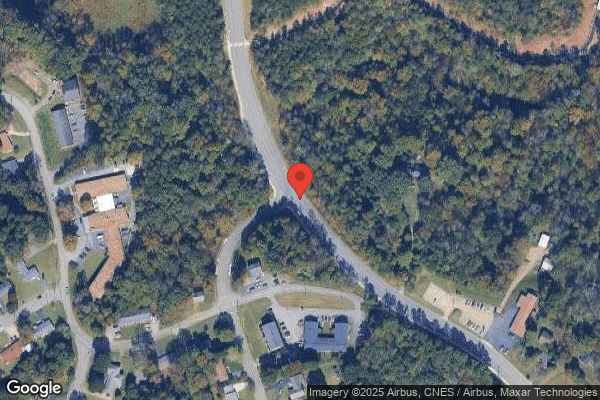
Jun 2018 27 deficiencies 1 Harm
SERIOUS (G)

Actual Harm - a resident was hurt due to facility failures

Accident Prevention (Tag F0689)

A resident was harmed · This affected 1 resident

**NOTE- TERMS IN BRACKETS HAVE BEEN EDITED TO PROTECT CONFIDENTIALITY** Based on, clinical record review, staff interview, family interview, and over the course of a complaint investigation, the facil...

Read full inspector narrative →
**NOTE- TERMS IN BRACKETS HAVE BEEN EDITED TO PROTECT CONFIDENTIALITY** Based on, clinical record review, staff interview, family interview, and over the course of a complaint investigation, the facility staff failed to ensure that 3 of 45 Residents in the survey sample received adequate supervision and assistance to prevent accidents, Resident # 85, Resident # 82, and Resident # 101. The findings included: The facility staff failed to transfer Resident # 85 using the Hoyer Lift as determined necessary by the comprehensive plan of care, during a transfer from the wheelchair to the bed, resulting in the resident sustaining a 14 inch laceration to the lateral left leg which required that she be transferred to the emergency room where she received sutures, a Penrose drain, and required antibiotic therapy. A facility reported incident was sent into the Office of Licensure and Certification on 11/9/17. The Office of Licensure and Certification converted this facility reported incident into a complaint, which was investigated during an unannounced Medicare/Medicaid recertification survey that took place on site at the facility on 5/29/18 through 6/4/18. Resident # 85 was originally admitted to the facility on [DATE] with a readmission date of 5/31/11. Diagnoses included but were not limited to: hypothyroidism, heart failure, hypertension, and chronic pain. The clinical record for Resident # 85 was reviewed on 5/31/18 at 9:35 am. The most recent MDS (minimum data set) assessment was a quarterly assessment with an ARD (assessment reference date) of 5/2/18. Section C assesses cognitive patterns. In section C1000, the facility staff coded that Resident # 85's cognitive status as severely impaired. Section G assesses functional status. In Section G0110, the facility staff documented that Resident # 85 totally dependent requiring assistance of 2 or more persons for transfers. The current plan of care for Resident #85 was reviewed and revised on 5/9/18. The focus area for At risk for falls related to: Use of medication, assistance with mobility, has interventions that included but were not limited to Transfer using the Hoyer lift with staff assistance. On 5/31/18 at 9:42 am, the surveyor observed a progress note in the clinical record written on 11/4/17 at 2:57 pm. The progress note stated, This nurse along with coworker was sitting at the nurses station and heard someone calling out for the nurse. Upon going down the hall observed patients left lower extremity bleeding with large approx. 10x10 cm (centimeter) gash. Skin flap was intact and adipose tissue exposed. Recovered gash with skin flap, applied pressure, contacted 911 for transport to ED (emergency department) elevated patient leg while applying pressure. Resident transported to ED via ambulance at 1425 (2:25 pm), resident RP (responsible party) notified at 1432 (2:32 pm) of incident and that patient was at ED. Will contact ED for update on the resident. On 5/31/18 at 9:46 am, the surveyor observed a progress note in the clinical record written on 11/4/17 at 5:57 pm. The progress note stated Returned from ER (emergency room) with orders to not get patient up to leave in bed, left leg wrapped in Coban with Penrose drain in place, return to ER on Monday to remove drainage bag, and return in 2 weeks for suture removal, 1 gram vancomycin given in hospital, started on Doxycycline 100 mg (milligram) BID (twice daily) for 10 days. On 5/31/18 10:20 am, the surveyor spoke with the DON (director of nursing) about Resident # 85 sustaining an injury to her left leg on 11/4/17. The DON stated to the surveyor that the CNA (certified nursing assistant) in this situation did not use the lift and transferred the resident improperly. On 5/31/18 11:25 am, the surveyor interviewed LPN # 3(licensed practical nurse) in the presence of the survey team. The surveyor asked LPN # 3 what happened during the incident on 11/4/17 in which Resident # 85 sustained an injury to her left leg. LPN # 3 stated that she heard CNA calling for help. LPN # 3 and another nurse rushed down there and saw the extent of the wound. LPN # 3 stated that she put the skin back and applied pressure. The surveyor asked LPN # 3 to describe the wound to Resident # 85's left leg. LPN #3 stated that the wound was Very long and deep and I knew it needed medical attention that I couldn't give. LPN # # stated that she contacted the physician and got Resident # 85 sent to the ER. LPN # 3 stated that she educated the CNA because she transferred the resident improperly. LPN # 3 stated that the CNA was using a stand and pivot technique when transferring Resident # 85 and stated that Resident # 85 was assisting with standing during the transfer and then Resident # 85 stated My leg, my leg, and the CNA looked down and saw the blood and called for the nurses. On 5/31/18 at 11:55 am, the surveyor interviewed CNA # 1 in the presence of the survey team. The surveyor asked CNA # 1 to tell what happened on 11/4/17 when Resident # 85 sustained an injury to her left leg. CNA #1 stated That day I was in a hurry because I was behind. I usually use the stand up and the lift wasn't available. I think someone else was using it. I transferred her using stand and pivot. CNA # 1 stated that Resident # 85 stood and did fine and when I sat her on the bed she said oh my leg I looked down and saw the blood. CNA # 1 stated that she put Resident # 85's legs on the bed and called for the nurse. CNA # 1 stated, I am assuming that she hit it on the bed rail that was on the bed at the time. CNA # 1 stated that she had worked with Resident # 85 before and was familiar with her plan of care and knew that she was supposed to use the lift. CNA # 1 stated again that she was behind and this is the reason she transferred incorrectly. CNA # 1 stated that she was placed on suspension and when she returned she was educated on the use of the lift with the residents. On 5/31/18 at 1:43 pm, the surveyor reviewed the MDS assessment that was completed for Resident # 85 prior to the incident on 11/4/17. The MDS assessment was a quarterly assessment with an ARD of 10/4/17. In Section G 0110, the facility staff documented that Resident # 85 was totally dependent with transfers requiring the assistance of two or more persons. On 5/31/18, the administrative staff was made aware of the findings as stated above. No further information was provided to the survey team prior to the exit conference on 6/4/18. *** This is a complaint deficiency*** 2. The facility staff failed to maintain an accident free environment for Resident #82 in regards to a fall. Resident #82 was readmitted to the facility on [DATE] with the following diagnoses of, but not limited to high blood pressure, UTI, Parkinson's disease, anxiety disorder, depression, Psychotic Disorder and Schizophrenia. On the annual MDS (Minimum Data Set) with an ARD (Assessment Reference Date) of 2/1/18, the resident was coded as having a BIMS (Brief Interview for Mental Status) score of 13 out of a possible score of 15. Resident #82 was also coded as being totally dependent on 2 or more staff members for bed mobility, transfer and bathing. Then being totally dependent on 1 staff member for dressing and personal hygiene. The surveyor performed a review on Resident #82's clinical record on 5/31 and 6/1/18. It was noted that the following documentation was made in the nurses' notes dated and timed for 3/9/18 at 1607 (4:07 pm): Called to room by CNA. Upon entering room resident lying in floor on back, blood noted to head and floor. Approximately 2 in (inch) laceration noted to left eyebrow. Resident assessed. Pressure applied to laceration for approx. (approximately) 15 mins with bleeding controlled. Resident was not moved d/t (due to) fall with head injury .Resident stated he was trying to hold on but is not used to not having side rails and could not hold on .MD (medical doctor) notified new order to send to ER for evaluation . Then on 3/9/18 at 2334 (11:34 pm) the nurses' notes read in part .Resident returned to facility @ 9 pm via stretcher transported by EMS accompanied by father .Laceration to left eye with 6 stitches above eyebrow. L (left) eye swollen and purple. Sm (small) bump on right side of forehead. Abrasion to right knee. L (left) knee cap swollen and purple. Ice pack applied .Father very verbally upset that rails were removed from bed and demanded that they be put back .Supervisor talked to father about new policy concerning rails. Father stated he would be talking to Administration . The surveyor reviewed the MDS with ARD of 2/1/18, in which the resident was coded as being totally dependent on 2 or more staff members for bed mobility, transfer and bathing. The comprehensive care plan was also reviewed by the surveyor. Under the Focus section of the care plan it read in part .Mobility impairment . with the following interventions listed on the care plan: Assist to turn and reposition frequently. Assistive device: w/c (wheelchair) Call bell within reach Encourage choices with care Inspect skin with care. Report reddened areas, rashes bruising or open areas to charge nurse Nail care PRN (as needed) -refer to the Podiatrist PRN. Observe and report changes in physical functioning ability Observe and report changes in ROM (range of motion) ability Praise effort at participation Provide all needed assistance w/ADL's (activities of daily living) & mobility. Provide all needed assistance w/toileting-provide incontinence care PRN. Resident to have left hand orthotic placed in AM, removed at night, and worn no more than 12 hours per order. Therapy per order. The surveyor interviewed the director of nursing (DON) on 6/1/18 at 8:50 am in the conference room. The surveyor asked how the resident obtained a laceration above his left eyebrow on 3/9/18. The DON stated, He got the laceration by sliding off the edge of the bed when the CNA was changing him. The doctor was called and he told us to send the resident to the ER for evaluation. The surveyor asked the DON if the side rails were present on the bed at the time of the accident. The DON stated, No, they were not. The surveyor asked the DON what was the date that the side rails were removed from the resident's bed. The DON stated, I don't know the exact date but I know we looked at the most ambulatory residents first and removed those first and then we worked our way through the rest of the residents. I know we began this around the 29th of January and ended taking the side rails off the beds the middle of March. The surveyor interviewed CNA #2 at 9:05 am in the conference room. The surveyor asked CNA #2 to tell the events leading up to and surrounding _______ (name of resident) fall from his bed on 3/9/18. CNA #2 stated, I was changing him and used the draw sheet to turn him towards the window which was away from the side of the bed that I was standing on. He began to start falling and I could see him grabbing at the sheet but he fell anyways. The surveyor asked CNA #2 if the side rails were on or off the bed at the time of this fall. CNA #2 stated, I don't remember when the side rails were taken off but they were not on there when he fell out of the bed. The surveyor asked CNA #2 how many staff members were needed to turn this resident and how would you know about this information to care for the resident. CNA #2 stated, In the past he could use the side rails to hold on if he felt like he was falling. We did only use 1 aide to turn him but since the accident we are required to have 2. There is a [NAME] on each unit that tells you how many aides are needed to do certain things with the resident and then we also get a report from the charge nurse. This surveyor and the team leader for the survey went into Resident #82's room at 9:25 am to interview the resident about the above documented fall on 3/9/18. The surveyors spoke to the resident but the resident was attempting to speak but the surveyors were unable to understand what he was saying. The father was sitting at the bedside of the resident and this surveyor asked if he could remember what the staff told him about the fall that occurred on 3/9/18. The father stated, they took his side rails off the bed that morning and by that afternoon, the aide was in here changing him and he slid off the bed, hit his head on the table over there and had to get 6 stitches above his left eye. I don't understand why they took the side rails off the bed. The surveyor asked what exactly was he told regarding the removal of the side rails from the bed. The father stated, They said it was against state law to have side rails on the bed. The surveyor again interviewed the DON at 11:05 am in the conference room. The surveyor requested a copy of the bed rail assessments that were performed prior to the removal of the side rails from the bed. The DON stated, I don't think that we have an assessment immediately prior to the removal of the side rails but I could be wrong. I have only been the DON here since about March and this was started prior to me accepting this position. At 1:38 pm, the surveyor interviewed LPN #2 by phone and asked if she could remember _____ (name of resident) falling off the side of the bed on 3/9/18. LPN #2 stated, The CNA called me to come into the resident's room and told me that she was changing him and he rolled off the side of the bed. I know she told me that she had been standing on the right side of the bed and turned him towards the window and that's when he fell. The surveyor asked if she could recall if there were side rails present on the bed at the time of the fall and she replied, No. The surveyor asked how many aides are needed to turn the resident in bed. LPN #2 stated, At that time we only used 1 aide but now after the fall we are required to have 2 staff in there so this does not happen again. The surveyor notified the administrative team on 6/4/18 at 4 pm of the above documented findings. The surveyor asked the administrative team if there was any other information that they would like for the survey team to consider in regards to the fall. The administrator stated, I believe you have everything that we could give you at this point. No further information was provided to the surveyor prior to the exit conference on 6/4/18. 3. The facility staff failed to maintain a hazard free environment for Resident #101 in regards to the bedside table. Resident #101 was admitted to the facility on [DATE] with the following diagnoses of, but not limited to anemia, coronary artery disease, heart failure, high blood pressure, Peripheral Vascular Disease, End Stage Renal Disease, diabetes and depression. On the MDS (Minimum Data Set) with an ARD (Assessment Reference Date) of 3/26/18, the resident was coded as having a BIMS (Brief Interview for Mental Status) score of 15 out of a possible score of 15. Resident # 101 was also coded as requiring extensive assistance of 1 staff member for dressing, personal hygiene and being totally dependent on 2 staff members for bathing. On 5/30/18 at 3:30 pm, the surveyor went into Resident #101's room. During the resident interview, the surveyor observed the bedside table had worn edges that had sharp edge. The resident stated, It will cut you if you are not watching. The surveyor notified LPN #2 at 3:50 pm of the above documented findings concerning the sharp edges that were present on the bedside table. PN #2 and the surveyor retuned to the resident's room and stated, I'll go and get another one. That is worn out and the edges are sharp and you could get a splinter because the wood is showing. The nurse went and found another bedside table and replaced the one in the room. LPN #2 stated that she had notified the maintenance director and the nurse manager of the condition of the bedside table in the resident's room. The surveyor notified the administrative team of the above documented findings on 5/31/18 at 4 pm. No further information was provided to the surveyor prior to the exit conference on 6/4/18.
CONCERN (D)

Potential for Harm - no one hurt, but risky conditions existed

Deficiency F0557 (Tag F0557)

Could have caused harm · This affected 1 resident

**NOTE- TERMS IN BRACKETS HAVE BEEN EDITED TO PROTECT CONFIDENTIALITY** Based on observation and staff interview, the facility staff failed tomaintain dignity for 2 of 45 residents in the survey sampl...

Read full inspector narrative →
**NOTE- TERMS IN BRACKETS HAVE BEEN EDITED TO PROTECT CONFIDENTIALITY** Based on observation and staff interview, the facility staff failed tomaintain dignity for 2 of 45 residents in the survey sample (Residents #61 and #13). The findings included: 1. The facility staff failed to provide dignity during personal care for Resident #61. Resident #61 was readmitted to the facility on [DATE] with the following diagnoses of, but not limited to anemia, dementia, seizure disorder, anxiety disorder, depression, Schizophrenia and Chronic Obstructive Pulmonary Disease. On the quarterly MDS (Minimum Data Set) with an ARD (Assessment Reference Date) of 4/18/18, the resident was coded as having a BIMS (Brief Interview for Mental Status) score of 3 out of a possible score of 15. Resident #61 was also coded as being totally dependent on 2 staff members for transfers, bathing, personal care, and requiring extensive assistance of 2 staff members for bed mobility. During an observation on 6/3/18 at 7:35 pm on the Patio unit, the surveyor observed a CNA #1 (Certified Nursing Assistant) standing in the doorway of Resident #61's room. The CNA was wearing gloves at this time. The surveyor introduced herself to the CNA then the CNA went back into the resident's room. As the CNA was walking back into the room, she attempted to close the door behind her but it not close. The surveyor stood in the hallway and observed that Resident #61 was left exposed with no sheet or brief on. The CNA pulled the privacy curtain between the two beds but it only provided privacy from the head of the resident to the chest area. CNA #1 proceeded to turn the resident away from her and towards the window with the resident lying on the edge of the bed. The surveyor observed CNA #1 removing the resident's brief and exposed the resident's buttocks. On 6/4/18 at 9:00 am, the surveyor reviewed the MDS with ARD of 4/18/18, the resident was coded as being totally dependent on 2 staff members for transfers and extensive assistance of 2 staff members for bed mobility. At the time that the surveyor made the above documented observation there was only 1 CNA at the resident's bedside when turning the resident in the bed. On 6/4/18 at approximately 10 am, the surveyor notified the corporate nurse of the above documented findings. The surveyor also notified the administrator and director of nursing of the above documented observation on 6/4/18 at 4:15 pm. The administrator stated to the surveyor that that was not the way to provide care to any resident and especially if the resident was a 2 person assist. No further information was provided to the surveyor prior to the exit conference on 6/5/18. 2. The facility staff failed to care for Resident #13 in such a manner as to promote the resident's dignity. Resident #13 was readmitted to the facility on [DATE] with the following diagnoses of, but not limited to high blood pressure, anxiety disorder, depression, Manic Depression and respiratory failure. On the MDS (Minimum Data Set) with an ARD (Assessment Reference Date) of 3/6/18, resident #13 was coded as having a BIMS (Brief Interview for Mental Status) score of 6 out of a possible score of 15. On 6/3/18 at 7:40 pm, the surveyor observed that Resident #13 was in the hallway and asked the surveyor if he could be changed now. The surveyor verbalized to the resident that she would find a staff member that could help with this request. As the resident turned the wheelchair that he was in, the surveyor noted a brief hanging on the back of the wheelchair. The surveyor accompanied the resident back to his room. The surveyor asked the resident if he had any concerns with a brief hanging from the back of the wheelchair when he was in the hallway. The resident did not understand what the surveyor was saying so the surveyor pointed to the brief he was holding and asked him if it bothered him to have this hanging from the back of his wheelchair. Resident #13 stated, I don't want it back there. As the resident was saying this to the surveyor, CNA (Certified Nursing Assistant) #1 came into the room and stated to the resident, Mr. _____ (name of resident) why did you put that brief on the back of your wheelchair. The resident became very upset and almost in a screaming voice, I didn't put that back there. I don't want it there. CNA #1 removed the brief from the back of the wheelchair and discarded it in the trashcan. The surveyor notified the corporate nurse of the above document observation on 6/4/18 at approximately 10 am in the conference room. The surveyor notified the administrator and director of nursing of the above documented observation at 4:15 pm in the conference room. The administrator stated, I will take care of this with the CNA that was caring for this resident last night. This is not the way we want our residents to be cared for. No further information was provided to the surveyor prior to the exit conference on 6/4/18.
CONCERN (D)

Potential for Harm - no one hurt, but risky conditions existed

Deficiency F0559 (Tag F0559)

Could have caused harm · This affected 1 resident

Based on Resident interview, staff interview, and clinical record review, the facility staff failed to provide notice when the Resident received a new roommate. The findings included: The facility fa...

Read full inspector narrative →
Based on Resident interview, staff interview, and clinical record review, the facility staff failed to provide notice when the Resident received a new roommate. The findings included: The facility failed to provide the Resident with any notice written or verbal when the Resident received a new roommate. The record review revealed that Resident #26 had been admitted to the facility 09/28/15. Diagnoses included, but were not limited to, peripheral vascular disease, asthma, chronic kidney disease, and diabetes. Section C (cognitive patterns) of the Residents significant change in status MDS (minimum data set) assessment with an ARD (assessment reference date) of 03/14/18 included a BIMS (brief interview for mental status) summary score of 15. On 05/30/18 at approximately 5:00 p.m., the Resident stopped one of the surveyors in the hallway to express some concerns she had. One of these concerns was related to receiving a new roommate without any notice. On 05/30/18 at approximately 5:40 p.m., during an interview with the admissions director, the admissions director verbalized to the surveyor that she did not provide any kind of notice prior to the Resident receiving a new roommate. When asked when the roommate arrived she stated today about an hour ago. On 5/30/18 at approximately 5:55 p.m., during an interview with the surveyor the Resident stated she did not know she was getting a roommate and only found out when she went into her room and saw them in the bed. On 5/30/18 at approximately 6:30 p.m., the administrator and corporate nurse were notified of the issue regarding no notification of the Resident receiving a new roommate. On 5/31/18 at approximately 8:08 a.m., the surveyor spoke with Resident #26 about her evening. Resident #26 stated the roommate had been moved out of her room and she had been told they had put the Resident in the wrong room. No further information regarding this issue was provided to the survey team prior to the exit conference.
CONCERN (D)

Potential for Harm - no one hurt, but risky conditions existed

Deficiency F0561 (Tag F0561)

Could have caused harm · This affected 1 resident

**NOTE- TERMS IN BRACKETS HAVE BEEN EDITED TO PROTECT CONFIDENTIALITY** Based on observation, resident and staff interview and clinical record review it was determined the facility staff failed to all...

Read full inspector narrative →
**NOTE- TERMS IN BRACKETS HAVE BEEN EDITED TO PROTECT CONFIDENTIALITY** Based on observation, resident and staff interview and clinical record review it was determined the facility staff failed to allow 1 of 45 residents the choice of eating in her room (Resident #77). Findings: Facility staff failed to allow Resident #77 to eat in her room when she chose to do so. The resident's clinical record was reviewed on 5/30/18 at 3:00 PM. Resident #77 was admitted to the facility on [DATE]. Her active diagnoses included hypertension, anemia, peripheral vascular disease, diabetes, vascular dementia, anxiety, depression, chronic obstructive pulmonary disease, and weight loss. The latest MDS (minimum data set) assessment dated , 4/25/18, coded the resident with unimpaired communication ability, and intact cognitive ability. She was coded as not having any issues with her memory. The MDS documented the resident as feeling down, depressed or hopeless, feeling tired and felling bad about herself. The resident was documented as not having any issues with psychosis or delusions. The latest CCP (comprehensive care plan) reviewed and revised on 5/4/18 documented the resident as nervous and anxious at times. These concerns were addressed with interventions that included, If I don't like what I am doing, let me do something else and If I'm upset, please redirect the conversation or task. The staff were instructed to avoid things that made the resident more anxious. The physician's orders signed and dated 1/8/18 documented a prescription for Depakote Sprinkles 125 mg two times daily for behavior. Lexapro 10 mg every day was ordered on 9/2/16. A review of the MAR (medication administration record) documented the medications were provided as ordered. On 5/30/18 at 12:15 PM Resident #77 was in the dining room and seated at the table with peers. When the food trays start coming out of the kitchen a staff member grabbed the resident's wheelchair and wheeled her back to south unit and dropped her off at a table with two CNAs (CNA VI & II) on either side. The surveyor asked why the staff had moved her out of the dining room and CNAs VI & II both said she eats second lunch and just likes to sit in the dining room and watch everybody else eat. They both started laughing at this point and saying why would the resident want to do that? Resident #77 looked at surveyor and said she wanted to eat her lunch in her room. Before the surveyor could reply, the CNAs laughed CNA VI stated, You don't want to go to your room--you wanna stay out here with us. Both CNAs were laughing and talking over top of her everytime she tried to respond. The resident dipped head looking at the floor, pursed her lips and looked defeated. The surveyor asked the resident again if she wanted to eat lunch in room and resident looked up and said, Tearfully, yes--I want to eat in my room. The two CNAs continued to chortle and laugh and CNA VI stated, I'll see if your nurse will let you eat in your room--but you're supposed to go to dining room. The surveyor asked the staff members if the resident could feed herself. They said, yes. The surveyor then asked the CNAs why the resident needed the nurse's permission to eat in her room. They replied, She don't. When second lunch came the resident was observed to be back in the dining room and left to eat there--unassisted. At 1:45 PM resident observed to be laying in bed. She was asked how it made her feel when we had the meeting at the unit table. She stated, I didn't like it much--you could see I just got quiet and wouldn't speak to them anymore. Resident #77 said the CNAs hurt her feelings when they laughed at her. On 5/30/18 at 4:00 PM the DON was informed of the findings. She said if the resident wanted to eat in her room, she should be allowed to.
CONCERN (D)

Potential for Harm - no one hurt, but risky conditions existed

Deficiency F0583 (Tag F0583)

Could have caused harm · This affected 1 resident

Based on observation and staff interview, the facility staff failed to provide confidentiality of a resident's personal and medical records on 1 out 3 units in the nursing facility (Patio Unit). The f...

Read full inspector narrative →
Based on observation and staff interview, the facility staff failed to provide confidentiality of a resident's personal and medical records on 1 out 3 units in the nursing facility (Patio Unit). The findings included: The facility staff failed to provide confidentiality of a resident's medical record in regards to a clip board lying on top of the nursing station in plain sight of anyone that walks up to this area which contained medical information on 20 residents. On 6/3/18 at 8:05 pm, the surveyor walked up to the nurses' station and observed a clipboard in plain sight on the top, which contained medical information on 20 residents that resided on the Patio Unit. At the top of the page, the paper was titled MDS (Minimum Data Set) Scoop Sheet Date: 6/1/18). The surveyor requested LPN (Licensed Practical Nurse) #1 to come to the nurses' station. LPN #1 looked at the top of the desk at the nurses' station and stated, That should not be laying up here. I don't know who put it up there but I know that we keep it down here (pointing to the lower section of the desk). The surveyor requested a copy of this sheet from LPN #1. LPN #1 gave a copy to the surveyor and then placed the sheet on the clipboard but added a cover sheet to the front. The surveyor notified the administrative team of the above documented findings on 6/4/18 at 4:15 pm. No further information was provided to the surveyor prior to the exit conference on 6/4/18.
CONCERN (D)

Potential for Harm - no one hurt, but risky conditions existed

Assessment Accuracy (Tag F0641)

Could have caused harm · This affected 1 resident

**NOTE- TERMS IN BRACKETS HAVE BEEN EDITED TO PROTECT CONFIDENTIALITY** Based on staff interview and clinical record review, the facility staff failed to maintain an accurate MDS (Minimum Data Set) as...

Read full inspector narrative →
**NOTE- TERMS IN BRACKETS HAVE BEEN EDITED TO PROTECT CONFIDENTIALITY** Based on staff interview and clinical record review, the facility staff failed to maintain an accurate MDS (Minimum Data Set) assessment on 1 of 45 residents in the survey sample (Resident #10) The findings included: The facility staff failed to complete an accurate MDS in regards to Resident #10's flu vaccine documentation. Resident #10 was admitted to the facility on [DATE] with the following diagnoses of, but not limited to anemia, stroke, seizure disorder, anxiety disorder, depression and Psychotic Disorder. On the annual MDS with an ARD (Assessment Reference Date) of 3/2/18, the resident was coded as having short term and long-term memory problems. Resident #10 was also coded as requiring extensive assistance of 2 staff members for dressing, extensive assistance of 1 staff member for personal hygiene and being totally dependent on 2 staff members for bathing. The surveyor performed a review of Resident #10's clinical record on 5/30 and 5/31/18. During this review, the surveyor noted on the MDS with ARD of 10/13/17, under Section O 0250, the flu vaccine was documented as being given on 9/14/16. On the next MDS with ARD of 1/3/18 under Section O 0250, the flu vaccine was documented as being given on 10/4/17. On 5/31/18 at 3:20 pm, the surveyor notified the MDS nurse #1 of the above documented findings for Resident #10 in regards to the documentation of when the flu vaccine was given. The MDS nurse #1 stated, Let me go back and look at this and then I will be back to talk to you. At 3:45 pm, MDS nurse #1 returned to the conference room and provided the surveyor a copy of the MDS with ARD of 10/13/17 that she had made a correction under Section O 0250. The MDS nurse #1 stated, I just overlooked the correct date when I was coding the MDS. But you have a copy now of the modification that I made to correct this problem. The surveyor notified the administrative team of the above documented findings on 5/31/18 at 4:00 pm in the conference room. No further information was provided to the surveyor prior to the exit conference on 6/4/18.
CONCERN (D)

Potential for Harm - no one hurt, but risky conditions existed

Comprehensive Care Plan (Tag F0656)

Could have caused harm · This affected 1 resident

**NOTE- TERMS IN BRACKETS HAVE BEEN EDITED TO PROTECT CONFIDENTIALITY** Based on staff interview and clinical record review it was determined that the facility staff failed to develop a Comprehensive ...

Read full inspector narrative →
**NOTE- TERMS IN BRACKETS HAVE BEEN EDITED TO PROTECT CONFIDENTIALITY** Based on staff interview and clinical record review it was determined that the facility staff failed to develop a Comprehensive Care Plan for 1 of 45 Residents in the sample survey, Resident #92. For Resident #92 the facility staff failed to develop a Comprehensive Care Plan (CCP) to include a Care plan for Pressure Ulcers and a Discharge to Community Plan as identified on an admission Minimum Data Set (MDS) assessment with an Assessment Reference Date (ARD) of 4/13/18. The findings included: Resident #92 was an [AGE] year old male who was admitted on [DATE]. Admitting diagnoses included, but were not limited to: dehydration, hypotension, syncope with collapse, psychosis, fracture of the left femur, fractured humerus and depression. The most current Minimum Data Set (MDS) assessment located in the clinical record was a Medicare 30 Day MDS assessment with an Assessment Reference Date (ARD) of 5/5/18. The facility staff coded that Resident #92 had a Cognitive Summery Score of 3. The facility staff also coded that Resident #92 required extensive assistance (3/2) with Activities of Daily Living (ADL's). On May 30, 2018 at 9:30 a.m., the surveyor reviewed Resident #92 clinical record. Review of the clinical record produced an admission MDS assessment with an ARD of 4/13/18. The facility staff coded on the admission MDS that Resident #92 had a Cognitive Summary Score of 3. The facility staff also coded that Resident #92 required extensive assistance (3/2) with Activities of Daily Living (ADL's). The facility staff also documented in Section M. Skin Conditions that Resident #92 had a skin tear, used a bed and wheelchair pressure reducing surface and had the application of ointments/medications to areas other than the feet. In Section Q. Participation in Assessment and Goal Setting 0400. Discharge Plan the facility staff documented that there was an Active Discharge Plan to Return to the Community. In Section V. Care Area Assessments (CAA's) Resident #92 triggered for Pressure Ulcers and Return to Community Referral. The facility staff documented that a Care Plan (CP) would be developed for the triggered areas of Pressure Ulcers and Return to Community. Continued review of the clinical record produced the Comprehensive Care Plan (CCP) that was initiated in 4/8/18. Review of the CCP failed to produce a CP for Pressure Ulcers or a Discharge to the Community Plan. On May 30, 2018 at 9:45 a.m., the surveyor requested to speak to the MDS Nurse. Within a few moments the MDS Nurse, who was a Registered Nurse (RN), approached the surveyor. The surveyor reviewed the admission MDS with the ARD of 4/13/18 with the MDS Nurse. The surveyor specifically pointed out that Resident #92 triggered for Pressure Ulcers and a Discharge to the Community. The surveyor pointed out that the facility staff had documented that a CCP would be developed for Pressure Ulcers and a Discharge to Community. The surveyor then reviewed the CCP with the MDS Nurse. The surveyor pointed out that the CCP did not include a CP for Pressure Ulcers or a Discharge to Community Plan. The MDS Nurse stated that she did not know why a CCP had not been developed to include a CP for Pressure Ulcers and a Discharge to Community Plan. On May 31, 2018 at 2:50 p.m., the survey team met with the Administrator (ADM), Director of Nursing (DON) Corporate Compliance Nurse (CCN). The surveyor notified the Administrative Team (AT) that the facility staff failed to develop a CCP to include Pressure Ulcers and a Discharge Plan to Return to Community as identified on an admission MDS with the ARD of 4/13/18. No additional information was provided prior to exiting the facility as to why the facility staff failed to develop a CCP for Resident #92 to include a CP for Pressure Ulcers and a Discharge to Community Plan.
CONCERN (D)

Potential for Harm - no one hurt, but risky conditions existed

Incontinence Care (Tag F0690)

Could have caused harm · This affected 1 resident

Based on observation, staff interview, clinical record review, and facility document review, the facility staff failed to ensure that 1 out of 45 Residents in the survey sample received appropriate tr...

Read full inspector narrative →
Based on observation, staff interview, clinical record review, and facility document review, the facility staff failed to ensure that 1 out of 45 Residents in the survey sample received appropriate treatment and services to prevent urinary tract infections, Resident # 115. The findings included: The facility staff failed to ensure that the suprapubic catheter for Resident # 115 was secured. Resident # 115 was originally admitted to the facility 4/6/99, with a readmission date of 5/29/18. Diagnoses included but were not limited to: urethral stricture, retention of urine, heart failure, vascular dementia without behavioral disturbance, and anxiety disorder. On 5/30/18 at the 9:51 am, the clinical record for Resident # 115 was reviewed. The most recent MDS (minimum data set) assessment was a significant change assessment with an ARD (assessment reference date) of 5/16/18. Section C of the MDS assesses cognitive patterns. In Section C1000, the facility staff documented that Resident # 115's Cognitive status was severely impaired. Section H of the MDS assesses bladder and bowel. In Section H0100, the facility staff documented that Resident # 115 had an indwelling catheter. The current plan of care for Resident # 115 was reviewed and revised on 5/23/18. A focus area of Alteration in elimination of bowel and bladder R/T (related to) bowel incontinence and D/T (due to) use of a supra-pubic catheter-has Dx's (diagnoses) of urethral stricture & neurogenic bladder. Interventions included but were not limited to: Anchor catheter, avoid tugging on the catheter during transfer and delivery of care. Check catheter anchor for placement Q (every) shift and change PRN (as needed). Resident # 115 has current orders that were signed by the physician on 5/2/18 that included but was not limited to Catheter leg strap check every shift for placement, dignity bag (fig leaf) over drainage bag for dignity, and Suprapubic catheter care every shift and prn. (as needed) On 5/29/18 at 3:35 pm, the surveyor observed the facility staff providing care to Resident # 115. The surveyor observed a suprapubic catheter in place just above the pelvic region of Resident # 115. The suprapubic catheter was not secured at this time. On 5/29/18 at 6:35 pm, the surveyor observed the facility staff providing care for Resident # 115. #16 FR (French) catheter with 10ml (milliliter) bulb is in place and the suprapubic catheter is not secured. On 5/30/18 at 11:05 am, the surveyor observed Resident # 115 along with the unit manager. The unit manager and surveyor observed Resident # 115 with a # 16 Fr catheter with a 10 ml bulb in place. The unit manager and the surveyor observed that the suprapubic catheter for Resident # 115 was not secured at this time. The unit manager agreed that the catheter should be secured. The facility standard of practice has documentation that includes but is not limited to: Tape the catheter to the patient's abdomen or thigh to prevent pressure on the urethra at the penoscrotal junction. On 5/31/18 at 3:50 pm, the administrative staff was made aware of the findings as stated above. No further information regarding this issue was provided to the survey team prior to the exit conference on 6/4/18.
CONCERN (D)

Potential for Harm - no one hurt, but risky conditions existed

Respiratory Care (Tag F0695)

Could have caused harm · This affected 1 resident

**NOTE- TERMS IN BRACKETS HAVE BEEN EDITED TO PROTECT CONFIDENTIALITY** Based on observation, staff interview and clinical record review, the facility failed to store a nebulizer mask in a plastic bag...

Read full inspector narrative →
**NOTE- TERMS IN BRACKETS HAVE BEEN EDITED TO PROTECT CONFIDENTIALITY** Based on observation, staff interview and clinical record review, the facility failed to store a nebulizer mask in a plastic bag when not in use and failed to clean the filter of an oxygen concentrator for 2 of 22 residents (Revisit Resident #18 and #2). The findings included: 1. The facility staff failed to store a nebulizer mask in a plastic bag when not in use for Revisit Resident #18. Revisit Resident #18 was readmitted to the facility on [DATE] with diagnoses of, but not limited to high blood pressure, diabetes, dementia, anxiety disorder, depression, Chronic Obstructive Pulmonary Disease and respiratory failure. On the quarterly MDS with an ARD (Assessment Reference Date) of 6/13/18, the resident was coded as requiring extensive assistance of 1 staff member for dressing and personal hygiene and was totally dependent on 1 staff member for bathing. Revisit Resident#18 was also coded as having a BIMS (Brief Interview for Mental Status) score of 9 out of a possible score of 15. On the initial tour of the facility on 7/24/18 at 1:42 pm, the surveyor observed the nebulizer mask sitting on the bedside table and was not stored in a plastic bag for Revisit Resident #18. At 2:45 pm, the surveyor again observed the nebulizer mask continued to be sitting on the bedside table and was not stored in a plastic bag. The surveyor asked LPN (Licensed Practical Nurse) #1 to accompany her to Revisit Resident #18's room. LPN #1 stated, That mask needs to be stored in a plastic bag instead of sitting on the table like that. I will go and get a bag to place this in. The surveyor notified the administrative team of the above findings on 7/25/18 at 5 pm in the conference room. No further information was provided to the surveyor prior to the exit conference on 7/26/18. 2. The facility staff failed to ensure Revisit Resident #2's oxygen filter was clean. The clinical record of Revisit Resident #2's was reviewed 7/24/18 and 7/25/18. Revisit Resident #2 was admitted to the facility 1/7/2013 with diagnoses that included but not limited to respiratory failure, acute upper respiratory infection, chronic pain, pneumonia, lichen sclerosus, idiopathic peripheral autonomic neuropathy, diarrhea, hyponatremia, hypokalemia, ancd acute cholecystitis. Revisit Resident #2's quarterly minimum data set (MDS) assessment with an assessment reference date (ARD) of 5/22/18 assessed the resident with a BIMS (brief interview for mental status) Summary Score of 15/15. Revisit Resident #2's current comprehensive careplan was reviewed 7/24/18 and 7/25/18. One focus area read Alteration in respiratory status due to chronic obstructive pulmonary disease, heart failure, h/o (history of) upper respiratory illness, h/o pneumonia. Interventions: Administer oxygen per physician order. Monitor oxygen saturations on room air and/or oxygen. Monitor oxygen flow rate and response. Implement infection control policies and procedures for specific disease. The surveyor observed Revisit Resident #2 during the initial tour on 7/24/18 at 1:30 p.m. Revist Resident #2 was in bed, eyes closed. Oxygen concentrator was positioned on 3 and ½ liters. The filter, located at the back of the oxygen concentrator, had an accumulation of white debris on the charcoal colored filter. The surveyor observed Revisit Resident #2 again on 7/24/18 at 4:51 p.m. The filter still had an accumulation of white debris. The surveyor observed and interviewed Revisit Resident #2 again on 7/25/18 at 11:02 a.m. The oxygen filter was observed and the white debris remained. Revisit Resident #2 stated she knew the staff changed the tubing but she didn't know about cleaning the filter. Revisit Resident #2 stated she was able to adjust the liter amount on the machine. The surveyor observed Revisit Resident #2 on 7/25/18 at 1:47 p.m. The surveyor asked licensed practical nurse #1 to look at the air filter on the back of Revisit Resident #2's oxygen concentrator. L.P.N. #2 stated the filter was dirty and proceeded to take it out, wash it, and then put the filter back in the machine. L.P.N. #1 stated the tubing was changed every week on night shift on Sunday but wasn't sure if the filters were cleaned then as well. The surveyor requested the facility policy on oxygen administration from the corporate nurse on 7/25/18 at 3:00 p.m. The July 2018 physician orders read Change/date oxygen tubing and water bottle. Clean concentrator filter by rinsing with warm water and pat dry before replacing. Every night shift every Sun (Sunday). The July 2018 medication administration record was reviewed. The above entry for cleaning the concentrator had been entered and initialed 7/8/18, 7/15/18, and 7/22/18. Initials indicated treatments had been completed. The corporate registered nurse provided the surveyor the facility guidelines for oxygen administration and a checklist on 7/25/18 at 3:58 p.m. The oxygen checklist included the resident's name, room number, physician order, pulse ox order, flow rate documented in TAR/MAR (treatment administration record/medication administration record), oxygen in use sign, filter clean, tubing dated and changed weekly, tubing bagged/stored appropriately when not in use, care plan, and [NAME]. The coproate RN pointed to the surveyor cleaning the filter was part of the oxygen checklist. No further information was provided prior to the exit on 7/26/18.
CONCERN (D)

Potential for Harm - no one hurt, but risky conditions existed

Drug Regimen Review (Tag F0756)

Could have caused harm · This affected 1 resident

**NOTE- TERMS IN BRACKETS HAVE BEEN EDITED TO PROTECT CONFIDENTIALITY** Based on staff interview and clinical record review, the facility staff failed to ensure the medical director reviewed pharmacy ...

Read full inspector narrative →
**NOTE- TERMS IN BRACKETS HAVE BEEN EDITED TO PROTECT CONFIDENTIALITY** Based on staff interview and clinical record review, the facility staff failed to ensure the medical director reviewed pharmacy recommendation for three of 45 Residents, Residents #22, #49, and #82. The findings included. 1. For Resident #22, the facility failed to provide evidence that the medical director had reviewed a pharmacy recommendation dated 02/27/18. The record review revealed that Resident #22 had been admitted to the facility 06/30/17. Diagnoses included, but were not limited to, down syndrome, cardiac arrest, anxiety disorder, dysphagia, and acute respiratory failure with hypoxia. Section B (hearing/speech/vision) of the Residents quarterly MDS (minimum data set) assessment with an ARD (assessment reference date) of 03/14/18 was coded to indicate the Residents was in a persistent vegetative state/no discernible consciousness. The clinical record included a copy of a pharmacy recommendation dated 02/27/18. The attending physician had signed this recommendation on 02/28/18. The facility was unable to provide any evidence to the surveyor that the medical director had reviewed the recommendation. On 05/30/18 at approximately 9:00 a.m., the DON (director of nursing) and nurse consultant verbalized to the surveyor that they were unaware that it had to be reviewed by the medical director. The DON stated she had reviewed the recommendation and reviewed all recommendations from the pharmacy. The administrative staff were notified of the issue regarding the pharmacy recommendation during a meeting with the survey team on 05/31/18 at approximately 2:50 p.m. No further information regarding this issue was provided to the survey team prior to the exit conference. 2. For Resident #49, the facility failed to provide evidence that the medical director had reviewed a pharmacy recommendation dated 03/19/18. The record review revealed that Resident #49 had been admitted to the facility 03/16/18. Diagnoses included, but were not limited to, essential hypertension, gastroesophageal reflux disease, anxiety disorder, and major depressive disorder. Section C (cognitive patterns) of the Residents admission MDS (minimum data set) assessment with an ARD (assessment reference date) of 03/23/18 included a BIMS (brief interview for mental status summary) score of 10 out of a possible 15 points. The clinical record included a copy of a pharmacy recommendation dated 03/19/18. The attending physician had signed this recommendation on 03/20/18. The facility was unable to provide any evidence to the surveyor that the medical director had reviewed the recommendation. On 05/30/18 at approximately 9:00 a.m., the DON (director of nursing) and nurse consultant verbalized to the surveyor that they were unaware that it had to be reviewed by the medical director. The DON stated she had reviewed the recommendation and reviewed all the pharmacy recommendations. The administrative staff were notified of the issue regarding the pharmacy recommendation during a meeting with the survey team on 05/31/18 at approximately 2:50 p.m. No further information regarding this issue was provided to the survey team prior to the exit conference. 3. The facility staff failed to ensure the director of nursing and the Medical Director signed the monthly drug regimen review 4/27/18 for Resident #82. Resident #82 was readmitted to the facility on [DATE] with the following diagnoses of, but not limited to high blood pressure, UTI, Parkinson's disease, anxiety disorder, depression, Psychotic Disorder and Schizophrenia. On the annual MDS (Minimum Data Set) with an ARD (Assessment Reference Date) of 2/1/18, the resident was coded as having a BIMS (Brief Interview for Mental Status) score of 13 out of a possible score of 15. Resident #82 was also coded as being totally dependent on 2 or more staff members for bed mobility, transfer and bathing. Then being totally dependent on 1 staff member for dressing and personal hygiene. The surveyor performed a review on Resident #82's clinical record on 5/31 and 6/1/18. During this review, the surveyor noted on the monthly drug regimen review dated 4/27/18 was not signed by the director of nursing or by the Medical Director. This monthly review was noted to have an irregularity that the pharmacist had questioned during the monthly drug regimen reviews. On 6/1/18 at 2 pm, the surveyor notified the director of nursing of the above documented findings. The director of nursing stated, I didn't know that I had to sign these along with the Medical Doctor. The surveyor notified the administrative team of the above documented findings on 6/4/18 at 4 pm in the conference room. No further information was provided to the surveyor prior to the exit conference on 6/4/18.
CONCERN (D)

Potential for Harm - no one hurt, but risky conditions existed

Medication Errors (Tag F0758)

Could have caused harm · This affected 1 resident

**NOTE- TERMS IN BRACKETS HAVE BEEN EDITED TO PROTECT CONFIDENTIALITY** Based on staff interview and clinical record review, the facility staff failed to ensure that 2 of 45 Residents in the final sur...

Read full inspector narrative →
**NOTE- TERMS IN BRACKETS HAVE BEEN EDITED TO PROTECT CONFIDENTIALITY** Based on staff interview and clinical record review, the facility staff failed to ensure that 2 of 45 Residents in the final survey sample was free from unnecessary medications, Resident # 115 and Resident # 10. The findings included: 1. The facility staff failed to identify and monitor resident specific target behaviors, identify non-pharmacological interventions, and monitor for effectiveness associated with the use of Seroquel for Resident # 115. Resident # 115 was originally admitted to the facility 4/6/99, with a readmission date of 5/29/18. Diagnoses included but were not limited to: urethral stricture, retention of urine, heart failure, vascular dementia without behavioral disturbance, and anxiety disorder. On 5/30/18 at the 9:51 am, the clinical record for Resident # 115 was reviewed. The most recent MDS (minimum data set) assessment was a significant change assessment with an ARD (assessment reference date) of 5/16/18. Section B of the MDS assesses hearing, speech, and vision. In Section B0700, Resident # 115 was assessed for the ability to express ideas and wants, consider both verbal and nonverbal expression. The facility staff documented that Resident # 115 is rarely/never understood. Section C of the MDS assesses cognitive patterns. In Section C1000, the facility staff documented that Resident # 115's Cognitive status was severely impaired. Section N of the MDS assesses medications. Section G of the MDS assesses functional status. In Section G0400, functional limitation in range of motion is assessed. The facility staff documented that Resident # 115 has bilateral impairment of the upper and lower extremities. In Section N0410, the facility staff documented that Resident # 115 received antipsychotic medications during the last 7 days since the ARD date. The current plan of care for Resident # 115 was reviewed and revised on 5/23/18. A focus area documented on the plan of care is documented as Potential for drug related complications associated with use of psychotropic medications related to: Antianxiety medication. Interventions included but were not limited to Observe for target behaviors/symptoms of increased agitation, continuous yelling, pulling on peg tube and document, and Provide non pharmaceutical interventions of repositioning, quiet environment to decrease target behaviors, anxiety, or depression. Resident # 115 has a current order for Seroquel Tablet Give 25 mg via G-Tube one time a day related to other psychotic disorder not due to a substance or known physiological condition that was initiated on 5/1/18. Upon further review of the clinical record including the medication administration record, nurse's notes, and progress notes, this surveyor could not locate monitoring of target behaviors, effectiveness of medication, side effects, or documentation of non-pharmacological interventions utilized associated with the use of Seroquel. On 5/30/18 at 11:45 am, the surveyor spoke with the unit manager about the target behaviors for Resident # 115. The surveyor asked the unit manager what target behaviors are displayed by Resident # 115. Unit manager responds, He (Resident #115) has these jerking movements. The surveyor asked unit manager if the jerking movements could be associated with the seizure disorder that Resident # 115 is also being medicated for. Unit manager stated Yes. The surveyor asked the unit manager what behaviors were being managed with the use of the Seroquel. Unit manager did not provide an answer to the surveyor. The surveyor reviewed the medication administration record along with the unit manager. The unit manager agreed that appropriate target behaviors had not been identified and that there was no monitoring for side effects or effectiveness, nor were there non-pharmacological interventions listed associated with the use of Seroquel for Resident # 115. On 6/4/18 at 10:32 am, RN (registered nurse) # 1 MDS coordinator reviewed the plan of care along with the surveyor to identify target behaviors specific to Resident # 115 associated with the use of Seroquel. RN # 1 did not locate resident specific target behaviors and stated, I will fix that. On 6/4/18 at 4:15 pm, the administrative team was made aware of the findings as stated above. No further information regarding this issue was provided to the survey team prior to the exit conference on 6/4/18. 2. The facility staff failed to discontinue a prn (as needed) order for Ativan after 14 days for Resident #10. According to the Physician's Desk Reference, Ativan is a sedative/hypnotic medication used for the treatment of anxiety. Resident #10 was admitted to the facility on [DATE] with the following diagnoses of, but not limited to anemia, stroke, seizure disorder, anxiety disorder, depression and Psychotic Disorder. On the annual MDS with an ARD (Assessment Reference Date) of 3/2/18, the resident was coded as having short term and long-term memory problems. Resident #10 was also coded as requiring extensive assistance of 2 staff members for dressing, extensive assistance of 1 staff member for personal hygiene and being totally dependent on 2 staff members for bathing. The surveyor performed a review of Resident #10's clinical record on 5/30 and 5/31/18. During this review, the surveyor noted a physician order for Ativan 1 mg (milligram) Give 2 tablet by mouth every 8 hours as needed for anxiety. This order was dated 2/8/18. The surveyor notified the administrative team of the above documented findings on 5/31/18 at 4 pm. The director of nursing provided a telephone order dated for 5/31/18 at 1854 (6:54 pm) which stated, Contacted Dr. ____ (name of doctor) at this time. New order noted to discontinue Ativan PRN . No further information was provided to the surveyor prior to the exit conference on 6/4/18.
CONCERN (D)

Potential for Harm - no one hurt, but risky conditions existed

Unnecessary Medications (Tag F0759)

Could have caused harm · This affected 1 resident

**NOTE- TERMS IN BRACKETS HAVE BEEN EDITED TO PROTECT CONFIDENTIALITY** Based on clinical record review and facility document review, and during a medication pass and pour observation, the facility fa...

Read full inspector narrative →
**NOTE- TERMS IN BRACKETS HAVE BEEN EDITED TO PROTECT CONFIDENTIALITY** Based on clinical record review and facility document review, and during a medication pass and pour observation, the facility failed to ensure a medication error rate of less than 5%. There were 2 errors in 31 opportunities for an error rate of 6.45%. These medication errors affected Resident # 60. The findings included The facility staff failed to instruct Resident # 60 to clear her nasal passages prior to administering Flonase and failed to provide water and instruct Resident #60 to rinse her mouth after using a Combivent Respimat inhaler. Resident # 60 was admitted to the facility on [DATE]. Diagnoses included but were not limited to: chronic obstructive pulmonary disease, dry eye syndrome, chronic pain, and hyperlipidemia. The most recent MDS (minimum data set) for Resident # 60 was a quarterly assessment with an ARD (assessment reference date) of 4/17/18. Section C assesses cognitive patterns. In Section C0500, the facility staff documented that Resident # 60 has a BIMS (brief interview for mental status) score of 15/15 which indicated that Resident # 60 is cognitively intact. The physician signed the current orders for Resident # 60 on 5/28/18. Orders included but were not limited to: Combivent Respimat Aerosol Solution 20-100 MCG/ACT 1 inhalation orally four times a day related to acute upper respiratory infection, and Flonase Suspension 50 MCG/ACT 1 spray in both nostrils one time a day for sinus relief. On 5/30/18 at 8:40 am, the surveyor observed a medication pass with LPN (licensed practical nurse) #2. During the observation LPN # 2 administered the Combivent Respimat inhaler to Resident # 60. LPN # 2 did not provide Resident # 60 with water or instructions to rinse her mouth after use. LPN # 2 then proceeded to administer Flonase Suspension to Resident # 60. LPN # 2 did not instruct Resident # 60 to clear her nasal passages prior to administering the Flonase suspension. The manufacturer's instructions for Flonase contains information that included but is not limited to: For best results, it's important to get a full dose. Here's how, in five easy steps. 1. Shake- Gently shake spray bottle. Remove translucent cap. 2. Prime- Aim away from face. Pump until mist appears. 3. Blow- Blow nose gently to clear nostrils. 4. Aim- Close one nostril and put tip of spray nozzle in other nostril. 5. Breathe and Spray- While sniffing gently, press down on spray nozzle once or twice (according to dosing instructions). You'll feel a light mist in your nose. Breathe out through your mouth. According to [NAME] Drug Guide for Nurses Combivent is a combination of ipratropium bromide and albuterol. Patient and Family Teaching for these medications has documentation that includes but is not limited to Advise patient to rinse mouth with water after each inhalation dose to minimize dry mouth. Deglin, J.H., Vallerand, A. H., & Sanoski, C.A. (2011). [NAME]'s drug guide for nurses (12th ed.). Philadelphia PA: F.A. [NAME]. On 5/31/18 at 3:40 pm, the administrative staff was made aware of the findings as stated above. No further information regarding this issue was provided to the survey team prior to the exit conference on 6/4/18.
CONCERN (D)

Potential for Harm - no one hurt, but risky conditions existed

Deficiency F0773 (Tag F0773)

Could have caused harm · This affected 1 resident

**NOTE- TERMS IN BRACKETS HAVE BEEN EDITED TO PROTECT CONFIDENTIALITY** Based on staff interview and clinical record review, the facility staff failed to obtain physician ordered laboratory tests for ...

Read full inspector narrative →
**NOTE- TERMS IN BRACKETS HAVE BEEN EDITED TO PROTECT CONFIDENTIALITY** Based on staff interview and clinical record review, the facility staff failed to obtain physician ordered laboratory tests for 1 of 22 residents (Revisit Resident #10). The findings included: The facility staff failed to obtain a CBC (complete blood count) ordered to be done 7/12/18 and failed to obtain a BMP (basic metabolic panel) ordered on 7/11/18 to be done on the next laboratory day. The surveyor reviewed Revisit Resident #10's clinical record on 7/24/18 and 7/25/18. Revisit Resident #10 was admitted to the facility 9/28/15 and readmitted [DATE] with diagnoses that included but not limited to peripheral vascular disease, hypocalcemia, insomnia, hepatic failure, Vitamin D deficiency, chronic diastolic heart failure, pressure ulcer left heel, exotropia, type 2 diabetes mellitus, chronic respiratory failure with hypoxia, and chronic kidney disease. Revisit Resident #10's significant change is minimum data set (MDS) assessment with an assessment reference date (ARD) of 6/13/18 assessed the resident with a BIMS (brief interview for mental status) Summary Score of 15/15. The clinical record was reviewed. Revisit Resident #10 had an order dated 7/11/18 that read Lactulose 30 grams po (by mouth) qd (every day) and BMP (basic metaboloc panel)/ammonia level next lab day. The laboratory section of the clinical record was reviewed. The surveyor located the results of a CMP (comprehensive metabolic panel)-not a BMP as ordered. The surveyor informed the corporate registered nurse of the concern on 7/25/18 at 3:30 p.m. A second physician order read Renal panel and CBC (complete blood count) 7/12/18. The surveyor reviewed the laboratory section of the clinical record but was unable to locate the results. The surveyor informed the corporate registered nurse of the concern on 7/25/18 at 3:30 p.m. The corporate registered nurse informed the surveyor on 7/26/18 at 3:34 p.m. that the CBC was never obtained due to transcription error and a CMP was completed instead which contained the BMP. The medical doctor was informed and gave no new orders. No further information was provided prior to the exit conference on 7/26/18.
CONCERN (D)

Potential for Harm - no one hurt, but risky conditions existed

QAPI Program (Tag F0867)

Could have caused harm · This affected 1 resident

Based on staff interview, observations and clinical record review, the facility staff failed to ensure the quality assurance program meet the needs of the facility as evidenced by repeated deficiencie...

Read full inspector narrative →
Based on staff interview, observations and clinical record review, the facility staff failed to ensure the quality assurance program meet the needs of the facility as evidenced by repeated deficiencies in the areas of resident rights, comprehensive resident centered care plan, quality of care, pharmacy services, administration and physical environment and failed to monitor the effects of implemented changes and make needed revisions to the action plans as needed for the prevention of further deficiencies, as evidenced by new findings (deficient practice) in the area of quality of care, laboratory, radiological and other diagnostic services and quality assurance and performance improvement. The findings included: On 7/24/18 at 1:00 pm, the survey team entered the facility for an abbreviated (revisit #1) survey. During the course of the survey process, the surveyors identified deficient practice in the areas of resident rights, comprehensive resident centered care plan, quality of care, pharmacy services, administration and physical environment that were identified on the annual/complaint survey completed 5/31-6/4/18 and identified new findings of deficient practice in the area of quality of care, laboratory, radiological and other diagnostic services and quality assurance and performance improvement. The survey team reviewed each deficient practice from the previous annual/complaint survey with the administrative team on 7/26/18 at approximately 10:30 am in the conference room. The surveyors also reviewed all supporting documentation, which stated that all of the deficient practices would be corrected with the date of completion being 7/4/18. The administrator stated to the survey team, I know this doesn't show all of the work that went into correcting these deficient areas. We will have to go back and review and revise what is working and what isn't working so that we can correct all of these areas. No further information was provided to the surveyor prior to the exit conference on 7/26/18.
CONCERN (E)

Potential for Harm - no one hurt, but risky conditions existed

Resident Rights (Tag F0550)

Could have caused harm · This affected multiple residents

**NOTE- TERMS IN BRACKETS HAVE BEEN EDITED TO PROTECT CONFIDENTIALITY** 4. For Resident #26, the facility staff failed to treat the Resident with dignity and respect in regards to the Resident receivi...

Read full inspector narrative →
**NOTE- TERMS IN BRACKETS HAVE BEEN EDITED TO PROTECT CONFIDENTIALITY** 4. For Resident #26, the facility staff failed to treat the Resident with dignity and respect in regards to the Resident receiving a new roommate. The facility staff failed to inform the Resident she would be getting a new roommate and when Resident #26 asked about the roommate she stated she was told what goes on-on the other side of that curtain is none of your business. The record review revealed that Resident #26 had been admitted to the facility 09/28/15. Diagnoses included, but were not limited to, peripheral vascular disease, asthma, chronic kidney disease, and diabetes. Section C (cognitive patterns) of the Residents significant change in status MDS (minimum data set) assessment with an ARD (assessment reference date) of 03/14/18 included a BIMS (brief interview for mental status) summary score of 15. On 05/30/18 at approximately 5:00 p.m., Resident #26 stopped one of the surveyors in the hallway and expressed a concern regarding a new roommate. Resident #26 stated she asked the staff about the roommate and was told what goes on-on the other side of that curtain is none of your business. Resident #26 was visibly upset during this conversation. On 05/30/18 at approximately 5:40 p.m., during an interview with the admissions director. The admissions director stated she did not provide the Resident with any kind of notice prior to the new roommate being placed in the Residents room. On 05/30/18 at approximately 6:30 p.m., the administrator and corporate nurse were notified of the issues regarding the Resident receiving a new roommate. On 5/30/18 at approximately 5:55 p.m., during an interview with the surveyor the Resident stated she did not know she was getting a roommate and only found out when she entered her room and saw them in the bed. On 05/31/18 at approximately 7:50 a.m., the administrator verbalized to the surveyor that the admissions director had been suspended and an FRI (facility reported incident) had been completed due to some comments she had made to Resident #26 regarding the Residents new roommate. On 5/31/18 at approximately 8:08 a.m., the surveyor spoke with Resident #26 about her evening. Resident #26 stated the roommate had been moved out of her room and she had been told they had put the Resident in the wrong room. On 06/01/18, the administrator shared copies of witness statements regarding this incident. Witness statement #1 read in part .I can tell you when your getting a roommate but you need to worry about B-side of the rooms and stay out of A-side business. Witness statement #2 read in part .she should only be concerned with B-Bed side, her side of the room, and it's none of her business to know about A-side. No further information regarding this issue was provided to the survey team prior to the exit conference. Based on observation resident and staff interview and clinical record review it was determined the facility staff failed to respect the dignity of 4 of 45 residents while providing care (Residents #77, 86, 5 and 26). Findings: 1. Facility staff (CNAs #VI & II) failed to respect the dignity of Resident #77 while providing care. The resident's clinical record was reviewed on 5/30/18 at 3:00 PM. Resident #77 was admitted to the facility on [DATE]. Her active diagnoses included hypertension, anemia, peripheral vascular disease, diabetes, vascular dementia, anxiety, depression, chronic obstructive pulmonary disease, and weight loss. The latest MDS (minimum data set) assessment dated , 4/25/18, coded the resident with unimpaired communication ability, and intact cognitive ability. She was coded as not having any issues with her memory. The MDS documented the resident as feeling down, depressed or hopeless, feeling tired and felling bad about herself. The resident was documented as not having any issues with psychosis or delusions. The latest CCP (comprehensive care plan) reviewed and revised on 5/4/18 documented the resident as nervous and anxious at times. These concerns were addressed with interventions that included, If I don't like what I am doing, let me do something else and If I'm upset, please redirect the conversation or task. The staff were instructed to avoid things that made the resident more anxious. The physician's orders signed and dated 1/8/18 documented a prescription for Depakote Sprinkles 125 mg two times daily for behavior. Lexapro 10 mg every day was ordered on 9/2/16. A review of the MAR (medication administration record) documented the medications were provided as ordered. On 5/30/18 at 12:15 PM Resident #77 was in the dining room and seated at the table with peers. When the food trays start coming out of the kitchen a staff member grabbed the resident's wheelchair and wheeled her back to south unit and dropped her off at a table with two CNAs (CNA VI & II) on either side. The surveyor asked why the staff had moved her out of the dining room and CNAs VI & II both said she eats second lunch and just likes to sit in the dining room and watch everybody else eat. They both started laughing at this point and saying why would resident she want to do that? Resident #77 looked at surveyor and said she wanted to eat her lunch in her room. Before the surveyor could reply, the CNAs laughed again CNA VI stated, You don't want to go to your room--you wanna stay out here with us. Both CNAs were laughing and talking over top of her everytime she tried to respond. The resident dipped head looking at the floor, pursed her lips and looked defeated. The surveyor asked the resident again if she wanted to eat lunch in room and resident looked up and said, Tearfully, yes--I want to eat in my room. The two CNAs continued to chortle and laugh and CNA VI stated, I'll see if your nurse will let you eat in your room--but you're supposed to go to dining room. The surveyor asked the staff members if the resident could feed herself. They said, yes. The surveyor then asked the CNAs why the resident needed the nurse's permission to eat in her room. They replied, She don't. When second lunch came the resident was observed to be back in the dining room and left to eat there--unassisted. At 1:45 PM resident observed to be laying in bed. She was asked how it made her feel when we had the meeting at the unit table. She stated, I didn't like it much--you could see I just got quiet and wouldn't speak to them anymore. Resident #77 said the CNAs hurt her feelings when they laughed at her. On 5/30/18 at 11:06 AM the facility resident council was interviewed about the staff's care and attitudes. Resident #124 spoke up and told the surveyor Some of the CNAs are horrible to us I think it's because they're short of help and they're irritable. Resident #33 stated, The staff are nasty to us. We'll go to get a wash cloth from the linen cart because they won't bring us any. If they see you they holler at you, 'don't touch those rags' we need them! The resident council members refused to give any names of the offending staff members. One resident #124 stated, We've complained about them before. They never respond to anything we complain about. We feel like we're wasting our breath. On 6/3/18 at 7:45 PM LPN II was interviewed about the staff's attitudes towards resident. She said she never had any trouble with the residents and noted that it was all how staff approached them that made a difference. If they're not in the mood to be bothered, I come back at another time. It's all how you treat somebody. LPN II said CNA I was a cold fish and could really cop an attitude at times. She stated, She acts like everything is a chore. ON 6/3/18 at 7:30 PM CNA VII told the surveyor she had not had any problems with some of the residents--but knew some aides had problems with them (Residents #5, & 86). If I go in and they're in a mood, I just leave and come back later when they don't mind having care done. Anybody can get in a mood and want to be left alone--I don't mind. On 5/30/18 at 4:00 PM the DON was informed of the findings. She said if the resident wanted to eat in her room, she should be allowed to. No additional information was provided prior to exit. 2. The facility failed to provide to respect the dignity of Resident #86 while providing care. Resident #86 was admitted to the facility on [DATE]. His admission diagnoses included: Dabetes II, Anxiety, Complete amputation at knee level, bilateral, and anemia. The resident's latest MDS (minimum data set) dated 5/3/18 coded the resident with unimpaired communications skills. His cognitive ability showed slight memory impairment during testing. The same interview taesting indicated the resident indicated the resident felt down, depressed or hopeless, had trouble sleeping, and had little energy. The MDS captured the resident's behaviors duirng the look back period. The resident had no indicators for psychosis and no indicators for physical, verbal or other behavior sysmptoms documented. The resident was documented as rejecting staff care every one to three days. The MDS coded the resident as requiring the inervention of at least one staff member for all the ADLs (activities of daily living.) Resident #86 was documented as able to feed himself with set-up help only. The resident was incontinent of both bowel and bladder and required staff intervention to provide care. The MDS coded the staff with administering antianxiety medication for this resident seven days a week. The physician's order, signed and dated 11/12/17, documents the medication Depakote tab, delayed release, 125 mg every day for behaviors related to his anxiety disorder. The physician's order for Klonopin 0.5 mg at nite and 0.25 mg three times a day for anxiety was igned and dated 2/21/18. A review of the MAR (medication administration sheets) indicated the staff documented the meds administered as ordered. The clinical record contained two psychiatric evaluations for Resident #86 (4/9/18 & 5/24/18.) Both dates contained consistent information concerning the resident's treatmen for depression and anxiety. The examiner documented the resident to be alert and oriented to person, place and time. He judged his cognition skills to be adequate and intact. The visiting mental health examiner agreed with the medication therapy as consistent with his diagnosis for generalized anxiety. His recommened behavioral interventions to staff were documented as supportive listening and provide reassurance. The resident's CCP (comprehensive care plan) documented the resident with behaviors (refusing medicine, arguing with staff, calling 911, refusing care, cursing staff, name-calling staff and yelling). Interventions including providing doctor-ordered meds, attempting interventions before behavior begins, speaking in calm voice, diversion, check for pain, etc. The interventions suggested by the psychiatric therapist supportive listening and provide reassurance were NOT in the resident's CCP under any focus. The CCP also documented the resident was grieving for his mother and brother who both died in December 2017 (12/4/17 & 12/14/17 respectively.) Interventions were included to help the resident cope with his grief and to sensitive to his feelings at this time. The surveyor interviewed every staff member found to working with Resident #86 uring the time of the survey and several administrative staff members as well about his allegations and concerns. No one mentioned or acknowleged this resident has lost two significant family members only five months before and just prior to Christmas. On 5/30/18 at 3:00 PM the facility administrator provided the surveyor with a log of 911 calls made by Resident #86 to the local police department. The calls included the situation--but were not dated: 1. He needs to get back to his bed, he don't have any legs. 2. Says nurses are not taking care of him, he called for them and they won't come 3. He is being threatened and insulted by a nurse named [NAME] .she was all up in his face and he told her to go and she refused to leave room 4. He needs his insulin. 5. He needs his meds. 6. Nobody has checked blood sugar levels since shifts changed. 7. Upset because he's been laying there for four hours without water 8. No one will put him in his bed . 9. He hasn't been cleaned all day and no one will help him or his roomate . 10. No one has washed him up and he is just laying there . 11. Nurse came and gave his diabetic medicine but did not give anxiety and sinus med/ said she left it on the cart and doesn't know what happened to it. 12. Supposed to get diabetic medicine and hasn't gotten it . 13. CNAs won't put him back in his bed, he's asked and they just keep walking by his room 14. Laying in his feces, when he asks for help they say they're short-handed/he is tired of being nasty . *** This was a sample of the calls made from the nursing home. More were logged, but are basically the same thing over and over. The log does indicate, that with 4 exceptions, all the 911 calls were made on or after December 15, 2017, after the resident's mother and brother expired. On 5/29/18 at 5:50 PM the resident was visited in his room. He complained about the way he was treated by the CNAs in the facility and that they were rude and laughed at him when he requested help. Resident #86 stated, (Name of CNA I) has a nasty attitude. I told the supervisor (name not provided) about her being no nasty. She won't come in and clean me up. (Name of CNA I) left me in my own waste and laughed at me. She said you can keep ringing that bell--I'll come when I get ready. (name of CNA IV) got so ugly one nite she told me she hoped to see me dead in that bed with no legs! Resident #86 began weeping at this point with his head in his hands. He said (Name of CNA I) is still working on my hall. He stated, I makes you feel like nothing--sitting here sick and can't get clean and can't get water. I never thought I'd have to beg for water. If they make me mad--I tell them to leave me alone. They treat me like a kid all the time like something's always funny to them. They come in in the early morning hours and be laughing like fools. On 5/30/18 at 11:06 AM the facility resident council was interviewed about the staff's care and attitudes. Resident #124 spoke up and told the surveyor Some of the CNAs are horrible to us I think it's because they're short of help and they're irritable. Resident #33 stated, The staff are nasty to us. We'll go to get a wash cloth from the linen cart because they won't bring us any. If they see you they holler, 'don't touch those rags' we need them! The resident council members refused to give any names of the offending staff members. One resident #124 stated, We've complained about them before. They never respond to anything we complain about. We feel like we're wasting our breath. On 6/30/18 at 7:45 PM LPN II was interviewed about the staff's attitudes towards resident. She said she never had any trouble with the residents and noted that it was all how staff approached them that made a difference. If they're not in the mood to be bothered, I come back at another time. It's all how you treat somebody. LPN II said CNA I was a cold fish and could really cop an attitude at times. She stated, She acts like everything is a chore. On 6/3/18 at 7:30 PM CNA VII told the surveyor she had not had any problems with some of the residents--but knew some aides had problems with them (Residents #5, & 86). If I go in and they're in a mood, I just leave and come back later when they don't mind having care done. Anybody can get in a mood and want to be left alone--I don't mind. This information was provided to the administrator and DON on 6/4/18 prior to exit. This was a complaint allegation deficiency. 3. Facility staff failed to treat Resident #5 with dignity and respect while providing care. Resident #5 was admitted to the faciloity on 1/7/13. Her diagnoses included: Respiratory failure, chronic pain, neuropathy, anemia, heart failure, anxiety, depression, Schizophrenia, and chronic obstructive pulmonary disease. The latest MDS (minimum data set) assessment dated [DATE] coded the resident with fully intact communication and cognitive skills. Her memory was unimpaired. The resident's mood documented she had little interest in doing thing, felt down, depressed and hopeless, had sleeping issues, felt tired, felt bad about herself, and had trouble concentrating on things. The MDS documented the resident had no behaviors, hallucinations or delusions. She was not coded for physical, verbal or other behaviors towards staff or the other residents or her roomate. The resident was not coded for rejection of care. The MDS coded the resident with antianxiety and antidepressant medications 7 days a week. This resident was not coded with the administration of antipsychotic medications. The MDS documented the resident was very independent for the majority of ADLS (activities of daily living) but required the assistance of one staff member to help her dress and bath. The resident was totally continent of bowel, but was occasionally incontinent of bladder and required the assistance of one staff member for personal hygiene needs. She could walk to the toilet unassisted with her oxygen on. Resident #5's CCP (comprehensive care plan) reviewed and revised 5/25/18 documented one page on her depression and the recommended interventions included offering her food and beverages she liked, telling her doctor if symptoms weren't improving to see if medication changes were needed and taking time to discuss her feelings when she was sad. Resident #5's CCP included nine pages with different inappropriate behaviors dating from September 2013 until the current time frame. Some behaviors included shouting and refusing ADL care and refusing to change clothes. Another behavior was likes to wear fingernails long. Different interventions were suggested. A review of the nursing progress notes for the past two months didn't indicate any of the behavioral interventions were applied/used. On 5/29/18 at 2:37 PM Resident #5 was observed to be laying in her bed. She sat up to speak to the surveyor when questioned. The resident told the surveyor I hate this place and they lie and treat you like a dog. The resident said back in December of 2017 the late nite shift refused to provide incontinence care for her. The resident stated, They stood in the door and refused to come in. Third shift did a little song and dance outside my door. A nurse and a CNA locked arms and sang and laughed, We are happy, you are not. We get to go home at the end of this shift and you're stuck here The nurse and CNA were both identified and are in the notes as LPN III and CNA II. She said they refused to bring her a wash-cloth to do AM care or even wash my hands and face in the morning. Some of them treat me bad and don't even know me, because the others told them to. The resident said she would really get into trouble if they found out she was talking to a member of the survey team. On 6/1/18 at 10:00 AM the surveyor continued the interview with Resident #5. She told of another incidence when CNA II was bathing her. She said she had radiation to her chest for breast cancer and the skin there remained very tender. (Name of CNA II) was washing me and got too rough with me scrubbing my chest. I told her she was hurting me. She said 'I'm not hurting you!' and continued. Resident #5 said she went out and told LPN I and she came back in and asked, Why are you crying, she didn't hurt you! Resident #5 said she never looked at her skin or checked to see if she was red or bruised. She just walked out the door. Resident #5 was tearful during this conversation. She stated, I never thought I'd be in a place like this and be treated like this. They even come in and talk about other residents like they're dogs when they're in here. You live nervous everyday, not knowing who is going to be your aide. On 5/30/18 at 11:06 AM the facility resident council was interviewed about the staff's care and attitudes. Resident #124 spoke up and told the surveyor Some of the CNAs are horrible to us I think it's because they're short of help and they're irritable. Resident #33 stated, The staff are nasty to us. We'll go to get a wash cloth from the linen cart because they won't bring us any. If they see you they holler at you, 'don't touch those rags' we need them! The resident council members refused to give any names of the offending staff members. One resident #124 stated, We've complained about them before. They never respond to anything we complain about. We feel like we're wasting our breath. On 6/3/18 at 7:45 PM LPN II was interviewed about the staff's attitudes towards resident. She said she never had any trouble with the residents and noted that it was all how staff approached them that made a difference. If they're not in the mood to be bothered, I come back at another time. It's all how you treat somebody. LPN II said CNA I was a cold fish and could really cop an attitude at times. She stated, She acts like everything is a chore. ON 6/3/18 at 7:30 PM CNA VII told the surveyor she had not had any problems with some of the residents--but knew some aides had problems with them (Residents #5, & 86). If I go in and they're in a mood, I just leave and come back later when they don't mind having care done. Anybody can get in a mood and want to be left alone--I don't mind. On 6/4/18 the administrative staff was informed of all findings prior to the survey team exit. This was a complaint deficiency.
CONCERN (E)

Potential for Harm - no one hurt, but risky conditions existed

Deficiency F0558 (Tag F0558)

Could have caused harm · This affected multiple residents

**NOTE- TERMS IN BRACKETS HAVE BEEN EDITED TO PROTECT CONFIDENTIALITY** 3. The facility staff failed to ensure that that the call bell remained within reach for Resident # 85. Resident # 85 is an [AGE...

Read full inspector narrative →
**NOTE- TERMS IN BRACKETS HAVE BEEN EDITED TO PROTECT CONFIDENTIALITY** 3. The facility staff failed to ensure that that the call bell remained within reach for Resident # 85. Resident # 85 is an [AGE] year-old-female who was originally admitted to the facility on [DATE] with a readmission date of 5/31/11. Diagnoses included but were not limited to: hypothyroidism, heart failure, hypertension, and chronic pain. The clinical record for Resident # 85 was reviewed on 5/31/18 at 9:35 am. The most recent MDS (minimum data set) assessment was a quarterly assessment with an ARD (assessment reference date) of 5/2/18. Section C assesses cognitive patterns. In section C1000, the facility staff coded that Resident # 85's cognitive status as severely impaired. Section G assesses functional status. In Section G0110, the facility staff documented that Resident # 85 required extensive assistance with one-person physical assist for bed mobility, locomotion on the unit, dressing, eating, and personal hygiene. The facility staff also documented that Resident # 85 was totally dependent requiring assistance of 2 or more persons in transfers and bathing. In Section G0400, which assesses functional limitation in range of motion, the facility staff documented that Resident # 85 had no impairments in upper and lower extremities. The current plan of care for Resident #85 was reviewed and revised on 5/9/18. The focus area for At risk for falls related to: Use of medication, assistance with mobility, has interventions that included but were not limited to Call light or personal items available and in easy reach. On 5/29/18 at 2:56 pm, the surveyor observed Resident # 85 lying in bed asleep. The call bell was observed at this time hanging off the top of the left side of the bed touching the floor and was not within reach of Resident # 85. On 5/29/18 at 4:24 pm, the surveyor observed Resident #85 lying in bed with the call light hanging off the top of the left side of the bed touching the floor and was not within reach of Resident # 85. On 5/29/18 at 5:41 pm, the surveyor observed Resident # 85 lying in bed. The call bell was observed hanging off the top of the left side of the bed touching the floor and was not within reach of Resident # 85. On 5/29/18 at 6:28 pm, the surveyor observed Resident # 85 in bed. The head of the bed was elevated and Resident # 85 was awake. The call bell was observed hanging off the top of the left side of the bed touching the floor and was not within reach of Resident # 85. On 5/31/18 at 3:50 pm, the administrative staff was made aware of the findings as stated above. No further information regarding this issue was provided to the survey team prior to the exit conference on 6/4/18.8. For Resident #26, the facility staff failed to accommodate the Resident in regards to bed rails/side rails. The record review revealed that Resident #26 had been admitted to the facility 09/28/15. Diagnoses included, but were not limited to, peripheral vascular disease, asthma, chronic kidney disease, and diabetes. Section C (cognitive patterns) of the Residents significant change in status MDS (minimum data set) assessment with an ARD (assessment reference date) of 03/14/18 included a BIMS (brief interview for mental status) summary score of 15. Section G (functional status) was coded to indicate the Resident required extensive assistance of two people for bed mobility, was totally dependent on two persons for transfers, and had no limitations in range of motion to the upper extremity and impairment on both sides in the lower extremities. Section P (restraints and alarms) was coded to indicate the Resident did not use bed rails. During a group interview with five alert and orientated Residents of the facility on 05/30/18 at approximately 11:00 a.m., the Residents expressed a concern regarding their bed rails/side rails being removed. On 5/30/18 at approximately 6:15 p.m., during an interview with Resident #26 the Resident stated that the facility had taken away her bed rails (side rails) and that she had used them to pull herself over and up in the bed. Resident #26 stated they kept me from being scared. When asked if the bed rails restrained her in any way she stated no and the facility staff had told her the state made them remove them. On 05/31/18 at approximately 8:08 a.m., Resident #26 stated she still has a concern over her bed rails being removed and that she had used them to put her call cord on so it would not fall in the floor. A review of the Residents current CCP (comprehensive care plan) revealed that the CCP still included the intervention per rsd (resident) request she prefers the call bell to be wrapped around bed rail. On 5/31/18 at 9:15 a.m., the administrative staff were notified by the survey team that some of the Residents of the facility had expressed a concern over their bed rails/side rails being removed. The administrator stated it was a corporate decision related to restraints. During an interview with LPN (licensed practical nurse) #3 on 06/01/18 at approximately 2:50 p.m., LPN #3 stated that the Residents side rails were more of a security issue due to the Resident being afraid. On 06/01/18 at approximately 2:55 p.m., during an interview with CNA (certified nursing assistant) #1. CNA #1 verbalized to the surveyor that Resident #26 used her side rails to pull up and help her stand up. When asked if Resident #26 expressed a concern when they were removed she stated she was upset. The administrator was unable to provide an exact date when the Residents bed rails/side rails were removed and stated it was sometime between January 29-March 22, 2018. A review of the Residents quarterly side rail assessment dated [DATE] revealed that the facility staff had documented that the Resident had a history of falls, has demonstrated poor bed mobility or difficulty moving to a sitting position on the side of the bed, has difficulty with balance/poor trunk control, is currently using side rails for positioning and support. Under recommendations, the facility staff had checked the box beside the statement that read, Side Rails are indicated and Serve as an Enabler to Promote Independence. During a meeting with the survey team on 06/01/18 at approximately 4:00 p.m., the administrator verbalized to the survey team that no assessments were completed prior to removing the rails. No further information regarding this issue was provided to the survey team prior to the exit conference. 7. The facility staff failed to provide reasonable accommodation of needs and preferences for Resident #101 in regard to side rails. Resident #101 was admitted to the facility on [DATE] with the following diagnoses of, but not limited to anemia, coronary artery disease, heart failure, high blood pressure, Peripheral Vascular Disease, End Stage Renal Disease, diabetes and depression. On the MDS (Minimum Data Set) with an ARD (Assessment Reference Date) of 3/26/18, the resident was coded as having a BIMS (Brief Interview for Mental Status) score of 15 out of a possible score of 15. Resident # 101 was also coded as requiring extensive assistance of 1 staff member for dressing, personal hygiene and being totally dependent on 2 staff members for bathing. During the wound care observation made by the surveyor on 5/31/18 at 11:15 am, the resident was observed to attempting to turn over in the bed. The surveyor noted that the resident was having difficulty in doing this. The surveyor asked Resident #101 if he needed any help in turning in bed. The resident stated, They took my side rails off of my bed and now it's hard for me to turn without using them. The resident further stated, You should know all about that because I was told that there was a state law against having side rails on the bed. The surveyor notified the administrative team of the above documented findings at 4:15 pm. The administrator stated, We were directed to look at all side rails and discontinue them so they could not be considered a restraint or have problems with bed rail entrapment. The survey team asked the administrator when the side rails were taken off the resident's beds and she stated, I don't remember the exact date but it began from the end of January and followed through to March. On 6/1/18 at 9:30 am, the surveyor returned to Resident #101's room and observed side rails were put back on the resident's bed. The resident stated to the surveyor, They came in yesterday and put them back on the bed. The surveyor asked the resident if having the bed rails back on the bed helped him in turning in bed. The resident stated, Yes it does. It's easier now. The administrator came into the conference room on 6/4/18 at 9:20 am and provided a copy of all the side rails that were assessed by maintenance between January 29th through mid - March of this year. The surveyor asked the administrator if she knew the exact date that Resident #101's side rails were moved from the bed. The administrator stated, I don't have the exact date for you. The surveyor asked the administrator if she could tell the room numbers that Resident #101 had been into since January 29th because the resident had been discharged and then readmitted back into the facility several times during the time frame the administrator had given to the survey team earlier in the discussion of the side rails. The administrator stated, I will have to get back with you on this. No further information was provided to the surveyor prior to the exit conference on 6/4/18.4. For Resident #17 the facility staff failed to accommodate Resident #17's needs and preferences regarding the use of side rails. Resident #17 was a [AGE] year old female who was originally admitted on [DATE] and readmitted on [DATE]. Admitting diagnoses included, but were not limited to: major depression, dysphagia, cataracts, contracture of the right hand and wrist, chronic pain, right leg above the knee amputation and diabetes mellitus. The most current Minimum Data Set (MDS) assessment located in the clinical record was an Annual MDS assessment with an Assessment Reference Date (ARD) of 3/5/18. The facility staff coded that Resident #17 had a Cognitive Summary Score of 15. The facility staff coded that Resident #17 required extensive (3/2) to total nursing care (4/3) with Activities of Daily Living (ADL's). The facility staff coded that Resident #17 required 3/2 (extensive assistance of one) for turning and positioning. On May 30, 2018 at 8:36 a.m., the surveyor observed Resident #17 lying in bed. No side rails were observed on the bed. Resident #17 had a hand splint on her right hand. The surveyor interviewed Resident #17. Resident #17 stated that a few weeks ago the facility staff came in and removed her side rails. Resident #17 stated that she was able to assist with turning and positioning when she had her side rails. Resident #17 stated that when the staff turned her she was afraid of falling out of the bed. Resident #17 stated usually only one staff member was in the room to assist with her turning and positioning. Resident #17 stated she did not know why the staff removed her side rails and she would like to have them put back on her bed. On May 31, 2018 at 9:40 a.m., the surveyor met with the Director of Nursing (DON), Administrator (Adm) and Corporate Compliance Nurse (CCN). The surveyor notified the Administrative Team (AT) that Resident #17 stated that a few weeks ago the facility staff came in and took her side rails off the bed. The surveyor also informed the AT that Resident #17 stated that she had been able to assist with turning and positioning when she had the side rails. The surveyor additionally notified the AT that Resident #17 stated that she felt safer when she had her side rails, as she was afraid of failing out of the bed. The Adm stated that a corporate executive gave a directive to remove all side rails due to a risk of entrapment. The surveyor notified the AT that Resident #17's personal needs/preferences had not been honored regarding her use of the side rails. The surveyor notified the AT that removal of the side rails had limited Resident #17's bed mobility and limited Resident #17's ability to assist with turning and positioning. The surveyor notified the AT that Resident #17 was afraid of falling out of the bed; therefore, her sense of safety had been compromised. Lastly, the surveyor notified the AT that Resident #17's accommodation of needs had not been met, as Resident #17 wanted the side rails for turning and positioning and for safety. On June 1, 2018 at 11 a.m., the surveyor observed Resident #17 lying in bed. The surveyor observed that Resident #17 had two small grab bars on her bed. Resident #17 thanked the surveyor for getting the side rails/grab bars put back on her bed. No additional information was provided prior to exiting the facility as to why the facility staff failed to accommodate Resident #17's preferences and needs regarding the use of side rails. 5. For Resident #63 the facility staff failed accommodate Resident #63's needs and preferences regarding the use of side rails and a bariatric bed. Resident #63 was a 69 year female who was admitted on [DATE]. Admitting diagnoses included, but were not limited to: chronic kidney disease (stage III), urinary tract infections, peripheral vascular disease, diabetes mellitus, anxiety, chronic pain syndrome, morbid obesity and schizophrenia. The most current Minimum Data Set (MDS) assessment located in the clinical record was an Annual MDS assessment with an Assessment Reference Date (ARD) of 4/18/18. The facility staff coded that Resident #63 had a Cognitive Summary Score of 15. The facility staff also coded that Resident #63 required total nursing care (4/3) with Activities of Daily Living (ADL's). The MDS additionally coded that Resident #63 required extensive assistance of 1 (3/2) with turning and positioning while in bed. The MDS also coded in Section K. Swallowing and Nutritional Status that Resident #63 was 5 foot 5 inches and weighed 295 pounds. On May 30, 2018 at 3:26 p.m., the surveyor reviewed Resident #63's clinical record. Review of the weight record documented that Resident #63 weighed 301 pounds. On May 30, 2018 at 8:17 a.m., the surveyor interviewed Resident #63. Resident #63 stated that her side rails had been removed from her bed recently. Resident #63 stated, I'm a big woman. I have a big stomach and a big butt. Resident #63 stated that she only had about 2 inches of free space on each side of her bed. Resident #63 pointed to her bed and stated that she does not have room in her bed for turning and positioning. The surveyor noted that Resident #63 was lying on her right side and only had only about 2-3 inches of free space on each side of her bed. Resident #63 stated she is afraid of falling out of the bed. Resident #63 stated she requested a bigger bed and that she knew the facility had a larger bed down stairs in storage. Resident #63 stated that she was told she was not big enough for a larger bed. Resident #63 stated that she also wanted grab bars or side rails back on her bed. On May 31, 2018 at 9:40 a.m., the surveyor met with the Director of Nursing (DON), Administrator (Adm) and Corporate Compliance Nurse (CCN). The surveyor notified the Administrative Team (AT) that Resident #63 stated that the facility staff came in and took her side rails off the bed. The surveyor also informed the AT that Resident #63 stated she needed a bigger bed and only had about 2-3 inches of free space on each side of her bed for turning and positioning. The surveyor informed the AT that Resident #63 was told she was not big enough to receive a larger bed. The surveyor informed the AT that Resident #63 stated that she knew the facility had a larger bed downstairs in storage. The surveyor informed the AT that Resident #63 was afraid of falling out of the bed. The Adm stated that a corporate executive gave a directive to remove all side rails due to a risk of entrapment. The surveyor notified the AT that Resident #63's personal needs/preferences had not been honored regarding her use of the side rails and a larger bed. The surveyor notified the AT that removal of the side rails had limited Resident #63's bed mobility and limited her ability to assist with turning and positioning. The surveyor notified the AT that Resident #63 was afraid of falling out of the bed; therefore, her sense of safety had been compromised. Lastly, the surveyor notified the AT that Resident #63's accommodation of needs had not been met, as Resident #63 wanted the side rails for turning and positioning and for safety and wanted a larger bed. On June 1, 2018 at 02:58 p.m. the surveyor entered Resident #63's room and observed Resident #63 lying in a bariatric bed that had 2 grab bars. Resident #63 profusely thanked the surveyor for getting her a larger bed and the grab bars. No additional information was provided prior to exiting the facility as to why the facility staff failed to accommodate Resident #63's preferences and needs regarding the use of side rails and a larger bed. 6. For Resident #113 the facility staff failed to accommodate Resident #113's needs and preferences regarding the use of side rails. Resident #113 was an [AGE] year old female who was originally admitted on [DATE] and readmitted on [DATE]. Admitting diagnoses included, but were not limited to: congestive heart failure, atrial fibrillation, acute respiratory failure, osteoarthritis, chronic pain, polyneuropathy and hypothyroidism. The most current Minimum Data Set (MDS) assessment located in the clinical record was a Quarterly MDS assessment with an Assessment Reference Date (ARD) of 5/18/18. The facility staff coded that Resident #113 had a Cognitive Summary Score of 14. The facility staff also coded that Resident #113 required extensive assistance (3/2) with Activities of Daily Living (ADL's). The facility staff additionally coded that Resident #113 required extensive assistance of one (3/2) for turning and positioning. On May 29, 2018 at 3:52 p.m., the surveyor observed that Resident #113 was lying on the bed and dressed in street clothes. The surveyor did not observed any side rails. Resident #113 stated that the facility staff had removed her side rails. Resident #113 stated she does not understand why the facility staff removed her side rails. Resident #133 stated she needed the side rails for turning and positioning. Resident #113 stated that she was afraid of falling out of bed. May 30, 2018 at 8:30 a.m., the surveyor observed Resident #113 lying in bed heavily leaning to the left. A Certified Nursing Assistant (C.N.A.) entered room and attempted to pull Resident #113 up in bed for breakfast. The C.N.A. was unable to pull/position Resident #113 up in bed. The surveyor then observed a Licensed Practical Nurse (LPN) enter the room. The L.P.N walked over to Resident #113's bedside to help the C.N.A. position Resident #113 in bed. The L.P.N. and C.N.A. had to lower the head of the bed, raise the bed for proper body mechanics for lifting/pulling, pulled Resident #113 up with lift sheet and position Resident #113 in the bed. The surveyor noted that the process for staff to lift and position Resident #113 in bed took 10 minutes. On May 31, 2018 at 9:40 a.m., the surveyor met with the Director of Nursing (DON), Administrator (Adm) and Corporate Compliance Nurse (CCN). The surveyor notified the Administrative Team (AT) that Resident #113 stated that the facility staff came in and took her side rails off the bed. The surveyor also informed the AT that Resident #113 stated that she had been able to assist with turning and positioning when she had the side rails. The surveyor additionally notified the AT that Resident #113 stated that she felt safer when she had her side rails, as she was afraid of failing out of the bed. The Adm stated that a corporate executive gave a directive to remove all side rails due to a risk of entrapment. The surveyor notified the AT that Resident #113's personal needs/preferences had not been honored regarding her use of the side rails. The surveyor notified the AT that removal of the side rails had limited Resident #113's bed mobility and limited Resident #113's ability to assist with turning and positioning. The surveyor notified the AT that Resident #113 was afraid of falling out of the bed; therefore, her sense of safety had been compromised. Lastly, the surveyor notified the AT that Resident #113's accommodation of needs had not been met, as Resident #113 wanted the side rails for turning and positioning and for safety. On .June 1, 2018 at 3:05 p.m. the surveyor observed Resident #113 being put to bed by C.N.A. The surveyor observed that the C.N.A. was repositioning Resident #113 in the bed. The surveyor observed Resident #113 reached over with the right hand to the left hand rail and assist to pull herself over. No additional information was provided prior to exiting the facility as to why the facility staff failed to accommodate Resident #113's preferences and needs regarding the use of side rails.Based on observation, resident and staff interview and clinical record review the facility staff failed to honor the accommodation of needs for 8 of 45 residents (Residents # 77, 86, 85, 17, 101, 113, 63, & 26.) ~Residents #85 &77 for failing to provide accessible call lights. ~Residents #77, 86, 17, 101, 113, 63, & 26 for failure to provide side rails for bed mobility and or safety concerns when asked for/requested by the residents. Findings: 1. Facility staff refused to let Resident #77 use siderails when she requested them and failed to place her call light within reach. Resident #77 was admitted to the facility on [DATE]. Her active diagnoses included hypertension, anemia, peripheral vascular disease, diabetes, vascular dementia, anxiety, depression, chronic obstructive pulmonary disease, and weight loss. The latest MDS (minimum data set) assessment dated , 4/25/18, coded the resident with unimpaired communication ability, and intact cognitive ability. She was coded as not having any issues with her memory. The MDS documented the resident as feeling down, depressed or hopeless, feeling tired and felling bad about herself. The resident was documented as not having any issues with psychosis or delusions. The latest CCP (comprehensive care plan) reviewed and revised on 5/4/18 documented the resident as nervous and anxious at times. These concerns were addressed with interventions that included, If I don't like what I am doing, let me do something else and If I'm upset, please redirect the conversation or task. The staff were instructed to avoid things that made the resident more anxious. On 05/30/18 at 11:49 PM during the resident council meeting, Resident #77 said she wanted her siderails back. She said they came in and took them off the bed and now she is afraid to go to sleep at nite without the siderails. She stated, I want mine back! She and the other four members of the group council said they had complained during the group on numerous occasions that they came in and took the side rails away from them. The attending members all said they wanted them back and knew of other residents that did too. They told the surveyor the facility staff had told them the STATE said they were against the law and they had to throw them all away. On 05/31/18 at 01:33 PM the surveyor walked into the resident's room to ask about her lunch. The resident was up in a wheelchair at the side of her bed. She sid she wanted to go back to bed--she'd been in wheelchair since before lunch. The resident stated, I'm tired and I want to lay down. The surveyor asked her if she had used her call light to summon facility staff to help her. The resident stated, I cannot reach it. The surveyor observed the call light located on the other side of the bed and not within the resident's reach. The surveyor called LPN II into room and asked her about the call lite. LPN II put the call lite within reach of the resident and exited the room. On 5/31/18 at 2:50 PM the administrator and DON were informed of the issue regarding the siderails and the call lite. The administrator told the survey staff that the corporation had requested them to remove all side rails from the facility beds and the residents were not allowed to have them back. 2. Facility staff failed to provide Resident #86 siderails when he asked to have them placed back on his bed. Resident #86 was admitted to the facility on [DATE]. His admission diagnoses included: Diabetes II, Anxiety, Complete amputation at knee level, bilateral, and anemia. The resident's latest MDS (minimum data set) dated 5/3/18 coded the resident with unimpaired communications skills. His cognitive ability showed slight memory impairment during testing. The same interview tasting indicated the resident indicated the resident felt down, depressed or hopeless, had trouble sleeping, and had little energy. The MDS captured the resident's behaviors during the look back period. The resident had no indicators for psychosis and no indicators for physical, verbal or other behavior symptoms documented. The resident was documented as rejecting staff care every one to three days. The MDS coded the resident as requiring the intervention of at least one staff member for all the ADLs (activities of daily living.) Resident #86 was documented as able to feed himself with set-up help only. The resident was incontinent of both bowel and bladder and required staff intervention to provide care. On 6/1/18 at 3:06 PM the resident was observed to seated in his room with a guest. He introduced the surveyor to his sister. The surveyor was asked about his siderails during this conversation. He told the surveyor that they came in and took them away because the STATE said it was against the law to keep them on the beds. The resident stated, I told them I wanted mine back and the staff told me I'd never get them back. The resident then told the surveyor whenever he was rolled over in the bed for incontinence care he was afraid he was going to fall out of the bed, because part of his body was over the edge of the mattress. He stated, I can't brace myself since the handrail is gone. I have to hang onto the headboard to keep from falling out of the bed. On 6/1/18 prior to the survey team exit, the administrator, and DON were informed of the resident's request. The administrator said they would put them back on his bed.
CONCERN (E)

Potential for Harm - no one hurt, but risky conditions existed

Deficiency F0565 (Tag F0565)

Could have caused harm · This affected multiple residents

Based on resident and staff interview and resident council meeting minutes review it was determined the facility staff failed to respond to complaints and/or grievances expressed by the facility Resid...

Read full inspector narrative →
Based on resident and staff interview and resident council meeting minutes review it was determined the facility staff failed to respond to complaints and/or grievances expressed by the facility Resident Council Members. Findings: On 05/30/18 at 11:49 PM during the resident council meeting, Resident #77 said she wanted her siderails back. She said they came in and took them off the bed and now she is afraid to go to sleep at nite without the siderails. She stated, I want mine back! She and the other four members of the group council said they had complained during the group on numerous occasions that they came in and took the side rails away from them. The attending members all said they wanted them back and knew of other residents that did too. They told the surveyor the facility staff had told them the STATE said they were against the law and they had to throw them all away. The surveyor reviewed the group council minutes and determined that the residents had submitted a number of issues in their meeting that had not been addressed by staff members. Side rails was one of those issues. Staff attitudes were another issue that had not been addressed. On 5/30/18 at 11:06 AM the facility resident council was interviewed about the staff's care and attitudes. Resident #124 spoke up and told the surveyor Some of the CNAs are horrible to us I think it's because they're short of help and they're irritable. Resident #33 stated, The staff are nasty to us. We'll go to get a wash cloth from the linen cart because they won't bring us any. If they see you they holler at you, 'don't touch those rags' we need them! The resident council members refused to give any names of the offending staff members. Resident #124 stated, We've complained about them before. They never respond to anything we complain about. We feel like we're wasting our breath. The administrator and DON were informed of the above on 5/31/18 at 2:50 PM. The administrator said the company had decided to dispose of all siderails and no resident was allowed to use them on their bed. The administrator told the survey team the following day that the resident complaint forms had not been filled out and reported to the administrative staff by the activities department when they took minutes for the meetings. The administrator said she had inserviced the staff about filling out the complaint forms and would address the resident's concerns in council going forward.
CONCERN (E)

Potential for Harm - no one hurt, but risky conditions existed

Safe Environment (Tag F0584)

Could have caused harm · This affected multiple residents

**NOTE- TERMS IN BRACKETS HAVE BEEN EDITED TO PROTECT CONFIDENTIALITY** Based on observation, Resident interview, and staff interview, the facility failed to maintain a clean, comfortable, and homelik...

Read full inspector narrative →
**NOTE- TERMS IN BRACKETS HAVE BEEN EDITED TO PROTECT CONFIDENTIALITY** Based on observation, Resident interview, and staff interview, the facility failed to maintain a clean, comfortable, and homelike environment on three of three units and for one of 45 Residents, Resident #92. The findings included. 1. The shower rooms on the north and south units were observed by the surveyor to have a brown substance on the shower chairs. The patio unit shower room was observed to have debris in the floor. On 05/30/18 at approximately 5:55 p.m., during an interview with Resident #26 the Resident expressed a concern regarding the shower rooms being dirty. On 06/01/18 at approximately 8:15 a.m., the surveyor and CNA (certified nursing assistant) #1 entered shower room [ROOM NUMBER] on the south unit. The surveyor observed a moderate amount of a brown substance on the shower chair. CNA #1 stated it looked like poop. CNA #1 stated they had been told not to use this shower room due to a leak and there had been a sign on the door. However, no sign was observed on the door during this observation. The surveyor and CNA #1 then proceeded to shower room [ROOM NUMBER] beauty shop. During this observation, the surveyor was able to observe a small brown spot in the floor of the shower room. On 06/01/18 at approximately 8:25 a.m., the surveyor and LPN (licensed practical nurse) #2 entered the shower room on the north unit and were able to observe a moderate amount of a brown substance on the shower chair. LPN #2 stated it was BM and needed to be cleaned. On 06/01/18 at approximately 8:30 a.m., the surveyor entered the shower room on the patio unit. The surveyor was able to observe a blue glove and paper in a small area at the back of this shower room. The housekeeping manager was notified of the issues in the shower room on 06/01/18. On 06/01/18 at approximately 4:00 p.m., during a meeting with the survey team the administrator, DON (director of nursing), and nurse consultant were notified of the issues regarding the shower rooms. No further information regarding this issue was provided to the survey team prior to the exit conference.2. For Resident #92 the facility staff failed to ensure a clean, comfortable, homelike and well maintained bathroom. Resident #92 was an [AGE] year old male who was admitted on [DATE]. Admitting diagnoses included, but were not limited to: dehydration, hypotension, syncope with collapse, psychosis, fracture of the left femur, fractured humerus and depression. The most current Minimum Data Set (MDS) assessment located in the clinical record was a Medicare 30 Day MDS assessment with an Assessment Reference Date (ARD) of 5/5/18. The facility staff coded that Resident #92 had a Cognitive Summery Score of 3. The facility staff also coded that Resident #92 required extensive assistance (3/2) with Activities of Daily Living (ADL's). On May 29, 2018 at 4:42 p.m., the surveyor observed Resident #92's bathroom. The surveyor noted that the bathroom was shared between two rooms. The rooms housed two residents in each room. The bathroom accommodated four residents. The surveyor observed the bathroom and observed that two ceiling tiles were stained and the florescent light fixture on the ceiling was broken. The surveyor also observed that the toilet bowl had a brown circle at the water line of the commode. Lastly, the surveyor observed that the raised commode seat was badly rusted and soiled with a brown debris. On May 31 2018 at 2:50 p.m., the survey team met with the Administrator (ADM), Director of Nursing (DON) and Corporate Compliance Nurse (CCN). The surveyor notified the Administrative Team (AT) that Resident #92's bathroom was not well maintained or clean. The surveyor notified the AT that the bathroom had broken ceiling tiles, the florescent light fixture was broken and that the raised toilet seat was badly rusted and dirty. Lastly, the surveyor notified the AT that the commode had a brown ring of debris at the water rim. No additional information was provided prior to exiting the facility as to why the facility staff failed to ensure a clean, comfortable and homelike environment for Resident #92.
CONCERN (E)

Potential for Harm - no one hurt, but risky conditions existed

Deficiency F0657 (Tag F0657)

Could have caused harm · This affected multiple residents

**NOTE- TERMS IN BRACKETS HAVE BEEN EDITED TO PROTECT CONFIDENTIALITY** 4. For Resident #26, the facility staff failed to review and revise the Residents CCP (comprehensive care plan) when the Residen...

Read full inspector narrative →
**NOTE- TERMS IN BRACKETS HAVE BEEN EDITED TO PROTECT CONFIDENTIALITY** 4. For Resident #26, the facility staff failed to review and revise the Residents CCP (comprehensive care plan) when the Residents bed rails were removed. The record review revealed that Resident #26 had been admitted to the facility [DATE]. Diagnoses included, but were not limited to, peripheral vascular disease, asthma, chronic kidney disease, and diabetes. Section C (cognitive patterns) of the Residents significant change in status MDS (minimum data set) assessment with an ARD (assessment reference date) of [DATE] included a BIMS (brief interview for mental status) summary score of 15. Section P (restraints and alarms) had been coded (0) to indicate the Resident did not use bed rails. On [DATE] at approximately 6:15 p.m., during an interview with Resident #26 the Resident stated that the facility had taken away her bedrails and that she had used them to pull herself over and up in the bed. Resident #26 stated they kept me from being scared. On [DATE] at approximately 8:08 a.m., Resident #26 stated she still has a concern over her bedrails being removed and stated she also used them to put her call cord on so it would not fall in the floor. A review of the Residents current CCP revealed that the CCP still included the interventions per rsd (resident) request she prefers the call bell to be wrapped around bed rail and Call bell within reach-resident prefers to have call bell wrapped around left bed rail. The administrator and DON (director of nursing) were notified of the concerns regarding the removal of the Residents siderails/bedrails on [DATE] at approximately 2:50 p.m. The administrator was unable to provide an exact date when the Residents side rails were removed and stated it was sometime between [DATE]-[DATE]. No further information regarding this issue was provided to the survey team prior to the exit conference. 5. For Resident #49, the facility staff failed to review and revise the Residents CCP (comprehensive care plan) in regards to contact isolation. The Residents contact isolation had been discontinued on [DATE]. The record review revealed that Resident #49 had been admitted to the facility [DATE]. Diagnoses included, but were not limited to, essential hypertension, gastroesophageal reflux disease, anxiety disorder, and major depressive disorder. Section C (cognitive patterns) of the Residents admission MDS (minimum data set) assessment with an ARD (assessment reference date) of [DATE] included a BIMS (brief interview for mental status summary) score of 10 out of a possible 15 points. The Residents CCP included the focus area I am currently on contact isolation and not able to participate in my usual OOR (out of room) activities. The clinical record included a physicians order dated [DATE] to discontinue contact precautions. On [DATE] at approximately 11:50 a.m., the MDS coordinator was asked about the CCP and the Residents isolation status. The MDS coordinator stated she would review the CCP. After reviewing the CCP, the MDS coordinator verbalized to the surveyor that the CCP was incorrect and she had updated it. The administrative staff were notified of the issue regarding the Residents CCP during a meeting with the survey team on [DATE] at approximately 2:50 p.m. No further information regarding the incorrect CCP was provided to the survey team prior to the exit conference. Based on staff interview, clinical record review and in the course of a complaint investigation, the facility failed to review and revise the Comprehensive Resident Centered Care Plan for 5 of 45 residents in the survey sample (Resident #268, #82, #93, #49 and #26). The findings included: 1. The facility staff failed to review and revise the Comprehensive Resident Centered Care Plan for Resident #268 in regards to pain management and Advance Directive. Resident #268 was readmitted to the facility on [DATE] with diagnoses of, but not limited to high blood pressure, Alzheimer's Disease, cancer to the left breast, low back pain and osteoarthritis. On the significant change MDS (Minimum Data Set) with an ARD (Assessment Reference Date) of [DATE], the resident was coded as having a BIMS (Brief Interview for Mental Status) score of 6 out of a possible score of 15. Resident #268 was also coded as requiring supervision with set up help from the facility staff for dressing, personal hygiene and bathing. The resident expired in the facility on [DATE]. The surveyor performed a closed clinical record review on Resident #268 on 6/1 and [DATE]. During this review, it was noted by the surveyor that the facility staff had received physician orders for the following dates: [DATE] Do Not Resuscitate [DATE] Fentanyl patch (used for pain) was started with a dose of 12 mcg/hr and then increased to 25 mcg/hr for uncontrolled pain. The surveyor reviewed the Comprehensive Resident Centered Care Plan and under Pain Management there a date initiated was documented for [DATE] with a revision date of [DATE]. Under Advance Directive on the care plan, the date initiated was documented for [DATE] with a resolved date of [DATE]. On [DATE] at 10 am, the surveyor notified the MDS nurse #1 of the above documented findings. The MDS nurse #1 stated, I see that I just missed updating the care plan with the new orders we received. At 4:00 pm, the surveyor notified the administrative team of the above documented findings. No further information was provided to the surveyor prior to the exit conference on [DATE]. This was a complaint investigation deficiency related to Resident #268. 2. The facility staff failed to review and review the Comprehensive Resident Centered Care Plan for Resident #82 in regards to a hospitalization. Resident #82 was readmitted to the facility on [DATE] with the following diagnoses of, but not limited to high blood pressure, UTI, Parkinson's disease, anxiety disorder, depression, Psychotic Disorder and Schizophrenia. On the annual MDS (Minimum Data Set) with an ARD (Assessment Reference Date) of [DATE], the resident was coded as having a BIMS (Brief Interview for Mental Status) score of 13 out of a possible score of 15. Resident #82 was also coded as being totally dependent on 2 or more staff members for bed mobility, transfer and bathing. Then being totally dependent on 1 staff member for dressing and personal hygiene. The surveyor performed a review on Resident #82's clinical record on 5/31 and [DATE]. During this review of the nurses' notes, the surveyor noted that the resident had a fall from out of his bed resulting in being taken to the emergency room and the laceration above his left eye requiring 6 stitches. This fall occurred on [DATE]. The surveyor also reviewed the Comprehensive Resident Centered Care Plan and under the focus of At risk for falls . the date initiated was documented as being [DATE]. Under Interventions there were 10 interventions listed with all revision dates for each intervention being documented as [DATE]. The care plan did not reflect a revision date that corresponded with the fall on [DATE]. Resident #82 was admitted to the hospital on [DATE] and readmitted back to the nursing facility on [DATE] with a diagnosis of respiratory failure. The care plan was not revised to include the hospitalization that Resident #82 had. The surveyor notified the director of nursing (DON) and corporate nurse of the above documented findings on [DATE] at 11:10 am. The surveyor asked if a baseline care plan had been initiated on the resident once he was readmitted back to the facility. The DON stated, Let me make a phone call and talk to MDS. The DON returned to the surveyor and stated, A baseline care plan was not done because the resident had a comprehensive care plan in place. The surveyor asked if she could show the surveyor where on the care plan would the surveyor find the revision dates to reflect a fall that occurred on [DATE] and the date of revision when the resident returned to the facility from the hospital. The DON read over the comprehensive care plan and then stated, I don't see where the care plan was updated. The surveyor asked if she would expect her staff to revise the care plan in each of the above documented circumstances and the DON replied, Yes. The surveyor notified the administrative team of the above documented findings on [DATE] at 4 pm. No further information was provided to the surveyor prior to the exit conference on [DATE]. 3. The facility staff failed to review and revise the Comprehensive Resident Centered Care Plan for Resident #93 in regards to fluid restrictions. Resident #93 was readmitted to the facility on [DATE] with the following diagnoses of, but not limited to high blood pressure, diabetes, stroke, seizure disorder, anxiety disorder, depression and Schizophrenia. On the quarterly MDS (Minimum Data Set) with an ARD (Assessment Reference date) of [DATE], the resident was coded as having a BIMS (Brief Interview for Mental Status) score of 4 out of a possible score of 15. Resident #93 was also coded as requiring extensive assistance of 1 staff member for dressing, personal hygiene and being totally dependent on 1 staff member for bathing. The surveyor performed a review of Resident #93's clinical record on 5/30 through [DATE]. During this review, the surveyor noted the following entry made in the nurses for [DATE] at 13:43 (1:43 pm): 1.5 L (liter) fluid restriction daily every shift 1020 cc from dietary and 480 from nursing. Resident continues to be non- complaint with fluid restriction. Resident educated on the importance of following fluid restriction. Resident keeps personal cup with her at all times. Verbalizes understanding but continues to be non-complaint. Will continue to encourage compliance. The comprehensive care plan was also reviewed by the surveyor for fluid restrictions on Resident #93. The surveyor did not find documentation on the resident's care plan for the resident being non-complaint with the above documented fluid restrictions. The last revision date on the care plan for fluid restriction was [DATE]. The surveyor notified the administrative team of the above documented findings on [DATE] at 4 pm in the conference room. No further information was provided to the surveyor prior to the exit conference on [DATE].
CONCERN (E)

Potential for Harm - no one hurt, but risky conditions existed

Deficiency F0658 (Tag F0658)

Could have caused harm · This affected multiple residents

**NOTE- TERMS IN BRACKETS HAVE BEEN EDITED TO PROTECT CONFIDENTIALITY** Based on staff interview, clinical record review, facility document review and during the course of a complaint investigation, t...

Read full inspector narrative →
**NOTE- TERMS IN BRACKETS HAVE BEEN EDITED TO PROTECT CONFIDENTIALITY** Based on staff interview, clinical record review, facility document review and during the course of a complaint investigation, the facility staff failed to follow professional standards of practice when administrating medication to 1 of 45 residents in the survey sample (Resident #268). The findings included: The facility staff failed to follow professional standards of nursing practice when administering medications to Resident #268. Resident #268 was readmitted to the facility on [DATE] with diagnoses of, but not limited to high blood pressure, Alzheimer's disease, cancer to the left breast, low back pain and osteoarthritis. On the significant change MDS (Minimum Data Set) with an ARD (Assessment Reference Date) of [DATE], the resident was coded as having a BIMS (Brief Interview for Mental Status) score of 6 out of a possible score of 15. Resident #268 was also coded as requiring supervision with set up help from the facility staff for dressing, personal hygiene and bathing. The resident expired in the facility on [DATE]. The surveyor performed a closed clinical record review on Resident #268 on 6/1 and [DATE] pertaining to a complaint that was received in the Office of Licensure and Certification on [DATE]. The complainant alleges the facility staff failed to administer pain medications to Resident #268 as prescribed by the physician. On [DATE] at 1:00 pm, the surveyor requested and was provided a copy of Resident #268's MAR (Medication Administration Record) and Time Analysis for medication administration for January, February, March, April and [DATE] from the director of nursing. The surveyor reviewed these reports and noted that the resident's pain medication that had scheduled times on the MAR was given 2-3 hours after these times that were varied among different shifts and nurses through the months of January, February, March, April and May. On [DATE] at 11:30 am, the surveyor notified the corporate nurse and asked if ______ (name of resident) was administrated her pain medication in a timely manner. The corporate nurse stated, Let me look over the reports that you have and then we can discuss this further. The corporate nurse reviewed the above requested reports and then stated, According to the time analysis for each of the pain medications, they were not. Some of them were given 2-3 hours after the scheduled time that they were supposed to be given to the resident. The surveyor asked the corporate nurse what was the standard that she would hold her nursing staff accountable when administrating medications to the residents. The corporate nurse stated, You have an hour before and an hour after the scheduled time. The surveyor requested a copy of the facility's standard of practice when administrating medications to the residents. At 12:10 pm, the director of nursing (DON) provided the surveyor with a copy of titled Preventing Medication Errors ABC's Quick Reference which read in part . Meds must be passed within one hour of scheduled times . The DON also provided the surveyor with another reference from Lippincott's Nursing Procedures, Sixth Edition (2013) page 530, which read in part, .Verify that the medication is being administrated at the proper time . The surveyor notified the administrative team of the above documented findings on [DATE] at 4 pm. No further information was provided to the surveyor prior to the exit conference on [DATE]. *This is a complaint investigation deficiency related to Resident #268.
CONCERN (E)

Potential for Harm - no one hurt, but risky conditions existed

Deficiency F0675 (Tag F0675)

Could have caused harm · This affected multiple residents

**NOTE- TERMS IN BRACKETS HAVE BEEN EDITED TO PROTECT CONFIDENTIALITY** 2.For Resident #118, the facility staff failed to administer the Residents physician ordered antibiotic augmentin as ordered. Th...

Read full inspector narrative →
**NOTE- TERMS IN BRACKETS HAVE BEEN EDITED TO PROTECT CONFIDENTIALITY** 2.For Resident #118, the facility staff failed to administer the Residents physician ordered antibiotic augmentin as ordered. This medication was available in the stat box for administration. The record review revealed that Resident #118 had been admitted to the facility 11/05/14. Diagnoses included, but were not limited to, dementia without behavioral disturbance shortness of breath, diabetes, and pneumonia. Section C (cognitive patterns) of the Residents quarterly MDS (minimum data set) assessment with an ARD (assessment reference date) of 04/27/18 had been coded 1/1/3 to indicate the Resident had problems with long and short term memory and was severely impaired in cognitive skills for daily decision making. The Residents clinical record included a physicians order (05/24/18) for the antibiotic augmentin 875-125 mg give 1 tablet via g-tube two times a day-pneumomia. A review of the Residents eMARs (electronic medication administration records) revealed that the nursing staff had documented on 05/24/18 at 22:34 (10:34 p.m.) that the medication was not available awaiting in from pharmacy. The first dose was documented as being administered on 05/25/18 at 9:00 a.m. A review of the stat box list indicated that this medication would have been available for administration. The administrative staff were notified of the issue regarding the augmentin during a meeting with the survey team on 05/31/18 at approximately 2:50 p.m. No further information regarding this issue was provided to the survey team prior to the exit conference. Based on observation, resident and staff interview and clinical record review and in the course of a complaint investigation, it was determined the facility staff failed to provide 2 of 45 residents (Residents # 86 and 118) with physician ordered medications: ~ Failed to provide Residents #8 with insulin as ordered by the physician. ~ Failed to provide Resident #118 with Augmentin as ordered by the physician. Findings: 1. The facility staff failed to provide Residents #86 with insulin as ordered by the physician. Resident #86 was admitted to the facility on [DATE]. His admission diagnoses included: Diabetes II, Anxiety, Complete amputation at knee level, bilateral, and anemia. The resident's latest MDS (minimum data set) dated 5/3/18 coded the resident with unimpaired communications skills. His cognitive ability showed slight memory impairment during testing. The same interview testing indicated the resident indicated the resident felt down, depressed or hopeless, had trouble sleeping, and had little energy. The MDS captured the resident's behaviors during the look back period. The resident had no indicators for psychosis and no indicators for physical, verbal or other behavior symptoms documented. The resident was documented as rejecting staff care every one to three days. The MDS coded the resident as requiring the intervention of at least one staff member for all the ADLs (activities of daily living.) Resident #86 was documented as able to feed himself with set-up help only. The resident was incontinent of both bowel and bladder and required staff intervention to provide care. The resident's CCP (comprehensive care plan) documented the resident with behaviors (refusing medicine, arguing with staff, calling 911, refusing care, cursing staff, name-calling staff and yelling). Interventions including providing doctor-ordered meds, attempting interventions before behavior begins, speaking in calm voice, diversion, check for pain, etc. The physician's order, signed and dated 4/24/18, documented the insulin Novolog be administered four times daily, per sliding scale and according to the accuchecks done at the same time. The physician ordered the accuchecks and the sliding scale Novolog administration to be done prior to meals and at the hour of sleep every day. (6:30 AM, 11:30 AM, 4:30 PM and 9:00 PM.) On 5/29/18 at 6:10 PM Resident # 86 was interviewed. He complained to the surveyor that his insulin was being provided at the wrong times. He said they'll come in and get my blood sugar (accucheck) and then 2-3 hours later they show up with my insulin. Resident #86 stated, You know my blood sugar is not the same by then--and they're giving me the wrong dose. The resident also complained they would come in at 5 AM to get his accucheck done and he didn't want to be waked up for that. The resident's MARS were reviewed for April and May 2018. The insulin and accuchecks were both recorded at the same time on the computer by nursing staff so it was not possible to prove the accuchecks were taken several hours before the insulin was provided. On several occasions the 6:30 AM/11:30 AM insulin was administered after breakfast or lunch and not before as the physician had ordered: 1. 4/2/18-- 11:00 AM dose admin @ 1:47 PM 2. 4/4/18-- 6:30 AM dose @ 9:46 AM 3. 4/5/18--6:30 AM dose @ 9:06 AM 4. 4/7/18--11:30 dose @ 1:06 PM 5. 4/8/18--6:30 dose @ 9:32 AM 6. 4/10/18--6:30 dose @ 9:35 AM 7. 4/10/18--11:30 AM dose @ 1:48 PM 8. 4/11/18--11:30 AM dose @ 1:12 PM 9. 4/13/18--11:30 AM dose @ 1:14 PM 10. 4/16/18--11:30 AM dose @1:13 PM 11. 4/19/18--11:30 AM dose @ 1:30 PM. 12. 4/21/18--11:30 AM dose @ 1:22 PM 13. 5/4/18--11:30 AM dose @1:53 PM 14. 5/5/18--11:30 AM dose@ 1:42 PM 15. 5/6/18--11:30 AM dose @1:33 PM 16. 5/8/18--11:30 AM dose @1:28 PM 17. 5/9/19--11:30 AM dose @ 1:18 PM 18. 5/10/18--11:30 AM dose@ 1:22 PM 19. 5/14/18--11:30 AM dose@ 1:42 PM 20. 5/15/18--11:30 AM dose@ 1:26 PM 21. 5/21/18--11:30 AM dose @1:34 PM 22. 5/25/18--11:30 AM dose @ 2:00 PM ****Resident #86's lunch was observed to be delivered to his room between 12:45 PM and 1:00 PM during the onsite survey days. The 4/18/18/ 9:00 PM insulin was administered on 4/19/18 at 12:28 AM. On 4/28/18 and 4/29/18 the 6:30 AM insulin was administered at 5:37 AM both mornings--2 1/2 hours before breakfast. The administrator and DON were informed of these findings on 5/31/18 at 2:51 PM. This was a complaint deficiency.
CONCERN (E)

Potential for Harm - no one hurt, but risky conditions existed

Quality of Care (Tag F0684)

Could have caused harm · This affected multiple residents

**NOTE- TERMS IN BRACKETS HAVE BEEN EDITED TO PROTECT CONFIDENTIALITY** 2. The facility staff failed to administer IV antibiotics as ordered by the physician for Resident # 115. Resident # 115 is [AGE...

Read full inspector narrative →
**NOTE- TERMS IN BRACKETS HAVE BEEN EDITED TO PROTECT CONFIDENTIALITY** 2. The facility staff failed to administer IV antibiotics as ordered by the physician for Resident # 115. Resident # 115 is [AGE] year-old- male who was originally admitted to the facility [DATE], with a readmission date of [DATE]. Diagnoses included but were not limited to: urethral stricture, retention of urine, heart failure, vascular dementia without behavioral disturbance, and anxiety disorder. On [DATE] at the 9:51 am, the clinical record for Resident # 115 was reviewed. The most recent MDS (minimum data set) assessment was a significant change assessment with an ARD (assessment reference date) of [DATE]. Section C of the MDS assesses cognitive patterns. In Section C1000, the facility staff documented that Resident # 115's Cognitive status was severely impaired. Section H of the MDS assesses bladder and bowel. In Section H0100, the facility staff documented that Resident # 115 had an indwelling catheter. The current plan of care for Resident # 115 was reviewed and revised on [DATE]. A focus area for Resident # 115 is documented as Urinary Tract infection, potential or actual due to history of chronic urinary tract infections, use of supra pubic catheter, bowel incontinence. Interventions included but were not limited to: Observe and report signs and symptoms of UTI (urinary tract infection): Changes in color, odor, or consistency or urine, dysuria, frequency, fever, pain. On [DATE] at 10:02 am, the surveyor reviewed the medication administration record for Resident # 115 and observed an order for Cefepime 1g (gram) IV (intravenously) every 8 hours. The surveyor observed H documented in the clinical record for the 10:00 pm dose on [DATE]. The surveyor spoke with the unit manager and asked her what H meant. Unit manager stated that H meant hold. Unit manager stated that the medication was an IV medication and that the medication was not in the facility. The surveyor asked the unit manager the facility utilized a backup pharmacy. Unit manager stated yes. The surveyor reviewed the clinical record further and could not locate an order to hold the Cefepime for Resident # 115. On [DATE] at 10:15 am, the unit manager provided the surveyor with a handwritten nurses note for Resident # 115 that was written on [DATE] at 10:30 pm. Documentation stated Resident very agitated medication given with some relief, called pharmacy concerning, antibiotic Cefepime, had to refax unable to get medication until tomorrow notified DON (director of nursing), she stated MD (medical doctor) was aware that medication will not be in until tomorrow. The surveyor spoke with the unit manager about the nurse's note and the fact that this is not an actual physician's order to hold the medication. Unit Manager agreed that there was no order to hold the medication. On [DATE] at 3:40 pm, the administrative team was made aware of the findings as stated above. At this time, the DON also agreed that there was no actual order to hold the Cefepime for Resident # 115. No further information was provided to the survey team prior to the exit conference on [DATE]. 3. The facility staff failed to ensure that the port a cath for Resident # 116 was routinely flushed and as a result, an order was written for Resident # 116 to consult with a vascular surgeon. Resident # 116 is a [AGE] year-old-male who was admitted to the facility on [DATE]. Diagnoses included but were not limited to: schizophrenia, hypertension, major depressive disorder, and hypokalemia. The clinical record for Resident # 116 was reviewed on [DATE] at 11:00 am. The most recent MDS (minimum data set) assessment was a quarterly assessment with an ARD (assessment reference date) of [DATE]. Section C of the MDS assesses cognitive patterns. In Section C0500, the facility staff coded that Resident # 116 had a BIMS (brief interview for mental status) score of 5/15, which indicated that Resident # 116's cognitive status is severely impaired. The current plan of care for Resident # 116 was reviewed and revised on [DATE]. A focus area on the plan of care for Resident # 116 is documented as Infection actual or at risk for related to: port-a cath-left chest. Interventions included but were not limited to: Flush port-a-cath per order. Observe for s/sx (signs and symptoms) of infection/problems-inform MD (medical doctor) PRN (as needed). Upon review of the current physician's order sheet for Resident # 116, the surveyor could not locate orders to flush the port-a cath. On [DATE] at 11:24 am, the surveyor spoke with the unit manager and asked if Resident # 116 had orders to have his port-a-cath flushed. Unit Manager stated No. According to the facility policy for Accessing/De-Accessing an Implanted Port has documentation that includes but is not limited to 3. If a port is not in use it must be accessed, flushed, and de accessed a minimum of once every 30 days. On [DATE] at 3:40 pm, the administrative team was made aware of the findings as stated above. Upon being made aware that Resident # 116 was not having his port-a-cath flushed, the DON stated He used to because I was the one who used to flush it. On [DATE] at 1:15 pm, the surveyor requested information regarding follow up on Resident # 116's port-a-cath. On [DATE] at 2:30 pm, the facility staff provided the surveyor with the following documentation. A copy of the medication administration record for Resident # 116 that showed that his port-a-cath was last flushed on [DATE]. An order for Resident # 116 was written on [DATE] at 7:25 pm that stated Heparin Lock Flush Solution 10 unit/ml (milliliter) Use 5ml intravenously one time a day every 30 day(s) for Port-A-Cath. If cath to left chest is not able to be accessed-flush with 20 ml Normal Saline, then flush with 5ml Heparin (only to be done by RN) .(Registered nurse) A telephone order for Resident # 116 was written on [DATE] at 11:15 pm, to refer to Vascular Surgeon regarding port-a-cath. A progress note was documented in the clinical record for Resident # 116 on [DATE] at 11:31 pm. The progress note stated, Attempted to flush port a cath using sterile technique with Huber needle, unable to access. Md (medical doctor) notified ordered to refer to vascular surgeon. Left message with RP. (Responsible party) Transportation notified. No further information was provided to the survey team prior to the exit conference on [DATE]. Based on staff interview, clinical record review and in the course of a complaint investigation, the facility staff failed to maintain the highest practical well-being for 3 of 45 residents in the survey sample (Resident #268, #116 and #115). The findings included: 1. The facility staff failed to administer a pain medication, Lortab, as prescribed by the physician for Resident #268. Resident #268 was readmitted to the facility on [DATE] with diagnoses of, but not limited to high blood pressure, Alzheimer's disease, cancer to the left breast, low back pain and osteoarthritis. On the significant change MDS (Minimum Data Set) with an ARD (Assessment Reference Date) of [DATE], the resident was coded as having a BIMS (Brief Interview for Mental Status) score of 6 out of a possible score of 15. Resident #268 was also coded as requiring supervision with set up help from the facility staff for dressing, personal hygiene and bathing. The resident expired in the facility on [DATE]. The surveyor performed a closed clinical record review on Resident #268 on 6/1 and [DATE] pertaining to a complaint that was received in the Office of Licensure and Certification on [DATE]. The complainant alleges the facility staff failed to administer pain medications to Resident #268 as prescribed by the physician. It was noted that Resident #268 was prescribed Lortab 7.5 /325mg (milligram) 1 tablet by mouth after meals and at bedtime. The physician gave this order on [DATE]. On [DATE], the physician increased the pain medication to 10 mg 1 tablet by mouth after meals and at bedtime. The surveyor requested and received copies of the Time Analysis reports for the months of January, February, March, April and [DATE]. The reports were reviewed and the surveyor noted that the above ordered pain medications were given 2-3 hours after the ordered times on various shifts and by various nurses for the above requested months. On [DATE] at 11:30 am, the surveyor notified the corporate nurse and asked if ______ (name of resident) was administrated her pain medication in a timely manner. The corporate nurse stated, Let me look over the reports that you have and then we can discuss this further. The corporate nurse reviewed the above requested reports and then stated, According to the time analysis for each of the pain medications, they were not. Some of them were given 2-3 hours after the scheduled time that they were supposed to be given to the resident. The surveyor asked the corporate nurse what was the standard that she would hold her nursing staff accountable when administrating medications to the residents. The corporate nurse stated, You have an hour before and an hour after the scheduled time. The surveyor requested a copy of the facility's standard of practice when administrating medications to the residents. At 12:10 pm, the director of nursing (DON) provided the surveyor with a copy of titled Preventing Medication Errors ABC's Quick Reference which read in part . Meds must be passed within one hour of scheduled times . The DON also provided the surveyor with another reference from Lippincott's Nursing Procedures, Sixth Edition (2013) page 530, which read in part, .Verify that the medication is being administrated at the proper time . The surveyor notified the administrative team of the above documented findings on [DATE] at 4 pm. No further information was provided to the surveyor prior to the exit conference on [DATE]. *This is a complaint investigation deficiency related to Resident #268.
CONCERN (E)

Potential for Harm - no one hurt, but risky conditions existed

Deficiency F0698 (Tag F0698)

Could have caused harm · This affected multiple residents

**NOTE- TERMS IN BRACKETS HAVE BEEN EDITED TO PROTECT CONFIDENTIALITY** 2. The facility staff failed to ensure that dialysis communication sheets were completed for Resident # 87. Resident # 87 is a [...

Read full inspector narrative →
**NOTE- TERMS IN BRACKETS HAVE BEEN EDITED TO PROTECT CONFIDENTIALITY** 2. The facility staff failed to ensure that dialysis communication sheets were completed for Resident # 87. Resident # 87 is a [AGE] year-old-female that was originally admitted to the facility on [DATE] with a readmission date of 4/4/18. Diagnoses included but were not limited to: ESRD (end stage renal disease), type 2 diabetes mellitus, vascular dementia without behavioral disturbance, hypertension, and anxiety disorder. The clinical record for Resident # 87 was reviewed on 5/30/18 at 2:16 pm. The most recent MDS (minimum data set) assessment for Resident # 87 was a 30-day assessment with an ARD (assessment reference date) of 5/3/18. Section C assesses cognitive patterns. In Section C0500, the facility staff documented that Resident #87 has a BIMS (brief interview for mental status) score of 9/15, which indicates moderate cognitive impairment. Section O assesses special treatments procedures and programs. In Section O0100, the facility staff documented that Resident # 87 has had dialysis treatments while a resident in the facility. The current plan of care for Resident # 87 lists a focus area Alteration in kidney function R/T (related to) DX (diagnosis) of ESRD (end stage renal disease), receiving hemodialysis. Interventions included but were not limited to: Observe for post-dialysis hang over- vital signs, mental status, excessive weight gain between treatments, nausea, vomiting, weakness, headache, severe leg cramps. The physician signed the current orders for Resident # 87 on 5/2/18. Orders included but were not limited to: Dialysis Tuesday, Thursday, and Saturday at (facility name withheld). Upon review of the Dialysis Communication Record for the month of May 2018, the surveyor observed incomplete communication records for the following dates: 5/1/18, 5/8/18, 5/10/18, 5/15/18, 5/17/18, 5/19/18, and 5/21/18. There was no Dialysis Communication Record in the clinical Record for Resident # 87 for the following dates: 5/3/18, 5/5/18, 5/12/18, 5/22/18, 5/24/18, 5/26/18, 5/29/18, and 5/31/18. According to the facility policy on Coordination of Hemodialysis the Procedure is documented as: 1. A communication format will be initiated by the facility for any resident going to an ESRD facility for hemodialysis. (please note that the ESRD may be facility specific due to the needs of the individual dialysis clinic) 2. Nursing will collect information regarding the resident to send to the ESRD facility with the resident-information recommended but not limited to: a. Resident information -face sheet b. Copy of current physician orders c. Copy of plan of care d. Blank progress note e. Blank ESRD communication form 3. Nursing will send the resident information with the resident to the designated appointments at the ESRD facility. Nursing will give a brief summary of the residents physical, mental, and emotional condition, oral intake, activity tolerance and change in physician orders since last appointment. 4. The ESRD facility is to review and complete the ESRD communication form at each visit. 5. Upon the resident's return to the facility, nursing will review the ESRD communication form and communicate with the resident's physician and other ancillary departments as needed. 6. The facility will notify the ESRD facility of scheduled resident care conferences through communication forms. On 5/31/18 at 3:40 pm, the administrative staff was made aware of the findings as stated above. The administrator stated that she had been in contact with the dialysis facility because the facility was not returning the communication forms. The administrator was made aware at that time that the facility staff was also not completing their portion of the communication form. The administrator voiced understanding at that time. No further information regarding this issue was provided to the survey team prior to the exit conference on 6/4/18. Based on staff interview, clinical record review and facility document review, the facility staff failed to coordinate care with the dialysis center for 2 of 45 residents in the survey sample (Resident #101 and #87). The findings included: 1. The facility staff failed to coordinate care with the dialysis center in regards to incomplete documentation for pre/post communication for Resident #101. Resident #101 was admitted to the facility on [DATE] with the following diagnoses of, but not limited to anemia, coronary artery disease, heart failure, high blood pressure, Peripheral Vascular Disease, End Stage Renal Disease, diabetes and depression. On the MDS (Minimum Data Set) with an ARD (Assessment Reference Date) of 3/26/18, the resident was coded as having a BIMS (Brief Interview for Mental Status) score of 15 out of a possible score of 15. Resident # 101 was also coded as requiring extensive assistance of 1 staff member for dressing, personal hygiene and being totally dependent on 2 staff members for bathing. The surveyor performed a review of Resident #101's clinical record on 5/30 and 5/31/18. During this review, the surveyor noted that either the pre/post or both documentation was missing on the Dialysis Communication Record for the following dates: 3/8/18, 3/13/18, 3/15/18, 3/24/18, 3/27/18, 3/29/18, 4/7/18, 4/10/18, 4/12/18, 4/14/18, 4/17/18, 4/19/18, 4/21/18, 4/24/18, 4/26/18, 4/28/18, 5/3/18, 5/8/18, 5/10/18, 5/12/18, 5/15/18, 5/17/18, 5/22/18, 5/24/185/26/18 and 5/29/18. On 6/1/18 at 1:30 pm, the surveyor requested and was provided a copy of the dialysis contract. The contract read in part .FACILITY will send to PROVIDER documentation as to how the resident's care is being managed .Provider will promptly provide FACILITY complete and appropriate documentation of each service received by FACILITY resident(s) as well as any reaction to a service received . The surveyor notified the administrative team on 6/4/18 at 4 pm the above documented findings. No further information was provided to the surveyor prior to the exit conference on 6/4/18.
CONCERN (E)

Potential for Harm - no one hurt, but risky conditions existed

Deficiency F0761 (Tag F0761)

Could have caused harm · This affected multiple residents

Based on observation, staff interview, and facility document review, the facility staff failed to ensure that drugs were labeled in accordance with currently accepted professional principles on 1 of 6...

Read full inspector narrative →
Based on observation, staff interview, and facility document review, the facility staff failed to ensure that drugs were labeled in accordance with currently accepted professional principles on 1 of 6 medication carts. The findings included The facility staff failed to label a Combivent Respimat inhaler with a discard date. On 5/30/18 at 3:45 pm, the surveyor observed a Combivent Respimat inhaler on the medication cart on the south wing that had been used was not dated. The surveyor spoke with LPN (licensed practical nurse) #1 in reference to the undated Combivent Respimat inhaler. LPN #1 looked at the inhaler and agreed that there was no discard date written on the Combivent Respimat inhaler. The manufacturer's guidelines contains information that includes but is not limited to: Write the discard date on the label (3 months from the date the cartridge is inserted). On 6/4/18 at 4:02 pm, the administrative staff was made aware of the issues as stated above. No further information regarding this issue was provided to the survey team prior to the exit conference on 6/4/18.
CONCERN (E)

Potential for Harm - no one hurt, but risky conditions existed

Medical Records (Tag F0842)

Could have caused harm · This affected multiple residents

**NOTE- TERMS IN BRACKETS HAVE BEEN EDITED TO PROTECT CONFIDENTIALITY** 2. The facility staff failed to maintain an accurate clinical record for Resident # 48. The clinical record indicated that Resid...

Read full inspector narrative →
**NOTE- TERMS IN BRACKETS HAVE BEEN EDITED TO PROTECT CONFIDENTIALITY** 2. The facility staff failed to maintain an accurate clinical record for Resident # 48. The clinical record indicated that Resident # 48 had an active allergy to Gabapentin but was taking the medication as prescribed by the physician. Resident # 48 was admitted to the facility on [DATE]. Diagnoses included but were not limited to: idiopathic peripheral autonomic neuropathy, fibromyalgia, anxiety disorder, hypertension, and constipation. The clinical record for Resident # 48 was reviewed on 5/29/18 at 4:33 pm. The most recent MDS (minimum data set) assessment for Resident # 48 was a significant change assessment with an ARD (assessment reference date) of 4/12/18. Section C of the MDS assesses cognitive patterns. In Section C0500, the facility staff documented that Resident # 48 had a BIMS (brief interview for mental status) score of 14/15, which indicated that Resident # 48 was cognitively intact. On 5/29/18 at 4:33 pm, the surveyor observed allergies handwritten on the front of Resident # 48's clinical record. Allergies included but were not limited to Gabapentin. Resident # 48 has a current order that was signed on 5/2/18 for Neurontin Capsule 100 mg (milligrams) (Gabapentin). Give 100 mg by mouth at bedtime for neuropathy. Gabapentin is listed as a current allergy on the signed physician's order sheet for Resident # 48 that was signed by the physician on 5/2/18. On 5/30/18 at 12:00 pm, the surveyor spoke with LPN #4 (licensed practical nurse) about the resident having an allergy to Gabapentin, yet being administered the medication. LPN # 4 stated that the medication was not given during her time working. LPN #4 went into Resident # 48's room and asked her if she was aware that she had an allergy to Gabapentin. Resident # 48 stated to LPN # 4 that she is not allergic to Gabapentin and has been taking the medication. On 5/30/18 at 2:00 pm, the surveyor spoke with the DON (director of nursing) and made her aware of the findings as stated above. On 5/30/18 at 3:06 pm, the DON provided the surveyor with a copy of a progress note that was written on 3/30/18 at 7:15 pm. The progress note stated (Pharmacy name withheld) called stated rsd (resident) has allergy to gabapentin, rsd has allergy. MD (medical doctor) notified of allergy stated continue med and monitor. Will continue to observe. The surveyor asked the DON if Resident # 48 was taking Gabapentin with no issues would this be considered a true allergy. DON stated No. On 5/31/18 at 3:40 pm, the administrative team was made aware of the findings as stated above. No further information regarding this issue was provided to the survey team prior to the exit conference on 6/4/18. The facility failed to maintain an accurate medical recored for two out of 45 residents (Residents #92 and #48). Findings included: 1. For Resident #92 the facility staff failed to ensure a complete and accurate clinical record. The facility staff failed to ensure complete and accurate Physician Order Sheets (POS's) Resident #92 was an [AGE] year old male who was admitted on [DATE]. Admitting diagnoses included, but were not limited to: dehydration, hypotension, syncope with collapse, psychosis, fracture of the left femur, fractured humerus and depression. The most current Minimum Data Set (MDS) assessment located in the clinical record was a Medicare 30 Day MDS assessment with an Assessment Reference Date (ARD) of 5/5/18. The facility staff coded that Resident #92 had a Cognitive Summery Score of 3. The facility staff also coded that Resident #92 required extensive assistance (3/2) with Activities of Daily Living (ADL's). On May 30, 2018 at 9:30 a.m., the surveyor reviewed Resident #92 clinical record. Review of the clinical record produced signed physician orders on 5/8/18. Continued review of the clinical record produce two telephone orders dated 5/2/18. The telephone orders read . 5/2/18 10:25 Depakote Tablet Delayed Release 125 MG (Divalproex Sodium) Give 1 tablet by mouth two times a day related to MAJOR DEPRESSIVE DISORDER, RECURRENT, UNSPECIFIED (F33.9). 5/2/18 10:25 TraMADol HCL Tablet 50 MG Give 0.5 tablet by mouth every 4 hours as needed for Pain ½ tab (tablet) (25mg) po (by mouth) q (every) 4 hours prn (as needed). (sic) Further review of the signed and dated, 5/8/18, POS's did not document that the orders for Depakote and Tramadol had been transcribed to the POS's. The POS's did not include the orders for the Depakote and Tramadol. On May 30/18 at 10:44 a.m., the surveyor notified the Unit Manager, who was a Licensed Practical Nurse, that Resident #92's POS's were inaccurate. The surveyor notified the UM that physician telephone orders for Tramadol and Depakote ordered 5/2/18 were not on the current signed and dated, 5/8/18, POS's. The surveyor reviewed Resident #92's clinical record with the UM. The surveyor specifically pointed out that the POS's signed and dated 5/8/18 did not include the physician telephone orders for Tramadol and Depakote. The surveyor notified the UM that the orders for the Tramadol and Depakote were obtained on 5/2/18 and should have been transcribed to the POS's. The UM stated that she had only worked at the facility for about three weeks and did not know why the orders had not been transcribed to the POS's. On May 31, 2018 at 2:50 p.m., the survey team met with the Administrator (ADM), Director of Nursing (DON) Corporate Compliance Nurse (CCN). The surveyor notified the Administrative Team (AT) that the facility staff failed to ensure a complete and accurate clinical record for Resident #92. The surveyor notified the AT that the facility staff failed to transcribe physician telephone orders obtained on 5/2/18 to the POS's that were signed by the physician on 5/8/18. No additional information was provided prior to exiting the facility as to why the facility staff failed to ensure a complete and accurate clinical record for Resident #92. The facility staff failed to ensure complete and accurate POS's.
CONCERN (E)

Potential for Harm - no one hurt, but risky conditions existed

Infection Control (Tag F0880)

Could have caused harm · This affected multiple residents

**NOTE- TERMS IN BRACKETS HAVE BEEN EDITED TO PROTECT CONFIDENTIALITY** 3. The facility staff failed to follow infection control policies and procedures during a medication pass and pour observation o...

Read full inspector narrative →
**NOTE- TERMS IN BRACKETS HAVE BEEN EDITED TO PROTECT CONFIDENTIALITY** 3. The facility staff failed to follow infection control policies and procedures during a medication pass and pour observation on the south wing. On 5/30/18 at 8:40 am, the surveyor observed LPN # 2 (licensed practical nurse) during a medication pass and pour observation. The surveyor observed LPN # 2 administer a Combivent Respimat inhaler, Flonase, and Artificial tears to a resident without changing gloves. After administering these medications to the resident LPN # 2 picked up the medications with the same gloves and returned to the hallway, where the medication cart was and returned the medications into the cart. LPN # 2 then removed the gloves and sanitized her hands with hand sanitizer on the cart. On 5/30/18 at 8:54 am, the surveyor observed LPN # 2 as she prepared another resident's medication and went into the room. LPN # 2 was not wearing loves at this time. LPN # 2 handed the resident the medication cup along with a cup of water and the resident took the medication, drank the water from the cup and returned the medication cup and the empty water cup to LPN #2. LPN # 2 exited the room without washing her hands and discarded the medication cup and empty water cup into the wastebasket on the medication cart. LPN # 2 did not sanitize or wash her hands. On 5/30/18 at 9:00 am, the surveyor observed LPN #2 as she prepared pain medications for another resident and had not washed or sanitized her hands. According to the facility Policies and Procedures for Disposable Non-Sterile Gloves, Procedure documentation includes but is not limited to: 4. Indications for glove use include the actual or potential for cleaning or touching blood, fecal material, urine, bloody body fluids or drainage. Also use gloves when other body fluids that apply to Standard Precautions are present. These include: infected material from isolation residents, wounds, tissues, open skin or mucous membranes. 5. Remove gloves and dispose of. 6. Wash hands. 7. Change gloves and wash hand between residents and between different body site procedures performed subsequently on the same resident. On 5/31/18 at 3:40 pm, the administrative team was made aware of the findings as stated above. No further information regarding this issue was provided to the survey team prior to the exit conference on 6/4/18. Based on staff interview, clinical record review, and during a medication pass and pour observation, the facility staff failed to follow established infection control guidelines on the south unit, a resient's room and for two of 45 Residents, Resident #109 and #101. The findings included. 1. For Resident #109, LPN (licensed practical nurse) #1 touched a pill with her bare hands prior to administering the medication to the Resident. The record review revealed that Resident #109 had been admitted to the facility 12/05/17. Diagnoses included, but were not limited to, Alzheimer's, insomnia, allergic rhinitis, chronic kidney disease, and cystitis. Section C (cognitive patterns) of the Residents quarterly MDS (minimum data set) assessment with an ARD (assessment reference date) of 05/14/18 included a BIMS (brief interview for mental status summary) score of 15. On 05/29/18 beginning at approximately 4:30 p.m., the surveyor observed LPN #1 prepare and administer Resident #109's medications. When preparing the Residents diltiazem LPN #1 was observed to pop the medication out of the blister pack, place it into her bare hands, and drop it into the medication cup along with the Residents other prepared medications. LPN #1 was then observed by the surveyor to administer all the medications in the cup to the Resident. After this administration, the surveyor asked LPN #1 about placing the medication into her bare hand prior to putting it into the cup. LPN #1 stated she had not realized she had done this and then stated she had used hand sanitizer. On 05/31/18 at approximately 9:00 a.m., during an interview with the DON (director of nursing) who was the designated infection control nurse. The DON verbalized to the surveyor that she would have expected the nurse to discard the medication in the sharps container. The facility policy/procedure titled PREVENTING MEDICATION ERRORS ABC's Quick Reference . read in part .Punch pills directly into the med cup. Never touch the med with your fingers . The administrative staff were notified of the issue regarding infection control during a meeting with the survey team on 05/31/18 at approximately 2:50 p.m. No further information regarding this issue was provided to the survey team prior to the exit conference. 2. The facility staff failed to follow infection control guidelines during the wound care observation on Resident #101. Resident #101 was admitted to the facility on [DATE] with the following diagnoses of, but not limited to anemia, coronary artery disease, heart failure, high blood pressure, Peripheral Vascular Disease, End Stage Renal Disease, diabetes and depression. On the MDS (Minimum Data Set) with an ARD (Assessment Reference Date) of 3/26/18, the resident was coded as having a BIMS (Brief Interview for Mental Status) score of 15 out of a possible score of 15. Resident # 101 was also coded as requiring extensive assistance of 1 staff member for dressing, personal hygiene and being totally dependent on 2 staff members for bathing. On 5/31/18 at 11:30 am, the surveyor conducted an observation of wound care that was performed by the wound care nurse on Resident #101. The wound care was performed as ordered by physician but the wound care nurse's name badge touched the dirty dressing to the resident's stump when removed by the nurse. Then when the clean dressing was applied to the resident's stump, the name badge touched the clean dressing. The nurse did not clean the name badge. After the dressing was applied, the surveyor interviewed the wound care nurse. The surveyor asked the nurse where her name badge was while she bent over to perform the dressing change to the resident's stump. The nurse stated, I don't know, it is attached to the top of my shirt. The surveyor notified the nurse that the name badge touched the dirty dressing and then touched the clean dressing. The nurse stated, Oh, I see when I bend over the badge is swinging and it could touch the dressings. At 4 pm, the surveyor notified the administrative team of the above documented findings. The surveyor requested a copy of the facility's policy regarding to infection control to be used when performing wound care. On 6/4/18 at 2:15 PM, the surveyor was provided a copy of the policy titled Exposure Control Plan: Decontamination. Under the Procedure section, #2 read: All environment surfaces or items that contact or are likely to contact the resident .shall be cleaned with an approved disinfectant . No further information was provided to the surveyor prior to the exit conference on 6/4/18.4. Facility staff failed to follow the infection control policy for hand washing. On 6/4/18 at 10:00 AM LPN II was observed to clean off an overbed table in a resident's room. With her bare hands she swept off the top of the table, which had spaghetti noodles on it. She then put some soap and water on the surface of the table and cleaned it off with paper towels. LPN II the exited the room with a pill cup full of medication for another resident and entered their room without washing her hands or using hand sanitizer. This was reported to the facility DON on 6/3/18 at 11:00 AM. She said the facility infection control policy required staff members to wash their hands in between administering care to residents and when going from one room to another. No additional information was provided prior to exit.
CONCERN (E)

Potential for Harm - no one hurt, but risky conditions existed

Safe Environment (Tag F0921)

Could have caused harm · This affected multiple residents

Based on observation and staff interview it was determined that the facility staff failed to ensure a clean, comfortable environment and homelike environment on 3 of 3 units. The facility had a pervas...

Read full inspector narrative →
Based on observation and staff interview it was determined that the facility staff failed to ensure a clean, comfortable environment and homelike environment on 3 of 3 units. The facility had a pervasive odor of urine on three of three units. The findings included: On May 29, 2018 at 2 p.m., the survey team entered the facility and were escorted to the conference room. This surveyor noted a pervasive odor of urine in the hallways on the main floor of the facility. On May 29, 2018 at 2:45 p.m., the surveyor made an initial tour of the facility. The surveyor noted a pervasive odor of urine in the hallways on all three units in the facility. On May 30, 2018 at 8 a.m., the surveyor noted a pervasive odor in the hallways on the two units on the main level of the facility. The surveyor took the elevator down to the lower level of the facility. The surveyor noted a pervasive odor of urine in the hallways on the unit on the lower level of the facility. On May 31, 2018 at 2:50 p.m., the survey team met with the Administrator (ADM), Director of Nursing (DON) Corporate Compliance Nurse (CCN). The surveyor notified the Administrative Team (AT) that the hallways on all three units had a pervasive odor of urine. No additional information was provided prior to exiting the facility as to why the facility had a pervasive odor of urine throughout the facility.
Understanding Severity Codes (click to expand)
Life-Threatening (Immediate Jeopardy)
J - Isolated K - Pattern L - Widespread
Actual Harm
G - Isolated H - Pattern I - Widespread
Potential for Harm
D - Isolated E - Pattern F - Widespread
No Harm (Minor)
A - Isolated B - Pattern C - Widespread

Questions to Ask on Your Visit

  • "Why is there high staff turnover? How do you retain staff?"
  • "Can I speak with families of current residents?"
  • "What's your RN coverage like on weekends and overnight?"

Our Honest Assessment

Strengths
  • • No fines on record. Clean compliance history, better than most Virginia facilities.
Concerns
  • • Multiple safety concerns identified: 4 harm violation(s). Review inspection reports carefully.
  • • 78 deficiencies on record, including 4 serious (caused harm) violations. Ask about corrective actions taken.
  • • Grade F (10/100). Below average facility with significant concerns.
  • • 100% turnover. Very high, 52 points above average. Constant new faces learning your loved one's needs.
Bottom line: Trust Score of 10/100 indicates significant concerns. Thoroughly evaluate alternatives.

About This Facility

What is Martinsville Health And Rehab's CMS Rating?

CMS assigns MARTINSVILLE HEALTH AND REHAB an overall rating of 1 out of 5 stars, which is considered much below average nationally. Within Virginia, this rating places the facility higher than 0% of the state's 100 nursing homes. A rating at this level reflects concerns identified through health inspections, staffing assessments, or quality measures that families should carefully consider.

How is Martinsville Health And Rehab Staffed?

CMS rates MARTINSVILLE HEALTH AND REHAB's staffing level at 2 out of 5 stars, which is below average compared to other nursing homes. Staff turnover is 100%, which is 53 percentage points above the Virginia average of 47%. High turnover can affect care consistency as new staff learn residents' individual needs. RN turnover specifically is 100%, which is notably high. RNs provide skilled clinical oversight, so turnover in this role can affect medical care quality.

What Have Inspectors Found at Martinsville Health And Rehab?

State health inspectors documented 78 deficiencies at MARTINSVILLE HEALTH AND REHAB during 2018 to 2024. These included: 4 that caused actual resident harm, 73 with potential for harm, and 1 minor or isolated issues. Deficiencies causing actual harm indicate documented cases where residents experienced negative health consequences.

Who Owns and Operates Martinsville Health And Rehab?

MARTINSVILLE HEALTH AND REHAB is owned by a for-profit company. For-profit facilities operate as businesses with obligations to shareholders or private owners. The facility is operated by TRIO HEALTHCARE, a chain that manages multiple nursing homes. With 140 certified beds and approximately 92 residents (about 66% occupancy), it is a mid-sized facility located in MARTINSVILLE, Virginia.

How Does Martinsville Health And Rehab Compare to Other Virginia Nursing Homes?

Compared to the 100 nursing homes in Virginia, MARTINSVILLE HEALTH AND REHAB's overall rating (1 stars) is below the state average of 3.0, staff turnover (100%) is significantly higher than the state average of 47%, and health inspection rating (2 stars) is below the national benchmark.

What Should Families Ask When Visiting Martinsville Health And Rehab?

Based on this facility's data, families visiting should ask: "How do you ensure continuity of care given staff turnover, and what is your staff retention strategy?" "Can you walk me through typical staffing levels on day, evening, and night shifts?" "Can I visit during a mealtime to observe dining assistance and food quality?" "How do you handle medical emergencies, and what is your hospital transfer rate?" These questions are particularly relevant given the facility's high staff turnover rate and the below-average staffing rating.

Is Martinsville Health And Rehab Safe?

Based on CMS inspection data, MARTINSVILLE HEALTH AND REHAB has a clean safety record: no substantiated abuse findings (meaning no confirmed cases of resident harm), no Immediate Jeopardy citations (the most serious violation level indicating risk of serious injury or death), and is not on the Special Focus Facility watch list (a federal program monitoring the lowest-performing 1% of nursing homes). The facility has a 1-star overall rating and ranks #100 of 100 nursing homes in Virginia. While no facility is perfect, families should still ask about staff-to-resident ratios and recent inspection results during their visit.

Do Nurses at Martinsville Health And Rehab Stick Around?

Staff turnover at MARTINSVILLE HEALTH AND REHAB is high. At 100%, the facility is 53 percentage points above the Virginia average of 47%. Registered Nurse turnover is particularly concerning at 100%. RNs handle complex medical decisions and coordinate care — frequent RN changes can directly impact care quality. High turnover means new staff may not know residents' individual needs, medications, or preferences. It can also be disorienting for residents, especially those with dementia who rely on familiar faces. Families should ask: What is causing the turnover? What retention programs are in place? How do you ensure care continuity during staff transitions?

Was Martinsville Health And Rehab Ever Fined?

MARTINSVILLE HEALTH AND REHAB has no federal fines on record. CMS issues fines when nursing homes fail to meet care standards or don't correct problems found during inspections. The absence of fines suggests the facility has either maintained compliance or corrected any issues before penalties were assessed. This is a positive indicator, though families should still review recent inspection reports for the full picture.

Is Martinsville Health And Rehab on Any Federal Watch List?

MARTINSVILLE HEALTH AND REHAB is not on any federal watch list. The most significant is the Special Focus Facility (SFF) program, which identifies the bottom 1% of nursing homes nationally based on persistent, serious quality problems. Not being on this list means the facility has avoided the pattern of deficiencies that triggers enhanced federal oversight. This is a positive indicator, though families should still review the facility's inspection history directly.