SOUTH ROANOKE NURSING AND REHABILITATION
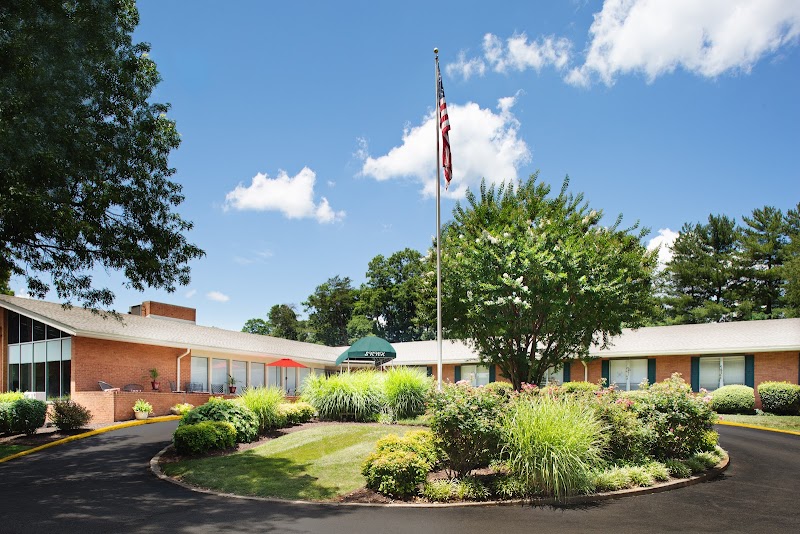
3823 FRANKLIN RD, SW, ROANOKE, VA 24014 (540) 344-4325
For profit - Corporation 98 Beds HERITAGE HALL Data: November 2025
Trust Grade
60/100
#158 of 285 in VA
Last Inspection: April 2025

Within standard 12-15 month inspection cycle. Federal law requires annual inspections.

Overview

South Roanoke Nursing and Rehabilitation has a Trust Grade of C+, which means it is slightly above average but not particularly strong. It ranks #158 out of 285 facilities in Virginia, placing it in the bottom half, and is #5 out of 9 in Roanoke City County, indicating limited local competition. The facility's trend is improving, with a decrease in issues from 14 in 2022 to 11 in 2025. Staffing is a relative strength, with a turnover rate of 42%, which is below the Virginia average. While the facility has no fines on record, there have been several concerning incidents, such as a staff member failing to wear a beard net while preparing food, and a lack of written procedures for ensuring water availability during emergencies. Additionally, the kitchen has had issues with maintaining cleanliness and proper food storage, which raises concerns about sanitation practices.

Trust Score
C+
60/100
In Virginia
#158/285
Bottom 45%
Safety Record
Low Risk
No red flags
Inspections
Getting Better
14 → 11 violations
Staff Stability
○ Average
42% turnover. Near Virginia's 48% average. Typical for the industry.
Penalties
✓ Good
No fines on record. Clean compliance history, better than most Virginia facilities.
Skilled Nurses
⚠ Watch
Each resident gets only 28 minutes of Registered Nurse (RN) attention daily — below average for Virginia. Fewer RN minutes means fewer trained eyes watching for problems.
Violations
⚠ Watch
39 deficiencies on record. Higher than average. Multiple issues found across inspections.
★★★☆☆
3.0
Overall Rating
★★☆☆☆
2.0
Staff Levels
★★★★★
5.0
Care Quality
★★☆☆☆
2.0
Inspection Score
Stable
2022: 14 issues
2025: 11 issues

The Good

  • 5-Star Quality Measures · Strong clinical quality outcomes
  • Full Sprinkler Coverage · Fire safety systems throughout facility
  • No fines on record
  • Staff turnover below average (42%)

    6 points below Virginia average of 48%

Facility shows strength in quality measures, fire safety.

The Bad

3-Star Overall Rating

Near Virginia average (3.0)

Meets federal standards, typical of most facilities

Staff Turnover: 42%

Near Virginia avg (46%)

Typical for the industry

Chain: HERITAGE HALL

Part of a multi-facility chain

Ask about local staffing decisions and management

The Ugly 39 deficiencies on record

Apr 2025 11 deficiencies
CONCERN (D)

Potential for Harm - no one hurt, but risky conditions existed

Transfer Notice (Tag F0623)

Could have caused harm · This affected 1 resident

**NOTE- TERMS IN BRACKETS HAVE BEEN EDITED TO PROTECT CONFIDENTIALITY** Based on staff interview, clinical record review, and facility document review, the facility staff failed to provide written not...

Read full inspector narrative →
**NOTE- TERMS IN BRACKETS HAVE BEEN EDITED TO PROTECT CONFIDENTIALITY** Based on staff interview, clinical record review, and facility document review, the facility staff failed to provide written notification of the reason(s) for transfer and/or discharge to the resident and the resident's representative for one (1) of twenty-four (24) sampled residents, (Resident #59). The findings include: The facility staff failed to provide written notification of the reason for transfer and/or discharge to Resident #59 and to the resident's representative for a hospital discharge on [DATE]. Resident #59's diagnosis list indicated diagnoses that included but were not limited to Osteoarthritis, Alzheimer's Disease, Hypertension, Type 2 Diabetes Mellitus, Atrial Fibrillation, Chronic Kidney Disease-Stage 3, and History of Surgery on the Digestive System. The most recent minimum data set (MDS) with an assessment reference date (ARD) of 4/9/25, assigned the resident a brief interview for mental status (BIMS) summary score of 6 out of 15 for cognitive abilities, indicating the resident was severely impaired in cognition. A review of the clinical record indicated Resident #59 was transferred to the hospital on 4/3/25. No evidence of written notification of the reason for transfer/discharge being provided to the resident and the resident's representative could be located. Surveyor requested evidence of written notification for the reason of transfer/discharge for Resident #59 and resident's representative for the transfer/discharge that occurred on 4/3/25. On 4/24/25 at 11:08 AM, administrative staff #4 (AS#4) informed surveyor she could not locate evidence of written notification of the reason for transfer/discharge being given to resident and resident's representative. This concern was discussed at the pre-exit meeting on 4/24/25 at 2:12 PM with the administrator, director of nursing, and regional nurse consultant. No further information was provided to the survey team prior to exit on 4/24/25.
CONCERN (D)

Potential for Harm - no one hurt, but risky conditions existed

Deficiency F0637 (Tag F0637)

Could have caused harm · This affected 1 resident

**NOTE- TERMS IN BRACKETS HAVE BEEN EDITED TO PROTECT CONFIDENTIALITY** Based on staff interview, clinical record review, and facility document review, the facility staff failed to accurately determin...

Read full inspector narrative →
**NOTE- TERMS IN BRACKETS HAVE BEEN EDITED TO PROTECT CONFIDENTIALITY** Based on staff interview, clinical record review, and facility document review, the facility staff failed to accurately determine a significant change in the resident's physical condition using the RAI (resident assessment instrument) process for one (1) of twenty-four (24) sampled residents, (Resident #59). The findings include: The facility staff failed to accurately determine Resident #59 had experienced a significant weight loss of 6.1% in the past thirty days using the RAI process on a comprehensive assessment dated [DATE]. Resident #59's diagnosis list indicated diagnoses that included but were not limited to Osteoarthritis, Alzheimer's Disease, Hypertension, Type 2 Diabetes Mellitus, Atrial Fibrillation, Chronic Kidney Disease-Stage 3, and History of Surgery on the Digestive System. The most recent minimum data set (MDS) with an assessment reference date (ARD) of 4/9/25, assigned the resident a brief interview for mental status (BIMS) summary score of 6 out of 15 for cognitive abilities, indicating the resident was severely impaired in cognition. Review of Section K (Swallowing/Nutritional Status) K0300 (Weight Loss) was coded as 0 indicating the resident had not experienced a weight loss of 5% or more in the last month. A review of the clinical record revealed the following documentation: A nurse's progress note dated 4/3/25 read in part, .Resident triggered for 6.1% weight loss in 30 days . On 4/24/25 at 8:29 AM, surveyor interviewed licensed practical nurse #1 (LPN#1) about the quarterly MDS completed on 4/9/25 for Resident #59 and reviewed the progress note dated 4/3/25 indicating a 6.1% weight loss in the past 30 days. LPN#1 consulted with the MDS consultant via phone conversation in presence of surveyor and discussed the findings. LPN#1 agreed the MDS should have been a significant change assessment related to the resident's significant weight loss and stated the weight loss should have been coded on the MDS. She stated she would do a modification of the MDS. On 4/24/25 at 9:07 AM, surveyor reviewed the clinical record and a significant change MDS dated [DATE] was observed to be in progress. This concern was discussed at the pre-exit meeting on 4/24/25 at 2:12 PM with the administrator, director of nursing, and regional nurse consultant. A review of Centers for Medicare & Medicaid Services Long-Term Care Facility Resident Assessment Instrument (RAI) 3.0 User's Manual Version 1.19.1 October 2024, read in part, .[page 2-24] .A significant change is a major decline .in a resident's status that: 1.Will not normally resolve itself without intervention by staff .2. Impacts more than one area of the resident's heal status .3. Requires interdisciplinary review .[page K-4] .K0300 Weight Loss .Loss of 5% or more in the last month .Start with the resident's weight closest to 30 days ago .[page K-5] .Code 2, yes .if the resident has experienced a weight loss of 5% or more in the past 30 days .and the weight loss was not planned and prescribed by a physician . No further information was provided to the survey team prior to exit on 4/24/25.
CONCERN (D)

Potential for Harm - no one hurt, but risky conditions existed

Deficiency F0658 (Tag F0658)

Could have caused harm · This affected 1 resident

Based on staff interview, clinical record review, and facility document review, the facility staff failed to provide care and services to meet professional standards of care for 1 of 24 sampled reside...

Read full inspector narrative →
Based on staff interview, clinical record review, and facility document review, the facility staff failed to provide care and services to meet professional standards of care for 1 of 24 sampled residents, Resident #46. The findings included: For Resident #46, facility staff failed to use the appropriately sized mechanical lift pad and failed to transfer the resident with the assistance of two staff members while using a mechanical lift resulting in a fall. Resident #46's diagnosis list indicated diagnoses, which included, but not limited to Hemiplegia affecting Left Dominate Side, Dementia, Generalized Muscle Weakness, and History of Falling. The most recent minimum data set (MDS) with an assessment reference date (ARD) of 4/09/25 assigned the resident a brief interview for mental status (BIMS) summary score of 7 out of 15 indicating the resident was severely cognitively impaired. Resident #46 was coded as being dependent on staff for bed to chair transfers. Resident #46's comprehensive person-centered care plan included a focus area stating in part . [Resident #46] requires assistance from staff for daily ADL [activities of daily living] care needs and incontinent care r/t [related to] weakness and impaired mobility with an intervention stating Transfer: Dependent with Hoyer [mechanical] lift with 2 assist. Resident #46's clinical record included a nursing progress note dated 4/16/25 7:13 PM stating in part While staff was transferring resident from chair to bed with Hoyer lift, he slipped through to middle and went down to the floor .Assessed for injuries; none found . On 4/23/25 at 9:06 AM, surveyor spoke with Resident #46 who stated he did not know what caused the fall and provided no additional details. On 4/23/25 at 3:05 PM, surveyor spoke with Certified Nursing Assistant (CNA) #3 who stated she was transferring Resident #46 using a lift pad and Hoyer lift when the resident slid out from the bottom of the lift pad onto the floor landing on his bottom. CNA #3 stated she was using a lift pad with four loops. She stated she was transferring the resident without the assistance of another staff member because she could not find anyone to help her because there was a shortage of staff that night and one person had called in. CNA #3 stated there should always be two staff members when using a Hoyer lift and she should have waited for someone to help her. On 4/23/25 at 3:20 PM, surveyor spoke with CNA #4 who stated she kept up with the appropriately sized lift pads required for each resident and Resident #46 should be using a medium/purple lift pad with six loops. She stated the lift pads with only four loops were for larger residents like 200 to 300 pounds. CNA #4 stated there was a list at the nurse's desk which listed the correct lift pad size for each resident. CNA #4 showed surveyor the list which indicated Resident #46 required a medium/purple lift pad. According to Resident #46's clinical record, he currently weighed 159 pounds and was 77 inches tall. On 4/24/25 at 8:41 AM, surveyor spoke with the Unit Manager (UM) who stated CNA #3 had not done as she was supposed to when transferring the resident and the CNA has received education and corrective action. UM further stated the unit was not short staffed at the time of the incident. Surveyor reviewed the daily staffing sheet for 4/16/25 which indicated there were two nurses and three CNAs present on the unit and six total CNAs in the facility at the time of the fall. Surveyor requested and received the facility policy titled Using a Mechanical Lifting Machine which read in part . 1. At least two (2) nursing assistants are needed to safely move a resident with a mechanical lift .Steps in the Procedure .2. Measure the resident for proper sling size and purpose, according to manufacturer's instructions . On 4/24/25 at 2:12 PM, the survey team met with the Administrator, Director of Nursing, and the Regional Nurse Consultant and discussed the concern of staff transferring Resident #46 without assistance using a mechanical lift with the wrong sized lift pad resulting in a fall. No further information regarding this concern was presented to the survey team prior to the exit conference on 4/24/25.
CONCERN (D)

Potential for Harm - no one hurt, but risky conditions existed

Quality of Care (Tag F0684)

Could have caused harm · This affected 1 resident

Based on staff interviews, clinical record review, and facility document review, the facility staff failed to perform neuro-checks and vital signs as ordered by a medical provider for one (1) of 24 re...

Read full inspector narrative →
Based on staff interviews, clinical record review, and facility document review, the facility staff failed to perform neuro-checks and vital signs as ordered by a medical provider for one (1) of 24 residents (Resident #76). The findings include: The facility staff failed to complete Resident #76's neuro-checks and vital signs as ordered by a medical provider. Resident #76's Minimum Data Set (MDS) assessment, with an Assessment Reference Date (ARD) of 3/12/25, was signed as completed on 3/18/25. Resident #76 was assessed as usually able to make self understood and as usually able to understand others. Resident #76's Brief Interview for Mental Status (BIMS) summary score was documented as a five (5) out of 15; this indicated severe cognitive impairment. Resident #76's clinical record included medical provider orders, dated 3/16/25 at 11:00 a.m., for neuro-checks and vital signs to be completed every four (4) hours due to a fall. Resident #76's March 2025 medication administration record (MAR) included an area for the neuro-checks and vital signs to be documented. Vital signs were documented as being completed every four (4) hours except for the 4:00 a.m. entry on 3/17/24; for this entry the resident was documented as sleeping. Neuro-checks were signed as completed every four hours except for the 4:00 a.m. entry on 3/17/24; for this entry the resident was documented as sleeping. The assessment findings/data obtained as part of the neuro-checks was neither found by nor provided to the surveyor. The following information was found in a facility document titled Neurological Assessment (with a revised date of October 2010): - The purpose of this procedure is to provide guidelines for a neurological assessment: 1) upon physician order; 2) when following an unwitnessed fall; 3) subsequent to a fall with a suspected head injury; or 4) when indicated by resident condition. - Neurological assessments are indicated: a. Upon physician order; b. Following an unwitnessed fall; c. Following a fall or other accident/injury involving head trauma; or d. When indicated by resident's condition. - Steps in the Procedure . 3. Perform neurological checks with the frequency as ordered or per falls protocol. 4. Determine resident's orientation to time, place and person. 5. Observe resident's patterns of speech and speech clarity. 6. Take temperature, pulse, respirations, blood pressure. 7. Check pupil reaction . 8. Determine motor ability: 9. Have resident move all extremities. 10. Ask resident to squeeze your fingers. Note strength bilaterally. 11. Have resident plantar and dorsiflex [sic]. Note strength bilaterally. Ask resident if he/she has any numbness or tingling in legs/feet/toes and document accordingly. 12. Determine sensation in extremities. Rub resident's arms at the same time to see if resident has decreased sensation in either arm. Check sensation in lower extremities also and document accordingly. 13. Check gag reflex with tongue depressor, if safe for resident. 14. Have the resident smile to determine if there is any facial drooping and document accordingly. 15. Check eye opening, verbal, and motor responses using the Glasgow Coma Scale. Record observations . - The following information should be recorded in the resident's medical record: . All assessment data obtained during the procedure . On 4/23/25 at 4:25 p.m., the survey team met with the facility's Administrator, Director of Nursing, and Regional Director of Clinical Services. During this meeting, the failure of the facility staff to complete Resident #76's neuro-checks and vital signs as ordered by the medical provider was discussed. The Director of Nursing confirmed that Resident #76 should have been woken up to have the vital signs and neuro-checks completed on 3/17/25 at 4:00 a.m. On 4/24/25 at 2:13 p.m., the survey team met with the facility's Administrator, Director of Nursing, and Regional Director of Clinical Services. During this meeting, the failure of the facility staff to complete Resident #76's medical provider ordered neuro-checks and vital signs was discussed.
CONCERN (D)

Potential for Harm - no one hurt, but risky conditions existed

Accident Prevention (Tag F0689)

Could have caused harm · This affected 1 resident

Based on observation, staff interview, clinical record review, and facility document review, the facility staff failed to ensure each resident receives the appropriate assistance and/or assistance dev...

Read full inspector narrative →
Based on observation, staff interview, clinical record review, and facility document review, the facility staff failed to ensure each resident receives the appropriate assistance and/or assistance devices to prevent accidents for 2 of 24 sampled residents (Resident #46 and Resident #38). The findings included: 1. For Resident #46, facility staff failed to use the appropriately sized mechanical lift pad and failed to transfer the resident with the assistance of two staff members while using a mechanical lift resulting in a fall. Staff also moved the resident from the floor to the bed prior to the nurse assessing the resident for injuries. Resident #46's diagnosis list indicated diagnoses, which included, but not limited to Hemiplegia affecting Left Dominate Side, Dementia, Generalized Muscle Weakness, and History of Falling. The most recent minimum data set (MDS) with an assessment reference date (ARD) of 4/09/25 assigned the resident a brief interview for mental status (BIMS) summary score of 7 out of 15 indicating the resident was severely cognitively impaired. Resident #46 was coded as being dependent on staff for bed to chair transfers. Resident #46's comprehensive person-centered care plan included a focus area stating in part . [Resident #46] requires assistance from staff for daily ADL [activities of daily living] care needs and incontinent care r/t [related to] weakness and impaired mobility with an intervention stating Transfer: Dependent with Hoyer [mechanical] lift with 2 assist. Resident #46's clinical record included a nursing progress note dated 4/16/25 7:13 PM stating in part While staff was transferring resident from chair to bed with Hoyer lift, he slipped through to middle and went down to the floor .Assessed for injuries; none found . On 4/23/25 at 9:06 AM, surveyor spoke with Resident #46 who stated he did not know what caused the fall and provided no additional details. On 4/23/25 at 3:00 PM, surveyor spoke with Registered Nurse (RN) #3, Resident #46's nurse at the time of the fall. RN #3 stated she was giving medications and Certified Nursing Assistant (CNA) #3 came to her and said the resident had fallen. RN #3 stated when she arrived in the resident's room, CNA #3 had already moved the resident from the floor to the bed prior to an assessment. RN #3 stated she completed a head-to-toe assessment and there were no injuries. Surveyor asked RN #3 if it was the usual facility practice for a CNA to move a resident prior to a nursing assessment and she stated no. On 4/23/25 at 3:05 PM, surveyor spoke with CNA #3 who stated she was transferring Resident #46 using a lift pad and Hoyer lift when the resident slid out from the bottom of the lift pad onto the floor landing on his bottom. CNA #3 stated she was using a lift pad with four loops. She stated she was transferring the resident without the assistance of another staff member because she could not find anyone to help her because there was a shortage of staff that night and one person had called in. CNA #3 stated there should always be two staff members when using a Hoyer lift and she should have waited for someone to help her. On 4/23/25 at 3:20 PM, surveyor spoke with CNA #4 who stated she kept up with the appropriately sized lift pads required for each resident and Resident #46 should be using a medium/purple lift pad with six loops. She stated the lift pads with only four loops were for larger residents like 200 to 300 pounds. CNA #4 stated there was a list at the nurse's desk which listed the correct lift pad size for each resident. CNA #4 showed surveyor the list which indicated Resident #46 required a medium/purple lift pad. According to Resident #46's clinical record, he currently weighed 159 pounds and was 77 inches tall. CNA #4 and surveyor went back to Resident #46's room and observed the resident up in a reclining chair with a size large lift pad underneath him. CNA #4 stated the resident currently had the wrong sized lift pad underneath him and she had the correct sized lift pad in her arms and laid it on the resident's bed. On 4/24/25 at 8:41 AM, surveyor spoke with the Unit Manager (UM) who stated CNA #3 had not done as she was supposed to when transferring the resident and the CNA has received education and corrective action. UM further stated the unit was not short staffed at the time of the incident. Surveyor reviewed the daily staffing sheet for 4/16/25 which indicated there were two nurses and three CNAs present on the unit and six total CNAs in the facility at the time of the fall. On 4/24/25 at 8:59 AM, surveyor spoke with the UM and inquired why Resident #46 had a large lift pad underneath him the previous day. UM stated she was unsure but would find out. UM returned at 10:49 AM and stated his lift pad was in the wash yesterday. Surveyor requested and received the facility policy titled Using a Mechanical Lifting Machine which read in part . 1. At least two (2) nursing assistants are needed to safely move a resident with a mechanical lift .Steps in the Procedure .2. Measure the resident for proper sling size and purpose, according to manufacturer's instructions . On 4/24/25 at 2:12 PM, the survey team met with the Administrator, Director of Nursing, and the Regional Nurse Consultant and discussed the concern of staff transferring Resident #46 without assistance using a mechanical lift with the wrong sized lift pad resulting in a fall. The concern of the CNA moving the resident following the fall prior to a nursing assessment was also discussed. No further information regarding this concern was presented to the survey team prior to the exit conference on 4/24/25. 2. For Resident #38, the facility staff failed to ensure placement of Dycem non-slip material in the resident's wheelchair seat as indicated on the resident's comprehensive person-centered care plan. Resident #38's diagnosis list indicated diagnoses, which included, but not limited to History of Traumatic Subdural Hemorrhage with Loss of Consciousness, Parkinsonism, Dementia, and Repeated Falls. The most recent minimum data set (MDS) with an assessment reference date (ARD) of 3/26/25 assigned the resident a brief interview for mental status (BIMS) summary score of 2 out of 15 indicating the resident was severely cognitively impaired. Resident #38 was coded as being dependent on staff for transferring from sitting to standing and transferring from bed to chair. According to Resident #38's clinical record, he had fallen three times in the past three months, with the most recent fall occurring on 4/07/25. An 4/07/25 6:10 PM nursing progress note read in part Resident was observed standing up in his room [at] 6:05pm and was assisted to his wheelchair. At 6:10pm he was seen sitting upright on the floor behind his wheelchair .Checked for injuries; none found except small 1 cm skin tear left elbow . Resident #38 was seen by the medical provider on 4/10/25, the progress note read in part .Resident is moderate to high risk for additional falls and high risk for injury R/T [related to] fall . Resident #38's comprehensive person-centered care plan included a focus area stating [Resident #38] is high risk for falls r/t [related to] limited mobility, weakness and dementia and history of falls with an intervention initiated 12/12/24 for Dycem to his wheelchair. During the survey, surveyor observed Resident #38 on several occasions independently transferring from the bed to the wheelchair and from the wheelchair to standing/walking without assistance. On 4/22/25 at 12:27 PM, while the resident was independently walking in his room, a Certified Nursing Assistant (CNA) entered the room and stated he was not supposed to be walking without assistance. On 4/22/25 at 2:09 PM, 4/23/25 at 8:58 AM and 3:37 PM, surveyor observed Resident #38's wheelchair and there was no Dycem present above or below the wheelchair seat cushion. On 4/24/25 at 10:49 AM, surveyor spoke with the Unit Manager (UM) regarding the observations of the missing Dycem. UM stated she did not know why the Dycem was not in the wheelchair as it was a fall intervention for him. UM returned at 11:12 AM and stated she had spoken with another staff member who reviews falls and they think Resident #38 may be removing the Dycem himself and they will look at a new intervention for him. Surveyor requested and received the facility policy titled Managing Falls and Fall Risk which read in part .Resident-Centered Approaches to Managing Falls and Fall Risk 1. The staff, with the input of the attending physician, will implement a resident-centered fall prevention plan to reduce the specific risk factor(s) of falls for each resident at risk or with a history of falls . On 4/24/25 at 2:12 PM, the survey team met with the Administrator, Director of Nursing, and Regional Nurse Consultant and discussed the concern of staff failing to ensure Resident #38 had Dycem in his wheelchair. No further information regarding this concern was presented to the survey team prior to the exit conference on 4/24/25.
CONCERN (D)

Potential for Harm - no one hurt, but risky conditions existed

Respiratory Care (Tag F0695)

Could have caused harm · This affected 1 resident

Based on observation, staff interview and clinical record review, the facility staff failed to provide respiratory services for 1 of 23 Residents, Resident #65. The findings included: For Resident #65...

Read full inspector narrative →
Based on observation, staff interview and clinical record review, the facility staff failed to provide respiratory services for 1 of 23 Residents, Resident #65. The findings included: For Resident #65 the facility staff failed to consistently provide and/or document oxygen usage per the physician's order and the hospice plan. Resident #65's face sheet listed diagnoses which included but not limited to malignant neoplasm of unspecified part of unspecified bronchus or lung, chronic obstructive pulmonary disease, emphysema, and respiratory failure. Resident #65's most recent minimum data set with an assessment reference date of 03/16/25 assigned the resident a brief interview for mental status score of 15 out of 15 in section C, cognitive patterns. This indicates that the resident is cognitively intact. Resident #65's comprehensive care plan was reviewed and contained a plan for The resident has COPD (chronic obstructive pulmonary disease) and is on 8 L/Min (liters per minute) via nasal cannula every shift for lung CA (cancer). He removes and reapplies his nasal cannula. Resident #65's clinical record was reviewed and contained a physician's order summary which read in part, Oxygen @ 8 LPM (liters per minute) via NC (nasal cannula), may remove for ADL's (activities of daily living) every shift for Lung CA. Resident #65's electronic medication administration record for the month of April 2025 was reviewed and contained an entry as above. This entry has been initialed as completed per the physician's order. During a medication pass and pour observation with licensed practical nurse (LPN) #3 on 04/23/25 at 8:55 am, LPN #3 stated to surveyor they needed to check Resident #65's 02 sats, because hospice is trying to wean him off oxygen. Surveyor observed Resident #65's oxygen concentrator set on 5 LPM of oxygen. LPN #3 recorded resident's 02 sats as 98% on 3 LPM of oxygen. Surveyor observed Resident #65's oxygen concentrator set on 5 LPM on 04/24/25 at 9:50 am. Resident was lying across bed, asleep at this time. Surveyor spoke with LPN #6 on 04/24/25 at 9:55 am regarding Resident #65's oxygen. LPN #6 stated the resident's oxygen is supposed to be on 8 LPM, but hospice is trying to titrate it down to 5-6 LPM. Surveyor asked LPN #6 how they know what hospice wants done, and LPN #6 stated that hospice gives either a verbal or written order, which then gets entered into the electronic record. Surveyor reviewed Resident #65's hospice communication record and could not locate an order to titrate the oxygen. Hospice communication record contained hospice notes which read in part, 3/27 Decreased 02 to 5 L, tolerated well, 4-8 .decreased 02 to attempt to get to 5 L over next two weeks, 4-10 02 on 6 L, tolerating well, 4-17 tolerating 6 L 02, and 4-22 routine 02 to 5 L, will follow up on how he tolerates. Resident #65's clinical record contained nurses' progress notes which read in part, 03/29/2025 18:15 .Resident continues on 8 ltrs of 02 infusing via nasal cannula, 03/30/2025 14:38 .02 infusing at 8 ltrs continuously via nasal cannula ., 04/18/2025 18:14 .02 sats were 99% on 5 ltrs of 02 infusing via nasal cannula ., 04/19/2025 10:10 .oxygen at 3 L/NC ., 04/20/2025 02:48 .02 8LPM ., 04/20/2025 10:02 .on cont. (continuous) oxygen at 3 L/NC ., 04/21/2025 .02 sats were 99% on 02 infusing via nasal cannula at 6 ltrs continuous ., 04/22/2025 11:07 .On cont. oxygen at 3 L/NC ., and 04/23/2025 09:58 .oxygen at 3 L/NC . Surveyor spoke with the hospice nurse on 04/24/25 at 1:05 pm. Hospice nurse stated they had written the order and had it faxed to the facility, but did not know why it didn't get entered into the resident's clinical record. Hospice nurse stated they had the order faxed again today. Hospice nurse stated the order is to decrease the oxygen by 1 LPM every 24 hours as the resident tolerates. Hospice nurse provided the surveyor with a hospice care plan which read in part, Resident will be comfortable on 5 LPM. Hospice nurse also stated that resident has his own pulse oximeter, and will check his 02 stats himself, and adjust his oxygen as needed. The director of nursing provided surveyor with a copy of a hospice order for oxygen, which read in part, 03/27/25 12:45 02 titration: Titrate 02 down 1 L q (every) 24 hours as tolerated by pt (patient). note: ne (?) parameter as tolerance will be based on pt comfort/SOB (shortness of breath). Resident #65's clinical record was reviewed and contained vital signs record which listed resident's 02 sats as ranging from 94-100% on 8 LPM of oxygen from 03/13-03/25/25 and from 90-98% on 3 LPM of oxygen from 04/19-04/23/25. From 03/26-04/01/25 02 sats ranged from 93-99% with no amount of oxygen recorded. No data was documented from 04/01-04/19/25. The concern of not consistently providing and documenting oxygen usage per the physician and hospice orders was discussed with the administrator, director of nursing and regional director of clinical services on 04/24/25 at 3:00 pm. No further information was provided prior to exit.
CONCERN (E)

Potential for Harm - no one hurt, but risky conditions existed

Assessment Accuracy (Tag F0641)

Could have caused harm · This affected multiple residents

**NOTE- TERMS IN BRACKETS HAVE BEEN EDITED TO PROTECT CONFIDENTIALITY** 3. For Resident #59, the facility staff failed to accurately code the resident's PRN (as needed) pain medication and failed to c...

Read full inspector narrative →
**NOTE- TERMS IN BRACKETS HAVE BEEN EDITED TO PROTECT CONFIDENTIALITY** 3. For Resident #59, the facility staff failed to accurately code the resident's PRN (as needed) pain medication and failed to code the resident's weight loss of 6.1% on a minimum data set (MDS) assessment dated [DATE]. Resident #59's diagnosis list indicated diagnoses that included but were not limited to Osteoarthritis, Alzheimer's Disease, Hypertension, Type 2 Diabetes Mellitus, Atrial Fibrillation, Chronic Kidney Disease-Stage 3, and History of Surgery on the Digestive System. The most recent minimum data set (MDS) with an assessment reference date (ARD) of 4/9/25, assigned the resident a brief interview for mental status (BIMS) summary score of 6 out of 15 for cognitive abilities, indicating the resident was severely impaired in cognition. Review of Section J (Health Conditions) J0100 (Pain Management) B. Received PRN pain medications was coded as 0 (No) indicating the resident did not receive any PRN pain medications in the past five days. Review of Section K (Swallowing/Nutritional Status) K0300 (Weight Loss) was coded as 0 (No) indicating the resident had not experienced a weight loss of 5% or more in the last month. A medical provider orders with a start date of 4/8/25 read in part, .Oxycodone .oral tablet 5 MG (milligrams) .Give 0.5 tablet by mouth every 4 hours as needed for pain . A review of the April 2025 medication administration record (MAR) revealed Resident #59 received the pain medication twice on 4/8/25 and received the pain medication three times on 4/9/25. A nurse's progress note dated 4/3/25 read in part, .Resident triggered for 6.1% weight loss in 30 days . On 4/24/25 at 8:29 AM, surveyor interviewed licensed practical nurse #1 (LPN#1) about the quarterly MDS completed on 4/9/25 for Resident #59. LPN#1 reviewed the oxycodone order and April 2025 MAR. LPN#1 agreed PRN pain medication should have been coded on the MDS dated [DATE] as the resident received the medication on 4/8/25 and 4/9/25. Surveyor and LPN#1 reviewed the progress note dated 4/3/25 that indicated the resident triggered for a 6/1% weight loss in 30 days. LPN#1 consulted with her consultant via phone conversation in the presence of this surveyor and discussed the findings. LPN#1 agreed the MDS should have been a significant change assessment related to the resident's significant weight loss and stated the weight loss should have been captured on the MDS. She stated she would do a modification of the MDS. On 4/24/25 at 9:07 AM, surveyor reviewed the clinical record and a significant change MDS dated [DATE] was noted to be in progress. This concern was discussed at the pre-exit meeting on 4/24/25 at 2:12 PM with the administrator, director of nursing, and regional nurse consultant. A review of Centers for Medicare & Medicaid Services Long-Term Care Facility Resident Assessment Instrument (RAI) 3.0 User's Manual Version 1.19.1 October 2024, read in part, .[page J-1] .J0100 Pain Management .[page J-2] .Steps for Assessment 1. Review medical record to determine if a pain regimen exists .Coding instructions for J0100 B, Received PRN Pain Medication .Code 1, yes: if the medical record contains documentation that a PRN medication was either received OR was offered but declined .[page K-4] .K0300 Weight Loss .Loss of 5% or more in the last month .Start with the resident's weight closest to 30 days ago .[page K-5] .Code 2, yes .if the resident has experienced a weight loss of 5% or more in the past 30 days .and the weight loss was not planned and prescribed by a physician . No further information was provided to the survey team prior to exit on 4/24/25. 4. For Resident #70 the facility staff failed to accurately code the resident for Hospice services on an admission MDS dated [DATE]. Resident #70's diagnosis list indicated diagnoses that included but were not limited to Chronic Obstructive Pulmonary Disease, Polyneuropathy, Pressure-Induced Deep Tissue Damage of Sacral Region, Cognitive Communication Disorder, Prediabetes, and Muscle Wasting and Atrophy. The most recent minimum data set (MDS) with an assessment reference date (ARD) of 3/11/25, assigned the resident a brief interview for mental status (BIMS) summary score of 13 out of 15 for cognitive abilities, indicating the resident was cognitively intact. Review of Section O (Special Treatments, Procedures, and Programs) O0100 K1. Hospice Care was coded as Z1. None of the Above. A medical provider orders with a start date of 3/5/25 read in part, .[name omitted] Hospice dx (diagnosis) COPD . A review of the comprehensive person-centered care plan contained a focus that read in part, .resident is under hospice services . On 4/24/25 at 8:29 AM, surveyor interviewed licensed practical nurse #1 (LPN#1) and licensed practical nurse #4 (LPN#4). LPN#1 reviewed the medical provider order for hospice dated 3/5/25 and reviewed section O of the admission MDS dated [DATE] and agreed it was coded incorrectly. LPN#4 stated she would make a modification of the admission MDS. On 4/24/25 at 9:04 AM, surveyor reviewed the clinical record and noted a modification of the admission MDS dated [DATE] was in progress. This concern was discussed at the pre-exit meeting on 4/24/25 at 2:12 PM with the administrator, director of nursing, and regional nurse consultant. A review of Centers for Medicare & Medicaid Services Long-Term Care Facility Resident Assessment Instrument (RAI) 3.0 User's Manual Version 1.19.1 October 2024, read in part, .[page O-7] .O0110: Special Treatments, Procedures, and Programs .O0110K1, Hospice Care .Code residents identified as being in a hospice program . No further information was provided to the survey team prior to exit on 4/24/25. Based on observation, staff interview, and clinical record review, the facility staff failed to ensure accurate minimum data set (MDS) assessments for 4 of 24 residents in the survey sample, Residents #79, #30 #59, #70. The findings include. 1. For Resident #79, the facility staff coded a quarterly MDS assessment to indicate this resident used a limb restraint. Resident #79's diagnoses included osteoarthritis, congestive heart failure, and peripheral vascular disease. Section C (cognitive patterns) of Resident #79's quarterly MDS assessment with an assessment reference date (ARD) of 04/02/24 included a brief interview for mental status (BIMS) score of 12 out of a possible 15 points. Per the MDS manual a score of 12=moderately impaired in cognitive skills for daily decision making. Section P (physical restraints) was coded to indicate this resident used a limb restraint less than daily. On 04/22/25 at 1:35 p.m., the surveyor observed Resident #79 in their room. No restraints were observed. During an interview with Licensed Practical Nurse (LPN) #1 this staff stated Resident #79 did not have a restraint, the MDS had been coded for a restraint in error, and they would complete a modification of the MDS. On 04/24/25 at 2:15 p.m., during a meeting with the Administrator, Regional Nurse Consultant, and Director of Nursing the issue with the quarterly MDS assessment being coded to indicate this resident used a restraint was reviewed. Prior to the exit conference the facility staff provided the surveyor with paperwork to indicate a modification had been made to the MDS assessment. No further information regarding this issue was provided to the survey team prior to the exit conference. 2. The facility staff failed to ensure that Resident #30's minimum data set (MDS) assessments correctly captured the resident's functional limitations in range of motion of the lower extremities. Resident #30's Minimum Data Set (MDS) assessment, with an Assessment Reference Date (ARD) of 2/26/25, was signed as completed on 2/28/25. Resident #30 was assessed as usually able to make self understood and as usually able to understand others. Resident #30's Brief Interview for Mental Status (BIMS) summary score was documented as a three (3) out of 15; this indicated severe cognitive impairment. Resident #30's MDS assessment, with an ARD of 4/17/24, had the resident's functional limitation in range of motion assessed as both lower extremities having impairment. Resident #30's MDS assessment, with an ARD of 2/26/25, had the resident's functional limitation in range of motion assessed as both lower extremities having impairment. These two (2) assessments differed from other MDS assessments which had Resident #30 assessed as having no functional limitations in range of motion. On 4/23/25 at approximately 3:20 p.m., the surveyor discussed, with Licensed Practical Nurse (LPN) #4, the aforementioned MDS assessments which assessed Resident #30 as having lower extremity impairment with functional limitation in range of motion. LPN #4 reported the two (2) MDS assessments with Resident #30 coded as both lower extremities having impairment with functional limitations in range of motion would be modified. Prior to the conclusion of the survey, the facility had modified Resident #30's two (2) MDS assessments in question to indicate Resident #30 did not have lower extremity impairment with functional limitations in range of motion. On 4/24/25 at 2:13 p.m., the survey team met with the facility's Administrator, Director of Nursing, and Regional Director of Clinical Services. During this meeting, the failure of the facility staff to correctly assess Resident #30's lower extremity functional range of motion was discussed.
CONCERN (E)

Potential for Harm - no one hurt, but risky conditions existed

Comprehensive Care Plan (Tag F0656)

Could have caused harm · This affected multiple residents

4. For Resident #34 the facility staff failed to develop and implement a comprehensive person-centered care plan to address the resident's preferences for no oral suction and no oxygen as indicated on...

Read full inspector narrative →
4. For Resident #34 the facility staff failed to develop and implement a comprehensive person-centered care plan to address the resident's preferences for no oral suction and no oxygen as indicated on an advance directive form. Resident #34's diagnosis list indicated diagnoses that included but were not limited to Hypertension, Type 2 Diabetes Mellitus, Alzheimer's Disease, Adult Failure to Thrive, Dementia, Glaucoma, History of Falling, Anxiety Disorder, Depression, and Mood Affective Disorder. The most recent minimum data set (MDS) with an assessment reference date (ARD) of 1/20/25, assigned the resident a brief interview for mental status (BIMS) summary score of 4 out of 15 for cognitive abilities, indicating the resident was severely impaired in cognition. A medical provider orders with a start date of 1/14/25 read in part, .DNR (Do Not Resuscitate) . Surveyor requested evidence of Resident #34's advance directive and was provided with a facility document titled, Advanced Directives with an effective date of 1/14/25. Review of the advance directive form indicated Resident #34 did not wish to have Oral Suction and did not wish to have Oxygen. A review of the comprehensive person-centered care plan noted an intervention that read in part, .DNR (Do Not Resuscitate) Hospice . Further review of the interventions failed to provide evidence Resident #34's desire to have no oral suction and desire to have no oxygen were included in the plan of care. On 4/23/25 at 10:42 AM, this surveyor spoke with the resident's representative via phone conversation and asked him about the advance directive form for Resident #34 and he informed this surveyor this was the resident's wishes prior to her cognitive decline, as they had discussed her choices. This concern was discussed at the pre-exit meeting on 4/24/25 at 2:12 PM with the administrator, director of nursing, and regional nurse consultant. Surveyor requested and received a facility policy titled, Care Plans, Comprehensive Person-Centered that read in part, .1. The interdisciplinary team (IDT), in conjunction with the resident and his/her family or legal representative, develops and implements a comprehensive, person-centered care plan .4. Each resident's comprehensive person-centered care plan is consistent with the resident's rights .including the right to .f. participate in determining the type .of care .13. The resident has the right to refuse to participate in .medical and nursing treatments . No further information was provided to the survey team prior to exit on 4/24/25. 5. For Resident #70 the facility staff failed to develop and implement a comprehensive person-centered care plan to address the resident's preferences for no oral suction and no oxygen as indicated on an advance directive form. Resident #70's diagnosis list indicated diagnoses that included but were not limited to Chronic Obstructive Pulmonary Disease, Polyneuropathy, Pressure-Induced Deep Tissue Damage of Sacral Region, Cognitive Communication Disorder, Prediabetes, and Muscle Wasting and Atrophy. The most recent minimum data set (MDS) with an assessment reference date (ARD) of 3/11/25, assigned the resident a brief interview for mental status (BIMS) summary score of 13 out of 15 for cognitive abilities, indicating the resident was cognitively intact. A medical provider orders with a start date of 3/6/25 read in part, .DNR (Do Not Resuscitate) . Surveyor requested evidence of Resident #70's advance directive and was provided with a facility document titled, Advanced Directives with an effective date of 3/6/25. Review of the advance directive form indicated Resident #70 did not wish to have Oral Suction and did not wish to have Oxygen. A review of the comprehensive person-centered care plan noted an intervention that read in part, .DNR (Do Not Resuscitate) . Further review of the interventions failed to provide evidence Resident #70's desire to have no oral suction and desire to have no oxygen were included in the plan of care. On 4/23/25 at 9:47 AM, surveyor spoke with Resident #70 about the advance directive form and resident stated she did not want oxygen or oral suctioning when or if she gets really bad. This concern was discussed at the pre-exit meeting on 4/24/25 at 2:12 PM with the administrator, director of nursing, and regional nurse consultant. Surveyor requested and received a facility policy titled, Care Plans, Comprehensive Person-Centered that read in part, .1. The interdisciplinary team (IDT), in conjunction with the resident and his/her family or legal representative, develops and implements a comprehensive, person-centered care plan .4. Each resident's comprehensive person-centered care plan is consistent with the resident's rights .including the right to .f. participate in determining the type .of care .13. The resident has the right to refuse to participate in .medical and nursing treatments . No further information was provided to the survey team prior to exit on 4/24/25. 2. For Resident #38, the facility staff failed to ensure the comprehensive person-centered care plan intervention for Dycem (a non-slip material) was present in the resident's wheelchair seat. Resident #38's diagnosis list indicated diagnoses, which included, but not limited to History of Traumatic Subdural Hemorrhage with Loss of Consciousness, Parkinsonism, Dementia, and Repeated Falls. The most recent minimum data set (MDS) with an assessment reference date (ARD) of 3/26/25 assigned the resident a brief interview for mental status (BIMS) summary score of 2 out of 15 indicating the resident was severely cognitively impaired. Resident #38 was coded as being dependent on staff for transferring from sitting to standing and transferring from bed to chair. Resident #38's comprehensive person-centered care plan included a focus area stating [Resident #38] is high risk for falls r/t [related to] limited mobility, weakness and dementia and history of falls with an intervention initiated 12/12/24 for Dycem to his wheelchair. On 4/22/25 at 2:09 PM, 4/23/25 at 8:58 AM and 3:37 PM, surveyor observed Resident #38's wheelchair and there was no Dycem present above or below the wheelchair seat cushion. On 4/24/25 at 10:49 AM, surveyor spoke with the Unit Manager (UM) regarding the observations of the missing Dycem. UM stated she did not know why the Dycem was not in the wheelchair as it was a fall intervention for him. UM returned at 11:12 AM and stated she had spoken with another staff member who reviews falls and they think Resident #38 may be removing the Dycem himself and they will look at a new intervention for him. Surveyor requested and received the facility policy titled Managing Falls and Fall Risk which read in part .Resident-Centered Approaches to Managing Falls and Fall Risk 1. The staff, with the input of the attending physician, will implement a resident-centered fall prevention plan to reduce the specific risk factor(s) of falls for each resident at risk or with a history of falls . On 4/24/25 at 2:12 PM, the survey team met with the Administrator, Director of Nursing, and Regional Nurse Consultant and discussed the concern of staff failing to ensure Resident #38 had Dycem in his wheelchair. No further information regarding this concern was presented to the survey team prior to the exit conference on 4/24/25. 3. For Resident #46, facility staff failed to ensure the comprehensive person-centered care plan intervention for two person assist with mechanical lift transfers was followed. The resident experienced a fall during a mechanical lift transfer with one staff member present. Resident #46's diagnosis list indicated diagnoses, which included, but not limited to Hemiplegia affecting Left Dominate Side, Dementia, Generalized Muscle Weakness, and History of Falling. The most recent minimum data set (MDS) with an assessment reference date (ARD) of 4/09/25 assigned the resident a brief interview for mental status (BIMS) summary score of 7 out of 15 indicating the resident was severely cognitively impaired. Resident #46 was coded as being dependent on staff for bed to chair transfers. Resident #46's comprehensive person-centered care plan included a focus area stating in part . [Resident #46] requires assistance from staff for daily ADL [activities of daily living] care needs and incontinent care r/t [related to] weakness and impaired mobility with an intervention stating Transfer: Dependent with Hoyer [mechanical] lift with 2 assist. Resident #46's clinical record included a nursing progress note dated 4/16/25 7:13 PM stating in part While staff was transferring resident from chair to bed with Hoyer lift, he slipped through to middle and went down to the floor .Assessed for injuries; none found . On 4/23/25 at 9:06 AM, surveyor spoke with Resident #46 who stated he did not know what caused the fall and provided no additional details. On 4/23/25 at 3:05 PM, surveyor spoke with Certified Nursing Assistant (CNA) #3 who stated she was transferring Resident #46 using a lift pad and Hoyer lift when the resident slid out from the bottom of the lift pad onto the floor landing on his bottom. She stated she was transferring the resident without the assistance of another staff member because she could not find anyone to help her because there was a shortage of staff that night and one person had called in. CNA #3 stated there should always be two staff members when using a Hoyer lift and she should have waited for someone to help her. On 4/24/25 at 8:41 AM, surveyor spoke with the Unit Manager (UM) who stated CNA #3 had not done as she was supposed to when transferring the resident and the CNA has received education and corrective action. UM further stated the unit was not short staffed at the time of the incident. Surveyor reviewed the daily staffing sheet for 4/16/25 which indicated there were two nurses and three CNAs present on the unit and six total CNAs in the facility at the time of the fall. Surveyor requested and received the facility policy titled Using a Mechanical Lifting Machine which read in part . 1. At least two (2) nursing assistants are needed to safely move a resident with a mechanical lift .Steps in the Procedure .2. Measure the resident for proper sling size and purpose, according to manufacturer's instructions . On 4/24/25 at 2:12 PM, the survey team met with the Administrator, Director of Nursing, and the Regional Nurse Consultant and discussed the concern of staff transferring Resident #46 without assistance using a mechanical lift. No further information regarding this concern was presented to the survey team prior to the exit conference on 4/24/25. Based on observations, interviews, clinical record review, and facility document review, the facility staff failed to develop and/or implement a comprehensive care plan (CCP) to address residents' needs and/or preferences for five (5) of 24 residents (Resident #2, Resident #34, Resident #38, Resident #46, and Resident #70). The findings include: 1. Resident #2's care plan failed to address the end-of-life care decision to not receive oxygen and/or oral suctioning. Resident #2's Minimum Data Set (MDS) assessment, with an Assessment Reference Date (ARD) of 1/22/25, was signed as completed on 1/24/25. Resident #2 was assessed as usually able to make self understood and as usually able to understand others. Resident #2's Brief Interview for Mental Status (BIMS) summary score was documented as a 13 out of 15; this indicated intact or borderline cognition. Resident #2's clinical documentation included a form titled ADVANCED DIRECTIVES dated 3/25/24. This form indicated the resident was not to receive oxygen and/or oral suctioning as part of end-of-life care. This form had areas for signatures of (a) the resident, (b) the responsible party, and (c) a witness. (The individual who signed as the witness was the facility's social worker.) On 4/23/25 at 9:40 a.m., the Director of Nursing reported the facility did not have a written policy to specifically address the use of the ADVANCED DIRECTIVES form. Resident #2's comprehensive care plan failed to include the information found as part of the ADVANCED DIRECTIVES form which indicated the resident was not to receive oxygen and/or oral suctioning as part of end-of-life care. On 4/23/25 at 11:01 a.m., the surveyor asked Licensed Practical Nurse (LPN) #1 about the failure of the facility staff to care plan the information found as part of Resident #2's ADVANCED DIRECTIVES form dated 3/25/24. On 4/23/25 at 12:30 p.m., LPN #1 reported Resident #2's care plan had been revised to address the information from the ADVANCED DIRECTIVES form (e.g., declining oxygen and/or oral suctioning). The following information was found as part of a facility document titled Care Plans, Comprehensive Person-Center (with a revised date of March 2022): - A comprehensive, person-centered care plan that includes measurable objectives and timetables to meet the resident's physical, psychosocial and functional needs is developed and implemented for each resident. - The interdisciplinary team (IDT), in conjunction with the resident and his/her family or legal representative, develops and implements a comprehensive, person-centered care plan for each resident. - The comprehensive, person-centered care plan . describes the services that are to be furnished to attain or maintain the resident's highest practicable physical, mental, and psychosocial well-being, including: (1) services that would otherwise be provided for the above, but are not provided due to the resident exercising his or her rights, including the right to refuse treatment . The following information was found as part of a facility document titled Advance Directives (with a revised date of September 2022): - Advance care planning - a process of communication between individuals and their healthcare agents to understand, reflect on, discuss, and plan for future healthcare decisions for a time when individuals are not able to make their own healthcare decisions. - If the resident or representative refuses treatment, the facility and care providers will: . d. assess and document the stated reason for the refusal; e. advise the resident of the consequences and/or potential outcomes of refusal; . g. modify the care plan as appropriate, providing all other appropriate services (i.e., those that will allow him or her to maintain the highest practicable physical, mental and psychosocial well-being). On 4/24/25 at 2:13 p.m., the survey team met with the facility's Administrator, Director of Nursing, and Regional Director of Clinical Services. During this meeting, the failure of the facility staff to ensure Resident #2's comprehensive care plan addressed the resident's and/or the resident's responsible party's end-of-life care decisions related to the provision of oxygen and/or oral suctioning was discussed.
CONCERN (E)

Potential for Harm - no one hurt, but risky conditions existed

Medical Records (Tag F0842)

Could have caused harm · This affected multiple residents

**NOTE- TERMS IN BRACKETS HAVE BEEN EDITED TO PROTECT CONFIDENTIALITY** Based on resident interview, family interview, staff interview, clinical record review, and facility document review, the facili...

Read full inspector narrative →
**NOTE- TERMS IN BRACKETS HAVE BEEN EDITED TO PROTECT CONFIDENTIALITY** Based on resident interview, family interview, staff interview, clinical record review, and facility document review, the facility staff failed to maintain complete and/or accurate clinical records for 21 of 24 sampled residents (Resident #34, Resident #70, Resident #2, Resident #76, Resident #30, Resident #73, Resident #32, Resident #3, Resident #36, Resident #38, Resident #46, Resident #7, Resident #24, Resident #59, Resident #15, Resident #31, Resident #60, Resident #22, Resident #35, Resident #71, and Resident #79). The findings include: 1. For Resident #34 the facility staff failed to document verbal communication with the resident and/or resident's representative that addressed the resident/representative reason/reasons for refusal of oral suction and oxygen as indicated on an advance directive form and facility staff failed to document education was provided to the resident and/or resident representative of the consequences and/or potential outcomes related to refusal of oral suction and oxygen. Resident #34's diagnosis list indicated diagnoses that included but were not limited to Hypertension, Type 2 Diabetes Mellitus, Alzheimer's Disease, Adult Failure to Thrive, Dementia, Glaucoma, History of Falling, Anxiety Disorder, Depression, and Mood Affective Disorder. The most recent minimum data set (MDS) with an assessment reference date (ARD) of [DATE], assigned the resident a brief interview for mental status (BIMS) summary score of 4 out of 15 for cognitive abilities, indicating the resident was severely impaired in cognition. A medical provider orders with a start date of [DATE] read in part, .DNR (Do Not Resuscitate) . A review of the comprehensive person-centered care plan noted an intervention that read in part, .DNR (Do Not Resuscitate) Hospice . Surveyor requested evidence of Resident #34's advance directive and was provided with a facility document titled, Advanced Directives with an effective date of [DATE]. Review of this advance directive form indicated Resident #34 did not wish to have Oral Suction and did not wish to have Oxygen. This surveyor was unable to locate documented evidence in the clinical record of facility staff assessment and/or documentation of reason/reasons for the resident/resident's representative refusal of oral suction and oxygen and was unable to locate evidence of facility staff education to Resident #34/resident's representative of the consequences and/or potential outcomes of the resident's refusal of oral suction and oxygen. On [DATE] at 10:42 AM, this surveyor spoke with the resident's representative via phone conversation and asked him about Resident #34's advance directive form and he informed this surveyor this was the resident's wishes prior to her cognitive decline, as they had discussed her choices. On [DATE] at 3:41 PM, the administrator informed this surveyor that advance directive education is verbal, and nothing is documented about these verbal discussions in the clinical record. This concern was discussed at the pre-exit meeting on [DATE] at 2:12 PM with the administrator, director of nursing, and regional nurse consultant. Surveyor requested and received a facility policy titled, Advance Directives that read in part, .Refusing or Requesting Treatment .3. If the resident or representative refuses treatment, the facility and care providers will .c. document specifically what the resident/representative is refusing d. assess and document the stated reason for the refusal e. advise the resident of the consequences and/or potential outcomes of refusal . No further information was provided to the survey team prior to exit on [DATE]. 2. For Resident #70 the facility staff failed to document verbal communication with the resident and/or resident's representative that addressed the resident's reason/reasons for refusal of oral suction and oxygen as indicated on an advance directive form and facility staff failed to document education was provided to the resident and/or resident representative of the consequences and/or potential outcomes related to refusal of oral suction and oxygen. Resident #70's diagnosis list indicated diagnoses that included but were not limited to Chronic Obstructive Pulmonary Disease, Polyneuropathy, Pressure-Induced Deep Tissue Damage of Sacral Region, Cognitive Communication Disorder, Prediabetes, and Muscle Wasting and Atrophy. The most recent minimum data set (MDS) with an assessment reference date (ARD) of [DATE], assigned the resident a brief interview for mental status (BIMS) summary score of 13 out of 15 for cognitive abilities, indicating the resident was cognitively intact. A medical provider orders with a start date of [DATE] read in part, .DNR (Do Not Resuscitate) . A review of the comprehensive person-centered care plan noted an intervention that read in part, .DNR (Do Not Resuscitate) . Surveyor requested evidence of Resident #70's advance directive and was provided with a facility document titled, Advanced Directives with an effective date of [DATE]. Review of this advance directive form indicated Resident #70 did not wish to have Oral Suction and did not wish to have Oxygen. This surveyor was unable to locate documented evidence in the clinical record of facility staff assessment and/or documentation of reason/reasons for the resident/resident's representative refusal of oral suction and oxygen and was unable to locate evidence of facility staff education to Resident #70/resident's representative of the consequences and/or potential outcomes of the resident's refusal of oral suction and oxygen. On [DATE] at 9:47 AM, surveyor spoke with Resident #70 about her advance directive and resident stated she did not want oxygen or oral suctioning when or if she gets really bad. On [DATE] at 3:41 PM, the administrator informed this surveyor that advance directive education is verbal, and nothing is documented about these verbal discussions in the clinical record. This concern was discussed at the pre-exit meeting on [DATE] at 2:12 PM with the administrator, director of nursing, and regional nurse consultant. Surveyor requested and received a facility policy titled, Advance Directives that read in part, .Refusing or Requesting Treatment .3. If the resident or representative refuses treatment, the facility and care providers will .c. document specifically what the resident/representative is refusing d. assess and document the stated reason for the refusal e. advise the resident of the consequences and/or potential outcomes of refusal . No further information was provided to the survey team prior to exit on [DATE]. 3. The facility staff failed to document the details of the education provided to Resident #2's responsible party related to the decision to decline oxygen and oral suctioning as part of the end-of-life care choices documented on the resident's ADVANCED DIRECTIVES form. Resident #2's Minimum Data Set (MDS) assessment, with an Assessment Reference Date (ARD) of [DATE], was signed as completed on [DATE]. Resident #2 was assessed as usually able to make self understood and as usually able to understand others. Resident #2's Brief Interview for Mental Status (BIMS) summary score was documented as a 13 out of 15; this indicated intact or borderline cognition. Resident #2's clinical documentation included a form titled ADVANCED DIRECTIVES dated [DATE]. This form indicated the resident was not to receive oxygen and/or oral suctioning as part of end-of-life care. This form had areas for signatures of (a) the resident, (b) the responsible party, and (c) a witness. (The individual who signed as the witness was the facility's social worker.) The surveyor was unable to find documentation that detailed Resident #2's responsible party's notification of the benefits and risk related to declining oxygen and/or oral suctioning as part of the resident's end-of-life care. On [DATE] at noon, the Assistant Director of Nursing provided the surveyor with documentation that indicated Resident #2's advanced directives and code status was reviewed as part of the care planning process on: (a) [DATE] at 6:05 p.m., (b) [DATE] at 1:09 p.m., and (c) [DATE] at 4:33 p.m.; these notes did not detail education being provided related to the benefits and risk of declining to receive oxygen and/or oral suctioning as part of end-of-life care. The following information was found as part of a facility document titled Advance Directives (with a revised date of [DATE]): - Advance care planning - a process of communication between individuals and their healthcare agents to understand, reflect on, discuss, and plan for future healthcare decisions for a time when individuals are not able to make their own healthcare decisions. - If the resident or representative refuses treatment, the facility and care providers will: . d. assess and document the stated reason for the refusal; e. advise the resident of the consequences and/or potential outcomes of refusal; . On [DATE] at 2:13 p.m., the survey team met with the facility's Administrator, Director of Nursing, and Regional Director of Clinical Services. During this meeting, the failure of the facility staff to document the information/education provided to Resident #2 or Resident #2's responsible party related to oxygen and oral suctioning as part of end-of-life care was discussed. 4. The facility staff failed to complete the ADVANCED DIRECTIVES form, according to the form's instructions, for 21 of 24 sampled residents (Resident #2, Resident #3, Resident #7, Resident #15, Resident #22, Resident #24, Resident #30, Resident #31, Resident #32, Resident #34, Resident #35, Resident #36, Resident #38, Resident #46, Resident #59, Resident #60, Resident #70, Resident #71, Resident #73, Resident #76, and Resident #79). The aforementioned residents' clinical documentation included a completed ADVANCED DIRECTIVES form. The ADVANCED DIRECTIVES form included the following information: - Health care advance directives are legal documents that communicate a person's wishes about health care decisions in the event the person becomes incapable of making health care decisions. - Policy: It is the policy of (the facility's company name omitted) to ascertain and honor the resident/resident representative's wishes for end of life. - Procedure: Advanced Directives are used to honor the resident/resident representative wishes for care when they are no longer able to make those decisions for themselves. - Please initial are [sic] areas that you authorize in the event the resident is no longer able to make decisions for themselves. - The following are the areas that could be initialed to guide the residents' end-of-life care: No Hospitalizations, No Weights, No Laboratory Testing, No Tube Feeding (to include, G Tube, J Tube, Dobhoff Tube), No IV Fluids, Pain Medications, Antibiotic Use, Oral Suction, Oxygen, HemoDialysis, CPR, and Do Not Resuscitate. For the ADVANCED DIRECTIVES forms in the clinical documentation of the 21 aforementioned residents, the facility staff failed to ensure the desired areas were initialed by the individual providing the information; instead, the desired areas were either marked by a checkmark or an x. On [DATE] at 2:13 p.m., the survey team met with the facility's Administrator, Director of Nursing, and Regional Director of Clinical Services. During this meeting, the failure of the facility staff to ensure the ADVANCED DIRECTIVES forms were completed per the form instructions (requiring the individual providing the information to initial desired areas) was discussed.
CONCERN (F)

Potential for Harm - no one hurt, but risky conditions existed

Food Safety (Tag F0812)

Could have caused harm · This affected most or all residents

Based on observation, staff interviews, and facility document review, the facility staff failed to adequately prevent hair from contacting food in the facility kitchen. The findings were: Facility st...

Read full inspector narrative →
Based on observation, staff interviews, and facility document review, the facility staff failed to adequately prevent hair from contacting food in the facility kitchen. The findings were: Facility staff failed to consistently wear a beard net while preparing food in the kitchen. On 04/22/25 at 4:15 p.m. the surveyor returned to the kitchen for observations while staff prepared residents' food trays. One cook (Food Service Aide - Other Employee #2) with visible facial hair was observed without a net over the facial hair. The acting director of food and nutrition was present and when asked, reported the food service aide should have their facial hair covered. The director instructed Other Employee #2 to apply a beard net. In the morning of 04/23/25, the regional director of clinical services (RDCS) and the administrator were informed of the observation of Other Employee #2 preparing food in the kitchen without a beard net on 04/22/25. During an end of day meeting on 04/23/25 at 4:28 p.m. with the administrator, director of nursing (DON), and RDCS, the observation was discussed. The RDCS provided a policy titled, Preventing Foodborne Illness - Employee Hygiene and Sanitary Practices. The policy statement read, Food and nutrition services employees follow appropriate hygiene and sanitary procedures to prevent the spread of foodborne illness. The policy interpretation and implementation read in part, .Hair Nets 15. Hair nets or caps and/or beard restraints are worn when cooking, preparing or assembling food to keep hair from contacting exposed food, clean equipment, utensils and linens . On 04/24/25, the administrator provided a document dated 04/23/25 and signed by the acting director of food and nutrition which indicated the acting director had provided education to the kitchen staff. The topics discussed read, Proper use of hair net and beard guard. The objective read, Apply knowledge to keep food safe from any foreign objects including hair. Five dietary staff members which included Other Employee #2 had signed the education document. No further information was provided prior to the exit conference.
CONCERN (F)

Potential for Harm - no one hurt, but risky conditions existed

Deficiency F0922 (Tag F0922)

Could have caused harm · This affected most or all residents

Based on staff interviews and facility document review, the facility staff failed to develop procedures to detail the facility's process to ensure availability of water in response to a loss of the fa...

Read full inspector narrative →
Based on staff interviews and facility document review, the facility staff failed to develop procedures to detail the facility's process to ensure availability of water in response to a loss of the facility's normal water supply. The findings include: The facility staff failed to have a written procedure to: (a) address the facility's water needs if the facility experiences a loss in the normal water supply and (b) detail the process to ensure water availability if the facility experiences a loss in the normal water supply. The surveyor reviewed the facility's process/procedure to ensure water availability in response to the loss of normal water supply; this was reviewed as part of the facility's emergency preparedness program. The facility staff failed to have written policies to address facility's water needs in response to a water outage. On 4/24/25 at 12:18 p.m., the Administrator reported the plan is for 64 ounces of water per day for three (3) days for 90 residents and 40 staff members (this was not written). The surveyor, with the Administrator present, completed observations of the facility's emergency water storage; the emergency water storage consisted of 60 gallons of water. The Administrator reported the facility had an agreement for water delivery. The following information was found in a document provided by the company with which the facility had an agreement for water delivery: Product allocations are likely as demand increases and supplies diminish. We commit to monitor and replenish inventory levels as quickly as possible throughout any disaster scenario. Estimated needs are 64 oz per day (8-8 oz) for each patient, resident, employee and/or visitors. A three-day supply is recommended should such a need arise. The estimated purified drinking water needs were identified in this document as 100 gallons. This document did not provide recommendations for the facility's non-drinkable water needs. On 4/24/25 at 2:13 p.m., the survey team met with the facility's Administrator, Director of Nursing, and Regional Director of Clinical Services. During this meeting, the surveyor discussed the failure of the facility staff to have a written process: (a) detailing the facility's drinkable and non-drinkable water needs and (b) detailing the provision of water in the case of the loss of the normal water supply.
Mar 2022 14 deficiencies
CONCERN (D)

Potential for Harm - no one hurt, but risky conditions existed

Deficiency F0655 (Tag F0655)

Could have caused harm · This affected 1 resident

Based on resident interview, staff interview, and clinical record review, the facility staff failed to provide the resident and/or their representative, a written summary of their baseline CP (care pl...

Read full inspector narrative →
Based on resident interview, staff interview, and clinical record review, the facility staff failed to provide the resident and/or their representative, a written summary of their baseline CP (care plan) for 2 of 20 residents, Residents #54 and #71. The findings included: 1. Resident #54's clinical record included the diagnoses stage 4 pressure ulcer of left buttock and left ankle, abdominal aortic aneurysm, and paraplegia. Section C (cognitive patterns) of Resident #54's admission MDS (minimum data set) assessment with an ARD (assessment reference date) of 02/21/22 included a BIMS (brief interview for mental status) summary score of 15, indicating the resident was alert and orientated. On 03/23/22 at 3:32 p.m., MDS nurse #1 was interviewed and stated she was new to the facility as of December 2021. She stated the baseline CP was given to the residents within 48 hours of their admission, and thought the floor nurses provided the baseline CP to the residents. On 03/24/22 at 2:15 p.m., Resident #54 was interviewed and asked if they received a copy of their CP. Resident #54 stated they never saw it. On 03/24/22 at 2:50 p.m., LPN (licensed practical nurse) #2 stated they did not give a copy of the baseline CP to the residents but the MDS staff probably did when they had their meetings. On 03/24/22 at 3:10 p.m., the administrator, administrator in training and DON (director of nursing) were notified that Resident #54 had not received a summary and/or copy of their baseline CP. No further information was provided to the survey team regarding Resident #54's baseline CP prior to the exit conference. 2. Resident #71's clinical record included the diagnoses systolic congestive heart failure, essential hypertension, obstructive reflux uropathy, and post-traumatic stress disorder. Section C (cognitive patterns) of the Residents admission MDS (minimum data set) assessment with an ARD (assessment reference date) of 02/25/22 included a BIMS (brief interview for mental status) summary score of 12 of 15, indicating moderately impaired in cognitive skills for daily-decision making. On 03/23/22 at 3:32 p.m., MDS nurse #1 was interviewed and stated she was new to the facility as of December 2021. She stated the baseline CP was given to the residents within 48 hours of their admission, and thought the floor nurses provided the baseline CP to the residents. On 03/24/22 at 11:38 a.m., MDS nurse #1 stated they were unable to find any evidence that Resident #71 was provided with a copy of their baseline CP. On 03/24/22 at 2:10 p.m., Resident #71 was interviewed and stated they did not remember getting a copy of their CP. On 03/24/22 at 2:50 p.m., LPN #2 stated they did not give a copy of the baseline CP to the residents but the MDS staff probably did when they had their meetings. On 03/24/22 at 3:10 p.m., the administrator, administrator in training and DON (director of nursing) were notified that Resident #71 had not received a summary and/or copy of their baseline CP. No further information was provided to the survey team regarding Resident #71's baseline CP prior to the exit conference.
CONCERN (D)

Potential for Harm - no one hurt, but risky conditions existed

Deficiency F0657 (Tag F0657)

Could have caused harm · This affected 1 resident

2. Resident #54's was admitted to the facility with diagnoses of stage 4 pressure ulcer of left buttock and left ankle, abdominal aortic aneurysm, and paraplegia. Section C (cognitive patterns) of Re...

Read full inspector narrative →
2. Resident #54's was admitted to the facility with diagnoses of stage 4 pressure ulcer of left buttock and left ankle, abdominal aortic aneurysm, and paraplegia. Section C (cognitive patterns) of Resident #54's admission MDS (minimum data set) assessment with an ARD (assessment reference date) of 02/21/22 included a BIMS (brief interview for mental status) summary score of 15 indicating the resident was alert and orientated. On 03/22/22 at 11:40 a.m., Resident #54 was interviewed and stated they had not had any CP (care plan) meetings. On 03/23/22 at 2:01 p.m. MDS nurse #1 was iterviewed and stated they were unable to locate any documentation that Resident #54 was invited to their CP meeting. On 03/23/22 at 3:28 p.m., MDS nurse #1 stated they found the CP meeting schedule and confirmed the meeting with the RP (responsible party). On 03/24/22 at 8:42 a.m., MDS nurse #1 stated they were unable to find any evidence that Resident #54 had been invited to their CP meeting. On 03/24/22 at 1:15 p.m., MDS nurse #1 stated the CP meeting was held on 02/16/22 the RP attended and the resident refused to come. There was no documentation in the clinical record that a CP meeting was held on 02/16/22. There were 2 notes transcribed on 02/16/22, neither of which referenced Resident #54's CP meeting. On 03/24/22 at 3:10 p.m., the administrator, administrator in training and DON (director of nursing) were notified that the MDS nurse was unable to provide evidence that Resident #54 had been invited to their CP meeting and that the resident had stated they had not had a CP meeting. No further information was provided to the survey team regarding this issue prior to the exit conference. Based on staff interview, resident interview, and clinical record review, the facility staff failed to review and revise the care plan to reflect the resident's current status for one of 20 residents, Resident #180; and and failed to invite the resident to the care plan meeting for one of 20 residents in the survey sample, Resident #54. 1. Resident #180 was admitted to the facility with diagnoses including diabetes mellitus, congestive heart failure, generalized muscle weakness, end stage chronic renal insufficiency, and thrombocytopenia. On the minimum data set (MDS) assessment with assessment reference date 11/24/2021, the resident scored 11/15 on the brief interview for mental status and was assessed as without signs of delirium, psychosis, or behaviors affecting care. Resident #180's clinical record included physician orders dated 2/24/2022 and 3/7/2022 to weigh the resident on Monday, Wednesday, and Friday, and notify the physician of weight gain over 5 pounds. On 03/23/22 at 3:11 PM, Resident #180's comprehensive care plan was reviewed with the MDS nurse. The care plan did not address the potential for fluid weight fluctuations with congestive heart failure, or the order to weigh the resident on Monday, Wednesday, and Friday. The administrator and director of nursing were notified of the concern during a summary meeting on 3/23/2022.
CONCERN (D)

Potential for Harm - no one hurt, but risky conditions existed

ADL Care (Tag F0677)

Could have caused harm · This affected 1 resident

Based on observation, resident interview, and clinical record review, the facility staff failed to provide ADL (activities of daily living) care for a dependent resident for 1 of 20 residents, Residen...

Read full inspector narrative →
Based on observation, resident interview, and clinical record review, the facility staff failed to provide ADL (activities of daily living) care for a dependent resident for 1 of 20 residents, Resident #36. The findings included: Resident #36's was admitted to the facility with diagnoses that included, but were not limited to, fibromyalgia and muscle weakness. Section C (cognitive patterns) of Resident #36's quarterly MDS (minimum data set) assessment with an ARD (assessment reference date) of 01/20/22 included a BIMS (brief interview for mental status) summary score of 15, indicating the resident was cognitively intact. Section G (functional status) was coded 2/2 in the area of personal hygiene indicating Resident #36 required limited assistance of one person to perform this task. Resident #36's comprehensive care plan included the problem area of ADL self-care performance deficit related to fibromyalgia/pain with little to no motivation. Approaches included to provide assistance with ADL tasks. On 03/22/22 at 3:11 p.m., Resident #36 was observed in their room and was observed to have facial hair on the chin. Resident #36 stated the hair bothered them and that they needed a new razor. On 03/23/22 at 2:31 p.m., Resident #36 was stated they had trimmed their own facial hair using clippers and again stated they needed a new razor. On 03/23/22 at 5:45 p.m., during an end of the day meeting with the administrator, administrator in training, and DON (director of nursing) these staff were notified that Resident #36 was observed with facial hair and they stated it did bother them. On 03/24/22 at 9:00 a.m., the director of nursing (DON) stated they were buying Resident #36 an electric razor. No further information regarding this issue was provided prior to the exit conference.
CONCERN (D)

Potential for Harm - no one hurt, but risky conditions existed

Quality of Care (Tag F0684)

Could have caused harm · This affected 1 resident

2. Resident #71's clinical record included the diagnoses obstructive reflux uropathy and history of malignant neoplasm of renal pelvis. Section C (cognitive patterns) of Resident #71's admission MDS ...

Read full inspector narrative →
2. Resident #71's clinical record included the diagnoses obstructive reflux uropathy and history of malignant neoplasm of renal pelvis. Section C (cognitive patterns) of Resident #71's admission MDS (minimum data set) assessment with an ARD (assessment reference date) of 02/25/22 included a BIMS (brief interview for mental status) summary score of 12 of 15, indicating moderate impairment. Section H (bowel/bladder) was coded to indicate Resident #71 had a foley catheter in place. Resident #71's comprehensive care plan included the problems/needs: Indwelling foley catheter related to obstructive uropathy, urinary retention, history of UTI (urinary tract infection)/obstruction, and history of malignant neoplasm renal pelvis. Approaches and interventions included antibiotic-UTI as ordered see MAR (medication administration record). Resident #71's clinical record included documentation that Resident #71 was seen in a local ED (emergency department) on 02/24/22 to replace their foley catheter. Resident #71 was prescribed the antibiotic cephalexin (keflex) 500 mg take 1 capsule in the morning, 1 capsule at noon, 1 capsule in the evening, and 1 capsule before bedtime by mouth. Do all of this for 7 days. Dispense 28 capsules. A review of Resident #71's medication admininstration record (MAR) revealed that the nursing staff had transcribed the order to read cephalexin 500 mg administer 1 capsule in the morning, one at noon, and 1 capsule at bedtime for 7 days. The stop date was documented as 03/03/22. The nursing staff documented they had administered this medication beginning on 02/25/22 at 9:00 a.m. three times a day at 9:00 a.m., 1:00 p.m., and 9:00 p.m. Resident #71 received 12 doses in February and 8 doses in March for a total of 20 doses. The last dose was documented as being administered on 03/03/22 at 1:00 p.m. 03/23/22 5:45 p.m., during a meeting with the administrator, administrator in training, and the DON (director of nursing) the issue with Resident #71 not receiving all of their physician ordered antibiotic was reviewed. The administrative staff provided a copy of their policy titled, Administering Medications. This policy read in part, .Medications shall be administered in a safe timely manner, and as prescribed .Medications must be administered in accordance with the orders, including any required time frame . No further information regarding this issue was provided to the survey team prior to the exit conference. 3. Resident #180 was admitted to the facility with diagnoses including diabetes mellitus, congestive heart failure, generalized muscle weakness, end stage chronic renal insufficiency, and thrombocytopenia. On the minimum data set (MDS) assessment with assessment reference date 11/24/2021, the resident scored 11/15 on the brief interview for mental status and was assessed as without signs of delirium, psychosis, or behaviors affecting care. Resident #180's clinical record included physician orders dated 2/24/2022 and 3/7/2022 to weigh the resident on Monday, Wednesday, and Friday, and notify the physician of weight gain over 5 pounds. No weights were documented on 2/25, 2/28, 3/2, 3/4, or 3/7/22. On 03/23/22 at 3:11 PM, Resident #180's comprehensive care plan was reviewed with the MDS nurse. The care plan failed to address the potential for fluid weight fluctuations with congestive heart failure, or the order to weigh the resident on Monday, Wednesday, and Friday. On 3/22/2022, the list of missing weights was given to the director of nursing (DON) to find. On 3/24/22 at 10:32 AM, the DON stated that there were no additional weights. The administrator and director of nursing were notified of the concern during a summary meeting on 3/23/2022. Based on staff interview, and clinical record review, the facility staff failed to follow physicians orders for 3 of 20 residents in the survey sample, Residents #9, #71, and #180. For Resident #9, the facility failed to administer the full course of the antibiotic cephalexin ordered by the physician. For Resident #71, the facility failed to follow physician's orders for the administration of the medication cephalexin. For Resident #180, facility staff failed to obtain weights as ordered. 1. Resident #9 was admitted to the facility with diagnoses including chronic respiratory failure with hypoxia, history of falls, muscle weakness, chronic obstructive pulmonary disease, dependence on oxygen, and essential hypertension. Clinical record review revealed Resident #9 returned from a hospitalization with orders including: 12/2/2021 cephalexin 500 mg tablet 1 tablet PO (by mouth) QID (4 times per day) X (times) 5 days diagnosis UTI (urinary tract infection). The total course would be 20 doses. The medication administration record (MAR) documented doses administered at 9:00 AM on 12/3, 12/4, 12/5, 12/6, 12/7; 1:00 PM on 12/3, 12/4, 12/5, 12/6; 5:00 PM on 12/2, 12/3, 12/4, 12/5, 12/6; and 9:00 PM on 12/2, 12/3, 12/4, 12/5, 12/6. There were no blanks on the MAR. The MAR evidenced Resident #9 received 19 doses from 12/2/2021 through 12/7/2021. A telephone order dated 12/8/2021 documented, continue Cephalexin 500 mg 1 tablet PO four times a day dx (diagnosis) UTI (per physician name) X 5 days. The MAR for the second order read cephalexin 500 mg tablet take 1 tablet PO four times a day DX: UTI Stop date 12/14/21. The telephone order specified four times a day times five days. The MAR documented doses administered at 9:00 AM on 12/9, 12/10, 12/11, 12/12, 12/13, 12/14; 1:00 PM on 12/8, 12/9, 12/10, 12/11, 12/12, 12/13, 12/14; 5:00 PM on 12/8, 12/9, 12/10, 12/11, 12/12, 12/13; and 9:00 PM on 12/8, 12/9, 12/10, 12/12, 12/13. The MAR evidenced #9 received 24 doses from 12/8/2021 through 12/14/2021. On 3/23/2022 at approximately 2:00 PM, Resident #9's nurse was interviewed. The nurse was asked if they entered antibiotic orders for the number of doses or if they used calendar dates. The nurse said they used number of doses because they did not want to wait to start the medication on the next full calendar day. On 3/23/2022 at 4:00 PM, the corporate clinical consultant confirmed that both courses of antibiotic were ordered for 20 doses. The concern was reported to the administrator and director of nursing during a summary meeting on 3/24/2022.
CONCERN (D)

Potential for Harm - no one hurt, but risky conditions existed

Deficiency F0761 (Tag F0761)

Could have caused harm · This affected 1 resident

Based on observation, staff interview, and clinical record review, the facility staff failed to ensure a physician ordered supplement was kept under direct observation by the nursing staff until consu...

Read full inspector narrative →
Based on observation, staff interview, and clinical record review, the facility staff failed to ensure a physician ordered supplement was kept under direct observation by the nursing staff until consumed by the resident for 1 of 20 residents, Resident #54. The findings included: Resident #54's clinical record included the diagnoses stage 4 pressure ulcer of left buttock and left ankle, abdominal aortic aneurysm, and paraplegia. Section C (cognitive patterns) of Resident #54's admission MDS (minimum data set) assessment with an ARD (assessment reference date) of 02/21/22 included a BIMS (brief interview for mental status) summary score of 15. Indicating the resident was alert and orientated. 03/23/22 9:51 a.m., Resident #54 was observed with a brown liquid substance in a medication cup on their over the bed table. LPN (licensed practical nurse) #1 was observed outside Resident #54's room and was not in direct line of sight of this physician ordered supplement. LPN #1 identified this substance as Proheal and stated they should not have left the Proheal in the residents' room. Resident #54's clinical record included a physicians order for Protein supplement give 30 ml PO (by mouth) BID (twice a day). 03/24/22 3:10 p.m., during a meeting with the administrator, administrator in training, and DON (director of nursing) the DON stated they would have expected the nurse to stay in the room until the Proheal had been consumed. No further information regarding this issue was provided to the survey team prior to the exit conference.
CONCERN (D)

Potential for Harm - no one hurt, but risky conditions existed

Infection Control (Tag F0880)

Could have caused harm · This affected 1 resident

Based on observation, staff interview, and facility document review, the facility staff failed to perform hand hygiene during a medication pass and pour onservation on 1 of 2 resident care units, Wing...

Read full inspector narrative →
Based on observation, staff interview, and facility document review, the facility staff failed to perform hand hygiene during a medication pass and pour onservation on 1 of 2 resident care units, Wing 2. The findings included: On 3/23/22 at 8:15 am during a medication pass and pour observation, LPN (licensed practical nurse) #1 administered nasal spray to a resident while wearing gloves, exited the room, returned to the medication cart and placed the nasal spray back into a medicine bottle prior to removing gloves. LPN #1 then removed gloves and placed the medicine bottle into the medication cart and proceeded down the hall to another area without performing hand hygiene. On 3/24/22 at 11:54 am, surveyor informed the DON (director of nursing) of the observation of LPN #1 exiting a resident's room following nasal spray administration without removing gloves or performing hand hygiene. The DON acknowledged LPN #1 should have removed gloves and performed hand hygiene following the medication administration. The facility policy entitled Handwashing/Hand Hygiene documented in part: 2. All personnel shall follow the handwashing/hand hygiene procedures to help prevent the spread of infections to other personnel, residents, and visitors. 7. Use an alcohol-based hand rub containing at least 62% alcohol; or, alternatively, soap (antimicrobial or non-antimicrobial) and water for the following situations: b. Before and after direct contact with residents; l. After contact with objects (e.g., medical equipment) in the immediate vicinity of the resident; m. After removing gloves; 8. Hand hygiene is the final step after removing and disposing of personal protective equipment. 9. The use of gloves does not replace hand washing/hand hygiene. Integration of glove use along with routine hand hygiene is recognized as the best practice for preventing healthcare-associated infections. On 3/24/22 at 3:08 pm, during a meeting with the administrator, AIT (administrator in training), and the DON, the lack of hand hygiene during the medication pass and pour observation was discussed. No further information regarding this concern was presented to the survey team prior to the exit conference on 3/24/22.
CONCERN (D)

Potential for Harm - no one hurt, but risky conditions existed

Deficiency F0883 (Tag F0883)

Could have caused harm · This affected 1 resident

Based on staff interview and clinical record review, the facility staff failed to determine flu and pneumonia status for 3 of 5 residents reviewed for vaccines, Resident's #8, #40, and #55. The facili...

Read full inspector narrative →
Based on staff interview and clinical record review, the facility staff failed to determine flu and pneumonia status for 3 of 5 residents reviewed for vaccines, Resident's #8, #40, and #55. The facility staff was unable to provide evidence of consent or refusal in regards to the flu and/or pneumonia vaccines. The findings included: 1. Resident #8's quarterly MDS (minimum data set) assessment with an ARD (assessment reference date) of 12/15/21 included a BIMS (brief interview for mental status) summary score of 3 indicating severe cognitive impairment. Section O (special treatments/procedures/programs) was coded with a 1 indicating the resident had received the pneumonia vaccine. During clinical record review there was no consent for the pneumonia vaccine found nor any information to indicate when the resident received the vaccine. On 03/23/22 at 12:29 p.m., the DON (director of nursing) was asked for documentation in regards to Resident #8's pneumonia vaccine. On 03/23/22 at 5:45 p.m., during an end of the day meeting with the administrator, administrator in training, and DON the issue with the missing documentation regarding Resident #8' pneumonia vaccine was reviewed. The DON stated they had nothing further on Resident #8's vaccine status. No further information was provided to the survey team prior to the exit conference regarding Resident #8's vaccination status. 2. Resident #40's quarterly MDS (minimum data set) assessment with an ARD (assessment reference date) of 01/25/22 included a BIMS (brief interview of mental status) summary score of 8 indicating moderate impairment in cognitive skills. Section O (special treatments/procedures/programs) was coded with a 0 indicating the resident had been offered the pneumonia vaccination and declined. During clinical record review there was no information found to indicate Resident #40 had been offered or refused the pneumonia vaccine. On 03/23/22 at 12:29 p.m., the DON (director of nursing) was asked for documentation of Resident #40's pneumonia vaccine refusal. On 03/23/22 at 5:45 p.m., during an end of the day meeting with the administrator, administrator in training, and DON the issue with the missing information regarding Resident #40's pneumonia vaccine was reviewed. On 03/24/22 at 4:47 p.m., Resident #40 was interviewed and stated they did not want the pneumonia vaccine. No further information regarding this issue was provided to the survey team prior to the exit conference. 3. Section C (cognitive patterns) of Resident 55's annual MDS (minimum data set) assessment with an ARD (assessment reference date) of 02/10/22 included a BIMS (brief interview for mental status) summary score of 15, indicating the resident was alert and orientated. Section O (special treatments/procedures/programs) was coded with a 0 indicating the resident did not receive the flu (influenza) vaccine in this facility. The reason marked on this MDS was offered and declined. On 03/23/22 at 12:29 p.m., the DON (director of nursing) was asked for documentation of Resident 55's refusal of the flu vaccine. The facility staff provided a copy of a vaccination record. For the flu vaccine someone had transcribed refused '21. No other documentation was provided. On 03/23/22 at 5:45 p.m., the administrator, administrator in training, and DON were made aware of the missing information in regards to Resident #55's flu vaccine. On 03/24/22 4:45 p.m., Resident #55 was interviewed and stated they did not want the flu vaccine. No further information was provided to the survey team prior to the exit conference regarding Resident #55's vaccination status.
CONCERN (D)

Potential for Harm - no one hurt, but risky conditions existed

Deficiency F0886 (Tag F0886)

Could have caused harm · This affected 1 resident

2. During the entrance interview on 3/22/22 at 9:30 a.m., the Administrator reported the facility's Community Transmission Level was currently at the high level. On 3/23/22 at 2:15 pm, the DON (direc...

Read full inspector narrative →
2. During the entrance interview on 3/22/22 at 9:30 a.m., the Administrator reported the facility's Community Transmission Level was currently at the high level. On 3/23/22 at 2:15 pm, the DON (director of nursing) was interviewed and stated the facility's community transmission level has been red for a while. On 3/23/22, review of staff vaccination documentation revealed that SM #1 received the first COVID-19 vaccine dose of a multiple vaccine series on 3/03/22. SM #1 had not received any additional COVID-19 vaccine doses. A review of SM #1's COVID-19 testing since 2/24/22 included documentation of testing performed on 3/08/22 and 3/14/22 each with negative results. A review of SM #1's time report indicated SM #1 was working in the facility on 2/24/22, 2/25/22, 2/28/22, 3/01/22, 3/04/02, 3/05/22, 3/06/22, 3/08/22, 3/11/22, 3/14/22, 3/15/22, 3/19/22, 3/20/22, and 3/22/22. On 3/23/22 at 3:50 pm, the DON was interviewed about any additional COVID-19 testing results for SM #1. The DON stated they did not have any additional test results for SM #1. On 3/24/22 at 1:39 pm, the DON further stated they have been unable to reach SM #1 regarding the reason for their missing COVID-19 test results. On 3/24/22 at 3:08 pm, the concern of SM #1's missing COVID-19 testing results was discussed during a meeting was with the administrator, AIT (administrator in training), and the DON. The facility's policy titled COVID-19 Testing (with a revised date of 3/15/22) included the following information: Routine testing of staff who are not up to date with all recommended COVID-19 vaccines, [sic] should be based on the extent of the virus in the community. This document included a table that indicated a minimum testing frequency, of staff who are not up to date with the COVID-19 vaccinations, should be twice a week when the facility's COVID-19 Community Transmission Level is high (red). No further information regarding this concern was presented to the survey team prior to the exit conference on 3/24/22. Based on observation, interviews, and document reviews, the facility staff failed to properly implement COVID-19 testing processes and/or procedures. The specimen collection was not obtained according to manufacturers instructions for one staff member (SM) #22; and the facility staff failed to conduct required COVID-19 testing on five separate occasions for for 1 of 2 staff members, SM #1. The findings include: 1. On 3/22/22 at 3:05 p.m., SM #21 was observed conducting a COVID-19 test on SM #22. SM #21 was observed inserting a swab into one of SM #22's nostrils. SM #21 rotated the swab 5 times prior to removing the swab and repeated the process in SM #22's other nostril. SM #21 was observed to have the swab inserted into each of SM #22 nostrils for less than 10 seconds per each nostril. SM #21 confirmed they rotated the swab 5 times in each nostril but reported they were not aware of a minimum time requirement for the COVID-19 specimen/sample collection. The following information was found in the manufacturer's instructions for use: Anterior Nasal (Nares) Swab .Only the swab provided in the kit is to be used for nasal swab collection. To collect a nasal swab sample, carefully insert the entire absorbent tip of the swab (usually ½ to ¾ of an inch (1 to 1.5 cm) into the nostril. Firmly sample the nasal wall by rotating the swab in a circular path against the nasal wall 5 times or more for a total of 15 seconds, then slowly remove from the nostril. Using the same swab, repeat sample collection in the other nostril. A survey team meeting, with the facility's Administrator, Director of Nursing, and Administrator-in-Training, occurred on 3/22/22 at 4:34 p.m. The COVID-19 specimen/sample collection observation was discussed during this meeting.
CONCERN (D)

Potential for Harm - no one hurt, but risky conditions existed

Deficiency F0887 (Tag F0887)

Could have caused harm · This affected 1 resident

Based on resident interview, staff interview, clinical record review, and facility document review, the facility staff failed to provide evidence of COVID-19 vaccination refusal for 1 of 5 residents, ...

Read full inspector narrative →
Based on resident interview, staff interview, clinical record review, and facility document review, the facility staff failed to provide evidence of COVID-19 vaccination refusal for 1 of 5 residents, Resident #40. The findings included: Resident #40's quarterly MDS (minimum data set) assessment with an ARD (assessment reference date) of 01/25/22 included a BIMS (brief interview of mental status) summary score of 8 indicating moderate impairment in cognitive skills for daily decision-making. On 03/22/22, the facility provided a form titled, Resident Vaccination Status. Under the areas for type of vaccine and the date a resident would have received the vaccine, was transcribed the word Choice. During the clinical record review, there was no information located to indicate Resident #40 had been offered and/or refused the COVID-19 vaccine. On 03/23/22 at 12:29 p.m., the DON (director of nursing) was asked for documentation of Resident #40's COVID-19 vaccine. This documentation was not provided prior to survey exit. The current IP (infection preventionist) was new to the facility with a hire date of 03/25/22 the back-up IP had a hire date of 01/31/22. On 03/23/22 at 5:45 p.m., during an end of the day meeting with the administrator, administrator in training, and DON the issue with the missing information regarding Resident #40's COVID-19 vaccine was reviewed. On 03/24/22 at 4:47 p.m., Resident #40 was interviewed and stated they did not want the COVID-19 vaccine. No further information regarding this issue was provided to the survey team prior to the exit conference.
CONCERN (D)

Potential for Harm - no one hurt, but risky conditions existed

Deficiency F0888 (Tag F0888)

Could have caused harm · This affected 1 resident

Based on observation, staff interview, and facility document review, the facility failed to implement policies and procedures for additional infection control precautions for staff who are not fully v...

Read full inspector narrative →
Based on observation, staff interview, and facility document review, the facility failed to implement policies and procedures for additional infection control precautions for staff who are not fully vaccinated for COVID-19, for 3 of 5 employees, Staff Members (SM) #1, #2, and #3. The facility staff also failed to ensure a process for tracking the COVID-19 vaccination status of staff for 1 of 7 sampled employees, SM #4. The findings included: 1. According to the COVID-19 employee vaccine tracking documentation provided by the facility on 3/22/22, SM #1 was partially vaccinated. SM #1 received their first administration of a multiple COVID-19 vaccine series on 3/03/22. SM #1's date of hire was 2/24/22. SM #1 worked in the facility four days (2/24/22, 2/25/22, 2/28/22, and 3/01/22) prior to receiving their first dose of a COVID-19 vaccine. On 3/23/22 at 4:20 pm, the HRS (human resource staff) #1 was interviewed regarding SM #1's work location and duties performed on 2/24/22, 2/25/22, 2/28/22, and 3/01/22. HRS #1 stated there was no way of knowing. At 4:22 pm, SM #1's department manager was interviewed and asked the same question. The manager stated they would find out and return with the information. At the conclusion of the survey on 3/24/22, the facility had not provided evidence of SM #1's work location or duties on 2/24/22, 2/25/22, 2/28/22, and 3/01/22. On 3/24/22 at 1:39 pm, the DON (director of nursing) and HRS #1 were interviewed and stated a new employee could begin work and then had seven (7) days to make a decision regarding vaccination or requesting a vaccination exemption. On 3/23/22 at 2:15 pm, the DON was interviewed and stated the facility's community transmission level has been red for a while. A review of SM #1's COVID-19 testing since date of hire of 2/24/22, included documentation of testing performed on 3/08/22 and 3/14/22 each with negative results. A review of SM #1's time report provided by human resources indicated SM #1 was working in the facility on 2/24/22, 2/25/22, 2/28/22, 3/01/22, 3/04/02, 3/05/22, 3/06/22, 3/08/22, 3/11/22, 3/14/22, 3/15/22, 3/19/22, 3/20/22, and 3/22/22. On 3/23/22 at 3:50 pm, the DON was interviewed and asked for any additional COVID-19 testing results for SM #1. The DON stated they did not have any additional test results for SM #1. On 3/24/22 at 1:39 pm, the DON stated they have been unable to reach SM #1 regarding the reason for their missing COVID-19 test results. On 3/24/22 at 3:08 pm, concern of SM #1 working in the facility four days prior to receiving the first dose of a multiple COVID-19 vaccination series and missing five out of seven required COVID-19 testing results was discussesd with the administrator, AIT (administrator in training), and the DON. No further information regarding this concern was presented to the survey team prior to the exit conference on 3/24/22. 2. According to the COVID-19 employee vaccination tracking documentation provided by the facility on 3/22/22, SM (staff member) #2 was unvaccinated and granted a non-medical exemption. SM #2 was employed as a CNA (certified nursing assistant) and provided direct resident care. On 3/23/22 at 12:00 pm, SM #2 was interviewed regarding additional COVID-19 precautions required by the facility due to their approved vaccination exemption status. SM #2 stated they were required to have a COVID-19 test twice a week. SM #2 was asked about the type of mask they were required to wear while in the facility and SM #2 stated a disposable, blue surgical mask if there was no COVID in the building. SM #2 further stated they have their own KN95 mask which they chose to wear while working. On 3/23/22 at 4:40 pm, the DON (director of nursing) and RDCS (Regional Director of Clinical Services) were interviewed and asked what additional precautions must unvaccinated staff follow. The DON stated they must be tested twice weekly. The staff were asked if there were any additional precautions regarding mask use and the RDCS reviewed the facility policy and stated a N95. On 3/24/22 at 1:39 pm, the facility IP (infection preventionist) and the DON were interviewed regarding SM #2 stating they wear a KN95 mask while working, and are only required to wear a surgical mask if there was no active COVID-19 in the facility. The DON stated SM #2 was educated. On 3/24/22 at 3:08 pm, a meeting was held with the administrator, AIT (administrator in training), and the DON to discuss the above concerns. No further information regarding this concern was presented to the survey team prior to the exit conference on 3/24/22. 3. According to the COVID-19 employee vaccination tracking documentation provided by the facility on 3/22/22, SM (staff member) #3 was unvaccinated and granted a non-medical exemption. SM #3 was employed as a CNA (certified nursing assistant) and provided direct resident care. On 3/23/22 at 12:38 pm, SM #3 was observed in the hall wearing two disposable surgical masks. SM #3 was asked what type of mask was required by facility policy and SM #3 stated they wear two surgical masks and added that up until recently they were wearing a N95 but it's been so hot. On 3/24/22 at 1:39 pm, the facility IP (infection preventionist) and the DON (director of nursing) were interviewed regarding the observation of SM #3 wearing two surgical masks instead of the required N95 for exempted, unvaccinated staff. The DON stated SM #3 has always worn a N95 with a surgical mask over it. No further information regarding this concern was presented to the survey team prior to the exit conference on 3/24/22. 4. According to the COVID-19 employee vaccination tracking documentation provided by the facility on 3/22/22, SM (staff member) #4 was unvaccinated and granted a non-medical exemption. On 3/23/22 at 4:34 pm, SM #4 was observed wearing a disposable surgical mask and administering medications to residents on Wing 2. On 3/23/22 at 5:43 pm, the administrator, AIT (administrator in training), and the DON (director of nursing) were interviewed concerning the observation of SM #4 wearing only a disposable surgical mask instead of the required N95 for exempted, unvaccinated staff. The DON stated SM #4 was fully vaccinated. The administrative team was informed of the facility COVID-19 employee vaccination tracking form documenting SM #4 was unvaccinated with a non-medical exemption. On 3/24/22 at 8:50 am, the administrator provided a copy of SM #4's CDC COVID-19 Vaccination Record Card indicating SM #4 received the vaccine on 1/06/21, 01/27/21, and 2/03/22. At 12:01 pm, the administrator stated the facility COVID-19 employee vaccination tracking form was coded in error and all other documentation on the form has been checked and was correct. On 3/24/22 at 3:08 pm, the concern of the inaccurate information provided for SM #4 on the facility COVID-19 employee vaccination tracking form was discussed with the administrator, AIT, and DON. The facility policy entitled, COVID-19 Vaccine Policy & Forms was reviewed and documented in part: Contingency Plans: Contingency plans address staff who are not fully vaccinated due to an exemption (which includes a temporary delay in vaccination). Any affected individual who obtains approval for a valid exemption (which includes a temporary delay in vaccination) will be required to wear Personal Protection Equipment (PPE) to include a N95 face mask; as an infection prevention and control measure when in the center and will be subject to routine COVID-19 testing based on the county transmission rate requirements in an effort to reduce the risks giving rise to the vaccine mandate. Guidelines: 4. Any affected individual who obtains approval for a valid exemption will be required to wear Personal Protection Equipment (PPE) to include a N95 face mask; as an infection prevention and control measure when in the center and will be subject to routine COVID-19 testing based on the county transmission rate requirements in an effort to reduce the risks giving rise to the vaccine mandate. 5. New affected individuals are required to receive COVID-19 vaccination or provide proof of vaccination or provide adequate documentation of exemption at the time of hire or entry to the center. New applicants or affected individuals who have not provided documentation of compliance (or have failed to secure an approved exemption or immunization), will be listed as pending hire and will not participate in the new Team member orientation program. Newly affected individuals who have not provided documentation of compliance (or have failed to secure an approved exemption or immunization) will not be allowed to enter the facility. a. New team member applicants will be given seven (7) business days from the date of the employment health screening to provide adequate documentation of exemption or vaccination before the facility rescinds the offer of employment; during this (7) day period the new applicant will not be allowed to work without proof of vaccination status or documentation of exemption. If documentation is not received, the facility Human Resources will advise the applicant they are not cleared for hire and may result in rescinding the offer of employment. No further information regarding this concern was presented to the survey team prior to the exit conference on 3/24/22.
CONCERN (F)

Potential for Harm - no one hurt, but risky conditions existed

Food Safety (Tag F0812)

Could have caused harm · This affected most or all residents

Based on observations, interviews, and document reviews, the facility staff failed to store and/or prepare food in a sanitary manor in the main kitchen and failed to ensure a clean and sanitary food s...

Read full inspector narrative →
Based on observations, interviews, and document reviews, the facility staff failed to store and/or prepare food in a sanitary manor in the main kitchen and failed to ensure a clean and sanitary food service area. The findings include: The initial tour of the kitchen/food service area was conducted on 3/22/22 at 9:53 a.m. Two (2) dietary staff members (SM) #26 and SM #27 participated in the tour. The following was observed: An open bag diced potatoes were observed in the reach-in freezer. The diced potatoes were uncovered. A bag of chicken flavored tofu was in contact with the diced potatoes. The refrigerator contained three (3) cups of orange juice and four (4) cups of grape juice that had been poured from a container into individual cups. These seven (7) cups of juice were not labeled with a date. Half a honeydew melon was found in a refrigerator. This melon was covered with plastic wrap but not labeled and dated. Three (3) trays of individual sized peanut butter pies were observed in a refrigerator. These trays of pies were not labeled and dated. A bowl of the peanut butter pie filling was also observed and was not labeled and dated. SM #26 confirmed the aforementioned items should have been labeled with a dated. On 3/23/22 at 4:20 p.m., observations were made of food being prepared and placed on the steam table. SM #26 was observed knocking a plastic water pitcher onto the floor. SM #27 was observed picking up the water pitcher and placing it on the counter section of the steam table prior to cleaning-up the spilled water. The water pitcher was not cleaned prior to being placed on the steam table counter. SM #28 was observed handling the water pitcher with gloved hands while placing trays of food on the steam table. The following information was found in a facility policy titled Food Receiving and Storage (with a revised date of October 2017): Foods shall be received and stored in a manner that complies with safe food handling practices .All foods stored in the refrigerator or freezer will be covered, labeled and dated (use by date). The following information was found in a facility policy titled Covering, Labeling, Dating Food (sic) (with an updated date of 12/1/2018): Refrigeration Storage: . Read to eat, TCS food can be stored for only 7 days if held at 41 degrees or below. The count begins on the day the food was prepared or the container or package was opened. (TCS = Time/Temperature Control for Safety) .Freezer Storage: . All foods must be covered, labeled and dated with a date label. The following information was found in a facility policy titled Sanitization (with a revised date of October 2008): The food service area shall be maintained in a clean and sanitary manner All utensils, counters, shelves and equipment shall be kept clean . On 3/23/22 at 5:43 p.m. a meeting was held with the facility's Administrator, Director of Nursing, and Administrator-in-Training. The above observations were discussed during this meeting.
CONCERN (F)

Potential for Harm - no one hurt, but risky conditions existed

Deficiency F0865 (Tag F0865)

Could have caused harm · This affected most or all residents

Based on staff interview and facility document review, the facility staff failed to provide a quality assurance and performance improvement (QAPI) plan for the facility. The findings were: The admin...

Read full inspector narrative →
Based on staff interview and facility document review, the facility staff failed to provide a quality assurance and performance improvement (QAPI) plan for the facility. The findings were: The administrative team provided a policy titled, Quality Assurance and Performance Improvement; however, no evidence related to the development, implementation, or evaluation of corrective actions or performance improvement activities was provided. The Regional Director of Clinical Services (RDCS) and the facility's Administrator were interviewed on 03/24/2022 at 2:13 p.m. about the facility's QAPI plan. The RDCS said that although the current administrative team had searched everywhere, they were not able to provide any documentation to evidence their QAPI plan. No further information was provided prior to the exit conference.
CONCERN (F)

Potential for Harm - no one hurt, but risky conditions existed

QAPI Program (Tag F0867)

Could have caused harm · This affected most or all residents

Based on staff interview and facility document review, the facility staff failed to provide evidence they had developed and implemented appropriate plans of action to identify or correct quality defic...

Read full inspector narrative →
Based on staff interview and facility document review, the facility staff failed to provide evidence they had developed and implemented appropriate plans of action to identify or correct quality deficiencies for the facility. The findings were: On 03/24/2022 at 2:13 p.m.,during review of the facility Quality Assessment and Perfomance Improvement Prgram, the Regional Director of Clinical Services (RDCS) and the facility's Administrator were interviewed. The RDCS said that although the current administrative team had searched everywhere, they were not able to provide any documentation to evidence their QAPI plans of action for quality deficiencies. No further information was provided prior to the exit conference.
CONCERN (F)

Potential for Harm - no one hurt, but risky conditions existed

Deficiency F0868 (Tag F0868)

Could have caused harm · This affected most or all residents

**NOTE- TERMS IN BRACKETS HAVE BEEN EDITED TO PROTECT CONFIDENTIALITY** Based on staff interview and facility document review, the facility staff failed to provide evidence of quarterly quality assess...

Read full inspector narrative →
**NOTE- TERMS IN BRACKETS HAVE BEEN EDITED TO PROTECT CONFIDENTIALITY** Based on staff interview and facility document review, the facility staff failed to provide evidence of quarterly quality assessment and assurance (QAA) committee meetings for the facility. The findings were: The Regional Director of Clinical Services (RDCS) and the Administrator were interviewed on 03/24/2022 at 2:13 p.m. The RDCS provided signature sheets for a QAA committee meeting dated [DATE]. The RDCS said that although the current administrative team had searched everywhere, they were not able to locate the signature sheets from other quarterly QAA committee meetings. Later the same day, the administrator provided a QAA meeting signature sheet dated January 23, 2020. No further information was provided prior to the exit conference.
Jul 2019 14 deficiencies
CONCERN (D)

Potential for Harm - no one hurt, but risky conditions existed

Notification of Changes (Tag F0580)

Could have caused harm · This affected 1 resident

**NOTE- TERMS IN BRACKETS HAVE BEEN EDITED TO PROTECT CONFIDENTIALITY** Based on staff interview, facility document review, and clinical record review, the facility staff failed to provide notificatio...

Read full inspector narrative →
**NOTE- TERMS IN BRACKETS HAVE BEEN EDITED TO PROTECT CONFIDENTIALITY** Based on staff interview, facility document review, and clinical record review, the facility staff failed to provide notification of changes for 1 of 24 Residents in the survey sample, Resident # 30. The findings included: The facility staff failed to ensure that the physician was notified that Resident # 30 had falls. Resident #30 was a [AGE] year-old-female who was admitted to the facility on [DATE]. Diagnoses included but were not limited to, dementia, agitation, depression, and hypertension. The clinical record for Resident # 30 was reviewed on 7/7/19 at 1:59 pm. The most recent MDS (minimum data set) assessment for Resident # 30 was an admission assessment with an ARD (assessment reference date) of 5/6/19. Section C of the MDS assesses cognitive patterns. In Section C0500, the facility staff documented that Resident # 30 had a BIMS (brief interview for mental status) score of 7 out of 15, which indicated that Resident # 30's cognitive status was severely impaired. The current plan of care for Resident # 30 was reviewed and revised on 5/19/19. The facility staff documented a focus area for Resident # 30 as, The resident is high risk for falls r/t (related to) dementia, weakness medications hx (history) of fall. Interventions included but were not limited to, Anticipate and meet the resident's needs. On 7/7/19 at 2:00 pm, the surveyor observed a nurse's note for Resident # 30 that had been documented on 5/8/19 at 7:00 pm. The nurse's note was documented as, Nurse entered room to sounding alarm. Observed resident lying on floor beside bed. I was going home, I just slipped. Resident said she hit her head. Skin tear noted to right elbow. ROM (range of motion) of x 4 extremities all WNL (within normal limits). Resident assisted to bed and CNA (certified nursing assistant) helped prepare resident for bed. Skin tear cleaned and dressed by nurse Neuro checks put in place. Fax written to (Medical Director's name withheld). Daughter (Daughter's name withheld) notified. The surveyor observed that the documentation in the nurse's note reflected that the facility medical director and Resident # 30's representative had been notified, but there was no documentation that reflected that the hospice physician had been notified that Resident # 30 fell on 5/8/19. A nurse's note that was documented on 5/31/19 at 5:00 pm was documented as, Called to res (resident) room per CNA. Res fell on floor when being assisted to BR (bathroom). Noted resident lying on her right side. CNA states she hit her head on floor. Noted hematoma on back of head. Assessed res, able to move all extremities well. VS (vital signs) 98.2-85-24-186/78. Assisted res to BR Neuro checks initiated PERL (pupils equal and reactive to light) bilateral grips strong. CNA stated that while ambulating with res to BR her O2 (oxygen) tubing was around her feet. CNA tried to move O2 tubing out of the way and res lost her balance and fell. A nurse's note that was documented on 5/31/19 at 5:30 pm was documented as, POA (power of attorney) notified of fall and fax written for (Medical Director's name withheld). The surveyor observed that the documentation in the nurse's note reflected that the facility medical director and Resident # 30's representative had been notified, but there was no documentation that reflected that the hospice physician had been notified that Resident # 30 fell on 5/31/19. A nurse's note was documented on 6/15/19 at 4:00 pm. The nurse's note was documented as, Heard alarm and CNA stated resident was on the floor. Noted lift chair in high position and forward. Appears to have pitched resident in the floor. Unsure if hit forehead, no hematoma noted. Neuro checks initiated anyway. 97.8- P (pulse) 87- R (respirations) 24, B/P (blood pressure) 193/83. Resident's daughter (Daughter's name withheld) notified. The surveyor did not observed any documentation that reflected that the facility medical director or the hospice physician had been notified that Resident # 30 fell on 6/15/19. A nurse's note documented on 6/21/19 at 10:30 pm was documented as, Rsd (resident) observed sitting on floor in front of recliner with alarm sounding. Rsd denies any pain at this time. No apparent injuries. POA notified of fall and fax written for (Medical director's name withheld). V/S 136/82, 88, 98.3, 20, and 97%. The surveyor did not observe any documentation that reflected that the hospice physician had been made aware that Resident # 30 fell on 6/21/19. The Nursing Facility Agreement for hospice contained documentation that included but was not limited to, .4.2.3 Ensuring that the Facility communicates with the Hospice Medical Director, the patient's attending physician, and other practitioners participating in the provision of care to the patient as needed to coordinate the hospice care with the medical care provided by other physicians. On 7/8/19 at 3:15 pm, the administrative team was made aware of the findings as stated above. On 7/9/19 at 1:20 pm, the director of nursing acknowledged that there was no documentation in Resident # 30's clinical record that supported that the hospice physician had been made aware that Resident # 30 had fallen on 5/8/19, 5/31/19, 6/15/19, and 6/21/19, and there was no documentation that reflected that the facility medical director had been made aware that Resident # 30 had fallen on 6/15/19. No further information regarding this issue was provided to the survey team prior to the exit conference on 7/9/19.
CONCERN (D)

Potential for Harm - no one hurt, but risky conditions existed

Transfer Requirements (Tag F0622)

Could have caused harm · This affected 1 resident

**NOTE- TERMS IN BRACKETS HAVE BEEN EDITED TO PROTECT CONFIDENTIALITY** 2. For Resident #34 the facility staff failed to document information sent to the receiving provider when the Resident was trans...

Read full inspector narrative →
**NOTE- TERMS IN BRACKETS HAVE BEEN EDITED TO PROTECT CONFIDENTIALITY** 2. For Resident #34 the facility staff failed to document information sent to the receiving provider when the Resident was transferred to the hospital. Resident #34 was admitted to the facility on [DATE] and readmitted on [DATE]. Diagnoses included but not limited to hypertension, diabetes mellitus, arthritis, dementia, chronic obstructive pulmonary disease, hip fracture and glaucoma. The admission MDS (minimum data set) with an ARD (assessment reference date) of 05/09/19 assigned the Resident a BIMS (brief interview for mental status) score of 15 out of 15. Resident #34's clinical record was reviewed on 07/09/19. It contained a nurse's progress note, which read in part 06/29/19 1:30 pm .called Resident's husband. She was sent to ER for eval due to temp and full code. Have not had anything from ER at . (name omitted) or husband at this time. and 06/29/19 2 pm When Resident went to hospital a copy of meds/MARS (medication administration record), face sheet, transfer sheet was sent. Surveyor spoke with the DON (director of nursing) on 07/08/19 and asked what information was sent when a Resident was transferred and the DON provided the surveyor with a checklist, which read as follows: Attention all RN/LPNs (registered nurses/licensed practical nurse) Anytime a Resident goes to the ER/Hospital, you must document in the nursing notes all papers you sent with them. They will need the following sent. 1. Transfer sheet 2. Copy of MAR/PRN (as needed) sheet 3. Copy of face sheet 4. Copy of DNR (do not resuscitate) if they have one 5. Copy of their care plan You must document who you talked to at the hospital when you call to give report. Also that you talked with RP (responsible party). There was no documentation in the clinical record of a report given to the hospital or the person spoken with at the hospital. There was also no documentation that a copy of the Resident's care plan was provided. The DON stated that she would expect the nurses to document whom they spoke with at the hospital. The concern of not documenting information sent to the hospital was discussed with the administrative team during a meeting on 07/09/19 at approximately 1:20 pm No further information was provided prior to exit. Based on staff interview, facility document review, and clinical record review, the facility staff failed to provide the receiving provider with the appropriate information to include the basis for the transfer, contact information of the practitioner responsible for the care of the resident, resident representative information including contact information, Advanced Directive information, all special instructions or precautions for ongoing care, comprehensive care plan goals, and all other necessary information including a copy of the resident's discharge summary and the facility failed to document information provided to the receiving provider in the clinical record for 2 of 24 residents (Resident #34 and Resident #37). The findings included: 1. The facility staff failed to document what information was sent to the receiving provider when Resident #37 was transferred to the emergency room 5/24/19. The clinical record of Resident #37 was reviewed 7/7/19 through 7/9/19. Resident #37 was admitted to the facility 1/10/19 and readmitted [DATE] with diagnoses that included but not limited to pneumonia, urinary tract infection, gastroesophageal reflux disease (GERD), hypertension, hypothyroidism, peripheral neuropathy, anxiety, fibromyalgia, dementia, near syncope, first degree AV (atrioventricular), hyperlipidemia, and chronic kidney disease. Resident #37's quarterly MDS (minimum data set) with an assessment reference date (ARD) of 5/16/19 assessed the resident with a BIMS (brief interview for mental status) as 15/15. The nursing progress note dated 5/24/19 at 9:00 a.m. read, Rsd (resident) sent to hospital (name omitted) per dtr's (daughter's) request d/t (due to) URI (upper respiratory infection), UTI (urinary tract infection) with SOB (shortness of breath) and severe discomfort. VS (vital signs) @ (at) transfer 129/70 (blood pressure), 86 (pulse), 24 (respirations), 98.8 (temperature), 93% (oxygen saturation level) 2L (liters) O2 (oxygen). The clinical record did not document what information was sent with Resident #37 when transferred to the hospital on 5/24/19. The surveyor interviewed the director of nursing on 7/9/19 at 10:00 a.m. The DON provided the surveyor the documentation of the papers that are to be sent with the resident when the residents are sent to the emergency room/hospital. The form read Attention all RN/LPNs (registered nurses/licensed practical nurses) Any time a resident goes to the ER/Hospital, you must document in the nursing notes all papers you sent with them. They will need the following sent. 1. Transfer sheet 2. Copy of MAR (medication administration record)/prn (as needed) sheet 3. Copy of face sheet 4. Copy of DNR (do not resuscitate) form if they have one 5. Copy of their care plan You must document who you talked to at the hospital when you call to give report. Also that you talked with RP (responsible party). The 5/24/19 nursing note did not have documentation of paper work sent to the hospital when Resident #37 was transferred or documentation of whom the report was given to at the hospital. The surveyor interviewed registered nurse #1 on 7/9/19 at 10:30 a.m. on the information that was provided to the receiving hospital when Resident #37 was transferred on 5/24/19. R.N. #1 stated two (2) copies of the transfer form are made-one to give to the rescue squad and one for the hospital, care plan, medication list, face sheet, and DNR. R.N. #1 stated he/she calls the hospital but evidently didn't document that in the nursing note. The DON provided the list of forms to R.N. #1 that require documentation in the clinical record. R.N. #1 acknowledged he/she had not seen the form and didn't know to document. The surveyor requested the facility policy for transfers/ombudsman notification, and bed hold from the DON. The DON was asked if he/she would expect the nursing staff to document what information was sent with the resident to the hospital. The DON stated he/she would expect nurses to document in the clinical record who they talked to at the hospital and document such. The surveyor reviewed the facility policy on transfers on 7/9/19. The policy titled Transfer or Discharge Notice read in part 3. The resident and/or resident representative (sponsor) will be notified in writing of the following information: a. The reason for the transfer or discharge b. The effective date of the transfer or discharge c. The location to which the information is being transferred or discharged d. A statement of the resident's rights to appeal the transfer or discharge, including; (1) the name, address, email and telephone number of the entity which receives such requests; (2) information about how to obtain, complete and submit an appeal form; and (3) how to get assistance completing the appeal process; e. The facility bed-hold policy; 5. The reasons for the transfer or discharge will be documented in the resident's medical record. No further information was provided prior to the exit conference on 7/9/19.
CONCERN (D)

Potential for Harm - no one hurt, but risky conditions existed

Transfer Notice (Tag F0623)

Could have caused harm · This affected 1 resident

**NOTE- TERMS IN BRACKETS HAVE BEEN EDITED TO PROTECT CONFIDENTIALITY** Based on staff interview, clinical record review and facility document review the facility staff failed to provide notifications...

Read full inspector narrative →
**NOTE- TERMS IN BRACKETS HAVE BEEN EDITED TO PROTECT CONFIDENTIALITY** Based on staff interview, clinical record review and facility document review the facility staff failed to provide notifications to the ombudsman and Resident's RP (responsible party) when a Resident was transferred for 2 of 24 Residents, Resident #34 and Resident #37. The findings included: 1. For Resident #34 the facility staff failed to notify the local state ombudsman that the Resident had been transferred to the hospital. Resident #34 was admitted to the facility on [DATE] and readmitted on [DATE]. Diagnoses included but not limited to hypertension, diabetes mellitus, arthritis, dementia, chronic obstructive pulmonary disease, hip fracture and glaucoma. The admission MDS (minimum data set) with an ARD (assessment reference date) of 05/09/19 assigned the Resident a BIMS (brief interview for mental status) score of 15 out of 15. Resident #34's clinical record was reviewed on 07/09/19. It contained a nurse's progress note, which read in part 06/29/19 1:30 pm .called Resident's husband. She was sent to ER for eval due to temp and full code. Have not had anything from ER at . (name omitted) or husband at this time. and 06/29/19 2 pm When Resident went to hospital a copy of meds/MARS (medication administration record), face sheet, transfer sheet was sent. Surveyor spoke with the DON (director of nursing) on 07/09/19 at approximately 11 am regarding notifications sent to the local ombudsman. DON stated that she did not notify the ombudsman. Surveyor then spoke with the facility SW (social worker) regarding notifying the ombudsman. SW stated that she did not notify the ombudsman, and This is the first I've heard of it. The surveyor requested and was provided with a facility policy entitled Transfer or Discharge Notice which read in part, Our facility shall provide a Resident and/or the Resident's representative (sponsor) with a thirty (30)-day written notice of an impending transfer or discharge. 2. Under the following circumstances, the notice will be given as soon as it is practicable but before the transfer or discharge: a. The transfer is necessary for the Resident's welfare and the Resident's needs cannot be met in the facility; 4. A copy of the notice will be sent to the Office of the State Long-Term Care Ombudsman. The concern of not notifying the local state ombudsman of Resident transfers was discussed with the administrative team during a meeting on 07/09/19 at approximately 1:20 pm. No further information was provided prior to exit.2. The facility staff failed to provide written notice of transfer to the resident and the resident representative when the resident was transferred to the hospital, failed to provide a statement of the resident's appeal rights, failed to provide information on how to obtain an appeal form and assistance in completion of such and failed to document in the medical record ombudsman notification when Resident #37 was transferred to the hospital. The clinical record of Resident #37 was reviewed 7/7/19 through 7/9/19. Resident #37 was admitted to the facility 1/10/19 and readmitted [DATE] with diagnoses that included but not limited to pneumonia, urinary tract infection, gastroesophageal reflux disease (GERD), hypertension, hypothyroidism, peripheral neuropathy, anxiety, fibromyalgia, dementia, near syncope, first degree AV (atrioventricular), hyperlipidemia, and chronic kidney disease. Resident #37's quarterly MDS (minimum data set) with an assessment reference date (ARD) of 5/16/19 assessed the resident with a BIMS (brief interview for mental status) as 15/15. The nursing progress note dated 5/24/19 at 9:00 a.m. read, Rsd (resident) sent to hospital (name omitted) per dtr's (daughter's) request d/t (due to) URI (upper respiratory infection), UTI (urinary tract infection) with SOB (shortness of breath) and severe discomfort. VS (vital signs) @ (at) transfer 129/70 (blood pressure), 86 (pulse), 24 (respirations), 98.8 (temperature), 93% (oxygen saturation level) 2L (liters) O2 (oxygen). The surveyor was unable to locate documentation in the clinical record of the above information when Resident #37 was transferred on 5/24/19. The surveyor interviewed the director of nursing on 7/9/19 at 10:00 a.m. The DON provided the surveyor the documentation of the papers that are to be sent with the resident when the residents are sent to the emergency room/hospital. The form read Attention all RN/LPNs (registered nurses/licensed practical nurses) Any time a resident goes to the ER/Hospital, you must document in the nursing notes all papers you sent with them. They will need the following sent. 1. Transfer sheet 2. Copy of MAR (medication administration record)/prn (as needed) sheet 3. Copy of face sheet 4. Copy of DNR (do not resuscitate) form if they have one 5. Copy of their care plan You must document who you talked to at the hospital when you call to give report. Also that you talked with RP (responsible party). The 5/24/19 nursing note did not have documentation that written notice of transfer was provided to the resident and resident representative, the appeals process information and documentation that the state long-term care ombudsman was informed of the transfer. The surveyor interviewed the social worker on 7/9/19 at 11:00 a.m. if the state long-term care ombudsman was informed of Resident #37's transfer to the hospital. The social worker stated she had not informed the ombudsman of transfers to the hospital. First I've heard of it. The DON was also interviewed on 7/9/19 at 12:01 p.m. about written notice provided to the resident and the resident representative about the transfer. The DON stated the resident's families are usually here and given a copy of the transfer form but there's no documentation of such. The surveyor reviewed the facility policy on transfers on 7/9/19. The policy titled Transfer or Discharge Notice read in part 3. The resident and/or resident representative (sponsor) will be notified in writing of the following information: a. The reason for the transfer or discharge b. The effective date of the transfer or discharge c. The location to which the information is being transferred or discharged d. A statement of the resident's rights to appeal the transfer or discharge, including; (1) the name, address, email and telephone number of the entity which receives such requests; (2) information about how to obtain, complete and submit an appeal form; and (3) how to get assistance completing the appeal process; e. The facility bed-hold policy; 5. The reasons for the transfer or discharge will be documented in the resident's medical record. No further information was provided prior to the exit conference on 7/9/19.
CONCERN (D)

Potential for Harm - no one hurt, but risky conditions existed

Deficiency F0625 (Tag F0625)

Could have caused harm · This affected 1 resident

**NOTE- TERMS IN BRACKETS HAVE BEEN EDITED TO PROTECT CONFIDENTIALITY** 2. For Resident #34 the facility staff failed to provide written notification of a bed hold offer when the Resident was transfer...

Read full inspector narrative →
**NOTE- TERMS IN BRACKETS HAVE BEEN EDITED TO PROTECT CONFIDENTIALITY** 2. For Resident #34 the facility staff failed to provide written notification of a bed hold offer when the Resident was transferred to the hospital. Resident #34 was admitted to the facility on [DATE] and readmitted on [DATE]. Diagnoses included but not limited to hypertension, diabetes mellitus, arthritis, dementia, chronic obstructive pulmonary disease, hip fracture and glaucoma. The admission MDS (minimum data set) with an ARD (assessment reference date) of 05/09/19 assigned the Resident a BIMS (brief interview for mental status) score of 15 out of 15. Resident #34's clinical record was reviewed on 07/09/19. It contained a nurse's progress note, which read in part 06/29/19 1:30 pm .called Resident's husband. She was sent to ER for eval due to temp and full code. Have not had anything from ER at . (name omitted) or husband at this time. and 06/29/19 2 pm When Resident went to hospital a copy of meds/MARS (medication administration record), face sheet, transfer sheet was sent. The surveyor could not locate information regarding the offer of a bed hold. Surveyor spoke with the DON (director of nursing) on 07/09/19 at approximately 11:05 am regarding the offer of a bed hold for Resident #34. The DON stated, We always hold their beds until we are told otherwise. This is their home. The concern of not offering a bed hold was discussed with the administrative staff during a meeting on 07/09/19 at approximately 1:20 pm. No further information was provided prior to exit. Based on staff interview, facility document review and clinical record review, the facility staff failed to provide to the resident and the resident representative at the time of transfer/discharge written notice that specifies the duration of the bed-hold policy for 2 of 24 residents (Resident #34 and Resident #37). The findings included: 1. The facility staff failed to provide Resident #37 and the resident representative written information about bed-hold when the resident was transferred to the hospital 5/24/19. The clinical record of Resident #37 was reviewed 7/7/19 through 7/9/19. Resident #37 was admitted to the facility 1/10/19 and readmitted [DATE] with diagnoses that included but not limited to pneumonia, urinary tract infection, gastroesophageal reflux disease (GERD), hypertension, hypothyroidism, peripheral neuropathy, anxiety, fibromyalgia, dementia, near syncope, first degree AV (atrioventricular), hyperlipidemia, and chronic kidney disease. Resident #37's quarterly MDS (minimum data set) with an assessment reference date (ARD) of 5/16/19 assessed the resident with a BIMS (brief interview for mental status) as 15/15. The nursing progress note dated 5/24/19 at 9:00 a.m. read, Rsd (resident) sent to hospital (name omitted) per dtr's (daughter's) request d/t (due to) URI (upper respiratory infection), UTI (urinary tract infection) with SOB (shortness of breath) and severe discomfort. VS (vital signs) @ (at) transfer 129/70 (blood pressure), 86 (pulse), 24 (respirations), 98.8 (temperature), 93% (oxygen saturation level) 2L (liters) O2 (oxygen). The clinical record did not have documentation that written notice of bed hold information was provided to the resident and the resident representative when Resident #37 was transferred to the hospital 5/24/19. The DON was interviewed on 7/9/19 at 12:01 p.m. about written notice provided to the resident and the resident representative about bed holds. The DON stated as of 6/1/19, bed holds are being done. The DON stated the beds were always held until the staff spoke with the family about the resident's transfer. The surveyor requested the facility policy on bed holds. The surveyor reviewed the facility policy on transfers on 7/9/19. The policy titled Transfer or Discharge Notice read in part 3. The resident and/or resident representative (sponsor) will be notified in writing of the following information: a. The reason for the transfer or discharge b. The effective date of the transfer or discharge c. The location to which the information is being transferred or discharged d. A statement of the resident's rights to appeal the transfer or discharge, including; (1) the name, address, email and telephone number of the entity which receives such requests; (2) information about how to obtain, complete and submit an appeal form; and (3) how to get assistance completing the appeal process; e. The facility bed-hold policy; 5. The reasons for the transfer or discharge will be documented in the resident's medical record. No further information was provided prior to the exit conference on 7/9/19.
CONCERN (D)

Potential for Harm - no one hurt, but risky conditions existed

Quality of Care (Tag F0684)

Could have caused harm · This affected 1 resident

**NOTE- TERMS IN BRACKETS HAVE BEEN EDITED TO PROTECT CONFIDENTIALITY** Based on staff interview, clinical record review, and during a medication pass and pour observation, the facility staff failed t...

Read full inspector narrative →
**NOTE- TERMS IN BRACKETS HAVE BEEN EDITED TO PROTECT CONFIDENTIALITY** Based on staff interview, clinical record review, and during a medication pass and pour observation, the facility staff failed to follow physician orders for 1 of 24 Residents, Resident #49. The findings included: The facility staff failed to administer the Residents eye ointment as ordered by the physician. The order read to administer to the left eye when in fact the nurse administered the medication to both eyes. The record review revealed that Resident #49 had been admitted to the facility on [DATE]. Diagnoses included, but were not limited to, trichiasis left lower eyelid, dementia without behavioral disturbance, hypertension, dry eyes, bladder spams, depression, and insomnia. Section C (cognitive patterns) of the Residents quarterly MDS (minimum data set) assessment with an ARD (assessment reference date) of 05/23/19 included a BIMS (brief interview for mental status) summary score of 6 out of a possible 15 points. On 07/08/19 beginning at approximately 8:34 a.m., the surveyors observed RN (registered nurse) #1 prepare and administer Resident #49's morning medications. During this observation RN #1 was observed administering the Residents lubifresh pm artificial eye ointment (refresh pm eye ointment). RN #1 was observed to administer this medication to both eyes. The Residents clinical record included orders for refresh pm instill by ophthalmic route 2-3 times every day into the left eye. During an interview with RN #1 on 07/08/19 at approximately 9:28 a.m., RN #1 verbalized to the surveyor that she had administered this medication into both eyes. The administrative staff were notified of the medication error during a meeting with the survey team on 07/08/19 at approximately 3:09 p.m. No further information regarding this issue was provided to the survey team prior to the exit conference.
CONCERN (D)

Potential for Harm - no one hurt, but risky conditions existed

Respiratory Care (Tag F0695)

Could have caused harm · This affected 1 resident

**NOTE- TERMS IN BRACKETS HAVE BEEN EDITED TO PROTECT CONFIDENTIALITY** Based on observation, staff interview, and clinical record review, the facility staff failed to ensure that 1 of 24 Residents in...

Read full inspector narrative →
**NOTE- TERMS IN BRACKETS HAVE BEEN EDITED TO PROTECT CONFIDENTIALITY** Based on observation, staff interview, and clinical record review, the facility staff failed to ensure that 1 of 24 Residents in the survey sample received respiratory care consistent with professional standards of practice, Resident # 30. The findings included The facility staff failed to ensure that Resident # 30 received 3 liters of oxygen per physician's orders. Resident #30 was a [AGE] year-old-female who was admitted to the facility on [DATE]. Diagnoses included but were not limited to, dementia, agitation, depression, and hypertension. The clinical record for Resident # 30 was reviewed on 7/7/19 at 1:59 pm. The most recent MDS (minimum data set) assessment for Resident # 30 was an admission assessment with an ARD (assessment reference date) of 5/6/19. Section C of the MDS assesses cognitive patterns. In Section C0500, the facility staff documented that Resident # 30 had a BIMS (brief interview for mental status) score of 7 out of 15, which indicated that Resident # 30's cognitive status was severely impaired. Section O of the MDS assesses special treatments, procedures, and programs. In Section O0100, the facility staff documented that Resident # 30 had received oxygen within the last 14 days during the look back period for the 5/6/19 ARD. Resident # 30 had current orders that were signed by the physician on 7/1/19. Resident # 30's orders included but were not limited to, O2 (oxygen) ae 3L/min (3 liters per minute) via NC (nasal cannula) at all times may remove for showers only. On 7/7/19 at 1:32 pm, the surveyor was in Resident # 30's room conducting a Resident representative interview with Resident # 30's daughter. The surveyor observed that Resident # 30 was receiving oxygen via nasal cannula. The surveyor observed that the concentrator that delivered oxygen to Resident # 30 was set to deliver 2 liters of oxygen per minute. On 7/9/19 at 9:03 am, the surveyor and RN #1 (registered nurse) observed Resident # 30 in her room as she received oxygen via nasal cannula. The surveyor and RN # 1 observed the oxygen concentrator that delivered oxygen to Resident # 30. The surveyor and RN # 1 observed that the oxygen concentrator was set to deliver 2 liters of oxygen per minute to Resident # 30. RN # 1 and the surveyor reviewed the current orders for Resident # 30. RN # 1 agreed that Resident # 30 was not receiving oxygen at the physician ordered rate of 3 liters per minute. RN # 1 stated, I will fix it. On 7/9/19 at 1:20 pm, the administrative team was made aware of the findings as stated above. No further information regarding this issue was presented to the survey team prior to the exit conference on 7/9/19.
CONCERN (D)

Potential for Harm - no one hurt, but risky conditions existed

Pharmacy Services (Tag F0755)

Could have caused harm · This affected 1 resident

**NOTE- TERMS IN BRACKETS HAVE BEEN EDITED TO PROTECT CONFIDENTIALITY** Based on staff interview, clinical record review, facility document review, and during a medication pass and pour observation, t...

Read full inspector narrative →
**NOTE- TERMS IN BRACKETS HAVE BEEN EDITED TO PROTECT CONFIDENTIALITY** Based on staff interview, clinical record review, facility document review, and during a medication pass and pour observation, the facility staff failed to ensure a medication was available for administration for 1 of 24 Residents, Resident #49. The findings included: The facility staff did not have the physician ordered medication refresh tears available for administration. This resulted in Resident #49 missing their scheduled dose at 9:00 a.m. The record review revealed that Resident #49 had been admitted to the facility on [DATE]. Diagnoses included, but were not limited to, trichiasis left lower eyelid, dementia without behavioral disturbance, hypertension, dry eyes, bladder spasms, depression, and insomnia. Section C (cognitive patterns) of the Residents quarterly MDS (minimum data set) assessment with an ARD (assessment reference date) of 05/23/19 included a BIMS (brief interview for mental status) summary score of 6 out of a possible 15 points. The Residents clinical record included a physicians order for refresh tears instill one 1 drop into both eyes four times daily for dry eyes. The administration times were documented as 9:00 a.m., 12:00 p.m., 5:00 p.m., and 9:00 p.m. On 07/08/19 beginning at approximately 8:34 a.m. the surveyor observed RN (registered nurse) #1 during a medication pass and pour observation. During this observation, the surveyor did not observe the nurse administer the Residents refresh tears. On 07/08/19 at 9:28 a.m., RN #1 verbalized to the surveyor that she did not have the Residents refresh tears for administration and she would obtain them from their automatic medication dispensing system. On 07/08/19 at 10:43 a.m., RN #1 verbalized to the surveyor that the eye drops were not available in the facility system for administration, the pharmacy would send before the next scheduled dose, and the physician had been notified. Indicating Resident #49 would miss their 9:00 a.m. dose. The administrative staff were notified of the issue regarding the Residents refresh tears during a meeting with the survey team on 07/08/19 at 3:09 p.m. The facility policy titled, Medication Shortages/Unavailable Medications read in part, .Upon discovery that facility has an inadequate supply of a medication to administer to a resident, the nurse will notify the DON (director of nursing) or designee and initiate action to obtain the medication from the pharmacy .If the next available delivery would cause a delay or a missed dose in the resident's medication schedule, the nurse will obtain the medication from the pharmacy STAT box/med dispense. If the medication is not available in the STAT box, the nurse will notify pharmacy and arrange for an emergency delivery or use of an emergency (back-up) third party pharmacy . No further information regarding this issue was provided to the survey team prior to the exit conference.
CONCERN (D)

Potential for Harm - no one hurt, but risky conditions existed

Medication Errors (Tag F0758)

Could have caused harm · This affected 1 resident

**NOTE- TERMS IN BRACKETS HAVE BEEN EDITED TO PROTECT CONFIDENTIALITY** Based on staff interview and clinical record review, the facility staff failed to ensure that 2 of 24 Residents in the survey sa...

Read full inspector narrative →
**NOTE- TERMS IN BRACKETS HAVE BEEN EDITED TO PROTECT CONFIDENTIALITY** Based on staff interview and clinical record review, the facility staff failed to ensure that 2 of 24 Residents in the survey sample were free of unnecessary psychotropic medications, Resident # 13 and Resident # 14. The findings included: 1. The facility staff failed to appropriately monitor Resident # 13 for behaviors, side effects, and effectiveness associated with the use of Risperidone. Resident # 13 was an [AGE] year-old-female who was admitted to the facility on [DATE]. Diagnoses included but were not limited to, Alzheimer's disease, dementia, hallucinations, and psychosis with behavioral disorder. The clinical record for Resident # 13 was reviewed on 7/7/19 at 2:20 pm. The most recent MDS (minimum data set) assessment was a quarterly assessment with an ARD (assessment reference date) of 4/16/19. Section C of the MDS assesses cognitive patterns. In Section C1000, the facility staff documented that Resident # 13's cognitive status was moderately impaired. Section N of the MDS assesses medications. In Section N0410, the facility staff documented that Resident # 13 had received an antipsychotic medication for 7 days during the look back period for the 4/16/19 ARD. The plan of care for Resident # 13 was reviewed and revised on 4/23/19. The facility staff documented a focus area for Resident # 13 as, The resident has impaired cognitive function/dementia or impaired thought processes r/t (related to) dx (diagnosis) of Alzheimer's disease. Interventions included but were not limited to, Observe for adverse effects of antipsychotic and report to MD (medical doctor) promptly. The physician signed resident # 13's current orders on 7/1/19. Orders included but were not limited to, Risperidone 1 mg/ml (milligram per milliliter) oral solution. Take 0.5 ml by mouth every morning for psychosis/mood. On 7/7/19 at 3:05 pm, the surveyor reviewed the nurse's notes and behavior monitoring sheets for Resident # 13. The surveyor observed that the facility staff failed to monitor Resident # 13 for behaviors, side effects, and effectiveness associated with the use of Risperidone on the following dates: 4/3/19-evening shift 4/4/19- evening shift 4/7/19-evening shift 4/11/19-evening shift 4/19/19-day shift 4/20/19-day shift 4/22/19-day and evening shift 4/25/19-day shift 4/27/19-day shift 4/28/19-day shift 4/30/19-evening shift 5/2/19-day shift 5/3/19-day and evening shift 5/9/19-evening shift 5/24/19-night shift 5/30/19-day shift On 7/9/19 at 7:29 am, the surveyor reviewed the facility Behavior/Intervention Monthly Flow Record for April 2019 and May 2019 with the director of nursing. The director of nursing reviewed the April 2019 and May 2019 behavior/intervention monthly flow record for Resident # 13 along with the surveyor. The director of nursing stated, Yes there are several holes and agreed that the facility staff failed to monitor Resident # 13 for behaviors, side effects, and effectiveness associated with the use of Risperidone. The facility policy on Psychoactive Medications contained documentation that included but was not limited to, .Monitoring of Effectiveness and Adverse Effects of Psychoactive Medications 2. The monitoring of specific behaviors continues as long as resident is on the psychoactive medication. 4. Behavioral sheets need to be documented daily. On 7/9/19 at 1:20 pm, the administrative team was made aware of the findings as stated above. No further information regarding this issue was presented to the survey team prior to the exit conference on 7/9/19. 2. The facility staff failed document behaviors for Resident # 14 that justified an increase in the dosage of Seroquel. Resident # 14 was an [AGE] year-old-male that was admitted to the facility on [DATE]. Diagnoses included but were not limited to, dementia, psychosis, memory loss, and arthritis. The clinical record for Resident # 14 was reviewed on 7/8/19 at 9:11 am. The most recent MDS (minimum data set) assessment for Resident # 14 was a quarterly assessment with an ARD (assessment reference date) of 4/17/19. Section C of the MDS assesses cognitive patterns. In Section C0500, the facility staff documented that Resident # 14 had a BIMS (brief interview for mental status) score of 6 out of 15, which indicated that Resident # 14's cognitive status was severely impaired. Section N of the MDS assesses medications. In Section N0410, the facility staff documented that Resident # 14 has antipsychotic medication for 7 days during the look back period for the 4/17/19 ARD. The current plan of care for Resident # 14 was reviewed and revised on 6/10/19. The facility staff documented a focus area for Resident # 14 as, The resident has impaired cognitive function/dementia or impaired thought processes r/t (related to) dx (diagnosis) of dementia memory loss bims score of 6 on admission mds. Interventions included but were not limited to, Administer medications as ordered. Monitor/document for side effects and effectiveness. Resident # 14 had current orders that included but were not limited to, Quetiapine (Seroquel) 50 mg (milligram) tablet take one tablet by mouth three times daily for psychosis, which was initiated by the physician on 4/17/19. On 7/9/19 at 7:48 am, the surveyor reviewed a nurse's note for Resident # 14 that had been documented on 4/17/19 at 7:00 am. The nurse's note was documented as, (Medical director's name withheld) in sick visit. Reviewed meds D/C (discontinue) Lexapro and Lipitor. Increase Seroquel to 50 mg po (by mouth) tid (three times daily). Wife requested meds be reviewed. The surveyor reviewed the nurse's notes for Resident # 14 for April 2019. The surveyor did not observe any behaviors documented from 4/1/19 through 4/10/19. The surveyor reviewed a nurse's note for Resident # 14 that had been documented on 4/10/19 at 7:00 am. The nurse's note was documented as, (Medical director's name withheld) in for recert. NNO (no new orders). The surveyor reviewed the April 2019 nurse's notes for Resident # 14 further and observed a nurse's note that had been documented on 4/12/19 at 10:00 pm. The nurse's note was documented as, Resident has been observed going in residents rooms and going through the drawers. He is looking for his glasses (sunglasses) He was on unit 1 going in other residents rooms. When I gave him his hs (bedtime) med, noted a pair of womens bifocals on his bedside table. Took those and brought them to the desk. I went to resident 112-A room to turn off her overbed light and found Resident # 14's sunglasses on her bedside table. I took those and put them on Resident # 14's bedside table. The surveyor did not observe any documentation that reflected that behavior displayed by Resident # 14 presented a danger to self or others nor did the surveyor observe documentation of unsuccessful non pharmacological interventions associated with the wandering episode displayed by Resident # 14 on 4/12/19. The surveyor reviewed the April 2019 facility Behavior/Intervention Monthly Flow Record for Resident # 14. The surveyor observed that facility staff documented that Resident # 12 had 1 only behavioral episode of being verbally abusive and/or threatening to staff on 4/12/19. The facility staff documented an intervention of returning Resident # 14 to his room. Upon further review of Resident # 14's clinical record, the surveyor did not locate any documented behaviors that justified the increase in the dosage of Seroquel for Resident # 14 on 4/17/19. On 7/9/19 at 7:55 am, the surveyor interviewed the director of nursing to obtain information regarding the rationale for the increase in dosage of Seroquel for Resident # 14. The director of nursing stated that she would look into it and follow up with the surveyor. The facility policy on Psychoactive Medications contained documentation that included but was not limited to, .Policy Statement This facility's policy is to ensure the safe and effective administration of psychoactive medications at the lowest possible dose of medication with the least side effects. Residents receive psychoactive medications only when medically necessary with every effort made to ensure that residents receive the intended benefit of the medications and to minimize the unwanted effects of the medication. I. Antipsychotic Medications: 1. The clinical record must reflect the specific conditions and/or diagnosis appropriate for antipsychotic medication use before antipsychotic medications are prescribed. 4. Attempts will be made to modify the resident's behavior (s) using non pharmacologic approaches, including staff approaches to care and environmental changes, to the largest degree possible to accommodate the resident's behaviors/disturbances. On 7/9/19 at 1:00 pm, the surveyor spoke with the director of nursing and regional nurse consultant. The surveyor reviewed that Resident # 14 had only had one documented behavioral episode, which was wandering during the month of April 2019 prior to the increase of Seroquel on 4/17/19. The surveyor asked the director of nursing if it could be verified that behavioral episode of wandering displayed by Resident # 14 on 4/12/19 was not associated with dementia or an underlying condition. The surveyor informed the director of nursing that after a review of Resident # 14's clinical record, there was no documentation of behaviors that supported an increase in the dosage of Seroquel for Resident # 14 on 4/17/19. The director of nursing informed the surveyor that it could not be ruled out that Resident # 14's episode of wandering was not attributed to dementia or an underlying cause, and agreed that there was not appropriate documentation to support and increase in the dosage of Seroquel for Resident # 14. On 7/9/19 at 1:20 pm, the administrative team was made aware of the findings as stated above. No further information regarding this issue was provided to the survey team prior to the exit conference on 7/9/19.
CONCERN (D)

Potential for Harm - no one hurt, but risky conditions existed

Deficiency F0761 (Tag F0761)

Could have caused harm · This affected 1 resident

Based on observation, staff interview, and facility document review, the facility staff failed to ensure a narcotic medication (lorazepam/ativan) with the potential for abuse was stored in a locked pe...

Read full inspector narrative →
Based on observation, staff interview, and facility document review, the facility staff failed to ensure a narcotic medication (lorazepam/ativan) with the potential for abuse was stored in a locked permanently affixed box on 1 of 2 wings, wing 2. The findings included: The medication refrigerator in the wing 2 medication room contained two-2 mg vials of lorazepam. This box was not permanency affixed and was able to be removed from the refrigerator. On 07/08/19 at approximately 2:00 p.m., the surveyor checked the medication refrigerator on wing 2. This refrigerator contained a plastic box with a plastic breakaway lock. Inside this box, the surveyor observed two-2 mg vials of lorazepam. The surveyor was able to pick this plastic box up and remove it from the refrigerator. The facility policy titled Storage of Medication read in part, The facility shall store all drugs and biological's in a safe, secure, and orderly manner . The administrative staff were notified of the issue regarding the lorazepam during a meeting with the survey team on 07/08/19 at approximately 3:10 p.m. Per the national institute of health website https://dailymed.nlm.nih.gov/dailymed/drugInfo.cfm?setid=89057c93-8155-4040-acec-64e877bd2b4c accessed 07/10/19- .ATIVAN is a prescription medicine used: to treat anxiety disorders .ATIVAN is a federal controlled substance .because it can be abused or lead to dependence. Keep ATIVAN in a safe place to prevent misuse and abuse . No further information regarding this issue was provided to the survey team prior to the exit conference.
CONCERN (D)

Potential for Harm - no one hurt, but risky conditions existed

Medical Records (Tag F0842)

Could have caused harm · This affected 1 resident

**NOTE- TERMS IN BRACKETS HAVE BEEN EDITED TO PROTECT CONFIDENTIALITY** 2. The facility staff failed to ensure that Resident # 30's clinical record included an advanced directive. Resident #30 was a [...

Read full inspector narrative →
**NOTE- TERMS IN BRACKETS HAVE BEEN EDITED TO PROTECT CONFIDENTIALITY** 2. The facility staff failed to ensure that Resident # 30's clinical record included an advanced directive. Resident #30 was a [AGE] year-old-female who was admitted to the facility on [DATE]. Diagnoses included but were not limited to, dementia, agitation, depression, and hypertension. The clinical record for Resident # 30 was reviewed on 7/7/19 at 1:59 pm. The most recent MDS (minimum data set) assessment for Resident # 30 was an admission assessment with an ARD (assessment reference date) of 5/6/19. Section C of the MDS assesses cognitive patterns. In Section C0500, the facility staff documented that Resident # 30 had a BIMS (brief interview for mental status) score of 7 out of 15, which indicated that Resident # 30's cognitive status was severely impaired. Resident # 30 had orders that included but were not limited to, DNR (do not resuscitate) (Hospice company's name withheld) Hospice-No antibiotics, hospitalizations unless major injury, IV (intravenous) fluid, No lab (per family) weights, tube feeding, which was signed by the physician on 7/1/19. On 7/7/19 at 2:00 pm, the surveyor observed a durable do not resuscitate form for Resident # 30. The surveyor observed a handwritten X documented nest to 2. The patient is INCAPABLE of making an informed decision about providing, withholding, or withdrawing a specific medical treatment or course of medical treatment because he/she is unable to understand the nature, extent or probable alternatives to that decision. The surveyor also documented a hand written X next to B. While capable of making an informed decision, the patient has executed a written advanced directive which appoints a Person Authorized to Consent on the Patient's Behalf with authority to direct that life-prolonging procedures be withheld or withdrawn. (Signature of Person Authorized to consent on the Patient's Behalf is required.) The surveyor reviewed the clinical record for Resident # 30 further and did not locate a written advanced directive for Resident # 30. On 7/8/19 at 3:15 pm, the surveyor asked the administrative team to provide the surveyor with a copy of the written advanced directive for Resident # 30. On 7/9/19 at 8:36 am, the facility staff provided the surveyor with a copy of a social progress note that had been documented on 7/8/19 at 6:15 pm. The social progress note was documented as, Social worker left phone message for resident's daughter (Daughter's name withheld), she lives in Arizona, asking her to fax copies of resident's POA (power of attorney) and advanced directive. On 7/9/19 at 1:20 pm, the administrative team was made aware of the findings as stated above. No further information regarding this issue was presented to the survey team prior to the exit conference on 7/9/19. Based on staff interview and clinical record review the facility staff failed to ensure a complete and accurate clinical record for 2 of 24 Residents, Resident #22 and Resident #30. The findings included: For Resident #22 the facility staff failed to ensure daily CNA (certified nursing assistant) flow sheets were completed. Resident #22 was admitted to the facility on [DATE] and readmitted on [DATE]. Diagnoses included but not limited to congestive heart failure, aphasia, dementia, anxiety, depression, and glaucoma. The most recent quarterly MDS (minimum data set) with an ARD (assessment reference date) of 04/23/19 assigned the Resident a BIMS (brief interview for mental status) score of 4 out of 15 in section C, cognitive patterns. Resident #22's clinical record was reviewed on 07/09/19. It contained CNA flowsheets and Resident Care Rosters for the months of February, March, April, May, June and July of 2019. These forms contain information on food/fluid intake, toileting, bathing, ADL's (activities of daily living) and mobility. Each of these forms was incomplete on multiple days. The concern of the incomplete CNA flowsheets was discussed with the administrative staff during a meeting on 07/07/19 at approximately 1:20 PM. No further information was provided prior to exit.
CONCERN (D)

Potential for Harm - no one hurt, but risky conditions existed

Smoking Policies (Tag F0926)

Could have caused harm · This affected 1 resident

**NOTE- TERMS IN BRACKETS HAVE BEEN EDITED TO PROTECT CONFIDENTIALITY** Based on observations, resident interview, staff interviews, clinical record review, and facility document review the facility s...

Read full inspector narrative →
**NOTE- TERMS IN BRACKETS HAVE BEEN EDITED TO PROTECT CONFIDENTIALITY** Based on observations, resident interview, staff interviews, clinical record review, and facility document review the facility staff failed to follow their policy and procedure regarding the Residents smoking supplies for 1 (one) of 24 Residents, Resident #38. The findings: The facility's smoking policy indicated that Residents who desire to smoke may not keep smoking related materials (cigarettes, cigars, pipes, tobacco, lighter, lighter fluid, match etc.) on their person when not smoking or in their room. Resident #38 kept their cigarettes and lighter with them at all times. During an interview with Resident #38 on 07/08/19 at 12:20 p.m. the resident explained they kept their own cigarettes and own lighter in a bag they kept at their side at all times. Resident #38 showed the bag to two (2) surveyors by picking it up from where it was sitting beside the resident's leg in their wheelchair. Resident #38 stated they had permission to smoke without supervision. The surveyors also observed an oxygen concentrator with tubing in Resident #38's room. The clinical record review revealed Resident #38 had been admitted to the facility on [DATE]. Their diagnoses included, but were not limited to hypertension, polyosteoarthritis, chronic obstructive pulmonary disease, and nicotine dependence. Section C (cognitive patterns) of the Resident's quarterly MDS (minimum data set) assessment with an ARD (assessment reference date) of 05/17/19 included a BIMS (brief interview for mental status) summary score of 15 out of a possible 15 points. Section O (special treatments, procedures, and programs) had been coded to indicate the resident had oxygen therapy. The Resident's care plan, dated 05/21/19, included the focus area (Resident's first name) is a smoker. Assessed for being able to smoke as desired, unsupervised. Interventions included but were not limited to, Instruct resident about the facility policy on smoking: locations, times, safety concerns and Notify charge nurse immediately if it is suspected resident has violated facility smoking policy. The Resident's EHR (electronic health record) included a SMOKING-SAFETY SCREEN dated 05/17/19 that had been completed by facility staff. The safety screen document read in part, Can resident light own cigarette? Yes. Does resident need facility to store lighter and cigarettes? No. Plan of care is used to assure resident is safe while smoking? Yes. The Smoking - Safety Screen showed a score of 1 which indicated the team decision was Safe to smoke without supervision. The screen also read under rationale/conditions: Does become SOB (short of breath) with self propelling w/c (wheelchair), opening door but waits a while before lighting cig., able to bring self back in doorway. The EHR also contained a physician's order last dated and signed by the physician on 07/01/19 for nasal O2 (oxygen) at 2L (liters) as needed. The facility policy related to smoking read in part, Procedure: 2. Residents who desire to smoke may not keep smoking related materials (cigarettes, cigars, pipes, tobacco, lighter, lighter fluid, match etc.) on their person when not smoking or in their room. 3. Residents will be assessed for their ability to smoke independently. Assessments will be reviewed by the interdisciplinary team at least quarterly and as the resident's condition or behavior changes that impacts the ability to smoke safely. a) Residents who are determined by the interdisciplinary team as safe for independent smoking will request smoking materials when desiring to smoke and will return them upon completion of the smoking session. The administrative staff consisting of the administrator, the director of nursing and the regional nurse consultant were informed of the issues regarding Resident #38 having their smoking supplies at all times during a meeting with the survey team on 07/08/19 at 3:10 p.m. and again on 07/09/19 at 1:20 p.m. No further information regarding this issue was provided to the survey team prior to the exit conference.
CONCERN (E)

Potential for Harm - no one hurt, but risky conditions existed

Deficiency F0578 (Tag F0578)

Could have caused harm · This affected multiple residents

**NOTE- TERMS IN BRACKETS HAVE BEEN EDITED TO PROTECT CONFIDENTIALITY** 2. The facility staff failed to ensure the Virginia Department of Health Durable Do Not Resuscitate Order was complete for Resid...

Read full inspector narrative →
**NOTE- TERMS IN BRACKETS HAVE BEEN EDITED TO PROTECT CONFIDENTIALITY** 2. The facility staff failed to ensure the Virginia Department of Health Durable Do Not Resuscitate Order was complete for Resident # 80. The clinical record of Resident #80 was reviewed 7/7/19 through 7/9/19. Resident #80 was admitted to the facility 6/17/19 with diagnoses that included but not limited to dementia, decreased comprehension and memory, pain, constipation, and depression. Resident #80's admission minimum data set (MDS) with an assessment reference date (ARD) of 6/24/19 assessed the resident with a BIMS (brief interview for mental status) as 02/15. Resident #80's baseline care plan for new admissions identified Resident #80 was a DNR. The July 2019 physician's orders in Resident #80's clinical record were reviewed. Resident #80 had an order that read DNR. The Virginia Department of Health Durable Do Not Resuscitate Order dated 6/17/19 was incomplete. Section 1 certifies if the patient is capable or incapable of making an informed decision about health care decisions. Resident #80's was marked to indicate the resident was incapable of making that decision. Section 2 certifies that A. an advanced directive had been executed by the patient making an informed decision about life-prolonging procedures, B. the patient has appointed a designated person to make those decisions, or C. an advanced directive had not been executed in writing. The second option (B) was marked for Resident #80. The order was signed by Resident #80's authorized person but did not include the physician's printed name, the physician signature and the emergency phone number. The surveyor informed the administrator, the director of nursing, and the regional corporate registered nurse on 7/9/19 at 8:13 a.m. of the above concern and requested the facility policy on DNRs. The surveyor reviewed the facility policy titled DNR-Do Not Resuscitate on 7/9/19. The policy read in part A valid DDNR Form must include all of the following: 1. Patient's Full Legal Name 2. Date of Issue 3. Either Block #1 or #2 is checked 4. If Block #2 is checked, then either Block #A, B, C must be checked 5. Physician's Signature 6. Either patient's signature (if Block #1 is checked) or RP (responsible party) signature (if Block #2 is checked). No further information was provided prior to the exit conference on 7/9/19. Based on staff interviews, facility document review, and clinical record review, it was determined the facility staff failed to ensure Durable Do Not Resuscitate Order (DDNR) forms and/or the facility's advance directive processes were correctly implemented for 2 of 24 residents (Resident #336 and Resident #80). The findings include: 1. The facility staff failed to ensure provider/physician involvement in the implementation of DDNR forms as evidenced by finding thirty (30) DDNR forms that had been pre-signed by the facility's medical director (MD). These pre-signed DDNR forms did not include patient information. Eight (8) of the pre-signed forms included the medical director's name (printed) and the medical director's phone number. Resident #336 was admitted to the facility on [DATE]. Resident #336's diagnoses included, but were not limited to: Parkinson's disease, hyperlipidemia, arthritis, and thoracic compression fracture. Resident #336's initial minimum data set (MDS) assessment had not yet been completed but other clinical documentation indicated the resident was not cognitively impaired, did require assistance with hygiene and bathing, and used assistive devices when ambulating. Review of Resident #336's clinical documentation on the morning of 7/8/19 revealed a completed DDNR form that had been signed by a physician and dated 7/5/19 but no documentation was found of an 7/5/19 resident assessment completed by the physician. Resident #336's clinical documentation included a telephone/verbal order dated 7/5/19 for Full code unless otherwise ordered; documentation indicted this order was given by the same physician who had signed the aforementioned DDNR. On 7/8/19 at 8:35 a.m., LPN (licensed practical nurse) #1 was asked about the physician completing the DDNR on 7/5/19 but not writing a progress note or signing all orders. LPN #1 directed the surveyor to the DON (Director of Nursing). On 7/8/19 at 8:45 a.m., the DON was asked about the facility's DDNR forms. The DON was asked where the forms were kept. The DON provided the surveyor with a file folder which included thirty (30) DDNR forms which had been pre-signed by the facility's Medical Director. On 7/8/19 at 9:30 a.m., the physician whose signature was on the aforementioned DDNR was interviewed via telephone. The physician reported he did have some pre-signed DDNR forms at the facility for times when he is not available. On 7/8/19 at 3:10 p.m., the DON reported the pre-signed DDNR forms were used when obtaining a telephone/verbal order for the DDNR. The following information was found in a policy titled, DNR - DO NOT RESUSCITATE (with an approval date of 10/27/16): A DDNR may be issued to the resident by a physician, with whom the resident has established a [NAME] fide physician/resident relationship . The physician or designee shall explain to the resident or the person authorized to consent on the resident's behalf, the alternatives available, including the issuance of a DDNR Order. If the option of a DDNR is agreed upon, the physician or designee has the following responsibilities: 1. Obtain the signature of the resident or the person authorized to consent on the resident's behalf; 2. Execute and date the Physician Order on the DDNR Order Form; 3. Issue the original DDNR Order Form; and 4. Explain how to and who may revoke the DDNR Order. The DON explained to the survey team that the aforementioned designee would be a specific physician assistant (PA). During a survey team meeting with the facility's Regional Nurse Consultant (RNC), Director of Nursing (DON), and Facility Administrator (FA) on the afternoon of 7/9/19, the DDNR forms that were pre-signed by a physician were discussed for a final time. No additional documentation was provided to the survey team during this meeting. The FA reported the pre-signed DDNR forms had disposed of.
CONCERN (F)

Potential for Harm - no one hurt, but risky conditions existed

Food Safety (Tag F0812)

Could have caused harm · This affected most or all residents

Based on observation, staff interview, and facility document review, the facility staff failed to prepare, store, and serve foods in a sanitary manner. The findings included: a. The facility staff f...

Read full inspector narrative →
Based on observation, staff interview, and facility document review, the facility staff failed to prepare, store, and serve foods in a sanitary manner. The findings included: a. The facility staff failed to ensure that perishable food items were secured and appropriately labeled. b. The facility staff failed to ensure that perishable food items were discarded appropriately. c. The facility staff failed to ensure that facial hair was secured with a chin guard. d. The facility staff failed to ensure a clean and sanitary working environment in the facility kitchen. e. The facility staff failed to ensure that personal items were not in the facility kitchen. On 7/7/19 at 12:00 pm, the surveyor conducted an initial tour of the kitchen with dietary cook # 1. During the initial kitchen tour the surveyor observed and empty 16-ounce water bottle on the counter near the coffee maker and spices. The surveyor observed that there was a small amount of red liquid left in the bottle. The surveyor also observed a large amount of dried brown, yellow, and white debris on the stand beneath the tray line where dried pans were stored. The surveyor observed a large amount of black and brown build up on the floor underneath a large rack that was located next to the reach in refrigerator that held large cans of food. The surveyor observed that the can opener was heavily soiled with dark brown and black debris. Dietary cook # 1 observed all areas mentioned above along with the surveyor and agreed that personal items should not be kept in the kitchen work area and that the areas mentioned above needed to be cleaned. On 7/7/19 at 12:05 pm, the surveyor and dietary cook # 1 entered the walk in cooler. The surveyor observed an opened bag of lettuce that had not been secured and was not labeled with an opened and discard date. The surveyor observed that the lettuce had several brown spots. The surveyor also observed an opened bag of carrots that had two carrots contained two. The bag was not secured and the bag was not labeled an opened and discard. The surveyor observed a container of strawberries that had 4 strawberries. The surveyor observed that the strawberries were soft and had dark spots and red liquid was draining from the container. The surveyor also observed 3 tomatoes in the walk in cooler that had molded areas on them. Dietary cook # 1 agreed that all items mentioned should have been labeled appropriately and/or discarded. On 7/7/19 at 12:15 pm, the surveyor observed a black purse, a set of keys, and bottle of seltzer water that was placed the on the soft drink mix boxes. Dietary cook # 1 agreed that the personal items should not have been in the work area and removed the items. On 7/8/19 at 11:07 am, the surveyor observed dietary staff # 2 in the kitchen. The surveyor observed that dietary staff # 2 had a beard and was not wearing a beard guard. The surveyor asked dietary staff # 2 if he should be wearing a beard guard. Dietary staff # 2 agreed that he should have been wearing a beard guard and retrieved a beard guard from the holder on the wall and applied it to his face and covered his beard. On 7/8/19 at 11:20 am, the surveyor observed an Aquafina water bottle that was half-full with a red liquid substance in it on the stand with the pots and pans. The surveyor observed that dietary [NAME] # 1 removed the Aquafina bottle and discarded it into the trash. On 7/8/19 at 11:30 am, the surveyor observed dietary staff # 3 lift a pan from the rack that contained the dried pans. The surveyor observed several drops of water on the pan. Dietary staff # 3 agreed that the pan that she had retrieved from the dry pan rack was actually still wet. The facility policy on Dishwashing contained documentation that included but was not limited to, .Allow all dishes to air dry. Do not dry with towels. The facility policy on Labeling, Dating, & Storage contained documentation that included but was not limited to, .Procedure 1. All perishable foods will be appropriately labeled with the item description, use by date and discarded appropriately. 4. All foods not appropriately labeled must be discarded. The facility dietary department Dress Code Guidelines contained documentation that included but was not limited to, . Hair- ALL hair must be covered by a hair net. (No pieces or bangs hanging out.) No Beards! If facial hair is not kept trimmed you must wear a chin guard. On 7/8/19 at 3:15 pm, the administrative team was made aware of the findings as stated above. No further information regarding this issue was presented to the survey team prior to the exit conference on 7/9/19.
CONCERN (F)

Potential for Harm - no one hurt, but risky conditions existed

Infection Control (Tag F0880)

Could have caused harm · This affected most or all residents

Based on observation, staff interview, clinical record review, and facility document review, the facility staff failed to ensure an effective infection control program for 1 of 24 Residents, Resident ...

Read full inspector narrative →
Based on observation, staff interview, clinical record review, and facility document review, the facility staff failed to ensure an effective infection control program for 1 of 24 Residents, Resident #18 and failed to follow their infection control program/plan for use of an SBAR (situation, background, assessment, recommendation) technique. The findings included: 1. For Resident #18, the facility staff dropped 2 medication capsules on the top of the medication cart, picked them up with their bare hands, and administered them to the Resident. The clinical record review revealed that Resident #18 had been admitted to the facility 04/15/19. Diagnoses included, but were not limited to, Parkinson's disease, hypertension, osteopenia, gait difficulties, and frequent falls. Section C (cognitive patterns) of the Residents admission MDS (minimum data set) assessment with an ARD (assessment reference date) of 04/22/19 included a BIMS (brief interview for mental status) summary score of 13 out of a possible 15 points. On 07/08/19 at approximately 9:02 a.m., during a medication pass and pour observation LPN (licensed practical nurse) #1 was observed preparing Resident #18's morning medications for administration. When removing the Residents amantadine and potassium from their medication cassette (packaging system) LPN #1 was observed to tap the cassettes on to the top of the medication cart causing the capsules to fall from their individual cassette and land on top of the medication cart. LPN #1 was then observed to pick up the capsules with their bare hands and place the capsules into the medication cup, enter the Residents room, and administer the medications to Resident #18. On 07/08/19 at 9:17 a.m., during an interview with LPN #1, LPN #1 stated she had picked up the capsules and she should have used a glove or threw them away and used the spares that were packaged. On 07/08/19 at 11:24 a.m., the designated infection control nurse was interviewed and stated LPN #1 should have used the red box to discard the medications and either used the spare medication from the cassettes or obtained new medications from their automatic dispensing unit. The administrative staff were notified of the above issue during a meeting with the survey team on 07/08/19 at 3:09 p.m. No further information regarding this issue was provided to the survey team prior to the exit conference. 2. The facility failed to follow their infection control program/plan in regards to using an SBAR (Situation, Background, Assessment, Recommendation - a technique/worksheet used to facilitate communication to a physician about a resident's symptoms) criteria worksheet for suspected infections. The facility only had this SBAR in place for urinary tract infections (UTI). The director of nursing (DON) who was the designated infection preventionist (IP) was interviewed by two (2) surveyors on 7/09/19 at 8:49 a.m. in their office. The facility's regional nurse consultant was present during the interview. The facility's infection control and antibiotic stewardship program binder was reviewed which included a form titled, Suspected UTI SBAR. During the discussion and program review, the DON was asked what the facility uses as a surveillance tool for suspected infections other than UTIs. The DON acknowledged there were no other tools available at this time and stated the facility staff (nurses) were educated on how to assess residents and report their assessments to physicians for other suspected infections such as upper respiratory infections. The regional nurse consultant would provide evidence of the facility nurses' education if found. The facility's document titled, Antibiotic Stewardship Program (ASP) was reviewed on 07/09/19. The document read in part that accountability for the program rests partially with the DON and/or IP who was expected to work with nurses to ensure that SBAR/McGeer's Criteria was utilized to communicate relevant clinical data to providers, and that nursing evaluations of patient clinical status and patient response to treatment were documented in the medical record. The ASP document also read the expected action was to Utilize a standard assessment and communication tool for patients suspected of having an infection - SBAR/McGeer's. The administrative staff consisting of the administrator, the director of nursing and the regional nurse consultant were informed of the lack of SBAR tools for any suspected infection other than UTIs during a meeting with the survey team on 07/09/19 at 1:20 p.m. The regional nurse consultant acknowledged there had been no evidence of nursing education on communicating suspected infections other than UTIs with physicians/providers found. No further information regarding this issue was provided to the survey team prior to the exit conference.
Understanding Severity Codes (click to expand)
Life-Threatening (Immediate Jeopardy)
J - Isolated K - Pattern L - Widespread
Actual Harm
G - Isolated H - Pattern I - Widespread
Potential for Harm
D - Isolated E - Pattern F - Widespread
No Harm (Minor)
A - Isolated B - Pattern C - Widespread

Questions to Ask on Your Visit

  • "Can I speak with families of current residents?"
  • "What's your RN coverage like on weekends and overnight?"

Our Honest Assessment

Strengths
  • • No major safety red flags. No abuse findings, life-threatening violations, or SFF status.
  • • No fines on record. Clean compliance history, better than most Virginia facilities.
  • • 42% turnover. Below Virginia's 48% average. Good staff retention means consistent care.
Concerns
  • • 39 deficiencies on record. Higher than average. Multiple issues found across inspections.
Bottom line: Mixed indicators with Trust Score of 60/100. Visit in person and ask pointed questions.

About This Facility

What is South Roanoke Nursing And Rehabilitation's CMS Rating?

CMS assigns SOUTH ROANOKE NURSING AND REHABILITATION an overall rating of 3 out of 5 stars, which is considered average nationally. Within Virginia, this rating places the facility higher than 0% of the state's 100 nursing homes. This mid-range rating indicates the facility meets federal standards but may have areas for improvement.
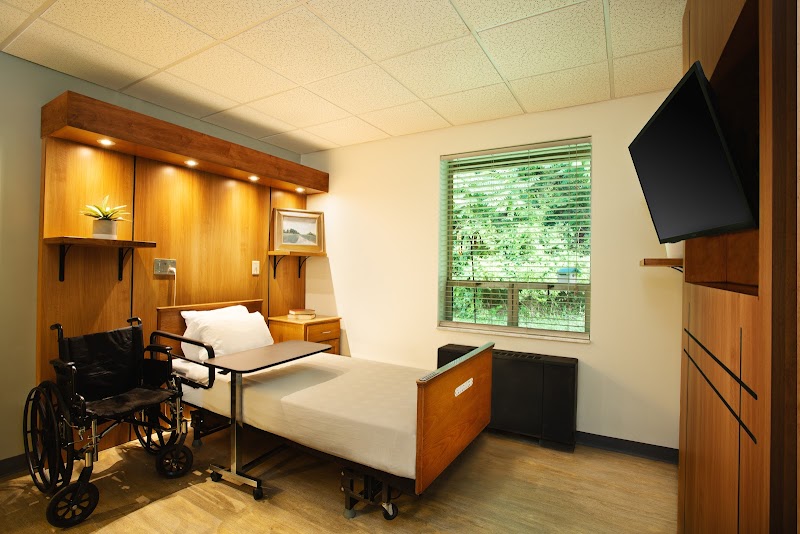
How is South Roanoke Nursing And Rehabilitation Staffed?

CMS rates SOUTH ROANOKE NURSING AND REHABILITATION's staffing level at 2 out of 5 stars, which is below average compared to other nursing homes. Staff turnover is 42%, compared to the Virginia average of 46%. This relatively stable workforce can support continuity of care.

What Have Inspectors Found at South Roanoke Nursing And Rehabilitation?

State health inspectors documented 39 deficiencies at SOUTH ROANOKE NURSING AND REHABILITATION during 2019 to 2025. These included: 39 with potential for harm.
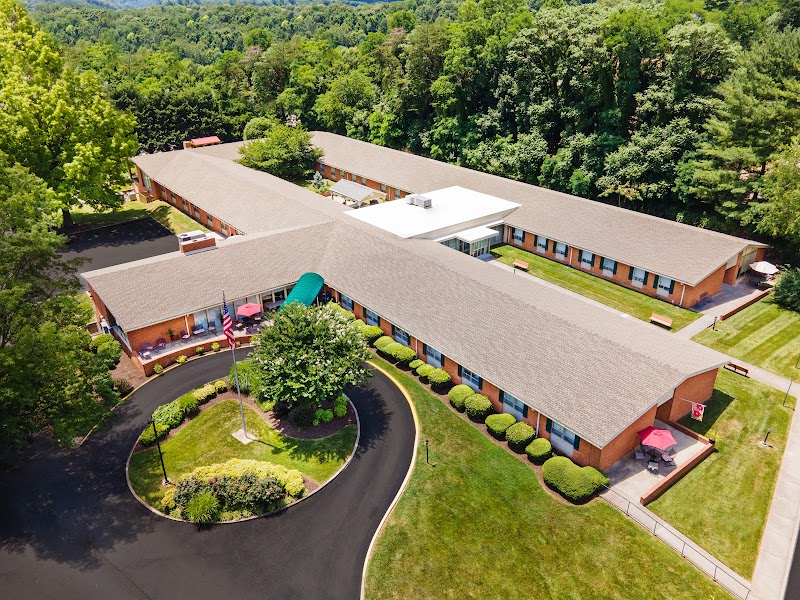
Who Owns and Operates South Roanoke Nursing And Rehabilitation?

SOUTH ROANOKE NURSING AND REHABILITATION is owned by a for-profit company. For-profit facilities operate as businesses with obligations to shareholders or private owners. The facility is operated by HERITAGE HALL, a chain that manages multiple nursing homes. With 98 certified beds and approximately 85 residents (about 87% occupancy), it is a smaller facility located in ROANOKE, Virginia.
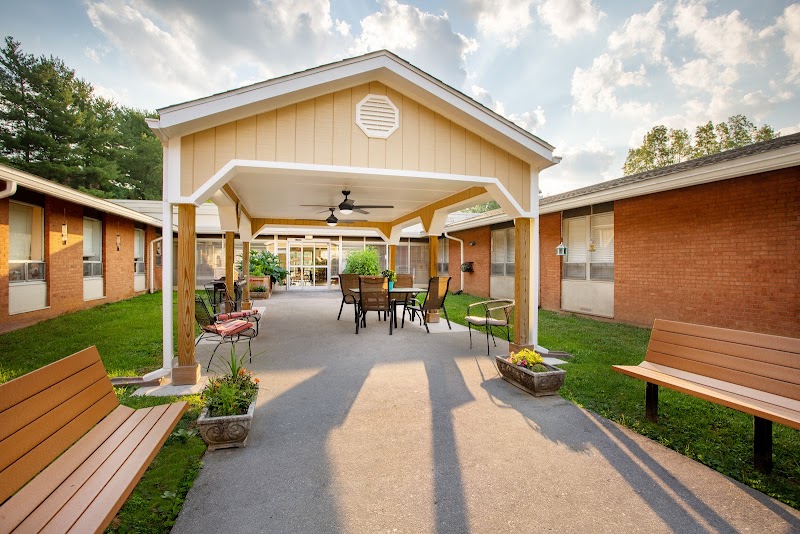
How Does South Roanoke Nursing And Rehabilitation Compare to Other Virginia Nursing Homes?

Compared to the 100 nursing homes in Virginia, SOUTH ROANOKE NURSING AND REHABILITATION's overall rating (3 stars) is below the state average of 3.0, staff turnover (42%) is near the state average of 46%, and health inspection rating (2 stars) is below the national benchmark.

What Should Families Ask When Visiting South Roanoke Nursing And Rehabilitation?

Based on this facility's data, families visiting should ask: "Can you walk me through typical staffing levels on day, evening, and night shifts?" "Can I visit during a mealtime to observe dining assistance and food quality?" "How do you handle medical emergencies, and what is your hospital transfer rate?" "Can I speak with family members of current residents about their experience?" These questions are particularly relevant given the below-average staffing rating.

Is South Roanoke Nursing And Rehabilitation Safe?

Based on CMS inspection data, SOUTH ROANOKE NURSING AND REHABILITATION has a clean safety record: no substantiated abuse findings (meaning no confirmed cases of resident harm), no Immediate Jeopardy citations (the most serious violation level indicating risk of serious injury or death), and is not on the Special Focus Facility watch list (a federal program monitoring the lowest-performing 1% of nursing homes). The facility has a 3-star overall rating and ranks #100 of 100 nursing homes in Virginia. While no facility is perfect, families should still ask about staff-to-resident ratios and recent inspection results during their visit.

Do Nurses at South Roanoke Nursing And Rehabilitation Stick Around?

SOUTH ROANOKE NURSING AND REHABILITATION has a staff turnover rate of 42%, which is about average for Virginia nursing homes (state average: 46%). Moderate turnover is common in nursing homes, but families should still ask about staff tenure and how the facility maintains care continuity when employees leave.

Was South Roanoke Nursing And Rehabilitation Ever Fined?

SOUTH ROANOKE NURSING AND REHABILITATION has no federal fines on record. CMS issues fines when nursing homes fail to meet care standards or don't correct problems found during inspections. The absence of fines suggests the facility has either maintained compliance or corrected any issues before penalties were assessed. This is a positive indicator, though families should still review recent inspection reports for the full picture.

Is South Roanoke Nursing And Rehabilitation on Any Federal Watch List?

SOUTH ROANOKE NURSING AND REHABILITATION is not on any federal watch list. The most significant is the Special Focus Facility (SFF) program, which identifies the bottom 1% of nursing homes nationally based on persistent, serious quality problems. Not being on this list means the facility has avoided the pattern of deficiencies that triggers enhanced federal oversight. This is a positive indicator, though families should still review the facility's inspection history directly.