REGENCY WENATCHEE REHABILIATION & NURSING CENTER
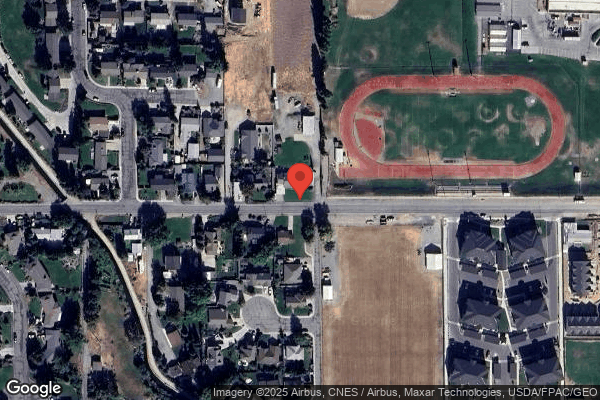
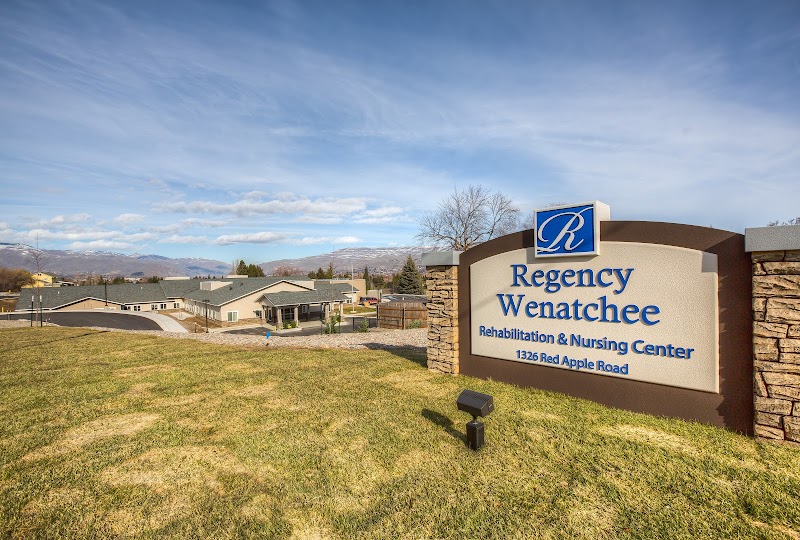
1326 RED APPLE RD, WENATCHEE, WA 98801 (509) 682-2551
For profit - Limited Liability company 55 Beds REGENCY PACIFIC MANAGEMENT Data: November 2025
Trust Grade
55/100
#115 of 190 in WA
Last Inspection: May 2025

Inspected within the last 6 months. Data reflects current conditions.

Overview

Regency Wenatchee Rehabilitation & Nursing Center has a Trust Grade of C, which means it is average and falls in the middle of the pack among nursing homes. It ranks #115 out of 190 facilities in Washington, placing it in the bottom half, but it is #2 out of 3 in Chelan County, indicating that only one local option is better. The facility is improving, with issues decreasing from 20 in 2024 to 11 in 2025. Staffing is a strength with a rating of 4 out of 5 stars and a turnover rate of 50%, which is around the state average; however, it has excellent RN coverage, being better than 99% of state facilities. There have been concerning incidents, including a resident suffering a third-degree burn from hot soup due to inadequate supervision and the failure to notify residents about their rights during hospital transfers, which could lead to confusion about their care options. Overall, while there are strengths in staffing and improvement trends, families should be aware of the specific incidents that raise concerns about resident safety and communication.

Trust Score
C
55/100
In Washington
#115/190
Bottom 40%
Safety Record
Moderate
Needs review
Inspections
Getting Better
20 → 11 violations
Staff Stability
⚠ Watch
50% turnover. Above average. Higher turnover means staff may not know residents' routines.
Penalties
✓ Good
No fines on record. Clean compliance history, better than most Washington facilities.
Skilled Nurses
✓ Good
Each resident gets 104 minutes of Registered Nurse (RN) attention daily — more than 97% of Washington nursing homes. RNs are the most trained staff who catch health problems before they become serious.
Violations
⚠ Watch
37 deficiencies on record. Higher than average. Multiple issues found across inspections.
★★★☆☆
3.0
Overall Rating
★★★★☆
4.0
Staff Levels
★★★★☆
4.0
Care Quality
★★★☆☆
3.0
Inspection Score
Stable
2024: 20 issues
2025: 11 issues

The Good

  • 4-Star Staffing Rating · Above-average nurse staffing levels
  • 4-Star Quality Measures · Strong clinical quality outcomes
  • Full Sprinkler Coverage · Fire safety systems throughout facility
  • No fines on record

Facility shows strength in staffing levels, quality measures, fire safety.

The Bad

3-Star Overall Rating

Near Washington average (3.2)

Meets federal standards, typical of most facilities

Staff Turnover: 50%

Near Washington avg (46%)

Higher turnover may affect care consistency

Chain: REGENCY PACIFIC MANAGEMENT

Part of a multi-facility chain

Ask about local staffing decisions and management

The Ugly 37 deficiencies on record

1 actual harm
May 2025 11 deficiencies 1 Harm
SERIOUS (G)

Actual Harm - a resident was hurt due to facility failures

Accident Prevention (Tag F0689)

A resident was harmed · This affected 1 resident

**NOTE- TERMS IN BRACKETS HAVE BEEN EDITED TO PROTECT CONFIDENTIALITY** Based on observation, interview, and record review, the facility failed to identify the risks and initiate interventions to prev...

Read full inspector narrative →
**NOTE- TERMS IN BRACKETS HAVE BEEN EDITED TO PROTECT CONFIDENTIALITY** Based on observation, interview, and record review, the facility failed to identify the risks and initiate interventions to prevent further accidents for 2 of 3 residents (Residents 35 and 11) reviewed for accidents. Resident 35 experienced harm when hot soup was served on the overbed table and when the resident went to pull the tray closer to them to be within reach, the soup spilt onto their lap causing a third-degree burn to the left thigh. In addition, the facility failed to provide consistent supervision, thoroughly investigate the cause of falls, and ensure interventions were put into place to prevent further falls for Resident 11. These failures placed the residents at risk for injury and/or medical complications and a decreased quality of life. Findings included . Review of an article written by the American Burn Association titled Scald Injury Prevention dated 04/25/2017, showed the time and temperatures it would take for a hot liquid to cause a third-degree burn as, 155 degrees Fahrenheit (F), one second, 148 degrees F, two seconds, 140 degrees F, five seconds, 133 degrees F, 15 seconds, 127 degrees F, one minute, 124 degrees F, three minutes, 120 degrees F, five minutes and 100 degrees F as a safe temperature. <Resident 35> Review of the medical record showed the resident was admitted to the facility on [DATE] and readmitted on [DATE] with diagnoses including a fractured pelvis, heart disease, and chronic pain. Resident 35 ' s most recent comprehensive assessment dated [DATE] showed they were cognitively intact and required moderate to maximum assistance of one to two caregivers for activities of daily living (ADLs). During an interview on 04/29/2025 at 10:07 AM with Resident 35 ' s Representative, they stated the resident received a third-degree burn on the top of their left thigh on 03/27/2025 from hot soup spilling on their lap. The Representative stated they had concerns that the soup was so hot that it caused such a serious burn and that it was taking so long to heal. They stated they felt Resident 35 ' s health status had declined in both their ability to care for themselves and cognitively since they returned from the hospital on [DATE] after falling and fracturing their pelvis and had shared this concern with the facility ' s administrative staff. During an interview on 04/30/2025 at 9:32 AM, Resident 35 stated they remembered well what had happened the day the soup spilled on their lap but could not recall the date. They stated they were eating in their room because the dining room was closed that day, and their dinner was brought to them and set on the overbed table. Resident 35 stated they went to pull the tray closer to them and the tray with the soup bowl fell off onto their lap and they felt it burn through their pants right away. Resident 35 stated they called for help and a nurse came in and helped them clean up and later told them the area was starting to blister and would call their physician. During the same interview Resident 35 stated their physician examined the burn about a week ago (prior the interview) and said it was a stage three burn and looked infected, which caused them a lot of concern. They stated they had been taking antibiotics for the burn which was still painful and itched constantly. Review of a provider note dated 04/17/2025 stated, left thigh 2/3- (second to third) degree burn observed and noted green eschar (a thick, dry, crusty layer of dead tissue that forms on the surface of a wound or burn) in the center of the wound and would be starting the resident on antibiotics. Review of the facility ' s incident report regarding the burn dated 04/01/2025 showed the resident received a burn to the top of the left thigh on 03/27/2025 from hot soup spilling in their lap. The resident ' s skin was checked at the time and a light pink area measuring 8.0 centimeters (cm) (a unit of measure) in width by 4.0 cm in length was noted to the left medial (middle) thigh. The skin was checked later that evening and the skin on the thigh was loose and a blister had formed measuring 6.5 cm in width by 2.0 cm in length. The area was cleansed and covered with a dressing and the resident ' s physician was notified. The incident report further showed that the soup was being held at a temperature of 187 degrees Fahrenheit (F) on the tray line in the kitchen, an appropriate temperature to allow for cooling during service. Per the Registered Dietician statement, the soup likely would have cooled as much as 20 degrees F or more at the time of delivery to the resident. Review of Resident 35 ' s care plan last revised on 11/29/2024 showed they were independent with eating and set up. An updated intervention on the care plan dated 04/04/2025 showed when the resident ate in their room, staff would provide frequent checks to ensure the resident did not require any assistance during the meal and all items were within reach and easily accessible before leaving the room. Review of the facility ' s kitchen temperature logbook showed staff were to take the temperature of the food prior to the tray line service and again halfway through the tray line service. Review of the temperatures of the food for dinner on 03/27/2025 showed the holding temperature for soup was 187 degrees F both prior to serve out and mid serve out. Review of soup temperatures from 03/27/2025 through 04/17/2025 for dinner showed the lowest holding temperature as 175 degrees F and the highest holding temperature as 196 degrees F with varying degrees in between the high and low temperatures noted. During an interview with the Staff L, Dietician, on 04/30/2025 at 12:35 PM, they stated the facility kitchen staff followed the regulations that required certain foods to be cooked to a specific degree for food safety and all hot foods needed to be held at a temperature of 135 degrees F or higher to prevent food borne illness and then to a temperature that was palatable (pleasant to taste) for the residents. Staff L stated the facility did not hold food or drink to the degrees to prevent possible burns if spilled on a resident as different foods and drinks have different palatable tastes, but if there is a concern that a resident was not physically or cognitively able to safely handle hot liquids, then an individual assessment of the resident ' s competence to do so should be completed. During an interview with Staff M, Dietary Manager (DM) on 05/01/2025 at 12:44 PM, they stated they kept soup in the holding cabinet warmer in soup bowls prior to serve out or the kitchen staff microwaved the soup and sent it out if the soup was cold. Staff M stated when residents asked for soup and had not preordered it for the meal, the staff would microwave the soup for them. The DM stated they did not take the temperature of the soup after it came out of the microwave and had no process or direction in place on how long to microwave the soup or any food, but usually did it for two or three minutes, or until it seemed hot. In addition, Staff M did not know how long it took for staff to deliver the food to the residents after it was microwaved or if Resident 35 ' s soup was kept in the holding cabinet or microwaved prior to serving them on 03/27/2025. Observation of the wound on 05/02/2025 at 9:47AM, while being toileted by a nursing assistant, showed a 4.0 cm width by 2.0 cm length wound to the left medial thigh with black eschar in the center of the wound with surrounding redness. The resident stated the wound hurt all the time but hurt the worst when the dressings were changed on it. During an interview with Staff A, Administrator, on 05/01/2025 at 4:17 PM, they stated the facility did not do any follow up assessments on Resident 35 to see if they were capable of handling hot liquids at a high temperature after they obtained the burn on 03/27/2025 to possibly prevent burns in the future. During an interview with Staff B, Director of Nursing and Staff C, Regional Clinical Director on 05/06/2025 at 12:25 PM, they stated no further follow up was completed for Resident 35 after the burn happened to see if they could competently handle hot liquids while eating or drinking to mitigate the risk for repeated burns from occurring. <Resident 11> Review of the medical record showed the resident was admitted to the facility on [DATE] with diagnoses including dementia and degenerative joint disease (a type of arthritis characterized by the breakdown of [NAME] in the joints causing pain, stiffness and decreased movement) in both knees. Resident 11's most recent comprehensive assessment dated [DATE] showed they had moderately impaired cognition and required minimum to moderate assistance of one to two caregivers for activities of daily living (ADL's) and could not ambulate. During an observation and interview with Resident 11 on 05/02/2025 at 11:13 AM, showed them sitting in their wheelchair in their room looking out the window. Resident 11 stated they had never had a fall in their room or bathroom and could walk independently without any assistance. Review of the facility reporting logbook showed Resident 11 had nine falls in the facility within the past five months. November 2024 through March 2025. Review of the facility incident reports for Resident 11 showed they had two observed falls on 11/14/2024 and 12/23/2024 and seven unobserved falls on 11/04/2024, 12/26/2024, 01/13/2025, 02/19/2025, 03/01/2025, 03/13/2025 and 03/31/2025. None of the unobserved falls had witness statements attached showing a thorough investigation was completed into the possible causes of the falls or that abuse, and neglect had thoroughly been ruled out as a cause of the falls. Review of Resident 11's care plan initiated on 03/03/2021 and last revised on 04/07/2025, showed the resident was at risk for falls r/t pain, weakness, deconditioning, degenerative joint disease in both knees, vertigo (dizziness), history of falls, cognitive impairment, profound hearing loss, epilepsy (a seizure disorder), impulsiveness, impaired vision, poor decision making, and overestimating abilities. Further review of the care plan showed the problem of being at a high risk for falls and goals to be free of falls were updated on 01/13/2025, 03/18/2025 and 04/07/2025, additional interventions to decrease the risk for falls were only initiated for the two of the nine falls dated 01/13/2025 and 02/19/2025. During an interview with Staff B, DON and Staff C, RCD on 05/07/2025 at 12:48 PM, they both acknowledged that thorough investigations into the causes of the falls and to ensure abuse or neglect was not the cause of the falls was not completed. In addition, they both acknowledged that limited interventions were put into place after the falls to prevent future falls and keep Resident 11 as safe as possible. Reference: WAC 388-97-1060(3)(g)
CONCERN (D)

Potential for Harm - no one hurt, but risky conditions existed

Grievances (Tag F0585)

Could have caused harm · This affected 1 resident

**NOTE- TERMS IN BRACKETS HAVE BEEN EDITED TO PROTECT CONFIDENTIALITY** Based on interview and record review, the facility failed to ensure grievances (resident and/or resident representative concerns...

Read full inspector narrative →
**NOTE- TERMS IN BRACKETS HAVE BEEN EDITED TO PROTECT CONFIDENTIALITY** Based on interview and record review, the facility failed to ensure grievances (resident and/or resident representative concerns that can be voiced or written) conveyed to staff underwent prompt resolution and appropriately updated residents on the grievance progress/conclusion for 1 of 2 residents (Resident 46) reviewed for grievances. This failure placed residents at risk for unresolved concerns and unmet care needs. Findings included . Review of the facility policy titled, Grievances Procedure, revised August 2023, showed the facility would ensure each residents' right to .voice grievances (such as those about treatment, care, management of funds, lost clothing, or violation of rights) . and that facility staff were responsible for making prompt efforts to resolve a grievance and to keep the resident appropriately apprised (updated on information) of progress towards the residents grievance resolution. The policy showed the facility would .have a process in place for identification, investigation and follow-up of resident/resident representative grievances in a timely manner, and that residents had a right to obtain a written decision regarding their grievance. Additionally, the policy showed the facility would ensure that grievance decisions included the date the grievance was received, a summary of the resident's grievance, the steps taken to investigate the grievance, and the finding or conclusions of the grievance and the date the written decision was issued. <Resident 46> Review of the resident's medical record showed they were admitted to the facility on [DATE] with diagnoses including pneumonia (an infection in the lungs, that can cause a build-up of fluid, making it difficult to breathe), insomnia (difficulty falling and/or staying asleep), sepsis with septic shock (a potentially life-threatening condition that comes when the body's response to an overwhelming infection causes injury to its own tissues and organs) and delirium (a serious change in metal ability that causes confused thinking and lack of awareness of surroundings and can be caused by infections). The 04/14/2025 comprehensive assessment showed that Resident 46 had a moderately impaired cognition with evidence of delirium but was able to make their needs known. During an interview on 04/28/2025 at 2:09 PM, when asked if they were missing any personal items, Resident 46 stated that right after their admission to the facility, 193 dollars in cash went missing, but the facility staff found 93 dollars of it. Resident 46 stated they had a conversation with Staff A, Administrator, about the missing money after the facility had found the 93 dollars, but they had not received any money back nor an update since Staff A had informed them that an investigation would be conducted into the missing money. During an interview on 04/30/2025 at 9:26 AM, Staff N, Laundry/Housekeeping Supervisor, stated the process when money was found in the laundry room was to fill out a grievance form and then give the money over to the Administrator to continue the grievance process. Staff N stated that a weekend laundry aid contacted Staff A and informed them that they had found 93 dollars in cash, which belonged to Resident 46. Staff A stated the money was found the day after the resident had been admitted to the facility and the weekend laundry aid put the money under the Administrator's locked door. During a follow-up interview on the same day at 10:43 AM, Staff N stated they were unaware of the additional 100 dollar amount of cash that Resident 46 stated was in their clothes and would have investigated further by interviewing the laundry aid/looking into where the money might have gone. Review of the facility's grievance log for April 2025, showed no documentation of grievance regarding missing money. During an interview on 04/30/2025 at 10:01 AM Staff A stated that if a resident was missing cash monies in the facility the grievance process would be started, and the facility would try to get them a locked drawer for the money. When asked about Resident 46's missing money, Staff A stated they intended to go through the grievance process, I probably missed that one, since a grievance form was not filled out and the resident informed Staff A that there was 100 more dollars that was in the resident's pants pocket, in addition to the 93 dollars found in the laundry. Staff A stated they did not have documentation of the steps taken to investigate and/or the resolution/conclusion of Resident 46's grievance. Reference: WAC 388-97-0460(2)
CONCERN (D)

Potential for Harm - no one hurt, but risky conditions existed

Report Alleged Abuse (Tag F0609)

Could have caused harm · This affected 1 resident

**NOTE- TERMS IN BRACKETS HAVE BEEN EDITED TO PROTECT CONFIDENTIALITY** Based on interview and record review, the facility failed to ensure nursing staff reported, witnessed verbal and physical abuse,...

Read full inspector narrative →
**NOTE- TERMS IN BRACKETS HAVE BEEN EDITED TO PROTECT CONFIDENTIALITY** Based on interview and record review, the facility failed to ensure nursing staff reported, witnessed verbal and physical abuse, to the State Agency, immediately, but no later than two hours after the abuse took place, for 1 of 3 residents (Residents 41), reviewed for abuse/neglect. This failure placed the residents at risk for unidentified abuse/neglect, and the potential continued exposure to abuse and/or neglect. Findings included . Review of the facility's policy titled, Abuse/Neglect/Misappropriation/Exploitation, revised October 2022, showed that all facility employees were mandated reporters that must immediately report when there was a reasonable cause to believe an incident of abuse occurred. The facility policy stated all alleged violations involving abuse were to be reported immediately, but not later than two hours after the event had taken place. <Resident 41> Review of the medical record showed the resident was admitted to the facility on [DATE] with diagnoses including right below the knee amputation (BKA, removal of a body part) surgical aftercare, anxiety, long term pain, and peripheral vascular disease (PVD, a narrowing or blockage of blood vessels, leading to reduced blood flow, primarily to the legs and feet, with common symptoms including leg pain and non-healing wounds). The 04/26/2025 comprehensive assessment showed Resident 41 had moderate cognitive impairment but was able to make their needs known. Review of Resident 41's incident investigation, dated 04/24/2025 at 9:00 AM, showed that on 04/24/2025 at 3:40 AM Staff H, Nursing Assistant (NA), witnessed Staff I, Registered Nurse (RN), when providing care , grabbed Resident 41's left arm and shoved the resident while cursing at the resident, telling the resident to Stop (Resident 41's), f*****g s**t. During an interview on 04/29/2025 at 10:25 AM, Resident 41 stated they could not remember the exact date of the incident, but the incident happened in the early morning when the nurse and nursing assistants (NA) had come into the room to change the resident brief. Resident 41 stated Staff I got hostile (showing strong dislike and unfriendly) because the resident was not turning to their side fast enough during incontinent care. During an interview on 05/01/2025 at 5:01 PM, Staff H stated they had gone in/out of Resident 41's room early on the morning of 04/24/2025, and upon entering back into the resident room, after grabbing supplies, Staff H witnessed Staff I grabbing Resident's 41 arm, as the resident swung at Staff I, and Staff I proceeded to pushed the residents arm down while cussing at the resident to stop. Staff H stated they did not report the witnessed verbal and physical abuse to any other staff or State Agency until around 7:30 AM to 8:00 AM, when they texted Staff A, Administrator. During an interview on 05/02/2025 at 11:29 AM, Staff B, Director of Nursing Services, stated they were informed of the allegation of verbal and physical abuse towards Resident at 9:00 AM on 04/24/2025 by Staff H. Staff B stated that the report to the State Agency was made after Staff B became aware of the allegations. Staff B stated a report to the State Agency should have been made immediately after being witnessed by Staff H or within two hours. Staff B stated the correct process for reporting abuse allegations was not followed. Reference: WAC 388-97-0640(5)(a)
CONCERN (D)

Potential for Harm - no one hurt, but risky conditions existed

Investigate Abuse (Tag F0610)

Could have caused harm · This affected 1 resident

**NOTE- TERMS IN BRACKETS HAVE BEEN EDITED TO PROTECT CONFIDENTIALITY** Based on interview and record review, the facility failed to immediately implement effective measures in the protection of a res...

Read full inspector narrative →
**NOTE- TERMS IN BRACKETS HAVE BEEN EDITED TO PROTECT CONFIDENTIALITY** Based on interview and record review, the facility failed to immediately implement effective measures in the protection of a resident from further abuse/neglect, nor conduct a thorough investigation into an allegation of abuse for 2 of 3 residents (Residents 41 and 11), reviewed for abuse and neglect. This failure placed the residents at risk for unidentified abuse, unmet care needs, and the potential for continued exposure to abuse and/or neglect. Findings included . Review of the facility's policy titled, Abuse/Neglect/Misappropriation/Exploitation, revised October 2022, showed that it was the facility's policy to protect residents from abuse and .All alleged incidents of abuse, neglect, misappropriation of resident property and injuries of unknown source must be thoroughly investigated . The policy showed the investigator would collect as much data as needed to be able to reach a reasonable conclusion and that data collection could involve .Interview assigned caregiver, caregivers in the immediate area, caregivers from the shift prior to the incident's discovery, visitors, family, roommates and the alleged perpetrator .' Additionally, the policy showed .Protecting the resident from further harm means keeping the resident safe by .immediately suspend the alleged perpetrator .having a trusted person stay with the resident . <Resident 41> Review of the medical record showed the resident was admitted to the facility on [DATE] with diagnoses including right below the knee amputation (BKA, removal of a body part) surgical aftercare, anxiety, long term pain, and peripheral vascular disease (PVD, a narrowing or blockage of blood vessels, leading to reduced blood flow, primarily to the legs and feet, with common symptoms including leg pain and non-healing wounds). The 04/26/2025 comprehensive assessment showed Resident 41 had moderate cognitive impairment but was able to make their needs known. Review of the alleged abuse investigation, dated 04/24/2025 at 9:00 AM, showed that Staff H, Nursing Assistant (NA), reported to the Administrator and Director of Nursing Services (DNS), that they had witnessed Staff I, Registered Nurse (RN), physically and verbally abuse Resident 41 when administering medications and providing care to the resident. Staff H stated that Resident 41 had requested a suppository medication (a type of drug, inserted through the rectum) to help them have a bowel movement. Staff H stated that Staff I's inserted the suppository medication incorrectly, and Resident 41 yelled at Staff I you're hurting me. Staff H stated that both Staff H and Staff I left the resident's room to gather supplies and upon Staff H's reentry to Resident 41's room they overheard the resident telling Staff I you're hurting me you b***h, and witnessed Resident 41 swinging her left arm at Staff I and Staff I grabbing the resident's left arm and proceeded to shove while cursing at the resident, telling the resident to Stop (Resident 41) f*****g s**t. The investigation showed Resident 41 stated that when the suppository was inserted incorrect the resident threw their arm up at Staff I to get the staff members attention and Staff I grabbed the resident's arm and pushed them, The nurse is rude and was rough with me. Resident 41 requested their emergency contact to be informed about the incident. Additionally, no interview with Resident 41's representative (RR) was documented. Further review of the 04/24/2025 alleged abuse investigation showed Staff H conveyed the witnessed abuse to the Director of Nursing Services (DNS) on 04/24/2025 at 9:00 AM and then Staff I, who had already completed their night shift, was suspended pending the investigation and safety of Resident 41 was ensured. The investigation showed that Staff H feared the nurse and so did not report the witnessed event until after their shift had ended. During an interview on 04/29/2025 at 10:25 AM, Resident 41 was unable to remember specifics about the incident at certain times, was not interested in talking more about the incident and did not remember the suppository medication that was administered by Staff I. Resident 41 then stated that during the incident Staff I was really mean and aggressive when providing cares, because the resident was not turning to their side fast enough and they did not feel safe with Staff I. During a follow-up interview on 04/30/2025 at 2:36 PM Resident 41 was forgetful/confused on specifics related to the incident but then stated feeling uncomfortable and helpless with the way Staff I provided care to them. During an interview on 05/01/2025 at 5:01 PM, Staff H stated that after witnessing the incident of abuse in Resident 41's room. Staff H stated they did not report the witnessed abuse to any other staff until around 7:30 AM to 8:00 AM, when they notified the Administrator. Staff H stated they did not report to the State Agency hotline number. Staff H stated they did not protect the resident from further harm and was afraid of the nurse, so after the incident went back to their regular duties. When asked if Staff I had gone back into Resident 41's room, Staff H stated that it was possible. During an interview on 05/02/2025 at 7:13 AM, Staff A, Administrator, stated that interviews with other staff, Resident 41's roommate and other residents were completed during the investigation and did not correlate with Staff H's witnessed statements of verbal/physical abuse by Staff I on Resident 41. Staff A stated that none of the interviews conducted corroborated (to support with evidence or make something more certain) with the allegations brought forth by Staff H. Staff A stated the investigation had been completed and education was performed on Staff I regarding the incorrect insertion of the suppository medications. During an interview on 05/02/2025 at 9:20 AM, Resident 41's Representative (RR), stated they had known the resident for 14 years now and were notified by the Administrator about the incident. The RR stated they came to talk with Resident 41 after they got off work. The RR stated Resident 41 stated that Staff I was hurting them, pushing them and the resident felt helpless in the situation. RR stated, (Resident 41) did feel abused and did not feel safe with Staff I and did not want that nurse working with them anymore. (Resident 41) was frightened. During an interview on 05/02/2025 at 11:29 AM, Staff B, DNS, stated they had interviewed Resident 41, other residents, staff and the RR. When inquiring about the RR, Staff B stated that Resident 41 did not have family, and the resident had requested to talk with their RR after the incident/allegation of abuse took place. Staff B stated the RR came in to talk with Resident 41 on the 24th or 25th of April 2025 but was unsure of the exact date/time. Staff B stated that per Resident 41, Staff I was rude, rough and fast when providing care, but felt safe with the staff member. Staff B stated the resident's recollection of the events was not good and that it would change. Staff B stated that staff/resident interviews conducted could not corroborate the allegations brought forth by Staff H and the investigation was completed. When informed of RR interview, Staff B stated they were unaware of information conveyed to the RR by Resident 41 and thought Staff A had interviewed the RR and that the RR did not have any concerns. Staff B stated the correct process was not followed and the investigation was not thorough. Staff B stated the investigation would have to be reopened and follow-up with the RR. During an interview on 05/05/2025 at 5:11 PM, Staff C, Regional Clinical Director (RCD), stated that Staff H should have protected Resident 41 after witnessing the alleged abuse by Staff I. Staff C stated the protection of the resident from further harm was not implemented, Staff I still had access to Resident 41 after the witnessed abuse and the correct process was not followed. <Resident 11> Review of the medical record showed the resident was admitted to the facility on [DATE] with diagnoses including dementia and degenerative joint disease (a type of arthritis characterized by the breakdown of [NAME] in the joints causing pain, stiffness and decreased movement) in both knees. Resident 11 ' s most recent comprehensive assessment dated [DATE] showed they had moderately impaired cognition and required minimum to moderate assistance of one to two caregivers for activities of daily living (ADL ' s) and could not ambulate. During an observation and interview with Resident 11 on 05/02/2025 at 11:13 AM, showed them sitting in their wheelchair in their room looking out the window. Resident 11 stated they had never had a fall in their room or bathroom and could walk independently without any assistance. Review of the facility reporting logbook showed Resident 11 had nine falls in the facility within the past five months. November 2024 through March 2025. Review of the facility incident reports for Resident 11 showed they had two observed falls on 11/14/2024 and 12/23/2024 and seven unobserved falls on 11/04/2024, 12/26/2024, 01/13/2025, 02/19/2025, 03/01/2025, 03/13/2025 and 03/31/2025. None of the unobserved falls had witness statements attached showing a thorough investigation was completed into the possible causes of the falls or that abuse, and neglect had thoroughly been ruled out as a cause of the falls. Review of Resident 11 ' s care plan initiated on 03/03/2021 and last revised on 04/07/2025, showed the resident was at risk for falls related to pain, weakness, deconditioning, degenerative joint disease in both knees, vertigo (dizziness), history of falls, cognitive impairment, profound hearing loss, epilepsy (a seizure disorder), impulsiveness, impaired vision, poor decision making, and overestimating abilities. Further review of the care plan showed the problem of being at a high risk for falls and goals to be free of falls were updated on 01/13/2025, 03/18/2025 and 04/07/2025. Additional interventions to decrease the risk for falls were only initiated for the two of the nine falls dated 01/13/2025 and 02/19/2025. During an interview with Staff B, DON and Staff C, RCD, on 05/07/2025 at 12:48 PM, they both acknowledged that thorough investigations into the causes of the falls and to ensure abuse or neglect was not the cause of the falls was not completed. In addition, they both acknowledged that limited interventions were put into place after the falls to prevent future falls and keep Resident 11 as safe as possible. Reference: WAC 388-97-0640 (2)(a)(6)(a)
CONCERN (D)

Potential for Harm - no one hurt, but risky conditions existed

Deficiency F0645 (Tag F0645)

Could have caused harm · This affected 1 resident

Based on observation, interview, and record review, the facility failed to ensure a Preadmission Screening and Resident Review [(PASARR) a process to determine if a potential nursing home resident had...

Read full inspector narrative →
Based on observation, interview, and record review, the facility failed to ensure a Preadmission Screening and Resident Review [(PASARR) a process to determine if a potential nursing home resident had mental health/intellectual disability needs which required further assessment/treatment] accurately reflected residents' mental health conditions for 1 of 5 residents (Resident 39) reviewed for PASARR accuracy. This failure placed the residents at risk for inappropriate nursing home placement and/or not receiving timely and necessary services to meet their mental health needs. Findings including . Review of a policy titled, Pre-admission Screening and Resident Review, revised 06/2024, showed prior to admitting a resident, the admission coordinator or designee would request a PASARR Level I screening. The Level I screening must be completed prior to admission to identify individuals who have or may have a serious mental illness or related condition. A negative screen would permit admission and end the pre-screening process. Those individuals identified with any qualifying criteria, or a positive screen would require a PASARR Level II referral for evaluation and determination prior to admission to the facility. Social Services was responsible to review the PASARR to verify accuracy. <Resident 39> Review of the medical record showed Resident 39 was admitted to the facility with diagnoses including dementia (a progressive disease that destroys memory and other important mental functions), delirium (a sudden change in mental state characterized by confusion, disorientation), hallucinations (sensory perceptions that occur in the absence of a real external stimulus), anxiety, and depressive disorder. The 04/25/2025 comprehensive assessment showed Resident 39 required substantial/maximum assistance of one staff member for activities of daily living (ADLs) and had a severely impaired cognition. The assessment also showed Resident 39 was receiving hospice services. Record review of Resident 39's medical record showed a PASARR Level I form, dated 04/14/2025, showed Resident 39 had no serious mental illness indicators, no evidence of serious functional limitation during the past six month related to a serious mental illness, and had not had psychiatric treatment greater than outpatient care or experienced a significant disruption to the normal living situation. The PASARR Level I form showed no Level II evaluation was indicated for Resident 39, despite their mental health diagnoses of dementia, delirium, hallucinations, anxiety, and depressive disorder. During a concurrent observation and interview on 05/02/2025 at 11:41 AM, Staff K, Social Services Director, review Resident 39's PASARR Level I form. Staff K stated they were responsible to ensure the facility received the PASARR Level I form prior to admission and to review it for accuracy. Staff K stated Resident 39's PASARR form was filled out incorrectly and it should have been sent for a PASARR Level II evaluation prior to admission. Staff K stated they were unsure why they had not caught the error. They stated if they had realized the form was incorrect, they would have sent it to the admissions coordinator to reach out to the hospital case manager for accuracy. During an interview on 05/02/2025 at 11:52 AM, Staff A, Administrator, stated the admissions coordinator was responsible for the initial review of the PASARR Level I form to ensure it was accurate before admitting the resident. They stated a second check was completed by the Social Services Director. Staff A stated they were not sure how Resident 39's incorrect PASARR got by us. Reference: WAC 388-97-1915(1)(2)(a-c)
CONCERN (D)

Potential for Harm - no one hurt, but risky conditions existed

Deficiency F0658 (Tag F0658)

Could have caused harm · This affected 1 resident

**NOTE- TERMS IN BRACKETS HAVE BEEN EDITED TO PROTECT CONFIDENTIALITY** Based on observation, interview, and record review, the facility failed to ensure services provided met professional standards o...

Read full inspector narrative →
**NOTE- TERMS IN BRACKETS HAVE BEEN EDITED TO PROTECT CONFIDENTIALITY** Based on observation, interview, and record review, the facility failed to ensure services provided met professional standards of practice regarding, A) a residents Central Vascular Access Device (CVAD, also known as a central line, is a thin, soft tube that is inserted into a main vein in the arm, leg, or neck for long-term administration of antibiotics, medication, nutrition, and/or blood draws) dressing change and medication administration after nursing staff noted the central line migration (movement of the tubing from its original position) for 1 of 4 residents (Residents 32) reviewed for central lines, B) nursing staff failing to process, initiate, and follow physician orders with residents wound care for 1 of 4 residents (Resident 41) reviewed for wound care orders. This failed practice placed residents at risk for improper medication delivery, a delay in treatment, and adverse outcomes. Findings included . Review of the facility's guidance titled, Central Vascular Access Device Dressing Change, revised 01/15/2004, showed a Peripherally Inserted Central Catheter (PICC) was a specific type of central line, the dressing on all CVAD's should be dated, so a dressing change schedule could be started for every seven days and .upper arm circumference (a measurement around a residents arm, used as a baseline to detect possible swelling or blood clots) with PICC, and external catheter length measurement must still be completed as part of the initial assessment . The facility's guidance showed that the external catheter measurement was to be obtained upon admission, during dressing changes and that a securement/stabilization device (a small attachment that helps anchor the PICC line in place, to the skin, and prevent migration of the line) should be used and to not removed during a PICC line dressing change. Additionally, the facility's guidance showed that when changing the PICC line dressing, staff should not .disturb (to move or change something from its usual position) catheter . or remove the securement device. Review of Lippincott's nursing procedures manual, 8th edition, Peripherally Inserted Central Catheter Use, dated 2019, showed that a stabilization device should be used to decrease the risk of unintentional movement of the catheter or dislodgement which could lead to complications. Additionally, movement of the catheter should be avoided but if noted during a dressing change that the catheter has migrated more than two centimeters (cm, a unit of measure) a provider should be notified due to the need to confirm if the PICC is still in the correct position. <Resident 32> Review of the medical record showed the resident was admitted to the facility on [DATE] with diagnoses including bone infection and right-hand surgical aftercare. The 04/06/2025 comprehensive assessment showed the resident had a PICC line for antibiotic therapy, was cognitively intact and able to make their needs known. Review of the resident admission assessment dated [DATE] showed the resident was receiving intravenous (IV, the administration of medications or fluids directly into a person's vein) therapy with antibiotics for their bone infection with an IV insertion date of 04/04/2025. The assessment did not show the external catheter length measurement or the upper arm circumference measurement. During an observation on 04/29/2025 at 9:10 AM, showed Resident 32 in their room. The resident's PICC line had a change date of 04/23/2025 handwritten on the top of the dressing and a small two inch (in, a unit of measure) long by ¼ in wide amount of blood was noted under the PICC line dressing. The external catheter length and time of the last dressing change were not noted on the dressing. During an interview on 05/01/2025 at 12:54 PM, while in Resident 32's room observing the PICC line dressing, Staff O, Registered Nurse (RN), stated they did not know the external catheter length and the blood noted under the dressing was recent since the last dressing change. During a concurrent observation and interview on 05/01/2025 at 1:28 PM, Staff O was in Resident 32's room performing a PICC line dressing change. Staff O stated they remembered the external catheter length was six cm but was unsure if it was documented. Observations showed after removing the old dressing, Staff O picked up and moved the placement of the PICC line from a downward position, where the PICC line access ports were pointing toward the residents elbow, to an upward position, where the PICC line access ports were pointing toward the resident's armpit and then continued to flip/rotate the PICC line two more times (no securement device was in place). Staff O measured the external catheter length and noted that it had been pulled out from six cm to nine cm. Staff O did not measure Resident 32's upper arm circumference. During an interview on 05/01/2025 at 2:07 PM, Staff D, RN/Resident Case Manager (RCM), stated the process for admission/assessments of residents with PICC lines would include documenting the external catheter length. Staff D was unable to find documentation showing Resident 32's external PICC length or upper arm circumference. Staff D stated the external length of the PICC line was needed to assess if migration of the line took place. Staff D stated that when migration of the PICC line was noted, the line would no longer be used for infusion of medications and the provider would be notified. During an interview on 05/01/2025 at 2:19 PM, Staff B, Director of Nursing Services, and Staff C, Regional Clinical Director, stated that when a resident was admitted with a PICC line a group of orders were to bed and included the external catheter length. Staff B stated the process for central lines included assessing the PICC lines external catheter length and the upper arm circumference, so that migration of the catheter line or complications with swelling could be noted/acted upon. Staff B stated they were unable to find Resident 32's external catheter length or upper arm circumference and the correct process was not followed. Staff B and Staff C stated they were informed that Resident 32's PICC line catheter had migrated from six cm to nine cm, so Resident 32's IV medication infusions should be stopped and a notification to the provider would be completed before utilizing the residents PICC line. During a concurrent observation, upon the surveyor and Staff B entering Resident 32's room, and interview on 05/01/2025 at 2:45 PM showed IV medication infusing through the residents PICC line. Staff B stated the IV medication should not be infused through the PICC line since the line had migrated and Staff O did not follow the correct process. Staff B stated they were going to stop the infusion immediately. During an interview on 05/01/2025 at 3:21 PM, Staff B stated that during a CVAD/PICC dressing change the catheter should not be moved from its usual position and Staff O's moving the catheter placement and flipping/rotating catheter during a central line dressing change was not the correct process. <Resident 41> Review of the medical record showed the resident was admitted to the facility on [DATE] and readmitted from the hospital on [DATE] with diagnoses including right below the knee amputation (BKA, removal of a body part) surgical aftercare, anxiety, long term pain, and peripheral vascular disease (PVD, a narrowing or blockage of blood vessels, leading to reduced blood flow, primarily to the legs and feet, with common symptoms including leg pain and non-healing wounds) with a history of PVD angioplasty (a procedure to open the blocked or narrowed arteries in the legs). The 04/26/2025 comprehensive assessment showed Resident 41 had moderate cognitive impairment but was able to make their needs known. Review of the hospital physician's transfer orders dated 04/22/2025, showed Resident 41 right BKA was to have a dressing change every other day/as needed and to apply betadine (a solution that is used to disinfect skin and prevents further infections) over the incision site. The transfer orders stated the left fourth toe was necrotic (a term used to describe the death of living tissue due to a lack of blood supply) and .gauze to keep in between 4th/5th toe . Review of the admission assessment dated [DATE] at 11:36 AM, showed Staff P, RN/RCM, stated that Resident 41's fourth toe on their left foot was necrotic and was to be painted with betadine every other day. Review of Resident 41's provider orders dated 04/25/2025, showed that nursing staff input orders for necrotic 4th digit left toe: monitor daily. Notify MD (facility provider) of any change or if it falls off. every shift. No orders for a dressing change or gauze placement for the resident's necrotic toe were noted. During a concurrent observation and interview on 04/29/2025 at 11:36 AM, Resident 41 was noted lying in bed with their left foot open to the air. The resident's fourth toe on the left foot was necrotic and no dressing was in place. Resident 41 was unsure if a dressing was in place between their toes on their left foot, but did not have their pressure relieving boot in place under their left foot so they could let it air out. During a concurrent observation and interview on 05/01/2025 at 11:52 AM, Resident 41 was noted in their room with Staff Q, RN and Staff R, Medical Provider, performing a dressing change on the resident's right BKA. No dressing or gauze noted in between the resident's left [NAME] necrotic 4th toe. After the resident's right BKA dressing was completed Staff R inquired about the resident left fourth necrotic toe and Staff Q stated that they were not performing a dressing change for the residents necrotic fourth toe and were to be monitoring the toe daily. During an interview on 05/01/2025 at 12:38 PM, Staff Q stated that no dressing had been in place for Resident 41's left foot necrotic toe since the resident's readmission on [DATE]. Staff Q stated they looked at the orders in a resident chart and it was not their process to look at the wound care transfer orders from the hospital. During an interview on 05/01/2025 at 12:51 PM, after reviewing Resident 41's wound care transfer orders, Staff R stated that nursing staff should have been completing a dressing change for the resident's necrotic 4th toe. Staff R stated the necrotic toe's dead tissue should have been separated from the living tissue of the resident's other toes. During an interview on 05/05/2025 at 3:30 PM, Staff P stated they completed the admission assessment for Resident 41. Staff P stated they had missed the orders to have the gauze in-between the resident necrotic fourth/fifth toe, and they did not read through the whole order. During an interview on 05/05/2025 at 4:34 PM, Staff C, Regional Clinical Director, stated that Resident 41's physician's orders transfer orders from the hospital were not processed or initiated correctly and nursing staff were not following the orders regarding the resident's wound care. Reference: WAC 388-97-1620(2)(b)(ii)
CONCERN (D)

Potential for Harm - no one hurt, but risky conditions existed

Deficiency F0761 (Tag F0761)

Could have caused harm · This affected 1 resident

Based on observation, interview, and record review, the facility failed to follow the Centers for Disease Control [(CDC) a public agency that protects the public's health and well-being] guidance for ...

Read full inspector narrative →
Based on observation, interview, and record review, the facility failed to follow the Centers for Disease Control [(CDC) a public agency that protects the public's health and well-being] guidance for temperature monitoring of vaccines in 1 of 1 medication storage refrigerators (Refrigerator 1) reviewed for medication storage. This failure placed the residents at risk of receiving compromised or ineffective vaccines and negative outcomes. Findings included . Review of the CDC guidance titled, Vaccine Storage and Handling, dated 04/03/2024, showed to ensure safety of vaccines, the refrigerator must have a reliable temperature monitoring device with the recommended use of a recording device called a digital date logger (DDL-a device that records temperatures at least every 30 minutes). The guidance further showed when a DDL was not used, the facility should monitor and record the vaccine refrigerator temperature at a minimum of twice daily. Review of a policy titled Storage and Expiration Dating of Medications and Biologicals, revised 08/01/2024, showed the facility would ensure medication and biologicals were stored at their appropriate temperatures according to the guidelines for temperature ranges and manufacturer guidance. Facility staff should monitor cold storage containing vaccines two times daily per CDC guidelines. An observation on 05/06/2025 at 8:39 AM, accompanied by Staff C, Regional Clinical Director, showed a temperature log posted to the front of Refrigerator 1. The temperature log showed once a day temperature monitoring for the months of March 2025, April 2025, and May 2025. Refrigerator 1 contained influenza (a contagious respiratory virus caused by the influenza virus) and pneumococcal (an invasive bacterial infection) vaccines. During an interview on 05/06/2025 at 9:34 AM, Staff C stated the vaccines stored in Refrigerator 1 required twice daily monitoring. Staff C stated the facility had posted the wrong temperature log for staff to complete. Reference: WAC 388-97-1300(2)
CONCERN (D)

Potential for Harm - no one hurt, but risky conditions existed

Deficiency F0883 (Tag F0883)

Could have caused harm · This affected 1 resident

**NOTE- TERMS IN BRACKETS HAVE BEEN EDITED TO PROTECT CONFIDENTIALITY** Based on interview and record review, the facility failed to ensure residents were offered the pneumococcal immunizations (a vac...

Read full inspector narrative →
**NOTE- TERMS IN BRACKETS HAVE BEEN EDITED TO PROTECT CONFIDENTIALITY** Based on interview and record review, the facility failed to ensure residents were offered the pneumococcal immunizations (a vaccine that protects against pneumococcal infections that can lead to serious lung infections) nor documentation of the resident refusal or acceptance of the vaccine along with education on the risk/benefits of the vaccine for 1 of 5 residents (Resident 29) residents reviewed for pneumococcal immunizations. This failure placed the resident at an increased risk for a contagious disease without the opportunity to make an informed decision in the refusal or acceptance of the pneumococcal vaccine. Findings included . Review of the facility policy titled, Resident Immunizations, revised 2022, showed the facility would offer the pneumococcal vaccine to residents with the facility, and have a consent completed, education and the pneumococcal vaccine administered unless medically contraindicated (something that is not advised as the course of treatment). Additionally, the policy showed that PneumoRecs VaxAdvisor (a tool used to help determine which pneumococcal vaccine a resident might need), would be used to easily determine which pneumococcal vaccine was required. <Resident 29> Review of the resident's medical record showed they were admitted to the facility on [DATE], with diagnosis including heart failure, bladder infection and pneumonia (an infection in the lungs, that can cause a build-up of fluid, making it difficult to breathe). Review of the 03/03/2025 comprehensive assessment showed the resident was cognitively intact and able to make their needs known. Review of Resident 29's immunization records showed the facility completed an assessment on 03/11/2025 and is up to date on all pneumococcal vaccines, was not offered a pneumococcal vaccine and no consent was obtained. Additionally, the records showed the resident had a history of receiving one of the pneumococcal vaccines on 05/03/2023. Review of Resident 29's PneumoRecs VaxAdvisor showed that for the resident to be up-to-date regarding the pneumococcal vaccine they would require another pneumococcal vaccine one year after their last dose in 05/03/2023 (so the resident was not up-to-date and needed to be offered a pneumococcal vaccine). During an interview on 05/02/2025 at 10:52 AM, Resident 29 stated they had not been offered or educated on the pneumococcal vaccine and was not aware of the risk/versus benefits. During an interview on 05/02/2025 at 11:04 AM, Staff B, Director of Nursing Services, stated that Resident 29 had not been offered the pneumococcal vaccine. After reviewing Resident 29's immunization records, Staff B stated the resident needed an additional dose of the pneumococcal vaccine and the correct process was not followed for offering the pneumococcal vaccine to the resident. During an interview on 05/05/2025 at 4:47 PM, Staff C, Regional Clinical Director, stated the correct process was not followed for offering or educating Resident 29 on the risk/benefits of the pneumococcal vaccine. Reference: WAC 388-97-1340(2)
CONCERN (E)

Potential for Harm - no one hurt, but risky conditions existed

Deficiency F0628 (Tag F0628)

Could have caused harm · This affected multiple residents

**NOTE- TERMS IN BRACKETS HAVE BEEN EDITED TO PROTECT CONFIDENTIALITY** Based on interviews and record reviews, the facility failed to follow up on written notices of bed holds (holding or reserving a...

Read full inspector narrative →
**NOTE- TERMS IN BRACKETS HAVE BEEN EDITED TO PROTECT CONFIDENTIALITY** Based on interviews and record reviews, the facility failed to follow up on written notices of bed holds (holding or reserving a resident's bed while the resident was absent from the facility) given at the time of hospital transfers, and/or failed to send a copy of the notice of transfers to the representative of the Office of the State Long Term Care (LTC) Ombudsman (a person that advocates for residents in nursing homes) for four of four residents (Residents 35, 14, 51 and 49) reviewed for discharge process. This failure placed the residents at risk for lack of knowledge regarding their right to hold their bed and any monetary charges associated with the bed hold while in the hospital and disallowed the resident and/or their representative an opportunity to fully understand the rationale/resident rights associated with the discharge. This failure also placed the residents at risk for diminished protection, lack of access to an advocate that could inform them of their options and rights, and to ensure the resident advocacy agency was aware of the facility practices and activities related to transfer or discharge. Finding included . Review of a facility policy titled Bed Hold/Notice of Transfer/Discharge last revised on 02/2025 and located in the transfer and discharge packets sent with residents on transfer or discharge from the facility, shows Statement #5 of the policy reading as If a resident is Medicaid, the resident may elect to privately pay for the bed hold at 90% of the current rate per day. <Resident 35> Review of the medical record showed Resident 35 was readmitted to the facility on [DATE] with diagnoses including a fractured pelvis and chronic pain. The resident's comprehensive assessment dated [DATE] showed they required moderate assistance of one staff member for activities of daily living (ADLs) and was cognitively intact. Further review of Resident 35's medical record showed the resident was transferred to the hospital on [DATE] following a ground level fall in their bathroom. The resident was admitted to the hospital for a fractured pelvis and returned to the facility on [DATE]. The record showed no notice of a bed hold was given to either Resident 35 or their representative. During an interview on 04/29/2025 at 10:07 AM with Resident 35's representative, they stated they had not seen a notification of a bed hold policy sent to the hospital with Resident 35 on 03/19/2025 and no one from the facility had contacted them at anytime during the resident's hospital stay asking if they would like to hold the resident's bed. <Resident 14> Review of the medical record showed Resident 35 was readmitted to the facility on [DATE] with diagnoses including end stage renal disease with dialysis, and paralysis of the lower extremities. The resident's comprehensive assessment dated [DATE] showed they required maximum total assistance of one to two caregivers for ADLs and was cognitively intact. Further review of Resident 14's medical record showed they were transferred to the hospital on [DATE] for abdominal pain and was admitted . The resident returned to the facility on [DATE] with diagnoses of a urinary tract infection and a fecal impaction. There was no record showing whether the resident or their representative were given a bed hold notification. During an interview on 04/29/2025 at 11:10 AM with Resident 14, they stated they did not recall ever being asked if they wanted to hold their bed when they were transferred out to the hospital and did not know it was a possibility, they might not have a bed to return to. <Resident 51> Review of the medical record showed the resident was admitted to the facility on [DATE] with diagnoses including surgical aftercare of a left ankle infection/debridement (removal of dead, damaged or infected skin) with intravenous (medication through a vein in the body) antibiotic therapy. The 01/25/2025 comprehensive assessment showed Resident 41 was cognitively intact and was able to make their needs known. Resident 51 was discharged on 02/27/2025. An additional review of Resident 51's medical showed no documentation that the LTC Ombudsman was notified of the resident's discharge. <Resident 49> Review of the medical record showed the resident was admitted to the facility on [DATE] with diagnoses including multiple heart/lung complications, depression and anxiety. The 02/10/2025 comprehensive assessment showed the resident was cognitively intact and able to make their needs known. Review of Resident 49's hospital transfer evaluation showed the resident was transferred to the hospital on [DATE] when they became confused and unable to stay awake. Resident 49 was discharged on 02/22/2025. An additional review of Resident 49's medical record showed no documentation that the LTC Ombudsman was notified of the resident's discharge. During an interview on 05/01/2025 at 4:17 PM with Staff A, Administrator, about the facility's processes for bed holds, and Ombudsman notifications of transfers and discharges, they stated bed holds go out with the resident's in a packet on transfer and are followed up if necessary after admission to the hospital with the resident and/or their representative by the facility's Business Office Manager (BOM). Staff A stated during the same interview they recently discovered the facility was not sending out notifications of transfers and discharges to the Ombudsman office as required. Staff A stated the medical records department previously sent out the Ombudsman notifications and would have more information on the facility's current process. During an interview on 05/05/2025 at 11:08 AM, Staff S, Medical Records, stated they had started their position in the facility in July of 2024 and had not sent any notifications of residents transferred and discharged out of the facility to the Ombudsman office since that time. Staff S stated that no one had informed them when they took the position that it was a requirement to do so. During an interview on 05/05/2025 at 11:16 AM, with Staff T, BOM, they stated they did not follow up on bed holds for residents if their payor source was Medicaid because Medicaid paid for 20 days of hospitalization automatically. Staff T stated the facility always held these residents beds for them and took them back regardless of how many days they had been gone as this was their home. The BOM stated during the same interview that all residents transferred to the hospital get a packet sent with them that had a bed hold policy in it regardless of pay source, so they thought the requirement was met by providing the information on all transfers and/or discharges. Reference: WAC 388-97-0120(3)(c)(5)(a)(b)
CONCERN (E)

Potential for Harm - no one hurt, but risky conditions existed

Deficiency F0655 (Tag F0655)

Could have caused harm · This affected multiple residents

**NOTE- TERMS IN BRACKETS HAVE BEEN EDITED TO PROTECT CONFIDENTIALITY** <Resident 33> Review of the medical record showed the resident was admitted to the facility on [DATE] with diagnoses inclu...

Read full inspector narrative →
**NOTE- TERMS IN BRACKETS HAVE BEEN EDITED TO PROTECT CONFIDENTIALITY** <Resident 33> Review of the medical record showed the resident was admitted to the facility on [DATE] with diagnoses including left ankle surgical aftercare, with a long-term history of spin/back complications. The 03/29/2025 comprehensive assessment showed Resident 33 had functional impairments (weakened or damaged) to their range of motion on both upper and lower legs/arms. The resident had moderately impaired cognition but was able to make their needs known. Record review of Resident 33's medical record showed no documentation of a BCP had been completed. <Resident 41> Review of the medical record showed the resident was admitted to the facility on [DATE] and readmitted from the hospital on [DATE] with diagnoses including right below the knee amputation (BKA, removal of a body part) surgical aftercare, anxiety, long term pain, and peripheral vascular disease (PVD, a narrowing or blockage of blood vessels, leading to reduced blood flow, primarily to the legs and feet, with common symptoms including leg pain and non-healing wounds) with a history of PVD angioplasty (a procedure to open the blocked or narrowed arteries in the legs). The 04/26/2025 comprehensive assessment showed Resident 41 had moderately impaired cognition but was able to make their needs known. Record review of Resident 41's medical record showed no documentation of a BCP had been completed. <Resident 32> Review of the medical record showed the resident was admitted to the facility on [DATE] with diagnoses including bone infection and right-hand surgical aftercare. The 04/06/2025 comprehensive assessment showed the resident had a PICC line for antibiotic therapy, was cognitively intact and able to make their needs known. Record review of Resident 32's medical record showed no documentation of a BCP had been completed. During an interview on 05/05/2025 at 3:22 PM, Staff D, Registered Nurse/Resident Case Manager, stated the facility's process would be to go over the residents BCP within 24 hours after their admission and it would include a summary of a resident's initial care goals and necessary healthcare information. Staff D stated that Resident 33, 41 and 32's BCP were not completed, just slipped by. Staff D stated they were working on a new process to make sure BCP were completed for the facility's residents. During an interview on 05/05/2025 at 2:11 PM, Staff C, Regional Clinical Nurse, stated there were recent changes in staffing that led to gaps in the completion of baseline care plans. During a follow up interview on 05/05/2025 at 4:34 PM, Staff C stated the facility was not following the correct procedure for BCP and they were no longer utilizing that process. Staff C stated they would make a new process that included the requirements and was according to the BCP regulation. Reference: WAC 388-97-1020(3) Based on interview and record review, the facility failed to develop a baseline care plan [(BCP) a document outlining initial care goals and necessary healthcare information for a resident], within 48 hours of admission, that included the minimum requirements of resident specific goals, physician orders, dietary orders, treatment plans, and social service needs for 6 of 10 residents (Residents 39, 13, 202, 33, 41, and 32) reviewed for new admissions (residents admitted to the facility in the last 30 days). Failure to develop a BCP placed the residents at risk of not receiving continuity of care and resident centered care needs. Findings included . Review of a policy titled, Baseline Care Plan, revised 11/08/2021, showed a BCP would be developed within 48 hours of admission that included the minimum healthcare information necessary to care for the resident, that also met regulatory requirements. <Resident 39> Review of the medical record showed Resident 39 was admitted to the facility on [DATE] with diagnoses including palliative care (specialized medical care for individuals with serious illnesses, focusing on relieving symptoms, managing stress, and improving quality of life), Alzheimer's disease (a progressive disease that destroys memory and other important mental functions), severe malnutrition (significant low body weight for height), and adult failure to thrive (a progressive loss of physical and functional abilities, often accompanied by weight loss, poor appetite, and reduced activity levels. The 04/25/2025 comprehensive assessment showed Resident 39 required substantial/maximum assistance of one staff member for activities of daily living (ADLs) and had a severely impaired cognition. The assessment also showed Resident 39 was receiving hospice services. Record review of Resident 39's BCP, dated 04/21/2025, showed no resident specific goals or interventions for Resident 39's dietary orders, social services, or hospice services. <Resident 13> Review of the medical record showed Resident 13 was admitted to the facility on [DATE] with diagnoses including sepsis (a life-threatening condition that arises when the body's response to an infection that damages its own tissues and organs), bacteremia (the presence of bacteria in the blood), and inflammation of the brain and spinal cord. The 03/29/2025 comprehensive assessment showed Resident 13 was dependent on one to two staff for ADLs and was cognitively intact. The assessment also showed Resident 13 was receiving antibiotics (medications that fight bacterial infections) through a peripherally inserted central catheter [PICC) a long, thin tube inserted into a vein in the upper arm and threaded to a larger vein in the chest, near the heart). Record review of Resident 13's BCP, dated 03/25/2025, showed no resident specific goals or interventions for Resident 13's dietary orders, physicians orders, social services, or care and treatment of their PICC line. <Resident 202> Review of the medical record showed Resident 202 was admitted to the facility on [DATE] with diagnoses including a stroke (damage to the brain from interruption of its blood supply), pain, and difficulty swallowing. The 04/28/2025 comprehensive assessment showed Resident 202 required supervision for eating, and set-up assistance for personal cares. The assessment showed Resident 202 had an intact cognition. Record review of Resident 202's BCP, dated 04/24/2025, showed no specific goals or interventions for Resident 202's dietary orders and social service's needs.
CONCERN (E)

Potential for Harm - no one hurt, but risky conditions existed

Deficiency F0849 (Tag F0849)

Could have caused harm · This affected multiple residents

Based on interview and record review, the facility failed to identify a designated interdisciplinary [(IDT) a group of healthcare professionals from different disciplines to help people receive the ca...

Read full inspector narrative →
Based on interview and record review, the facility failed to identify a designated interdisciplinary [(IDT) a group of healthcare professionals from different disciplines to help people receive the care they need] team member, appointed as the responsible party for coordinating care and communication with hospice, and implement the written agreement that ensured effective communication, collaboration, and coordination of care between the facility and the hospice (a specialized type of care focused on providing comfort and support to individuals nearing the end of life) provider for 2 of 2 residents (Resident 39 and 45) reviewed for hospice services. This failure placed the residents at risk of not receiving necessary care and services at end-of-life. Findings included . Review of a policy titled, Palliative/End of Life Care, revised 11/2015, showed the facility and hospice would identify specific services that would be provided by each entity, and that information would be communicated in the care plan. Record review of a document titled, Hospice Services Agreement, dated 09/10/2020, showed the facility would coordinate with hospice in developing a plan of care for the resident. The facility would designate a member of the IDT that was responsible for working with hospice representatives to coordinate care of the resident. The facility was responsible for obtaining the hospice care plan, medications, orders, hospice election form, and physician certification of illness from hospice. <Resident 39> Review of the medical record showed Resident 39 was admitted to the facility with diagnoses including Alzheimer ' s disease (a progressive disease that destroys memory and other important mental functions), severe malnutrition (significantly low body weight for height), and weakness. The 04/25/2025 comprehensive assessment showed Resident 39 required substantial/maximum assistance of one staff member for activities of daily living (ADLs) and had a severely impaired cognition. The assessment also showed Resident 39 was receiving hospice services. Record review of Resident 39's medical record showed there was no documentation of a designated facility employee responsible for coordinating the resident ' s care. There was no hospice election form (a document that a patient or their authorized representative signs to formally choose to receive hospice care under Medicare), physician certification of Resident 39's terminal illness, or their most recent hospice care plan/coordinated care plan. Record review of Resident 39's facility care plan dated 04/24/2025 showed interventions related to palliative as hospice to provide the following services with no documentation of what those services were and refer to hospice care plan for coordination of services with no documentation of a hospice care plan. <Resident 45> Review of the medical record showed Resident 45 was admitted to the facility with diagnoses including palliative care (specialized medical care for individuals with serious illnesses that focuses on relieving symptoms, managing stress, and improving the resident's quality of life), cancer of the digestive system, and severe malnutrition. The 04/11/2025 comprehensive assessment showed Resident 45 was independent/required set-up assistance with ADLs. The assessment also showed Resident 45 was cognitively intact and was receiving hospice services. Record review of Resident 45's medical record showed no documentation of a designated facility employee responsible for coordinating the resident's care, no hospice election form, or physician certification of Resident 45's terminal illness. During an interview on 05/02/2025 at 9:37 AM, Staff D, Resident Care Manager, stated the process for enrolling a resident into hospice services included receiving the hospice care plan and coordinating it with the resident's current facility care plan. There should be a terminal illness (a medical prognosis that includes life expectancy of six months or less if the illness ran its normal course). that would come from the hospice physician. Staff D, Resident Care Manager (RCM), stated they were not aware of a hospice care plan for Resident 39. They stated they did not receive a physician order for a terminal illness, a hospice care plan, or daily communication. Staff D stated the hospice process was a broken system. During an interview on 05/02/2025 at 11:24 AM, Collateral Contact 1 (CC1), hospice Registered Nurse, stated the process for admitting a resident to hospice services included the resident's primary care provider putting in an order for hospice services. Hospice would complete an on-site evaluation of the resident and create an individualized care plan. That care plan was sent to the facility for collaboration of care. Hospice communication occurred through both verbal and written communication that was sent to the facility by fax after each visit. The CC1 stated they updated the resident's care plan as needed in the hospice charting system but was unsure if the facility received any copies of that updated care plan. During an interview on 05/05/2025 at 2:35 PM, Staff C, Regional Clinical Director, stated the facility did not follow the process for new admissions. They stated the facility did not have a designated member of the IDT to coordinate the hospice program that would have ensured the process was followed. During an interview on 05/06/2025 at 11:24 AM, Staff A, Administrator, stated the facility did not have a designated employee appointed for coordinating and collaborating care with hospice services. They stated the RCMs were primarily the contact and that was split over three hallways, so it could be anyone. Staff A stated they were not aware of the regulatory requirement of designating (in writing) an appointed staff member for the coordination of services. Staff A stated they expected staff to follow the facility's policy for hospice care and services. Reference: WAC 388-97-0020
Dec 2024 1 deficiency
CONCERN (D) 📢 Someone Reported This

A family member, employee, or ombudsman was alarmed enough to file a formal complaint

Potential for Harm - no one hurt, but risky conditions existed

Accident Prevention (Tag F0689)

Could have caused harm · This affected 1 resident

**NOTE- TERMS IN BRACKETS HAVE BEEN EDITED TO PROTECT CONFIDENTIALITY** Based on observation and interview the facility failed to ensure the resident environment was free from accident hazards, due to...

Read full inspector narrative →
**NOTE- TERMS IN BRACKETS HAVE BEEN EDITED TO PROTECT CONFIDENTIALITY** Based on observation and interview the facility failed to ensure the resident environment was free from accident hazards, due to the placement of a 1500-[NAME] oil filled indoor electric space heater in 1 of 1 resident room (room [ROOM NUMBER]), reviewed for accident hazards. This failure placed the residents at risk for avoidable accidents and/or injury. Findings included . An observation on 12/10/2024 at 3:50 PM, in room [ROOM NUMBER], showed an oil filled indoor electric space heater was on the right side of the sink, turned on medium heat, was hot to touch. When the Department Investigator placed their hand near the electric space heater, they had to quickly remove their hand (after less than two seconds) due to the hot temperature felt on palm of their hand. During an interview on 12/10/2024 at 5:10 PM, Staff B, Maintenance Director, stated they had placed the space heater in room [ROOM NUMBER] when the thermostat in the room stopped working on 12/03/2024. Staff B stated they were not aware if there was a process/policy for space heaters and they had not notified the Administrator prior to placing the oil filled electric space heater in the room. During an interview on 12/10/2024 at 5:15 PM, Staff A, Administrator, stated they were not aware Staff B had placed the space heater in room [ROOM NUMBER]. Staff A stated when a thermostat or any heating problem occurred in a resident room, staff were required to notify them. Staff A explained the process was to move the resident to a different room until the problem was fixed. Staff A further stated Staff B did not follow the correct process when the thermostat stopped working for room [ROOM NUMBER]. Reference WAC: 388-97-1060 (3)(g)
Apr 2024 19 deficiencies
CONCERN (D)

Potential for Harm - no one hurt, but risky conditions existed

Deficiency F0554 (Tag F0554)

Could have caused harm · This affected 1 resident

**NOTE- TERMS IN BRACKETS HAVE BEEN EDITED TO PROTECT CONFIDENTIALITY** Based on observation, interview, and record review, the facility failed to ensure a clinically appropriate self-administration o...

Read full inspector narrative →
**NOTE- TERMS IN BRACKETS HAVE BEEN EDITED TO PROTECT CONFIDENTIALITY** Based on observation, interview, and record review, the facility failed to ensure a clinically appropriate self-administration of medications assessment was completed by the interdisciplinary team [(IDT) a group of healthcare providers from different fields who work together for the best outcome for residents] for 1 of 1 resident (Resident 14) reviewed for safe self-administration of medications. Failure to complete a self-administration assessment placed the resident at risk for inaccurate and unsafe medication administration, adverse side effects, and medical complications. Findings included . <Resident 14> Review of the medical record showed Resident 14 was admitted to the facility on [DATE] with diagnoses including Alzheimer's disease (a progressive disease that destroys memory and other important mental functions) and dementia (a group of thinking and social symptoms that interferes with daily functioning). The 03/19/2024 comprehensive assessment, showed Resident 14 was dependent on one to two staff members for activities of daily living (activities related to personal care). The assessment also showed the resident had a moderately impaired cognition (the mental action or process of acquiring knowledge and understanding through thought, experience, and the senses). An observation on 03/26/2024 at 9:41 AM, showed Resident 14 lying in bed in their gown, leaning towards their right side, with their right hand on their bedside table. There was a medicine cup, filled two thirds from the top, with pieces of broken, white pills (aspirin, two diabetic medications, vitamins, a blood pressure medication, and potassium supplement). There was a water cup on the bedside table, and four puddles of water with a piece of white pill in each puddle. The pill pieces were melted in the center of each puddle. During a concurrent observation and interview on 03/27/2024 at 8:27 AM, Resident 14 was lying in bed, with a medication capsule (an antidepressant), one whole white pill, one white pill broken into two pieces, and one small round pill spread across the bedside tabletop. Resident 14 stated the nurses left their medications in the room and left. They stated when their medications get wet, the nurses throw my pills away and I don't get my medications. During an interview on 03/27/2024 at 8:38 AM, Staff Q, Nursing Assistant, stated they frequently found medications unattended at Resident 14's bedside. Staff Q stated when Resident 14 did not want to take their medications, they would pour water on them. During an interview on 03/27/2024 at 1:55 PM, Staff O, Licensed Practical Nurse, stated they sometimes left Resident 14's medications in their room unattended. Staff O stated sometimes Resident 14 would take their medications and other times they would chop them up. Staff O stated they knew Resident 14's medications so they would throw out the ones (Resident 14) didn't take and get new ones. During an interview on 03/27/2024 at 2:34 PM, Staff R, Registered Nurse, stated they left medications unattended at the bedside for Resident 14, to take at their own pace. Staff R stated, I know the pills, usually I go back and destroy what wasn't taken. During an interview on 03/28/2024 at 11:24 AM, Staff J, Resident Care Manager, stated they were aware that medications were left in Resident 14's room unattended, and that practice had been happening for a long time. Staff J stated the process for allowing unattended medications at the bedside included completing an assessment to determine if the resident was capable of managing self-administration. They would then obtain a physician order, and care plan the resident appropriately. Staff J stated Resident 14 did not have an assessment completed and they would not be able to manage their own medications. Review of the medical record showed there was no documentation that a self-administration of medications assessment had been completed until 03/28/2024 at 2:50 PM, after the surveyor brought it to the facility's attention. The assessment showed Resident 14 was deemed unsafe to self-administer medications. During an interview on 03/28/2024 at 11:47 AM, Staff B, Regional Director of Nursing Services, stated an assessment for appropriateness, including safety, was part of the process for self-administration of medications, and Resident 14 would not be someone that could take their own medications. Staff B stated staff should offer Resident 14 their medications, if they refused, try a second attempt at a later time, and if they refused again, staff should document the medications as refused to ensure accurate records, and notify the provider. Staff B stated staff should not be leaving medications unattended in Resident 14's room. Reference: WAC 388-97-0440
CONCERN (D)

Potential for Harm - no one hurt, but risky conditions existed

Deficiency F0558 (Tag F0558)

Could have caused harm · This affected 1 resident

**NOTE- TERMS IN BRACKETS HAVE BEEN EDITED TO PROTECT CONFIDENTIALITY** Based on observation, interview, and record review, the facility failed to provide a comfortable, appropriate length bed for 1 o...

Read full inspector narrative →
**NOTE- TERMS IN BRACKETS HAVE BEEN EDITED TO PROTECT CONFIDENTIALITY** Based on observation, interview, and record review, the facility failed to provide a comfortable, appropriate length bed for 1 of 1 resident (Resident 33) reviewed for accommodations. This failed practice placed the resident at risk for discomfort and skin issues. Findings included . <Resident 33> Review of the resident's medical record showed Resident 33 admitted to the facility on [DATE] with diagnoses to include degeneration (decline or deterioration) of their lower spine, and left foot drop (difficulty lifting the top part of the foot). The comprehensive assessment, dated 03/02/2024, showed the resident's cognition was intact, required one staff member supervision for transferring, and was independent with bed mobility. An observation on 03/26/2024 at 9:22 AM, showed Resident 33 lying in bed, both feet pushed up against the foot board of the bed. Resident 33's area on the bottom of their left foot, underneath their toes, was red, and appeared soft and wrinkly. Resident 33 lowered the head of the bed and pulled themselves up, but as soon as they raised the head of the bed back up, the resident would slide down and their feet would push up against the foot board. An observation on 03/26/2024 at 11:34 AM, showed Resident 33 lying in bed and both feet were pushed up against the foot board of the bed. A concurrent observation and interview on 03/26/2024 at 3:25 PM, showed Resident 33 lying in bed, both feet pushed up against the foot board of the bed. Resident 33 stated it did no good to pull themselves up in the bed because they would go right back to the same place. An observation on 04/01/2024 at 12:06 PM, showed Resident 33 lying in bed, both feet pushed up against the foot board of the bed. Resident 33's area on the bottom of their left foot, underneath the toes, was red, soft, and wrinkled. A concurrent observation and interview on 04/02/2024 at 9:53 AM, showed Resident 33 lying in bed, both feet pushed up against the foot board of the bed. Resident 33 stated their height was 70 inches [(5 feet and 10 inches) a unit of measurement] in length and I do not feel the bed fits me properly. During an interview on 04/02/2024 at 4:04 PM, Staff A, Administrator, stated the beds were 80 inches long and Resident 33 should have had no problem fitting on the bed. Staff A further stated the resident could elevate the bottom of the bed so their feet would not touch the foot board of the bed. Staff A further stated Resident 33's roommate had currently been using the only foot board bed extender the facility had and they would figure it out. Reference: WAC 388-97-0860(2)
CONCERN (D)

Potential for Harm - no one hurt, but risky conditions existed

Deficiency F0582 (Tag F0582)

Could have caused harm · This affected 1 resident

**NOTE- TERMS IN BRACKETS HAVE BEEN EDITED TO PROTECT CONFIDENTIALITY** Based on interview and record review, the facility failed to provide a Skilled Nursing Facility (SNF) Advance Beneficiary Notice...

Read full inspector narrative →
**NOTE- TERMS IN BRACKETS HAVE BEEN EDITED TO PROTECT CONFIDENTIALITY** Based on interview and record review, the facility failed to provide a Skilled Nursing Facility (SNF) Advance Beneficiary Notice [(ABN) a notification that provides an estimated cost of continuing services which may no longer be covered by Medicare; beneficiaries may choose to continue services but may be financially liable] as required for 1 of 5 residents (Resident 149) reviewed for beneficiary notification. Resident 149 was not issued the required ABN when they remained in the facility after their Medicare Part A skilled nursing and rehabilitation services (nursing services such as intravenous fluids or medications or therapy services) ended. This failure placed the resident at risk for the inability to make informed financial and care decisions related to their continued stay. Findings included . <Resident 149> Review of the medical record showed Resident 149 was admitted to the facility on [DATE] with diagnoses including an infection of the left lower leg and venous insufficiency (improper functioning of the vein valves in the leg that does not allow blood flow back to the heart). The 08/18/2023 comprehensive assessment showed Resident 149 required limited assistance of one staff member for activities of daily living. The assessment also showed Resident 149 had an intact cognition. Review of the medical record showed Resident 149 was not discharged to home as planned on 08/07/2023 and had remained in the facility until 08/18/2023. During an interview on 03/26/2024 at 4:17 PM, Staff G, Business Office Manager, stated Resident 149's last covered day for Medicare Part A was 08/07/2023. Staff G stated on 08/08/2023, Resident 149 decided they were not ready to leave the facility and had extended their stay until discharge on [DATE]. Staff G stated Resident 149 should have received an ABN when they came off of Medicare Part A. During an interview on 04/01/2024 at 12:23 PM, Staff A, Administrator, stated the Social Services Director was responsible for issuing the ABN when a resident was no longer using Medicare Part A benefits. Staff B stated Resident 149 should have received an ABN. During an interview on 04/02/2024 at 11:38 AM, Staff B, Regional Director of Nursing Services, stated the facility had identified issues with the process of issuance of beneficiary notices at that time. Staff B stated Resident 149 should have been issued the ABN. Reference: WAC 388-97-0300(1)(e)(5)
CONCERN (D)

Potential for Harm - no one hurt, but risky conditions existed

Safe Environment (Tag F0584)

Could have caused harm · This affected 1 resident

**NOTE- TERMS IN BRACKETS HAVE BEEN EDITED TO PROTECT CONFIDENTIALITY** Based on observation, interview, and record review, the facility failed to ensure a quiet, comfortable, and homelike environment...

Read full inspector narrative →
**NOTE- TERMS IN BRACKETS HAVE BEEN EDITED TO PROTECT CONFIDENTIALITY** Based on observation, interview, and record review, the facility failed to ensure a quiet, comfortable, and homelike environment for 4 of 10 resident rooms (Rooms 7, 5, 4, and 3) and 2 of 2 residents (Residents 25 and 33) reviewed for homelike environment. Observations showed resident rooms needed physical repairs, storage of nutritional supplies in cardboard boxes, and noisy beds. This failure placed residents at risk for unmet care needs, discomfort, and a non-homelike environment. Findings included . <Physical Repairs> <room [ROOM NUMBER]> An observation on 03/25/2024 at 8:56 AM, showed the wall to the left side of the sink had an area greater than 24 inches by four inches with scraped paint and missing pieces of drywall (a wall panel made of calcium). Additionally, the entrance to the room showed an area greater than 36 inches by four inches of scraped and missing paint and drywall. <room [ROOM NUMBER]> An observation on 03/25/2024 at 10:08 AM, showed an area on the wall, to the right of the sink that was greater than 48 inches by 18 inches of scraped and missing paint and drywall. <room [ROOM NUMBER]> An observation on 03/25/2024 at 10:31 AM, showed an area to the bottom of the wall to the left side of the bathroom, with an area of missing drywall the size of a softball. To the right side of the bathroom door, there was an area that was greater than six inches by six inches of scraped and missing drywall. Additionally, the wall at the head of Bed B, closest to the window, was an area greater than 18 inches by 18 inches of white, unpainted plaster (a building material used for the protective coating of walls). To the right of the closet, there was an area 36 inches by 18 inches of grayish/black scratch marks with missing paint and drywall. <Nutritional Supplies> <room [ROOM NUMBER]> During a concurrent observation and interview on 03/27/2024 at 8:33 AM, showed two cardboard boxes, the size of a shoe box, to the left side of the bed, in the middle of the floor. One box was half full of individual 60 milliliter (a type of measurement) syringes used for administering fluids and medications, and one box, half full of tubing in individualized packages used for enteral feeding (supplies used to provide nutrition through a tube inserted into the stomach). <Noisy beds> <Resident 25 > Review of the resident's medical record showed the resident admitted to the facility on [DATE] with diagnoses to include a right hip fracture and insomnia (a sleep disorder). The comprehensive assessment dated [DATE], showed Resident 25's cognition was intact, required one to two person staff assistance for bed mobility, toileting, and transfers, and received medication to assist with sleep. During a concurrent observation and interview on 03/26/2024 at 9:36 AM, Resident 25 stated their bed was too noisy and would wake their roommate up at night when staff provided them care. The resident demonstrated the noise by raising the head of the bed. The bed made loud, high-pitched sounds, as if metal were rubbing against metal. Resident 25 stated the facility was aware of their concern. <Resident 33> Review of the resident's medical record showed the resident admitted to the facility on [DATE] with diagnoses to include degeneration (decline or deterioration) of their lower spine and insomnia. The comprehensive assessment dated [DATE], showed Resident 33's cognition was intact, independent for bed mobility, and received a medication to assist with sleep. During a concurrent observation and interview on 03/25/2024 at 8:35 AM, Resident 33 stated their bed was very squeaky (making a very high-pitched sound) and said they reported it to staff. Resident 33 stated the director (maintenance) told them there was nothing they could do about the noise of the bed because they (beds) were all that way. Resident 33 raised the head of the bed, and the bed made loud, high-pitched sounds, the same as Resident 25's bed. Resident 33 stated their roommate's bed was just as loud and made it hard for them to sleep at night, so they were sure their bed was keeping the roommate awake as well. Residents 33 and 25 were roommates. An observation on 03/27/2024 at 10:20 AM, showed, while standing in the hallway outside of rooms two and four, the Surveyor could clearly hear the same high-pitched sounds coming from Residents 25 and 33's room. During an interview on 03/27/2024 at 12:12 PM, Staff D, Maintenance Director, stated Residents 25 and 33's beds had a scissor frame and when the bed was being raised, the seal on the bar of the lifting mechanism rubbed together when the bars would slide back and forth. Staff D stated they had no other beds for the residents to use. During a concurrent observation and interview with Staff A, Administrator, on 04/01/2024 at 4:04 PM, Resident 25 could be heard adjusting their bed from the hallway outside their room. Staff A acknowledged the bed was loud and stated the beds would be looked at. Staff A stated they did not have a plan for the repairs on the rooms; Staff D would need to get more creative with moving long term residents out of their room when a vacant room became available, so repairs could be completed. Staff A stated feeding supplies should not be kept on the floor in a resident's room. Reference: WAC 388-97-0880(1)(2)(4)(b)
CONCERN (D)

Potential for Harm - no one hurt, but risky conditions existed

Grievances (Tag F0585)

Could have caused harm · This affected 1 resident

**NOTE- TERMS IN BRACKETS HAVE BEEN EDITED TO PROTECT CONFIDENTIALITY** Based on interview and record review, the facility failed to ensure that prompt efforts were made to resolve a grievance involvi...

Read full inspector narrative →
**NOTE- TERMS IN BRACKETS HAVE BEEN EDITED TO PROTECT CONFIDENTIALITY** Based on interview and record review, the facility failed to ensure that prompt efforts were made to resolve a grievance involving a missing hearing aide for 1 of 1 resident (Resident 23) reviewed for grievances. The failure to promptly attempt to resolve a grievance disallowed the resident their right to a timely grievance resolution and placed the resident at risk for hearing difficulties and financial concerns. Findings included . Record review of a policy titled, Grievance Procedure, dated 08/2023, showed: • Grievances are resolved immediately, when possible, by the individual receiving the grievance; • The individual receiving the grievance will fill out a grievance form. <Resident 23> Review of the medical record showed the resident was admitted to the facility on [DATE] with a diagnosis of dementia (the loss of cognitive functioning - thinking, remembering, and reasoning - to such an extent that it interferes with a person's daily life and activities). The comprehensive assessment dated [DATE], showed the resident had a severely impaired cognition and required extensive assistance of two staff members for activities of daily living. Review of the Grievance Log, dated 02/2024, showed no documentation that a grievance had been logged for Resident 23. During an interview on 03/25/2024 at 2:47 PM, Resident 23's Resident Representative (RR) stated that the resident's left hearing aid was lost two to three weeks ago, and they had not heard back from the facility on the status of the replacement. The RR further stated they reported the hearing aid missing to Staff S, Activities Director (AD). During an interview on 03/26/2024 at 3:37 PM, Staff S stated the normal process was to fill out a grievance form for any missing/lost item and turn it into the Administrator. Staff S further stated they did not fill out a grievance form at the time the RR reported the missing hearing aid on 02/20/2024; they assumed someone else had already done that. During an interview on 03/26/2024 at 3:45 PM, Staff A, Administrator, stated the normal process for missing items was for a staff member to fill out a grievance form and turn it in to Staff A. Staff A stated they were made aware of the lost hearing aid from Staff S and failed to fill out a grievance form. Since there was no grievance form filled out there was no way of tracking the lost item. Staff A further stated they did not follow the correct grievance procedure process . Reference: WAC 388-97-0180(1)(4)(ii)(5)
CONCERN (D)

Potential for Harm - no one hurt, but risky conditions existed

Deficiency F0625 (Tag F0625)

Could have caused harm · This affected 1 resident

**NOTE- TERMS IN BRACKETS HAVE BEEN EDITED TO PROTECT CONFIDENTIALITY** Based on interview and record review, the facility failed to provide a written notice to the resident and/or resident's represen...

Read full inspector narrative →
**NOTE- TERMS IN BRACKETS HAVE BEEN EDITED TO PROTECT CONFIDENTIALITY** Based on interview and record review, the facility failed to provide a written notice to the resident and/or resident's representative (RR) of the facility policy for bed hold at the time of transfer to the hospital for 1 of 2 residents (Resident 9) reviewed for hospitalization. This failure placed the resident and/or resident's representative at risk for lack of knowledge regarding their right to hold their bed while in the hospital. Findings included . Record review of a policy titled, Bed Hold/Notice of Transfer/Discharge, dated 10/2018, showed: • The facility would offer the option of a bed hold to residents and/or RRs that were out of the facility at the hospital or on social leave, and provide them information on the appeal process if denied readmission to the facility; • Residents and/or RRs would be provided the bed hold notice at the time of transfer. <Resident 9> Review of the medical record showed the resident was admitted to the facility on [DATE] with a diagnosis of chronic kidney disease (a condition in which the kidneys are damaged and cannot filter blood as well as they should). The 02/04/2024 comprehensive assessment showed the resident had an intact cognition and required extensive assistance of one staff member for activities of daily living. Record review showed the resident was transferred and discharged to the hospital on [DATE]. There was no documentation to show that a Bed Hold/Notice of Transfer/Discharge was given to the resident at the time of transfer to the hospital. During an interview on 04/01/2024 at 10:55 AM, Staff G, Business Office Manager, stated they did not give a bed hold notice to resident's at the time of their transfer. Social Services or Administration would contact the resident at the hospital after a day or two and offer a bed hold. During an interview on 04/01/2024 at 11:03 AM, Staff A, Administrator, stated their expectation was for staff to follow the Bed Hold/Notice of Transfer/Discharge policy. Staff A further stated the correct process was not being followed. Reference: WAC 388-97-0120(4)
CONCERN (D)

Potential for Harm - no one hurt, but risky conditions existed

Deficiency F0645 (Tag F0645)

Could have caused harm · This affected 1 resident

**NOTE- TERMS IN BRACKETS HAVE BEEN EDITED TO PROTECT CONFIDENTIALITY** Based on interview and record review, the facility failed to ensure Pre-Admissions Screening and Resident Review [(PASARR) a fed...

Read full inspector narrative →
**NOTE- TERMS IN BRACKETS HAVE BEEN EDITED TO PROTECT CONFIDENTIALITY** Based on interview and record review, the facility failed to ensure Pre-Admissions Screening and Resident Review [(PASARR) a federal required assessment to help ensure that individuals are not inappropriately placed in nursing homes for long term care. Assesses for serious mental illness and intellectual disability, ensures most appropriate setting for their needs, and receive services they need in those settings) assessment was accurately completed upon or prior to admission to the facility for 1 of 6 residents (Resident 33) reviewed for PASARR. This failure placed the resident at risk for inappropriate placement and/or not receiving timely and necessary services to meet their mental health and/or developmentally disability care needs. Findings included . Review of a policy titled, Pre-admission Screening and Resident Review (PASARR), dated 11/2016, showed the facility would request a PASARR prior to admission and it was the Social Service department's responsibility to review the document and ensure it was correct. <Resident 33> Review of the resident's medical record showed they admitted to the facility on [DATE] with diagnoses to include depression (a mood disorder that causes a persistent feeling of sadness and loss of interest) and insomnia (a sleep disorder that can make it hard to fall asleep or stay asleep). The comprehensive assessment dated [DATE], showed Resident 33 had an intact cognition and received an anti-depressant medication. Review of Resident 33's February 2024 Medication Administration Record showed an order on 02/27/2024 for Zolpidem (a brand of sedative/hypnotic medication that assists with sleep) to be given as needed for insomnia. Review of Resident 33's PASARR dated 02/09/2024, showed no depression or insomnia had been identified. During an interview on 03/27/2024 at 10:56 AM, Staff E, Social Services Director (SSD), stated they were responsible for reviewing the PASARRs on admission and needed to correct them if they were inaccurate. During an interview on 04/01/2024 at 4:34 PM, Staff A, Administrator, stated the SSD would have been responsible for reviewing and correcting the PASAARs, if needed, on admission. Staff A stated in the absence of an SSD, they would have expected the nursing department to review PASAARs and correct them, if needed, on admission. Reference: WAC 388-97-1915(1)
CONCERN (D)

Potential for Harm - no one hurt, but risky conditions existed

ADL Care (Tag F0677)

Could have caused harm · This affected 1 resident

**NOTE- TERMS IN BRACKETS HAVE BEEN EDITED TO PROTECT CONFIDENTIALITY** Based on observation, interview, and record review, the facility failed to ensure a resident was provided assistance with meals ...

Read full inspector narrative →
**NOTE- TERMS IN BRACKETS HAVE BEEN EDITED TO PROTECT CONFIDENTIALITY** Based on observation, interview, and record review, the facility failed to ensure a resident was provided assistance with meals for 1 of 1 resident (Resident 6) reviewed for dining. This failure placed the resident at risk for weight loss and an undignified dining experience. Findings included . <Resident 6> Review of the resident's medical record showed the resident admitted to the facility on [DATE] with diagnoses to include contractures (a shortening of muscles, tendons, skin, and nearby soft tissues that causes the joints to shorten and become very stiff, preventing normal movement) to their right hand, arm, shoulder, and leg and Parkinson's disease (a chronic and progressive movement disorder that initially causes tremors in one hand and stiffness or slowing of movement). The comprehensive assessment dated [DATE], showed the resident's cognition was intact and required one staff assistance with set-up or cleanup with meals. During an interview on 03/25/2024 at 1:25 PM, the Resident's Representative (RR) stated they had requested Resident 6 receive staff assistance with their meals but were told if the resident needed assistance to eat, they needed to go to the dining room. The RR stated Resident 6 did not want to eat in the dining room and was more comfortable eating in their room where everyone wasn't watching them. The RR further stated the resident preferred finger foods so they could use their hands to eat because it was difficult using utensils due to the tremors in their left hand and they did not have much use of their right hand from the contractures. During an interview on 03/26/2024 at 3:38 PM, Resident 6 stated they needed help with their meals, but they were not willing to go to the dining room for help. Resident 6 stated, at times, the staff would help them, but their RR came every evening to assist them with their dinner. An observation on 03/26/2024 at 5:29 PM, showed Resident 6 was sitting in their recliner eating dinner. The meal was a casserole the size of a deck of playing cards. Resident 6 struggled to cut the casserole into bite sized pieces. While taking a bite their left-hand shook causing the food to fall off of the spoon. Resident 6 then picked up another bite of food, set the spoon down on their plate, and used their shaky hand to pick up the food and put it into their mouth. An observation on 03/27/2024 at 8:23 AM, showed Resident 6 was sitting in their recliner eating breakfast. Resident 6 was observed eating their banana with their left, shaky hand, when it dropped onto their lap. Resident 6's diet slip read bite sized pieces and the resident preferred finger foods. During an interview on 03/27/2024 at 11:18 AM, Staff DD, Nursing Assistant (NA), stated they had a few residents on the unit that required assistance with their meals, but they ate in the dining room. Staff DD further stated if a resident required assistance with their meals, they would need to go to the dining room for help so staff would not be pulled off the floor to assist residents who preferred to eat in their rooms. Staff DD further stated Resident 6 was independent with eating and did not require assistance. During an observation on 03/28/2024 at 8:31 AM, Resident 6 was eating breakfast, when they picked up their scrambled eggs using a weighted fork with a foam handle with their shaky left hand, the eggs dropped onto their lap and into the cracks of the recliner chair. The resident took deep breaths, sighed, and shook their head each time the eggs dropped. A concurrent observation and interview on 04/01/2024 at 12:28 PM, showed Resident 6 sitting in their recliner eating lunch. On the plate were large pieces of roast beef, larger than the size of an eye glass lens and a cauliflower floret with three to four stems on it. The food was not cut into bite sized pieces. Resident 6 stated they would just pick the chunks up with their fork and bite off pieces. During an interview on 04/01/2024 at 12:36 PM, Staff Q, NA, stated if a resident required help with eating, they would need to go to the dining room for assistance because we have more help in there rather than going room to room. Staff Q further stated the kitchen would be responsible for ensuring the food was cut into bite sized pieces. Staff Q further stated that if they had noticed the food was not cut into bite sized pieces, they would assist the resident with cutting it up. Staff Q stated they did not recognize Resident 6's food was not cut up and felt Resident 6 would benefit from having assistance with their meals hopefully [Resident 6] will decide to go to the lunchroom to get assistance. During an interview on 04/01/2024 at 12:53 PM, Staff EE, Dietary Manager, stated the family preferred to have Resident 6's food in sizes they could pick up with their fingers because the resident had a hard time getting their food from their plate to their mouth. Staff EE further stated Resident 6 was kind of embarrassed so preferred to eat in their room, but that might be hard for them (NAs) to get to them (Resident 6) right away. During an interview on 04/01/2024 at 4:04 PM, Staff A, Administrator, stated residents who required assistance with eating would be encouraged to eat in the dining room because it would result in different wait times for one-on-one assistance in their room. We do not have enough staff for assisting them in their room one-on-one. Staff A stated the residents could eat in their room with one-on-one assistance depending on staff availability. I think that would be a hardship on facilities if the facility had to assist residents one-on-one in their rooms. During a concurrent observation and interview on 04/02/2024 at 11:26 AM, Resident 6 was observed attempting to open a miniature candy bar, but their left hand was shaking and could not grip the package to open. Resident 6 stated they felt they needed assistance with eating but because they needed to use their hands to eat at times, was too embarrassed to go to the dining room. I feel like I am bothering them if I ask for help and don't want to cause any problems. Resident 6 further stated they would not go to the dining room for help. During an interview on 04/02/2024 at 10:58 AM, Staff B, Regional Director of Nursing Services, stated residents who required assistance with their meals and did not want to go to the dining room, should be allowed to eat in their rooms with one-on-one assistance. Reference: WAC 388-97-1060(2)(c)
CONCERN (D)

Potential for Harm - no one hurt, but risky conditions existed

Quality of Care (Tag F0684)

Could have caused harm · This affected 1 resident

**NOTE- TERMS IN BRACKETS HAVE BEEN EDITED TO PROTECT CONFIDENTIALITY** Based on observation, interview, and record review, the facility failed to follow physician orders for bowel and pain management...

Read full inspector narrative →
**NOTE- TERMS IN BRACKETS HAVE BEEN EDITED TO PROTECT CONFIDENTIALITY** Based on observation, interview, and record review, the facility failed to follow physician orders for bowel and pain management for 1 of 2 residents (Resident 25) reviewed for constipation and pain. This failure placed the resident at risk for unmet care needs and negative health outcomes. Findings included . <Resident 25> Review of the resident's medical health record showed the resident admitted to the facility on [DATE] with diagnoses to include constipation, a right hip fracture (a partial or complete break in the continuity of any bone in the body), and a right displaced collar bone fracture. The comprehensive assessment, dated 03/10/2024, showed Resident 25's cognition was intact and was dependent on two staff assistance for bed mobility, transfers, and toileting. The assessment further showed the resident received an opioid (a class of pain medication) and had constipation. During an interview on 03/26/2024 at 11:50 AM, Resident 25 stated they had issues with constipation and was not sure what they received for that. The resident stated they thought they received Mylanta (a brand of medication used for constipation) in my drinks. Resident 25 further stated they believed the pain pills they received were causing their constipation. Review of Resident 25's March 2024 Medication Administration Record (MAR), showed constipation orders as followed: • 03/06/2024- Monitor for Opioid side effects including constipation. The documentation showed no constipation was present. • 03/06/2024- Senna 8.6 milligrams (mg, a type of measurement), two tablets every 12 hours as needed for constipation. (Documentation showed no doses were given). • 03/06/2024- Senna 8.6 mg, two tablets for bowel program #1, to be given on the 4th day (10th shift) if no bowel movement (BM) for 3 days. (Documentation showed one dose was given on 03/10/2024). • 03/06/2024- Milk of Magnesia, 30 milliliters (ml, a type of measurement) for bowel program #2 if no BM by the 4th day pm shift. (Documentation showed no doses were given). • 03/06/2024- Bisacodyl, 10mg suppository rectally for bowel program #3 if no BM by 5th day AM shift. Can give tablets or suppository. (Documentation showed one dose given on 03/11/2024 and effectiveness was unknown). • 03/06/2024- Bisacodyl 5mg, two tablets for bowel program #3 if no BM by 5th day AM shift. Can give tablets or suppository. (Documentation showed doses given on 03/11/2024 at 11:29 PM and effectiveness was unknown, on 03/15/2024 and was ineffective, and again on 03/18/2024 and effectiveness was unknown); • on 03/06/2024- Fleet Enema rectally for bowel program #4 if no BM by 5th day PM shift. Call MD if no BM by the 6th day. (Documentation showed no doses were given); • on 03/15/2024- Miralax 17 grams (gm, a type of measurement) to be given every morning. During an interview on 03/28/2024 at 9:00 AM, Staff FF, Nursing Assistant (NA), stated they charted BMs in the medical record under tasks and they documented whether the resident was incontinent/continent. Staff FF stated there would be an alert in the medical record if the resident had not had a BM in so many days. Staff FF stated if they received an alert, the resident would need to be monitored or the licensed nurse (LN) would let them know. Staff FF stated they would let the LN know during their shift or at the end of their shift if the resident had a BM or not. Review of Resident 25's March 2024 BM task records (NA documentation), showed the following: • from 03/06/2024 to 03/11/2024, evening shift, the resident went 13 shifts without a BM. Documentation showed bowel program #1 was given on 03/10/2024 and was ineffective, bowel program #2 was not given, and bowel program #3 was given twice on the same day, via two different routes, on 03/10/2024 at 3:10 AM and again at 11:29 PM, both had unknown effectiveness. Bowel program #4 was not given. • from 03/12/2024 to 03/15/2024, evening shift, the resident went 11 shifts without a BM. Documentation showed bowel program #1 and #2 were not given, and program #3 was given on 03/15/2024 at 5:59 AM and was ineffective. Documentation showed Resident 25 had a BM on the night shift of 03/15/2024. • from 03/16/2024 to 03/22/2024, day shift, the resident went 18 shifts without a BM. Documentation showed bowel program #1 and #2 were not given, and program #3 was given on 03/18/2024 and effectiveness was unknown. No other bowel programs were initiated. During an interview on 03/28/2024 at 3:46 PM, Staff BB, Registered Nurse, stated during end of shift/beginning of shift report they would be informed of who was on alert for BMs and there was also an alert that showed in the medical record. The medical record displayed a red alert after a resident went three days without a BM to notify the LNs to start the bowel program. Staff BB stated they documented what they administered and if it was effective. If it was not effective, they would pass it on to the next shift and the next nurse on shift would follow the next step in the bowel program. Staff BB stated if unknown was documented it was because the previous shift didn't document or report the outcome of that medication given. During an interview on 03/29/2024 at 11:34 AM, Staff A, Administrator, stated the facility did not have a policy for bowel protocols/program, they would expect the LNs to follow the physician orders and document what was given and the effectiveness. During an interview on 04/02/2024, Staff B, Regional Director of Nursing Services, stated the NAs documented and reported BMs every shift which produced alerts for the LNs. The LNs then checked the alerts to determine what medications per the program/protocol to give and administered and documented what was given. Staff B stated if there were no results, the LN would pass that on to the next shift LN and they would administer what was next on the list until the resident produced a BM. <Pain> During a concurrent observation and interview on 03/29/2024 at 1:10 PM, Resident 25 stated they had been up in their wheelchair for an hour and a half and their pain to their right leg was higher than normal. Resident 25 was moaning as they were rubbing their leg and stated their pain medication had been decreased from two tablets to one tablet and they did not know why. Resident 25 stated no one had spoken to them about decreasing their pain medication. Review of Resident 25's March 2024 MAR, showed physician orders for pain medications as followed: • 03/06/2024- Oxycodone 5mg, give one tablet every four hours as needed for a pain level of three to six. Documentation showed out of 12 doses administered, five of those doses were administered for pain levels greater than six; • 03/06/2024- Oxycodone 5mg, give two tablets every four hours as needed for a pain level of seven to 10. Documentation showed out of 55 doses administered, 32 of those doses were administered for pain levels less than seven. During an interview on 04/02/2024 at 9:41 AM, Staff N, Licensed Practical Nurse, stated they gave the resident whatever dose the resident asked for regardless of their pain level. They are alert and oriented and can self-direct their own care. Staff N stated the resident probably did not have a pain level high enough to receive two tablets so the nurse only gave them one, but other nurses may not be doing that. During an interview on 04/02/2024 at 10:42 AM, Staff B stated they would have expected the LNs to be following physician orders and if the resident required more medications to manage their pain, the provider needed to be called for new orders. Staff B stated they would expect the resident to advocate for their pain but the LNs needed to follow the process. Reference: WAC 388-97-1060(1)
CONCERN (D)

Potential for Harm - no one hurt, but risky conditions existed

Deficiency F0698 (Tag F0698)

Could have caused harm · This affected 1 resident

**NOTE- TERMS IN BRACKETS HAVE BEEN EDITED TO PROTECT CONFIDENTIALITY** Based on observation, interview, and record review, the facility failed to ensure that pre/post dialysis (a process that uses a ...

Read full inspector narrative →
**NOTE- TERMS IN BRACKETS HAVE BEEN EDITED TO PROTECT CONFIDENTIALITY** Based on observation, interview, and record review, the facility failed to ensure that pre/post dialysis (a process that uses a machine to filter waste and fluids from the blood when the kidneys no longer function) communication forms and vital signs (reflect essential body functions, including your heart beat, breathing rate, temperature, and blood pressure) were completed for 1 of 1 resident (Resident 17) reviewed for dialysis services. This failure placed the residents at risk for unidentified complications. Findings included . Record review of a policy titled Dialysis, dated 11/2015, showed: • Send the dialysis communication form to the dialysis center on treatment days; • Licensed nurse to complete the pre & post dialysis assessments with each dialysis visit, to include vital signs; • Licensed Nurse will review dialysis communication form post dialysis; • Completed dialysis communication forms will be scanned into the resident's medical record; • The licensed nurse will contact the dialysis center if no dialysis communication form was returned. Review of the medical record showed the resident was admitted to the facility on [DATE] with a diagnosis of acute kidney injury (when your kidneys suddenly stop working properly) and was diagnosed with end stage renal disease (a disease in which the kidneys no longer function) requiring dialysis during their hospital stay on 02/09/2023. Record review of Resident 17's care plan dated 01/26/2024, showed resident 17 was scheduled for dialysis on Mondays, Wednesdays, and Fridays. The Licensed Nurse was required to initiate a dialysis communication form which included documentation of Resident 17's vital signs before and after dialysis treatments. Record review of Resident 17's March 2024 MAR, showed vital signs were taken every Monday morning. Further review of Resident 17's medical record showed inconsistent documentation of pre/post dialysis vital signs. The record also showed a lack of dialysis communication forms available in the resident's record for facility staff to review and monitor the residents post dialysis condition. Record review of Resident 17's dialysis communication forms showed: • There were 14 opportunities to complete the communication form In January 2024; seven opportunities were missed. • There were 12 opportunities to complete the communication form in February 2024; eight opportunities were missed. • There were 10 opportunities to complete the communication form in March 2024; 10 opportunities were missed. During an interview on 03/26/2024 at 10:54 AM, Resident 17 stated they get their vital signs checked sometimes, after they come back from dialysis, but not usually. During an interview on 03/29/2024 at 11:57 AM, Staff I, Resident Care Manager (RCM), stated vital signs should be monitored before and after dialysis. Staff I further stated that resident 17's vital signs were only being monitored before dialysis, not on return, and they could not find the communication forms; they must not be getting done. During an interview on 03/29/2024 at 12:18 PM, Staff B, Regional Director of Nursing Services, stated it was their expectation that the RCMs were checking to ensure the vital signs were completed before and after Resident 17 went to dialysis and the communication forms were sent back and completed. Staff B further stated they did not have a good system in place for the building and the correct process was not being followed for Resident 17. Reference: WAC 388-97-1900(1)(6)(a-c)
CONCERN (D)

Potential for Harm - no one hurt, but risky conditions existed

Deficiency F0699 (Tag F0699)

Could have caused harm · This affected 1 resident

**NOTE- TERMS IN BRACKETS HAVE BEEN EDITED TO PROTECT CONFIDENTIALITY** Based on observation, interview, and record review, the facility failed to ensure culturally competent, trauma-informed care, re...

Read full inspector narrative →
**NOTE- TERMS IN BRACKETS HAVE BEEN EDITED TO PROTECT CONFIDENTIALITY** Based on observation, interview, and record review, the facility failed to ensure culturally competent, trauma-informed care, related to assessing for trauma and identifying triggers for residents with a history of the loss of a loved one for 1 of 2 residents (Resident 33) reviewed for mood and behavior. This failed practice put residents at risk for re-traumatization, unidentified triggers, and a decline in their psychosocial well-being. Findings included . Review of a policy titled, Trauma Informed Care, dated 10/2022, showed residents would be screened on admission, triggers and trauma history would be identified, a care plan would be developed, and services provided if needed. The policy further showed the care plan would be routinely reviewed. <Resident 33> Review of the resident's medical record showed the resident admitted to the facility on [DATE] with diagnoses to include depression (a mood disorder that causes a persistent feeling of sadness and loss of interest) and insomnia (trouble sleeping). Review of the comprehensive assessment dated [DATE], showed the resident had intact cognition, was independent for bed mobility, and required one to two person staff assistance with transfers and wheelchair use. The assessment further showed Resident 33 received an anti-depressant medication. During an interview on 03/26/2024 at 9:38 AM, Resident 33 stated they had experienced past trauma due to their prior occupation as a Firefighter for 30 years. Resident 33 stated they experienced nightmares and became tearful as they talked about their experiences. Resident 33 stated they had trouble sleeping and took medication to help them sleep. Resident 33 stated they did not become violent or anything like that and used to have a therapist but no longer needed one. Resident 33 stated that talking about their trauma helps them deal with it when they are experiencing flashbacks. Review of a document titled, Psychosocial History and Discharge Plan, dated 03/01/2024, showed the resident had been asked about past traumatic events and Resident 33 stated yes their [significant other] had passed. There was no further documentation to show if Resident 33 experienced triggers that would cause them re-traumatization. The document further showed Resident 33 should have a care plan focus for the traumatic event with goals and interventions to prevent a decline in their psychosocial well-being. Review of Resident 33's care plan dated 02/27/2024, showed no care plan focus, goals, or interventions had been implemented for trauma informed care. During an interview on 03/27/2024 at 10:34 AM, Staff E, Social Services Director (SSD), stated they assessed residents on admission for trauma and would develop a care plan if they had triggers. Staff E stated they had worked at the facility for three weeks and did not assess Resident 33 for trauma; that assessment was completed by the other SSD that was no longer at the facility. During an interview on 04/01/2024 at 4:34 PM, Staff A, Administrator, stated Staff E had been training and was still learning their position. Staff A further stated Staff E knew to assess for trauma on admission, but they had not been the SSD at the time the resident admitted . Staff A could not speak to why the former SSD did not care plan Resident 33's trauma. Reference: WAC 388-97-1060(3)(e)
CONCERN (D)

Potential for Harm - no one hurt, but risky conditions existed

Deficiency F0809 (Tag F0809)

Could have caused harm · This affected 1 resident

**NOTE- TERMS IN BRACKETS HAVE BEEN EDITED TO PROTECT CONFIDENTIALITY** Based on interview and record review, the facility failed to serve a nourishing snack at bedtime for 3 of 4 residents (Residents...

Read full inspector narrative →
**NOTE- TERMS IN BRACKETS HAVE BEEN EDITED TO PROTECT CONFIDENTIALITY** Based on interview and record review, the facility failed to serve a nourishing snack at bedtime for 3 of 4 residents (Residents 1, 4, and 17) reviewed for bedtime snacks. This failure placed the residents at risk for hunger, weight loss, and unmet nutritional needs. Findings included . <Resident 1> Review of the medical record showed Resident 1 was admitted to the facility on [DATE] with diagnoses including liver and kidney disease. The 03/07/2024 comprehensive assessment showed Resident 1 required moderate to maximum assistance of one staff member for activities of daily living (ADLs) and set up assistance of one staff member for eating. The assessment also showed the resident had a moderately impaired cognition. <Resident 4> Review of the medical record showed Resident 4 was admitted to the facility on [DATE] with diagnoses including cerebral palsy (a group of conditions that affect movement and posture) and type II diabetes mellitus (a long-term condition in which the body has trouble controlling blood sugar and using it for energy). The 01/27/2024 comprehensive assessment showed Resident 4 required substantial to dependent assistance of one to two staff members for ADLs; setup assistance for eating. The assessment also showed the resident had an intact cognition. <Resident 17> Review of the medical record showed Resident 17 was admitted to the facility on [DATE] with diagnoses including type II diabetes mellitus, kidney disease, and heart disease. The 03/24/2024 comprehensive assessment showed Resident 17 required maximum to dependent assistance of one to two staff members for ADLs; independent for eating. The assessment also showed the resident had an intact cognition. During an interview on 03/26/2024 at 11:51 AM, Staff C, Registered Dietician, stated snacks were not routinely offered to residents. They stated residents with a diagnosis of diabetes had diabetic friendly snacks that were served to them in the evening. Staff C stated if a resident wanted a snack, they were available, but the resident would have to ask for the snack. During a Resident Council (an organized group of residents that meet regularly to discuss and address concerns about their rights, quality of care, and quality of life) meeting, conducted by the survey team on 03/26/2024 at 1:35 PM, Residents 1, 4, and 17 stated they were not served a snack at bedtime. During an interview on 04/01/2024 at 10:33 AM, Staff B, Regional Director of Nursing Services (RDNS), stated snacks were available to the residents, but were unsure if they were being served in the evening. Staff B stated there was a task for the staff to ensure residents with diabetes were receiving their evening snack but was not sure about the other residents. During an interview on 04/01/2024 at 10:41 AM, Resident 4 stated I would love a snack before going to sleep. They stated the staff don't always come around to give me a snack. During an interview on 04/01/2024 at 10:43 AM, Resident 1 stated they had to ask for a snack if they wanted one, but it depended on which staff was working. Resident 1 stated some of the staff brought them a snack at bedtime without asking for it. During an interview on 04/02/2024 at 9:40 AM, Resident 17 stated they had not received a snack at bedtime all the time. Resident 17 stated that it would be nice to be offered a bedtime snack, but they often had to ask for one. Review of Resident 4's March 2024 Diabetic Administration Record (DAR), showed offer snack at bedtime .document percentage eaten, at bedtime for DM (diabetes mellitus). The DAR showed Resident 4 was offered a snack at bedtime 25 out of 31 days. The record showed the resident consumed 100% of the snack on the 25 days they received their snack. Review of Resident 17's March 2024 DAR showed offer snack at bedtime .document percentage eaten, at bedtime for DM (diabetes mellitus). The DAR showed Resident 17 was offered a snack at bedtime 24 out of 31 days. The record showed the resident consumed 100% of the snack on the 24 days they received their snack. During an interview on 04/01/2024 at 12:43 PM, Staff A, Administrator, stated there was a snack refrigerator for residents that the dietary department kept stocked. Staff A stated they were aware that snacks were available for residents, but the staff were not serving the snacks to the residents at bedtime; they would have to ask for one. During a follow up interview on 04/02/2024 at 11:51 AM, Staff B, RDNS, stated the meal service times were changed and no one noticed the increased length of time between meals (greater than 14 hours between evening meal and breakfast meal). Reference: WAC 388-97-1120(1)
CONCERN (D)

Potential for Harm - no one hurt, but risky conditions existed

Garbage Disposal (Tag F0814)

Could have caused harm · This affected 1 resident

Based on observation and interview, the facility failed to ensure the proper disposal of trash for 1 of 1 dumpster reviewed for outdoor refuse storage. Failure to ensure the dumpster was covered place...

Read full inspector narrative →
Based on observation and interview, the facility failed to ensure the proper disposal of trash for 1 of 1 dumpster reviewed for outdoor refuse storage. Failure to ensure the dumpster was covered placed the facility at risk of attracting bugs, rodents, and an unsanitary environment. An observation on 03/26/2024 at 11:17 AM, showed the dumpster located in a walled off area of the parking lot, with two gates enclosing the front side of the wall and one opened gate on the side. There was one dumpster located inside the enclosure that had both lids open; visible trash included trash bags that were not secured to keep trash contained, and a mattress. An observation on 03/27/2024 at 8:15 AM, showed the dumpster in the same area, with additional bags of trash added from the previous observation, and both dumpster lids open. An observation on 03/28/2024 at 11:32 AM, showed the dumpster with one lid open. During an interview on 03/28/2024 at 11:45 AM, Staff D, Maintenance Director, stated they were responsible for the dumpster and surrounding area. Staff D stated they did not know the lids needed to be closed. During an interview on 04/01/2024 at 12:47 PM, Staff A, Administrator, stated they were not aware that the dumpster lids needed to be closed. During an interview on 04/02/2024 at 11:57 AM, Staff B, Regional Director of Nursing Services, stated they were aware of the regulations for the dumpster but were not aware that the dumpster lids were left open. Staff B stated the lids should have been closed. Reference: WAC 388-97-1320(4)
CONCERN (E)

Potential for Harm - no one hurt, but risky conditions existed

Deficiency F0578 (Tag F0578)

Could have caused harm · This affected multiple residents

**NOTE- TERMS IN BRACKETS HAVE BEEN EDITED TO PROTECT CONFIDENTIALITY** Based on interview and record review, the facility failed to address required documentation for Advanced Directives [(ADs) a leg...

Read full inspector narrative →
**NOTE- TERMS IN BRACKETS HAVE BEEN EDITED TO PROTECT CONFIDENTIALITY** Based on interview and record review, the facility failed to address required documentation for Advanced Directives [(ADs) a legal document in which a person specifies what actions should be taken for their health if they are no longer able to make decisions for themselves because of illness or incapacity] including incorporating ADs into the care planning process for 3 of 5 residents (Residents 6, 15, and 16) reviewed for ADs. These failures placed the residents at risk of losing their right to have their preferences and/or decisions followed regarding their end-of-life care. Findings included . Review of the policy titled, Advanced Directives/POLST (a portable physician order form that describes the residents care direction regarding end of life treatment), revised date 05/2019, showed the Social Services Director (SSD), would offer assistance in developing an AD if the resident wanted to formulate one and the ADs would be reviewed periodically. <Resident 6> Review of the resident's medical record showed the resident was admitted to the facility on [DATE] with diagnoses to include heart failure and Parkinson's disease (a chronic and progressive movement disorder that initially causes tremor in one hand, stiffness or slowing of movement). The comprehensive assessment dated [DATE], showed the resident had an intact cognition and impairment to their right arm and leg. Review of Resident 6's medical record showed a document titled, Durable Power of Attorney for Healthcare (DPOA), dated 01/24/2011, showed no preferences for end-of-life care. Review of Resident 6's care plan dated 01/03/2024, showed no focus area care planned for ADs. Review of an admission assessment titled Psychosocial History and Discharge, dated 03/30/2022, showed Resident 6 was asked if they had an AD and the yes box was checked, with comments that showed the resident had a DPOA and a Physician Orders Life Sustaining Treatment. <Resident 15> Review of the resident's medical record showed they admitted to the facility on [DATE] with diagnoses to include dementia (a group of symptoms that affects memory, thinking and interferes with daily life). The comprehensive assessment, dated 02/27/2024, showed Resident 15's cognition was severely impaired and required one to two staff assistance for all activities of daily living (ADLs). Further review of the record showed the resident did not have an AD in place. Review of the care plan, with a revision date of 03/12/2024, showed a focus for comfort care (a specialized medical care aimed at easing suffering and improving the quality of life of people with severe medical conditions) for Resident 15 due to their disease process. The care plan showed an intervention to review the resident's AD and ensure it was followed. During an interview on 03/25/2024 at 2:30 PM, the Resident's Representative (RR) stated the facility had not talked to them about formulating an AD or about any end-of-life preferences for Resident 15. <Resident 16> Review of the resident's medical record showed they admitted to the facility on [DATE] with diagnoses to include a stroke (when blood flow to the brain is interrupted) that caused deficits to the right side of the body and absence of speech. The comprehensive assessment dated [DATE], showed the resident's cognition was moderately impaired and required one to two staff assistance for bed mobility and transfers. Review of a document titled, Psychosocial History and Discharge Plan, dated 10/11/2023, showed Resident 16 did not have an AD. Review of an admission packet document titled Advanced Directive, dated 2013, showed no information about the facility offering assistance to formulate an AD or how to formulate an AD. Review of the care plan dated 01/01/2024, showed no care plan regarding Resident 16's wishes for end-of-life care or their refusal to formulate an AD. During an interview on 03/27/2024 at 10:34 AM, Staff E, SSD, stated it was the responsibility of the SSD to address ADs on admission. Staff E stated their process was to ask the resident or RR if there was an AD. If they did not have one and wanted one, they would assist the resident or the RR in obtaining/formulating one. Staff E stated they did not have a process for following up with the resident and/or RR, if an AD was refused on admission. Staff E further stated they did not know what transpired with Residents 6, 15, and 16's ADs because they were not employed at the time they were completed. During an interview on 03/28/2024 at 11:34 AM, Staff A, Administrator, stated they would expect for ADs to be asked about on admission and then followed up during quarterly care conferences. Staff A stated they expected the former and current SSD to have completed ADs in the same manner and the ADs should have been documented and care planned. Reference: WAC 388-97-0280 (3)(c)(i-ii), -0300(1)(b)(3)(a-b)
CONCERN (E)

Potential for Harm - no one hurt, but risky conditions existed

Abuse Prevention Policies (Tag F0607)

Could have caused harm · This affected multiple residents

**NOTE- TERMS IN BRACKETS HAVE BEEN EDITED TO PROTECT CONFIDENTIALITY** Based on interview and record review, the facility failed to implement two components of their abuse policy when they did not ve...

Read full inspector narrative →
**NOTE- TERMS IN BRACKETS HAVE BEEN EDITED TO PROTECT CONFIDENTIALITY** Based on interview and record review, the facility failed to implement two components of their abuse policy when they did not verify licensure for 1 of 2 staff (Staff AA) for screening and did not provide abuse training for 5 of 8 staff (Staff O, T, U, V, and R) reviewed for abuse and neglect. This failure placed the residents at risk for unrecognized abuse, and unmet care needs. Findings included . Review of the policy titled, Abuse/Neglect/Misappropriation/Exploitation, dated 10/2022, showed the facility would; screen employees by verifying their licensure, and train employees at orientation, annually, and as needed. <Licensure> Review of employee files showed Staff AA, Nursing Assistant Registered (NAR), was hired on [DATE] as a student in a Nursing Assistant (NA) training class at a nearby training center. Staff AA graduated the training class and worked as a NAR for the facility starting on 12/052023. Staff AA obtained NAR licensure on [DATE], which expired on [DATE] (on their annual birthdate) and failed to renew their license. Staff AA continued to work with an expired licensed, unsupervised, providing care to vulnerable adults on [DATE], [DATE], [DATE], and [DATE]. Staff AA was then removed from the schedule when their expired license was brought to the facility's attention. During an interview on [DATE] at 12:08 PM, Staff A, Administrator, stated they were not aware Staff AA had been working with an expired license. Staff A stated Staff M, Housekeeping Supervisor/Scheduler, was responsible for ensuring Staff AA had an active license . During an interview on [DATE] at 11:00 AM, Staff M stated they were not aware Staff AA's NAR license had expired. Staff M stated Staff AA had taken their Nursing Assistant Certification (NAC) test prior to their NAR license expiring but did not pass the NAC test and did not communicate that to the facility. Staff M stated they should have had better communication and did not have a process for following up or ensuring licenses were up to date and/or renewed. <Annual Training> Review of staff personnel files showed the following staff had no documented annual training for abuse and neglect: • Staff O, Licensed Practical Nurse, was hired on [DATE]. • Staff T, Registered Nurse, was hired on [DATE]. • Staff U, Nursing Assistant (NA), was hired on [DATE]. • Staff R, Registered Nurse, was hired on [DATE]. Additionally, Staff V, NA, was hired on [DATE]. The facility could not provide documentation that Staff V had received initial training on abuse and neglect. During an interview on [DATE] at 11:15 AM, Staff H, Infection Preventionist/Staff Development, stated they offered the required annual abuse and neglect training and had not reviewed which staff had received the training and which did not. Staff H stated when they had staff that worked on an as-needed (part-time) basis, they would put the education in their assigned mailbox so they could complete it. Staff H stated they did not have a process for following up to ensure the as-needed staff completed the trainings. Staff H could not verify which as-needed staff had abuse and neglect training. Review of a document provided by Staff A on [DATE], showed a list of employees who had and had not received the required annual abuse and neglect training. The list showed Staff O, T, U, R, and V had not received their annual abuse and neglect training. During an interview on [DATE] at 11:03 AM, Staff B, Regional Director of Nursing Services, stated they were unaware the abuse and neglect training had not been tracked more efficiently and needed a better process. Reference WAC: 388-97-0640(2)
CONCERN (E)

Potential for Harm - no one hurt, but risky conditions existed

Deficiency F0657 (Tag F0657)

Could have caused harm · This affected multiple residents

**NOTE- TERMS IN BRACKETS HAVE BEEN EDITED TO PROTECT CONFIDENTIALITY** Based on interview and record review, the facility failed to ensure interdisciplinary team [(IDT) a group of healthcare provider...

Read full inspector narrative →
**NOTE- TERMS IN BRACKETS HAVE BEEN EDITED TO PROTECT CONFIDENTIALITY** Based on interview and record review, the facility failed to ensure interdisciplinary team [(IDT) a group of healthcare providers from different fields who work together for the best outcome for residents] care conferences were completed for 2 of 2 residents (Residents 18 and 6) reviewed for comprehensive care planning. Additionally, the facility failed to ensure the IDT care conference meetings included the required team members for 2 of 2 residents (Residents 14 and 25) reviewed for comprehensive care planning. These failures disallowed the resident and/or their representative the involvement in planning resident care and placed the residents at risk for unmet care needs. Findings included . <Care Conferences> <Resident 18> Review of the medical record showed Resident 18 was admitted to the facility on [DATE] with diagnoses including Parkinson's disease (a brain disorder that causes unintended or uncontrollable movements, such as shaking, stiffness, and difficulty with balance and coordination), kidney disease, and depression. The 02/03/2024 comprehensive assessment showed Resident 18 required substantial to dependent assistance of one to two staff members for activities of daily living (ADLs). The assessment also showed Resident 18 had a severely impaired cognition. During an interview on 03/25/2024 at 1:04 PM, Resident 18's Representative, stated that when Resident 18 was initially admitted to the facility for short term care, they had frequent care conferences, and they would attend those conferences virtually (using computer technology to attend from another location). Resident 18's Representative stated that they had not been invited to or had a formal meeting with the facility for at least the last year. Review of the medical record showed the last IDT care conference was held on 03/29/2022 and the RR was present. There was no additional documentation of care conferences in the record. <Resident 6> Review of the medical record showed Resident 6 was admitted to the facility 03/25/2022 with diagnoses including Parkinson's disease, heart failure, and contractures (a condition of shortening and hardening of muscles, tendons, or other tissue, often leading to deformity and rigidity of joints) of the right side. The 01/02/2024 comprehensive assessment showed Resident 6 was dependent on one to two staff members for ADLs. The comprehensive assessment showed the resident had an intact cognition. During an interview on 03/25/2024 at 1:25 PM, Resident 6's Representative stated they had not been invited to a care conference in a long time. Resident 6's Representative further stated, it would be nice to have one (care conference) so we could discuss issues at that time rather than every time I have an issue. Review of Resident 6's medical record showed the last IDT care conference was held on 04/14/2022. The record showed the RR attended. During an interview on 03/27/2024 at 10:34 AM, Staff E, Social Services Director (SSD), stated they completed IDT care conferences on admission to the facility, one week prior to discharge from the facility, quarterly, and annually. During an interview on 03/28/2024 at 11:34 AM, Staff A, Administrator, stated care conferences should be completed within the first two to three weeks of admission, quarterly, and as needed. <IDT Attendance> <Resident 14> Review of the medical record showed Resident 14 was admitted to the facility on [DATE] with diagnoses including Alzheimer's disease (a progressive disease that destroys memory and other important mental functions) and dementia (a group of thinking and social symptoms that interferes with daily functioning). The 03/19/2024 comprehensive assessment showed Resident 14 was dependent on one to two staff members for ADLs. The assessment also showed the resident had a moderately impaired cognition. Review of Resident 14's medical record showed a quarterly IDT care conference had been completed on 03/15/2024, attended by Resident 14 and Staff E. There were no other IDT members represented at the IDT care conference. <Resident 25> Review of the medical record showed Resident 25 was admitted to the facility on [DATE] with diagnoses including a right hip fracture (a complete or partial break in a bone), right clavicle (collar bone) fracture, and atrial fibrillation (an irregular, often rapid heart rate that causes poor blood flow). The 03/10/2024 comprehensive assessment showed Resident 25 was dependent on one to two staff members for ADLs. The assessment also showed Resident 25 had an intact cognition. Review of Resident 25's medical record showed an IDT care conference was held on 03/15/2024 in the resident's room, with the resident, their representative, and Staff E present. There was no documentation that other required IDT members were present at the IDT care conference. During an interview on 04/01/2024 at 11:26 AM, Staff E stated their process for notification of upcoming IDT care conferences was to notify the family of the date and time of the IDT care conference by phone. They stated they gathered information from nursing, therapy, and social services and documented that information on the IDT care conference form. Staff E stated they were the only staff member that attended the IDT care conference meeting. Staff E understood that it was okay to document the information from each department and they did not need to attend the meetings. During an interview on 04/01/2024 at 12:53 PM, Staff A stated IDT care conferences were held for new admissions and quarterly. They stated Staff E called the family if the resident declined or were not able to attend the IDT care conference. Staff A stated that not all IDT members attended the IDT care conferences; they have focused on therapy, nursing, and social services. During an interview on 04/02/2024 at 11:59 AM, Staff B, Regional Director of Nursing Services, stated the process was to reach out to the resident families to allow them to accept or decline attendance at the IDT care conferences. Staff B stated all required IDT staff members should be attending the IDT care conferences. Reference: WAC 388-97-1020(c)(i)(ii)(e)(f)(5)(b)
CONCERN (E)

Potential for Harm - no one hurt, but risky conditions existed

Deficiency F0688 (Tag F0688)

Could have caused harm · This affected multiple residents

**NOTE- TERMS IN BRACKETS HAVE BEEN EDITED TO PROTECT CONFIDENTIALITY** <Resident 23> Review of the medical record showed the resident was admitted to the facility on [DATE] with diagnoses of de...

Read full inspector narrative →
**NOTE- TERMS IN BRACKETS HAVE BEEN EDITED TO PROTECT CONFIDENTIALITY** <Resident 23> Review of the medical record showed the resident was admitted to the facility on [DATE] with diagnoses of dementia (the loss of cognitive functioning, thinking, remembering, and reasoning to such an extent it interferes with a person's daily life and activities) and muscle weakness. The 01/30/2024 comprehensive assessment showed the resident had a moderately impaired cognition and required extensive assistance of one staff member for ADLs. Record review of Resident 23's medical record, showed no assessment had been completed by therapy and no restorative programs had been implemented since their admit date of 07/26/2023. During an interview on 03/25/2024 at 2:55 PM, the RR stated Resident 23 had not had any therapy or exercise programs since they were admitted to the facility. The RR further stated they had requested therapy services about four to five months ago so Resident 23 could get stronger and out of their wheelchair more often The RR stated they did not hear back from the facility. During an interview on 03/29/2024 at 9:17 AM, Resident 23 stated they did not receive any exercises at the facility, and they were interested in it. During an interview on 03/29/2024 at 12:39 PM, Staff F stated long term care residents should be on a restorative program. Staff F stated they were new to the position, and they did not have an answer as to why Resident 23 was not on a restorative program or had an assessment completed. <Resident 17> Review of the medical record showed the resident was admitted to the facility on [DATE] with a diagnoses of acute kidney injury (when your kidneys suddenly stop working properly), history of a stroke (a loss of blood flow to part of the brain, which damages brain tissue), and congestive heart failure (when the heart does not pump blood as efficiently as it should). The 01/19/2024 comprehensive assessment showed the resident had an intact cognition and had impairment to both lower extremities requiring extensive assistance of one staff member for ADL's. Review of physician's orders dated 11/22/2023, showed Resident 17 was to have their ankle-foot brace to their left foot daily; do not wear to dialysis. During observations on 03/26/2024 at 10:00 AM, 03/28/2024 at 1:15 PM, 03/29/2024 at 9:02 AM, and 04/02/2024 at 9:15 AM, Resident 17's ankle-foot brace was located on the floor under their chair next to the television. During an interview on 03/26/2024 at 11:53 AM, Resident 17 stated the staff forget to put their ankle-foot brace on, I forget, they forget, so it never gets put on, I should remind staff. During an interview on 04/02/2024 at 11:07 AM, Staff L, Physical Therapy Assistant, stated Resident 17 should have had their left ankle-foot brace on when they were not at dialysis and the physician's order should be followed. Staff L further stated the correct process was not being followed for Resident 17. During an interview on 04/02/2024 at 10:27 AM, Staff B, Regional Director of Nursing Services, stated they would have expected restorative programs had been started for any resident who had contractures. Staff B stated they were unaware that Resident 6 had a new w/c and would have expected them to continue a ROM program until their w/c was delivered to maintain what they had already gained. Staff B stated they would expect residents who used braces/splints have an order, a wearing schedule, and be monitored by the Licensed Nurses. Staff B stated they would expect all residents to be evaluated by therapy for a Restorative program and did not know where the disconnect was. Reference: WAC 388-97-1060(1)(2(a)(i-ii)(b)(3)(d) Based on observation, interview, and record review, the facility failed to ensure restorative therapy services including the consistent use of braces/splints were implemented for 4 of 4 residents (Resident 6, 16, 17, and 23), reviewed for restorative therapy and limited range of motion [(ROM) the extent the joint can move within the expected (normal) range of values]. This failure placed the residents at risk for loss of ROM, deconditioning, and contractures (a permanent tightening of the muscles, tendons, skin, and surrounding tissues that causes the joints to shorten and stiffen). Findings included . Review of a document titled, Restorative Program, dated 04/2018, showed: • The goal of the Restorative Program was to promote and maintain functioning. • Identify residents need for a restorative program at the time of admission/readmission/identified concerns. • Restorative program to include but not limited to ROM, applying, and removing splint or braces, and walking with/without assisted devices. • Daily documentation <Resident 6> Review of the resident's medical record showed Resident 6 admitted on [DATE] with diagnoses to include Parkinson's disease (a chronic and progressive movement disorder that initially causes tremor in one hand, stiffness or slowing of movement) and contractures to their right hand, arm, and shoulder. The comprehensive assessment dated [DATE] showed the resident's cognition was intact and had impairment to one side of their upper and lower extremities. Resident 6 was assessed to require partial/moderate assistance with their oral hygiene and dependent on staff assistance for toileting hygiene, upper/lower body dressing, bed mobility, and wheelchair (w/c) use. Additionally, the 01/02/2024 comprehensive assessment showed a decline in all areas when compared to the 04/01/2023 comprehensive assessment (nine months prior). A concurrent observation and interview on 03/25/2024 at 1:07 PM, showed Resident 6 sitting in their recliner reading, with a bedside table in front of them. Their legs were over the top of the leg of the bedside table, the right foot was dangling with no support, and the left foot was turned inward and resting on the leg of the bedside table. Resident 6 stated they used to have exercises to their upper right side with the previous Restorative Aide (RA), but the new one only does them every now and then. Resident 6 stated they had never received exercises to their upper left side or their legs and could not recall the last time they had exercises. During an interview on 03/25/2024 at 3:27 PM, the Resident's Representative (RR) stated Resident 6 did not consistently receive exercises that they were aware of. The RR further stated Resident 6 wanted to be able to self-propel their w/c so they could go out of their room whenever they wanted to and not have to depend on staff. The RR stated the w/c was not the correct one for the resident due to their right-side contractures. Resident 6 was assessed and ordered a new w/c, one they could propel with their feet. The w/c arrived 2-3 months ago and required adjustments and no one has ever come back. During a concurrent observation and interview on 03/28/2024 at 8:34 AM, Resident 6 was sitting in their recliner, bedside table placed to the front of them, eating their breakfast. Their left knee was turned in towards the right knee, and left heel resting on the leg of the bedside table with their toes pointed to the floor. Resident 6 could lift their leg no more than an inch above the leg of the table. Resident 6 stated they could not lift their right leg or foot. Resident 6's right arm remained close to the right side of their body and their left arm and hand were used to eat with. Their left hand was shaky when taking bites of food. Resident 6 complained of discomfort to both of their knees. A concurrent observation and interview on 03/28/2024 at 4:17 PM, showed Resident 6 being assisted back to their room from an activity. The resident's feet, without footrests attached, dangled greater than 4 inches from the floor. Resident 6 stated the w/c was comfortable to sit in, but they could not move the w/c without staff assistance, I am absolutely immobile, and I have claustrophobia (fear of confined spaces) and wanted to get out of their room more often. Review of a document titled, Restorative Evaluation and Summary (a quarterly program review), dated 03/05/2024, showed Resident 6 received a ROM restorative program to both upper extremities. The evaluation showed if the resident did not participate, they would have decreased upper extremity ROM, independence, and a decreased quality of life. The evaluation further showed the program had been modified to reflect the resident's current status. The evaluation did not show a program for lower extremities. This was the only restorative evaluation completed after the initial program was initiated by Occupational Therapy [(OT) teaches a patient the skills they need to live independently or perform everyday tasks more easily and free of pain] in 05/2022 and the exercises had not been modified. During an interview on 03/29/2024 at 10:57 AM, Staff CC, RA, stated residents were referred to a restorative program when OT or Physical Therapy [(PT) treatment of disease, injury, or deformity by methods such as massage, heat, and exercise] assessed them to need more help. Staff CC stated they completed programs at least four days a week because they worked four days on and two days off and they were the only RA. Staff CC stated they completed stretching and stretching band exercises to Resident 6's right upper extremity. Staff CC stated the resident did not have a program for their left upper extremity or their legs. Review of Nursing Assistant (NA) task documentation, showed Resident 6 had a ROM program for their left upper extremity using a stretching band up to five times a week and to their right upper extremity with prolonged stretches up to five times a week and had been completed as follows: • December 2023 had 10 of 31 days of exercises and two days showed not applicable. • January 2024 had seven of 31 days of exercises. • February 2024 had three of 29 days of exercises. During an interview on 03/29/2024 at 11:34 AM, Staff I, Resident Care Manager (RCM), stated on admission, residents would be assessed by PT and OT and a restorative program would be started if they were assessed to need one. Staff I stated they were made aware of a decline in a resident by staff, family, or during quarterly assessments. Staff I stated Resident 6 had a program for both of their upper extremities and had been assessed by PT in September 2022, and was not sure what the outcome of that assessment was. Staff I further stated they were not aware Resident 6's w/c had been delivered and was not sure what had been done with it since it arrived. Review of a PT note dated 10/26/2022, showed Resident 6 had completed PT and a restorative program had been established for their bilateral lower extremities. Review of the record showed no program had ever been started. Further review of a PT note dated 09/15/2023, showed the resident had been referred to PT due to a decline in functional mobility that limited Resident 6's independence and participation in their ADL's. Further review of a PT discharge note dated 11/28/2023, showed Resident 6 had been fitted for a new w/c that would allow the resident to self-propel the w/c using their left upper and lower extremity and was awaiting delivery. The note further showed the resident would be reevaluated for w/c training when the new w/c arrived, and no restorative/functional maintenance program had been indicated. During an interview on 03/29/2024 at 12:26 PM, Staff F, Therapy Director, (TD), stated Resident 6 had a PT assessment in September 2023 related to their increased weakness and their inability to perform ADLs independently. Staff F stated they fitted and ordered a new w/c for the resident and were pending the delivery of the w/c. Staff F further stated Resident 6 should have been referred to a restorative program to maintain what they had gained while working with PT until their new w/c arrived and did not know why that had not been done. Staff F further stated, anyone that is long term should be set up on a restorative program. Staff F was unaware Resident 6 had the new w/c delivered and upon checking to see when it had been delivered, Staff F discovered the w/c had been delivered on 12/15/2023. Staff F stated the w/c would have been delivered to the resident by one of the therapy staff and did not know why the resident had not been put back on the therapy schedule. Staff F was unaware who delivered the w/c to the resident's room or assessed Resident 6 for use of the w/c. Staff F could not find any notes on an assessment and stated if there were not any notes, then it had not been done. <Resident 16> Review of the resident's medical record showed the resident admitted to the facility on [DATE] with diagnoses to include a stroke that resulted in weakness to the right side of the body, a contracture to their right hand, and absence of speech. Review of the comprehensive assessment, dated 12/31/2023, showed the resident's cognition was moderately impaired, used a cane and w/c for mobility, and required substantial/maximal staff assistance with rolling side to side in bed, w/c mobility at 50 and 100 feet ([ft) a type of measurement], dependent on staff assistance for toileting hygiene, and not applicable for walking 50 and 150 ft. Additionally, the 12/31/2023 comprehensive assessment showed a decline in all areas in comparison to the comprehensive assessment dated [DATE], three months prior. Review of Resident 16's care plan dated 01/01/2024, showed no restorative program for the right upper extremity contracture or decline in the assessment areas identified on the 12/31/2023 assessment. Furthermore, the care plan showed no documentation that the resident used a hand brace/splint. Review of March 2024 physician orders showed no orders or a wearing schedule for Resident 16's hand brace/splint. A concurrent observation and interview on 03/25/2024 at 10:06 AM, showed Resident 16 sitting in their recliner and could only use hand gestures and yes/no head nodding for communication. On the nightstand, across the room from the resident to the left side of the sink, showed a blue/black hand brace/splint sitting on the top. The resident pointed to their right hand that was folded into a fist and sitting in their lap, when asked if the brace belonged to them. Resident 16 shrugged their shoulders and scrunched their forehead when asked if they wore the brace, as if they didn't understand what the Surveyor had asked. Observations on 03/26/2024 at 10:10 AM, 03/26/2024 at 3:30 PM, 03/27/2024 at 8:27 AM, and 04/01/2024 at 11:47 AM, showed the hand brace/splint was sitting on the nightstand next to the sink as previously observed on 03/25/2024. An observation on 03/29/2024 at 1:40 PM, Resident 16 was sitting in their recliner supporting their right arm and closed hand with their left hand. The hand brace/splint was sitting at the head of the bed, beside the resident. During an interview on 03/27/2024 at 8:27 AM, Staff N, Licensed Practical Nurse (LPN), stated they thought the hand brace/splint was worn at night and removed in the morning because it was not a task that was scheduled on their shift. During an interview on 03/28/2024 at 4:08 PM, Staff GG, NA, stated Resident 16 wore the hand brace/splint on their right hand because if not, their hand would be scrunched up like a fist. Staff GG was not sure what the wearing schedule was because it was not something they placed on the resident during their shift. During an interview on 03/29/2024 at 10:57 AM, Staff CC stated they were responsible for applying hand brace/splints and there was one resident that required one and that was not Resident 16. Staff CC stated they did not have a program for a hand splint/brace to be applied and removed for Resident 16. During an interview on 03/29/2024 at 1:03 PM, Staff K, Minimum Data Set Coordinator [(MDS) a standardized comprehensive assessment of an adult's functional, medical, psychosocial, and cognitive status], stated once a comprehensive assessment was completed, the facility had a program that alerted them if a resident had a decline in their functional abilities. Staff K further stated the reports were from one comprehensive assessment to the next (which were quarterly) and would not produce an alert if there was a decline over a period greater than quarterly. There had been no decline alert for Resident 16. Staff K further stated the RCMs were responsible for the MDS assessments as of 10/2023, but if the RCMs did not complete the assessments timely, Staff K was not able to use the information because they were completed outside of the timeline. Additionally, Staff K stated if there was a not applicable documented on the comprehensive assessment, it was because the resident was no longer able to do that task, or they did not have documentation that the task was completed.
CONCERN (E)

Potential for Harm - no one hurt, but risky conditions existed

Tube Feeding (Tag F0693)

Could have caused harm · This affected multiple residents

**NOTE- TERMS IN BRACKETS HAVE BEEN EDITED TO PROTECT CONFIDENTIALITY** Based on observation, interview, and record review, the facility failed to ensure appropriate administration and documentation o...

Read full inspector narrative →
**NOTE- TERMS IN BRACKETS HAVE BEEN EDITED TO PROTECT CONFIDENTIALITY** Based on observation, interview, and record review, the facility failed to ensure appropriate administration and documentation of enteral feedings (delivery of nutrition directly to your stomach or small intestine through a tube) and fluid intake via gastrostomy tube [(g-tube) a device inserted into the stomach through the abdomen that provides nutrition when you are unable to eat on your own] feedings for 1 of 2 residents (Resident 16) reviewed for enteral feeding. This failed practice put Resident 16 at risk for dehydration, fluid overload, and weight loss/gain. Findings included . <Resident 16> Review of the resident's medical record showed the resident admitted to the facility on [DATE] with diagnoses to include difficulty swallowing which resulted in nutritional support provided via a g-tube, malnutrition (lack of sufficient nutrients in the body) and absent of speech. The comprehensive assessment, dated 12/31/2023, showed Resident 16's cognition was moderately impaired and received greater than 51 percent of their nutritional needs via the g-tube and received 501 milliliters [(ml) a measurement of volume] or more of fluids per day. The assessment further showed the resident required one staff assistance with eating. A concurrent observation and interview on 03/27/2024 at 8:27 AM, showed Staff N, Licensed Practical Nurse (LPN), administered fluids and medication to Resident 16 via their g-tube. Staff N stated Resident 16 received 210 ml of free water per their shift. Staff N then flushed the resident's g-tube with 120 ml of water prior to administering medications and 90 ml of water after medications were administered to equal the 210 ml prescribed. Staff N stated the resident received bolus (a given dose delivered within a specific time frame) feedings with formula that were started on the night shift and completed on the day shift. Staff N further stated the LNs worked 12 hour shifts, resulting in two shifts for a 24-hour period. Staff N did not check residuals (the amount of liquid that remains in the stomach after administering through a g-tube) prior to flushing or ask the resident if they experienced any symptoms. Review of the March 2024 physician orders, showed the following: • 09/26/2023 Document the amount of (nutritional) formula administered in ml each shift. Clear the volume administered on the pump each shift. • 09/26/2023 free water flush: 210 ml each shift, document total ml administered each shift, including water administered with medications. • 09/27/2023 Jevity (a brand of nutritional formula) 1000 ml to be administered over 13 hours at 77 ml per hour (flow) once daily. Start at 8:00 PM and remove at 9:00 AM. • 09/26/2023 Check residual as ordered. Hold if residual is greater than half the rate of the flow or half the amount of the bolus. • 09/26/2023 Administer 30 ml of water before and after medication administration every shift. • 09/26/2023 If the resident is alert and oriented and able to report symptoms, gastric aspiration (checking residual) is not indicated. Review of a Registered Dietician (RD) Nutrition assessment dated [DATE], showed Resident 16's daily fluid needs were 1310 ml to 1510 ml per day. The resident received 807 ml of fluid from the Jevity, 210 ml every shift for a total of 630 ml per day, of free water (note that there are only two 12-hour shifts a day, this total would be for three shifts), 30 ml of flushes before and after medication administration and 5 ml between each medication for a total of 280 ml per day from the med pass. Total fluid calculated per day was 1717 ml. The assessment further showed the resident received two to four medications per day but listed eight medications, with one to be given twice daily, for a total of 9 medications. Review of Resident 16's March 2024 MAR, showed the following: • document actual amount of formula administered in ml each shift (total of both shifts should equal 1000 to 1001 ml). The MAR showed out of 31 days, 27 days showed Resident 16 received greater than one and a half times the amount of formula ordered. • document total free water administered every shift, including water administered with medications, plus 30 ml before and after medication administration (total should equal 910 ml for both shifts). The MAR showed 31 out of 31 days showed a total of 540 ml of free fluid had been given, which was 370 ml less than what the resident's fluid needs were. During an interview on 04/01/2024 at 11:42 AM, Staff N stated per the physician orders, if the resident was able to self-report their symptoms, residuals would not need to be checked. Staff N stated their normal process would be to ask Resident 16 if they had symptoms but must have forgotten on 03/27/2024. Staff N was unaware they were to clear the pump after each shift documented the amount of formula administered. During an interview on 04/01/2024 at 12:55 PM, Staff C, RD, stated when a resident admitted to the facility with a g-tube, the Resident Care Managers or the Admission's nurse would enter the orders into the medical record and Staff C would review them for appropriateness. Staff C stated if the resident admitted from home, then they would communicate with the home infusion RD, calculate any fluids that they received to make sure they met their fluid needs and adjust as needed. During an interview on 04/02/2024 at 10:49 AM, Staff B, Regional Director of Nursing Services, stated they would expect the orders to be entered as they received them on admission and would expect documentation to be accurate and the orders to be followed as written. Staff B stated they were not aware of the inaccuracy of the g-tube orders and documentation. Reference: WAC 388-97-1060(3)(f)
CONCERN (E)

Potential for Harm - no one hurt, but risky conditions existed

Unnecessary Medications (Tag F0759)

Could have caused harm · This affected multiple residents

**NOTE- TERMS IN BRACKETS HAVE BEEN EDITED TO PROTECT CONFIDENTIALITY** Based on observation, interview, and record review, the facility failed to ensure a medication error rate of less than five perc...

Read full inspector narrative →
**NOTE- TERMS IN BRACKETS HAVE BEEN EDITED TO PROTECT CONFIDENTIALITY** Based on observation, interview, and record review, the facility failed to ensure a medication error rate of less than five percent. Eight medication errors were identified for 3 of 11 residents (Residents 9, 5 and 13) observed during 28 medication administration opportunities, that resulted in an error rate of 28.57%. Errors in medication administration placed the residents at risk for side effects and/or reduced or increased medication effectiveness due to improper administration. Findings included . Review of the Instructions for use of an insulin pen, by the U.S. Food and Drug Administration, (USFDA), dated 10/2022, showed the instructions for use stated to prime (to remove air from the needle and cartridge that may collect during administration) the insulin pen before each injection. This step was important to ensure the insulin pen worked correctly and the proper dose of medication was administered. Review of a document titled, Medication Administration Schedule, showed the following: • AM- Meds to be administered between 6AM and 10AM; • Midday-Meds to be administered between 10AM and 2PM; • PM-Meds to be administered between 4PM and 8PM; • HS (bedtime)-Meds to be administered between 8PM and 10PM. <Resident 9> Review of the medical record showed the resident was admitted to the facility on [DATE] with diagnosis of diabetes [your body can not make enough insulin (a hormone that lowers the level of sugar in the blood) or can't use it as well as it should]. The 02/04/2024 comprehensive assessment showed the resident had an intact cognition and required extensive assistance of one staff member for activities of daily living (ADLs). Review of Resident 9's physician orders, dated 03/04/2024, showed an insulin sliding scale (used as reference for insulin to be administered) to be given before meals based on the resident's blood sugar test results. During an observation and concurrent interview on 03/07/2024 at 11:29 AM, Staff N, Licensed Practical Nurse (LPN), stated Resident 9's blood sugar level was 221 milligrams/deciliter(a unit of measure) and they would need to administer three units of insulin based on the sliding scale. Staff N prepared the insulin pen (a pre-filled disposable device containing insulin) by cleaning the pen tip with an alcohol swab and attached a needle to the pen. Staff N administered the insulin to Resident 9 with the insulin pen into the resident's left arm, pressed the button to dispense the medication, and removed the needle from their skin. Staff N did not prime the needle of the insulin pen prior to administration. Staff N stated that they did not prime the needle of the insulin pen this time, but they usually do. <Resident 5> Review of the medical record showed the resident was admitted to the facility on [DATE] with diagnosis of diabetes. The 01/07/2024 comprehensive assessment showed the resident had an intact cognition and required extensive assistance of one staff member for ADLs. Review of Resident 5's physician orders, dated 02/01/2024, showed the resident was to have 10 units of insulin administered subcutaneously (under the skin), with meals. Further review showed a sliding scale was to be administered in addition to the 10 units based on the resident's blood sugar test. During an observation and concurrent interview on 03/27/2024 at 12:14 PM, Staff O, LPN, stated Resident 5's blood sugar level was 169 milligrams/deciliter and they needed to administer 13 units of insulin based on the physician orders and sliding scale. Staff O prepared the insulin pen by attaching a needle. Staff O administered the insulin to the resident with the insulin pen into the resident's left arm, pressed the button to dispense the medication, and removed the needle from their skin. Staff O did not prime the needle of the insulin pen prior to administration. Staff O stated they were unaware that they needed to prime the needle of the insulin pen; it is not my normal process. <Resident 13> Review of the medical record showed the resident was admitted to the facility on [DATE] with diagnoses to include a right femur (thigh bone) fracture and hypertension (high blood pressure). The 02/04/2024 comprehensive assessment showed the resident had an intact cognition and required extensive assistance of one staff member for ADLs. During an observation and concurrent interview on 03/28/2024 at 1:00 PM, showed Staff I, Resident Care Manager, administered the following medications: Amlodipine (treatment of high blood pressure), Vitamin D, Vitamin B12, Miralax (used to relieve constipation), Mybetriq (treatment for overactive bladder), and Tums (stomach acid reducer). The physician's orders showed the above medications were to be administered in the morning (between 6:00 AM and 10:00 AM). Staff I stated they knew they were late giving the morning medications (three hours past the scheduled time), it is just so busy. During an interview on 03/29/2024 at 10:40 AM, Staff B, Regional Director of Nursing Services, stated they expected the nurses to know how to administer insulin correctly. Staff B further stated they would expect the nurses to follow the med pass times and physician orders and they would be giving education to all nurses on following the correct processes. Reference: WAC 388-97-1060(3)(k)(ii)(iii)
Mar 2023 6 deficiencies
CONCERN (D)

Potential for Harm - no one hurt, but risky conditions existed

Resident Rights (Tag F0550)

Could have caused harm · This affected 1 resident

**NOTE- TERMS IN BRACKETS HAVE BEEN EDITED TO PROTECT CONFIDENTIALITY** Based on observation, interview, and record review, the facility failed to maintain resident dignity by not providing a home-lik...

Read full inspector narrative →
**NOTE- TERMS IN BRACKETS HAVE BEEN EDITED TO PROTECT CONFIDENTIALITY** Based on observation, interview, and record review, the facility failed to maintain resident dignity by not providing a home-like experience or ensuring adequate positioning for one of three (10) residents reviewed for dining. These failures placed the resident at risk for diminished self-worth, self-esteem, and overall well-being. Findings included . Resident 10. Review of the resident's Electronic Health Record (EHR) showed the resident admitted to the facility on [DATE] with diagnosis to include Dysphagia (difficulty in swallowing food or liquid), and arthritis to left extremity. The comprehensive assessment dated [DATE] showed the resident's cognition was moderately impaired. The resident's 11/21/2022 care plan showed the resident had weakness, decreased range of motion (how far the person's joints can be moved in different directions), required set-up and limited assistance for eating, and the resident was to eat in an upright position. During a concurrent observation and interview on 02/21/2023 at 5:00 PM, Resident 10 was observed sitting in their wheelchair (w/c), slumped over towards their right side, and their left arm lying across their abdomen. The w/c was placed at the right-hand corner of a square dining room table. The meal tray was placed in front of the resident, mostly positioned on the resident's left side (The resident had impairment to their left upper extremity and did not use it). There was a cup of fluids and a carton of vanilla shake that were placed to the upper left portion of the tray. Resident 10 was observed reaching for bites of their food but could only reach one of the entrees of food that was closest to them. Staff M, Nursing Assistant (NA), was observed sitting two tables away (there was one resident sitting at each of the tables in between the resident and the NA) from Resident 10's table, assisting another resident with their meal and loudly encouraged Resident 10 to take another bite of their food. The position the resident was sitting in kept them from bending their right arm close enough to get the food completely to their mouth and bits of the food would fall down the front of them. Staff M continued to loudly encourage Resident 10 (from two tables away) three more times before moving to the resident's table to assist them with the remaining part of their meal. Staff M stated that the resident required cueing assistance for meals, and they would get tired so then staff finished helping the resident. An observation on 02/21/2023 at 5:44 PM, showed Staff Z, NA, clearing the tables in the dining room, and as they were clearing the tables, walked by Resident 10, and loudly said hello [resident 10], take another bite of your food, and continued clearing the tables. An observation on 02/22/2023 at 11:45 AM, showed the resident sitting at the dining room table, in their w/c, leaning to their right side, with their right arm resting on the arm rest of the w/c. The resident was placed to the same side of the table as seen on 02/21/2023, meal tray had already been served, with most of the tray placed to the left side of the resident. The resident could only reach the entree that was closest to their reach on the right side. The fluids were placed at the top of the right side of the tray, again, out of the residents reach. At 11:58 AM, the NA observed the Surveyor and sat down to assist the resident with the remainder of their meal. During an interview on 02/22/2023 at 1:45 PM, showed Staff M approached the Surveyor and stated, I know what I did wrong last night at dinner, and then continued to say they didn't make sure the resident was positioned correctly in their chair. An observation on 02/23/2023 at 5:43 PM, Resident 10 sitting in their w/c, leaning towards their right side, dinner tray sitting in front of them, drinks were placed to the top of the left side of the tray, untouched. There was a bowl of soup placed to the left side of the tray. Staff AA, NA, encouraged resident to take bites of their food as they were clearing other trays from other tables around the dining room before sitting down to assist the resident with their meal. The resident had a padded footrest to their w/c and their left foot was dangling off of the footrest. The resident had been feeding themself the food that was within their reach prior to the NA assisting them to eat. An observation and concurrent interview, on 03/01/2023 at 8:07 AM, showed the resident positioned to their right side in their w/c and the w/c was placed at the right corner of the dining room table. Their food was placed to the left side of the tray. Staff T, NA, stated Resident 10 required cueing during meals and that the resident had been placed at the corner of the table because the footrests of the w/c restricted the resident from getting close enough to the table to be positioned directly in front of the table. Staff T further stated that they could have provided the resident with a different type of table that would accommodate them to have better access to their meal tray. During an interview on 03/01/2023 at 8:09 AM, Staff E, Resident Care Manager (RCM), stated the resident used to require one person assistance with their meals, but now only required cueing. Staff E further stated they were unaware the resident had been leaning to their right side or that the resident needed to be placed to the corner of the table to accommodate their w/c. Staff haven't reported anything to me. During an interview on 02/28/2023 at 11:14 AM, Staff B, Director Nursing Services (DNS), stated they would expect the NAs to cue/encourage the residents to eat by quietly approaching them and would expect them to be properly positioned. WAC Reference: 388-97-0180(1)(2)
CONCERN (D)

Potential for Harm - no one hurt, but risky conditions existed

Report Alleged Abuse (Tag F0609)

Could have caused harm · This affected 1 resident

**NOTE- TERMS IN BRACKETS HAVE BEEN EDITED TO PROTECT CONFIDENTIALITY** Resident 18. Review of the medical record showed the resident admitted on [DATE] with a diagnosis of dementia with behavior, anx...

Read full inspector narrative →
**NOTE- TERMS IN BRACKETS HAVE BEEN EDITED TO PROTECT CONFIDENTIALITY** Resident 18. Review of the medical record showed the resident admitted on [DATE] with a diagnosis of dementia with behavior, anxiety, and depression. Record review of facility's January 2023 incident log showed that no incident or allegation of abuse was logged for Resident 18. Record review of a progress note dated 01/05/2023, showed Resident 18 had reported to Staff B, DNS, about facility staff roughly and inappropriatly handling them during personal cares. During an interview on 02/22/2023 at 5:39 PM, Resident 18, stated that staff were, not nice when they are cleaning my bottom, and that staff do not stop when it hurts, keep yelling at them that that is not acceptable. During an interview on 02/24/2023 at 1:06 PM, Staff B, DNS, stated that they had not reported the allegations made by Resident 18 on 01/05/2023 nor had they logged it on the incident log. During an interview on 02/28/2023 at 5:05 PM, Staff A, Administrator, stated that the allegation of abuse stated by Resident 18 on 01/05/2023 was not reported. Staff A further stated that they would expect all allegations of abuse to be reported to all the required entities and investigated. Reference: WAC 388-97-0640(6)(c) Based on observation, interview and record review, the facility failed to report allegations of abuse/neglect to the state agency for two of five residents (148 and 18) reviewed for incidents of abuse/neglect. Resident 148 reported to staff that a Nursing Assistant (NA) entered their room during the night shift and yelled at the resident after the resident's call light was on for 30 minutes. Resident 18 had complaints of facility staff and rough handling during cares that were reported to nursing staff but not reported to the state agency. Failure to report identified allegations of abuse/neglect did not allow residents a comprehensive evaluation and accountability of staff related to care delivery, thus placing them at risk for abuse and neglect. Findings included . Resident 148. A review of the resident's medical record showed they were admitted on [DATE] with a fractured left ankle with a surgical repair and multiple other medical diagnoses. The 02/14/2023 resident assessment showed the resident was alert, oriented and able to make their needs known and required assistance with all transfers. During an interview on 02/22/2023 at 3:10 PM, the resident stated they had an incident with Staff V, NA, during the night shift on 02/13/2023. The resident stated they experienced severe pain in their left ankle and put their call light on at 3:00 AM to ask for a pain pill. The resident further stated that at 3:30 AM Staff V abruptly opened the door to their room and yelled at them stating in a loud voice, Do you know what time it is? You are waking everyone up. The resident stated they were shocked and fearful of Staff V. The resident had asked not to have Staff V as an NA again. Review of the 02/01/2023 through 02/21/2023 Incident Log showed that the 02/13/2023 allegation of abuse was not called to the state agency. During an interview on 02/23/2023 at 4:30 PM, Staff A, Administrator and Staff B, Director of Nursing Services, stated they were not aware that the 02/13/2023 was to be called into the State Agency. Staff A stated they saw the 02/13/2023 incident as a customer service issue and filled out a grievance form. Review of the 02/13/2023 grievance form showed the resident was scolded by Staff V and the resident would like not to have them provide care to them. The outcome decision was to terminate Staff V's employment.
CONCERN (D)

Potential for Harm - no one hurt, but risky conditions existed

Investigate Abuse (Tag F0610)

Could have caused harm · This affected 1 resident

**NOTE- TERMS IN BRACKETS HAVE BEEN EDITED TO PROTECT CONFIDENTIALITY** Resident 18. Review of the medical record showed the resident admitted on [DATE] with a diagnosis of dementia with behavior, anx...

Read full inspector narrative →
**NOTE- TERMS IN BRACKETS HAVE BEEN EDITED TO PROTECT CONFIDENTIALITY** Resident 18. Review of the medical record showed the resident admitted on [DATE] with a diagnosis of dementia with behavior, anxiety, and depression. Review of the January 2023 incident log showed that no allegation of abuse was logged or investigated for Resident 18. Record review of progress note dated 01/05/2023, showed Resident 18 had coveyed to Staff B, DNS, that staff would roughly and inappropriatly handling them during personal cares. During an interview on 02/24/2023 at 11:57 AM, Staff B, DNS, stated that Resident 18 had reported the allegations of abuse to them on 01/05/2023, but since they were right outside the room when the incident took place, they did not put it on the incident reporting log and had written a progress note on it, because they ruled out the staff's abuse of the resident. During an interview on 02/24/2023 at 1:06 PM, Staff B, DNS, stated that there was no investigation conducted on Resident 18's 01/05/2023 allegations of abuse statements. During an interview on 02/28/2023 at 5:05 PM, Staff A, Administrator, stated that the allegation of abuse stated by Resident 18 on 01/05/2023 had not been investigated. Staff A further stated that they would expect all allegations of abuse to be thoroughly investigated to rule out abuse. During an interview on 03/01/2023 at 9:46 AM, Staff B, DNS, stated that on 01/05/2023 they had discussions with NA's on how cares for Resident 18 were to be provided and was involved in the resident care during the time that the allegation was made. Staff B stated, .I should not have been ruling out abuse in this incident, knowing they should have still thoroughly investigated the incident. Additionally, Staff B stated that the allegation made by Resident 18 should have been thoroughly investigated. Reference: WAC 388-97-0640(6)(a) Based on observation, interview, and record review the facility failed to conduct thorough investigations for two of five incidents (148 and 18) reviewed for abuse/neglect. The facility did not conduct investigative tasks to determine how the incident occurred (148 and18), and/or did not implement preventative measures to protect resident (18) from further incidents. Failure to thoroughly investigate incidents of abuse/neglect allowed continued allegations of rough handling for resident (18) and failed to further evaluate and monitor the potential psycho-social signs/symptoms for residents (148 and 18), related to the abuse/neglect. Findings included . Resident 148. Review of the resident's medical record showed they admitted to the facility on [DATE]. The resident had many medical diagnoses and was alert and able to make their needs known. During an interview on 02/23/2023 at 3:10 PM, The resident stated that on 02/13/2023 at 3:30 AM Staff V, Nursing Assistant (NA) scared them when Staff V opened their room door abruptly and told them they were making too much noise and waking up people. The resident stated they were in pain and was very scared about the incident and felt they should be quiet until the next shift came on. Additionally, the resident stated they were wondering if this was the way it was going to be at this facility. During a telephone interview on 02/23/2023 at 5:17 PM, Staff R, Licensed Practical Nurse (LPN), stated they worked the day shift on 02/13/2023 and the resident stated that they were moaning in pain earlier in the morning. The resident stated further that Staff V, Nursing Assistant (NA) answered their call light and yelled at the resident stating the resident had to be quiet and was waking up other residents. Staff R notified the Director of Nursing Services (DNS). When Staff R was asked if they were interviewed for an investigation into the resident's incident, they stated no one talk to them or the NAs who the resident told about the incident. Staff R did not notify the state agency. The resident was not placed on alert for monitoring of psycho-social signs and symptoms. During a telephone interview on 02/23/2023 at 5:25 PM, Staff G, Registered Nurse (RN), stated the DNS had asked them to interview Resident 148 about the incident on 02/13/2023. Staff G stated the resident was teary, very upset and terrified about the incident with Staff V. When asked if the resident was placed on alert and monitored for psycho-social symptoms they said no. During an interview on 02/23/2023 at 4:30 PM, Staff A, Administrator and Staff B, Director of Nursing Services stated the 02/13/2023 resident incident was reviewed as a customer service issue and not investigated as an abuse allegation. Continuing the 02/23/2023 interview at 4:45 PM, Staff B stated the resident was not evaluated or assessed for potential/actual psycho-social sign or symptoms.
CONCERN (D)

Potential for Harm - no one hurt, but risky conditions existed

Deficiency F0645 (Tag F0645)

Could have caused harm · This affected 1 resident

**NOTE- TERMS IN BRACKETS HAVE BEEN EDITED TO PROTECT CONFIDENTIALITY** Based on interview and record review, the facility failed to ensure the Pre-admission Screening and Resident Review (PASRR) was ...

Read full inspector narrative →
**NOTE- TERMS IN BRACKETS HAVE BEEN EDITED TO PROTECT CONFIDENTIALITY** Based on interview and record review, the facility failed to ensure the Pre-admission Screening and Resident Review (PASRR) was accurate for one of five sampled residents (9) reviewed for the coordination/assessment of the PASRR. This failure placed the resident at risk for not receiving specialized mental health services, unidentified needs, and a decreased quality of life. Findings included . Resident 9. Review of the medical records showed that the resident was admitted on [DATE] with a diagnosis of depression, anxiety, and long-term pain. Record review of Resident 9's PASRR, dated 10/04/2021 showed that the section which indicated the facility/organization that was filling out the PASRR form was left blank. Additionally, the section that indicated if the resident needed a level two evaluation or not, was left blank. During an interview on 02/28/2023 at 11:35 AM, Staff H, Social Service Director, stated that the PASRR for Resident 9 was incorrect and that it should have been redone so that it was filled out completely. During an interview on 09/13/2022 at 10:36 AM, Staff O, Nurse Liaison, stated that they reviewed resident admission documentation to include the PASRR when that come from a hospital. When Staff O reviewed resident 9's PASRR form, they stated that it was not correctly fill out and should have been redone. During an interview on 09/12/2022 at 2:37 PM, Staff B, Director of Nursing, reviewed Resident 9's PASRR form and stated that it was not filled out correctly and that it was the facility responsibly to make sure that it was. Reference: WAC 388-97-1915 (4)
CONCERN (D)

Potential for Harm - no one hurt, but risky conditions existed

Pressure Ulcer Prevention (Tag F0686)

Could have caused harm · This affected 1 resident

**NOTE- TERMS IN BRACKETS HAVE BEEN EDITED TO PROTECT CONFIDENTIALITY** Based on observation, interview and record review, the facility failed to prevent residents, identified as at risk of skin break...

Read full inspector narrative →
**NOTE- TERMS IN BRACKETS HAVE BEEN EDITED TO PROTECT CONFIDENTIALITY** Based on observation, interview and record review, the facility failed to prevent residents, identified as at risk of skin breakdown, from developing or worsening pressure ulcers (localized damage to the skin and/or underlying soft tissue usually over a bony prominence or related to a medical or other device) for 2 of 3 residents (7 and 145) reviewed for pressure ulcers. Failure to recognize existing risk and establish and initiate appropriate interventions to prevent and/or promote prompt healing of pressure ulcers placed residents at risk for developing and/or worsening pressure ulcers, and a diminished quality of life. Findings included . Review of the National Pressure Ulcer Advisory Panel's (NPUAP) 2016 definitions showed: - Stage II Pressure Injury: Partial-thickness skin loss- with exposed dermis Partial-thickness loss of skin with exposed dermis. The wound bed is viable, pink or red, moist, and may also present as an intact or ruptured serum-filled blister. - Stage III Pressure Injury: Full-thickness skin loss- Full-thickness loss of skin, in which adipose (fat) is visible in the ulcer and granulation tissue and epibole (rolled wound edges) are often present. Review of the facility policy, titled Skin at Risk Program Overview, dated 04/2018, showed that residents who enter the facility without a significant wound do not develop wounds unless their clinical record showed the wound was unavoidable. The policy further showed, .Implementation of care plan interventions .Evaluate and monitor interventions to determine effectiveness .Weekly measurements for pressure ulcers will be documented. Resident 7. Review of the resident's admission record showed the resident admitted on [DATE] with diagnoses to include diabetes (A metabolic disorder in which the body has high sugar levels for prolonged periods of time) and a Stage II pressure ulcer to their right buttock. The comprehensive assessment, dated 02/03/2023, showed the resident's cognition was intact, their skin was at risk for skin breakdown, and used pressure relieving devices on their bed and their wheelchair (w/c). The assessment further showed the resident required two-person assistance for bed mobility, one person assistance for toileting, and was frequently incontinent of urine. Review of the facility's Initial Skin Ulcer Assessment, dated 01/31/2023, showed the resident had a Stage II Pressure Ulcer to their right buttock. Review of the facility's Weekly Skin Ulcer Measurement Wound Evaluation, dated 02/10/2023, showed the resident's Stage II Pressure Ulcer had worsened to a Stage III Pressure Ulcer. An observation on 02/27/2023 at 1:27 PM, showed the resident's right buttock wound was observed to have full- thickness skin loss, moist redness with areas of white at the base, and the edges intact. The resident had a pressure reduction mattress on their bed and a cushion to the seat of their w/c. The w/c cushion had gel padding around the edges of the cushion from 12 o'clock to 4 o'clock then from 8 o'clock to 12 o'clock. The cushion was bottoming out (to reach a lowest or worst point, the gel redistributed to the outer area of the cushion ) from 4 o'clock to 8 o'clock and when the Surveyor applied light pressure with their hand, the metal plate of the w/c could be felt. This is where the resident's buttock would have been when they were sitting in the chair. A concurrent observation and interview, on 02/27/2023 at 3:10 PM, Staff BB, Occupational Therapy Assistant (OTA), stated they did not believe Resident 7's wheelchair or cushion had been assessed since admission. Staff BB was not familiar with the type of cushion on the w/c and could not confirm the cushion was a pressure relieving cushion. A concurrent observation, interview, and review of Resident 7's w/c cushion owner's manual, on 02/27/2023 at 3:36 PM along with Staff BB, OTA, present, showed a Fluid Pad Policy, dated 2014. The policy showed as follows: - the fluid in the cushion may lose volume over time - volume loss in the cushion may result in bottoming out the cushion - Monthly, during routine cleaning and inspection, check this cushion for bottoming out and any fluid inconsistencies. If the fluid is firmer in one area simply knead it back to its original consistency. - If bottoming out occurs, discontinue use of this cushion. Staff BB removed the gel pad from the cover, and kneaded the gel in the cushion, back into the bottoming out portion and replaced the pad back into the cover. Staff BB stated therapy did not do monthly checks on Resident 7's cushion and would recommend the resident be assessed for a different cushion. Review of Resident 7's Alteration in Skin Integrity care plan, revised 02/10/2023, showed no monthly monitoring or inspecting of the w/c cushion. During an interview on 02/27/2023 at 1:35 PM, Staff L, Nursing Assistant (NA), stated they had no knowledge of any monitoring or inspection schedule for Resident 7's w/c cushion. Review of Resident 7's Physician orders, dated 01/30/2023 to 02/28/2023, showed no orders for therapy services and no orders for monitoring and inspecting of the w/c cushion. During an interview on 02/27/2023 at 3:45 PM, Staff B, Director of Nursing Services (DNS), stated residents admitted to the facility with therapy orders, their w/c's and cushions would be assessed by therapy. Staff B was not aware the resident had their own w/c and w/c cushion and had no knowledge of any monthly monitoring/inspection for Resident 7's w/c cushion. Resident 145. Review of the resident's admission record, showed the resident admitted to the facility 02/09/2023, with diagnoses including amputation of the upper portion of the left foot, diabetes, and peripheral vascular disease (a slow and progressive circulation disorder). The comprehensive assessment, dated 02/13/2023, showed the resident's cognition was moderately impaired, and required one-person extensive assistance with bed mobility, and transfers. Additionally, the admission assessment, dated 02/09/2023, showed the resident was to be non-weight bearing (NWB) to their left lower extremity (LLE) and showed no other skin integrity issues other than the surgical amputation. A concurrent observation and interview, via interpreter services with Resident 145, on 02/23/2023, at 10:12 AM, showed the resident sitting in their w/c, there were metal foot rests to each side of the chair, the resident had a white gauze dressing, covered by an ace wrap, to the LLE. The resident had their LLE extended out, resting their heel on the metal footrest, with their toes pointed upwards. Resident 145 stated they preferred to sit up in their w/c and not in the bed, and further stated they were not aware they had new skin issues to their left heel. An observation on 02/27/2023, at 8:52 AM, showed the resident sitting in their w/c, with their LLE in the same position as it was on 02/23/2023. During an interview on 02/27/2023, at 8:33 AM, Staff CC, Registered Nurse (RN), was asked by the Surveyor what time the dressing change would be done so the wound could be observed. Staff CC stated the resident's dressing change would not be completed that day until late in the evening when the resident returned from dialysis. I am dealing with an emergency right now and won't have time to get to it before they (Resident 7) leave. During a concurrent interview on 02/27/2023, at 3:27 PM, Staff C, Assistant Director of Nursing (ADNS), and Staff E, Resident Care Manager (RCM), stated Resident 7 had daily dressing changes to their left heel. The Surveyor further confirmed that the dressing change to Resident 7 would need to be observed on 02/28/2023. Both Staff C and E stated that anytime in the morning would be good. During an interview on 02/28/2023, at 9:49 AM, with Staff E, RCM, and Staff C, ADNS, Staff E stated the dressing change could not be completed or observed that morning because the resident had an appointment with the foot doctor and the doctor would change the resident's dressing in the office. The Surveyor set up a time for the wound to be observed first thing in the morning on 03/01/2023. After verifying notes in the Electronic Health Record (EHR), Staff C, ADNS, stated the resident's wound order had been changed at their last appointment to the foot doctor on 02/21/2023. New orders showed the dressing was to remain in place and changed by only the foot doctor every five to seven days and as needed, in their office. Resident 7's wound was unable to be observed by the Surveyor. Review of the Braden Scale assessment (a tool used to predict pressure ulcer risk), dated 02/10/2023, showed the resident was at mild risk for pressure ulcers. The evaluation further showed the resident had decreased sensation to both lower extremities. Review of the facility's Incident Log, dated 02/12/2023, showed the resident had a facility-acquired Stage II Pressure ulcer to their left heel. Review of the facility's investigation, dated 02/12/2023, and completed on 02/17/2023, showed the resident had multiple health issues that contributed to their skin breakdown. The investigation further showed the resident would have a foam boot placed to their LLE while in bed. During an interview on 02/28/2023 at 4:28 PM, Staff B, DNS, stated Resident 145 was up in their w/c all the time and the intervention they put into place for the resident was to have a foam boot placed to their LLE while in bed, but the resident refused to be in bed. When asked about interventions to the resident's w/c due to the already assessed issues with the resident's lower extremities, Staff B stated they didn't think about an intervention for the w/c, I am putting one in the care plan right now. Review of the Resident's care plan, dated 02/14/2023, showed a focus for Skin Integrity with an intervention dated 02/28/2023 to Please apply foam boot to heel before dialysis. If resident refuses please document. WAC Reference: 388-97-1060 (3)(b)
CONCERN (E)

Potential for Harm - no one hurt, but risky conditions existed

Deficiency F0565 (Tag F0565)

Could have caused harm · This affected multiple residents

Based on interview and record review the facility failed to have a process in place for addressing concerns regarding care and services brought forth by the resident council for eight of nine resident...

Read full inspector narrative →
Based on interview and record review the facility failed to have a process in place for addressing concerns regarding care and services brought forth by the resident council for eight of nine residents (4, 5, 11, 14, 20, 25, 26, 27) reviewed for grievances. This failure placed the residents at risk for unmet care needs and had the potential to place all residents at risk for unaddressed grievances and a diminished capacity to facilitate their concerns. Findings included . Review of the facility's undated policy, titled Resident Council, showed the resident council members had a right to discuss their issues related to their care and treatment. The policy further showed .Minutes are kept in the resident council notebook .the facility communicates a response and/or decisions to the resident council by the next meeting. During an interview on 02/21/2023, at 4:01 PM, Staff J, Activities Manager, stated they could only provide the resident council notes from the January 2023 meeting as soon as they were able to get them completed. Later, at 5:51 PM, Staff J was able to provide four resident council meeting minutes for January 2022, and July 2022 through September 2022. Staff J further stated that they used a November 2013 form titled Resident Council Response Form, that was used to communicate the concerns discussed in the meetings to the management and in addition to the form they also took the minutes to the Quality Assurance and Performance Improvement (QAPI, a systematic, comprehensive, and data-driven approach to maintaining and improving safety and quality) meetings which Staff J stated had not been consistent due to their own fault. Additionally, Staff J stated the call light issue had been discussed with an unidentified (could not recall who the nurse was) nurse, the nurse then checked the call light logs, and found there were no issues. Review of Resident Council meeting minutes showed concerns as followed: -On 01/28/2022, concerns about the nursing assistants (NAs); residents being hurried, abrupt with cares, and when transferring they were not being gentle. All council members agreed that the NAs could use refreshing/education on the procedures for proper and safe transfers. -On 08/19/2022, there was old business regarding call light wait times on evening and night shifts and there were new concerns regarding NA's answering call lights, saying they will be back to help them, and the resident would have to turn the call light back on because they don't return. -On 09/08/2022, there were concerns regarding overhead lights being turned on in the nighttime to administer medications to a roommate, waking everyone else in the room up. A wet pad being left underneath by an agency NA, pain meds being requested to the NA and the NA not relaying them to the Licensed Nurses (LN's), and the call lights being answered, turned off, then the resident turns the light back on again 30-45 minutes later, many council members agreed with this concern. During a Resident Council meeting on 02/22/2023 at 10:00 AM, with nine residents in attendance, showed the previous 09/08/2022 meeting minutes (the most recent meeting minutes provided) were reviewed with the Resident Council. When asked how the facility responded to concerns raised by the council, council members said they did not receive written/verbal responses from the facility to concerns contained in council minutes. The council members also voiced they had not been given notice of meeting changes when the date or time had been changed. Most council members agreed that they continued to have issues with call lights being turned off, then told by the NA's they would be back, then don't return, additionally, they continued to be awakened in the nighttime by the nursing staff providing care or medications to their roommate. Furthermore, they stated that they were informed by the NAs that they turned their lights off because the management would get mad if they saw their call light left on for a lengthy amount of time. During an interview on 02/24/2023, at 1:01 PM, Staff B, Director of Nursing Services (DNS), stated Staff J verbalized to them the issues brought up in Resident Council and stated there is not a written process for those concerns. Additionally, when shown the Resident Council Response Form, Staff B denied ever seeing or using that form and only had knowledge of the call light concern. Call light audits had been completed but Staff B had been unaware there was a concern with nursing staff turning off the lights and not providing care until later. During an interview on 02/24/2023 At 1:21 PM, Staff A, Administrator (AD), stated Staff J verbalized concerns to them during the morning meetings and then Staff A would go and talk to the resident but there wasn't a written process. When shown the Resident Council Response Form, Staff A stated they had not seen or used that form before. WAC Reference: 388-97-0920(5)
Understanding Severity Codes (click to expand)
Life-Threatening (Immediate Jeopardy)
J - Isolated K - Pattern L - Widespread
Actual Harm
G - Isolated H - Pattern I - Widespread
Potential for Harm
D - Isolated E - Pattern F - Widespread
No Harm (Minor)
A - Isolated B - Pattern C - Widespread

Questions to Ask on Your Visit

  • "Can I speak with families of current residents?"
  • "What's your RN coverage like on weekends and overnight?"

Our Honest Assessment

Strengths
  • • No fines on record. Clean compliance history, better than most Washington facilities.
Concerns
  • • 37 deficiencies on record, including 1 serious (caused harm) violation. Ask about corrective actions taken.
  • • Grade C (55/100). Below average facility with significant concerns.
Bottom line: Mixed indicators with Trust Score of 55/100. Visit in person and ask pointed questions.

About This Facility

What is Regency Wenatchee Rehabiliation & Nursing Center's CMS Rating?

CMS assigns REGENCY WENATCHEE REHABILIATION & NURSING CENTER an overall rating of 3 out of 5 stars, which is considered average nationally. Within Washington, this rating places the facility higher than 0% of the state's 100 nursing homes. This mid-range rating indicates the facility meets federal standards but may have areas for improvement.

How is Regency Wenatchee Rehabiliation & Nursing Center Staffed?

CMS rates REGENCY WENATCHEE REHABILIATION & NURSING CENTER's staffing level at 4 out of 5 stars, which is above average compared to other nursing homes. Staff turnover is 50%, compared to the Washington average of 46%.

What Have Inspectors Found at Regency Wenatchee Rehabiliation & Nursing Center?

State health inspectors documented 37 deficiencies at REGENCY WENATCHEE REHABILIATION & NURSING CENTER during 2023 to 2025. These included: 1 that caused actual resident harm and 36 with potential for harm. Deficiencies causing actual harm indicate documented cases where residents experienced negative health consequences.
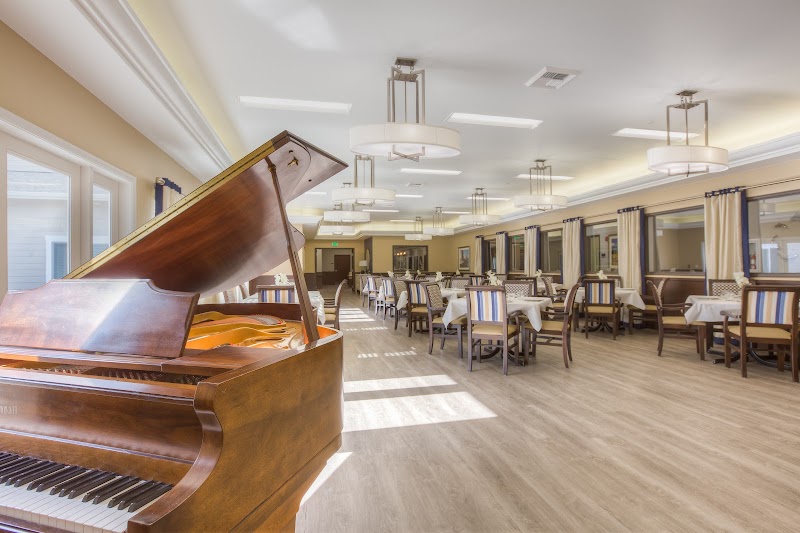
Who Owns and Operates Regency Wenatchee Rehabiliation & Nursing Center?

REGENCY WENATCHEE REHABILIATION & NURSING CENTER is owned by a for-profit company. For-profit facilities operate as businesses with obligations to shareholders or private owners. The facility is operated by REGENCY PACIFIC MANAGEMENT, a chain that manages multiple nursing homes. With 55 certified beds and approximately 46 residents (about 84% occupancy), it is a smaller facility located in WENATCHEE, Washington.
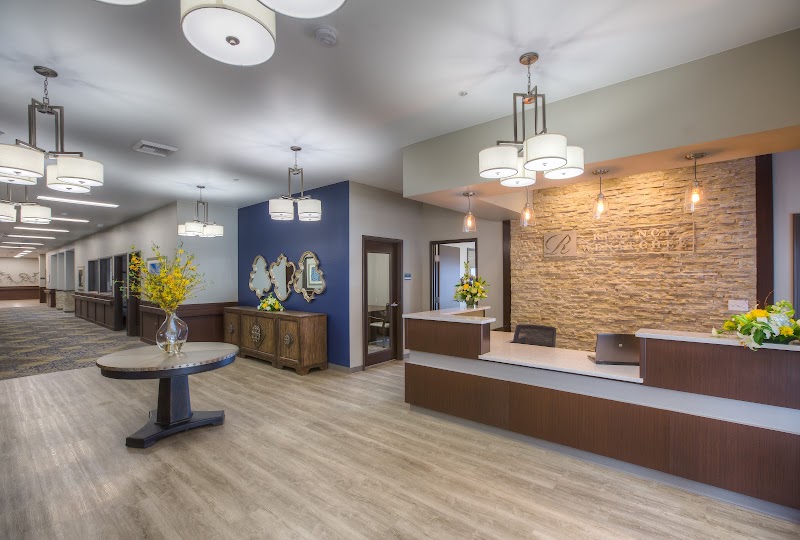
How Does Regency Wenatchee Rehabiliation & Nursing Center Compare to Other Washington Nursing Homes?

Compared to the 100 nursing homes in Washington, REGENCY WENATCHEE REHABILIATION & NURSING CENTER's overall rating (3 stars) is below the state average of 3.2, staff turnover (50%) is near the state average of 46%, and health inspection rating (3 stars) is at the national benchmark.

What Should Families Ask When Visiting Regency Wenatchee Rehabiliation & Nursing Center?

Based on this facility's data, families visiting should ask: "Can I visit during a mealtime to observe dining assistance and food quality?" "How do you handle medical emergencies, and what is your hospital transfer rate?" "Can I speak with family members of current residents about their experience?"

Is Regency Wenatchee Rehabiliation & Nursing Center Safe?

Based on CMS inspection data, REGENCY WENATCHEE REHABILIATION & NURSING CENTER has a clean safety record: no substantiated abuse findings (meaning no confirmed cases of resident harm), no Immediate Jeopardy citations (the most serious violation level indicating risk of serious injury or death), and is not on the Special Focus Facility watch list (a federal program monitoring the lowest-performing 1% of nursing homes). The facility has a 3-star overall rating and ranks #100 of 100 nursing homes in Washington. While no facility is perfect, families should still ask about staff-to-resident ratios and recent inspection results during their visit.

Do Nurses at Regency Wenatchee Rehabiliation & Nursing Center Stick Around?

REGENCY WENATCHEE REHABILIATION & NURSING CENTER has a staff turnover rate of 50%, which is about average for Washington nursing homes (state average: 46%). Moderate turnover is common in nursing homes, but families should still ask about staff tenure and how the facility maintains care continuity when employees leave.

Was Regency Wenatchee Rehabiliation & Nursing Center Ever Fined?

REGENCY WENATCHEE REHABILIATION & NURSING CENTER has no federal fines on record. CMS issues fines when nursing homes fail to meet care standards or don't correct problems found during inspections. The absence of fines suggests the facility has either maintained compliance or corrected any issues before penalties were assessed. This is a positive indicator, though families should still review recent inspection reports for the full picture.

Is Regency Wenatchee Rehabiliation & Nursing Center on Any Federal Watch List?

REGENCY WENATCHEE REHABILIATION & NURSING CENTER is not on any federal watch list. The most significant is the Special Focus Facility (SFF) program, which identifies the bottom 1% of nursing homes nationally based on persistent, serious quality problems. Not being on this list means the facility has avoided the pattern of deficiencies that triggers enhanced federal oversight. This is a positive indicator, though families should still review the facility's inspection history directly.