MEADOWBROOK AT CHETEK
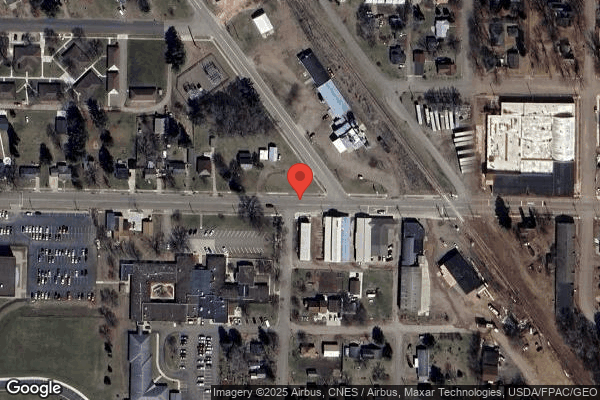

725 KNAPP ST, CHETEK, WI 54728 (715) 924-4891
For profit - Limited Liability company 97 Beds SYNERGY SENIOR CARE Data: November 2025
Trust Grade
61/100
#155 of 321 in WI
Last Inspection: March 2025

Within standard 12-15 month inspection cycle. Federal law requires annual inspections.

Overview

Meadowbrook at Chetek has a Trust Grade of C+, which indicates that it is slightly above average but not outstanding. It ranks #155 out of 321 facilities in Wisconsin, placing it in the top half, and #3 out of 5 in Barron County, meaning only two other local options are better. The facility is showing signs of improvement, with the number of issues decreasing from 10 in 2024 to 8 in 2025. Staffing is a strong point with a 4/5 star rating and a turnover rate of 30%, well below the state average, meaning staff are likely to be familiar with residents. However, there have been concerns such as improper food safety practices that could affect many residents and failure to follow infection control measures during a COVID-19 outbreak, which highlight some significant weaknesses in their operations.

Trust Score
C+
61/100
In Wisconsin
#155/321
Top 48%
Safety Record
Low Risk
No red flags
Inspections
Getting Better
10 → 8 violations
Staff Stability
✓ Good
30% annual turnover. Excellent stability, 18 points below Wisconsin's 48% average. Staff who stay learn residents' needs.
Penalties
⚠ Watch
$6,500 in fines. Higher than 88% of Wisconsin facilities, suggesting repeated compliance issues.
Skilled Nurses
✓ Good
Each resident gets 75 minutes of Registered Nurse (RN) attention daily — more than 97% of Wisconsin nursing homes. RNs are the most trained staff who catch health problems before they become serious.
Violations
⚠ Watch
27 deficiencies on record. Higher than average. Multiple issues found across inspections.
★★★☆☆
3.0
Overall Rating
★★★★☆
4.0
Staff Levels
★★★☆☆
3.0
Care Quality
★★★☆☆
3.0
Inspection Score
Stable
2024: 10 issues
2025: 8 issues

The Good

  • 4-Star Staffing Rating · Above-average nurse staffing levels
  • Low Staff Turnover (30%) · Staff stability means consistent care
  • Full Sprinkler Coverage · Fire safety systems throughout facility
  • No fines on record
  • Staff turnover is low (30%)

    18 points below Wisconsin average of 48%

Facility shows strength in staffing levels, staff retention, fire safety.

The Bad

3-Star Overall Rating

Near Wisconsin average (3.0)

Meets federal standards, typical of most facilities

Federal Fines: $6,500

Below median ($33,413)

Minor penalties assessed

Chain: SYNERGY SENIOR CARE

Part of a multi-facility chain

Ask about local staffing decisions and management

The Ugly 27 deficiencies on record

Mar 2025 7 deficiencies
CONCERN (D)

Potential for Harm - no one hurt, but risky conditions existed

Deficiency F0558 (Tag F0558)

Could have caused harm · This affected 1 resident

**NOTE- TERMS IN BRACKETS HAVE BEEN EDITED TO PROTECT CONFIDENTIALITY** Based on observation, interview and record review, the facility did not ensure residents received services in the facility with ...

Read full inspector narrative →
**NOTE- TERMS IN BRACKETS HAVE BEEN EDITED TO PROTECT CONFIDENTIALITY** Based on observation, interview and record review, the facility did not ensure residents received services in the facility with reasonable accommodation of resident needs for 1 of 18 residents (R) (R34) reviewed. R34's call light was observed to be out of reach. This is evidenced by: Facility policy titled, Fall Management, with a revised date of October 2024, states in part: The facility assists each resident in attaining/maintaining his or her highest practicable level of function by providing the resident adequate supervision, assistive device, and/or functional programs, as appropriate, to minimize the risk for falls. R34 was admitted to the facility on [DATE] with pertinent diagnoses of monoplegia of upper limb affecting left non-dominant side (paralysis/weakness of one limb) and chronic obstructive pulmonary disorder (COPD). R34's most recent Minimum Data Set (MDS) quarterly assessment completed on 01/18/25 noted a Brief Interview of Mental Status (BIMS) score of 15/15, indicated cognition intact. R34 required partial to moderate assistance with rolling side to side, sit to stand, and chair to bed transfers. R34's care plan with a revised date of 03/29/24 noted the resident is at risk for falls related to activity intolerance and history of falls with interventions to be sure the resident's call light is within reach and encourage the resident to use it for assistance as needed. On 03/17/25 at 8:24 AM, Surveyor entered R34's room after hearing R34 yell for help and observed R34 sitting in wheelchair with her bed to her left. R34's call light was wrapped around the far-left bedside rail closest to the wall and out of reach of R34. On 03/17/25 at 8:46 AM, Surveyor interviewed R34 regarding accessibility of call light. R34 stated having to yell out for help to get assistance for roommate who had just fallen in the bathroom. R34 stated she could not reach her call light to get assistance. R34 stated that staff frequently forget to place call light in reach after transferring her from bed to wheelchair. On 03/19/25 at 11:26 AM, Surveyor interviewed Director of Nursing (DON) B regarding accessibility of call light. DON B stated that all staff are educated to ensure safety of residents before leaving a resident's room, which includes ensuring call light is within reach. Surveyor informed DON B of observation of R34's call light being wrapped around bedside rail out of R34's reach. DON B stated frustration of this as staff are aware of R34's limitations in mobility. DON B stated recognition that this had the potential to put the resident at risk for harm or injury by not being able to reach the call light for assistance.
CONCERN (D)

Potential for Harm - no one hurt, but risky conditions existed

Pressure Ulcer Prevention (Tag F0686)

Could have caused harm · This affected 1 resident

**NOTE- TERMS IN BRACKETS HAVE BEEN EDITED TO PROTECT CONFIDENTIALITY** Based on observation, interview and record review, the facility did not ensure residents received the necessary treatment and se...

Read full inspector narrative →
**NOTE- TERMS IN BRACKETS HAVE BEEN EDITED TO PROTECT CONFIDENTIALITY** Based on observation, interview and record review, the facility did not ensure residents received the necessary treatment and services consistent with professional standards, to prevent pressure injuries (PI) from developing infection and promote healing for 1 of 1 resident (R) R20, reviewed for PIs. R20 was not provided PI treatment as ordered, and staff did not perform hand hygiene during PI treatment to prevent infection. This is evidenced by: R20 was admitted to the facility on [DATE]. R20's current diagnoses include in part, sepsis, surgical aftercare, muscle weakness, end stage renal disease, dependence on renal dialysis, diabetic mellitus type 2, peripheral vascular, infection of skin and subcutaneous tissue, acquired absence of right leg below knee, and venous insufficiency chronic peripheral. Minimum Data Set (MDS), dated [DATE], a 5 day assessment documented R20 having a brief interview of mental status score of 13/15 meaning R20 is cognitively intact. R20 is dependent on staff for toileting hygiene, lower body dressing and transfers. R20 requires maximum assistance of staff for upper body dressing, personal hygiene, and bed mobility. R20 is at risk for pressure injury. R20 was admitted to the facility with one stage 1 PI, one stage 3 PI, three unstageable PI and diabetic foot ulcers. Physician orders are as followed. On 03/04/25: Apply thick layer of zinc oxide to bilateral gluteal folds and right buttock BID and PRN for protection/prevention. two times a day for wound care and as needed. On 03/04/25: Left Buttock - Cleanse w/NS, pat dry, skin prep to peri wound, apply Santyl and Ca Alginate (plain) to wound bed, cover with bordered foam dressing. Daily and PRN. one time a day for wound care AND as needed for wound care. On 03/04/25: Santyl External Ointment 250 UNIT/GM (Collagenase) Apply to Left Buttock topically one time a day for wound care apply to slough on wound bed. AND Apply to Left buttock topically as needed for wound care apply to slough on wound bed. On 03/18/25 at 8:53 AM, Surveyor observed Registered Nurse (RN) F complete R20's PI care. RN F entered R20's room without sanitizing hands and applied gloves. R20 rolled to right side. RN F applied wound wash to gauze and washed buttocks and wound. The buttocks were covered with zinc and the wound bed appeared to be covered with slough. RN F did not remove gloves and did not perform hand hygiene before treatment. RN F, with the same contaminated gloved hands, picked up the calcium alginate and placed into the wound and applied an ABD pad. RN F removed gloves and did not perform hand hygiene and proceeded to provide care. RN exited room and sanitized hands. RN F did not complete dressing change as ordered by the physician, to apply skin prep to the peri wound and apply Santyl ointment 250 units/GM to the wound bed prior to applying calcium alginate. On 03/18/25 at 10:45 AM, Surveyor interviewed Assistant Director of Nursing (ADON) G about infection control practices with wound care. Surveyor reviewed observation of RN F completing R20's wound care and hand hygiene practices. ADON G indicated hand hygiene should have been completed and orders followed. ADON G indicated wound care audits will be completed, and education will be provided.
CONCERN (D)

Potential for Harm - no one hurt, but risky conditions existed

Accident Prevention (Tag F0689)

Could have caused harm · This affected 1 resident

**NOTE- TERMS IN BRACKETS HAVE BEEN EDITED TO PROTECT CONFIDENTIALITY** Example 2 The facility's policy titled Safe Smoking / Tobacco Use Policy with revision date of October 2020, read in part: .Safe...

Read full inspector narrative →
**NOTE- TERMS IN BRACKETS HAVE BEEN EDITED TO PROTECT CONFIDENTIALITY** Example 2 The facility's policy titled Safe Smoking / Tobacco Use Policy with revision date of October 2020, read in part: .Safe Smoking /Tobacco Use Determination An evaluation is conducted for all residents who use tobacco products or e-cigarettes . 3. A resident who smokes, uses smokeless tobacco, or uses an e-cigarette is evaluated to determine whether the resident is safe or unsafe to use tobacco products or e-cigarettes . R20 was admitted to the facility on [DATE]. R20's current diagnoses include in part, sepsis, surgical aftercare, muscle weakness, end stage renal disease, dependence on renal dialysis, diabetic mellitus type 2, acquired absence of right leg below knee, and venous insufficiency chronic peripheral. Minimum Data Set (MDS) dated [DATE] a 5 day assessment documented R20 having a brief interview of mental status score of 13/15 meaning R20 is cognitively intact. R20 is dependent on staff for toileting hygiene, lower body dressing and transfers. Review of R20's care plans did not document R20 using a vape/smoking. On 02/12/25, the facility completed a smoking assessment documenting R20 does not smoke. Surveyor's review of the facility's list of residents who smoke documented R20 as able to smoke independently. On 03/16/25 at 1:41 PM, Surveyor interviewed R20 about ability to smoke while at the facility. R20 indicated R20 can go outside any time during the day to vape. R20 indicated when first admitted to the facility he was too ill to vape and could not recall when he started to vape again. R20 doesn't go outside often to vape. On 03/19/25 at 7:59 AM, Surveyor interviewed Director of Nursing (DON) B about R20's safe smoking assessment that was completed on 03/18/25. DON B indicated that it was completed yesterday (03/18/25). R20 didn't smoke or vape upon admission. DON B went and talked with R20 yesterday and asked if he was smoking or vaping. R20 told DON B that he vapes and would go out a couple times a week. R20 picked up a vape when out on dialysis. Surveyor told DON B upon surveyors entering the building the survey binder included R20 on a smoking list. This indicated R20 being able to smoke independently. Surveyor asked if an assessment was completed to put R20 on the smoking list. DON B indicated an admission assessment was completed for R20. A smoking assessment was not completed. DON B is not sure what had happened that R20 was put on the list. On 03/19/25 at 11:15 AM, Surveyor interviewed DON B about R20's smoking care plan date, initiated on 03/01/25, reviewed with history date as created 03/18/25. Surveyor reviewed R20's care plan on 03/16/25; there was no care plan for smoking. Surveyor asked if the care plan was created on 03/18/25. DON B indicated she would have to look and then stated the smoking care plan was initiated on 03/18/25 after Surveyor asked questions about R2's smoking. Based on observation, interview and record review, the facility did not ensure the resident environment remained as free of accidents as possible for 2 of 4 residents (R) R23, R20, reviewed for accidents/falls. R23 had a fall in the bathroom after being left unsupervised for an extended period of time. R20 vapes and was not assessed to vape/smoke independently and a smoking care plan was not developed. This is evidenced by: Example 1 Facility policy titled, Fall Management, with a revised date of October 2024, states in part: The facility assists each resident in attaining/maintaining his or her highest practicable level of function by providing the resident adequate supervision, assistive device, and/or functional programs, as appropriate, to minimize the risk for falls. The Interdisciplinary Team (IDT) evaluates each resident's fall risk. A Care Plan is developed and implemented, based on this evaluation, with ongoing review. R23 was admitted to the facility on [DATE] with pertinent diagnoses of cerebral infarction (stroke), chronic obstructive pulmonary disorder (COPD), generalized weakness, and osteoporosis. R23's most recent Minimum Data Set (MDS) admission assessment dated [DATE] noted a Brief Interview of Mental Status (BIMS) score of 06/15, indicating severe cognitive deficit. R23 required dependent assist with toileting transfer, received continuous oxygen therapy, and experienced shortness of breath with activity. R23's care plan initiated 02/04/25 noted: FOCUS: The resident is at risk for falls. GOAL: The resident will be free of falls through the review date. INTERVENTIONS: Be sure the resident's call light is within reach and encourage the resident to use it for assistance as needed. Ensure that the resident is wearing appropriate footwear when ambulating/transferring as needed. - R23 had a fall on 02/21/25. Care plan updated to include interventions of fall mat next to bed and gripper socks to be used when out of bed. - R23 had a fall on 03/17/25. Care plan updated to include interventions of staff to stay with R23 while in bathroom. FOCUS: The resident has bladder/bowel incontinence and/or requires assistance with toileting related to activity intolerance. GOAL: The resident will be clean, dry and odor free through next review. INTERVENTIONS: TOILET USE - ASSIST ONE R23's Fall Risk Assessment completed on 02/04/25 noted a score of 13 indicating R23 is at-risk for falls. Surveyor reviewed R23's falls investigations and noted the following: On 02/21/25, R23 had an unwitnessed fall without injury. Facility investigation determined root cause to be R23 attempting to self-transfer to use the bathroom. Care plan updated with new safety interventions of fall mat next to bed and gripper socks. On 03/17/25, R23 had an unwitnessed fall without injury. Facility investigation determined the root cause to be R23 attempting to self-transfer when left unsupervised on toilet and staff went to retrieve incontinence products. Care plan updated to include safety interventions of staff to remain with R23 while in bathroom. On 03/17/25 at 8:00 AM, Surveyor observed Certified Nursing Assistant (CNA) C assist R23 from dining room to room in wheelchair. On 03/17/25 at 8:07 AM, Surveyor stationed self in R23's hallway to observe assistance provided by staff for R23. Surveyor looked into R23's room and did not observe R23. Surveyor did not observe CNA C at any point during this time in hallway or in R23's room. On 03/17/25 at 8:14 AM, Surveyor observed R23's roommate, R34, sitting in wheelchair in the room. Surveyor looked around room to locate R23, and R34 pointed to bathroom and stated R23 was in bathroom. On 03/17/25 at 8:24 AM, Surveyor heard a yell for help. Surveyor approached R23's room and observed R34 pointing to bathroom and stated R23 needed help. Surveyor entered room and observed R23 lying on the floor, in-between the toilet and the wall closest to the door. Surveyor immediately went to get assistance. -Of note: Surveyor did not observe a call light turn on for R23 or R34's room at any point during this time. On 03/17/25 at 8:46 AM, Surveyor interviewed R34 who stated that R23 was assisted to the bathroom by CNA C after returning from breakfast in the dining room. R34 stated that after CNA C assisted R23, she had not returned until after R23 had fallen. R34 stated that R23 had been sitting on the toilet for quite some time. On 03/17/25 at 8:48 AM, Surveyor interviewed CNA C who stated after returning to R23's room after breakfast, R23 asked to use the bathroom. CNA C stated she assisted R23 to the toilet and asked R23 if she needed some time to use the bathroom. CNA C stated that R23 stated yes. CNA C stated she told R23 to use the call light when R23 was done in the bathroom. Surveyor asked CNA C if R23 was assisted to the toilet immediately after returning from breakfast at 8:00 AM. CNA C stated yes, within a few minutes. Surveyor asked if CNA C had returned at any point to check on R23 during this time, and CNA C stated she had not. On 03/19/25 at 11:26 AM, Surveyor interviewed Director of Nursing (DON) B. Surveyor asked DON B if there was a facility procedure/policy to assess a resident's safety to be left unsupervised in the bathroom. DON B stated not having a written policy, but the expectation is for nursing to assess a resident's cognition, level of assistance needed, past falls, and medical conditions to determine level of supervision needed. Surveyor asked DON B if R23 had been assessed for ability to use bathroom call light as this is a pull-string, not a button. DON B stated no. Surveyor asked DON B if R23 would be assessed as being safe to be left unsupervised in the bathroom prior to the most recent fall. DON B stated due to R23's recent decline in overall health and cognition, R23 likely should not have been left unsupervised in bathroom. Surveyor relayed to DON B the observation of R23 being left unattended in bathroom for approximately 20 minutes. Surveyor asked DON B if this would be an acceptable amount of time to be left unsupervised. DON B further stated frustration as CNA C had told DON B that R23 was left unsupervised for only a few minutes while getting incontinence supplies. DON B stated being unaware that R23 had been sitting for that long. DON B stated this was unacceptable and would be completing additional education for staff regarding fall safety and supervision of residents as this could have resulted in a serious injury.
CONCERN (D)

Potential for Harm - no one hurt, but risky conditions existed

Deficiency F0698 (Tag F0698)

Could have caused harm · This affected 1 resident

**NOTE- TERMS IN BRACKETS HAVE BEEN EDITED TO PROTECT CONFIDENTIALITY** Based on interview and record review, the facility did not ensure that a resident who requires dialysis receives such services, ...

Read full inspector narrative →
**NOTE- TERMS IN BRACKETS HAVE BEEN EDITED TO PROTECT CONFIDENTIALITY** Based on interview and record review, the facility did not ensure that a resident who requires dialysis receives such services, consistent with professional standards of practice, the comprehensive person-centered care plan and the resident's goals and preferences for 1 of 1 sampled resident (R20) reviewed for dialysis. The facility failed to provide ongoing assessment of R20's condition and monitoring for complications before and after dialysis treatments. This is evidenced by: Facility's policy titled Hemodialysis with the revision date of March 2023, read in part, The ongoing assessment of the resident's condition and monitoring for complications before and after dialysis treatments received at a certified dialysis facility. 8. The nurse will monitor and document the status of the resident's access site(s) upon return from the dialysis treatment to observe for bleeding or other complications. 9. The facility will communicate with the dialysis facility, attending physician and/or nephrologist any significant weight changes, nutritional concerns, medication administration or withholding of certain medications prior to the dialysis treatment and document such orders. 16. Residents with external dialysis catheters will be assessed every shift to ensure that the catheter dressing is intact and not soiled. Change dressing to site only per the dialysis facility's direction. R20 was admitted to the facility on [DATE]. R20's current diagnoses include in part, sepsis, surgical aftercare, muscle weakness, end stage renal disease, dependence on renal dialysis, diabetic mellitus type 2, peripheral vascular, infection of skin and subcutaneous tissue, acquired absence of right leg below knee, and venous insufficiency chronic peripheral. Minimum Data Set (MDS) dated [DATE] a 5 day assessment documented R20 having a brief interview of mental status score of 13 meaning R20 is cognitively intact. R20 is dependent on staff for toileting hygiene, lower body dressing and transfers. R20 requires maximum assistance of staff for upper body dressing, personal hygiene, and bed mobility. R20's care plan The resident has renal insufficiency r/t End stage renal disease, dialysis Date Initiated: 03/06/2025 read in part, Assist resident with ADLS and ambulation as needed. Watch for SOB and match level of assistance to residents current energy level. Elevate feet when sitting up in chair to help prevent dependent edema. Monitor and report changes in mental status: lethargy; tiredness; fatigue; tremors; seizures. Monitor for s/sx of hypovolemia (increased pulse, increased respirations, decreased systolic, sweating, anxiousness) or hypervolemia (JVD, increased BP, lung crackles. headache, SOB, dependent edema). Monitor/document/report PRN any s/sx of acute renal failure: Oliguria (urine output <400ml per 24 hr.); Increased BUN and Creatinine; In the Diuretic phase, (output >500 ml/24 hr) the BUN and Creatinine level out. Monitor/document/report PRN the following s/sx: Edema; weight gain of over 2 lbs a day; neck vein distension; difficulty breathing (Dyspnea); increased heart rate (Tachycardia); elevated blood pressure (Hypertension); skin temperature; peripheral pulses; level of consciousness; Monitor breath sounds for crackles. Review of R20's medical record did not document a comprehensive assessment to include vital signs, weight, inspection of dialysis port site before or after return from dialysis. Review of the medication and treatment administration record documented weekly vitals signs one time a day every Wednesday. Weekly weight one time a day every Wednesday. No specifics for pre and post dialysis were in the record. On 03/16/25 at 1:38 PM, Surveyor interviewed R20 about dialysis services and facility staff assessments before and after dialysis. R20 indicated going to dialysis every Monday, Wednesday, and Friday. R20 has no concerns with the treatment from dialysis. R20 indicated sometimes facility staff will check vitals after dialysis and may not be right after return. R20 states he leaves early morning for dialysis and returns after noon. R20 states having no concerns after dialysis. On 03/19/25 at 8:40 AM, Surveyor interviewed Director of Nursing (DON) B about assessments of R20 upon return from dialysis. DON B indicated they have a binder communication that goes with the resident to dialysis and dialysis will do resident's weight before and after dialysis. DON B indicated staff do not document an assessment when the resident returns from dialysis and there will be one entered into the system now. DON B indicated some dialysis wrap the port and don't want the bandage taken off by the facility and will be contacting dialysis to get an order for the type of assessment of the port that is needed upon return to the facility.
CONCERN (D)

Potential for Harm - no one hurt, but risky conditions existed

Infection Control (Tag F0880)

Could have caused harm · This affected 1 resident

**NOTE- TERMS IN BRACKETS HAVE BEEN EDITED TO PROTECT CONFIDENTIALITY** Based on observation, interview and record review, the facility did not maintain an infection prevention and control program des...

Read full inspector narrative →
**NOTE- TERMS IN BRACKETS HAVE BEEN EDITED TO PROTECT CONFIDENTIALITY** Based on observation, interview and record review, the facility did not maintain an infection prevention and control program designed to provide a safe, sanitary, and comfortable environment to help prevent the development and transmission of communicable diseases and infections for 3 of 18 residents (R) (R20, R6, and R26) observed. Facility staff did not conduct appropriate hand hygiene when providing wound care for R20 and personal cares for R6. R20 has open wounds, and the facility did not implement enhanced barrier precautions (EBP), and staff did not wear personal protective equipment (PPE) when providing wound care. R26's urinary bag was observed on the floor. This is evidenced by: Facility policy titled: Hand hygiene last revised on 09/22 states: Purpose: To provide guidelines to staff for proper and appropriate hand washing and hygiene techniques that will aid in the prevention of the transmissions of infections. Under the procedure sections titled Washing hands with Soap and Water states: 1. Staff will perform hand hygiene by washing hands for at least twenty (20) seconds with antimicrobial or non-antimicrobial soap and water should be performed under the following conditions: in part c. before applying gloves and after removing gloves or other Personal Protective Equipment (PPE); d. After contact with blood, body fluids, secretions, mucous membranes, or non-intact skin; e. After handling items potentially contaminated with bloody body fluid, or sections; f. Before moving from a contaminated body site to a clean body site during resident care; example: after providing peri-care, before applying moisture. Facility policy titled, Enhanced Barrier Precautions (EBP) revision date of 09/24 states: Enhanced barrier precautions (EBP) refer to an infection control intervention designed to reduce transmission of multidrug-resistant organisms that employs targeted gown, and gloves use during high contact resident care activities .b. An order for enhanced barrier precautions will be obtained for residents with any of the following: i. Wounds (e.g., chronic wounds such as pressure ulcers, diabetic foot ulcers, unhealed surgical wounds . This is evidenced by: Example 1 R20 was admitted to the facility on [DATE]. R20's current diagnoses include in part, sepsis, surgical aftercare, muscle weakness, end stage renal disease, dependence on renal dialysis, diabetic mellitus type 2, peripheral vascular, infection of skin and subcutaneous tissue, acquired absence of right leg below knee, and venous insufficiency chronic peripheral. Minimum Data Set (MDS) dated [DATE] a 5 day assessment documented R20 having a brief interview of mental status score of 13/15 meaning R20 is cognitively intact. R20 is dependent on staff for toileting hygiene, lower body dressing and transfers. R20 requires maximum assistance of staff for upper body dressing, personal hygiene, and bed mobility. R20 was admitted to the facility with one stage 1 PI, one stage 3 PI, three unstageable PI and diabetic foot ulcers. On 03/18/25 at 8:53 AM, Surveyor observed Registered Nurse (RN) F complete R20's PI care and wound care. At the entrance of R20's room there was no signage for EBP and no PPE bin. RN F entered R20's room without wearing PPE of a gown. RN F did not sanitize hands and applied gloves. R20 rolled to right side. RN F completed wound care to the pressure injury. RN F removed gloves and did not perform hand hygiene. RN F, without gloves on, positioned R20's left leg. RN F, without hand hygiene, applied gloves and tried to remove the kerlix from R20's foot. RN F, with the same gloved hands, reached into her pocket and removed scissors to cut the kerlix. RN F removed the dressing and did not change gloves or conduct hand hygiene. Then RN F applied betadine to each wound, applied ABD pad and wrapped the areas with kerlix. RN F reached into her personal supply bag on her waist and removed tape. RN F cut the tape and placed the roll of tape on R20's tray table without a barrier. RN F applied the tape to the kerlix on R20's foot. RN F removed gloves and without hand hygiene placed the tape back into her supply bag on her waist. RN F placed her scissors into her pocket without sanitizing the scissors. RN F exited R20's room and went to the nurse's station and sanitized hands. On 03/18/25 at 10:45 AM, Surveyor interviewed Assistant Director of Nursing (ADON) G about infection control practices with wound care and EBP. Surveyor reviewed observation of no EBP and RN F completing R20's wound care, hand hygiene practices, and storage of tape and scissors. ADON G indicated hand hygiene should have been completed with glove changes. The tape should not have gone back into her supply bag and the scissors should have been cleaned. R20 has all wound supplies in his room so there would be no need to use her own supplies. ADON G indicated wound care audits will be completed, and education will be provided. ADON G indicated a PPE bin will be placed outside of R20's room. Example 2 On 03/18/25 at 9:27 AM, Surveyor observed Certified Nursing Assistant (CNA) H wash hands and put on clean pair of gloves, wet and soap a washcloth, unfasten incontinent product and wash R6's frontal peri care. CNA H stated R6 is having a bowel movement (BM) and rolled R6 onto left side, used wet wipes to cleanse rectal area and disposed of each wipe after each use. On 03/18/25 at 9:33 AM, CNA H removed gloves, and without conducting hand hygiene, placed gloves on chair, grabbed clean washcloth and cleansed and dried buttock area. CNA H then positioned a clean incontinent product under R6 and assisted R6 to roll back and forth to secure incontinent product and pants into place. Upon completion, CNA H removed gloves and washed hands. On 03/18/25 at 9:41 AM, Surveyor interviewed CNA H regarding facility expectation of when to conduct hand hygiene. CNA H stated realization of not conducting hand hygiene after incontinence care but did change gloves. Surveyor shared observation of no hand hygiene and CNA H confirmed should have done hand hygiene between glove change. On 03/18/25 at 12:45 PM, Surveyor interviewed Director of Nursing (DON) B regarding observation of lack of staff conducting hand hygiene after removing gloves during incontinence care this a.m. DON B confirmed expectation of the need to conduct hand hygiene after completing incontinence care. Example 3 The facility policy, titled Indwelling Catheter Utilization and Maintenance revised on 03/20, states: Purpose: To provide urinary flow for residents who need catheter use and to prevent urinary complications. Under section 5h. Procedure, states in part . avoid letting the drainage bag touch the floor. R26 was admitted to facility on 01/06/25 with diagnoses that include obstructive and reflux uropathy, benign prostatic hyperplasia, urinary tract infection (UTI) and heart failure. R26's admission Minimum Data Set (MDS), dated [DATE], indicated that R26 is dependent on staff for toileting needs and has an indwelling catheter. R26's care plan for catheter related to obstructive uropathy related to in part, history of UTIs and does not include an approach of placement of urinary collection bag. On 03/17/25 at 1:26 PM, Surveyor observed R26 sitting in recliner with urinary bag lying on floor. On 03/17/25 at 1:28 PM, Surveyor interviewed R26 who stated, It is always lying on the floor. On 03/18/25 at 7:46 AM, Surveyor observed R26 sitting in recliner eating breakfast and catheter bag lying on floor. On 03/18/25 at 9:03 AM, Surveyor observed catheter bag still lying on floor next to recliner. On 03/18/25 at 10:06 AM, Surveyor observed CNA H prior to conducting catheter care, pick up R26's catheter bag off floor to check amount of urine in bag and placed back onto floor. Following catheter care, CNA H hooked urinary bag on bed frame to hang off floor. On 03/18/25 at 12:50 PM, Surveyor observed R26 sitting in recliner and catheter bag lying on floor. On 03/18/25 at 4:32 PM, Surveyor observed R26 sitting in recliner and catheter bag lying on floor and observed CNA I pick up urinary bag off floor and hang urinary bag from hook under recliner footrest. On 03/18/25 at 4:32 PM, Surveyor interviewed CNA I regarding observation of catheter bag lying on floor and expectation of placement of a urinary bag. CNA I stated there are metal hooks on recliner to hang the urinary bag from so it is off the floor. On 03/19/25 at 10:07 AM, Surveyor interviewed DON B to discuss observations of R26's urinary catheter bag found on floor with no barrier in-between. DON B stated the expectation that the bag would be hung off the floor when R26 is in bed or in recliner.
CONCERN (E)

Potential for Harm - no one hurt, but risky conditions existed

Medication Errors (Tag F0758)

Could have caused harm · This affected multiple residents

**NOTE- TERMS IN BRACKETS HAVE BEEN EDITED TO PROTECT CONFIDENTIALITY** Example 4 R32 was admitted to the facility on [DATE]. R32's current diagnoses include in part, sepsis, acute pyelonephritis, anx...

Read full inspector narrative →
**NOTE- TERMS IN BRACKETS HAVE BEEN EDITED TO PROTECT CONFIDENTIALITY** Example 4 R32 was admitted to the facility on [DATE]. R32's current diagnoses include in part, sepsis, acute pyelonephritis, anxiety, muscle wasting and atrophy, weakness, chronic obstructive pulmonary disease, type 2 diabetes mellitus, major depressive disorder, and chronic pain syndrome. Review of the MDS dated [DATE] a quarterly assessment documented R32's brief interview of mental status score of 14/15, meaning R32 is cognitively intact. The mood assessment was completed with a score of 0, meaning R32 has non to minimal depression. Review of physician orders documented on [DATE] Sertraline HCl Oral Tablet 100 MG (Sertraline HCl) Give 1 tablet by mouth one time a day related to major depressive disorder, recurrent. On [DATE] an order for Bupropion HCl ER (XL) Oral Tablet Extended Release 24 Hour 300 MG (Bupropion HCl) Give 1 tablet by mouth one time a day for anxiousness associated with depression. Surveyor's review of R32's physician orders history identified the orders for sertraline and bupropion with the same dosage were the same orders since admission on [DATE]. Review of R32's care plans documented, in part, The resident has depression r/t prolonged grief disorder, Major Depressive Disorder, Date Initiated: [DATE] The resident will exhibit indicators of depression, anxiety or sad mood less than daily by review date. Administer medications as ordered. Monitor/document for side effects and effectiveness. Discuss with the resident/family/caregivers any concerns, fears, issues regarding health or other subjects. Encourage expression of feelings Monitor/document/report every shift any s/sx of depression, including: hopelessness, anxiety, sadness, insomnia, anorexia, verbalizing, negative statements, repetitive anxious or health-related complaints, tearfulness. Pharmacy review monthly or per protocol. Provide the resident with a program of activities that is meaningful and of interest. Encourage and provide opportunities for exercise, physical activity as tolerated. The resident uses antidepressant medication (Wellbutrin and Sertraline) r/t Depression, Grief. Date Initiated: [DATE] Administer ANTIDEPRESSANT medications as ordered by physician. Monitor side effects and effectiveness Q-SHIFT. Educate the resident/family/caregivers about risks, benefits and the side effects and/or toxic symptoms of anti-depressant medications ordered. Monitor/document/report PRN adverse reactions to ANTIDEPRESSANT therapy: change in behavior/mood/cognition; hallucinations/delusions; social isolation, suicidal thoughts, withdrawal; decline in ADL ability, continence, no voiding; constipation, fecal impaction, diarrhea; gait changes, rigid muscles, balance probs, movement problems, tremors, muscle cramps, falls; dizziness/vertigo; fatigue, insomnia; appetite loss, wt loss, n/v, The care plans do not address resident specific non-pharmacological interventions for depressive episodes. Review of behavior monitoring identified none documented in the last 30 days. Review of nursing progress notes: [DATE] at 11:25 PM, .Crying when nurse approached her . Talked with nurse about being upset that her friends have passed away. Talked with her and consoled her until she felt better. [DATE] at 12:57 PM, Resident refused to have weight obtained this shift. Became upset with staff and got tearful stating she has too much going on right now and her friend just died . [DATE] at 9:30 PM, Writer went in resident room to do her wound care and she started crying. Writer asked what was going on and resident stated that she feels sad after [resident] who was her friend passed away couple hours ago. Writer asked if there is anything that we can do for her at this time and she stated not at this moment but well (sic) let us know. Review of the IDT weekly summary document that was completed on [DATE], [DATE], [DATE], [DATE], [DATE], [DATE], [DATE], and [DATE]. The weekly summaries documented R32 as having no behaviors and no changes to behavior patterns. Review of R32's medical record did not identify a pharmacist request for a gradual dose reduction (GDR) of the sertraline or bupropion anti-depressant medication. On [DATE] at 8:34 AM, Surveyor interviewed Certified Nursing Assistant (CNA) J about R32's behaviors. CNA J indicated R32 sometimes she gets depressed just like anyone and R32's mood will cycle. Surveyor asked if CNA J documents R32's behaviors. CNA J indicated will report to the nurse. On [DATE] at 2:00 PM, Surveyor interviewed DON B about behavior monitoring and assessing the number of behaviors, what non-pharmacological interventions were used, and the outcome. DON B indicated the facility does Unity rounds and talk with resident about concerns and personal conversation. They do at risk reviews and go over behaviors. Surveyor reviewed with DON B about R32's care plans having no resident specific non-pharmacological interventions. On [DATE] at 12:09 PM, Surveyor interviewed DON B about a GDR being completed and the behavior monitoring indicating R32 is having no behaviors. DON B indicated the GDRs were missed since R32 was admitted to the hospital and the date of the orders were changed when she returned to the facility on [DATE]. The medication did not trigger for a GDR. We are going to look at her GDR next month. DON B indicated the GDR should have been done sooner. Surveyor asked if the pharmacist requested a GDR prior. DON B indicated the pharmacist also missed requesting a GDR. Based on interview and record review, the facility did not ensure residents (R) who were prescribed psychotropic medication were comprehensively assessed for qualitative and quantitative data for individualized targeted behaviors, no gradual dose reductions (GDR) for the first year were completed, and non-pharmacological interventions were implemented, for use of the medications for 5 of 7 residents (R6, R21, R32, R53 and R261) reviewed. R6 receives psychotropic medications. R6 does not have a care plan identifying individualized targeted behaviors, tracking of behaviors, or non-pharmacological interventions in place for anti-psychotic and anti-anxiety medications use. R21 receives psychotropic medications. R21 does not have a care plan for individualized targeted behaviors, tracking of behaviors, or non-pharmacological interventions in place for anti-psychotic medication use. R53 receives psychotropic medications. R53 does not have a care plan for individualized targeted behaviors, tracking of behaviors, or non-pharmacological interventions in place for anti-psychotic, anti-anxiety and anti-depressant medication use. R32 is taking two anti-depressant medication of sertraline and bupropion without adequate indications for continued use. R261 is using a psychotropic medication with no stop date after 14 days of use, or physician rationale to continue beyond the 14 days. Findings: The facility policy, titled Psychotropic Management, revised [DATE], states: The psychotropic medication therapy only when clinically indicated to enhance the quality of life, while maximizing functional potential and well-being of the resident. Psychotropic Medications are not administered unless they are necessary to treat a specific condition as diagnosed and documented in the resident medical record. Gradual dose reductions of psychotropic medications and behavioral or non-pharmacological interventions are attempted, unless clinically contraindicated, in an effort to discontinue the medications, if appropriate. Under the policy section titled Practice Guidelines states in part: Upon receipt of new orders for psychotropic medication. The licensed nurse will implement the following: a. Physician order for the medication, including the appropriate diagnosis or targeted behavior. Licensed nurse will institute the appropriate behavior monitoring form associated with the medication category a. Identify and document objective and quantifiable specific behaviors. b. Document the number of episodes of behaviors. c. Document interventions and outcomes. The Interdisciplinary Team (IDT) documentation on the Psychoactive Medication Evaluation and care plan includes. a. Ruling out medical causes (e.g., pain, constipation, fever. b. Ruling out of environmental causes (e.g., noise, heat, crowding); c. addressing the documented behaviors; and d. Monitoring and evaluating for potential reduction of psychotropic medications on an ongoing basis. Example 1 R6 was admitted to the facility on [DATE]. R6's diagnoses include frontotemporal neurocognitive disorder, dementia in other diseases classified elsewhere severe with agitation, memory deficit; dementia in other diseases classified elsewhere severe, with psychotic disturbance. R6's Significant Change in Condition Minimum Data Set (MDS) assessment, dated [DATE], indicated that R6 has both short term and long-term memory problems with cognitive skills severely impaired-never/rarely made decisions. R6's MDS Section E: Behavior indicated R6 did not have any psychosis behavior or behavioral symptoms exhibited present. R6 has a physician order documented on [DATE] for Lorazepam Oral Tablet 0.5 mg. Give 0.5 tablet by mouth one time a day for anxiety. R6 has a physician order most recently documented on [DATE] for Olanzapine Oral Tablet 5.0 mg. give 1 tablet by mouth one time a day related to Other Frontotemporal Neurocognitive Disorder. Surveyor reviewed R6's At Risk IDT Weekly Summary assessment dated [DATE] indicated under the section titled Baseline behaviors: Check all that apply indicated R6 has verbal output specified as yelling/screaming and changes in behavior pattern documented at No. Surveyor reviewed R6's care plan and Certified Nursing Assistant (CNA) Kardex for Antianxiety medication use with Target date of [DATE], which did not identify individualized targeted behaviors or include non-pharmacological interventions related to anxiety. Surveyor reviewed R6's care plan and CNA Kardex for Antipsychotic medication use which was initiated on [DATE], revised on [DATE] and resolved on [DATE] related to dementia with psychotic disorder and agitation, insomnia. R6 did not have a care plan reinitiated related to current antipsychotic medication regimen identifying individualized targeted behaviors or include non-pharmacological interventions related to agitation and insomnia. Surveyor reviewed R6's care plan and CNA Kardex for Antianxiety medication use Surveyor reviewed R6's medical record for behavior monitoring. No documentation of individualized targeted behaviors was noted. Surveyor was unable to identify that an assessment or monitoring was completed to determine R6's behavior patterns and the effectiveness of non-pharmacological interventions. Example 2 R21 was admitted to the facility on [DATE] and has diagnoses that include Alzheimer's disease, traumatic hemorrhage of right cerebrum, unspecified dementia with agitation. R21 had a quarterly MDS completed with a target date of [DATE], which indicated that R21 has a BIMS score of 06 indicating moderately impaired. Under MDS E: Behavior indicated R21 has Delusions (misconceptions or beliefs that are firmly held, contrary to reality). Had Behavioral Symptoms of Physical symptoms of 1-3 days; Verbal behavioral symptoms of 1-3 days; other behavioral symptoms not directed toward others not exhibited. R21 has a physician order dated [DATE] for an antipsychotic, Quetiapine Fumarate Oral Tablet 25 MG. Give 1 tablet by mouth two times a day related to UNSPECIFIED DEMENTIA, UNSPECIFIED SEVERITY, WITH AGITATION. Surveyor reviewed R21's At Risk IDT Weekly Summary assessment dated [DATE] which indicated under the section titled Baseline behaviors: Check all that apply indicated R21 has anger outbursts, demonstrates obsessive/repetitive behaviors, noncompliant with cares, resistance to cares, hitting, wandering, abusive language and threatening behavior and noted an increase in these behavior patterns. Surveyor reviewed R21's care plan and CNA Kardex for Antipsychotic and Antianxiety medication use related to dementia with psychotic disorder and agitation, insomnia. R21 did not have a care plan related to current antipsychotic and Antianxiety medication regimen identifying individualized targeted behaviors or include non-pharmacological interventions related to agitation and insomnia in CNA Kardex. Surveyor reviewed R21's medical record for behavior monitoring. No documentation of individualized targeted behaviors was noted. Surveyor was unable to identify that an assessment or monitoring was completed to determine R21's behavior patterns and the effectiveness of non-pharmacological interventions. Example 3 R53 was admitted to the facility on [DATE]. R53's diagnoses include unspecified dementia, moderate, with agitation and unspecified dementia, without behavioral disturbance, psychotic disturbance, mood disturbance and anxiety. R53's admission Minimum Data Set (MDS) assessment, dated [DATE], indicated a BIMS of 07 indicating moderately impaired cognition. Under MDS Section E: Behavior, indicated R53 had no psychosis and had behavioral symptoms of physical symptoms of 1-3 days; verbal behavioral symptoms daily; other behavioral symptoms not directed toward others 1 to 3 days. R53 has a physician order for an antipsychotic dated [DATE]: Olanzapine Oral Tablet 2.5 MG. Give 2.5 mg by mouth two times a day for dementia with agitation related to dementia in other diseases classified elsewhere, mild, with anxiety. R53 has a physician order for an antianxiety dated [DATE]: Clonazepam Oral Tablet 0.5 MG. Give 0.5 mg by mouth two times a day for anxiety disorder. R53 has a physician order for an antidepressant dated [DATE]: Fluoxetine HCl Oral Tablet 20 MG. Give 40 mg by mouth one time a day for depression Surveyor reviewed R53's At Risk IDT Weekly Summary assessment dated [DATE] indicated under the section titled Baseline behaviors: Check all that apply indicated R53 has verbal output, demonstrates obsessive/repetitive behaviors, threatening behavior, abusive language, kicking and hitting. Surveyor reviewed R53's care plan and CNA Kardex for antianxiety medication use with which was initiated on [DATE] and target date of [DATE], which did not identify individualized targeted behaviors related to medication regimen. Surveyor reviewed R53's care plans and CNA Kardex for antipsychotic medication use which was initiated on [DATE] and with a target date of [DATE]. R53 did not have individualized targeted behaviors related to medication regimen. Surveyor reviewed R53's care plans and CNA Kardex for antidepressant medication use which was initiated on [DATE] and with a target date of [DATE]. R53 did not have individualized targeted behaviors related to medication regimen. Surveyor reviewed R53's medical record for behavior monitoring. No documentation of individualized targeted behaviors was noted. Surveyor was unable to identify that an assessment or monitoring was completed to determine R53's behavior patterns. On [DATE] at 9:50 AM, Surveyor interviewed CNA H, regarding dementia care and documentation of behaviors. CNA H stated CNAs do not do target behavior documentation but are able to put in alerts for behaviors a resident may have for the nurse to follow up on as needed. On [DATE] at 1:44 PM, Surveyor interviewed Director of Nursing (DON) B regarding behavior monitoring and focus on targeted behaviors and non-pharmacological interventions. DON B stated that the IDT meet weekly to discuss behaviors, nutrition, infections, etc. DON B stated that staff do not document individualized targeted behaviors, but have a blanket behavior record that CNAs are able to document for all residents as applicable. (Of note, the record is able to be completed for all residents and includes 16 behaviors.) Surveyor interviewed DON B about how facility determines effectiveness or potential need for GDR of medication regimen or behavioral changes on medication and which behavior they are focusing on. DON B was unable to provide documentation to support that the facility comprehensively assessed for qualitative and quantitative data for individualized targeted behaviors, non-pharmacological interventions or potential need for a GDR. Example 5 R261 was admitted to the facility on [DATE] with pertinent diagnoses of major depressive disorder and generalized anxiety disorder. Review of R261's medication orders on [DATE] documented, Clonazepam oral tablet 0.5mg (Clonazepam) Give 0.25mg by mouth every 12 hours as needed for anxiety no stop date per PCP. Review of the Medication Administration Record (MAR) documented R261 received the PRN clonazepam on [DATE], [DATE], [DATE], [DATE], [DATE], [DATE], and [DATE]. On [DATE], nursing communication with provider requested a stop date for ordered clonazepam. Physician response documented, No stop date. Seen on rounds. On [DATE] at 10:30 AM, Surveyor interviewed Director of Nursing (DON) B regarding the absence of a stop date for R261's PRN lorazepam. DON B provided a copy of R261's hospital discharge summary and MAR and stated that was the only information she had. No further information was given to Surveyor for an end date of use of the PRN clonazepam.
CONCERN (F)

Potential for Harm - no one hurt, but risky conditions existed

Staffing Data (Tag F0851)

Could have caused harm · This affected most or all residents

Based on interview and record review, the facility did not ensure accurate reporting of the mandatory submission of staffing information based on payroll data to the Centers for Medicare and Medicaid ...

Read full inspector narrative →
Based on interview and record review, the facility did not ensure accurate reporting of the mandatory submission of staffing information based on payroll data to the Centers for Medicare and Medicaid Services (CMS). The facility failed to enter accurate data in their Payroll Based Journal (PBJ) system which triggered that they have excessively low weekend staffing. This has the potential to affect all 71 residents residing in the facility. This is evidenced by: Centers for Medicare & Medicaid Services (CMS) Electronic Staffing Data Submission Payroll-Based Journal, Long-term Care Facility Policy Manual, dated June 2022, states in part: Chapter 1: Overview, 1.1 introduction .(U) mandatory submission of staffing information based on payroll data in a uniform format. Long-term care facilities must electronically submit to CMS complete and accurate direct care staffing information, including information for agency and contract staff, based on payroll and other verifiable and auditable data in a uniform format according to specifications established by CMS.1.2 Submission Timelines and Accuracy. Direct care staffing and census data will be collected quarterly and is required to be timely and accurate . Report Quarter: staffing and census data will be collected for each fiscal quarter. Staffing data includes the number of hours paid to work by each staff member each day within a quarter. Census data includes the facility's census on the last day of each of the three months in a quarter. The fiscal quarters are as follows: Fiscal Quarter, Date range: 1 October 1 - December 31, (quarter 1) 2 January 1 - March 31, (quarter 2) 3 April 1 - June 30, (quarter 3) 4 July 1 - September 30 (quarter 4) . PBJ Staffing Data Report, CASPER Report (Certification and Survey Provider Enhanced Reports) 1705D for Fiscal year Quarter 3 2024 (April 1- June 30). Quarter 4 2024 (July 1-September 30), and Quarter 1 2025 (October 1-December 31) all indicate the following: Submitted Weekend Staffing data is excessively low. On 03/18/25 at 1:05 PM, Surveyor interviewed Director of Nursing (DON) B. When asked if the facility staffs any differently on the weekend than during the week, responded No not floor staff. DON B stated, If they are short staffed, due to call in's, management staff or others come in on the weekend. On 03/18/25 at 1:35 PM, Surveyor interviewed Nursing Home Administrator (NHA) A. Surveyor asked why the facility triggers for low weekend staffing. NHA A stated they cannot figure out why they trigger for the low weekend staffing, as they schedule the same on the weekends as they do during the week. NHA A stated that they don't have a difference in call in's on the weekends as the facility has a policy in place, that if you call in on your weekend to work, you are then required to work the very next weekend. Human Resources (HR) D joined the interview, and added that she doesn't notice any difference in call in's on the weekends vs week days. HR D confirmed the number of direct care staff scheduled does not change on the weekends versus during the week. HR D enters hours worked into the system, and makes sure they accurately reflect real time data, but does not do PBJ reporting. PBJ data is entered by Corporate HR E who prints out reports from the system and enters the data into the PBJ system. On 03/18/25 at 4:30 PM, Surveyor requested PBJ data reports for the weekend hours entered for Quarter 1 2025, the corresponding schedules and staff postings. On 03/19/25 at 8:50 AM, Surveyor interviewed NHA A who provided the above requested data and informed the Surveyor upon reviewing the data it was discovered that when Corporate HR E pulled data to enter it into the PBJ system, not all hours worked were included, and therefore were not reported accurately. NHA A stated if a staff person had left employment with the facility prior to the data being pulled, that person's name and corresponding hours worked were deleted from the report which resulted in under reporting errors which triggered low weekend staffing to be triggered. Surveyor reviewed the reported data and corresponding information on 03/19/25. Review of the information revealed that multiple staff hours worked went unreported into the PBJ system which triggered low weekend staffing.
Feb 2025 1 deficiency
CONCERN (F) 📢 Someone Reported This

A family member, employee, or ombudsman was alarmed enough to file a formal complaint

Potential for Harm - no one hurt, but risky conditions existed

Food Safety (Tag F0812)

Could have caused harm · This affected most or all residents

Based on observation, interview and record review, the facility did not prepare, distribute, and serve food in a manner that prevents foodborne illness for 57 of 59 residents reviewed. Findings inclu...

Read full inspector narrative →
Based on observation, interview and record review, the facility did not prepare, distribute, and serve food in a manner that prevents foodborne illness for 57 of 59 residents reviewed. Findings include: Facility policy titled Storage, Prepare, Distribute, and Serve Food, last revised April 2020, stated in part, .-#3. Storage (Refrigerated) c. All refrigerated and prepared food must be covered, labeled, and dated with use-by date . Facility policy titled Labeling Food and Date Marking, last revised February 2020, stated in part, .-#2. Recommended that all items placed in refrigeration units be labeled with the name of the item, the date the item is placed in the refrigerator and/or the date it is to be used .-#6. Refrigerators and storage areas are routinely checked for temperatures, labeling, and dating of food items with food being discarded when beyond the use-by date . Facility policy titled Food from Outside Sources, last revised 04/13/20, stated in part, .-#4. All food items that are already prepared by family or visitor brought into the facility must: a. Be labeled with content, and the date the item was brought in, and residents name. b. Be sealed in a container with a non-plastic wrap top. The container will be provided by the facility .#5. b. All cooked food brought in for resident and stored on the unit pantry refrigerator will be dated when accepted for storage and discarded after five days . On 02/26/25 at 10:01 AM, Surveyor toured the kitchen with Dietary Manager (DM) C. Surveyor observed multiple, unlabeled items in the walk-in refrigerator including the following: Surveyor observed an Italian dressing container with no open date label. Surveyor could also not find a manufacturer's expiration label on the container. Surveyor interviewed DM C who indicated that all items should have an open date label on the items. Surveyor observed an open relish container with a label of 10/28/24. Surveyor observed a whipping cream container with a manufacturer's expiration date of 02/18/25. There was no open date label on the whipping cream container, and Surveyor observed the container contained writing which stated, Do not use. Surveyor observed an open container of 2% milk, which was approximately 50% used, with a manufacturer's expiration label of 03/10/25 but no open date label. Surveyor observed an open container of whole milk, which was approximately 50% used, with a manufacturer's expiration date label of 03/09/25 but no open date label. DM C indicated that milk, once opened, should have an open date label. Surveyor observed an open container of cultured sour cream, which was approximately 75% used, with no open date label. DM C indicated the cultured sour cream should have had an open date label. DM C took the cultured sour cream, and threw the container in the garbage. Surveyor observed an apple cider vinaigrette dressing container with open date label of 09/24/24. On 02/26/25 at 10:09 AM, Surveyor toured the kitchenette and observed the resident refrigerator. Surveyor observed an open Thousand Island dressing container, which was approximately 75% used, that contained no open date label. DM C grabbed the Thousand Island dressing, had a staff member label the dressing, and placed the dressing back in the fridge. Surveyor observed a gas station paper container with flip top lid labeled 02/14/25. The paper container was labeled with R1's name and contained fried chicken. Surveyor asked DM C what the facility expectation for storage of fried chicken in the fridge was. DM C indicated that R1's fried chicken should have been cleaned out by nursing staff, as leftovers are only good in the fridge for a couple of days. Surveyor observed DM C remove R1's fried chicken container from the refrigerator and throw the chicken away. On 02/26/25 at 10:15 AM, Surveyor interviewed Dietary [NAME] (DC) D and asked about the Italian dressing container with no open date label. DC D indicated that DC D just opened the dressing the other day and forgot to place an open date label on the container. Surveyor then observed DC D label the container with a date of 02/12/25 and place the dressing back in the fridge. Surveyor then asked DC D about the whipping cream container that had no open date label, a past manufacturing expiration date of 02/18/25, writing stating do not use on the container, and that was still stored in the refrigerator. DC D indicated that DC D used the whipping cream on 02/14/25 for a special dessert for Valentines Day. DC D indicated that DC D placed the do not use label on the container so that no other staff would use the whipping cream until DC D could use it for the special dessert. On 02/26/25 at 10:49 AM, Surveyor interviewed DM C and asked DM C about the items that had no open date labels. DM C indicated that all items should have open date labels regardless of the manufacturing expiration dates on the container. Surveyor asked DM C to explain the process for monitoring the resident refrigerator in the kitchenette. DM C indicated that DM C had the expectation that nursing staff were to monitor the fridge. DM C indicated that nursing staff does not do that, and it is the responsibility of the kitchen staff to monitor for potential expired foods. DM C indicated that DM C will be creating audit logs for kitchen staff to monitor the resident fridge in the kitchenette. Surveyor asked DM C about the expired fried chicken in the resident fridge. DM C indicated the fried chicken should have been thrown out within 1-2 days after being placed in the resident fridge. Surveyor asked DM C about the expired dressings in the walk-in fridge in the kitchen. DM C indicated that dressing is good for 3 months once opened. DM C indicated the apple cider vinaigrette with the open date label 09/24/24 should have been thrown out within 3 months of being opened. DM C indicated the other dressings that were not labeled should be tossed as well since staff could not know when those items were opened. On 02/26/25 at 11:15 AM, Surveyor interviewed Nursing Home Administrator (NHA) A and asked if NHA A was aware of any foodborne illnesses between staff and residents. NHA A indicated there had been no sickness pertaining to foodborne illness in the facility. NHA A indicated that DM C came to NHA A after Surveyor toured the kitchen and admitted to not having items in the kitchen labeled with open dates and that expired items were discovered in the kitchen area.
Oct 2024 4 deficiencies
CONCERN (D) 📢 Someone Reported This

A family member, employee, or ombudsman was alarmed enough to file a formal complaint

Potential for Harm - no one hurt, but risky conditions existed

Deficiency F0569 (Tag F0569)

Could have caused harm · This affected 1 resident

**NOTE- TERMS IN BRACKETS HAVE BEEN EDITED TO PROTECT CONFIDENTIALITY** Based on staff interview and record review, the facility did not ensure 1 resident (R), R1, of 3 sampled residents reviewed for ...

Read full inspector narrative →
**NOTE- TERMS IN BRACKETS HAVE BEEN EDITED TO PROTECT CONFIDENTIALITY** Based on staff interview and record review, the facility did not ensure 1 resident (R), R1, of 3 sampled residents reviewed for conveyance of resident funds, had funds returned to the Power of Attorney (POA), family, or estate within 30 days of resident death. The facility did not refund R1's trust funds to POA within 30 days of death. Findings include: The facility policy entitled, Resident Trust Accounts, dated 08/2022, states in part: .#7. Upon the death of a resident with a personal fund deposited with the facility, the facility will convey promptly the residents' funds and final accounting of those funds, to the individual administering the residents estate . On [DATE] at 8:40 a.m., Surveyor toured facility. After tour was completed, a sample of residents was chosen from a list of discharged /expired residents during time frame of [DATE] to [DATE]. This list included R1. Surveyor reviewed R1's record. R1 was admitted to the facility on [DATE]. Resident expired [DATE]. Surveyor reviewed R1's account history. R1's trust account activity indicates a positive balance of $180.11. The log activity does not document any conveyance of funds to the Power of Attorney (POA). On [DATE] at 12:38 PM, Surveyor interviewed R1's Family Member (FM) C and asked if R1's trust account has been closed out and remaining balance refunded to FM C after R1's death. FM C indicated the facility refuses to pay it to FM C stating that FM C still owes a balance of $5,000 dollars. On [DATE] at 1:25 p.m., Surveyor interviewed Nursing Home Administrator (NHA) A who indicated that NHA A would need to review R1's trust account as a remaining balance does not sound right. On [DATE] at 1:37 p.m., Surveyor interviewed Accounts Receivable Specialist D and asked why R1's funds had not been conveyed within 30 days after R1's death back on [DATE]. Accounts Receivable Specialist D stated, There must be a mistake as all trust accounts are conveyed within 30 days of discharge or death. Accounts Receivable Specialist D indicated that R1's trust account balance would be sent right away to FM C.
CONCERN (D) 📢 Someone Reported This

A family member, employee, or ombudsman was alarmed enough to file a formal complaint

Potential for Harm - no one hurt, but risky conditions existed

Notification of Changes (Tag F0580)

Could have caused harm · This affected 1 resident

**NOTE- TERMS IN BRACKETS HAVE BEEN EDITED TO PROTECT CONFIDENTIALITY** Based on interview and record review, the facility did not immediately report to the physician on call post falls for 2 of 3 res...

Read full inspector narrative →
**NOTE- TERMS IN BRACKETS HAVE BEEN EDITED TO PROTECT CONFIDENTIALITY** Based on interview and record review, the facility did not immediately report to the physician on call post falls for 2 of 3 residents (R) reviewed for falls (R1 and R2). Findings include: The facility policy titled, Change in Condition Policy, dated 08/2024, states in part: .-#1: The physician and durable power of attorney/ responsible party will be notified when there has been a change that is sudden in onset, a change that is a marked difference in usual signs/symptoms and/or the signs/symptoms are unrelieved by measures already prescribed. -#2: a. significant change g. change in level of consciousness j. A discovery of injuries if an unknown source . Example 1 R1 was admitted to the facility on [DATE], with diagnoses including Alzheimer's disease, cerebral infarction, hemiplegia and hemiparesis affecting left non-dominant side, frontal lobe and executive function deficit following cerebral infarction, and muscle weakness. R1's minimum data set (MDS) assessment, completed on 08/27/24, confirmed R1 scored 5 out of 15 during a brief interview for mental status (BIMS), indicating severely impaired cognition. R1 was at risk for falls. R1 requires supervision and set-up assistance with eating, sit to stand. R1 requires partial to moderate assistance with transferring, and dressing lower body, and putting on/taking off footwear. R1 requires substantial maximal assistance from staff for personal hygiene, showering/bathing, and toileting. Surveyor reviewed R1's progress notes which stated in part, .-On 09/09/24 [R1] was found on the floor lying next to bed tangled up in bedding, examined on floor for injuries and none noted at this time. CNA and nurse assisted [R1] to stand and sit on the side of bed. Range of motion done on all extremities and no injury noted and [R1] showed no pain . Surveyor found no documentation that the provider was notified of R1's fall on 09/09/24. Surveyor reviewed investigation report dated 09/13/24 which stated in part, .It has been determined that the Registered Nurse (RN) on 09/09/24 did not inform physician, [Director of Nursing (DON) B], [Nursing Home Administrator (NHA) A], [Family Member (FM) C], or Hospice nurse that R1 fell on 09/0924. RN was disciplined for not following policy . Example 2 R2 was admitted to the facility on [DATE], with diagnoses including unspecified dementia with severe agitation, dysphagia, unsteadiness on feet, repeated falls, and osteoarthritis. R2's minimum data set (MDS) assessment, completed on 10/03/24, confirmed R2 requires total assistance on staff for sit to stand, transferring, dressing lower body, putting on/taking off footwear, personal hygiene, showering/bathing, and toileting. R2 was at risk for falls. Surveyor reviewed R2's progress notes which stated in part, .On 10/09/24 [R2] had an unwitnessed fall. -On 10/24/24 [R2] slid out of wheelchair unto ground after [R2's] middle finger caught in the wheel of the wheelchair . Surveyor found no documentation that the provider was notified of R2's fall on 10/09/24. Surveyor found no documentation that the provider was notified of R2's fall on 10/24/24. On 10/29/24 at 11:42 AM, Surveyor observed R2 sitting in wheelchair in common lounge area on hall 100. Surveyor observed R2 to have severe multi-colored bruising on R2's right side of face. R2 had a bump noted on R2's forehead. On 10/29/24 at 1:50 PM, Surveyor interviewed DON B and asked if physician was notified when R1 fell on [DATE]. DON B indicated that the nurse on duty did not call physician to inform physician of R1's fall. DON B indicated that on 09/10/24 when hospice nurse arrived to facility, R1 was found to have a bruise on R1's hip and was not moving R1's leg. DON B indicated that at that time physician, FM C, and hospice were told R1 fell the previous day on 09/09/24. DON B indicated that DON B opened an investigation and reprimanded the nurse on duty on 09/09/24. Surveyor asked DON B if staff notified physician when R2 fell on [DATE] and 10/24/24 as Surveyor could not find any documentation stating that physician was notified. DON B indicated that staff did not notify physician after R2's two falls. DON B indicated that DON B didn't even know R2 fell until DON B arrived at work one day and observed R2's face with bruises all over the right side. Surveyor asked DON B if R2 had hit her head and face when R2 fell on [DATE]. DON B indicated that R2 must have by the looks of R2's face. Surveyor asked DON B what the physician ordered for R2 once physician knew R2 fell and had facial injuries. DON B indicated that DON B really doesn't know as nothing is documented in the electronic health record.
CONCERN (D) 📢 Someone Reported This

A family member, employee, or ombudsman was alarmed enough to file a formal complaint

Potential for Harm - no one hurt, but risky conditions existed

Quality of Care (Tag F0684)

Could have caused harm · This affected 1 resident

**NOTE- TERMS IN BRACKETS HAVE BEEN EDITED TO PROTECT CONFIDENTIALITY** Based on observations, interviews and record reviews, the facility did not provide care and treatment by professional standards ...

Read full inspector narrative →
**NOTE- TERMS IN BRACKETS HAVE BEEN EDITED TO PROTECT CONFIDENTIALITY** Based on observations, interviews and record reviews, the facility did not provide care and treatment by professional standards of practice to maintain a resident's highest practicable level of physical well-being for 2 of 3 residents (R) reviewed. (R1 and R2) R1 and R2 did not receive accurate assessments and treatment following falls. Findings include: The facility policy titled, Fall Management, dated 07/2020, states in part: .#1. When a fall occurs, the resident is assessed for injury by the nurse. -#2. The nurse will enter the event information into risk console, complete an incident report, complete the SBAR communication form and progress note, add the fall even to the 24 hour report, and initiate the interdisciplinary post fall review. -#3. The nurse communicates the fall to the attending physician and the residents representative. -In the event a resident has a fall and it has been determined they hit their head, or it cannot be determined if they hit their head (unwitnessed), the nurse initiates the following actions: All items listed under fall event above are completed, and neurological checks are completed an documented per instructions . R1 was admitted to the facility on [DATE], with diagnoses including Alzheimer's disease, cerebral infarction, hemiplegia, and hemiparesis affecting left non-dominant side, frontal lobe and executive function deficit following cerebral infarction, and muscle weakness. R1's minimum data set (MDS) assessment, completed on 08/27/24, confirmed R1 scored 5 out of 15 during a brief interview for mental status (BIMS), indicating severely impaired cognition. R1 was at risk for falls. R1 requires supervision and set-up assistance with eating, sit to stand. R1 requires partial to moderate assistance with transferring, and dressing lower body, and putting on/taking off footwear. R1 requires substantial maximal assistance from staff for personal hygiene, showering/bathing, and toileting. Surveyor reviewed R1's progress notes which stated in part, .-On 09/09/24 [R1] was found on the floor lying next to bed tangled up in bedding, examined on floor for injuries and none noted at this time. CNA and nurse assisted [R1] to stand and sit on the side of bed. Range of motion done on all extremities and no injury noted and [R1] showed no pain. -On 09/10/24, [R1] seen today at the request of the hospice Certified Nurse Assistant (CNA) stating that [R1] had had a decline in status. [R1] is seen and upon arrival charge nurse stated that [R1] had fallen on 09/09/24. This was not reported to hospice services and to the family. [R1] is found to have a bruise on her right hip approximately 5 inches in circumference, [R1] was noted to have mottling to [R1's] waist. [R1] was able to make known that [R1] had back pain and [R1] was grabbing at her right thigh. [R1] has facial grimacing. Family was called and informed of [R1's] fall on 09/09/24, physician notified of fall on 09/09/24 and morphine concentrate was ordered as needed for pain . -On 09/11/24 IDT reviewed [R1's] fall and discussion of a fall mat will be put into place as a new intervention on care plan . Surveyor found no other documentation of assessment such as vitals, neuros, or head to toe assessment post fall for R1. On 10/29/24 at 12:38 PM, Surveyor interviewed R1's Family Member (FM) C and asked FM C to explain the events that led FM C to discover R1's fall. FM C indicated that FM C arrived on 09/10/24 in the afternoon and found R1 to not be communicating as clearly as R1 normally communicates. FM C indicated that hospice nurse was at the facility at that point and FM C was told by the hospice nurse that R1 had suffered a fall on 09/09/24 and that R1 may possibly have a fractured femur. On 10/29/24 at 1:50 PM, Surveyor interviewed Director of Nursing (DON) B and asked DON B if nurse did a thorough assessment head to toe on R1 as Surveyor could not find an assessment post fall for R1. DON B indicated that nurse did not assess R1 thoroughly. Surveyor asked DON B what does a thorough assessment entail. DON B indicated that DON B would expect neuros, heart, lungs, extremities, and full set of vitals. Example 2 R2 was admitted to the facility on [DATE], with diagnoses including unspecified dementia with severe agitation, dysphagia, unsteadiness on feet, repeated falls, and osteoarthritis. R2's minimum data set (MDS) assessment, completed on 10/03/24, confirmed R2 requires total assistance on staff for sit to stand, transferring, dressing lower body, putting on/taking off footwear, personal hygiene, showering/bathing, and toileting. R2 was at risk for falls. Surveyor reviewed R2's progress notes which stated in part, .-On 10/09/24 [R2] had an unwitnessed fall. -On 10/24/24 [R2] slid out of wheelchair unto ground after [R2's] middle finger caught in the wheel of the wheelchair . Surveyor found no other documentation of assessment such as vitals, neuros, or head to toe assessment post fall for R2. On 10/29/24 at 11:42 AM, Surveyor observed R2 sitting in wheelchair in common lounge area on hall 100. Surveyor observed R2 to have severe multi-colored bruising on R2's right side of face. R2 had a bump noted on R2's forehead. On 10/29/24 at 1:50 PM, Surveyor interviewed DON B and asked if assessments were done when R2 fell on [DATE] and 10/24/24. DON B indicated that DON B didn't even know R2 fell until DON B arrived at work one day and observed R2's face with bruises all over the right side. Surveyor asked DON B if R2 had hit her head and face when R2 fell on [DATE]. DON B indicated that R2 must have by the looks of R2's face presently. Surveyor asked DON B if the nurse on duty when R2 fell on [DATE] and 10/24/24 completed a complete head to toe assessment. DON B indicated that assessments are not in the electronic health record. DON B assumes the assessment did not get completed for R2. DON B indicated that for R2's situation, DON B would have expected neuros for sure since R2 has so much facial trauma which is indicative of R2 falling on face.
CONCERN (D) 📢 Someone Reported This

A family member, employee, or ombudsman was alarmed enough to file a formal complaint

Potential for Harm - no one hurt, but risky conditions existed

Accident Prevention (Tag F0689)

Could have caused harm · This affected 1 resident

**NOTE- TERMS IN BRACKETS HAVE BEEN EDITED TO PROTECT CONFIDENTIALITY** Based on interview and record review, the facility did not ensure new care planned fall interventions were put into place post f...

Read full inspector narrative →
**NOTE- TERMS IN BRACKETS HAVE BEEN EDITED TO PROTECT CONFIDENTIALITY** Based on interview and record review, the facility did not ensure new care planned fall interventions were put into place post falls to prevent further incidents from occurring for 3 of 3 residents (R) R1, R2, and R3 reviewed for falls. R1 was at risk for falls and had a fall on 09/09/24. Facility did not implement new interventions post fall. R2 was at risk for falls, and had two falls, one on 10/09/24 and one on 10/24/24. Facility did not implement new interventions post fall. R3 was at risk for falls and had a fall on 10/21/24. Facility did not implement new interventions post fall. Findings include: Example 1 R1 was admitted to the facility on [DATE], with diagnoses including Alzheimer's disease, cerebral infarction, hemiplegia and hemiparesis affecting left non-dominant side, frontal lobe and executive function deficit following cerebral infarction, and muscle weakness. R1's minimum data set (MDS) assessment, completed on 08/27/24, confirmed R1 scored 5 out of 15 during a brief interview for mental status (BIMS), indicating severely impaired cognition. R1 was at risk for falls. R1 requires supervision and set-up assistance with eating, sit to stand. R1 requires partial to moderate assistance with transferring, and dressing lower body, and putting on/taking off footwear. R1 requires substantial maximal assistance from staff for personal hygiene, showering/bathing, and toileting. R1's care plan was initiated on 04/22/24, and included the following interventions: FALL care plan: Anticipate the needs of the residents' needs initiated on 04/16/24. Be sure the resident's call light is in reach and encourage the resident to use it for assistance as needed initiated on 04/16/24. Educate the residents/family/caregivers about safety reminders and what to do if a fall occurs as needed initiated on 04/16/24. Ensure that the resident is wearing appropriate footwear when ambulating/transferring as needed initiated on 04/16/24. Ensure that the resident is wearing appropriate footwear when ambulating/transferring as needed initiated on 04/16/24. Follow the facility fall protocol initiated on 04/22/24. Non-skid sock and/or shoes initiated on 04/22/24. Surveyor reviewed R1's progress notes which stated in part, .-On 09/09/24 [R1] was found on the floor laying next to bed tangled up in bedding, examined on floor for injuries and none noted at this time. CNA and nurse assisted [R1] to stand and sit on the side of bed. Range of motion done on all extremities and no injury noted and [R1] showed no pain. -On 09/11/24 IDT reviewed [R1's] fall and discussion of a fall mat will be put into place as a new intervention on care plan . Surveyor reviewed the falls care plan and noted the intervention of a fall mat on 9/11/24 was not added. No other interventions were revised or updated after R1's fall on 09/09/24. Example 2 R2 was admitted to the facility on [DATE], with diagnoses including unspecified dementia with severe agitation, dysphagia, unsteadiness on feet, repeated falls, and osteoarthritis. R2's minimum data set (MDS) assessment, completed on 10/03/24, confirmed R2 requires total assistance on staff for sit to stand, transferring, dressing lower body, putting on/taking off footwear, personal hygiene, showering/bathing, and toileting. R2 was at risk for falls. R2's care plan was initiated on 04/22/24, and included the following interventions: FALL care plan: -Be sure the resident's call light is in reach and encourage the resident to use it for assistance as needed initiated on 04/19/16, revised on 05/27/21. -Educate the residents/family/caregivers about safety reminders and what to do if a fall occurs as needed initiated on 04/19/16, revised on 05/27/21. -Ensure that the resident is wearing appropriate footwear when ambulating/transferring as needed initiated on 04/19/16, revised on 05/27/21. -Chair alarm tabs in wheelchair/recliner initiated on 10/26/21. -Leave the bathroom light on during the night so resident is not trying to get to the bathroom in the dark initiated on 12/26/17, revised on 05/27/21. -Low bed initiated on 06/16/16. -Non-skid sock and/or shoes initiated on 04/19/16, revised on 05/27/21. -Grippy strips to floor by bed initiated on 09/05/19. -Toilet in 8pm nightly initiated on 04/23/22. -Toilet at 10pm if R2 is awake initiated on 09/12/24. -Encourage bed or recliner by 9 pm initiated on 09/09/24. Surveyor reviewed R2's progress notes which stated in part, .-On 10/09/24 [R2] had an unwitnessed fall. -On 10/24/24 [R2] slid out of wheelchair unto ground after [R2's] middle finger caught in the wheel of the wheelchair . Surveyor reviewed R2's fall care plan and noted no interventions put into place after R2 fell on [DATE] and 10/24/24. Example 3 R3 was admitted to the facility on [DATE], and readmitted on [DATE], with diagnoses of fracture of unspecified neck of the left femur, type 2 diabetes mellitus, history of falling, left bundle branch block, and supraventricular tachycardia with a prosthetic heart valve. R3's minimum data set (MDS) assessment, completed on 09/13/24, confirmed R3 scored 14 out of 15 during a brief interview for mental status (BIMS), indicating intact cognition. R3 independent for sit to stand, transferring, dressing lower body, putting on/taking off footwear, personal hygiene, and toileting. R3 was at risk for falls. R3's fall care plan was initiated on 07/10/18, and included the following interventions: FALL care plan: .-Ensure the resident is wearing appropriate footwear when ambulating/transferring as needed revised on 06/02/21. -Reacher to pick up things off of floor. Therapy will work with R3 regarding task revised on 03/01/21. -Keep walker within reach of resident revised on 03/14/22 . Surveyor reviewed R3's progress notes which stated in part, .-On 10/21/24 [R3] had an unwitnessed fall when ambulating from bathroom to bedside table . Surveyor noted no interventions were put into place on R3's care plan after R3 fell on [DATE]. On 10/29/24 at 1:50 PM, Surveyor interviewed Director of Nursing (DON) B and asked if R1 had any new interventions implemented after R1 suffered a fall on 09/09/24. DON B indicated that no interventions were put into place until 09/11/24, two days later. Surveyor asked DON B if R2 had any new interventions implemented after R2 suffered two falls on 10/09/24 and 10/24/24. DON B indicated that no interventions were put into place after R2's falls on 10/09/24 and 10/24/24. Surveyor asked DON B if R3 had any new interventions implemented after R3 suffered a fall on 10/21/24. DON B indicated that no interventions were put into place after R3's fall on 10/21/24. Surveyor asked DON B why there were no interventions. DON B indicated that sometimes staff miss implementing a new intervention. DON B indicated that DON B will be doing a training soon with staff to help staff understand importance of care plan interventions post fall to prevent future falls.
Apr 2024 5 deficiencies
CONCERN (D)

Potential for Harm - no one hurt, but risky conditions existed

Quality of Care (Tag F0684)

Could have caused harm · This affected 1 resident

**NOTE- TERMS IN BRACKETS HAVE BEEN EDITED TO PROTECT CONFIDENTIALITY** Based on interview and record review. the facility did not ensure residents received treatment and care in accordance with profe...

Read full inspector narrative →
**NOTE- TERMS IN BRACKETS HAVE BEEN EDITED TO PROTECT CONFIDENTIALITY** Based on interview and record review. the facility did not ensure residents received treatment and care in accordance with professional standards of practice for 1 of 16 sampled residents (R161). The facility did not follow physician orders for R161, to obtain a follow up oncology appointment after a newly diagnosed condition requiring further evaluation, within 2-4 days after admission. Findings: The facility's admission checklist included, in part . Admitting nurse begin the process, orders, assessment, introduction, progress notes. 2nd nurse continues checking of items on the list. 3rd nurse completes, the checklist then goes to the DON/ADON for final checks and review. All orders need to be 2nd check by a nurse and 2 signatures are needed on each page. To be done within the first 4-8 hours of admission. 1st nurse enters in queue, 2nd nurse verifies. Note appointments, labs, etc. in appropriate place. R161 was admitted to the facility on [DATE]. Diagnoses included lesion noted on the left ninth rib, possible metastatic disease. R161's hospital Discharge summary, dated [DATE], included the following information: -Page 1/7, Follow-up issues to address: 1. Would need outpatient follow-up with oncology in view of lesion in the ninth left rib. -Page 2/7, CT scan of the chest showed evidence of destructive lesion in the left ninth rib, which could represent a metastatic disease. Patient would need outpatient follow-up with oncology to evaluate this. -Page 3/7, Follow-up care: Physician consult oncology within 2-4 days, let ninth rib lesion, possible metastatic disease, please evaluate. -Page 3/7, Discharge orders: Medical service: oncology and hematology, discharge follow-up, refer to: provider not specified, lesion in left ninth rib, possible metastatic disease. Please evaluate. Please schedule appointment. -Page 4/7, Diagnostic studies: 4. Destructive lesion involving the posterior left ninth rib could reflect metastatic disease. Whole-body bone scan could be further diagnostic value. On 04/19/24, a skilled nursing home visit was completed with R161. The documentation included the following: -Diagnoses included (relative only): Nodule Pulmonary 01/15/18, Lung Interstitial Disease 03/19/19. -Review of systems, He does feel winded with any type of exertion but also has significant generalized weakness. -Assessment & Plan: 1. Lung Interstitial Disease: Previously seen by pulmonology in 2019. He is not currently on any inhaler treatments and is fairly asymptomatic. 12. Pneumonia Community Acquired: Resolved. Will follow up with chest x-ray in one month. -Orders: Collect CBC and Magnesium. On 04/21/24, Surveyor reviewed and noted R161 did not have a care plan related to diagnosis, treatment, or care of left ninth rib lesion. On 04/21/24, Surveyor reviewed and noted R161's physician orders did not include a follow up oncology appointment. On 04/22/24 at 8:40 AM, Surveyor interviewed R161. R161 confirmed knowledge of the oncology referral, and indicated he did not know if this appointment was scheduled. On 04/22/24 at 3:00 PM, Surveyor interviewed Social Services Assistant (SSA) G. SSA G reported she schedules resident appointments. SSA G described the facility process to schedule appointments includes the charge nurse or Director of Nursing (DON) reviewing and confirming appointments to be scheduled, this includes appointments for new admissions. Appointments requiring scheduling are placed in a file at the nurse's station and SSA G collects the file and schedules the appointments. SSA G keeps appointment data on a spreadsheet. SSA G confirmed she did not receive R161's information to schedule a follow-up appointment with oncology. On 04/22/24 at 3:20 PM, Surveyor interviewed Registered Nurse (RN) H. RN H indicated she did not work last week, when R161's appointment would have been scheduled. RN H confirmed SSA G's account of the facility's procedure of scheduling appointments. RN H reviewed R161's hospital discharge orders and confirmed the orders included a follow-up appointment to be scheduled with oncology in 2-4 days. RN H reported she was not sure why R161's appointment was not scheduled. On 04/22/24 at 3:50 PM, a progress note was entered in R161's record stating, This writer talked to the resident about the oncology follow up that he came from MMC [Marshfield Medical Center] with. The resident stated that was for Mayo. This writer stated that it was from MMC when he went to the ER the 2nd time. MMC wanted the resident to follow up with oncology but, are unable to make the appointment until the VA does a prior authorization. This writer stated that the resident needed to call the VA to have them to the PA done. Resident stated that he understood but wasn't sure if he wanted it at MMC. This writer stated that we could get a referral at Mayo if he would like that instead of MMC. Resident wanted to know if it could be at Mayo instead. This writer stated yes that this is possible that we would have [doctor] get the referral sent. Resident stated he understood and would wait for Mayo. On 04/23/24 at 9:05 AM, Surveyor interviewed DON B. DON B stated she did not work last week. DON B reported the acting charge nurse is responsible to review orders, including orders for new admissions. DON B stated if a charge nurse is unavailable the DON is responsible to review orders. DON B stated it would be an expectation, per facility protocol, R161's orders would have been reviewed and appointment scheduled per the hospital discharge summary. DON B reported the facility was waiting for R161's insurance provider to complete authorization for the oncology referral. DON B stated, The hospital didn't tell us it went to the [VA]. On 04/23/24, Surveyor reviewed R161's record since admission. Surveyor noted no indication the facility made attempts to schedule R161's appointment prior to 04/22/24. There is no indication the facility had communication with other providers related to R161's referral.
CONCERN (D)

Potential for Harm - no one hurt, but risky conditions existed

Accident Prevention (Tag F0689)

Could have caused harm · This affected 1 resident

**NOTE- TERMS IN BRACKETS HAVE BEEN EDITED TO PROTECT CONFIDENTIALITY** Based on observation, interview and record review, the facility did not evaluate for hazards or risks related to oscillating per...

Read full inspector narrative →
**NOTE- TERMS IN BRACKETS HAVE BEEN EDITED TO PROTECT CONFIDENTIALITY** Based on observation, interview and record review, the facility did not evaluate for hazards or risks related to oscillating percussion vest for a resident with a diagnosis of quadriplegia and assessed as high risk for aspiration. Deficiency identified for 1 of 6 residents (R26) reviewed for accidents. Findings: R26 was admitted to the facility on [DATE]. Diagnoses included quadriplegia, traumatic brain injury, diaphragmatic hernia with obstruction, dysphagia, feeding tube for nutrition, history of aspiration pneumonia, aphasia, contractures of bilateral hands, epilepsy, muscle spasms, and tremors. Minimum data set (MDS) assessment completed on 03/27/24, confirmed staff assessment indicated R26's cognition was severely impaired. R26 is dependent on all staff for activities of daily living (ADLs). R26's physician orders included: Start date, 11/23/2023. Afflo Respiratory Vest, use x 30 minutes twice daily (BID) while sitting up in w/c. Stop tube feeding during session. Check mouth after session and suction as needed (PRN). Check lung sounds after session. R26's care plan included: -Altered respiratory status related to history of aspiration pneumonia, date initiated 04/27/21. -On 04/22/24, Afflo vest, as ordered due to recurrent pneumonitis was added to R26's care plan; Afflo Respiratory Vest, use x 30 minutes BID while sitting up in w/c. Stop tube feeding during session. Check mouth after session and suction prn. Check lung sounds after session. -Communication problem related to aphasia; date initiated 04/27/21. Unable to make needs known, anticipate needs, the resident is able to communicate by nodding/shaking head and yes/no answers, at times. The care plan does not address if R26 is safe to be left alone with the vest in place, or how supervision will be provided during the Afflo vest treatment. R26's recent history: -July 2023, endoscopy (examination of upper digestive tract), confirmed R26's status to be, 'nothing by mouth (NPO), due to high aspiration risk.' -08/15/23, a nursing home visit was completed, and an order recommending chest physiotherapy and equipment for oscillating chest wall vest was obtained. -10/06/23-10/09/23, hospitalization due to sepsis/pneumonia. -10/11/23-10/17/23, hospitalization due to hypoxia. -10/19/23-10/30/23, hospitalization due to pneumonia. -10/31/23, order for oscillating chest vest sent to durable medical equipment (DME) supplier. -11/11/23-11/14/23, hospitalization due to pneumonitis. -11/22/23, Communication with Physician/Provider, Situation: Fax sent to [doctor] to update that resident did receive the Afflo Respiratory Vest this AM. Needing orders for the recommended twice daily 30-minute sessions, stop tube feeding during session, sit upright, and check mouth and lung sounds after. Awaiting response. The Afflo vest manufacturer instructions for use, indicated children and disabled persons should not use the Afflo vest without supervision, https://www.rehabmart.com/pdfs/afflovest_percussive_therapy_cystic_fibrosis_vest_user_manual.pdf On 04/21/24 at 9:53 AM, Surveyor attempted to interview R26. Surveyor noted R26 was alone in his room, sitting up in wheelchair, wearing a vest around his chest. R26 was not able to move his arms or hands but was able to nod his head up and down when asked questions. On 04/22/24 at 7:28 AM, Surveyor observed R26 alone in his room, sitting up in wheelchair, wearing Afflo chest vest. On 04/22/24 at 7:57 AM, Surveyor interviewed Certified Nursing Assistant (CNA) I. CNA I reported R26 wears the chest vest to help with congestion. CNA I reported licensed nursing staff is responsible to apply and remove the chest vest. On 04/22/24 at 8:14 AM, Surveyor observed CNA K and Licensed Practical Nurse (LPN) J remove R26's chest vest. LPN J exited R26's room. CNA K provided R26 with oral care. CNA K used several toothettes to remove mucous from R26's mouth, as R26 had a large amount of mucous in his in his oral cavity. CNA K stated, We will have to the nurse come in and check on you [R26]. Surveyor did not observe nursing staff check R26's lung sounds, per physician's orders. R26 is unable to use a call light to ask for assistance, should R26 have increased secretions following the Afflo Vest treatment. On 04/22/24 at 8:49 AM, Surveyor interviewed LPN J. LPN J stated the chest vest helps R26 as he is a high aspiration risk. LPN J reported R26 has had the chest vest for, a long time, because of hospitalizations from aspiration pneumonia. It is put on for 30 minutes and is automatic. LPN J confirmed licensed nursing staff are responsible to apply and remove the vest. Surveyor asked LPN J how staff ensure R26 is safe to wear the vest unsupervised, and LPN J responded, That is a good question. On 04/22/24 at 12:04 PM, Surveyor interviewed LPN C. Surveyor asked LPN C if R26 requires suctioning after Afflo chest vest sessions, LPN C stated, Sometimes he does, it depends on the day. We use a toothette to clean his mouth. We have not had to suction him in a while. LPN C reported R26 is not able to use his call light due to his physical diagnoses, and is not able to call for assistance, so staff anticipate his needs. Surveyor asked LPN C if R26 was safe to wear chest vest unsupervised, LPN C stated, We usually have him by the nurse's station or we leave his door open so we can observe him from the hall. On 04/22/24 at 1:13 PM, Surveyor interviewed Director of Nursing (DON) B. DON B provided Surveyor with R26's respiratory care plan. R26's care plan included Afflo chest vest twice daily. Surveyor asked DON B if this was included in R26's care plan prior to 04/22/24, and DON B stated, It was not in there, I am not going to lie. DON B reported R26 has had the chest vest for a few months due to his aspiration risk. DON B confirmed she would expect licensed nursing staff to complete respiratory assessment after chest vest sessions, as this is ordered and in R26's treatment administration record. Surveyor asked DON B if an assessment had been completed to ensure R26 was safe to wear the chest vest unsupervised and to determine what supervision is needed while the vest is being used. DON B stated she was not sure and would look for this. On 04/23/24 at 11:51 AM, Surveyor interviewed DON B. DON B stated DON B spoke with corporate staff about R26's chest vest. It was reported to DON B an assessment to determine if R26 was safe to wear the chest vest unsupervised was not needed as staff assess him after every session. DON B questioned if the facility needed an assessment to determine safety.
CONCERN (D)

Potential for Harm - no one hurt, but risky conditions existed

Tube Feeding (Tag F0693)

Could have caused harm · This affected 1 resident

**NOTE- TERMS IN BRACKETS HAVE BEEN EDITED TO PROTECT CONFIDENTIALITY** Based on observations, record review and interview, the facility did not ensure that residents who are medicated by enteral mean...

Read full inspector narrative →
**NOTE- TERMS IN BRACKETS HAVE BEEN EDITED TO PROTECT CONFIDENTIALITY** Based on observations, record review and interview, the facility did not ensure that residents who are medicated by enteral means received the appropriate treatment to prevent complications during medication administration through a Gastric tube (G-tube). This was observed with 1 of 1 resident (R38) observed for medication administration through a G-tube. R38 received medication without ensuring the G-tube was appropriately placed prior to medication administration. Findings include: The American Association of Critical Care Nurses, April 2016, Initial and Ongoing Verification of Feeding Tube Placement in Adults advises, .Checking Tube Location at Regular Intervals After Feedings Are Started, Unfortunately, feeding tubes can become dislocated during use. For this reason, it is necessary to monitor tube location at regular intervals while the tube is being used for feedings or medication administration. Observing for change in external tube length .Reviewing routine chest and abdominal radiography reports .Observing for changes in volume of feeding tube aspirates .Testing pH and observing the appearance of feeding tube aspirate if feedings have been off for at least 1 hour . Facility policy titled, Enteral Feeding and Medication Administration revised March 2020, states in part: .3. Check for proper tube placement prior to each feeding/medication administration (or every 4 hours for critically ill residents) by aspirating gastric contents or by auscultation while injecting 10ml of air into tube . R38 was admitted on [DATE] with diagnoses of epilepsy, cerebral palsy, and functional intestinal disorder. Doctor order for valproic acid 250 milligrams (mg)/5 milliliters (ml), give 10 ml's via G-tube five times a day related to epilepsy. On 04/24/24 at 10:05 AM, Surveyor observed medication pass with Licensed Practical Nurse (LPN) C. LPN C poured 10 ml's of valproic acid into a medication cup at the medication cart. LPN C put on Personal Protective Equipment (PPE) before entering R38's room. LPN C went to R38's bedside and placed the feeding pump on hold. LPN C gathered supplies, placed a paper towel on the bedside table and put the supplies on the paper towel. LPN C clamped the G-tube on the patient side of the connection, disconnected the feeding tube and put on the pump. LPN C removed gloves, performed proper hand hygiene and put new gloves on. LPN C wiped a stethoscope with alcohol wipe and stated, I'm going to listen for proper placement. I'm going to inject a little air in there. Using a 60 ml syringe R38 injected 10 ml's of air into the G-tube while listening with the stethoscope just below the G-tube insertion site, and replied, I heard it. LPN C then performed proper medication administration with the remaining observation. On 04/24/24 at 10:12 AM, Surveyor asked LPN C, Injecting the G-tube with air, is that typically how you check for placement of the tube? LPN C replied, Yep. On 04/24/24 at 10:31 AM, Surveyor interviewed Director of Nursing (DON) B regarding observations made during medication pass via the G-tube. Surveyor asked DON B, When checking placement of G-tube would you expect the nurse to inject air while listening for noise? DON B replied, Yes, that is actually in our policy to inject air. Surveyor informed DON B that this process was no longer the standard of practice. DON B replied, I will inform my nursing staff right away and we will revise our policy today.
CONCERN (D)

Potential for Harm - no one hurt, but risky conditions existed

Infection Control (Tag F0880)

Could have caused harm · This affected 1 resident

**NOTE- TERMS IN BRACKETS HAVE BEEN EDITED TO PROTECT CONFIDENTIALITY** Example 2 The facility removed precautions for Resident (R) 10 before their ten days of isolation were completed. Findings incl...

Read full inspector narrative →
**NOTE- TERMS IN BRACKETS HAVE BEEN EDITED TO PROTECT CONFIDENTIALITY** Example 2 The facility removed precautions for Resident (R) 10 before their ten days of isolation were completed. Findings include: The facility Policy titled, Coronavirus (Covid -19) Prevention and Response, dated November 2022, states in part, 22. Managing a resident who has been treated for SARS-CoV - 2 infection . b. Utilize Symptom-based strategy for discontinuing transmission based precautions . i. Symptom Based Strategy . 1. Residents with mild to moderate illness who are not moderately to severely immunocompromised: a) At least 10 days have passed since symptoms first appeared and b) At least 24 hours have passed since last fever without the use of fever-reducing medication c) Symptoms (e.g., cough, shortness of breath) have improved R10 was admitted to the facility on [DATE]. R10 tested positive for Covid-19 with onset on 04/11/24 which would be considered day zero of isolation. R10 was placed on droplet precautions immediately after positive test results on 4/11/24. On 04/21/24 at 10:35 AM, Surveyor was able to talk to R10 from the doorway. The door was open, and Surveyor noted that R10 was on contact precautions at the time. R10 sat in a recliner near the door and was able to ambulate on their own to meals and to activities. Surveyor was told by the nearby staff that R10 had just gotten off droplet precautions and their isolation period had ended. Surveyor did not observe R10 leaving their room. On 04/21/24 at 12:07 AM, Surveyor observed that R10 was having their transmission-based precautions level changed from contact precautions to droplet precautions. Surveyor then asked the Director of Nursing (DON) B and Nursing Home Administrator (NHA) A why the sudden change. DON B and NHA A explained that R10 was supposed to still be on droplet precautions, but staff stopped the droplet precautions one day too early. On 04/23/24 at 12:47 PM, Surveyor interviewed Assistant Director of Nursing (ADON) O, who was the Infection Preventionist regarding droplet precautions being removed a day early. ADON O said they were taken off early because staff miscounted the days. Staff did not count the first day of isolation as day zero, they counted it as day one. As a result, droplet precautions were removed a day early. ADON O would expect that anyone positive for COVID would stay on precautions for the full isolation period. Based on observation, interview, and record review, the facility did not maintain an infection prevention and control program designed to provide a safe, sanitary, and comfortable environment. Staff did not perform proper hand hygiene during medication administration with Resident (R) 32 and the facility removed droplet precautions on R10 before the required isolation period was complete. This has the potential to affect 2 of 9 residents (R32, R10) observed for medication administration and contact precautions. Staff did not perform proper hand hygiene during medication administration with R32. Facility removed droplet precautions on R10 before the required isolation period was complete. Findings: The facility's policy titled, Hand Hygiene revised September 2022 states in part: .Using Alcohol-Based Hand Gel 1. If hands are not visibly soiled, use an alcohol-based hand rub for all the following situations: .b. Before preparing or handling medications; .f. After providing direct resident care; R32 was admitted on [DATE] with a Brief Interview of Mental Status (BIMS) of 05 which indicates a severe cognitive impact. On 04/22/24 at 7:36 AM, Surveyor observed medication administration with Registered Nurse (RN) D. RN D finished medications with a previous resident and came to the medication cart. Surveyor observed RN D remove medications for R32 and take them to R32. RN D entered R32's room without performing hand hygiene. R32 administered the medications to R32 and returned to the medication cart. R32 did not perform hand hygiene when leaving R32's room. RN D then went to check a blood sugar on a different resident. RN D then performed proper hand hygiene, put on single use gloves and performed this task properly. On 04/23/24 at 1:49 PM, Surveyor informed Director of Nursing (DON) B of the observations that were made of RN D during medication pass. Surveyor asked DON B, What is the expectation regarding hand hygiene and passing medications? DON B replied, The nurse should perform hand hygiene in between residents.
CONCERN (E)

Potential for Harm - no one hurt, but risky conditions existed

Food Safety (Tag F0812)

Could have caused harm · This affected multiple residents

Based on observation, interview and record review, the facility did not ensure proper hand hygiene with food handling in accordance with professional standards for food service safety. Dietary staff d...

Read full inspector narrative →
Based on observation, interview and record review, the facility did not ensure proper hand hygiene with food handling in accordance with professional standards for food service safety. Dietary staff did not use hand hygiene after touching dirty surfaces and continued to serve food; also hair nets were not used in areas that require hair nets. This has the potential to affect one resident who would receive the coffee, and 4 plates prepared in an unsanitary manner. Findings include: The facility policy, entitled Personal Cleanliness and Hygienic Practices, dated February 2020, States in part, 4. All dietary staff, including the Dietary Manager, and any person entering the kitchen, must wear an approved hair restraint to keep hair and particles in the hair from falling into the food. Hair restraints must entirely cover all hair . 6. Single-use gloves shall be worn as necessary to prevent bare hand contact with ready-to-eat food and shall be changed when they become soiled. Hands must be washed before putting on gloves and after removing gloves. On 04/21/24 at 9:28 AM, Surveyor performed an initial walkthrough of the kitchen. During the walkthrough Surveyor observed a sign on the door where Certified Nursing Assistants (CNA)s entered the kitchen reading, Hairnets required past this point. After a few minutes, CNA L entered the kitchen through the doors where the sign was located. Surveyor asked CNA L why they were not wearing a hair net at this time. CNA L indicated CNA L was just grabbing coffee. The coffee machine was located close to the door and near the cooking and plating areas of the kitchen. CNA L's uncovered hair could easily fall into the coffee cup. On 04/22/24 at 11:53 AM, Surveyor observed the point of service plating before lunch was served. During the observation, Surveyor observed Dietary [NAME] (DC) N using gloves to place a piece of bread onto a resident's plate. During the observation, Surveyor observed DC N touching their glasses resting on their face, and directly after touching their glasses, touched pieces of bread and placed them on two plates without changing gloves and did not use hand hygiene. DC N also needed to cook an alternative food item for a resident and was touching the stove controls. Directly after touching store controls, DC N touched pieces of bread and placed them on two plates to be served for lunch, without changing gloves and using hand hygiene. On 04/22/24 at 12:10 PM, Surveyor interviewed DC N and asked if they typically used gloves when serving bread. DC N said they did when they were not serving multiple items. Surveyor asked about touching of the glasses and stove controls. DC N said they could see how touching those items could be concerning. On 04/22/24 at 1:22 PM, Surveyor interviewed Dietary Manager (DM) M regarding the concerns observed. DM M said they would expect anyone entering the kitchen to wear a hair net; this has been a problem in the past and they will correct it. Surveyor asked about the use of gloves when plating resident food. DM M said they would expect staff to use tongs or change gloves and wash hands if unclean items are touched during the serving process.
Mar 2024 1 deficiency
CONCERN (D) 📢 Someone Reported This

A family member, employee, or ombudsman was alarmed enough to file a formal complaint

Potential for Harm - no one hurt, but risky conditions existed

Respiratory Care (Tag F0695)

Could have caused harm · This affected 1 resident

**NOTE- TERMS IN BRACKETS HAVE BEEN EDITED TO PROTECT CONFIDENTIALITY** Based on record review and interview, the facility did not provide necessary respiratory care and services related to Trilogy, (...

Read full inspector narrative →
**NOTE- TERMS IN BRACKETS HAVE BEEN EDITED TO PROTECT CONFIDENTIALITY** Based on record review and interview, the facility did not provide necessary respiratory care and services related to Trilogy, (an all-in-one device, capable of delivering both invasive and non-invasive ventilation) consistent with professional standards of practice for 1 of 1 resident (R1). *R1's hospital referral received on [DATE] stated R1 used a BiPAP while in the hospital. Facility did not question hospital if BiPAP was to be continued once discharged to the skilled nursing facility. *R1's discharge orders on [DATE] stated BiPAP at night for OSA (Obstructive Sleep Apnea), which was transcribed under laboratory orders by the facility upon admission. *R1 did not receive BiPAP until family brought machine in on [DATE]. R1 went 3 days without BiPAP machine. This is evidenced by: R1 was admitted to the facility on [DATE] with diagnoses including but not limited to acute on chronic combined systolic (congestive) and diastolic (congestive) heart failure, COPD (chronic obstructive pulmonary disease) with acute exacerbation, obstructive sleep apnea, chronic respiratory failure with hypercapnia, hypertensive heart disease with heart failure, dependence on supplemental oxygen, unspecified atrial fibrillation, type 2 diabetes mellitus with other diabetic kidney complications, and cerebral infarction-unspecified. R1's Minimum Data Set (MDS) assessment dated [DATE] stated R1 was independent with eating, required substantial/maximum assistance with toileting hygiene, shower/bathing, dressing, bed mobility, toilet transfers, chair to bed transfers, unable to walk, uses wheelchair and is dependent for mobility. R1's Brief Interview for Mental Status score dated [DATE] was 14 out 15, which indicates intact cognition. R1 used a BiPAP device at home prior to hospitalization. R1's referral from the hospital to the facility dated [DATE] stated on page 14, R1 was placed on a BiPAP. On page 27, R1 used a BiPAP as an inpatient the hospital. R1's record review of R1's baseline care plan, dated [DATE], showed no documentation for BiPAP machine, which was in hospital discharge orders. Hospital orders dated [DATE] at 1:04 p.m., stated Discharge Respiratory Care Instructions: BiPAP at night for OSA (Obstructive Sleep Apnea). May use patient's own machine. BiPAP/CPAP Therapy. BiPAP/CPAP Interface Full Face Mask. BiPAP/CPAP Interface Size Medium BiPAP/CPAP Mode Bilevel FiO2% 30% Respiratory Rate Setting 12 Breaths/minute NPPV IPAP Setting 14 cm H2O NPPV EPAP (CPAP) Setting 8 cm H2O Inspiratory Time Set (sec) 0.9 seconds Inspiratory Rise Time Setting 2 Total Respiratory Rate 28 Breaths/min Tidal Volume Expired 390 ml Expired Minute Volume 11.1 L/minute Peak Airway Pressure 16 cm H2O R1's comprehensive care plan, dated [DATE], revision date [DATE] states intervention of BiPAP for R1's has/potential for altered respiratory status/difficulty with hypoxia and hypercapnia, sleep apnea, and COPD, but no monitoring measures for BiPAP, such as check for mask fit and leak check, check humidifier settings and alarms, checking FIO2 and/or oxygen flow rate, if oxygen supply is appropriately connected, etc. R1's nursing progress notes did not document any monitoring of BiPAP machine until note dated [DATE], in which R1's oxygen saturation was noted at 70% with use of 4 liters of oxygen via NC (nasal cannula). Note stated R1 continued to remove Trilogy (BiPAP machine). R1 was then sent to the emergency room via ambulance and admitted for respiratory failure and hypoxia. (This was the first documentation/monitoring note in R1's medical record of the BiPAP use). R1 returned to the facility on [DATE] with an order for BiPAP to wear at night and when napping. R1's Treatment Administration Record (TAR) was reviewed and the order for the BiPAP was not put on the TAR until [DATE]. This was 11 days later from which the BiPAP was ordered. The BiPAP order was transcribed by the facility under laboratory orders and not treatment orders. On [DATE] at 11:30 a.m., Surveyor interviewed R1's Family Member (FM) J and asked about R1's health, if R1 used oxygen, or other devices, and facility care of R1. FM J stated R1 was on oxygen, used a BiPAP at home, had the BiPAP in the hospital before going to the facility and the order was for R1 to have the BiPAP at the facility. FM J stated R1's daughter had to bring the BiPAP to the facility on [DATE] because the facility did not have one. FM J stated R1 had gone 3 days without the BiPAP at the facility. FM J was downright mad R1 did not have a BiPAP for 3 days and stated this was lack of planning on the part of the facility. On [DATE] at 12:55 p.m., Surveyor interviewed Registered Nurse (RN) D and asked if R1 used oxygen, had any other devices, and if R1 had these orders on admission. RN D stated RN D doesn't work at the facility all the time, but what RN D recalls, R1 was on oxygen and thought R1 was on a BiPAP, but not sure when it was ordered. On [DATE] at 1:05 p.m., Surveyor interviewed RN E and asked if R1 used oxygen, had any other devices, and if R1 had these orders on admission. RN E stated R1 was sweet, alert, and oriented, but in the afternoon R1 would be alert to self only. RN E stated R1 used oxygen and had a BiPAP. On [DATE] at 2:00 p.m., Surveyor interviewed Director of Nursing (DON) B and asked about the BiPAP machine for R1. DON B stated R1 was admitted to the facility on [DATE] and DON B did not know about the referral information about the Trilogy (BiPAP). It wasn't until R1 was admitted to the facility on [DATE] with the BiPAP order and DON B contacted Northwest Respiratory and asked if it was known about a BiPAP need. Surveyor asked if a prescription came with a resident, how soon would the BiPAP be delivered to the facility. DON B stated Northwest Respiratory stated it had to go through a clinical review before it can be delivered to the facility to ensure the prescription is accurate. DON B stated it still would not have been delivered before [DATE]. Surveyor asked where the orders for the BiPAP were in R1's record. Surveyor asked why BiPAP was not on R1's treatment record until [DATE] when it was ordered on admission of [DATE]. DON B stated they were put under lab orders and not treatment orders. DON B offered no additional information or explanation.
Mar 2023 7 deficiencies
CONCERN (D)

Potential for Harm - no one hurt, but risky conditions existed

Deficiency F0552 (Tag F0552)

Could have caused harm · This affected 1 resident

**NOTE- TERMS IN BRACKETS HAVE BEEN EDITED TO PROTECT CONFIDENTIALITY** Based on interview and record review, the facility did not follow up on right to palliative care and preferred code status of re...

Read full inspector narrative →
**NOTE- TERMS IN BRACKETS HAVE BEEN EDITED TO PROTECT CONFIDENTIALITY** Based on interview and record review, the facility did not follow up on right to palliative care and preferred code status of resident (R50). The facility did not inform R50 of the palliative care option even though the facility received a medical provider order for palliative care for 1 of 15 residents. This is evidenced by: Facility policy, entitled Physician Orders, dated [DATE], stated: .Receiving a written/faxed order .Once the order is verified, the receiving licensed nurse documents the word noted next to the written order along with his or her signature with title, and the date. After noting an order, the receiving license nurse enters the order into the electronic medical record and ensures it is active . Facility policy, entitled Advanced Directive, dated [DATE], stated: .The resident has a right to accept or refuse medical or surgical treatment and to formulate an advanced directive in accordance with State and Federal law. The facility uses its best efforts to comply with the wishes of a resident as expressed in an advanced directive . On [DATE], Surveyor reviewed the record for R50 who was admitted to the facility on [DATE] and had diagnoses that included but not limited to cerebrovascular accident (stroke), hemiplegia and hemiparesis following cerebral infarction affecting left non-dominant side, other abnormalities of gait and mobility, muscle weakness (generalized), dysphagia following cerebral infarction, unspecified protein-calorie malnutrition. It was noted on discharged documents from the hospitalization just prior to admission to this facility that R50 had brain lesion with bone lytic changes possible metastasis. R50's Minimum Data Set (MDS) assessment, dated [DATE], indicated that R50's brief interview for mental status (BIMS) was 15 indicating R50 was cognitively intact. R50's care plan, dated [DATE], stated: The resident has advanced directives/wishes in place. The resident's advanced directives will be followed through next review. Code status - Cardiopulmonary resuscitation (CPR). R50's care plan, dated [DATE], stated: The resident's discharge planning interventions are: Encourage resident to participate in healthcare decisions. Date Initiated: [DATE]. Establish a pre-discharge plan with the resident/family/caregivers and evaluate progress. Date Initiated: [DATE]. Follow resident's wishes as she expresses them. Date Initiated: [DATE]. Keep resident involved in health care decisions. Date Initiated: [DATE]. R50 signed Resuscitate (Full Code) document on [DATE]. R50 was a full code as of exit date [DATE]. R50 was her own person and could make her own medical decisions. Provider note for R50 dated [DATE] stated the following, . patient is adamant about not wanting any aggressive evaluation for what appears to be an underlying metastatic cancer diagnosis. Patient is very comfortable with leaving this earth when it is time to leave this earth. She states she is do not resuscitate (DNR) code status. We had a lengthy discussion with regard to this and she prefers to not be resuscitated .She will follow up with primary care as well as with palliative care as both consults have been placed . Provider note for R50 dated [DATE] stated the following, .Did recommend patient consider palliative care/Hospice if she did not want to pursue aggressive cares as most certainly patient will continue to have significant decline . Provider signed order dated [DATE] for R50 stated, Follow up with palliative care and family medicine - patient to receive phone call to get scheduled. Signed by Mayo provider along with written Noted: signature of staff with date [DATE]. CS [DATE]. R50's Primary Physician note dated [DATE] and Primary Nurse Practitioner note dated [DATE] did not address palliative care / hospice nor code status with R50. R50's progress notes are as follows: On [DATE] at 14:11 Nursing Progress Note stated for R50 With new order from Mayo emergency room (ER), Follow up with palliative care and family medicine- patient to receive phone call to get scheduled. Noted and processed. Emergency contact #1 updated. On [DATE] at 13:55 Social Services Note stated: R50 had a care conference with this writer, Social Worker (SW) G, other staff, and resident's brother (by phone). The brother asked about hospice for R50, and it was explained to him that R50 would not qualify for hospice. No explanation as to why R50 would not qualify for hospice, no discussion of palliative care noted. On [DATE] at 12:31 Social Services Note stated: SW H spoke with R50 regarding Palliative care. R50 stated that she was interested. After hearing the information on what Palliative care was, R50 asked this writer if a referral could be made. This writer will get in touch with the doctor on this matter. No orders, progress notes discussing palliative / hospice care or code status with R50 before [DATE] note. Interviews: On [DATE] at 8:35 a.m., Surveyor asked if R50 would want to follow up with the providers concerning possibility of cancer and find out what treatments were available. R50 stated no, she did not want any treatments for this. Surveyor asked R50 if anyone had discussed palliative care/ hospice with her and R50 stated no. Asked if R50 knew what palliative care / hospice meant, and she stated no. This surveyor briefly advised R50 what palliative care / hospice entails. Asked R50 if she would be interested in more information and/or if she was interested in this and she stated yes to both questions. Asked R50 if she wanted to have CPR done or do not resuscitate (DNR) and R50 stated she wanted to pass away naturally, do not keep her alive. Asked R50 if anyone had discussed this with her, and she stated no. On [DATE] at 9:15 a.m., Surveyor spoke with LPN J to see if R50 was aware that she could have cancer. LPN J stated yes, R50 was aware when she first came here and R50 did not want any treatments for this. No discussion with R50 of palliative/ hospice care that LPN J was aware of. LPN J stated R50 was a full code. No recent discussion on R50's code status that LPN J was aware of. On [DATE] at 9:30 a.m., Surveyor spoke with Director of Nursing (DON) B concerning medical provider note dated on [DATE] from ER with the order for palliative care. DON B stated no discussion was completed for talking about palliative care with R50. DON B stated palliative care should have been addressed with R50. On [DATE] at 9:45 a.m., Surveyor spoke with SW H concerning R50. SW H stated SW G (who is out on leave) would have addressed the provider order for palliative care consult dated [DATE]. SW H looked into system for notes on this and stated there are no notes concerning speaking with R50 about palliative care. Asked SW H why SW G stated in her note on [DATE] that R50 would not qualify for hospice. SW H could not answer that question as she does not know the answer. SW H stated no referrals to palliative care / hospice had been made for R50 at this time. SW H stated she plans to speak with R50 about palliative care today. SW H asked if any discussion on the code status of R50 had been discussed recently with R50 and SW H stated no.
CONCERN (D)

Potential for Harm - no one hurt, but risky conditions existed

Notification of Changes (Tag F0580)

Could have caused harm · This affected 1 resident

**NOTE- TERMS IN BRACKETS HAVE BEEN EDITED TO PROTECT CONFIDENTIALITY** Based on record review and interview, the facility did not notify the resident's physician when the resident had a change in con...

Read full inspector narrative →
**NOTE- TERMS IN BRACKETS HAVE BEEN EDITED TO PROTECT CONFIDENTIALITY** Based on record review and interview, the facility did not notify the resident's physician when the resident had a change in condition for 1 of 4 residents (R) R25 reviewed for change of condition. Resident refused to go to dialysis, physician was not notified. Resident left the facility by ambulance, physician was not notified. This is evidenced by: R25 was admitted to the facility on [DATE], and has diagnosis that include end stage renal disease, type 2 diabetes, chronic obstructive pulmonary disease (COPD), and atrial fibrillation On 01/19/23 at 4:27 AM, progress notes indicated that R25 refused to go to dialysis had a hell of a night and just not going. Staff approached a second time and R25 continued to refuse, charge nurse was updated. Progress notes indicated that staff offered to get R25 up and ready for the day, dress and have breakfast and R25 refused. A CNA then spent 1:1 time with R25. Surveyor reviewed R25's medical record and was not able to find notification to the doctor by the facility that R25 refused dialysis. On 01/19/23 at 6:27 PM, progress notes indicate R25 left the facility via ambulance to Mayo Barron due to complaints of increased weakness and nausea. Barron emergency department called the facility and transported R25 to Eau [NAME] for emergency dialysis due to potassium being very high. On 03/28/23 at 12:52 PM, Surveyor asked DON B if any notification was made to the doctor for R25 refusing dialysis and then being transferred by ambulance to Mayo in Barron. DON B indicated there should be but I don't see it in there, I will keep looking. Surveyor was not provided any further documentation. The facility policy, entitled Change in Conditionwith a revision date of October 2020, reads in part information that requires prompt notification include a need to transfer the resident to a hospital refusal of treatment.
CONCERN (D)

Potential for Harm - no one hurt, but risky conditions existed

Medication Errors (Tag F0758)

Could have caused harm · This affected 1 resident

**NOTE- TERMS IN BRACKETS HAVE BEEN EDITED TO PROTECT CONFIDENTIALITY** Based on observation, interview and record review, the facility did not ensure residents who received psychotropic medications w...

Read full inspector narrative →
**NOTE- TERMS IN BRACKETS HAVE BEEN EDITED TO PROTECT CONFIDENTIALITY** Based on observation, interview and record review, the facility did not ensure residents who received psychotropic medications were free from unnecessary medications. The facility did not attempt a gradual dose reduction (GDR) for a resident receiving antipsychotic medications, and the facility did not provide an end date or clinical rationale for extending a PRN (as needed) antianxiety medication for greater than 14 days for 1 of 5 residents (R) reviewed for unnecessary medications. (R14) Findings include: R14 was admitted to the facility on [DATE] with diagnoses including in part, hemiplegia and hemiparesis following cerebral infarction; unspecified dementia without behavioral disturbance, psychotic disturbance, mood disturbance, or anxiety; anxiety disorder; and major depressive disorder. R14's quarterly Minimum Data Set (MDS) assessment, dated 02/20/23, identified R14 was cognitively intact with no psychosis or behaviors noted during assessment period. Record review identified R14 was admitted to the facility with the following medication orders: Aripiprazole (antipsychotic medication) 10 MG (milligrams), give 1 tablet by mouth one time a day for depression. Quetiapine Fumarate (antipsychotic medication) 25 MG, give 25 mg by mouth two times a day for major depression. Quetiapine Fumarate Tablet 200 MG, give 1 tablet by mouth one time a day for anxiety and insomnia. R14 also had the following medication added on 11/28/22: Lorazepam Concentrate 2 MG/ML (milligrams per milliliter), give 0.25 ml by mouth every 4 hours as needed for anxiety and agitation. It was noted this PRN antianxiety medication had been in place for greater than 14 days and there was no end date for the order. Surveyor interviewed R14 on 03/26/23, and R14 denied having problems with anxiety, hallucinations or delusions. Surveyor did not observe any behaviors or anxiety exhibited by R14 during the 4-day survey. On 03/29/23 at 7:07 AM, Surveyor interviewed Certified Nursing Assistant (CNA) D, who stated they worked with R14 on a regular basis. CNA D stated R14 sometimes got bored and used the call light frequently, but CNA D had never witnessed R14 get anxious or have any type of hallucinations, delusions or behaviors. On 03/29/23 at 8:24 AM, Surveyor interviewed Registered Nurse (RN) C, who reported R14 never had any anxiety or behaviors that they were aware of. RN C noted R14 occasionally used the call light frequently, but RN C thought that was due to boredom rather than anxiety. RN C stated they had given the PRN Lorazepam about once a month at R14's request, when R14 reported feeling anxious. RN C stated they had never witnessed R14 have any hallucinations or delusions, or any other type of behaviors. Surveyor reviewed R14's behavior monitoring for targeted behaviors for the past 30 days. There was one day of yelling behavior noted on PM shift on 2/28/23. The intervention of redirection was noted to be effective. No other behaviors, delusions, or hallucinations were noted. Surveyor requested documentation of GDR attempts for Aripiprazole and Quetiapine. Surveyor received a pharmacy recommendation for GDR of the antipsychotic medications dated 02/10/23. The provider declined the recommended GDR of the antipsychotic medications with the following note: On Hospice. Patient doing well without side effects. Surveyor requested an end date and clinical rationale for extending the PRN Lorazepam greater than 14 days. No documentation was received. On 03/29/23 at 9:42 AM, Surveyor interviewed Director of Nursing (DON) B about the rationale for no GDR attempts for R14's psychotropic medications. DON B was not able to identify any clinical contraindications for a GDR attempt. DON B stated R14 had not had any failed GDR attempts of the antipsychotic medications in the past. Surveyor reviewed R14's behavior monitoring documentation with DON B, and DON B stated R14 did not have any behaviors that would justify not attempting a GDR of the antipsychotic medications. DON B stated R14 was admitted to the facility on those medications and the family wanted R14 to remain on the medications. DON B was not able to provide an end-date for the PRN Lorazepam or a clinical rationale for extending the PRN Lorazepam for greater than 14 days.
CONCERN (D)

Potential for Harm - no one hurt, but risky conditions existed

Safe Environment (Tag F0921)

Could have caused harm · This affected 1 resident

Based on observation and interview, the facility did not provide a safe and sanitary environment for residents. This affected 2 of 17 residents (R) observed. (R37, R14) R37's call light device was cra...

Read full inspector narrative →
Based on observation and interview, the facility did not provide a safe and sanitary environment for residents. This affected 2 of 17 residents (R) observed. (R37, R14) R37's call light device was cracked in multiple places with brown material imbedded in the cracks. R14's call light device had paper tape wrapped around the connection between the hand held device and the cord. The tape was soiled and brown. Findings include: On 03/26/23 at 9:35 AM, Surveyor observed R37's call light cracked in multiple places on the hand held portion of the device. The cracked areas had brown material caked in the cracks. Surveyor interviewed R37 about the cracked device. R37 did not remember how long the device had been cracked, but stated it still worked when activated to call staff. Surveyor asked if staff was aware of the condition of the call button. R37 was not sure. On 03/27/23 at 12:04 PM, Surveyor interviewed Certified Nursing Assistant (CNA) L about the cracked call light. CNA L was not aware of the issue, and did not know how long it had been cracked. CNA L stated R37 did not let staff clean or tidy the room, so that was possibly why no one noticed the damaged call device. On 03/27/23 at 12:15 PM, Surveyor asked Registered Nurse (RN) M about R37's cracked call light device. RN M entered R37's room to assess the call device with Surveyor. RN stated the device was damaged and possibly a safety and sanitary risk. RN M was not sure how long the call device had been that way. RN C switched the device with the other call device in the room and stated would put in a work order for the repair of this device. On 03/26/23 at 11:14 AM, Surveyor observed R14's call light device had paper tape around the connection of the activation device to the cord. The paper tape was soiled and brown. Surveyor asked R14 why the tape was on the device and how long it had been that way. R14 thought the tape was on the device because the wires were loose at the connection, and stated it had been that way since R14 was admitted to the facility. On 03/27/23 at 12:04 PM, Surveyor interviewed CNA L about R14's call light with tape around the cord where it attached to the activation device. CNA L was not aware of the issue, and did not know how long it had been that way. CNA L said it was probably taped due to the wire being loose. On 03/27/23 at 12:25 PM, Surveyor asked RN M about the tape around R14's call light device. RN M was not aware of the situation and went into R14's room to assess the call light device. RN checked the call device and identified the cord was loose where it attached to the activation device. RN M was not sure how long the call light had been that way, and stated it was a possible safety and sanitary risk. RN M put in a work order for the repair of the device. RN M did not have the same kind of device available to replace the damaged device replacement, but would have maintenance repair or replace ASAP.
CONCERN (F)

Potential for Harm - no one hurt, but risky conditions existed

Infection Control (Tag F0880)

Could have caused harm · This affected most or all residents

**NOTE- TERMS IN BRACKETS HAVE BEEN EDITED TO PROTECT CONFIDENTIALITY** Based on observations, staff interview and record review, the facility failed to properly prevent COVID-19 and other infectious ...

Read full inspector narrative →
**NOTE- TERMS IN BRACKETS HAVE BEEN EDITED TO PROTECT CONFIDENTIALITY** Based on observations, staff interview and record review, the facility failed to properly prevent COVID-19 and other infectious diseases. This practice had the potential to affect all 60 residents residing in the facility. The facility did not implement infection control processes to prevent a COVID-19 outbreak. Signs posted at the entrance of the facility for visitors had incorrect COVID-19 Community Transmission data to base source control for visitors. Visitors were allowed throughout facility without proper source control when the county was in a high transmission rate and during a COVID-19 outbreak. Staff did not educate visitors or give direction to visitors for source control. Staff with signs and symptoms of possible COVID-19 infection were not tested. Staff surveillance for signs and symptoms of illness with return to work dates was not complete. Improper staff source control was observed in resident care areas during a COVID-19 outbreak. Staff not following proper infection control procedures for transmission based precautions for C-difficile Improper hand hygiene during wound care and improper sanitization of equipment during wound care. 1 of 3. Not providing hand hygiene to residents during meals. Improper hand hygiene with delivering linens to resident rooms. This is evidenced by: According to the Centers for Disease Control and Prevention (CDC) website the Community Transmission level for Barron County for the dates of the survey was high and was high the weeks preceding this survey. On 03/26/23 at about 9:00 AM, Surveyors arrived at the facility and noted there was a sign on the door that said, Community transmission of COVID-19 is low, moderate or substantial. It also read in part facemasks are a measure proven to reduce the risk of spreading respiratory illness to staff and residents we recommend use. On entrance to the facility, Surveyors were told the last resident that was positive for COVID had just come off from precautions on Saturday, March 26th, 2023. The Community Transmission level was high and the sign on the door should have indicated the accurate county covid transmission level and instructed visitors that facemasks should be worn at all times. On 03/27/23 at about 3:00 PM, Surveyor interviewed Director of Nursing (DON) B and asked who kept track of the level of community transmission. DON B indicated that she did along with Infection Preventionist (IP) K. Surveyor asked DON B what the current level of transmission was. DON B indicated it was low. Surveyor reviewed with DON B that on the CMS website for the week of 03/16/23 - 03/22/23 Barron County was high. DON B later said that they were looking up the community level instead of community transmission level and were looking at the wrong information. Visitor source control According to the Centers for Medicare and Medicaid Services (CMS) memo QSO-20-38-NH, revised 09/23/22, .If the nursing home's county COVID-19 community transmission is high, everyone in a healthcare setting should wear face coverings or masks. The memo further states: .If residents or their representative would like to have a visit during an outbreak investigation, they should wear face coverings or masks during visits and visits should ideally occur in the resident's room. While an outbreak investigation is occurring, facilities should limit visitor movement in the facility. For example, visitors should not walk around different halls of the facility. Rather, they should go directly to the resident's room or designated visitation area. Also, visitors should physically distance themselves from other residents and staff, when possible. According to facility policy entitled, COVID-19: Facility Visitation & Communal Activities/Dining, last revised November 2022, .A face covering or mask (covering the mouth and nose) shall be worn in accordance with CDC guidance and postage signage .Visitors who are unable to adhere to these principles of COVID-19 infection prevention will not be permitted to visit or will be asked to leave .If the facility's county COVID-19 community transmission is high, everyone in a healthcare setting should wear face coverings or masks .visits will be allowed during outbreak investigations, but visitors will be made aware of the potential risk of visiting during the outbreak investigation and adhere to the core principles of infection prevention. If visiting, during this time, residents and their visitors should wear face coverings or masks during visits, regardless of vaccination status, and visits should ideally occur in the resident's room .While an outbreak investigation is occurring, the facility should limit visitor movement in the facility and visitors should go directly to the resident's room or designated visitation area and physically distance themselves from other residents and staff, when possible . According to the Centers for Disease Control and Prevention (CDC) website the Community Transmission level for Barron County for the dates of the survey was high. On 03/26/23 at 10:46 AM, Surveyor observed a male and a female visitor enter the building through main entrance. They walked down the 400 hall and entered R6's room. Neither visitor was wearing a source control mask. The man came out in the hall without wearing a source control mask and asked a staff person if they could take R6 outside. The staff member did not instruct or ask the visitor to put on a face mask or face covering in common areas. On 03/26/23 at 12:00 PM, Surveyor observed a male visitor enter the facility and walk down the 400 hall without a mask or face covering on. There were multiple residents and facility staff in the hallway at the time. The visitor entered R28's room and sat beside the resident. No staff instructed or asked the visitor to put on a face mask or face covering. On 03/27/23 at 10:00 AM, a visitor was observed in the hallway by Surveyor. He approached the nurses' station and asked for cigarettes. He was not wearing a mask or face covering. He left the nurses station and went into R28's room. No staff instructed or asked the visitor to put on a face mask or face covering. On 03/27/23 at 10:17 AM, Surveyor observed R28's visitor leave R28's room and took R28 outside for a cigarette. R28 and the visitor were not wearing a face mask or face covering when walking in the hall with other staff and residents present. No staff instructed or asked the visitor or R28 to put on a face mask or face covering. On 03/27/23 at 1:03 PM, Surveyor observed R28's visitor leave R28's room and go down the hallway to the dining room. The visitor was not wearing a face mask or face covering when walking in the hall with other staff and residents present. No staff instructed or asked the visitor to put on a face mask or face covering. On 03/27/23 at 1:06 PM, Surveyor observed R28's visitor leave the dining room and stop in the hallway to talk with the physician and a nurse. The visitor was not wearing a face mask or face covering. No one instructed or asked the visitor to put on a face mask or face covering. On 03/27/23 at 1:16 PM, Surveyor observed R28's visitor walk down the hall and leave the building and then return a short time later. The visitor was not wearing a face mask or face covering while walking in resident common areas. No one instructed or asked the visitor to put on a face mask or face covering. On 03/27/23 at 1:31 PM, Surveyor observed R28's visitor leave for the day. The visitor was not wearing a face mask or face covering when walking in the hall with other staff and residents present. No one instructed or asked the visitor to put on a face mask or face covering. On 03/27/23 at 02:01 p.m. Surveyor observed a visitor come in the front door, walked down the 400 hall with no mask on. The visitor asked staff where the social worker office was, and staff walked the person in the direction of the social worker's office. Staff did not offer a mask to the person or instruct them to wear a face mask for source control. On 03/27/23 at 2:09 PM, Surveyor interviewed IP K, and asked if visitors were required to wear masks while visiting. IP K indicated they encourage visitors to wear masks but corporate said they can't make them wear a mask. On 03/27/23 at 4:00 PM, Surveyors noted a sign on the entrance door to the facility identifying the facility was currently experiencing a COVID-19 outbreak. On 03/28/23, at 12:46 PM, R28's visitor was observed by Surveyor in the facility not wearing a face mask. The facility was currently in outbreak and there was a sign posted at the front entrance stating this. The sign informed visitors that face masks were required at all times in the building. No staff instructed R28's visitor to put a mask on. On 03/28/23 at 2:42 PM, Surveyor observed a visitor enter the building without wearing a face mask or face covering. The visitor walked down the 400 hall and entered R2's room. R2 was not in the room. The visitor exited the room, walked down the rest of the 400 hall and down the 500 hall and entered the activity room. The visitor sat beside R2 at the table in the activity room while the residents were playing bingo. There were multiple other residents present in the room playing bingo and none of the residents were wearing a face mask or face covering. None of the staff in the hallways or in the activity room asked or instructed the visitor to put on a face mask or face covering. When the activity was completed, the visitor went around the table to talk with multiple residents in the activity room. The facility was currently in an outbreak with 3 residents testing positive for COVID-19 on 03/27/23. Incomplete surveillance for staff and residents, no evidence of Covid testing for symptomatic staff On 03/28/23, facility staff informed Surveyors they had three residents test positive for COVID-19 on 03/27/23. Surveyors requested testing logs and surveillance lists for the current outbreak. On 03/29/23 at 10:30 AM, Surveyor reviewed the facility's infection surveillance line lists for residents and staff, employee call-in reports, and resident and staff testing logs from January through March 2023. March line list for residents does not list R25 who tested positive for COVID-19 on 03/27/23. There are 7 staff members who called in between January and March 2023 that had symptoms. There was no evidence of testing for these 7 staff members. - Certified Nursing Assistant (CNA) Q called in to work on 01/21/23 with symptoms of sick. There was no evidence that CNA Q was tested for COVID-19. CNA Q returned to work on 01/23/23. - CNA R called in to work on 02/10/23 with symptoms of vomiting, diarrhea, chills, and sweats. There was no evidence that CNA R was tested for COVID-19. CNA R returned to work on 02/12/23. - Cook T called in to work on 02/24/23 with symptoms of chills, vomiting, and diarrhea. There was no evidence that [NAME] T was tested for COVID-19. COOK T does not have a return-to-work date. - CNA U called in to work on 02/28/23 with symptoms of nausea, vomiting, and diarrhea. There was no evidence that CNA U was tested for COVID-19. CNA U does not have a return-to-work date. - HSK S called in to work on 03/06/23 with symptom of diarrhea. There was no evidence that HSK S was tested for COVID-19. HSK S does not have a return-to-work date. - CNA W called in to work on 03/20/23 with symptoms of temperature, congestion, and nausea. There was no evidence that CNA W was tested for COVID-19. CNA W did not have a return-to-work date. On 4/6/23 at approximately 8:30 a.m., Survyeor interviewed Chief Nursing Officer (CN) ) X about this. CNO X stated CNA W was off work on vacation from the 17-19, called in the 20th, on vacation the 21-23. She called in because she wasn't coming in to work in the middle of her vacation. She was Covid tested when she came back by LPN K and was negative. However it was not written in the Covid testing binder. Education on proper documentation, even if the test is negative, is being done at this time. - CNA X called in to work on 03/23/23 with symptoms of body aches, headache. There was no evidence that CNA X was tested for COVID-19. CNA X returned to work on 03/27/23. Surveyor interviewed CNO X on 4/6/23 at 8:30 a.m., CNO Z stated, CNA X called in on 3/23. Her last day worked was 3/22, she returned 3/28. She was tested by Registered Nurse (RN) V. Her test was negative. However it was not written in the Covid testing binder. Education on proper documentation, even if the test is negative, is being done at this time. - CNA Q called in to work on 03/23/23 with symptoms of body aches, sore throat, runny nose, and weakness. There was no evidence that CNA Q was tested for COVID-19. CNA Q returned to work on 03/28/23. Interview with CNO Z on 4/6/23, at approximately 8:30 a.m., CNO Z indicated CNA Q called in on 3/24. Her last day worked prior to that was 3/21. CNA Q was tested by RN V, the test was negative. However it was not written in the Covid testing binder. Education on proper documentation, even if the test is negative, is being done None of these staff were on a line list for surveillance to determine signs and symptoms and to determine an outbreak. The staff were not on a testing log, to determine if they were Covid positive. Staff source control/PPE use when facility in county with high transmission rate and Covid outbreak On 03/26/23 at 12:34 PM, Surveyor observed LPN O passing medications to residents in the dining room. LPN's O mask was worn below their nose and no goggles on. On 03/26/23 at 1:13 PM, Surveyor observed LPN O at the nurse's station with mask worn below their nose. LPN O left the nurses station with mask below their nose and no goggles to go assist a resident. On 03/27/23, Surveyor observed R29's room had a PPE bin outside the room. There is no sign on the door, and no sign on or in the cart indicating what type of precautions the resident was on. On 03/27/23 at 9:55 AM, Surveyor observed dietary aide (DA) P put on a gown and gloves to enter R29's room to pick up the breakfast trays. DA P came out into the hall with the gown on, walked across the hall to put one tray in the cart, went back into the room with the same gown on, came out of the room again and walked across the hall to the cart and put a second tray in the cart. On 03/27/23 at 10:05 AM, Surveyor interviewed DA P and asked how they knew when to wear PPE. DA P indicated that nursing tells them what rooms they need to wear gowns in. The resident in the room entered was on contact precautions and the dietary staff did not need to put on PPE to pick up trays from the room. On 03/27/23 at 2:07 PM, Surveyor observed LPN O coming down the 400 hallway to the nurse's station wearing their mask under the nose. There were residents and other staff in the area. On 03/29/23 at 10:00 AM, Surveyor observed CNA E sitting behind the nurses' station with her mask down under her chin and eye goggles on her head. She was drinking from a large cup with lid and straw. The facility was currently in an outbreak. Improper infection control for C-Difficile R13 was admitted to the facility on [DATE] and had diagnoses that include recurrent enterocolitis due to Clostridium Difficile. R13's care plan, dated 09/22/22 stated, The resident has C. Difficile. The resident will have no complications related to c-difficile through the review date. CONTACT PRECAUTIONS: Wear gowns and masks when changing contaminated linens. Place soiled linens in bags marked biohazard. Bag linens and close bag tightly before taking to laundry. Follow facility policy for implementation of contact precautions r/t active infection. Staff to follow standard precautions and transmission precautions when appropriate. On 03/26/23, Surveyor observed a Transmission Based Precautions (TBP) contact/droplet sign posted on R13's door. There was a Personal Protective Equipment (PPE) bin outside of the door. There was a plastic bin with a sign on it that states Gowns Only and a garbage can for waste in the hallway next to the PPE bin. On 03/26/23 at 9:59 AM, Surveyor observed two CNA staff don PPE (gown, gloves, face mask) outside of R13's room. One CNA knocked on the door and then went in with a sit to stand lift. The second CNA followed her in and closed the door. On 03/26/23 at 10:02 AM, Surveyor observed both CNAs come out of R13's room wearing the PPE. They removed the gown and threw it in a bin in the hallway right outside the door. They removed and discarded their gloves. Both CNAs used hand sanitizer and left in different directions. On 03/27/23 at 10:55 AM, Laundry Worker (LW) Y came to R13's room with a linen bin. R13 was in contact isolation precautions for Clostridium Difficile (C-diff). LW Y donned gloves, opened the plastic container labeled Gowns Only in the hallway, reached her hand in, and removed the gowns throwing them into the linen bin. LW Y removed her gloves, discarded them, hand sanitized and continued down the hallway. LW Y did not remove the plastic bag from the bin the gowns were contained in. LW Y did not put on a gown to protect her clothing. Infectious C-diff linens were not in a red biohazard bag in bin, but a clear plastic one. This bin was located outside of R13's room in the hallway. This had the potential to expose all residents as the c-difficile contaminated linens were handled inapprropriately by LW Y. At approximately 12:15 p.m. on 03/26/23, Surveyor observed DA F go to R13's room who was on contact precautions for C-difficile. Surveyor observed a contact precaution sign and cart with Personal Protective Equipment (PPE) outside R13's room. DA F placed a gown on, no gloves and went to serve the food tray to R13. DA F placed the tray on R13's bedside table, exited the room and took off the gown in the hallway and placed the gown in the gown receptacle that was outside the room. DA F did not use hand sanitizer, nor washed his hands with soap and water. DA F continued to serve food trays to other residents. Surveyor asked DA F about hand hygiene. DA F stated he did not have any hand sanitizer on him. DA F stated he did not offer hand hygiene to the residents before they eat. Note, there was no hand sanitizer available in or outside the resident's rooms. On 03/27/23 at 12:00 p.m., Surveyor observed CNA D and CNA E go into R13's room who was on contact precautions for c-diff. Both CNAs went into the room wearing gloves and gown and brought in the sit to stand. CNA D and CNA E came out of R13's room, took off the gowns and placed the gowns into the gown receptacle that was outside the room in the hall and threw their gloves into trash bin outside the room in the hall. Surveyor did not observe either CNA perform hand hygiene. On 03/27/23 at 12:11 p.m., Surveyor observed CNA D coming out of R13's room who was on contact precautions for c-diff and wiped down the sit to stand with cleaning wipe. CNA D had a small clear plastic bag that contained a brown/yellow material. The bag was tied. CNA D placed the bag on the garbage can outside R13's room, took off gown and gloves in hall. CNA D did not perform hand hygiene. CNA D then picked up the plastic bag from the garbage can with her right bare hand and then grabbed the sit to stand with both hands including the hand with the plastic bag. CNA D then took the sit to stand into the hallway storage room and threw the plastic bag into a large garbage bag in the storage room. CNA D then came out of the storage room, no hand hygiene completed and did not wipe down the sit to stand. This Surveyor asked CNA D what was in the plastic bag that she removed from R13's room. CNA D said it was stool and urine. Surveyor asked CNA D what the protocol for hand hygiene for R13 who is on precautions. CNA D stated now that she saw the Surveyor, she was going to wash her hands. CNA D then washed her hands with soap and water in the storage room. On 03/27/23 at 2:10 p.m., Surveyor observed Dietary [NAME] (DC) I, who brought in a bin full of snacks into R13's room who was on contact precautions for c-diff. DC I had the resident select a snack out of the bin and brought the snack bin back to the cart that was out in the hall. DC I then brought R13's mug of water out to the cart in the hall, filled the mug with ice and water and returned the mug to R13. DC I then used hand sanitizer. On 03/27/23 at 2:12 p.m., this Surveyor and another Surveyor went to notify DON B, NHA A along with a Corporate Rep of what infection control issues the survey team had seen so far, including the issue with the snacks and water. NHA A went out immediately to stop DC I from serving the snacks and water to the other residents. On 03/28/23 at 2:09 PM, Surveyor noted that gown and waste bins had been removed from the hallway and placed in R13's room. Wound care On 03/27/23 at 10:10 AM, Surveyor observed wound care being done on R41. LPN J placed barrier on the floor, put on gloves, removed R41's sock, removed the bandage and disposed of it. LPN J then removed their gloves, put on new gloves without hand sanitizing in between then put saline wash on gauze pads, washed wound, put on calcium alginate, applied a new bandage. On 03/28/23 at 11:22 AM, Surveyor interviewed Infection Preventionist (IP) K and asked what they expect staff to do in between glove changes during wound care. IP K indicated they would expect them to hand wash in between gloves. On 3/28/23 at 10:00 a.m., Surveyor observed LPN (Licensed Practical Nurse) J doing wound care for R45. LPN J cut off the old dressing with scissors. LPN J used the same scissors to cut the calcium alginate and placed the calcium alginate on R45's foot incision area. LPN J did not clean off the scissors in between cutting off the old dressing and cutting the clean calcium alginate. On 03/29/23 at 1:54 p.m., Surveyor interviewed LPN J concerning what the process was for wound care concerning use of scissors. LPN J stated clean the scissors before use, after removal of old dressing and when completed with wound care. The Facility policy, entitled Hand Hygiene, with a revision date of September 2022 reads in part if not visibly soiled, use an alcohol -based hand rub before applying gloves and after removing gloves. Hand hygiene for meals On 03/26/23 at 12:10 p.m., Surveyor observed DA (Dietary Aide) F serve lunch trays to the residents down the 400 hall. No hand hygiene offered to the residents before eating lunch. DA F took the trays out of the cart and brought them to the resident's rooms. R45 was served the food tray by DA F who placed it on resident's bedside table after DA F removed R45's cell phone out of the way by picking up the phone with his bare hands to move it. DA F did not use hand sanitizer after leaving this resident's room, nor any other rooms. On 03/27/23 at 12:00 PM, Surveyor observed staff serve lunch to the residents in the dementia unit. None of the residents were offered hand hygiene prior to eating. On 03/27/23 at 12:15 p.m., Surveyor observed staff deliver lunch trays to resident rooms on the 400 unit. No hand hygiene was offered to the residents prior to eating. After the lunch trays were delivered, Surveyor interviewed Certified Nursing Assistant (CNA) L who stated they were supposed to offer or assist residents with hand hygiene prior to meals. CNA L stated they usually had hand wipes available to assist residents to wipe their hands before they eat, but they didn't have any available at this time, so hand hygiene was not done today for breakfast or lunch. On 03/28/23 at 8:09 AM, Surveyor observed breakfast served to residents in the dementia care unit. No hand hygiene was offered to the residents prior to eating. Hand hygiene during linen delivery On 03/27/23 at 7:23 AM, Surveyor observed housekeeper (HK) N talk with a resident in the hallway and scratch the resident's back. HK N then took some linen off the linen cart and carried it into R44's room. HK N did not perform hand hygiene prior to touching the linen to take into R44's room.
CONCERN (F)

Potential for Harm - no one hurt, but risky conditions existed

Deficiency F0882 (Tag F0882)

Could have caused harm · This affected most or all residents

Based on observations, line list review and interviews, the infection preventionist did not remain current with infection prevention and control issues, and did not ensure staff and visitors implement...

Read full inspector narrative →
Based on observations, line list review and interviews, the infection preventionist did not remain current with infection prevention and control issues, and did not ensure staff and visitors implemented the faciliy infection control policies and procedures. This had the potential to affect all 60 residents. Infection preventionist did not know appropriate community transmission levels resulting in wrong notices on entrance doors for visitors. Visitors were not wearing masks while facility was in a COVID-19 outbreak. Staff surveillance was not up to date. Staff covid testing results were not documented. Community transmission levels On 03/26/23 at about 9:00 AM, Surveyors arrived at the facility and there was a sign on the door that said, Community transmission of COVID-19 is low, moderate or substantial. It also read in part facemasks are a measure proven to reduce the risk of spreading respiratory illness to staff and residents we recommend use. On entrance to the facility, Surveyors were told the last resident that was positive for COVID had just come off from precautions on Saturday, March 26th, 2023. On 03/27/23 at about 4:00 PM, when Surveyors left, there was a sign on the door that read in part . The facility was currently experiencing a COVID outbreak, Facemasks should be worn at all times during your visit. The facility did not notify Surveyors of the outbreak. According to the Centers for Medicare and Medicaid Services (CMS) memo QSO-20-38-NH, revised 09/23/22, .If the nursing home's county COVID-19 community transmission is high, everyone in a healthcare setting should wear face coverings or masks. The memo further states: .If residents or their representative would like to have a visit during an outbreak investigation, they should wear face coverings or masks during visits and visits should ideally occur in the resident's room. While an outbreak investigation is occurring, facilities should limit visitor movement in the facility. For example, visitors should not walk around different halls of the facility. Rather, they should go directly to the resident's room or designated visitation area. Also, visitors should physically distance themselves from other residents and staff, when possible. According to facility policy entitled, COVID-19: Facility Visitation & Communal Activities/Dining, last revised November 2022, .A face covering or mask (covering the mouth and nose) shall be worn in accordance with CDC guidance and postage signage .Visitors who are unable to adhere to these principles of COVID-19 infection prevention will not be permitted to visit or will be asked to leave .If the facility's county COVID-19 community transmission is high, everyone in a healthcare setting should wear face coverings or masks .visits will be allowed during outbreak investigations, but visitors will be made aware of the potential risk of visiting during the outbreak investigation and adhere to the core principles of infection prevention. If visiting, during this time, residents and their visitors should wear face coverings or masks during visits, regardless of vaccination status, and visits should ideally occur in the resident's room .While an outbreak investigation is occurring, the facility should limit visitor movement in the facility and visitors should go directly to the resident's room or designated visitation area and physically distance themselves from other residents and staff, when possible. According to the Centers for Disease Control and Prevention (CDC) website the Community Transmission level for Barron County for the dates of the survey was high. Source control visitors On 03/26/23 at 10:46 AM, Surveyor observed a male and a female visitor enter the building through main entrance. They walked down the 400 hall and entered R6's room. Neither visitor was wearing a source control mask. The man came out in the hall without wearing a source control mask and asked a staff person if they could take R6 outside. The staff member did not instruct or ask the visitor to put on a face mask or face covering in common areas. On 03/26/23 at 12:00 PM, Surveyor observed a male visitor enter the facility and walk down the 400 hall without a mask or face covering on. There were multiple residents and facility staff in the hall way at the time. The visitor entered R28's room and sat beside the resident. No staff instructed or asked the visitor to put on a face mask or face covering. On 03/27/23 at 4:00 PM, Surveyors noted a sign on the entrance door to the facility identifying the facility was currently experiencing a COVID-19 outbreak. On 03/28/23, facility staff informed Surveyors they had three residents test positive for COVID-19 on 03/27/23. On 03/28/23 at 2:42 PM, Surveyor observed a visitor enter the building without wearing a face mask or face covering. The visitor walked down the 400 hall and entered R2's room. R2 was not in the room. The visitor exited the room, walked down the rest of the 400 hall and down the 500 hall and entered the activity room. The visitor sat beside R2 at the table in the activity room while the residents were playing bingo. There were multiple other residents present in the room playing bingo and none of the residents were wearing a face mask of face covering. None of the staff in the hallways or in the activity room asked or instructed the visitor to put on a face mask or face covering. When the activity was completed, the visitor went around the table to talk with multiple residents in the activity room. The facility was currently in an outbreak with 3 residents testing positive for COVID-19 on 03/27/23. Staff covid testing/surveillance Surveyors requested testing logs and surveillance lists for the current outbreak. Surveillance logs received identified only three staff members were tested for COVID-19 in early March due to symptoms. There are 7 staff members who called in between January and March 2023 that had symptoms. There was no evidence of testing for these 8 staff members. - Certified Nursing Assistant (CNA) Q called in to work on 01/21/23 with symptoms of sick. There was no evidence that CNA Q was tested for COVID-19. CNA Q returned to work on 01/23/23. - CNA R called in to work on 02/10/23 with symptoms of vomiting, diarrhea, chills, and sweats. There was no evidence that CNA R was tested for COVID-19. CNA R returned to work on 02/12/23. - Cook T called in to work on 02/24/23 with symptoms of chills, vomiting, and diarrhea. There was no evidence that [NAME] T was tested for COVID-19. COOK T does not have a return-to-work date. - CNA U called in to work on 02/28/23 with symptoms of nausea, vomiting, and diarrhea. There was no evidence that CNA U was tested for COVID-19. CNA U does not have a return-to-work date. - HSK S called in to work on 03/06/23 with symptom of diarrhea. There was no evidence that HSK S was tested for COVID-19. HSK S does not have a return-to-work date. - CNA W called in to work on 03/20/23 with symptoms of temperature, congestion, and nausea. There was no evidence that CNA W was tested for COVID-19. CNA W did not have a return-to-work date. - CNA X called in to work on 03/23/23 with symptoms of body aches, headache. There was no evidence that CNA X was tested for COVID-19. CNA X returned to work on 03/27/23. - CNA Q called in to work on 03/23/23 with symptoms of body aches, sore throat, runny nose, and weakness. There was no evidence that CNA Q was tested for COVID-19. CNA Q returned to work on 03/28/23. On 03/29/23 at 2:15 PM, Surveyor interviewed Infection Preventionist (IP) K about staff testing with signs and symptoms of covid illness. IP K indicated tests were done , just not recorded by a certain nurse. IP K had not ensured the facility policy for testing was implemented. IP K acknowledged she had understood the wrong transmission levels. Surveyor asked if IP K had instructed staff and visitors to wear masks. IP K stated that her understanding was that corporate told her the facility could not make visitors wear masks so had not done any education.
MINOR (C)

Minor Issue - procedural, no safety impact

Deficiency F0886 (Tag F0886)

Minor procedural issue · This affected most or all residents

Based on interview and record review, the facility did not document that testing was completed or the results of each staff tested for COVID-19. This had the potential to affect all 60 residents. in t...

Read full inspector narrative →
Based on interview and record review, the facility did not document that testing was completed or the results of each staff tested for COVID-19. This had the potential to affect all 60 residents. in the facility. Findings include: On 03/28/23, facility staff informed Surveyors they had three residents test positive for COVID-19 on 03/27/23. Surveyors requested testing logs and surveillance lists for the current outbreak. On 03/29/23 at 10:30 AM, Surveyor reviewed the facility's infection surveillance line lists for residents and staff, employee call-in reports, and resident and staff testing logs from January through March 2023. There are 7 staff members who called in between January and March 2023 that had symptoms. There was no evidence of testing for these 7 staff members. - Certified Nursing Assistant (CNA) Q called in to work on 01/21/23 with symptoms of sick. There was no evidence that CNA Q was tested for COVID-19. CNA Q returned to work on 01/23/23. - CNA R called in to work on 02/10/23 with symptoms of vomiting, diarrhea, chills, and sweats. There was no evidence that CNA R was tested for COVID-19. CNA R returned to work on 02/12/23. - Cook T called in to work on 02/24/23 with symptoms of chills, vomiting, and diarrhea. There was no evidence that [NAME] T was tested for COVID-19. COOK T does not have a return-to-work date. - CNA U called in to work on 02/28/23 with symptoms of nausea, vomiting, and diarrhea. There was no evidence that CNA U was tested for COVID-19. CNA U does not have a return-to-work date. - HSK S called in to work on 03/06/23 with symptom of diarrhea. There was no evidence that HSK S was tested for COVID-19. HSK S does not have a return-to-work date. - CNA W called in to work on 03/20/23 with symptoms of temperature, congestion, and nausea. There was no evidence that CNA W was tested for COVID-19. CNA W did not have a return-to-work date. - CNA X called in to work on 03/23/23 with symptoms of body aches, headache. There was no evidence that CNA X was tested for COVID-19. CNA X returned to work on 03/27/23. - CNA Q called in to work on 03/23/23 with symptoms of body aches, sore throat, runny nose, and weakness. There was no evidence that CNA Q was tested for COVID-19. CNA Q returned to work on 03/28/23. The staff were not on a testing log, to determine if they were Covid positive. On 4/6/23 at 8:30 a.m., Survyeor interviewed Chief Nursing Officer (CNO) Z about the lack of testing information on the testing logs. CNO Z stated that they test symptomatic staff prior to them starting their shift. If a staff were to test positive they would not be allowed to work. However, they noted one nurse, Registered Nurse (RN) V, was not documenting the testing in the logbook. Interview of affected staff members stated that testing was complete with negative results. RN V has been educated, after the facility was made aware of this, and is now documenting all testing that she completes in the appropriate logbook.
Jan 2023 2 deficiencies
CONCERN (E) 📢 Someone Reported This

A family member, employee, or ombudsman was alarmed enough to file a formal complaint

Potential for Harm - no one hurt, but risky conditions existed

Safe Environment (Tag F0921)

Could have caused harm · This affected multiple residents

**NOTE- TERMS IN BRACKETS HAVE BEEN EDITED TO PROTECT CONFIDENTIALITY** Based on observations and interviews, the facility did not provide a safe, sanitary, and comfortable environment for residents, ...

Read full inspector narrative →
**NOTE- TERMS IN BRACKETS HAVE BEEN EDITED TO PROTECT CONFIDENTIALITY** Based on observations and interviews, the facility did not provide a safe, sanitary, and comfortable environment for residents, staff, and the public. This affected 46 of 68 residents living in the facility. During random tours of the facility, the Surveyor noted numerous areas that were unkempt or in disrepair, including: - doors and door frames to the corridor and to resident bathrooms that were badly scraped and marred and in need of painting - dirty walls - dirty and rusty heat registers - torn wallpaper This is evidenced by: On 1/9/23 at 11:26 AM, an interview was conducted with R36's mother (Family H) who visits every day and stays the majority of the day and into the evening. Family H stated the building is old and in need of repairs. Family H pointed out the dirty fan, the bubbling wallpaper and dirty wall in R36's room and the sink faucet in the bathroom. Family H was concerned over the sink as it posed a tripping hazard for herself and the residents that live in the adjoining room (See Miscellaneous below). She stated that she reported this several times, The faucet needs a screen, yet nobody fixes this. They don't seem to be concerned that someone can fall from the water that is spraying onto the floor. I wipe it up when I see it, but I am not always in the bathroom. Family H stated the building is tired-looking and old and in need of an overhaul. Just walking into the building and down the hall to R36's room, I can see doors banged up, frames scratched and worn. Someone just needs to go get a can of paint and touch things up. On 1/10/23 at 8:16 AM, Surveyor interviewed R39 and R40, who share a room. Both indicated the building looks old and there are areas in need of painting and general upkeep. R40 stated, It seems like the building isn't maintained like it should be. I can go down the hall and see the work that needs to be done. Just general, little things, like painting. On 1/10/23 at 1:30 PM, Surveyor interviewed Nursing Home Administrator (NHA) A regarding possible remodeling or repairs of the facility. NHA A stated there were no plans for the facility to conduct any remodeling in the near future. NHA A stated the facility will be doing some general painting next week. During random tours of the facility the following was noted: -Splintered edges and the wood gouged out of the bathroom door in the Special Care Unit (SCU), posing a hazard to delicate skin. Marred and scraped door frames to the corridor, allowing the metal to show through. In many cases there was rust: - Resident Rooms for Residents (R) 1, R10, R12, R13, R14, R15, R16, R17, R20, R21, R24, R29, R30, R34, R35, R37, R41, R42, R43, R44, R45, R46, R47 and R48. Marred and scraped doors to the corridor: - Resident doors for R1, R5, R6, R7, R8, R9, R13, R14, R15, R16, R17, R18, R19, R20, R21, R24, R25, R26, R27, R28, R33, R34, R35, R37, R38, R39, R40 and R49. - The double doors leading into the SCU - Shower Room on 400 Hall Resident Bathroom doors badly scraped of paint and black staining or marring: - R5, R7, R9, R14, R18, R19, R22, R29, R30, R 31, R33, R34, R35, R39, R40, R49, R50 and R51. Bathroom Door frames scraped of paint and rust showing through: - R5, R7, R14, R22, R 23, R25, R26, R29, R30, R31/R50 and R51 - Bathroom door frame of the community restroom in the SCU Dirty walls marred with black: - Walls in the SCU between room [ROOM NUMBER] ( R8) and 139 (R13), wall between room [ROOM NUMBER] (R16 and R17) and 144 (R18 and 19). - The wall to the right of the common room restroom in the SCU was very dirty - R36's wall in which his main light switch and bed are located Heat Registers: - The heat register in the room of R20 and R21 was dirty and rusty. - The bathroom register for R29 and R30 was rusty and dirty - The heating register for R34 and R35 is dirty and rusty. This register encompasses two full walls in the room. - R2's heat register is dirty and rusty. - The heating register in the bathroom between two adjoining resident rooms (R2's) and room [ROOM NUMBER] (R12) is very dirty and rusty. Wallpaper torn: - The hallway wallpaper between rooms 149 (R24) and 151 (R25 and R26) was ripped off in 5 small areas. The largest being approximately 10 inches long x 1 1/2 inches wide. - R36 has an area to the right of entrance, near the ceiling in which the wall paper is bubbling from the seam in which two pieces of paper meet. Miscellaneous: - Sticky bathroom floor in bathroom between R5 and R7 in one room and R24 in adjoining room - The standing mechanical lift on the SCU was very dirty, especially on the base. The lower plate was broken and cracked. Each leg had a missing front plate leaving the front portions of the legs dirty and rusted - There were dried water stains on ceiling tiles near a fluorescent light plate in which 3 tiles were affected with small brown stains. These were tiles positioned above the hand washing sink in the common area of the SCU. - Shower room [ROOM NUMBER] Hall hot water faucet had a hard accumulation of white material in which Surveyor was unable to scrape off with pen. Also of note, in front of and to the right of the toilet there is a wall plate that is badly scraped and in need of painting. - Portable stand-up oscillating fans in R36 and R39 and 40's rooms that have a thick accumulation of dust. - The bathroom faucet between R36 and the adjoining room (R10 and R37) sprays to the right left and in front of the sink and onto the floor, rendering a slip hazard to any individual entering the bathroom. - The double doors in the Main Dining Room (MDR) that lead to the kitchen area are badly scraped and marred - The wall in the MDR in which the television rests has the entire left edge of the wall scraped of paint and showing plaster through, rendering the surface to this area uncleanable. Also of note: There were 7 dining room chairs in the common room of the SCU that had torn or completely missing seat covering, making the surface uncleanable. However, NHA A provided Surveyor with a request to Corporate to have the chairs replaced. This request was made 12/27/22.
CONCERN (F) 📢 Someone Reported This

A family member, employee, or ombudsman was alarmed enough to file a formal complaint

Potential for Harm - no one hurt, but risky conditions existed

Deficiency F0730 (Tag F0730)

Could have caused harm · This affected most or all residents

Based on interviews and record reviews, the facility did not ensure Certified Nursing Assistants (CNA) had annual performance reviews for every nurse aide at least once every 12 months, to be able to ...

Read full inspector narrative →
Based on interviews and record reviews, the facility did not ensure Certified Nursing Assistants (CNA) had annual performance reviews for every nurse aide at least once every 12 months, to be able to provide regular in-service education based on the outcome of these reviews. This occurred for 3 of 3 Certified Nursing Assistants reviewed. This has the potential to affect all 68 residents in the facility, as CNA staff float to all units to provide cares and there was no process in place to do performance reviews for any of the CNAs. CNA I, CNA J, and CNA K have not had a competency evaluation ever completed. This is evidenced by: On 1/10/22 at 9:40 AM, Surveyor randomly selected 3 CNA staff from the list of staff and requested Performance Reviews completed following orientation and since hire dates. At 11:30 AM, Nursing Home Administrator (NHA) A approached Surveyor and stated no staff (nurses or CNAs) have had a performance evaluation completed since Synergy Corporation obtained the facility ownership in December 2019. NHA A stated she began a Performance Improvement Plan (PIP) regarding this concern at this time. Based on the random review, the following was noted: - CNA I's most recent date of hire was 10/25/22. However, she was on staff prior to this date, left employment, and returned. - CNA J's date of hire was 4/14/2016 - CNA K's date of hire was 8/16/22 Even though the facility mandates monthly inservice education through Relias online, there are no performance evaluations to determine if the education received by each staff member has been retained and carried into resident care. The three selected staff had never had a performance review to determine their abilities to appropriately care for residents, or to evaluate their weaknesses in which the facility would be able to determine in what areas education was needed.
Understanding Severity Codes (click to expand)
Life-Threatening (Immediate Jeopardy)
J - Isolated K - Pattern L - Widespread
Actual Harm
G - Isolated H - Pattern I - Widespread
Potential for Harm
D - Isolated E - Pattern F - Widespread
No Harm (Minor)
A - Isolated B - Pattern C - Widespread

Questions to Ask on Your Visit

  • "Can I speak with families of current residents?"
  • "What's your RN coverage like on weekends and overnight?"

Our Honest Assessment

Strengths
  • • No major safety red flags. No abuse findings, life-threatening violations, or SFF status.
  • • 30% annual turnover. Excellent stability, 18 points below Wisconsin's 48% average. Staff who stay learn residents' needs.
Concerns
  • • 27 deficiencies on record. Higher than average. Multiple issues found across inspections.
Bottom line: Mixed indicators with Trust Score of 61/100. Visit in person and ask pointed questions.

About This Facility

What is Meadowbrook At Chetek's CMS Rating?

CMS assigns MEADOWBROOK AT CHETEK an overall rating of 3 out of 5 stars, which is considered average nationally. Within Wisconsin, this rating places the facility higher than 0% of the state's 100 nursing homes. This mid-range rating indicates the facility meets federal standards but may have areas for improvement.

How is Meadowbrook At Chetek Staffed?

CMS rates MEADOWBROOK AT CHETEK's staffing level at 4 out of 5 stars, which is above average compared to other nursing homes. Staff turnover is 30%, compared to the Wisconsin average of 46%. This relatively stable workforce can support continuity of care.

What Have Inspectors Found at Meadowbrook At Chetek?

State health inspectors documented 27 deficiencies at MEADOWBROOK AT CHETEK during 2023 to 2025. These included: 26 with potential for harm and 1 minor or isolated issues.

Who Owns and Operates Meadowbrook At Chetek?

MEADOWBROOK AT CHETEK is owned by a for-profit company. For-profit facilities operate as businesses with obligations to shareholders or private owners. The facility is operated by SYNERGY SENIOR CARE, a chain that manages multiple nursing homes. With 97 certified beds and approximately 66 residents (about 68% occupancy), it is a smaller facility located in CHETEK, Wisconsin.

How Does Meadowbrook At Chetek Compare to Other Wisconsin Nursing Homes?

Compared to the 100 nursing homes in Wisconsin, MEADOWBROOK AT CHETEK's overall rating (3 stars) matches the state average, staff turnover (30%) is significantly lower than the state average of 46%, and health inspection rating (3 stars) is at the national benchmark.

What Should Families Ask When Visiting Meadowbrook At Chetek?

Based on this facility's data, families visiting should ask: "Can I visit during a mealtime to observe dining assistance and food quality?" "How do you handle medical emergencies, and what is your hospital transfer rate?" "Can I speak with family members of current residents about their experience?"

Is Meadowbrook At Chetek Safe?

Based on CMS inspection data, MEADOWBROOK AT CHETEK has a clean safety record: no substantiated abuse findings (meaning no confirmed cases of resident harm), no Immediate Jeopardy citations (the most serious violation level indicating risk of serious injury or death), and is not on the Special Focus Facility watch list (a federal program monitoring the lowest-performing 1% of nursing homes). The facility has a 3-star overall rating and ranks #1 of 100 nursing homes in Wisconsin. While no facility is perfect, families should still ask about staff-to-resident ratios and recent inspection results during their visit.

Do Nurses at Meadowbrook At Chetek Stick Around?

Staff at MEADOWBROOK AT CHETEK tend to stick around. With a turnover rate of 30%, the facility is 16 percentage points below the Wisconsin average of 46%. Low turnover is a positive sign. It means caregivers have time to learn each resident's needs, medications, and personal preferences. Consistent staff also notice subtle changes in a resident's condition more quickly. Registered Nurse turnover is also low at 16%, meaning experienced RNs are available to handle complex medical needs.

Was Meadowbrook At Chetek Ever Fined?

MEADOWBROOK AT CHETEK has been fined $6,500 across 1 penalty action. This is below the Wisconsin average of $33,144. While any fine indicates a compliance issue, fines under $50,000 are relatively common and typically reflect isolated problems that were subsequently corrected. Families should ask what specific issues led to these fines and confirm they've been resolved.

Is Meadowbrook At Chetek on Any Federal Watch List?

MEADOWBROOK AT CHETEK is not on any federal watch list. The most significant is the Special Focus Facility (SFF) program, which identifies the bottom 1% of nursing homes nationally based on persistent, serious quality problems. Not being on this list means the facility has avoided the pattern of deficiencies that triggers enhanced federal oversight. This is a positive indicator, though families should still review the facility's inspection history directly.