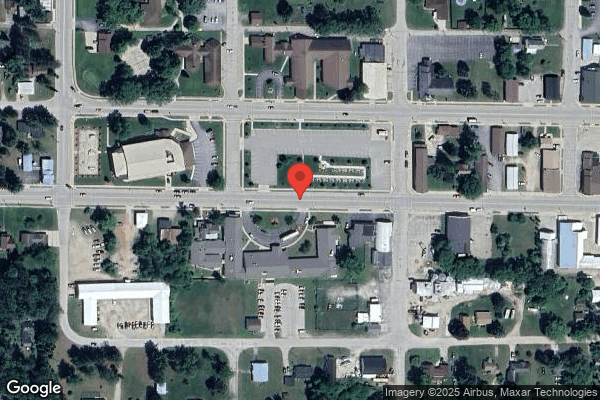
NEWCARE

903 MAIN AVE, CRIVITZ, WI 54114 (715) 854-2717
For profit - Individual 43 Beds Independent Data: November 2025 1 Immediate Jeopardy citation
Trust Grade
61/100
#109 of 321 in WI
Last Inspection: June 2024

Within standard 12-15 month inspection cycle. Federal law requires annual inspections.

Overview

Newcare in Crivitz, Wisconsin, has a Trust Grade of C+, indicating it is slightly above average among nursing homes. It ranks #109 out of 321 facilities in Wisconsin, placing it in the top half, but is #5 out of 5 in Marinette County, meaning only one local facility is rated higher. The facility is on an improving trend, with issues decreasing from 6 in 2024 to 2 in 2025. Staffing is a strength here, rated 4 out of 5 stars, with a turnover rate of 32%, which is well below the state average. However, the facility has faced some concerning incidents, including one critical finding where a resident at risk for elopement was not adequately supervised and was found off-site, as well as issues with food safety practices and failure to offer vaccinations to several residents. Overall, while there are positive aspects to Newcare, families should be aware of these weaknesses as they make their decision.

Trust Score
C+
61/100
In Wisconsin
#109/321
Top 33%
Safety Record
High Risk
Review needed
Inspections
Getting Better
6 → 2 violations
Staff Stability
○ Average
32% turnover. Near Wisconsin's 48% average. Typical for the industry.
Penalties
✓ Good
$10,062 in fines. Lower than most Wisconsin facilities. Relatively clean record.
Skilled Nurses
✓ Good
Each resident gets 55 minutes of Registered Nurse (RN) attention daily — more than average for Wisconsin. RNs are trained to catch health problems early.
Violations
⚠ Watch
16 deficiencies on record. Higher than average. Multiple issues found across inspections.
★★★★☆
4.0
Overall Rating
★★★★☆
4.0
Staff Levels
★★★★★
5.0
Care Quality
★★★☆☆
3.0
Inspection Score
Stable
2024: 6 issues
2025: 2 issues

The Good

  • 4-Star Staffing Rating · Above-average nurse staffing levels
  • 5-Star Quality Measures · Strong clinical quality outcomes
  • Full Sprinkler Coverage · Fire safety systems throughout facility
  • No fines on record
  • Staff turnover below average (32%)

    16 points below Wisconsin average of 48%

Facility shows strength in staffing levels, quality measures, fire safety.

The Bad

Staff Turnover: 32%

13pts below Wisconsin avg (46%)

Typical for the industry

Federal Fines: $10,062

Below median ($33,413)

Minor penalties assessed

The Ugly 16 deficiencies on record

1 life-threatening
Jun 2025 2 deficiencies
CONCERN (D) 📢 Someone Reported This

A family member, employee, or ombudsman was alarmed enough to file a formal complaint

Potential for Harm - no one hurt, but risky conditions existed

Report Alleged Abuse (Tag F0609)

Could have caused harm · This affected 1 resident

**NOTE- TERMS IN BRACKETS HAVE BEEN EDITED TO PROTECT CONFIDENTIALITY** Based on staff interview and record review, the facility failed to implement policies and procedures for ensuring the reporting ...

Read full inspector narrative →
**NOTE- TERMS IN BRACKETS HAVE BEEN EDITED TO PROTECT CONFIDENTIALITY** Based on staff interview and record review, the facility failed to implement policies and procedures for ensuring the reporting of a reasonable suspicion of a crime in accordance with section 1150B of the Act for 1 resident (R) (R1) of 4 sampled residents. On 5/23/25, staff witnessed R2 strike R1 in the chest with an open hand multiple times. The facility did not report the incidence of abuse to local law enforcement. Findings include: The facility's Resident Abuse, Neglect and Misappropriation/Exploitation policy, dated 8/2024, indicates: .3. In response to allegations of abuse, neglect, exploitation, or mistreatment, the facility must: a. Ensure all alleged violations involving abuse, neglect, exploitation, or mistreatment, including injuries of unknown source and misappropriation/exploitation of resident property, are reported immediately, but not later than 2 hours after the allegations is made, if the event that causes the allegation involves abuse or results in serious bodily injury, or not later than 24 hours if the event that causes the allegation does not involve abuse and does not result in serious bodily injury, to the Administrator of the facility and to other officials (including the State Survey Agency and Adult Protective Services where state law provides for jurisdiction in long-term care facilities) in accordance with state law through established procedures . On 6/18/25, Surveyor reviewed R1's medical record. R1 was admitted to the facility on [DATE] and had diagnoses including congestive heart failure, disorder of psychological development, diabetes, and anxiety. R1's Minimum Data Set (MDS) assessment, dated 6/3/25, included a Brief Interview for Mental Status (BIMS) score of 0 out of 15 which indicated R1 had severe cognitive impairment. R1 had a legal Guardian for healthcare decisions. On 6/18/25, Surveyor reviewed R2's medical record. R2 was admitted to the facility on [DATE] and had diagnoses including Alzheimer's disease, dementia with agitation, unspecified mood disorder, anxiety, and major depression. R2's MDS assessment, dated 3/18/25, included a BIMS score of 6 out of 15 which indicated R2 had severe cognitive impairment. R2 had an activated Power of Attorney for Healthcare (POAHC) for medical decisions. On 6/18/25, Surveyor reviewed a facility-reported incident (FRI) that indicated on 5/23/25 at approximately 9:15 PM, a Certified Nursing Assistant (CNA) saw R2 standing above R1. R1's blankets were off and R1 was lying on the ground. R2 looked up at the CNA and then looked down at R1 and stuck R1 on the chest with an open hand four to five times. The CNA immediately removed R2 from the vicinity and then brought R1 to R1's room. R1 cried and expressed fear after the incident. R1 was interviewed the next day and indicated an incident occurred that made R1 scared. Surveyor noted the facility's investigation of the altercation between R1 and R2 did not indicate the facility notified local law enforcement of the abuse. On 6/18/25 at 12:02 PM, Surveyor interviewed Director of Nursing (DON)-B who confirmed one resident hitting another resident was considered abuse and verified law enforcement was not notified.
CONCERN (D) 📢 Someone Reported This

A family member, employee, or ombudsman was alarmed enough to file a formal complaint

Potential for Harm - no one hurt, but risky conditions existed

Investigate Abuse (Tag F0610)

Could have caused harm · This affected 1 resident

**NOTE- TERMS IN BRACKETS HAVE BEEN EDITED TO PROTECT CONFIDENTIALITY** Based on staff interview and record review, the facility did not ensure an allegation of abuse was thoroughly investigated for 1...

Read full inspector narrative →
**NOTE- TERMS IN BRACKETS HAVE BEEN EDITED TO PROTECT CONFIDENTIALITY** Based on staff interview and record review, the facility did not ensure an allegation of abuse was thoroughly investigated for 1 resident (R) (R1) of 4 sampled residents. On 5/23/25, staff witnessed R2 strike R1 in the chest multiple times. Following the altercation, staff were not provided education to prevent further abuse among residents. Findings include: On 6/18/25, Surveyor reviewed R1's medical record. R1 was admitted to the facility on [DATE] and had diagnoses including congestive heart failure, disorder of psychological development, diabetes, and anxiety. R1's Minimum Data Set (MDS) assessment, dated 6/3/25, included a Brief Interview for Mental Status (BIMS) score of 0 out of 15 which indicated R1 had severe cognitive impairment. R1 had a legal Guardian for healthcare decisions. On 6/18/25, Surveyor reviewed R2's medical record. R2 was admitted to the facility on [DATE] and had diagnoses including Alzheimer's disease, dementia with agitation, unspecified mood disorder, anxiety, and major depression. R2's MDS assessment, dated 3/18/25, included a BIMS score of 6 out of 15 which indicated R2 had severe cognitive impairment. R2 had an activated Power of Attorney for Healthcare (POAHC) for medical decisions. On 6/18/25, Surveyor reviewed a facility-reported incident (FRI) that indicated on 5/23/25 at approximately 9:15 PM, a Certified Nursing Assistant (CNA) saw R2 standing above R1. R1's blankets were pulled off and R1 was lying on the ground. R2 looked up at the CNA and then looked down at R1 and struck R1 on the chest with an open hand four to five times. The CNA immediately removed R2 from the vicinity and then brought R1 to R1's room. R1 cried and expressed fear after the incident. R1 was interviewed the next day and indicated an incident occurred that made R1 afraid. The investigation did not include and the facility did not provide documented staff education to ensure all staff were educated to prevent further altercations. Surveyor reviewed R2's nursing progress notes. Documentation on 5/26/25 at 7:00 PM indicated R2 became erratic and took a butter knife from R2's tray and held it in the air as though R2 was going to use it for something other than cutting food. A staff member redirected R2 and removed the knife from R2's hand. After supper, R2 tried to enter R1's room. Staff held the door shut so R2 could not enter, however, R2 then attempted to enter R1's room from the shared bathroom. Staff redirected and toileted R2 and brought R2 back to the dining room to watch TV. R2's fifteen minute checks were extended for two weeks after the incident and continued until 6/10/25. Kitchen and dietary staff were notified of the incident. It was decided that R2 would not receive a butter knife on R2's tray which did not affect R2's ability to eat independently. On 6/18/25 at 11:08 AM, Surveyor interviewed Licensed Practical Nurse (LPN)-D who indicated LPN-D had not witnessed R2 be aggressive toward other residents, however, R2 was aggressive toward staff during cares and needed redirection. LPN-D indicated R2 attempted to get in R1's room after the initial incident between R1 and R2. LPN-D indicated R2's treatment plan contained an intervention to keep R2 and R1 separated but denied staff education was provided on abuse or aggression prevention. On 6/18/25 at 11:17 AM, Surveyor interviewed Registered Nurse (RN)-C who indicated education was not provided to staff on abuse or aggression prevention, however, RN-C knew to keep R1 and R2 separated. On 6/18/25 at 12:47 PM, Surveyor interviewed CNA-E who indicated CNA-E was not present when the altercation between R2 and R1 occurred. CNA-E denied receiving education on abuse or aggression prevention but knew to keep R1 and R2 separated. On 6/18/25 at 12:54 PM, Surveyor interviewed Director of Nursing (DON)-B who indicated following the incident between R1 and R2, a sign was posted at the nursing station and a treatment plan was updated to keep R1 and R2 separated. DON-B denied providing staff education on abuse or aggression prevention.
Jun 2024 5 deficiencies
CONCERN (D) 📢 Someone Reported This

A family member, employee, or ombudsman was alarmed enough to file a formal complaint

Potential for Harm - no one hurt, but risky conditions existed

Report Alleged Abuse (Tag F0609)

Could have caused harm · This affected 1 resident

Based on staff interview and record review, the facility did not report an allegation of sexual abuse to the State Agency (SA) for 2 residents (R) (R29 and R94) of 2 sampled residents. On 3/21/24, st...

Read full inspector narrative →
Based on staff interview and record review, the facility did not report an allegation of sexual abuse to the State Agency (SA) for 2 residents (R) (R29 and R94) of 2 sampled residents. On 3/21/24, staff observed R29 seek out R94 after redirection and kiss R94 on the lips. The facility did not report the allegation of sexual abuse to the SA. Findings include: The facility's Resident Abuse, Neglect, and Misappropriation/Exploitation of Property Policy and Procedure, with a revision date 5/1/24, indicates: It is the policy of NEWCare, Inc. that residents be maintained in a safe, protective, and humane environment free from mistreatment, neglect, verbal, sexual, physical, and mental abuse .All possible attempts will be made to identify residents whose personal histories render them at risk of abusing other residents and when identified, care plans will include intervention strategies to prevent occurrences of abusive behavior. Allegations that abuse of any type has occurred will be handled as identified in the following procedure .Reporting: 1. The Nursing Home Administrator, Director of Nursing, and Social Services Designee shall be informed within two hours of suspected abuse .2. Once the facility administration becomes aware of any alleged violations, the facility must report to the designated state agency within 24 hours if deemed a reportable incident. 3. After the facility submits a report of an alleged violation, the facility must conduct a thorough investigation, prevent any other incident from occurring throughout the investigation and report the results of the investigation to the state agency within five working days. On 6/18/24, Surveyor reviewed R29's medical record. R29 had diagnoses including unspecified dementia, unspecified severity, without behavioral disturbance, psychotic disturbance, mood disturbance, anxiety, cognitive communication deficit, and adjustment disorder with mixed disturbance of emotions and conduct. R29's most recent Minimum Data Set (MDS) assessment, dated 4/10/24, documented R29 had a Brief Interview for Mental Status (BIMS) score of 1 out of 15 which indicated R29 had severe cognitive impairment. R29 had an activated Power of Attorney (POA). A behavior care plan, initiated 7/21/22 and updated on 3/19/24, stated R29 will not exhibit socially inappropriate/disruptive behavior through the next review period and indicated the following: R29 will often greet other residents by touching or rubbing their arm or leg in a friendly manner. R29 has become more affectionate toward male residents with no regard to personal privacy. Please redirect R29 when this is happening. R29 has also been lifting R29's top and exposing R29's self to male residents and visitors. Make sure R29 has a camisole, bra, or long t-shirt tucked into R29's pants so R29 is not able to lift R29's top. A progress note, dated 3/21/24, indicated: R29 sought out R94 in the dining room when staff left to deliver a meal tray. After staff redirected R29, R29 reached back and kissed R94 on the lips. R29 was redirected to the dinner table and R94 was moved closer to R94's room. R29 sought out R94 again and was redirected. Staff initiated 1:1 supervision for R29. On 6/18/24 at 2:36 PM, Surveyor interviewed Registered Nurse (RN)-E who witnessed the incident on 3/21/24 and wrote the progress note. RN-E stated RN-E redirected R29 from R94 after RN-E returned to the dining room after delivering a meal tray. After R29 was redirected, RN-E stated R29 self-propelled R29's wheelchair back to R94's table and kissed R94 on the lips. RN-E stated R29 and R94 were separated and staff initiated 1:1 supervision for R29 until R29 was assisted to bed that evening. RN-E stated 1:1 supervision was initiated to ensure the safety of R94 throughout the night. RN-E stated RN-E updated Director of Nursing (DON)-B either that evening or the following morning and indicated behavioral incidents are documented in R29's chart as they occur. On 6/18/24, Surveyor reviewed R94's medical record. R94 had diagnoses including encounter for palliative care, cerebral palsy, anxiety disorder, major depressive disorder, and unspecified intellectual disabilities. R94's MDS assessment, dated 3/27/24, documented R94 had a BIMS score of 0 out of 15 which indicated R94 had severe cognitive impairment. R94 had a court-appointed guardian for healthcare decisions. On 6/18/24 at 10:26 AM, Surveyor interviewed Social Services Director (SSD)-D who was a part of the team that reports and investigates allegations of abuse. SSD-D stated SSD-D was not aware of the incident between R29 and R94 on 3/21/24. SSD-D stated SSD-D was aware R29 had sexual behaviors and targeted R94 and verified R29 and R94 were unable to consent to sexual contact. SSD-D confirmed allegations of sexual abuse should be reported to the SA. On 6/18/24 at 10:38 AM, Surveyor interviewed DON-B and Nursing Home Administrator (NHA)-A who stated they were not aware of the incident between R29 and R94 on 3/21/24 and did not report the incident to the SA. DON-B stated DON-B would look at the documentation and provide Surveyor with information on the allegation and investigation and if the incident should have been reported. On 6/19/24 at 8:10 AM, Surveyor interviewed DON-B who remembered updating R29's physician regarding R29's behaviors and requested an order for a medication that was previously discontinued due to R29's refusals. DON-B stated R29's sexual behaviors were less when R29 was prescribed the medication. DON-B again stated DON-B was not aware of the incident on 3/21/24. DON-B stated staff document behaviors on a behavioral sheet and the unit nurse is responsible for documenting behaviors in the resident's medical record. DON-B stated documentation is reviewed and discussed during daily team meetings. On 6/19/24 at 9:45 AM, Surveyor interviewed DON-B regarding the review of daily documentation. DON-B confirmed the documentation was reviewed and DON-B was uncertain how it slipped through their minds to report the incident of potential sexual abuse between R29 and R94 because previous and post incidents were reported and investigated. DON-B confirmed the incident of sexual contact between R29 and R94 on 3/21/24 should have been reported to the SA.
CONCERN (D) 📢 Someone Reported This

A family member, employee, or ombudsman was alarmed enough to file a formal complaint

Potential for Harm - no one hurt, but risky conditions existed

Investigate Abuse (Tag F0610)

Could have caused harm · This affected 1 resident

Based on staff interview and record review, the facility did not ensure an allegation of sexual abuse was investigated for 2 residents (R) (R29 and R94) of 2 sampled residents. The facility did not i...

Read full inspector narrative →
Based on staff interview and record review, the facility did not ensure an allegation of sexual abuse was investigated for 2 residents (R) (R29 and R94) of 2 sampled residents. The facility did not investigate an allegation of sexual abuse involving R29 and R94. Findings include: The facility's Resident Abuse, Neglect, and Misappropriation/Exploitation of Property Policy and Procedure, with a revision date of 5/1/24, indicates: It is the policy of NEWCare, Inc. that residents be maintained in a safe, protective, and humane environment free from mistreatment, neglect, verbal, sexual, physical, and mental abuse .by staff as well as other residents throughout their stay in the facility .All possible attempts will be made to identify residents whose personal histories render them at risk of abusing other residents and when identified, care plans will include intervention strategies to prevent occurrences of abusive behavior. Allegations that abuse of any type has occurred will be handled as identified in the following procedure .Investigation of abuse allegation: An investigation by the abuse team which includes the Nursing Home Administrator, Director of Nursing, and Social Services Designee will start immediately upon notification of an alleged event .The facility will document investigation findings, including witness statements, corrective action findings, and conclusions in an administrative file. The abuse team is responsible for notifying the resident and/or resident representative of any investigational findings and outcomes as allowable within privacy standards. Collect and preserve physical and documentary evidence and always include the following: 1. The initial complaint report will be reviewed. 2. Regulatory authorities that may assist .will be contacted for involvement and assistance. 3. The incident will be discussed with the individual initiating the complaint to determine whether all parties involved with the incident have been identified. 4. The perpetrator will be informed that an allegation has been made. 5. All individuals involved with the incident: witness(s), victim(s), and alleged perpetrator(s)will be interviewed and written signed statements from each party will be taken. 6. In the case of an abuse allegation, the charge nurse and another staff member will examine the resident. 7. The abuse team will collect and review the investigation material and determine whether the alleged abuse is substantiated. 8. Random resident reviews will be conducted with each investigation. 9. A summary of the finding will be written upon completion of the investigation and will be maintained in the Social Services office with all complaint reports and written statements from all staff members involved .Analysis: The abuse team will meet within five days of the initial report to reevaluate the incident and any potential factors leading to the incident that require changes to policy or procedure or any discipline within the facility to prevent further incident. Within the facility ability, changes will be implemented immediately . On 6/18/24, Surveyor reviewed R29's medical record. R29 had diagnoses including unspecified dementia, unspecified severity, without behavioral disturbance, psychotic disturbance, mood disturbance, anxiety, cognitive communication deficit, and adjustment disorder with mixed disturbance of emotions and conduct. R29's most recent Minimum Data Set (MDS) assessment, dated 4/10/24, documented a Brief Interview for Mental Status (BIMS) score of 1 out of 15 which indicated R29 had severe cognitive impairment. R29 had an activated Power of Attorney (POA). A behavior care plan, initiated on 7/21/22 and updated on 3/19/24, stated R29 will not exhibit socially inappropriate/disruptive behavior through the next review period and indicated the following: R29 will often greet other residents by touching or rubbing their arm or leg in a friendly manner. R29 has become more affectionate toward male residents with no regard for personal privacy. Please redirect R29 when this is happening. R29 has also been lifting R29's top and exposing R29's self to male residents and visitors. Make sure R29 has a camisole, bra, or long t-shirt tucked into R29's pants so R29 is not able to lift R29's top. A progress note, dated 3/21/24, indicated the following: R29 sought out R94 in the dining room when staff left to deliver a meal tray. After staff redirected R29, R29 reached back and kissed R94 on the lips. R29 was redirected to the dinner table and R94 was moved closer to R94's room. R29 sought out R94 again. R29 was redirected and staff initiated 1:1 supervision for R29. On 6/18/24 at 2:36 PM, Surveyor interviewed Registered Nurse (RN)-E who witnessed the incident on 3/21/24 and wrote the progress note. RN-E stated RN-E redirected R29 from R94 after RN-E returned to the dining room after delivering a meal tray. After R29 was redirected, RN-E stated R29 self-propelled R29's wheelchair back to R94's table and kissed R94 on the lips. RN-E stated R29 and R94 were separated and staff initiated 1:1 supervision for R29 until R29 was assisted to bed that evening. RN-E stated 1:1 supervision was initiated to ensure the safety of R94 throughout the night. RN-E stated RN-E updated Director of Nursing (DON)-B either that evening or the following morning and indicated behavioral incidents are documented in R29's chart as they occur. A progress note, dated 3/22/24 and written by Director of Nursing (DON)-B, indicated: Consulted Medical Doctor (MD)-H regarding R29's behaviors. R29 was better when R29 took citalopram (an anti-depressant medication). An order was received to start citalopram liquid 10 mg (milligrams) daily. On 6/18/24 Surveyor reviewed R94's medical record. R94 had diagnoses including encounter for palliative care, cerebral palsy, anxiety disorder, major depressive disorder, and unspecified intellectual disabilities. R94's MDS assessment, dated 3/27/24, documented a BIMS score of 0 out of 15 which indicated R94 had severe cognitive impairment. R94 had a court-appointed guardian for healthcare decisions. On 6/18/24 at 10:26 AM, Surveyor interviewed Social Service Director (SSD)-D who is part of the team that reports and investigates allegations of abuse. SSD-D stated SSD-D was not aware of the incident between R29 and R94 on 3/21/24. SSD-D stated SSD-D was aware R29 had sexual behaviors and targeted R94 and verified R29 and R94 were unable to consent to sexual contact. SSD-D confirmed allegations of sexual abuse should be thoroughly investigated. On 6/18/24 at 10:38 AM, Surveyor interviewed DON-B and Nursing Home Administrator (NHA)-A who stated they were not aware of the incident between R29 and R94 on 3/21/24. DON-B stated DON-B would look at the documentation and provide Surveyor with information on the allegation and investigation. On 6/19/24 at 8:10 AM, Surveyor interviewed DON-B who stated DON-B remembered updating R29's physician regarding R29's behaviors and requested an order for a medication that was discontinued due to R29's frequent refusals. DON-B stated R29's sexual behaviors were less when R29 was prescribed the medication. DON-B again stated DOB-B was not aware of the incident between R29 and R94 on 3/21/24. DON-B stated staff document a resident's behavior on a behavioral sheet and the unit nurse is responsible for documenting the behavior in the resident's medical record. DON-B stated all documentation is reviewed and discussed at a daily team meeting. DON-B stated DON-B did not receive a call regarding the incident on 3/21/24 which is why the incident was not investigated. On 6/19/24 at 9:45 AM, Surveyor interviewed DON-B regarding the review of daily documentation. DON-B confirmed the documentation on 3/21/24 was reviewed and DON-B was uncertain how it slipped through their minds to investigate the incident because previous and post incidents were investigated. DON-B confirmed the incident of sexual contact between R29 and R94 should have been thoroughly investigated.
CONCERN (D) 📢 Someone Reported This

A family member, employee, or ombudsman was alarmed enough to file a formal complaint

Potential for Harm - no one hurt, but risky conditions existed

Accident Prevention (Tag F0689)

Could have caused harm · This affected 1 resident

**NOTE- TERMS IN BRACKETS HAVE BEEN EDITED TO PROTECT CONFIDENTIALITY** Based on staff interview and record review, the facility did not ensure the resident environment remained as free of accident ha...

Read full inspector narrative →
**NOTE- TERMS IN BRACKETS HAVE BEEN EDITED TO PROTECT CONFIDENTIALITY** Based on staff interview and record review, the facility did not ensure the resident environment remained as free of accident hazards as possible for 1 resident (R) (R142) of 2 sampled residents. In addition, the facility did not implement appropriate monitoring interventions for 1 (R29) of 2 sampled residents who displayed sexual behavior toward other residents. R142 was a known smoker. Staff did not complete a smoking assessment for R142. R29 displayed sexual behavior toward other residents. Staff did not implement behavioral or monitoring interventions following incidents documented in R29's medical record. Findings include: The facility's Smoking Policy for Residents indicates: It is the policy of NEWCare Inc. that all residents that smoke will go through the NEWCare Smoking Assessment for safe handling of smoking materials. The facility's Care plan, Comprehensive Person Centered policy, last revised March 2022, indicates: .9. Care plan interventions are chosen only after data gathering, proper sequencing of events, careful consideration of the relationship between the resident's problem area(s), and their causes, and relevant clinical decision making .11. Assessments of residents are ongoing and care plans are revised as information about the residents and the resident's conditions change . The facility's Behavioral Assessment, Intervention and Monitoring policy, last revised March 2019, indicates: Behavioral or Psychological Symptoms of Dementia (BPSD) describe behavioral symptoms in individuals with dementia that cannot be attributed to a specific medical or psychiatric cause .3. Current guidelines recommend the use of non-pharmacological interventions for BPSD .1. The interdisciplinary team will evaluate behavioral symptoms .Safety strategies will be implemented .to protect the resident and others from harm .8. Interventions and approaches will be based on detailed assessment of physical, psychological, and behavioral symptoms and their underlying causes, as well as the potential situation and environmental reasons for the behavior. The care plan will include: .b. Targets and individual interventions for the behavioral .symptoms, the rational for the interventions and approaches .and how the staff will monitor for effectiveness of the interventions. 1. On 6/18/24, Surveyor reviewed R142's medical record. R142 was admitted to the facility on [DATE] with diagnoses including liver cell carcinoma, claustrophobia, agoraphobia with panic disorder, anxiety, autism, and mild intellectual disabilities. A Minimum Data Set (MDS) assessment was not yet completed due to R142's recent admission. R142's medical record contained an activated Power of Attorney for Health Care (POAHC) document that indicated R142's POAHC was responsible for R142's medical decisions. A baseline care plan, completed on 6/14/24, indicated: Resident's daily routine and preferences: Will smoke per facility policy or with family. R142's medical record did not indicate a smoking assessment was completed. On 6/18/24 at 10:05 AM, Surveyor observed staff ask R142 if R142 wanted to smoke and retrieved R142's smoking materials. On 6/18/24, Surveyor requested a copy of R142's smoking assessment from Director of Nursing (DON)-B who provided the assessment on 6/18/24 at 6:20 PM. The smoking assessment was created on 6/18/24 at 5:47 PM. On 6/19/24 at 7:49 AM, Surveyor interviewed Nursing Home Administrator (NHA)-A who stated a smoking assessment should be completed before a resident smokes at the facility. NHA-A confirmed R142's smoking assessment should have been completed prior to 6/18/24. On 6/19/24 at 10:13 AM, Surveyor interviewed DON-B who confirmed DON-B completed 142's smoking assessment on 6/18/24. DON-B stated a smoking assessment should be completed within 48 hours and verified R142's smoking assessment was not completed timely. On 6/19/24 at 12:52 PM, Surveyor interviewed Licensed Practical Nurse (LPN)-C who stated R142 smoked daily at the facility since R142 was admitted . 2. On 6/18/24, Surveyor reviewed R29's medical record. R29 had diagnoses including unspecified dementia, unspecified severity, without behavioral disturbance, psychotic disturbance, mood disturbance, anxiety, cognitive communication deficit, and adjustment disorder with mixed disturbance of emotions and conduct. R29's most recent MDS assessment, dated 4/10/24, documented a BIMS score of 1 out of 15 which indicated R29 had severe cognitive impairment. R29 had an activated Power of Attorney (POA) for medical decisions. A behavior care plan, initiated on 7/21/22 and updated on 3/19/24, stated R29 will not exhibit socially inappropriate/disruptive behavior through the next review period and indicated: R29 will often greet other residents by touching or rubbing their arm or leg in a friendly manner. R29 has become more affectionate toward male residents with no regard for personal privacy. Please redirect R29 when this is happening. R29 has also been lifting R29's top and exposing R29's self to male residents and visitors. Make sure R29 has a camisole, bra, or long t-shirt tucked into R29's pants so R29 is not able to lift R29's top. R29's medical record indicated the following: A progress note, dated 3/21/24, indicated: R29 reached out to an ambulatory resident when the resident passed by. R29 touched the resident's knee and the resident told R29 to stop. R29 also passed the residents' room, stopped, and looked in at the resident. A progress note, dated 3/21/24, indicated: R29 sought out R94 in the dining room when staff left to deliver a meal tray. After R29 was redirected, R29 reached back and kissed R94 on the lips. R29 was redirected to the dinner table and R94 was moved closer to R94's room. R29 again sought out R94 and was redirected. Staff initiated 1:1 supervision for R29 until R29 was assisted to bed that evening. A progress note, dated 3/22/24, indicated: Staff observed R29 exit R94's room. When staff walked away from the nurses' station, R29 entered R94's room. R29 was redirected away from R94 because R29 got too close and R94 showed signs of being uncomfortable. A progress note, dated 4/5/24, indicated: R29 was redirected away from R94 after R29 was observed touching/ rubbing R94's knee. A progress note, dated 4/6/24, indicated: R29 was redirected away from R94 after R29 was observed touching/ rubbing R94's knee. On 4/24/24, Staff observed R29 lean over and kiss R94 on the mouth near the nurses' station. R29 and R94 were separated. On 6/19/24 at 7:55 AM, Surveyor interviewed LPN-C who stated R29 had frequent sexual behaviors but did not have them as often. LPN-C stated R29 previously targeted R94 but redirection usually worked. LPN-C stated there were no interventions besides redirection for R29's sexual behaviors. On 6/19/24 at 8:05 AM, Surveyor interviewed Certified Nursing Assistant (CNA)-F who stated R29 touchesd and/or slightly rubbed other residents' arms and legs. CNA-F stated CNA-F did not see any resident become upset by the touching and stated redirection was the only intervention CNA-F was aware of. Surveyor noted R29's care plan did not contain monitoring interventions for R29's behavior toward other residents and, aside from brief 1:1 monitoring initiated on 3/21/24, did not include monitoring interventions implemented after the above documented incidents. On 6/18/24 at 10:38 AM, Surveyor interviewed DON-B and NHA-A regarding R29's behavior. DON-B and NHA-A stated R29's care plan stated to redirect R29. DON-B also stated R29's care plan stated R29 should wear a camisole or tank top due to flashing visitors and other residents. When Surveyor asked DON-B and NHA-A about R29's documented sexual behaviors and what interventions were added to prevent future incidents of unwanted touch, DON-B stated R29's behavioral interventions and care plan were last updated on 3/19/24. On 6/19/24 at 9:45 AM, Surveyor interviewed DON-B who stated DON-B did not know what interventions to put in place for supervision for R29 because staff indicated R29 could leave the unit and make it to the other side of the building in fifteen minutes which made fifteen minute checks pointless. DON-B also stated DON-B discussed R29's behavior with department heads and indicated the only suggestion was for staff to monitor R29; however, there were no specifications for monitoring.
CONCERN (D)

Potential for Harm - no one hurt, but risky conditions existed

Infection Control (Tag F0880)

Could have caused harm · This affected 1 resident

Based on observation, staff interview, and record review, the facility did not maintain an infection prevention and control program designed to provide a safe and sanitary environment to prevent the t...

Read full inspector narrative →
Based on observation, staff interview, and record review, the facility did not maintain an infection prevention and control program designed to provide a safe and sanitary environment to prevent the transmission of communicable disease and infection for 2 residents (R) (R1 and R21) of 2 sampled residents. R1 and R21 resided in the same room. Signs posted outside R1 and R21's room indicated droplet precautions, airborne precautions, and contact precautions were in place. On 6/19/24, staff did not don the appropriate personal protective equipment (PPE) prior to entering R1 and R21's room to complete cares. Findings include: The facility's Infection Prevention and Control Manual Transmission-Based Precautions indicates: - Contact Precautions: The purpose of contact precautions is to prevent transmission of infections that are spread by direct (e.g., person-to-person) or indirect contact with the resident or environment. Contact precautions require the use of appropriate personal protective equipment (PPE), including a gown and gloves upon entering the room or contacting the resident or resident environment. When leaving the room, PPE will be removed and hand hygiene performed. - Droplet Precautions: The purpose of droplet precautions is to prevent respiratory droplets containing viruses or bacteria particles from spreading to another individual when those droplets are generated during coughing, sneezing, talking, or certain procedures .A private room is preferred but if not available, cohort with a resident with the same infectious agent or for a resident with limited risk factors. Separate residents at least 3 feet and draw the curtain between beds. Droplet precautions require the use of facemasks upon entry (i.e., within three feet of a resident) into a resident's room or cubicle with respiratory droplet precautions. If substantial spraying of respiratory secretions is anticipated, gloves and gown as well as goggles (or face shield in place of goggles) should be worn. - Airborne Precautions: Infectious organisms are contained in tiny droplet nuclei and can remain suspended in the air for extended periods of time and may be dispersed over long distances A susceptible host can contract the infection by inhaling these organisms. Staff must wear a fit-tested N95 or higher respirator donned before entering the room. On 6/19/24 at 7:55 AM, Surveyor observed Certified Nursing Assistant (CNA)-G sanitize hands and enter R1 and R21's room. CNA-G did not don a respirator, a gown, or gloves prior to entering the room. CNA-G exited the room wearing gloves at 8:05 AM with a clear plastic bag that contained what appeared to be an incontinence brief and soiled wipes. Surveyor observed three signs posted on the wall just outside the room and a PPE cart near the door. The signs posted near the door read: 1. Stop: Contact Precautions Everyone Must: Clean their hands, including before entering and when leaving the room. Providers and Staff Must Also: Put gloves on before room entry. Discard gloves before room exit. Put on gown before room entry. Discard gown before room exit. 2. Stop: Airborne Precautions Everyone Must: Clean their hands, including before entering and when leaving the room. Put on a fit tested N95 or higher level respirator before room entry. Remove respirator after exiting the room and closing the door. 3. Stop: Droplet Precautions Everyone Must: Clean their hands, including before entering and when leaving the room. Make sure their eyes, nose, and mouth are fully covered before room entry. Remove face protection before room exit. On 6/19/24 at 8:06 AM, Surveyor interviewed CNA-G who confirmed CNA-G completed personal cares and changed an incontinence brief in R1 and R21's shared room. CNA-G verified CNA-G did not don a respirator or gown prior to entering the room or during the completion of cares. CNA-G initially stated CNA-G thought the precaution signs were for R21, but then stated CNA-G thought the precaution signs were for R1 and R21. CNA-G stated staff should reviewed a resident's plan of care if staff are unsure which precautions are in place. CNA-G stated CNA-G should have donned the appropriate PPE prior to entering R1 and R21's room and should have followed the signs posted outside of the room. After speaking with Surveyor, CNA-G reentered the room to speak with one of the residents. CNA-G did not don the appropriate PPE or perform hand hygiene prior to entering the room. On 6/19/24 at 12:38 PM, Surveyor interviewed Director of Nursing (DON)-B who stated staff should be aware of and follow transmission-based precautions (TBP) signs. DON-B stated all staff receive infection control and TBP education upon hire, annually, and as needed. DON-B stated R21 had active respiratory signs and symptoms and was placed on airborne, droplet, and contact precautions pending test results and a diagnosis. DON-B stated DON-B expects staff who enter TBP rooms to follow the signs as indicated.
CONCERN (E)

Potential for Harm - no one hurt, but risky conditions existed

Deficiency F0883 (Tag F0883)

Could have caused harm · This affected multiple residents

**NOTE- TERMS IN BRACKETS HAVE BEEN EDITED TO PROTECT CONFIDENTIALITY** Based on staff interview and record review, the facility did not ensure vaccinations were reviewed, offered, or administered for...

Read full inspector narrative →
**NOTE- TERMS IN BRACKETS HAVE BEEN EDITED TO PROTECT CONFIDENTIALITY** Based on staff interview and record review, the facility did not ensure vaccinations were reviewed, offered, or administered for 4 residents (R) (R11, R16, R21, and R22) of 5 sampled residents. The facility did not offer R11, R16, R21, and R22 the Prevanr20® (PCV20) vaccine. Findings include: Abbreviations (www.cdc.gov): PCV13: 13-valent pneumococcal conjugate vaccine (Prevnar13®) PCV15: 15-valent pneumococcal conjugate vaccine (Vaxneuvance®) PCV20: 20-valent pneumococcal conjugate vaccine (Prevnar 20®) PPSV23: 23-valent pneumococcal polysaccharide vaccine (Pneumovax23®) The most recent Centers for Disease Control and Prevention (CDC) recommendations for pneumococcal vaccinations indicate: For adults 65 years or older who have only received PPSV23, the CDC recommends: Give 1 dose of PCV15 or PCV20. The PCV15 or PCV20 dose should be administered at least 1 year after the most recent PPSV23 vaccination. Regardless of if PCV15 or PCV20 is given, an additional dose of PPSV23 is not recommended since they already received it. For those who have received PCV13 and 1 dose of PPSV23, the CDC recommends you give 1 dose of PCV20 at least 5 years after the last pneumococcal vaccine. For adults 65 years or older who have received PCV13, give 1 dose of PCV20 or PPSV23 at least 1 year after PCV13. Regardless of vaccine used, their vaccines are then complete. The facility's Infection Prevention and Control Manual Pneumococcal Vaccine Program indicates: It is the policy of this facility that residents will be offered immunization(s) against pneumococcal disease in accordance with Advisory Committee on Immunization Practices (ACIP) recommendations .Refer to https://www.cdc.gov/vaccines/vpd/pneumo/hcp/recommendations.html for more details. 1. Surveyor reviewed R11's medical record. R11 was admitted to the facility on [DATE] and had diagnoses including Alzheimer's disease, dementia, atrial fibrillation, congestive heart failure, and human metapneumovirus pneumonia. R11 had an activated Power of Attorney (POA) for medical decisions. R11's medical record indicated R11 received a PCV13 vaccine on 10/12/15 and a PPSV23 vaccine on 3/7/17. R11 was due to receive the PCV20 vaccine as of 3/7/22 (five years after the last vaccine). R11's medical record did not indicate R11 was offered or administered the PCV20 vaccine. 2. Surveyor reviewed R16's medical record. R16 was admitted to the facility on [DATE] and had diagnoses including atrial fibrillation, congestive heart failure, pneumonia, and chronic obstructive pulmonary disease (COPD). R16 did not have an activated POA. R16's medical record indicated R16 received a PCV13 vaccine on 9/9/16 and a PPSV23 vaccine on 4/10/06. R16 was due to receive the PCV20 vaccine as of 9/9/21. R16's medical record did not indicate R16 was offered or administered the PCV20 vaccine. 3. Surveyor reviewed R21's medical record. R21 was admitted to the facility on [DATE] and had diagnoses including cerebral infarction, type 2 diabetes, supplemental oxygen dependence, and obstructive sleep apnea. R21 had an activated POA for medical decisions. R21's medical record indicated R21 did not receive the PCV13 vaccine, the PPSV23 vaccine, or the PCV20 vaccine. R21 refused the PCV13 and PPSV23 vaccines on 4/18/21. R21's medical record did not indicate R21 was offered or administered the PCV13, PPSV23, or PCV20 vaccines after 4/18/21. 4. Surveyor reviewed R22's medical record. R22 was admitted to the facility on [DATE] and had diagnoses including Alzheimer's disease, dementia, congestive heart failure (CHF), and COPD. R22 had an activated POA for medical decisions. R22's medical record did not contain information regarding the PCV13 vaccine. R22 received the PPSV23 vaccine on 9/30/19. R22 was due to receive the PCV20 vaccine as of 9/30/20 (one year after the initial vaccine). R22's medical record did not indicate R22 was offered or administered the PCV20 vaccine. On 6/18/24 at 12:51 PM, Surveyor interviewed Director of Nursing (DON)-B who stated the facility's vaccination consent/refusal form was not updated and did not include PCV20 as an offered vaccine. DON-B stated the facility had not offered or administered any PCV20 vaccines yet. DON-B stated the facility offers and administers PCV13 and PPSV23 vaccines for residents. On 6/18/24 at 2:10 PM, Surveyor interviewed DON-B who stated DON-B was not aware the facility should offer the PCV20 vaccine until Surveyor discussed it with DON-B earlier that day. On 6/19/24 at 9:37 AM, Surveyor interviewed DON-B who stated DON-B did not know the facility should offer immunizations annually. On 6/19/24 at 12:46 PM, Surveyor interviewed Nursing Home Administrator (NHA)-A who stated NHA-A expects staff to offer vaccines per CDC recommendations and the facility's policy.
Feb 2024 1 deficiency
CONCERN (D) 📢 Someone Reported This

A family member, employee, or ombudsman was alarmed enough to file a formal complaint

Potential for Harm - no one hurt, but risky conditions existed

Pharmacy Services (Tag F0755)

Could have caused harm · This affected 1 resident

**NOTE- TERMS IN BRACKETS HAVE BEEN EDITED TO PROTECT CONFIDENTIALITY** Based on staff interview and record review, the facility did not ensure the accurate administration of medication for 1 Resident...

Read full inspector narrative →
**NOTE- TERMS IN BRACKETS HAVE BEEN EDITED TO PROTECT CONFIDENTIALITY** Based on staff interview and record review, the facility did not ensure the accurate administration of medication for 1 Resident (R) (R1) of 8 sampled residents. R1's medical record contained a physician's order to administer furosemide (used to remove excess fluid from the body) as needed based on R1's weight changes. The facility did not administer the medication as ordered by R1's physician. Findings include: On 2/7/24, Surveyor reviewed R1's medical record. R1 was admitted to the facility on [DATE] with diagnoses including cerebral infarction (also known as stroke), atrial fibrillation (an irregular and often rapid heart rate), hypertension (high blood pressure) and edema (swelling due to excess fluid accumulation in body tissues). R1's Minimum Data Set (MDS) assessment, dated 8/2/23, contained a Brief Interview for Mental Status (BIMS) score of 3 out of 15 which indicated R1 had severe cognitive impairment. R1's medical record indicated R1's Power of Attorney for Healthcare (POAHC) was responsible for R1's healthcare decisions. R1 received Hospice services throughout R1's stay and passed away at the facility on 8/29/23. R1's medical record contained the following physician's orders: ~furosemide tablet; 20 mg (milligrams); oral twice daily ~furosemide tablet; 40 mg; amount: 1/2 tablet = 20 mg; oral special instructions: daily as needed if weight up 3 pounds in one day Surveyor noted R1's medical record did not contain a daily weight for 9 of the 34 days R1 resided in the facility. Of the weights obtained, Surveyor noted the following weight increases of 3 pounds or more: ~On 7/30/23, R1's weight was 105.5 pounds. R1's weight was not obtained on 7/31/23. On 8/1/23, R1's weight was 112 pounds (which was a 6.5 pound increase from the previous weight). ~On 8/1/23, R1's weight was 112 pounds. On 8/2/23, R1's weight was 115.5 pounds (which was a 3.5 pound increase from the previous weight). ~On 8/2/23, R1's weight was 115.5 pounds. On 8/3/23, R1's weight was 120.5 pounds (which was a 5 pound increase from the previous weight). ~On 8/8/23, R1's weight was 117.5 pounds. On 8/9/23, R1's weight was 120.5 pounds (which was a 3 pound increase from previous weight). R1's medical record indicated staff administered as needed furosemide doses on 8/25/23 at 12:00 PM and 8/27/23 at 8:35 AM. No doses were documented as administered based on the above weight changes. R1's medical record contained the following nursing progress notes: ~On 8/25/23: (R1) was given PRN (as needed) furosemide at noon for 2 (pound) weight increase. Edema to hands and lower extremities . ~On 8/27/23: . A PRN dose of furosemide was given with AM meds for edematous (fluid retained in body) arms. On 2/7/24 at 11:45 AM, Surveyor interviewed Director of Nursing (DON)-B who indicated staff don't always obtain daily weights for residents who receive Hospice services. DON-B verified R1's order for as needed furosemide was based on daily weights. DON-B indicated staff should have clarified the as needed furosemide order with the Hospice nurse and R1's physician. DON-B verified, based on the as needed furosemide order, staff should have administered as needed furosemide to R1 on 8/1/23, 8/2/23, 8/3/23 and 8/9/23 based on R1's weight changes.
May 2023 7 deficiencies 1 IJ
CRITICAL (J)

Immediate Jeopardy (IJ) - the most serious Medicare violation

Accident Prevention (Tag F0689)

Someone could have died · This affected 1 resident

**NOTE- TERMS IN BRACKETS HAVE BEEN EDITED TO PROTECT CONFIDENTIALITY** Based on staff interview and record review, the facility did not ensure 1 Resident (R) (R28) of 1 resident received adequate sup...

Read full inspector narrative →
**NOTE- TERMS IN BRACKETS HAVE BEEN EDITED TO PROTECT CONFIDENTIALITY** Based on staff interview and record review, the facility did not ensure 1 Resident (R) (R28) of 1 resident received adequate supervision to prevent elopement. R28 was admitted to the facility on [DATE] and assessed to be at risk for elopement. R28 had diagnoses of schizophrenia and mild cognitive impairment. R28 wore a wanderguard, but was allowed to sit outside the front of the building while supervised by staff inside the building. On 10/10/22, R28 was observed by a Dietary Manager still on facility grounds, but beyond the adjacent Assisted Living facility. On 11/2/22, R28 was observed walking down the driveway toward the road. On 11/7/22, R28 was found at an apartment complex three blocks from the facility. The facility was unaware R28 eloped until contacted by the police. The facility's failure to supervise a resident who was assessed as an elopement risk and eloped without the facility's knowledge created a finding of Immediate Jeopardy that began on 11/7/22. Surveyor notified Nursing Home Administrator (NHA)-A of the Immediate Jeopardy on 5/18/23 at 8:55 AM. The Immediate Jeopardy was removed and corrected on 11/9/22. Findings include: The facility's Wandering and Elopement policy contained the following information: .4. When the resident returns to the facility, the director of nursing services or charge nurse shall: a. examine the resident for injuries; b. contact the attending physician and report findings and conditions of the resident; c. notify the resident's legal representative (sponsor); d. notify search teams that the resident has been located; e. complete and file an incident report; and f. document relevant information in the resident's medical record. On 5/15/23, Surveyor reviewed R28's medical record. R28 had a Guardian and was admitted to the facility in 2022 with diagnoses that included cerebrovascular accident (CVA) (stroke), aphasia (brain damage in the area that affects language), schizophrenia, and mild cognitive impairment. R28 was ambulatory and did not use assistive devices to ambulate. R28 was mostly independent, and required minimal assistance and cueing with activities of daily living (ADLs). Upon admission, R28 was assessed to be at risk for elopement. R28's admission Minimum Data Set (MDS) assessment, dated 8/9/23, contained a Brief Interview for Mental Status (BIMS) score of 7 out of 15 which indicated R28 had severely impaired cognition. R28's Quarterly MDS assessment, dated 11/8/23, contained a BIMS score of 4 out of 15 which indicated R28 had severely impaired cognition. R28's Quarterly MDS assessments, dated 2/7/23 and 5/9/23, contained BIMS scores of 3 out of 15 which indicated R28 had severely impaired cognition. R28's medical record contained a behavioral telehealth note, dated 11/17/22, that stated R28 had the mentality of a 5-year old. The note also included R28's Brief Interview for Mental Status (BIMS) score of 4 out of 15 which indicated R28 had severely impaired cognition. R28's Elopement Care Plan, initiated on 8/3/22, indicated R28 ambulates independently, does not comprehend all instructions and may exit the building. Per R28's Guardian (Guardian (GD)-S), R28 had a wanderguard at a previous facility. A revision on 8/5/22 indicated R28 had a wanderguard in place and a history of wandering into unsafe areas. A revision on 2/6/23, indicated R28 displayed behavior(s) that may indicate an attempt to leave, including body language, that indicated an elopement may be forthcoming. The most current approach, dated 5/15/23, stated: I do like to wander about the facility independently. Please check where I am frequently. I am not to sit out in front of the building without supervision. I will attempt to go out in front, please redirect me to the Arise patio where I can go independently. If unable to find me I like to go up to the atrium or in the puzzle room. R28's ADL plan of care, dated 8/3/22, indicated R28 had diagnoses of mild intellectual deficits and aphasia (loss of ability to understand or express speech.) and was difficult to understand due to garbled speech. The care plan indicated R28 ambulated independently with a shuffled gait that was weaker on the right side due to a CVA. R28 was at risk for falls related to the CVA. R28's care card, located in a Certified Nursing Assistant (CNA) charting binder and in R28's room, dated May 2023, included the following interventions: cannot sit alone out in front of building; may sit alone on Arise patio; check on me frequently. R28's medical record contained the following progress notes related to potential/attempted elopements: ~8/14/22 at 3:25 PM: R28 was found outside on the sidewalk by the doors speaking with another resident. R28 was redirected back into the building. Will continue to monitor. ~9/15/22 at 2:26 PM: R28 mentioned wanting to 'go home' and people being 'bossy.' R28 has been going outside the front entrance. Staff asked R28 to sit at the table or come inside. R28 was observed walking down the sidewalk. Will continue to watch R28 closely when outdoors. ~9/17/22 at 9:10 PM: R28 repeatedly went out the front door onto the sidewalk in front of the building with another resident on AM shift and tried to continue the same on PM shift. R28 was redirected as there weren't enough staff to cover the area. R28 was upset and redirected to the back patio. Before dinner, R28 exited the front door without the code sounding. A CNA saw R28 walking on the sidewalk in front of the cafeteria. ~10/10/22 at 2:43 PM: At approximately 2:25 PM, R28 was sitting outside in the front of the building and checked on by staff. Shortly afterward, the Dietary Manager called to let Social Services Designee (SSD)-G know R28 was walking down the sidewalk beyond the Assisted Living facility. SSD-G met with R28 and educated R28 on the importance of staying where staff could see R28. The note stated R28 would no longer sit outside by R28's self due to safety issues. The note also stated the facility did not consider this an elopement because staff were aware R28 was going outside and R28 usually stayed put in a chair. ~11/2/22 at 12:05 PM: R28 was observed walking down the driveway toward the road. R28 was brought back into the facility and educated related to not wandering away from where staff can see R28. A progress note, written by Director of Nursing (DON)-B on 11/7/22 at 12:30 PM, contained the following information: Received call from local police that R28 was found at local apartment complex a few blocks down the road about 11:15 AM. R28 did go outside to sit in front of facility about 11:00 AM. R28 is usually able to be outside unattended as R28 has never wandered off of the campus grounds before. R28 does have a wanderguard on and it is working. R28's photo is posted in the front of the MAR (Medication Administration Record). Guardian and physician were updated. R28 did not verbalize anything about going anywhere or wanting to walk away from facility. R28 has been in a good mood all morning. R28 has schizophrenia which has been managed with medications and redirection/activities. R28 will be encouraged to sit in the enclosed patio when R28 desires to sit outside. If R28 desires to sit outside in front of building, R28 will need to be accompanied by staff or family. On 5/16/23 at 3:04 PM, Surveyor interviewed GD-S who was unsure if R28 left the facility intentionally to go to the apartment complex and stated, You just don't know with (R28). (R28) lived there over twenty years ago. On 5/17/23 at 1:29 PM, Surveyor interviewed NHA-A who stated R28 loved to sit in front of the building on the patio and color at the table. NHA-A stated on 11/7/23, R28 was sitting outside the front entrance. Approximately fifteen minutes after R28 went outside, staff became aware R28 was no longer sitting outside when the police department called and asked if R28 lived at the facility. R28 was found at an apartment building three blocks from the facility. The manager of the apartment building recognized R28 as a previous tenant and contacted the police. NHA-A stated R28 was confused and thought the apartment complex was still R28's home. GD-S was contacted and came to the facility to calm R28. GD-S stated R28 previously lived at the apartment complex and used to walk around town. On 5/17/23, Surveyor reviewed an Event Report, dated 11/7/22 at 12:28 PM. The report indicated R28 was sitting outside and wandered off campus grounds. At approximately 11:15 AM, R28 was found at an apartment building a few blocks from the facility. A body check was performed. No bruising, scrapes, or open areas were noted. R28 denied falling. Interventions included: Will not allow R28 to sit outside unattended; R28 will be encouraged to sit outside in the enclosed patio when unattended. May go out front of building with family, friends or staff. R28 will still attempt to go outside of building, has wanderguard on and it is working. Will encourage and redirect back into facility when R28 exits. R28 has never wandered off campus grounds before this incident nor did R28 verbalize the intent to do so. Immediate plan of care for elopement initiated. On 5/17/23 at 3:10 PM, Surveyor interviewed NHA-A who stated NHA-A did not know the address of the apartment complex, but stated to get to the apartment complex, Surveyor should take a left out of the facility's parking lot, go two blocks, turn right and go one more block. NHA-A stated PM shift was aware R28 was not allowed to sit outside the front entrance unsupervised after front office staff left for the day. NHA-A showed Surveyor DON-B's office and the window that overlooked the front sidewalk/patio. Surveyor noted another front office that had a door facing the front entrance did not have a direct view from the desk to the entrance. Surveyor also noted NHA-A's office did not have a direct view of the front entrance. On 5/17/23 at approximately 4:15 PM, Surveyor followed NHA-A's directions to the apartment complex. Surveyor noted R28 had to cross three streets. Surveyor did not encounter a stop sign or traffic light on the first street heading toward the apartment complex. Surveyor then encountered a two way stop sign at an intersection of a city street and county highway. Four vehicles passed before Surveyor could cross the highway. Surveyor encountered a four way stop sign at the next intersection of two city streets and took a left. Surveyor drove one block and encountered a two way stop sign at an intersection of two city streets. Four vehicles passed before Surveyor could cross the city street. One block ahead, the street turned into the apartment complex's parking lot. There was a river behind the apartment complex and two blocks from the facility. On 5/18/23 at 11:25 AM, Surveyor interviewed DON-B who did not recall what R28 was wearing on 11/7/22, but stated likely a jacket because the weather was warm for November. DON-B stated the Receptionist let R28 outside the front entrance to sit and color at the table. DON-B stated whoever let R28 outside let front office staff know so they could check on R28 every few minutes and take turns. DON-B stated if office staff could not see R28 from inside the building, staff went outside and looked for R28. DON-B verified there was not direct, constant supervision of R28 when R28 was outside the front entrance. DON-B stated DON-B could not visualize R28 when R28 was sitting at the table, but could visualize R28 if R28 walked down the sidewalk by DON-B's window. DON-B stated the Receptionist could see R28 if the Receptionist looked out the Receptionist's office door and out the window at the table. Surveyor observed the Receptionist's office and noted the desk was placed in a position where the Receptionist had to get up and look out the office door to visualize R28 outside. DON-B stated on 11/7/22, R28 was in a good mood and did not express a desire to leave the facility. Prior to R28's elopement on 11/7/22, R28 was not on one-to-one supervision while sitting outside the front entrance. R28's care plan was updated on 11/9/22 following R28's elopement to indicate R28 needed direct supervision when R28 was outside the front entrance. DON-B stated R28 did not attempt to elope prior to 11/7/22, but walked the sidewalk or driveway at times. On 5/22/23 at 12:42 PM, Surveyor interviewed Police Chief (PC)-J who referenced the report of the incident involving R28 on 11/7/22 and provided Surveyor the following timeline of events: 10:54 AM call came in 10:56 AM officers dispatched 11:07 AM officers in route 11:11 AM officers arrived on scene 11:22 AM closed call out On 5/31/23 at 9:50 AM, NHA-A stated R28 was allowed to sit on the fenced-in Arise patio; however, on occasion, R28 became upset and agitated. NHA-A made the decision to allow R28 to sit outside the front entrance as a means to calm R28 down. NHA-A stated NHA-A was the only one who made that decision and it was done so on a case-by-case basis. Following R28's elopement on 11/7/22, a meeting was held with the Interdisciplinary Team (IDT) who were immediately educated that R28 was no longer allowed to sit in front of the building under supervision from within the building. Education was completed and R28's plan of care was updated. The failure to supervise a resident who eloped from facility property created a reasonable likelihood for serious harm which created a finding of Immediate Jeopardy. The facility removed and corrected the jeopardy on 11/9/22 when it completed the following: 1. The IDT met and reviewed the policy and procedure for wandering/elopement. 2. Education was conducted regarding supervision for residents at risk for elopement. 3. The IDT reviewed and updated R28's care plan on 11/9/22. 4. Daily, weekly and monthly audits to ensure residents at risk for elopement are not left outside unattended unless in the enclosed patio.
CONCERN (D)

Potential for Harm - no one hurt, but risky conditions existed

Deficiency F0551 (Tag F0551)

Could have caused harm · This affected 1 resident

Based on staff interview and record review, the facility did not ensure 1 Resident (R) (R28) of 1 resident who had a Guardian received services to ensure a court-ordered protective placement was obtai...

Read full inspector narrative →
Based on staff interview and record review, the facility did not ensure 1 Resident (R) (R28) of 1 resident who had a Guardian received services to ensure a court-ordered protective placement was obtained. R28 was under Guardianship. The facility did not ensure R28 had a court-order to be protectively placed at the facility. Findings include: On 5/15/23 at 1:36 PM, Surveyor reviewed R28's medical record. R28 was admitted to the facility in 2022 with diagnoses that included cerebrovascular accident (CVA) (stroke), aphasia (brain damage in the area that affects language), schizophrenia, and mild cognitive impairment. R28 had a Guardian of person. Surveyor was unable to locate protective placement documentation in R28's medical record. On 5/16/23 at 9:00 AM, Surveyor interviewed Social Services Designee (SSD)-G who stated the only Guardianship document the facility had for R28 was the original letter of Guardianship, dated 8/19/81. SSD-G stated the County usually initiates a resident's annual protective placement by calling SSD-G. SSD-G stated SSD-G thought R28 was protectively placed at the facility, but would call the County. On 5/16/23 at 9:46 AM, Surveyor interviewed SSD-G who verified R28 was not protectively placed at the facility. SSD-G verified that upon admission, the facility should have contacted the county to initiate R28's protective placement.
CONCERN (D)

Potential for Harm - no one hurt, but risky conditions existed

Deficiency F0645 (Tag F0645)

Could have caused harm · This affected 1 resident

Based on staff interview and record review, the facility did not ensure a resident suspected of having a mental illness and/or intellectual/developmental disability was screened through the Pre-admiss...

Read full inspector narrative →
Based on staff interview and record review, the facility did not ensure a resident suspected of having a mental illness and/or intellectual/developmental disability was screened through the Pre-admission Screen and Resident Review (PASRR) Level 2 process to determine if nursing home placement was appropriate and if specialized services were required for 1 Resident (R) (R28) of 12 sampled residents. The facility did not complete a PASRR Level 2 screen upon R28's admission to the facility or follow-up after a PASRR Level 2 was submitted when Zoloft (anti-depressant medication) was added to R28's medication regimen. Findings include: On 5/15/23 at 2:21 PM, Surveyor reviewed R28's medical record. R28 was admitted to the facility in 2022 with diagnoses that included cerebrovascular accident (CVA) (stroke), aphasia (brain damage in the area that affects language), schizophrenia, and mild cognitive impairment. R28's medical record indicated R28 had a Guardian. Surveyor noted R28's medical record did not contain a PASRR Level 2 screen. On 5/16/23 at 8:47 AM, the facility provided a PASRR Level 1 screen, dated 2/14/22, that indicated R28 had diagnoses of mental illness (MI) and intellectual disability (ID) which were schizophrenia and mild intellectual disabilities. Written on page two of the document was a side note that indicated R28 started a new medication (Zoloft) on 11/17/22 for depression. The noted indicated the Level 1 screen was faxed on 11/17/22 to (designated state authority who reviews PASRRs). A cover sheet, dated 11/17/22, indicated R28 started Zoloft. In the section that stated email to send level II, an email was not listed. The document was signed by Registered Nurse (RN)-N. No further documentation or information was noted in R28's medical record. On 5/16/23 at 9:38 AM, Surveyor interviewed RN-N who stated, I was going to call them soon. I don't have it in my records and I don't recall. I usually download them and haven't looked if there's one sent in email. RN-N stated R28 was admitted from another long-term care facility which was the origin of R28's original PASRR screen. RN-N verified the facility did not send for a Level 2 screen until R28 was prescribed Zoloft. On 5/16/23 at 12:03 PM, Surveyor interviewed a staff member from the designated state authority for PASRRs who verified they did not have record of a PASRR Level 1 screen for R28 from either facility. On 5/17/23 at 11:06 AM, Surveyor interviewed RN-N who stated probably not when asked if RN-N followed up after faxing the updated PASRR Level 1 when R28 started Zoloft.
CONCERN (D)

Potential for Harm - no one hurt, but risky conditions existed

Deficiency F0655 (Tag F0655)

Could have caused harm · This affected 1 resident

**NOTE- TERMS IN BRACKETS HAVE BEEN EDITED TO PROTECT CONFIDENTIALITY** Based on staff interview and record review, the facility did not ensure a complete baseline care plan was developed within 48 ho...

Read full inspector narrative →
**NOTE- TERMS IN BRACKETS HAVE BEEN EDITED TO PROTECT CONFIDENTIALITY** Based on staff interview and record review, the facility did not ensure a complete baseline care plan was developed within 48 hours of admission for 1 Resident (R) (R92) of 1 sampled resident reviewed for new admission. R92 was admitted to the facility on [DATE] with orders to receive four different high-risk medications. R92's baseline care plan did not address the use of the high-risk medications. Findings include: On 5/16/23, Surveyor reviewed R92's medical record. R92 was admitted to the facility on [DATE] with diagnoses to include duodenal ulcer (small holes or erosions in the lining of the upper section of the small intestine just below the stomach) with hemorrhage (bleeding) and perforation (opening to the outside), chronic kidney disease, multiple rib fractures, major depressive disorder and anxiety disorder. R92's medical record contained a Power of Attorney for Healthcare (POAHC) document, dated 1/16/20 and activated 4/28/23, that indicated R92's POAHC agent was responsible for R92's healthcare decisions. R92's medical record contained the following physician orders: ~ Eliquis (apixaban) (used to help prevent the formation of blood clots) tablet; 5 mg (milligrams); amt (amount): 1 tab; oral twice daily ~ hydrocodone-acetaminophen (used to treat moderate to severe pain) - Schedule II tablet; 5-325 mg; amt: 1 tab; oral special instructions: q (every) 6 hrs (hours) prn (as needed) for pain ~ citalopram (used to treat depression) tablet; 20 mg; amt: 1 tab; oral once daily ~ buspirone (used to treat anxiety) tablet; 5 mg; amt: 1 tab; oral twice daily On 5/17/23, Surveyor reviewed R92's baseline care plan, dated 5/4/23, which did not mention use of any of the above high-risk medications or any interventions related to monitoring for side effects of the high-risk medications. On 5/17/23 at 11:22 AM, Surveyor interviewed Nursing Home Administrator (NHA)-A who verified high-risk medications should be addressed on residents' baseline care plans, including instructions to alert staff to monitor for side effects.
CONCERN (D)

Potential for Harm - no one hurt, but risky conditions existed

Respiratory Care (Tag F0695)

Could have caused harm · This affected 1 resident

Based on observation, staff and resident interview, and record review, the facility did not provide necessary respiratory care and services for 1 Resident (R) (R24) of 1 sampled resident. The facility...

Read full inspector narrative →
Based on observation, staff and resident interview, and record review, the facility did not provide necessary respiratory care and services for 1 Resident (R) (R24) of 1 sampled resident. The facility did not clean R24's continuous positive airway pressure (CPAP) machine per manufacturer's instructions. Findings include: The facility's CPAP/BiPAP Support policy, revised March 2020, contained the following information: General Guidelines for Cleaning .1. These are general guidelines for cleaning. Specific cleaning instructions are obtained from the manufacturer/supplier of the PAP device .7. Masks, nasal pillows and tubing: Cleaned daily by placing in warm, soapy water and soaking/agitating for 5 minutes. Mild dish detergent is recommended. Rinse with warm water and allow it to air dray between uses. The Air Fit ResMed Mask User Guide contained the following information: Cleaning your mask: mask and headgear should only be handwashed by gently rubbing in warm (approximately 86°F (Fahrenheit)/30°C (Celsius)) water using mild soap. All components should be rinsed well with drinking quality water and allowed to air dry out of direct sunlight .Daily/After each use: Disassemble the mask components according to the disassembly instructions. Handwash the separated mask components (excluding headgear and soft sleeves). To optimize the mask seal, facial oils should be removed from the cushion after use. Use a soft bristle brush to clean the vent .Inspect each component and, if required, repeat washing until visually clean. Rinse all components well with drinking quality water and allow to air dry out of direct sunlight. When all components are dry, reassemble according to the reassembly instructions. On 5/15/23, Surveyor reviewed R24's medical record. R24 was admitted to the facility with diagnoses that included chronic obstructive pulmonary disease (COPD), dependence on supplemental oxygen, dependence on other enabling machines and device and sleep apnea. R24's most recent Minimum Data Set (MDS) assessment contained a Brief Interview for Mental Status (BIMS) score of 15 out of 15 which indicated R24 did not have impaired cognition. R24's MDS also indicated R24 required extensive assistance of one staff for activities of daily living (ADLs), transfers, and ambulation. R24's care plan instructed staff to make sure R24's CPAP was on at night and set at 2 liters of oxygen. The care plan contained interventions to clean tubing and O2 tubing per facility policy/procedure. On 5/15/23 at 8:56 AM, Surveyor interviewed R24 who stated R24 used a ResMed Air Sense 10 CPAP machine nightly. R24 verified R24 needed the CPAP nightly otherwise R24 could die, my sleep apnea is very bad. R24 also stated R24's CPAP was not cleaned enough. R24 stated the CPAP tubing and mask were washed maybe once a month. Surveyor noted R24's CPAP tubing appeared clean and R24's CPAP machine appeared dust free. Surveyor observed a CPAP mask on R24's bed. The mask appeared dirty and contained a greasy film with white particles on the part of the mask that provides a seal with R24's face to appropriately provide airway therapy. On 5/16/23 at 8:55 AM, Surveyor interviewed Registered Nurse (RN)-C who stated R24's CPAP machine, tubing and mask were cleaned once weekly by RNs on the Sunday AM shift and documented in the facility's treatment book. Surveyor reviewed a treatment flowsheet that stated: Clean CPAP machine on Sunday AM. Surveyor also noted R24's medical record contained an order, dated the day of R24's admission, to clean R24's CPAP equipment once weekly on Sundays. On 5/16/23 at 9:01 AM, Surveyor observed R24's CPAP mask with tubing attached on R24's bed. Surveyor noted the mask appeared dirty and contained a greasy film with white dried particles on the mask and the silicone seal around the mask. On 5/16/23 at 1:00 PM, Surveyor confirmed with RN-C that R24's CPAP mask was last cleaned on 5/14/23 and was scheduled to be cleaned on 5/21/23. RN-C confirmed R24's CPAP machine was cleaned once weekly, but verified the mask should be washed daily.
CONCERN (D)

Potential for Harm - no one hurt, but risky conditions existed

Unnecessary Medications (Tag F0759)

Could have caused harm · This affected 1 resident

**NOTE- TERMS IN BRACKETS HAVE BEEN EDITED TO PROTECT CONFIDENTIALITY** Based on observation, staff interview, and record review, the facility did not ensure it was free of a medication error rate of ...

Read full inspector narrative →
**NOTE- TERMS IN BRACKETS HAVE BEEN EDITED TO PROTECT CONFIDENTIALITY** Based on observation, staff interview, and record review, the facility did not ensure it was free of a medication error rate of 5% or greater. During medication administration observations, 2 errors occurred during 37 opportunities which resulted in an 5.41% medication error rate affecting 2 Residents (R) (R23 and R34) of 4 residents observed during medication pass. R23 had a physician order for Miralax (used to treat and prevent constipation). During an observation of medication administration, Registered Nurse (RN)-C administered a partial dose of Miralax to R23 and left R23 with the remaining medication. R23 was not assessed to safely self-administer medication and did not receive the complete dose. In addition, R23's physician order for Miralax included the instruction to mix in eight ounces of water. RN-C mixed R23's Miralax in approximately five ounces of water. R34 had a physician order for polyth glyc (generic name for Miralax). During an observation of medication administration, RN-C administered a partial dose of Miralax to R34 and left R34 with the remaining medication. R34 was not assessed to safely self-administer medication and did not receive the complete dose. Findings include: The facility's Administering Medications policy, revised April 2019, contained the following information: Medications are administered in a safe and timely manner, and as prescribed .Medications are administered in accordance with Prescriber orders .Residents may self-administer their own medications only if the attending physician, in conjunction with the interdisciplinary care planning team, has determined that they have the decision-making capacity to do so safely . On 5/16/23, Surveyor reviewed R23's medical record. R23 was admitted to the facility on [DATE] with diagnoses to include unspecified dementia without behavioral disturbance. R23's Minimum Data Set (MDS) assessment, dated 3/28/23, contained a Brief Interview for Mental Status (BIMS) score of 4 out of 15 which indicated R23 had severe cognitive impairment. R23's Power of Attorney for Healthcare (POAHC) document, dated 5/28/19 and activated 4/6/22, indicated R23's POAHC agent was responsible for R23's healthcare decisions. R23's medical record did not contain a self-medication administration assessment. R23 had physician order for Miralax 17 grams by mouth every AM mixed with 8 ounces of water. On 5/16/23, Surveyor reviewed R34's medical record. R34 was admitted to the facility on [DATE] with diagnoses to include unspecified dementia without behavioral disturbance. R34's MDS assessment, dated 5/2/23, contained a BIMS score of 4 out of 15 which indicated R34 had severe cognitive impairment. R34's POAHC document, dated 6/15/22 and activated 7/7/22, indicated R34's POAHC agent was responsible for R34's healthcare decisions. R34's medical record did not contain a self-medication administration assessment. R34 had a physician order to mix 17 grams of Polyth glyc (powder) in adequate liquid and give by mouth once daily for constipation. On 5/16/23 at 7:32 AM, Surveyor observed RN-C prepare and administer R23's morning medications which included 17 grams of Miralax which RN-C mixed with water in a small plastic glass. Surveyor observed RN-C assist R23 with sips of Miralax at a table in the dining area to facilitate the swallowing of R23's other AM medications. Surveyor observed RN-C leave the remaining Miralax at the table with R23. RN-C's medication cart was located in the hall adjacent to the dining area. RN-C then prepared medications for another resident with RN-C's back to the dining area. On 5/16/23 at 7:39 AM, Surveyor observed RN-C prepare and administer R34's morning medications which included 17 grams of Miralax which RN-C mixed with water in a small plastic glass. At a table in the dining area, Surveyor observed RN-C assist R34 with sips of Miralax to facilitate the swallowing of R34's other AM medications. Surveyor noted RN-C left the remaining Miralax at the table with R34 along with a small plastic glass that contained a chocolate supplement drink. The majority of the Miralax dose remained in the glass which was approximately three-quarters full. On 5/16/23 at 7:40 AM, Surveyor observed RN-C ask R23, Are you ready for another drink? Surveyor observed RN-C assist R23 with taking a sip of Miralax. RN-C then returned to the medication cart. On 5/16/23 at 7:46 AM, Surveyor observed R34, who finished the chocolate supplement drink, push the empty glass from the supplement drink into the plastic glass containing the remaining Miralax (without drinking any more of the Miralax) which caused the remaining Miralax to flow onto the table. On 5/16/23 at 7:50 AM, Surveyor observed RN-C leave the medication cart to administer medications to a resident down the hallway. There were no staff in the dining room area at that time. On 5/16/23 at 7:54 AM, Surveyor observed RN-C return to the medication cart. On 5/16/23 at 7:56 AM, Surveyor observed RN-C leave the medication cart to assist another staff in a room with the door closed. There were no staff in the dining area at that time. On 5/16/23 at 7:58 AM, Surveyor observed R34 tip both plastic glasses upside down on the table and move them around through the spilled Miralax which caused some liquid to spill onto the floor. On 5/16/23 at 8:04 AM, Surveyor observed staff wipe up the Miralax from R34's table and surrounding floor and place the empty cups in the garbage. On 5/16/23 at 8:08 AM, Surveyor observed RN-C state to R23, You need to finish your water. Surveyor observed RN-C assist R23 with taking a sip of Miralax. RN-C then returned to the medication cart. On 5/16/23 at 8:10 AM, Surveyor observed RN-C leave the medication cart and walk down hallway out of sight. There were no staff in the dining area at that time. On 5/16/23 at 8:12 AM, staff delivered a meal tray cart to the dining area. Surveyor observed staff set up R23's breakfast meal tray and set the glass with the remaining Miralax to the side of the tray. On 5/16/23 at 8:14 AM, Surveyor observed RN-C return to the medication cart and move the medication cart down the hall and out of sight. On 5/16/23 at 8:28 AM, Surveyor observed RN-C return to the dining area. RN-C assisted R23 with sips of Miralax after RN-C administered medications to R23's tablemate. RN-C placed the glass with the remaining Miralax on R23's meal tray. Surveyor then observed RN-C assist another resident with meal intake. On 5/16/23 at 9:00 AM, Surveyor observed RN-C leave the dining area. One staff member was present in the dining area and started to clear meal trays. On 5/16/23 at 9:02 AM, Surveyor observed staff remove R23's tray and place it in the meal cart. Surveyor noted approximately one-third of the Miralax dose remained in a glass on R23's meal tray. On 5/16/23 at 9:46 AM, Surveyor and RN-C observed the bottom of the plastic glasses used to prepare Miralax doses. RN-C verified the imprint on the bottom of the glass indicated a total of five ounces of fluid could be contained in the glass. On 5/16/23 at 10:08 AM, Surveyor interviewed RN-C who verified R23's Miralax was not mixed with eight ounces of water as ordered which RN-C verified was considered a medication error. Following a discussion of the above observations, RN-C verified R23 and R34 did not receive their entire doses of Miralax and should not have been left alone with their Miralax unfinished. RN-C verified R23 and R34 needed to be assessed for safe self-administration of medication before being left alone with medication. On 5/16/23 at 11:40 AM, Surveyor interviewed Director of Nursing (DON)-B via phone who verified R23 and R34 did not receive their complete doses of Miralax which were considered medication errors. On 5/16/23 at 11:57 AM, Surveyor again interviewed DON-B via phone who verified R23 and R34 were not assessed to self-administer medications. DON-B stated, We do self (medication) administration assessment if a resident wants to take their own meds. DON-B stated it would not be appropriate for R23 and R34 to self-administer medications related to severe cognitive impairment as indicated by their BIMS scores.
CONCERN (F)

Potential for Harm - no one hurt, but risky conditions existed

Food Safety (Tag F0812)

Could have caused harm · This affected most or all residents

Based on observation, staff interview, and record review, the facility did not ensure food was stored and prepared in a sanitary manner. This practice had the potential to affect all 41 residents resi...

Read full inspector narrative →
Based on observation, staff interview, and record review, the facility did not ensure food was stored and prepared in a sanitary manner. This practice had the potential to affect all 41 residents residing in the facility. The facility did not monitor and document dishwashing wash cycle temperatures. Staff did not test Quaternary sanitizing solution per manufacturer's instructions. Cook (CK)-E did not wash hands after performing tasks that contaminated CK-E's hands. Food cooking appliances (ovens, toaster, steam table) and kitchen food prep areas were not cleaned and sanitized. Findings include: During an initial tour of the kitchen on 5/15/23 at 8:05 AM, Dietary Manager (DM)-D informed Surveyor the facility followed the Wisconsin Food Code for dietary services. Monitoring of Dishwasher Wash Cycle Temperatures Wisconsin Food Code 2022 documents at 4-501.110 (B) The temperature of the wash solution in spray-type warewashers that use chemicals to sanitize may not be less than 49 degrees Celsius (C) or 120 degrees Fahrenheit (F). During an initial tour of the kitchen on 5/15/23 at 8:05 AM, Surveyor observed dishwashing. Surveyor noted the dishwasher temperature gauge displayed a washing temperature of 120 degrees F and a final rinse temperature of 120 degrees F. On 5/15/23 at 11:33 AM, Surveyor reviewed the facility's Dish Machine Temperature log, dated May 2023, which contained no documentation of wash temperatures. Surveyor then interviewed DM-D who stated wash cycle temperatures are obtained, but rinse cycle temperature are not obtained or documented. Surveyor requested copies of the May 2023 and April 2023 Dish Machine Temperature Logs from DM-D. On 5/17/23, Surveyor reviewed the facility's April 2023 and May 2023 Dish Machine Temperature Logs which indicated the following: Temperatures must be recorded a minimum of once per shift. Record temperature-wash cycle 120-140 F, rinse cycle 120-140 F. Surveyor verified no wash cycle temperatures were documented. Sanitizing Solution Testing The Quaternary test strip package insert directions state the test solution should be between 65 and 75 degrees F at the time of testing. During an initial tour of the kitchen on 5/15/23 at 8:05 AM, DM-D stated staff used sanitizer buckets to clean kitchen prep and surface areas. DM-D confirmed the facility used TMA Quaternary sanitizing solution. Surveyor observed the Dish Machine Temperature Log and noted Quat Sanitizer was listed on the form and documented PPM (parts per million) of the sanitizer buckets within normal range. On 5/15/23, Surveyor conducted a continuous kitchen observation beginning at 11:33 AM. Surveyor interviewed DM-D regarding the process for preparing and ensuring the sanitizing solution is tested per manufacturer's instructions. DM-D verified the recommended PPMs for the sanitizer buckets by showing Surveyor the Quat testing strips and documentation of the correct PPMs on the Dish Machine Temperature Log. DM-D stated sanitizer and water are mixed in the sanitizing bucket and tested with a Quaternary test strip to ensure the sanitizer is within the manufacturer's recommended PPM range. DM-D stated if the PPM is out of range, the process is repeated. DM-D verified the water is not tested to ensure a temperature of 65-75 degrees F prior to testing the sanitizing solution. Surveyor and DM-D verified the Quaternary test strips and Dish Machine Temperature Log both indicated the Quat Sanitizer check solution temperature must be between 65-75 degrees F. DM-D verified the facility was not performing temperature checks per manufacturer's directions to ensure appropriate PPM for the sanitizing solution used for kitchen equipment and food prep areas. Hand Hygiene Wisconsin Food Code 2022 documents at 2-301.14 When to Wash. Food employees shall clean their hands and exposed portions of their arms as specified under § 2-301.12 immediately before engaging in food preparation including working with exposed food, clean equipment and utensils, and unwrapped single service and single-use articles .(F) During food preparation, as often as necessary to remove soil and contamination and to prevent cross contamination when changing tasks .(I) After engaging in other activities that contaminate the hands. On 5/15/23, Surveyor conducted a continuous kitchen observation beginning at 11:33 AM. Surveyor observed CK-E prepare hamburgers for lunch at the tray line. CK-E removed gloves, washed hands in the kitchen hand washing sink and donned new gloves. Immediately after donning gloves, CK-E walked to the cooler, opened the door with a gloved hand, removed a bag of sliced cheese, and closed the door with a gloved hand. CK-E then walked to the tray line and opened the bag of sliced cheese. With the same gloved hands, CK-E removed cheese slices from the bag and placed the slices on hamburgers to be served for lunch. On 5/16/23, DM-D verified to Surveyor that CK-E should have performed hand hygiene prior to placing cheese slices on hamburgers. Cleanliness of Food Contact Surfaces and Equipment Wisconsin Food Code 2022 documents at 4-601.11 Equipment, Food-Contact Surfaces, Nonfood-Contact Surfaces, and Utensils. (A) Equipment food-contact surfaces and utensils shall be clean to sight and touch. (B) The food-contact surfaces of cooking equipment and pans shall be kept free of encrusted grease deposits and other soil accumulations Wisconsin Food Code 2022 documents at 4-602.12 Cooking and Baking Equipment. (A) Food-contact surfaces of cooking and baking equipment shall be cleaned at least every 24 hours. Wisconsin Food Code 2022 documents at 4-602.13 Nonfood-Contact Surfaces. Non-food-contact surfaces of equipment shall be cleaned at a frequency necessary to preclude accumulation of soil residues. During an initial tour of the kitchen on 5/15/23 at 8:05 AM, Surveyor observed the following: -The front of the oven contained various yellow, red, and white dry food particles, greasy smudges and brown food particles on the oven handles -The toaster contained dried brown and black food particles on the front, left and right sides as well as on the bottom of the toaster drawer. In addition, the inside of the toaster contained multiple brown and black food particles. -A spice jar was observed under the stove/oven. -A can opener contained white dried food particles and food label particles under the blade -The food prep counter back splash contained multiple brown, red, and yellow food spills and particles. The area under the food prep counter where food equipment items were stored was dusty and had multiple brown/red food spills. -The steam table contained multiple brown, red, yellow, and white food spills and food particles dried to the steam table surfaces. Surveyor reviewed the cleaning schedule located in the kitchen and noted staff initials and check marks which indicated appliances, equipment and food prep areas were cleaned daily on each shift. Surveyor requested copies of kitchen cleaning lists from April 1, 2023 to the present. On 5/16/23 at 7:32 AM, Surveyor and DM-D verified the unsanitary and unclean kitchen equipment and food prep areas noted above as well as the following observation: -The right side of the stove/oven was covered with a white, crusted food spill. On 5/16/23, Surveyor reviewed the April 2023 and May 2023 kitchen cleaning schedules which indicated appliances, equipment and food prep areas were cleaned daily on each shift from April 1, 2023 through May 15, 2023. Surveyor noted May 15, 2023 was initialed by CK-E as completed on the first shift and initialed by CK-F on the second shift and indicated the following items were cleaned: wipe countertops, steam table, front of stove, prep table, sweep kitchen and wash can opener.
May 2022 1 deficiency
CONCERN (D)

Potential for Harm - no one hurt, but risky conditions existed

Employment Screening (Tag F0606)

Could have caused harm · This affected 1 resident

Based on record review and staff interviews, the facility did not ensure that it did not employ individuals who were found guilty of abuse, neglect, exploitation or mistreatment by failing to conduct ...

Read full inspector narrative →
Based on record review and staff interviews, the facility did not ensure that it did not employ individuals who were found guilty of abuse, neglect, exploitation or mistreatment by failing to conduct a thorough background check for 2 facility staff (Licensed Practical Nurse (LPN)-D and Certified Nursing Assistant (CNA)-E) of 8 facility staff reviewed for background checks. The facility did not ensure an out-of-state background check for LPN-D and CNA-E were conducted. Findings Include: Facility policy titled Resident Abuse, Neglect and Misappropriation/Exploitation of Property with a revision date of 1/2022 read as follows: Screening of Employees: It is the policy of the facility to screen potential employees for a history of abuse, neglect or mistreating residents by: 5. Background check completed including the Wisconsin Department of Justice Criminal Check and State of Wisconsin Department of Health and Family Services, Department of Regulation and Licensing. If the employee has resided in a state other than Wisconsin in the past three years, a criminal background check will be requested from all prior states of residence within the past three years. Any applicant who has been found guilty of abusing, neglecting or mistreatment residents in a court of law will not be employed. On 5/23/22, the Surveyor selected a sample of employees to review for background check compliance, including LPN-D and CNA-E. LPN-D was hired by the facility on 2/24/22. On 5/23/22, the Surveyor reviewed LPN-D's Background Information Disclosure (BID) form dated 2/24/22 where LPN-D indicated having resided in the state of Illinois within the past 3 years prior to hire at the facility. LPN-D's records did not contain an out-of-state background check. CNA-E was hired by the facility on 1/4/22. On 5/23/22, the Surveyor reviewed CNA-E's BID form dated 1/4/22 which indicated CNA-E resides in the state of Michigan currently and had within the past 3 years prior to hire at the facility. CNA-E's records did not contain an out-of-state background check. On 5/23/22 at 4:10 PM, Surveyor interviewed Human Resource Director (HR)-C who stated, I do not know how to look up other states other than Wisconsin and Michigan. On 5/24/22 at 8:49 AM, Surveyor interviewed HR-C who confirmed having double checked employee files and does not have an out-of-state background check for LPN-D or for CNA-E. On 5/24/22, Surveyor interviewed Nursing Home Administrator (NHA)-A who indicated that NHA-A would work with HR-C to become familiar with how to conduct out-of-state background checks on potential new employees who have resided outside the state of Wisconsin within 3 years prior to hire. On 5/25/22, HR-C presented Surveyor with out-of-state background checks dated 5/24/22 for LPN-D and CNA-A and explained that the facility now has access to an out-of-state background screening process and will begin conducting out-of-state background checks on potential new hires who have lived outside of Wisconsin within 3 years prior to hire.
Understanding Severity Codes (click to expand)
Life-Threatening (Immediate Jeopardy)
J - Isolated K - Pattern L - Widespread
Actual Harm
G - Isolated H - Pattern I - Widespread
Potential for Harm
D - Isolated E - Pattern F - Widespread
No Harm (Minor)
A - Isolated B - Pattern C - Widespread

Questions to Ask on Your Visit

  • "What changes have you made since the serious inspection findings?"
  • "Can I speak with families of current residents?"
  • "What's your RN coverage like on weekends and overnight?"

Our Honest Assessment

Strengths
  • • 32% turnover. Below Wisconsin's 48% average. Good staff retention means consistent care.
Concerns
  • • Multiple safety concerns identified: 1 life-threatening violation(s). Review inspection reports carefully.
  • • 16 deficiencies on record, including 1 critical (life-threatening) violation. These warrant careful review before choosing this facility.
  • • $10,062 in fines. Above average for Wisconsin. Some compliance problems on record.
Bottom line: Mixed indicators with Trust Score of 61/100. Visit in person and ask pointed questions.

About This Facility

What is Newcare's CMS Rating?

CMS assigns NEWCARE an overall rating of 4 out of 5 stars, which is considered above average nationally. Within Wisconsin, this rating places the facility higher than 99% of the state's 100 nursing homes. This rating reflects solid performance across the metrics CMS uses to evaluate nursing home quality.

How is Newcare Staffed?

CMS rates NEWCARE's staffing level at 4 out of 5 stars, which is above average compared to other nursing homes. Staff turnover is 32%, compared to the Wisconsin average of 46%. This relatively stable workforce can support continuity of care.

What Have Inspectors Found at Newcare?

State health inspectors documented 16 deficiencies at NEWCARE during 2022 to 2025. These included: 1 Immediate Jeopardy (the most serious level, indicating potential for serious harm or death) and 15 with potential for harm. Immediate Jeopardy findings are rare and represent the most serious regulatory concerns. They require immediate corrective action.

Who Owns and Operates Newcare?

NEWCARE is owned by a for-profit company. For-profit facilities operate as businesses with obligations to shareholders or private owners. The facility operates independently rather than as part of a larger chain. With 43 certified beds and approximately 37 residents (about 86% occupancy), it is a smaller facility located in CRIVITZ, Wisconsin.

How Does Newcare Compare to Other Wisconsin Nursing Homes?

Compared to the 100 nursing homes in Wisconsin, NEWCARE's overall rating (4 stars) is above the state average of 3.0, staff turnover (32%) is significantly lower than the state average of 46%, and health inspection rating (3 stars) is at the national benchmark.

What Should Families Ask When Visiting Newcare?

Based on this facility's data, families visiting should ask: "What changes have been made since the serious inspection findings, and how are you preventing similar issues?" "Can I visit during a mealtime to observe dining assistance and food quality?" "How do you handle medical emergencies, and what is your hospital transfer rate?" "Can I speak with family members of current residents about their experience?" These questions are particularly relevant given the facility's Immediate Jeopardy citations.

Is Newcare Safe?

Based on CMS inspection data, NEWCARE has documented safety concerns. Inspectors have issued 1 Immediate Jeopardy citation (the most serious violation level indicating risk of serious injury or death). The facility has a 4-star overall rating and ranks #1 of 100 nursing homes in Wisconsin. Families considering this facility should ask detailed questions about what corrective actions have been taken since these incidents.

Do Nurses at Newcare Stick Around?

NEWCARE has a staff turnover rate of 32%, which is about average for Wisconsin nursing homes (state average: 46%). Moderate turnover is common in nursing homes, but families should still ask about staff tenure and how the facility maintains care continuity when employees leave.

Was Newcare Ever Fined?

NEWCARE has been fined $10,062 across 1 penalty action. This is below the Wisconsin average of $33,179. While any fine indicates a compliance issue, fines under $50,000 are relatively common and typically reflect isolated problems that were subsequently corrected. Families should ask what specific issues led to these fines and confirm they've been resolved.

Is Newcare on Any Federal Watch List?

NEWCARE is not on any federal watch list. The most significant is the Special Focus Facility (SFF) program, which identifies the bottom 1% of nursing homes nationally based on persistent, serious quality problems. Not being on this list means the facility has avoided the pattern of deficiencies that triggers enhanced federal oversight. This is a positive indicator, though families should still review the facility's inspection history directly.