MASONIC CENTER FOR HEALTH & REHAB INC
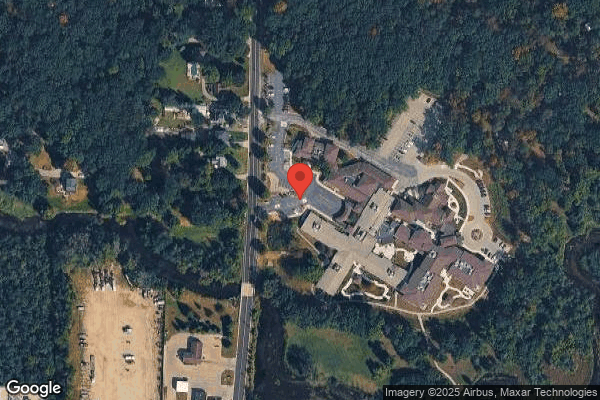
410 N MAIN ST, DOUSMAN, WI 53118 (262) 965-7245
Non profit - Corporation 50 Beds Independent Data: November 2025
Trust Grade
95/100
#47 of 321 in WI
Last Inspection: June 2025

Inspected within the last 6 months. Data reflects current conditions.

Overview

Masonic Center for Health & Rehab Inc in Dousman, Wisconsin, has received a Trust Grade of A+, indicating it is an elite facility with high standards of care. It ranks #47 out of 321 nursing homes in Wisconsin, placing it in the top half, and #1 out of 17 in Waukesha County, meaning it is the best option locally. The facility is new and has no recorded improvement or decline trends as this is its first inspection. Staffing is a strong point, with a 5/5 star rating and a turnover rate of 23%, significantly lower than the state average of 47%. While there are no fines on record, indicating good compliance, there have been two concerns raised during the inspection. One issue involved staff not sanitizing dishware properly, which could affect all residents. Another concern was that staff did not follow recommended infection control practices for residents with specific health needs, such as using personal protective equipment during transfers. Overall, the facility shows great strengths but does have some areas that need improvement in terms of adherence to safety protocols.

Trust Score
A+
95/100
In Wisconsin
#47/321
Top 14%
Safety Record
Low Risk
No red flags
Inspections
Too New
0 → 2 violations
Staff Stability
✓ Good
23% annual turnover. Excellent stability, 25 points below Wisconsin's 48% average. Staff who stay learn residents' needs.
Penalties
✓ Good
No fines on record. Clean compliance history, better than most Wisconsin facilities.
Skilled Nurses
✓ Good
Each resident gets 62 minutes of Registered Nurse (RN) attention daily — more than 97% of Wisconsin nursing homes. RNs are the most trained staff who catch health problems before they become serious.
Violations
✓ Good
Only 2 deficiencies on record. Cleaner than most facilities. Minor issues only.
★★★★★
5.0
Overall Rating
★★★★★
5.0
Staff Levels
★★★★☆
4.0
Care Quality
★★★★☆
4.0
Inspection Score
Stable
: 0 issues
2025: 2 issues

The Good

  • 5-Star Staffing Rating · Excellent nurse staffing levels
  • 4-Star Quality Measures · Strong clinical quality outcomes
  • Low Staff Turnover (23%) · Staff stability means consistent care
  • Full Sprinkler Coverage · Fire safety systems throughout facility
  • No fines on record
  • Staff turnover is low (23%)

    25 points below Wisconsin average of 48%

Facility shows strength in staffing levels, quality measures, staff retention, fire safety.

The Bad

No Significant Concerns Identified

This facility shows no red flags. Among Wisconsin's 100 nursing homes, only 1% achieve this.

The Ugly 2 deficiencies on record

Jun 2025 2 deficiencies
CONCERN (D)

Potential for Harm - no one hurt, but risky conditions existed

Infection Control (Tag F0880)

Could have caused harm · This affected 1 resident

**NOTE- TERMS IN BRACKETS HAVE BEEN EDITED TO PROTECT CONFIDENTIALITY** Based on observation, staff interview, and record review, the facility did not ensure staff followed enhanced barrier precaution...

Read full inspector narrative →
**NOTE- TERMS IN BRACKETS HAVE BEEN EDITED TO PROTECT CONFIDENTIALITY** Based on observation, staff interview, and record review, the facility did not ensure staff followed enhanced barrier precautions (EBP) for 2 residents (R) (R5 and R149) of 3 sampled residents observed during the provision of care. In addition, the facility did not ensure staff followed catheter care infection control practices for 1 resident (R32) of 1 sampled resident. R5 was on EBP due to a pressure injury. On 6/3/25, Certified Nursing Assistant (CNA)-E and CNA-F did not wear personal protective equipment (PPE) while transferring R5 from bed to wheelchair. R149 was on EBP due to the presence of a central line (a dialysis access site for hemodialysis). On 6/3/25, CNA-J did not wear PPE during pericare and while transferring R149 from toilet to wheelchair. R32's night time catheter bag was stored in R32's bathroom during the day. On 6/4/25, the catheter bag was observed without a protective cap on the insertion tip to prevent cross-contamination. Findings include: The facility's undated Enhanced Barrier Precautions Policy & Procedure indicates: It is the policy of this facility to initiate enhanced barrier precautions (EBP) when a multidrug-resistant organism (MDRO) is identified and isolation is not appropriate. EBP is an approach to use personal protective equipment (PPE) to reduce the transmission of MDROs between residents .1. EBP is initiated for residents with any of the following: .b. Wounds and or medical devices. 2. Use of gown and gloves during high-contact resident care activities . The facility's posting placed outside rooms of residents on EBP indicates staff are required to wear a gown for high-contact resident cares including transferring, providing hygiene, changing briefs, and assisting with toileting. 1. On 6/2/25, Surveyor reviewed R5's medical record. R5 was admitted to the facility on [DATE] and had diagnoses including unspecified dementia and cerebral infarction (also known as stroke). R5's Minimum Data Set (MDS) assessment, dated 5/14/25, indicated R5 was rarely/never understood. R5 had a Power of Attorney for Healthcare (POAHC) who was responsible for R5's healthcare decisions. R5's medical record indicated R5 was dependent on staff for personal hygiene and required a full mechanical lift for transfers. On 6/2/25 at 10:48 AM, Surveyor observed a sign posted near R5's room that indicated R5 was on EBP. The sign indicated staff were to wear a gown and gloves for high-contact activities, including transfers. On 6/3/25 at 10:43 AM, Surveyor observed CNA-E and CNA-F provide pericare and transfer R5 to a wheelchair via mechanical lift. During the provision of incontinence care, CNA-E and CNA-F (who wore gowns and gloves) changed gloves and completed hand hygiene appropriately. Following pericare, Surveyor observed CNA-E and CNA-F remove gowns and gloves and complete hand hygiene. Without donning new gowns and gloves, CNA-E and CNA-F repositioned and placed a lift sheet under R5. During the process, Surveyor noted CNA-E's uniform top was in contact with R5's bed linens. Surveyor then observed CNA-E and CNA-F transfer R5 from bed to wheelchair via mechanical lift. CNA-F then handed CNA-E R5's water pitcher. CNA-E assisted R5 with taking sips of water by holding the pitcher with a straw while CNA-F adjusted R5's bed linens. CNA-E then combed R5's hair. CNA-E and CNA-F then complete hand hygiene. On 6/3/25 at 10:45 AM, Surveyor interviewed CNA-H in the hallway who indicated staff must wear a gown and gloves during showers and incontinence care for residents on EBP. CNA-H indicated staff do not need to wear a gown or gloves during transfers. On 6/3/25 at 10:59 AM, Surveyor interviewed CNA-F and reviewed with CNA-F the EBP sign outside R5's door. CNA-F indicated CNA-F thought a gown and gloves were not needed for transfers. CNA-F verified the EBP sign indicated a gown and gloves should be worn while transferring R5. On 6/3/25 at 12:04 PM, Surveyor interviewed Infection Preventionist (IP)-D who indicated staff should wear a gown and gloves during high-contact care activities because there is a possibility of contact with a resident's skin or a staff's uniform during care, toileting, emptying urinary catheters, and transferring residents. On 6/4/25 at 8:57 AM, Surveyor interviewed IP-D and Nurse Manager (NM)-C. Following a discussion of the above observation, NM-C indicated CNA-E and CNA-F should not have removed gowns and gloves to transfer R5 from bed to wheelchair. NM-C verified transfers are part of direct contact activities listed on the EBP sign outside R5's door. 2. On 6/3/25, Surveyor reviewed R149's medical record. R149 was admitted to the facility on [DATE] and had diagnoses including dementia, congestive heart failure (CHF), end stage renal disease (ESRD), anxiety, and rheumatoid arthritis. R149's MDS assessment, dated 5/20/25, had a BIMS score of 15 out of 15 which indicated R149 had intact cognition. The MDS also indicated R149 required substantial/max assistance with toileting. R149 made R149's own health care decisions. A care plan. dated 6/2/25, indicated R149 had a self care deficit related to ESRD and was at risk for MDROs with a central line. The care plan contained an intervention for EBP (dated 6/2/25). On 6/3/25 at 1:38 PM, Surveyor observed CNA-J complete pericare for R149 while R149 was on the toilet. CNA-J wore gloves but did not wear a gown. CNA-J completed hand hygiene and donned clean gloves but did not don a gown prior to transferring R149 to a wheelchair. Surveyor observed an EBP sign and a PPE cart outside R149's door. On 6/3/25 at 1:41 PM, Surveyor interviewed CNA-J who verified CNA-J wore gloves but forgot to wear a gown during high-contact resident cares for R149. On 6/4/25 at 12:29 PM, Surveyor interviewed NM-C who verified CNA-J should have worn a gown while providing pericare and transferring R149 who had a dialysis access device. 3. On 6/4/25, Surveyor reviewed R32's medical record. R32 was admitted to the facility on [DATE] and had diagnoses including dementia, hematuria, retention of urine, and chronic kidney disease (CKD) stage 3. R32's MDS assessment, dated 4/22/25, had a BIMS score of 9 out of 15 which indicated R32 had moderate cognitive impairment. R32 had an activated POAHC for healthcare decisions. A care plan, initiated 11/15/24, indicated R32 had an indwelling catheter with a risk of infection related to obstructive uropathy. The care plan contained interventions, dated 11/15/24, for a leg bag change using aseptic technique, store the drainage bag and leg bag with cap on tubing end to prevent cross contamination, and place 30 cubic centimeters (ccs) of vinegar/water (1:4 ratio) in the leg bag when not in use. On 6/4/25 at 9:37 AM, Surveyor observed R32's night time catheter bag in R32's bathroom closet. The bag was stored in a basin without a protective cover on the insertion tip of the bag. On 6/4/25 at 9:37 AM, Surveyor interviewed CNA-G who indicated the insertion tip of the catheter bag should be covered with a cap but the cap must have been lost. On 6/4/25 at 11:54 AM, Surveyor interviewed NM-C who verified staff reported the missing protective cap to NM-C that morning. NM-C indicated a protective cover should be on the catheter insertion tip to prevent cross- contamination.
CONCERN (F)

Potential for Harm - no one hurt, but risky conditions existed

Food Safety (Tag F0812)

Could have caused harm · This affected most or all residents

Based on observation, staff interview, and record review, the facility did not sanitize dishware in accordance with professional standards for food service safety. This practice had the potential to a...

Read full inspector narrative →
Based on observation, staff interview, and record review, the facility did not sanitize dishware in accordance with professional standards for food service safety. This practice had the potential to affect all 41 residents residing in the facility. The facility did not monitor utensil surface temperatures with an irreversible registered temperature indicator for four unit dishwashers used to wash and sanitize residents' dishes. Findings include: During an initial kitchen tour on 6/2/25 at 9:30 AM, Director of Dining (DOD)-I confirmed the facility follows the Wisconsin Food Code and the Food and Drug Administration (FDA) Food Code as their standards of practice. The Wisconsin Food Code defines a highly susceptible population as: persons who are more likely than other people in the general population to experience foodborne disease because they are: (1) Immunocompromised; preschool age children, or older adults; and (2) Obtaining food at a facility that provides services such as custodial care .hospital or nursing home. The Wisconsin Food Code Code indicates: ~ At 4-302.13 Temperature Measuring Devices, Manual and Mechanical Warewashing: .(B) In hot water mechanical warewashing operations, an irreversible registering temperature indicator shall be provided and readily accessible for measuring the utensil surface temperature. ~ At 4-501.110 Mechanical Warewashing Equipment, Wash Solution Temperature: (A) The temperature of the wash solution in spray type warewashers that use hot water to sanitize may not be less than: .(2) For a stationary rack, dual temperature machine, 150 degrees Fahrenheit (F); (3) For a single tank, conveyor, dual temperature machine, 160 degrees F. ~ At 4-501.112 Mechanical Warewashing Equipment, Hot Water Sanitization Temperatures: (A) . in a mechanical operation, the temperature of the fresh hot water sanitizing rinse as it enters the manifold may not be more than 194 degrees F, or less than: .(2) For all other machines, 180 degrees F. ~ At 4-7 Sanitization of Equipment and Utensils: F-703.11 Hot Water and Chemical: After being cleaned, equipment surfaces and utensils shall be sanitized in: .(B) Hot water mechanical operations by being cycled through equipment that is set up as specified under 4-501.15, 4-501.112, and 4-501.113 and achieving a utensil surface temperature of 160 degrees F as measured by an irreversible registering temperature indicator. The FDA Food Code documents at 4-703.11: If either the temperature or pressure of the final rinse spray is higher than the specified upper limit, spray droplets may disperse and begin to vaporize resulting in less heat delivery to utensil surfaces. Temperatures below the specified limit will not convey the needed heat to surfaces. Pressures below the specified limit will result in incomplete coverage of the heat-conveying sanitizing rinse across utensil surfaces. During the initial kitchen tour with DOD-I on 6/2/25, DOD-I indicated the facility uses hot water (versus chemical) for sanitization of dishes. Surveyor reviewed wash and sanitization temperature logs for the kitchen dishwasher for May and June of 2025. Temperatures for the wash and sanitization cycles were documented three times per day (each meal). In addition, the temperature log contained a surface temperature monitor strip tab next to each date of the month that measured the surface temperature of dishes washed in the kitchen dishwasher. DOD-I indicated each of the four resident care units also had a dishwasher where plates, cups, glasses, and utensils used for residents' meals were washed and sanitized via hot water. DOD-I indicated dishes for residents who ate in their rooms were washed in the kitchen dishwasher, however, most residents ate in the unit dining rooms. DOD-I indicated the kitchen dishwasher was primarily used for cooking and baking dishes and utensils. On 6/2/25 and 6/3/25, Surveyor observed dishwashing on three of the four units and reviewed the temperatures logs for washing and sanitizing dishes on all four units. The unit dishwasher logs did not contain surface temperature strips and Surveyor did not observe staff use surface temperature strips. On 6/3/25 at 11:55 AM, Surveyor interviewed DOD-I who confirmed surface temperatures were not checked in the unit dishwashers. DOD-I again confirmed dishes washed on the units were used for residents' meals in the unit dining rooms. On 6/3/25 at 1:15 PM, Surveyor interviewed Nursing Home Administrator (NHA)-A who indicated the facility did not have a specific dishwasher policy. DOD-I and NHA-A indicated surface temperatures strips will be used on the four resident care units moving forward.
Understanding Severity Codes (click to expand)
Life-Threatening (Immediate Jeopardy)
J - Isolated K - Pattern L - Widespread
Actual Harm
G - Isolated H - Pattern I - Widespread
Potential for Harm
D - Isolated E - Pattern F - Widespread
No Harm (Minor)
A - Isolated B - Pattern C - Widespread

Questions to Ask on Your Visit

  • "Can I speak with families of current residents?"
  • "What's your RN coverage like on weekends and overnight?"

Our Honest Assessment

Strengths
  • • Grade A+ (95/100). Above average facility, better than most options in Wisconsin.
  • • No major safety red flags. No abuse findings, life-threatening violations, or SFF status.
  • • No fines on record. Clean compliance history, better than most Wisconsin facilities.
  • • Only 2 deficiencies on record. Cleaner than most facilities. Minor issues only.
Concerns
  • • No significant concerns identified. This facility shows no red flags across CMS ratings, staff turnover, or federal penalties.
Bottom line: Generally positive indicators. Standard due diligence and a personal visit recommended.

About This Facility

What is Masonic Center For Health & Rehab Inc's CMS Rating?

CMS assigns MASONIC CENTER FOR HEALTH & REHAB INC an overall rating of 5 out of 5 stars, which is considered much above average nationally. Within Wisconsin, this rating places the facility higher than 99% of the state's 100 nursing homes. This rating reflects solid performance across the metrics CMS uses to evaluate nursing home quality.

How is Masonic Center For Health & Rehab Inc Staffed?

CMS rates MASONIC CENTER FOR HEALTH & REHAB INC's staffing level at 5 out of 5 stars, which is much above average compared to other nursing homes. Staff turnover is 23%, compared to the Wisconsin average of 46%. This relatively stable workforce can support continuity of care.

What Have Inspectors Found at Masonic Center For Health & Rehab Inc?

State health inspectors documented 2 deficiencies at MASONIC CENTER FOR HEALTH & REHAB INC during 2025. These included: 2 with potential for harm.

Who Owns and Operates Masonic Center For Health & Rehab Inc?

MASONIC CENTER FOR HEALTH & REHAB INC is owned by a non-profit organization. Non-profit facilities reinvest revenue into operations rather than distributing to shareholders. The facility operates independently rather than as part of a larger chain. With 50 certified beds and approximately 46 residents (about 92% occupancy), it is a smaller facility located in DOUSMAN, Wisconsin.

How Does Masonic Center For Health & Rehab Inc Compare to Other Wisconsin Nursing Homes?

Compared to the 100 nursing homes in Wisconsin, MASONIC CENTER FOR HEALTH & REHAB INC's overall rating (5 stars) is above the state average of 3.0, staff turnover (23%) is significantly lower than the state average of 46%, and health inspection rating (4 stars) is above the national benchmark.

What Should Families Ask When Visiting Masonic Center For Health & Rehab Inc?

Based on this facility's data, families visiting should ask: "Can I visit during a mealtime to observe dining assistance and food quality?" "How do you handle medical emergencies, and what is your hospital transfer rate?" "Can I speak with family members of current residents about their experience?"

Is Masonic Center For Health & Rehab Inc Safe?

Based on CMS inspection data, MASONIC CENTER FOR HEALTH & REHAB INC has a clean safety record: no substantiated abuse findings (meaning no confirmed cases of resident harm), no Immediate Jeopardy citations (the most serious violation level indicating risk of serious injury or death), and is not on the Special Focus Facility watch list (a federal program monitoring the lowest-performing 1% of nursing homes). The facility has a 5-star overall rating and ranks #1 of 100 nursing homes in Wisconsin. While no facility is perfect, families should still ask about staff-to-resident ratios and recent inspection results during their visit.

Do Nurses at Masonic Center For Health & Rehab Inc Stick Around?

Staff at MASONIC CENTER FOR HEALTH & REHAB INC tend to stick around. With a turnover rate of 23%, the facility is 23 percentage points below the Wisconsin average of 46%. Low turnover is a positive sign. It means caregivers have time to learn each resident's needs, medications, and personal preferences. Consistent staff also notice subtle changes in a resident's condition more quickly. Registered Nurse turnover is also low at 25%, meaning experienced RNs are available to handle complex medical needs.

Was Masonic Center For Health & Rehab Inc Ever Fined?

MASONIC CENTER FOR HEALTH & REHAB INC has no federal fines on record. CMS issues fines when nursing homes fail to meet care standards or don't correct problems found during inspections. The absence of fines suggests the facility has either maintained compliance or corrected any issues before penalties were assessed. This is a positive indicator, though families should still review recent inspection reports for the full picture.

Is Masonic Center For Health & Rehab Inc on Any Federal Watch List?

MASONIC CENTER FOR HEALTH & REHAB INC is not on any federal watch list. The most significant is the Special Focus Facility (SFF) program, which identifies the bottom 1% of nursing homes nationally based on persistent, serious quality problems. Not being on this list means the facility has avoided the pattern of deficiencies that triggers enhanced federal oversight. This is a positive indicator, though families should still review the facility's inspection history directly.