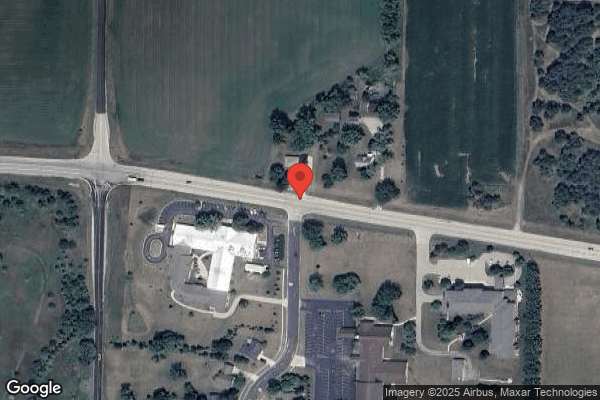
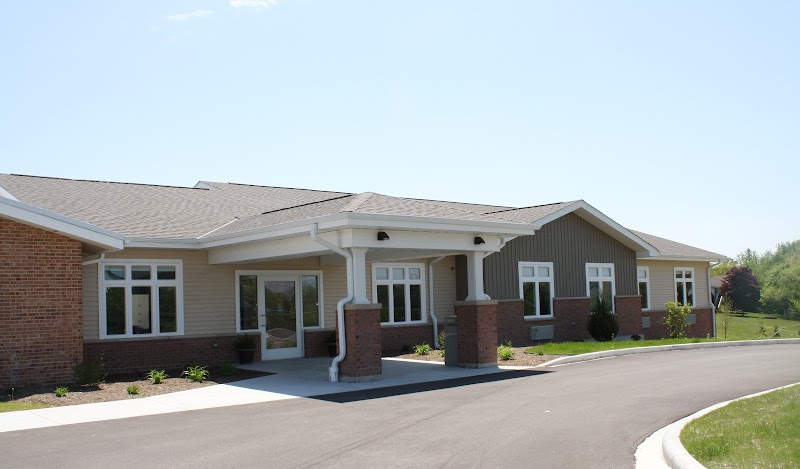
EAST TROY MANOR

3271 NORTH ST, EAST TROY, WI 53120 (262) 642-3995
Non profit - Corporation 50 Beds WISCONSIN ILLINOIS SENIOR HOUSING, INC. Data: November 2025 4 Immediate Jeopardy citations
Trust Grade
0/100
#273 of 321 in WI
Last Inspection: August 2024

Within standard 12-15 month inspection cycle. Federal law requires annual inspections.

Overview

East Troy Manor has received an F Trust Grade, indicating poor performance and significant concerns about its care standards. The facility ranks #273 out of 321 in Wisconsin, placing it in the bottom half of nursing homes in the state, and #6 out of 7 in Walworth County, meaning there is only one local option that is better. The situation is worsening, with the number of identified issues increasing from 9 in 2024 to 13 in 2025. While staffing has a rating of 3 out of 5, the turnover rate is concerning at 60%, which is above the state average. In terms of incidents, there have been critical findings, including a resident who fell from a lift and suffered fatal injuries due to inadequate supervision and improper equipment use, as well as failures to properly assess and manage fall risks for other residents. Despite some average staffing ratings, the facility's overall performance raises significant red flags for families considering care for their loved ones.

Trust Score
F
0/100
In Wisconsin
#273/321
Bottom 15%
Safety Record
High Risk
Review needed
Inspections
Getting Worse
9 → 13 violations
Staff Stability
⚠ Watch
60% turnover. Above average. Higher turnover means staff may not know residents' routines.
Penalties
○ Average
$122,358 in fines. Higher than 66% of Wisconsin facilities. Some compliance issues.
Skilled Nurses
○ Average
Each resident gets 36 minutes of Registered Nurse (RN) attention daily — about average for Wisconsin. RNs are the most trained staff who monitor for health changes.
Violations
⚠ Watch
34 deficiencies on record. Higher than average. Multiple issues found across inspections.
★☆☆☆☆
1.0
Overall Rating
★★★☆☆
3.0
Staff Levels
★★★☆☆
3.0
Care Quality
★☆☆☆☆
1.0
Inspection Score
Stable
2024: 9 issues
2025: 13 issues

The Good

  • Full Sprinkler Coverage · Fire safety systems throughout facility
  • No fines on record

Facility shows strength in fire safety.

The Bad

1-Star Overall Rating

Below Wisconsin average (3.0)

Significant quality concerns identified by CMS

Staff Turnover: 60%

14pts above Wisconsin avg (46%)

Frequent staff changes - ask about care continuity

Federal Fines: $122,358

Well above median ($33,413)

Significant penalties indicating serious issues

Chain: WISCONSIN ILLINOIS SENIOR HOUSING,

Part of a multi-facility chain

Ask about local staffing decisions and management

Staff turnover is elevated (60%)

12 points above Wisconsin average of 48%

The Ugly 34 deficiencies on record

4 life-threatening 1 actual harm
Jul 2025 10 deficiencies 1 IJ
CRITICAL (J) 📢 Someone Reported This

A family member, employee, or ombudsman was alarmed enough to file a formal complaint

Immediate Jeopardy (IJ) - the most serious Medicare violation

Accident Prevention (Tag F0689)

Someone could have died · This affected 1 resident

**NOTE- TERMS IN BRACKETS HAVE BEEN EDITED TO PROTECT CONFIDENTIALITY** Based on record review, interview, document review and policy review, the facility failed to ensure that fall risks were assesse...

Read full inspector narrative →
**NOTE- TERMS IN BRACKETS HAVE BEEN EDITED TO PROTECT CONFIDENTIALITY** Based on record review, interview, document review and policy review, the facility failed to ensure that fall risks were assessed and that adequate fall interventions were developed, implemented and revised for one of three residents (Resident (R)2) reviewed for falls. R2 was admitted to the facility following a fall at home where R2 sustained a subdural hematoma. The subdural hematoma was still present and in need of monitoring post admission to the facility. Upon admission, R2 was assessed to be at risk for falls with initial safety interventions including a low bed and frequent rounding (frequency not specified). On 4/20/25 the facility placed a sensor alarm to prevent falls. Progress notes indicate R2 frequently setting off the alarms related to impulsivity and frequent self-transfers. On 4/24/25 R2's Nurse Practitioner noted, in their neuro psych initial evaluation of R2: (R2) is oriented times 1(oriented to self), unable to answer questions appropriately. Walking unsteadily in room while self-transfers to bathroom. Poor safety awareness and impulsivity noted. Foley catheter remains intact. Despite assessment documenting R2 is unable to answer questions appropriately, is unsteady, frequently self-transferring and impulsive, these factors were not addressed as risk factors and addressed in R2's care plans to prevent falls. Review of R2's overall care plans include interventions such as 1:1 (one on one) support as indicated without specifying what would be a circumstance to provide 1:1 support. The care plans encourage R2 to be as independent as possible yet R2 is assessed to be at risk for falls and staff are to anticipate needs.On 4/30/25 R2 sustained a fall in their room at approximately 2:15 pm. R2 was found on the floor between the end table and under the television. The motion sensor was not on at the time of the fall. The fall documents indicate prior to staff seeing R2 in their room, R2 was last seen in activities. The fall report does not indicate who assisted R2 back to their room after activities and whether fall interventions were implemented at that time, including activating the sensor alarm. The root cause of the fall was resident was spontaneous with ambulation and forgetting they needed assistance, R2 had motion sensor in place but not on. The intervention post fall was to educate staff on the importance of alarm being on. Staff statements as part of the fall report indicate R2 frequently self-transfers and R2 stood up and fell. The call light was in place but not activated. The fall investigation does not include whether frequent rounding, as a care plan intervention, had been implemented or when R2 was last toileted. The last meal R2 was offered was lunch. There is no indication R2's care plan was revised to address R2's frequent self-transfers or review of R2's routine to assess/implement interventions to prevent falls.R2 was hospitalized [DATE]-[DATE] related to having a change in condition and ultimately having their gallbladder removed. R2 returned to the facility still having a catheter in place with treatment for a urinary tract infection (UTI). The fall risk assessment upon readmission indicated R2 is at risk for falls. There is no notation or assessment post readmission of R2's cognitive status post anesthesia related to R2 having surgery to remove R2's gall bladder. On 5/16/25 R2 had a follow up brain scan where scan results indicated worsening of R2's subdural hematoma since R2's original admission to the facility on 4/17/25. Consultation documentation indicates R2's subdural hematoma increased in size from 9mm to 11mm. On 5/17/25 at approximately 9:00 am R2 was found by a dietary aide on the floor in the dining room. R2 shared they hit their head, and their hip hurt. It was noted in the fall report R2's wheelchair was pushed back, and the brakes were noted to not be on. Statements from staff post fall indicate different timelines of when R2 was last observed or when the breakfast meal took place. The post fall investigation does not include details regarding whether R2 had concluded eating breakfast or if R2 still had a meal in front of them at the time of the fall. R2 had a care plan intervention indicating R2 required supervision and assistance with meals; supervision and assistance is not defined on R2's care plan. There is no indication anyone was supervising R2. R2 was sent to the hospital for evaluation due to noted pain in their head and hip and noted change in mental status. The root cause analysis indicates R2 tried to stand up without a call light because they were in the dining room, the wheelchair was unlocked and R2 requires assistance and is unsteady on their feet. The intervention is to not leave R2 unattended in the dining room. Review of the documentation of R2's initial emergency department visit on 5/17/25 notes the scan results from 5/16/25 and worsening results of the subdural hematoma and indication it may measure a further increase in the bleed than the scan from 5/16/25. Risk management: hospitalization considered but decision made not to admit. Diagnosis includes fall, initial encounter, subdural hematoma, contusion of right hip. R2 was discharged from the hospital at 12:15 pm. Review R2's record post return to the facility on 5/17/25 indicates R2's risk assessment was scored lower than previous fall assessments. No changes were made to R2's care plan regarding worsening subdural hematoma or need for increased monitoring for changes in status beyond the intervention to supervise in the dining room.On 5/17/25 at approximately 3:35 pm R2 was found on the floor in their room with a noted area of discoloration to the left occipital near post temporal line on their head. Statements from staff include different explanations of what R2 was doing at the time of fall including attempting to get something, changing chairs, or adjusting blankets. The fall documentation indicates Certified Nursing Assistant (CNA)1 was in R2's room just prior to R2's fall from the chair. CNA1 did not notice or ensure R2's sensor alarm was in place or activated at the time they were in the room before the fall. CNA1 indicated they were not aware of the safety intervention. R2 was transferred to the emergency department post fall. The emergency department evaluation indicated R2 had a small rebleed on top of the previous intercranial hemorrhage, likely due to recent fall. Transfer to (name of hospital with neurological surgery team) ICU (intensive care unit) for further evaluation and management. Clinical impression: traumatic subdural hematoma with unknown loss of consciousness, initial encounter. The facility's failure to assess R2's risk factors to include frequent self-transferring, impulsivity, and unsteadiness to establish individualized interventions to prevent falls, its failure to develop specific/detailed care plans, and its failure to consistently implement care-planned interventions created a reasonable likelihood for serious harm. R2 sustained 3 avoidable falls in the facility with two fall on 5/17/25 resulting in R2 hitting his head and requiring transfer to the hospital. This created a situation of immediate jeopardy for R2 starting 5/17/25. The Nursing Home Administrator (NHA)-A, Director of Nursing (DON)-B, and Corporate Consultant -(CC) were notified of the immediate jeopardy on 7/10/25 at approximately 8:55 pm. The immediate jeopardy was removed on 5/23/25. The deficient practice continues at a scope and severity of an E (potential for harm/pattern) related to the residents at risk for falls in the facility, as the facility continues to implement its action plan. Findings include: The facility's policy titled, Fall Risk Assessment last revised March 2018 revealed, The nursing staff, in conjunction with the attending physician, consultant pharmacist, therapy staff, and others, will seek to identify and document resident risk factors for fall and establish a resident-centered falls prevention plan based on relevant assessment information.Upon admission, quarterly, annually, and with significant change, the nursing staff and the physician will review a resident's record for a history of falls, especially falls in the last 90 days and recurrent or periodic bouts of falling over time. Review of the facility's policy titled, Falls-Clinical Protocol last revised March 2018 revealed, Assessment and Recognition:.3. The staff and practitioner will review each resident's risk factors for falling and document in the medical record.5. The staff will evaluate, and document falls that occur while the individual is in the facility; for example, when and where they happen, any observations of the events, etc.Cause Identification.3. The staff and physician will continue to collect and evaluate information until the cause of the falling is identified.Treatment/Management.1. Based on the preceding assessment, the staff and physician will identify pertinent interventions to try to prevent subsequent falls and to address the risks of clinically significant consequences of falling.Monitoring and Follow-Up.4. If the individual continues to fall, the staff and physician will re-evaluate the situation and reconsider possible reasons for the resident's falling (instead of, or in addition to those that have already been identified) and also reconsider the current interventions. The facility's policy titled, Assessing Falls and Their Causes last revised March 2018 revealed, Purpose: The purposes of this procedure are to provide guidelines for assessing a resident after a fall and to assist staff in identifying causes of the fall.residents must be assessed upon admission and regularly afterward for potential risk of falls.If a resident has just fallen, or is found on the floor without a witness to the event, evaluate for possible injuries to the head, neck, spine, and extremities.Evaluate chains of events or circumstances preceding a recent fall. Review of the facility's policy titled, Falls and Fall Risk Managing last revised March 2018 revealed, Based on previous evaluations and current data, the staff will identify interventions related to the resident's specific risks and causes to try to prevent the resident from falling and to try to minimize complications from falling.Resident-Centered Approaches to Managing Falls and Fall Risk.1. The staff, with the input of the attending physician, will implement a resident-centered fall prevention plan to reduce the specific risk factor(s) of falls for each resident at risk or with a history of falls.5. If falling recurs despite initial interventions, staff will implement additional or different interventions or indicate why the current approach remains relevant.8. Position-change alarms will not be used as the primary or sole interventions to prevent falls but rather will be used to assist the staff in identifying patterns and routines of the resident. The use of alarms will be monitored for efficacy and staff will respond to alarms in a timely manner. Review of the undated facility's policy titled, Kardex policy and procedure. revealed, Policy Statement: The facility will maintain an up-do-date Kardex for each resident to provide nursing staff and caregivers with a quick-reference summary of the resident's care needs, routines, and preferences. The Kardex is intended to supplement the comprehensive care plan and ensure continuity and quality of care. Purpose: To provide a concise, accessible reference tool that assists nursing staff in delivering personalized, consistent, and safe care in accordance with the resident's care plan. Scope: Applies to all nursing staff, caregivers, and interdisciplinary team members involved in direct resident care.Kardex: A non-legal, working document summarizing essential care plan components. Care Plan: A legally required document outlining assessed needs and interventions developed by the interdisciplinary team.Each Kardex should include the following sections:.Safety precautions (e.g., fall risk.) .Responsibilities:.CNA [Certified Nursing Assistant]-Use Kardex as a reference for daily care tasks and report changes. According to https://my.clevelandclinic.org/health/diseases/21183-subdural-hematoma, What are the risk factors for subdural hematoma? Anyone can get a subdural hematoma from an accidental head injury. But certain factors can increase your risk, including: Age: People 65 and older and babies are more at risk for getting subdural hematomas. As you age, your brain shrinks inside your skull. The space between your skull and brain widens. This makes the tiny veins in the membranes between your skull and brain stretch. These thinned, stretched veins are more likely to tear, even if you experience a minor head injury. What are the complications of subdural hematoma? Without treatment, large hematomas can lead to coma and death. Other complications include: Brain herniation: Increased pressure from a pool of blood can squeeze and push brain tissue so it moves from its normal position. A brain herniation is often fatal. Repeated bleeding: People older than 65 who are recovering from a hematoma have a higher risk of another hemorrhage due to changes in their brain tissues. Seizures: Seizures may develop even after you receive treatment for a hematoma. R2's Face Sheet located in the electronic medical record (EMR) under the Face Sheet tab revealed R2 was admitted to the facility on [DATE] with diagnosis of traumatic subdural hemorrhage without loss of consciousness due to a fall at home. Additional diagnoses include unspecified dementia, unspecified severity, without behavioral disturbance, psychotic disturbance, mood disturbance, and anxiety. On 4/17/25 at 10:01 pm progress notes indicate: Resident being monitored d/t (due to) being 72hr (hour) new admission to facility post hospitalization d/t fall at home and became increasingly confused was taken to hospital and diagnosed w (with)/Subdural Hematoma and has HX (history) of Dementia; resident also had urinary retention while in hospital and currently has indwelling foley catheter. Resident is alert to name but does not answer simple questions when asked but will make eye contact when being talked too; resident has been non-verbal for nurse this shift and staff to anticipate resident's needs as he is unable to communicate them at this time. Resident has call light within reach but will do 15 min (minute) checks to ensure resident has no needs d/t being unsure if resident is aware of his surroundings. Resident awake/alert this shift did assist w/taking drinks from his sippee (sic) cup when writer giving him meds (medications) tonight.Resident had a fall at home and had AMS (altered mental status) and generalized weakness. He was admitted to the hospital on 4/6 for subdural hematoma. History of dementia, bipolar disorder, PE (pulmonary embolism), HTN (hypertension), AFIB (atrial fibrillation) with long term anticoagulation. VSS (vital signs stable). No s/s (signs/symptoms) of pain. DNR (Do Not Resuscitate). Alert. Nonverbal currently, did not respond to questions. Transferred with assist of 2 with gait belt and [NAME] steady (sic). Surveyor noted R2 was initially placed on 15-minute checks related to not being familiar with the facility. On 4/17/25 a care plan with a problem for agitation related to/manifested by unfamiliar care staff, new living environment, diagnosis of dementia was implemented. Interventions dated 4/17/25 include approach in a calm, non-threatening manner; depression screens PRN (as needed); encourage expression of feelings; encourage resident family to seek out social services with concerns/problems; monitor for changes in mood or behaviors, report to social services & nursing; offer choices; offer quiet setting; psych consult as indicated; re-approach as necessary; speak in a calm soothing voice. Surveyor noted 15 minute checks were not part of R2's initial adjustment/agitation plan of care . On 4/17/25 a care plan for potential for adjustment issues was initiated. Interventions dated 4/17/25 include to allow /encourage to direct care as able; encourage active participation; encourage resident/family to communicate likes/dislikes with staff, share questions/ concerns; encourage to make decisions as able; encourage visits by support system (family, friends, church etc.); provide 1:1 support as needed. The care plan did not specify what would require 1:1 support. On 4/17/25 R2's care plan for alteration in thought process/confusion related to/manifested by traumatic subdural hemorrhage & dementia diagnosis was initiated. Interventions dated 4/17/25 include allow to be as independent as possible; allow time to respond as necessary; attempt to anticipate needs as needed; explain procedures; if appears lost, offer direction; monitor for changes in cognitive behavior and report to social services & nursing; offer choices appropriate with level of ability; offer gentle reminders as needed; offer quiet setting; speak in calm voice. On 4/18/25 a care plan for I am in a new situation with interventions dated 4/18/25 included: accompany to meals, therapy, bathroom, activities as needed; check on resident on how they are adjusting to the facility; describe layout of the facility. Review of R2's admission Minimum Data Set (MDS), located in the MDS tab in the EMR with an Assessment Reference Date (ARD) of 04/22/25, revealed a Brief Interview for Mental Status (BIMS) had no score out of 15, which indicated severe cognitive impairment and R2 was rarely or never understood. According to the MDS, R2 required substantial/maximum assistance from staff for rolling left and right, and dependent with toileting, sit to lying, lying to sitting on the side of the bed, sitting to standing, and chair/bed-to-chair transfers. The resident had a fall in the last month prior to admission/entry or reentry. R2's initial assessment documentation located in the EMR under the Resident Documents tab dated 04/17/25 documented the resident was nonverbal with dementia. Fall preventions identified included gripper socks and grab bars. The resident was assessed to be a fall risk but did not require fall mats or alarms. The care plan for falls was initiated on 04/18/25 and did not include these assessed interventions of gripper socks and grab bars. R2's Care Plan located in the EMR under the Care Plan tab initiated 04/18/25 revealed R2 was at risk for falls as he had a fall at home. Goal documented is Reduction in chance of falls. Interventions included frequent rounding and low bed initiated on 04/18/25. The care plan did not specify what constituted frequent rounding. Review of R2's John Hopkins Fall Risk Assessment Tools located in the EMR under the Observations tab revealed the resident had multiple assessments completed during his stay:Upon admission on [DATE], his score was assessed at 13.0, which indicated moderate fall risk. However, the care plan still identified only the two interventions noted above. Review of R2's Progress Notes located in the EMR under the Progress Notes tab revealed regular and consistent documentation of the resident attempting to self-ambulate and walk, placing himself at risk of falls. However, the resident's care plan failed to identify the resident's history of falling, which included a subdural hematoma from a fall at home. The care plan failed to include a resident-centered approach to R2's confusion and documented frequent attempts to self-ambulate. On 4/18/25 at 1:42 PM documentation includes admit: Resident admitted post hospitalization related to fall at home resulting in a subdural hematoma . Resident 2 assist using gait belt and EZ stand at this time. Resident self-transferred this morning and OT (Occupational Therapist) found him standing beside his dresser. Resident was incontinent of bowel at this time. Resident has a foley catheter and a follow up appointment with urology. Resident has been nonverbal since admission. Resident smiled at writer and will answer yes or no questions by shaking his head. Surveyor noted R2's care plan to address problem of my ability to dress & toilet without assistance includes an intervention dated 4/18/25 to perform self-cares with the assistance of 1 staff member. Surveyor noted there isn't a care plan to address R2's bowel incontinence. On 4/19/25 at 9:46 AM progress notes document . Eats meals in the dining room, needs assist with meals. Transfers with assist of 2 with EZ stand. Resident was leaning to the right in his w/c (wheelchair), pillow placed. On 4 /19/25 at 5:38 PM documentation includes: . Trace edema present to bilateral lower legs, ankles and feet. Resident is using EZ stand for all transfers with 2 staff assistance. Resident needs verbal cues throughout any task and ongoing encouragement. When sitting in wheelchair resident leans to his right side. Staff only used wheelchair for meal this shift as it does not appear safe for resident to sit in chair. He leans forward and will fall out. Goal is for resident to workwith therapy for strengthening. Surveyor noted the use of a pillow to position R2 in the wheelchair was not an added intervention to R2's care plans. Review of R2's Progress Notes located in the EMR under the Progress Notes tab documented on 04/20/25 at 9:49 AM . Eats meals in the dining room, fed self breakfast today. Transfers with assist of 2 with EZ stand. Resident attempting to get out of his w/c several times after breakfast. Resident was then transferred to his recliner. Soft touch call light within reach, uses it at times. R2's Progress Notes located in the EMR under the Progress Notes tab Dietitian (RD) documented on 04/20/25 at 6:49 PM, Motion sensor alarm placed in room as resident tries to get out of his chair on his own without using the call light at times. The intervention to add the motion sensor alarm was initiated on 04/20/25. R2's Care Card information provided by the Administrator on 07/10/25 at 12:32 PM, revealed the resident was identified with interventions for falls on 04/20/25 that included, Motion alarm on when he is in the room by himself for safety. No additional interventions were documented on the Care Card for CNA use. R2's Progress Note located in the EMR under the Progress Notes tab documented on 4/21/25 at 1:08 PM: Resident was observed by another nurse that resident was pushing on the front entrance/exit door while sitting in his w/c. Writer observed resident was restless, attempting to stand up from his w/c. When asked if he had pain he stated yes. PRN (as needed) Tylenol given. Resident was then redirected and assisted to the dining room. Wander guard placed on right wrist. POA (power of attorney) notified. Surveyor noted there is no care plan to address R2's risk for/attempts to exit the facility or a care plan to address R2 wearing a wanderguard. On 4/21/25 at 4:59 PM Medicare charting documents: Medicare. Resident is alert to self and wife only. He does not answer questions appropriately. He is restless and frequently trying to stand unassisted or self-transfer. Motion sensor alarm on while in room alone. He is assisted to common areas as much as possible to be supervised. He is transferring with EZ stand. He does propel self in w/c short distances. He has foley in place draining clear yellow urine. He was incontinent of small BM in brief. He needs assist with eating and drinking. He has occasional facial grimace during transfers and repositioning. Has prn pain medication ordered. He is working with therapy for strengthening, will continue to monitor. Surveyor noted facility nursing staff continue to document about R2's restlessness and frequent attempts to stand or transfer without assistance. This note indicates the need for increased supervision however, increased supervision with specified details is not an intervention on R2's plan of care. On 4/23/25 a SNF Progress Note was completed by Nurse Practitioner (NP1). Under NEURO/PSYCH it is documented - Oriented x1, unable to answer questions appropriately. Walking unsteadily in room while self-transferring to bathroom. Poor safety awareness and impulsivity noted. Foley catheter remains intact draining yellow urine. Under assessment and plan it is documented: G30.1 - Alzheimer's disease with late onset: POA activated. Further decline expected. Longterm (sic) goal to move to Mauston where his son is moving within the next year. Patient continues on memantine for underlying dementia. Due to his underlying dementia, poor safety awareness, and impulsivity, falls are inevitable. Patient is oriented x1 and unable to answer questions appropriately. Surveyor noted R2's care plan for risk for falls does not include R2 receiving memantine (Namenda) which has a side effect of dizziness. Additionally, despite NP1 noting R2's unsteady walking, self-transferring to the bathroom, poor safety awareness, and impulsivity, there are no revisions to R2's care plan to address these risk factors. Surveyor noted it is not documented if the motion sensor was in place and on when NP1 witnessed R2 walking and self-transferring in their room. A progress note dated 4/24/25 documents: Constantly trying to pull off brief and pull at catheter and stand at edge of bed on own. Resident re-positioned and toileted many times. Did have one large BM, but after continues to not sleep and self-transfer. CNAs got resident dressed and up in w/c d/t being safety issue. Is currently sitting in nursing station with staff to better monitor for safety. Resident states that he wants to leave and go home. Explained to resident that he is too weak to safely discharge currently and needs rehab for strengthening. Resident nods head in aggreance (sic) but continues to try and stand from w/c or propel towards doorways. Wander guard in place to right wrist at this time. Surveyor also noted staff implementing increased supervision and increased supervision as a safety measure is still not part of R2's fall risk care plan. On 4/24/25 at 11:29 AM progress notes document: Writer obtained verbal consent from APOA/ (name of) for resident to change rooms closer to nurse's station. Resident will be moved to rm (room number documented). Resident status change form completed and put in med recs, nursing notified of consent. A progress note recorded as Late Entry on 04/28/2025 09:52 PM for 4/26/25 at 3:00 AM documents: Resident being monitored d/t having behaviors and wandering t/o (sic) night couple nights ago and also d/t having +UA (positive urinalysis) w/pending culture. Resident has been sleeping this shift w/out any concerns and VSS as noted. On 4/29/25 at 3:45 PM a late entry note for 4/26/25 at 6:40 PM documents: Resident has dementia dx (diagnosis) and has sundown behaviors in the evening, very restless and trying to stand up unassisted. He also tries to get out of bed unassisted all night long, per night nurse report does not sleep much, and motion sensor alarm frequently sounding. He becomes very anxious when his wife is not in the room with him. NP updated and new orders received. Progress notes dated 4/27/25 at 6:50 PM documents new order received to give Melatonin 3mg QHS (at bedtime) for sleep PRN. Surveyor noted R2's care plan was not updated to identify when R2 should receive Melatonin as a PRN and if there is an increased risk for falls with the new medication. On 4/29/25 orders were received for R2 to receive scheduled 5 mg of Melatonin nightly. R2's Progress Note located in the EMR under the Progress Notes tab documented on 04/30/25 at 3:20 PM that R2, .continued to be monitored at this time r/t [related to] unobserved fall in room.found sitting on the floor in between his end table and chair underneath the television by RA [resident aide] .resident stated that he was getting up from his recliner and fell. When asked where he was going, he stated he wasn't sure.Has motion sensor alarm.was not sounding and was turned off. Per orders, motion sensor alarm is to be on at all times when resident is alone in room. Staff re-education to be started on ensure sensor alarm is to be on and frequent rounding. Paper to be signed by staff before starting shift. The fall investigation revealed that the motion sensor was not turned on, according to the fall care plan intervention. Review of staff statements, and the fall investigation details indicate R2 fell at 2:15 PM and was last seen at 1:15 PM in activities and R2's last meal was at 12:00 PM. There isn't detail regarding whether R2 was incontinent/continent of bowel at the time of fall or when R2 was last toileted related to a bowel movement. Certified Nursing Assistant (CNA)7 indicates in their statement R2 was last seen at 2:00 PM but does not specify who saw R2. RN2's statement documented for the question did you ask resident what happened? What was the response? Frequently self-transfers + (and) stood up from recliner + fell. RN2 documents R2 was confused at the time of the fall per baseline. CNA7's statement does not include details of where R2 was seated when observed at 2:00 pm or who made the observation (whether it was CNA7 or other individual). The written statement by CNA7 documents: RA (resident assistant) told staff (referred to as room number) was on (sic) floor. Me (CNA7) and the nurse went and checked on the resident. Checked vitals and then assisted resident up. Resident put feet flat on the floor and stood with minimal assistance. R2's care plan was updated to include: ensure the sensor alarm is turned on prior to leaving the resident in room unsupervised, and call light within reach. Reeducation was provided. The facility root cause analysis completed on 5/1/25 documents Problem statement: was found sitting on floor between table next to recliner under tv. The documented answers to the five why questions include frequently stands up thinking he can walk unassisted; needs assistance; had motion alarm for intervention/not on; call light in reach, call light not on; A+O (alert & oriented) x 2, forgetful. The Root Cause(s): Resident is spontaneous with ambulation forgetting he needs assistance had motion alarm in place was not on. Intervention to re-educate staff on the importance of motion alarms needing to be on. The fall investigation does not include relevant details to help complete a thorough root cause analysis. The investigation does not include a statement from activity staff to determine who assisted R2 back to his room and whether intervention were in place at that time. The intervention to retrain staff on the motion sensor alarm did not address the factors of R2 forgetting he needs assistance and R2 frequently stands up. The Fall Risk Assessment Tool completed on 4/30/25 indicates a score of 20 indicating R2 is at high risk for falls (greater than 13 is considered high risk). Surveyor notes despite R2 having a foley catheter, the risk question for patient care equipment: any equipment that tethers patient (which included a catheter as an example) was not scored as a risk factor. Progress notes on 5/1/25 at 11:12 AM document . Resident continues to attempt to self-transfer. Resident has motion alarm on at all times when resident is in room alone . R2 was transferred to the hospital on 5/1/25 for a change in condition. R2 was admitted and ultimately had gallbladder surgery. R2 readmitted to the facility on [DATE]. The fall assessment completed on 5/9/25 assesses R2 to have a fall risk score of 21 indicating R2 is at high risk for falls. Upon return to the facility there are no revisions to R2's care plans to monitor for any changes related to R2 having received anesthesia during the hospitalization and potential effects that may have on R2 given diagnoses of dementia and subdural hematoma. On 5/10/25 at 1:09 PM progress notes document: Resident readmitted s/p (status post) hospitalization for lap chole (laparoscopic cholecystectomy - gallbladder removal) on 05.06.25. Resident has dementia. He seems more confused than previous. He is attempting multiple times to get up out of wheelchair. He is unable to sit still. Continuous redirection given this shift. Transfers with gait belt, staff and walker. Resident denies any pain, lungs clear throughout, bowel sounds active. On 5/12/25 R2's medical record includes documentation of clarifying orders to re-start Tamsulosin (Flomax) (medication to trea
CONCERN (F) 📢 Someone Reported This

A family member, employee, or ombudsman was alarmed enough to file a formal complaint

Potential for Harm - no one hurt, but risky conditions existed

Deficiency F0941 (Tag F0941)

Could have caused harm · This affected most or all residents

Based on interview and record review, the facility did not ensure 6 of 6 direct care staff, chosen at random, received required training on effective communication. Licensed Practical Nurse (LPN)-2, a...

Read full inspector narrative →
Based on interview and record review, the facility did not ensure 6 of 6 direct care staff, chosen at random, received required training on effective communication. Licensed Practical Nurse (LPN)-2, and Certified Nursing Assistants (CNA) CNA1, CNA8, CNA9, CNA10 and CNA11 did not receive effective communication training. This deficient practice had the potential to affect all 39 Residents in the facility.Findings Include:The facility's In-Service Training, All Staff policy and procedure revised August 2022 documents: Policy StatementAll staff must participate in initial orientation and annual in-service training.Policy Interpretation and Implementation1. All staff are required to participate in regular in-service education. 2. For the purposes of this policy, staff means all new and existing personnel, individuals providing services under contractual agreement, and volunteers. 3. The primary objective of the in-service training is to ensure that staff are able to interact in a manner that enhances the Resident's quality of life and quality of care and can demonstrate competency in the topic areas of training.6. Required training topics include the following:a. Effective communication with Residents and family (direct care staff) .7. Training requirements are met prior to staff providing services to Residents, annually, and as necessary based on the facility assessment.8. Completed training is documented by staff development coordinator, or his or her designee and includes:a. Date and time of the trainingb. Topic of the trainingc. Method used for trainingd. A summary of the competency assessmente. Hours of training completed On 7/24/25, at 11:05 AM, Surveyor randomly selected direct care staff for review related to receiving required training. Surveyor reviewed the employee records for LPN2, CNA1, CNA8, CNA9, CNA10, and CNA11. The facility was unable to provide documentation verifying LPN2, CNA1, CNA8, CNA9, CNA10, and CNAQ received the required training for effective communication. On 7/24/25, at 1:45 PM, Surveyor interviewed Nursing Home Administrator (NHA)-A regarding LPN2, CNA1, CNA8, CNA9, CNA10, and CNA11 not having required training on effective communication. NHA-A stated, Whatever I don't have, I just don't have it. NHA-A indicated NHA-A has no further documentation of completed required trainings for the selected staff.On 7/24/25, at 2:32 PM, NHA-A and Director of Nursing (DON)-B were informed of the of the above findings. NHA-A stated, Education is a problem. NHA-A is looking at designating a training coordinator. NHA-A understands Surveyor's concern of staff not having completed the required trainings.
CONCERN (F) 📢 Someone Reported This

A family member, employee, or ombudsman was alarmed enough to file a formal complaint

Potential for Harm - no one hurt, but risky conditions existed

Deficiency F0942 (Tag F0942)

Could have caused harm · This affected most or all residents

Based on interview and record review, the facility did not ensure 4 facility staff, chosen at random, received required training on resident rights and responsibilities. Dietary Aide (DA)1 and Certifi...

Read full inspector narrative →
Based on interview and record review, the facility did not ensure 4 facility staff, chosen at random, received required training on resident rights and responsibilities. Dietary Aide (DA)1 and Certified Nursing Assistants (CNAs), CNA1, CNA8, and CNA9 did not receive required training on resident rights and responsibilities. This practice had the potential to affect all 39 Residents in the facility.Findings Include:The facility's In-Service Training, All Staff policy and procedure revised August 2022 documents:Policy StatementAll staff must participate in initial orientation and annual in-service training. Policy Interpretation and Implementation1. All staff are required to participate in regular in-service education. 2. For the purposes of this policy, staff means all new and existing personnel, individuals providing services under contractual agreement, and volunteers.3. The primary objective of the in-service training is to ensure that staff are able to interact in a manner that enhances the Resident's quality of life and quality of care and can demonstrate competency in the topic areas of training.6. Required training topics include the following: .b. Resident rights and responsibilities7. Training requirements are met prior to staff providing services to Residents, annually, and as necessary based on the facility assessment.8. Completed training is documented by staff development coordinator, or his or her designee and includes:a. Date and time of the trainingb. Topic of the trainingc. Method used for trainingd. A summary of the competency assessmente. Hours of training completedOn 7/24/25, at 11:05 AM, Surveyor randomly selected staff for review for completing required training. Surveyor reviewed the employee records for DA1, CNA1, CNA8, and CNA9. The facility was unable to provide documentation verifying DA1, CNA1, CNA8, and CNA9, received the required resident rights and responsibilities training.On 7/24/25, at 1:45 PM, Surveyor interviewed Nursing Home Administrator (NHA)-A iregarding DA1, CNA1, CNA8, and CNA9 not having required resident rights and responsibilities training. NHA-A stated, Whatever I don't have, I just don't have it. NHA-A indicated NHA-A has no further documentation of completed required trainings for the selected staff.On 7/24/25, at 2:32 PM, NHA-A and Director of Nursing (DON)-B were informed of the of the above findings. NHA-A stated, Education is a problem. NHA-A is looking at designating a training coordinator. NHA-A understands Surveyor's concern of staff not having completed the required trainings.
CONCERN (F) 📢 Someone Reported This

A family member, employee, or ombudsman was alarmed enough to file a formal complaint

Potential for Harm - no one hurt, but risky conditions existed

Deficiency F0943 (Tag F0943)

Could have caused harm · This affected most or all residents

Based on interview and record review, the facility did not ensure 4 facility staff, chosen at random, received training on abuse prevention, activities that constitute abuse, procedures for reporting ...

Read full inspector narrative →
Based on interview and record review, the facility did not ensure 4 facility staff, chosen at random, received training on abuse prevention, activities that constitute abuse, procedures for reporting abuse and dementia management and resident abuse prevention. Certified Nursing Assistants (CNAs), CNA1, CNA8, CNA10 and CNA11 did not receive this required training. This deficient practice had the potential to affect all 39 Residents in the facility.Findings Include:The facility's In-Service Training, All Staff policy and procedure revised August 2022 documents:Policy StatementAll staff must participate in initial orientation and annual in-service training.Policy Interpretation and Implementation1. All staff are required to participate in regular in-service education. 2. For the purposes of this policy, staff means all new and existing personnel, individuals providing services under contractual agreement, and volunteers.3. The primary objective of the in-service training is to ensure that staff are able to interact in a manner that enhances the Resident's quality of life and quality of care and can demonstrate competency in the topic areas of training.6. Required training topics include the following: .c. Preventing abuse, neglect, exploitation or misappropriation of Resident property including:(1) Activities that constitute abuse, neglect, exploitation or misappropriation of Resident property(2) Procedures for reporting incidences of abuse, neglect, exploitation or misappropriation of Resident property(3) Dementia management and Resident abuse prevention .g. Compliance and Ethics program standards, policies and procedures. (Compliance and ethics training is conducted annually when this organization is operating 5 or more facilities)7. Training requirements are met prior to staff providing services to Residents, annually, and as necessary based on the facility assessment.8. Completed training is documented by staff development coordinator, or his or her designee and includes:a. Date and time of the trainingb. Topic of the trainingc. Method used for trainingd. A summary of the competency assessmente. Hours of training completed .On 7/24/25, at 11:05 AM, Surveyor randomly selected staff to review for completion of required training. Surveyor reviewed the employee records for CNA1, CNA8, CNA10 and CNA11. The facility was unable to provide documentation verifying CNA1, CNA8, CNA10 and CNA11 received the required training on abuse prevention, activities that constitute abuse, procedures for reporting abuse and dementia management and resident abuse prevention. On 7/24/25, at 1:45 PM, Surveyor interviewed Nursing Home Administrator (NHA)-A in regard to CNA-1, CNA-8, CNA-10 and CNA-11 not having abuse prevention, activities that constitute abuse, procedures for reporting abuse and/or dementia management training . NHA-A stated, Whatever I don't have, I just don't have it. NHA-A indicated NHA-A has no further documentation of completed required trainings for the selected staff.On 7/24/25, at 2:32 PM, NHA-A and Director of Nursing (DON)-B were informed of the of the above findings. NHA-A stated, Education is a problem. NHA-A is looking at designating a training coordinator. NHA-A understands Surveyor's concern of staff not having completed the required trainings.
CONCERN (F) 📢 Someone Reported This

A family member, employee, or ombudsman was alarmed enough to file a formal complaint

Potential for Harm - no one hurt, but risky conditions existed

Deficiency F0944 (Tag F0944)

Could have caused harm · This affected most or all residents

Based on interview and record review, the facility did not ensure 4 facility staff, chosen at random, received required training on Quality Assurance Performance Improvement (QAPI) training. Certified...

Read full inspector narrative →
Based on interview and record review, the facility did not ensure 4 facility staff, chosen at random, received required training on Quality Assurance Performance Improvement (QAPI) training. Certified Nursing Assistants (CNAs), CNA1, CNA8, CNA9 and Dietary Aide (DA)1 did not receive required QAPI training. This practice had the potential to affect all 39 Residents in the facility.Findings Include:The facility's In-Service Training, All Staff policy and procedure revised August 2022 documents:Policy StatementAll staff must participate in initial orientation and annual in-service training.Policy Interpretation and Implementation1. All staff are required to participate in regular in-service education. 2. For the purposes of this policy, staff means all new and existing personnel, individuals providing services under contractual agreement, and volunteers.3. The primary objective of the in-service training is to ensure that staff are able to interact in a manner that enhances the Resident's quality of life and quality of care and can demonstrate competency in the topic areas of training.6. Required training topics include the following: .d. Elements and goals of the facility QAPI program7. Training requirements are met prior to staff providing services to Residents, annually, and as necessary based on the facility assessment.8. Completed training is documented by staff development coordinator, or his or her designee and includes:a. Date and time of the trainingb. Topic of the trainingc. Method used for trainingd. A summary of the competency assessmente. Hours of training completed.On 7/24/25, at 11:05 AM, Surveyor randomly selected staff for review regarding completion of required training for QAPI. Surveyor reviewed the employee records of CNA1, CNA8, CNA9 and DA1. The facility was unable to provide documentation verifying CNA1, CNA8, CNA9 and DA1 received the required QAPI training.On 7/24/25, at 1:45 PM, Surveyor interviewed Nursing Home Administrator (NHA)-A fregarding CNA1, CNA8, CNA9 and DA1 not completing required QAPI training . NHA-A stated, Whatever I don't have, I just don't have it. NHA-A indicated NHA-A has no further documentation of completed required trainings for the selected staff.On 7/24/25, at 2:32 PM, NHA-A and Director of Nursing (DON)-B were informed of the of the above findings. NHA-A stated, Education is a problem. NHA-A is looking at designating a training coordinator. NHA-A understands Surveyor's concern of staff not having completed the required trainings.
CONCERN (F) 📢 Someone Reported This

A family member, employee, or ombudsman was alarmed enough to file a formal complaint

Potential for Harm - no one hurt, but risky conditions existed

Deficiency F0945 (Tag F0945)

Could have caused harm · This affected most or all residents

Based on interview and record review, the facility did not ensure 4 facility staff chosen at random, received required training on infection prevention and control. Certified Nursing Assistants (CNAs)...

Read full inspector narrative →
Based on interview and record review, the facility did not ensure 4 facility staff chosen at random, received required training on infection prevention and control. Certified Nursing Assistants (CNAs), CNA1, CNA8, CNA9 and Dietary Aide (DA)1 did not receive required training on infection prevention and control. This practice had the potential to affect all 39 Residents in the facility.Findings Include:The facility's In-Service Training, All Staff policy and procedure revised August 2022 documents:Policy StatementAll staff must participate in initial orientation and annual in-service training.Policy Interpretation and Implementation1. All staff are required to participate in regular in-service education.2. For the purposes of this policy, staff means all new and existing personnel, individuals providing services under contractual agreement, and volunteers.3. The primary objective of the in-service training is to ensure that staff are able to interact in a manner that enhances the Resident's quality of life and quality of care and can demonstrate competency in the topic areas of training.6. Required training topics include the following: .e. The infection prevention and control standards, policies and procedures .7. Training requirements are met prior to staff providing services to Residents, annually, and as necessary based on the facility assessment.8. Completed training is documented by staff development coordinator, or his or her designee and includes:a. Date and time of the trainingb. Topic of the trainingc. Method used for trainingd. A summary of the competency assessmente. Hours of training completed On 7/24/25, at 11:05 AM, Surveyor randomly selected staff to review for completion of required trainings. Surveyor reviewed the employee records for CNA1, CNA8, CNA9 and DA1. The facility was unable to provide documentation verifying CNA1, CNA8, CNA9 and DA1 received the required infection prevention and control training. On 7/24/25, at 1:45 PM, Surveyor interviewed Nursing Home Administrator (NHA)-A regarding CNA1, CNA8, CNA9 and DA1 not having required training on infection prevention and control. NHA-A stated, Whatever I don't have, I just don't have it. NHA-A indicated NHA-A has no further documentation of completed required trainings for the selected staff.On 7/24/25, at 2:32 PM, NHA-A and Director of Nursing (DON)-B were informed of the of the above findings. NHA-A stated, Education is a problem. NHA-A is looking at designating a training coordinator. NHA-A understands Surveyor's concern of staff not having completed the required trainings.
CONCERN (F) 📢 Someone Reported This

A family member, employee, or ombudsman was alarmed enough to file a formal complaint

Potential for Harm - no one hurt, but risky conditions existed

Deficiency F0946 (Tag F0946)

Could have caused harm · This affected most or all residents

Based on interview and record review, the facility did not ensure 5 facility staff, chosen at random, received required training on compliance and ethics which includes training on standards, policies...

Read full inspector narrative →
Based on interview and record review, the facility did not ensure 5 facility staff, chosen at random, received required training on compliance and ethics which includes training on standards, policies, and procedures of the facility's compliance and ethics program. Certified Nursing Assistants (CNAs), CNA1, CNA8, CNA10 and CNA11 and Dietary Aide (DA)1 did not receive the required compliance and ethics training. This practice had the potential to affect all 39 Residents in the facility.Findings Include:The facility's In-Service Training, All Staff policy and procedure revised August 2022 documents:Policy StatementAll staff must participate in initial orientation and annual in-service training.Policy Interpretation and Implementation1. All staff are required to participate in regular in-service education.2. For the purposes of this policy, staff means all new and existing personnel, individuals providing services under contractual agreement, and volunteers.3. The primary objective of the in-service training is to ensure that staff are able to interact in a manner that enhances the Resident's quality of life and quality of care and can demonstrate competency in the topic areas of training.6. Required training topics include the following: .g. Compliance and Ethics program standards, policies and procedures. (Compliance and ethics training is conducted annually when this organization is operating 5 or more facilities)7. Training requirements are met prior to staff providing services to Residents, annually, and as necessary based on the facility assessment.8. Completed training is documented by staff development coordinator, or his or her designee and includes:a. Date and time of the trainingb. Topic of the trainingc. Method used for trainingd. A summary of the competency assessmente. Hours of training completedOn 7/24/25, at 11:05 AM, Surveyor randomly selected staff for review for completion of required training. Surveyor reviewed the employee records of CNA1, CNA8, CNA10, CNA11 and DA1 . The facility was unable to provide documentation verifying CNA1, CNA8, CNA10, CNA11 and DA1 received the required compliance and ethics training.On 7/24/25, at 1:45 PM, Surveyor interviewed Nursing Home Administrator (NHA)-A regarding CNA1, CNA8, CNA10, CNA11 and DA1 not completing required compliance and ethics training. NHA-A stated, Whatever I don't have, I just don't have it. NHA-A indicated NHA-A has no further documentation of completed required trainings for the selected staff.On 7/24/25, at 2:32 PM, NHA-A and Director of Nursing (DON)-B were informed of the of the above findings. NHA-A stated, Education is a problem. NHA-A is looking at designating a training coordinator. NHA-A understands Surveyor's concern of staff not having completed the required trainings.
CONCERN (F) 📢 Someone Reported This

A family member, employee, or ombudsman was alarmed enough to file a formal complaint

Potential for Harm - no one hurt, but risky conditions existed

Deficiency F0947 (Tag F0947)

Could have caused harm · This affected most or all residents

Based on interview and record review, the facility did not ensure 5 Certified Nursing Assistants (CNAs) reviewed completed the required 12 hours of educational inservice hours. CNA1, CNA8, CNA9, CNA10...

Read full inspector narrative →
Based on interview and record review, the facility did not ensure 5 Certified Nursing Assistants (CNAs) reviewed completed the required 12 hours of educational inservice hours. CNA1, CNA8, CNA9, CNA10 and CNA11 did not receive 12 hours of annual inservice education training. This had the potential to affect all 39 Residents who reside in the facility.Findings include:The facility's In-Service Training, All Staff policy and procedure revised August 2022 documents:Policy StatementAll staff must participate in initial orientation and annual in-service training. Policy Interpretation and Implementation1. All staff are required to participate in regular in-service education. 2. For the purposes of this policy, staff means all new and existing personnel, individuals providing services under contractual agreement, and volunteers.3. The primary objective of the in-service training is to ensure that staff are able to interact in a manner that enhances the Resident's quality of life and quality of care and can demonstrate competency in the topic areas of training.6. Required training topics include the following:a. Effective communication with Residents and family(direct care staff)b. Resident rights and responsibilitiesc. Preventing abuse, neglect, exploitation or misappropriation of Resident property including:(1) Activities that constitute abuse, neglect, exploitation or misappropriation of Resident property(2) Procedures for reporting incidences of abuse, neglect, exploitation or misappropriation of Resident property(3) Dementia management and Resident abuse preventiond. Elements and goals of the facility QAPI programe. The infection prevention and control standards, policies and proceduresf. Behavioral healthg. Compliance and Ethics program standards, policies and procedures. (Compliance and ethics training is conducted annually when this organization is operating 5 or more facilities)7. Training requirements are met prior to staff providing services to Residents, annually, and as necessary based on the facility assessment.8. Completed training is documented by staff development coordinator, or his or her designee and includes:a. Date and time of the trainingb. Topic of the trainingc. Method used for trainingd. A summary of the competency assessmente. Hours of training completed .The 2025 Facility Assessmentlast does not document the assessment details related to the requirement for Certified Nursing Assistants to receive a minimum of 12 hours of training per year based on their date of hire.On 7/24/25, at 11:05 AM, Surveyor randomly selected 5 staff for review. Surveyor reviewed the employee records of CNA1, CNA8, CNA9, CNA10 and CNA11. The facility was unable to provide documentation verifying CNA1, CNA8, CNA9, CNA10 and CNA11, received the required 12 hours of inservice education training annually based upon their date of hire. CNA1-date of hire 5/23/24. No information was provided to verify CNA1 received 12 hours of required inservice hours during the period of 5/23/24-5/23/25.CNA8-date of hire 7/17/23. No information was provided to verify CNA8 received 12 hours of required inservice hours during the period of 7/1/24-7/1/25.CNA9-date of hire 5/1/24. No information was provided to verify CNA9 received 12 hours of required inservice hours during the period of 5/1/24-5/1/25.CNA10-date of hire 7/8/24. No information was provided to verify CNA10 received 12 hours of required inservice hours during the period of 7/8/24-7/8/25.CNA11-date of hire 6/5/24. No information was provided to verify CNA11 received 12 hours of required inservice hours during the period of 6/5/24-6/5/25.On 7/24/25, at 1:45 PM, Surveyor interviewed Nursing Home Administrator (NHA)-A regarding CNA1, CNA8, CNA9, CNA10 and CNA11 not having the required 12 hours of inservice education training. NHA-A stated, Whatever I don't have, I just don't have it. NHA-A indicated NHA-A has no further documentation of completed required trainings for the selected staff.On 7/24/25, at 2:32 PM, NHA-A and Director of Nursing (DON)-B were informed of the of the above findings. NHA-A stated, Education is a problem. NHA-A is looking at designating a training coordinator. NHA-A understands Surveyor's concern of staff not having completed the required trainings.
CONCERN (F) 📢 Someone Reported This

A family member, employee, or ombudsman was alarmed enough to file a formal complaint

Potential for Harm - no one hurt, but risky conditions existed

Deficiency F0949 (Tag F0949)

Could have caused harm · This affected most or all residents

Based on interview and record review, the facility did not ensure 8 of 8 facility staff, chosen at random, received required training on behavioral health. Licensed Practical Nurse (LPN)2, Certified N...

Read full inspector narrative →
Based on interview and record review, the facility did not ensure 8 of 8 facility staff, chosen at random, received required training on behavioral health. Licensed Practical Nurse (LPN)2, Certified Nursing Assistants (CNAs), CNA1, CNA8, CNA9, CNA10, CNA11, Housekeeper (HK)1, and Dietary Aide (DA)1 did not receive the required behavioral health training. This deficient practice had the potential to affect all 39 Residents in the facility.Findings Include:The facility's In-Service Training, All Staff policy and procedure revised August 2022 documents:Policy StatementAll staff must participate in initial orientation and annual in-service training.Policy Interpretation and Implementation1. All staff are required to participate in regular in-service education.2. For the purposes of this policy, staff means all new and existing personnel, individuals providing services under contractual agreement, and volunteers.3. The primary objective of the in-service training is to ensure that staff are able to interact in a manner that enhances the Resident's quality of life and quality of care and can demonstrate competency in the topic areas of training.6. Required training topics include the following: .f. Behavioral health7. Training requirements are met prior to staff providing services to Residents, annually, and as necessary based on the facility assessment.8. Completed training is documented by staff development coordinator, or his or her designee and includes:a. Date and time of the trainingb. Topic of the trainingc. Method used for trainingd. A summary of the competency assessmente. Hours of training completedOn 7/24/25, at 11:05 AM, Surveyor randomly selected staff for review for completion of required training. Surveyor reviewed the employee records of CNA1, CNA8, CNA9, CNA10, CNA11 and LPN2, HK1, and DA1. The facility was unable to provide documentation verifying CNA1, CNA8, CNA9, CNA10, CNA11, LPN2, HK1, and DA1 received required training on behavioral health. On 7/24/25, at 1:45 PM, Surveyor interviewed Nursing Home Administrator (NHA)-A regarding CNA1, CNA8, CNA9, CNA10, CNA11, LPN2, HK1, and DA1 not completing required behavioral health training. NHA-A stated, Whatever I don't have, I just don't have it. NHA-A indicated NHA-A has no further documentation of completed required trainings for the selected staff.On 7/24/25, at 2:32 PM, NHA-A and Director of Nursing (DON)-B were informed of the of the above findings. NHA-A stated, Education is a problem. NHA-A is looking at designating a training coordinator. NHA-A understands Surveyor's concern of staff not having completed the required trainings.
MINOR (C) 📢 Someone Reported This

A family member, employee, or ombudsman was alarmed enough to file a formal complaint

Minor Issue - procedural, no safety impact

Staffing Information (Tag F0732)

Minor procedural issue · This affected most or all residents

Based on observation, interview, and record review, the facility did not ensure that the daily nurse staff posting included all required information accurately. This deficient practice has the potenti...

Read full inspector narrative →
Based on observation, interview, and record review, the facility did not ensure that the daily nurse staff posting included all required information accurately. This deficient practice has the potential to affect a pattern of all 39 residents residing in the facility.The facility's nurse staff posting did not accurately reflect the correct number of staff members on each daily nurse staff posting.Findings Include:The facility's Posting Direct Care Daily Staffing Numbers policy and procedure revised August 2022 documents:. Our facility will post on a daily basis for each shift nurse staffing data, including the number of nursing personnel responsible for providing direct care to Residents.Policy Interpretation and Implementation.1. Within two(2) hours of the beginning of each shift, the number of licensed nurses (RNs, LPNs, and LVNs) and the number of unlicensed nursing personnel (CNAs and Nas) directly responsible for Resident care is posted in a prominent location (accessible to Residents and visitors) and in a clear and readable format.2. The information recorded on the form shall include the followinga. The name of the facilityb. The current datec. The Resident census at the beginning of the shift which the information is postedd. 24 hour shift schedule operated by the facilitye. The shift for which the information is postedf. Type and category of nursing staff working during that shift who are paid by the facilityg. The actual time worked during that shift for each category and type of nursing staffh. Total number of licensed and non-licensed nursing staff working for the posted shift.3. Within 2 hours of the beginning of each shift, the charge nurse or designee computes the number of direct care staff and completes the Nurse Staffing Information form. The charge nurse completes the form and posts the staffing information in the location(s) designated by the administrator.On 7/24/25, at 8:56 AM, Surveyor reviewed the documented daily postings from 7/11/25-7/24/25. The daily postings do not document the total nursing staff hours for each category for the following dates: 7/14/25, 7/15/25, 7/16/25, 7/21/25, and 7/23/25.On 7/24/25, at 9:02 AM, Surveyor observed the daily posting for 7/24/25 and notes there are no total nursing staff hours documented for each category.On 7/24/25, at 9:05 AM, Surveyor interviewed Scheduler (SCH)-1 in regard to the daily postings. SCH-1 confirmed SCH-1 is responsible for completing the daily postings for nursing staff. SCH-1 stated the third shift nurse usually posts the schedule for the following day. Surveyor asked SCH-1 if SCH-1 writes in the hours when the nursing staff schedule is posted. SCH-1 stated the hours can change during the day and the hours are not adjusted as the change may occur. SCH-1 stated the nursing hours are completed the next morning after the posted schedule and forwarded to the facility corporation. SCH-1 stated if there are blank documented nursing staff hours then, I didn't do it.On 7/24/25, at 1:33 PM, Surveyor interviewed Nursing Home Administrator (NHA)-A in regard to the required nursing staff posted information including nursing staff hours. NHA-A stated the expectation is that the hours are documented on the bottom of the schedule and nursing staff hours should be adjusted throughout the day as needed. NHA-A stated the nursing staff hours for the weekend are pre-filled out, but the actual hours should be adjusted on a daily basis. NHA-A confirmed that the expectation is that daily postings of actual working nursing staff should also document actual working nursing staff hours and should be documented on a daily basis. NHA-A and Surveyor both observed the daily nursing staff posting for 7/24/25 at this time and the nursing staff posting did not have documentation of the actual nursing staff hours currently working in the facility. NHA-A understands the concern that the required posting of actual nursing staff working has not been done. No further information has been provided by the facility regarding the posting of nursing staff hours.
Apr 2025 3 deficiencies
CONCERN (D) 📢 Someone Reported This

A family member, employee, or ombudsman was alarmed enough to file a formal complaint

Potential for Harm - no one hurt, but risky conditions existed

Accident Prevention (Tag F0689)

Could have caused harm · This affected 1 resident

Based on observation, interview, record review, and facility document and policy review, the facility failed to ensure staff used the appropriate method of transferring residents, which affected 1 (Re...

Read full inspector narrative →
Based on observation, interview, record review, and facility document and policy review, the facility failed to ensure staff used the appropriate method of transferring residents, which affected 1 (Resident #3) of 4 residents reviewed for falls. Specifically, staff transferred the resident using only one staff person on two separate occasions, and used an improper lift during one of those occasions, which resulted in the resident falling on both occasions. Findings included: A facility policy titled, Lift Machine, Using a Mechanical, revised 07/2017, revealed, The purpose of this procedure is to establish the general principles of safe lifting using a mechanical lifting device. It is not a substitute for manufacturer's training or instructions. The policy's General Guidelines included 1. At least two (2) nursing assistants are needed to safely move a resident with a mechanical lift, 3. Types of lifts that may be available in the facility are: a. Floor-based full body sling lifts; b. Overhead full body sling lifts; and c. Sit-to-stand lifts, and 4. Lift design and operation vary across manufacturers. Staff must be trained and demonstrate competency using specific machines or devices utilized in the facility. A facility policy titled, Falls - Clinical Protocol, revised 03/2018, revealed, 5. The staff will evaluate, and document falls that occur while the individual is in the facility; for example when and where they happen, and observations of the events, etc [et cetera]. A facility policy titled, Falls and Fall Risk, Managing, revised 03/2018, revealed, Based on previous evaluations and current data, the staff will identify interventions related to the resident's specific risks and causes to try to prevent the resident from falling and to try to minimize complications from falling. A Resident Face Sheet revealed the facility admitted Resident #3 on 06/15/2022. According to the Resident Face Sheet, the resident had a medical history that included diagnoses of muscle wasting and atrophy; cognitive communication deficit; anemia; morbid (severe) obesity due to excess calories; vascular dementia, severe, without behavioral disturbance; psychotic disturbance, mood disturbance, and anxiety; and pain. An annual Minimum Data Set (MDS), with an Assessment Reference Date (ARD) of 03/05/2025, revealed Resident #3 had a Brief Interview for Mental Status (BIMS) score of 14, which indicated the resident had intact cognition. The MDS indicated the resident was dependent on staff for moving from a seated position to a standing position, for transferring to and from their bed to a chair or wheelchair, and with toilet transfers. The MDS indicated the resident had active diagnoses that included arthritis. Per the MDS, the resident had experienced one non-injury fall since the previous assessment. Resident #3's Care Plan included a problem statement initiated 06/16/2022, that indicated the resident was at risk for falling related to their new to nursing home placement, weakness, and their impaired mobility. The Care Plan indicated the resident had a history of falls, which included a witnessed fall on 10/12/2024 and a fall on 02/09/2025. Interventions directed staff to have signs posted in the resident's room to remind staff to transfer the resident with two staff members at all times (initiated 02/12/2025); re-educate staff on the proper transfer device to be used to transfer the resident, a Sara Steady, with two staff assisting. The Care Plan indicated the resident's knees must be touching/together before the resident being lifted; indicated that if the resident's knees start to spread, start over and make sure the resident's knees remain stable and together; (initiated 10/13/2024 and edited 02/10/2025). The Care Plan revealed a problem statement initiated 12/05/2022, that indicated the resident had a restorative nursing program in place, which included sit-to-stand exercises using a Sara Steady to maximize tolerance. Interventions directed staff to make sure the resident's legs were in line with the leg supports on the Sara Steady, ask the resident to reach for the second bar on the Sara Steady, and tell the resident to squeeze their legs together while pulling their self up (initiated 02/25/2025); monitor the resident's tolerance of the program; and adjust the program if the resident was unable to participate or if improvements were noted (initiated 12/05/2022). The Care Plan revealed a problem statement initiated 02/06/2025, that indicated the resident experienced symptoms of fatigue, weakness, and confusion related to anemia. Interventions directed staff to assist the resident with activities of daily living during periods of lethargy (initiated 02/06/2025) and observe the resident for weakness and provide safety measures, which included assistance with ambulation, transferring, and fall precautions (initiated 02/06/2025). Resident #3's care card titled, Resident Profile, revealed an approach that indicated the resident was to be transferred with the assistance of two staff using a Sara Steady only. The record indicated the resident could transfer from bed to and from the wheelchair and from their wheelchair to and from the toilet with the use of a Sara Steady, with a start date of 09/25/2024. The care card included an approach to re-educate staff on the proper transfer device to be used to transfer the resident, indicating that a Sara Steady was to be used with assistance from two staff, with a start date of 10/13/2024. The record indicated the resident's knees must be touching together before the resident being lifted; and if their knees start to spread, staff were to start over and make sure the knees remained stable and together. The record indicated an approach to ensure the resident's legs were in line with the leg supports on the Sara Steady, with directions for staff to ask the resident to reach for the second bar on the Sara Steady, and tell the resident to squeeze their legs together as they pulled their self up. Resident #3's Occupational Therapy [OT] OT Progress Report, for the service timeframe from 09/12/2024 through 10/10/2024 revealed the resident's baseline on 09/12/2024 was that the resident required assistance from two staff to use a Sara Steady. An Event Report revealed that, on 10/12/2024 at 4:00 PM, Resident #3 had a witnessed fall. The report indicated Resident #3 was transferring to the bathroom with an EZ stand when the resident's legs began to feel weak and buckled. The report indicated staff assisted with lowering the resident to the ground. Per the report, Resident #3 was free from injury and denied pain. The report indicated that Resident #3 was unable to support themselves in an EZ stand lift. The report indicated that safety devices/interventions in place at the time of the fall included the use of a Sara Steady with the assistance of two staff. Per the report, immediate measures taken following the fall included to educate staff on the use of a Sara Steady lift. An Incident Report, dated 10/12/2024 and signed by Registered Nurse (RN) A, indicated that a certified nurse aide (CNA) was transferring the resident to the bathroom via an EZ stand lift when Resident #3's knees buckled. The report indicated the resident was lowered to the floor by staff. An Ad Hoc [completed for a particular purpose] QAPI [Quality Assurance and Performance Improvement] Meeting/Four Point Plan of Correction Agenda and Summary, dated 10/14/2024, indicated that a resident was lowered to the floor by staff from an EZ-stand lift and indicated that staff needed to use Sara Steady lift. The document indicated the Root Cause(s) was due to the resident being transferred with an EZ-stand lift. Per the document, interventions included to re-educate staff on the importance of following the care plan, indicating that staff needed to use the Sara Steady lift. A handwritten facility document, dated 10/15/2024, provided as part of the facility's investigation of Resident #3's fall revealed,[Resident #3's room and name] All Transfers Use Sara Steady with 2 Staff Or Hoyer Lift Only! No Easy Stand. Sign when starting shift. The document included 22 staff signatures to indicate they reviewed the information. During an interview on 04/01/2025 at 10:30 AM, the Nursing Scheduler stated that the name of the CNA assigned to Resident #3 on 10/12/2024 listed on the assignment sheet was contracted Agency Certified Nurse Aide (ACNA) P. The Nursing Scheduler pulled up ACNA P's profile on her calendar and pointed out that the facility had blocked her from working at the facility anymore on 10/14/2024. The Nursing Scheduler stated, and the profile showed that they blocked her because of an unsafe transfer causing a resident to fall. Resident #3's Occupational Therapy Treatment Encounter Note(s) revealed a note, dated 12/04/2024, that indicated that staff were instructed to use a Hoyer lift to transfer the resident as needed, and recommended using two staff to transfer the resident with a Sara Steady lift. An Event Report revealed that on 02/09/2025 at 10:26 AM, Resident #3 was lowered to the ground during a transfer from their wheelchair to a recliner using the Sara Steady. The report indicated the CNA stated that the resident's knees came out of the back knee holders, and the resident began to slide to the floor. Per the report, the CNA called for assistance and the resident was lowered to the ground with the assistance of three staff members. The report indicated that there were no injuries noted, and the resident did not hit their head. The note indicated that safety devices/interventions in place at the time of the fall included that two staff were to provide assistance with a gait belt. The Notes section of the report indicated that Resident #3 required the use of a Hoyer lift with the assistance of two staff until further assessment. The report indicated that an Education sheet was provided to staff regarding the resident's prior transfer status, which was the assistance of two staff (at all times) with a gait belt and Sara Steady, and reminders to call for assistance with transfers at all times. The Evaluation portion of the report indicated the fall was attributed to one staff transferring and indicated that education was provided. An Incident Report, dated 02/09/2025 and signed by CNA O, revealed she received a call over a two-way radio indicating that help was needed in Resident #3's room. The report indicated that when she entered the room, she noted that Resident #3 was sliding down out of their recliner. Per the report, staff tried to get the resident to stand up so they could reposition the resident, but Resident #3 was unable to stand, so staff guided the resident to sit on the floor. An Incident Report, dated 02/09/2025 and signed by CNA G, revealed Resident #3 was being transferred with a Sara Steady lift. The report indicated that the lift was locked, and Resident #3 was positioned over the recliner. The report indicated the resident's knees came out of the back knee holders and the resident began to slide to the floor. Per the report, CNA G called a nurse to the room, and CNA O also came, and they lowered the resident to the floor. An Ad Hoc QAPI/Four Point Plan of Correction Agenda and Summary, dated 02/10/2025, revealed that a resident had an assisted fall to ground in room. The document indicated that one staff member was transferring the resident at the time of the fall. The form indicated the that the Root Cause(s) revealed the resident required two people to assist with transfers and the transfer was attempted with one person. The document revealed, Education was provided. A typed facility document titled, [Resident #3's room number and name] Resident transfers with assist of 2 (AT ALL TIMES) with the Sara Steady. Please ask for assistance with transfers and always use a gait belt. *Currently [the resident] is a hoyer [sic] transfer with 2 assist until further evaluation. PLEASE SIGN BELOW. The document revealed 19 staff signed the sheet to indicate they reviewed the information. During an interview on 04/01/2025 at 10:38 AM, the CNA Supervisor stated that the difference between the EZ stand and the Sara Steady was the EZ stand was mechanical and the Sara Steady was more of a staff-guided transfer lift, where staff put a gait belt on the resident and assisted them to stand. She stated the EZ stand was all mechanical. She stated physical therapy staff evaluated the residents and made the decision on what lift was used for each resident. During an interview on 04/01/2025 at 12:30 PM, the Occupational Therapist stated that therapy staff determined a resident's transfer status upon admission or with any declines in status. She stated she had worked with Resident #3. The Occupational Therapist stated that she had provided a lot of education with the staff about how to transfer the resident with the Sara Steady and to always use two staff. She stated Resident #3 wanted to use that lift because the resident could still use the toilet, but the resident's knees tended to turn outward if there were not two staff there to ensure the resident was appropriately positioned in the lift. She stated Resident #3 needed two people, I've made that very clear. She stated she worked with the resident between 08/22/2024 and 12/04/2024, and during that time, they worked on using the Sara Steady with staff. She stated she had worked with Resident #3 from 02/10/2025 to 02/25/2025 after the resident was downgraded to requiring a Hoyer lift after slipping out of the lift, but had been upgraded back to the Sara Steady. During an interview on 04/01/2025 at 1:21 PM, Licensed Practical Nurse (LPN) N stated Resident #3 was transferred incorrectly once and fell. She stated that when Resident #3 fell, the re-education was only a paper to read. She stated that the she assisted the CNA with lowering Resident #3 to the floor during the most recent fall because the resident did not have the gait belt on. She stated two staff were always supposed to be used to transfer the resident using the Sara Steady. During an interview on 04/01/2025 at 3:00 PM, the Director of Nursing (DON) stated she expected staff to transfer residents according to the care cards, which were located inside the resident's closet. She stated staff did not always follow the care cards, and she could see that from some of the falls they had had. She stated they provided a lot of education with staff at the nurses' meetings. The DON stated the nurses had to call her with each fall. She stated that whenever it was a preventable fall, they put up a sign-up sheet and had the nurse reviewed it with staff, and staff would sign off that they had been educated. She stated that with Resident #3's falls, they just educated the staff who were on the shift at the time of the falls. She stated they had had issues with staff not knowing which residents needed to have one or two staff for transfers. She stated the CNA Supervisor provided the retraining, but she did not know if she documented all the staff's retraining, and stated that she thought it was only with the staff on duty who transferred the resident. She stated they provided a yearly education skills fair and retraining was provided after a fall when the resident was not transferred correctly. During an interview on 04/01/2025 at 3:33 PM, the Administrator stated she expected staff to follow the facility policy regarding transfers. She stated that Hoyer lifts and EZ stand lifts always required a two-person assist, and staff should reference the resident's care card when using a Sara Steady lift. She stated regarding Resident #3's fall in February 2025, the CNA admitted she transferred the resident by herself and that was not their policy. She stated the CNA knew about the care card.
CONCERN (E) 📢 Someone Reported This

A family member, employee, or ombudsman was alarmed enough to file a formal complaint

Potential for Harm - no one hurt, but risky conditions existed

QAPI Program (Tag F0867)

Could have caused harm · This affected multiple residents

Based on interview, facility document review, and facility policy review, the facility failed to establish an effective Quality Assurance and Performance Improvement (QAPI) program that obtained progr...

Read full inspector narrative →
Based on interview, facility document review, and facility policy review, the facility failed to establish an effective Quality Assurance and Performance Improvement (QAPI) program that obtained program feedback, utilized data, took action to conduct structured, systematic investigations, and analyzed underlying causes or contributing factors of problems affecting facility-wide processes that impacted quality of care, quality of life, and resident safety. Specifically, the facility QAPI program failed to track and trend falls. Findings included: A facility policy titled, Quality Assurance and Performance Improvement (QAPI) Program, revised 02/2020, revealed, This facility shall develop, implement, and maintain an ongoing, facility-wide, data-driven QAPI Program that is focused on indicators of the outcomes of care and quality of life for our residents. The Policy Interpretation and Implementation revealed, The objectives of the QAPI Program are to: 1. Provide a means to measure current and potential indicators for outcomes of care and quality of life. 2. Provide a means to establish and implement performance improvement projects to correct identified negative or problematic indicators. 3. Reinforce and build upon effective systems and processes related to the delivery of quality care and services. 4. Establish systems through which to monitor and evaluate corrective actions. The policy revealed the Implementation included 2. The QAPI plan describes the process for identifying and correcting quality deficiencies. Key components of this process include: a. Tracking and measuring performance; b. Establishing goals and thresholds for performance measurement; c. Identifying and prioritizing quality deficiencies; d. Systematically analyzing causes of systemic quality deficiencies; e. Developing and implementing corrective action or performance improvement activities; and f. Monitoring or evaluating the effectiveness of corrective action/performance improvement activities, and revising as needed. 3. The committee meets monthly to review reports, evaluate data, and monitor QAPI-related activities and make adjustments to the plan. A facility document titled, All Falls for Facility, for the timeframe from 10/01/2024 through 03/31/2025, revealed that there were 37 falls during the time period. During an interview on 03/31/2025 at 1:45 PM with the Director of Nursing (DON) and Administrator, the DON stated she did not really track or trend falls because she did not think there was much of a pattern. The Administrator stated they usually talked about falls in the QAPI meetings. At this time, the DON printed the All Falls for Facility report for the previous six months, which revealed who fell, what time they fell, and the location of the fall. After looking through the list, the DON stated they did have a lot of falls overnight and on the evening shift. During an interview on 04/01/2025 at 4:40 PM, the DON stated that to get ready for the QAPI meetings, she reviewed falls, printed out the previous three months of falls, and looked at the time of day of the falls. She stated she did not look at the days of the week, as that did not seem to have any bearing. She stated she looked at when they occurred and if the resident was experiencing some sort of illness like an urinary tract infection or upper respiratory infection. She stated that she normally wrote out the falls and handed them out, but she did not for the previous quarter. She stated that she did not know why she did not. During an interview on 04/01/2025 at 4:35 PM, when the Administrator was asked how the DON was tracking and trending falls at the facility she stated, She's clearly not. She stated she expected the DON to be tracking and trending falls. She stated that it should be a large part of their QAPI meetings.
CONCERN (E) 📢 Someone Reported This

A family member, employee, or ombudsman was alarmed enough to file a formal complaint

Potential for Harm - no one hurt, but risky conditions existed

Deficiency F0947 (Tag F0947)

Could have caused harm · This affected multiple residents

Based on facility document review and interview, the facility failed to establish a training program to include an effective system of communication with contracted agency staff related to the level o...

Read full inspector narrative →
Based on facility document review and interview, the facility failed to establish a training program to include an effective system of communication with contracted agency staff related to the level of care a resident requires. Findings included: During an interview on 04/01/2025 at 4:35 PM, the Administrator stated that contracted agency staff were required to read resident care information contained in a binder prior to their first shift, and were to use care cards to determine a resident's transfer status. She stated she would provide the agency binder. An untitled facility document provided by the Administrator from a binder the facility used for agency staff, dated 01/06/2025, revealed, Topic: Care Cards. The document revealed, Care Cards are in residents [sic] rooms in their closet. Cares must be done according to the care card to meet the residents [sic] needs in the safest way possible. The document revealed that Agency CNAs (ACNAs) signed the document; however, ACNA K and ACNA M had not signed the document. During an interview on 03/31/2025 at 5:30 PM, ACNA K stated she was an agency CNA and worked at the facility on a regular basis. She stated she received report either from staff on the prior shift or a nurse. She stated she did not remember signing forms in a binder when she first began working at the facility. During a telephone interview on 04/01/2025 at 2:40 PM, ACNA M stated she worked as an agency CNA and worked at the facility often. She stated she conducted walking rounds with staff and asked questions regarding how to provide care to the residents. She stated the facility did not conduct much, if any, training with agency staff. She stated that it was fairly difficult to know how to take care of the residents. She stated that some facilities did really well with providing information regarding facility policies, but this facility did not. During an interview on 04/01/2025 at 10:49 AM, Licensed Practical Nurse (LPN) B stated that staff were to refer to care cards in residents' closets to determine what level of assistance a resident required for transfers. During an interview on 04/01/2024 at 3:00 PM, the Director of Nursing (DON) stated she expected staff to transfer residents according to the care cards, which were located inside a resident's closet. She stated staff did not always follow the care cards, noting she could determine that from some of the falls residents had experienced. She stated the facility provided a substantial amount of education with staff during nurses' meetings. The DON stated the nurses were required to call her after each resident fall. She stated that whenever it was a preventable fall, they posted a sign-up sheet and had the nurse review it, noting staff then signed off that they had been educated. During an interview on 04/01/2025 at 5:30 PM, the Administrator stated the agency staff binder was clearly not working. When she provided the sign-in sheet for education on the care cards she stated, Clearly, we have more agency staff than had signed off on the sheet. She stated that when she went to retrieve the agency binder, she stopped to ask three agency staff if they knew about the care cards in the resident closets, and two of the three did not.
Aug 2024 9 deficiencies 2 IJ
CRITICAL (J) 📢 Someone Reported This

A family member, employee, or ombudsman was alarmed enough to file a formal complaint

Immediate Jeopardy (IJ) - the most serious Medicare violation

Quality of Care (Tag F0684)

Someone could have died · This affected 1 resident

**NOTE- TERMS IN BRACKETS HAVE BEEN EDITED TO PROTECT CONFIDENTIALITY** Based on interview and record review, the facility did not ensure 1 of 1 resident (R291) reviewed with a significant change in c...

Read full inspector narrative →
**NOTE- TERMS IN BRACKETS HAVE BEEN EDITED TO PROTECT CONFIDENTIALITY** Based on interview and record review, the facility did not ensure 1 of 1 resident (R291) reviewed with a significant change in condition had a comprehensive assessment performed consistent with professional standards of nurse practice (N6, Wisconsin Nurse Practice Act,) the comprehensive person-centered care plan, and the resident's choices. *On [DATE], R291 was having increased difficulty with transfers and eating. The difficulty continued to worsen and on [DATE] at approximately 12:41 a.m., R291 required use of a mechanical lift and had difficulty speaking. The Registered Nurse (RN) on duty did not take vital signs (other than an undocumented pulse oximetry) and did not perform a comprehensive assessment into the change in condition. There was no physician notification of the change in condition. On [DATE] at approximately 7:50 a.m., R291 became unresponsive and was transferred and admitted into the hospital with a diagnosis of severe sepsis. R291 subsequently expired while in the hospital on [DATE]. The facility's failure to perform a comprehensive assessment into a change in condition created a finding of immediate jeopardy that began on [DATE]. Surveyor notified NHA (Nursing Home Administrator) A of the immediate jeopardy on [DATE] at 3:05 p.m. The immediate jeopardy was removed on [DATE] when the facility began implementing their action plan. The deficient practice continues at a scope/severity of D (potential for more than minimal harm/isolated) as the facility continues to implement its action plan. Findings include: The facility's policy and procedure titled Change of Resident Condition Physician/NP Notification (no date) was reviewed and documents: During hours when the office is not open, the attending physician or physician on call should be notified of any change in condition, change in health status, or incident that includes but is not limited to: Change in basic vital signs, significant change in mental status or other conditions as deemed necessary. According to N6.03(1), Wisconsin Nurse Practice Act, a registered nurse (RN) shall utilize the nursing process in the execution of general nursing procedures in the maintenance of health, prevention of illness or care of the ill. The nursing process consists of the steps of assessment, planning, intervention, and evaluation. This standard is met through performance of each of the following steps of the nursing process: (a) Assessment. Assessment is the systematic and continual collection and analysis of data about the health status of a patient culminating in the formulation of a nursing diagnosis. (b) Planning. Planning is developing a nursing plan of care for a patient which includes goals and priorities derived from the nursing diagnosis. (c) Intervention. Intervention is the nursing action to implement the plan of care by directly administering care or by directing and supervising nursing acts delegated to L.P.N.s or less skilled assistants. (d) Evaluation. Evaluation is the determination of a patient's progress or lack of progress toward goal achievement which may lead to modification of the nursing diagnosis. R291 was admitted to the facility on [DATE] with diagnoses that included Transient Ischemic Attack, Vascular Dementia, Chronic Kidney Disease stage 3, Chronic Obstructive Pulmonary Disease, and Diabetes type 2. R291 had an Activated HCPOA (Power of Attorney) for healthcare with advanced directives for a full code, hospitalization, and antibiotics if needed. R291's Initial Minimum Data Set (MDS) dated [DATE] documented R291 needed supervision of one with ambulation and standing/transfers and had a Brief Interview for Mental Status (BIMS) Score of 12, indicating that R291 was moderately cognitively impaired. R291's quarterly MDS dated [DATE] documented her BIMS score remained unchanged at a 12. On [DATE], R291's care plan titled Activities of Daily Living functional status with a start date of [DATE] and current on [DATE] was reviewed and documented: independent with assist of wheeled walker. R291's progress note dated [DATE] at 11:46 AM written by LPN (Licensed Practical Nurse)-E documented: R291 is having difficulty transferring and standing up. She was a max (maximum) assist with cares. She was also a max assist with transferring using a gait belt and w/w (wheeled walker) this morning. She is refusing activities and refusing to eat meals in the dining room today. Continues to c/o (complain of) RUE (right upper extremity) and left flank pain. Scheduled analgesics given as ordered, states that oxycodone doesn't work. R291 moaning throughout the shift. Refusing ice packs to left flank. Will continue to monitor. Nurse Practitioner in facility and updated. R291's progress note dated [DATE] at 1:08 PM written by LPN-E documented: R291 initially refused her lunch stating, I don't know why, but I can't do anything. C/o (complained of) RUE pain at times. When her sister visited, she fed resident her lunch. R291's baseline is set-up for meals and she is able to feed herself. Earlier in the morning R291 was applying make-up and hair spray while sitting in front of the bathroom sink in her w/c (wheelchair). She has been requiring assist of one with transfers, as she states that she cannot stand up on her own. NP (Nurse Practitioner) in facility and updated. R291's progress note dated [DATE] at 12:47 AM written by RN-E documented: R291 was incontinent of urine while sitting in her chair. R291 is unable to use her voice. R291 told CNA that she is unable to walk or use her arms. Used the Sara Steady (mechanical lift) to transfer and R291 was kicking her leg off of the machine and started to shake stated, No, I can't do this. R291 was put in a brief and placed in bed. Daughter came to visit with her aunt and daughter was crying uncontrollably, asked to speak with the nurse. When asking her what's wrong, daughter asked, Is my mom dying? Reassurance given. Asked daughter if she would like to have the resident sent to the hospital and she stated No. Offered her hospice services and she declined at this time. There were no vital signs documented and no documentation of a nurse assessment. R291's progress note dated [DATE] at 8:11 AM written by Director of Nurses (DON)-E documented: R291 was found unresponsive by dietary staff, sternal rub applied with no reaction, Blood sugar 149 BP (blood pressure) 153/63 HR (heart rate) 124, RR (respiratory rate) 20 could not get an oxygen level, O2 (oxygen) applied via NC (nasal cannula) at 3 LPM (liters per minute), Lungs course diminished at the base. skin was warm to touch, fingertips were blue. 911 was called at 0750 am and were here and gone by 805 am. Daughter/POA called and updated, resident was sent to hospital per daughter who will meet her there. Surveyor reviewed R291's medical record for vital signs and the last vital signs documented were on [DATE]. No others were documented until R291 was found unresponsive on [DATE]. On [DATE] at 9:56 AM, Surveyor interviewed Director of Nurses (DON)-B who indicated Registered Nurse (RN)-E should have done a full set of vitals with R291's change of condition on [DATE] and did not. On [DATE] at 10:30 AM, Surveyor interviewed R291's activated power of attorney for healthcare (HCPOA)-J who indicated she knew R291 was getting worse on the night of [DATE] but RN-E assured her that R291 was fine and she was overreacting. Due to this conversation, the HCPOA-J told RN-E she didn't want R291 sent to the hospital because she was assured R291 was acting this way because her dementia was progressing. On [DATE] at 12:27 PM, Surveyor interviewed NP (Nurse Practitioner)-I who indicated she was not made aware of changes to R291's transfer status or her difficulty talking. NP-I indicated a full set of vital signs should have been taken with R291's change of condition and stated she (NP-I) would have probably ordered for R291 to be sent to the hospital if she had been notified. On [DATE] at 2:39 PM, Surveyor interviewed RN (Registered Nurse)-E who indicated she did not call R291's physician on [DATE] when R291 had trouble talking and transferring. RN-E indicated she did not know if R291 was faking her condition. RN-E indicated R291 was having trouble transferring and had a hoarse voice. RN-E indicated that she checked R291's O2 level and it was 96% (this was not charted) but did not check her b/p, temperature, or pulse. RN-E indicated she saw R291 several times during the shift and R291 was talking at the time. When asked, RN-E indicated signs of sepsis would include high heart rate, low blood pressure, increased lethargy, decreased appetite, and elevated temp. RN-E indicated R291 was having a decline and she did not take vitals other than her oxygen level and she should have done a thorough assessment with a full set of vitals. On [DATE] at 8:47 AM, Surveyor interviewed LPN-D who indicated R291's pain and confusion was getting worse so she called NP-I on [DATE]. LPN-D indicated it was new for R291 to need help eating and R291 was really shaky. LPN-D indicated she didn't get vitals on R291 but did call NP-I. LPN-D indicated she never knew R291 to need a mechanical lift for transfers and she would call her physician and let therapy know if that happened. On [DATE] at 11:56 AM, Surveyor interviewed Medical Director (MD)-H who is also R291's primary physician. MD-H indicated he would expect to be called with R291's change of condition and he was not. MD-H indicated he would expect the nurse to take a full set of vitals before calling him as irregular vitals would be a main indicator of possible sepsis. On [DATE], Surveyor reviewed R291's hospital medical record which documented: R291 admitted to the emergency room on [DATE] at 8:44 AM. Diagnosed with Severe Sepsis and Acute Metabolic Encephalopathy. Chief complaint of altered mental status. R291 was unable to provide history secondary to acute metabolic encephalopathy and somnolence. Family reported concerns to staff at the skilled nursing facility where she lives but there was no intervention per family. Temperature 104.2, heart rate 100-120s, respiratory rate 30, Oxygen level 95% on room air. Urinalysis positive for infection. [NAME] blood cell 17.10 (normal 4-10.8), Lactic acid 3.3 (normal 0.9-1.7). Sinus tachycardia. Severe sepsis criteria is noted as heart rate above 90, respiratory rate above 20, temperature above 100.4, white blood cell count above 12, and lactate above 2. Hospital social worker notes dated [DATE] at 12:32 PM documented: HCPOA states she has concerns about how the nurse treated R291 last night (at the facility.) She wanted R291 brought to the hospital last night but the night nurse stated R291 was likely faking. Has had issues with this nurse in the past. admitted to the Intensive Care Unit on [DATE] at 3:05 PM. The discharge note from the hospital for R291 dated [DATE] documented: Diagnosis: septic shock, streptococcal bacteremia, aortic valve vegetation embolic strokes, from septic emboli, acute on chronic toxic metabolic encephalopathy, due to sepsis as well as embolic strokes from septic emboli. R291 was admitted to the hospital what initially thought sepsis secondary to the urinary tract infection, but unfortunately further investigation showed septic emboli, with multiple infarcts. Finding were discussed with R291's family who decided on comfort measures. Transitioned to in-house hospice. R291 expired with hospice services on [DATE] at 11:04 AM. Surveyor requested additional information, if available, as to why R291 was not given a thorough assessment including vital signs when she experienced a change in condition and why R291's physician was not consulted, however, none was provided. The facility's failure to complete ongoing, thorough assessments including taking and recording vital signs and the failure to notify the primary physician when a resident was experiencing a significant change in condition resulted in a reasonable likelihood for serious harm, thus leading to a finding of immediate jeopardy. Surveyor notified NHA-A of the immediate jeopardy on [DATE] at 3:05 p.m. The facility removed the immediate jeopardy on [DATE] when they began implementing the following action plan: The Change of Condition policy has been reviewed by DON and modified with the following modifications: - Examples of Change of Condition - Use of Interact tools - include the change of condition pathways and Stop and Watch - VS will be taken immediately or a soon as possible with any change of condition. Once VS and immediate assessment is completed, MD will be notified. VS will be taken a minimum of every 4 hours and more frequently as indicated by the change in condition or MD order. - All changes in condition will be listed on the 24-hour report board Nurse practitioner will provide education to all nurses related to recognition of physiological changes of condition as well as behavioral responses that may indicate a physiological change in condition. Education will include response including interventions, notifications, and documentation. This education will be taped and all nurses not present will be required to view the in-service prior to their next working shift. Nurse involved in incident was part of the NP's education and was also provided one on one education by the DON and ADON on physiological change of condition and behavioral responses that may indicate a change of condition and expectations for response and notification. Interact tools have been implemented and are available electronically within the electronic medical record as well as all Interact tool change of condition pathways have been printed and are located at each nursing station. All licensed staff have been educated on the use of Interact tools as well as their location. All direct care staff will be educated on the Stop and Watch Early Warning tool as well as reporting any resident change of condition to a nurse. Post tests will be given following the education to ensure competency. Medical Director consulted during the development of this corrective action plan. The DON and ADON will review progress notes and 24-hour report board daily for any changes of condition to ensure audits will continue daily for 1 month with ad hoc training provided as necessary for any missed opportunities. Audits will continue 3 x per week for 2 months. All audits and results will be brought to the quality improvement committee for review.
CRITICAL (J)

Immediate Jeopardy (IJ) - the most serious Medicare violation

Accident Prevention (Tag F0689)

Someone could have died · This affected 1 resident

**NOTE- TERMS IN BRACKETS HAVE BEEN EDITED TO PROTECT CONFIDENTIALITY** Based on observation, interview, and record review, the facility did not ensure that 1 (R24) of 2 residents reviewed was provide...

Read full inspector narrative →
**NOTE- TERMS IN BRACKETS HAVE BEEN EDITED TO PROTECT CONFIDENTIALITY** Based on observation, interview, and record review, the facility did not ensure that 1 (R24) of 2 residents reviewed was provided adequate supervision and assistance devices to prevent accidents. R24 was identified by the facility as a wander/elopement risk due to altered mental status/dementia in June 2023. The facility did place a Wanderguard bracelet, however, at one point they placed it on the resident's wheelchair even when it was known resident was physically capable of standing up from her wheelchair and ambulating without assistance. Resident was able to elope from the facility and was found outside of the facility on two separate occasions, once when it was raining, and once at 1 am. The facility's failure to provide adequate supervision and proper assistance devices to R24 created a reasonable likelihood for serious harm, thus leading to a finding of immediate jeopardy that began on 06/27/2024. The immediate jeopardy was removed on 8/15/24, however, the deficient practice continues at a scope/severity of D (potential for more than minimal harm/isolated) as the facility continues to implement its removal plan. Findings include: The facility's policy, undated and titled: Wander/Elopement Policy & Procedure, documents in part: Elopement definition: When a resident leaves the facility property without the knowledge of the staff. Facility property is defined as: area outside of property lines/plot lines as governed by [NAME] County. Procedure: 3. Residents at risk will have an assessment done on admission, then quarterly, or if a change in condition arises. A resident at risk will have a wander guard placed around their ankle (or different area depending on resident) and placed on the wanderer list. The wanderer list is located in each nurse's station. 4. Wander guards are assessed for proper functioning and placement daily, and the main system checked by the maintenance supervisor on a weekly basis; not only functioning but also response time. 5. The residents care plan will be developed or modified by the intra disciplinary team to indicate the resident is at risk for elopements and specific individual interventions will be developed to encourage alternate behavior from attempting to exit the building. 6. Should an elopement occur: the contributing factors as well as the interventions tried will be documented in the nurse's notes and an incident report will be filled out. Update the administrator and director of nursing immediately. 1.) R24 was readmitted to the facility on [DATE] with diagnoses to include Alzheimer's, Dementia, Anxiety, Obsessive Compulsive Disorder, and Post-Traumatic Stress Disorder. R24's Annual Minimum Data Set (MDS), dated [DATE], documents R24 requires partial/moderate assistance with a helper doing less than half the effort with transitions from sitting to standing. R24's MDS also documents R24 requires partial/moderate assistance to walk 10 feet and requires supervision or touching assistance when wheeling 150 feet in a corridor or similar space. R24's most recent Quarterly MDS dated [DATE], documents R24 has a Brief Interview for Mental Status (BIMS) score of 4, indicating that R24 is severely cognitively impaired. R24's Quarterly MDS also documents that R24 has wandering behavior that occurred 4 to 6 days of the assessment which was less than daily. R24's Wander/Elopement care plan, with a start date of 06/21/2023 and last revised on 07/15/2024, documents that R24 is at risk for wandering/elopement due to an altered mental status related to dementia. R24's physician order dated 7/29/23 documents, Monitor wander guard placement to right ankle every shift. R24's physician order dated 8/10/23 documents, Monitor wander guard placement to left ankle every shift. R24's progress note dated 08/13/2023 at 01:07 PM documents, Resident up and self-propelling around common area this AM. Resident tearful and very upset. Resident anxious and repeatedly asked staff why she is here, what is happening, where should she go, and what she should be doing. Resident very confused and anxious. Resident required 1:1 support from staff due to her emotional state and confusion. R24's physician order dated 8/20/23 documents, Discontinue order to monitor wander guard placement to right ankle every shift. R24's progress note dated 08/20/2023, at 07:39 PM documents, (R24) was up walking in hallway x 2 this shift, very limited safety awareness. She has been repeatedly asking why she is here and where her family is. Will continue to monitor. R24's progress note dated 09/01/2023, at 07:55 PM documents, Resident walking in hall several times without walker or staff assist. Able to re-direct her to sit in w/c (wheelchair) until staff can ambulate with her. R24's progress note dated 10/04/2023 at 08:20 PM documents, Resident has been looking for her daughter since after dinner. Resident began going into the closets and other resident's room. Unable to get her to calm down. Called the daughter so resident could speak to her. Resident was scared that her daughter had ran away. R24's progress note dated 10/28/2023 at 01:47 PM documents, Staff noted resident to be attempting to elope from facility out front door. Resident stated that she was going home. Visitors that were in the facility were leaving at this time and resident thought she should leave as well. Resident was easily redirected away from the front door. No further attempts noted. R24's progress note dated 11/14/2023 at 11:02 AM documents, Continues to self-transfer and walk around independently in spite of reeducation and redirection from staff. Motion alarm activated when she's in room so staff aware when she's moving around independently. Will continue to monitor. R24's physician order dated 11/30/24 documents, Place wander guard to left wrist for safety and due to elopement attempt. R24's progress note dated 11/30/2023 at 05:42 PM documents, Wanderguard replaced to left wrist. R24's progress note dated 01/28/2024 at 05:17 AM documents, This morning resident took sensor alarm and hid it under her pillows and then ambulated herself into the bathroom. Call light was within reach and 15 minute checks being implemented but, resident did not use call light this morning and was asleep during check. Resident assisted from bathroom back to bed and encouraged to use call light and again shown where call light located. R24's progress note dated 02/15/2024 at 04:48 PM documents, Call placed to 911, dnr (do not resuscitate) bracelet on right arm. Wanderguard removed from left wrist. No glasses, dentures or shoes were sent with resident. R24's progress note dated 03/01/2024 at 05:58 PM documents, Resident very distraught this evening. Looking for her mother, husband and children. Thinks she is leaving, refuses to sit in wheelchair, attempting to transfer self with purse and bible out of room into hallway to leave the facility. Not easily redirectable at this time. R24's progress note dated 03/15/2024 at 11:17 AM documents, NP (nurse practitioner) updated: Resident continues to have behaviors/confusion on PM shift. Resident requires 1:1 attention/re-direction after 4 PM which most of the time is not effective. Last evening, resident was confused/crying, and very anxious. We do not have anything to give her PRN. Awaiting response at this time. R24's progress note dated 03/15/2024 at 01:00 PM documents, New order received from Psych NP to increase her sertraline to 150 mg: currently scheduled 100 mg daily. POA and order updated. R24's progress note dated 03/23/2024 at 10:46 AM documents, Behaviors: Resident was found self-ambulating down the hallway without staff or her WC. Resident very anxious and confused. Ativan was given as re-direction and 1:1 support was not effective. PRN was effective. Resident was able to calm down, eat her meal, and then attended the activity. R24's progress note dated 03/27/2024 at 06:30 PM documents, 1830 Writer observed resident self-propelling in her wheelchair towards an exit door with her purse around her shoulder. Resident was looking for her son; he was going to be picking her up. Writer kindly tried to explain to Resident that her son was not in the bldg (building); and that others here were in their rooms winding down for the night. R24's progress note dated 03/31/2024 at 05:45 AM documents, Resident went to bed late last night & did not sleep well night before & has been up since 0300 this morning & asking about going to Chicago and what we are doing & trying to enter other resident's rooms & not being easily redirected as she is looking for her family and unable to redirect her and/or distract her thus, PRN Lorazepam given this morning which was starting to be effective at this time. Will continue to monitor resident. R24's progress note dated 05/15/2024 at 05:56 PM documents, Resident anxious and requesting to go home. Resident reports she lives next door. Resident asked writer to open the door leading outside so she could go home. Writer tried redirecting resident by telling her she needed to wait for family to come. Resident started talking in German and headed toward to exit door. Resident attempted to exit building at that time. Writer and admissions director redirected resident and moved resident away from exit door. Writer administered prn anxiety medication at this time. Admissions director brought her dog to see resident and resident became calm. Wander guard placed on residents wheelchair at this time and POA notified of resident's exit seeking. Resident became calm and went in to dining room for dinner. No further exit seeking attempts. Will continue to monitor. R24's progress note dated 05/20/2024 at 03:38 PM documents, Residents POA called and updated in regard to room change. POA in agreement. Resident will move to 132 5/21/24 once cleaned. On 08/14/24 at 11:12 AM, Surveyor asked NHA (Nursing Home Administrator)-A why R24 had a room change. NHA-A informed Surveyor that a deer came in through another resident's window and exited through R24's window. R24 was relocated due to the window being broken. R24's progress note dated 06/27/2024 at 02:58 PM documents, received from APNP for Ativan PRN (as needed) every 8 hours times 14 days for anxiety. Order entered and initiated. Will continue to monitor. First elopement: R24's progress note dated 06/27/2024 at 03:54 PM, Staff updated writer that resident was found outside by another residents family member in the front of the building standing on her own on the sidewalk. Resident had left her wheelchair in the building and walked out, therefore no alarm sounded d/t her wander guard is attached to her wheelchair. Updated DON and Administrator. R24's physician order dated 06/27/2024 documents, place wander guard to left wrist for safety. R24's Risk for Wandering/Elopement care plan with a start date of 6/27/2024 documents, Monitor for placement of wander guard to LEFT WRIST every shift and check function of wander guard to LEFT WRIST weekly on Monday morning. On 08/13/2024 at 12:20 PM, Surveyor interviewed NHA-A regarding R24 elopement attempt on 6/27/2024 as documented above. NHA-A informed Surveyor there is no investigation for R24's 06/27/2024 elopement. NHA-A stated R24's wander guard was removed from R24's wheelchair and placed on R24's left wrist at that time. On 08/13/2024 at 01:21 PM, Surveyor interviewed MDS coordinator-G regarding R24's wander guard placement on 05/15/2024. MDS coordinator-G informed Surveyor that R24 would not allow staff to put the wander guard on her wrist and it was extremely overwhelming for R24. MDS coordinator-G informed Surveyor that during that time, R24 rarely got out of her chair without assistance. MDS coordinator-G informed Surveyor that she figured that if the wander guard was on the wheelchair, it would still alarm if R24 went to push the door open. MDS coordinator-G informed Surveyor that she brought it up to management as well, and it was agreed to place the wander guard on R24's wheelchair. On 08/13/2024 at 02:56 PM, Surveyor interviewed RN-E and NHA-A regarding R24's elopement on 06/27/2024. RN-E informed Surveyor that a CNA supervisor was informed that someone went out the door and that R24 was by the door. RN-E stated there were a lot of visitors coming in and out, and that R24 had parked her wheelchair and made it about 10 feet out the door, holding the railing, and that a CNA helped R24 back inside. RN-E stated that R24 was maybe outside less than 1 minute. RN-E informed Surveyor that R24's wander guard was on chair because R24 took it off. NHA-A informed Surveyor that R24 would get so angry about having the wander guard on. RN-E informed Surveyor that R24 has eloping behaviors but had not made it outside before. RN-E informed Surveyor she called NHA-A and DON-B and made them aware of R24's elopement on 6/27/2024. NHA-A informed Surveyor that the facility's policy does not consider an elopement to have occurred unless the resident makes it off the facility grounds. NHA-A informed Surveyor that a care conference with R24's son occurred where they discussed placement for R24 at a better fit facility, that is more secure for R24. RN-E informed Surveyor that R24's care conference explained safety and that R24 has not tried to remove the wander guard after putting back on because staff are telling R24 it's a heart monitor and R24 has had no other elopements. On 08/13/24 at 03:35 PM, Surveyor attempted to call the witness who found R24 when R24 eloped on 06/27/2024. The witness did not answer, and Surveyor left a voicemail with contact information for witness to return the call. Second elopement: R24's progress note dated 07/14/2024 at 12:27 AM documents, Front door alarm alerting, writer found pt in parking lot in wheelchair. Pt (patient) stated, I have a brother that doesn't live far from here. Escorted pt back inside, pt in nurse's station with writer. offered pt ice water and snack. R24's progress note dated 07/14/2024 at 08:18 AM documents, NOC (night) shift Nurse reported to writer that resident had an Elopement event at approximately 0130. Nurse stated that she did not hear the alarm from the front door sounding. NOC shift CNA reported that she found resident sitting in her WC in the parking lot. Resident states that she was out looking for Brother. CNA reports that resident was anxious and confused most of NOC shift. PRN medication was given at approximately 0400. Medication effective. Resident sleeping in her bed at this time. Motion sensor in place. Wanderguard in place to left wrist. Resident's Wander documents are posted in both Nurse's stations. Per Elopement Policy & Procedure, Writer initiated 15-minute checks and contacted. On call Nurse, DON (director of nursing), Administrator, MD (medical doctor), and POA (power of attorney) given update. R24's progress note dated 07/14/2024 at 08:36 AM documents, Writer checked proper functioning of Wanderguard System. System functioning properly. Alarm sounded and door locked. Door unlocked after 15 seconds of continuous pressure. R24's risk for Wandering/Elopement care plan documents, 1 hr checks Q shift. x 6 days per policy with a start date of 07/15/2024. No further revisions to care plan interventions documented. On 08/14/2024 at 08:17 AM, Surveyor interviewed LPN (Licensed Practical Nurse)-F regarding LPN-F's progress note documenting R24's elopement on 07/14/2024. LPN-F informed Surveyor that LPN-F arrived to work at 6 AM and there was an agency nurse coming off 3rd shift. LPN-F informed Surveyor that after medication count, LPN-F was going down the board and asked the 3rd shift nurse what happened for R24 to be put on the board. LPN-F informed Surveyor that during early morning hours R24 got out of the building unattended. LPN-F informed Surveyor that LPN-F then began to implement the facility's policy and procedure on elopement. LPN-F informed Surveyor that it was raining that night, and a CNA was coming back in from break and saw R24 in the middle of the driveway, unattended, in front of the building. LPN-F informed Surveyor the CNA was called back in to come do a witness statement. An elopement event was created, notified NHA-A, DON-B and the Medical Director. LPN-F informed Surveyor the CNA was on their 15-minute break and states R24 was outside maybe less than 15 minutes. LPN-F informed Surveyor that another agency CNA was inside at the time but did not hear the alarm. On 08/14/2024 at 08:28 AM, Surveyor asked NHA-A if she was aware of R24's 07/14/2024 elopement. NHA-A stated yes and provided Surveyor with R24's elopement investigation. The facility provided Surveyor with a copy of the wander guard manual. On the manual, DON-B noted that she called the wander guard company, and the wander guard should be placed on arm, wrist, or ankle. Surveyor took pictures of outside the facility. Surveyor captured pictures of the entrance to the facility, from the front door of the facility looking to the road, the posted speed limits, and name of the road in front of the facility. Surveyor noted the speed limit posted looking west on the road is 55 miles per hour (mph) and looking east is 45 mph. Surveyor measured the distance from the front door of the facility to the edge of the road and documented 83 feet 4 inches. On 08/15/2024 at 08:02 AM, Surveyor observed a camera on R24's dresser across from the bed. On 08/15/2024 at 08:05 AM, Surveyor interviewed NHA-A who informed Surveyor R24 is now a one on one (1:1), assigned staff will monitor R24 on camera only while R24 sleeps. The staff member who is assigned to the 1:1 role with R24 has the monitor with them. The 1:1 staff is a resident assistant who is not certified to do care. While R24 is sleeping, the 1:1 can work on other tasks until R24 is awake, and then when R24 is awake, the assigned 1:1 will be tasked only with being with R24. The facility's failure to provide adequate supervision to a resident identified as being at risk for wandering and elopement led to R24 exiting the facility on 2 separate occasions. This created a reasonable likelihood for serious harm, thus leading to a finding of immediate jeopardy that began on 06/27/2024. The immediate jeopardy was removed on 8/15/24 when the facility completed the following: - Elopement assessment completed on the identified resident. All residents had an elopement assessment completed as of 8/14/24. Any residents identified as at risk had their care plan reviewed, and interventions modified as needed to ensure safety. - Resident identified in citation is a high risk for elopement. Care plan reviewed and the following interventions were immediately put in place: o Wanderguard was checked for function and for proper placement, checks for placement and function are on the electronic medical record for every shift. o One on one staff supervision for resident implemented. o A comprehensive assessment will be completed using historical data as well as a new interview with residents and their representative to identify any past trauma not already identified and or routines or missed needs. o This resident or any other resident that has exit seeking behaviors or history of elopement will be redirected using individualized interventions for distraction and diversion. Staff will enlist help with other visible staff as needed and maintain a calm presence. The administrator or director of nursing will be notified of any attempts to leave the building. - Elopement policy reviewed, modified and reimplemented by educating all staff to the policy as well as the definition of elopement, interventions to prevent elopement, response to elopement and reporting elopement. Staff have also been educated on the residents currently identified as at risk including the identified resident and interventions developed to prevent elopement and resident safety. - Licensed nurses educated by DON (Director of Nursing) or designee on documentation expectations related to supervision and interventions which is to document on identified resident each shift for effectiveness of interventions. - Medical Director consulted during the development of this corrective action plan. - DON or designee will review progress notes and 24-hour report board daily for 2 weeks and 3 times a week for 4 weeks and then weekly for intervention documentation and effectiveness of same. No additional information was provided as to why the facility did not ensure that R24 was provided adequate supervision and assistance devices to prevent elopement on two separate occasions.
CONCERN (D)

Potential for Harm - no one hurt, but risky conditions existed

Report Alleged Abuse (Tag F0609)

Could have caused harm · This affected 1 resident

**NOTE- TERMS IN BRACKETS HAVE BEEN EDITED TO PROTECT CONFIDENTIALITY** Based on record review and staff interviews, the facility did not always ensure that 1 (R13) out 1 injury of unknown origin inve...

Read full inspector narrative →
**NOTE- TERMS IN BRACKETS HAVE BEEN EDITED TO PROTECT CONFIDENTIALITY** Based on record review and staff interviews, the facility did not always ensure that 1 (R13) out 1 injury of unknown origin investigations reviewed were reported to the state survey agency as required. R13 was observed to have bruising to her inner left thigh and knee and R13 could not state how the injuries occurred. This injury of unknown origin was not reported to the state survey agency as required. Findings include: The facility's policy dated 12/20/2018 and titled Abuse , Neglect, Mistreatment and Misappropriation of Resident Property documents: G.) Reporting and Response It is the policy of this facility that abuse allegations ( abuse, neglect, exploitation, or mistreatment, including injuries of unknown source and misappropriation of resident property) are reported per Federal and State Law. The alleged violations will be reported immediately, but not later than 2 hours after the allegation is made, if the events that cause the allegation involve abuse or result in serious bodily injury, or not later than 24 hours if the events that cause the allegation do not involve abuse and do not result in serious bodily injury. Alleged violations will be reported immediately to the Administrator and Director of Nursing of the facility and to other officials (including State Survey Agency and adult protective services). In addition, local law enforcement will be notified of any reasonable suspicion of a crime against a resident in the facility. Initial reporting of allegations: If an incident or allegation is considered reportable, the Administrator or designee will make an initial ( immediate or within 24 hours) report to the state survey agency. A follow-up investigation will be submitted to the State Agency within 5 working days. 1.) R13 was admitted to the facility on [DATE] with diagnosis that included Parkinson's Disease with dyskinesia, major depressive disorder with recurrent psychotic symptoms, panic disorder, and Dementia with other behavioral disturbances. R13's Significant Change in Status MDS ( Minimum Data Set) dated 5/17/24 documents that R13 has a BIMS ( brief interview for mental status) score of 14, indicating that R13 is cognitively intact. The MDS documents that R13 is dependent on staff for lower body dressing and needs substantial, requires maximum assistance from staff for personal hygiene and that R13 has limited range of motion on both sides of her upper and lower extremities. R13's nursing note dated 08/09/2024 at 01:29 p.m. documents, Care staff reports she was giving resident ( R13) a bed bath as resident refused her shower today. Care staff reports resident had fading bruises to her left thigh and left knee. Writer went in and spoke to resident. Resident unable to say how she got the bruises. Resident denies pain and denies anyone hurting her. Resident reports she would tell writer if someone hurt her as she knows writer would take care of it. Resident thanked writer for checking on her. Writer left the room at this time. R13's weekly nursing summary, dated 8/9/24, documents that R13 needs 2 staff members and the use of a hoyer left for transfers. R13's skin condition is documented to be fair and bruising is not checked on the summary. Surveyor conducted further medical record review and noted that on 8/2/24, staff assisted R13 with a bath and completed the bath/ shower skin audit sheet. Documentation stated that R13 had a bruise on the left thigh. No information was documented as far as a description or size of the bruise. This form was signed by both the Certified Nursing Assistants whom provided assistance with R13's bath and the Nurse who signed off on the skin audit. On 08/14/24 at 10:32 AM, Surveyor interviewed Nursing Home Administrator (NHA)- A and Director of Nursing (DON)-B regarding R13 having bruising to her thigh and knee. Surveyor requested any type of investigation into the bruising, as the facility and resident did not indicate how the bruising was obtained. NHA- A stated to Surveyor that I'm still working on it. Surveyor asked NHA-A when an investigation begin. NHA- A stated I will admit, I started yesterday. I have not been able to get a hold of all the staff that may have worked with her. I did interview some residents though. Surveyor asked why an investigation was not started earlier. NHA- A stated I was not made aware of it; If I was made aware of it, I would have started an investigation and treated it like an Injury of Unknown Origin. NHA-A stated that she would normally find out about any incidents from the DON. DON- B then stated that she was on vacation, so she didn't not have knowledge of it either. DON- B stated that the nurse is supposed to let her know about any skin issues. Surveyor clarified that a bath sheet, dated 8/5/24, identified that a bruise was located on R13's inner left thigh. DON- B was to be made aware of this. Surveyor asked NHA- A if the facility submitted, to the state survey agency, that R13 obtained an injury of unknown origin. NHA- A stated that the facility did not report anything regarding R13. The facility did not provide additional information as to why they did not report, to the state survey agency within 24 hours, that R13 had an injury of unknown origin. In addition, there was no additional information provided as to why the facility did not submit, within 5 working days, the findings of their investigation to the state survey agency.
CONCERN (D)

Potential for Harm - no one hurt, but risky conditions existed

Investigate Abuse (Tag F0610)

Could have caused harm · This affected 1 resident

**NOTE- TERMS IN BRACKETS HAVE BEEN EDITED TO PROTECT CONFIDENTIALITY** Based on record review and staff interviews, the facility did not always ensure that they thoroughly investigated 1 (R13) out 1 ...

Read full inspector narrative →
**NOTE- TERMS IN BRACKETS HAVE BEEN EDITED TO PROTECT CONFIDENTIALITY** Based on record review and staff interviews, the facility did not always ensure that they thoroughly investigated 1 (R13) out 1 injury of unknown origin investigations. * R13 was observed to have bruising to her inner left thigh and knee and R13 could not state how the injuries occurred. The facility was aware of the injuries but did not investigate as to how the injuries may have occurred. The bruising to the inner thigh is an area that is not vulnerable to trauma and R13 is depended on staff for activities of daily living . Findings include: The facility's policy with a revision date of 12/20/2018 and titled, Abuse , Neglect, Mistreatment and Misappropriation of Resident Property documents: Definitions of abuse and neglect: g.) Injuries of Unknown Origin : An injury should be classified as an injury of unknown source when both of the following conditions are met: i.) The source of the injury was not observed by any person, or the source of the injury could not be explained by the resident. ii) The injury is suspicious because of the extent of the injury or the location of the injury ( e.g., the injury is located in an area not vulnerable to trauma) or the number of injuries observed at on particular point in time or the incidence of injuries over time. E. Investigation: b. Investigation of Injuries of Unknown Origin or Suspicious injuries: must be immediately investigated to rule out abuse: i.) injuries include, but are not limited to, bruising of the inner thigh, chest, face, and breast, bruises of an unusual size, multiple unexplained bruises, and/ or in an area not typically vulnerable to trauma. 1.) R13 was admitted to the facility on [DATE] with diagnosis that included Parkinson's Disease with dyskinesia, major depressive disorder with recurrent psychotic symptoms, panic disorder, and Dementia with other behavioral disturbances. R13's Significant Change in Status MDS ( Minimum Data Set) dated 5/17/24 documents that R13 has a BIMS ( brief interview for mental status) score of 14, indicating that R13 is cognitively intact. The MDS documents that R13 is dependent on staff for lower body dressing and needs substantial, requires maximum assistance from staff for personal hygiene and that R13 has limited range of motion on both sides of her upper and lower extremities. R13's nursing note dated 08/09/2024 at 01:29 p.m. documents, Care staff reports she was giving resident ( R13) a bed bath as resident refused her shower today. Care staff reports resident had fading bruises to her left thigh and left knee. Writer went in and spoke to resident. Resident unable to say how she got the bruises. Resident denies pain and denies anyone hurting her. Resident reports she would tell writer if someone hurt her as she knows writer would take care of it. Resident thanked writer for checking on her. Writer left the room at this time. R13's weekly nursing summary, dated 8/9/24, documents that R13 needs 2 staff members and the use of a hoyer left for transfers. R13's skin condition is documented to be fair and bruising is not checked on the summary. Surveyor conducted further medical record review and noted that on 8/2/24, staff assisted R13 with a bath and completed the bath/ shower skin audit sheet. Documentation stated that R13 had a bruise on the left thigh. No information was documented as far as a description or size of the bruise. This form was signed by both the Certified Nursing Assistants whom provided assistance with R13's bath and the Nurse who signed off on the skin audit. On 08/14/24 at 10:32 AM, Surveyor interviewed Nursing Home Administrator (NHA)- A and Director of Nursing (DON)-B regarding R13 having bruising to her thigh and knee. Surveyor requested any type of investigation into the bruising, as the facility and resident did not indicate how the bruising was obtained. NHA- A stated to Surveyor that I'm still working on it. Surveyor asked NHA-A when an investigation begin. NHA- A stated I will admit, I started yesterday. I have not been able to get a hold of all the staff that may have worked with her. I did interview some residents though. Surveyor asked why an investigation was not started earlier. NHA- A stated I was not made aware of it; If I was made aware of it, I would have started an investigation and treated it like an Injury of Unknown Origin. NHA-A stated that she would normally find out about any incidents from the DON. DON- B then stated that she was on vacation, so she didn't not have knowledge of it either. DON- B stated that the nurse is supposed to let her know about any skin issues. Surveyor clarified that a bath sheet, dated 8/5/24, identified that a bruise was located on R13's inner left thigh. DON- B was to be made aware of this. Surveyor asked NHA- A if the facility submitted, to the state survey agency, that R13 obtained an injury of unknown origin. NHA- A stated that the facility did not report or investigate anything regarding R13. No additional information was provided as to why the facility did not thoroughly investigate R13's injury of unknown origin.
CONCERN (D)

Potential for Harm - no one hurt, but risky conditions existed

Deficiency F0625 (Tag F0625)

Could have caused harm · This affected 1 resident

**NOTE- TERMS IN BRACKETS HAVE BEEN EDITED TO PROTECT CONFIDENTIALITY** Based on interview and record review, the facility did not ensure that 3 of 4 Residents (R2, R30, and R33) reviewed for hospital...

Read full inspector narrative →
**NOTE- TERMS IN BRACKETS HAVE BEEN EDITED TO PROTECT CONFIDENTIALITY** Based on interview and record review, the facility did not ensure that 3 of 4 Residents (R2, R30, and R33) reviewed for hospitalizations received written information of the duration of the bed hold policy, the reserve bed payment payment policy and the right to return to the facility upon being transferred to the hospital. Findings include: On 8/13/24, the facility's policy titled Bed-holds and Returns dated 10/22 documents: All residents/representatives are provided written information regarding the facility and state bed-hold policies which addresses reserving a resident's bed during periods of absence. Residents are provided written notice about these policies at the time of transfer, or if the transfer was an emergency, within 24 hours. On 08/14/24 at 12:41 PM, Nursing Home Administrator (NHA)-A was interviewed and indicated no written bed hold information was given to R2, R30 or R33. NHA-A indicated no one in the facility is responsible for issuing written bed hold information and that is the main problem. 1.) On 8/13/24, R2's medical record was reviewed and indicated R2 was transferred and admitted to the hospital on [DATE] and returned to the facility on 7/1/24. No written bed hold information could be found in R2's medical record for the 6/25/24 transfer. The above finding was shared with NHA-A on 8/14/24 at 3:05 PM at the daily exit meeting. Additional information was requested as to why written bed hold information wasn't given to R2 with her transfer to the hospital on 6/25//24. None was provided. 2.) On 8/13/24, R30's medical record was reviewed and indicated R30 was transferred and admitted to the hospital on [DATE]. No written bed hold information could be found in R30's medical record for the 2/12/24 transfer. The above finding was shared with NHA-A on 8/14/24 at 3:05 PM at the daily exit meeting. Additional information was requested as to why written bed hold information wasn't given to R30 with her transfer to the hospital on 2/12/24. None was provided. 3.) On 8/2/24 R34 experienced a change in condition and was sent to the hospital for evaluation. R34 was admitted to the hospital for UTI and C-Diff (clostridium difficile)infection. R34 returned to the facility on 8/9/24. On 8/12/24 at 3:00 p.m. during the daily exit meeting with DON-B and NHA-A, Surveyor asked for the bed hold notice for R34 when he was admitted to the hospital on [DATE]. On 8/14/24 NHA-A spoke with Surveyor and stated they have no evidence a bed hold notice was given to R34 on 8/2/24. No additional information was provided as to why the facility did not ensure that R2, R30, and R33 received written information of the duration of the bed hold policy, the reserve bed payment payment policy and the right to return to the facility upon being transferred to the hospital.
CONCERN (D)

Potential for Harm - no one hurt, but risky conditions existed

Comprehensive Care Plan (Tag F0656)

Could have caused harm · This affected 1 resident

**NOTE- TERMS IN BRACKETS HAVE BEEN EDITED TO PROTECT CONFIDENTIALITY** Based on observation, record review and staff interview, the facility did not always ensure that 1 (R33) out 1 residents reviewe...

Read full inspector narrative →
**NOTE- TERMS IN BRACKETS HAVE BEEN EDITED TO PROTECT CONFIDENTIALITY** Based on observation, record review and staff interview, the facility did not always ensure that 1 (R33) out 1 residents reviewed for the use of an indwelling catheter, had a plan of care developed based on the findings of the comprehensive assessment. R33 was admitted to the facility on [DATE] with an indwelling catheter in place. The facility did not developed a plan of care that addressed the services would be provided to R33 and her continued long-term use of the indwelling catheter. Findings include: 1.) R33 was admitted to facility on 5/30/24 and readmitted on [DATE] with diagnosis that included retention of urine. R33's admission MDS ( minimum data set) dated 6/5/24, R33 had an indwelling catheter in place at the time of admission. R33's Urinary Incontinence and Indwelling Catheter CAA (Care Area Assessment) dated 6/5/24 documents, Currently has catheter placed with dx of neurogenic bladder. She has indwelling catheter present without any complications. During hospital stay she had 3 failed voiding trials. Care plan will be developed- foley in place. R33's nursing note dated 07/25/2024 at 03:06 p.m. documents, Writer spoke with R33 regarding new orders from MD. Resident refusing to have her catheter removed for voiding trial. Resident states that she does not want the trial done until she is able to see her Urologist. The apt is scheduled with her Urologist and resident agrees to trial if her Urologist is in agreement. All other medication orders resident agrees with. On 8/12/24 at 9: 42 a.m., Surveyor made observations of R33 seated on her bed. At this time, it was noted that R33 had a catheter in place and the collection bag ,containing urine, that was visible from the hallway. R33's nursing note dated 08/12/2024 at 11:13 p.m. documents, R33's foley catheter changed. Writer removed 10 cc (cubic centimeters) of saline to deflate the bulb. Foley catheter removed. using sterile procedure new 18 fr (french) foley inserted, 10 cc saline inserted to inflate bulb to hold foley in place. Resident attempted to refuse for new foley, and writer explained to risks of not changing the foley as ordered monthly. Resident agreed to allow resident to change foley at that time. Resident c/o pressure with insertion and when foley was inserted resident denies further discomfort. Foley patent and draining clear yellow urine at this time. Collection bag was changed at this time. Will continue to monitor output and document as ordered. Surveyor noted that R33's electronic medical record did not have a plan of care in place for the use of the indwelling catheter. There was not a plan that addressed that R33 has had some past refusals regarding a trial to remove the catheter as well as some refusals of cares. Surveyor noted that R33 has had the catheter in place since admission to the facility on 5/30/24. On 8/14/23 at approximately 3:00 p.m., Surveyor interviewed Nursing Home Administrator (NHA)- A and Director of Nursing (DON)- B regarding R33's use of the indwelling catheter. Surveyor asked if the facility had developed a plan of care for the use of the catheter, based on a comprehensive assessment, for R33 has Surveyor was unable to locate one in R33's medical record. NHA- A informed Surveyor that they would need to review R33's chart and let Surveyor know. On 8/15/24 at 9:00 a.m., NHA- A informed Surveyor that that the facility had not developed a plan of care that addressed the use of the indwelling catheter for R33. NHA- A stated that a care plan for R33's indwelling catheter use should have been completed upon admission and updated with any changes. No additional information was provided as to why the facility did not develop a comprehensive care for R33's use of the indwelling catheter.
CONCERN (D)

Potential for Harm - no one hurt, but risky conditions existed

Deficiency F0761 (Tag F0761)

Could have caused harm · This affected 1 resident

Based on observation, interview and record review the facility did not ensure 1 (R26) of 3 residents observed during medication pass task had medications labeled and dated with an expiration date. * ...

Read full inspector narrative →
Based on observation, interview and record review the facility did not ensure 1 (R26) of 3 residents observed during medication pass task had medications labeled and dated with an expiration date. * Surveyor observed R26 receive her morning medications. R26 received a multivitamin with minerals, Vitamin D 125 mg and Zinc 22.5 mg (milligrams) from a bottle that was not labeled with R26 name, not dated when the bottle was opened and no expiration date on the bottles. Findings include: The facility's policy regarding medications brought to the facility by the resident/family (not dated) indicates: 1. Residents and families must report to the nursing staff any medications that they want to bring or have brought into the facility . 5. Any medications approved by the facility, brought in by the resident/family, must have an open date. 1.) On 8/14/24 at 7:30 AM, Surveyor observed LPN (Licensed Practical Nurse)-D prepare R26's morning medications. LPN-D brought out 3 bottles from the medication cart and stated these vitamins were purchased by R26 because she prefers her vitamins from this specific manufacturer. Surveyor observed a bottled labeled multivitamins with mineral, vitamin D 125 mg (milligrams) and zinc 22.5 mg. These bottles were not labeled with R26 name or anything identifying these vitamins were for R26. Surveyor observed all 3 bottles did not have an expiration date but a manufacture date of November 2023. The bottles were not identified as to when they were opened. Surveyor asked LPN-D where the expiration date was on the bottles. LPN-D looked and said she didn't see one. LPN-D stated R26 orders the medication and maybe had a box they come in with an expiration date. While administering R26's medications, LPN-D asked R26 if the vitamin bottles came in a box with an expiration date. R26 stated she receives the bottles without any packaging. R26 stated she has used this manufacturer for her vitamins for a long time and prefers to receive her vitamins from this manufacturer. On 8/14/24 at 10:11 AM, Surveyor interviewed DON (Director of Nursing)-B. Surveyor informed DON-B of the above observations made on medication pass with R26. Surveyor explained the bottles of vitamins R26 purchased are not labeled with her name, there is no expiration date on the bottles and there isn't an open date on any of the bottles. DON-B stated she's not sure why there isn't an expiration date on the bottles and the bottles should be labeled as to when it was open. No additional information was provided as to why R26 received medications that were not labeled and dated with an expiration date.
CONCERN (E)

Potential for Harm - no one hurt, but risky conditions existed

Transfer Notice (Tag F0623)

Could have caused harm · This affected multiple residents

**NOTE- TERMS IN BRACKETS HAVE BEEN EDITED TO PROTECT CONFIDENTIALITY** 4 of 4 reviewed for transfer notifications R30, R2, R34 and R17 did not have transfer notices [NAME] will do based on Resident #...

Read full inspector narrative →
**NOTE- TERMS IN BRACKETS HAVE BEEN EDITED TO PROTECT CONFIDENTIALITY** 4 of 4 reviewed for transfer notifications R30, R2, R34 and R17 did not have transfer notices [NAME] will do based on Resident #17 Hospitalization 08/12/24 01:22 PM triggered Hosp from 11/27/2023- 11/29/2023 11/27/2023 07:11 PM Chest x ray shows bilat infiltrates. HCPOA called and would like sent to hospital. Rescue called and will go to WMH. bed hold? yea transfer notice? NHA08/14/24 03:31 PM does not have Based on interview and record review, the facility did not ensure 4 (R2, R17, R30 and R34) of 4 sampled residents reviewed for discharge documentation received a written transfer/discharge notice that included the date of transfer, reason for transfer, location of transfer, appeal rights and contact information of the State Long-Term Care Ombudsman. Findings include: On 8/13/24, the facility's policy titled Transfer or Discharge Facility-Initiated dated 10/22 was reviewed and documented: Notice of transfer is provided to the resident and representative as soon as practicable before the transfer. On 08/14/24 at 12:41 PM, Nursing Home Administrator (NHA)-A was interviewed and indicated no transfers notices were given to R2, R17, R30 or R33. NHA-A indicated no one in the facility is responsible for issuing transfer notices and that is the main problem. 1.) On 8/13/24, R2's medical record was reviewed and indicated R2 was transferred and admitted to the hospital on [DATE] and returned to the facility on 7/1/24. No transfer notice could be found in R2's medical record for the 6/25/24 transfer. The above finding was shared with NHA-A on 8/14/24 at 3:05 PM at the daily exit meeting. Additional information was requested as to why a transfer notice wasn't given to R2 with her transfer to the hospital on 6/25/24/24. None was provided. 2.) On 8/13/24, R30's medical record was reviewed and indicated R30 was transferred and admitted to the hospital on [DATE] and returned from the hospital on 2/13/24. No transfer notice could be found in R30's medical record for the 2/12/24 transfer. The above finding was shared with NHA-A on 8/14/24 at 3:05 PM at the daily exit meeting. Additional information was requested as to why a transfer notice wasn't given to R30 with his transfer to the hospital on 2/12/24. None was provided. 3) On 8/2/24, R34 experienced a change in condition and was sent to the hospital for evaluation. R34 was admitted to the hospital for UTI and C-Diff (clostridium difficile)infection. R34 returned to the facility on 8/9/24. On 8/12/24 at 3:00 p.m. during the daily exit meeting with DON-B and NHA-A, Surveyor asked for the transfer notice for R34 when he was sent to the hospital on 8/2/24. On 8/14/24 NHA-A spoke with Surveyor and stated they have no evidence a transfer notice was given to R34 on 8/2/24. 4.) R17 admitted to the facility on [DATE] with primary diagnosis of Alzheimer's disease. R17 was sent out of the facility with a discharge, return anticipated, on 11/27/2024 through 11/29/2024 and on 03/03/2024 through 03/06/2024 per R17's Minimum Data Set (MDS). On 08/13/2024, at 12:15 PM, Surveyor requested transfer notification documents for R17 from NHA-A. On 08/14/2024, at 03:31 PM, NHA-A indicated to Surveyor that she does not have any transfer consent documentation for R17. No additional information was provided as to why the facility did not ensure that R2, R17, R30 and R34 received a written transfer/discharge notice that included the date of transfer, reason for transfer, location of transfer, appeal rights and contact information of the State Long-Term Care Ombudsman.
CONCERN (F)

Potential for Harm - no one hurt, but risky conditions existed

Infection Control (Tag F0880)

Could have caused harm · This affected most or all residents

Based on interview and record review, the facility did not ensure 4 of 4 facility infectious outbreaks were thoroughly investigated. The facility had a Covid 19 outbreak in August 2023 and November 2...

Read full inspector narrative →
Based on interview and record review, the facility did not ensure 4 of 4 facility infectious outbreaks were thoroughly investigated. The facility had a Covid 19 outbreak in August 2023 and November 2023, a norovirus outbreak in December 2023 and an influenza outbreak in January 2024. All of the infectious outbreaks were not thoroughly investigated. Findings include: 1.) On 8/13/24, Surveyor reviewed the facility's binder of infectious disease outbreaks. The facility had a Covid 19 outbreak that began on 8/24/23. The documents provided were line lists for residents and staff and PPE (personal protective equipment) and handwashing training. No other documentation was included with this outbreak. The facility had another Covid 19 outbreak that began on 11/20/23. The documents provided were line lists for residents and staff and PPE and handwashing training. No other documentation was included with this outbreak. The facility had a norovirus outbreak that began on 12/10/23. The documents provided were line lists for residents and staff and PPE and handwashing training along with norovirus information. No other documentation was included with this outbreak. The facility had an influenza outbreak that began on 1/11/24. The documents provided were line lists for residents and staff and PPE and handwashing training. No other documentation was included with this outbreak. On 8/13/24 at 1:21 p.m., Surveyor interviewed Infection Preventionist (IP)-C. Surveyor explained the infectious outbreaks did not have any documented investigation into the source of the outbreak. Surveyor explained the only documentation was the line list and the type of education provided. IP-C stated she was not aware she needed to complete an investigation and document any and all findings that were completed during the outbreak and the cause of the outbreak. IP-C stated she has emails from those outbreaks of her communication with the county public health department. On 8/13/24 at 3:00 p.m., during the daily exit meeting, Surveyor informed NHA (Nursing Home Administrator)-A and DON (Director of Nursing)-B of the above findings. DON-B understood the concern and had no additional information at that time. On 8/14/24, after the survey team exited the facility, the facility provided Surveyor with copies of email correspondence between IP-C and the county public health nurse. The email contained line list and documentation of interventions that were implemented during the outbreak, such as cleaning and isolation. No other documentation was provided as to the source of the outbreaks. No additional information was provided as to why 4 of 4 facility infectious outbreaks were thoroughly investigated.
Jul 2023 7 deficiencies 1 Harm
SERIOUS (G)

Actual Harm - a resident was hurt due to facility failures

Pressure Ulcer Prevention (Tag F0686)

A resident was harmed · This affected 1 resident

**NOTE- TERMS IN BRACKETS HAVE BEEN EDITED TO PROTECT CONFIDENTIALITY** 3.) R4 was admitted to the facility on [DATE] and had diagnoses including periprosthetic fracture around internal prosthetic lef...

Read full inspector narrative →
**NOTE- TERMS IN BRACKETS HAVE BEEN EDITED TO PROTECT CONFIDENTIALITY** 3.) R4 was admitted to the facility on [DATE] and had diagnoses including periprosthetic fracture around internal prosthetic left hip joint, subsequent encounter, hemiplegia and hemiparesis following cerebral infarction affecting right dominant side and unspecified dementia, unspecified severity, without behavioral disturbance, psychotic disturbance, mood disturbance, and anxiety. R4's 2/12/23 quarterly Minimum Data Set (MDS) indicates R4 had rejection of care 1-3 days during the assessment. R4 has a stage 1 or greater pressure injury, is at risk for pressure injuries. The MDS indicates R4 has 1 stage 2 pressure injury. R4's care plan, with a start date of 2/16/23, documented, [name of resident ] has been diagnosed with an infection to wound on the left buttocks, and had interventions including, -Administer medications and treatments as ordered . -Monitor for s/sx (signs /symptoms) of infection worsening or not showing signs of resolve with treatment . -dressing change per orders . Surveyor noted there was not a specific care plan for pressure injuries nor a care plan which addressed refusals of care such as refusing to lay down after a meal. R4's 3/7/23 annual MDS indicates R4 had no rejection of care and R4 has a stage 1 or greater pressure injury, is at risk for pressure injuries and has 1 stage 3 pressure injury. R4's care plan, with a start date of 03/15/2022, documented, [name of resident] is at risk for skin breakdown related to impaired mobility, incontinence of bowel and bladder and refusals of interventions. Open wound to L (Left) buttocks 01/31/2023, and had interventions including, -Left Buttock Wound: Wash wound bed and surrounding skin with wound wash. Pat dry. Apply z-guard to peri-wound (do not scrub off). Apply skin prep to area under adhesive of bandage. Apply santyl ointment to yellow slough areas only. Apply Collagen powder mixed beefy red area of wound bed. Gently pack wound with a dry 2x2 gauze. Secure with bordered absorbent dressing, start date of 03/16/2023; -Air mattress to bed for pressure relief, start date of 02/17/2023; -Resident to be checked and changed Q (every) 2 hours from HS (Hour of sleep) to 0600 (6:00 AM) . Any refusals are to be reported to the nurse to reapproach and or chart, start date of 02/16/2023; -Resident is encouraged to get in bed after each meal for pressure relief, start date of 02/16/2023; -Avoid shearing resident's skin during positioning, transferring and turning, start date of 3/15/2022; . -Use pressure reduction cushion when resident is in chair, start date of 03/15/2022 R4's most recent quarterly Minimum Data Set Assessment (MDS) dated , 6/7/23, documented R4 had a Brief Interview for Mental Status score of 8, indicating R4 has moderate cognitive impairments; documented R4 does not exhibit the behavior of rejection of care and R4 had one stage three pressure injury. R4's Braden scales are assessed as follows: 1/15/23- a score of 22, not at risk for pressure injury development 2/1/23- a score of 18, high risk for pressure injury development 2/15/23- a score of 18, high risk for pressure injury development . 06/01/23- score of 17, high risk for pressure development 6/15/23- score of 17, high risk for pressure injury development 7/1/23- score of 17, high risk for pressure injury development Surveyor reviewed R4's Electronic Medical Record (EMR) and noted R4 had a wound to the left buttocks which was classified as a ruptured blister that began on 01/27/2023 and healed on 07/05/2023. Surveyor reviewed documents titled Wound Management Detail Reports and noted the following: Licensed Practical Nurse (LPN)-E documented on 01/27/2023 Ruptured blister, stable, Open area has previous skin flap not attached. Wound bed is pink. No drainage or odor noted. New treatment order processed. 3 cm (Centimeters) x (by) 1 cm. LPN-E documented on the same wound on 01/31/2023, Declining, Measurement remains the same. Wound bed has a thin yellow layer of slough. Yellow drainage noted on dressing. Wound edges purple. Peri-wound skin intact and skin colored. New tx (treatment) processed. 3 cm x 1 cm Surveyor reviewed physician orders and noted the following order was active on 02/01/2023, Left Upper Buttock: (ruptured blister) Wash with wound wash. Pat Dry. Skin prep peri wound. Apply Hydrofera Blue (cut to size and moistened with saline) to wound bed. Cover with an Optifoam. Change every other day until resolved. The next documentation on R4's left buttock wound was on 02/12/23 by LPN-E, Stable, New Tx (Treatment) order started on 2/10/23. Skin flap no longer attached. 100% of wound bed is exposed now. 85% of wound center is yellow slough. Wound edges attached and intact. Border of wound pink. Yellow drainage noted on dressing when removed. No s/s of infection noted. No foul odor. Resident offered no c/o (complaints of) pain or discomfort. Resident is not compliant daily with offloading pressure. 4.5 cm x 1.5 cm Surveyor noted the following in R4's progress notes on 02/03/2023 an LPN documented, Left buttock wound bed has changed in appearance, new wound care orders received and processed, will continue to monitor. Surveyor could not locate a comprehensive assessment of R4's wound between 1/31/23 and 2/12/23. Surveyor noted R4's wound assessments up until 2/12/23 were by an LPN. Surveyor could not locate a Registered Nurse (RN) assessment of R4's wound until 2/14/23 when RN (previous Nursing Home Administrator)-S documented in R4's progress notes, In agreement with wound assessment documented on 2/12/23 at 1:21 pm by [name of LPN-E]. Surveyor noted the following order in R4's physician's orders, Left Upper Buttock: (ruptured blister) Wash with wound wash. Pat Dry. Skin prep peri wound. Apply thin layer of santyl to center slough area only. Apply Hydrofera Blue (cut to size and moistened with saline) to wound bed. Cover with an Optifoam. Change every other day until resolved. This order had a start of 02/04/23 and was discontinued on 02/12/23. On 02/15/23 an RN, the previous Nursing Home Administrator (NHA)-S, documented on R4's wound Declining, Treatment completed to left buttock wound. Small amount of yellow drainage present on old dressing. Small flap of tissue attached at right margin of wound. Peri-wound tissue sl.[sic] red, skin prep applied. Wound cleansed with normal saline. Approx. (Approximately) 75% of wound bed is yellow slough. Santyl ointment applied to wound bed, covered with gauze border dressing. Resident educated that [sex of resident] needs to lay down after meals and offload pressure on their bottom. Reiterated that once during day is insufficient. Measurements: 3.5cm x 3.5cm. On 02/16/23, LPN-E documented, Wound healing status, Declining, Left buttock: measurable depth to right 30% of wound 1.4 cm. Dressing that was removed was saturated with yellow, foul smelling drainage. Right 30% of wound had a thin layer of drainage/pus that was removed with cleansing. Left 70% of wound has firm, thick, yellow slough. Drainage is copious. New TX orders and plan of care included in Nursing note. Education to resident and staff provided. Interventions initiated due to woud[sic] decline. Measurements: 5.9cm x 2cm. Surveyor noted the following in progress notes, on 02/15/2023 a registered nurse documented, Writer consulted with [name of wound care company] wound certified Nurse in regard to [sic] Resident's wound on L buttocks. Suggested to continue Santyl until a larger area of slough is debrided. Then start calcium alginate after cleansing wound with NS (Normal Saline) and cover with bordered gauze dressing. Writer also obtained order from NP (Nurse Practitioner) for a referral to wound care. POA (Power of Attorney) and Resident updated. Surveyor could not confirm a wound care consult was set up for R4. There was no documentation in R4's EMR of R4 seeing a wound care physician either in facility or out of facility. On 02/16/2023, an LPN documented, Monitoring resident for NO (New Order) of Keflex. First dose given tonight, no issues to note at this time. Will continue to monitor. Surveyor did review an additional progress note on 02/16/23 which documented the facility contacted the NP and received an order for the antibiotic due to the changes in the wound. Surveyor noted corresponding antibiotic orders in R4's Electronic Medication Administration Record (EMAR). Surveyor could not locate any type of lab work to correlate with the wound infection such as a wound culture. On 2/20/2023 LPN-E documented in progress notes, Writer spoke with [name of NP] NP regarding the improvement in wound to left buttock. Writer reported that although the wound has improved significantly, there is still slough present and a moderate amount of drainage noted. NP ordered to extend Keflex PO (by mouth) BID (twice a day) for an additional 5 days to equal a total of 10 days. Order processed. Surveyor noted this order was transcribed as documented in the above progress note. LPN-E documented on R4's wound at least weekly from 2/21/23 to 3/21/23 (except for the assessment on 03/14/21 which was eight days from the previous assessment and not seven). These wound documentations all have corresponding progress notes from an RN verifying the assessment. During this time the wound status is documented as improving. On 03/16/23 LPN-E documented, Improving, Measurable depth: 5 to 12 Wound bed is beefy red depth 0.5 cm Undermining area from 12 to 4 Yellow slough depth 1.2 cm, Measurements 1.6cm x 4.5cm. Surveyor noted this was the first time undermining was mentioned, and Surveyor noted the following documented in nurses progress notes: On 03/16/23 LPN-E documented, Writer met with [name of wound care company] representative this shift. Current TX to left buttock D/C'd (discontinued) and new order was processed. Left Buttock wound: 1) Wash wound with wound wash. 2) Pat dry. 3) Apply Santyl to SLOUGH AREA ONLY. 4) Apply Collagen powder to beefy red wound bed. 5) LIGHTLY pack wound with 2x2 Gauze. 6) Apply Z-Guard paste to peri wound. ***DO NOT SCRUB PASTE OFF*** 7) Apply skin prep to the area of skin that will be in contact with adhesive from the covering dressing. 8) Cover with [NAME] Silicone Super-Absorbent bordered dressing. 9) Change dressing daily and PRN. Surveyor also noted a progress note by the previous Director of Nursing-Q which documented, Writer in agreement with [name of LPN-E] assessment of wound to left buttock and recommendations from [name of wound product company] Orders retrieved from [name of NP], NP, which writer is also in agreement with. On 03/21/23 LPN-E documented,Location 5-12: Wound bed beefy red. Border intact. Depth .3(cm). Location 1-4: Undermining. Center of area has a layer of slough. Drainage diminishing. Moderate yellow drainage noted on dressing. Yellow in color. No odor noted. Border intact. Depth .6(cm). Measurements 1.5 cm x 4.5 cm On 03/28/2023, the previous DON-Q charted on the wound and documented, Status: Improving, Slough present to 75% of wound bed with beefy pink areas noted around wound edges. Periwound pink, dry, and intact. Tunneling present from 10 - 12, 2 cm. Depth 2.5 cm. No odor noted. No changes to treatment at this time. Resident tolerated procedure well. Measurements 2 cm x 3.5 cm. On 04/04/23 the previous DON-Q documented, Status: Improving Slough present to 25% of wound bed with beefy pink areas noted around wound edges. Periwound pink, dry, and intact. Tunneling present from 12- 2, 1 cm. Depth 2.5 cm. No odor noted. No changes to treatment at this time. Resident tolerated procedure well. Measurements 2 cm x 3.5 cm On 04/06/23, the previous DON documented, Slough remains present to 25% of wound bed with beefy pink areas present throughout wound bed. Dark purple area noted to wound edge at 12. Periwound pink, dry, and intact. Tunneling present from 12- 2, 1.3 cm. Depth .8 cm. No odor noted. No changes to treatment at this time. Resident tolerated procedure well. Measurements 2 cm x 3 cm. On 04/13/2023, the previous DON-Q documented, Slough now present to 75% of wound bed with light pink areas present throughout wound bed. Dark purple area noted to wound edge at 4 o'clock. Periwound bright pink and inflamed with redness noted from 12 o'clock - 3 o'clock. Tunneling present from 12- 2, 2 cm. Depth 2.5 cm. Odor noted. (Name of) (NP) updated on changes in wound. Antibiotics and probiotics ordered. Will continue to monitor. Resident did experienced [sic] mild discomfort with wound care. Surveyor noted corresponding antibiotic orders in R4's EMR. Surveyor could not locate a wound culture or any associated lab work for this infection. Surveyor also noted the same wound care orders remained active from 3/17/23 to 7/7/23 when the treatment was discontinued because the wound was healed. There were no changes made to the wound care orders in April when the wound began and continued to decline. After the decline and second infection of R4's wound in April, the previous DON-Q continues to document on the wound weekly, alternating with ADON-C beginning in June. R4's wound slowly improved during this time and eventually was documented as healed on 07/05/23. On 07/11/23 at 12:46 PM, Surveyor observed R4's bottom with LPN-F. The area that was previously open appeared to be closed. Surveyor did not have concerns with the condition of R4's skin. Surveyor noted the following orders in R4's EMAR, Encourage resident to lay down in bed off buttocks after lunch daily due to wound to left buttock and excoriation until resolved, start date of 1/27/23; Resident is to be encouraged to get in her bed after each meal for pressure relief, start date of 2/20/23, and Nurse is to document all refusals of care/pressure offloading each shift, start date of 2/20/23. Surveyor noted documentation R4 was non-compliant with lying down on the following wound assessment dates: 2/12/23, and 2/15/23. Surveyor reviewed R4's EMR and noted sporadic documentation in progress notes about R4 refusing to lie down after lunch. Surveyor reviewed EMAR documentation and noted from March to present R4 refused to lie down on average two to four times a month. Surveyor could not locate any risk vs benefits discussion/form/education with R4 or R4's POA. R4 also did not have a comprehensive refusal of care care plan nor was refusals of care documented consistently in R4's MDS assessments. 07/10/23 at 9:00 AM, Surveyor observed R4 sitting upright in their wheelchair. There was a square green cushion under R4's bottom. On 07/11/23 at 8:16 AM, Surveyor observed R4 sitting upright in their wheelchair. There was a square green cushion under R4's bottom. On 07/11/23 9:54 AM, Surveyor observed R4 sitting upright in their wheelchair. There was a square green cushion under R4's bottom. On 07/11/23 at 12:41 PM, Surveyor observed R4 sitting upright in their wheelchair. There was a square green cushion under R4's bottom. On 07/11/23 at 12:46 PM, Surveyor observed R4's wound care which required R4 to stand at the bathroom rail. R4 had already eaten lunch. When wound care was done, R4 sat back in their wheelchair and staff did not ask if R4 wanted to go to lie down. On 07/11/23 at 1:50 PM, Surveyor observed R4 sitting upright in their wheelchair. There was a square green cushion under R4's bottom. On 7/11/23 at 3:25 PM, Surveyor observed R4 sitting upright in their wheelchair. There was a square green cushion under R4's bottom. Surveyor reviewed R4's EMAR at this time and noted no documentation R4 refused to lie down. On 07/11/23 at 1:57 PM, Surveyor interviewed LPN-E. LPN-E informed Surveyor in January and February she was doing wound rounds with either the previous DON-Q or the previous Administrator-S, both are RNs. Per LPN-E, she would document the assessment, but the DON/NHA would usually do the measurements. LPN-E stated they (DON/NHA) may not have been on assessments when the wound was first identified. LPN-E stated there was a woman from a wound product company who would accompany the facility staff on wound rounds and make wound care suggestions and supply products, but this woman did not perform the wound care. LPN-E stated she would always consult with the NP to provide new wound care orders. LPN-E informed Surveyor all the wound documentation would be in the Wound Management Detail Report, there was no other place where the documentation would be located. LPN-E stated she does not do wound care anymore and has not done it for awhile. Surveyor asked LPN-E how R4's wound was classified. Per LPN-E the wound started out as a ruptured blistered that lost the top of its skin and when the facility started to treat it, it turned into an abscess and was getting harder in the center and it was slough filled. Surveyor asked LPN-E, when the wound changed why was the wound not re-classified as something other than a blister? Per LPN-E, once the facility classified the wound as a ruptured blister, they could not change it. Surveyor asked LPN-E about R4's wound infection in February. LPN-E reviewed R4's chart and stated the NP extended the antibiotic one time and then changed it altogether. LPN-E did not have additional information on R4's wound and informed Surveyor ADON-C and DON-B oversee wound care now. On 07/12/23 at 9:53 AM, Surveyor interviewed ADON-C. ADON-C informed Surveyor pressure injuries and other wounds should be assessed at least once a week. Surveyor asked ADON-C why R4's wound was classified as a blister. ADON-C stated she really could not answer that question because she was not employed at the facility at that time. Per ADON-C not all blisters are pressure injuries. Per ADON-C when she first assessed the wound with the previous DON, the previous DON told her the wound looked thousands of times better and the wound had started out looking like a bad popped blister. ADON-C stated there should always be an RN assessment for a wound and if there is a wound identified at the facility an RN, or herself, needs to be made aware so they can assess the wound and ensure a care plan is developed with appropriate interventions. Surveyor explained not finding an RN assessment for R4's wound until 2/12/23, but the wound was documented as discovered on 1/27/23. ADON-C reviewed R4's chart and informed Surveyor she did not see an RN assessment until 2/12/23. Surveyor asked if there was a wound culture done prior to ordering the antibiotics in February? ADON-C reviewed R4's EMR and informed Surveyor she did not see any wound cultures. Per ADON-C she would be surprised if there was not a culture ordered because the facility's physician and NP were very thorough and would normally order a wound culture in that situation. ADON-C informed Surveyor it would be the expectation that a wound culture be ordered prior to administering antibiotics for an infected wound, otherwise how would you know if the antibiotic was appropriate? Per ADON-C, moving forward she plans to put processes in place to review all infections and antibiotics prescribed to ensure proper treatment and documentation. Surveyor continued the interview with ADON-C and asked about R4's wound infection in April. ADON-C reviewed R4's EMR and informed Surveyor it appeared as though something might have been going on with the wound because the previous DON-Q documented on the wound more than once in a week. Per ADON-C, she thought maybe the previous DON-Q was trying to keep a closer eye on the wound. ADON-C explained LPN-E had a note about undermining and yellow drainage on 3/21-current treatment to continue- and that somewhere between 3/21 and 3/28 there was a change. Per ADON-C from 3/28 to 4/4 there was a weekly assessment and then an additional assessment on 4/6, which would allude to something changing with the wound. ADON-C stated the previous DON-Q documented on 4/13 the antibiotics started and the tunneling changed and the NP was updated, and the resident was having mild discomfort. Surveyor asked if the wound treatment was changed during this time. ADON-C continued to review R4's EMR and stated no, the treatment was not changed during this time. Surveyor relayed the concern of not having an RN assessment for two weeks after R4's wound was discovered and then R4's wound becoming infected, not properly updating the care plan to reflect the changes in R4's wound, delayed care planned interventions, not obtaining a wound culture prior to starting antibiotic therapy, and not changing the wound treatment once the wound declined again in April. Surveyor asked for any additional information. Surveyor continued to interview ADON-C and asked about R4's non-compliance with lying down. Per ADON-C, R4 does not like to lay down but she has heard the Certified Nursing Assistants (CNA) ask and R4 refuse. Per ADON-C, the CNAs do not give much push back when R4 refuses, but the CNAs are good with informing the nurses. Surveyor questioned if there was any risk vs benefit form/education relayed to R4 or R4's POA regarding R4's refusals to lie down. ADON-C was not sure. Surveyor relayed concerns of the lack of documentation regarding R4's refusals to lie down, lack of care plan addressing the refusals and the MDS discrepancy documenting R4 does not refuse care. Surveyor asked for any additional information. On 07/12/23 at 10:48 AM, Surveyor interviewed NHA-A and DON-B. Per DON-B wound assessments should be done weekly by an RN and wound staging should be ongoing. DON-B informed Surveyor wounds can always be staged to a higher number but never to a lower number. Per DON-B all blisters are a stage 2 pressure injury, unless the area was pitched then it may not be pressure injury. DON-B explained if a blister ruptured than it would be a stage two depending on the underlying tissue, but if it becomes infected or there is slough the wound would be a stage 3 or possibly unstageable depending on the amount of slough. Surveyor questioned why R4's ruptures blister was not classified as a pressure injury, although R4's MDS assessments classified it as a stage 3? DON-B was unsure, and DON-B reminded Surveyor she was not employed with the facility at that time. Surveyor explained not seeing an RN assessment for R4's wound from 01/27/23 until 02/12/23. DON-B agreed and stated there should have been an RN with the LPN and the RN should be the one documenting the assessment. Surveyor asked about R4's multiple wound infections and whether a culture was done. DON-B reviewed R4's chart and stated she could not see anything but thought the facility's physician would have done something and asked if she could look for the physician's notes and get back to Surveyor. Surveyor asked if it would be the expectation that a wound culture was done? DON-B stated yes, how else would the physician know what type of antibiotic to prescribe. Surveyor asked about the changes documented to R4's wound in the end of March and April without any changes to the wound treatment. DON-B did not have information. Surveyor relayed the concerns of a lack of a timely RN assessment, discrepancies in MDS assessments verses wound documentations, care plan not being updated to reflect changes in the wound classification, lack of changes to wound care treatment when wound changes were identified and lack of wound cultures prior to prescribing antibiotics. Surveyor asked for additional information. Surveyor continued to interview DON-B and asked DON-B how often the staff should be documenting R4's refusals to lie down. DON explained every time R4 refuses to lie down the staff should be documenting it. Surveyor brought up concerns of documentation in R4's EMAR of refusals and observations of R4 remaining up all day with no documentation that R4 refused to lay down. Surveyor also relayed the concern of R4's MDS assessments documenting R4 does not refuse cares. Surveyor asked for any additional information. On 07/12/23 at 1:10, DON-B informed Surveyor she was unable to locate any additional information. Prior to exiting with the facility on 07/12/23, DON-B informed Surveyor the NP told her the NP was treating R4 with antibiotics for cellulitis the first time and the second round of antibiotics were for a different issue altogether. Surveyor was unable to speak with the NP regarding this or acquire additional information on the antibiotics. Surveyor noted there was no mention of cellulitis in R4's EMR, only infection to wound. Surveyor did not receive any additional information on this issue. Based on observation, interview, and record review, the facility did not ensure residents with a pressure injury or those at risk for pressure injuries received necessary treatment and services, consistent with professional standards of practice, to prevent the development of pressure injuries and to promote healing for 3 (R31, R35, & R20) of 3 residents reviewed for pressure injuries. * R31 was admitted with a pressure injury which the facility identified as a Stage 3. The weekly assessments were not comprehensive and not accurate as assessments dated 5/16/23, 5/23/23, 5/30/23, & 6/6/23 document 100% epithelial tissue for R31's stage 3 pressure injury which would indicate the pressure injury was healed. On 7/5/23, R31's pressure injury was assessed as a Stage 4. R31's physician was not notified, there was no change in treatment, and the care plan was not revised. * R35 was identified on 7/7/23 with an open area on top of gluteal fold. This area was not assessed until 7/11/23. * R4 had a ruptured blister which declined and became infected. There was no RN (Registered Nurse) assessment from 1/27/23 to 2/12/23. R31 & R4 are being cited at a scope/severity of G. Findings include: The Pressure Injuries Overview from 2001 Med-Pass Inc., (Revised March 2020) under Staging (National Pressure Injury Advisory Panel Classification System) for Stage 2 Pressure Injury: Partial-thickness skin loss with exposed dermis documents • Partial-thickness loss of skin with exposed dermis. • The wound bed is viable, pink or red, moist, and may also present as an intact or ruptured serum-intact blister. • Adipose (fat) is not visible and deeper tissues are not visible. • Granulation tissue, slough and eschar are not present. • Commonly result from adverse microclimate and shear in the skin over the pelvis and shear in the heel. • This stage should not be used to describe moisture-associated skin damage including continence-associated dermatitis, intertriginous dermatitis, medical adhesive-related skin injury, or traumatic wounds (skin tears, burns, abrasions). Stage 3 Pressure injury: Full-thickness skin loss documents • Full-thickness loss of skin, in which adipose (fat) is visible in the ulcer and granulation tissue and epibole (rolled wound edges are often present). • Slough and/or eschar may be visible. • The depth of tissue damage varies by anatomical location; areas of significant adiposity can develop deep wounds. • Undermining and tunneling may occur. • Fascia, muscle, tendon, ligament, cartilage and/or bone are not exposed. • If slough or eschar obscures the wound bed, this is an Unstageable PI (pressure injury). 1.) R31 was admitted to the facility on [DATE] with diagnoses which includes osteomyelitis of vertebra, sacral and sacrococcygeal region, protein-calorie malnutrition, dementia, Alzheimer's disease, and hypertension. The hospital Discharge summary dated [DATE] documents for admission diagnoses pressure injury of skin of sacral region, unspecified injury stage. Under discharge diagnoses includes: 1. sacral wound with possible osteomyelitis. Under hospital course documents [R31's name] is a [AGE] year old male who presented on 4/12/23 with complaints of wound infection. Has past medical history of advanced dementia, coronary artery disease, s/p (status post) CABG (coronary artery bypass graft), hypertension, sacral pressure sore. Presented with sacral wound pain. Patient also was having change in mentation. Patient was admitted and treated as follows: #Sacral wound with possible osteomyelitis. Had initial leukocytosis, mild anemia initially. Culture from the wound has grown Enterococcus faecalis, Pseudomonas aeruginosa, Bacteroides uniformis, para bacteroides distasonis. MRI (magnetic resonance imaging) 4/14. Large midline deep soft tissue ulcer extending to the cortical margin of the sacrum and coccyx. There is a large air-filled cavity with moderate surrounding soft tissue inflammation and cellulitis. There is osseous erosion of the coccyx with osteomyelitis within the distal sacrum. Patient treated with IV(Intravenous) Zosyn during his stay, patient to continue total 6 weeks of IV antibiotic. Plan to continue IV Zosyn per ID (infectious disease) recommendation, total 6 weeks, day 14/42 on discharge. Per wound care: Wound care plan: Acetic acid moist gauze and secondary dressing, change daily and PRN (as needed). Moisturize intact skin. Offloading: Needs aggressive off-loading with low air loss mattress or equivalent, frequent turning/repositioning at least every 2 hours, offloading chair cushion (ROHO) and heel offloading boots at all times while in bed. Included in the hospital information is a complete wound care dated 5/2/23 which documents pressure injury Stage 4. There are no measurements or description of the wound bed. The pressure injury care plan with a start date of 5/4/23 & edited 7/10/23 documents the following approaches: * Apply skin prep to left elbow Q (every) shift for redness. Start date of 5/30/23 & created 6/1/23. * Staff to transfer me to a high back wheelchair for all meals, for no longer than 2 hours at a time. Start date & created 5/15/23. * Incontinence care approximately every 2 hours. Start date 5/4/23 & created 5/15/23. * Monitor for skin breakdown during bathing and hygiene cares with special attention to heels. Start date 5/4/23 & created 5/15/23. * Off load heels; Prevalon boots on while in bed. Start date 5/4/23 & created 5/15/23. * Pressure relieving mattress. Start date 5/4/23 & created 5/15/23. * Reposition approximately every _2_ hours. Start date 5/4/23 & edited 7/10/23. * Treatments as ordered. Start date 5/4/23 and created 5/15/23. * W/C (wheelchair) cushion. Start date 5/4/23 & created 5/15/23. Surveyor noted the facility is back-dating the plan of care. The CNA (Certified Nursing Assistant) care card located inside R31's closet dated 5/4/23 documents non verbal will moan when in pain. Bed mobility is full assist. For skin breakdown documents change/turn q (every) 2 hours, tubi grips on in am (morning) off at hs (hour sleep), air mattress, Prevalon boots bilateral. The physician order dated 5/5/23 documents For aggressive off-loading, Air mattress and ROHO chair cushion to be used every shift NOC (night), AM (morning), PM (evening). The sacral wound assessment dated [DATE] documents for length 4 cm (centimeters), width 3 cm, & depth 3 cm. Exudate is documented as light Serosanguineous (pale red to[TRUNCATED]
CONCERN (D)

Potential for Harm - no one hurt, but risky conditions existed

Accident Prevention (Tag F0689)

Could have caused harm · This affected 1 resident

**NOTE- TERMS IN BRACKETS HAVE BEEN EDITED TO PROTECT CONFIDENTIALITY** Based on observation, interview and record review the facility did provide supervision to prevent accidents for 3 (R20, R28 and ...

Read full inspector narrative →
**NOTE- TERMS IN BRACKETS HAVE BEEN EDITED TO PROTECT CONFIDENTIALITY** Based on observation, interview and record review the facility did provide supervision to prevent accidents for 3 (R20, R28 and R35) of 6 residents reviewed for accidents. *R20 fell out of the wheelchair. The facility did not thoroughly investigate this fall to include whether R20's fall interventions were in place at the time of this fall. *R28 did not have Dycem in their wheelchair per care planned fall interventions. *R35 was lowered to the floor during a transfer with one staff member. Per R35's care plan, R35 should have been transferred with two staff members and not one staff member. Findings include: Facility policy titled, Falls, revised in March 2018 documented, Resident-centered Approaches to Managing Falls and Fall Risk 1. The staff with the input from the physician will implement a resident-centered fall prevention plan to reduce the specific risk factor of falls for each resident at risk or with a history of falls . 5. If falling recurs despite initial interventions, staff will implement additional or different interventions . Monitoring Subsequent Falls and Fall Risk 1. The staff will monitor and document each resident's response to interventions intended to reduce falling or the risks of falling . 4. If the resident continues to fall the staff will re-evaluate the situation and whether it is appropriate to continue or to change current interventions . Findings include: 1.) R20 was admitted to the facility on [DATE] with diagnoses including acute respiratory failure with hypoxia, congestive heart failure and age-related physical debility. R20's most recent Minimum Data Set assessment dated [DATE] documented R142 had a Brief Interview for Mental Status (BIMs) of 11 indicating R142 had moderate cognitive impairments and R142 had a fall in the last two to six months. R20's Fall Risk Assessment on 6/10/23 documented a score of 18 indicating R20 was a high fall risk; 2/10/23 documented a 16 indicating R20 was a high fall risk and 2/11/23 documented a score of 25 indicating R20 was a high fall risk. R20's care plan stated, R20 is at risk for falling related to weakness, limited mobility and refusal to have call light moved from recliner to bed . and had interventions including, Dycem to be in w/c (wheelchair) at all times, approach date of 05/24/2023 and Leg rests to be on w/c at all times when resident up in w/c, approach date of 06/10/2023. Surveyor reviewed R20's Electronic Medical Record (EMR) and noted the following documented in progress notes, on 04/10/2023 at 10:41 AM, a nurse documented, Housekeeper notified writer that resident was on the floor in her room. Writer observed resident sitting on the floor on [R20] foot pedals with the w/c tipped forward. [R20] stated that [R20] was trying to get up to go to the bathroom. [R20] stated [R20] did not hit [R20] head. Resident c/o (complained of) RLE (Right Lower Extremity) and low back pain. VSS (Vital Signs Stable). No visible injuries noted. Neuro check negative. A&O (Alert and oriented) baseline. DON/RN (Director of Nursing/Registered Nurse) notified of fall via telephone call. POA (Power of Attorney), [name of POA] and NP (Nurse Practitioner), [name of NP] notified. POA requested resident to be sent to [name of hospital] Resident . sent to the ER (emergency Room) for eval and treat for pain. Intervention: Dycem in w/c. Surveyor noted this fall occurred on 04/10/23 but R20's care plan was not updated to reflect the new intervention until 05/24/23. Surveyor reviewed R20's Certified Nursing Assistant (CNA) care card and noted Dycem to R20's wheelchair was not on the care card but legs to wheelchair was on the care card. Surveyor reviewed R20's fall investigation from 04/10/23 and noted multiple staff statements addressing when the resident was last seen, last used the bathroom and last had something to eat. Surveyor noted the intervention of Dycem in the wheelchair did not address R20's statement of needing to use the bathroom. Surveyor could not locate a bowel and bladder assessment or any other measures the facility took to address R20's toileting needs. Surveyor continued to review R20's EMR and noted the following in progress notes, on 06/10/2023 at 7:45 AM, a registered nurse documented, Resident was in the dining room eating breakfast and was very anxious. [R20] kept repeating that [R20] needed to have a shower. Resident was noted to be sliding down in [resident's] wheelchair. Writer assisted resident to reposition [R20] in the wheelchair and instructed [R20] to remain sitting upright. Resident again was noted to slide self down in their wheelchair. Writer assisted resident back to room, informing resident that I would assist [resident] back into [resident's] recliner chair once another staff was available. Writer went to get the lift. Upon returning to the room, within 2 minutes, resident was laying supine on the floor with [resident's]wheelchair behind [resident]. Assessment was done. Resident denies any pain. [Resident] stated that [resident] did not hit [resident's] head. 4 staff assisted resident to a standing position and then to [resident's] recliner chair. Legs were elevated and call light within reach. Surveyor noted the new intervention for this fall was to keep legs on w/c at all times. This intervention was added to R20's care plan on 06/10/23, the date of R20's fall. Surveyor reviewed R20's fall investigation for this fall and noted staff statements that were not filled out and the investigation did not appear to be thorough. There was no documentation of whether current interventions were in place including Dycem in the wheelchair at all times. On 07/10/23 at 9:04 AM, Surveyor observed R20 sitting upright in wheelchair with leg rests on the wheelchair. Surveyor attempted to interview R20, however R20 was not addressing Surveyor's questions and only talked about a previous physician visit. At this point Surveyor could not determine if Dycem was in R20's wheelchair. On 07/11/23 at 12:55 PM, Surveyor observed R20 sitting upright in their recliner. Surveyor noted there was no Dycem to R20's wheelchair. On 07/11/23 at 12:57 PM, Surveyor interviewed CNA-J. CNA-J informed Surveyor R20 should always have the foot pedals on their wheelchair. Per CNA-J that intervention was added with R20's last fall. CNA-J was unaware of any other fall interventions for R20. On 07/12/23 at 9:30 AM, Surveyor observed R20 sitting upright in their recliner. Surveyor noted blue Dycem was on top of R20's cushion in their wheelchair. On 07/12/23 at 10:35 AM, Surveyor interviewed Assisted Director of Nursing (ADON)-C. Per ADON-C the intervention for R20's fall in April was to have the Dycem in their wheelchair at all times. Surveyor asked about the timing of the care plan intervention: R20 fell on [DATE] and the care plan was not updated until 05/24/23. ADON-C reviewed R20's EMR. ADON-C stated she was unsure why the care plan was updated so late, but R20's progress note documented the Dycem. Surveyor relayed the concern of the R20's CNA care card not including the Dycem and the interviewed CNA not mentioning Dycem as an intervention. Surveyor asked ADON-C if R20's toileting needs where addressed in response to this fall. ADON-C stated let me see if a bowel and bladder assessment were completed. ADON-C reviewed R20's EMR, but did not find a toileting assessment. Surveyor asked ADON-C about R20's fall in June. Surveyor asked why the staff statements were blank, why was R20 brought to their room and then left alone and asked if Dycem was in R20's wheelchair at the time of this fall. ADON-C continued to review R20's EMR and informed Surveyor she was unsure if the Dycem was on the wheelchair and stated I do not see any documentation regarding R20's demeanor prior to the fall, except it appeared R20 wanted to get out of the wheelchair. ADON-C stated I do not see any documentation when R20 was last toileted or if the Dycem was in the wheelchair or not. Surveyor asked for any additional information. On 07/12/23 at 11:03 AM, Surveyor interviewed Director of Nursing (DON)-B and Nursing Home Administrator (NHA)-A. Surveyor relayed the concern of inconsistently observing Dycem in R20's wheelchair. Per DON-B, R20 will remove the Dycem from their wheelchair. Surveyor did not locate any documentation relating to this behavior. Surveyor asked about R20's fall in June and asked why the staff statements were blank. Per DON-B, if the staff statements were blank then those staff did not work with the resident. Surveyor asked who worked with the resident that day? Surveyor relayed the concern there was only one statement, by the nurse, relating to R20's fall on 06/10/23. Surveyor questioned didn't a CNA work with R20 that day? Surveyor did not receive an answer. Surveyor asked if the Dycem was in R20's wheelchair at the time of the fall in June. Per NHA-A, the facility did not address whether the Dycem was in R20's wheelchair. Surveyor also questioned why the nurse left R20 alone in their room when R20 was already having issues with staying upright in their chair? Per NHA-A she had instructed the previous DON-Q to educate staff to not leave someone in their room alone when they were already exhibiting unsafe behaviors. Per NHA-A she was not certain if this education was completed. Surveyor relayed them following concerns for R20's falls: delayed care plan updates for R20's fall in April, CNA care card not updated to reflect the Dycem intervention for the April fall, lack of a thorough investigation into R20's June fall including assessing whether current fall interventions were in place at the time of the fall and lack of addressing the nurse's judgement to leave R20 alone in their room after exhibiting unsafe behaviors. Surveyor asked for additional information. No additional information was provided to Surveyor prior to Survey exit. Surveyor attempted to speak with the nurse, RN-T, who was on duty on 06/10/23 when R20 feel out of their wheelchair. RN-T did not contact Surveyor prior to exiting the facility. 2.) R28's diagnoses includes dementia, hypertension, anxiety, & epilepsy. The at risk for falling care plan with a start date of 10/12/20 & edited 6/2/23 includes an approach with a start date of 3/3/23 & edited on 3/13/23 of Dycem (non-skid material) on w/c (wheelchair). The nurses note dated 3/3/23 documents at approximately 12:45, resident was brought to Nurse's Station by Activity Director. Resident states that she was transferring from her bed to her WC (wheelchair) when she fell down to her right knee. Resident denies hitting her head. States that she was able to climb back up into her chair with no concern. Skin intact to right knee. Resident states that her knee is tender at this time. ROM (range of motion) of all extremities WNL (within normal limits) for resident. No shortening noted. No abrasions or bruising. RN (Registered Nurse) notified via telephone. NP (Nurse Practitioner) updated and order obtained for 2 view xray of right knee STAT. Vital signs stable and documented. POA (Power of Attorney) updated and agrees with plan of care. 24 hour Nurse monitoring initiated. Neuro checks started and at baseline at this time. Xray ordered. Resident returned to her room where CNA (Certified Nursing Assistant) gave her a shower. Will continue to monitor. The Facility event report for fall on 3/3/23 under the section immediate measures taken you must create a new intervention or document why/what interventions denied is checked for other - Dycem applied to WC. Under the section for notifications documents [Name] NP and POA [first name] notified care plan reviewed: Yes Note Dycem applied to WC. The Physician telephone orders dated 3/3/23 documents: 1) 2 view x ray rt (right) knee stat post fall 2) Intervention: Dycem in WC Surveyor noted the right knee x-ray documents no acute fracture or dislocation. The John Hopkins fall risk assessment dated [DATE] has a score of 10 indicates moderate risk. Scoring 0-5 total points = low fall risk, 6-13 total points = moderate fall risk, >13 total points = High fall risk. The CNA care card inside R28's closet updated 2/23/23 has a handwritten notation 3/3/23 Dycem in wc at all times. The OT (occupational therapy) note dated 3/6/23 documents Attempted to screen pt. (patient) s/p (status post) fall 3/3/23. Circumstances of fall are unclear due to pt. cognition and self-report of fall. Pt. refused to get up out of bed to an assessment (sic) of her transfer status. Per CNA (Certified Nursing Assistant) pt. completed all bed mobility, transfers to/from w/c (wheelchair) and w/c to and from toilet independently today. Just completed skilled therapy with pt on 3/2/23 and pt. was independent with transfers and was consistently locking her W/C. Interventions after fall include anti-lock brakes and placement of Dycem in her W/C. The John Hopkins fall assessment dated [DATE] has a score of 9 which indicates moderate fall risk. On 7/10/23 at 12:31 p.m. Surveyor observed R28 wheeling herself into her room by moving her feet. Surveyor inquired about lunch. R28 informed Surveyor lunch was very good but couldn't remember what she ate when asked. On 7/11/23 at 7:36 a.m. Surveyor observed R28 propelling herself in the wheelchair down the hall. R28 stated to Surveyor I'm going back to bed. Surveyor asked R28 if she was up last night. R28 replied I must of been. On 7/11/23 at 8:56 a.m. Surveyor observed R28's wheelchair next to R28's bed. There is a cushion in R28's wheelchair. Surveyor lifted up the cushion and did not observe any Dycem under or on top of the cushion. On 7/11/23 at 12:43 p.m. Surveyor rechecked R28's wheelchair for Dycem. Surveyor did not observe any Dycem in R28's wheelchair. On 7/11/23 at 1:14 p.m. Surveyor observed R28 propelling herself down the hall by using her feet. On 7/11/23 at 1:35 p.m. Surveyor observed R28 propelling self in the hall by moving her feet telling Surveyor I'm still hungry. On 7/11/23 at 2:06 p.m. Surveyor observed R28 propelling herself in the wheelchair by moving her feet into the dining room. On 7/11/23 at 2:26 p.m. Surveyor observed R28 propelling herself down the hall. Surveyor asked R28 if she got something to eat. R28 replied cookies. On 7/12/23 at 7:16 a.m. Surveyor observed R28 in bed asleep, snoring. Surveyor checked R28's wheelchair and did not observe Dycem in the wheelchair. On 7/12/23 at 7:18 a.m. RA (Resident Assistant)-H asked Surveyor if she needed the name of R28. Surveyor informed RA-H R28 is in bed snoring. RA-H explained they have to wake her up to eat. Surveyor asked RA-H if she could check R28's wheelchair to see if there is Dycem in the wheelchair. RA-H informed Surveyor she's not exactly sure what it is. Surveyor explained to RA-H what Dycem is. RA-H lifted up R28's cushion in the wheelchair and informed Surveyor there isn't any. On 7/12/23 at 7:22 a.m. Surveyor observed R28 propelling herself down the hall in the wheelchair by moving her feet. On 7/12/23 at 7:22 a.m. Surveyor asked OT (Occupational Therapist)-G if they give out Dycem. OT-G informed Surveyor they do. Surveyor asked OT-G if R28 should have Dycem in her wheelchair. OT-G informed Surveyor she would have to check. Surveyor informed OT-G R28's care plan has Dycem in the wheelchair. OT-G then asked RA-H if there was any in the wheelchair. RA-H replied no. OT-G stated she will cut some. On 7/12/23 at 7:27 a.m. Surveyor asked LPN (Licensed Practical Nurse)-F if R28 should have Dycem in her wheelchair. LPN-F informed Surveyor she didn't think so. Surveyor informed LPN-F Surveyor thought it was an approach in R28's care plan. LPN-F checked R28's care plan and informed Surveyor she should have Dycem and will cut a piece. On 7/12/23 at 7:33 a.m. Surveyor informed DON (Director of Nursing)-B of the observations of R28 not having Dycem in her wheelchair according to R28's plan of care. 3.) R35's diagnoses includes Shy Drager syndrome (a movement disorder which is often referred to as a parkinson plus syndrome or multiple system atrophy), dementia, and anxiety. The ADL (activities daily living)/Mobility Deficient related to weakness care plan with a start date of 7/4/22 & last reviewed/revised 6/9/23 has an approach with includes: * Transfer with assist of: 1 assist with Sara Steady and gait belt. start date 7/4/22 The CNA (Certified Nursing Assistant) care card located inside R35's closet updated 3/16/23 has for transfer assist - 1 with gait belt and [NAME] steady. The John Hopkins fall risk assessment tool dated 3/28/23 has a score of 17 which indicates high fall risk. The nurses note dated 5/4/23 documents UA (urinalysis) was sent r/t (related to) foul smell, increased sediment and cloudy UOP (urine output) noted. Urine Cx (culture) preliminary results received: 60,000 to 100,000 proteus mirabilis. Awaiting final results. Resident is now transferring using the EZ stand with assist of 2. The significant change MDS with an assessment reference date of 6/1/23 documents R35 has short & long term memory problems and is severely impaired for cognitive skills for daily decision making. R35 is assessed as requiring extensive assistance with two plus person physical assist for transfer and does not ambulate. The nurses note dated 6/9/23 documents Resident was assisted to the floor by CNA (Certified Nursing Assistant) during shower after partially sliding off shower seat. (Staff) was called to assess resident, no injuries found and he did not hit his head at all per CNA who assisted him to floor. No c/o (complaint of) pain or signs of injury. Wife was updated about incident. Will monitor for any new signs of injury. The incident report for R35 dated 6/9/23 written by CNA-L documents As I proceeded to lift [R35's first name] feet up onto lift, the shower chair slid back which caused [R35's first name] to slid back slowly. The chair blocked his back and head. The event report dated 6/9/23 under the fall section for location of fall is resident bathroom. Under the section describe exactly what happened; why it happened; what the causes were. If an injury, state part of body injured. If property or equipment damaged, descried damage. If was unwitnessed describe how resident was found. Documents Resident partially slid off shower seat during shower and CNA assisted him to the floor in the bathroom. He did not hit his head. He denies any pain, no injuries found. Under Interventions - Immediate measures taken. You must create a new intervention or document why/what interventions denied is checked for none of above. This event report was completed by LPN (Licensed Practical Nurse)-I. On 7/11/23 at 7:37 a.m. Surveyor observed CNA-M & CNA-N transfer R35 from the personal type recliner into the wheelchair using an EZ stand lift. On 7/11/23 at 12:12 p.m. Surveyor spoke to OT (Occupational Therapist)-G to inquire about R35's transfer status and updating of care plans. OT-G informed Surveyor she will update the care plan and nursing does the care card. OT-G informed Surveyor she thinks nursing downgraded R35 to an EZ stand. Surveyor inquired when R35's transfer status changed to an EZ stand. OT-G checked her therapy notes and informed Surveyor on 3/17/23 R35 was a [NAME] steady with an assist of one then had another decline due to advancement of parkinson and his wife didn't want him picked up for therapy and she's the POA (power of attorney). Surveyor asked OT-G if she knew when R35 was changed to EZ stand. OT-G informed Surveyor she thinks it was around 3/28/23 when he had a decline. Surveyor asked with an EZ stand how many staff should there be with the transfer. OT-G informed Surveyor always use two. On 7/11/23 at 12:21 p.m. Surveyor accompanied OT-G to R35's room to review the CNA care card inside R35's closet. OT-G informed Surveyor states [NAME] steady with 1 assist. OT-G informed Surveyor it's ok for nursing to down grade but they should of updated the care card. On 7/11/23 at 12:32 p.m. OT-G read Surveyor the nurses note dated 5/4/23 which documented Resident is now transferring using the EZ stand with assist of 2 and stated to Surveyor this is when he was changed. On 7/11/23 at 1:12 p.m. Surveyor spoke to ADON (Assistant Director of Nursing)-C regarding R35's transfer status and read ADON-C R35's nurses note dated 5/4/23. ADON-C explained R35's transfer was down graded with hopes of being upgraded but his wife didn't want a therapy eval (evaluation) so he was never upgraded. Surveyor asked ADON-C starting 5/4/23 R35 was an assist of 2 with an EZ stand lift. ADON-C replied yes, absolutely. On 7/11/23 at 2:21 p.m. Surveyor spoke to LPN-I regarding R35's fall on 6/9/23. Surveyor asked LPN-I if CNA-L still works at the Facility. LPN-I informed Surveyor CNA-L is an agency aide. Surveyor asked LPN-I if she remembers what lift CNA-L had. LPN-I informed Surveyor EZ stand. Surveyor asked LPN-I if she asked CNA-L why she was transferring R35 by herself. LPN-I replied no and explained when she went in there R35 was sitting on the floor. On 7/12/23 at 10:48 a.m. Surveyor asked CNA-K how R35 transfers. CNA-K informed Surveyor with an EZ stand due to R35 not standing well because of back pain. Surveyor asked how long they have been using the EZ stand. CNA-K informed Surveyor the last couple of months. Surveyor asked when using the EZ stand are there two staff. CNA-K replied always. CNA-K informed Surveyor R35 started with one assist with a walker, then one assist with [NAME] steady which became unsafe so two people and now EZ stand. Surveyor noted on 6/9/23 when CNA-L lowered R35 to the floor by herself there should have been another staff member assisting with R35's transfer.
CONCERN (D)

Potential for Harm - no one hurt, but risky conditions existed

Incontinence Care (Tag F0690)

Could have caused harm · This affected 1 resident

**NOTE- TERMS IN BRACKETS HAVE BEEN EDITED TO PROTECT CONFIDENTIALITY** Based on observation, interview, and record review, the facility did not ensure that 2 (R29, R35) of 4 residents reviewed for in...

Read full inspector narrative →
**NOTE- TERMS IN BRACKETS HAVE BEEN EDITED TO PROTECT CONFIDENTIALITY** Based on observation, interview, and record review, the facility did not ensure that 2 (R29, R35) of 4 residents reviewed for incontinence care received services and assistance to maintain continence and a resident that enters the facility with an indwelling catheter is assessed for removal of the catheter as soon as possible. *R29-admitted to the facility with an indwelling catheter. R29 had an order for a follow-up appointment with urology and a trial removal of the catheter. The facility did not arrange the follow up appointment with urology and did not attempt a voiding trial for potential removal of the catheter. *R35 had a decline in bowel status without a comprehensive assessment related to the decline. R35 did not have a care plan related to bowel incontinence. Findings include: R29 was admitted to the facility on [DATE] post hospital visit due to generalized weakness and an inability to ambulate. R29 was found to have a UTI (Urinary Tract Infection) during this hospitalization. R29 has diagnoses of Advanced Dementia, Parkinson's disease, and Urinary Retention. On 7/10/23, at 10:56 AM, Surveyor observed R29 in her room with a visitor. Surveyor observed a Foley catheter bag strapped to R29's right leg, near the right ankle. Surveyor observed catheter tubing visible running from the catheter bag up R29's pant leg. R29's husband is in R29's room and indicates the catheter was placed four days ago. R29's admission MDS (Minimum Data Set) assessment documents a BIMS (Brief Interview for Mental Status) score of 4, indicating R29 has severe cognitive impairment for daily decision making, requires extensive assist of 1 staff for toileting, has an indwelling catheter, and is always incontinent of of bowel. R29's care plan documents, [R29] has an indwelling catheter for urinary retention. Category Indwelling Catheter, Last Reviewed/Revised: 06/26/2023. Interventions include: She will remain free of UTI and other catheter related complications. Target Date: 09/26/2023 (Short Term Goal); * Nurse to flush catheter with 30 cc (cubic centimeters) of normal saline Q (every) shift. Start Date: 05/23/2023; * Assure that catheter and drainage bag are below the level of the bladder. Start Date: 05/23/2023; * Empty drainage bag q shift and PRN (as needed). Start Date 05/23/2023. *She will have catheter removed when no indication exists for its continued use. Target Date: 09/26/2023 (Short Term Goal); * Assess quarterly, with every significant change of condition and as needed for continued use of catheter. Start Date 05/23/2023. R29's hospital discharge summary notes, Important Issues for Outpatient Follow-Up - Voiding trial at rehab (rehabilitation facility) with Foley removal as able in setting of urinary retention. Follow-up with Urology. On 07/11/23, at 10:54 AM, Surveyor interviewed DON (Director of Nursing)-B and requested any information related to a urology follow up appointment and orders for voiding trial for possible removal of the catheter for R29. Surveyor was unable to locate any documentation the facility made a follow up appointment with urology for R29 or had attempted a voiding trial. On 07/11/23, at 11:35 AM, DON-B informed Surveyor she was unable to locate documentation of a voiding trial or a urology follow up appointment being made before R29 was transferred back to the hospital on on 5/16/23. Surveyor asked DON-B what the expectation is if resident has orders for a follow up appointment with urology and voiding trial for possible removal of the catheter. DON-B stated there should have been a plan in place but there wasn't one. On 07/12/23, at 9:30 AM, Surveyor requested a copy of the Facility's Catheter Care policy and procedure. Surveyor noted the Facility policy and procedure does not document the practice of a trial removal of the catheter. On 07/12/23, during the daily exit meeting Surveyor notified Nursing Home Administrator-A and DON-B of the above concerns. On 7/17/23, the Facility provided Surveyor with additional information. Facility provided Surveyor with a progress noted from Advance Practice Nurse Practitioner (APNP)-U, dated 5/25/23, which documented, Urinary retention, prior to patient undergoing voiding trial she had developed significant hematuria requiring rehospitalizatin. Hematuria has resolved and Foley is draining well. Will attempt voiding trial. Surveyor notes the facility did not attempt a voiding trial or arrange a follow up urology appointment before R29's hospitalization on 5/16/23-5/23/23 and did not attempt a voiding trial or arrange a follow up urology appointment after R29's return to the facility. Based on observation, interview, and record review, the facility did not ensure that 2 (R29, R35) of 4 residents reviewed for incontinence care received services and assistance to maintain continence and a resident that enters the facility with an indwelling catheter is assessed for removal of the catheter as soon as possible. *R29-admitted to the facility with an indwelling catheter. R29 had an order for a follow-up appointment with urology and a trial removal of the catheter. The facility did not arrange the follow up appointment with urology and did not attempt a voiding trial for potential removal of the catheter. *R35 had a decline in bowel status without a comprehensive assessment related to the decline. R35 did not have a care plan related to bowel incontinence. Findings include: 1.) R29 was admitted to the facility on [DATE] post hospital visit due to generalized weakness and an inability to ambulate. R29 was found to have a UTI (Urinary Tract Infection) during this hospitalization. R29 has diagnoses of Advanced Dementia, Parkinson's disease, and Urinary Retention. On 7/10/23, at 10:56 AM, Surveyor observed R29 in her room with a visitor. Surveyor observed a Foley catheter bag strapped to R29's right leg, near the right ankle. Surveyor observed catheter tubing visible running from the catheter bag up R29's pant leg. R29's husband is in R29's room and indicates the catheter was placed four days ago. R29's admission MDS (Minimum Data Set) assessment documents a BIMS (Brief Interview for Mental Status) score of 4, indicating R29 has severe cognitive impairment for daily decision making, requires extensive assist of 1 staff for toileting, has an indwelling catheter, and is always incontinent of of bowel. R29's care plan documents, [R29] has an indwelling catheter for urinary retention. Category Indwelling Catheter, Last Reviewed/Revised: 06/26/2023. Interventions include: She will remain free of UTI and other catheter related complications. Target Date: 09/26/2023 (Short Term Goal); * Nurse to flush catheter with 30 cc (cubic centimeters) of normal saline Q (every) shift. Start Date: 05/23/2023; * Assure that catheter and drainage bag are below the level of the bladder. Start Date: 05/23/2023; * Empty drainage bag q shift and PRN (as needed). Start Date 05/23/2023. *She will have catheter removed when no indication exists for its continued use. Target Date: 09/26/2023 (Short Term Goal); * Assess quarterly, with every significant change of condition and as needed for continued use of catheter. Start Date 05/23/2023. R29's hospital discharge summary notes, Important Issues for Outpatient Follow-Up - Voiding trial at rehab (rehabilitation facility) with Foley removal as able in setting of urinary retention. Follow-up with Urology. On 07/11/23, at 10:54 AM, Surveyor interviewed DON (Director of Nursing)-B and requested any information related to a urology follow up appointment and orders for voiding trial for possible removal of the catheter for R29. Surveyor was unable to locate any documentation the facility made a follow up appointment with urology for R29 or had attempted a voiding trial. On 07/11/23, at 11:35 AM, DON-B informed Surveyor she was unable to locate documentation of a voiding trial or a urology follow up appointment being made before R29 was transferred back to the hospital on on 5/16/23. Surveyor asked DON-B what the expectation is if resident has orders for a follow up appointment with urology and voiding trial for possible removal of the catheter. DON-B stated there should have been a plan in place but there wasn't one. On 07/12/23, at 9:30 AM, Surveyor requested a copy of the Facility's Catheter Care policy and procedure. Surveyor noted the Facility policy and procedure does not document the practice of a trial removal of the catheter. On 07/12/23, during the daily exit meeting Surveyor notified Nursing Home Administrator-A and DON-B of the above concerns. On 7/17/23, the Facility provided Surveyor with additional information. Facility provided Surveyor with a progress noted from Advance Practice Nurse Practitioner (APNP)-U, dated 5/25/23, which documented, Urinary retention, prior to patient undergoing voiding trial she had developed significant hematuria requiring rehospitalization. Hematuria has resolved and Foley is draining well. Will attempt voiding trial. Surveyor notes the facility did not attempt a voiding trial or arrange a follow up urology appointment before R29's hospitalization on 5/16/23-5/23/23 and did not attempt a voiding trial or arrange a follow up urology appointment after R29's return to the facility. 2.) R35 diagnoses includes Shy Drager syndrome (a movement disorder which is often referred to as a parkinson plus syndrome or multiple system atrophy), dementia, and anxiety. The CNA (Certified Nursing Assistant) care card located inside R35's closet updated 3/16/23 under the elimination section documents suprapubic catheter, catheter cares Q (every) shift and PRN (as needed) Toileting: Assist-1 with gait belt and Sara Steady Toileting schedule Calls for BM (bowel movement). Surveyor reviewed R35's care plans and noted the following care plans: * Alteration in thought process/confusion with a start date of 7/7/23. * admitted to [Facility's name] for long term care. Return to community not anticipated. Start date 7/7/23. * At risk for falls. Start date 5/26/23. * Activities. Start date 7/7/22. * Nutrition. Start date 6/7/23. * Suprapubic catheter. Start date 7/4/22. * Psychosocial well being. Start date 7/4/22. * The use of a protective mask when [R35's name] is not social distancing per CDC (Centers for Disease Control and Prevention) recommendations. Start date 7/4/22. * At increased risk for infectious disease. Start date 7/4/22. * Advanced directives. Start date 7/4/22. * Skin tear to top of right hand. Start date 5/18/22. * Potential for skin problems. Start date 7/4/22. * Pain. Start date 7/4/22. * Dehydration/Fluid Maintenance. Start date 7/4/22. * At risk for falling. Initiated 7/4/22. * ADL (activities daily living)/Mobility Deficit. Start date 7/4/22. Surveyor noted there is an approach created 7/4/22 which documents Provide assistance with hygiene, combing hair, toileting as needed. Surveyor was unable to locate a bowel care plan for R35. The quarterly MDS (minimum data set) with an assessment reference date of 3/1/23 has a BIMS (brief mental status) score of 7 which indicates severe impairment. R35 is assessed as being continent of bowel. The significant change MDS with an assessment reference date of 6/1/23 documents R35 has short & long term memory problems and is severely impaired for cognitive skills for daily decision making. R35 is assessed as being frequently incontinent of bowel. Surveyor reviewed R35's physician orders and noted R35 is on the following bowel medications: Miralax 17 grams once a day with an order date of 7/1/22 and Senna-S (sennosides-docusate sodium) 8.6-50 mg (milligram) tablet on tablet as needed for constipation as needed with an order date of 3/2/23. R35 receives a general diet with thin liquids. During R35's medical record review, Surveyor was unable to locate a bowel assessment after R35 had a decline in his bowel status identified 6/1/23. On 7/11/23 at 11:44 a.m. Surveyor asked LPN (Licensed Practical Nurse)-E if the Facility completes bowel assessments. LPN-E replied yes, have paper copies of them. Surveyor asked LPN-E who Surveyor should ask for bowel assessments. LPN-E asked if there was a specific Resident. Surveyor informed LPN-E Surveyor was looking for R35's bowel assessment. Surveyor informed LPN-E R35 had a decline in his bowel incontinence in June. LPN-E looked at R35's electronic medical record and then informed Surveyor she'll have to look into it as she didn't know he had a change other than a UTI (urinary tract infection). On 7/11/23 at 3:02 p.m. during the end of the day meeting with Administrator-A and DON (Director of Nursing)-B Surveyor informed staff R35 had a bowel decline in June 2023 and Surveyor was unable to locate a bowel assessment for this decline. On 7/12/23 at 7:45 a.m. Surveyor reviewed the observation detail list report for R35 provided by DON-B. The observation detail list report, weekly nursing summary dated 5/14/23 under the bowel section is checked for continent at times & incontinent at times. The observation detail list report, weekly nursing summary dated 6/4/23 under the bowel section is checked for incontinent at times. The observation detail list report, weekly nursing summary dated 6/18/23 under the bowel section is checked for incontinent at times. The observation detail list report, weekly nursing summary dated 7/2/23 under the bowel section is checked for incontinent at times. The observation detail list report, weekly nursing summary dated 7/9/23 under the bowel section is checked for incontinent at times. These observation detail list reports do not include a bowel assessment. On 7/12/23 at 9:50 a.m. Surveyor informed DON-B Surveyor had reviewed the observation detail list report, weekly nursing summary which are just checked for incontinent at times but does not include a bowel assessment. Surveyor explained in March 2023 R35 was assessed as being continent of bowel and the June significant change MDS assesses R35 as being frequently incontinent of bowel. Surveyor informed DON-B Surveyor is looking for a bowel assessment for this decline. DON-B informed Surveyor she didn't see anything and was provided with what they did. Surveyor informed DON-B Surveyor wasn't able to locate a bowel care plan. DON-B informed Surveyor she didn't see one either. On 7/12/23 at 9:52 a.m. Surveyor asked if there are any bowel polices & procedures. DON-B informed Surveyor she would check. On 7/12/23 at 10:50 a.m. Surveyor spoke to CNA (Certified Nursing Assistant)-K regarding R35. Surveyor informed CNA-K Surveyor noted R35 had a change in his bowel continence from being continent to frequently incontinent and inquired if she knew why. CNA-K replied yes and explained R35 has been having that decline the last month or month and a half. CNA-K informed Surveyor R35 used to have a bowel movement every morning but now happening before his regular time. CNA-K informed Surveyor maybe his dementia is progressing. CNA-K informed Surveyor sometimes he says he has to go and sometimes it's just gas. On 7/12/23 Surveyor received a Bowel Management Protocol which is not dated. This protocol does not address assessments for a Resident's bowel decline.
CONCERN (D)

Potential for Harm - no one hurt, but risky conditions existed

Deficiency F0700 (Tag F0700)

Could have caused harm · This affected 1 resident

**NOTE- TERMS IN BRACKETS HAVE BEEN EDITED TO PROTECT CONFIDENTIALITY** Based on observation, interview and record review the Facility did not assess the risk of entrapment and review the risk & benef...

Read full inspector narrative →
**NOTE- TERMS IN BRACKETS HAVE BEEN EDITED TO PROTECT CONFIDENTIALITY** Based on observation, interview and record review the Facility did not assess the risk of entrapment and review the risk & benefits for 1 (R28) of 4 Residents observed having bed rails. Examples of bed rails include but are not limited to side rails, bed side rails, safety rails, grab bars and assist bars. Findings include: The Bedrail Policy & Procedure which is not dated under policy documents To provide the necessary adaptive equipment to promote independence, while ensuring the safety of our resident, this policies identifies the risks, benefits and alternatives to bedrail use, to guide the orientation, assessment and care planning processes. Under procedure documents 1. All residents who are admitted to [Facility's Name] will be assessed for bedrail/grab bar use using the grab bar assessment. They will subsequently be assessed quarterly by the assigned nurse and PRN (as needed) by the therapy department and/or nursing. These assessment forms are kept in the observation section of the residents chart. R28 was admitted to the facility on [DATE]. The ADL (activities daily living)/Mobility deficit care plan with a start date of 10/12/20 & edited 6/2/23 includes an approach of Assistive equipment for bed mobility: R (right) side grab bar with a start date of 10/12/20 & edited 10/21/22. Diagnoses includes dementia, hypertension, & epilepsy. The quarterly MDS (minimum data set) with an assessment reference date of 5/18/23 has a BIMS (brief interview mental status) score of 3 which indicates severe impairment. R28 is assessed as being independent with set up help only for bed mobility. Under the restraint section bed rails is coded as not being used. On 7/10/23 at 8:47 a.m. Surveyor observed R28 asleep in bed on her left side. There is a transfer bar on the right side. On 7/10/23 at 9:49 a.m. Surveyor observed R28 continues to be sleeping in bed on her left side. There is a transfer bar on the right side of the bed and the left side of the bed is against the wall. On 7/10/23 at 1:16 p.m. Surveyor observed R28 in bed on the her left side. There is a transfer bar on the right side. On 7/10/23 at 3:24 p.m. Surveyor observed R28 in bed on her left side back. Surveyor observed there is a transfer bar up on right side. On 7/11/23 at 8:49 a.m. Surveyor observed R28 asleep on her left side, was snoring and wearing gripper socks. Surveyor observed the left side of R28's bed is against the wall and on the right side there is a transfer bar up with the call light attached. On 7/11/23 at 10:15 a.m. Surveyor observed R28 continues to be in bed on her left side with the transfer bar up on the right side. On 7/11/23 at 12:43 p.m. Surveyor observed R28 in bed sleeping with the transfer bar up on the right side. During review of R28's medical record Surveyor was unable to locate a transfer bar assessment. On 7/12/23 at 7:42 a.m. Surveyor asked DON (Director of Nursing)-B where Surveyor would be able to locate R28's transfer bar assessment. DON-B informed Surveyor under observations would be a grab bar assessment. Surveyor informed DON-B Surveyor had reviewed R28's medical record including under observations and was unable to locate this assessment. DON-B replied unless they did it on paper let me see if they have it on paper. On 7/12/23 at 9:18 a.m. DON-B informed Surveyor there is no grab bar assessment for R28.
CONCERN (D)

Potential for Harm - no one hurt, but risky conditions existed

Medication Errors (Tag F0758)

Could have caused harm · This affected 1 resident

**NOTE- TERMS IN BRACKETS HAVE BEEN EDITED TO PROTECT CONFIDENTIALITY** 2.) R28's diagnoses includes dementia, psychotic disturbance, and anxiety. The at risk for adverse consequences r/t (related to)...

Read full inspector narrative →
**NOTE- TERMS IN BRACKETS HAVE BEEN EDITED TO PROTECT CONFIDENTIALITY** 2.) R28's diagnoses includes dementia, psychotic disturbance, and anxiety. The at risk for adverse consequences r/t (related to) receiving psychotropic medication care plan with a start date of 1/5/21 & edited 6/2/23 includes approaches of: * Monitor [R28's first name] behavior and response to medication with a start date & edited on 1/5/21. * Quantitatively and objectively document [R28's first name] behaviors with a start date & edited on 1/5/21. The physician orders includes the following: * Buspirone 10 mg (milligrams) tablet twice a day dated 2/2/21. * Sertraline 50 mg once a day dated 2/2/21. * Risperidone 0.25 mg once a day on Monday, Wednesday & Friday dated 5/22/23. Risperidone is an antipsychotic medication. * Risperidone 0.5 mg once a day on Sunday, Tuesday, Thursday, & Saturday dated 5/22/23. * Risperidone 0.5 mg once a day at bedtime dated 3/28/23. The quarter MDS (minimum data set) with an assessment reference date of 5/18/23 has a BIMS (brief interview mental status score) of 3 which indicates severe impairment. R28's mood score is 0 and R28 is assessed as having verbal behavior and refusal of care. Under the medication section R28 has received an antipsychotic, antianxiety, and antidepressant for 7 days during the last 7 days. The progress note dated 5/31/23 documents Behavioral meeting 5/30/2023 including myself, [Name]RN/ADON (Registered Nurse/Assistant Director of Nursing), [Prior DON's first name] DON (Director of Nursing), [Name of Pharmacy Company] Pharmacist [first name], [Name] Psych NP (nurse practitioner), and [First Name] our Social Worker. Reviewed MDS (minimum data set) Psychotropic list for month of May. [R28's name] followed by [Name] Psych NP and seen last on 5/22/23. Resident has known history of psychotic disorder with paranoia and agitation. Resident on Risperidone 0.25 mg Mondays, Wednesdays, Fridays and 0.5 mg the other days of the week. Also on 0.5 mg at HS (hour of sleep). On 7/12/23 at 9:57 a.m. Surveyor asked DON (Director of Nursing)-B where Surveyor would be able to locate the behaviors the Facility is monitoring for R28. DON-B informed Surveyor she just put in an order for target behavior and showed Surveyor this order on her computer screen. Surveyor asked if CNA's (Certified Nursing Assistants) are documenting R28's behaviors. DON-B replied they do in care assist. Surveyor did not have access to care assist. DON-B then looked at R28's behavior in care assist and stated nope. Surveyor asked if there is any behavior charting. DON-B replied nope, no behavior charting. Surveyor asked DON-B how do they know the psychotropic medication R28 is receiving is effective. DON-B replied I know that's why I put it in, referring to the 7/7/23 order. Surveyor informed DON-B the 7/7/23 order she implemented does not have any specific behavior staff should be monitoring for R28. DON-B informed Surveyor she didn't put any specific behavior as she doesn't know R28. Surveyor noted DON-B started working at the Facility on 7/5/23. DON-B informed Surveyor there may be behavior charting under something else. DON-B reviewed R28's electronic medical record and then stated to Surveyor I don't see it. DON-B then requested LPN (Licensed Practical Nurse)-F come to her office. On 7/12/23 at 10:08 a.m. LPN-F entered DON-B's office. Surveyor asked LPN-F for Residents who are on psychotropic medication how are they monitoring Resident's behaviors. LPN-F informed Surveyor anytime there are any kind of behavior the CNA's let them know if they get aggressive or are showing anything off their baseline. LPN-F indicated the CNA's are good at letting them know. LPN-F indicated they document in the TAR. Surveyor requested a copy of R28's TAR starting May 2023. LPN-F informed Surveyor she is only able to print out the last 30 days which Surveyor was provided with. Surveyor informed LPN-F & DON-B the Facility is not monitoring specific behavior for R28. The July TAR (treatment administration record) with a start date of 7/7/23 documents Target Behavior: psychotic disorder. At the end of each shift mark Frequency-how often behavior occurred & Intensity-how resident responded to redirection. Intensity Code: 0 = (equal) did not occur, 1 = easily altered; 2 = difficult to redirect. Surveyor noted there is no specific behavior documented for the target behavior. The TAR for administration history of 6/12/23 to 7/12/23 with a start date of 3/18/21 documents Assess for signs/symptoms or adverse behaviors related to the use of psychotropic medications. Any instances of adverse behaviors? 0=no, 1=yes If 1 is entered comment with behaviors and interventions. Surveyor noted there is no specific behavior for R28. On 7/12/23 at 10:38 a.m. Surveyor asked SW (Social Worker)-D how long she has worked at the Facility. SW-D informed Surveyor just over a month. Surveyor inquired if she knew R28. SW-D informed Surveyor she has talked to her a couple of times and sees R28 in the hallway when she comes out for snacks. Surveyor informed SW-D R28 is receiving antipsychotic, antidepressant, and antianxiety medication and inquired what behaviors are being monitored for use of these medications. SW-D reviewed notes on paper and informed Surveyor from her notes from the first week she was here they had a behavior meeting for R28 but didn't make any notes as to what behavior was being monitored. SW-D informed Surveyor R28 had a decrease in some of the medications, has been coming out of her room for more socialization, can attest that this has continued but does not know what behavior is being monitored for the medications. Based upon interview and record review, the facility did not ensure 2 (R28 & R30) of 2 residents reviewed for psychotropic medications had monitoring of behaviors. Findings include: Review of facility policy titles East [NAME] Manor Psychotropic Medication Use Policy and Procedure. (no date) Policy: A psychotropic drug is any medication that affects brain activities associated with mental processes and behavior, which includes but is not limited to antipsychotic's, anti-anxieties, hypnotics, and antidepressants. Procedure: (includes) 1.) Facility should comply with the State Operations Manual, and all other applicable law relating to the use of psychoactive medications, including gradual dose reductions. 7.) All medications used to treat behaviors must have a clinical indication and be used in the lowest possible dose to achieve the desired therapeutic effect. All residents receiving medication use to treat behaviors should be monitored for: a. efficacy b. risks c. benefits d. harm or adverse consequences. 12.) Facility staff should monitor the resident's behavior pursuant to facility policy using behavior monitoring chart or behavioral assessment record for residents' psychotropic medication for BPSD. Facility should monitor behavioral triggers, episodes, and symptoms. Facility should document the number and/ or intensity of symptoms and the resident's response to staff interventions. 1.) R30 was originally admitted to the facility with diagnosis that included Alzheimer's disease anxiety disorder, delusional disorder, depressive disorder and obsessive- compulsive disorder. Surveyor conducted a review of R30's current medication list and noted that R30 receives the following Psychotropic medications: Seroquel 50 mg once an evening and Seroquel 50 mg at bedtime for delusional disorder. In addition, R30 receives Sertraline 125 mg daily for generalized anxiety disorder. A review of R30's individual plan of care indicates that R30 is at risk for adverse consequences due to receiving psychotropic medication for treatment of major depressive disorder and obsessive- compulsive disorder. This plan of care was started on 10/13/2022 and last revised on 5/1/23. Interventions included to quantitatively and objectively document R30's behaviors- depressed mood/ comments, crying, increase in isolation, obsessive compulsions such as hand washing. The care plan interventions also included to monitor R30's behaviors and response to medication. Further review of R30's record did not provide evidence that the staff was quantitatively monitoring R30's behaviors. On 07/12/23 at 10:44am, Surveyor interviewed Director of Nursing- B in regards to behavior monitoring for R30. DON B stated that she does not believe they are completing the behavior monitoring, they had previously been doing this for residents that had been here in the past. DON- B stated she will double check but believes there is no evidence this is being done. As of the time of exit on 7/12/23, the facility was unable to provide evidence that they were monitoring R30's behaviors.
CONCERN (D)

Potential for Harm - no one hurt, but risky conditions existed

Unnecessary Medications (Tag F0759)

Could have caused harm · This affected 1 resident

Based on observation, interview, and record review the Facility did not ensure there was a medication error rate below 5 percent. There were 2 medication errors in 28 opportunities which resulted in a...

Read full inspector narrative →
Based on observation, interview, and record review the Facility did not ensure there was a medication error rate below 5 percent. There were 2 medication errors in 28 opportunities which resulted in a medication error rate of 7.14%. Medication errors were identified for R27 & R7. * R27 was not administered Flonase Allergy Relief (fluticasone propionate) nasal spray. * R7 received one drop of artificial tears in each eye instead of two drops. Findings include: 1.) On 7/11/23 at 7:56 a.m. LPN (Licensed Practical Nurse)-F informed Surveyor the name of R27 is going to get nasal spray. LPN-F checked the medication cart and stated she must be out of it. LPN-F informed Surveyor the nasal spray is stock and indicated she was going to get the nasal spray. At 7:57 a.m. LPN-F informed Surveyor we are out of the nasal spray and will give the doctors office a call. At 7:58 a.m. LPN-F cleansed her hands and then prepared R27's medication which consisted of an anoroa ellipa inhaler, 6 by mouth medications and cranberry supplement. At 8:02 a.m. LPN-F administered R27's medications with the exception of the nasal spray. R27's physician orders include with an order date of 7/6/23 Flonase Allergy Relief (fluticasone propionate) [OTC] (over the counter) spray, suspension; 50 mcg (micrograms)/actuation; amt (amount): 2 sprays; nasal twice a day AM, PM (morning, evening). Not receiving Flonase Allergy Relief nasal spray resulted in a medication error for R27. On 7/11/23 at 2:15 p.m. LPN-F informed Surveyor she called the pharmacy regarding R27's Flonase. 2.) On 7/11/23 at 8:06 a.m. Surveyor observed LPN (Licensed Practical Nurse)-F prepare R7's medications which consisted of Fluticasone propionate 50 mcg (micrograms) nasal spray, artificial tears eye drops, Celecoxib 100 mg (milligrams) one capsule, Diazepam 5 mg 1/2 tablet, Fluoxetine 20 mg one capsule, Fluoxetine 40 mg one capsule, Loratadine 10 mg one tablet, Omeprazole 20 mg one tablet and Oxybutynin 5 mg one tablet. At 8:11 a.m. Surveyor verified eye drops, nasal spray and 7 pills in the medication cup for R7. At 8:13 a.m. Surveyor observed LPN-F, raise the head of R7's bed, cleanse her hands and ask R7 if she wants her eye drops first. LPN-F placed gloves on and asked R7 about pain. At 8:14 a.m. LPN-F instilled one drop of artificial tears in R7's left eye and then 1 drop into the right eye. At 8:15 a.m. LPN-F removed her gloves, cleansed her hand, and asked R7 if she was ready for her nose spray. At 8:16 a.m. LPN-F shook the bottle of Fluticasone propionate nasal spray, instilled two sprays into R7's right nostril, then 2 sprays into R7's left nostril and told R7 not to blow her nose for a while. LPN-F cleansed her hands. At 8:17 a.m. R7 was administered her by mouth medication whole with water after. On 7/11/23 at 10:35 a.m. Surveyor reviewed R7's physician orders. R7's physician orders include with an order date of 5/25/23 Artificial Tears (polyvin alc) (polyvinyl alcohol) [OTC] (over the counter) drops; 1.4 %; amt (amount): 2 gtts (drops); ophthalmic (eye) Once A Day AM (morning). On 7/11/23 at 10:47 a.m. Surveyor spoke with LPN-F regarding R7's eye drops. Surveyor asked LPN-F if she administered one drop of artificial tears to R7. LPN-F informed Surveyor she will check R7's orders. LPN-F informed Surveyor her orders are for 2 drops. Surveyor informed LPN-F Surveyor observed her administer one drop of the eye drops and 2 nasal sprays. Surveyor then informed LPN-F Surveyor observed her give one drop of artificial tears into the left eye and then 1 drop into the right eye. After the eye drops Surveyor observed 2 sprays of the nasal spray into right nostril and then two sprays into the right nostril. LPN-F stated I thought I gave two drops but maybe I gave one, its suppose to be two drops. On 7/11/23 at 3:02 p.m. during the end of the day meeting Administrator-A and DON (Director of Nursing)-B were informed of the medication errors for R27 & R7.
CONCERN (F)

Potential for Harm - no one hurt, but risky conditions existed

Infection Control (Tag F0880)

Could have caused harm · This affected most or all residents

Based on observations, interviews, and record review, the facility did not establish and maintain an infection prevention and control program designed to provide a safe, sanitary, and comfortable envi...

Read full inspector narrative →
Based on observations, interviews, and record review, the facility did not establish and maintain an infection prevention and control program designed to provide a safe, sanitary, and comfortable environment and to help prevent the development and transmission of communicable diseases and infections. This deficient practice had the potential to affect all 38 residents residing in the facility. The facility had no evidence of monitoring or tracking/trending of infections during the months of January to May 2023, including a time when the facility experienced a Covid outbreak. Appropriate PPE (Personal Protective Equipment) was not in place for staff sorting potentially contaminated linen. Findings include: The facility Policy and Procedure titled Infection Preventionist revised September 2022 documents (in part) . .Policy statement: The infection preventionist (IP) is responsible for coordinating the implementation and updating of the infection prevention and control program. Policy interpretation and implementation. Responsibilities: 1. The IP (or designee) coordinates the development and monitoring of the infection prevention and control program. 2. The IP reports information related to compliance with the infection prevention and control program to the administrator and quality assurance and performance improvement committee. 5. The IP collects, analyzes and provides infection and antibiotic usage data and trends to nursing staff and health care practitioners. 6. The IP consults on infection risk assessment and prevention control strategies. The facility Policy and Procedure titled Resident and Staff with a Covid-19 Exposure and or Identification of Facility Outbreak revised 5/11/23 documents (in part) . .An outbreak investigation is initiated when a single new case of Covid 19 occurs among residents or staff to determine if others have been exposed. Upon identification of a single new case of Covid 19 infection in any staff or residents, testing should begin immediately (but not earlier than 24 hours after the exposure, if known.) Facilities have the option to perform outbreak testing through two approaches, contact tracing or broad bases (e.g., facility wide) testing. In an outbreak investigation, rapid identification and isolation of new cases is critical in stopping further viral transmission. The facility Policy and Procedure titled Laundry and Bedding, soiled revised September 2022 documents (in part) . .Policy statement: Soiled laundry/bedding shall be handled, transported and processed according to best practices for infection prevention and control. Policy interpretation and implementation: Handling 1. All used laundry is handled as potentially contaminated using standard precautions (e.g., gloves and gowns when sorting.) a. Contaminated laundry is bagged or contained at the point of collection (i.e., location where it was used.) b. Leak-resistant containers or bags are used for linens or textiles contaminated with blood or body substances. c. Sorting and rinsing of contaminated laundry at the point of use, hallways or other open resident care spaces is prohibited. d. Staff handle soiled textiles/linens with minimum agitation to avoid the contamination of air, surfaces, and persons. Transport 1. Contaminated linen and laundry bags/containers are not held close to the body or squeezed during transport. 3. Double bagging of linen is only recommended if the outside of the bag is visibly contaminated or is observed to be wet. Storage 1. Clean linen is stored separately, away from soiled linens, at all times. 3. Clean linen is kept separate from contaminated linen. The use of separate rooms, closets, or other designated spaces with a closing door are used to reduce the risk of accidental contamination. Onsite laundry processing 1. Hand hygiene products, as well as appropriate PPE (i.e., gloves and gowns) are available and used while sorting and handling contaminated linens. 2. The receiving area for contaminate textiles is clearly separated from clean laundry areas. Workflow is designed to prevent cross-contamination. On 7/11/23 at 9:28 AM Surveyor met with Assistant Director of Nursing (ADON)-C for infection control review. Surveyor was advised ADON-C's employment began 5/22/23 and Director of Nursing (DON)-B has been employed at the facility approximately 1 week. ADON-C reported no outbreaks in the facility since she has been employed. Surveyor was provided a binder for 2022 which contained all necessary information on residents with specific infections, mapping, tracking/trending infections, infection reports, and resident specific lab results. Surveyor was provided a binder for June and July 2023 with the same above necessary information for tracking and trending infections. Surveyor asked to review line lists and evidence of tracking/trending of infections from January through May 2023. ADON-C reported she is unable to locate the binder for that time frame. We've had a change of staff and I have everyone trying to locate the binder. ADON-C reported any time there are signs or symptoms or anything infection related, staff enters information on her calendar to investigate the next day. ADON-C stated: I have a good plan moving forward, but it's been challenging because I've spent a lot of time trying to look at the past 6 months, which I'm not able to locate. On 7/11/23 at 11:24 AM ADON-C provided Surveyor information regarding Quality Assurance meeting notes from 1/17/23 which documented: Infections: 2 influenza A, 2 Urinary Tract Infections (UTI). 1 URI (Upper Respiratory Infection), negative on respiratory panel, one resident admitted with Covid. Surveyor was provided 2 sheets of paper, one titled Infections February 2023 documented: Total 6 infections. 3 UTIs - 2 in house, 1 admitted with from hospital. 1 wound in house, 1 PNA (pneumonia) in house, 1 ingrown toenail. The second paper titled Infections 2023 documented: Total infections 17, in house 16, admitted with infection 1. 12 Covid positives, 1 Covid positive admitted on 12/26. UTI 2 (both in house - 1 ABT (antibiotic) discontinued per urology) PNA 2 (1 admitted , 1 in house.) Infected toenail 1 in house. ADON-C stated: So I think someone was sort of following, someone was printing off reports - but I don't think any one person was really monitoring the infections, at least I can't find the binder to show you. There were no residents on Transmission Based Precautions while on survey. Review of R24's medical record documented: 1/14/23 at 6:14 PM Resident c/o (complained of) not feeling good. Runny nose, congestion, non-productive cough, lethargy and decreased appetite. COVID rapid test positive. Updated (Physician) received orders for Liquid Tussin and Paxlovid. Will draw labs for a creatinine clearance value prior to starting the Paxlovid. Resident was placed in Droplet isolation. All meals and activities will be done in his room. Resident verbalized understanding. 1/24/23 at 6:20 PM Resident monitoring for + covid. He has mild nasal congestion and occasional loose cough. Seen by Nurse Practitioner and labs reviewed. New order received for Mucinex BID (twice daily) x 14 days. Vitals WNL (within normal limits), droplet precautions continue, will monitor. 1/26/23 at 2:17 PM Covid bivalent vaccine offered and declined by resident. On 7/11/23 at 11:33 AM, Surveyor spoke with DON-B and asked about information provided to Surveyor dated 1/17/23 which did not include R24 testing positive for Covid on 1/14/23. DON-B stated: I'll be honest with you, I think with the change over we've had and the change in staff it probably did not get done for those few months from January to May. We can't find any binder with the line lists, mapping and monitoring anywhere. Surveyor reviewed the provided paperwork with DON-B who stated: That's the only thing we've been able to find, is the papers from QA meeting, and the February information which lists the total number of infections for the year so far, but I don't have anything else like line lists, mapping or tracking of the infections. All I can say is that with the staff changeover, it probably got missed. (ADON-C) has been working hard and is on top of it moving forward. On 7/11/23 at 3:00 PM, Surveyor advised Nursing Home Administrator (NHA)-A and DON-B of concern regarding the facility having no evidence of monitoring, tracking/trending infections from January through May 2023, which included a Covid outbreak. DON-B verbalized understanding and no additional information was provided. On 7/11/23 at 8:30 AM, Surveyor spoke with Housekeeping Assistant-P and asked her to walk Surveyor through the process of laundry from beginning to end. Housekeeping Assistant-P reported staff bring laundry in through door and place it in the gray bin. Surveyor noted a door to the dirty room with a large gray bin and 3 smaller bins with bags. Housekeeping Assistant-P reported she separated the whites, personal, sheets, and blankets into smaller bins. Surveyor asked what is worn while separating the laundry, to which Housekeeping Assistant-P stated: Gloves. Surveyor asked if she wears a gown while separating the dirty linen, to which she replied No. Surveyor observed no PPE (personal protective equipment) of gowns hanging or available for use in the dirty linen room. Housekeeping Assistant-P reported after the dirty laundry is sorted and placed in smaller bins, it is brought (through an open entryway to a second room containing 2 washers and 2 dryers) where she transfers the laundry to the washer, removes her gloves, and washes her hands. Surveyor observed the following: The 2 washers and dryers positioned across from each other, a large sink at the entrance of room, with paper towels available, a small sink with an out of order sign, a covered cart containing clean folded linen next to the right side of the washing machine, an uncovered cart containing clean hanging personal clothes next to the dryer. Housekeeping Assistant-P reported she then transfers the laundry from the washer to dryer and then from the dryer into a clean bin (kept in clean room) to transport through open entryway to 3rd clean room, where she folds the clothes. Surveyor observed clean linen and clothes hanging and folded in 3rd clean room. Surveyor asked Housekeeping Assistant-P if she does anything different for potentially contaminated linen? Housekeeping Assistant-P stated: Anything that is considered contaminated comes down in a yellow bag and then I wash that separate from the other clothes. Surveyor asked what is worn while handling and sorting contaminated linen, to which she stated: I always wear gloves. Surveyor asked if any other PPE is worn, such as a gown? Housekeeping Assistant-P stated: No, I wear gloves and wash my hands after. On 7/11/23 at 9:28 AM, ADON-C advised Surveyor that the person in charge of laundry is on vacation. ADON-C reported it was her understanding that dirty linen comes in one room, is transferred to the room with the washer and dryer, and then to the third room for folding. Surveyor advised ADON-C of concern not wearing appropriate PPE while sorting and handling potentially contaminated linen and the observation of clean linen positioned next to the washer/dryer, not in the clean linen room. No additional information was provided.
Jan 2023 3 deficiencies 1 IJ (1 affecting multiple)
CRITICAL (K) 📢 Someone Reported This

A family member, employee, or ombudsman was alarmed enough to file a formal complaint

Immediate Jeopardy (IJ) - the most serious Medicare violation

Accident Prevention (Tag F0689)

Someone could have died · This affected multiple residents

**NOTE- TERMS IN BRACKETS HAVE BEEN EDITED TO PROTECT CONFIDENTIALITY** Based on interview and record review, the facility did not ensure that each resident received needed supervision to prevent acci...

Read full inspector narrative →
**NOTE- TERMS IN BRACKETS HAVE BEEN EDITED TO PROTECT CONFIDENTIALITY** Based on interview and record review, the facility did not ensure that each resident received needed supervision to prevent accidents for 13 of 13 residents reviewed for the use of lifts and 2 of 4 residents reviewed for falls out of total sample of 16 (R1, R2, R3, R6, R8, R9, R10, R11, R12, R13, R14, R15, and R16). R1 was transferred via a Hoyer lift with assist of 2. R1 fell out of the Hoyer lift and struck her head on the floor. The fall caused several facial fractures, a subdural hematoma, neck fractures, and a large laceration to the right side of the head. R1 expired the following day as a result of her injuries. Facility staff had not been educated on the type of sling/harness or size of sling/harness to be used for R1. Facility staff did not ensure that the sling was properly secured on the lift prior to lifting the resident and moving her from one surface to another. R3, R8, R10, R12 and R15 (R15 uses a full body lift PRN (as needed)) all currently reside in the facility and require full body lifts for transfer. Facility staff have not been educated on the use the full-body lift used for each resident or which sling/harness is to be used, including the correct size. The facility has no documentation that any assessments have been completed on residents that require the use of lifts. R15, R6, R14 (or [NAME] steady), R2, R11, and R16 (PRN) currently reside in the facility and require a sit-to-stand lift for transfers. Facility staff have not been educated on the use of the sit-to-stand lifts used for each resident or what sling/harness is to be used, including the correct size. R14 (utilizes an EZ stand), R16, and R13 all currently reside in the facility and require a [NAME] steady lift for transfers. Facility staff have not been educated on the use of the [NAME] steady used for each resident. The facility's failure to ensure each resident is transferred safely created a finding of immediate jeopardy that began on [DATE]. Surveyor notified NHA A (Nursing Home Administrator) and DON B (Director of Nursing) of the immediate jeopardy on [DATE] at 8:31 AM. The immediate jeopardy was removed on [DATE]. However, the deficient practice continues at a scope/severity of E (potential for more than minimal harm/pattern) as the facility continues to implement its action plan. The facility also had deficient practice regarding a fall for R2. R2 had a fall in which she complained of hip pain. The staff moved the resident from the floor to her bed without first having the resident assessed by an RN. This is evidenced by: The Facility's Policy and Procedure entitled Assessing Falls and Their Causes last revised [DATE] documents, in part: .Purpose: The purpose of this procedure are to provide guidance for assessing a resident after a fall and to assist staff in identifying causes of falls. Preparation: 1. Review the resident's care plan to assess for any special needs of the resident. General Guidelines: 1. Falls are a leading cause of morbidity and mortality among the elderly in nursing homes. Steps in the Procedure: After the Fall: 3. If there is evidence of injury, provide appropriate first aid and/or obtain medical treatment immediately. 4. If an assessment rules out significant injury, help the resident to a comfortable sitting, lying, or standing position, and then document relevant details. 7. Document any observed signs or symptoms of pain, swelling, bruising, deformity, and/or decreased mobility; and any changes in level of responsiveness/consciousness and overall function. Note the presence or absence of significant findings . Note: The Assessing Fall and Their Causes policy does not identify for a resident's need to be assessed for injury by a RN (registered nurse). The Facility's Policy and Procedure entitled Low Lift/No Lift Policy and Procedure, dated [DATE], documents the following, in part: .Policy: To ensure the safety of residents and staff, it is the policy of [Facility Name] to minimize/avoid manual lifting of resident during transfers, to provide specific transfer instructions to CNAs/nursing department on each resident, and to facilitate communication between departments and staff. Procedure: c. EZ stand lift. iii. Must have permission form therapy and/or nurse prior to use, if not written on the care plan worksheet. v. All EZ stand lift transfers are 2 assist unless care plan states assist of one. d. Hoyer Lift. ii. Must be 2 assist . The Facility's Policy and Procedure entitled Safe Lifting and Movement of Residents, last revised [DATE], documents the following, in part: .Policy Statement: In order to protect the safety and well-being of staff and residents, and to promote quality care, this facility uses appropriate techniques and devices to lift and move residents. Policy Interpretation and Implementation: 3. Nursing staff, in conjunction with the rehabilitation staff, shall assess individual residents' needs for transfer assistance on an ongoing basis. Staff will document resident transferring and lifting needs in the care plan. Such assessment shall include: a. resident's preferences for assistance; b. Resident's mobility (degree of dependency); c. Resident's size; d. Weight-bearing ability; e. Cognitive status; f. Whether the resident is usually cooperative with staff; and g. The resident's goals for rehabilitation, including restoring or maintaining functional abilities. 4. Staff responsible for direct resident care will be trained in the use of manual (gait/transfer belts, lateral boards) and mechanical lifting devices. 6. Only staff with documented training on the safe use and care of the machines and equipment used in this facility will be allowed to lift or move residents. 7. Staff will be observed for competency in using mechanical lifts and observed periodically for adherence to policies and procedures regarding us of equipment and safe lifting techniques. 9. Enough slings, in the sizes required by residents in need, will be available at all times. As an alternative, resident with lifting and movement needs will be provided with single-resident use disposable slings. 10. Maintenance staff shall perform routine checks and maintenance of equipment used for lifting to ensure that it remains in good working order. 11. All equipment design and use will meet or exceed guidelines and regulations concerning resident safety and the use of restraints. 12. Safe lifting and movement of residents is part of an overall facility employee health and safety program, which: a. Involves employees in identifying problem areas and implementing workplace safety and injury-prevention strategies; c. Provides training on safety, ergonomics and proper use of equipment; and d. Continually evaluates the effectiveness of workplace safety and injury-prevention strategies. The facility currently has approximately 11 different types of lifts by 7 different manufacturers that are used for mechanically transferring residents. The Manufacturer's recommendations and instructions provided by the facility for the lifts observed being used by Surveyors during the survey are as follows, in part . The Manufacturer's User Manual for the Joerns Hoyer Presence, (Full Body Lift) documents the following, in part, on pages 9 and 18: .4. Safety Precautions. Warning: DO NOT lift a patient unless you are trained and competent to do so. ALWAYS carry out DAILY CHECK LIST located towards the end of the manual before using the lift. DO NOT use a sling unless it is recommended for use with the lift. ALWAYS check the sling is suitable for the particular patient and is of the correct size and capability. DO NOT use a sling unless it is recommended for use with the lift. NEVER use a sling, which is frayed or damaged. ALWAYS fit the sling according to the instructions provided (user instructions). HOYER RECOMMENDS THE USE OF GENUINE HOYER PARTS. Hoyer slings and lifters are not designed to be interchangeable with other manufacturer's products. Using other manufacturer's products on Hoyer products is potentially unsafe and could result in serious injury to patient and/or caregiver . The Manufacturer's User Manual for the Joerns Hoyer HPL 600, (Full Body Lift) was not provided to Surveyor by the facility. Surveyor attempted to obtain the User Manual from the manufacturer's website, but this particular model is no longer listed as one of their products. The Manufacturer's User Manual for the Invacare Reliant 450 RHL450-I; Invacare Reliant 450 RPL450-I, and the Invacare Reliant 600 RPL600-I, (Full Body Lift) documents the following, in part, on pages 7 and 9: .2. Safety: General Guidelines: ACCESSORIES WARNING: Invacare products are specifically designed and manufactured for us in conjunction with Invacare accessories. Accessories designed by other manufacturers have not been tested by Invacare and are not recommended for use with Invacare products. 2.2. Operating Information: Invacare slings and patient lift accessories are specifically designed to be used in conjunction with Invacare patient lifts. Slings and accessories designed by other manufacturers are not to be utilized as a component of Invacare's patient lift system. Using the Sling: WARNINGS: Be sure to check the sling attachments each time the sling is removed and replaced, to ensure that it is properly attached before the patient is removed from a stationary object (bed, chair or commode). Lifting the Patient: WARNING: When elevated a few inches off the surface of the stationary object (wheelchair, commode, or bed) and before moving the patient, check again to make sure that the sling is properly connected to the hooks of the hanger bar. If any attachments are not in place, lower the patient back onto the stationary object (wheelchair, commode, or bed) and correct this problem. Invacare slings are made specifically for use with Invacare Patient Lifts. For the safety of the patient, DO NOT intermix slings and patient lifts of different manufacturers. Warranty will be voided. The Manufacturer's User Manual for the Medline, (Sit-to-Stand Lift) documents the following, in part . General Warnings: Never operate the stand assist unless you have been properly trained on all procedures and safe handling methods. Practice using the stand assist prior to performing actual patient lifting so that you are familiar with its operation. Personal Injury Warnings: Use only Medline slings on Medline patient lifts. Use of non-Medline slings could be unsafe and may result in injury to the patient or caregiver. Inspect the slings prior to each use. Do not use a sling that has worn thread or frayed straps. Operating Warnings: Do Not lift a patient unless you are trained and competent to do so. The Manufacturer's User Manual for the EZ Way Smart Stand, (Sit-to-Stand Lift) documents the following, in part . Safety Notes: EZ Way harnesses are made specifically for EZ Way stands. For the safety of the patient and caregiver, only EZ Way harnesses should be used with EZ Way stands. WARNING: For safe operation of the EZ Way Smart Stand, the stand must be used by trained personnel in accordance with the operator's manual, video and training checklist to avoid injury to patient. Example 1 R1 was admitted to the facility on [DATE]. R1 had the following diagnoses, in part: Low back pain, cervicalgia (neck pain), pain in the right and left shoulders, age-related osteoporosis, occlusion and stenosis of unspecified carotid artery, chronic obstructive pulmonary disease, carcinoma in situ of skin (skin cancer), muscle weakness, and unsteadiness on feet. R1's care plan documented the following, in part: Problem: R1 at risk for falling R/T (related to) new to nursing home placement, weakness, impaired mobility. Approach: Transfer status changed to Hoyer lift only, due to inability to use EZ stand r/t shoulder pain and unable to pull self-up for [NAME] steady. Problem: ADL (activities of daily living)/Mobility Deficit related to: Weakness. Approach: Transfer with assist of: 2 staff and Hoyer. R1's CNA care plan documented the following, in part: .Updated [DATE]: Hoyer Sling Color: Blank; Transfers: Hoyer at all times; Total Transfer: 2 assist with Hoyer. Surveyor noted: Hoyer Sling Color is blank on the CNA care plan and does not give staff a way to identify which sling/harness is to be used with R1. R1's Minimum Data Set's (MDS) documented the following, in part: Annual MDS dated [DATE]- .Bed mobility: extensive of one staff. Transfer, Dressing, Toileting, and Hygiene are dependent of two staff. R1 is always incontinent of bowel and bladder . R1's Nurses' Progress Note documented the following: [DATE] at 9:37 AM, At approximately 9:05 AM writer heard CNA yell, 'we need a nurse now!' Writer entered the doorway of room (the number to R1's room). Resident was lying face down on her floor with a large puddle of blood around her head. Writer yelled to staff running towards resident's room to call 911. Admin (Administrator) entered room. Writer grabbed gloves and blanket. Blanket placed under resident's forehead to apply pressure. Resident responded appropriately to writer's questions. Stated that her head and knees hurt. Writer sent CNA for a gown, washcloths, and Hoyer sling. With support to resident's neck and head, resident was turned on her back with the Hoyer sling and placed under her. A gown was placed over resident. Pressure was applied to laceration on right side of forehead. EMS (Emergency Medical Services) arrived. Writer prepared red folder with bed hold notice and transfer paperwork included. DNR (Do Not Resuscitate) bracelet was placed on resident's left wrist. Long Term nurse placed call to resident's Emergency Contact. Resident was lifted by Hoyer sling onto EMS cot. Resident in route at this time to [Hospital Name]. The Facility document titled, Safety Events - Fall report documents the following, in part: .Description: Fall. Event Details: FALL: Location of Fall: Resident Room. Describe exactly what happened; why it happened; what the causes were. If any injury, state part of body injured. If property or equipment damaged, describe damage. Resident fell out of Hoyer lift during transfer. Fall was witnessed by 2 CNAs. Nurse responded. Resident was face down on the floor in the middle of her room. Blood actively draining from laceration on forehead. Resident stated that her forehead and knees hurt. Pain Observation: Does resident exhibit or complaint of pain related to the fall? If so, describe location: Yes (location) - forehead and knees. On a scale of 0-10, how does resident rate intensity of pain if able, or indicate based on observation: 10 - Excruciating Pain - Worst Possible - Interferes with ability to carry on with daily routines, socialization or sleep. Body Observation: Note any injury to the head, extremities, or trunk: Skin tear. Neurological Check: Level of Consciousness: Alert Wakefulness - Perceives the environment clearly and responds appropriately to stimuli. Possible Contributing Factors: None. Interventions: First Aid, Direct Pressure to Wound, Other - EMS called, and Send for CT (Computerized Tomography) of Head. Note: The facility has no documentation that staff were educated prior to the event on the use of the lift or which sling/harness was to be used for R1. CNA's indicated during interviews that the slings/harnesses were universal and that they used slings/harnesses interchangeably between lifts and residents. Note: The manufacturer recommendations for the lifts indicate staff must be trained on the use of the lift prior to completing any transfers, the sling is the appropriate size and capability, never use a sling that is frayed or damaged, complete the daily check list prior to using the lift, Hoyer recommends the use of genuine Hoyer parts, Hoyer slings and lifters are not designed to be interchangeable with other manufacturer's products, and using other manufacturer's products on Hoyer products is potentially unsafe and could result in serious injury to patient and/or caregiver. Note: During the survey, Surveyors inspected sling used at the time of the fall with R1. The sling was noted to have fraying along the upper right side along the seam. The sling contained no markings or labels to indicate the brand, size, or compatibility with the lift it was to be used with. On [DATE] CNA C completed the facility document titled, Employee Statement which states in part . Time incident occurred: 9:05 AM. If any physical evidence of injury occurred, was any part of their body bumped or hit on any object: Yes. If yes, please explain injury type and location: Head injury to R (right) side. Employee statement: Give a full description of all of the facts: Other CNA and I were transferring resident from bed to shower chair using Hoyer. As we were opening legs of Hoyer resident flipped face first on the ground due to left upper sling strap becoming unattached. We grabbed a nurse right away and started applying pressure to head wound until EMS (Emergency Medical Services) arrived. On [DATE] CNA D completed the facility document titled, Employee Statement which states in part . Time incident occurred: 9:05 AM. If any physical evidence of injury occurred, was any part of their body bumped or hit on any object: Yes. If yes, please explain injury type and location: Head, bleeding R (right) side. Employee statement: Give a full description of all of the facts: Me and another CNA were transferring a resident with a Hoyer. We were transferring her to the shower chair. As we were opening up the legs of the Hoyer the top left strap came unattached, and the resident fell landing face first on the ground. We grabbed a nurse right away and started applying pressure to head wound until EMS arrived. Note: Both CNA statements indicate that the top left strap came undone but in the fall investigation and during interviews with both CNA's they indicate it was the left lower strap that came undone. Director of Nursing (DON) B assisted Licensed Practical Nurse (LPN) E in R1's room but no statement was completed by her. On [DATE] Nursing Home Administrator (NHA) A completed the facility document titled, Employee Statement which states in part . Time incident occurred: 9:05 AM. If any physical evidence of injury occurred, was any part of their body bumped or hit on any object: N/A. Employee statement: Give a full description of all of the facts: Writer heard a call out for help and when approaching the living room writer was asked by LPN E to call 911. Writer immediately called 911 and requested emergency assistance. Writer waited at the front door and directed emergency personnel to R1's room. Writer did not see resident or observe event while happening. Emergency Medical Services (EMS) Report titled, Prehospital Care Report, dated [DATE] at 10:02 AM, states in part: .Ambulance dispatched to [Facility Name] for a patient that fell out of a Hoyer lift. Upon arrival we found a 91 y/o (year old) female lying on the floor in care of facility staff. Patient is A/Ox4 (Alert and Oriented). Patients C/C (chief complaint) is a head injury, and neck pain due to a fall from the Hoyer lift. Staff on scene stated they were lifting the patient up with the Hoyer to give her a bath, when one of the straps snapped causing her to fall about 4 feet face first to the ground. Patient denied any LOC (loss of consciousness). However, she was complaining of neck pain along with a 5 inch laceration to her forehead. Bleeding was controlled on scene by EMS with cling wrap and Coban bandages. A soft collar made from a rolled blanket was also used to help support the patients neck. Due to anatomy, the soft collar was used because the rigid collar wouldn't fit properly. Patient was then lifted from the floor and secured to the cot. Once out in the ambulance, all vitals were obtained and noted. A 20G (gauge) IV (intravenous) was established in her left hand. Trauma assessment was performed with no other findings. Patients mental status along with her condition were continually monitored throughout transport to [hospital name]. Upon arrival patient showed no changes in airway, breathing, circulation, or mentation. The Emergency Department Note, dated [DATE] at 10:24 AM, states in part: . 91 y.o. (year old) female presenting after 4 foot fall from Hoyer lift. On initial encounter, patient alert, GCS (Glasgow Coma Scale) 15 (best response), vital signs reassuring. Physical exam significant for right eye proptosis (protrusion of eye socket), posterior midline neck pain, significant right-sided facial blunt trauma, equal grip strength bilaterally. Shortly after arrival right intraocular pressure was checked and was elevated at 50 (normal is 10-21), 23 on the left concern for retro-orbital hematoma (accumulation of blood in the retrobulbar space) with progressively worsening vision changes requiring emergent canthotomy (urgent surgical procedure for orbital compartment syndrome) and canthal lysis (tendon release) which was performed as below. Scans showed significant findings involving multiple right facial fractures with evidence of right or retro-orbital hematoma, small SDH (subdural hematoma), C1 and C2 fractures. I did speak with oculoplastics whom recommended transfer to tertiary center. While in the emergency department patient had acute onset of increased trouble breathing and then had an episode of emesis. This is the second episode of emesis first was prior to arrival. Patient was intubated without difficulty. Around the time of intubation patient had increased blood pressures to over 210 systolic. Hospital CT C-Spine WO (without) Contrast, states in part: . 1. There is horizontally oriented fracture through the body of the dens with mild anterior displacement of the distal fracture fragment (type II dens fracture) (is an upward extension of C2 cervical vertebrae (i.e., axis) up into the C1 cervical vertebrae (i.e., axis)). 2. There is a vertically oriented fracture through the anterior arch of C1. There are also fractures through the bilateral aspects of the posterior arch of C1. 3. There is questionable nondisplaced fracture through the left inferior facet at C4. Hospital CT Facial Bones WO Contrast, states in part: . 1. There are multiple highly comminuted right-sided facial fractures with extensive soft tissue swelling. This includes fractures of the nasal bone, the anterior wall of the right maxillary sinus, the posterior wall of the right maxillary sinus, the lateral right obits and zygoma as well as the right zygomatic arch. 2. There is prominent right retrobulbar fat stranding with an ill-defined gas containing fluid collection along the inferior aspect of the right orbit, consistent with an extraconal retrobulbar hematoma. There is associated right-sided proptosis. R1 was transferred to a Level I trauma center and succumbed to her injuries and expired at 2:00 PM on [DATE]. On [DATE] at 2:00 PM Surveyor interviewed ME N (Medical Examiner). ME N stated R1's death certificate indicated R1's cause of death was blunt force trauma to her head and neck due to fall. On [DATE] at 10:10 AM, Surveyor interviewed EMS staff members H and I. Surveyor asked EMS staff if they could describe what they saw and did upon entering the facility on [DATE] and during transport to the hospital. EMS I stated when we entered the room R1 was lying on the floor on her back. It appeared as if facility staff had already turned her over. R1 had a cloth on forehead and was awake. Staff indicated that the strap broke on the lift during the transfer resulting in the fall. R1 stated that she remembered falling and being on the floor, she also indicated that she was 4 feet in the air at the time of the fall. Surveyor asked EMS staff what type of aide they gave on scene. EMS H stated, We used a blanket the facility provided to make a soft collar, as a rigid color would not fit the resident. We needed to ensure we protected the airway of the resident. Surveyor asked EMS staff if they were able to identify what R1 hit causing the injury. EMS I stated, Based on the extent of the injuries she could have hit the base of the Hoyer, the floor, or both. She had injuries to the mid forehead, bridge of the nose, and over the right eye. The right eye was also swollen with blood pooled behind it. R1 was provided with first aide and pressure to the forehead. On [DATE] at 10:30 AM, Surveyors interviewed CNA C along with DON B. Surveyors asked CNA C to describe what happened during the transfer of R1. CNA C stated, It was just after breakfast. CNA D and I were going to assist R1 to get a bath. R1 liked baths. I informed R1 that I was going to go get the bath ready. When I returned, we transferred R1 from the recliner to the bed with the Hoyer. CNA D placed the shower sling under R1 and hooked her up the Hoyer as I was getting the shower chair and towels. Surveyor asked CNA C where staff were standing when moving the lift. CNA C indicated she was behind the shower chair and CNA D was in front of the Hoyer moving R1. Surveyor asked CNA C if either she or CNA D had their hands on R1 as they were moving the Hoyer. CNA C stated, No we did not. The left side lower (left leg) strap came undone and R1 fell to the ground onto her knees and then fell face forward. I am guessing that the strap was not on all the way. Surveyor asked CNA C if it appeared that R1 had attempted to break her fall. CNA C stated, When she was rolled over, she still had her arms crossed in front of her. DON B brought Surveyors out to common area to show the lift and sling used during the incident. Surveyors noted that the sling is frayed along the right upper strap. Surveyors asked DON B about sling and DON B indicated she was not sure how old the sling was, did not know where it came from, as it did not have an labels or markings to indicate, and she was unsure if it was approved for use with the Hoyer lift. Surveyors asked CNA C how staff determine what lifts and slings to use and how many people are required to use the lifts. CNA C stated, We use the same slings for all brands of lifts. They are interchangeable. DON B stated, We use slings based on the residents height and weight. We use 2 assist for Hoyer lifts and 1 assist with EZ stands or [NAME] steady's unless care plan states otherwise. On [DATE] at 12:30 PM, CNA C came back to Surveyor stating she wanted to correct a statement that was made by DON B during the interview. CNA C stated, We use 2 assist for all full body and sit-to stand lifts and 1 assist for [NAME] steady, unless the care plan indicates otherwise. On [DATE] at 1:29 PM, Surveyor interviewed CNA D. Surveyors asked CNA D if she could tell Surveyors about the events of [DATE] and R1. CNA D stated, CNA C and I were getting R1 ready for a bath. I was assisting R1 in her room with getting undressed. The bath chair was by the closet. I hooked up R1 to the lift and began lifting her off the bed. I began moving the lift towards the shower chair and about to start opening the legs of the lift when R1 fell onto the floor. Surveyor asked CNA D where she and CNA C were in relation to R1. CNA D stated, I was by the bed moving the Hoyer and CNA C was by the shower chair. Surveyor asked CNA D if any staff were guiding or had hands on the resident. CNA D stated, No one had their hands on resident or the sling. Surveyor asked CNA D if staff should have hands on resident when moving them in the lift. CNA D stated, Yes. Surveyor asked CNA D if R1 hit the floor or lift. CNA D stated, I saw the resident fall. When she fell she did not hit the Hoyer. I looked up and saw the sling unattached to the left lower loop by legs. R1 fell right between the legs of the Hoyer onto the floor with head towards the Hoyer and her feet straight out towards the shower chair. R1's knees hit first I think. R1 was awake and did complain of knee pain. Surveyor asked CNA D how she determines what sling to use for residents. CNA D stated, There is a sticker on the top side of the Hoyer beam indicating what size sling to be used. Surveyor asked CNA D if each resident has a specific sling they should be using. CNA D stated, There are no specific slings for residents. Mostly we use the same slings on everyone. I had never gotten R1 into the shower before and had never used this particular sling on her before. Surveyor asked CNA D if any education was completed with her following the fall. CNA D stated, We watched a video on using a lift and had to complete a return demonstration. Surveyor asked CNA D if she learned anything from the video she watched or any of the education she received. CNA D stated, I learned about needing to guide the resident in the sling and having my hands on the resident. On [DATE] at 1:57 PM, Surveyor interviewed LPN E (Licensed Practical Nurse). Surveyor asked LPN E if she could describe the events of the fall for R1. LPN E stated, I was the on the rehab unit that day and had just come over to the long-term area to cover that Nurse's break. At approximately 9:00 AM I head yelling and I couldn't tell where it was coming from so, I yelled Where are you. Staff yelled back R1's room number. I then stepped into the doorway and saw the resident face down in a pool of blood. I yelled for the NHA (Nursing Home Administrator) to call 911. I took bath blanket and put it up to R1's head. The DON and I then supported R1's neck and rolled her onto her back to assess injuries. The DON kept pressure on R1's head. At this time, I could already hear the siren. I put a gown on the resident and then went to get the transfer paperwork ready to send with the resident. On [DATE] at 4:05 PM, Surveyor interviewed CNA L. Surveyor asked CNA L how she decides what lift or lift sling to use on a resident. CNA L stated, Depends on the size of the resident. Blue is large or x-large. Also go off the size chart. Surveyor asked CNA L if she had competency training on the use of the lifts and slings. CNA L stated, We had education last week and prior to that was when I was training in another facility to get my license. Note: The size chart showed to Surveyor by CNA L was a list of slings by cradle type for the full body lift. The cradle type listed on the chart was not a cradle that the facility has. This document was laminated and posted for staff on the CNA desk. On [DATE] at 4:15 PM, Surveyor interviewed CNA M. Surveyor asked CNA M how she decides what lift or lift sling/harness to use on a resident. CNA M stated, Depends on the resident weight. We are able to use all slings on all Hoyer's. Surveyor asked CNA M if she had completed any training for lifts or slings/harnesses. CNA M stated, Yearly refresher training and competencies are done. On [DATE] at 4:30 PM, Surveyor interviewed CNA O. Surveyor asked CNA O how she determines what lift and sling/harness to use with each resident. CNA O stated, I ask if I am unsure. There is a chart at the CNA desk and the resident care sheet says what lift to use for transfers. All Hoyer/full body lift slings/harnesses are all interchangeable. Surveyor asked CNA O if this includes the shower slings. CNA O states, I don't know if those are different sizes. Surveyor asked if CNA O received any education on how to use the lifts in the facility. CNA O stated, I had education during clinicals at another facility. No education prior to January in this facility. Surveyor asked CNA O how many staff are required to use a lift. CNA O stated, You are never to use a lift alone. Note: The facility was unable to provide any competencies [TRUNCATED]
CONCERN (D) 📢 Someone Reported This

A family member, employee, or ombudsman was alarmed enough to file a formal complaint

Potential for Harm - no one hurt, but risky conditions existed

Infection Control (Tag F0880)

Could have caused harm · This affected 1 resident

Based on observation, interview and record review, the facility did not ensure that staff followed standards of practice for infection prevention and hand hygiene for 2 of 6 (R2 and R3) hand hygiene o...

Read full inspector narrative →
Based on observation, interview and record review, the facility did not ensure that staff followed standards of practice for infection prevention and hand hygiene for 2 of 6 (R2 and R3) hand hygiene observations and 1 of 2 (R2) disinfecting resident lift observations. Staff were observed not to complete hand hygiene after glove removal during peri care. Staff were observed not to disinfect standing lift after resident use. The is evidenced by: The facility's undated Handwashing/Hand hygiene Policy includes in part: . 2. All personnel shall follow the handwashing/hand hygiene procedures to help prevent the spread of infections to other personnel, residents and visitors . 7. Use an alcohol-based hand rub containing at least 62% alcohol; or, alternatively, soap . and water for the following situations: . h. before moving from a contaminated body site to a clean body site during resident care . j. After contact with blood or body fluids . m. After removing gloves . 8. Hand hygiene is the final step after removing and disposing of personal protective equipment. 9. The use of gloves does not replace hand washing/hand hygiene. Integration of glove use along with routine hand hygiene is recognized as the best practice for preventing healthcare-associated infections . The facility's Cleaning and Disinfection of Resident-Care Items and Equipment dated 9/22 includes in part: Resident-care equipment, including reusable items and durable medical equipment will be cleaned and disinfected according to current CDC (Center for Disease Control) recommendations for disinfection . c. Non-critical items are those that come in contact with intact skin but not mucous membranes. (1) Non-critical resident-care items include bedpans, blood pressure cuffs, crutches, and computers. (2) Non-critical environmental surfaces include bed rails, bedside tables etc. (3) Non-critical items require cleaning followed by . disinfection .5. Reusable items are cleaned and disinfected .between residents . (Of note, this policy does not specifically address the cleaning and disinfecting of shared resident lifting devises.) Example 1 On 1/10/23 at 7:55 AM, Surveyor observed CNA C (Certified Nursing Assistant) complete incontinence care on R3, Surveyor observed CNA C change R3's wet brief and provide peri care to R3. CNA C kept same gloves on, pulled up R3's pants, and positioned R3 on sling for mechanical lift. CNA C removed gloves but did not complete hand hygiene, CNA C put on a new pair of gloves without hand hygiene before completing R3's transfer from bed to Broda chair. CNA C took the mechanical lift out of R3's room, removed her gloves and washed her hands with soap and water. On 1/10/23 at 8:15 AM, Surveyor interviewed CNA C about hand hygiene and glove use when caring for R3. CNA C stated she did not complete hand hygiene after removing her gloves during incontinence cares and should have. Example 2 On 1/10/23 at 3:15 PM, Surveyor observed Certified Nursing Assistant (CNA) P assist R2 to the toilet. After R2 voided, CNA P reached into his pocket and pulled out a pair of gloves, applied gloves then wiped R2's bottom, CNA P lowered R2 back to the toilet using remote on stand lift, then removed soiled gloves. CNA P reached into pocket and applied new gloves without washing or sanitizing his hands. CNA P went to get R2's oxygen tube per R2's request and applied oxygen. On 1/10/23 at 3:50 PM, Surveyor interviewed and asked CNA P about changing his gloves when caring for R2, CNA P stated he had changed his gloves 3 or 4 times with R2, as he doesn't like touching things with messy gloves. Surveyor asked CNA P if he should have washed or sanitized his hands after removing soiled gloves and before putting on clean gloves when caring for R2. CNA P stated yes and noted there was a hand sanitizing gel dispenser in R2's bathroom. Surveyor interviewed CNA P about the gloves CNA P removed from his pocket during cares with R2. CNA P stated he needed extra-large gloves and the facility did not have them available in resident rooms. CNA P stated he had asked staff at the facility to order extra-large gloves, but they had not come in yet. Surveyor asked if gloves CNA P carried in his pocket would be considered clean, CNA P stated probably not. On 1/11/23 at 10:25 AM, Surveyor interviewed DON B (Director of Nursing) about her expectations for staff completing hand-hygiene after incontinence care and glove removal, DON B indicated she would expect staff to wash or sanitize their hands immediately after removing their contaminated gloves with resident cares. On 1/11/23 at 1:15 PM, Surveyor interviewed LPN/ADON G (Licensed Practical Nurse/ Assistant Director of Nursing), who oversees the facility's Infection Control Program, about concerns with staff completing hand hygiene and asked if the facility had completed hand hygiene observations, LPN/ADON G stated hand hygiene had been completed with staff but not recently. Example 3 On 1/10/23 at 3:40 PM, Surveyor observed Certified Nursing Assistant (CNA) P transfer R2 with an EZ Stand lift, R2 was observed to hang onto handles of the EZ Stand lift during the transfer. Surveyor observed CNA P take the lift to the tub room and exited the tub room. Surveyor stopped CNA P and asked if the EZ Stand lift should have been disinfected after use with R2. CNA P stated it should have but CNA P forgot. CNA P went back to the lift and disinfected the lift and sling with Micro Kill disinfectant wipes that were located in the tub room. On 1/11/23 at 1:15 PM, Surveyor interviewed LPN/ADON G (Licensed Practical Nurse/ Assistant Director of Nursing), who oversees the facility's Infection Control Program, about disinfecting lifting devices between resident use. LPN/ADON G stated these devices should be disinfected after each use and the cleaning supplies should be with each lift. Surveyor reported that disinfecting wipes were observed not to be located with each lift.
CONCERN (F) 📢 Someone Reported This

A family member, employee, or ombudsman was alarmed enough to file a formal complaint

Potential for Harm - no one hurt, but risky conditions existed

Deficiency F0943 (Tag F0943)

Could have caused harm · This affected most or all residents

Based on interview and record record the Facility did not ensure 4 staff [(Certified Nursing Assistants (CNA) R, T & U along with Activity Assistant S] of 8 randomly sampled staff who had been employe...

Read full inspector narrative →
Based on interview and record record the Facility did not ensure 4 staff [(Certified Nursing Assistants (CNA) R, T & U along with Activity Assistant S] of 8 randomly sampled staff who had been employed for over a year received dementia management training & resident abuse, neglect and exploitation training. This has the potential to affect all 36 Residents residing in the Facility at the time of the survey. Findings include: Surveyor reviewed the facility's Competency of Nursing Staff revised May 2019 and noted the following: .4. Competency in skills and techniques necessary to care for Residents' needs includes but is not limited to competencies in areas such as: a. Preventing abuse, neglect and exploitation of Resident property b. Dementia management . Surveyor also reviewed the facility's Abuse, Neglect, Mistreatment, and Misappropriation of Resident Property revised 12/10/18 and notes the following applicable: .Procedure: 1. Employee Screening and Training e. All new employees/volunteers will receive training on the Abuse Policy prior to direct or indirect Resident contact. g. Attendance at a yearly in-service on the Abuse Policy and on Resident Rights is mandatory for all employees/volunteers. B. Training Components Abuse Policy Requirements: It is the policy of this facility to train employees, through orientation and on-going sessions on issues related to abuse and prohibition practices. Procedure: Volunteers, when appropriate, and staff will receive education about Resident mistreatment,neglect, and abuse, including injuries of unknown source, exploitation and misappropriation of property upon first employment and annually after that, incorporating the following elements: -Orientation and ongoing programs -Training on the abuse policies and procedures -How to deal with aggressive and catastrophic reaction of Residents -How to report abuse without fear of reprisal -Recognizing signs of burnout,frustration, and stress -Training about challenging behaviors and how to intervene -Communication of reports of Resident mistreatment, neglect, and/or abuse, including injuries of unknown source, and misappropriation of property -The definition of what constitutes Resident mistreatment, neglect, or abuse, including injuries of unknown source, exploitation and misappropriation of property -How to identify Residents at risk for neglect or abuse -Resident [NAME] of Rights -Review of facility abuse policies and procedures -Annual notification of covered individuals of their obligation to comply with reporting requirements . On 1/18/23 at 8:54 AM, Surveyor requested from Administrator-A all abuse prevention training and dementia training for Certified Nursing Assistant (CNA- R), Activities Assistant (Activities Asst.-S), Certified Nursing Assistant (CNA-T), & Certified Nursing Assistant (CNA-U). On 1/18/23 at 1:03 PM, Surveyor reviewed the inservice training provided and noted the following: CNA-R was hired on 12/11/20. The Facility did not provide evidence CNA-R received annual abuse prevention training & dementia training. Activities Asst-S was hired on 8/10/20. The Facility provided documentation of Activities Asst-S training however, A Comprehensive View of Dementia dated 5/19/22 documents' Incomplete' and for Abuse, Neglect, and Exploitation:Mandatory Reporter dated 3/5/22 documents 'Not Attempted'. CNA-T was hired on 6/20/06. The Facility did not provide evidence CNA-T received annual abuse prevention training & dementia training. CNA-U was hired on 8/11/21. The Facility did not provide evidence CNA- U received annual abuse prevention training & dementia training. On 1/18/23 at 2:36 PM Surveyor interviewed Administrator (NHA-A) and shared Surveyor was missing abuse and dementia annual inservice training for CNA- R, Activities Asst.-S, CNA-T, & CNA-U. NHA-A confirmed the facility did not have any further documentation on abuse and dementia training for CNA- R, Activities Asst.-S, CNA-T, & CNA-U. NHA-A understood the concern that CNA- R, Activities Asst.-S, CNA-T, & CNA-U did not receive abuse and dementia training on an annual basis. No further information was provided at this time.
Mar 2022 2 deficiencies
CONCERN (D)

Potential for Harm - no one hurt, but risky conditions existed

Medication Errors (Tag F0758)

Could have caused harm · This affected 1 resident

**NOTE- TERMS IN BRACKETS HAVE BEEN EDITED TO PROTECT CONFIDENTIALITY** Based on interview and record review the facility did not ensure residents were free from unnecessary psychotropic medications f...

Read full inspector narrative →
**NOTE- TERMS IN BRACKETS HAVE BEEN EDITED TO PROTECT CONFIDENTIALITY** Based on interview and record review the facility did not ensure residents were free from unnecessary psychotropic medications for 1 of 5 residents sampled for unnecessary medications, (R20). R20 has a diagnosis of dementia and is receiving an antipsychotic (Seroquel) and anti-anxiety medications (Buspar) for behaviors that are not persistent or harmful to self or others. Evidenced by: The facility's Antipsychotic Medication Use policy dated 2016 includes: -The attending Physician and facility staff will gather and document information to clarify a resident's behavior, mood, function, medical condition, specific symptoms's, and risks to the resident and others; -Diagnosis of a specific condition for which antipsychotic medications are necessary to treat will be based on a comprehensive assessment of the resident; -Antipsychotic medications shall generally be used only for the following conditions/diagnoses as documented in the record, consistent with the definition(S) in the Diagnostic and Statistical Manual of Mental Disorders (current or subsequent editions): schizophrenia, schizo-affective disorder, delusional disorder, mood disorders, psychosis in the absence of dementia. R20 was admitted to the facility on [DATE] with diagnoses that include occlusion of cerebral artery, unspecified dementia with behavior disturbance and anxiety disorder. Physicians orders for R20 include 11/1/21 Psychiatrist or psychologist consult and treat as needed, 12/3/21 Buspirone (an anti anxiety medication), and 3/1/22 Seroquel (an anti psychotic medication). R20's Care Plan dated 12/3/21 includes update physician as needed, monitor R20's behavior and response to medication, monitor for Tardive Dyskinesia, pharmacy consult and review, psych eval and tx PRN (as needed), quantitatively and objectively document R20's behaviors. R20's Care Plan did not include non pharmalogic interventions for behaviors or approaches/interventions for direct care workers to use when R20 displays behaviors. R20's most recent Geropsychiatric notes dated 2/28/22 document R20's review of symptoms of poor concentration, decreased energy, sleep disturbance, anxiety, pacing/restlessness, verbal outbursts, physically aggressive by hitting self. R20's treatment record from January 1 2022 to March 29, 2022 read Assess for signs/symptoms or adverse behaviors related to the use of psychotropic medications. Any instances of adverse behaviors? 0=No 1=Yes. R20 had one behavior documented on 1/4/22 on evening shift. Progress notes do not document R20 has having a behavior on that evening shift. Progress notes reviewed from January 1 2022 to March 30, 2022 indicate one episode of R20 having a behavior. On 3/1/22 at 8:55 AM, R20's progress notes document psych services spoken to regarding R20 was awake and anxious throughout the night. All other behavior documentation indicates R20 was pleasant and cooperative. On 3/31/22 at 10:00 AM, Surveyor spoke to NHA A (Nursing Home Administrator). NHA A said behaviors are documented on the treatment record and in the progress notes. NHA A said the diagnosis of dementia with behavior disturbance should not be used for the anti psychotic medication or anxiety medication.
CONCERN (F)

Potential for Harm - no one hurt, but risky conditions existed

Food Safety (Tag F0812)

Could have caused harm · This affected most or all residents

Based on observation, interview, and record review the facility did not maintain a safe and sanitary environment in which food is prepared, stored, and distributed. This has a potential to affect all ...

Read full inspector narrative →
Based on observation, interview, and record review the facility did not maintain a safe and sanitary environment in which food is prepared, stored, and distributed. This has a potential to affect all 37 residents who reside in the facility. Surveyor observed facility ice machine to have a white and brown substance on the back inside wall and dripping onto the ice cubes, contaminating the ice cubes. Surveyor observed thawed nutritional supplements in facility refrigerator with no thaw dates. Surveyor observed DA E (Dietary Aide) take a wet pitcher out of the dishwasher, place the cover on tight, and put in the facility's storage area. DA E indicated he did not know to allow the pitcher to dry completely before storing. Surveyor observed a dented can in circulation. Evidenced by: Ice Machine: On 3/28/2022 at 10:00 AM Surveyor observed white and brown hardened substance on the top and back inside of the facility's ice machine. DM D (Dietary Manager) indicated MM C (Maintenance Man) takes care of the cleaning of the ice machine. DM D also indicated there is potential for the ice cubes to be contaminated as the substance was dripping in on the ice cubes on the back right side of the machine. On 3/28/22 at 10:30 AM during an interview, NHA A (Nursing Home Administrator) indicated she, DM D, and MM C observed the ice machine and it needs to be cleaned. NHA A indicated MM C would empty it out and clean it immediately. On 3/29/22 at 7:48 AM during an interview MM C indicated the ice machine was last cleaned in January and it is due again in May, but it looks like it will need to be cleaned more often. MM C indicated the ice cubes could have been contaminated from the build up dripping in on them. No thaw dates: Hormel Nutritional Juice Drink, manufacturer's recommendations for use, include, in part: use thawed product within 14 days .store frozen . On 03/28/2022 at 10:00AM during initial tour of the facility's kitchen, Surveyor observed a partial case of thawed Hormel Nutrition Juice Drink. There was no indication when this juice was pulled from freezer or when day 14 was. During an interview, DM D indicated these items should have a thaw date on them. Wetstacking: Facility's policy, entitled Dishwashing Policy and Procedure, includes, in part: All food service will be air dried in racks or baskets or on drain boards . On 3/30/22 at 4:05 PM Surveyor observed DA E remove a wet pitcher from the dishwasher and place the lid on it tightly. DA E then took the pitcher to another room where he placed the pitcher on the shelf to be stored. On 3/30/22 at 4:39 PM Surveyor and DM D walked to the facility storage room. DM D opened the pitcher and turned it upside down. Surveyor observed water run out of the pitcher. DM D indicated DA E should have allowed the pitcher to completely air dry before applying the lid. Dented Cans: FDA Food Code 2017, section 3-202.15, includes, in part: Package Integrity. Damaged or incorrectly applied packaging may allow the entry of bacteria or other contaminants into the contained food. If the integrity of the packaging has been compromised, contaminants such as Clostridium botulinum may find their way into the food. In anaerobic conditions (lack of oxygen), botulism toxin may be formed. Packaging defects may not be readily apparent. This is particularly the case with low acid canned foods. Close inspection of cans for imperfections or damage may reveal punctures or seam defects. In many cases, suspect packaging may have to be inspected by trained persons using magnifying equipment. Irreversible and even reversible swelling of cans (hard swells and flippers) may indicate can damage or imperfections (lack of an airtight, i.e., hermetic seal). Swollen cans may also indicate that not enough heat was applied during processing (under-processing). Suspect cans must be returned and not offered for sale. On 3/28/2022 at 10:00 AM Surveyor observed 1 dented can of beets in circulation. DM D indicated can should have been removed from the shelf.
Understanding Severity Codes (click to expand)
Life-Threatening (Immediate Jeopardy)
J - Isolated K - Pattern L - Widespread
Actual Harm
G - Isolated H - Pattern I - Widespread
Potential for Harm
D - Isolated E - Pattern F - Widespread
No Harm (Minor)
A - Isolated B - Pattern C - Widespread

Questions to Ask on Your Visit

  • "What changes have you made since the serious inspection findings?"
  • "Why is there high staff turnover? How do you retain staff?"
  • "Can I speak with families of current residents?"
  • "What's your RN coverage like on weekends and overnight?"

Our Honest Assessment

Strengths
  • • Licensed and certified facility. Meets minimum state requirements.
Concerns
  • • Multiple safety concerns identified: 4 life-threatening violation(s), 1 harm violation(s), $122,358 in fines, Payment denial on record. Review inspection reports carefully.
  • • 34 deficiencies on record, including 4 critical (life-threatening) violations. These warrant careful review before choosing this facility.
  • • $122,358 in fines. Extremely high, among the most fined facilities in Wisconsin. Major compliance failures.
  • • Grade F (0/100). Below average facility with significant concerns.
Bottom line: This facility has 4 Immediate Jeopardy findings. Serious concerns require careful evaluation.

About This Facility

What is East Troy Manor's CMS Rating?

CMS assigns EAST TROY MANOR an overall rating of 1 out of 5 stars, which is considered much below average nationally. Within Wisconsin, this rating places the facility higher than 0% of the state's 100 nursing homes. A rating at this level reflects concerns identified through health inspections, staffing assessments, or quality measures that families should carefully consider.

How is East Troy Manor Staffed?

CMS rates EAST TROY MANOR's staffing level at 3 out of 5 stars, which is average compared to other nursing homes. Staff turnover is 60%, which is 14 percentage points above the Wisconsin average of 46%. High turnover can affect care consistency as new staff learn residents' individual needs.

What Have Inspectors Found at East Troy Manor?

State health inspectors documented 34 deficiencies at EAST TROY MANOR during 2022 to 2025. These included: 4 Immediate Jeopardy (the most serious level, indicating potential for serious harm or death), 1 that caused actual resident harm, 28 with potential for harm, and 1 minor or isolated issues. Immediate Jeopardy findings are rare and represent the most serious regulatory concerns. They require immediate corrective action.

Who Owns and Operates East Troy Manor?

EAST TROY MANOR is owned by a non-profit organization. Non-profit facilities reinvest revenue into operations rather than distributing to shareholders. The facility is operated by WISCONSIN ILLINOIS SENIOR HOUSING, INC., a chain that manages multiple nursing homes. With 50 certified beds and approximately 39 residents (about 78% occupancy), it is a smaller facility located in EAST TROY, Wisconsin.

How Does East Troy Manor Compare to Other Wisconsin Nursing Homes?

Compared to the 100 nursing homes in Wisconsin, EAST TROY MANOR's overall rating (1 stars) is below the state average of 3.0, staff turnover (60%) is significantly higher than the state average of 46%, and health inspection rating (1 stars) is much below the national benchmark.

What Should Families Ask When Visiting East Troy Manor?

Based on this facility's data, families visiting should ask: "What changes have been made since the serious inspection findings, and how are you preventing similar issues?" "How do you ensure continuity of care given staff turnover, and what is your staff retention strategy?" "Can I visit during a mealtime to observe dining assistance and food quality?" "How do you handle medical emergencies, and what is your hospital transfer rate?" These questions are particularly relevant given the facility's Immediate Jeopardy citations and the facility's high staff turnover rate.

Is East Troy Manor Safe?

Based on CMS inspection data, EAST TROY MANOR has documented safety concerns. Inspectors have issued 4 Immediate Jeopardy citations (the most serious violation level indicating risk of serious injury or death). The facility has a 1-star overall rating and ranks #100 of 100 nursing homes in Wisconsin. Families considering this facility should ask detailed questions about what corrective actions have been taken since these incidents.

Do Nurses at East Troy Manor Stick Around?

Staff turnover at EAST TROY MANOR is high. At 60%, the facility is 14 percentage points above the Wisconsin average of 46%. High turnover means new staff may not know residents' individual needs, medications, or preferences. It can also be disorienting for residents, especially those with dementia who rely on familiar faces. Families should ask: What is causing the turnover? What retention programs are in place? How do you ensure care continuity during staff transitions?

Was East Troy Manor Ever Fined?

EAST TROY MANOR has been fined $122,358 across 5 penalty actions. This is 3.6x the Wisconsin average of $34,302. Fines at this level are uncommon and typically indicate a pattern of serious deficiencies, repeated violations, or failure to correct problems promptly. CMS reserves penalties of this magnitude for facilities that pose significant, documented risk to resident health or safety. Families should request specific documentation of what issues led to these fines and what systemic changes have been implemented.

Is East Troy Manor on Any Federal Watch List?

EAST TROY MANOR is not on any federal watch list. The most significant is the Special Focus Facility (SFF) program, which identifies the bottom 1% of nursing homes nationally based on persistent, serious quality problems. Not being on this list means the facility has avoided the pattern of deficiencies that triggers enhanced federal oversight. This is a positive indicator, though families should still review the facility's inspection history directly.