LAKELAND HEALTH CARE CTR

1922 CTY RD NN, ELKHORN, WI 53121 (262) 741-3600
For profit - Corporation 90 Beds Independent Data: November 2025 3 Immediate Jeopardy citations
Trust Grade
0/100
#219 of 321 in WI
Last Inspection: August 2024

Within standard 12-15 month inspection cycle. Federal law requires annual inspections.

Overview

Lakeland Health Care Center has received a Trust Grade of F, indicating significant concerns about the facility's care and operations. It ranks #219 out of 321 nursing homes in Wisconsin, placing it in the bottom half, and #5 out of 7 in Walworth County, meaning there are only two better options nearby. The facility is showing some improvement, having reduced its issues from 6 in 2024 to 4 in 2025. Staffing is a notable strength, rated 5 out of 5 stars with a turnover rate of 23%, much lower than the state average, which suggests that staff are experienced and familiar with residents. However, it has alarming fines totaling $127,260, indicating compliance issues more significant than 84% of Wisconsin facilities, and there is less RN coverage than 77% of state homes, which may affect the quality of care. Specific incidents raise serious concerns: the facility failed to prevent sexual abuse among residents, with one resident repeatedly entering the rooms of others uninvited and making inappropriate advances. Additionally, there was a troubling case where a nurse exhibited aggressive behavior towards a resident with dementia, yelling and physically restraining them instead of using proper care techniques. These incidents, along with the facility's overall poor ratings in health inspections, highlight both significant weaknesses and the necessity for families to carefully consider their options.

Trust Score
F
0/100
In Wisconsin
#219/321
Bottom 32%
Safety Record
High Risk
Review needed
Inspections
Getting Better
6 → 4 violations
Staff Stability
✓ Good
23% annual turnover. Excellent stability, 25 points below Wisconsin's 48% average. Staff who stay learn residents' needs.
Penalties
⚠ Watch
$127,260 in fines. Higher than 78% of Wisconsin facilities, suggesting repeated compliance issues.
Skilled Nurses
✓ Good
Each resident gets 46 minutes of Registered Nurse (RN) attention daily — more than average for Wisconsin. RNs are trained to catch health problems early.
Violations
⚠ Watch
28 deficiencies on record. Higher than average. Multiple issues found across inspections.
★★☆☆☆
2.0
Overall Rating
★★★★★
5.0
Staff Levels
★★★★☆
4.0
Care Quality
★☆☆☆☆
1.0
Inspection Score
Stable
2024: 6 issues
2025: 4 issues

The Good

  • 5-Star Staffing Rating · Excellent nurse staffing levels
  • 4-Star Quality Measures · Strong clinical quality outcomes
  • Low Staff Turnover (23%) · Staff stability means consistent care
  • Full Sprinkler Coverage · Fire safety systems throughout facility
  • No fines on record
  • Staff turnover is low (23%)

    25 points below Wisconsin average of 48%

Facility shows strength in staffing levels, quality measures, staff retention, fire safety.

The Bad

2-Star Overall Rating

Below Wisconsin average (3.0)

Below average - review inspection findings carefully

Federal Fines: $127,260

Well above median ($33,413)

Significant penalties indicating serious issues

The Ugly 28 deficiencies on record

3 life-threatening 2 actual harm
Sept 2025 2 deficiencies 1 IJ
CRITICAL (J) 📢 Someone Reported This

A family member, employee, or ombudsman was alarmed enough to file a formal complaint

Immediate Jeopardy (IJ) - the most serious Medicare violation

Free from Abuse/Neglect (Tag F0600)

Someone could have died · This affected 1 resident

**NOTE- TERMS IN BRACKETS HAVE BEEN EDITED TO PROTECT CONFIDENTIALITY** Based on interview and record review, the facility did not ensure residents were free from physical and verbal abuse for 1 (R1) ...

Read full inspector narrative →
**NOTE- TERMS IN BRACKETS HAVE BEEN EDITED TO PROTECT CONFIDENTIALITY** Based on interview and record review, the facility did not ensure residents were free from physical and verbal abuse for 1 (R1) of 3 residents reviewed for abuse.R1, who is diagnosed with dementia, started displaying aggressive behaviors and being resistive to cares within the first 2 weeks of being admitted to the facility. The facility did not develop or implement a behavior care plan with resident specific interventions to help guide staff in how to care for R1. On 8/11/25, R1 was being cared for by Certified Nursing Assistant (CNA)-C and Registered Nurse (RN)-D. R1 was agitated, aggressive and resistive to cares. CNA-C was working to calm R1. RN-D entered R1's room and was yelling at R1 to let them take care of R1. While R1 was sitting at the edge of R1's bed, RN-D grabbed R1's legs and threw them in R1's bed, making R1 lay down in bed. RN-D then grabbed R1's blanket and used the blanket to hold R1's shoulders down. While holding R1's shoulders down on the bed, RN-D was shaking R1's shoulders and was yelling in R1's face. CNA-C eventually got RN-D to release R1 and leave the room. During an interview, R1 stated that R1 was afraid during this interaction. The facility's failure to keep R1 safe and free from physical and verbal abuse by a facility staff member created a finding of immediate jeopardy that began on 8/11/25. Surveyor notified Nursing Home Administrator (NHA)-A and Director of Nursing (DON)-B of the immediate jeopardy on 8/27/25 at 2:36 PM. The immediate jeopardy was removed on 8/11/25 and corrected on 8/25/25. Based on this determination, this citation is being cited as past noncompliance.Findings include:The facility policy with a last revision date of 9/2024, titled Freedom from Abuse, Neglect and Exploitation documents: It is the policy of the [name of facility] to take steps to ensure that the residents are protected from abuse. This includes but is not limited to freedom from corporal punishment, involuntary seclusion and any physical or chemical restraint not required to treat the resident's medical symptoms. Residents will not be subjected to abuse by anyone, including but not limited to, facility staff, other residents, consultants or volunteers, staff of other agencies serving the resident.Abuse is the willful infliction of injury, unreasonable confinement, intimidation or punishment with resulting physical harm, pain or mental anguish. Abuse includes verbal abuse, sexual abuse, physical abuse and mental abuse. Verbal abuse is defined as the use of oral, written or gestured language that willfully includes disparaging and derogatory terms to residents or their families. Physical abuse includes but is not limited to hitting, slapping, pinching, and kicking.Abuse Policy Requirements: The facility is to monitor staff for burnout, which could lead to the potential maltreatment of residents. Staff and contracted individuals will be taught the signs and symptoms of staff burnout. Staff should report any signs and symptoms of burnout to their supervisor.The facility's population presents the following factors. which could result in mistreatment of residents: The assessment, planning of care and services and monitoring of residents with needs and behaviors which might lead to conflict or neglect, such as residents with a history of cognitive deficits, sensory deficits, aggressive behaviors, residents who have behaviors such as. verbal outbursts, residents with communication disorders, those who are nonverbal and those that require heavy care and/or are totally dependent on staff. The facility will ensure a comprehensive dementia management program to prevent resident abuse.The alleged perpetrator will immediately be removed and resident protected. Employees accused of alleged abuse will be immediately removed from resident care areas and will remain removed pending the results of a thorough investigation.R1 was admitted to the facility on [DATE] and has diagnoses that include Dementia, Major depressive disorder, and Primary Osteoarthritis of right shoulder.R1's admission Minimum Data Set (MDS) assessment dated [DATE] documents R1 is moderately cognitively impaired. R1 does not exhibit any behaviors.R1's Dementia Care Area assessment dated [DATE] documents: [R1] has dementia. [R1] may exhibit some confusion due to dementia. [R1] is verbal and able to communicate but struggles in recalling information. Staff may need to help [R1] anticipate needs and provide reminders and cues.R1 has an activated Health Care Power of Attorney.R1's MD orders with a start date of 4/24/25 include:-Sertraline [an Antidepressant medication] Oral Tablet 100 [Milligrams (mg)]. Give 1 tablet by mouth one time a day related to Major Depressive Disorder.-Behaviors-monitor for the following-fearfulness, self-isolation, poor appetite, sad/worried facial expressions. Every shift.-Mood: monitor for depressed mood, statements of sadness, crying, self-isolation, etc. Every shift.R1's cognitive function [related to] dementia care plan initiated on 4/24/25 documents the following interventions: Ask yes/no questions in order to determine [R1's] needs. Communicate with [R1]/family/caregivers regarding her capabilities and needs.R1's depression care plan initiated on 4/24/25 documents the following pertinent intervention: Monitor/record/report to MD [as needed] acute episode feelings or sadness, loss of pleasure and interest in activities, feelings of worthlessness or guilt, change in appetite/eating habits, change in sleep patterns, diminished ability to concentrate, change in psychomotor skills.Surveyor noted R1 did not have a care plan for challenging behaviors related to R1's dementia diagnosis.Surveyor reviewed R1's behavior notes located in the progress note section of R1's Electronic Medical Record (EMR) and R1's behavior monitoring completed by CNAs in the CNA task section of the EMR. Surveyor noted the following pertinent documentation of R1's behaviors:R1's behavior note dated 5/7/25 at 2:58 PM, documents: [R1] was pushing the CNA and not accepting cares but wanted to go to the bathroom. [R1] did, after explaining that [staff] was there to help and didn't want [R1] to fall, accept assistance.Surveyor noted R1 displayed an aggressive behavior and got physical with the CNA.R1's behavior note dated 5/16/25 at 9:04 PM, documents: [R1] was reported to be aggressive and agitated at or around [9 PM]. The CNA reported that [R1] was standing at the doorway and ambulating within the room without assist. [R1] was holding hangers and at the same time grabbing the CNA by the wrist. [R1] reported to have wanted the CNA to get out . When [writer] went into the room to talk with [R1, R1] reported to [writer] the same statement and wanted me to get out . [Writer] explained to [R1] the rationale behind ensuring [R1's] safety . [writer] asked [R1] if [R1] needed anything and tried to reorient [R1]. This intervention did not work. [R1] appears to not comprehend [writer's] counseling about the risks and benefits of refusing our assistance, and [R1] refuses our help at this time.Surveyor noted R1 displayed an aggressive behavior and got physical with the CNA.Surveyor noted that in May of 2025, R1 had 2 documentations in R1's medical record regarding aggressive behavior, refusals of care, and being physical with staff members. Surveyor reviewed R1's care plan and noted that after R1 displayed these behaviors, a care plan to help guide staff with individualized interventions was not developed or implemented. Surveyor reviewed R1's EMR and noted that the facility did not document that R1's provider was made aware of R1's increased behaviors.On 8/27/25 at 9:29 AM, Surveyor interviewed Social Services Manager (SSM)-F. Surveyor asked about R1's behaviors. SSM-F stated that R1 typically has behaviors at night. SSM-F stated that if R1 starts having behaviors of sundowning that R1 typically will deescalate after staff leave and reapproach the resident. Surveyor asked if a resident displaying behaviors should have a care plan. SSM-F indicated that SSM-F would put a care plan in with significant behavior. SSM-F stated that residents will have a cognitive loss care plan that will give some direction to staff. In addition, SSM-F stated that staff on the memory care unit are well trained and know how to handle residents with dementia. Surveyor asked if R1 should have had a behavior care plan after displaying aggressive and physical behaviors in May. SSM-F stated that is a great question. Surveyor asked if initiating the behavior care plan was missed. SSM-F stated I think so. SSM-F stated that after the incidents in May, interventions should have been added to R1's care plan. Surveyor asked if R1's MD was made aware of R1's behaviors. SSM-F stated that nursing would typically document if the MD was made aware. SSM-F stated that SSM-F would get involved if there was a significant behavior like a resident-to-resident abuse issue.R1's Behavior note dated 7/2/25 at 2:14 PM, documents: [Interdisciplinary Team (IDT)] Behavior management meeting. [R1] is not followed by Psych services. [R1's primary care MD] manages [R1's] medications: . Sertraline 100 [mg] AM. No concerns at this time, [R1] doing well and has family involvement. [Medical Director] would like to review once [R1] has been here for six months to give time to move past adjustment period.On 8/26/25 at 1:54 PM, Surveyor interviewed Director of Nursing (DON)-B. Surveyor asked about the meaning of the above note. DON-B stated that the IDT Behavior management team meets regularly to discuss residents who are prescribed psychotropic medications. DON-B stated that R1's MD manages R1's antidepressant medication. R1 is not seen by psych services. The Medical Director of the facility indicated R1 needed more time to be assessed at the facility before a Gradual Dose Reduction of R1's medication was attempted.Surveyor noted that R1's previous aggressive behaviors and refusals of care were not documented as a discussion in the Behavior Management IDT team meeting documentation and a care plan to help guide staff with resident specific interventions was not developed or implemented.R1's alert progress note documented by RN-D on 7/14/25 at 7:07 AM, documents: Demonstrating new behavior. Crying documented which may be due to family leaving following visiting. [R1] displayed no sadness or crying through night. [R1] does not like to be disturbed and will get angry stating What the hell is going on!R1's Behavior note dated 7/17/25 at 5:24 PM documents: [R1] put [R1's] hands on CNA's neck while attempting to transfer. Resident has increased agitation on PM shift. Non-verbal facial expressions appear to be angry.R1's alert progress note documented by RN-D on 7/30/25 at 2:48 AM, documents: Demonstrating new behavior. Threatening behavior noted. [R1] may become angry and swear when disturbed or unwilling to follow instructions. Resistive, threatening behavior previously noted.Surveyor noted R1's aggressive, resistive and physical behaviors continued in July.R1's Quarterly MDS assessment dated [DATE] documents R1 is moderately cognitively impaired. According to the MDS assessment, R1 did not exhibit any behaviors. R1 requires supervision/touching assistance for toilet transfer.R1's Behavior note documented by RN-D on 8/6/25 at 5:19 AM, documents: [R1] observed in bed, approached and offered cares and informed of medication that was due to be administered. [R1] became resistive, combative, swinging arms at staff and refusing all cares demanding staff get out. [R1] found to be very incontinent and the linens wet. [R1] refused AM medication yelling NO! [R1] encouraged to accept assistance with the walker to the [bathroom] but [R1] blatantly refused, again slapping at staff. [R1] sat at bedside requiring 1:1 supervision.R1's Behavior note documented by RN-D on 8/7/25 at 4:37 AM documents: [R1] assisted to the [bathroom] early in the shift and again at [4:20 AM]. [R1] cooperative and accepting of care. [R1] offered early AM medications at approximately [4:30 AM] and was accepting of the medication offering no resistance. [R1] in better spirits than previous morning when found incontinent and unruly.R1's Behavior note dated 8/8/25 at 7:00 AM documents: [R1] refused. assistance beginning of the shift around [1:30 AM]. [R1] was self-ambulating without the walker going towards the bathroom, was agitated, and [didn't] want anyone in room. [R1]. started yelling at CNA get out of here! and wanted to close the door. Writer attempted to offer assistance, but [R1] continue to yell get out of here! Writer and CNA continued to monitor resident by just standing outside the door as the more you approached [R1], the more [R1] gets agitated. [R1] safely used the toilet and went back to bed. No further behaviors noted; did [sleep] well. Writer gave [R1, R1's] early AM medications and was pleasant and compliant.Surveyor noted R1's behaviors became more consistent in facility staff documentation. Surveyor reviewed R1's care plan and noted that after R1 displayed these behaviors more consistently, a care plan to help guide staff with individualized interventions was not developed or implemented. Surveyor reviewed R1's EMR and noted that the facility did not document that R1's MD was made aware of R1's increased behaviors.R1's Communication with the Physician progress note documented by RN-D on 8/9/25 at 4:18 AM, documents: Situation-[R1] resistive and combative with cares, is waking up frequently to urinate at night and is incontinent more frequently. Background- [R1] routinely accepts cares, is awake twice a night to [use the bathroom], and is mostly continent. Assessment- [R1] yelling at staff to get out, not accepting assistance and putting self in unsafe situations. Recommendation-Rule out urinary tract infection (UTI) with [Urinalysis (UA)/Culture and Sensitivity (C&S)].On 8/26/25 at 3:20 PM, Surveyor interviewed DON-B. Surveyor asked what the communication with Physician progress note workflow entails. DON-B stated that the communication note that RN-D entered on 8/9/25 was documented in R1's medical record. After entered, the note is printed and then faxed to the MD. Facility staff would then wait for a reply with any new orders from the MD office. DON-B indicated that R1's MD does have an on-call service that staff can utilize on the weekend.Surveyor noted that the communication with the Physician progress note documented by RN-D was faxed to the MD on 8/9/25 at 4:18 AM, which was an early Saturday morning.Surveyor reviewed R1's EMR. Surveyor noted that R1's MD did not communicate back to facility on 8/9/25 or 8/10/25. Surveyor noted that facility staff did not document that R1's MD was notified of R1's increased behaviors through the on-call service that was available to staff on weekends. Surveyor noted R1's MD replied to the facility communication about R1's behaviors on 8/11/25 at 1:30 PM, which was a Monday afternoon. Surveyor noted that R1's MD ordered a UA and C&S test to be completed. Surveyor reviewed R1's laboratory results and noted R1's urinalysis results came back negative, indicating that R1 did not have a UTI.On 8/11/25 at 3:17 AM, facility staff submitted an Alleged Nursing Home Resident Mistreatment, Neglect, and Abuse Report to the state agency. The report documents: . On 8/11, [R1] was confused and attempting to get up from bed. [R1] was combative with [CNA-C]. [RN-D] came into room to help assist with [R1]. [CNA-C] reported that [RN-D] was yelling at [R1] to get back into bed and held [R1's] shoulders to attempt to keep [R1] in bed.On 8/26/25 at 12:22 PM, Surveyor interviewed CNA-C, who witnessed the abuse to R1 and reported the abuse to DON-B. Surveyor asked what happened on 8/11/25. CNA-C stated that CNA-C was answering a call light in a different resident's room when RN-D came into the room and yelled that CNA-C needed to go to R1's room and R1's needs should take precedent to what CNA-C was doing. CNA-C completed helping the resident and went to R1's room around midnight. When CNA-C entered R1's room, RN-D was present and yelling at R1 while R1 was on the toilet. R1 was agitated. CNA-C told RN-D that CNA-C would take it from there and RN-D left the room. CNA-C stated that CNA-C tried to assist R1 in changing R1's brief and helping R1 off toilet. R1 continued to be agitated and resistant. CNA-C stated that CNA-C stood behind R1 as R1 started using R1's walker to return to bed. R1 sat on the edge of R1's bed. CNA-C stated that CNA-C stayed behind R1. CNA-C stated that R1 was yelling, agitated and upset. RN-D reentered the room and yelled at R1, You need to let us help. CNA-C indicated that RN-D told R1 to shut up and then told R1 that R1's family pays us to take care of you. R1 started to mock RN-D and RN-D did the same back to R1. CNA-C stated that CNA-C tried to redirect RN-D and told RN-D to step out of the room. CNA-C stated that RN-D then took R1's legs and threw them into R1's bed. CNA-C stated that CNA-C told RN-D to take a minute. CNA-C stated that RN-D snapped and started screaming at R1. RN-D screamed, I'm so sick of these people. RN-D took R1's blanket and put it over R1. R1 then tried to sit up and was swinging R1's arms at staff. RN-D's eyeglasses came off. CNA-C stated that RN-D then used the blanket to restrain R1 and was holding R1's shoulders down. CNA-C stated that RN-D was shaking R1 and yelling in R1's face. CNA-C tried to push RN-D off R1. CNA-C continued to ask RN-D to leave and told RN-D that CNA-C could take it from here. Eventually, RN-D stood up, got off R1 and left the room. CNA-C stated that CNA-C stayed with R1 until another staff member, CNA-E, came to help. CNA-C then went to call management to report what happened. CNA-C stated that CNA-E got R1 to calm down and R1 fell asleep. CNA-C stated that RN-D was known to staff for getting stressed out. CNA-C stated that CNA-C had seen RN-D have temper tantrums where RN-D would swear, jump up and down and yell. CNA-C stated that these tantrums were not directed at residents in the past but would take place in the hallway or nurse's station. CNA-C stated that RN-D would have these outbursts here and there, but nothing directed toward a resident until this occasion.On 8/26/25 at 12:59 PM, Surveyor attempted to conduct a phone interview with CNA-E without success.The facility self-report included a statement from CNA-E. The statement taken by DON-B on 8/11/25 at 2:00 AM, documents: . [CNA-E] was not in the room during this confrontation but was called into the room to help [CNA-C] with resident. When [RN-D] asked [CNA-E] to go help [CNA-C], [RN-D] told [CNA-E] that [R1] had hit [RN-D] and made [RN-D's] glasses come off. [RN-D] told [CNA-E] that [RN-D] put [R1's] legs in the bed then held down [R1's] shoulders to keep [R1] in bed.On 8/26/25 at 12:36 PM, Surveyor attempted to conduct a phone interview with RN-D without success.The facility self-report included a statement from RN-D. The statement taken by DON-B on 8/11/25 at 1:30 AM, documents: . [RN-D] stated that [RN-D] has been having problems with [R1] for 3 or more days regarding behaviors and attempting to walk by self unsafely. When [RN-D] entered the room this night, [CNA-C] was in the room attempting to assist [R1], [RN-D] stated that [R1] sat up when [RN-D] entered and yelled get out! [RN-D] attempted to assist [CNA-C] to put [R1's] legs in the bed and cover [R1] with a blanket. [R1] had already smacked [CNA-C] and [R1] told [RN-D] [R1] would hit [RN-D]. [RN-D] stated that they got [R1] into bed and [RN-D] held [R1's] shoulders down so [R1] would stay in bed. [R1] hit [RN-D] with [R1's] fist in [RN-D's] face and knocked off [RN-D's] glasses. So [RN-D] continued to hold [R1's] shoulders down to keep [R1] safe. [RN-D] stated that [RN-D] did not abuse [R1] but was keeping [R1] safe from getting out of bed on [R1's] own.Surveyor reviewed RN-D's education record. Surveyor noted that RN-D had received the required abuse education, most recently on 1/27/25 and 6/24/25. The facility self-report included a statement from R1. The statement taken by SSM-F on 8/11/25 at 9:15 AM documents: . [SSM-F] asked [R1] about last night. [R1 stated] Do you really want to know the truth? [R1] reported that 2 staff pulled [R1's] pajamas and blankets off [R1]. [SSM-F asked] Why would they do that? [R1 stated], They want to rule me, I guess. [SSM-F asked] Who did this? [R1 stated], An older lady with glasses and gray hair and a younger lady with brown hair . [SSM-F asked] Were you afraid? [R1 stated] Of course.On 8/26/25 at 11:00 AM, Surveyor interviewed R1. Surveyor asked if R1 felt safe at the facility. R1 immediately stated yes. Surveyor asked if R1 has ever been made to feel afraid while at the facility. R1 paused, looked down and stated yes. R1 stated that staff had come in the room and made R1 feel very uncomfortable and afraid. R1 could not remember the names of any staff involved. Surveyor asked if R1 could describe what the staff member looked like that made R1 afraid. R1 stated, little old people with hair.Surveyor noted that on 8/11/25 and on 8/26/25, R1 reported being afraid of a facility staff member.On 8/26/27 at 1:54 PM, Surveyor interviewed DON-B about the early morning of 8/11/25. DON-B stated that DON-B was called by CNA-C around 12:30 AM to inform DON-B of CNA-C's concern. DON-B stated that CNA-C called Nursing Home Administrator first but was unable to reach NHA-A at that time. DON-B came to the facility and got to R1's unit around 1:15 AM. DON-B stated that RN-D was documenting in the EMR in the hallway at RN-D's med cart. DON-B took RN-D off the unit to interview RN-D. DON-B walked RN-D out of the building after the interview. DON-B started investigating right away. DON-B informed NHA-A of the incident and called the police. DON-B assured that R1 was assessed and informed Social Work to follow up with R1. DON-B stated that abuse and resident rights education to staff was started right away.Surveyor noted that RN-D was in the common hallway of R1's unit when DON-B arrived about 45 minutes after the incident occurred.Surveyor reviewed the rest of the facility self-report about the abuse incident and noted the following: CNA-C reported the abuse immediately. RN-D was suspended pending the investigation. R1 had a skin assessment and pain assessment completed and no concerns were identified. The police were called, and a case number was given to the facility. All facility staff members staffing the unit gave statements. A sample of facility residents was interviewed and asked if they felt safe at the facility, if they had concerns about their care and if they had been abused. No concerns were identified. Staff education was started immediately for physical and verbal abuse. The Summary of factual investigative findings documented: . After completion of investigation, although [RN-D] was attempting to keep [R1] safe, reported abuse was substantiated.R1's challenging behaviors care plan initiated on 8/15/25 documents: [R1] has potential to be physically aggressive [related/to] dementia and poor impulse control as result of impaired cognition. [R1] may hit or strike out at staff or peers during cares. Pertinent interventions initiated on 8/15/25 include: Analyze times of day, places, circumstances, triggers, and what de-escalates behavior and document. Assess and address for contributing sensory deficits. Assess and anticipate resident's needs: food, thirst, toileting needs, comfort level, body positioning, pain, etc. Communication: provide physical and verbal cues to alleviate anxiety: give positive feedback, assist verbalization of source of agitation, assist to set goals for more pleasant behavior, encourage seeking out of staff member when agitated. When the resident becomes agitated: Intervene before agitation escalates; Guide away from source of distress; Engage calmly in conversation; If response is aggressive, staff to walk calmy away, and approach later.Surveyor noted, after over 3 months of challenging behaviors, facility staff entered a behavior care plan guiding staff in how to care for R1 when R1 has challenging behaviors.On 8/27/25 at 10:01 AM, Surveyor informed NHA-A and DON-B of the concern that R1 had dementia and had documented behaviors in May of 2025. A behavior care plan was not initiated to guide staff in caring for R1 and R1's MD was not notified of the behaviors. NHA-A stated that R1's behaviors were more sundowning and R1 lives in the memory care unit. NHA-A stated that NHA-A understands the concern about the care plan but stated that staff on the unit know what to do because of their training. Surveyor continued and shared concern that when R1 had continuing behaviors, facility staff sent a communication note to R1's doctor on 8/9/25 regarding R1's behaviors possibly being a symptom of UTI. The facility did not follow up on 8/9 or 8/10/25 when the MD had not acknowledged the facility staff concerns about R1's behaviors. R1's behavior's continued, which led to a facility staff member, RN-D, yelling at R1 and holding R1's shoulders down which made R1 afraid.The facility's failure to protect a vulnerable resident from physical and verbal abuse created a reasonable likelihood for serious harm, including psychosocial harm, thus leading to a finding of immediate jeopardy. The immediate jeopardy was removed on 8/11/25 when staff were educated on abuse and residents rights.The immediate jeopardy was corrected on 8/25/25 after the facility completed the following:-All staff education on verbal and physical abuse which started on 8/11/25.-All staff education on resident's rights including: Freedom from mistreatment, Freedom from physical restraints, Treatment options (including the right of the resident to refuse care or treatment), Self-determinations (including the right of the resident to make decisions relating to care), and the Right of the Resident to be treated with courtesy and respect which started on 8/11/25.-All staff meeting on 8/18/25 which included additional abuse training, as well as burnout and stress management of staff. Staff not in attendance had the training available online to view on 8/25/25.-Audit started on 8/11/25 included check-ins with 5 residents a day to cover any resident concerns. Audits will continue for 4 weeks.-Audit started on 8/11/25 included check-ins with 5 staff a day to cover abuse, and staff stressors. Audits will continue for 4 weeks.-Grievance audit started on 8/11/25 included facility staff reviewing resident grievances each weekday for 4 weeks. Staff to audit for any area of concern related to abuse or misconduct.-Staff interviewed other residents in the facility on 8/11/25.-Police were notified on 8/11/25.Based on this determination, the citation F600 was cited as past non-compliance.
SERIOUS (G) 📢 Someone Reported This

A family member, employee, or ombudsman was alarmed enough to file a formal complaint

Actual Harm - a resident was hurt due to facility failures

Deficiency F0744 (Tag F0744)

A resident was harmed · This affected 1 resident

**NOTE- TERMS IN BRACKETS HAVE BEEN EDITED TO PROTECT CONFIDENTIALITY** Based on interview and record review, the facility did not ensure residents with dementia received the appropriate treatment and...

Read full inspector narrative →
**NOTE- TERMS IN BRACKETS HAVE BEEN EDITED TO PROTECT CONFIDENTIALITY** Based on interview and record review, the facility did not ensure residents with dementia received the appropriate treatment and services to attain their highest practical physical, mental and psychological well-being for 1 (R1) of 1 resident reviewed with dementia.*R1 has a diagnosis of dementia. R1 started displaying aggressive behaviors and being resistive to cares within the first 2 weeks of being admitted to the facility. The facility did not develop or implement a behavior care plan with resident specific interventions to help guide staff in how to care for R1. The facility did not document that R1's Medical Doctor (MD) was made aware of R1's increase in aggressive and resistive care behaviors. On 8/9/25 at 4:18 AM, an early Saturday morning, R1 continued with behaviors and Registered Nurse (RN)-D documented that R1's MD was contacted by fax to inform R1's MD of R1's behavior and to receive further orders. R1's MD did not acknowledge the fax communication on 8/9 or 8/10/25 and facility staff did not follow up with additional communication to R1's MD. On 8/11/24 at 12:30 AM, R1 was agitated, aggressive and resistive to cares. R1 was being cared for by Certified Nursing Assistant (CNA)-C and RN-D. CNA-C was working to calm R1. RN-D entered R1's room and was yelling at R1 to let them take care of R1. While R1 was sitting at the edge of R1's bed. RN-D grabbed R1's legs and threw them in R1's bed, making R1 lay down in bed. RN-D grabbed R1's blanket and used the blanket to hold R1's shoulders down. While holding R1's shoulders down on the bed, RN-D was shaking R1's shoulders and was yelling in R1's face. CNA-C eventually got RN-D to release R1 and leave the room. During an interview, R1 stated that R1 was afraid during this interaction. On 8/15/25, four days after this incident and over 3 months after R1 started displaying challenging behaviors, facility staff entered a behavioral care plan with resident specific interventions.Findings include:The facility policy with a last revision date of 10/2024, titled, Cognitive Impairment and Dementia Care Policy, documents, in part: [Name of facility] promotes and supports a resident centered approach to care. Purpose: To ensure that residents with cognitive impairment or dementia receive person-centered, evidence-based care that promotes dignity, safety , and quality of life. [Name of facility] aims to support an individual's cognitive functioning, physical, emotional, and psychosocial well-being through a safe, respectful , and therapeutic environment. Assessment and admission: Conduct cognitive screening and comprehensive assessments upon admission and at regular intervals. Develop individualized care plans based on assessment findings, resident preferences, and family input. Care plans must reflect the resident's cognitive status, preferences, routines, and abilities. Promote autonomy and engagement in daily activities tailored to cognitive level and interests. Use non-pharmacologic interventions as the first approach to managing behavioral symptoms. Report significant changes in condition or behavior to the interdisciplinary team, medical provider and family promptly.The facility policy with a last revision date of 10/2024, titled, Mood and behavior policy documents: Behavioral health encompasses a resident's whole emotional and mental well-being, therefore an individualized approach to care is essential. The purpose of the Mood and Behavior Policy and Procedure is to provide a plan of care that is individualized to the residents needs based upon the comprehensive assessment by the interdisciplinary team. This plan of care will include medically related social services to address mood and behavioral health services to attain or maintain the highest practicable level of well-being. An initial care plan identifying resident mood and behavior needs will be completed and communicated to care givers. Any mood and behavior symptoms will be documented by the interdisciplinary team while caring for the resident, as well as interventions attempted and outcome. Based upon the assessment findings, the interdisciplinary team will complete a comprehensive Person-Centered Care Plan including specific mood and behavior interventions and approaches as applicable.The facility will assess and determine individualized behavioral care plan interventions for individuals with dementia. Behavioral interventions are individualized approaches (including direct care and activities) that are provided as part of a supportive physical and psychosocial environment, and are directed toward understanding, preventing, relieving, and/or accommodating a resident's distress or loss of abilities.The facility policy with a last revision date of 9/2024, titled Freedom from Abuse, Neglect and Exploitation documents: The facility's population presents the following factors. which could result in mistreatment of residents: The assessment, planning of care and services and monitoring of residents with needs and behaviors which might lead to conflict or neglect, such as residents with a history of cognitive deficits, sensory deficits, aggressive behaviors, residents who have behaviors such as. verbal outbursts, residents with communication disorders, those who are nonverbal and those that require heavy care and/or are totally dependent on staff. The facility will ensure a comprehensive dementia management program to prevent resident abuse.R1 was admitted to the facility on [DATE] with diagnosis that includes Dementia, Major depressive disorder, and Primary Osteoarthritis of right shoulder.R1's admission Minimum Data Set (MDS) assessment dated [DATE] documents R1 is moderately cognitively impaired. R1 did not exhibit any behaviors.R1's Dementia Care Area assessment dated [DATE] documents, in part: [R1] has dementia. [R1] may exhibit some confusion due to dementia. [R1] is verbal and able to communicate but struggles in recalling information. Staff may need to help [R1] anticipate needs and provide reminders and cues.R1's physician orders with a start date of 4/24/25 include:-Sertraline [an Antidepressant medication] Oral Tablet 100 [Milligrams (mg)]. Give 1 tablet by mouth one time a day related to Major Depressive Disorder.-Behaviors-monitor for the following-fearfulness, self-isolation, poor appetite, sad/worried facial expressions. Every shift.-Mood: monitor for depressed mood, statements of sadness, crying, self-isolation, etc. Every shift.R1's cognitive function [related to] dementia care plan initiated on 4/24/25 documents the following interventions: Ask yes/no questions in order to determine [R1's] needs. Communicate with [R1]/family/caregivers regarding her capabilities and needs.R1's depression care plan initiated on 4/24/25 documents the following pertinent intervention: Monitor/record/report to MD [as needed] acute episode feelings or sadness, loss of pleasure and interest in activities, feelings of worthlessness or guilt, change in appetite/eating habits, change in sleep patterns, diminished ability to concentrate, change in psychomotor skills.Surveyor noted R1 did not have a care plan for challenging behaviors related to R1's dementia diagnosis.Surveyor reviewed R1's behavior notes located in the progress note section of R1's Electronic Medical Record (EMR) and R1's behavior monitoring completed by CNAs in the CNA task section of the EMR. Surveyor noted the following pertinent documentation of R1's behaviors:R1's behavior note dated 5/7/25 at 2:58 PM, documents: [R1] was pushing the CNA and not accepting cares but wanted to go to the bathroom. [R1] did, after explaining that [staff] was there to help and didn't want [R1] to fall, accept assistance.Surveyor noted R1 displayed an aggressive behavior and got physical with the CNA.R1's behavior note dated 5/16/25 at 9:04 PM, documents: [R1] was reported to be aggressive and agitated at or around [9 PM]. The CNA reported that [R1] was standing at the doorway and ambulating within the room without assist. [R1] was holding hangers and at the same time grabbing the CNA by the wrist. [R1] reported to have wanted the CNA to get out . When [writer] went into the room to talk with [R1, R1] reported to [writer] the same statement and wanted me to get out . [Writer] explained to [R1] the rationale behind ensuring [R1's] safety . [writer] asked [R1] if [R1] needed anything and tried to reorient [R1]. This intervention did not work. [R1] appears to not comprehend [writer's] counseling about the risks and benefits of refusing our assistance, and [R1] refuses our help at this time.Surveyor noted R1 displayed an aggressive behavior and got physical with the CNA.Surveyor noted that in May of 2025, R1 had 2 documentations in R1's medical record regarding aggressive behavior, refusals of care, and being physical with staff members. Surveyor reviewed R1's care plan and noted that after R1 displayed these behaviors, a care plan to help guide staff with resident specific interventions was not developed or implemented. Surveyor reviewed R1's EMR and noted that the facility did not document that R1's MD was made aware of R1's increased behaviors.On 8/27/25 at 9:29 AM, Surveyor interviewed Social Services Manager (SSM)-F. Surveyor asked about R1's behaviors. SSM-F stated that R1 typically has behaviors at night. SSM-F stated that if R1 starts having behaviors of sundowning that R1 typically will deescalate after staff leave and reapproach the resident. Surveyor asked if a resident displaying behaviors should have a care plan. SSM-F indicated that SSM-F would put a care plan in with significant behavior. SSM-F stated that residents will have a cognitive loss care plan that will give some direction to staff. In addition, SSM-F stated that staff on the memory care unit are well trained and know how to handle residents with dementia. Surveyor asked if R1 should have had a behavior care plan after displaying aggressive and physical behaviors in May. SSM-F stated that is a great question. Surveyor asked if initiating the behavior care plan was missed. SSM-F stated I think so. SSM-F stated that after the incidents in May, interventions should have been added to R1's care plan. Surveyor asked if R1's MD was made aware of R1's behaviors. SSM-F stated that nursing would typically document if the MD was made aware. SSM-F stated that SSM-F would get involved if there was a significant behavior like a resident-to-resident abuse issue.R1's Behavior note dated 7/2/25 at 2:14 PM, documents: [Interdisciplinary Team (IDT)] Behavior management meeting. [R1] is not followed by Psych services. [R1's primary care MD] manages [R1's] medications: . Sertraline 100 [mg] AM. No concerns at this time, [R1] doing well and has family involvement. [Medical Director] would like to review once [R1] has been here for six months to give time to move past adjustment period.On 8/26/25 at 1:54 PM, Surveyor interviewed Director of Nursing (DON)-B. Surveyor asked about the meaning of the above note. DON-B stated that the IDT Behavior management team meets regularly to discuss residents who are prescribed psychotropic medications. DON-B stated that R1's physician manages R1's antidepressant medication and that R1 does not see psychiatric services. DON-B stated that the Medical director of the facility indicated in the Behavior management meeting that R1 needed more time to be assessed before a Gradual Dose Reduction of the medication was attempted.Surveyor noted that R1's previous aggressive behaviors and refusals of care were not documented as discussion in the Behavior Management IDT team meeting documentation and a care plan to help guide staff with resident specific interventions was not developed or implemented.R1's alert progress note documented by RN-D on 7/14/25 at 7:07 AM, documents: Demonstrating new behavior. Crying documented which may be due to family leaving following visiting. [R1] displayed no sadness or crying through night. [R1] does not like to be disturbed and will get angry stating What the hell is going on!R1's Behavior note dated 7/17/25 at 5:24 PM documents: [R1] put [R1's] hands on CNA's neck while attempting to transfer. Resident has increased agitation on PM shift. Non-verbal facial expressions appear to be angry.Surveyor noted R1 displayed an aggressive behavior and got physical with the CNA. Surveyor reviewed R1's care plan and noted that after R1 displayed these behaviors, a care plan to help guide staff with resident specific interventions was not developed or implemented. Surveyor reviewed R1's EMR and noted that the facility did not document that R1's MD was made aware of R1's behaviors.R1's alert progress note documented by RN-D on 7/30/25 at 2:48 AM, documents: Demonstrating new behavior. Threatening behavior noted. [R1] may become angry and swear when disturbed or unwilling to follow instructions . Resistive, threatening behavior previously noted. Surveyor noted R1's aggressive and resistive behaviors continued in July without MD notification or behavior care plan development or implementation.R1's Quarterly MDS assessment dated [DATE] documents R1 is moderately cognitively impaired. According to the MDS assessment, R1 did not exhibit any behaviors. R1 requires supervision/touching assistance for toilet transfer.Surveyor noted that despite documentation in R1's medical record, R1's MDS assessment documented that R1 does not exhibit any behaviors.R1's Behavior note documented by RN-D on 8/6/25 at 5:19 AM, documents: [R1] observed in bed, approached and offered cares and informed of medication that was due to be administered. [R1] became resistive, combative, swinging arms at staff and refusing all cares demanding staff get out. [R1] found to be very incontinent and the linens wet. [R1] refused AM medication yelling NO! [R1] encouraged to accept assistance with the walker to the [bathroom] but [R1] blatantly refused, again slapping at staff. [R1] sat at bedside requiring 1:1 supervision.R1's Behavior note documented by RN-D on 8/7/25 at 4:37 AM documents: [R1] assisted to the [bathroom] early in the shift and again at [4:20 AM]. [R1] cooperative and accepting of care. [R1] offered early AM medications at approximately [4:30 AM] and was accepting of the medication offering no resistance. [R1] in better spirits than previous morning when found incontinent and unruly.R1's Behavior note dated 8/8/25 at 7:00 AM documents: [R1] refused. assistance beginning of the shift around [1:30 AM]. [R1] was self-ambulating without the walker going towards the bathroom, was agitated, and [didn't] want anyone in room. [R1]. started yelling at CNA get out of here! and wanted to close the door. Writer attempted to offer assistance, but [R1] continue to yell get out of here! Writer and CNA continued to monitor resident by just standing outside the door as the more you approached [R1], the more [R1] gets agitated. [R1] safely used the toilet and went back to bed. No further behaviors noted; did [sleep] well. Writer gave [R1, R1's] early AM medications and was pleasant and compliant.Surveyor noted R1's behaviors became more consistent in facility staff documentation. Surveyor reviewed R1's care plan and noted that after R1 displayed these behaviors more consistently, a care plan to help guide staff with resident specific interventions was not developed or implemented. Surveyor reviewed R1's EMR and noted that the facility did not document that R1's MD was made aware of R1's increased behaviors.R1's Communication with the Physician progress note documented by RN-D on 8/9/25 at 4:18 AM, documents: Situation-[R1] resistive and combative with cares, is waking up frequently to urinate at night and is incontinent more frequently. Background- [R1] routinely accepts cares, is awake twice a night to [use the bathroom], and is mostly continent. Assessment- [R1] yelling at staff to get out, not accepting assistance and putting self in unsafe situations. Recommendation-Rule out urinary tract infection (UTI) with [Urinalysis (UA)/Culture and Sensitivity (C&S)].On 8/26/25 at 3:20 PM, Surveyor interviewed DON-B. Surveyor asked what the communication with Physician progress note workflow entails. DON-B stated that the communication note that RN-D entered on 8/9/25 was documented in R1's medical record. After entered, the note is printed and then faxed to the MD. Facility staff would then wait for a reply with any new orders from the MD office. DON-B indicated that R1's MD does have an on-call service that staff can utilize on the weekend.Surveyor noted that the communication with the Physician progress note documented by RN-D was faxed to the MD on 8/9/25 at 4:18 AM, which was an early Saturday morning.Surveyor reviewed R1's EMR. Surveyor noted that R1's MD did not communicate back to facility on 8/9/25 or 8/10/25. Surveyor noted that facility staff did not document that R1's MD was notified of R1's increased behaviors through the on-call service that was available to staff on weekends. Surveyor noted R1's MD replied to the facility communication about R1's behaviors on 8/11/25 at 1:30 PM, which was a Monday afternoon. Surveyor noted that R1's MD ordered a UA and C&S test to be completed. Surveyor reviewed R1's laboratory results and noted R1's urinalysis results came back negative, indicating that R1 did not have an UTI.On 8/11/25 at 3:17 AM, Facility staff submitted an Alleged Nursing Home Resident Mistreatment, Neglect, and Abuse Report to the state agency. The report documents, in part: . On 8/11, [R1] was confused and attempting to get up from bed. [R1] was combative with [CNA-C]. [RN-D] came into room to help assist with [R1]. [CNA-C] reported that [RN-D] was yelling at [R1] to get back into bed and held [R1's] shoulders to attempt to keep [R1] in bed.On 8/26/25 at 12:22 PM, Surveyor interviewed CNA-C, who witnessed the abuse to R1 and reported the abuse to DON-B. Surveyor asked what happened on 8/11/25. When CNA-C entered R1's room, RN-D was present and yelling at R1 while R1 was on the toilet. R1 was agitated. CNA-C told RN-D that CNA-C would take it from there and RN-D left the room. CNA-C stated that CNA-C tried to assist R1 in changing R1's brief and helping R1 off toilet. R1 continued to be agitated and resistant. CNA-C stated that CNA-C stood behind R1 as R1 started using R1's walker to return to bed. R1 sat on the edge of R1's bed. CNA-C stated that CNA-C stayed behind R1. CNA-C stated that R1 was yelling, agitated and upset. RN-D reentered the room and yelled at R1, You need to let us help. CNA-C indicated that RN-D told R1 to shut up and then told R1 that R1's family pays us to take care of you. R1 started to mock RN-D and RN-D did the same back to R1. CNA-C stated that CNA-C tried to redirect RN-D and told RN-D to step out of the room. CNA-C stated that RN-D then took R1's legs and threw them into R1's bed. CNA-C stated that CNA-C told RN-D to take a minute. CNA-C stated that RN-D snapped and started screaming at R1. RN-D screamed, I'm so sick of these people. RN-D took R1's blanket and put it over R1. R1 then tried to sit up and was swinging R1's arms at staff. RN-D's eyeglasses came off. CNA-C stated that RN-D then used the blanket to restrain R1 and was holding R1's shoulders down. CNA-C stated that RN-D was shaking R1 and yelling in R1's face. CNA-C tried to push RN-D off R1. CNA-C stated that CNA-C continued to ask RN-D to leave, and that CNA-C could take it from here. Eventually, RN-D stood up, got off R1 and left the room. CNA-C stated that CNA-C stayed with R1 until another staff member, CNA-E came to help. CNA-C then went to call management to report what happened. CNA-C stated that CNA-E got R1 to calm down and R1 fell asleep.The facility self-report included a statement from R1. The statement taken by SSM-F on 8/11/25 at 9:15 AM documents, in part: . [SSM-F] asked [R1] about last night. [R1 stated] Do you really want to know the truth? [R1] reported that 2 staff pulled [R1's] pajamas and blankets off [R1]. [SSM-F asked] Why would they do that? [R1 stated], They want to rule me, I guess. [SSM-f asked] Who did this? [R1 stated], An older lady with glasses and gray hair and a younger lady with brown hair . [SSM-F asked] Were you afraid? [R1 stated] Of course.On 8/26/25 at 11:00 AM, Surveyor interviewed R1. Surveyor asked if R1 felt safe at the facility. R1 immediately stated yes. Surveyor asked if R1 has ever been made to feel afraid while at the facility. R1 paused, looked down and stated yes. R1 stated that staff had come in the room and made R1 feel very uncomfortable and afraid. R1 could not remember the names of any staff involved. Surveyor asked if R1 could describe what the staff member looked like that made R1 afraid. R1 stated, little old people with hair.Surveyor noted that on 8/11/25 and on 8/26/25, R1 reported being afraid of a facility staff member.Surveyor noted facility staff did not care for R1's dementia per facility policy including contacting MD with increased behaviors and developing and implementing a comprehensive and individualized behavior care plan. R1's challenging behaviors continued and ultimately led to a facility staff member yelling at R1 and restraining R1 on 8/11/25. See F600 for additional information.On 8/26/25 at 11:15 AM, Surveyor interviewed CNA-G. Surveyor asked if residents that have challenging behaviors need a care plan with individualized interventions in place. CNA-G stated yes.On 8/26/25 at 3:30 PM, Surveyor interviewed Licensed Practical Nurse (LPN)-H. Surveyor asked if residents that have challenging behaviors need a care plan with individualized interventions in place. LPN-H indicated that they should have a care plan.R1's challenging behaviors care plan initiated on 8/15/25 documents: [R1] has potential to be physically aggressive [related/to] dementia and poor impulse control as result of impaired cognition. [R1] may hit or strike out at staff or peers during cares. Pertinent interventions initiated on 8/15/25 include: Analyze times of day, places, circumstances, triggers, and what de-escalates behavior and document. Assess and address for contributing sensory deficits. Assess and anticipate resident's needs: food, thirst, toileting needs, comfort level, body positioning, pain, etc. Communication: provide physical and verbal cues to alleviate anxiety: give positive feedback, assist verbalization of source of agitation, assist to set goals for more pleasant behavior, encourage seeking out of staff member when agitated. When the resident becomes agitated: Intervene before agitation escalates; Guide away from source of distress; Engage calmly in conversation; If response is aggressive, staff to walk calmy away, and approach later.Surveyor noted, after over 3 months of challenging and aggressive behaviors, facility staff entered a behavior care plan guiding staff in how to care for R1 when R1 has challenging behaviors.On 8/27/25 at 10:01 AM, Surveyor informed Nursing Home Administrator (NHA)-A and DON-B of the concern that R1 had dementia and had documented behaviors in May of 2025. A behavior care plan was not initiated to guide staff in caring for R1 and R1's MD was not notified of the behaviors. NHA-A stated that R1's behaviors were more sundowning and R1 lives in the memory care unit. NHA-A stated that NHA-A understands the concern about the care plan but stated that staff on the unit know what to do because of their training. Surveyor continued and shared concern that when R1 had continuing behaviors in July and a behavior care plan was not initiated and R1's MD was not notified. When R1's challenging behaviors continued into August, facility staff sent a communication note to R1's doctor on 8/9/25 regarding R1's behaviors possibly being a symptom of UTI. The facility did not follow up on 8/9 or 8/10/25 when the physician had not acknowledged the facility staff concerns about R1's behaviors. R1's behavior's continued, which led to a facility staff member, RN-D, yelling at R1 and holding R1's shoulders down which made R1 afraid. No additional information was provided.
Jul 2025 2 deficiencies
CONCERN (D) 📢 Someone Reported This

A family member, employee, or ombudsman was alarmed enough to file a formal complaint

Potential for Harm - no one hurt, but risky conditions existed

Report Alleged Abuse (Tag F0609)

Could have caused harm · This affected 1 resident

**NOTE- TERMS IN BRACKETS HAVE BEEN EDITED TO PROTECT CONFIDENTIALITY** Based on interview and record review the facility did not ensure that 1 (R1) of 1 allegations of potential abuse/neglect were re...

Read full inspector narrative →
**NOTE- TERMS IN BRACKETS HAVE BEEN EDITED TO PROTECT CONFIDENTIALITY** Based on interview and record review the facility did not ensure that 1 (R1) of 1 allegations of potential abuse/neglect were reported immediately, but not later than 2 hours after the allegation is made.*On 6/23/2025, R1 received medication that was not prescribed to R1, which resulted in R1 going to the emergency room. Facility staff did not report the incident in a timely manner and did not report the potential neglect/abuse to the administrator and/or law enforcement. Findings include:The facility's policy dated 9/2024 and titled Freedom from Abuse, Neglect & Exploitation documents: Procedure: Internal Reporting: a. Employees, and contracted employees will receive orientation and education on the facility abuse policy and reporting requirements. Staff must always report any abuse or suspicion of abuse immediately to the Administrator and Director of Nursing.R1 was admitted to the facility on [DATE] with diagnoses that include Heart Failure, Renal Insufficiency, Dementia and Paroxysmal Atrial Fibrillation.R1's admission Minimum Data Set (MDS), dated [DATE], documented a brief interview mental status (BIMS) score of 13, indicating that R1's cognition was intact. Section B documented that R1 is understood and understands. The facility's self-reported incident dated 7/1/2025 documented: Registered Nurse (RN)-H gave R1 three medications that belonged to another resident. Attached documents from Certified nursing assistant (CNA)-L, documented that Registered Nurse (RN)-H stated to CNA-L that R1 did not have orders for tizanidine, cyclobenzaprine, and Diphenhydramine, that the medications would help R1 sleep. It is documented that on 6/23/2025, at 11:53 AM, DON-B was updated on incident via phone call from CNA-L regarding R1 receiving medications that were not prescribed. Surveyor noted that the self-report documented that nursing staff education did not immediately notify Nursing Home Administrator (NHA)-A or Director of Nursing-B within the reported time frames of the potential abuse and or neglect. The self-report investigation documents that only nursing staff were provided education on reporting from abuse, neglect and misappropriation. Surveyor could not locate education to other departments regarding reporting potential abuse and or neglect.On 7/7/2025, at 10:40 AM, Surveyor interviewed Food Service Aide-J, who stated that there was no recent education or training related to reporting abuse and or neglect. On 7/7/2025, at 10:42 AM, Surveyor interviewed House Keeping-K, who stated that there was no recent education or training on reporting abuse. On 7/7/2025, at 11:50 AM, Surveyor interviewed Director of Nursing (DON)-B, who indicated that only nursing staff was educated on reporting abuse and or neglect. DON-B stated that it was nursing staff that did not report R1's potential neglect incident to NHA-A and DON-B in a timely manner and that's why the facility limited the education to only the nursing department. DON-B indicated that other staff in the building would also report abuse if abuse were observed by those staff members, and that they should also be included in the training and that they will start the education with all departments right away.On 7/7/2025, at 1:50 PM, Surveyor informed Nursing Home Administrator (NHA)-A, of the concern of reporting abuse and or neglect was not done within the designated time frames, as NHA-A and DON-B were not immediately notified of the potential neglect/abuse when R1 was administered the wrong medication. No additional information was provided as to why the facility did not ensure allegations of potential abuse/neglect were reported immediately, but not later than 2 hours after the allegation is made.
CONCERN (D) 📢 Someone Reported This

A family member, employee, or ombudsman was alarmed enough to file a formal complaint

Potential for Harm - no one hurt, but risky conditions existed

Deficiency F0760 (Tag F0760)

Could have caused harm · This affected 1 resident

**NOTE- TERMS IN BRACKETS HAVE BEEN EDITED TO PROTECT CONFIDENTIALITY** Based on interview and record review the facility did not ensure 2 (R3 & R1) of 3 residents were free of significant medication ...

Read full inspector narrative →
**NOTE- TERMS IN BRACKETS HAVE BEEN EDITED TO PROTECT CONFIDENTIALITY** Based on interview and record review the facility did not ensure 2 (R3 & R1) of 3 residents were free of significant medication errors.* On 6/30/25, R3 received R2's medication which consisted of Hydralazine 50 mg (milligrams) and Ropinirole 0.5 mg.* On 6/23/25, R1 received another resident's medication.Findings include:The facility's policy titled, Medication Administration Guidelines and last revised 7/2025 under Purpose documents Compliance with current professional standards of practice, Lakeland Health Care Center maintains a medication administration process to safely prepare, administer and store resident medication. Under Procedure for Safety documents 1. Resident will be identified prior to medication administration by asking the resident their name. Whether the resident can state their name or not, the residents' phone in PCC (pointclickcare) will be used to verify the correct resident. Under Medication Pass guidelines documents .5. Follow the 6 rights of medication administration: Right Resident, time, route, medication, dosage and dosage form.1.) R3's diagnoses includes Chronic Obstructive Pulmonary Disease (group of lung diseases that block airflow and make it difficult to breathe), diabetes mellitus (high blood sugar), dementia (loss of cognitive function that interferes with a person's daily life & activities), atrial fibrillation (irregular and rapid heart beat) and chronic kidney disease (characterized by progressive damage and loss of kidney function).R3's admission MDS (minimum data set) with an assessment reference date of 7/1/25 has a BIMS (brief interview mental status) score of 7 which is moderate cognitive impaired.R3's nurses note dated 6/30/25, at 1345 (1:45 p.m.), written by Registered Nurse/Nurse Manager (RN/NM)-E documents: This resident inadvertently given the wrong medications by LPN (Licensed Practical Nurse): Hydralazine 50 and Ropinirole 0.5 at approximately 1330 (1:30 p.m.). Provider [Name] NP (Nurse Practitioner) notified and ordered every 2 blood pressure checks x (times) 8 hours and push fluids. Orders noted.Hydralazine is used to treat high blood pressure & heart failure. Ropinirole is used to treat Parkinson's Disease and Restless Leg Syndrome.R3's nurses note dated 6/30/25, at 1409 (2:09 p.m.), written by LPN-D documents: [Name] POA/HC (Power of Attorney/Healthcare) in facility and made aware of administration of Hydralazine and Ropinirole on 6/30/25. Daughter is in agreement with plan of care.R3's nurses note dated 6/30/25, at 14:17 (2:17 p.m.), written by RN-F documents: Writer assessed patient. Vital signs WNL (within normal limits). Patient denied dizziness, nausea, headache when asked.R3's nurses note dated 6/30/25, at 2229 (10:29 p.m.), written by RN-G documents: 24 hour board monitoring BP (blood pressure) . BP stable. No adverse reactions seen.On 7/7/25, at 11:38 a.m., Surveyor showed Director of Nursing (DON)-B the two pieces of paper, #1775 Medication Error and Supervisor Coaching Note dated 6/30/25 Surveyor was provided for R3 and asked if there is any additional information such as an investigation, staff statements, education, etc. DON-B looked at the Medication Error report and said this is what they did referring to the immediate action taken. DON-B informed Surveyor she would look and get back to Surveyor.Surveyor reviewed #1775 Medication Error dated 6/30/25 at 13:30 (1:30 p.m.). Under the section Incident Description for Nursing Description documents Inadvertently administered wrong medication to wrong resident. Received Hydralazine 50 mg (milligrams) and Ropinirole 0.5 mg @ (at) 1330 (1:30 p.m.). Resident Description documents Resident unable to give description. Under the section Immediate Action Taken documents Description: ADON (Assistant Director of Nursing) made aware. MD (Medical Doctor) notified Per RN Nurse Manager. New orders received to check B/P (blood pressure) every 2 hours for the next 8 hours.The Supervisor Coaching Note dated 6/30/25 for describe the nature of the incident documents Gave wrong medication to [room number]. For Rule/Policy Violated documents 5 rights of medication: RIGHT PATIENT, right drug, right dose, right route, right time. Expectations going forward documents Perform the 5 rights of medication with every medication administration.On 7/7/25, at 12:01 p.m., Surveyor interviewed RN/NM-E regarding R3 receiving R2's medication on 6/30/25. RN/NM-E explained [Name], the Assistant Director of Nursing (ADON)-C came and got me. ADON-C was on the unit doing wound rounds with the wound NP and the floor nurse (LPN-D) told ADON-C. ADON-C came and got her as ADON-C was in the middle of wound rounds. RN/NM-E informed Surveyor she went down and spoke with the LPN that made the error. RN/NM-E informed Surveyor LPN-D didn't have a real good explanation why she gave R3 another resident's medication. RN/NM-E informed Surveyor she called [Name] NP to let her know what happened and got orders to monitor blood pressure every two hours for eight hours and push fluids. RN/NM-E informed Surveyor they have a coaching note which is not a write up per se which she (LPN-D) needs to do, the five rights before giving medication to anyone. Surveyor asked what LPN-D said she did. RN/NM-E explained when LPN-D went in R3's room LPN-D said the first name of R2. The patient & family thought she was introducing herself as first name of R2 and that's why they didn't respond when LPN-D said the first name of R2. LPN-D then administered R2's medication to R3. RN/NM-E stated that's why there are 5 rights. Surveyor asked RN/NM-E if any education was provided. RN/NM-E replied not on my part but wouldn't come from me that would be [first name of DON-B], what she did I don't know.On 7/7/25, at 12:18 p.m. DON-B informed Surveyor LPN-D reported immediately as soon as she gave the wrong medication to ADON-C. The nurse manager assessed the resident &did a coaching note for reeducation. The NP was notified right away and gave orders. DON-B stated we didn't do a full blown investigation.On 7/7/25, at 12:28 p.m., Surveyor interviewed LPN-D on the telephone. LPN-D stated It was my fault, didn't look at right room number. LPN-D explained she walked in R3's room and said the name of the other person (R2) and stated I have your medication and gave R3 the medication. LPN-D informed Surveyor R3's daughter then said did you say other name, the [first name of R2], this isn't her I thought you were introducing yourself. LPN-D informed Surveyor she feels so bad and told the supervisor right away what happened. LPN-D explained ADON-C was doing treatment and she asked if she could come right away. Surveyor asked if the facility provided her with education. LPN-D replied yes and I signed a paper they should have it on file. LPN-D informed Surveyor it was her fault as she didn't look at the room number correctly.On 7/7/25, at 1:00 p.m., Surveyor interviewed ADON-C regarding R3 receiving R2's medication on 6/30/25. ADON-C informed Surveyor on Monday the 30th she was doing wound rounds with NP. She received a call from LPN-D there was a medication error and asked if she was able to come. ADON-C informed Surveyor she immediately left the resident's room and went to LPN-D. LPN-D informed her she gave R3, R2's medication. ADON-C informed Surveyor she asked LPN-D if she told R3. LPN-D replied yes to her and she realized as soon as she returned to the computer she gave the medication to the wrong resident. ADON-C informed Surveyor she called RN/NM-E to do a RN assessment on R3. LPN-D notified the POA (Power of Attorney) who was visiting, RN/NM-E called the physician, [name of NP] who ordered every two hour blood pressure checks and did a coaching note with LPN-D about the medication error. On 7/7/25, at 1:39 p.m. Surveyor informed Nursing Home Administrator (NHA)-A and DON-B of the above. No additional information was provided to Surveyor regarding R3 receiving R2's medication. 2.) R1 was admitted to the facility on [DATE] with diagnoses that include Heart Failure, Renal Insufficiency, Dementia and Paroxysmal Atrial Fibrillation. R1’s admission Minimum Data Set (MDS), dated [DATE], documented a Brief Interview Mental Status (BIMS) score of 13, indicating R1’s cognition is intact. Section B documented that R1 is understood and understands. The facility’s self-reported incident dated 7/1/2025 documented: Registered Nurse (RN)-H gave R1 three medications that belonged to another resident. Attached documents from Certified nursing assistant (CNA)-L, dated 6/24/2025 documented that Registered Nurse (RN)-H, stated to CNA-L, that R1 did not have orders for Tizanidine, Cyclobenzaprine, and Diphenhydramine, that the medications would help R1 sleep. Time of concern that was witnessed was at 1:00 AM on 6/23/2025, It is documented that on 6/23/2025, at 11:53 AM, DON-B was updated on incident via a phone call from CNA-L regarding R1 receiving medications that were not prescribed. R1’s progress note dated 6/23/2025, at 1:26 AM, documented: Resident calling out this shift. Other residents on unit complaining about sleep disruptions due to resident’s continuous outbursts throughout the night. Surveyor reviewed R1’s medical record and could not locate any physician orders for the administration of the medications Tizanidine, Cyclobenzaprine and Diphenhydramine. On 7/7/2025, at 11:50 AM, Surveyor interviewed Director of Nursing (DON)-B regarding the facility’s self-reported incident involving R1 being administered the wrong medication on 7/1/25. DON-B informed Surveyor that medication administration education was started on 7/3/2025 and DON-B stated the nursing staff are still being provided education. DON-B indicated that the names of staff that have not received medication remain unsigned and that all staff will be educated prior to their return to work. Surveyor reviewed #1778, Medication Error form, dated 6/23/2025, at 1:00 AM, which documented: Nursing description: Resident became increasingly lethargic, hard to arouse with cares, and combative with cares, more than baseline. R1’s vitals were stable. Documented under: Immediate Action Taken, sent to emergency department for eval. Surveyor reviewed discharge paperwork from the Emergency Department, dated 6/23/2025, this visit was documented as, unclear whether there was an accidental ingestion today. Labs drawn and intravenous fluids (Normal Saline) 0.9% bolus 1000 milliliters were administered. On 7/7/2025, at 1:50 PM, Surveyor informed Nursing Home Administrator (NHA)-A, of the concern of R1 being administered medication that was not prescribed to R1. R1 had to be sent out to the ER for labs and intravenous fluids. No additional information was provided to Surveyor regarding R1 receiving medications that were not ordered for R1.
Aug 2024 6 deficiencies
CONCERN (D)

Potential for Harm - no one hurt, but risky conditions existed

Resident Rights (Tag F0550)

Could have caused harm · This affected 1 resident

**NOTE- TERMS IN BRACKETS HAVE BEEN EDITED TO PROTECT CONFIDENTIALITY** Based on observation and interviews, the facility did not ensure each resident is treated with dignity and respect that promoted...

Read full inspector narrative →
**NOTE- TERMS IN BRACKETS HAVE BEEN EDITED TO PROTECT CONFIDENTIALITY** Based on observation and interviews, the facility did not ensure each resident is treated with dignity and respect that promoted maintenance or enhancement of quality of life. This occurred for 2 (R30 and R55) of 10 Residents reviewed for dignity. *On 8/29/24, Surveyor observed R30 and R55 being fed breakfast at the same time by Recreation Therapy Leader (RTL)-E who was standing during the entire meal. Further, RTL-E was referring to R30 by a nickname Bob-O that is not documented in the care plan as an approved nickname. Findings Include: The facility's policy and procedure Assisting Residents With Meals last revised 3/2024 documents: Purpose .The facility will ensure that Residents that need assistance with meals will receive assistance for the consumption of a meal. Meals are to be an enjoyable experience for Residents. A Resident's dignity and preference should be incorporated into each meal. Procedure Assisting Residents in the dining room will be done by staff who are trained in feeding Residents. 4. Feed Residents slowly and talk to them about what they are eating. Surveyor also reviewed the facility's policy and procedure entitled, Interdisciplinary Plan of Care, last revised on 11/2023, which documents: Purpose . Provide each Resident with necessary individualized care and services that is Resident centered and Resident driven to improve or maintain highest level of physical, mental, and psychosocial well-being in the, least restrictive environment. Care plan is individualized based on Resident and Resident representative preferences all staff to maintain and follow personalized plan of care. 1) R30 was admitted to the facility on [DATE] with diagnoses of Vascular Dementia with Other Behavioral Disturbance, Unspecified Mood (Affective) Disorder, Bipolar Disorder, Anxiety Disorder, Major Depressive Disorder, Alzheimer's Disease, Metabolic Encephalopathy, Dysphagia, Oropharyngeal Phase, Type 2 Diabetes Mellitus, and Extrapyramidal and Movement Disorder. R30 has an activated Health Care Power of Attorney (HCPOA). R30's Quarterly Minimum Data Set (MDS) completed on 7/8/24 documents R30 has a Brief Interview for Mental Status (BIMS) score of 10, indicating R30 demonstrates moderately impaired skills for daily decision making. R30's MDS documents for eating: The ability to use suitable utensils to bring food and/or liquid to the mouth and swallow food and/or liquid once the meal is placed before R30, requires partial/moderate assistance. R30's Annual Care Area Assessment (CAA) for nutrition completed on 1/13/24 documents: R30 is on a consistent carbohydrate, regular textured diet with thin liquids due to diabetes mellitus. Uses a lipped plate with a Dycem. R30's Dietary Profile summary completed 7/16/24 documents: . Makes needs know at times. No swallow or chewing deficits. Needs extensive assist with meals. R30's comprehensive care plan documents: Eating: General Diet. Start meal with finger foods, provide verbal cues to food placement using clock descriptor, encourage to eat meals slower, inner lip plate, dycem, bowls. Clothing protector per HCPOA. Cut all food up in to bite size pieces. Staff to assist with feedings if utensils needed. Able to feed self finger foods. Initiated: 11/15/19 and Revised: 2/23/23 [R30's name] is legally blind Initiated: 6/2/20 and Revised: 1/17/24 Recreation: [R30] is dependent on staff for meeting emotional, intellectual, physical, and social needs Initiated: 9/24/19 and Revised: 7/21/20 Intervention: [Name of R30] prefers to be called [nickname]-Initiated 8/19/22 R30's Visual/Bedside [NAME] Report dated 8/29/24 instructs staff: Eating/Nutrition *Eating: General Diet. Start meal with finger foods, provide verbal cues to food placement using clock descriptor, encourage to eat meals slower, inner lip plate, dycem, bowls. Clothing protector per HCPOA. Cut all food up in to bite size pieces. Staff to assist with feedings if utensils needed. Able to feed self finger foods. *Uses lipped plate with a dycem. 2) R55 was admitted to the facility on [DATE] with diagnoses of Alzheimer's Disease, Anxiety Disorder, Vascular Dementia, Delusional Disorders, Dysphagia, Oropharyngeal Phase, Hypothyroidism, and Thyroiditis. R55 has an activated Health Care Power of Attorney (HCPOA). R55's Annual Minimum Data Set (MDS) completed 6/30/24, documents R55 has both short and long term memory impairment and demonstrates severely impaired skills for daily decision making. R55's MDS documents R55 rarely understands others. R55's MDS documents for eating: The ability to use suitable utensils to bring food and/or liquid to the mouth and swallow food and/or liquid once the meal is placed before R55, is dependent. R55's Care Area Assessment (CAA) for nutrition documents R55 is at increased nutritional risk secondary to R55's Alzheimer's and requiring a mechanically altered diet and due to being dependent on staff for eating. R55's Nutritional Risk assessment dated [DATE], documents R55 is at high nutritional risk related to: R55 is at increased nutritional risk secondary to requiring a full blend therapeutic diet, and due to being dependent on staff for eating. Nutritional Intervention: Continue on a regular diet with full blend textures and thin liquids. Continue to monitor intake, weight trends and overall nutritional status. Summary: [R55's name] is on a regular diet with full blend textures and thin liquids. R55 is dependent on staff for meals. R55's Dietary Profile summary completed 7/16/24 documents: . [R55's name] is on a regular full blend diet with thin liquids. Does not make needs known. [R55's name] has swallow/chewing deficits. [R55's name] is dependent with eating. R55's comprehensive care plan documents: Eating: Dependent with by mouth intake. General diet, puree diet, and thin liquids. [R55's name] prefers 2 handled cup for fluids. [R55's name] prefers to use a clothing protector while dining. Feeding Recommendations: small bites, alternate liquids and solids, small single sips. Initiated: 7/8/21 and Revised: 6/23/24 R55's Visual/Bedside [NAME] Report dated 8/29/24 instructs staff: Eating/Nutrition *Eating: Dependent with by mouth intake. General diet, puree diet, and thin liquids. [R55's name] prefers 2 handled cup for fluids. [R55's name] prefers to use a clothing protector while dining. Feeding Recommendations: small bites, alternate liquids and solids, small single sips. On 8/29/24, at 9:03 AM, Surveyor observes RTL-E in the dining room of Unit A assisting R55 in eating egg consistency food and oatmeal. Surveyor observed R55 wearing a cloth napkin tucked into his shirt, not a clothing protector as care plan documents. RTL-E is observed giving R55 orange juice out of a 2 handled cup with a lid. RTL-E is standing on R55's right side and feeding R55. On 8/29/24, at 9:10 AM, Surveyor observes RTL-E leave the dining room. On 8/29/24, at 9:11 AM, Surveyor observes Restorative Therapy Aide (RTA)-F sitting and assisting R19. On 8/29/24, at 9:11 AM. Surveyor observes RTL-E bring R30 into the dining room. Surveyor observed R30 is in a broda chair and positioned at an over bed table. On 8/29/24, at 9:15 AM, Surveyor observes RTL-E feeding both R30 and R55 at the same time. RTL-E was observed standing between both R30 and R55 and feeding both residents. On 8/29/24, at 9:15 AM, Surveyor observed R34 being assisted by Certified Nursing Assistant (CNA)-D and is CNA-D is observed to be sitting while assisting R34. On 8/29/24, at 9:18 AM, Care Trainer/Mentor (CTM)-C is observed assisting R43 with his breakfast meal. Surveyor observed CTM-C is sitting while assisting R43. On 8/29/24, at 9:23 AM, Surveyor observed RTL-E is feeding R30 breakfast and is still standing, while holding the 2 handled cup with a lid and assisting R55 with drinking. On 8/29/24, at 9:26 AM, Surveyor observed R30 has a red, lipped plate with no dycem underneath. Surveyor asked RTL-E what R30 was served for breakfast. RTL-E states R30 received a sandwich with egg, bacon and oatmeal. Surveyor observed the sandwich to be cut up in large pieces, the bacon is not in small pieces. RTL-E was observed feeding R30 everything off of R30's plate. RTL-E is feeding large pieces of bacon to R30. RTL-E is using left hand to feed orange juice to R55 and RTL-E's right hand to feed R30 breakfast while standing between R30 and R55. Surveyor observes RTL-E spilling oatmeal on the cloth napkin tucked into R30's shirt. Surveyor notes R30's care plan states to use a clothing protector per preference. RTL-E continues to tell bobl (R30) to wake up. At one point, R30 tells RTL-E to shut up. Surveyor notes RTL-E did not inform R30 where the food was located according to the clock and did not encourage R30 feed self, the sandwich or bacon as documented on R30's care plan. RTL-E kept referring to R30 as bobl and not the preferred name documented on the care plan. On 8/29/24, at 9:31 AM, RTL-E asks CNA-D, in the dining room full of 10 Residents, if R74 is still COVID positive. On 8/29/24, at 9:33 AM, RTL-E is observed still standing and feeding both R30 and R55. On 8/29/24, at 9:39 AM, Surveyor interviewed RTL-E. RTL-E stated RTL-E is a CNA. Surveyor asked what name was RTL-E referring to R30 as. RTL-E stated R30 requested one time to be called bob-o. RTL-E confirmed RTL-E normally will assist the Residents on unit A with meals. RTL-E informed Surveyor that RTL-E normally does not stand up and feed the Residents but had to put R30 at the over bed table because the Residents have to be 6 feet apart because of COVID on the unit. RTL-E stated, So in order to be able to reach both Residents, I have to stand. 8/29/24, at 9:49 AM, Surveyor has no observation of Residents in the dining room of unit A being within 6 feet of each other. On 8/29/24, at 10:24 AM, Surveyor shared the concern with Nursing Home Administrator (NHA)-A that RTL-E was observed feeding R30 and R55 at the same time and was standing during the entire meal. Surveyor also shared RTL-E is observed calling R30 Bob O and that nickname is not documented on R30's care plan as a preferred name. NHA-A asked Surveyor what did RTL-E say as to why RTL-E was standing and feeding R30 and R55. Did RTL-E say she was rushed to get through the meal because the Residents were going to the fair?. NHA-A informed Surveyor that stated RTL-E said RTL-E was standing yesterday but only feeding one Resident at a time. Surveyor explained that RTL-E said it was because the Residents needed to be 6 feet apart. Surveyor shared that the Residents in the dining area of unit A were not 6 feet apart. NHA-A stated, that is next to impossible in that dining room and agreed that RTL-E should not be standing for any reason to assist the Residents. NHA-A confirmed that RTL-E should not be standing and feeding Residents and to not call Residents by nickname unless it is the documented preference. NHA-A confirmed the unit does not have a policy of Residents being 6 feet apart in the dining room at this time. On 9/3/24, at 4:13 PM, and 4:49 PM, NHA-A provided additional information to Surveyor. It is noted on 12/14/19, R30's care plan contains documentation that R30 enjoys being call BoBo At some point, it accidentally got canceled and should not have. NHA-A agrees that it was not part of R30's care plan to be called BoBoat the time of the survey process, but it was at one time and has been reinstated per R30's preference.
CONCERN (D) 📢 Someone Reported This

A family member, employee, or ombudsman was alarmed enough to file a formal complaint

Potential for Harm - no one hurt, but risky conditions existed

Free from Abuse/Neglect (Tag F0600)

Could have caused harm · This affected 1 resident

**NOTE- TERMS IN BRACKETS HAVE BEEN EDITED TO PROTECT CONFIDENTIALITY** Based on record review and staff interviews, the facility did ensure 1( R61) out of 18 residents were free from neglect. R61 nee...

Read full inspector narrative →
**NOTE- TERMS IN BRACKETS HAVE BEEN EDITED TO PROTECT CONFIDENTIALITY** Based on record review and staff interviews, the facility did ensure 1( R61) out of 18 residents were free from neglect. R61 needed extensive assistance from staff to use the toilet and to transfer on and off the toilet. When R61 would become fatigued, often in the evening, staff would use an EZ stand to transfer R61 on and off the toilet. On 12/24/24, 2nd shift staff member left R61 attached to the sling for the EZ stand, seated on the toilet at approximately 9:30 p.m The 2nd shift CNA left the facility at the end of her shift without providing cares to R61 and transferring R61 back to bed. A night shift nurse found R61,at approximately 12:45 a.m., still seated on the toilet and was visibly upset. R61 is unable to make her needs known and has a diagnosis of dementia. This is evidenced by: Policy Review: Freedom from Abuse, Neglect and Exploitation origination date : 04/2013. Last revision: 02/2024 Definitions: Neglect is defined as the indifference or disregard for resident care, comfort, or safety, result in or could result in physical harm, mental anguish, or emotional distress. Additionally, Wisconsin State Regulation, DHS 13 further defines neglect as an intentional omission or intentional course of conduct by a caregiver or a non-client resident, including but limited to restraint, isolation or confinement that is contrary to the entity's policies and procedures, not a part of the client's treatment plan and , through substantial carelessness or negligence does any of the following: iii.) Causes or could reasonably be expected to cause mental or emotional damage to a client, including harm to the client's psychological or intellectual functioning that is exhibited by anxiety, depression, withdrawal, regression, outward aggressive behavior, agitation, fear of harm or death. R61 was admitted to the facility on [DATE] with diagnosis that included Dementia, major depressive disorder, muscle weakness and anxiety. The most recent annual MDS (Minimum Data Set), dated 8/18/24, documents R61 has unclear speech, is rarely/never understood and rarely/never understands others. R61 has impaired vision and has adequate hearing. R61 was unable to complete the BIMS (brief interview for mental status) and has long and short-term memory impairments. R61 is severely impaired with cognitive skills for daily decision making. R61 uses a wheelchair for mobility and is dependent on staff for toileting needs. R61 is at risk for developing pressure ulcers. R61 has experienced 1 fall at the facility, since admission, without injury. Surveyor conducted a review of R61's plan of care and noted the following: R61 has a self-care deficit. Has Dementia, adjustment disorder with mixed anxiety and depression. Date Initiated: 08/16/2022 .Revision on: 08/16/2022 Interventions include: * TOILET USE: Extensive handheld assist with 1 staff. May use 2nd staff for toilet hygiene, clothing management, If resistive to peri care or unable to complete peri care post bowel movement may lay her down to complete hygiene in bed. I wear a pull up briefs during the day and tan brief at HS (hour of sleep). *Do NOT leave in bathroom unattended. Date Initiated: 08/24/2022 Revision on: 03/28/2024 * TRANSFER: [R61's name] requires extensive handheld assist. May use stand up lift if needed. Date Initiated: 08/16/2022. Revision on: 02/16/2024 Surveyor conducted a further review of R61's medical record and noted the following: On 12/25/2023, at 06:33a.m., Incident Note Text: Unit nurse informed writer that R61 was found in the BR (bathroom) on the toilet with an EZ stand sling in place and the stand in front of her. It was suspected that the resident was taken to the toilet prior to HS cares and HS cares and transfer was not completed. The PM CNA (certified nursing assistant) assigned to her HS care was contacted and it was determined that the resident was left on the toilet attached to the EZ stand and did not have cares completed nor transferred to bed. R61 unable to verbalize except in one-word expressions. Distress was exhibited when resident approached but had no impaired skin integrity and vitals checked and documented. HS completed and resident transferred to bed. Recheck of resident showed resident settled through night. Risk management report completed and on call management contacted. Monitoring and observation continued for seventy-two hours. On 12/25/2023, at 08:19 a.m., Incident Note Text: Writer was rounding at 0045 (12:45 AM), R61's door was closed, and light was on. Upon checking, found R61 still sitting on the toilet with EZ stand in front of res (resident). The time of how long the res has been on the toilet is unknown. R61 was wearing her top regular t-shirt, nothing on the bottom, shoes were on res feet. R61 extremities were cold to touch. Res appears to be upset, saying the word puta numerous times. Skin inspected and skin intact. No redness to gluteus. Recheck of resident at approximately 0400 (4:00 AM) showed resident resting and not disturbed by presence in room. On 12/25/2023, at 11:03 a.m., Psychosocial Note Text: No apparent emotional distress observed following toileting Incident on 12/25/23. R61 is pleasant this morning talking and laughing to self at breakfast table per resident usual. Resident is unable to recall what happened with toileting Incident on 12/25/23 . R61 quietly in recliner at this time. On 08/27/24 at 12:00 p.m., Surveyor conducted a review of facility's investigation indicating on 12/24/24, R61 was found on the toilet by night shift on 12/25/23 , at approximately 12:45 a.m., still hooked up to the stand-up lift on her and her HS cares were not completed by PM staff. The investigation stated R61 was placed on the toilet at approximately 9:30 p.m., leaving R61 on the toilet for approximately 3 hours and 15 minutes. R61 was transferred to bed and RN (Registered Nurse) completed skin assessment with skin integrity intact. R61 unable to verbalize except in one-word expressions, vitals checked . R61 was rechecked by nurse and showed R61 settled through night. Monitoring and observation of psychosocial well-being continued for seventy-two hours. MD (Medical Doctor) and family made aware in the am shift . R61 is now care planned to not be left alone on toilet. Investigation started. R61 was visibly upset when nurse found her. She was provided with cares and slept throughout the night. R61 was monitored by nursing and social services for changes in mood or behavior with no changes noted. R61 was checked at the time of the incident and skin was intact however on day shift it was noted that there were bruises to calf area bilaterally which are now healing. On 8/29/24 at approximately 10:00 a.m., Surveyor interviewed Administrator - A in regards to R61 being left on the toilet for an extended period of time. Administrator- A stated that the facility was able to substantiate the allegation of neglect and the employee no longer works at the facility. As of the time of exit on 8/29/24, no additional information had been provided as to why staff had left R61 on the toilet for an extended period of time without assistance with cares and transferring.
CONCERN (D) 📢 Someone Reported This

A family member, employee, or ombudsman was alarmed enough to file a formal complaint

Potential for Harm - no one hurt, but risky conditions existed

Report Alleged Abuse (Tag F0609)

Could have caused harm · This affected 1 resident

**NOTE- TERMS IN BRACKETS HAVE BEEN EDITED TO PROTECT CONFIDENTIALITY** 2) R39 was admitted to the facility on [DATE] with diagnosis that included hallucinations, primary open-angle glaucoma, need for...

Read full inspector narrative →
**NOTE- TERMS IN BRACKETS HAVE BEEN EDITED TO PROTECT CONFIDENTIALITY** 2) R39 was admitted to the facility on [DATE] with diagnosis that included hallucinations, primary open-angle glaucoma, need for assistance with personal cares, major depressive disorder, generalized anxiety disorder, and transient cerebral ischemic attack. R39's admission Minimum Data Set (MDS) assessment dated [DATE] documented a BIM (Brief Interview for Mental Status) score of 13, indicating R39 is cognitively intact for daily decision-making skills; a PHQ-9 (Patient Health Questionnaire) score of 0, indicating minimal depressive symptoms. R39's Significant Change MDS with an assessment reference date of 7/1/24 documents a BIMS score of 14, indicating R39 is cognitively intact for daily decision making; and a PHQ-9 (Patient Health Questionnaire) score of 1, indicating minimal depressive symptoms R39's care plan, with a target date of 09/24/2024 documents, R39 is independent/dependent on staff etc. (etcetera) for meeting emotional, intellectual, physical, and social needs r/t (related to) current health status. With a goal of: R39 will maintain involvement in cognitive stimulation, social activities as desired through review date. Interventions include: all staff to converse with R39 while providing care. Topics may include her travels with her sister and friend group . her work history. R39 prefers to socialize with: her family and staff friends she has made during her recent stays and those when volunteering. On 6/10/24, at 14:35 (2:35 PM), R39's medical record documents, Resident made remark to PT (Physical Therapist) that she could not do therapy today b/c (because) she is too worked up from the male CNA entering her room and taking her clothes off yesterday. Writer spoke with her she was pleasant, smiling, and felt better and concerned that she is getting all her pills. No further comments made regarding the male CNA or being worked up. Note was written by Licensed Practical Nurse (LPN)- H Surveyor notes LPN-H didn't report this concern to the supervisor or Facility administration immediately after LPN-H was made aware. On 6/17/24, at 11:40 AM, R39's medical record documents, SW (Social Worker) interviewed [R39's name] about her concerns regarding a CNA, clarified which employee. She (R39) stated she was concerned about her positioning during cares. Resident states she would prefer no male care givers during personal cares. [R39] states that she hallucinates and has nightmares. She is severely visually impaired. She is adjusting after admitting and isolation after illness. She (R39) has an upcoming neurological appt (appointment) to address Parkinson's hallucinations and symptoms. SW to continue to monitor and offer support. Is being followed by psych (Psychiatric) NP (Nurse Practitioner) and had a recent increase in medications. This SW updated sister. Surveyor notes documentation of no male CNA's (certified nursing assistant) is documented in R39's Electronic Medical Record (EMR) under the Profile page but not documented on R39's care plan. On 6/17/24, at 13:33 (1:33 PM), R39's medical record documents, this afternoon writer rcvd (received) a call from resident's sister [name of sister] stating that she had a concern from resident reg [sic] a CNA (Certified Nursing Assistant) named [CNA] . is rough with her, she says he hurts her, and she is petrified of him. Writer re-assured her that she is doing the right thing to voice her concerns and explain the possible steps that will be taken and that she would most likely be receiving a call from social service dept. (department). Writer talked to the unit manager who then talked to SS (Social Service) staff reg [sic] above concern. Note was written by Registered Nurse (RN)-R. On 08/26/2024, at 10:15 AM, Surveyor observed R39 lying in bed. R39 informed Surveyor they have no concern with staff or call light wait times and is happy at the facility. On 08/27/2024, at 08:15 AM, Surveyor observed R39 sleeping, and R39 didn't want to talk this morning. R39 asked Surveyor to come back later. On 08/27/2024, at 10:12 AM, Surveyor interviewed R39 about feeling safe at the facility and how staff treat her. R39 states most of the staff are nice, I feel safe here except for with that one person. R39 states around the time R39 first arrived at facility that there was one CNA that R39 didn't feel safe around. Surveyor asked R39 if there are concerns with having male caregivers assigned, because Surveyor noted a no male caregivers requested documented in R39's EMR on the profile page. R39 stated no, I don't mind males, just the one person, but I don't want to say his name. R39 stated they have been here (at the Facility) for about 4 months, and there was one person that I had a problem with, and I reported it, and they took care of it. R39 states she told a lot of people, including her sister. Surveyor asked if R39 talked with social services about concern and she states she don't remember exactly everyone she talked to and can't confirm social services was one of them. R39 states she is blind in the right eye, and has poor eyesight in the left eye, but can remember this situation. R39 states she was going through a lot with her health at the time with a UTI (urinary tract infection) and pneumonia and going out to the hospital and forgot parts of that but not the situation with the male CNA, this she remember but didn't want to say his name because he doesn't come in here, anymore. 08/27/24, 12:19 PM, Surveyor observed R39 sitting in her room in a recliner with a blanket on, feet elevated and smiled when greeting this Surveyor. R39 again states she doesn't mind male CNAs but doesn't want the one male that the facility knows about already and doesn't want to mention his name. Surveyor notes R39's medical record documents no male CNAs on the profile page however this information isn't documented in R39's care plan. R39 states she don't recall seeing any male CNAs in her room since telling everyone. Surveyor requested any Facility self-reports or investigations related to R39. The Facility provided Surveyor with an investigation completed related to allegations of potential abuse made by R39. Surveyor notes the Facility conducted an interview with R39 and investigated the allegations on 06/17/24. The Facility documented R39 stated CNA-G twists her bra/breast area. [NAME] asked about feeling safe R39 stated she doesn't want CNA-G as a caregiver. A statement from CNA-G was also included in investigation packet. CNA-G's statement documented he has not worked with R39 since 6/9/24 and denies any misconduct. Surveyor notes the Facility did not report the allegation of abuse to the State Agency. On 08/28/2024, at 03:10 PM, Surveyor interviewed LPN-H, who stated they had been employed at the Facility for 30 years. LPN-H stated they spoke to R39 after therapy and R39 made some statements but then R39 seemed fine after talking about the situation. LPN-H stated she looked into it and it was a female CNA that put R39 to bed that night. R39 goes to bed early on 2nd shift and I checked the schedule and the night before a female CNA put her to bed, so I didn't think there was an issue. LPN-H stated she looked into this because you guys have been really on the documenting thing lately. Surveyor asked LPN-H if she would report this situation to a supervisor. LPN-H stated R39 was fine, even happy and smiling and talking fine with me after, so I didn't see an issue/concern that needed to be reported. LPN-H stated this isn't new behavior for her, R39 refuses cares like this. Surveyor asked LPN-H about reporting changes in residents behaviors. LPN-H stated she has 30 residents, is only one person, and can only get so much done. Surveyor reviewed the Facility investigation and noted CNA-G did work with R39 on 6/09/24. LPN-H informed Surveyor she didn't report the alleged abuse related to her own investigation and belief there was no concern. Surveyor notes LPN-H correctly identified the CNA that worked second shift being a female on 6/9/24 per the schedule but the CNA on third shift was a male and in fact was CNA-G, and this was confirmed with the written statement from CNA-G in facility's investigation on 06/17/24. On 08/28/2024, at 01:56 PM, Surveyor informed Nursing Home Administrator (NHA)-A and Director of Nursing (DON)-B of the concern R39's allegation of abuse was not reported immediately to the Nursing Home Administrator or to the State Agency. Based on record review and staff interviews, the facility did not ensure that 2 allegations of abuse involving 5 Residents (R32, R12, R62, R27, and R39) were reported immediately to the Nursing Home Administrator (NHA)-A and the State Survey Agency. *On 2/3/24, and 2/4/24, Registered Nurse (RN)-Q documented R32 was verbally abusing R12, R62, and R27 and did not report this to NHA-A. *On 6/10/24, R39 reported an allegation of mistreatment by a CNA on 6/9/24. The allegation was not reported to NHA-A until 6/17/24. The facility's policy entitled, Freedom From Abuse, Neglect and Exploitation, last revised 2/2024 documents: BACKGROUND . Residents will not be subjected to abuse by anyone, including but not limited to, facility staff, other Residents, consultants or volunteers, staff of other agencies serving the Resident, family members or legal guardians, friends or other individuals. G. Reporting and Response Components Abuse Policy Requirements: It is the policy of the facility that abuse allegations are reported per Federal and State Law. The facility will ensure that all alleged violations involving abuse, neglect, exploitation or mistreatment, including injuries of unknown source and misappropriation of Resident property, are reported immediately, but not later than 2 hours after the allegation is made if the events that cause the allegation involve abuse or result in serious bodily injury, or no later than 24 hours if the events that cause the allegation do not involve abuse and do not result in serious bodily injury, to the administrator of the facility and the DQA (Division of Quality Assurance) in accordance with State law through established procedures. In addition, local law enforcement will be notified of any reasonable suspicion of a crime against a Resident in the facility. PROCEDURE: INTERNAL REPORTING: a. Employees, and contracted employees will receive orientation and education on the facility Abuse Policy and reporting requirements. Staff must always report any abuse or suspicion of abuse immediately to the Administrator and Director of Nursing. **Note: Failure to report can make employee just as responsible for the abuse in accordance with State Law. b. The Nursing Home Administrator, Director of Nursing, and Social Services Manager will involve key leadership personnel as necessary to assist with reporting, investigation and follow up. External Reporting: Each covered individual shall report to Division of Quality Assurance and one or more law enforcement entities for the political subdivision in which the facility is located, any reasonable suspicion of a crime against any individual who is a Resident of or is receiving care from, the facility, and each covered individual shall report immediately, but not more than 2 hours after forming the suspicion, if the events that cause suspicion result in serious bodily injury or not later than 24 hours if the events that cause the suspicion do not result in serious bodily injury. Surveyor reviewed the Alleged Nursing Home Resident Mistreatment, Neglect, and Abuse Report submitted to the State Agency on 2/5/24. The report documents R32 verbally abused R12 started on 2/3/24. On 2/4/24, there were two more incidents of verbal abuse from R32 towards R62 and R27. Surveyor notes the Nursing Home Administrator (NHA)-A was not notified of the initial verbal abuse between R32 and R12 occurring on 2/3/24 and 2/4/24. Surveyor notes R32's verbal abuse towards other Residents (R62 and R27) was discovered on 2/5/24 during a review of medical records by the Facility. 1) R32 was admitted to the facility on [DATE] with diagnoses of Alzheimer's Disease, Unspecified Dementia with Agitation, Anxiety Disorder, Major Depressive Disorder, Type 2 Diabetes Mellitus, Heart Failure, Dysphagia, Oropharyngeal Phase, Other Abnormalities of Gait and Mobility, and Repeated Falls. R32 has a legal guardian. R32's Quarterly Minimum Data Set (MDS) completed 8/12/24 documents R32's Brief Interview for Mental Status (BIMS) score to be 6, indicating R32 demonstrates severely impaired skills for daily decision making. R32's MDS documents R32 exhibits verbally abusive behaviors 1-3 days over the last 7 days. R32 has no mood concerns. R32 has range of motion impairment on one side of lower extremities. R32 is dependent for lower body dressing and partial/moderate assistance for upper body dressing. R32's MDS also documents R32 requires partial/moderate assistance for hygiene, and substantial/maximum assistance for mobility and transfers. -R12 was admitted to the facility on [DATE] with diagnoses of Depression, Major Depressive Disorder, Unspecified Dementia, Chronic Obstructive Pulmonary Disease, Chronic Kidney Disease, Stage 4, Heart Failure, and Peripheral Vascular Disease. R12 has an activated Health Care Power of Attorney(HCPOA). R12's Quarterly MDS completed 7/1/24 documents R32's BIMS score to be 12, indicating R12 demonstrates moderately impaired skills for daily decision making. R12 has no mood or behaviors documented. R12 has range of motion impairment on both sides of lower extremities. R12 requires partial/moderate assistance for upper dressing, substantial/maximum assistance for lower dressing, and substantial/maximum assistance for mobility and transfers. -R62 was admitted to the facility on [DATE] with diagnoses of Alzheimer's Disease, Unspecified Dementia with other Behavioral Disturbance, Anxiety Disorder, Depression, and Hyperlipidemia. R62 has a legal guardian. R62's Quarterly MDS completed 6/3/24 documents R62's short and long term memory is impaired and demonstrates severely impaired skills for daily decision making. R62 has no mood or behavior issues. R62 has no range of motion impairment. R62 requires supervision for upper and lower body dressing and is independent for mobility and transfers. -R27 was admitted to the facility on [DATE] with diagnoses of Depression, Dementia, Psychotic Disturbance, Mood Disturbance and Anxiety, Delusional Disorders, Anxiety Disorder, Alzheimer's Disease, Hypothyroidism, and Hyperlipidemia. R27 has an activated HCPOA. R27's Quarterly MDS completed 6/3/24 documents R27's short and long term memory is impaired and demonstrates severely impaired skills for daily decision making. R27 has no mood or behavior issues. R27 has range of motion impairment on both sides of lower extremities. R27 requires partial/moderate supervision for upper dressing and is dependent for lower dressing. R27 requires partial/moderate assistance for mobility and transfers. On 2/2/2024, at 6:29 PM, Registered Nurse (RN)-Q documented in R32's medical record: Late Entry: Note Text: R32 told R62 that R62 was a stupid idiot and told R62 to go away. R62 just stood and looked at R32. This writer took R62 to TV area to watch a movie. R62 did not appear to be effected by R32's comments. On 2/3/2024, at 6:33 PM, Registered Nurse (RN)-Q documented in R32's medical record: Late Entry: Note Text: R12 was having a conversation with R32 when R32 yelled out, get out of here, to this R12 said I do not have to leave I live here also. R32 replied I will just have to kill you then. Writer took R32 to her room and away from R12. By the time R32 got to her room she did not recall what happened with R12. R32 just asked for TV to be turned on. There is no documentation of R32 verbally abusing R27 in any medical records. The following is documented: On 2/6/2024, at 2:40 PM, Licensed Practical Nurse (LPN)-M Note Text: R27 has no recollection of conversation with peer on 2/4/24. R27 appears calm and content. No signs/symptoms of distress noted. Resting quietly in day area at this time. The summary attached to the Facility's Misconduct Incident Report dated 2/8/24 documents: On 2/3/24, R32 after the evening meal was talking with R12 and suddenly R32 tone changed and told R12 to go away and R12's name replied, I do not have to leave here, I live here, you leave. R32 then stated, I will have to kill you then. On the evening shift of 2/4/24, R32 was agitated after evening meal, R62 was pushing R32's wheelchair. R32 yelled at R62 to stop and then R32 called R62 a stupid idiot and get away. R32 also yelled at R27, get out of here, you do not belong here. Surveyor notes per facility documentation, R32 was de-escalated, put on 30 minute checks, monitored closely for aggression, and new interventions put into place for R32. All Residents were monitored for psychosocial outcome. On 8/28/24, at 11:59 AM, NHA-A confirmed the facility has brought in a dementia specialist from out of state on a regular basis who has actually made several observations of the memory care unit and helped with interventions for specific Residents and recommended environment changes On 8/28/24, at 2:55 PM, Surveyor shared the with NHA-A and Director of Nursing (DON)-B that the first two documented Resident to Resident altercations reports by RN-Q of potential verbal abuse were not reported immediately to NHA-A. NHA-A confirmed the Resident to Resident altercations involving R32, R12, R62, and R27 were not reported immediately per regulatory requirement. On 8/29/24, at 7:58 AM, The Facility provided documentation that the most recent all staff abuse prevention training was held on 11/6/23.
CONCERN (D) 📢 Someone Reported This

A family member, employee, or ombudsman was alarmed enough to file a formal complaint

Potential for Harm - no one hurt, but risky conditions existed

Accident Prevention (Tag F0689)

Could have caused harm · This affected 1 resident

**NOTE- TERMS IN BRACKETS HAVE BEEN EDITED TO PROTECT CONFIDENTIALITY** Based on record review and interview, the facility did not implement fall prevention interventions to prevent falls and did not ...

Read full inspector narrative →
**NOTE- TERMS IN BRACKETS HAVE BEEN EDITED TO PROTECT CONFIDENTIALITY** Based on record review and interview, the facility did not implement fall prevention interventions to prevent falls and did not consult with a physician post fall 2 (R72, R32) of 9 residents reviewed for accidents. *R72 sustained an injury of unknown origin to their scalp that was not properly assessed or reported to physician until 3 days later. * R32 sustained an unwitnessed fall from the toilet due to being unsupervised in the bathroom. R32's comprehensive care plan indicates that they are not to be left alone on the toilet. Findings include: Surveyor reviewed the facility's policy and procedure entitled, Fall Prevention Program, last revised 4/2024 which documents: . Background The facility must ensure that the Resident environment remains free of accident hazards as is possible and each Resident receives adequate supervision and assistive devices to prevent falls and/or accidents. Goal The goal is to create a systems approach by which the facility identifies Residents at risk for falls, evaluates the circumstances causing risk or which may have caused a fall, implements interventions to prevent falls or fall reoccurrence and monitors and/or modifies the plan as needed. Surveyor also reviewed the facility's policy and procedure entitled, Interdisciplinary Plan of Care last revised 11/2023 which documents: Purpose .Provide each Resident with necessary individualized care and services that is Resident centered and Resident driven to improve or maintain highest level of physical, mental, and psychosocial well-being in the, least restrictive environment. Care plan is individualized based on Resident and Resident representative preferences all staff to maintain and follow personalized plan of care. R72 was admitted to the facility on [DATE] with diagnoses of cognitive communication deficit and intracerebral hemorrhage. R72's Quarterly MDS (Minimum Data Set) date of 7/31/24 indicates a BIMS (Brief Interview for Mental Status) Score of 05. This score indicates that R72's mental capacity severely impacts their daily decision making and communication. R72 also requires a wheelchair for mobility and is at risk for falls. R72 requires total assistance with toileting and is unable to toilet self independently due to physical and cognitive limitations. Surveyor conducted a review of a Facility Reported Incident dated 7/10/24 at approximately 7:05 PM. On 7/10/24, R72 was noted with a 3.0 cm x 3.6 cm raised hematoma of unknown origin to the back of their scalp. An investigation was initiated at this time. Investigation lead to the discovery that on 7/7/24, R72 reported to CNA (Certified Nursing Assistant)-K that they had bumped their head on a cabinet in their bathroom. CNA-K reported to LPN-L on 7/7/24 that R72 told CNA-K that they had hit their head earlier in the day. LPN-L did not approach R72 on 7/7/24 to visualize R72's scalp or initiate neurological checks due to R72's allegation of hitting their head on the cabinet. There was no documented monitoring of R72, including an RN assessment or neurological checks from 7/7/24 to 7/9/24 despite R72 reporting hitting their head on 7/7/24. On 8/28/24, CNA-K and LPN-L were not available for interview. On 8/29/24, at 9:20 AM, Surveyor conducted an interview with LPN-M. Surveyor asked LPN-M what the facility's protocol would be for conducted neurological checks for a resident who alleges that they have hit their head. LPN-M responded that neurological checks should be conducted every shift for 3 days for any unwitnessed fall or head injury. Surveyor asked LPN-M if a resident alleges that they have hit their head what the facility's protocol would be for follow up. LPN-M said that they would go to see the resident immediately, alert an RN and initiate neurological checks. On 8/29/24, at 10:30 AM, Surveyor conducted interview with DON (Director of Nursing)-B. Surveyor asked DON-B what the facility's protocol would be for a resident who alleges that they have hit their head. DON-B responded that the facility's protocol would be to initiate neurological checks every shift for 3 days and to monitor the resident until neurological checks are completed and until any injuries that resident sustained are resolved. Surveyor questioned DON-B whether or not it would be appropriate for R72 to be in the bathroom unsupervised and if this had been assessed during the investigation of R72's injury of unknown origin. DON-B told Surveyor that they would need to look into this further. On 8/29/24, at 12:15 PM, DON-B and NHA (Nursing Home Administrator)-A approached Surveyor. NHA-A told Surveyor that they had spoken to CNA-K over the phone. NHA-A reported that on 7/7/24 during evening cares, R72 had reported to CNA-K that they had hit their head on the bathroom cabinet earlier in the day. NHA-A added that R72 does have a history of self propelling their wheelchair as well as a history of self-transfers. Surveyor asked NHA-A and DON-B if the possibility of R72 self-transferring on 7/7/24 had been investigated by facility staff. NHA-A explained that the investigation had been focused on the lack of initial assessment on 7/7/24 and that conducting interviews with staff and residents in addition to education to staff about neurological checks and follow up on injuries of unknown origin. On 8/29/24 at 12:30 PM, Surveyor shared concern related to the failure of LPN-L to conduct a visual examination of R72 on 7/7/24 after CNA-K had reported that R72 had hit their head earlier in the day and sustained a 3.0 cm x 3.6 cm raised hematoma. Surveyor shared concern the facility did not initiate neurological checks for R72 upon reports that R72 had hit their head on 7/7/24. Surveyor shared concern related to R72 not receiving an assessment by an RN on 7/7/24 after reporting that R72 had hit their head earlier in the day sustained a 3.0 cm x 3.6 cm raised hematoma. Surveyor shared concern related to R72's cognitive status and the potential that they had been alone in the bathroom that had not been investigated thoroughly with their investigation of R72's injury of unknown origin. No additional information was provided by the facility at this time. 2) R32 was admitted to the facility on [DATE] with diagnoses of Alzheimer's Disease, Unspecified Dementia with Agitation, Anxiety Disorder, Major Depressive Disorder, Type 2 Diabetes Mellitus, Heart Failure, Dysphagia, Oropharyngeal Phase, Other Abnormalities of Gait and Mobility, and Repeated Falls. R32 has a legal guardian. R32's Quarterly Minimum Data Set (MDS) completed 8/12/24 documents R32's Brief Interview for Mental Status (BIMS) score to be 6, indicating R32 demonstrates severely impaired skills for daily decision making. R32's MDS documents R32 demonstrates verbally abusive behaviors 1-3 days over a 7 day period. R32 has range of motion impairment on one side of lower extremities. R32 is dependent on staff assistance for lower body dressing and partial/moderate assistance for upper body dressing. R32's MDS also documents R32 requires partial/moderate assistance for hygiene, and substantial/maximum assistance for mobility and transfers. R32 has the following fall assessments completed: -2/9/24, Q (Quarterly) Fall Assessment-Moderate risk identified with a score of 16 -5/10/24, Q Fall Assessment-Moderate risk is identified with a score of 17 -8/7/24, Q Fall Assessment-Moderate risk is identified with a score of 18 R32's Visual/Bedside [NAME] Report dated 8/27/24 instructs staff: Safety *Offer and assist to the bathroom if I appear restless. I can not be left unattended while using the bathroom as I may attempt to self transfer. Toileting *1 or 2 assist for toileting. May use stand lift with toilet if needed. L/XL (Large/Extra Large) at all times. Offer to assist to toilet approximately every 2 hours during night time, upon arising, before and after meals, at HS (hour of sleep), and as needed. R32's comprehensive care plan documents: R32 has had an actual fall. R32 has dementia, impaired mobility, and poor safety awareness. Initiated: 8/7/20 and Revised: 8/14/24 Intervention in place related to falls: -Offer and assist to the bathroom if I appear restless. I can not be left unattended while using the bathroom as I may attempt to self transfer. I need my bed in the low position for safety. After the evening meal encourage and offer me to ambulate and use the bathroom. Initiated: 5/13/21 and Revised: 1/19/24 The following was documented in R32's electronic medical record by Assistant Nurse Manager (ANM)-J on 2/9/24, at 3:05 PM, Note Text: Writer was notified by unit LPN at 1138 (11:38 AM) that R32 had fallen. Upon entering the room unit nurse and CNA (Certified Nursing Assistant) was present. It was noted that R32 had sustained the fall in the bathroom of R32's room. R32 was awake, alert to self and verbalizing that R32 wanted to get up off the floor. R32 was sitting on R32's buttock on the bathroom floor with R32's back against the wall and both knees drawn up towards R32's chest. R32 had R32's tennis shoes on, R32's pants and brief where in a down position by lower calves. Unit nurse obtained vital signs. Unit nurse and CNA assisted R32 up to a standing position with a gait belt. R32 was able to stand without difficulty and denied any pain or discomfort. R32 was assisted to R32's wheelchair. Pupils equal round and reactive to light, hand grasps equal, active and passive range of motion appears at baseline for resident. Bruise remains to top of right hand in varies stages of healing. Small bruise noted to posterior left thigh and reddened linear shaped line approximately 6 cm to left lateral upper thigh noted. Writer was told wheelchair was in a locked position in front of her and call light was within reach to the left side of resident. Unit nurse to update MD (Medical Doctor) and guardian. Writer notified administrator and DON (Director of Nursing). Immediate intervention education given to staff to follow resident plan of care. On 2/11/2024, at 12:07 PM, Licensed Practical Nurse (LPN)-N documents: Note Text: Late entry 2/9/24, R32 found sitting on the floor in her bathroom with back up against the wall. Prior to the fall R32 was sitting on the toilet and appears to have attempted to transfer off the toilet alone to R32's wheelchair. Neuro check negative, bruise noted to left back thigh and red mark to left hip area. Tender to touch back right side of head, no redness or bumps noted. Refused ice pack when offered after fall. 2 assist with gaitbelt to assist off the floor without difficulties. Guardian, nurse manager, MD made aware. Monitor. On 2/12/2024, at 10:4 AM, Director of Nursing (DON)-B documents: Note Text: Interdisciplinary Team (IDT) reviewed fall. Root cause-dementia, poor safety awareness, generalized weakness. Intervention-re-education with staff regarding following residents plan of care. On 8/27/24, at 12:56 PM, Surveyor reviewed R32's fall report. Documented was, R32 was left on the toilet and attempted to self transfer from the toilet to R32's wheelchair. Certified Nursing Assistant (CNA)-P was given a supervisor coaching note which documents: CNA-P did not follow R32's care plan that R32 was not be left alone on toilet. R32 did have a fall due to not following the plan of care. On 8/28/24, at 2:55 PM, Surveyor shared the concern with Nursing Home Administrator (NHA)-A and DON-B that R32 care planned fall prevention interventions were not followed and R2 was left unattended in the bathroom and fell when trying to self transfer. Surveyor shared that on 1/19/24, R32's care plan was revised to include an intervention to not leave R32 unattended on toilet. R32 fell on 2/9/24. No further information was provided at this time by the facility.
CONCERN (D)

Potential for Harm - no one hurt, but risky conditions existed

Deficiency F0692 (Tag F0692)

Could have caused harm · This affected 1 resident

**NOTE- TERMS IN BRACKETS HAVE BEEN EDITED TO PROTECT CONFIDENTIALITY** Based on observation, record review and interview, the facility did not provide adequate nutritional support to 1 (R72) of 4 res...

Read full inspector narrative →
**NOTE- TERMS IN BRACKETS HAVE BEEN EDITED TO PROTECT CONFIDENTIALITY** Based on observation, record review and interview, the facility did not provide adequate nutritional support to 1 (R72) of 4 residents reviewed for Nutrition. *R72 had physician's orders in place to monitor weights twice weekly. The facility did not consistently monitor R72's weight in accordance with physician orders. R72 sustained a 7.6 pound weight loss from 5/22/24-6/1/24 with no physician notification documented until 6/5/24. Findings include: 1.) R72 was admitted to the facility on [DATE] with diagnoses of cognitive communication deficit, congestive heart failure and intracerebral hemorrhage. R72's Quarterly MDS (Minimum Data Set) date of 7/31/24 indicates a BIMS (Brief Interview for Mental Status) Score of 05. This score indicates R72's mental capacity severely impacts their daily decision making and communication. On 8/27/24, Surveyor reviewed R72's medical record including physicians orders, weights from admission on [DATE] to 8/27/24 and comprehensive care plan. Surveyor noted R72's documented weight upon admission to the facility on 4/24/24 was 141.0 pounds. Surveyor noted R72's documented weight of 135.0 on 8/24/24. Surveyor reviewed R72's physician's orders. Surveyor noted an order from 4/29/24 which documents: Weight with bath two time a week, Diagnosis: CHF (Congestive Heart Failure) .notify physician of weight changes of + (gain)/ -(loss) of 5 pounds. Surveyor notes R72's scheduled bath dates for every Wednesday and Saturday. Surveyor reviewed R72's weight record. Surveyor noted missing weight documentation for the following dates: 5/25/24, 6/5/24, 6/12/24, 6/15/24, 6/22/24, 7/20/24,7/27/24, 8/10/24, 8/17/24 and 8/21/24. On 6/1/24, Surveyor noted a weight loss of 7.6 pounds from R72's previous documented weight on 5/22/24, 10 days previous. On 8/28/24, at 10:05 AM, Surveyor conducted interview with Dietician-I. Surveyor asked Dietician-I who would be responsible for obtaining weights for residents. Dietician-I responded that CNAs (Certified Nursing Assistants) usually obtain weights then report results to the unit nurse so they can document the weights in the electronic medical record. Surveyor asked Dietician-I if they were familiar with R72. Dietician-I responded that they review R72's weights on a monthly basis along with other residents at facility. Surveyor asked Dietician-I if they were aware that R72 is to have their weight obtained two times a week. Dietician-I responded that if there is a specific physician's order for a resident's weight due to weight loss or gain that the facility should report any changes to the resident's physician directly. Surveyor asked Dietician-I if a weight loss of 7.6 pounds is noted within 10 days whether a physician should be notified. Dietician-I responded that they would find that a 7.6 pound loss within 10 days would be something a physician should be made aware of. On 8/28/24, at 2:55 PM, at the daily exit meeting, Surveyor met with with NHA (Nursing Home Administrator)-A and DON (Director of Nursing)-B. Surveyor shared concerns that R72 was not consistently receiving twice weekly weights in accordance with physician orders. NHA-A shared that R72 has a history of refusal of care on occasion. Surveyor asked NHA-A if R72 has a comprehensive care plan in place addressing refusals of R72's weights. NHA-A reported the facility had implemented a refusal care plan for R72 today, 8/28/24. Surveyor shared additional concerns that R72 had sustained a 7.6 pound weight loss from 5/22/24 to 6/1/24 (10 days) that was not reported to R72's physician until 6/5/24. The facility did not provide any additional information to Surveyor at this time.
CONCERN (D)

Potential for Harm - no one hurt, but risky conditions existed

Infection Control (Tag F0880)

Could have caused harm · This affected 1 resident

Based on observation and interview, the facility did not ensure the cleaning and disinfecting of R30's glucometer after each use. Facility Glucometers are being disinfected with a 70% isopropyl alcoho...

Read full inspector narrative →
Based on observation and interview, the facility did not ensure the cleaning and disinfecting of R30's glucometer after each use. Facility Glucometers are being disinfected with a 70% isopropyl alcohol wipe daily rather than with a disinfectant bleach wipe in order to kill bloo- bourne pathogens. *On 8/29/24 Surveyor observed LPN (Licensed Practical Nurse)-M administer blood glucose testing for R30. RN-G did not clean and disinfect R30's Glucometer with a disinfectant wipe which kills blood borne pathogens. This deficient practice had the potential to affect 1 of 1 residents reviewed for blood glucose monitoring. Findings include: On 8/29/24, at 8:50 AM, Surveyor observed the medication administration task on the facility's 200 unit. Surveyor observed R30 in their bedroom. R30 had completed approximately 50 % of their breakfast at this time. Surveyor observed LPN-M approach R30 and proceed to check R30's blood glucose level. Surveyor noted LPN-M donning gloves, taking glucometer from plastic bag then conducting blood sampling of R30's blood for glucose testing. LPN-M completed R30's blood glucose testing and Surveyor observed LPN-M placing R30's glucometer directly on the medication cart without a barrier beneath glucometer. Surveyor observed LPN-M placing the glucometer directly back in a plastic bag at this time. LPN-M reported to Surveyor at this time the night shift nurses will clean glucometers daily on night shift. Surveyor asked LPN-M what type of disinfecting agent is used to clean glucometers. LPN-M showed Surveyor alcohol prep wipes containing 70% isopropyl alcohol as an example of what the night shift nurses would use. Surveyor conducted record review to confirm R30 did not have any diagnoses of blood borne pathogens at the time of survey. On 8/29/24, at 10:20 AM, Surveyor conducted interview with CMA (Certified Medication Assistant)-O. Surveyor asked CMA-O what the facility's procedure would be for disinfecting glucometers. CMA-O told Surveyor that each resident has their own glucometer that would be in a plastic bag in the medication cart. CMA-O told Surveyor that they would conduct hand hygiene, don gloves, collect the blood glucose sample, put the glucometer on a clean barrier surface, usually a paper towel, then wipe the glucometer with alcohol prep wipes containing 70% isprophyl alcohol for about 1 minute, let glucometer dry then put back into the plastic bag. On 8/29/24, at 10:30 AM, Surveyor conducted interview with DON (Director of Nursing)-B. Surveyor asked DON-B what the Facility's policy and procedure is for disinfection of Glucometers. DON-B responded that Glucometers should be cleaned with an alcohol based wipe or the purple top sani-wipes after each use. Surveyor informed DON-B of observations of LPN-M not conducting glucometer cleaning after obtaining R30's blood glucose level and reporting that night shift nurses are responsible for cleaning glucometers once daily. Surveyor shared that no disinfectant bleach wipes had been noted on the medication cart at the time of medication pass observation. Surveyor shared concern that alcohol based wipes containing 70% isoprophyl alcohol would not be appropriate for cleaning glucometers due to their lacking ability of disinfecting blood bourne pathogen. No additional information was provided by the facility at this time.
Nov 2023 4 deficiencies 2 IJ (1 affecting multiple)
CRITICAL (J) 📢 Someone Reported This

A family member, employee, or ombudsman was alarmed enough to file a formal complaint

Immediate Jeopardy (IJ) - the most serious Medicare violation

Deficiency F0744 (Tag F0744)

Someone could have died · This affected 1 resident

**NOTE- TERMS IN BRACKETS HAVE BEEN EDITED TO PROTECT CONFIDENTIALITY** Based on record review and interview, the facility did not provide appropriate treatment and services for 2 (R2 and R7) of 2 res...

Read full inspector narrative →
**NOTE- TERMS IN BRACKETS HAVE BEEN EDITED TO PROTECT CONFIDENTIALITY** Based on record review and interview, the facility did not provide appropriate treatment and services for 2 (R2 and R7) of 2 resident reviewed with a diagnosis of dementia with behavioral symptoms to allow them to attain or maintain his or her highest practicable physical, mental, and psychosocial well-being. R2 was admitted to the facility with a diagnosis of dementia with behaviors. Shortly after admission, R2 started exhibiting behavior symptoms included wandering into female peers' rooms and making sexual comments, propositioning and gesturing to staff and peers. The R2 was seen by psych services to assist with behavior concerns and pharmacological interventions which were not effective. R2's care plan was not person centered and did not address R2's sexual and wandering behaviors exhibited towards others resulting in sexual abuse of 5 female peers. After the abuse, R2's care plan interventions were not reviewed and/or revised when documented interventions were not effective. R7 was admitted to the facility with a diagnosis of dementia with behaviors. In June of 2023 R7 started exhibiting behaviors that included physical altercations with staff and peers, wandering into female peers' rooms and making sexual comments to staff and peers. R7 was seen by psych services to assist with behavior concerns and pharmacological interventions which were not effective. R7's care plan was not person centered and did not address his sexual and wandering behaviors exhibited towards others resulting in sexual abuse of 1 female peer and physical abuse of 3 peers. After the abuse, R7's care plan interventions were not reviewed and/or revised when the documented interventions were not effective. The facility failed to assess and provide services for residents with a diagnosis of dementia allowing them to attain or maintain their highest practicable physical, mental, and psychosocial well-being. The facility did not ensure residents with diagnoses of dementia, who exhibited behaviors directed towards other residents had person centered care plans created that addressed sexual, aggressive, and wandering behaviors. Residents' care plan interventions were not reviewed and/or revised when interventions were not effective, and peers were not protected from unwanted sexual and aggressive behaviors created a finding of immediate jeopardy that began on 6/20/23. Surveyor notified Nursing Home Administrator (NHA)-A and Director of Nursing (DON)-B of the Immediate Jeopardy on 11/7/23 at 2:53 PM. The immediate jeopardy was removed on 11/14/23, however; the deficient practice continues at a scope/severity level of D as the facility continues to implement its removal plan. This is evidenced by: Surveyor reviewed facility's Mood and Behavior Policy with a revision date of 6/2023. Documented was: BACKGROUND [Facility] promotes and supports a resident centered approach to care. The purpose of this policy is to define and set expectations regarding mood and behavioral health services to attain or maintain the highest practicable well-being in accordance with the comprehensive assessment and plan of care. Behavioral health encompasses a resident's whole emotional and mental well-being, therefore an individualized approach to care is essential . PURPOSE The purpose of the Mood and Behavior Policy and Procedure is to provide a plan of care that is individualized to the residents needs based upon the comprehensive assessment by the interdisciplinary team. This plan of care will include medically related social services to address mood and behavioral health services to attain or maintain the highest practicable well-being. DEFINITIONS Behavior: Behavioral symptoms that may cause distress or are potentially harmful to the resident, or may be distressing or disruptive to facility residents, staff members or the environment. (CMS MDS 3.0 RAI Manual) . Behavioral or Psychological Symptoms of Dementia (BPSD): A term used to describe behavior or other symptoms in individuals with dementia that cannot be attributed to a specific medical or psychiatric cause. The term behaviors is more general and may encompass BPSD or responses by individuals to a situation, the environment or efforts to communicate an unmet need . PROCEDURE . C. Recognition and Management of Dementia a. The facility will assess and determine individualized behavioral care plan interventions for individuals with dementia. b. Behavioral interventions are individualized approaches (including direct care and activities) that are provided as part of a supportive physical and psychosocial environment, and are directed toward understanding, preventing, relieving, and/or accommodating a resident's distress or loss of abilities. c. [Facility] staff will be encouraged to participate in Virtual Dementia training and other dementia training opportunities upon hire and as desired. 4. Mood and Behavior Tracking a. Mood and Behavior tracking documentation will be completed by front line staff, based upon comprehensive assessment outcomes, to identify any mood and behavior patterns, interventions attempted and outcome of approaches. (see Behavior Documentation Policy - nursing procedure) b. Mood and behavior tracking will be reviewed by the interdisciplinary team on a quarterly basis or more often as needed to determine trends and effectiveness of care plan interventions c. Mood and behavior tracking will be reviewed by the Behavior Management Team to determine trends and effectiveness of care plan interventions . 7. Documentation a. The interdisciplinary team will document assessment findings, care plan approaches/interventions and behavior/mood tracking results in the medical record . a. Admission b. Quarterly c. Monthly per Behavior Management Committee protocols d. As needed 8. Emergent Changes a. If resident displays behaviors or mood changes that are a potential danger to the safety, health or welfare of themselves or others, the interdisciplinary team will assess the resident's current status and in conjunction with the discharge policy, make appropriate intervention or placement decisions. 1) R2 was admitted to the facility on [DATE] with diagnoses that include Alzheimer's Disease, and Dementia with Psychotic Disturbances, Disorders of the Nervous System, Bladder Cancer, Prostate Cancer, Anxiety and Depression. R2 has an Activated Power of Attorney (POA). Surveyor reviewed R2's MDS (Minimum Data Set) Assessment with an assessment reference date of 10/17/23. Documented under Cognition was a BIMS (brief interview mental status) score of 14 which indicated cognitively intact. Surveyor reviewed R2's Initial Social Service History assessment from the 4/19/22 admission. Documented was: Mental Health History: No. Psych Hospitalizations: No. Trauma History: No. Surveyor noted this is the only assessment related to R2's psychosocial, trauma or mental health history. Surveyor reviewed R2's Comprehensive Care Plan with an initiation date of 12/30/22. Documented was: Focus: Behaviors: [R2] has a history and potential of asking staff, peers, and others to engage in physical contact with him. He accepts no as an answer. Goal: [R2] will have fewer episodes of questioning staff and peers to engage in contact with him. Interventions: - Anticipate and meet [R2's] needs by re-education of boundaries with peers and staff. - Assist the resident to develop more appropriate methods of coping and interacting. Encourage the resident to express feelings appropriately. Allow [R2] to have privacy in his room if he so desires for self-satisfaction. - If reasonable, discuss [R2's] behavior. Explain/reinforce why behavior is inappropriate and/or unacceptable to the resident. - Intervene as necessary to protect the rights and safety of himself and others. Approach/Speak in a calm manner. Divert attention. Remove from situation and take to alternate location as needed. Surveyor reviewed R2's medical record and noted: -Documented on 6/20/23, at 9:07 AM, by Licensed Practical Nurse (LPN)-I was Housekeeper came to this writer stating that [R2] asked her to have sex with him. This writer spoke to resident. Resident stated, If not her, How about you? This writer explained that this is inappropriate and we should not speak this way to others. Interventions not effective. Social Worker made aware. Surveyor notes the facility documentation states the interventions are not effective, but they are not revised. -Documented on 6/20/23, at 9:15 AM, by Social Worker (SW)-D was [R2] has been propositioning the staff this morning. He has asked the cleaner for sex and asked this worker for a gift for the holiday. [R2] will ambulate in the hallway in just his [incontinence] product or if he is dressed he will motion for staff to come in his room. When staff reminded [R2] that he is being inappropriate he stated, Ok, thank you anyway. God Bless. -Documented in R2's Progress Notes on 6/27/23, at 2:45 PM, by LPN-J was Behavior Note: Observed [R2] coming out of [R3's room]. I asked him why he was in that room. He stated he wasn't. I told him I saw him come out of the room and he got quiet . [R3] and her personal care giver stated he did come in her room but quickly exited when he saw her care giver. They stated he does this frequently. I asked them to put her light on when this happens and we can try to discourage this behavior. -Documented on 6/29/23, at 9:05 AM, by Registered Nurse (RN)-F was [Psych Nurse Practitioner (NP)-O] with independent psychiatric consultants e-mailed notification of resident throwing away scheduled Paxil 10mg on 6/28/2023. Also in regards to his inappropriate behavior that was documented on 6/20/2023. Writer informed her that the Night RN fax request to MD (Medical Doctor) to discontinue medications and asked if she had any recommendations. Awaiting a response at this time. -Documented on 7/4/23, at 5:57 AM, by Licensed Practical Nurse (LPN)-R was Behavior Note: [R2] was up all night. Encouraged/reproached to go to bed several times but kept on refusing. Was making a sexual statement/comment to staff and this writer; able to redirect and resident apologized for behavior. -Documented on 7/5/23, at 1:56 PM, by Social Worker (SW)-D was Behavior Management [Interdisciplinary Team (IDT)] discussed. Paxil is being offered to [R2], but he is refusing often. Will continue to offer. Surveyor noted the IDT Behavioral team did not document discussion of R2's continued sexual comments, wandering, redirection needed and overall need for more resident specific interventions due to dementia and progression. -Documented on 7/7/23, at 4:13 AM, by RN-C was COMMUNICATION - with Physician, NP (Nurse Practitioner), PA (Physician Assistant): Situation: Resident declining the paroxetine (paxil)10 mg [orally (PO)] for anxiety disorder scheduled for [12:30 AM] daily. Background: Few meds are included on [electronic chart] since resident declines to take them stating the good Lord will heal me and I don't have anxiety. Recommendations: Discontinue the paroxetine 10 mg PO scheduled for [12:30 AM]. -Documented on 7/12/23, at 2:08 PM, by LPN-J was [R2] opening doors to peer rooms. They are in the bathroom and it was explained to him that their rooms are not for other residents. He stated he didn't know and he was giving them air. I explained there is a filtration system and they can breathe. I asked if we need to keep his door open. He stated no I don't want it open. I asked if he could breathe in his room. He again stated yes. I reminded him that there are peers who have asked him to not come in their rooms. I also reminded him that they have a right to privacy especially when they are in the bathroom. He had to be redirected a couple more times but did get better. -Documented on 7/13/23, at 3:41 AM, by RN-C was [R2] going into several other residents' rooms, waking other residents. Also declines to do [bedtime (HS)] cares and get to bed though appears tired and observed sleeping in room recliner. -Documented on 7/14/23, at 2:29 PM, by LPN-J was COMMUNICATION - with Physician, NP, PA: Situation: Psych NP-O notified via e-mail regarding [R2] declining the paroxetine 10 mg PO for anxiety disorder scheduled for [12:30 AM] daily. And request to discontinue the medication due to refusal? Awaiting response at this time. Surveyor notes RN-C recommended discontinuing R2's paroxetine 10 mg on 7/7/23 however the staff continue to attempt to administer the medication. -Documented on 7/21/23, at 3:24 PM, by LPN-J was CNA was giving [R2] bath and they were discussing how red his legs are and then asked her if she wanted to see his 3rd leg. She told him to stop talking to her like that and helped him out of the tub. -Documented on 7/24/23, at 3:16 PM, by SW-D was [SW-D] observed [R2] propelling himself around the unit. As he was passing by closed resident room doors he could open the door so that it was cracked open. This SW watched him open several empty room doors. This SW approached [R2] as he was opening a door and asked him not to open closed doors. He stated that he was sorry and God Bless. Surveyor reviewed Psych NP-O's visit note from 8/2/23. Documented was NARRATIVE: Staff reports [patient] with regular refusals of paroxetine, charting shows same. [Behavioral] interventions in place. The Psych NP did not address the ineffective interventions or continued sexual behaviors. Documented on 8/2/23, at 5:15 PM, by SW-D was IDT Team- Behavior Management- [R2] is at baseline. He continues to not take his medication regularly. [Psych NP-O] saw him today and requested to discontinue the Paxil. Documented on 8/5/23, at 2:48 AM, by RN-C was [R2] is constantly opening other residents' doors when they are using the restroom. Claims we are gassing the other residents. Acknowledged. Documented on 8/8/23, at 3:03 AM, by LPN-J was Went in to a female peer's room while she was undressed. CNA removed him from her room. Later [R2] was receiving a bath and he said he goes in people's rooms because people are having sex and they needed air. Documented on 9/26/23, at 4:18 PM, by LPN-J was I was assisting [R4] when [R2] was approaching us in his [wheelchair (W/C)]. She stated oh here that man comes. He approached and asked if we wanted to play table tennis. I told him that activities had balloon volley ball. He stated I mean table tennis where you women are the table [R4] asked this writer to get him away from her. I asked him to go one direction and assisted her another direction. Documented on 10/17/23, at 10:49 AM, by LPN-J was Behavior Note: [R2] approached central supply clerk with sexually inappropriate requests. She was shocked by the conversation so [activity staff] assisted with the situation. I was informed of the situation and requested a male employee come to the unit. He did and spent some time with [R2] and immediately when he left [R2] made his way to the day area where a husband was visiting [R6] his wife. [R2] proceeded to make sexually inappropriate comments to her and was fondling himself in front of them. CNA again removed [R2] from the area. I went to the day area and apologized to the couple . Documented on 10/17/23, at12:38 PM, by SW-D was On this date, [R2] has been making inappropriate sexual comments to others. This behavior is cyclical for [R2]. At times, he has delusions about his peers. He is redirectable to his room when he is exhibiting this behavior. [R2] has dementia and uses a wheelchair for mobility. R2 also responds positively to males when he is exhibiting this behavior. Surveyor notes this intervention is not documented on R2's care plan. Documented on 10/17/23, at 2:52 PM, by LPN-J was [R2 was sexually inappropriate and CNA was unable to perform bath. Will offer on another day when residents behaviors allow. Documented on 10/17/23, at 3:54 PM, by SW-D was This SW attempted to follow up with [R2]; however, he was napping. This SW will follow up at a later time. Documented on 10/17/23, at 8:40 PM, by RN-Q was [LPN-G] member of resident found him lying in his bed with a [R1], both were unclothed. Resident was lying in bed awake. Resident stated that it was hot in here and that the two residents were just resting. Resident is alert to self and family members. He was last seen in hallway 10 minutes earlier. Resident has a diagnosis of dementia. [R1] was escorted out of room by nurse and CNA. Resident remains at baseline mental status. Skin assessment completed. All skin is intact, no bruising or signs of trauma. [SW-D], [NHA (Nursing Home Administrator)-A] and [DON (Director of Nursing)-B] were notified of incident. Documented on 10/18/23, at 9:56 AM, by DON-B was Informed psychiatric nurse practitioner of incident with peer last evening. Awaiting response. Documented on 10/18/23, at 10:18 AM, by SW-D was Met with [R2] this morning. He was exhibiting hyper sexual statements about himself and others. [R2's] filter is impaired as a result of his dementia. [R2] has recall of recent incident with peer. R2's judgement is also impaired as a result of his dementia. [R2] did not appear to be in any distress during the interview. R2's Care Plan was revised at this time for Behaviors to include: Focus: .[R2] is vocal about his sexual preferences; however, he is unable to act on these as a result of a medical condition. He may or may not attempt to masturbate. Exelon patch ordered for dementia with behaviors on 10/18/23 . Interventions: - Assist [R2] to develop more appropriate methods of coping with sexual desires. Encourage [R2] to express feelings appropriately while defining boundaries. Allow [R2] to have privacy in his room if he so desires for self-satisfaction. - Intervene as necessary to protect the rights and safety of himself and others. Approach/Speak in a calm manner. Divert attention. Remove from situation and take to alternate location as needed. Cue, reorient and supervise as needed. Redirect from others. Assist to his room. Engage and encourage activities of interest to redirect his train of thought. When inappropriate, remind that these behaviors are unwanted. Surveyor noted this was the first revision of R2's care plan even with the continued behaviors that were exhibited which the facility documented were due to dementia. Documented on 10/18/23, at 1:02 PM, by RN-F was Message received from [NP-O] in regards to resident's behaviors. New order received for Exelon patch 4.6mg, change daily dx: dementia. [POA] called with message left to call writer back for consent to start medication. Documented on 10/18/23, at 2:50 PM, by LPN-I was [R2] passing through hallway and stopped at another peer's room of opposite sex sitting on bed in her night gown. Resident was staring, smiling and waving at peer. One on one and re-direction given. Assisted resident from doorway of peer's room. Engaged in staff conversation. Interventions effective. Resting quietly in room at this time. Documented on 10/19/23, at 7:44 AM, by LPN-I was Night CNA reports that a male CNA was sitting with resident and [R2] told him I'm not gay but I will give it a try, I'll suck your dick. He was fondling himself at the time. CNA corrected him and took him back to his room. This solicitation happened several times per CNA. Documented on 10/19/23, at 12:22 PM, by LPN-J was [R2] approached both female residents [R4] and [R5] asking them for sexual favors. CNA redirected him and he asked her for sexual favors. Documented on 10/19/23, at 2:02 PM, by LPN-S was [R2] came out of his room and was sitting in his wheelchair at his bedroom door looking down the hallway. As soon as a staff member came by, he asked staff to bring the women at the end of the hallway to his room. Staff member told resident no and she doesn't want to and that her family doesn't want her in his room. He went back into his room and shut the door. Documented on 10/19/23, at 9:35 AM by RN-Q was [R2] up in wheelchair on PM shift saying inappropriate comments to staff and peers. Staff is continuing to redirect as needed. Documented on 10/20/23, at 10:32 AM, by LPN-I was Behavior Note: This writer was in [R2's] room obtaining residents vital signs. Resident stated, I was wondering if you had time to come back and visit later? This writer told resident I am very busy and have a lot of work to do. You can call me if you need help. Resident then stated, I was looking for some action in the bed. Would you join me? This writer explained to resident that is inappropriate and we cannot talk to people this way. Resident replied, Oh, okay. Sorry then, God Bless. Goodbye then. Resident then left his room and headed toward the East dining room. This writer noted resident sitting next to peer of opposite sex leaning in and whispering. This writer re-directed resident to his unit [NAME] to eat breakfast. Intervention effective for short period of time. Hospice CNA reported to this writer that resident was sitting up close to another peer of opposite sex [R4]. Resident was leaning forward whispering and rubbing peer thigh. Re-direction given. Both residents separated. Resident went down to and activity and later brought off unit by RN Nurse Manager. Intervention effective at this time. Documented on 10/21/23, at 7:19 AM, by LPN-J was Behavior Note: [R2] came out of his room several times this AM completely naked, He was redirected to his room. When I asked why he was doing that he stated I'm looking for someone to kiss. I reminded him he is not allowed to come out of his room naked, and that no one on the unit is looking for someone to kiss. He asked why he is being treated different from everyone else. I told him no one is allowed to roam the halls naked. Documented on 10/21/23, at 3:09 PM, by LPN-J was Behavior Note: [R2] did eventually put his clothes on and come out of his room. He was propelling about the unit when I came down the hall just after lunch. [R4] waved me over. She stated I don't want that man in the w/c coming over and talking to me like that. I asked like what? She stated Like you shouldn't be talking to a lady. She then stated My boyfriend is starting to get mad and I don't want that. I could see her boyfriend [R7] was clearly agitated and I asked him if he was ok. He stated yes. He is expression was clearly tense. I told her I would keep an eye out. When I asked [R2] what happened he stated I don't think that guy liked me talking to his girlfriend. I asked [R2] if something happened he said no. I asked what he said, he blew me a kiss and just said bye bye, God bless. Documented on 10/22/23, at 3:06 PM, by LPN-J was Behavior Note: [R5] in the sunroom where she usually sits. [R2] was in the sunroom. Housekeeper came to me stating the [R2] was being sexually inappropriate. I went to observe what was transpiring. [R2] was assisted back to his room. [R5] stated she was kinda scared of [R2] because of how he was talking to her. She did not say what he said. I reassured her and stayed in the area. Documented on 10/24/23, at 2:45 AM, by LPN-T was [R2] was naked in hallway making sexual comments, reported by [night shift (NOC)] CNA. Taken back to his room, and rediverted him. Got him back on track. Documented on 10/24/23, at 3:02 AM, by LPN-T was [R2] is not easy to redirect. But, needs cloths on to be in hallway. Was seen on side of his bed getting himself off. Doing room checks. Documented on 10/24/23, at 9:49 AM by LPN-J was R2 was observed coming out of [R1's] room. This resident was not in the room at the time. Documented on 10/24/23 at 3:01 PM, by LPN-J was [R2] asked if the boy was coming to visit him. The [activities staff] stated no boys were here. He stated He's actually a man and he's going to do man things for me. She repeated there are no men here today. He asked Is there a girl? The aid said no and he didn't ask any more questions. Documented on 10/26/23, at 1:49 PM, by LPN-J was CNA reports resident had to be redirected from [R1's] room [ROOM NUMBER] times. He was trying to persuade her to go back to his room. She became upset. Documented on 10/28/23, at 8:01 PM, by LPN-I was [R2] attempted to push [R1] into his room this evening. CNA intervened and separated both residents. One on one and re-direction given. Intervention effective. Surveyor noted the intervention of 1:1 supervision was not added to R2's care plan. On 11/6/23 at 9:16 AM Surveyor interviewed SW-D. Surveyor asked SW-D what was identified as the assessed cause of R2's behaviors. SW-D stated dementia. Surveyor asked besides redirection, removal from area and telling him he is inappropriate, what interventions are in place to stop R2 from sexually abusing another resident. SW-D stated separate the residents, he is redirectable. Surveyor asked why after months of incidents have the interventions not been revised, new interventions were not put in place and/or monitoring was not increased. SW-D was unsure. On 11/2/23, at 12:55 PM, Surveyor interview LPN-J. Surveyor asked about R2's behaviors. LPN-J stated he opens peers' doors and tries to go in, even when they are in the bathroom. LPN-J stated we attempt to redirect him, talk to him but he is paranoid and wants the doors open. LPN-J stated peers get upset with him. Surveyor asked if increased monitoring of R2 has occurred. LPN-J stated only once but only for a shift. LPN-J stated sometimes he will be wandering on the unit and he will see staff watching him and go into his room because he knows he is being watched. Surveyor asked if she believed the facility is doing everything they can for R2's behaviors. LPN-J stated absolutely not. Surveyor asked if a one to one supervision would possibly stop the sexual comments to other residents. LPN-J stated probably. Surveyor asked if a one to one supervision would possibly stop R2 from touching other residents. LPN-J stated yes. Surveyor asked if the facility had tried to move R2 to another unit. LPN-I stated the facility has not tried to move R2 to another unit even though they have moved others. Surveyor asked about residents with dementia in the building. Surveyor asked if the facility has a system to revise interventions that do not work. LPN-J stated kind of. LPN-J stated the problem was that we need to have a back-up. For example, we are trying an Exelon patch on R2, but if it does not work there is no back up plan. LPN-J stated there should be a future plan if it fails. On 11/6/23, at 7:47 AM, Surveyor interviewed RN-C. Surveyor asked if prior to the 10/17/23 incident with R1 and R2 did she have any training at the facility for preventing sexual abuse with residents that have dementia. RN-C stated no, but this training was really good. On 11/6/23 at 10:05 AM Surveyor interviewed (NHA)-A and (DON)-B. Surveyor asked why the facility did not provide increased monitoring of R2 and why the ineffective interventions were not revised on his care plan. (NHA)-A stated, We are at a loss of what to do with [R2]. On 11/7/23, after Surveyor discussed concerns of R2's documented continued sexual abuse towards peers without revised interventions and/or increased supervision with the facility, the facility implemented 15 minute checks for R2. 2)R7 was admitted [DATE] with diagnoses that include Alzheimer's Disease, Depression, Dementia with Agitation, Hypertension and Anxiety. Surveyor reviewed R7's Minimum Data Set (MDS) Annual Assessment with an assessment reference date of 9/6/23. Documented under Cognition was a BIMS score of 03 which indicated severely impaired. Surveyor reviewed R7's Initial Social Service History assessment from 9/8/22 admission. Documented was: Mental Health History: in recovery - alcoholism. Psych Hospitalizations: None. Trauma History: Unknown. Surveyor noted this is the only assessment related to any psychosocial, trauma or mental health history. Surveyor reviewed R7's MD Orders. Documented with a start date of 10/26/22 was BEHAVIORS - MONITOR FOR THE FOLLOWING: Angry outbursts, irritability, or frustration; every shift Y if NONE observed; NO if one/some observed. A Comprehensive Care Plan was put in place for R7 on 11/7/22 and revised on 12/12/22, Documented was: Focus: Challenging Behaviors: [R7] has potential to be physically aggressive resulting in Anger, Dementia, and Poor impulse control as result of impaired cognition. He may hit or strike out at staff or peers especially when being redirected. He is being followed by Psychiatry. Goal: [R7] will demonstrate effective coping skills through the review date. Intervention: - Analyze times of day, places, circumstances, triggers, and what de-escalates behavior and document. - Assess and address for contributing sensory deficits - Assess and anticipate resident's needs: food, thirst. toileting needs, comfort level, body positioning, pain etc. - Give the resident as many choices as possible about care and activities. - Offer busy box or oriented tasks during down time. Surveyor reviewed R7's medical record and documented was: Documented on 6/15/23, at 10:35 PM by Registered Nurse (RN)-Q was [R7] chased CNA after CNA instructed resident not to go in another resident's room. Resident then redirected to sit down and watch TV without difficulty. Documented on 6/16/23, at 7:16 AM, by RN-C was Writer found [R7] in another resident's room. Writer asked that resident leave the room. Resident became aggressive and attempted to strike care staff. Acknowledged. Documented on 6/20/23, at 3:03 PM, by LPN-I was [R7] is wandering into other peer rooms and trying to push other residents while in their w/c. When re-directed by staff resident becomes agitated with a harsh stare and fists clenched following staff around. One on one and re-directed. offered activity or distraction. Interventions effective for short periods of time. Behavior passed on to oncoming nursing staff. Surveyor notes one on one supervision intervention was noted added to R7's care plan. Documented on 6/27/23, at 2:51 PM, by LPN-J was It was reported by the NOC (night shift) CNA that [R7] was in the TV room early this AM before day shift arrived. He had his penis in his hand and asked her what he should do with it. She told him to put it in his pants. Not much later she walked by his room, and he was humping his pillow. He did urinate on his bedding, so she changed his bedding and assisted him with changing his clothing. He has been more difficult to redirect lately per staff and has at times raised his fist at them. See yesterday's note regarding him confusing another female peer for his daughter and [activity staff] helped him to face time with [daughter] to calm him. Surveyor notes the interventions of providing R7 with privacy in his room or Face Timing with his daughter were not added to R7's care plan. Surveyor reviewed Psych NP-O's visit note from 7/5/23. Documented was NARRATIVE: Aggressive [behaviors] towards staff last week by grabbing and bending staff's hand. Independent. No recent acute illness. Surveyor notes R7's care plan was not updated at this time to reflect any new non-pharmacological interventions. R7 was started on 10 mg of escitalopram (Lexapro) for aggression. Documented on 7/9/23, at 9:20 PM, by LPN-S was Writer[TRUNCATED]
CRITICAL (K) 📢 Someone Reported This

A family member, employee, or ombudsman was alarmed enough to file a formal complaint

Immediate Jeopardy (IJ) - the most serious Medicare violation

Free from Abuse/Neglect (Tag F0600)

Someone could have died · This affected multiple residents

**NOTE- TERMS IN BRACKETS HAVE BEEN EDITED TO PROTECT CONFIDENTIALITY** Based on interview and record review, the facility failed to prevent 5 (R3, R4, R6, R1, and R5) of 6 residents reviewed for abus...

Read full inspector narrative →
**NOTE- TERMS IN BRACKETS HAVE BEEN EDITED TO PROTECT CONFIDENTIALITY** Based on interview and record review, the facility failed to prevent 5 (R3, R4, R6, R1, and R5) of 6 residents reviewed for abuse to be free from sexual abuse from R2. The facility failed to prevent 3 (R4, R1, and R8) of 6 residents reviewed to be free from sexual or physical abuse from R7. R2 had an identified history of inappropriate sexual behaviors with peers and staff. The facility did not have effective interventions in place to prevent sexual abuse of peers. When sexual abuse of peers did occur, the interventions were not revised, new interventions were not put in place, and monitoring was not increased; R2 continued to sexually abuse his peers. R2 attempted to enter R3's room multiple times uninvited (6/27/23, 8/8/23.) On 8/8/23, R2 entered R3's room while she was undressed. The facility did not assess R3 for any psychosocial harm or mental anguish after the sexual abuse. R4 was approached by R2 on 9/26/23, 10/19/23, 10/20/23 or 10/21/23, and was told sexual comments or propositions and was touched inappropriately on 10/20/23. The facility did not assess R4 for any psychosocial harm or mental anguish after the sexual abuse. R2 made sexually inappropriate comments and gestures in the common area where R6's spouse and R6 were sitting on 10/17/23. The facility did not assess R6 for any psychosocial harm or mental anguish after the sexual abuse. R2 was found naked in bed with R1 (who is severely cognitively impaired) and who was also naked on 10/17/23. R2 continued to try to enter R1's room or push R1 in her wheelchair into his room on 10/24/23, 10/26/23, and 10/28/23. The facility did not assess R1 for any psychosocial harm or mental anguish after the sexual abuse. R5 was approached by R2 on 10/19/23 and 10/22/23 and was told sexual comments or propositions. The facility did not assess R5 for any psychosocial harm or mental anguish after the sexual abuse. R7 had an identified history of inappropriate sexual and physical behaviors. The facility did not have effective interventions in place to prevent sexual and physical abuse. When abuse did occur, the interventions were not revised, monitoring was not increased, and R7 continued to abuse residents sexually and physically. R4 was physically abused in resident-to-resident altercations by R7 on 7/28/23 when he hurt her legs pushing her in her wheelchair and on 9/10/23 when he hurt her shoulders squeezing her. R4 was sexually abused by R7 exposing himself on 9/7/23 and 9/23/23 and watching over her while she slept on 9/10/23. There were no Psychosocial Assessments, pain, skin, or other assessments for R4 to assess for any mental anguish or physical injuries from any physical or sexual abuse. R1 was kicked in the shin's multiple times by R7 on 9/21/23. There were no Psychosocial Assessments for R1 to assess for any mental anguish from the physical abuse. The facility's failure to take immediate action to ensure residents are safe from sexual and physical abuse from R2 and R7 including effective care planned interventions and increased monitoring after incidents of abuse to prevent further incidents of abuse from occurring, and the failure to provide follow up assessments for their psychosocial well-being after incidents of abuse for R3, R4, R6, R1, R5, and R8, created a finding of immediate jeopardy that began on 8/8/23. Surveyor notified Nursing Home Administrator (NHA)-A and Director of Nursing (DON)-B of the Immediate Jeopardy on 11/7/23 at 2:53 PM. The immediate jeopardy was removed on 11/14/23, however, the deficient practice continues at a scope/severity level of E (potential for harm/pattern) as the facility continues to monitor the effectiveness of their removal plan. Findings include: Surveyor reviewed the facility's Freedom form Abuse, Neglect & Exploitation policy with a revision date of 10/2022. Documented was: DEFINITIONS OF ABUSE AND NEGLECT Abuse and neglect exist in many forms and to varying degrees. a. Abuse: Abuse is the willful infliction of injury, unreasonable confinement, intimidation or punishment with resulting physical harm, pain or mental anguish. Abuse also include the deprivation by an individual, including a caretaker, of goods or services that are necessary to attain or maintain physical, mental, and psychosocial well-being. Instance of abuse of all residents, irrespective of any mental or physical condition, cause physical harm, pain or mental anguish. Abuse includes verbal abuse, sexual abuse, physical abuse and mental abuse, including abuse facilitated or enabled through the use of technology. Willful, as used in this definition of abuse, means the individual must have acted deliberately, not that the individual must have intended to inflict injury or harm . ii. Sexual abuse is non-consensual sexual contact of any type with a resident including harassment, inappropriate touching, and assault. Staff will evaluate the resident's capacity to consent to sexual contact. iii. Physical abuse includes hitting, slapping, pinching, and kicking. It also includes controlling behavior through corporal punishment . F. PROTECTION COMPONENTS ABUSE POLICY REQUIREMENTS: It is the policy of this facility that the resident(s) will be protected from the alleged offender(s). PROCEDURE: Immediately upon receiving a report of alleged abuse, the Administrator and or Director of Nursing/designee will coordinate delivery of appropriate medical and/or psychological care and attention. Ensuring safety and well-being for the vulnerable individual are of utmost priority. Safety, security and support of the resident and other residents with the potential to be affected will be provided. The facility will take necessary steps to protect residents from possible subsequent incidents of misconduct or injury. This should include as appropriate: a. Procedures must be in place to provide the resident with a safe, protected environment during the investigation: i. The alleged perpetrator will immediately be removed and resident protected. Employees accused of alleged abuse will be immediately removed from resident care areas and will remain removed pending the results of a thorough investigation. (Decision of the extent of immediate disciplinary action will be made by the Administrator or designee). ii. If a family member or resident representative is possibly contributing to the potential abuse and the resident could be at risk, the facility will evaluate the situation and identify options to put into place for resident protection. iii. If the alleged perpetrator is a facility resident, the staff member will immediately remove the perpetrator from the situation and another staff member will stay with the alleged perpetrator and wait for further instruction from administration, if possible. If the situation is an emergent danger to the other residents or staff, dial 911 for immediate assistance. iv. Examine, assess and interview the resident and other residents potentially affected immediately to determine any injury and identify any immediate clinical interventions necessary. Notify the resident's physician. v. Social Services or designee should keep in frequent contact with the resident and/or resident representative. vi. If the resident could be at risk in the same environment, evaluate the situation and consider options including a room change. vii. Notification of law enforcement and/or State Agency, Crisis Response, Poison Control, etc. as indicated. viii. A medical, evidentiary, or sexual assault exam should be completed as soon as possible, as appropriate . Resident 2: R2 was admitted [DATE] with diagnoses that include Disorders of the Nervous System, Bladder Cancer, Prostate Cancer, Anxiety and Depression, Alzheimer's Disease, and Dementia with Psychotic Disturbances. Surveyor reviewed R2's MDS (Minimum Data Set) Assessment with an assessment reference date of 10/17/23. Documented under Cognition was a BIMS (Brief Interview Mental Status) score of 14 which indicated cognitively intact. Surveyor reviewed R2's MD Orders. Documented with a start date of 7/22/22 was, Monitor Behaviors: Paranoid statements, mood, dreams, sexually inappropriate behaviors etc. Document in progress note. Every shift. Surveyor reviewed R2's Sexual Contact Consent Assessment with an assessment date of 10/18/22. Documented was, 1. Would you like to conduct the sexual contact assessment? 2. No . The rest the assessment was blank. Surveyor reviewed R2's Comprehensive Care Plan with an initiation date of 12/30/22. Documented was: Focus: Behaviors: [R2] has a history and potential of asking staff, peers, and others to engage in physical contact with him. He accepts no as an answer. Goal: [R2] will have fewer episodes of questioning staff and peers to engage in contact with him. Interventions: - Anticipate and meet [R2's] needs by re-education of boundaries with peers and staff. - Assist the resident to develop more appropriate methods of coping and interacting. Encourage the resident to express feelings appropriately. Allow [R2] to have privacy in his room if he so desires for self satisfaction. - If reasonable, discuss [R2's] behavior. Explain/reinforce why behavior is inappropriate and/or unacceptable to the resident. - Intervene as necessary to protect the rights and safety of himself and others. Approach/Speak in a calm manner. Divert attention. Remove from situation and take to alternate location as needed. Surveyor reviewed R2's Sexual Contact Consent Assessment with an assessment date of 1/27/23. Documented was, 1. Would you like to conduct the sexual contact assessment? 2. No . Assessment of capacity for sexual contact: [R2] is verbal and engages in meaningful conversation. He can make his needs known and makes daily choices. He is able to form friendships with her peers. [R2] is able to consent at this time . Surveyor noted this is contradictory to the care plan and MD order that R2 asks peers to engage in physical contact with him and to monitor R2 for sexually inappropriate behaviors. 1. R3 was admitted [DATE] with diagnoses that include Metabolic Encephalopathy, Dementia, Psychosis and Mood Disturbance, Anxiety, Depression, and Hemiplegia following Cerebral Infarction. Surveyor reviewed R3's Sexual Contact Consent Assessment with an assessment date of 3/3/23. Documented was, 1. Would you like to conduct the sexual contact assessment? 2. No . Assessment of capacity for sexual contact: [R3] is verbal and engages in conversation. She can make her needs known and makes daily choices. She is able to form friendships with her peers. [R3] is able to consent at this time. Surveyor reviewed R3's MDS Quarterly Assessment with an assessment reference date of 5/25/23. Documented under Cognition was a BIMS score of 13 which indicated cognitively intact. Documented in R2's Progress Notes on 6/27/23 at 2:45 PM by Licensed Practical Nurse (LPN)-J was, Behavior Note: Observed [R2] coming out of [R3's room]. I asked him why he was in that room. He stated he wasn't. I told him I saw him come out of the room and he got quiet . [R3] and her personal care giver stated he [R2] did come in her room but quickly exited when he saw her care giver. They stated he does this frequently. I asked them to put her light on when this happens, and we can try to discourage this behavior. Documented in R2's Progress Notes on 8/8/23 at 3:03 PM by LPN-J was, Behavior Note: Went into a resident room [R3] while she was undressed. [Certified Nursing Assistant] removed [R2] from her room. Later he was receiving a bath and he said he goes in people's rooms because people are having sex and they needed air. Surveyor reviewed R3's Electronic Medical Record. There were no Progress Notes from 6/27/23 or 8/8/23 for R3. There were no Psychosocial Assessments or other assessments for R3 to assess for any mental anguish for R3. Surveyor reviewed R2's Electronic Medical Record. There were no Care Plan updates, interventions, or increased monitoring put in place for R2 to prevent further sexual abuse. Documented in R3's Progress Notes on 8/21/23 at 1:30 PM was, [R3] transferred to [Other Unit]. She is alert and smiling while discussing the move . Her private care giver is here today as well and is assisting her. On 11/6/23 at 9:16 AM, Surveyor interviewed Social Worker (SW)-D. Surveyor asked why R3 moved to a different unit. SW-D indicated that R3 was transferred to another unit due to R2 continuing to approach her and coming into her room. On 11/2/23 at 12:55 PM, Surveyor interviewed Licensed Practical Nurse (LPN)-I. Surveyor asked if the facility had tried to move R2 to another unit. LPN-I stated that the facility has not tried to move R2 to another unit even though they have moved others. 2. R4 was admitted [DATE] with diagnoses that include Alzheimer's Disease, Dementia, Major Depressive Disorder, Anxiety, Chronic Pain, Repeated Falls, Depression, and Diabetes Mellitus 2. Surveyor reviewed R4's Sexual Contact Consent Assessment with an assessment date of 11/16/22. Documented was, 1. Would you like to conduct the sexual contact assessment? 2. Yes . [R4] is able to consent to sexual contact. [R4] has a guardian in place. Surveyor noted that R4 could consent to sexual contact but based on documentation, R4 did not consent to any sexual contact by R2. Documented in R4's Comprehensive Care Plan R4 with a most recent revision date of 5/31/23 was: Focus: Mood/Psychosocial Well Being: [R4] has potential for depression as a result of Dementia. She may become more confused or forgetful. She is diagnosed with cognitive impairment and is prescribed psychotropic medication Effexor. On 12-6-22 started Depakote. At times I can have aggression with cares, have verbal aggression towards others, wandering, yelling, refusing to get up, hitting out, throwing objects, biting. I am being followed by Psychiatry. Goal: [R4] will remain free of [signs and symptoms (s/sx)] of distress, symptoms of depression, anxiety, or sad mood by/through review date. To feel safe and secure. Interventions: [R4] enjoys engaging in a mutual friendship with a male peer. This friendship improves the quality of [R4's] life. She enjoys chatting, handholding, showing affection, and kissing this peer with the approval of her legal guardian. Surveyor noted that R7 was now noted as R4's boyfriend at the facility. Surveyor reviewed R4's MDS Quarterly Assessment with an assessment reference date of 8/15/23. Documented under Cognition was a BIMS score of 05 which indicated severely impaired cognition. Documented in R2's Progress Notes on 9/26/23 at 4:18 PM by LPN-J was, Behavior Note: I was assisting [R4] when [R2] was approaching us in his [wheelchair (W/C)]. She stated, oh here that man comes. He approached and asked if we wanted to play table tennis. I told him that activities had balloon volleyball. He stated, I mean table tennis where you women are the table. [R4] asked this writer to get him away from her. I asked him to go one direction and assisted her another direction. Documented in R2's Progress Notes on 10/19/23 at 12:22 PM by LPN-J was, Behavior Note: [R2] approached both female residents [R4] and [R5] asking them for sexual favors. CNA (Certified Nursing Assistant) redirected him and he asked her for sexual favors. Documented in R2's Progress Notes on 10/20/23 at 10:32 AM by LPN-I was, Behavior Note: This writer was in [R2's] room obtaining residents vital signs. Resident stated, I was wondering if you had time to come back and visit later? This writer told resident I am very busy and have a lot of work to do. You can call me if you need help. Resident then stated, I was looking for some action in the bed. Would you join me? This writer explained to resident that is inappropriate and we cannot talk to people this way. Resident replied, Oh, okay. Sorry then, God Bless. Goodbye then. Resident then left his room and headed toward the East dining room. This writer noted resident sitting next to peer of opposite sex leaning in and whispering. This writer re-directed resident to his unit [NAME] to eat breakfast. Intervention effective for short period of time. Hospice CNA reported to this writer that resident was sitting up close to anther peer of opposite sex [R4.] Resident was leaning forward whispering and rubbing peer thigh. Re-direction given. Both residents separated. Resident went down to an activity and later brought off unit by RN (Registered Nurse) Nurse Manager. Intervention effective at this time. Documented in R2's Progress Notes on 10/21/23 at 7:19 AM by LPN-J was, Behavior Note: [R2] came out of his room several times this AM completely naked; He was redirected to his room. When I asked why he was doing that he stated, I'm looking for someone to kiss. I reminded him he is not allowed to come out of his room naked, and that no one on the unit is looking for someone to kiss. He asked why he is being treated different from everyone else. I told him no one is allowed to roam the halls naked. Documented in R2's Progress Notes on 10/21/23 at 3:09 PM by LPN-J was, Behavior Note: [R2] did eventually put his clothes on and come out of his room. He was propelling about the unit when I came down the hall just after lunch. [R4] waved me over. She stated, I don't want that man in the w/c coming over and talking to me like that. I asked, Like what? She stated, Like you shouldn't be talking to a lady. She then stated, My boyfriend is starting to get mad and I don't want that. I could see her boyfriend [R7] was clearly agitated and I asked him if he was ok. He stated yes. His expression was clearly tense. I told her I would keep an eye out. When I asked [R2] what happened he stated, I don't think that guy liked me talking to his girlfriend. I asked [R2] if something happened, he said No. I asked what he said, he blew me a kiss and just said bye bye, God bless. Surveyor reviewed R4's Electronic Medical Record. There were no Progress Notes pertaining to R4's encounters with R2 as were referenced in R2's medical record for the dates of 9/26/23, 10/19/23, 10/20/23, or 10/21/23 for R4. There were no Psychosocial Assessments or follow up with R4 to assess for any mental anguish for R4. Surveyor reviewed R2's Electronic Medical Record. There were no Care Plan updates, interventions, or increased monitoring put in place for R2 to prevent further sexual abuse. On 11/6/23 at 10:30 AM, Surveyor interviewed LPN (Licensed Practical Nurse)-I. Surveyor asked about R2's sexual comments. LPN-I stated that R2 was verbally sexually inappropriate with staff and residents. Surveyor asked what interventions were in place to prevent R2 from sexually abusing residents. LPN-I stated she would redirect R2 back to his area, change the subject, and/or offer distractions like puzzles. Surveyor asked about the incident on 10/21/23. LPN-I stated that when R2 was seen rubbing R4's thigh, LPN-I separated them, told R2 that he couldn't do that and reported the incident to RN-F and ADON (Assistant Director of Nursing)-M. LPN-I stated she separated him because he has a history of threatening behaviors. On 11/2/23 at 12:55 PM, Surveyor interviewed LPN-J. Surveyor asked about R2's behaviors. LPN-J stated he opens peers' doors and tries to go in, even when they are in the bathroom. LPN-J stated, we attempt to redirect him, talk to him, but he is paranoid and wants the doors open. LPN-J stated peers get upset with him. Surveyor asked if increased monitoring has happened? LPN-J stated only once but only for a shift. LPN-J stated sometimes he will be wandering on the unit, and he will see staff watching him and go into his room because he knows he is being watched. 3. R6 was admitted [DATE] with diagnoses that include Alzheimer's Disease, Dementia with other Behavioral Disturbance, Depression, and Hypertension. Surveyor reviewed R6's Sexual Contact Consent Assessment with an assessment date of 5/2/23. Documented was 1. Would you like to conduct the sexual contact assessment? 2. Yes . Assessment of capacity for sexual contact: [R6] is unable to consent for sexual contact. [R6] has a husband which is her [Power of Attorney (POA)]. Surveyor reviewed R6's MDS Quarterly Assessment with an assessment reference date of 8/7/23. Documented under Cognition was a Staff Assessment for Mental Status assessment of Cognitive skills for daily decision making severely impaired - never/rarely made decisions. Documented in R2's Progress Notes on 10/17/23 at 10:49 AM by LPN-J was, Behavior Note: [R2] approached central supply clerk with sexually inappropriate requests. She was shocked by the conversation so [activity staff] assisted with the situation. I was informed of the situation and requested a male employee come to the unit. He did and spent some time with [R2] and immediately when he left [R2] made his way to the day area where a husband was visiting [R6] his wife. [R2] proceeded to make sexually inappropriate comments to her and was fondling himself in front of them. CNA again removed [R2] from the area. I went to the day area and apologized to the couple . Documented in R6's Progress Notes on 10/17/23 at 12:15 PM by Admissions Coordinator-K was, Writer received voicemail from [R6's spouse] requesting call back. Contacted him, and he shared that another resident [R2] had made sexually inappropriate comments in the common area where [R6's spouse] and [R6] were sitting. He stated [R2] said statements including, I'm cold and I need someone to warm me up, touched his groin area, and was making bizarre hand gestures. He reports his spouse did not appear to understand what [R2] was saying, and that [R2] did not touch her. He reports that the staff came very quickly and did a great job redirecting [R2] and bringing him away from him and [R6]. No concerns for her noted at this time, but stated he was encouraged by staff to give writer a report of incident. Writer encouraged him to maintain communication with any further incidents or needs. He verbalized understanding and agreement. [NHA-A], [SW-D] updated and both already aware. Surveyor reviewed R6's Electronic Medical Record. There were no Progress Notes in R6's medical record pertaining to the 10/17/23 notes found in R2's medical record. There were no Psychosocial Assessments or other assessments for R6 to assess for any mental anguish for R6. Surveyor reviewed R2's Electronic Medical Record. There were no Care Plan updates, interventions, or increased monitoring put in place for R2 to prevent further sexual abuse. On 11/6/23 at 2:40 PM, Surveyor interviewed R6's Husband-V. Surveyor asked about the incident with R2. Husband-V stated that he recalls the incident with R2. Husband said that R2 was over his shoulder. Husband-V stated R6 looked up and R2 was giving R6 the middle finger and gesturing to his crotch. Surveyor asked if R6 had any negative outcome from the even that he can tell. Husband-V stated, No, she can't remember. 4. R1 was admitted [DATE] with diagnoses that include Congestive Heart Failure, Alzheimer's Disease, Delusions, Dementia, Repeated Falls, and Anxiety. Surveyor reviewed R1's MDS Annual Assessment with an assessment reference date of 8/17/23. Documented under Cognition was a Staff Assessment for Mental Status assessment of Cognitive skills for daily decision making: severely impaired - never/rarely made decisions. Documented in R2's Progress Notes on 10/17/23 at 8:40 PM by RN-Q was, [LPN-G] family member of resident found him lying in his bed with a [R1], both were unclothed. Resident was lying in bed awake. Resident stated that it was hot in here and that the two residents were just resting. Resident is alert to self and family members. He was last seen in hallway 10 minutes earlier. Resident has a diagnosis of dementia. [R1] was escorted out of room by nurse and CNA. Resident remains at baseline mental status. Skin assessment completed. All skin is intact, no bruising or signs of trauma. [SW-D], [NHA-A] and [DON-B] were notified of incident. Surveyor noted that on this date R2 had been sexually inappropriate with R6, staff, and other unidentified peers and staff noting facility was aware of heightened sexual advances on this date. After the incident a Sexual Contact Consent Assessment was completed on 10/19/23. Documented was, 1. Would you like to complete this assessment? Yes . Assessment of capacity for sexual contact: This SW spoke with POA Agent about his authority and wishes for [R1's] involvement with others. He wishes for his mom to have a companion if she wants one. He does not want her alone with a male peer in bedrooms or private areas as a result of her advanced dementia and inability to give consent for an intimate relationship. After the incident R1's Comprehensive Care Plan was revised on 10/18/23. Documented under the Mood and Behavior care plan was: Focus: [R1] may seek male companionship for comfort. Buspar discontinued on 10/4/2023. Interventions: - Engage [R1] in activities. When observed going towards room with male peer, encourage her to stay in common area with male companion. Documented in R1's Progress Notes on 10/18/23 at 10:31 AM by SW-D was, Social Services Note: This SW met with [R1] before breakfast. She was able to state that she is fine. [R1] was quiet; however, this is common for her. She was not able to state any recall of an incident with a peer. She did not appear in any distress. Surveyor noted SW-D did not assess R1 as a reasonable person taking into consideration her diagnoses of Alzheimer's and Dementia. There was no comprehensive psychosocial assessment. Follow-up notes to monitor behaviors and harm were charted twice daily on 10/18/23, 10/19/23, and 10/20/23. Documented in R1's Progress Notes on 10/21/23 at 7:51 AM by LPN-J was, Behavior Note: [R1] was sleeping in her chair and began yelling out, no, no stop it in English. There was no follow-up assessing what or who R1 was yelling about. This is the final follow-up note for R1 after the incident with R2 on 10/17/23. Documented in R2's Progress Notes on 10/24/23 at 9:49 AM by LPN-J was, R2 was observed coming out of [R1's] room. This resident was not in the room at the time. Documented in R2's Progress Notes on 10/26/23 at 1:49 PM by LPN-J was, CNA reports resident had to be redirected from [R1's] room [ROOM NUMBER] times. He was trying to persuade her to go back to his room. She became upset. There was no further charting about R1 becoming upset. Documented in R2's Progress Notes on 10/28/23 at 8:01 PM by RN-I was, [R2] attempted to push [R1] into his [R2's] room this evening. CNA intervened and separated both residents. One on one and re-direction given. Intervention effective. Surveyor noted this was the eighth documented attempt of R2 trying to persuade R1 to come back to his room in 2 days. R2's Comprehensive Care Plan does not address R2 trying to persuade R1 to come to his room. R1's Care Plan states she was looking for a companion which is not in any documentation. Surveyor reviewed R1's Electronic Medical Record. There were no other Psychosocial Assessments or other assessments for R1 to assess for any mental anguish for R1. Surveyor reviewed R2's Electronic Medical Record. There was no increased monitoring put in place for R2 to prevent further sexual abuse. On 11/2/23 at 3:28 PM, Surveyor interviewed RN-Q. Surveyor asked what happened on 10/17/23 with R1 and R2. RN-Q stated she was told to go into R2's room by R2's daughter who is also an employee here (LPN-G). RN-Q saw R2 and R1 laying on the bed with no covers. R2 had his arm around the top of R1's head. R2 and R1 were naked and asleep. RN-Q stated that she and a CNA woke R1 up and got her dressed and took her out to the hall to sit with CNA. R2 got dressed and stayed in his room. RN-Q informed SW-H, NHA-A, and DON-B. When asked if RN-Q had heard R2 making sexual comments or had seen him touch any peers, RN-Q stated, I didn't hear it myself but he has said things to the [CNAs]. Surveyor asked what interventions were in place for R2 when he has sexual behaviors? RN-Q stated redirection, separate residents, and tell R2 that it is inappropriate. (RN)-Q stated that he would cooperate when redirected. On 11/6/23 at 9:16 AM, Surveyor interviewed SW-D. Surveyor asked what interventions were in place for R2's sexual behaviors? (SW)-D stated that staff would redirect R2 and tell R2 that he was being sexually inappropriate. Staff would talk to R2, offer activities, take him outside or out of the environment, or have family visit. When asked if these interventions were successful, SW-D stated that they worked 90% of the time. When asked again if R2's interventions were effective, SW-D said, No. Surveyor asked why R2 was not on one-to-one monitoring for the continued sexual abuse of peers. SW-D stated that is not feasible due to staffing and his paranoia. Surveyor asked why it was not at least tried? SW-D was unsure. On 11/2/23 at 12:55 PM, Surveyor interviewed LPN-J. Surveyor asked if the prior sexual comments from R2 would have been predictive of the situation with R1 on 10/17/23. LPN-J stated no, not with R1, but with other females. LPN-J stated R2 gets fixated on certain females and then will not leave them alone. LPN-J stated she hopes R2 does not continue and fixate on R1 because she will get mad. 5. R5 was admitted [DATE] with diagnoses that include Alzheimer's Disease, Heart Failure, and Metabolic Encephalopathy. Surveyor reviewed R5's Sexual Contact Consent Assessment with an assessment date of 1/27/23. Documented was, 1. Would you like to conduct the sexual contact assessment? 2. No . Assessment of capacity for sexual contact: [R5] is verbal and engages in meaningful conversation. She can make her needs known and makes daily choices. She is able to form friendships with her peers. [R5] is able to consent at this time. Surveyor reviewed R5's MDS Quarterly Assessment with an assessment reference date of 8/16/23. Documented under Cognition was a BIMS score of 05 which indicated severely impaired cognition. Documented in R2's Progress Notes on 10/19/23 at 12:22 PM by LPN-J was, Behavior Note: [R2] approached both female residents [R4] and [R5] asking them for sexual favors. CNA redirected him and he asked her for sexual favors. Documented in R2's Progress Notes on 10/22/23 at 3:06 PM by LPN-J was, Behavior Note: [R5] in the sunroom where she usually sits. [R2] was in the sunroom. Housekeeper came to me stating that [R2] was being sexually inappropriate. I went to observe what was transpiring. [R2] was assisted back to his room. [R5] stated she was kinda scared of [R2] because of how he was talking to her. She did not say what he said. I reassured her and stayed in the area. Documented in R5's chart on 10/23/23 at 9:38 AM by SW-H was, This worker met with [R5] regarding her statement from Sunday. [R5] had no recollection of any interactions with a male peer or ever feeling scared. [R5] stated that she has always felt safe at [facility] and she has no concerns for her safety or care that she is receiving here. Surveyor noted SW-H did not assess R5 taking into consideration her diagnoses of Alzheimer's and Dementia. There was no comprehensive psychosocial assessment. There were no follow-up assessments after this about R5 being scared. There were no Psychosocial Assessments or other assessments for R5 to assess for any mental anguish for R5. There were no c[TRUNCATED]
CONCERN (E) 📢 Someone Reported This

A family member, employee, or ombudsman was alarmed enough to file a formal complaint

Potential for Harm - no one hurt, but risky conditions existed

Report Alleged Abuse (Tag F0609)

Could have caused harm · This affected multiple residents

**NOTE- TERMS IN BRACKETS HAVE BEEN EDITED TO PROTECT CONFIDENTIALITY** Based on interview and record review, the facility failed to implement policies and procedures for ensuring all alleged violatio...

Read full inspector narrative →
**NOTE- TERMS IN BRACKETS HAVE BEEN EDITED TO PROTECT CONFIDENTIALITY** Based on interview and record review, the facility failed to implement policies and procedures for ensuring all alleged violations involving resident-to-resident abuse, were reported immediately, (but not later than 2 hours if the allegation involves abuse or result in serious bodily injury or not later than 24 hours if the events do not involve abuse and do not result in serious bodily injury) to the Administrator and to the State Agency for 6 of 6 allegations of abuse involving 5 residents, R7, R8, R4, R2, and R1. In addition, the facility did not report the results of all investigations, within 5 working days of the incident to the state agency. * On 7/28/23, 8/21/23, 9/10/23, 9/21/23, R7 was documented to have been involved in a resident-to-resident physical altercation that was not reported to the state agency. On 9/23/23, R7 was documented to have been involved in a resident-to-resident sexual abuse allegation with R4 that was not reported to the State Agency. * On 10/20/23, R2 was documented to have been involved in a resident-to-resident sexual abuse allegation with R4 that was not reported to the State Agency. Findings include: Surveyor reviewed the facility's Freedom from Abuse, Neglect & Exploitation policy with a revision date of 10/2022. Documented was: G. REPORTING AND RESPONSE COMPONENTS ABUSE POLICY REQUIREMENTS: It is the policy of Lakeland Health Care Center that abuse allegations (abuse, neglect, exploitation, or mistreatment, including injuries of unknown source and misappropriation of resident property) are reported per Federal and State Law. The facility will ensure that all alleged violations involving abuse, neglect, exploitation or mistreatment, including injuries of unknown source and misappropriation of resident property, are reported immediately, but not later than 2 hours after the allegation is made if the events that cause the allegation involve abuse or result in serious bodily injury, or no later than 24 hours if the events that cause the allegation do not involve abuse and do not result in serious bodily injury, to the Administrator of the facility and the DA [District Attorney] in accordance with State law through established procedures. In addition, local law enforcement will be notified of any reasonable suspicion of a crime against a resident in the facility . EXTERNAL REPORTING: Each covered individual shall report to DO and one or more law enforcement entities for the political subdivision in which the facility is located, any reasonable suspicion of a crime against any individual who is a resident of or is receiving care from, the facility, and each covered individual shall report immediately, but not more than 2 hours after forming the suspicion, if the events that cause the suspicion result in serious bodily injury or not later than 24 hours if the events that cause the suspicion do not result in serious bodily injury. The facility will reference the Resident-to-Resident Altercation Flow Chart and the Flowchart of Entity Investigation and Reporting Requirements as outlined by DQA [Division of Quality Assurance] to determine the appropriate reporting process. Initial reporting of allegations: If an incident or allegation is considered reportable, the Administrator or designee will make an initial (immediate or within 24 hours) report to the State Agency. A follow up investigation will be submitted to DQA/OCQ within five (5) working days of the initial date the entity knew or should have known about the misconduct. Reporting process will follow the Caregiver Manual Requirements and utilization of the Misconduct Incident Report (F-62447). When making a report, the following information should be reported: Facility information, Summary of the incident. Type of abuse reported (physical, sexual, theft, neglect, verbal, or mental abuse). Date, time, location, and circumstances of the alleged incident. Any obvious injuries or complaints of injury. Affected Person information - Name, age, diagnosis, and mental status of the resident allegedly abused or neglected, resident representative. Report/Notification to resident's attending physician. Accused Person Information. Law Enforcement Involvement Person with specific knowledge of the incident. Investigation Overview and Records. Written Statements. Follow up questions. Steps the facility has taken to protect the resident. The facility must include the following investigative components: Have evidence that all alleged violations are thoroughly investigated. Prevent further potential abuse, neglect, exploitation, or mistreatment while the investigation is in progress. Report the results of all investigations to the Administrator or his/her designated representative and to other officials in accordance with State law, including immediate or 24-hour reporting to the DQA, law enforcement and the follow up report to the DQA, within 5 working days of the incident and the initial date the entity knew or should have known about the misconduct. If the alleged violation is verified, appropriate corrective action must be taken and in addition to the reporting requirement to the DQA/OCQ, the entity shall report to the Department of Safety and Professional Services (DSPS) any allegation of misconduct committed by any person employed by or under contract with the entity, if the person holds a credential from the DSPS . R7 was admitted to the facility on [DATE] with diagnosis of Alzheimer's disease, depression, dementia with agitation, hypertension, and anxiety. R7's annual Minimum Data Set (MDS) assessment dated [DATE] indicated R7 has a severe cognitive impairment with a Brief Interview for Mental Status (BIMS) score of 3. While reviewing R7's medical record, Surveyor located a progress note dated 7/28/23 at 2:21 AM documented by Registered Nurse (RN)-C: CNA (Certified Nursing Assistant) stated that resident [R7] was found pushing another resident [whose (sic)] feet were not up. The other resident was yelling in pain. Nurse was notified. On 11/7/23 at 4:30 PM Director of Nursing (DON)-B stated that R4 was the resident who was being pushed in the wheelchair by R7 which was noted on 7/28/23. Nursing Home Administrator (NHA)-A and Director of Nursing (DON)-B were made aware of this incident in an interview on 11/6/23 at 3:36 PM. Facility staff did not make NHA-A and DON-B immediately aware of this incident. They acknowledged that this incident dated 7/28/23 between R7 and R4 was not get reported to the State Survey Agency as an allegation of abuse. While reviewing R7's medical record, Surveyor located a progress note dated 8/21/23 at 4:33 PM documented by Care Trainer (CT)-N: At approximately 4 PM, writer witnessed resident slap a cup of water out of another resident's hand then walk away. [R7] was not provoked in any way prior to this happening. Writer notified RN manager and [NHA-A]. On 11/7/23 at 4:30 PM, DON-B stated that the R8 was the resident who R7 slapped the cup of water out of his hand as noted on 8/21/23. On 8/21/23 at 10:48 PM, it was documented in the progress notes by RN-Q: Health Care Power of Attorney (HCPOA)] notified of incident. MD made aware. On 8/22/23 at 10:00 AM, it was documented in the progress notes by Social Worker (SW)-D that her and Social Services Assistant (SW)-H interviewed R7 about his interaction with his peer on 8/21. [R7] had no memory of the incident and was not able to engage in meaningful conversation. (SW)-D charted that [R7] was not injured and did not appear to suffer any psychosocial concerns. Psychologist Nurse Practitioner (NP)-O saw R7 on 8/24. NP-O documented the following narrative: Staff request pt seen, pt with recent incident of knocking cup of water out of peer's hand. No intent to harm peer per staff. Both [patients] with significant dementia. Interventions in place. NP-O documented in treatment recommendations that there was No change, monitor and continue behavior interventions. In an interview with (NHA)-A and (DON)-B on 11/6/2023 at 3:36 PM, they acknowledged that this incident on 8/21/23 between R7 and R8 did not get reported to the State Survey Agency as an allegation of abuse. While reviewing R7's medical record, Surveyor located a progress note dated 9/10/23 at 7:50 PM documented by Registered Nurse (RN)-P: .[R7] was sitting in a recliner. [R4] was sitting in front of him. [R7] had his hands on her shoulders and was squeezing [R4] shoulders so hard that [R4] was shouting, You are hurting me. The residents were separated . Surveyor noted that there was no further follow up concerning this incident. R4 had no progress notes or assessments documented for this incident. In an interview with (NHA)-A and (DON)-B on 11/6/23 at 3:36 PM, they acknowledged that this incident on 9/10/23 between R7 and R4 did not get reported to the State Survey Agency as an allegation of abuse. While reviewing R7's medical record, Surveyor located a progress note dated 9/21/23 at 11:45 PM documented by (RN)-P: [Certified Nursing Assistant] observed [R7] kicking [R1] in the leg. [R1] was yelling at him to stop. The residents were separated. On 9/21/23 at 11:56 PM a behavior progress note was placed in R1's chart: Reported to (RN)-P by CNA that [R7] was kicking [R1] in her shins several time, and [R1] was yelling for him to stop. The 2 were separated, assessed [R1] [lower extremity], no bruising or wounds noted. Social Worker (SW)-H met with R1 on 9/21/23 at 6:43 PM to discuss the interaction with R7. Documented in a progress note was: [R1] stated, Hello, I'm ok and smiled. After that she spoke [specific language]. She did not appear to be in any distress, and it is unknown what she was saying in [specific language]. She did not speak in a distressed or angry tone. She was calm and smiled during our meeting. She could not answer questions in English except for one or two words. Surveyor met with (NHA)-A and (DON)-B on 11/6/23 at 3:36 PM. Surveyor communicated concerns about this incident. (NHA)-A and (DON)-B acknowledged that this incident on 9/21/23 between R7 and R1 did not get reported to the State Survey Agency as an allegation of abuse. On day 3 of the survey (11/7/23) at 8:07 AM, (NHA)-A stated that they had reported this incident with the State Survey Agency on the night of 11/6/23. While reviewing R7's medical record, Surveyor located a progress note dated 9/23/23 at 9:30 PM which documented: [R7] and [R4] were in the common area. Few minutes later, [R7] was pushing the female res [R4] to his room and shut the door. Writer was administering medication to room . Writer opened the door, [R7] was sitting on his bed naked from the waist down. Writer immediately took [R4] out of his room and placed her in the common area with other [resident], and with [Recreation Assistant]. Then, [R7] followed [R4] to the common area and attempting to push [R4] again. Writer told [R7] that [R4] will stay in the common area for a while so can he. [R7] followed writer's request to sit. Writer request [Certified Nursing Assistant] to assist [R4] to bed. [R7] is sleeping in his bed to this time. Surveyor reviewed R7's Comprehensive Care Plan. R7 has care plan date initiated of 9/26/22 with a revision on 8/17/23. R7's Care plan reads: [R7] is independent/dependent on staff etc. for meeting emotional, intellectual, physical, and social needs [related to] Cognitive deficits. He enjoys pushing peers in their [wheelchair] around unit. Goal: [R7] will maintain involvement in cognitive stimulation, social activities as desired through review date Intervention: Monitor [R7] when he is pushing peers around in their [wheelchair] for safety. Date Initiated: 08/17/2023. Surveyor notes that there were no assessments or progress notes about this incident documented in R4's medical record. In an interview with (NHA)-A and (DON)-B on 11/6/23 at 3:36 PM, they acknowledged that this incident on 9/23/23 between R7 and R4 did not get reported to the State Survey Agency as an allegation of abuse. 2. R2 was admitted to the facility on [DATE] with diagnosis of Disorders of the Nervous System, Bladder Cancer, Prostate Cancer, Anxiety and Depression, Alzheimer's, and Dementia with Psychotic Disturbance. R2's Quarterly Minimum Data Set (MDS) assessment dated [DATE] indicated R2 has intact cognition with a Brief Interview for Mental Status (BIMS) score of 14. While reviewing R2's medical record, Surveyor located a progress note dated 10/20/23 at 10:32 AM which Licensed Practical Nurse (LPN)-I documented the following: This writer was in [R2's] room obtaining residents' vital signs. [R2] stated, I was wondering if you had time to come back and visit later? This writer told [R2] I am very busy and have a lot of work to do. You can call me if you need help. [R2] then stated, I was looking for some action in the bed. Would you join me? This [LPN-I] explained to [R2] that is inappropriate, and we cannot talk to people this way. [R2] replied, Oh, okay. Sorry then, God Bless. Goodbye then. [R2] then left his room and headed toward the East dining room. [LPN-I] noted [R2] sitting next to peer of opposite sex leaning in and whispering. This writer re- directed [R2] to his unit [NAME] to eat breakfast. Intervention effective for short period of time. Hospice CNA reported to this [LPN-I] that [R2] was sitting up close to anther peer of opposite sex. [R2] was leaning forward whispering and rubbing peer thigh. Re-direction given. Both residents separated. [R2] went down to and activity and later brought off unit by Nurse Manager. Intervention effective at this time. In an interview with DON-B on 11/6/23 at 3:36 PM. DON-B stated that R4 was the resident that R2 was whispering to and rubbing her thigh. On 10/20/23 at 10:44 AM a progress note in R2's record reads, (LPN)-I made Nurse manager, [Assistant Director of Nursing] (ADON)-M and Administrator (NHA)-A aware. In an interview with LPN-I on 11/6/2023 at 10:30 AM, (LPN)-I stated that she reported this incident to Registered Nurse Manager (RN)-F and (ADON)-M. Surveyor noted there was no documentation in R4's progress notes and no assessments regarding this incident with R1 which occurred on 10/20/23. Surveyor met with Nursing Home Administrator (NHA)-A and Director of Nursing (DON)-B on 11/6/23 at 3:36 PM. Surveyor communicated concerns about this incident. NHA-A and DON -B acknowledged this incident between R2 and R4 on 10/20/23 did not get reported to the State Survey Agency as an allegation of abuse. On day 3 of the survey (11/7/23) at 8:07 AM, NHA-A stated that they had reported this incident with the State Survey Agency on the night of 11/6/23. On 11/7/23 at 2:47 PM, Surveyor met with NHA-A, DON-B, ADON-M and SW-D. They were made aware of the 6 identified resident-to-resident incidents of physical/sexual abuse which were not reported to the state agency. No additional information was provided.
CONCERN (E) 📢 Someone Reported This

A family member, employee, or ombudsman was alarmed enough to file a formal complaint

Potential for Harm - no one hurt, but risky conditions existed

Investigate Abuse (Tag F0610)

Could have caused harm · This affected multiple residents

**NOTE- TERMS IN BRACKETS HAVE BEEN EDITED TO PROTECT CONFIDENTIALITY** Based on interview and record review, the facility did not ensure that all alleged violations involving abuse, mistreatment, or ...

Read full inspector narrative →
**NOTE- TERMS IN BRACKETS HAVE BEEN EDITED TO PROTECT CONFIDENTIALITY** Based on interview and record review, the facility did not ensure that all alleged violations involving abuse, mistreatment, or resident to resident altercations were thoroughly investigated for 6 out of 6 reportable incidents reviewed involving 5 residents (R7, R4, R8, R1 and R2.) On 7/28/23 and 9/10/23, R7 and R4 were involved in resident-to-resident physical altercations. On 7/28/23, R7 was pushing R4's wheelchair. R4's feet were dragging, and she was yelling out in pain. On 9/10/23, R7 was squeezing R4's shoulders so hard that she was yelling out in pain. Per facility policy and federal regulation allegations of abuse are to be reported to the Nursing Home Administrator (NHA)-A. NHA-A and DON-B were not made aware of these allegations of abuse. There were no interviews completed and no investigation done into the abuse allegations. On 8/21/23, R7 and R8 were involved in a resident-to-resident physical altercation. R7 slapped a cup out of R8's hand. (NHA)-A was made aware of this incident. There were no interviews completed and no investigation done into the abuse allegation. On 9/21/23, R7 and R1 were involved in a resident-to-resident physical altercation. R7 was kicking R1 in the leg and R1 was yelling at him to stop. (NHA)-A and (DON)-B were not made aware of the incident. There were no interviews completed and no investigation done into the abuse allegation. On 9/23/23, R7 pushed R4 into his room and shut the door. When staff opened the door, R7 was unclothed from the waist down. R4 was removed from R7's room. (NHA)-A and (DON)-B were not made aware of the incident. There were no interviews completed and no investigation done into the abuse allegation. On 10/20/23, R2 was sitting close to R4. R2 leaned forward while whispering and rubbing R4's thigh. Assistant Director of Nursing (ADON)-M and (NHA)-A were made aware of this incident. There were no interviews completed and no investigation done into the abuse allegation. Findings include: Surveyor reviewed the facility's Freedom from Abuse, Neglect & Exploitation policy with a revision date of 10/2022. Documented was: .D. IDENTIFICATION COMPONENTS ABUSE POLICY REQUIREMENTS: It is the policy of this facility that all staff monitor residents and will know how to identify potential signs and symptoms of abuse. Occurrences, patterns, and trends that may constitute abuse will be investigated. PROCEDURE: All staff will receive education about how to identify signs and symptoms of abuse. Residents will be monitored for possible signs of abuse. Symptoms that will be monitored: a. Suspicious or unexplained bruising b. Unnecessary fear c. Abnormal discharge from body orifices d. Inconsistent details by staff regarding how incidents occurred. e. Unusual behavior toward other staff, residents, family members E. INVESTIGATION COMPONENTS ABUSE POLICY REQUIREMENTS: It is the policy of this facility that reports of abuse (mistreatment, neglect, or injuries of unknown source, exploitation, and misappropriation of property) are I thoroughly investigated. PROCEDURE: The facility will immediately begin a thorough investigation of any reported incident, collect information that corroborates or disproves the incident and document the findings for the incident. The investigation is the process used to try to determine what happened. The designated facility personnel will begin the investigation immediately. A root cause investigation and analysis will be completed. A thorough investigation is an investigation that adequately addresses the circumstances of the allegation. The investigation will include the facts necessary to form a reasoned conclusion as to what happened. The facility will document the investigation and the reasons for conclusion. The information gathered is given to administration and Facility Grievance Officer. a. Investigation of abuse: When an incident or suspected incident of abuse is reported, the Administrator or designee will investigate the incident with the assistance of appropriate personnel. The investigation will include: i. Collecting and preserving physical and documentary evidence. ii. Who was involved - alleged victim(s) iii. If alleged abuse is sexual in nature, ability to consent documents will be reviewed. iv. What Happened a. Residents' statements i. For non-verbal residents, cognitively impaired residents or residents who refuse to be interviewed, attempt to interview resident first. If unable, observe resident, complete an evaluation of resident behavior, affect and response to interaction, and document findings. b. Interviewing the alleged perpetrator. c. Involved staff and witness statements of events. i. Identifying and interviewing other staff or residents in the immediate area at the time of the incident who may have witnessed what occurred. ii. Interviewing staff who worked previous shifts to determine if they were aware of an injury or incident. v. Where did it happen. vi. How did it happen (Recreate the alleged incident if applicable) a. A description of the resident's behavior and environment at the time of the incident. vii. Injuries present including a resident assessment. viii. Observation of resident and staff behaviors during the investigation ix. Environmental considerations. x. Why did it happen - what was happening immediately prior to the incident - what happened immediately after. xi. Conclusion based upon findings. *All Staff must cooperate during the investigation to assure the resident is fully protected . 1. R7 was admitted to the facility on [DATE] with diagnosis of Alzheimer's disease, depression, dementia with agitation, hypertension, and anxiety. R7's annual Minimum Data Set (MDS) assessment dated [DATE] indicated R7 has a severe cognitive impairment with a Brief Interview for Mental Status (BIMS) score of 3. R4 was admitted to the facility on [DATE] with a diagnosis of Alzheimer's disease, dementia, anxiety, type 2 diabetes, depression, chronic pain, falls and dysphagia. R4's quarterly MDS assessment dated [DATE] indicated R4 has a severe cognitive impairment with a BIMS score of 5. While reviewing R7's medical record, Surveyor located a progress note dated 7/28/23 at 2:21 AM documented by Registered Nurse (RN)-C: [Certified Nursing Assistant] stated that [R7] was found pushing another resident [whose (sic)] feet were not up. The other resident was yelling in pain. Nurse was notified. On 11/7/23 at 4:30 PM Director of Nursing (DON)-B stated that R4 was the resident who was being pushed in the wheelchair by R7 which was noted on 7/28/23. While reviewing R7's medical record, Surveyor located a progress note dated 9/10/23 at 7:50 PM documented by Registered Nurse (RN)-P: .[R7] was sitting in a recliner. [R4] was sitting in front of him. [R7] had his hands on her shoulders and was squeezing [R4] shoulders so hard that [R4] was shouting, You are hurting me. The residents were separated . Surveyor noted that there was no follow up concerning these resident-to-resident altercations of physical abuse. R4 had no progress notes or assessments documented for these incidents. There was no documented report to Administration or any other party regarding the altercations. There were no interviews completed and no investigation done into these resident-to-resident incidents of abuse. While reviewing R7's medical record, Surveyor located a progress note dated 9/23/23 at 9:30 PM by Licensed Practical Nurse (LPN)-E which documented: [R7] and [R4] were in the common area. Few minutes later, [R7] was pushing the female res [R4] to his room and shut the door . Writer opened the door, [R7] was sitting on his bed naked from the waist down. Writer immediately took [R4] out of his room and placed her in the common area with other [resident], and with [Recreation Assistant]. Then, [R7] followed [R4] to the common area and attempting to push [R4] again. Writer told [R7] that [R4] will stay in the common area for a while so can he. [R7] followed writer's request to sit. Writer request [Certified Nursing Assistant] to assist [R4] to bed. [R7] is sleeping in his bed to this time. Surveyor noted that there was no follow up concerning this resident-to-resident altercation of sexual abuse. R4 had no progress notes or assessments documented for this incident. There was no documented report to Administration or any other party regarding this altercation. There were no interviews completed and no investigation done into the abuse allegation. (NHA)-A and (DON)-B were made aware of these 3 incidents between R4 and R7 in an interview on 11/6/23 at 3:36 PM. They acknowledged that were no interviews completed and no investigation done. R8 was admitted to the facility on [DATE] with a diagnosis of Alzheimer's Disease, Dementia with Agitation, Anxiety, and Left Femur Fracture. R8's Quarterly MDS assessment dated [DATE] documents a Staff Assessment for Mental Status. Staff indicated that R8's cognitive skills for daily decision making are severely impaired. On 8/21/23 at 4:33 PM, Care Trainer (CT)-N documented that R7 slapped a cup of water out of R8's hand and then walked away. (CT)-N notified (NHA)-A. Later that day at 10:48 PM, it was documented in the progress notes that Health Care Power of Attorney (HCPOA) and MD were made aware of this incident. Social Worker (SW)-D interviewed R7 at 10:00 AM on 8/22/23. (SW)-D documented that R7 had no memory of the incident and was not able to engage in meaningful conversation. In an interview on 11/6/23 at 3:36 PM, NHA-A and DON-B acknowledged that even though they were made aware of the incident, there were no interviews completed and no investigation was done. R1 was admitted to the facility on [DATE] with a diagnosis of Congested heart failure, hypoxemia, dementia, Alzheimer's disease, delusions, anxiety, and falls. R1's Annual MDS assessment dated [DATE] indicated R1 has a severe cognitive impairment with a Brief Interview for Mental Status (BIMS) score of 0. On 9/21/23 at 11:45 PM, (RN)-P documented in a progress note: [RN-P] was notified by [Certified Nursing Assistant] that [R7] was kicking [R1] in her shins several time, and [R1] was yelling for him to stop. The 2 were separated, assessed [R1] [lower extremity], no bruising or wounds noted. Social Worker (SW)-H met with R1 on 9/21/23 at 6:43 PM to discuss this interaction with R7. This meeting was documented in a progress note: [R1] stated, Hello, I'm ok and smiled. After that she spoke [specific language]. She did not appear to be in any distress, and it is unknown what she was saying in [specific language]. She did not speak in a distressed or angry tone. She was calm and smiled during our meeting. She could not answer questions in English except for one or two words. Surveyor noted that there was no follow up concerning this resident-to-resident altercations of physical abuse. There was no documented report to Administration or any other party regarding this altercation. There were no interviews completed and no investigation done into the abuse allegation. Surveyor met with NHA-A and DON-B on 11/6/23 at 3:36 PM. Surveyor communicated concerns about this incident. NHA-A and DON-B acknowledged that there were no interviews completed and no investigation done. On day 3 of the survey (11/7/23) at 8:07 AM, (NHA)-A informed surveyor that they had investigated and reported this incident with the State Survey Agency on the night of 11/6/23. 2. R2 was admitted to the facility on [DATE] with diagnosis of Disorders of the Nervous System, Bladder Cancer, Prostate Cancer, Anxiety and Depression, Alzheimer's, and Dementia with Psychotic Disturbance. R2's Quarterly Minimum Data Set (MDS) assessment dated [DATE] indicated R2 has intact cognition with a Brief Interview for Mental Status (BIMS) score of 14. On 10/20/23 at 10:32 AM, Licensed Practical Nurse (LPN)-I documented the following: This writer was in [R2's] room obtaining residents' vital signs. [R2] stated, I was wondering if you had time to come back and visit later? This writer told [R2] I am very busy and have a lot of work to do. You can call me if you need help. [R2] then stated, I was looking for some action in the bed. Would you join me? [LPN-I] explained to [R2] that is inappropriate, and we cannot talk to people this way. [R2] replied, Oh, okay. Sorry then, God Bless. Goodbye then. [R2] then left his room and headed toward the East dining room. [LPN-I] noted [R2] sitting next to peer of opposite sex leaning in and whispering. This writer re- directed [R2] to his unit [NAME] to eat breakfast. Intervention effective for short period of time. Hospice [Certified Nursing Assistant] reported to this [LPN-I] that [R2] was sitting up close to another peer of opposite sex [R4]. [R2] was leaning forward whispering and rubbing peer thigh. Re-direction given. Both residents separated. [R2] went down to and activity and later brought off unit by Nurse Manager. Intervention effective at this time. On 10/20/23 at 10:44 AM a progress note in R2's record documents: [LPN-I] made Nurse manager, [Assistant Director of Nursing (ADON)-M] and [NHA-A] aware. In an interview with LPN-I on 11/6/2023 at 10:30 AM, LPN-I stated that she reported this incident to Registered Nurse Manager (RN)-F and ADON-M. Surveyor noted that there was no follow up concerning these resident-to-resident altercations of sexual abuse. R4 had no progress notes or assessments documented for this incident. There was no documented report to Administration or any other party regarding this altercation. There were no interviews completed and no investigation done into the abuse allegation. Surveyor met with NHA-A and DON-B on 11/6/23 at 3:36 PM. Surveyor communicated concerns about this incident. NHA-A and DON-B acknowledged there were no interviews completed and no investigation done. On day 3 of the survey (11/7/23) at 8:07 AM, NHA-A informed surveyor that they had investigated and reported this incident with the State Survey Agency on the night of 11/6/23. On 11/7/23 at 8:07 am, NHA-A and DON-B informed Surveyor that abuse education was completed on 11/6/23. The following education was completed: - 11/6/23 abuse training for on-call nurses - Education to all call nurses regarding reporting of any abuse to any resident of [facility]. - All staff and contracted employees are mandated reporters. All suspected abuse will be reported to Administrator, DON or Social Services immediately. - When called regarding an incident that may be deemed abuse, call the Administrator, DON and Social Services Manager ASAP. - Ask nurse to ensure resident is in a safe area. - Ask nurse to assess resident for any signs of abuse. - Get written statements from all staff involved that may have any information regarding incident. - Review Freedom from Abuse, Neglect and Exploitation Policy. - 11/6/23 abuse training for all staff - Education regarding reporting of any abuse to any resident of LHCC. - All staff and contracted employees are mandated reporters. All suspected abuse will be reported to Administrator, DON or Social Services immediately. Types of abuse include . o Verbal o Mental o Sexual o Physical o Involuntary Seclusion o Exploitation o Misappropriation o Neglect o Injuries of Unknow Origin - Immediately means as soon as possible. This means to call the person if they are not in the building, regardless of the time of day or night. - Ensure to document the affected resident's psychosocial wellbeing and monitor on the 24-hour board. On 11/7/23 at 2:47 PM, Surveyor met with NHA-A, DON-B, ADON-M and SW-D. They were made aware of the investigation concerns for the 6 resident-to-resident physical and sexual abuse incidents. No additional information was provided.
Aug 2023 1 deficiency
CONCERN (D) 📢 Someone Reported This

A family member, employee, or ombudsman was alarmed enough to file a formal complaint

Potential for Harm - no one hurt, but risky conditions existed

Quality of Care (Tag F0684)

Could have caused harm · This affected 1 resident

**NOTE- TERMS IN BRACKETS HAVE BEEN EDITED TO PROTECT CONFIDENTIALITY** Based on interviews and record review the facility did not ensure that residents received treatment and care in accordance with ...

Read full inspector narrative →
**NOTE- TERMS IN BRACKETS HAVE BEEN EDITED TO PROTECT CONFIDENTIALITY** Based on interviews and record review the facility did not ensure that residents received treatment and care in accordance with professional standards of practice, the comprehensive person-centered care plan, and the residents' choices for 1 of 3 (R1) residents reviewed. * On 7/18/23, R1 was observed to have maggots in his incontinence brief and on his person. The facility did not complete an investigation as to when he was last seen and received ADL's (Activity of Daily Living) or why he was found with maggots on his person. There was no evidence the facility assessed other resident's wounds for evidence of worms, maggots or parasites and no evidence the facility completed additional pest control. Findings include: R1 was admitted to the facility on [DATE]. He was placed on Hospice care 6/28/23 and passed away 7/26/23. R1 was admitted with multiple pressure injuries, including a stage 4 on the sacrum. Wounds were followed by the facility wound care nurse and outside wound care. No concerns were identified with treatment or assessments of R1's wounds. R1's care plan documented: ADL (activity of daily living) self-care deficit due to recent hospitalization for UTI (urinary tract infection), cellulitis, sepsis, bacteremia. He is deconditioned - date initiated 5/18/23. Interventions include: I require max assist by (1-2) staff for bed mobility. I have a low loss air mattress and need assistance to turn and reposition in bed every 2-3 hours and as necessary. Bilateral assist rails for positioning and increased independence with bed mobility. Off load heels when in bed, encourage side to side to reduce coccyx pressure. Potential for pressure injury/skin impairment due to limited mobility, Diabetes, Peripheral Vascular Disease. Date Initiated: 5/18/23. Interventions: Needs reminding/assistance to turn/reposition at least every 2-3 hours, more often as needed or requested. Facility progress notes document: 7/17/23 10:11 PM Refusing supper b/c (because) he didn't have the energy to eat it. Certified Nursing Assistant (CNA) gave him full assist with full blend diet and he ate well w/o (without) choking or coughing. Diet has been changed to full blend, kitchen updated by message. He tolerated thin liquids with not issues. Facility progress notes (documented by Licensed Practical Nurse (LPN)-D) document: 7/18/23 3:12 AM Resident was to be changed when this writer was called to room, resident found to have small white worms that appeared to be coming out of his penis. None found in catheter drainage bag. This writer called charge nurse and then she called Director of Nursing (DON) for further instruction. Resident is on hospice, per DON call hospice to get direction. Call placed to (named) hospice. On call Triage nurse called back and told her of situation. She will call local on call nurse so she can follow up. Perhaps on call MD (medical doctor) will order medication to kill the worms. Awaiting local hospice nurse call. 7/18/23 3:17 AM Staff did clean away all visible worms and resident appears comfortable. No discomfort noted when he was being cleaned up other than when his arm was taken off pillow that had worms on it. Resident appears unaware. 7/18/23 3:41 AM Hospice nurse called and will be here within the hour to see resident. 7/18/23 5:31 AM Foley changed without incident. Will continue to monitor. Surveyor noted there was no RN (Registered Nurse) assessment of the worms. No further documentation of worms seen in subsequent progress notes. Surveyor was unable to interview the assigned CNA on 7/18/23 as she was on vacation. R1's Hospice notes dated 7/18/23 at 3:36 AM document: Patient/caregivers biggest concern identified today is parasites in peri area. PRN (as needed) visit for reports of parasites found in patients brief, at time of call parasites that appeared to be small white worms were appearing to be coming out of patients brief and crawling around patient's peri area. No parasites noted in catheter tubing or drainage bag or colostomy. Dressing was intact. Facility LPN and CNA's cleaned patient of any parasites they could see. At time of arrival no parasites present, writer examined catheter tubing, drainage bag and colostomy bag, catheter was changed and no signs of maggots or parasites on tubing. Case manager is scheduled to see patient today to assess for further parasites. Case communication sent to (Doctor) regarding findings. Training and education completed during this visit include(s): Educated on isolation precautions. Hospice wound care note dated 7/18/23 at 10:50 AM documents: Wound care sites unimproved with some pink skin noted to left posterior leg. Surveyor noted there was no mention of worms, maggots or parasites. Medical Doctor note dated 7/21/23 documents: Per Hospice RN (Registered Nurse) she has seen the peri area multiple times over the last few days and looked closely for worms or eggs, she did not see any. She did see that the absorbent dressing over the wound does have a textured appearance which could look like maggot as the original reporter was concerned about. Surveyor review of CNA Point of Care documentation on 7/17/23 at 8:37 PM documents: B&B (bowel and bladder) - catheter care. Indwelling catheter (including suprapubic catheter and nephrostomy tube) - Yes. 7/17/23 at 6:48 PM - Bed mobility one-person physical assist/total dependence full staff performance - check mark. 7/18/23 at 3:35 AM Bed mobility total dependence. 7/18/23 at 3:35 AM continent - bowel not rated due to ostomy. On 8/7/23 at 11:30 AM Surveyor spoke with Assistant Director of Nursing/Wound Care Nurse (ADON/WCN)-C. She reported R1 admitted to the facility with a lot of wounds, and she was following with weekly assessments and measurements. Surveyor asked about the 7/18/23 documentation regarding worms found on R1. ADON/WCN-C reported it was the middle of the night, and supposedly they found what looked like a worm or worms from his penis. The nurse called the DON and the hospice nurse. The hospice nurse came in I think within an hour and changed his catheter. She did not see any worms in the catheter, penis or bag. Surveyor asked if there were worms in his wound. ADON/WCN-C stated: No. No worms were seen anywhere. When I came in first thing the next morning, I went to his room to assess. I didn't see any worms. No nurse or aide who supposedly saw the worms saved any in a bag or anything for me to look at, which is surprising because any other time if there is even a bug found, they put it in a plastic bag to show me. Surveyor asked if the facility did an investigation to find out why the worms were there. ADON/WCN stated: No, we weren't able to confirm what they saw, because when we came in there was nothing, and no-one saved anything to look at. Surveyor asked if anyone spoke to staff on the previous shift to determine when R1 was last seen, turned or washed. ADON/WCN-C reported she did not think so but would look to see if there was any information. On 8/7/23 at approximately 1:00 PM Surveyor spoke with DON-B who reported: They called me in the middle of the night. The nurse is a pool nurse that doesn't work very often. I spoke to the charge nurse who described what she thought looked like worms at the end of his penis. Surveyor asked DON-B if she knew when R1 was last changed or repositioned prior to the worms having been identified. DON reported He is every 2 hours, but they only usually chart once a shift. I was told they didn't see anything on the previous rounds, which would've been around midnight, but that they found the worms during the middle of the night rounds. Hospice came in a short time later, changed his catheter and everything and did not see any worms. No worms were reported seen after that either. On 8/7/23 at 1:50 PM Surveyor spoke with LPN-D and asked about her documentation regarding finding the worms on 7/18/23. LPN-D stated: The aid (who is on vacation) called me to the room to show me. We pulled the brief open and they looked to me like maggots and were crawling around. They were mostly around the head of his penis and under the head of his penis, it looked to be like there were around 10-20. I don't know if they were going in or coming out of his penis, I couldn't tell. Surveyor advised R1 had a catheter and colostomy and asked why he was wearing an incontinence brief. LPN-D reported she was not sure, but We have some younger and newer CNA's, they might have just thought everyone wears a brief, but I'm not sure. Surveyor asked when the maggots were found. LPN-D reported they were found during first rounds. We start rounds around 1:00 AM at the other end of the hall because of heavier wetter's, so we likely got to him (R1) around 2:00 AM. LPN-D reported she didn't chart until later after she called DON-B and Hospice. LPN-D stated: It was weird because then we noticed a few (maggots) on the pillowcase under his arm. He couldn't have lifted his arm even if he wanted to. Surveyor asked if any worms or maggots were found in R1's sacral wound. LPN-D reported she did not take the dressing off his coccyx at that time. His wound always did have a smell, so I thought maybe it attracted a fly or something. I looked around the room and did notice one fly, but that was it. When the hospice nurse came in, she changed his catheter and there were no maggots in his catheter or bag and none came out of his penis when the catheter was changed. We removed his sacral dressing and there was nothing, no maggots. Surveyor asked LPN-D if she knew when R1 was last seen, changed or repositioned. LPN-D stated: I assume it would've been on last rounds for PM's. We get in at 10:30 PM and get report. The aides usually give a report to each other as well, but I can't say what it was. On 8/7/23 at 2:50 PM Surveyor advised ADON/WCN-C of concern the facility was aware of reported worms or maggots found on R1 and there was no evidence the facility did an investigation as to when or why the maggots appeared. There was no investigation to rule out potential neglect or interviews with staff when the resident was last seen, turned and repositioned or received peri care. ADON/WCN-D reported she thinks DON-B did this and will get back to Surveyor. Surveyor identified no observations of flies while on survey. Staff and sampled residents reported no concerns with flies or facility cleanliness. Surveyor noted R1 did not have treatments ordered for PM shift. The Medication Administration Record indicated Morphine was last administered at 7:15 PM. On 8/7/23 at 2:55 PM Surveyor asked NHA-A why the facility does not have a contract with the county for pest control. NHA reported the facility had a contract a few years ago, but it was decided to just have each building be responsible for their own. NHA-A reported the facility does consult with the department of public works if they have any problems. Surveyor confirmed the facility provides pest control/spraying of the facility quarterly with the last treatment completed on 6/1/23. On 8/8/23 at 8:00 AM DON-B provided Surveyor a folder with papers which included a typed time of events, hospice notes, copy of 24 hour board, point of care documentation. DON-B reported she spoke to the PM aide and LPN from 7/17/23 who reported cares were done for R1 between 8-8:30 PM Surveyor asked DON-B when she spoke to the PM staff, to which she replied: Yesterday. DON-B's typed timeline of events (completed after Surveyor entered building and identified concern) documented: 7/17/23 PM CNA ( .) last changed resident around 9 PM per her report and the report of LPN ( .). Did not see anything unusual. Peri care was completed at this time. Surveyor noted the facility timeline reports CNA interview of peri care at 9:00 PM on 7/17/23. The CNA point of care documentation of catheter care was at 8:37 PM and bed mobility documentation at 6:48 PM. There was no further documentation by CNA or Nurse after this time. The maggots were found more than 5 hours later during the first night shift rounds on R1 at 2:00 AM. The facility 24-hour board dated 7/18/23 documents: Name: (R1) Date initiated: 7/17-7/20. Isolation due to maggots found in groin area. Hospice nurse here to check wound and then changed Foley after initial 20 or so maggots seen. On 8/8/23 at 12:00 PM Surveyor spoke with Nursing Home Administrator (NHA)-A and DON-B. Surveyor advised of concern regarding maggots found in R1's incontinence brief and on his person. NHA-A stated They weren't maggots, they were worms, and we couldn't even confirm that. Surveyor advised documentation listed them as maggots, parasites and worms and LPN-D interview reported they looked like maggots. Surveyor advised facility did not complete an investigation or root cause analysis to determine why R1 was found with maggots on his person or when he was last seen, repositioned, or received peri care until after Surveyor identified concern. NHA-A reported the facility was not able to confirm what staff saw. Surveyor advised NHA-A regardless if the facility is calling them maggots, worms or parasites, staff reported seeing, and the facility did not complete an investigation. In addition, there was no documented RN assessment regarding the maggots or worms prior to staff washing the maggots away. The facility interview with the previous shift staff (after Surveyor identified concern) indicates R1 was last seen and peri care was provided at 9:00 PM, although documentation indicated catheter care was at 8:37 PM. There was no evidence R1 was turned and/or changed after 9 PM (as alleged) until night shift completed their first rounds at 2:00 AM when the maggots were found. R1's care plan indicates the resident required max assist by 1-2 staff for bed mobility and needed assistance to turn and reposition in bed every 2-3 hours and PRN. There was no evidence the facility assessed other resident's wounds for evidence of worms, maggots or parasites and no evidence the facility completed additional pest control. No additional information was provided.
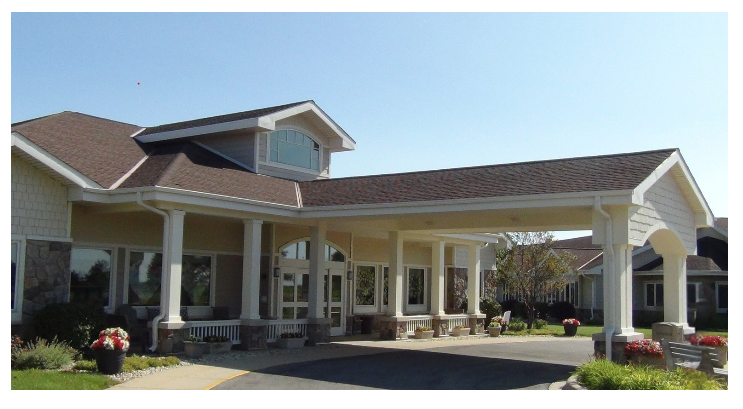
Jun 2023 5 deficiencies
CONCERN (D)

Potential for Harm - no one hurt, but risky conditions existed

Pressure Ulcer Prevention (Tag F0686)

Could have caused harm · This affected 1 resident

**NOTE- TERMS IN BRACKETS HAVE BEEN EDITED TO PROTECT CONFIDENTIALITY** Based on observation, interview, and record review, the Facility did not ensure that Residents at risk for pressure injuries rec...

Read full inspector narrative →
**NOTE- TERMS IN BRACKETS HAVE BEEN EDITED TO PROTECT CONFIDENTIALITY** Based on observation, interview, and record review, the Facility did not ensure that Residents at risk for pressure injuries received necessary treatment and services to prevent the development of pressure injuries for 1 (R64) of 5 Residents reviewed for pressure injuries. * On 6/5 and 6/6/23, R64 was observed in bed without the heels being offloaded per plan of care initiated on 7/22/22 and revised on 3/22/23. Findings include: The Wound Prevention and Treatment Program last revised 2/2023 under 2. The Wound Prevention and Treatment Program shall include: documents F. Standard repositioning with cares and rounds for those residents unable to reposition themselves, which will include floating of heels, or other interventions as indicated by care plan. R64's diagnoses includes Parkinson's Disease, hypertension, anxiety disease, and vascular dementia. R64 has a history of pressure injuries. The potential for pressure ulcer care plan initiated 7/22/22 and revised 3/22/23 includes an intervention of Elevate feet/float heels as tolerated. Initiated 7/22/22. The quarterly MDS (Minimum Data Set) with an assessment reference date of 4/13/23 documents R64 has short & long term memory problems and is severely impaired for daily decision making. R64 is assessed as requiring extensive assistance with one person physical assist for bed mobility, is dependent with two plus person for transfer and does not ambulate. R64 is at risk for pressure injury developed and is assessed as not having any pressure injuries. The Braden assessment dated [DATE] has a score of 14 which indicates moderate risk for pressure injury development. On 6/5/23 at 9:56 a.m. Surveyor observed CNA (Certified Nursing Assistant)-G wheel R64 in a maxi move lift out of the bathroom, remove R64's shoes, raised R64 up in the lift and lower R64 on top of the bed. CNA-G unfastened the sling from the lift and moved the lift away from R64's bed. CNA-G positioned R64 from side to side to fasten the incontinence product and pulled up pants in the front. CNA-G placed a pillow between R64's knees, position R64 on the left side and placed a pillow under R64's upper right side. Surveyor observed R64's right heel is being offloaded but the left heel is resting directly on the mattress. Surveyor inquired how long R64 will stay in bed. CNA-G informed Surveyor until he hits the call pad which is located on R64's right side or 11:30 a.m. CNA-G explained R64's wife requested R64 be put into bed during this time. CNA-G placed a blue floor mat on the right side of R64's bed, removed her gloves, collected the garbage & cleansed her hands. On 6/5/23 at 10:42 a.m. Surveyor observed R64 continues to be in bed on his left side. Surveyor observed R64's left heel continues to be resting on the mattress and is not being offloaded. On 6/6/23 at 10:18 a.m. Surveyor observed R64 in bed asleep on the left side. Surveyor observed there are two pillows under R64's lower legs and R64's heels are resting directly on the pillows. R64's heels are not being offloaded. On 6/6/23 at 11:20 a.m. Surveyor observed R64 asleep in bed. Surveyor observed R64 is now on the back and R64's heels continue not to be offloaded. On 6/6/23 at 3:44 p.m. Surveyor observed R64 in bed on the back. R64's right heel is resting directly on the mattress and R64's left heel is resting directly on the pillow. Surveyor observed R64's heels are not being offloaded. On 6/7/23 at 7:24 a.m. Surveyor informed LPN (Licensed Practical Nurse)-F Surveyor had noted R64 had a pressure injury on the coccyx which healed and asked what they are doing to prevent pressure injuries on R64's heels. LPN-F informed Surveyor they are uploading R64's feet in bed and thinks R64 has boots. LPN-F stated we definitely keep them elevated and do skin checks on feet at night. On 6/7/23 at 7:37 a.m. Surveyor asked CNA-G what they are doing to prevent pressure injuries from developing on R64's heels. CNA-G informed Surveyor R64 is getting a pillow between the knees & float the heels. CNA-G also informed Surveyor he wears diabetic socks and gets repositioned every two hours when in bed. On 6/7/23 at 7:59 a.m. LPN-F informed Surveyor R64 is not one of the Residents that wears boots but they offload R64's heels. On 6/7/23 at 9:19 a.m. Surveyor informed RN (Registered Nurse)/UM (Unit Manager)-C of the observations of R64's heels not being offloaded and staff informing Surveyor R64's heels should be offloaded. On 6/7/23 at 12:03 p.m. Surveyor informed Administrator-A and DON (Director of Nursing)-B of the above.
CONCERN (D)

Potential for Harm - no one hurt, but risky conditions existed

Accident Prevention (Tag F0689)

Could have caused harm · This affected 1 resident

**NOTE- TERMS IN BRACKETS HAVE BEEN EDITED TO PROTECT CONFIDENTIALITY** Based on observation, interview and record review the facility did not provide supervision to prevent accidents for 1 (R8) of 7 ...

Read full inspector narrative →
**NOTE- TERMS IN BRACKETS HAVE BEEN EDITED TO PROTECT CONFIDENTIALITY** Based on observation, interview and record review the facility did not provide supervision to prevent accidents for 1 (R8) of 7 residents reviewed for accidents. *R8's call light was not observed clipped to R8's clothing per R8's care plan. *R8 had a fall on 02/03/2023. The facility did not thoroughly investigate the fall in order to implement an appropriate intervention. Findings include: R8 was admitted to the facility on [DATE] with diagnoses including non-traumatic brain dysfunction and Alzheimer's disease with late onset. R8's most recent quarterly Minimum Data Set Assessment (MDS), dated [DATE], documented R8 had a BIMS (Brief Interview for Mental Status) of 8, indicating R8 had cognitive impairment; R8 required one staff limited assist with activities of daily living; and R8 had one fall since admission or prior assessment. R8's admission MDS CAA (Care Area Assessment) worksheet, dated 11/14/22, documented [Resident Name] has a history of falls prior to admission. The last fall did result in a right hip fracture. [Resident sex] has a cognitive deficit and has poor safety awareness. [Resident sex] is currently working with therapy. R8's admission fall risk assessment dated [DATE] documented a score of 19 indicating R8 was at a moderate risk for falls. R8's most recent fall risk assessment, dated 05/23/23, documented a score of 19 indicating R8 was at a moderate risk for falls. R8's care plan, initiated 11/07/22, documented, [R8] is at risk for falls. [They] had an unwitnessed fall at home which did result in a right hip fracture . and had interventions including,Be sure [R8's] call light is within reach and encourage [them] to use it for assistance as needed; Bed in low position; Ensure that [R8] is wearing appropriate footwear when ambulating or mobilizing in w/c; Follow facility fall protocol. R8's care plan, initiated 02/06/23, documented, [R8] had an actual fall. R8 has Dementia and poor safety awareness and had interventions including, 1/13/23 Consistent placement of call light clipped to clothing on chest while in recliner; 2/03/23 Scoop mattress to help define the edges of bed; 3/27/23 PAD [sic] call light clipped to clothing on chest while in recliner for visibility easy access; PT (Physical therapy) Eval (Evaluation) and treat; 4/17/23 Keep pajama's in closet until ready to go to bed. 5/23/23 Apply anti-rollback to wheelchair. R8's Certified Nursing Assistant [NAME] Report with an admission date of 11/7/22 documented, Safety .*PAD call light clipped to clothing on chest while in recliner for visibility easy access. Keep pajamas in closet until ready to go to bed. On 06/05/23 9:56 AM, Surveyor observed R8 sitting upright in their recliner in room. R8 had a blanket over their lap, footrest on the recliner was in the up position and call light was draped over the bedside table. Surveyor noted the call light was not clipped to R8's clothing. On 06/05/23 at 12:10 PM, Surveyor observed R8 sitting upright in the recliner. R8 reported they did not have any concerns, but they did have some bruises from falling. R8 was uncertain of the circumstances surrounding the fall. Surveyor noted R8's call light was draped over the bedside table, within reach of R8, but not clipped to their clothing. R8 could not tell Surveyor if they had fallen more than once while at the facility. Surveyor reviewed R8's Electronic Medical Record (EMR) and noted the following: On 1/13/2023 at 3:52 AM, a nurse documented CNA (Certified Nursing Assistant) heard resident calling out. Resident was found lying on [their] left side in front of the recliner, recliner footrest was still in the up position, with blankets under [them] with call light attached to blankets. Call light was not on, gripper socks were on. Clothing was wet and urostomy bag was noted to be leaking. Resident was repositioned from bed to recliner at 0030 and urostomy bag was emptied at that time per CNA. Resident stated [they] was trying to get up and go to the bathroom when [they] got tangled up in [their] blankets and fell. [They] stated [they] could not find [their] call light. Vital taken, resident assessed for injuries and none noted, neuro check negative. Resident was assisted into bed, resident was cleaned up and clothing changed. New urostomy bag was placed. New intervention: CALL LIGHT: Consistent placement of call light clipped to clothing on chest at all times. Family to be updated by unit nurse in the AM, note faxed to Dr. [name of MD] to updated as resident has no injuries. On 02/03/2023 at 10:25 PM, a nurse documented in progress notes, Writer entered room d/t (due to) hearing resident yelling out. Writer found resident sitting on floor against chair. Blood on right side of face and blood on floor. Resident denied pain. VSS (Vital Signs Stable). Alert. Pupils reactive. Charge Nurse was called for assistance. Order from MD (Medical Doctor) to send resident out to hospital for eval. [Name of ambulance] here at 2250 (10:50pm), taking resident to [Name of Hospital] ED (Emergency Department). Family and DON (Director of Nursing) to be updated. On 02/03/2023 at 10:46 PM, a nurse documented, Resident had UWF (Unwitnessed Fall) in [their] room out of recliner, bleeding from right temple, resident will be sent out to ER for eval and treatment. On 02/04/2023 at 6:30 AM, a nurse documented, Immediate intervention initiated is Sign placed to put on call light for assistance and to wait for help IDT (Interdisciplinary Team) to review. On 02/06/2023 at 10:29 AM, a progress note documented, IDT reviewed. Root cause-attempted to get up on own. Intervention-attempt to find something to help define edges of the bed. On 02/07/2023 at 4:17 PM, a progress note documented, Scoop mattress was placed instead of use of body pillow to help define the edge of bed. Surveyor reviewed the fall investigation provided by the facility and noted there were three CNA statements. Two of the CNAs documented Don't Know or Didn't to each question, including when was the last time you saw the resident and one CNA documented last seeing the resident at supper time, but had no other information on R8's fall. The only statement provided by the nurse on the unit was the above progress note documenting R8 fell out of the recliner. There was no documentation R8 was in bed prior to the fall and there was no documentation as to who had seen R8 between dinner time and when he fell at 10:25 PM. On 03/17/2023 at 9:52 PM a nurse documented, Around 20:00 (8:00PM) RA [sic] heard a yell out for help and found [R8] laying/sitting leaning towards [their] left side on the floor in front of [their] w/c (Wheelchair). [Their] call light was not on, [they] was wearing gripper slippers on both feet, did not need to use the toilet and was not incontinent. [They] was last seen sitting in [their] lounge chair after supper, writer saw [them] reading a book around 19:30 (7:30pm) in [their] lounge chair with call light in reach. [R8] did not remember what [they] was trying to do. Charge nurse [Initials of charge nurse] RN (Registered Nurse) assessed [them], [they] was able to move all extremities at baseline but did have c/o (complaints of) right knee pain with no visible signs of injury, Ice pack was applied and PRN (as needed) Tramadol administered. Neuro check negative and VSS. Immediate intervention is a pad call light placed where [they] will set it off when attempting to transfer [themselves]. Staff reported on AM shift that [R8] was transferring [themselves] w/o (without) assist multiple times on AM shift. Therapy department and on-call [initials of RN] RN were updated, MD (Medical Doctor) faxed d/t to no serious injury at this time. POA (Power of attorney) [name] (daughter) was updated on UOF and c/o knee pain with interventions administered. Resident will continued to be monitored for pain and VS Q (every) shift for 72 hours. MD updated if pain to right knee worsens. On 3/20/2023 at 10:39 AM, a progress note documented, IDT reviewed fall. Root cause-resident self-transferring. Intervention-Pad Call light clipped to clothing on chest while in recliner for easy access and visualization. Therapy also will be evaluating resident, PT and OT both. Surveyor reviewed the fall investigation provided by the facility and had no concerns with the investigation. On 06/06/23 at 9:34 AM, Surveyor observed R8 sitting in recliner, call light was draped on the bedside table next to recliner. On 06/06/23 at 11:50 AM, Surveyor observed R8 sitting in recliner, call light was draped on the bedside table next to recliner. On 06/06/23 at 1:21 PM, Surveyor observed R8 sitting in recliner, call light was draped on the bedside table next to recliner. On 06/07/23 at 9:43 AM, Surveyor observed R8 sitting in recliner, call light was draped on the bedside table next to recliner. On 06/07/23 at 9:51 AM, Surveyor interviewed CNA-H and asked what the CNAs do to help prevent R8 from falling. CNA-H informed Surveyor she was not caring for R8 that day, but in the past she would catch R8 self-transferring and would explain to R8 a simple push of the call light would be helpful. Per CNA-H sometimes R8 will use the call light and sometimes R8 will just do whatever. CNA-H informed Surveyor she will leave R8's wheelchair within reach so if R8 does attempt to self- transfer R8 can use the wheelchair instead of ambulating without anything. CNA-H did not mention clipping the call light to R8's clothing. On 06/07/23 at 9:59 AM, Surveyor interviewed CNA-I and asked what the CNAs do to help prevent R8 from falling. Per CNA-I, there is a note for him to ask for help. CNA-I stated she will make sure R8 has shoes on, and she tries to keep a close eye on R8. CNA-I informed Surveyor she keeps R8's call light by him and when R8 is in the recliner she will place the call light on R8's table next to the recliner. CNA-I stated she provides R8 with frequent reminders to use the call light. On 06/07/23 at 11:01 AM, Surveyor interviewed Unit Manager, RN-C. Surveyor asked about R8's fall intervention of clipping the call light on their clothing. Surveyor asked how the facility determined this for an intervention. Per RN-C, when R8 fell in January, R8 made the statement they could not find the call light and the facility thought if the call light was clipped to R8's clothing, R8 would be able to find it. Per RN-C sometimes R8 moves form the bed to the recliner and if the call light was consistently clipped to their clothing it would be easier for R8 to locate. Surveyor asked RN-C about the fall intervention from March which stated pad call light clipped to resident. Per RN-C, R8 has arthritis, and the facility thought the pad call light would be easier for them to activate. Surveyor relayed the concern of R8's call light being draped over the table next to R8 through out the survey. Surveyor explained Surveyor did not observe R8's call light clipped to R8 at all during the survey. Surveyor also explained the CNAs Surveyor interviewed did not seem to know the call light was supposed to be clipped to R8's clothing. Surveyor asked RN-C to explain how the facility came to the intervention of a scoop mattress for R8's fall in February. Surveyor explained documentation R8 was in the recliner and not the bed. Surveyor questioned how defining the edges of the bed was an appropriated intervention (when R8 fell out of the recliner). At this time RN-C reviewed R8's EMR (Electronic Medical Record) and stated she would have to speak with other staff members who were at the IDT meeting. RN-C thought maybe staff had figured out R8 had transferred from the bed. Surveyor asked if R8's call light was clipped to them prior to the fall in February. RN-C stated in R8's progress notes it does say if the call light was clipped to them or not. Per RN-C the call light may have come unclipped. Surveyor asked if the call light should be clipped to R8, as documented in R8's care planned interventions. RN-C stated for consistency, yes the call light should probably be clipped to R8. RN-C informed Surveyor she would speak with other staff and get back to Surveyor. On 06/07/2023 at 12:05 PM, RN-C asked Surveyor to speak with her and MDS Coordinator (MDS)-J. Per MDS-J and RN-C they had determined R8 was in the bed prior to the fall. Per MDS-J they must have found out when they interviewed staff about R8's fall. Surveyor asked for documentation R8 was in bed prior to the fall. Per RN-C there was no documentation. At this time MDS-J was reviewing R8's EMR and showed Surveyor documentation from R8's hospital visit after the February fall. MDS-J pointed out in the ER summary, R8 told the ER staff they were up walking around and felt dizzy and fell. Per MDS-J R8 was self-ambulating and had not fallen from the recliner. Surveyor asked if R8 was up walking around and felt dizzy and that is how R8 fell, how was that addressed by the facility. Per MDS-J, the facility staff were unsure if R8 was an accurate reporter and that is why they conducted a further investigation. At this time both RN-C and MDS-J reviewed R8's EMR. Surveyor asked again how the facility came to the intervention of a scoop mattress. MDS-J stated she knows they would not have put that as an intervention if R8 was not in the bed. Surveyor also asked when R8 fell on [DATE] who was the last person to see him? Surveyor relayed the concern the CNA statements documented one CNA saw R8 at dinner time, but R8 did not fall until after 10:00 PM. Surveyor questioned if anyone had seen R8 between dinner time and 10:00 PM. Per RN-C, the nurse would have seen R8 at 8:00 PM because that is when the nurse checked off R8's medications. Surveyor asked if there was a statement from the nurse. Per RN-C the only statement from the nurse was the actual fall statement which did not mention anything prior to finding R8 on the floor. Per RN-C, the nurse on duty at the time was from an agency and RN-C stated she would attempt to call the nurse to get more details. On 06/07/23 at 12:15 PM, Surveyor interviewed DON (Director of Nursing)-B. DON-B informed Surveyor the facility has an IDT meeting every morning where all new falls are discussed. Per DON-B they address current interventions and previous interventions. DON-B stated when a resident has a fall, the unit nurse will put in an immediate intervention and then the IDT will review the fall investigation, determine if the immediate intervention is appropriate, and add additional interventions if necessary. Surveyor asked about R8's fall in February and how it was determined that a scoop mattress would be an appropriate intervention. Per DON-B, she thought they may have talked to someone/staff and determined R8 was in the bed. Per DON-B, R8 does self-transfer and self-ambulate, but she thought the facility determined he was in bed prior to the fall. Surveyor relayed the concern of the blank CNA statements for that specific fall and the lack of a thorough investigation relating to what R8 was doing prior to the fall. Surveyor also relayed the concern of a lack of an appropriate intervention which addressed what R8 was doing at the time of the fall. Surveyor informed DON-B of Surveyor's observations during the Survey of R8's call light not clipped to their clothing per care plan. Surveyor explained it was concerning because two of R8's fall interventions mention clipping the call light to their clothing and the CNAs Surveyor interviewed did not seem to be aware of this intervention. Surveyor asked for any additional information. No additional information was provided.
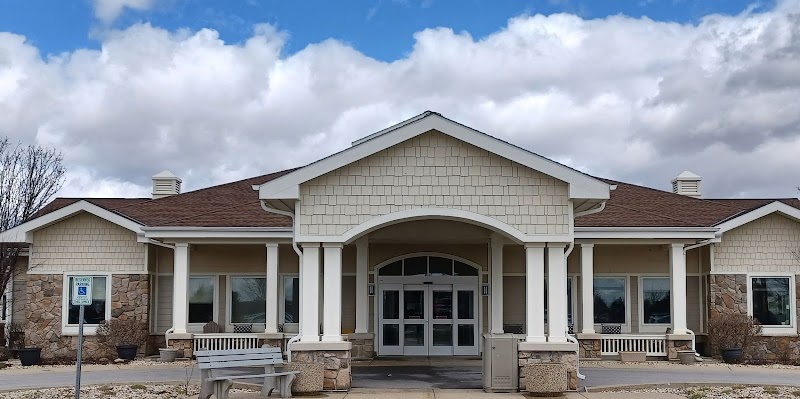
CONCERN (D)

Potential for Harm - no one hurt, but risky conditions existed

Dental Services (Tag F0791)

Could have caused harm · This affected 1 resident

**NOTE- TERMS IN BRACKETS HAVE BEEN EDITED TO PROTECT CONFIDENTIALITY** Based on observation, interview, and record review the Facility did not promptly refer a resident to the dentist for 1 (R65) of ...

Read full inspector narrative →
**NOTE- TERMS IN BRACKETS HAVE BEEN EDITED TO PROTECT CONFIDENTIALITY** Based on observation, interview, and record review the Facility did not promptly refer a resident to the dentist for 1 (R65) of 1 Residents reviewed for dental services. On 3/23/23 R65's family member informed Facility staff R65 has a loose tooth and requested R65 be seen by a dentist. R65 is not scheduled to be seen by a dentist until 6/8/23. Findings include: The Dental Service policy & procedure last revised 9/2022 under Purpose documents, Every resident admitted to [Facility's name] is to have an oral examination completed within six months following admission, unless an oral examination has been performed within six months prior to admission. The dental examination form is kept in the resident's clinical record in the consult section. Subsequent oral health care is arranged for and provided to the resident as needed. All consenting residents will have dental exams performed annually by the consulting dentist. The exams will be done in the clinic. For urgent dental needs, clinic coordinator will arrange services with an outside provider. R65 was admitted to the facility on [DATE] with diagnoses which includes anxiety disorder, depression, and dementia. R65's power of attorney for health care was activated 8/9/21. R65 was signed up for dental services with [Name of Company] in April 2022. The potential for an ADL (activities daily living) self-care deficit care plan initiated 4/19/22 and revised 3/30/23 under interventions documents: * Eating: [R65's first name] is independent with meals after set up. Diet: Regular diet, regular texture, regular (thin liquids) consistency. May use clothing protector. Initiated 4/19/22 & revised 5/10/23. * Personal hygiene/oral care: [R65's first name] is independent with oral care and personal hygiene. Initiated 4/20/22 & revised 4/21/22. Surveyor noted there is not a dental care plan. The nurses note dated 2/9/23 documents, Declined seeing dental hygienist in clinic today. States I take good care of my teeth. The nurses note dated 3/23/23 documents, Went to lunch with his daughter, DNR (do not resuscitate) applied. Resident complained of weakness when walking, therapy updated. Daughter also stated she noticed and [sic] (a) loose tooth on the bottom and would like him seen by the dentist. Called MR (medical records) and he is on the list. Surveyor was unable to locate any evidence in R65's medical record R65 was seen by a dentist for this loose tooth or there was any follow up. The annual MDS (Minimum Data Set) with an assessment reference date of 4/23/23 documents a BIMS (brief interview mental status) score of 14 which indicates cognitively intact. R65 is assessed as being independent with set up for eating. Under the dental section R65 is not assessed as having inflamed or bleeding gums or loose natural teeth. The dental care CAA (care area assessment) was not triggered. On 6/5/23 at 2:41 p.m. Surveyor spoke with R65 and asked R65 if he has any concerns. R65 then showed Surveyor a loose tooth on the front bottom located next to a missing tooth. R65 showed Surveyor how the tooth can wiggle. R65 informed Surveyor has to eat on the right side, told his daughter to get an appointment as the tooth is terribly painful. Surveyor asked if Facility staff were aware of the loose tooth. R65 informed Surveyor they know. On 6/6/23 at 10:38 a.m. Surveyor asked CNA (Certified Nursing Assistant)-K if R65 has voiced any concerns regarding his teeth to her. CNA-K replied no, not at all. On 6/7/23 at 7:26 a.m. Surveyor asked LPN (Licensed Practical Nurse)-F if R65 has voiced a concern regarding a loose tooth and is painful. LPN-F informed Surveyor R65 refused to go to the dentist and a week after that R65 said the tooth is loose so they are trying to get R65 back to the the dentist. LPN-F informed Surveyor they have [Name of Company which provides dental services] here and R65 has a daughter that works here and told her about the tooth. LPN-F informed Surveyor it would be best to speak to [name of] LPN/MR (medical records) as she does the dental clinic and would know. On 6/7/23 at 8:38 a.m. Surveyor met with LPN/MR-L and inquired if she makes dental appointments. LPN/MR-L replied yes we do. Surveyor then read LPN/MR-L R65's nurses note dated 3/23/23 regarding R65's loose tooth. LPN/MR-L informed Surveyor R65's one daughter works here as a nurse, R65 refused the last time he was seen and R65's daughter left her a message R65 promised he would see the dentist. LPN/MR-L explained R65 is on the dental list to be seen tomorrow. LPN/MR-L informed Surveyor she didn't think the dentist from [name of company] pulls teeth and if it needs to be pulled he would have to be seen by an outside dentist. Surveyor inquired when R65 refused the dentist. LPN/MR-L informed Surveyor he refused the dental hygienist in February. LPN/MR-L informed Surveyor the dental hygienist was here May 2nd & May 16th but the dentist has not been here. Surveyor asked if R65 could have been sent to an outside dentist. LPN/MR-L informed Surveyor she guessed he could have. Surveyor asked LPN/MR-L when she was notified of R65's loose tooth. LPN/MR-R replied Monday (6/5/23) and explained R65's daughter works second shift as a nurse, left her a phone message but she was gone when the message was left. Surveyor asked LPN/MR-L if she remembers being notified in March of R65's loose tooth. LPN/MR-L replied no just this week. Surveyor asked LPN/MR-L why R65 was already on the list to be seen by the dentist. LPN/MR-L explained when residents sign up for [name of company providing dental services] they keep track of when last seen and makes the list. LPN/MR-L informed Surveyor if there is an issue she can email or call [name of company providing dental services] to be seen even if they were seen on the last visit. On 6/7/23 at 9:20 a.m. Surveyor informed RN/UM (Registered Nurse/Unit Manager)-C Surveyor had noted a nurses note dated 3/23/23 regarding R65's loose tooth and the family member requesting R65 be seen by a dentist. Surveyor was unable to locate any follow up regarding this loose tooth and when Surveyor spoke with R65, R65 voiced a concern about the tooth being loose and painful. Surveyor asked RN/UM-C if she could look into this and get back to Surveyor. Surveyor noted R65 did not have any weight loss since March 2023. On 6/7/23 at 12:03 p.m. Surveyor informed Administrator-A and DON (Director of Nursing)-B of R65's dental concerns, without any follow up and asked Administrator-A & DON-B to let Surveyor know if there is any additional information. On 6/7/23 at 1:17 p.m. Surveyor asked RN/UM-C if there is any information to provide to Surveyor regarding R65's loose tooth. RN/UM-C informed Surveyor just a doctor's progress note dated 5/25/23. RN/UM-C provided Surveyor with a copy of this note. Surveyor reviewed R65's MD (medical doctor) progress note for date of service 5/25/23. Under history of present illness documents Patient expresses dental pain with a tooth along the bottom of his gum line. Expressed interest in seeing a dentist to have it pulled and possible dentures. Under medical decision making includes documentation of Dental pain Dentist referral placed, NH (nursing home) notified.
CONCERN (D)

Potential for Harm - no one hurt, but risky conditions existed

Infection Control (Tag F0880)

Could have caused harm · This affected 1 resident

Based on observation, interview, and record review the Facility did not have an effective infection control program for 3 (R64, R38, & R33) of 4 Residents observed during personal cares. * R64, R38, &...

Read full inspector narrative →
Based on observation, interview, and record review the Facility did not have an effective infection control program for 3 (R64, R38, & R33) of 4 Residents observed during personal cares. * R64, R38, & R33 were observed to not have appropriate hand hygiene during personal care observations. * The mechanical lift was not disinfected after being used for R38, who is on enhanced barrier precautions. Findings include: The Handwashing policy and procedure last revised 7/2022 under purpose documents Consistent and proper use of hand washing techniques will be practiced to protect both the residents and employees from the spread of infection. Under indications includes Decontaminate hands immediately after removing gloves and prior to putting on another glove(s) between each single task. 1. On 6/5/23 at 9:50 a.m. Surveyor observed R64 sitting on the toilet with a mechanical lift in front of R64 with CNA (Certified Nursing Assistant)-G. CNA-G removed her gloves and placed new gloves on. CNA-G did not wash or cleanse her hands prior to placing new gloves on. CNA-G informed Surveyor R64 lays down after breakfast. CNA-G washed R64's face, telling R64 he looks good then washed R64's hands. CNA-G removed her gloves and placed new gloves on. CNA-G did not wash or cleanse her hands prior to placing new gloves on. CNA-G asked R64 if he was done then telling R64 she was going to bring up, clean and place cream on. CNA-G raised R64 off the toilet, wiped R64's buttocks & rectal area with a disposable wipe, applied barrier cream, removed her gloves, removed an incontinence product from the closet and placed gloves on. CNA-G did not wash or cleanse her hands prior to placing new gloves on. CNA-G placed the incontinence product on R64, fastening the sides of the incontinence product to the sling, wheeled R64 out of the bathroom, remove R64's shoes, raised R64 up in the lift and lower R64 on top of the bed. CNA-G unfastened the sling from the lift and moved the lift away from R64's bed. CNA-G positioned R64 from side to side to fasten the incontinence product and pulled up pants in the front. CNA-G placed a pillow between R64's knees, position R64 on the left side and placed a pillow under R64's upper right side. CNA-G placed a blue floor mat on the right side of R64's bed, removed her gloves, collected the garbage & cleansed her hands. 2. On 6/5/23 at 1:14 p.m. Surveyor observed CNA (Certified Nursing Assistant)-N and CNA-G enter R38's room. CNA-N and CNA-G placed gown & gloves on and CNA-N placed a sling behind R38. CNA-N informed CNA-G she didn't need her so CNA-G removed her gown & gloves, cleansed her hands and left R38's room. CNA-N placed a soaker pad on R38's bed, wheeled the maxi move lift over in front of R38, attached the sling to the lift and raised R38 out of the broda chair. CNA-N wheeled R38 over to the bed, lowered R38 onto the bed, raised the height of the bed up and lowered the head of the bed down. CNA-N positioned R38 from side to side to remove the sling & lower R38's pants. CNA-N placed an incontinence product along the right side of R38's bed, unfastened the incontinence product and wiped R38's frontal perineal area with a disposable wipe. R38 was positioned on the left side, CNA-N wiped R38's buttocks & rectal area with a disposable wipe and removed product. Surveyor asked if the incontinence product was wet. CNA-N stated a little bit, squirted barrier cream in the incontinence product and then applied the barrier cream to R38's buttocks. CNA-N positioned R38 on the back, applied barrier cream to the frontal perineal area, removed her gloves and placed new gloves on. CNA-N did not wash or cleanse her hands prior to placing the new gloves on. CNA-N fastened R38's incontinence product & pulled up R38's pants. CNA-N placed a pillow between R38's legs, moved the bed away from the wall, rolled R38 to the right to place a pillow under R38's left side, moved the bed back against the wall, and placed a rolled brown blanket along R38's right side. At 1:27 p.m. CNA-N gathered the garbage, opened the door & placed the mechanical lift in the doorway, hung up the sling on the wall, and placed the broda chair in the bathroom. At 1:28 p.m. CNA-N removed her gown & gloves, Surveyor asked CNA-N why R38 is on enhanced barrier precautions. CNA-N informed Surveyor because R38 has a history of MRSA (methicillin resistant staphylococcus aureus) in her foot and cleansed her hands. At 1:29 p.m. CNA-N wheeled the lift from the door way giving the lift to CNA-G. Surveyor observed CNA-G wheel the lift into another Resident's room. Surveyor observed CNA-N did not disinfect the maxi move lift before giving the lift to CNA-G nor did she inform CNA-G she didn't disinfect the lift. 3. On 6/5/23 at 1:45 p.m. Surveyor observed CNA (Certified Nursing Assistant)-G in R33's room with R33. CNA-G stated she was going to wash her hands, washed her hands, asked R33 if he needed to have a BM (bowel movement) which R33 replied no. CNA-G informed R33 she was going to lay him down and empty the catheter bag. CNA-G placed a gown & gloves on and lowered the blinds. CNA-G raised the height of the bed up, placed a soaker pad on the bed, a sling behind R33 and hooked the sling to the sit to stand lift. CNA-G moved the urinary drainage bag from the wheelchair to the right side of the lift, and buckled R33's legs. CNA-G raised R33 up from the wheelchair, wheeled R33 over to the bed and lowered R33 onto the bed. CNA-G hooked the catheter bag to R33's pants, unhooked the sling, moved the lift away from R33 and swung R33's legs so R33 was laying in bed. CNA-G moved the urinary bag from R33's pants, hooked the bag to the foot board and removed R33's shoes. CNA-G placed a body pillow along R33's right side, raised the head of the bed, removed her gloves and placed new gloves on. CNA-G did not perform any hand hygiene. CNA-G covered R33 with a blanket, went into the bathroom, returned to R33's bed side with a basin and urinal. CNA-G cleaned the spicket with an alcohol wipe, emptied urine from the collection bag into the urinal, and placed the collection bag back into the blue privacy bag. CNA-G emptied the urine into the toilet, rinsed the urinal, placed the urinal in the cabinet, removed her gown & gloves and washed her hands. On 6/5/23 at 2:02 p.m. Surveyor observed CNA-G wipe off the sit to stand lift with a disinfecting wipe. Surveyor asked CNA-G if they are suppose to wipe off the lift after each Resident use. CNA-G replied I do then it's ready. On 6/6/23 at 2:00 p.m. during the infection control interview with DON (Director of Nursing)-B and ADON (Assistant Director of Nursing)-M, who is the Facility's infection preventionist, Surveyor asked when hand hygiene should be completed during continence cares. ADON-B informed Surveyor when they enter the room, if they take their gloves off they should wash their hands or use hand sanitizer if the Resident does not have any GI (gastrointestinal) and then at the end. Surveyor asked after using a mechanical lift on a Resident should the lift be disinfected. ADON-M replied yes. Surveyor informed DON-B and ADON-M of Surveyor's observations. On 6/7/23 Surveyor was provided with staff education sheets for Hand Hygiene dated 6/6/23 with a cover sheet which documents Hand Hygiene must be completed each time you remove gloves! Lifts and any other equipment must be wiped down after each resident use. Review Handwashing Policy.
CONCERN (E)

Potential for Harm - no one hurt, but risky conditions existed

Food Safety (Tag F0812)

Could have caused harm · This affected multiple residents

Based on observation and interview the Facility did not serve food in accordance with professional standards for food service safety. The thermometer was not sanitized between food items during the br...

Read full inspector narrative →
Based on observation and interview the Facility did not serve food in accordance with professional standards for food service safety. The thermometer was not sanitized between food items during the breakfast meal on 6/6/23 observed in the two serving kitchens on Unit A. This has the potential to affect 30 Residents residing on the A unit. Findings include: The Food Safety Guidelines for Holding and Serving policy and procedure last revised 2/2016 under procedure includes Check internal food temperatures with food thermometer prior to service. Sanitize the food thermometer after each use. On 6/5/23 at 12:24 p.m. Surveyor observed a food truck arrive to the kitchen area located by the low numbers of the A unit. At 12:27 p.m. RC (Relief Cook)-D place food containers into the steamer from the food truck, wash his hands using a paper towel to shut off the water, placed gloves on, and started to plate up the Resident's lunch meal. Surveyor did not observe RC-D take food temperatures prior serving. On 6/5/23 at 12:41 p.m. Surveyor asked RC-D why he didn't take food temperatures prior to serving. RC-D informed Surveyor he started on the other side, went through the whole cart and took temperatures. RC-D informed Surveyor he usually takes temperatures over here but today he was in a hurry. On 6/6/23 at 8:13 a.m. Surveyor observed in the kitchen area located by the high resident room numbers on the A unit RC-D taking food temperatures. RC-D inserted the food thermometer of each food item and after taking the temperature, RC-D wiped off the thermometer with a white paper towel. After RC-D was finished taking food temperatures he wiped off the thermometer with an alcohol pad. Surveyor asked RC-D if he could tell Surveyor the temperature of the food items he just took the temperature of. RC-D informed Surveyor the oatmeal was 141 degrees, pancakes 140, sausage 140, other oatmeal 140, blended eggs 143, back 140 and scrambled eggs. After informing Surveyor of the food temperatures RC-D started plating the Resident's breakfast meal. Surveyor noted RC-D did not sanitize the thermometer after taking the temperature of each food item, only wiping the thermometer with a paper towel. On 6/6/23 at 8:45 a.m. Surveyor observed RC-D place food containers into the steam table located by the low resident room numbers on the A unit. RC-D placed the diet sheets by the steam table, washed his hands, and placed gloves on. RC-D placed the end of the thermometer in an alcohol pad and asked Surveyor if Surveyor wanted to know the food temperatures. RC-D removed the thermometer from the alcohol pad took the temperature of oatmeal stating 140 (degrees) and wiped the thermometer with a white paper towel. RC-C took the temperature of pancakes stating 138, wiped the thermometer with a white paper towel, took the temperature of blended eggs 138, wiped the thermometer with a white paper towel, took the temperature of scrambled eggs 137 wiped the thermometer with a white paper towel, took the temperature of fortified oatmeal 140, wiped the thermometer with a white paper towel, took the temperature of ground sausage 149, wiped the thermometer with a white paper towel, and took the temperature of bacon 136. After taking the temperature of the bacon RC-D wiped the thermometer with an alcohol wipe. On 6/6/23 at 11:16 a.m. Surveyor asked RC-D if he usually takes temperatures the way Surveyor observed during the breakfast meals. RC-D replied yes and explained he first kills germs with an alcohol wipe then takes all the temps using a paper towel to wipe off food debris and wipes with an alcohol wipe when finished. RC-D asked Surveyor if this was alright. Surveyor informed RC-D he needs to sanitize the thermometer after each food item. On 6/6/23 at 12:46 p.m. Surveyor asked DM (Dietary Manager)-E what is the procedure for taking food temperatures on the unit. DM-E explained in the silverware drawer will be a thermometer with probe wipes. Wipe off the probe, take the temperature and repeat. Surveyor asked DM-E after each food item should staff wipe off the thermometer with a probe wipe. DM-E replied yes. Surveyor informed DM-E of Surveyor's observations and asked for the policy. On 6/7/23 Surveyor was provided with an education sign in sheet for June 6th 2023 which documents I was educated that must check all food temperatures to make sure the food is safe for resident's to eat. In between each temperature check I will disinfect the temperature probe with disinfectant probe wipes. I will allow to dry per the instructions of the probe wipes. This is to prevent cross contamination and decrease risk of illness.
Feb 2022 8 deficiencies 1 Harm
SERIOUS (G)

Actual Harm - a resident was hurt due to facility failures

Pressure Ulcer Prevention (Tag F0686)

A resident was harmed · This affected 1 resident

**NOTE- TERMS IN BRACKETS HAVE BEEN EDITED TO PROTECT CONFIDENTIALITY** 2. R7 was admitted to the facility on [DATE] with diagnoses of osteoporosis, anemia, chronic obstructive pulmonary disease, anxi...

Read full inspector narrative →
**NOTE- TERMS IN BRACKETS HAVE BEEN EDITED TO PROTECT CONFIDENTIALITY** 2. R7 was admitted to the facility on [DATE] with diagnoses of osteoporosis, anemia, chronic obstructive pulmonary disease, anxiety, and depression. R7's significant change Minimum Data Set (MDS) assessment dated [DATE] indicated severe cognitive deficit with a Brief Interview for Mental Status (BIMS) score of 5 and R7 had an activated Power of Attorney (POA). The MDS assessment coded R7 needing extensive assistance with all activities of daily living. R7's Pressure Injury Care Plan was initiated on 5/26/2020 and the following interventions were in place on 11/3/2021: -administer treatments as ordered and monitor for effectiveness -educate R7/family/caregivers as to causes of skin breakdown including transfer/positioning requirements, importance of taking care during ambulating/mobility, good nutrition and frequent repositioning -encourage repositioning every three hours: turn from hip to hip when in bed, offload from wheelchair or seated position after meals for one hour -follow facility policies/protocols for the prevention/treatment of skin breakdown -has pressure reducing cushion in chair and pressure reducing mattress On 11/3/2021 at 7:43 AM in the progress notes, Registered Nurse (RN)-H charted R7 was found to have two open areas to the coccyx that measured 1.0 cm x 1.2 cm and 0.5 cm x 0.5 cm both with 100% granulation tissue. The physician was notified and a treatment was ordered and administered. The dietician was notified of the new open areas for protein supplements. On 11/3/2021 on the Wound RN Assessment form, RN-H documented a Stage 2 pressure injury to the coccyx measured 1.0 cm x 1.2 cm and the wound edges were flush with the wound bed with granulation tissue. The physician and POA were notified of the new area. Surveyor noted according to the According to the European Pressure Ulcer Advisory Panel, National Pressure Injury Advisory Panel (NPUAP) and Pan Pacific Pressure Injury Alliance, Third edition published 2019 Prevention and Treatment of Pressure Ulcers/Injuries: Quick Reference Guide 2019 pages 39-40; a Stage 2 pressure injury does not have Granulation tissue. A Stage 3 Pressure injury may include granulation tissue. On 11/3/2021 on the Wound RN Assessment form, RN-H documented a Stage 2 pressure injury to the coccyx measured 0.5 cm x 0.5 cm and the wound edges were flush with the wound bed with granulation tissue. The physician and POA were notified of the new area. On 11/3/2021 the following treatment to the two coccyx wounds was administered: cleanse coccyx wounds, apply skin prep to peri-wounds and cover with 4x4 foam dressing every other day; all shifts to check placement of dressing and replace if missing or soiled. R7's Pressure Injury Care Plan was revised on 11/3/2021 with the following intervention: air loss mattress. On 11/4/2021, Ensure with meals was ordered to improve nutritional intake. On 11/10/2021 on the Wound RN Assessment form, RN-H documented the Stage 2 pressure injuries to the coccyx merged to form one wound measuring 1.1 cm x 0.7 cm x 0.1 cm with epithelial and granulation tissue. No percentages of tissue type were documented. R7's Pressure Injury Care Plan was revised on 11/12/2021 with the following interventions: -check skin with cares, on bath days, weekly skin assessments, and as needed -elevate feet/float heels as tolerated -monitor nutritional status, serve diet as ordered, monitor intake and record -obtain and monitor lab/diagnostic work as ordered, report results to physician and follow up as indicated On 11/17/2021 on the Wound RN Assessment form, RN-H documented the Stage 2 pressure injury to the coccyx measured 1.0 cm x 1.0 cm x 0.2 cm with granulation tissue draining a small amount of serous drainage and the peri-wound tissue had moisture-associated skin damage with blanchable redness. R7's Pressure Injury Care Plan was revised on 1/17/2022 with the following intervention: check and change brief related to incontinence and wound every two hours at night. On 11/18/2021, R7 was admitted to hospice services with an admitting diagnosis of hypertensive heart disease. R7's significant change MDS assessment dated [DATE] Pressure Care Area Assessment (CAA) stated: R7 has a stage 2 pressure ulcer which was acquired in house. (R7) is receiving Ensure with meals for extra nutrition for wound healing. Treatment is done per MD (physician) order. See TAR (Treatment Administration Record) for order details. Skin is checked with cares, bathing, weekly assessments, and as needed. Barrier cream is applied after incontinence. Heels are elevated as tolerated. (R7) is receiving a pressure reducing cushion in her W/C (wheelchair) and has a low loss air mattress on her bed. (R7) has had a decline in her health and is now receiving Hospice services. On 11/24/2021 on the Wound RN Assessment form, RN-H documented the Stage 2 pressure injury to the coccyx measured 0.5 cm x 0.5 cm x 0.2 cm with granulation tissue with a small amount of serous drainage. The peri-wound tissue had moisture-associated skin damage in the slit of the coccyx. On 12/1/2021 on the Wound RN Assessment form, RN-H documented the Stage 2 pressure injury to the coccyx measured 3.0 cm x 1.0 cm with epithelial and granulation tissue. No depth of the wound or percentage of tissue type was documented. The wound had a small amount of serous drainage and the peri-wound tissue was intact with blanchable redness. No change in treatment was ordered with an increase in size of the wound. On 12/8/2021 on the Wound RN Assessment form, RN-H documented the Stage 2 pressure injury to the coccyx measured 3.0 cm x 1.0 cm with granulation tissue. No depth of the wound was documented. The wound had a small amount of serous drainage and the peri-wound tissue had moisture-associated skin damage. On 12/15/2021 on the Wound RN Assessment form, RN-H documented the Stage 2 pressure injury to the coccyx measured 2.5 cm x 1.0 cm with epithelial and granulation tissue. No depth of the wound or percentage of tissue type was documented. The wound had a small amount of serous drainage and the peri-wound was intact with blanchable redness. On 12/22/2021 on the Wound RN Assessment form, RN-H documented the Stage 2 pressure injury to the coccyx measured 1.0 cm x 1.0 cm x 0.1 cm with epithelial and granulation tissue. No percentage of tissue type was documented. The wound had a small amount of serous drainage and the peri-wound had blanchable redness. On 12/29/2021 on the Wound RN Assessment form, RN-H documented the Stage 2 pressure injury to the coccyx measured 1.0 cm x 1.0 cm x 0.1 cm with epithelial and granulation tissue. No percentage of tissue type was documented. The wound had a small amount of serous drainage and the peri-wound had blanchable redness. On 1/6/2022 on the Wound RN Assessment form, nursing documented the pressure injury was now a Stage 3 that measured 1.8 cm x 0.7 cm x <0.1 cm with epithelial and 25% white slough. The wound had a scant amount of serous drainage and the peri-wound had maceration. The physician was notified and the treatment was changed to: clean coccyx wound with soap and water, apply Medihoney to wound bed followed by foam bordered dressing daily and as needed if soiled or dislodged. On 1/14/2022 on the Wound RN Assessment form, nursing documented the Stage 3 pressure injury to the coccyx measured 1.6 cm x 0.6 cm x <0.1 cm with epithelial and 10% off-white slough. The wound had no drainage and the peri-wound had maceration. On 1/19/2022 on the Wound RN Assessment form, RN-H documented the pressure injury was a Stage 2 pressure injury, down-staging the wound from a Stage 3 pressure injury five days prior. The wound measured 1.2 cm x 0.5 cm x <0.1 cm with epithelial and granulation tissue. No percentage of tissue type was documented. The wound had no drainage and the peri-wound had blanchable redness. The treatment of Medihoney to the wound base was not changed with the improvement of no slough tissue. On 1/26/2022 on the Wound RN Assessment form, RN-H documented the Stage 2 pressure injury measured 1.1 cm x 0.75 cm x 0.1 cm with epithelial and moist tissue. The wound had no drainage and the peri-wound had moisture-associated skin damage and blanchable redness. On 2/2/2022 on the Wound RN Assessment form, RN-H documented the Stage 2 pressure injury measured 1.0 cm x 0.5 cm with epithelial and moist tissue. RN-H documented the wound bed was flush with the intact surrounding skin. The wound had no drainage and the peri-wound had moisture-associated skin damage with blanchable redness. On 2/10/2022 on the Wound RN Assessment form, RN-H documented the Stage 2 pressure injury measured 1.0 cm x 0.5 cm with granulation and moist tissue. RN-H documented the wound bed was flush with the intact surrounding skin. The wound had no drainage and the peri-wound had moisture-associated skin damage with blanchable redness. The wound edges were irregular and rolled. On 2/11/2022 at 1:35 PM in the progress notes, RN-H charted the physician was updated on the status of R7's Stage 2 pressure injury to the coccyx. Upon assessment wound measures 1.1cm x 0.5cm, wound edges are rolled, MASD noted, but flush with wound base. Blanchable redness surrounding the wound bed. Hospice following wound as well and updating orders as needed. Current interventions: low air loss mattress, Encourage reposition q3hrs (every three hours): turn from hip to hip when in bed, offload from wheelchair or seated position after meals x 1 hour. Current Tx (treatment): Cleanse coccyx wound with soap and water, pat dry, apply Medihoney nickel thick to wound bed, followed by foam bordered dressing daily and PRN (as needed) if soiled or dislodged. All other shifts to check placement and replace if missing or soiled. Recommendations: None at this time. On 2/15/2922 at 1:40 PM, Surveyor observed R7's pressure injury treatment provided by Licensed Practical Nurse (LPN)-I. LPN-I stated wound rounds are done normally on Wednesdays by the wound nurse RN-H. LPN-I stated the wound treatments are done by the nurse on the floor on all the other days. R7 was in bed and very pleasant and cooperative with the treatment. LPN-I rolled R7 onto the right side and R7 was able to assist. The wound measured approximately 1.0 cm x 1.0 cm with pale pink tissue in the wound bed. The peri-wound was macerated. LPN-I cleansed the wound and applied Medihoney to the base using cotton-tipped applicators and covered the wound with a bordered foam dressing. LPN-I stated the edges of the wound were macerated and was going to suggest to RN-H to get skin prep for the peri-wound to help dry it out. Per the Medihoney website at address https://www.woundsource.com/product/medihoney-gel-wound-burn-dressing, MEDIHONEY® Gel Wound & Burn Dressing contains 100% active Leptospermum honey in a hydrocolloidal suspension. Supports the removal of necrotic tissue and aids in wound healing. An increase in exudate may occur due to the high osmolarity. Manage with an absorptive cover dressing. On 2/16/2022 on the Wound RN Assessment form, RN-H documented RN-H documented the Stage 2 pressure injury measured 1.0 cm x 0.5 cm with 100% granulation tissue. RN-H documented the wound bed was flush with the intact surrounding skin. The wound had no drainage and the peri-wound had resolving moisture-associated skin damage with blanchable redness. In an interview on 2/16/2022 at 11:47 AM, Surveyor reviewed with RN-H the documentation of R7's pressure injury. Surveyor shared the concern the depth of the wound and percentages of tissue types were not always documented. RN-H stated the log RN-H keeps for QAPI meetings had more information, but when RN-H reviewed the log, RN-H stated the percentages were not written on the log. RN-H stated with the computer charting system the facility uses, there was nowhere to document percentages. Surveyor shared with RN-H that some percentages had been documented in the comment section of the form. RN-H agreed that was where RN-H should have documented percentages. Surveyor shared the concern with RN-H that R7's pressure injury went from a Stage 2 to a Stage 3 and then on 1/19/2022, RN-H reverted back to a Stage 2. RN-H stated a pressure injury should never be down-staged and agreed the wound was a healing Stage 3 pressure injury. RN-H stated RN-H was confused with the computer charting and was unaware of how to document in the charting system. Surveyor shared the concern R7 did not have slough in the wound bed since 1/19/2022 and the peri-wound has had moisture-associated skin damage since 1/26/2022 possibly due to the use of Medihoney. Surveyor asked RN-H why the Medihoney treatment was still in use when the wound no longer had slough present and the peri-wound had maceration. RN-H stated the hospice physician was following R7 for wound care and RN-H had planned on calling hospice that day to get a change in treatment. Surveyor shared with RN-H that R7 had the same wound measurements of 1.0 cm x 0.5 cm for the last three weeks with no change in treatment. RN-H stated the wound this morning, 2/16/2022, had smaller measurements compared to the week prior. RN-H stated the wound measured 0.9 cm x 0.2 cm showing improvement. Surveyor shared with RN-H the documentation in R7's Wound RN assessment dated [DATE] indicated the wound measured 1.0 cm x 0.5 cm. RN-H looked at the charting and stated what RN-H charted that morning was in error and would fix the documentation to have the correct staging, measurements, and percentages of tissue type. Surveyor reviewed R7's 2/16/2022 Wound RN Assessment form after the interview with RN-H. The form indicated the Stage 3 pressure injury measured 0.9 cm x 0.2 cm x <0.1 cm with 50-% epithelialization, 25% moisture-associated skin damage, and 25% granulation. On 2/16/2022 at 2:30 PM, Surveyor shared with Nursing Home Administrator-A and Director of Nursing-B the concern R7's Stage 3 pressure injury was not accurately documented with staging, going from a Stage 2 to a Stage 3 and then reverted back to a Stage 2, with a comprehensive description of the wound bed by not using percentages of tissue type, and the depth of the wound not always documented. No further information was provided at that time. Based on interview and record review, the Facility did not ensure that a resident who enters the Facility with a pressure injury receives necessary care and treatment to prevent the development of pressure injuries and Residents without a Pressure Injury (PI) receive appropriate care, treatment and preventative measures to promote healing for 2 (R46 and R7) of 4 Residents reviewed for pressure injuries. * R46 who has a history of pressure injuries and is at risk for pressure injuries was observed to have a dark brown scabbed area to the planter left foot under the great toe on 7/22/21. This area was not assessed by a RN (Registered Nurse) for 6 days by which time it was identified as 100% necrotic tissue on 7/28/21. On 8/4/21 the wound bed was 100% slough and was staged inaccurately as a Suspected deep tissue injury. The pressure injury should have been unstageable. There is no assessment for R46's pressure injury for 21 days from 8/4/21 to 8/25/21. The 8/25/21 assessment was completed by an LPN (Licensed Practical Nurse). On 9/8/21 the assessment was completed by an LPN and signed by an RN on 9/13/21. The 9/8/21 assessment for the wound bed documents 50% bone. The facility did not stage the pressure injury as a Stage 4, there was no RN assessment until 5 days later and there was no revision in the care plan. There was no treatment provided to R46's pressure injury on 9/10/21, 9/11/21, 9/12/21, and 9/13/21. Since becoming a stage 4 pressure injury, R46 has had repeated cycles in which the pressure injury worsens, becomes infected, requires an antibiotic, begins to heal, and then begins to worsen, requiring another round of antibiotics. * R7 developed two stage 2 pressure injuries on 11/3/21 (staged incorrectly). R7's pressure injuries were not comprehensively assessed as the weekly assessment did not always include the percentage of tissue type for the wound bed and depth was not always documented. On 1/6/22 R7's coccyx pressure injury declined to Stage 3. On 1/19/2022 R7's coccyx pressure injury was back staged to a Stage 2. Findings include: The Facility's Wound Prevention and Treatment Program revised 12/2021 under purpose documents To outline the commitment of the facility in the prevention of pressure injuries. To provide prompt assessment of risk, implementation of preventative measure and treatment of wounds. To have a standardized treatment program to assure that current principles of wound care are followed. To optimize the resident's ability to maintain skin integrity. To outline how treatment effectiveness is monitored by nursing/therapy staff and reported to Quality Improvement committee. To provide the resident/POA (power of attorney) with information to allow participation in plan of care for wound prevention and healing. Under procedure includes All pressure ulcers shall be identified and staged according to the National Pressure Injury Advisory Panel (NPIAP) criteria. When identified and IMSK (impaired skin protocol check) checklist implemented. According to the European Pressure Ulcer Advisory Panel, National Pressure Injury Advisory Panel (NPIAP) and Pan Pacific Pressure Injury Alliance, Third edition published 2019 Prevention and Treatment of Pressure Ulcers/Injuries: Quick Reference Guide 2019 pages 39-43; Deep Tissue Pressure Injury .Intact or non-intact skin with localized area of persistent non-blanchable deep red, maroon, purple discoloration or epidermal separation revealing a dark wound bed or blood filled blister. Pain and temperature change often precede skin color changes. Discoloration may appear differently in darkly pigmented skin .If necrotic tissue, subcutaneous tissue, granulation tissue, fascia, muscle or other underlying structures are visible, this indicates a full thickness pressure injury (Unstagable, Stage 3 or Stage 4) . Stage 2 pressure injury . Partial-thickness loss of skin with exposed dermis .Granulation tissue, slough and eschar are not present. Stage 3 Pressure injury .Full-thickness loss of skin, in which adipose (fat) is visible in the ulcer and granulation tissue and epibole (rolled wound edges) are often present. Unstageable Pressure Injury . Full- thickness skin and tissue loss in which the extent of tissue damage within the ulcer cannot be confirmed because it is obscured by slough or eschar. If slough or eschar is removed, a Stage 3 or Stage 4 pressure injury will be revealed . Stage IV (4) Full-thickness skin and tissue loss with exposed or directly palpable fascia, muscle, tendon, ligament, cartilage or bone in the ulcer. Slough and/or eschar may be visible . 1. R46 was admitted to the facility on [DATE]. Diagnoses include Alzheimer's Disease, dementia with behavioral disturbances, hyperglycemia, other acquired deformities of right and left foot, hypertension, depressive disorder, and anxiety disorder. R46 has a history of pressure injuries. The at risk for skin alterations care plan initiated 3/2/21 and revised 12/28/21 includes interventions of: *Assess/record/monitor wound healing per protocol. Measure length, width and depth where possible. Assess and document status of wound perimeter, wound bed and healing progress. Report improvements and declines to the MD (medical doctor). Initiated 3/2/21 and revised 3/2/21. * Check skin with cares, on bath days, weekly assessments, and as needed. Initiated 3/2/21. * Elevate feet/float heels as tolerated. Initiated 3/2/21. * Follow facility policies/protocols for the prevention/treatment of skin breakdown. Initiated 3/2/21. * Monitor nutritional status. Serve diet as ordered, monitor intake and record. Initiated 3/2/21. * Obtain and monitor lab/diagnostic work as ordered. Report results to MD and follow up as indicated. Initiated 3/2/21. * Treatment per MD order. See TAR (treatment administration record). Initiated 4/9/21. * Low air loss mattress. Initiated 6/14/21. * Lay down after meals to offload from wheelchair. Initiated 7/26/21. * Prevalon boots on at all times. Initiated 10/7/21. The Braden assessments dated 7/6/21, 8/6/21, 9/6/21, and 10/6/21 all have a score of 13 which is moderate risk. The quarterly MDS (Minimum Data Set) with an assessment reference date of 7/8/21 documents R46 has short and long term memory problems and is severely impaired for cognitive skills for daily decision making. R46 requires extensive assistance with two plus person physical assist for bed mobility, transfer, and toilet use, requires extensive assistance with one-person physical assist for eating, and does not ambulate. R46 is always incontinent of bowel and bladder. R46 is at risk for pressure injuries and is coded as having one Stage 2 pressure injury. The nurses note dated 7/22/21 documents During skin assessment it was noted that resident has two moisture related areas. first moisture related area to left upper/inner buttock near coccyx measures approx. (approximately) 0.5cm (centimeters) L (length) X (times) 0.4cm W (width). Skin surrounding area is reddened. Second moisture related skin slit to left lower left side of coccyx measures approx. 0.6cm L X 0.2cm W. Scant amount of serosanguineous drainage noted. Areas cleansed with soap and H2O (water), f/b (followed by) barrier cream. Resident also has dry dark brown scabbed area to planter of left foot just under great toe. Skin surrounding area is reddened. ADON (Assistant Director of Nursing) made aware of new areas. Will monitor daily until healed. MD notified via fax. This note was written by a LPN (Licensed Practical Nurse). A treatment to monitor the dry scabbed area to R46's planter of left foot just below great toe, apply skin prep until healed and update wound nurse for worsening condition every evening shift was started on 7/22/21. This treatment was discontinued on 9/3/21. The nurses note dated 7/23/21 addresses R46's coccyx wound. This note was written by a RN (Registered Nurse) and does not address the open area on R46's left foot. The RN nurses note dated 7/24/21 addresses R46's coccyx wound but does not address the open area on R46's left foot. R46's alteration in skin integrity care plan was revised on 7/26/21 to lay down after meals to offload from wheelchair. The nurses note dated 7/28/21 documents [Name of physician] re-notified via fax that during skin assessment on 7/22/21 it was noted that resident has two moisture related areas. first moisture related area to left upper/inner buttock near coccyx. Second moisture related skin slit to left lower left side of coccyx. Resident also has dry dark brown scabbed area to planter of left foot just under great toe. Skin surrounding area is reddened. Awaiting return fax at this time. This note was written by an LPN. The Wound (New/Existing) RN Assessment with an effective date of 7/28/21 documents for location Planter (L) (left) foot under great toe and Date acquired 7/22/21. Type Stasis. Necrotic tissue and dry are checked for visible tissue. Describe the extent (%) of necrosis and/or slough in the wound bed documents 100%. Wound measurements are 1cm (centimeter) x (times) 1.5cm. Description of peri-wound tissue Reddened. Special equipment/preventative measures documents low air loss mattress. Under wound progress documents First OBS (observation). On 2/16/22 at 9:14 a.m. Surveyor asked RN (Registered Nurse)/ADON (Assistant Director of Nursing)-H why she coded R46's wound as stasis on 7/28/21 and the subsequent assessments are pressure injuries. RN/ADON-H informed Surveyor she documented this incorrectly and should have been staged as a SDTI (suspected deep tissue injury). Surveyor noted this should have been staged as unstageable as the wound bed was 100% necrotic tissue and 7/28/21 is the first RN assessment, 6 days after the wound was identified (7/22/21). The Wound (New/Existing) RN Assessment with an effective date of 8/4/21 documents for location Planter (L) (left) foot under great toe and Date acquired 7/22/21. Type pressure, Pressure Ulcer Stage for original STDI [sic] (SDTI), Current STDI Visible tissue is checked for slough tissue present (yellow, tan, white, stringy) and describe the extent (%) of necrosis and/or slough in the wound bed 100%. Wound measurements are 1cm x 1cm. Special equipment/preventative measures documents low air loss mattress. Wound progress stable. Surveyor noted the pressure injury is not staged accurately as a wound bed of 100% slough should have been staged as unstageable. Surveyor noted the next assessment is dated 8/25/21, 21 days later and was completed by an LPN. The Wound (New/Existing) RN Assessment with an effective date of 8/25/21 documents for location Planter (L) (left) foot under great toe and Date acquired 7/22/21. Type other. Visible tissue is checked for dry, Comments brown, dry callous, flaky dry skin surrounding callous. Wound measurements 1.0 x 0.8. Special equipment/preventative measures documents low air loss mattress, repositioning every 2 hours, prevalon boots. Wound progress slightly smaller in size than previous assessment. Continue to monitor. Surveyor noted this assessment was completed by an LPN. The Wound (New/Existing) RN Assessment with an effective date of 9/2/21 documents for location Planter (L) (left) foot under great toe and Date acquired 7/22/21. Type pressure, Pressure Ulcer Stage for original STDI, Current STDI. Under visible tissue worsening, moist, and dry are checked. Wound measurements are 1.5 x 1.5. Special equipment/preventative measures documents low air loss mattress, prevalon boots to bilateral feet. Under current treatment plan documents currently receiving apply skin prep to area daily, will request change in order to betadine followed by bordered island dressing daily. Surveyor noted the assessment does not include the tissues type and only documents moist and dry. On 9/3/21 a new treatment was ordered to cleanse left foot with soap and water, pat dry, apply Betadine to the center of the wound and cover with an island border dressing every day. This treatment was discontinued on 9/10/21. The Wound (New/Existing) RN Assessment with an effective date of 9/8/21 documents for location Planter (L) (left) foot under great toe. Pressure Ulcer Stage for original STDI, Current STDI. Under visible tissue worsening, granulation tissue present and moist are checked. Under comments documents 50% slough came off with cleansing exposed bone on bony prominence, granular tissue surrounding bone. Under the extent (%) of necrosis and/or slough in the wound bed 50% bone exposed. Wound measurements 0.9 x 1.2 x 0.3. Special equipment/preventative measures documents low air loss mattress, prevalon boots to bilateral feet. For describe any changes to treatment plan in the last week documents Yes updated MD (medical doctor) regarding recommendations for new treatment d/t (due to) area open and exposed bone. This assessment was completed by an LPN on 9/8/21 and signed by RN/ADON-H on 9/13/21. Surveyor noted the Facility inaccurately staged R46's pressure injury as a Suspected Deep Tissue Injury. According to the NPIAP a pressure injury with bone exposed should be staged at a Stage 4. There was no revision in R46's skin integrity care plan. Review of the September TAR (treatment administration record) reveals R46 did not receive a treatment for 4 days to the left foot under the great toe on 9/10/21, 9/11/21, 9/12/21, and 9/13/21. The Wound (New/Existing) RN Assessment with an effective date of 9/13/21 documents for location Planter (L) (left) foot under great toe. Pressure Ulcer Stage for original STDI. Current STDI. Under visible tissue worsening, slough, necrotic, and moist are checked. Under the extent (%) of necrosis and/or slough in the wound bed 100%, measurements 1cm x 1cm x 0.3cm. Infection suspected is checked and for describe documents erythema, increased drainage, Xray ordered. Special equipment/preventative measures documents prevalon boots, low air loss mattress. Wound progress Worsening Xray to rule out osteomyelitis ordered via [name of physician]. Surveyor noted the Facility continues to inaccurately stage R46's pressure injury as a Suspected Deep Tissue Injury. The assessment does not indicate the percentage of the wound bed for necrotic and slough and combines necrotic/slough as 100%. On 9/13/21 an X-ray of R46's left foot was obtained. Under conclusion documents There is no radiographic evidence of acute disease in the left foot. Bone demineralization is present. Hallux valgus deformity is present. There is no radiographic evidence of osteomyelitis. If there is a high clinical index of suspicion, then cross-sectional imaging follow-up may be of value. There was a change in treatment to R46's left plantar foot pressure injury on 9/14/21 to cleanse the left plantar foot pressure injury with normal saline, apply skin prep to peri wound and cover with a foam dressing every dayshift. This treatment was discontinued on 10/21/21. The Wound (New/Existing) RN Assessment with an effective date of 9/16/21 documents for location Planter (L) (left) foot under great toe. Pressure Ulcer Stage for original STDI, Current STDI. Under visible tissue worsening, slough, and moist are checked. Describe the extent (%) of necrosis and/or slough in the wound bed is 100% slough. measurements are 1.1cm x 1cm. Infection suspected is checked and for describe documents swelling, increased drainage, foul odor. Special equipment/preventative measures documents low air loss mattress, prevalon boots to bilateral feet. Wound progress Worsening. Surveyor noted the Facility continues to inaccurately stage R46's pressure injury as a Suspected Deep Tissue Injury. The physician's orders include with a start date of 9/21/21 Bactrim DS 800-160 mg (milligrams) with directions to give one tablet by mouth two times a day for infection. The Kardex report dated 9/21/21 located inside R46's bathroom cabinet and observed by Surveyor on 2/15/22 documents Prevalon boots to bilateral feet to be worn at all times. and Lay down after meals to offload from wheelchair. The Wound (New/Existing) RN Assessment with an effective date of 9/22/21 documents for location Planter (L) (left) foot under great toe. Pressure Ulcer Stage for original STDI, Current STDI. Under visible tissue improving, epithelial tissue, granulation tissue, slough tissue, and moist are checked. Describe the extent (%) of necrosis and/or slough in the wound bed 50% slough. Measurements are 1.5cm x 1.4cm x 0.2 cm. Infection suspected is checked and describe documents ABX (antibiotic) therapy began 9/21/2021. Wound progress documents Improving, redness and [NAME] [sic] (swelling) decreasing. Under comments documents ABX therapy until 10/1/2021. Surveyor noted the Facility continues to inaccurately stage R46's pressure injury as a Suspected
CONCERN (D)

Potential for Harm - no one hurt, but risky conditions existed

Deficiency F0688 (Tag F0688)

Could have caused harm · This affected 1 resident

**NOTE- TERMS IN BRACKETS HAVE BEEN EDITED TO PROTECT CONFIDENTIALITY** Based on observation, record review, and interview, the facility did not ensure a resident received appropriate treatment to pre...

Read full inspector narrative →
**NOTE- TERMS IN BRACKETS HAVE BEEN EDITED TO PROTECT CONFIDENTIALITY** Based on observation, record review, and interview, the facility did not ensure a resident received appropriate treatment to prevent further decrease in range of motion for 1 (R24) of 2 residents reviewed for range of motion. R24 was observed on 2/14/2022 and 2/15/2022 to not have splints to the right and left contracted hands as per care plan. Findings: The facility policy and procedure entitled Therapy Process dated 1/2022 states: The therapist will write the specific wearing time schedule for any orthotic equipment (i.e., splints, cones, etc.) on the Therapy Recommendation Sheet at the time the resident is issued the orthotic equipment. Key Point: The specific order of the POC (Point of Care) and [NAME] assures appropriate follow up. R24 was admitted to the facility on [DATE] with diagnoses of abnormal posture, contracture of the left and right hand, contracture of the left and right wrist, and Parkinson's disease. R24's annual Minimum Data Set (MDS) assessment dated [DATE] indicated R24 was severely cognitively impaired per staff interview and was non-verbal. R24 was dependent for all cares and had an activated Guardian. R24's Splint/Brace Care Plan initiated on 11/2/2019 had the intervention on 7/9/2021 to have palm protectors on at all times except off each morning for hygiene and thorough drying, replace each morning with clean palm protector after hygiene. R24's Activities of Daily Living Care Plan initiated on 12/27/2019 had the intervention on 7/23/2021 to have right and left hand splints to be on daily after hand washing. In an interview on 2/16/2022 at 9:30 AM, Therapy Director-C stated once a resident is assessed and determined they need a splint, the resident is picked up on caseload and the device is then ordered. The resident is monitored for three weeks and education is provided to the staff that will be applying the device. The staff signs a log indicating they were trained on the splint. Therapy Director-C stated in morning meeting, Therapy Director-C notifies the interdisciplinary team about the new splint that has been implemented and the instructions of application and care of the splint are posted in the room. Therapy Director-C provided the care and instructions for R24's hand splints. On 2/14/2022 at 9:36 AM, Surveyor observed R24 in bed. R24's right and left hands were contracted into fists. R24 did not have any splint or palm protector in place. Surveyor observed a sign posted on R24's wall stating the method to wash/clean the hand splints. On 2/15/2022 at 8:21 AM, Surveyor observed R24 in the resident room in a reclining chair. R24 had a washcloth slightly rolled up in the left hand and nothing in or on the right hand. Both fists were clenched. Surveyor asked R24 if R24 was comfortable. R24 nodded head in agreement. Surveyor observed two hand splints/palm protectors hanging from the pole attached to the chair. On 2/15/2022 at 12:13 PM, Surveyor observed R24 in the resident room sleeping in a reclining chair. R24 had a washcloth in the left hand that was not rolled up and nothing in the right hand. Both fists were clenched. Surveyor observed two hand splints/palm protectors hanging from the pole attached to the chair. On 2/15/2022 at 1:53 PM, Surveyor observed R24 in the resident room sleeping in a reclining chair. R24 had a washcloth in the left hand that was not rolled up and nothing in the right hand. Both fists were clenched. Surveyor observed two hand splints/palm protectors hanging from the pole attached to the chair. In an interview on 2/15/2022 at 1:56 PM, Surveyor asked Certified Nursing Assistant (CNA)-J if R24 should have splints on both hands. CNA-J stated CNA-J put towels in both hands that morning because CNA-J could not find the hand splints. Surveyor shared with CNA-J the observation of a washcloth in the left hand and nothing in the right hand. CNA-J stated CNA-J had picked up a towel off of the floor in R24's room earlier and maybe the towel had fallen out of R24's hand. Surveyor went with CNA-J to R24's room and showed CNA-J the splints hanging from the pole attached to R24's chair. CNA-J stated that was funny CNA-J could not find the splints when they were hanging in plain sight. CNA-J applied the hand splints to R24's right and left hands. On 2/15/2022 at 3:11 PM, Surveyor shared with Nursing Home Administrator-A and Director of Nursing-B the observations on 2/14/2022 and 2/15/2022 of R24 not having hand splints in place to either hand and the conversation with CNA-J of not being able to find R24's hand splints when the hand splints were in view hanging on R24's chair. No further information was provided at that time.
CONCERN (D)

Potential for Harm - no one hurt, but risky conditions existed

Deficiency F0700 (Tag F0700)

Could have caused harm · This affected 1 resident

**NOTE- TERMS IN BRACKETS HAVE BEEN EDITED TO PROTECT CONFIDENTIALITY** Based on observation, interview, and record review the facility did not have an updated comprehensive assessment for repositioni...

Read full inspector narrative →
**NOTE- TERMS IN BRACKETS HAVE BEEN EDITED TO PROTECT CONFIDENTIALITY** Based on observation, interview, and record review the facility did not have an updated comprehensive assessment for repositioning/assist bars for 2 (R73 & R77) of 2 Residents observed with repositioning/assist bars. Further, the facility did not have evidence of the Interdisciplinary Team (IDT) involvement, no documentation of repositioning/assist bars being reviewed at care conference, and repositioning/assist bars were not documented on R73 and R77's Minimum Data Set (MDS) or comprehensive care plan. *R73 did not have a physician order for R73's repositioning/assist bars and the facility did not obtain consent or assess the risk of entrapment prior to installation. R73's electronic medical record (EMR) did not have evidence that risks and benefits were discussed with R73. *R77 did not have a physician order for R77's repositioning/assist bars and the facility did not obtain consent or assess the risk of entrapment prior to installation. R77's electronic medical record (EMR) did not have evidence that risks and benefits were discussed with R77. Findings include: 1. R73 was admitted to the facility on [DATE] with diagnoses of Peripheral Vascular Disease, Type 2 Diabetes Mellitus with Diabetic Neuropathy, Asperger's Syndrome, and Dysphagia. R73 is his own person. R73's Quarterly MDS (Minimum Data Set) dated 2/2/22 documents R73 has a BIMS (Brief Interview for Mental Status) score of 15 indicating R73 is cognitively intact for daily decision making. R73 requires extensive assistance for bed mobility (1), transfers (1), dressing, and toileting. Surveyor notes that bed rail is not marked on R73's MDS. Surveyor reviewed R73's [NAME] as of 2/15/22 and notes that the repositioning/assist bars are not documented. Surveyor reviewed R73 care plan and notes that R73's comprehensive care plan does not address R73's repositioning/assist bars with person centered interventions. Surveyor reviewed R73's physician orders and repositioning/assist bars are not documented. Surveyor notes there is no assessment for R73's repositioning/assist bars. On 2/14/22 at 10:20 AM, Surveyor observed that R73 had repositioning bars on both sides of R73's bed. On 2/15/22 at 11:27 AM, Surveyor spoke to R73 who stated R73 uses the repositioning bars sometimes to turn over when cares are being completed. On 2/15/22 at 1:14 PM, Certified Nursing Assistant (CNA-D) confirmed that R73 uses the repositioning bars and it is very helpful when CNA-D needs R73 to turn for cares when in bed. 2. R77 was admitted to the facility on [DATE] with diagnoses of Acute on Chronic Systolic Congestive Heart Failure, Cerebral Infarction, Peripheral Vascular Disease, Hemiplegia Affecting Right Dominant Side, and Depression. R77 is his own person. R77's admission MDS (Minimum Data Set) dated 2/7/22 documents R77 has a BIMS (Brief Interview for Mental Status) score of 15 indicating R77 is cognitively intact for daily decision making. R77 requires extensive assistance for bed mobility (2), transfers (2), dressing, and toileting. R77 has range of motion impairment on both upper and lower on 1 side. Surveyor notes that bed rail is not marked on R77's MDS. Surveyor reviewed R77's [NAME] as of 2/15/22 and notes that the repositioning/assist bars are not documented. Surveyor reviewed R77's care plan and notes that R77's comprehensive care plan does not address R77's repositioning/assist bars with person centered interventions Surveyor reviewed R77's physician orders and repositioning/assist bars are not documented. Surveyor notes there is no assessment for R77's repositioning/assist bars. On 2/14/22 at 9:54 AM, Surveyor observed R77's bed had repositioning/assist bars on both sides of R77's bed. On 2/16/22 at 9:41 AM, Licensed Practical Nurse (LPN-E) stated that R77 was sitting on the edge of bed today because therapy had assisted with getting R77 dressed. LPN-E confirmed R77 used the repositioning bar on the right side to grab onto with R77's left hand and pull R77 up and then LPN-E assisted with pivot transfer to the wheelchair. On 2/16/22 at 8:28 AM, Surveyor spoke to Administrator (NHA-A) who informed Surveyor there was no policy and procedure for the repositioning/assist bars because they are not siderails. Surveyor discussed with NHA-A that per the regulation examples of side rails include grab or assist bars. Surveyor discussed with NHA-A that the facility did not ensure prior to the installation of the repositioning/assist bars for R73 and R77, the facility attempted to use alternatives and a review of risks including entrapment; and informed consent was obtained from R73 and R77. On 2/16/22 at 9:20 AM, Surveyor interviewed Director of Nursing (DON-B) in regards to the repositioning/assist bars. DON-B explained that therapy has been making recommendations for those Residents that need repositioning/assist bars. DON-B stated that nursing does not do an assessment for the repositioning/assist bars. On 2/16/22 at 9:46 AM, Surveyor interviewed the Therapy Director (TD-C). TD-C stated that if repositioning/assist bars are recommended then TD-C would care plan the repositioning/assist bars and get it on the Resident [NAME]. TD-C stated that sometimes the Residents just want the repositioning/assist bars on, or the repositioning/assist bars are already placed on the bed. If that is the case, TD-C stated TD-C then would not place the repositioning/assist bars on the care plan or assess the need for the repositioning/assist bars. Therapy would not have anything to do with them. However if TD-C makes the recommendation then TD-C would assess and place on the care plan. TD-C stated for R73 and R77 the repositioning/assist bars were already on their beds when admitted so TD-C had nothing to do with repositioning/ass bars. TD-C stated TD-C verbally educates Residents on the risks/benefits but does not have them sign a consent form. TD-C stated the assessment for repositioning/assist bars should be done quarterly or annually, and with new admits. On 2/16/22 at 11:16 AM, NHA-A informed Surveyor there was a lack of communication with therapy and the process and NHA-A agreed that there was no formal assessment being completed on Residents who had repositioning/assist bars and agreed based on the regulation that the repositioning/assist bars should have been assessed for risks and benefits. NHA-A informed Surveyor that therapy is in the process of going through every Resident in the facility to make sure they have assessed each Resident. NHA-A stated then going forward it will be done on a quarterly basis. Surveyor was provided with a policy and procedure assist rail process developed today (2/16/22) after Surveyor identified the issue. Surveyor shared it was a concern which NHA-A understands. NHA-A provided no further information. On 2/16/22, Surveyor was provided an Assist Rail Process developed on 2/16/22 which indicated; Process 1. When a new admission comes to the facility, the bed will be without any assist rails attached. 2. Therapy will evaluate the need for assist rails to assist in mobility while talking into account the risk of entrapment versus the benefit of the assist rail. 3. The therapist will give recommendations of assist rails to MDS nurse, who will care plan the intervention requested. 4. The therapist will attach assist rails or put in work order for them to be attached by maintenance. 5. Nursing will get an order from the physician for an assist bar for mobility. 6. Therapy will re-evaluate the need for assist bars with the quarterly assessment and communicate any changes to the nursing staff as above. 7. During care conferences, Resident and their representative will be informed of assist rail use and discuss the risk of entrapment versus the benefit and will get consent as documented in the care conference note. 8. Maintenance will inspect the beds on a regular basis per the Bed Inspection Policy.
CONCERN (D)

Potential for Harm - no one hurt, but risky conditions existed

Deficiency F0757 (Tag F0757)

Could have caused harm · This affected 1 resident

Based on interview and record review, the Facility did not ensure each Resident's drug regimen was free from unnecessary drugs for 1 (R15) of 6 Residents reviewed. R15 received an antibiotic for UTI (...

Read full inspector narrative →
Based on interview and record review, the Facility did not ensure each Resident's drug regimen was free from unnecessary drugs for 1 (R15) of 6 Residents reviewed. R15 received an antibiotic for UTI (urinary tract infection) without adequate indications for its use. Findings include: On 2/15/22 at 12:32 p.m. Surveyor asked RN/ADON (Registered Nurse/Assistant Director of Nursing)-H, who is the Facility's infection preventionist, what standard of practice their definitions of infections are based on. RN/ADON-H informed Surveyor CDC/NHSN (Center for Disease Control/National Healthcare Safety Network). The CDC/NHSN Urinary Tract Infection (UTI) Checklist dated January 2022 for Asymptomatic Bacteremic Urinary Tract Infection (ABUTI) documents: No signs or symptoms (i.e., no urgency, frequency, acute dysuria, suprapubic tenderness, or costovertebral angle pain or tenderness). If no catheter is in place, fever alone would not exclude ABUTI if other criteria are met. AND One of the following: 1. A voided urine culture with > (greater than or equal to) 10 (exponent of 5) CFU/ml (colony forming units/milliliter) of no more than 2 species of microorganisms. 2. Positive culture with > 10 (exponent of 2) CFU/ml of any microorganisms from in/out catheter specimen. 3. Positive culture with > 10 (exponent of 5) CFU/ml of any microorganisms from indwelling specimen. AND A positive blood culture with at least 1 matching organism in urine catch. R15 diagnosis includes Alzheimer's Disease. The quarterly MDS (Minimum Data Set) with an assessment reference date of 11/17/21 documents a BIMS (brief interview mental status) score of 3 which indicates severe impairment. R15 is coded as requires supervision with one person physical assist for toilet use and is continent of bowel & bladder. On 1/6/22 R15 was transferred to the hospital ER (emergency room) following a fall in the dining room. The nurses note dated 1/6/22 documents Residents son picked up her jacket and walker and went to [name of hospital] ER and picked resident up and brought her back here by car All imaging tests were negative. A U/A (urinalysis) was done and positive, she returned with order for Keflex (antibiotic) BID (twice a day) x (times) 7 days, son aware. The antibiotic administration use dated 1/7/22 under the section signs, symptoms, diagnostic testing for detail of current signs or symptoms indicating infection documents No overt signs or symptoms of UTI which is diagnosis for administration of Keflex 500 mg BID. Temp (temperature) 96.3 (TA) (temporal artery). There is evidence of confusion and resident awake and ambulating in room previous night appearing disoriented to time. The most recent temperature is documented as 97.9, date is 01/06/2022 20:51 (8:51 p.m.) and route is Temporal Artery. The nurses note dated 1/7/22 includes documentation of No adverse effect from Keflex which was initiated for UTI following ED (emergency department) evaluation post fall. The nurses note dated 1/8/22 documents Resident is being monitored for a witnessed fall with injury and being on Keflex for a UTI until 1/13/22. Vital signs stable, afebrile. No adverse effects from ABT (antibiotics), fluids encouraged. The nurses note dated 1/10/22 includes documentation of .Keflex 500 mg (milligrams) PO (by mouth) BID (twice a day) continues through 01/13/2022 for UTI. No adverse effects noted or reported. Monitoring and observation continued. The nurses note dated 1/10/22 documents Resident denies urinary pain, no foul odor, no increased frequency. The January 2022 MAR (medication administration record) includes Keflex Capsule 500 mg (Cephalexin) Give 1 capsule orally two times a day for urinary tract infection until 1/13/22. Surveyor noted R15 received this medication at 8:00 a.m. and 5:00 p.m. on 1/7/22, 1/8/22, 1/9/22, & 1/10/22. On 2/15/22 at 10:52 a.m. Surveyor asked RN/UM (Registered Nurse)/Unit Manager)-G if a Resident goes to the hospital to be evaluated for a fall and returns to the Facility with an order for an antibiotic for UTI who reviews this information to ensure the Resident meets the Facility's definition of infection. RN/UM-G informed Surveyor the infection control nurse will contact the hospital or medical records will contact the hospital for the lab reports. RN/UM-G informed Surveyor some doctors wish to keep the antibiotic and Surveyor should speak with RN/ADON-H. On 2/15/22 at 1:36 p.m. Surveyor asked RN/ADON-H if a Resident goes to the hospital to be evaluated for a fall and returns to the Facility with an order for an antibiotic for UTI who reviews this information to ensure the Resident meets the Facility's definition of infection. RN/ADON-H informed Surveyor they don't always get the information from the hospital and do not have access to the hospital records. Surveyor informed RN/ADON-H prior to R15 being transferred to the hospital on 1/6/22 following a fall there is no documentation regarding any urinary signs or symptom of an infection for R15. R15 returned from the hospital on the same day with an order for Keflex 500 mg BID. RN/ADON-H informed Surveyor she is still waiting for the hospital information. RN/ADON-H informed Surveyor R15 did have an increase of refusals from staff, increase in incontinence, and had a positive UA from the hospital but doesn't know what the culture is yet. Surveyor asked RN/ADON-H if she spoke to R15's physician regarding the antibiotic. RN/ADON-H replied I personally did not because I was not in the building. Think I am going with she is one of the ones we missed. We don't have a culture and explained the nurses missed this one. Surveyor informed RN/ADON-H of the concern of R15 receiving an antibiotic without adequate indications for its use.
CONCERN (E)

Potential for Harm - no one hurt, but risky conditions existed

Comprehensive Care Plan (Tag F0656)

Could have caused harm · This affected multiple residents

**NOTE- TERMS IN BRACKETS HAVE BEEN EDITED TO PROTECT CONFIDENTIALITY** Based on staff interview and record review, the Facility did not ensure 4 (R23, R73, R77, & R27) of 18 Residents who required a ...

Read full inspector narrative →
**NOTE- TERMS IN BRACKETS HAVE BEEN EDITED TO PROTECT CONFIDENTIALITY** Based on staff interview and record review, the Facility did not ensure 4 (R23, R73, R77, & R27) of 18 Residents who required a comprehensive care plan had a comprehensive person-centered care plan developed. *A significant vision and hearing loss comprehensive care plan was not developed for R23. *An assist bar comprehensive care plan was not developed for R73. *An assist bar comprehensive care plan was not developed for R77. *An impairment for upper and lower range of motion comprehensive care plan was not developed for R27. Findings Include: Surveyor reviewed the facility's Interdisciplinary Plan of Care policy and procedure revised 11/21 and notes the following: The facility has a prescribed service delivery system which insures quality of care for each Resident. This service is called the Interdisciplinary Plan of Care system which is a cooperative effort through which the Resident, family, guardian, Resident representative, nursing services-including direct care staff work toward common Resident goals. The Interdisciplinary team incorporates each discipline's approaches and goals into a care plan. The care planning process begins with an assessment of the Resident's strengths and weaknesses by all involved disciplines. Resident-specific approaches and measurable time-oriented goals are then established. Evaluation of the Resident's progress and/or maintenance toward goal attainment is an integral part of the care planning process. Purpose Provide each Resident with necessary individualized care and services that is Resident centered and Resident driven to improve or maintain highest level of physical, mental and psychosocial well-being in the least restrictive environment. Procedure Assessment-Gather complete and accurate information about the Resident to support person-centered care. Decision-Making-Pull together all pieces of information gathered about the Resident; analyze that information to determine care needs based on risk, cause or contributing factors. Care-Planning-Develop care plan goals and approaches that specifically address the Resident, with a focus on person-centered care Implementation-Staff is consistently providing person-centered care. Monitoring and Evaluation-The effect of all person-centered care interventions have been reviewed and care is modified, as necessary. Care Planning Format and Process The interdisciplinary team along with the Resident/legal representative, if present, will discuss the plan of care related to/but not limited to the following issues during the staffing process: 1. The Resident's responses to the current medical/nursing treatments 2. Adaptive equipment, Physical restraints Care plans should be developed to reflect current medical diagnoses and nursing diagnoses that affect Resident's current condition and support need for skilled care. Mechanics of completing a plan of care(POC) The assigned nurse and members of the interdisciplinary team (IDT) will complete the Resident's Minimum Data Set (MDS) Care Area Assessment(CAA) summary, develop and revise care plans including problem, strengths, interventions and goals in the computer. 1. R23 was admitted to the facility on [DATE] with diagnoses of Unspecified Macular Degeneration, Unspecified Sensorineural Hearing Loss, Type 2 Diabetes Mellitus with Diabetic Polyneuropathy, Chronic Kidney Disease, Stage 3, and Transient Cerebral Ischemic Attack. R23 has an activated health care power of attorney(HCPOA). R23's Quarterly MDS dated [DATE] documents R23 has a Brief Interview for Mental Status(BIMS) score of 14, meaning R23 is cognitively intact for daily decision making skills. R23's MDS also documents that R23 wears hearing aides and can hear adequately with the hearing aides. R23's MDS also indicates that R23 can only see large print not regular print and does not wear glasses. R23's MDS documents that R23 requires extensive assistance for bed mobility, transfers, dressing, and toileting. Surveyor reviewed the CAA (Care Area Assessment) dated 5/23/21 for R23 which documents that visual function will not be addressed in the care plan. On 2/14/22 at 10:30 AM, Surveyor spoke with R23 and observed R23 to be very hard of hearing. R23 has bilateral hearing aides in, and R23 informed Surveyor R23 can not hear, even with the hearing aides in. R23 indicated R23 has had them for a long time. R23 stated,As far as I know, they are working. R23 also informed Surveyor that R23 cannot see out of R23's right eye. Surveyor reviewed R23's [NAME] as of 2/15/22 which documents that R23 may need verbal cues due to poor vision and may need to speak up due to hard of hearing (HOH). R23's comprehensive POC contained the following: R23 has potential for pressure injury 12/2/21 R23 would like to remain for long term care 5/20/21 R23 has frequent bladder incontinence 12/2/21 R23 has potential for skin impairment of coccyx/buttocks 7/16/21 R23 has potential nutritional risk 5/26/21 R23 has moderate risk for falls 5/20/21 R23 has had actual fall 5/21/21 R23 has type 2 diabetes 5/20/21 R23 has limited physical mobility 5/20/21 R23 has activities of daily living(ADL) self-care performance deficit 5/21/21 R23 is independent/dependent on staff for meeting emotional, intellectual, physical, and social needs 5/25/21 R23 is Do Not Resuscitate (DNR) 5/20/21 R23 is at risk for alteration in psychosocial well being 5/20/21 Facility has implemented use of protective mask per CDC 5/20/21 R23 is at risk for infection 5/20/21 Surveyor notes that R23's comprehensive care plan does not address R23's significant vision or hearing loss with person centered interventions. On 2/15/22 at 12:27 PM, Surveyor spoke to Social Worker (SW-K) who informed Surveyor that R23 only has 20% hearing with the hearing aide in the right ear, and has 0% hearing with the hearing aide in the left ear. SW-K confirmed that R23 is blind in the right eye. Surveyor notes that R23 was seen by the eye doctor on 1/21/22 and had no new orders. R23 has not been evaluated by the audiologist. On 2/16/22 at 9:20 AM, Surveyor spoke to Director of Nursing (DON-B). DON-B stated that the expectation would be that R23's hearing and vision loss should be on the comprehensive care plan, especially since it is addressed on R23's [NAME]. On 2/16/22 at 12:49 PM, Surveyor spoke to MDS-L coordinator who stated that R23's hearing and vision problems should have been on R23's comprehensive care plan. MDS-L stated the other MDS nurse did the CAA and decided not to care plan because R23's needs were being met. However, agreed that R23's hearing and vision loss should have been on R23's care plan. MDS-J confirmed MDS is responsible for making sure each Resident's care plan is comprehensive. 2. R73 was admitted to the facility on [DATE] with diagnoses of Peripheral Vascular Disease, Type 2 Diabetes Mellitus with Diabetic Neuropathy, Asperger's Syndrome, and Dysphagia. R73 is his own person. R73's Quarterly MDS dated [DATE] documents R73 has a BIMS score of 15 indicating R73 is cognitively intact for daily decision making. R73 requires extensive assistance for bed mobility(1), transfers(1), dressing, and toileting. Surveyor notes that bed rail is not marked on R73's MDS. Surveyor reviewed R73's [NAME] as of 2/15/22 and notes that the repositioning bars are not documented. R73's comprehensive POC contained the following: R73 has a history of swallowing problems 9/4/21 R73 is incontinent of urine 8/13/21 R73 has potential for acute on chronic pain 8/13/21 R73 is at increased nutritional risk 8/9/21 R73 is at moderate risk for falls 8/13/21 R73 has an ADL self-care performance 8/2/21 R73 has diagnosis of diabetes 10/1/21 R73 has potential for dehydration 8/13/21 R73 has limited physical mobility 8/4/21 R73 is independent/dependent on staff for meeting emotional, intellectual, physical, and social needs 8/8/21` R73 is a full code 8/2/21 Facility has implemented use of protective mask per CDC 8/13/21 R73 is at risk for infection 8/13/21 R73 is at risk for alteration in psychosocial well being 8/13/21 R73 wants to remain long term 8/13/21 R73 has potential for pressure ulcer 8/11/21 Surveyor notes that R73's comprehensive care plan does not address R73's repositioning bars with person centered interventions. Surveyor reviewed R73's physician orders and repositioning bars are not documented. On 2/14/22 at 10:20 AM, Surveyor observed that R73 had repositioning bars on both sides of R73's bed. On 2/15/22 at 11:27 AM, Surveyor spoke to R73 who stated R73 uses the repositioning bars sometimes to turn over when cares are being completed. On 2/15/22 at 1:14 PM, Certified Nursing Assistant (CNA-D) confirmed that R73 uses the repositioning bars and it is very helpful when CNA-D needs R73 to turn for cares when in bed. 3. R77 was admitted to the facility on [DATE] with diagnoses of Acute on Chronic Systolic Congestive Heart Failure, Cerebral Infarction, Peripheral Vascular Disease, Hemiplegia Affecting Right Dominant Side, and Depression. R77 is his own person. R77's admission MDS dated [DATE] documents R77 has a BIMS score of 15 indicating R77 is cognitively intact for daily decision making. R77 requires extensive assistance for bed mobility(2), transfers(2), dressing, and toileting. R77 has range of motion impairment on both upper and lower on 1 side. Surveyor notes that bed rail is not marked on R77's MDS. Surveyor reviewed R77's [NAME] as of 2/15/22 and notes that the repositioning bars are not documented. R77's comprehensive POC contained the following: R77 has potential for dehydration 1/21/22 R77 has bladder incontinence 2/9/22 R77 is at increased nutritional risk 2/6/22 R77 is prescribed Zolpidem and Melatonin for insomnia 2/3/22 R77 requires oxygen 2/3/22 R77 is independent/dependent on staff for meeting emotional, intellectual, physical, and social needs 2/3/22 R77 is non-compliant with ADL's and wound care 2/2/22 R77 wishes to discharge 1/24/22 R77 has potential for acute on chronic pain 1/21/22 R77 is at risk for falls 1/21/22 R77 has an ADL deficit 1/21/22 R77 receives coumadin 1/21/22 R77 admitted with stasis ulcers 1/21/22 Facility has implemented use of protective mask per CDC 1/21/22 R77 is at risk for infection 1/21/22 R77 is at risk for alteration in psychosocial well being 1/21/22 R77 is a full code 1/21/22 Surveyor notes that R77's comprehensive care plan does not address R77's repositioning bars with person centered interventions. Surveyor reviewed R77's physician orders and repositioning bars are not documented. On 2/14/22 at 9:54 AM, Surveyor observed R77's bed had repositioning bars on both sides of R77's bed. On 2/16/22 at 8:28 AM, Surveyor spoke to Administrator (NHA-A) who informed Surveyor there was no policy and procedure for the repositioning/assist bars because they are not siderails. On 2/16/22 at 9:20 AM, DON-B confirmed that the expectation would be that repositioning bars should be on the care plan. On 2/16/22 at 9:41 AM, Licensed Practical Nurse (LPN-E) stated that R77 was sitting on the edge of bed today because therapy had assisted with getting R77 dressed. LPN-E confirmed R77 used the repositioning bar on the right side to grab onto with R77's left hand and pull R77 up and then LPN-E assisted with pivot transfer to the wheelchair. On 2/16/22 at 11:16 AM, Surveyor shared the concern with NHA-A that R23's care plan did not document R23's hearing and vision loss, and R73 and R77's care plan did not document R73 and R77's repositioning/assist bars. NHA-A had no further information at this time. 4. R27 was admitted to the facility on [DATE] with diagnoses which include Alzheimer's Disease, pain in unspecified knee, and anxiety disorder. The physician orders dated 5/28/21 documents May have Restorative assessment and participate in restorative program(s) and group. The admission MDS (Minimum DataSset) with an assessment reference date of 6/4/21 under the functional limitation in range of motion section documents impairments on both sides for upper & lower extremities. The ADL (activities daily living)/rehab function CAA (care area assessment) dated 6/9/21 documents [R27] has Alzheimer's/Dementia and is receiving Hospice services. She is dependent on staff for all mobility and ADL's. At times she will attempt to assist with Upper body dressing and will attempt to hold a glass when eating. She is mostly non-verbal, but at times is able to follow simple one step directions. The quarterly MDS with an assessment reference date of 12/5/21 under the functional limitation in range of motion section documents impairments on both sides for upper & lower extremities. Surveyor reviewed R27's care plans and noted the following care plans: * Potential for pressure injury/skin impairment development. Initiated 5/28/21. * Depression. Initiated 5/28/21. * Bladder incontinence. Initiated 12/6/21. * At risk for falls. Initiated 12/6/21. * Cognitive Loss. Initiated 5/28/21. * ADL self-care performance deficit. Initiated 5/28/21. * Nutritional risk. Initiated 6/5/21. * Dependent on staff for meeting emotional, intellectual, physical & social needs. Initiated 6/1/21. * Potential for pain. Initiated 5/28/21. * Potential for dehydration. Initiated 5/28/21. * Discharge. Initiated 5/28/21. * Hospice services. Initiated 5/28/21. * At risk for alteration in psychosocial well being. Initiated 5/28/21. * Use of a protective mask. Initiated 5/28/21. * At risk for infection. Initiated 5/28/21. * Advanced Directives. Initiated 5/28/21. Surveyor noted none of the above care plans have an intervention that addresses R27's range of motion. On 2/15/22 at 3:35 p.m. Surveyor informed RN/UM (Registered Nurse/Unit Manager)-G R27's MDS indicates functional limitation in range of motion section documents impairments on both sides for upper & lower extremities and inquired where Surveyor would be able to locate information regarding range of motion provided to R27. RN/UM-G informed Surveyor R27 came from another facility on hospice so R27 wouldn't have therapy. RN/UM-G informed Surveyor information may be on the [NAME] in R27's bathroom. On 2/15/22 at 3:41 p.m. Surveyor asked CNA (Certified Nursing Assistant)-F if she does any range of motion for R27. CNA-F informed Surveyor she does passive range of motion at bedtime for R27. Surveyor asked CNA-F if instructions for range of motion be located on R27's [NAME]. CNA-F replied yes. On 2/15/22 at 3:43 p.m. Surveyor observed R27's [NAME] located inside a cabinet in R27's bathroom. Surveyor noted the [NAME] dated 9/10/21 does not include range of motion.
CONCERN (E)

Potential for Harm - no one hurt, but risky conditions existed

Deficiency F0839 (Tag F0839)

Could have caused harm · This affected multiple residents

**NOTE- TERMS IN BRACKETS HAVE BEEN EDITED TO PROTECT CONFIDENTIALITY** Based on interview and review of therapy staff licenses, the Facility did not ensure that 1 (OT-T) of 4 PRN (as needed) therapis...

Read full inspector narrative →
**NOTE- TERMS IN BRACKETS HAVE BEEN EDITED TO PROTECT CONFIDENTIALITY** Based on interview and review of therapy staff licenses, the Facility did not ensure that 1 (OT-T) of 4 PRN (as needed) therapist licenses reviewed were current. This has the potential to affect the 4 Residents receiving Occupational Therapy. OT (Occupational Therapist)-T licensed expired on [DATE] and is not eligible to practice. Findings include: On [DATE] at 10:25 a.m. Surveyor reviewed the licenses for four PRN therapists. Surveyor noted OT (Occupational Therapist)-T Credential/Licensing Search from the Wisconsin Department of Safety and Professional Services documents under status License is not current (Expired), for Eligible to Practice documents Not Eligible to Practice and Credential/License current through documents [DATE]. On [DATE] at 10:36 a.m. Surveyor asked Rehab Director-Q if OT-T comes to the Facility. Rehab Director-Q informed Surveyor OT-T is actually a Director of Rehab in a Facility in Illinois and comes in to Supervise the OTA (Occupational Therapy Assistant), does evaluation, updates plan of care and discharges. Rehab Director-Q informed Surveyor she fills in when they are without an OT. Rehab Director-Q informed Surveyor she thinks OT-T is coming in this afternoon or tomorrow depending on the weather. Surveyor informed Rehab Director-Q the reason Surveyor is inquiring about OT-T is because her license is expired. Surveyor then showed Rehab Director-Q OT-T's license which is expired. Rehab Director-Q informed Surveyor she will look into this and get back to Surveyor. On [DATE] at 10:52 a.m. Rehab Director-Q informed Surveyor she has a call into her manager and as soon as she hears from her manager she will be back in to speak to Surveyor. On [DATE] at 11:41 a.m. Rehab Director-Q informed Surveyor she has her manager on the telephone and asked if Surveyor could speak with him. Surveyor then spoke with TRM (Therapy Regional Manager)-R on the telephone. TRM-R informed Surveyor he was just made aware of the situation with OT-T's license and is researching this information right now. TRM-R informed Surveyor OT-T has been told she is not working in the State of Wisconsin until they know what's going on. Surveyor inquired how does his company know a therapist license is current. TRM-R informed Surveyor there is an onboarding process when a therapist is hired and renewal periods for everyone. TRM-R informed Surveyor their HR (human resource) department over see this and they are trying to figure out what happened. On [DATE] at 11:47 a.m. Surveyor asked Rehab Director-Q if she reviews license for the rehab staff. Rehab Director-Q informed Surveyor she does for staff that are here every day and she posts their license on the board in the office. Rehab Director-Q informed Surveyor they receive a email from the rehab company when their licenses are due. Rehab Director-Q indicated HR is suppose to make sure licenses are current. Surveyor asked Rehab Director-Q when OT-T started working at the Facility. Rehab Director-Q informed Surveyor she thinks the summer of 2021 but wasn't sure. On [DATE] at 12:12 p.m. Surveyor asked Administrator-A who is responsible to ensure therapists licenses are current. Administrator-A informed Surveyor they contract with the rehab company, they are contracted and are responsible. On [DATE] at 1:10 p.m. Surveyor asked Rehab Director-Q how many Residents are receiving Occupational Therapy. Rehab Director-Q replied 4.
CONCERN (F)

Potential for Harm - no one hurt, but risky conditions existed

Infection Control (Tag F0880)

Could have caused harm · This affected most or all residents

Based on observation, staff interview and record review, the Facility did not establish and maintain an infection control program designed to help prevent the development and transmission of disease a...

Read full inspector narrative →
Based on observation, staff interview and record review, the Facility did not establish and maintain an infection control program designed to help prevent the development and transmission of disease and infection, which had the potential to affect the 78 Residents residing at the Facility. * Baseline rates of infections for facility acquired infection rates were not calculated to monitor increased prevalence of those infections. * CRE (Carbapenem-resistant Enterobacteriaceae) rates have not been reported. Findings include: On 2/15/22 at 12:32 p.m., Surveyor met with RN/ADON (Registered Nurse/Assistant Director of Nursing)-H, who is the infection preventionist, to discuss the Facility's infection control program. During this interview Surveyor inquired if RN/ADON-H was completing baseline rates of infections for their prevalent infections. RN/ADON-H replied no and asked Surveyor what Surveyor meant by baseline rates of infections. Surveyor explained the Facility determines what their prevalent infections are such as UTI (urinary tract infection), pneumonia, eye, etc and there is a formula that calculates the rate of infection based on the number of resident days per month. Surveyor asked RN/ADON-H if she has SAMS card. RN/ADON-H informed Surveyor she doesn't but the Director of Nursing does. Surveyor asked what is reported to the NHSN (National Healthcare Safety Network). RN/ADON-H replied Covid. Surveyor asked who does the reporting to NHSN. RN/ADON-H informed Surveyor she does. Surveyor asked RN/ADON-H if she reports any other infection. RN/ADON-H replied no. Surveyor asked RN/ADON-H if she has ever reported CRE (Carbapenem-Resistant Enterobacteriaceae). RN/ADON-H replied, No, haven't had any. Surveyor explained she still has to report zero for CRE to NHSN.
MINOR (C)

Minor Issue - procedural, no safety impact

Deficiency F0730 (Tag F0730)

Minor procedural issue · This affected most or all residents

**NOTE- TERMS IN BRACKETS HAVE BEEN EDITED TO PROTECT CONFIDENTIALITY** Based on interview and record review the Facility did not ensure 1 (CNA-S) of 5 randomly selected CNAs had a performance review ...

Read full inspector narrative →
**NOTE- TERMS IN BRACKETS HAVE BEEN EDITED TO PROTECT CONFIDENTIALITY** Based on interview and record review the Facility did not ensure 1 (CNA-S) of 5 randomly selected CNAs had a performance review at least once every 12 months. A performance review was not completed for CNA (Certified Nursing Assistant)-S, who is an internal pool staff member. Because CNA-S works where ever she is needed in the facility, this deficienty practice has the potential to affect all residents residing in the facility. Findings include: On 2/24/22 at approximately 10:20 a.m. Administrator-A and DON (Director of Nursing)-B provided Surveyor with in-service education and performance reviews for five randomly selected CNAs. Surveyor was informed at this time they have the training information for CNA-S but do not have a performance evaluation for CNA-S. Administrator-A informed Surveyor they only do performance evaluations for pool staff every two years so she doesn't have one. Surveyor was informed prior to Administrator-A and DON-B coming to the Facility the Facility was not doing performance evaluations for any pool staff. Administrator A provided Surveyor with a copy of [NAME] County Code of Ordinances Chapter 15 Human Resource and highlighted in yellow the following: (g) Step advancement. A regular employee, except as provided in subsections (1), (2) and (3) shall be eligible to advance to a higher step, if any, in the pay range based on performance in the position. A completed performance evaluation showing an above average performance during the prior year must be on file with the director prior to the employee receiving a step increase. An employee receiving an evaluation with an average or lower rating will not be eligible for a step increase. Time is measured from the date the employee last received a step change or change in base pay (MX pay plan) and is based on the assigned time between steps as prescribed by their salary schedule. With the exception of LHCC (Lakeland Health Care Center) pool staff, a casual, limited term or student employee shall not be eligible for step advancement. LHCC pool staff shall be eligible for step advancement at least biennially but no more than annually. On 2/24/22 at 11:15 a.m. Surveyor reviewed the information provided for CNA-S. CNA-S was hired on 1/14/13. Surveyor noted dementia training on 3/10/21 & Resident Rights and freedom from abuse, neglect, & exploitation training on 3/27/21. Surveyor was not provided with a performance review for CNA-S. On 2/24/22 at 1:09 p.m. Surveyor asked Administrator-A if CNA-S is their employee or from an outside agency. Administrator-A informed Surveyor CNA-S is their employee. On 2/24/22 at 1:14 p.m. Surveyor asked DON-B if CNA-S is assigned to a particular unit. DON-B informed Surveyor CNA-S works weekends, sometimes will work during the week from 5:00 p.m. to 11:00 p.m. and during the holidays worked more. DON-B informed Surveyor CNA-S works where they need her. On 2/24/22 at 1:18 p.m. Surveyor asked DON-B when performance reviews were changed to every other year for pool CNAs. DON-B informed Surveyor in June 2021 and prior to then pool CNA did not have performance reviews completed.
Understanding Severity Codes (click to expand)
Life-Threatening (Immediate Jeopardy)
J - Isolated K - Pattern L - Widespread
Actual Harm
G - Isolated H - Pattern I - Widespread
Potential for Harm
D - Isolated E - Pattern F - Widespread
No Harm (Minor)
A - Isolated B - Pattern C - Widespread

Questions to Ask on Your Visit

  • "What changes have you made since the serious inspection findings?"
  • "What safeguards are in place to prevent abuse and neglect?"
  • "Can I speak with families of current residents?"
  • "What's your RN coverage like on weekends and overnight?"

Our Honest Assessment

Strengths
  • • 23% annual turnover. Excellent stability, 25 points below Wisconsin's 48% average. Staff who stay learn residents' needs.
Concerns
  • • Multiple safety concerns identified: Federal abuse finding, 3 life-threatening violation(s), 2 harm violation(s), $127,260 in fines. Review inspection reports carefully.
  • • 28 deficiencies on record, including 3 critical (life-threatening) violations. These warrant careful review before choosing this facility.
  • • $127,260 in fines. Extremely high, among the most fined facilities in Wisconsin. Major compliance failures.
  • • Grade F (0/100). Below average facility with significant concerns.
Bottom line: This facility has a substantiated abuse finding. Extreme caution advised. Explore alternatives.

About This Facility

What is Lakeland Health Care Ctr's CMS Rating?

CMS assigns LAKELAND HEALTH CARE CTR an overall rating of 2 out of 5 stars, which is considered below average nationally. Within Wisconsin, this rating places the facility higher than 0% of the state's 100 nursing homes. A rating at this level reflects concerns identified through health inspections, staffing assessments, or quality measures that families should carefully consider.

How is Lakeland Health Care Ctr Staffed?

CMS rates LAKELAND HEALTH CARE CTR's staffing level at 5 out of 5 stars, which is much above average compared to other nursing homes. Staff turnover is 23%, compared to the Wisconsin average of 46%. This relatively stable workforce can support continuity of care.

What Have Inspectors Found at Lakeland Health Care Ctr?

State health inspectors documented 28 deficiencies at LAKELAND HEALTH CARE CTR during 2022 to 2025. These included: 3 Immediate Jeopardy (the most serious level, indicating potential for serious harm or death), 2 that caused actual resident harm, 22 with potential for harm, and 1 minor or isolated issues. Immediate Jeopardy findings are rare and represent the most serious regulatory concerns. They require immediate corrective action.

Who Owns and Operates Lakeland Health Care Ctr?

LAKELAND HEALTH CARE CTR is owned by a for-profit company. For-profit facilities operate as businesses with obligations to shareholders or private owners. The facility operates independently rather than as part of a larger chain. With 90 certified beds and approximately 83 residents (about 92% occupancy), it is a smaller facility located in ELKHORN, Wisconsin.

How Does Lakeland Health Care Ctr Compare to Other Wisconsin Nursing Homes?

Compared to the 100 nursing homes in Wisconsin, LAKELAND HEALTH CARE CTR's overall rating (2 stars) is below the state average of 3.0, staff turnover (23%) is significantly lower than the state average of 46%, and health inspection rating (1 stars) is much below the national benchmark.

What Should Families Ask When Visiting Lakeland Health Care Ctr?

Based on this facility's data, families visiting should ask: "What changes have been made since the serious inspection findings, and how are you preventing similar issues?" "What safeguards and monitoring systems are in place to protect residents from abuse or neglect?" "Can I visit during a mealtime to observe dining assistance and food quality?" "How do you handle medical emergencies, and what is your hospital transfer rate?" These questions are particularly relevant given the facility's Immediate Jeopardy citations and the substantiated abuse finding on record.

Is Lakeland Health Care Ctr Safe?

Based on CMS inspection data, LAKELAND HEALTH CARE CTR has documented safety concerns. The facility has 1 substantiated abuse finding (meaning confirmed case of resident harm by staff or other residents). Inspectors have issued 3 Immediate Jeopardy citations (the most serious violation level indicating risk of serious injury or death). The facility has a 2-star overall rating and ranks #100 of 100 nursing homes in Wisconsin. Families considering this facility should ask detailed questions about what corrective actions have been taken since these incidents.

Do Nurses at Lakeland Health Care Ctr Stick Around?

Staff at LAKELAND HEALTH CARE CTR tend to stick around. With a turnover rate of 23%, the facility is 23 percentage points below the Wisconsin average of 46%. Low turnover is a positive sign. It means caregivers have time to learn each resident's needs, medications, and personal preferences. Consistent staff also notice subtle changes in a resident's condition more quickly. Registered Nurse turnover is also low at 21%, meaning experienced RNs are available to handle complex medical needs.

Was Lakeland Health Care Ctr Ever Fined?

LAKELAND HEALTH CARE CTR has been fined $127,260 across 1 penalty action. This is 3.7x the Wisconsin average of $34,351. Fines at this level are uncommon and typically indicate a pattern of serious deficiencies, repeated violations, or failure to correct problems promptly. CMS reserves penalties of this magnitude for facilities that pose significant, documented risk to resident health or safety. Families should request specific documentation of what issues led to these fines and what systemic changes have been implemented.

Is Lakeland Health Care Ctr on Any Federal Watch List?

LAKELAND HEALTH CARE CTR is not on any federal watch list. The most significant is the Special Focus Facility (SFF) program, which identifies the bottom 1% of nursing homes nationally based on persistent, serious quality problems. Not being on this list means the facility has avoided the pattern of deficiencies that triggers enhanced federal oversight. This is a positive indicator, though families should still review the facility's inspection history directly.