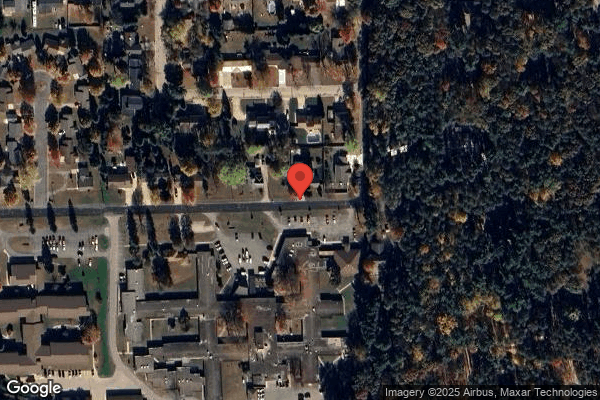
LUTHER HOME

831 PINE BEACH RD, MARINETTE, WI 54143 (715) 732-0155
Non profit - Corporation 80 Beds Independent Data: November 2025 1 Immediate Jeopardy citation
Trust Grade
58/100
#101 of 321 in WI
Last Inspection: August 2024

Within standard 12-15 month inspection cycle. Federal law requires annual inspections.

Overview

Luther Home in Marinette, Wisconsin has a Trust Grade of C, which means it is average and sits in the middle of the pack compared to other facilities. It ranks #101 out of 321 in the state and #3 out of 5 in Marinette County, indicating it is in the top half of Wisconsin nursing homes but has limited local competition. The facility's trend is worsening, as the number of reported issues increased from 7 in 2023 to 8 in 2024. Staffing is rated 4 out of 5 stars, but the turnover rate of 48% is average, suggesting that staff may not stay long enough to build strong relationships with residents. Although the facility has no fines on record, it has some concerning findings, such as lapses in infection control practices and issues with food safety management, which could potentially affect all residents. Overall, while there are strengths in staffing and compliance with fines, the recent increase in deficiencies raises some red flags for prospective families.

Trust Score
C
58/100
In Wisconsin
#101/321
Top 31%
Safety Record
High Risk
Review needed
Inspections
Getting Worse
7 → 8 violations
Staff Stability
⚠ Watch
48% turnover. Above average. Higher turnover means staff may not know residents' routines.
Penalties
✓ Good
No fines on record. Clean compliance history, better than most Wisconsin facilities.
Skilled Nurses
○ Average
Each resident gets 34 minutes of Registered Nurse (RN) attention daily — about average for Wisconsin. RNs are the most trained staff who monitor for health changes.
Violations
⚠ Watch
23 deficiencies on record. Higher than average. Multiple issues found across inspections.
★★★★☆
4.0
Overall Rating
★★★★☆
4.0
Staff Levels
★★★★☆
4.0
Care Quality
★★★★☆
4.0
Inspection Score
Stable
2023: 7 issues
2024: 8 issues

The Good

  • 4-Star Staffing Rating · Above-average nurse staffing levels
  • 4-Star Quality Measures · Strong clinical quality outcomes
  • Full Sprinkler Coverage · Fire safety systems throughout facility
  • No fines on record

Facility shows strength in staffing levels, quality measures, fire safety.

The Bad

Staff Turnover: 48%

Near Wisconsin avg (46%)

Higher turnover may affect care consistency

The Ugly 23 deficiencies on record

1 life-threatening
Oct 2024 3 deficiencies
CONCERN (D) 📢 Someone Reported This

A family member, employee, or ombudsman was alarmed enough to file a formal complaint

Potential for Harm - no one hurt, but risky conditions existed

Notification of Changes (Tag F0580)

Could have caused harm · This affected 1 resident

**NOTE- TERMS IN BRACKETS HAVE BEEN EDITED TO PROTECT CONFIDENTIALITY** Based on family representative interview, staff interview and record review, the facility did not notify a Power of Attorney for...

Read full inspector narrative →
**NOTE- TERMS IN BRACKETS HAVE BEEN EDITED TO PROTECT CONFIDENTIALITY** Based on family representative interview, staff interview and record review, the facility did not notify a Power of Attorney for Healthcare (POAHC) about an allegation of abuse for 1 resident (R) (R1) of 3 sampled residents. On 8/30/24, Certified Nursing Assistant (CNA)-E alleged Licensed Practical Nurse (LPN)-D pushed R1 back into R1's wheelchair when R1 attempted to stand up. Staff did not notify R1's POAHC of the allegation of abuse. Findings include: The facility's Abuse, Neglect and Exploitation Prevention and Reporting Policies and Procedures, revised 6/20/21, indicates: Abuse Investigations .8) The Administrator will keep the resident and/or his/her representative informed of the progress of the investigation .11) The administrator will inform the resident and/or his/her representative of the results of the investigation and corrective action taken within 4 working days of the completion of the investigation. On 10/30/24, Surveyor reviewed R1's medical record. R1 was admitted to the facility on [DATE] with diagnoses including Alzheimer's disease, anxiety, and bipolar disorder. R1's Minimum Data Set (MDS) assessment, dated 9/4/24, had a Brief Interview for Mental Status (BIMS) score of 6 out of 15 which indicated R1 had severe cognitive impairment. R1 had an activated POAHC. On 10/30/24, Surveyor reviewed a facility-reported incident (FRI) investigation, dated 9/11/24, that indicated CNA-E alleged LPN-D pushed R1 back into R1's wheelchair when R1 attempted to stand up. The investigation did not indicate R1's POAHC (POAHC-C) was notified of the allegation of abuse. On 10/30/24 at 10:57 AM, Surveyor interviewed POAHC-C via telephone. POAHC-C indicated POAHC-C was not informed of the allegation of abuse. POAHC-C indicated the first time POAHC-C heard of the alleged abuse was when Surveyor called. On 10/30/24 at 2:06 PM, Surveyor interviewed Director of Nursing (DON)-B who verified there was no documentation to confirm POAHC-C was notified of the allegation of abuse. DON-B indicated POAHC-C was informed on a case-by-case basis which was determined by Nursing Home Administrator (NHA)-A. DON-B indicated since there was no injury, POAHC-C wasn't notified. On 10/30/24 at 2:42 PM, Surveyor interviewed NHA-A who confirmed POAHC-C was not notified of the allegation of abuse but should have been notified.
CONCERN (D) 📢 Someone Reported This

A family member, employee, or ombudsman was alarmed enough to file a formal complaint

Potential for Harm - no one hurt, but risky conditions existed

Abuse Prevention Policies (Tag F0607)

Could have caused harm · This affected 1 resident

**NOTE- TERMS IN BRACKETS HAVE BEEN EDITED TO PROTECT CONFIDENTIALITY** Based on staff interview and record review, the facility did not implement policies and procedures that prohibit and prevent abu...

Read full inspector narrative →
**NOTE- TERMS IN BRACKETS HAVE BEEN EDITED TO PROTECT CONFIDENTIALITY** Based on staff interview and record review, the facility did not implement policies and procedures that prohibit and prevent abuse for 1 (Licensed Practical Nurse (LPN)-D) of 1 contracted staff reviewed for a caregiver background check. The facility did not ensure a thorough and timely caregiver background check was completed for LPN-D. Findings include: The facility's Abuse, Neglect and Exploitation policy, with a review date of September 2024, indicates: Not only does the mission of our organization demand that residents be free from abuse, but so do Wisconsin and Federal regulations .In order to comply with the requirements of the Elder Justice Act, [NAME] Home will .4) Refrain from employing any individual who has been prohibited from a long-term care facility because of failure to report a suspicion of a crime against a resident of a long-term care facility. LPN-D was hired on 10/27/23. On 10/30/24 at 3:30 PM, Surveyor requested LPN-D's caregiver background check information from Nursing Home Administrator (NHA)-A. NHA-A indicated Human Resources (HR) was responsible for completing caregiver background checks for new staff. At 3:35 PM, NHA-A informed Surveyor that NHA-A was unable to obtain LPN-D's background check information because HR had left for the day. Surveyor requested NHA-A submit LPN-D's background check information via email. NHA-A indicated NHA-A would send the information via email the next day. On 10/31/24 at 11:15 AM, Surveyor emailed NHA-A and again requested LPN-D's background check information. Surveyor did not receive a response and has not received a Background Information Disclosure (BID) form, Department of Justice (DOJ) criminal background check letter, or Integrated Background Information System (IBIS) letter for LPN-D as of this writing.
CONCERN (D) 📢 Someone Reported This

A family member, employee, or ombudsman was alarmed enough to file a formal complaint

Potential for Harm - no one hurt, but risky conditions existed

Investigate Abuse (Tag F0610)

Could have caused harm · This affected 1 resident

**NOTE- TERMS IN BRACKETS HAVE BEEN EDITED TO PROTECT CONFIDENTIALITY** Based on staff interview and record review, the facility did not ensure an allegation of abuse was thoroughly investigated for 1...

Read full inspector narrative →
**NOTE- TERMS IN BRACKETS HAVE BEEN EDITED TO PROTECT CONFIDENTIALITY** Based on staff interview and record review, the facility did not ensure an allegation of abuse was thoroughly investigated for 1 resident (R) (R1) of 3 sampled residents. On 8/30/24, Certified Nursing Assistant (CNA)-E alleged Licensed Practical Nurse (LPN)-D pushed R1 back into R1's wheelchair when R1 attempted to stand up. LPN-D was not provided abuse education prior to returning to resident care on 9/13/24. Findings include: The facility's Abuse, Neglect and Exploitation Prevention and Reporting Policies and Procedures, revised 6/20/21, indicates: Abuse Investigations .6) Employees of [NAME] Home who have been accused of resident abuse will be suspended from duty until the Administrator has reviewed the results of an investigation. If it is determined that an employee requires any training, the training must be completed before the employee is allowed to return to work. On 10/30/24, Surveyor reviewed R1's medical record. R1 was admitted to the facility on [DATE] with diagnoses including Alzheimer's disease, anxiety, and bipolar disorder. R1's Minimum Data Set (MDS) assessment, dated 9/4/24, indicated R1 had a Brief Interview for Mental Status (BIMS) score of 6 out of 15 which indicated R1 had severe cognitive impairment. R1 had an activated Power of Attorney for Healthcare (POAHC). On 10/30/24, Surveyor reviewed a facility-reported incident (FRI) investigation, dated 9/11/24, that indicated CNA-E alleged LPN-D pushed R1 back into R1's wheelchair when R1 attempted to stand up. The investigation indicated R1, other residents, and staff were interviewed and contained written statements from CNA-E and LPN-D. The alleged abuse was reported to the State Agency (SA) within the appropriate timeframe. On 10/30/24, Surveyor reviewed education on the facility's Abuse, Neglect, and Exploitation policy, dated 9/10/24, related to reporting incidents to administration in a timely manner. Surveyor reviewed the education sign-in sheets and noted LPN-D's name and signature were not on the sign in-sheets. On 10/30/24 at 1:27 PM, Surveyor called LPN-D but was unable to leave a message. On 10/30/24 at 2:06 PM, Surveyor interviewed Director of Nursing (DON)-B who indicated if LPN-D's name and signature were not on the education sheets, the facility did not have LPN-D's education. DON-B indicated staff are provided abuse education during orientation, annually, and as needed. DON-B agreed LPN-D should have been educated before LPN-D returned to work.
Aug 2024 4 deficiencies
CONCERN (D)

Potential for Harm - no one hurt, but risky conditions existed

Transfer Notice (Tag F0623)

Could have caused harm · This affected 1 resident

**NOTE- TERMS IN BRACKETS HAVE BEEN EDITED TO PROTECT CONFIDENTIALITY** Based on staff interview and record review, the facility did not ensure 3 Residents (R) (R31, R30, and R32) of 3 residents revie...

Read full inspector narrative →
**NOTE- TERMS IN BRACKETS HAVE BEEN EDITED TO PROTECT CONFIDENTIALITY** Based on staff interview and record review, the facility did not ensure 3 Residents (R) (R31, R30, and R32) of 3 residents reviewed for hospitalization received the proper notice of transfer, reason for transfer, location of transfer, appeal rights, and contact information for the State Long-Term Care Ombudsman. In addition, the facility did not notify the Ombudsman of the transfers. R31 was transferred to the hospital on 1/16/24 and 6/5/24. R31, R31's representative, and the Ombudsman were not provided with written notice of the transfers. R30 was transferred to the hospital on 6/8/24. R30, R30's representative, and the Ombudsmen were not provided with written notice of the transfer. R32 was transferred to the hospital on 8/19/24. R32, R32's representative, and the Ombudsmen were not provided with written notice of the transfer. Findings include: The facility's Transfers and Discharges document, dated 12/1/08, indicates: As members of the Interdisciplinary Team, Social Services staff will participate in all room transfers and discharges including room changes, transfers between facilities, and transfers between distinct parts within the same building .Transfers and discharges should be handled appropriately to assure proper notification and assistance to residents and families in accordance with federal and state specific regulations .The Social Services Director will ensure systems are implemented to provide written notification to the resident and family prior to the transfer. If the resident has been adjudicated, the legal guardian will be notified of the transfer .The timing of the notification will be based on state and federal regulations. The resident and their family will be notified verbally for unplanned acute transfers (the written notice will follow the verbal notification as soon as possible). A copy of the written notice of transfer is to be included in the resident's record. 1. From 8/19/24 to 8/21/24, Surveyor reviewed R31's medical record. R31 had diagnoses including Alzheimer's dementia and chronic obstructive pulmonary disease (COPD) with associated chronic respiratory failure frailty and deconditioning. R31's Minimum Data Set (MDS) assessment, dated 6/10/24, had a Brief Interview for Mental Status (BIMS) score of 1 out of 15 which indicated R31 had severely impaired cognition. R31's medical record indicated R31 was transferred to the hospital on 1/16/24 due to complications of COPD, shortness of breath, and a possible urinary tract infection. Surveyor also noted R31 was transferred to the hospital on 6/5/24 due to a low oxygen level, shortness of breath, coughing, and vomiting. R31's medical record did not indicate a written transfer notice was provided to R31, R31's representative, or the Ombudsman. On 8/20/24, Surveyor requested transfer notifications for R31 from Nursing Home Administrator (NHA)-A who indicated transfer notifications were not provided for R31's hospital transfers on 1/16/24 and 6/5/24. 2. From 8/19/24 to 8/21/24, Surveyor reviewed R30's medical record. R30 was admitted to the facility on [DATE] with diagnoses including cerebral vascular accident, hemiplegia (paralysis on one side of the body), muscle weakness, dysphasia (difficulty swallowing), and renal failure. R30's MDS assessment, dated 7/16/24, had a BIMS score of 9 out of 15 which indicated R30 had moderately impaired cognition. R30 had an activated Power of Attorney (POA). R30's medical record indicated R30 was transferred to the hospital on 6/18/24 for dehydration. R30's medical record did not indicate a transfer notice was provided to R30, R30's POA, or the Ombudsman. 3. From 8/19/24 to 8/21/24, Surveyor reviewed R32's medical record. R32 was admitted to the facility on [DATE] with diagnoses including kidney failure, coronary artery disease, chronic obstructive pulmonary disease (COPD), and venous insufficiency. R32's MDS assessment, dated 7/16/24, had a BIMS score of 8 out of 15 which indicated R32 had moderately impaired cognition. R32 had an activated POA. R32's medical record indicated R32 was transferred to the hospital on 1/9/24 for evaluation of tachycardia (an increased heart rate), diaphoresis (excessive sweating), and increased lethargy. R32's medical record did not indicate a transfer notice was provided to R32, R32's POA, or the Ombudsman. On 8/20/24 at 1:15 PM, Surveyor interviewed Social Services (SSD)-C who stated SSD-C was responsible for transfer notifications including notification to the Ombudsman. Surveyor requested transfer notifications sent to the Ombudsman. On 8/21/24 at 7:45 AM, Surveyor received a list of residents who were emergently transferred within the last six months. Surveyor observed a note from SSD-C on the list that indicated there were no notifications sent to the Ombudsman since the previous Social Services Director left. On 8/21/24 at 8:08 AM, Surveyor interviewed SSD-C who stated when SSD-C receives notification of a transfer, SSD-C files the notification and does not provide the resident and/or their representative with a written notification. SSD-C confirmed the facility's policy and procedure for transfer notices was not being followed.
CONCERN (D)

Potential for Harm - no one hurt, but risky conditions existed

Deficiency F0625 (Tag F0625)

Could have caused harm · This affected 1 resident

Based on staff interview and record review, the facility did not ensure 1 Resident (R) (R31) of 3 residents reviewed for hospitalization received written information of the duration of the bed hold po...

Read full inspector narrative →
Based on staff interview and record review, the facility did not ensure 1 Resident (R) (R31) of 3 residents reviewed for hospitalization received written information of the duration of the bed hold policy, the reserve bed payment policy, and the right to return to the facility. R31 was transferred to the hospital on 1/16/24 and 6/5/24. R31 and/or R31's representative were not provided with a bed hold notification. Findings include: The facility's Bed Hold document, dated April 2018, indicates: It is the practice and policy of the facility that all residents upon discharge will be notified of his/her right to hold a bed .Upon transfer, the charge nurse on duty will write the resident's name and current date on the bed hold agreement. The charge nurse will send the yellow copy with the resident at the time of the transfer. The charge nurse will place the pink copy under the Social Services tab in the resident's chart. The white copy will be given to Social Services to follow up and obtain a signature from the resident and will be given to the billing department following the signature . From 8/19/24 to 8/21/24, Surveyor reviewed R31's medical record. R31 had diagnoses including Alzheimer's dementia and chronic obstructive pulmonary disease (COPD) with associated chronic respiratory failure frailty and deconditioning. R31's Minimum Data Set (MDS) assessment, dated 6/10/24, had a Brief Interview for Mental Status (BIMS) score of 1 out of 15 which indicated R31 had severely impaired cognition. R31's medical record indicated R31 was transferred to the hospital on 1/16/24 due to complications of COPD, shortness of breath, and a possible urinary tract infection. R31 was also transferred to the hospital on 6/5/24 with a low oxygen level, shortness of breath, coughing, and vomiting. R31's medical record did not indicate R31 or R31's representative were provided with a bed hold notification for the transfers. On 8/20/24, Surveyor requested bed hold notifications for R31 from Nursing Home Administrator(NHA)-A who indicated bed hold notifications were not provided for R31's hospital transfers on 1/16/24 and 6/5/24. On 8/21/24 at 8:08 AM, Surveyor interviewed Social Services Director (SSD)-C who stated when SSD-C receives a transfer notification, SSD-C files the notification and does not provide the resident and/or their representative with a written bed hold notification. SSD-C confirmed the facility's policy and procedure for bed hold notification was not being followed.
CONCERN (D)

Potential for Harm - no one hurt, but risky conditions existed

MDS Data Transmission (Tag F0640)

Could have caused harm · This affected 1 resident

**NOTE- TERMS IN BRACKETS HAVE BEEN EDITED TO PROTECT CONFIDENTIALITY** Based on staff interview and record review, the facility did not ensure timely transmission of a Resident Assessment Information...

Read full inspector narrative →
**NOTE- TERMS IN BRACKETS HAVE BEEN EDITED TO PROTECT CONFIDENTIALITY** Based on staff interview and record review, the facility did not ensure timely transmission of a Resident Assessment Information (RAI)/Minimum Data Set (MDS) assessment for 1 Resident (R) (R34) of 14 sampled residents. R34's Quarterly MDS assessment was completed on 6/13/24. The assessment was electronically submitted on 8/21/24 which was 55 days late and not within the 14-day required timeframe. Findings include: The Long-Term Care Facility Resident Assessment Instrument (RAI) 3.0 User's Manual, Version 1.18.1, dated October 2023, indicates: All Medicare and/or Medicaid-certified nursing homes must complete and transmit required MDS records to the Centers for Medicare and Medicaid Services' (CMS') Quality Improvement and Evaluation System (QIES) Assessment Submission and Processing (ASAP) system. Required MDS records include Admission, Quarterly, Annual, Discharge Assessments, Death, and Entry Tracking records .Omnibus Budge Reconciliation Act (OBRA) regulations require nursing homes that are Medicare certified, Medicaid certified or both, to conduct initial and periodic assessments for all their residents .OBRA non-comprehensive assessments include: Quarterly .The Assessment Reference Date (ARD) of an assessment drives the due date of the next assessment .The MDS must be transmitted (submitted and accepted into QIES) electronically no later than 14 calendar days after the MDS completion date . On 8/20/24, Surveyor reviewed R34's medical record. R34 was admitted to the facility on [DATE]. R34's Quarterly MDS assessment was completed on 6/13/24 and was due for submission to CMS' QIES program by 6/27/24 to meet the 14-day submission requirement. R34's Quarterly MDS assessment was not transmitted as of 8/20/24. On 8/20/24, Surveyor requested a final validation report from the facility regarding R34's Quarterly MDS assessment. On 8/21/24 at 8:20 AM, Surveyor reviewed the final validation report for R34's 6/13/24 Quarterly MDS assessment which indicated the assessment was completed three minutes prior at 8:17 AM which was 55 days after the 14-day required submission period. On 8/21/24 at 8:20 AM, Surveyor interviewed Nursing Home Administrator (NHA)-A who acknowledged R34's 6/13/24 Quarterly MDS assessment was electronically transmitted that morning. NHA-A stated NHA-A was aware of the 14-day submission requirement and indicated there was a communication breakdown.
CONCERN (E)

Potential for Harm - no one hurt, but risky conditions existed

Food Safety (Tag F0812)

Could have caused harm · This affected multiple residents

**NOTE- TERMS IN BRACKETS HAVE BEEN EDITED TO PROTECT CONFIDENTIALITY** Based on observation, staff interview, and record review, the facility did not ensure food was stored in a sanitary manner. This...

Read full inspector narrative →
**NOTE- TERMS IN BRACKETS HAVE BEEN EDITED TO PROTECT CONFIDENTIALITY** Based on observation, staff interview, and record review, the facility did not ensure food was stored in a sanitary manner. This practice had the potential to affect multiple residents residing in the facility. Kitchen equipment and food storage areas were not in a clean and sanitary condition. Findings include: On 8/19/24 at 9:15 AM, Kitchen Supervisor (KS)-D stated the facility follows the Food and Drug Administration (FDA) Food Code. The 2022 FDA Food Code documents at 3-305.11 Food Storage: Except as specified in paragraph (B) and (C) of this section, food shall be protected from contamination by storing the food: (1) In a clean, dry location; (2) Where it is not exposed to splash, dust, or other contamination; and (3) At least 15 centimeters (6 inches) above the floor. The 2022 FDA Food Code documents at 3-305.12 Food Storage, Prohibited Areas: Food may not be stored: .(F) Under sewer lines that are not shielded to intercept potential drips; (G) Under leaking water lines, including leaking automatic fire sprinkler heads, or under lines on which water has condensed; (H) Under open stairwells; or (I) Under other sources of contamination. The 2022 FDA Food Code documents at 4-501.11 Good Repair and Proper Adjustment: Proper maintenance of equipment to manufacturer specifications helps ensure that it will continue to operate as designed. Failure to properly maintain equipment could lead to violations of the associated requirements of the Code that place the health of the consumer at risk. For example, refrigeration units in disrepair may no longer be capable (FDA Food Code 2022 Annex 3). The facility's contracted service's Food Storage Policy, dated 3/30/24, indicates: Sufficient storage facilities will be provided to keep food safe, wholesome, and appetizing. Food will be stored in an area that is clean, dry, and free from contaminants .Racks and other storage surfaces should be clean and protected from splashes, overhead pipes, and contamination (ceiling sprinklers, sewer/waste disposal pipes, vents, etc.). During an initial kitchen tour on 8/19/24 at 9:23 AM, Surveyor and KS-D observed the walk-in freezer and noted packages and boxes of food on the shelving units. The shelves and seal near the door entrance contained extensive frost. In addition, the back third of the freezer contained significant ice buildup. Surveyor noted solid ice hung from the ceiling, motor/fan units, and shelves and there was thick ice buildup on the walls and in two lines on the floor. The ice on the floor was higher than 1.5 inches high where it appeared to drip down in two rows of solid ice humps affixed to the floor. There were flat areas of ice around the ice humps and the floor of the freezer was slippery. Ice on the fans, ceiling, walls, and shelves appeared to collect from dripping condensation or water in the back of the freezer. KS-D indicated the frost near the door probably occurred when the door was left open and stated the frost and ice would be addressed with maintenance staff. KS-D verified the ice on the floor, walls, and shelves was a problem. KS-D used KS-D's hand to brush off the frost build up on shelving near the door/entrance. On 8/20/24 at 9:42 AM, Surveyor interviewed KS-D who stated KS-D spoke with Maintenance Staff (MS)-G regarding the ice buildup and MS-G ordered a new gasket for the freezer door. Surveyor and KS-D again viewed the walk-in freezer. The ice observed on the floor, walls, ceiling, motor/fan units, and shelves was still present and in the same condition. The frost near the door/entrance was removed. KS-D stated the ice in the back of the freezer had not been cleaned up because it would just keep happening. On 8/20/24 at 12:50 PM, Surveyor interviewed KS-D, Certified Dietary Manager (CDM)-F, and Regional Manager (RM)-E. CDM-F was not sure how long the freezer has been collecting and dripping ice but stated it had been that way for a few months. CDM-F chopped the ice with a [NAME] every few days to knock it down and clear it off. CDM-F mentioned the issue to maintenance staff a couple of times. RM-E stated the last time RM-E was in the walk-in freezer was approximately one and a half months prior to the survey and the ice buildup was happening then. KS-D started in May of 2024 and stated the freezer had been malfunctioning and collecting ice buildup since then. On 8/20/24 at 12:57 PM, Surveyor interviewed MS-G who initially stated MS-G was made aware of the issue the day prior and ordered a new seal for the freezer door to prevent frost near the entrance. When Surveyor and MS-G viewed the ice buildup in the freezer, MS-G acknowledged the ice buildup was an ongoing issue which had been occurring for awhile. MS-G previously removed ice from the ceiling, shelves, and floor. MS-G stated the buildup happens because kitchen and food vendor staff leave the door open too long while the motor is on which causes condensation and dripping water on the floor, walls, ceiling, motor/fan units, and shelves. On 8/20/24 at 1:06 PM, MS-G showed Surveyor two signs (one on the freezer door and one near a switch outside the door) that indicate staff should turn off the freezer to prevent ice buildup when loading/unloading/keeping the door open. MS-G stated the ice collection from dripping condensation was a safety issue for the food in the freezer and potential staff injury and needed to be addressed.
Jan 2024 1 deficiency
CONCERN (D) 📢 Someone Reported This

A family member, employee, or ombudsman was alarmed enough to file a formal complaint

Potential for Harm - no one hurt, but risky conditions existed

Investigate Abuse (Tag F0610)

Could have caused harm · This affected 1 resident

**NOTE- TERMS IN BRACKETS HAVE BEEN EDITED TO PROTECT CONFIDENTIALITY** Based on staff interview and record review, the facility did not ensure an investigation regarding potential misappropriation of...

Read full inspector narrative →
**NOTE- TERMS IN BRACKETS HAVE BEEN EDITED TO PROTECT CONFIDENTIALITY** Based on staff interview and record review, the facility did not ensure an investigation regarding potential misappropriation of property for 1 Resident (R) (R2) of 1 resident contained documentation that indicated a thorough investigation was completed. On 9/30/23, the facility submitted an initial report to the State Agency (SA) regarding potential misappropriation of tramadol (a controlled substance and narcotic medication used to treat moderate to severe pain) prescribed to R2. On 10/6/23, the facility submitted the findings of their investigation. The investigation did not contain documentation that indicated a thorough investigation was completed. Findings include: The facility's Abuse, Neglect and Exploitation Prevention and Reporting Policies and Procedures, with a review date of 7/2023, indicated: All reports of resident abuse, neglect and injuries of unknown source shall be immediately and thoroughly investigated 9. The results of the investigation will be reduced to written form. 10. The investigator will give a copy of the investigation report to the Administrator within four working days of the reported incident .12. The Administrator or his/her designee will provide a written report of all abuse allegations and appropriate action taken to the State Survey and Certification Agency and any other State, Federal or local agency as may be required by regulation within five working days of the reported allegation . On 1/17/24, Surveyor reviewed R2's medical record. R2 was admitted to the facility on [DATE] with diagnoses including dementia, arthritis, spinal stenosis, and other chronic pain. R2's Minimum Data Set (MDS) assessment, dated 10/18/23, contained a Brief Interview for Mental Status (BIMS) score of 6 out 15 which indicated R2 had severely impaired cognition. R2 had an order for tramadol 50 mg (milligrams) PRN (as needed). On 1/17/24, Surveyor reviewed a facility-reported incident (FRI) submitted to the SA on 9/30/23. The FRI indicated in the late evening on 9/29/23, Medication Technician (MT)-D and Registered Nurse (RN)-E completed a narcotic medication count and notified Nursing Home Administrator (NHA)-A that a card containing 60 tablets of tramadol prescribed to R2 was missing. The police were contacted. Enhanced counting procedures and random drug screens with employees who had access to narcotics were implemented. No employees were accused. The facility's five day investigation, submitted to the SA on 10/6/23, did not include documentation of resident or staff interviews, staff education, or other measures implemented during or as a result of the investigation. On 1/17/24 at 10:48 AM, Surveyor interviewed Director of Nursing (DON)-B and DON-C regarding the facility's investigation. DON-B and DON-C indicated they completed staff and resident interviews, conducted huddles, held meetings, continually monitored residents' pain levels, and completed staff education. DON-B and DON-C stated no concerns were discovered during the investigation. DON-B and DON-C verified they did not document resident and staff interviews, resident monitoring, dates, times, and information obtained/provided during huddles and meetings, or the education provided to staff. DON-B and DON-C verified the investigation should have been thoroughly documented.
Sept 2023 2 deficiencies
CONCERN (D) 📢 Someone Reported This

A family member, employee, or ombudsman was alarmed enough to file a formal complaint

Potential for Harm - no one hurt, but risky conditions existed

Incontinence Care (Tag F0690)

Could have caused harm · This affected 1 resident

**NOTE- TERMS IN BRACKETS HAVE BEEN EDITED TO PROTECT CONFIDENTIALITY** Based on observation, staff interview, and record review, the facility did not provide appropriate treatment and services to pre...

Read full inspector narrative →
**NOTE- TERMS IN BRACKETS HAVE BEEN EDITED TO PROTECT CONFIDENTIALITY** Based on observation, staff interview, and record review, the facility did not provide appropriate treatment and services to prevent a urinary tract infection (UTI) for 1 Resident (R) (R7) of 4 sampled residents. R7 was not provided perineal cleansing after an episode of urinary incontinence. Findings include: The facility's Perineal Care policy, revised June 2010, contains the following information: Perineal care is performed by all nursing personnel to clean the perineum and to provide comfort. It is done as a part of AM and PM care, after bathroom use for residents who require assistance, and after incontinent episodes. 7. Use toilet tissue to remove gross soiling. Discard in trash bag immediately. Perform hand hygiene and put on clean gloves. 8. Wash skin with soap and water or peri-wash: Wash front to back with 3 motions (middle and each side of peri area) using a clean section of cloth for each pass. Gently dry clean buttocks area, front to back, using a clean section of cloth for each pass. Dry gently. 1. R7 was admitted to the facility on [DATE] with diagnoses including Parkinson's disease and dementia. R7's most recent Minimum Data Set (MDS) assessment, dated 7/8/23, documented R1's cognition was 12 out of 15 (the higher the score, the more cognizant). The MDS documented R1 was frequently incontinent of bladder and required extensive assistance of staff for toileting and personal hygiene. On 9/14/23 at 12:05 PM, Surveyor observed Certified Nursing Assistant (CNA)-D assist R7 with changing R7's incontinence brief after R7 was incontinent of a large amount of urine. CNA-D utilized a sit-to-stand lift to bring R7 from the wheelchair to the toilet. CNA-D donned gloves and removed R7's soiled pants and brief. R7 urinated in the toilet and CNA-D wiped R7 with a few squares of toilet paper. CNA-D did not change gloves or complete hand hygiene after removing the soiled items. CNA-D placed a clean incontinence brief and pants on R7 without cleansing R7's perineal area, groin, or buttocks and then transferred R7 back into R7's wheelchair. On 9/14/23 at 12:19 PM, Surveyor interviewed CNA-D regarding R7's incontinence care. CNA-D verified R7 was incontinent of a large amount of urine and that CNA-D did not cleanse R7's perineal area, groin, or buttocks. On 9/14/23 at 12:45 PM, Surveyor interviewed Director of Nursing (DON)-B who verified CNA-D should have completed thorough perineal care, including washing the perineal area, groin, and buttocks when R7 was incontinent of a large amount of urine.
CONCERN (F) 📢 Someone Reported This

A family member, employee, or ombudsman was alarmed enough to file a formal complaint

Potential for Harm - no one hurt, but risky conditions existed

Infection Control (Tag F0880)

Could have caused harm · This affected most or all residents

Based on observation, staff interview, and record review, the facility did not maintain an infection prevention and control program designed to provide a safe and sanitary environment to help prevent ...

Read full inspector narrative →
Based on observation, staff interview, and record review, the facility did not maintain an infection prevention and control program designed to provide a safe and sanitary environment to help prevent or contain the transmission of communicable diseases and infection, including COVID-19. This had the potential to affect all 63 residents residing in the facility. The facility did not ensure staff performed proper hand hygiene during the provision of cares for 4 Residents (R) (R7, R8, R11, and R13) of 4 residents. The facility did not ensure staff wore eye protection in rooms of residents who were on isolation precautions related to COVID-19. The facility did not ensure staff wore an N95 respirator in a resident's room who was on isolation precautions related to COVID-19. Certified Nursing Assistant (CNA)-D did not appropriately remove personal protective equipment (PPE) or complete hand hygiene when exiting the room of a resident on isolation precautions. CNA-D did not perform appropriate hand hygiene during the provision of perineal care for R7. CNA-E did not perform appropriate hand hygiene during the provision of perineal care for R8. CNA- H did not perform appropriate hand hygiene during the provision of perineal care for R13. CNA-I did not offer hand hygiene to R12 after toileting. Findings include: The facility's Emergency Preparedness-Pandemic/Epidemic Preparedness-COVID 19 policy, revised March 2020, indicates: Employers should select appropriate PPE and provide it to HCP (healthcare providers) in accordance with OSHA's (Occupational Safety and Health Administration) PPE standards .Gloves: Remove and discard gloves when leaving the patient room or care area, and immediately perform hand hygiene. Gowns: Remove and discard the gown in a dedicated container for waste or linen before leaving the patient room or care area .Respiratory Protection: Use respiratory protection that is at least as protective as a fit-tested NIOSH-certified disposable N95 filtering facepiece respirator before entry into the patient room or care area .Staff should be medically cleared and fit-tested if using respirators with tight-fitting facepieces. Eye protection: Put on eye protection (e.g., goggles, a disposable face shield that covers the front and sides of the face) upon entry to the patient room or care area. The facility's Perineal Care policy, revised June 2010, indicates: Wash hands and put on gloves .use tissue to remove gross soiling. Discard in trash bag immediately. Perform hand hygiene and put on clean gloves .Wash skin with soap and water or peri-wash .remove gloves, perform hand hygiene, and put on clean gloves. Place clean incontinent product .when perineal care is completed, remove gloves, wash hands. 1. On 9/13/23 at 12:10 PM on the C wing, Surveyor observed an isolation cart outside of R4's room and a sign on R4's door that indicated R4's room required airborne precautions with only an N95-respirator or higher listed as required. The isolation cart included both disposable and reusable gowns, surgical masks, N95 respirators, and gloves. The isolation cart did not contain eye protection. Surveyor observed the same outside of R9 and R10's rooms on the C wing as well as R5, R6, and R7's rooms on the B wing. On 9/13/23 at 12:10 PM, Surveyor observed CNA-D enter R4's room without wearing eye protection. On 9/13/23 at 12:20 PM, Surveyor observed CNA-F enter R7's room without wearing eye protection. On 9/13/23 at 12:29 PM, Surveyor observed CNA-G enter R6's room without wearing eye protection. On 9/13/23 at 1:04 PM, Surveyor observed CNA-F enter R6's room without wearing eye protection. On 9/14/23 at 11:48 AM, Surveyor observed CNA-E enter R9's room without wearing eye protection. On 9/14/23 at 12:05 AM, Surveyor observed CNA-D enter R7's room without wearing eye protection. On 9/13/23 at 1:00 PM, Surveyor interviewed CNA-D regarding PPE in COVID-19 rooms. CNA-D indicated staff did not need to wear eye protection in COVID-19 rooms. On 9/14/23 at 11:50 AM, Surveyor interviewed CNA-E regarding PPE in COVID-19 rooms. CNA-E indicated there was no eye protection provided to staff to wear in COVID-19 rooms. On 9/14/23 at 12:28 PM, Surveyor interviewed Director of Nursing (DON)-B, who is also the facility's Infection Preventionist. DON-B verified the facility's policy indicates eye protection should be used when entering rooms with residents who are COVID-19 positive. DON-B also verified the isolation carts did not contain eye protection for staff. 2. On 9/13/23 at 12:10 PM, Surveyor observed CNA-D enter R4's room wearing a surgical mask, a reusable gown, and gloves. CNA-D was not wearing an N95 level respirator or higher. On 9/13/23 at 1:00 PM, Surveyor interviewed CNA-D who verified CNA-D wore a surgical mask in R4's room, but should have worn an N95 respirator. On 9/14/23 at 12:28 PM, Surveyor interviewed DON-B who verified staff are required to wear an N95 level respirator or higher in COVID-19 rooms. 3. On 9/13/23 at 12:10 PM, Surveyor observed CNA-D enter R4's room wearing a surgical mask, a reusable gown, and gloves to deliver a lunch tray. At 12:12 PM, Surveyor observed CNA-D remove and discard CNA-D's gloves and surgical mask. CNA-D also removed the reusable cloth gown. CNA-D did not complete hand hygiene after removing PPE. CNA-D left R4's room with the gown in one hand and a plate cover. CNA-D placed the gown in a hamper near the nurses' station and took the plate cover to a lunch cart. CNA-D touched several items on the lunch cart before CNA-D removed a tray. CNA-D brought the tray to the nurses' station and then completed hand hygiene. On 9/13/23 at 1:00 PM, Surveyor interviewed CNA-D who verified CNA-D did not complete hand hygiene after removing PPE. CNA-D indicated CNA-D did not dispose of the gown in R4's room because a linen bag was not available. On 9/14/23 at 12:28 PM, Surveyor interviewed DON-B who verified CNA-D should have completed hand hygiene after removing PPE and before touching the lunch cart and another resident's tray. 4. On 9/13/23 at 1:12 PM, Surveyor observed CNA-E and CNA-F provide perineal care for R8 after R8 was incontinent of urine. CNA-E donned gloves and removed R8's soiled brief. CNA-E then removed gloves, but did not wash or sanitize hands. CNA-E donned clean gloves, sprayed R8's perineal area with peri-wash and wiped R8 with a washcloth. CNA-E then removed gloves, but did not complete hand hygiene. CNA-E donned clean gloves and washed R8's buttocks. CNA-E then removed gloves, but did not complete hand hygiene. CNA-E placed a clean brief on R8 and placed all soiled linens in a bag. CNA-E boosted R8 in bed and touched R8's blankets, call light, and pillows. CNA-E removed gloves in the doorway and completed hand hygiene before exiting R8's room. On 9/13/23 at 1:34 PM, Surveyor interviewed CNA-E who verified CNA-E did not wash hands between glove changes while completing perineal care for R8. On 9/14/23 at 12:05 PM, Surveyor observed CNA-D provide perineal care for R7 after R7 was incontinent of a large amount of urine. CNA-D donned gloves and removed R7's soiled brief and pants. CNA-E then touched the sit-to-stand lift and lowered R7 onto the toilet. CNA-D touched several drawers in R7's room along with R7's clean clothing and shoes. CNA-D wiped R7's perineal area with a few squares of toilet paper and then applied R7's clean brief, and put on R7's pants and shoes. CNA-D touched the sit-to-stand lift and transferred R7 into R7's wheelchair. CNA-E touched R7s call light and wheelchair before CNA-E removed gloves and completed hand hygiene. On 9/14/23 at 12:19 PM, Surveyor interviewed CNA-D who verified CNA-D did not change gloves or complete hand hygiene after CNA-D removed R7's soiled incontinence brief and wiped R7 with toilet paper. On 9/14/23 at 12:28 PM, Surveyor interviewed DON-B who verified CNA-E should have washed hands between glove changes. DON-B also verified CNA-D should have changed gloves and completed hand hygiene after CNA-D removed R7's soiled incontinence brief and provided perineal care. On 9/13/23 at 12:33 PM, Surveyor observed CNA-H and CNA-J provide perineal care for R13 after R13 urinated in the toilet. CNA-H donned gloves and cleansed R13's perineal area. Without removing gloves and washing or sanitizing hands, CNA-H assisted CNA-J with pulling up R13's brief and pants. CNA-H then removed gloves and sanitized hands. CNA-H and CNA-J transferred R13 to R13's wheelchair. On 9/13/23 at 1:09 PM, Surveyor interviewed CNA-H who verified Surveyor's hand hygiene observations and indicated CNA-H should have removed gloves and washed or sanitized hands prior to pulling up R13's brief and pants, but was concerned about R13 standing up even though CNA-J was in the room and R13 was standing without difficulty. On 9/14/23 at 12:53 PM, Surveyor observed CNA-I assist R12 with toileting. After urinating in the toilet, R12 wiped R12's self with toilet tissue and flushed the toilet. After R12's brief and pants were pulled up, CNA-I assisted R12 to ambulate to bed. CNA-I placed a blanket over R12 and put the head of the bed up for comfort. CNA-I did not offer R12 hand hygiene after R12 wiped R12's self after urinating and flushed the toilet. On 9/14/23 at 1:01 PM, Surveyor interviewed CNA-I who verified R12 wiped R12's self with toilet tissue and flushed the toilet. CNA-I stated CNA-I should have offered R12 hand hygiene after toileting.
Jun 2023 4 deficiencies
CONCERN (D)

Potential for Harm - no one hurt, but risky conditions existed

Notification of Changes (Tag F0580)

Could have caused harm · This affected 1 resident

**NOTE- TERMS IN BRACKETS HAVE BEEN EDITED TO PROTECT CONFIDENTIALITY** Based on staff interview, and record review, the facility did not notify a physician of a change in condition for 1 Resident (R)...

Read full inspector narrative →
**NOTE- TERMS IN BRACKETS HAVE BEEN EDITED TO PROTECT CONFIDENTIALITY** Based on staff interview, and record review, the facility did not notify a physician of a change in condition for 1 Resident (R) (R60) of 21 sampled residents. R60's physician was not notified of R60's change of condition on [DATE]. Findings include: The facility's Change of Condition-Notification and Documentation policy, revised [DATE], contained the following information: The resident's physician and family will be notified of changes in the resident's physical, mental, and psychological status, and these changes will be reported to the multidisciplinary care plan team, so that appropriate changes in the plan of care can be implemented .Per CFR 483.10, a change of condition is defined as an accident involving the resident which results in injury and has the potential for requiring physician intervention; a significant change in the resident's physical, mental, or psychosocial status (i.e., a deterioration in health, mental, or psychosocial status in either life threatening conditions or clinical complications); a need to alter treatment significantly (i.e., a need to discontinue an existing form of treatment due to adverse consequences, or to commence a new form of treatment); or a decision to transfer or discharge the resident from the facility .Emergent changes of a resident's condition are called to the physician immediately .Examples of emergent changes include, but are not limited to chest pain .changes in levels of consciousness .new or unmanaged pain .Faxing to a physician/NP (Nurse Practitioner) is acceptable for non-emergent situations only. Faxing should only be done Monday through Friday during office hours . On [DATE], Surveyor reviewed R60's medical record. R60 was admitted to the facility on [DATE] with diagnoses to include Parkinson's disease, chronic obstructive pulmonary disease (COPD), history of thrombosis and tachycardia. R60's Minimum Data Set (MDS) assessment, dated [DATE], contained a Brief Interview for Mental Status (BIMS) score of 15 out of 15 which indicated R60 had no cognitive impairment. R60's Power of Attorney for Healthcare (POAHC) document, dated [DATE], indicated R60 was responsible for R60's healthcare decisions. R60's medical record indicated R60 wished full code status in the event R60 became pulseless and/or non-breathing. R60 passed away at the facility on [DATE]. R60's nursing progress notes contained the following information: ~ [DATE] at 10:56 AM: R60 noted with cough and requesting PRN (as needed) cough medication despite no order. Epic message (message/fax sent via electronic medical record) sent to PCP (primary care provider) via LPN (Licensed Practical Nurse). R60 increasingly tired and falling asleep in hallways which is unusual. R60 refused nursing interventions, including vital signs and lung and neurological assessments. R60 is alert and oriented per norm. Staff will continue to monitor for any changes and update on-call as needed. ~ [DATE] at 7:14 PM: R60 experienced a variety of symptoms throughout the shift. At the beginning of the 2:00 PM shift, R60 complained of severe itching to entire back and chest-no redness noted or rash noted. R60 stated R60 was afraid because R60 did not know why R60 was itchy. At dinner time, R60 started asking for Biofreeze (gel used to treat muscular/joint pain) every 30 minutes for shoulder and back pain. Biofreeze applied per order. Scheduled PM Tylenol was given. R60 moaned related to pain throughout the shift. R60 coughed throughout the shift, but denied symptoms. Message was sent via Epic for cough syrup. R60 appeared weak and fatigued, leaned to the right side in R60's wheelchair and is self-propelled slower than normal speed. Confusion/forgetfulness noted. R60 required more assistance from staff during the shift and utilized the call light frequently which was out of character. R60's baseline was independent with all activities of daily living. R60 declined vital signs, a respiratory assessment and a rapid COVID test. Will continue to monitor and provide interventions as R60 allows/tolerates. ~ [DATE] at 7:29 PM: R60 had a hacking, wet non-productive cough, complained of body aches and back/shoulder pain and was heard moaning on and off the unit. R60 stated R60 needed Biofreeze. CNA (Certified Nursing Assistant) applied Biofreeze after supper. R60 agreed to a rapid COVID test which was obtained at 7:25 PM. Will await results and continue to monitor. ~ [DATE] at 7:38 PM: Wheezing heard on inspiration to all posterior lung lobes. R60 is a smoker with diagnoses of asthma and COPD. ~ [DATE] at 7:50 PM: Rapid COVID test was negative. Provider updated via Epic regarding negative result and R60's current symptoms. ~ [DATE] at 11:48 AM: R60 refused vital signs, respiratory assessment and nursing interventions. R60 continued with increased tiredness, cough and refused assistance. ~ [DATE] at 2:19 PM: Writer left at end of shift and passed by R60's room. R60's empty wheelchair was in the room and writer saw R60 lying on R60's left side on the floor. Writer assessed R60 and noted R60 was deceased . Nurse summoned and started CPR (cardiopulmonary resuscitation) while writer called 911 and updated family. Ambulance arrived and took over CPR. ~ [DATE] at 5:35 PM: R60 found on floor, unresponsive, with no pulse at 2:00 PM by previous shift RN. (Reported R60 was last seen in wheelchair, responsive with a pulse at 1:30 PM by previous shift RN and LPN). Writer called to room by previous shift RN. R60 was found left side lying, somewhat prone, and appeared to have fallen forward out of the wheelchair onto the floor. Bloody sputum noted on floor around R60's head and on the left side of R60's face. R60's finger tips were purple and cold and R60's body was cool and somewhat stiff. CPR was initiated at 2:00 PM. Second nurse (LPN) arrived to assist with compressions. Previous RN completed phone calls with 911 and family. 911 arrived at approximately 2:10 PM and determined R60 was without a heart beat. Writer and LPN continued with CPR. Paramedics attempted to obtain IV (intravenous) access. Family arrived and decided to stop CPR and interventions. Paramedics received orders from physician to stop interventions and call time of death at 2:18 PM. Of Note: [DATE] was a Saturday and [DATE] was a Sunday. On [DATE] at 2:29 PM, Surveyor interviewed RN-C who verified RN-C worked the PM shift on R60's unit on [DATE] and documented the above notes on [DATE] with times of 7:14 PM, 7:29 PM, 7:38 PM and 7:50 PM. RN-C verified R60's condition and actions during the PM shift on [DATE] were unusual for R60 as reflected in RN-C's documentation. When questioned regarding the choice to send a message to the provider instead of calling the provider, RN-C stated, (R60) was declining treatments so that's why we opted Epic route. We could have called (named hospital) on-call doctor hotline and if they would have said to send (R60) out, (R60) was kinda refusing. RN-C could not recall if RN-C offered the option of emergency room (ER) transfer to R60. On [DATE] at 3:15 PM, Surveyor interviewed RN-D via phone who verified RN-D worked R60's unit on [DATE] and [DATE] and documented the above notes on [DATE] at 10:56 AM and [DATE] at 11:48 AM. RN-D stated RN-D discussed an ER transfer with R60 on [DATE] due to (R60's) state and seeing how bad (R60) looked and indicated R60 stated to RN-D in response absolutely not. RN-D stated R60 had a right to refuse treatment. When questioned if RN-D's nursing license required RN-D to update a physician regarding R60's change of condition, RN-D stated, I see what you mean. On [DATE] at 7:55 AM, Surveyor interviewed Medical Doctor (MD)-E via phone. MD-E stated MD-E had R60 as a patient for six to seven years. MD-E indicated R60 was responsible for R60's healthcare decisions. MD-E stated it was normal for R60 to refuse vital signs and tests and not want to talk about health issues such as smoking. MD-E stated, If the nurses notice change in mental status, someone needs to be informed. Like on-call (provider). That's rule of thumb for any nursing home. When questioned what MD-E would have done if MD-E was notified of R60's change of condition as described in the [DATE] nursing notes, MD-E stated MD-E would have ordered blood tests and an X-ray. When questioned if an Epic message was sufficient notification of R60's change of condition on [DATE], MD-E stated, I would have expected a phone call. On [DATE] at 9:37 AM, Surveyor observed in an employee restroom an undated posting that stated, All nurses please note Change of Condition must be reported to the physician by phone IMMEDIATELY!!!!! Examples of Change in Condition include (but are NOT limited to) chest pain, difficulty breathing, increasing congestion, BP (blood pressure) above designated parameters, falls with any injury, any change in level of consciousness, diabetics showing s/s (signs and symptoms), critical lab values, etc. If you are concerned, you should call. If you are not sure if you should call, ask your Nurse Manager when they are here or the Nurse on-call after they are gone. CALL, don't FAX when a change in condition is noted. Remember to encourage our Nursing Assistants to alert you whenever they see something unusual. They are our first line of defense and very valuable sources of information!!! On [DATE] at 10:30 AM, Surveyor interviewed Director of Nursing (DON)-B who verified staff should have called a provider with R60's change of condition on [DATE]. DON-B verified that, even if a resident does not want any interventions, it is the facility's responsibility to notify a physician of changes in condition. When asked about the posting noted above, DON-B stated, That's been up for a while and stated the posting was put up prior to DON-B starting the DON role which occurred approximately four years ago.
CONCERN (D)

Potential for Harm - no one hurt, but risky conditions existed

PASARR Coordination (Tag F0644)

Could have caused harm · This affected 1 resident

**NOTE- TERMS IN BRACKETS HAVE BEEN EDITED TO PROTECT CONFIDENTIALITY** Based on staff interview, and record review, the facility did not ensure 1 Resident (R) (R45) of 18 sampled residents met the PA...

Read full inspector narrative →
**NOTE- TERMS IN BRACKETS HAVE BEEN EDITED TO PROTECT CONFIDENTIALITY** Based on staff interview, and record review, the facility did not ensure 1 Resident (R) (R45) of 18 sampled residents met the PASRR (Pre-admission Screen and Resident Review) requirements. R45's Level I PASRR screen was marked yes for a 30-day exemption; however, R45 remained in the facility beyond the 30 days without a Level II PASRR screen. Findings include: The facility's Resident Assessment-Coordination with PASRR Program policy, revised February 2023, contained the following information: 1. All individuals with a mental disorder or intellectual disability who apply for admission to this facility will be screened in accordance with the State's Medicaid rules for screening .4. Recommendations, such as any specialized services, from a PASRR Level II determination and/or PASRR evaluation report will be incorporated into the resident's assessment, care planning, and transitions of care. R45's medical record indicated R45 was admitted to the facility on [DATE] with diagnoses including schizoaffective disorder, depression, and developmental delay. A Level I PASRR screen was completed for R45 on R45's date of admission. R45's PASRR was marked yes for psychotropic medications. R45's PASRR was marked as a 30-day hospital exemption which meant if R45 remained in the facility past the 30 days, a Level II screen needed to be submitted to the State's PASRR contractor for further review. The facility did not have documentation that indicated a Level II PASRR for a referral to the State PASRR contractor was submitted. On 6/6/23 at 8:16 AM, Surveyor interviewed Social Services Designee (SSD)-J who stated a Level II was submitted for R45 and SSD-J would locate the document. On 6/6/23 at 9:17 AM, SSD-J provided Surveyor with a fax sent to the State PASRR contractor requesting a copy of R45's Level II PASRR. On 6/7/23 at 11:15 AM, Surveyor interviewed SSD-J who stated SSD-J did not receive R45's Level II PASRR from the State PASRR contractor. SSD-J stated SSD-J did not follow-up with the PASRR contractor after R45's Level II PASRR was submitted on 6/29/22.
CONCERN (D)

Potential for Harm - no one hurt, but risky conditions existed

Deficiency F0692 (Tag F0692)

Could have caused harm · This affected 1 resident

**NOTE- TERMS IN BRACKETS HAVE BEEN EDITED TO PROTECT CONFIDENTIALITY** Based on staff interview, and record review, the facility did not obtain weights as part of nutritional monitoring for 1 Residen...

Read full inspector narrative →
**NOTE- TERMS IN BRACKETS HAVE BEEN EDITED TO PROTECT CONFIDENTIALITY** Based on staff interview, and record review, the facility did not obtain weights as part of nutritional monitoring for 1 Resident (R) (R50) of 1 resident reviewed for tube feeding. R50's admission orders included an order for daily weights. The facility's policy was to obtain weekly weights. Staff obtained two weights for R50 from 5/12/23 through 6/7/23. Findings include: The facility's Nutrition At Risk Assessment policy, revised 8/08, contained the following information: The Director of Nursing (DON) or designee and the Dietician shall meet weekly or monthly as appropriate to review the residents currently on the NAR (Nutrition at Risk) (list) and any other residents identified as having had a nutritional change. Nutritional change includes, but are not limited to: a. Significant weight loss . The policy did not mention how often weights were to be obtained. On 6/5/23, Surveyor reviewed R50's medical record. R50 was admitted to the facility on [DATE] with diagnoses to include cerebral infarction (stroke), diabetes mellitus and chronic kidney disease. R50's Minimum Data Set (MDS) assessment, dated 5/19/23, indicated R50 was rarely/never understood. R50's Power of Attorney for Healthcare (POAHC) document, dated 1/7/22 and activated 1/19/22, indicated R50's POAHC was responsible for R50's healthcare decisions. R50's medical record contained two weights: 155 lbs (pounds) obtained on 5/12/23 and 155.8 lbs obtained on 6/2/23. An After Visit Summary from the hospital, dated 5/12/23, indicated R50's hospital weight was 151 lbs 1.6 oz (ounces) and contained the following information: Daily weights. Notify provider of greater than 3 pound increase in 24 hours or 5 pounds in 1 week. A Hospital Discharge summary, dated [DATE], did not indicate how often R50's weight should be obtained. R50 did not have a physician order for weights. On 6/6/23, Surveyor observed a clipboard at the nurses' station on R50's unit with a cover sheet that stated Daily Weights. R50's name was not listed on the daily weights list on the page under the cover sheet. A Nutrition Assessment, dated 5/18/23, contained the following information: Height-71 inches; Weight-155 lbs; Calorie needs-2120 25 kcal/kg (kilocalories per kilogram) .Diet Order: NPO (nothing by mouth), receiving Glucerna (type of total nutrition liquid) with fiber 1.2 at 75 ml/hr (milliliters per hour) continuous. This provides 2160 kcal/kg and 108 g (grams) of protein per day. Also receiving 60 ml (milliliters) water flushes QID (four times a day) . R50 is completely relying on nutrition from TF (tube feeding). R50 has a hard time communicating due to slurred words and has a hard time understanding others . A dietary progress note, dated 6/2/23, contained the following information: Recommend: Water flush: 100 ml QID instead of 60 ml QID to meet fluid needs. Nursing updated of recommendation .Correction to dietary progress note above: Recommend 160 ml of water flushes QID to provide 2100 ml of fluid daily. Nursing updated . Surveyor noted R50's plan of care did not indicate how often staff were to obtain R50's weight, but contained a goal to maintain weight. , On 6/6/23 at 10:20 AM, Surveyor interviewed Certified Nursing Assistant (CNA)-I who stated staff wrote daily weights on the clipboard at the nurses' station and nurses documented the weights in residents' medical records. When asked how often weights were obtained for residents not on the daily weight list, CNA-I stated all residents were weighed weekly on their scheduled bath day. CNA-I verified all residents should be weighed at least weekly. On 6/7/23 at 11:19 AM, Surveyor interviewed DON-B who stated the facility did not have a policy that addressed how often resident weights should be obtained. When asked how often residents should be weighed, DON-B stated, Unless otherwise specified, the standard is once a week. DON-B verified the facility did not transcribe R50's daily weight order. DON-B verified the importance of obtaining weights on a resident who received nutrition via tube feeding.
CONCERN (E)

Potential for Harm - no one hurt, but risky conditions existed

Food Safety (Tag F0812)

Could have caused harm · This affected multiple residents

Based on observation, staff interview, and record review, the facility did not ensure food was served under sanitary conditions. This had the potential to affect multiple residents. Items located in ...

Read full inspector narrative →
Based on observation, staff interview, and record review, the facility did not ensure food was served under sanitary conditions. This had the potential to affect multiple residents. Items located in the kitchen and kitchenettes were not properly dated, were past the manufacturer's best-by date and did not contain resident names. Findings include: On 6/7/23 at 7:40 AM, Regional Dietary Manager (RDM)-F verified the facility followed the Federal Food Code. The FDA food code 2017 documented at 3-501.17, Ready to Eat, Time Temperature Control for Safety Food Date Marking ready-to eat, time/temperature control for safety food prepared and held in a food establishment for more than 24 hours shall be clearly marked to indicate the date or day by which the food shall be consumed on the premises, sold, or discarded when held at a temperature of 41 degrees F (Fahrenheit) or less for a maximum of 7 days. The day of preparation shall be counted as Day 1. The FDA Food Code 2017 at 3-501.17 (B) indicated: Commercially processed food open and hold cold .refrigerated, ready to eat time/temperature control for safety food prepared and packaged by a food processing plant shall be clearly marked, at the time the original container is opened in a food establishment and if the food is held for more than 24 hours, to indicate the date or day by which the food shall be consumed on the premises, sold, or discarded, based on the temperature and time combinations specified in paragraph (A) of this section and: (1) The day the original container is opened in the food establishment shall be counted as Day 1; and (2) The day or date marked by the food establishment may not exceed a manufacturer's use-by date if the manufacturer determined the use-by date based on food safety. The FDA food code at Manufacturer's use-by dates indicates: .the manufacturer's use-by date is its recommendation for using the product while its quality is at its best. Although it is a guide for quality, it could be based on food safety reasons. It is recommended that food establishments consider the manufacturer's information as good guidance to follow to maintain the quality (taste, smell, and appearance) and salability of the product. If the product becomes inferior quality-wise due to time in storage, it is possible that safety concerns are not far behind. During an initial tour of the kitchen beginning on 6/5/23 at 9:06 AM, Surveyor and Dietary Manager (DM)-G verified the main kitchen refrigerator contained the following items which should have been dated or discarded: Two premade salads covered and undated. One half tray of premade cottage cheese containers covered and undated. One bag of parmesan cheese opened and undated. One tray of coleslaw uncovered and undated. At the time of the observation. DM-G stated DM-G expected all opened items to be dated. On 6/7/23 at 8:17 AM, Surveyor discussed concerns with RDM-F regarding the observation of open, uncovered and undated food items. RDM-F stated RDM-F expected staff to date items when opened or with the use-by date. Unit B and D Kitchenettes The facility's Guideline for Section Refrigerator document observed on kitchenette refrigerators indicated: Please dispose of outdated or unmarked items. All food items must have a used by date on them. All food items must have an opened date on them, which is the first date used. Med Pass and thickened juices have a 7-day use by date. On 6/5/23 at 10:34 AM, Surveyor observed the following foods in the unit B kitchenette: One snack sticks opened and undated with no resident name. One cheese opened and undated with no resident name. One half-eaten vanilla yogurt uncovered and undated. One vanilla Med Pass 2.0 fortified nutritional shake opened and undated. Two bags of bread opened and undated. On 6/5/23 at 10:48 AM, Surveyor observed the following foods in the unit D kitchenette: Two containers of almond milk opened and undated. One container of fat free lactose free milk opened and updated. One Diet Pepsi opened and undated with no resident name. One Vitamin Water with an expiration date of 1/23/23. One Pure Leaf sweet tea with an expiration date of 5/22/23. One carton of True Moo chocolate milk with an expiration date of 6/3/23. One vanilla Med Pass 2.0 fortified nutritional shake opened and undated. One thick and easy apple juice opened and undated. One Starbucks carmel macchiato coffee creamer opened and undated. The container stated to discard after 14 days of opening. Four mandarin oranges in light syrup with an expiration date of 5/4/23. One bag of bread opened and undated. On 6/5/23 at 10:58 AM, Surveyor discussed concerns regarding the unit D kitchenette with Certified Nursing Assistant (CNA)-H. CNA-H verified Surveyor's observation and stated it is everyone's responsibility to make sure names and dates are on residents' food. On 6/5/23 at 11:02 AM, Surveyor asked Director of Nursing (DON)-B to observe the unit B kitchenette. DON-B verified Surveyor's observations and stated DON-B expected opened items to contain names and dates and be discarded per the Guideline for Section Refrigerator. Surveyor updated DON-B regarding the observation of the unit D kitchenette and stated Certified Nursing Assistant (CNA)-H verified Surveyor's concerns. DON-B stated DON-B would follow up with CNA-H.
Jan 2023 1 deficiency
CONCERN (D) 📢 Someone Reported This

A family member, employee, or ombudsman was alarmed enough to file a formal complaint

Potential for Harm - no one hurt, but risky conditions existed

Deficiency F0729 (Tag F0729)

Could have caused harm · This affected 1 resident

Based on staff interview and record review, the facility did not ensure staff working as a Certified Nursing Assistant (CNA) maintained eligibility for 1 (CNA-C) of 5 CNAs reviewed. CNA-C's nurse aide...

Read full inspector narrative →
Based on staff interview and record review, the facility did not ensure staff working as a Certified Nursing Assistant (CNA) maintained eligibility for 1 (CNA-C) of 5 CNAs reviewed. CNA-C's nurse aide employment eligibility to work in federally certified nursing homes lapsed on 7/31/22; however, CNA-C continued to work at the facility in a CNA capacity until termination following an allegation of abuse on 10/23/22. Findings include: On 1/6/23, Surveyor reviewed a sample of staff for credentials. CNA-C's CNA registry was documented as lapsed with an expiration date of 7/31/22. Per timecard review, CNA-C continued to work as a CNA at the facility through 10:00 PM on 10/23/22. On 1/6/23 at 12:17 PM, Surveyor interviewed Human Resources (HR)-D who confirmed CNA-C's eligibility lapsed on 7/31/22. HR-D stated HR-D checked for valid CNA registry information around the time of the facility's most recent annual recertification and extended survey that ended on 7/5/22. HR-D stated a text was sent to CNA-C to follow-up on the registry. HR-D was unsure how CNA-C's lapsed registry was missed. On 1/6/23 at 12:57 PM, Surveyor interviewed Nursing Home Administrator (NHA)-A who stated HR-D briefed NHA-A on CNA-C's lapsed registry. NHA-A verified CNAs needed to have a current, non-lapsed registry to work as a CNA at the facility.
Jul 2022 8 deficiencies 1 IJ
CRITICAL (J)

Immediate Jeopardy (IJ) - the most serious Medicare violation

Deficiency F0578 (Tag F0578)

Someone could have died · This affected 1 resident

**NOTE- TERMS IN BRACKETS HAVE BEEN EDITED TO PROTECT CONFIDENTIALITY** 2. On 6/27/22 at 9:53 AM, Surveyor conducted a medical record review for R39 which indicated R39 was last admitted to facility o...

Read full inspector narrative →
**NOTE- TERMS IN BRACKETS HAVE BEEN EDITED TO PROTECT CONFIDENTIALITY** 2. On 6/27/22 at 9:53 AM, Surveyor conducted a medical record review for R39 which indicated R39 was last admitted to facility on 7/13/21 with diagnoses including but not limited to midbrain stroke, encephalopathy (brain disease that alters brain function), dysphagia (difficulty swallowing foods or liquids), Type 2 Diabetes Mellitus, and legal blindness. R39's medical record indicated R39's cognition was moderately impaired. R39 had an activated Power of Attorney for Healthcare (POA-HC). R39's family member was R39's POA-HC and assisted R39 in decision making per R39's medical record. Upon admission, R39 was documented as Full Code. On 6/28/22 at 4:36 PM, Surveyor observed R39's paper chart had one green sticker with Full Code on the binding of the chart and one green sticker with Full Code on the cover of the chart. R39's paper chart included a document titled Interdisciplinary Care Conference Summary dated 9/2/21 at 1:00 PM which included Code Status: Full Code. R39's medical record included a Social Service Progress Note dated 3/31/22 at 3:54 PM that stated: I [SWD (Social Worker Designee)-X] spoke with [R39's POA-HC], [R39's] activated POA, in regard to [R39's] speech therapy ending. [POA-HC] was pleased to hear how well [R39] is doing. Asked that I [SWD-X] mail the ABN (Advance Beneficiary Notice of Noncoverage) notice to [POA-HC] to sign. I [SWD-X] also spoke with [R39] today about [R39's] request to become a DNR. [R39] did agree that [R39] was interested in this and I [SWD-X] asked [R39] if it was O.K. for me [SWD-X] to contact [POA-HC]. [R39] said that [R39] would like me [SWD-X] to talk to [POA-HC]. [POA-HC] agrees with [R39]. [R39] also says [R39] is interested in no further hospital stays. [POA-HC] says that [POA-HC] will talk to [POA-HC's] [R39] about this soon. R39's medical record did not contain any follow-up regarding R39's wishes and POA-HC wishes to change R39's code status to DNR. On 6/28/22 at 4:17 PM, Surveyor interviewed POA-HC via telephone. POA-HC stated, I thought it (R39's DNR status) was already requested. POA-HC stated that in March of 2022, after discussing DNR status with R39's family and hearing R39's wishes, POA-HC was going to honor her choice of changing R39's code status from full code to DNR. POA-HC stated the impression POA-HC had after the discussion with the facility was that R39's code status was changed because R39 had requested to be DNR. On 6/29/22 at 8:19 AM, Surveyor received R39's Advance Directive document dated 7/29/2020. R39's Advanced Directive was activated 7/31/2020. R39's Advanced Directive page six of nine indicated, I do not want CPR. Let me die a natural death. On 6/29/22 at 8:34 AM, Surveyor interviewed DON-B who stated, Yes that should have been followed up on after the Social Service Progress Note on 3/21/22. On 6/29/22 at 2:30 PM, Surveyor interviewed SWD-X who stated R39's last care conference was 9/2021. SWD-X is sure that another care conference was performed, but did not document on the form and that form is the only place care conferences are documented. SWD-X took over as a Social Worker Designee in August 2021. SWD-X stated R39 had wanted to be full code until March of 2022 when R39 indicated R39 wanted to be DNR. SWD-X stated SWD-X sent the DNR document via mail to POA-HC to be signed and returned Quite some time ago and Probably after the March discussion. SWD-X stated R39's POA-HC usually sends POA-HC's spouse in place of POA-HC to facility and that SWD-X requested POA-HC's spouse to call SWD-X or send the DNR paperwork back to SWD-X. SWD-X stated SWD-X called R39's POA-HC today (6/29/22) and is awaiting a return call. SWD-X stated, Like [SWD-X ] said [SWD-X] have reached out to [POA-HC] and [POA-HC and spouse] several times and at this point [SWD-X] am going to ask [R39] how [R39] feels about it before [SWD-X] reaches out to [POA-HC] again. On 6/29/22 at 3:22 PM, NHA-A stated R39 is now wishing to stay full code and wants CPR performed. According to a 2016 Division of Appeals Board hearing decision, It is important to not lose sight of the fact than an error in deciding whether or not to resuscitate a resident has dire implications: either someone who had a desire to live faces death without any chance for survival, or a person who desired a natural death is forced to undergo significant interventions, such as chest compressions and defibrillation, in an attempt to extend a life that he or she did not want to be unnaturally extended .If staff members are required to reconcile conflicting orders involving the question of resuscitation during a medical emergency, the resulting inconsistent action is likely to cause serious harm, injury, impairment, or death. https://www.hhs.gov/sites/default/files/static/dab/decisions/alj-decisions/2016/cr4545.pdf The failure to ensure resident's advance directives were clearly and accurately stated in the record and affirm residents received prompt emergency care consistent with their wishes if they become pulseless and non-breathing, created a reasonable likelihood for serious harm, thus creating a finding of immediate jeopardy. The facility removed the jeopardy on 6/30/22 when it had completed the following: 1. Interviewed and correctly updated the medical record regarding DNR status for R38 and R39. 2. Reviewed the charts of all residents who currently have an advanced directive to ensure accuracy and ensure compliance with facility policy and procedure. 3. Trained all facility nurses on Advanced Directive/DNR/CPR policy and procedure to include the exact locations in each resident's chart where advanced directives executed by the resident can be found. Additionally, facilty trained Social Workers on the requirements of the facility Advanced Directive/DNR/CPR policies. Training included the requirement for them to promptly comply and implement current and newly admitted resident's wishes in respect to advanced directives. 4. Reviewed and revised the DNR communication system to create easier access for staff. 3. The facility document titled [NAME] Home - Residents' Rights Regarding Treatment and Advance Directives (legal document that address your wishes with respect to future healthcare and medical treatment, also referred to and same as a POAHC document,) revised February 2020 stated: It is the resident's right to formulate an Advance Directive . Policy Explanation and Compliance Guidelines: 1. On admission, [NAME] Home will determine if the resident has executed an Advance Directive and if not, determine whether the resident would like to formulate an Advance Directive. On 6/28/22 at 8:21 AM, Surveyor reviewed R33's medical record which stated R33 was admitted on [DATE] with diagnoses including but not limited to pneumonia, acute respiratory failure with hypoxia, heart failure, chronic pulmonary embolism (blood clot in lungs), multiple myeloma (cancer in bone marrow), and panlobular emphysema (damage in the lungs.) R33 was R33's own decision maker. R33's medical record did not include a POAHC document. On 6/28/22 at 3:08 PM, Surveyor interviewed SW-F who stated SW-F did not see a POAHC document in R33's medical record, but the medical record indicated R33 did have a POAHC made. SW-F stated SW-F would check with Social Worker Designee (SWD)-X, who oversaw R33. On 6/28/22 at 3:19 PM, Surveyor interviewed SWD-X. SWD-X looked in R33's file and did not find a POAHC document. SWD-X stated SWD-X would address the POAHC document with R33. SWD-X stated POAHC documents were discussed upon admission and would assist a resident if a POAHC document needed to be created. SWD-X stated if a resident would decline to create a POAHC document, SWD-X would document that under a social services note. On 6/29/22 at 2:38 PM, Surveyor interviewed SWD-X who stated SWD-X talked with R33 who verified R33 did not have a POAHC document, but was interested in writing one up with the assistance of SWD-X. 4. On 6/28/22 at 8:46 AM, Surveyor reviewed R46's medical record which indicated R46 was admitted on [DATE] with diagnoses including, but not limited, to paraplegia, anxiety, and depression. R46 was their own decision maker. R46's medical record did not include a POAHC document. On 6/28/22 at 3:10 PM, Surveyor interviewed SWD-X who verified R46 did not have a POAHC document in R46's medical record. R46's medical record included a note that stated R46 would think about making a POAHC document, but that was when R46 was first admitted to the facility in September of 2021. SWD-X stated that was when R46 was possibly interested in creating POAHC document. R46 was then discharged in December of 2021. R46 was readmitted February of 2022 and still did not have a POAHC document. Based on resident and staff interview and medical record review, the facility did not ensure Resident (R) wishes regarding code status were clearly and accurately identified for 2 of 22 residents (R38 and R39) investigated for Advance Directives. R38 verbalized the desire to be a full code. R38's medical record was inconsistent, identifying R38 as both a full code and a Do Not Resuscitate (DNR). Additionally, when R38 expressed a desire to be full code, the facility did not change the record until the next day. R39's medical record did not reflect R39's wishes to be DNR. Facility failure to clearly identify resident wishes for resuscitation created a finding of immediate jeopardy that began on 2/10/22. Regional Field Operations Director notified NHA (Nursing Home Administrator)-A of the immediate jeopardy on 6/29/22 at 4:10 PM. The facility removed the jeopardy on 6/30/22; however, the deficient practice continues at a scope/severity of E (potential for more than minimal harm/pattern) as the facility continues to implement its action plan. Additionally, the facility did not ensure a Power of Attorney for Health Care (POAHC) document was obtained or offered to create (in the absence of an existing document) for 2 of 22 sampled residents (R) (R33 and R46.) R33 was admitted to the facility on [DATE]. R33 did not have a POAHC document in R33's medical record. R46 was admitted to the facility on [DATE]. R46 did not have a POAHC document in R46's medical record. Findings: 1. Facility policy titled [NAME] Home - Resident's Rights Regarding Treatment and Advance Directives, with a revised date of 2/2020, stated, During the care planning process, [NAME] Home will identify, clarify, and review with the resident or legal representative whether they desire to make any changes related to the Advance Directives, that copies of Advance Directives would be placed in the resident's chart and communicated to staff, and Any decision making will be documented in the resident's medical record and communicated to the interdisciplinary team. On 6/27/22 at 10:00 AM, Surveyor conducted a medical record review for R38, which indicated R38 was last admitted to facility on 2/14/22 with diagnoses including but not limited to end stage renal disease and diabetes mellitus. R38's medical record indicated R38's cognition was intact. R38 had a guardian and was protectively placed. R38's spouse was R38's guardian, was active in R38's life and assisted R38 in decision making per R38. On 6/28/22 at 12:30 PM, Surveyor observed that R38 had 3 paper medical record charts that identified R38 as a Do Not Resuscitate (DNR). An orange sticker on the chart binder was printed with the letters DNR. R38's face sheet located just inside the chart cover, identified R38 as a Full Code. R38's electronic medication administration record had no code status documented. On 6/28/22 at 1:10 PM, Surveyor interviewed Licensed Practical Nurse (LPN)-G and asked where LPN-G would look for a resident's code status if LPN-G came upon a resident who was pulseless and non-breathing. LPN-G stated to Surveyor, I would look at the face sheet inside the chart. R38's face sheet indicated R38 was a full code. On 6/28/22 at 1:15 PM, Surveyor interviewed R38 who stated, I want to stay a full code. On 6/28/22 at 1:30 PM, Surveyor interviewed Director of Nursing (DON)-B and advised DON-B of Surveyor's conversation with R38 in which R38 indicated R38 wished to be a full code. DON-B indicated being at a meeting with R38 and R38's guardian/spouse previously in which R38 and R38's guardian/spouse decided R38 would be a DNR and indicated the DNR form was signed and dated. Surveyor was provided the DNR form dated and signed by R38's guardian and provider on 2/10/22. DON-B stated R38 was a DNR. I'll fix that now. DON-B called another staff person with Surveyor present and directed staff person to change R38's face sheet to read DNR. Surveyor reiterated that R38 stated R38 wanted to be a full code. Surveyor indicated there needed to be another discussion with R38 and guardian/spouse. DON-B then called social services while Surveyor was in the room and directed social services to arrange for a meeting with R38's guardian/spouse. On 6/28/22 at 1:47 PM, DON-B approached Surveyor and stated DON-B didn't mean during previous discussion that DON-B would just change R38 to a DNR and planned to meet with R38 and guardian/spouse to talk about R38's code status again and was going to try to get the guardian/spouse into the facility tomorrow. Surveyor asked DON-B what would be done in the meantime as R38's medical records were not clear as to code status and R38 indicated wanting to be a full code. DON-B then called social services and requested a meeting be set up with spouse for this same day, 8/28/22, if possible, to discuss R38's code status. On 6/28/22 at 1:55 PM, Surveyor was notified that a meeting with R38's guardian/spouse was arranged for the following day, 6/29/22 at 11:00 AM. On 6/29/22 at 7:45 AM, Surveyor reviewed R38's paper chart which included a revised face sheet indicating R38 was DNR. On 6/29/22 at 8:00 AM, Surveyor met with and interviewed Nursing Home Administrator (NHA)-A and DON-B. Surveyor asked DON-B if DON-B had talked to R38 and R38's guardian/spouse about R38's desire to be a full code and DON-B indicated DON-B had not called R38's guardian/spouse and had not talked to R38 the previous day stating they were meeting on same date (6/29/22 at 11:00 AM) to discuss the code status. Surveyor asked DON-B if DON-B had R38's face sheet revised to indicate R38 was a DNR and DON-B indicated yes and stated, I thought the paperwork all had to match, be the same as the DNR document so I had the face sheet changed to read DNR. Surveyor asked DON-B if the change had been made knowing R38 desired to be a full code and DON-B indicated a meeting was scheduled with R38 and R38's guardian/spouse on same date at 11:00 AM. Surveyor asked DON-B if R38 had become pulseless and non-breathing between the time the face sheet was revised to read DNR on 6/28/22 and the meeting with R38 and R38's guardian/spouse on this date at 11:00 AM. DON-B indicated R38 would not have had CPR which is what was expressed per R38's DNR document. NHA-A stated, it should have been addressed right away, of R38's verbalization to be a full code. NHA-A indicated that staff could have talked with R38's guardian/spouse and that R38 could have torn the DNR document up. On 6/29/22 at 8:30 AM, DON-B stated to Surveyor, It is all taken care of, indicating a discussion had taken place with R38 and R38's guardian/spouse and R38 was changed to a full code as that is what resident and spouse/guardian desired. DON-B indicated DON-B should have taken other measures when DON-B became aware of R38's wishes to be a full code the previous day and indicated understanding this fully now. DON-B indicated DON-B thought that only the guardian could make the decision for R38 regarding R38's code status. R38's Letters of Guardianship of the Person Due to Incompetency dated 5/28/21, stated the guardian of person is authorized to exercise the following specific powers in full or in part to 1.A. give informed consent to the voluntary receipt by the ward of a medical examination, medication, including an appropriate psychotropic medication, and medical treatment that is in the ward's best interest, if the guardian has first made a good-faith attempt to discuss with the ward the voluntary receipt of the examination, medication, or treatment and if the ward does not protest. R38 did not want to be a DNR and expressed the desire to be a full code. On 6/29/22 at 2:29 PM, Surveyor interviewed LPN-H who indicated if LPN-H came upon a resident who was pulseless and non-breathing, LPN-H would look at the outside of the chart binder. LPN-H demonstrated by pointing to the outside binder area of the chart. LPN-H indicated if it was not an emergency, would also check inside the chart on the face sheet and under the advance directives tab in the chart. On 6/29/22 at 2:30 PM, another Surveyor interviewed Registered Nurse (RN)-I who was working the evening shift of duty and indicated RN-I would look at the spine of the chart. RN-I indicated that some residents would wear a DNR bracelet, but others would have it kept in front of the chart in a zip lock baggy. RN-I indicated RN-I trusted that the spine of the chart was correct and had never had an instance where it was not. On 6/29/22 at 2:37 PM, another Surveyor interviewed RN-J. RN-J indicated a resident's code status would be found on the chart on the outside at a quick glance, and that DNR paperwork was also right in the front of the chart. On 6/29/22 at 02:37 PM, another Surveyor interviewed LPN-K who indicated LPN-K would check the outside of the chart and look on the inside for a DNR form.
CONCERN (D)

Potential for Harm - no one hurt, but risky conditions existed

Deficiency F0551 (Tag F0551)

Could have caused harm · This affected 1 resident

**NOTE- TERMS IN BRACKETS HAVE BEEN EDITED TO PROTECT CONFIDENTIALITY** Based on staff interview and record review, the facility did not ensure 1 Resident (R) (R27) of 2 sampled residents with a guard...

Read full inspector narrative →
**NOTE- TERMS IN BRACKETS HAVE BEEN EDITED TO PROTECT CONFIDENTIALITY** Based on staff interview and record review, the facility did not ensure 1 Resident (R) (R27) of 2 sampled residents with a guardian was provided services following State Statute Chapter 55.03(4). The law requires a court ordered protective placement for any resident admitted to a nursing home who has a legal guardian and whose nursing home stay exceeds ninety days. The facility did not ensure R27, who was under guardianship, was court ordered to be protectively placed in the least restrictive environment at the facility. Findings: On 6/28/22 at 8:50 AM, Surveyor reviewed R27's medical record which stated R27 was admitted on [DATE] and included diagnoses of, but not limited to, rhabdomyolysis (breakdown of skeletal muscle), chronic kidney disease, cerebral palsy (group of disorders that affect movement, muscle tone, balance, and posture), chronic pain, muscle weakness, and repeated falls. R27's medical record included the document titled Letters of Guardianship, dated 12/12/1994, which appointed a guardian to R27. On 6/28/22 at 3:27 PM, Surveyor interviewed Social Worker Designee (SWD)-X regarding R27's Protective Placement documentation. SWD-X stated SWD-X did not perform R27's admission, but would look in R27's medical record for protective placement documentation. On 6/28/22 at 4:17 PM, SWD-X verified the facility did not have a policy and procedure related to guardianship and protective placement. On 6/28/22 at 5:02 PM, Surveyor had not received R27's requested protective placement documents. On 6/29/22 at 2:37 PM, Surveyor interviewed SWD-X who stated SWD-X called the county Adult Protective Services (APS) and stated SWD-X would reach out to R27's guardian to find out if there was protective placement documentation. If not, SWD-X stated APS would initiate the protective placement process. SWD-X stated as of now, 6/29/22, R27 was not protectively placed at the facility.
CONCERN (D)

Potential for Harm - no one hurt, but risky conditions existed

Deficiency F0582 (Tag F0582)

Could have caused harm · This affected 1 resident

Based on staff interview and record review, the facility did not ensure written notification of Medicare Non-Coverage appeal rights was provided to 2 Resident (R9 and R48) of 3 resident records review...

Read full inspector narrative →
Based on staff interview and record review, the facility did not ensure written notification of Medicare Non-Coverage appeal rights was provided to 2 Resident (R9 and R48) of 3 resident records reviewed and did not ensure written notification of financial liability for 2 of 2 residents (R9 and R48) who remained in the facility at the end of a Medicare Part A stay. The facility did not provide Centers for Medicare and Medicaid Services (CMS)-10123 Notice of Medicare Non-Coverage (NOMNC) to R9 when Medicare Part A ended on 4/28/22 or to R48 when Medicare Part A ended on 1/14/22 and 5/31/22. The facility did not provide CMS-10055 Advanced Beneficiary Notice (ABN) to R9 when Medicare Part A ended on 4/28/22 nor to R48 when Medicare Part A ended on 1/14/22 and 5/31/22. Both R9 and R48 remained in the facility. Findings: On 6/28/22 at 11:32 AM, Surveyor randomly selected three residents from the list provided by the facility of residents whose Medicare A stay or benefit stay ended. On 6/28/22 at 12:15 PM, Social Worker (SW)-F provided Surveyor documents related to denials for the three selected residents. For R48's denial period ending 1/14/22 and 5/31/22, SW-F included a handwritten note indicating R48's guardian had not returned the denial document to the facility. On 6/28/22 at 12:23 PM, Surveyor interviewed SW-F, who indicated R48's guardian was mailed the Medicare A denial forms (which explain appeal rights when the facility determines a resident is no longer eligible for Medicare Part A benefits), and the forms have not been returned to the facility. SW-F indicated there is no proof of charting or otherwise regarding the forms being discussed or sent to the guardian. On 6/28/22 at 12:28 PM, Surveyor observed SW-F attempt to contact R48's guardian and left a voice message regarding the Medicare A denial form. On 6/28/22 at 2:15 PM, SW-F provided Surveyor with notification review forms for R363 and R9, which were previously returned to Surveyor incomplete. SW-F stated, I don't know the difference between the NOMNC and an ABN. SW-F handed R9's NOMNC form to Surveyor which had a handwritten note indicating notification via phone (did not state who was notified). SW-F handed Surveyor the form which indicated ABN was also provided to R9, however SW-F did not provide surveyor with an ABN form to confirm this occurred. On 6/28/22 at 3:08 PM, Surveyor interviewed R9's representative, who indicated resident was paying privately at the time. Representative did not recall being informed via telephone or in person, nor being provided documents explaining Medicare A is ending in April at which time R9 would begin paying the facility with R9's private funds. On 6/28/22 at 2:35 PM, Surveyor noted R48's notification review form completed by SW-F was incomplete. Surveyor returned form to SW-F and observed SW-F check off that ABN was provided. SW-F confirmed having no proof of conversation with R48's guardian or proof that ABN forms/NOMNC was reviewed with R48's guardian. On 6/28/22 at 4:08 PM, Surveyor interviewed Nursing Home Administrator (NHA)-A, who indicated Medicare A end dates are driven by therapy, and the facility needed to notify resident/resident's representative two days in advance before Medicare A ends. NHA-A further indicated, residents/resident's representative should get a copy of NOMNC/ABN as appropriate, if notification was done verbally then NHA-A's expectation was for phone calls/verbalizations to be documented in electronic health record (EHR).
CONCERN (D)

Potential for Harm - no one hurt, but risky conditions existed

Comprehensive Care Plan (Tag F0656)

Could have caused harm · This affected 1 resident

Based on observation, record review and staff interview, the facility did not ensure a comprehensive care plan was consistently implemented for 1 Resident (R) 30 of 22 sampled residents. R30 had an AD...

Read full inspector narrative →
Based on observation, record review and staff interview, the facility did not ensure a comprehensive care plan was consistently implemented for 1 Resident (R) 30 of 22 sampled residents. R30 had an ADL (Activities of Daily Living) care plan which directed staff to place a rolled washcloth in R30's left hand. This was not consistently implemented. Findings include: On 6/27/22, the Surveyor reviewed R30's medical record. R30 had diagnoses to include, contracture (a permanent tightening of the muscles, tendons, skin, and nearby tissues that causes the joints to shorten and become very stiff) of tendon (left upper and left lower extremity) secondary to stroke, contracture of muscle, multiple sites, and hemiplegia (paralysis of one side of the body) following cerebral infarction (stroke) affecting the left non-dominant side. R30 had an ADL care plan with a date of 8/6/21, which stated .place rolled washcloth in left hand . The Surveyor observed R30 multiple times throughout the survey from 6/27/22 through 6/29/22 and noted fingers of R30's left hand were closed tightly into a fist. During these observations, it was noted that R30 did not have a rolled washcloth in R30's left hand. On 6/29/22 at 10:30 AM, the Surveyor interviewed RN Supervisor (RN Sup)-V regarding R30's left hand contracture and the Surveyor's observations of R30 not having a washcloth placed in R30's left hand. RN Sup-V verified R30 should have a washcloth placed in R30's left palm daily. RN Sup-V was not aware R30 did not have the washcloth in place over the 3 days of the survey. RN Sup-V followed up with the staff that care for R30 who indicated when the staff tried to place the washcloth in R30's left palm, R30 experienced pain. RN Sup-V stated the staff never communicated the washcloth was not being placed in R30's left palm due to pain.
CONCERN (D)

Potential for Harm - no one hurt, but risky conditions existed

Unnecessary Medications (Tag F0759)

Could have caused harm · This affected 1 resident

Based on observation, record review, and staff interview the facility did not ensure it was free of a medication error rate of 5% or greater. During medication administration observations, 2 errors oc...

Read full inspector narrative →
Based on observation, record review, and staff interview the facility did not ensure it was free of a medication error rate of 5% or greater. During medication administration observations, 2 errors occurred during 34 opportunities which resulted in a 5.88% medication error rate affecting 2 Residents (R) (R4 and R21) of 3 Residents observed during medication pass. R4 had physician orders for Potassium Chloride Crys (medication used to treat or prevent low potassium levels in the body) ER (extended release) 20 mEq (milliequivalent) tablet to be administered by dissolving medication in water prior to administration and taken with breakfast. During the observation of R4's morning medication administration during breakfast, this medication was not dissolved in water prior to administering. R21 had a physician order for Levothyroxine (medication used to treat an underactive thyroid gland (hypothyroidism), this gland makes thyroid hormones which help control energy levels and growth) 25 mcg (microgram) tablet, dose is 2 tablets/50 mcg by mouth daily at 7:00 AM, for hypothyroidism. During the observation of R21's morning medication administration, this medication was administered at 8:30 AM. Findings include: The Surveyor reviewed the facility medication policy titled Luther Home, Nursing Department, Medication Administration updated on March, 2022 with source from Sarasota Memorial Hospital Nursing Policy/Procedure Manual, 10/2009. Under procedure section and under number 4 the last two sentences stated, Note: If there is any discrepancy between the MAR (medication administration record) and the label, check physician orders before administering medication. Note any special instructions written on label/MAR. 1. On 6/28/22 at 8:00 AM, the Surveyor observed Registered Nurse (RN)-D prepare medications for R4. Included in R4's medication administration was one tablet of Potassium Chloride Crys 20 mEq tablet which was to be dissolved in water prior to administration with breakfast. RN-D administered the Potassium Chloride Crys without dissolving this medication in water. The Surveyor observed R4 to have received and had eaten breakfast. On 6/28/22 at 9:56 AM, the Surveyor reviewed R4's paper chart. Physician order dated 4/30/22 stated: Potassium Chloride Crys ER 20 mEQ tablet extended release, dose: 1 tablet/20 mEq by mouth daily 8:00 AM for diuretic use. Administration instructions: dissolve in water prior to administration to decrease bleed risk. Administration instructions: with breakfast. On 6/28/22 at 1:35 PM, the Surveyor interviewed RN-D, who indicated Potassium Chloride Crys was not dissolved due to extended release medications usually are not crushed. RN-D also indicated R4 was able to take medications whole. RN-D agreed administration instruction to dissolve the medication should have been followed. On 6/28/22 at 10:06 AM, the Surveyor interviewed RN-E who indicated Potassium Chloride Crys was dissolved in water prior to administration when RN-E worked with R4. On 6/28/22 at 1:18 PM, the Surveyor interviewed Director of Nursing (DON)-B regarding the expectation for administration of medications including specialty medications such as extended release. DON-B indicated the expectation would be for the unit RN to follow the administration instructions as ordered by the physician even if the medication is an extended release. 2. On 6/28/22 at 8:30 AM, the Surveyor observed RN-E prepare medications for R21. Included in R21's medication administration was Levothyroxine 25 mcg (2 tabs) to be administered at 7:00 AM. On 6/28/22 at 9:45 AM, the Surveyor reviewed R21's paper chart which indicated physician order dated 6/23/22: Levothyroxine 25 mcg tablet, dose: 2 tablet/50 mcg by mouth daily at 7:00 AM, for hypothyroidism. No special administration order to give prior to food. On 6/28/22 at 9:47 AM, the Surveyor interviewed RN-E who indicated R21 preferred taking medications when R21 was up and all together, therefore Levothyroxine is given with other AM medications. RN-E further indicated medications can be given 1 hour prior or 1 hour after ordered time. On 6/28/22 at 8:07 AM, the Surveyor interviewed DON-B regarding medication administration time frames. DON-B stated, We don't have a policy per se that addresses the time frame in which to give medications, but the expectation is if a medication is ordered by the doctor to be given at 7:30 AM, then med administration should be administered at least 1 hour prior or 1 hour after that time. DON-B agreed if Levothyroxine was scheduled for 7:00 AM then administration should have been given 1 hour before 7:00 AM and the latest is 1 hour after 7:00 AM. DON-B further indicated if the resident chooses to take medications later than the scheduled time then the expectation is to get a physician's order to change the administration time.
CONCERN (E)

Potential for Harm - no one hurt, but risky conditions existed

Deficiency F0645 (Tag F0645)

Could have caused harm · This affected multiple residents

**NOTE- TERMS IN BRACKETS HAVE BEEN EDITED TO PROTECT CONFIDENTIALITY** 3. On 6/28/22 at 8:50 AM, Surveyor reviewed R27 medical record. R27 was admitted on [DATE] with diagnoses of, but not limited to...

Read full inspector narrative →
**NOTE- TERMS IN BRACKETS HAVE BEEN EDITED TO PROTECT CONFIDENTIALITY** 3. On 6/28/22 at 8:50 AM, Surveyor reviewed R27 medical record. R27 was admitted on [DATE] with diagnoses of, but not limited to, rhabdomyolysis (breakdown of skeletal muscle), chronic kidney disease, cerebral palsy (group of disorders that affect movement, muscle tone, balance, and posture), chronic pain, muscle weakness, and repeated falls. R27's medical record contained the PASRR Level 1 Screen dated 1/18/22. Section B indicated Yes for Hospital Discharge Exemption - 30 Day Maximum. R27 had been in the facility greater than thirty days. R27's medical record did not include any additional PASRR screens. On 6/28/22 at 3:17 PM, Surveyor interviewed Social Worker (SW)-F who stated R27's original plan was to be at the facility short term, but had ended up staying at the facility long term. SW-F stated that is why R27's initial PASRR Level 1 Screen was marked as short term exemption. SW-F verified R27's PASRR Level II was not completed. SW-F stated staff discuss PASRR during care conferences, but was overlooked due to staffing changes. 4. On 6/28/22 at 8:50 AM, Surveyor reviewed the medical record of R46 who was admitted on [DATE] with diagnoses to include but not limited to paraplegia, anxiety, and depression. R46's medical record contained the PASRR Level 1 Screen dated 2/16/22. Section B indicated Yes for Hospital Discharge Exemption - 30 Day Maximum. R46 had been in the facility greater than thirty days. R46's medical record did not include any additional PASRR screens. On 6/28/22 at 3:16 PM, Surveyor interviewed SW-F who verified a PASRR Level II was not performed for R46, but is Being done now, and was overlooked. Based on record review and interview, the facility did not ensure 4 Residents (R) (R7, R58, R27 and R46) of 4 sampled residents reviewed, met the PASRR (Pre-admission Screen and Resident Review) requirements. R7's Level I PASRR screen was marked yes for a 30-day exemption but R7 remained in the facility beyond the 30 days without a Level II PASRR screen. R58's Level I PASRR screen was marked yes for a 30-day exemption but R58 remained in the facility beyond the 30 days without a Level II PASRR screen. R27's Level I PASRR screen was marked yes for a 30-day exemption but R27 remained in the facility beyond the 30 days without a Level II PASRR screen. R46's Level I PASRR screen was marked yes for a 30-day exemption but R46 remained in the facility beyond the 30 days without a Level II PASRR screen. Findings: Facility policy titled, Resident Assessment-Coordination with PASRR Program-[NAME] Home, with a revised date of 2/20/20, indicated a Level II PASRR would be completed for residents with a 30 day hospital exemption who remained in the facility past 30 days. 1. R7's medical record indicated R7 was admitted to the facility on [DATE] with relevant diagnosis including, schizoaffective disorder, depression and developmental delay. R7 had orders for psychotropic medications including olanzapine (antipsychotic), lurasidone (atypical antipsychotic) and fluoxetine (antidepressant). A Level I PASRR screen was completed for R7 on R7's date of admission to facility, 12/22/20. R7's PASRR was marked yes for psychotropic meds. R7's PASRR was marked as a 30-day hospital exemption, meaning if R7 remained in the facility past the 30 days, a Level II screen would need to be submitted to the State's PASRR contractor for further review. The facility did not complete a Level II PASRR for a referral to the state PASRR contractor. On 6/28/22 at 2:18 PM, Surveyor interviewed Social Worker (SW)-F who indicated a Level II was not submitted for R7. SW-F indicated R7 should have had a Level II completed and would be submitting one for R7 to the State PASRR contractor. 2. R58's medical record revealed R58's last admission date was 5/26/22. R58's relevant diagnosis included major depressive disorder and anxiety disorder. R58 had orders for psychotropic meds including Buspirone (antianxiety), duloxetine (antidepressant), lamotrigine (anticonvulsant also used to treat manic depression). R58's medical record contained a Level I PASRR with a completion date of 4/11/22. R58's Level I PASRR indicated R58 was taking psychotropic medications and was marked as a 30-day hospital exemption. A Level II PASRR was not submitted by facility to the State's PASRR contractor when R58 remained in the facility past 30 days. On 6/28/22 at 2:18 PM, Surveyor interviewed SW-F who indicated a Level II had not been completed for R58, that one should have been completed, and indicated SW-F did complete one and submit it during survey.
CONCERN (E)

Potential for Harm - no one hurt, but risky conditions existed

Deficiency F0805 (Tag F0805)

Could have caused harm · This affected multiple residents

**NOTE- TERMS IN BRACKETS HAVE BEEN EDITED TO PROTECT CONFIDENTIALITY** Based on record review and interview, the facility did not ensure pureed food was prepared in a manner which ensured accurate co...

Read full inspector narrative →
**NOTE- TERMS IN BRACKETS HAVE BEEN EDITED TO PROTECT CONFIDENTIALITY** Based on record review and interview, the facility did not ensure pureed food was prepared in a manner which ensured accurate consistency. This had the potential to affect 6 Residents (R) (R32, R50, R39, R53, R30 and R36) who were prescribed a pureed diet. Dietary Manager (DM)-L was not able to locate guidelines or recipes for pureeing resident food within the facility kitchen. Cook (C)-M indicated not utilizing recipes or guidelines to puree food for resident's who require a pureed diet. Findings: On 6/27/22 at 10:46 AM, Surveyor interviewed DM-L regarding the process for pureeing resident food. DM-L indicated the facility uses water to puree food. Surveyor requested of DM-L recipes for mechanically altered diets and/or procedure/guidelines for pureeing foods. On 6/28/22 at 1:24 PM, Surveyor again asked DM-L about the status of the requested documents from the day prior. DM-L indicated there was no policy for pureeing food, that staff use a diagram that is on the kitchen wall. DM-L went to the wall and there was no diagram. DM-L then went to DM-L's office and looked through papers. DM-L then stated, I cannot find it (the instructions on how to puree food). DM-L indicated that PM Cook-C recently made copies of it because Cook-C was afraid other cooks were doing it (pureeing food) wrong. When asked for recipes of pureed or other mechanically altered foods, DM-L indicated they were in a binder. DM-L then pulled out a three-ring binder to show Surveyor; however, the recipes in the binder did not include those for mechanically altered diets. DM-L confirmed pureed recipes were not in the binder. On 6/28/22 at 1:37 PM, Surveyor interviewed Regional Dietary Manager (RDM)-N regarding the process for pureeing foods. RDM-N stated, I am not a dietician. RDM-N added the vendor from which the kitchen purchases food provided recipes for pureed and other altered diets. RDM-N indicated, the recipe binder would be enormous if we put all the recipes in it. RDM-N said, I know there is a procedure for pureeing . then indicated RDM-N would look for the procedure. On 6/28/22 at 1:46 PM, DM-L provided Surveyor with a document titled Puree Process. DM-L provided Surveyor with recipes for pureeing the two meats on the menu for the survey time period as requested by Surveyor. DM-L confirmed the documents were not in the facility kitchen. DM-L indicated DM-L got the information from DM-L's computer. On 6/28/22 at 3:31 PM, Surveyor observed PM Cook-C pureeing the main dish of soup for the evening meal. Surveyor observed the soup to have fluid in it prior to puree, Cook-C confirmed the process of pureeing would not require further adjustment in ingredients. Surveyor interviewed Cook-C about the process of pureeing foods such as meats. Cook-C stated, I use hot water from the coffee pot for hot foods and milk for cold foods. Cook-C added they would utilize grease from a pan that vs. hot water to puree food. When asked if Cook-C utilized a recipe or guideline for pureeing foods, Cook-C indicated that Cook-C puts water in a cup and adds the water to the food item. Cook-C stated, No recipe, I add water until it (food) is smooth. Cook-C indicated that Cook-C was not aware of recipes for pureeing food and did not use recipes to puree. Cook-C indicating having argued with the other PM [NAME] .was told not doing it (pureeing foods) right. On 6/29/22 at 2:00 PM, Surveyor requested a list of residents who currently require a pureed diet. RDM-N provided a list naming R32, R50, R39, R53, R30, R36, and R5 whose diet order was regular-puree. Surveyor reviewed the MDS (Minimum Data Set) assessments for the above noted residents which indicated the following: R32's quarterly MDS dated 5/522 indicated R32 had diagnoses of dementia and dysphagia (difficulty swallowing). R50's quarterly MDS dated [DATE] indicated R50 had diagnoses of Alzheimer's disease, malnutrition and dysphagia. R39's significant change of condition (SCOC) MDS dated [DATE] indicated R39 had a diagnoses of CVA (cerebrovascular accident) (stroke) and dementia. R53's quarterly MDS dated [DATE] indicated R53 had diagnoses of non-traumatic brain dysfunction, CVA and dementia. R30's quarterly MDS dated [DATE] indicated R30 had diagnoses of stroke, malnutrition and dysphagia. R36's quarterly MDS dated [DATE] indicated R36 had a diagnoses of non-traumatic brain dysfunction, Alzheimer's disease, CVA and hemiplegia (paralysis on one side of the body). and R5's MDS dated [DATE] indicated Death in Facility. Surveyor reviewed facility-provided census and confirmed resident was no longer a resident at facility. On 6/29/22 at 2:03 PM, Surveyor interviewed contracted Registered Dietician (RD)-R via phone. RD-R confirmed visiting the facility, but acted as a consultant for the current Dietician. RD-R indicated that menus and recipes would be provided to the facility by the food vendor. With regards to Cook-C not utilizing guidelines/measurements/recipes for pureeing food, RD-R stated, That is concerning, they (cooks) definitely should be measuring. RD-R indicated, I tell people it may look like ice cream to you, but there could still be lumps that could cause a swallowing issue for the resident. RD-R stated, Even if it looks correct to the cook, it might not be. RD-R added that the RDM-N had contacted RD-R the past couple days for policies that were not in the facility.
CONCERN (F)

Potential for Harm - no one hurt, but risky conditions existed

Food Safety (Tag F0812)

Could have caused harm · This affected most or all residents

Based on observation, staff interview and record review, the facility did not ensure safe food handling practices were implemented. This had the potential to affect all 59 residents. Kitchen observat...

Read full inspector narrative →
Based on observation, staff interview and record review, the facility did not ensure safe food handling practices were implemented. This had the potential to affect all 59 residents. Kitchen observations included: Food packages meant for resident consumption were found to be opened without open date or use-by date labels implemented. Food items meant for resident consumption were noted in the kitchen to be past use-by date(s). Food was removed from it's original containers without open/use-by dates or manufacturer expiration labels implemented. A fan was noted to be directed at the clean dish rack which contained dishes utilized to serve resident's food with a fire alarm device containing dust within the path of the fan's air flow. Ceiling vents located above food storage area(s) were noted to contain dust. Microwave was noted to have dried-on debris inside on the top and sides as well as the interior door. Dish room walls contained debris. Meals were observed being passed to residents from the facility halls/common areas without lids on dishes of food. Dishwashing machine temperatures logs were falsely documented while the dishwashing machine was out of order. No surface temperature monitoring was in place for the dishwashing machine. No parts per million (PPM) chemical monitoring was taking place for the three compartment sink while dish washing. Dented cans were observed in the dry storage area stored with undamaged food items. Raw hamburger was stored above cooked foods in the cooler. Refrigerator/cooler temperature logs were incomplete. Findings: On 6/27/22, during the initial kitchen tour, the facility indicated they followed the Wisconsin State Food Code and Food and Drug Administration (FDA) as their kitchen's operational standards of practice. 1. DATE MARKING Wisconsin (WI) Food Code 2020 documents at 3-501.17 Ready-to-Eat, Time/Temperature Control for Safety Food, Date Marking. (A) Except when packaging food using a reduced oxygen packaging method as specified under § 3-502.12, and except as specified in (E), (F), and (H) of this section, refrigerated, ready-to-eat, time/temperature control for safety food prepared and held in a food establishment for more than 24 hours shall be clearly marked to indicate the date or day by which the food shall be consumed on the premises, sold, or discarded when held at a temperature and time combination of 5°C (41°F) or less for a maximum of 7 days. The day of preparation shall be counted as Day 1. (B) Refrigerated, ready-to-eat, time/temperature control for safety food prepared and packaged by a food processing plant shall be clearly marked at the time the original container is opened in a food establishment and, if the food is held for more than 24 hours, to indicate the date or day by which the food shall be consumed on the premises, sold, or discarded, based on the temperature and time combinations specified in (A) of this section and; (1) The day the original container is opened in the food establishment shall be counted as Day 1; and (2) The day or date marked by the food establishment may not exceed a manufacturer's use-by date if the manufacturer determined the use-by date based on food safety. On 6/27/22 10:46 - 11:30 AM, Surveyor toured the facility kitchen with Dietary Manager (DM)-L. Cooler #5 contained raw hamburger within a resealable bag with no date labels. Cooler #4 contained two opened one gallon containers of milk with no open date. DM-L indicated that the milk would not be utilized that day, and would still be in the cooler tomorrow yet. Cooler #4 contained a resealable bag with boiled eggs, the eggs' original packaging was opened and no open date labels were in place. Cooler #4 contained a large mayonnaise container opened, without an open date. DM-L confirmed there should have been open dates on these opened food items. Cooler #4 contained a one gallon container of barbeque sauce with an open date of 5/24/22, DM-L indicated that should go in the garbage as it is only good for 30 days once opened per facility policy. Surveyor observed, on the countertop, a container of croutons removed from their original container and put into a large clear plastic container. No labels or dating were on the container. DM-L confirmed there to be no dating and DM-L would not be able to determine if the food was expired. Surveyor observed sugar removed from it's original container which was dated 5/12 along with an addition date written as 6/12. DM-L indicated 6/12 was likely the use-by date but thinks that date is incorrect as DM-L thinks the facility keeps sugar longer than 30 days. An open five gallon container of peanut butter was also on the counter top, there was only a date of 5/10 written on the container. DM-L indicated that date was not the open date, but was the date removed from the original box as it was written in red marker. DM-L indicated the open date would be in black marker and confirmed there was not an open date on the peanut butter container. There were two containers of thick-it (10 ounces each), both open, no open date. DM-L confirmed the items should have had an open date written on them. On 6/29/22 at 8:18 AM, Surveyor conducted a subsequent tour of the kitchen. Cooler #4 had a bag of 11 hot dogs in an opened package with no open date, a bag of shredded lettuce opened with no open date, a container of opened sliced cheese (not in original container) with no label or open dating. Another container with 7 hotdogs were noted with a sticker that said 6/8 and use by 6/11, a half-full container of strawberries which contained mold on them and no date labels, an additional bag of shredded lettuce 1/4 full opened with no date labels - manufacturer best-by date stated 6/29 and a facility container of sliced black olives with a sticker that read 6/10, use by 6/14. There were two pasteurized eggs laying loose (not in a container) no dating at all, a 32 fluid ounce container of liquid coffee creamer opened with no open date, and one 32 ounce container of liquid egg product opened with no open date. 2. CLEANLINESS/UNCOVERED FOOD: WI Food Code 2020 documents at 3-305.11 Food Storage. (A) Except as specified in (B) and (C) of this section, food shall be protected from contamination by storing the food: (1) In a clean, dry location; (2) Where it is not exposed to splash, dust, or other contamination; and (3) At least 15 cm (6 inches) above the floor. On 6/27/22 at 10:46-11:35 AM, Surveyor observed two dusty ceiling vents in the kitchen entry hall, under the vents were food service carts which were utilized to carry resident meal trays for mealtime distribution. The doors on the carts were noted to be open (no food in them at that time). On subsequent tours of the kitchen, Surveyor observed the same carts being utilized to store/transfer resident mealtrays. Surveyor also noted a ceiling vent located above the coffee machine utilized for resident coffee with dust in the louvers of the vent. Additionally, Surveyor observed the kitchen microwave which contained what appeared to be dried-food debris on the top, sides and inner door. Surveyor observed the dishwashing machine to have a layer of debris on the top of the central dishwashing area as well as lime-like build-up on the sides. The lime-like debris was easily removed when Surveyor scraped it with a fingernail. In the dish room, Surveyor noted a wall-mounted fan, of which the back of the fan and the bracket contained dust. The fan was pointed at the clean dish rack which contained multiple washed dishes. In the path of the airflow from the fan to the dish rack, was a protruding fire alert box which had dust/debris on it. An additional fan was pointed towards the center of the dish room with dust particles on the front of the fan. Surveyor also observed the walls in the dish room to contain various food-like debris on the walls/backslash in addition to a film which was black in color on the wall behind the sink and at the juncture of the countertop and wall area near the rinse sink, much of which could be scrapped off with a fingernail. Surveyor interviewed DM-L who indicated the maintenance employee had recently cleaned the front of the fan directed at the clean dish rack, but the bracket must not have been cleaned. DM-L confirmed the presence of dust/debris on the fire alert box which was located between the fan and the clean dish rack, having the potential for dust/debris to be blown onto the clean dishes. Regarding the fan with dust on the front, DM-L indicated, maintenance must not have cleaned that one. On 6/28/22 at 1:22 PM, Surveyor returned to the kitchen and observed all of the above to still be unclean. On 6/29/22 at 8:07 AM, Surveyor returned to the kitchen and observed all of the above to still be unclean. On 6/29/22 at 1:41 PM, Surveyor requested cleaning schedules/procedures utilized in the kitchen. On 6/29/22 at 2:07 PM, Regional Kitchen Manager (RKM)-N provided Surveyor a document titled Cleaning Schedule and Procedures. RKM-N indicated that DM-L had started to develop this cleaning schedule but it was not in place yet and that until implemented, kitchen staff are kind of tag-teamming to get things done. On 6/27/22 at 12:24 PM, Surveyor observed staff passing meal trays in resident hallway to resident rooms. Food items being served to residents were not all covered with a lid to include bowls of ice cream and containers of salad. Surveyor interviewed Certified Nursing Assistant (CNA)-Y regarding food covers, CNA-Y indicated Sometimes they do, sometimes they don't (cover food). On 6/29/22 at 8:04 AM, Surveyor observed kitchen staff loading carts with food trays for resident breakfast meals. Kitchen staff were not putting covers on the bowls of fruit. On 6/29/22 at 8:30 AM, Surveyor observed trays being served to residents on the units and in the unit dining areas, no covers were on the fruit bowels. Surveyor interviewed CNA-Z who confirmed food is not always covered when it comes in carts from the kitchen to be passed to residents on the units. On 6/29/22, Surveyor interviewed NHA-A who confirmed the expectation is for foods to be covered when being delivered on units. 3. DISHWASHING/PPM/UTENSIL SURFACE TEMPERATURE WI State Food Code 2020 defines a highly susceptible population as: persons who are more likely than other people in the general population to experience foodborne disease because they are: (1) Immunocompromised; preschool age children, or older adults; and (2) Obtaining food at a facility that provides services such as custodial care as, .hospital or nursing home. WI Food Code Code 2020 states: 4-302.13 Temperature Measuring Devices, Manual and Mechanical Warewashing (B) In hot water mechanical warewashing operations, an irreversible registering temperature indicator shall be provided and readily accessible for measuring the utensil surface temperature. 4-501.110 Mechanical Warewashing Equipment, Wash Solution Temperature. (A) The temperature of the wash solution in spray type warewashers that use hot water to sanitize may not be less than: (2) For a stationary rack, dual temperature machine, 150 degrees F; (3) For a single tank, conveyor, dual temperature machine, (160 degrees F); 4-501.112 Mechanical Warewashing Equipment, Hot Water Sanitization Temperatures. (A) . in a mechanical operation, the temperature of the fresh hot water sanitizing rinse as it enters the manifold may not be more than 194 degrees F, or less than: (2) For all other machines, 180 degrees F. 4-501.116 Warewashing Equipment, Determining Chemical Sanitizer Concentration. Concentration of the sanitizing solution shall be accurately determined by using a test kit or other device. 4-703.11 Hot Water and Chemical (B) Hot water mechanical operations by being cycled through equipment that is set up as specified under 4-501.15, 4-501.112, and 4-501.113 and achieving a utensil surface temperature 160 degrees F as measured by an irreversible registering temperature indicator. The United States Food and Drug Administration (FDA) Food code at 4-703.11 further explains the reason why it is important for mechanical dishwashers to reach proper temperatures: If either the temperature or pressure of the final rinse spray is higher than the specified upper limit, spray droplets may disperse and begin to vaporize resulting in less heat delivery to utensil surfaces. Temperatures below the specified limit will not convey the needed heat to surfaces. Pressures below the specified limit will result in incomplete coverage of the heat-conveying sanitizing rinse across utensil surfaces. On 6/27/22 10:46-11:30 AM, Surveyor conducted a tour of the facility kitchen at which time DM-L indicated the dish machine is a low temperature dishwashing machine because it should get to 200 degrees. DM-L further explained that the facility dish racks have a temperature setting on them but DM-L is not sure if staff are logging the temperatures, DM-L would check on that. The Surveyor observed the printed specification label on the dishwashing machine which read: If chemical sanitizing (low temperature): Wash 140 degrees Rinse 120 degrees Final rinse 120 degrees 50 PPM (parts per million) or If hot water sanitizing: Wash tank minimum temperature 150 degrees Rinse tank minimum temperature 160 degrees Final rinse minimum temperature 180 degrees On 6/28/22 at 1:15 PM, Surveyor observed staff washing dishes with the dishwashing machine at which time the wash cycle gauge indicated having reached a temperature of 155 degrees and the rinse tank temperature gauge reached 120 degrees and the final rinse gauge read 175 degrees. At 1:19 PM, Surveyor observed a second wash cycle - the wash cycle gauge read 157 degrees, rinse tank temperature reached 120 degrees and the final rinse gauge reached 175 degrees. On 6/28/22 at 1:38 PM, Surveyor reinterviewed DM-L who indicated again that DM-L believed the dish machine was a low temperature machine. Surveyor and DM-L reviewed the dish machine temperature log book, which indicated the wash temperatures were logged at 150 and the final rinse temperatures were logged at 180 degrees, at which time DM-L confirmed that would not line up with a low-temperature dish machine. DM-L also confirmed there was no chemical use in the dish machine (consistent with low-temperature dishwashing machines). When asked about Surveyor's observation of temperature readings not within the parameters specified on machine, DM-L explained that the dish machine vendor was recently at the facility to service due to an electricity outage which messed with the elements. DM-L indicated the wash temperature were on the low side. Surveyor reviewed the log book which did not indicate low temperatures, Surveyor asked DM-L if the log entries were accurate and DM-L stated, No, probably logged as they are supposed to be (meaning they were logged per specifications vs the actual temperature showing on the gauge). On 6/28/22 at 1:50 PM, Surveyor and DM-L observed dish machine gauges during dishwashing. The wash tank temperature gauge read 150 degrees, the rinse tank gauge read 120 degrees and the final rinse gauge read 171 degrees. DM-L stated, I heard the booster kick in and it's (final rinse gauge) still 170 degrees. DM-L confirmed the dishmachine indicated the final rinse minimum was to be 180 degrees. On 6/28/22 at 1:55 PM, DM-L contacted the dish machine repair vendor and confirmed the machine was a high-temperature dish machine (not a low temperature/chemical sanitizing machine). On 6/28/22 at 2:03 PM, Surveyor interviewed Dietary Aide (DA)-O. DA-O indicated the temperature gauges have been going up and down and not always getting up to 180 degrees for the final rinse since the power outage. DA-O confirmed the power outage was a couple weeks ago. When asked what the gauge read today, DA-O confirmed the gauge read around 170 or 175 degrees today. Surveyor reviewed the dish machine temperature log for July 2022. Each date from the 1st until 28th had an entry for wash, rinse temperatures as well as water pressure. Each were within the range noted on the log sheet which read as Temperature Standards for your type of machine and sanitizer: Was temperature 150 degrees, Final rinse temperature 180 degrees and final rinse pressure 15-25 per square inch (PSI). The logged temperatures were initialed by either DA-O or DA-Q. On 6/28/22 at 2:58 PM, Surveyor contacted dish machine repair vendor (RV)-AA who indicated the facility had a power outage which caused some issues and it took a while to diagnoses and then to get the part. RV-AA indicated the facility contacted RV-AA late Saturday night (6/18/22) indicating the dish machine had no power. RV-AA came to facility on 6/20/22. RV-AA indicated the facility could not use the dish machine from 6/19 until 6/24/22 when parts came in. RV-AA stated, I know I told them (kitchen staff) not to use it. On 6/28/22 at 3:39 PM, DM-L showed Surveyor that DM-L ran a surface test sticker which was found in a drawer in the dish machine and it registered a temperature within the required range. DM-L explained gauges may not be working due to recently having a storm and during the storm clean up in the area, the dish machine stopped working. DM-L confirmed dish machine was not in use when it was not operating correctly. DM-L confirmed that temperatures were logged by dietary staff (initialed DA-O and DA-Q) when machine was not is use. On 6/28/22 at 3:40 PM, Surveyor interviewed DA-P who indicated having started employment last Tuesday (6/21/22) and the dish washing machine was not working and not in use. DA-P confirmed the facility kitchen staff were utilizing the three compartment sink to do dishes after each meal while the dish machine was down and also served resident meals on Styrofoam to-go containers. On 6/28/22, Surveyor interviewed DM-L regarding the three compartment sink noted in the kitchen. DM-L indicated that staff use the three compartment sink for pots and pans for breakfast and lunch meal mostly; therefore, staff check the PPM for chemical effectiveness only once per day on day shift. DM-L indicated that on PM shift there is room for pots and pans in the dish machine due to there only being the supper meal on PM shift. DM-L indicated if the three compartment sink was used more than just on day shift, staff would check PPM more often. Surveyor reviewed the log sheet for the three compartment sink sanitizer solution level and noted each entry to be on AM shift at 6 AM. There were no entries for PM shift. On 6/29/22 at 8:56 AM, Surveyor interviewed Nursing Home Administrator (NHA)-A who indicated maintenance was contacted on 6/18/22 by kitchen that the dish machine was not working at which time the fuses were noted to be blown. Maintenance contacted the repair vendor. NHA-A indicated the dish machine was down for several days. NHA-A confirmed temperatures should not have been logged if the machine was not in use. 6/28/22 at 1:53 PM June sanitizer solution log sheet was reviewed by Surveyor. No PM Shift logs were entered for the time period the dish machine was down. DM-L on 6/28/22 at 4:00 PM, Surveyor asked DM-L for a copy of sink PPM log now being aware the dish machine was not functioning from 6/19 to 6/24. DM-L looked at Cook-M and then Cook-M confirmed having utilized the three compartment sink on PM shift during that timeframe and stated, I did not check the PPM. Cook-M confirmed washing dishes (pots, pans, etc) via the sink on PM shift from 6/19 to 6/24. On 6/29/22 at 1:04 PM, Surveyor interviewed DA-Q whose initials were on the dish machine log machine while the machine was out of order. DA-Q did not seemingly know what Surveyor was asking related to logging the dish machine temperatures on days it was not in operations. At that time, DM-L was passing by and joined the conversation stating, It was me, I logged the entries and put DA-Q's initials, I cannot let DA-Q take the wrap for that (falsifying records); it was all me. DM-L confirmed having entered the temperatures on the log sheet despite the machine not being in operation. On 6/28/22 at 2:07 PM, Surveyor interviewed DM-L regarding utensil surface temperature monitoring in the dish machine. DM-L stated, I know they (staff) have the stickers but I do not think they are using them. On 6/28/22 at 2:07 PM, Surveyor interviewed DA-O, who indicated having worked in the kitchen for over one year. DA-O indicated having never tested surface temperatures in the dish machine. 4. Damaged Merchandise WI Food Code 2020 6-404.11 Segregation and Location. Products that are held by the permit/license holder for credit, redemption, or return to the distributor, such as damaged, spoiled, or recalled products, shall be segregated and held in designated areas that are separated from food, equipment, utensils, linens, and single-service and single-use articles. On 6/27/22 at 10:46 AM, Surveyor conducted a tour of the facility kitchen to include the dry food storage room. Surveyor observed can racks containing multiple cans of food intended for resident consumption which included three dented cans: 1) A 6 pounds (lb) can of pineapple with a dent on the bottom seam of the can. 2) A 6 lb can of pizza sauce with a dent at the top of the can's seam. 3) A 6 lb can of spaghetti sauce with a significant-sized dent in the can's center. Surveyor interviewed DM-L who indicated not being sure how dented cans are handled by the kitchen staff or food vendor. Surveyor then questioned DM-L if the food vendor would take the dented cans back for credit, DM-L indicated DM-L thinks so. 5. RAW FOOD STORAGE: WI Food Code 2020 3-302.11 Packaged and Unpackaged Food - Separation, Packaging, and Segregation. (A) Food shall be protected from cross contamination by: (1) Except as specified in (1) (c) below, separating raw animal foods during storage, preparation, holding, and display from: (a) Raw ready-to-eat food including other raw animal food such as fish for sushi or molluscan shellfish, or other raw ready-to-eat food such as vegetables, and (b) Cooked ready-to-eat food; (c) Frozen, commercially processed and packaged raw animal food may be stored or displayed with or above frozen, commercially processed and packaged, ready-to-eat food. (2) Except when combined as ingredients, separating types of raw animal foods from each other such as beef, fish, lamb, pork, and poultry during storage, preparation, holding, and display by: (a) Using separate equipment for each type, or (b) Arranging each type of food in equipment so that cross contamination of one type with another is prevented, and (c) Preparing each type of food at different times or in separate areas. On 6/27/22 at 11:00 AM, during a kitchen tour, Surveyor noted in reach-in cooler #5, on the second rack (racks had open spaces between thin bars) from top of cooler, approximately two pounds of raw hamburger (thawed) in a resealable bag within an opened original plastic wrap container. There was no tray under the packaging with the raw hamburger in it. On the rack below was a box which was opened and contained fully cooked bacon. DM-L indicated, That (raw hamburger above cooked food) should not be like that. DM-L indicated that the hamburger would be used today. On 6/28/22 at 8:18 AM, Surveyor noted raw hamburger in same packaging as noted above (now about one pound in size) on the top rack, no tray or dish under it and on the shelving below was cooked yellow beans and chocolate cake donuts. 6. REFRIGERATOR TEMPERATURE LOGS: 3-501.16 Potentially Hazardous Food (Time/Temperature Control for Safety Food), Hot and Cold Holding. (A) Except during preparation, cooking, or cooling, or when time is used as the public health control as specified under § 3-501.19, and except as specified under ¶ (B) and in ¶ (C) of this section, potentially hazardous food (time/temperature control for safety food) shall be maintained: (1) At 57°C (135°F) or above, except that roasts cooked to a temperature and for a time specified in ¶ 3-401.11 (B) or reheated as specified in ¶ 3-403.11 (E) may be held at a temperature of 54°C (130°F) or above; P or (2) At 5°C (41°F) or less. On 6/27/22 at 10:46-11:00 AM, Surveyor noted temperature monitoring log sheets on the fronts of the freezers and coolers in the kitchen. The walk-in freezer log sheet contained temperatures for day shift. The PM shift column did not contain temperatures. The reach-in cooler log sheet was missing entries for the days of 6/21, 6/22, 6/23, 6/24, 6/25, 6/26 for day shift and the last temperature logged for PM shift was noted to be 6/6. DM-L stated, It looks like they (temperature checks) were missed. DM-L confirmed the facility's expectation is to check and log temperatures of the coolers/freezers on both day and PM shift. On 6/29/22 at 7:43 AM, Surveyor discussed the above findings with NHA-A who confirmed the expectation if for kitchen staff to complete duties of their job, It's the basics. On 6/29/22 at 9:01 AM, Surveyor interviewed RKM-N and NHA-A. RKM-N confirmed food storage requirements were not being met. Regarding staff, RKM-N stated, Obviously they (staff) need education. RKM-N also indicated not being knowledgeable related to kitchen regulations, but that the expectation is for staff to follow regulation. This is 101 stuff, stated RKM-N.
Understanding Severity Codes (click to expand)
Life-Threatening (Immediate Jeopardy)
J - Isolated K - Pattern L - Widespread
Actual Harm
G - Isolated H - Pattern I - Widespread
Potential for Harm
D - Isolated E - Pattern F - Widespread
No Harm (Minor)
A - Isolated B - Pattern C - Widespread

Questions to Ask on Your Visit

  • "What changes have you made since the serious inspection findings?"
  • "Can I speak with families of current residents?"
  • "What's your RN coverage like on weekends and overnight?"

Our Honest Assessment

Strengths
  • • No fines on record. Clean compliance history, better than most Wisconsin facilities.
Concerns
  • • Multiple safety concerns identified: 1 life-threatening violation(s). Review inspection reports carefully.
  • • 23 deficiencies on record, including 1 critical (life-threatening) violation. These warrant careful review before choosing this facility.
  • • Grade C (58/100). Below average facility with significant concerns.
Bottom line: Mixed indicators with Trust Score of 58/100. Visit in person and ask pointed questions.

About This Facility

What is Luther Home's CMS Rating?

CMS assigns LUTHER HOME an overall rating of 4 out of 5 stars, which is considered above average nationally. Within Wisconsin, this rating places the facility higher than 99% of the state's 100 nursing homes. This rating reflects solid performance across the metrics CMS uses to evaluate nursing home quality.

How is Luther Home Staffed?

CMS rates LUTHER HOME's staffing level at 4 out of 5 stars, which is above average compared to other nursing homes. Staff turnover is 48%, compared to the Wisconsin average of 46%.

What Have Inspectors Found at Luther Home?

State health inspectors documented 23 deficiencies at LUTHER HOME during 2022 to 2024. These included: 1 Immediate Jeopardy (the most serious level, indicating potential for serious harm or death) and 22 with potential for harm. Immediate Jeopardy findings are rare and represent the most serious regulatory concerns. They require immediate corrective action.

Who Owns and Operates Luther Home?

LUTHER HOME is owned by a non-profit organization. Non-profit facilities reinvest revenue into operations rather than distributing to shareholders. The facility operates independently rather than as part of a larger chain. With 80 certified beds and approximately 59 residents (about 74% occupancy), it is a smaller facility located in MARINETTE, Wisconsin.

How Does Luther Home Compare to Other Wisconsin Nursing Homes?

Compared to the 100 nursing homes in Wisconsin, LUTHER HOME's overall rating (4 stars) is above the state average of 3.0, staff turnover (48%) is near the state average of 46%, and health inspection rating (4 stars) is above the national benchmark.

What Should Families Ask When Visiting Luther Home?

Based on this facility's data, families visiting should ask: "What changes have been made since the serious inspection findings, and how are you preventing similar issues?" "Can I visit during a mealtime to observe dining assistance and food quality?" "How do you handle medical emergencies, and what is your hospital transfer rate?" "Can I speak with family members of current residents about their experience?" These questions are particularly relevant given the facility's Immediate Jeopardy citations.

Is Luther Home Safe?

Based on CMS inspection data, LUTHER HOME has documented safety concerns. Inspectors have issued 1 Immediate Jeopardy citation (the most serious violation level indicating risk of serious injury or death). The facility has a 4-star overall rating and ranks #1 of 100 nursing homes in Wisconsin. Families considering this facility should ask detailed questions about what corrective actions have been taken since these incidents.

Do Nurses at Luther Home Stick Around?

LUTHER HOME has a staff turnover rate of 48%, which is about average for Wisconsin nursing homes (state average: 46%). Moderate turnover is common in nursing homes, but families should still ask about staff tenure and how the facility maintains care continuity when employees leave.

Was Luther Home Ever Fined?

LUTHER HOME has no federal fines on record. CMS issues fines when nursing homes fail to meet care standards or don't correct problems found during inspections. The absence of fines suggests the facility has either maintained compliance or corrected any issues before penalties were assessed. This is a positive indicator, though families should still review recent inspection reports for the full picture.

Is Luther Home on Any Federal Watch List?

LUTHER HOME is not on any federal watch list. The most significant is the Special Focus Facility (SFF) program, which identifies the bottom 1% of nursing homes nationally based on persistent, serious quality problems. Not being on this list means the facility has avoided the pattern of deficiencies that triggers enhanced federal oversight. This is a positive indicator, though families should still review the facility's inspection history directly.