NEIGHBORS - EAST NEIGHBORHOOD (THE)
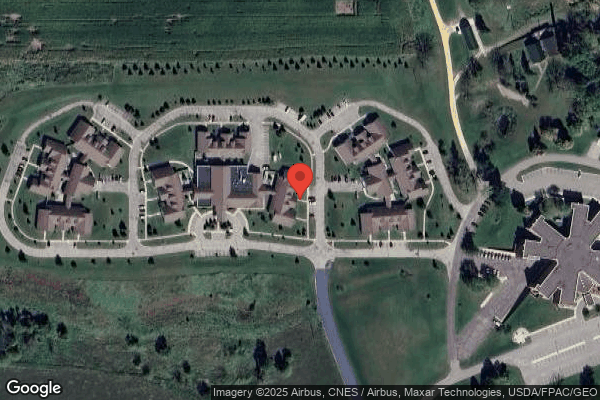
658 HOWISON CIRCLE, MENOMONIE, WI 54751 (715) 232-2661
Government - County 46 Beds Independent Data: November 2025
Trust Grade
85/100
#49 of 321 in WI
Last Inspection: September 2024

Within standard 12-15 month inspection cycle. Federal law requires annual inspections.

Overview

Neighbors - East Neighborhood in Menomonie, Wisconsin, has a Trust Grade of B+, which indicates it is above average and recommended for families seeking care. The facility ranks #49 out of 321 nursing homes in Wisconsin, placing it in the top half, and #2 out of 4 in Dunn County, meaning only one other local option is rated higher. Unfortunately, the facility's performance is worsening, with issues increasing from 3 in 2023 to 5 in 2024. Staffing is a strength, boasting a perfect 5-star rating, but the turnover rate is average at 48%. While there have been no fines reported, the facility has concerning RN coverage, which is less than 92% of state facilities, potentially impacting the quality of care. Specific incidents of concern include a resident who suffered severe burns after being allowed to shower alone despite needing maximum assistance, indicating a lack of supervision. Additionally, staff were observed failing to sanitize equipment and not performing proper hand hygiene during care, which raises infection risk. Overall, this facility has some strengths in staffing and overall ratings, but the rising number of issues and specific safety concerns should be carefully considered by families.

Trust Score
B+
85/100
In Wisconsin
#49/321
Top 15%
Safety Record
Moderate
Needs review
Inspections
Getting Worse
3 → 5 violations
Staff Stability
⚠ Watch
48% turnover. Above average. Higher turnover means staff may not know residents' routines.
Penalties
✓ Good
No fines on record. Clean compliance history, better than most Wisconsin facilities.
Skilled Nurses
○ Average
Each resident gets 37 minutes of Registered Nurse (RN) attention daily — about average for Wisconsin. RNs are the most trained staff who monitor for health changes.
Violations
⚠ Watch
11 deficiencies on record. Higher than average. Multiple issues found across inspections.
★★★★★
5.0
Overall Rating
★★★★★
5.0
Staff Levels
★★★★☆
4.0
Care Quality
★★★★☆
4.0
Inspection Score
Stable
2023: 3 issues
2024: 5 issues

The Good

  • 5-Star Staffing Rating · Excellent nurse staffing levels
  • 4-Star Quality Measures · Strong clinical quality outcomes
  • Full Sprinkler Coverage · Fire safety systems throughout facility
  • No fines on record

Facility shows strength in staffing levels, quality measures, fire safety.

The Bad

Staff Turnover: 48%

Near Wisconsin avg (46%)

Higher turnover may affect care consistency

The Ugly 11 deficiencies on record

1 actual harm
Sept 2024 4 deficiencies
CONCERN (D)

Potential for Harm - no one hurt, but risky conditions existed

Resident Rights (Tag F0550)

Could have caused harm · This affected 1 resident

**NOTE- TERMS IN BRACKETS HAVE BEEN EDITED TO PROTECT CONFIDENTIALITY** Based on observation and record review, the facility did not ensure residents (R) were treated with dignity and respect and care...

Read full inspector narrative →
**NOTE- TERMS IN BRACKETS HAVE BEEN EDITED TO PROTECT CONFIDENTIALITY** Based on observation and record review, the facility did not ensure residents (R) were treated with dignity and respect and cared for in a manner to enhance their quality of life. Facility staff used clothing protectors and edge of spoon to wipe resident's face and stood over R32 and R6 while assisting them to eat. Findings: Example 1 R32 was admitted to the facility on [DATE], with diagnoses of Alzheimer's and dementia. Quarterly minimum data set assessment (MDS) dated [DATE] indicated R32 required a mechanically altered diet and is dependent on others for meal assist. On 09/24/24 at 11:44 AM, Surveyor observed Certified Nursing Assistant (CNA) F standing over R32 and using the spoon to clean food from around R32's mouth and then used R32's clothing protector to clean mouth instead of napkin. This observation occurred multiple times during the lunch observation of CNA F with R32. Example 2 R6 was admitted to the facility on [DATE] with diagnoses of Lewy Body dementia and memory deficit following cerebral infarction (occurs as a result of disrupted blood flow to the brain due to problems with the blood vessels that supply it). The annual MDS, dated [DATE], indicated R6 requires setup or clean up assistance while eating. On 09/24/24 at 12:20 PM, Surveyor observed CNA G assist R6 while standing over R6. R32 and R6 have dementia and are unable to speak for themselves. A reasonable person would feel inferior, vulnerable or fear having someone stand over them while being assisted with their meal. The resident would experience a lack of dignity with the use of a spoon or clothing protector to wipe their mouth as opposed to a reasonable person using a napkin.
CONCERN (D)

Potential for Harm - no one hurt, but risky conditions existed

Assessment Accuracy (Tag F0641)

Could have caused harm · This affected 1 resident

**NOTE- TERMS IN BRACKETS HAVE BEEN EDITED TO PROTECT CONFIDENTIALITY** Based on record review and interview, the facility did not accurately code the Minimum Data Set (MDS) assessment for 1 of 1 resi...

Read full inspector narrative →
**NOTE- TERMS IN BRACKETS HAVE BEEN EDITED TO PROTECT CONFIDENTIALITY** Based on record review and interview, the facility did not accurately code the Minimum Data Set (MDS) assessment for 1 of 1 residents (R) reviewed for Preadmission Screening and Resident Review (PASARR) screen (R37). R37's MDS assessment is coded in error stating that a PASARR level 2 screen had not been completed when it was. This is evidenced by: R37 was admitted to the facility on [DATE] with diagnoses including schizophrenia, dementia and anxiety. Review of R37's medical record found a PASARR level 2 screen was completed, dated 05/06/24. R37's admission MDS assessment, dated 05/14/24, and significant change MDS assessment, dated 07/26/24, indicated for question A1500 that no PASARR level 2 had been completed. On 09/26/24 at 11:00 AM, Surveyor interviewed Social Worker (SW) C, who completed the MDS Section A1500 on R37's admission and significant change MDS. Surveyor asked about the error in MDS coding stating the PASARR level 2 was not completed, when Surveyor observed that it was completed. SW C stated, It must have been an error on my end. SW C acknowledged that a PASARR level 2 screen was completed and is in the records.
CONCERN (D)

Potential for Harm - no one hurt, but risky conditions existed

Respiratory Care (Tag F0695)

Could have caused harm · This affected 1 resident

Based on observation, interview and record review, the facility did not ensure that 1 of 1 resident (R) R3, reviewed for respiratory care was provided care consistent with professional standards of pr...

Read full inspector narrative →
Based on observation, interview and record review, the facility did not ensure that 1 of 1 resident (R) R3, reviewed for respiratory care was provided care consistent with professional standards of practice. R3 requires continuous oxygen and has a physician's order to change oxygen tubing every 5 days. This was not changed as ordered. This is evidenced by: Facility Policy entitled OXYGEN ADMINISTRATION last revised 03/01/24 states in part 2. Oxygen tubing, masks, etc. c. Are to be changed every 5 days and as needed per the E-MAR/TAR. R3 was admitted to the facility in 2023 and has diagnoses that include chronic obstructive pulmonary disease and atherosclerotic heart disease. R3 utilizes continuous oxygen. On 09/24/24 at 9:14 AM, Surveyor observed R3's oxygen tubing connected to the concentrator in his bedroom. The oxygen tubing is dated 9/1. Surveyor also observed R3's portable oxygen tank on his wheelchair; the tubing connected to the portable oxygen was not dated. R3's physician orders, dated 1/29/24, state in part Oxygen: Change oxygen tubing every 5 days. On 09/25/24 at 10:53 AM, Surveyor interviewed Registered Nurse (RN) E. Surveyor asked RN E to confirm dates of R3's oxygen tubing being changed. RN E could not locate a date on the portable oxygen tubing but stated the tubing on the concentrator in R3's room was dated 09/01. RN E confirmed the date of 9/1 indicates the last date the tubing was changed. RN E confirmed R3 uses continuous oxygen at 2 liters per minute. When asked to look at R3's physician orders, RN E confirmed the physician orders state that oxygen tubing is to be changed every 5 days. RN E confirmed that oxygen tubing should be dated when it is changed on the portable tank.
CONCERN (F)

Potential for Harm - no one hurt, but risky conditions existed

Infection Control (Tag F0880)

Could have caused harm · This affected most or all residents

Example 2 Policy and procedure titled, Total Lift Mechanical Assist, states, .10. Wipe the lift down after use and in between residents with sanitary wipe or spray. Policy and procedure titled, Hand W...

Read full inspector narrative →
Example 2 Policy and procedure titled, Total Lift Mechanical Assist, states, .10. Wipe the lift down after use and in between residents with sanitary wipe or spray. Policy and procedure titled, Hand Washing, Hand Hygiene, states, .Examples of hand hygiene moments: Before touching a resident, before clean/aseptic procedures, after body fluid exposure risk, after touching a resident, after touching a resident's surroundings, before and after utilizing gloves, before and after eating. On 09/25/24 at 7:01 AM, Surveyor observed cares for R11 by Certified Nursing Assistant (CNA) I and Registered Nurse (RN) H. Following care, CNA I and RN H transferred R11 into a wheelchair using a Hoyer lift. After use, RN H brought the Hoyer lift to storage area without sanitizing. Sanitizing wipes are present on a bag connected to the Hoyer lift and readily available. Example 3 On 09/25/24 at 9:30 AM, Surveyor observed wound care for R24 by RN H. During the dressing change, RN H did not sanitize hands after doffing gloves following removal of old dressing and before donning new gloves to finish the wound treatment. RN H did not use a gown during R24's dressing change. Surveyor noted that R24 has an indwelling foley catheter and a chronic wound that would require R24 to be placed on enhanced barrier precautions (EBP). Surveyor reviewed R24's record and it indicates that R24 has a history of MRSA, which would also require the initiation of EBP. Surveyor notes that R24 has no signage on door for EBP and no bins in or outside of room. On 09/25/24 at 9:45 AM, Surveyor asked RN H about sanitizing hands when changing gloves and RN H stated, Oh, I forgot that. Surveyor asked RN H how it is known which residents are on precautions which RN H stated the Infection Control Nurse tracks that and lets us know by telling us and placing signs on residents' doors and carts near their room. On 09/25/24 at 11:45 AM, Surveyor interviewed ACM D and asked what the expectations would be for hand hygiene during dressing changes. ACM D stated, I would expect hand hygiene to be done before the procedure, with any glove changes, after the procedure and anytime as needed in between. Surveyor asked ACM D how often lifts should be sanitized. ACM D said they should be sanitized between residents. Surveyor asked ACM D about incorporating EBP, and ACM D stated they have not revised the policy since they thought it was up to the facility's discretion. Surveyor then reviewed the facility policy and procedure titled, Enhanced Barrier Precautions effective date: 4/1/24. The policy did not include the updates from the CMS memo QSO-24-08-NH, dated March 20, to require Enhanced Barrier Precautions (EBP) in nursing homes. The memo became effective on April 1, 2024. Based on observation, interview and record review, the facility did not establish an Infection Control Program under which it investigates, controls, and prevents infections in the facility, or a system for recording incidents identified under the facility's Infection Control Program, including corrective action in a timely manner, for both residents and staff. This has the potential to affect all 43 residents in the facility. The facility did not have an adequate surveillance and infection control program in place for tracking and monitoring infection and communicable disease for staff and residents. Staff did not sanitize lift for R11 after resident use. Staff did not sanitize hands during dressing change for R24. Enhanced Barrier Precautions were not put in place for R24, R18 and R26. This is evidenced by: Example 1 Facility's policy titled Infection Surveillance version 2.2, documented, in part: 1. The purpose of the surveillance of infections is to identify both individual cases and trends of epidemiologically significant organisms and Healthcare-Associated infections, to guide appropriate interventions, and to prevent future infections .5. Nursing Staff will monitor residents for signs and symptoms that my suggest infection, according to current criteria and definitions of infections and will document and report suspected infections to the Charge Nurse as soon as possible . Surveyor reviewed the facility's infection control program. The facility did not utilize a data collection tool for surveillance for early detection of symptomatic residents and staff that will identify, track, and monitor for possible communicable disease and outbreaks. In September 2023 a COVID outbreak line list documents the first resident testing positive on 09/16/23. The outbreak line list had a total of 13 positive residents on the EB unit and 1 positive resident on the MS unit. The line lists did not include staff. The outbreak line lists did not document the start date and type of symptoms, or the date precautions were started. The facility did not have any surveillance monitoring documented for residents and staff having symptoms prior to the outbreak. The 01/24 outbreak line list for the MS unit did not document the type of outbreak, the date of onset, type of symptoms, and resolved date for the two residents listed. The line list only marked as positive, but did not specify positive for any specific disease or infection. The outbreak line list did not include staff. Surveyor is unable to determine if the facility meets the criteria for an outbreak. The facility did not have surveillance monitoring of residents and staff having any symptoms prior to the outbreak. The 04/24 Covid outbreak line list for the MS unit did not include positive staff or the resolved date for the three residents listed. The facility did not have surveillance monitoring of residents and staff having any symptoms prior to the outbreak. Surveyor reviewed the facility's monthly infection control logs from 09/23 - 08/24. The infection control logs were not completely filled out to include the room number, date resolved, symptoms, diagnostic results including organism, the date started and type of cautionary measures, and if health care or community acquired. On 09/26/24 at 11:13 a.m., Surveyor interviewed Assistant Clinical Mentor (ACM) D, who is the infection preventionist, about the infection control surveillance and infection control logs. ACM D stated there is no documentation of daily surveillance; we do rounds daily with nurses and notify if any change of condition during morning meeting. ACM D and nursing staff are watching residents and if changes of conditions occur we notify providers for orders for testing. Based on the test results and orders for treatment, then we look for potentially more residents that may be sick. Surveyor asked if residents are having signs or symptoms that don't meet the definition of an infection are they put on a surveillance log to monitor for additional symptoms and prevent the spread to other residents. ACM D stated only if identified as an infection then the resident is put on the line list for that household. Surveyor asked if staff are placed on a surveillance log to assist with the identification of a possible acute respiratory illness or gastrointestinal outbreak on a unit. ACM D indicated the scheduler notifies Nursing Home Administrator (NHA) A and campus Director of Nursing (DON) B when staff are sick and positive then NHA A and DON B say when the staff can return to work. If Covid, staff are tracked where they worked in the last 24 hours, then we would test the residents that they were in contact with. Surveyor reviewed the incomplete infection control logs and lack of surveillance of residents and staff with ACM D. Surveyor shared concern that the surveillance in place will not identify, prevent, or control the spread of infections and communicable disease for all residents and staff in a timely manner. ACM D indicated understanding more detailed surveillance is needed. Example 4 R18 was admitted to the facility with diagnoses that include chronic kidney disease, benign prostatic hyperplasia with lower urinary tract symptoms, obstructive and reflux uropathy, overactive bladder and history of malignant neoplasm of prostate. R18 requires an indwelling urinary catheter related to urinary retention, and obstruction. Observations of R18 on 09/24-25/24 at varied times revealed no enhanced barrier precautions were in use related to the chronic indwelling catheter use. Example 5 R26 was admitted to the facility with diagnoses that include hypertensive chronic kidney disease, benign prostatic hyperplasia with lower urinary tract symptoms, retention of urine and renovascular hypertension. R26 requires an indwelling urinary catheter related to urinary retention. Observations of R26 on 09/24-25/24 at varied times revealed no enhanced barrier precautions were in use related to the chronic indwelling catheter use.
Feb 2024 1 deficiency 1 Harm
SERIOUS (G) 📢 Someone Reported This

A family member, employee, or ombudsman was alarmed enough to file a formal complaint

Actual Harm - a resident was hurt due to facility failures

Accident Prevention (Tag F0689)

A resident was harmed · This affected 1 resident

**NOTE- TERMS IN BRACKETS HAVE BEEN EDITED TO PROTECT CONFIDENTIALITY** Based on record review and interview, the facility did not provide adequate supervision to prevent accidents for 1 of 5 resident...

Read full inspector narrative →
**NOTE- TERMS IN BRACKETS HAVE BEEN EDITED TO PROTECT CONFIDENTIALITY** Based on record review and interview, the facility did not provide adequate supervision to prevent accidents for 1 of 5 residents (R1) reviewed for supervision with showers and monitoring of water temperatures. R1 had a known history of taking long showers independently, when assessed to require maximum assistance with showers. The facility did not address this behavior in a plan of care. The facility was aware of fluctuating water temperatures on R1's household. The water temperatures were not monitored. R1 entered the shower independently. without assistance, on 1/30/24 and suffered actual harm sustaining second and third degree burns. Findings include: Facility Water Management Plan approval date of 07/17/23 and effective date of 07/17/23. 1. DESCRIPTION OF THE WATER SYSTEM: C. Water heaters are located in the core of each building and in each of the individual households. Central building has 2 water heaters in the core, one supplying the core and the other supplying the main kitchen. Water is heated at each location above 140 degrees and enters a mixing valve and distributes water at a minimum of 140 degrees and runs through a circulation pump at each individual water heater. 2. MONITORING: A. Facilities maintenance technicians are to determine areas in the water system that are vulnerable to legionella. Each household will be monitored on a monthly basis. Records will be kept. in the Life Safety Book including: 1) Temperatures of the incoming cold water and hot water supply. 2) Operation of the water circulation pumps. 3) Ensuring the water heater maintains a temperature 140 degrees F, periodically increasing temperature on the water heater to 150 degrees F. There is no indication that water temperatures should be monitored at the point of resident usage to ensure the temperatures are safe as a part of the water management policy. A policy to direct monitoring of water temperatures in the resident's bathroom sink or shower was not provided. According to Understanding Potential Water Heater Scald Hazards, a white paper developed by the ASSE International Scald Awareness Task Group, hot water scalding can occur in the following time frames at the following temperatures: 154 °F / 68 °C Scald Injury - Immediate 149 °F / 65 °C Scald Injury - 1 second 140 °F / 60 °C Scald Injury - 2 seconds 131 °F / 55 °C Scald Injury - 5 seconds 126 °F / 52 °C Scald Injury - 30 seconds 122 °F / 50 °C Scald Injury - 1 minute 120 °F / 49 °C Scald Injury - 3 minutes 116 °F / 47 °C Scald Injury - 35 minutes 110 °F / 43 °C Shower Temperature Maximum https://www.asse-plumbing.org/media/5213/asse_water_heater_scald_hazards.pdf On 02/07/24, Surveyor reviewed R1's medical record. R1 was admitted to the facility on [DATE]. R1 is [AGE] years of age. R1's diagnoses included but not limited to unspecified dementia-unspecified severity with mood disturbance, type 2 diabetes mellitus with chronic kidney disease, and history of falling. R1 has an advance directive with an Activated Power of Attorney (POA), who is R1's son. R1 has a certification for incapacity signed 07/18/22, and letter of impairment signed by the physician on 07/18/22, which states R1 is Unable to manage property, finances, or business affairs because of impairment in ability to receive and evaluate information or make or communicate decisions even with the use of technological assistance. R1's Quarterly Minimum Data Set (MDS) Assessment, dated 01/27/24, states R1 is independent with eating, mobility with wheelchair, toilet transfer, requires substantial max assist with shower/bathing, supervision/touch assist with tub/shower transfers. R1's Brief Interview for Mental Status (BIMS) score is 11 out of 15, which indicates moderate cognitive impairment. R1's care plan dated 08/02/23 includes but is not limited to the following: R1 has self-care deficit in ADLs (Activities of Daily Living) in mobility related to impaired skin integrity, antidepressant medication, insulin use, antihypertensive medication, history of falls, bowel and bladder incontinence/assist needed with toileting; requires stand by assist for toileting, dementia, forgetfulness, POA in place, limited or decrease in mobility related weakness, and arthritic pain. R1's goals with short term start date of 11/02/23 and updated short term target date of 01/31/24 and 04/31/24 states: R1 will perform ADLS tasks with 0-1 staff assistance. R1's interventions dated 08/02/23 includes but is not limited to: Provide assist with ADLs utilizing sub-tasking techniques as appropriate (i.e.: set-up, supervision, cueing, and physical assistance) as needed. Encourage participation and independence with cares as R1 is able and safe to perform. Encourage participation and independence with cares as R1 is able and safe to perform-bath per R1's preference. R1's Certified Nursing Assistant (CNA) care plan with no date states: ADLS-Assist: set-up-supervision. Toileting: stand by assist. Do not leave on toilet alone. R1 had a safety assessment conducted on 07/19/22 by therapy. The therapy assessment stated R1 required supervision with transfers, independent with bed mobility, ambulation with assist of 1, ADLs assist of 1 and use of front-wheeled walker, and toileting with stand-by assist. No further safety assessments were completed. On 02/07/24, Surveyor reviewed the Facility Reported Incident (FRI) submitted to the Wisconsin Department of Health Services. The facility identified R1 as being found in the shower on the floor. R1 had gotten self into the shower and turned the water on high. When staff found R1, R1's skin was red and was burned from the water of the shower and beginning to peel off R1's body. EMTs (Emergency Medical Technicians) were called and shortly thereafter to transfer R1 to the emergency room for evaluation. R1's Power of Attorney (POA) was notified, and the facility immediately started an investigation. Facility established a timeline on 01/30/24 regarding R1. The timeline indicates a staff member was in R1's room every hour on 01/30/24 starting at 7:00 a.m. until 11:00 a.m. At this time CNA F provided incontinence care to R1 and R1 stated R1 wanted a shower and was told CNA F would assist R1 with the shower after lunch. The timeline states at 11:45 a.m. when R1's lunch tray was brought into R1's room, R1 was found on the shower floor. The facility report states maintenance staff had been working the prior week on the water in R1's household due to concerns about the water not staying warm. Maintenance worked on the showers the week of 01/22/24 through 01/26/24 and on 01/29/24. Maintenance resolved the issues during that time and the showers in the household that had been having issues were temping out appropriately as of 01/26/24. Report states maintenance was asked to check the temperature of R1's shower after the incident and the shower temped out a couple degrees higher than what it had been set at. The shower valve was taken apart and there were marks on the mechanism as though the handle had been forced past its limits. Report indicates it could not be concluded when this force happened; if it was over time or if occurred on 01/30/24 where enough force was placed on the valve that it displaced the screw that sets the temperature. The facility report stated the facility could not definitively conclude what occurred on 01/30/24 with R1's incident in the shower following their investigation. On 02/07/24, Surveyor reviewed R1's vital signs on 01/30/24 following R1 being found on the floor of the shower. On 01/30/24 at 12:05 p.m., facility documentation states R1's vital signs were Blood Pressure (B/P) 168/76, Respirations (R) 24, Pulse (P) 116, Temperature (T) 97.7, and oxygen (O2) saturation was 94%. Burn injuries leaded to a marked increase in heart rate, increase in heart oxygen demand, and decreased contractility which is the pumping action of the heart. A decreased temperature with burns is due to the inability of the body to control temperature because the blood vessels and sweat glands have been damaged. There is also not the same surface area on the skin to release heat because of the burn damage. On 02/08/24, Surveyor reviewed the ambulance report during transport of R1's status. The ambulance report stated R1 was conscious upon arrival to the facility. It is unknown how long R1 was in the shower. A trauma assessment revealed second-degree burns to the right side of R1's face, the right shoulder, and along the right flank. R1 had sloughed skin along with the burns. R1 rated R1's pain 8 out of 10. R1's pupils were equal and reactive. During ambulance transport to the hospital, R1's vital signs ranges were the following: B/P 144/79 to 174/74, P 90 to 99, R 20-27. R1 received low concentration of oxygen during transport of 1-6 liters per minute. On 02/08/24, Surveyor reviewed the hospital emergency room (ER) report. The report states R1 knows what city R1 is in, does not know why, and does not remember falling. R1's vital signs in the ER on [DATE] at 1:16 p.m. were B/P 117/73, P 88, R 18, T 35.8 degrees Celsius (96.44 degrees Fahrenheit), and O2 saturation 93%. The ER report states R1 has first and 2nd degree burns extending down entire right side of R1's back with sloughing towards the lower portion of the back, and over the right side of the buttocks. Also has extensive burns over the right side of the anterior lateral ribcage, underneath the right arm, and partially over the right cheat. Estimate burn surface coverage of about 15-20%. Consistent 2nd degree partial thickness burns with skin sloughing and blistering. Blistering and burns to the right side the forehead, extending down to the chin. Computerized Thermography (CT) of R1's head showed large scalp hematoma (pool of clotted blood) and laceration (deep cut) with no acute intracranial trauma or calvaria fracture (bones of the scalp). R1 was stabilized in ER and transferred to a higher level of care in another hospital burn unit. Surveyor reviewed hospital burn unit medical record for R1. Burn unit report dated 1/30/2024, states R1 has 15% of body surface partial thickness scald burns to the face, head, neck, right upper extremity, torso, and right buttock with third degree burn of less than 10%. Edema noted over right side of face and scalp, with no bruising. R1's vital signs on 01/30/24 were B/P 107/55, P 84, R 16, and O2 saturation 95%. R1's diagnosis per hospital burn unit: agitation, malaise and fatigue, muscle weakness, pain, palliative care encounter, shortness of breath, second degree burn of chest wall, second degree burn of right shoulder, burn involving 10-19% of body surface with third degree burn of less than 10%. Surveyor reviewed facility shower temperature audits conducted by the maintenance department. Room E101 shower temperature 112 degrees F corrective action taken: none (Unknown date of when water temp taken). Room E102 shower temperature 112 degrees F corrective action taken: none (Unknown date of when water temp taken). Room E103 shower temperature 110 degrees F corrective action taken: replaced shower valve 01/30/24-temperature not adjusted correctly. (Water temp prior to adjustment was 119 degrees F, this is R1's room). Room E104 shower temperature 111 degrees F corrective action taken: new valve 01/19/24. Temperature adjusted down 3 degrees F. (Water temp prior to adjustment was 114 degrees F). Room E105 shower temperature 111 degrees F corrective action taken: new valve 01/19/24. Temperature adjusted down 3 degrees F. (Water temp prior to adjustment was 114 degrees F). Room E106 shower temperature 111 degrees F corrective action taken: none (Unknown date of when water temp taken). Room E107 shower temperature 112 degrees F corrective action taken: replaced shower valve-temperature not adjusting correctly. (Water temp unknown prior to adjustment). Room E108 shower temperature 111 degrees F corrective action taken: adjusted temperature down 4 degrees F. (Water temp prior to adjustment was 116 degrees F). Room E109 shower temperature 111 degrees F corrective action taken: adjusted temperature down 5 degrees F. (Water temp prior to adjustment was 116 degrees F). Room E110 shower temperature 111 degrees F corrective action taken: none (Unknown date of when water temp taken). Room E111 shower temperature 111 degrees F corrective action taken: valve replaced 01/24/24. (Water temp prior to valve replacement unknown). Room E112 shower temperature 111 degrees F corrective action taken: temperature adjusted down 4 degrees F. (Water temp prior to adjustment was 115 degrees F). Room E113 shower temperature 112 degrees F corrective action taken: valve replaced 01/24/24. Temperature adjusted down 3 degrees F. (Water temp prior to adjustment was 115 degrees F). Room E114 shower temperature 111 degrees F corrective action taken: valve replaced 01/19/24. Temperature adjusted down 3 degrees F. (Water temp prior to adjustment was 114 degrees F). Room E115 shower temperature 110 degrees F corrective action taken: none (Unknown date of when water temp taken). Room E116 shower temperature 109 degrees F corrective action taken: valve replaced 02/06/24. (Water temp prior to valve replacement unknown). Of note, 4 shower valves on R1's household had been replaced from 1/19 - 1/24/24 ( E104, E105, E113, E114) These rooms needed the temperature adjusted downward. On 02/07/24 at 12:11 p.m., Surveyor and Maintenance Specialist (MS) I checked water temperatures. In room [ROOM NUMBER], which was R1's room, the shower temperature was 115.6 degrees Fahrenheit (F), and in room [ROOM NUMBER] at 12:23 p.m., the shower temperature was 110.3 degrees Fahrenheit. On 02/07/24, Surveyor interviewed R2, R3, R4, and R5 and asked if the residents had any issues with water temperatures or receiving assistance with cares, such as showers. The residents stated the water temperatures were cold and if they did get warm, the water would not stay warm for any length of time. R2, R3, R4, and R5 stated the facility fixed the issue right away and they have no further concerns. Residents R2, R3, R4, and R5 stated they receive assist by staff for their cares. On 02/07/24 at 10:26 a.m., Surveyor interviewed CNA D and asked for CNA D to explain any knowledge of R1's incident in the shower on 01/30/24. CNA D stated CNA D worked in R1's household on 01/30/24 and at 11:47 a.m. was passing out lunch trays and another CNA had brought R1's lunch tray into the room and called out for help because R1 was on the floor of the shower. CNA D stated Registered Nurse (RN) G and CNA E were in R1's room, so CNA D stayed in the dining room with the other residents so they wouldn't go down the hallway to see what was going on and to avoid that area of the hallway. Surveyor asked if there were any issues with water temperatures. CNA D stated the water had been cold and wouldn't stay warm. On 02/07/24 at 10:35 a.m., Surveyor interviewed CNA E and asked if CNA E had any knowledge of R1's incident in the shower on 01/30/24. CNA E stated all residents in the household were checked on at 6:30 a.m. At 7:00 a.m., CNA E stated R1 was checked on and refused cares and did not want to get out of bed. At 9:00 a.m., CNA E brought R1 breakfast. At 10:00 a.m., CNA E stated CNA E checked on R1 and R1 did not want to get out of bed yet. At 11:00 a.m., CNA E stated CNA F went into R1's room and provided incontinence care and changed R1's brief and R1 didn't want to get up. At 11:47 a.m., CNA E stated CNA E brought R1's lunch tray into the room and it was steamy in the room, and the floor had moisture on it. CNA E stated CNA E set R1's tray down, opened the window to clear the steam, and noticed the bathroom door was open. CNA E went into the bathroom, and R1 was lying on the floor in the shower with the water still running on R1's body. CNA E stated CNA E turned the water off, went to the doorway of the room and called for RN G to come into the room. CNA E stated RN G brought the Hoyer lift and CNA E pulled R1's wheelchair and shower chair out of the way in the shower. As RN G was assessing R1, CNA E stated CNA E went to get Assistant Director of Nursing (ADON) C. ADON C came to R1's room. CNA E draped blankets over and under R1, and R1 was placed into the sling. CNA E stated R1's skin was red on the right side of R1's body and was peeling on the right arm, under the right arm, on the right side of R1's body, and R1 had a blister on the forehead. CNA E stated staff assisted R1 back to bed with the Hoyer lift, and R1 was moving around in the bed, and it caused more of the skin to peel. CNA E stated R1 was confused and didn't know what happened and asked if it was bad. Surveyor asked CNA E if R1 requires assist with ADLs such as showers and transfers. CNA E stated R1 is independent with cares and the CNAs will check on R1 when R1 is showering or dressing and will usually make the bed while R1 is doing so. CNA E stated R1 likes to take long showers. Surveyor asked if there were any issues with water temperatures. CNA E stated the water in the rooms had been cold and wouldn't get very hot. On 02/07/24 at 10:53 a.m., Surveyor interviewed R1's POA/Family Member (FM) H via telephone and asked about R1's incident in the shower on 01/30/24. FM H stated the injury is shocking and should not have happened. FM H stated it is understandable if R1 had a fall, especially with R1's stubbornness and wanting to do everything per self, but not R1 getting burned. FM H stated no one in the facility knows exactly how long R1 was in the shower. FM H stated FM H heard there was an issue in the facility with water regulation problems, but FM H does not know the details. FM H stated FM H and spouse came to the facility on [DATE] and looked at the shower and noticed that the only emergency cord in the bathroom was by the toilet and there was not one in the shower. Surveyor asked FM H if there was an update on R1's condition. FM H stated R1 has second and third degrees burns on the right side of R1's body and face. FM H stated the hospital talked to the family regarding surgery (skin grafts) and stated R1 may not survive the surgery, and if R1 did survive the surgery, R1 would probably be on a ventilator. FM H stated hospital staff stated R1 may not come off the ventilator. FM H stated the family decided not to proceed with any surgery and they are looking into hospice care for R1. On 02/07/24 at 11:27 a.m., Surveyor interviewed RN G and asked about R1's incident in the shower on 01/30/24. RN G stated RN G worked on 01/30/24 in the household. RN G stated between 8:30 a.m. and 8:40 a.m. RN G gave R1 medications that were scheduled. RN G stated the CNA was asked to get R1's breakfast so R1 could eat and then receive R1's insulin. RN G stated after giving R1 the medications, RN G stated RN G had to go to another household because RN G was covering two households. RN G stated about an hour later around 9:30 a.m. to 9:40 a.m., RN G went to R1's room and administered insulin to R1 and then left the room to do other things. RN G stated around 11:30 a.m. to 11:40 a.m., a CNA called for help in R1's room and so RN G went to R1's room and R1 was on the floor of the shower. RN G stated the CNA turned the water off because it was still running on R1's body. RN G stated the room was full of steam. RN G stated the CNA was told to go and get ADON C. ADON C came to the room. RN G stated ADON C called the nurse practitioner (NP) and explained the burns on R1. RN G stated R1 had burns on the right side of the face right shoulder, back, right side of chest and a blister on the forehead. RN G stated the skin was starting to peel off. RN G stated R1 was assisted to a Hoyer sling and transferred to bed. RN G stated R1 moved around in the bed and more skin was peeling off R1's body. RN G stated R1 could not state what happened. RN G stated R1 did complain of face burning and cold compresses were applied to R1's face. Surveyor asked RN G if R1 required assistance with cares such as showers and transfers. RN G stated that staff tell R1 to wait for assistance but R1 will do what R1 wants per self anyway and has gone in the shower without assist. On 02/07/24 at 11:46 a.m., Surveyor interviewed MS I about R1's incident in the shower on 01/30/24 and the water temperatures. MS I stated the facility had water issues in R1's household beginning on 01/12/24 but they involved cold water. MS I stated on 01/12/24 the sink was running cold water for the hot and cold water in room [ROOM NUMBER]. MS I stated the mixing valve needed to be replaced in the ceiling because it was putting out too much cold water into the hot water system. MS I stated that starting on 01/19/24 each room in the R1's household was looked at and the shower valves were replaced because the rooms were not adjusting the water temperature correctly. On 01/29/24, MS I stated the solenoid of the emergency shut off for the hot water loop in the system did not open all the way, so it was not creating enough water pressure and limiting the hot water. Surveyor asked when the solenoid was replaced. MS I stated the solenoid was replaced on 02/05/24. Surveyor reviewed documents provided that show the last shower valve was replaced on 2/6/2024. MS I stated on 01/30/24 MS I was called to R1's room around 12:30 p.m. after the incident occurred and R1 had already been transported to the hospital. MS I stated the water temperature in the shower was tested and the temperature was 119 degrees Fahrenheit. (R1 was in shower for possibly 45 minutes and the water temperature was taken another 45 minutes later. Actual water temperature during R1's shower is unknown). MS I stated the shower valve was taken apart and by the condition of it, it looked as though it had been overpowered. MS I stated the on/off shower valve was pushed excessively beyond where it should stop on the hot water side. Surveyor asked if this overpowering could increase the water temperature beyond the maximum temperature the water is supposed to reach. MS I stated it was possible for the water temperature to have increased beyond the 115-degree Fahrenheit maximum temperature it is normally regulated to. Surveyor asked about anti-scald valves for the showers. MS I stated the valves were ordered on 02/05/24 but won't be delivered to the facility until 02/20/24. On 02/07/24 at 2:10 p.m., Surveyor interviewed ADON C and asked about R1's incident in the shower on 01/30/24 and if ADON C could walk Surveyor through the incident. ADON C stated staff came to ADON C's office around 11:58 a.m. or so on 01/30/24 and stated they needed help and R1 was on the shower floor. ADON C stated R1 was lying on the floor of the shower but was trying to prop self-up with R1's right arm. ADON C stated R1's right arm was red, had a blister on the forehead, back was red, and right arm was peeling. ADON C stated R1 was assessed, and the NP was called and updated about R1's status with burns and the skin peeling. ADON C stated NP was told it was unknown how long R1 was in the shower. ADON C stated facility staff got R1 lifted off the floor with a Hoyer lift and transferred R1 to the bed. ADON C stated RN G took R1's vital signs and ADON C needed to check in the record as to what they were. ADON C stated R1's blood sugar was tested, and it was 70mg/dl, which is in the normal range. ADON C stated R1's son, who is the POA was called, the ambulance was called and R1 went to local hospital and was then transferred to the burn unit in another hospital. ADON C stated R1 did not know what happened. Surveyor asked ADON C what interventions were put into place since R1 is known to go into the shower unassisted/unsupervised. ADON C stated a shower chair was placed in the shower in case R1 would need to sit down when going in the shower without assist. Surveyor asked ADON C if R1 requires assist with showers and shower transfers. ADON C stated R1 does require assist by staff. Surveyor asked if any interventions were put into place to prevent this from occurring again. ADON C stated all the residents in the household were assessed by therapies for safety measures with showers. On 02/07/24 at 3:30 p.m., Surveyor interviewed NHA A and asked for NHA A to walk Surveyor through R1's shower incident on 01/30/24. NHA A stated NHA A was made aware of the incident by ADON C. NHA A stated R1 does not always allow assistance with cares. NHA A stated maintenance was called to check the temperature of the water in the R1's shower. NHA A stated a report was submitted to the State Agency, the facility conducted staff interviews, police were notified. NHA A stated the police came to the facility and took pictures of R1's room/shower, interviewed staff, and interviewed NHA A. NHA A stated ADON C notified R1's POA of the incident. NHA A stated interventions were updated for R1's return: sign in room to call for help, therapy order for evaluation, R1 to have 30-minute checks, and staff to keep a log on the times when R1 takes showers. NHA A stated the entire building (3 households) will receive therapy evaluations for shower safety. NHA A stated on 02/01/24 NHA A notified Adult Protective Services (APS) of the incident. Surveyor asked NHA A if interventions were in place because the facility knew R1 tried to perform ADLs per self and especially went into the shower unassisted. NHA A stated a shower chair was placed in R1's shower. NHA A stated R1 was difficult, and the facility couldn't put a lock on the bathroom door or restrain R1 from using the shower by himself. Surveyor asked if R1 was able to use a call light. NHA A stated R1 was capable but refused to use it. On 02/07/24 at 3:46 p.m., Surveyor received a return call from CNA F and asked about R1's shower incident on 01/30/24. CNA F stated on 01/30/24 at 11:00 a.m., CNA F changed R1's brief due to incontinence. R1 stated R1 wanted a shower on 01/30/24. CNA F stated R1 was told CNA F would help R1 with the shower right after lunch since the lunch tray would be served shortly. At 11:45 a.m., CNA F stated CNA F was called into R1's room and R1 was on the floor of the shower. Surveyor asked if R1 required assist with showers and transfers. CNA F stated R1 was stand-by assist but R1 would go and take showers independently. CNA F stated R1 likes to take long showers up to 1.5 hours long. Surveyor asked if there had been any issues with water temperatures. CNA F stated the water in the rooms was cold and wouldn't stay hot very long. On 02/08/24 at 11:55 a.m., Surveyor interviewed facility Medical Director and R1's physician (MD) K about R1's shower incident on 01/30/24. MD K stated MD K did not know any detail of what exactly transpired, but MD K was shocked about the severity of the burns R1 sustained with the incident. According to Nature Reviews Disease Primers ([NAME], M.G., van [NAME], M.E., [NAME], M.A. et al. Burn injury. Nat Rev Dis Primers 6, 11 (2020). https://doi.org/10.1038/s41572-020-0145-5), Burns that affect the uppermost layer of the skin (epidermis only) are classed as superficial (first-degree) burns; the skin becomes red and the pain experienced is limited in duration. Superficial partial-thickness (second-degree) burns (formerly known as 2A burns) are painful, weep, require dressing and wound care, and may scar, but do not require surgery. Deep partial-thickness (second-degree) burns (formerly known as 2B burns) are less painful owing to partial destruction of the pain receptors, drier, require surgery and will scar. A full-thickness (third-degree) burn extends through the full dermis and is not typically painful owing to damage to the nerve endings, and requires protection from becoming infected and, unless very small, surgical management. Finally, a fourth-degree burn involves injury to deeper tissues, such as muscle or bone, is often blackened and frequently leads to loss of the burned part. Although superficial and superficial partial thickness burns usually heal without surgical intervention, more severe burns need careful management, which includes topical antimicrobial dressings and/or surgery. Importantly, burns are classified as either minor or major. A minor burn is usually a burn that encompasses <10% of the total body surface area (TBSA), with superficial burns predominating. By contrast, the burn size that constitutes a major burn is not commonly well-defined; some guidance to classify severe burn injuries are: >10%TBSA in elderly patients. The uniqueness of a severe or major burn injury is anchored in the body responses to it. After the injury, an immediate systemic and local stress response is triggered that, unlike sepsis or trauma, does not recover quickly. Severe burns cause a complex pattern of responses that can last up to several years after the initial insult. In general, immediately after the insult, an inflammatory response is triggered to promote the healing process. However, in severe burns, this inflammatory process can be extensive and become uncontrolled, leading to an augmented inflammation that does not induce healing but rather causes a generalized catabolic state and delayed healing. This response is almost unique to burns and is referred to as the hypermetabolic response; it is associated with catabolism, increased incidence of organ failure, infections and even death.
Aug 2023 2 deficiencies
CONCERN (E)

Potential for Harm - no one hurt, but risky conditions existed

Food Safety (Tag F0812)

Could have caused harm · This affected multiple residents

Based on observation, staff interview and record review, the facility did not follow proper food handling practice. This practice had the potential to affect 16 of 46 residents (R14, R25, R45, R36, R1...

Read full inspector narrative →
Based on observation, staff interview and record review, the facility did not follow proper food handling practice. This practice had the potential to affect 16 of 46 residents (R14, R25, R45, R36, R12, R8, R6, R27, R41, R16, R1, R24, R197, R28, R30, R26) residing in the facility. Certified Nursing Assistant (CNA) E did not wear a hairnet while serving breakfast. Findings include: The FDA Food Code 2022 document 2-402.11 Food employees shall wear hair restraints such as hats, hair coverings or nets, beard restraints, and clothing that cover body hair, that are designed and worn to effectively keep their hair from contacting exposed food. On 08/30/23 at 7:20 AM, Surveyor observed CNA E serving breakfast to residents in the kitchenette. Surveyor asked CNA E if you are supposed to wear a hairnet when you are serving breakfast from this kitchenette. CNA E replied, Oh yeah, and walked around the counter, opened a drawer, pulled out a hairnet and put it on. On 08/30/23 at 9:30 AM, Surveyor interviewed Culinary Mentor (CM) F regarding the use of hairnets in the kitchenette. CM F replied, Yes, the homemakers need to wear hairnets in the kitchenette. Surveyor asked CM F for a policy regarding hairnet use. On 08/30/23 at 9:49 AM, CM F handed this surveyor a policy titled, Sanitation and Food Safety, revised 04/23/2019, which states in part, .1. Personal Hygiene . b. Hair must be completely restrained with proper hair covering while in food preparation areas .
CONCERN (F)

Potential for Harm - no one hurt, but risky conditions existed

Infection Control (Tag F0880)

Could have caused harm · This affected most or all residents

Example 5 Facility policy titled, Hand Washing, Hand Hygiene revised 04/05/22, states in part: .Examples of hand hygiene moments: Before touching a resident, before clean/aseptic procedures, after bo...

Read full inspector narrative →
Example 5 Facility policy titled, Hand Washing, Hand Hygiene revised 04/05/22, states in part: .Examples of hand hygiene moments: Before touching a resident, before clean/aseptic procedures, after body fluid exposure, after touching a resident, after touching a resident's surroundings, before and after utilizing gloves, before and after eating . On 08/29/23 at 8:24 AM, Surveyor observed Registered Nurse (RN) D administer medications to R97. RN D gathered R97's medications and a pair of gloves from the medication cart; hand hygiene was not observed. RN D entered R97's room and put on the gloves without any hand hygiene. RN D administered medications to R97 which included a nasal spray into each of R97's nostrils. RN D removed gloves without performing hand hygiene. RN D walked back to the medications cart and put away R97's nasal spray. No hand hygiene was observed by Surveyor. On 08/29/23 at 8:30 AM, Surveyor interviewed RN D about the proper hand hygiene before and after glove use. RN D replied, I don't like hand sanitizer so I would rather wash my hands with soap and water, but I should've done that before and after glove use. On 08/30/23 at 10:35 AM, Surveyor interviewed DON B about hand hygiene with glove use. DON B replied, All staff should perform hand hygiene before and after glove use. Based on observations and interviews, the facility did not implement appropriate infection prevention and control practices to help prevent the development and transmission of communicable diseases and infections. Staff observed with open sores assisting residents with meals and prepping silverware. Staff observed washing hands and turning off the faucet with clean hands. No hand hygiene was offered for residents before meals on 2 of the 3 households. This affected 30 of 46 residents (R33, R28, R20, R147, R44, R7, R3, R9, R19, R10, R21, R37, R31, R14, R1, R12, R43, R27, R25, R14, R25, R36, R8, R6, R41, R16, R24, R197, R30, and R26). Staff touching straws with bare hands. This affected 13 residents (R33, R28, R20, R147, R44, R7, R3, R9, R19, R10, R21, R37, R31). No hand hygiene with glove change during medication pass for R97. Findings include: Example 1 On 08/30/23, Surveyor observed Certified Nursing Assistant (CNA) G wrapping silverware in the Eastbrook dining room. Surveyor also noted CNA G to have 2 open red areas on their top left forearm. One area was about the size of a quarter, the other about the size of a nickel. On 08/30/23 at 8:17 AM, Surveyor observed CNA G assisting 2 residents with eating. On 08/30/23 at 8:31 AM, Surveyor observed CNA G sitting next to R7 assisting him with eating. On 08/30/23, Surveyor interviewed Director of Nursing (DON) B and asked if staff should be working with residents with open wounds. DON B indicated when wounds are open staff should have them covered. On 08/30/23, Surveyor interviewed CNA G and asked which households CNA G worked on today. CNA G indicated they worked on Eastbrook and Morning Song. Surveyor asked CNA G what type of duties they performed. CNA G indicated they folded clothes, visited with the residents, folded silverware and assisted residents with eating. Example 2 On 08/28/23 at 11:58 AM, Surveyor observed CNA I wash their hands prior to serving lunch with soap and water, turn off the faucet then grabbed paper toweling to dry their hands. On 08/30/23, Surveyor interviewed Culinary Mentor (CM) F and asked the proper way to wash hands. CM F indicated turn on the water, lather hands for 15-20 seconds, rinse, dry hands with paper toweling, then turn off faucet with paper towel. Example 3 On 08/28/23, at about 12:00 PM in the Eastbrook dining room, Surveyor was observing lunch being served to the residents (R33, R28, R20, R147, R44, R7, R3, R9, R19, R10, R21, R37, R31). No hand hygiene was offered before lunch to the residents. On 08/29/23, at 11:51 AM in the Eastbrook dining room, Surveyor was observing lunch being served to the residents (R33, R28, R20, R147, R44, R7, R3, R9, R19, R10, R21, R37, R31). No hand hygiene was offered to residents before lunch. On 08/29/23 at 12:02 PM, in the Morning Song Villa dining room, Surveyor observing lunch being served to the residents (R14, R1, R12, R28, R43, R14, R27, R25, R36, R8, R6, R41, R16, R24, R197, R30, R26). No hand hygiene was offered to residents prior to the staff delivering their meals. On 08/30/23 at 7:26 AM, in the Morning Song Villa dining room, Surveyor observing lunch being served to the residents (R14, R1, R12, R28, R43, R14, R27, R25, R36, R8, R6, R41, R16, R24, R197, R30, R26). No hand hygiene was offered to residents prior to the staff delivering their meals. On 08/30/23 at 11:23 AM, in the Morning Song Villa dining room Surveyor observing lunch being served to the residents (R14, R1, R12, R28, R43, R14, R27, R25, R36, R8, R6, R41, R16, R24, R197, R30, R26). No hand hygiene was offered to residents prior to the staff delivering their meals. On 08/30/23 at 11:45 AM, Surveyor interviewed Resident (R) 28 and asked R28 if the staff offer hand hygiene before you eat. R28 replied, No, although I try and wash my hands in my room before I come out to the dining room. On 08/30/23 at 11:49 AM, Surveyor interviewed CNA E and asked if they offer residents hand hygiene before they are served meals. CNA E replied, The short answer is no. I try to give them hand sanitizer at their room door when I take them to the dining area. I put some in my hand and then give it to them. Some of the residents will throw it back at me, so you learn which residents you can and can't give hand sanitizer to. On 08/30/23 at 12:14 PM, Surveyor interviewed DON B about the facility's policy regarding hand hygiene before meals. DON B replied, For breakfast they [residents] would have just received their AM cares and would have just been brought out for breakfast. For lunch, we always offer the bathroom to the residents before we take them to lunch and provide hand hygiene after the bathroom. But if we see that the residents' hands are visibly soiled, we would offer them hand hygiene no matter what. Surveyor asked DON B for a copy of their policy regarding hand hygiene before meals. On 08/30/23 at 12:41 PM, DON B informed this Surveyor that the facility does not have a specific policy regarding resident hand hygiene before meals. Example 4 On 08/28/23 at 12:07 PM, Surveyor observed CNA H getting drinks ready for the residents for lunch. CNA H placed lids on all the cups, removed the straw paper, then using bare hands put a straw in all 13 residents' (R33, R28, R20, R147, R44, R7, R3, R9, R19, R10, R21, R37, R31) beverages. On 08/30/23, Surveyor interviewed CM F and asked how staff should remove the paper from straws. CM F indicated staff should remove the paper from the bottom of the straw, leave paper on the top part of the straw and place in cup. Never touch the straw with bare hands.
Jul 2023 1 deficiency
CONCERN (D) 📢 Someone Reported This

A family member, employee, or ombudsman was alarmed enough to file a formal complaint

Potential for Harm - no one hurt, but risky conditions existed

Investigate Abuse (Tag F0610)

Could have caused harm · This affected 1 resident

**NOTE- TERMS IN BRACKETS HAVE BEEN EDITED TO PROTECT CONFIDENTIALITY** Based on interview and record review, the facility did not have evidence that alleged violations of abuse were thoroughly invest...

Read full inspector narrative →
**NOTE- TERMS IN BRACKETS HAVE BEEN EDITED TO PROTECT CONFIDENTIALITY** Based on interview and record review, the facility did not have evidence that alleged violations of abuse were thoroughly investigated, prevent further potential abuse, and report the results of all investigations to the administrator and other officials in accordance with state law, including to the state survey agency for 2 of 5 residents (R), R4 and R5. Staff overheard R4 tell R5 that he kissed her. The facility did not do a thorough investigation, to prevent further potential abuse, and did not report to the administrator or state survey agency. This is evidenced by: The facility's policy, entitled Reporting & Investigating Resident Rights Violations, dated 3/09/07, states in part: .Notify Administrator or designee immediately of the allegation. Even if suspected, the employee should report their suspicions within 2 hours .With Administrator's direction, immediately report such violations via the Department of Quality Assurance electronic reporting system .Document, document, document - including a facility incident/accident report and/or associated decision-tree charts . On 07/03/23, Surveyor reviewed R4 and R5's medical records to find the following: R4 was admitted to the facility on [DATE] and has diagnoses that include, but are not limited to parkinsonism, schizophrenia, and post-traumatic stress disorder. R4's Minimum Data Set (MDS) assessment, dated 4/18/23, indicated that the Brief Interview for Mental Status (BIMS) score was 15. BIMS score ranges from 00-15. 13-15: cognitively intact. 08-12: moderately impaired. 00-07: severe impairment. R5 was admitted to the facility on [DATE] and has diagnoses that include, but are not limited to severe vascular dementia with anxiety, unspecified visual loss, and bilateral sensorineural hearing loss. R5's MDS assessment, dated 4/01/23, indicated that the BIMS score was 10. On 07/03/23 at 9:20 AM, Surveyor interviewed Certified Nursing Assistant (CNA) F concerning abuse/neglect. CNA F stated she heard R4 and R5 had kissed each other, and that nursing and management were made aware of this. Staff are to try to keep the two residents separated. CNA F believed they care planned the kissing but was not sure as this just happened recently. A review of both R4 and R5 care plans and documentation in the chart had nothing noted about this kissing incident. On 07/03/23 at 9:45 AM, Surveyor interviewed Licensed Practical Nurse (LPN) D concerning kissing between residents. LPN D stated there had been a report of residents kissing, but she had not seen it. She had reported this to the Assistant Clinical Mentor (ACM) C. This recently happened end of last week. On 07/03/23 at 10:15 AM, Surveyor interviewed Social Worker (SW) E concerning kissing between residents this past week. SW E stated she was not aware of any residents kissing each other this past week. On 07/03/23 at 10:45 AM, Surveyor interviewed ACM C concerning kissing between residents this past week. ACM C stated she was not aware of kissing incidents between residents this past week. On 07/03/23 at 10:55 AM, Surveyor interviewed CNA F concerning R4 and R5 kissing. CNA F stated this happened last Thursday or Friday (06/29/23 or 06/30/23). LPN D helped with this incident. Another CNA witnessed this incident. CNA F said she did not directly see/hear kissing between these two residents. On 07/03/23 at 11:00 AM, Surveyor interviewed LPN D concerning R4 and R5 kissing. LPN D said the CNA who reported it to her overheard R4 tell R5 that they had kissed. These residents were not observed kissing. LPN D immediately spoke with R4 about this issue and that it was not to be done as R5 was not aware of what was going on. LPN D said she told staff to keep the two residents separate. LPN D said she reported this incident to ACM C via text. On 07/03/23 at 11:30 AM, Surveyor interviewed ACM C and asked if she was informed by LPN D of the kissing incident with R4 and R5. ACM C said she was told by LPN D about the incident and that it was only hearsay and no witness of them kissing. LPN D spoke with R4 who said he denied it. ACM C said she spoke with staff, and no one witnessed any kissing between the residents. The kissing incident was not care planned because it was not witnessed. ACM C said they did not do an incident report because it was hearsay and not seen. R4 does not have a history of sexual or kissing incidents. ACM C said she did not report this to the state because no one witnessed kissing and the resident denied it. Surveyor asked ACM C to obtain any documentation on this incident. On 07/03/23 at 12:05 PM, ACM C provided Surveyor with the investigation documentation that states the following: LPN D mentioned to writer that CNA G told her that she overheard R4 say to R5 that he kissed her. CNA G reported that R5 didn't respond to R4's comment. LPN D asked the staff working in the house if they witnessed any kissing and they said no. Writer instructed LPN D to educate R4 on nursing home having rules and we discourage kissing etc. Writer instructed LPN D to instruct staff to monitor interactions closely and report any inappropriate interactions. R5 did not acknowledge any kissing to staff or to writer that day. R4 has schizophrenia diagnosis and has hallucinations/delusional thoughts as well. Writer ACM C The investigation did not include documented interviews with other alert residents, or staff to determine if R4 had ever acted this way with others. On 07/03/23 at 12:35 PM, Surveyor asked the Director of Nursing (DON) B if she was aware of this kissing incident. DON B responded she was not aware of any kissing incidents this past week. Surveyor also asked the Nursing Home Administrator (NHA) A if she was aware of this kissing incident. NHA A responded she was not aware of this incident either to complete a full investigatoin into the incident.
Aug 2022 3 deficiencies
CONCERN (E)

Potential for Harm - no one hurt, but risky conditions existed

Deficiency F0700 (Tag F0700)

Could have caused harm · This affected multiple residents

**NOTE- TERMS IN BRACKETS HAVE BEEN EDITED TO PROTECT CONFIDENTIALITY** Based on observation, interview and record review, the faciity failed to assess the risk of entrapment, obtain informed consent,...

Read full inspector narrative →
**NOTE- TERMS IN BRACKETS HAVE BEEN EDITED TO PROTECT CONFIDENTIALITY** Based on observation, interview and record review, the faciity failed to assess the risk of entrapment, obtain informed consent, or attempt alternative interventions before implementing use of side rails, and failed to assess whether the bed rail was still needed for 4 out of 9 residents (R) reviewed for side rail use and risk of entrapment (R5, R9, R22 and R27). R5, R9, R22, and R27 had grab bars on their beds, without an assessment completed to determine their risk for entrapment, without first attempting alternate methods prior to side rail use, and no consent obtained for the use of the side rails. Findings include: The Food and Drug Administration document titled Hospital Bed System Dimensional and Assessment Guidance to Reduce Entrapment, dated March 10, 2006, states, in part: Many beds currently in use may no longer have the original mattress or bed rails, and may present an entrapment hazard by increasing or creating gaps or spaces between various components of the bed system. Reducing the risk of entrapment involves a multi-faceted approach that includes bed design, clinical assessment, and monitoring, as well as meeting patient, resident, and family needs for vulnerable patient in most health care settings-hospitals, long term care facilities and at home. Therefore, comprehensive bed safety programs in these settings will likely involve input from manufacturers as well as facility staff. Reassessment may be appropriate when (1) there is reason to believe that some components are worn (e.g., rails wobble, rails have been damaged, mattresses are softer) and could cause increased spaces within the bed system, (2) when accessories such as mattress overlays or positioning poles are added or removed, or (3) when components of the bed system are changed or replaced (e.g., new bed rails or mattresses) . Example 1 On 8/08/22 during the initial tour of the facility, Surveyor noticed that R5 had a bed rail on right side of the bed. R5's quarterly Minimum Data Set (MDS) assessment, dated 05/04/22, Brief Interview for Mental Status (BIMS) showed resident severely impaired meaning never/rarely made decisions. Section G: on the MDS indicated Bed Mobility Extensive assistance and one-person physical help from staff. Review of R5's medical record on 08/08-08/10/22 did not reveal any assessment for the risk of entrapment with bed rail use, did not reveal a review of the risk and benefits or consent for the use of bed rails with the resident's representative. Example 2 On 08/08/22 during the initial tour of the facility, Surveyor noticed that R9 had a bed rail on left side of the bed. R9's admission MDS dated [DATE] showed resident severely impaired, meaning never/rarely made decisions. Section G: on the MDS indicates Bed Mobility is Extensive assistance and one-person physical help from staff. Review of R9's medical record on 08/08-08/10/22 did not reveal any assessment for the risk of entrapment with bed rail use, did not reveal a review of the risk and benefits or consent for the use of bed rails with the resident's representative. Example 3 On 08/08/22 during the initial tour of the facility, Surveyor noticed that R22 had a bed rail on right side of the bed. R22's quarterly MDS dated [DATE] showed a BIMS score of 5 which indicates cognitive impairment. Section G: on the MDS indicates Bed Mobility Supervision and one-person physical help from staff. Review of R22's medical record on 08/08-08/10/22 did not reveal any assessment for the risk of entrapment with bed rail use, did not reveal a review of the risk and benefits or consent for the use of bed rails with the resident's representative. Example 4 On 08/08/22 at 2:37 p.m., Surveyor observed R27's bed having a left assist bar. Review of R27's medical record documented current diagnosis of Parkinson's disease, dementia without behavioral disturbance, restless legs syndrome, anxiety disorder, osteoporosis without pathological fracture, chronic pain, insomnia, and overactive bladder. Review of the Minimum Data Set (MDS), dated [DATE], a significant change assessment documented R27 requiring extensive assist of one staff for bed mobility and transfers. Review of the care plans did not document assist bars as equipment being used. Review of the medical record did not identify a signed consent for use of the assist bar. The medical record did not contain a bed rail risk assessment for risk of entrapment or other equipment trials before bed rail/assist bars were utilized. On 08/09/22 at 2:15 p.m., Surveyor interviewed Assistant Director of Nursing (ADON) C asking if the facility completes grab bar/bed rail assessments for risk of entrapment. ADON C indicated they do not do separate grab bar assessments as the grab bar is on the bed. ADON C indicated if a different mattress is placed on the bed they would look to see if it fits and have ordered a bariatric air mattress to fit on the bed frame. Surveyor asked if they conduct a trial of other assistive devices for positioning before using the grab bars. ADON C indicated no they do not as the assist bar is already on the bed from the manufacturer.
CONCERN (E)

Potential for Harm - no one hurt, but risky conditions existed

Food Safety (Tag F0812)

Could have caused harm · This affected multiple residents

Based on observation and interview, the facility did not store, prepare, distribute, and serve food in accordance with professional standards for food service safety. This has the potential to affect ...

Read full inspector narrative →
Based on observation and interview, the facility did not store, prepare, distribute, and serve food in accordance with professional standards for food service safety. This has the potential to affect 16 out of 42 residents who reside in the facility. Refrigerator, freezer, and dishwasher temperature checks were not completed twice a day. SOM review: Practices to maintain safe refrigerated storage include: Monitoring food temperatures and functioning of the refrigeration equipment daily and at routine intervals during all hours of operation; This is evidenced by: On 08/09/2022 at 7:01 a.m., Surveyor conducted a tour of the facility's Tender Hearth kitchenette. The refrigerator held cheeses, juices, milk, lunch meats, and items used during breakfasts that are cooked and served as residents come into the dining room. It also had a drawer of residents' personal items of all varieties that they can access when they want. It is normal to store food in the refrigerator on a regular basis. Review of the kitchenette temperature logs identified: June 2022, 37 out of 60 shift entries for temperatures on the pantry fridge, kitchen fridge, kitchen freezer, and dish machine rinse were not completed. July 2022, 33 out of 62 shift entries for temperatures on the pantry fridge, kitchen fridge, kitchen freezer, and dish machine rinse were not completed. August 2022, 7 out of 17 shift entries for temperatures on the pantry fridge, kitchen fridge, kitchen freezer, and dish machine rinse were not completed. On 8/10/2022 at 2:01 p.m., Surveyor interviewed Maintenance Director (MD) D who stated the temperature logs are to be checked two times a day by a homemaker or whomever is doing that position delegated by the charge nurse. The charge nurse or dietary department are responsible to check and see if it is completed. If a Certified Nursing Assistant is pulled to be the homemaker, the temperatures may get missed. MD D stated that the staff was provided direct education. At times, MD D will double check the temperatures and will also try to track down the staff who missed checking temperatures to provide education. MD D has no documentation on education provided.
CONCERN (E)

Potential for Harm - no one hurt, but risky conditions existed

Deficiency F0909 (Tag F0909)

Could have caused harm · This affected multiple residents

**NOTE- TERMS IN BRACKETS HAVE BEEN EDITED TO PROTECT CONFIDENTIALITY** Based on interview and record review, the facility did not perform regular inspections of all bed frames, mattresses, and bed ra...

Read full inspector narrative →
**NOTE- TERMS IN BRACKETS HAVE BEEN EDITED TO PROTECT CONFIDENTIALITY** Based on interview and record review, the facility did not perform regular inspections of all bed frames, mattresses, and bed rails as a regular part of maintenance program to identify areas of possible entrapment for 4 out of 8 residents (R) with bed rails (R5, R9, R22 and R27). Routine maintenance to ensure proper working order was not provided for beds with rails for cognitively impaired residents at risk for entrapment. Findings include: Example 1 On 08/08/22 during the initial tour of the facility, Surveyor noticed that R5 had a bed rail on right side of the bed. Record review identified R5 was admitted to the facility on [DATE] with diagnoses including Alzheimer's disease with late onset, dementia in other disease classified elsewhere without behavioral disturbance, other specified anxiety disorder, history of falling. R5's quarterly Minimum Data Set (MDS) assessment, dated 05/04/22, Brief Interview for Mental Status (BIMS), showed resident severely impaired meaning never/rarely made decisions. Section G: on the MDS indicated Bed Mobility Extensive is assistance and one-person physical help from staff. Transfer/Self-Performance is Extensive assistance with 2 plus Record review of R5's medical record on 08/08/22 did not identify any documentation of regular maintenance or inspection of R5's bed frame, mattress, or bed rails, or assessment for risk of entrapment. Example 2 Record review of R9's medical record on 08/08/22 did not identify any documentation of regular maintenance or inspection of R9's bed frame, mattress, or bed rails, or assessment for risk of entrapment. Example 3 On 08/08/22 during the initial tour of the facility, Surveyor noticed that R22 had bed rail on right side of the bed. Record review identified R22 was admitted to the facility on [DATE] with a diagnosis including Hypertensive chronic kidney disease, unspecified dementia without behaviors. R22's quarterly MDS dated [DATE] showed a BIMS score of 5 which indicates cognitive impairment. Section G: on the MDS indicates Bed Mobility Supervision and one-person physical help from staff. Transfer Limited assistance with one person. Record review of R22's medical record on 08/08/22 did not identify any documentation of regular maintenance or inspection of R22's bed frame, mattress, or bed rails, or assessment for risk of entrapment. Example 4 On 08/08/22 at 2:37 p.m., Surveyor observed R27's bed having a left assist bar. Review of R27's medical record documented current diagnosis of Parkinson's disease, dementia without behavioral disturbance, restless legs syndrome, anxiety disorder, osteoporosis without pathological fracture, chronic pain, insomnia, and overactive bladder. Review of the Minimum Data Set (MDS), dated [DATE], a significant change assessment documented R27 requiring extensive assist of one staff for bed mobility and transfers. Review of the care plans did not document assist bars as equipment being used. Review of the medical record did not identify a signed consent for use of the assist bar. The medical record did not contain a bed rail risk assessment for risk of entrapment or other equipment trials before bed rail/assist bars were utilized. Review of the maintenance record of bed rail inspection dated 09/13/21 did not identify assessments of risk for entrapment. On 08/10/22 at 10:59 a.m., Surveyor interviewed the Maintenance Director (MD) C asking about the inspections of the resident's beds and bed rails. MD C indicated the beds are inspected yearly for any type of wear and broken parts. MD C indicated the inspection of the beds have not been completed yet this year. Surveyor asked if the bed rails are able to be removed from the bed. MD C indicated the bed rails are able to be removed. When a resident discharges from the facility the beds are inspected and prior to a new resident occupying the room. If the bed had two bed rails then one would be removed so the bed would only have one bed rail when the new resident arrived. Surveyor asked if the resident and the bed are assessed for risk of entrapment. MD C indicated when the resident is in the room maintenance does not go into the room to check the beds. If there is an issue with the beds the nursing staff will tell maintenance about the problem that needs to be fixed. Surveyor asked if a new or different mattress other than the bed frame manufacturer mattress is installed if there an inspection of measurements for proper fit and for risk of entrapment. MD C indicated he does not take measurements of the beds and has not been asked. At 11:25 a.m., Surveyor and MD C entered a vacant room to review the function and attachment of the bed rail. Surveyor asked if the mattress and the bed rail are the appropriate distance and is there a chance for a person to be entrapped. MD C indicated the distance of the mattress to the bed rail is too large. MD C inspected the installation of the bed rail and found additional hardware was attached to the bed frame and this caused the bed rail to be farther away from the mattress. MD C indicated this bed rail should not be installed this way and will get it fixed. Surveyor asked if routine checks are not being completed and only completed yearly how would this have been corrected before a new resident occupied this bed. MD C indicated understanding the need for frequent inspections. Surveyor reviewed with MD C of the facility's policy of listed resources for proper placement of mattresses to identify risk of entrapment.
Understanding Severity Codes (click to expand)
Life-Threatening (Immediate Jeopardy)
J - Isolated K - Pattern L - Widespread
Actual Harm
G - Isolated H - Pattern I - Widespread
Potential for Harm
D - Isolated E - Pattern F - Widespread
No Harm (Minor)
A - Isolated B - Pattern C - Widespread

Questions to Ask on Your Visit

  • "Can I speak with families of current residents?"
  • "What's your RN coverage like on weekends and overnight?"

Our Honest Assessment

Strengths
  • • Grade B+ (85/100). Above average facility, better than most options in Wisconsin.
  • • No fines on record. Clean compliance history, better than most Wisconsin facilities.
Concerns
  • • 11 deficiencies on record, including 1 serious (caused harm) violation. Ask about corrective actions taken.
Bottom line: Generally positive indicators. Standard due diligence and a personal visit recommended.

About This Facility

What is Neighbors - East Neighborhood (The)'s CMS Rating?

CMS assigns NEIGHBORS - EAST NEIGHBORHOOD (THE) an overall rating of 5 out of 5 stars, which is considered much above average nationally. Within Wisconsin, this rating places the facility higher than 99% of the state's 100 nursing homes. This rating reflects solid performance across the metrics CMS uses to evaluate nursing home quality.

How is Neighbors - East Neighborhood (The) Staffed?

CMS rates NEIGHBORS - EAST NEIGHBORHOOD (THE)'s staffing level at 5 out of 5 stars, which is much above average compared to other nursing homes. Staff turnover is 48%, compared to the Wisconsin average of 46%.

What Have Inspectors Found at Neighbors - East Neighborhood (The)?

State health inspectors documented 11 deficiencies at NEIGHBORS - EAST NEIGHBORHOOD (THE) during 2022 to 2024. These included: 1 that caused actual resident harm and 10 with potential for harm. Deficiencies causing actual harm indicate documented cases where residents experienced negative health consequences.

Who Owns and Operates Neighbors - East Neighborhood (The)?

NEIGHBORS - EAST NEIGHBORHOOD (THE) is owned by a government entity. Government-operated facilities are typically run by state, county, or municipal agencies. The facility operates independently rather than as part of a larger chain. With 46 certified beds and approximately 44 residents (about 96% occupancy), it is a smaller facility located in MENOMONIE, Wisconsin.

How Does Neighbors - East Neighborhood (The) Compare to Other Wisconsin Nursing Homes?

Compared to the 100 nursing homes in Wisconsin, NEIGHBORS - EAST NEIGHBORHOOD (THE)'s overall rating (5 stars) is above the state average of 3.0, staff turnover (48%) is near the state average of 46%, and health inspection rating (4 stars) is above the national benchmark.

What Should Families Ask When Visiting Neighbors - East Neighborhood (The)?

Based on this facility's data, families visiting should ask: "Can I visit during a mealtime to observe dining assistance and food quality?" "How do you handle medical emergencies, and what is your hospital transfer rate?" "Can I speak with family members of current residents about their experience?"

Is Neighbors - East Neighborhood (The) Safe?

Based on CMS inspection data, NEIGHBORS - EAST NEIGHBORHOOD (THE) has a clean safety record: no substantiated abuse findings (meaning no confirmed cases of resident harm), no Immediate Jeopardy citations (the most serious violation level indicating risk of serious injury or death), and is not on the Special Focus Facility watch list (a federal program monitoring the lowest-performing 1% of nursing homes). The facility has a 5-star overall rating and ranks #1 of 100 nursing homes in Wisconsin. While no facility is perfect, families should still ask about staff-to-resident ratios and recent inspection results during their visit.

Do Nurses at Neighbors - East Neighborhood (The) Stick Around?

NEIGHBORS - EAST NEIGHBORHOOD (THE) has a staff turnover rate of 48%, which is about average for Wisconsin nursing homes (state average: 46%). Moderate turnover is common in nursing homes, but families should still ask about staff tenure and how the facility maintains care continuity when employees leave.

Was Neighbors - East Neighborhood (The) Ever Fined?

NEIGHBORS - EAST NEIGHBORHOOD (THE) has no federal fines on record. CMS issues fines when nursing homes fail to meet care standards or don't correct problems found during inspections. The absence of fines suggests the facility has either maintained compliance or corrected any issues before penalties were assessed. This is a positive indicator, though families should still review recent inspection reports for the full picture.

Is Neighbors - East Neighborhood (The) on Any Federal Watch List?

NEIGHBORS - EAST NEIGHBORHOOD (THE) is not on any federal watch list. The most significant is the Special Focus Facility (SFF) program, which identifies the bottom 1% of nursing homes nationally based on persistent, serious quality problems. Not being on this list means the facility has avoided the pattern of deficiencies that triggers enhanced federal oversight. This is a positive indicator, though families should still review the facility's inspection history directly.