MUSKEGO HEALTH AND REHABILITATION CENTER
S77 W18690 JANESVILLE RD, MUSKEGO, WI 53150 (262) 679-0246
For profit - Individual 49 Beds CHAMPION CARE Data: November 2025 2 Immediate Jeopardy citations
Trust Grade
0/100
#302 of 321 in WI
Last Inspection: January 2025

Within standard 12-15 month inspection cycle. Federal law requires annual inspections.

Overview

Muskego Health and Rehabilitation Center has received a Trust Grade of F, indicating significant concerns about the facility's quality and care. Ranked #302 out of 321 in Wisconsin, they are in the bottom half of facilities in the state and last among 17 in Waukesha County, suggesting limited local options for better care. The situation is worsening, with reported issues increasing from 2 in 2024 to 34 in 2025. While staffing is rated average with a 3/5 star rating, the turnover rate is concerning at 64%, significantly higher than the state average. Additionally, the facility faced $58,195 in fines, which is troubling and indicates compliance issues. Specific incidents highlight serious safety concerns; for example, one resident was not protected from physical abuse after attacking two different roommates, raising safety alarms. Another resident fell down an unlocked stairwell due to inadequate supervision, resulting in severe injuries and hospitalization. Despite some strengths, such as average RN coverage, these troubling findings raise significant red flags for families considering this facility for their loved ones.

Trust Score
F
0/100
In Wisconsin
#302/321
Bottom 6%
Safety Record
High Risk
Review needed
Inspections
Getting Worse
2 → 34 violations
Staff Stability
⚠ Watch
64% turnover. Above average. Higher turnover means staff may not know residents' routines.
Penalties
⚠ Watch
$58,195 in fines. Higher than 90% of Wisconsin facilities. Major compliance failures.
Skilled Nurses
✓ Good
Each resident gets 46 minutes of Registered Nurse (RN) attention daily — more than average for Wisconsin. RNs are trained to catch health problems early.
Violations
⚠ Watch
58 deficiencies on record. Higher than average. Multiple issues found across inspections.
★☆☆☆☆
1.0
Overall Rating
★★★☆☆
3.0
Staff Levels
★★★★☆
4.0
Care Quality
★☆☆☆☆
1.0
Inspection Score
Stable
2024: 2 issues
2025: 34 issues

The Good

  • 4-Star Quality Measures · Strong clinical quality outcomes
  • Full Sprinkler Coverage · Fire safety systems throughout facility
  • No fines on record

Facility shows strength in quality measures, fire safety.

The Bad

1-Star Overall Rating

Below Wisconsin average (3.0)

Significant quality concerns identified by CMS

Staff Turnover: 64%

18pts above Wisconsin avg (46%)

Frequent staff changes - ask about care continuity

Federal Fines: $58,195

Above median ($33,413)

Moderate penalties - review what triggered them

Chain: CHAMPION CARE

Part of a multi-facility chain

Ask about local staffing decisions and management

Staff turnover is elevated (64%)

16 points above Wisconsin average of 48%

The Ugly 58 deficiencies on record

2 life-threatening 1 actual harm
Aug 2025 2 deficiencies
CONCERN (D) 📢 Someone Reported This

A family member, employee, or ombudsman was alarmed enough to file a formal complaint

Potential for Harm - no one hurt, but risky conditions existed

Grievances (Tag F0585)

Could have caused harm · This affected 1 resident

Based on interview and record review, the facility did not resolve a grievance for 1 (R1) of 3 residents reviewed for grievances.*On 05/23/2025, R1 filed a grievance involving Certified Nursing Assist...

Read full inspector narrative →
Based on interview and record review, the facility did not resolve a grievance for 1 (R1) of 3 residents reviewed for grievances.*On 05/23/2025, R1 filed a grievance involving Certified Nursing Assistant (CNA)-E. The Facility documented that CNA-E would not work with R1 moving forward. Surveyor noted, CNA-E cared for R1 since the incident on multiple occasions.Findings included:Surveyor reviewed the Facility provided document, titled Grievance Summaries reported by R1, dated 05/23/2025. R1 reported that R1 had concerns with how CNA-E spoke while providing cares for R1. The Facility documents that after investigating the concern, CNA-E will not work on R1's line up moving forward and that information was communicated to the scheduler.On 08/04/2025, at 12:43 PM, Surveyor interviewed R1 regarding any care concerns. R1 indicated that R1 did have an issue with CNA-E and had informed the Facility of the concern. R1 denied any further issues with CNA-E and is unsure if CNA-E has cared for R1 since then.Surveyor reviewed R1's Electronic Health Record and noted for the month of July, CNA-E provided incontinence cares for R1 on 07/07/2025, 07/08/2025, 07/19/2025, 07/22/2025 and 07/25/2025.On 08/04/2025, at 1:01 PM, Surveyor interviewed Nursing Home Administrator (NHA)-A regarding R1's grievance. NHA-A indicated that NHA-A did the investigation for R1's grievance and concluded R1 did not want CNA-E caring for R1.On 08/04/2025, at 1:49 PM, Surveyor interviewed Social Services-C. Social Services-C indicated that Social Services-C was the scheduler for nursing staff for May 2025 through August 4, 2025. Social Services-C informed Surveyor that if there were any staff that could not work with a certain resident, NHA-A or Director of Nursing (DON)-B would inform Social Services-C and Social Services-C would move the schedule around to ensure that staff member would not be scheduled with a resident. Surveyor asked Social Services-C if there were any staff Social Services-C was made aware of that could not work or care for a particular resident. Social Services-C was not made aware of any staff member that could not care for or work with a resident.On 08/04/2025, at 3:14 PM, Surveyor interviewed CNA-E regarding R1's grievance. CNA-E informed Surveyor that CNA-E currently cares for and works with R1 but will have another CNA come with CNA-E while providing cares. On 08/04/2025, at 3:30 PM, Surveyor informed NHA-A of the concern regarding the follow through of the Facility's grievance resolution for R1. NHA-A informed Surveyor that there was an oversight within the resolution process and communicating the information to the scheduler. NHA-A indicated that NHA-A now does the scheduling and moving forward any conflicts with staff/residents will be reviewed for scheduling purposes.No further information provided at time of write up.
CONCERN (D) 📢 Someone Reported This

A family member, employee, or ombudsman was alarmed enough to file a formal complaint

Potential for Harm - no one hurt, but risky conditions existed

ADL Care (Tag F0677)

Could have caused harm · This affected 1 resident

**NOTE- TERMS IN BRACKETS HAVE BEEN EDITED TO PROTECT CONFIDENTIALITY** Based on interview and record review the facility did not ensure 1 (R1) of 3 residents needing assistance with Activities of Dai...

Read full inspector narrative →
**NOTE- TERMS IN BRACKETS HAVE BEEN EDITED TO PROTECT CONFIDENTIALITY** Based on interview and record review the facility did not ensure 1 (R1) of 3 residents needing assistance with Activities of Daily Living (ADL), received the necessary services to receive cares.*R1 did not receive weekly showers.Findings include:The Facility's policy, titled Resident Showers, with a last review date of 06/11/2025, documents in part, Explanation and Compliance Guidelines: 1. Residents will be provided with showers as per request and within reasonable accommodation, or as per facility schedule protocols (at least offered weekly) and based upon resident safety.R1's admission Minimum Data Set, dated [DATE], documents R1 has a Brief Interview for Mental Status (BIMS) score of 12, indicating R1 has moderate cognitive impairment, has functional limitation in upper and lower extremities, requires substantial/maximal assistance with shower/bathing and documents it is very important for R1 to choose between a tub bath, shower, bed bath or sponge bath.R1's document, titled Care Plan Report documents R1 requires the assistance of 1 staff for bathing/showers.R1's Kardex, documents R1's bathing schedule is Tuesday mornings.On 08/04/2025, at 11:27 AM, R1 informed Surveyor that R1 has not received a shower in over 2 weeks and expressed wanting a shower and not just bed baths.On 08/04/2025, at 11:50 AM, R1's family member came into R1's room and expressed that R1 has only been receiving bed baths and R1 had R1's first shower since admission, about 2 weeks ago. R1 informed Surveyor that R1 prefers morning showers and is supposed to have them on Tuesdays.Surveyor reviewed R1's Tasks in the Facility's Electronic Health Record (EHR) and noted R1 received 1 shower within the last 30 days. Surveyor noted R1 did not have any refusals of showers.On 08/04/2025, at 1:01 PM, Surveyor interviewed Nursing Home Administrator (NHA)-A regarding R1's showers. NHA-A indicated they met with R1's family last week and made changes to R1's shower time. NHA-A indicated that R1 should be receiving weekly showers. Surveyor informed NHA-A that R1 had 1 shower in the last 30 days and had no refusals of showers. NHA-A informed Surveyor that NHA-A would look into R1's showers.On 08/04/2025, at 1:15 PM, Surveyor interviewed Director of Nursing (DON)-B. Surveyor asked DON-B how often residents are offered showers. DON-B indicated that residents should be getting weekly showers.On 08/04/2025, at 3:24 PM, Surveyor informed NHA-A and DON-B of the concern R1 has only had 1 shower in 30 days. DON-B informed Surveyor that there is no reason that R1 should not have been given a shower. NHA-A indicated that R1 should be given a preference as to if R1 receives a shower or a bath and it is not acceptable to offer only bed baths to R1.No further information provided at time of write up.
May 2025 1 deficiency
CONCERN (D) 📢 Someone Reported This

A family member, employee, or ombudsman was alarmed enough to file a formal complaint

Potential for Harm - no one hurt, but risky conditions existed

Pressure Ulcer Prevention (Tag F0686)

Could have caused harm · This affected 1 resident

**NOTE- TERMS IN BRACKETS HAVE BEEN EDITED TO PROTECT CONFIDENTIALITY** Based on record review, and interview, the facility failed to ensure that bilateral heel protectors for one Resident (R7) of thr...

Read full inspector narrative →
**NOTE- TERMS IN BRACKETS HAVE BEEN EDITED TO PROTECT CONFIDENTIALITY** Based on record review, and interview, the facility failed to ensure that bilateral heel protectors for one Resident (R7) of three residents reviewed for pressure injuries were worn according to physician orders. This failure had the potential to increase the bilateral heel sores in size for R7 and negatively affect other residents that remain in the facility that have pressure sores. Findings include: Review of admission Record, located under the tab Profile in the electronic medical record (EMR) indicated, R7 was admitted to the facility on [DATE] with a diagnosis of spinal cord injury, morbid obesity, quadriplegia, and [NAME]-Walker syndrome (a rare brain malformation that occurs before birth, affecting the cerebellum and fourth ventricle). R7 was discharged from the facility on 04/07/25. Review of (name of wound physician group) Evaluation and Management Summary, dated 03/19/25, located under the tab Misc in the EMR indicated, .right heel: unstageable 1.5 x 2 x .1, 100% eschar, developed 03/12/25 and left heel unstageable deep tissue injury (DTI) 1 x 1, intact with purple/maroon discoloration, developed 03/12/25. Review of Order Summary, dated 03/22/25, located under the tab Orders in the EMR indicated, .Review of Heel protectors on bilateral heels at all times. May remove for shower and activities of daily living (ADL) and replace every 12 hours. Review of Treatment Administration Record (TAR), dated 03/22/25, located under tab Orders in the EMR indicated Heel protectors on bilateral heels at all times. May remove for shower and ADL and replace every 12 hours. There is no evidence that R7's bilateral heel protectors were placed on him except for 7:00 AM-7:00 PM on 03/23/25 and 03/27/25 otherwise all evidence reviewed indicated no. Review of TAR, dated April 2025, located under tab Orders in the EMR indicated Heel protectors on bilateral heels at all times. May remove for shower and ADL and replace every 12 hours. No evidence that R7's bilateral heel protectors were placed on him every 12 hours. During an interview on 05/29/25 at 2:20 PM, the Director of Nursing (DON) confirmed that in March 2025 R7's heel protectors were always not on his bilateral heels except for 7:00 AM-7:00 PM 03/23/25 and 03/27/25. The DON confirmed that in April 2025, there was no evidence of the heel protectors being on at all until his discharge on [DATE]. The DON stated in February 2025 that the facility had a recertification and afterwards had a complaint survey. The state survey agency (SSA) cited the facility with pressure sores, and the facility's plan of correction date was 03/19/25, which they had a desk revisit. The DON said that last week the interdisciplinary team (IDT) met on Wednesday and decided to do a skin sweep on Thursday and do daily audits for documentation. She said that the documentation was not back up to the level that the IDT needed it to be.
Feb 2025 13 deficiencies
CONCERN (D) 📢 Someone Reported This

A family member, employee, or ombudsman was alarmed enough to file a formal complaint

Potential for Harm - no one hurt, but risky conditions existed

Deficiency F0559 (Tag F0559)

Could have caused harm · This affected 1 resident

**NOTE- TERMS IN BRACKETS HAVE BEEN EDITED TO PROTECT CONFIDENTIALITY** Based on interview and record review the facility did not ensure that 1 (R1) of 1 Residents reviewed for a room change within th...

Read full inspector narrative →
**NOTE- TERMS IN BRACKETS HAVE BEEN EDITED TO PROTECT CONFIDENTIALITY** Based on interview and record review the facility did not ensure that 1 (R1) of 1 Residents reviewed for a room change within the facility, were provided with prior written notice, including reason for the room change. *R1 transferred to another room on an unknown date and there is no documentation R1 and/or guardian received prior written notice and gave consent for the reason for the transfer. On 2/14/25, R1 was transferred to yet another room and there is no documentation R1 and/or guardian received prior written notice and gave consent for the reason for the transfer. Findings Include: The facility's policy Change of Room or Roommate implemented 3/7/23 documents: .Policy: It is the policy of this facility to conduct changes to room and/or roommate assignments when considered necessary and/or when requested by the Resident or Resident representative. Policy Explanation and Compliance Guidelines: 4. Prior to making a room change or roommate assignment, all persons involved in the change/assignment, such as Residents and their representatives, will be given advance notice of such a change as is possible. 5. The notice of a change in room or roommate will be provided in writing, in a language and manner the Resident and representative understands and will include the reason(s) why the move or change is required. 6. The social service staff can assist the Resident to adjust to the new room or roommate by: a. Informing the Resident and family as soon as possible of the room or roommate change b. Involving the Resident in the decision and selection of a room or roommate when possible c. Allowing the Resident to ask questions about the move d. Showing the Resident where the room is located e. Introducing the Resident to his/her new roommate and sharing information about the new roommate while maintaining confidentiality regarding medical information in order to help the Resident become acquainted f. Introducing the Resident to employees who will be providing care g. Explaining to the Resident why the change is necessary; reassuring the Resident his/her personal possessions will be safeguarded . The facility's policy Notification of Changes implemented 10/24/25 and last revised 8/27/24 includes notice of room changes. R1 was admitted to the facility on [DATE] with diagnoses of Cerebral Infarction due to Thrombosis of Right Middle Cerebral Artery, Hemiplegia and Hemiparesis Affecting Left Non-Dominant Side, Dysphagia, Anemia, Encephalopathy, Bipolar Disorder, Anxiety Disorder, and Schizophrenia. R1 has a legal guardian. R1's admission Minimum Data Set (MDS) completed on 1/23/25 documents R1 has a Brief Interview for Mental Status (BIMS) score of 13, indicating R1 is cognitively intact for daily decision making. R1's Patient Health Questionnaire (PHQ-9) is 10 indicating R1 has moderate depression. The only behavior documented on R1's MDS is verbal behaviors. R1 is always incontinent of bowel and bladder. R1 has range of motion (ROM) impairment on one side of both upper and lower extremity. R1 is dependent for showers, dressing, hygiene, mobility, and transfers. R1's electronic medical record (EMR) documents R1 was admitted to room (100 range room number) and transferred to room (200 range room number) on 2/14/25. Surveyor reviewed R1's electronic medical record (EMR) and was not able to locate documentation of the room change. On 2/19/25, at 10:29 AM, Surveyor left a message for R1's legal guardian with no return call. On 2/19/25, at 1:50 PM, Surveyor interviewed Unit Manager/Social Services/Licensed Practical Nurse/Business Office Manager(UM/SS/LPN/BOM)-D. UM/SS/LPN/BOM-D informed Surveyor that R1 was transferred upstairs because R1 opened up the door downstairs and was found exiting through the door, out of the facility. UM/SS/LPN/BOM-D stated a room change form should have been completed and will look for it. On 2/20/25, at 11:02 AM, Surveyor interviewed Licensed Practical Nurse (LPN)-E via telephone who informed Surveyor that R1 had been in room (different 200 range room number) but was transferred downstairs to room (100 range room number). People told them it wasn't a good idea to transfer R1 downstairs. LPN-E does not know why R1 was transferred downstairs. On 2/20/25, at 11:10 AM, Surveyor interviewed Certified Nursing Assistant (CNA)-L via telephone regarding R1. CNA-L stated R1 was admitted to room (different 200 range room number) and transferred downstairs to room (100 range room number) and then transferred back upstairs to room (200 range room number). CNA-L is not sure why R1 was transferred to different rooms two times. On 2/20/25, at 1:11 PM, Surveyor interviewed UM/SS/LPN/BOM-D again regarding R1's room transfers. UM/SS/LPN/BOM-D stated who ever is responsible for the room transfer completes the room change form and obtains consent. UM/SS/LPN/BOM-D recalls room (100 range room number) not being ready when R1 was admitted and so R1 was admitted to room [ROOM NUMBER]. UM/SS/LPN/BOM-D does not recall when R1 transferred from (different 200 range room number) to (100 range room number). UM/SS/LPN/BOM-D confirmed a room change form should be completed and contacting the responsible party to obtain consent should be done. On 2/20/25, at 3:33 PM, Surveyor shared with Nursing Home Administrator (NHA)-A, Director of Nursing (DON)-B, and Director of Operations (DO)-C the concern that R1 was transferred to two different rooms with no documentation that R1 and R1's legal guardian were given advance notice and consented to the room transfer, and roommates were given notice. No further information was provided by the facility at this time.
CONCERN (D) 📢 Someone Reported This

A family member, employee, or ombudsman was alarmed enough to file a formal complaint

Potential for Harm - no one hurt, but risky conditions existed

Notification of Changes (Tag F0580)

Could have caused harm · This affected 1 resident

**NOTE- TERMS IN BRACKETS HAVE BEEN EDITED TO PROTECT CONFIDENTIALITY** Based on interview and record review the facility did not ensure 1 (R2) of 5 Residents reviewed sought consultation with the phy...

Read full inspector narrative →
**NOTE- TERMS IN BRACKETS HAVE BEEN EDITED TO PROTECT CONFIDENTIALITY** Based on interview and record review the facility did not ensure 1 (R2) of 5 Residents reviewed sought consultation with the physician regarding significant weight loss, possible thrush, and the prescribed formula not being available for administration to R2. Findings Include: The facility's policy and procedure Notification of Changes implemented 10/24/23 and last revised 8/27/24 documents: Policy: .The purpose of this policy is to ensure the facility promptly informs the Resident, consults the Resident's physician; and notifies, consistent within his or her authority, the Resident's representative when there is a change requiring notification. Changes of condition require an evaluation, using the situation, background, assessment, and recommendation (SBAR) Communication Form and Progress Note Evaluation ensures proper documentation and notification has been made. Circumstances requiring notification include: 2. Significant change in Resident's physical, mental or psychosocial condition such as deterioration in health, mental or psychosocial status. This may include: a. Life-threatening conditions b. Clinical complications 3. Circumstances that require a need to alter treatment. R2 was admitted to the facility on [DATE] with diagnoses of Other Nontraumatic Intracerebral Hemorrhage, Hemiplegia and Hemiparesis Affecting Right Dominant Side, Chronic Kidney Disease, Stage 4, and Depression. R2 has a legal guardian. R2's admission Minimum Data Set (MDS) completed 1/23/25 documents a Brief Interview for Mental Status (BIMS) score of 0, indicating R2 demonstrates severely impaired skills for daily decision making. R2's MDS documents R2's Patient Health Questionnaire (PHQ-9) score to be 12, indicating moderate depression. R2's MDS also documents R2 is always incontinent of bowel and bladder and has range of motion (ROM) impairment on both sides of upper and lower extremities. R2's MDS documents R2 is dependent for dressing, eating, transfers, mobility, hygiene, and showers. At the time of the MDS, R2 was nothing by mouth (NPO), and received complete nutrition through a gastrostomy tube (g-tube). R2's electronic medical record (EMR) indicates that R2 understands yes and no questions and is able to nod head in answering yes and no questions with appropriate answers. R2 is also able to use cue cards. R2 had a swallow study completed on 2/4/25 and was upgraded to a regular thin liquid diet. R2's bolus feedings of nepro 4 times a day was discontinued. The swallow study also documents that R2's tongue thrush needs to be treated. This recommendation is not documented it was communicated with R2's physician. R2's physician orders do not document a treatment was ordered. -Licensed Practical Nurse (LPN)-P documents on 1/23/25 that LPN-P is awaiting pharmacy delivery of Bolus Feeding Formula Nepro 250 ml four times a day -LPN-Q documents on 1/24/25 at 12:21 AM, 8:16 AM, and 9:11 AM that the Bolus Feeding Formula Nepro 250 ml is pending delivery. -On 1/24/25, at 8:40 PM, LPN-E documents that LPN-E noticed in nursing documentation that R2 had missed times 4 bolus feedings due to Nepro not available. LPN-E informed Director of Nursing (DON)-B, Unit Manager and physician. LPN-E was informed Nepro was delivered today and was down in storage. LPN-E obtained vitals and administered feeding to R2 per order. Physician stated to continue current order. R2 is on by mouth (PO) diet as well. Surveyor reviewed R2's electronic medical record (EMR) and notes the following documentation: -On 1/28/25 Registered Dietitian (RD)-G documents that R2 had a significant weight loss times one week (-5.4%) (9 pounds) -On 2/11/25 RD-G documents R2 has had a significant weight loss times 30 days(-6.9%) (11 pounds), Director of Nursing (DON)-B notified. Surveyor was not able to locate documentation that R2's physician was notified and consulted with in regards to R2's significant weight loss. On 2/11/25, R2's physician orders indicate that R2 was to receive nepro tube feeding times 8 hours, start at 10:00 PM and end at 6:00 AM. Registered Dietitian (RD)-G recommended this feeding due to R2 not eating enough calories at meals. On 2/19/25, at 2:04 PM, Surveyor spoke with RD-G via telephone. Surveyor asked RD-G who notify's the physician when there is a significant weight loss. RD-G notify's Nursing Home Administrator (NHA)-A and DON-B of significant weight loss by email. RD-G does not have contact with the physician. RD-G explained that RD-G is in the facility one day a week. On 2/19/25, at 3:25 PM, Surveyor interviewed DON-B in regards to a significant weight loss. DON-B stated that RD-G communicates to DON-B when there is a significant weight loss and it is the responsibility of the nurses to notify the physician. On 2/20/25, at 3:33 PM, Surveyor shared with NHA-A, DON-B, and Director of Operations (DO)-C the concern that RD-G documented R2 had a significant weight loss two different times and R2's EMR does not have documentation that R2's physician was notified and consulted with. NHA-A, DON-B, and DO-C understand the concern and provided no further information at this time.
CONCERN (D) 📢 Someone Reported This

A family member, employee, or ombudsman was alarmed enough to file a formal complaint

Potential for Harm - no one hurt, but risky conditions existed

Free from Abuse/Neglect (Tag F0600)

Could have caused harm · This affected 1 resident

**NOTE- TERMS IN BRACKETS HAVE BEEN EDITED TO PROTECT CONFIDENTIALITY** Based on interview and record review, the facility did not protect 1 (R2) of 4 Residents by not implementing their written polic...

Read full inspector narrative →
**NOTE- TERMS IN BRACKETS HAVE BEEN EDITED TO PROTECT CONFIDENTIALITY** Based on interview and record review, the facility did not protect 1 (R2) of 4 Residents by not implementing their written policies and procedures to prohibit and prevent the right to be free from verbal abuse from Certified Nursing Assistant (CNA)-H. *Staff did not report allegations of verbal abuse immediately of a Resident by CNA-H, and consequently R2 was subjected to verbal abuse a couple of weeks later by CNA-H. Findings Include: The facility's Abuse, Neglect and Exploitation policy and procedure implemented 9/18/23 documents: .It is the policy of this facility to provide protections for health, welfare, and rights of each resident by developing and implementing written policies and procedures that prohibit and prevent abuse, neglect, exploitation, and misappropriation of resident property. Policy Explanation and Compliance Guidelines: 1. The facility will develop and implement written policies and procedures that: a. Prohibit and prevent abuse, neglect, and exploitation of Residents and Misappropriation of Resident property b. Establish policies and procedures to investigate any such allegations c. Include training for new and existing staff on activities that constitute abuse, neglect, exploitation, and misappropriate of Resident property, reporting procedures, and dementia management and Resident abuse prevention 2. The facility will designate an Abuse Prevention Coordinator in the facility who is responsible for reporting allegations or suspected abuse, neglect, or exploitation to the state survey agency and other officials in accordance with state law. 3. The facility will provide ongoing oversight and supervision of staff in order to assure that its policies are implemented as written. II. Employee Training A. New employees will be educated on abuse, neglect, exploitation and misappropriation of Resident property during initial orientation. B. Existing staff will receive annual education through planned in-services and as needed. C. Training topics will include: 1. Prohibiting and preventing all forms of abuse, neglect, misappropriation of Resident property and exploitation 2. Identifying what constitutes abuse, neglect, exploitation, and misappropriation of Resident property 3. Recognizing signs of abuse, neglect, exploitation and misappropriation of Resident property, such as physical or psychosocial indicators 4. Reporting process of abuse, neglect, exploitation, and misappropriation of Resident property including injuries of unknown sources 5. Understanding behavioral symptoms of Residents that may increase the risk of abuse and neglect. III. Prevention of Abuse, Neglect, and Exploitation: The facility will implement policies and procedures to prevent and prohibit all types of abuse, neglect, misappropriation of resident property, and exploitation that achieves: . B. Identifying, correcting, and intervening in situations in which abuse, neglect, exploitation, and/or misappropriation of resident property is more likely to occur with the deployment of trained and qualified registered, licensed, and certified staff on each shift in sufficient numbers to meet the needs of residents, and assure that the staff assigned have knowledge of the individual resident's care needs and behavioral symptoms. C. Assuring an assessment of the resources needed to provide care and services to all Residents is included in the facility assessment. D. The identification, ongoing assessment, care planning for appropriate interventions, and monitoring of residents with needs and behaviors which might lead to conflict or neglect. H. Assigning responsibility for the supervision of staff on all shifts for identifying inappropriate staff behaviors. B. Possible indicators of abuse include, but are not limited to: 5. Verbal abuse of a Resident overheard VI. Protection of Resident The facility will make efforts to ensure all Residents are protected from physical and psychosocial harm, as well as additional abuse, during and after the investigation. A. Responding immediately to protect the alleged victim and integrity of the investigation C. Increased supervision of the alleged victim and Residents E. Protection from retaliation . R2 was admitted to the facility on [DATE] with diagnoses of Other Nontraumatic Intracerebral Hemorrhage, Hemiplegia and Hemiparesis Affecting Right Dominant Side, Chronic Kidney Disease, Stage 4, and Depression. R2's admission Minimum Data Set (MDS) completed 1/23/25 documents a Brief Interview for Mental Status (BIMS) score of 0, indicating R2 demonstrates severely impaired skills for daily decision making. R2's MDS documents R2's Patient Health Questionnaire (PHQ-9) score to be 12, indicating moderate depression. R2's MDS also documents R2 is always incontinent of bowel and bladder and has range of motion(ROM) impairment on both sides of upper and lower extremities. R2's MDS documents R2 is dependent for dressing, eating, transfers, mobility, hygiene, and showers. At the time of the MDS, R2 was nothing by mouth(NPO), and received complete nutrition through a gastrostomy tube (g-tube). R2's electronic medical record (EMR) indicates that R2 understands yes and no questions and is able to nod head in answering yes and no questions with appropriate answers. R2 is also able to use cue cards. On 2/11/25, Licensed Practical Nurse (LPN)-E observed and heard R2 crying at approximately 9:30 AM. R2 could not articulate why R2 was crying and LPN-E (as documented in a written statement) provided comfort and safety. At approximately 9:45 AM, R2 was observed crying again and indicated R2 wanted assistance with using the telephone. R2 attempted to speak with R2's boyfriend on the phone, however, was crying so much that R2's boyfriend could not understand what was going on. R2's boyfriend informed LPN-E that he would have R2's daughter come to the facility to find out what was going on with R2. LPN-E documents in LPN-E's statement that LPN-E informed Unit Manager/Licensed Practical Nurse/Social Services/Business Office Manager (UM/LPN/SS/BOM)-D of R2 crying all morning and something didn't feel right about the situation. LPN-E stated this was about 11:00 AM. CNA-H was assigned to R2. UM/LPN/SS/BOM-D and LPN-E both went and spoke with R2. R2 nodded yes that CNA-H was being mean and rough and requested another CNA to care for R2. LPN-E's statement documents about 11:40 AM, LPN-E witnessed CNA-H go into R2's room. Housekeeper (HKP)-F heard R2 crying and informed LPN-E that R2 was being changed by CNA-H. LPN-E immediately went to R2's room and asked if administration had spoke with CNA-H, and CNA-H stated no. At approximately noon, LPN-E observed Nursing Home Administrator (NHA)-A, UM/LPN/SS/BOM-D and CNA-H walk down and go into R2's room. LPN-E documents that CNA-H was allowed to work the entire shift. LPN-E indicates in LPN-E's statement that as LPN-E was in the car pulling in and CNA-H was pulling out and CNA-H started bobbing CNA-H's head and laughing at LPN-E. LPN-E felt humiliated. LPN-E was approached later in the afternoon at the nurse's station by NHA-A and UM/LPN/SS/BOM-D and was informed R2 was crying because R2 was in pain. Around 2:00 PM, R2's legal guardian came in, and after visiting with R2, went to NHA-A's office. According to LPN-E's statement that is when the investigation started. Surveyor reviewed CNA-H's time punches for CNA-H's shift on 2/11/25. CNA-H was scheduled to work 5:00 AM-1:30 PM. CNA-H's time punch is 4:36 AM in and 1:30 PM out. CNA-H worked the entire shift increasing the chances other Residents could be vulnerable to abuse/neglect. Documentation indicates the facility did not initiate an investigation until after CNA-H had left the building after CNA-H's shift. When gathering statements for the investigation, it was discovered that 2 facility CNAs and 1 hospice CNA had overheard verbal abuse from CNA-H towards another Resident(R6) a couple of weeks prior. All 3 staff confirmed they did not report the allegations of verbal abuse. On 2/19/25, at 1:50 PM, Surveyor interviewed UM/LPN/SS/BOM-D. UM/LPN/SS/BOM-D stated that LPN-E did report that R2 had been crying and confirmed both UM/LPN/SS/BOM-D and LPN-E went to interview R2 and R2 stated that CNA-H had been rough with R2. UM/LPN/SS/BOM-D confirmed UM/LPN/SS/BOM-D, NHA-A, and CNA-H went to speak with R2 later in the day. UM/LPN/SS/BOM-D does not recall what happened in between the time UM/LPN/SS/BOM-D initially informed NHA-A and when the 3 went to R2's room. According to UM/LPN/SS/BOM-D Upon investigation, more stuff came out. On 2/20/25, at 10:03 AM, Surveyor interviewed HKP-F. HKP-F recalls hearing R2 crying loudly and witnessed LPN-E taking R2 into R2's room. HKP-F had no further information to provide. On 2/20/25, at 10:43 AM, Surveyor interviewed LPN-E via telephone. LPN-E stated R2 grabbed LPN-E's arm to plead with LPN-E. R2 expressed that R2 wanted to use the phone. After being on the phone, LPN-E went and got UM/LPN/SS/BOM-D and both interviewed R2 and determined an allegation of abuse. LPN-E got UM/LPN/SS/BOM-D as a witness. LPN-E witnessed UM/LPN/SS/BOM-D go to NHA-A. LPN-E recalls NHA-A coming out to do a fire safety inservice about 12:00 PM. LPN-E spoke with NHA-A and said, what about (R2). LPN-E informed Surveyor that LPN-E observed NHA-A, UM/LPN/SS/BOM-D, and CNA-H go into R2's room and observed them in the room for about 5 minutes. LPN-E was approached by NHA-A and UM/LPN/SS/BOM-D at the nurse's station and told LPN-E, R2 has pain. LPN-E informed Surveyor that LPN-E had asked CNA-L to take care of R2 and informed CNA-H not to go into the room. LPN-E was very surprised to see CNA-H taking care of R2 and CNA-H was still in the facility. On 2/20/25, at 11:05 AM, Surveyor spoke with CNA-L via telephone who confirmed that LPN-E asked CNA-L to take over providing cares to R2 for the rest of the shift. On 2/20/25, at 3:33 PM, Surveyor interviewed NHA-A regarding the alleged verbal abuse of R2 by CNA-H. NHA-A never thought it was abuse when speaking to LPN-E and UM/LPN/SS/BOM-D. NHA-A confirmed that NHA-A discovered that staff had overheard alleged verbal abuse towards another Resident (R6) a couple of weeks ago by CNA-H and staff did not report immediately. NHA-A confirmed NHA-A is the abuse preventionist and does the abuse training in orientation. Abuse training is in a book for agency staff to review before working a shift and requires them to sign off they reviewed. NHA-A is upset with all the staff because they knew better and should have reported. NHA-A has gone over the abuse policy several times. Surveyor shared the concern with NHA-A, Director of Nursing (DON)-B, and Director of Operations (DO)-C that R2 was subjected to verbal abuse by CNA-H on 2/11/25. Staff had previously heard CNA-H verbally abusing R6 and did not report it, had staff reported, R2 being verbally abused by CNA-H would have been prevented. Surveyor also shared the concern that NHA-A and UM/LPN/SS/BOM-D brought CNA-H, the accused, into R2's room after the allegation of verbal abuse had been reported. DO-C informed Surveyor that DO-C had already re-educated NHA-A not to bring an accused staff member into a Resident's room. On 2/25/25, at 9:22 AM, DO-C shared with Surveyor that this past weekend, DO-C inserviced staff on the abuse policy and warning signs of abuse. On 2/25/25, at 1:21 PM, Surveyor shared the concern with DON-B, and DO-C that the facility did not prevent and protect R2 from verbal abuse by not implementing their policy and procedure to prohibit R2's right to be free from verbal abuse. DON-B and DO-C understand the concern. No further information was provided at this time.
CONCERN (D) 📢 Someone Reported This

A family member, employee, or ombudsman was alarmed enough to file a formal complaint

Potential for Harm - no one hurt, but risky conditions existed

Report Alleged Abuse (Tag F0609)

Could have caused harm · This affected 1 resident

**NOTE- TERMS IN BRACKETS HAVE BEEN EDITED TO PROTECT CONFIDENTIALITY** 3.) R7's diagnoses include diabetes mellitus, hypertension, and morbid obesity. The admission MDS (minimum data set) with an as...

Read full inspector narrative →
**NOTE- TERMS IN BRACKETS HAVE BEEN EDITED TO PROTECT CONFIDENTIALITY** 3.) R7's diagnoses include diabetes mellitus, hypertension, and morbid obesity. The admission MDS (minimum data set) with an assessment reference date of 1/3/25 documents a BIMS (brief interview mental status) score of 15 which indicates cognitively intact. On 2/20/25, at 10:30 a.m., Surveyor observed R7 in bed on her back. Surveyor inquired how everything is at the facility. R7 informed Surveyor she had a nurse come in when her son was here and was screaming at me and my son. The nurse was screaming at me, her name was [first name]. Surveyor asked when this was. R7 informed Surveyor she believes it was last Thursday. Surveyor asked what the nurse was yelling at her for. R7 informed Surveyor Certified Nursing Assistant (CNA)-Z asked her if she needed to be changed but her son was here so she told CNA-Z she could change her later. R7 informed Surveyor she thinks CNA-Z told the nurse I told her she couldn't feed her room mate until after her son left. [first name of LPN (Licensed Practical Nurse) LPN-Q] came in screaming at us. R7 informed Surveyor her son left and stated I wouldn't recommend this place to anyone if I could walk I would be out of here. Surveyor asked R7 if she reported LPN-Q yelling at her to anyone. R7 replied yes I did report it to the social worker who came in asking me questions if my life was in danger. She told me she was going to come back and she didn't. I asked that [first name of Nursing Home Administrator-A] come in and she didn't come in. Surveyor asked what the name of the social worker was. R7 informed Surveyor she didn't know but provided Surveyor with a description. Surveyor asked R7 if she told the social worker that [first name of LPN-Q] came in and was yelling at her. R7 replied Yes I did she was really yelling and my son just left. On 2/20/25, at 11:35 a.m., Surveyor spoke to Human Resource (HR)-K, who is transitioning to Social Worker, and inquired if she had gone around the facility speaking with residents regarding another investigation. HR-K informed Surveyor she had spoken with multiple residents telling them who she was. She asked about abuse, if they felt safe, if something happened were to happen what would they do. Surveyor asked HR-K if any resident informed her they were yelled at during these conversations. HR-K replied no and informed Surveyor she doesn't have the papers in front of her. On 2/20/25 at 1:04 p.m. Surveyor asked Unit Manager/Social Services/Licensed Practical Nurse/Business Office Manager (UM/SS/LPN/BOM)-D if she went around and spoke with residents recently when the facility was conducting an investigation. UM/SS/LPN/BOM-D replied no and explained she thinks HR-K did that. On 2/20/25, at 1:46 p.m., Surveyor observed R7 sitting in a wheelchair in her room. R7 informed Surveyor she just got back from therapy. Surveyor asked R7 if she could tell Surveyor again what she told the social worker. R7 informed Surveyor she told her about the incident with [first name of LPN-Q], told her how it happened. R7 explained her son was here, the CNA asked if she could change me and told the CNA my son will be leaving soon. [First name of LPN-Q] came in started screaming at my son and me saying I said the aide couldn't feed [roommate's first name]. The social worker said she would come back the next day and she didn't. On 2/20/25, at 2:40 p.m., Surveyor asked HR-K if she spoke with R7. HR-K replied yes. Surveyor asked if R7 spoke to her about [first name of LPN-Q] as this is what R7 told Surveyor. HR-K informed Surveyor R7 told her the nurse wasn't nice mentioned something about the roommate wanted to be fed and the nurse thought R7 told the CNA not to feed her. The nurse was telling R7 it is not just her room and the resident has the right to eat in there with the son present. HR-K informed Surveyor after she was finished talking to R7 she did call Director of Nursing (DON)-B and tell her. Surveyor asked HR-K if R7 said the nurse yelled at her. HR-K replied she said she raised her voice, not yelling, raised her voice, came back and raised her voice. HR-K informed Surveyor she called DON-B as she was not in the building and told her everything R7 had told her. Surveyor asked when this happened. HR-K informed Surveyor R7 told it was late last week. The nurse came in wasn't very nice, raised her voice and came back again. Surveyor asked HR-K if she wrote a statement. HR-K replied no. HR-K informed Surveyor when she spoke with DON-B, DON-B told her R7 is behavioral at times. On 2/20/25, at approximately 4:00 p.m. during the end of the day meeting with NHA-A, DON-B and Director of Operations-C Surveyor asked DON-B if she remembers getting a telephone call from HR-K regarding R7. DON-B replied I guess and explained she gets multiple calls from multiple people. Surveyor asked NHA-A if she was informed of [first name of LPN-Q] yelling at R7. NHA-A replied I never heard about it until now. Surveyor asked DON-B if the allegation of [first name of LPN-Q] yelling at R7 was reported to the state agency. DON-B replied no. Surveyor asked why not. DON-B explained she had HR-K ask R7 if she had any ill effects and she said no so I didn't report it. Director of Operations-C asked when this happened. Surveyor informed Director of Operations-C the end of last week. On 2/25/25 Surveyor was provided with Alleged Nursing Home Resident Mistreatment, Neglect, and Abuse Report F-62617 with a report submitted date 2/20/2025 7:26:06 PM. This report was submitted after the required timeframe. On 2/25/25, at 9:08 a.m., Surveyor asked HR-K what date did she text DON-B regarding what R7 had told her. HR-K replied believe it was the 18th, it was the 17th or 18th when I called her. HR-K informed Surveyor she did start interviewing residents on Thursday and Friday (2/13 & 2/14). Based on record review and staff interviews, the facility did not ensure that 3 allegations of abuse/misappropriation involving 3 Residents (R6, R8 and R7) of 4 allegations of abuse/misappropriation were reported immediately to the Nursing Home Administrator (NHA)-A and to the State Survey Agency within the required reporting timeframe . * 3 staff members reported late to Nursing Home Administrator (NHA)-A allegations of Certified Nursing Assistant (CNA)-H being verbally abusive to R6. The allegation of verbal abuse was not reported immediately to Nursing Home Administrator (NHA)-A and to the State Survey Agency. * R8 reported to a CNA that R8 was missing money on 2/19/25. The allegation of misappropriation was not reported immediately to Nursing Home Administrator (NHA)-A and to the State Survey Agency. * R7 reported an allegation of verbal abuse and the allegation of verbal abuse was not reported immediately to Nursing Home Administrator (NHA)-A and to the State Survey Agency. Findings Include: The facility's Abuse, Neglect and Exploitation policy and procedure implemented 9/18/23 documents: .It is the policy of this facility to provide protections for health, welfare, and rights of each resident by developing and implementing written policies and procedures that prohibit and prevent abuse, neglect, exploitation, and misappropriation of resident property. Policy Explanation and Compliance Guidelines: 1. The facility will develop and implement written policies and procedures that: a. Prohibit and prevent abuse, neglect, and exploitation of Residents and Misappropriation of Resident property b. Establish policies and procedures to investigate any such allegations c. Include training for new and existing staff on activities that constitute abuse, neglect, exploitation, and misappropriate of Resident property, reporting procedures, and dementia management and Resident abuse prevention 2. The facility will designate an Abuse Prevention Coordinator in the facility who is responsible for reporting allegations or suspected abuse, neglect, or exploitation to the state survey agency and other officials in accordance with state law. 3. The facility will provide ongoing oversight and supervision of staff in order to assure that its policies are implemented as written. II. Employee Training A. New employees will be educated on abuse, neglect, exploitation and misappropriation of Resident property during initial orientation. B. Existing staff will receive annual education through planned in-services and as needed. C. Training topics will include: 1. Prohibiting and preventing all forms of abuse, neglect, misappropriation of Resident property and exploitation 2. Identifying what constitutes abuse, neglect, exploitation, and misappropriation of Resident property 3. Recognizing signs of abuse, neglect, exploitation and misappropriation of Resident property, such as physical or psychosocial indicators 4. Reporting process of abuse, neglect, exploitation, and misappropriation of Resident property including injuries of unknown sources 5. Understanding behavioral symptoms of Residents that may increase the risk of abuse and neglect. III. Prevention of Abuse, Neglect, and Exploitation: The facility will implement policies and procedures to prevent and prohibit all types of abuse, neglect, misappropriation of resident property, and exploitation that achieves: . B. Identifying, correcting, and intervening in situations in which abuse, neglect, exploitation, and/or misappropriation of resident property is more likely to occur with the deployment of trained and qualified registered, licensed, and certified staff on each shift in sufficient numbers to meet the needs of residents, and assure that the staff assigned have knowledge of the individual resident's care needs and behavioral symptoms. C. Assuring an assessment of the resources needed to provide care and services to all Residents is included in the facility assessment. D. The identification, ongoing assessment, care planning for appropriate interventions, and monitoring of residents with needs and behaviors which might lead to conflict or neglect. H. Assigning responsibility for the supervision of staff on all shifts for identifying inappropriate staff behaviors. B. Possible indicators of abuse include, but are not limited to: 5. Verbal abuse of a Resident overheard V. Investigation of Alleged Abuse, Neglect, and Exploitation A. An immediate investigation is warranted when suspicion of abuse, neglect or exploitation, or reports of abuse, neglect, or exploitation occur. VII. Reporting/Response A. The facility will have written procedures that include: 1. Reporting of all alleged violations to the Administrator, state agency, adult protective services and to all required agencies within specified timeframe's: a. Immediately, but not later than 2 hours after the allegation is made, if the events that cause the allegation involve abuse or result in serious bodily injury b. Not later than 24 hours if the events that cause the allegation do not involve abuse and do not result in serious bodily injury. 1) R6 was admitted to the facility on [DATE] with diagnoses of Alzheimer's Disease, Type 2 Diabetes Mellitus, Essential Hypertension, Hyperlipidemia, and Hypothyroidism. R6 has an activated Health Care Power of Attorney (HCPOA). R6's Significant Change Minimum Data Set (MDS) completed 1/20/25 documents R6's Brief Interview for Mental Status (BIMS) score of 3, indicating R6 demonstrates severely impaired skills for daily decision making. R6 requires supervision for eating. R6 is dependent on assistance for showers lower dressing and transfers. R6 requires substantial/maximum assistance for upper dressing, and mobility. R6 is incontinent of bowel and bladder. R6's MDS documents no mood or behavior issues. In review of an abuse allegation of verbal abuse from CNA-H involving R2's investigation, Surveyor notes that staff reported allegations of verbal abuse involving CNA-H and R6. 2 CNAs gave a statement that they had heard CNA-H called R6 dumb in the dining room. The hospice CNA that comes in and provides cares to R6, heard CNA-H call R6 during a transfer, oh this bitch. All 3 staff admitted they did not report this immediately at the time of the abuse. Surveyor notes the facility did not complete a thorough investigation of these allegations of verbal abuse involving R6. On 2/20/25, at 3:33 PM, Surveyor interviewed NHA-A in regards to R6's allegation of verbal abuse. NHA-A confirmed that NHA-A discovered that staff had overheard alleged verbal abuse towards another Resident (R6) a couple of weeks ago by CNA-H and did not report immediately. NHA-A confirmed NHA-A is the abuse preventionist and does the abuse training in orientation. Abuse training is in a book for agency staff to review before working a shift and requires them to sign off they reviewed. Surveyor shared the concern with NHA-A, Director of Nursing (DON)-B, and Director of Operations (DO)-C that R6 was verbally abused by CNA-H. Staff had previously heard CNA-H verbally abusing R6 and did not report it. 2) R8 was admitted to the facility on [DATE] with diagnoses of Polyneuropathy, Chronic Respiratory Failure with Hypoxia, Chronic Obstructive Pulmonary Disease, Human Immunodeficiency Virus Disease, Malignant Neoplasm of Unspecified Site of Left Female Breast, Chronic Pain Syndrome. R8 discharged home on 2/22/25. R8 was R8's own person while at the facility. R8's Quarterly MDS completed 2/4/25 documents R8's BIMS score of 15, which means R8 was cognitively intact for daily decision making. R8 has no range of motion issues. R8 required partial/moderate assistance for upper body dressing, hygiene, and mobility. R8 required substantial/maximum assistance for lower body dressing and transfers. Surveyor reviewed a progress note documented in R8's electronic medical record (EMR): On 2/19/25, at 5:43 AM, Registered Nurse (RN)-U documented: (R8) told CNA money is missing. CNA asked (R8) if (R8) wanted to speak to nurse about missing money and (R8) stated (R8) was too upset at the moment to report it and will in the morning. Surveyor notes that R8 reported to a CNA on 2/19/25 the missing money. The facility reported on 2/23/25 to the State Survey agency. Surveyor notes the police were notified. On 2/25/25, at 8:58 AM, Surveyor interviewed Director of Nursing (DON)-B regarding the documentation. DON-B informed Surveyor that it was discovered on 2/22/25 after reviewing R8's progress notes. DON-B explained DON-B came in on the weekend to work on the investigation. DON-B stated that DON-B was able to get R8's statement before R8 discharged home. On 2/25/25, at 9:22 AM, Director of Operations (DO)-C shared with Surveyor that this past weekend, DO-C inserviced staff on the abuse policy and warning signs of abuse. Surveyor again shared the concern that a thorough investigation was not initiated and completed involving R6 and the allegation of verbal abuse. On 2/25/25, at 11:10 AM, DON-B provided Surveyor documentation of the investigation in progress. On 2/25/25, at 1:21 PM, Surveyor shared the concern with DON-B, and DO-C that the facility did not immediately report the allegation of verbal abuse of R6 to Nursing Home Administrator (NHA)-A and to the State Survey Agency. Surveyor also shared that R8's allegation of misappropriation was not immediately reported to NHA-A and to State Survey Agency. DON-B and DO-C understand the concern. No further information was provided at this time.
CONCERN (D) 📢 Someone Reported This

A family member, employee, or ombudsman was alarmed enough to file a formal complaint

Potential for Harm - no one hurt, but risky conditions existed

Investigate Abuse (Tag F0610)

Could have caused harm · This affected 1 resident

**NOTE- TERMS IN BRACKETS HAVE BEEN EDITED TO PROTECT CONFIDENTIALITY** Based on interview and record review the facility did not ensure 3 (R7, R6, & R2) of 4 allegations of abuse were investigated or...

Read full inspector narrative →
**NOTE- TERMS IN BRACKETS HAVE BEEN EDITED TO PROTECT CONFIDENTIALITY** Based on interview and record review the facility did not ensure 3 (R7, R6, & R2) of 4 allegations of abuse were investigated or thoroughly investigated timely. * The facility did not conduct a thorough investigation timely for R7's allegation of verbal abuse. * The facility did not conduct a thorough investigation timely for R2's allegation of verbal abuse. * The facility did not conduct an investigation for R6's allegation of verbal abuse. Findings include: The facility policy titled Abuse, Neglect, and Exploitation and dated 9/18/2023 documents: It is the policy of this facility to provide protections for the health, welfare, and rights of each resident by developing and implementing written policies and procedures that prohibit and prevent abuse, neglect, exploitation, and misappropriation of resident property. Under section V Investigation of Alleged Abuse, Neglect an Exploitation documents A. An immediate investigation is warranted when suspicion of abuse, neglect or exploitation, or reports of abuse, neglect or exploitation occur. B. Written procedures for investigations include: 1. Identifying staff responsible for the investigation; 2. Exercising caution in handling evidence that could be used in a criminal investigation (e.g. not tampering or destroying evidence); 3. Investigating different types of alleged violations; 4. Identifying and interviewing all involved persons, including the alleged victim, alleged perpetrator, witnesses, and other who might have knowledge of the allegations; 5. Focusing the investigation on determining if abuse, neglect, exploitation, and/or mistreatment has occurred, the extent, and cause; and 6. Providing completed and thorough documentation of the investigation. 1.) R7's diagnoses which include diabetes mellitus, hypertension, and morbid obesity. The admission MDS (minimum data set) with an assessment reference date of 1/3/25 documents a BIMS (brief interview mental status) score of 15 which indicates cognitively intact. On 2/20/25, at 10:30 a.m., Surveyor observed R7 in bed on her back. Surveyor inquired how everything is at the facility. R7 informed Surveyor she had a nurse come in when her son was here and was screaming at me and my son. The nurse was screaming at me, her name was [first name]. Surveyor asked when this was. R7 informed Surveyor she believes it was last Thursday. Surveyor asked what the nurse was yelling at her for. R7 informed Surveyor Certified Nursing Assistant (CNA)-Z asked her if she needed to be changed but her son was here so she told CNA-Z she could change her later. R7 informed Surveyor she thinks CNA-Z told the nurse I told her she couldn't feed her room mate until after her son left. [first name of LPN (Licensed Practical Nurse) LPN-Q] came in screaming at us. R7 informed Surveyor her son left and stated I wouldn't recommend this place to anyone if I could walk I would be out of here. Surveyor asked R7 if she reported LPN-Q yelling at her to anyone. R7 replied yes I did report it to the social worker who came in asking me questions if my life was in danger. She told me she was going to come back and she didn't. I asked that [first name of Nursing Home Administrator-A] come in and she didn't come in . Surveyor asked what the name of the social worker was. R7 informed Surveyor she didn't know but provided Surveyor with a description. Surveyor asked R7 if she told the social worker that [first name of LPN-Q] came in and was yelling at her. R7 replied Yes I did she was really yelling and my son just left. On 2/20/25, at 11:35 a.m., Surveyor spoke to Human Resource (HR)-K, who is transitioning to Social Worker, and inquired if she had gone around the facility speaking with residents regarding another investigation. HR-K informed Surveyor she had spoken with multiple residents telling them who she was. She asked about abuse, if they felt safe, if something happened were to happen what would they do. Surveyor asked HR-K if any resident informed her they were yelled at during these conversations. HR-K replied no and informed Surveyor she doesn't have the papers in front of her. On 2/20/25, at 1:46 p.m., Surveyor observed R7 sitting in a wheelchair in her room. R7 informed Surveyor she just got back from therapy. Surveyor asked R7 if she could tell Surveyor again what she told the social worker. R7 informed Surveyor she told her about the incident with [first name of LPN-Q], told her how it happened. R7 explained her son was here, the CNA asked if she could change me and told the CNA my son will be leaving soon. [First name of LPN-Q] came in started screaming at my son and me saying I said the aide couldn't feed [roommate's first name]. The social worker said she would come back the next day and she didn't. On 2/20/25, at 2:40 p.m., Surveyor asked HR-K if she spoke with R7. HR-K replied yes. Surveyor asked if R7 spoke to her about [first name of LPN-Q] as this is what R7 told Surveyor. HR-K informed Surveyor R7 told her the nurse wasn't nice mentioned something about the roommate wanted to be fed and the nurse thought R7 told the CNA not to feed her. The nurse was telling R7 it is not just her room and the resident has the right to eat in there with the son present. HR-K informed Surveyor after she was finished talking to R7 she did call Director of Nursing (DON)-B and tell her. Surveyor asked HR-K if R7 said the nurse yelled at her. HR-K replied she said she raised her voice, not yelling, raised her voice, came back and raised her voice. HR-K informed Surveyor she called DON-B as she was not in the building and told her everything R7 had told her. Surveyor asked when this happened. HR-K informed Surveyor R7 told it was late last week. The nurse came in wasn't very nice, raised her voice and came back again. Surveyor asked HR-K if she wrote a statement. HR-K replied no. HR-K informed Surveyor when she spoke with DON-B, DON-B told her R7 is behavioral at times. On 2/20/25, at approximately 4:00 p.m. during the end of the day meeting with NHA-A, DON-B and Director of Operations-C Surveyor asked DON-B if she remembers getting a telephone call from HR-K regarding R7. DON-B replied I guess and explained she gets multiple calls from multiple people. Surveyor asked NHA-A if she was informed of [first name of LPN-Q] yelling at R7. NHA-A replied I never heard about it until now. Surveyor asked DON-B if the allegation of [first name of LPN-Q] yelling at R7 was reported to the state agency. DON-B replied no. Surveyor asked why not. DON-B explained she had HR-K ask R7 if she had any ill effects and she said no so I didn't report it. Director of Operations-C asked when this happened. Surveyor informed Director of Operations-C the end of last week. On 2/25/25, at 11:06 a.m., Surveyor asked DON-B if she spoke to R7 about her allegation of verbal abuse involving LPN-Q. DON-B replied I did not. The facility did not start to conduct their investigation of R7's allegation of verbal abuse until 2/20/24. 2.) R2 was admitted to the facility on [DATE] with diagnoses of Other Nontraumatic Intracerebral Hemorrhage, Hemiplegia and Hemiparesis Affecting Right Dominant Side, Chronic Kidney Disease, Stage 4, and Depression. R2's admission Minimum Data Set (MDS) completed 1/23/25 documents a Brief Interview for Mental Status (BIMS) score of 0, indicating R2 demonstrates severely impaired skills for daily decision making. R2's MDS documents R2's Patient Health Questionnaire (PHQ-9) score to be 12, indicating moderate depression. R2's MDS also documents R2 is always incontinent of bowel and bladder and has range of motion(ROM) impairment on both sides of upper and lower extremities. R2's MDS documents R2 is dependent for dressing, eating, transfers, mobility, hygiene, and showers. At the time of the MDS, R2 was nothing by mouth (NPO), and received complete nutrition through a gastrostomy tube g-tube. R2's electronic medical record (EMR) indicates that R2 understands yes and no questions and is able to nod head in answering yes and no questions with appropriate answers. R2 is also able to use cue cards. On 2/11/25, Licensed Practical Nurse (LPN)-E observed and heard R2 crying at approximately 9:30 AM. R2 could not articulate why R2 was crying and LPN-E as documented in a written statement provided comfort and safety. At approximately 9:45 AM, R2 was observed crying again and indicated R2 wanted assistance with using the telephone. R2 attempted to speak with R2's boyfriend on the phone, however, was crying so much that R2's boyfriend could not understand what was going on. R2's boyfriend informed LPN-E that he would have R2's daughter come to the facility to find out what was going on with R2. LPN-E documents in LPN-E's statement that LPN-E informed Unit Manager/Licensed Practical Nurse/Social Services/Business Office Manager (UM/LPN/SS/BOM)-D of (R2) crying all morning and something didn't feel right about the situation. This was at approximately 11:00 AM. CNA-H was assigned to R2. UM/LPN/SS/BOM-D and LPN-E both went and spoke with R2. R2 nodded yes that CNA-H was being mean and rough and requested another CNA to care for R2. LPN-E's statement documents about 11:40 AM, LPN-E witnessed CNA-H go into R2's room. Housekeeper (HKP)-F heard R2 crying and informed LPN-E that R2 was being changed by CNA-H. LPN-E immediately went to R2's room and asked if administration had spoke with CNA-H, and CNA-H stated no. At approximately noon, LPN-E observed Nursing Home Administrator (NHA)-A, UM/LPN/SS/BOM-D and CNA-H walk down and go into R2's room. LPN-E documents that CNA-H was allowed to work the entire shift. LPN-E indicates in LPN-E's statement that as LPN-E was in the car pulling in and CNA-H was pulling out and CNA-H started bobbing CNA-H's head and laughing at LPN-E. LPN-E felt humiliated. LPN-E was approached later in the afternoon at the nurse's station by NHA-A and (NHA)-A, UM/LPN/SS/BOM-D and was informed R2 was crying because R2 was in pain. Around 2:00 PM, R2's legal guardian came in and after visiting with R2, went to NHA-A's office. According to LPN-E's statement that is when the investigation started. Surveyor reviewed CNA-H's time punches for CNA-H's shift on 2/11/25. CNA-H was scheduled to work 5:00 AM-1:30 PM. CNA-H's time punch is 4:36 AM in and 1:30 PM out. CNA-H worked the entire shift increasing the chances other Residents could be vulnerable to abuse/neglect. Documentation indicates the facility did not initiate an investigation until after CNA-H had left the building after CNA-H's shift. When gathering statements for the investigation, it was discovered that 2 facility CNAs and 1 hospice CNA and overheard verbal abuse from CNA-H towards another Resident(R6) a couple of weeks prior. All 3 staff confirmed they did not report the allegations of verbal abuse. On 2/19/25, at 1:50 PM, Surveyor interviewed UM/LPN/SS/BOM-D. UM/LPN/SS/BOM-D stated that LPN-E did report that R2 had been crying and confirmed both UM/LPN/SS/BOM-D and LPN-E went to interview R2 and R2 stated that CNA-H had been rough with R2. UM/LPN/SS/BOM-D confirmed UM/LPN/SS/BOM-D, NHA-A, and CNA-H went to speak with R2 later in the day. UM/LPN/SS/BOM-D does not recall what happened in between the time UM/LPN/SS/BOM-D initially informed NHA-A and when the 3 went to R2's room. Upon investigation, more stuff came out. On 2/20/25, at 10:03 AM, Surveyor interviewed HKP-F. HKP-F recalls hearing R2 crying loudly and witnessed LPN-E taking R2 into R2's room. HKP-F had no further information to provide. On 2/20/25, at 10:43 AM, Surveyor interviewed LPN-E via telephone. LPN-E stated R2 grabbed LPN-E's arm to plead with LPN-E. R2 expressed that R2 wanted to use the phone. After being on the phone, LPN-E went and got UM/LPN/SS/BOM-D and interviewed R2 and determined an allegation of abuse. LPN-E got UM/LPN/SS/BOM-D as a witness. LPN-E witnessed UM/LPN/SS/BOM-D go to NHA-A. LPN-E recalls NHA-A coming out to do a fire safety inservice about 12:00 PM. LPN-E spoke with NHA-A and said, what about R2. LPN-E informed Surveyor that LPN-E observed NHA-A, UM/LPN/SS/BOM-D, and CNA-H go into R2's room and observed them in the room for about 5 minutes. LPN-E was approached by NHA-A and UM/LPN/SS/BOM-D at the nurse's station and told LPN-E R2 has pain. LPN-E informed Surveyor that LPN-E had asked CNA-L to take care of R2 and informed CNA-H not to go into the room. LPN-E was very surprised to see CNA-H taking care of R2 and CNA-H was still in the facility. On 2/20/25, at 11:05 AM, Surveyor spoke with CNA-L via telephone who confirmed that LPN-E asked CNA-L to take over providing cares to R2 for the rest of the shift. 3.) R6 was admitted to the facility on [DATE] with diagnoses of Alzheimer's Disease, Type 2 Diabetes Mellitus, Essential Hypertension, Hyperlipidemia, and Hypothyroidism. R6 has an activated Health Care Power of Attorney(HCPOA). R6's Significant Change MDS completed 1/20/25 documents R6's BIMS score of 3, indicating R6 demonstrates severely impaired skills for daily decision making. R6 requires supervision. R6 is dependent assistance for showers lower dressing and transfers. R6 requires substantial/maximum assistance for upper dressing, and mobility. R6 is incontinent of bowel and bladder. R6's MDS documents no mood or behavior issues. In review of an abuse allegation of verbal abuse from CNA-H involving R2 investigation, Surveyor notes that staff reported allegations of verbal abuse involving CNA-H and R6. 2 CNAs gave a statement that they had heard CNA-H called R6 dumb in the dining room. The hospice CNA that comes in and provides cares to R6, heard CNA-H call R6 during a transfer, oh this bitch. All 3 staff admitted they did not report this immediately at the time of the abuse. Surveyor notes the facility did not complete a thorough investigation of these allegations of verbal abuse involving R6. On 2/20/25, at 3:33 PM, Surveyor interviewed NHA-A in regards to the alleged verbal abuse of R2 by CNA-H. NHA-A never thought it was abuse when speaking to LPN-E and UM/LPN/SS/BOM-D. NHA-A confirmed that NHA-A discovered that staff had overheard alleged verbal abuse towards another Resident(R6) a couple of weeks ago by CNA-H and did not report immediately. NHA-A confirmed NHA-A is the abuse preventionist and does the abuse training in orientation. Abuse training is in a book for agency staff to review before working a shift and requires them to sign off they reviewed. NHA-A is upset with all the staff because they knew better and should have reported. NHA-A has gone over the abuse policy several times. Surveyor shared the concern with NHA-A, Director of Nursing (DON)-B, and Director of Operations (DO)-C that R2 was subjected to verbal abuse by CNA-H on 2/11/25. Staff had previously heard CNA-H verbally abusing R6 and did not report it, had staff reported, R2 having been verbally abused by CNA-H would have been prevented. Surveyor also shared the concern that NHA-A and UM/LPN/SS/BOM-D brought CNA-H the accused into R2's room after the allegation of verbal abuse had been reported. DO-C informed Surveyor that DO-C had already re-educated NHA-A not to bring an accused staff member into a Resident's room. Surveyor shared the concern that R2's allegation of verbal abuse was not investigated timely. Documentation indicates NHA-A was aware at around 11:00 AM of the allegation of verbal abuse, however, an investigation was not initiated until approximately 2:00 PM, after CNA-H had worked the entire shift. Surveyor also shared the concern that when NHA-A was made aware of the allegation of verbal abuse by CNA-H involving R6, a timely investigation was not initiated and completed. No further information was provided by the facility at this time. On 2/25/25, at 9:22 AM., DO-C shared with Surveyor that this past weekend, DO-C inserviced staff on the abuse policy and warning signs of abuse. Surveyor again shared the concern that a thorough investigation was not initiated and completed involving R6 and the allegation of verbal abuse. On 2/25/25, at 1:21 PM, Surveyor shared the concern with DON-B, and DO-C that the facility did not prevent and protect R2 from verbal abuse by not implementing their policy and procedure to prohibit R2's right to be free from verbal abuse. Surveyor shared that R2's alleged abuse investigation was not investigated timely and that a thorough investigation was not initiated and completed involving R6's allegation of verbal abuse. DON-B and DO-C understand the concern. No further information was provided at this time.
CONCERN (D) 📢 Someone Reported This

A family member, employee, or ombudsman was alarmed enough to file a formal complaint

Potential for Harm - no one hurt, but risky conditions existed

Quality of Care (Tag F0684)

Could have caused harm · This affected 1 resident

**NOTE- TERMS IN BRACKETS HAVE BEEN EDITED TO PROTECT CONFIDENTIALITY** Based on interview and record review the facility did not ensure that based on the comprehensive assessment of a resident, resid...

Read full inspector narrative →
**NOTE- TERMS IN BRACKETS HAVE BEEN EDITED TO PROTECT CONFIDENTIALITY** Based on interview and record review the facility did not ensure that based on the comprehensive assessment of a resident, residents received treatment and care in accordance with professional standards of practice, the comprehensive person-centered care plan and the resident's choices for 2 (R3 & R4) of 2 residents. * R3 was admitted to the facility on [DATE] with a left scrotum surgical wound and right fifth digit wound. The facility did not complete weekly assessments on these areas. On 2/20/25 R3's treatment to the right fifth digit was not completed and the left scrotum treatment was not completed according to physician orders. * R4 was admitted to the facility on [DATE] with multiple non pressure areas. These non pressure areas were no assessed until 2/19/25, six days later by Wound Physician-T. Daily treatments to R4's bilateral buttocks, left 2nd toe, left medial foot, and right plantar foot were not initiated until 2/15/25, two days after admission. Findings include: The facility's policy titled, Wound Treatment Management and dated 2/14/23 under Policy Explanation and Compliance Guidelines documents 1. Wound treatments will be provided in accordance with physician orders, including the cleansing method, type of dressing and frequency of dressing change. 7. Treatments will be documented on the Treatment Administration Record or in the electronic health record. 8. The effectiveness of treatments will be monitored through ongoing assessment of the wound. 1.) R3's diagnoses includes end stage renal disease, peripheral vascular disease, morbid obesity, fournier gangrene, diabetes mellitus, and idiopathic aseptic necrosis of right finger. R3's hospital discharge summary for date of discharge 1/17/25 under hospital course documents #Recent fournier gangrene s/p (status post) I&D (incision and drainage) of L (left) scrotum. admitted [DATE]-[DATE], numerous I&Ds managed by urology and ID (infectious disease), D/ced (discontinued) on doxycycline and completed on 12/22. Urology evaluated patient on 12/22. On 12/31, patient had increased pain in scrotum/surgical site with wound dehiscence and increased purulent drainage noted. Also with more erythematous scrotum, concern for recurrence of wound infection. Urology was consulted and patient started on Bactrim for 7 day course. No surgical intervention. Wound care recs (recommendation) ordered. No sepsis. -urology follow up. -BID (twice daily) wound care as below. -Started 7 day antibiotic course for skin pathogens; continued Bactrim SS BID x (times) 7 days eot (end of treatment) 1/8/25. R3's physician order dated 1/17/25 documents Cleanse right 5th digit with soap and water, pat dry, apply betadine, and leave open to air daily. One time a day for wound care. R3's physician order dated 1/17/25 documents cleanse scrotum wound with puracyn plus, skin prep peri area, apply 10 cm (centimeters) strip of Aquacel to wound bed, cover with kerlix sling under scrotum. Do not apply tape to the scrotum, apply kerlix to overlap and use tape on kerlix only. Two times a day for scrotum wound. R3's actual impairment to skin integrity care plan initiated 1/22/25 & revised 1/27/25 documents an intervention Weekly licensed nurse skin evaluation initiated 1/24/25. R3's admission MDS (minimum data set) with an assessment reference date of 1/23/25 has a BIMS (brief interview mental status) score of 15 which indicates cognitively intact. Surgical wound is checked. Wound Physician-T progress note dated 1/29/25 under note documents Signing off on patient who remains in the facility. not consult. Under category documents Sign off without visit in house. Physician-S progress note dated 1/31/25 documents for skin assessment OA (open area) to groin, will be seen by [Wound Physician-T]. R3's Admission/Readmission/Routine Head-to toe Evaluation with an effective date of 2/3/25 under the skin integrity section is check for risk for skin alterations. Yes is answered for the question does the resident have any skin alterations. Under site documents Other (specify) and under description documents scrotum surgical site. Physician-S progress note dated 2/6/25 documents for skin assessment OA (open area) to groin, will be seen by [Wound Physician-T]. R3's dialysis communication form dated 2/6/25 under the dialysis center information documents *Pt (patient) c/o (complained of) pain & odor r/t/ (related to) groin wound. Please change drsg (dressing) BID (twice daily). On 2/19/25, at 9:32 a.m., Surveyor observed R3 in bed watching a video on his phone. Surveyor asked R3 if he has any wounds. R3 informed Surveyor it's suppose to be changed twice a day, referring to the scrotum, but always doesn't get changed. R3 informed Surveyor he thinks his wound is healing up. R3 also informed Surveyor he doesn't have a dressing on it right now. R3 informed Surveyor the morning nurse is back up and doesn't know if she will get around to it. Surveyor asked R3 if the nurse did his treatment yesterday. R3 replied no they did it the night before. Surveyor asked R3 why he doesn't have a dressing on the wound. R3 replied because they haven't put one on it. Sometimes they say the treatment is not showing up in the computer or something like that. I ask them to do it if they don't do it I ask the second shift. Surveyor asked R3 if he has reported his treatments not being completed. R3 informed Surveyor he doesn't want to get on anyone's nerves stating don't want them not to do me right. I just tell them and hope they help me. Surveyor asked R3 if the staff does the treatment on his fifth finger. R3 replied yeah. Surveyor asked if he has a treatment to his buttocks. R3 replied no because that closed. Surveyor reviewed R3's February 2025 TAR (treatment administration record) and noted the treatment for R3's scrotum on 2/18/25 for the evening shift is not checked and initialed as being completed. On 2/19/25, at 9:46 a.m., Surveyor asked Licensed Practical Nurse (LPN)-N if she will be doing treatments today. LPN-N informed Surveyor she thinks she does. Surveyor informed LPN-N Surveyor would like to accompany her when she does R3's treatments. On 2/19/25, at 11:48 a.m., LPN-N informed Surveyor she is looking for Director of Nursing (DON)-B as they keep the Aquacel locked up and then she will be ready for R3's treatment. On 2/19/25, at 11:56 a.m. Surveyor observed LPN-N enter R3's room wearing a mask & gloves and placed the treatment supplies on the over bed table. LPN-N asked R3 if she could do his treatment, removed her gloves and washed her hands. LPN-N placed gloves on, lowered R3's pants and removed the incontinence product. LPN-N removed her gloves & placed gloves on. Surveyor asked LPN-N if there is a dressing over R3's surgical wound. LPN-N replied no stating this is a piece of tissue. LPN-N sprayed wound cleanser on four by four gauze and cleansed R3's left scrotum stitches, repeating this process three times. LPN-N removed her gloves, placed gloves on, and spray puracyn plus on abd pad, stated have to wipe up from bottom, and dabbed R3's stitches from the bottom of R3's scrotum up to the end of the suture line. LPN-N applied skin prep around the stitches and then informed Surveyor the facility doesn't have Aquacel, per DON-B using calcium alginate. LPN-N ripped the calcium alginate placing pieces of calcium alginate over the suture line. LPN-N asked R3 if there is any kerlix. R3 informed LPN-N there are treatment supplies in the dresser. LPN-N opened the drawer, stated she will go grab an abdominal pad and will be back in less than 2 seconds. LPN-N removed her gloves and left R3's room. LPN-N returned a few seconds later, cleansed her hands and placed gloves on. LPN-N folded the abdominal pad and placed this pad between R3's left thigh and scrotum. LPN-N taped the abdominal pad onto R3's scrotum at the top & bottom. LPN-N placed an incontinence product & pulled up R3's pants by having R3 roll himself on the left & right side. LPN-N removed her gloves and washed her hands. On 2/19/25, at 12:06 p.m., after LPN-N finished R3's scrotum treatment Surveyor asked LPN-N if R3 has any other treatments that need to be completed. LPN-N replied he just has one. Surveyor noted LPN-N did not do the treatment for R3's right fifth digit. LPN-N did not complete the scrotum treatment according to physician orders as LPN-N placed an abdominal pad between the left thigh & scrotum & taped the pad to the scrotum. LPN-N did not cover the dressing with kerlix sling under R3's scrotum and R3's physician orders document not to place tape on the scrotum. On 2/20/25, at 7:31 a.m., Surveyor observed R3 in bed on the right side. Surveyor asked R3 if staff did his treatment yesterday evening. R3 replied no. Surveyor asked if they did the treatment for his finger. R3 replied no. Surveyor asked R3 if they have done his treatment this morning. R3 replied no. On 2/20/25, at 10:23 a.m., Surveyor observed R3 in bed on his back. Surveyor informed R3 the nurse had told Surveyor he didn't want his treatment done until after dialysis. R3 replied yes because I have to get up. Surveyor informed R3 Surveyor would have observed his treatment if it was done before he left as Surveyor wanted to see if there was a dressing. R3 replied I don't think its on and then told Surveyor he could show Surveyor. R3 lowered his pants. Surveyor observed only one small piece of calcium alginate on the top portion of R3's suture line. During R3's record review on 2/19/25 & 2/20/25 Surveyor was unable to locate any weekly assessment for R3's right 5th digit or the left scrotum surgical site. On 2/25/25, at 9:57 a.m., Surveyor met with DON-B and Director of Operations (DOO)-C. Surveyor asked if they complete skin assessment for surgical wounds. DON-B informed Surveyor any and all skin wounds we should be doing an evaluation. Surveyor asked if the assessment are completed weekly. DON-B informed Surveyor they should be per their evaluation guidelines. Surveyor informed DON-B and DOO-C Surveyor was unable to locate any skin assessments for R3's right 5th digit or the left scrotum site. Surveyor then informed DON-B and DOO-C Surveyor had observed R3's treatment for the scrotum and the nurse had informed Surveyor there was no Aquacel and used calcium alginate per DON-B directive. Surveyor asked DON-B if she had notified R3's physician. DON-B replied yes. Surveyor informed DON-B and DOO-C LPN-N did not do the treatment for R3's right 5th digit and LPN-N did not do the treatment according to physician orders as she did not use a kerlix sling but placed a folded abd pad between R3's left thigh & scrotum. On 2/25/25, at 10:27 a.m., Surveyor asked Unit Manager/Social Services/Licensed Practical Nurse/Business Office Manager (UM/SS/LPN/BOM)-D if assessments of surgical wounds are completed. (UM/SS/LPN/BOM)-D informed Surveyor they should be unless told by the MD (medical doctor) to keep the dressing on until they have their appointment. If not there should be an assessment which goes along with a body check. Surveyor asked how often assessments are completed. (UM/SS/LPN/BOM)-D replied upon admission and then weekly. On 2/25/25. at 11:05 a.m., DON-B provided Surveyor with a statement which documents Verbal received from [Physician-S] regarding Aquacel being unavailable and to exchange with calcium alginate for wound dressing on 2/19 for [R3's name]. DON-B informed Surveyor she did not transcribe the order and stated that is on me. On 2/25/25, at 11:57 a.m., Surveyor asked DON-B if the treatment is blank on the TAR for a resident what does this mean. DON-B informed Surveyor if the treatment was not charted on or it wasn't done. Surveyor informed DON-B on 2/19/25 R3 informed Surveyor staff did not do his treatment the evening prior. Surveyor checked the TAR which was blank for the evening shift on 2/18/25. 2.) R4 was admitted to the facility on [DATE]. Diagnoses includes diabetes mellitus, atrial fibrillation, heart failure, fracture of lower end of left femur and fracture of lower end of right tibia. R4's POA (power of attorney) for healthcare was activated on 7/1/23. R4's Admission/Readmission/Routine Head-to-toe Evaluation dated 2/13/25 under the skin integrity section is checked for risk for skin alterations. Yes is answered to the question does the resident have any skin alterations. Under Generic Body Diagram for site documents 14) abdomen & description trauma. Under site 22) left iliac crest (rear) and description trauma. Site 31) right buttock and description MASD (moisture-associated skin damage), Site 32) left buttocks and description MASD. Site 38) left knee (front) and description trauma. Site 46) left ankle (inner) description diabetic ulcer. Site 52) left toe(s) and description 2nd trauma. Site Other (specify) and description left dorsal foot trauma. Site Other (specify) and description left medial foot trauma. Site (specify) and description right plantar foot trauma. Surveyor noted there are no description of the wound beds and there are no measurements of these areas. R4's non pressure wounds were not assessed until 6 days later on 2/19/25 by Wound Physician-T. Surveyor reviewed R4's February TAR (treatment administration record) and noted treatments which were ordered daily were not initiated until 2/15/25, two days after admission for the following: Bilateral Buttocks: Cleanse with soap and water, pat dry, apply nystatin powder to wounds, apply barrier cream cover with oil emulsion gauze daily and PRN (as needed). Left 2nd toe: Cleanse with soap and water, apply no sting barrier and leave open to air daily one time a day. Left Medial Foot: cleanse with soap and water, apply no sting barrier film and leave open to dry daily one time a day. Right Plantar Foot: Cleanse with soap and water, apply no sting barrier film and leave open to dry daily one time a day. Wound Physician-T's wound assessments for R4 dated 2/19/25 are as follows: Diabetic wound of the right foot resolved on 2/19/25. Non pressure wound of the right knee. Etiology documents Trauma/injury. Wound size length 1.5, width 1.5, and depth 0.1 cm (centimeter). Exudate is moderate serious and granulation tissue is 100%. Non pressure wound of the right shin. Etiology documents Trauma/injury. Wound size length 3, width 1, and depth 0.2 cm. Exudate is moderate serious and granulation tissue is 100%. Post-Surgical wound of the right leg. Etiology post surgical. Wound size length 3, width 3, and depth 1 cm. Exudate is moderate serious. Thick adherent devitalized necrotic tissue is 100%. Non Pressure wound of the right second toe. Etiology Trauma/injury. Wound size length 1, width 0.3, and width 0.2 cm. Exudate is moderate serious. Thick adherent devitalized necrotic tissue is 80% and granulation tissue is 20%. Diabetic wound of the right first toe. Etiology diabetic. Wound size length 0.5, width 0.5, and depth 0.1 cm. Exudate is moderate serous. Granulation tissue is 100%. Diabetic wound of the right distal foot. Etiology diabetic. Wound size length 1, width 1, and depth not measurable cm. Exudate is moderate serous. Scab is dried fibrinous exudate (scab). Diabetic wound of the left second toe. Etiology diabetic. Wound size length 2, width 1, and depth 0.1 cm. Exudate is moderate serous. Thick adherent devitalized necrotic tissue is 90% and granulation tissue is 10%. Non pressure wound of the left shin. Etiology trauma/injury. Wound size length 2, width 0.8, and depth 0.1 cm. Exudate is moderate serous. Granulation tissue is 100%. Non pressure wound of the left heel. Etiology trauma/injury. Wound size length 1.5, width 1.5, and depth 0.1 cm. Exudate is moderate serous. Granulation tissue is 100%. R4's admission MDS (minimum data set) with an assessment reference date of 2/19/25 has a BIMS (brief interview mental status) score of 13 which indicates cognitively intact. R4 is assessed as being at risk for pressure injuries, does not have any pressure injuries, and is marked yes for diabetic foot ulcer, surgical wounds, and skin tears. On 2/20/25, at 1:08 p.m., Surveyor asked Unit Manager/Social Service/Licensed Practical Nurse/Business Office Manager (UM/SS/LPN/BOM)-D when a resident is admitted does she do any skin assessments. UM/SS/LPN/BOM-D replied I don't and explained that would be the floor nurse. On 2/20/25, at approximately 3:00 p.m. Surveyor asked Director of Nursing (DON)-B when a resident is admitted what does the skin assessment consist of. DON-B informed Surveyor it's built into the head to toe admission skin evaluation. They look head to toe and mark any impairments. Surveyor asked if there are any measurements. DON-B informed Surveyor if they are able to. Surveyor asked if the wound bed is assessed. DON-B informed Surveyor they don't until the wound evaluation. Surveyor informed DON-B R4 was admitted on [DATE] and there wasn't any comprehensive assessment for R4's multiple non pressure areas until 2/19/25, six days later by Wound Physician-T. On 2/25/25, at 9:52 a.m. Director of Operations (DOO)-C informed Surveyor Director of Nursing (DON)-B went in and did a head to toe evaluation on 2/21/25 for R4. There is now a wound evaluation for every area R4 has including Wound Physician-T's notes. All orders for R4 were followed through from 2/19/25. DON-B did a skin sweep for all residents and no new concerns were found. They did educate nurses on the skin evaluation guidelines and change of condition. On 2/25/25, at 10:27 a.m., Surveyor asked UM/SS/LPN/BOM-D when a resident is admitted what is the process for transcribing orders from the hospital. UM/SS/LPN/BOM-D informed Surveyor the nurses would put them into PCC (pointclickcare). Surveyor asked UM/SS/LPN/BOM-D if the floor nurses are responsible for putting the orders into PCC. UM/SS/LPN/BOM-D replied correct. Surveyor informed UM/SS/LPN/BOM-D R4 was admitted on [DATE], the orders weren't picked up until 2/14/25, and the treatments did not start until 2/15/25.
CONCERN (D) 📢 Someone Reported This

A family member, employee, or ombudsman was alarmed enough to file a formal complaint

Potential for Harm - no one hurt, but risky conditions existed

Pressure Ulcer Prevention (Tag F0686)

Could have caused harm · This affected 1 resident

**NOTE- TERMS IN BRACKETS HAVE BEEN EDITED TO PROTECT CONFIDENTIALITY** Based on observation, interview and record review, the Facility did not ensure that Residents with a pressure injury received ne...

Read full inspector narrative →
**NOTE- TERMS IN BRACKETS HAVE BEEN EDITED TO PROTECT CONFIDENTIALITY** Based on observation, interview and record review, the Facility did not ensure that Residents with a pressure injury received necessary treatment and services, consistent with professional standards of practice, to prevent the development of pressure injuries and to promote healing for 1 (R7) of 1 Residents reviewed for pressure injuries. On 2/6/25 the facility discontinued the treatment to R7's left fifth toe even though Wound Physician-T continued the treatment of skin prep. On 2/12/25 Wound Physician-T changed treatment orders for R7's left hip pressure injury, left lateral knee pressure injury, & right heel pressure injury. The facility did not pick up these orders until 2/20/25, 8 days later. On 2/20/25 R7's right heel treatment was not completed according to physician orders as the nurse informed R7 her treatment had been discontinued. R7's heels were observed not to be offloaded and R7's air mattress was set to the incorrect setting. Findings include: The facility's policy titled, Pressure Injury Prevention and Management and dated 2/14/23 under Policy documents This facility is committed to the prevention of avoidable pressure injuries, unless clinically unavoidable, and to provide treatment and services to heal the pressure ulcer/injury, prevent infection and the development of additional pressure ulcers/injuries. Under Policy Explanation and Compliance Guidelines documents 2. The facility shall establish and utilize a systematic approach for pressure injury prevention and management, including prompt assessment and treatment' intervening to stabilize, reduce or remove underlying risk factors; monitoring the impact of the interventions; and modifying the interventions as appropriate. 4d. documents Evidence-based treatments in accordance with current standards of practice will be provided for all resident who have a pressure injury present. R7 was admitted to the facility on [DATE] with diagnoses which include diabetes mellitus, hypertension, and morbid obesity. R7's pressure ulcer and potential for pressure ulcer development care plan initiated & revised on 1/3/25 documents the following interventions: *Administer treatments as ordered and monitor for effectiveness. Initiated 1/3/25. *Assess/record/monitor wound healing. Measure length, width and depth where possible. Assess and document status of wound perimeter, wound bed and healing progress. Report improvements and declines to the MD (medical doctor). Initiated & revised 1/3/25. *Educate the resident/family/caregivers as to causes of skin breakdown; including transfer/positioning requirements; importance of taking care during ambulating/mobility, good nutrition and frequent repositioning. Initiated 1/3/25. *Enhanced Barrier Precautions r/t (related to) wound. Initiated 1/22/25. *Inform the resident/family/caregivers of any new area of skin breakdown. Initiated 1/3/25. *Monitor dressings with cares to ensure it is intact and adhering. Report loose dressing to treatment nurse. Initiated & revised 1/3/25. *Monitor/document/report PRN (as needed) any changes in skin status: appearance, color wound healing, s/sx (signs/symptoms) of infection, wound size (length x (times) width x depth), stage. Initiated 1/3/25. *Teach resident/family the importance of changing positions for prevention of pressure ulcers. Encourage small frequent position changes. Initiated 1/3/25. *The resident needs assistance to turn/reposition at least every 2 hours, more often as needed or requested. Initiated 1/3/25. *The resident requires pressure relief mattress and w/c (wheelchair) cushion. Initiated & revised 1/3/25. The admission MDS (minimum data set) with an assessment reference date of 1/3/25 documents a BIMS (brief interview mental status) score of 15 which indicates cognitively intact. R7 is assessed as being dependent for toileting hygiene, roll left & right, and chair/bed to chair transfer. R7 is assessed as always incontinent of urine and bowel. R7 is at risk for pressure injury development and is assessed as having one stage 4 pressure injury which was present upon admission, three unstageable slough and/or eschar which were present on admission and one DTI (deep tissue injury) which was present on admission. The pressure ulcer/injury CAA (care area assessment) dated 1/6/25 under analysis of findings for nature of the problem/condition documents According to documentation [R7's first name] triggered for pressure ulcers r/t (related to) currently having multiple pressure related wounds. She is being followed by wound care specialist. Treatments done as ordered. POC (plan of care) will be developed to promote healing and freedom from further breakdown. On 2/20/25 Surveyor reviewed R7's physician orders and noted the following treatment orders: *Left hip: Clean with Dakin's 1/2 strength, apply Dakin's wet to moist, cover with bordered gauze. Change twice daily. Two times a day for wound care with an order date of 1/13/25. *Left lateral knee: Clean with Dakin's 1/2 strength, apply alginate calcium, f/b (followed by) ABD (abdominal) pad and wrap with gauze roll once daily. One time a day for wound care with an order date of 1/1/25. *Right Heel: Cleanse with 1/2 strength for odor and infection prevention. Apply alginate calcium f/b gauze island with border once daily. One time a day for wound care with an order date of 1/1/25. R7's Stage 4 left hip pressure injury: Wound Physician-T's wound evaluation & Management Summary dated 1/29/25 documents wound size for length 6, width 5, depth 5 cm (centimeters). Exudate is moderate serous. Thick adherent devitalized necrotic tissue is 40% and granulation is 60%. Dressing treatment plan documents primary dressing(s) Sodium hypochlorite solution (Dakin's) apply twice daily for 30 days: 1/2 strength cleanse for infection prevention and odor; Alginate calcium apply twice daily for 30 days. Secondary dressing(s) Gauze island w/bdr (with border) apply twice daily for 30 days. Wound Physician-T's wound evaluation & Management Summary dated 2/5/25 documents wound size for length 6, width 5, depth 5 cm (centimeters). Exudate is moderate serous. Thick adherent devitalized necrotic tissue is 40% and granulation is 60%. Dressing treatment plan documents primary dressing(s) Sodium hypochlorite solution (Dakin's) apply twice daily for 23 days: 1/2 strength cleanse for infection prevention and odor; Alginate calcium apply twice daily for 23 days. Secondary dressing(s) Gauze island w/bdr (with border) apply twice daily for 23 days. Wound Physician-T's wound evaluation & Management Summary dated 2/12/25 documents wound size for length 5, width 5, and depth 5 cm. Exudate is moderate serous. Thick adherent devitalized necrotic tissue is 30% and granulation tissue is 70%. Dressing treatment plan documents Primary dressing(s) Sodium hypochlorite solution (Dakin's) apply once daily for 30 days: 1/2 strength cleanse for infection prevention and odor; Alginate calcium apply once daily for 30 days. Secondary dressing(s) Gauze island w/bdr apply once daily for 30 days Surveyor noted Wound Physician-T changed the treatment for R7's left hip pressure injury on 2/12/25. The facility did not pick up this order until 2/20/25, 8 days later. R7's Stage 4 left lateral knee pressure injury: Wound Physician-T's wound evaluation & Management Summary dated 1/29/25 documents wound size for length 10, width 4, depth 0.1 cm. Exudate is moderate serous. Thick adherent devitalized necrotic tissue is 30% and granulation is 70%. Dressing treatment plan documents Alginate calcium apply once daily for 30 days; Sodium hypochlorite solution (Dakin's) apply once daily for 30 days: 1/2 strength cleanse for odor and infection prevention. Secondary dressing(s) ABD pad apply once daily for 30 days; Gauze roll (kerlix) 4.5 (inch) apply once daily for 30 days. Wound Physician-T's wound evaluation & Management Summary dated 2/5/25 documents wound size for length 10, width 3, depth 0.1 cm. Exudate is moderate serous. Thick adherent devitalized necrotic tissue is 20% and granulation is 80%. Dressing treatment plan documents Alginate calcium apply once daily for 23 days; Sodium hypochlorite solution (Dakin's) apply once daily for 23 days: 1/2 strength cleanse for odor and infection prevention. Secondary dressing(s) ABD pad apply once daily for 23 days; Gauze roll (kerlix) 4.5 (inch) apply once daily for 23 days. Wound Physician-T's wound evaluation & Management Summary dated 2/12/25 documents wound size length 7, width 1, depth 0.1 cm. Exudate is moderate serous. Thick adherent devitalized necrotic tissue 20% and granulation tissue 80% Dressing treatment plan documents Alginate calcium, apply three times per week for 30 days; Sodium hypochlorite solution (Dakin's) apply three times per week for 30 days: 1/2 strength cleanse for odor and infection prevention. Second dressing(s) Gauze island w/bdr apply three times per week for 30 days. Surveyor noted Wound Physician-T changed the treatment for R7's left lateral knee pressure injury on 2/12/25. The facility did not pick up this order until 2/20/25, 8 days later. R7's unstageable DTI (deep tissue injury) left fifth toe pressure injury: Wound Physician-T's wound evaluation & Management Summary dated 1/29/25 documents wound size length 0.8, width 0.3, depth non measurable cm. Exudate is none. Skin is intact with purple/maroon discoloration. The dressing treatment plan documents primary dressing(s) Skin prep apply once daily for 30 days. Wound Physician-T's wound evaluation & Management Summary dated 2/5/25 documents wound size length 0.8, width 0.3, depth non measurable cm. Exudate is none. Skin is intact with purple/maroon discoloration. The dressing treatment plan documents primary dressing(s) Skin prep apply once daily for 23 days. On 2/6/25 the facility discontinued the treatment for R7's left fifth toe. Wound Physician-T's wound evaluation & Management Summary dated 2/12/25 documents wound size length 0.8, width 0.3, depth not measurable cm. Exudate is none. Skin is intact with purple/maroon discoloration. The dressing treatment plan documents primary dressing(s) Skin prep apply once daily for 16 days. The facility had discontinued this treatment on 2/6/25 and did not pick up the 2/12/25 order. The facility did not implement an order for skin prep daily to R7's left fifth toe until 2/22/25. R7's unstageable right heel pressure injury: Wound Physician-T's wound evaluation & Management Summary dated 1/29/25 documents wound size length 1.5, width 0.8, depth 0.1. Exudate is moderate serous. Thick adherent devitalized necrotic tissue is 100%. The dressing treatment plan documents primary dressing(s) Alginate calcium apply once daily for 30 days. Sodium hypochlorite solution (Dakin's) apply once daily for 30 days: 1/2 strength cleanse for odor and infection prevention. Secondary dressing(s) Gauze island w/bdr apply once daily for 30 days. Wound Physician-T's wound evaluation & Management Summary dated 2/5/25 documents wound size length 1.5, width 0.8, depth 0.1. Exudate is moderate serous. Thick adherent devitalized necrotic tissue is 20% and granulation tissue is 80%. The dressing treatment plan documents primary dressing(s) Alginate calcium apply once daily for 23 days. Sodium hypochlorite solution (Dakin's) apply once daily for 23 days: 1/2 strength cleanse for odor and infection prevention. Secondary dressing(s) Gauze island w/bdr apply once daily for 23 days. Wound Physician-T's wound evaluation & Management Summary dated 2/12/25 documents wound size length 1, width 0.8, depth 0.1. Exudate is moderate serous. Thick adherent devitalized necrotic tissue is 20% and granulation tissue is 80%. The dressing treatment plan documents primary dressing(s) Alginate calcium apply three times per week for 30 days; Sodium hypochlorite solution (Dakin's) apply three times per week for 30 days: 1/2/strength cleanse for odor and infection prevention. Secondary dressing(s) Gauze island w/bdr apply three times per week for 30 days. Surveyor noted Wound Physician-T changed the treatment for R7's unstageable right heel pressure injury on 2/12/25. The facility did not pick up this order until 2/20/25, 8 days later. On 2/20/25, at 10:30 a.m., Surveyor observed R7 in bed on her back. Surveyor observed R7 is wearing blue pressure relieving boots. R7 informed Surveyor she doesn't like it here and they don't change her wounds like they are suppose to be changed, they are suppose to change them every day and they don't do it. On 2/20/25, from 10:45 a.m. to 11:03 a.m. Surveyor observed morning cares for R7 with Certified Nursing Assistant (CNA)-V. On 2/20/25, at 11:08 a.m. Physical Therapy Assistant (PTA)-W and CNA-V entered R7's room to transfer R7 into her wheelchair. PTA-W & CNA-V placed gown & gloves on and then placed shoes on R7. PTA-W removed the leg rests from under R7's wheelchair cushion and the head of the bed was raised up. R7 started yelling maintenance needs to come in and check this bed. There is a bar across and sticks in my back. Surveyor observed the Selectis mattress is set at firm. On 2/20/25, at 1:02 p.m. Surveyor asked Unit Manager/Social Services/Licensed Practical Nurse/Business Office Manager (UM/SS/LPN/BOM)-D if she goes on wound rounds with Wound Physician-T. UM/SS/LPN/BOM-D replied no. Surveyor asked who goes on wound rounds. UM/SS/LPN/BOM-D replied first names of Director of Nursing (DON)-B or Registered Nurse (RN)-J. Surveyor asked UM/SS/LPN/BOM-D if she follows up on Wound Physician-T's assessments. UM/SS/LPN/BOM-D informed Surveyor it should be DON-B or RN-J. On 2/20/25, at 1:22 p.m., Surveyor asked RN-J if she reviewed Wound Physician-T's assessments from the weekly wound rounds. RN-J informed Surveyor she has to review the ones Wound Physician-T did yesterday and she went on half of the rounds with Wound Physician-T. Surveyor asked if Wound Physician-T changes the treatment who changes the order. RN-J replied I would change the ones I'm responsible for and [first name of DON-B] would follow up on the others. RN-J informed Surveyor she is responsible for side she is working on. On 2/20/25, at 3:02 p.m., Surveyor observed CNA-X and RN-Y enter R7's room, wash their hands and place PPE (personal protective equipment) on. CNA-X and RN-Y transferred R7 from the wheelchair into bed using a Sara lift. CNA-X removed R7's shoes, asked R7 if she can turn to remove her clothes. R7 rolled on her left side & CNA-X lowered R7's pants. RN-Y asked CNA-X to stand by the side of the bed so she can move the bed away from the wall. CNA-X then removed her PPE, performed hand hygiene, and left R7's room. Surveyor observed the Selectis air mattress is set at firm. At 3:10 p.m., RN-Y removed the dressings from R7's left hip and left lateral knee. RN-Y removed her gloves, brought the garbage can closer to the bed, washed her hands and placed gloves on. At 3:11 p.m. RN-Y informed R7 she was going to do her hip first. RN-Y poured 1/2 strength Dakin's on gauze and cleansed the wound bed. RN-Y poured 1/2 strength Dakin's on gauze and packed the gauze into R7's left hip pressure injury. RN-Y then applied border foam dressing & dated the dressing. At 3:16 p.m. RN-Y poured 1/2 strength Dakin's on gauze and cleansed the left lateral knee pressure injury. RN-Y removed her gloves and placed gloves on. RN-Y placed three pieces of calcium alginate on the wound bed, opened the dresser drawer to remove tape, covered the pressure injury with two ABD pads and taped the pads. Surveyor observed RN-Y did not wrap the left lateral knee with gauze according to physician orders. RN-Y asked if she still has no pain. R7 replied no I have a very high pain tolerance. RN-Y informed R7 she was all finished. R7 asked about her right heel. RN-Y asked R7 what's going on with your heel and then moved the bed back against the wall. RN-Y removed R7's sock and foam dressing. RN-Y removed her gloves and placed gloves on. RN-Y fastened R7's incontinence product and pulled up her pants. At 3:16 p.m. RN-Y removed her gloves, stated to R7 let me see about your heel, will be right back, removed her PPE, washed her hands and went into the hall where the treatment cart was. At 3:29 p.m. RN-Y entered R7's room informing R7 they discontinued the heel, is going to clean it and put border dressing back. RN-Y placed PPE on and placed a wash cloth under R7's right heel. RN-Y sprayed wound cleanser on the right heel wound bed, dabbed with gauze, and covered with a foam dressing. RN-Y placed the sock back on R7's right foot and informed R7 a CNA will help you get you up. RN-Y removed her PPE and washed her hands. Surveyor noted R7's treatment to the right heel was not discontinued but the treatment was changed. On 2/20/25, at 3:45 p.m. Surveyor met with Nursing Home Administrator (NHA)-A, DON-B, and Director of Operations-C. Surveyor asked who is responsible for reviewing Wound Physician-T's weekly wound assessments. DON-B replied I do and the nurses should. Surveyor informed DON-B Wound Physician-T changed the treatment to R7's left hip, left lateral knee and right heel on 2/12/25 which was not picked up. On 2/25/25, at 7:51 a.m. Surveyor observed R7 in bed on her back with the head of the bed elevated and R7's breakfast on the over bed table in front of her. Surveyor observed R7 is wearing gripper socks with her heels resting directly on the mattress. R7 informed Surveyor she is suppose to be wearing boots but they lost them. Surveyor observed R7's Selectis air mattress is set at firm. On 2/25/25, at 10:51 a.m., Surveyor observed R7 continues to be in bed on her back. R7 continues to be wearing gripper socks on her feet with her heels resting directly on the mattress. R7 is not wearing pressure relieving boots and her heels are not being offloaded. On 2/25/25, at 10:27 a.m. Surveyor asked UM/SS/LPN/BOM-D how the nurses on the floor know a treatment has been changed. UM/SS/LPN/BOM-D informed Surveyor the treatment is changed in PCC (pointclickcare). On 2/25/25, at 11:39 a.m., Surveyor met with DON-B. DON-B informed Surveyor because R7's orders were not reviewed, she reviewed R7's orders on 2/20/25 and transcribed the orders to make sure they were updated. Surveyor asked DON-B why did the facility discontinue the treatment order for R7's left 5th toe when Wound Physician-T continued this treatment. DON-B replied I'm not sure. Surveyor asked DON-B what should R7's air mattress be set at. DON-B informed Surveyor it to be set according to their weight. Surveyor informed DON-B the air mattress has been set to firm and R7 complained she can feel the bar. Surveyor asked DON-B what are they doing to prevent R7's right heel pressure from declining. DON-B informed Surveyor they do a treatment, monitoring, ensuring the air mattress is on, and encouraging offloading. Surveyor asked DON-B if R7 wears pressure relieving boots. DON-B informed Surveyor she wasn't sure. Surveyor informed DON-B Surveyor observed pressure relieving boots on R7 on 2/20/25 but does not have them on today and her heels were not being offloaded. Surveyor informed DON-B R7's right heel treatment was not done according to physician orders on 2/20/25 as the nurse informed R7 the treatment had been discontinued. Surveyor asked DON-B how does the nurse know the treatment orders have been changed. DON-B informed Surveyor they should review the MD (medical doctor) orders prior to doing the treatment. On 2/25/25, at 12:49 p.m., DON-B informed Surveyor R7's air mattress has been set to her weight and she took it off static. Surveyor asked DON-B if the mattress should have been set to static. DON-B replied to my knowledge no. DON-B informed Surveyor when R7 gets up she will have maintenance check her mattress. No additional information was provided to Surveyor as to why the facility discontinued R7's treatment to the left fifth toe on 2/6/25 even though Wound Physician-T continued this treatment, treatment changes on 2/12/25 were not picked up until 2/20/25, the right heel treatment was not completed according to physician orders on 2/20/25, R7's heels were not being offloaded & the air mattress was set to an incorrect setting.
CONCERN (D) 📢 Someone Reported This

A family member, employee, or ombudsman was alarmed enough to file a formal complaint

Potential for Harm - no one hurt, but risky conditions existed

Accident Prevention (Tag F0689)

Could have caused harm · This affected 1 resident

**NOTE- TERMS IN BRACKETS HAVE BEEN EDITED TO PROTECT CONFIDENTIALITY** Based on observation, interview, and record review, the facility did not ensure 1 (R1) of 1 Residents reviewed received adequate...

Read full inspector narrative →
**NOTE- TERMS IN BRACKETS HAVE BEEN EDITED TO PROTECT CONFIDENTIALITY** Based on observation, interview, and record review, the facility did not ensure 1 (R1) of 1 Residents reviewed received adequate supervision and assistance devices to prevent accidents. * R1 has been assessed as a high risk for falls. R1 had unwitnessed falls on 1/17, 2/2, and 2/9/25 and a thorough investigation was not completed including a root/cause analysis. R1 is nothing by mouth (NPO) and receives all nutrition through a Peg Tube. On 2/13/25, R1 was given a regular diet with thin liquids on a food tray in the dining room and the facility did not complete an investigation. On 2/14/25, R1 attempted to exit the facility. The facility did not complete a thorough investigation. R1 was not re-evaluated for an elopement risk until 2/18/25 which determined R1 required a wanderguard to be placed. An elopement risk care plan was not implemented until 2/24/25. Findings Include: The facility's Accidents and Supervision policy and procedure implemented 12/29/22 documents: Policy: .The Resident environment will remain as free of accident hazards as is possible. Each resident will receive adequate supervision and assistive devices to prevent accidents. This includes: 1. Identifying hazard(s) and risk(s). 2. Evaluating and analyzing hazard(s) and risk(s) 3. Implementing interventions to reduce hazard(s) and risk(s) 4. Monitoring for effectiveness and modifying interventions when necessary. Policy Explanation and Compliance Guidelines: The facility shall establish and utilize a systematic approach to address Resident risk and environmental hazards to minimize the likelihood of accidents. 1. Identification of Hazards and Risks-the process through which the facility becomes aware of potential hazards in the environment and the risk of a Resident having an avoidable accident. a. All staff are to be involved in observing and identifying potential hazards in the environment, while taking into consideration the unique characteristics and abilities of each Resident. 2. Evaluation and Analysis- the process of examining data to identify specific hazards and risks to develop targeted interventions to reduce the potential for accidents. Interdisciplinary involvement is a critical component of this process. a. Analysis may include, for example, considering the severity of hazards, the immediacy of risk, and trends such as time of day, location, etc. b. Both the facility-centered and resident-directed approaches include evaluating hazard and accident risk data, which includes prior accidents/incidents, analyzing potential causes for each hazard and accident risk, and identifying or developing interventions based on the severity of the hazards and immediacy of risk. c. Evaluations also look at trends such as time of day, location, etc. 3. Implementation of Interventions- using specific interventions to try to reduce a resident's risks from hazards in the environment. The process includes: a. Communicating the interventions to all relevant staff. b. Assigning responsibility. c. Providing training as necessary. d. Documenting interventions. e. Ensuring interventions are put into action. f. Interventions are based on the results of the evaluation and analysis of information about -hazards and risks and are consistent with relevant standards, including evidenced-based practice. g. Development of interim safety measures may be necessary if interventions cannot immediately be implemented fully. h. Facility-based interventions may include, but are not limited to- educating staff . i. Resident-directed approaches may include- implementing specific interventions as part of the plan of care 4. Monitoring and Modification- Monitoring the process of evaluating the effectiveness of care plan interventions. Modification is the process of adjusting interventions as needed to make them more effective in addressing hazards and risks. Monitoring and modification processes include: a. Ensuring that interventions are implemented correctly and consistently. b. Evaluating the effectiveness of interventions. c. Modifying or replacing interventions as needed. d. Evaluating the effectiveness of new interventions. 5. Supervision-Supervision is an intervention and a means of mitigating accident risk. The facility will provide adequate supervision to prevent accidents. R1 was admitted to the facility on [DATE] with diagnoses of Cerebral Infarction due to Thrombosis of Right Middle Cerebral Artery, Hemiplegia and Hemiparesis Affecting Left Non-Dominant Side, Dysphagia, Anemia, Encephalopathy, Bipolar Disorder, Anxiety Disorder, and Schizophrenia. R1 has a legal guardian. R1's admission Minimum Data Set (MDS) completed on 1/23/25 documents R1 has a Brief Interview for Mental Status (BIMS) score of 13, indicating R1 is cognitively intact for daily decision making. R1's Patient Health Questionnaire (PHQ-9) is 10 indicating R1 has moderate depression. The only behavior documented on R1's MDS is verbal behaviors. R1 is always incontinent of bowel and bladder. R1 has range of motion (ROM) impairment on one side of both upper and lower extremity. R1 is dependent for showers, dressing, hygiene, mobility, and transfers. Fall Risk Evaluations were completed on R1 determining R1 is a high risk for falls on the following dates: -1/18/25 -2/2/25 -2/9/25 -2/23/25 R1's Care Plan documents: (R1) is at risk for falls, accidents and incidents due to left hemiparesis, schizophrenia, bipolar 1/17/25 Interventions: -Anticipate and meet R1's needs. 1/27/25 -Be sure (R1's) call light is within reach and encourage (R1) to use it for assistance as needed. R1 needs prompt response to all requests for assistance. 1/17/25 -Encourage (R1) to call for assistance with all transfers. 2/10/25 -Follow facility fall protocol. 1/17/25 -Monitor (R1) for increase restlessness while in dining room, if restlessness occurs offer (R1) to lie down. 2/10/25 (R1) is an elopement risk/wanderer due to impaired cognition, behaviors, impulsive. 2/24/2025 -Distract (R1) from wandering by offering pleasant diversions, structured activities, food, conversation, television, book (R1) prefers: 2/24/2025 -WANDER ALERT: left ankle 2/24/2025 R1's initial admission assessment on 1/17/25 evaluated R1 to not be at risk for elopement. R1 requires tube feeding due to dysphagia. 1/22/25 R1's baseline care plan developed 1/17/25 documents R1 is nothing by mouth (NPO) with a Peg Tube. On 2/10/25, R1 had a swallow study conducted. Results document to continue G-Tube feedings to meet needs and for medication. Recommend trials of puree and nectar by teaspoon or honey thick liquids via cup under speech therapy supervision with advance to at least pleasure feeds with trained caregiver. Falls: 1/17/25-R1 had an unwitnessed fall at 7:00 PM. R1 was observed lying on the floor next to the bed. R1 stated R1 wanted to get to Milwaukee. No root/cause analysis is documented. No staff statements documenting details of R1 prior to the fall. 2/2/25-R1 had an unwitnessed fall at 2:38 AM. R1 was observed on the floor close to the edge of the bed. R1 stated R1 rolled out of bed. No root/cause analysis is documented. No staff statements documenting details of R1 prior to the fall. Surveyor notes no new person-centered intervention was implemented on R1's care plan. 2/9/25-R1 had an unwitnessed fall at 7:00 PM. R1 was found laying on the floor on right side. R1 stated R1 was trying to get up and walk so R1 could go home. No root/cause analysis is documented. No staff statements documenting details of R1 prior to the fall. Surveyor notes that all 3 falls do not document what fall interventions were in place at the time of the fall. There is no documentation of a possible pattern given that 2 of the falls occurred at approximately 7:00 PM. Attempted Elopement: On 2/14/25, at 5:00 AM, R1 was found standing in the doorway attempting to exit the facility with door alarm sounding. R1 stated that R1 was going home. Interdisciplinary Team documented this was a new behavior. No root/cause analysis is documented. No staff statements documenting details of R1 prior to the attempted elopement. Surveyor notes that it is documented on 2 of R1's falls that R1 fell because R1 was attempting to get home. There is no documentation of the facility correlating the pattern of trying to get home to the attempted elopement. R1 was transferred from downstairs to an upstairs room. R1 was not assessed for elopement risk until 2/18/25, determined to be high risk, and a wanderguard was placed on R1. An elopement care plan was not initiated for R1 until 2/24/25. On 2/20/25, at 7:05 AM, Surveyor interviewed Certified Nursing Assistant (CNA)-I in regards to R1's attempted elopement from the facility. CNA-I stated CNA-I was doing rounds about 4:45 AM, and heard the door alarm going off. CNA-I went to the door and observed R1 half in and half out the door with R1's hand still on the door. R1 was wearing a gown, socks, and a brief at the time. CNA-I brought R1 back into the building and placed R1 in bed and R1 fell asleep. CNA-I stated CNA-I was working the community based residential facility and rounding on the 3 skilled nursing facility rooms downstairs that shift. Provided Regular Diet with Thin Liquids: R1 is NPO and receives all nutrition through a Peg Tube. On 2/13/25, it is documented by Director of Nursing (DON)-B that R1 was mistakenly fed orally. Assessment noted no coughing and clear lung sounds present. Chest X-Ray documents no negative outcome. The facility has no documented investigation of who or how R1 was given a food tray. On 2/19/25, at 1:50 PM, Surveyor interviewed Licensed Practical Nurse (LPN)-D. LPN-D stated that the facility utilizes a 24 hour board and is not sure where the 24 hour board documentation would be for the month of February. I don't keep track of that stuff. On 2/19/25, at 2:12 PM, Registered Dietitian (RD)-G via telephone informed Surveyor that RD-G was informed on 2/18/25 that R1 had been accidentally provided a tray from a staff member in the kitchen. RD-G has no further information. On 2/19/25, at 3:15 PM, DON-B informed Surveyor that R1 was up in the wheelchair in the dining room on 2/13/25 and was provided another Resident's lunch tray. Does not recall if R1 ate the whole lunch tray. DON-B will need to look for the incident report. DON-B confirmed R1 attempted to leave the facility on 2/14/25, but a CNA heard the door alarm going off and was able to re-direct R1 back inside. DON-B is not able to locate the 24 hour report sheets. On 2/20/25, at 9:23 AM, Surveyor interviewed Speech Therapist (SLP)-M via telephone. SLP-M was notified about R1 eating food off the tray from LPN-D. SLP-M stated that SLP-M evaluated R1 the day after the incident and found R1 not to be in any distress. No signs of silent aspiration. SLP-M was informed that it was unclear how much food R1 had consumed. R1 continues to be NPO and SLP-M continues to work with R1. On 2/20/25, at 1:11 PM, Surveyor interviewed LPN-D again in regards to R1 getting the tray. LPN-D stated that Registered Nurse (RN)-J had informed LPN-D that R1 got a tray but does not know whose tray it was. LPN-D believes R1 ate half a sandwich. On 2/20/25, at 1:22 PM, Surveyor interviewed RN-J. RN-J stated that on 2/13/25, R1 was agitated and trying to get out of bed so the CNA brought R1 to the dining room. A staff member informed someone in the kitchen that R1 was another Resident (R2) and the kitchen provided R1 with R2's lunch tray. RN-J stated R1 ate the whole tray. RN-J stated that R1 has been begging for food for over a month. RN-J stated, If I've been begging for food, I would eat the whole tray. RN-J stated that R1 never went to the dining room for meals. R1 is always wanting to smoke, go home, and eat. Surveyor reviewed the lunch menu for 2/13/25. R1 consumed roast turkey, gravy, stuffing, broccoli florets, dinner roll, pineapple upside down cake, and water. On 2/20/25, at 3:33 PM, Surveyor met with Nursing Home Administrator (NHA)-A, DON-B, and Director of Operations (DO)-C. Surveyor shared the concern that R1's 3 falls, attempted elopement, and being provided a tray was not thoroughly investigated to determine root/cause, identify a pattern, and develop person-centered interventions. Surveyor shared without a thorough investigation, this increases the chances of further avoidable incidents in the future. No further information was provided by the facility at this time.
CONCERN (D) 📢 Someone Reported This

A family member, employee, or ombudsman was alarmed enough to file a formal complaint

Potential for Harm - no one hurt, but risky conditions existed

Deficiency F0692 (Tag F0692)

Could have caused harm · This affected 1 resident

**NOTE- TERMS IN BRACKETS HAVE BEEN EDITED TO PROTECT CONFIDENTIALITY** Based on interview and record review, the facility did not ensure resident (R2) maintained acceptable parameters of nutritional ...

Read full inspector narrative →
**NOTE- TERMS IN BRACKETS HAVE BEEN EDITED TO PROTECT CONFIDENTIALITY** Based on interview and record review, the facility did not ensure resident (R2) maintained acceptable parameters of nutritional status for 1 (R2) of 1 resident reviewed for weight loss. On 1/24/25, Licensed Practical Nurse (LPN)-E documented in R2's electronic medical record (EMR) that R2 missed 4 bolus feedings due to Nepro not being available. Per R2's Medication Administration Record, there were 7 total missed feedings. R2 had a significant weight loss identified on 1/28/25 times one week of -5.4% (9 pounds). On 2/11/25, R2 was identified as having a significant weight loss times 30 days of -6.9% (11 pounds). The physician was not notified. Cross Reference (F580). On 1/25/25, weights 2 times a week on Tuesday and Saturday were initiated per physician's order. On 2/11/25, weights were recommended by Registered Dietitian (RD)-G to be obtained 3 times a week. No new physician order was obtained. 9 weights were not obtained. On 2/4/25, R2's swallow study recommended to treat R2's tongue thrush and a physician's order was not obtained. No new interventions were updated on R2's person-centered plan of care. Findings Include: The facility's policy and procedure Weight Monitoring implemented 1/4/24 and revised 6/4/24 documents: Policy: .Based on the Resident's comprehensive assessment, the facility will ensure that all Residents maintain acceptable parameters of nutritional status, such as usual body weight or desirable body weight range and electrolyte balance, unless the Resident's clinical condition demonstrates that this is not possible or Resident preferences indicate otherwise. Compliance Guidelines: Weight can be a useful indicator of nutritional status. Significant unintended changes in weight(loss of gain) or insidious weight loss(gradual unintended loss over a period of time) may indicate a nutritional problem. 1. The facility will utilize a systemic approach to optimize a Resident's nutritional status. This process includes: a. Identifying and assessing each Resident's nutritional status and risk factors. b. Evaluating/analyzing the assessment information. c. Developing and consistently implementing pertinent approaches. d. Monitoring the effectiveness of interventions and revising them as necessary. 2. A comprehensive nutritional assessment will be completed upon admission on Residents to identify those at risk for unplanned weight loss/gain or compromised nutritional status. 3. Information gathered from the nutritional assessment and current dietary standards of practice are used to develop an individualized care plan to address the Resident's specific nutritional concerns and preferences. The care plan should address the following, to extent possible: a. Identified causes of impaired nutritional status b. Reflect the Resident's personal goals and preferences c. Identify Resident-specific interventions d. Time frame and parameters for monitoring e. Updated as needed such as when the Resident's condition changes, goals are met, interventions are determined to be ineffective or a new causes of nutrition-related problems are identified f. If nutritional goals are not achieved, care planned interventions will be re-evaluated for effectiveness and modified as appropriate g. The Resident and/or representative will be involved in the development of the care plan to ensure it is individualized and meets personal goals and preferences. 4. Interventions will be identified, implemented, monitored and modified, consistent with the Resident's assessed needs, choices, preferences, goals and current professional standards to maintain acceptable parameters of nutritional status. 5. A weight monitoring schedule will be developed upon admission for all Residents: d. If clinically indicated-monitor weights daily, weekly or per dietitian or provider requests 6. Weight Analysis: The newly recorded Resident weight should be compared to the previously recorder weight. A significant change in weight is defined as: a. 5% change in weight in 1 month(30 days) 7. Documentation: a. The physician should be informed of a significant change in weight and may order nutritional interventions. b. The physician should be encouraged to document the diagnosis or clinical conditions that may be contributing to the weight loss. c. Meal consumption information should be recorded. e. The Registered Dietitian of Dietary Manager should be consulted to assist with interventions; actions are recorded in the nutrition progress notes. f. Observations pertinent to the Resident's weight status should be recorded in the medical record as appropriate . R2 was admitted to the facility on [DATE] with diagnoses of Other Nontraumatic Intracerebral Hemorrhage, Hemiplegia and Hemiparesis Affecting Right Dominant Side, Chronic Kidney Disease, Stage 4, and Depression. R2 has a legal guardian. R2's admission Minimum Data Set (MDS) completed 1/23/25 documents a Brief Interview for Mental Status (BIMS) score of 0, indicating R2 demonstrates severely impaired skills for daily decision making. R2's MDS documents R2's Patient Health Questionnaire (PHQ-9) score to be 12, indicating moderate depression. R2's MDS also documents R2 is always incontinent of bowel and bladder and has range of motion (ROM) impairment on both sides of upper and lower extremities. R2's MDS documents R2 is dependent for dressing, eating, transfers, mobility, hygiene, and showers. At the time of the MDS, R2 was receiving nothing by mouth (NPO), and received complete nutrition through a gastrostomy (g-tube). R2's electronic medical record (EMR) indicates that R2 understands yes and no questions and is able to nod head in answering yes and no questions with appropriate answers. R2 is also able to use cue cards. Surveyor reviewed R2's EMR and noted the following documentation: -Registered Dietitian (RD)-G documents on 1/20/25 to obtain a re-weigh and increase flush with 120 ml before and after each bolus feed -Licensed Practical Nurse (LPN)-P documents on 1/23/25 that LPN-P is awaiting pharmacy delivery of Bolus Feeding Formula Nepro 250 ml four times a day -LPN-Q documents on 1/24/25 at 12:21 AM, 8:16 AM, and 9:11 AM that the Bolus Feeding Formula Nepro 250 ml is pending delivery. -On 1/24/25 at 8:40 PM, LPN-E documents that LPN-E noticed in nursing documentation that R2 had missed times 4 bolus feedings due to Nepro not available. LPN-E informed Director of Nursing (DON)-B, Unit Manager and physician. LPN-E was informed Nepro was delivered today and was down in storage. LPN-E obtained vitals and administered feeding to R2 per order. Physician stated to continue current order. R2 is on by mouth (PO) diet as well. Surveyor reviewed R2's Medication Administration Record (MAR) and noted it is documented that R2 did not receive the following bolus feedings: (blank) -1/22/25, 3 feedings on 1/23/25, 2 feedings on 1/24/25, and 1 feeding on 1/25/25 (7 total feedings) -On 1/22/25 1 feeding is documented with an x with no corresponding documentation. -Per physician orders, on 1/25/25, weight twice weekly in the morning every Tuesday, Saturday for weight control was initiated. -On 1/28/25 RD-G documented that R2 had a significant weight loss times one week (-5.4%) (9 pounds). Weight loss likely due to poor meal intake due to R2 does not like current diet texture. Requested Speech Therapy evaluation. -On 2/1/25, Registered Nurse (RN)-R documented weight twice weekly in the morning every Tuesday, Saturday for weight control to be obtained. -On 2/4/25, tube feeding was discontinued due to diet upgrade. R2 had a swallow study completed on 2/4/25 and was upgraded to a regular thin liquid diet. R2's bolus feedings of nepro 4 times a day was discontinued. The swallow study also documents that R2's tongue thrush needs to be treated. This recommendation is not documented it was communicated with R2's physician. R2's physician orders do not document a treatment was ordered. -On 2/11/25, RD-G documented R2 has had a significant weight loss times 30 days (-6.9%) (11 pounds), Director of Nursing (DON)-B notified. Meal intake is poor per staff report and R2 is consuming 10-25% of meals per documentation. Receives magic cup 2 times a day-100% intake per documentation. Recommend to re-instate tube feeding due to inadequate meal intake (nighttime schedule to promote PO intake during the day) and continue magic cups. Recommend weekly weights times 3 due to significant weight loss and changes in texture/tube feeding order. DON-B notified of recommendation. Surveyor was not able to locate documentation that R2's physician was notified and consulted with in regard to R2's significant weight loss. Documented weights for R2: 1/22/25-167 pounds 1/28/25-158 pounds 2/11/25-155.5 pounds Surveyor noted that per Medication Administration Record (MAR) and R2's EMR documentation, weights were not obtained per physician order as of 1/25/25 and per RD-G recommendation of weekly weights times 3 times on 2/11/25. Surveyor reviewed R2's comprehensive care plan: Inadequate oral intake due to history of cerebral vascular accident and or poor appetite as evidenced by need for tube feeding to cover 100% nutrition needs and BMI low for age/condition Initiated 1/22/25 Interventions: -Provide and serve diet as ordered Initiated 1/22/25 -RD-G to evaluate and make diet change recommendations as needed Initiated 1/22/25 Surveyor noted there are no updated interventions updated on R2's person-centered plan of care based on the above documentation from R2's EMR. Surveyor noted that R2 has a diagnosis of Depression and is on an antidepressant (Sertraline 75 mg one time a day). R2's comprehensive care plan addresses R2's depression: -(R2) has a psychosocial well-being due to dependent behavior, lack of motivation Initiated 1/27/23 -(R2) at risk for mood impairment due to little interest in doing things Initiated 1/27/23 On 2/3/25, R2 had an initial psychiatry evaluation that does not document R2's significant weight loss and how it may be correlated as a result of R2's depressive symptoms. Surveyor notes that R2's EMR documents multiple times that R2 is tearful. On 2/19/25 at 2:04 PM, Surveyor spoke with RD-G via telephone in regards to R2's significant weight loss. Surveyor asked RD-G if Rd-G was aware that R2 had missed multiple R2's bolus tube feedings. RD-G informed Surveyor that RD-G was not aware of this . RD-G explained if RD-G was notified, RD-G would have an order written to change the formula temporarily until the facility could get the supply in. Surveyor asked RD-G who notifies the physician when there is a significant weight loss. RD-G notifies Nursing Home Administrator (NHA)-A and DON-B of significant weight loss by email. RD-G does not have contact with the physician. RD-G explained that RD-G is in the facility one day a week. On 2/19/25 at 3:25 PM, Surveyor interviewed DON-B in regard to a significant weight loss. DON-B stated that RD-G communicates to DON-B when there is a significant weight loss and it is the responsibility of the nurses to notify the physician. DON-B stated it is the responsibility of DON-B to order tube feeding for the facility. On 2/20/25 at 9:27 AM, Surveyor interviewed Speech Therapist (SLP)-M who stated that R2 has not been eating well. SLP-M continues to work with R2. On 2/20/25 at 10:43 AM, LPN-E confirmed via telephone that R2 was not administered multiple bolus tube feedings. On 2/20/25 at 3:33 PM, Surveyor shared with NHA-A, DON-B, and Director of Operations (DO)-C the concern that RD-G documented R2 had a significant weight loss two different times and R2's EMR does not have documentation that R2's physician was notified and consulted with. Shared concern of weights not being obtained per physician order and RD-G recommendations and no revisions to R2's care plan. Surveyor shared a root/cause analysis was not investigated as to R2's significant weight loss. NHA-A, DON-B, and DO-C understand the concern and provided no further information at this time. On 2/22/25, RD-G completed an updated Nutritional Evaluation. R2 is currently on a hybrid diet: Regular (served on scoop/divided plate), thin liquids, magic cup two times a day, nighttime tube feeding times 8 hour to help meet nutritional needs. Goal is for gradual weight gain back to admission weight of 167 pounds. On 2/25/25 at 9:22 AM, DO-C provided additional information in regard to R2's significant weight loss. DO-C shared the facility obtained a re-weigh on R2 and completed a dehydration risk assessment. DON-B does not know why there was no Nepro in the facility for R2 as there had been a delivery. DON-B believes staff may have been using Nepro that was sent with R2 from the hospital. A re-education with nurses was completed on what to do when tube feeding is not available. RD-G updated physician orders to include alternative tube feedings if not available. Surveyor shared that R2's significant weight loss and the previous factors related is still a concern as R2 remains at significant risk for future weight loss
CONCERN (D) 📢 Someone Reported This

A family member, employee, or ombudsman was alarmed enough to file a formal complaint

Potential for Harm - no one hurt, but risky conditions existed

Deficiency F0698 (Tag F0698)

Could have caused harm · This affected 1 resident

**NOTE- TERMS IN BRACKETS HAVE BEEN EDITED TO PROTECT CONFIDENTIALITY** Based on interview and record review the facility did not ensure 1 (R3) of 1 residents have consistent pre and post dialysis com...

Read full inspector narrative →
**NOTE- TERMS IN BRACKETS HAVE BEEN EDITED TO PROTECT CONFIDENTIALITY** Based on interview and record review the facility did not ensure 1 (R3) of 1 residents have consistent pre and post dialysis communication for R3 who receives dialysis three times a week. Findings include: The facility's policy titled, Hemodialysis and dated 2/15/23 under under purpose documents The facility will assure that each resident receives care and services for the provision of hemodialysis and/or peritoneal dialysis consistent with professional standards of practice. This will include: The ongoing evaluation of the resident's condition and monitoring for complications before and after dialysis treatments received at a certified dialysis facility. Ongoing evaluation and oversight of the resident before, during and after dialysis treatments, including monitoring of the resident's condition during treatments, monitoring for complications, implementation of appropriate interventions, and using appropriate infection control practices and Ongoing communication and collaboration with the dialysis facility regarding dialysis care and services. Under compliance guidelines documents 4. The licensed nurse will communicate to the dialysis facility via telephonic communication or written format, such as a dialysis communication form or other form, that will include, but not limited itself to: a. Timely medication administration (initiated, held or discontinued) by the nursing home and/or dialysis facility; b. Physician/treatment orders, laboratory values, and vital signs; c. Advance Directives and code status; specific directives about treatment choices; and any changes or need for further discussion with the resident/representative, and practitioners; d. Nutritional/fluid management including documentation of weights, resident compliance with food/fluid restrictions or the provision of meals before, during and/or after dialysis and monitoring intake and output measurements as ordered; e. Dialysis treatment provided and resident's response, including declines in functional status, falls, and the identification of symptoms that may interfere with treatments; f. Dialysis adverse reactions/complications and/or recommendations for follow up observations and monitoring, and/or concerns related to the vascular access site. g. Changes and/or declines in condition unrelated to dialysis. h. The occurrence or risk of falls and any concerns related to transportation to and from the dialysis facility. R3's diagnoses includes end stage renal disease. R3's physician order dated 1/17/25 documents dialysis is on T/TH/SAT (Tuesday/Thursday/Saturday) [Name] chair time at 12:10 p.m. R3's admission MDS (minimum data set) with an assessment reference date of 1/23/25 has a BIMS (brief interview mental status) score of 15 which indicates cognitively intact. Dialysis is check for while a resident. On 2/20/25, at 10:23 a.m., Surveyor observed R3 in bed. R3 informed Surveyor he has to get up as he has dialysis today and they pick him up around 11:00 a.m. Surveyor asked R3 what time he returns from dialysis. R3 informed Surveyor about 4:00 p.m. R3 informed Surveyor he goes to dialysis three times a week. On 2/21/25, at 7:30 a.m., Surveyor asked Director of Nursing (DON)-B where Surveyor would be able to locate dialysis communication sheets. DON-B informed Surveyor they are under the miscellaneous tab or she can check with medical records if there are any that have not been uploaded. Surveyor reviewed R3's medical record for dialysis communication forms from 1/27/25 to present. Surveyor was able to locate only one dialysis communication form dated 2/6/25. Surveyor noted the pre dialysis information and dialysis center information has been completed. The post dialysis information section is blank. The date, time, shunt location status, bruit/thrill present, bleeding, vital signs, and general condition of resident has not been completed. On 2/21/25, at 7:37 a.m., Surveyor informed DON-B Surveyor was only able to locate one dialysis form dated 2/6/25 in R3's electronic medical record and would like to see all R3's dialysis communication forms from 1/28/25 to present. On 2/21/25, at 11:38 a.m., Surveyor asked Registered Nurse (RN)-J how they communicate with the dialysis center for R3. RN-J explained when a resident goes to dialysis they send the face sheet, MAR (medication administration record), and dialysis communication form. Surveyor asked RN-J how the dialysis communication form is completed. RN-J informed Surveyor the top section (pre dialysis information) is completed by the facility and the bottom sections are dialysis. RN-J informed Surveyor last week she didn't know R3 left early and the form was not sent. RN-J also informed Surveyor sometimes dialysis doesn't send back the papers. Surveyor asked RN-J if dialysis doesn't send back the communication form do you call them. RN-J replied honestly, no. On 2/25/25, at 10:27 a.m., Surveyor asked Unit Manager/Social Services/Licensed Practical Nurse/Business Office Manager (UM/SS/LPN/BOM)-D if she could explain how the facility communicates with the dialysis center. (UM/SS/LPN/BOM)-D informed Surveyor she'd have to double check with DON-B. On 2/21/25, at 12:02 p.m., Surveyor informed DON-B Surveyor has only received one dialysis communication form dated 2/6/25 since 1/28/25 and R3 goes to dialysis three times a week. DON-B indicated to Surveyor she doesn't have any other forms to provide to Surveyor. No additional information was provided to Surveyor as to why there is not any further pre and post dialysis communication forms for R3 who has dialysis three times a week.
CONCERN (E) 📢 Someone Reported This

A family member, employee, or ombudsman was alarmed enough to file a formal complaint

Potential for Harm - no one hurt, but risky conditions existed

Abuse Prevention Policies (Tag F0607)

Could have caused harm · This affected multiple residents

**NOTE- TERMS IN BRACKETS HAVE BEEN EDITED TO PROTECT CONFIDENTIALITY** Based on interview and record review the facility did not implement written policies and procedures to prohibit and prevent abus...

Read full inspector narrative →
**NOTE- TERMS IN BRACKETS HAVE BEEN EDITED TO PROTECT CONFIDENTIALITY** Based on interview and record review the facility did not implement written policies and procedures to prohibit and prevent abuse, neglect, and exploitation of residents and misappropriation of residents property by having a system in place to ensure nurses have a current nursing license and allegations of verbal abuse are reported and investigated and/or investigated timely. * The facility did not have a system in place to check licensed nurses to ensure their license remain valid. Licensed Practical Nurse (LPN)-Q held a multistate license from Texas. On [DATE] the Texas Board of Nursing revoked LPN-Q's license. LPN-Q worked at the facility on [DATE] & [DATE] after her license was revoked. * R7 reported an allegation of verbal abuse by LPN-Q and the allegation of verbal abuse was not reported immediately to Nursing Home Administrator (NHA)-A and to the State Survey Agency. The allegation of verbal abuse was not investigated in a timely and thorough manner. * 3 staff members reported to NHA-A allegations of Certified Nursing Assistant (CNA)-H being verbally abusive to R6. The allegation of verbal abuse was not reported immediately to Nursing Home Administrator (NHA)-A and to the State Survey Agency. The facility did not conduct an investigation of the allegation of verbal abuse. * R8 reported to a CNA that R8 was missing money on [DATE]. The allegation of misappropriation was not reported immediately to Nursing Home Administrator (NHA)-A and to the State Survey Agency. * R2's allegation of verbal abuse was not thoroughly investigated timely. Findings include: The facility's policy titled, Pre & Continuous Employment Background investigations and last reviewed [DATE] under procedure documents Licensure and Certification validation will be monitored through our payroll software. Reports will be run by the Human Resource Director bi-weekly reporting to the Administration any expired or expiring credentials and notifying the employee proactively. The facility policy titled Abuse, Neglect, and Exploitation and dated [DATE] documents: It is the policy of this facility to provide protections for the health, welfare, and rights of each resident by developing and implementing written policies and procedures that prohibit and prevent abuse, neglect, exploitation, and misappropriation of resident property. Under section V Investigation of Alleged Abuse, Neglect an Exploitation documents A. An immediate investigation is warranted when suspicion of abuse, neglect or exploitation, or reports of abuse, neglect or exploitation occur. B. Written procedures for investigations include: 1. Identifying staff responsible for the investigation; 2. Exercising caution in handling evidence that could be used in a criminal investigation (e.g. not tampering or destroying evidence); 3. Investigating different types of alleged violations; 4. Identifying and interviewing all involved persons, including the alleged victim, alleged perpetrator, witnesses, and other who might have knowledge of the allegations; 5. Focusing the investigation on determining if abuse, neglect, exploitation, and/or mistreatment has occurred, the extent, and cause; and 6. Providing completed and thorough documentation of the investigation. Under Section VII Reporting/Response documents A. The facility will have written procedures that include: 1. Reporting of all alleged violations to the Administrator, state agency, adult protective services and to all required agencies within specified timeframe's: a. Immediately, but not later than 2 hours after the allegation is made, if the events that cause the allegation involve abuse or result in serious bodily injury b. Not later than 24 hours if the events that cause the allegation do not involve abuse and do not result in serious bodily injury. 1.) On [DATE], at 8:22 a.m. Surveyor searched the DSPS (Department of Safety & Professional Services) for Licensed Practical Nurse (LPN)-Q's license. Surveyor received the following message No records to display. On [DATE] Texas Board of Nursing revoked LPN-Q's license. LPN-Q worked at the facility through an agency on [DATE] and [DATE]. On [DATE], at 11:42 a.m., Surveyor asked Human Resource (HR)-K to explain the process for agency personnel. HR-K explained if they are a [Name] employee [agency name] HR will send everything over to them when on boarding is complete. Surveyor inquired what is sent to the facility. HR-K informed Surveyor their application, BID (background information disclosure), HR revolution, DOJ (Department of Justice), and their TB (tuberculosis) test if applicable. Surveyor inquired about references. HR-K informed [agency name] will send them. HR-K explained when they receive the paperwork they will print it and put it in a file. Surveyor inquired if the paper work is reviewed. HR-K informed Surveyor herself and Director of Nursing (DON) will take a look to see if they have any certifications & their background information. After this information is reviewed they are invited to pick up shifts. Surveyor asked if there are any charges listed on their DOJ what is the process. HR-K informed Surveyor for their employees they will review the charges and they talk about it and for [agency name] their HR will look at the charges. Surveyor inquired what if they indicate they have lived outside Wisconsin on the BID or their license is from another state. HR-K informed Surveyor [agency name] HR will look up the license. On [DATE], at 1:27 p.m., Surveyor spoke with Talent Acquisition Director [name] Agency (TAD)-AA on the telephone to inquire on their background process. TAD-AA informed Surveyor their onboarding process includes application, consent for background check & verification, license, CPR (cardiopulmonary resuscitation) and TB. They use HR revolution with prerequisites set up which gives them a green light, yellow light and red light. TAD-AA explained a green light means they met all requirements, yellow there are questions which their team reviews and red is a hard no. Surveyor inquired if the applicant completes a BID. TAD-AA replied yes. Surveyor inquired what occurs when the DOJ has charges listed. TAD-AA explained they will look at the BID to see if the applicant indicated this and then will review what the charges and dispositions were. Surveyor asked TAD-AA how they verify nurses licenses. TAD-AA informed Surveyor most of the nurses in Wisconsin have Wisconsin license, if they are from a compact state they will run their license as well. Surveyor asked TAD-AA how they become aware if a nurses licenses as been revoked. TAD-AA informed Surveyor they rely on the individual to let them know if their license is revoked. On [DATE], at 8:35 a.m. Surveyor telephoned TAD-AA and inquired if LPN-Q is still a current employee. TAD-AA replied no. Surveyor inquired why LPN-Q is no longer an employee. TAD-AA explained the HR assistant was notified over the weekend her license was revoked. Surveyor verified with TAD-AA worked on [DATE] and [DATE] at the facility. On [DATE], at 9:16 a.m., Surveyor asked HR-K how often they check the licenses for licensed nurses. HR-K informed Surveyor for their staff they do monthly license checks, explaining they have reports when their license is going to expire. HR-K informed Surveyor they are now checking license on a daily basis. Surveyor inquired when this started. HR-K informed Surveyor [DATE]. Surveyor asked HR-K why they started the daily checks. HR-K informed Surveyor its a new policy from Director of Operations-C. Surveyor asked HR-K prior to [DATE] were you checking agency nurses licenses. HR-K replied no not routinely. Surveyor asked HR-K what she meant by routinely. HR-K informed Surveyor when an agency nurse came on she would check their documents. Surveyor asked HR-K after the initial check did she check the licensed nurses license. HR-K replied after that, no. On [DATE], at 9:23 a.m. Director of Operations-C and DON-B met with Surveyor. Surveyor was informed LPN-Q's license is no longer valid. Surveyor inquired how they found this out. Director of Operations-C informed Surveyor DON-B was notified on Sunday the 16th by another agency nurse her license was revoked. DON-B informed Surveyor she verified this happened and removed LPN-Q. She also notified HR, [name of] agency HR and removed LPN-Q from their system. DON-B informed Surveyor she reviewed in house resident's records for change of condition. On Monday ([DATE]) the medical director was notified , an ad hoc QAPI (quality assurance performance improvement) meeting was held. Every licensed nurses and CNA's license/certificates were checked as well as therapy. Director of Operations-C informed Surveyor she filed a complaint with the Texas Board of Nursing. 2.) The facility did not implement their abuse policy for R7. R7 reported an allegation of verbal abuse to HR-K and the allegation of verbal abuse was not reported immediately to Nursing Home Administrator (NHA)-A and to the State Survey Agency. The allegation of verbal abuse was not thoroughly investigated timely. Cross reference F609 & F610. 3.) The facility did not implement their abuse policy for R6. Three staff members reported to NHA-A allegations of Certified Nursing Assistant (CNA)-H being verbally abusive to R6. The allegation of verbal abuse was not reported immediately to Nursing Home Administrator (NHA)-A and to the State Survey Agency. The facility did not conduct an investigation of the allegation of verbal abuse. Cross reference F609 & F610. 4.) The facility did not implement their abuse policy for R8. R8 reported to a CNA that R8 was missing money on [DATE]. The allegation of misappropriation was not reported immediately to Nursing Home Administrator (NHA)-A and to the State Survey Agency. Cross reference F609. 5.) The facility did not implement their abuse policy for R2. R2's allegation of verbal abuse was not thoroughly investigated timely. Cross reference F600 and F610.
CONCERN (E) 📢 Someone Reported This

A family member, employee, or ombudsman was alarmed enough to file a formal complaint

Potential for Harm - no one hurt, but risky conditions existed

Infection Control (Tag F0880)

Could have caused harm · This affected multiple residents

**NOTE- TERMS IN BRACKETS HAVE BEEN EDITED TO PROTECT CONFIDENTIALITY** Based on observation, interview, and record review the facility did not maintain an infection prevention and control program des...

Read full inspector narrative →
**NOTE- TERMS IN BRACKETS HAVE BEEN EDITED TO PROTECT CONFIDENTIALITY** Based on observation, interview, and record review the facility did not maintain an infection prevention and control program designed to reduce the transmission of disease and infection for 4 (R3, R4, R7, & R2) of 4 Residents. * There was not an enhanced barrier precaution sign on R3's door, (Licensed Practical Nurse) (LPN)-N did not wear appropriate PPE (personal protective equipment) during a treatment observation and appropriate hand hygiene was not observed during the treatment observation. * R4 was admitted to the facility on [DATE] with multiple non pressure areas. An enhanced barrier sign was not observed on R4's door on 2/20/25 until 2:56 p.m. * Appropriate hand hygiene was not observed during treatment and incontinent cares for R7. * The nurse did not wear appropriate PPE for R2 who is on enhanced barrier precautions when flushing R2's tube and did not perform hand hygiene prior to leaving R2's room. Findings include: The facility's policy titled, Enhanced Barrier Precautions and dated 12/23/22 under policy documents It is the policy of this facility to implement enhanced barrier precautions for the prevention of transmission of multidrug-resistant organism. Under definitions documents Enhanced barrier precautions: refer to the use of gown and gloves for use during high-contact resident care activities for residents known to be colonized or infected with a MDRO (multi drug resistant organism) as well as those at increased risk of MDRO acquisition (e.g., residents with wounds or indwelling medical devices). Under Policy Explanation and Compliance Guidelines for 1. Prompt recognition of need: documents c. Clear signage will be posted on the door on wall outside of the resident room indicating the type of precautions, required personal protective equipment (PPE), and the high contact resident care activities that require the use of gowns and gloves. The facility's policy titled, Hand Hygiene and dated 10/24/22 under policy documents All staff will perform proper hand hygiene procedures to prevent the spread of infection to other personnel, residents and visitors. This applies to all staff working in all locations within the facility. Under Policy Explanation and Compliance Guidelines for 6. Additional considerations: documents a. The use of gloves does not replace hand hygiene. If your task requires gloves, perform hand hygiene prior to donning (putting on) gloves, and immediately after removing gloves. On 2/25/25, at 11:48 a.m. Surveyor interviewed Director of Nursing (DON)-B regarding infection control. DON-B is the Infection Preventionist for the facility. Surveyor asked DON-B what is her expectation for when staff should perform hand hygiene. DON-B informed Surveyor when hands are visibly soiled, in & out of rooms, between cares and providing meals. Surveyor asked DON-B after removing their gloves? DON-B replied yes. Surveyor asked asked after performing incontinence cares and before going to a clean task should staff perform hand hygiene. DON-B replied yes. Surveyor asked if a resident has multiple wounds, after the nurse completes one area should she remove her gloves and perform hand hygiene before going to the next wound. DON-B replied that would be best practice. Surveyor asked if a resident has an order for enhanced barrier precautions should they be placed on EBP (enhanced barrier precautions). DON-B replied yes. Surveyor asked if a resident is admitted with non pressure skin impairments when would the EBP sign be placed on the door. DON-B informed Surveyor after the resident is admitted . Surveyor asked how would staff know a resident is on EBP. DON-B informed Surveyor there should be a sign on the door and an order in the chart. 1.) R3's diagnoses includes end stage renal disease, peripheral vascular disease, morbid obesity, fournier gangrene, diabetes mellitus, and idiopathic aseptic necrosis of right finger. R3's physician orders dated 1/22/25 documents Enhanced Barrier Precautions r/t (related to) wounds. On 2/19/25, at 9:32 a.m., Surveyor observed there is not an Enhanced Barrier Precaution sign outside R3's room. On 2/19/25, at 11:56 a.m. Surveyor observed Licensed Practical Nurse (LPN)-N enter R3's room wearing a mask & gloves and placed the treatment supplies on the over bed table. LPN-N was not wearing the appropriate PPE as she was not wearing a gown. LPN-N asked R3 if she could do his treatment, removed her gloves and washed her hands. LPN-N placed gloves on, lowered R3's pants and removed the incontinence product. LPN-N removed her gloves & placed gloves on. LPN-N did not perform any hand hygiene. LPN-N sprayed wound cleanser on four by four gauze and cleansed R3's left scrotum stitches, repeating this process three times. LPN-N removed her gloves and placed gloves on. LPN-N did not perform any hand hygiene. LPN-N sprayed puracyn plus on abd pad, stated have to wipe up from bottom, and dabbed R3's stitches from the bottom of R3's scrotum up to the end of the suture line. LPN-N applied skin prep around the stitches. LPN-N ripped the calcium alginate placing pieces of calcium alginate over the suture line. LPN-N asked R3 if there is any kerlix. R3 informed LPN-N there are treatment supplies in the dresser. LPN-N opened the drawer, stated she will go grab an abdominal pad and will be back in less than 2 seconds. LPN-N removed her gloves and left R3's room. LPN-N did not perform any hand hygiene prior to leaving R3's room. LPN-N returned a few seconds later, cleansed her hands and placed gloves on. LPN-N folded the abdominal pad and placed this pad between R3's left thigh and scrotum. LPN-N taped the abdominal pad onto R3's scrotum at the top & bottom. LPN-N placed an incontinence product & pulled up R3's pants by having R3 roll himself on the left & right side. LPN-N removed her gloves and washed her hands. On 2/19/25, at 1:57 p.m., Surveyor observed there is still not an EBP sign on or around R3's door. On 2/19/25, at 2:08 p.m., Surveyor asked Registered Nurse (RN)-J how staff knows if a resident is on EBP (enhanced barrier precautions). RN-J informed Surveyor there would be a sign on the door and explained a resident is on EBP for wounds, catheter, etc. Surveyor asked RN-J where PPE (personal protective equipment) is kept. R-J replied in the room but there should be a cart outside. On 2/20/25, at 7:31 a.m. Surveyor observed there is still not an EBP sign on or around R3's door. On 2/20/25, at 10:23 a.m. Surveyor observed there is still not an EBP sign on or around R3's door. On 2/25/25, at 7:45 a.m., Surveyor observed there is not an EBP sign on R3's door. Surveyor noted R3 had been moved to a new room. On 2/25/25, at 11:48 a.m., following the above interview with DON-B Surveyor informed DON-B of the observation of R3 not having an EBP sign on his room doors and concerns regarding hand hygiene during R3's treatment observation. 2.) R4 was admitted to the facility on [DATE] with multiple non pressure areas with treatments to R4's left knee, left ankle, abdomen, left iliac crest, left medial foot, and right plantar foot. Surveyor reviewed R4's physician orders and was unable to locate an order for enhanced barrier precautions. On 2/19/25, at 10:43 a.m., Surveyor did not observe an enhanced barrier sign on or around R4's door alerting staff R4 is on enhanced barrier precautions. On 2/19/25, at 12:12 p.m., Surveyor did not observe an enhanced barrier sign on or around R4's door alerting staff R4 is on enhanced barrier precautions. On 2/19/25, at 2:09 p.m., Surveyor did not observe an enhanced barrier sign on or around R4's door alerting staff R4 is on enhanced barrier precautions. On 2/19/25, at 2:56 p.m., Surveyor observed there is now an enhanced barrier sign on R4's door. 3.) R7's diagnoses which include diabetes mellitus, hypertension, and morbid obesity. R7 has left hip pressure injury, left lateral knee pressure injury, right heel pressure injury, and left fifth toe pressure injury. On 2/20/25, at 10:45 a.m., Surveyor observed Certified Nursing Assistant (CNA)-V place a gown & gloves on and asked R7 if she was ready to get up. CNA-V filled a wash basin and placed the basin & towels on the over bed table. CNA-V informed R7 she was going to wash her upper body, removed R7's gown and washed R7's upper body. CNA-V applied nystatin powder under R7's breasts, placed a shirt on R7, unfastened R7's incontinence product & removed R7's pressure relieving boots. CNA-V placed pants on R7 then using a disposable wipe, wiped under R7's abdomen and frontal perineal area. CNA-V removed the incontinence product which contained urine and placed the product in the garbage. CNA-V assisted R7 with positioning on her side, using a disposable wipe, washed R7's buttocks & rectal area. Surveyor observed BM (bowel movement) on the wipe. CNA-V did not remove her gloves or perform any hand hygiene. CNA-V placed an incontinence product under R7, informed R7 she can come back to her back and fastened the incontinence product. CNA-V placed the soiled linen in a clear bag, removed her gloves, removed gloves from a box, and placed gloves on. CNA-V informed R7 she was going to put the sling under her & then will get someone to help transfer her. Surveyor observed CNA-V did not perform any hand hygiene after removing her gloves. CNA-V stated to R7 let me pull up your pants and pulled up R7's pants. CNA-V removed her gown & gloves then stated to Surveyor make sure you tell them I washed my hands before and after. CNA-V then washed her hands. On 2/20/25, at 3:02 p.m., Surveyor observed CNA-X and RN-Y enter R7's room, wash their hands and place PPE (personal protective equipment) on. CNA-X and RN-Y transferred R7 from the wheelchair into bed using a Sara lift. CNA-X removed R7's shoes, asked R7 if she can turn to remove her clothes. R7 rolled on her left side & CNA-X lowered R7's pants. RN-Y asked CNA-X to stand by the side of the bed so she can move the bed away from the wall. CNA-X then removed her PPE, performed hand hygiene, and left R7's room. Surveyor observed the air mattress is set at firm. At 3:10 p.m., RN-Y removed the dressings from R7's left hip and left lateral knee. RN-Y removed her gloves, brought the garbage can closer to the bed, washed her hands and placed gloves on. At 3:11 p.m. RN-Y informed R7 she was going to do her hip first. RN-Y poured 1/2 strength Dakin's on gauze and cleansed the wound bed. RN-Y did not remove her gloves or perform any hand hygiene after cleansing the wound. RN-Y poured 1/2 strength Dakin's on gauze and packed the gauze into R7's left hip pressure injury. RN-Y then applied border foam dressing & dated the dressing. After completing the left hip pressure injury treatment, RN-Y did not remove her gloves or perform hand hygiene. At 3:16 p.m. RN-Y poured 1/2 strength Dakin's on gauze and cleansed the left lateral knee pressure injury. RN-Y removed her gloves and placed gloves on. RN-Y did not perform any hand hygiene. RN-Y placed three pieces of calcium alginate on the wound bed, opened the dresser drawer to remove tape, covered the pressure injury with two ABD pads and taped the pads. Surveyor observed RN-Y did not wrap the left lateral knee with gauze according to physician orders. RN-Y asked if she still has no pain. R7 replied no I have a very high pain tolerance. RN-Y informed R7 she was all finished. R7 asked about her right heel. RN-Y asked R7 what's going on with your heel and then moved the bed back against the wall. RN-Y removed R7's sock and foam dressing. RN-Y removed her gloves and placed gloves on. RN-Y did not perform any hand hygiene. RN-Y fastened R7's incontinence product and pulled up her pants. RN-Y removed her PPE and washed her hands. 2.) R2 was admitted to the facility on [DATE] with diagnoses of Other Nontraumatic Intracerebral Hemorrhage, Hemiplegia and Hemiparesis Affecting Right Dominant Side, Chronic Kidney Disease, Stage 4, and Depression. R2's admission Minimum Data Set (MDS) completed 1/23/25 documents a Brief Interview for Mental Status (BIMS) score of 0, indicating R2 demonstrates severely impaired skills for daily decision making. R2's MDS documents R2's Patient Health Questionnaire (PHQ-9) score to be 12, indicating moderate depression. R2's MDS also documents R2 is always incontinent of bowel and bladder and has range of motion (ROM) impairment on both sides of upper and lower extremities. R2's MDS documents R2 is dependent for dressing, eating, transfers, mobility, hygiene, and showers. At the time of the MDS, R2 was nothing by mouth (NPO), and received complete nutrition through a gastrostomy g-tube. R2 currently has a G-Tube still in place and should be on Enhanced Barrier Precautions(EBP). R2's care plan documents: R2 requires tube feeding due to low body mass index(BMI). Initiated 1/22/25 Intervention-Enhanced Barrier Precautions due to Peg Tube. Initiated 1/22/25 On 2/19/25, at 10:50 AM, Surveyor observed Licensed Practical Nurse (LPN)-N with a surgical mask on, and gloves. LPN-N is not wearing a gown. LPN-N came out of R2's room with a syringe and container. Surveyor asked LPN-N what LPN-N had done for R2, and LPN-N stated that LPN-N had been flushing R2's G-Tube. Surveyor then observed LPN-N walk down the hallway with the syringe and container. Surveyor observed LPN-N with the same gloves on and did not take the gloves off upon exiting R2's room and perform hand hygiene. Surveyor notes there is no indication that R2 requires EBP. On 2/20/25, at 7:16 AM, Surveyor observes no indication that R2 requires EBP. On 2/25/25, at 7:22 AM, Surveyor observed Certified Nursing Assistant (CNA)-L in R2's room and was assisting roommate with breakfast. Surveyor asked CNA-L if anyone in the room required EBP. CNA-L stated, Oh I don't know. Surveyor asked CNA-L where is the personal protective equipment(PPE) kept. CNA-L was able to locate 2 gowns in R2's closet. CNA-L confirmed that CNA-L was not aware any of the Residents in R2's room required EBP. CNA-L and Surveyor then were able to locate an EBP sign that was placed on the opposite side of R2's room door which only would be visible to anyone entering the room when the door is closed. Surveyor has only observed R2's room door to be open. CNA-L informed Surveyor, I guess (R2) would be with the tube. On 2/25/25, at 11:47 AM, Surveyors interviewed Director of Nursing (DON)-B in regards to EBP. DON-B confirmed that DON-B is also the Infection Control Preventionist. DON-B explained that there should be a physician's order when a Resident is on EBP and a sign on the door. DON-B confirmed that if someone has a G-Tube, EBP should be initiated. DON-B stated that PPE are kept in the Resident closets if on EBP and gloves are always in the room. Surveyor shared the observation of LPN-N not wearing a gown, and not completing hand hygiene after flushing R2's G-Tube. DON-B confirmed that LPN-N should have been wearing a gown when flushing R2's G-Tube. On 2/25/25, at 1:21 PM, Surveyor shared the EBP concerns of not wearing a gown when flushing R2's G-Tube and not completing hand hygiene when done flushing with DON-B and Director of Operations (DO)-C. Both DON-B and DO-C understands the concern and provided no further information at this time.
CONCERN (F) 📢 Someone Reported This

A family member, employee, or ombudsman was alarmed enough to file a formal complaint

Potential for Harm - no one hurt, but risky conditions existed

Staffing Information (Tag F0732)

Could have caused harm · This affected most or all residents

Based on observation, interview, and record review, the facility did not ensure that the daily nursing staff posting contained accurate information for the skilled nursing facility (SNF). This deficie...

Read full inspector narrative →
Based on observation, interview, and record review, the facility did not ensure that the daily nursing staff posting contained accurate information for the skilled nursing facility (SNF). This deficient practice has the potential to affect a pattern of all 37 Residents residing in the facility. The facility nursing staff posting included community based residential facility (CBRF) hours and the skilled nursing facility hours were either blank with no certified nursing assistants (CNAs) assigned on nights or the number of CNAs was inaccurate. Findings include: On 2/20/25, at 1:01 PM, Receptionist (RC)-O confirmed that RC-O is responsible for the daily nursing staff posting. Surveyor requested nursing schedules and nursing staff postings from 1/28/25-2/20/25. On 2/25/25, at 9:52 AM, Surveyor conducted an interview with Director of Nursing (DON)-B. DON-B stated there is always 2 CNAs assigned on nights to work in the SNF. Surveyor and DON-B went over the nursing staff postings and DON-B confirmed that the CBRF hours are listed and should not be on the posting. Surveyor and DON-B reviewed the nursing staff postings which documented multiple times there was only 1 CNA listed as being assigned to the SNF. DON-B is confused why there is only 1 CNA listed for nights for SNF when there is always 2 CNAs. DON-B explained that if a CNA is assigned to the CBRF the CNA can also cover the 3 SNF rooms downstairs. Surveyor again requested the daily working schedules of the nursing staff and what assignment the staff had. On 2/25/25, at 10:03 AM, RC-O explained that RC-O gets the daily schedule on a spreadsheet from DON-B and completes the nursing staff posting. RC-O confirmed RC-O includes the CBRF hours on the SNF posting. RC-O stated, maybe it needs to be clarified. I was following what the person did before me. On 2/25/25, at 11:05 AM, DON-B informed Surveyor that the facility does not have daily nursing schedules of who worked and what their assignment was. DON-B stated that the practice has been to write it on the dry erase board by the nurse's station each day and then erased. DON-B does not have any documentation of assignments from the past. DON-B stated that going forward we will keep written schedules with assignments. On 2/25/25, at 12:08 PM, DON-B informed Surveyor that the facility changed to writing the staff and assignments on the white board about a year ago. DON-B agreed that the CBRF hours should not be co-mingled with the SNF hours. Again, DON-B stated there is always 2 CNAs on nights, however, understands the concern that there are multiple days where it is documented on the nursing staff postings that there was no CNAs working nights in the SNF. On 2/25/25, at 12:15 PM, Surveyor conducted a record review of the daily nursing postings from 1/18/25-2/25/25 and the actual time clock punches of staff working. Surveyor notes there are 14 days that there is inaccurate nursing staff hours that were documented on the daily nursing postings during that time period. On 2/25/25, at 1:21 PM, Surveyor reviewed the concern with DON-B and Director of Operations (DO)-C that the daily nursing SNF postings were inaccurate based on actual staff time punches and that the postings included CBRF hours. DON-B and DO-C understands the concern and provided no further information at this time.
Jan 2025 18 deficiencies
CONCERN (D) 📢 Someone Reported This

A family member, employee, or ombudsman was alarmed enough to file a formal complaint

Potential for Harm - no one hurt, but risky conditions existed

Deficiency F0552 (Tag F0552)

Could have caused harm · This affected 1 resident

**NOTE- TERMS IN BRACKETS HAVE BEEN EDITED TO PROTECT CONFIDENTIALITY** Based on interview and record review, the facility did not ensure 1 (R235) of 1 resident's reviewed for communication were fully...

Read full inspector narrative →
**NOTE- TERMS IN BRACKETS HAVE BEEN EDITED TO PROTECT CONFIDENTIALITY** Based on interview and record review, the facility did not ensure 1 (R235) of 1 resident's reviewed for communication were fully informed in a language they can understand of their total health status, including but not limited to, their medical condition and care to be furnished. * R235's primary and only language spoken is Serbian. The facility did not identify methods of communication or provide education to staff related to methods of communication that should be used with R235. The facility depended on R235's family members for translation between the facility staff and R235. The facility documented that R235 to be their own person and a power of attorney for R235 was not activated. Findings include: The facility policy titled Translation and/or Interpretation of Facility Services dated as revised May 2017 documents: This facility's language access program will ensure that individuals with limited English proficiency (LEP) shall have meaningful access to information and services provided by the facility. Policy Interpretation and Implementation . 10. Competent oral translation of vital information that is not available in written translation, and non-vital information shall be provided in a timely manner and at no cost to the resident through the following means (as available to the facility): a. A staff member who is trained and competent in the skill of interpretation. b. A staff interpreter who is trained and competent in the skill of interpreting. c. Contracted interpreter service. d. Voluntary community interpreters who are trained and competent in the skill of interpreting. e. Telephone/ Computerized interpretation service. 11. Interpreters and translators must be appropriately trained in medical terminology, confidentiality of protected health information, and ethical issues that may arise in communicating health-related information. 12. Family members and friends shall not be relied upon to provide interpretation services for the resident, unless explicitly requested by the resident if available. 13. It is understood that providing meaningful access to services provided by this facility requires also that the LEP resident's needs and questions are accurately, communicated to the staff. Oral interpretation services therefore include interpretation from the LEP resident's primary language back to English. 14. It is understood that in order to provide meaningful access to services provided by the facility, translation and/or interpretation must be provided in a way that is culturally relevant and appropriate to the LEP individual. 1.) R235 was admitted to the facility on [DATE] with a diagnoses that includes vascular dementia, type 2 diabetes, and bradycardia. R235's admission minimum data set (MDS) dated [DATE] documents that R235 had intact a Brief Interview for Mental Status (BIMS) score of 13 indicating that R235 is cognitively intact. The MDS documents that R235 needs extensive assist with 2 staff members for oral/ toileting hygiene, and upper/lower body dressing. R235 was incontinent of bowel and bladder and wore protective briefs. R235's primary language was Serbian. R235's admission assessment dated [DATE] under section A: Demographics/ orientation to the facility documented the following: 6a. Does the resident speak English? Answer marked: No 6b. If no, document preferred language. Answer marked: Serbian 6c. Do you need or want an interpreter to communicate with a doctor or health care staff. Answer marked: Yes Reporter: 7. Name of person providing information. Answer marked: grandson R235's Clinical Summary Nursing note dated 1/3/2025 documents: admitted from hospital via ambulance and transferred with two persons assist from the stretcher to the bed with extensive assist. (R235) is alert and oriented X3 (person, place, time), (R235's) mood is pleasant and cooperative and (R235) Is incontinent of bowel and bladder. (R235's) initial care plan completed. R235's baseline care plan dated 1/3/2025 indicated R235's communication was verbal. Surveyor noted that R235's baseline care plan did not indicate that R235's primary language is Serbian and did not list interventions for ways for staff and R235 to communicate. R235's progress note dated 1/4/25 at 8:14 PM documents: (R235) is able to make needs known if family is present as (R235) does not speak / nor understand much English. (R235's) daughter in this morning with breakfast and (R235's) grandson brought (R235) lunch. (R235) has a cell phone with (R235's) daughter's phone number on speed dial and staff can use any time of day to call and have (R235's daughter) interpret. On 1/6/2025, at 08:46 (8:46 AM), in the progress notes the director of activities documented . (R235) speaks Serbian but family will help with language barrier on the phone and when at the facility in person. On 1/6/2025, at 12:47 PM, in the progress notes social services documented . (R235) can only speaks [sic] Serbian and has strong family support. (R235's) desires are to go to a facility that supports Serbian language better. R235's communication problem related to language barrier care plan was initiated on 1/8/2025 with the following goal and interventions: Goal: -The resident will be able to make basic needs known by body language and/ or son translating, on a daily basis through the review date. Interventions: - Monitor for /record confounding problems: declines in cognitive status, mood, decline in ADL (activities of daily living), deterioration in respiratory status, oral motor function, hearing impairment (ear discharge and cerumen (wax) accumulation), poor fitting/ missing dental appliances, etc. - Monitor/ document/ report PRN (as needed) any changes in: Ability to communicate, Potential contributing factors for communication problems, Potential for improvement. - Provide translator as necessary to communicate with resident. Translator is son (revision 1/9/2025) Surveyor noted that R235's care plan indicates the translator for R235 is documented as the son. R235 does not have a son marked in contacts, the family documented for R235 in the contacts are a daughter and grandson. It is also noted that the care plan is not resident centered and does not give alternative interventions or ways how staff is to assess or monitor for the above listed. R235's potential psychosocial well-being problem related to little or no interest in joining activities due to language barrier was initiated on 1/8/2025 with the following interventions: - Encourage participation from resident who depends on others for translation - Provide opportunities for the resident and family to participate in care. - The resident needs assistance and translation for activity participation. Surveyor noted that R235's care plan does not identify how staff can assist in communicating or providing participation to R235 such as activity materials for R235 to use alone or with family or other forms of translation if family are not available at time needed to assist R235. Surveyor reviewed R235's certified nursing assistant (CNA) care card with the date: as of 1/9/2025. The Communication section had the following interventions. -Communication: . Identify yourself each interaction. Face the resident when speaking and make eye contact. Reduce any distractions- turn off TV, radio, close door, etc. The resident understands consistent, simple, directive [sic] sentences. Provide the resident with necessary cues- stop and return if agitated. - Provide translator as necessary to communicate with the resident. Translator is son. Surveyor noted that R235's care card does not identify other sources for translation between the facility staff and R235. The care card indicates that the translator is R235's son, however a son is not listed on the contact list for R235. On 1/10/2025, R235 transferred to another facility. On 1/23/2025, at 07:36 AM, Surveyor interviewed CNA-M who stated CNA-M talked mostly with daughter if R235 needed anything or used hand gestures with R235 if family was not in the facility. CNA-M was not aware of other resources at the facility to help with communication with R235. On 1/23/2025, at 2:01 PM, Surveyor interviewed CNA-N who stated R235's daughter had cards in the room that had bathroom and eat on them and R235 would point to the card. CNA-N did not know how else to communicate with R235 and stated that CNA-N would use hand signals to see what R235 wanted. CNA-N was not aware of other resources at the facility to help communicate with R235. CNA-N stated R235 liked to stay in R235's bedroom. On 1/23/2025, at 3:32 PM, Surveyor shared concerns with Nursing Home Administrator (NHA)-A, Director of Nursing (DON)- B and Director of Operations-E that R235's care plan did not indicate resources available or alternate resources to assist communication between R235 and staff and that R235's care plans were not specific to R235's needs. Surveyor also shared that the resident's family should not have been the primary source of translation between the facility and staff and an alternative should have been provided. NHA- A stated that there was an application on the phone facility staff could use for translation services, however R235 declined wanting to use it because there were communication boards available. Surveyor shared with NHA-A that those options were not care planned and that staff indicated they were not aware of those options. On 1/27/2025, at 9:00 AM, Surveyor interviewed registered nurse (RN)-L who stated RN-L worked with R235 once and recalled speaking mainly to the family that was in the room to communicate with R235. RN-L did not recall other resources being available to use. No additional information was provided as to why the facility did not ensure that R235 was provided with communication devices so that R235 was fully informed in a language R235 could understand of their total health status, including but not limited to, R235's medical condition and care to be furnished.
CONCERN (D) 📢 Someone Reported This

A family member, employee, or ombudsman was alarmed enough to file a formal complaint

Potential for Harm - no one hurt, but risky conditions existed

Report Alleged Abuse (Tag F0609)

Could have caused harm · This affected 1 resident

**NOTE- TERMS IN BRACKETS HAVE BEEN EDITED TO PROTECT CONFIDENTIALITY** Based on interviews and record review, the facility did not ensure 1 (R235) of 2 allegations of neglect were reported to the Sta...

Read full inspector narrative →
**NOTE- TERMS IN BRACKETS HAVE BEEN EDITED TO PROTECT CONFIDENTIALITY** Based on interviews and record review, the facility did not ensure 1 (R235) of 2 allegations of neglect were reported to the State Survey Agency. * R235 had an allegation of neglect that occurred during the night shift of 1/8/2025. This allegation of neglect was not reported to the State Agency. Findings include: The facility policy entitled Abuse, Neglect, and Exploitation implemented on 9/18/2023 documents: It is the policy of this facility to provide protections for health, welfare, and rights of each resident by developing and implementing written policies and procedures that prohibit and prevent abuse, neglect, exploitation, and misappropriation of resident property. Policy Explanation and Compliance Guidelines: . 2. The facility will designate an Abuse Prevention Coordinator in the facility who is responsible for reporting allegations or suspected abuse, neglect, or exploitation to the state survey agency and other officials in accordance with state law. 3. The facility will provide ongoing oversight and supervision of staff in order to assure that its policies are implemented as written. VII. Reporting/ Response A. The facility will have written procedures that include: 1. Reporting of all alleged violations to the Administrator, state agency, adult protective services and to all other required agencies . within specified timeframe's: a. immediately, but no later than 2 hours after allegation is made, if the events that cause the allegation involve abuse ore result in serious bodily injury, or b. No later than 24 hours if the events that cause the allegation do not involve abuse and do not result in serious bodily injury. The facility policy titled Grievance Guideline dated as revised on 5/31/2023 documents: Purpose: To provide a process to voice grievances (such as those about treatment, care, management of funds, lost clothing, or violation of rights) and respond with prompt efforts to resolve while keeping the resident and/or resident representative appropriately apprised of progress toward resolution. Response: . Upon receipt of a grievance or concerns, the Grievance Official will review the grievance, determine immediately if the grievance meets a reportable complaint consistent with the facility Abuse Prevention Policy. The Grievance Official will immediately report all alleged violations involving neglect, abuse, including injuries of unknown sources and/ or misappropriation of resident property by anyone to the Administrator as required by State Law. The Grievance Official will initiate the appropriate notification and investigation processes per individual circumstance and facility guideline. 1.) R235 was admitted to the facility on [DATE] and has diagnoses that include vascular dementia, type 2 diabetes, and bradycardia. R235's admission minimum data set (MDS) dated [DATE] documents that R235 had intact cognition with a Brief Interview for Mental Status (BIMS) score of 13. The MDS also documents that the the facility assessed R235 needing extensive assist with 2 staff members for oral/ toileting hygiene, and upper/lower body dressing. R235 was incontinent of bowel and bladder and wore protective briefs. R235's primary language was Serbian. Surveyor reviewed a grievance that was reported by R235's family member to Nursing Home Administrator (NHA)-A on 1/9/2025. R235's family member reported that R235 was calling the family member from the night of 1/8/2025 into the morning on 1/9/2025 from 3:00 AM - 5:00 AM stating R235 was wet and needed to be changed. R235's family member stated staff were not answering the facility phone and R235's family member came to the facility. R235's family member also reported that staff was rude and rolling their eyes at R235's family member. R235's family member also reported an incident on 1/3/2025 at 2:00 AM when R235 was calling R235's family member stating R235 was wet and on 1/4/2025 staff was rude and yelled at R235's family member. On 1/23/2025, at 12:27 PM, Surveyor interviewed NHA-A and asked why the above concerns from R235's family member was not reported when the concerns were brought to NHA-A's attention. NHA-A stated that when NHA-A talked with facility staff they stated that R235's family member was rude to them and telling them how to do cares on R235 and that rounds were being completed every 2 hours. NHA-A stated that license practical nurse (LPN)-L stated the facility phone never rang. Surveyor asked how it was verified that the facility phone was working, and that staff were completed rounds as reported. NHA-A stated NHA-A would have to check to see if that was done. On 1/27/2024, at 10:38 AM, Surveyor shared concern with NHA-A, Director of Nursing (DON)-B, and Director of Operations- E that R235's family members allegation of neglect reported on 1/9/2025 alleging R235 did not have cares completed was not reported to the State Survey Agency.
CONCERN (D) 📢 Someone Reported This

A family member, employee, or ombudsman was alarmed enough to file a formal complaint

Potential for Harm - no one hurt, but risky conditions existed

Investigate Abuse (Tag F0610)

Could have caused harm · This affected 1 resident

**NOTE- TERMS IN BRACKETS HAVE BEEN EDITED TO PROTECT CONFIDENTIALITY** Based on interview and record review, the facility did not ensure a resident to resident altercation was thoroughly investigated...

Read full inspector narrative →
**NOTE- TERMS IN BRACKETS HAVE BEEN EDITED TO PROTECT CONFIDENTIALITY** Based on interview and record review, the facility did not ensure a resident to resident altercation was thoroughly investigated for 2 (R7 and R30) 3 residents reviewed for abuse and 1 (R235) of 2 allegations of neglect. * The facility did not thoroughly investigate a resident to resident altercation between R7 and R30 that was reported on 12/16/2024 to the State Survey Agency. * R235's family member reported an allegation of abuse to the nursing home administrator on 1/9/2025 and was not thoroughly investigated. Findings include: The facility policy entitled Abuse, Neglect, and Exploitation implemented on 9/18/2023 documents: It is the policy of this facility to provide protections for the health, welfare, and rights of each resident by developing and implementing written policies and procedures that prohibit and prevent abuse, neglect, exploitation, and misappropriation of resident property. Policy Explanation and Compliance Guidelines: 1. The facility will develop and implement written policies and procedures that: a. Prohibit and prevent abuse, neglect, and exploitation of residents and misappropriation of resident property. b. Establish policies and procedures to investigate any such allegations. c. Include training for new and existing staff on activities that constitute abuse, neglect, exploitation, and abuse prevention. III. Prevention of Abuse, Neglect, and Exploitation: The facility will implement policies and procedures to prevent and prohibit all types of abuse, neglect, misappropriation of resident property, and exploitation that achieves: . B. Identifying, correcting, and intervening in situations in which abuse, neglect, exploitation, and/or misappropriation of resident property is more likely to occur with the deployment of trained and qualified registered, licensed, and certified staff on each shift in sufficient numbers to meet the needs of residents, and assure that the staff assigned have knowledge of the individual resident's care needs and behavioral symptoms. D. The identification, ongoing assessment, care planning for appropriate interventions, and monitoring of residents with needs and behaviors which might lead to conflict or neglect. H. Assigning responsibility for supervision of staff on all shifts for identifying inappropriate staff behaviors. V. Investigation of Alleged Abuse, Neglect, and Exploitation: A. An immediate investigation is warranted when suspicion of abuse, neglect, or exploitation, or reports of abuse, neglect, or exploitation occur. B. Written procedures for investigations include: 1. Identifying staff responsible for investigation. 4. Identifying and interviewing all involved persons . 5. Focusing the investigation on determining if abuse, neglect, exploitation, and/or mistreatment has occurred, the extent, and cause. 6. Providing complete and through documentation of the investigation. VII. Reporting/ Response: . 5. Taking all necessary actions as a result if the investigation, which may include, but are not limited to the following: a. Analyzing the occurrence(s) to determine why abuse, neglect, misappropriation of resident property or exploitation occurred, and what changes are needed to prevent further occurrences. b. Defining how care provision will be changed and/or improved to protect residents receiving services. c. Training of staff on changes made and demonstration of staff competency after training is implanted. The facility policy entitled Grievance Guideline revised on 5/31/2023 documents: Purpose: To provide a process to voice grievance . and respond with prompt efforts to resolve while keeping the resident and/ or resident representative appropriately apprised of progress toward resolution. The Grievance Official will initiate the appropriate notification and investigation processes per individual circumstance and facility guidelines. The investigation will consist of at least the following: - A review of the complete complaint report. - An interview with the person(s) reporting the grievance. - Interviews with any witness to the concern. - A review of the medical record if indicated. - Interview with staff members having contact with the resident during the relevant periods or shift of the alleged incident. - Completion of a root cause analysis of all circumstances surrounding the concern. 1.) R235 was admitted to the facility on [DATE] and R235's primary language was Serbian. Surveyor reviewed a grievance that was reported by R235's family member to the nursing home administrator (NHA)-A on 1/9/2025. R235's family member reported that R235 was calling the family member from the night of 1/8/2025 into the morning on 1/9/2025 from 3:00 AM - 5:00 AM stating R235 was wet and needed to be changed, R235's family member stated staff were not answering the facility phone and R235's family member came to the facility. R235's family member also reported that staff was rude and rolling their eyes at R235's family member. R235's family member also reported an incident on 1/3/2025 at 2:00 AM R235 was calling R235's family member stating R235 was wet and on 1/4/2025 staff was rude and yelled at R235's family member. The grievance had a resolved date as 1/15/2025 and the resolved note documented: R235 was discharged the following day. NHA-A did tell (R235's) family member that a grievance will be filed and followed up with staff and education. The Surveyor noted the form documents a call was placed, and a message was left for (R235's) daughter to call the NHA. The summary of the investigation documents: (R235's) family member has stated concerns regarding R235 not being changed, phone not being answered, and also had concerns staff was rude. Summary of findings documents: Staff confirmed R235 was having complete rounds every two hours, and that staff were performing rounds when R235's family member came to the facility. The licensed practical nurse (LPN)-L stated LPN-L had the phone and never received a phone call. LPN-L asked the daughter to go set [sic] down and to translate from over there and that R235's family member was telling nursing staff how to do their job. Summary of actions taken documents: Staffing was appropriate on 1/8/2025 and 1/9/2025. Director of nursing (DON)-B spoke with nursing staff about remaining professional at all times. DON-B confirmed with certified nursing assistants (CNA's) and nurse that rounds were being done and nursing staff was aware to carry the portable phone with them at all times after business hours. The grievance investigation included one written statement provided by LPN-L and did not indicate a date when written. LPN-L documented in the statement: On 1/9/2025 R235's family member came to the facility around 4:00 AM stating R235 needed assistance and that R235's family member had been calling the facility with no answer. LPN-L documented that LPN-L did not receive any calls on the phone and R235 was attended to right away by CNA-M and that R235's family member was thankful and had no further concerns. Surveyor notes that there are no staff statements from the CNAs on duty, no statement from R235 or other residents. Surveyor notes there is no verification that rounds were being completed every two hours as stated, no staff documentation, or verification that the phone was working. Surveyor also noted the facility did not regard these concerns as allegations of neglect. (Cross-reference F609). Surveyor reviewed a 30 day look back for R235's task documentation. Surveyor noted R235 did not have any documentation indicating incontinence cares had been done every two hours on 1/8/2025 and 1/9/2025 under the bowel and bladder incontinence task, or the toileting task. On 1/23/2025, at 7:36 AM, Surveyor interviewed CNA-M who stated CNA-M met R235's family member in the hallway and asked if they needed anything. CNA-M stated R235's family member walked right past and stated R235's family had been calling but CNA-M could not recall the phone ringing. CNA-M walked with R235's family member to the room and R235's family member stated R235 needed to be changed and new gown put on. CNA-M stated that R235 was not assigned to her, but CNA-M grabbed the necessary supplies and started to assist R235. CNA-M stated that R235's CNA that was assigned came in to help and R235's family member was trying to tell them how to do cares on R235 because it was how R235's family member wanted it done. Surveyor asked if tasks get documented anywhere indicating it was done. CNA-M stated that when tasks are completed, they get documented in PCC (Point Click Care- Healthcare software). CNA-M stated that R235 was not assigned to her so CNA-M would not have charted on R235. Surveyor notes that the CNA on R235's assignment 1/8/2025 - 1/9/2025 was no longer employed at the facility and was not available for interview. On 1/23/2025, at 12:27 PM, Surveyor interviewed NHA-A who stated staff and nursing reported rounds were being done on residents. Surveyor asked how that was verified. NHA-A stated NHA-A would have to look and see. Surveyor asked if the phone was looked at or verified that it had no missing calls. NHA-A stated LPN-L stated there were no calls made to the phone that night but did not look. NHA-A stated that CNA-M was already in the room when R235's family member came to the facility. Surveyor stated that CNA-M stated to Surveyor that CNA-M had met R235's family member in the hallway and walked to R235's room with them and then completed incontinence cares. On 1/27/2025, at 9:00 AM Surveyor interviewed LPN-L who stated R235's family member came the facility and stated R235 needed to be changed and CNA-M assisted with the cares. LPN-L stated LPN-L did not get a call that night on the phone and showed R235's family member that the phone had no missed calls. On 1/27/2025, at 10:38 AM, Surveyor shared concern with NHA-A and DON-B that R235's family member concern that R235 was not changed the night of 1/8/2025 into 1/9/2025 was not thoroughly investigated. Surveyor asked how it was verified that R235 was being rounded on and check and changed every two hours. DON- B stated that CNAs are to document when tasks are completed, that includes repositioning, incontinence cares, hygiene, etc. Surveyor requested to see the documented tasks completed for R235. Surveyor was provided a 3 day bowel and bladder tracker for R235. Surveyor noted staff documented two times at 6:00 AM and 7:00 AM on 1/5/2025. DON-B stated there was no other documentation regarding tasks being completed for R235 for incontinence cares or hygiene cares that DON-B could find. 2.) On 12/16/2024 the facility submitted a facility reported incident (FRI) regarding a resident to resident altercation between R7 and R30. The FRI documents that an incident occurred on 12/14/2024 involving R7 and R30. The report documents, R30 was in the restroom in R30's room. R30's roommate, R7, entered the room to use the restroom. Upon R7 entering the room R30 was exiting at the same time and R30's hand connected with R7's shoulder. R7 then reported to RN that R30's hand connected with R7's shoulder. Surveyor noted there are documented statements from Nursing Home Administrator (NHA)-A, Licensed Practical Nurse (LPN)-D, and LPN-C. Surveyor noted Interviews documented with R7 and R30, documented by NHA-A. Surveyor noted there were no other interviews with facility staff or residents as part of the investigation. On 01/22/2025, at 10:06 AM, Surveyor interviewed R7 regarding the incident. Surveyor noted R7 has bilateral lower extremity amputations, and independently moves around in wheelchair. R7 indicated R30 use to be R7's roommate. R30 indicated to Surveyor that on the day of the incident, R7 went back to R7's room after leaving the shower room. R7 indicated R30 was in R7's bed. R30 got out of R7's bed and hit R7 in the left shoulder with a fist but denies injuries. R7 indicated R7 then went and told the nurse and had R30 removed from his room. R7 indicated R30 would always go through R7's things and would try to put R7's clothes on. R7 indicated that he told R30 that if R30 keeps touching R7's clothes, R7 would cut R30's hands off. R7 indicated that R30 eats off his and other residents' trays. R7 informed Surveyor that R30 has been moved to another room, but still comes into R7's room occasionally. R7 informed Surveyor R30 was last in R7's room yesterday, R7's new roommate confirmed this as well. R7 denies any further altercations occurring R30. Surveyor noted R7's description of what occurred is different than what the facility documented in the FRI. On 01/22/2025, at 03:19 PM, Surveyor interviewed LPN-C regarding the FRI. LPN-C indicated she received a call from NHA-A and DON-B that an incident between R7 and R30 had occurred and was asked to come in to the Facility to submit the report due to NHA-A and DON-B being unavailable. LPN-C indicated LPN-C came into the Facility and spoke with the two nurses on shift, RN-P and LPN-D. LPN-C indicated that R7 was going in while R30 was coming out of the bathroom, R30 was startled, R7 and R30 bumped into each other. LPN-C indicated R7 and R30 were immediately separated and R30's room was changed. R30 was put on 1:1 supervision for 2 days, with no further incidents. LPN-C indicated R7 just does not like people in his space. LPN-C indicated LPN-C interviewed R7 and R30, no other residents were around. LPN-C indicated the next day NHA-A started the investigation, then completed and submitted the report. LPN-C indicated statements were obtained from LPN-D and RN-P, but only has LPN-D's statement documented. On 01/22/2025, at 03:37 PM, Surveyor interviewed DON-B, in the presence of Director of Operations-E, regarding the FRI. DON-B indicated the incident was reported due to the allegation of resident-to-resident abuse. DON-B indicated that while information came in and the investigation was conducted R7 and R30 were separated, and R30 was put on 1:1 supervision. DON-B indicated that R30 moves about the Facility freely and has attempted to go back to his old room on multiple occasions but is easily redirected. DON-B indicated interviews with R7 and R30 were conducted by NHA-A and LPN-C. On 01/23/2025, at 03:37 PM, Surveyor informed NHA-A, DON-B, and Director of Operations-E of concerns regarding the investigation, interventions and reporting time of the FRI. On 01/27/2025, at 08:45 AM, Surveyor interviewed LPN-D regarding the FRI involving R7 and R30. LPN-D informed Surveyor that R7 came to the nurses' station saying R30 hit R7. LPN-D indicated that they think R7 was trying to hurry to the bathroom and R30 was startled and accidentally hit R7. LPN-D indicated R30 is not known to hit. LPN-D indicated the residents were separated and R30 was moved to another room. LPN-D indicated no other residents were talked to. LPN-D indicated R30 will occasionally wander into other resident rooms, no previous incidents of hitting and is easily redirected.
CONCERN (D)

Potential for Harm - no one hurt, but risky conditions existed

Transfer Notice (Tag F0623)

Could have caused harm · This affected 1 resident

**NOTE- TERMS IN BRACKETS HAVE BEEN EDITED TO PROTECT CONFIDENTIALITY** 2.) R23 was admitted to the facility on [DATE]. R23's Quarterly Minimum Data Set (MDS) with an assessment reference date of 1/15...

Read full inspector narrative →
**NOTE- TERMS IN BRACKETS HAVE BEEN EDITED TO PROTECT CONFIDENTIALITY** 2.) R23 was admitted to the facility on [DATE]. R23's Quarterly Minimum Data Set (MDS) with an assessment reference date of 1/15/2025 indicated R23 had a Brief Interview for Mental Status score of 02 (severe cognitive impairment). R23 has an activated Power of Attorney (POA). Surveyor reviewed R23's electronic medical record which indicated R23 was transferred to the hospital six times between 8/15/2024 and 11/15/2024 and admitted on each occasion except 11/15/2024. R23 returned to the same room in the facility after each hospital stay. Surveyor requested evidence from the facility that a transfer notice was provided to R23 and to R23's responsible party at time of R23's hospitalizations. Bed Hold Notices were provided to Surveyor by the Facility. No information was included that the resident or their representative were provided in writing of the reason for each transfer. The State of Wisconsin Division of Quality Assurance contact information does not include a contact name or email address. The Long-Term Ombudsman information has a contact name but not an email address. On 1/23/25, at 11:13 AM, Surveyor interviewed Unit Manager (UM)-C. Surveyor asked who is in charge of the bed hold and transfer notices if a resident is discharged to the hospital. UM-C stated the nurses are supposed to have them signed and give them to the resident or resident representative. UM-C stated they will take care of the bed hold/transfer notice if available. UM-C stated that they send a copy of the residents who discharged to the hospital to the Ombudsman at the end of each month. On 1/27/25, at 8:59 AM, Surveyor interviewed Licensed Practical Nurse (LPN)-L and asked what responsibilities a nurse has if a resident has a change in condition. LPN-L stated that LPN-L will care for the resident first by doing an assessment and vitals. LPN-L updates the POA and Director of Nursing (DON). LPN-L then documents the change of condition in a progress note. Surveyor asked if LPN-L would take care of the bed hold/transfer notice before the resident is sent to the hospital. LPN-L stated, not to my understanding. On 01/27/25, at 10:53 AM, Surveyor let the Nursing Home Administrator (NHA)-A and the DON-B know of the concern related to transfer notices not being given at the time of a resident going out of the Facility. On 01/27/25, at 12:10 PM, Surveyor interviewed DON-B about how are residents and their POA notified of the reason and place of transfer when sent to the hospital. DON-B replied typically with a call to POA to alert of change of condition. It is not provided in writing but will be in future. No additional information was provided. Based on interview and record review, the facility did not ensure 2 (R12 and R23) of 2 residents reviewed for hospitalizations received a written transfer/discharge notice that included the date of transfer, reason for transfer, location of transfer, appeal rights and contact information of the State Long-Term Care Ombudsman. Findings include: The facility policy entitled, Transfer and Discharge (including AMA), dated 10/26/22, documents, in part: The facility's transfer/discharge notice will be provided to the resident and the resident's representative in a language and manner in which they can understand. The notice will include all of the following at the time it is provided: The specific reason and basis for transfer or discharge. The effective date of transfer or discharge. The specific location . to which the resident is to be transferred or discharged . An explanation of the right to appeal the transfer or discharge to the State. The name, address (mailing and email) and telephone number of the State entity which receives such appeal hearing requests. Information on how to obtain an appeal form. Information on obtaining assistance in completing and submitting the appeal hearing request. The name, address (mailing and email), and phone number of the representative of the Office of the State Long-Term Care (LTC) Ombudsman . Generally, the notice must be provided at least 30 days prior to facility-initiated transfer or discharge of the resident. Exceptions to the 30-day requirement apply when the transfer or discharge is effected because: . an immediate transfer or discharge is required by the resident's urgent medical needs . In these exceptional cases, the notice must be provided to the resident, resident's representative if appropriate, and LTC ombudsman as soon as practicable before the transfer or discharge . 1.) R12 was admitted to the facility on [DATE]. R12 has a healthcare Power of Attorney (POA) to make medical decisions. On 5/6/2024, R12 had a change of condition and was transferred and admitted to the hospital. R12 returned to the facility on 5/9/2024. On 1/23/25 at 3:35 PM and on 1/27/25 at 10:39 AM, Surveyor requested evidence from the Facility that a transfer notice was provided to R12 or R12's POA at time of R12's hospitalization. Surveyor was given a bed hold notice but a transfer notice was not provided to Surveyor. On 1/23/25, at 11:13 AM, Surveyor interviewed Unit Manager (UM)-C. Surveyor asked who is in charge of the bed hold and transfer notices if a resident is discharged to the hospital. UM-C stated the nurses are supposed to have them signed and give them to the resident or resident representative. UM-C stated they will take care of the bed hold/transfer notice if available. UM-C stated that they send a copy of the residents who discharged to the hospital to the Ombudsman at the end of each month. On 1/27/25, at 8:59 AM, Surveyor interviewed Licensed Practical Nurse (LPN)-L and asked what responsibilities a nurse has if a resident has a change in condition. LPN-L stated that LPN-L will care for the resident first by doing an assessment and vitals. LPN-L updates the POA and Director of Nursing (DON)-B. LPN-L then documents the change of condition in a progress note. Surveyor asked if LPN-L would take care of the bed hold/transfer notice before the resident is sent to the hospital. LPN-L stated, not to my understanding. On 01/27/25, at 10:41 AM, Surveyor informed Nursing Home Administrator (NHA)-A and DON-B of the concern that a transfer notice was not given to R12 or R12's POA when R12 was transferred to the hospital after a change of condition on 5/6/24. On 01/27/25, at 12:10 PM, Surveyor interviewed DON-B. Surveyor asked how the resident and POA are notified of the reason and place of transfer when sent to the hospital. DON-B replied typically with a call to POA to alert of change of condition. It is not provided in writing but will be in future. No additional information was provided as to why the facility did not ensure that R12 or R12's POA received a written transfer/discharge notice that included the date of transfer, reason for transfer, location of transfer, appeal rights and contact information of the State Long-Term Care Ombudsman.
CONCERN (D)

Potential for Harm - no one hurt, but risky conditions existed

Pressure Ulcer Prevention (Tag F0686)

Could have caused harm · This affected 1 resident

**NOTE- TERMS IN BRACKETS HAVE BEEN EDITED TO PROTECT CONFIDENTIALITY** Based on observation, interview, and record review, the facility did not ensure residents with pressure injuries received necess...

Read full inspector narrative →
**NOTE- TERMS IN BRACKETS HAVE BEEN EDITED TO PROTECT CONFIDENTIALITY** Based on observation, interview, and record review, the facility did not ensure residents with pressure injuries received necessary treatment and services consistent with professional standards of practice to promote healing and prevent new pressure injuries from developing for 1 (R8) of 2 residents reviewed with pressure injuries. * R8 did not receive treatment of R8's lower back pressure injury 20 days out of 71 days. R8 did not have documentation of multiple skin discolorations over boney prominence areas where pressure injuries are likely to occur. Findings include: R8 was admitted to the facility on [DATE] with diagnoses which include malnutrition, osteoporosis, peripheral vascular disease, vascular dementia, and major depressive disorder. R8 has a Legal Guardian. R8's Annual Minimum Data Set (MDS), dated [DATE], documents R8 has a Brief Interview for Mental Status (BIMS) score of 01, did not exhibit behaviors, had impairment in upper and lower extremities, partial/moderate assistance with rolling left to right, and at risk for pressure injuries. R8's most recent MDS is a Significant Change, dated 10/28/2024, and documents a BIMS of 01, no behaviors, on a scheduled pain medication regimen, prognosis of life expectancy less than 6 months, at risk for pressure injuries, has one or more unhealed pressure injuries, 1 slough and/or eschar pressure injury, 1 unstageable deep tissue injury, skin tears, receiving pressure injury care, surgical wound care, and is now on hospice. Surveyor reviewed the Facility's document titled, Resident Matrix, and noted R8 is documented to have a pressure injury that was not present on admission. On 01/22/2025, at 09:47 AM, Surveyor noted no Enhanced Barrier Precautions (EBP) sign on R8's door. Surveyor spoke with Hospice RN-K. Hospice RN-K indicated R8 has daily hospice visits, has 2 pressure ulcers that are treated by the Facility and wound care, and multiple other not opened pressure ulcers and indicated there are too many to count. Hospice RN-K indicated R8 is on scheduled end of life medications. On 01/23/2025, at 10:18 AM, Surveyor noted R8 to now have an EBP sign on R8's door while waiting for nurse to preform wound care for R8. On 01/23/2025, at 11:57 AM, Surveyor observed LPN-F provide wound care for R8, with Hospice CNA-I assisting. LPN-F indicated R8 has 2 open pressure uclers and one healed on the left heel. Surveyor observed LPN-F preform wound care on R8 only wearing gloves. Surveyor observed 2 open pressure injuries, 1 to R8's left lower back and 1 to R8's left hip. Surveyor asked to see R8's heel, Surveyor observed multiple small, purple discolorations to R8's bilateral heels/feet. Surveyor reviewed R8's wound documentation from Vohra. Surveyor noted the following measurements: 10/9/2024- UNSTAGEABLE (DUE TO NECROSIS) OF THE LEFT LOWER BACK FULL THICKNESS, wound Size: 1 x 3 x 0.1 cm 10/16/2024 UNSTAGEABLE (DUE TO NECROSIS) OF THE LEFT LOWER BACK FULL THICKNESS Wound Size: 2 x 1 x 0.1 cm 10/23/2024 UNSTAGEABLE (DUE TO NECROSIS) OF THE LEFT LOWER BACK FULL THICKNESS Wound Size: 2 x 1 x 0.1 cm 10/30/2024 UNSTAGEABLE (DUE TO NECROSIS) OF THE LEFT LOWER BACK FULL THICKNESS Wound Size: 2 x 1 x 0.1 cm 11/6/2024 UNSTAGEABLE (DUE TO NECROSIS) OF THE LEFT LOWER BACK FULL THICKNESS Wound Size: 1 x 1 x 0.1 cm 11/20/2024 UNSTAGEABLE (DUE TO NECROSIS) OF THE LEFT LOWER BACK FULL THICKNESS Wound Size: 0.8 x 1 x 0.1 cm 11/27/2024 UNSTAGEABLE (DUE TO NECROSIS) OF THE LEFT LOWER BACK FULL THICKNESS Wound Size: 0.8 x 0.8 x 0.1 cm 12/04/2024 UNSTAGEABLE (DUE TO NECROSIS) OF THE LEFT LOWER BACK FULL THICKNESS Wound Size: 0.8 x 0.8 x 0.1 cm 12/11/2024 UNSTAGEABLE (DUE TO NECROSIS) OF THE LEFT LOWER BACK FULL THICKNESS Wound Size: 0.8 x 0.8 x 0.1 cm 12/18/2024 UNSTAGEABLE (DUE TO NECROSIS) OF THE LEFT LOWER BACK FULL THICKNESS Wound Size: 0.8 x 0.8 x 0.1 cm 12/25/2024 UNSTAGEABLE (DUE TO NECROSIS) OF THE LEFT LOWER BACK FULL THICKNESS Wound Size: 1 x 1.5 x 0.1 cm 01/01/2025 UNSTAGEABLE (DUE TO NECROSIS) OF THE LEFT LOWER BACK FULL THICKNESS Wound Size: 2 x 2 x 0.5 cm 01/08/2025 UNSTAGEABLE (DUE TO NECROSIS) OF THE LEFT LOWER BACK FULL THICKNESS Wound Size: 2 x 2 x 0.5 cm 01/15/2025 UNSTAGEABLE (DUE TO NECROSIS) OF THE LEFT LOWER BACK FULL THICKNESS Wound Size: 6 x 4 x 0.5 cm 01/22/2025 UNSTAGEABLE (DUE TO NECROSIS) OF THE LEFT LOWER BACK FULL THICKNESS Wound Size: 6 x 4 x 0.5 cm Surveyor noted an increase in R8's lower back pressure ulcer, over the course of 14 weeks, from 1 x 3 x 0.1 cm to 6 x 4 x 0.5 cm. Surveyor reviewed R8's Medication Administration Record (MAR) and Treatment Administration Record (TAR) for October 2024 through January 2025. Surveyor noted the following: October 2024 TAR documents, Mid Lower Back: Cleanse with wound cleanser, apply Xeroform and cover with Gauze w/border daily. one time a day for Wound Care -Start Date- 10/05/2024 0700 -D/C Date- 11/14/2024 1237. Surveyor noted R8's TAR indicates R8's did not receive treatment of R8's lower back pressure injury 8 out of 27 days. November 2024 TAR documents, Mid Lower Back: Cleanse with wound cleanser, apply Xeroform and cover with Gauze w/border daily. one time a day for Wound Care -Start Date- 10/05/2024 0700 -D/C Date- 11/14/2024 1237 and Mid Lower Back: Cleanse with wound cleanser, apply Xeroform and cover with Gauze w/border three times per week and PRN. one time a day every Mon, Wed, Sat for Wound Care -Start Date- 11/16/2024 0700 -D/C Date- 01/13/2025 1250. Surveyor noted R8's TAR documents R8 did not receive wound care to R8's lower back pressure ulcer 3 of 21 days. December 2024 TAR, documents, Mid Lower Back: Cleanse with wound cleanser, apply Xeroform and cover with Gauze w/border three times per week and PRN. one time a day every Mon, Wed, Sat for Wound Care -Start Date- 11/16/2024 0700 -D/C Date- 01/13/2025 1250. Surveyor noted, R8's TAR documents R8 did not receive wound care to R8's lower back pressure ulcer 6 out of 13 days. January 2025 TAR, documents Mid Lower Back: Cleanse with wound cleanser, apply Xeroform and cover with Gauze w/border three times per week and PRN. one time a day every Mon, Wed, Sat for Wound Care -Start Date- 11/16/2024 0700 -D/C Date- 01/13/2025 1250 and Mid Lower Back: Cleanse with wound cleanser, apply Calcium alginate and cover with Gauze w/border three times per week and PRN. one time a day every Mon, Wed, Sat for Wound Care -Start Date-01/15/2025 0700. Surveyor noted, R8 did not receive wound care to R8's lower back pressure ulcer 3 of 10 days. On 01/23/2025, at 03:37 PM, Surveyor informed NHA-A, DON-B and Director of Operations-E of above concerns regarding R8's wound care treatments not being done consistently and the undocumented skin discolorations. On 01/27/2025, at 08:39 AM, Surveyor interviewed DON-B regarding concerns with R8 not receiving wound treatments and no documentation of multiple skin discolorations observed to R8's boney prominences. DON-B indicated R8 is receiving palliative care, and they try to address the larger pressure ulcers, that are causing most pain. DON-B indicated the other areas should just be monitored and would expect them to be noted. DON-B indicated being aware of the missing wound treatments on R8's TAR and indicated DON-B did not see anything documented regarding why wound cares were not being done. No further information provided by Facility as of time of write up.
CONCERN (D)

Potential for Harm - no one hurt, but risky conditions existed

Deficiency F0688 (Tag F0688)

Could have caused harm · This affected 1 resident

**NOTE- TERMS IN BRACKETS HAVE BEEN EDITED TO PROTECT CONFIDENTIALITY** Based on observations, interview and record review, the facility did not ensure that 1 (R12) of 1 residents reviewed with limite...

Read full inspector narrative →
**NOTE- TERMS IN BRACKETS HAVE BEEN EDITED TO PROTECT CONFIDENTIALITY** Based on observations, interview and record review, the facility did not ensure that 1 (R12) of 1 residents reviewed with limited range of motion received appropriate treatment and services to increase range of motion and/or to prevent further decrease in range of motion. * R12 has a physician order for a splint to be worn on the right hand. Surveyor observed R12 wearing a palm guard on R12's right hand on the first day of survey. Surveyor had multiple observations of R12 not wearing a splint or a palm guard on R12's right hand during the remainder 2 days of the survey. Findings include: 1.) R12 was admitted to the facility on [DATE] with diagnosis that include Hemiplegia (muscle weakness or partial paralysis on one side of the body) following stroke affecting right dominant side, Aphasia (language disorder that affects ability to understand and express language), and Vascular Dementia. R12's Quarterly Minimum Data Set (MDS) assessment dated [DATE], documents R12's cognition is moderately impaired. R12 uses a wheelchair. R12 mobility requires partial to moderate assistance. R12 requires substantial/maximal assistance for transfers. R12 has a functional limitation in range of motion (ROM) affecting the upper and lower extremities on one side of the body. On 1/22/25 at 12:48 PM, Surveyor observed R12. R12 was unable to answer Surveyors questions due to R12's Aphasia. Surveyor noted R12 had a contracture to R12's Right hand. R12 was wearing a white palm guard on R12's right hand. R12's physician order with a start date of 7/27/24 documents, Splint: Type- Resting hand splint. Location - Right hand. Wear Schedule- [Put on] in the am for 6 hours. Needs que for timing to [take off]. in the morning related to hemiplegia and hemiparesis following [stroke]. R12's Contracture Management Care plan initiated on 6/12/23 documented: Impaired mobility [related to] impaired ROM. [R12] has contractures to [right upper extremity] and [right lower extremity] due to [stroke]. Interventions included, in part: Assess [R12] on admission, quarterly, and [as needed] for limitations in [R12's] ROM. Assess [R12] for [complaints of] stiffness or limitation with his ROM. Monitor [R12] for [complaints of] pain to affected limb . Implement measures to minimize and/or prevent contractures in [R12's] upper extremities. Encourage [R12] to use upper extremities to perform self-care and assist in moving unless contraindicated. Provide for therapy consult if indication of [R12's] ROM becomes restricted or demonstrates further evidence of decline [as needed]. Surveyor noted that a splint or palm guard was not listed as an intervention on R12's care plan. Surveyor reviewed R12's Treatment Administration Record (TAR) from 8/1/24 through 1/27/25. Surveyor noted staff did not always document that R12's splint was being worn. Surveyor noted missing documentation for the following dates: 8/1/24, 8/2/24, 8/8/24, 9/2/24, 9/9/24, 10/3/24, 10/11/24, 10/23/24, 10/24/24, 10/25/24, 10/28/24, 10/29/24, 10/30/24, 10/31/24, 11/13/24, 11/27/24, 12/3/24, 12/4/24, 12/11/24, 12/14/24, 12/15/24, 12/19/24, 12/24/24, 1/2/25, 1/9/25, 1/16/25, 1/17/25, 1/21/25, 1/22/25 and 1/27/25. Surveyor noted a total of 30 occurrences that staff did not document that R12's splint was put on in the morning and off after 6 hours. Surveyor reviewed R12's Occupation Therapy (OT) Treatment encounter notes. On 1/2/25, OT note documents, in part: . OT performed goniometer measurements for contracture management and splint selection. On 1/9/25, OT note documents, in part: . Discussed treatment plan with wearing splint. [R12] continues to be hesitant as if [R12] does not want to wear it. OT did not [put on] splint. On 1/15/25, OT note documents, in part: . completed thorough hand hygiene to right hand and noted areas that appeared macerated with white patches, flaking of skin where thumb was rubbing on palm and 2nd and 3rd digit. Following hand hygiene and stretching, at end of session skin looked significantly better but continued to have areas of excoriation. Placed resting hand splint on but [R12] did not appear comfortable with wearing. [R12] agreeable to trial of palm guard. [Put on] palm guard to test tolerance, monitored [every 1 hour] with good tolerance. Noted decreased tone in hand with wearing and improved skin integrity of palm . On 1/16/25, OT note documents, in part: . OT [put on] [R12's] palm guard and [R12] reports liking it. Discussed using this verses the splint and [R12] wants the palm guard. [R12] tolerated wearing it for 5 hours without issues. On 1/21/25, OT note documents, in part: . OT [put on] [R12's] palm guard . [R12] could tolerate wearing it for 6 hours. On 1/23/25, OT note documents, in part: . OT [put on] [R12's] palm guard. [R12] appears to like it and can tolerate it for 6 hours . Surveyor noted OT had changed R12's contracture management plan from a splint to a palm guard and R12's physician orders and R12's care plan was not updated. On 1/23/25 at 8:48 AM, Surveyor observed R12 in R12's wheelchair. R12 is not wearing a splint or palm guard on R12's right hand. On 1/23/25 at 9:38 AM, 10:44 AM, 12:52 PM and 1:30 PM, Surveyor observed R12 in R12's wheelchair. R12 was observed not wearing a splint or palm guard on R12's right hand. On 1/27/25 at 8:04 AM and at 10:10 AM, Surveyor observed R12 in R12's wheelchair. R12 was observed not wearing a splint or palm guard on R12's right hand. On 1/23/25 at 1:35 PM, Surveyor interviewed Certified Nursing Assistant (CNA)-R about R12. CNA-R stated that R12 is very cooperative and pleasant. CNA-R stated that R12 will wear R12's splint when R12 is supposed to. On 1/23/25 at 1:58 PM, Surveyor interviewed Certified Nursing Assistant (CNA)-N about R12. CNA-N stated that R12 is cooperative and wears R12's splint on R12's right hand daily. On 1/27/25 at 10:13 AM, Surveyor interviewed OT assistant (OTA)-U. Surveyor asked how R12 is with wearing a splint/palm guard. OTA-U stated that R12 is cooperative but remembers seeing R12 a couple weeks ago and noted that R12's right hand was really tight, and OTA-U noted some maceration areas. OTA-U stated that R12 was then changed from a resting hand splint to a palm guard and R12 seemed to tolerate that. OTA-U stated that OTA-U does not work full time at the facility and would have to look back at the OT's notes to see if the palm guard was continued. Surveyor asked OTA-U to bring any further information to Surveyor. OTA-U did not return to Surveyor. On 1/27/25 at 10:39 AM, Surveyor informed Nursing Home Administrator (NHA)-A and Director of Nursing (DON)-B of the concerns that R12 has an order for a splint to be worn on the right hand. Surveyor observed R12 wearing a palm guard on R12's right hand on the first day of survey. Surveyor had multiple observations of R12 not wearing a splint or a palm guard on R12's right hand during the remainder of the survey. Review of R12's TAR revealed 30 instances that staff did not document that R12's splint was placed as ordered. OT changed R12's splint to a palm guard but the physician order and the care plan was not updated. DON-B stated that DON-B would investigate this and get back to Surveyor. On 1/27/25 at 12:11 PM, DON-B stated that DON-B was able to speak to the therapy department. DON-B stated that R12 was not tolerating the splint, so OT changed the plan and wanted R12 to wear a palm guard. DON-B indicated that the OT department did not communicate this change to DON-B so that all of nursing staff would know. No further information was provided as to why the facility did not ensure R12 received appropriate treatment and services to increase range of motion and/or to prevent further decrease in range of motion.
CONCERN (D)

Potential for Harm - no one hurt, but risky conditions existed

Deficiency F0691 (Tag F0691)

Could have caused harm · This affected 1 resident

**NOTE- TERMS IN BRACKETS HAVE BEEN EDITED TO PROTECT CONFIDENTIALITY** Based on interviews and record review the facility did not ensure 1 (R5) of 1 residents reviewed for colostomy, urostomy or ileo...

Read full inspector narrative →
**NOTE- TERMS IN BRACKETS HAVE BEEN EDITED TO PROTECT CONFIDENTIALITY** Based on interviews and record review the facility did not ensure 1 (R5) of 1 residents reviewed for colostomy, urostomy or ileostomy services, received care consistent with professional standards of practice. * R5 was admitted to the facility with a colostomy on 10/25/2024. R5's Physician orders did not contain any orders for the care and treatment of R5's colostomy until an order was placed on January 7th, 2025. There is not consistent documentation that the necessary care and services needed for R5's colostomy were provided between R5's admission to the facility through 1/7/25. Findings include: The Facility policy dated 5/1/24 and entitled, Pouch Changes-Colostomy, Urostomy, and Ileostomy, documents, in part: It is the policy of this facility to ensure that residents who require colostomy, urostomy, or ileostomy services receive pouch changes consistent with professional standards of practice to minimize occupational exposure and the resident's skin exposure to fecal matter or urine . Ostomy care will be provided by licensed nurses under the orders of the attending physician. The order should include the type of ostomy, frequency of pouch change, and type of equipment . Procedure: Wash hands . Empty pouch to minimize spillage, as needed . Clean skin around stoma with warm water and wash cloths . Apply ostomy barrier past . Gently press wafer around stoma . Close the end of the pouch with clamp, Velcro, or spout-closure, depending on the type of pouch . Document procedure and findings in the resident's chart. 1.) R5 was admitted to the facility on [DATE] with pertinent diagnosis that includes Diverticulitis of Large intestine and Colostomy. R5's admission Minimum Data Set (MDS) assessment dated [DATE] documents R5's cognition is intact. R5 has an Ostomy. On 1/22/25 at 10:02 AM, Surveyor interviewed R5. R5 informed Surveyor that R5 was concerned about R5's colostomy care. Surveyor asked R5 what R5's concerns were about colostomy care. R5 stated R5 care of the ostomy got behind in the beginning of R5's admission to the facility. R5 stated that staff will help R5 with caring for R5's colostomy now. R5's Ostomy Care plan dated 10/29/24 documents the following interventions: Inspect stoma and peristomal skin location with each pouch exchange. Note and report to MD any changes such as inflammation, bruising, or rashes. Provide ostomy care per facility protocol and as needed. Surveyor reviewed R5's Certified Nursing Assistant (CNA) [NAME]. Surveyor noted that R5's colostomy/colostomy care was not documented anywhere on the CNA [NAME]. R5's physician order with a start date of 1/7/25 documents: Colostomy Appliance Change Convatec #416419 (2 1/4in flange) & Convatec #411804 (2 1/4 in flange, 1 3/4 in stoma opening) weekly and [as needed] one time a day every 7 day(s) for Colostomy Care. Cleanse with soap and water, pat dry. Apply skin prep and appliance AND as needed Cleanse with soap and water, pat dry. Apply skin prep and appliance. Surveyor noted the physician order with the type of ostomy, frequency of pouch change, type of equipment needed, and cleansing instructions was not placed until 10 weeks after R5's admission. Surveyor reviewed R5's Treatment Administration Record (TAR) and did not find documentation that R5 was receiving the necessary care and treatment for R5's colostomy until after the physician order was placed on 1/7/25. On 1/23/25 at 8:46 AM, Surveyor interviewed Registered Nurse (RN)-O. Surveyor asked how often R5's colostomy bag is changed. RN-O stated that it should be changed every 5 days, but more if needed. Surveyor asked if there should be a physician order for care of the colostomy. RN-O stated yes. Surveyor asked where the documentation of colostomy care would be located. RN-O stated it is in the TAR in R5's electronic medical record. On 1/23/25 at 1:39 PM, Surveyor interviewed Licensed Practical Nurse (LPN)-F. Surveyor asked if there should be a physician order for care of a colostomy. LPN-F stated yes. Surveyor asked how often care is provided for a colostomy. LPN-F stated that LPN-F would check a colostomy every 2 hours to make sure the bag does not get too full. Surveyor asked how often the colostomy bag should be changed. LPN-F stated that direction would be in the physician order. On 1/23/25 at 1:52 PM, Surveyor interviewed Director of Nursing (DON)-B. Surveyor asked what the expectation for care is on a resident with a colostomy. DON-B indicated that the resident would have a physician order for colostomy care, and it would be in the resident's care plan. Surveyor asked how often the colostomy bag should be changed. DON-B stated that it should be changed weekly but more often, if needed. Surveyor informed DON-B of the concern that R5 was admitted with a colostomy but did not have orders for colostomy care until about 10 weeks after admission. DON-B stated that DON-B would get back to Surveyor. DON-B returned to Surveyor with a copy of R5's progress note dated 11/12/24 at 8:54PM which documented, in part: Colostomy bag changed . Surveyor noted that the facility provided documentation for colostomy care on 11/12/24. No other documentation for further colostomy care between 10/25/24 and 1/7/25 was provided. On 1/27/25 at 10:39 AM, Surveyor informed Nursing Home Administrator (NHA)-A and DON-B of the concern that R5 was admitted with a colostomy in October 2024 and did not have a physician order for colostomy care as outlined in the facility policy until January. No additional information was provided as to why the facility did not ensure R5 received Colostomy care consistent with professional standards of practice.
CONCERN (D)

Potential for Harm - no one hurt, but risky conditions existed

Deficiency F0698 (Tag F0698)

Could have caused harm · This affected 1 resident

**NOTE- TERMS IN BRACKETS HAVE BEEN EDITED TO PROTECT CONFIDENTIALITY** Based on interview and record review, the facility did not ensure that residents who require dialysis receive such services, con...

Read full inspector narrative →
**NOTE- TERMS IN BRACKETS HAVE BEEN EDITED TO PROTECT CONFIDENTIALITY** Based on interview and record review, the facility did not ensure that residents who require dialysis receive such services, consistent with professional standards of practice, including the ongoing assessment of the resident's condition and monitoring for complications before and after dialysis treatments received at a certified dialysis facility for 1 (R485) of 1 residents reviewed for dialysis. * R485 was admitted to the facility needing dialysis and did not have physician orders for hemodialysis and frequency of the dialysis. Assessments were not completed before or after dialysis sessions. No care plan was in place for monitoring and care of R485 related to dialysis and complications. There was no evidence of ongoing communication between the Facility and the dialysis center with each visit. Findings include: The Facility Policy titled Hemodialysis implemented 2/15/2023 documents (in part): Policy: This facility will provide the necessary care and treatment, consistent with professional standards of practice, physician orders, the comprehensive person-centered care plan, and the resident's goals and preferences, to meet the special medical, nursing, mental, and psychosocial needs of residents receiving hemodialysis. Purpose: The facility will assure that each resident receives care and services for the provision of hemodialysis and/or peritoneal dialysis consistent with professional standards of practice. This will include: -The ongoing evaluation of the resident's condition and monitoring for complications before and after dialysis treatments received at a certified dialysis facility. -Ongoing evaluation and oversight of the resident before, during and after dialysis treatments, including monitoring of the resident's condition during treatments, monitoring for complications, implementation of appropriate interventions, and using appropriate infection control practices: and -Ongoing communication and collaboration with the dialysis facility regarding dialysis care and services . 2. The facility will coordinate and collaborate with the dialysis facility to assure that: a. The resident's needs related to dialysis treatments are met; b. The provision of the dialysis treatments and care of the resident meets current standards for the safe administration of the dialysis treatments; c. Documentation requirements are met to assure that treatments are provided as ordered by the nephrologist, attending practitioner and dialysis team; and d. There is ongoing communication and collaboration for the development and implementation of the dialysis care plan by nursing home and dialysis staff. 3. The facility will monitor for and identify changes in the resident's behavior that may impact the safe administration of dialysis before and after treatment and will inform the attending practitioner and dialysis facility of the changes. 4. The licensed nurse will communicate to the dialysis facility via telephonic communication or written format, such as a dialysis communication form or other form, that will include, but not limit itself to: a. Timely medication administration (initiated, held or discontinued) by the nursing home and/or dialysis facility; b. Physician/treatment orders, laboratory values, and vital signs .; 7. The nurse will monitor and document the status of the resident's access site(s) upon return from the dialysis treatment to observe for bleeding or other complications . 10. The facility will ensure that the physician's orders for dialysis include: a. The type of access for dialysis (e.g. graft, arteriovenous shunt, external dialysis catheter) and location. b. The dialysis schedule. c. The nephrologist name and phone number. d. The dialysis facility name and phone number. e. Transportation arrangements to and from the dialysis facility. f. Any medication administration or withholding of specific medications prior to dialysis treatments. g. Any fluid restriction if ordered by the physician. 11. The nurse will ensure that the dialysis access site (e.g. AV shunt or graft) is checked before and after dialysis treatments and every shift for patency by auscultating for a bruit and palpating for a thrill. If absent, the nurse will immediately notify the attending physician, dialysis facility and/or nephrologist . 13. Residents with external dialysis catheters will be assessed every shift to ensure that the catheter dressing is intact and not soiled. Change dressing to site only per the dialysis facility's direction . 1.) R485 was admitted to the facility on [DATE] with diagnoses that include end stage renal disease, chronic obstructive pulmonary disease, human immunodeficiency virus [hiv] disease, systolic (congestive) heart failure, chronic pain syndrome, anxiety disorder, depression, spinal stenosis at cervical region, and mood disorder due to known physiological condition with depressive features. R485's admission Minimum Data Set (MDS) with an assessment reference date of 1/17/2025 indicated R485 had a Brief Interview for Mental Status score of 15 (cognitively intact). R485 does not have an activated guardian or power of attorney. R485 scored a 24 on the patient depression questionnaire indicating severe depression present. R485's MDS was coded that for toileting R485 has an indwelling catheter and is always continent of bowel. R485 was also coded as receiving dialysis. R485 was marked on the Facility's roster matrix as receiving dialysis. Surveyor was reviewing R485's electronic medical record (EMR) and read the following progress note written on 1/13/2025, at 1:04 PM, Clinical Summary: Resident admitted to facility via with ambulance service on stretcher from Mount [NAME] . Has hx (history of) ESRD (end stage renal disease). On HD (hemodialysis) 3 times weekly; Tues (Tuesday),Thur (Thursday),Sat (Saturday) . Surveyor was unable to locate any physician orders, assessments related to dialysis sessions, care plan related to dialysis or communication with the dialysis center in the electronic medical record. The Long Term Care Facility Outpatient Dialysis Services Care Coordination Agreement dated 10/2/2024, between the Facility and Wisconsin Renal Care Group documents in part: B. Obligations of Operator's Long Term Care Facility 1. Information Sharing. For the purposes of care coordination, in advance of each Resident's dialysis treatment, Long Term Care Facility shall furnish all information and documentation necessary for Dialysis Facility to provide safe and appropriate care, including any information reasonably requested by Dialysis Facility . On 01/23/25, at 09:50 AM, Surveyor interviewed Registered Nurse (RN)-O regarding dialysis communication. Per RN-O, a resident is sent to dialysis with an information sheet, R485 leaves early so the NOC (night shift) nurse would complete the form for R485. The resident brings back the form and medical records gets it to upload. Surveyor asked about pre/post assessments for dialysis. Per RN-O, R485 gets picked up before RN-O is here. After dialysis RN-O will look at R485, but R485 likes to go straight to bed to be left alone and will call if R485 needs help. On 01/23/25, at 01:34 PM, Surveyor interviewed Director of Nursing (DON)-B regarding communication with the dialysis center and was informed that there is a paper form and after the resident returns, it will be scanned into the electronic chart. Surveyor requested the forms for R485. Surveyor asked about a care plan and orders specific to R485's dialysis needs. DON-B stated DON-B would review R485's medical record and get back to Surveyor. Surveyor was unable to locate any physician order or care plan for how often or when dialysis occurs in R485's electronic medical record (EMR). R485 had nothing added for care and monitoring of the dialysis site. Surveyor noted no documentation could be located for assessments completed after R485 returned from dialysis. The Facility provided one Dialysis Communication Form dated 1/16/2025 that had the Pre-dialysis information section completed, and the dialysis center information completed. The post-dialysis information section was left blank. Surveyor noted that R485 would have received dialysis 6 times prior to surveyor reviewing the information and only one form was provided that was partially completed. Surveyor noted that according to the State Operations Manual, there is a requirement for ongoing assessment of the resident's condition and monitoring for complications before and after dialysis treatments are received at a certified dialysis facility. On 01/27/25, at 10:50 AM, Surveyor shared the concerns with the Nursing Home Administrator and DON-B regarding only one dialysis communication form being provided for 1/16/25, and 5 other visits (1/14, 1/18, 1/21, 1/23, 1/25) of 2025 were not provided. Surveyor informed NHA-A and DON-B that R485 had no physician orders put in for dialysis times and days, monitoring before and after and that no care plan specific to R485 was completed for dialysis. No additional information was provided.
CONCERN (D)

Potential for Harm - no one hurt, but risky conditions existed

Deficiency F0726 (Tag F0726)

Could have caused harm · This affected 1 resident

**NOTE- TERMS IN BRACKETS HAVE BEEN EDITED TO PROTECT CONFIDENTIALITY** Based on interview and record review the facility did not ensure nursing staff had the specific competencies and skill sets nece...

Read full inspector narrative →
**NOTE- TERMS IN BRACKETS HAVE BEEN EDITED TO PROTECT CONFIDENTIALITY** Based on interview and record review the facility did not ensure nursing staff had the specific competencies and skill sets necessary to care for resident's needs affecting 1 (R29) of 12 residents reviewed. R29 indicated Resident Assistant (RA)-T pivots transfers R29 into a wheelchair and takes R29 outside to smoke. RA-T is employed with the community based residential facility (CBRF) and is not a certified nursing assistant (CNA) or certified to care for residents in the long-term care facilities. R29 was assessed to require the use of a sit to stand mechanical lift for transfers. Findings include: R29 was admitted to the facility on [DATE] and has diagnoses that include multiple sclerosis, generalized anxiety disorder, and recurrent depressive disorder. R29's quarterly minimum data set (MDS) dated [DATE] indicated R29 had intact cognition with a Brief Interview for Mental Status (BIMS) score of 15 and the facility assessed R29 as being dependent on 1 staff member for personal and toileting hygiene, lower body dressing, and putting on/off footwear, and R29 had impairments to both right and left side upper and lower extremities. R29 required a sit to stand device for transferring and required max assist with 1 staff member for repositioning in bed. On 1/23/2025, at 9:00 AM, Surveyor observed R29 lying in bed watching TV. Surveyor asked R29 if R29 got out of bed. R29 replied R29 only really gets out of bed when R29 goes out to smoke. R29 stated whenever RA-T is on duty, RA-T makes it a point to come and get R29 out of bed by helping her stand up by putting RA-T arms around her and pivots R29 into the wheelchair. R29 stated RA-T stays with R29 outside and then will bring R29 back into the facility and pivots R29 back into bed. Surveyor reviewed R29's care plan and CNA care card and notes R29's transfer status is documented as: -Transfer: R29 requires sit to stand for transfers. Surveyor reviewed the facility staffing list and noted RA-T was listed as a RA for the CBRF side of the facility not the skilled nursing home side of the building. On 1/23/2025, at 9:44 AM, Surveyor interviewed Director of Nursing (DON)-B who stated RA-T is not a CNA and works in the CBRF part of the facility. Surveyor asked if RA-T would ever care for a resident in the long term care side. DON-B stated if a CNA requested assistance RA-T is able to assist, but RA-T would not assist a resident alone. Surveyor requested a job description for the RA position. Surveyor reviewed the RA position description for the CBRF and notes that there is no indication a RA would assist residents residing in the long term care area or is able to assist with resident care if asked by a CNA in the long term care area. RA-T was on vacation at the time of the survey and was not available for an interview. On 1/27/2025, at 10:38 AM, Surveyor shared concern with DON-B and Nursing Home Administrator (NHA)-A that R29 states RA-T assists R29 into the wheelchair with a pivot transfer and takes R29 outside to smoke. R29 is assessed to need a sit to stand mechanical lift for transfers. RA-T is employed as a RA in the CBRF side of the facility and is not a CNA or employed to assist residents on the long term care side of the building. Surveyor also shared there is no indication in the RA job description that would allow a RA to assist a CNA if requested with long term care residents.
CONCERN (D)

Potential for Harm - no one hurt, but risky conditions existed

Pharmacy Services (Tag F0755)

Could have caused harm · This affected 1 resident

**NOTE- TERMS IN BRACKETS HAVE BEEN EDITED TO PROTECT CONFIDENTIALITY** Based on interview and record review, the Facility did not ensure the accurate and safe administration of medication for 1 Resid...

Read full inspector narrative →
**NOTE- TERMS IN BRACKETS HAVE BEEN EDITED TO PROTECT CONFIDENTIALITY** Based on interview and record review, the Facility did not ensure the accurate and safe administration of medication for 1 Resident (R485) of 12 residents reviewed. R485 has a physician order for Epoetin Alfa Injection Solution 4000 UNIT/ML. Inject 1 vial subcutaneously at bedtime every Tue (Tuesday), Thu (Thursday), Sat (Saturday) for anemia related to human immunodeficiency virus [hiv] disease. This medication was not available to be given after R485 admitted to the Facility, resulting in 5 missed doses. Findings include: R485 was admitted to the facility on [DATE], with diagnoses that include, human immunodeficiency virus [hiv] disease. R485's admission Minimum Data Set (MDS) with an assessment reference date of 1/17/2025 documents R485 had a Brief Interview for Mental Status score of 15, indicating R485 is cognitively intact. R485 scored a 24 on the patient depression questionnaire indicating severe depression present. R485's progress note dated 1/14/2025, at 8:17pm, documents Medication Administration Note . Epoetin Alfa Injection Solution 4000 UNIT/ML . On order. On 1/16/2025, at 10:34 PM, Medication Administration Note . Epoetin Alfa Injection Solution 4000 UNIT/ML . not available. On 1/23/2025, at 11:37 PM, Medication Administration Note . Epoetin Alfa Injection Solution 4000 UNIT/ML . pending delivery. Medication Administration Record for R485 documents the medication should have been administered on 1/14/25, 1/16/25, and 1/23/25 all which the reason why not given was recorded above. The medication should also have been given 1/18/25 and 1/21/25 these were left blank, indicating that the medication was not given. Surveyor notes there is no documentation the physician or pharmacy were contacted regarding the unavailable medication. On 01/23/25, at 09:50 AM, Surveyor interviewed Registered Nurse (RN)-O who stated that they are waiting for the pharmacy to deliver the medication. RN-O stated when a medication is not available a nurse should update the physician that they don't have it. On 01/23/25, at 01:37 PM, Surveyor interviewed Director of Nursing (DON)-B about what happens if nurses don't have a medication to give. DON-B stated the nurses should update the doctor and contact the pharmacy to figure out why the medication is not here. On 01/27/25, at 9:54 AM, Surveyor requested a policy regarding missed medication doses from DON-B and was told that there is not a policy that addresses missed doses. DON-B state the protocol is to call the doctor, call the pharmacy, check contingency for the medication, if it is not in contingency then make the pharmacy send it. On 01/27/25, at 10:50 AM, Surveyor informed Nursing Home Administrator-A and the DON-B of the concern regarding R485 missed 5 doses of Epoetin Alfa Injection Solution 4000 UNIT/ML and the lack of documentation as to whether the physician or pharmacy was ever updated on the issue.
CONCERN (D)

Potential for Harm - no one hurt, but risky conditions existed

Drug Regimen Review (Tag F0756)

Could have caused harm · This affected 1 resident

**NOTE- TERMS IN BRACKETS HAVE BEEN EDITED TO PROTECT CONFIDENTIALITY** Based on interview and record review, the facility did not act upon the pharmacy medication regimen review reports when received...

Read full inspector narrative →
**NOTE- TERMS IN BRACKETS HAVE BEEN EDITED TO PROTECT CONFIDENTIALITY** Based on interview and record review, the facility did not act upon the pharmacy medication regimen review reports when received. This was observed with 1 (R21) of 5 resident medication reviews. R21's monthly pharmacy reviews noted a recommendation reported on 9/10/2024 and 11/11/2024 (same concern from 9/10/2024 recommendation). There was no documentation the attending physician acted upon the recommendations from pharmacy until Surveyor requested to see the physician signed reviews that were dated the same day requested. Findings include: R21 was admitted to the facility on [DATE] and has diagnoses that include dementia, traumatic brain injury, epilepsy (seizure disorder), anxiety, and depression. R21 is enrolled to receive Hospice services and care. On 1/23/2025, at 3:32 PM, Surveyor requested to see R21's pharmacy medication review recommendations for the last six months. On 1/27/2025, at 10:07 AM, Surveyor received R21's pharmacy medication review recommendations. Surveyor noted the documents were not signed by a physician and requested signed documents. Director of Nursing (DON)-B stated DON-B was looking for the signed sheets and would have to look in medical records. R21's pharmacy medication review dated 9/10/2024 documents pharmacist recommendations that include: 1. R21 is on PRN (as needed) Ativan. Per CMS (Centers for Medicaid/Medicare Services) all PRN psych medications must have a stop date after 14 days. Please add stop date and revisit order every 14 days. 2. R21 is on zonisamide suspension 200 mg (milligrams) every day and 100 mg twice a day. Zonisamide is dosed every day - twice a day. Please change to 400 mg every day or 200mg twice a day to reduce medication pass burden. 3. R21 is on Topiramate solution 6 ml (milliliters) three times a day. Topiramate is dosed twice a day. Please change to 9 ml twice a day to reduce medication pass burden. Surveyor notes there is no documentation the recommendations were acted upon or the physician was consulted with the recommendations. R21's pharmacy medication review dated 11/11/2024 documents pharmacist recommendation that includes: 1.R21 has an order for lorazepam 0.5 mg every 1 hour as needed. PRN psychotropics orders cannot exceed 14 days with the exception that the prescriber documents their rationale in the resident's medical record and indicate the duration for the PRN order. Surveyor notes there is no documentation that the recommendation was acted upon, or the physician was consulted with the recommendation. Surveyor reviewed R21's medication orders and noted that the recommendations by the pharmacist were not changed for R21's: lorazepam, zonisamide, or topiramate per recommendation on 9/10/2024. On 1/27/2025, at 11:31 AM, Surveyor received R21's pharmacy recommendation reviews signed by the physician and new orders written with a physician signature date of 1/27/2025. Surveyor asked DON-B what the process for the monthly pharmacy reviews was. DON-B replied the pharmacy emails the recommendations to DON-B and the recommendations are then given to the physician, once orders are noted and changed, the physician gives the forms back to DON-B or the floor nurse if DON-B is not available. Nursing will put in the new order and the signed sheets go to medical records. DON-B was not sure why R21's medication reviews were not reviewed or looked at monthly. Surveyor shared concern R21's pharmacy medication review recommendations for 9/2024 and 11/2024 were not reviewed by the physician until 1/27/2025 when Surveyor brought it to the facility's attention.
CONCERN (D)

Potential for Harm - no one hurt, but risky conditions existed

Deficiency F0757 (Tag F0757)

Could have caused harm · This affected 1 resident

**NOTE- TERMS IN BRACKETS HAVE BEEN EDITED TO PROTECT CONFIDENTIALITY** Based on interview and record review, the Facility did not ensure monitoring for adverse reactions of high risk medications for ...

Read full inspector narrative →
**NOTE- TERMS IN BRACKETS HAVE BEEN EDITED TO PROTECT CONFIDENTIALITY** Based on interview and record review, the Facility did not ensure monitoring for adverse reactions of high risk medications for 2 residents (R31 and R485) of 5 residents reviewed for unnecessary medications. *R31 has orders for Eliquis (anticoagulant) twice daily for chronic embolism and thrombosis of unspecified deep veins of unspecified lower extremity and Furosemide (diuretic) once daily for hypertension. The Facility did not implement care plans to monitor for any adverse side effects that could result from taking an anticoagulant or diuretic. *R485 has orders for Apixaban (anticoagulant) twice daily for end stage renal disease and Furosemide (diuretic) once daily for hypertension. The Facility did not implement care plans to monitor for any adverse side effects that could result from taking an anticoagulant or diuretic. Findings include: The Facility Policy titled High Risk Medications implemented 10/1/2023 documents (in part): Policy: This facility recognizes that some medications are associated with greater risks of adverse consequences than other medications. These high-risk medications can include antidiabetics, psychotropics, cardiac medications, opioids, diuretics, antibiotics and any other medication that can bear a heightened risk. This policy addresses the facility's collaborative, systematic approach to managing high risk medications for efficacy and safety . Policy Explanation and Compliance Guidelines .: 6. The resident's plan of care shall alert staff to monitor for adverse consequences of any high-risk medications given. 7. The resident's plan of care shall include interventions to minimize risk of adverse consequences. 1) R31 was admitted to the facility on [DATE] from the hospital with diagnoses which include, in part, chronic migraine without aura, morbid (severe) obesity, chronic embolism and thrombosis of unspecified deep veins of unspecified lower extremity, hypertension, major depressive disorder, and type 2 diabetes mellitus. R31's Quarterly Minimum Data Set (MDS) with an assessment reference date of 11/15/2024 indicated R31 had a Brief Interview for Mental Status score of 14, indicating R31 is cognitively intact; frequently incontinent of bladder and always continent of bowel. R31 has orders for: -Eliquis Oral Tablet 5 MG (milligrams), give 1 tablet by mouth two times a day for Blood Thinner related to chronic embolism and thrombosis of unspecified deep veins of unspecified lower extremity. -Furosemide Tablet 20 MG, give 1 tablet by mouth one time a day for Edema related to essential (primary) hypertension. Surveyor reviewed R31's electronic medical record and noted there is no person-centered care plan to monitor for adverse side effects related to the use of an anticoagulant and diuretic. On 01/27/25, at 11:28 AM, Surveyor interviewed Director of Nursing (DON)-B regarding R31's care plan related to anticoagulant and diuretic use and the need to monitor for adverse consequences such as side effects or reactions. Surveyor asked if there was one to which DON-B responded they did not see anything. On 01/27/25, at 12:10 PM, Surveyor interviewed DON-B and asked if the Facility policy would indicate needing care plans for anticoagulant or diuretic medications, to which DON-B stated yes both should have been care planned for R31. 2.) R485 was admitted to the facility on [DATE], with diagnoses that include end stage renal disease, chronic obstructive pulmonary disease, systolic (congestive) heart failure, chronic pain syndrome, anxiety disorder, depression, spinal stenosis at cervical region, and mood disorder due to known physiological condition with depressive features. R485's admission Minimum Data Set (MDS) with an assessment reference date of 1/17/2025 indicated R485 had a Brief Interview for Mental Status score of 15, indicating R15 is cognitively intact. R485 does not have an activated power of attorney. R485 scored a 24 on the patient depression questionnaire indicating severe depression present. R485's MDS documents R485 has an indwelling catheter and is always continent of bowel, and receiving dialysis. R485 has orders for: -Apixaban Oral Tablet 2.5 MG (milligrams), give 1 tablet by mouth two times a day related to end stage renal disease. -Furosemide Oral Tablet 20 MG, give 1 tablet by mouth one time a day related to essential (primary) hypertension. Surveyor reviewed R485's electronic medical record and noted there is no person-centered care plan for R485's anticoagulant or diuretic to monitor for adverse side effects of the medications. On 01/27/25, at 11:28 AM, Surveyor interviewed Director of Nursing (DON)-B regarding R485's care plan related to anticoagulant and diuretic use and the need to monitor for adverse consequences such as side effects or reactions. Surveyor asked if there was one to which DON-B responded they did not see anything. On 01/27/25, at 12:10 PM, Surveyor interviewed DON-B and asked if the Facility policy would indicate needing care plans for anticoagulant or diuretic medications, to which DON-B stated that yes both should have been care planned for R485.
CONCERN (D)

Potential for Harm - no one hurt, but risky conditions existed

Medication Errors (Tag F0758)

Could have caused harm · This affected 1 resident

**NOTE- TERMS IN BRACKETS HAVE BEEN EDITED TO PROTECT CONFIDENTIALITY** 2.) The facility policy entitled Use of psychotropic Medication implemented 10/1/2023 documents: . 9. PRN (as needed) orders for...

Read full inspector narrative →
**NOTE- TERMS IN BRACKETS HAVE BEEN EDITED TO PROTECT CONFIDENTIALITY** 2.) The facility policy entitled Use of psychotropic Medication implemented 10/1/2023 documents: . 9. PRN (as needed) orders for all psychotropic drugs shall be used only when the medication is necessary to treat a diagnosed specific condition that is documented in the clinical record, and for a limited duration (i.e. 14 days). a. If the attending physician or prescribing practitioner believes that it is appropriate for the PRN order to be extended 14 days, he or she shall document their rationale in the resident's medical record and indicate the duration for the PRN order. R21 was admitted to the facility on [DATE] and has diagnoses that include dementia, traumatic brain injury, epilepsy (seizure disorder), anxiety, and depression. R21 is enrolled to receive Hospice services and care. Surveyor reviewed R21's medication orders and noted R21 had an order for: -Lorazepam oral concentrate 2 mg/ml- Give 0.25 ml by mouth every 1 hours as needed for anxiety, restlessness, agitation, seizures. With a start date of 6/15/2023. Surveyor noted there was not an end date documented. On 1/27/2025, at 10:38 AM, Surveyor shared concerns with Director of Nursing (DON)-B and Nursing Home Administrator (NHA)-A that R21's lorazepam medication did not have a stop date. Based on observation, interview, and record review, the Facility did not ensure residents who receive psychotropic medications had medication side effect monitoring and non-pharmological interventions identified for 1 (R485) of 5 residents reviewed for unnecessary medications. The Facility did not ensure 1 (R21) of 5 residents reviewed did not receive a PRN medication beyond 14 days without a documented rational and indicated duration. R485 did not have orders for monitoring of adverse consequences from the use of Mirtazapine (antidepressant) and SEROquel (antipsychotic) medications or orders for non-pharmacological interventions to improve R485's well being. R21 was prescribed an anti-anxiety medication, Lorazepam oral concentrate 2 mg/ml- give 0.25 ml by mouth every 1 hours as needed without an end date. Findings include: The Facility Policy titled Use of Psychotropic Medication implemented 10/1/2023 documents (in part): Policy: Residents are not given psychotropic drugs unless the medication is necessary to treat a specific condition, as diagnosed and documented in the clinical record, and the medication is beneficial to the resident, as demonstrated by monitoring and documentation of the resident's response to the medication(s). Policy Explanation and Compliance Guidelines .: 2. The indications for initiating, withdrawing, or withholding medications(s), as well as the use of non-pharmacological approaches. will be determined by: a. Assessing the resident's underlying condition, current signs, symptoms, expressions. and preferences and goals for treatment. b. Identification of underlying causes (when possible) . 6. Residents who use psychotropic drugs shall receive gradual dose reductions, unless clinically contraindicated, in an effort to discontinue these drugs. 7. Residents who use psychotropic drugs shall also receive non-pharmacological interventions to facilitate reduction or discontinuation of the psychotropic drugs . 12. The effects of the psychotropic medications on a resident's physical, mental, and psychosocial well-being will be evaluated on an ongoing basis, such as .: d. In accordance with nurse assessments and medication monitoring parameters consistent with clinical standards of practice, manufacturer's specifications, and the resident's comprehensive plan of care . 1) R485 was admitted to the facility on [DATE], pertinent diagnoses include end stage renal disease, chronic obstructive pulmonary disease, systolic (congestive) heart failure, chronic pain syndrome, anxiety disorder, depression, spinal stenosis at cervical region, and mood disorder due to known physiological condition with depressive features. R485's admission Minimum Data Set (MDS) with an assessment reference date of 1/17/2025 indicated R485 had a Brief Interview for Mental Status score of 15, indicating R485 is cognitively intact. R485 does not have an activated power of attorney. R485 scored a 24 on the patient depression questionnaire indicating severe depression present. R485's MDS was coded that for toileting R485 has an indwelling catheter and is always continent of bowel. R485 was also coded as receiving dialysis. R485 has orders for: -SEROquel Oral Tablet 25 MG (milligrams), give 25 mg by mouth at bedtime related to mood disorder due to known physiological condition with depressive features until 01/27/2025. -Mirtazapine Oral Tablet 15 MG, give 1 tablet by mouth at bedtime related to depression. Surveyor reviewed R485's electronic medical record and noted there are no orders for monitoring of adverse consequences from the use of the antidepressant and antipsychotic medications or non-pharmacological interventions to improve R485's well-being. Surveyor notes there was no documentation found for monitoring of behaviors/effectiveness, or side effects for the use of Seroquel. On 01/22/25, at 09:46 AM, Surveyor attempted to interview R485 but R485 was wrapped up in blankets on their bed sleeping and would not acknowledge Surveyors presence. When exiting the room Registered Nurse-O was outside the room and stated R485 does ignore people and won't talk to them unless they want something. On 01/22/25, at 01:03 PM, Surveyor reviewed a Progress Note dated 1/21/2025, written at 11:10 PM, that documents reviewed medications with Dr. [name of doctor], N.O. (new order) received for . Seroquel, add depakote and scheduled Tramadol for her chronic pain. [R485's name] stated her depression is high due to her pain. She stated no one listens to her when she talks. She does not have a plan to self harm. She stated she would be better off gone if she couldn't be pain free. Referral was sent to psych NP (Nurse Practitioner) for a consult. On 01/23/25, at 10:00 AM, Surveyor interviewed Licensed Practical Nurse (LPN)-C to determine if R485 was being followed by behavioral health. LPN-C stated they need to follow up as paperwork was sent, but never received an email acknowledging receipt of paperwork. Surveyor asked how staff are monitoring/helping R485 with feelings of depression and that no one listens while at Facility. LPN-C stated LPN-C tries to talk to R485 but R485 wouldn't acknowledge LPN-C being there, staff state R485 doesn't talk to them either. LPN-C is trying to determine if statements are pain or depression related. On 01/23/25, at 01:33 PM, LPN-C followed up with Surveyor that R485 will be seen at next visit by Behavioral Health. On 01/27/25, at 10:51 AM, Surveyor shared concerns with Nursing Home Administrator-A and Director of Nursing (DON)-B regarding not monitor behaviors or side effects of medications and no identification of non-pharmological interventions used to address mood and/behavior concerns. On 01/27/25, at 12:10 PM, Surveyor interviewed DON-B and asked should the Facility monitor behaviors and side effects of psychotropic medication and identify non-pharmological interventions when a resident is on a psychotropic and an antidepressant, to which DON-B replied yes, there should be monitoring.
CONCERN (D)

Potential for Harm - no one hurt, but risky conditions existed

Deficiency F0883 (Tag F0883)

Could have caused harm · This affected 1 resident

Based on interviews and record reviews, the facility did not ensure residents received the influenza immunization and the pneumococcal immunization for 2 (R37 and R23) of 5 residents reviewed for immu...

Read full inspector narrative →
Based on interviews and record reviews, the facility did not ensure residents received the influenza immunization and the pneumococcal immunization for 2 (R37 and R23) of 5 residents reviewed for immunizations. *R37 consented to the influenza immunization and did not receive it. *R23 consented to the pneumococcal immunization and did not receive it. Findings include: The facility policy and procedure titled, Infection Prevention and Control Program, dated 5/16/2023 documents: .7. Influenza and Pneumococcal Immunization: a. Residents will be offered the influenza vaccine each year between October 1 and March 31, unless contraindicated or received the vaccine elsewhere during that time. b. Residents will be offered the pneumococcal vaccines recommended by the CDC upon admission, unless contraindicated or received the vaccines elsewhere. c. Education will be provided to the residents and/or representatives regarding the benefits and potential side effects of the immunizations prior to offering the vaccines. d. Residents will have the opportunity to refuse the immunizations. e. Documentation will reflect the education provided and details regarding whether or not the resident received the immunizations. 1.) R37 gave consent to have the influenza immunization administered but had not received it to date. In an interview on 1/23/2025, at 9:09 AM, Director of Nursing (DON)-B, also the facility Infection Preventionist, stated R37 needs to have the flu vaccine and DON-B thought they had the vaccine in stock but would have to check. Surveyor noted an order for the administration of the influenza immunization was not in R37's medical record. 2.) R23 gave consent to have the pneumococcal immunization administered but had not received it to date. In an interview on 1/23/2025, at 9:09 AM, Director of Nursing (DON)-B, also the facility Infection Preventionist, stated R23 needs to have the pneumonia vaccine and DON-B stated they would have to order it from the pharmacy. Surveyor noted an order for the administration of the pneumococcal immunization was not in R23's medical record. On 1/23/2025, at 3:32 PM, Surveyor shared with Nursing Home Administrator (NHA)-A the concern R37 had not received the influenza vaccine and R23 had not received the pneumococcal vaccine when both had provided consent to receive the vaccines.
CONCERN (E) 📢 Someone Reported This

A family member, employee, or ombudsman was alarmed enough to file a formal complaint

Potential for Harm - no one hurt, but risky conditions existed

Accident Prevention (Tag F0689)

Could have caused harm · This affected multiple residents

**NOTE- TERMS IN BRACKETS HAVE BEEN EDITED TO PROTECT CONFIDENTIALITY** Based on interview and record review, the facility did not ensure that residents remain as free of accident hazards as is possib...

Read full inspector narrative →
**NOTE- TERMS IN BRACKETS HAVE BEEN EDITED TO PROTECT CONFIDENTIALITY** Based on interview and record review, the facility did not ensure that residents remain as free of accident hazards as is possible and that each resident received adequate supervision and assistance devices to prevent accidents for 5 (R8, R12, R23, R29, and R31) of 6 residents reviewed for falls and 1 (R29) of 2 residents reviewed for smoking. * R29 had a fall on 8/31/2024 that was not thoroughly investigated and R29's care plan was not revised until 9/3/2024. * R29 had a smoking evaluation completed on 8/13/2024. The smoking evaluation indicated that the facility holds onto R29's smoking supplies and should be a supervised smoker. R29 did not have a smoking care plan and had smoking supplies located in R29's purse in her room. R29 did not have any additional smoking evaluation assessments completed. * R23 had a fall on 10/29/2024 that was not thoroughly investigated. The facility failed to revise the plan of care post R23's fall on 10/29/2024. * R31 had a fall on 1/5/2025 that was not thoroughly investigated. * R12 had a fall on 11/24/2024 that was not thoroughly investigated. * R8 had a fall on 11/3/2024 that was not thoroughly investigated. No interventions were implemented after R8's fall and hospice services were not notified of R8's fall on 11/3/2024. Findings include: The facility policy entitled Accidents and Supervision implemented on 12/29/2029 documents: Policy: The resident environment will remain as free of accident hazards as is possible. Each resident will receive adequate supervision and assistive devices to prevent accidents. This includes: 1. Identifying hazard(s) and risk(s). 2. Evaluating and analyzing hazard(s) and risk(s) 3. Implementing interventions to reduce hazard(s) and risk(s) 4. Monitoring for effectiveness and modifying interventions when necessary. Policy Explanation and Compliance Guidelines: . 2. Evaluation and Analysis- the process of examining data to identify specific hazards and risks to develop targeted interventions to reduce the potential for accidents. Interdisciplinary involvement is a critical component of this process. a. Analysis may include, for example, considering the severity of hazards, the immediacy of risk, and trends such as time of day, location, etc. b. Both the facility-centered and resident-directed approaches include evaluating hazard and accident risk data, which includes prior accidents/incidents, analyzing potential causes for each hazard and accident risk, and identifying or developing interventions based on the severity of the hazards and immediacy of risk. c. Evaluations also look at trends such as time of day, location, etc. 3. Implementation of Interventions- using specific interventions to try to reduce a resident's risks from hazards in the environment. The process includes: a. Communicating the interventions to all relevant staff. b. Assigning responsibility. c. Providing training as necessary. d. Documenting interventions. e. Ensuring interventions are put into action. f. Interventions are based on the results of the evaluation and analysis of information about -hazards and risks and are consistent with relevant standards, including evidenced-based practice. g. Development of interim safety measures may be necessary if interventions cannot immediately be implemented fully. h. Facility-based interventions may include, but are not limited to- educating staff . i. Resident-directed approaches may include- implementing specific interventions as part of the plan of care . 4. Monitoring and Modification- Monitoring the process of evaluating the effectiveness of care plan interventions. Modification is the process of adjusting interventions as needed to make them more effective in addressing hazards and risks. Monitoring and modification processes include: a. Ensuring that interventions are implemented correctly and consistently. b. Evaluating the effectiveness of interventions. c. Modifying or replacing interventions as needed. d. Evaluating the effectiveness of new interventions. The policy entitled Resident Smoking revised on 12/15/2023 documents: Policy: It is the policy facility to provide a safe and healthy environment for residents, visitors, and employees, including safety related to smoking. Safety protections apply to smoking and non-smoking residents. Policy Explanations and Compliance Guidelines: . 5. Residents will be asked about tobacco use during the admission process, reviewed quarterly and as needed. 6. Resident who smoke will be further evaluated using the Smoking Evaluation to determine supervision need and intervention. 8. Any resident who is deemed safe to smoke with or without supervision, will be allowed to smoke in designated smoking areas (weather permitting), at designated times and in accordance wit the individualized care plan. 10. All safe smoking measures will be documented on the care plan and communicated to all staff, visitors, and volunteers who will be responsible for supervising residents while smoking. Supervision will be provided as indicated on the care plan. 13. Smoking materials of residents requiring supervision with smoking will be maintained by facility staff. a. Storage of cigarettes and lighters: Wall mounted lock box on [name of unit] at the nurse's station. 14. The interdisciplinary team (IDT), with guidance from the physician, will help to support the resident's right to make an informed decision regarding smoking by: . d. Developing a safe smoking plan, or an individualized plan to quit smoking safely. 1.) R29 was admitted to the facility on [DATE] and has diagnoses that includes multiple sclerosis, generalized anxiety disorder, and recurrent depressive disorder. R29's quarterly minimum data set (MDS) dated [DATE] indicated R29 had intact cognition with a Brief Interview for Mental Status (BIMS) score of 15 and the facility assessed R29 being dependent on 1 staff member for personal and toileting hygiene, lower body dressing, and putting on/ off footwear, and R29 had impairments to both right and left side upper and lower extremities. R29 required a sit to stand device for transferring and required max assist with 1 staff member for repositioning in bed. The facility assessed R29 on 7/16/2024 to be a moderate risk for falls with a fall risk assessment score of 11. R29's risk for falls, accidents and incidents related to medication use, poor functional mobility care plan initiated on 7/17/2024 with the following interventions: - Be sure the resident's call light is within reach and encourage the resident to use it for assistance as needed. The resident needs prompt response to all requests for assistance. - Follow facility fall protocol. - Anticipate and meet the residents needs. (initiated 7/22/2024) - Educate resident/ family/ caregivers about safety reminders and what to do if a fall occurs. - Ensure that the resident is wearing appropriate footwear. - Pt evaluate and treat as ordered or PRN (as needed). On 8/31/2024, at 19:38 (7:38 PM) in the progress notes nursing documented R29 was found on the floor by certified nursing assistant (CNA). R29's vital signs taken . R29 stated complains of pain in R29's legs. R29 stated hit R29's head but denied pain, no signs of shortness of breath of chest pain. R29 refuses to be sent to the emergency room and is R29 own person. On 9/3/2024, at 9:04 AM, in the progress notes IDT documented review of R29's fall on 8/31/2024. R29 had an unwitnessed fall in room. R29 was found on the floor next to R29's bed. R29 stated she just fell. R29 stated hitting R29 but wished not to be sent out. Neurological checks completed and assessment indicated no injuries. R29 was assisted off the floor with a Hoyer lift. Physician, director of nursing (DON), and R29's family were updated. Root cause analysis revealed that R29 was trying attempting to self-transfer. Interventions include encouraging R29 to call for assistance prior to transferring. On 1/23/2025, at 9:00 AM, Surveyor observed R29 lying in bed watching TV. R29 stated R29 had a couple falls but could not remember any details as to when or why. R29 stated R29 usually calls if needs assistance with anything in between staff checking on R29. Surveyor reviewed R29's Falls care plan and notes R29's care plan was not revised until 9/3/2024 with the following intervention: - Encourage resident to call for assistance with all transfers. - Encourage resident to call for assistance when needed objects are out of reach. (initiated 9/16/2024). Surveyor reviewed the fall investigation for R29's fall on 8/31/2024. Surveyor notes that resident statement documented R29 saying R29 just fell. There were no staff interviews included to determine when R29 was last checked on or toileted, or what the environment was like when R29 was found on the floor. Surveyor noted no indication what interventions were in place or what interventions were implemented after the fall. On 1/27/25, at 8:59 AM, A Surveyor interviewed licensed practical nurse (LPN)-L, Surveyor asked what LPN-L would do if a resident had an unwitnessed fall. LPN-L stated that LPN-L would get an RN to assess the resident. LPN-L would start neurological checks, vital signs and assess range of motion. If everything was okay, LPN-L would get help to move the resident with the Hoyer lift back into bed/chair. LPN-L would notify the MD (medical doctor), DON and POA (if necessary). Surveyor asked if there was a fall packet that staff can use to guide them after a residents fall. LPN- stated, I'm not sure about that. Surveyor asked if CNA's give statements. LPN-L stated that they usually give verbal statements. Surveyor asked what happens after the nurse does her part in documenting the fall. LPN-L stated that management will do the full investigation and the root cause analysis. On 1/27/2025, at 10:38 AM Surveyor shared concerns nursing home administrator (NHA)-A and DON-B that the investigation for R29's fall on 8/31/2024 was not thoroughly investigated and did not include interviews indicating when R29 was last checked and changed, what interventions were in place at time R29 was found on the floor, or what interventions were implemented right away to prevent another fall. 2.) R29's admission MDS dated [DATE] documents under section J on the MDS under current tobacco use, the answer no was checked indicating R29 did not currently use tobacco. R29's quarterly MDS dates 12/19/2024 documents under section J on the MDS under tobacco use, there was no documentation marked under current tobacco use. On 8/13/2024 a smoking evaluation assessment was completed and documented R29 smokes cigarettes 1-2 times a day, cannot light own cigarettes, the facility was to store R29's lighter and cigarettes, and that R29 was not safe to smoke independently and was a supervised smoker. On 1/23/2025, at 9:00 AM, Surveyor observed R29 lying in bed watching TV. R29 stated R29 goes outside once in a while to smoke. R29 stated R29 used to go out 1 time a day depending on the weather and what staff was working. Surveyor asked R29 if R29 had own smoking supplies. R29 stated that R29's smoking supplies are in her purse. Surveyor asked if R29 smokes alone or if staff stay with R29. R29 stated staff stay with R29 when she smokes. On 1/23/2025, at 9:44 AM, Surveyor reviewed the facility list with resident's that smoke. R29 was not listed on the smoking list. Surveyor reviewed R29's care plan and noted there was not a care plan for smoking. Surveyor reviewed R29's CNA care card and noted there was no interventions or indications that R29 smoked. On 1/23/2025, at 10:31 AM, Surveyor interviewed registered nurse (RN)-O who stated R29 does not go out very often to smoke, not even once a week. Surveyor asked if R29 had to be supervised and where R29's smoking supplies are kept. RN-O stated staff need to stay with R29 while smoking and that R29 had her own smoking supplies. On 1/23/2025, at 2:01 PM, Surveyor interviewed CNA-N who stated R29 needs someone to stay with her while smoking and that R29 has her own smoking supplies. CNA-N stated that R29 does not go out a lot to smoke, somedays she will and then there will be several days she does not. On 1/27/2025, at 8:42 AM, Surveyor interviewed CNA-S who stated R29 does not go out often to smoke, maybe once a week if that. CNA-S stated R29 has her own smoking supplies and staff are to stay with R29 while smoking. On 1/27/2025, at 10:38 AM, Surveyor shared concerns with NHA-A and DON-B that R29 did not have a smoking care plan, no other smoking assessments had been completed since 8/2025, and that R29 has smoking supplies which the smoking assessment completed 8/2024 indicated the facility should hold onto her smoking supplies. No additonal information was provided. 3.) R23 was admitted to the facility on [DATE] from the hospital with diagnoses that includes paraplegia, chronic obstructive pulmonary disease, type 2 diabetes mellitus, chronic pain syndrome, neuromuscular dysfunction of bladder, neurogenic bowel, and major depressive disorder. R23's Quarterly Minimum Data Set (MDS) with an assessment reference date of 1/15/2025 indicated R23 had a Brief Interview for Mental Status score of 02 (severe cognitive impairment). R23 has an activated Power of Attorney (POA). R23's MDS was coded that for toileting R23 has an indwelling catheter and an ostomy bag. The MDS noted no falls since admission or reentry. Surveyor reviewed R23's care plan and noted the following: The resident is at risk for falls, accidents and incidents r/t (related to) antidepressant use, NWB (non-weight bearing) d/t (due to) paraplegia. Revision on: 08/27/2024. The goal set is the resident will be free of falls through the review date. Revision on: 01/15/2025, with a target date of 04/15/2025. Interventions are: - Be sure the resident's call light is within reach and encourage the resident to use it for assistance as needed. The resident needs prompt response to all requests for assistance. Date Initiated: 08/15/2024 - Educate the resident/family/caregivers about safety reminders and what to do if a fall occurs. Date Initiated: 08/27/2024 - Follow facility fall protocol. Date Initiated: 08/15/2024 On 01/22/25, at 11:16 AM, Surveyor reviewed a progress note written on 10/29/2024, at 07:45 AM, which documents: Vss (vital signs stable). Resident had no issues most of the night. Resident bed was lowered to the floor resident fell out of the bed he denied any complaints of pain or discomfort he denied hitting his head. Resident was assessed got him back up and put in bed Resident was also educated on his safety and the falling out of the bed falling. DON (Director of Nursing) notified, will continue to monitor. Surveyor requested the fall investigation information from the Facility and reviewed it. Under the category of Statements it reads no statements found. No post fall statements were obtained from staff or the resident about the resident or their condition post fall. There was no information documented as to when the resident was last seen. There is a statement IDT (Interdisciplinary Team) Fall: Resident had an unwitnessed fall from bed. He was found lying next to his bed. He stated that he rolled from bed. He denies hitting his head. Assessment WNL (within normal limits). VSS. No complaints of pain. Neuro check completed and negative. Resident was assisted from the floor back into bed. Resident was last rounded on around 6am. He has a catheter and ostomy. Resident had call light within reach. Root cause analysis revealed that resident rolled from bed. Intervention include education about using call light when needing repositioning help. Surveyor noted the invention was not added to the care plan. Surveyor notes the information of resident was last rounded on at 6am is included, but no statements are included to know where this time came from. On 01/23/25, at 09:50 AM, Surveyor interviewed Registered Nurse (RN)-O regarding when a resident has a fall, what are the next steps. RN-O stated with an unwitnessed fall, the nurse would assess to make sure the resident is okay, then with help get them up. The nurse then should contact the doctor, family, and case manager if resident has one. Surveyor asked how the fall is investigated and RN-O stated that the Director of Nursing (DON)-B does post investigation and they look at risk management. Surveyor asked about interviews or statements after the fall and RN-O stated that there are no interviews unless there are questions about cause of the fall. On 01/23/25, at 01:40 PM, Surveyor interviewed (DON)-B and asked about witness statements. DON-B stated they get statements if there are witnesses. For unwitnessed falls the DON speaks with Certified Nursing Assistants (CNA) to determine when they last rounded and if there is any other information. On 1/27/25 at 8:59 AM, Surveyor interviewed Licensed Practical Nurse (LPN)-L. Surveyor asked what LPN-L would do if a resident had an unwitnessed fall. LPN-L stated that LPN-L would get an RN to assess the resident. LPN-L would start neuro checks, vital signs and assess range of motion. If everything was ok, LPN-L would get help to move the resident with the Hoyer lift back into bed/chair. LPN-L would notify the doctor, DON and POA (if necessary). Surveyor asked if there was a fall packet that staff can use to guide them after a residents fall. LPN-L stated, I'm not sure about that. Surveyor asked if CNA's give statements. LPN-l stated that they usually give verbal statements. Surveyor asked what happens after the nurse does her part in documenting the fall. LPN-L stated that management will do the full investigation and the root cause analysis. On 01/27/25, at 10:52 AM, Surveyor informed the Nursing Home Administrator and the DON-B of the concerns of no care plan intervention added after the fall. The intervention was determined as to use call light when needing repositioning help but was not implemented. The lack of thorough investigation to include post fall statements and when the resident was last rounded on. No additional information was provided. 4.) R31 was admitted to the facility on [DATE] from the hospital with diagnoses that includs chronic migraine without aura, morbid (severe) obesity, chronic embolism and thrombosis of unspecified deep veins of unspecified lower extremity, major depressive disorder, and type 2 diabetes mellitus. R31's Quarterly Minimum Data Set (MDS) with an assessment reference date of 11/15/2024 indicated R31 had a Brief Interview for Mental Status score of 14 (cognitively intact). R31 is responsible for self. R31's MDS was coded that for toileting R31 is frequently incontinent of bladder and always continent of bowel. The MDS noted no falls since admission or reentry. Surveyor reviewed R31's care plan and noted the following: The resident is at risk for falls, accidents and incidents r/t (related to) impaired mobility secondary to recent spinal surgery with complications, morbid obesity, asthma, acute respiratory failure with hypoxia. Revision on: 08/19/2024. The goal set is the resident will be free of falls through the review date. Revision on: 08/26/2024, Target Date: 02/09/2025. Interventions are: - 1/6: Reeducation on using call light for all transfers. Date Initiated: 01/06/2025 - Anticipate and meet the resident's needs. Date Initiated: 08/19/2024 - Be sure the resident's call light is within reach and encourage the resident to use it for assistance as needed. The resident needs prompt response to all requests for assistance. Date Initiated: 08/10/2024 - Educate the resident/family/caregivers about safety reminders and what to do if a fall occurs. Date Initiated: 08/19/2024 - Ensure that The resident is wearing appropriate footwear when ambulating or mobilizing in w/c (wheel chair). Revision on: 08/19/2024 - Follow facility fall protocol. Date Initiated: 08/10/2024 - Pt (physical therapy) evaluate and treat as ordered or PRN. Date Initiated: 08/19/2024 On 01/22/25, at 12:38 PM, Surveyor reviewed a progress note dated 1/6/2025, written at 10:07 AM, IDT (Interdisciplinary Team) FALL: Resident had an unwitnessed fall within her room. Resident was found on the floor on the right side of her bed. She states that she did not hit her head. She was attempting to transfer back into bed. Assessment revealed no injuries. Resident had appropriate footwear on a time of fall. MD (medical doctor) and Notified. Root cause analysis revealed she was attempting to self transfer. Intervention include reeducation regarding using the call light before transfer. Surveyor requested the fall investigation information from the Facility and reviewed it. Under the category of Statements it reads no statements found. No post fall statements were obtained about the resident or their condition post fall. There was no information documenting when the resident was last seen or last toileted. Surveyor noted no information on when resident was last rounded or toileted was included in the fall investigation. On 01/23/25, at 09:50 AM, Surveyor interviewed Registered Nurse (RN)-O regarding when a resident has a fall, what are the next steps. RN-O stated with an unwitnessed fall the nurse would assess to make sure ok, then with help get them up. The nurse then should contact the doctor, family, and case manager if resident has one. Surveyor asked how the fall is investigated and RN-O stated that the Director of Nursing (DON) does post investigation, they look at risk management. Surveyor asked about interviews or statements after the fall and RN-O stated that there are no interviews unless there are questions about cause of the fall. On 01/23/25, at 01:40 PM, Surveyor interviewed the Director of Nursing (DON)-B and asked about witness statements. DON-B stated they get statements if there are witnesses. For unwitnessed falls the DON speaks with Certified Nursing Assistants (CNA) to determine when they last rounded and if there is any other information. On 1/27/25 at 8:59 AM, Surveyor interviewed Licensed Practical Nurse (LPN)-L. Surveyor asked what LPN-L would do if a resident had an unwitnessed fall. LPN-L stated that LPN-L would get an RN to assess the resident. LPN-L would start neuro checks, vital signs and assess range of motion. If everything was ok, LPN-L would get help to move the resident with the Hoyer lift back into bed/chair. LPN-L would notify the doctor, DON and POA (if necessary). Surveyor asked if there was a fall packet that staff can use to guide them after a residents fall. LPN-L stated, I'm not sure about that. Surveyor asked if CNA's give statements. LPN-l stated that they usually give verbal statements. Surveyor asked what happens after the nurse does her part in documenting the fall. LPN-L stated that management will do the full investigation and the root cause analysis. On 01/27/25, at 10:54 AM, Surveyor informed the Nursing Home Administrator and the DON-B of the concern regarding lack of thorough investigation to include post fall statements and when the resident was last rounded on or toileted. No additional information was provided. 5.) R12 was admitted to the facility on [DATE] with a diagnosis that includes Hemiplegia (muscle weakness or partial paralysis on one side of the body) following stroke affecting right dominant side, Aphasia (language disorder that affects ability to understand and express language), and Vascular Dementia. R12's Quarterly Minimum Data Set (MDS) assessment dated [DATE], documents that R12's cognition is moderately impaired. R12 uses a wheelchair. R12 mobility requires partial to moderate assistance. R12 requires substantial/maximal assistance for transfers. R12 has not had any recent falls since prior MDS assessment. R12's Fall Risk Care Area Assessment from R12's Annual MDS assessment dated [DATE] documents: According to documentation [R12] triggered for falls. [R12] has poor balance [due to] hemiparesis. He receives antidepressant medications which further increases his fall risk. Interventions are in place. No recent falls. Care plan reviewed and updated. R12's Fall risk care plan initiated on 9/25/22 includes the following pertinent interventions: Remind to use call light for assistance. Anticipate and meet the resident's needs. Be sure the resident's call light is within reach and encourage the resident to use it for assistance as needed. The resident needs prompt response to all requests for assistance. Educate the resident/family/caregivers about safety reminders and what to do if a fall occurs. [R12] needs a safe environment with: even floors free from spills and/or clutter; a working and reachable call light, the bed in low position at night; personal items within reach). R12's fall risk assessment dated [DATE] documents R12 is at moderate risk for falls. R5's progress note entered by Licensed Practical Nurse (LPN)-L, dated 11/24/24 at 10:13 AM documents: [R12] fell out of bed reaching for mints on end table next to bed. [R12] was found face down on right side of bed. [R12] stated [R12] did not hit [R12's] head. [R12] stated [R12] was trying to get [R12's] mints. No injuries were noted. [R12] denied pain. [Director of Nursing (DON)] made aware of situation. MD was made aware of situation. [Range of Motion] was performed and [Within normal limits]. [R12] was Hoyer lifted back in bed and provided mints. Immediate intervention provided was putting mints and items within reach. No concerns noted at this time. Surveyor reviewed R5's Unwitnessed fall investigation dated 11/24/24. Surveyor noted the following: Predisposing environmental factors, the facility documents that poor lighting was a factor. R12's mental status (whether R12 was oriented to person, place, time or situation) was left blank and nothing was documented in investigation. Predisposing physiological factors (i.e. confused, drowsy, hypotensive, incontinent, weakness, impaired memory, etc.) was left blank and nothing was documented in investigation. Predisposing situation factors (i.e. ambulating without assist, improper footwear, other, etc.) was left blank and nothing was documented in investigation. Predisposing Situation Factors (i.e. using cane, side rails up, using walker, etc.) was left blank and nothing was documented in investigation. Statements-the facility documents no statements found. On 11/25/24, Interdisciplinary Team (IDT) met and documented the following: [R12] had an unwitnessed fall from bed. [R12] stated that [R12] was attempting to reach mints on [R12's] beside stand. Assessment revealed no injuries. [Vital Signs Stable]. Resident was last rounded on around [9 PM]. [R12] was dry at the time of fall. [R12] is able to make needs known with adequate time given for response. MD, [Power of Attorney], and [Director of Nursing] notified. Root cause analysis revealed that resident was reaching for something to far out of reach. Intervention included encourage resident to keep items frequently needed near for easier reach. On 11/25/24 a new intervention was added to R12's Fall risk care plan: Encourage resident to keep things frequently needed within reach. Surveyor noted that investigation did not include whether R12's call light was on at the time of the fall or if the call light was within reach at the time of the fall. Surveyor noted that there were no witness statements regarding the fall. Surveyor noted that multiple sections within the fall investigation template were left blank with no responses. Surveyor noted that poor lighting was identified as a predisposing environmental factor and was not addressed in R12's fall risk interventions. On 1/23/25 at 1:58 PM, Surveyor interviewed CNA-N. Surveyor asked what CNA-N would be responsible for after a residents falls. CNA-N stated they would see if the residents was ok and go tell the nurse. CNA-N stated that CNA-N would help Hoyer lift the resident back into the bed or chair if directed by the nurse. Surveyor asked if CNA-N would provide a written statement after a fall. CNA-N stated that they would fill out a statement sheet from the fall binder. On 1/27/25 at 8:59 AM, Surveyor interviewed (LPN)-L. Surveyor asked if LPN-L could describe what happened when R12 was found on the floor on 11/24/25. LPN-L indicated that a Certified Nursing Assistant (CNA) informed LPN-L that R12 was on the floor. LPN-L could not recall which CNA found R12 on the floor. LPN-L came to R12's room and found that R12 was face down on the side of his bed. LPN-L stated that R12 was reaching for mints when R12 fell. LPN-L stated that R12 did not have any injury and after assessment, R12 was put back into bed with a Hoyer lift. Surveyor asked if the call light was on at time of the fall. LPN-L state LPN-L did not recall. Surveyor asked if R12's call light was within reach. LPN-L stated that LPN-L did not recall. Surveyor asked who saw R12 last and at what time R12 was last seen. LPN-L stated that LPN-L did not recall. Surveyor asked what LPN-L would do if a resident had an unwitnessed fall. LPN-L stated that LPN-L would get a Registered Nurse (RN) to assess the resident. LPN-L would start neuro checks, vital signs and assess range of motion. If everything was ok, LPN-L would get help to move the resident with the Hoyer lift back into bed/chair. LPN-L would notify the doctor, DON and POA (if necessary). Surveyor asked if there was a fall packet that staff can use to guide them after a residents fall. LPN-L stated, I'm not sure about that. Surveyor asked if CNA's give statements. LPN-L stated that they usually give verbal statements. Surveyor asked what happens after the nurse does her part in documenting the fall. LPN-L stated that management will do the full investigation and the root cause analysis. Surveyor asked what type of interventions would be put in place if poor lighting was identified as a predisposing factor prior to a fall. LPN-L stated we could put an intervention like nightlight on or keep door open for more light on the resident's care plan. Surveyor noted that LPN-L stated an unknown CNA informed LPN-L of R12's fall and there is no statement or documentation from the CNA. Surveyor noted LPN-L was not aware of a fall packet or checklist. Surveyor noted LPN-L listed fall care plan interventions for poor lighting. On 1/23/25 at 1:39 PM, Surveyor interviewed Registered Nurse (RN)-O. Surveyor asked if there was a fall packet or binder to help guide staff after a resident has a fall. RN-O stated yes. RN-O went to a cupboard and pulled out a binder. Surveyor reviewed the binder and found stapled Fall Check List packets for staff to use to guide them after a fall. The undated, Falls Check List included the following action items that the floor nurse is responsible for: 1. Call fall huddle- complete as a team to determine potential root cause and immediate intervention. 2. Initiate Neuro check if unwitnessed or hit head. 3. Notify Director of Nursing/Nurse Manager. 4. Update Care plan/Kardex with immediate intervention. 5. Notify MD. 6. Notify 1st Representative. 7. Complete Risk Management [user defined assessment] in [electronic medical record] . (Note: complete all interviews with staff using the note section. State who and when you took their statement.) 8. Complete initial wound assessment, if indicated. 9. Update 24-hour report. The Check list included the following action items that the IDT team is responsible for, in part: 1. Bring found down/fall packet to clinical meeting to review as IDT . The bottom of the check list documents: Complete fall check list and all items appropriate in Fall/Found Down Packet. Return to the Director of Nursing. Survey[TRUNCATED]
CONCERN (F)

Potential for Harm - no one hurt, but risky conditions existed

Infection Control (Tag F0880)

Could have caused harm · This affected most or all residents

**NOTE- TERMS IN BRACKETS HAVE BEEN EDITED TO PROTECT CONFIDENTIALITY** Based on observation, interview, and record review, the facility did not maintain an infection prevention and control program to...

Read full inspector narrative →
**NOTE- TERMS IN BRACKETS HAVE BEEN EDITED TO PROTECT CONFIDENTIALITY** Based on observation, interview, and record review, the facility did not maintain an infection prevention and control program to help prevent the development and transmission of communicable diseases and infections potentially affecting all 39 residents in the facility and Enhanced Barrier Precautions were not in place or followed for 2 (R37 and R8) of 2 residents observed receiving wound care. *Enhanced Barrier Precautions (EBP) were not posted on doors as required for residents with invasive devices or wounds. *Rates of infection were not calculated and documented monthly to monitor trends of infection. *R37 had an indwelling urinary catheter in place and wound care was completed with no Enhanced Barrier Precautions in place. *R8 had wound care completed and staff did not follow the Enhanced Barrier Precautions. Findings include: The facility policy and procedure titled Enhanced Barrier Precautions dated 12/23/2022 documents: Policy: It is the policy of this facility to implement enhanced barrier precautions for the prevention of transmission of multidrug-resistant organisms. Definitions: Enhanced barrier precautions refer to the use of gown and gloves for use during high-contact resident care activities for residents known to be colonized or infected with a MDRO (Multidrug-Resistant Organisms) as well as those at increased risk of MDRO acquisition (e.g., residents with wounds or indwelling medical devices). Policy Explanation and Compliance Guidelines: 1. Prompt recognition of need: . c. Clear signage will be posted on the door or wall outside of the resident room indicating the type of precautions, required personal protective equipment (PPE), and the high-contact resident care activities that require the use of gown and gloves. 2. Initiation of Enhanced Barrier Precautions - a. Nursing staff may place residents with certain conditions or devices on enhanced barrier precautions empirically while awaiting physician orders. b. An order for enhanced barrier precautions will be obtained for residents with any of the following: i. Wounds (i.e., chronic wounds such as pressure ulcers, diabetic foot ulcers, unhealed surgical wounds, and chronic venous stasis ulcers) and/or indwelling medical devices (e.g., central lines, hemodialysis catheters, urinary catheters, feeding tubes, tracheostomy/ventilator tubes) even if the resident is not known to be infected or colonized with a MDRO. 3. Implementation of Enhanced Barrier Precautions - a. Make gowns and gloves available immediately outside of the resident's room. Note: face protection may also be needed if performing activity with risk of splash or spray. b. Ensure access to alcohol-based hand rub in every resident room (ideally both inside and outside of the room). c. Position a trash can inside the resident room and near the exit for discarding PPE after removal, prior to exit of the room or before providing care for another resident in the same room. d. The Infection Preventionist will incorporate periodic monitoring and assessment of adherence to determine the need for additional training and education. e. Provide education to residents and visitors. 4. High-contact resident care activities include: a. Dressing b. Bathing c. Transferring d. Providing hygiene e. Changing linens f. Changing briefs or assisting with toileting g. Device care or use: central lines, urinary catheters, feeding tubes, tracheostomy/ventilator tubes h. Wound care: any skin opening requiring a dressing 5. Enhanced barrier precautions should be followed outside the resident's room when performing transfers and assisting during bathing in a shared/common shower room and when working with residents in the therapy gym, specifically when anticipating close physical contact while assisting with transfers and mobility, or any high-contact activity. 7. Enhanced barrier precautions should be used for the duration of the affected resident's stay in the facility or until the wound heals or indwelling medical devices removed. 1.) On 1/22/2025, at 9:14 AM, during the entrance conference with Nursing Home Administrator (NHA)-A, Surveyor requested a list of residents in any type of isolation precautions. NHA-A stated the facility had residents on Enhanced Barrier Precautions (EBP) and no other isolation precautions were in the building. NHA-A provided a list of residents on EBP. Eleven residents were listed as being on EBP: R18, R10, R14, R23, R5, R11, R485, R40, R25, R8, and R24. On 1/22/2025, at 1:14 PM, Surveyor observed every room of the facility to verify residents on the EBP list had a sign on the door indicating the precautions. -R1 had an EBP sign on the door but was not on the EBP list. -R29 had an EBP sign on the door but was not on the EBP list. -R10 had an EBP sign on the door and was on the EBP list. -R11 and R23, roommates, had an EBP sign on the door and were on the EBP list. -R40 had an EBP sign on the door and was on the EBP list. Surveyor noted 5 rooms had EBP signs on the door of the room when 9 rooms were on the EBP list. Surveyor reviewed the roster matrix for each individual resident of the facility. Per the roster matrix, 17 residents qualified for EBP. Surveyor noted a total of 14 rooms should have had EBP signs posted on the door and only 5 rooms had EBP signs posted with one room, R29, not needing an EBP sign to be posted. -R1 had gastrostomy tube, had an EBP sign posted on the door, but was not on the EBP list. -R29 had an EBP sign posted on the door but did not have any indicators to be in EBP and was not on the EBP list. -R38 had a gastrostomy tube, did not have an EBP sign posted on the door, and was not on the EBP list. -R10 had an indwelling urinary catheter, an EBP sign posted on the door, and was on the EBP list. -R25 had a wound and was on the EBP list but did not have an EBP sign posted on the door. -R37 had an indwelling urinary catheter, did not have an EBP sign posted on the door, and was not on the EBP list. -R24 had a wound and was on the EBP list but did not have an EBP sign posted on the door. -R8 had a wound and was on the EBP list but did not have an EBP sign posted on the door. -R18 had an ostomy and was on the EBP list but did not have an EBP sign posted on the door. -R14 had an ostomy and was on the EBP list but did not have an EBP sign posted on the door. -R39 had a dialysis port, did not have an EBP sign on the door, and was not on the EBP list. -R5 had an ostomy and was on the EBP list but did not have an EBP sign posted on the door. -R33 had an indwelling urinary catheter, did not have an EBP sign on the door, and was not on the EBP list. -R11 had an indwelling urinary catheter, an EBP sign posted on the door, and was on the EBP list. -R23 had an ostomy and an indwelling urinary catheter, an EBP sign posted on the door, and was on the EBP list. -R40 had an indwelling urinary catheter, an EBP sign posted on the door, and was on the EBP list. -R485 had an indwelling urinary catheter and a dialysis port and was on the EBP list but did not have an EBP sign posted on the door. -R41 had a gastrostomy tube, did not have an EBP sign posted on the door, and was not on the EBP list. In an interview on 1/22/2025, at 1:14 PM, Surveyor asked Certified Nursing Assistant (CNA)-N how staff knew if a resident was in EBP. CNA-N stated there is a sign on the door that tells you what PPE you should wear. CNA-N stated there were not any residents right now that were in isolation. Surveyor observed the rooms in the hallway CNA-N was standing in did not have any signs for EBP for any residents when six of the rooms should have had EBP signs posted. In an interview on 1/22/2025, at 1:20 PM, Surveyor asked Licensed Practical Nurse (LPN)-V where gowns were located for residents in isolation. LPN-V stated the gowns are located in the linen room down the hallway. LPN-V did not state isolation gowns were located in the first closet inside the door of the resident room. In an interview on 1/23/2025, at 9:09 AM, Surveyor asked Director of Nursing (DON)-B, who was also the facility Infection Preventionist, what the qualifications were for individuals that should be in EBP. DON-B stated anybody who has an ostomy, an indwelling urinary catheter, an external line of some kind, and anyone with a wound must be in EBP. DON-B stated if you are spending an extended period of time doing anything with the resident, the staff needs to wear a gown and gloves. DON-B stated if staff is performing cares with a resident, they need to be wearing a gown and gloves while doing any of those things. Surveyor asked DON-B how staff knew when they should be wearing a gown and gloves for those residents. DON-B stated all residents in EBP should have a sign on the door and the gowns are located in the first closet inside the room. DON-B stated they are trying to keep the hallways clear so they use the closet right inside the door of the resident's room and the garbage can is in the room. Surveyor shared with DON-B the observations of multiple rooms with no EBP sign posted on the doors and the interviews with CNA-N and LPN-V; CNA-N knew there should be signs posted on the doors of residents in isolation but with no signs posted, was unaware of who was in EBP and LPN-V was not aware gowns were available in resident room closets. Surveyor reviewed the EBP list with DON-B and shared the concern the list was not inclusive of all residents that should be in EBP. DON-B stated R29's roommate that had been discharged was in EBP and the sign should be taken down. DON-B stated R39 should be added to the EBP list because R39 now has a wound. Surveyor shared with DON-B R39 had a dialysis port so should have already been on the EBP list. DON-B stated DON-B was not sure if the residents receiving dialysis (R39 and R485) had a port or a fistula so that would determine if they needed to be in EBP. DON-B stated R40's indwelling urinary catheter was removed yesterday so no longer needed to be in EBP. DON-B stated R37 developed a wound yesterday so needed to be added to the EBP list. Surveyor shared with DON-B R37 had an indwelling urinary catheter so should already be in EBP. DON-B stated DON-B had gone through the facility yesterday and placed EBP signs on the doors that needed to be posted for the majority of the rooms and would fix the rest that day. 2.) The facility policy and procedure titled Infection Surveillance dated 5/16/2023 documents: Policy: A system of infection surveillance serves as a core activity of the facility's infection prevention and control program. Its purpose is to identify infections and to monitor adherence to recommended infection prevention and control practices in order to reduce infections and prevent the spread of infections. Policy Explanation and Compliance Guidelines: 1. The Infection Preventionist serves as the leader in surveillance activities, maintains documentation of incidents, findings, and any corrective actions made by the facility and reports surveillance findings to the facility's Quality Assessment and Assurance Committee, and public health authorities when required. 14. Formulas used in calculating infection rates will remain constant for a minimum of one calendar year, and will require discussion in QAA (Quality Assessment and Assurance) meetings before changes in the formulas are made. In an interview on 1/23/2025, at 9:09 AM, Surveyor asked Director of Nursing (DON)-B, who is also the facility Infection Preventionist, how infections are monitored in the facility. DON-B stated DON-B reviews charting, new orders, and 24-hour reports to see if any residents were started on an antibiotic. Surveyor asked DON-B if there is a line list of residents with symptoms of infection but not on an antibiotic. DON-B stated no, DON-B does not keep a line list for residents with symptoms but does keep a change of condition sheet that DON-B updates with information. DON-B stated DON-B looks at charting or the nurses tell DON-B if someone has a cough. DON-B stated DON-B keeps a watch on those residents in DON-B's notes to follow up on every day. DON-B stated if there were a lot of residents in a row that had the same symptoms, DON-B would realize it and then would start a line list. DON-B stated DON-B keeps a notebook and that is why there is a paper copy before it is transferred into a computer list. Surveyor asked DON-B if monthly infection rates were calculated. DON-B stated at the end of the month DON-B looks to see what happened that month and reports it to QAPI (Quality Assurance and Performance Improvement). DON-B stated if urinary tract infections were up, DON-B would do education on peri care. Surveyor asked DON-B to provide the last five months of infection rates to review. DON-B stated DON-B did not have the actual infection rates available and would have to dig them up. Surveyor asked DON-B if the infection rates were reported to Quality Assurance and Assessment (QAA). DON-B stated no, the rates were not reported. Surveyor requested from DON-B the last five months of infection rates. At 2:27 PM, DON-B stated DON-B did not have access to the program they had been using so does not have the rates of infection broken down by type of infection. DON-B stated DON-B will be doing that in the future. On 1/23/2025, at 2:25 PM, Surveyor shared with Nursing Home Administrator (NHA)-A DON-B did not provide the rates of infection for the last 5 months and the concern the surveillance is not effective in monitoring how infections are presented in the facility. 3.) R37 was admitted to the facility on [DATE] with diagnoses of neuromuscular dysfunction of the bladder requiring an indwelling urinary catheter. On 1/15/2025, at 9:21 PM in the progress notes, nursing documented R37 had an open area to the buttocks measuring 0.3 cm (centimeters) x 0.3 cm. The site was cleansed and a 4x4 dressing was applied. On 1/22/2025, at 1:16 PM, Surveyor observed a Certified Nursing Assistant (CNA) and Licensed Practical Nurse (LPN)-V outside of R37's room. LPN-V had the treatment cart and got gauze out of the cart. The CNA and LPN-V entered R37's room. Surveyor noted R37 did not have any isolation or Enhanced Barrier Precaution (EBP) signs posted on the door. At 1:20 PM, LPN-V came out of R37's room. Surveyor asked LPN-V if LPN-V did wound care to R37. LPN-V stated yes, LPN-V did wound care to R37. Surveyor asked LPN-V if R37 had an indwelling urinary catheter. LPN-V stated yes. Surveyor asked LPN-V what personal protective equipment (PPE) LPN-V wore while doing the dressing change to R37. LPN-V stated LPN-V wore gloves. Surveyor asked LPN-V if LPN-V wore a gown during the dressing change. LPN-V stated no, just gloves. Surveyor asked LPN-V where a gown would be found if a gown was needed. LPN-V stated the gowns are in the linen room down the hallway. Surveyor noted R37 had an indwelling urinary catheter and a wound; no EBP sign was posted on the door and LPN-V did not know R37 should have been in EBP due to the wound and urinary catheter. In an interview on 1/23/2025, at 9:09 AM, Surveyor asked Director of Nursing (DON)-B, who was also the facility Infection Preventionist, what the qualifications were for individuals that should be in EBP. DON-B stated anybody who has an ostomy, an indwelling urinary catheter, an external line of some kind, and anyone with a wound must be in EBP. DON-B stated if you are spending an extended period of time doing anything with the resident, the staff needs to wear a gown and gloves. DON-B stated if staff is performing cares with a resident, they need to be wearing a gown and gloves while doing any of those things. Surveyor asked DON-B how staff knew when they should be wearing a gown and gloves for those residents. DON-B stated all residents in EBP should have a sign on the door and the gowns are located in the first closet inside the room. DON-B stated they are trying to keep the hallways clear to they use the closet right inside the door of the resident's room and the garbage can is in the room. Surveyor shared with DON-B the observation and interview with LPN-V; LPN-V was not aware R37 should have been in EBP and did not know there were gowns in the first closet inside the resident room door. DON-B stated R37 developed a wound yesterday so needed to be added to the EBP list. Surveyor shared with DON-B R37 had an indwelling urinary catheter so should already be in EBP. DON-B agreed R37 should have been in EBP. 4.) R8 was admitted to the facility on [DATE] with diagnoses which include malnutrition, osteoporosis, peripheral vascular disease, vascular dementia, and major depressive disorder. R8 has a Legal Guardian. R8's Annual Minimum Data Set (MDS), dated [DATE], documents R8 has a Brief Interview for Mental Status (BIMS) score of 01, indicating severe cognitive impairment; did not exhibit behavior concerns; had range of motion impairment in upper and lower extremities, partial/moderate assistance with rolling left to right, and at risk for pressure ulcers. R8's most recent MDS is a Significant Change, dated 10/28/2024, and documents a BIMS score of 01, indicating severe cognitive impairment; no behavior concerns; on a scheduled pain medication regimen, prognosis of life expectancy less than 6 months, at risk for pressure ulcers, has one or more unhealed pressure ulcer, 1 slough and/or eschar pressure ulcer, 1 unstageable deep tissue injury, skin tears, receiving pressure ulcer care, surgical wound care, and is now on hospice. Surveyor reviewed the Facility's document titled, Resident Matrix, and noted R8 is documented to have a pressure ulcer that was not present on admission. On 01/22/2025, at 09:47 AM, Surveyor noted no Enhanced Barrier Precautions (EBP) sign on R8's door. Surveyor spoke with Hospice RN-K. Hospice RN-K indicated R8 has daily hospice visits, has 2 pressure ulcers that are treated by the Facility along with the wound care team, and has multiple other not opened pressure ulcers. Hospice RN-K indicated there are too many to count. Hospice RN-K indicated R8 is on scheduled end of life medications. On 01/23/2025, at 10:18 AM, Surveyor was waiting for nurse to observe wound care and noted R8 to now have an EBP sign on R8's door. On 01/23/2025, at 11:57 AM, Surveyor observed LPN-F provide wound care for R8, with Hospice CNA-I assisting. Surveyor observed LPN-F perform wound care on R8 only wearing gloves. Surveyor asked LPN-F if R8 is on any precautions. LPN-F indicated R8 is not on any precautions. Surveyor asked about the sign on R8's door. Hospice CNA-I went to look at R8's door, and asked when the sign was put there, indicating CNA-I has been here for 2 weeks and no one has said anything and there was only an oxygen sign on the door. LPN-F indicated LPN-F realizes R8 is on EBP for wounds. LPN-F indicated to Surveyor that LPN-F will ask the Facility where the isolation cart is and ask who the Infection Preventionist is. On 01/23/2025, at 03:37 PM, Surveyor informed Nursing Home Administrator (NHA)-A, Director of Nursing (DON)-B, and Director of Operations-E of above concerns.
MINOR (C)

Minor Issue - procedural, no safety impact

Deficiency F0725 (Tag F0725)

Minor procedural issue · This affected most or all residents

Based on observation, interview, and record review, the facility did not ensure that sufficient nursing staff was provided to attain or maintain the highest practicable physical, mental, and psychosoc...

Read full inspector narrative →
Based on observation, interview, and record review, the facility did not ensure that sufficient nursing staff was provided to attain or maintain the highest practicable physical, mental, and psychosocial well-being of each resident. * The facility did not designate a charge nurse for each tour of duty on each daily nursing schedule. This deficient practice has the potential to affect all 39 residents residing in the facility. Findings include: On 1/25/25, Surveyor requested nursing schedules and nurse staff postings for Quarter 4 (July 1st-September 30th, 2024) due to Payroll Based Journal reporting low weekend staffing from 12/22/24 through 1/22/25. Surveyor was provided with the nursing schedules and nurse staff postings and noted the facility's nursing schedules did not designate who the charge nurse was for each tour of duty. On 1/23/25, at 12:45 PM, Surveyor conducted an interview with Director of Nursing (DON)-B. DON-B stated DON-B is responsible for coordinating the facility's nursing schedule and preparing the facility's nurse staff postings. Surveyor asked DON-B if they were aware there was not a charge nurse designated on the facility's nursing schedules for Quarter 4 (July 1st -September 30th, 2024) from 12/22/24 through 1/22/25. DON-B informed Surveyor that the facility will be adding information to the nursing schedules to designate the facility's charge nurse for each tour of duty. On 1/23/25 at 2:40 PM, Surveyor informed Nursing Home Administrator (NHA)-A of the concern related to the facility's schedules not designating who the facility charge nurse would be on the facility's nursing schedules for Quarter 4 (July 1st -September 30th, 2024) from 12/22/24-to 1/22/25 for each tour of duty. The facility did not provide any additional information as to why it did not ensure that the facility designated a charge nurse for each tour of duty.
MINOR (C)

Minor Issue - procedural, no safety impact

Staffing Information (Tag F0732)

Minor procedural issue · This affected most or all residents

Based on observation, interview, and record review, the facility did not ensure that the daily nurse staff posting included all required information. This deficient practice has the potential to affec...

Read full inspector narrative →
Based on observation, interview, and record review, the facility did not ensure that the daily nurse staff posting included all required information. This deficient practice has the potential to affect a pattern of all 39 residents residing in the facility. The facility nurse staff posting did not include the daily resident census as required. Findings include: On 1/25/25, Surveyor requested nursing schedules and nurse staff postings for Quarter 4 (July 1st-September 30th, 2024) due to Payroll Based Journal reporting low weekend staffing and schedules for 12/22/24 through 1/22/25. Surveyor reviewed facility's nursing schedules and nurse staff postings. Surveyor noted the facility did not include the facility's daily census number on the daily nurse staff postings. On 1/23/25, at 12:45 PM, Surveyor conducted an interview with Director of Nursing (DON)-B. DON-B stated they are responsible for coordinating the facility's nursing schedule and preparing the facility's nurse staff postings. Surveyor asked DON-B if they were aware the facility did not include the daily census number on the daily nurse staff postings for Quarter 4 (July 1st -September 30th, 2024) and 12/22/24 to 1/22/25. DON-B told Surveyor they will be adding information to the daily nurse staff postings to reflect the daily census for the future nurse staff postings. On 1/23/25, at 2:40 PM, Surveyor conducted an interview with Nursing Home Administrator (NHA)-A. Surveyor shared concern that the facility did not include the daily census number on the daily nurse staff postings for Quarter 4 (July 1st -September 30th, 2024) and 12/22/24 to 1/22/25. The facility did not share any additional information at this time related to above concern.
Oct 2024 2 deficiencies
CONCERN (D) 📢 Someone Reported This

A family member, employee, or ombudsman was alarmed enough to file a formal complaint

Potential for Harm - no one hurt, but risky conditions existed

Deficiency F0658 (Tag F0658)

Could have caused harm · This affected 1 resident

**NOTE- TERMS IN BRACKETS HAVE BEEN EDITED TO PROTECT CONFIDENTIALITY** Based on interview, document review and record review, the facility failed to ensure professional standards of care were provide...

Read full inspector narrative →
**NOTE- TERMS IN BRACKETS HAVE BEEN EDITED TO PROTECT CONFIDENTIALITY** Based on interview, document review and record review, the facility failed to ensure professional standards of care were provided when transferring physician wound care orders. The failure to ensure physician orders for antibiotics were transcribed and administered for one of three residents (Resident (R)2) reviewed for antibiotic administration. The facility failed to have documentation of skin conditions during nursing assessments for one of three residents (R1) reviewed for skin assessments and treatment. Specifically, the wound physician wrote treatment orders for R1's skin wounds. However, nursing staff failed to review the wound physician's notes and receive clarification of the orders if necessary, prior to documenting the orders in the record. As a result of this deficient practice, residents receiving care for healing of wounds had the potential to decrease healing potential and harm for lack of treatment and administering antibiotics as ordered for treatment of infection. Findings include: Review of R1's admission Record located in the electronic medical record (EMR) under the Profile tab revealed an admission date of 08/08/24 and a readmission date of 08/27/24 with medical diagnoses that included moderate protein-calorie malnutrition and quadriplegia. Review of R1's Evaluations tab in the EMR revealed an Admission/readmission Head-to-toe Evaluation dated 08/08/24. The section for skin integrity documented areas of skin alterations as bilateral lower legs with no description of the skin alteration. Review of R1's Evaluations tab in the EMR revealed an Admission/readmission Head-to-toe Evaluation dated 08/27/24. The section for skin integrity documented areas of skin alterations as bilateral lower legs with no description of the skin alteration. Review of R1's EMR under the Misc tab revealed an Initial Wound Evaluation dated 08/14/24, documented by the wound care physician, indicated wounds on right lateral ankle and left lateral shin, measurements for the size of the wounds and orders for treatment of wounds including dressing changes three times a week for 30 days. Review of R1's physician orders under the Orders tab in the EMR lacked documentation of physician orders for the care of the skin wounds to the bilateral lower extremities. Review of R1's Medication Administration Record (MAR) and Treatment Administration Record (TAR) for August 2024 and September 2024 lacked documentation of dressing changes to the lower bilateral limbs. Review of R1's Evaluations tab in the EMR revealed Weekly Nursing Notes dated 08/16/24, 8/23/24, 08/30/24, and 09/7/24 revealed that each of the assessments documented the same thing under the Integumentary section, site of skin alteration Other (specify): has outbreak with scar tissue and tunneling with no specific site documented and Other (specify): small open area to bony prominences of ankles. Review of R1's Care Plan tab in the EMR revealed an area of focus Resident has pressure ulcers [related to] immobility, malnutrition, and quadriplegia, dated 8/12/24 with interventions to administer treatments as ordered and monitor for effectiveness and assess/record/monitor wound healing. Measure length, width, and depth where possible. Assess and document status of wound perimeter, wound bed, and healing progress. Report improvements and declines to the Medical Doctor (MD). Review of R1's Prog Note tab in the EMR lacked documentation of wound assessments, measuring, wound healing status or reports to the physician of improvement or decline. During an interview on 10/23/24 at 11:05 AM, the Director of Nursing (DON) explained the process when the wound physician makes recommendations and orders for wound care, the information is uploaded to the EMR under the Misc section by the end of day or the next day. The wound physician did assess and treat the wounds for R1 and the recommendations for care and orders for dressing changes were uploaded to the EMR. The orders were not documented in the orders section of EMR and therefore nursing staff did not have the information to apply dressings to R1's lower legs. The DON confirmed this was missing and wound treatments not done and should have been. The DON was not aware of the orders for wound care until this interview and confirmed there was a break in the system for transcribing orders from the wound care provider and the EMR system the nurses use. The DON stated that the nursing assessments done both upon admission and readmission and the weekly nursing note should be documenting the skin alterations in detail and the skin assessments for R1 did not reflect detail about R1's leg wounds and the documentation should have been more specific and descriptive. 2. Review of R2's admission Record located in the EMR under the Profile tab, revealed an admission date of 04/06/24 with medical diagnoses that included hemiplegia and hemiparesis following cerebral infarction affecting the left non-dominant side. Review of R2's Prog Note in the EMR revealed a nursing progress note dated 09/05/24 documenting Writer notified POA [Power of Attorney], DON, and physician of missed antibiotic doses. The physician ordered to start the course today for seven days. Resident is on Amoxicillin/clavulanic 875mg (milligrams)-125mg BID (twice a day) x seven days for aspiration pneumonia. Review of the grievance log provided by the facility revealed a summary of the grievance which stated, The Administrator received an email on 09/06/24 from [R2's name] POA that stated the following: [POA] had spoken with DON on 09/03/24 at 12:12 pm, regarding the medication [R2] was prescribed for pneumonia diagnosed at the acute hospital on [DATE]. DON assured me that [R2] was going to be put on the medication they prescribed, into her chart. As of yesterday, it was not in her chart, and she had not received any medication since 09/02/24. When asked the staff yesterday about [R2] getting the medication, the medication was not on R2 chart. Summary of the investigation revealed POA was concerned that antibiotic order was not transcribed when resident returned from hospital and the summary of findings revealed a transcription error did occur when resident was readmitted from the hospital. DON attempted to enter order in PCC [Point Click Care] the order was never completed. During an interview on 10/21/24 at 1:00 PM, the DON confirmed a transcription error had occurred.
CONCERN (E) 📢 Someone Reported This

A family member, employee, or ombudsman was alarmed enough to file a formal complaint

Potential for Harm - no one hurt, but risky conditions existed

Infection Control (Tag F0880)

Could have caused harm · This affected multiple residents

**NOTE- TERMS IN BRACKETS HAVE BEEN EDITED TO PROTECT CONFIDENTIALITY** Based on observation, interview, record review, and policy review, the facility failed to ensure enhance based precautions (EBP)...

Read full inspector narrative →
**NOTE- TERMS IN BRACKETS HAVE BEEN EDITED TO PROTECT CONFIDENTIALITY** Based on observation, interview, record review, and policy review, the facility failed to ensure enhance based precautions (EBP) were implemented for five of five residents (Resident (R)4, R5, R6, R7, R8) reviewed for EBP due to presence of a wound requiring care, indwelling urinary catheter, or gastrostomy tube. The facility failed to ensure that when a resident's incontinence brief change occurred, staff's gloves were changed between cleaning the urine or stool and placing a clean incontinence brief on the resident for one of one residents (R9) observed for incontinence care. As a result of this deficient practice the residents had the potential for harm of cross contamination (from one resident to another) by transmission of multidrug-resistant organisms (MDRO). Findings include: Review of the facility's policy titled Enhanced Barrier Precautions implemented 12/23/22, revealed, Clear signage will be posted on the door or wall outside of the resident room indicating the type of precautions, required personal protective equipment (PPE), and the high contact resident care activities that require the use of gown and gloves. Nursing staff may place residents with certain conditions or devices on enhanced barrier precautions empirically while awaiting physician orders. An order for enhanced barrier precautions will be obtained for residents with any of the following: . indwelling medical devices (e.g., central lines, hemodialysis catheters, urinary catheters, feeding tubes, . even if the resident is not known to be infected or colonized with a MDRO. 1. Review of R4's admission Record located in the electronic medical record (EMR) under the Profile tab, revealed an admission date of 10/14/24 with medical diagnoses that included pressure ulcer of the sacral region, stage four, and neuromuscular dysfunction of bladder. Observation on 10/21/24 at 11:53 AM, R4 was in bed and urinary catheter collection bag was hanging below the level of the bed. The room lacked signs indicating the type of PPE to be used when providing direct care to the residents. Review of R4's physician's orders dated 10/14/24 under the Orders tab in the EMR, revealed, right Ischium: Cleanse with Dakin's, apply calcium alginate and cover with ABD [abdominal pad] and secure. Change daily and PRN [as needed] one time a day and an order for Urostomy Care every shift and PRN Change Weekly and PRN with 2 1/4 inch wafer and drainable pouch as needed. R4's physician's orders lacked an order for EBP. 2. Review of R5's admission Record located in the EMR under the Profile tab, revealed an admission date of 09/30/24 with medical diagnosis that included neuromuscular dysfunction of bladder. Observation on 10/21/24 at 4:10 PM, R5 had a urinary catheter collection bag hanging below the level of the bed. The room lacked signs indicating the type of PPE to be used when providing direct care to the resident. Review of R5'sphysician's orders dated 09/30/24 under the Orders tab in the EMR, revealed, Catheter privacy bag to gravity drainage below level of bladder. Ensure tubing is not kinked. Verify catheter secure in place. every shift. R5's physician's orders lacked an order for EBP. 3. Review of R6's admission Record located in the EMR under the Profile tab, revealed an admission date of 06/22/23 with medical diagnosis that included neurogenic bladder. Observation on 10/21/24 at 4:10 PM revealed R6 had a urinary catheter collection bag hanging below the level of the bed. The room lacked signs indicating the type of PPE to be used when providing direct care to the residents. Review of R6'sphysician's orders dated 06/23/23 under the Orders tab in the EMR, revealed, Suprapubic Foley Catheter Size: 18FR Diagnosis: Neurogenic bladder. R6's physician's orders lacked an order for EBP. 4. Review of R7's admission Record located in the EMR under the Profile tab, revealed an admission date of 08/01/19 with medical diagnosis that included encounter for attention to gastrostomy [feeding tube]. Observation on 10/21/24 at 4:20 PM, R7 had a kangaroo pump [used to infuse fluids and formula through a gastrostomy tube was on a pole next to the bed. The room lacked signs indicating the type of PPE to be used when providing direct care to the residents. Review of R7'sphysician's orders dated 04/04/24 under the Orders tab in the EMR revealed, Enteral Feed Order three times a day related to dysphagia following cerebral infarction. R7's physician's orders lacked an order for EBP. 5. Review of R8's admission Record located in the EMR under the Profile tab, revealed an admission date of 08/01/19 and readmission on [DATE], with medical diagnosis that included neuromuscular dysfunction of bladder. Observation on 10/21/24 at 4:10 PM, R8 had a urinary catheter collection bag hanging below the level of the bed. The room lacked signs indicating the type of PPE to be used when providing direct care to the residents. Review of R8'sphysician's orders dated 08/14/24 under the Orders tab in the EMR revealed, Catheter privacy bag to gravity drainage below level of bladder. Ensure tubing is not kinked. Verify catheter secure in place. every shift. R8's physician's orders lacked an order for EBP. During an interview on 10/21/24 at 4:42 PM, Licensed Practical Nurse (LPN)1 verbalized that EBP were not being applied, no signs on the doors and staff were not using PPE when providing direct care to the residents with catheters, wounds, or gastrostomy tubes. During an interview on 10/22/24 at 10:05 AM, the Director of Nursing (DON) confirmed the signs indicating EBP were not in place and should have been to give staff the needed information about PPE to use when providing direct care. During an interview on 10/22/24 at 10:10 AM, the Administrator confirmed there were no signs on the resident rooms to indicate EBP were in place and identifying the PPE staff were to use when providing direct resident care. 6. Review of R9's admission Record located in the EMR under the Profile tab, revealed an admission date of 06/09/19 and readmission on [DATE], with medical diagnosis that included cerebellar stroke syndrome. Review of R9's annual Minimum Data Set (MDS) located in the EMR under the MDS tab with an Assessment Reference Date (ARD) of 08/09/24, revealed under functional abilities for toileting the resident was dependent on staff to provide the care and that the resident does none of the effort to complete the task. Observation on 10/23/24 at 9:20 AM, Certified Nursing Assistant (CNA)1 gathered needed supplies, washed hands, applied gloves, and proceeded to remove R9's soiled incontinence brief. CNA1 wore the same gloves and cleaned the resident's perineal area. Upon completion of the cleaning, CNA1 applied a clean incontinence brief and did not wash hands or change gloves after removing the soiled incontinence brief and before applying the clean incontinence brief. During an interview on 10/23/24 at 10:20 AM, CNA 1 verbalized should have changed gloves after removing the soiled brief before applying the clean brief and did not change gloves when providing R9's incontinence care. During an interview on 10/23/24 at 11:15 AM, the DON confirmed proper infection control practice would have been to change gloves once the soiled incontinence brief was removed prior to placing the clean incontinence brief. The expectation of staff while providing brief changes was to follow the infection control practice of changing gloves once a soiled brief or dressing was removed prior to applying a clean incontinence brief or dressing. During an interview on 10/23/24 at 11:20 AM, the Administrator verbalized the expectation that staff should follow infection control practices when providing brief changes and change gloves, hand hygiene after removing a soiled incontinence brief and applying new gloves when applying clean incontinence brief.
Sept 2023 12 deficiencies
CONCERN (D)

Potential for Harm - no one hurt, but risky conditions existed

Deficiency F0558 (Tag F0558)

Could have caused harm · This affected 1 resident

**NOTE- TERMS IN BRACKETS HAVE BEEN EDITED TO PROTECT CONFIDENTIALITY** Based on observation, interview and record review, the facility did not ensure the call light was within reach for 1 (R1) of 12 ...

Read full inspector narrative →
**NOTE- TERMS IN BRACKETS HAVE BEEN EDITED TO PROTECT CONFIDENTIALITY** Based on observation, interview and record review, the facility did not ensure the call light was within reach for 1 (R1) of 12 residents reviewed. R1 was observed on multiple occasions in R1's room without a call light within reach. Findings include: The facility policy, entitled Call Lights: Accessibility and Timely Response, no date, states: #2. All residents will be educated on how to call for help by using the resident call system. #3. Each resident will be evaluated for unique needs and preferences to determine any special accommodations that may be needed in order for the resident to utilize the call system. #4. Special accommodations will be identified on the resident's person-centered plan of care, and provided accordingly. (Examples include touch pad, larger buttons, bright colors, etc.). #5. Staff will ensure the call light is within reach of resident and secured, as needed. R1 was admitted to the facility on [DATE] with diagnoses that include dysphagia following cerebral infarction, functional quadriplegia, epilepsy, schizoaffective disorder and depression. R1's Quarterly Minimum Data Set (MDS), dated [DATE], assessed R1's Brief Interview for Mental Status (BIMS) to be 99 which indicates that R1 was unable to complete the interview. R1 is assessed to be total dependence for bed mobility and transfers. Between 9/25/23 and 9/28/23, Surveyor made the following observations: On 09/25/23, at 09:38 AM, Surveyor entered R1's room and observed R1 laying in bed with the HOB (head of bed) elevated and Registered Nurse (RN)-C administering R1's tube feeding. The call light was observed behind the head of the bed on the floor and not within reach. On 09/25/23, at 11:23 AM, Surveyor entered R1's room and observed R1 laying in bed. The call light was observed behind the head of the bed on the floor and not within reach. On 09/26/23, at 08:16 AM, Surveyor entered R1's room and R1 was awake in bed. The call light was observed behind the head of the bed on the floor and not within reach. On 09/26/23, at 09:56 AM, Surveyor observed Nursing Home Administrator (NHA)-A come out of R1's room and tell a certified nursing assistant that she put a clip on the call light and clipped it next to R1. On 09/26/23, at 01:23 PM, Surveyor entered R1's room and R1 was awake in bed. Surveyor asked R1 if they were able to use their call light. R1 said yes and nodded their head up and down. Surveyor asked R1 if they can move their arms and R1 moved the upper shoulder and torso back and forth. R1's call light was observed behind the head of the bed on the floor and not within reach. On 09/27/23, at 08:04 AM, Surveyor entered R1's room and observed R1 laying in bed. The call light was observed behind the head of the bed on the floor and not within reach. Surveyor reviewed R1's fall care plan dated 8/15/22, which documents to place call light within reach. R1's self care deficit care plan dated 4/19/23 documents keep call light within reach. On 09/26/23, at 09:50 AM, Surveyor spoke with Certified Nursing Assistant (CNA)-E who informed Surveyor that R1 is able to speak and communicate their needs. CNA-E stated that R1 is able to move their arms, shoulders, and head. CNA-E stated that she tried to go into R1's room every 1-2 hours and see if R1 needs anything. CNA-E stated that she thinks R1 can use a call light and clips it to the bed sheet before she leaves the room. On 09/27/23, at 11:22 AM, Surveyor interviewed Director of Nursing (DON)-B about assessment of residents and call light use. DON-B stated that typically the CNA, social services or a nurse orients a new resident to their room and would assess a resident's ability to use one. Surveyor asked if R1 was assessed to be able to use a call light. DON-B did not recall R1 being assessed and did not know if R1 could use a push button call light or not. Surveyor asked DON-B if a resident is care planned to use call light would one then expect that a resident can use it and that it be within reach? DON-B stated yes. Surveyor explained multiple observations of R1's call light not within reach over the duration of survey. Surveyor is unable to find an indication that R1 was assessed to use a push button all light and R1 has a history of seizures and falls. On 09/27/23, at 02:01 PM, Surveyor spoke with NHA-A who stated that all residents should be assessed for the ability to use a call light and expects call lights to be within residents' reach when they are in their rooms. NHA-A did not know the last time R1 was assessed to use a call light. Surveyor informed NHA-A of multiple observations of R1's call light on the floor not within reach during survey and that use of a call light is documented in R1's care plan. On 09/27/23, at 02:32 PM, NHA-A updated Surveyor that she is having speech therapy do an assessment to see if R1 is cognitively able to use a call light. No additional information was provided.
CONCERN (D) 📢 Someone Reported This

A family member, employee, or ombudsman was alarmed enough to file a formal complaint

Potential for Harm - no one hurt, but risky conditions existed

Free from Abuse/Neglect (Tag F0600)

Could have caused harm · This affected 1 resident

**NOTE- TERMS IN BRACKETS HAVE BEEN EDITED TO PROTECT CONFIDENTIALITY** Based on observation, interviews, and record review, the facility failed to protect 1 (R7) of 12 residents of the right to be fr...

Read full inspector narrative →
**NOTE- TERMS IN BRACKETS HAVE BEEN EDITED TO PROTECT CONFIDENTIALITY** Based on observation, interviews, and record review, the facility failed to protect 1 (R7) of 12 residents of the right to be free from physical abuse by R4 On 7/23/23, R4 attended a church service in which staff were not able to attend. As a result, staff was not able to provide supervision to ensure R4 was an arm's length away from other residents. During this church service on 7/23/23 at 11:45 am, R4 punched R7 in the arm. Findings include: Review of the facility policy, dated 09/18/2023, titled, Abuse, Neglect and Exploitation, revealed, It is the policy of this facility to provide protections for the health, welfare and rights of each resident by developing and implementing written policies and procedures that prohibit and prevent abuse, neglect, exploitation and misappropriation of resident property .Abuse means the willful infliction of injury .which can include .certain resident to resident altercations .Willful means the individual must have acted deliberately, not that the individual must have intended to inflict injury or harm. R4 was admitted to the facility on [DATE] with diagnoses that included a stroke that affected the left side of their body and severe mental illness. R4's quarterly Minimum Data Set (MDS) assessment dated [DATE] documented no physical behaviors towards others during the lookback period. R4's Care Plan dated, 4/16/23, documented, [R4] has the potential to demonstrate physical behaviors related to Schizophrenia, Dementia, History of harm to others, Poor impulse control, and has interventions including 1:1 during waking hours which was initiated on 07/24/23. Surveyor reviewed a Facility self report dated 07/28/23 documenting, On 7-23-23 at 11:45 am resident, [R4] hit another resident [R7] in the right arm; [R7] was sitting in front of the bathroom door located in the entry to the activity room. [R4] was on [R4's] way to the other bathroom located beside where [R7] was sitting. [R4's] w/c (wheelchair) hit [R7's] w/c. [R7] stated this is when [R4] made a fist and hit [R7] in the right upper arm . According to the self-report R4 was immediately put on 1:1, the police were notified and staff and residents were interviewed. The Facility self-report stated R4 was an arm's length away from the residents when staff left R4 in the church service. The facility self-report documented follow up with [R7] revealing [R7] had suffered no physical injury from the event and did not appear to have any adverse psychosocial outcomes. On 09/25/23 at 11:15 AM, surveyor observed R4 laying in bed. Certified Nursing Assistant (CNA)-F was in R4's room. CNA-F informed Surveyor [R4] has had a 1:1 with staff for awhile, she could not remember when it started. Per CNA-F, she will stay with [R4] her whole shift. CNA-F informed Surveyor she had not observed any behaviors from [R4]. On 09/26/23 at 7:52 AM, Surveyor observed R4 self-propelling their wheelchair in the basement hallway where R4's room was located. The basement hallways are wide enough for only one wheelchair and due to the hallway width, Surveyor was unable to pass by R4. Surveyor noted there were no CNAs or other staff by R4. R4 asked Surveyor for assistance. Surveyor explained she could not assist R4 but would find staff who could. A few minutes after R4 had asked Surveyor for assistance a CBRF employee came behind R4, asked R4 if assistance was needed and wheeled R4 down the hallway towards the elevator. Surveyor walked down the hallway towards R4's room and noted there were no CNAs or other skilled nursing staff in or around R4's room. Surveyor walked the other way towards the elevator and noted R4 was by Medication Technician (MT)-G and several other staff assigned to the CBRF. R4 remained by MT-G and did not go upstairs by self. Surveyor noted this was the only time during the Survey that Surveyor observed R4 without a 1:1 staff member. On 09/26/23 at 1:30 PM, Surveyor observed R4 lying in bed. CNA-E was in R4's room. Per CNA-E third shift had gotten R4 dressed that day and she had been sitting with R4 since the morning. Surveyor relayed the observation of R4 self-propelling down the hallway with no staff around. CNA-E did not say anything. On 09/26/23 at 1:44 PM, Surveyor interviewed MT-G, Licensed Practical Nurse (LPN)-D and Registered Nurse (RN)-C who were sitting together at the nurses' station. Per MT-G, R4 was supposed to be an arm's length away from other residents at the time of the incident in the church. MT-G stated at that time there were no staff in the church area. MT-G informed Surveyor, at the time of the incident, R4 stated R4 bumped R7's wheelchair, but R7 stated R4 punched R7. LPN-D informed Surveyor R4 was on a 1:1 for awhile after a previous incident with a different resident and then R4 was supposed to be an arm's length away from other residents. LPN-D was not sure how it was decided to take R4 off of the 1:1. MT-G stated she did not feel R4 was violent, R4 had a child-like mentality and just wanted other residents to move when R4 was attempting to pass through, especially to use the bathroom. MT-G informed Surveyor she did not think R7 had any injuries, redness or bruising from the incident. Surveyor reviewed R7's Electronic Medical Record (EMR) and noted documentation stating R7 did not have any redness or bruising to the arm R4 had hit. On 09/28/23 at 7:56 AM, Surveyor interviewed Admissions Coordinator (AC)-H. (AC-H is also an LPN and acts as the facility's social worker). Per AC-H there was no staff supervision in the activity room during the church service (on 7/23/23). AC-H explained the church personnel were usually good with calling for facility staff if a resident needed something like assistance to use the bathroom. Per AC-H there probably should have been a staff member in the church service to ensure R4 remained an arm's length away from other residents. AC-H informed Surveyor she was not in the facility at the time of the incident, but did follow up interviews with [R7]. Per AC-H during the follow up interviews with [R7], [R7] did not appear to be affected by the incident. AC-H informed Surveyor [R4] has had three resident altercations since March, but prior to that [R4] had been in the facility since 2009 without behaviors. AC-H was uncertain to the root cause of [R4's] new behaviors. Per AC-H, [R4] was close with the previous maintenance personnel and [R4's] behaviors appeared to have started after that staff member was no longer employed at the facility. On 09/28/23 at 8:28 AM, Surveyor observed R4 sitting at a table by self in the basement lounge area. There was a CNA supervising R4 and there were no other residents around. R4 stated things were good at the facility and the staff assist as needed. Per R4, R4 did not have any issues with other residents. R4 informed Surveyor, R4 would ask residents to move if they were in R4's way. Per R4, R4 had no concerns with residents blocking R4's way and R4 stated R4 gets along with all the other residents. On 09/28/23 at 8:37 AM, Surveyor interviewed R7. R7 informed Surveyor R7 remembered the incident when R4 punched R7. R4 made a fist and hit R7's right arm with the fist. Per R7, R7 had went to church and [R4's] wheelchair was moving back and forth and [R4] punched R7 in the right arm. R7 stated [R4] then went to the bathroom. R7 informed Surveyor they [R7] has been around [R4] since the incident and feels staff can keep them [R7] safe from [R4]. On 09/28/23 at 9:13 AM, Surveyor interviewed Nursing Home Administrator (NHA)-A. Per NHA-A she had done the investigations into this incident. NHA-A stated [R7] came to the church service late and [R7] was in the way when [R4] attempted to get to the bathroom. Per NHA-A, she would like to have facility staff in the church service, but the church personnel would not always allow that. NHA-A stated [R4] was placed at a table in the church service, an arm's length away from other residents. Per NHA-A the facility staff should have made certain [R4] remained an arm's length away during the church service and if the church personnel would not allow the staff to stay, then [R4] should have been removed from the service. Surveyor relayed the concern of a lack of staff supervision to ensure [R4] stayed an arm's length away form other residents. NHA-A agrees and stated, that was my concern as well. No additional information was provided.
CONCERN (D)

Potential for Harm - no one hurt, but risky conditions existed

Deficiency F0655 (Tag F0655)

Could have caused harm · This affected 1 resident

**NOTE- TERMS IN BRACKETS HAVE BEEN EDITED TO PROTECT CONFIDENTIALITY** Based on record review and interview, the facility did not develop and implement a baseline care plan that includes the instruct...

Read full inspector narrative →
**NOTE- TERMS IN BRACKETS HAVE BEEN EDITED TO PROTECT CONFIDENTIALITY** Based on record review and interview, the facility did not develop and implement a baseline care plan that includes the instructions needed to provide effective and person-centered care for 2 (R20 and R389) of 2 newly admitted residents. R20's baseline care plan did not address hospice services, pressure injuries, or psychotropic medications that R20 was admitted with. R389's baseline care plan did not address the monitoring of psychotropic or anticoagulant medications that were ordered on admission. Findings: The facility policy and procedure entitled Care Plans - Baseline from MED-PASS, Inc. ©2001 revised 12/2016 states: 1. To assure that the resident's immediate care needs are met and maintained, a baseline care plan will be developed within forty-eight (48) hours of the resident's admission. 2. The Interdisciplinary Team will review the healthcare practitioner's orders (e.g., dietary needs, mediations, routing treatments, etc.) and implement a baseline care plan to meet the resident's immediate needs including but not limited to: a. Initial goals based on admission orders; b. Physician orders; c. Dietary orders; d. Therapy services; e. Social services; and f. PASARR recommendations, if applicable. 3. The baseline care plan will be used until the staff can conduct the comprehensive assessment and develop an interdisciplinary person-centered care plan. 4. The resident and their representative will be provided a summary of the baseline care plan that includes but is not limited to: a. The initial goals of the resident; b. A summary of the resident's medications and dietary instructions; c. Any services and treatments to be administered by the facility and personnel acting on behalf of the facility; and d. Any updated information based on the details of the comprehensive care plan, as necessary. 1. R20 was admitted to the facility on [DATE] with diagnoses of Alzheimer's disease, malnutrition, cerebral infarction, diabetes, and pressure injuries: a Stage 4 to the right hip, a Stage 4 to the left hip, and an Unstageable to the sacrum. R20 had an activated Power of Attorney. R20 was admitted on hospice services. R20 was admitted with a Stage 4 pressure injury to the right hip, a Stage 4 pressure injury to the left hip, and an Unstageable pressure injury to the sacrum. R20 was admitted with an order for lorazepam 0.5 mg every hour as needed for anxiety. On 9/26/2023 at 3:00 PM during the daily exit with Nursing Home Administrator (NHA)-A and Director of Nursing (DON)-B, Surveyor requested from NHA-A and DON-B R20's baseline care plan when admitted on [DATE]. The facility provided R20's Interim Care Plan tool on the morning of 9/27/2023. The Interim Care Plan tool states the following at the top of the page: INSTRUCTIONS: Answer each question with information provided by resident, transfer papers, friends and family in admission and readmission to the facility. Once complete, Save/Sign and Lock the tool. Navigate to the CP (care plan), click view triggered items now and add the triggers from this assessment to start building the interim care plan. Nursing completed the Interim Care Plan tool identifying the following information: Safety/Risk -Does R20 have impaired skin integrity at admission? - Yes -Does R20 have a history of behaviors? - Yes -Does R20 have pain? - Yes Medications/Treatments: Check all medications R20 is currently taking: -Antibiotics - Yes -Antipsychotics/Psychotropics - No Medical Conditions -Hospice/End of Life Care - No -Therapy - Yes Surveyor noted no interventions were developed or implemented to address R20's impaired skin integrity with the three pressure injuries present. The Interim care plan tool did not indicate what behaviors R20 exhibited, or where R20 had pain and what alleviates the pain. Surveyor noted psychotropic medications were not selected as being in use by R20 even though R20 had an order for lorazepam and no monitoring of behaviors for use or side effects were documented within the first forty-eight hours. In an interview on 9/27/2023 at 2:12 PM, Surveyor asked Minimum Data Set (MDS) Coordinator-I how a baseline care plan was developed for a newly admitted resident and how staff were communicated about caring for the new resident. MDS Coordinator-I stated the nurse that admits the resident completes the Interim Care Plan tool and a Certified Nursing Assistant (CNA) [NAME] is pulled from that tool, printed out, and put on the back of the closet door for the staff caring for the resident. MDS Coordinator-I stated the CNA [NAME] is updated every Monday. Surveyor requested from MDS Coordinator-I a copy of the CNA [NAME] that was printed from the Interim Care Plan tool for R20. Surveyor did not receive a copy of the CNA [NAME]. On 9/27/2023 at 3:02 PM at the daily exit with NHA-A and DON-B, Surveyor shared the conversation with MDS Coordinator-I that a CNA [NAME] is pulled from the Interim Care Plan tool and put on the resident's closet door. DON-B stated once the Interim Care Plan tool is completed by the admitting nurse, that form is printed for the staff to see. Surveyor read the instructions on the top of the form to NHA-A and DON-B. DON-B stated they had not actually read all the instructions on how to use the tool and therefore a baseline care plan was never created. Surveyor shared the concern with NHA-A and DON-B that the Interim Care Plan tool did not have any interventions that would show staff how to care for R20 regarding the multiple severe pressure injuries, hospice, or the use of psychotropic medications. DON-B agreed the Interim Care Plan tool did not have any interventions. In an interview on 9/28/2023 at 8:26 AM, Surveyor asked Licensed Practical Nurse (LPN)-D if LPN-D knew which nurse admitted R20 to the facility on 8/25/2023. LPN-D stated LPN-D did R20's admission. Surveyor shared with LPN-D psychotropic medications were not checked as being used on the Interim Care Plan form. LPN-D stated the psychotropic medications should have been checked because LPN-D stated LPN-D knew R20 had an order for lorazepam and LPN-D must have missed it on the form when admitting R20. No further information was provided. 2. R389 was admitted to the facility on [DATE] with diagnoses of chronic obstructive pulmonary disease, chronic respiratory failure, schizoaffective disorder, depression, anxiety, and atrial fibrillation. R389 had an activated Power of Attorney. R389 was admitted with orders for an antipsychotic clozapine 50 mg daily, an anticoagulant apixaban 5 mg twice daily, and an antidepressant trazodone 100 mg daily. On 9/26/2023 at 3:00 PM during the daily exit with Nursing Home Administrator (NHA)-A and Director of Nursing (DON)-B, Surveyor requested from NHA-A and DON-B R389's baseline care plan when admitted on [DATE]. The facility provided R389's Interim Care Plan tool on the morning of 9/27/2023. The Interim Care Plan tool states the following at the top of the page: INSTRUCTIONS: Answer each question with information provided by resident, transfer papers, friends and family in admission and readmission to the facility. Once complete, Save/Sign and Lock the tool. Navigate to the CP (care plan), click view triggered items now and add the triggers from this assessment to start building the interim care plan. Nursing completed the Interim Care Plan tool identifying the following information: Safety/Risk -Does R389 smoke? - Yes, with supervision -Does R389 have a history of behaviors? - Yes Medications/Treatments: Check all medications R389 is currently taking: -Anticoagulants - No -Oxygen - Yes -Antipsychotics/Psychotropics - No Medical Conditions -Therapy - Yes Surveyor noted the Interim care plan tool did not indicate what behaviors R389 exhibited. Surveyor noted anticoagulant and psychotropic medications were not selected as being in use by R389 even though R389 had orders for apixaban, clozapine, and trazodone and no monitoring of behaviors for use or side effects were documented within the first forty-eight hours. In an interview on 9/27/2023 at 2:12 PM, Surveyor asked Minimum Data Set (MDS) Coordinator-I how a baseline care plan was developed for a newly admitted resident and how staff were communicated about caring for the new resident. MDS Coordinator-I stated the nurse that admits the resident completes the Interim Care Plan tool and a Certified Nursing Assistant (CNA) [NAME] is pulled from that tool, printed out, and put on the back of the closet door for the staff caring for the resident. MDS Coordinator-I stated the CNA [NAME] is updated every Monday. Surveyor requested from MDS Coordinator-I a copy of the CNA [NAME] that was printed from the Interim Care Plan tool for R389. Surveyor did not receive a copy of the CNA [NAME]. On 9/27/2023 at 3:02 PM at the daily exit with NHA-A and DON-B, Surveyor shared the conversation with MDS Coordinator-I that a CNA [NAME] is pulled from the Interim Care Plan tool and put on the resident's closet door. DON-B stated once the Interim Care Plan tool is completed by the admitting nurse, that form is printed for the staff to see. Surveyor read the instructions on the top of the form to NHA-A and DON-B. DON-B stated they had not actually read all the instructions on how to use the tool and therefore a baseline care plan was never created. Surveyor shared the concern with NHA-A and DON-B that the Interim Care Plan tool did not have any interventions that would show staff how to care for R389 regarding the use of anticoagulant and psychotropic medications. DON-B agreed the Interim Care Plan tool did not have any interventions. In an interview on 9/28/2023 at 8:38 AM, Surveyor asked Licensed Practical Nurse (LPN)-D if LPN-D knew which nurse admitted R389 to the facility on 9/22/2023. LPN-D stated LPN-D did R389's admission. Surveyor shared with LPN-D anticoagulant and psychotropic medications were not checked as being used on the Interim Care Plan form. LPN-D stated both types of medications should have been checked because LPN-D stated LPN-D knew R389 had orders for anticoagulant and psychotropic medications and LPN-D must have missed it on the form when admitting R389. No further information was provided.
CONCERN (D)

Potential for Harm - no one hurt, but risky conditions existed

Comprehensive Care Plan (Tag F0656)

Could have caused harm · This affected 1 resident

**NOTE- TERMS IN BRACKETS HAVE BEEN EDITED TO PROTECT CONFIDENTIALITY** Based on record review and interview, the facility did not develop and implement a comprehensive person-centered care plan with ...

Read full inspector narrative →
**NOTE- TERMS IN BRACKETS HAVE BEEN EDITED TO PROTECT CONFIDENTIALITY** Based on record review and interview, the facility did not develop and implement a comprehensive person-centered care plan with measurable objectives that were identified in the comprehensive assessment for 1 (R20) of 12 sampled residents. R20 was admitted with an order for an antianxiety medication lorazepam 0.5 mg every hour as needed. The use of lorazepam was not comprehensively assessed on the admission Minimum Data Set (MDS) assessment and no care plan addressing R20's anxiety or use of lorazepam was implemented. Findings: The facility policy and procedure entitled Care Plans, Comprehensive Person-Centered from MED-PASS, Inc. ©2001 revised 12/2016 states: 1. The Interdisciplinary Team (IDT), in conjunction with the resident and his/her family or legal representative, develops and implements a comprehensive, person-centered care plan for each resident. 2. The care plan interventions are derived from a thorough analysis of the information gathered as part of the comprehensive assessment. 12. The comprehensive, person-centered care plan is developed within seven (7) days of the completion of the required comprehensive assessment (MDS). R20 was admitted to the facility on [DATE] with diagnoses of Alzheimer's disease, malnutrition, cerebral infarction, diabetes, and pressure injuries: a Stage 4 to the right hip, a Stage 4 to the left hip, and an Unstageable to the sacrum. R20 had an activated Power of Attorney. R20 was admitted with an order for lorazepam 0.5 mg every hour as needed for anxiety. The Interim Care Plan tool was completed on 8/25/2023 did not indicate R20 was receiving a psychotropic medication. R20 was administered lorazepam 0.5 mg on 8/31/2023 at 11:58 AM and on 9/1/2023 at 1:08 AM. R20's admission MDS assessment dated [DATE] did not indicate R20 received an antianxiety medication during the seven day look-back period. Surveyor noted R20 had received lorazepam twice during the look-back period. (When an antianxiety medication is indicated on a comprehensive MDS, the Psychotropic Medication Care Area Assessment (CAA) is triggered, and a Care Plan is created from the comprehensive assessment.) During the recertification survey process, Surveyor noted R20 did not have a facility Care Plan to address R20's anxiety or the use of lorazepam. In an interview on 9/27/2023 at 2:12 PM, Surveyor asked MDS Coordinator-I about R20's admission MDS assessment dated [DATE] and R20's use of lorazepam twice during the seven day look-back period not being included in the assessment. MDS Coordinator-I stated the lorazepam should have been coded as being administered and will do a correction MDS assessment to capture the use of the lorazepam. MDS Coordinator-I stated if the lorazepam had been included initially, a CAA would have been completed and MDS Coordinator-I would have implemented a Care Plan to incorporate the lorazepam and R20's anxiety. On 9/27/2023 at the daily meeting with Nursing Home Administrator (NHA)-A and Director of Nursing (DON)-B, Surveyor shared the concern R20 did not have a comprehensive Care Plan in place to address R20's anxiety and the use of lorazepam as ordered. DON-B stated agreed R20 should have a Care Plan to address the use of lorazepam. No further information was provided at that time.
CONCERN (D)

Potential for Harm - no one hurt, but risky conditions existed

Deficiency F0660 (Tag F0660)

Could have caused harm · This affected 1 resident

**NOTE- TERMS IN BRACKETS HAVE BEEN EDITED TO PROTECT CONFIDENTIALITY** Based on interview and record review the facility did not develop and implement a discharge planning process that included prepa...

Read full inspector narrative →
**NOTE- TERMS IN BRACKETS HAVE BEEN EDITED TO PROTECT CONFIDENTIALITY** Based on interview and record review the facility did not develop and implement a discharge planning process that included preparation for discharge, ensuring discharge needs are identified and incorporated into a discharge planning care plan for 1 (R38) of 1 resident reviewed for discharge planning. * R38 was admitted into the facility with the expectation of discharging to another facility (an assisted living). The facility did not develop a discharge plan for R38. There was no documentation regarding the progress on discharge planning goals. There was no documentation of the assisted living application status or progress. There was no further documentation regarding conversations with R38, the activated Power of Attorney A(POA), or the Assisted Living Facility (ALF) related to discharging from the facility. R38 was discharged on 6/28/23. Findings include: The facility policy, entitled Discharge Summary and Plan, by MED-PASS, Inc revised December 2016, states: #4. Every resident will be evaluated for his or her discharge needs and will have an individualized post-discharge plan. #5. The post discharge plan will be developed by the Care Planning/Interdisciplinary team with the assistance of the resident and his or her family and will include: a. Where the individual plans to reside; b. Arrangements that have been made for follow-up and services; c. A description of the resident's stated discharge goals; R38 was admitted to the facility on [DATE] with diagnoses that include chronic obstructive pulmonary disease, type 2 diabetes, fracture of upper end of right humerus, bipolar disorder with manic severe with psychotic features, and depression. R38 was admitted for rehabilitation services. R38 was discharged from the facility on 6/28/23. R38's admission MDS (Minimum Data Set) dated 2/9/23, documents a BIMS (Brief Interview for Mental Status) score of 12, indicating R38 is moderately cognitively impaired. This admission MDS assessed that R38 expects to be discharged to another facility and active discharge planning is already occurring for the resident to return to the community. R38's medical record was reviewed. On 2/22/2023 at 12:18 pm, Social Services Note documents, APOA (activated power of attorney) stated discharge planning is for an ALF (assisted living facility) and I-care team is to be helping find placement . Awaiting return call from I-care team. This note was entered in by admission Coordinator (AC)-H On 6/29/23 at 07:15 am, Social Services Note documents [Name of assisted living facility]showed up to pick up resident on 6/28/23 to discharge to their facility without notice of day or time of transport. Medications were faxed to their pharmacy. This note was entered in by admission Coordinator (AC)-H. R38's medical record does not contain documentation of the assisted living application status or progress. There is no further documentation regarding conversations with R38, the activated Power of Attorney A(POA), or the Assisted Living Facility (ALF) related to discharging from the facility. R38's Care Plan was reviewed and there is no care plan for discharge planning and progress towards discharge goals documented. On 09/27/23, at 09:55 AM, Surveyor interviewed AC-H who stated that she is also social services for the facility. AC-H confirmed that when a resident is admitted care planning should start immediately. AC-H stated that part of this is creating a discharge plan in the care plan which would identify if the resident is long term or expecting to be discharged back to the community. AC-H stated that they typically have a discharge planning meeting when a resident is expected to be discharged . Surveyor asked if she recalled R38. AC-H stated that she recalled the resident name however did not remember specifics. Surveyor requested any information regarding documentation of discharge planning meetings with resident, APOA or communication with ALF. AC-H stated she would look into it. AC-H stated that she typically does not document dates of conversations with resident's and so she was unsure if there is documentation of R38's progress towards discharge goals. On 09/27/23, at 10:07 AM, Surveyor interviewed Director of Nursing (DON)-B who confirmed that discharge planning should start when a resident is admitted and that it should be part of their care plan. Surveyor asked if R38 was prepared for discharge. DON-B stated she was unsure and would look into it. On 09/27/23, at 3:20 PM, Surveyor shared the discharge planning concerns with Nursing Home Administrator-A and Director of Nursing-B at the facility exit meeting. No further information was provided. No additional information was provided.
CONCERN (D)

Potential for Harm - no one hurt, but risky conditions existed

Deficiency F0661 (Tag F0661)

Could have caused harm · This affected 1 resident

**NOTE- TERMS IN BRACKETS HAVE BEEN EDITED TO PROTECT CONFIDENTIALITY** Based on record review and staff interviews, the facility did not ensure that 1 out of 1 resident (R38) who was discharged from ...

Read full inspector narrative →
**NOTE- TERMS IN BRACKETS HAVE BEEN EDITED TO PROTECT CONFIDENTIALITY** Based on record review and staff interviews, the facility did not ensure that 1 out of 1 resident (R38) who was discharged from the facility had a discharge summary that included all the pertinent information, a final summary of the resident; status at the time of discharge and a post-discharge plan of care developed with the participation of the resident and/ or representative. R38 was discharged from the facility on 6/28/23. The facility's Discharge summary form which documents a recapitulation of R38's stay was incomplete and the medical record did not include information pertaining to R38's discharge. Findings include: The facility policy, entitled Discharge Summary and Plan, by MED-PASS, Inc revised December 2016, states: #1. When the facility anticipates a resident's discharge to a private residence, another nursing care facility (i.e. skilled, intermediate care, ICF/IID, etc.), a discharge summary and a post-discharge plan will be developed which will assist the resident to adjust to his or her new living environment. #2. The discharge summary will include a recapitulation of the resident's stay at this facility and a final summary of the resident's status at the time of the discharge in accordance with established regulations governing release of resident information and as permitted by the resident. #13. A copy of the following will be provided to the resident and receiving facility and a copy will be filed in the resident's medical record: a. An evaluation of the resident's discharge needs; b. The post-discharge plan; and c. The discharge summary R38 was admitted to the facility on [DATE] with diagnoses that include chronic obstructive pulmonary disease, type 2 diabetes, fracture of upper end of right humerus, bipolar disorder with manic severe with psychotic features, and depression. R38 was admitted for rehabilitation services. R38 was discharged from the facility on 6/28/23. R38's admission MDS (Minimum Data Set) dated 2/9/23, documents a BIMS (Brief Interview for Mental Status) score of 12, indicating R38 is moderately cognitively impaired. This admission MDS assessed that R38 expects to be discharged to another facility and active discharge planning is already occurring for the resident to return to the community. R38's medical record was reviewed. On 2/22/2023, 12:18 PM, Social Services Note documents, APOA (activated power of attorney) stated discharge planning is for an ALF (assisted living facility) and I-care team is to be helping find placement . Awaiting return call from I-care team. This note was entered in by admission Coordinator (AC)-H On 6/29/23, 07:15 AM, Social Services Note documents [Name of assisted living facility] showed up to pick up resident on 6/28/23 to discharge to their facility without notice of day or time of transport. Medications were faxed to their pharmacy. This note was entered in by admission Coordinator (AC)-H. R38's medical record does not contain documentation of the assisted living application status or progress towards discharge. There is no further documentation regarding conversations with R38, the activated Power of Attorney (APOA), or the Assisted Living Facility (ALF) related to discharging from the facility. There is no documentation of the discharge summary and instructions being reviewed with the resident or representative prior to discharge. R38's Care Plan was reviewed and there is no care plan for discharge planning and progress towards discharge goals documented. Surveyor reviewed R38's physician orders and there is an order for discharge to [Name of assisted living facility], facility may give medications, order date 6/27/23. R38's Discharge Summary form dated 6/28/23 which documents a recapitulation of R38's stay at the facility is incomplete as sections are left blank. This form was completed by admission Coordinator-H. R38's Discharge Instructions form dated 6/28/23 has sections that are left blank. Section K, Brief Medical History is blank, Section N is blank and Section Q does not include a signature by resident or family. This form was completed by AC-H. On 09/27/23, at 09:55 AM, Surveyor interviewed AC-H who stated that she is also social services for the facility. AC-H confirmed that when a resident is admitted care planning should start immediately. AC-H stated that when a resident is expected to be discharge that a discharge summary and discharge instructions form be completed. AC-H stated that they typically have a discharge planning meeting a day or two before a resident is expected to be discharged . Surveyor asked if she recalled R38. AC-H stated that she recalled the resident name however did not remember specifics. Surveyor asked why the Discharge Summary and Discharge Instructions were not completely filled out. AC-H stated that she did not recall why. On 09/27/23, at 10:07 AM, Surveyor interviewed Director of Nursing (DON)-B who confirmed that discharge planning should start when a resident is admitted and that it should be part of their care plan. DON-B also stated that the Discharge Summary and Discharge Instructions should be completely filled out and reviewed with the resident or representative prior to the discharge. Surveyor asked if R38 was prepared for discharge. DON-B stated she was unsure and would look into it. DON-B did recall that R38's care team outside of the facility was looking at getting R38 a placement in [NAME] and that the facility knew something was being worked on, however they did not know when the discharge was going to happen. Surveyor requested any information documented regarding the anticipated discharge. The facility provided a copy of an email communication between AC-H and I-care Health asking for an update on discharge planning for R38. This email communication was dated 5/10/23. Response from I-Care was that they did not have any update on discharge planning. On 09/27/23, at 01:48 PM, Surveyor spoke with Nursing Home Administrator (NHA)-A who stated that when a resident is getting ready to be discharged a Discharge Summary form should be completed as it is part of their clinical information. Surveyor explained the concern regarding a lack of documentation of a planned discharge to community for R38 and the Discharge Summary for R38 is incomplete. On 09/27/23, at 3:20 PM, Surveyor shared the discharge concerns with Nursing Home Administrator-A and Director of Nursing-B at the facility exit meeting. No further information was provided. No additional information was provided.
CONCERN (D)

Potential for Harm - no one hurt, but risky conditions existed

Pressure Ulcer Prevention (Tag F0686)

Could have caused harm · This affected 1 resident

**NOTE- TERMS IN BRACKETS HAVE BEEN EDITED TO PROTECT CONFIDENTIALITY** Based on observation, record review, and interview, the facility did not ensure residents received care consistent with professi...

Read full inspector narrative →
**NOTE- TERMS IN BRACKETS HAVE BEEN EDITED TO PROTECT CONFIDENTIALITY** Based on observation, record review, and interview, the facility did not ensure residents received care consistent with professional standards of practice when admitted with pressure ulcers for 1 (R20) of 2 residents reviewed for pressure injuries. R20 was admitted to the facility with a Stage 4 pressure injury to the right hip, a Stage 4 pressure injury to the left hip, and an Unstageable pressure injury to the sacrum that was not assessed on admission by a Registered Nurse (RN) and treatment was not provided daily as ordered by the Wound Physician. Findings: The facility policy and procedure entitled Pressure Injury Prevention and Management dated 2/14/2023 states: 3.c. Licensed nurses will conduct a full body skin assessment on all residents upon admission/rea-admission, weekly, and after any newly identified pressure injury. Findings will be documented in the medical record. R20 was admitted to the facility on [DATE] with diagnoses of Alzheimer's disease, malnutrition, cerebral infarction, diabetes, and pressure injuries: a Stage 4 to the right hip, a Stage 4 to the left hip, and an Unstageable to the sacrum. R20's admission Minimum Data Set (MDS) assessment dated [DATE] indicated R20 needed total assistance with bed mobility. R20 had an activated Power of Attorney. On 8/25/2023 on R20's hospital Discharge Summary, the physician documented R20 was brought to the hospital by a family member with chronic wounds that were thought to be superficial, however on further examination, large scale maggot colonization was noted with necrotic tissue. Wound management was done and R20 received antibiotics. Debridement of the right hip necrotic soft tissue infection involving the skin, subcutaneous tissue, muscle, and fascia measuring 14 cm x 15 cm was completed. Debridement of the left hip necrotic soft tissue infection involving the skin, subcutaneous tissue, muscle, and fascia measuring 7 cm x 9 cm was completed. The documented findings were large bilateral Stage 4 femur trochanter ulcers with necrotic fascial and muscle tissues, bone visualized, live maggots burrowing in right wound seen. No discharge treatment orders were found. On 8/25/2023 on the Initial Wound Assessment form, Licensed Practical Nurse (LPN)-D documented the right hip Stage 4 pressure injury measured 11.5 cm x 5.5 cm with no depth documented. The wound base was 60% granulation and 30% slough. No documentation was found for the remaining 10% of the wound base. Undermining was present at 12 o'clock measuring 2 cm. No RN documentation was found indicating the wound had been assessed by an RN at the time of admission. On 8/25/2023 on the Initial Wound Assessment form, Licensed Practical Nurse (LPN)-D documented the left hip Stage 4 pressure injury measured 3.5 cm x 1 cm with no depth documented. The wound base was 60% granulation and 30% slough. No documentation was found for the remaining 10% of the wound base. Undermining was present at 12 o'clock measuring 2 cm. No RN documentation was found indicating the wound had been assessed by an RN at the time of admission. On 8/25/2023 on the Initial Wound Assessment form, Licensed Practical Nurse (LPN)-D documented the sacrum Unstageable pressure injury measured 5.5 cm x 4 cm with no depth documented. The wound base was 40% granulation, 40% slough, and 20% epithelial tissue. Undermining was present at 12 o'clock measuring 2 cm. No RN documentation was found indicating the wound had been assessed by an RN at the time of admission. In an interview on 9/28/2023 at 8:21 AM, LPN-D stated the facility was aware prior to R20 being admitted that R20 had three pressure injuries but did not have measurements of the wounds. LPN-D stated an RN does not do the wound measurements. Surveyor asked LPN-D since the facility was aware R20 was coming to the facility with multiple pressure injuries, would the facility make sure an RN was available to assess the wounds. LPN-D stated an LPN can do evaluations; We don't call them assessments. Surveyor asked LPN-D how treatment orders were obtained for R20's wounds. LPN-D stated the hospital told LPN-D in report prior to R20 coming to the facility and LPN-D called Wound Physician-N to verify those treatment orders. LPN-D stated Wound Physician-N continued with those orders. R20's treatment orders in the Treatment Administration Record (TAR) were written as follows: -R (right) hip wound care: cleanse with sterile water, pat dry, f/b (followed by) calcium alginate, f/b foam border dressing every 3D and PRN (as needed) one time a day every 2 day(s). Surveyor noted the order was conflicting as to if the dressing should be changed every two days or every three days. The TAR had openings for nurse initials once every two days. The first time the treatment was signed out was on 9/3/2023, nine days after admission. -L (left) hip treatment: cleanse with sterile water, pat dry, f/b calcium alginate f/b foam border dressing every 3D and PRN in the morning every Mon, Wed, Fri. Surveyor noted the order was conflicting as to if the dressing should be changed every three days or three times a week on Monday, Wednesday, and Friday. The TAR had openings for nurse initials Mondays, Wednesdays, and Fridays. The first time the treatment was signed out was on 9/4/2023, ten days after admission. -Sacral wound: cleanse with sterile water, pat dry, f/b calcium alginate, f/b foam border dressing every 3D and PRN one time a day. Surveyor noted the order was conflicting as to if the dressing should be changed every three days or daily. The TAR had openings for nurse initials daily. The TAR was not initialed by a nurse on 8/28/2023, 8/30/2023, 9/1/2023, 9/2/2023, 9/6/2023, 9/9/2023, and 9/18/2023. R20's Potential for Impaired Skin Integrity Care Plan was initiated on 8/28/2023 with the following interventions: -Assist to reposition approximately every two hours and as needed. -Complete Braden scale upon admission, weekly times four, quarterly, with significant change of condition, and as needed. -Weekly skin assessment. -Specialty air mattress: low air loss; monitor for inflation every shift. R20's Impaired Skin Integrity Care Plan was initiated on 8/28/2023 with the following interventions: -Ensure R20's hand is out from under resident when turning. -Measure area weekly. -Monitor for signs/symptoms of infection. -Monitor pain and offer as needed analgesic as ordered. -Treatment as ordered. -Update physician with changes in wound status and as needed. On 8/30/2023, R20 was seen by Wound Physician-N for the initial wound evaluation. Wound Physician-N documented the right hip Stage 4 pressure injury measured 14.5 cm x 9 cm x 0.5 cm with undermining of 2 cm at 12 o'clock with 30% slough, 60% granulation, and 10% tendon. The left hip Stage 4 pressure injury measured 6 cm x 9 cm x 1.5 cm with undermining of 2 cm at 12 o'clock with 30% slough, 60% granulation, and 10% tendon. The sacrum Unstageable pressure injury measured 3.5 cm x 5 cm x 1 cm with 40% slough, 40% granulation, and 20% skin. Wound documentation in R20's medical record was completed by Director of Nursing (DON)-B. 8/30/2023 was the first time an RN documented an assessment of R20's pressure injuries, five days after admission. Surveyor noted the discrepancies between the measurements on admission and the measurements by Wound Physician-N. Wound Physician-N ordered the treatment to the right hip, the left hip, and the sacrum to be alginate calcium covered by gauze island with border apply once daily for 30 days. Surveyor noted the treatment order was not entered onto the TAR and R20 continued to receive the previously ordered treatment on varied days, not daily as ordered. The sacrum treatment continued to be done daily. R20 was seen weekly by Wound Physician-N and the wounds were comprehensively assessed. Wound Physician-N documented to continue with the daily treatment of alginate calcium as ordered. This order was not entered into the TAR until Surveyor brought the order to the attention of the facility during the survey. On 9/27/2023 at 11:45 AM, Surveyor observed R20's wound care performed by RN-C with Wound Physician-N completing the weekly assessment. Certified Nursing Assistant (CNA)-O assisted with positioning of R20. R20's right hip wound had active bleeding when the dressing was removed. The wound measured 13 cm x 7.5 cm x 1 cm with 1 cm undermining at 12 o'clock. Good granulation tissue was observed. Wound Physician-N debrided the wound and RN-C completed the treatment. The sacral dressing was removed with noted serosanguineous drainage to dressing. The wound measured 4 cm x 3 cm x 1 cm and Wound Physician-N stated the wound had deteriorated from R20 being up in a chair more often and R20 would need to be limited to the amount of time spent out of bed. The circumference of the wound was pink with the center of the wound deeper with slough noted. RN-C completed the treatment. The left hip dressing was removed with serosanguineous drainage noted to the dressing. The wound measured 3.5 cm x 5.5 cm x 1 cm with undermining noted. Wound Physician-N stated the wound was improving and to change the treatment to calcium alginate with silver. DON-B was in the room at the time measurements and orders were provided by Wound Physician-N. In an interview on 9/28/2023 at 9:34 AM, Surveyor asked DON-B if the facility was aware of R20's pressure injuries prior to admission. DON-B stated they were aware of the wounds and had a low air loss mattress in place prior to R20 coming to the facility. Surveyor asked DON-B if an RN was available to do R20's admission skin assessment, knowing that R20 had extensive wounds. DON-B stated LPN-D did the initial assessment of the wounds and DON-B thought DON-B looked at R20's wounds on the following Monday, 8/28/2023. Surveyor shared no documentation by an RN was found until 8/30/2023, five days after R20 was admitted . DON-B stated if R20 came in after an RN was no longer in the building, then R20 would not have been seen by an RN. DON-B stated RN-C and LPN-D did R20's skin assessment together before RN-C left at the end of the shift. Surveyor shared there was no documentation by RN-C that RN-C assessed R20's pressure injuries or agreed with LPN-D's measurements and data. Surveyor shared with DON-B the confusion in reading R20's treatment orders in the TAR. DON-B reviewed R20's TAR and agreed it was very unclear as to how often a dressing change needed to be done. Surveyor shared with DON-B that treatments were not signed out as being completed in R20's TAR. At 12:23 PM, Surveyor shared with DON-B the documentation in Wound Physician-N's notes that the treatment order was to be completed daily on all three pressure injuries. DON-B stated DON-B had not seen those orders. No further information was provided at that time.
CONCERN (D)

Potential for Harm - no one hurt, but risky conditions existed

Accident Prevention (Tag F0689)

Could have caused harm · This affected 1 resident

**NOTE- TERMS IN BRACKETS HAVE BEEN EDITED TO PROTECT CONFIDENTIALITY** Based on observations, interviews and record reviews the facility did not ensure adequate supervision to prevent falls for 2 (R2...

Read full inspector narrative →
**NOTE- TERMS IN BRACKETS HAVE BEEN EDITED TO PROTECT CONFIDENTIALITY** Based on observations, interviews and record reviews the facility did not ensure adequate supervision to prevent falls for 2 (R27 and R36) of 3 residents reviewed for falls. *R27 sustained multiple falls. The facility did not thoroughly investigate 3 of R27's 16 falls. *R36 suffered multiple falls. The facility did not thoroughly investigate R36's falls and did not initiate appropriate interventions. Findings include: The Facility policy entitled Accidents and Supervision, dated 12/29/2022, documented: The facility shall establish and utilize a systemic approach to address resident risk and environmental hazards to minimize the likelihood of accidents . 2. Evaluation and Analysis-the process of examining data to identify specific hazards and risks and to develop targeted interventions to reduce the potential for accidents. Interdisciplinary involvement is a critical component of this process. a. Analysis may include, for example, considering the severity of hazards, the immediacy of risk, and trends such as time of day, location, etc b. Both the facility-centered and resident-directed approaches include evaluating hazard and accident risk data, which includes prior accidents/incidents, analyzing potential causes for each hazard and accident risk, and identifying or developing interventions based on the severity of the hazards and immediacy of the risk . 3. Implementation of Interventions . f. Interventions are based on the results of the evaluation and analysis of information about hazards and risks and are consistent with relevant standards, including evidence-based practice. 1. R27 was admitted to the facility on [DATE] with diagnoses including cerebellar stroke syndrome and heart failure. R27's most recent quarterly Minimum Data Set Assessment (MDS) dated [DATE] assessed R27 had a Brief Interview for Mental Status of 00, indicating R27 has severe cognitive deficits; R27 had two or more falls, without injury, since admission or the prior assessment date, and R27 required total staff assistance for transfers, bed mobility, dressing and grooming. R27's care plan, initiated on 07/27/22, documented, R27 is at high risk for falls, accidents and incidents r/t (related to) Confusion, Gait/balance problems, Incontinence, Poor communication/comprehension, Psychoactive drug use, Unaware of safety needs , Wandering, [R27] has a tendency to sit or lie down on the floor when [R27] is tired, and had interventions including: · 10/03/22-isolated incident sink overflowing due to plugged with wash clothes, staff to ensure wash clothes are not in sink; · 10/03/22 Ensure that [R27] is able to reach call light. · 11/15/22 -Scoop mattress put in place · 3/6: ensure anti-slip is under cushion at all times · 5/22/23 Provide check and change before and after meals. · 5/31/23 Monitor for wakefulness starting at 5 am. If awake encourage to get up. · 9/9/22- bed to be in lowest position · 07/27/2022-Anticipate and meet the resident's needs. · 04/09/2023 Assist with repositioning in chair with each rounding occurrence. · 06/21/2023-Check [R27] for incontinence when agitated while in W/C (Wheelchair) · 05/29/2023-Ensure mat at bedside when resident is in bed. · 05/14/2023 Ensure wedge cushion is in place when resident is up in chair. · 11/17/2022-high-back wheelchair · 05/03/2023-Monitor resident for increased fatigue around PM, put to bed if fatigued · 03/19/2023-Reorient resident to time of day when interacting during NOC (night) · 10/12/2022- Resident will place himself on floor to sit or lay down when fatigued. Surveyor reviewed R27's Electronic Medical Record and noted R27 had sixteen falls from 09/2022 to 06/2023. Surveyor reviewed fall investigations provided by the facility and noted an IDT (interdisciplinary team) progress note dated 09/12/2022 documenting R27 was found crawling back to bed and the new intervention was bed in low position at all times. Surveyor noted there was a lack of documented investigation into this fall such as when R27 was last seen prior to the fall, whether R27 was continent at the time of the fall and what R27 may have been attempting to do at the time of the fall. Surveyor noted the date on the top of the IDT form was 09/09/22; 8:45 AM; however, the date of the progress note was 09/12/2022. Surveyor noted there was no documentation clarifying the date and time R27 fell. Surveyor reviewed an IDT note dated 10/12/2022 documenting R27 was found on the floor in R27's neighbor's room without a gown on. R27 ambulating back to R27's room and staff assisted with dressing. The immediate intervention was to move R27 upstairs for closer observation. Surveyor noted there was a lack of documented investigation into this fall such as when was R27 seen last prior to the fall, whether R27 was continent at the time of the fall and what R27 may have been attempting to do at the time of the fall. Surveyor noted R27 was moved back downstairs shortly after the fall and no other follow up intervention was initiated. Surveyor noted the date on the top of the IDT form was 10/10/2022; 3:30 PM; however, the date of the progress note was 10/12/2022. Surveyor noted there was no documentation clarifying the date and time R27 fell. Surveyor reviewed an IDT note dated 10/13/2022 documenting R27 was found sitting next to bed when staff were passing out dinner trays. The intervention for this fall was to assist R27 to the bathroom and have R27 in the activity prior to meals. Surveyor noted there was a lack of documented investigation into this fall such as when was R27 seen last prior to the fall, whether R27 was continent at the time of the fall and what R27 may have been attempting to do at the time of the fall. Surveyor noted the IDT progress note was dated 10/13/2022, but the IDT form was dated 10/12/2022 6:02 PM. There was a lack of clarification as to the date and time R27 fell. On 09/25/23 at 9:33 AM, Surveyor observed R27 lying in bed. Bed was in the lowest position, landing mat was on the ground and there was a scoop mattress to the bed. Surveyor noted throughout the Survey, R27 had the appropriate fall interventions in place. On 09/28/23 at 11:28 AM, Surveyor interviewed Licensed Practical Nurse (LPN)-D. LPN-D informed Surveyor when a resident falls, the staff would look at the scene and what is around and she would try to explain what happened. Per LPN-D she would interview staff if there were witnesses, but if there were no witnesses it would be hard to determine what happened. LPN-D said the facility has fall packets, but the packets are more of a guidance and not something that should be filled out. LPN-D stated the staff look at the scene of the fall and see what they can see. LPN-D stated the time and date on the risk management form (IDT form) is the time and date the form was filled out and not necessarily when he fall occurred. Per LPN-D, it should be close to the time the fall occurred because the staff only have one hour to notify the resident's representative. LPN-D stated for any of R27's unwitnessed falls she would not know what happened because they were unwitnessed. On 09/28/23 at 12:47 PM, Surveyor interviewed Director of Nursing (DON)-B. Per DON-B, when a resident falls whoever finds the resident would get the nurse and the nurse would do an assessment. The nurse would ask the Certified Nursing Assistants (CNAs) what happened, who rounded last, to try to figure out what happened. DON-B explained she sometimes goes back and asks the CNAs the same questions and then documents it in the IDT note. Per DON-B the date and time on the IDT form should be the date and time the resident fell or was found. Surveyor questioned the IDT progress notes from 09/12/22, 10/12/22 and 10/13/22, regarding a lack of thorough investigation and including things such as when was the resident last seen/toileted/were previous interventions in place and documentation of accurate time of fall. DON-B stated she was not very good at writing IDT notes and did not have any additional information on these falls. 2. R36 was admitted to the facility on [DATE] with diagnoses of Alzheimer's Disease and Aphasia. R36 Quarterly Minimum Data Set (MDS) with an ARD (assessment reference date) of 9/13/23 indicates that R36 has a Brief Interview for Mental Status (BIMS) score of 00. This score indicates that R36's cognition severely impacts their daily decision making and communication skills. Surveyor reviewed facility's fall investigation from R36's fall on 9/8/23. Per documentation: 9/8/23 4:00PM Resident had an unwitnessed fall in her room. She was observed getting off the floor near the foot of her bed. Resident is ambulatory at baseline. BIMS is 0. Resident is unable to recall what happened. Assessment was completed and noted no injuries. Resident was able to get self off the floor. MD, POA (Power of Attorney) & CM (Case Manager) notified of fall. Root Cause analysis revealed that resident was attempting to get something off the floor. Interventions: remind resident to call for assistance when needing to get things off the floor. Surveyor did not note statements from facility staff acknowledging when R36 was last seen previous to incident. Surveyor reviewed R36's comprehensive fall care plan with an initiation date of 8/14/23 reading The resident has had an actual fall with no Injury r/t (related to) Poor communication/comprehension. A fall intervention with a initiation date of 9/13/23 reads 9/11: Remind resident to call for assistance when needing something out of reach. On 9/27/23 at 3:15 PM at the daily exit meeting, Surveyor requested additional documentation from Director of Nursing (DON)-B related to R36's 9/11/23 fall including staff statements On 9/28/23 at 10:10 AM, Surveyor conducted an interview with DON-B. Surveyor asked DON-B if they were able to locate any additional information. DON-B told Surveyor that they did not locate any additional information for R36's fall after 9/27/23. Surveyor asked DON-B if having a resident with a severe cognitive impairment like Alzheimer's Disease whether to call for assistance from staff would be an appropriate fall intervention. DON-B responded that it may not be the best intervention. Surveyor shared concern with DON-B related to R36's BIMS score of 00 and their cognitive ability related to the fall intervention implemented on 9/11/23. Surveyor also shared concerns related to the lack of a through investigation related to R36's fall on 9/11/23, including staff statements. No additional information was supplied by the facility at this time.
CONCERN (D)

Potential for Harm - no one hurt, but risky conditions existed

Medication Errors (Tag F0758)

Could have caused harm · This affected 1 resident

**NOTE- TERMS IN BRACKETS HAVE BEEN EDITED TO PROTECT CONFIDENTIALITY** Based on interview and record review the facility did not ensure 1 (R38) of 7 residents reviewed for medication who were receivi...

Read full inspector narrative →
**NOTE- TERMS IN BRACKETS HAVE BEEN EDITED TO PROTECT CONFIDENTIALITY** Based on interview and record review the facility did not ensure 1 (R38) of 7 residents reviewed for medication who were receiving psychotropic medication were free from unnecessary drugs. R38's PRN (as needed) Lorazepam/Ativan (antianxiety)) does not have a stop date or rationale to extend the use of this medication past 14 days. Finding include: The facility policy, entitled, Use of Psychotropic medication, no date, states: Residents are not given psychotropic drugs unless the medication is necessary to treat a specific condition, as diagnosed and documented in the clinical record, and the medication is beneficial to the resident, as demonstrated by monitoring and documentation of the resident's response to the medications(s). #9 PRN orders for all psychotropic drugs shall be used only when the medication is necessary to treat a diagnosed specific condition that is documented in the clinical record, and for a limited duration (i.e. 14 days). a. If the attending physician or prescribing practitioner believe that it is appropriate for the PRN order to be extended beyond 14 days, he or she shall document their rational in the resident's medical record and indicate the duration for the PRN order. R38 was admitted to the facility on [DATE] with diagnoses that include chronic obstructive pulmonary disease, type 2 diabetes, fracture of upper end of right humerus, bipolar disorder with manic severe with psychotic features, and depression. R38 was discharged from the facility on 6/28/23. R38's admission MDS (Minimum Data Set) dated 2/9/23, documents a BIMS (Brief Interview for Mental Status) score of 12, indicating R38 is moderately cognitively impaired. R38 was also assessed to have received antianxiety medication in the 7-day assessment period for this admission assessment. Review of R38's medical record documents a physician order that documents, Lorazepam Tablet 0.5 mg (milligrams) Give 1 tablet BID (two times a day) PRN (as needed) with a start date of 2/23/23 and no end date. A review of the physician telephone order for this order does not document an end date or indication of use. Another physician order was written for Ativan oral tablet 0.5mg, give 0.5mg by mouth as needed for anxiety with a start date of 4/1/23 and an indefinite end date. R38's MAR (Medication Administration Record) for February 2023 documents R38 received Lorazepam Tablet 0.5 mg (milligrams) on 2/28/23. R38's MAR for March 2023 documents R38 received Lorazepam 8 times. R38's April MAR documents R38 received PRN Lorazepam one time. May MAR documents R38 received PRN Lorazepam 5 times and June Mar documents PRN Lorazepam was given 7 times. On 09/27/23, at 11:10 AM, Surveyor interviewed Director of Nursing (DON)-B who confirmed that residents can only be on a PRN psychotropic medication for 14 days unless the resident is on hospice or the medication is reviewed by a physician and a rational is given as to why the psychotropic PRN should be continued. In that situation then there should be an end date. On 09/28/23, at 11:22 AM, Surveyor spoke again with DON-B who explained that she rounds every two weeks with the Psych Nurse Practitioner, and they review residents who are currently taking a PRN psychotropic medication. It would be during that rounding a resident's physician orders would be reviewed and they could identify if anyone had no end dates. Surveyor explained concerns with R38 and the use of PRN Lorazepam with physician orders with no end date. DON-B understood the concern. No additional information was provided.
CONCERN (E)

Potential for Harm - no one hurt, but risky conditions existed

Deficiency F0912 (Tag F0912)

Could have caused harm · This affected multiple residents

**NOTE- TERMS IN BRACKETS HAVE BEEN EDITED TO PROTECT CONFIDENTIALITY** 3. Surveyor observed room [ROOM NUMBER] which currently has 2 residents (R9 and R14) residing in the room. There is currently on...

Read full inspector narrative →
**NOTE- TERMS IN BRACKETS HAVE BEEN EDITED TO PROTECT CONFIDENTIALITY** 3. Surveyor observed room [ROOM NUMBER] which currently has 2 residents (R9 and R14) residing in the room. There is currently one empty bed present in the room. This room is equipped to provide living space for 3 residents, which would require 240 square feet of useable living space. The room currently provides 222.56 square feet of useable living space or 74.19 square feet per resident rather than 80 square feet. The room is 17.44 square feet short of the required square footage required for 3 residents. Currently one resident (R14) requires the assist of 2 and a Hoyer lift for transfers. There is a floor mat for fall prevention and this fall matt extends out into the hallway walk space. R9 is independent and uses a wheelchair. R9 stated that the room is too small when there is a roommate next to their space. R9 stated that last person had a wheelchair too and they would bump chairs. There are three tall cabinets, and 3 dressers are lined up in a row on the left side of the room as you walk in down the hallway. Certified Nursing Assistant (CNA)-J states that these cabinets can make it difficult to bring in the Hoyer lift as well as use the Hoyer lift for R14 when the room has 3 residents. CNA-J also stated that when 3 residents are in the room it is really tight to work in. If the third person has a wheelchair themselves then it can cause less room for R9 which can cause him to become frustrated and upset. CNA-J stated that the last time they had a third resident in this room was last month. 4. Surveyor observed room [ROOM NUMBER] which currently has 2 residents (R16 and R29) residing in the room. There is currently one empty bed present in the room. This room is equipped to provide living space for 3 residents, which would require 240 square feet of useable living space. The room currently provides 222.56 square feet of useable living space (74.19 square feet per resident rather than 80 square feet). The room is 17.44 square feet short of the required square footage required for 3 residents. R16 requires the assist of 1 with transfers with a wheeled walker for ambulation. R29 requires assist of 2 staff and use of a SERAsteady lift device for transfers. R29 stated that the room is too small when there is a roommate next to their space. There are three tall cabinets, and 3 dressers in room [ROOM NUMBER]. R29 told Surveyor that with the room's current capacity of 2 residents, they have enough space. R29 added that if a third resident was to reside in room [ROOM NUMBER], it would be very tight and cramped in room [ROOM NUMBER] and likely hard to maneuver in the space. 2. room [ROOM NUMBER] - On 9/27/2023 at 11:00 AM, Surveyor observed this room which currently has three residents, R20, R2, and R389. This room is equipped to provide living space for three residents which requires 240 square feet of usable living space. The room is currently 222.56 square feet of usable living space versus the required 240 square feet. This multiple occupancy room is 17.44 square feet short of the 240 total square feet required for three residents. The room currently provides 74 square feet per resident, short of the 80 square feet per resident in a multiple occupancy room. R20 requires a Hoyer lift for transfers into a Broda chair. In order to transfer R20, the Broda chair has to be brought out into the hallway or pushed into R2's living space to make room for the Hoyer lift. The Broda chair is then brought back into R20's area of the room. R20 currently has multiple pressure injuries and was seen on 9/27/2023 at 11:45 AM by Wound Physician-N. Surveyor observed wound care at that time and noted there was no room for staff to move without encroaching on R2's living space by pushing the curtain between the resident areas into R2's living space. For staff to get on both sides of R20's bed, R20's bed had to be pushed away from the wall. Certified Nursing Assistant (CNA)-O struggled to move the bed and get on the wall side of the bed to assist in positioning R20. Wound Physician-N discussed with facility staff and R20's family member that R20 needed to spend more time in bed and less time up in a Broda chair in order for the wounds to heal. Surveyor made the observation that a chair would not easily fit into room [ROOM NUMBER] due to the lack of space and that would hinder R20's family member's visitation with R20, potentially causing psychosocial harm. R2 requires an assist of two for bed mobility and transfers with a Hoyer lift. In order for a staff member to be on each side of the bed to assist with bed mobility, the bed would have to be moved away from the wall, encroaching on R20's living space. Manipulation of furniture needs to be done in order to bring in a Hoyer lift and that would cause staff to encroach on R20 and R389's living space. R389 requires the assist of one for transfers. R389 is on oxygen which requires an oxygen concentrator to be in R389's living space, decreasing the amount of room R389 has to move about. In an interview on 9/25/2023 at 10:51 AM, R389 stated they preferred to stay in bed at that time, but when they do get up, they need assistance. On 9/27/2023 at 11:00 AM, Surveyor observed room [ROOM NUMBER]. There were three occupied beds, three dressers, three bedside tables, two overbed tables, an oxygen concentrator, a Broda chair, and a wheelchair. Surveyor had observed on 9/26/2023 at lunchtime R20's family member take an overbed table out of the room to the area across from the dining area so R20 could eat lunch there. Surveyor observed the overbed table to still be across from the dining area. On 9/27/2023 at 3:02 PM, Surveyor shared with Nursing Home Administrator (NHA)-A and Director of Nursing (DON)-B the concern room [ROOM NUMBER] did not have the allotted square footage of 240 square feet required. No further information was provided at that time. Based on observation, interview and record review the facility did not ensure that all resident rooms have at least 80 square feet of space per resident in multiple rooms. This deficient practice has the potential to affect 10 of 12 residents (R3, R7, R28, R20, R2, R389, R9, R14, R16, R29) currently residing in these rooms. rooms [ROOM NUMBERS] both had 3 residents in each room, were observed to be tight for the residents residing in these rooms. rooms [ROOM NUMBERS] both of these rooms currently had 2 residents in each room along with a an empty bed in each room so that each room could have the capacity of 3 residents. The resident in each of these rooms indicated that when the 3rd bed is occupied, the space in the room is tight. Findings include: 1. room [ROOM NUMBER]- On 9/27/23 at 10:50 am, Surveyor observed this room which currently has 3 residents living in this room, (R3, R28, and R7.) This room is equipped to provide living space for 3 residents which requires 240 square feet of usable living space. The room currently is 222.56 square feet of usable living space versus the required 240 square feet. This multiple occupancy room is 17.44 square feet short of the 240 total square feet requried for 3 residents. The room currently provides 74.19 square feet per resident, short of the 80 square feet per resident in a multiple occupancy room. Surveyor observed R3 who was in bed sleeping. R3's broda chair was up against R28's bed. R28 was currently not in her room. R3 also requires a Hoyer lift to get out of bed. R28 was already out of the room and sitting in her broda chair in the activity/dining area. Surveyor also observed a floor mat on the floor next to R28's bed. R7 was observed lying on her bed. R7's wheelchair was next to her bed. Surveyor also observed a fan near the feet of R7's bed. Surveyor also observed in this room, a bedside cabinet located next to each bed. An overbed tray table next to each bed. Surveyor observed 3 dressers lined up against the wall. 2 TV's were mounted on the wall. The room appeared crowed for these 3 residents. On 9/27/23 at 11:00 am, Surveyor interviewed Licensed Practical Nurse (LPN)-D. Surveyor asked LPN-D if any concerns regarding room [ROOM NUMBER] being too tight for the 3 residents currently residing in this room. LPN-D stated no concerns have been brought to her attention. LPN-D stated Hospice gets [R28] out of bed and that [R28] is an early riser. LPN-D stated the residents in this room have been together for a couple of years. LPN-D stated [R3] rarely gets out of bed and if so, [R3] will get out of bed in the afternoon. LPN-D stated they placed [R3's] broda chair next to [R28's] bed earlier this morning in order to feed [R3] while in bed. LPN-D stated they must have forgotten to put [R3's] broda chair back next to her bed. LPN-D stated [R7] usually is in bed. On 9/27/23 at 11:11 am, Surveyor interviewed Certified Nursing Assistant (CNA)-K who stated hospice cleaned [R28] up this morning and [R28] is now in the activity area. CNA-K indicated she was doing rounds on [R7] and [R3]. Surveyor asked CNA-K how it was to perform cares for the residents in room [ROOM NUMBER]. CNA-K stated, it's hard. CNA-K stated with 3 wheelchairs (referring to 2 broda chairs and 1 wheelchair) it is hard to manuever around. CNA-K stated the only one who can get around on her own is [R7] and she is an assist of 1. CNA-K stated the other 2 residents [R28 and R3] are total cares and do not move around on their own with their broda chairs. CNA-K stated 1 of the residents [R3] requires a Hoyer lift so yuo have to make sure there is space to get the Hoyer lift in which is tight with the 3 wheelchairs.) Surveyor asked CNA-K if she has shared concerns with the room being so tight with other staff members. CNA-K stated, they know it. On 9/27/23 at 11:15 am, Surveyor asked R7 if it hard to get around her room, with R7 replying, in a wheelchair meaning it was difficult for her to get around in her room using her wheelchair. Surveyor asked R7 if she reported this to anyone. R7 stated, may be. On 9/27/23 Administrator 11:35pm, Surveyor interviewed Nursing Home Administrator (NHA)- A regarding the multiple occupancy rooms and the facility's history of room waivers/varieances. Surveyor asked NHA-A if the facility considers shifting residents currently in the smaller multiple occupancy rooms into a regular room size. NHA-A stated, we do move residents around, taking into consideration their equipment such as if they have a broda chair, etc. admission Coordinator-H, DON-B and the Therapist get involved with sorting that out. On 09/27/23 at 12:39- 12:59 PM. Surveyor discussed with NHA-A, Surveyors observation of the 3 residents who reside in room [ROOM NUMBER] in that the room looks tight with all of the equipment along with dressers etc. NHA-A stated R On 9/27/23 at 3:00 pm, Surveyor shared concerns with Director of Nursing-B, Corporate -L, and Regional Director of Operations-M regarding room [ROOM NUMBER] being too tight for the 3 residents in this room. Surveyor also discussed that the facility presently has 5 rooms which do not meet regulatory requirements.
MINOR (B)

Minor Issue - procedural, no safety impact

Transfer Notice (Tag F0623)

Minor procedural issue · This affected multiple residents

**NOTE- TERMS IN BRACKETS HAVE BEEN EDITED TO PROTECT CONFIDENTIALITY** 3. The medical record indicated R32 was transferred to the hospital on 6/2/23, 6/15/23, and 6/27/23 due to change of condition. ...

Read full inspector narrative →
**NOTE- TERMS IN BRACKETS HAVE BEEN EDITED TO PROTECT CONFIDENTIALITY** 3. The medical record indicated R32 was transferred to the hospital on 6/2/23, 6/15/23, and 6/27/23 due to change of condition. Surveyor requested evidence from the facility that notice of transfer was provided to R32 and R32's responsible party when R32 was hospitalized on [DATE], 6/15/23, and 6/27/23. On 9/28/23 at 12:05 PM, Surveyor was informed that the facility did not have documentation of transfer notices for R32's hospitalizations on 6/2/23, 6/15/23, and 6/27/23. On 9/28/23 at 1:30 PM, Surveyor shared concerns regarding no evidence of a transfer notice for R32's hospitalizations on 6/2/23, 6/15/23, and 6/27/23. No additional information was provided by the facility at this time. 4. The medical record indicated R36 was transferred to the hospital on 8/19/23 due to change of condition. Surveyor requested evidence from the facility that notice of transfer was provided to R36 and to R36's responsible party when R36 was hospitalized on [DATE]. On 9/28/23 at 12:05 PM, Surveyor was informed that the facility did not have documentation of transfer notice with appeal rights for R36's hospitalization on 8/19/23. On 9/28/23 at 1:30 PM, Surveyor shared concerns regarding no evidence of a transfer notice for R36's hospitalization on 8/19/23. No additional information was provided by the facility at this time. Based on record review and interview, the facility did not notify the resident and the resident's representative of the transfer or discharge in writing that includes the reasons for the transfer and the statement of the resident's appeal rights including the name, mailing address, email address, and telephone number of the entity which receives such requests, and the name, mailing and email address, and telephone number of the Office of the State Long-Term Care Ombudsman for 4 (R13, R7, R32, and R36) of 4 residents reviewed for discharges. R13 was transferred to the hospital on 1/30/2023 and 4/18/2023. The transfer notices that were provided at those times did not contain the correct contact information for the appeal process. R13 was transferred to the hospital on 7/19/2023. R13 and R13's representative were not provided a transfer notice. R7 was transferred to the hospital on 9/22/2023. R7 and R7's representative were not provided with a transfer notice. R32 was transferred to the hospital on 6/2/2023, 6/15/2023, and 6/27/2023. R32 and R32's representative were not provided with a transfer notice. R36 was transferred to the hospital on 8/19/2023. R36 and R36's representative were not provided with a transfer notice. Findings: The facility policy and procedure entitled Transfer or Discharge Notice from MED-PASS, Inc. © 2001 with a revision date of 12/2016 states: 2. The resident and/or representative (sponsor) will be notified in writing of the following information: a. The reason for the transfer or discharge; b. The effective date of the transfer or discharge; c. The location to which the resident is being transferred or discharged ; d. A statement of the resident's rights to appeal the transfer or discharge, including: (1) the name, address, email and telephone number of the entity which receives such requests; (2) information about how to obtain, complete and submit an appeal form; and (3) how to get assistance completing the appeal process; . f. The name, address, and telephone number of the Office of the State Long-term Care Ombudsman. 1. R13 was admitted to the facility on [DATE] with diagnoses of spastic quadriplegic cerebral palsy, bipolar disorder, schizophrenia, and depression. R13 had a legal guardian. On 1/30/2023 at 6:07 PM in the progress notes, nursing charted R13 was sent to the hospital for evaluation related to a large amount of emesis and diarrhea. Surveyor reviewed the Notice Before Transfer Form provided to R13's guardian dated 1/30/2023. The information on the form did not have the correct contact information, including phone number for the State Agency, address and phone number for the Ombudsman, address and phone number for Disability Rights, and no email addresses were provided for any agency. On 4/18/2023 at 1:27 PM in the progress notes, nursing charted R13 was lethargic and clammy. R13 was seen by the Nurse Practitioner and 911 was called for transportation to the hospital. Surveyor reviewed the Notice Before Transfer Form provided to R13's Guardian dated 4/18/2023. The information on the form did not have the correct contact information, including phone number for the State Agency, address and phone number for the Ombudsman, address and phone number for Disability Rights, and no email addresses were provided for any agency. On 7/19/2023 at 1:03 PM in the progress notes, nursing charted R13 was transferred to the hospital for evaluation related to increased confusion, delusions, and hallucinations. On 9/27/2023 at 9:57 AM, Surveyor requested from Director of Nursing (DON)-B a copy of the information given to R13 and R13's representative to include the transfer notice with appeal information. DON-B provided a copy of the bed hold notice. DON-B did not have any information about R13's guardian receiving a transfer notice with appeal rights for R13's hospitalization on 7/19/2023. No further information was provided at that time. 2. R7 was admitted to the facility on [DATE] with diagnoses of diabetes, atherosclerotic heart disease, schizophrenia, and neuralgia. R7 had a legal guardian. On 9/22/2023 at 2:53 PM in the progress notes, nursing charted R7 had lethargy and poor appetite. R7 was transferred to the hospital for evaluation. On 9/27/2023 at 9:57 AM, Surveyor requested from Director of Nursing (DON)-B a copy of the information given to R7 and R7's representative to include the transfer notice with appeal information. DON-B provided a copy of the bed hold notice. DON-B did not have any information about R7's guardian receiving a transfer notice with appeal rights for R7's hospitalization on 9/22/2023. No further information was provided at that time.
MINOR (C)

Minor Issue - procedural, no safety impact

Infection Control (Tag F0880)

Minor procedural issue · This affected most or all residents

Based on interview and record review the facility did not have a comprehensive individualized water management plan having the potential to affect 38 out of 38 residents. * The facility's water manage...

Read full inspector narrative →
Based on interview and record review the facility did not have a comprehensive individualized water management plan having the potential to affect 38 out of 38 residents. * The facility's water management plan did not designate team members nor responsibilities for those team members and the water management plan included areas not relevant to the facility. Findings include: The facility policy, with no title, dated 11/17/19 documented: The water management plan (WMP) outlines procedures for minimizing the risk of disease associated with the water systems at one site .The WMP will be overseen by the team leader and members listed in the Team section. The team's duties are listed in the Management section .The procedures (control measures) for minimizing Legionella are outlined in the Control Measures section. The persons responsible for verifying the implementation of the control measures are also listed in that section. Surveyor reviewed the facility's water management plan and noted a page which documented Team Members. This page was blank; there were no team members listed. Surveyor reviewed the control measures for the building and noted areas documented in the water system that were not building specific such as: fish tanks, dental lines, hydrotherapy whirlpool tubs, misters, carpet cleaning equipment, decorative fountains, emergency showers and water dispensers. Surveyor also noted there were no team members listed as the responsible party for any of the areas identified to need control measures. On 09/28/23 at 9:04 AM, Surveyor interviewed Nursing Home Administrator (NHA)-A. NHA-A informed Surveyor she was in charge of the water management program along with the Infection Preventionist who is the Director of Nursing (DON-B) and Maintenance Director (MD)-J. Surveyor showed NHA-A the Team Members page in the WMP that was blank. NHA-A stated I will fill that out. Surveyor asked NHA-A if the facility had fish tanks, dental lines, hydrotherapy whirlpool tubs, misters, carpet cleaning equipment, decorative fountains, emergency showers and/or water dispensers. Per NHA-A the facility did not have nor use any of those items. Surveyor asked why those items/systems were in the WMP? NHA-A stated she would take those items out and review the plan to ensure it is relevant. Surveyor showed NHA-A the bottom of one of the control measure pages which had an area for the responsible party, which was blank. Surveyor asked if those areas should be filled out? NHA-A replied those areas should probably be filled out and I will do that. No additional information was given.
Jun 2023 4 deficiencies
CONCERN (D) 📢 Someone Reported This

A family member, employee, or ombudsman was alarmed enough to file a formal complaint

Potential for Harm - no one hurt, but risky conditions existed

Deficiency F0583 (Tag F0583)

Could have caused harm · This affected 1 resident

**NOTE- TERMS IN BRACKETS HAVE BEEN EDITED TO PROTECT CONFIDENTIALITY** Based on observation, interview, record review, and review of facility policy, the facility failed to ensure a resident's dignit...

Read full inspector narrative →
**NOTE- TERMS IN BRACKETS HAVE BEEN EDITED TO PROTECT CONFIDENTIALITY** Based on observation, interview, record review, and review of facility policy, the facility failed to ensure a resident's dignity and personal privacy was respected when staff performed care for one (Resident (R) 3) of three sampled residents reviewed for wound care. This failure placed the resident at risk of embarrassment and potential for psychosocial distress. Finding include: An undated facility policy titled, Promoting/Maintaining Resident Dignity, revealed, It is the practice of this facility to protect and promote resident rights and treat each resident with respect and dignity as well as care for each resident in a manner and in an environment that maintains or enhances resident's quality of life by recognizing each resident's individuality. Review of the admission Record located in the Profile tab of the electronic medical record (EMR) revealed, R3 was readmitted to the facility on [DATE] with diagnoses that included Parkinson's disease (a progressive disease of the nervous system). A Communication Care Plan initiated on 08/24/22, located in the Care Plan tab of the EMR revealed that R3 has a communication problem r/t [related to] weak or absent voice Interventions include for staff to Monitor/document for physical/nonverbal indicators of discomfort or distress, and follow-up as needed. Review of the quarterly Minimum Data Set (MDS) assessment located in the MDS tab of the EMR, with an Assessment Reference Date (ARD) of 05/17/23, revealed R3 was assessed by staff to be severely impaired in cognition for daily decision-making and was dependent on one to two staff persons for all activities of daily living. During preparation for a wound care observation on 06/27/23 at 3:48 PM, Registered Nurse (RN) 1 pulled the covers back from the resident after having raised the bed and lowered the head of the bed. The RN first raised the resident's hospital gown, fully exposing the resident, then removed the resident's brief, leaving the resident's genital area exposed and uncovered. The divider curtain was pulled length ways but not around the foot of the bed, leaving the resident vulnerable to being seen when the door to the room was opened. During this observation, Certified Nurse Assistant (CNA) 3 was unable to find a clean brief in the room. CNA 3 then opened the room door and left the room to obtain one. While CNA 3 was gone, RN 1 stood next to the bed, but did not cover the resident with a sheet or blanket. RN 1 did not attempt to console R3, who was crying, or cover the resident's exposed genital area. The resident remained exposed with her genital area visible for a total of six minutes before the CNA returned to the room with the supplies. During an interview on 06/27/23 at 4:07 PM, RN 1 confirmed that she had left the resident exposed while the CNA went for supplies. She stated she knew the resident should have been covered to preserve her dignity and refused to answer why she did not do so. During an interview on 06/27/23 at 4:33 PM, the Director of Nursing (DON) stated, The dignity of the resident should always be maintained.
CONCERN (D) 📢 Someone Reported This

A family member, employee, or ombudsman was alarmed enough to file a formal complaint

Potential for Harm - no one hurt, but risky conditions existed

Free from Abuse/Neglect (Tag F0600)

Could have caused harm · This affected 1 resident

**NOTE- TERMS IN BRACKETS HAVE BEEN EDITED TO PROTECT CONFIDENTIALITY** Based on observation, interview, record review, review of the facility policy and review of the facility investigation report, t...

Read full inspector narrative →
**NOTE- TERMS IN BRACKETS HAVE BEEN EDITED TO PROTECT CONFIDENTIALITY** Based on observation, interview, record review, review of the facility policy and review of the facility investigation report, the facility failed to ensure one (Resident (R) 1 of three sampled residents who were reviewed for abuse, were free from physical abuse. R1 was subject to resident-to-resident abuse by R2. Findings include: Review of an undated facility policy titled, Abuse, Neglect and Exploitation, revealed, It is the policy of this facility to provide protections for the health, welfare and rights of each resident by developing and implementing written policies and procedures that prohibit and prevent abuse, neglect, exploitation and misappropriation of resident property .Abuse means the willful infliction of injury .which can include .certain resident to resident altercations .Willful means the individual must have acted deliberately, not that the individual must have intended to inflict injury or harm. Review of the admission Record, located in the Profile tab of the electronic medical record (EMR), revealed R2 was admitted to the facility on [DATE] with diagnoses that included a stroke that affected the left side of his body and severe mental illness. Review of the Minimum Data Set (MDS) located in the MDS tab of the EMR, with an Assessment Reference Date (ARD) of 05/23/23, revealed R2 had a Brief Interview for Mental Status (BIMS) score of ten out of 15, which indicated that he was moderately impaired in cognition for daily decision-making. Per the MDS, R2 had no behaviors during the seven-day observation period. Review of the admission Record located in the Profile tab of the EMR, revealed R1 was admitted to the facility on [DATE] with diagnoses that included a stroke with left-sided paralysis, anxiety, and depression. Review of the MDS located in the MDS tab of the EMR, with an ARD of 05/10/23 revealed, R1 had a BIMS score of 15 out of 15 which indicated she was cognitively intact for daily decision-making and had no behaviors during the seven-day observation period. Review of a facility investigation, dated 04/17/23 at 1:20 PM, revealed, Certified Medication Aide (CMA) reported to me, the Administrator, that [R1] told her that [R2] hit her in the head .[R1] stated that she was trying to get out of his way when he stated, 'move b***ch' and hit her in the head, .with a closed fist. The facility immediately placed R2 on one-to-one supervision, assessed R1 for any injuries and notified the police and State Survey Agency (SSA) as required. Review of the Progress Notes located in the Progress Notes tab of the EMR for monitoring and documentation of any further behaviors from R2 showed a behavior note on 04/17/23 regarding the incident. There was no further evidence of monitoring R2's behavior in the EMR until 04/21/23. A 04/21/23 Psychosocial Note by the Social Services Director (SSD) located in the Progress Notes tab of the EMR, revealed R2, voiced he knows what he did was wrong and, 'I'm Sorry. Ok I won't do it again' .He will continued [sic] to be followed by psych NP [Nurse Practitioner]. Review of the Progress Notes located in the Progress Notes tab of the EMR for monitoring and documentation of any latent psychosocial harm with R1 showed only one Nursing Progress Note, dated 04/19/23, which indicated that R1 had not suffered any psychosocial harm. A 04/21/23 Psychosocial Note by the Social Services Director, located in the Progress Notes tab of the EMR, revealed R1 does not have any complaints of pain or any other issues. She stated [R2] apologized to her, and she hopes he learned his lessen [sic]. No negative effects. Review of the facility's investigation revealed that on 04/21/23 at 3:11 PM, the Administrator submitted the final 5-day report to the SSA. Review of this report confirmed the resident-to-resident abuse and listed the steps the facility was taking to prevent further incidents. During an interview on 06/26/23 at 10:10 AM, R1 was asked if she remembered the incident with R2 that occurred in April. R1 stated, Oh, yes. I was in front of him and there was another resident next to me. He 'bumped' the other resident's wheelchair and I told him that I would move out of the way. R1 went on to say that R2 told her, I didn't tell you to move, and he proceeded to hit me in the head. R1 was asked if she believed R2 hit her deliberately. R1 stated, Yes, he did. R1 further stated that R2 is mean, but I am not afraid of him. He has been here a long time though. We have been in activities together and there has [sic] been no further problems. On 06/26/23 at 10:22 AM, R2 was observed fully dressed and sitting in his wheelchair in the activity room. The activities assistant was providing supervision in the room. R2 was asleep with his head down, eyes closed. He did not awaken when his name was called. During an interview on 06/26/23 at 1:25 PM, R2 was asked if he remembered hitting R1 in the head back in April. R2 stated, Yes, but I didn't mean to do it. R2 was asked if he remembered why he hit R1 in the head and R2 responded, No. During an interview on 06/26/23 at 12:38 PM, the CMA stated, I did not see him hit her. [R1] came to me and told me about it, and I told the Administrator. The CMA further stated, I have been here 19 years and [R2] has never done anything like this before. I think he just didn't realize what he did, he just doesn't think clearly. During an interview on 06/26/23 at 1:21 PM, the Director of Nursing (DON) stated that although the Administrator was the Abuse Coordinator, the two of them work together on allegations of abuse. The DON was asked about her expectations for monitoring and documenting behaviors (by the alleged perpetrator) or psychosocial harm (to the victim) after an abuse allegation. The DON stated, They [staff] are to document every shift for 72 hours. The DON further stated that if the incident was put on the 24-hour board, then they are to chart it. The DON confirmed that the resident-to-resident abuse of R1 by R2 would have been on the 24-hour board for charting.
CONCERN (D) 📢 Someone Reported This

A family member, employee, or ombudsman was alarmed enough to file a formal complaint

Potential for Harm - no one hurt, but risky conditions existed

Pressure Ulcer Prevention (Tag F0686)

Could have caused harm · This affected 1 resident

**NOTE- TERMS IN BRACKETS HAVE BEEN EDITED TO PROTECT CONFIDENTIALITY** Based on observation, interview, record review, and review of facility policy, the facility did not ensure one (Resident (R3) of...

Read full inspector narrative →
**NOTE- TERMS IN BRACKETS HAVE BEEN EDITED TO PROTECT CONFIDENTIALITY** Based on observation, interview, record review, and review of facility policy, the facility did not ensure one (Resident (R3) of three residents reviewed for pressure injuries was turned and repositioned as required. In addition, staff did not wash their hands prior to, during, and after treatment to the resident's pressure injuries; used soiled gloves to perform treatment to the pressure injuries; and did not establish a clean barrier for treatment supplies. Findings include: Review of an undated facility policy titled, Wound Treatment Management, revealed, To promote wound healing of various types of wounds, it is the policy of this facility to provide evidence-based treatments in accordance with current standards of practice and physician orders. Review of an undated facility policy titled, Pressure Injury Prevention and Management, revealed, This facility is committed to .provide treatment and services to heal the pressure ulcer/injury, prevent infection and the development of additional pressure ulcers/injuries. Review of an undated facility policy titled, Standard Precautions Infection Control, defined the following protocols, Hand hygiene .is a general term for cleaning your hands by handwashing with soap and water or the use of an antiseptic hand rub, also known as alcohol-based hand rub (ABHR). Review of an undated facility policy titled, Clean Dressing Change, revealed, It is the policy of this facility to provide wound care in a manner to decrease potential for infection and/or cross-contamination .Set up clean field on the overbed table with needed supplies for wound cleansing and dressing .Place a disposable cloth or linen save on the overbed table .use no-touch techniques to remove ointments and creams from their containers (i.e. use tongue blade or applicator) .Establish area for soiled products to be placed (Chux or plastic bag) .Wash hands and put on clean gloves .place a barrier cloth or pad next to the resident, under the wound to protect the bed linen and other body sites .Loosen the tape and remove the existing dressing .Remove gloves, pulling inside out over the dressing. Discard into appropriate receptacle .Wash hands and put on clean gloves .Cleanse the wound as ordered, taking care to not contaminate other skin surfaces or other surfaces of the wound (i.e., clean outward from the center of the wound). Pat dry with gauze .Remove gloves and wash hands .Apply topical ointments or creams and dress the wound as ordered .Secure dressing. [NAME] with initials and date .Discard disposable items and gloves into appropriate trash receptacles and wash hands .Return resident to a comfortable position. Place call light within reach. Open door, blinds, or curtains. Review of the admission Record located in the Profile tab of the electronic medical record (EMR) revealed R3 was readmitted to the facility on [DATE] with diagnoses that included Parkinson's disease (a progressive disease of the nervous system marked by muscular rigidity), diabetes, and anxiety. Review of the quarterly Minimum Data Set (MDS) assessment, located in the MDS tab of the EMR with an Assessment Reference Date (ARD) of 05/17/23, revealed staff assessed R3 as severely impaired in cognition for daily decision-making. The resident was totally dependent on one staff person for bed mobility. Per the MDS, the resident had three facility-acquired unstageable pressure ulcers, which are defined as a full thickness tissue loss that is either covered by extensive necrotic (dead) tissue or by eschar (a type of necrotic tissue that can develop on severe wounds) pressure ulcers. The MDS indicates R3 has been on a scheduled pain regime with no PRN (as needed) medications, no non-medication interventions for pain, no pain assessment or signs of pain observed during the review period. Review of the current Impaired Skin Integrity Care Plan, dated 08/24/22 and last revised 05/23/23, in the Care Plan tab of the EMR revealed R3 had immobility, incontinence, and poor cognition as contributing factors to pressure ulcer development. Interventions included on the Impaired Skin Integrity Care Plan included, but were not limited to, Check every 2 hours for bowel incontinence. Staff were to Reposition [R3] on routine rounds when in bed or chair. Avoid pressure to affected area(s). The following observations were made on 06/27/23: At 10:15 AM, an observation of R3 showed she was lying in bed on her back. The head of the bed was slightly elevated. Her bilateral hands were contracted (a condition of the hardening of the muscles and tendons leading to rigidity.) R3 did not respond verbally to her name being called but did open her eyes and then close them. At 12:29 PM, R3 was observed to be on her back in the same position with her head raised further up. She did not respond to her name being called. At 1:48 PM, R3 was observed in the same position, on her back, with the head of the bed at the same position. From 2:42 PM on 06/27/23, R3 was under constant observation until 3:29 PM when staff began to prepare for wound care. During this continuous observation, the resident remained on her back, with the head of the bed up, in the same position as when she was first observed at 10:15 AM. The resident had an odor of ammonia surrounding her, despite having an indwelling urinary catheter, which was connected to the side of the bed. During this observation, at 2:51 PM, R3 was heard crying out. No staff responded. At 3:01 PM, R3 stopped crying and no staff were observed to have responded during the 10 minutes. At 3:15 PM, Certified Nurse Assistant (CNA) 3 responded to the call light for R3's roommate. R3 was not provided care or repositioned during this observation. At 3:39 PM, Registered Nurse (RN) 1 began preparing to provide wound care. She obtained a package of clean, unpackaged gauze from the treatment cart drawer and placed it on top of the cart without a barrier underneath. In addition, she placed a bottle of wound wash and Therahoney [wound gel used for difficult wounds] on the cart. Per RN 1, the resident also had an order for hydrogel; however, RN 1 could not find any on the treatment cart. RN 1 applied gloves without first performing hand hygiene and entered R3's room to search in the resident's nightstand drawers for the hydrogel ointment. RN 1 exited the room without the hydrogel ointment, removed her gloves and was not observed to perform hand hygiene. At 3:42 PM, RN 1 stated that if there was no hydrogel for wound care, per the physician order, she would Look for it and then notify the physician. At 3:46 PM, RN 1 returned to the treatment cart and stated she had called the physician and received new orders to apply Xeroform gauze dressing [a dressing used to maintain a moist wound environment] until the hydrogel could be ordered and delivered from the pharmacy. At 3:48 PM, while at the treatment cart, RN 1 then donned gloves, without performing hand hygiene, gathered her supplies and entered R3's room. R3 was still on her back in the same position in which she had been observed over five hours earlier. RN 1 then placed the wound care supplies on top of the resident's bed linens, raised the height of the bed and lowered the resident head, removed the touchpad call light from her lap and opened R3's brief for the wound care. CNA 3 was in the room, assisting with another resident when RN 1 asked for her assistance. CNA 3 donned gloves without performing hand hygiene. CNA 3 then stated that she needed to go and obtain a clean brief, as R3's brief was soiled with urine. CNA 3 removed her gloves and left the room without performing hand hygiene. Observation of the soiled brief revealed a saturated brief with dark amber urine, with a strong odor of ammonia despite R3 having an indwelling urinary catheter. Observation of R3's peri area revealed it was completely red and irritated from the top to the lower buttocks. There were two areas of raised welts located at the base of the buttocks. During this observation, R3 was observed to not be provided visual privacy during care. (Refer to F583.) At 3:54 PM, CNA 3 returned to the resident's room, donned gloves without performing hand hygiene, and obtained wet wipes from the resident's dresser. She then proceeded to clean the resident's peri and anal area. During this cleaning, the resident was noted to cry. After CNA 3 was finished, she did not remove the soiled gloves but assisted R3 in maintaining the resident's position on her right side for the wound care. RN 1 removed the soiled dressings from R3's coccyx and upper thigh and handed them to CNA 3 who placed them into the soiled brief that was lying on the resident's linens on the foot of the bed. RN 1, still wearing the soiled gloves, was then observed to wash the coccyx wound and thigh wound and then with the same gauze, wiped the lower half of her back and upper buttocks. With the same soiled gloved hands, RN 1 then applied the Therahoney gel into the wounds. Without changing gloves, she then obtained her scissors and cut the Xeroform gauze to size and placed it into the wounds, then placing a border dressing onto the wounds. At 4:02 PM, CNA 3, still wearing the same soiled gloves, went to the resident's dresser, opened the drawer, and obtained a plastic bag, and placed the soiled items that were on the bed into the plastic bag and left the room. CNA 3 was not observed to have washed her hands or used ABH (alcohol based hand gel) at any time before, during and prior to leaving the resident's room. At 4:04 PM, RN 1 removed her gloves, and without performing hand hygiene, lowered the resident's bed using the controls and exited the room. RN 1 was not observed to have washed her hands or used ABH gel at any time before, during, and after wound care prior to returning to her treatment cart. During an interview on 06/27/23 at 4:07 PM, RN 1 was asked about wound care for R3. RN 1 stated she was aware that there were breaks in infection control during wound care. RN 1 stated, I was behind and got busy. During an interview on 06/27/23 at 4:20 PM, CNA 3 stated, I should have changed gloves and I am aware it should have been done. On 06/27/23 at 4:33 PM, the Director of Nursing (DON) was informed of the observations made during wound care, as well as the failure to turn/reposition the resident from her back. The DON indicated that she was overwhelmed and could not answer questions about the observations, but confirmed that, My expectation is that glove changes occur between dirty and clean, it's a standard of practice. After reporting the observations made during wound care to the DON, the Regional Nurse Consultant documented a Nursing Progress Note located in the Progress Note tab of the EMR, dated 06/27/23 at 5:34 PM. Per this note, Resident skin evaluated due to leaking (of the indwelling catheter) and peri area noted to be pink in color with no open area. 3 [three] small wart like bumps noted to the right labia. Resident has no signs of pain or discomfort. Provider updated on changes. Wound MD [physician] to evaluate during rounds on 06/28/23, Review of the MD visit note, dated 06/28/23 at 11:05 AM revealed, Site 4, Unstageable (due to necrosis) of the left, posterior thigh full thickness .pressure .duration (of the wound) >307 days .chronic stable wound with insignificant amount of necrotic tissue and no signs of infection .Site 5, Unstageable (due to necrosis) coccyx full thickness .pressure .duration (of the wound) > 171 days .Slowing healing and multiple wounds secondary to general decline with poor intake and multiple comorbidities to a point of history possible skin failure at one point.
CONCERN (E) 📢 Someone Reported This

A family member, employee, or ombudsman was alarmed enough to file a formal complaint

Potential for Harm - no one hurt, but risky conditions existed

ADL Care (Tag F0677)

Could have caused harm · This affected multiple residents

**NOTE- TERMS IN BRACKETS HAVE BEEN EDITED TO PROTECT CONFIDENTIALITY** Based on observation, interview and record review, the facility did not ensure bathing/showers were consistently provided for th...

Read full inspector narrative →
**NOTE- TERMS IN BRACKETS HAVE BEEN EDITED TO PROTECT CONFIDENTIALITY** Based on observation, interview and record review, the facility did not ensure bathing/showers were consistently provided for three (Resident (R) 3, R4, and R10) of four residents who were dependent on or required extensive assistance from one to two staff to complete their activities of daily living (ADLs.) This failure placed the residents at risk for a diminished quality of life and unmet care needs. Findings include: 1. Review of the admission Record located in the Profile tab of the electronic medical record (EMR) revealed R3 was readmitted to the facility on [DATE] with diagnoses that included Parkinson's disease (a progressive neurological condition) and Alzheimer's dementia. Review of the quarterly Minimum Data Set (MDS) assessment, located in the MDS tab of the EMR with an Assessment Reference Date (ARD) of 05/17/23, revealed, R3 was assessed by staff to be severely impaired in cognition for daily decision-making and was dependent on one staff person for bathing. Review of the ADL Function: Self-Care Deficit Care Plan, dated 08/24/22 and revised 05/17/23, which was located in the Care Plan tab of the EMR, revealed R3 requires staff intervention to complete ADLs R/T [related to] limitation in function ROM [Range of Motion], impaired memory, impaired decision-making ability, Dementia, Parkinson's. Interventions included, Bathing: Assist x 1, dated 06/19/23. The ADL Care Plan did not show when R3 was to have a shower/bath and/or how often she was to be bathed. Observation on 06/28/23 at 7:00 AM revealed a [NAME] Care Plan (abbreviated care plan used by direct care staff) was located in the resident's closet. It stated that the resident required Bathing: Assist x 1; however, the [NAME] failed to include what days or shifts the resident was to be bathed. Review of the June 2023 Shower Sheets provided by the Director of Nursing, revealed that, between 06/01/23 and 06/29/23, R3 received only two bed/sponge baths (06/02/23 and 06/23/23.). There was no evidence that the resident was bathed the other 27 days of the month. Observation on 06/26/23 at 8:00 AM, 06/27/23 at 10:21 AM, and 06/28/23 at 6:00 AM revealed that the resident's hair was pulled back in a ponytail and appeared greasy and in need of washing. Attempts at interviewing the resident during these observation revealed the resident was non-interviewable due to her cognition. 2. Review of the admission Record located in the Profile tab of the EMR revealed R10 was readmitted to the facility on [DATE] with diagnoses that included heart disease and paraplegia (loss of use of lower limbs). Review of the annual MDS located in the MDS tab of the EMR with an ARD of 05/09/23 revealed, R10 had a Brief Interview for Mental Status (BIMS) score of eleven out of 15 which indicated he was moderately impaired in cognition for daily decision-making and was dependent on one staff person for bathing. Further review of the annual MDS revealed that it was somewhat important for him to choose bathing preferences. Review of the 09/19/22 ADL Function: Self-Care Deficit Care Plan, located in the Care Plan tab of the EMR, revealed, R10 required, Total assist to perform/complete ADL care, limitation in function ROM, Fatigue. Although the MDS had identified that it was somewhat important for the resident to choose bathing preferences, there were no interventions related to bathing. During an interview on 06/27/23 at 2:00 PM, R10 indicated his preference in bathing was for showers. The resident was asked if he had been receiving his showers regularly. R10 stated, I have received no showers, only bed baths. My hair has not been washed either and it's been over three weeks. During that interview, the resident's hair appeared greasy and in need of washing. The resident's face needed shaving. Review of the May 2023 Shower Sheets provided by the DON revealed, since 05/01/23 revealed R10 had received only two bed/sponge baths. No June 2023 Shower Sheets were provided. 3. Review of the admission Record located in the Profile tab of the EMR revealed R4 was admitted to the facility on [DATE] with diagnoses that included Alzheimer's dementia. R4 was discharged on 03/03/23. Review of the quarterly MDS located in the MDS tab of the EMR with an ARD of 02/15/23 revealed, R4 had a BIMS score of nine out of 15 which indicated R4 was moderately impaired in cognition for daily decision-making and required extensive assistance of one staff for bathing. Review of the 08/29/22 ADL Function: Self-Care Deficit Care Plan, located in the Care Plan tab of the EMR, revealed R4 required staff intervention to complete ADLs R/T limitation in function ROM, requires tasks to be broken into sub tasks, unaware of all/some ADL needs, impaired memory, impaired decision-making ability, Dementia, Impaired balance. There were no interventions listed for bathing. Review of the 12/2022, 01/2023, and 02/2023 Shower Sheets, provided by the Director of Nursing (DON), revealed R4 received a total of three bed/sponge baths in December 2022; one bed/sponge bath in January 2023; and one documented shower in February 2023. During an interview on 06/28/23 at 6:22 AM, Certified Nurse Assistant (CNA) 1 was asked how staff knew how to take care of residents and what daily tasks (such as showers) were to be performed. CNA 1 stated she had only been employed at the facility for two weeks and said that the daily tasks would be on the Care Plan located in the resident's paper chart, which was located at the nursing station. At this time, the Director of Rehab, who was standing at the nurses' station corrected CNA 1, stating that only nurses can review the paper chart. CNA 1 then stated, It's on the computer. At this time, the Director of Rehab told her that the information on the resident's care needs was on the inside of the closet door for each resident. Further interview with CNA 1 revealed that she was unaware of a shower schedule which listed specific dates/shifts that each resident was to be showered or bathed, per their preference. During an interview on 06/28/23 at 7:00 AM, CNA 2 stated, The information is on the schedule sheet. Review of the Schedule Sheet provided by CNA 2 revealed it did not show any information regarding bathing/showering for R3 or R10. During an interview on 06/27/23 at 12:15 PM, Registered Nurse (RN) 2 was asked how nursing staff ensured that the CNAs were bathing the residents according to their schedule. RN 2 stated, Oh, my, well, that a hard one. RN 2 further stated, They (CNAs) have their resident roster and it's all typed out. I tell them to look at your sheets and know who your showers are for the day. Some of [agency] aides easily catch on and ask questions, but even the good ones still have a problem. I just don't know what to do about it. Interview with the Director of Nursing (DON) and the Regional Nurse Consultant (RNC) on 06/28/23 at 12:00 PM revealed that they had identified a problem with residents not receiving showers/baths a couple of weeks prior to the survey. They continued that, after surveyor intervention, they reviewed the Kardexes in the closets and realized they had not pressed the button in PCC (Point Click Care - the facility's EMR system) that would bring the bathing information over to the Kardexes used by the direct care staff. Interview on 06/28/23 at 12:40 PM with the Administrator revealed the facility was aware of the lack of showering/bathing for residents and stated, We are working on it. Although a policy related to ADL care/showers was requested from the DON and Regional Nurse Consultant, none was provided prior to exit.
Nov 2022 4 deficiencies 2 IJ
CRITICAL (J) 📢 Someone Reported This

A family member, employee, or ombudsman was alarmed enough to file a formal complaint

Immediate Jeopardy (IJ) - the most serious Medicare violation

Free from Abuse/Neglect (Tag F0600)

Someone could have died · This affected 1 resident

**NOTE- TERMS IN BRACKETS HAVE BEEN EDITED TO PROTECT CONFIDENTIALITY** Based on interviews, record review, and policy review, the facility failed to protect 2 residents (R) from physical abuse. R4 ha...

Read full inspector narrative →
**NOTE- TERMS IN BRACKETS HAVE BEEN EDITED TO PROTECT CONFIDENTIALITY** Based on interviews, record review, and policy review, the facility failed to protect 2 residents (R) from physical abuse. R4 has a diagnosis of dementia and a history of striking out at his roommates while residing in other facilities. This information was disclosed to the facility prior to his admission. Despite this information, R4 shared a room with R6. Records indicate R4 sat on R6's chest and that R6 felt R4 was going to kill him. After that incident, the facility allowed R9 to share a room with R4. R4 punched R9 in the face 2 times while R9 was sleeping. Staff interview found that R4 was easily agitated and had instigated altercations with other residents. Facility failure to protect R6 and R9 from abuse created a finding of immediate jeopardy that began on 6/13/22. Nursing Home Administrator (NHA) A was notified of the immediate jeopardy on 11/14/22 at 4:13 p.m. The immediate jeopardy was removed on 11/16/22 but remains at a D (potential for more than minimal harm that is not immediate jeopardy/isolated) as the facility continues to implement their action plan. Findings include: Review of the facility's policy titled Abuse Policy dated 10/24/22 indicated, Purpose: To provide protections for the health, welfare and rights of each resident residing in the facility. Our facility has developed written policies and procedures to prohibit and prevent abuse .The facility will ensure that all residents are protected from physical and psychosocial harm during and after the investigation ., Increased supervision of the alleged victim and residents . R4 was admitted to the facility on [DATE] with a primary diagnosis of Alzheimer's Disease. R4's Quarterly MDS (Minimum Data Set) assessment dated [DATE] revealed a BIMS (Brief Interview for Mental Status) score of zero out of 15 indicating the resident had severe cognitive impairment. R4's Care Plan dated 11/10/22, did not include any updates to the care plan after aggressive behaviors were discovered after the 06/13/22 or 10/14/22 incidents. Example 1: R9 was originally admitted on [DATE] with a primary diagnosis of Multiple Sclerosis. R9's Total Plan of Care indicated as of 04/18/22, R9 was alert and oriented to person and place with confusion. Plan of care did not indicate that R9 had any aggressive behaviors. R9's Discharge MDS dated [DATE] revealed a BIMS score of 5 out of 15 which indicated R9 had severe cognitive impairment, and a discharge date of 06/30/22. Surveyor reviewed the facility's investigative document dated 06/13/22 at 12:00 AM which indicated R4 had hit R9 in the face twice. Immediately after R9 was punched in the face, he was removed from his room and placed in another room to ensure his safety. Additionally, the report indicated on 06/13/22, R4 caused redness and bruising to R9's face. R4's Progress Notes dated 06/13/22 at 12:00 PM revealed R4 punched his roommate in the face twice while R9 was sleeping in his bed. R9 reported to a CNA (Certified Nursing Assistant) that he was scared it would happen again and R9 was moved to a different room. R9 no longer resides in the facility. Example 2: R6 was admitted on [DATE] with a primary diagnosis of Degenerative Disease of Nervous System. R6's Quarterly MDS dated [DATE] revealed a BIMS of 10 out of 15 which indicated the resident had moderate cognitive impairment. R6's Care Plan dated 11/02/22 indicated R6 had encephalopathy with dementia which required staff assistance for safe transfers, bed mobility, and wheelchair mobility. Review of the facility's investigative document dated 10/14/22 at 2:00 PM, revealed R4 sat on R6's bed. R6 felt afraid of R4 and that R4 was going to kill him. On 11/9/22 at 1:25 PM, Surveyor spoke with R6 about the incident with R4. R6 reported that R4 had sat on his chest on an unknown date. R6 stated he was afraid of R4 and thought R4 was going to kill him, so he (R6) pushed R4 away and then put each other in a head lock. On 11/10/22 at 11:19 AM Surveyor spoke with CNA F, and asked about the incident between R4 and R6 on 10/14/22. CNA F reported that she heard gagging coming from R4 and R6's room. She entered and saw R4 and R6 had each other in a head lock. CNA F stated she separated R4 and R6. CNA F stated R4 had a history of being easily agitated and instigating altercations with other residents. The facility's investigative document did not contain any information regarding R4 sitting on R6's chest, that they had each other in a head lock, or that CNA F separated them. Surveyor spoke with R4's family member on 11/11/22 at 10:22AM. The family member was aware that R4 had punched his roommate. The family member stated R4 has a history of waking up in the night with confusion and would think the other person in a bed was a stranger. R4's family member stated this had happened before while R4 resided at multiple other facilities. R4's family member stated she made the facility aware of his need for his own room when he was admitted to the facility. During an interview on 11/11/22 at 1:28 PM, DON B (Director of Nursing) stated on 10/14/22 R6 told her that he was scared that R4 was going to crush him. DON B stated in the past, the facility had discussed finding placement for R4 at a more appropriate facility. DON B stated that R4 was placed in the room with R6 on 10/10/22. After the 10/14/22 altercation, DON B further stated that they moved R4 to another room downstairs for closer monitoring. The facility's failure to provide the supervision necessary to ensure residents are free from abuse created a finding of immediate jeopardy. The immediate jeopardy was removed on 11/16/22 when the facility implemented the following removal plan: 1. The residents who are residing in the facility and identified in this immediate jeopardy had behavioral evaluations completed and care plan updates to assist in preventing resident to resident abuse. 2. Center residents were evaluated for behavioral risk by the DON (Director of Nursing) and/or designee. 3. Center residents determined to be at risk for abuse or abusive behaviors were reviewed by the DON and/or designee and appropriate interventions were implemented, and care plans were updated. 4. Staff were re-educated by the DON/designee prior to their next scheduled shift on the topics of abuse; freedom from abuse, neglect, and exploitation; and, process for abuse investigations/root cause analysis 5. The DON/designee reviewed all new admissions, residents with a change in condition through daily clinical review and identified any new risks and ensured appropriate interventions were put into place and care plans were updated. 6. Champion's Regional Directors reviewed investigations of allegations of abuse to ensure they are thorough. 7. DON/designee audited daily clinical notes to ensure any new behavior risks were identified, assessed, and care planned. 8. Random audits occurred on all staff to ensure re-education was effective related to abuse, abuse prevention and abuse reporting. 9. Ad hoc QAPI meeting was held with the IDT and Medical Director to review the above plan, Facility Assessment, and Policy and Procedures which included abuse and freedom from abuse, neglect, and exploitation.
CRITICAL (J) 📢 Someone Reported This

A family member, employee, or ombudsman was alarmed enough to file a formal complaint

Immediate Jeopardy (IJ) - the most serious Medicare violation

Accident Prevention (Tag F0689)

Someone could have died · This affected 1 resident

**NOTE- TERMS IN BRACKETS HAVE BEEN EDITED TO PROTECT CONFIDENTIALITY** Based on interview, record review, document review, and facility policy review, the facility failed to ensure that the environm...

Read full inspector narrative →
**NOTE- TERMS IN BRACKETS HAVE BEEN EDITED TO PROTECT CONFIDENTIALITY** Based on interview, record review, document review, and facility policy review, the facility failed to ensure that the environment was free of hazards for 2 of 12 residents reviewed. Resident (R) 2, while in his wheelchair, entered an unlocked, unsupervised stairwell on the 2nd floor and fell down the stairs. R2 was found at the bottom of the stairs at 11:00PM on 08/21/22 by the night nurse with his wheelchair on top of him. Although the length of time R2 laid in the stairwell is unknown, it was found that R2 missed a meal and 2 medication passes. There was no lock and/or alarm on the door to the stairwell. R2 was transported the emergency room and was found to have cut on his face, black eye, bump on his head, fractured femur near his hip and two fractured vertebrae. R2 did not return to the facility after hospital discharge. Facility failure to provide supervision and/or safety devices created a finding of immediate jeopardy that began on 8/21/22. Administrator A was notified of the immediate jeopardy on 11/14/22 at 4:13 PM. The immediate jeopardy was removed on 11/16/22 but continues at a scope and severity level of D (potential for more than minimal harm that is not immediate jeopardy/isolated) as the facility continues to implement and monitor their action plan. R3 required the use of a Hoyer lift and 2 staff assistance for transfers. On 9/4/22, R3 fell from the Hoyer while being transferred with the assistance of 1 staff. Findings include: Example 1: R2 was admitted for rehabilitation on 8/12/22 after falling down his stairs at home. Diagnoses include encephalopathy, left below knee amputation, and alcohol induced disorder. Review of R2's closed record revealed an initial Fall assessment dated [DATE] showed a high score of 20. Review of the Elopement Risk Assessment on 08/15/22 showed low to no risk for elopement. The initial Minimum Data Set (MDS) with an Assessment Reference Date of 08/17/22 indicated R2 had a BIMS (Brief Interview for Mental Status) score of 10 of 15 which indicated R2 had moderate cognitive impairment. R2 required supervision/oversight for locomotion on the unit. Review of R2's initial care plan dated 08/14/22 revealed the facility identified the following problem areas: at risk for falls, accidents and incidents related to confusion, gait/balance problems and unaware of safety needs, unaware of all/some ADLs, impaired memory, and impaired balance. Interventions included monitoring of mobility, maintaining equipment as needed, and referral to therapy or restorative program for evaluation. On 8/22/22, the facility submitted a self report which stated, During rounds, CNA heard someone yelling for help. Resident (R2) was founding laying on the first landing within the stairwell with the wheelchair laying on top of him. Resident uses wheelchair as main mode of transportation throughout facility while still working with therapies for strengthening and conditioning. Residents room on lower level of facility. Brought up to activity room daily for monitoring due to moderate-severe cog (cognitive) deficits and not being safety oriented. This incident is listed as occurring on 8/21/22 at 11:30 p.m. The facility's investigation included a written statement from Certified Medication Aide (CMA) K which stated R2 had been .trying to get out, he said he had to leave .the only time he was calm was at lunch time then he started up again. So at three thirty I was going home .I told the nurse taking over for me that he was in the activity room. Review of Incident Information Statement dated 08/21/22 from Certified Nursing Assistant (CNA) H indicated she was doing safety checks and heard someone yelling and then she saw R2. The document did not indicate what time or location R2 was found. Review of Incident Information Statement dated 08/21/22 from CNA I indicated she was with CNA H when they found R2 laying at the bottom of the stairwell (next to door 10) between 11:00 PM - 11:30 PM The Incident Investigation Form dated 08/21/22 included a witness statement from Licensed Practical Nurse (LPN) J, who documented that she had not seen R2 the entire evening shift on 08/21/22. As part of the investigation, Director of Nursing (DON) B documented an interview with R2's roommate who indicated he had not seen R2 all day. R2's roommate also stated that R2 had made comments about leaving the facility. CNA L was assigned to R2's care but had not seen him all shift and did not know what he looked like. Review of R2's Emergency Department Impression documentation, dated 08/22/22 at 12:14 AM included contusion of right lung, closed wedge compression fracture of T4 (thoracic) vertebra, closed compression fracture of L2 vertebra, closed displaced fracture of greater trochanter of left femur, closed displaced fracture of right clavicle with routine healing, unspecified part of clavicle, abnormal abdominal CT scan - density by bladder wall, fall down stairs, and periorbital contusion of left eye. Interview with family member on 11/10/2022 at 9:41 AM indicated R2 had been at the facility for about a week when he fell down the stairs. He came to the facility for rehab after a fall down the stairs at home. The plan was for R2 to return home after rehab. On 11/11/22 at 11: 30 AM, Surveyor spoke with Nursing Home Administrator (NHA) A who stated she had worked at the facility for over 30 years and no other residents had sustained any falls prior to R2's fall down the stairwell. During interview with the Social Services Director (SSD) on 11/11/2022 at 1:15 PM, SSD verified there was no lock or alarm on the door leading to the stairs. On 11/12/22 at 1:30 PM, Surveyor requested the contact information for the above staff. No contact information was provided. The facility's failure to provide the supervision and assistance necessary to ensure residents' environment is as free of accident hazards as possible created a finding of immediate jeopardy. The immediate jeopardy was removed on 11/16/22 when the facility implemented the following removal plan: 1. The Director of Nursing (DON) and/or designee assessed all center residents for their risk for falls and elopement. 2. Center residents determined to be at risk for falls and elopement were reviewed by the DON and/or designee for appropriate interventions and care plans were updated accordingly. 3. The DON/designee re-educated all staff prior to his/her next scheduled work shift on the following areas: -Assessing and Care Planning for Fall Risk -Assessing and Care Planning for Elopement Risk -Missing Person Protocol -Steps to take if a Resident voices a desire to go home. 4. The DON/designee reviewed new admissions and residents with a change of condition through the daily clinical review and identified any new risks and ensured appropriate interventions were in place and updated care plans. 5. Champion's regional director reviewed all completed investigations into accident/incidents to assure a thorough investigation was completed. 6. DON/designee audited clinical notes, new admissions, and readmissions to ensure fall and elopement risks were identified, assessed, and care planned. 7. Elopement drills were completed by the DON/designee to ensure all staff were aware of the policy and procedure for missing residents. 8. AD HOC Quality Assurance Performance Improvement meeting was held with the IDT and Medical Director and the above plan, facility assessment, and policy and procedures, which included: Falls Clinical Protocol, Elopement Guidelines for Missing Residents were reviewed. The deficient practice continues at a scope and severity of D (potential for harm/isolated) as the facility continues to monitor the effectiveness of their removal plan and as evidenced by: Example 2: R3's was currently readmitted to the facility on [DATE] with diagnoses of cerebral infarction and psychotic disorder with delusions. The MDS with an ARD of 11/02/22 revealed a BIMS score of 15 of 15 which indicated R3 was cognitively intact. R3's Care Plan initiated on 08/25/22 revealed a problem Alteration in Mobility dated 08/25/22 with interventions included transfer with Hoyer and assist of two. Record review revealed R3 was dropped during a Hoyer lift transfer when CNA M (Certified Nursing Assistant) transferred R3 alone on 09/04/22 in her room. There were no injuries noted. This was her only fall in the last year. Review of the facility's investigative documents dated 09/04/22 revealed the resident was lowered to the floor when the Hoyer lift tilted. CNA M reported on her incident information statement when transferring R3 with Hoyer alone, Hoyer tipped over. Lowered to floor. Called nurse to assess. On 11/11/22 at 11:30 AM, NHA A was asked about the incident when R3 was dropped during a one person Hoyer lift transfer. NHA A stated that she has conducted an in-service education with the staff who dropped R3 that day. NHA A stated she continues to do spot checks of Hoyer transfers to ensure the correct number of staff are used for the transfer and that the transfer was conducted with the proper transfer techniques.
CONCERN (D) 📢 Someone Reported This

A family member, employee, or ombudsman was alarmed enough to file a formal complaint

Potential for Harm - no one hurt, but risky conditions existed

Infection Control (Tag F0880)

Could have caused harm · This affected 1 resident

Based on observations, interviews, and review of Centers for Disease Control and Prevention (CDC) guidelines, facility staff failed to utilize appropriate personal protective equipment (PPE) throughou...

Read full inspector narrative →
Based on observations, interviews, and review of Centers for Disease Control and Prevention (CDC) guidelines, facility staff failed to utilize appropriate personal protective equipment (PPE) throughout the facility during a COVID-19 outbreak. R4, who was to be on COVID-19 precautions, was observed to not be wearing mask properly. HSKS (Housekeeping Supervisor)-N was observed eating in a resident care area and did not have mask or eye protection on. Findings include: During an interview on 11/10/22 at 8:40 AM, DON B (Director of Nursing) confirmed that the county transmission rate was medium, and the community transmission level was high. DON B confirmed that the facility policy was for staff to wear an N95 or higher rated respiratory mask and also wear eye protection (goggles or face shield) while in the common areas of the building. If staff were in direct contact with a COVID-19 positive resident, the full PPE would be required (face shield/goggles, N95 mask, gown and gloves). During an interview on 11/09/22 at 9:00 AM, the DON B stated that she was aware of 9 residents on COVID-19 quarantine isolation at time of surveyor entry and 3 staff members at home isolating due to positive COVID-19 testing results. Example 1: During an observation on 11/09/22 at 10:41 AM, Activity Director (AD)-O was sitting downstairs on the first floor in the day room with R4, who was on quarantine for COVID-19, and had his mask below his nose. AD-O was wearing a mask and goggles appropriately. AD-O did not instruct R4 to lift his mask to ensure that it covered R4's nose. Example 2: During an observation and interview on 11/10/22 at 4:25 PM Housekeeping Supervisor (HSKS)-N was observed standing in the hallway on 2nd floor eating a hamburger, leaning against the wall, next to the medication cart and talking to CMA K (Certified Medication Aide) and Receptionist (REC). HSKS-N had his mask down around his neck and was not wearing any eye protection. HSKS-N confirmed he was not supposed to have his mask off in the hallway and stated he would go somewhere else to eat. HSKS-N confirmed that he was aware of the facility being in COVID-19 outbreak status. The Regional Corporate Nurse (RCN)-P confirmed that staff should not be eating in the hallway and should always have their mask properly covering their mouth/nose while in the common area. RCN-P stated in addition, eye protection should be in place as well.
CONCERN (F) 📢 Someone Reported This

A family member, employee, or ombudsman was alarmed enough to file a formal complaint

Potential for Harm - no one hurt, but risky conditions existed

Deficiency F0726 (Tag F0726)

Could have caused harm · This affected most or all residents

Based on record review and staff interview, the facility did not ensure that 5 of 5 CNAs (Certified Nursing Assistants) had demonstrated competency, and skills, as required annually. CNA-C, CNA-D, CN...

Read full inspector narrative →
Based on record review and staff interview, the facility did not ensure that 5 of 5 CNAs (Certified Nursing Assistants) had demonstrated competency, and skills, as required annually. CNA-C, CNA-D, CNA-E, CNA-F and CNA-G have worked at the facility for over a year and did not have evidence of competency with skill techniques necessary to care for resident's needs, as identified through resident assessments, and described in the plan of care. Findings include: On 11/21/22 at 11:40 AM Surveyor spoke with NHA-A (Nursing Home Administrator) who also does HR (Human Resources) in the facility. NHA-A indicated they have not started the skill competencies yet. They discovered last week with their corporate company that this was not being completed. NHA-A is in the process of completing staff evaluations and skill competencies. 1.) CNA-C has worked in the facility since 5/4/2006. CNA-C did not have documentation of a competency or skill techniques. 2.) CNA-D has worked in the facility since 12/14/2020. CNA-D did not have documentation of a competency or skill techniques. 3.) CNA-E has worked in the facility since 3/26/2021. CNA-E did not have documentation of a competency or skill techniques. 4.) CNA-F has worked in the facility since 12/8/2020. CNA-F did not have documentation of a competency or skill techniques. 5.) CNA-G has worked in the facility since 7/12/1999. CNA-G did not have documentation of a competency or skill techniques.
Jun 2022 2 deficiencies 1 Harm
SERIOUS (G)

Actual Harm - a resident was hurt due to facility failures

Pressure Ulcer Prevention (Tag F0686)

A resident was harmed · This affected 1 resident

**NOTE- TERMS IN BRACKETS HAVE BEEN EDITED TO PROTECT CONFIDENTIALITY** Based on interview, observation and record review, the facility did not ensure 1 (R17) of 2 residents reviewed for pressure inju...

Read full inspector narrative →
**NOTE- TERMS IN BRACKETS HAVE BEEN EDITED TO PROTECT CONFIDENTIALITY** Based on interview, observation and record review, the facility did not ensure 1 (R17) of 2 residents reviewed for pressure injuries received care, consistent with professional standards of practice, to prevent pressure ulcers and not develop pressure ulcers unless the individual's clinical condition demonstrates that they were unavoidable; and residents with pressure ulcers receive necessary treatment and services, consistent with professional standards of practice, to promote healing, prevent infection and prevent new ulcers from developing. * R17 had bilateral hand contractures. In January and February of 2022, R17 developed a pressure injury to her left hand (1/21/22), third finger due to the contracture. R17 saw Occupational Therapy (OT) who worked to develop interventions and devices to prevent further skin breakdown including a hand splint, carrot roll and palm protectors. On 4/25/22, R17 developed an unstageable pressure injury to her left thumb due to the contracture. On 4/25/22, the wound to the left thumb was infected and needed to be treated with antibiotics. On 4/27/22 the wound size to the left thumb was 0.8 X 1 X not measurable cm, with a recommendation for small hand grip. On 5/4/22 the wound deteriorated and was assessed to be unstagable (due to necrosis) 2 X 2 X not measurable with thick black necrotic tissue with the need for ongoing debridement. During survey (6/22 - 6/8/22) R17 was observed without a hand splint, carrot roll and palm protectors. Staff interviewed gave conflicting information as to whether the hand protectors/splints (carrot roll) was to be applied. According to RN-H when the wound developed about a month ago, staff started leaving the splints off. RN-H also indicated she had not ordered smaller splints when the first pair of splints was noted to be too big for R17. There was no further care planned intervention as to what should be done in regards to the prevention of pressure from R17's hand contractures. Findings include: Surveyor reviewed facility's Pressure Ulcer, Care and Prevention policy with no date. Documented was: .PURPOSE To prevent and treat further breakdown of pressure ulcers . GENERAL GUIDELINES FOR ASSESSMENT MAY INCLUDE, BUT ARE NOT LIMITED TO: . - Skin at risk - General condition of skin . - Mobility status - Limited in range of motion and deformities . EQUIPMENT: . 8. Other devices as ordered by Physician . TREATMENT: Treatment of pressure ulcers will vary depending on the orders of the attending physician. The nurse is responsible for carrying out the treatment as ordered by the attending physician and for implementing measures to prevent pressure ulcers . R17 was admitted to the facility on [DATE]. R17's diagnoses included Parkinson's Disease, Alzheimer's Dementia, Bilateral Hand Contractures, Diabetes Mellitus 2, Neoplasm of Brain, Osteoporosis, and Functional Quadriplegia. R17's admission MDS (Minimum Data Set) with an assessment reference date of 5/19/20 indicates R17 is severely cognitively impaired with daily decision making skills. R17 requires total dependence with 2 staff physical assist with bed mobility and transfers. R17 is also noted to have functional limitations with range of motion on both sides for both upper and lower extremities. The MDS indicate R17 is at risk for the development of pressure injuries, has no unhealed pressure injuries and utilizes pressure reducing devices in bed, chair, and on turning repositioning program. R17's 2/14/22 Annual MDS indicates R17 is severely cognitively impaired with daily decision making skills. R17 requires total dependence with 2 staff physical assist with bed mobility and transfers. R17 is also noted to have functional limitations with range of motion for on both sides for both upper and lower extremities. The MDS indicate R17 is at risk for the development of pressure injuries, has no unhealed pressure injuries and utilizes pressure reducing devices in bed, chair, and on turning repositioning program. Surveyor reviewed R17's quarterly MDS with an assessment reference date of 4/26/22. Documented under Cognitive Skills Daily Decision Making was 3. Severely impaired - never/rarely made decisions. Documented under Functional Status for Bed Mobility and Transfer Status was 4/3 which indicated Total dependence - full staff performance every time during entire 7-day period; Two plus persons physical assist. Documented under Skin Conditions was Risk of Pressure Ulcer/Injuries was 1. Yes. Documented under Unhealed Pressure Ulcers/Injuries was 0. No. Surveyor reviewed OT's Plan of Care with a start date of 1/21/22 completed by Former OT-I. Documented was: .TREATMENT DIAGNOSIS M24.541 Contracture, right hand (01/21/2022), M24.542 Contracture, left hand (01/21/2022) . Reason For Referral: Pt referred to OT due to developing worsening contractures to [bilateral upper extremities (BUE's)] and resulting in open area to [left (L)] middle finger due to second fingernail into side of middle finger, Therapy Necessity: Therapy necessary for manual techniques to increase tolerance to [passive range of motion (PROM)] to BUE's and decrease contracture development, assess for appropriate splints for BUE's and establish splint program, train staff for carryover to promote skin integrity and prevent further deformity. Without the patient at risk for skin breakdown, pain and worsening contracture. Documented by OT-I for R17 on 2/14/22 in Daily Treatment Notes was: [Patient (Pt)] seen for prolonged stretch and PROM to BUE shoulders, elbows extension, Wrists extension, fingers extension to decrease contracture development and increase tolerance to splint program .Therapist established written recommendations and instruction to nursing staff for carryover of splint donning and wearing schedule for [right (R)] hand/wrist splint and L carrot/or roll splint to improve skin integrity and prevent further deformity; pt to wear 4-6 hours per shift and alternate with use of palm guards to protect skin when not wearing splints. Surveyor reviewed MD orders for R17. Documented with a start date of 2/14/22 was: R hand/wrist comfy + L hand CARROT or roll splint 6 hours per shift; palm protectors in between splint wearing times. Surveyor reviewed R17's Comprehensive Care Plan. Added to the care plan for Skin Integrity on 2/14/22 and most recently reviewed on 4/25/22 was: 2/14/22 R hand/wrist comfy splint L hand carrot roll on 6 [hour] per shift palm protectors in between clean/dry/assess hands prior to application. Surveyor reviewed Progress Notes for R17. Documented on 4/25/22 was called to room to assess resident with serosanguineous drainage to L hand thumb when attempting to place carrot roll . measuring 1.5 cm in circumference noted to L thumb. [MD] aware, [new order (NOR)] and noted to start oral [antibiotics (ABT)] X 1 week . Surveyor reviewed MD orders for R17 with a start date of 4/25/22. Documented was Keflex 500 mg [orally] [three times a day] X 1 week; infected L thumb and Consult [Wound MD-G] for wound to L thumb. Surveyor reviewed R17's Comprehensive Assessment/History and Physical (H&P) with a date of 4/25/22. Documented under Skin Condition was followed by [Wound MD-G] . new area to L thumb - ABT started (4/25) hand splits to bilateral hands. Surveyor reviewed Wound Evaluation & Management Summary documented by Wound MD-G. Documented on 4/27/22 was: Unstageable [deep tissue injury (DTI)] of the Left, first finger partial thickness. Etiology: Pressure. Duration > 1 day. Objective: Healing, medical device related, (hand grip to prevent contraction). Wound Size (L x W x D): 0.8 x 1 x not measurable cm . Additional wound detail: recommend smaller hand grip . Documented on 5/4/22 was: Unstageable (Due to Necrosis) of the Left, first finger full thickness. Etiology: Pressure. MDS 3.0 Stage: Unstageable necrosis. Duration > 7 days. Objective: Healing, medical device related, hand grip to prevent contraction), Wound Size (L x W X D): 2 x 2 x not measurable cm . Exudate: Moderate Serous, Thick adherent black necrotic tissue (eschar): 100%, Wound progress: deteriorated. The wound had to be surgically debrided due to unvitalized tissue by Wound MD-G. The wound subsequently had to be surgically debrided on 5/11/22, 5/18/22 and 5/25/22. The wound was not debrided on 6/1/22 because the visit was virtual. The Objective of Healing, medical device related (hand grip to prevent contraction) was documented by Wound MD-G on 5/11/22, 5/18/22, 5/25/22 and 6/1/22. The resident continued to have the unstageable left first finger pressure injury during Recertification Survey from 6/6/22 through 6/8/22. Surveyor observed R17 in bed without splints, carrot rolls or palm protectors on hands on 6/6/22 at 9:35 AM, 10:48 AM, 12:48 PM and 2:19 PM and on 6/7/22 at 10:02 AM and 11:54 AM during survey. On 6/7/22 at 12:54 PM Surveyor interviewed Certified Nursing Assistant (CNA)-E. Surveyor asked if R17 wore hand protectors or splints. CNA-E stated Registered Nurse (RN)-H told her not to put them on because of the L thumb wound and because she screams out in pain when they are on. On 6/7/22 at 2:00 PM Surveyor interviewed RN-D. Surveyor asked if R17 wore hand protectors or splints. RN-D stated she normally does. Surveyor asked if she knew why they were not on. RN-D was unaware why. RN-D stated I am going to redress the wound and put them on her. Surveyor noted CNA-E stated RN-H told her not to put them on because of the L thumb wound and because she screams out in pain when they are on. RN-D stated if that was the case no one updated her on this, and she was unaware. Surveyor asked if she should be wearing the splints/hand protectors. RN-D stated yes. On 6/8/22 at 9:43 AM Surveyor interviewed RN-H charged with wound care and documentation. Surveyor asked about R17's hand splints. RN-H stated she had some but the first one was too big. Surveyor asked when this was. RN-H stated in February when OT saw her. RN-H stated when the wound happened about a month ago, they started leaving the splints off. Surveyor asked if that was documented anywhere. RN-H stated no. Surveyor asked if anyone ordered smaller splints if the first ones were too big. RN-H stated we talked about smaller ones but no one ordered any. Surveyor asked whose responsibility that would be to order the smaller splints. RN-H stated it would be mine. RN-H stated the wound is healing but it is uncomfortable for her to put something in between. We stopped using the hand splints when she got the wound. Surveyor asked about the etiology of the wound. RN-H stated it was from pressure of her fingers together due to her contracture. Surveyor asked why they would take the splints away that are the intervention to prevent pressure from the contracture. RN-H stated the splints were hurting her. Surveyor asked what other intervention was put in place to prevent pressure injuries to her contracted hands. RN-H stated we put a bandage on her thumb. On 6/7/22 at 2:05 PM Surveyor observed a band-aid to her thumb which would not be considered a pressure relieving bandage. On 6/8/22 at 10:55 AM Surveyor interviewed Director of Nursing (DON)-B. Surveyor asked about R17's hand splints. DON-B stated she was not 100% familiar with them. Surveyor noted the observations of R17 not having them on during survey and no documentation of pain or refusals. DON-B stated staff should have documented that she was refusing or if it was hurting. Surveyor noted the OT order for comfy splint/carrot roll/palm protectors. DON-B stated that is a very specific order and the staff should be following that order. DON-B stated if R17 was in pain she could see how they would leave them off. Surveyor asked about any other interventions put in place if staff were not going to use the splints. DON-B stated something should have been done and care planned and orders should have been updated. Surveyor noted RN-H stating they needed smaller ones. DON-B stated then someone should have ordered them.
CONCERN (D)

Potential for Harm - no one hurt, but risky conditions existed

Accident Prevention (Tag F0689)

Could have caused harm · This affected 1 resident

**NOTE- TERMS IN BRACKETS HAVE BEEN EDITED TO PROTECT CONFIDENTIALITY** Based on observation, record review, and interview, the facility did not ensure each resident received adequate supervision or a...

Read full inspector narrative →
**NOTE- TERMS IN BRACKETS HAVE BEEN EDITED TO PROTECT CONFIDENTIALITY** Based on observation, record review, and interview, the facility did not ensure each resident received adequate supervision or assistance devices to prevent accidents for 3 (R30, R16, and R25) of 4 residents reviewed for falls. *R30 was left unsupervised on the toilet and fell. A root cause analysis was not completed and the Fall Care Plan was not revised with appropriate interventions to prevent future falls. *R16 was observed by Surveyor being transferred with a mechanical lift with only one Certified Nursing Assistant (CNA) when a mechanical lift requires two staff members when transferring a resident. *R25 was observed by Surveyor to not have the call light in reach and fall interventions were not in place per care plan. Findings: 1. R30 was admitted to the facility on [DATE] with diagnoses of cardiovascular accident with left-sided hemiplegia, post stroke pain, and diabetes. R30 was transferred to the hospital on 4/23/2022 and returned to the facility on 4/26/2022. The admission Minimum Data Set (MDS) assessment dated [DATE] indicated R30 was cognitively intact with a Brief Interview for Mental Status (BIMS) score of 15 and needed extensive assistance with bed mobility and needed total assistance for toileting. R30 had impairment to the left arm and left leg. The MDS indicates under balance during transition- moving from seated to standing position and for moving on and off the toilet, R30 is not steady and only able to stabilize with human assistance. R30's Falls Care Plan was initiated on 4/22/2022 due to change in health status and left hemiplegia with the following interventions: -fall assessment annually, and as needed -modify environment as needed to improve safety -monitor safety and whereabouts frequently -assist with activity as needed -remind to request assistance when needed -medication use: instruct to sit at side of bed for a bit before standing -use calm non-rushed approach -reduce floor clutter -call light within reach -ensure proper footwear -keep necessary items within reach on right side -check on resident at least every 2 hours -utilize therapies as ordered -fall interventions as needed -assess comfort level -redirect as needed R30's Nursing Care Plan dated 4/22/2022 that was kept at the nurses' station in a file box for staff to access had the following levels of assistance marked: Urine - assist with catheter (this was not updated when R30 had the catheter removed on 5/8/2022); Bowel - assist to the bathroom; Paralysis - this area was crossed off even though R30 had left-sided hemiplegia. The Nursing Care Plan did not indicate the amount of assistance needed to transfer or type of transfer when the Functional Mobility Care Plan initiated on 4/29/2022 indicated R30 transferred with extensive assistance of one to and from the wheelchair and bed and needed assistance of two for toilet transfers. On 4/29/2022, a Fall Risk Evaluation was completed and R30 had a score of 10 indicating a high risk for falls. The Falls Care Plan was reviewed with no revisions. R30's Bowel and Bladder Care Plan was initiated on 4/29/2022 with the intervention: total assist of two for toilet transfers, clothing manipulation, and peri-care. On 5/13/2022, a Care Conference was held, and a discussion was had about therapy to provide a walker and brace for R30 and they will work on transfers in the bathroom. A Significant Change MDS assessment dated [DATE] was completed and coded R30 was cognitively intact with a BIMS score of 15. R30 needed extensive assistance with bed mobility, transfers, toilet use, and hygiene. On 5/23/2022, a Fall Risk Evaluation was completed and R30 had a score of 10 indicating a high risk for falls. On 5/24/2022, R30's Falls Care Plan was reviewed with no revisions. On 5/25/2022 on the Occupational Therapy Progress Report, the occupational therapist wrote in the Functional Skills Assessment R30 needed partial to moderate assistance with toileting hygiene and toilet transfers. The justification for continued skilled services documented R30 had impairments in overall strength and activity tolerance, left upper extremity range of motion paralysis and risks for pain, impaired sitting/standing balance, functional mobility, and self-cares. On 5/25/2022 on the Physical Therapy Progress Report, the physical therapist wrote in the Functional Skills Assessment R30 had a mobility function score of 0 with a range from 1-12, 12 being the highest function and a self-care function score of 0 with a range from 1-12, 12 being the highest. The justification for continued skilled services documented R30 continued to present with deficits in the left side strength, mobility, and safety due to left hemiplegia. On 5/28/2022 in the nurses note, nursing charted the nurse was called into R30's room at approximately 9:00 AM due to R30 being found in the bathroom. An incident report was filled out. R30 continued to report increasing pain to the left hip and shoulder and a new onset of a headache. R30 was provided with pain medication which was somewhat effective. The physician and Case Care Manager were updated and R30 was sent to the hospital for evaluation at approximately 10:15 AM and returned at approximately 2:00 PM with no new orders. Neurological checks were completed with no abnormalities. On 5/28/2022 on the Incident Investigation Form, nursing documented R30 fell in the bathroom at 9:00 AM. R30 had last been toileted at 8:55 AM. R30 stated she fell on the left side while wiping self after self-transferring and lost balance and fell. Interventions and steps to prevent recurrence were to remind R30 to call for assistance while in the restroom. The Certified Nursing Assistants (CNAs) involved with R30's care that day provided statements. Both statements indicated R30 tried to clean self after using the toilet and fell; a gait belt was used to get R30 onto the wheelchair because the Hoyer lift would not fit in the bathroom. Neither statement indicated the events prior to the fall, such as who assisted R30 onto the toilet and why they did not stay with R30. The Nursing Care Plan was updated on 5/28/2022 with the statement: Patient fell on (left) slide while wiping self after using bathroom. Patient reminded to call for assistance with hygiene. No documentation was found of an interdisciplinary review of the fall or a root cause analysis to determine an appropriate intervention to prevent further falls. On 6/6/2022 at 10:26 AM, Surveyor observed R30 in bed and R30 was visiting with Family Member-J. Family Member-J stated R30 had to go to the hospital after falling off the toilet on 5/28/2022. Family Member-J stated after the fall, staff told R30 to pull the cord when help was needed. Family Member-J stated they should never have left R30 alone on the toilet because R30 is unstable with the left side not working. Family Member-J stated the facility staff told Family Member-J they were giving R30 privacy, but R30 should have been supervised. Family Member-J stated the therapist would not leave R30 alone sitting on the bed and the therapist was very upset about the fall and leaving R30 alone in the bathroom. R30 was visibly upset during the conversation. In an interview on 6/8/2022, Surveyor asked CNA-F if R30 needed supervision when in the bathroom. CNA-F stated yes, supervision was needed because R30 cannot use the left side. CNA-F stated to transfer R30, you have to put your knee in front of R30's left knee to brace it to pivot and the left arm might pop out so you have to be careful when transferring in the bathroom. Surveyor asked CNA-F how much assistance R30 needed when sitting. CNA-F stated R30 is maximum assistance because R30 is very unsteady. Surveyor asked CNA-F if R30 had a fall. CNA-F stated she was not working when the fall happened but had heard R30 was trying to wipe herself while on the toilet and fell. CNA-F stated the CNAs left R30 on the toilet and went somewhere else leaving R30 by herself. CNA-F stated R30 was not steady enough to leave alone. CNA-F stated R30 is a full assistance help when in the bathroom and CNA-F never leaves R30 alone on the toilet. In an interview on 6/8/2022 at 10:36 AM, Surveyor met with Director of Nursing (DON)-B and shared the concern with R30's fall on 5/28/2022: R30 was left alone in the bathroom unsupervised with the physical condition of being hemiplegic on the left side. Surveyor shared the concern no root cause analysis was completed to determine an appropriate intervention, such as not leaving R30 alone in the bathroom. DON-B agreed R30 should have bathroom supervision and stated would add that to the care plan so all staff was aware R30 could not be alone while on the toilet. No further information was provided at that time. 2. R16 was admitted to the facility on [DATE]. R16's Significant Change Minimum Data Set (MDS) assessment dated [DATE] indicated R16 needed total assistance with transfers. R16 had a Functional Mobility Care Plan initiated on 9/28/2022 that had the following intervention in place at the time of the survey on 6/6/2022: transfers with Hoyer lift with assistance of two. The Nursing Care Plan that was kept at the nurses' station in a file box for staff to access had the following levels of assistance marked: Hoyer lift to wheelchair. The facility policy and procedure entitled Hoyer Lift, undated, states: 5. Staff is to have two staff at all times for Hoyer transfers. On 6/6/2022 at 10:08 AM, Surveyor knocked on R16's door. Certified Nursing Assistant (CNA)-F called out to come in. Surveyor observed R16 sitting in a Broda chair with the Hoyer lift sling underneath R16 and CNA-F was unhooking the sling from the Hoyer lift arm. Surveyor did not see any other staff members in R16's room. Surveyor asked CNA-F if CNA-F had any assistance transferring R16 into the Broda chair with the Hoyer lift. CNA-F stated CNA-F transferred R16 by herself. CNA-F stated she knew she should have someone do the transfer with her, but CNA-F stated she just forgot and normally would have two people do the transfer. In an interview on 6/6/2022 at 3:24 PM, Surveyor informed Director of Nursing (DON)-B of the observation that morning with CNA-F transferring R16 by herself with the Hoyer lift. DON-B stated CNA-F knows better than that and will be re-educated tomorrow about the possibility of injury if the policy is not followed. No further information was provided at that time. 3. R25 was admitted to the facility on [DATE] with a diagnosis that included Dementia without Behavioral Disturbance, Diabetes Mellitus Type II and Congestive Heart Failure. R25's Quarterly MDS (Minimum Data Set) dated 5/10/22, documents a BIMS (Brief Interview for Mental Status) score of 13, indicating that R25 is cognitively intact. Section G (Functional Status) documents that R25 requires extensive assistance one person physical assist for her bed mobility needs. Section G also documents that R25 requires extensive assistance and a two person physical assist for there transfer needs. Section G0400 (Functional Limitation in Range of Motion) documents that R25 has impairment to both sides of both her upper extremities. R25's Falls CAA (Care Area Assessment) dated 9/29/21 documents under the Analysis of Findings section, R25 requires assist with transfers as is non mobile. R25's Falls Risk Evaluation dated 12/10/21 documents a score of 16, indicating that R25 is at high risk for falls. R25's Falls/Injuries care plan dated as reviewed 5/10/22 documents under the Interventions section, Call light in reach when in room. On 6/6/22 at 3:42 p.m., Surveyor observed R25 laying supine in bed. Surveyor observed R25's call light to be approximately 3-4 feet away from R25 and clipped onto the call light cord hanging off of the wall. Surveyor noted that the call light was not within reach of R25 as documented in R25's plan of care. On 6/7/22 at 8:33 a.m., Surveyor observed R25 laying supine in bed. Surveyor observed R25's call light to continue to be clipped onto the call light cord hanging off of the wall. Surveyor noted that the call light was not within reach of R25 as documented in R25's plan of care. On 6/7/22 at 1:42 p.m. ,Surveyor observed R25 laying supine in bed. Surveyor observed R25's call light to continue to be clipped onto the call light cord hanging off of the wall. Surveyor noted that the call light was not within reach of R25 as documented in R25's plan of care. On 6/7/22 at 3:33 p.m., Surveyor observed R25's call light to continue to be clipped onto the call light cord hanging off of the wall. Surveyor noted that the call light was not within reach of R25 as documented in R25's plan of care. On 6/8/22 at 8:00 a.m., Surveyor observed R25's call light to continue to be clipped onto the call light cord hanging off of the wall. Surveyor asked R25 how she called for assistance and or if she used the call light. R25 informed Surveyor she was not sure how she would call for help. On 6/8/22 at 10:10 a.m., Surveyor informed NHA (Nursing Home Administrator)-A of the above findings. Surveyor asked NHA-A if R25's call light should be within reach as documented in R25's plan of care. NHA-A informed Surveyor that going forward she would ensure that R25's call light was in reach. No additional information was provided as to why the R25's fall interventions were not in place to prevent future falls and or accidents.
Understanding Severity Codes (click to expand)
Life-Threatening (Immediate Jeopardy)
J - Isolated K - Pattern L - Widespread
Actual Harm
G - Isolated H - Pattern I - Widespread
Potential for Harm
D - Isolated E - Pattern F - Widespread
No Harm (Minor)
A - Isolated B - Pattern C - Widespread

Questions to Ask on Your Visit

  • "What changes have you made since the serious inspection findings?"
  • "What safeguards are in place to prevent abuse and neglect?"
  • "Why is there high staff turnover? How do you retain staff?"
  • "Can I speak with families of current residents?"
  • "What's your RN coverage like on weekends and overnight?"

Our Honest Assessment

Strengths
  • • Licensed and certified facility. Meets minimum state requirements.
Concerns
  • • Multiple safety concerns identified: Federal abuse finding, 2 life-threatening violation(s), 1 harm violation(s), $58,195 in fines. Review inspection reports carefully.
  • • 58 deficiencies on record, including 2 critical (life-threatening) violations. These warrant careful review before choosing this facility.
  • • $58,195 in fines. Extremely high, among the most fined facilities in Wisconsin. Major compliance failures.
  • • Grade F (0/100). Below average facility with significant concerns.
Bottom line: This facility has a substantiated abuse finding. Extreme caution advised. Explore alternatives.

About This Facility

What is Muskego Center's CMS Rating?

CMS assigns MUSKEGO HEALTH AND REHABILITATION CENTER an overall rating of 1 out of 5 stars, which is considered much below average nationally. Within Wisconsin, this rating places the facility higher than 0% of the state's 100 nursing homes. A rating at this level reflects concerns identified through health inspections, staffing assessments, or quality measures that families should carefully consider.
How is Muskego Center Staffed?

CMS rates MUSKEGO HEALTH AND REHABILITATION CENTER's staffing level at 3 out of 5 stars, which is average compared to other nursing homes. Staff turnover is 64%, which is 18 percentage points above the Wisconsin average of 46%. High turnover can affect care consistency as new staff learn residents' individual needs.

What Have Inspectors Found at Muskego Center?

State health inspectors documented 58 deficiencies at MUSKEGO HEALTH AND REHABILITATION CENTER during 2022 to 2025. These included: 2 Immediate Jeopardy (the most serious level, indicating potential for serious harm or death), 1 that caused actual resident harm, 51 with potential for harm, and 4 minor or isolated issues. Immediate Jeopardy findings are rare and represent the most serious regulatory concerns. They require immediate corrective action.
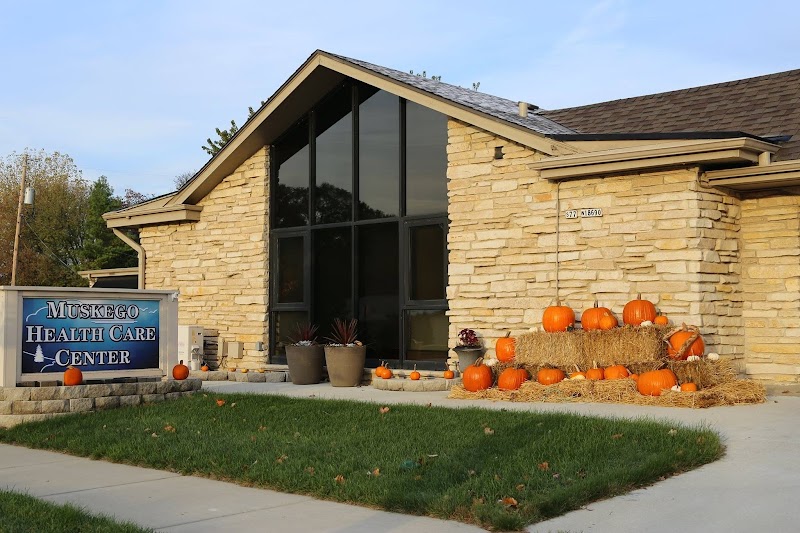
Who Owns and Operates Muskego Center?

MUSKEGO HEALTH AND REHABILITATION CENTER is owned by a for-profit company. For-profit facilities operate as businesses with obligations to shareholders or private owners. The facility is operated by CHAMPION CARE, a chain that manages multiple nursing homes. With 49 certified beds and approximately 35 residents (about 71% occupancy), it is a smaller facility located in MUSKEGO, Wisconsin.
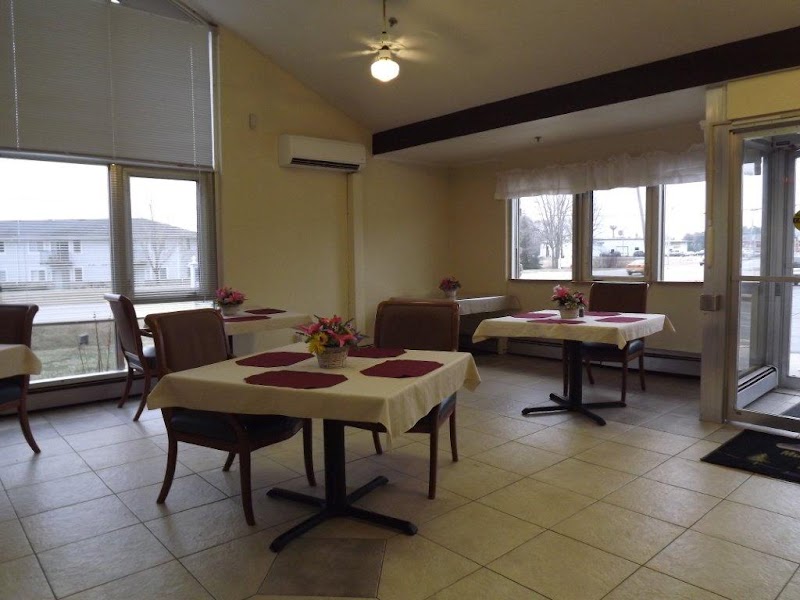
How Does Muskego Center Compare to Other Wisconsin Nursing Homes?

Compared to the 100 nursing homes in Wisconsin, MUSKEGO HEALTH AND REHABILITATION CENTER's overall rating (1 stars) is below the state average of 3.0, staff turnover (64%) is significantly higher than the state average of 46%, and health inspection rating (1 stars) is much below the national benchmark.

What Should Families Ask When Visiting Muskego Center?

Based on this facility's data, families visiting should ask: "What changes have been made since the serious inspection findings, and how are you preventing similar issues?" "What safeguards and monitoring systems are in place to protect residents from abuse or neglect?" "How do you ensure continuity of care given staff turnover, and what is your staff retention strategy?" "Can I visit during a mealtime to observe dining assistance and food quality?" These questions are particularly relevant given the facility's Immediate Jeopardy citations, the substantiated abuse finding on record, and the facility's high staff turnover rate.

Is Muskego Center Safe?

Based on CMS inspection data, MUSKEGO HEALTH AND REHABILITATION CENTER has documented safety concerns. The facility has 1 substantiated abuse finding (meaning confirmed case of resident harm by staff or other residents). Inspectors have issued 2 Immediate Jeopardy citations (the most serious violation level indicating risk of serious injury or death). The facility has a 1-star overall rating and ranks #100 of 100 nursing homes in Wisconsin. Families considering this facility should ask detailed questions about what corrective actions have been taken since these incidents.

Do Nurses at Muskego Center Stick Around?

Staff turnover at MUSKEGO HEALTH AND REHABILITATION CENTER is high. At 64%, the facility is 18 percentage points above the Wisconsin average of 46%. High turnover means new staff may not know residents' individual needs, medications, or preferences. It can also be disorienting for residents, especially those with dementia who rely on familiar faces. Families should ask: What is causing the turnover? What retention programs are in place? How do you ensure care continuity during staff transitions?

Was Muskego Center Ever Fined?

MUSKEGO HEALTH AND REHABILITATION CENTER has been fined $58,195 across 1 penalty action. This is above the Wisconsin average of $33,661. Fines in this range indicate compliance issues significant enough for CMS to impose meaningful financial consequences. Common causes include delayed correction of deficiencies, repeat violations, or care failures affecting resident safety. Families should ask facility leadership what changes have been made since these penalties.

Is Muskego Center on Any Federal Watch List?

MUSKEGO HEALTH AND REHABILITATION CENTER is not on any federal watch list. The most significant is the Special Focus Facility (SFF) program, which identifies the bottom 1% of nursing homes nationally based on persistent, serious quality problems. Not being on this list means the facility has avoided the pattern of deficiencies that triggers enhanced federal oversight. This is a positive indicator, though families should still review the facility's inspection history directly.