LINDENGROVE NEW BERLIN

13755 W FIELDPOINTE DR, NEW BERLIN, WI 53151 (262) 796-3660
Non profit - Church related 110 Beds Independent Data: November 2025 2 Immediate Jeopardy citations
Trust Grade
0/100
#290 of 321 in WI
Last Inspection: January 2025

Within standard 12-15 month inspection cycle. Federal law requires annual inspections.

Overview

Lindengrove New Berlin has received a Trust Grade of F, indicating significant concerns about the facility's care and operations. They rank #290 out of 321 facilities in Wisconsin, placing them in the bottom half, and #14 out of 17 in Waukesha County, meaning only a few local options are worse. The facility is worsening, with issues increasing from 4 to 13 over the past year. While staffing is rated at 4 out of 5 stars with a turnover rate of 46%, which is slightly below the state average, RN coverage is concerning, being lower than 78% of facilities in Wisconsin. There are also serious issues, including a resident falling due to inadequate supervision and staff not following proper transfer protocols, which raises significant safety concerns. Overall, while the staffing levels are a strength, the high number of compliance issues and critical incidents are alarming for families considering this nursing home.

Trust Score
F
0/100
In Wisconsin
#290/321
Bottom 10%
Safety Record
High Risk
Review needed
Inspections
Getting Worse
4 → 13 violations
Staff Stability
⚠ Watch
46% turnover. Above average. Higher turnover means staff may not know residents' routines.
Penalties
✓ Good
$148,819 in fines. Lower than most Wisconsin facilities. Relatively clean record.
Skilled Nurses
○ Average
Each resident gets 41 minutes of Registered Nurse (RN) attention daily — about average for Wisconsin. RNs are the most trained staff who monitor for health changes.
Violations
⚠ Watch
50 deficiencies on record. Higher than average. Multiple issues found across inspections.
★☆☆☆☆
1.0
Overall Rating
★★★★☆
4.0
Staff Levels
★★★★☆
4.0
Care Quality
★☆☆☆☆
1.0
Inspection Score
Stable
2024: 4 issues
2025: 13 issues

The Good

  • 4-Star Staffing Rating · Above-average nurse staffing levels
  • 4-Star Quality Measures · Strong clinical quality outcomes
  • Full Sprinkler Coverage · Fire safety systems throughout facility
  • No fines on record

Facility shows strength in staffing levels, quality measures, fire safety.

The Bad

1-Star Overall Rating

Below Wisconsin average (3.0)

Significant quality concerns identified by CMS

Staff Turnover: 46%

Near Wisconsin avg (46%)

Higher turnover may affect care consistency

Federal Fines: $148,819

Well above median ($33,413)

Significant penalties indicating serious issues

The Ugly 50 deficiencies on record

2 life-threatening 4 actual harm
Sept 2025 3 deficiencies 1 Harm
SERIOUS (G) 📢 Someone Reported This

A family member, employee, or ombudsman was alarmed enough to file a formal complaint

Actual Harm - a resident was hurt due to facility failures

Accident Prevention (Tag F0689)

A resident was harmed · This affected 1 resident

**NOTE- TERMS IN BRACKETS HAVE BEEN EDITED TO PROTECT CONFIDENTIALITY** Based on observation, interview, and record review, the facility did not ensure 2 (R1 & R3) of 3 residents received adequate sup...

Read full inspector narrative →
**NOTE- TERMS IN BRACKETS HAVE BEEN EDITED TO PROTECT CONFIDENTIALITY** Based on observation, interview, and record review, the facility did not ensure 2 (R1 & R3) of 3 residents received adequate supervision and assistance devices to prevent accidents.*R1 was admitted to the facility on [DATE] with a history of falls. R1 fell on 8/11/25 while attempting to self transfer. The facility did not thoroughly investigate this fall and was aware of R1's multiple attempts to self transfer but did not address R1's self transferring behaviors. On 8/19/25 R1 fell, was transferred to the hospital and diagnosed with a pelvic fracture. R1 returned to the facility on 8/28/25. On 8/31/25 R1 fell. The facility did not thoroughly investigate this fall.*R3's falls on 6/26/25, 7/7/25, 7/13/25, 7/29/25, 8/2/25, 8/20/25, & 8/26/25 were not thoroughly investigated. On 9/4/25 R3 received the incorrect diet for lunch., putting R3 at risk for choking. On 9/8/25 during morning cares, R3 bed was not lowered according to R3's falls plan of care when CNA-L went into the bathroom and/or left R3's room.Findings include:The facility's policy titled, Falls and last reviewed 5/8/25 documents under Policy Prevention measures are put in place to reduce the occurrence of falls and risk of injury from falls. Under Procedure documents .2. Procedure of Fall Event and Implementation of Intervention: a. Licensed nurse completes electronic documentation of the Fall Incident Report. b. The care plan will be updated with an identified intervention. c. Registered Nurse reviews and completes the fall assessment and interventions. d. Fall follow-up assessments completed as indicated. 3. Administrative Review: a. The Interdisciplinary Team (IDT) will review Fall Incident report and utilize root cause analysis to make further recommendations. b. Director of Nursing (or designee) and Executive Director to review and sign Fall Incident Report. c. Quality Assurance and Process Improvement Committee reviews facility fall incidents and trends.On 9/4/25, at 12:01 p.m., Surveyor asked Registered Nurse (RN)-G to explain the process when a resident has a fall. RN-G informed Surveyor that after a fall, an RN will assess the resident from head to toe, obtains vital signs, contact the provider and POA if the resident has one have one. RN-G indicated an incident report, pain assessment, progress note, and fall assessment are completed. RN-G informed Surveyor usually the unit manager will let them know what new fall intervention was initiated. RN-G informed Surveyor if the fall was witnessed she will get witness statements and give these to the manager. If the fall is unwitnessed she will usually ask the CNAs questions such as who last saw the resident, if their bed was in a low position. RN-G informed Surveyor that the statements are then given to the unit manager.On 9/4/25, at 2:12 p.m., Surveyor asked Licensed Practical Nurse/Unit Manager (LPN/UM)-I to explain the process when a resident falls. LPN/UM-I informed Surveyor when a resident falls staff will let her know and if she is at the facility she will put in a new fall intervention. If she is not at the facility when she will comes back she will put in an intervention. LN/UM-I explained all assessment have been completed, she will do an investigation, the IDT (interdisciplinary team) will do a root cause and an intervention. Surveyor asked if LPN/UM-I if during the investigation she gets staff statements or are staff interviewed. LPN/UM-I informed Surveyor the nurse usually gets statements and puts them under her door. Surveyor asked what happens with staff statements. LPN/UM-I informed Surveyor they would be with the packet that is given to DON-B. Surveyor asked LPN/UM-I what she provides to DON-B. LPN/UM-I informed Surveyor the the investigation summary which includes what happened, diagnoses, IDT met discussed incident with root cause and care plan intervention. All assessments are printed out which include risk management, nurses note, fall risk assessment, pain assessment, and e-interact change of condition which is like an SBAR, and copy of the care plan with interventions. LPN/UM-I informed Surveyor she will put a new Kardex in the resident's room with the new intervention. Surveyor asked LPN/UM-I if DON-B would have staff statements. LPN/UM-I replied yes if there were statements given to me.1.) R1 was originally admitted to the facility on [DATE] with diagnoses which includes cardiogenic shock (inadequate blood flow to the body's organs due to dysfunction of the heart), diabetes mellitus (high blood sugar), atrial fibrillation (irregular and rapid heart beat), atrial fibrillation (irregular and rapid heartbeat), chronic kidney disease (kidneys are damaged and cannot filter blood and waste effectively), and heart failure (chronic condition in which the heart doesn't pump blood as well as it should). R1's hospital Discharge summary dated [DATE] for reason for hospitalization is falls.R1's fall risk evaluation dated 7/25/25 has a score of 4. A total score of 10 or greater is high risk for falls.R1's at risk for falls care plan initiated 7/25/25 & revised 8/31/25 documents the following interventions: Anticipate and meet the resident's needs, initiated 7/25/25. Be sure the resident's call light is within reach and encourage the resident to use it for assistance as needed. The resident needs prompt response to all requests for assistance, initiated 7/25/25. Follow facility fall protocol, initiated 7/25/25. PT/OT (physical therapy/occupational therapy) evaluate and treat as ordered or PRN (as needed), initiated 7/25/25. Ensure that the resident is wearing appropriate footwear when ambulating, transferring or mobilizing in w/c (wheelchair), initiated 8/11/25 & revised 8/13/25. Call before you fall sign placed in bathroom, initiated 8/19/25. Offer resident assistance with using the toilet with every interaction, initiated 8/31/25. R1's admission MDS (minimum data set) with an assessment reference date of 8/1/25 has a BIMS (brief interview mental status) score of 12 which indicates moderate cognitive impairment. R1 is assessed as being dependent for toileting hygiene, supervision or touching assistance for rolling left and right & chair/bed to chair transfer and partial/moderate assistance for toilet transfer. R1 is frequently in continent of urine and always continent of bowel. R1 has fallen in the last month prior to admission and has not had any falls since admission.R1's functional abilities (self care and mobility) CAA (care area assessment) dated 8/4/25 under analysis of findings for nature of the problem/condition is blank. Under care plan conditions for describe impact of this problem/need on the resident and your rational for care plan decision documents CAA triggered due to resident requires extensive assist of 1 people for bed mobility, toileting and transfer. Extensive assist of 1 for dressing and personal hygiene. Dependent on staff for locomotion. Ambulating short distance with walker and CGA (contact guard assistance). Resident recently admitted from hospital where he had been for cariogenic shock. Lived with son prior to hospitalization. Currently resident has had a decline in mood related to situation. Isolates self in room. Goal is to return home. Resident has decondition. Is at risk for further decline in ADL's (activities daily living), falls, contractures, further isolation, complications of immobility: further pressure ulcers, muscle atrophy, incontinence and contractures. Referred to and is receiving PT/OT (physical therapy/occupational therapy) 5x/week (five times per week). Referred to MD (medical doctor) for evaluation of mood/depression and pain med (medication) management. Will proceed to care plan to prevent/minimize risks; work with resident to return to prior level of independent functioning.R1's falls CAA dated 8/4/25 under analysis of findings for nature of the problem/condition is blank. Under care plan considerations for describe impact of this problem/need on the resident and your rationale for care plan decision documents CAA triggered for falls due to risk factors resulting from Balance problems: Not steady, only able to stabilize with human assistance for moving from seated to standing position, moving on and off toilet and surface-to-surface transfer; Resident admitted to facility with fall history. Resident has had no falls during this assessment period, refer to DQI documentation. Nursing staff assists resident with ADLs (activities daily living) as needed according to facility policy. Resident is at risk for fall related injury. Resident receives physician ordered Physical and Occupational Therapy services. No referrals at this time, will proceed to care plan with goal to have no fall related injuries.R1's nurses note dated 8/11/25, at 17:35 (5:35 p.m.) written by Licensed Practical Nurse/Unit Manager (LPN/UM)-I documents: Writer entered resident's room to take his blood sugar and found him sitting on his bottom on the floor between the head of the bed and night stand. Resident had both legs straight out in front of him, one gripper sock on his left foot and his right foot was bare. Resident's wheelchair was across from him about 3 feet away from where he was sitting at the foot of the bed facing him, parallel to the bed, the wheels were not locked. Writer had last seen resident about 10 minutes prior, he was on the toilet, resident asked writer to come back and take his blood sugar. Writer had reminded resident to use the call light to ask for help to get off the toilet when he was done. Writer checked with CNA (Certified Nursing Assistant) and resident had not called for help to get on or off the toilet. Resident joked that he decided to just sit on the floor for a little bit. Resident then stated he was attempting to get into bed he stated he stood up and went to pivot into the bed when his knees gave out causing him to fall landing on his bottom. Resident assessed for injury, none noted, resident denied pain or discomfort, skin check done no injuries noted, neuro checks started, were negative, vitals WNL (within normal limits); BS (blood sugar) 93. Resident assisted up off the floor and into bed by the writer and CNA. POA (power of attorney) [Name] updated, [Name] NP (Nurse Practitioner) updated, writer is on call manager so no notification to on call manager made. Resident placed on 24 hour board for monitoring, Risk Management started.Surveyor reviewed the facility's fall investigation which included an investigative report for date of incident of 8/11/25 prepared by RN/UM-H. The summary of alleged incident documents Writer entered resident's room to take his blood sugar and found him sitting on his bottom on the floor between the head of the bed and night stand. Resident had both legs straight out in front of him, one gripper sock on his left foot and his right foot was bare. Resident's wheelchair was across from him about 3 feet away from where he was sitting at the foot of the bed facing him, parallel to the bed, the wheels were not locked. Writer had last seen resident about 10 minutes prior, he was on the toilet, resident asked writer to come back and take his blood sugar. Resident joked that he decided to just sit on the floor for a little bit. Resident then stated he was attempting to get into bed he stated he stood up and went to pivot into the bed when his knees gave out causing him to fall landing on his bottom. Writer had reminded resident to use the call light to ask for help to get off the toilet when he was done. Writer checked with CNA and resident had not called for help to get on or off the toilet. Resident assessed for injury, none noted, resident denied pain or discomfort, skin check done no injuries noted, neuro checks started, were negative, vitals WNL; BS 93. Resident assisted up off the floor and into bed by the writer and CNA with hoyer lift. POA [Name] updated; [Name] NP updated. POA, [Name] made aware. Pertinent diagnoses included weakness, AFIB (atrial fibrillation), DM2 (diabetes mellitus two), Metabolic encephalopathy and unsteadiness on feet. IDT (interdisciplinary team) discussed fall, determined root cause to be resident not having proper footwear on. Care plan updated to have proper footwear on at all times. Also included in the fall investigation is an incident report dated 8/11/25, pain tool dated 8/11/25, fall risk evaluation dated 8/11/25, and SBAR (situation, background, appearance, review and notify) dated 8/11/25, neurological flow sheet started on 8/11/25 at 1710 (5:10 p.m.) a written statement dated 8/11/25 under statement documents was on ground sitted sic (sitting) up when walked in. The employee name is blank and this statement is not signed. The nurses note dated 8/11/25 at 17:35 (5:35 p.m.) and R1's at risk for falls care plan initiated 7/25/25 & revised 7/28/25.Surveyor noted the facility did not conduct a thorough investigation as the facility did not investigate what prior interventions were in place at the time of R1's fall and whether these interventions continue to be effective. Additionally, the facility did not address R1 self transferring and none of R1's care plans address R1 self transferring.R1's fall risk evaluation dated 8/11/25 has a score of 9. A total score of 10 or greater is high risk for falls.R1's nurses note dated 8/19/25, at 11:04 a.m., documents Resident found on floor on his buttock in front of the toilet. Resident tried to self transfer to the toilet. Vitals 79/52, 121, 97.6%, 98.9, 16. Resident able to move all extremities and denies any new pain. Resident was sent to [Name] Hospital due to several low b/p (blood pressure), increased confusion and weakness.Surveyor reviewed the facility's fall investigation which included an investigative report for date of incident of 8/19/25 prepared by RN/UM-H. The summary of alleged incident documents Resident found on floor on his buttock in front of the toilet. Resident tried to self transfer to the toilet. Vitals 79/52 121, 976% sic (97%), 98.9, 16. Resident hypotensive. Resident able to move all extremities and denies any new pain. Neuro check performed. Resident assisted back into bed via hoyer lift. [Name] NP notified. Resident's POA, [Name] notified. Resident to be sent to [hospital initials] per NP for further evaluation. Pertinent diagnoses include weakness, AFib, DM2, Metabolic encephalopathy and unsteadiness on feet. IDT discussed fall, determined root cause to be resident not calling for assistance. Care plan updated to have call before you fall sign placed in bathroom. Also included in the facility's fall investigation is an incident report dated 8/19/25, fall risk evaluation dated 8/19/25, SBAR communication form dated 8/19/25, pain tool dated 8/19/25, neurological flow sheet starting on 8/19/25 at 0800 (8:00 a.m.), R1's progress notes 8/19/25 at 10:07 a.m. through 8/21/25 at 14:23 (2:23 p.m.), and R1's at risk for falls care plan initiated 7/25/25 & revised 7/28/25. The facility reported R1's fall on 8/19/25 with a fracture to the State agency. Included in the facility's investigation included staff interviews for the following questions: Resident was admitted to the hospital with a pelvic fracture. What can you tell us about this? What is the care routine like for [R1's first name]? Does [R1's first name] use his call light to make needs known? Is there anything else you would like to share with us regarding [R1's first name]? Surveyor noted 8 of 10 staff statements indicate R1's self transfers.Surveyor noted the facility did not conduct a thorough investigation as the facility did not investigate who last observed R1, what was R1 doing, when was R1 last toileted, were prior interventions in place at the time of R1's fall and whether these interventions continue to be effective. In addition the facility did not address R1 self transferring and none of R1's care plans address R1 self transferring. R1's fall risk evaluation dated 8/19/25 has a score of 16. A total score of 10 or greater is high risk for falls.R1's nurses note dated 8/20/25, at 8:46 a.m., written by Registered Nurse/Unit Manager (RN/UM)-H documents Contacted [hospital initials] and spoke to [Name] RN. Dx (diagnosis): Pelvic facture. R1 was readmitted to the facility on [DATE].R1's hospital discharge summary for date of discharge 8/28/25 for Reason for hospitalization documents Unwitnessed fall. Under Discharge diagnoses includes documentation of L (left) ischiopubic ramus facture 2/2 (secondary to) fall and LC 1 injury to left hemipelvis 2/2 fall.R1's nurses note dated 8/31/25, at 01:13 (1:13 a.m.) written by LPN-F documents At 0025 (12:25 a.m.) writer and CNA heard the room door of [room number] close loudly. CNA went to check immediately and found resident laying on his back in the bathroom doorway. Resident had pulled his brief off prior to going to bathroom and urine was noted on the floor in center of room. Resident has used w/c to navigate to the bathroom door. W/C was outside the bathroom, facing into his room. Resident was barefoot. RN was called to assess resident. ROM (range of motion) WNL (within normal limits). Neuro check negative. No bumps or bruises noted. Resident alert. Forgetful. Did not put call light on. Urinal was in reach of bed as call light was also in reach on bed. Vitals taken at 0025 150/90 98.0 - 101 - 18 94%. Resident was hoyered into bed with 3 assist. Reminded to call for assistance or use urinal or to get up. Will continue neuro checks as facility protocol.Surveyor reviewed the facility's fall investigation which included an investigative report for date of incident of 8/31/25 prepared by Director of Nursing (DON)-B. The summary of alleged incident documents A door was heard slamming in resident's room. CNA went to room and found resident on the floor, laying on his back in the doorway of his bathroom. Resident stated he slipped and fell. Resident had removed his brief, and urine was on the floor. Call light was not in use. RN assessed resident. ROM (range of motion) WNL (within normal limits). Neuro check negative. Vitals stable. Resident assisted off the floor via hoyer lift. [Name] PA (physician assistant) updated via HUCU. Resident's POA [name] updated. Diagnoses include cerebral infarction, DM2, metabolic encephalopathy, fracture of L (left) pubis, syncope, falls, anemia, and CKD (chronic kidney disease). IDT discussed fall. Root cause determined resident self-transferring to bathroom without calling for assistance, related to cognitive deficits. New intervention to offer toileting with every interaction. Also included in the facility's fall investigation is an incident report dated 8/31/25, fall risk evaluation dated 8/31/25, e-interact change in condition evaluation dated 8/31/25, pain tool dated 8/31/25, R1's progress notes dated 8/31/25 at 01:13 (1:13 a.m.) and 01:18 (1:18 a.m.) and R1's at risk for falls care plan initiated 7/25/25 & revised 8/31/25.Surveyor noted the facility did not conduct a thorough investigation as the facility did not investigate who last observed R1, what was R1 doing, when was R1 last toileted, and were prior interventions in place at the time of R1's fall and whether these interventions continue to be effective. There are no staff statements or evidence staff was interviewed regarding R1's fall. In addition the facility did not address R1 self transferring and none of R1's care plans address R1 self transferring. R1's fall risk evaluation dated 8/31/25 has a score of 11. A total score of 10 or greater is high risk for falls.On 9/3/25, at 3:32 p.m., Surveyor observed R1 sitting on the edge of the bed. Surveyor observed R1 is not wearing gripper socks and has bare feet. Surveyor observed Certified Nursing Assistant (CNA)-J enter R1's room and ask R1 about a shower. Surveyor observed CNA-J did not offer toileting to R1 according to R1's plan of care. On 9/3/25, at 3:35 p.m., Surveyor asked CNA-J about R1's toileting and if they ask R1 if he needs to use the bathroom. CNA-J replied no and explained R1 will call staff. CNA-J informed Surveyor R1 has an urinal at his bed so will only call when he has to have a BM (bowel movement).On 9/4/25, at 8:19 a.m., Surveyor observed R1's Visual/Bedside Kardex report as of 8/22/25 located inside R1's closet. Surveyor noted this kardex does not include the fall intervention to offer resident assistance with using the toilet with every interaction which was initiated on 8/31/25.On 9/4/25, at 12:08 p.m., Surveyor asked CNA-E when she goes in R1's room does she have to offer to toilet R1 or does he ask. CNA-E informed Surveyor this is the first day working with R1. CNA-E informed Surveyor R1 is incontinent but will say when he wants to be on the toilet.On 9/4/25, at 2:19 p.m., Surveyor met with LPN/UM-I to discuss R1's falls. LPN/UM-I informed Surveyor R1's first two falls occurred while R1 resided on the rehab unit. Surveyor inquired who Surveyor should speak with. LPN/UM-I replied name of RN/UM-H. Surveyor asked LPN/UM-I if she investigated R1's fall on 8/31/25. LPN/UM-I informed Surveyor name of DON-B investigated this fall.On 9/4/25, at 3:20 p.m., Surveyor interviewed RN/UM-H. RN/UM-H explained when a resident falls the nurse on the unit will check for injury, neuro checks are done, notify the provider, notify the family if there is a POA or if the resident is their own person will ask if they want the family contacted. The resident is transferred to bed with a hoyer. There is on going monitoring, vital signs, pain assessment and the care plan is updated with the latest intervention. Surveyor asked RN/UM-H if there is a fall investigation. RN/UM-H replied I do that. RN/UM-H explained she asked staff what happened, what was the resident doing, did they call for help. RN/UM-H informed Surveyor they try to figure out what happened and add an intervention. Surveyor asked RN/UM-H if their investigation includes staff statements. RN/UM-H replied we do, a lot of falls have statements. RN/UM-H informed Surveyor night shift is pretty good as she's not here. Surveyor asked RN/UM-H what happens to the staff statements. RN/UM-H informed Surveyor they are added to the incident report. Surveyor asked RN/UM-H what happens with her fall investigation. RN/UM-H informed Surveyor she gives the information to DON-B and DON-B and Nursing Home Administrator (NHA)-A review it. Surveyor asked RN/UM-H regarding R1's fall on 8/11/25. RN/UM-H informed Surveyor R1 was getting up frequently without calling staff. RN/UM-H informed Surveyor it looks like R1 didn't have the proper footwear on at the time R1 was attempting to get into bed. Surveyor informed RN/UM-H the investigation does not include who last saw R1 what was R1 doing and if prior interventions were in place. Surveyor informed RN/UM-H staff was aware R1 had self transferred onto the toilet but there is no evidence R1's self transferring was addressed. Surveyor inquired regarding R1's fall on 8/19/25. RN/UM-H informed Surveyor they were concerned with R1's mobility and stated we just knew something was wrong. Surveyor asked RN/UM-H after R1 was transferred to the hospital asked if there were any staff statements or was staff interviewed. RN/UM-H replied I don't believe for that one. Surveyor informed RN/UM-H Surveyor has the same concerns as R1's fall on 8/11/25. Surveyor informed RN/UM-H there is no evidence staff was spoken to as to what was R1 doing prior to the fall, when was R1 last observed, when was R1 last toileted so R1 wouldn't attempt to self transfer. Surveyor informed RN/UM-H the facility still had not addressed R1's self transferring.On 9/8/25, at 9:54 a.m., Surveyor met with DON-B. Surveyor inquired about staff statements. DON-B informed Surveyor they do not obtain staff statements. Surveyor asked DON-B if there is ever a time they would get staff statements or interview staff regarding a resident's fall. DON-B informed Surveyor if there is an unknown or vague documentation they would get staff statements. DON-B informed Surveyor for R1's fall with fracture on 8/19/25 they obtained staff statements. Surveyor informed DON-B the fall investigation she completed for R1's fall on 8/31/25 does not address who last saw R1, what was R1 doing, when was R1 last toileted, were prior intervention in place and were these interventions effective. Surveyor informed DON-B the facility did not address R1's self transferring and R1's care plans do not address self transferring. DON-B informed Surveyor she has never addressed self transferring in a care plan. Surveyor asked DON-B if there is anything Surveyor should review. DON-B replied nope.No additional information was provided. 2.) R3 was admitted to the facility on [DATE] with diagnoses which include hemiplegia (paralysis on one side of the body) and hemiparesis (weakness one one side) following cerebral infarction (type of stroke) affecting right dominate side, diabetes mellitus (high blood sugar), chronic kidney disease (kidneys are damaged and cannot filter blood and waste effectively), , aphasia (language disorder that affects a persons ability to communicate), and dysphagia (difficulty swallowing). R3's power of attorney for healthcare was activated on 5/6/25.R3's hospital Discharge summary dated [DATE] under admission diagnoses documents fall.R3's at risk for falls care plan initiated 6/12/25 and revised 8/26/25 documents the following interventions: Anticipate and meet the resident's needs, initiated 6/12/25. Be sure the resident's call light is within reach and encourage the resident to use it for assistance as needed. The resident needs prompt response to all requests for assistance, initiated 6/12/25. Follow facility fall protocol, initiated 6/12/25. PT/OT (physical therapy/occupational therapy) evaluate and treat as ordered or PRN (as needed), initiated 6/12/25. Soft touch call light in place, initiated 6/26/25. Offer resident to eat meals by the nurses station per her preference, initiated 7/7/25 & revised 8/18/25. Offer the resident assistance to go to bed after dinner, initiated 7/14/25. Encourage resident to participate in activities and spend time in common areas while up in her wheelchair, initiated 8/2/25. Bed in lowest position while resident is in it, initiated 8/4/25. Encourage resident to rest in bed or take a nap after lunch, initiated 8/21/25. Dycem in wheelchair, initiated 8/26/25.R3's admission MDS (minimum data set) with an assessment reference date of 6/18/25 has a BIMS (brief interview mental status) score of 0 which indicates severe cognitive impairment. R3 is assessed as being dependent for toileting hygiene, chair/bed to chair transfer, and toilet transfer. R3 is assessed as requiring substantial/maximal assistance for rolling left and right. R3 is frequently incontinent of urine and always incontinent of bowel. R3 fell one month prior to admission and has not fallen since admission. R3's Fall CAA dated 6/23/25 under analysis of finding for nature of the problem/condition is blank. Under care plan considerations for describe impact of this problem/need on the resident and your rationale for care plan decision documents CAA triggered for falls due to risk factors resulting from Balance problems: Not steady, only able to stabilize with human assistance for moving from seated to standing position, moving on and off toilet and surface-to-surface transfer; [R3's first name] has had a CVA (cerebrovascular accident) with right side flaccid. Resident admitted to facility with fall history. Resident has had no falls during this assessment period, refer to DQI documentation. Nursing staff assists resident with ADLs (activities daily living) as needed according to facility policy. Resident is at risk for fall related injury, Resident receives physician ordered physical and occupational therapy services. No referrals at this time, will proceed to care plan with goal to have no fall related injuries.R3's fall risk evaluation dated 6/11/25 & 6/30/25 has a score of 9. A total score of 10 or greater, the resident should be considered high risk.R3's nurses note date 6/26/25 at 7:49 a.m. created on 7/1/25 at 9:50 a.m. written by Registered Nurse/Unit Manager (RN/UM)-H documents: Patient found laying on floor next to bed by CNA (Certified Nursing Assistant) and called writer to room. Resident stated I crawled out of bed to go to the bathroom. Patient assessed, no injury noted, VSS (vital signs stable), no c/o (complaint of) pain/discomfort, patient transferred back into bed with hoyer lift. Neuro checks performed. [Name] NP (Nurse Practitioner) notified. Resident's POA (power of attorney) [Name] notified.Surveyor reviewed the facility's fall investigation which included an investigative report for date of incident of 6/26/25 prepared by RN/UM-H. The summary of alleged incident documents Patient found laying on floor next to bed by CNA and called writer to room. Resident stated I crawled out of bed to go to the bathroom. Patient assessed, no injury noted, VSS, no c/o pain/discomfort, patient transferred back into bed with hoyer lift. Neuro checks performed. [Name] NP notified. Resident's POA, [Name] notified. Pertinent diagnoses include weakness, DM, unsteadiness on feet, repeated falls and history of CVA. IDT (interdisciplinary team) discussed fall, determined root cause to be resident not calling for assistance. Care plan updated to have soft touch call light in place. Also included in the facility's fall investigation is an incident report dated 6/26/25, SBAR (situation, background, appearance, review and notify) dated 6/26/25, pain tool dated 6/26/25, fall risk evaluation dated 6/26/25, neurological flow sheet starting on 6/26/25 at 0715 (7:15 a.m.), R3's progress notes dated 6/26/25 at 07:15 (7:15 a.m.), 07:49 (7:49 a.m.) & 7:26 p.m., and R3's at risk for falls care plan initiated & revised 6/12/25.Surveyor noted the facility did not conduct a thorough investigation as the facility did not investigate who last observed R3, what was R3 doing, how was R3 positioned in bed, when was R3 last toileted, and were prior interventions in place at the time of R3's fall and whether these interventions continue to be effective.R3's nurses note dated 7/7/25 at 18:30 (6:30 p.m.) created on 8/21/25 by Licensed Practical Nurse/Unit Manager (LPN/UM)-I documents Resident had an unwitnessed fall in the dining room after dinner, discovered by housekeeping. She sustained a minor forehead laceration and bruising near the right eye but denied hitting her head. No other injuries noted; vitals and neuro checks were WNL (within normal limits). EMS (emergency medical services) transported resident to [Name] Hospital. POA (power of attorney), on call NP, and Unit Manager notified. Care plan updated for meals with nurses station per resident preference.Surveyor reviewed the facility's fall investigation which included an investigative report for date of incident of 7/7/25 prepared by LPN/UM-I The summary of alleged incident documents Resident experienced an unwitnessed fall in the dining room following dinner. She was discovered on the floor by housekeeping staff. On assessment, resident had a minor laceration to the right forehead and mild bruising with minimal bleeding noted at the corner of her right eye. Resident reported, I was trying to pick up my hearing aide and I was sliding, then I fell. She denied striking her head. Further assessment revealed no additional injuries to the head or body. Vital signs were obtained and neurological checks were initiated, all within normal limits. EMS was contacted and the resident was transferred to [Name] Hospital for further evaluation. The POA, on-call NP, and Unit Manager were notified. Pertinent diagnoses include: Hemiplegia and Hemiparesis following cerebral infarction affecting right dominate side, muscle weakness (generalized); polyarthritis, unspecified; repeated falls; spondylosis without myelopathy, lumbar region; strain of unspecified muscle; fascia and tendon at shoulder and upper arm level, right arm; type 2 diabetes mellitus; unspecified fall; unsteadiness on feet; vitamin D deficiency. The IDT reviewed the incident and determined that the fall occurred when the resident attempted to reach down to retrieve her hearing aid, causing her to slip from her wheelchair. The care plan was updated with: meals near nurses' station per resident preference. Also included in the facility's fall investigation is an in[TRUNCATED]
CONCERN (D) 📢 Someone Reported This

A family member, employee, or ombudsman was alarmed enough to file a formal complaint

Potential for Harm - no one hurt, but risky conditions existed

Report Alleged Abuse (Tag F0609)

Could have caused harm · This affected 1 resident

**NOTE- TERMS IN BRACKETS HAVE BEEN EDITED TO PROTECT CONFIDENTIALITY** Based on interviews and record review, the facility failed to develop and/or implement policies and procedures for ensuring the ...

Read full inspector narrative →
**NOTE- TERMS IN BRACKETS HAVE BEEN EDITED TO PROTECT CONFIDENTIALITY** Based on interviews and record review, the facility failed to develop and/or implement policies and procedures for ensuring the reporting of a reasonable suspicion of a crime in accordance with section 1150B of the Act, the facility did not report 1 of 2 allegations reviewed for neglect/mistreatment to the State Survey Agency during the required timeframe.R2's daughter sent an email to the Nursing Home Administrator regarding a concern of mistreatment and neglect towards R1. This was delayed in being reported to the state agency.Findings include:The Facility Policy titled Abuse, Neglect, Mistreatment and Misappropriation of Resident Property, last reviewed 11/8/23, documents (in part): G. Reporting and ResponseAbuse Policy Requirements:It is the policy of this facility that abuse allegations are reported per Federal and State Law. The facility will ensure that all alleged violations involving abuse, neglect, exploitation or mistreatment, including injuries of unknown source and misappropriation of resident property, are reported immediately, but not later than 2 hours after the allegation is made, it the events that cause the allegation involve abuse or result in serious bodily injury, or not later than 24 hours if the events that cause the allegation do not involve abuse and do not result in serious bodily injury, to the Executive Director of the facility and to other officials (including to the State Survey Agency and adult protective services where state law provides for jurisdiction in long-term care facilities) in accordance with State law through established procedures. In addition, local law enforcement will be notified of any reasonable suspicion of a crime against a resident in the facility.R2 was admitted to the facility on [DATE] with pertinent diagnoses that include hemiplegia and hemiparesis following nontraumatic intracerebral hemorrhage affecting left dominant side (a serious neurological condition characterized by paralysis (hemiplegia) or weakness (hemiparesis) on the left side of the body, with the left hemisphere of the brain being dominant), polyneuropathy (the nerves that are located outside of the brain and spinal cord (peripheral nerves) are damaged. This condition often causes weakness, numbness and pain, usually in the hands and feet), morbid obesity (a condition in which you have a body mass index (BMI) higher than 35. BMI is used to estimate body fat and can help determine if you are at a healthy body weight for your size), and chronic pain syndrome (a condition characterized by persistent pain that lasts for more than three months).R2's Quarterly Minimum Data Set (MDS) with an assessment reference date of 8/8/25, documents a Brief Interview for Mental Status (BIMS) score of 13, indicating R2 is cognitively intact . The MDS documents that R2 was assessed to have no behaviors exhibited during the look back period. R2's Patient Health Questionnaire (PHQ-9) score was 00, indicating no depressive symptoms. R2 is coded as making self understood and understands others. Per the MDS, R2 has an impairment on one side for both the upper and lower extremities. The MDS indicates R2 is frequently incontinent of bladder and always incontinent of bowel.On 9/4/25, at 8:52am, Surveyor interviewed R2 about an aide ever stating they were going to take a picture of R2's bowel movement. R2 stated that the Nursing Home Administrator (NHA)-A had talked to R2 about the incident for about 20 minutes, but NHA-A never asked the name of the aide who stated they would take a picture of R2's bowel movement. On 9/4/25, at 10:45am, Surveyor interviewed complainant who stated that on 8/31/25, R2 called and stated an aide had wanted to take a picture of R2's bowel movement. The complainant then emailed NHA-A immediately to alert of the situation. The aide was identified to Surveyor. The email that was sent to NHA-A was forwarded to Surveyor with the time stamp of Sent: Sunday, August 31, 2025 7:41pm.On 9/4/25, at 12:03pm, Surveyor interviewed Nurse Supervisor-O who stated when R1 or their daughter have a concern NHA-A talks to staff about it.On 9/8/25, at 8:08am, Surveyor interviewed NHA-A and was told a self-report was filed with the state agency. It is being actively investigated, and the investigation is due tomorrow. A copy of the Division of Quality Assurance form F-62617 was provided.Surveyor noted that the email notification indicated being sent on 8/31/25, at 7:41pm. The self report form F-62617, documented the date that the incident was discovered as 9/2/25. Surveyor noted that NHA-A had previously being informed of the incident on August 31, 2025 via email, but the facility did not report the incident then to the state agency. On 9/8/25, at 9:34am, Surveyor followed up with NHA-A regarding the process when an allegation comes in over a weekend or Holiday. NHA-A stated a normal allegation would be reported to the nurse who then notifies the nurse manager. The nurse manager then reports concerns to the NHA-A. Surveyor asked if an email was sent on 8/31/25, why the delay in reporting until 9/2/25. NHA-A responded that they did not receive the email until Tuesday due to the holiday and that is when they responded and filed the self report. Surveyor asked if anyone else scans emails for time sensitive emails and was told no one else does. If it had been a time sensitive issue NHA-A stated they should have called a manager on duty. Surveyor noted during interview with NHA-A it was shared that R2 and the Complainant have a preference for direct communication with NHA-A. NHA-A informed Surveyor that an assistant NHA has been hired and that NHA-A tried to have this person be the contact, but that did not work out, so NHA-A has remained the primary contact for R2. NHA-A even puts it on the calendar to attend the quarterly care conferences to keep up communication with R2. On 9/8/25, at 10:50am, Surveyor informed NHA-A of the concern that there needs to be a process in place for allegations that come in over the weekend or holiday to be addressed timely and reported within the designated time frames. pNo additional information was provided as to why R2's allegation of mistreatment and neglect was delayed in being reported to the State Agency.
CONCERN (D) 📢 Someone Reported This

A family member, employee, or ombudsman was alarmed enough to file a formal complaint

Potential for Harm - no one hurt, but risky conditions existed

Quality of Care (Tag F0684)

Could have caused harm · This affected 1 resident

**NOTE- TERMS IN BRACKETS HAVE BEEN EDITED TO PROTECT CONFIDENTIALITY** Based on interview and record review, the facility did not ensure 1 (R2) of 4 residents reviewed for quality of care received tr...

Read full inspector narrative →
**NOTE- TERMS IN BRACKETS HAVE BEEN EDITED TO PROTECT CONFIDENTIALITY** Based on interview and record review, the facility did not ensure 1 (R2) of 4 residents reviewed for quality of care received treatment and care in accordance with professional standards of practice. * R2 developed a rash and R2's physician was not notified in order for R2 to obtain treatment. Findings include: The facility policy and procedure titled, Standard Skin Protocol, with no date, documents, in part: Goal: Breaks in skin integrity will be minimized with current plan of care.RN: Complete skin assessment on admission, weekly with bath and PRN (as needed).Consult wound certified Nurse PRN.Individual/POA (power of attorney) education regarding minimizing skin breakdown.Notify MD (medical doctor) of changes in skin integrity as nurse observations deem appropriate.R2 was admitted to the facility on [DATE] with pertinent diagnoses that include hemiplegia and hemiparesis following nontraumatic intracerebral hemorrhage affecting left dominant side (a serious neurological condition characterized by paralysis (hemiplegia) or weakness (hemiparesis) on the left side of the body, with the left hemisphere of the brain being dominant), polyneuropathy (the nerves that are located outside of the brain and spinal cord (peripheral nerves) are damaged. This condition often causes weakness, numbness and pain, usually in the hands and feet), morbid obesity (a condition in which you have a body mass index (BMI) higher than 35. BMI is used to estimate body fat and can help determine if you are at a healthy body weight for your size), and chronic pain syndrome (a condition characterized by persistent pain that lasts for more than three months).R2's Quarterly Minimum Data Set (MDS) with an assessment reference date of 8/8/25, documents a Brief Interview for Mental Status (BIMS) score of 13, indicating R2 is cognitively intact. The MDS documents that R2 was assessed to have no behaviors exhibited during the look back period. R2's Patient Health Questionnaire (PHQ-9) score was 00, indicating no depressive symptoms. R2 is coded as making self understood and understands others. Per the MDS, R2 has an impairment on one side for both the upper and lower extremities. The MDS indicates R2 is frequently incontinent of bladder and always incontinent of bowel.R2's care plan documents the resident has potential for pressure ulcer development r/t (related to) Immobility, incontinence, PVD (peripheral vascular disease) that was initiated on 08/07/2023, and revised on 10/31/2024, with the following interventions: Educate the resident/family/caregivers as to causes of skin breakdown; including: transfer/positioning requirements; importance of taking care during ambulating/mobility, good nutrition and frequent repositioning. Revision on: 06/13/2025 Inform the resident/family/caregivers of any new area of skin breakdown. Date Initiated: 08/07/2023 Staff to assist with routine toileting and skincare for incontinence. Date Initiated: 08/07/2023 Staff to assist with turning and repositioning. Uses air mattress with bolster. Date Initiated: 08/07/2023\Surveyor was unable to locate additional skin care plans not related to pressure ulcers.R2's physician order dated 6/15/23 documents: complete weekly skin check and bath Thursday PM shift. Note whether resident takes a tub bath (T), bed bath (B), or a shower (S) every evening shift every Thu (Thursday) Complete Skin Only Evaluation. Document bath refusals. Weight. R2's Skin Only Evaluation dated 7/24/25, under Skin section documents Does Resident have current skin issues? is marked as Yes. The Skin Issue selected is Rash. Location is documented as abdominal folds/breast folds. Skin Note is documented as resident has moderate redness to folds. Provider Notification is left blank. Education Provided questions are each marked no.R2's late entry nurse's note created on 9/8/25, with an effective date of 7/24/25, documents Resident had a mild rash in abdominal folds-she was cleaned and dried well with barrier cream applied.On 9/4/25, at 2:02pm, Surveyor interviewed Nurse Supervisor-O regarding when Skin Only Evaluations should be done and was told they should be done on bath days. They were just put in by the Director of Nursing (DON) to be done weekly. Surveyor showed the 7/24/25 Skin Only Evaluation to Nurse Supervisor-O and asked why notification to the physician was not done. Nurse Supervisor-O wanted to look into this.On 9/4/25, at 2:25pm, Nurse Supervisor-O followed up with Surveyor and stated they did not know about the rash on 7/24/25 and does not know why the physician wasn't notified.On 9/8/25, at 8:34am, Surveyor interviewed DON-B regarding the Skin Only Assessment completed on 7/24/25 indicating R2 had a rash and the physician was not updated. DON-B stated she would look into it.On 9/8/25, at 9:31am, DON-B followed up with Surveyor that they talked to the nurse who charted the rash on 7/24/25 and they stated it was mild redness that they cleaned and put barrier cream on. Surveyor asked what the expectation would be for contacting the physician with skin concerns. DON-B stated that for mild redness they would not expect the nurse to contact the physician. DON-B stated the nurse put in a late entry progress note about the redness.Surveyor noted R2's late entry progress note dated 9/8/25, documents Resident had a mild rash in abdominal folds-she was cleaned and dried well with barrier cream applied. A rash is not the same as mild redness. Surveyor noted that a rash was indicated on the Skin Only Evaluation completed on 7/24/25 and again in the late entry progress note dated 9/8/25.On 9/8/25, at 10:58am, Surveyor relayed concern to DON-B that R2's physician was not contacted regarding R2's rash found on 7/24/25.No additional information was provided regarding why R2's physician was not contacted for treatment of R2's rash found on 7/24/25.
Jun 2025 2 deficiencies 1 Harm
SERIOUS (G) 📢 Someone Reported This

A family member, employee, or ombudsman was alarmed enough to file a formal complaint

Actual Harm - a resident was hurt due to facility failures

Accident Prevention (Tag F0689)

A resident was harmed · This affected 1 resident

**NOTE- TERMS IN BRACKETS HAVE BEEN EDITED TO PROTECT CONFIDENTIALITY** Based on interviews and record review the facility did not ensure that each resident receives adequate supervision and assistanc...

Read full inspector narrative →
**NOTE- TERMS IN BRACKETS HAVE BEEN EDITED TO PROTECT CONFIDENTIALITY** Based on interviews and record review the facility did not ensure that each resident receives adequate supervision and assistance devices to prevent accidents for 2 of 2 (R1 and R2) residents reviewed for accidents. R1 was care planned to transfer with a sit to stand mechanical lift and assist of 2 staff. CNA's transferred the resident with 2-person pivot. R1 sustained a leg fracture.R2 was care planned to transfer with a sit to stand mechanical lift and assist of 2 staff. The CNA transferred the resident alone. R2 sustained a fall from the sit to stand resulting in a head laceration requiring staples.Findings include:R1 admitted to the facility on [DATE] and entered onto Hospice [DATE]. Diagnoses included Atrial Fibrillation, Heart Failure, Peripheral Vascular Disease, Dementia, anxiety, Osteoporosis and Pulmonary Hypertension. R1 passed away at the facility on [DATE].R1's Care Plan documented: The resident has an ADL (Activity of Daily Living) self-care performance deficit r/t (related to) activity intolerance, limited mobility - initiated [DATE]. Interventions include: Transfer: The resident requires Mechanical Lift sit to stand with 2 staff assist for transfers, May use Hoyer lift as needed when resident not tolerating the sit to stand lift - initiated [DATE] revised [DATE]. The facility does not have a policy and procedure specific to mechanical lifts. Surveyor was provided the facility policy and procedure with the subject Safe Individual Handling Program which documents (in part) A. Transfer assessment1. Individuals will be assessed according to ability per transfer and movement objective criteria. Nursing will perform this assessment in collaboration with therapy as applicable.2. Once the assessment is completed, the appropriate transfer status will be determined.B. Care Plan1. Individual-specific transfer status will be addressed on the Care Plan to include specific equipment type if applicable.2. All staff to transfer according to the Care Plan unless it is determined by the Registered Nurse (RN)/Licensed Practical Nurse (LPN)/Certified Nursing Assistant (CNA) at the time that the transfer is not a safe transfer for either the individual or the staff member. On [DATE] at 9:42 PM, R1's progress notes included an Einteract change in condition (CIC) form completed by Licensed Practical Nurse (LPN)-G which documented: New or Worsening Pain. Nursing observations, evaluation, and recommendations are: When resident being transferred to bed. She stated that she was having pain in her left ankle from the transfer. Residents' bilateral ankles and feet are swollen 4+ pitting edema. No redness or bruising noted to the left ankle. On [DATE] at 12:06 AM, LPN-H documented: C/O (complained of) increased pain to left ankle / foot. Left ankle, foot appears swollen red pain to touch. Resident requested to go to the hospital. PRN (as needed) Morphine administered resident appears anxious update PRN Lorazepam administered. (Hospice) called at midnight requesting X-ray to left ankle left arm. Awaiting call back. On [DATE] at 12:19 AM, Hospice nurse out to evaluate resident.On [DATE] at 2:52 AM, Hospice Registered Nurse (RN)-I documented: Received a call stating that (LPN-H) called to report that pt (patient) is calling out in pain. States that pt said that she was pivot transferred into bed and her ankle hurts. Call placed to (LPN-H) who states per pt was pivot transferred to bed and is complaining of L (left) ankle pain and pt want to go to the hospital. (LPN-H) is requesting an X-ray. Writer will visit and assess pain. Arrived to pt room, pt moaning. Writer, I talked with pt and asked pt where her pain was and she stated, all over. Pt has L shoulder pain which is chronic. Upon assessment pt LLE (left lower extremity) swollenness 4+ pitting edema Knee to foot. L ankle pain when touched. L calf to ankle red hot to touch. Pt with 4+ pitting edema LLE. RLE (right lower extremity) 2+ pitting edema. Slight redness noted to inner side of calf near ankle. Pictures sent to (Physician). Orders received for Cephalexin 500 mg (milligrams) BID (twice daily) x 7 days. Pt was given morphine 10 mg x 2 and lorazepam 0.5 mg x1. Pt comfortable and sleeping at end of visit.On [DATE] at 10:59 AM, Surveyor spoke with Hospice Nurse-I who reported she spoke to the Physician and sent pictures. Hospice Nurse-I stated, It appeared to look like cellulitis, so he ordered an antibiotic. Surveyor confirmed with Hospice Nurse-I that she was aware the resident was pivot transferred into bed and complained of pain after. Surveyor asked if she notified the Physician. Hospice RN-I stated she did not recall if she notified the Physician that R1 was transferred incorrectly by pivot instead of the sit to stand and was complaining of pain after. Surveyor located no evidence the Physician was notified. On [DATE] at 7:51 AM, progress notes document: Resident has c/o pain to the left leg and foot, rating it 10/10. Slightly relived by MSO4 (Morphine). Resident screaming upon staff gently moving her leg. Writer placed a call to (Hospice) and received orders for a X-ray. On [DATE] at 8:46, Biotech here to do X-rays. On [DATE] at 9:40 AM, RN Hospice here to see this resident. Resident continues to c/o pain, stating that it is not cellulitis pain it is something different and more painful. MSO4 given at 9:05 AM and resident currently resting. RN is alerting family.On [DATE] at 10:31 AM, X-ray reveal acute distal tibia fracture. Ortho evaluation recommended. RN will contact (family) to see if she would like this resident to be hospitalized . Resident currently sleeping and appears comfortable. The Radiology Results Report dated [DATE] documents (in part) Clinical information: Pain in foot and leg. Was transfer by standing and not stood in 3-4 years. Test procedure: Left tibia and Fibula, Two views. Findings/Discussion: Acute spiral nondisplaced distal tibial fracture is identified. R1 was transferred to the hospital and returned the same day. R1 declined surgical intervention and returned with a splint on left lower extremity. On [DATE] at 10:50 AM, Surveyor spoke with Family Member-M who reported the prior Thursday ([DATE]) R1 was having wheelchair races with her roommate and by Sunday ([DATE]) she was in crisis pain because I was told she was transferred using a pivot instead of the stand-up lift.Surveyor review of progress notes prior to the incident were uneventful, no adverse events were documented. R1's meal consumption from 5/27-[DATE] documented R1 consumed 75-100% of all meals. On [DATE] (the day after the incident/when the fracture was identified) R1 had significant decline. She refused meals on [DATE], ate 0-25% x 2, and 25-50% x 1 on [DATE], refused all meals on 6/3 and 6/4, and passed away on [DATE]. Surveyor reviewed the Facility Self Report investigation. The investigation summary documents Resident care plan was reviewed, and all assigned interventions were in place. The facility cannot reasonably conclude how the fracture happened. Possible sources are old age of 98, resident transfer, self-propelling and repositioning. Surveyor noted the investigation was not thorough. The investigation included no information regarding staff using pivot transfer versus the stand-up lift as care planned. LPN-G's statement obtained by Nursing Home Administrator (NHA)-A documented: I worked PM 5/31. Don't remember any issues during the shift although Surveyor noted LPN-G completed the CIC form on [DATE] after the incident. CNA-F's statement obtained by Nursing Home Administrator (NHA)-A documented: We transferred her together on PM's. Nothing else to share. We are new and normally work upstairs so we don't know the resident as well as the regular staff.On [DATE] Surveyor spoke with NHA-A and asked if he was aware that staff did not follow the care plan and transferred R1 using a pivot, versus the stand-up lift resulting in R1's leg fracture. NHA-A stated, I don't know if it was ever actually determined to be the case. Surveyor asked NHA-A when he interviewed the CNA's involved, did he ask them how the resident was transferred. NHA-A stated, I don't recall that I specifically asked that question. Surveyor advised NHA-A of progress notes documenting R1 was transferred via pivot, complained of pain immediately after and X-ray results confirmed a spiral fracture of her tibia. Surveyor asked if he investigated the fact that staff did not follow the care plan and R1 was improperly transferred. NHA-A stated, Again, I don't recall specifically asking that question.On [DATE] at 12:25 PM, Surveyor spoke with Hospice RN-J. Hospice RN-J reported she was aware R1 was transferred with pivot versus the stand-up lift. Hospice RN-J stated, Staff at the facility were talking about it and I heard them. Hospice RN-J was unable to provide names of staff but heard many staff talking about how they broke her leg because they transferred her with pivot instead of the EZ stand. Surveyor asked if she felt the fracture contributed to R1's decline. Hospice RN-J stated, Absolutely. She was doing really well before, eating, wheeling around, very happy. Literally, the next day she declined, was confused, not eating, and died a few days later. On [DATE] at 3:40 PM, Surveyor spoke with CNA-F (staff member involved in incident) who reported she went in to see if R1 was ready for bed. CNA-F stated, I did look at her care card and I know it said 2-person transfer, but I don't recall if it specifically said stand up lift. CNA-F reported R1 was not ready for bed, so she answered other call lights. When I went back, I remember asking her (R1) how she transferred, she said with 2 people - so we put a gait belt on her and pivoted her to bed. CNA-F reported R1's leg buckled and when we got her into bed R1 said I can't do that again. CNA-F stated R1 was complaining of leg pain, so she got the nurse. On [DATE] at 11:00 AM Surveyor spoke with LPN-G (the nurse working [DATE] PM shift at the time of the incident). LPN-G confirmed the CNA reported R1 had pain after transferring her into bed. LPN-G stated, The aides (they were new) said R1 started to complain of pain after they put her to bed with a 2-person transfer, because that's what R1 told them. LPN-G said she told the CNA's R1 was a stand-up lift and confirmed with the CNA's that they transferred her with 2 people. LPN-G reported CNA-F said yes, we pivoted her. LPN-G reported she completed the einteract CIC form and notified Hospice and the on-call supervisor, RN-D. Surveyor asked LPN-G if she notified RN-D that R1 was transferred incorrectly using a pivot and was complaining of pain. LPN-G stated Yes. Surveyor asked about her statement obtained by NHA-A on 6/2 that documented, I worked PM 5/31. Don't remember any issues during the shift. LPN-G informed Surveyor she did not provide any statements to NHA-A or anyone else and that no-one talked to her about the incident after it happened. On [DATE] at 11:27 AM, Surveyor spoke with RN-D who confirmed she did receive a call on [DATE] that R1 was complaining of pain after being transferred to bed and she told the nurse to call Hospice. RN-D reported she did not recall if the nurse told her R1 was transferred with pivot and not the stand-up lift as care planned. Surveyor reviewed the staff sign in sheet titled Safe resident transfers dated [DATE] which was included in the facility investigation packet. Surveyor noted only 13 of 72 CNA's names on the sign in sheet as having received the training. On [DATE] at 10:17 AM, Surveyor spoke with Deputy Medical Examiner (ME)-L. Deputy MD-L stated, I got a call from the hospice nurse, and she told me about her death and the spiral fracture that occurred after she was improperly transferred and went quickly downhill after that. Surveyor asked what does the death certificate list as cause of death: Complications of spiral fracture of left tibia. Manner of death: Accident. Injury Description: Staff-assisted pivot transfer into bed. On [DATE] at approximately 3:00 PM, the facility was notified of concern that R1's care plan was not followed. R1's care plan indicated she was to transfer with stand-up lift and 2 staff assist. On [DATE], PM CNAs assisted R1 to bed using a 2-person pivot transfer. R1's leg buckled, and she immediately complained of pain. X-ray results were positive for a spiral tibia fracture. The facility investigation was not thorough, as there was no information or documentation related to the improper transfer and not following the care plan. R1 significantly declined following the incident and passed away 4 days later. The facility provided no additional information. 2) R2 was admitted to the facility on [DATE] with diagnoses that include, Alzheimer's disease, dementia, arthritis, spinal stenosis, osteoporosis, muscle weakness, paraplegia and anxiety disorder. R2's annual Minimum Data Set (MDS) assessment, dated [DATE], documents R2 has a Brief Interview of Mental Status (BIMS) score of 12, indicating moderate cognitive impairment. A Patient Health Questionnaire (PHQ-9) score of 0, indicating no depressive symptoms, and no indicators of psychosis including no hallucinations or delusions. R2 is assessed to require substantial/maximal assistance for transfers from chair to bed. R2's Care Area Assessment (CAA) documents, R2 is triggered for falls due to use of antidepressants. Risk factors: incontinence, paraplegia, visual, hearing, cognition, and anxiety. R2's Care Plan, date initiated [DATE], documents, Focus: R2 has an ADL (Activities of Daily Living) self-care performance deficit r/t (related to) weakness, pain, dementia. Interventions include, R2 requires sit to stand lift with 2 staff assistance for transfers; date revised [DATE]. R2's CNA (Certified Nursing Assistant) Kardex dated [DATE], documents, Transfer: requires sit to stand lift with 2 staff assistance for transfers. R2's Progress Note, dated [DATE] at 19:13 (7:13 PM), documents, Note Text: The CNA reported to the floor nurse that the resident fell while using the sit to stand lift, striking the back of her head and briefly losing consciousness. Due to active bleeding, 911 was called, and the resident was transferred to [Hospital]. The POA (Power of Attorney], on-call manager, DON (Director of Nursing) and [On call Physician Group] were all notified. R2's Progress Note, dated [DATE] at 21:17 (9:17 PM), documents, NP (Nurse Practitioner) notified, pt (patient) sent to hospital post fall. Patient POA (Power of Attorney) notified of pt post fall. R2's Hospital emergency room summary, dated [DATE], documents, .Scalp: 2 cm (centimeter) laceration to the back of R2's head, bleeding was controlled prior to arrival. Significant amount of dried blood. Face: Abrasion to left temple, no bleeding. Left Upper Extremity: Multiple ecchymosis around the elbow.CT head: No acute findings or interval change intracranially. New small right posterolateral scalp, laceration/hematoma without skull fracture.Diagnosis: Laceration. Imaging of head and neck were negative for trauma. Laceration was repaired with 2 staples. R2's Physician orders, start date, [DATE], Laceration care to the right side of the skull, gently wash with NS (Normal Saline) to keep clean, end date [DATE]. R2's Physician orders, start date, [DATE], Monitor for S/S (Signs and Symptoms) of concussion: HA (headache) and the severity, change in mentation or behavioral changes. Chart in progress notes, end date, [DATE]. R2's Physician orders, start date, [DATE], may use ice pack to right back of head for pain relief, end date [DATE]. R2's Progress Note, dated [DATE] at 00:17 ( 12:17 AM) documents, Resident returned at approx (approximately) midnight. She had 2 staples placed to the laceration on the back of her head. AMS (Altered Mental Status) is at her baseline. Resident denies pain. Surveyor reviewed the facility's Alleged Nursing Home Resident Mistreatment, Neglect and Abuse Report, dated [DATE] and completed by Nursing Home Administrator (NHA)-A, which documents . Allegation Type: Injury of unknown source: Injury was not observed and is suspicious because of extent or location. Brief Summary: Resident is not her own person. Resident had a fall over the weekend and went to the hospital with a laceration to her head. Resident has now admitted back to the facility with 2 staples in her head as a treatment for the laceration. Full investigation underway. Self-reporting as a fall with major injury. The facility Misconduct Incident Report, dated [DATE], included a summary completed by NHA-A, which documents, .Certified Nursing Assistant (CNA)-R noted that during resident transfer, around 7:30 PM, resident slipped out of the sling and she fell to the ground. CNA-R then grabbed RN-S and CNA-E. R2 was transferred to the ER (Emergency Room) and returned to the facility with two stitches/staples. Aide was following care plan and process, no issues. This was an accident. Surveyor notes, care plan was not followed as the care plan documents, R2 requires sit to stand lift with 2 staff assistance for transfers and only 1 CNA was assisting R2 when she slid from the sit to stand mechanical lift. The facility Investigation Report dated [DATE], and completed by Licensed Practical Nurse (LPN) Supervisor-N, documents Summary of Alleged Incident: R2 witnessed fall on [DATE]. The resident's CNA (Certified Nursing Assistant) reported to the floor nurse that the resident experienced a fall while using the sit-to-stand lift during a transfer from a sitting to standing position. During the fall, the resident struck the back of her head on the ground and briefly lost consciousness but quickly regained awareness. Due to visible bleeding from the occipital area, staff made the decision not to move the resident and immediately called 9-1-1. The resident was unable to recall the incident. EMS (Emergency Medical Services) responded promptly, and the resident was transferred to [Hospital] for evaluation. The resident's family, on-call manager, Director of Nursing, and [on call physician group] were all notified and updated accordingly. Following her return from the Emergency Room, the resident was noted to have received two staples to the back of her head. She was placed on a 24-hour observation board with neuro (neurological) checks initiated per protocol. Pertinent diagnoses include age-related Osteoporosis; Alzheimer's Disease; Dementia in Other Diseases; Paraplegia, Spinal Stenosis. The IDT (Interdisciplinary Team) reviewed the fall and determined that the root cause was the resident losing her balance during a transfer, likely due to her underlying diagnosis. The care plan was updated with PT/OT (Physical Therapy/Occupational Therapy) to evaluate and treat for transfers. CNA-R completed a Written Statement dated [DATE], which documents, I went into R2's room to put her into bed around 7 PM 06/06. I put her on the sit to stand and was about to put her into bed but she slipped out of the sling. She hit the floor, I tried to call her name but I got no response. I went get a nurse and she called 911. I was not aware that I needed a second person with a sit to stand. On [DATE], Surveyor interviewed R2, who stated she just cannot remember what happened when she fell. R2 stated she feels safe at the facility, and no one has ever hurt her. On [DATE] at 11:12 AM, Surveyor interviewed DON-B, who stated, R2 was a sit to stand lift with assist of 2 prior to fall on [DATE]. DON-B stated, R2's fall occurred because her legs gave out and she slid out of the sling and out of lift. R2 was getting ready for bed with CNA-R. DON-B stated, Therapy reassessed R2 after the fall and determined R2 did not have the strength for a sit to stand lift and now uses a Hoyer lift. On [DATE] at 2:12 PM, Surveyor interviewed DON-B who when asked about how the CNA's know what sling size to use for each resident who uses a sit to stand and DON-B stated, there are charts on each unit by the linen carts that goes by weight of resident. Surveyor asked if sling sizes are on the Kardex for the CNA's and DON-B stated, no we have not put the sling sizes on the Kardex. Surveyor asked DON-B if the sling size is charted anywhere for the CNA's and DON-B stated, no. Surveyor asked DON-B what the expectation of a CNA before a resident is transferred and DON-B stated, Typically, there is a sling in each resident's room that uses a sit to stand lift. The slings are not labeled per resident, but each resident should have their own sling. DON-B stated, if there is not a sling in the resident's room, the CNA will check the weight chart for the appropriate size. Surveyor asked DON-B if there has been any training post fall on [DATE] regarding how to determine sling size, how to attach sling to sit to stand lift and resident safely and DON- B stated, no. On [DATE] at 2:22 PM, Surveyor interviewed CNA-E, who also works as the Scheduler and Transfer Mobility Coach. Surveyor asked CNA-E what she recalls from the evening of R2's fall on [DATE]. CNA-E stated that CNA-R was running past her office in a panic and CNA-E asked CNA-R what was going on. CNA-R told CNA-E, R2 fell, and she needed to find a nurse. CNA-E located both RN-S and RN-U and everyone went to R2's room. CNA-E stated, R2 was lying on the floor, face up. 911 was called and together, the RN-U and RN- S did a complete assessment. RN-S asked R2 what happened, and R2 could not recall. RN-S asked CNA-R what happened, and CNA-R, stated R2 slipped out of sit to stand lift and CNA-R was transferring R2 by herself. CNA-E stated, that with the sit to stand being used for R2, it can be an assist of 1. CNA-E stated, R2's Kardex indicates a sit to stand lift but CNA-E did not know if Kardex stated assist of 1 or 2. CNA-E stated she provided CNA-R with an additional 8 hours of orientation, training on mechanical lifts, and lift observations with CNA-R post R2's fall on [DATE]. On [DATE] at 2:35 PM, Surveyor interviewed CNA-R. Surveyor asked CNA-R what she recalls from the evening of R2's fall on [DATE]. CNA-R stated, R2 was being transferred in the sit to stand lift. CNA-R had sling around R2's waist and it was buckled in front. R2 had on non-skid socks on her feet. CNA-R stated, when R2 was in the standing position, R2 became weak and slipped out of the sling. R2's arms went up and the sling went over her head, and she slipped out. CNA-R stated she tried to catch R2 but it happened fast and R2 fell to the floor and hit her head. CNA-R stated she was alone when she did the transfer for R2. CNA-R stated she was aware the Kardex documented R2 required a sit to stand lift and did not remember if the transfer needed a 1 or 2 staff assist or what sling size was needed. On [DATE] at 2:45 PM, Surveyor interviewed CNA-T, who stated, she will generally find sling size on care plan, if not found on care plan, CNA-T goes to Kardex. Surveyor asked CNA-T if she could show an example of a sling size on a Kardex and CNA-T could not find any evidence of sling size on a Kardex. CNA-T stated, there are not slings in each resident's room for a sit to stand lift, only for Hoyer lifts. The slings are in the hallway by the linen carts. Surveyor asked CNA-T if she knew how to determine sling size and CNA-T stated, if she already does not know, she would then ask the nurse. On [DATE] at 9:12 AM, Surveyor interviewed Nursing Home Administrator (NHA)-A, who stated on [DATE], the facility purchased all new sit to stand lifts. NHA-A stated, the manufacturer guidelines say that the new sit to stand lifts can either be an assist of 1 or 2 staff. NHA-A stated, on [DATE], following R1's fall, training occurred for staff that all sit to stand, and Hoyer lifts should be an assist of 2 staff. NHA-A stated, when R2's fall occurred on [DATE], the facility did an audit of each resident using a sit to stand lift to see each resident's care plan is an assist of 1 or 2 staff and if it matches what the CNA is doing. NHA-A stated, facility then determined if it still met the needs of each resident. Surveyor notes, NHA-A did not provide an audit for the completion of each resident using sit to stand and if it matches care plan after request to review all audits. The only audit provided, documents the review of 2 incident reports related to falls and if the care plan was followed. On [DATE], at 10:35 AM, Surveyor interviewed CNA-E (also Scheduler and Transfer Mobility Coach). Surveyor asked CNA-E what how she knows what sling size to use for each resident and CNA-E stated, there should be a sling in the room for each resident, if not, slings are found on each unit. Surveyor asked CNA-E how she know how much to tighten sling belt and CNA-E stated, adjust the sling belt so that the resident would not slip, the belt would hold up. Surveyor asked how CNA-E would determine if a sling would slip off and CNA-E stated, the sling would not be tight enough. CNA-E stated, it is her assumption this is what happened with the fall with R2 on [DATE]. On [DATE], Surveyor interviewed DON-B who stated R2's legs gave out and this is why she slipped out. If a resident lets go of on sit to stand lift, the arms can slouch right through sling. DON-B stated even if the belt is tightened to a resident's body, the resident can still easily slip out when arms are above head when falling. Surveyor notes, CNA-R was unavailable for interview for questioning on use of sling. On [DATE], at 11:20 AM, Surveyor interviewed NHA-A and asked how the facility determined the method of R2's transfer was done correctly on [DATE]. NHA-A stated, it is safe to say that we assumed it was just the care plan not being followed. Surveyor asked, did you investigate why R2 slipped out of the sit to stand, for example, was the correct sling size used or did the CNA know how to properly hook up and adjust the sling, or if there were two CNA's assisting? NHA-A stated, he did not investigate any of these potential factors. Surveyor notified NHA-A of concern regarding an incomplete investigation to determine the root cause of R2's fall. NHA-A acknowledges there were several other factors to investigate. Surveyor notified NHA-A of concerns regarding R2's care plan not being followed which documents assist of 2 and only 1 staff assisted with the sit to stand transfer. That transfer resulted in R2 slipping from the sit to stand, hitting their head and requiring 2 staples in the ER.
CONCERN (D) 📢 Someone Reported This

A family member, employee, or ombudsman was alarmed enough to file a formal complaint

Potential for Harm - no one hurt, but risky conditions existed

Investigate Abuse (Tag F0610)

Could have caused harm · This affected 1 resident

**NOTE- TERMS IN BRACKETS HAVE BEEN EDITED TO PROTECT CONFIDENTIALITY** Based on interview and record review, the facility did not thoroughly investigate an allegation of abuse or neglect affecting 1 ...

Read full inspector narrative →
**NOTE- TERMS IN BRACKETS HAVE BEEN EDITED TO PROTECT CONFIDENTIALITY** Based on interview and record review, the facility did not thoroughly investigate an allegation of abuse or neglect affecting 1 (R3) of 3 Facility Reported Incidents reviewed. R3 was found to have a large bruise to the back of the base of the neck. Staff members that cared for R3 were not interviewed to determine the cause of the bruise. Administration interviewed other residents to determine if they had safety concerns; no residents from R3's unit or floor were interviewed. The report that was filed with the State Agency documented conflicting dates of when the injury of unknown origin was discovered. Findings include: The facility policy and procedure titled Comprehensive 'Abuse', Neglect, Mistreatment and Misappropriation of Resident Property Program dated 11/8/2023 documents: E. INVESTIGATION: ABUSE POLICY REQUIREMENTS: It is the policy of this facility that reports of abuse are promptly and thoroughly investigated through the organization's QAPI (Quality Assurance and Performance Improvement) Incident Report and Investigation process. PROCEDURE: The investigation is the process used to try to determine what happened. The designated facility personnel will begin the investigation immediately. A root cause investigation and analysis will be completed. The information gathered is given to administration. a. Investigation of Abuse: When an incident or suspected incident of abuse is reported, the Executive or designee will investigate the incident with the assistance of appropriate personnel. The investigation will include: i. Who was involved ii. Residents' statements a. For non-verbal residents, cognitively impaired residents or residents who refuse to be interviewed, attempt to interview resident first. If unable, observe the resident, complete an evaluation of resident behavior, affect and response to interaction, and document findings. iii. Resident's roommate statements (if applicable) iv. Involved staff and witness statements of events v. A description of the resident's behavior and environment at the time of the incident vi. Injuries present including an [sic] resident assessment vii. Observation of resident and staff behaviors during the investigation viii. Environmental considerations . b. Investigation of injuries of Unknown Origin or Suspicious Injuries: must be immediately investigated to rule out abuse: i. Injuries include, but are not limited to, bruising of the inner thigh, chest, face, breast, bruises of an unusual size, multiple unexplained bruises, and/or bruising in an area not typically vulnerable to trauma. R3 was admitted to the facility on [DATE] with diagnoses of hemiplegia and hemiparesis following an intracerebral hemorrhage affecting the left side, dysphagia (difficulty swallowing), aphasia (inability to speak), chronic obstructive pulmonary disease, and epilepsy. R3's Significant Change Minimum Data Set (MDS) assessment dated [DATE] documented R3 had moderate cognitive impairment with a Brief Interview for Mental Status (BIMS) score of 11 and had impairment to both arms and legs. R3 was admitted to hospice services on 4/28/2025. The Functional/Rehabilitation Potential Care Area Assessment (CAA) with the Significant Change MDS documented R3 used a full mechanical lift for transfers and was dependent with all activities of daily living. R3 had been hospitalized for a stroke and now had elected hospice services. R3's Power of Attorney (POA) had been activated. On 5/12/2025, at 9:45 AM, in the progress notes, the wound Nurse Practitioner documented R3 had a new abrasion to the lower back that was noted on exam that morning and staff had noted a new skin tear to the left elbow. The left elbow skin tear measured 0.5 cm (centimeters) x (by) 0.7 cm x < (less than) 0.1 cm and the low back abrasion measured 4 cm x 0.5 cm x <0.1 cm. On 5/12/2025, at 10:00 AM, in the progress notes, Registered Nurse (RN)-D documented R3 had a skin tear to the left elbow and an abrasion to the lower back. RN-D documented the same measurements as the wound Nurse Practitioner. RN-D applied treatments to both wounds. On 6/26/2025, at 11:30 AM, Surveyor asked RN-D how R3 sustained the abrasion to the lower back. RN-D stated RN-D was with the wound Nurse Practitioner doing wound rounds and that is when the abrasion was discovered. RN-D stated they determined the abrasion was caused by friction in bed when R3 was being pulled up in bed or repositioned. RN-D stated it was a small area. On 5/12/2025, at 3:46 PM, in the progress notes, Licensed Practical Nurse Supervisor (LPN Sup)-N documented R3 had discoloration and skin tears to the upper back. LPN Sup-N documented LPN Sup-N was informed by the floor RN that R3 had purplish/reddish discoloration and skin tears to the upper back right below the neck. LPN Sup-N observed the reddish purple discoloration to the area where R3's neck meets the back as well as two skin tears. The area was cleansed, and a foam border was applied. R3 was assessed for pain. R3's POA, hospice and Nurse Practitioner were notified. On 5/12/2025, at 3:46 PM, in the progress notes, RN-O documented R3 was found with a large, bruised area behind the neck with three small open areas on the right in the wound. The wound was cleaned with normal saline and Mepilex was applied. RN-O updated LPN Sup-N with the information and R3's POA and hospice were notified. Surveyor noted there was no documentation of the measurement of the bruise or open areas and the documentation by LPN Sup-N indicated there were two open areas while RN-O indicated there were three open areas. R3 passed away on 5/15/2025 at the facility on hospice services. Surveyor reviewed the facility investigation of R3's injury of unknown origin. Nursing Home Administrator (NHA)-A documented and signed the summary of the investigation. NHA-A documented on 5/13/2025, R3 was visited by the Nurse Practitioner early in the day for a routine exam. No bruise was noted. By the afternoon, R3 was discovered to have a bruise at the base of the neck, about the size of an apple. R3 was not their own person and was not able to tell NHA-A what happened. Surveyor noted the bruise was documented to have been found on 5/12/2025 and not 5/13/2025. Surveyor noted the summary was the first time an approximation of size was given for the bruise: the size of an apple and did not include open areas in the same location as the bruise. Surveyor noted the Nurse Practitioner that saw R3 was the wound Nurse Practitioner. The Findings of Investigation documented by NHA-A indicated staff on all three shifts and different departments were interviewed. Surveyor noted the staff that were interviewed were Director of Nursing (DON)-B, LPN-P, and seven Certified Nursing Assistants (CNAs). DON-B's statement documented DON-B was made aware of R3's bruise from the incident report and did not state DON-B saw R3's bruise. LPN-P was working the day shift and caring for R3 on 5/12/2025. LPN-P's statement documented LPN-P did not know anything about a bruise until 5/14/2025 through conversation with RN-D. A CNA working on day shift 5/12/2025 on R3's unit and a CNA working on pm shift 5/12/2025 on R3's unit were interviewed; neither CNA was assigned to care for R3 on that day and had no knowledge of the injury of unknown origin. None of the staff interviewed had physical contact with R3 on 5/12/2025, the day the injury of unknown origin was discovered. Three residents were interviewed to determine if they felt safe in the facility or had any concerns about care. They denied any concerns. Surveyor noted the residents interviewed were on a different unit and a different floor from R3's unit so encountered different staff which would not rule out potential abuse by staff members that were caring for R3. NHA-A documented the police department was notified, and a case number was provided with a statement the police did not want to further follow the case. On 6/25/2025 at 2:18 PM, Surveyor called the police department (PD) and spoke to PD-Q to verify the police were contacted. PD-Q looked up the case number provided and the incident with that case number was a neighbor dispute for dogs barking. The case number had a date of 5/17/2025. PD-Q looked up all records for 5/2025 using R3's name and birthdate as well as any calls placed by the facility's address. No calls matched the description of the injury of unknown origin sustained by R3. NHA-A documented that based on the investigation, the facility could reasonably determine the bruise was likely from the Hoyer sling during the shower on 5/11/2025. In an interview on 6/26/2025, at 8:37 AM, Surveyor asked NHA-A who does the investigation for an injury of unknown origin. NHA-A stated Assistant NHA (ANHA)-C gets the statements from staff and residents and then brings them to NHA-A and together they discuss and determine what happened. Surveyor noted all the staff and resident statements for R3's investigation of the injury of unknown origin was signed by ANHA-C. Surveyor asked ANHA-C how ANHA-C determines what staff should be interviewed for an investigation of an injury of unknown origin. ANHA-C stated ANHA-C tries to get a mix of day and pm shift staff and NHA-A gets interviews from the night shift. ANHA-C stated the staff are randomly picked with a focus on the unit the event happened on and then spread out to other units. Surveyor asked ANHA-C why an investigation is done. ANHA-C stated an investigation is trying to get to the bottom of why the incident occurred, looking at the resident cares and how they transfer. Surveyor asked ANHA-C if an injury is determined to be caused by a transfer, does ANHA-C look at the resident being transferred or try to recreate the event. ANHA-C stated no, ANHA-C would interview the next staff member and look at the resident's care plan. NHA-A stated CNA-E is the facility transfer expert, so CNA-E does all the training for transferring residents with lifts. NHA-A stated the interdisciplinary team has a conversation to determine if there is a trend in the facility and then education and training is provided either by CNA-E or a computer-based program. Surveyor asked ANHA-C how it was determined that the bruise came from the full mechanical lift transfer at the time of the shower the day before. ANHA-C stated through staff interviews, R3 was difficult to maneuver and most likely came from the Hoyer lift during the shower on 5/11/2025. NHA-A stated CNA-E said it was hard to determine, but the shower sling was the most likely cause. Surveyor reviewed CNA-E's statement to ANHA-C on 5/15/2025: CNA-E and two other CNAs gave R3 a bed bath on 5/10/2025 and did not notice any bruise behind the neck. Surveyor noted CNA-E did not have any other statement showing CNA-E researched how R3 was transferred, if the sling rested on the back of R3's neck, or if CNA-E was involved in any part of the investigation. Surveyor shared with NHA-A and ANHA-C the concerns the report submitted to the State Agency had a date of 5/13/2025 when the incident happened on 5/12/2025, none of the staff that were interviewed regarding R3's injury of unknown origin had cared for R3 on 5/12/2025, there was no physical investigation with the use of the sling and lift with R3 to determine if a bruise could have reasonably developed to the back of the neck, and the three residents interviewed for follow-up abuse concerns were not on R3's unit or floor and did not encounter the same staff as R3. Surveyor shared with NHA-A and ANHA-C the concern the bruise itself was not assessed; there were no measurements of the bruise to provide detail of size and there was conflicting documentation in the progress notes as to if there were two or three open areas within the bruising. In an interview on 6/26/2025, at 9:25 AM, Surveyor asked DON-B if DON-B was involved in the investigation of R3's injury of unknown origin. DON-B stated once the injury becomes a self-report, DON-B is not involved in the investigation. DON-B stated NHA-A does all the interviews and gets all the data. In an interview on 6/26/2025, at 11:30 AM, Surveyor asked RN-D if any bruising was noted to R3's upper back or base of the neck when doing wound rounds with the wound Nurse Practitioner on the morning of 5/12/2025. RN-D stated RN-D did not see any bruise on R3 at that time. RN-D stated RN-D heard about the bruise to R3's back of the neck later but was never interviewed about any observations RN-D made of R3.
Jan 2025 8 deficiencies 1 Harm
SERIOUS (G)

Actual Harm - a resident was hurt due to facility failures

Accident Prevention (Tag F0689)

A resident was harmed · This affected 1 resident

**NOTE- TERMS IN BRACKETS HAVE BEEN EDITED TO PROTECT CONFIDENTIALITY** Based on interview and record review, the facility did not ensure that residents remain free of accident hazards and each reside...

Read full inspector narrative →
**NOTE- TERMS IN BRACKETS HAVE BEEN EDITED TO PROTECT CONFIDENTIALITY** Based on interview and record review, the facility did not ensure that residents remain free of accident hazards and each resident received adequate supervision and assistance devices to prevent accidents for 1 of 5 residents (R12) reviewed for accidents. R12 sustained a significant injury to her leg which required surgical intervention. The facility did not complete a thorough investigation as to how the injury occurred. Findings include: R12 admitted to the facility on [DATE] and has diagnoses that include Chronic Kidney Disease, Anemia, Atherosclerotic Heart Disease, PVD (Peripheral Vascular Disease), Hypothyroidism, Vascular Dementia with anxiety, Osteoarthritis and Neuromuscular Dysfunction of bladder. R12's BIMS (Brief Interview For Mental Status) Evaluation dated [DATE] documents a score of 4, indicating severe cognitive impairment. R12's admission MDS (Minimum Data Set) dated [DATE] documents: Self-Care Toileting hygiene: The ability to maintain perineal hygiene, adjust clothes before and after voiding or having a bowel movement - Dependent. Mobility: Roll left and right: The ability to roll from lying on back to left and right side, and return to lying on back on the bed - Dependent. Sit to lying: The ability to move from sitting on side of bed to lying flat on the bed - Dependent. Lying to sitting on side of bed: The ability to move from lying on the back to sitting on the side of the bed and with no back support - Dependent. Sit to stand: The ability to come to a standing position from sitting in a chair, wheelchair, or on the side of the bed - Dependent. Toilet transfer: The ability to get on and off a toilet or commode - Dependent. R12's care plan documents: The resident has potential for impairment to skin integrity r/t (related to) weakness, incontinence, prediabetes, fragile skin, PVD. Actual skin impairment of hematoma that burst to left shin. Resident went out to hospital and received surgical intervention for hematoma - dated [DATE]. Interventions include: Use caution during transfers and bed mobility to prevent striking arms, legs, and hands against any sharp or hard surface - initiated [DATE]. Resident to wear tubi grips to BLE (Bilateral Lower Extremities) for protection - initiated [DATE]. The resident has an ADL (Activity of Daily Living) self-care performance deficit r/t weakness, dementia date initiated [DATE]. Interventions include: Bed mobility: Dependent, assist of 1. Toileting: Dependent, assist of 1. Transfer: Sit to stand lift and assist of 2. Dressing/personal hygiene: Dependent, assist of 1. Resident to wear slippers or gripper socks, not shoes. Encourage the resident to use bell to call for assistance. The resident is at risk for falls r/t weakness, dementia, vision impairment, potential medication side effects, incontinence. Interventions: Resident not to be put in room alone when in w/c (wheelchair) dated [DATE]. The resident has impaired cognitive function/dementia or impaired thought processes r/t Dementia initiated [DATE]. Interventions: Anticipate and meet needs. Be sure the resident's call light is within reach and encourage the resident to use it for assistance as needed. The resident needs prompt response to all requests for assistance. Call before you fall sign placed in room to remind resident to use call light - initiated [DATE]. Posey grip placed under w/c (wheelchair) cushion to prevent slipping - initiated [DATE]. R12's Fall Risk Evaluation dated [DATE] documents a score of 12 - At Risk for falls. R12 sustained 2 prior falls: R12's medical record documents on [DATE], at 2:45 PM: Resident found on bathroom floor by CNA (Certified Nursing Assistant). Resident assessed by nurse. Neuro checks negative ROM (range of motion) WNL (within normal limits). No injuries noted. On [DATE], at 3:25 PM, R12's medical record documents: Called to room by CNA. Upon entering room, resident was observed sitting upright on her buttocks in front of her w/c (wheelchair) on the floor. Daughter of room [room number] was present in room visiting with her mother at time of incident per her statement to this writer. Visitor stated resident was sitting in her w/c in her room and was leaning forward in her w/c. Resident was attempting to self transfer herself into her recliner chair across from her w/c. Resident slid out of her w/c onto the floor landing on her buttocks. Resident did not hit her head. No injury noted. ROM WNL. Denies pain/discomfort. Posey grip placed on top of and underneath w/c cushion to help prevent slipping. On [DATE], at 11:19 AM, Surveyor observed R12 sitting in the common area with her son. R12 was well groomed, wearing socks and slippers and foot pedals were observed on the wheelchair. Surveyor spoke with R12's son who reported R12 bumped her left leg with therapy, adding It was an accident, I don't blame anyone for what happened. She was in the hospital for weeks for the wound on her leg, it took a long time to heal, I think it's pretty much healed now. Surveyor reviewed R12's progress notes entered by LPN (Licensed Practical Nurse)-J which documented: On [DATE], at 1:50 PM, Nurse's Note Text: Called to room by CNA (Certified Nursing Assistant). CNA reported to writer that resident hit her left shin on the sit to stand lift prior to transfer. Some bruising present. Ice applied. Skin is intact. No bleeding noted. On [DATE], at 2:30 PM, Nurse's Note Text: APNP (Advanced Practice Nurse Practitioner) in the building. Notified of resident left shin injury from sit to stand lift prior to transfer. APNP assessed resident. No new orders at this time. Monitor and administer PRN (as needed) Tylenol and Biofreeze as ordered. Call placed (son) POA-HC (Power of Attorney for Health Care). Notified of resident injury to left shin. On [DATE], at 3:55 PM, Nurse's Note Text: F/U (follow up) Left lower shin hematoma: Writer called to room by CNA. Hematoma had ruptured. Blood gushing. Large gash present to left lower shin. Left leg wrapped with towel and pressure applied. 911 emergency services called. On [DATE] APNP note: [R12's], . female with a history of multiple chronic conditions, was seen today in her usual social situation for a routine SNF (Skilled Nursing Facility) follow-up. She was found sitting up in her wheelchair, appearing comfortable without complaints of pain. She states she is doing well and reports her appetite as okay. She denies experiencing cough, shortness of breath, nausea, vomiting, diarrhea, or constipation. However, towards the end of the shift, nursing staff reported that the patient had an injury during a sit-to-stand transfer, resulting in a hematoma on the medial aspect of her left leg, causing significant pain. An ice pack was applied, and Tylenol was administered for pain relief. The nursing staff was instructed to hold Plavix for two days and to notify the patient's family. Subsequently, the hematoma ruptured, and the patient was sent out via 911 for further evaluation and treatment. The Hospital Discharge summary dated : [DATE] documented: admitted with left leg wound with traumatic laceration with bleeding and large hematoma. S/P (status post) excisional debridement of the left leg wound necrotic skin, subcutaneous fat and fascia 8 cm (centimeters) x 10 cm on [DATE]. Started on wound vac [DATE]. Acute blood loss anemia due to left leg hematoma on top of chronic anemia. She received 2 units PRBC (packed red blood cells) on this admission. The facility Skin & Wound Evaluation dated [DATE] documented the wound healed. Surveyor asked for the facility investigation involving the injury to R12's leg. Surveyor was provided the Facility Investigation Report dated [DATE] which documented: Summary of alleged incident: Injury of known cause [DATE], 1:50 PM. CNA alerted nurse that resident had hit her left shin on sit to stand lift and developed a bruise that then became a hematoma. RN (Registered Nurse) assessed resident and noted bruise at that time. Later developed to a hematoma to left shin. Resident c/o (complained of) pain. PRN Tylenol given and ice pack applied. APNP in house and aware. Resident's POA notified. Pertinent diagnoses include Peripheral Vascular Disease and Vascular Dementia with anxiety. IDT (Interdisciplinary Team) discussed. Determined root cause to be resident moved leg and bumped on sit to stand machine. Care plan updated to have resident wear tubi grips to BLE (bilateral lower extremities) for protection. Nursing description: CNA notified writer and floor nurse that resident had hit her left shin on the sit to stand lift prior to transfer and that there was a bruise. Bruise was originally noted to left shin. Ten minutes later a large hematoma was present to LLE (left lower extremity). Resident also stated that her leg bumped the sit to stand lift. CNA-O's statement on [DATE] documented only: Hit shin bone left on sit to stand. Nurse was notified. On [DATE], at 3:30 PM, during the daily exit meeting with the facility, Surveyor asked if the investigation report provided was the entire investigation completed. DON (Director of Nursing)-B stated, Yes, what I gave you is everything, the whole investigation. Surveyor noted the investigation was not thorough to determine how the accident happened. CNA-O's statement did not include details or information of how R12 hit her shin bone on the sit to stand. On [DATE], at 10:08 AM, Surveyor interviewed CNA-O and asked her to walk through what happened regarding R12's leg injury. CNA-O stated, We were getting her up (Surveyor asked who she meant by we) me and the other aide. She (R12) was sitting on the side of the bed and we got her hooked up to the stand up lift. She said she had to go to the bathroom, so we took her. Surveyor clarified; so (R12) had no injury at this time before you took her to the bathroom. CNA-O stated, No. Surveyor asked CNA-O if she could see R12's legs. CNA-O stated, Yes. She had her pants on at her ankles, but when she said she had to go to the bathroom, we took her. We didn't pull them up because she had to go to the bathroom. Surveyor asked if the leg leg strap was in place on the sit to stand. CNA-O stated, Yes. When we got her onto the toilet, the other aide left and she was on the toilet while I stayed in the room, making her bed, and stuff. Surveyor clarified; so (R12) was alone on the toilet. CNA-O stated, Yes. When I went back into the bathroom I saw that she had kicked her leg out to the left and she must've bumped it on the lift frame and it was bleeding, so I got the nurse. Surveyor asked how R12 bumped her leg on the lift frame if the leg strap was on. CNA-O stated, We had the leg strap on when we took her to the bathroom, but then I unhooked it when she was on the toilet because she likes to move her legs around when she's sitting on the toilet. Surveyor confirmed; so everything else was still hooked up while she was alone on the toilet, but you undid the leg strap. CNA-O stated. Yes. Surveyor asked CNA-O if she received any education after the incident. CNA-O stated, We were told that she (referring to R12) shouldn't be left alone when on the toilet and stand up lift anymore and that we need to watch her legs closely. Surveyor asked CNA-O if R12 was wearing tubigrips. CNA-O stated, No, those were for her swelling, but she doesn't have swelling anymore, so she hasn't worn the tubi grips for some time. Surveyor informed CNA-O R12's care plan indicates the tubi grips are to be worn for protection because of the incident. CNA-O stated, I don't know about that, but if they want them put on again, I have no problem cutting her some more. On [DATE], at 10:34 AM, Surveyor asked Nursing Home Administrator (NHA)-A for the facility policy and procedure for the use of the stand up lift. NHA-A stated, I know we don't have a policy specific to the stand up lift, because I remember a complaint awhile back and they (referring to Surveyors) asked for it and we don't have one. Surveyor asked what is the expectation for staff regarding use of the stand up lift. NHA-A stated, Two people to transfer with stand up lift, that's my official statement. On [DATE], at 12:14 PM, Surveyor observed R12 sitting in her wheelchair in the dining room waiting for lunch to be served. R12 was wearing socks and slippers, no tubi grips. On [DATE], at 12:48 PM, Surveyor interviewed LPN (Licensed Practical Nurse)-J about the accident and injury involving R12. LPN-J reported she remembers the incident. LPN-J stated, The CNA came and told me the resident bumped her leg on the sit to stand. I think it was toward the end of the day, near change of shift, so I didn't look at it right away, but did go down shortly after. She was in her wheelchair in her room and she had a large bruise with swelling, so I elevated her leg and gave some ice for comfort. I remember her son was here in the room and he said this happened before and it burst open. He no sooner left, and like 15 minutes after he left the CNA told me it ruptured. So I immediately wrapped it, applied pressure and stayed in the room with her. 911 was called and she was sent out. Surveyor asked if, when the CNA first told her the resident bumped her leg on the stand up lift, did she give any other information of how it happened? LPN-J stated, No, I think it was when they were transferring her to the toilet, but I'm not sure. Surveyor asked, if leg straps are supposed to be used when transferring residents with a stand up lift, how did she think R12 bumped her leg? LPN-J reported she did not know. Surveyor asked LPN-J if she asked the CNA for details or inquired how it happened. LPN-J stated, No, I think it was close to shift change, she just told me she bumped it and then left I think. Surveyor noted CNA-O's interview of the incident and LPN-J's interview of the incident differ in significant details. CNA-O reported when she returned to the bathroom after leaving R12 alone on the toilet and removing the leg strap, she saw R12 had kicked her leg out to the left and she must've bumped it on the lift frame and it was bleeding. LPN-J reported the CNA reported the bruise, ice was applied and it later (approximately 2 hours per progress notes) burst open with bleeding. Surveyor notes LPN-J did not report any bleeding until the bruise burst open and CNA-O identified bleeding noted upon returning to the bathroom after R12 was left alone. R12's CNA care card dated [DATE] (on the door of R12's closet) includes no documentation regarding safety of the sit to stand/not to be left alone on the toilet, ensuring leg straps are in place or watching her legs closely when using the sit to stand or during transfers. R12's care plan included no interventions to prevent further incidents other than implementing tubi grips to protect her skin. On [DATE], at 3:10 PM, Surveyor asked CNA-M to walk me through how to perform a stand up lift transfer. CNA-M showed Surveyor the stand up lift used for R12. CNA-M demonstrated and stated, We hook them up with the straps, put the leg straps on and then raise them up. Surveyor noted blue padded knee area for legs to rest against during transfer. Surveyor noted there are no metal bars or metal areas on either side of the stand up lift. Surveyor asked CNA-M if he knew how R12 would have bumped her shin on stand up lift. CNA-M stated, I don't know how that would be possible, there's no metal bars to bump the leg on. She must have bumped it on something else. She does try to self transfer, which is why we try to keep her out in the open where we can see her. On [DATE], at 3:42 PM, Surveyor met with Nursing Home Administrator (NHA)-A and Director of Nursing (DON)-B. Surveyor asked if a facility self report was completed regarding R12's leg injury. NHA-A stated, No. I believe what probably happened was the aide told the nurse what happened, that she bumped her leg on the lift and the nurse went with it. Surveyor notified NHA-A of the concern R12 sustained a significant injury to her leg, which required a hospital stay, surgical intervention and a wound vac and there was not a thorough investigation as to how the injury occurred. For example was the transfer completed correctly, was the leg strap in place, how/what did she bump her leg on (as Surveyor located no area on lift which correlates with CNA's interview). The CNA statement documents only that the resident hit her shin bone on the sit to stand but does not indicate how this occurred. In addition, R12 is at risk for falls, had 2 prior falls and was left alone on the toilet with the leg straps not attached. DON-B stated, I'm sure the nurse manager did more of an investigation, I can get a statement from her. Surveyor clarified; I was told this is the entirety of the investigation. DON-B reported she can see if the nurse manager did anything else and get a statement. Surveyor notified NHA-A and DON-B of the interview with CNA-O and how the injury occurred is different than progress note documentation . Surveyor read CNA-O's interview and progress note documentation and LPN-J's interview. Surveyor notified NHA-A and DON-B of concern it is not clear how the injury actually occurred and due to the extent of the injury a thorough investigation would expect to be completed. Surveyor notified NHA-A and DON-B the only intervention documented was to implement tubi grips to protect the skin, but no interventions were implemented to prevent further incident with the sit to stand, transfers or toileting assistance/supervision. Surveyor notified NHA-A and DON-B R12 was not observed wearing tubi grips during the time of survey. Surveyor asked if an assessment was completed upon R12's re-admission to determine if R12 is safe/appropriate for stand up lift use. NHA-A reported he did not know. Surveyor asked if education or audits were completed to ensure proper/safe transfer using the stand up lift. NHA-A stated, Probably not. I think what happed was the aide told the nurse the resident bumped her leg, so it was a known injury and there wasn't much to investigate. On [DATE], at 9:13 AM, DON-B reported she spoke to CNA-O and provided Surveyor a revised statement by CNA-O which documented: Addendum: Myself and another aide (no longer works here) sat (resident) up on side of bed and got her up with the sit to stand and put her on the toilet. We undid the leg straps once she was seated on the toilet. When we came back, she had shifted her legs off the lift and a bruise was noted to her left shin. (R12) said she bumped her leg on the lift. I notified the nurse of the bruise. Surveyor asked what did CNA-O report R12 bumped her leg on. DON-B stated, The blue knee rest padding, and I was reading her H&P (History and Physical) and the same thing happened the previous year, she bumped her leg on her wheelchair and needed surgical intervention for a hematoma, so she does have very fragile skin. Surveyor notified DON-B of the concern the addendum statement by CNA-O is different than the statement CNA-O provided to Surveyor earlier. Surveyor notified DON-B the concern remains that R12 sustained a significant injury and there was not a thorough investigation as to how the injury occurred and interventions were not put in place that address the root cause of the injury and to prevent future injury. Surveyor read R12's H&P which documented exactly 1 year previous, on [DATE] RLE (Right Lower Extremity) hematoma from trauma/wheelchair transfer. EMS (Emergency Medical Services) was called and she required CPR (Cardiopulmonary Resuscitation). She required surgical evacuation of the hematoma on [DATE]. Laceration was complicated by paper thin skin limiting ability for suture closure. On [DATE], at 9:30 AM, Surveyor spoke with Clinical Nurse Consultant-G. Surveyor was informed the facility does not have a policy and procedure for the stand up lift. Surveyor asked for evidence of education or training with the CNA's. Surveyor was provided evidence of the skills fair on [DATE] in which CNA's demonstrated competence. Surveyor reviewed the manufacturer recommendations for the stand up lift, no additional information was obtained. Surveyor notified Clinical Nurse Consultant-G of concerns R12 sustained a significant injury to her leg, requiring surgical intervention. There was not a thorough investigation as to how the injury happened. R12 is at risk for falls, sustained 2 prior falls and was left alone on the toilet with the leg strap not fastened. Clinical Nurse Consultant-G stated, I'm sorry, I don't know this person at all. I understand your concerns, with the severity of the injury there should have been more digging into what happened. No additional information was provided.
CONCERN (D)

Potential for Harm - no one hurt, but risky conditions existed

Deficiency F0554 (Tag F0554)

Could have caused harm · This affected 1 resident

**NOTE- TERMS IN BRACKETS HAVE BEEN EDITED TO PROTECT CONFIDENTIALITY** 3.) On 1/13/25, at 10:19 AM, R56 was observed in their room. R56 bedside table had a bottle of Tums antacids, bottle of acetamin...

Read full inspector narrative →
**NOTE- TERMS IN BRACKETS HAVE BEEN EDITED TO PROTECT CONFIDENTIALITY** 3.) On 1/13/25, at 10:19 AM, R56 was observed in their room. R56 bedside table had a bottle of Tums antacids, bottle of acetaminophen 650 mg (milligrams) tablets, a bottle of Mindful Advantage tablets and a bottle of Nervive Nerve relief. The bottles did not have a pharmacy label on them. R56 stated the medications were for themselves. On 1/14/25, at 10:28 AM, R56 was observed in their room. R56 bedside table had a bottle of Tums antacids, bottle of acetaminophen 650 mg tablets, a bottle of Mindful Advantage tablets and a bottle of Nervive Nerve relief. The bottles did not have a pharmacy label on them Surveyor reviewed R56's medical record. R56 has been residing in the facility since 7/21/2023. R56 did not have a physician order for the medications observed in their room. The medical record did not contain an assessment to determine if R56 was able to administer the medications safely. R56 did not have a individualized plan of care to administer their own medication safely. The Quarterly MDS (minimum data set) assessment completed 10/18/24 indicates R56 has mild cognitive impairment and no dementia diagnosis. On 1/14/25, at 11:09 AM, Surveyor interviewed (Nurse Manager) NM-K. NM-K stated they have only been in this role a few months. R56's medical record was reviewed during this interview. NM-K confirmed there was no documentation related to R56 self administering medications. On 1/14/25, at 2:10 PM, Director of Nurses (DON)-B provided Surveyor new documentation for R56. The DON-B provided a Self-Administration of Medications assessment completed 1/14/25. This assessment was completed today and documents R56 can safely self administer medications. The DON-B also provided a physician order for R56's medications observed at bedside. Based on observations, interviews and record review the facility did not ensure it was safe and clinically appropriate for residents to self administer medications for 3 of 3 (R63, R75, and R56) residents observed for self administration of medications. R63 was observed to have medications at bedside. There was no assessment, physicians order or care plan for self administration of medications. R75 was observed to have medications at bedside. There was no assessment, physicians order or care plan for self administration of medications. R56 was observed to have medications at bedside. There was no assessment, physicians order or care plan for self administration of medications Findings include: The facility policy titled Self-Administration of Medications dated May 2018, documents (in part) . In order to maintain the residents' high level of independence, residents who desire to self-administer medications are permitted to do so if the facility's interdisciplinary team has determined that the practice would be safe for the resident and other residents of the facility and there is a prescriber's order to self-administer. A. If the resident desires to self-administer medications, an assessment is conducted by the interdisciplinary team of the resident's cognitive (including orientation to time), physical, and visual ability to carry out this responsibility during the care planning process. C. For those residents who self-administer, the interdisciplinary team verifies the resident's ability to self-administer medications by means of a skill assessment conducted on a (quarterly) basis or when there is a significant change in condition. D. The results of the interdisciplinary team assessment of resident skills and of the determination regarding bedside storage are recorded in the resident's medical record, on the care plan. For each medication authorized for self-administration, the label contains a notation that it may be self-administered. E. If the resident demonstrates the ability to safely self-administer medications, a further assessment of the safety of bedside medication storage is conducted. F. Bedside medication storage is permitted only when it does not present a risk to confused residents who wander into the rooms of, or rooms with, residents who self-administer. 1.) R63 admitted to the facility on [DATE] with diagnoses that include surgical aftercare following surgery on the circulatory system, Myocardial Infarction, Atherosclerotic Heart Disease, Aortocoronary Bypass Graft and COPD (Chronic Obstructive Pulmonary Disease). On 1/13/25, at 9:46 AM, during initial interview with R63, Surveyor observed an Albuterol and Anoro inhaler on her bedside table. R63 reported the Albuterol inhaler is her own and she keeps both inhalers at bedside and can do them independently. R63's Brief Interview for Mental Status dated 12/19/24 documents a score of 15 indicating no cognitive impairment. R63's Physician's orders documented and order for Umeclidinium-Vilanterol Inhalation Aerosol Powder Breath Activated 62.5-25 MCG (microgram) (Anoro) 1 puff inhale orally one time a day for COPD and Albuterol Sulfate HFA (hydrofluoralkane) Inhalation Aerosol Solution 108 (90 Base) MCG - 2 puff inhale orally every 4 hours as needed for COPD. Surveyor noted neither of the above orders included an order to self administer meds or may keep medications at bedside. R63 had no assessment to determine it was safe and clinically appropriate for R63 to self administer medications and no care plan was implemented. On 1/15/25 at 3:14 PM, the facility was notified of the above concerns. No additional information was provided. 2.)On 1/15/25, at 8:43 AM, Surveyor observed RN (Registered Nurse)-P during medication pass for R75. Surveyor observed R75 walking down the hall and entered his room. While RN-P was administering R75 his Enoxaparin injection, Surveyor observed R75's breakfast tray with 2 plastic medication cups containing pills on the tray. Before leaving the room, RN-P stated to R75, Don't forget your breakfast. On 1/15/25, at 8:52 AM, Surveyor went back to R75's room and observed him taking the medications from the plastic cups on the tray. Surveyor asked about the medications. R75 stated, They are all of my morning meds. Surveyor asked if staff always leave them on the table. R75 stated, Yes, they bring them around 6:00 AM and then I take them when I eat breakfast because I heard it's better to take pills with food. Review of R75's current MAR (Medication Administration Record) documented the following: -Apalutamide Oral Tablet 60 MG (milligrams) Give 4 tablet by mouth in the morning for prostate cancer - AM 6. -Cholecalciferol Oral Tablet 25 MCG Give 1 tablet by mouth in the morning for supplement - AM 6. -Duloxetine HCl (Hydrochloride) Oral Capsule Delayed Release Particles 30 MG Give 1 capsule by mouth in the morning for depression - AM 6. -Finasteride Oral Tablet 5 MG Give 1 tablet by mouth in them morning for BPH (Benign Prostatic Hyperplasia) - AM 6. -Multiple Vitamin Oral Tablet Give 1 tablet by mouth in the morning for supplement - AM 6. -Vitamin C Oral Tablet 500 MG Give 1 tablet by mouth in the morning for supplement - AM 6. -Midodrine HCl Oral Tablet 5 MG Give 1 tablet by mouth two times a day for hypotension - morning. -Methocarbamol Oral Tablet 500 MG Give 1 tablet by mouth three times a day for muscle spasms - 8 AM Surveyor noted none of the above orders included orders to self administer meds or may keep medications at bedside. R75 had no assessment to determine it was safe and clinically appropriate for R75 to self administer medications and no care plan implemented. On 1/15/25 at 3:14 PM, the facility was notified of the above concerns. No additional information was provided.
CONCERN (D)

Potential for Harm - no one hurt, but risky conditions existed

Transfer Notice (Tag F0623)

Could have caused harm · This affected 1 resident

**NOTE- TERMS IN BRACKETS HAVE BEEN EDITED TO PROTECT CONFIDENTIALITY** 3.) R67 admitted to the facility on [DATE] with diagnoses that include chronic Congestive Heart Failure, Atherosclerotic Heart D...

Read full inspector narrative →
**NOTE- TERMS IN BRACKETS HAVE BEEN EDITED TO PROTECT CONFIDENTIALITY** 3.) R67 admitted to the facility on [DATE] with diagnoses that include chronic Congestive Heart Failure, Atherosclerotic Heart Disease, Protein Calorie Malnutrition, Retention of Urine, Type 2 Diabetes Mellitus, Obstructive and Reflux Uropathy and Aortocoronary Bypass Graft. On 1/13/25 at 10:10 AM, during initial interview, R67 reported he went back to the hospital once because he was throwing up. Surveyor review of R67's progress notes documented: On 6/13/24, at 1:10 PM, Nurse's Note Text: Change in condition - multiple coffee ground emesis: 9:05 AM Resident has had approximately 120 cc (cubic centimeters) coffee ground emesis. Emesis started PM (evening) shift 6/12/24 and through the night per shift change report. Hospice on call nurse was called and notified of resident symptoms. NOR (new order received) on the NOC (night) shift 6/13/24 to hold scheduled aspirin and PRN (as needed) Naproxen. Hospice nurse informed noc shift they would be here in the morning to further evaluate resident. Unit Manager informed of coffee ground emesis episode at this time. Call placed to hospice for re-notification and to come to facility for resident evaluation. All AM PO (by mouth) medications held at this time. 12:00 PM Resident has had another episode of large coffee ground emesis at this time. Hospice nurse here at this time to evaluate resident. New orders received to send resident to (hospital) for treatment and evaluation. Wife updated on resident condition and is agreeable for transport to ER (emergency room) for treatment and evaluation. 1:05 PM Ambulance here for resident transport to (hospital). Resident left facility on stretcher accompanied by wife. Surveyor was unable to locate evidence a transfer notice with appeal rights was provided to R67 or his representative. On 1/14/25, at 1:40 PM, the facility provided Surveyor an eInteract transfer form dated 6/13/24. The einteract transfer form did not contain the required required regulatory information and there was no evidence it was provided to R67 or his representative. On 1/14/25 at 2:00 PM, Nursing Home Administrator (NHA)-A was advised of the above concern. No additional information was provided. Based on interview and record review, the facility did not ensure 3 (R62, R283, R67) of 7 residents reviewed that required hospitalizations were given written reason for transfer to the hospital and the facility did not send this notification to the ombudsman. R62 was transferred to the hospital on [DATE] for a change in condition. R62 or their representative did not receive written notification of the reason for the transfer to the hospital and appeal rights and the State Ombudsman was not sent a copy of this notice. R283 was transferred to the hospital on [DATE] for a change in condition. R283 or their representative did not receive written notification of the reason for the transfer to the hospital and appeal rights and the State Ombudsman was not sent a copy of this notice. R67 was transferred to the hospital on 6/13/24 for a change in condition. R67 or their representative did not receive written notification of the reason for the transfer to the hospital and appeal rights and the State Ombudsman was not sent a copy of this notice. Findings include: 1.) R62's medical record indicates, R62 transferred to the hospital on [DATE] due to a change in condition. 2.) R283's medical record indicates, R283 transferred to the hospital on [DATE] due to a change in condition. On 1/14/25, at 3:21 PM, Surveyor interviewed Nursing Home Administrator (NHA)- A and Director of Nursing (DON)- B who indicate floor nursing is responsible for providing the written notification of transfer to the hospital if a resident is sent out to the hospital. DON- B states the facility Social Worker (SW) will provide the written notification of transfer if the resident is sent out of the facility unstable, unresponsive or 911 is called along with notifying the ombudsman. Surveyor requested the written notification of transfer, appeal rights and notification to the ombudsman for R62's hospital transfer dated 10/12/24 and R283's hospital transfer dated 12/31/24. NHA- A states the facility does not have the written notification of transfer and notification to the ombudsman for R62 or R283. Surveyor notified NHA- A and DON- B of concerns with R62 and R283 did not receive the written notification of transfer and notification to the ombudsman for their hospital transfers.
CONCERN (D)

Potential for Harm - no one hurt, but risky conditions existed

Deficiency F0625 (Tag F0625)

Could have caused harm · This affected 1 resident

**NOTE- TERMS IN BRACKETS HAVE BEEN EDITED TO PROTECT CONFIDENTIALITY** 3) R67 admitted to the facility on [DATE] with diagnoses that include chronic Congestive Heart Failure, Atherosclerotic Heart Di...

Read full inspector narrative →
**NOTE- TERMS IN BRACKETS HAVE BEEN EDITED TO PROTECT CONFIDENTIALITY** 3) R67 admitted to the facility on [DATE] with diagnoses that include chronic Congestive Heart Failure, Atherosclerotic Heart Disease, Protein Calorie Malnutrition, Retention of Urine, Type 2 Diabetes Mellitus, Obstructive and Reflux Uropathy and Aortocoronary Bypass Graft. On 1/13/25 at 10:10 AM, during initial interview, R67 reported he went back to the hospital once because he was throwing up. Surveyor review of R67's progress notes documented: 6/13/24 at 1:10 PM, Nurse's Note Text: Change in condition - multiple coffee ground emesis: 9:05 AM Resident has had approximately 120 cc (cubic centimeters) coffee ground emesis. Emesis started PM (evening) shift 6/12/24 and through the night per shift change report. Hospice on call nurse was called and notified of resident symptoms. NOR (new order received) on the NOC (night) shift 6/13/24 to hold scheduled aspirin and PRN (as needed) Naproxen. Hospice nurse informed noc shift they would be here in the morning to further evaluate resident. Unit Manager informed of coffee ground emesis episode at this time. Call placed to hospice for re-notification and to come to facility for resident evaluation. All AM PO (by mouth) medications held at this time. 12:00 PM Resident has had another episode of large coffee ground emesis at this time. Hospice nurse here at this time to evaluate resident. New orders received to send resident to (hospital) for treatment and evaluation. Wife updated on resident condition and is agreeable for transport to ER (emergency room) for treatment and evaluation. 1:05 PM Ambulance here for resident transport to (hospital). Resident left facility on stretcher accompanied by wife. Surveyor was unable to locate evidence bed hold notice was provided to R67 or his representative. On 1/14/25, at 1:40 PM, the facility provided Surveyor an eInteract transfer form dated 6/13/24. The einteract transfer form did not contain the required regulatory information regarding bed hold and there was no evidence it was provided to R67 or his representative. On 1/14/25 at 2:00 PM, Nursing Home Administrator (NHA)-A was advised of the above concern. No additional information was provided. Based on interview and record review, the facility did not ensure 3 (R62, R283, R67) of 7 residents received a written notice of the bed hold policy when they were transferred to the hospital. R62 was transferred to the hospital on [DATE] and did not receive written notice of the bed hold policy. R283 was transferred to the hospital on [DATE] and did not receive written notice of the bed hold policy. R67 was transferred to the hospital on 6/13/24 and did not receive written notice of the bed hold policy. Findings include: 1. The medical record indicates R62 was transferred to the hospital on [DATE] due to a change in condition. Surveyor requested a copy of R62's written notice of the bed hold policy. On 1/14/25, at 3:21 PM, Surveyor interviewed Nursing Home Administrator (NHA)- A and Director of Nursing (DON)- B who indicate floor nursing is responsible for providing the written notice of bed hold policy if a resident is sent out to the hospital. DON- B states the facility Social Worker (SW) will provide the written notice of bed hold policy if the resident is sent out of the facility unstable, unresponsive or 911 is called. Surveyor requested the written notice of bed hold policy for R62's hospital transfer dated 10/12/24 again. NHA- A states the facility does not have the written notice of bed hold policy for R62. Surveyor notified NHA- A and DON- B of concerns with R62 did not receive the written notification of the bed hold policy for their hospital transfer on 10/12/24. 2. The medical record indicates R283 was transferred to the hospital on [DATE] due to a change in condition. Surveyor requested a copy of R283's written notice of the bed hold policy. On 1/14/25, at 3:21 PM, Surveyor interviewed Nursing Home Administrator (NHA)- A and Director of Nursing (DON)- B who indicate floor nursing is responsible for providing the written notice of bed hold policy if a resident is sent out to the hospital. DON- B states the facility SW will provide the written notice of bed hold policy if the resident is sent out of the facility unstable, unresponsive or 911 is called. Surveyor requested the written notice of bed hold policy for R283's hospital transfer dated 12/31/24 again. NHA- A states the facility does not have the written notice of bed hold policy for R283. Surveyor notified NHA- A and DON- B of concerns with R283 did not receive the written notification of the bed hold policy for their hospital transfer on 12/31/24.
CONCERN (D)

Potential for Harm - no one hurt, but risky conditions existed

Incontinence Care (Tag F0690)

Could have caused harm · This affected 1 resident

**NOTE- TERMS IN BRACKETS HAVE BEEN EDITED TO PROTECT CONFIDENTIALITY** Based on observation, interviews and record review the facility did not ensure that residents who enter the facility with an ind...

Read full inspector narrative →
**NOTE- TERMS IN BRACKETS HAVE BEEN EDITED TO PROTECT CONFIDENTIALITY** Based on observation, interviews and record review the facility did not ensure that residents who enter the facility with an indwelling catheter or subsequently receives one is assessed for removal of the catheter as soon as possible unless the resident's clinical condition demonstrates that catheterization is necessary for 1 of 2 (R12) residents reviewed for catheters. R12 admitted to the facility without a catheter. R12 was hospitalized and returned to the facility with a Foley catheter. R12 did not have a diagnosis or clinical condition indicating the necessity of the catheter. Findings include: The facility policy titled: Standard Indwelling Catheter Protocol, undated, documents (in part) . Problem: Individual has Indwelling Catheter. RN (Registered Nurse)/LPN (Licensed Practical Nurse): Obtain order for indwelling catheter. Document type, size, balloon inflation size and indication for use (Neurogenic Bladder, Obstructive Uropathy, for promotion of healing pressure injuries related to incontinence and urinary retention for short term only). Post catheter removal, monitor intake/outputs x (for) 3 days; monitor for urinary retention i.e.: pain, pressure, distention, etcetera. R12 admitted to the facility on [DATE] and has diagnoses that include Hypertensive Chronic Kidney Disease, Anemia, Atherosclerotic Heart Disease, Peripheral Vascular Disease, Hypothyroidism, Vascular Dementia with anxiety, Osteoarthritis and Neuromuscular Dysfunction of Bladder (diagnosis added 10/10/24). On 1/13/25, at 11:16 AM, Surveyor observed R12 sitting in the common area near the fish tank with her son. Surveyor observed a catheter in a bag under her wheelchair and asked R12's son about the catheter. R12's son stated, She didn't have a catheter before. I think she has it now because they don't want to take her to the bathroom. R12's son added, I get it, she goes a lot, I mean a lot. I used to take her out to eat and she'd have to go to the bathroom [ROOM NUMBER]-3 times. R12's hospital Discharge summary dated [DATE] documents: Does not have active GU (genitourinary) problems. Has bladder incontinence - uses incontinence briefs. R12's admission MDS (Minimum Data Set) dated 11/23/23 documents: Indwelling catheter (including suprapubic catheter and nephrostomy tube) NO Urinary continence: Select the one category that best describes the resident - frequently incontinent. R12's Significant Change in Status MDS dated [DATE] documents: Indwelling catheter (including suprapubic catheter and nephrostomy tube) - YES. Genitourinary: Neurogenic bladder - NO. Obstructive uropathy - NO. R12's Annual MDS dated [DATE] documents: Indwelling catheter (including suprapubic catheter and nephrostomy tube) - YES. Genitourinary: Neurogenic bladder - NO. Obstructive uropathy - NO. Surveyor review of R12's medical record which documented R12 was hospitalized and re-admitted to the facility on [DATE] with a Foley catheter in place. Surveyor notes R12 did not have a catheter prior to hospitalization. She was admitted to Hospice care on 12/21/23. The hospital Discharge summary dated [DATE] included no documentation regarding the Foley catheter, and no diagnosis or clinical indication for use. Review of R12's medical record revealed the facility did not assess R12 for removal of the catheter or obtain valid medical justification for use of the catheter. Surveyor located a Hospice progress note dated 6/13/24, at 1:04 PM, which documented: Foley catheter to remain, no voiding trial. Catheter necessary for end of life care. Surveyor noted a Physicians order dated 10/10/24 which documented: Neuromuscular Dysfunction of bladder, unspecified. Medical Management. On 1/15/25, at 9:57 AM, Surveyor spoke with Nursing Home Administrator (NHA)-A. Surveyor informed NHA-A of the concern R12 admitted to the facility without a Foley catheter, was hospitalized , and returned to the facility with the catheter on 12/18/23. R12's History and Physical and Hospital Discharge Summary includes no history of GU (genitourinary) problems besides incontinence. R12's catheter remained in place with no diagnosis or indication for use, and there was no trial removal of the catheter. The Hospice note in June 2024 documented the catheter was necessary for end of life care, which is not an appropriate diagnosis, and Physician's orders in October, 2024 added the diagnosis of neuromuscular dysfunction of bladder. Surveyor asked where this diagnosis came from. NHA-A stated, We looked into this all yesterday and could find no additional information regarding the catheter. I understand what your saying and you gotta do what you gotta do. No additional information was provided.
CONCERN (E)

Potential for Harm - no one hurt, but risky conditions existed

Deficiency F0761 (Tag F0761)

Could have caused harm · This affected multiple residents

**NOTE- TERMS IN BRACKETS HAVE BEEN EDITED TO PROTECT CONFIDENTIALITY** Based on observations, interviews and record review the facility did not ensure that drugs and biological's used in the facility...

Read full inspector narrative →
**NOTE- TERMS IN BRACKETS HAVE BEEN EDITED TO PROTECT CONFIDENTIALITY** Based on observations, interviews and record review the facility did not ensure that drugs and biological's used in the facility were labeled in accordance with currently accepted professional principles, and include the expiration date when applicable for 3 of 4 medication carts and 2 of 2 medication rooms reviewed. Insulin vials and pens were not dated when opened. Findings include: The Facility Policy titled: Vials and Ampules of Injectable Medications dated May 2018, documents (in part) . Vials and ampules of injectable medications are used in accordance with the manufacturer's recommendations or the provider pharmacy's directions for storage, use, and disposal. A. Vials and ampules dispensed by the pharmacy are maintained in the box or container, with the pharmacy label, in which they are dispensed. B. Expiration dates: Opening a vial triggers a shortened expiration date that is unique for that product. The date opened and this shortened expiration date are both important to be recorded on multidose vials (on the vial label or an accessory label affixed for that purpose). At a minimum, the date opened must be recorded. The shortened expiration date for multidose vials that have been opened or accessed is 28 days unless the manufacturer specifies a shorter or longer interval for the shortened expiration date. F. Medication in multidose vials may be used (until the manufacturer's expiration date/or facility policy) if inspection reveals no problems during that time. USP guidelines recommend discarding multidose vials (other than some insulins) at 28 days after opened. The date opened and the shortened expiration date should be recorded on a label for such purpose affixed to the vial. Shortened expiration dates triggered by opening should be available either in the manufacturer's labeling or package insert, on a chart provided by the pharmacy, or from the pharmacist. On 1/15/25, at 9:04 AM, Surveyor observed the 2nd floor left hall medication cart. In the top drawer of the cart, Surveyor located the following: 2 Novolog insulin vials belonging to R44, which were open and used, but not dated when opened. 1 Lantus insulin vial which was not labeled with a name, open and used, but not dated when opened. Medication Assistant-Q was notified of the above insulins that were not dated when opened. On 1/15/25, at 9:27 AM, Surveyor observed the 1st floor unit B medication cart. In the top drawer of the cart, Surveyor located an Insulin 70/30 vial belonging to R68 which was open and used, but not dated when opened. On 1/15/25, at 9:30 AM, Surveyor observed the 1st floor unit A medication cart. In the top drawer of the cart, Surveyor located 2 Lantus insulin vials belonging to R18 which were open and used, but not dated when opened. The label on the vials read, expires 28 days after opening. LPN (Licensed Practical Nurse)-J was notified of the above insulins that were not dated when opened. On 1/15/25, at 9:09 AM, Surveyor observed the 2nd floor Cottage Unit medication room. Inside the refrigerator, Surveyor located the following: 2 Lantus insulin vials belonging to R283 which were open and used, but not dated when opened. The labels read, expires 28 days after opening. 1 Lispro insulin vial belonging to R62 which was open and used, but not dated when opened. 1 Humulin R insulin vial belonging to R39 which was open and used, but not dated when opened. On 1/15/25, at 9:18 AM, Surveyor observed the 1st floor [NAME] Court medication room. Inside the refrigerator, Surveyor located the following: 1 Lispro insulin vial belonging to R83 which was open and used, but not dated when opened. 1 Basaglar insulin kwik pen which was not labeled with a name, open and used, but not dated when opened. On 1/15/25, at 9:57 AM, Surveyor advised Nursing Home Administrator (NHA)-A of the above concerns. No additional information was provided.
CONCERN (F)

Potential for Harm - no one hurt, but risky conditions existed

Food Safety (Tag F0812)

Could have caused harm · This affected most or all residents

Based on observation, interviews, and policy review the facility did not utilize a sanitary process for the dishwashing machine. This had the potential to effect all 87 residents in the facility. - Th...

Read full inspector narrative →
Based on observation, interviews, and policy review the facility did not utilize a sanitary process for the dishwashing machine. This had the potential to effect all 87 residents in the facility. - The dietary staff was observed handling dirty items and placing them into the dishwashing machine. Then handling the clean items from the dishwashing machine with performing hand hygiene and using the same contaminated hands. Findings include: The facility's policy titled: Manual Dishwashing, undated, was reviewed. The policy documents: . All flatware, serving dishes, and cookware will be washed, rinsed, and sanitized after each use. Dish machines will be checked prior to meals to ensure proper functioning and appropriate temperatures for cleaning and sanitization. The procedures document under #9 to allow the dishes to air dry; #10 remove the dishes, inspect for cleanliness and dryness, and put them away if clean, Be sure your hands are clean. On 1/15/25, at 1:41 PM, Surveyor observed the dishwashing machine in the main kitchen. The facility has a single dish rack machine. Surveyor observed Dietary Staff (DS)-V rinsing used meal trays with gloves on, then place the filled rack in the dishwashing machine. Once cleaned, DS-V removed the the clean rack without proper hand hygiene and changing their contaminated gloves. Surveyor also noted DS-V did not allow the items to air dry and used the same contaminated gloves from loading the dirty used trays to remove the trays once cleaned. DS-V was observed rinsing off used flatware in a dish rack and place it in the dishwashing machine. DS-V then removed the clean dish rack with the same gloves contaminated from handling the used flatware. Surveyor noted DS-V did not perform hand hygiene and change contaminated gloves between handling used items and then clean items. Surveyor then observed DS-W start to load used dishes on to a dish rack. Then DS-V would touch the used dishes rack and place it in the dish machine. Then DS-V would touch the clean items with the same contaminated gloves and not allow items to air dry. Surveyor questioned DS-V who stated they are not actually touching the items but just the rack. Surveyor left the area to interview Kitchen Lead (KL)-X. KL-X went into the dishwashing machine area with Surveyor. KL-X explained to DS-V, and DS-W, the sanitization process. The KL-X stated these are fairly new employees and KL-X will have an inservice on the proper sanitization processes. On 1/15/24, at 3:00 PM, at the facility exit meeting Surveyor shared the concerns related to the kitchen observations with Nursing Home Administrator (NHA)-A and Director of Nurses (DON)-B.
CONCERN (F)

Potential for Harm - no one hurt, but risky conditions existed

Infection Control (Tag F0880)

Could have caused harm · This affected most or all residents

**NOTE- TERMS IN BRACKETS HAVE BEEN EDITED TO PROTECT CONFIDENTIALITY** Based on observation, interview and record review, the facility did not implement an effective infection prevention and control ...

Read full inspector narrative →
**NOTE- TERMS IN BRACKETS HAVE BEEN EDITED TO PROTECT CONFIDENTIALITY** Based on observation, interview and record review, the facility did not implement an effective infection prevention and control program. This had the potential to affect all 87 residents, staff, and visitors in the facility. - The facility did not have documentation they investigated infection outbreaks in the facility. - The facility did not have a system to track all facility staff illnesses. - The facility did not implement enhanced barrier precautions for R1 and R50 identified as having wounds. Findings include: The facility's policy titled: Infection Prevention and Control Program dated 12/5/24, was reviewed. The policy documents: To prevent the development and transmission of disease and infection. The Procedure includes: Perform surveillance and investigation to prevent, to the extent possible, the onset and spread of infection. The facility's Outbreak and Isolation Procedures dated 12/5/24 were reviewed. The Procedures include: Initiate timeline documentation of outbreak management. The IP (Infection Preventionist) will provide reporting to governmental agencies per regulation as indicated. OUTBREAKS 1) On 1/16/25, at 10:35 AM, Nursing Home Administrator (NHA)-A informed Surveyor the facility has had different IP (Infection Preventionist)s in the facility. NHA-A stated Director of Nurses (DON)-B was the IP from 9/2023 -12/2023, then a different staff person from 12/2023- 2/2024, then a different staff from 3/2024-5/2024, then DON-B from 6/2024- 8/2024, and then IP-C started in 8/2024. NHA-A stated DON-B has had involvement with the facility's IP role and is training the current IP. On 1/16/25, at 9:14 AM, Surveyor interviewed DON-B. DON-B stated whatever is in the Outbreak Binder is all the information the facility has related to each outbreak. DON-B stated the facility does not have any additional information. Surveyor reviewed the facility's Outbreak Binder's documentation from the last recertification survey on 11/7/2023 to present. Surveyor notes the facility identified Covid outbreaks occurred 12/2023, 1/2024, 7/2024 and 11/2024; Influenza A outbreak in 1/2024; and a Norovirus outbreak in 2/2024. Surveyor noted there was no investigation summary pertaining to each facility outbreak. There were no investigations documented to determine the possible etiology of the outbreak onsets, along with a timeline identifying measures taken to prevent the spread of the outbreak. Surveyor noted with the most recent covid outbreak,11/2024, the facility created a line list of staff and residents that was co-mingled and was not in order of illness occurrence. The line list did not identify staff by the position they held or the area/unit they were assigned to work, and the line list only identified nursing staff. It did not include staff that worked in other departments and could be in contact with residents or in resident care areas. Surveyor noted the facility did not document any control measures used to limit the spread of covid. Surveyor also noted the line list identified 3 residents (R183, R184, and R82) as testing positive for covid but no well date documented. Upon review of R183's, R184's and R82's medical records all 3 residents passed away at the facility during the outbreak and all tested positive for covid prior to their death. On 1/16/25, at 12:41 PM, Surveyor interviewed Director of Nursing (DON)-B and Infection Preventionist (IP)-C. They stated the recent facility covid outbreak identified a staff member testing positive for covid on 11/17/24 on unit B. The facility did covid testing on days 1, 3, 5 for residents and staff for that unit. DON-B stated R183 went to hospital on [DATE] for unrelated reasons to covid. The facility was informed R183 tested positive for covid while in the hospital. The facility expanded the covid testing to Unit D (the unit R183 lived on) for residents and staff. On 11/22/24 the facility posted signs on the facility entrance doors informing visitors of a respiratory outbreak. Surveyor noted the facility did not investigate how covid spread to other staff and residents on different units. The facility is structured with a 1st and 2nd floor with a unit on each corner. The elevators are centrally located between the units. Surveyor noted there is one employee breakroom shared by all staff. On 11/25/24 the facility implemented covid testing on all units for residents and staff due to covid spreading. Surveyor notes the facility does not have a policy and procedure related to covid outbreaks. DON-B and IP-C stated the facility follows the direction of Public Health. On 11/26/24 the facility sent an email to all facility department heads about outbreak measures and need for increased cleaning and isolation protocols for residents and staff. On 1/16/25, at 3:26 PM, at the facility exit meeting with NHA-A, DON-B and Regional Nurse Consultant (RNC)-G Surveyor shared the concerns related to the covid outbreak: there is not a thorough line list to track infections, there was no documentation to identify source and preventative measures to prevent the spread of infection, there is no documentation for resident and staff covid testing, there was not accurate tracking of facility staff illness, there was no accurate identification of the total number of residents, and staff who tested positive for covid and there was no documented investigation as to how covid spread to all 4 units in the facility. On 1/21/25, at 10:40 AM, Surveyor interviewed IP-C. IP-C stated she completed the line list, and reporting to Public Health, with the latest Covid outbreak (11/2024). IP-C informed Surveyor she is also the Nurse Supervisor on a Rehab unit. IP-C did not state how much time she allocates for infection control responsibilities at the facility. IP-C stated it varies week to week. IP-C stated DON-B is her resource person and directs the Infection Control program. The IP-C stated her goal is to keep up with the surveillance. STAFF ILLNESS On 1/21/25, at 8:00 AM, Nursing Home Administrator (NHA)-A provided Surveyor a typed up summary of the most recent Covid outbreak (11/2024). Surveyor notes the summary of the outbreak did not include possible source of the infection, and did not include staff illness tracking with information related to staff calling in sick to the facility. Surveyor notes the staff call-in slips did not include trending/tracking information related to staff symptoms, unit worked or job position. On 1/21/25, at 8:30 AM, Surveyor interviewed DON-B. DON-B stated the Scheduler fills out a slip for staff symptoms when they call in. DON-B stated the staff are told to test for covid prior to working and not to return to work until symptoms have resolved. On 1/21/25, at 10:25 AM, Surveyor interviewed NHA-A. NHA-A stated the facility staff call-ins go to the individual department manager and the call-ins are tracked by the DON-B and IP-C. On 1/21/24, at 10:40 AM, Surveyor interviewed IP-C. IP-C stated they did not have staff tracking information. IP-C stated they are switching to a new computer system. IP-C stated the scheduler has been calling staff back to obtain details related to the staff calling in absent. IP-C did not have any information to provide from other departments in the facility related to tracking/trending of staff call ins, symptoms, last day work and return to work days. Surveyor noted the IP-C did not conduct staff illness tracking in the facility. On 1/21/25, at 11:20 AM, Surveyor interviewed Scheduler-Y. Scheduler-Y stated they just keep track of nursing staff call-ins. Scheduler-Y stated if there is not a call-in slip completed, she will call the staff for details. Scheduler-Y stated IP-C, Nurse Managers and DON-B have access to the Onshift system. Scheduler-Y stated the system has a drop down box for notes where she can add information about the staff absence. On 1/21/25, at 12:48 PM, Surveyor interviewed DON-B. DON-B stated the department heads will email nursing if one of their staff is ill. Surveyor notes there was an Activity staff member identified with pneumonia on 12/19/24 and there is no additional information or tracking. 2.) ENHANCED BARRIER PRECAUTIONS Facility policy and procedure titled, Infection Control, documents in part: . Procedure: a. The Infection Prevention and Control Program establishes Enhanced Barrier Precautions to reduce transmission of multidrug-resistant organisms utilizing targeted gown and glove use during high contact resident care activities. b. Enhanced Barrier Precautions are used in conjunction with standard precautions and expand the use of PPE (Personal Protective Equipment) to donning of gown and gloves during high-contact resident care activities that provide opportunities for transfer of multidrug-resistant organisms to staff hands and clothing. c. Enhanced Barrier Precautions are indicated for residents with any of the following: i. Infection or colonization with a Center of Disease Control-targeted multidrug-resistant organisms when Contact Precautions do not apply. ii. Wounds and/or indwelling medical devices even if the resident is not known to be infected or colonized with a multidrug-resistant organism. 1. A chronic wound as a wound that doesn't heal normally and in a timely manner, or that doesn't restore its normal function and structure after three months. Examples of chronic wounds include: pressure ulcers, diabetic foot ulcers unhealed surgical wounds, and chronic venous stasis ulcers. e. For residents whom Enhanced Barrier Precautions is indicated, Enhanced Barrier Precautions is employed when performing the following high-contact resident care activities: vii: Wound care: any skin opening requiring a dressing. Surveyor notes the CMS (Centers for Medicare and Medicaid Services) QSO-24-08 memo, dated March 20, 2024, documents: . Enhanced Barrier Precautions (EBP) refer to an infection control intervention designed to reduce transmission of multidrug-resistant organisms that employs targeted gown and glove use during high contact resident care activities. EBP are used in conjunction with standard precautions and expand the use of PPE to donning of gown and gloves during high-contact resident care activities that provide opportunities for transfer of MDROs (Multidrug-Resistant Organism) to staff hands and clothing. EBP are indicated for residents with any of the following: - Infection or colonization with a CDC-targeted MDRO when Contact Precautions do not otherwise apply; or - Wounds and/or indwelling medical devices even if the resident is not known to be infected or colonized with a MDRO. Wounds generally include chronic wounds, not shorter-lasting wounds, such as skin breaks or skin tears covered with an adhesive bandage (e.g., Band-Aid®) or similar dressing. Examples of chronic wounds include, but are not limited to, pressure ulcers, diabetic foot ulcers, unhealed surgical wounds, and venous stasis ulcers. On 1/15/25, at 10:39 AM, Surveyor observed wound care on R1's foot. The treatment was performed by (Wound Nurse) WN-D. The WN-D donned gloves and removed the border dressing from the top of R1's left foot. Surveyor noted R1 had an open wound area. WN-D utilized proper hand hygiene. WN-D applied a piece of silver alginate to the wound bed followed by border gauze. R1 stated they have areas on the buttock. WN-D stated they are aware and will come back later. Surveyor noted WN-D did not utilize enhanced barrier precautions with the wound treatment. Surveyor noted R1 does not have any signage, or supplies, for enhanced barrier precautions upon entry of their room. R1's last wound assessment was completed on 1/13/25. The assessment identified R1 has having an open blister on the left lateral foot. The area is assessed as a full thickness wound measuring 0.5 cm (centimeters) x 0.3 cm x 0.1 cm. 100% granular tissue, scant serosanguineous drainage. Peri-wound is macerated. There are no signs of infection. R1 has a stage 2 pressure injury on the right ischium. This is assessed as a partial thickness wound measuring 1.2 cm x 0.9 cm x <0.1 cm. 100% smooth red tissue, scant serosanguineous drainage. Peri-wound is dry, intact. No signs of infection. Surveyor notes R1's medical record does not include documentation that enhanced barrier precautions are in place related to R1's wounds. On 1/15/25, at 1:13 PM, Surveyor interviewed Infection Preventionist (IP)-C. IP-C stated they obtain physician orders for wounds and they place the Enhanced Barrier Precautions (EBP) signs on the residents' door and a supply a cart of PPE (Personal Protective Equipment). The IP-C stated EBP should be used for anything open on a resident. On 1/15/25, at 3:15 PM, at the facility exit meeting Surveyor shared the concerns related to the lack of enhanced barrier precautions implementation with Director of Nursing (DON)-B, Nursing Home Administrator (NHA)-A and Clinical Nurse Consultant (CNC)-G. DON-B stated the facility utilizes enhanced barrier precautions for wounds documented for over 3 months. CNC-G stated they were under the impression it was for chronic wounds and not the wound itself. 3.) R50 was admitted to the facility on [DATE] with a primary diagnosis including hemiplegia and hemiparesis following cerebral infraction affecting left side and peripheral vascular disease. R50's Skin and Wound evaluation, dated 1/13/25 documents a stage 3 wound measurement of 0.4 CM (Centimeters) L (Length) x 0.3 W (Width) x 0.1 D (Depth) and a CM (Circumference) of 0.1. R50's Physician Order, dated 5/10/2024, Resident has EBC (Enhanced Barrier Precautions). DX (Diagnosis) wound. R50's Physician Order, dated 12/30/24, Apply skin prep 2 times a week on patient's left heel wound then follow with Silver Alginate and cover with foam border dressing, every day shift on Mondays and Thursdays. On 01/15/25 at 7:35 AM, Surveyor observed Wound Nurse-D provide wound care for R50. Surveyor noted there was not an EBP sign nor a cart with PPE (Personal Protective Equipment) outside the R50's room. R50 was sitting in a wheelchair her with left leg raised resting on an extender, showing bare foot with heel dressing. Supplies were already on the bed with a barrier underneath. Wound Nurse-D sanitized hands, donned gloves and removed old dressing from wound. Surveyor observed wound on bottom of heel with a small pin-point hole. There was no redness, drainage, nor odor noted to the wound or surrounding skin. Surveyor observed no signs and symptoms of infection. Wound Nurse-D removed gloves threw them in a plastic bag, sanitized hands and donned gloves again. Wound Nurse-D wet gauze pad with saline solution and cleaned left heel wound. Wound Nurse-D cut silver Alginate wound dressing and foam boarder to size. RN labeled foam boarder with date. Wound Nurse-D removed gloves, threw them into a plastic bag, sanitized hands, donned new gloves and applied bandage to left heel. RN placed gripper slipper on left foot, removed gloves and sanitized hands. Resident reports she wears bilateral boots every night and staff take very good care of her. Surveyor noted RN did not wear a gown during wound care. On 01/15/25 at 2:40 PM, Surveyor interviewed Wound Nurse-D and asked if the facility uses EBP with residents with wounds. Wound Nurse-D stated, yes. Surveyor asked why wound care was provided today for R50 without EBC and she stated, it was missed. Surveyor asked why there were no supplies or signage for EBC outside R50's room and she stated, it just must have been missed and she would take care of it right away. On 01/15/25 at 01:13 PM, Surveyor interviewed Nurse Supervisor/IP (Infection Preventionist) -C, who stated the staff must use EBP while providing wound care for residents with open wounds. Nurse Supervisor/IP- C, also stated residents with open wounds, require a physician order for EBC and a sign is placed on door along with PPE cart placed outside of room. On 01/15/25 at 2:15 PM Surveyor informed Nursing Home Administrator (NHA) - A of the concern Wound Nurse - D, did not don a gown before entering room nor was there an EBP sign nor PPE cart outside of R50's door.
Nov 2024 4 deficiencies
CONCERN (D) 📢 Someone Reported This

A family member, employee, or ombudsman was alarmed enough to file a formal complaint

Potential for Harm - no one hurt, but risky conditions existed

Deficiency F0558 (Tag F0558)

Could have caused harm · This affected 1 resident

**NOTE- TERMS IN BRACKETS HAVE BEEN EDITED TO PROTECT CONFIDENTIALITY** Based on observation, interview and record review, the facility did not ensure 1 (R1) of 2 Residents reviewed received reasonabl...

Read full inspector narrative →
**NOTE- TERMS IN BRACKETS HAVE BEEN EDITED TO PROTECT CONFIDENTIALITY** Based on observation, interview and record review, the facility did not ensure 1 (R1) of 2 Residents reviewed received reasonable accommodation of needs, potentially affecting 24 of 87 residents. * Slings were not available to transfer R1 out of bed via a Hoyer mechanical lift. Residents using the same size sling that required [NAME] mechanial life transfers were also affected by slings not being availabe. Findings include: The Facility Policy and Procedure, with Subject Safe Individual Handling Program last reviewed 6/13/2023 documents (in part): Procedure: D. Maintenance 1. Mechanical lifts, slings, gait belts, and slide sheets are to be routinely inspected, used and maintained according to manufacturer's guidelines. 2. Any soft goods (slings, gait belts, and slide sheets) that have identified tears or frays will be pulled from service and replaced with new . The Arjo Huntleigh Maxi Move user manual with date of December 2011 documents (in part): Product Description/Functions Slings . Standard Range: Yellow - Medium - M Green - Large - L Purple - Large Large - LL Blue - Extra Large - XL Terracotta - Extra Extra Large - XXL Always refer to the label on the sling being used to make sure of its actual safe working load (SWL) . Sling Cleaning and Care The slings should be checked before and after each patient use and if necessary, washed in strict accordance to the instructions on the sling. This is especially important when using the same equipment for another patient, as it can minimize the risk of cross-infection . 1.) R1 was admitted to the facility on [DATE] and discharged on 11/7/2024. R1 has diagnoses which include, in part, fractures and other multiple trauma, Alzheimer's disease, dementia and seizure disorder or epilepsy. R1's 5 day Minimum Data Set (MDS) with an assessment reference date of 11/7/24 documents that R1 had a Brief Interview for Mental Status score of 99 (unable to assess). R1 has an activated power of attorney. R1's MDS was coded that cognitive skills for daily decision making are severely impaired-never/rarely made decisions. R1's MDS documented that no behaviors were noted. R1 is dependent for toileting and all transfers. On 11/13/2024 at 9:02 am, Surveyor observed a medium sling laying on a Hoyer (resident lift machine) in the rehablitation unit and no guide to determine correct sling to use was in view by the Hoyer lift. On 11/13/2024 at 9:02 am, Surveyor interviewed Certified Nursing Assistant (CNA)- J who stated that each resident should have their own sling, but they do not. CNA-J stated that there are some slings floating around but that CNA-J has to go to different units or to laundry to find the a different size if it is not on the unit. CNA-J stated that when staff ask for more slings, they are told they are ordered and that this has been going on a long time. On 11/13/2024, at 2:01pm, Surveyor interviewed R3 who stated that staff used a machine to lift him and weigh R3 at the beginning of stay. There was no issue with finding or fitting the sling. On 11/14/2024, at 9:30am, Surveyor followed up with CNA-J about the slings and was told there has been a shortage of slings for a long time and that management put up charts with sling sizes last night. CNA-J showed Surveyor that there were no slings on the laundry cart where they should be kept and stated what good is the chart then. CNA-J stated that the ambulance staff put residents into the bed when they are admitted , then staff use a sling and the mechanical lift to get the resident's weight. Staff 'eyeball' the person and choose a sling based on that and convenience to find the right sling, as the chart on the machine just tells the color and what size that is, no weight guide to follow for a person. Per CNA-J, part of the problem is that the in house laundry is for personals which includes the slings, staff put the slings into the linens bag that goes out to a service, then the slings are not returned. On 11/14/20204, at 9:32am, Surveyor interviewed CNA-E regarding slings and was told there are not enough, as staff need to search for them. CNA-E has mentioned the problem to laundry staff. CNA-E states that the size to use is based on weight of the resident. CNA-E picks a sling based on resident comfort and experience to pick the right one. On 11/14/2024 at 9:35 am, Surveyor interviewed CNA-K regarding slings. CNA-K stated there is no problem finding slings. When asked how to tell which size to use with each resident CNA-K responded that you tell by body weight and experience. CNA-K was going to find out where the sizing chart was and get back to Surveyor. On 11/14/2024 at 9:50 am, CNA-K let Surveyor know the chart is by the linen carts in the alcoves. Surveyor asked if it was there yesterday and CNA-K responded no, I'm not going to lie to you. On 11/14/2024, at 11:32 am, Surveyor observed both linen carts in rehab unit and noted that no slings were on the carts. On 11/14/2024, at 12:00 pm, Surveyor interviewed Occupational Therapist Registered (OTR)-M and was informed that while R1 was at the facility, physical therapy wanted occupational therapy to get R1 up after their session to be ready for the upcoming physical therapy session. The CNA that was on the unit that day normally does not work it and was unable to find a sling for the Hoyer to transfer R1. OTR-M had to get to another resident so OTR-M could not stay to help transfer R1. OTR-M told the unit manager (UM)-N that we were unable to find a sling and R1 was not able to get out of bed. OTR-M stated that OTR-M was not sure what happened after that or if a sling was found and R1 was transferred. The next day the regular aide was there and found a sling to transfer R1. On 11/14/2024, at 12:35 pm, Surveyor interviewed UM-N and was told that they do not recall concerns regarding Hoyer slings not being available. Staff are able to always get a sling. On 11/14/2024 at 2:20 pm, Surveyor interviewed Nursing Home Administrator (NHA)-A and Director of Nursing (DON)-B regarding slings being available in rehabilitation unit. Surveyor asked where slings are in the unit and DON-B responded that there are some on the linen carts or in resident rooms. Surveyor asked how staff determine the correct size to use and was told there is a chart that was in the utility room and that yesterday after talking to Surveyors during the end of day meeting put the chart up in the alcoves by linen carts. Surveyor asked about not having any slings on the linen carts during observations and was told no one in rehabilitation unit needs one now. Surveyor asked if there was a shortage and was told it was never brought to DON-B's attention that slings were not available. Surveyor asked if the slings go to the linen laundry service and NHA-A replied that they have not had any go and come back yet. Surveyor noted that CNA-J and R3 stated Hoyer used to weigh residents on admission, hence need them available whether or not resident will need a Hoyer lift. On 11/14/2024, at 2:20pm, during the interview with NHA-A and DON-B, Surveyor shared the concern that slings were not available per staff when needed to accommodate the need of transfers of residents. No additional information was provided as to why the facility did not ensure R1 had received reasonable accommodation of needs by having the correct sling size available for R1 to be transfered.
CONCERN (D) 📢 Someone Reported This

A family member, employee, or ombudsman was alarmed enough to file a formal complaint

Potential for Harm - no one hurt, but risky conditions existed

Quality of Care (Tag F0684)

Could have caused harm · This affected 1 resident

**NOTE- TERMS IN BRACKETS HAVE BEEN EDITED TO PROTECT CONFIDENTIALITY** Based on interview and record review, the facility did not ensure residents received treatment and care in accordance with profe...

Read full inspector narrative →
**NOTE- TERMS IN BRACKETS HAVE BEEN EDITED TO PROTECT CONFIDENTIALITY** Based on interview and record review, the facility did not ensure residents received treatment and care in accordance with professional standards of practice for 1 (R1) of 2 residents reviewed for surgical incision wounds. * R1 was admitted with surgical incision wounds, there were no comprehensive assessments or orders in place for care of the surgical incisions and R1's skin integrity comprehensive care plan did not indicate R1 had surgical wounds. Findings include: The facility policy entitled STANDARD SKIN PROTOCOL with no initiation date documents: PROBLEM: Potential/ Alteration in skin integrity, GOAL: Breaks in skin integrity will be minimized with current plan of care. RN (registered nurse): - Complete skin assessment on admission, weekly with bath and PRN (as needed). - Pressure reducing interventions (i.e. Therapeutic mattress/cushion, heel protectors, positioning devices, repositioning, etc.). - Weekly wound measurements. 1.) R1 was admitted to the facility on [DATE] and had diagnoses that includes fracture of superior rim of left pubis, fracture of sacrum, nondisplaced transverse fracture of right acetabulum, muscle weakness, cognitive communicative deficit, Alzheimer's disease- late onset, dementia, and urinary tract infection with urinary retention. R1's baseline care plan dated 11/1/2024 indicated R1 cognition was severely impaired with a brief interview of mental status (BIMS) score of 99 and the facility assessed R1 being totally dependent on 1-2 staff for (activities of daily living (ADL's) and required 2 person assist using a Hoyer lift for transfers. R1 was admitted with a foley catheter. R1 discharged from the facility on 11/7/2024. R1's referral paperwork dated 10/31/2024 documents on 10/28/2024 R1 underwent pinning joint sacroiliac and pelvis percutaneous procedure for diagnoses of closed fracture of hip, closed displaced and transverse fracture of the right acetabulum. R1 had a total of three incisions located: - Pelvis proximal, right lateral - Right ischium. - Groin R1's after visit summary from the hospital dated 10/25/2024 - 11/1/2024 documents: Orthopedic Trauma Surgery D/C (discharge) Instructions: . Incision: - Leave dressing in place for 2 (two) weeks then remove. - Closed with Dermabond skin glue. May leave open to air, glue will fall off on its own. May cover with gauze and tape if needed. Sponge bath only. Surveyor noted that the discharge instructions do not indicate which surgical incision has the non-removable dressing and which incisions are to be left open to air. The discharge instructions and referral paperwork also do not indicate how long the incisions are or give an assessment on how the area of the 3 incisions looked or measured. On 11/1/2024 nursing staff filled out the admission screener tool for R1 admission to the facility. In the skin integrity section nursing documented the following assessment for R1: - Color: Normal - Temperature: warm, equal, moist - Turgor: normal - Integrity: (nothing marked) - Comments: Skin intact Surveyor noted that the three surgical incisions R1 was admitted with were not documented and nursing documented R1's skin was intact and does not mention a non- removable dressing. Surveyor reviewed R1's baseline care plan dated 11/1/2024 and noted the following: Section 4. Skin risk: 4a. Current skin integrity 4b. History of skin integrity issues Surveyor noted that neither 4a or 4b were marked and section 4 Skin integrity was left blank. Surveyor reviewed R1's medication/ treatment administration record (MAR/TAR) and noted the following orders for nursing staff: - Complete skin assessment on admission or readmission every shift for 3 days. If any new skin abnormalities upon skin assessment, complete skin only evaluation. - Monitor R (right) hip- leave dressing in place for 2 weeks and then remove. Closed with dermabond/ skin glue. May cover with gauze and tape as needed every day shift for 1 day remove dressing -r hip (start date 11/11/24, D/C date- 11/7/2024 - Monitor right hip- leave dressing in place for 2 weeks and then remove. Closed with dermabond/ skin glue. May cover with gauze and tape as needed. every shift until 11/11/2024, remove dressing 11/11/2024. (start date 11/7/2024, D/C date 11/7/2024) Surveyor noted that all shifts from 11/1/2024 night shift through 11/4/2024 evening shift are initialed as completed the skin assessments. Surveyor noted that there are no progress notes or skin only evaluations that document that R1 had 3 incisions. Surveyor also noted that the two orders for monitoring of the right hip dressing was not started until 11/7/2024 when R1 discharged from the facility and does not indicate what surgical incision R1 had the dressing and what incisions were to be left open to air, as there was no documentation by nursing staff that monitoring was completed. Surveyor reviewed progress notes for R1 and noted that progress notes do not indicate if R1 had surgical incisions or a non-removable dressings. The progress notes do document R1's skin condition until 11/4/2024. On 11/4/2024, at 2:55 AM, in the progress notes nursing documents a skin only note: Skin warm and dry, skin color WNL (within normal limits), mucous membranes moist. Turgor normal, no current skin issues noted at this time. Surveyor noted that there is no documentation or assessments of R1's 3 surgical incisions in R1's skin only note dated 11/4/2024. R1's potential for impairment to skin integrity care plan was initiated on 11/4/2024 for weakness, right hip fracture, catheter, neuropathy, and incontinence. Surveyor noted the interventions documented do not indicate that R1 had 3 surgical incisions or what care is needed for the 3 surgical incisions. On 11/13/2024, at 9:09 AM, Surveyor interviewed certified nursing assistant (CNA)-J who stated when R1 was admitted to the facility CNA-J recalled R1 having some areas that were covered and could recall an area on R1's right thigh and pubis. CNA-J stated that if there were concerns with wounds during cares the CNAs would notify nursing. CNA-J recalled that R1's dressing was to stay in place but could not recall much more regarding R1's wound care or skin monitoring. On 11/13/2024, at 2:08 PM, Surveyor interviewed licensed practical nurse (LPN)-H who stated skin assessments for new admissions are documented on the new admit screener with measurements and description and should be done within 24 hours of the resident being admitted . LPN-H stated wound rounds are done every Monday with the nurse practitioner and Wound Nurse-G. LPN-H stated if the wound is surgical, the resident will be put on wound rounds if the surgical wound is open otherwise would be as needed if there is a concern. LPN-H stated that if a resident was admitted with a surgical wound and glued or with a non-removable bandage the incision would still be measured and described if the bandage was clean, dry, and intact and explain what the incision looks like if it was not covered. On 11/14/2024, at 8:14 AM, Surveyor interviewed Wound Nurse-G who stated Wound Nurse-G gets notified of wounds by the Director of Nursing (DON)-B in morning meetings or staff that submit a note. Wound nurse-G did not recall getting notified of R1's surgical incisions and did not have R1 on her list to visit with the wound nurse practitioner. Wound nurse-G stated a surgical incision would be followed if it was open or if there was a concern with it. Wound-nurse-G stated that nursing should still complete a comprehensive assessment of the area on admission and with weekly skin checks and do measurements and description of area and if it was a non-removable dressing, the dressing should still be assessed weather it was clean, dry, or intact. Wound nurse-G mentioned any orders for the surgical incisions should be transferred over to the residents MAR/TAR for staff to sign off when completed and a care plan should be in place with interventions for monitoring and care for the areas. On 11/14/2024, at 12:35 AM, Surveyor interviewed unit manager (UM)-N who stated the admitting nurse should input any orders into the MAR/TAR for the resident and if there are none or something needs clarification, the nurse is to call and get the orders if applicable. UM-N stated that nursing staff should be documenting any skin concerns and if a surgical incision, the area should be measured, and comprehensive assessment completed. UM-N stated if the are is covered with an order to not remove the bandage, then the bandage should be assessed at least daily unless ordered another way. UM-N was not aware of any concern wit R1 surgical incisions and did not observe R1's incisions. UM-N stated that there should have been orders for R1's surgical incisions in place and monitoring of the areas and dressings. UM-N stated that the care plan should have indicated the surgical areas for R1 and interventions for the care and management of R1's surgical incisions. On 11/14/2024, at 2:22 PM, Surveyor informed Nursing Home Administrator (NHA)-A and DON-B that R1's surgical incisions were never assessed while at the facility from 11/1/2024 - 11/7/2024 and there were no orders put in place for staff to care for R1's surgical incisions until 11/7/2024 when R1 discharged from the facility. Surveyor also shared concern that R1's skin integrity care plan did not document R1's 3 surgical incisions and that there were no interventions implemented for the care and monitoring of the 3 incision areas. NHA-A and DON-B acknowledged that there was not indication R1's surgical incisions were ever assessed, monitored, or cared for based on findings in the medical record. No additional information was provided as to why the facility did not ensure R1 received treatment and care in accordance with professional standards of practice for R1's surgical wounds.
CONCERN (D) 📢 Someone Reported This

A family member, employee, or ombudsman was alarmed enough to file a formal complaint

Potential for Harm - no one hurt, but risky conditions existed

Accident Prevention (Tag F0689)

Could have caused harm · This affected 1 resident

**NOTE- TERMS IN BRACKETS HAVE BEEN EDITED TO PROTECT CONFIDENTIALITY** Based on interview and record review, the facility did not ensure residents received adequate supervision and assistance devices...

Read full inspector narrative →
**NOTE- TERMS IN BRACKETS HAVE BEEN EDITED TO PROTECT CONFIDENTIALITY** Based on interview and record review, the facility did not ensure residents received adequate supervision and assistance devices were in place to prevent accidents for 1 (R2) of 4 residents reviewed for falls. R2 fell on 7/2/2024 at approximately 7:30 AM and a root cause analysis was not completed to implement an appropriate intervention to prevent future falls. R2 fell on 7/2/2024 at approximately 5:30 PM sustaining lacerations to the face requiring R2 to go to the hospital to be evaluated and treated. A fall mat was not in place at the time of the fall, per R2's care plan to reduce the possibility of injury at the time of the second fall on 7/2/2024. Findings include: The facility policy and procedure titled Falls dated 6/13/2023 documents: I. Policy: Prevention measures are put in place to reduce the occurrence of falls and risk of injury from falls. II. Procedure: . 2. Procedure of Fall Event and Implementation of Intervention: a. Licensed nurse completes electronic documentation of the Fall Incident Report. b. The care plan will be updated with an identified intervention. c. Registered Nurse reviews and completes the fall assessment and interventions. d. Fall follow-up assessments completed as indicated. 3. Administrative Review: a. The Interdisciplinary Team (IDT) will review Fall Incident report and utilize root cause analysis to make further recommendations. b. Director of Nursing (or designee) and Executive Director to review and sign Fall Incident Report. 1.) R2 was admitted to the facility on [DATE] with diagnoses of encephalopathy, giant cell arteritis, diabetes, chronic kidney disease, polymyalgia rheumatica, rheumatoid arthritis, and visual loss. R2 was admitted with hospice services and was not a resident of the facility long enough to have a Minimum Data Set (MDS) assessment completed. R2 had an activated Power of Attorney (POA). R2 was discharged from the facility on 7/3/2024. R2's Activities of Daily Living (ADL) Care Plan initiated on 6/28/2024 documented that R2 needed assistance with all cares and a description of the environment due to poor vision, wore a hearing aid in the left ear, and R2 was able to assist with upper body care, upper body dressing, and bed mobility. R2 transferred with the assistance of 1-2 people depending on strength, needing more assistance at night. R2's At Risk for Falls Care Plan initiated on 6/28/2024 had the following interventions: -Anticipate and meet R2's needs. -Be sure R2's call light is within reach and encourage R2 to use it for assistance as needed; R2 needs prompt response to all requests for assistance. -Follow facility fall protocol. -Physical and Occupational Therapy evaluate and treat as ordered or as needed. On 6/29/2024 at 12:41 AM, in the progress notes, nursing documented R2 was up in the wheelchair at the nurse's station due to confusion, hallucinations, and frequent self-transfer attempts. R2 was alert to self only and talked nonstop from one topic to another. R2 was toileted with one assist and was incontinent of bladder before toileting. R2 was assisted to bed at 12:40 AM. R2 was legally blind so does not see where R2 is going. A soft touch call light was placed on the side of the mattress to trigger if R2 attempts to get up. Bed was in the lowest position and R2 will be checked on frequently. On 7/2/2024 at 7:15 AM, in the progress notes, Licensed Practical Nurse (LPN)-L documented R2 had an unwitnessed fall. R2 was confused per baseline and was found sitting upright on the bathroom floor. R2 was assessed for injury, and none was found. R2 had gripper socks on, and the call light was not activated at the time of the fall. R2 was assisted into the wheelchair and brought out to the nurses' station. R2's blood pressure was 201/101 and hydralazine was administered per order for elevated blood pressure. R2 was administered Ativan for agitation which was not effective. R2's POA and the hospice nurse were made aware of the fall and medication administration. The hospice nurse would be in for a visit that day. On 7/2/2024 at 8:57 AM in the progress notes, LPN-L documented LPN-L was notified by a Certified Nursing Assistant (CNA) when the CNA walked into R2's room, R2 was found sitting upright against the wall. R2 was blind and R2 stated R2 was at home washing dishes when everything fell. The Fall Investigation Report dated 7/2/2024 for the fall that occurred at 7:30 AM documented the summary of the fall. (Surveyor noted the progress note for the fall was documented at 7:15 AM so the fall occurred prior to that time.) Staff entered R2's room and observed R2 sitting on the floor in the bathroom against the wall in an upright position. When R2 was questioned as to what happened, R2 stated R2 was at home washing dishes when everything fell. No visible injury was noted. R2 had gripper socks on and the call light was not on. No incontinence was noted in R2's brief prior to falling. R2 was assisted per staff to the toilet and then back to the wheelchair. R2's blood pressure of 201/101 was the only vital not within normal limits. R2 received scheduled metoprolol along with as needed hydralazine and Ativan were given. R2 was assisted to the dining room for breakfast. After breakfast, R2's blood pressure was 163/86 and R2 was placed by the nurses' station to be in staff's vision. R2 had a history of encephalopathy, diabetes, chronic kidney disease, hallucinations, visual loss, and hard of hearing. Hospice was notified and a hospice nurse was present after the fall to do a post fall assessment. R2 appeared somewhat more restless than normal and has an as needed Ativan for this. Blood sugar checked before and after eating was within normal limits. The hospice nurse ordered daily nursing visit and a thick mattress to be placed next to the bed with the bed in the lowest position. The Care Plan was updated as well as the POA. The fall investigation packet included a statement by LPN-L. Surveyor noted the statement was a copy of the progress note LPN-L had documented in R2's medical record. A statement was obtained from a CNA that was on the unit at the time of the fall that had no knowledge of the fall and a statement from CNA-I that documented when CNA-I was going to do cares on R2's roommate, CNA-I noticed when CNA-I was closing the door, the brief bin had been knocked over and saw R2 on the floor. CNA-I documented CNA-I was unaware of how the incident happened. Surveyor noted the statement by CNA-I did not state where R2 was found, when R2 last seen by CNA-I, and where R2's wheelchair was in relation to R2. Surveyor noted the fall investigation did not include any statements from staff that had worked the night shift to see if R2 had been brought to the bathroom. On 7/2/2024 on the Hospice Visit Note, the hospice nurse documented safety instructions were provided to the facility for falls: floor mats requested. The hospice nurse documented R2 had a fall on 7/2/2024 where R2 fell out of bed onto the floor and tried to crawl to the bathroom. Surveyor noted the facility had not documented R2 had fallen out of bed or crawled to the bathroom. The hospice nurse documented additional equipment was needed: a geri-chair, a scoop mattress, and floor mats. Surveyor attempted to interview the hospice nurse on 11/14/2024 at 1:52 PM and was informed the nurse no longer was employed by the hospice agency and was not able to be interviewed. R2's Actual Fall Care Plan initiated on 7/2/2024 had the following interventions: -Bed in lowest position while in it. -Continue interventions on the at-risk plan. -For no apparent acute injury, determine and address causative factors of the fall. -Mat on the floor next to the bed while in it. On 7/2/2024 at 11:16 AM in the progress notes, LPN-H documented R2 appeared more calm sitting quietly in the dining room, less restless with R2's family member and the hospice nurse. On 7/2/2024 at 12:16 PM in the progress notes, LPN-H documented the hospice nurse stated that hospice will be ordering a Broda chair for comfort for R2 and will have nursing visits on a daily basis until further notice. R2 had an order for as needed morphine and lorazepam which were to be given if restlessness continues. R2 was administered morphine on 7/2/2024 at 12:23 PM, 2:23 PM, and 5:15 PM. The pain ratings at those times were 0 on a scale of 10. No documentation was found documenting R2 was agitated or restless at the times morphine was administered. On 7/2/2024 at 7:38 PM in the progress notes, LPN-D documented R2 had a fall attempting to self-transfer out of bed with a recommendation to send R2 to the hospital for evaluation and treatment. At 9:36 PM in the progress notes, LPN-D documented R2 was found on the floor by a CNA. When LPN-D entered the room, R2 was lying on R2's side on the floor next to the bed. R2's face was completely covered in blood with blood coming from the nose. Vital signs were stable. R2 was not able to state if R2 was in pain; R2 was lethargic. LPN-D documented LPN-D could not determine the origin of the facial injury due to R2's face being covered in blood. R2's neurological checks were positive. Hospice was notified and ordered R2 to be sent out to the emergency room STAT (immediately). R2's POA was notified. On 7/3/2024 at 12:53 AM in the progress notes, nursing documented the nurse called the hospital to get an update on R2. The nurse was told R2 was discharged from the hospital and transferred to a hospice facility for closer observation. The nurse was told R2 did not have any fractures but did have many lacerations on the face. R2 was not a resident at the time of survey. The Fall Investigation Report dated 7/3/2024 for the fall that occurred on 7/2/2024 at 7:57 PM documented the summary of the fall. (Surveyor noted the progress note for the fall was documented at 7:38 PM so the fall occurred prior to that time.) R2 was found on the floor in R2's room next to the bed. Blood was noted to R2's face. R2 was unable to answer assessment questions and was lethargic. Vital signs were stable. The neurological check was positive. Pain of 2 via the PAINAD scale. Hospice was updated and ordered to send R2 to the ER for evaluation. R2's POA was notified. R2's diagnoses include encephalopathy, diabetes, polymyalgia, rheumatoid arthritis, hallucinations, and visual loss. The IDT discussed the fall with plan to update the care plan upon R2's return from the hospital. R2 was discharged from the hospital to another facility. The fall investigation packet included a statement from the CNA that was caring for R2 at the time of the fall. The CNA statement documented R2 was last seen by the CNA at 4:00 PM with the hospice nurse. The CNA statement documented R2 was a little restless and needed to be repositioned frequently. The CNA statement documented the CNA was in with R2 around 4:00 PM and helped the hospice nurse reposition R2. When the CNA came into the room to give R2 the dinner tray, the CNA found R2 on the floor with blood on the face and immediately went to get the nurse. (The CNA that made the statement was no longer employed at the facility and unavailable for interview.) No documentation was found indicating the fall mat was in place or what position the bed was in at the time of the fall as per care plan. In an interview on 11/13/2024 at 2:08 PM, LPN-H stated LPN-H was the Unit Manager at the time R2 was a resident at the facility. LPN-H recalled R2 was in hospice but could not recall the events surrounding R2's falls on 7/2/2024. LPN-H could not recall if R2 was agitated or restless after the first fall on 7/2/2024. Surveyor shared with LPN-H R2's Falls Care Plan was revised to include a fall mat after R2 fell on 7/2/2024. LPN-H stated if LPN-H adds a fall mat to a care plan, then the fall mat is put down right away. LPN-H could not recall specifically if that was done after R2's fall on 7/2/2024. In an interview on 11/14/2024 at 9:10 AM, CNA-I recalled R2 and R2's fall on 7/2/2024 in the morning. CNA-I stated CNA-I was going into R2's room to provide cares to R2's roommate when CNA-I saw R2 on the floor in the bathroom. Surveyor asked CNA-I if CNA-I had been in R2's room earlier that day to assist R2 with anything. CNA-I stated CNA-I had not been in R2's room before that time. CNA-I stated CNA-I starts work at 6:00 AM and had not done rounds or checked on R2 prior to going into the room and finding R2 on the floor. Surveyor asked CNA-I if a fall mat was put down on R2's floor after the fall or if R2 had been restless during the rest of the day. CNA-I could not remember if a fall mat was put down. CNA-I stated the hospice nurse was there during the day but could not remember any specifics. Surveyor attempted to call LPN-L on 11/14/2024 at 9:34 AM and 12:25 PM for an interview but LPN-L did not answer or return the calls. In an interview on 11/14/2024 at 1:46 PM, Surveyor asked Nurse Supervisor-G what staff comprises the IDT for fall reviews. Nurse Supervisor-G stated the three unit managers are part of the IDT. Nurse Supervisor-G stated the nurse on the floor does the risk management form after a fall and the nurse should put in an intervention into the care plan following the fall to address the cause of the fall. Nurse Supervisor-G stated the floor nurse also does all the assessments associated with the fall. Nurse Supervisor-G stated the fall packet has a cover letter that summarizes the fall. Surveyor asked Nurse Supervisor-G if staff statements are obtained for fall investigations. Nurse Supervisor-G stated they get staff statements from anyone working at the time of the fall. Nurse Supervisor-G stated the IDT then determines if the intervention the floor nurse put in was appropriate or if there is any other interventions that should be implemented to address the fall. In an interview on 11/14/2024 at 2:21 PM, Surveyor asked LPN-D if LPN-D recalled R2 and 7/2/2024 when R2 had two falls. LPN-D stated LPN-D got report when coming on shift on 7/2/2024 and the day shift nurse told LPN-D that R2 had fallen that morning. LPN-D stated LPN-D told the CNA that was working with R2 on the second shift to keep an eye on R2 since R2 would try to self-transfer. LPN-D stated in the middle of the shift, LPN-D could not recall the exact time, two CNAs were having an altercation and LPN-D tried to calm them down. LPN-D stated it was in the middle of the two CNAs fighting that the CNA assigned to R2 came and told LPN-D that R2 was on the floor. LPN-D stated R2 was on the right side of the bed on the floor and there was blood all over R2's face. LPN-D stated LPN-D started the fall protocol by putting R2 on R2's back and going to get a Registered Nurse. LPN-D stated LPN-D called 911 at that time. LPN-D stated LPN-D got paperwork ready for the paramedics and since there was so much chaos with the two CNAs that were still fighting, the paramedics called R2's POA to inform the POA of what was going on. LPN-D stated the paramedics took R2 to the hospital at that time. Surveyor asked LPN-D if LPN-D saw the hospice nurse at all. LPN-D stated the hospice nurse had been at the facility earlier in the day, but LPN-D had not seen the hospice nurse personally. Surveyor asked LPN-D if R2 had been restless prior to the fall. LPN-D stated the CNA would have told LPN-D if R2 was trying to self-transfer and the CNA did not do that. LPN-D stated R2 was very relaxed when LPN-D administered morphine to R2 (at 5:15 PM on 7/2/2024). Surveyor asked LPN-D what R2's room looked like when LPN-D responded to the call, such as bed positioning and fall mat. LPN-D stated the bed was in a low position with the head of the bed slightly elevated. LPN-D stated there was a trash can on the side of the bed that R2 may have hit when falling. LPN-D stated there was no fall mat in place; that might have helped when R2 fell to not have gotten so injured. LPN-D did not know if there was an order for the fall mat or not. On 11/14/2024 at 3:20 PM, Surveyor asked Nursing Home Administrator (NHA)-A if hospice provides fall mats that they deem necessary or if the facility has the requested fall mat. NHA-A stated the facility mostly has their own equipment, but sometimes it needs to be ordered. Surveyor shared with NHA-A and DON-B the concerns regarding R2's fall on 7/2/2024 and that the actual time of the fall was hard to decipher due to lack of investigation by the facility with no interviews by staff on the previous night shift to determine who saw R2 last and when R2 was last toileted. Surveyor informed NHA-A that R2 was found in the bathroom, but it was unknown how R2 got to the bathroom, where the wheelchair was in relation to R2, and no statements indicating R2's activities prior to the fall. Hospice documented R2 fell out of bed and crawled to the bathroom, but no facility documentation supported that statement. Hospice ordered a thick fall mattress to be placed on the floor next to the bed and the bed to be in low position. Those interventions were added to the care plan, but through Surveyor interview, a fall mat was not placed. Surveyor informed NHA-A that through documentation and staff interviews, R2 was repositioned by a CNA and the hospice nurse at 4:00 PM and was given morphine by LPN-D at 5:15 PM with no restlessness at that time. R2 was found on the floor between 5:30 PM and 7:30 PM with blood all over R2's face. Conflicting documentation and statements made it difficult to decipher when the fall occurred. No fall mat was in place per LPN-D's interview. Surveyor shared the concern R2's first fall on 7/2/2024 did not have a thorough investigation to determine a root cause for the fall and that R2's second fall did not have the fall mat in place as per care plan to prevent injury. No additional information was provided as to why the facility did not ensure residents received adequate supervision and assistance devices were in place to prevent accidents for R2.
CONCERN (D) 📢 Someone Reported This

A family member, employee, or ombudsman was alarmed enough to file a formal complaint

Potential for Harm - no one hurt, but risky conditions existed

Incontinence Care (Tag F0690)

Could have caused harm · This affected 1 resident

**NOTE- TERMS IN BRACKETS HAVE BEEN EDITED TO PROTECT CONFIDENTIALITY** Based on interview and record review, the facility did not ensure 1 (R1) of 2 residents reviewed received appropriate treatment ...

Read full inspector narrative →
**NOTE- TERMS IN BRACKETS HAVE BEEN EDITED TO PROTECT CONFIDENTIALITY** Based on interview and record review, the facility did not ensure 1 (R1) of 2 residents reviewed received appropriate treatment and services related to catheter care. * R1 was admitted to the facility on [DATE] with a foley catheter and did not have orders in place until 11/4/2024 for catheter care and monitoring. Findings include: The facility policy entitled Bowel and Bladder- Catheter Care with a reviewed date of 6/24/2022 documents: Policy: Nursing staff will assess catheter use to promote proper care. Procedure: A. Upon admission . 2. Obtain physicians order including appropriate diagnoses/ medical justification. B. Care Plan 1. Staff will care plan and implement interventions/ approaches for catheter use. C. Monitoring 1. Ongoing catheter use will be monitored for appropriate use and effectiveness. Additional interventions will be put in place as appropriate. 1.) R1 was admitted to the facility on [DATE] with a diagnoses that includes fracture of superior rim of left pubis, fracture of sacrum, nondisplaced transverse fracture of right acetabulum, muscle weakness, cognitive communicative deficit, Alzheimer's disease- late onset, dementia, and urinary tract infection with urinary retention. R1's baseline care plan dated 11/1/2024 documented that R1 cognition was unable to be obtained with a brief interview of mental status (BIMS) score of 99 and the facility assessed R1 being totally dependent on 1-2 staff for (activities of daily living (ADL's) and required 2 persons assist using a Hoyer lift for transfers. R1 was admitted with a foley catheter. R1 discharged from the facility on 11/7/2024. R1's orders did not include orders for R1 foley catheter care or monitoring until 11/4/2024 as indicated on R1's medication/treatment administration records (MAR/TAR) that documents the following orders: - Catheter- care every shift. Provide catheter care (start date: 11/4/2024, D/C (discontinue) date: 11/7/2024. - Monitor catheter output every shift. (start 11/5/2024, D/C 11/7/2024) - Secure Catheter tubing to leg using a leg strap or securement device. Keep drainage bag below level of bladder every shift. (start 11/4/2024, D/C 11/7/2024) - Foley catheter- change as needed for occlusion or infection. (Start 11/4/2024. D/C 11/7/2024) - Change drainage bag every night shifts every two weeks on Friday. Date bag when changed (start date: 11/8/2024, D/C date: 11/7/2024) On 11/14/2024, at 12:35 PM, Surveyor interviewed unit manager (UM)-N who stated residents would be assessed on admission and if had a foley catheter orders would be put in for care and maintenance of the catheter. UM-N stated that orders should be input on admission and if there were no orders then nursing staff should obtain from the physician. On 11/14/2024, at 2:22 PM, Surveyor shared concerns with Nursing Home Administrator (NHA)-A and Director of Nursing (DON)-B that R1 did not have orders for catheter care and monitoring until 11/4/2024. DON-B stated that there are standing orders for catheter care and monitoring that should have been implemented when R1 was admitted on [DATE]. No additional information was provided as to why the facility did not ensure R1 received appropriate treatment and services related to catheter care.
Nov 2023 6 deficiencies
CONCERN (D)

Potential for Harm - no one hurt, but risky conditions existed

Transfer Notice (Tag F0623)

Could have caused harm · This affected 1 resident

**NOTE- TERMS IN BRACKETS HAVE BEEN EDITED TO PROTECT CONFIDENTIALITY** Based on interview and record review, the facility did not ensure 1 (R41) of 1 sampled residents reviewed for a facility initiat...

Read full inspector narrative →
**NOTE- TERMS IN BRACKETS HAVE BEEN EDITED TO PROTECT CONFIDENTIALITY** Based on interview and record review, the facility did not ensure 1 (R41) of 1 sampled residents reviewed for a facility initiated discharge received a written transfer/discharge notice that included the date of transfer, reason for transfer, location of transfer, appeal rights and contact information of the State Long-Term Care Ombudsman. R41 was transferred to the hospital on 1/29/23. R41 and their representative was not given a transfer notice. Findings include: On 11/7/23 a policy and procedure for transfer notices was requested and none provided by the facility. R41 was admitted to the facility on [DATE]. On 11/06/23, the Surveyor reviewed R41's medical record and it indicated R41 was transferred to the hospital on 1/29/23. The resident's medical record did not include documentation that a transfer notice had been given to the resident and their representative for the hospitalization. On 11/07/23 at 8:13 AM, the Surveyor interviewed Administrator-A regarding resident transfer notices. Administrator-A indicated the facility could not find any documentation that R41 and their legal representative was given a transfer notice when R41 was discharged to the hospital on 1/29/23 and should have been. On 11/6/23 the above findings were shared with Administrator-A and Director of Nurses-B. Additional information was requested if available. None was provided.
CONCERN (D)

Potential for Harm - no one hurt, but risky conditions existed

Deficiency F0625 (Tag F0625)

Could have caused harm · This affected 1 resident

**NOTE- TERMS IN BRACKETS HAVE BEEN EDITED TO PROTECT CONFIDENTIALITY** Based on interview and record review the facility did not ensure 2 (R86 and R41) of 2 residents received a written bed hold noti...

Read full inspector narrative →
**NOTE- TERMS IN BRACKETS HAVE BEEN EDITED TO PROTECT CONFIDENTIALITY** Based on interview and record review the facility did not ensure 2 (R86 and R41) of 2 residents received a written bed hold notice when they were transferred to the hospital. * R86 was transferred to the hospital on 9/21/23. R86 and their responsible party and did not receive a written bed hold notice. * R41 was transferred to the hospital on [DATE] and did not receive written bed hold notice. Findings include: 1. R86 was admitted to the facility on [DATE] with diagnoses of left tibia fracture, muscle wasting, muscle atrophy and history of falling. The medical record indicates R86 was sent to a surgical orthopedic follow up appointment on 9/21/23. R86 was then transferred directly from the orthopedic appointment to the hospital where R86 was admitted on [DATE] to 9/25/23 due to a change in condition. On 11/6/23 at 1:04 PM, Surveyor asked the Director of Life Coach Services-H for a copy of the written bed hold notice provided to R86 or their responsible party related to R86's transfer from the facility on 9/21/23. Director of Life Coach Services-H indicated R86 had a goal to discharge home and anticipated R86 to return to the facility after the surgical orthopedic follow up appointment on 9/21/23. Director of Life Coach Services indicated R86 should have receive a bed hold notice due to the transfer to the hospital on 9/21/23-9/25/23. On 11/6/23 at 3:16 PM during the daily exit meeting with Director of Nursing (DON)-B and Nursing Home Administrator (NHA)-A, Surveyor explained the concern there was no evidence R86 received a bed hold notice when hospitalized on 9/21 to 9/25/23. On 11/7/23 at 7:26 AM, NHA-A indicated there was no bed hold notice provided to R86 or their responsible party. 2. On 11/06/23 the Surveyor reviewed R41's medical record and it indicated R41 was transferred to the hospital on [DATE]. R41's medical record did not include documentation that a written bed hold notice had been given to the resident and R41's representative for the hospitalization. On 11/07/23 at 8:13 AM, the Surveyor interviewed Administrator-A regarding resident bed hold notices. Administrator-A indicated the facility could not find any documentation that R41 or R41's legal representative was given a bed hold notice when he was discharged to the hospital on 1/29/23 and should have been. On 11/6/23 the above findings were shared with Administrator-A and Director of Nurses-B. Additional information was requested if available. None was provided.
CONCERN (D)

Potential for Harm - no one hurt, but risky conditions existed

ADL Care (Tag F0677)

Could have caused harm · This affected 1 resident

Based on observation, record review and interviews, the facility did not ensure residents that were dependent on staff for personal hygiene were provided the necessary care. This was observed with 2(R...

Read full inspector narrative →
Based on observation, record review and interviews, the facility did not ensure residents that were dependent on staff for personal hygiene were provided the necessary care. This was observed with 2(R22 and R26) of 4 residents dependent on staff for personal hygiene. - R22 is unable to trim their nails and lotion their feet. R22 was observed with untrimmed nails and extremely dry flaky feet. - R26 is unable to trim their nails. R26 was observed with long nails. Findings include: On 11/06/23 at 7:51 AM Surveyor spoke with (Nursing Home Administrator) NHA-A regarding facility policy and procedures for personal hygiene. NHA-A indicated there is no actual policy and procedure for nail care. There is no procedures related to trimming resident nails and applying body lotion. 1. On 11/01/23 at 9:36 AM Surveyor observed R22 in bed. R22 had a stroke and has right sided weakness. R22's feet were exposed, and were observed very dry with long toenails. R22 indicated they have not trimmed their nails and applied any body lotion. On 11/02/23 at 9:35 AM Surveyor observed R22 in bed. R22 had a stroke and has right sided weakness. R22's feet were exposed and were observed to be very dry with long toenails. R22's medical record was reviewed by Surveyor. R22's most recent MDS (Minimum Data Set) assessment was an admission MDS completed on 9/22/23. This assessment indicates R22 requires extensive 1 staff assist for personal hygiene. R22 has a BIMS (Brief Interview for Mental Status) of 8 which indicates moderate cognitive impairment for daily decision making skills. R22 is assessed for risk for pressure injury. R22 has a Plan Of Care for potential for impairment to skin integrity related to impaired mobility, incontinence date Initiated 09/19/2023. R22 does not have a ADL(activity of daily living) self-care plan of care. On 11/02/23 at 1:30 PM Surveyor spoke with R22's RN (Registered Nurse) Manager-F. RN-F was not aware of R22's feet being dry and the CNA (Certified Nursing Assistant) can trim resident nails of non-diabetics. On 11/02/23 at 2:15 PM RN-F spoke with Surveyor. RN-F indicated R22 refused nail care with their bath and lotion will be applied. R22's November TAR (Treatment Administration Record) indicates on 11/2/23 at 7:00 PM an order to apply house lotion to BLE (bilateral lower extremity) at bedtime for dry skin was noted. This was signed out as performed on 11/2/23 and 11/4/23. This was not signed out as performed on 11/3/23 and 11/5/23. On 11/06/23 at 10:08 AM Surveyor observed R22 in bed. R22 had gripper socks on their feet. R22's lower legs appeared dry. R22 reported no one applied lotion or trimmed their toenails. On 11/06/23 at 1:45 PM Surveyor requested to observe R22's feet. LPN (Licensed Practical Nurse)-G removed R22's gripper socks from their feet. When LPN-G removed the socks numerous skin flakes emerged. R22's feet were very dry and flaky and the toenails needed trimming. LPN-G called the Nurse Practitioner right away to obtain an order for prescription lotion due to R22's feet being extremely dry. On 11/06/23 at 3:04 PM at the facility Exit Meeting with the Nursing Home Administrator (NHA)-A and DON (Director of Nurses)-B Surveyor shared the concerns with R22's feet observed as dry feet with untrimmed nails. 2. On 11/01/23 at 9:14 AM Surveyor observed R26 in the dining room sitting in a wheelchair. R26's fingernails on their left hand were long. R26 left hand fingers are contracted inwards. R26 indicated their nails should be clipped and thinks staff is afraid to clip them. On 11/02/23 at 9:30 AM Surveyor observed R26 in the dining room sitting in their wheelchair. R26 fingernails on their left hand were long. R26's medical record was reviewed by Surveyor. R26's most recent Minimum Data Set (MDS) assessment was a Quarterly MDS completed on 8/29/23. This MDS assessment indicates R26 needs extensive assist with 1 staff for personal hygiene and a Brief Interview of Mental Status (BIMS) of 13 (no cognitive impairment). R26's plan of care for activity of daily living (ADL) for self-care performance deficit related to Disease Process stroke, hemiplegia, weakness date Initiated 04/11/2023 was reviewed by Surveyor. The plan of care does not include any nail care. On 11/02/23 at 1:40 PM Surveyor spoke with Registered Nurse (RN)-C the Manager of Unit A who reported Residents should have their nails trimmed with the bath day. This can be completed by the nurse or aid can cut fingernails. On 11/06/23 at 12:48 PM Surveyor spoke with the Director of Nurses (DON-B). DON-B indicated the Certified Nursing Assistant (CNA), or nurses, would trim resident nails on their bath day. On 11/06/23 at 3:04 PM at the facility Exit Meeting with the Nursing Home Administrator (NHA)-A and DON -B Surveyor shared the concerns with R26 nails untrimmed.
CONCERN (D)

Potential for Harm - no one hurt, but risky conditions existed

Accident Prevention (Tag F0689)

Could have caused harm · This affected 1 resident

**NOTE- TERMS IN BRACKETS HAVE BEEN EDITED TO PROTECT CONFIDENTIALITY** Based on observation, record review, and interview, the facility did not ensure residents received adequate supervision and assi...

Read full inspector narrative →
**NOTE- TERMS IN BRACKETS HAVE BEEN EDITED TO PROTECT CONFIDENTIALITY** Based on observation, record review, and interview, the facility did not ensure residents received adequate supervision and assistance devices to prevent falls for 1 (R36) of 2 residents reviewed for falls. R36 had a witnessed fall on 3/18/2023 in the hallway while being pushed in the wheelchair and no interventions were implemented with a root cause analysis of the fall. R36 had a witnessed fall on 9/3/2023 where staff were not following R1's care plan to toilet R36 before and after meals. The care plan was not revised for 15 days. Findings: The facility policy and procedure entitled Falls dated 6/13/2023 states: 2. Procedure of Fall Event and Implementation of Intervention: a. Licensed nurse completes electronic documentation of the Fall Incident Report. b. The care plan will be updated with identified intervention. c. Registered Nurse reviews and completes the fall assessment and interventions. d. Fall follow-up assessments completed as indicated. 3. Administrative Review a. The Interdisciplinary Team (IDT) will review Fall Incident report and utilize root cause analysis to make further recommendations. R36 was admitted to the facility on [DATE] with diagnoses of cerebral infarction affecting the right side, diabetes, coronary artery disease, congestive heart failure, atrial fibrillation, and blindness. R36's quarterly Minimum Data Set (MDS) assessment dated [DATE] indicated R36 had severe cognitive impairment with a Brief Interview for Mental Status (BIMS) score of 02 and R36 had an activated Power of Attorney. R36's Falls Care Plan was initiated on admission and had the following interventions in place on 3/18/2023: -Encourage R36 to self-propel wheelchair on unit. -Individualized fall prevention measures on care card. (The facility no longer uses this charting system, and the care card was not available for review.) -Footwear will fit properly and have nonskid soles. -Keep areas free of obstruction to reduce the risk of falls or injury. -Place call bell/light within easy reach. -Provide reminders to use ambulation and transfer assist devices as needed. -Remind R36 to call for assistance. -Respond promptly to calls for assist to the toilet. -Complete Fall Risk Assessment per policy. On 3/18/2023 at 1:20 PM, R36 was being pushed in a wheelchair down the hall by a Certified Nursing Assistant (CNA) when R36 dropped their feet down causing R36 to fall forward out of the wheelchair. A statement was obtained from the CNA describing the event and the CNA suggested foot pedals be applied to R36's wheelchair to prevent a future fall. Surveyor reviewed R36's Falls Care Plan; no new interventions were implemented to prevent falls when being pushed in the wheelchair. The facility implemented a new charting system in June/July 2023. R36's Falls Care Plan was initiated in the new system on 6/30/2023 with the following interventions: -R36 to remain by the nurses desk when up to monitor. -When in bed, soft touch call light placed on outer edge of bed to alert for restlessness. -Low bed, mat on floor, body pillow. R36's ADL (activities of daily living) Care Plan was initiated in the new system on 7/3/2023. No toileting schedule interventions were found by Surveyor on the newly initiated Care Plan. On 7/10/2023 at 2:0 AM in the progress notes, nursing charted R36's roommate put the call light on and R36 was found sitting on the floor mat on the floor with the head resting on the body pillow. R36 was transferred to the wheelchair and brought to the recliner by the nurses' station to be closely monitored. The IDT reviewed the fall and determined toilet patterning needed to be reviewed more closely and the ADL Care Plan was revised with the following interventions on 7/10/2023: -Provide toileting opportunity when awake at night or when observed to be anxious/fidgety. -TOILETING SCHEDULE: R36 demonstrates increased restlessness when needing to use the toilet; staff will toilet R36 upon rising, before and after meals, at bedtime, and at night with increased restlessness. On 9/3/2023 at 11:30 AM in the progress notes, nursing charted a CNA observed R36 ambulating down the hallway holding onto the hallway rail and fell to the ground. R36 was noted to be incontinent of stool at the time of the incident. The IDT reviewed the fall and determined R36 should be toileted every two hours and when R36 appears restless. Surveyor noted R36's ADL Care Plan had the intervention to toilet R36 before meals in place prior to the fall on 9/3/2023 at 11:30 AM and R36 should have been toileted at that time due to lunch being served at Noon. The ADL Care Plan was revised on 9/18/2023, 15 days after the fall, with the intervention to offer toileting every two hours and when restless. On 11/6/2023 at 8:55 AM, Surveyor observed R36 in the dining room eating breakfast. R36 was wearing shoes and did not have foot pedals on the wheelchair. Observations were made of R36's room and a soft touch call light was on R36's bed. In an interview on 11/6/2023 at 1:58 PM, Surveyor reviewed R36's falls with Registered Nurse (RN)-C and shared the concerns no root cause analysis was completed on R36's fall on 3/18/2023 with an intervention to prevent future falls and R36's fall on 9/3/2023 had interventions already in place to toilet R36 when restless as well as before meals. RN-C stated R36 propels the wheelchair with the feet so foot pedals on the wheelchair may not be appropriate, but agreed the Care Plan should include a reminder to staff to remind R36 to pick up the feet when being wheeled in the wheelchair. RN-C stated the ADL Care Plan was revised after the fall on 9/3/2023 to include toileting every two hours so it was more specific. Surveyor agreed that intervention was added, but it was added 15 days after the fall. RN-C agreed. On 11/7/2023 at 9:18 AM, Surveyor shared with Director of Nursing (DON)-B the concerns with R36's falls on 3/18/2023 and 9/3/2023. DON-B agreed care plan interventions need to address the cause of the fall and need to be implemented timely. No further information was provided at that time.
CONCERN (D)

Potential for Harm - no one hurt, but risky conditions existed

Medication Errors (Tag F0758)

Could have caused harm · This affected 1 resident

**NOTE- TERMS IN BRACKETS HAVE BEEN EDITED TO PROTECT CONFIDENTIALITY** Based on observation, record review, and interview, the facility did not ensure residents who received psychotropic medications ...

Read full inspector narrative →
**NOTE- TERMS IN BRACKETS HAVE BEEN EDITED TO PROTECT CONFIDENTIALITY** Based on observation, record review, and interview, the facility did not ensure residents who received psychotropic medications had documentation for use, had behavioral interventions, or monitoring of behaviors with the use of the psychotropic medication for 1 (R36) of 5 residents reviewed for unnecessary medications. R36 was prescribed sertraline after admission to the facility with no indications for use, no targeted behavior monitoring, and an increase in dosage without documentation of increased behaviors. Findings: The facility policy and procedure entitled Medication Monitoring and Management dated May 2018 states: Anxiolytics/Antidepressants: During the first year in which a resident is admitted on a psychopharmacological medication (other than an antipsychotic or a sedative hypnotic), or after the facility has initiated such medication, the facility should attempt to taper the medication during at least two separate quarters (with at least one month between the attempts), unless clinically contraindicated. After the first year, a tapering should be attempted annually, unless clinically contraindicated. The tapering may be considered clinically contraindicated, if: -The continued use is in accordance with relevant current standards of practice AND the physician has documented the clinical rationale for why any attempted dose reduction would be likely to impair the resident's function or cause psychiatric instability by exacerbating an underlying medical or psychiatric disorder; or -The resident's target symptoms returned or worsened after the most recent attempt at tapering the dose within the facility AND the physician has documented the clinical rationale for why any additional attempted dose reduction at that time would be likely to impair the residence function or cause psychiatric instability by exacerbating an underlying medical or psychiatric disorder. R36 was admitted to the facility on [DATE] with diagnoses of cerebral infarction affecting the right side, diabetes, coronary artery disease, congestive heart failure, atrial fibrillation, and blindness. R36's quarterly Minimum Data Set (MDS) assessment dated [DATE] indicated R36 had severe cognitive impairment with a Brief Interview for Mental Status (BIMS) score of 2 and R36 had an activated Power of Attorney (POA). On 1/19/2023, a medication consent was signed by R36's POA for the use of sertraline, an antidepressant. On 1/21/2023, an order for sertraline 25 mg daily for anxiety/depression was initiated. No documentation was provided prior to 1/21/2023 showing the behaviors R36 was displaying to indicate sertraline was necessary for behavior management. No documentation was provided to show what non-pharmacological interventions were attempted prior to the start of an antidepressant. No physician documentation was provided of an assessment of R36 prior to the use of sertraline and the indication for its use. No depression or use of an antidepressant care plan was initiated. No documentation of monitoring of targeted behaviors or non-pharmacological interventions were found. On 1/25/2023, R36 was seen by a Nurse Practitioner (NP) who documented a diagnosis of adjustment disorder with depressed mood and charted R36 was started on sertraline for depressed mood and poor oral intake likely due to lack of independence with recent CVA (cardiovascular accident). The NP charted to continue to increase the sertraline as indicated and to monitor mood with referral to psych as indicated. No documentation was found indicating a conversation was had with R36's POA for R36 to see psych services for medication management. On 2/1/2023, R36 was seen by an NP who charted nursing did not have any concerns and follow-up on mood and mentation with sertraline. On 2/15/2023, R36 was seen by a physician who charted per chart review, R36 did not have any changes in appetite, mood, or behavior and follow-up on mood/mentation. The use of sertraline was not charted at this visit. On 2/21/2023, R36 was seen by the NP who charted per chart review, R36 did not have any changes in appetite, mood, or behavior and follow-up on mood/mentation. The use of sertraline was not charted at this visit. On 3/3/2023, R36 was seen by an NP. The use of sertraline or behaviors was not charted at this visit. On 3/13/2023, R36 was seen by an NP who charted nursing staff did not have any behavioral concerns. The NP charted the diagnosis adjustment disorder with depressed mood had the notation the NP noted depressed mood, isolation, and poor oral intake likely due to lack of independence with recent CVA. Continue sertraline. Monitor mood. Referral to psych as indicated. On 3/13/2023 on the Treatment Administration Record (TAR), nursing began to monitor the targeted behavior of anxiousness every shift. Surveyor noted no personalized behaviors of how anxiousness was manifested were listed. No Behavior Care Plan was found to show R36's specific behaviors or interventions to address the behaviors. On 3/23/2023, R36 was seen by a physician who charted nursing staff did not have any behavioral concerns and the diagnosis adjustment disorder with depressed mood had the notation the physician noted depressed mood, isolation, and poor oral intake likely due to lack of independence with recent CVA. Continue sertraline. Monitor mood. Referral to psych as indicated. On 4/6/2023 at 3:11 PM in the progress notes, Life Coach (LC)-I charted a care conference was held where the interdisciplinary team (IDT) met to discuss R36's plan of care. No documentation of monitoring for side effects for the use of sertraline was found. No care plan addressing depression or the use of an antidepressant was found or the specific behaviors R36 manifested when anxious with interventions to address the behaviors. On 4/10/2023, R36 was seen by an NP who charted nursing staff did not have any behavioral concerns and the electronic health record, medications, and orders were reviewed. The NP charted the diagnosis adjustment disorder with depressed mood had the notation the NP noted depressed mood, isolation, and poor oral intake likely due to lack of independence with recent CVA. Continue sertraline. Monitor mood. Referral to psych as indicated. On 4/12/2023 at 6:27 AM in the progress notes, nursing charted R36 was talking to self on and off during the night. R36 was not restless, but the nurse was unable to pacify R36 and was unable to understand what R36 was saying. On 4/15/2023 at 4:18 PM in the progress notes, Director of Life Coach Services (Dir. LC)-H charted R36's POA informed Dir. LC-H that R36 was found in the facility entryway. Dir. LC-H updated the unit nurse and informed the nurse R36 needed to be put on 15-minute checks until a wander guard could be placed. A Behavior Intervention Team Meeting was held on 4/17/2023. The Summary stated R36 was receiving Zoloft (sertraline) 25 mg for depression. R36 had the targeted behavior of anxiousness with none noted that month and one occurrence last month that had the intervention of one-on-one time talking. The next review would be in three months. On 5/11/2023, R36 was seen by a physician who charted nursing staff did not have any behavioral concerns and the diagnosis adjustment disorder with depressed mood had the notation the physician noted depressed mood, isolation, and poor oral intake likely due to lack of independence with recent CVA. Continue sertraline. Monitor mood. Referral to psych as indicated. On 6/1/2023, R36 was seen by an NP who charted the diagnosis adjustment disorder with depressed mood had the notation to continue sertraline, melatonin to promote sleep/wake cycles, and monitor mood. On 6/11/2023 at 1:42 PM in the progress notes, nursing charted R36 had increased behaviors all shift with exit-seeking, trying to walk independently, and crying. Nursing took R36 for a walk but that did not help the behaviors. Nursing staff called R36's POA who came in to see R36 and R36 had noted improvement. On 6/30/2023 at 6:27 PM in the progress notes, nursing charted R36 had multiple episodes of laughing with alternations of crying, babbling, and word salad. R36 was seated in front of the nurses' station for frequent observation related to impulsiveness and a fall that had occurred earlier in the day. On 6/30/2023, R36's Antidepressant Care Plan was initiated with the following interventions: -Administer antidepressant medications as ordered by physician; monitor/document side effects and effectiveness every shift. -Monitor/document/report as needed adverse reactions to antidepressant therapy: change in behavior/mood/cognition; hallucinations/delusions; social isolation, suicidal thoughts, withdrawal; decline in ADL ability, continence, no voiding; constipation, fecal impaction, diarrhea; gait changes, rigid muscles, balance problems, movement problems, tremors, muscle cramps, falls; dizziness/vertigo; fatigue, insomnia, appetite loss, weight loss, nausea/vomiting, dry mouth, dry eyes. On 7/3/2023, R36 was seen by a physician who charted nursing had no concerns. R36's mood was flat, and no medication changes were indicated. The physician charted the diagnosis adjustment disorder with depressed mood had the notation to continue sertraline, melatonin to promote sleep/wake cycles, and monitor mood. On 7/5/2023, the pharmacist medication review was completed, and the pharmacist recommended a gradual dose reduction (GDR) of the sertraline. No GDR of the sertraline was initiated. On 7/10/2023 at 4:20 PM in the progress notes, LC-I charted a care conference was held where the IDT met to discuss R36's plan of care. LC-I charted the IDT did not have any mood concerns for R36 and charted crying was noted by CNAs. LC-I charted R36's plan of care was effective with no changes needed. Surveyor noted LC-I charted there were no mood concerns, yet CNAs reported R36 had crying episodes. Surveyor noted no documentation of monitoring for side effects for the use of sertraline was found. No care plan addressing behaviors was found or the specific behaviors R36 manifested when anxious with interventions to address the behaviors. A Behavior Intervention Team Meeting was held on 7/17/2023. The Summary stated R36 was receiving Zoloft (sertraline) 25 mg for depression/anxiety. R36 had the targeted behavior of anxiousness with one occurrence noted that month and five occurrences last month that had the interventions of one-on-one time and moving positions. Recommendations were for a GDR to 12.5 mg and review next month. No GDR of the sertraline was initiated. On 7/17/2023, R36 was seen by an NP who charted high risk medications were reviewed and no side effects or GDR indicated as benefit outweighs the risk. The note does not list the medications that were reviewed and R36's depression or anxiety was not addressed in the visit note. The NP that wrote the note was not part of the Behavior Intervention Team meeting that was held that day where a GDR was recommended. On 7/19/2023 at 4:04 AM in the progress notes, nursing charted R36 was talking to self incessantly for two hours. The nurse was unable to understand most of what R36 was saying due to word salad, however R36 seemed to be enjoying themselves. On 8/1/2023, the pharmacist medication review was completed, and the pharmacist recommended a GDR of the sertraline. No GDR of the sertraline was initiated. On 8/2/2023, R36 was seen by an NP who charted the diagnosis adjustment disorder with depressed mood had the notation to continue sertraline, melatonin to promote sleep, and no dose adjustments indicated at that time. Surveyor noted the NP did not address the pharmacist recommendation of a GDR of the sertraline. On 8/21/2023 at 3:59 PM in the progress notes, the Behavior committee met to review psychotropic medications. The team discussed R36's increased tearfulness. Sertraline was increased to 50 mg daily and will be reviewed the next month. Surveyor noted no documentation was found in R36's medical record of increased tearfulness or other behaviors that would indicate an increase in sertraline. Nursing staff documented every shift from 8/21/2023 to 8/25/2023 on behaviors and side effects of the increased sertraline with no ill effects noted. On 9/1/2023, R36 was seen by a physician who charted the diagnosis adjustment disorder with depressed mood had the notation to continue sertraline, melatonin to promote sleep, and no dose adjustments indicated at that time. On 9/13/2023, R36 was seen by an NP who charted high risk medications were reviewed and no side effects or GDR indicated as benefit outweighs the risk. The note does not list the medications that were reviewed and R36's depression or anxiety was not addressed in the visit note. On 9/18/2023 at 8:14 AM in the progress notes, the Behavior committee met to review psychotropic medications. The team discussed R36 received sertraline for anxiety and was recently seen in August 2023 and sertraline was increased due to frequent crying. The team noted R36 continues to have frequent crying and will continue to monitor and review again in three months. On 10/5/2023, R36 was seen by an NP who charted the diagnosis adjustment disorder with depressed mood had the notation to continue sertraline, melatonin to promote sleep, and no dose adjustments indicated at that time. On 10/25/2023, R36 was seen by a physician who charted the diagnosis adjustment disorder with depressed mood had the notation to continue sertraline, melatonin to promote sleep, and no dose adjustments indicated at that time. R36 was observed throughout the survey from 11/1/2023 to 11/7/2023. Surveyor observed R36 in the recliner by the nurses' station and in a wheelchair in the dining room for meals. R36 did not have any outward signs of anxiousness as was observed sleeping every time R36 was in the recliner and calmly eating with assistance of staff when in the wheelchair. In an interview on 11/2/2023 at 1:59 PM, Surveyor asked LC-I if R36 was being followed by psych services for medication management. LC-I stated R36 was receiving sertraline but was not sure who was managing the medication. LC-I stated R36 had frequent crying a couple of months ago and the sertraline was increased at that time. Surveyor asked LC-I how R36's behaviors were being monitored. LC-I stated LC-I would provide documentation on behavior monitoring. LC-I provided the TAR that nurses chart the behavior of anxiousness every shift and CNA behavior charting that is a general list of behaviors to check off if R36 displayed any of those behaviors. The behaviors were not specific targeted behaviors for R36. In an interview on 11/6/2023 at 1:48 PM, Surveyor asked RN-C how it was determined that R36 needed an increase in sertraline on 8/21/2023 and where that would be documented. RN-C stated RN-C would have to look for charting of behaviors. Surveyor shared with RN-C the targeted behavior of anxiousness on the TAR was not descriptive of a specific behavior that R36 displays but rather a general mood. RN-C agreed anxiousness was not a good description of a behavior. Surveyor asked RN-C who follows R36 for medication management. RN-C was initially not sure but found out R36 was followed by the facility medical team. In an interview on 11/7/2023 at 9:18 AM, Surveyor shared with Director of Nursing (DON)-B that Surveyor could not find any documentation prior to R36 starting sertraline that showed non-pharmacological interventions were attempted prior to the use of sertraline and how R36 was being monitored for behaviors specific to R36 and the effects of the medication. Surveyor shared with DON-B the concern the NP and physician stated to have a referral to psych services if needed and there is no documentation showing a conversation was had with R36's POA. DON-B stated the facility switched computer charting systems and Dir. LC-H has access to that system and may be able to obtain the documentation needed to show how R36's medication was being managed as well as behavior monitoring. In an interview on 11/7/2023 at 9:40 AM, Surveyor requested from Dir. LC-H any information regarding R36's use of sertraline: physician documentation, Care Plans, behavior monitoring, medication side effect monitoring, psych referrals, and anything else that would be pertinent to the management of sertraline. Dir. LC-H stated she understood the documentation that was needed and would provide whatever could be located to Surveyor. Surveyor reviewed all the documentation provided and have included it in the above findings. In an interview on 11/7/2023 at 10:39 AM, Surveyor asked DON-B how pharmacist recommendations are provided to the facility and physicians. DON-B stated the pharmacist recommendations are emailed to DON-B and DON-B provides those recommendations to the unit manager to follow up on. DON-B stated that is currently the process but could not speak to the process prior to September 2023 when DON-B was not at the facility. Surveyor shared with DON-B the pharmacist had made recommendations in July and August 2023 to GDR the sertraline and no documentation was found of those recommendations being addressed. Surveyor shared with DON-B the concerns R36 did not have any personalized targeted behavior in the TAR and no specific interventions in the care plan to address behaviors. Surveyor shared with DON-B Surveyor was unable to find documentation prior to 8/21/2023 that supported R36's increase in sertraline; no behavior charting was found showing an increase in behaviors and no documentation of non-pharmacological interventions attempted prior to the increase in sertraline. DON-B stated DON-B would look for that documentation. On 11/7/2023 at 11:01 AM, DON-B provided to Surveyor the CNA task charting for the week of 7/8/2023-7/14/2023 and 7/22/2023-7/28/2023. CNAs charted R36 had one night shift with crying 7/8/2023-7/14/2023 and R36 had one evening shift with crying 7/22/2023-7/28/2023. Surveyor verified with DON-B that the CNA charting did not quantify the amount of crying but just that crying had occurred on those two shifts. DON-B agreed the CNA charting did not show if R36 had multiple episodes on the shift or if it was just one tear. Surveyor clarified with DON-B that this charting was a month prior to the change in medication. DON-B stated that was the only behaviors charted prior to 8/21/2023 when the sertraline was increased. Surveyor clarified with DON-B that R36 had no documented crying episodes from 8/1/2023 to 8/21/2023 as stated for the reason for the increase in sertraline. DON-B stated DON-B could not find any documentation to support the increase in sertraline and DON-B could not find any documentation that showed what was done for R36 non-pharmacologically for any behaviors that were exhibited. No further information was provided at that time.
CONCERN (F)

Potential for Harm - no one hurt, but risky conditions existed

Food Safety (Tag F0812)

Could have caused harm · This affected most or all residents

Based on observation, record review, and interview, the facility did not ensure food was stored or served in accordance with professional standards for food service safety potentially affecting 87 of ...

Read full inspector narrative →
Based on observation, record review, and interview, the facility did not ensure food was stored or served in accordance with professional standards for food service safety potentially affecting 87 of 88 residents in the facility. Food stored in the main kitchen walk-in refrigerator, the main kitchen walk-in freezer, and the three unit refrigerators were not labeled, dated, sealed, or had expired with mold present. Findings: The facility policy and procedure entitled Storage undated states: 8.c. Food should be dated as it is placed on the shelves. d. Date marking to indicate the date or day by which a ready-to-eat, potentially hazardous food should be consumed, sold, or discarded will be visible on all high risk food e. Foods will be stored and handled to maintain the integrity of the packaging until ready for use. The facility policy and procedure entitled Gloves undated states: Procedure: . 2. Staff appropriately use utensils such as gloves, tongs, deli paper and spatulas to prevent food borne illness. 3. Gloved hands are considered a food contact surface that can get contaminated or soiled. If used, single use gloves shall be used for only one task (such as working with ready to eat food or with raw animal food), used for no other purpose, and discarded when damaged or soiled, or when interruptions occur in the operation. 5. Plastic gloves are to be worn whenever handling the food directly with hands when: -Handling ready to eat foods . -Any time you touch food DIRECTLY 6. Remember gloves are just like hands. They get soiled. Anytime a contaminated surface is touched, the gloves must be changed. -Anytime you touch any contaminated surface. The facility policy and procedure entitled Food Brought into Residents' Rooms from Outside Sources undated states: PROCEDURE: 1. Any food or beverage brought into the facility for resident consumption will be checked by a staff member before being accepted for storage. Any suspicious or obviously contaminated food or beverage will be discarded immediately. 2. Foods or beverages brought in from the outside will be labeled with the resident's name, room number and dated by nursing with the current date the item(s) were brought to the facility for storage. 3. Food or beverage items may be stored in facility pantries, refrigerators or freezers, or resident's personal room refrigerators, if applicable. b. All cooked or prepared food brought in for a resident and stored in the unit's pantry refrigerator or personal room refrigerator will be dated when accepted for storage and discarded after 24 hours. 4. Nursing staff or designee will monitor resident's room, unit pantry, and refrigeration units for food and beverage disposal. 6. All refrigeration units will have internal thermometers to monitor temperatures. All units must be maintained at internal temperatures that are deemed safe for food storage according to state and federal standards. On 11/1/2023 at 8:31 AM, Surveyor was accompanied by Food Service Director (FSD)-J into the kitchen to do a tour of food storage. Surveyor observed in the kitchen walk-in freezer eight metal bins of prepared food with plastic wrap covering the contents of the bin. The bins were not labeled or dated. One metal bin was observed to have plastic wrap covering the bin that was not sealed tightly to the bin and was not labeled or dated. Three full pie pans were observed with no label or date. FSD-J stated the pie pans contained quiche that had been served to the residents the day before. Surveyor observed brussels sprouts in a bag that was open to the air, meatballs wrapped in plastic wrap with no label or date, and hot dogs in a cardboard box that were open to the air. Surveyor observed in the kitchen walk-in refrigerator two metal bins of prepared food that was not labeled or dated, two plastic wrapped packages of salad mix, not in a container, that was not labeled or dated, cheese wrapped in plastic not labeled or dated, half a tomato wrapped in plastic not dated, four metal bins covered in plastic wrap that contained sandwiches, hamburger patties, cooked ground meat, and ham, and three plastic wrapped unidentified meats that were not labeled or dated. Surveyor observed in the dry storage area two unidentifiable items of food wrapped in plastic that were not labeled or dated, a bag of croutons that were open to the air, and a bag of wonton strips that were open to the air. FSD-J stated all food items should be labeled and dated when placed in the freezer or refrigerator and no food should be left open to the air. FSD-J stated these food items that had been identified would be discarded and the staff would be educated on the proper technique for storing food. On 11/1/2023 at 3:06 PM, Surveyor shared with Nursing Home Administrator (NHA)-A the concerns of the kitchen food storage with items not being labeled or dated, some items open to air, and some items wrapped in plastic wrap that were unidentifiable. On 11/2/2023 at 11:49 AM, Surveyor observed Dietary Aide (DA)-K prepare the lunch service for the residents on the first floor. The menu for lunch consisted of salad, pork, and croutons with a side of corn bread as the main entrée. Available for residents with altered diets were heated ground pork on a bun or heated pureed pork. An alternative food item was a hot dog on a bun. DA-K washed their hands and put on gloves. DA-K touched the thermometer to temp the hot food and used a sanitizer wipe to clean the thermometer between food items. DA-K did not change gloves after temping food items. DA-K touched the hot box where the hot food items were stored. DA-K touched all the bins with cold food items: salad, pork, croutons, and corn bread. DA-K placed a bag of hamburger buns and a bag of hot dog buns to the side of the serving area. DA-K plated multiple main entrée meals and when making the ground pork on a bun, DA-K took the bun out of the bag using the gloved hands without washing the hands and applying clean gloves. DA-K plated more main entrée meals and when preparing the hot dog on a bun, DA-K took the bun out of the bag and pried the bun open using the gloved hands without washing the hands and applying clean gloves. On 11/2/2023 at 12:11 PM, Surveyor shared with FSD-J the observation concerns of DA-K touching ready-to-eat food with gloved hands that had touched multiple surfaces. FSD-J stated DA-K would be educated on using utensils to serve all food items. On 11/2/2023 at 3:01 PM, Surveyor shared with NHA-A the concerns of ready-to-eat food being touched by gloved hands that had been contaminated by touching other surfaces in the kitchenette. On 11/6/2023 at 10:33 AM, Surveyor observed the second floor unit refrigerator. The refrigerator had a Styrofoam take out container that did not have a name or date on it and a rectangular container covered in plastic with two enchiladas that did not have name or date on it. No thermometer was found in the refrigerator and no temp log was observed. On 11/6/2023 at 10:39 AM, Surveyor observed the first floor unit refrigerator. The refrigerator had five plastic grocery bags with opened, undated, and unlabeled food including sushi that expired on 11/3/2023 and a plastic gallon-sized bag with dark grapes that were breaking down into liquid. Surveyor observed a plastic unlabeled, undated bag with bread/sandwich wrapped in paper towel with no name or date, a circular plastic bin with moldy unidentifiable food with a use-by date of 9/19/2023, a square food container with no name or date, and two plastic containers with moldy contents. No thermometer was found in the refrigerator and no temp log was observed. On 11/6/2023 at 10:55 AM, Surveyor shared with NHA-A the observations of the two unit refrigerators. Surveyor asked NHA-A who was responsible for maintaining the unit refrigerators. NHA-A stated housekeeping took care of the refrigerators but would check to make sure that was accurate. Surveyor showed NHA-A the items of concern in the first floor unit refrigerator and asked if there were thermometers in the refrigerators that Surveyor did not see and if there were any temp logs for monitoring the refrigerators. NHA-A stated he would look into who was responsible and if there were any logs. NHA-A stated there was also a refrigerator on the first floor in the dining room. On 11/6/2023 at 12:44 PM, Surveyor observed the refrigerator in the first floor dining room. The refrigerator contained six plastic grocery bags that were not labeled or dated including items with expiration dates of 11/1/2023 and 11/3/2023 and two resident meal trays dated 11/1/2023. NHA-A stated nursing was responsible for the maintenance of the items in the refrigerators and nursing was unaware of that until now when NHA-A brought it to their attention. Surveyor shared the observations of the first floor dining room refrigerator. NHA-A stated NHA-A was aware of those items because NHA-A went to look after the initial conversation about the first and second floor refrigerators. NHA-A stated all of the refrigerators will be addressed when the survey is over including the cleaning out and the monitoring of temperatures. No further information was provided at that time.
May 2023 18 deficiencies 2 IJ (1 affecting multiple)
CRITICAL (J) 📢 Someone Reported This

A family member, employee, or ombudsman was alarmed enough to file a formal complaint

Immediate Jeopardy (IJ) - the most serious Medicare violation

Accident Prevention (Tag F0689)

Someone could have died · This affected 1 resident

**NOTE- TERMS IN BRACKETS HAVE BEEN EDITED TO PROTECT CONFIDENTIALITY** The facility's policy that documents the procedure for safe Resident transfers from bed to wheelchair, or using a gait belt with...

Read full inspector narrative →
**NOTE- TERMS IN BRACKETS HAVE BEEN EDITED TO PROTECT CONFIDENTIALITY** The facility's policy that documents the procedure for safe Resident transfers from bed to wheelchair, or using a gait belt with a last review date of 6/24/22 states: .Policy: The organization will adopt the Safe Individual Handling Program as outlined below. Procedure: A. Transfer Assessment 1. Individuals will be assessed according to ability per transfer and movement objective criteria. Nursing will perform this assessment in collaboration with therapy as applicable. 2. Once the assessment is completed, the appropriate transfer status will be determined taking into consideration changes in ability to transfer, times of day, and location of transfer. B. Care plan 1. Individual-specific transfer status will be addressed on the Care Plan to include specific equipment typed if applicable. 2. All staff to transfer according to the Care Plan unless it is determined by the Registered Nurse(RN)/Licensed Practical Nurse(LPN)/Certified Nursing Assistant(CNA) at the time that the transfer is not a sage transfer for either the individual or the staff member. 4. R9 was admitted to the facility on [DATE] with diagnoses of Peripheral Vascular Disease, Essential Hypertension, Hyperlipidemia, Macular Degeneration of Right Eye, Chronic Kidney Disease, Stage 3, Chronic Obstructive Disease, Adjustment Disorder with Depressed Mood, Major Depressive Disorder, and Mild Cognitive Impairment. R9 has an unactivated Health Care Power of Attorney(HCPOA). R9's Quarterly Minimum Data Set (MDS) dated [DATE] documents R9's Brief Interview for Mental Status (BIMS) score as 10, indicating R9 demonstrates moderately impaired skills for daily decision making. R9's MDS assesses R9 as needing extensive assistance with assist of 1 for bed mobility, transfers, dressing, toilet use, and hygiene. R9 has range of motion impairment on both lower extremities. R9's MDS also documents that R9 needs physical help with bathing. R9's current care card instructs staff that R9 is extensive assistance of 1 with a front wheeled walker and requires cues for hand placement. R9's care card located in the closet door dated 12/16/22 documents R9 is a transfer with a gait belt. Surveyor notes that R9 has a physician order for bilateral transfer bars. R9's comprehensive care plan instructs staff to see R9's care card for transfer status.-Effective 12/29/21-Present. On 5/16/23 at 8:41 AM, Surveyor observed Certified Nursing Assistant (CNA-T) transfer R9 from bed to a wheelchair. CNA-T had R9 swing legs to edge of bed, pushed the wheelchair to the edge of the bed, adjusted the bed to lower position. CNA-T then put her arm under R9's left arm and assisted R9 in transferring from bed to wheelchair. Surveyor observed gait belts hanging on the back of R9's door. On 5/16/23 at 8:52 AM, Surveyor interviewed CNA-T. Surveyor asked CNA-T what is the transfer status for R9. CNA-T responded and said that R9 was a pivot transfer with a gait belt. CNA-T informed that CNA-T should have used a gait belt for transfer. CNA-T stated CNA-T is agency and the first time working in this particular facility. Surveyor asked CNA-T how does CNA-T know how to take care of Residents. CNA-T stated CNA-T briefly checked the computer but got report from another CNA this morning. CNA-T stated CNA-T did not have time to check the care cards in the closets. CNA-T stated CNA-T has 9 Residents on CNA-T's assignment today. Surveyor notes that the bilateral transfer bar was not used in the transfer of R9. Surveyor further notes that R9's two care cards document two different ways to transfer R9. Surveyor notes that CNA-T did not use a gait belt if that was the correct transfer or utilized a front wheeled walker if that was the correct transfer. On 5/16/23 at 3:05 PM, Surveyor shared the concern with Administrator (NHA-A) and Director of Nursing (DON-B) the concern that there are two different methods documented to transfer R9 and CNA-T did not utilize either method in the transfer of R9. No further information was provided by the facility at this time. Based on interview and record review, the facility did not ensure that each resident received needed supervision to prevent accidents for 4 (R4, R6, R11, & R9) of 5 residents reviewed for accidents. On 4/12/23, Certified Nursing Assistant (CNA)-Q was attempting to transfer R4 from the bed into bath chair using a sit to stand lift. CNA-Q transferred R4 by herself, not with assistance of 2, and did not secure R4 in the sit to stand lift properly. The RST (Resident Summary Template) care card dated 2/10/23 was not accurate as the transfer status documented Assist of 2+ with a gait belt when R4's transfer status was a Hoyer lift with an assist of 2 staff. R4 fell from the sit to stand hitting his head. RN-K assessed R4 on the floor, R4 was then transferred into bed using a Hoyer lift. Shortly after being placed in bed R4's breathing changed and was described by LPN (Licensed Practical Nurse)-P as being quicker and weird. R4 became unresponsive and 911 was called. R4 arrived at the emergency department unresponsive, with apnea & pulselessness and was declared dead upon arrival. The facility's failure to ensure R4 was transferred according to the plan of care and to ensure the accuracy of R4's care plan created a finding of immediate jeopardy that began on 4/12/23. On 5/17/23 at 4:53 p.m., Administrator-A, DON (Director of Nursing)-B, Corporate-C and Corporate-D were notified of the immediate jeopardy. The immediate jeopardy was removed on 5/19/23. However, the deficient practice continues at a scope/severity of E (potential for harm/pattern) for R6, R11, & R9 as the facility continues to implement and monitor its action plan and as evidenced by: * R6 was observed without a body pillow on the left side of the bed and without a fall mat on the floor on the left side of R6's bed. R6's at risk for fall care plan and the CNA (Certified Nursing Assistant) Kardex was not updated to reflect these interventions. * R11's falls on 9/19/22 & 10/24/22 were not thoroughly investigated. * R9's current care card indicates R9 requires extensive assist of 1 with a front wheeled walker. R9's care card located in the closet door indicates R9 is to be transferred with a gait belt. R9's physicians orders instructs for the use of bilateral transfer bars. On 5/16/23, R9 was observed being transferred without the use of a gait belt. R9 was not transferred using a front wheeled walker. R9 was not transferred using bilateral transfer bars. Findings include: The Safe Individual Handling Program policy and procedure with the latest review date of 6/24/22 documents under policy: The organization will adopt the Safe Individual Handling Program as outlined below. Under Procedure section B Care Plan documents: 1. Individual-specific transfer status will be addressed on the Care Plan to include specific equipment type if applicable. 2. All staff to transfer according to the Care Plan unless it is determined by the Registered Nurse (RN)/Licensed Practical Nurse (LPN)/Certified Nursing Assistant (CNA) at the time that the transfer is not a safe transfer for either the individual or the staff member. See Appendix B. The individual will be transferred by the safest means until reassessment by nursing or therapy. A registered nurse will be contacted for further review. The Falls policy and procedure with the latest review date of 6/24/22 documents under policy Prevention measures are put in place to reduce the occurrence of falls and risk of injury from falls. Under Procedure for 1. Fall risk documents: a. Licensed nurse will complete an electronic Fall Assessment upon admission. b. A licensed nurse will review electronic Fall Assessment quarterly, or with change in condition. c. A licensed nurse will determine the individuals' risk for falls and individualized care needs. If the individual is at risk for falls, then create a falls care plan. d. A individual falls care plan will be created as indicated. 1. R4 was originally admitted to the facility on [DATE] with hospitalizations from 3/16/23 to 3/27/23 and 4/2/23 to 4/6/23. On 4/6/23, R4's code status changed to DNR (do not resuscitate.) R4 fell on 4/12/23, and became unresponsive shortly after the fall. R4 was sent to the hospital unresponsive, with apnea and pulselessness. R4 was declared dead upon arrival to ED (Emergency Department). R4 was reviewed as a closed record. No observations could be conducted of R4. R4's diagnoses includes sepsis, aspiration pneumonia, acute kidney failure, hemiplegia & hemipareses following cerebral infarction affecting left non dominate side, Atrial Fibrillation, chronic systolic congestive heart failure, and presence of cardiac pacemaker. The at risk for falls care plan located in the facility's previous computer system with an effective & created date of 1/26/23 (date of admission) has the following interventions: * Encourage [R4's first name] to self propel w/c (wheelchair) on unit. Effective & created date of 1/26/23. * Individualized fall prevention measures on RST (Resident Summary Template) Care Card. Effective & created date of 1/26/23. * Footwear will fit properly and have non-skid soles. Effective & created date of 1/26/23. * Keep areas free of obstructions to reduce the risk of falls or injury. Effective & created date of 1/26/23. * Place call bell/light within easy reach. Effective & created date of 1/26/23. * Provide reminders to use ambulation and transfer assist devices as needed Effective & created date of 1/26/23. * Remind [R4's first name] to call for assistance. Effective & created date of 1/26/23. * Respond promptly to calls for assist to the toilet. Effective & created date of 1/26/23. * Complete Fall Risk Assessment per policy. Effective & created 1/26/23. The self care deficit care plan with an effective & created date of 1/26/23 includes an intervention also with an effective & created date of 1/26/23 & documents, See RST (Resident Summary Template) Care Card for transfer status. The admission MDS (Minimum Data Set) with an assessment reference date of 2/3/23 documents R4 has a BIMS (Brief Interview Mental Status) score of 13 which indicates resident is cognitively intact. R4 is assessed as not having any behaviors. R4 is assessed as requiring extensive assistance with two plus person physical assist for bed mobility, transfer, & toilet use and does not ambulate. R4's urinary continence was not assessed and R4 is frequently incontinent of bowel. R4 has fallen the month prior to assessment and is assessed as not having any falls since admission. The fall CAA (care area assessment) is triggered but not completed. The RST (Resident Summary Template) (CNA (Certified Nursing Assistant) Care Card) with an updated date of 2/10/23 under the transfer section documents Transfers: Assist of 2+ (plus) (with gait belt). Under the safety precautions section documents, Safety Precautions: Call Before You Fall Sign Gripper Socks. On 5/16/23 at 12:36 p.m. DON (Director of Nursing)-B informed Surveyor this is the care card the CNA would have been using when R4 fell on 4/12/23. Under the electronic record task tab for transfer status dated 3/30/23 it documents assist of 2 with Hoyer lift. The current electronic record, PCC (pointclickcare) only has care plans for limited physical mobility r/t (related to) disease process initiated 3/27/23 & revised 4/13/23, at risk for dehydration initiated 3/31/23 & revised 4/13/23, and at risk for unintended weight loss initiated 3/31/23 & revised 4/13/23. The fall risk evaluation dated 3/27/23 has a score of 14 which indicates at risk. The nurses note dated 4/7/23 at 2:29 a.m. documents: Resident is on follow up readmission from [Name] Hospital with diagnoses of heart failure with reduced ejection fraction, cardiomyopathy, aspiration pneumonia, AKI (acute kidney injury) and decondition. Resident is alert and oriented x (times) 3. Is able to make needs known to staff. Uses call light appropriately. Came with [hospital name] .: medications discontinued: Acidophilus, Aspirin, Atorvastatin, Losartan and Metoprolol, mostly due to resident's low blood pressure. Resident c/o (complained of) not feeling well and being able to breathe. Resident has O2 (oxygen) inhalation @ (at) 2L/min. (two liters per minute) with O2 saturation of 88%. Increased O2 to 4L/min to maintain O2 saturation of 92%. Resident is very weak, observed at times having abdominal breathing, which goes back to regular breathing after a while. Abdomen slight obese with + (positive) bowel sounds x 4 quadrants of the abdomen. Resident came back to facility a DNR (Do Not Resuscitate). Due to heart failure. Resident stated that he understood what is going on but if he can't breathe, he gets anxious and is afraid. Resident is to be evaluated by hospice. BP (blood pressure) 110/56, T (temperature) 97.1, P (pulse) 58, R (respirations) 18, O2 sat 88% @ 2L/min. Increased to 4L/min. to maintain O2 sat. (saturation) of above 92%. Checked and changed. Turned and repositioned, kept comfortable in bed. The nurses note dated 4/10/23 at 11:48 p.m. documents: Pt. remains alert and oriented. Able to make needs known. Responds to verbal and tactile stimuli. VS (vital signs) 101/56, P 53 T 97.2 SPO2 93% via nasal cannula at 5LPM (liters per minute). No c/o pain or discomfort noted at this time. Pt remains with right sided weakness. Stage 1 noted to sacrum/coccyx area. Pt consumed less than 25% of PM (evening) meal this shift. Pt would only accept ice cream cups and Ensure at this time. Family in to visit. Fluids encouraged. Needs anticipated by staff. Will continue to monitor. The nurses note dated 4/11/23 at 20:05 (8:05 p.m.) documents: Pt (patient) wife [name] and daughter [name] in to visit [R4's first name] this evening. They both stated concerns and complaint r/t (related to) pt not receiving shower since before his return back from the hospital. Family has demanded shower to be completed in the morning tomorrow. They have stated they do not want [R4's first name] to be bathed in bed, he must be showered. Reported to oncoming RN (Registered Nurse). Will continue to monitor. The incident note dated 4/12/23 at 13:22 (1:22 p.m.) documents: Resident had fall from sit to stand lift while being transferred from bed to bath chair. For bath per family's request. Resident sustained a skin tear to his right upper arm and to left side of head. When asked what happened resident stated I do not know. When asked if he knew where he was he said yes but did not say where. When asked if he was in pain he said no. Full body lift was used to left [sic] (lift) resident from floor with assist of 3 and placed in bed. Resident incontinent of bowel. After being placed in bed about 10 minutes after fall resident became unresponsive. 911 called by floor nurse at about 9:30am. Resident taken to [name of] hospital. [Name] NP (nurse practitioner) notified. Spoke with wife [name] and let her know what happened. Resident has passed. Also spoke with medical examiner and gave information on fall. Medical examiner believed that resident collapsed. States that the time was to quick from fall to unresponsiveness, that she believes that death was not from subdermal hematoma but resident had an incident. The incident note dated 4/12/23 at 17:48 (5:48 p.m.) documents: Writer was called to room [number] by assigned CNA. CNA reported resident fall in room [number] to writer. Unit Manager informed of incident immediately. Upon arrival, Resident was observed lying on his left side with towel under his head. Noted to have skin tear to his right upper arm and left side of head. Resident asked what happened, he stated he did not know. Was asked if he knew where he was, replied yes. When asked where he was, resident did not reply. Was asked if having pain, resident replied no. Resident assisted off the floor with mechanical Hoyer lift and 3 assist from floor into his bed. Resident was incontinent of stool. After resident placed in bed, he took a few big breaths. HOB (head of bed) elevated. Resident sneezed multiple times and become unresponsive. 911 called. DON informed of incident. Surveyor reviewed the incident audit report for incident date 4/12/23. Attached to the incident audit report is a statement from CNA-Q. CNA-Q's handwritten statement dated 4/12/23 under statement documents: @ (at) 9:20 am I went into [R4's first name] room to get him ready for an [sic] bath. I got the sit to stand for him. I put him on the sit to stand. I put the second holes on to make sure he was more secured then I stapped [sic] (strapped) him with the strap on 5 but one, he said not so tight which I didn't do so tight. Judging that he has skin tears. I didn't put the feet on (the straps by the feet) as I moved him to go into the shower/bath chair he let go and fell onto the floor. It happened so fast. [R4's first name] isn't strong enough for that. I immediately grab nurse [LPN (Licensed Practical Nurse)-P's first name] then put a towel on head. [R4's first name] isn't strong enough for him to stand by himself. Assisted with Hoyer lift with nurses to get [R4's first name] from floor onto the bed. Put strap around waist. Surveyor noted CNA-Q transferred R4 by herself, not with an assistance of 2 and did not place the straps on R4 correctly. The hospital record dated 4/12/23 at 0935 (9:35 a.m.) documents for chief complaint unresponsive and secondary complaint cardiac arrest. Under history of present illness documents Presented to the ER (emergency room) unresponsive, pulseless and apneic. Report given via EMS (emergency medical services) at bedside. They reported getting a call from nursing home today of the patient reportedly fell and hit his head. Patient was initially responsive after fall and was transferred to this bed. While EMS was en route patient became unresponsive and his breathing slowed. On EMS arrival patient was unresponsive and had agonal breathing. No pulses were palpated and patient was found to be in PEA (pulseless electrical activity). He had signed DNR paperwork and EMS did not perform any interventions. They spoke with their med control and were told to bring patient to the ED (emergency department) despite his unresponsiveness, apnea and pulselessness. Patient was declared dead upon arrival to ED. His family has not been notified of the events of today. The certificate of death with date of death [DATE] and time of death documents 10:21. Under 41. Part I The conditions listed are the diseases, injury's or complication that caused death. Conditions leading to the immediate cause are listed sequentially and the underlying cause is listed last documents for Immediate Cause: (a) documents Intracerebral hemorrhage. Due to or as a consequence of: (b) documents Hypoxic respiratory failure. On 5/15/23 at 4:19 p.m., Surveyor spoke with R4's family member on the telephone. R4's family member informed Surveyor R4 would not have been able to hold onto the handles of the lift as he was too weak. R4's family member informed Surveyor they were told he let go of the handles and fell. The family member informed Surveyor doesn't want this to happen to anyone else. On 5/16/23 at 7:45 a.m., Surveyor spoke with RN (Registered Nurse) Supervisor-S regarding R4. RN Supervisor-S explained R4 came to the facility for rehab to get better but of course didn't get better as R4 had heart failure. Surveyor asked RN Supervisor-S if she was there when R4 fell on 4/12/23. RN Supervisor-S replied no, and indicated she came in at night. Surveyor asked RN Supervisor-S if she remembered how R4 was transferred. RN Supervisor-S informed Surveyor she couldn't recall. RN Supervisor-S informed Surveyor the family requested R4 receive a bath as staff had been giving him a bed bath and on her shift R4 didn't get up. RN Supervisor-S informed Surveyor she believes the fall was with an agency aide. On 5/16/23 at 9:49 a.m., Surveyor spoke with Rehab Manager/PT (physical therapy)-R to inquire if R4 attended therapy and what R4's transfer status was. Rehab Manager/PT-R informed Surveyor R4 was to be seen for therapy 3/31/23 to 4/3/23 and that they saw R4 due to recent hospitalization. Rehab Manager/PT-R informed Surveyor the goal was for R4 to be transferred using a sit to stand lift. Rehab Manager/PT-R explained when R4 came back from the hospital he was a Hoyer lift and they were going to work on using a sit to stand lift. Surveyor asked Rehab Manager/PT-R if R4 was able to use the sit to stand lift? Rehab Manager/PT-R stated, looks like he was a Hoyer lift as he refused to do the sit to stand evaluation. Rehab Manager/PT-R informed Surveyor they only saw R4 on 3/31/23, R4 refused to do anything and then R4 went to the hospital. R4 came back on 4/6/23 but they did not see him as he came back on hospice. Surveyor asked Rehab Manager/PT-R if therapy made any recommendations on how R4 should be transferred when R4 returned from the hospital on 4/6/23. Rehab Manager/PT-R replied not by our therapy and wasn't sure if there was any recommendation from the hospital. Surveyor asked Rehab Manager/PT-R as far as therapy was concerned R4 was a Hoyer lift for transfers. Rehab Manager/PT-R replied correct. Rehab Manager/PT-R stated they only saw R4 on 3/31/23 which was a Friday and R4 went to the hospital on Monday. On 5/16/23 at 10:05 a.m., Surveyor asked DON-B if CNA-Q works at the facility. DON-B replied no, she is agency and doesn't work at the facility any more. On 5/16/23 at 12:36 p.m., Surveyor spoke to DON-B regarding R4's transfer status. DON-B informed Surveyor the last she knows R4 was an assist of 2. Surveyor informed DON-B the care card DON-B provided Surveyor with dated 2/10/23 documents R4 was an assist of 2 with a gait belt. Surveyor informed DON-B under the tasks (in the electronic record) and according to therapy, R4 was Hoyer lift with an assist of 2. Surveyor asked DON-B if it's possible the care card in R4's room was not updated? DON-B replied yes and indicated if therapy changed then they should have changed the care card. Surveyor informed DON-B the care card still states an assist of 2. DON-B informed Surveyor it didn't appear CNA-Q had 2 with the transfer. DON-B informed Surveyor she told the company CNA-Q needed to be disciplined and doesn't want her back. DON-B informed Surveyor even with the sit to stand CNA-Q was using there should have been 2 staff. DON-B informed Surveyor CNA-Q didn't follow what their protocol was. Surveyor inquired who develops the RST (Resident Summary Template) care card. DON-B informed Surveyor all different departments. Surveyor inquired if anyone checks to see if this care card is current. DON-B replied periodically, yes. Surveyor asked who is responsible to ensure the care cards are up to date? DON-B informed Surveyor it could be the manager, supervisor, she may ask a CNA to check, the nurses, not a single person. On 5/16/23 at 1:17 p.m., Surveyor spoke to RN (Registered Nurse)-K on the telephone regarding the day R4 fell. RN-K explained she was in the stand up meeting when the floor nurse came to the meeting and told her R4 fell. RN-K explained she went down to the room with her and completed an assessment in the room. RN-K informed Surveyor R4 was on the floor on his left side and there was an abrasion to the left side of his head and possibly on the right arm. RN-K indicated she asked R4 what happened but R4 didn't remember. R4 was able to move his arms & legs. They got a Hoyer and placed R4 in bed and that's when R4 took large gasps of air. RN-K indicated she raised the head of the bed, R4 sneezed a couple times and became unresponsive. RN-K informed Surveyor she asked the floor nurse to call 911. RN-K informed Surveyor she ran to get a stethoscope, came back with the DON, she couldn't hear anything and asked the DON to listen. Surveyor asked RN-K if she did any neuro checks. RN-K informed Surveyor she had R4 squeeze her hand. Surveyor asked RN-K what was the time period from when they placed R4 into bed until 911 was called. RN-K informed Surveyor she's not good at this but thinks it was about 10 minutes. On 5/17/23 at 8:14 a.m., Surveyor asked DON-B if there is anything else she did other than calling the agency and informing them they need to discipline CNA-Q and she doesn't want CNA-Q back? DON-B replied she got a statement from CNA-Q. Surveyor asked DON-B after R4's fall did she provide staff with any education? DON-B replied, I may have I can check. On 5/17/23 at 8:27 a.m., Surveyor spoke with LPN (Licensed Practical Nurse)-P. LPN-P wrote the incident note dated 4/12/23 at 5:48 p.m. LPN-P explained she was passing medication when the CNA came to her and told her R4 had fallen on the ground in his room. LPN-P informed Surveyor she thinks the CNA was using a sit to stand lift. LPN-P explained she went in R4's room, R4 was on the floor, and she made sure R4 was safe. LPN-P informed Surveyor she then went to get RN (Registered Nurse)-K who was in morning report. LPN-P informed Surveyor RN-K came out of report, went to R4's room and did an assessment. Surveyor inquired what type of assessment RN-K did. LPN-P explained RN-K basically did a head to toe assessment, checked to see if R4 could move his extremities, had R4 squeeze her hand, and asked him questions. LPN-P informed Surveyor R4 was clear in his responses, confused, which was his baseline. LPN-P informed Surveyor R4 did have an abrasion at the back of his head which was cleaned. LPN-P informed Surveyor they then proceeded to remove R4 off the floor with a Hoyer and explained when there is a fall they use a Hoyer to get the resident up. LPN-P informed Surveyor they got R4 into bed and then R4 started breathing quickly & weird. Surveyor inquired after they got R4 in bed how long was it that his breathing changed. LPN-P informed Surveyor within 3 minutes and she knows it was less than 5 minutes and then R4 became unresponsive. LPN-P informed Surveyor RN-K instructed her to call 911, she met 911 at the door and they were at the facility within 10 minutes. Surveyor asked LPN-P if the CNAs receive report in the morning. LPN-P informed Surveyor she provides the CNAs with the highlights and what needs to be done. LPN-P explained if she knows that it is a CNA's first time on her unit she will take out the Kardex and point things out to them. Surveyor inquired if she went over the Kardex with CNA-Q the morning of R4's fall. LPN-P informed Surveyor CNA-Q had been here a couple times so she wasn't new. Surveyor asked if R4 had any unresponsive episodes in the past? LPN-P replied no and explained she knows R4 had cardiac issues. Surveyor inquired who updates the care cards the CNA use. LPN-P informed Surveyor usually the unit manager but anyone can. LPN-P informed Surveyor she will update the care card but will ask the RN first as she thinks it is out of her scope of practice just to update the care card. On 5/17/23 at 8:59 a.m., Surveyor asked DON-B if she went to R4's room after R4 fell? DON-B replied no. Surveyor asked DON-B if she had to give RN-K any instructions? DON-B informed Surveyor they knew what they were doing and they were sending him out. Surveyor asked DON-B if she assessed R4 before he went out? DON-B replied no, RN-K was down there, she didn't need to. On 5/17/23 at 9:49 a.m., Surveyor asked DON-B if she was able to find any education provided to staff after R4's fall? DON-B replied no would be the answer. Surveyor asked if anyone did a house wide sweep of the care cards in resident's closets to ensure they were accurate? DON-B informed Surveyor she can't remember if they did it right before she left in January. DON-B indicated this was on the docket for next week after the surveyors had been talking about the care cards. The immediate jeopardy was removed on 5/19/23 when the facility completed the following: * All residents' transfer status was reviewed for accuracy. * All residents' transfer status are care planned on CNA care cards. * Education material on transfer status provided for staff to review beginning 5/18/23. * Safe handling policy was reviewed and education to staff including agency was initiated on 5/18/23. * Competency check offs initiated using the manufacturers instructions provided for staff during the shift they worked. These competency check offs were Quality Assurance transfer and safe lift. Evaluation tools for both the full body and sit to stand devices we use on residents identified. * Trained CNAs, Restorative aides, and DON provided training to all nursing staff and competencies completed. * Audits will be completed to ensure competency and safe transfers to residents weekly. * The audit will be completed by DON and designees. * All residents' transfer status was reviewed by therapy staff. * DON/designees and therapy will be systematically looking at and reviewing care cards for accuracy. * Staff and agency staff will be orientated to location of care cards and transfer status during shift report daily. * DON/designee will review audits for QAPI presentation. * Care plan audits and care card audit for accuracy will be included in weekly audits. * Weekly audits initiated and results presented to QAPI. The deficient practice continues at a scope/severity of E potential for harm/pattern based on the following examples: 2. R6's diagnoses includes anxiety disorder, Parkinson Disease, and dementia. The at risk for falls care plan created 9/29/22 has the following interventions: * Encourage [R6's first name] to self propel w/c (wheelchair) on unit. Created 9/29/22. * Individualized fall prevention measures on RST (resident summary template) Care Card. Created 9/29/22. * Footwear will fit properly and have non-skid soles. Created 9/29/22. * Keep areas free of obstructions to reduce the risk of falls or injury. Created 9/29/22. * Place call bell/light within easy reach. Created 9/29/22. * Provide reminders to use ambulation and transfer assist devices as needed. Created 9/29/22. * Remind [R6's first name] to call for assistance. * Respond promptly to calls for assist to the toilet. Created 9/29/22. * Complete Fall Risk Assessment per policy. Created 9/29/22. The quarterly MDS (Minimum Data Set) with an assessment reference date of 4/13/23 has a BIMS (Brief Interview Mental Status) score of 8 which indicates moderately impaired. R6 is assessed as requiring extensive assistance with one person physical assist for bed mobility & extensive assistance with two plus person physical assist for transfer. R6 is assessed as not having any falls since prior assessment period. The CNA (Certified Nursing Assistant) Kardex as of 4/27/23 located in side R6's closet has the following sections: Transfer, Bed Mobility, Dressing, Eating/Nutrition, Activities, Resident Care/Skin, Mobility/Ambulation, Toileting, Person Hygiene/Oral Care, Resident Care, and Bathing. Under Resident Care documents; *A&Ox1 (alert and orientated times one). *Encourage the resident to use bell to call for assistance. *BEDFAST: The resident is bedfast all or most of the time. *Monitor/document/report PRN (as needed) for changes, any potential for improvement, reasons for self-care deficit, expected course, declines in function. *Special instructions: *The resident is WEIGHT-BEARING. Surveyor noted the CNA care card has not been updated to include the floor mat or body pillow. The Fall risk assessment dated [DATE] has a score of 10 which indicates at risk for falls. The nurses note dated 5/3/23 documents Resident is adjusting well. Hospice brought new w/c (wheelchair) and floor mat. Resident denies pain or discomfort at this time. No other issues or concerns noted. Will continue to monitor. On 5/15/23 at 9:40 a.m. Surveyor observed R6 in bed on her back with the head of the bed elevated eating breakfast. The right side of R6's bed is against the wall and there is a body pillow along the left side of the bed. Surveyor observed there is a gray floor mat folded at the head of R6's bed and is not on
CRITICAL (K) 📢 Someone Reported This

A family member, employee, or ombudsman was alarmed enough to file a formal complaint

Immediate Jeopardy (IJ) - the most serious Medicare violation

Pressure Ulcer Prevention (Tag F0686)

Someone could have died · This affected multiple residents

**NOTE- TERMS IN BRACKETS HAVE BEEN EDITED TO PROTECT CONFIDENTIALITY** On 05/17/23 at 7:55 AM, Surveyor observed R20 lying in their bed with heel riser boots on to bilateral feet. Licensed Practical ...

Read full inspector narrative →
**NOTE- TERMS IN BRACKETS HAVE BEEN EDITED TO PROTECT CONFIDENTIALITY** On 05/17/23 at 7:55 AM, Surveyor observed R20 lying in their bed with heel riser boots on to bilateral feet. Licensed Practical Nurse (LPN)-X and Certified Nursing Assistant (CNA)-Y were in R20's room preparing to perform wound care to R20's coccyx wound. CNA-Y positioned R20 on their side. Surveyor observed the previous dressing to R20's coccyx was not attached at the bottom, was not dated and appeared soiled/wet. LPN-X performed hand hygiene, donned gloves, and removed the old dressing. LPN-X confirmed the dressing was not dated and showed Surveyor the inside of the removed dressing which was saturated with serosanguineous fluid. R20's coccyx wound appeared deep, the wound bed was red with no signs or symptoms of infection. There was an area of skin superior and right of the wound that was bright red, non-blanchable when CNA-Y touched it, red areas on the skin superior and left of the wound, and the skin directly below the wound appeared white and macerated. LPN-X continued with wound care confirming tunneling in the wound between 12-1 o'clock. LPN-X placed a bordered foam dressing over the wound per orders, however this dressing did not appear big enough and the dressing's adhesive border was placed on the macerated area inferior to the wound and the reddened areas superior to the wound. Surveyor reviewed R20's medical record and noted a wound assessment completed by the wound nurse practitioner, dated 05/12/2023, which documented, peri-wound dry, intact, blanchable. On 05/17/2023, the wound nurse practitioner documented, peri-wound macerated, red. Surveyor did not note any changes to the wound orders during this time. On 05/12/2023, Surveyor interviewed NP-L and informed NP-L of the observations of R20's peri-wound skin appearing reddened and macerated. Surveyor also relayed the observation of the bordered foam dressing being placed on the wound so that the adhesive was on the reddened and macerated areas. Per NP-L, she was not aware of the macerated area, and would have staff apply a zinc ointment on the macerated area and staff should use a larger dressing to ensure the surrounding reddened and macerated skin was under the foam part of the dressing and not the adhesive. Based on observation, interview, and record review, the facility did not ensure that residents with a pressure injury or at risk for pressure injuries received necessary treatment and services consistent with professional standards of practice, to prevent the development and to promote healing of pressure injuries for 4 (R3, R20, R15, and R16) of 4 residents reviewed for pressure injuries. * R3 was admitted to the facility on [DATE] with a deep tissue injury (DTI) to the left heel, an open area to the left buttock, and an open area to the right buttock. R3 had a care plan and interventions put in place for the DTI on the left heel but no care plan was put in place for the pressure injury to R3's left and right buttock. R3's left and right buttocks pressure injuries were not comprehensively assessed again after R3's admission to the facility. On 12/7/2022, R3 developed a new stage 2 pressure injury to left buttock. R3's left buttock wound was not care planned. On 12/21/2022, R3 developed a DTI to the right heel, stage 2 pressure injury to the left 4th toe, open area to the right foot 3rd toe, an open area on the right 4th toe, and excoriation to R3's right inner thigh. R3's new areas of concern were not addressed in R3's care plan. R3 did not have a comprehensive assessment for the left 4th toe or right 3rd toe pressure injuries after 2/14/2023. On 1/7/2023, R3 was noted to have a foul odor from R3's left heel DTI. There is no evidence the MD (Medical Doctor)/NP (Nurse Practitioner) were notified or made aware of the foul odor of R3's left heel or that it was assessed by nursing. On 1/26/2023, R3 was sent to the hospital to get a magnetic resonance imaging (MRI) scan and culture of R3's left heel due to tunneling being observed under the eschar cap of R3's left heel. R3's left heel was debrided on 1/27/2023 while in the hospital. On 3/13/2023, a Certified Nursing Assistant (CNA) charted in the progress notes R3 is being monitored for an area of concern to R3's sacrum that was noticed on 3/10/2023. There was no comprehensive assessment for R3's area to the sacrum/coccyx area on 3/10/2023 until 3/14/2023 and no other comprehensive assessments after 3/14/2023. R3's care plan was not revised for R3's new area of concern to R3's sacrum. On 3/14/2023, R3 was found to have a new area of concern to R3's right 4th toe when at the wound clinic. During treatment to R3's right 4th toe on PM shift, nursing charted that bone was visible on R3's right 4th toe. There is no evidence the wound clinic or R3's MD were updated on bone being visible on R3's right 4th toe until 3/16/2023. On 3/16/23 in the progress notes, the nurse practitioner charted the right 4th toe appears to have slough and not visible bone. The Nurse Practitioner also charted R3 has a wound to coccyx. On 3/20/2023, nursing charted that R3's right 4th toes had an odor and was necrotic. On 3/21/2023, nursing charted R3's left buttock pressure injury was unstable. There are no comprehensive assessments regarding a left buttock pressure injury for R3. R3 was sent to the emergency room due to elevated white blood cells. R3 was admitted to the hospital with diagnosis of soft tissue infection and IV (Intravenous) antibiotics were started. On 3/25/2023 in the progress notes, nursing charted R3 was still in hospital. R3 was not a candidate for surgical removal of the right 4th toe and was waiting to be assessed for hospice care. On 4/1/2023 R3 passed away. * R20 - Surveyor noted from 3/27/23-4/1/23, the only treatment being completed for R20's unstageable pressure injury was to apply zinc oxide eternal ointment 20% apply to buttock three times a day. From 3/27/23-4/1/23, there was also no dressing ordered to cover R20's pressure injury. Surveyor noted there was no weekly assessments completed for R20's pressure injury for the week of April 3, 2023. On 4/12/23 R20 developed a wound infection that was treated with antibiotics. On 5/17/23, the dressing on R20's coccyx wound was observed not attached at the bottom, was not dated and appeared soiled/wet. Surveyor observed LPN conduct wound care and then place a bordered foam dressing over the wound however the dressing was not big enough and the dressing's adhesive border was placed on the macerated area to the wound. NP-L was not aware of R20's macerated area and would have had staff apply zinc ointment on the macerated area with staff using a larger dressing to ensure the surrounding reddened macerated skin was under the foam part of the dressing and not the adhesive part. * R15 developed excoriation on 12/15/2022 that had conflicting documentation as to where the excoriation was: coccyx or right buttock. The wound healed on 1/10/2023. On 2/10/2023, R15 developed excoriation to the right and left buttocks with measurements of both areas. On 2/14/2023 on the Weekly Skin Report log, R15 developed excoriation to the sacrum; no documentation of any wound to the right or left buttock was found after the initial assessment even though a treatment was being provided to the right and left buttocks. On 3/28/2023, the sacral wound was documented as a Stage 3 pressure injury. On 4/12/2023 the sacral wound healed and R15 developed pressure injuries to the right lateral ankle, the left foot bunion, and the left heel. None of the pressure injuries were staged, no treatment was obtained, and no documentation was found indicating the physician or Power of Attorney (POA) were notified. A treatment to the right lateral ankle was obtained on 4/27/2023, fifteen days after the wound was identified. On 5/16/2023, R15 had documentation of having pressure injuries to the right lateral ankle and the left bunion. Observation of R15's feet with Director of Nursing (DON)-B on 5/17/2023 showed R15 to have pressure injuries to the right outer ankle, the left heel, and the left bunion. No current Skin Integrity Care Plan was in place. Documentation of R15's wounds were in a log that was not accessible to the staff caring for R15. The facility was not aware of the pressure injury to the left heel until brought to their attention by Surveyor. * On 1/4/23, R16 had an order for skin prep to the right heel and dark area at the sole of the foot near the right great toe. On 1/17/23, a wound assessment documented R16 had a Deep Tissue Injury to a boggy right heal with a dark area at the sole of the foot right great toe. The area was seen by the Nurse Practitioner on 1/4/23 with new orders. The area was measured and noted with eschar. The measurements did not denote if the area was to the right heel or the sole of the foot near the right great toe. The wound assessment documented the pressure injury as a Deep Tissue Injury but had the description of eschar. A pressure injury with eschar would be considered Unstageable. Documentation of the wound was inaccurately staged. On 1/16/23, nursing charted R16 having a Stage 2 pressure injury to the left hip. The 2/7/23 wound assessment identified the pressure injury to the left hip as having eschar. The facility inaccurately staged the left hip as a Stage 2 pressure injury. A pressure injury with eschar would not be a Stage 2 pressure injury. The 2/14/23 wound assessment of the left hip pressure injury was a Stage 2 with slough with present. This was inaccurately Staged as a Stage 2 pressure injury does not have slough present. R16 developed an Unstageable pressure injury to the left lateral heel on 1/31/2023. The wound assessment did not indicate the percentage of eschar noted in the pressure injury. There was no further charting found in R16's medical record regarding R16's left hip, right foot, and left heel after 2/16/23. Director of Nursing (DON)-B provided Surveyor with a Weekly Skin Report log used by DON-B to track wounds from January 2023 to the time of the survey. This Weekly Skin log is not part of R16's medical record nor is it visible to other staff members caring for R16. The Weekly Skin log continues to reflect inaccurate staging of the pressure injuries. There was no comprehensive assessment of the left lateral heel and the sole of the right foot below the great toe from 3/28 to 4/12/2023. On 4/19/2023, R16 developed a pressure injury to the right heel with a scab present. The wound was inaccurately staged as a Deep Tissue Injury. No documentation was found that the physician or POA were notified, and no treatment was obtained. Observations of R16 during survey showed R16 to have feet in direct contact with surfaces. On 5/16/2023, R16 had documentation of having pressure injuries to the left lateral heel and the right heel. Observation of R16's feet with Director of Nursing (DON)-B on 5/17/2023 showed R16 to have a Deep Tissue Injury to the left lateral foot, a Stage 3 pressure injury to the left lateral heel, a Stage 1 pressure injury to the ball of the left foot by the big toe, a Stage 2 pressure injury to the right heel, and a Stage 1 pressure injury to the right lateral foot. Dressings were noted on the left foot with no order for a dressing and the left lateral heel Stage 3 pressure injury had slough with no treatment. The facility was not aware of the pressure injuries to the left lateral foot, the ball of the left foot, and the right lateral foot until brought to their attention by Surveyor. No current Skin Integrity Care Plan was in place The failure of the facility to have systems in place to provide for the overall management in the prevention, care, and treatment of pressure injuries in accordance with current standards of practice, to include the identification of pressure injuries, pressure injury assessments, accuracy of assessments, physician notification, developing and implementing preventative care planned interventions, and updates to the care plans, follow through on obtaining treatment for pressure injuries and providing treatment as ordered created a condition of an Immediate Jeopardy for 4 of 4 residents reviewed for the care and treatment of pressure injuries which began on 12/21/2022. On 5/17/23 at 4:53 p.m. Administrator-A, DON (Director of Nursing)-B, Corporate-C, and Corporate-D were notified of the immediate jeopardy. The immediate jeopardy was removed on 5/23/23. The deficient practice continues at a scope/severity of E (potential for harm/pattern) as the facility continues to implement and monitor the effectiveness of their removal plan. Findings include: The facility policy entitled, Pressure Injury Prevention and Managing Skin Integrity with a facility review date of 6/24/2022 states: I. Policy: Prevention measures are put in place to reduce the occurrence of pressure injuries. II. Procedures: 1. Risk Assessment a. Upon admission: Braden Scale will be completed to evaluate individual's risk for developing a pressure injury at admission, and weekly for four weeks for all new admissions. c. based on the individual's Braden scale score, pressure reduction interventions will be implemented by nursing and documented in the individual's medical record. 2. Identify Interventions and Care Plan: a. identify interventions i. The care and intervention for any identified skin breakdown or wound is intended to prevent any further advancement of the wound or additional skin breakdown. 1. There will be collaboration with the interdisciplinary team (IDT) regarding the presence of breakdown and the intervention plan. 2. Identification of risk factors present or acquired that compromise skin integrity will be considered. B. Care Plan i. In developing a plan of care, the following will be considered: 1. Individual pressure injury history. Current state of skin integrity and personal hygiene practices of the individual that impact skin health. 5. Risk for pressure ulcer development (Braden Scale). 1. Skin Checks: a. Skin Check Frequency i. Upon admission or readmission. 1. Skin check will be done upon admission and then done every shift for 72 hours after admission ii. Weekly 1. While providing routine care, a licensed nurse is to monitor the skin condition of each individual weekly and document the skin check in the medical record. 1. 4. Weekly Wound Rounds: a. Upon identification of abnormal skin findings, a licensed nurse will complete a skin assessment. Individual with abnormal skin concern(s) will be added to weekly wound rounds. B. Wound Care Certified (WCC) nurse or designee will: i. conduct weekly skin evaluation, ii. Update the primary care physician (PCP) with any decline in wound appearance, or as necessary. iii. Update the care plan with any new interventions. c. The staff nurse will follow through with the skin care interventions implemented for prevention and treatment of skin breakdown. The facility policy entitled, Change of Condition and Provider Notification, with a facility review date of 7/22/2022, states: Policy: I. Upon individual change in condition, proper assessment and provider notification will occur to provide timely delivery of clinical care. II. Procedure: 1. Change of Condition a. change of condition (COC) is a deviation from an individual's baseline in physical, cognitive, behavioral, or functional status. Clinically important means a deviation, that without intervention, may result in complications or death. 2. Assessment . b. a licensed nurse is to complete the initial assessment process and follow up evaluation as indicated by complexity and stability of the individual's condition. d. Change of condition assessment shall be reviewed by Registered Nurse. 3. Notification a. Primary care provider (PCP) will be contacted for notification and obtain further orders from provider as necessary. 1. If PCP cannot be reached, on-call provider will be contacted. 2. If PCP and/or on call provider are not able to be contacted, the Medical Director will be contacted for notification. 4. Documentation a. individual with a change of condition will be monitored as appropriate. b. Licensed nurse shall complete the change in condition assessment in the individual's electronic medical record. 5. Care Plan a. Care Plan and interventions will be updated as indicated. 1. R3 was admitted to the facility on [DATE] with diagnoses that included: muscle wasting and atrophy, Alzheimer's disease, Dementia, chronic congestive heart failure, cancer of the kidneys (not getting treatment), and history of septic shock with urinary tract infection. R3's quarterly minimum data set (MDS) dated [DATE] indicated R3 had moderately impaired cognition with a Brief Interview for Mental Status (BIMS) score of 10. The MDS assessed R3 as needing extensive assist with bed mobility, dressing, hygiene, and total dependence for transferring, toileting, and bathing. R3 had impairment to the lower extremities on R3's left side. R3 was frequently incontinent of bowel and bladder and wore an adult brief. R3 passed away on 4/1/2023 and was not observed during survey. On admission, 10/10/2022, R3 was noted to have; A deep tissue injury to R3's left heel that measured 3.0cm (centimeter) X 3.5cm, An open area to R3's left buttock that measured 0.3cm X 0.3cm X 0.1cm, and An open area to R3's right buttock that measured 0.5cm X 0.5cm X 0.1cm. (length X width X depth). Surveyor noted there are no further measurements for the open areas on R3's right and left buttocks after the admission measurements on 10/10/2022. R3's left heel DTI was comprehensively assessed weekly. R3's care plan addressing Alteration in skin integrity related to left heel unstageable pressure with eschar cap was initiated on 10/10/2022 with the following interventions: - Provide supplements as ordered. - Confer with wound nurse as needed. - Provide treatment as ordered. - Use specialty mattress. - Float heel to reduce pressure on heels and pressure points. - Measure wound weekly. - Refer to Dietician. - Multivitamin as ordered. - Notify medical doctor (MD) of any declining changes. - Assess, document, and report signs of systemic or localized infection such as changing in energy level, changes in vital signs, erythema, indurations. Discharge, foul odor, from or around the wound. - Monitor labs as ordered. - Assess R3 for any symptom of confusion, changes in mental status, delirium, or confusion as these may indicate process. - Pressure reducing device for bed. - Pressure reducing device for chair. R3's care plan addressing Potential for alteration in skin integrity was initiated on 10/10/2022 with the following interventions: - Provide hygiene after toileting. - Float heel to reduce pressure on heels and pressure points. Turn/reposition. - Check skin for redness, skin tears, swelling, or pressure areas. Report any signs of skin breakdown. - DO NOT MASSAGE SKIN over pressure areas. - Perform nutritional screening. Adjust diet/ supplements as indicated to reduce the risk of skin breakdown. - Assess, document, and report signs of systemic or localized infection such as change in energy level or changed in vital signs. R3's October 2022 medication administration record/ treatment administration record (MAR/TAR) had the following orders in place: - One time daily starting 10/11/2022: Apply skin prep to left heel DTI daily 'till healed. - Two times daily starting 10/10/2022: apply Z-GUARD topically to buttocks twice a day and as needed. - Pro-Stat sugar free 15 gram-100kcal/30mL oral liquid (30mL) one time a day starting 10/19/2022: for wound healing - Ensure Plus 0.05 gram-1.5 kcal/mL (240mL) two times daily starting 10/20/2022: for wound healing On 10/11/2022 in the wound notes, nursing charted L (left) heel, eschar, unstageable, edges lifting. On 10/14/2022 in the progress notes, nursing charted the IDT team met regarding R3's wounds and plan was for nursing to continue to monitor pressure on R3's heel and excoriated bottom. On 12/7/2022 in the progress notes, nursing charted R3 had a stage 2 pressure injury to the left buttock that measured 2.0cm X 4.0cm X 0.1cm, granulation, new area observed to left buttock as stage 2, 4 areas were measured as 1 area, no drainage or sign of infection. MD notified and new orders obtained. Surveyor noted no new orders were put onto MAR/TAR for R3's new stage 2 to the left buttocks. On 12/20/2022 in the weekly measurements for R3's left heel, nursing charted measurements to be 5.5cm X 5.0cm, unstageable, 100% eschar cap, unstable. MD notified and new orders were obtained for R3's left heel. On 12/21/2022 in progress notes nursing charted six new areas of concern for R3: 1. Right lateral heel DTI measuring 2.3cm X 2.5cm, unstageable, eschar, edges lifting. 2. Excoriation to right inner superior thigh 3. Excoriation to right inner inferior thigh 4. Left foot, 4th toe medial side stage 2 measuring 0.8cm X 0.5cm X 1.0cm, granulation, macerated wound edges 5. Right foot, 3rd toe lateral side open area measuring 0.8cm X 0.5cm, granulation, macerated, intact. 6. R foot 4th toe, medial side (open are between toes) measuring 0.8cm X 0.4cm, macerated edges - new orders obtained for bilateral feet and R3 added to podiatry list for onychomycosis (fungal infection of toenails). R3's Care plan was not revised to include R3's six new areas of pressure injuries/concern. R3's December 2022 MAR had the following orders in place: - Santyl one time daily for 14 days starting 12/21/2022: Cleanse DTI to left lateral heel with normal saline, apply nickel thick Santyl, cover with dressing daily for 14 days (12/22/22- 1/4/2023) - Skin prep one time daily for 14 days starting 12/21/2022: clean DTI to right heel with normal saline, apply skin prep every day for 14 days (12/22/292- 1/4/2023) - Pro-Stat sugar free 15 gram-100kcal/30mL oral liquid (30mL) two times a day starting: for wound healing (increased from 1 time a day) - Normal saline wash to bilateral feet, pat dry, place gauze between toes daily for 14 days starting 12/21/2022. - Zinc oxide 20% topical ointment - apply thin layer to buttocks and inner thigh excoriations three times daily ordered date 12/21/2022. - Hospice to evaluate and treat - ordered 12/9/2022 On 1/7/2023 at 2:29 PM in the progress notes nursing charted dressing to R3's left heel dressing was changed, foul odor noted. Surveyor noted there was no documentation that the MD was notified regarding the odor to R3's left heel. On 5/17/2023 at 9:40 AM, Surveyor interviewed Licensed Practical Nurse (LPN)-EE who stated LPN-EE wrote a note regarding the foul odor to R3's left heel on the doctor's board so R3 could be seen next time the doctor was in. LPN-EE stated LPN-EE only changed R3's dressing to the left heel because the dressing was soiled and wet. LPN-EE stated LPN-EE usually did not work that unit and was not sure if R3 was followed up on regarding the odor to R3's left heel odor. There is no charting indicating R3's left heel was addressed by nursing or that the MD was notified or saw the doctor board to assess the odor to R3's left heel. On 1/17/2023 in the wound notes, nursing charted left heel measured 4.0cm X 5.0cm, 100% dark eschar, moveable. On 1/24/2023 in the wound notes, nursing charted the left heel measured 4.0cm X 4.5cm, edges macerated, scant serous drainage, part of the eschar cap fell off - deep tunneling noted but unable to be measured. Eschar cap is unable to be removed. On 1/25/2023, an X-ray was ordered for R3's left heel. On 1/26/2023 per the nurse practitioner note, R3 was sent to the emergency room to get a MRI (Magnetic resonance imaging) and culture of R3's left heel. R3 was admitted to the hospital. On 1/30/2023, R3 was admitted back to the facility. Hospital discharge summary documented that R3 was evaluated by podiatry specialty who performed debridement of the left heel ulcer on 1/27/2023 that included removal of eschar, necrotic fat, facial tissue, and devitalized (removal of bad tissue that prevents healing) tissues. Per team recommendation continue treatment with Santyl to the left heel while chronic small right heel was treated with betadine. R3's left heel DTI measured 5.0cm X 7.0cm X 3.0cm. R3 also was noted to have an open area to the right buttock measuring 1.0cm X 1.0cm X 1.0cm and listed as excoriation. R3's January 2023 MAR had the following orders in place: - Cleanse between toes, left foot 4th toe, right foot 3rd and 4th toe with normal saline, pat dry, followed by telfa between all toes. Daily and as needed, NO socks to feet. Order date: 1/10/2023, discontinued date: 1/19/2023 - Dakins wash followed by Santyl nickel thick, followed by dry gauze dressing and kerlix wrap daily and as needed. Encourage resident to wear boots to bilateral feet. Order date: 1/10/2023, discontinued date 1/18/2023. (Surveyor noted that this order did not state location treatment should be done.) - Cleanse between toes, left foot 4th toe, right foot 3rd and 4th toe with normal saline, followed by telfa between all toes every day and as needed. - Santyl 250 unit/gram: wash open area to left heel with normal saline, apply thin layer Santyl throughout wound, and cover with Allevyn every other day for 10 days. Ordered: 1/31/2023 On 2/1/2023, a referral for wound care was ordered for R3. On 2/7/2023, R3 saw podiatry and the wound clinic for R3's right heel, left heel, and right 4th toe pressure injuries. There was no evidence that R3's left 4th toe stage 2 pressure injury or right 3rd toe open area were assessed by the wound clinic podiatrist. After 2/14/2023, there are no more comprehensive assessments for R3's left 4th toe, medial side, stage 2 pressure injury, or R3's right foot 3rd toe lateral side. There is no documentation that the podiatrist was monitoring the open wounds. On 2/21/2023 R3's right heel and right 4th toe pressure injuries healed. R3's February 2023 MAR had the following orders in place: - Right heel: cleanse with mild soap and water, pat dry. Apply a tegaderm foam to heel. Change weekly. Ordered: 2/13/2023 - Left heel: cleanse with mild soap and water, pat dry. Apply Santyl, nickel thick to wound bed. Cover with saline wet to dry gauze, gauze, kerlix, change daily. Right 4th toe web- cleanse with mild soap and water, pat dry. Apply betadine to area, place gauze between 3/4 toes. Change daily. Ordered: 2/7/2023, discontinued: 2/21/2023 - Left heel: cleanse with normal saline, pat dry. Apply Santyl, nickel thick to wound bed. Cover with saline wet to dry gauze, gauze, kerlix. Change daily, place gauze between 3/4 toes. Change daily. Ordered 2/21/2023 On 3/13/2023 at 6:09 AM in the progress notes, there is charting done by a Certified Nursing Assistant (CNA) [R3] on 24 hour board monitoring area of concern to sacrum. Wound care team to assess sacrum per day shift nurse. On 3/14/2023 on a weekly skin check sheet for R3, an area is documented on R3's coccyx that measured 3.0cm X 2.0cm, pressure, 50% granulation. There was a note by the measurements noting the pressure wound was new on 3/10/2023. There is no comprehensive assessment done on R3's coccyx pressure injury that was first observed on 3/10/2023 per R3's weekly skin check sheet on 3/14/2023. There are no more comprehensive assessments for R3's coccyx area. On 3/14/2023 in the podiatrist wound visit notes, it is documented that R3 has a new area to R3's right 4th toes that measured 0.7cm X 0.7cm X 0.2cm. Orders to apply betadine to the open area and gauze. On 3/14/2023 at 10:20 PM in the progress notes, nursing charted R3 had a lot of pain to the right side of toes. Appeared that bone was visible, information passed to nursing to have MD/wound care updated. On 3/16/2023 at 5:30 AM in progress notes, Nurse Practitioner (NP)-FF charted R3's open area appears to have slough not bone, without drainage. Additionally, has wound to coccyx. R3's right toe was not assessed until 2 days after the concern of having bone exposed to R3's right foot was first noted. On 5/15/2023 at 1:20pm, Surveyor interviewed NP-FF who states NP-FF did not follow R3's pressure injuries. NP-FF stated R3 went to a wound clinic however Surveyor replied that R3 did not start going to the wound clinic until 2/3/2023. NP-FF stated NP-FF would look at a wound if nursing asked but would just look at nursing and wound clinic notes for measurements and information. On 3/20/2023 at 11:52 PM in the progress notes, nursing charted R3's right 4th toe necrotic with a foul odor. On 3/21/2023 at 2:30 AM in the progress notes, NP-FF charted noted concerns to R3's right 4th toe, digit necrotic. R3 was seen by podiatry on 3/14/2023 with orders in place. Facility staff to follow up with podiatry. Labs ordered. On 3/21/2023 in the progress notes, nursing charted R3 had a left buttock wound that measured 5.0cm X 7.0cm, unstable, 75% granulation, 25% epithelial, and that R3 was having loose stools. There is no documentation to show that R3's left buttock wound was followed up on or if MD/wound care was notified. On 3/21/2023 at 12:37 PM in the progress notes, nursing charted R3's lab results back and R3's white blood cell count was elevated. NP-FF updated and order to send to ER. On 3/21/2023, R3 was admitted to the hospital with a soft tissue infection and started on antibiotic therapy. R3's March 2023 MAR had the following orders in place: -betadine swab sticks 10%, apply between 3rd and 4th toes topically at bedtime for toes infection. Cleanse toes with normal saline, pat dry, apply betadine in between 3rd and 4th toes. Put dry gauze in between toes and secure with kerlix. Start: 3/1/2023 Surveyor noted the order does not specify if right or left toes. -Collagenase ointment 250 unit/gram: apply to left heel topically at bedtime for DTI left heel, Cleanse left heel with normal saline, pat dry, and apply nickel size Santyl to wound bed. Cover with normal saline wet gauze followed by dry gauze and secure with kerlix until healed. Start: 3/1/2023 On R3's March MAR - the above two treatments are signed out by nursing staff that it was done only 6 days in March on: 3/8, 3/10, 3/12, 3/14, 3/18, 3/20. Treatment was to be done daily. On 3/25/2023 in the progress notes, nursing charted a call placed to the hospital to check on R3's status - R3 was not a surgical candidate to get right 4th toe removed. R3 waiting on Hospice placement. On 4/1/2023, R3 passed away. R3 had not returned to the facility. On 5/16/2023 at 8:15 AM, Surveyor interviewed LPN-AA who stated R3 was usually at the wound clinic when the wound team would do wound rounds. Surveyor responded that R3 did not start seeing wound clinic until February 2023 and would go monthly. LPN-AA replied LPN-AA recalled that R3 was having diarrhea and R3's buttocks were excoriated, the toe was necrotic and R3 was sent to the hospital. LPN-AA could not recall much else regarding care for R3's wound treatment. LPN-AA was part of the wound team at the facility and is not wound care certified. On 5/16/2023 at 1:26 PM, Surveyor interviewed Registered Nurse (RN)-K who stated RN-K recalled R3 having diarrhea and R3's buttocks had excoriation. Does not recall if R3 had open areas to buttocks also. RN-K stated R3 saw the wound clinic for R3's open areas but did not recall when R3 started at the wound clinic. RN-K would notify R3's MD/NP about R3's pressure injuries regarding progression or new areas, but the MD/NP would not assess the areas unless nursing asked them to. On 5/17/2023 at 8:48 AM, Surveyor interviewed LPN-GG who stated R3's daily wound treatments were switched to PM shift because AM shift was unable to do them when R3's treatments should have been done. LPN-GG stated PM shift had more time to do the treatments. LPN-GG stated R3 was compliant with cares/treatments and never refused cares/treatment. Surveyor asked LPN-GG what the empty boxes on the MAR meant.[TRUNCATED]
CONCERN (D) 📢 Someone Reported This

A family member, employee, or ombudsman was alarmed enough to file a formal complaint

Potential for Harm - no one hurt, but risky conditions existed

Deficiency F0563 (Tag F0563)

Could have caused harm · This affected 1 resident

**NOTE- TERMS IN BRACKETS HAVE BEEN EDITED TO PROTECT CONFIDENTIALITY** Based on interviews and record review, the facility did not ensure the right of a Resident to receive visitors at the time of th...

Read full inspector narrative →
**NOTE- TERMS IN BRACKETS HAVE BEEN EDITED TO PROTECT CONFIDENTIALITY** Based on interviews and record review, the facility did not ensure the right of a Resident to receive visitors at the time of their choosing for 1 (R12) of 1 Resident reviewed for visitation rights. The facility restricted R12's family immediate access to R12 during night time hours. R12's family was denied 24 hour per day access to R12 despite the Resident's preferences. Findings Include: Surveyor reviewed the facility policy and procedure last reviewed 12/1/22 and notes the following applicable: .Policy: The facility will permit individuals to receive visitors subject to the individual's wishes and protection of the rights of other individuals, staff, and facility property. Procedure: Individuals may have visitors as they permit or deny visitors as they permit. Surveyor reviewed the 'Family Guidelines' located in the facility admission packet which states that suggested visiting hours are 8AM-8PM. Overnight visitation is not allowed except in end-of life situations or other extenuating circumstances that are approved in advance with the facility. Surveyor notes that R12 signed the facility admission agreement on 11/25/22, however, the agreement does not outline visitation in the resident responsibilities section of the admission agreement. It is unclear if R12 received the 'Family Guidelines'. R12 was admitted on [DATE] with diagnoses of Chronic Obstructive Pulmonary Disease, Acute and Chronic Respiratory Failure with Hypoxia, Chronic Kidney Disease, Stage 4, Dependence on Oxygen, Anxiety Disorder, and Major Depressive Disorder. R12 had an unactivated health care power of attorney(HCPOA). R12 discharged from the facility on 12/21/22. Surveyor reviewed R12's admission Minimum Data Set(MDS) dated [DATE] which documents R12's Brief Interview for Mental Status (BIMS) score to be a 13, indicating R12 was cognitively intact for daily decision making. R12's MDS assessed R12 to need extensive assistance with bed mobility, transfers, dressing, toilet use, and personal hygiene. R12's MDS documents that it was very important for R12 to have family involved in discussions about R12's care. R12's care card indicates that R12 had a targeted behavior of anxiety due to short of breath. R12's comprehensive care plan does not address any visiting issues. The facility provided Surveyor with a copy of a grievance regarding R12. The grievance documents in part, on 11/25/22, (the first night for R12), R12's granddaughter stayed the night with R12 as R12 was vulnerable to anxiety attacks, hyperventilation, and fear of falling. On 11/26/22, R12's granddaughter was asked to leave the facility and when asked why, R12's granddaughter was informed she must leave per policy. The granddaughter's mother (R12's daughter and unactivated POA) came to pick up the granddaughter. R12's daughter came into the facility and asked to do a wellness check on R12. R12's daughter was denied access to R12 and was told to leave the facility. Family spoke to the nursing supervisor on 11/27/22 who informed family that the supervisor was not aware of any policy that restricted family from staying with a Resident overnight. Family stated that R12 had requested family be with R12 overnight to provide access to medical equipment when R12 was panicking, and to provide psychological and emotional support during R12's panic attack. R12 was afraid of falling out of the bed and wanted her granddaughter there. The facility's grievance form includes the following documentation, writer apologized, access should have been given. Surveyor notes that R12's granddaughter was not able to stay the night and provide support to R12 as R12 had requested. Surveyor reviewed the facility nursing schedule for 11/25/22 and 11/26/22. The nursing supervisor is no longer an employee at the facility. Surveyor placed calls to all staff for those 2 days that worked the unit R12 resided on. Surveyor received a phone call back from Certified Nursing Assistant(CNA-I) on 5/17/23 at 8:50 AM. CNA-I does not recall the particular incident with R12. CNA-I stated that CNA-I was aware of a time that a daughter stayed with a Resident 3 or 4 nights and did not see anything wrong with it. CNA-I stated that Residents coming from the hospital are having a hard time adjusting and it makes them more comfortable to have family with them. On 5/15/23 at 9:09 AM, Surveyor interviewed Social Worker(SW-G) in regards to the situation with R12. SW-G confirmed that it was R12's first time in a facility for rehabilitation and had anxiety issues. SW-G confirmed that an immediate family member was denied access when wanting to do a wellness check. SW-G also confirmed that an immediate family member was denied access to R12 24 hours a day and was not able to have access to R12 during the night hours. SW-G stated that SW-G believes visiting hours are 6:30 AM-8:00 PM, but is not aware of a facility visiting policy. SW-G stated that it was not right that immediate family members was denied access to do a welfare check on R12 or to visit 24 hours a day and provide support to R12 as R12 adjusted to the facility, and should not have happened. On 5/16/23 at 3:05 PM, Surveyor shared the concern with Administrator(NHA-A) and Director of Nursing(DON-B) that the facility did not provide immediate access to R12, at the time of R12's choosing and should not have been subject to visiting hour limitations. No further information was provided by the facility at this time.
CONCERN (D) 📢 Someone Reported This

A family member, employee, or ombudsman was alarmed enough to file a formal complaint

Potential for Harm - no one hurt, but risky conditions existed

Notification of Changes (Tag F0580)

Could have caused harm · This affected 1 resident

**NOTE- TERMS IN BRACKETS HAVE BEEN EDITED TO PROTECT CONFIDENTIALITY** Based on interview and record review the Facility did not notify a Resident's representative and attending physician when there ...

Read full inspector narrative →
**NOTE- TERMS IN BRACKETS HAVE BEEN EDITED TO PROTECT CONFIDENTIALITY** Based on interview and record review the Facility did not notify a Resident's representative and attending physician when there was an accident/incident, change of condition or change and/or new medication involving 2 (R13 and R8 ) of 5 Residents reviewed for notification of a representative. * R13 had an IV placed and fluids given due to hyponatremia on 3/28/22 and then new orders for fluid via IV given on 4/7/22, 4/8/22, 4/10/22, 4/21/22. R13 was prescribed a vaginal cream for a yeast infection on 4/21/22. R13's activated Health Care Power of Attorney (HCPOA) was not notified of the IV orders or the vaginal cream. * R8 had an injury of unknown origin on 5/1/23 and R8's activated HCPOA was not notified. Findings Include: Surveyor requested a policy that documents the procedure for completing notification to representatives and was informed by the facility nursing consultant (Corp-C) that there was no available policy for notification to representatives. 1. R13 was admitted to the facility on [DATE] with diagnoses of Colostomy, Paraoxysmal Atrial Fibrillation, Chronic Diastolic Congestive Heart Failure, Aphasia following Cerebral Infarction, and Dysarthria, Hemiplegia, Anxiety Disorder and Depression. R13 had an activated Health Care Power of Attorney (HCPOA) while at the facility. R13 discharged from the facility on 5/19/22 to another facility. R13's admission Minimum Data Set (MDS) signed 3/10/22 documents R13's Brief Interview for Mental Status (BIMS) score of 13, indicating R13 was cognitively intact for daily decision making. Surveyor reviewed R13's electronic medical record and acknowledges that R13 had an activated HCPOA while residing at the facility. Surveyor reviewed R13's electronic medical (EMR) record and notes that new orders for fluid due to hyponatremia to be given via IV given on 4/7/22, 4/8/22, 4/10/22, 4/21/22. R13 was prescribed a vaginal cream for a yeast infection on 4/21/22. There is no documentation in R13's EMR that R13's representative/activated HCPOA was notified of the change of condition and/or new medication. On 5/16/23 at 3:05 PM, Surveyor shared the concern with Administrator (NHA-A) and Director of Nursing (DON-B) that R13's activated HCPOA had not been notified of the need to alter R13's treatment significantly with the insertion of the IV and subsequent multiple fluids given and the vaginal cream. No further information was provided by the facility at this time. 2. R8 was admitted to the facility on [DATE] with diagnoses of dementia, visual hallucinations, depression, anxiety, chronic kidney disease, macular degeneration, peripheral vascular disease, and a history of transient ischemic attack and cerebral infarction without residual deficits. R8's annual Minimum Data Set (MDS) assessment dated [DATE] indicated R8 had moderate cognitive impairment with a Brief Interview for Mental Status (BIMS) score of 8. Thee facility assessed R8 as needing extensive assistance with bed mobility, transfers, dressing, eating, toilet use, and hygiene. R8 had an activated Power of Attorney (POA) and was receiving hospice services. On 5/1/2023 from 5:30 AM to 6:30 AM on the Hospice Aide Visit Note, the CNA charted skin was inspected, and no new skin problems were identified. On 5/1/2023 at 10:13 PM in the progress notes, nursing charted a bruise was noted to R8's right eye. Nursing charted the Certified Nursing Assistant (CNA) that had been working with R8 on day shift and PM shift was asked about the bruise to R8. Nursing charted the CNA stated Hospice was there on the day shift and was aware of the bruising as well as the day shift nurse. Nursing charted the day shift nurse did not mention the bruising in shift report. Surveyor reviewed the Hospice notes provided by the facility. No Hospice Nursing Visit Note was found. A facility incident report form was completed by Social Worker (SW)-H for the bruise to R8's right eye that was found on 5/1/2023. The nursing description was R8 had bruising to the inner side of the right eye. R8 was unable to give a description of what happened. Additional information on the form was R8 was often seen rubbing eyes with glasses on and falling asleep with glasses on. In the section where agencies/people notified, no notifications were found. Staff statements were obtained and agreed R8 often rubs the eyes while glasses are on, and the glasses leave an imprint on R8's nose. On 5/2/2023 from 1:45 PM to 2:30 PM on the Hospice Nursing Visit Note, the nurse noted bruising to the inner corner of the right eye which appeared to be caused by R8's glasses. The area was non-tender to touch. The nurse discussed with caregivers to take R8's glasses off when sleeping to prevent bruising. On 5/4/2023 at 4:15 PM in the progress notes, nursing charted R8 had a bruise to the inner right eye and lateral nose; no open areas were seen and R8 denied pain. Nursing charted R8's daughter requested that R8's POA be notified, and the social worker was notified of the request. On 5/5/2023 at 11:30 AM in the progress notes, Director of Nursing (DON)-B charted DON-B spoke with R8's POA that morning to discuss the bruise to R8's right eye and how it was resolving. On 5/15/2023 at 11:53 AM, Surveyor observed R8 sleeping in a reclined Broda chair. R8 did not have glasses on. CNA-Z stated R8 had bruising to the right side of the nose on and off and they found out it was from R8's eyeglasses. CNA-Z stated R8's daughter saw R8 rubbing R8's eyes and hitting the glasses, too. On 5/15/2023 at 3:05 PM in the progress notes, SW-H charted the interdisciplinary team (IDT) met to further discuss R8's bruising which was noted on 5/1/2023 to the right inner eye. The IDT agreed with the initial intervention of removing eyeglasses when R8 is noted to be dozing off or rubbing eyes. SW-H charted bruising continued to resolve, and the family was updated per daughter request. SW-H charted R8's POA was updated on 5/5/2023. In an interview on 5/16/2023 at 10:55 AM, Surveyor asked DON-B why R8's POA was not notified right away of the bruising to the inner right eye on 5/1/2023 when the bruise was discovered. DON-B stated R8 was on Hospice and was told Hospice would notify the family of the bruise. DON-B stated R8's daughter told DON-B R8's POA had not been told about the bruise, so DON-B called R8's POA at that time. In an interview on 5/16/2023 at 1:31 PM, Surveyor asked Registered Nurse (RN)-K what the facility protocol was when an injury of unknown origin was discovered. RN-K stated if an injury is discovered and it is explainable, then they would monitor the resident and let the family and physician know. RN-K stated if the injury is unknown where it came from, the DON would be notified, Hospice would be notified, and staff statements would be obtained from anyone that worked with the resident in the last 72 hours. Surveyor asked RN-K if the resident was on Hospice care, would the facility or Hospice notify the POA. RN-K stated either the facility or Hospice can notify the family; they would have a conversation to determine who would call the POA. On 5/16/2023 at 3:00 PM, Surveyor shared with Nursing Home Administrator (NHA)-A the concern R8's POA was not notified on 5/1/2023 when the bruise to R8's inner right eye was discovered. No further information was provided at that time.
CONCERN (D) 📢 Someone Reported This

A family member, employee, or ombudsman was alarmed enough to file a formal complaint

Potential for Harm - no one hurt, but risky conditions existed

Report Alleged Abuse (Tag F0609)

Could have caused harm · This affected 1 resident

**NOTE- TERMS IN BRACKETS HAVE BEEN EDITED TO PROTECT CONFIDENTIALITY** 3. R10 was admitted to the facility on [DATE] with diagnoses of Parkinson's Disease, dementia, muscle wasting, osteoporosis, and...

Read full inspector narrative →
**NOTE- TERMS IN BRACKETS HAVE BEEN EDITED TO PROTECT CONFIDENTIALITY** 3. R10 was admitted to the facility on [DATE] with diagnoses of Parkinson's Disease, dementia, muscle wasting, osteoporosis, and mild cognitive impairment. R10's MDS (Minimum Data Set) dated, 12/15/22, documents a BIMS (Brief Interview for Mental Status) score of 6, indicating R10 is severely cognitively impaired for daily decision making. Surveyor reviewed the self-report submitted by the facility that documented on 12/6/22, R10 was noted to yell out in pain when facility staff were attempting to transfer R10. The nurse practitioner assessed the resident and ordered an Xray of the knee/right leg area which revealed a fracture to the right knee. R10 was sent to the hospital for evaluation, and it was decided that surgical intervention was not an option and R10 was sent back to the facility. The Nursing Home Administrator (NHA,) who no longer works at the facility, and Director of Nursing (DON) B were notified and started an investigation. Surveyor reviewed the initial self-report and noted that the facility was aware of R10's injury of unknown origin on 12/6/22, however did not submit the initial self-report to the state agency until 12/13/22. Surveyor noted this was not in the required 24-hour time frame. On 5/16/23 at 9:15 am, Surveyor interviewed NHA A. NHA A reported that they were not working in the facility at the time of the incident. Surveyor asked NHA A what the process is for self-reporting an incident. NHA A reported that if there is an allegation that requires reporting, it will initially be reported in a timely manner. NHA A reported that an injury of unknown origin will be reported to the state agency within 24 hours. Then an investigation will take place and the final report will be submitted to the state agency within 5 days. On 5/16/23 at 10:50 am, Surveyor interviewed Social Worker (SW) G. SW G reported that they were involved in collecting information for the self-report regarding R10 in December but was not involved in the actual reporting of the information. SW G reported they do not know why the initial self-report was not submitted within 24 hours. On 5/17/23 at 8:24 am, Surveyor interviewed DON B. Surveyor shared concerns with DON B regarding the initial self-report not being submitted within 24 hours regarding the incident of an injury of unknown origin with R10 in December. DON B reported they believe the reason for this was because it was accidentally saved on the computer instead of being reported and when they called the state agency, they were informed to submit the 24-hour report with the final self-report. There was no additional information provided by the facility. Based on record review and interview, the facility did not ensure all alleged violations involving abuse including injuries of unknown origin were reported to the State Survey Agency or were reported to the State Survey Agency within the 24-hour time frame for 3 (R8, R6, and R10) of 3 residents reviewed with injuries of unknown origin. *R8 had injuries of unknown origin: bruising to the outer right eye and the left hand on 3/24/2023 and bruising to the inner right eye on 5/1/2023. These injuries of unknown origin were not reported to the State Survey Agency. *R6 had injuries of unknown origin: bruising to the left hand, left inner wrist, left elbow, left upper arm near the elbow, and right upper arm near the elbow on 12/9/2022. These injuries of unknown origin were not reported to the State Survey Agency. *R10 had an injury of unknown origin: a right knee fracture on 12/6/2022. The injury of unknown origin was reported to the State Agency on 12/13/2022, seven days after the event. This injury of unknown origin was not reported to the State Survey Agency within the 24-hour time frame. Findings include: The facility policy and procedure entitled COMPREHENSIVE 'ABUSE', NEGLECT, MISTREATMENT and MISAPPROPRIATION OF RESIDENT PROPERTY PROGRAM dated 12/1/2022 states: Injuries of Unknown Origin: An injury should be classified as an injury of unknown source when both of the following conditions are met: i. The source of the injury was not observed by any person or the source of the the [sic] injury could not be explained by the resident; ii. The injury is suspicious because of the extent of the injury or the location of the injury (e.g., the injury is located in an area not vulnerable to trauma) or the number of injuries observed at one particular point in time or the incidence of injuries over time. It is the policy of this facility that abuse allegations are reported per Federal and State Law. The facility will ensure that all alleged violations involving abuse, neglect, exploitation or mistreatment, including injuries of unknown source and misappropriation of resident property, are reported immediately, but not later than 2 hours after the allegation is made, if the events that cause the allegation involve abuse or result in serious bodily injury, or not later than 24 hours if the events that cause the allegation do not involve abuse and do not result in serious bodily injury, to the Executive Director of the facility and to other officials (including to the State Survey Agency and adult protective services where state law provides for jurisdiction in long-term care facilities) in accordance with State law through established procedures. 1. R8 was admitted to the facility on [DATE] with diagnoses of dementia, visual hallucinations, depression, anxiety, chronic kidney disease, macular degeneration, peripheral vascular disease, and a history of transient ischemic attack and cerebral infarction without residual deficits. R8's annual Minimum Data Set (MDS) assessment dated [DATE] indicated R8 had moderate cognitive impairment with a Brief Interview for Mental Status (BIMS) score of 8. The facility assessed R8 as needing extensive assistance with bed mobility, transfers, dressing, eating, toilet use, and hygiene. R8 had an activated Power of Attorney (POA) and was receiving hospice services. On 3/24/2023, at 10:21 AM, in the progress notes, nursing charted Hospice was informed that R8 had a bruise to the outer right eye and on top of the left hand that was not there before last week. Nursing charted the bruises were noted by the Licensed Practical Nurse with no open areas, no drainage, and no pain or discomfort. Nursing charted the Nurse Practitioner was aware and the POA would be notified. On 5/1/2023, at 10:13 PM, in the progress notes, nursing charted a bruise was noted to R8's right eye. Nursing charted the Certified Nursing Assistant (CNA) that had been working with R8 on day shift and PM (evening) shift was asked about the bruise to R8. Nursing charted the CNA stated Hospice was there on the day shift and was aware of the bruising as well as the day shift nurse. Nursing charted the day shift nurse did not mention the bruising in shift report. On 5/15/2023, at 8:20 AM, Surveyor asked Director of Nursing (DON)-B for all Facility Reported Incidents from 12/1/2022 to present. On 5/15/2023, at 11:45 AM, Surveyor requested from DON-B and Social Worker (SW)-H any facility investigations for R8. On 5/15/2023, at 12:57 PM, Nursing Home Administrator (NHA)-A provided Surveyor with three Facility Reported Incidents from 12/1/2022 to present. Surveyor noted R8 was not identified in the three reports provided. On 5/15/2023, at 3:30 PM, DON-B provided a facility incident report form that was completed by SW-H for the bruise to R8's right eye that was found on 5/1/2023. The nursing description was R8 had bruising to the inner side of the right eye. R8 was unable to give a description of what happened. Additional information on the form was R8 was often seen rubbing eyes with glasses on and falling asleep with glasses on. In the section where agencies/people notified, no notifications were found. Staff statements were obtained and agreed R8 often rubs the eyes while glasses are on, and the glasses leave an imprint on R8's nose. In an interview on 5/16/2023, at 10:55 AM, Surveyor asked DON-B why the bruising to R8 on 3/24/2023 and 5/1/2023 was not reported to the State Survey Agency for injuries of unknown origin. DON-B stated the injuries were not unknown and they determined right away where the bruising came from. Surveyor shared the concern with DON-B that R8 had bruising to the outer right eye and left hand on 3/24/2023 with no investigation to determine where the bruising came from, and an investigation was started by the facility as to the cause of the bruising to R8's inner right eye on 5/1/2023 yet neither one was reported to the State Survey Agency. Surveyor shared with DON-B that at the time the bruises were discovered, the facility did not know what caused the bruises and would therefore be injuries of unknown origin. DON-B agreed that when the bruises were found, they did not know the cause and agreed they should have been reported as injuries of unknown origin. No further information was provided at that time. 2. R6's diagnoses include anxiety disorder, Parkinson Disease, and dementia. The admission MDS (Minimum Data Set) with an assessment reference date of 10/6/22 has a BIMS (Brief Interview Mental Status) score of 11 which indicates resident is moderately cognitively impaired. R6 is assessed as requiring extensive assistance with one person physical assist for bed mobility, transfers, and bathing. The nurses note dated 12/9/22 documents: After resident's bath CNA (Certified Nursing Assistant) stated resident has a bruise on L (left) hand. Writer went to assess and saw more bruising in addition to L hand. Writer measured all bruises. Unknown origin. CNA stated resident kept sliding down in tub bath and they had to pull her up twice. Per CNA one CNA lifted resident up under her arms and one lifted under her legs. CNA also stated resident kept holding on to a bar and possibly could have hit her elbow on something during the bath. The two upper arm bruises are in the same spot on R (right) and L arms respectively. VSS (vital signs stable) WNL (within normal limits). Afebrile. No c/o (complaint of) pain or discomfort. ROM (range of motion) per baseline. No swelling or raised areas. Daughter/POA (power of attorney) [Name] aware. [Name] supervisor, [Name] manager and on call [Name] PAC (Physician Assistant Certified) from [Medical Group Name] all aware. [Name] to notify administrator. Bruising is as follows: 1) L Hand 4cm (centimeters) x (times) 2cm Reddish Purple Bruise 2) L Inner Wrist 5cm x 4cm Dark Purple Bruise 3) L Elbow 2 cm x 2.5cm Purple Bruise 4) L Upper Arm Near Elbow 5cm x 3cm Reddish Yellowish Bruise 5) R (right) Upper Arm Near Elbow 3cm x 1 cm Purplish Yellow Bruise. On 5/15/23 at 8:20 a.m., Surveyor asked DON (Director of Nursing)-B for all Facility Reported Incidents from 12/1/22 to present. On 5/15/23 at 12:57 p.m., Administrator-A provided Surveyor with 3 Facility Reported Incidents for the time period of 12/1/22 to present. Surveyor noted R6 is not one of the three Facility Reported Incidents provided. On 5/15/23 at 3:27 p.m., during the end of the day meeting with Administrator-A and DON-B Surveyor requested the Facility's investigation for R6's multiple bruises identified on 12/9/22. On 5/16/23, Surveyor reviewed the Facility's investigation for R6's multiple bruises on 12/9/22 but was unable to determine from the information provided to Surveyor if R6's injury of unknown origin was reported to the State Agency. On 5/17/23 at 9:41 a.m., Surveyor asked DON-B if R6's multiple bruises identified on 12/9/22 were reported to the State Agency. DON-B informed Surveyor she can check but didn't think so. DON-B informed Surveyor she will check the Administrator's office to see if Former Administrator-E reported the bruises. On 5/17/23 at 10:31 a.m., DON-B informed Surveyor there is no self report for R6.
CONCERN (D) 📢 Someone Reported This

A family member, employee, or ombudsman was alarmed enough to file a formal complaint

Potential for Harm - no one hurt, but risky conditions existed

Investigate Abuse (Tag F0610)

Could have caused harm · This affected 1 resident

**NOTE- TERMS IN BRACKETS HAVE BEEN EDITED TO PROTECT CONFIDENTIALITY** Based on record review and interview, the facility did not ensure all alleged violations involving abuse including injuries of u...

Read full inspector narrative →
**NOTE- TERMS IN BRACKETS HAVE BEEN EDITED TO PROTECT CONFIDENTIALITY** Based on record review and interview, the facility did not ensure all alleged violations involving abuse including injuries of unknown origin were thoroughly investigated for 1 (R8) of 3 residents reviewed with injuries of unknown origin. * R8 had injuries of unknown origin: bruising to the outer right eye and the left hand on 3/24/2023. These injuries of unknown origin were not investigated as to the cause of the injuries. Findings include: The facility policy and procedure entitled COMPREHENSIVE 'ABUSE', NEGLECT, MISTREATMENT and MISAPPROPRIATION OF RESIDENT PROPERTY PROGRAM dated 12/1/2022 states: Injuries of Unknown Origin: An injury should be classified as an injury of unknown source when both of the following conditions are met: i. The source of the injury was not observed by any person or the source of the the [sic] injury could not be explained by the resident; ii. The injury is suspicious because of the extent of the injury or the location of the injury (e.g., the injury is located in an area not vulnerable to trauma) or the number of injuries observed at one particular point in time or the incidence of injuries over time. Investigation of injuries of Unknown Origin or Suspicious Injuries: must be immediately investigated to rule out abuse: i. Injuries include, but are not limited to, bruising of the inner thigh, chest, face, and breast, bruises of an unusual size, multiple unexplained bruises, and/or bruising in an area not typically vulnerable to trauma. R8 was admitted to the facility on [DATE] with diagnoses of dementia, visual hallucinations, depression, anxiety, chronic kidney disease, macular degeneration, peripheral vascular disease, and a history of transient ischemic attack and cerebral infarction without residual deficits. R8's annual Minimum Data Set (MDS) assessment dated [DATE] indicated R8 had moderate cognitive impairment with a Brief Interview for Mental Status (BIMS) score of 8. The facility assessed R8 as needing extensive assistance with bed mobility, transfers, dressing, eating, toilet use, and hygiene. R8 had an activated Power of Attorney (POA) and was receiving hospice services. On 3/24/2023, at 10:21 AM, in the progress notes, nursing charted Hospice was informed that R8 had a bruise to the outer right eye and on top of the left hand that was not there before last week. Nursing charted the bruises were noted by the Licensed Practical Nurse with no open areas, no drainage, and no pain or discomfort. Nursing charted the Nurse Practitioner was aware and the POA would be notified. On 5/15/2023 at 8:20 AM, Surveyor asked Director of Nursing (DON)-B for all Facility Reported Incidents from 12/1/2022 to present. On 5/15/2023 at 11:45 AM, Surveyor requested from DON-B and Social Worker (SW)-H any facility investigations for R8. On 5/15/2023 at 12:57 PM, Nursing Home Administrator (NHA)-A provided Surveyor with three Facility Reported Incidents from 12/1/2022 to present. Surveyor noted R8 was not one of the three reports provided. No facility investigation was provided for R8's bruising on 3/24/2023. In an interview on 5/16/2023 at 10:55 AM, Surveyor shared the concern with DON-B that R8 had bruising to the outer right eye and left hand on 3/24/2023 with no investigation to determine where the bruising came from. DON-B did not appear to be aware of the bruising that was charted on 3/24/2023. Surveyor shared with DON-B that at the time the bruises were discovered, the facility did not know what caused the bruises and would therefore be injuries of unknown origin. DON-B agreed that when the bruises were found, they did not know the cause and agreed they should have been investigated. No further information was provided at that time.
CONCERN (D) 📢 Someone Reported This

A family member, employee, or ombudsman was alarmed enough to file a formal complaint

Potential for Harm - no one hurt, but risky conditions existed

Assessment Accuracy (Tag F0641)

Could have caused harm · This affected 1 resident

**NOTE- TERMS IN BRACKETS HAVE BEEN EDITED TO PROTECT CONFIDENTIALITY** Based on staff interview and record review, the facility did not ensure the Minimum Data Set (MDS) assessment accurately reflect...

Read full inspector narrative →
**NOTE- TERMS IN BRACKETS HAVE BEEN EDITED TO PROTECT CONFIDENTIALITY** Based on staff interview and record review, the facility did not ensure the Minimum Data Set (MDS) assessment accurately reflected the Resident's status at the time of the assessment for 2 Residents (R) (R9 and R13) of 17 Residents reviewed. * R9's Quarterly MDS assessment, dated 3/11/23, did not accurately reflect R9's ability to hear and that R9 has been on oxygen therapy. * R13's admission MDS dated [DATE] did not accurately reflect that R13 had a colostomy. Findings Include: Surveyor requested a policy that documents the procedure for accurately completing a MDS and was informed by the facility nursing consultant (Corp-C) that there was no available facility policy. 1. R9 was admitted to the facility on [DATE] with diagnoses of Peripheral Vascular Disease, Essential Hypertension, Hyperlipidemia, Macular Degeneration of Right Eye, Chronic Kidney Disease, Stage 3, Chronic Obstructive Disease, Adjustment Disorder with Depressed Mood, Major Depressive Disorder, and Mild Cognitive Impairment. R9 has an unactivated Health Care Power of Attorney(HCPOA). R9's Quarterly Minimum Data Set (MDS) dated [DATE] documents R9's Brief Interview for Mental Status (BIMS) score as 10, indicating R9 demonstrates moderately impaired skills for daily decision making. R9's MDS assesses R9 as needing extensive assistance with assist of 1 for bed mobility, transfers, dressing, toilet use, and hygiene. R9 has range of motion impairment on both lower extremities. R9's MDS also documents that R9 needs physical help with bathing. R9's MDS documents R9's hearing as adequate. The MDS does not indicate R9 has been receiving continuous oxygen therapy since 8/20/22. Surveyor was provided R9's updated care card dated 5/15/23 which documents that R9 is hard of hearing in left ear and deaf in right ear. R9's care card also documents that R9 has oxygen (O2) at 2 liters per minute, per nasal cannula continuous. Surveyor notes R9's care card located in R9's closet dated 12/16/22 (prior to the 3/11/23 MDS) also states that R9 is hard of hearing in left ear and deaf in the right ear. R9's current physician orders as of 5/16/23 document that R9 has been on continuous O2 since 8/20/22. On 5/16/23 at 12:05 PM, Surveyor interviewed MDS Coordinator (MDS-O). MDS-O stated [R9's] hearing is adequate . I don't know if I was in the room or not to assess [R9] . If [R9]'s hearing is assessed as adequate, [R9] must have heard me ok. On 5/17/23 at 10:55 AM, Surveyor again interviewed MDS-O in regards to R9's Quarterly MDS. Surveyor asked MDS-O about the documentation on R9's MDS reflecting adequate hearing. Surveyor stated that R9 had been admitted to the facility with being hard of hearing in left ear and deaf in the right year and referred to the documentation of this on R9's care card. Surveyor also stated that R9 had been receiving continuous oxygen therapy since 8/20/22. MDS-O stated that MDS-O does not go into each Resident room to complete the MDS assessment, since COVID. MDS-O stated MDS-O relies on the computer to complete each Resident MDS assessment by reviewing assessments, labs, notes, etc and will sometimes speak to the nurse. MDS-O stated in regards to [R9]'s inaccurate MDS assessment, All I can say is that I go off of what I see in the computer. 2. R13 was admitted to the facility on [DATE] with diagnoses of Colostomy, Paraoxysmal Atrial Fibrillation, Chronic Diastolic Congestive Heart Failure, Aphasia following Cerebral Infarction, and Dysarthria, Hemiplegia, Anxiety Disorder and Depression. R13 had an activated Health Care Power of Attorney (HCPOA) while at the facility. R13 discharged from the facility on 5/19/22 to another facility. R13's admission Minimum Data Set (MDS) signed 3/10/22 assesses R13's Brief Interview for Mental Status (BIMS) score as 13, indicating R13 was cognitively intact for daily decision making skills. R13 required extensive assistance for bed mobility, transfers, dressing, toilet use, and hygiene. In review of R13's MDS, Surveyor notes that R13 as having a colostomy is not assessed on R13's MDS. R13's hospital Discharge summary dated [DATE], documents in detail R13's colostomy and surgery. In review of R13's nursing progress notes, Surveyor acknowledges that there are multiple nursing entries referring to the care and treatment of R13's colostomy. R13's physician orders document for R13's colostomy care that specifies to monitor site, wafer and bag integrity every shift. On 5/17/23 at 11:02 AM, Surveyor interviewed MDS Coordinator (MDS-O) who stated that MDS-O is not sure why the colostomy is not documented on [R13]'s MDS when [R13] had a colostomy. On 5/16/23 at 3:05 PM, Surveyor shared the concern with Administrator (NHA-A) and Director of Nursing (DON-B) the concern that R9's MDS did not assess accurately R9's hearing or document that R9 is on oxygen therapy and that R13's MDS did not document R13's colostomy. Surveyor shared that R9's and R13's MDS was not reflective of their status at the time of the assessment. No further information was provided by the facility at this time. On 5/17/23 at 12:45 PM, Surveyor was informed by Corporate Consultant (Corp-C) that Corp-C is aware of the MDS concerns for R9 and R13 and has instructed MDS-O to complete corrections for both R9 and R13.
CONCERN (D) 📢 Someone Reported This

A family member, employee, or ombudsman was alarmed enough to file a formal complaint

Potential for Harm - no one hurt, but risky conditions existed

Deficiency F0645 (Tag F0645)

Could have caused harm · This affected 1 resident

**NOTE- TERMS IN BRACKETS HAVE BEEN EDITED TO PROTECT CONFIDENTIALITY** Based on interviews, clinical record documentation and EMR (electronic medical record review), the facility did not ensure that ...

Read full inspector narrative →
**NOTE- TERMS IN BRACKETS HAVE BEEN EDITED TO PROTECT CONFIDENTIALITY** Based on interviews, clinical record documentation and EMR (electronic medical record review), the facility did not ensure that the PASRR (Pre-admission Screen and Resident Review) for 1 of 1 Residents(R) (R9) were conducted accurately, and did not ensure the completion of level two screens after the level one screen identified R9 as having a mental illness or developmental disability. * R9 had a Level 1 PASRR (Preadmission Screen and Resident Review) with no date indicating R9 has a serious mental illness with medications and severe cognitive deficits which would trigger a Level 11 screen to be completed, in order to determine the need for specialized services. No documentation was provided by the facility that R9's PASRR Level 1 screen was sent for further review. Findings Include: Surveyor requested a facility policy and procedure for the completion of a Resident PASRR Level I and was provided with a policy and procedure titled, admission Criteria/Requirements last reviewed 12/1/22 and notes the following applicable: .F. Individuals diagnosed with Major mental illness, mental retardation, or developmental disabilities will be screened prior to admission utilizing Preadmission Screen and Resident Review(PASRR). a. PASRR will contribute to individual's plan of care. b. PASRR Level 2 screen may be utilized to determine the facility's ability to manage the individual need. R9 was admitted to the facility on [DATE] with diagnoses of Peripheral Vascular Disease, Essential Hypertension, Hyperlipidemia, Macular Degeneration of Right Eye, Chronic Kidney Disease, Stage 3, Chronic Obstructive Disease, Adjustment Disorder with Depressed Mood, Major Depressive Disorder, and Mild Cognitive Impairment. R9 has an unactivated Health Care Power of Attorney (HCPOA). R9's Quarterly Minimum Data Set (MDS) dated [DATE] documents R9's Brief Interview for Mental Status (BIMS) score as 10, indicating R9 demonstrates moderately impaired skills for daily decision making. R9's MDS assesses R9 as needing extensive assistance with assist of 1 for bed mobility, transfers, dressing, toilet use, and hygiene. R9 has range of motion impairment on both lower extremities. R9's MDS also documents that R9 needs physical help with bathing. On 5/15/23 at 11:21 AM, Surveyor reviewed R9's electronic medical record (EMR) and determined that R9's Level I PASRR screen indicated that R9 triggered based on serious mental illness diagnosis, receiving medication, and severe cognitive deficits. However, R9's Level I PASRR screen was undated. Surveyor requested documentation of a PASRR Level II screen for R9, but the facility was not able to provide the Level II documentation for R9. On 5/16/23 at 12:30 PM, Social Worker (SW-G) informed Surveyor that a Level I for R9 had not been submitted to the agency responsible for evaluating a Resident to determine appropriateness for skilled nursing placement. SW-G stated that a Level I should be done on admission and dated. SW-G also indicated that SW-G has not been sending in new Level I assessments when changes occur with Residents. SW-G stated that [R9's] Level I was not sent in, should have been dated, but has been sent in to the agency for review as of this date. SW-G indicated that SW-G did send in to the agency responsible for evaluating a PASRR, Level I with todays date. On 5/17/23 at 3:05 PM, Surveyor shared the concern with Administrator (NHA-A) and Director of Nursing (DON-B) that R9 did not have a Level II completed which should have been due to R9 having a serious mental illness, severe cognitive deficits and being on a medication. Surveyor explained that it is a federal requirement to ensure that Residents are not inappropriately placed and that the facility may have failed to identify R9 as needing more specialized services. No further information was provided by the facility at this time.
CONCERN (D) 📢 Someone Reported This

A family member, employee, or ombudsman was alarmed enough to file a formal complaint

Potential for Harm - no one hurt, but risky conditions existed

Deficiency F0655 (Tag F0655)

Could have caused harm · This affected 1 resident

**NOTE- TERMS IN BRACKETS HAVE BEEN EDITED TO PROTECT CONFIDENTIALITY** Based on interview and record review the facility did not develop and implement a baseline care plan that includes instructions ...

Read full inspector narrative →
**NOTE- TERMS IN BRACKETS HAVE BEEN EDITED TO PROTECT CONFIDENTIALITY** Based on interview and record review the facility did not develop and implement a baseline care plan that includes instructions needed to provided effective and person-centered care for 1(R14) 3 Residents(R) to prevent decline or injury and did ensure that R14 and her family member received a written summary of the baseline care plan. Findings Include: Surveyor requested a policy that documents the procedure for completing a baseline care plan and was provided with the following policy last reviewed 7/22/22. .Procedure: A. Within 48 hours after admission: a Baseline Care Plan will be completed and reviewed with Individual and/or Individual Representative. R14 was admitted to the facility on [DATE] with diagnoses of Hypokalemia, Malignant Neoplasm of Bladder, Essential Hypertension, Hyperlopediemia, and Gastro-Esophageal Reflux Disease without Esophagitis. R14 discharged from the facility on 5/16/23. R14 was her own person while at the facility. R14's admission Minimum Data Set (MDS) dated [DATE] documents R14's Brief Interview for Mental Status (BIMS) score to be 15, indicating R14 was cognitively intact for daily decision making. R14's MDS assessed R14 as needing limited assistance with 1 person physical help for bed mobility, transfers, toilet use, and hygiene. R14 uses a walker and wheelchair. R14 has an indwelling catheter and ileostomy. R14 is assessed as having pain. Pressure reducing device for chair and bed is listed for R14. R14's MDS documents R14 had a discharge goal to return to the community. Surveyor was unable to locate documentation that a baseline care plan had been completed for R14. On 5/15/23 at 1:00 PM, Surveyor interviewed Social Worker (SW-G). SW-G stated that a baseline care plan is opened up in the electronic medical record and each responsible discipline completes within 2 days and the expectation is that it is reviewed with the Resident and/or representative. On 5/16/23 at 11:30 AM, Surveyor spoke with Director of Nursing (DON-B) who stated that the unit managers are responsible for completing the nursing areas of baseline care plans. DON-B informed Surveyor that DON-B has been without unit managers for several months and DON-B has been doing the care plans. DON-B stated that DON-B was off the end of January to the middle of April. On 5/16/23 at 3:05 PM, Surveyor shared the concern with Administrator (NHA-A) and DON-B that R14 did not have a person-centered baseline care plan completed within the first 48 hours of R14's admission that is intended to promote continuity of care, instructions, and increase R14's safety. No further information was provided by the facility at this time.
CONCERN (D) 📢 Someone Reported This

A family member, employee, or ombudsman was alarmed enough to file a formal complaint

Potential for Harm - no one hurt, but risky conditions existed

Comprehensive Care Plan (Tag F0656)

Could have caused harm · This affected 1 resident

**NOTE- TERMS IN BRACKETS HAVE BEEN EDITED TO PROTECT CONFIDENTIALITY** Based on interview, and record review the facility did not develop and implement a comprehensive person-centered care plan for 3...

Read full inspector narrative →
**NOTE- TERMS IN BRACKETS HAVE BEEN EDITED TO PROTECT CONFIDENTIALITY** Based on interview, and record review the facility did not develop and implement a comprehensive person-centered care plan for 3 (R9, R14, and R7) of 17 sampled Residents(R) reviewed. * R9 did not have a comprehensive plan of care addressing R9's physician orders for bilateral enabler bars, continuous oxygen therapy, and bilateral tubi grips. R9 is a long term care Resident. R9's comprehensive plan of care addresses R9's discharge plan to be discharged to the community and has not been updated since 12/30/21 to reflect R9's discharge plan change to being a long term care Resident. Further, R9's care card located in closet door is dated 12/16/22 which does not include all updated care plan information. * R14's comprehensive care plan addresses only 2 focused problems: potential for decreased activity involvement initiated 5/9/23 and R14 has a nutritional problem initiated 5/3/23. R14's ileostomy, activities of daily living, and discharge planning were not addressed on R14's comprehensive care plan. * R7 did not have a comprehensive plan of care addressing R7's need for leg braces. Findings Include: Surveyor requested a policy that documents the procedure for completing a comprehensive care plan and was provided with the following last reviewed 7/22/22: .Policy: The Comprehensive Person Centered Care Plan will reflect the individual's needs and preferences to facilitate care. Procedure: . B. Within 21 consecutive days after admission, and in correlation with the Minimum Data Set (MDS), a comprehensive assessment will be completed and a written care plan will be developed based on the individual's history, preferences, and assessments from appropriate disciplines and the physician's evaluation and orders. C. Care Plan shall be reviewed and revised quarterly, upon change of condition, and/or as needed D. Individual and/or Individual Representative and direct staff will participate in development of the comprehensive person centered care plan. 1. R9 was admitted to the facility on [DATE] with diagnoses of Peripheral Vascular Disease, Essential Hypertension, Hyperlipidemia, Macular Degeneration of Right Eye, Chronic Kidney Disease, Stage 3, Chronic Obstructive Disease, Adjustment Disorder with Depressed Mood, Major Depressive Disorder, and Mild Cognitive Impairment. R9 has a Health Care Power of Attorney (HCPOA) that hasn't been activated. R9's Quarterly Minimum Data Set (MDS) dated [DATE] documents R9's Brief Interview for Mental Status (BIMS) score as 10, indicating R9 demonstrates moderately impaired skills for daily decision making. R9's MDS assesses R9 as needing extensive assistance of 1 staff for bed mobility, transfers, dressing, toilet use, and hygiene. R9 has range of motion impairment on both lower extremities. R9's MDS also documents R9 needs physical help with bathing. R9's MDS documents R9's hearing as adequate and does not document R9 has been receiving continuous oxygen therapy since 8/20/22. R9's current physician orders document the following: 1. Oxygen (O2) at 1-5 liters per minute per nasal cannula-effective 8/20/22 2. Tubigrips to bilateral lower extremities on AM (morning) off HS (hour of sleep)-effective 8/20/22 3. Bilateral transfer bars-effective 8/21/22 On 5/15/23, at 11:21 AM, Surveyor reviewed R9's comprehensive care plan. Surveyor noted there is no care plan documented for R9's continuous O2, bilateral tubigrips, and bilateral transfer bars. There is a care plan for R9 to be discharged home with daughter effective 12/30/21 to present. R9's discharge plan has not been updated since admission, as R9 has been established as long term resident at the facility. On 5/15/23, at 12:40 PM, Surveyor observed R9's care card located on the inside of R9's closet door a last updated of 12/16/22. On 5/16/23, at 9:40 AM, Social Worker (SW-G) confirmed R9 is been established as being at the facility as a long term resident and has been for awhile. SW-G stated each discipline is responsible for their care plan identified needs based on the MDS assessment. SW-G stated SW-G initiated a care plan for cognitive, discharge, advance directives, mood, behavior, and psychosocial. On 5/16/23, at 3:05 PM, Surveyor shared the concern with Nursing Home Administrator (NHA)-A and Director of Nursing (DON)-B that R9 does not have a person-centered comprehensive plan of care based on the needs identified on R9's MDS with measurable objectives and timeframes based on the medical, nursing, mental and psychosocial needs of R9. R9's comprehensive care plan also did not accurately document R9's discharge goals. No further information was provided by the facility at this time. 2. R14 was admitted to the facility on [DATE] with diagnoses of Hypokalemia, Malignant Neoplasm of Bladder, Essential Hypertension, Hyperlopediemia, and Gastro-Esophageal Reflux Disease without Esophagitis. R14 discharged from the facility on 5/16/23. R14 was her own responsible party while at the facility. R14's admission Minimum Data Set (MDS) dated [DATE] assessed R14's Brief Interview for Mental Status (BIMS) score to be 15, indicating R14 was cognitively intact for daily decision making. R14's MDS assessed R14 as needing limited assistance of 1 person physical help for bed mobility, transfers, toilet use, and hygiene. R14 uses a walker and wheelchair. R14 has an indwelling catheter and ileostomy. R14 is assessed as having pain, requiring a pressure reducing device for chair and bed; and had a discharge goal to return to the community. On 5/15/23, at 1:15 PM, Surveyor reviewed R14's electronic medical record and notes there are only 2 focused problems: potential for decreased activity involvement initiated 5/9/23 and R14 has a nutritional problem initiated 5/3/23. Surveyor requested and was provided a copy of R14's comprehensive care plan and received only the 2 focused problems. Surveyor noted R14's ileostomy, activities of daily living, and discharge planning goals were not addressed on R14's comprehensive care plan. On 5/16/23, at 11:30 AM, Surveyor interviewed Director of Nursing (DON)- in regard to the process of completing Resident comprehensive care plans. DON-B stated the unit managers are responsible for completing the nursing areas of comprehensive care plans. DON-B informed Surveyor that DON-B has been without unit managers for several months and DON-B has been doing the care plans. DON-B stated that DON-B was off the end of January to the middle of April. DON-B stated that the expectation is that every Resident has a comprehensive care plan completed and is updated with every new change. On 5/16/23, at 3:05 PM, Surveyor shared the concern with Nursing Home Administrator (NHA)-A and DON-B R14 did not have a person-centered comprehensive plan of care based on the individual needs identified and MDS assessment with measurable objectives and timeframes nor did R14's care plan address their discharge planning goal. No further information was provided by the facility at this time. 3. R7 was admitted to the facility on [DATE] and had diagnoses that included hemiplegia and hemiparesis following nontraumatic intracerebral hemorrhage affecting the left dominant side, polyneuropathy (malfunction of peripheral nerves throughout the body), peripheral vascular disease, suicidal ideations, morbid obesity, major depressive disorder, left foot drop, short Achilles tendon on the left ankle, and restless leg syndrome. R7's quarterly minimum data set (MDS) dated [DATE] indicated R7 had intact cognition with a brief interview for mental status (BIMS) score of 15 and assessed R7 requiring extensive assist with bed mobility, dressing, toileting, hygiene and total dependent for transfers and bathing. R7 had impairments to left upper and lower extremity. R7 used a Hoyer lift for transfers and a wheelchair when out of bed. R7 was frequently incontinent of bowel and bladder and wore an adult brief. On 5/15/2023, at 9:38 AM, Surveyor observed R7 lying in bed wearing a hospital gown. R7 had just been changed and cleaned up after eating breakfast. R7 mentioned she was supposed to have a left hand brace and leg brace on but had concerns they never were put on. Surveyor observed a left hand brace and blue soft brace on chair in R7's room and a left foot brace in R7's shoe. Surveyor reviewed R7's care plan. Surveyor noted R7's left hand and left foot brace were not addressed in R7's care plan. Surveyor reviewed R7's physician's orders, as of 5/17/2023 R7 had the following orders in place: 1. Apply ankle-foot orthotic (AFO) brace to left lower extremity. Put on in AM (morning), take of at bedtime. Check skin for redness or irritation, should resolve in 30 minutes of brace removal. Order date: 2/25/2023, start date: 3/1/2023 2. Apply blue splint to left lower extremity while in bed. When out of bed apply AFO brace with shoe to be applied, weight bearing as tolerated in tall AFO. Order date: 3/13/2023, start date 3/13/2023. On 5/15/2023, at 1:15 PM, Surveyor interviewed licensed practical nurse (LPN)-X who stated LPN-X was not aware if R7 was to have hand or leg braces and would have to investigate it. Surveyor asked how LPN-X access most recent care plan for R7. LPN-X replied that everything is transferred over into point click care (PCC) from the previous healthcare system (Vision) so no need to have to go back into old system to check. On 5/15/2023, at 1:24 PM, Surveyor interviewed nurse practitioner (NP)-FF who states R7 would refuse R7's left hand splint regularly so it was discontinued on 3/16/2023 and should not have to have anymore. NP-FF stated R7 was noncompliant with splints and would refuse them to be put on often, staff are encouraged to keep asking. NP-FF state R7 should wear the blue splint to R7's left lower extremity when in bed and R7's AFO when out of bed to help with R7's left foot drop. On 5/15/2023, at 1:30 PM, R7 was observed lying in bed, had just been changed and repositioned. R7 did not have the blue brace on R7's left leg. R7 stated R7 did not want it on at that time because it tends to bother R7. Surveyor noted on R7's closet door the CNA (Certified Nursing Assistant) care card dated 11/10/2022 and had the following brace intervention in place: -soft splint to left upper extremity, on in morning, off as bedtime. Surveyor notes the CNA care card did not address the use of R7's blue splint or AFO splint for the left lower extremity. On 5/15/202,3 at 1:40 PM, Surveyor interviewed CNA-HH who stated R7 never had a hand splint that CNA-HH could recall. CNA-HH has worked at the facility for 4 years. CNA-HH stated R7 gets R7's left lower extremity braces on when R7 requests them. CNA-HH stated they did not offer to have left lower extremity braces put on R7. On 5/16/2023, at 10:15 AM, Surveyor observed R7 sitting up in wheelchair ready to go to a doctor appointment. R7 did not have R7's left lower extremity AFO on. R7 states R7 forgot to tell the CNA to put the left AFO on. On 5/17/3023, at 10:03 AM, Surveyor interviewed CNA-II who stated CNA-II gets the floor assignment every morning and looks at the CNA care cards on the back of the resident's closet door or at the nurses' station CNA binder to see what cares the residents need completed. On 5/17/2023, at 10:15 AM, Surveyor reviewed the CNA binder at the nurse's station. The CNA care card for R7 was dated 1/13/2023 and had the following splint/brace intervention in place: -left hand splint- put on in the morning, take of at bedtime Surveyor noted there was no intervention in place for R7's left lower extremity AFO brace or blue soft brace that were order by R7's physician. Surveyor reviewed R7's current care plan in the electronic medical record (EMR). R7's care plan had 2 care areas that were initiated on 5/9/2023 that included: - decreased socialization - Nutritional problem related to increased BMI (Body Mass Index). On 5/17/2023, at 11:46 AM, Surveyor informed director of nursing (DON)-B of Surveyors concerns regarding R7's care plan and CNA card not being up to date to reflect R7's current needs regarding R7's physicians orders for left lower extremity splints, how staff would know what splints should be used and when, and observations of R7 not wearing the splints. DON-B stated staff can go into the previous healthcare system (vision) to look up information. Surveyor informed DON-B that the previous health care system was not updated either. Surveyor requested the most recent CNA care card for R7. R7's most recent CNA care card dated 5/17/2023 was provided to Surveyor with the following interventions listed under Resident care: -Special instructions: AFO brace to lower extremity during the day, soft splint to left upper extremity. On in the AM and off at bedtime. Surveyor informed DON-B the special instructions on the CNA care for R7 were still inaccurate per MD (Medical Doctor)/NP (Nurse Practitioner) orders and the observations of R7 not wearing the splints. No other information was provided at this time.
CONCERN (D) 📢 Someone Reported This

A family member, employee, or ombudsman was alarmed enough to file a formal complaint

Potential for Harm - no one hurt, but risky conditions existed

ADL Care (Tag F0677)

Could have caused harm · This affected 1 resident

**NOTE- TERMS IN BRACKETS HAVE BEEN EDITED TO PROTECT CONFIDENTIALITY** 2. R9 was admitted to the facility on [DATE] with diagnoses of Peripheral Vascular Disease, Essential Hypertension, Hyperlipidem...

Read full inspector narrative →
**NOTE- TERMS IN BRACKETS HAVE BEEN EDITED TO PROTECT CONFIDENTIALITY** 2. R9 was admitted to the facility on [DATE] with diagnoses of Peripheral Vascular Disease, Essential Hypertension, Hyperlipidemia, Macular Degeneration of Right Eye, Chronic Kidney Disease, Stage 3, Chronic Obstructive Disease, Adjustment Disorder with Depressed Mood, Major Depressive Disorder, and Mild Cognitive Impairment. R9 has an unactivated Health Care Power of Attorney (HCPOA). R9's Quarterly Minimum Data Set (MDS) dated [DATE] documents R9's Brief Interview for Mental Status (BIMS) score as 10, indicating R9 demonstrates moderately impaired skills for daily decision making. R9's MDS assesses R9 as needing extensive assistance with assist of 1 for bed mobility, transfers, dressing, toilet use, and hygiene. R9 has range of motion impairment on both lower extremities. R9's MDS also documents that R9 needs physical help with bathing. R9's Annual MDS dated [DATE] documents choosing tub bath or showers is somewhat important to R9. Documentation on R9's care card reflects that R9 prefers a tub bath and bath day is on Saturday, AM shift and to call the nurse for completed body check during bath. Surveyor reviewed R9's Electronic Medical Record (EMR) and was only able to locate a skin evaluation completed on 5/13/23, 4/29/23, and 3/25/23 which may indicate R9 received a shower on those days. On 5/15/23 at 12:40 PM, Surveyor spoke with R9. R9 informed Surveyor that R9 would like showers and hasn't gotten a shower in a long time. R9 stated R9 does not refuse showers. Surveyor observed a lot of flakes from dry skin on the front of R9. On 5/15/23 at 3:25 PM, Director of Nursing (DON-B) informed Surveyor that DON-B is not sure what the facility is using for documentation of Resident showers and for skin check sheets. On 5/16/23 at 11:01 AM, Social Worker(SW-G) informed Surveyor that R9 does not refuse cares or showers. On 5/16/23 at 3:05 PM, Surveyor shared the concern with Administrator (NHA-A) and DON-B that documentation in R9's EMR reflect that R9 has only received 3 showers in the past 6 months. DON-B stated the facility is in the process of changing over to a new skin check evaluation form. DON-B confirmed that the nurse should be going in to do a skin check evaluation with a Resident shower. DON-B stated a new skin evaluation form was started when DON-B was out of the facility for a period of time. DON-B stated, however, whether it was the old EMR or the new EMR system, a skin body check should be done. DON-B stated, I clearly need to do some education. No further information was provided in regards to R9 not receiving weekly showers. On 5/17/23 at 1:05 PM, Licensed Practical Nurse (LPN-P) stated that R9 is usually really good about taking showers. LPN-P informed Surveyor that it is challenging to get showers completed on the weekends because of staffing issues. LPN-P stated it would probably be best to switch shower days because family visits primarily during the week. LPN-P stated that a skin check is completed by the nurse when showers are given and documentation is placed in the Resident EMR. Based on observation, interview, and record review the Facility did not ensure 2 (R6 & R9) of 4 Residents reviewed received required assistance with their ADL's (activities daily living). R6 & R9 did not receive their weekly showers/baths consistently per their plan of care. Findings include: 1. R6's diagnoses includes anxiety disorder, Parkinson Disease, and dementia. The quarterly MDS (Minimum Data Set) with an assessment reference date of 4/13/23 has a BIMS (Brief Interview Mental Status) score of 8 which indicates moderately impaired. R6 is assessed as requiring extensive assistance with two plus person physical assist for transfer and extensive assistance with one person physical assist for bathing. The nurses note dated 3/17/23 documents Resident husband called very upset that Resident was not in bed or bath given when he had called. He stated that Resident was up in wheelchair from noon time. Writer assured husband that staff was getting to her cares and to bed. Writer did return his call after Resident was taken care of and into bed. He did apologize to writer for his outburst. The nurses note dated 4/13/23 documents Writer spoke w/ (with) Resident's daughter. Per daughter Resident has not had a bath/shower since almost 2 weeks ago. Was suppose to get a shower last Friday 4/7/23. Writer informed daughter that Residents bath schedule changed from Friday PM (evening) to Monday AMs (morning). Not sure if Resident had one Monday, no note available. Also informed daughter that writer will ask AM CNA (Certified Nursing Assistant) to add Resident, if not will relay message to oncoming staff to add Resident to PM bath schedule. Daughter not receptive to suggestion, wanted to talk to manager. Writer transferred call to manager at that time. The CNA (Certified Nursing Assistant) [NAME] located inside R6's closet as of 4/27/23 under the bathing section documents: *BATHING/SHOWERING: Check nail length and trim and clean on bath day and as necessary. Report any changes to nurse. BATHING/SHOWERING: Provide sponge bath when a full bath or shower cannot be tolerated. *BATHING/SHOWERING: The resident is totally dependent on one staff to provide shower/bed bath Friday Morning and as necessary. The ADL (activity daily living) self care performance deficit care plan initiated 4/27/23 has the same interventions dated 4/27/23 for bathing/showering as documented on the CNA care card dated 4/27/23. On 5/15/23 at 9:44 a.m. Surveyor observed a sign on the right side of R6's closet door which indicates R6's bath Monday 1st shift. On 5/16/23 at 8:10 a.m. Surveyor spoke to SW (Social Worker)-H regarding R6. Surveyor inquired if there have been any concerns brought to her attention regarding R6. SW-H informed Surveyor the family was concerned about bathing. SW-H explained R6 did get a bath on the evening shift and then was switched to Monday mornings. Surveyor inquired when R6's bathing time was changed. SW-H informed Surveyor she thinks it was April 11th. Surveyor inquired why R6's bathing schedule was changed. SW-H informed Surveyor R6's daughter was coming to assist with showers as R6 is anxious. SW-H informed Surveyor R6 now gets bathed after breakfast and before lunch. On 5/16/23 at 2:10 p.m. Surveyor reviewed R6's bathing documentation. Surveyor noted during March 2023 R6 received a bath/shower on 3/10/23, 3/17/23, 3/24/23 & 3/31/23. There is no documentation R6 received a bath/shower on Friday, 3/3/23. There is no evidence R6 received a bath/shower during the week of 2/26/23 to 3/4/23. Surveyor noted during April 2023 R6 received a bath/shower on 4/7/23, 4/17/23 R6 refused, & 4/24/23. Surveyor noted there is no evidence R6 received a bath/shower during the week of 4/9/23 to 4/15/23. Surveyor noted on the April MAR there are X for the dates Sunday 4/9/23 to Saturday 4/15/23 indicating there are no scheduled bathing dates during this week. R6 was hospitalized from [DATE] & was readmitted on [DATE]. There are no concerns with R6's bathing during May as R6 received a bath/shower on 5/8/23 & 5/15/23. On 5/17/23 at 7:40 a.m. Surveyor informed DON (Director of Nursing)-B Surveyor is unable to locate when R6 received a bath/shower during the weeks of 2/26/23 to 3/4/23 and 4/9/23 to 4/16/23. Surveyor asked DON-B to look into this and get back to Surveyor. On 5/17/23 at 9:48 a.m. DON-B informed Surveyor she doesn't have any information for Surveyor. DON-B explained it looked like R6 went from one bath day to another and that's where it went by the wayside.
CONCERN (D) 📢 Someone Reported This

A family member, employee, or ombudsman was alarmed enough to file a formal complaint

Potential for Harm - no one hurt, but risky conditions existed

Quality of Care (Tag F0684)

Could have caused harm · This affected 1 resident

**NOTE- TERMS IN BRACKETS HAVE BEEN EDITED TO PROTECT CONFIDENTIALITY** 3. R9 was admitted to the facility on [DATE] with diagnoses of Peripheral Vascular Disease, Essential Hypertension, Hyperlipidem...

Read full inspector narrative →
**NOTE- TERMS IN BRACKETS HAVE BEEN EDITED TO PROTECT CONFIDENTIALITY** 3. R9 was admitted to the facility on [DATE] with diagnoses of Peripheral Vascular Disease, Essential Hypertension, Hyperlipidemia, Macular Degeneration of Right Eye, Chronic Kidney Disease, Stage 3, Chronic Obstructive Disease, Adjustment Disorder with Depressed Mood, Major Depressive Disorder, and Mild Cognitive Impairment. R9 has a Health Care Power of Attorney (HCPOA) that has not been activated. R9's Quarterly Minimum Data Set (MDS) dated [DATE] documents R9's Brief Interview for Mental Status (BIMS) score as 10, indicating R9 demonstrates moderately impaired skills for daily decision making. R9's MDS assesses R9 as needing extensive assistance with assist of 1 staff for bed mobility, transfers, dressing, toilet use, and hygiene; range of motion impairment on both lower extremities; and needs physical help with bathing. R9's current physician orders document R9 is to wear bilateral tubigrips to bilateral lower extremities on at AM (morning) off at HS (hour of sleep). Order date of 8/20/22. On 5/15/23, at 12:40 PM, Surveyor observed R9 was wearing a tubigrip on the right leg but not on the left. Surveyor asked R9 why R9 was not wearing a tubigrip on the left. R9 responded and said R9 is not sure why the staff have not been placing a tubigrip on R9's left leg. Surveyor then observed a tubigrip hanging on the bar in R9's bathroom. On 5/16/23, at 8:15 AM, Surveyor observed a tubigrip hanging on the bar in R9's bathroom. On 5/16/23, at 8:41 AM, Surveyor observed R9 has a tubigrip on the right leg, but no tubigrip on the left leg. On 5/16/23, at 3:05 PM, Surveyor shared the concern with Nursing Home Administrator (NHA)-A and Director of Nursing (DON)-B the concern that R9 has been wearing only the right tubigrip on right leg but has a physician's order for bilateral tubigrips to lower extremities. No further information was provided by the facility at this time. On 5/17/23, at 11:45 AM, DON-B informed Surveyor they do not know why R9 only has 1 tubigrip on the right leg but not on the left leg. DON-B stated there must be a reason why, but has no idea why. On 5/17/23, at 1:05 PM, Surveyor interviewed Licensed Practical Nurse (LPN)-P who stated that if R9 has a physician's order for bilateral tubigrip to lower extremities then R9 should be wearing to both extremities and is unsure of why R9 is only wearing one tubigrip. LPN-P has no knowledge of R9 refusing to wear the left tubigrip. 2. R8 was admitted to the facility on [DATE] with diagnoses of dementia, visual hallucinations, depression, anxiety, chronic kidney disease, macular degeneration, peripheral vascular disease, and a history of transient ischemic attack and cerebral infarction without residual deficits. R8's annual Minimum Data Set (MDS) assessment dated [DATE] indicated R8 had moderate cognitive impairment with a Brief Interview for Mental Status (BIMS) score of 8 and the facility assessed R8 as needing extensive assistance with bed mobility, transfers, dressing, eating, toilet use, and hygiene. R8 had an activated Power of Attorney (POA) and was receiving hospice services. On 2/16/2023, at 2:06 PM, in the progress notes, nursing charted at approximately 10:45 AM a Certified Nursing Assistant (CNA) got the nurse for an unwitnessed fall in R8's room. R8 was face down at the base of the wheelchair in the room and the seat cushion was slid down in the chair. R8 was put in bed with a mechanical lift. R8 refused any pain relief medication. When asked how it happened, R8 replied they were trying to leave. The physician, Hospice, and family were notified. R8's son came in to see R8 and Facetimed daughter with nurse present. R8's children asked R8 how R8 fell and R8 replied R8 slid. R8's daughter asked if someone had pushed R8. R8 said R8 did it on their own. R8 repeatedly stated R8 was trying to leave this place. Vital signs were stable with no signs or symptoms of injury or concussion. A fall risk assessment and neurological checks were started. On the facility Incident Report-Resident Fall form dated 2/16/2023, the description of the event stated R8 had a fall from a Broda chair and when asked what happened, R8 stated that R8 was trying to get out of here. R8 claimed that R8 hit their head. R8 was lying on the right side/stomach with the right side of the face on the floor. No injury was noted to the right side of the head or face. R8 motioned to the left side of the head by the temple area. No injury was noted there. A lump was noted on the upper left side of the head that was not tender to touch. Nursing was unsure if this was a chronic lump on the skull. R8 was able to move legs and arms. R8 was not able to understand to squeeze with hands. R8 did not complain of pain when rolled over or lifted with full body lift and assist of three. R8 was placed in bed per R8's request. Bed was in low position and mat on floor. Neurological checks were negative. The floor nurse was to call Hospice and R8 was put on the 24-hour board to monitor. The floor nurse stated that the wheelchair cushion was slid down in the chair. Surveyor noted six sets of vital signs were noted on the report but none of the vital signs were timed or dated. On 5/16/2023, at 12:54 PM, Social Worker (SW)-H informed Surveyor R8 did not have any neurological checks documented after the fall on 2/16/2023. On 5/16/2023, at 3:00 PM, Surveyor shared with Nursing Home Administrator (NHA)-A and Director of Nursing (DON)-B the concern R8 did not have any neurological checks completed after an unwitnessed fall on 2/16/2023. No further information was provided at that time. Based on observation, interview, and record review the Facility did not ensure quality of care was provided for 3 (R11, R8, & R9) of 17 Residents. * R11 did not have neurological checks completed after unwitnessed fall on 9/19/22 & 10/21/22. * R8 did not have neurological checks completed after unwitnessed falls. * R9 was observed with a tubi grip on the right leg. R9 did not have a tubi grip on the left leg. Findings include: The Neurological Observation policy & procedure with the latest review date of 6/24/22 under policy documents Licensed nurse will monitor and record an individual's neurological status as indicated. Under Procedure documents: A. Neurological observation is to be done per the following Neurological Check Schedule, unless otherwise specified by a physician order. 1. At the time of event 2. Every (Q) 15 minutes x (times) 4 3. Q 30 minutes x 4 4. Q1 hour x 4 5. Q4 hours x 4 6. Then every shift up to 72 hours. B. Neurological check observation to be completed by a licensed nurse, and to include: 1. Level of consciousness 2. Facial muscle movement 3. Upper extremity movement/hand grasps 4. Lower extremity movement/hand grasps 5. Pupil response 6. Response to name, environment, pain, or unresponsive 7. Any complaints of dizziness, lightheadedness, headache, nausea/vomiting, seizures 8. Monitor vital signs each neuro check. 1. R11 was originally admitted to the facility on [DATE] and discharged [DATE]. R11 was reviewed as a closed record and therefore observations could not be conducted of R11. R11's diagnoses includes congestive heart failure, hypertension, diabetes mellitus, Alzheimer's Disease and dementia. The quarterly MDS (Minimum Data Set) with an assessment reference date of 9/21/22 has a BIMS (brief interview mental status) score of 3 which indicates severe impairment. The nurses note dated 9/19/22 documents in one of the 15 minute safety checks, CNA (Certified Nursing Assistant) called the attention of this writer to assess the resident. This writer found resident on floor mat on floor. ROM (range of motion) to all 4 extremities are within resident's normal. No external or internal rotation of hips noted. No complaints of pain and discomfort. Neurocheck done and is negative. Resident when asked what he was trying to do, sated I'm trying to get out of here. Body check done no injuries from fall noted. [Name] PA (physician assistant) notified of fall. [Name] RN (Registered Nurse) Manager on call notified of fall @ (at) 0445 (4:45 a.m.). Resident is very impulsive. Had history of falls even with wife present and having 1:1 with resident. Will continue every 15 minute checks and motion sensor. The nurses note dated 10/25/22 for unwitnessed fall 10/24/22 documents S (situation) Monitoring for fall. B (background) Placed on 24 hr (hour) report. Resident found on floor in room. Incident was unwitnessed. A (assessment) resident alert. Writer heard sensor alarm sounding off from nurses station. Writer went to resident's room to check on resident. Upon entering room, resident was observed to be lying on the floor next to his bed on his left side. Upper body was on the floor mat and lower body was off the floor mat and on the floor. Resident denied hitting head on the ground when asked. Skin tear noted to right elbow. Area cleansed and patted dry. Steri strips F/B (followed by) telfa dressing applied and secured with paper tape. Writer asked resident what he was trying to do. Resident replied, I want to get out of here. RN (Registered Nurse) Supervisor informed of unwitnessed fall. Resident denies pain/discomfort. ROM (range of motion) WNL (within normal limits). [NAME] check is negative. CNA staff attempted to get resident off the floor with mechanical lift. Resident became agitated and refused use of mechanical lift to assist with getting him off the floor. Resident was then assisted off the floor with 3 assist and gait belt into his w/c (wheelchair). Resident was taken out of his room and placed near the nurses station for closer observation. VSS (vital signs stable) T (temperature) 97.0 P (pulse) 62 R(respirations) 22 BP (blood pressure) 169/59 POX 100% RA (room air). R (recommendation) Continue with current PPOC (personal plan of care). On 5/16/23, at 3:30 p.m., during the end of the day meeting with Administrator-A and DON (Director of Nursing)-B Surveyor inquired if there are any neuro checks following R11's fall on 9/19/22 & 10/24/22. On 5/17/23, at 12:17 p.m., Surveyor asked DON-B if she is able to provide Surveyor with any neuro checks following R11's fall on 9/19/22 & 10/24/22. DON-B informed Surveyor she would get back to Surveyor. On 5/17/23, at 1:32 p.m., another Surveyor informed this Surveyor that DON-B had told her there are no neuro checks for R11's two falls Surveyor had requested. On 5/17/23, at 2:33 p.m., Surveyor informed DON-B Surveyor had reviewed the Facility's Neurological Observation policy & procedure which documents licensed nurse will monitor and record an individual's neurological status as indicated. Surveyor inquired what as indicated means. DON-B informed Surveyor if a Residents falls. Surveyor asked DON-B if a Resident's fall is not witnessed should neuro checks be completed according to the schedule on their policy. DON-B informed Surveyor neuro checks should be completed for unwitnessed falls.
CONCERN (D) 📢 Someone Reported This

A family member, employee, or ombudsman was alarmed enough to file a formal complaint

Potential for Harm - no one hurt, but risky conditions existed

Deficiency F0685 (Tag F0685)

Could have caused harm · This affected 1 resident

**NOTE- TERMS IN BRACKETS HAVE BEEN EDITED TO PROTECT CONFIDENTIALITY** Based on observation, interviews, and record review, the facility did not ensure a Resident (R) with hearing and vision impairme...

Read full inspector narrative →
**NOTE- TERMS IN BRACKETS HAVE BEEN EDITED TO PROTECT CONFIDENTIALITY** Based on observation, interviews, and record review, the facility did not ensure a Resident (R) with hearing and vision impairment received proper treatment and assistive devices with arrangements for an audiology (ear doctor) and eye doctor appointment for 1 (R9) of 1 sampled Residents reviewed for hearing and eyesight loss. R9 was documented has having macular degeneration and required the assistance of glasses and to be hard of hearing in the left ear and deaf in the right ear. The facility did not assist R9 with arrangement for audiology and eye doctor appointments. Findings Include: R9 was admitted to the facility on [DATE] with diagnoses of Peripheral Vascular Disease, Essential Hypertension, Hyperlipidemia, Macular Degeneration of Right Eye, Chronic Kidney Disease, Stage 3, Chronic Obstructive Disease, Adjustment Disorder with Depressed Mood, Major Depressive Disorder, and Mild Cognitive Impairment. R9 has a Health Care Power of Attorney (HCPOA) that has not been activated. R9's Quarterly Minimum Data Set (MDS) dated [DATE] documents R9's Brief Interview for Mental Status (BIMS) score as 10, indicating R9 demonstrates moderately impaired skills for daily decision making; requiring extensive assistance of 1 staff for bed mobility, transfers, dressing, toilet use, and hygiene. R9 has range of motion impairment on both lower extremities. R9's MDS also documents R9 needs physical help with bathing; and their vision is impaired and wears corrective lenses. On 5/15/23, at 12:40 PM, Surveyor interviewed R9 and noted having much difficulty communicating with R9 even with speaking directly into R9's left ear. Surveyor interviewed R9 regarding their hearing loss. R9 stated they had hearing aides about 10 years ago but stopped wearing them. R9 informed Surveyor they would like to wear hearing aides to hear better but they are probably too expensive. R9's current care card documents R9 is hard of hearing in left ear and deaf in right ear. R9's care card does not address R9's diagnosis of Macular Degeneration of Right Eye and wears glasses. Upon review of R9's comprehensive care plan, Surveyor notes there is no documentation of R9 being hard of hearing or R9 having vision problems with the need to wear corrective lenses. On 5/16/23, at 9:40 AM, Surveyor asked Social Worker (SW)-G) if R9 has been evaluated by the audiologist while at the facility. SW-G stated they did not know. On 5/16/23, at 10:56 AM, Surveyor spoke with family who was visiting R9. Family shared that R9 had hearing aides, lost one, and the other hurt R9's ear. Family stated they firmly believe if R9 was given the opportunity, R9 would successfully be able to wear bilateral hearing aides. Family shared that it has been several years since R9 has been evaluated by an eye doctor. Family indicated that SW-G had them sign for consent today to have R9 evaluated by an audiologist and eye doctor. On 5/16/23, at 11:01 AM, SW-G informed Surveyor that SW-G only refers a Resident for ancillary services if the Resident requests or representative requests such services. SW-G confirmed that SW-G does not re-approach Residents/representatives if services are initially declined on admission and does not re-approach if there has been a significant payer source change. SW-G agrees with Surveyor's concern that R9/representative should have been provided the option of audiology and eye evaluations based on being hard of hearing at admission and having a diagnosis of Macular Degeneration. On 5/16/23, at 3:05 PM, Surveyor shared the concern with Nursing Home Administrator (NHA)-A and Director of Nursing (DON)-B that R9 had not been assisted in locating and utilizing any available resources to ensure that R9 received proper treatment and possible assistive devices for R9's hearing and vision impairments. No further information was provided by the facility at this time.
CONCERN (D) 📢 Someone Reported This

A family member, employee, or ombudsman was alarmed enough to file a formal complaint

Potential for Harm - no one hurt, but risky conditions existed

Deficiency F0691 (Tag F0691)

Could have caused harm · This affected 1 resident

**NOTE- TERMS IN BRACKETS HAVE BEEN EDITED TO PROTECT CONFIDENTIALITY** Based on interviews and record review the facility did not ensure 1(R14) of 2 Residents reviewed that require colostomy, urostom...

Read full inspector narrative →
**NOTE- TERMS IN BRACKETS HAVE BEEN EDITED TO PROTECT CONFIDENTIALITY** Based on interviews and record review the facility did not ensure 1(R14) of 2 Residents reviewed that require colostomy, urostomy, or ileostomy services, received care consistent with professional standards of practice. R14's physician orders did not contain any orders for the care and treatment of R14's urostomy. There is no documentation as to whether the care and services needed to care for R14's urostomy was provided. Findings Include: Surveyor requested a facility policy and procedure for establishing care and treatment of colostomy, urostomy, or ileostomy services. The facility was not able to provide a policy and procedure. R14 was admitted to the facility on [DATE] with diagnoses of Hypokalemia, Malignant Neoplasm of Bladder, Essential Hypertension, Hyperlopediemia, and Gastro-Esophageal Reflux Disease without Esophagitis. R14 discharged from the facility on 5/16/23. R14 was their own person while at the facility. R14's admission Minimum Data Set (MDS) dated [DATE] documents R14's Brief Interview for Mental Status (BIMS) score to be 15, indicating R14 was cognitively intact for daily decision making. R14's MDS assessed R14 as needing limited assistance with 1 person physical help for bed mobility, transfers, toilet use, and hygiene. R14 uses a walker and wheelchair. R14 has an indwelling catheter and urostomy. R14 is assessed as having pain; requiring pressure reducing device for chair and bed; a discharge goal to return to the community. Surveyor reviewed R14's physician orders, medication administration record, and treatment administration record. Surveyor noted the care and services needed to care for R14's urostomy were not documented. On 5/16/23, at 11:30 AM, Surveyor interviewed Director of Nursing (DON)-B in regards to not having physician orders for the care of R14's urostomy. DON-B confirmed the expectation is that there should be physician orders so nursing staff knows how to care for R14's urostomy. On 5/16/23, at 3:05 PM, Surveyor shared the concern with Nursing Home Administrator (NHA)-A and DON-B that R14's electronic medical record did not contain physician orders for the care and treatment of R14's urostomy according to professional standards of practice. No further information was provided by the facility at this time.
CONCERN (D) 📢 Someone Reported This

A family member, employee, or ombudsman was alarmed enough to file a formal complaint

Potential for Harm - no one hurt, but risky conditions existed

Respiratory Care (Tag F0695)

Could have caused harm · This affected 1 resident

**NOTE- TERMS IN BRACKETS HAVE BEEN EDITED TO PROTECT CONFIDENTIALITY** Based on observation, interview and record review the facility did not ensure 1 (R9) of 1 Residents (R) reviewed for respiratory...

Read full inspector narrative →
**NOTE- TERMS IN BRACKETS HAVE BEEN EDITED TO PROTECT CONFIDENTIALITY** Based on observation, interview and record review the facility did not ensure 1 (R9) of 1 Residents (R) reviewed for respiratory care received necessary services for oxygen (O2) consistent with professional standards of practice. R9 was observed with no humidifier used with their oxygen concentrator as ordered by R9's physician. Findings Include: Surveyor reviewed the facility policy and procedure for oxygen (O2) use which was last reviewed on 12/1/22 which documents: Policy: . Entity will provide individuals who are in need of oxygen safe storage, use, and transportation in regulated health care settings. R9 was admitted to the facility on [DATE] with diagnoses of Peripheral Vascular Disease, Essential Hypertension, Hyperlipidemia, Macular Degeneration of Right Eye, Chronic Kidney Disease, Stage 3, Chronic Obstructive Disease, Adjustment Disorder with Depressed Mood, Major Depressive Disorder, and Mild Cognitive Impairment. R9 has an unactivated Health Care Power of Attorney (HCPOA). R9's Quarterly Minimum Data Set (MDS) dated [DATE] documents R9's Brief Interview for Mental Status (BIMS) score as 10, indicating R9 demonstrates moderately impaired skills for daily decision making; requires extensive assistance of 1 staff for bed mobility, transfers, dressing, toilet use, and hygiene. R9 has range of motion impairment on both lower extremities. Surveyor notes R9's oxygen therapy is use is not documented on R9's MDS. R9's current physician orders document to change and label (with date) O2 tubing, humidifiers and storage bags, effective date of 2/13/23. R9 is to receive oxygen at 1-5 liters per minute per nasal cannula. R9's current care card documents R9 has oxygen at 2 liters per minute per nasal cannula, continuous. R9's Treatment Administration Record (TAR)s for March 2023, April 2023, and May 2023, identify R9's oxygen humidifier canister should be changed every 7 days along with R9's oxygen tubing. On 5/15/23, at 12:40 PM, Surveyor observed R9 with O2 running per nasal cannula at 2 liters per minute. The O2 tubing is marked 5/15/23 NOCS (night shift). Surveyor did not observe a humidifier on R9's oxygen concentrator. On 5/16/23, at 8:15 AM, and 11:27 AM, Surveyor observed R9 with oxygen on and at a rate of 3 liters per minute and no humidifier was located on the oxygen concentrator. On 5/16/23, at 3:05 PM, Surveyor shared the concern with Nursing Home Administrator (NHA)-A and Director of Nursing (DON)-B that the facility did not ensure oxygen services were provided according to professional standards of practice for R9 involving the need/use of humidification with their oxygen concentrator. On 5/17/23, at 11:10 AM, Surveyor observed no humidifier on R9's oxygen concentrator. On 5/17/23, at 11:45 AM, DON-B confirmed there should be a humidifier on R9's oxygen concentrator. DON-B stated the expectation is that if there is an order for a humidifier there should be a humidifier on the oxygen concentrator.
CONCERN (D) 📢 Someone Reported This

A family member, employee, or ombudsman was alarmed enough to file a formal complaint

Potential for Harm - no one hurt, but risky conditions existed

Deficiency F0757 (Tag F0757)

Could have caused harm · This affected 1 resident

**NOTE- TERMS IN BRACKETS HAVE BEEN EDITED TO PROTECT CONFIDENTIALITY** Based on interview and record review, the Facility did not ensure each Resident's drug regimen was free from unnecessary drugs f...

Read full inspector narrative →
**NOTE- TERMS IN BRACKETS HAVE BEEN EDITED TO PROTECT CONFIDENTIALITY** Based on interview and record review, the Facility did not ensure each Resident's drug regimen was free from unnecessary drugs for 2 (R11 & R4) of 5 Residents reviewed. * R11's Hydralazine 25 mg (milligram) twice daily & Hydralazine 10 mg once daily was not consistently held for systolic blood pressure less than 110 or pulse less than 60. * R4 has an order for Bumetanide 2 mg (milligram) once daily in the morning with instructions to hold for blood pressure less than 100 systolic. On 4/8/23, 4/9/23, & 4/11/23 there is no documented blood pressure. Findings include: 1. R11 was originally admitted to the facility on [DATE] and discharged [DATE]. R11's diagnoses includes congestive heart failure, hypertension, diabetes mellitus, Alzheimer's Disease and dementia. Surveyor reviewed R11's September 2022, October 2022, & November 2022 MAR (medication administration record) including non-prn (as needed) medication notes and noted the following: September 2022: Hydralazine 25 mg tablet (1 tablet) Tablet Oral two times a day with an order date of 5/4/22. Under notes documents Hold for systolic blood pressure less than 110 or pulse less than 60. Times of administration are 6:00 a.m. and 13:00 (1:00 p.m.) Hydralazine 10 mg tablet (1 tablet) Tablet Oral one time with an order date of 5/4/22. Under notes documents Hold for systolic blood pressure less than 110 or pulse less than 60. Time of administration is 19:00 (7:00 p.m.). On 9/2/22 R11's pulse at 1900 (7:00 p.m.) is documented as 57. Hydralazine 10 mg is initialed as being administered and there is no note in the non-prn medications section documenting the medication was not administered. On 9/3/22 R11's pulse at 6:00 a.m. is documented as 59. Hydralazine 25 mg is initialed as being administered and there is no note in the non-prn medications section documenting the medication was not administered. On 9/5/22 R11's systolic blood pressure at 6:00 a.m. is documented as 106. Hydralazine 25 mg is initialed as being administered and there is no note in the non-prn medications section documenting the medication was not administered. On 9/9/22 R11's pulse at 1900 (7:00 p.m.) is documented as 54. Hydralazine 10 mg is initialed as being administered and there is no note in the non-prn medications section documenting the medication was not administered. On 9/14/22 R11's pulse at 6:00 a.m. is documented as 59. Hydralazine 25 mg is initialed as being administered and there is no note in the non-prn medications section documenting the medication was not administered. On 9/20/22 R11's pulse at 6:00 a.m. is documented as 55. Hydralazine 25 mg is initialed as being administered and there is no note in the non-prn medications section documenting the medication was not administered. On 9/28/22 R11's pulse at 6:00 a.m. is documented as 58. Hydralazine 25 mg is initialed as being administered and there is no note in the non-prn medications section documenting the medication was not administered. October 2022: Hydralazine 25 mg tablet (1 tablet) Tablet Oral two times a day with an order date of 5/4/22 & discontinued on 10/13/22. Under notes documents Hold for systolic blood pressure less than 110 or pulse less than 60. Times of administration are 6:00 a.m. and 13:00 (1:00 p.m.). Hydralazine 10 mg tablet (1 tablet) Tablet Oral one time with an order date of 5/4/22 & discontinued on 10/13/22. Under notes documents Hold for systolic blood pressure less than 110 or pulse less than 60. Time of administration is 19:00 (7:00 p.m.). On 10/2/22 R11's pulse at 1900 (7:00 p.m.) is documented as 59. Hydralazine 10 mg is initialed as being administered and there is no note in the non-prn medications section documenting the medication was not administered. On 10/6/22 R11's pulse at 6:00 a.m. is documented as 56. Hydralazine 25 mg is initialed as being administered and there is no note in the non-prn medications section documenting the medication was not administered. On 10/7/22 R11's pulse at 6:00 a.m. is documented as 53. Hydralazine 25 mg is initialed as being administered and there is no note in the non-prn medications section documenting the medication was not administered. On 10/13/22 R11's pulse at 6:00 a.m. is documented as 55. Hydralazine 25 mg is initialed as being administered and there is no note in the non-prn medications section documenting the medication was not administered. On 10/13/22 R11's pulse at 1300 (1:00 p.m.) is documented as 58. Hydralazine 25 mg is initialed as being administered and there is no note in the non-prn medications section documenting the medication was not administered. The physician order dated 10/17/22 documents Hydralazine 25 mg tablet (25 mg) Tablet Oral Three Times Daily starting 10/17/22. There are instructions to hold for systolic blood pressure less than 120. Times of administration are 6:00 a.m., 1300 (1:00 p.m.) and 1900 (7:00 p.m.). Surveyor noted the MAR does not document blood pressure for this new order and Surveyor reviewed the Resident vital sign report for R11's blood pressure. On 10/18/22 Hydralazine 25 mg is initialed as being administered at 6:00 a.m., 1:00 p.m. & 7:00 p.m. There is no documented blood pressure on this date & instructions are to hold Hydralazine 25 mg if R11's systolic blood pressure is less than 120. On 10/19/22 Hydralazine 25 mg is initialed as being administered at 6:00 a.m., 1:00 p.m. & 7:00 p.m. There is no documented blood pressure on this date & instructions are to hold Hydralazine 25 mg if R11's systolic blood pressure is less than 120. On 10/20/22 Hydralazine 25 mg is initialed as being administered at 6:00 a.m., 1:00 p.m. & 7:00 p.m. There is no documented blood pressure on this date & instructions are to hold Hydralazine 25 mg if R11's systolic blood pressure is less than 120. On 10/21/22 R11's systolic blood pressure at 6:20 a.m. is documented as 106. Hydralazine 25 mg is initialed as being administered & instructions are to hold Hydralazine 25 mg if R11's systolic blood pressure is less than 120. On 10/21/22 Hydralazine 25 mg is initialed as being administered at 1:00 p.m. & 7:00 p.m. There is no documented blood pressure on this date & instructions are to hold Hydralazine 25 mg if R11's systolic blood pressure is less than 120. On 10/22/22 Hydralazine 25 mg is initialed as being administered at 6:00 a.m., 1:00 p.m. & 7:00 p.m. There is no documented blood pressure on this date & instructions are to hold Hydralazine 25 mg if R11's systolic blood pressure is less than 120. On 10/23/22 Hydralazine 25 mg is initialed as being administered at 6:00 a.m., 1:00 p.m. & 7:00 p.m. There is no documented blood pressure on this date & instructions are to hold Hydralazine 25 mg if R11's systolic blood pressure is less than 120. On 10/24/22 Hydralazine 25 mg is initialed as being administered at 6:00 a.m. & 1:00 p.m There is no documented blood pressure on this date at 6:00 a.m. & 1:00 p.m. and instructions are to hold Hydralazine 25 mg if R11's systolic blood pressure is less than 120. On 10/25/22 Hydralazine 25 mg is initialed as being administered at 6:00 a.m There is no documented blood pressure on this date & instructions are to hold Hydralazine 25 mg if R11's systolic blood pressure is less than 120. On 10/26/22 Hydralazine 25 mg is initialed as being administered at 6:00 a.m., 1:00 p.m. & 7:00 p.m. There is no documented blood pressure on this date & instructions are to hold Hydralazine 25 mg if R11's systolic blood pressure is less than 120. On 10/27/22 Hydralazine 25 mg is initialed as being administered at 6:00 a.m. & 7:00 p.m. There is no documented blood pressure on this date & instructions are to hold Hydralazine 25 mg if R11's systolic blood pressure is less than 120. On 10/28/22, at 5:34 a.m., the systolic blood pressure is 114. Hydralazine 25 mg is initialed as being administered and instructions are to hold Hydralazine 25 mg if the systolic blood pressure is less than 120. At 1:00 p.m. & 7:00 p.m. Hydralazine 25 mg is initialed as being administered but there is no documented blood pressure. On 10/29/22 Hydralazine 25 mg is initialed as being administered at 6:00 a.m. & 7:00 p.m. There is no documented blood pressure on this date & instructions are to hold Hydralazine 25 mg if R11's systolic blood pressure is less than 120. On 10/30/22 Hydralazine 25 mg is initialed as being administered at 6:00 a.m. & 7:00 p.m. There is no documented blood pressure on this date & instructions are to hold Hydralazine 25 mg if R11's systolic blood pressure is less than 120. On 10/31/22 Hydralazine 25 mg is initialed as being administered at 6:00 a.m., 1:00 p.m. & 7:00 p.m. There is no documented blood pressure on this date & instructions are to hold Hydralazine 25 mg if R11's systolic blood pressure is less than 120. November 2022: Hydralazine 25 mg tablet three times a day starting 11/2/22 Under notes documents hold for systolic blood pressure less than 120. Administration times from 11/2/22 to 11/6/22 are 6:00 a.m., 1300 (1:00 p.m.) & 1900 (7:00 p.m.) Starting on 11/7/22 the administration time was changed to 5:00 a.m., 1300 (1:00 p.m.) & HS (hour sleep). On 11/5/22 R11's systolic blood pressure is documented as 117. Hydralazine 25 mg is initialed as being administered. Instructions are to hold Hydralazine 25 mg if R11's systolic blood pressure is less than 120. On 11/22/22 R11's systolic blood pressure is documented as 118. Hydralazine 25 mg is initialed as being administered. Instructions are to hold Hydralazine 25 mg if R11's systolic blood pressure is less than 120. On 5/16/23, at 3:21 p.m. during the end of the day meeting with Administrator-A, DON (Director of Nursing)-B and Consultant-D, Surveyor asked if a medication requires vital signs to be obtained prior to administrating the medication where would the vital signs be documented. Consultant-D informed Surveyor they would be documented on the MAR (medication administration record). On 5/17/23, at 12:17 p.m., Surveyor inquired what the Facility's system was in the previous computer system when a medication requires a blood pressure or pulse to be obtained prior to administering the medication to determine if this medication should be held. DON-B indicated the nurse initials the medication and then documents the medication was held. Surveyor informed DON-B of multiple dates when R11's Hydralazine 25 mg &/or 10 mg was not held when the blood pressure or pulse was below the parameters. DON-B informed Surveyor the nurse probably didn't document the medication was held. 2. R4's diagnoses includes congestive heart failure. The physician orders with a order date of 4/7/23 documents Bumetanide Oral Tablet 2 mg (milligrams) (Bumetanide) Give 2 mg orally in the morning related to Chronic Systolic (Congestive) Heart Failure (150.22) Hold for blood pressure less than 100 systolic. On the April MAR (medication administration record) for 4/8/23 & 4/9/23 there is a check indicating Bumetanide 2 mg was administered. Surveyor noted there is not a blood pressure documented on the MAR. Surveyor also reviewed the blood pressures under the vital sign tab in PCC (point click care electronic medical record), the Facility's current computer system. Surveyor noted there are no blood pressures documented for 4/8/23 & 4/9/23 under this tab. R4's Bumetanide 2 mg should not have been administered. On the April MAR for 4/11/23 there is a check indicating Bumetanide 2 mg was administered. Surveyor noted there is no blood pressure documented on the MAR. Surveyor also reviewed the blood pressures under the vital sign tab in PCC, the Facility's current computer system. Surveyor noted on 4/11/23 the only blood pressure obtained is at 00:02 (12:02 a.m.) There is no blood pressure for the morning when R4's Bumetanide 2 mg was administered. R4's Bumetanide 2 mg should not have been administered.
CONCERN (D) 📢 Someone Reported This

A family member, employee, or ombudsman was alarmed enough to file a formal complaint

Potential for Harm - no one hurt, but risky conditions existed

Unnecessary Medications (Tag F0759)

Could have caused harm · This affected 1 resident

Based on observation, record review and interview the facility had an medication error rate of 14.71%. There were 5 errors in 34 opportunities for R19, R17 and R18. Findings include: The facility Pol...

Read full inspector narrative →
Based on observation, record review and interview the facility had an medication error rate of 14.71%. There were 5 errors in 34 opportunities for R19, R17 and R18. Findings include: The facility Policy and Procedure titled, Medication Administration - General Guidelines dated May 2018 documents (in part) . .4) Five rights - right resident, right drug, right dose, right route, and right time are applied to each medication being administered. 7) Tablet Crushing/Capsule Opening: Crushing tablets may require a physician's order, per facility policy. If it is safe to do so, medication tablets may be crushed, or capsules empties out when a resident has difficulty swallowing or is tube-fed. c. Orders to crush medications should not be applied to medications which, if crushed, present a risk to the resident. For example: 1. Long acting or enteric coated dosage forms should not be crushed; an alternative should be sought. d. The pharmacist should be contacted to review all medications being considered for crushing, whether a physician's order is present or not. The pharmacist can assist in finding appropriate alternatives to medications that should not be crushed. When identified, the prescriber shall be contacted for an order change. The Onset and Administration Times form provided by the facility on 5/17/23 at 7:45 AM documents (in part) . .Insulin type: Rapid acting. Recommended Administration: 15 minutes before or immediately after a meal. Onset: 15 minutes. Insulin type: Long acting. Recommended Administration: Same time every day. Onset: 4-5 hours, 2-4 hours. 1. On 5/16/23, at 7:22 AM, Surveyor asked Licensed Practical Nurse (LPN)-U if any residents received insulin in the morning. LPN-U stated Yes. [R19's name] gets insulin, I can do her now. Surveyor advised LPN-U she did not have to do R19's insulin now, Surveyor did not want to disrupt her schedule and could come back later. LPN-U stated: No, it's okay, I can do her now. I was going to do her anyway, it's okay. Surveyor observed LPN-U prepare R19's medications which consisted of 1 tablet of Losartan Potassium 25 mg (milligrams), 1 tablet of Senna Plus 8.6/50 mg, 2 tablets of Vitamin D3 25 mcg (micrograms), 1 tablet of Ferrous Sulfate 325 mg, 2 tablets of Acetaminophen 500 mg,1 tablet of Furosemide 20 mg and 11 units of Lispro insulin. LPN-U checked R19's blood sugar which was 214. Surveyor verified the number of tablets and the amount of insulin with LPN-U. On 5/16/23, at 7:29 AM, LPN-U administered R19's Lispro insulin into her abdomen and R19 swallowed all her medications with water. Surveyor noted R19 had not been served breakfast at the time of the insulin administration. On 5/16/23, at 8:40 AM, Surveyor observed staff passing breakfast trays on the unit. At 8:50 AM Surveyor spoke with R19 who reported she ate about a half hour ago and ate everything on her tray. Surveyor asked if R19 usually receives her Lispro insulin so much earlier than she eats. R19 stated: My endocrinologist said to take my Humalog (Lispro) 15 minutes before I eat, but my blood sugar was okay today, so it's okay. Surveyor reviewed R19's May 2023 Medication Administration Record (MAR) which documented and order for Insulin Glargine (Lantus) 8 units subcutaneously one time a day at 8:00 AM dated 5/5/23. Surveyor noted Lantus insulin was not among the medications observed to have been administered to R19 during medication pass observation. On 5/16/23, at 10:38 AM, Surveyor and LPN-U viewed R19's MAR together. Surveyor asked if R19 is supposed to get Lantus insulin in the morning. LPN-U stated: No, she gets it at bedtime. After reviewing R19's MAR together, LPN-U stated: Oh, she gets 8 units in the morning, I missed it. I'll have to check her blood sugar and I'll give it to her now. Surveyor advised LPN-U of R19's Humalog administered at 7:29 AM and breakfast was not served until at least 45 minutes later. LPN-U reported R19 got her breakfast at 8:15 or 8:17, stating: I know because I saw you go back into her room and I knew that's what you were looking at, so I had the aid get her breakfast and bring it to her then. Surveyor asked LPN-U if she knew when Humalog should be administered. LPN-U stated: Yes, I know, it should be given 15 minutes before they eat. 2. On 5/16/23, at 7:52 AM, Surveyor observed Medication Technician (Med Tech)-W prepare R17's medications which consisted of 1 tablet Allopurinol 100 mg, 1 tablet of Calcium with vitamin D 600/200 mg, 1 tablet of Eliquis 2.5 mg, 1 tablet of Metoprolol Succinate ER (Extended Release) 24-hour 50 mg, 1 tablet of Vitamin B6 100 mg and 1 tablet of Vitamin C 500 mg. Surveyor verified the number of tablets with Med Tech-W. Med Tech-W placed all the tablets into a plastic pouch, crushed them together and then mixed them with applesauce in a medication cup. Med Tech-W picked up the medication cup and proceeded to walk away from the medication cart. Surveyor stopped Med Tech-W and asked if Metoprolol Succinate ER can be crushed. Med Tech-W stated: No, but they're going to have to change that, she wants her med's crushed really well. Med Tech-W proceed to administer the crushed medications to R17 on a spoon followed by water. Surveyor reviewed R17's May 2023 MAR which did not have an order to crush Metoprolol Succinate ER. In addition, Surveyor noted an order for Cyanocobalamin 500 mcg orally in the morning, which was not among the medications observed to have been administered to R19 during medication pass observation. 3. On 5/16/23, at 8:08 AM, Surveyor observed LPN-V prepare R18's medications which consisted of 1 tablet Bupropion HCLER 300 mg, 1 tablet of Certavite Senior multivitamin, 1 tablet of Furosemide 40 mg, 1 tablet of Losartan Potassium 100 mg, 1 tablet of Metoprolol Tartrate 25 mg, 1 tablet of Potassium Chloride ER 10 meq, 1 tablet of Risperidone 1 mg. Surveyor verified the number of tablets with LPN-V. LPN-V placed all the tablets in applesauce and R18 swallowed the medications followed by water. Surveyor reviewed R18's May 2023 MAR (Medication Administration Record) which documented an order for Triamcinolone Acetonide nasal aerosol 2 sprays in both nostrils daily dated 3/10/23. Surveyor noted Triamcinolone nasal aerosol was not among the medications observed to have been administered to R18 during medication pass observation. On 5/16/23, at 10:43 AM, Surveyor asked LPN-V if R18 was supposed to get Triamcinolone nasal spray in the morning. LPN-V stated: I don't think so. Surveyor advised LPN-V the nasal spray is on R18's MAR and advised of observation it was not given. LPN-V reported the nasal spray is not on the MAR. Surveyor and LPN-V viewed R18's MAR together, noting Triamcinolone nasal spray ordered in the morning. LPN-V stated: Oh yeah, I guess she does, I missed that. On 5/16/23, at 2:25 PM, Director of Nursing (DON)-B was advised of the above observations and the medication error rate. No additional information was provided.
CONCERN (D) 📢 Someone Reported This

A family member, employee, or ombudsman was alarmed enough to file a formal complaint

Potential for Harm - no one hurt, but risky conditions existed

Infection Control (Tag F0880)

Could have caused harm · This affected 1 resident

**NOTE- TERMS IN BRACKETS HAVE BEEN EDITED TO PROTECT CONFIDENTIALITY** Based on observation, record review, and interview, the facility did not ensure hand hygiene procedures were followed by staff i...

Read full inspector narrative →
**NOTE- TERMS IN BRACKETS HAVE BEEN EDITED TO PROTECT CONFIDENTIALITY** Based on observation, record review, and interview, the facility did not ensure hand hygiene procedures were followed by staff involved in direct resident contact and infection control measures were in place during wound care for 2 (R15 and R16) of 3 residents observed receiving direct care. *R15 received wound care by Licensed Practical Nurse (LPN)-AA and LPN-AA did not perform hand hygiene during wound care when going from dirty to clean. LPN-AA applied Santyl to the wound bed directly from the tube without using an applicator, potentially contaminating the tube of Santyl. *R16 received wound care by Licensed Practical Nurse (LPN)-AA and LPN-AA did not perform hand hygiene during wound care when going from dirty to clean. Findings: The facility policy and procedure entitled Hand Hygiene dated 7/22/2022 states: Specific Indications for Hand Hygiene: 1. Before individual contact. 2. After individual contact. 3. Before moving from work on a soiled body site to a clean body site on the same individual. 4. After removing gloves. 5. After touched item and individual environment. 6. After contact with blood, body fluids, or contaminated surfaces. 7. Before aseptic task. 1. R15 was admitted to the facility on [DATE] with diagnoses of Alzheimer's, moderate protein-calorie malnutrition, peripheral venous insufficiency, atherosclerosis of native arteries of bilateral legs, and depression. R15's Quarterly Minimum Data Set (MDS) assessment dated [DATE] indicated R15 had severe cognitive deficit with a Brief Interview for Mental Status (BIMS) score of 0. The facility assessed R15 as needing extensive assistance with bed mobility, dressing, eating, and hygiene and was total assistance with transfers, toilet use, and bathing. R15 had an activated Power of Attorney (POA) and was receiving hospice care that started on 5/8/2023. On 5/16/2023 at 7:59 AM, Surveyor observed wound care to R15 provided by LPN-AA. LPN-AA put gloves on. The right outer ankle had a dressing covering the wound. LPN-AA removed the dressing. The dressing had a scant amount of red drainage. LPN-AA did not remove the gloves and did not perform hand hygiene. LPN-AA removed the cap of the Santyl, applied the Santyl directly onto the wound bed without using an applicator, and replaced the cap onto the tube. LPN-AA covered the wound with a dry gauze. Surveyor asked LPN-AA when should hand washing be done when doing wound care. LPN-AA stated hands should be washed probably between dirty and clean as well as before and after treatments. LPN-AA stated LPN-AA missed that opportunity. On 5/16/2023 at 3:00 PM, Surveyor shared with Nursing Home Administrator (NHA)-A and Director of Nursing (DON)-B the observations made of LPN-AA during wound care for R15. DON-B agreed hand hygiene should have been performed during wound care and the Santyl should have been applied by an applicator rather than straight from the tube onto the wound. No further information was provided at that time. 2. R16 was admitted to the facility on [DATE] with diagnoses of Alzheimer's, depression, anxiety, moderate protein-calorie malnutrition, atherosclerosis of native arteries of bilateral legs, cervical disc disorder, congestive heart failure, and a history of cancer of the rectum, rectosigmoid junction and anus. R16's Significant Change Minimum Data Set (MDS) assessment dated [DATE] indicated R16 was severely cognitively impaired with a Brief Interview for Mental Status (BIMS) score of 0. The facility assessed R16 as needing extensive assistance with bed mobility, transfers, dressing, eating, toilet use, and hygiene. R16 had an activated Power of Attorney (POA) and was receiving hospice services. On 5/16/2023 at 7:43 AM, Surveyor observed wound care to R16 provided by LPN-AA. R16 was positioned in bed with a body pillow to the side and a pillow between the knees. R16 was wearing socks and the feet were directly on the mattress. LPN-AA stated LPN-AA was not working on that unit but was pulled to do the treatment. LPN-AA put on gloves and removed a dressing from R16's left arm. LPN-AA cleaned the wound with normal saline, pat the area dry, and applied an Allevyn dressing. LPN-AA removed the gloves and put on clean gloves. LPN-AA did not perform hand hygiene. LPN-AA removed R16's sock from the right foot. R16 did not have any dressings on the right foot. LPN-AA applied skin prep to the right heel and bottom of right foot. LPN-AA replaced the right sock and removed the left sock. R16 had a dressing to the outer left foot. LPN-AA removed the dressing, for which there was no order, and replaced R16's left sock. LPN-AA did not wash hands while in R16's room. Surveyor asked LPN-AA when should hand washing be done when doing wound care. LPN-AA stated hands should be washed probably between dirty and clean as well as before and after treatments. LPN-AA stated LPN-AA missed that opportunity. On 5/16/2023 at 3:00 PM, Surveyor shared with Nursing Home Administrator (NHA)-A and Director of Nursing (DON)-B the observations made of LPN-AA during wound care for R16. DON-B agreed hand hygiene should have been performed during wound care. No further information was provided at that time.
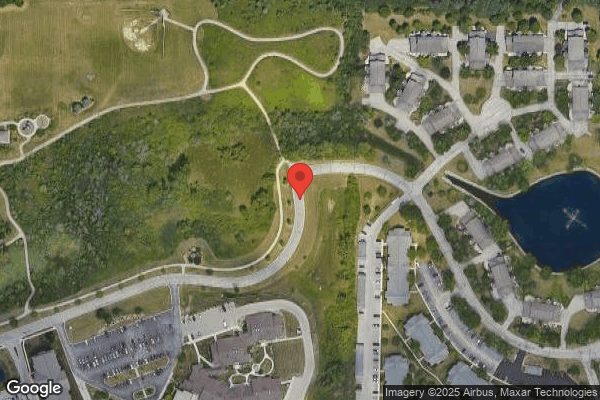
Aug 2022 9 deficiencies 1 Harm
SERIOUS (G)

Actual Harm - a resident was hurt due to facility failures

Deficiency F0760 (Tag F0760)

A resident was harmed · This affected 1 resident

**NOTE- TERMS IN BRACKETS HAVE BEEN EDITED TO PROTECT CONFIDENTIALITY** Based on interview and record review, the facility did not ensure residents were free of a significant medication error for 1 (R...

Read full inspector narrative →
**NOTE- TERMS IN BRACKETS HAVE BEEN EDITED TO PROTECT CONFIDENTIALITY** Based on interview and record review, the facility did not ensure residents were free of a significant medication error for 1 (R86) of 1 resident reviewed for medication errors. R86 did not receive omeprazole as ordered for four weeks resulting in a hospitalization for a gastrointestinal bleed. Findings include: The facility policy and procedure entitled Transcribing Physician's Orders dated 3/2021 states: I. Basic Entry of Physician Orders: A. At the implementation stage, three conditions must be met before a nurse may legally follow through on any medication or treatment order: 1. The medication or treatment order must be valid. 2. The physician and nurse obtaining the order must be licensed. 3. The nurse must know the purpose, actions, effects, major side effects and appropriate dose for all medication orders. B. A valid order is one that leaves no room for doubt as to the directive, treatment or medication prescribed. Medications ordered must have a dose and route, and dosing intervals. All orders must include the prescribers name and signature of the licensed nurse accepting the order. The drug must be appropriate for the resident; therefore, a reason or diagnosis must accompany every medication order. Since nurses are legally, morally and ethically responsible for their actions, they must assess the order for its preciseness, accuracy and appropriateness. C. A Licensed Nurse will initially enter all physician orders in EMR (Electronic Medical Record) in draft form. If available, a second Licensed Nurse (RN/LPN) will complete a verification to assess the order for its preciseness, accuracy and appropriateness; this nurse will activate the order and print any medication and treatment orders for pharmacy. D. Licensed Nurses are to monitor the EMR system for any New Orders that require activation. F. All orders must be entered and worded in such a way that is correct, complete, and clearly understandable. An appropriate diagnosis or indication of use must be included for every medication ordered. If not, clarification must be sought from the MD who gave/wrote order or the nurse who accepted and entered the order. R86 was admitted to the facility on [DATE] with diagnoses of gastroesophageal reflux disease, atrial fibrillation, and benign prostatic hyperplasia. Hospitalization prior to admission included a surgical hernia repair and a transurethral resection of the prostate (TURP). The admission Minimum Data Set (MDS) assessment, dated 5/27/2022, indicated R86 was cognitively intact with a Brief Interview for Mental Status (BIMS) score of 15 and needed extensive assistance with activities of daily living. On 5/20/2022, on the Hospital Discharge Summary, the Physician Assistant documented R86's hospital course as R86 having a right inguinal hernia repair and a TURP with continuous bladder irrigation for 24 hours. The following medications were ordered on discharge: omeprazole 20 mg Delayed Release (E.C.) daily, aspirin 81 mg chewable table daily, and re-start Plavix (clopidogrel) in 5 days. (No dose for the Plavix was documented at that time.) Per WebMD, https://www.webmd.com/drugs/2/drug-3766-2250/omeprazole-oral/omeprazole-delayed-release-tablet-oral/details, Omeprazole is used to treat certain stomach and esophagus problems (such as acid reflux, ulcers). It works by decreasing the amount of acid your stomach makes. It relieves symptoms such as heartburn, difficulty swallowing, and cough. This medication helps heal acid damage to the stomach and esophagus, helps prevent ulcers, and may help prevent cancer of the esophagus. Omeprazole belongs to a class of drugs known as proton pump inhibitors (PPIs). Surveyor reviewed the facility orders for R86. On 5/20/2022, R86 had the following orders in the Medication Administration Record (MAR): -aspirin 81 mg chewable tablet daily. -omeprazole 20 mg tablet delayed release daily for one day. (The order should not have read for one day.) On 5/26/2022, clopidogrel 75 mg daily was started as ordered. Review of the MAR showed R86 received omeprazole on 5/21/2022 and no other doses while at the facility. On 6/1/2022 on the Medication Regimen Review, the pharmacist noted the omeprazole was discontinued. On 6/1/2022 on the Skilled Nursing Facility History and Physical report, the physician documented R86 was seen in the wheelchair resting comfortably. The physician documented R86 had issues with anemia secondary to bleeding and continued on Plavix and aspirin; iron tablets would be started given the high risk of iron deficiency anemia secondary to acute blood loss. The physical examination was unremarkable. The following labs were on the report: -5/23/2022: Hemoglobin 10.1g/dL, Hematocrit 30.7% -5/27/2022: Hemoglobin 9.1 g/dL, Hematocrit 28% -5/31/2022: Hemoglobin 8.7 g/dL, Hematocrit 27.3% The physician documented in the Assessment and Plan section for the diagnosis Gastro-esophageal reflux disease without esophagitis that R86 continued omeprazole and to monitor for breakthrough symptoms. (R86 was not taking omeprazole at that time.) The physician documented to follow up with urinary symptoms, abdominal concerns, blood pressures, volume overload, progress with therapies, and routine laboratory monitoring. On 6/2/2022, at 8:42 PM, nursing charted R86 was straight catheterized due to urinary retention and 400 ml of dark cloudy yellow urine was drained. No blood was noted in the urine. On 6/2/2022, at 11:21 PM, nursing charted R86 requested a suppository and abdomen was firm in all four quadrants with hypoactive bowel sounds. A rectal check was completed and positive for firm but not hard stool plugging the rectum. The physician was contacted to request an order for Miralax or Metamucil to help with bowel motility. On 6/3/2022, at 4:45 AM in the progress notes, nursing charted R86 was unable to urinate and was straight catheterized with clear, apricot colored urine returned. On 6/3/2022, at 9:22 AM in the progress notes, nursing charted R86 had a large bowel movement with no difficulty to pass. On 6/3/2022, at 9:53 AM in the progress notes, nursing charted a foley catheter was placed due to urinary retention. The urine was amber/straw colored. On 6/3/2022, at 9:19 PM, in the progress notes, nursing charted indwelling catheter was draining blood-colored urine. R86 asked for Miralax or prune juice even though R86 had a bowel movement that day. R86's abdomen was soft, non-tender, and non-distended. The urine culture came back positive, and an antibiotic was started for five days. Vital signs were stable and afebrile. On 6/4/2022, at 1:46 PM, in the progress notes, nursing charted R86 had hematuria due to the resection of the prostate. On 6/5/2022, at 5:55 PM, in the progress notes, nursing charted the indwelling catheter was patent draining yellow urine at times and at other times the urine turns back to bloody red hematuria with blood shreds. Vital signs were stable. On 6/6/2022, at 1:24 AM, in the progress notes, nursing charted the indwelling catheter was patent and intermittently draining straw-colored yellow, amber, and blood colored urine with mucous shreds. Vital signs were stable. On 6/7/2022, at 4:32 AM, in the progress notes, nursing charted the indwelling catheter was patent and draining clear yellow urine; no hematuria was noted. On 6/7/2022, at 10:37 AM, in the progress notes, nursing charted R86 had a soft, flat abdomen with active bowel sounds. The indwelling catheter was draining clear yellow urine. On 6/8/2022, on the Skilled Nursing Facility Progress Note, the Nurse Practitioner (NP) documented R86 had labs completed on 6/6/2022 with a decrease in hemoglobin. No rectal bleeding had been noted and orders were for a close follow up of hemoglobin. On 6/6/2022, the Hemoglobin was 7.7 g/dL and the Hematocrit was 24.2%. The NP documented in the Assessment and Plan section for the diagnosis Gastro-esophageal reflux disease without esophagitis that R86 continued omeprazole and to monitor for breakthrough symptoms. (R86 was not taking omeprazole at that time.) The NP documented to follow up with urinary symptoms, blood pressures, volume overload, progress with therapies, and routine laboratory monitoring. On 6/8/2022, at 12:39 PM, in the progress notes, nursing charted R86 requested to have nightly scotch as that is the normal routine for R86 at home. An order was obtained for R86 to have 1-2 ounces of scotch nightly. On 6/9/2022, at 11:03 AM, in the progress notes, nursing charted R86 was alert and oriented with forgetfulness at times with anxiety related to bowel movements. R86 frequently wants something for bowel management even if R86 had a bowel movement. Nursing had been doing frequent education regarding bowel management and going over medication list and as needed medications with R86. R86 was informed bowel movements are tracked for all residents daily. R86's abdomen was flat and soft with active bowel sounds. The indwelling catheter was draining clear yellow urine. On 6/11/2022, at 9:38 AM, in the progress notes, nursing charted R86's abdomen was soft and non-tender with active bowel sounds in all four quadrants. R86 denied nausea, vomiting, and diarrhea. R86 reported having a complete clean out of the bowels yesterday after having Milk of Magnesia, fiberstat and a suppository. The indwelling catheter was patent draining dark urine. On 6/12/2022, at 1:00 PM, in the progress notes, nursing charted R86's abdomen was soft and non-tender with active bowel sounds in all four quadrants. The indwelling catheter was patent draining dark urine. On 6/13/2022, on the Skilled Nursing Facility Progress Note, the NP documented R86 was doing well that morning and nursing reported R86 had no pain and tolerating acetaminophen for pain. R86's urinary catheter was draining golden yellow urine without hematuria (blood in the urine). R86 reported an excellent appetite stating 100% of the breakfast was eaten. Labs were reviewed and hemoglobin was 6.7, previously at 8.9 on 6/9/2022. No active signs of bleeding were noted, and orders were placed for follow up lab in the morning to trend. The NP documented R86 may require further evaluation if hemoglobin remains low or drops further. R86 had no fevers, upper respiratory symptoms, shortness of breath, cough, nausea, abdominal pain, urinary concerns, diarrhea, or constipation. The following labs were on the report: -6/9/2022: Hemoglobin 8.9 g/dL, Hematocrit 27.6% -6/13/2022: Hemoglobin 6.7 g/dL, Hematocrit 20.9% On 6/13/2022, at 5:36 PM, in the progress notes, nursing charted R86's indwelling catheter was draining straw-colored urine that was clouded with sediment. R86 had an order per R86's request to have a serving of scotch liquor every day at 2:00 PM. R86 complained this afternoon of gas pains/stomach discomfort. Scheduled Simethicone was given before dinner. On 6/14/2022, at 8:56 AM, in the progress notes, nursing charted R86 complained of nausea with dry heaves. An order for Zofran was obtained from the physician. On 6/14/2022, at 9:00 AM, in the progress notes, nursing charted R86's abdomen was soft and flat with hypoactive bowel sounds. R86 had an extremely large bowel movement that morning that was not difficult to pass. The indwelling catheter was draining clear straw/yellow colored urine. On 6/14/2022, on the Skilled Nursing Facility Progress Note, the NP documented R86 was seen on that date due to anemia. Labs that morning confirmed a decrease in hemoglobin at 6.1 and had noted fatigue that morning in addition to worsening weakness. R86 did not have shortness of breath or audible cough. R86 reported poor appetite this morning. The urinary catheter had golden yellow urine without hematuria or sediment. Nursing staff reported R86 had a large dark bowel movement this morning. Vital signs were reviewed with a noted low blood pressure at 90 systolic. R86 reported mild abdominal discomfort. Orders were placed to have R86 evaluated in the emergency department due to anemia. The following labs were on the report: -6/13/2022: Hemoglobin 6.7 g/dL, Hematocrit 20.9% -6/14/2022: Hemoglobin 6.1 g/dL, Hematocrit 18.3% The Assessment and Plan section of the Note stated Hemoglobin at 8.9 on 6/9/2022 and now confirmed at 6.1 on 6/14/2022 with dark stool led to R86 being sent to the emergency room for further evaluation. On 6/14/2022, at 11:01 AM, in the progress notes, nursing charted an order was received to send R86 out to the hospital due to the repeat lab draw this morning of the hemoglobin and hematocrit. On 6/15/2022, at 9:19 AM, in the progress notes, nursing charted R86 was admitted to the hospital with a diagnosis of gastrointestinal bleed. R86 did not return to the facility. R86 was discharged from the hospital to a different facility for skilled nursing services. Surveyor reviewed the facility grievance log. A grievance was filed by R86's family member on 6/17/2022 regarding a medication error. Surveyor requested to see the follow up of the grievance. On the Incident Report-Medication Error form dated 6/17/2022, the error occurred on 5/22/2022 with a discovery date of 6/17/2022. The error that was discovered was a transcription error. The details of the incident section of the form stated the incident was brought to the attention of the facility that R86 was not receiving omeprazole. Through investigation it was noted that the medication was placed in the computer but only for one day. R86 only received one dose of omeprazole. The summary stated the policy was reviewed with both individuals about medication transcription as it was noted that the order was put in wrong and verified wrong. Employee statements were obtained during the investigation. The statement by Licensed Practical Nurse (LPN) that entered the orders into the EMR stated that was the first time entering orders into the EMR since hire date of 4/8/2022 and the LPN stated there were multiple admissions with frequent interruptions while entering the medication orders. The LPN stated they will now take initiative when more that one admission is coming in on the day shift and will slow down and do what is to be done with all tasks. The statement by Registered Nurse Unit Manager (RNUM)-D that activated the medication orders stated the medication was ordered to start the next day but did not note that the medication was written for one dose only. RNUM-D stated they were going to quickly and will now slow down and check to see if an amount in days was scheduled. On 8/9/2022, at 3:04 PM, Surveyor met with Nursing Home Administrator (NHA)-A, Director of Nursing (DON)-B, and RNUM-D. Surveyor shared the concern R86 did not receive omeprazole for four weeks on admission that resulted in hospitalization for a gastrointestinal bleed. No further information was provided at that time.

CONCERN (D)

Potential for Harm - no one hurt, but risky conditions existed

Report Alleged Abuse (Tag F0609)

Could have caused harm · This affected 1 resident

**NOTE- TERMS IN BRACKETS HAVE BEEN EDITED TO PROTECT CONFIDENTIALITY** Based on interview and record review the facility did not ensure 2 (R24 and R88) of 2 allegations of abuse or neglect were repor...

Read full inspector narrative →
**NOTE- TERMS IN BRACKETS HAVE BEEN EDITED TO PROTECT CONFIDENTIALITY** Based on interview and record review the facility did not ensure 2 (R24 and R88) of 2 allegations of abuse or neglect were reported to the Nursing Home Administrator immediately and to the State Survey Agency. *R24 verbally expressed allegations of abuse consisting of staff making fun of her weight and Certified Nursing Assistant (CNA)-I's treatment towards her. R24 informed Registered Nurse (RN)-D and Social Worker (SW)-G of these allegations, however, they did not immediately report the allegations to the Nursing Home Administrator (NHA)-A, and the facility did not report the allegations to the State Survey Agency. *R88 verbally expressed an allegation Certified Nursing Assistant (CNA)-J did not provide Activities of Daily Living (ADL) assistance to her. Director of Social Services (DSS)-M was made aware of the allegation of neglect, however, did not immediately report it to the Nursing Home Administrator (NHA)-A, and the facility did not report the allegation to the State Survey Agency. Findings Include: Surveyor reviewed the facility's Reporting and Investigation Process policy and procedures revised 12/2016, and notes the following applicable to reporting: Policy: All alleged violations of Misconduct will be reported to the Administrator or designee, to the Division of Quality Assurance (DQA) as required and thoroughly investigated. If an actual or a reasonable suspicion of a crime against a Resident is suspected, local law enforcement agency and if appropriate, other state and local regulatory authorities are notified. 1. Protocol . B. Report the Occurrence 1. Person/s Responsible: RN (Registered Nurse) Supervisor contacts Administrator (NHA), NHA or designee completes on-line DQA reporting requirement a. Immediately report all alleged violations involving mistreatment, neglect, or abuse, including injuries of unknown source, and misappropriation of Resident's property to the facility NHA who will report the allegation to the DQA or advise the onsite supervisor to report. -The facility NHA will be notified within 60 minutes when allegation involves abuse or serious bodily injury, and reported to DQA within 2 hours following the allegation. -In all other cases, reporting to NHA and DQA will be completed as soon as reasonably possible but not to exceed 24 hours. -Prior to sending report to DQA copy report that you are sending and keep electronic verification that report was sent 1) R24 was admitted to the facility on [DATE] with diagnoses of Hemiplegia and Hemiparesis Following Nontraumatic Intracerebral Hemmorrhage Affecting Left Dominant Side, Muscle Wasting and Atrophy, Polyneuropathy, Major Depressive Disorder, and Mild Cognitive Impairment. R24 has a Health Care Power of Attorney (HCPOA) that has not been activated. Surveyor reviewed R24's Annual Minimum Data Set (MDS) assessment, dated 5/27/22, and notes R24's Brief Interview for Mental Status (BIMS) score to be 15, indicating R24 is cognitively intact for daily decision making. R24's MDS also documents no behaviors concerns; requires extensive assistance for bed mobility, dressing, toileting, and hygiene; range of motion (ROM) impairment on 1 side of upper and lower extremity; and frequently incontinent of bowel and bladder. On 8/8/22, at 10:27 AM, Surveyor interviewed R24. R24 indicated staff have frequently told her how big she is and she has a big butt. R24 informed Surveyor she has felt verbally abused by staff and she stated she did inform Registered Nurse (RN)-D of how she has felt. On 8/9/22, at 9:39 AM, Surveyor was informed Social Worker (SW)-G was informed by R24 that Certified Nursing Assistant (CNA)-I had been verbally abusive with her, but was informed by SW-G that CNA-I is one of our better CNAs. On 8/9/22, at 10:29 AM, Surveyor interviewed RN-D. RN-D stated R24 did inform her about staffs' comments about R24's weight and R24 was upset about staff making fun of her. RN-D stated she talked to staff about customer service. RN-D was also aware R24 had an issue with CNA-I. RN-D stated RN-D took CNA-I off of R24's assignment. RN-D stated, I can't fully remember why R24 didn't want CNA-I anymore. RN-D confirmed she was aware of R24's concerns with feeling verbally abused but RN-D did not inform Nursing Home Administrator (NHA)-A of the allegations. On 8/9/22, at 11:04 AM, Surveyor spoke to SW-G. SW-G informed Surveyor on 8/8/22, R24 had spoken to her about R24's concerns with CNA-I. SW-G determined R24 and the CNA-I had different personalities but does not recall anything specific. SW-G confirmed SW-G did not notify NHA-A of R24's allegations. On 8/8/22, at 1:17 PM, Surveyor was informed by Director of Nursing (DON)-B-there is no documentation of any facility self-reports submitted to the State Agency realted to R24's allegations. On 8/9/22, at 7:35 AM, DON-B again confirmed there is no documentation of any facility self-reports submitted to the State Agency related to R24's allegations. On 8/9/22, at 11:43 AM, Surveyor spoke to DON-B. DON-B stated she is aware a family member had brought R24's concerns about CNA-I forward, and it was investigated by the supervisor, and CNA-I was taken off of R24's assignment and R24 was put on buddy system. Surveyor shared the concern of R24 reporting CNA-I was verbally abusive to R24 and the incident of a urine filled pad being put in R24's face. On 8/9/22 at 3:32 PM, DON-B informed Surveyor DON-B had no further information to provide realted to the concerns Surveyor shared about R24's allegations of verbal abuse and the issue with the urine soaked pad being brought in front of R24's face. On 8/10/22, at 12:26 P.M., Surveyor spoke to Nursing Home Administrator (NHA)-A. NHA-A is unaware of any allegations of abuse involving R24. Surveyor confirmed DON-B did not share R24's allegations of abuse Surveyor shared with DON-B on 8/9/22. NHA-A stated when anyone says the word abuse that would trigger an investigation and self-report. NHA-A then asked Surveyor, Are you sure that the word abuse was said. Surveyor shared the concern R24's allegation of abuse was not reported to NHA-A and a self-report was not submitted to the State Agency. 2) R88 was admitted to the facility on [DATE] with diagnoses of Peripheral Vascular Disease, Chronic Obstructive Pulmonary Disease, Essential Hypertension, Major Depressive Disorder, and Anxiety Disorder. R88 had an activated HCPOA. R88 discharged from the facility on 2/24/22. Surveyor reviewed R88's admission MDS dated [DATE] and notes that R88's BIMS score is 11, indicating R88 demonstrated moderately impaired skills for daily decision making. R88 required extensive assistance for bed Mobility, transfers, dressing, toileting, and hygiene. Surveyor was informed that on 2/23/22, DSS-M was made aware of the concern that R88 had not received ADL assistance from CNA-J. DSS-M stated DSS-M would investigate the grievance and ended up assisting R88. On 8/9/22 at 10:11 AM, Surveyor interviewed DSS-M in regards to R88. DSS does not recall anyone coming to DSS-M with a concern/grievance in regards to R88. DSS-M stated that if the concern is addressed right away, then the grievance is not written up. DSS-M only writes up a concern/grievance if DSS-M knows about it. On 8/9/22 at 11:00 AM, DSS-M informed Surveyor that DSS-M now recalls the concern/grievance that R88 and family had. The family did speak to me about R88's bed being soiled was a concern, and I did change the bed, but did not write up the concern/grievance or investigate it further. DSS-M confirmed that DSS-M did not inform NHA-A of the allegation of potential neglect. On 8/9/22 at 11:55 AM, Director of Nursing(DON-B) was unable to recall R88. On 8/10/22 at 12:31 PM, Surveyor shared the concern with Administrator(NHA-A) that DSS-M was aware of a concern with possible allegation of neglect with no written documentation of the concern, NHA-A was not made aware of the concern and it wasn't reported to the state agency. NHA-A confirmed he was unaware of R88's allegation.
CONCERN (D)

Potential for Harm - no one hurt, but risky conditions existed

Investigate Abuse (Tag F0610)

Could have caused harm · This affected 1 resident

**NOTE- TERMS IN BRACKETS HAVE BEEN EDITED TO PROTECT CONFIDENTIALITY** Based on record review and interviews, the facility did not ensure allegations of potential abuse, and neglect were thoroughly i...

Read full inspector narrative →
**NOTE- TERMS IN BRACKETS HAVE BEEN EDITED TO PROTECT CONFIDENTIALITY** Based on record review and interviews, the facility did not ensure allegations of potential abuse, and neglect were thoroughly investigated for 2 (R24 and R88) of 2 Residents reviewed for allegations of abuse and/or neglect. *R24 had expressed allegations of abuse consisting of staff making fun of R24's weight and allegations of abuse related to Certified Nursing Assistant (CNA-I). Registered Nurse (RN-D) and Social Worker (SW-G) were aware of these allegations, however, a thorough investigation was not completed. *R88 had expressed an allegation CNA-J did not provide Activities of Daily Living (ADL) assistance. Director of Social Services (DSS-M) was made aware of this potential neglect allegation. However, a thorough investigation including was not completed. Findings Include: Surveyor reviewed the facility's Reporting and Investigation Process, policy and procedures revised 12/2016, and notes the following applicable to reporting: Policy: All alleged violations of Misconduct will be reported to the Administrator or designee, to the Division of Quality Assurance (DQA) as required and thoroughly investigated. If an actual or a reasonable suspicion of a crime against a Resident is suspected, local law enforcement agency and if appropriate, other state and local regulatory authorities are notified. C. Investigate the Allegation a. Obtain a written statement from the accused caregiver. b. As soon as possible, obtain a detailed account of the occurrence from the Resident, including but not limited to feelings, pain, or discomfort. e. Obtain written, signed statements from all facility witnesses or persons with information. f. If appropriate, interview other Residents on the unit that may have knowledge of occurrence or may have been affected by occurrence. g If appropriate, obtain information from family members, visitors or other non facility staff that may have information regarding the occurrence. h. Document the investigative process and all findings. D. Conclude the Investigation a. Completes a written account of all components and findings of the investigation. b. Determine if occurrence meets the Federal and/or State definition of abuse, neglect. Include thought process and rationale in written account of occurrence. c. Submit requires DQA form Misconduct Incident Report and investigation results to DQA with 5 working days via appropriate reporting form. Keep a copy of the electronic verification that report was sent. Additional Reporting and Investigation Guidelines . C. The Director of Social Services interviews and obtains statements from all employees who have had contact with the involved Resident or individuals who may have been on the unit where Resident resides during the shift when the allegation was reported. It may be necessary to interview individuals on shifts prior to date of report. D. In addition to the investigation components completed as listed in protocol, if appropriate, other information to be obtained from other investigative areas which will include but not limited to: review of medical record to identify events leading to occurrence, interview other Residents to whom the named employee, if identified, provided services, interview other Residents and their family members on the same unit/hall and review of all events/activities leading up to the alleged incident. F. If appropriate, when obtaining statements from staff and other Residents: -Staff interviews should include staff scheduled and working on shifts prior to injury report. -Residents on the nursing unit where the Resident resides who have the cognitive ability to be interviewed should be interviewed. -Ancillary staff on the unit who may have knowledge of an event should be interviewed. 1) R24 was admitted to the facility on [DATE] with diagnoses of Hemiplegia and Hemiparesis Following Nontraumatic Intracerebral Hemmorrhage Affecting Left Dominant Side, Muscle Wasting and Atrophy, Polyneuropathy, Major Depressive Disorder, and Mild Cognitive Impairment. R24 has a Health Care Power of Attorney (HCPOA) that has not been activated. Surveyor reviewed R24's Annual Minimum Data Set (MDS) assessment, dated 5/27/22, and notes R24's Brief Interview for Mental Status (BIMS) score to be 15, indicating R24 is cognitively intact for daily decision making. R24's MDS also documents no behaviors; requires extensive assistance for bed mobility, dressing, toileting, and hygiene; range of motion (ROM) impairment on 1 side of upper and lower extremity, and is frequently incontinent of bowel and bladder. On 8/8/22, at 10:27 AM, Surveyor interviewed R24. R24 indicated staff have frequently told her how big she is and that she has a big butt. R24 informed Surveyor she has felt verbally abused by staff and she did inform Registered Nurse (RN)-D of her feelings On 8/9/22, at 9:39 AM, Surveyor was informed Social Worker (SW)-G was informed by R24 that Certified Nursing Assistant (CNA)-I had been verbally abusive towards her and SW-G's response was that CNA-I is one of their better aids. On 8/9/22, at 10:29 AM, Surveyor interviewed RN-D. RN-D stated R24 did inform RN-D about staff making comments about her weight and she was upset about staff making fun of her. RN-D stated she talked to staff about customer service. RN-D was also aware R24 had an issue with CNA-I. RN-D stated RN-D took CNA-I off of R24's assignment. RN-D stated, she could not fully remember why R24 didn't want CNA-I anymore. RN-D confirmed she was aware of R24's concern with feeling verbally abused but did not inform Nursing Home Administrator (NHA)-A of R24's concerns. On 8/9/22, at 11:04 AM, Surveyor spoke to SW-G. SW-G informed Surveyor R24 has spoken to her about concerns with CNA-I on 8/8/22. SW-G stated she determined R24 and CNA-I had different personalities but does not recall anything specific. SW-G confirmed she did not notify NHA-A of R24's concerns. On 8/8/22, at 1:17 PM, Surveyor was informed by Director of Nursing (DON)-B-there are is no documentation of any facility self-report submitted to the State Agency related to R24.'s concerns On 8/9/22, at 11:43 AM, Surveyor spoke DON-B. DON-B stated she is aware a family member had brought concerns forward about CNA-I, and it was investigated by the supervisor, and CNA-I was taken off of R24's assignment and R24 was put on buddy system. Surveyor shared the concern of R24 reporting CNA-I was verbally abusive to R24 and put a urine soaked pad in R24's face. On 8/9/22, at 3:32 PM, DON-B informed Surveyor DON-B had no further information to provide related to the concerns Surveyor shared about R24 and the allegations of verbal abuse and CNA-I putting a urine soaked pad in R24's face. On 8/10/22, at 12:26 P.M., Surveyor spoke to NHA-A. NHA-A stated he is unaware of any allegations of abuse involving R24. Surveyor confirmed DON-B did not share R24's allegations of Surveyor shared with DON-B on 8/9/22. NHA-A stated when anyone says the word abuse it would trigger an investigation and self-report it. NHA-A then asked Surveyor, Are you sure that the word abuse was said. Surveyor shared the concern R24's allegation of abuse was not thoroughly investigated. 2) R88 was admitted to the facility on [DATE] with diagnoses of Peripheral Vascular Disease, Chronic Obstructive Pulmonary Disease, Essential Hypertension, Major Depressive Disorder, and Anxiety Disorder. R88 had an activated Health Care Power of attorney (HCPOA). R88 discharged from the facility on 2/24/22. Surveyor reviewed R88's admission Minimum Data Set (MDS) assessment, dated 2/23/22, and notes R88's Brief Interview of Mental Status (BIMS) score is 11, indicating R88 has moderately impaired skills for daily decision making; required extensive assistance for bed mobility, transfers, dressing, toileting, and hygiene. Surveyor was informed on 2/23/22, Director of Social Services (DSS)-M was made aware of the concern R88 had not received Activities of Daily Living (ADL) assistance from Certified Nursing Assistant (CNA)-J. DSS-M informed R88 she would investigate the grievance and ended up assisting R88. On 8/9/22, at 10:11 AM, Surveyor interviewed DSS-M. DSS-M stated she did not recall anyone coming to her with a concern/grievance regarding R88. DSS-M stated if the concern is addressed right away, then the grievance is not written up. DSS-M stated she only writes up a concern/grievance if DSS-M knows about it. On 8/9/22, at 11:00 AM, DSS-M informed Surveyor she now recalls the concern/grievance R88 and her family had. DSS-M stated R88's family did speak to her about R88's bed being soiled. DSS-M stated she changed R88's bed, but did not write up the concern/grievance or investigate it further. DSS-M confirmed she did not inform Nursing Home Administrator (NHA)-A of R88's allegation of potential neglect. On 8/10/22, at 12:31 PM, Surveyor shared the concern with NHA-A that DSS-M was aware of a concern with allegations of possible neglect with no written documentation of an investigation. NHA-A confirmed he was unaware of the allegation and that a thorough investigation had not been completed in regards to R88's allegation of neglect.
CONCERN (D)

Potential for Harm - no one hurt, but risky conditions existed

Pressure Ulcer Prevention (Tag F0686)

Could have caused harm · This affected 1 resident

**NOTE- TERMS IN BRACKETS HAVE BEEN EDITED TO PROTECT CONFIDENTIALITY** Based on observation, interview, and record review, the facility did not ensure residents received treatment and services, consi...

Read full inspector narrative →
**NOTE- TERMS IN BRACKETS HAVE BEEN EDITED TO PROTECT CONFIDENTIALITY** Based on observation, interview, and record review, the facility did not ensure residents received treatment and services, consistent with professional standards of practice, to prevent pressure injuries, promote healing and prevent infection for 3 (R26, R16, and R15) of 5 residents reviewed for pressure injuries. *R26 was readmitted to the facility on [DATE] with a Stage 2 pressure injury to the coccyx that was not comprehensively assessed or treated until 8/2/2022. *R16 developed an Unstageable pressure injury on 5/16/2022 that was not comprehensively assessed until 5/31/2022. *R15 was readmitted to the facility on [DATE] with pressure injuries that were inaccurately staged, and the locations of the pressure injuries were not indicated. Findings include: The facility policy and procedure entitled Wound Care Prevention, Management and Documentation dated 8/2018, states: Procedure: . 6. All residents have a weekly skin inspection done by the unit nurse with their bath. Skin check findings are documented in the electronic medical record. 7. Changes in skin condition or skin breakdown are reported to the physician. 8. The interdisciplinary team will review pressure injury status and a physician will be notified if a wound worsens or no progress is noted after no longer than 2 weeks of starting a treatment. A physician's order needs to include all the following components: location of wound, type of cleansing agent, primary dressing/product directly against the wound bed, a secondary dressing if appliable, what to secure with if applicable and the frequency of the treatment. 12. Pressure injuries are to be measured weekly. Wound measurements are always done head to toe with the head being at 12:00 and the width is measured side to side or 9:00 to 3:00. Depth is measured at the deepest point of visible tissue of the wound. Measurements are in centimeters, measure to the tenth of the centimeter. 1.) R26 was admitted to the facility on [DATE] with diagnoses of metabolic encephalopathy, acute kidney failure, congestive heart failure, ulcerative colitis, depression, diabetes, and contusion of right lower leg. R26's admission Minimum Data Set (MDS) assessment, dated 6/12/2022, indicated R26 was cognitively intact with a Brief Interview for Mental Status (BIMS) score of 15 and needed extensive assistance with activities of daily living. A Potential for Alteration in Skin Integrity Care Plan was initiated on 5/25/2022. On 7/29/2022, R26 was readmitted to the facility after hospitalization for sepsis and metabolic encephalopathy. On 7/29/2022, on the admission Skin Check form, nursing documented R26 had a pressure injury to the coccyx that measured 1 cm (centimeter) x (by) 0.7 cm x 0.1 cm with no drainage or odor. The pressure injury was not staged and the wound base did not have a description of the type of tissue present. No documentation was found that the physician was notified of the pressure injury and no treatment was initiated to the area. On 8/2/2022, on the Wound Assessment-52 Weeks form, Registered Nurse Unit Manager (RNUM)-C documented R26 had a Stage 2 pressure injury to the coccyx that measured 0.9 cm x 0.6 cm x 0.1 cm with epithelialization tissue. A treatment was initiated of Normal Saline wash followed by skin prep to the peri wound followed by border foam dressing every two days. RNUM-C charted the area was noted on admission to the coccyx, the area was small, superficial, non-tender to touch, and had no odor or outward signs of infection. The peri wound was stable. On 8/2/2022, on the Treatment Administration Record (TAR), an order to cleanse coccyx with soap and water, pat dry then apply Mepilex dressing every other day for protection was entered with the treatment to start on 8/3/2022. On 8/8/2022, at 11:06 AM, Surveyor observed R26 in bed on an air mattress. R26 complained of pain to the feet but denied pain anywhere else. R26 stated the staff wrap the legs but do not do any other treatments to the skin. R26 was reluctant with conversation and abruptly ended the interview. In an interview on 8/10/2022, at 10:35 AM, RNUM-C stated R26 was admitted to the facility initially with a hematoma on the right lower extremity that was evacuated and now has scattered open areas and is being followed by the wound clinic. Surveyor asked RNUM-C about R26's pressure injury to the coccyx. RNUM-C stated RNUM-C first saw the pressure injury on 8/2/2022 and charted on the area at that time. Surveyor asked RNUM-C if R26 had a treatment to the coccyx wound on 7/29/2022 when R26 was readmitted to the facility and the wound was first observed. RNUM-C thought the wound had Mepilex initially on it and then went to the wound clinic and the wound clinic continued the Mepilex treatment, but RNUM-C stated the treatment record would have to be reviewed to say for certain. In an interview on 8/10/2022, at 11:44 AM, RNUM-C stated the pressure injury was found on 7/29/2022 but was not assessed by the wound team until 8/2/2022. RNUM-C stated no treatment was started until 8/2/2022 and was assessed at that time as a Stage 2 pressure injury. RNUM-C stated the pressure injury was assessed yesterday, 8/9/2022 and the pressure injury was Unstageable due to slough in the wound. RNUM-C stated the charting on the assessment from 8/9/2022 had not been entered into the record yet, but RNUM-C stated Unstageable would be written in the comment section of the note for that week's assessment. Surveyor shared with RNUM-C the concern R26 was not comprehensively assessed when readmitted on [DATE] and a treatment was not obtained until 8/2/2022 for the Stage 2 pressure injury to the coccyx. DON-B was not available at this time of the survey. No further information was provided at that time. 2.) R16 was admitted to the facility on [DATE] with diagnoses of pulmonary fibrosis, chronic obstructive pulmonary disease, chronic kidney disease, diabetes, congestive heart failure, and depression. R16's admission Minimum Data Set (MDS) assessment, dated 2/20/2022, indicated R16 was cognitively intact with a Brief Interview for Mental Status (BIMS) score of 15 and needed extensive assistance with activities of daily living. R16 is identified as being at risk for pressure injuries. An Alteration in Skin Integrity related to superficial abrasion to chest from scratching Care Plan was initiated on 2/14/2022 with the following intervention: -Provide supplements as ordered. -Confer with Wound Nurse as needed. -Provide treatment as ordered. -Use specialty mattress. -Float heel to reduce pressure on heels and pressure points; turn/reposition. -Measure wound weekly. -Refer to Dietician. -Multivitamin as ordered. -Notify physician of any declining changes. -Assess, document and report signs of systemic or lacalized infection such as change in energy level, changes in vital signs, erythema, indurations, discharge, foul odor, from or around the wound. -Monitor labs as ordered. -Assess for any symptoms of confusion, changes in mental status, delirium orconfusion as these may indicate infection process. -Pressure reducing device for bed. -Pressure reducing device for chair. A Potential for Alteration in Skin Integrity related to diabetes Care Plan was initiated on 2/14/2022 with the following interventions: -Float heel to reduce pressure on heels and pressure points; turn/reposition. -Notify physician of any declining changes. -Check skin for redness, skin tears, or swelling, or pressure areas; report any signs of skin breakdown. -Do not massage skin over pressure areas. -Perform nutritional screening; adjust diet/supplements as indicated to reduce the risk of skin breakdown. -Assess, document and report signs of systemic of localized infection such as change in energy level or changes in vital signs. On 5/5/2022, at 9:23 PM, in the progress notes, nursing charted R16 had a bath that night and no skin issues were noted. On 5/12/2022, at 10:53 PM, in the progress notes, nursing charted R16 had a bath and the skin check was done. The skin was intact with a left gluteal area covered with Mepilex. No order was found indicating Mepilex was to be applied to the left gluteal area. No clarification was found that the Mepilex dressing was removed and the area under the dressing was assessed. On 5/16/2022, at 10:04 AM, in the progress notes, Licensed Practical Nurse (LPN)-E charted R16 had an open area noted to the left ischium and yellowish drainage was noted. R16 complained of pain when the area was cleaned with warm water. LPN-E charted zinc oxide was applied to the area followed by a foam dressing for comfort and reported this to the unit manager. LPN-E charted the unit manager would make the wound team aware. On 5/16/2022, Director of Nursing (DON)-B opened the Wound Assessment-52 Weeks form in the computer charting system. The Wound Assessment-52 Weeks form has a section with the pertinent information regarding the resident demographics such as name, date of birth , age, gender, physician, admission ID, admission date, and room number and then pertinent information regarding the wound such as date of wound observation, family/related party notification, where the wound was acquired (such as admitted with or in the facility), description and type of wound, and the wound stage. DON-B documented the assessment date was 5/12/2022 and the date of wound observation was 5/16/2022. DON-B was unavailable for interview to clarify when the wound was discovered and assessed. DON-B charted on 5/16/2022 a facility-acquired Unstageable pressure injury measured 4.2 cm x 3.0 cm with slough in the wound base and scant, thick serosanguinous drainage. DON-B charted a recommendation for treatment was Santyl daily and the wound was worsening. Surveyor was unable to determine if the wound was discovered on 5/12/2022 or 5/16/2022 due to the dates documented by DON-B and the statement the wound was worsening. No location of the wound was documented, no measurement of depth was documented, and no percentage of slough to the wound base was documented. On 5/16/2022 on the Treatment Administration Record (TAR), an order for treatment to the left thigh/gluteal fold stated to use normal saline wash, pat dry, apply nickel thick layer of Santyl, and cover with a dressing daily for fourteen days. A second order entered on the TAR for 5/16/2022 stated a treatment to the left posterior thigh wound to use normal saline wash followed by skin prep to the peri wound followed by nickel thick Santyl to the wound bed followed by a dry dressing to be changed daily and as needed. No revisions were made to the Skin Integrity Care Plans. On 5/24/2022, on the Wound Assessment-52 Weeks form, nursing documented the wound measured 4.0 cm x 5.0 cm x 0 cm with slough in the wound base and scant, thick serosanguinous drainage and Santyl was the daily treatment. On 5/31/2022 on the Wound Assessment-52 Weeks form, nursing documented the wound measured 3.0 cm x 2.5 cm x 0 cm with scant, thin serosanguinous drainage and Santyl was the daily treatment. In the comments section, nursing documented the area was decreasing in size with 40% slough and 60% granulation. This was the first comprehensive assessment of the pressure injury. The wound was comprehensively assessed weekly. In an interview on 8/8/2022 at 9:31 AM, R16 stated the leg of an incontinent brief irritated the area and the facility is treating the wound and changing the dressing daily. In an interview on 8/10/2022 at 10:38 AM, Registered Nurse Unit Manager (RNUM)-C stated RNUM-C was out on leave when the pressure injury to R16 was discovered so did not know what it looked like when it was found. RNUM-C stated currently RNUM-C would categorize the pressure injury to be a Stage 3. Surveyor reviewed with RNUM-C the documentation of Mepilex being found on R16's left gluteal area on 5/12/2022 and documentation by LPN-E of applying zinc oxide to the wound on the left ischium on 5/16/2022. Surveyor asked RNUM-C if there had been any orders for the Mepilex or the zinc oxide at the time they were discovered and used. RNUM-C stated RNUM-C would look into it and bring back the information. In an interview on 8/10/2022 at 11:47 AM, RNUM-C stated she could not find a treatment order for the Mepilex that was documented on 5/12/2022 or an order for the zinc oxide that was applied on 5/16/2022. RNUM-C stated the house barrier cream had zinc in it and would clarify if that was used or if it was a zinc cream. RNUM-C was unsure if there was a wound on 5/12/2022 that was covered by the Mepilex but stated RNUM-C talked to LPN-E and clarified on 5/16/2022 the wound had 100% slough to the wound base. In an interview on 8/10/2022 at 12:03 PM, LPN-E stated LPN-E had used the house barrier cream on 5/16/2022 and that had zinc in it; no other type of cream was used. In an interview on 8/10/2022 at 3:21 PM, Surveyor shared with RNUM-C the concern R16 had a wound to the left ischium/gluteal fold that Surveyor was unable to determine if it was discovered on 5/12/2022 or 5/16/2022, a Mepilex dressing had been applied with no documentation or order for the dressing, the documentation on the Wound Assessment-52 Weeks form had no location of the wound, and the pressure injury was not comprehensively assessed until 5/31/2022 where the wound base had percentages of tissue type documented. No further information was provided at that time. 3.) R15 was admitted to the facility on [DATE] with diagnoses of diabetes, atrial fibrillation, coronary artery disease, and hypertension. R15's significant change Minimum Data Set (MDS) assessment, dated 11/23/2021, indicated R15 was cognitively intact with a Brief Interview for Mental Status (BIMS) score of 15 and needed extensive assistance with activities of daily living. The MDS coded R15 as having a Stage 4 pressure injury that was present on admission. Documentation on 1/13/2021 on the Wound Assessment-52 Weeks form indicated the Stage 4 pressure injury was to the sacrum. An Alteration in Skin Integrity Care Plan was initiated on 1/8/2021 and had the following interventions implemented at that time: -Provide treatment as ordered. -Provide supplements as ordered. -Confer with wound nurse as needed. -Use specialty mattress. -Float heels to reduce pressure on heels and pressure points. -Measure wound weekly. -Refer to dietician. -Multivitamin as ordered. -Notify physician of any declining changes. -Assess, document, and report signs of systemic or localized infection such as change in energy level, changes in vital signs, erythema, indurations, discharge, foul odor, from or around the wound. -Monitor labs as ordered. -Assess for any symptoms of confusion, changes in mental status, delirium, or confusion as these may indicate infection process. -Pressure reducing device for bed. -Pressure reducing device for chair. On 4/4/2022 on the Alteration in Skin Integrity Care Plan, the intervention of follow turn schedule was added. On 6/10/2022, at 6:00 PM, in the progress notes, nursing charted R15 was readmitted to the facility after a hospitalization and had two open areas to the buttock with dressings intact. On 6/10/2022, on the admission Wound/Skin Check form, nursing charted R15 had two pressure wounds. The wound locations were not named. The first wound was a Stage 3 pressure injury that measured 3.4 cm x 1.5 cm x 0.1 cm with yellow, red, and granulation tissue. The second wound was a Stage 3 pressure injury that measured 4.7 cm x 5.0 cm x 1.0 cm with yellow and granulation tissue. No percentages were documented of the types of tissue in the wound base. On 6/14/2022, nursing initiated the Wound Assessment-52 Weeks form for an unnamed Stage 3 pressure injury that measured 3.0 cm x 1.4 cm x 0.4 cm with granulation tissue. The treatment used was Cleanse wound with Puracyn Plus, saturate gauze, soak x 5 minutes. Pat dry, Apply 3 M Cavilon barrier to peri wound skin. Pack with Aquacel AG cut tail to pack into undermining from 2 to 6 oclock and fold remainder of Aquacel sheet into wound and over Left buttock wound. Cover with lg (large) sacral Mepilex border. The additional comments section stated 100% granulation tissue with scant serosanguinous drainage, no odor, no signs or symptoms of infection. Surveyor was unable to determine the location of the pressure injury. On 6/15/2022, nursing initiated the Wound Assessment-52 Weeks form for the left buttock pressure injury. The pressure injury was not staged. The comments section contained the statement measurements upon admission 6/10/2022 by charge nurse and were 4.7 cm x 5 cm x 1.0 cm. The wound measurements on 6/14/2022 were 4.5 cm x 2.0 cm x 0.7 cm with granulation tissue and tunneling from 2-6 o'clock, at 2 o'clock depth of 1 cm and at 6 o'clock depth of 2.2 cm. The treatment used was cleanse wound with puracyn plus saturate gauze, soak x 5 minutes, pat dry apply 3m cavilon barrier to peri wound skin pack with aquacel ag cut tail into undermining from 2-6 o'clock and fold remainder of aquacel sheet into wound and cover buttock wound with large sacral mepilex border. Surveyor questioned if this was the correct measurement as the tunneling had been previously documented on the Stage 4 sacral wound. On 6/15/2022 on the Wound Assessment-52 Weeks form, nursing charted the sacral Stage 4 pressure injury measured 4.5 cm x 2.0 cm x 0.7 cm with granulation tissue and tunneling from 2-6 o'clock, at 2 o'clock depth of 1 cm and at 6 o'clock depth of 2.2 cm. Nursing charted in the comments section of the form R15 returned from the hospital with a new treatment on 6/10/2022 and two distinct wounds were present; the left buttock wound was a separate wound. On 8/2/2022 in the progress notes, nursing charted an Unstageable pressure injury to the left heel was discovered during wound care. The wound measured 5.8 cm x 6 cm x 0 cm with shades of pink to purple in color with no drainage. The area was non-tender to touch with two areas measured as one area. Surveyor reviewed progress notes from 8/2/2022 through 8/10/2022. No documentation was noted regarding the observation or monitoring of the newly discovered pressure injury to the left heel. No revisions to the Alteration in Skin Integrity Care Plan were noted. Surveyor requested a pressure injury list from the facility to clarify R15's wounds. The list provided stated R15 had a Stage 3 pressure injury to the sacrum that was present on admission, a Stage 3 pressure injury to the left buttock that was present on admission, and an Unstageable pressure injury to the left heel that was facility acquired. On 8/8/2022 at 9:44 AM, Surveyor observed R15 in bed sleeping. R15 was on an air mattress, lying on the right side with knees drawn upwards. On 8/9/2022 at 11:05 AM, Surveyor observed R15 in bed on an air mattress with knees drawn upwards. R15 stated there were sores on the backside, but those were present before R15 was at the facility. R15 stated the heels were starting to have bad spots, but the nurses are good and R15 had boots on. R15 was agreeable to have Surveyor observe wound care. On 8/10/2022 at 10:11 AM, Surveyor observed wound care by Licensed Practical Nurse (LPN)-E, assisted by Registered Nurse Unit Manager (RNUM)-C and Certified Nursing Assistant (CNA)-F. R15 had heel boots on both feet and legs were contracted upwards. R15 had a dressing to the left lower buttock and to the sacrum. RNUM-C stated there were two distinct wounds with separate treatments to each area. RNUM-C measured the wounds and LPN-E completed the dressing changes. The left lower buttock wound measured 0.8 cm x 0.7 cm x <0.1 cm with a red wound base. The peri wound was macerated and measured approximately 4 cm x 3 cm. The sacral wound measured 5.1 cm x 2.1 cm with undermining from 1-6 o'clock with the deepest area at 6 o'clock measuring 1.9 cm. The wound base was 50% slough and 50% pink tissue. The left heel had a deep tissue injury that measured 3.0 cm x 4.0 cm with no depth and was in the shape of a butterfly. The area was very dark in color with no open area. In an interview on 8/10/2022 at 10:22 AM, RNUM-C stated R15 was admitted to the facility with a Stage 4 pressure injury to the sacrum that was treated with a wound vac and is followed by the wound clinic on Zoom every three to four weeks. Surveyor shared the assessment on 6/10/2022 when R15 returned to the facility the two pressure injuries were documented as a Stage 3. RNUM-C stated the sacral wound should have been documented as a Stage 4 because that was the stage it had been at and staging should not be downgraded. Surveyor shared the confusion of the documentation when trying to determine what area was being measured; some of the documentation did not include the location of the pressure injury. RNUM-C stated she would go back into the charting and correct the locations and the staging of the sacral wound. Surveyor asked RNUM-C what the expectation was for staff to monitor a new pressure area. RNUM-C stated it should be monitored and documented on each shift. RNUM-C stated she had put R15's new pressure area to the left heel on the 24-hour board. Surveyor shared with RNUM-C that when reviewing the progress notes after 8/2/2022 when the left heel pressure injury was discovered, no documentation was made on the left heel by any nursing staff. On 8/10/2022 at 11:57 AM, RNUM-C provided copies of the assessments that had been corrected; locations were added to the readmission assessment and the Sacral wound was a Stage 4. No further information was provided at that time.
CONCERN (D)

Potential for Harm - no one hurt, but risky conditions existed

Deficiency F0688 (Tag F0688)

Could have caused harm · This affected 1 resident

**NOTE- TERMS IN BRACKETS HAVE BEEN EDITED TO PROTECT CONFIDENTIALITY** Based on observation, interview and record review, the facility did not ensure 1 (R37) of 2 Residents reviewed with limited rang...

Read full inspector narrative →
**NOTE- TERMS IN BRACKETS HAVE BEEN EDITED TO PROTECT CONFIDENTIALITY** Based on observation, interview and record review, the facility did not ensure 1 (R37) of 2 Residents reviewed with limited range of motion, received appropriate treatment and services to increase range of motion and/or to prevent further decrease in range of motion. R37 is to receive restorative services 5 times (5x) per week and the facility is unable to provide documentation the services have been provided. Findings Include: Surveyor reviewed the facility's Restorative Nursing Program policy and procedure, revised 12/14, and notes the following: Policy: The facility believes that each Resident has the right to become involved in his/her own care and to have the services available to reach their highest practical physical and psychosocial level well-being. All Residents will be evaluated for participation in the restorative nursing program. Procedure: 1. A restorative program is initiated and assessed by the Nurse Manager/designee in the electronic health record (EMR). 2. The Nurse Manager/designee is responsible to update the care plan with the current restorative program which includes measurable, objective interventions. 3. Participation in a restorative program is documented daily by the certified nursing assistant (CNA) via the electronic medical record. 4. The Nurse Manager/designee completes a monthly documentation note in EMR that summarizes the Resident's progress, response to treatment and functional status. 5. Nursing Assistants will report changes in a Resident's condition or ability to perform functional tasks to the professional nurse for assessment and intervention as warranted. R37 was admitted to the facility on [DATE] with diagnoses of Hemiplegia Following Cerebral Infarction Affecting Left Nondominant Side, Wrist Drop, Left Wrist, Chronic Kidney Disease, Stage 3, Other Specified Anxiety Disorder, Major Depressive Disorder, and Panic Disorder. R37 is her own person. R37's Quarterly Minimum Data Set (MDS) assessment, dated 6/14/22, documents R37's Brief Interview for Mental Status (BIMS) score to be 15, indicating R37 is cognitively intact for daily decision making. R37's MDS also documents R37 requires extensive assistance for bed mobility, dressing, toileting and transferring; has range of motion (ROM) impairment on both upper and lower extremities. R37's MDS does not document R37 is in a restorative program and that R37 does not have a splint. Surveyor reviewed R37's care card, with a creation date of 8/1/22. R37's care care does not document R37 is in a restorative program. Surveyor reviewed R37's comprehensive care plan and notes the care plan does not address R37's ROM impairments and/or interventions to improve or maintain R37's ROM. Surveyor reviewed R37's EMR and can not find documentation of a splint or R37 receiving restorative services on a regular basis. On 8/8/22, at 10:11 AM, Surveyor observed R37 in wheelchair with her left arm resting on a pad on tray attached to R37's wheelchair. Surveyor observed R37's left hand to be significantly contracted with R37's fingers bent into the palm of the left hand. Surveyor notes R37 does not have a splint on her left hand. Surveyor interviewed R37. R37 stated her left hand is contracted and the only way to separate her fingers is by pushing a sponge in between the fingers and palm. R37 stated her wrist has gotten worse since arriving at the facility. R37 stated she has never been offered a splint. R37 stated she has to do her own ROM. R37 stated she is supposed to get restorative everyday but its only been a couple of times a month. On 8/10/22, at 8:21 AM, Surveyor interviewed Certified Occupational Therapist Assistant (COTA-K) in regards to R37. COTA-K stated R37 has a restorative plan in place. COTA-K stated she remembered demonstrating to the restorative aides how to open and close R37's palm. COTA-K stated the aides should be doing restorative 5x per week, the plan is written up for every day. COTA-K stated she believed R37 had a splint at one point, possibly had a palm guard. COTA-K stated R37 was getting better range of motion back with the contracture. COTA-K stated she would say R37 had active range of motion when she last saw her. Surveyor requested more information including occupational therapy (OT) screening evaluations, R37's restorative plan and if a splint has been offered to R37. COTA-K stated therapy screens are done every quarter on each Resident. Surveyor reviewed therapy documentation provided on R37, which documents R37 was last received physical therapy 1/10/22-2/4/22. There is no documentation occupational therapy (OT) treated R37 at this time. The following documentation was provided on R37's rehabilitation services: 12/9/21-screening form, which documents R37 is at functional baseline; 1/28/21-Restorative program, which documents R37 is to receive active and passive ROM to bilateral upper extremity on a daily basis; 3/3/21-screening form, which documents a request for PT/OT evaluation; 5/20/21-Restorative program, which documents, R37 is to receive active ROM 5x per week to maintain strength and ROM 8/4/21-screening form, which is blank except for the following: restorative, sit to stand, self feeds, x1 for mobility. Surveyor notes there is no screening related to R37's left hand contractures since 8/4/21. Surveyor requested information on degree of flexion of R37's contracture, but facility was unable to provide any documentation. Surveyor was provided R37's Restorative Nursing Flow Record for June, July, and August, which documents services provided: June-documented 11 active ROM July-documented 9 active ROM August-no active ROM On 8/10/22, at 11:46 AM, Surveyor spoke to Registered Nurse (RN-C) who confirmed based on documentation provided for June, July, and August 2022, R37 has not been receiving restorative 5(x) times per week as indicated. RN-C stated the facility has 2 restorative Certified Nursing Assistance (CNA)s and they get pulled to work on the floor often. RN-C stated one of the restorative CNAs was overseas so the facility only had 1 restorative aide. RN-C stated regular range of motion is performed with cares. Surveyor communicated COTA-K stated R37 had a specific restorative program for the left contracture. RN-C confirmed R37 has not been receiving a restorative program 5x per week as indicated and understands Surveyors concerns the services have not been provided to R37. No further information was provided at this time.
CONCERN (D)

Potential for Harm - no one hurt, but risky conditions existed

Deficiency F0700 (Tag F0700)

Could have caused harm · This affected 1 resident

Based on observation, interview, and record review the facility did not have a comprehensive assessment or informed consent for repositioning/assist bars for 1 (R14) of 1 residents observed with repos...

Read full inspector narrative →
Based on observation, interview, and record review the facility did not have a comprehensive assessment or informed consent for repositioning/assist bars for 1 (R14) of 1 residents observed with repositioning/assist bars. *R14 did not have a physician order for their repositioning/assist bars and the facility did not obtain consent or assess the risk of entrapment prior to installation. The facility also did not have evidence that risks, and benefits were discussed with the resident and/or representative. Finding Include: The facility policy, entitled Safe Bed Environment, with a revision date of 11/2019, states: Policy .The use of bedrails/side rails is not the facilities usual practice. The facility promotes the use of alternative measures or options to bed rails/side rails based on individual, resident assessment by the interdisciplinary team. If the interdisciplinary team, through assessment identifies that assistive device would be beneficial for the resident to maintain independence in bed mobility an alternative to bed rails/side rails will be the first choice. Procedure .Therapy will determine the safest transfer technique for each resident being assessed. Nursing will conduct the assessment if therapy is not available .Based on the assessment, if needed, the most appropriate, safe, assistive device will be provided .Re-evaluation of assistive devices will be completed quarterly, with any comprehensive MDS assessment . Findings include: R14 was admitted to the facility 6/6/2019, and has diagnoses that include osteoarthritis, chronic heart failure, and chronic obstructive pulmonary disease. R14's Quarterly Minimum Data Set (MDS) assessment, dated, 5/17/22, documents a BIMS (Brief Interview for Mental Status) score of 10, indicating R14 is moderately impaired for daily decision making; requires extensive assistance of two-person physical assist with bed mobility and personal hygiene; does not use bed rails. R14's care plan documents, Impaired Mobility related to decreased bed mobility. Two half enabler bars to assist with bed mobility. Instruct and reinforce use of enabler bars to assist with turns. Allow sufficient time to turn in bed. R14's physician's orders do not include the use of repositioning bars. On 8/8/2022, at 8:38 AM, Surveyor observed two repositioning bars located on R14's bed. On 8/10/2022, at 1:15 PM, R14 reported to Surveyor they use the repositioning bars sometimes. Surveyor was unable to locate an assessment or consent, including risks of entrapment, and benefits for R14 regarding the repositioning bars in R14's medical record. On 8/10/22, at 11:00 AM, Surveyor reported to Registered Nurse (RN) Unit Manager-C that Surveyor was unable to locate an assessment or a signed consent, including risks of entrapment, and benefits for repositioning bars for R14. RN Unit Manager-C reported therapy is responsible for completing an assessment for the residents and they would request the above information from therapy. On 8/10/22, at 12:00 PM, RN Unit Manager-C reported to Surveyor therapy was unable to locate an assessment or signed consent for R14's use of repositioning bars. On 8/10/22, at 1:45 PM, Surveyor interviewed Rehabilitation Manager-Q. Rehabilitation Manager-Q reported the expectation for staff is to complete the Device Assessment and Device informed Consent forms before repositioning bars are added to a resident's bed. Rehabilitation Manager-Q confirmed she was unable to locate above forms for R14. Rehabilitation Manager-Q provided Surveyor blank copies of both forms. Surveyor reviewed Device Assessment and Device informed Consent forms provided by Rehabilitation Manager-Q. Surveyor noted Device informed Consent form includes risks and benefits of positioning devices on a residents bed, including the risk of entrapment. On 8/10/22, at 2:46 PM, Surveyor shared the above concerns with Nursing Home Administrator (NHA)-A. There was no additional information provided by the facility.
CONCERN (D)

Potential for Harm - no one hurt, but risky conditions existed

Medication Errors (Tag F0758)

Could have caused harm · This affected 1 resident

**NOTE- TERMS IN BRACKETS HAVE BEEN EDITED TO PROTECT CONFIDENTIALITY** Based on observation, record review, and interview, the facility did not ensure a comprehensive assessment was completed when us...

Read full inspector narrative →
**NOTE- TERMS IN BRACKETS HAVE BEEN EDITED TO PROTECT CONFIDENTIALITY** Based on observation, record review, and interview, the facility did not ensure a comprehensive assessment was completed when using an antipsychotic medication for 1 (R44) of 1 resident reviewed for antipsychotic medication use. R44 did not have an Abnormal Involuntary Movement Scale (AIMS) assessment completed while a resident of the facility and prescribed antipsychotic medication. Findings include: The facility policy and procedure entitled Comprehensive Nursing Documentation dated 12/2013 states AIMS assessments are completed yearly, only if applicable - there are 2 pages to complete. R44 was admitted to the facility on [DATE] with diagnoses of dementia with behavioral disturbances, restlessness and agitation, visual hallucinations, anxiety, chronic kidney disease, peripheral vascular disease, and depression. A Significant Change Minimum Data Set (MDS) assessment,t dated 3/25/2022, for the election of hospice was completed. The MDS indicated R44 had moderate cognitive impairment with a Brief Interview for Mental Status (BIMS) score of 8 and needed extensive assistance with all activities of daily living. The MDS indicated R44 took an antipsychotic medication daily. On 6/8/2021 on the Behavioral Team Meeting Summary, nursing documented R44 was started on Abilify (aripiprazole), an antipsychotic medication, 2 mg (milligrams) daily on 3/19/2021. On 2/10/2022 on the psychiatric service report, the nurse practitioner documented Abilify was increased to 5 mg daily on 9/20/2021. On 3/11/2022, the pharmacist recommended decreasing Abilify to 4 mg at bed time and to monitor behaviors. On 3/31/2022 on the psychiatric service report, the nurse practitioner documented Ability was 5 mg daily and due to a past history of failed GDR (Gradual Dose Reduction), ongoing signs and symptoms, and palliative approach, reduction of psychotropics was clinically contraindicated. R44's Potential for Adverse Reaction related to Psychotropic Drug Use Care Plan was initiated on 2/5/2019 with the intervention: Perform AIMS per facility policy. On 8/8/2022, at 10:07 AM, Surveyor observed R44 in a Broda chair in her room. Staff had brought R44 to the room, covered R44 with a blanket, and left the room. R44 immediately started yelling out help. R44 was unable to use the call light. Surveyor did not observe any abnormal involuntary movements indicating side effects of a psychotropic medication. Surveyor was unable to find an AIMS assessment in R44's medical record. On 8/10/2022, Surveyor requested from Registered Nurse Unit Manager (RNUM)-C documentation of an AIMS assessment for R44. On 8/10/2022, at 12:02 PM, RNUM-C stated no AIMS record was found for R44. In an interview on 8/10/2022 at 1:21 PM, RNUM-D stated an AIMS assessment should be completed on any resident that is receiving an antipsychotic medication on admission and then again annually. No further documentation was provided at that time.
CONCERN (E)

Potential for Harm - no one hurt, but risky conditions existed

Food Safety (Tag F0812)

Could have caused harm · This affected multiple residents

Based on observation, interview and record review the facility did not ensure food was prepared and served under sanitary conditions with the potential to effect 47 residents who eat food served out o...

Read full inspector narrative →
Based on observation, interview and record review the facility did not ensure food was prepared and served under sanitary conditions with the potential to effect 47 residents who eat food served out of the second-floor pantry (satellite kitchen area). *On 8/8/2022 at 12:08 PM, Surveyor observed Dietary Aide-O not clean the thermometer probe between different foods as Dietary Aide-O took the temperature of several food items. *Thermometer in the second-floor pantry was not cleaned or sanitized per facility policy or sanitizing chemical instructions. Thermometer was not completely air dried after being sanitized, before using to take a food temperature. Findings include: The facility policy, entitled Unidine: Safety & Sanitation-Cleaning and Sanitizing Food Thermometers, dated 3/7/17, states: Taking and measuring food temperatures is an important part of preparing and serving food. Cleaning and sanitizing thermometers between uses is just as important. A thermometer that has not been properly cleaned and sanitized can become a food safety hazard rather than a preventative tool. 2. Sanitize probe with a clean sanitizing cloth dipped in a bucket of sanitizing solution. Make sure the sanitizer is at proper strength by checking it with a test strip. Let probe air dry. On 08/08/22, at 12:08 PM, Surveyor observed Dietary Aide-O place the thermometer probe into coleslaw and take the temperature of the food. Surveyor observed Dietary Aide-O then place the thermometer into a turkey and cheese sandwich and take the temperature without cleaning and sanatizing the thermometer probe between different food sources. Surveyor then observed Dietary Aider-O place the used thermometer probe on to the counter without cleaning it after use. Surveyor next observed Dietary Aide-O pick up the thermometer probe and use a rag from a red bucket of solution to wipe off the thermometer probe. Surveyor then observed Dietary-Aide-O immediately place thermometer probe into boiled cabbage and take the temperature. Surveyor asked Dietary-Aide-O what was in the red bucket and she stated it was sanitizer. On 08/10/22, the facility provided a copy of the label and directions on the sanitizer solution found in the red buckets. The solution in the red buckets is Diversity J-512 Sanitizer. Direction's state, To sanitize hard, non-porous food contact surfaces and equipment: 3. Apply sanitizing solution by immersion, coarse spray, mop, wipe, flood techniques or circulation techniques as appropriate to the equipment or surface to be treated. Allow a contact time of at least 1 minute. 4. Allow surfaces to drain thoroughly and air dry before resuming operation. Do not rinse. Surveyor noted Dietary Aide-O did not sanatize the thermometer probe between food sources to prevent cross contamination between different food types and did not let thermometer probe air dry for a minimum of 1 minute per facility policy and per directions on the J-512 Sanitizer solution prior to use. On 08/10/22, at 10:06 AM, Surveyor interviewed Dietary Manager-P. Surveyor asked Dietary Manager-P if thermometer probe should be sanitized between food sources to prevent cross contamination between different food types. Dietary Manager-P informed Surveyor that staff should wipe the thermometer probe between different food types. Surveyor informed Dietary Manager-P of the above findings. On 08/10/22 at 11:35 AM, Surveyor interviewed General Manager-N. Surveyor asked General Manager-N how long the sanitizer solution should be on the thermometer before using it on a food item. General Manager-N informed Surveyor that it should be on for at least a minute and air dried before taking a temperature of a food item. Surveyor informed General Manager-N of the above findings. General Manager-N informed Surveyor that, clearly that's an error on our part. We can immediately begin retraining our staff. No further information was provided as to why the facility did not ensure that food was served under sanitary conditions.
CONCERN (E)

Potential for Harm - no one hurt, but risky conditions existed

Infection Control (Tag F0880)

Could have caused harm · This affected multiple residents

Based on observation and record review, the facility did not maintain an infection prevention and control program designed to provide a safe, sanitary and comfortable environment and to help prevent t...

Read full inspector narrative →
Based on observation and record review, the facility did not maintain an infection prevention and control program designed to provide a safe, sanitary and comfortable environment and to help prevent the development and transmission of communicable diseases and infections. This had the potential to affect 25 Residents on Unit A. *Surveyor observed staff break infection control standards and not don proper Personal Protection Equipment (PPE) in R37's room where PPE use was identified as needed by Droplet Precautions standards due to R37's COVID-Suspected Status. Findings Include: Surveyor reviewed the facility's Infection Control Program policy and procedure last revised 6/21, and notes the following applicable: . D. Preventing Spread of Infection a. Isolation and Precautions-Follow CDC (Centers for Disease Control) recommendations. Surveyor reviewed the CDC recommendations found at https://www.cdc.gov/coronavirus/2019-ncov/hcp/infection-control-recommendations and notes the following: . 2. Recommended infection prevention and control (IPC) practices when caring for a patient with suspected or confirmed SARS-CoV-2 infection The IPC recommendations described below also apply to patients with symptoms of COVID-19 (even before results of diagnostic testing) and asymptomatic patients who have met the criteria for empiric Transmission-Based Precautions (quarantine) based on close contact with someone with SARS-CoV-2 infection. Patient Placement Place a patient with suspected or confirmed SARS-CoV-2 infection in a single-person room. The door should be kept closed (if safe to do so). The patient should have a dedicated bathroom. Personal Protective Equipment HCP (Health Care Professionals) who enter the room of a patient with suspected or confirmed SARS-CoV-2 infection should adhere to Standard Precautions and use a NIOSH (National Institute for Occupational Safety and Health)-approved N95 or equivalent or higher-level respirator, gown, gloves, and eye protection (i.e., goggles or a face shield that covers the front and sides of the face). Respirators should be used in the context of a comprehensive respiratory protection program, which includes medical evaluations, fit testing and training in accordance with the Occupational Safety and Health Administration's (OSHA) Respiratory Protection standard (29 CFR 1910.134) The facility provided Surveyor a policy and procedure for PPE strategies updated 7/29/21 which outlines the PPE for COVID-Suspected Status Residents which documents: Facemask Type: N95-Resident-specific, re-use during shift Store in paper bag when doffed during shift Discard at end of shift Discard immediately if soiled or poor fit Discard immediately following aerosol/splash/spray generating procedure Protective Eyewear/Faceshield Type: Full Faceshield-Because of N95 reuse during shift, full faceshield should be worn as additional infection control protection measure Disinfecting Protective Eyewear/Faceshield Frequency: Because of N95 reuse during shift, disinfect faceshield upon removal of N95 Rationale: Optimization strategy of N95 single shift reuse for COVID-suspected status Resident has been implemented because N95 capacity does not allow for conventional use. *Use of gloves and gown for Resident care (conventional) Surveyor notes on 8/3/22, R37 was placed on COVID-19 exposure isolation precautions due to roommate testing positive for COVID-19. Surveyor observed three (3) signs on R37's room door. 1. Droplet Precautions 2. Stop-14 day quarantine in process-staff must wear full PPE with cares and when Residents are in hallway 3. Quarantine room sign with a picture of yellow tape. On 8/9/22, at 9:20 AM, Surveyor observed Certified Nursing Assistant (CNA-H) knock on R37's door and walk into R37's room. CNA-H was wearing a surgical mask and protective eyewear. Surveyor observed that CNA-H did not don a gown or gloves prior to entering R37's room. CNA-H spoke to R37 stating, I don't see it and I don't want to go rummaging through everything. Surveyor observed CNA-H move a couple of items looking for the object. CNA-H then took R37's breakfast tray out of R37's room, and place the tray on the food cart. CNA-H put 1 pump of hand sanitizer on her hands. CNA-H did not put on a gown or gloves prior to entering the room. CNA-H was wearing a surgical mask not an N95 and eye protection on, not a full faceshield. Surveyor also notes R37's door has remained open. On 8/9/22, at 12:54 PM, Surveyor observed CNA-L, answer R37's call light. CNA-L knocked on R37's door, started to walk into R37's room, and then backed out and donned a gown and gloves. CNA-L was wearing a surgical mask with eye protection. Surveyor notes that CNA-L was not wearing a N95 mask or full faceshield. Surveyor asked CNA-L what the PPE requirements are to enter R37's room. CNA-L stated, gown and gloves need to be worn every-time someone goes in the room, no matter what you are doing in the room. Surveyor also notes R37's door has remained open. On 8/9/22, at 3:20 PM, Director of Nursing (DON-B) informed Surveyor all Residents who are on quarantine due to exposure to COVID-19 should have droplet precautions signs on the door. DON-B state the expectation would be all staff should be wearing gown, gloves, mask, and eye protection no matter what is being done in the room for such Residents (any activity or for cares). On 8/10/22 at 2:16 PM, Surveyor observed Registered Nurse (RN-D) come out of R37's room with a surgical mask on and full face shield. Surveyor notes that RN-D was not wearing a N95. Surveyor also notes R37's door has remained open. On 8/10/22, at 2:33 PM, Surveyor shared concern with RN-C of staff not wearing the proper PPE per CDC recommendations for Residents exposed to others who are Covid positive, which the facility policy and procedure is based on. Surveyor observed this when staff enter R37's room who is in quarantine for COVID positive exposure. No further information was provided at this time.
Understanding Severity Codes (click to expand)
Life-Threatening (Immediate Jeopardy)
J - Isolated K - Pattern L - Widespread
Actual Harm
G - Isolated H - Pattern I - Widespread
Potential for Harm
D - Isolated E - Pattern F - Widespread
No Harm (Minor)
A - Isolated B - Pattern C - Widespread

Questions to Ask on Your Visit

  • "What changes have you made since the serious inspection findings?"
  • "Can I speak with families of current residents?"
  • "What's your RN coverage like on weekends and overnight?"

Our Honest Assessment

Strengths
  • • Licensed and certified facility. Meets minimum state requirements.
Concerns
  • • Multiple safety concerns identified: 2 life-threatening violation(s), 4 harm violation(s), $148,819 in fines, Payment denial on record. Review inspection reports carefully.
  • • 50 deficiencies on record, including 2 critical (life-threatening) violations. These warrant careful review before choosing this facility.
  • • $148,819 in fines. Extremely high, among the most fined facilities in Wisconsin. Major compliance failures.
  • • Grade F (0/100). Below average facility with significant concerns.
Bottom line: Trust Score of 0/100 indicates significant concerns. Thoroughly evaluate alternatives.

About This Facility

What is Lindengrove New Berlin's CMS Rating?

CMS assigns LINDENGROVE NEW BERLIN an overall rating of 1 out of 5 stars, which is considered much below average nationally. Within Wisconsin, this rating places the facility higher than 0% of the state's 100 nursing homes. A rating at this level reflects concerns identified through health inspections, staffing assessments, or quality measures that families should carefully consider.

How is Lindengrove New Berlin Staffed?

CMS rates LINDENGROVE NEW BERLIN's staffing level at 4 out of 5 stars, which is above average compared to other nursing homes. Staff turnover is 46%, compared to the Wisconsin average of 46%. This relatively stable workforce can support continuity of care.

What Have Inspectors Found at Lindengrove New Berlin?

State health inspectors documented 50 deficiencies at LINDENGROVE NEW BERLIN during 2022 to 2025. These included: 2 Immediate Jeopardy (the most serious level, indicating potential for serious harm or death), 4 that caused actual resident harm, and 44 with potential for harm. Immediate Jeopardy findings are rare and represent the most serious regulatory concerns. They require immediate corrective action.

Who Owns and Operates Lindengrove New Berlin?

LINDENGROVE NEW BERLIN is owned by a non-profit organization. Non-profit facilities reinvest revenue into operations rather than distributing to shareholders. The facility operates independently rather than as part of a larger chain. With 110 certified beds and approximately 81 residents (about 74% occupancy), it is a mid-sized facility located in NEW BERLIN, Wisconsin.

How Does Lindengrove New Berlin Compare to Other Wisconsin Nursing Homes?

Compared to the 100 nursing homes in Wisconsin, LINDENGROVE NEW BERLIN's overall rating (1 stars) is below the state average of 3.0, staff turnover (46%) is near the state average of 46%, and health inspection rating (1 stars) is much below the national benchmark.

What Should Families Ask When Visiting Lindengrove New Berlin?

Based on this facility's data, families visiting should ask: "What changes have been made since the serious inspection findings, and how are you preventing similar issues?" "Can I visit during a mealtime to observe dining assistance and food quality?" "How do you handle medical emergencies, and what is your hospital transfer rate?" "Can I speak with family members of current residents about their experience?" These questions are particularly relevant given the facility's Immediate Jeopardy citations.

Is Lindengrove New Berlin Safe?

Based on CMS inspection data, LINDENGROVE NEW BERLIN has documented safety concerns. Inspectors have issued 2 Immediate Jeopardy citations (the most serious violation level indicating risk of serious injury or death). The facility has a 1-star overall rating and ranks #100 of 100 nursing homes in Wisconsin. Families considering this facility should ask detailed questions about what corrective actions have been taken since these incidents.

Do Nurses at Lindengrove New Berlin Stick Around?

LINDENGROVE NEW BERLIN has a staff turnover rate of 46%, which is about average for Wisconsin nursing homes (state average: 46%). Moderate turnover is common in nursing homes, but families should still ask about staff tenure and how the facility maintains care continuity when employees leave.

Was Lindengrove New Berlin Ever Fined?

LINDENGROVE NEW BERLIN has been fined $148,819 across 2 penalty actions. This is 4.3x the Wisconsin average of $34,567. Fines at this level are uncommon and typically indicate a pattern of serious deficiencies, repeated violations, or failure to correct problems promptly. CMS reserves penalties of this magnitude for facilities that pose significant, documented risk to resident health or safety. Families should request specific documentation of what issues led to these fines and what systemic changes have been implemented.

Is Lindengrove New Berlin on Any Federal Watch List?

LINDENGROVE NEW BERLIN is not on any federal watch list. The most significant is the Special Focus Facility (SFF) program, which identifies the bottom 1% of nursing homes nationally based on persistent, serious quality problems. Not being on this list means the facility has avoided the pattern of deficiencies that triggers enhanced federal oversight. This is a positive indicator, though families should still review the facility's inspection history directly.