DEERFIELD CARE CENTER, LLC
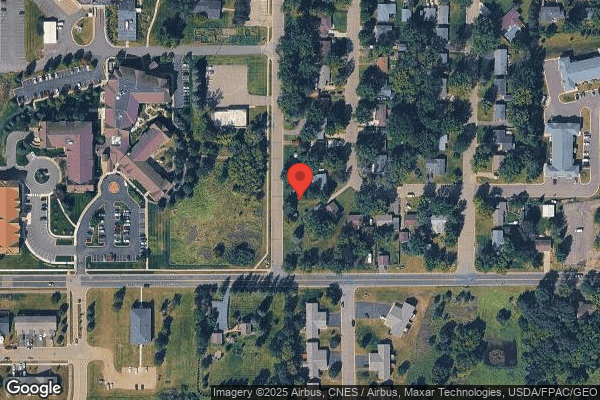
575 HOSPITAL RD, NEW RICHMOND, WI 54017 (715) 243-3930
Non profit - Corporation 50 Beds PRESBYTERIAN HOMES & SERVICES Data: November 2025
Trust Grade
85/100
#87 of 321 in WI
Last Inspection: November 2024

Within standard 12-15 month inspection cycle. Federal law requires annual inspections.

Overview

Deerfield Care Center, LLC in New Richmond, Wisconsin has a Trust Grade of B+, indicating it is above average and recommended for families considering nursing home options. It ranks #87 out of 321 facilities in Wisconsin, placing it in the top half, but is #5 out of 8 in St. Croix County, meaning only a few local options are better. The facility's performance is worsening, with issues increasing from 4 in 2023 to 6 in 2024. Staffing is a strong point, with a 5-star rating and a low turnover rate of 23%, significantly better than the state average. However, there are concerns, including incidents where food safety protocols were not followed, such as staff failing to cover facial hair while preparing food, which could pose health risks to residents. Overall, while the home has some strengths, particularly in staffing, it is essential to consider the recent trend of increasing issues.

Trust Score
B+
85/100
In Wisconsin
#87/321
Top 27%
Safety Record
Low Risk
No red flags
Inspections
Getting Worse
4 → 6 violations
Staff Stability
✓ Good
23% annual turnover. Excellent stability, 25 points below Wisconsin's 48% average. Staff who stay learn residents' needs.
Penalties
✓ Good
No fines on record. Clean compliance history, better than most Wisconsin facilities.
Skilled Nurses
✓ Good
Each resident gets 84 minutes of Registered Nurse (RN) attention daily — more than 97% of Wisconsin nursing homes. RNs are the most trained staff who catch health problems before they become serious.
Violations
⚠ Watch
11 deficiencies on record. Higher than average. Multiple issues found across inspections.
★★★★☆
4.0
Overall Rating
★★★★★
5.0
Staff Levels
★★★☆☆
3.0
Care Quality
★★★☆☆
3.0
Inspection Score
Stable
2023: 4 issues
2024: 6 issues

The Good

  • 5-Star Staffing Rating · Excellent nurse staffing levels
  • Low Staff Turnover (23%) · Staff stability means consistent care
  • Full Sprinkler Coverage · Fire safety systems throughout facility
  • No fines on record
  • Staff turnover is low (23%)

    25 points below Wisconsin average of 48%

Facility shows strength in staffing levels, staff retention, fire safety.

The Bad

Chain: PRESBYTERIAN HOMES & SERVICES

Part of a multi-facility chain

Ask about local staffing decisions and management

The Ugly 11 deficiencies on record

Nov 2024 6 deficiencies
CONCERN (D)

Potential for Harm - no one hurt, but risky conditions existed

Assessment Accuracy (Tag F0641)

Could have caused harm · This affected 1 resident

**NOTE- TERMS IN BRACKETS HAVE BEEN EDITED TO PROTECT CONFIDENTIALITY** Based on record review and interview, the facility did not accurately code the Minimum Data Set (MDS) assessments for 3 of 4 res...

Read full inspector narrative →
**NOTE- TERMS IN BRACKETS HAVE BEEN EDITED TO PROTECT CONFIDENTIALITY** Based on record review and interview, the facility did not accurately code the Minimum Data Set (MDS) assessments for 3 of 4 residents (R) reviewed for Preadmission Screening and Resident Review (PASARR) screen. (R2, R12, and R15) The MDS assessments are coded in error stating that a PASARR level 2 screen had not been completed when it was completed at the time of assessment for R2, R12 and R15. Findings include: Example 1 R2 was admitted to the facility on [DATE] with diagnoses including in part, schizophrenia, anxiety disorder, and schizoaffective disorder. Record review identified R2 had a PASARR level 2 screen completed on 10/03/23. R2's annual MDS assessment, dated 10/08/24, and significant change MDS assessment, dated 11/21/24, indicated for question A1500 that no PASARR level 2 had been completed. Example 2 R12 was admitted to the facility on [DATE] with diagnoses including in part, bipolar disorder, major depressive disorder, and anxiety disorder. Record review identified a PASARR level 2 was completed on 10/22/24. R12's admission MDS assessment, dated 10/01/24, indicated for question A1500 that no PASARR level 2 had been completed. On 11/26/24 at 12:58 PM, Surveyor interviewed Nursing Home Administrator (NHA) A who completes the PASARR screenings for the facility. Surveyor reviewed R2, R12 and R15 with NHA A, and NHA A agreed that all three residents had a serious mental illness and had a PASARR level 2 screen completed. Surveyor asked NHA A why the MDS Assessment section A1500 was answered no for all three residents when all three resident did have a PASARR level 2 screen completed. NHA A stated their corporation has a centralized MDS nurse who is not on site and based in Minnesota. NHA A believes they are misunderstanding the MDS A1500 question and answering no based on the fact that the level 2 screen determined the resident did not require specialized services for their mental illness. NHA A agreed that the MDS section A1500 question was coded incorrectly for R2, R12 and R15. Example 3 R15 was admitted on [DATE] with diagnoses of major depressive disorder, anxiety disorder, and post-traumatic stress disorder. Review of R15's medical record documented a PASRR level II screen was completed on 02/16/21. An annual MDS assessment, dated 03/12/24, documented A1500 was coded no for consideration of a level II PASRR process for a serious mental illness and/or intellectual disability or a related condition. A significant change MDS assessment, dated 09/10/24, documented section A1500 was coded no for consideration of a level II PASRR process for a serious mental illness and/or intellectual disability or a related condition. On 11/27/24 at 2:55 p.m., Surveyor interviewed NHA A about the MDS coding for PASRR level II. NHA A indicated the MDS was coded incorrectly.
CONCERN (D) 📢 Someone Reported This

A family member, employee, or ombudsman was alarmed enough to file a formal complaint

Potential for Harm - no one hurt, but risky conditions existed

ADL Care (Tag F0677)

Could have caused harm · This affected 1 resident

**NOTE- TERMS IN BRACKETS HAVE BEEN EDITED TO PROTECT CONFIDENTIALITY** Based on observation, interview and record review, the facility did not ensure 1 of 4 residents (R)(R15) who are unable to carry...

Read full inspector narrative →
**NOTE- TERMS IN BRACKETS HAVE BEEN EDITED TO PROTECT CONFIDENTIALITY** Based on observation, interview and record review, the facility did not ensure 1 of 4 residents (R)(R15) who are unable to carry out activities of daily living receive the necessary services to maintain good oral care. This is evidenced by: R15 was admitted on [DATE] and has current diagnoses of type 2 diabetes mellitus with diabetic polyneuropathy, morbid obesity, major depressive disorder, congestive heart failure, anxiety disorder, edema, venous insufficiency peripheral, post-traumatic stress disorder, weakness, polyosteoarthritis, pain in left shoulder, reduced mobility, and chronic pain. The Minimum Data Set (MDS) a significant change assessment dated [DATE] documented R15 needing substantial/maximal assistance of staff with the staff doing more than half the effort. R15's brief interview for mental status (BIMS) score of 10 out of 15 indicates R15 has moderate cognitive impairment. Review of the quick guide for ADLs (activities of daily living) for R15's care documented in part: Standards: .Oral care -twice daily (both unless otherwise specified) .Setup A-1 (assist of 1 staff) PRN (as needed) oral cares, encourage tongue brushing daily . On 11/27/24 at 9:34 AM, Surveyor observed Certified Nursing Assistant (CNA) C and CNA D provide personal cares for R15. CNA C and CNA D appropriately washed and clothed R15 and transferred R15 to the broda chair. CNA D combed and braided R15's hair. CNA D removed gown, sanitized hands and brought R15 to the dining room. Surveyor did not observe R15 be provided oral care. After breakfast R15 continued to be in the dining room and received hospice music therapy. At 11/27/24 at 12:55 PM, Surveyor observed R15 being transferred to their room. Surveyor interviewed CNA C about oral care being provided to R15. CNA C indicated R15 will do her own oral care when staff provide R15 with a toothette or R15 will start, and CNA C would have to finish the oral care. Surveyor reviewed with CNA C when observing morning cares R15 was not provided oral care. CNA C stated this morning was mixed up and R15 did not get up at her usual time and was later. CNA C stated we got R15 up in her chair and brought to the dining room for breakfast so oral care was not completed. Surveyor asked if oral care was completed after breakfast and CNA C indicated no.
CONCERN (D) 📢 Someone Reported This

A family member, employee, or ombudsman was alarmed enough to file a formal complaint

Potential for Harm - no one hurt, but risky conditions existed

Quality of Care (Tag F0684)

Could have caused harm · This affected 1 resident

**NOTE- TERMS IN BRACKETS HAVE BEEN EDITED TO PROTECT CONFIDENTIALITY** Based on interview and record review, the facility did not ensure that residents receive treatment and care in accordance with p...

Read full inspector narrative →
**NOTE- TERMS IN BRACKETS HAVE BEEN EDITED TO PROTECT CONFIDENTIALITY** Based on interview and record review, the facility did not ensure that residents receive treatment and care in accordance with professional standards of practice, the comprehensive person-centered care plan, and the residents' choices. The facility did not identify a whitish yellow film present throughout the soft tissue in resident's mouth timely leading to a delay in treatment. This has the potential to affect 1 of 1 resident (R) who resided in the facility (R196). Findings include: R196 was admitted to the facility on [DATE]. R196 was diagnosed with malignant neoplasm of lung, malignant neoplasm of brain, malignant neoplasm of spinal cord, rheumatoid arthritis with, malignant neoplasm of adrenal gland, retention of urine, history of other venous thrombosis, and lymphedema. R196 entered the facility with a Brief Interview for Mental Status (BIMS) assessment score of 14 out of 15 meaning intact cognition. R196 was their own person upon entering the facility. R196 was alert and oriented and was able to direct own care. R196 enrolled themselves into hospice care upon admission to the facility. Surveyor reviewed dental appointment notes dated 07/05/24 stating, There was a whitish yellow film present throughout the soft tissue in her mouth that I was not able to wipe off. Including her cheeks and lips. I sent provider support photos of film to attach to her chart. I am going to request our dentist to come and look at this film. Surveyor reviewed progress note dated 07/05/24 stating, Late Entry: Type of appointment: Healthdrive dental New orders or recommendations: Person notified of new orders * There was no indication of resident change in heath condition noted in progress note related to dental appointment. Surveyor reviewed medical administration record dated 07/01/24 - 07/31/24 indicated that Clotrimazole Lozenge 10 MG was started on 07/23/24, 18 days after dental hygienist indicated a whitish yellow film present throughout the soft tissue in R196's mouth. Order indicated to give 1 lozenge by mouth five times a day for Oral thrush. On 11/27/24 at 12:12 PM, Surveyor interviewed Clinical Coordinator (CC) E regarding procedure for reviewing resident appointment information. CC E said yes they do review the notes from the dentist and after review we will update the resident's progress notes with any updates. Surveyor then asked CC E if they had any progress notes related to R196's dentist appointment. CC E said they will need to look. On 11/27/24 at 1:04 PM, Surveyor interviewed CC E who said the hygienist did leave a note, and it should have been charted and reviewed by leadership. CC E said the hygienist notified their dentist and maybe that is why it was not charted. The dentist would come every two months and R196 passed away prior to the next dentist visit. Surveyor asked if the note regarding the whitish yellow film present throughout the soft tissue in R196's mouth should have been charted and reviewed. CC E said it should have been addressed, the progress note should have been reviewed, the concern should have been investigated, and the physician should have been contacted for treatment orders.
CONCERN (D) 📢 Someone Reported This

A family member, employee, or ombudsman was alarmed enough to file a formal complaint

Potential for Harm - no one hurt, but risky conditions existed

Pharmacy Services (Tag F0755)

Could have caused harm · This affected 1 resident

**NOTE- TERMS IN BRACKETS HAVE BEEN EDITED TO PROTECT CONFIDENTIALITY** Based on record review and interview, the facility did not provide medications as ordered by the prescriber, to meet the needs o...

Read full inspector narrative →
**NOTE- TERMS IN BRACKETS HAVE BEEN EDITED TO PROTECT CONFIDENTIALITY** Based on record review and interview, the facility did not provide medications as ordered by the prescriber, to meet the needs of each resident for 1 of 12 residents (R) medication orders reviewed for accuracy. (R34) This is evidenced by: The facility's policy Medication Administration Error Policy with modified date of May 2021, read in part: CMS Regulatory Definitions: Medication Error the observed preparation or administration of medications or biologicals which is not in accordance with: 1. The prescriber's order; . R34 was admitted on [DATE] with current diagnoses of chronic obstructive pulmonary disease, congestive heart failure, chronic respiratory failure with hypoxia, hypertrophic cardiomyopathy, atrial fibrillation, cyst of pancreas, osteoarthritis, prediabetes, obstructive sleep apnea, morbid obesity, insomnia, hypertension, major depressive disorder, history of transient ischemic attack, and anxiety disorder. Review of R34's progress notes documented on 10/31/24 at 4:07 p.m., Hospice, Note Text: PRN (as needed) RN (Registered Nurse) visit made to see this resident to f/u (follow up) on increased edema and hypoxia. Res in bed upon arrival and will not open eyes but uses head nods to answer writer. O2 was 90% on 1L wirter (sic) increased to 3L and 02 up to 93% via NC. She denies pain but states SOB (shortness of breath) and does have increased RR (respiratory rate) rate at 28. PRN MS (morphine sulfate) administered for SOB. Edema is 4+ pitting to BLE (bilateral lower extremities). Dr. [Name] notified and new orders transcribed to increased torsemids (sic) 40mg qd (everyday) x 3 days and reassess on Monday. NP/POA updated on changes POC (plan of care) remains appropriate. Site encouraged to call [Hospice] with any changes. Surveyor reviewed physician order for Torsemide was entered on 10/31/24, started on 11/01/24 and discontinued on 11/03/24. Surveyor reviewed Medication Administration Record (MAR) for Torsemide 40 mg orders. The October MAR documented on 10/31/24 Torsemide 20 mg was given. The November MAR documented nursing staff signed the Torsemide 40 mg medication was given on 11/01/24 and 11/02/24. The MAR did not have the Torsemide 40 mg medication order to be given on 11/03/24 which would be the third day of the increased dose. The MAR documented no orders for Torsemide of any dosage was to be given to R34 on 11/03/24. On 11/27/24 at 1:16 PM, Surveyor interviewed Clinical Coordinator (CC) E about R34's missed dose of Torsemide. CC E indicated this was a transcription error and R34 did not receive the medication as ordered. CC E indicated she was not aware of the missed dose because of how the order was entered into the computer and will be doing a medication error report and notifying the physician and hospice.
CONCERN (E) 📢 Someone Reported This

A family member, employee, or ombudsman was alarmed enough to file a formal complaint

Potential for Harm - no one hurt, but risky conditions existed

Infection Control (Tag F0880)

Could have caused harm · This affected multiple residents

**NOTE- TERMS IN BRACKETS HAVE BEEN EDITED TO PROTECT CONFIDENTIALITY** Based on observation, interview and record review, the facility did not maintain an infection prevention and control program des...

Read full inspector narrative →
**NOTE- TERMS IN BRACKETS HAVE BEEN EDITED TO PROTECT CONFIDENTIALITY** Based on observation, interview and record review, the facility did not maintain an infection prevention and control program designed to provide a safe, sanitary, and comfortable environment to help prevent the development and transmission of communicable disease and infection. This had the potential to affect all 12 residents (R) residing on unit. R8 is on enhanced barrier precautions (EBP) and staff did not apply personal protective gown when emptying R8's urine catheter bag. This is evidenced by: Facility's policy titled Enhanced Barrier Precautions Policy and Procedure with the modified date of April 2024, document in part: .Policy: 1. EBP (targeted gowns and gloves) are used in conjunction with standard precautions and will be implemented during high contact resident care activities for residents who: .b. when caring for residents with wounds or indwelling medical devices even if the resident is not known to be colonized or infected with a MDRO (multidrug-resistant organisms) .Procedures: 4. When performing high-contact resident care activities staff should: a. Perform hand hygiene b. [NAME] gloves and a gown . R8 was admitted to the facility on [DATE] and current diagnoses of hemiplegia and hemiparesis following cerebral infarction affecting left non-dominant, congestive heart failure, pulmonary disease, type 2 diabetic neuropathy, dysphagia, neuromuscular dysfunction of bladder, polyneuropathy, chronic pain, traumatic subdural hemorrhage, and vascular dementia. Surveyor observed at the entrance of R8's room there is a sign on the cabinet door stating enhanced barrier precautions. On 11/26/24 at 1:28 PM, Surveyor observed Certified Nursing Assistant (CNA) F empty R8's catheter bag. CNA F washed hands appropriately and applied gloves. CNA F did not apply a gown. CNA F placed a paper towel barrier on the floor and placed graduate on the paper towel. CNA F removed the catheter bag from the dignity bag, wiped the port with an alcohol wipe and started to empty the urine into the graduate. Surveyor interrupted CNA F by asking if R8 was on enhanced barrier precautions. CNA F indicated yes R8 is on precautions and CNA F should have a gown on. CNA F removed gloves, washed hands appropriately and applied a gown and clean gloves. CNA F completed emptying of the catheter bag. On 11/27/24 at 2:36 p.m., Surveyor interviewed Nursing Home Administrator (NHA) A about EBP and reviewed Surveyor's observation with CNA F. NHA A indicated expectation is to have a gown on when providing care for a resident that is on EBP.
CONCERN (F)

Potential for Harm - no one hurt, but risky conditions existed

Food Safety (Tag F0812)

Could have caused harm · This affected most or all residents

Based on observation, interview and record review, the facility did not ensure that food was stored, prepared, distributed, and served in accordance with professional standards for food service safety...

Read full inspector narrative →
Based on observation, interview and record review, the facility did not ensure that food was stored, prepared, distributed, and served in accordance with professional standards for food service safety. Kitchen staff had beard hair exposed and uncovered while preparing food, and door hinges located above food serving areas were unclean. This had the potential to affect all 43 of 43 residents residing in the facility. Findings Include: The facility policy, titled Hair Restraint Policy, dated June 2021, states: Beards must be covered with a beard bag, and must be on before entering the kitchen or any area where the food is being prepared. On 11/26/24 at 11:23 AM, Surveyor observed food preparation for nursing home in the main kitchen. Surveyor observed Dietary Aide (DA) G who had facial hair on chin, sides of mouth, and mustache area that was not covered with a beard net. Hair was approximately 3/4 of an inch long. Surveyor observed DA H who was preparing food and had uncovered facial hair on upper chin and mustache area. DA I had noticeable hair on their chin and was also moving around the kitchen helping with lunch preparations without any beard covering. Surveyor interviewed DA G and DA H regarding their understanding of the facial hair policy. They were not sure, but they thought the hair length was ok, although they were not entirely sure what the policy stated. On 11/26/24 at 11:25 AM, Surveyor interviewed Dietary Manager (DM) K regarding their expectations regarding beard nets. DM K felt that a small amount of facial hair was okay. DM K also felt the definition of a beard is subject to some interpretation as well. DM K mentioned they agree that DA G did have longer facial hair than they would prefer, and they would relook at the rules regarding a beard net. On 11/27/24 at 6:45 AM, Surveyor observed kitchen preparation with DA J on the third floor serving area. Surveyor observed the mechanism that slowly opens and closes the door was covered with a significant amount of dust. Surveyor asked DA J if they noticed the unclean area that was directly above the serving area, and DA J said they did and had not noticed it before. DA J stated it is rare staff would look in that area, and DA J was not sure who was supposed to be cleaning that area. On 11/27/24 at 7:14 AM, Surveyor requested Nursing Home Administrator (NHA) A go to the second-floor food preparation area to look at the dust accumulation above that serving area as well. Surveyor observed dust on the door hinges above the food serving area on the second floor. Surveyor asked NHA A if they would expect the hinges to be cleaned regularly on the second and third floor. NHA A said it was expected the hinges should be cleaned regularly. On 11/27/24 at 10:14 AM, Surveyor interviewed DM K regarding their findings and facial hair policy. DM K said they plan to start having the employees with facial hair shave.
Sept 2023 4 deficiencies
CONCERN (D)

Potential for Harm - no one hurt, but risky conditions existed

Notification of Changes (Tag F0580)

Could have caused harm · This affected 1 resident

**NOTE- TERMS IN BRACKETS HAVE BEEN EDITED TO PROTECT CONFIDENTIALITY** Based on interview and record review, the facility failed to notify the resident's practitioner of the delay in obtaining a ches...

Read full inspector narrative →
**NOTE- TERMS IN BRACKETS HAVE BEEN EDITED TO PROTECT CONFIDENTIALITY** Based on interview and record review, the facility failed to notify the resident's practitioner of the delay in obtaining a chest x-ray (CXR) and failure to immediately consult with the resident's practitioner concerning a change in the condition of a resident for 1 of 2 residents (R39). R39 was prescribed blood thinners and started to have hematuria (blood in the urine) with nickel size blood clots, an adverse consequence of taking blood thinners. The facility neglected to notify R39's practitioner until almost 5 hours later after the symptoms started. Findings include: The facility policy, entitled Communication and Notification - Staff, Practitioners, and Resident Representatives, dated November 2022, states: .Staff will notify the practitioner any time there is a significant change in clinical condition; including but not limited to a need to discontinue or change an existing form of treatment due to adverse consequences, or to initiate a new form of treatment .Any significant change in status must be reported to the practitioner team immediately which may be life threatening in nature or risk to self or others . R39 was admitted to the facility on [DATE], and had diagnoses including in part Alzheimer's disease, dementia, gross hematuria, malignant neoplasm of prostate, benign prostatic hyperplasia with lower urinary tract symptoms, acute embolism, and thrombosis of DVT (deep vein thrombus) right lower extremity (blood clot), fracture of right femur. On 9/19/23, Surveyor reviewed R39's medical record and identified the following: R39's Physician's Orders: Aspirin EC (enteric coated) 81 mg (milligram) Give 2 tablet by mouth one time a day for blood clot prevention. Start date: 5/25/23 End date: 6/08/23. Enoxaparin sodium injection solution prefilled syringe 40 mg/0.4ml (milliliter) Inject 0.4 ml subcutaneously every 24 hours for blood clot prevention for 9 administrations. Start date: 5/25/23 End date: 6/03/23. Xarelto oral tablet Give 15 mg by mouth two times a day for DVT. Start date: 6/08/23 End date: 6/09/23. Per Medication Administration Record (MAR), R39 started on Xarelto 15mg 6/09/23 two doses and one dose given 6/10/23 at am dose. R39's Progress Notes: 6/10/23 at 5:16 AM Resident [R39] had several nickel sized clots in catheter bag with 400ml bloody urine, and blood in pad. Started on Xarelto 6/9/23 for DVT in right leg . 6/10/23 at 12:32 PM .Change in Condition-situation .Resident [R39] had significant amount of blood in catheter bag with nickel sized clots present. On-Call contacted and wanted resident to be seen in ER [emergency room] for further evaluation. Cather is patent and still draining bladder, bladder scan showed 27mL. Concerns with bleeding due to resident starting Xarelto 15mg BID [twice a day] on Thursday [6/08/23] for DVT .Notification of MD/NP: On- call provider notified at 10:00 [AM] . Surveyor noted R39 was prescribed blood thinners and started to have hematuria (blood in the urine) with nickel size blood clots, complications of taking blood thinners. The facility neglected to notify R39's practitioner until almost 5 hours later after the symptoms started. On 9/19/23 at 9:13 AM, Surveyor spoke with Registered Nurse (RN) H to ask if a resident on an anticoagulant (blood thinner) starts to have hematuria with blood clots in the urine, what is the expectation to notify the provider. RN H said we need to notify the provider immediately as there could be something serious going on and the resident would need intervention right away. Surveyor asked RN H where the nurses would document this conversation with the provider. RN H said it would be documented in our progress notes. On 9/19/23 at 12:32 PM, Surveyor spoke with Director of Nursing (DON) B to ask what the expectation would be for when the nurse needs to notify the provider if a resident on an anticoagulant started with hematuria with blood clots. DON B said the provider should be notified as soon as possible.
CONCERN (D)

Potential for Harm - no one hurt, but risky conditions existed

Deficiency F0604 (Tag F0604)

Could have caused harm · This affected 1 resident

**NOTE- TERMS IN BRACKETS HAVE BEEN EDITED TO PROTECT CONFIDENTIALITY** Based on observation, interview and record review, the facility did not ensure that the facility used the least restrictive alte...

Read full inspector narrative →
**NOTE- TERMS IN BRACKETS HAVE BEEN EDITED TO PROTECT CONFIDENTIALITY** Based on observation, interview and record review, the facility did not ensure that the facility used the least restrictive alternative for the least amount of time and documented ongoing re-evaluations of the need for restraints for 1 of 1 resident (R15) using restrictive devices. The facility did not assess the use of a tray attached to R15's wheelchair for use as a restraint. This is evidenced by: The facility policy, entitled Physical Restraint Policy, dated November 2022, states: Procedure for Use of Restraints: 1. An assessment will be reviewed quarterly, and a new assessment will be completed annually, with significant change, with use of a new device, and with discontinuation of and existing device. R15 was admitted to the facility on [DATE] and has been diagnosed with Amyotrophic Lateral Sclerosis (ALS) and has a Brief Interview for Mental Status (BIMS) of 15. On 09/18/23 at 11:19 AM, Surveyor observed R15 in their room with a tray attached to his electric wheelchair. The tray was attached to both arms of the chair and in front of R15 while sitting in a wheelchair. On 09/18/23 at 11:19 AM, Surveyor asked R15 if they could remove the tray attached to the electric wheelchair, to which R15 replied they could not. However, they had no issues asking one of the nurses or Certified Nursing Assistants (CNAs) to remove it when they wanted it removed. Surveyor attempted to locate an assessment related to the restraint observed on R15's electric wheelchair and could not locate one. On 09/19/23 at 12:12 PM, Surveyor interviewed Registered Nurse (RN) I about the tray on R15's Chair. RN I said the chair is relatively new, and they work with a company specializing in ALS; the chair should help R15 as the disease progresses. The tray is nice and allows R15 to read, and if R15 ever needs it off, he knows to ask any of the aides on the floor. R15 can communicate well with staff. When Surveyor asked if RN I had seen any assessments related to the tray on R15's chair, RN I said they did not know of any. On 09/19/23 at 12:26 PM, Surveyor asked Director of Nursing (DON) B for a copy of an assessment related to the attached tray on R15's electric wheelchair. No assessment related to the tray was received. On 09/19/23 at 2:45 PM, Surveyor interviewed Clinical Coordinator (CC) G regarding a restraint assessment. CC G presented Surveyor with a copy of the assessment created on 09/19/23 and said they had not started it until that day. There was no assessment completed prior to the one presented. They believed it had been missed due to working with a different company providing R15 with ALS-specific equipment, including the electric wheelchair and the attached tray. Surveyor asked how long R15 had had the electric wheelchair, and CC G said that R15 had applied for the chair with the tray in the spring and received the new electric chair in the middle of the summer but could not remember the exact dates. Surveyor asked CC G what their expectations would be if someone had added a possible restraint to their wheelchair. CC G said they would expect an assessment to be created for the restraint.
CONCERN (D)

Potential for Harm - no one hurt, but risky conditions existed

Comprehensive Care Plan (Tag F0656)

Could have caused harm · This affected 1 resident

**NOTE- TERMS IN BRACKETS HAVE BEEN EDITED TO PROTECT CONFIDENTIALITY** Based on observation, interview and record review, the facility did not ensure that the comprehensive care plan was implemented ...

Read full inspector narrative →
**NOTE- TERMS IN BRACKETS HAVE BEEN EDITED TO PROTECT CONFIDENTIALITY** Based on observation, interview and record review, the facility did not ensure that the comprehensive care plan was implemented for 1 of 13 residents (R) reviewed, R15. R15 did not have a care plan regarding the tray attached to R15's wheelchair which R15 could not physically remove. This is evidenced by: The facility policy and procedure entitled Physical Restraint Policy, last revised in November 2022, states in part, Procedures for use of restraints: . 3. The care plan will be updated to include the following: a. Least restrictive type of restraint. b. Length of time the restraint will be used. c. Medical symptom requiring the use of the restraint. d. Who may apply the restraint. e. The time and frequency the restraint should be restraint f. When/how direct monitoring and supervision would be provided when the restraint is in use . R15 was admitted to the facility on [DATE] and has been diagnosed with Amyotrophic Lateral Sclerosis (ALS) and has a Brief Interview for Mental Status (BIMS) of 15 indicating intact cognition. On 09/18/23 at 11:19 AM, Surveyor observed R15 in their room with a tray attached to his electric wheelchair. The tray was attached to both arms of the chair and was located in front of R15 while sitting in wheelchair. On 09/18/23 at 11:19 AM, Surveyor asked R15 if they could remove the tray attached to the electric wheelchair, to which R15 replied they could not. However, they had no issues asking one of the nurses or Certified Nursing Assistants (CNA) to remove it when they wanted it removed. Surveyor attempted to locate a care plan related to the restraint observed on R15's electric wheelchair and could not locate one. On 09/19/23 at 12:26 PM, Surveyor asked Director of Nursing (DON) B for a copy of the care plan related to the attached tray on R15's electric wheelchair. No care plan related to the tray was provided. On 09/19/23 at 2:45 PM, Surveyor interviewed Clinical Coordinator (CC) G regarding the care plan. CC G presented Surveyor with a new copy of the care plan created on 09/19/23 and said they had not created it until that day. No care plan relating to restraints was completed prior to the one presented. They believed it had been missed due to working with a different company providing R15 with ALS-specific equipment, including the electric wheelchair and the attached tray. Surveyor asked how long R15 had had the electric wheelchair, and CC G said that R15 had applied for the chair with the tray in the spring and received the new electric chair in the middle of the summer but could not remember the exact dates. Surveyor asked CC G what their expectations would be if someone had added a possible restraint to their wheelchair. CC G said they would expect a care plan to be created.
CONCERN (F)

Potential for Harm - no one hurt, but risky conditions existed

Food Safety (Tag F0812)

Could have caused harm · This affected most or all residents

Based on observation and interview, the facility failed to prepare and distribute food under sanitary conditions. This has the ability to affect all 45 residents in the facility. The dietary staff did...

Read full inspector narrative →
Based on observation and interview, the facility failed to prepare and distribute food under sanitary conditions. This has the ability to affect all 45 residents in the facility. The dietary staff did not restrain hair under hair nets in the kitchen and serving areas. The dietary staff did not allow time, after using an alcohol swab on a thermometer, for the thermometer to dry off before inserting the thermometer into the food. This is evidenced by: Example 1: The facility policy and procedure entitled Infection Prevention and Control Manual Dietary - F812 Regulation - Food Safety Requirements, last revised in 2020, states in part, Dietary Staff must wear hair restraints (e.g., hairnet, hat, and/or beard restraint) to prevent hair from contacting food. On 09/18/23 at 9:00 AM, Surveyor performed an initial tour of facility's kitchen. During the initial tour, Surveyor observed Dietary Aide (DA) D with a hair net on their head, but bangs were protruding from the hairnet. DA D's hair was not contained in the hair net. On 09/18/23 at 12:05 PM, Surveyor observed DA E dishing up plates from the dry heat table in the kitchen on the third floor. DA E had on a hair net, but hair was protruding from the hairnet below where the hairnet would cover DA E's neck. DA E's hair was not contained in the hair net. On 09/19/23 at 7:57 AM, Surveyor observed DA F taking food temperatures before breakfast. DA F had on a hair net, but hair was protruding below the hair net near the base of the neck. DA F's hair was not contained in the hair net. On 09/20/23 at 8:44 AM, Surveyor interviewed Dietary Manager (DM) C about DM C's expectations for hair restraints in the kitchen. DM C said they would expect staff always to have hair nets on; if hair were out, they would need to get larger hair nets. They plan to look into larger hair nets for staff with more hair. Example 2: The facility policy and procedure entitled Proper Use and Calibration of Food Thermometers, last revised in July 2020, states in part, Proper Use: Sanitize the stem of the thermometer upon each use with an alcohol wipe or 5 seconds in a sanitizer solution. Allow to probe to air dry completely before next use. On 09/19/23 at 7:57 AM, Surveyor observed DA F checking food temperature before serving residents on the third floor. DA F first wiped the thermometer with a sanitation wipe, and after 7 seconds, they put the thermometer in the oatmeal. DA F then wiped the thermometer with a sanitation wipe, and after a count of 5 seconds, they checked the temperature of the pancakes. DA F then wiped the thermometer with a sanitation wipe and, after a count of 2 seconds, put the thermometer into the eggs. DA F took the thermometer out of the eggs, wiped the thermometer off with the sanitation wipe, and immediately put the thermometer into the pureed eggs. On 09/19/23 at 7:57 AM, Surveyor interviewed DA F about checking food temperature at the point of service. Surveyor asked if DA F knew what type of wipes were being used to clean the thermometer, and DA F responded by saying they are alcohol wipes. Surveyor then asked if she knew of an allotted time that DA F should wait after wiping off the thermometer before taking the temperature of the following food item. DA F did not know of a time they should wait after wiping off a thermometer with an alcohol swab. On 09/20/23 at 8:44 AM, Surveyor interviewed DM C about DM C's expectations for checking food temperature before serving. DM C would expect the thermometer to be cleaned each time. Surveyor asked about the time it might take for alcohol to dry on the thermometer, and DM C said they did not think about the time it would take for the alcohol to dry off the thermometer and possibly contaminate food with alcohol.
Aug 2022 1 deficiency
CONCERN (F)

Potential for Harm - no one hurt, but risky conditions existed

Deficiency F0886 (Tag F0886)

Could have caused harm · This affected most or all residents

**NOTE- TERMS IN BRACKETS HAVE BEEN EDITED TO PROTECT CONFIDENTIALITY** Based on record review and interview, the facility did not conduct testing of facility staff that is consistent with current sta...

Read full inspector narrative →
**NOTE- TERMS IN BRACKETS HAVE BEEN EDITED TO PROTECT CONFIDENTIALITY** Based on record review and interview, the facility did not conduct testing of facility staff that is consistent with current standards of practice for conducting COVID-19 testing. This had the potential to affect 37 of 37 residents. Frequency of testing for staff not done twice weekly for unvaccinated staff when County Transmission Level was high. Findings include: Facility Policy Titled, COVID-19 Staff Vaccination Policy with a revision date of 02/03/22 states in part The following precautions apply to exempt unvaccinated staff complete testing based upon the CDC County Transmission Rate. The Centers for Medicare and Medicaid Services (CMS) memo: Interim Final Rule (IFC), CMS-3401-IFC, Additional Policy and Regulatory Revisions in Response to the COVID-19 Public Health Emergency related to Long-Term Care (LTC) Facility Testing Requirements, dated August 26, 2020, and revised on 03/10/22 states, in part: .Routine testing of staff who are not up-to-date should be based on the extent of the virus in the community. Facilities should use their community transmission level as the trigger for staff testing frequency. The facility should test all staff, who are not up to date, at the frequency prescribed in the Routine Testing table based on the level of community transmission reported in the past week . The table states: Level of COVID-19 Community Transmission Minimum Testing Frequency of Staff Low Not recommended Moderate Once a week Substantial Twice a week High Twice a week County Transmission Rate for St. Croix County was high per CMS data report. On 08/31/22, Surveyor reviewed the facility staff vaccination log. Report showed week of 08/14 - 08/20/22 6 of 8 unvaccinated staff reviewed did not test 2 times during that week time period. Registered Nurse (RN) C worked: 8/15, 8/17, 8/19, 8/20 and 8/21/22. Per the staff vaccination matrix RN C has a granted non-medical exemption. Review of the facility testing log shows RN C only tested on [DATE]. Cook D, worked: 8/15, 8/17, 8/18 and 8/19/22. Per the staff vaccination matrix cook D has a granted non-medical exemption. Review of the facility testing log shows [NAME] D only tested on [DATE]. RN E, worked: 8/14, 8/16 and 8/18/22. Per the staff vaccination matrix RN E has a granted non-medical exemption. Review of the facility testing log shows RN E only tested on [DATE]. Household Coordinator (HHC) F, worked: 8/15, 8/16, 8/17, 8/18, and 8/19. Per the staff vaccination matrix HHC F has a granted medical exemption. Review of the facility testing log shows HHC F only tested on [DATE]. RN G, worked: 8/17, 8/18. 8/19 and 8/20. Per the staff vaccination matrix RN G has a granted non-medical exemption. Review of the facility testing log shows RN G only tested on [DATE]. Resident Assistant (RA) H, worked: 8/14, 8/15, 8/16, 8/18 and 8/19/22. Per the staff vaccination matrix RA H has a granted non-medical exemption. Review of the facility testing log shows RA H only tested on [DATE]. On 8/30/22 at about 6:30 AM, Surveyor interviewed RN I and asked how often staff were being tested for COVID. RN I indicated twice a week if you are not up to date with your vaccinations. On 08/30/22 at about 11:15 AM, Surveyor interviewed Director of Nursing (DON) B and RN J, who is also the facility Infection Preventionist, and asked how often staff are being tested for COVID-19. RN J indicated it depends on vaccination status, if not up to date testing is to be 2 times a week based on high community transmission right now. On 08/30/22 at about 12:48 PM, Surveyor interviewed HHC F and asked how often staff were being tested for COVID 19. HHC F indicated 2 times a week if not vaccinated. HHC F has a granted medical exemption and only tested on e time the week of 08/14 - 08/20/22. HHC F indicated she usually tests Tuesday and Friday and had no explanation as to why she did not test twice that week. On 08/30/22, Surveyor interviewed NHA A and asked how the testing was tracked. NHA A indicated a report was run weekly and if someone has not tested twice a week per policy she would send an email to the employee's supervisor that the employee was not up to date on testing. The NHA A had no further follow up after that if the employee did not comply or explanation for not following the testing protocols.
Understanding Severity Codes (click to expand)
Life-Threatening (Immediate Jeopardy)
J - Isolated K - Pattern L - Widespread
Actual Harm
G - Isolated H - Pattern I - Widespread
Potential for Harm
D - Isolated E - Pattern F - Widespread
No Harm (Minor)
A - Isolated B - Pattern C - Widespread

Questions to Ask on Your Visit

  • "Can I speak with families of current residents?"
  • "What's your RN coverage like on weekends and overnight?"

Our Honest Assessment

Strengths
  • • Grade B+ (85/100). Above average facility, better than most options in Wisconsin.
  • • No major safety red flags. No abuse findings, life-threatening violations, or SFF status.
  • • No fines on record. Clean compliance history, better than most Wisconsin facilities.
  • • 23% annual turnover. Excellent stability, 25 points below Wisconsin's 48% average. Staff who stay learn residents' needs.
Concerns
  • • 11 deficiencies on record. Higher than average. Multiple issues found across inspections.
Bottom line: Generally positive indicators. Standard due diligence and a personal visit recommended.

About This Facility

What is Deerfield, Llc's CMS Rating?

CMS assigns DEERFIELD CARE CENTER, LLC an overall rating of 4 out of 5 stars, which is considered above average nationally. Within Wisconsin, this rating places the facility higher than 99% of the state's 100 nursing homes. This rating reflects solid performance across the metrics CMS uses to evaluate nursing home quality.

How is Deerfield, Llc Staffed?

CMS rates DEERFIELD CARE CENTER, LLC's staffing level at 5 out of 5 stars, which is much above average compared to other nursing homes. Staff turnover is 23%, compared to the Wisconsin average of 46%. This relatively stable workforce can support continuity of care.

What Have Inspectors Found at Deerfield, Llc?

State health inspectors documented 11 deficiencies at DEERFIELD CARE CENTER, LLC during 2022 to 2024. These included: 11 with potential for harm.

Who Owns and Operates Deerfield, Llc?

DEERFIELD CARE CENTER, LLC is owned by a non-profit organization. Non-profit facilities reinvest revenue into operations rather than distributing to shareholders. The facility is operated by PRESBYTERIAN HOMES & SERVICES, a chain that manages multiple nursing homes. With 50 certified beds and approximately 44 residents (about 88% occupancy), it is a smaller facility located in NEW RICHMOND, Wisconsin.

How Does Deerfield, Llc Compare to Other Wisconsin Nursing Homes?

Compared to the 100 nursing homes in Wisconsin, DEERFIELD CARE CENTER, LLC's overall rating (4 stars) is above the state average of 3.0, staff turnover (23%) is significantly lower than the state average of 46%, and health inspection rating (3 stars) is at the national benchmark.

What Should Families Ask When Visiting Deerfield, Llc?

Based on this facility's data, families visiting should ask: "Can I visit during a mealtime to observe dining assistance and food quality?" "How do you handle medical emergencies, and what is your hospital transfer rate?" "Can I speak with family members of current residents about their experience?"

Is Deerfield, Llc Safe?

Based on CMS inspection data, DEERFIELD CARE CENTER, LLC has a clean safety record: no substantiated abuse findings (meaning no confirmed cases of resident harm), no Immediate Jeopardy citations (the most serious violation level indicating risk of serious injury or death), and is not on the Special Focus Facility watch list (a federal program monitoring the lowest-performing 1% of nursing homes). The facility has a 4-star overall rating and ranks #1 of 100 nursing homes in Wisconsin. While no facility is perfect, families should still ask about staff-to-resident ratios and recent inspection results during their visit.

Do Nurses at Deerfield, Llc Stick Around?

Staff at DEERFIELD CARE CENTER, LLC tend to stick around. With a turnover rate of 23%, the facility is 23 percentage points below the Wisconsin average of 46%. Low turnover is a positive sign. It means caregivers have time to learn each resident's needs, medications, and personal preferences. Consistent staff also notice subtle changes in a resident's condition more quickly. Registered Nurse turnover is also low at 21%, meaning experienced RNs are available to handle complex medical needs.

Was Deerfield, Llc Ever Fined?

DEERFIELD CARE CENTER, LLC has no federal fines on record. CMS issues fines when nursing homes fail to meet care standards or don't correct problems found during inspections. The absence of fines suggests the facility has either maintained compliance or corrected any issues before penalties were assessed. This is a positive indicator, though families should still review recent inspection reports for the full picture.

Is Deerfield, Llc on Any Federal Watch List?

DEERFIELD CARE CENTER, LLC is not on any federal watch list. The most significant is the Special Focus Facility (SFF) program, which identifies the bottom 1% of nursing homes nationally based on persistent, serious quality problems. Not being on this list means the facility has avoided the pattern of deficiencies that triggers enhanced federal oversight. This is a positive indicator, though families should still review the facility's inspection history directly.