LAKE COUNTRY HEALTH SERVICES

2195 NORTH SUMMIT VILLAGE WAY, OCONOMOWOC, WI 53066 (262) 560-2400
For profit - Corporation 100 Beds NORTH SHORE HEALTHCARE Data: November 2025 3 Immediate Jeopardy citations
Trust Grade
0/100
#287 of 321 in WI
Last Inspection: June 2024

Within standard 12-15 month inspection cycle. Federal law requires annual inspections.

Overview

Lake Country Health Services has received a Trust Grade of F, indicating poor quality of care with significant concerns. They rank #287 out of 321 nursing homes in Wisconsin, placing them in the bottom half, and #12 out of 17 in Waukesha County, meaning there are only a few local options that are better. While the facility is reportedly improving, with a reduction in issues from 28 in 2024 to just 3 in 2025, the overall environment remains concerning. Staffing is below average with a 2/5 rating and a high turnover rate of 60%, which is worse than the state average. Additionally, they have incurred $159,820 in fines, signaling repeated compliance issues, and the facility has critical incidents, such as failing to respect a resident's do-not-resuscitate order and a staff member engaging in an inappropriate relationship with a resident. While there is average RN coverage, the overall findings reveal serious weaknesses that families should consider when researching care options for their loved ones.

Trust Score
F
0/100
In Wisconsin
#287/321
Bottom 11%
Safety Record
High Risk
Review needed
Inspections
Getting Better
28 → 3 violations
Staff Stability
⚠ Watch
60% turnover. Above average. Higher turnover means staff may not know residents' routines.
Penalties
⚠ Watch
$159,820 in fines. Higher than 93% of Wisconsin facilities. Major compliance failures.
Skilled Nurses
✓ Good
Each resident gets 55 minutes of Registered Nurse (RN) attention daily — more than average for Wisconsin. RNs are trained to catch health problems early.
Violations
⚠ Watch
48 deficiencies on record. Higher than average. Multiple issues found across inspections.
★☆☆☆☆
1.0
Overall Rating
★★☆☆☆
2.0
Staff Levels
★★☆☆☆
2.0
Care Quality
★☆☆☆☆
1.0
Inspection Score
Stable
2024: 28 issues
2025: 3 issues

The Good

  • Full Sprinkler Coverage · Fire safety systems throughout facility
  • No fines on record

Facility shows strength in fire safety.

The Bad

1-Star Overall Rating

Below Wisconsin average (3.0)

Significant quality concerns identified by CMS

Staff Turnover: 60%

14pts above Wisconsin avg (46%)

Frequent staff changes - ask about care continuity

Federal Fines: $159,820

Well above median ($33,413)

Significant penalties indicating serious issues

Chain: NORTH SHORE HEALTHCARE

Part of a multi-facility chain

Ask about local staffing decisions and management

Staff turnover is elevated (60%)

12 points above Wisconsin average of 48%

The Ugly 48 deficiencies on record

3 life-threatening 1 actual harm
Mar 2025 3 deficiencies 1 IJ
CRITICAL (J) 📢 Someone Reported This

A family member, employee, or ombudsman was alarmed enough to file a formal complaint

Immediate Jeopardy (IJ) - the most serious Medicare violation

Deficiency F0578 (Tag F0578)

Someone could have died · This affected 1 resident

**NOTE- TERMS IN BRACKETS HAVE BEEN EDITED TO PROTECT CONFIDENTIALITY** Based on record review and interviews, the facility failed to honor a resident's advanced directive of do not resuscitate for 1 ...

Read full inspector narrative →
**NOTE- TERMS IN BRACKETS HAVE BEEN EDITED TO PROTECT CONFIDENTIALITY** Based on record review and interviews, the facility failed to honor a resident's advanced directive of do not resuscitate for 1 (R1) of 4 residents reviewed for advanced directives and resident's rights. R1 has a State Do Not Resuscitate (DNR) form signed by R1's Power of Attorney (POA), and an active Medical Doctor (MD) order documenting DNR. On [DATE], R1 became unresponsive and was pulseless. Facility staff did not check R1's advanced directives before performing Cardiopulmonary Resuscitation (CPR) compressions on R1. R1's pulse returned. After receiving compressions, R1 complained of pain as high as 10 out of 10 and required an added MD order for Morphine to control R1's pain. The facility's failure to honor R1's DNR wishes led to facility staff completing chest compressions through the act of cardiopulmonary resuscitation (CPR) that caused R1 to be resuscitated, despite the formulation of an advanced directive to decline such measures and which led to R1 experiencing extreme pain post resuscitation. This situation created a finding of immediate jeopardy that began on [DATE]. Nursing Home Administrator (NHA)-A, Director of Nursing (DON)-B, Regional Nurse Consultant-C, and [NAME] President of Success (VP)-D were notified of the immediate jeopardy on [DATE] at 2:36 PM. The immediate jeopardy was removed on [DATE]. The deficient practice continues at a scope and severity (s/s) of an E (potential for harm/pattern) as the facility continues to implement their action plan. Findings include: The facility policy titled, Cardiopulmonary Resuscitation (CPR) with a review date of [DATE], documents, in part: It is the policy of this facility to adhere to residents' rights to formulate advance directives. In accordance to these rights, this facility will implement guidelines regarding cardiopulmonary resuscitation (CPR) . The facility will follow current American Heart Association (AHA) guidelines regarding CPR. If a resident experiences a cardiac arrest, facility staff will provide basic life support, including CPR, prior to the arrival of emergency medical services, and: a. In accordance with the resident's advance directives, or b. In the absence of advance directives or a Do Not Resuscitate order; and c. If the resident does not show obvious signs of clinical death . CPR certified staff will be available at all times. R1 was admitted to the facility on [DATE] with diagnoses that include Cerebrovascular disease, Dementia, Hypertension, Atrial Fibrillation, Pacemaker, and Type 2 Diabetes. R1's Significant change Minimum Data Set (MDS) assessment dated [DATE] documents that R1 is severely cognitively impaired and requires partial to moderate assist for toileting, mobility, and transfer. R1 has an activated Power of Attorney. Surveyor located multiple signed State DNR forms in R1's electronic medical record. The most recent State DNR form, signed by R1's POA, is dated [DATE]. R1's active MD order dated [DATE], documents: DNR. R1's Advanced Directive Care plan initiated [DATE] documents: Resident's advanced directive is: DNR. Goal: Resident's wishes will be honored. Pertinent Interventions include: Follow advanced directive per MD orders. Refer to MD orders for code status. Follow facility protocol for identification of code status . On [DATE] at 9:15 AM, R1's Physician Assistant (PA) documents in a progress note, in part: Updated by staff that patient was woken up early this morning to receive a shower. However following shower reported by staff that she has had significant increased fatigue and weakness from baseline including knocking over her utensils at breakfast and inability to feed herself, as well as slurred speech . Cares are discussed with POA regarding change in condition who is requesting no workup or ED evaluation, however request for hospice consult instead for comfort measures . goal of care remaining comfort only. R1's progress note dated [DATE] at 11:49 AM, documents in part: [R1] appeared to be weakened and coordination off. [R1] speech slightly slurred and not able to smile. [R1] able to move all extremities. Writer and PA . spoke with . POA who wants [R1] to be kept comfortable . POA agreed for hospice to evaluate for services. R1's Initial plan of care completed by the Hospice company, dated [DATE] documents, in part: Advanced Directives: Do Not Resuscitate . Surveyor noted R1 was started on hospice services on [DATE] with the goal of comfort measures. R1's Hospice Care plan dated [DATE], documents the following intervention: Honor advanced directives. R1's progress note dated [DATE] at 1:22 PM, documents in part: [R1] . coughing while eating and drinking. Appetite poor . Respiratory panel results are back and [R1 is] positive with Influenza A. Hospice nurse aware and new order to start Mucinex . R1's progress note dated [DATE] entered by R1's PA at 11:15 AM documents in part: [R1] has completed isolation precautions for recent influenza with resolution in symptoms noted. [R1] denies any further [upper respiratory symptoms], fevers/chills, shortness of breath or uncontrolled pain . On [DATE] at 11:40 AM, Surveyor interviewed Licensed Practical Nurse (LPN)-E. LPN-E stated that LPN-E worked on [DATE]. LPN-E stated that LPN-E was very familiar with R1. LPN-E stated that R1 had returned to R1's baseline after the diagnosis of Influenza A and LPN-E did not have any concerns regarding R1 on [DATE]. Surveyor asked what R1's advanced directive status was. LPN-E stated that R1 was a DNR. LPN-E stated that LPN-E knew all her residents' code status. LPN-E stated that R1 wore a DNR bracelet on R1's left wrist all the time. Surveyor asked where a staff member would look for advanced directives/code status. LPN-E stated that LPN-E would look in the electronic medical record. LPN-E stated that code status is seen when you open a resident's chart. On [DATE] at 1:14 PM, Surveyor interviewed Certified Nursing Assistant (CNA)-I. CNA-I stated that CNA-I cared for R1 on [DATE] starting at 6 AM. CNA-I stated that R1 was acting normal and per R1's usual. R1 ate normally and followed R1's normal routine. R1's progress note entered by Registered Nurse (RN)-F, dated [DATE] at 6:45 PM documents in part: Nurse called to resident's room by CNA who stated, Resident is not responding. CNA reports that [R1] was providing [bedtime] care when the resident became unresponsive. Upon entering the room and assessment, resident is slumped and limp in the wheelchair; unresponsive to verbal stimulation. Skin noted as cold and pale. Lips are blue-tinged and labored mouth breathing is noted. A weak pulse of 40 is noted to the internal carotid artery. Breathing is labored at 8 per minute. Vigorous sternal chest rub applied; ineffective. Jaw-chin [lift] applied; ineffective. CNA sent to get oxygen line and tank. Resident's condition declining quickly. Chest rise and fall is absent. Intermittent shallow breaths noted. Resident assessed for pulse to radial and the carotid artery - pulse is absent. This nurse is unable to ascertain the resident's code status at this time and situation. Resident lowered to the floor. Upon assessment, pulse is still absent - CPR initiated. CPR effective. Oxygen at 2 [liters per minute] provided for support. [Vital signs] [temperature] 97.3, [pulse] 79, [blood pressure] 143/75, [respiratory rate] 20, [Oxygen saturation] 98%, [Blood sugar] 331 . The express decision of [R1's POA] as follows: The resident to remain in the facility and NOT be sent out [for] evaluation and treatment. [Hospice staff] to see the resident tonight. Surveyor noted, RN-F initiated CPR without checking for R1's code status. R1's Hospice nurse note with a visit date of [DATE], documents, in part: Call received through triage that patient had become unresponsive, become pulseless, and CPR was initiated despite DNR status . [Patient] was experiencing a significant change in [R1's] level of pain. [R1] was rating pain at 7 out of 10 to R1's chest wall and ribs. [R1] stated that it was painful to take a deep breath . Morphine (a narcotic pain medication) and Lorazepam (an anti-anxiety medication) orders obtained . Surveyor noted R1 had a pain rating of 7 out of 10 and is now requiring a narcotic pain medication to control pain. R1's MD orders entered on [DATE] include the following: -Morphine Sulfate oral solution 100 milligrams(mg)/5 milliliters(ml). Give 0.25 ml by mouth every 2 hours as needed for pain; pain-moderate; pain-severe. -Lorazepam oral tablet 0.5mg by mouth every 4 hours as needed for anxiety, agitation or restlessness. -Complete and document a skin assessment every shift for 3 days. Every shift check skin for bruising injury. R1's progress note dated [DATE] at 12:03 AM documents in part: . CPR was done to [R1] on prior shift, [R1] [complains of] pain to chest/ribs 10 [out of] 10. R1's progress note dated [DATE] at 1:50 AM documents in part: . The current status is resident [complains of] pain 10/10 to [R1's] chest. [As needed] Morphine . given . Surveyor noted R1 had two pain assessments completed after R1 received compressions and in both assessments, R1 rated pain 10 out of 10. R1's progress note dated [DATE] at 3:18 AM documents, in part: . Resident [complains of] pain to chest/ribs. R1's progress note dated [DATE] at 5:03 AM documents, in part: [R1] continues to [complain of] pain to [R1's] chest/ribs, sleeping with hands folded on her breasts. Noted increased pain with movement. [As needed medications] utilized and effective. R1's progress note dated [DATE] at 10:15 AM, R1's PA documents in part: . Updated by staff that . [R1] was found to be unresponsive with no pulse and deterioration in respirations. CPR was initiated and [R1] received 16 compressions, which [R1] was revived following . Code status confirmed as DNR and Director of Nursing reports education will be carried out to staff as well as continued close monitoring of [R1] ongoing. [R1] currently states that [R1] has a headache and [R1's] back is sore. [R1] is requesting medication for pain . R1's progress note dated [DATE] at 11:55 AM, documents in part: . [R1] complaining of pain and discomfort, given [as needed] Morphine . R1's progress note dated [DATE] at 3:11 PM, documents in part: The current status is [R1] complained of pain of back and chest . R1's progress note dated [DATE] at 1:40 AM, documents in part: . Denies pain at rest. Facial grimacing and moaning out present with repositioning. [As needed Morphine] given prior to cares . R1's progress note dated [DATE] at 9:27 AM, documents in part: Resident is on follow up for chest compressions performed causing some pain and discomfort. R1's progress note dated [DATE] at 11:09 AM, documents in part: Writer reached to [Nurse Practitioner] and hospice for new orders for STAT [chest x-ray] post injury per family request and possible scheduled pain meds for pain medication. Resident has received [as needed Morphine every 2] hours since 3/2. Resident in extreme pain and mobility has decreased . Surveyor noted the facility documented that R1 is in extreme pain. R1's progress note dated [DATE] at 4:12 PM documents in part: X-ray results negative for fracture. R1's progress note dated [DATE] at 5:58 AM documents: Pain to chest/ribs. R1's progress note dated [DATE] at 11:15 AM, R1's PA documents in part: . Updated by staff that family requested chest x-ray following recent compressions due to resulting pain. Chest x-ray results are reported as negative. Continues on hospice for comfort measures. R1's MD order entered on [DATE] documents: Morphine Sulfate oral solution 20mg/5ml. Give 0.5ml by mouth every 2 hours for pain. Surveyor noted that R1's Morphine was changed to a scheduled medication to be given every 2 hours instead of every 2 hours as needed. R1's progress note dated [DATE] at 1:42 AM documents in part: Resident is on follow up for monitoring [status post] CPR done on [DATE] PM shift. The current status is [vital signs stable]. Scheduled Morphine given as ordered. Noted [positive] pain indicators continue . Surveyor noted that R1's scheduled medications were discontinued on [DATE] at 9:38 PM. R1 continued to receive scheduled Morphine. Surveyor noted R1's health continued to decline. R1's progress note dated [DATE] at 8:18 AM documents: resident is actively dying. Surveyor reviewed R1's Resident Controlled Substance records for Morphine Sulfate (Concentrate) Oral Solution. On [DATE], Licensed Practical Nurse (LPN)-M documented: Date: [DATE], Time: 1600, Amount Given: 0.25 . On [DATE], LPN-M documented: Date: [DATE], Time: 1800, Amount Given: 0.25 . On [DATE], LPN-M documented: Date: [DATE], Time: 2000, Amount Given: 0.25 . On [DATE], LPN-M documented: Date: [DATE], Time: 2200, Amount Given: 0.25 . Surveyor noted on [DATE], on the evening shift, that R1 did not receive the correct dosage of scheduled morphine for 4 consecutive doses. Surveyor noted R1 was given 0.25ml instead of 0.5ml of Morphine for these 4 doses. Facility staff administered half of the prescribed dosage. (Cross-reference F760). On [DATE] at 12:00 PM, Surveyor requested to speak with LPN-M to conduct an interview. Director of Nursing (DON)-B informed Surveyor that LPN-M was no longer employed at facility. R1's progress note dated [DATE] at 6:40 documents in part: [R1] passed away at approximately 6:30 AM . On [DATE] at 12:32 PM, Surveyor interviewed RN-F who gave R1 compressions on [DATE]. RN-F stated that RN-F was alerted by a CNA that R1 was unresponsive. RN-F stated that when RN-F entered R1's room, RN-F noticed that R1 was in distress. RN-F stated that R1 had a pulse at that time. RN-F sent the CNA to retrieve oxygen. RN-F stated that RN-F did not have a phone or any other help, so RN-F had to determine if R1 was a DNR or not. RN-F stated in order to find that information, RN-F would need to leave the room and go to a computer. RN-F stated that R1 was experiencing a rapid decline and RN-F had to decide to follow protocol or stay with R1 and work with the information that RN-F had at hand. RN-F stated RN-F could not establish DNR status, so RN-F used RN-F's nursing judgement and decided to start CPR. RN-F stated that R1 was eased to the floor and R1 did not have a pulse. RN-F stated RN-F completed between 12 and 15 compressions with a good response. Surveyor asked if R1 was wearing a DNR bracelet. RN-F stated that RN-F did not notice a bracelet before administering compressions but was alerted to the bracelet after the fact. RN-F stated that it was unfortunate that RN-F did not see the bracelet prior to administering compressions. Surveyor asked if RN-F had received training on codes, CPR, or how to get help in determining code status. RN-F stated that RN-F is CPR certified but does not recall receiving training from the facility on codes. RN-F stated that there is not a process for calling a code. RN-F stated that there is not a portable phone that you can call other nurses. RN-F stated that the only way to determine code status is to leave the resident alone and RN-F did not feel comfortable leaving R1 since R1 was experiencing a rapid change of condition. Surveyor asked if R1 was in pain after the incident. RN-F stated that R1 complained of chest pain with movement after the compressions were given. On [DATE] at 1:14 PM, Surveyor interviewed CNA-I. CNA-I stated that CNA-I stated that CNA-I was doing rounds on [DATE] when CNA-I passed R1's room. CNA-I stated that CNA-I saw R1 on the floor and the nurse (RN-F) was assessing R1. CNA-I stated that RN-F told CNA-I to get a sling to help get R1 off the floor. CNA-I indicated that CNA-I did not see RN-F giving compressions to R1. CNA-I stated that R1 was responsive by the time CNA-I passed R1's room. Surveyor asked if R1 complained of any pain after the incident on [DATE]. CNA-I stated that R1 complained of chest pain. Surveyor asked how long the pain lasted. CNA-I stated that the pain lasted until R1 passed away. CNA-I stated that R1 would say that it hurts with any cares. On [DATE] at 1:25 PM, Surveyor interviewed Anonymous staff-G. Anonymous staff-G stated that Anonymous staff-G was working on a different unit the night of [DATE]. Anonymous staff-G stated that another staff member alerted Anonymous staff-G that a resident was unresponsive. Anonymous staff-G rushed to R1's room and noted that R1 was on the floor and RN-F was with R1. Anonymous staff-G stated that Anonymous staff-G saw R1's DNR bracelet on R1's wrist. Anonymous staff-G stated that Anonymous staff-G helped with whatever was needed and then returned to Anonymous staff-G's unit. Surveyor asked if R1 complained of pain. Anonymous staff-G stated that R1 was complaining of pain in R1's chest and back. Surveyor asked where a staff member would find code/DNR status. Anonymous staff-G stated that it is in the electronic medical record and R1 had it on R1's wrist. Anonymous staff stated R1 was only to have comfort measures in place and should not have received compressions. Anonymous staff-G stated, The whole thing was crazy. On [DATE] at 2:04 PM, Surveyor interviewed NHA-A and DON-B. NHA-A stated that the facility identified the concerns that RN-F gave compressions to R1 against R1's wishes. NHA-A stated the facility has educated current staff members on checking for code status before starting CPR, the CPR policy, and the Change of Condition policy. The facility completed audits on all residents' code status to ensure the correct documents are in place, the orders are in the medical record, and the code status appears in the ribbon within the electronic medical record. In addition, NHA-A stated that the facility did a care plan audit that was completed today to assure that advanced directives were correct in all residents' care plans. The facility has been completing Code drills because of this incident. DON-B stated that they are completing one minute management, where management will interview random staff to assure, they are aware of the process and retaining the education that is being completed. NHA-A stated that RN-F was pulled from the floor and suspended after the incident. Before returning to work RN-F will receive further education. Surveyor asked if wearing a DNR bracelet is part of a facility policy. DON-B stated that they do not require residents to wear a DNR bracelet. DON-B stated that a resident can choose to wear a bracelet, and the facility will add an intervention to the resident's care plan. Surveyor asked if R1 was wearing a DNR bracelet. DON-B stated that DON-B saw the DNR bracelet on R1 on [DATE]. Surveyor asked if the bracelet was an intervention on R1's care plan. DON-B stated that DON-B would look to see if the DNR bracelet was in R1's care plan. On [DATE] at 2:55 PM, NHA-A returned to Surveyor with a past non-compliance folder. NHA-A indicated again that the facility identified the concern of CPR being completed on a resident who is a DNR. NHA-A stated that the facility recognized that no resident would want CPR if it were not following their wishes. The facility wanted to focus on the concern so that it does not happen again. On [DATE] at 9:45 AM, Surveyor interviewed NHA-A and DON-B. Surveyor asked if RN-F received training on the code process. NHA-A and DON-B stated that RN-F is CPR certified. NHA-A stated that the topic is covered in new hire orientation and is briefly gone over during nurse-to-nurse training in orientation. NHA-A stated that the Maintenance Director will take new employees on a facility tour to ensure that new staff know where the code carts and AEDs are located. NHA-A confirmed that RN-F did complete new hire orientation. Surveyor asked what the expectation is for staff who are alone, and a resident goes unresponsive. DON-B stated that staff should yell for help, if unable to get help, the staff member should go to computer to check for code status. DON-B stated that code status is also covered in nurse-to-nurse report at the beginning of the staff's shift. Surveyor asked if the DNR bracelet being worn by R1 was in R1's care plan. DON-B stated that it is not in the care plan. (Cross-reference F678). NHA-A provided a power point slide from the new hire orientation presentation. Surveyor reviewed the facility's new hire orientation slide titled, CPR. The slide contains the following bullet points: Licensed staff must maintain current CPR certification through CPR training that includes hands-on practice and in-person skills assessment . Center clinicians are certified in [Basic life support]-[CPR] through programs approved . Each center requires the placement and use of an [AED]. Discuss and show where AED is located. Center staff must participate in Code Drills throughout the year. Surveyor noted the specifics and step by step instructions of a code are not included on the CPR slide presented at new-hire orientation. Surveyor noted that where to find advanced directives/DNR status is not included on the CPR slide. On [DATE] at 10:09 AM, Surveyor informed NHA-A, DON-B, Regional Nurse Consultant-C, and VP-D of the following serious concerns: R1's wishes were not followed and despite multiple areas of DNR documentation, R1 was still administered CPR compressions. R1 complained of 10/10 pain and the facility documented R1's pain as extreme. R1 was wearing a DNR bracelet that was not included in R1's care plan. RN-F indicated that RN-F did not receive training for codes and stated that there is not a facility process for calling a code. According to Five Possible Side Effects of CPR, You Should Know, The methods used in Cardiopulmonary Resuscitation can have adverse effects such as the following: 1. Aspiration & Vomiting: The most frequent occurrence during CPR, vomiting can present a danger to the cardiac arrest victim. Since the cardiac arrest victim is unconscious, he cannot clear the vomit from his mouth. If not cleared, the victim is likely to aspirate (inhale) it into his lungs, blocking the airway and leading to possible infection. 2. Broken Ribs Bone: A rib fracture is the most common complication of CPR because the force of chest compressions is likely to break ribs. Other chest injury related to chest compressions are sternal fracture and other uncommon complication like lung contusion, pneumothorax, and haemothorax. In the elderly, this is significantly more common due to the brittleness and weakness of their bones. Broken ribs present danger because a broken rib could puncture or lacerate (cut) a lung, the spleen, or the liver. They are also very painful. The frequency of rib fractures associated with out of hospital cardiopulmonary resuscitation is underestimated by conventional chest x-ray. 3. Internal Brain Injuries: Since CPR leaves the brain receiving 5% less oxygen than normal, brain damage is possible. Brain damage occurs within 4 to 6 minutes from the time the brain is deprived of oxygen, and after 10 minutes, it definitely occurs. This can lead to long-term health complications. 4. Abdominal Distension: As a result of air being forced into the lungs, the abdomen of the cardiac arrest patient usually becomes distended (bloated) and full of air during CPR, leading to compression of the lungs (making ventilation more difficult) and an increased chance of vomiting. 5. Aspiration Pneumonia: The result of vomit and foreign objects (like a person's own teeth) being inhaled into the lungs can lead to aspiration pneumonia. This can be very dangerous to a victim's health and could complicate recovery, or even be fatal, even if the cardiac arrest victim does survive CPR. Overall, all of these side effects mean that if a person survives CPR, their long-term health could suffer and be alive. But their overall health and quality of life may be significantly affected. Additionally, the psychological ramifications of a near-death experience can substantially affect a survivor, leading to anxiety, stress, and depression, among other psychological conditions. https://www.mycprcertificationonline.com/blog/five-possible-cpr-side-effects-you-should-know/ The facility's failure to honor R1's DNR wishes which led to facility staff completing chest compressions that caused R1 extreme pain, created a reasonable likelihood for serious harm, thus leading to a finding of immediate jeopardy that began on [DATE]. The immediate jeopardy was removed on [DATE] when the facility implemented the following action plan: Action Plan to prevent Recurrence: [Primary Care Physician], Hospice MD, and POA notified. Hospice in person visit. Skin eval. Pain eval. [Change of Condition] evaluation with [vital signs], Nursing evaluation. Morphine as needed ordered. Identification of other potentially affected residents and action: Current facility residents have the potential to be affected. Current residents will be reviewed for code status orders/documentation. Code status verified on PCC ribbon banner. CP plans are updated appropriately. Systemic measures to prevent reoccurrence: Reeducation to licensed nurses on need to verify code status prior to initiating CPR. If DNR-do not initiate CPR. If full code, initiate CPR and activate 911. Performance effectiveness and monitoring: DON/designee will conduct Code drills. Will be completed on each shift weekly for 4 weeks. Interviews of 5 nurses per week will be conducted x 4 weeks on various shift using case studies and what if scenarios to validate understanding and expectations required during a code situation. Scenarios will include situations where [resident] is a DNR, and others will be scenario where resident is a full code. Results of the above audits will be brought to the [Quality Assurance and Performance Improvement (QAPI)] . QAPI committee met on [DATE] to review above plan. Dated 3/2-Ongoing.
CONCERN (D) 📢 Someone Reported This

A family member, employee, or ombudsman was alarmed enough to file a formal complaint

Potential for Harm - no one hurt, but risky conditions existed

Deficiency F0760 (Tag F0760)

Could have caused harm · This affected 1 resident

**NOTE- TERMS IN BRACKETS HAVE BEEN EDITED TO PROTECT CONFIDENTIALITY** Based on interview and record review the Facility did not ensure 1 (R1) of 4 residents were free from significant medication err...

Read full inspector narrative →
**NOTE- TERMS IN BRACKETS HAVE BEEN EDITED TO PROTECT CONFIDENTIALITY** Based on interview and record review the Facility did not ensure 1 (R1) of 4 residents were free from significant medication errors. *On [DATE], R1 was prescribed scheduled morphine due to severe chest and back pain. On [DATE], R1 was not administered the full dosage of their scheduled morphine for four consecutive opportunities. Findings include: R1 was admitted to the facility on [DATE] with diagnoses that include Cerebrovascular disease, Dementia, Hypertension, Atrial Fibrillation, Pacemaker, and Type 2 Diabetes. R1's Significant change Minimum Data Set (MDS) with an Assessment Reference Date (ARD) of [DATE] documents that R1 is severely cognitively impaired and requires partial to moderate assist for toileting, mobility and transfer. Surveyor reviewed R1's closed medical record including progress notes, Electronic Medication Administration Record (EMAR), physicians orders and comprehensive care plans. Surveyor noted R1 was started on hospice services on [DATE] with the goal of comfort measures due to multiple non-responsive episodes and overall decline. R1's Advanced Directive Care plan initiated [DATE] documents: Resident's advanced directive is: DNR. Goal: Resident's wishes will be honored. Pertinent Interventions include: Follow advanced directive per MD orders. Refer to Md orders for code status. Follow facility protocol for identification of code status . R1's Hospice Care plan dated [DATE], documented: Honor advanced directives. R1's progress note entered by Registered Nurse (RN)- F, dated [DATE] at 6:45 PM documents: .Nurse called to resident's room by CNA who stated, Resident is not responding. CNA reports that [R1] was providing [bedtime] care when the resident became unresponsive. Upon entering the room and assessment, resident is slumped and limp in the wheelchair; unresponsive to verbal stimulation. Skin noted as cold and pale. Lips are blue-tinged and labored mouth breathing is noted. A weak pulse of 40 is noted to the internal carotid artery. Breathing is labored at 8 per minute. Vigorous sternal chest rub applied; ineffective. Jaw-chin [lift] applied; ineffective. CNA sent to get oxygen line and tank. Resident's condition declining quickly. Chest rise and fall is absent. Intermittent shallow breaths noted. Resident assessed for pulse to radial and the carotid artery - pulse is absent. This nurse is unable to ascertain the resident's code status at this time and situation. Resident lowered to the floor. Upon assessment, pulse is still absent - CPR (cardiopulmonary resuscitation) initiated. CPR effective. Oxygen at 2 [liters per minute] provided for support. [Vital signs] [temperature] 97.3, [pulse] 79, [blood pressure] 143/75, [respiratory rate] 20, [Oxygen saturation] 98%, [Blood sugar] 331. Surveyor noted, RN-F initiated CPR without checking for R1's code status. R1 was not to receive any life saving measures due to DNR status and wish for no hospitalizations. (Cross-reference F578). Surveyor reviewed R1's Pain level scale scorings from [DATE]-[DATE]. On [DATE] Evening shift, Surveyor noted R1's Pain level score to be 5/10. On [DATE] Night shift, Surveyor noted R1's Pain level score to be 3/10. On [DATE] Evening shift, Surveyor noted R1's Pain level score to be 10/10. On [DATE] Night shift, Surveyor noted R1's Pain level score to be 4/10. On [DATE] day shift, Surveyor noted R1's Pain level score to be 2/10. On [DATE] Evening shift, Surveyor noted R1's Pain level score to be 2/10. On [DATE] Night shift, Surveyor noted R1's Pain level score to be 2/10. On [DATE] day shift, Surveyor noted R1's Pain level score to be 2/10. On [DATE] Night shift, Surveyor noted R1's Pain level score to be 4/10. Surveyor reviewed R1's Physician orders. On [DATE] an order was obtained for Morphine Sulfate (Concentrate) Oral Solution, 100 mg/5 mL (mililiters), give 0.25 mL by mouth every 2 hours as needed for Pain: Pain-moderate: Pain-severe, Shortness of Breath. On [DATE] an order was obtained for Morphine Sulfate (Concentrate) Oral Solution, 100 mg/5 mL (mililiters), give 0.5 mL by mouth every 2 hours for Pain. Surveyor reviewed R1's Resident Controlled Substance records for Morphine Sulfate (Concentrate) Oral Solution. On [DATE] Licensed Practical Nurse (LPN)-M documented: Date: [DATE], Time: 1600, Amount Given: 0.25 . On [DATE] LPN-M documented: Date: [DATE], Time: 1800, Amount Given: 0.25 . On [DATE] LPN-M documented: Date: [DATE], Time: 2000, Amount Given: 0.25 . On [DATE] LPN-M documented: Date: [DATE], Time: 2200, Amount Given: 0.25 . On [DATE] at 12:00 PM, Surveyor requested to speak with LPN-M to conduct an interview. Director of Nursing (DON)-B informed Surveyor that LPN-M was no longer employed at facility. On [DATE] at 1:45 PM, Surveyor Conducted interview with DON-B. DON-B provided Surveyor with a Summary regarding a medication variance for R1 on [DATE]. DON-B told Surveyor that on [DATE] they had looked at R1's Morphine Sulfate orders, Resident Controlled Substance records, and assessed the opened Morphine Sulfate bottle. DON-B told Surveyor that it was discovered on [DATE] Evening shift that LPN-M had administered Morphine Sulfate 0.25 mL four times on [DATE]. DON-B told Surveyor that this was an medication variance due to R1 not receiving the correct dosage of scheduled Morphine Sulfate 0.5 mL every 2 hours as scheduled. On [DATE] at 2:30 PM, Surveyor met with Nursing Home Administrator (NHA), DON-B, Regional Nurse Consultant-C and VP of Success-D. Surveyor shared concerns related to LPN-M not providing the correct dosage of R1's scheduled Morphine Sulfate to R1 for 4 consecutive doses on [DATE] in which LPN-M administered only half of the prescribed dosage for each administration. The facility did not provide any additional information to Surveyor at this time.
CONCERN (E) 📢 Someone Reported This

A family member, employee, or ombudsman was alarmed enough to file a formal complaint

Potential for Harm - no one hurt, but risky conditions existed

Deficiency F0678 (Tag F0678)

Could have caused harm · This affected multiple residents

**NOTE- TERMS IN BRACKETS HAVE BEEN EDITED TO PROTECT CONFIDENTIALITY** Based on observations, interview and record review, the facility failed to have a policy and procedure in place to ensure the co...

Read full inspector narrative →
**NOTE- TERMS IN BRACKETS HAVE BEEN EDITED TO PROTECT CONFIDENTIALITY** Based on observations, interview and record review, the facility failed to have a policy and procedure in place to ensure the code status of residents, as indicated in their advanced directives, was followed. This affected 1 (R1) of 1 residents reviewed for Cardiopulmonary Resuscitation. The facility's phone paging system, which is used to alert all staff of a code blue, was observed not working during survey. The facility's portable phones, which can also be used to alert all staff of a code blue, were not functional on all the units within the facility. The facility's overhead speaker system has not been functional for years. This deficient practice has the potential to effect 27 out of 82 residents who have designated to have full code status (designated to receive cardiopulmonary resuscitation [CPR]) in the facility. *The facility does not have a Code Blue policy and procedure. *R1 has a signed State DNR form, and an active MD order documenting DNR. On [DATE], R1 became unresponsive and was pulseless. Facility staff did not check R1's advanced directives prior to starting Cardiopulmonary Resuscitation (CPR) compressions on R1. R1 received compressions against R1's wishes. *The facility has a phone paging system which is used to call a code blue. Surveyor observed the phone paging system not working while on Survey. *The facility has portable phones that are to be always carried by nursing staff on each of the 4 units at the facility. These phones can also be used to call a code blue if the nurse is in a resident's room alone. While on survey, 2 units (100-unit and 300-unit) had a functional portable phone that could be used to alert and send a code blue page. The 400-unit's phone was just replaced and charging at the time of survey. The 200-unit's phone was missing. Staff expressed concern that reception for the portable phones is poor and unreliable. *The facility's overhead paging system has not been functional for years. Findings include: *On [DATE] at 7:20 AM, Director of Nursing (DON)-B informed Surveyor that the facility does not have a code blue policy. DON-B provided Surveyor with the facility CPR policy and CPR Drill document that is used to direct staff on code procedure. Surveyor was also provided a document used to help aid staff during a CPR drill. This document is titled, Code Blue response and responsibilities. Facility Policy & Procedure: The facility policy titled, Cardiopulmonary Resuscitation (CPR) with a review date of [DATE], documents, in part: It is the policy of this facility to adhere to residents' rights to formulate advance directives. In accordance to these rights, this facility will implement guidelines regarding cardiopulmonary resuscitation (CPR) . The facility will follow current American Heart Association (AHA) guidelines regarding CPR. If a resident experiences a cardiac arrest, facility staff will provide basic life support, including CPR, prior to the arrival of emergency medical services, and: a. In accordance with the resident's advance directives, or b. In the absence of advance directives or a Do Not Resuscitate order; and c. If the resident does not show obvious signs of clinical death . CPR certified staff will be available at all times. The undated facility document titled, CPR DRILL documents, in part: Initial Responder: Non-nurse: check for responsiveness. Call for help, or I need a nurse STAT. Nurse: Verify that the scene is safe . Check responsiveness. Check for breathing/pulse for 10 seconds . Check airway . Was the chart checked for code status . Did the first responder call a code blue with location or delegate this task? (This should be an overhead page, may use phone in room if applicable.) Was the emergency response system activated immediately/911 called? . (If alone-discussion [regarding]: how to call 911 (use room phone, cell phone, provide initial 2 rounds of CPR then run to call for help, etc). Was the crash cart and [Automated External Defibrillator (AED)] brought to the scene . Was CPR initiated per code status? (Did the chart read full code or DNR) . The undated facility document titled, Code Blue Response and Responsibilities documents, in part: You are the staff member that enters the room and finds a resident unresponsive: What do you do? -As a CNA or non-nursing staff . Call for help and alert nurse immediately. -As the nurse . 1. Check safety of the scene. 2. Check resident responsiveness, pulse, breathing for 10 seconds. 3. Open airway if necessary. If no pulse or respirations: Initiate emergency response system: Yell for help from staff, may pull call light, call out CODE BLUE loudly. When other staff respond, start to delegate. You are in charge of the code. Delegate to confirm code status, bring crash cart and AED immediately, activate emergency response 911 immediately, overhead page CODE BLUE (if phone in room may use phone to page and call 911). (If no response from staff/alone, may leave resident and call 911, check code status, call code, retrieve AED) . Surveyor noted the CPR Drill document, and the Code Blue Response and Responsibilities document indicates that code status should be checked before compressions are started. Surveyor noted the documents state that an overhead page should be used to call a code blue. Surveyor noted that in the CPR Drill document, if a staff member is alone, the staff member should call 911 from the room phone/cell phone, provide initial 2 rounds of CPR then run to call for help. Surveyor noted that in the Code Blue Response and Responsibilities document, if a staff member is alone, the staff member may leave the resident and call 911, check code status, call code and retrieve AED. Surveyor noted a discrepancy in the facility documents as to what staff should do if they are alone when a resident is unresponsive. On [DATE] at 1:38 PM, NHA-A wanted to provide clarity to the Surveyor regarding the facility document titled, Code Blue Response and Responsibilities. NHA-A indicated that education was recently completed regarding codes and code status. The facility CPR policy and Change of Condition Policy were used as the official education. The Code Blue Response and Responsibilities document was not used to educate staff, it was an education piece. NHA-A stated that the document is used as a guideline and helps to ask the probing questions. NHA-A confirmed that the facility does not have a policy regarding code blue. R1 example: *R1 was admitted to the facility on [DATE] with diagnosis that include Cerebrovascular disease, Dementia, Hypertension, Atrial Fibrillation, Pacemaker, and Type 2 Diabetes. R1's Significant change Minimum Data Set (MDS) assessment dated [DATE] documents that R1 severely cognitively impaired and requires partial to moderate assist for toileting, mobility and transfer. R1's has an activated Power of Attorney (POA). Surveyor located multiple signed State DNR forms in R1's electronic medical record. The most recent State DNR form, signed by R1's POA is dated [DATE]. R1's active MD order dated [DATE] documents: DNR. R1's Advanced Directive Care plan initiated [DATE] documents: Resident's advanced directive is: DNR. Goal: Resident's wishes will be honored. Pertinent Interventions include: Follow advanced directive per MD orders. Refer to Md orders for code status. Follow facility protocol for identification of code status . Surveyor noted R1 was started on hospice services on [DATE] with the goal of comfort measures. R1's Hospice Care plan dated [DATE], documents the following intervention: Honor advanced directives. R1's progress note entered by Registered Nurse (RN)- F, dated [DATE] at 6:45 PM documents, in part: : Nurse called to resident's room by CNA who stated, Resident is not responding. CNA reports that [R1] was providing [bedtime] care when the resident became unresponsive. Upon entering the room and assessment, resident is slumped and limp in the wheelchair; unresponsive to verbal stimulation. Skin noted as cold and pale. Lips are blue-tinged and labored mouth breathing is noted. A weak pulse of 40 is noted to the internal carotid artery. Breathing is labored at 8 per minute. Vigorous sternal chest rub applied; ineffective. Jaw-chin [lift] applied; ineffective. CNA sent to get oxygen line and tank. Resident's condition declining quickly. Chest rise and fall is absent. Intermittent shallow breaths noted. Resident assessed for pulse to radial and the carotid artery - pulse is absent. This nurse is unable to ascertain the resident's code status at this time and situation. Resident lowered to the floor. Upon assessment, pulse is still absent - CPR initiated. CPR effective. Oxygen at 2 [liters per minute] provided for support. [Vital signs] [temperature] 97.3, [pulse] 79, [blood pressure] 143/75, [respiratory rate] 20, [Oxygen saturation] 98%, [Blood sugar] 331. Surveyor noted, RN-F initiated CPR without checking for R1's code status. On [DATE] at 12:32 PM, Surveyor interviewed RN-F who gave R1 compressions on [DATE]. RN-F stated that RN-F was alerted by a CNA that R1 was unresponsive. RN-F stated that when RN-F entered R1's room, RN-F noticed that R1 was in distress. RN-F stated that R1 had a pulse at that time. RN-F sent the CNA to retrieve oxygen. RN-F stated that RN-F did not have a phone or any other help, so RN-F had to determine if R1 was a DNR or not. RN-F stated in order to find that information, RN-F would need to leave the room and go to a computer. RN-F stated that R1 was experiencing a rapid decline and RN-F had to decide to follow protocol or stay with R1 and work with the information that RN-F had at hand. RN-F stated RN-F could not establish DNR status, so RN-F used RN-F's nursing judgement and decided to start CPR. RN-F stated that R1 was eased to the floor and R1 did not have a pulse. RN-F stated RN-F completed between 12 and 15 compressions with a good response. Surveyor asked if R1 was wearing a DNR bracelet. RN-F stated that RN-F did not notice a bracelet before administering compressions but was alerted to the bracelet after the fact. RN-F stated that it was unfortunate that RN-F did not see the bracelet prior to administering compressions. Surveyor asked if RN-F had received training on codes, CPR or how to get help in determining code status. RN-F stated that RN-F is CPR certified but does not recall receiving training from the facility on codes. RN-F stated that there is not a process for calling a code. RN-F stated that there is not a portable phone that you can call other nurses. RN-F stated that the only way to determine code status is to leave the resident alone and RN-F did not feel comfortable leaving R1 since R1 was experiencing a rapid change of condition. Surveyor asked if R1 was in pain after the incident. RN-F stated that R1 complained of chest pain with movement after the compressions were given. On [DATE] at 11:40 AM, Surveyor interviewed LPN-E. LPN-E stated that LPN-E knew R1 very well. Surveyor asked what R1's advanced directive status was. LPN-E stated that R1 was a DNR. LPN-E stated that LPN-E knew all her resident's code status. LPN-E stated that R1 wore a DNR bracelet on R1's left wrist all the time. Surveyor asked where a staff member would look for advanced directives/code status. LPN-E stated that LPN-E would look in the electronic medical record. LPN-E stated that code status is seen when you open a resident's chart. On [DATE] at 2:04 PM, Surveyor interviewed NHA-A and DON-B. NHA-A stated that the facility identified the concerns that RN-F gave compressions to R1 against R1's wishes. NHA-A stated the facility has educated current staff members on checking for code status before starting CPR, the CPR policy and the Change of condition policy. The facility completed audits on all resident's code status to ensure the correct documents are in place, the orders are in the medical record and the code status appears in the ribbon within the electronic medical record. In addition, NHA-A stated that the facility did a care plan audit that was completed today to assure that advanced directives were correct in all resident's care plans. The facility has been completing Code drills because of this incident. DON-B stated that they are completing one minute management, where management will interview random staff to assure, they are aware of the process and retain the education that is being completed. Surveyor asked if wearing a DNR bracelet is part of a facility policy. DON-B stated that they do not require residents to wear a DNR bracelet. DON-B stated that a resident can choose to wear a bracelet, and the facility will add an intervention to the resident's care plan. Surveyor asked if R1 was wearing a DNR bracelet. DON-B stated that DON-B saw the DNR bracelet on R1 on [DATE]. Surveyor asked if the bracelet was an intervention on R1's care plan. DON-B stated that DON-B would look to see if the DNR bracelet was in R1's care plan. On [DATE] at 9:45 AM, Surveyor interviewed NHA-A and DON-B. Surveyor asked if RN-F received training on the code process. NHA-A and DON-B stated that RN-F is CPR certified. NHA-A stated that the topic is covered in new hire orientation and is briefly gone over during nurse-to-nurse training in orientation. NHA-A stated that the Maintenance Director will take new employees on a facility tour to ensure that new staff know where the code carts and AEDs are located. NHA-A confirmed that RN-F did complete new hire orientation. Surveyor asked what the expectation is for staff who are alone, and a resident goes unresponsive. DON-B stated that staff should yell for help, if unable to get help, the staff member should go to a computer to check for code status. DON-B stated that code status is also covered in nurse-to-nurse report at the beginning of the staff's shift. Surveyor asked if the DNR bracelet being worn by R1 was in R1's care plan. DON-B stated that it is not in the care plan. *PHONE PAGING system and PORTABLE PHONE interviews and observations: On [DATE] at 9:45 AM, Surveyor interviewed NHA-A and DON-B. Surveyor asked how the phone paging system works. NHA-a and DON-B indicated that a staff member can go to phone at the nurse's station or on a portable phone, dial 5000 and say CODE BLUE. The page will be transmitted to all 4 of the nurse's station phones within the facility. NHA-A stated that this is not an overhead page, that this page only goes to the nurse's station phones. NHA-A and DON-B stated that the page can be heard by any staff on the unit. NHA-A stated that the portable phones available on each unit and are kept on the nurse's medication cart. NHA-A stated that the phones are available for staff to carry, and they should be carrying them. NHA-A stated that it is expected that nurses carry the portable phones especially on the weekends. Surveyor asked if there was a reason that the portable phones are not mentioned on any of the documents provided (CPR policy, CODE Drill document and the Code blue response and responsibilities). NHA-A stated it is not on the Code blue response and responsibilities, but staff should be aware of the expectation to carry the portable phone. DON-B stated that education had recently been completed to direct staff to clarify the expectations that staff should make sure that the portable phones are always carried. On [DATE] at 10:15 AM, Surveyor interviewed LPN-E. Surveyor asked LPN-E if each unit has a portable phone for nursing staff usage. LPN-E responded that they are aware of a portable phone on the 300 unit but that they do not utilize the portable phone. LPN-E elaborated that the portable phone on the 300 unit doesn't work well and that the portable phone reception is poor and unreliable. LPN-E told Surveyor that they rely on the telephone at the 300-nursing station desk to communicate with staff, doctors or resident family members. LPN-E added that they keep their medication cart close to the 300-nursing station desk so that they can hear the phone and readily access it. On [DATE] at 12:25 PM, Surveyor asked NHA-A and DON-B if they were aware of staff stating that reception is poor and unreliable. NHA-A and DON-B stated that they had never heard that. On [DATE] at 12:30 PM, Surveyor asked for a demonstration of the phone paging system. DON-B walked Surveyor to the 400 unit. DON-B walked down the hallway to the 300-unit nurse's station to test the paging system. Surveyor did not hear a page come through the phone system on the 400-unit. DON-B returned to Surveyor at 12:32 PM. Surveyor informed DON-B that a page was not heard. DON-B stated that DON-B did not think that DON-B was doing it right. DON-B walked back down the hallway to the 300-unit nurse's station. Surveyor did not hear a page come through on the 400-unit. DON-B returned to the 400-unit at 12:34 PM. Surveyor informed DON-B a page was not heard. DON-B stated that everyone could hear throughout the 3 other units and DON-B did not know why the page was not coming through to the 400-unit. DON-B adjusted the volume on the 400-unit phone and turned the volume up. DON-B walked back down the hallway to the 300-unit at 12:35 PM. Surveyor did not hear a page come through on the 400-unit. At, 12:36 PM, DON-B returned to the 400-unit. DON-B asked if the page was effective. Surveyor informed DON-B that a page was not heard. DON-B informed Surveyor that DON-B was going to send a page through the 400-unit phone. DON-B picked up the 400-unit phone, dialed 5000 and stated, test ., test ., test . DON-B and Surveyor walked down the hallway to the 300-unit. Surveyor noted 2 staff members sitting at the nurse's station. At 12:37 PM, DON-B asked the two staff members at the desk if the page that was just sent was heard. Both staff members stated, No. At 12:38 PM, DON-B stated that the staff member at the front desk was going to send a test page to all unit phones. Surveyor did not hear a page come through the 300-unit. NHA-A walked toward the 300-unit and asked if a page was heard. DON-B stated No. DON-B spoke to the front desk staff by telephone and asked if a page was sent. Surveyor heard that a page was sent from the front desk staff. DON-B stated that a code drill was conducted yesterday, and the phone paging system was working fine. DON-B indicated that DON-B was confident that this would be easy to demonstrate. DON-B mentioned that there could be a do not disturb function on the phone and could contribute to not hearing the testing page. DON-B examined the 300-unit nurse's station phone to see if the do not disturb function was on. At 12:42, Maintenance director (MD)-L arrived on the 300-unit to help trouble shoot. DON-B restarted the 300-unit phone. DON-B stated that DON-B was going to go to a different unit to see if the page is going through. Surveyor stayed in the 300-unit waiting for a test page to come through. At 12:53 PM, Surveyor heard the test page come through the 300-unit phone. Surveyor noted that the observation of the phone paging system was started at 12:30 PM and the first page that Surveyor heard was at 12:53 PM, 23 minutes later. Surveyor noted that volume was adjusted on phones. Surveyor noted that a phone was restarted. Surveyor noted that DON-B mentioned a do not disturb function on the phones. Surveyor noted that multiple things could play a part in a page going through or not going through the phone system. On [DATE] at 12:55 PM, Surveyor asked that DON-B demonstrate how a portable phone page will come through to the nurse's unit phones. DON-B borrowed LPN-E's portable phone and sent a test page. Surveyor heard test ., test ., test Come through the unit phone on the 300-unit. Surveyor asked that DON-B go to the end of the hallway and send a page. At 12:56 PM, DON-B went to the end of the hallway. Surveyor heard DON-B's voice stating test ., test ., test but did not hear the page come through to the unit phone. Assistant Director of Nursing (ADON)-K was standing at the 300-unit nurse's station and stated, check the signal. DON-B returned to Surveyor and stated I think I did it wrong. DON-B then went back down the hallway and sent another test page which was heard by Surveyor. Surveyor noted that either there was a signal problem or DON-B did not send the page the same way DON-B had sent a page to be heard at the 300-unit nurse's station a minute prior. On [DATE] at 12:50 PM, ADON-B provided the portable phone education that was completed with staff. ADON-B stated that education was completed on [DATE] through [DATE] and covered that portable phones are to be carried by the nurses. Surveyor asked if every unit had a portable phone. ADON-B stated that the 100-unit and the 300-unit have phones. The 400-unit just got a portable phone today and it is being charged. ADON-B stated the 200-unit does not have a portable phone. ADON-B indicated that the 100-unit and 200-unit were sharing a phone at this time. Surveyor noted that if a code were to take place on the 200 or 400 unit at this moment, the nurse would not have the option of a portable phone to call a code. Surveyor reviewed the education provided about portable phones. The training log/In-service sheet is titled, lunch and learn dated [DATE]. The education documents, in part: . Phone use: Portable phones are 100 and 300 unit. Nurses, please carry the phone and respond to calls to ensure we are responding to [Nurse Practitioner/Primary Care Physician] and family calls. No personal phones are to be used . Surveyor noted that the education does not mention that these portable phones could be used to call a code. On [DATE] at 1:38 PM, Surveyor interviewed NHA-A. NHA-A informed Surveyor that the facility completed a factory reset on the phone system and it is up and running now. Surveyor asked about the portable phones not being available on all units. NHA-A stated the facility now has 3 phones that are working. NHA-A stated that the 200-unit had a phone once upon a time. NHA-A stated that they are looking for the 200-unit phone. NHA-A indicated that the 200-unit is a short hallway and is close enough to the 100-unit in the case of an emergency. *OVERHEAD paging system interviews: On [DATE] at 12:42 PM, Surveyor was informed by MD-L that the facility's main overhead paging system is not working. On [DATE] at 1:00 PM, Surveyor interviewed MD-L. Surveyor asked how long the overhead paging system has not worked. MD-L stated, I don't know. Surveyor asked if it had been down days, weeks, months, or years. MD-L stated months. MD-L stated that a while ago MD-L was conducting a fire drill and that is when MD-L noted that the overhead paging system no longer worked. MD-L stated that MD-L arranged for someone to come look at the overhead paging system on Friday of this week. On [DATE] at 1:38 PM, NHA-A informed Surveyor that the old system for overhead paging has not worked for a long time. NHA-A stated it was an intercom system, but it is not functional and is not part of the process for calling a code. NHA-A indicated that the phone system is to be used for calling a code. NHA-A stated that the overhead intercom system is not part of the code blue process outlined by the facility. On [DATE] at 2:36 PM, NHA-A stated that the overhead paging system has not worked for years. Surveyor noted that the facility has an additional method of an overhead page that could be heard from all areas of the building, but the overhead intercom paging system does not currently work. Surveyor noted that an overhead intercom paging system would not require volume adjustments and would not have a do not disturb function like the phone paging system. On [DATE] at 2:36 PM, NHA-A, DON-B, Regional Nurse Consultant-C and [NAME] President of Success-D were informed of the following concerns: The facility does not have a Code Blue policy to direct staff step-by-step in the case of a resident going unresponsive. R1 was given CPR compressions against R1's wishes. The phone paging system, which is used to call a code, was observed to not be working properly. Surveyor started observation at 12:30 PM and the first test page was not heard until 12:53 PM. The portable phones, which can also be used to call a code, were not available on all 4 units of the facility. Staff member reported the portable phone reception is poor and unreliable. The overhead paging system is not functional and has not been functional for years.
Nov 2024 14 deficiencies 2 IJ
CRITICAL (J) 📢 Someone Reported This

A family member, employee, or ombudsman was alarmed enough to file a formal complaint

Immediate Jeopardy (IJ) - the most serious Medicare violation

Free from Abuse/Neglect (Tag F0600)

Someone could have died · This affected 1 resident

**NOTE- TERMS IN BRACKETS HAVE BEEN EDITED TO PROTECT CONFIDENTIALITY** Based on record review and interviews, the facility did not ensure that 1 out of 1 resident (R1) reviewed for abuse allegations ...

Read full inspector narrative →
**NOTE- TERMS IN BRACKETS HAVE BEEN EDITED TO PROTECT CONFIDENTIALITY** Based on record review and interviews, the facility did not ensure that 1 out of 1 resident (R1) reviewed for abuse allegations was free from exploitation, abuse of power, and mental abuse. A facility Certified Nursing Assistant (CNA-C) and R1 exchanged phone numbers and began a friendship which included several text messages between the two individuals over several months. CNA-C and R1 continued with the relationship to the point that R1 believed CNA-C was his girlfriend and that he would eventually leave the facility and they would live together. CNA-C often visited R1 in his room while she was working and assigned to other units. CNA-C and R1 did become intimate, often talking sexually in text messages, sharing several kisses, laying under covers with one another, and touching in a sexual manner. CNA-C purchased gifts for R1 and would visit even when she was not working. Ultimately the relationship ended, and CNA-C became very adamant the relationship was never real and she wanted no further contact. CNA-C texted R1 comments that were humiliating, degrading, and ridiculing. R1 expressed experiencing disappointment, sadness, and loneliness because of the relationship ending. Facility staff were aware R1 and the alleged perpetrator had been texting and that she would often visit R1 in his room when not assigned to care for him. Facility staff knew R1 received gifts from CNA-C and staff even witnessed love notes being left in R1's room from CNA-C. When Administration became aware R1 and CNA-C had exchanged phone numbers, they did not further investigate the possibility that exploitation and/or possible sexual abuse may be occurring. The facility failed to prevent abuse and exploitation by staff failure to report the relationship between CNA-C and R1 to administration timely and by the failure of administration to intervene and complete a thorough investigation into the relationship, which allowed CNA-C ongoing access to R1. This created a finding of immediate jeopardy that began on 7/7/24. Surveyor notified Nursing Home Administrator-A, Director of Nursing-B, and VP of Success-G of the immediate jeopardy on 10/23/24 at 3:02 p.m. The immediate jeopardy was removed on 10/24/24, however, the deficient practice continues at a scope/severity of D (potential for more than minimal harm/isolated) as the facility continues to implement its action plan. Findings include: Policy Review: Abuse, Neglect and Exploitation. Date implemented 3/2018. Date Reviewed/revised 7/15/2022. Policy: It is the policy of this facility to provide protections for the health, welfare, and rights of each resident by developing and implementing written policies and procedures that prohibit and prevent abuse, neglect, exploitation, and misappropriation of resident property. Definitions: Exploitation means taking advantage of a resident for personal gain through the use of manipulation, intimidation, threats, or coercion. V. Investigation of Alleged Abuse, Neglect and Exploitation A. An immediate investigation is warranted when allegation or suspicion of abuse, neglect or exploitation, or reports of abuse, neglect or exploitation occur. 4. Identifying and interviewing all involved persons, including the alleged victim, alleged perpetrator, witnesses, and others who might have knowledge of the allegation(s). VI. Protection of Resident The facility will make efforts to ensure all residents are protected from physical and psychosocial harm during and after the investigation. Examples include but are not limited to: A. Responding immediately to protect the alleged victim and integrity of the investigation. D. Room or staffing changes, if necessary, to protect the resident(s) from the alleged perpetrator. F. Providing emotional support and counseling to the resident during and after the investigation, as needed. R1 was originally admitted to the facility on [DATE] with diagnoses that included Hemiplegia and Hemiparesis following Cerebral Infarction affecting left non-dominant side, chronic kidney disease Stage #3, retention of urine, speech and language deficits, depression, and alcohol use. R1 is responsible for himself in all decision making. A review of the most recent quarterly MDS (Minimum Data Set) dated 7/20/24 shows R1 has a BIMS (Brief Interview for Mental Status) score of 13 indicating intact cognition for daily decision making. Surveyor became aware R1 was in a relationship with Certified Nursing Assistant (CNA)-C was employed at the facility until 9/4/2024 and worked various shifts on various units throughout the facility. On 10/21/24, at 9:30 a.m., Surveyor began a review of the facility's self-reported incident which documents there was an allegation of an inappropriate relationship between a former staff member (CNA-C) and a resident (R1) with the staff member overstepping boundaries and the allegation may or may not involve exploitation (taking advantage of a resident for personal gain). The date discovered is documented as 10/2/24. Date occurred is 10/2/24, at 2:15 p.m. The occurred date and time are estimated. The timeline included in the facility's investigation stated on 10/1/24, an employee made Nursing Home Administrator-A aware of text messages between R1 and CNA-C. On 10/1/24, Nursing Home Administrator-A spoke to R1 and asked about R1's relationship with CNA-C and the employee using his (R1's) credit card. R1 denied the employee used his card. R1 stated the relationship was not an intimate relationship, they were just friends. R1 denied any text messages and did not want to be questioned about the incident. On 10/2/24, Nursing Home Administrator-A interviewed R1 again and asked if she could read their (CNA-C and R1) text messages. R1 allowed Nursing Home Administrator-A to read through the text messages on his (R1's) cell phone. The text messages date back to 7/6/24. Text messages include, I love you, I cant [sic] wait for us to be together, I miss you, I want to kiss you from head to toe, I cant [sic] wait to lay with you, lets be alone, I only belong to you. The text messages also included jealous statements about other caregivers and there were text messages that talked about R1's penis and being inappropriate. R1 stated to NHA-A that he always denied the relationship because he loved her (CNA-C) and did not want to get her in trouble. R1 thought they were going to be together. R1 apologized for not telling the truth earlier. Surveyor conducted a review of the actual text messages that were sent between R1 and CNA-C between 7/7/24 and 9/29/24. The messages establish a relationship building between R1 and CNA-C with each calling each other pet names like crush, love,. boyfriend, and girlfriend. The text messages reveal that R1 and CNA-C thought of each other throughout the day and night and sometimes in a sexually explicit manner. The text messages show CNA-C would visit R1 while at work and assigned to different units. The text messages show R1 was in belief that CNA-C was his girlfriend and hoped that the two of them would be together forever and he would be able to leave the nursing home. On 9/13/24 CNA-C texted R1 saying: What part of LEAVE ME ALONE do you not understand? YOU GOT MY ASS FIRED !!!! I am grateful to be working elsewhere the drama and bullshit at [name of facility] is crazy ! DO NOT CALL TEXT ME AGAIN WE WERE NEVER GOING TO BE ANYTHING YOU WILL BE STUCK IN A NURSING HOME THE REST OF YOUR LIFE! I DON'T WANT TO BE WITH SOMEONE WHO IS STUCK IN A WHEELCHAIR AT A NURSING HOME. [NAME] I GOOD! LEAVE ME ALONE IM NOT KIDDING OTHERWISE I WILL MAKE A PHONE CALL AND IT WONT TURN OUT SO GOOD FOR YOU . On 9/29/24 CNA-C texted R1 for the last time .I HOPE YOUR ASS GETS KICKED OUT! GO LIVE WITH YOUR [NAME]! DON'T THINK I WAS SERIOUS ABOUT YOU I WAS PLAYING YOU. YOU REALLY DON'T THINK SOMEONE LIKE ME WOULD WANT TO BE WITH A MAN WHO HAS TO PISS IN A BAG AND SIT IN A WHEELCHAIR AND SHITS HIMSELF. LOL . BEING NICE TO SOMEONE DOESN'T EQUAL ROMANCE LOL LATER GATOR. Surveyor continued to review the facility's investigation and noted on 10/2/24 the facility did notify the local Police Department. Surveyor was able to review the police report. The report includes details included in the text messages as well as R1 stating he touched CNA-C's breasts under her shirt and the two of them kissed on multiple occasions. The facility's investigation included statements from staff members. The following was noted: On 10/5/24, CNA-H answered the following question: Have you ever witnessed any inappropriate relationships between staff and residents? CNA-H wrote, No, I have not first person, but I have heard about it from several residents. Question #2-are you aware of staff giving residents gifts? CNA-H wrote yes. On 10/4/24, CNA-I answered the following question: Have you ever witnessed any inappropriate relationships between staff and residents? CNA-I wrote, I haven't witnessed any myself, but I did hear rumors about something from residents and a CNA about a month or two ago. On 10/4/24, CNA-J answered the following question: Have you ever witnessed any inappropriate relationships between staff and residents? CNA-J wrote, No I have not witnessed any inappropriate relationships between staff and residents, I've only heard about something of the sort through whispers. On 10/4/24, CNA-K answered the following question: Have you ever witnessed any inappropriate relationships between staff and residents? CNA-K wrote, I've heard about it threw staff and I have seen sweet/sexual notes from staff to resident. Question #2-are you aware of staff giving residents gifts? CNA-K wrote yes. On 10/7/24, CNA-L wrote a witness statement that documented the following: I witnessed an inappropriate relationship between a resident and a coworker. I am aware of the coworker giving the resident new clothes such as T-shirts. My resident showed me text messages between them. I then reported it to Social Services and Human Resources. My resident had confided in me and told me they were dating, which I reported. A note from the coworker was left pinned up to the resident's bulletin board. It was found in the morning after she was scheduled as a CNA for night shift on unit 200. On 10/21/24 at 12:50 p.m., Surveyor interviewed CNA-D regarding R1. CNA-D stated she was aware of the situation involving R1 and CNA-C and had heard other staff talk about inappropriate texts and letters and that the staff member bought things for R1. CNA-D stated she didn't report it because it was all hearsay. CNA-D stated that talk started bussing around April/May about R1 and CNA-C and then in July it was an everyday topic between staff. Staff would see CNA-C make her way around the facility and out of her way to go see R1. All the staff just wondered why. CNA-D stated she was aware several people reported it to their supervisors. CNA-D stated it wasn't until R1 brought it to upper management that an investigation was really done. On 10/22/24 at 8:10 a.m., Surveyor interviewed Registered Nurse (RN)-E regarding R1 and CNA-C. RN-E stated that sometime between August 5-9th 2024 a night CNA came to her and reported she felt there was some inappropriate contact between R1 and CNA-C. RN-E stated she reported it to the Director of Nursing (previous) and Administrator (previous). RN-E then stated that sometime between August 20-23rd, 2024, while at the 200 Unit nursing station, she heard a CNA talking about the relationship between R1 and CNA-C and that she had bought items for R1. RN-E stated that she then reported this to former Administrator/VP of Success-G and he said he would take it from there. RN-E stated that R1 would make comments about text messages and other staff would see CNA-C going into R1's room when she would be assigned to work on a different unit. RN-E stated that even R1's roommate would say that R1's girlfriend was here again last night. On 10/22/24 at 11:20 a.m., Surveyor interviewed Social Services Coordinator (SSC)-F. SSC-F stated that he was not aware of the relationship between R1 and CNA-C until he was asked to go interview R1 with the other Social Services Coordinator. SSC-F was unable to give a date of the interview, but it was about 2 months ago. R1 was asked about text messages between himself and a staff member. R1 stated why, am I going to get this person in trouble. R1 didn't want to answer questions so SSC-F stated they left the room and were not involved with R1 after that. SSC-F stated that he was told by VP of Success (VPS)-G to just leave it be and wait for further instructions. No follow-up was ever done by SSC-F after that. SSC-F stated he had never heard anything about R1 and a staff person in a relationship prior to that. SSC-F stated in the beginning of October 2024 he was asked to write a care plan for R1 regarding trauma informed care. Social Service progress note dated 10/3/24 at 12:29 p.m., documents; Late Entry: Writer spoke with R1 regarding incident that had happened. R1 stated he was fine and that he had no hard feelings. Writer asked if he felt it would be beneficial for him to see someone for talk therapy. R1 stated no he did not feel it was necessary and that he has a good friend who he visits with on a regular basis who he confides in without judgement. After our talk resident went back to spending time outside with peers. Surveyor reviewed R1's individual plan of care that documents R1 is at risk for retraumatization of past event or experience where reminders/triggers of event or experience may cause behavioral changes and/or emotional distress. Date initiated: 10/4/24. Interventions included to provide a safe environment, monitor for increased withdrawal, anger or depressive behaviors and explore opportunities to avoid. R1 was offered a referral to Psychology as an additional intervention but declined. On 10/22/24 at 12:50 p.m., Surveyor interviewed VPS-G regarding R1. VPS-G stated he was the interim Nursing Home Administrator from 8/9/24 to 9/23/24. VPS-G stated all he was initially aware of is that R1 and CNA-C had exchanged phone numbers. He stated that going forward a whole different picture has been painted. VPS-G stated staff had started to talk about CNA-C having R1's phone number and they were texting one another. VPS-G said he went to talk with R1 and R1 denied anything was going on. CNA-C was also asked about having R1's phone number and she denied it as well. CNA-C stated she felt bad for R1 and just wanted to be there for him. Other facility staff did not say anything moving forward and I just thought there was nothing out of the ordinary going on. VPS-G stated then there was a text that came through to R1 and CNA-C was breaking things off. It was then brought to our attention again and we asked R1 about their relationship. R1 then became cooperative and shared all of the text messages between himself and CNA-C. VPS- G stated once we started to ask CNA-C questions about her having R1's phone number she was educated on this not being appropriate. CNA-C then resigned 9/4/24. Surveyor asked why VPS-G didn't start an investigation when he was made aware that R1 and CNA-C were texting one another. VPS-G stated he didn't think anything was going on and no one else came forward with any information. VPS-G stated he did not go and ask staff if they knew anything about R1 and CNA-C and that he did not ask R1 to see the text messages. VPS-G stated he did not interview R1's roommate nor did he ask any other residents about relationships with staff. VPS-G stated he was not aware R1 received gifts from CNA-C and looking back he should have asked more about the situation. On 10/22/24 at 2:10 p.m., Surveyor interviewed Nursing Home Administrator-A regarding the facility's investigation into the relationship between R1 and CNA-C. Nursing Home Administrator-A stated that on 10/2/24, a staff member had come to her and had a concern about a text message she saw on R1's phone from CNA-C about calling the police on R1. Nursing Home Administrator-A stated she then went to talk with R1, and he denied it at first and said he was just friends with CNA-C. Nursing Home Administrator-A stated after talking with R1 a bit longer he agreed to share the text messages with her. Nursing Home Administrator-A stated she read through all of the messages, and they went back to July. R1 then let Nursing Home Administrator-A take pictures, with a facility cell phone, of the text messages. Nursing Home Administrator-A then said she had asked VPS-G if he had any knowledge of R1 and CNA-C being in a relationship. VPS-G stated he was aware they had exchanged phone numbers but they both stated they were just friends. Nursing Home Administrator-A stated on 9/4/24, she wanted to bring in CNA-C to talk about her about exchanging phone numbers with R1 and the purchase of t-shirts for him. CNA-C then resigned her position before we could get any further statement from her. Nursing Home Administrator-A stated there were a lot of rumors floating around about the relationship, but nobody actually said they saw anything. Nursing Home Administrator-A stated she would have expected staff to report rumors as suspected allegations. Nursing Home Administrator-A stated R1 initially denied anything was going on with CNA-C because he didn't want her to get into trouble. Nursing note dated 10/4/24 at 1:01 p.m., is documented by Nursing Home Administrator-A; Writer spoke to R1 about incident that occurred with former staff member. Writer encouraged resident to monitor his banking information. R1 stated he has had no discrepancies in his bank statements. He stated he will not be canceling his bank card. Writer educated R1 about proper relationships with staff members. R1 understands the expectations of relationships with staff members. On 10/23/24 at 9:05 a.m., Surveyor interviewed R1 in the privacy of his room. Surveyor explained that she had reviewed the facility's investigation regarding the relationship with CNA-C. Surveyor also stated that she was able to review the police report from the Police Department from when they came to speak with R1. Surveyor stated to R1 that she is aware that it must be a sensitive and difficult situation to talk about and that the purpose of the interview is to gain an understanding of how this situation affected R1. R1 stated CNA-C initially asked R1 for his phone number which he stated he gladly gave to her. R1 stated CNA-C was his caregiver and they had developed a friendship. R1 stated he was very comfortable with CNA-C. R1 said he really misses the relationship because he is just a lonely old guy. R1 said CNA-C would often visit him and he was always ok with that. R1 said he had given CNA-C a Visa debit card to purchase some items for him at Kwik Trip. CNA-C did accept it but didn't feel comfortable using it so she returned it to him. R1 said CNA-C did buy him t-shirts with her own money. R1 said CNA-C did want to stop the relationship and said that her job was more important. R1 said he always told CNA-C to not get in trouble because of him. R1 said then he felt like CNA-C knew something wasn't kosher and she told me I got her fired. R1 said CNA-C wouldn't talk to him after that. R1 said he felt really sad about this and asked Nursing Home Administrator-A if it was true that he got her fired. R1 said he never felt threatened by CNA-C only disappointed and sad. Surveyor asked R1 if he could talk a bit more about that. R1 said all I wanted to do is get out of this place and be with her. I don't want to be in a nursing home anymore. I thought we were going to be together forever. R1 said then CNA-C said that I was harassing her because I did text her a few times after she left. I was worried about her. R1 said CNA-C was going to call the police on him and that she and her husband would be filing the report. R1 said the whole situation has made him upset, the kind of upset you feel when you experience a bad break-up. R1 said some of the things CNA-C said to him in the end really broke his heart in two. R1 said he has been able to move on and has a few good friends at the facility he can talk to.R1 said he was offered to talk to a counselor, but he declined. R1 said he didn't think other staff members knew about him and CNA-C, but somehow things got around and there were a lot of rumors that they had sex. R1 said that was not true and, I always knew this place had ears. According to rightuseofpower.org, There is a power inequality whenever you take on a role that gives you authority over another or creates a perception that you have authority. Because of this inequality, residents can be manipulated, exploited, and/or abused by a caregiver who is allowed to begin a relationship with a resident. Therefore, the failure of facility staff to report the relationship between CNA-C and R1 to administration timely and the failure of administration to intervene and complete a thorough investigation into the relationship created a reasonable likelihood for serious harm, thus leading to a finding of Immediate Jeopardy. The facility removed the jeopardy on 10/23/24 when it completed the following: * Facility completed interviews of residents and staff on 10/9/24 by Executive Director or designee to determine any further concerns of actual or suspected abuse. * Facility staff reeducated by Executive Director or designee on Abuse, Neglect, and Exploitation policy starting 10/23/24 and will be completed prior to next scheduled shift. This reeducation included information on types of abuse, obligation to report abuse, abuse of power, and need to safeguard residents. This education included how abuse can affect a staff members licensure or ability to be employed in facility. * On 10/23/24 Director of Nursing Executive Director and [NAME] President of Success reviewed established Abuse, Neglect and Exploitation policy. No changes were necessary to this policy. * Executive Director or Designee will interview a sampling of no less than 3 staff and 3 residents daily including review of grievances to ensure proper recognition, reporting, and notification of suspected/potential or actual abuse. These audits will be completed daily for 2 weeks, then 5 days per week for 10 weeks or until substantial compliance is maintained. Results of these audits will be brought to QAPI (quality assurance performance improvement) for review and recommendation. * ADHOC QAPI review of this plan was completed 10/23/24 with Medical Director, VP (Vice President) of Success, Director of Nursing, and Executive Director.
CRITICAL (J) 📢 Someone Reported This

A family member, employee, or ombudsman was alarmed enough to file a formal complaint

Immediate Jeopardy (IJ) - the most serious Medicare violation

Quality of Care (Tag F0684)

Someone could have died · This affected 1 resident

**NOTE- TERMS IN BRACKETS HAVE BEEN EDITED TO PROTECT CONFIDENTIALITY** 3) On 10/23/24 at 9:10 AM, Surveyor asked Director of Nursing (DON)-B for the faciliy's neuro-check policy. Nursing Home Adminis...

Read full inspector narrative →
**NOTE- TERMS IN BRACKETS HAVE BEEN EDITED TO PROTECT CONFIDENTIALITY** 3) On 10/23/24 at 9:10 AM, Surveyor asked Director of Nursing (DON)-B for the faciliy's neuro-check policy. Nursing Home Administrator (NHA)-A returned to surveyor and informed surveyor that the incident involving the Hoyer lift bar hitting R5's head would be addressed in the fall policy under the neuro-checks section. NHA-A stated the facility does not have a separate neuro-check policy. The facility policy entitled, Fall Prevention and Management Guidelines with a review date of 7/18/24, documents, in part: . Neuro checks for any unwitnessed fall or witnessed fall, where resident hits their head: Initially, then hourly x 3, then continue neuro checks every 4 hours x 6, then continue neuro checks every 8 hours x 6 or as indicated by the physician. Alert MD (Medical Doctor) of any abnormal findings from neuro checks- do not wait until series is complete to notify MD of abnormal findings. In a document entitled, Post-Fall Assessments dated, August of 2021, The American Association of Post-Acute Care Nursing (AAPACN) documents the following about neuro checks : An assessment of neurological status, often called a neuro check, should be done when a resident hits his or her head or if it is unknown if they hit their head (unwitnessed fall). R5 was admitted to the facility on [DATE] with diagnosis that include Hemiplegia and hemiparesis following stroke, Contracture of left knee, Heart failure, Emphysema, Morbid obesity, Atrial-fibrillation, and Depression. R5's Annual Minimum Data Set Assessment (MDS) dated [DATE] documents R5 is cognitively intact. R5 is dependent on staff for bathing, toileting, lower body dressing, mobility, and transfers. R5's Care Area Assessment (CAA) for Functional Abilities dated 8/3/24, documents, Resident requires assistance [with] most Activities of Daily Living (ADLs) d/t (due to) impaired mobility. Goal is to ensure resident is safe and needs are met. Nursing staff will continue to offer and assist [with] ADLs and ensure to meet resident's daily needs. On 10/21/24, at 10:03 AM, Surveyor interviewed R5. R5 informed Surveyor that during a Hoyer lift transfer a few weeks ago, R5 was hit on the top of the head. R5 stated 2 Certified Nursing Assistants (CNAs) were helping R5 get into her wheelchair. R5 stated one CNA was behind her and another one was in front of her. R5 stated the CNA's were talking back and forth to each other about the transfer. R5 stated R5 was lowered into the chair and the top bar of the Hoyer lift hit R5's head very hard. R5 stated she began to cry because the hit was hard and hurt a lot. R5 stated R5 was sent to the hospital for evaluation in the ER (Emergency Room). R5 stated the emergency room doctor told R5 that R5 had a mild concussion. R5 returned to the facility. R5 stated the pain lasted a few days and then resolved. R5's incident report entered by Licensed Practical Nurse (LPN)-Z, dated 9/6/24, at 11:35 AM, documents, [CNA-CC] informed writer that resident had a hit to the head from the Hoyer and is in pain. Upon entering room, writer observed resident holding her head crying in the wheelchair. [CNA-DD and CNA-CC] explained to writer how the bar fell onto resident's head with a good amount of blunt force. No bleeding or obvious bump noted upon immediate inspection. Resident stated the Hoyer lift bar hit her on top of her head and that it is throbbing. Immediate Action taken: neuro checks, vitals, NP (Nurse Practitioner) notified, DON (Director of Nursing) notified, family notified, 911 to hospital per NP. Surveyor reviewed R5's medical record and did not find an initial neurological evaluation documented for R5. R5's progress note dated 9/6/24, at 1:55 PM, documents, Resident came back from [Name of local hospital] ER with a closed head injury, mild concussion, and scalp contusion. Resident states it feels like she got hit in the head with a baseball bat and that her head is just pounding. Tylenol was given prior to her departure and will be given when needed. Surveyor reviewed R5's medical record and did not find a documented neuro-check upon R5's return from the hospital. R5's progress note entered by DON-B, dated 9/6/24, at 5:16 PM, documents, Writer assessed head and neuro status, called and spoke with [name of R5's emergency contact]. Assisted [R5] back to bed with CNA, monitored Hoyer, need to check square with weight distribution when going from bed to [wheelchair]. R5's progress note entered by DON-B, dated 9/6/24, at 5:17 PM, documents, [R5] returned with mild concussion . R5's Post Event Observation dated 9/6/24, at 8:35 PM, documents, Blood pressure 105/68, Temperature 97.1, Pulse 72. Respiration 18. Pain level 4. Pain location: top of the head. Resident is lying in bed resting. Tylenol given for pain. Surveyor noted a neuro-check was not documented at the time of the Post Event Observation evaluation. Surveyor reviewed R5's medical record for assessments completed the day after R5's head injury. Surveyor noted staff did not complete a Post Event Observation evaluation on 9/7/24. Staff did not document any neuro-checks on 9/7/24. Staff did not document any progress notes on 9/7/24. R5's progress note entered by DON-B, dated 9/8/24, at 6:28 PM, documents, . [R5] is not having a headache or any post effects of mild concussion . R5's Post Event Observation dated 9/8/24 at 6:29 PM documents, Blood pressure 118/72, Temperature 97.7. Pulse 72 (dated 9/6/24 at 8:35 pm). Respiration 18 (dated 9/6/24 at 8:35 pm). Pain level: 0. Stable, denies pain. Monitoring to ensure no headache. Surveyor noted the pulse and respiration documentation within the Post Event Observation were not updated and not a current assessment from 9/8/24. Surveyor reviewed R5's medical record and did not find a documented neuro-check at any time on 9/8/24. R5's Post Event Observation dated 9/9/24 at 3:08 AM documents, Blood pressure 118/72 (dated 9/8/24), Temperature 97.7 (dated 9/8/24). Pulse 72 (dated 9/6/24). Respiration 18 (dated 9/6/24). Pain level: 0. Resident resting quietly in bed tonight. No [complaints of] pain offered. Continue plan of care. Surveyor noted that all the vital sign documentation within the Post Event Observation were not updated and not a current assessment from 9/9/24. R5's progress note entered by Physician Assistant (PA)-AA dated 9/9/24 at 11:00 AM, documents, in part: . Updated by nursing staff that patient had a head injury late last week that occurred inadvertently during transfer with Hoyer. Due to significant resulting pain to head and being on Eliquis, [R5] was sent to ED for [evaluation]. [R5] returned to facility with workup notable for mild concussion and scalp contusion . Assessment and Plan . Head injury, closed with concussion- recent, along with scalp contusion. Status post ED [evaluation]. Recommendation to rest, ice and Tylenol as needed. Continue to monitor closely with neuro-checks per facility protocol. Pt denies any pain or further concerns today . Surveyor noted that PA-AA recommended that the facility staff continue neuro-checks per facility protocol. On 10/22/24 at 10:34 AM, Surveyor interviewed LPN-Z, who was caring for R5 when the injury occurred. Surveyor asked what staff should do if a resident has a head injury. LPN-Z stated that after caring for and assessing the resident the nurse will place the resident on the 24-hour board, so all shifts are aware of the increased monitoring. LPN-Z would complete an incident report in the residents' medical record and Neuro-checks would start to be completed. Surveyor asked if LPN-Z remembered the incident with R5 and the head injury. LPN-Z stated that LPN-Z was not in the room when the injury occurred but was called into the room by a CNA. LPN-Z stated that LPN-Z did vitals right away and assessed R5's head for any obvious injury. LPN-Z called the provider and was instructed to send R5 to the Emergency room. LPN-Z notified DON-B. Surveyor asked if R5 was placed on the 24-hour board or if neuro-checks were started on R5. LPN-Z stated that LPN-Z could not recall. On 10/22/24 at 1:44 PM, Surveyor interviewed DON-B. Surveyor asked if R5 was placed on the 24-hour board for increased monitoring after R5's head injury. DON-B indicated that DON-B would look into that and get back to Surveyor. Surveyor asked what monitoring was completed after R5's head injury. DON-B stated that post incident monitoring was completed to make sure R5 did not have any worsening symptoms. On 10/22/24 at 2:05 PM, NHA-A informed Surveyor that on 9/6/24, R5 was on the 24-hour board for a skin concern but there was no mention of monitoring the head injury on the 24-hour board. On 10/23/24 at 8:22 AM, Surveyor spoke to PA-AA regarding R5's head injury. PA-AA stated that she was made aware of the incident and knew that R5 was sent to the ER. A head scan was completed and R5 was diagnosed with a mild concussion. Surveyor asked what PA-AA would expect for monitoring after a mild concussion. PA-AA stated that the incident should be treated like a fall and facility staff would monitor neurological symptoms closely with neuro checks. Staff would watch for symptoms of fatigue, blurry vision, vital sign changes, neuro-check changes, etc. Surveyor informed PA-AA that Surveyor did not locate any documentation that neuro-checks were completed after R5's head injury. Surveyor asked if PA-AA would expect neuro-checks to be completed. PA-AA stated absolutely. On 10/23/24 at 8:57 AM, Surveyor interviewed DON-B. DON-B confirmed that R5 was not on the 24-hour board for increased monitoring of R5's head injury. Surveyor asked if neuro-checks should have been completed after R5's head injury. DON-B stated that nurses were completing the post incident assessment and DON-B thinks that nurses were completing the neuro-checks but not documenting them. Surveyor asked how other nurses would know if there were changes to the neuro-check assessment if the nurses were not documenting the assessment. DON-B stated the nurses should have been documenting neuro-checks. On 10/23/24 at 9:40 AM, Surveyor informed NHA-A of the concern that R5 had a head injury and was not placed on the 24-hour board for increased monitoring and neuro-checks were not completed. 2) R16 was admitted to the facility on [DATE] with diagnoses of Other Specified Diseases of Liver, Muscle Weakness, Hypertensive Heart Disease with Heart Failure, Unspecified Asthma, Arthropathic Psoriasis, Immunodeficiency, Type 2 Diabetes Mellitus, and Adjustment Disorder with Muscle Weakness. R16 discharged from the facility on 10/17/24. R16's admission Minimum Data Set (MDS) completed on 9/23/24 documents R16 has a Brief Interview for Mental Status (BIMS) score of 15, indicating R16 was cognitively intact for daily decision making. R16's MDS documents R16 had no range of motion impairments. R16 was independent for eating, required substantial/maximum assistance for shower/bathing, lower dressing, personal hygiene, rolling left to right, and sit to lying. R16 required partial/moderate assistance for upper dressing. R16 was dependent for sit to stand, transferring from chair to bed, and toileting transfers. R16 was occasionally incontinent of bladder and always continent of bowel. R16 is at risk for developing pressure ulcers but has none currently. R16's MDS documents R16 desired to discharge to the community and required active discharge planning. R16's quarterly MDS completed on 10/9/24 documents R16's BIMS score to be 11, indicating R16 was demonstrating moderately impaired skills for daily decision making. R16's MDS also documents R16 is receiving ointments to areas other than feet. R16's Discharge MDS completed on 10/17/24 does not assess R16's cognitive skills. R16's MDS documents R16 had no range of motion impairments. R16 was independent for eating. R16 required substantial/maximum assistance for lower dressing, personal hygiene. Shower/bathing was not attempted due to medical condition. R16 required partial/moderate assistance for upper dressing, sit to lying and lying to sitting, sit to stand, chair to bed transfer, and toilet transfer. Transferring to to tub/shower was not attempted due to medical condition. R16 was supervision for rolling left to right. R16 was frequently incontinent of bladder and always incontinent of bowel. R16's Care Area Assessment (CAA) for Pressure Ulcer/Injury documents: .Care plan will be initiated or reviewed to improve or maintain current ADL (Activities of Daily Living) status and functional ability, maintain continence status, prevent pain, and decrease pressure ulcer/fluid deficit risk. Resident has increased risk for skin impairment related to increased need for help with ADL such as bed mobility which can decrease flood flow and increase pressure leading to wounds . Surveyor notes R16 was assessed to have shearing which was documented on R16's admission evaluation dated 10/17/24. R16 also had blisters on bilateral arms and legs that at times would be documented to be weeping. R16's skin focused care plan problem initiated 9/17/24 states the following: -Actual at (specify location) due to . -Administer treatment per MD (Medical Doctor) orders 9/17/24 -Encourage and assist as needed to turn and reposition; use assistive devices as needed 9/17/24 -Float heels as able 9/17/24 -Report evidence of infection such purulent drainage, [NAME], localized heat, increased pain, notify MD PRN 9/17/24 Surveyor notes R16's skin care plan was not revised to include person centered interventions to identify the potential for skin breakdown including pressure relieving mattress, pressure relieving cushion for wheelchair, and interventions to address R16's blisters on bilateral arms and legs. R16's Kardex documents R16 is receiving ointments for skin issues. R16's physician orders documents: -Weekly skin review every evening shift every Monday if new skin area is identified follow protocol for SBAR (Situation, Background, Assessment and Recommendation), MD update and risk management. -May have kerlix bedside for wound drainage from bilateral arms and legs as needed for drainage. -Clobetasol Pripionate External Cream 0.05%, apply to affect area topically as needed for psoriasis. -Triamcinolone Acetonide External Cream 0.1%, apply to buttock topically one time a day for dermatitis. R16's admission Evaluation dated 9/17/24 documents a score of 15-18 which means R16 is at risk for skin issues. It is documented by Registered Nurse (RN)-N that R16 has shearing on left buttock and a skin tear on right forearm with no other description for the areas. On 10/4/24, R16's Braden Scale for Predicting Pressure Sore Risk documents a score of 14, indicating R16 was at moderate risk. On 9/19/24, Physician (DR)-TT documented that R16 had fragile skin, scattered ecchymosis, weeping and blisters. Continues to have peripheral edema mostly 3rd spacing. Does have very fragile skin with multiple bruises and blistering lesions. 1 to 2 pretibial pitting bilateral lower extremity edema. Bilateral upper extremities puffy. Weeping. Surveyor notes R16's facility weekly head to toe skin checks does not document any of the skin areas identified by DR-TT including addressing interventions on R16's care plan. R16's EMR does not have documentation from nursing addressing areas that are identified as blisters and are weeping. On 10/22/24, at 2:14 PM, Surveyor interviewed Registered Nurse (RN)-N regarding R16's skin issues. RN-N stated R16 consistently scratched their arms. R16 also had an issue with edema. R16 would have areas that looked like they were open. RN-N stated R16 had multiple blisters with small holes with fluid that would come out. RN-N recalls the shearing area on R16's buttocks not being open but had new skin present. On 10/23/24, at 10:01 AM, Director of Nursing (DON)-B stated the expectation would licensed professionals should complete skin evaluations and assessments on any area that that has bruising, blisters, or is open. DON-B agreed R16's blisters would require additional assessments to be completed. On 10/23/24, at 3:22 PM, Surveyor shared the concern with Nursing Home Administrator (NHA)-A that R16's skin issues were not further evaluated with comprehensive assessments and person-centered interventions identified and documented in R16's comprehensive care plan. No further information was provided by the facility at this time. Based on interview and record review, the facility did not ensure residents received treatment and care consistent with the N6 Wisconsin Nurse Practice Act for 3 (R2, R16, and R5) of 16 residents reviewed. During the night shift on 10/7/24, R2 was yelling help me, help me, and couldn't breathe. Certified Nursing Assistant (CNA)-QQ notified Registered Nurse (RN)-PP. RN-PP observed R2 sitting on the edge of the bed, leaning over the half side rail, and not responding. RN-PP laid R2 down in bed, placed the pulse ox on R2's finger but was unable to obtain a reading, checked the oxygen tubing, and observed R2 had agonal breathing. RN-PP noted R2 was a DNR (Do Not Resuscitate) and called R2's daughter who is the 2nd Power of Attorney (POA) to inquire what she would like the facility to do. RN-PP did not complete any further assessments, did not attempt to contact the doctor, and did not call 911. RN-PP contacted the nurse on the short term unit, 100 to 200 units, and asked RN-HH to come to R2's room. Upon RN-HH's assessment, R2 was pulseless and was not breathing. The facility's failure to comprehensively assess R2, contact R2's physician, or call 911 created a finding of Immediate Jeopardy (IJ) which began on 10/7/24. NHA (Nursing Home Administrator)-A, DON (Director of Nursing)-B, VP (Vice President) of Success-G, and VP of Clinical-GG were notified of the immediate jeopardy on 10/23/24 at 3:02 p.m. The immediate jeopardy was removed on 10/24/24. The deficient practice continues at a scope and severity of D (potential for harm/isolated) related to the examples involving R16 & R5 and as the facility continues to implement its action plan. * Weekly skin assessments did not address R16's weeping blisters on R16's arms. * R5 was transferred via a Hoyer lift on 9/6/24. A bar from the Hoyer lift hit R5's head causing pain. An initial neurological check (neuro-check) evaluation was not documented by the facility staff. R5 was sent to the emergency room (ER) for evaluation. R5 returned to the facility with a diagnosis of a mild concussion. R5 was not placed on the facility's 24-hour board for close monitoring. R5 did not have any documented neuro-checks completed after R5 returned from the ER. Findings include: The facility's policy titled, Change in Condition of the Resident and reviewed/revised 9/20/2022 under Policy documents: A facility should immediately inform the resident; consult with the resident's physician; and notify, consistent with his or her authority, the resident representative(s) when there is an accident involving the resident which results in injury and has the potential for requiring physician intervention; a significant change in the resident's physical, mental, or psychosocial status (that is, a deterioration in health, mental or psychosocial status in either life-threatening conditions or clinical complications); or a need to alter treatment significantly (that is, a need to discontinue an existing form of treatment due to adverse consequences, or to commence a new form of treatment). Policy Explanation and Compliance Guidelines documents: When a resident presents with a possible change of condition, after a fall or other possible injury, trauma, or noted changes in mental or physical functioning: 1. Assess the resident's need for immediate care/medical condition. Provide emergency care as needed. 2. Assess/evaluate the resident . 3. Notify resident's physician - Use INTERACT Change in Condition: when to report to the MD/NP/PA (Medical Doctor/Nurse Practitioner/Physician Assistant) as a guideline. a. Immediate notification: Immediate notification for any symptom, sign or apparent discomfort that is: 1. Acute or sudden in onset, and: ii. A marked change (i.e. more severe) in relation to usual symptoms and signs, or iii. Unrelieved by measures already prescribed requires a phone call to the provider. Do not fax for issues requiring immediate notification. If no response from provider and condition warrants, call the center medical director. If no response from the center medical director, contact the DON (Director of Nursing) for further guidance. According to the State of Wisconsin Nurse Practice Act: N 6.03 - Standards of practice for registered nurses. (1)? General nursing procedures. An R.N. shall utilize the nursing process in the execution of general nursing procedures in the maintenance of health, prevention of illness or care of the ill. The nursing process consists of the steps of assessment, planning, intervention and evaluation. This standard is met through performance of each of the following steps of the nursing process: (a) Assessment. Assessment is the systematic and continual collection and analysis of data about the health status of a patient culminating in the formulation of a nursing diagnosis. (b) Planning. Planning is developing a nursing plan of care for a patient which includes goals and priorities derived from the nursing diagnosis. (c) Intervention. Intervention is the nursing action to implement the plan of care by directly administering care or by directing and supervising nursing acts delegated to L.P.N.'s or less skilled assistants. (d) Evaluation. Evaluation is the determination of a patient's progress or lack of progress toward goal achievement which may lead to modification of the nursing diagnosis. 1.) R2 was admitted to the facility on [DATE] with diagnoses that include chronic kidney disease (receives hemodialysis three times a week), COPD (chronic obstructive pulmonary disease), DM (diabetes mellitus), dementia, anxiety disorder, and obstructive sleep apnea. R2 has an order for CPAP (Continuous Positive Airway Pressure) with 2 liters of oxygen. R2 has an activated Power of Attorney for Health Care (POAHC) and advance directives for DNR (do not resuscitate). R2 was not receiving hospice services. The annual MDS (minimum data set) with an assessment reference date of 7/29/24 shows R2 has a BIMS (Brief Interview for Mental Status) score of 8 which indicates moderate cognitive impairment. R2 is assessed as having verbal behaviors 1 to 3 days during the assessment period and is not assessed as refusing care. R2 is independent in eating, roll left & right, sit to stand, chair/bed to chair transfers, and toilet transfers. R2 is occasionally incontinent of urine and continent of bowel. R2 was transferred to the hospital on two occasions, 9/15/24 and 9/25/24, prior to R2's change of condition. R2 was not hospitalized during either of these transfers. The nurses note dated 9/15/24 at 12:15 p.m. documents: Resident c/o (complained of) feeling lightheaded and upon standing she vomited. She also stated that she felt her heart beating very fast and felt like she was going to die. Writer took vitals and pulse was 101. Resident stated she still did not feel well. Writer called on call provider which [Name] NP indicated to have her sent out to be checked over. This nurses note was written by LPN (Licensed Practical Nurse)-FF. The nurses note dated 9/15/24 at 1625 (4:25 p.m.) documents: Resident has come back from ER (emergency room) via stretcher. She was helped into her wheelchair and is eating dinner now. She came back with new order for Zofran 4 mg (milligram) Q (every) 8 hours PRN (as needed) for nausea. At the ER they did a cardiac monitor along with other labs which showed nothing concerning. Writer updated POA on resident before and after resident was sent out and returned. This nurses note was written by LPN (Licensed Practical Nurse)-FF. The nurses note dated 9/15/24 at 1751 (5:51 p.m.) documents: Writer received a call from [Name] RN (Registered Nurse) from [hospital] ER that urine test results came back post d/c (discharge) and resident has a UTI (urinary tract infection). New orders received Keflex BID (twice daily) 500 mg for 7 days. This nurses note was written by LPN (Licensed Practical Nurse)-FF. The nurses note dated 9/25/24 at 2123 (9:23 p.m.) documents: Resident was sent to ER from dialysis to have a new port inserted. Resident had some minor bleeding from site after returning. Call ER to report bleed per summary instructions. An order to place a compression dressing to site. If bleeding does not stop resident is to go to ER. After several minutes bleed has stopped and compression dressing is still intact. Resident is to be woke at 0500 (5:00 a.m.) on 9/26/24 to return to dialysis for a 0600 (6:00 a.m.) chair time. Family arranged transportation to arrive at 0540 (5:40 a.m.). This nurses note was written by LPN-Z. The progress note dated 9/30/24 at 11:45 a.m. under Subjective documents: Patient is seen in her room during visit currently resting in bed. She has now completed antibiotics for UTI (urinary tract infection) without any further urinary concerns reported. Recently updated by nursing staff that patient had worsening behaviors with confusion that had been noted upon starting Dilaudid. Pain clinic was updated and gave order to discontinue Dilaudid and start Norco instead, which patient has been tolerating without adverse effect. She does note ongoing back pain at baseline and is reminded to let nursing staff know when she has pain, with goal to optimize her pain control. Patient has no other complaints today. No shortness of breath or chest pain. Mentation appears at baseline currently. Nursing staff to continue to monitor pain control as well with no other new concerns reported today. The nurses note dated 10/6/24 at 03:26 (3:26 a.m.) documents: Resident summary: Resident A/O (alert/orientated) x (times) 2-3, able to make needs know, Denies pain and discomfort other than her base line. Resident has dialysis appoint three times a week. Resident independently hydrates and nourishes adequately. Resident independently propels her wheelchair in the facility. Needs assistance with ADL (activities of daily living). On a breathing treatment and pain meds (medication). Resident is continent of bowel and bladder. This nurses note was written by RN-OO. The nurses note dated 10/7/24 at 05:42 (5:42 a.m.) documents: Pt (patient) put call light on and informed staff she could not breathe. Pt sat at edge of bed. CPAP on. CNA (Certified Nursing Assistant) notified writer and writer went to room. Pt sitting at edge of bed and leaning over the side rail. Lips are blue. Pt is not responding verbally. Writer unable to get pulse ox. Fingers are cyanotic. Agonal breathing present. Pt is a DNR. Writer placed call to daughter [Name] and informed of information. [Name] stated she wanted to call her brother to see if they wanted her to go to the ER. [Name] will call facility back. This nurses note was written by RN-PP. The nurses note dated 10/7/24 at 05:47 (5:47 a.m.) documents: Pt has no pulse or respirations. Writer placed call to daughter [Name] and updated on death. [Name] is still trying to call her brother. [Name] unsure when they will be coming to the facility. Writer did ask [Name] about funeral home (burial or cremation). [Name] states she has the information and will update facility on funeral home information when they get her [sic] (here). This nurses note was written by RN-PP. The nurses note dated 10/7/24 at 05:52 (5:52 a.m.) documents: Call placed to [Name] Medical answering service and informed of death with need for call back. This nurses note was written by RN-PP. The nurses note dated 10/7/24 at 05:55 (5:55 a.m.) documents: Call received from [Name] Medical; [Name] NP informed of death. Permission given to release body to funeral home. This nurses note was written by RN-PP. On 10/23/24 at 9:34 a.m., Surveyor asked LPN-FF how R2 was during the evening shift on 10/6/24. LPN-FF informed Surveyor R2 was completely normal, there were no concerns, nothing with R2's vital signs, behavior or anything. Surveyor asked LPN-FF if R2 complained of not feeling well. LPN-FF informed Surveyor she was stating she was not feeling good for two weeks and they did send her out. LPN-FF informed Surveyor R2 was not admitted and they did not find anything. (See nurses note dated 9/15/24 On 10/22/24 at 4:18 p.m., Surveyor spoke with CNA-RR who worked the evening shift on 10/6/24 and night shift into 10/7/24. CNA-RR informed Surveyor she was in training and got to the facility about 6:00 p.m. Surveyor asked CNA-RR if she was in R2's room between 6:00 p.m. & 10:00 p.m. (evening shift). CNA-RR informed Surveyor she went into R2's room one time with the CNA she was training with and R2's call light went off she thought sometime between 8:00 p.m. & 9:00 p.m. CNA-RR explained R2 was on the toilet getting ready for bed and needed her hair put up in a bun. CNA-RR informed Surveyor she did exactly what R2 wanted. The next time R2's call light went off was around shift change and she wanted ice. CNA-RR informed Surveyor she worked the 300 unit during the night shift. CNA-RR informed Surveyor the last time she heard about R2 was between 5:00 a.m. & 6:00 a.m. when RN-PP told her you have to give me a second I have a code & took off running, want to say she passed away. On 10/22/24 at 11:17 a.m., Surveyor spoke with CNA-QQ on the telephone. Surveyor asked CNA-QQ to explain what occurred on 10/7/24 with R2. CNA-QQ informed Surveyor it was an average night. R2 got up at 4:00 a.m. and asked for water & ice for a flavor packet she had and then laid back down. CNA-QQ informed Surveyor an hour or hour and a half later R2 was yelling help me help me and she couldn't breathe. CNA-QQ informed Surveyor R2 had a mask on her face. CNA-QQ informed Surveyor she was on the 400 hall with R2 and the nurse was on the 300 hall. CNA-QQ informed Surveyor she yelled for the nurse, who was not a regular nurse, that R2 couldn't breathe. CNA-QQ informed Surveyor the nurse came in then said she needs to see if R2 is a DNR as doesn't look good. CNA-QQ informed Surveyor she went back in a few minutes later and the nurse and another nurse were in the room. She, (referring to RN-PP,) must have called the charge nurse. CNA-QQ informed Surveyor she was told to get another aide as R2 had passed. On 10/22/24 at 6:35 a.m., Surveyor interviewed RN-PP regarding R2. Surveyor asked RN-PP if she was the nurse assigned to R2. RN-PP informed Surveyor she was the nurse on the 300 & 400 wings. Surveyor asked RN-PP if she had taken care of R2 prior to R2 having a change of condition and expiring. RN-PP informed Surveyor this was the first night with R2 alone explaining she had taken care of her one time prior when she was training with [first name], LPN. Surveyor asked RN-PP if she received report of any concerns involving R2. RN-PP informed Surveyor there were no concerns voiced to her from the PM (evening) shift. RN-PP informed Surveyor since there was COVID in the facility she had checked R2's temperature & oxygen sats and changed the nebulizer equipment. RN-PP indicated R2 was alert & verbal and aroused easily. Surveyor asked RN-PP if she remembers what time R2's change of condition was. RN-PP replied no, it's in the charting. RN-PP informed Surveyor she also administered R2 her morning medication. Surveyor asked what time these medications were given. RN-PP informed Surveyor she can give morning medication any time after 3:00 a.m. and couldn't tell Surveyor what time. RN-PP informed Surveyor she thinks there was an agency CNA working this night and the CNA sits at the 400 nurses' station and she was at the 300 nurses' station. RN-PP informed Surveyor she doesn't know what interactions the CNA had with R2 and Surveyor would have to ask the CNA what her interactions with R2 were. RN-PP informed Surveyor the CNA shouted she's not able to breathe and then s[TRUNCATED]
SERIOUS (G) 📢 Someone Reported This

A family member, employee, or ombudsman was alarmed enough to file a formal complaint

Actual Harm - a resident was hurt due to facility failures

Accident Prevention (Tag F0689)

A resident was harmed · This affected 1 resident

**NOTE- TERMS IN BRACKETS HAVE BEEN EDITED TO PROTECT CONFIDENTIALITY** 2.) The facility policy titled Safe Resident Handling and Transfers dated 8/5/22, documents in part: It is the policy of this fa...

Read full inspector narrative →
**NOTE- TERMS IN BRACKETS HAVE BEEN EDITED TO PROTECT CONFIDENTIALITY** 2.) The facility policy titled Safe Resident Handling and Transfers dated 8/5/22, documents in part: It is the policy of this facility to ensure that residents are handled and transferred safely to prevent or minimize risks for injury and provide and promote a safe, secure, and comfortable experience for the resident while keeping the employees safe in accordance with current standards and guidelines . The staff will inspect the equipment prior to use to ensure functionality and will alert maintenance or other designee if the equipment is not functioning properly . Two staff members must be utilized when transferring residents with a mechanical lift. Staff will be educated on the use of safe handling/transfer practices to include use of mechanical lift devices upon hire. The staff must demonstrate competency in the use of mechanical lifts prior to use. Staff members are expected to maintain compliance with safe handling/transfer practices. Failure to maintain compliance may lead to disciplinary action up to and including termination of employment. Resident lifting and transferring will be performed according to the resident's individual plan of care. Staff will perform mechanical lifts/transfers according to the manufacturer's instructions for use of the device . R5 was admitted to the facility on [DATE] with diagnoses that include Hemiplegia and hemiparesis following stroke, Contracture of left knee, Heart failure, Emphysema, Morbid obesity, Atrial-fibrillation, and Depression. R5's Annual Minimum Data Set Assessment (MDS) dated [DATE] documents R5 is cognitively intact. R5 is dependent on staff for bathing, toileting, lower body dressing, mobility, and transfers. R5's Care Area Assessment (CAA) for Functional Abilities dated 8/3/24, documents, Resident requires assistance [with] most Activities of Daily Living (ADLs) [due to] impaired mobility. Goal is to ensure resident is safe and needs are met. Nursing staff will continue to offer and assist [with] ADLs and ensure to meet resident's daily needs. On 10/21/24 at 10:03 AM, Surveyor interviewed R5. R5 informed Surveyor that during a Hoyer lift transfer a few weeks ago, R5 was hit on the top of the head. R5 stated that 2 Certified Nursing Assistants (CNAs) were helping R5 get into her wheelchair. R5 stated one CNA was behind her and another one was in front of her. R5 stated that the CNAs were talking back and forth to each other about the transfer. R5 stated that R5 was lowered into the chair and the top bar of the Hoyer lift hit R5's head very hard. R5 stated that she began to cry because the hit was hard and hurt a lot. R5 stated she was sent to the hospital for evaluation in the ER. R5 stated the emergency room doctor told her that she had a mild concussion. R5 returned to the facility. R5 stated the pain lasted a few days and then resolved. R5's incident report entered by Licensed Practical Nurse (LPN)-Z, dated 9/6/24 at 11:35 documents: [CNA-CC] informed writer that resident had a hit to the head from the Hoyer and is in pain. Upon entering room, writer observed resident holding her head crying in the wheelchair. [CNA-DD and CNA-CC] explained to writer how the bar fell onto resident's head with a good amount of blunt force. No bleeding or obvious bump noted upon immediate inspection. Resident stated that the Hoyer lift bar hit her on top of her head and that it is throbbing. Immediate Action taken: neuro checks, vitals, [Nurse Practitioner (NP)] notified, DON notified, family notified, 911 to [hospital] per NP. R5's progress note dated 9/6/24 at 1:55 PM documents: Resident came back from [Name of local hospital] ER with a closed head injury, mild concussion, and scalp contusion. Resident states it feels like she got hit in the head with a baseball bat and that her head is just pounding. Tylenol was given prior to her departure and will be given when needed. On 10/22/24 at 9:46 AM, Surveyor interviewed CNA-DD via telephone. Surveyor asked CNA-DD to explain what occurred on 9/6/24 during the Hoyer lift transfer of R5. CNA-DD stated that CNA-CC asked CNA-DD for help getting R5 into R5's wheelchair. CNA-CC stated that CNA-DD had the remote for the Hoyer and was controlling the Hoyer movements. CNA-DD was behind the resident guiding the resident into the chair. CNA-CC was lowering the Hoyer lift bar so resident would be in the chair. CNA-DD stated that CNA-CC let R5 down without supporting the top bar of the Hoyer lift and the bar hit R5's head. CNA-DD indicated it was an accident. CNA-DD stated that CNA-DD put her hand in between R5's head and the bar of the Hoyer until it was lifted. CNA-DD stated R5 was crying and CNA-CC went to get the nurse. Surveyor asked what kind of training is provided for Hoyer lift transfers. CNA-DD stated that CNA-CC was new to working in nursing homes and CNA-DD did not think that CNA-CC was comfortable working with the Hoyer lift. CNA-DD stated she thought training happens when you first start working at the facility during orientation. On 10/22/24 at 1:30 PM, Surveyor interviewed CNA-CC via telephone. Surveyor asked CNA-CC to explain what occurred on 9/6/24 during the Hoyer lift transfer of R5. CNA-CC started by stating that CNA-CC did not have a ton of experience with the Hoyer lift. CNA-CC stated that CNA-DD came to help CNA-CC transfer R5 from R5's bed to the wheelchair. CNA-CC stated that CNA-DD was behind the resident and CNA-CC was directing the Hoyer movements. CNA-CC stated they were lowering R5 into the chair, when R5's weight weighed down the Hoyer and caused R5 to land in the chair and the Hoyer lift bar to come down on R5's head. CNA-CC stated one of us got the nurse and one of us stayed with R5. CNA-CC stated that CNA-CC checked on R5 at the end of CNA-CC's shift to make sure that R5 was ok. Surveyor asked what training CNA-CC received on Hoyer lift transfers. CNA-CC stated she did not get any formal training. CNA-CC stated some other aides showed CNA-CC the basics but again CNA-CC she did not get any formal training. On 10/23/24 at 7:09 AM, Surveyor reviewed CNA-CC's employee file. Surveyor noted a completed hand hygiene competency for CNA-CC. Surveyor noted trainings completed in the following categories: Reporting, HIPPA, Resident Rights, Abuse, Neglect and Exploitation, Infection control, and Falls. Surveyor did not locate a competency related to safe patient handling or Hoyer lift education. On 10/23/24 at 8:57 AM, Surveyor interviewed DON-B. DON-B indicated that the incident was reenacted by the 2 CNAs and DON-B to determine what happened. DON-B indicated that the resident's weight shifted when lowering R5 to the chair and it caused the bar to hit R5's head. DON-B indicated that after this incident, DON-B watched CNAs complete Hoyer lift transfers to make sure that CNAs were completing them correctly. Surveyor asked what training is completed before a CNA can assist in Hoyer transfers. DON-B stated that Hoyer training is part of the orientation process for new hires. Surveyor asked for CNA-CC's training record for the Hoyer lift. DON-B stated that competencies should have been done on hire. Surveyor informed DON-B that Surveyor did not locate CNA-CC's competency for Hoyer lifts in CNA-CC's employee file. DON-B stated that DON-B will get CNA-CC's competencies. On 10/23/24 at 12:25 PM, Nursing Home Administrator (NHA)-A informed Surveyor that NHA-A could not find training competencies regarding safe patient handling or Hoyer lift transfers for CNA-CC. On 10/23/24 at 3:50 PM, NHA-A and DON-B were informed of the concern that R5 was transferred via a Hoyer lift and the bar hit R5's head causing pain. CNA-CC informed Surveyor that CNA-CC did not receive any formal training for the Hoyer lift and the facility did not locate CNA-CC's competencies regarding safe patient handling or Hoyer lift transfers. No additional information was provided. Based on interview and record review, the facility did not ensure 2 of 2 residents (R14 & R5) received adequate supervision and assistance devices to prevent accidents. * R14 was admitted to the facility on [DATE] with a fracture of right pubis and history of falls. The facility did not develop a person centered falls care plan and this care plan did not address R14 self transferring. On 7/17/24, R14 attempted to self transfer, fell, and was transferred to the hospital. The hospital ED (emergency department) notes document a new sacral fracture. * R5 was transferred by 2 Certified Nursing Assistants (CNAs), CNA-CC and CNA-DD, via a Hoyer lift on 9/6/24. During the transfer, the bar from the Hoyer lift hit R5's head causing pain. R5 was sent to the emergency room (ER) for evaluation. R5 returned to the facility with a diagnosis of a mild concussion. CNA-CC stated that CNA-CC did not receive formal training on Hoyer lift transfers prior to transferring R5 on 9/6/24. Findings include: The facility's policy titled, Fall Prevention and Management Guidelines last reviewed/revised 7/18/22 under Policy documents: Each resident will be assessed for fall risk and will receive care and services in accordance with their individualized plan of care to minimize the likelihood of falls or reduce the possibility/severity of injury. 1.) R14's diagnoses includes fracture of right pubis, hypertensive heart disease with heart failure, and anxiety disorder. The at risk for falls due to: recent fall with fracture, history of falls care plan initiated 7/9/24 has the following interventions: * Assess for orthostatic hypotension. Initiated 7/9/24. * Encourage to transfer and change positions slowly. Initiated 7/9/24. * Fall Risk (FYI) (for your information). Initiated 7/9/24. * Have commonly used articles within easy reach. Initiated 7/9/24. * Provide assist to transfer and ambulate as needed. Initiated 7/9/24. * Reinforce w/c (wheelchair) safety as needed such as locking brakes. Initiated 7/9/24. * Report development of pain, bruises, change in mental status, ADL (activities daily living) function, appetite, or neurological status post fall. Initiated 7/9/24. * Therapy eval and treat as ordered. Initiated 7/9/24. The ADL self care deficit care plan initiated 7/9/24 includes interventions of: TOILETING: Assist of 2. Initiated 7/9/24 and TRANSFER: Assist of 2. Initiated 7/9/24. The admission evaluation dated 7/9/24 under section L Mobility/Fall Risk is checked yes for resident is at risk for falls. The nurses note dated 7/10/24 at 02:49 (2:49 a.m.) documents: Resident is on follow up for: F/U (follow up) new admission. The current status is PAC (post acute care) #2 after recent hospitalization with pubic fx (fracture) r/t (related to) fall. Resident is alert and orientated with pleasant affect. No complaints of pain or discomfort noted. Lungs clear, no sob (shortness of breath) or cough noted. Abdomen soft and non=tender, bowel sounds + (positive) times 4. No edema noted to BLEs (bilateral lower extremities). Resident up to bathroom with assist of 1, incontinent of urine. Peri care completed and barrier cream applied. Safety reminders given, call light in reach. Will continue to monitor. This nurses note was written by RN (Registered Nurse)-HH. The admission MDS (minimum data set) with an assessment reference date of 7/16/24 has a BIMS (Brief Interview for Mental Status) score of 10 which indicates moderate cognitive impairment. R14 is assessed as not having any behaviors. R14 is assessed as requiring partial/moderate assistance for toileting hygiene, rolling left & right, chair/bed to chair transfer, and toilet transfer. R14 is assessed as occasionally incontinent of urine and always continent of bowel. Yes is answered for fell in the last month prior to admission and fracture related to fall in 6 months prior to admission. R14 has not fallen since admission. The fall CAA (care area assessment) dated 7/17/24 under analysis of findings is blank. Under care plan considerations documents, here for rehab s/p (status post) hospitalization d/t (due to) fall severe right hip, knee, and shoulder pain, a comminuted right pubic bone fracture, DJD (degenerative joint disease), WBAT (weight bearing as tolerated); has hx (history) of falling, no falls since admn (admission); proceed to POC (plan of care). The nurses note dated 7/17/24 at 09:28 (9:28 a.m.) documents: The current status is resident sent to hospital for evaluation. Resident sent to hospital for evaluation. This nurses note was written by RN-II. APNP (Advance Practice Nurse Prescriber)-JJ note dated 7/17/24 under subjective documents: Patient seen sitting up in wheelchair. She stated that her pain is much better today. No nausea or vomiting after taking food with her pain medication. She feels like she is having sciatica pain on her left side, and is doing gentle stretching. Looking forward to therapy today. She stated that she does not feel feverish today or any further URI (upper respiratory infection) sx (symptoms). Denies fevers, chills, chest pain, shortness of breath, dizziness, constipation diarrhea, nausea or vomiting. Care discussed with nursing. No other concerns today. Notified by nursing later that patient had fallen and had head trauma - sent to ED (emergency department) for eval (evaluation). Under Assessment and Plan includes Fall *: 7/17 notified by nursing [R14's first name] fell today and hit her head. Nursing noticed a hematoma on her head. She is currently on Plavix. Sent to ED for further assessment. The fall risk assessment dated [DATE] documents a score of 8 which is low risk. The nurses note dated 7/18/24 at 09:44 (9:44 a.m.) documents: Writer called to Resident's room by med tech who heard a loud noise from Resident's room. Upon entry to Resident's room, Resident was sitting on buttocks in front of TV area, Resident sated she hit the back of her head and her right hip-there was a golf ball sized bump to the back of her head. Call light was not on. Resident was wearing gripper socks. All personal items and table were within reach. Resident transferred via [Fire Department initials] to [Hospital initials]; report given to [first name], RN in ED. The nurses note dated 7/23/24 at 11:35 a.m. documents: IDT (interdisciplinary team) review of unwitnessed fall 07/17/2024: Resident was found by medication tech. Resident was found sitting on her buttocks in front of her television area. Resident reported that she hit her head and her right hip. Upon inspection, the resident had a bump noted to the back of her head. Resident reported she stood up by herself and used the wheelchair as support to stand. She then reached for a blanket and fell. Call light was not on at the time of the fall. Gripper socks were in place and her personal items were within reach. Wheelchair brakes were locked. Resident was seen five minutes prior to the fall and she was resting comfortably in her wheelchair at the time. Provider was notified of the fall. Resident is her own person. Resident admitted status post fall at home with pubic fracture. Resident was an assist of one with transfers and ambulation. Due to complaints of pain post fall and head injury, resident was sent to the hospital for further evaluation and treatment. Resident was taken to the hospital by EMS (emergency medical services). Resident did not return at this time. Root Cause: Resident stood unassisted, using her assistive device improperly, and fell while reaching for a blanket. Intervention: Resident was sent out to the hospital for further evaluation and treatment. She has not returned at this time. This nurses note was written by RN-KK. On 10/22/24, Surveyor received and reviewed R14's emergency department hospital records dated 7/17/24. HPI (history of present illness) documents [R14's name] is a 87 y.o. (year old) female with a past medical history of COPD (chronic obstructive pulmonary disease), coronary disease on Plavix, hypertension, complete heart block with pacer in place, with recent fall on 7/5 with right pubic rami fracture who presents from Lake Country rehab with a chief complaint of sacral pain/fall. Per the patient she has been intermittently having left leg numbness since her fracture. She notes that her roommate spent several hours in the bathroom this morning and she could not get in there so she accidentally several other close. She notes that no one answered when she pushed her call bell so she went up getting to the bathroom on her own. She notes when she got over there she did get help getting dressed and changed but later was uncomfortable and started having numbness in her leg again which tends to happen to her when she tried to adjust a pillow and blanket and she fell forward hitting her head and her body in the ground. Since that time she has had increased pain to her sacrum as well as some slight pain to her head. She notes that she did get a Norco prior to coming in but did not take her blood pressure medication. She notes no additional complaints. Under ED course documents: Patient here for mechanical fall. CT head and cervical spine are unremarkable. CT abdomen pelvis showing new sacral fractures . On 10/23/24 at 7:26 a.m., Surveyor interviewed ADON (Assistant Director of Nursing)-X. Surveyor inquired, after a resident is admitted what is the care planning process? ADON-X explained the baseline care plan is developed by the admitting nurse then the social worker and dietitian put in their care plans. ADON-X indicated she goes through all the admission paperwork and updates the care plans. ADON-X informed Surveyor she also believes MDS does some of them and stated there are a lot of people that update and develop the care plan. Surveyor asked ADON-X if she remembers R14. ADON-X replied vaguely. ADON-X informed Surveyor the only thing she can remember about R14 is her fall. ADON-X explained she was working the floor at this time and was not the ADON. ADON-X informed Surveyor she was not working at the time but was told R14 fell and went to the hospital. Surveyor inquired what is the process after a resident has a fall? ADON-X explained the nurse would assess the resident for any injury or if something is not at their baseline. They will update the doctor, sometimes the doctor will send them to the hospital other times they will say to monitor the resident. If the resident is not sent out they will complete neuro checks if the fall is unwitnessed or they hit their head. A post event assessment is completed and fall is documented. ADON-X informed Surveyor the IDT meets to review the assessments and tries to find the root cause of the fall. ADON-X informed Surveyor the IDT meets twice daily and they will update the care plan with interventions as well as the floor nurse is also responsible for interventions. Surveyor inquired if she was involved with developing R14's care plan. ADON-X replied not that I'm aware of; I know RN-II was the nurse and she is no longer employed. Surveyor asked if there was anyone else Surveyor should speak with regarding R14's fall and care plan. ADON-X informed Surveyor [first name] MDS nurse but she no longer works here. Surveyor informed ADON-X R14's care plan interventions were not resident centered and were generic which could be interventions for any resident. Surveyor also informed ADON-X one of R14's interventions was to encourage to transfer slowly but R14 required assistance & should not be self-transferring. On 10/23/24 at 7:49 a.m., Surveyor asked RN-E if she remembers R14. RN-E informed Surveyor R14 came in with a hip fracture, fell, they sent her out, and R14 didn't come back. Surveyor asked RN-E if she was involved in the fall investigation. RN-E replied just IDT. RN-E informed Surveyor R14 got up by herself, didn't use the call light, and was trying to get a blanket. RN-E informed Surveyor R14 didn't want to go out but she hit her head and needed a scan. Surveyor asked if R14 had a history of self-transferring. RN-E replied, I didn't know her that well so don't know the ins and outs. On 10/23/24 at 8:00 a.m., Surveyor asked CNA (Certified Nursing Assistant)-LL if she remembered R14. CNA-LL informed Surveyor she doesn't remember her a lot. Surveyor asked CNA-LL if R14 would self-transfer herself. CNA-LL replied yes. On 10/23/24 at 8:12 a.m., Surveyor asked CNA-D if she remembered R14. CNA-D informed Surveyor she kind of remembers R14. CNA-D informed Surveyor she kind of remembers R14's fall. CNA-D informed Surveyor either RN-II or RN-E told her to give R14 her breakfast tray which she did. CNA-D informed Surveyor she was not there when R14 fell but R14 stood up and hit her head on the dresser. Surveyor asked CNA-D if R14 would self-transfer. CNA-D informed Surveyor R14 was not supposed to but would. CNA-D informed Surveyor she talked to R14 about not self transferring and using her call light. CNA-D informed Surveyor she continually had to tell R14 not to self transfer & use her call light and she wasn't sure if R14 was all there mentally. CNA-D informed Surveyor she would report to the nurse when R14 would self transfer. On 10/23/24 at 8:21 a.m., Surveyor spoke to DON (Director of Nursing)-B about R14. R14 was discharged prior to DON-B working at the facility. Surveyor informed DON-B R14 was admitted to the facility with a fracture and history of falls. R14's care plan was not resident centered. R14 would frequently self transfer herself but there is no documentation of this in her record nor does the care plan address R14's self transferring. Surveyor informed DON-B the facility was aware of R14 self transferring but there is nothing in the record as to what they were doing to prevent R14 from self transferring. Surveyor informed DON-B Surveyor reviewed the hospital ED records dated 7/17/24 the date of the fall which indicate R14 sustained a new sacral fracture. On 10/23/24 at 8:56 a.m., Surveyor informed NHA-A. R14 was admitted to the facility with a fracture and history of falls. R14 would frequently self transfer at the facility. R14's care plan was not resident centered and did not address R14 self transferring. R14 was transferred to the hospital following the fall and hospital ED records indicate R14 sustained a new sacral fracture. No additional information was provided to Surveyor regarding R14's fall.
CONCERN (D) 📢 Someone Reported This

A family member, employee, or ombudsman was alarmed enough to file a formal complaint

Potential for Harm - no one hurt, but risky conditions existed

Notification of Changes (Tag F0580)

Could have caused harm · This affected 1 resident

**NOTE- TERMS IN BRACKETS HAVE BEEN EDITED TO PROTECT CONFIDENTIALITY** Based on interview and record review the facility did not ensure 1 (R2) of 1 resident's resident representative was notified whe...

Read full inspector narrative →
**NOTE- TERMS IN BRACKETS HAVE BEEN EDITED TO PROTECT CONFIDENTIALITY** Based on interview and record review the facility did not ensure 1 (R2) of 1 resident's resident representative was notified when there was a need to alter medical treatment. R2's POA (Power of Attorney) was not notified when there was a change in R2's pain medication. Findings include: The facility's policy titled, Change in Condition of the Resident and reviewed/revised 9/20/2022 under Policy documents A facility should immediately inform the resident; consult with the resident's physician; and notify, consistent with his or her authority, the resident representative(s) when there is an accident involving the resident which results in injury and has the potential for requiring physician intervention; a significant change in the resident's physical, mental, or psychosocial status (that is, a deterioration in health, mental or psychosocial status in either life-threatening conditions or clinical complications); or a need to alter treatment significantly (that is, a need to discontinue an existing form of treatment due to adverse consequences, or to commence a new form of treatment). 1.) R2 was admitted to the facility with a diagnoses includes chronic kidney disease, chronic obstructive pulmonary disease, diabetes mellitus, and dementia. R2's POA (power of attorney) for healthcare was activated on 11/12/21. On 10/21/24, at 2:15 p.m., Surveyor spoke with R2's POA on the telephone. During this conversation R2's POA informed Surveyor they were not informed when R2's pain medication was changed. R2's POA informed Surveyor it's in R2's record if there are any medication changes they are to be notified. R2's nurses note dated 9/25/24, at 13:17 (1:17 p.m.), documents Spoke with [Name] at pain clinic regarding noticeable behavior and confusion issues with resident since recent med (medication) change to Hydromorphone. Waiting on call back from clinic for update on how to proceed forward. This nurses note was written by LPN (Licensed Practical Nurse)-Z. The progress note dated 9/30/24, at 11:45 a.m., under Subjective documents Patient is seen in her room during visit currently resting in bed. She has now completed antibiotics for UTI (urinary tract infection) without any further urinary concerns reported. Recently updated by nursing staff that patient had worsening behaviors with confusion that had been noted upon starting Dilaudid. Pain clinic was updated and gave order to discontinue Dilaudid and start Norco instead, which patient has been tolerating without adverse effect. She does note ongoing back pain at baseline and is reminded to let nursing staff know when she has pain, with goal to optimize her pain control. Patient has no other complaints today. No shortness of breath or chest pain. Mentation appears at baseline currently. Nursing staff to continue to monitor pain control as well with no other new concerns reported today. Under Assessment and Plan documents M54.50 - Low back pain, unspecified*: Chronic R (right) sided; w/ (with) lumbar radiculopathy. Per outpt (outpatient) specialist [Physician's name] - Dilaudid dc'ed (discontinued), Norco resumed instead given concern of worsening behaviors/confusion on Dilaudid. Tolerating Norco so far w/o (without) AE (adverse event), and appreciate ongoing specialists recs (recommendations). This progress note was written by PA (Physician Assistant)-AA. R2's physician orders with an order date 9/8/24 documents Hydromorphone HCL (Diaudid) oral tablet 2 mg (milligram). Give 1 tablet by mouth one time a day every Mon (Monday) for pain after dialysis and Give 1 tablet by mouth one time a day every Wed (Wednesday) for pain after dialysis and Give 1 tablet by mouth one time a day every Fri (Friday) for pain after dialysis and give 1 tablet by mouth every 8 hours as needed for severe pain. This order was discontinued on 9/26/24. R2's physician orders with an order & start date 9/26/24 documents Hydrocodone-Acetaminophen Oral Tablet 5-325 mg (milligram) (Hydrocodone-Acetaminophen) Give 1 tablet by mouth every 8 hours as needed for pain. R2's physician orders with an order date of 9/26/24 & start date of 9/27/24 documents Hydrocodone-acetaminophen Oral Tablet 5-325 mg (Hydrocodone-Acetaminophen) give 1 tablet by mouth one time a day every Mon (Monday), Wed (Wednesday), Fri (Friday) for pain post dialysis. During R2's record review, Surveyor was unable to locate R2's POA was notified of the change in pain medication. On 10/23/24, at 10:30 a.m., Surveyor asked ADON (Assistant Director of Nursing)-X if a resident is on a pain medication and changed to another pain medication would you notify the resident's representative of this change. ADON-X replied yes. Surveyor informed ADON-X on 9/26/24 R2's Diaudid 2 mg was discontinued and Hydrocodone-acetaminophen 5-325 mg was ordered. Surveyor informed ADON-X Surveyor was unable to locate R2's POA was notified of this change. ADON-X reviewed R2's electronic medical record and stated to Surveyor I do not see anything either. On 10/23/24, at 11:12 a.m., Surveyor informed DON (Director of Nursing)-B R2's POA was not notified when there was a change in pain medication on 9/26/24. No information was provided to Surveyor as to why R2's POA was not notified of the change of pain medication on 9/26/24.
CONCERN (D) 📢 Someone Reported This

A family member, employee, or ombudsman was alarmed enough to file a formal complaint

Potential for Harm - no one hurt, but risky conditions existed

Grievances (Tag F0585)

Could have caused harm · This affected 1 resident

**NOTE- TERMS IN BRACKETS HAVE BEEN EDITED TO PROTECT CONFIDENTIALITY** Based on observation, interviews, and record review the facility did not address and resolve grievances conveyed on behalf of 2 ...

Read full inspector narrative →
**NOTE- TERMS IN BRACKETS HAVE BEEN EDITED TO PROTECT CONFIDENTIALITY** Based on observation, interviews, and record review the facility did not address and resolve grievances conveyed on behalf of 2 (R9 and R12) of 5 residents reviewed for grievances. * On 10/18/2024, a grievance was initiated for R9 related to R9 having concerns with not being checked on night and being double briefed on night shift. Surveyor noted the grievance form documented the grievance was resolved, but R9 continued to express concern to Surveyor of on-going issue and Surveyor observed R9 saturated in urine in the morning on 10/23/2024. * R12 informed Surveyor of concerns that R12 is not getting up before 06:00 AM, as care planned, and has not been updated on a concern R12 voiced regarding a room change discussed with the Facility. Findings include: The Facility's policy, titled Grievance Policy, with a last reviewed date of 07/2022, documents in part, POLICY the facility will seek to resolve concerns, complaints or grievances and provide residents, reasonable parties, staff and others feedback and resolution in a timely manner . . Residents, residents' families and responsible parties, facility staff and facility contractors will be in-serviced on the Grievance procedure, how to initiate a grievance, who the Grievance Officer is and how resolutions will be communicated. The Department Head that is assigned the concern form is responsible for investigating the issue and following up to provide a resolution to the issue within 72 hours of being assigned the grievance. The Grievance Officer will ensure that: . Written grievance resolution decisions include the date when the original concern was received, a summary statement of the concern, steps taken to investigate, a summary or findings or conclusions regarding the concern, whether the concern was confirmed or not, any corrective action taken and the date the written decision was issued. 1.) R9 was admitted to the facility on [DATE] with diagnoses which includes, muscle weakness, heart failure, morbid obesity, and muscle wasting. R9's Quarterly Minimum Data Set (MDS), dated [DATE], documents R9 has a Brief Interview of Mental Status (BIMS) of 15, indicating R9 is cognitively intact. R9's Quarterly MDS, dated [DATE], is the most recent MDS indicating R9's self-care performance, and documents, R9 requires substantial/maximal assistance with toileting hygiene and rolling left and right. On 10/21/2024 at 09:25 AM, Surveyor interviewed R9. R9 informed surveyor of concerns R9 has with third shift staff not changing or check on R9, double briefing R9 and R9 wakes up in the morning in a puddle of urine. R9 informed Surveyor that R9 has voiced concerns of these issues to Nurses and Certified Nursing Assistants (CNA) on first shift. R9 informed Surveyor that R9 has told staff R9 does not want to be double briefed. R9 informed Surveyor that R9 was not double briefed last night, but woke up this morning and urine leaked through R9's brief but was changed this morning. On 10/22/2024 at 7:05 AM, Surveyor observed R9 in bed, and smelled of urine. R9 informed Surveyor that the CNA came in a little bit ago and said they would change R9 after breakfast. On 10/22/2024 at 09:35 AM, Surveyor interviewed NHA-A. NHA-A informed Surveyor that NHA-A is the Grievance Official. NHA-A indicated NHA-A follows up on grievances and talk about the grievances in daily stand-up meetings. NHA-A informed Surveyor that any staff member can fill out a grievance form and put in under NHA-A's door. NHA-A informed Surveyor that Department Heads will round daily with residents. NHA-A informed Surveyor they will ask residents if they want to file a formal complaint or not, but all abuse is to be reported. NHA-A indicated that if a resident voices concerns, the resident should be asked if they would like to file a formal complaint, if family voices concerns, then it should be a formal grievance. On 10/22/2024 at 10:13 AM, Surveyor observed that R9 was clean and changed. On 10/22/2024 at 12:46 PM, Surveyor interviewed CNA-D regarding grievance procedure. CNA-D informed Surveyor that and concerns should be brought to a supervisor, or the DON and they would follow up with it. On 10/22/2024 at 12:47 PM, Surveyor interviewed RN-E regarding the grievance process. RN-E informed Surveyor that RN-E would fill out a grievance form and give to the Executive Director or DON, and if the concern was involving abuse RN-E would call right away. RN-E informed Surveyor that not everything is written on a grievance form, most things are verbally relayed to Executive Director or DON and they will determine if a grievance form is filled out or not. On 10/23/2024 at 08:05 AM, Surveyor observed CNA-MM providing cares for R9. Surveyor observed R9 to have saturated urine in R9's brief, as well as bed sheets. Surveyor noted a strong smell of urine. R9 indicated R9 had not been checked or changed through the night. Surveyor reviewed the Facility's Grievance Log but did not locate a grievance for R9. On 10/23/2024 at 07:44 AM, Surveyor interviewed DON-B. DON-B informed Surveyor that the expectation for grievances is staff should see if the concern can be immediately resolved, and if not, a grievance form should be completed and resolved within 7 days. DON-B informed Surveyor that if concerns were brought to staff, staff would report to the Nurse or DON and rule out abuse and/or address the problem. DON-B indicated that any staff member can fill out a grievance form. Surveyor asked DON-B about R9's concerns, DON-B indicated DON-B addressed R9's grievance on Monday 10/21/2024 and indicated DON-B is still working to resolve the concern but does have the grievance form and would provide that to Surveyor. Surveyor reviewed the document titled, GRIEVANCE/COMPLAINT REPORT, with a received date of 10/18/2024 and documents in part, . Describe grievance/complaint using factual terms: Resident was Double briefed on night shift and not checked on . DOCUMENTATION OF FACILITY FOLLOW UP, Surveyor noted DON-B name is documented as the individual designated to this concern. Date assigned: 10/18/24 Time: 12:56 Date to resolved by: 10/21/2024 Was a group meeting held?, Surveyor noted Yes is marked, identify all individuals in attendance: Surveyor noted this section is blank. What other actions(s) was/were taken to resolve grievance/complaint (be specific)? Surveyor noted CNA was spoken with to ensure no double briefings. RESOLUTION OF GRIEVANCE/COMPLAINT Was grievance/complaint resolved? Surveyor noted, Yes, describe resolution is marked, but no description is given. Surveyor noted document was signed by DON-B on 10/18/2024. No additional information was provided. 2.) R12 was admitted to the facility on [DATE] with diagnoses that includes Multiple Sclerosis, dysphagia, and neuromuscular dysfunction of bladder. R12's most recent Quarterly MDS, dated [DATE], documents R9 BIMS score of 09, indicating R9 has moderately impaired cognition. On 10/21/2024 at 09:35 AM, Surveyor interviewed R12. R12 informed Surveyor that she does not currently like the room she is in and has requested to change rooms but has not heard anything back. R12 informed Surveyor that R12 has been getting self out of bed the last 4 days and indicated R12 has brought self to the bathroom and dressed self. R12 informed Surveyor that R12 likes to get up early in the morning and staff is aware of this. R12 informed Surveyor that staff will come in to empty her catheter bag, but R12 waits about an hour for call light to be answered. Surveyor reviewed R12's care plan and noted under ADL self-care deficit f/t: MS, physical limitations, documents, Resident's preference is to get up before 0600 am daily On Sunday please assist her in getting the church service on television, with an initiation date of 10/16/2023. Transfer: 1 assist w/2ww for transfers, with an initiation date of 03/13/2024. Surveyor noted a progress note, dated 09/16/2024 indicating R12 had a fall trying to self-transfer from bed to wheelchair, no injuries noted. On 10/22/2024 at 07:34 AM, Surveyor observed CNA (Certified Nursing Assistant)-K assisting R12 out of bed. On 10/22/2024 at 10:15 AM, R12 informed Surveyor that R12 feels that Social Services Coordinator-F is avoiding R12 regarding the room change. On 10/22/2024 at 01:08 PM, Surveyor spoke with Social Services Coordinator-F. Social Services Coordinator-F informed Surveyor Social Services Coordinator-F is aware of R12 requesting a room change, and Social Services Coordinator-F informed R12 that they would discuss it when a room became available. Social Services Coordinator-F informed Surveyor that Social Services Coordinator-F and R12 only had a verbal discussion about 1.5 months ago regarding the room change and there is no formal documentation regarding the room change request. On 10/23/2024 at 07:14 AM, Surveyor observed R12 in bed, R12 informed Surveyor R12 has been up just laying in bed for hours and would like to get out of bed. R12 informed Surveyor that R12 does not want to fall, so R12 was waiting for someone to come help R12 out of bed. R12 informed Surveyor that Social Services Coordinator-F came this morning to talk with R12 regarding room change. On 10/23/2024 at 08:05 AM, Surveyor interviewed CNA-MM. CNA-MM informed Surveyor that R12 like to get out of bed around 06:30-06:45 AM and that information regarding specifics on resident preferences can be found in Point Click Care. On 10/23/2024 at 08:54 AM, Surveyor interviewed DON-B. DON-B informed Surveyor that R12 is up for breakfast and has never voiced concerns regarding the time R12 gets out of bed. Surveyor informed DON-B that the time R12 likes to get out of bed is already documented in R12's care plan. Surveyor informed NHA-A and DON-B of above findings. No additional information was provided as to why the facility did not address and resolve grievances conveyed on behalf of R12.
CONCERN (D) 📢 Someone Reported This

A family member, employee, or ombudsman was alarmed enough to file a formal complaint

Potential for Harm - no one hurt, but risky conditions existed

Deficiency F0620 (Tag F0620)

Could have caused harm · This affected 1 resident

**NOTE- TERMS IN BRACKETS HAVE BEEN EDITED TO PROTECT CONFIDENTIALITY** Based on interview and record review, the facility did not ensure their admissions policy was followed for 1 resident (R16) of 1...

Read full inspector narrative →
**NOTE- TERMS IN BRACKETS HAVE BEEN EDITED TO PROTECT CONFIDENTIALITY** Based on interview and record review, the facility did not ensure their admissions policy was followed for 1 resident (R16) of 1 residents reviewed. * R16 was admitted on [DATE] and did not sign the admission agreement within 48 hours which includes but not limited to: consent to treat, financial agreement, and resident rights. Findings Include: The facility's admission Policy implemented 10/1/18 and last revised on 11/1/23 documents: Policy : All facilities must follow the policy and procedures for all admissions to mitigate bad debt risk. The admission process sets the precedent for all the billing and collection process. The Executive Director will delegate the admission process to the appropriate individual(based on staffing pattern of the facility). This individual must ensure that both clinical and financial assessments are completed before any admission decision. Policy Explanation and Compliance Guidelines admission Agreement The Admissions Designee, will ensure the admission agreement and Alternative Dispute Resolution(ADR) is completed in Carefeed on day of admission, with proper signatures in place. The entire admission packet should be completed in Carefeed within 48 hours of admission. Note, the patient/family is NOT required to sign in agreement of the ADR. A new admission agreement is required in the following circumstances: -All first time admissions -Any admission that was discharged with no intent to return, regardless of time between discharge and return A properly signed admission agreement should include the following: -Patient's signature, unless deemed legally incompetent. In this case, the Medical Director needs to document the reason in the medical chart. In addition, two facility signatures are required. OR -Patient's x mark, if unable to sign. In this situation, two facility signatures are required as witness. -Legal representative, if applicable -Facility representative -If signed by a Legal representative, a copy of the applicable legal documents must be provided to the facility and maintained with admission documents Financial Agreement The financial Agreement must be completed in Carefeed by the business office manager, or designee, on all admissions except short term stays that have confirmed a pay source for the entire stay. The admitting pay source should have already been confirmed prior to admission. This agreement serves as a validation of that pay source, as well as a determination of next or secondary pay source. Information should be obtained prior to admission if possible. If necessary, the agreement is to be completed on day of admission. The information is needed to ensure they receive any and all benefits that they are entitled to receive. Potential available benefits include, but are not limited to: -Insurance-Must follow specific insurance requirements regarding authorizations, documentation, etc. -Insurance may cover part of a stay based on level of care needs A business office associate should also meet with the patient/family to discuss the following: -Payment terms and expectations -Format of monthly statement -Benefits of Direct Deposit, if not signed upon admission -All other benefits available for the patient admission File After all Signers have completed their session in Carefeed and the documents move to Completed Status, the admission agreements, along with supporting documents, are automatically, uploaded to the patient's PCC Misc tab by Carefeed. The admission file documents are maintained in PCC Misc tab. 1.) R16 was admitted to the facility on [DATE] with diagnoses of Other Specified Diseases of Liver, Muscle Weakness, Hypertensive Heart Disease with Heart Failure, Unspecified Asthma, Arthropathic Psoriasis, Immunodeficiency, Type 2 Diabetes Mellitus, and Adjustment Disorder with Muscle Weakness. R16 discharged from the facility on 10/17/24. R16's admission Minimum Data Set(MDS) completed on 9/23/24 documents R16 has a Brief Interview for Mental Status(BIMS) score of 15, indicating R16 was cognitively intact for daily decision making at time of assessment. On 10/22/24 at 11:24 AM, Surveyor interviewed admission Director (AD-M) in regards to the admission process. AD-M explained that all admission paperwork should be explained to the Resident and/or representative including insurance benefits. The admission paperwork should be completed timely of admission to the facility. The admission paperwork is completed electronically and AD-M always offers to provide the Resident and/or representative with a 'hard copy'. AD-M informed Surveyor that AD-M was out on medical leave during the time R16 was admitted to the facility and that Social Services Coordinator (SSC-F) was completing the admission paperwork for new Residents admitted to the facility. On 10/22/24 at 12:42 PM, Surveyor spoke to SSC-F in regards to R16 and the admission process. SSC-F confirmed that SSC-F was covering for admissions and completing the required paperwork when R16 was admitted to the facility. SSC-F believes SSC-F had R16 sign electronically on the facility's I-Pad. Surveyor requested a copy of R16's signed admission agreement including notification of R16's financial agreement. Surveyor explained to SSC-F that Surveyor is unable to locate the admission File in R16's electronic medical record(EMR). On 10/22/24 at 2:18 PM, SSC-F informed Surveyor that R16's admission paperwork somehow got deleted and the facility is working on getting it retrieved. On 10/22/24 at 3:15 PM, Surveyor shared the above findings with Nursing Home Administrator (NHA-A) and Director of Nursing (DON-B) regarding that R16's signed admission paperwork is not available. On 10/23/24 at 9:04 AM, NHA-A informed Surveyor that R16's admission paperwork including but not limited to: consent to treat and financial agreement was not reviewed with R16 and/or representative and acknowledged with signature of understanding by R16 and/or representative. NHA-A stated the expectation is that it should have been completed with R16 and/or representative and several things fell through the cracks during that period of time. NHA-A stated he understood the concern that R16's admission paperwork was not reviewed and acknowledged by R16 and/or representative. No additional information was provided by the facility at this time.
CONCERN (D) 📢 Someone Reported This

A family member, employee, or ombudsman was alarmed enough to file a formal complaint

Potential for Harm - no one hurt, but risky conditions existed

Deficiency F0657 (Tag F0657)

Could have caused harm · This affected 1 resident

**NOTE- TERMS IN BRACKETS HAVE BEEN EDITED TO PROTECT CONFIDENTIALITY** Based on interview and record review the facility did not ensure 1 (R16) of 16 Residents reviewed had a comprehensive care plan ...

Read full inspector narrative →
**NOTE- TERMS IN BRACKETS HAVE BEEN EDITED TO PROTECT CONFIDENTIALITY** Based on interview and record review the facility did not ensure 1 (R16) of 16 Residents reviewed had a comprehensive care plan that was reviewed and revised by the interdisciplinary team as determined by the Resident's assessed needs. R16's care plan was not revised to accurately identify R16's at risk for pressure areas/skin impairments, the need for a toileting plan, and discharge planning interventions. Findings Include: 1.) R16's admission Minimum Data Set(MDS) completed on 9/23/24 documents R16 has a Brief Interview for Mental Status(BIMS) score of 15, indicating R16 was cognitively intact for daily decision making. R16's MDS documents R16 had no range of motion impairments. R16 was independent for eating. R16 required substantial/maximum assistance for shower/bathing, lower dressing, personal hygiene, rolling left to right, and sit to lying. R16 required partial/moderate assistance for upper dressing. R16 was dependent for sit to stand, transferring from chair to bed, and toileting transfers. R16 was occasionally incontinent of bladder and always continent of bowel on the admission MDS. R16's MDS documents R16 desired to discharge to the community and required active discharge planning. R16's quarterly MDS completed on 10/9/24 documents R16's BIMS score to be 11, indicating R16 was demonstrating moderately impaired skills for daily decision making. R16's MDS also documents at this time that R16 is frequently incontinent of bowel and bladder. R16's Discharge MDS completed on 10/17/24 does not assess R16's cognitive skills. R16's MDS documents R16 had no range of motion impairments. R16 was independent for eating. R16 required substantial/maximum assistance for lower dressing, personal hygiene. Shower/bathing was not attempted due to medical condition. R16 required partial/moderate assistance for upper dressing, sit to lying and lying to sitting, sit to stand, chair to bed transfer, and toilet transfer. Transferring to to tub/shower was not attempted due to medical condition. R16 was supervision for rolling left to right. R16 was frequently incontinent of bladder and always incontinent of bowel. R16's comprehensive care plan documents R16 shows potential for discharge initiated 9/17/24. Goal was to discharge home when clinical and rehabilitation goals are met. Interventions included: -Arrange transportation-9/17/24 -Complete a post discharge plan. Provide copy and review with Resident and/or representative 9/17/24 -Investigate need for special equipment, home health services, lifeline, outpatient therapy, physical follow up, resources. Make referrals as needed. 9/17/24 -Review progress toward discharge during scheduled meetings 9/20/24 Surveyor notes that R16's discharge focused problem was not revised during R16's stay at the facility to incorporate a person-centered approaches, knowing R16 potentially having only 30 days of stay at the facility. R16's comprehensive care plan documents R16 has urinary incontinence due to impaired mobility initiated 10/1/24. Interventions included: -Administer medication per MD orders 10/1/24 -Apply skin moistures/barrier creams as needed 10/1/24 -Place urinal/bedpan within Residents reach 10/1/24 -Provide assistance with toileting 10/1/24 -Provide incontinent care as needed 10/1/24 On 9/20/24 a grievance was filed by R16 in regards to incontinence care. A toileting plan was to be implemented at night. R16 was occasionally incontinent of bladder, always continent of bowel at admission and was frequently incontinent of bladder and always incontinent of bowel at time of discharge. R16's care plan was not revised to include person centered interventions for a toileting plan or interventions to address R16's continence decline. Surveyor notes that R16 has shearing documented on R16's admission evaluation dated 10/17/24. R16 also had blisters on bilateral arms and legs that at times would be described as weeping. R16's skin focused problem initiated 9/17/24 states the following: Actual at(specify location) due to -Administer treatment per MD orders 9/17/24 -Encourage and assist as needed to turn and reposition; use assuasive devices as needed 9/17/24 -Float heels as able 9/17/24 -Report evidence of infection such purulent drainage, [NAME], localized heat, increased pain, notify MD PRN 9/17/24 Surveyor notes that R16's skin care plan was not revised to include person centered interventions to identify the potential for skin breakdown including pressure relieving mattress, pressure relieving cushion for wheelchair, person centered intervention to float heels, and interventions to address R16's blisters on bilateral arms and legs. On 10/22/24 at 11:07 AM, Surveyor interviewed Director of Nursing (DON-B). DON-B agreed that R16's comprehensive care plan was not person centered and the care plan was lacking for person centered interventions. DON-B understands that R16 did not participate in the revision of R16's care plan and R16's care plan was not revised to incorporate appropriate goals and needs of R16. DON-B understands the concern and the facility had no additional information to provide.
CONCERN (D) 📢 Someone Reported This

A family member, employee, or ombudsman was alarmed enough to file a formal complaint

Potential for Harm - no one hurt, but risky conditions existed

Deficiency F0660 (Tag F0660)

Could have caused harm · This affected 1 resident

**NOTE- TERMS IN BRACKETS HAVE BEEN EDITED TO PROTECT CONFIDENTIALITY** Based on interview and record review, the facility did not develop and implement an effective discharge planning process focusin...

Read full inspector narrative →
**NOTE- TERMS IN BRACKETS HAVE BEEN EDITED TO PROTECT CONFIDENTIALITY** Based on interview and record review, the facility did not develop and implement an effective discharge planning process focusing on resident discharge goal, preparation for transition and reduction in factors leading to preventable readmission for 1 resident (R16) of 1 residents reviewed for discharge planning. * The facility did not complete the admission process for R16 and/or representative including explaining R16's available benefits at time of admission detailing that R16 would either need to private pay as of 10/18/24, or the facility would need to assist R16 with an effective discharge plan for 10/18/24. R16 was notified at 8:45 AM on 10/17/24 the option of private pay or discharge home effective 10/18/24. R16 chose to discharge home on [DATE]. Findings Include: The facility's Transfer and Discharge Policy implemented June 2017 and last revised on 7/15/22 documents: Anticipated Transfers or Discharges-initiated by the Resident a. Obtain physicians' orders for transfer or discharge and instructions or precautions for ongoing care. b. A member of the interdisciplinary (IDT) team completes relevant sections of the Discharge Summary. The nurse caring for the Resident at the time of discharge is responsible for ensuring the Discharge Summary is complete and includes, but not limited to, the following: i. A recap of the Resident's stay that includes diagnoses, course of illness/treatment or therapy, and pertinent lab, radiology and consultation results. ii. A final summary of the Resident's status. iii. Reconciliation of all pre-discharge medications with the Resident's post-discharge medications. iv. A post discharge plan of care that is developed with the participation of the Resident, and the Resident's representative(s) which will assist the Resident to adjust to his or her new living environment. c. Orientation for transfer or discharge must be provided and documented to ensure safe and orderly transfer or discharge from the facility, in a form and manner that the Resident can understand. Depending on the circumstances, this orientation may be provided by various members of the interdisciplinary team. e. The comprehensive, person-centered care plan shall contain the Resident's goals for admission and desired outcomes and shall be in alignment with the discharge. 1.) R16 was admitted to the facility on [DATE] with diagnoses of Other Specified Diseases of Liver, Muscle Weakness, Hypertensive Heart Disease with Heart Failure, Unspecified Asthma, Arthropathic Psoriasis, Immunodeficiency, Type 2 Diabetes Mellitus, and Adjustment Disorder with Muscle Weakness. R16 discharged from the facility on 10/17/24. R16's admission Minimum Data Set(MDS) completed on 9/23/24 documents R16 has a Brief Interview for Mental Status(BIMS) score of 15, indicating R16 was cognitively intact for daily decision making. R16's MDS documents R16 had no range of motion impairments. R16 was independent for eating. R16 required substantial/maximum assistance for shower/bathing, lower dressing, personal hygiene, rolling left to right, and sit to lying. R16 required partial/moderate assistance for upper dressing. R16 was dependent for sit to stand, transferring from chair to bed, and toileting transfers. R16 was occasionally incontinent of bladder and always continent of bowel on the admission MDS. R16's MDS documents R16 desired to discharge to the community and required active discharge planning. R16's quarterly MDS completed on 10/9/24 documents R16's BIMS score to be 11, indicating R16 was demonstrating moderately impaired skills for daily decision making. R16's Discharge MDS completed on 10/17/24 does not assess R16's cognitive skills. R16's MDS documents R16 had no range of motion impairments. R16 was independent for eating. R16 required substantial/maximum assistance for lower dressing, personal hygiene. Shower/bathing was not attempted due to medical condition. R16 required partial/moderate assistance for upper dressing, sit to lying and lying to sitting, sit to stand, chair to bed transfer, and toilet transfer. Transferring to to tub/shower was not attempted due to medical condition. R16 was supervision for rolling left to right. R16 was frequently incontinent of bladder and always incontinent of bowel. R16's comprehensive care plan documents R16 shows potential for discharge initiated 9/17/24. Goal was to discharge home when clinical and rehabilitation goals are met. Interventions included: -Arrange transportation-9/17/24 -Complete a post discharge plan. Provide copy and review with Resident and/or representative 9/17/24 -Investigate need for special equipment, home health services, lifeline, outpatient therapy, physical follow up, resources. Make referrals as needed. 9/17/24 -Review progress toward discharge during scheduled meetings 9/20/24 Surveyor notes R16's discharge care plan is not person-centered and was not updated during R16's stay at the facility. On 9/18/24, a care conference was held with Resident and family in attendance. It is documented that there may be a need for more care services in the home. If necessary upon discharge, may need electric lift. R16 is currently still very weak and requiring a lot of assistance with transfers and activities of daily living(ADLS). R16 and family concerned about how to address R16's needs at home if unable to build up a lot of strength. On 9/27/24, R16 was diagnosed with COVID, requiring isolation. R16's Occupational Therapy(OT) Discharge summary dated [DATE] documents R16 had a setback during that period of time and both OT and Physical Therapy (PT) could be provided at bedside. Surveyor notes with every visit of R16, Doctor of Osteopathic Medicine (DO)-BB documents that discharge planning including discussion with therapy team, family and social worker is the goal. DO-BB also documents with every visit that durable medical equipment(DME) needs will be determined and ordered based on R16's needs at time of discharge. Discharge planning did not occur for R16 until the day before discharge and ordering of DME did not occur during R16's stay at the facility. On 10/17/24 at 8:45 AM, Social Services Coordinator (SCC)-F documents that Director of Nursing (DON)-B and SSC-F went to R16's room to discuss that R16's insurance days had been exhausted with a last covered day being 10-16-24. SSC-F and DON-B were not aware of the insurance policy of only having 30 days at the facility. SSC-F informed R16 that the options were to either discharge home or privately pay at the facility. R16 did not want to pay privately at the facility and requested discharge home. SSC-C does not document any attempts to order DME. SSC-F documents that SSC-F was informed by MDS Reimbursement (MDS)-T that R16 could not appeal. On 10/17/24 at 8:48 AM, DON-B documents that DON-B called family of R16 and informed that R16's insurance was ending and R16 wanted to proceed with discharge. On 10/17/24 at 11:51 AM, DON-B documents that R16 receives PT and OT. R16 transfers with 2 assist stand pivot in therapy, and with a sit to stand on the floor, toilets with sit to stand and dependent on peri-care, upper body dressing minimum assist, lower body dressing moderate assist, unable to ambulate and bed mobility is minimum to moderate assist. R16 will need diabetic teaching in preparation for discharge. Surveyor notes the facility obtained a discharge order from the physician including home health, PT and OT. A Recapitulation of Stay was completed, 30 day medication supply sent to R16's pharmacy of choice and a referral was made to a home health agency. No documentation that needed DME was obtained. R16 did sign the Discharge Instructions. Surveyor notes there is a diabetic teaching in preparation for discharge, document what was taught and response every shift with a start date of 10/17/24. There is no documentation in R16's electronic medical record(EMR) of diabetic teaching On 10/22/24 at 9:28 AM, Surveyor spoke with Intake Home Health (IHH)-EE who confirmed that a referral was sent on 10/17/24 by the facility. IHH-E stated that R16 was admitted back to the hospital on [DATE]. Documentation in the system stated that R16 was unsafe at home and will need a skilled nursing facility. On 10/22/24 at 9:37 AM, Surveyor spoke with Registered Nurse Home Health (RNHH)-R who stated that RNHH-R was notified by R16's primary physician's office on 10/18/24 that the office called an ambulance for R16. RNHH-R was informed it took 5 people to get R16 into the home and RNHH-R had conflicting information that either R16 wanted to go home or that R16's insurance benefits had run out. On 10/22/24 at 10:22 AM, Surveyor spoke with Registered Nurse (RN)-S from R16's primary physician's office. RN-S stated the office received a very frantic phone call from R16's family about 8:30 AM on 10/18/24. RN-S stated the family could not take care of R16 and that R16 needed a sit to stand or hoyer lift but there was neither in the home. RN-S confirmed the office called an ambulance for R16. R16 was admitted back in the hospital on [DATE] with diagnoses of sepsis and urinary tract infection(UTI). RN-S stated that R16 had a raging UTI and a narly wound on R16's buttocks. RN-S did not receive any discharge paperwork for R16 from the facility. On 10/22/24 at 11:15 AM, Surveyor interviewed MDS-T in regards to R16's insurance benefits. MDS-T explained that R16's insurance was not medicare and R16 only had 30 days coverage. MDS-T stated that R16 could have appealed directly to the insurance company, stayed at the facility pending the results and possibly would have had to pay out of pocket if decision was not to continue coverage at the facility. The initial verification of 30 day benefit would have been circulated to the rest of the interdisciplinary team(IDT). On 10/22/24 at 11:24 AM, Surveyor interviewed Admissions Director (AD)-M in regards to R16. AD-M stated that exact insurance coverage/benefits should be explained to the Resident and/or representative at time of admission as well as explained to the IDT. AD-M informed Surveyor that AD-M was on medical leave when R16 was admitted and SSC-F was covering. On 10/22/24 at 12:42 PM, Surveyor interviewed SSC-F. SSC-F confirmed SSC-F was completing the admission process during the time R16 was admitted to the facility. SSC-F stated that Central Intake (CI)-U confirms a Resident's verification of insurance benefits and informs the facility. SSC-F denies being aware that R16 only had 30 days for rehabilitation. SSC-F stated that insurance updates did not indicate that R16 only had 30 days of benefits. SSC-F stated that therapy does a home evaluation. SSC-F stated that R16 was not offered the option to appeal directly to the insurance company. SSC-F stated that R16 was given the option to private pay for continued rehabilitation or discharge home and R16 chose to discharge home. SSC-F stated that R16's family indicated they would order a sit to stand for R16. SSC-F confirmed that R16 would have benefited from more time at the facility. On 10/22/24 at 1:42 PM, Director of Rehabilitation (DOR)-W stated that R16 was a sit to stand with assistance of 2 and all ADLS was an assist of 1. DOR-W informed Surveyor that the therapy department did not know R16 only had 30 days of benefits. DOR-W confirmed that therapy completes home evaluations. DOR-W stated that therapy did not do a home evaluation prior to discharge because it was not recommended by therapy that R16 return home. DOR-W confirmed that R16 was making minimal improvements slowly and was slowed down when R16 got COVID. DOR-W stated that R16 was not at baseline at time of discharge and that there was no sit to stand currently at home for R16. On 10/22/24 at 2:01 PM, Surveyor confirmed with MDS-T that R16 could have with the assistance of SSC-F appeal directly to the insurance company. On 10/23/24 at 9:11 AM, Surveyor interviewed Corporate Level CI-U. CI-U confirmed referrals for skilled nursing facility is handled by CI-U. CI-U verify's financials through electronic medical record which gives a quick summary. CI-U states that each facility is responsible for confirming verification of benefits of each Resident which is done by the business office. CI-U denies verifying R16's insurance benefits. On 10/23/24, at 9:37 AM, Surveyor interviewed Business Office Assistant (BOM)-Q. BOM-Q stated that verification of benefits for a Resident is completed at the Corporate Level (CI-U) and that SSC-F was covering the admission process when R16 was admitted to the facility. On 10/23/24, at 10:01 AM, DON-B does not recall what was discussed with family when DON-B made the phone call to discuss R16's discharge. On 10/23/24, at 10:13 AM, SSC-F confirmed that CI-U was helping with verification of benefits when SSC-F was helping with the admission process. SSC-F stated that CI-U would print off the verification of benefits and send with the referral for each Resident. Surveyor notes that on 9/16/24, 1 day prior to R16's admission to the facility on 9/17/24, the facility was notified per documentation on the verification of benefits for R16, that R16 only had 30 days of coverage at the facility. The facility did not initiate discharge planning with the intent to discharge R16 after the 30 days. The facility did not review the insurance benefits of coverage with R16 and/or representative at time of admission as the facility as no documentation that R16 and/or representative signed acknowledgement of financial benefits during the admission process. The facility did not provide R16 with the option to appeal directly to the insurance company. R16 discharged late afternoon on 10/17/24. IDT confirm R16 was not safe to discharge home and could have benefited from more skilled nursing care, which resulted in R16 being admitted to the hospital less than 24 hours from discharge. On 10/23/24 at 11:21 AM, Surveyor informed Nursing Home Administrator (NHA)-A of the concern that the facility waited until the last covered day to inform R16 of the issue with the 30 day insurance benefits, despite documentation that the facility knew of the R16's 30 day insurance coverage 1 day prior to R16's admission to the facility. NHA-A agreed that discharge planning was inadequate for R16 and communication with IDT hampered the discharge process for R16. No additional information was provided by the facility at this time.
CONCERN (D) 📢 Someone Reported This

A family member, employee, or ombudsman was alarmed enough to file a formal complaint

Potential for Harm - no one hurt, but risky conditions existed

ADL Care (Tag F0677)

Could have caused harm · This affected 1 resident

**NOTE- TERMS IN BRACKETS HAVE BEEN EDITED TO PROTECT CONFIDENTIALITY** Based on observation, interview, and record review the facility did not provide the necessary ADL (Activities of Daily Living) s...

Read full inspector narrative →
**NOTE- TERMS IN BRACKETS HAVE BEEN EDITED TO PROTECT CONFIDENTIALITY** Based on observation, interview, and record review the facility did not provide the necessary ADL (Activities of Daily Living) services for 3 (R7, R11, and R13) of 17 residents who were dependent on staff to provide ADL care. R7 is dependent for bathing and R7 did not receive showers on 9/8/24 and 9/15/24. R11 is dependent for bathing and R11 received 2 showers for the month of September 2024. R13 is dependent for continence care and did not receive continence care multiple times in July 2024. Findings include: 1.) R7 was admitted to the facility on [DATE] with a diagnosis that includes hemiplegia, anxiety, neuromuscular dysfunction of the bladder, dementia, reduced mobility, and speech deficits following cerebral infarction. R7 is dependent on staff for bathing, transferring, and toileting. Surveyor reviewed R7's medical record which documents R7 did not receive a shower on 9/8/24 and 9/15/24. Surveyor could not locate any not documentation of R7 declining a shower on 9/8/24 or 9/15/24. R11 was admitted to the facility on [DATE], with a diagnosis that includes multiple sclerosis, chronic respiratory failure, and morbid obesity. R11 is dependent on staff for bathing and toileting. Surveyor reviewed R11's medical record which documents R11 received 2 showers for the month of September 2024. Surveyor notes R11 received a shower on 9/20/24 and 9/24/24. Surveyor does not see documentation of R11 declining a shower on 9/3/24, 9/6/24, 9/10/24, 9/13/24, 9/17/24, and 9/27/24. On 10/22/24 at 10:07 am, Surveyor interviewed Director of Nursing (DON)- B who states Certified Nursing Assistant (CNA)'s provide showers to residents. CNA's are to notify the nurse if a resident declines a shower and document in the computer. Surveyor notified DON- B of shower concerns with R7 and R11. DON- B indicates R11 receives bed baths which may not be documented, but then states she is new to the facility and still learning residents. DON- B states R7 gets a lot of visitors on Sundays and staff may have offered baths on a different day. On 10/22/24 at 11:20 am, DON- B notified Surveyor she looked into R7's and R11's medical record and did not find showers documented for R7 on 9/8/24 and 9/15/24 which are Sundays and reminded Surveyor that R7 typically has many visitors on Sundays. On 10/22/24 at 12:39 pm, DON- B provided Surveyor skin assessments for R7 and R11 for the month of September and October 2024. Surveyor notes the skin assessments for R7 and R11 however, Surveyor notified DON- B that skin assessments are not documentation of showers and requested additional information on showers if available. On 10/22/24 at 3:13 pm, Surveyor notified Nursing Home Administrator (NHA)- A and DON- B of shower concerns for R7 and R11. Surveyor requested additional information if available. No additional information was provided. 2.) R13 was admitted to the facility on [DATE] with diagnoses includes multiple sclerosis, hypertension and age related osteoporosis. The urinary incontinence care plan initiated 6/3/24 & revised 6/4/24 documents the following interventions: * Adjust toileting times to meet resident's needs. Initiated 6/4/24. * Administer medication per MD (medical doctor) orders. Initiated 6/4/24. * Apply skin moisturizers/barrier creams as needed. Initiated 6/4/24. * Identify voiding pattern and establish toileting program. Initiated 6/4/24. * Provide assistance with toileting. Initiated 6/4/24. * Provide incontinent care as needed. Initiated 6/4/24. * Report changes in amount, frequency, color or odor of urine. Initiated 6/4/24. * Report changes in skin integrity found during daily care. Initiated 6/4/24. * TOILETING PLAN: offer and assist with toileting q (every) 2-3 hrs (hours) while awake pending patterning. Initiated 6/4/24. * Use absorbent products as needed. Initiated 6/4/24. The functional abilities (self care & mobility) CAA (care area assessment) dated 6/13/24 under nature of problem/condition documents CAA triggered due to the resident needing a lot of assistance with ADL's (activities daily living) in the look back period. The resident was a total lift upon admission. Under care plan considerations documents The resident needs assistance with ADL's in the look back period. The staff will continue to assist the resident with ADL's. The resident is able to make their basic needs known. The staff will monitor the resident for changes in physical functioning and notify the provider for further evaluation and treatment as needed. The resident is active in the plan of care and any questions or concerns will be addressed on an on going basis. No referrals are needed at this time but will make referrals as needed in the future. The residents care plan will address the need for assistance with ADL's. The quarterly MDS (minimum data set) with an assessment reference date of 9/12/24 has a BIMS (brief interview mental status) score of 15 which indicates cognitively intact. R13 is assessed as not having any behavior. R13 is assessed as being dependent for toileting hygiene, chair/bed to chair transfer, and toilet transfer. R13 requires partial/moderate assistance to roll left and right. R13 is assessed as being frequently incontinent of urine and bowel. On 10/21/24 at 9:33 a.m., Surveyor observed R13 dressed for the day sitting in an electric wheelchair in the room. Surveyor asked R13 back in July were there times when staff did not provide continence cares for her. R13 replied yes. R13 explained there was a time when she was on the bedpan for two hours. Surveyor asked if she reported this. R13 replied she complained to the administrator but now that administrator isn't here anymore and there is a different lady. Surveyor asked if there was a time in July when she wasn't provided continence cares from 9:00 a.m. to 4:00 p.m. R13 replied yes. R13 informed Surveyor that some times at night she isn't checked the whole night or some times just once depending who is working. R13 informed Surveyor it has been better since she moved to her current room which is on the other side of the building. On 10/22/24, from 7:35 a.m. to 7:50 a.m., Surveyor observed morning cares for R13 with CNA (Certified Nursing Assistant)-MM. No concerns were identified during this observation. On 10/22/24 Surveyor reviewed R13's bowel and bladder elimination records for July 2024 under the task tab. Surveyor noted there is no documentation R13 received continence cares on 7/2/24 during the night shift, 7/3/24 during the day & night shifts, 7/9/24 during the evening shift, 7/12/24 during the night shift, 7/14/24 during the evening shift, 7/15/24 during the day shift, 7/21/24 & 7/23/24 during the night shift, and 7/25/24 during the day shift. On 10/22/24 at 9:14 a.m., Surveyor asked CNA-NN if she took care of R13. CNA-NN replied yes actually she was recently moved. Surveyor asked CNA-NN what did they have to do for R13. CNA-NN informed Surveyor they did her cares and she was a Hoyer transfer with 2 people to get out of bed into the chair. When R13 was in the chair she would try to do a portion of getting herself dressed. Surveyor inquired when R13 was provided with incontinence cares. CNA-NN replied she would let us know if she was wet. CNA-NN explained they would change her and put her back in the chair. Surveyor asked if incontinence cares are documented. CNA-NN informed Surveyor they are suppose to document this and will stay late complete her charting. On 10/23/24 at 7:18 a.m., Surveyor again asked R13 if during July was there ever a time when staff did not change her. R13 replied yes, all the time. R13 then informed Surveyor during the 4th of July weekend there was no one here stating, who wants to be cleaning old ladies. On 10/23/24 at 8:27 a.m., Surveyor asked DON (Director of Nursing)-B what is the expectation for staff providing continence care to residents. DON-B informed Surveyor they should be following what is on the care card and care plan, there are no odors and kept clean & dry. Surveyor inquired if the CNA's document continence care. DON-B informed Surveyor if the task is activated. Surveyor informed DON-B R13 informed Surveyor there were multiple times in July when R13 did not receive continence care and there are multiple times in the task documentation for bowel and bladder when continence care is not documented. On 10/23/24 at 8:56 a.m., Surveyor informed NHA (Nursing Home Administrator)-A there were multiple times in July when R13 was not provided continence care and documentation doesn't show R13 received continence care. No additional information was provided for R13.
CONCERN (D) 📢 Someone Reported This

A family member, employee, or ombudsman was alarmed enough to file a formal complaint

Potential for Harm - no one hurt, but risky conditions existed

Incontinence Care (Tag F0690)

Could have caused harm · This affected 1 resident

Based on interview and record review, the facility did not ensure residents with urinary incontinence were comprehensively assessed to receive appropriate treatment and services to prevent complicatio...

Read full inspector narrative →
Based on interview and record review, the facility did not ensure residents with urinary incontinence were comprehensively assessed to receive appropriate treatment and services to prevent complications and restore continence to the extent possible for 1 (R16) of 1 Resident reviewed for incontinence. * A bladder assessment and care plan with person centered interventions was not implemented when R16's urinary continence declined from occasionally incontinent to frequently incontinent. Findings Include: 1.) R16's admission Minimum Data Set (MDS) completed on 9/23/24 documents R16 has a Brief Interview for Mental Status(BIMS) score of 15, indicating R16 was cognitively intact for daily decision making. R16's MDS documents R16 had no range of motion impairments. R16 was independent for eating. R16 required substantial/maximum assistance for shower/bathing, lower dressing, personal hygiene, rolling left to right, and sit to lying. R16 required partial/moderate assistance for upper dressing. R16 was dependent for sit to stand, transferring from chair to bed, and toileting transfers. R16 was occasionally incontinent of bladder and always continent of bowel on the admission MDS. R16's MDS documents R16 desired to discharge to the community and required active discharge planning. R16's quarterly MDS completed on 10/9/24 documents R16's BIMS score to be 11, indicating R16 was demonstrating moderately impaired skills for daily decision making. R16's MDS also documents at this time that R16 is frequently incontinent of bowel and bladder. R16's Discharge MDS completed on 10/17/24 does not assess R16's cognitive skills. R16's MDS documents R16 had no range of motion impairments. R16 was independent for eating. R16 required substantial/maximum assistance for lower dressing, personal hygiene. Shower/bathing was not attempted due to medical condition. R16 required partial/moderate assistance for upper dressing, sit to lying and lying to sitting, sit to stand, chair to bed transfer, and toilet transfer. Transferring to to tub/shower was not attempted due to medical condition. R16 was supervision for rolling left to right. R16 was frequently incontinent of bladder and always incontinent of bowel. R16's completed Care Area Assessment(CAA) dated 9/23/24 documents: .Urinary incontinence CAA triggered secondary to the level of assistance needed with toileting needs and actual incontinence episodes. Contributing factors include weakness, impaired mobility, and cognitive loss. Risk factors include skin breakdown, falls and recurrent UTI's. Care plan will be initiated/reviewed to improve/maintain current toileting skills and ability to transfer to the commode, continence status, decrease fall and pressure ulcer risk, and decrease risk for UTI. Resident at decreased level of adls which requires staff assist with toileting which can impact residents level of continence, increase risk for skin impairment, proceed to careplan. R16's comprehensive care plan documents R16 has urinary incontinence due to impaired mobility initiated 10/1/24. The following interventions are listed for R16: -Administer medication per MD orders 10/1/24 -Apply skin moistures/barrier creams as needed 10/1/24 -Place urinal/bedpan within Residents reach 10/1/24 -Provide assistance with toileting 10/1/24 -Provide incontinent care as needed 10/1/24 On 9/20/24 a grievance was filed by R16 in regards to incontinence care. A toileting plan was to be implemented at night. R16 was occasionally incontinent of bladder, always continent of bowel at admission and was frequently incontinent of bladder and always incontinent of bowel at time of discharge. R16's care plan was not revised to include person centered interventions for a toileting plan or interventions to address R16's continence decline. On 10/22/24 at 10:01 AM, Surveyor interviewed Director of Nursing (DON-B). DON-B agreed that R16's comprehensive care plan was not person centered and the care plan was lacking for person centered interventions. DON-B stated that R16's toileting plan was every 2-3 hours and upon call light. DON-B acknowledges this toileting plan was not documented on R16's care plan. On 10/23/24 at 10:21 AM, Certified Nursing Assistant (CNA)-P informed Surveyor that R16 was always incontinent and was not aware of any toileting plan. On 10/23/24 at 12:18 PM, Surveyor shared with Nursing Home Administrator (NHA)-A that R16's toileting program was not documented on R16's care plan. R16 had a decline in continence from occasionally incontinent of bladder to frequently incontinent of bladder. A toileting program was not implemented for R16. On 10/23/24 at 12:57 PM, DON-B stated that the facility does not complete a formal bladder assessment on all residents. Assessing continence is done at admission on ly. DON-B confirmed that R16's continence status changed during R16's stay and was not addressed. DON-B understands Surveyor's concern of R16's continence declined, was not addressed, and R16's care plan was not updated to include interventions to improve R16's continence status. On 10/23/24 at 2:50 AM, Registered Nurse (RN)-N was interviewed by Surveyor. RN-N was not aware of R16 having a toileting plan. RN-N stated that R16's continence status did change during R16's stay and required the sit to stand to transfer to the toilet. On 10/23/24 at 3:22 PM, NHA-A informed Surveyor the facility does not have a policy and procedure for a bowel/bladder program. Per [NAME] President of Clinical (VP)-GG, bladder training should be incorporated into a Resident care plan. No additional information was provided as to why the facility did not ensure R16 was comprehensively assessed to receive appropriate treatment and services to receive appropriate treatment and services to prevent complications and restore continence to the extent possible.
CONCERN (D) 📢 Someone Reported This

A family member, employee, or ombudsman was alarmed enough to file a formal complaint

Potential for Harm - no one hurt, but risky conditions existed

Deficiency F0825 (Tag F0825)

Could have caused harm · This affected 1 resident

**NOTE- TERMS IN BRACKETS HAVE BEEN EDITED TO PROTECT CONFIDENTIALITY** Based on interview and record review, the facility did not ensure therapy services were provided in a timely manner for 2 (R4 an...

Read full inspector narrative →
**NOTE- TERMS IN BRACKETS HAVE BEEN EDITED TO PROTECT CONFIDENTIALITY** Based on interview and record review, the facility did not ensure therapy services were provided in a timely manner for 2 (R4 and R16) of 2 residents reviewed for therapy services. *R4 returned to the facility on 7/25/24 after receiving Cortisone (a steroid medication that can help with pain and inflammation) injections to both knees. R4's orthopedic doctor advised that R4 should start Physical Therapy (PT). R4 did not start PT until 9/5/24. *R16 did not receive a home evaluation before discharge. Findings include: 1.) On 10/23/24 at 10:40 AM, Surveyor was informed by Nursing Home Administrator (NHA)-A that the facility does not have a policy for the communication process between staff and the therapy department, for the timing of therapy services, or for the process of home evaluations. R4 was admitted to the facility on [DATE] with diagnosis that includes Stroke, Type 2 Diabetes and Osteoarthritis of the left knee and Bilateral (both sides) knee arthritis. R4's Annual Minimum Data Set Assessment (MDS) dated [DATE], documents R4's cognition is moderately impaired. R4 is independent with toileting, dressing, mobility, and transfers. R4 requires partial to moderate assistance with bathing. R4 started physical therapy on 9/5/24. R4's Functional Abilities Care Area Assessment (CAA) dated 9/12/24 documents: Activities of daily living (ADL) function CAA triggered secondary to assistance required in ADLs. Impaired balance and transition during transfers and functional impairment in activity. R4's Care plan with a start date of 10/31/23 documents: Pain/potential for pain [related to] impaired mobility. Interventions include: Therapy eval and treat as ordered. On 10/21/24 at 9:55 AM, Surveyor interviewed R4. R4 stated that R4 received injections in R4's knees to help with pain a few months ago. R4 indicated that R4 was supposed to receive therapy after the injections but that therapy did not start right away. R4 stated that R4 complained to a staff member that R4 was not getting therapy and therapy started after that. R4 indicated that after the injections, physical therapy, and scheduled medications, R4's knee pain is controlled. R4's orthopedic doctor note dated 7/25/24 documents: [Bilateral] knee arthritis. Provided [bilateral] knee cortisone injections. Therapy 2-3 [times per] week for leg strengthening simple balance. [Follow up] as needed for [increased] pain. R4's MD order dated 7/25/24 documents, PT therapy 2-3 [times per] week for leg strengthening and simple balance. Surveyor reviewed R4's PT notes provided by the facility and noted that PT started on 9/5/24. This was 42 days after R4's orthopedic doctor ordered PT to be done 2 to 3 times per week. R4's progress note entered by Physician Assistant (PA-AA) dated 7/29/24 at 9:06 AM, documents, in part: . [status post] cortisone injections to knees on 7/25. Therapy 2-3 [times per] week ordered for strengthening, balance. [Follow up] [as needed] for increased pain. [R4] reports pain has improved at this time. Surveyor noted that the facility PA, PA-AA, also acknowledged that therapy was ordered to start on 7/25/24. On 10/21/24 at 3:44 PM, Surveyor interviewed PT Director (PT)-W. Surveyor asked when R4 started physical therapy. PT-W stated that therapy started after R4 received knee injections. PT-W indicated that there was a delay because the PT order was not brought to their attention until one of the doctors spoke to the therapy department. Surveyor informed PT-W that R4's order for PT was placed on 7/25/24 and PT was not started until 9/5/24. PT-W indicated that the over a month delay was a big delay and not typical for the facility. PT-W stated, we should have been on that. On 10/21/24 at 3:59 PM, Surveyor interviewed Licensed Practical Nurse (LPN)-Y. Surveyor asked what the process is when a resident returns from an outside doctor appointment with therapy orders. LPN-Y stated LPN-Y would enter a progress noted, notify the provider, and enter the order. LPN-Y stated a copy of the therapy order would be printed off and either handed to the therapy department or placed in their mailbox. On 10/21/24 at 4:05 PM, Surveyor interviewed Assistant Director of Nursing (ADON)-X. ADON-X stated that if PT is ordered for a resident, a copy of the order is given to the therapy department. If no one is available to take the order, it is placed in the therapy mailbox. Surveyor informed ADON-X of the delay in R4's therapy after knee injections. Surveyor asked if that type of a delay is typical or expected. ADON-X stated, not at all. On 10/22/24 at 1:44 PM, Surveyor interviewed Director of Nursing (DON)-B. Surveyor informed DON-B of the delay in PT for R4. Surveyor asked if a delay is expected when PT is ordered by an outside MD. DON-B stated that PT is typically started immediately after an order is received. On 10/23/24 at 8:25 AM, Surveyor interviewed PA-AA about R4's therapy delay. PA-AA indicated that the PT orders should have been followed. PA-AA stated that there have been issues in the past with communication between staff and PT. PA-AA stated that PA-AA has personally gone to the PT departed and communicated the need for PT in the past. PA-AA stated that communication has improved with new management. Surveyor noted that the facility procedure of getting orders to the PT department was not followed and was missed, causing R4's delay in therapy treatment. On 10/22/24 at 3:20 PM, Surveyor informed Nursing Home Administrator (NHA)-A, DON-B, and [NAME] President of Success (VP)-G of the concern that R4 had a MD order for PT that was entered on 7/25/24 and PT did not start until 9/5/24. No further information was provided as to why the facility did not ensure therapy services were provided in a timely manner for R4. 2) R16 was admitted to the facility on [DATE] with diagnoses of Other Specified Diseases of Liver, Muscle Weakness, Hypertensive Heart Disease with Heart Failure, Unspecified Asthma, Arthropathic Psoriasis, Immunodeficiency, Type 2 Diabetes Mellitus, and Adjustment Disorder with Muscle Weakness. R16 discharged from the facility on 10/17/24. R16's admission Minimum Data Set (MDS) completed on 9/23/24 documents R16 has a Brief Interview for Mental Status (BIMS) score of 15, indicating R16 was cognitively intact for daily decision making. R16's MDS documents R16 had no range of motion impairments. R16 was independent for eating. R16 required substantial/maximum assistance for shower/bathing, lower dressing, personal hygiene, rolling left to right, and sit to lying. R16 required partial/moderate assistance for upper dressing. R16 was dependent for sit to stand, transferring from chair to bed, and toileting transfers. R16 was occasionally incontinent of bladder and always continent of bowel on the admission MDS. R16's MDS documents R16 desired to discharge to the community and required active discharge planning. R16's quarterly MDS completed on 10/9/24 documents R16's BIMS score to be 11, indicating R16 was demonstrating moderately impaired skills for daily decision making. R16's Discharge MDS completed on 10/17/24 does not assess R16's cognitive skills. R16's MDS documents R16 had no range of motion impairments. R16 was independent for eating. R16 required substantial/maximum assistance for lower dressing, personal hygiene. Shower/bathing was not attempted due to medical condition. R16 required partial/moderate assistance for upper dressing, sit to lying and lying to sitting, sit to stand, chair to bed transfer, and toilet transfer. Transferring to to tub/shower was not attempted due to medical condition. R16 was supervision for rolling left to right. R16 was frequently incontinent of bladder and always incontinent of bowel. R16's verification of benefits documented on 9/16/24, 1 day prior to R16's admission to the facility documents that R16 only had 30 days of benefits at the facility. The facility did not acknowledge this documentation and did not prepare R16 for discharge to occur on 10/17/24, 30 days later. On 10/22/24 at 1:42 PM, Director of Rehabilitation (DOR)-W stated that R16 was a sit to stand with assistance of 2 and all ADLS was an assist of 1. DOR-W informed Surveyor that the therapy department did not know R16 only had 30 days of benefits. DOR-W confirmed that therapy completes home evaluations. DOR-W stated that therapy did not do a home evaluation prior to discharge because it was not recommended by therapy that R16 return home. DOR-W confirmed that R16 was making minimal improvements slowly and was slowed down when R16 got COVID. DOR-W stated that R16 was not at baseline at time of discharge and that there was no sit to stand currently at home for R16. Surveyor notes that therapy did not recognize that R16 only had 30 days of benefits at the facility. Therapy did not monitor insurance updates and complete a home evaluation. If a home evaluation had been completed, recommendations and safety issues could have been identified in order to help R16's discharge to the community successful. R16 ended back up in the hospital less than 24 hours from discharge from the facility. On 10/23/24 at 11:21 AM, Surveyor shared the concern with Nursing Home Administrator (NHA)-A the concern that R16 did not receive rehabilitation services in order for R16 to reach baseline and/or improve in physical ability to ensure safety upon discharge from the facility. The therapy staff did not complete a home evaluation prior to R16 being discharged to determine the need for durable medical equipment and safety status resulting in R16 not having a safe discharge and the need for re-admission to the hospital. NHA-A agreed this is a concern. Surveyor requested from NHA-A documentation of R16's re-admission to the hospital on [DATE]. On 10/23/24 at 3:22 PM, NHA-A confirmed hospital documentation refers to R16 not being able to be cared for at home and required placement in a skilled nursing facility. Surveyor requested multiple times for the hospital documentation which NHA-A stated would be provided. NHA-A stated the hospital documentation would be forwarded to Surveyor. At the time, the facility provided no additional information. No additional information was provided as to why the facility did not ensure that R16 received therapy services in a timely manner.
CONCERN (E) 📢 Someone Reported This

A family member, employee, or ombudsman was alarmed enough to file a formal complaint

Potential for Harm - no one hurt, but risky conditions existed

Deficiency F0725 (Tag F0725)

Could have caused harm · This affected multiple residents

Based on observation, interview, and record review, the facility did not ensure that sufficient nursing staff was provided to attain or maintain the highest practicable physical, mental, and psychosoc...

Read full inspector narrative →
Based on observation, interview, and record review, the facility did not ensure that sufficient nursing staff was provided to attain or maintain the highest practicable physical, mental, and psychosocial well-being of each resident. There were observations of call lights not being answered for an extended period of time, Director of Nursing (DON)-B expressed concern regarding nurse staffing levels, record review and residents expressing concerns regarding lack of sufficient staff. The facility had low staffing on night shift on 10/1/24 and 10/4/24, while having a census of 74 and 75 residents. R2 did not receive a scheduled shower on 9/26/24 due to short staffing. Findings include: 1.) Surveyor reviewed the facility's night shift schedule for 10/1/24 which documents 1 nurse and 1 CNA for the 100 and 200 units, and 1 nurse and 2 CNAs (with one CNA marked as late) on the 300 and 400 units. Surveyor noted there are 5 staff members (with one CNA coming in late) that are present in the facility on night shift with a census of 75 residents. Surveyor reviewed the facility's night shift schedule for 10/4/24 which documents 1 nurse and 1 CNA for the 100 and 200 units, and 1 nurse and 1 CNA on the 300 and 400 units. Surveyor noted there are 4 staff members present in the facility on night shift with a census of 74 residents. Surveyor interviewed Business Office Assistant (BOA)-Q on 10/22/24 at 10:37 am. BOA-Q stated she works closely with the Director of Nursing (DON)-B when making the schedule. BOA-Q starts with a master schedule by placing facility staff in blocks for their scheduled hours. BOA-Q will then ask agency staff or facility staff to pick up hours if there are open shifts. BOA-Q stated daily staffing is based on census and acuity. BOA-Q stated she will schedule 1 nurse that oversees the 100 and 200 units on night shift, 1 nurse on the 300 unit and 1 nurse on the 400 unit. BOA-Q stated she will schedule 1-2 CNAs that will oversee the 100 and 200 units, 1 CNA for the 300 unit, and 1 CNA for the 400 unit. Surveyor asked BOA-Q about night shift staffing on 10/1/24 and 10/4/24. BOA-Q stated on 10/4 she had planned for the evening shift nurse to stay and help with nursing and CNA cares on night shift; however, this nurse had left the facility due to another nurse being present on the 100-200 units. BOA-Q stated she will investigate the 10/1/24 night shift staffing and get back to Surveyor with additional information. On 10/22/24 at 1:16 pm, Nursing Home Administrator (NHA)-A notified Surveyor the CNA marked as late on the 10/1/24 night shift schedule started working at 11:00 pm, and an evening staff member stayed late until 11:00 pm to cover. Surveyor notified NHA-A of concerns with low staffing on night shift on 10/1/24 and 10/4/24 with having a census of 74 and 75 residents. Surveyor requested additional information if available. On 10/21/24 at 9:29 am, Surveyor observed a call light activated on the 100 unit. Surveyor observed 7 staff members walking the halls, sitting in the nursing station, and not responding to the call light. Surveyor observed the call light being answered by staff at 9:43 am. On 10/21/24 at 1:29 pm, Surveyor interviewed Certified Nursing Assistant (CNA)-D who stated CNAs within the facility have an average of 12 residents per shift. CNA-D reported the facility is assigning CNAs 13-15 residents per shift due to not having a full census. CNA-D indicated staff help each other out when they are short staffed. CNA-D stated there have been times when she has worked by herself, and a nurse may not have time or have helped with CNA tasks. Surveyor reviewed R7's medical records which documents a progress note dated 10/9/24 at 9:55 pm, which states R7 has complaints of her call light being on for an hour and no one is coming to answer her call light. R7 states she has been having to call her brother-in-law to call the facility to get someone to come to her room for help. R7 stated she is worried that long call light times will continue. Surveyor reviewed the facility's grievance log which includes two grievances with long call light times dated 10/5/24 and 10/9/24. Surveyor noted the grievance dated 10/5/24 for long call light times was resolved on 10/8/24. Surveyor noted the grievance dated 10/9/24 for long call light times was resolved on 10/9/24. On 10/22/24 at 11:24 am, Surveyor interviewed DON-B, who stated call light concerns are related to staffing. DON-B indicated the facility has been doing a lot to improve staffing. The facility has been conducting call light audits, discussing call light concerns at QAPI, discussing call light concerns at management rounds, and discussing call light concerns at staff meetings. On 10/22/24 at 3:15 pm, Surveyor notified NHA-A and DON-B of concerns with low staffing on night shift for 10/1/24 and 10/4/24, long call light times, grievances discussing long call lights, and observations of long call light times. 2.) R2's diagnoses includes chronic kidney disease, chronic obstructive pulmonary disease, diabetes mellitus, and dementia. The annual MDS (minimum data set) with an assessment reference date of 7/29/24 indicates R2 has a BIMS (Brief Interview for Mental Status) score of 8 which indicates moderate cognitive impairment. R2 is assessed as being dependent for showers/bathing. R2's physician orders with an order date of 8/13/24 include: Resident has shower scheduled Monday PM (evening) shift and Thursday AM (morning) shift every day shift every Thur (Thursday). An order date of 8/13/24 documents: Resident has shower scheduled Monday PM shift and Thursday AM shift every evening shift every Mon (Monday). The order administration note dated 9/23/24 at 21:26 (9:26 p.m.), documents: Note Text: Resident has shower scheduled Monday PM (evening) shift and Thursday AM (morning) shift every evening shift every Mon. Did not occur due to low staff. This nurses note was written by LPN (Licensed Practical Nurse)-FF. The order administration note dated 9/26/24 at 14:34 (2:34 p.m.), documents: Note Text: Resident has shower scheduled Monday PM (evening) shift and Thursday AM (morning) shift every day shift every Thu (Thursday). Did not occur short staffed. This note was written by LPN-FF. On 10/23/24 at 10:38 a.m., Surveyor informed ADON (Assistant Director of Nursing)-X R2 did not receive her scheduled showers due to low staffing. Surveyor informed ADON-X of R2's order administration notes dated 9/23/24 & 9/26/24 which document R2 did not receive her scheduled shower due to low/short staffing. ADON-X replied, We're not supposed to write anything like that, let me look to see if she had one another date. ADON-X then informed Surveyor R2 had a shower on the 23rd but did not have one on the 26th. On 10/23/24 at 3:56 p.m., Surveyor informed NHA (Nursing Home Administrator)-A, DON (Director of Nursing)-B, [NAME] President of Success-G, and [NAME] President of Clinical-GG of R2 not receiving a shower on 9/26/24 due to short staffing. No additional information was provided to Surveyor. 3.) On 08/10/2024 and 08/24/2024, during night shift, the facility did not have sufficient staff to meet the needs of residents, per the facility's Assessment. Surveyor reviewed the facility's document titled, Daily Attendance Sheet, dated 08/10/2024, which documents 2 Nurses and 2 Certified Nursing Assistants worked the night shift. The census on 08/10/2024 was 80, per the facility's document titled, Today's Staffing. Surveyor reviewed the facility's document titled, Daily Attendance Sheet, dated 08/24/2024, which documents 2 Nurses and 2 CNAs worked the night shift. The census on 08/24/2024 was 78, per the facility's document titled, Today's Staffing. On 10/21/2024 at 11:43 AM, Surveyor interviewed CNA-SS. CNA-SS expressed to Surveyor that when the facility is not fully staffed, due to call-ins or no shows, residents are not able to receive the care needed. CNA-SS explained to Surveyor that there have been shifts with 1 CNA for 20 residents. CNA-SS informed Surveyor, with only 1 CNA to a unit, with 20 residents, staff are unable to complete baths/showers, and residents are not being toileted. On 10/21/2024 at 11:54 AM, Surveyor interviewed Licensed Practical Nurse (LPN)-FF. LPN-FF informed Surveyor that low staffing has been an issue for a while. LPN-FF informed Surveyor that call light wait times are over an hour when there is low staffing, causing residents to become upset. LPN-FF informed Surveyor that she has verbally communicated concerns to Director of Nursing (DON)-B. LPN-FF informed Surveyor that LPN-FF was not confident on how the grievance/concern process works, but states LPN-FF will either fill out the grievance form and give to DON-B or the concern is communicated verbally. LPN-FF informed Surveyor that LPN-FF is not sure what happens in the grievance process once information is given to DON-B. On 10/22/2024 at 10:37 AM, Surveyor interviewed Business Office Assistant-Q. Business Office Assistant-Q informed Surveyor that Business Office Assistant-Q oversees the schedule with DON-B. Business Office Assistant-Q indicated to Surveyor that on night shift, Business Office Assistant-Q scheduled 1 Nurse on for the 100 and 200 units and 1 Nurse for 300 and 400 units. Business Office Assistant-Q informed Surveyor that Business Office Assistant-Q schedules 1 CNA for the 300 unit, 1 CNA for the 400 unit, and will schedule 1-2 CNAs for the 100 and 200 units. On 10/23/2024 at 07:44 AM, Surveyor interviewed DON (Director of Nursing)-B. DON-B informed Surveyor that the facility does not schedule low staffing and if call ins occur on the shift nurses will help with call lights. DON-B informed Surveyor the facility is working on staffing and that low staff happens due to call ins or unexpected changes. DON-B indicated to Surveyor that if nurses are unable to meet the needs of residents, the nurses or CNA call DON-B and DON-B will come in to help. DON-B also informed Surveyor that the charge nurse would be responsible for reaching out to agency staff or asking other staff to stay late or come in early, if short staffed. On 10/23/2024 at about 03:40 PM, Surveyor notified NHA (Nursing Home Administrator)-A, DON (Director of Nursing)-B, [NAME] President of Success-G, and [NAME] President of Clinical-GG of above concerns. No additional information was provided.
CONCERN (F) 📢 Someone Reported This

A family member, employee, or ombudsman was alarmed enough to file a formal complaint

Potential for Harm - no one hurt, but risky conditions existed

Report Alleged Abuse (Tag F0609)

Could have caused harm · This affected most or all residents

Based on record review and staff interviews, the facility did not always ensure that they reported allegations of sexual abuse and exploitation to Nursing Home Administrator (NHA)-A and to the State S...

Read full inspector narrative →
Based on record review and staff interviews, the facility did not always ensure that they reported allegations of sexual abuse and exploitation to Nursing Home Administrator (NHA)-A and to the State Survey Agency. This occurred for 1 of 1 resident reviewed (R1). Facility staff became aware of a relationship between R1 and CNA (Certified Nursing Assistant)-C that included months of communication via phone calls, text messages, and in-person visits to the resident's room. CNA-C would often visit R1 while working at the facility when she was not assigned to his unit. By the staff not reporting to Administration what they had heard and observed, it allowed the alleged perpetrator (CNA-C) continued access to R1. In addition, the facility failed to submit to the State Survey Agency within the required timeframes, the allegation of sexual abuse and exploitation when they were finally made aware in August 2024. CNA-C worked various shifts, on multiple units of the facility. This had the potential to effect the entire census of 69 residents. Findings include: The facility's policy dated as reviewed 7/15/2022 and titled, Abuse, Neglect and Exploitation documents: Policy: It is the policy of this facility to provide protections for the health, welfare, and rights of each resident by developing and implementing written policies and procedures that prohibit and prevent abuse, neglect, exploitation, and misappropriation of resident property. Definitions: Exploitation means taking advantage of a resident for personal gain through the use of manipulation, intimidation, threats, or coercion. VII. Reporting/ Responses 1. Reporting of alleged violations to the NHA, state agency, adult protective services and to all other required agencies (e.g., law enforcement when applicable) within specified timeframes. a. Immediately, but not later than 2 hours after the allegation is made, if the events that cause the allegation involve abuse or result in serious bodily injury, or b. Not later than 24 hours if the events that cause the allegation do not involve abuse and do not result in serious bodily harm. 1.) Surveyor became aware that R1 was in a relationship with Certified Nursing Assistant (CNA)-C which began in July 2024. CNA-C was employed at the facility until 9/4/2024 and worked various shifts on various units throughout the facility. On 10/21/24 at 9:30 a.m., Surveyor began a review of the facility's reported incident which documents there was an allegation of an inappropriate relationship with former staff member (CNA-C) overstepping boundaries and may or may not involve exploitation (taking advantage of a resident for personal gain.) The date discovered is documented as 10/2/24. The date of occurrence is 10/2/24 at 2:15 p.m. The occurred date and time are estimated. The timeline included in the facility's investigation states that on 10/1/24, an employee made NHA-A aware of text messages between R1 and CNA-C. On 10/1/24, NHA-A spoke to R1 and asked about R1's relationship with CNA-C and the employee using his credit card. R1 denied the employee used his card. R1 stated that the relationship was not an intimate relationship, they were just friends. R1 denied any text messages and did not want to be questioned about the incident. On 10/2/24, NHA-A interviewed R1 again and asked if she can read their (CNA-C and R1) text messages. R1 allowed NHA-A to read through the text messages on his cell phone. The text messages date back to 7/6/24. Text messages include, I love you, I cant wait for us to be together, I miss you, I want to kiss you from head to toe, I can't wait to lay with you, let's be alone, I only belong to you, jealous statements about other caregivers; there were text messages that talked about R1's penis and being inappropriate with R1. Surveyor continued to review the facility's investigation and noted that on 10/2/24, the facility notified the Summit Police Department. Surveyor was able to review the police report. The report includes details included in the text messages as well as R1 stating he touched CNA-C's breasts under her shirt and the two of them kissed on multiple occasions. The facility's investigation included statements from staff members. The statements are documented below. On 10/5/24, CNA-H answered the following question: Have you ever witnessed any inappropriate relationships between staff and residents? CNA-H wrote, No, I have not first person, but I have heard about it from several residents. Question #2-are you aware of staff giving residents gifts? CNA-H wrote yes. On 10/4/24, CNA-I answered the following question: Have you ever witnessed any inappropriate relationships between staff and residents? CNA-I wrote, I haven't witnessed any myself, but I did hear rumors about something from residents and a CNA about a month or two ago. On 10/4/24, CNA-J answered the following question: Have you ever witnessed any inappropriate relationships between staff and residents? CNA-J wrote, No I have not witnessed any inappropriate relationships between staff and residents, I've only heard about something of the sort through whispers. On 10/4/24, CNA-K answered the following question: Have you ever witnessed any inappropriate relationships between staff and residents? CNA-K wrote, I've heard about it through staff and I have seen sweet/sexual notes from staff to resident. Question #2-are you aware of staff giving residents gifts? CNA-K wrote yes. On 10/7/24, CNA-L wrote a witness statement that documented the following: I witnessed an inappropriate relationship between a resident and a coworker. I am aware of the coworker giving the resident new clothes such as T-shirts. My resident showed me text messages between them. I then reported it to Social Services and Human Resources. My resident had confided in me and told me they were dating, which I reported. A note from the coworker was left pinned up to the resident's bulletin board. It was found in the morning after she was scheduled as a CNA for night shift on unit 200. On 10/21/24 at 12:50 p.m., Surveyor interviewed CNA-D regarding R1. CNA-D stated she was aware of the situation involving R1 and CNA-C and had heard other staff talk about inappropriate texts and letters and that the staff member bought things for R1. CNA-D stated that she didn't report it because it was all hearsay. CNA-D stated that talk started buzzing around April/May about R1 and CNA-C and then in July it was an everyday topic between staff. Staff would see CNA-C make her way around the facility and out of her way to go see R1. All the staff just wondered why. CNA-D stated that she was aware several people reported it to their supervisors. CNA-D stated that it wasn't until R1 brought it to upper management that an investigation was really done. On 10/22/24 at 8:10 a.m., Surveyor interviewed Registered Nurse (RN)-E regarding R1 and CNA-C. RN-E stated that sometime between August 5-9th 2024 a night CNA came to her and reported that she felt there was some inappropriate contact between R1 and CNA-C. RN-E stated that she reported it to the Director of Nursing (previous) and NHA (previous). RN-E then stated that sometime between August 20-23rd, 2024, while at the 200 Unit nursing station, she heard a CNA talking about the relationship between R1 and CNA-C and that she had bought items for R1. RN-E stated that she then reported this to former NHA/VP of Success-G and he said he would take it from there. RN-E stated that R1 would make comments about text messages and other staff would see CNA-C going into R1's room when she would be assigned to work on a different unit. RN-E stated that even R1's roommate would say that R1's girlfriend was here again last night. On 10/22/24 at 12:50 p.m., Surveyor interviewed VPS-G regarding R1. VPS-G stated that he was the interim NHA from 8/9/24 to 9/23/24. VPS-G stated that all he was initially aware of is that R1 and CNA-C had exchanged phone numbers. He stated that going forward a whole different picture has been painted. VPS-G stated that staff had started to talk about CNA-C having R1's phone number and they were texting one another. VPS-G said he went to talk with R1 and R1 denied anything was going on. CNA-C was also asked about having R1's phone number and she denied it as well. CNA-C stated that she felt bad for R1 and just wanted to be there for him. Other facility staff did not say anything moving forward and I just thought there was nothing out of the ordinary going on. VPS-G stated that then there was a text that came through to R1 and CNA-C was breaking things off. It was then brought to our attention again and we asked R1 about their relationship. R1 then became cooperative and shared all of the text messages between himself and CNA-C. VPS-G stated that once we started to ask CNA-C questions about her having R1's phone number she was educated on this not being appropriate. CNA-C then resigned 9/4/24. Surveyor asked why VPS-G didn't start an investigation when he was made aware that R1 and CNA-C were texting one another. VPS-G stated that he didn't think anything was going on and no one else came forward with any information. VPS-G stated he did not go and ask staff if they knew anything about R1 and CNA-C and that he did not ask R1 to see the text messages. VPS-G stated he did not interview R1's roommate nor did he ask any other residents about relationships with staff. VPS-G stated he was not aware that R1 received gifts from CNA-C and that looking back he should have asked more about the situation. VPS-G also did not report to the state survey agency within the required timeframe, as an investigation was not conducted until 10/2/24. On 10/22/24 at 2:10 p.m., Surveyor interviewed NHA-A regarding the facility's investigation into the relationship between R1 and CNA-C. NHA-A stated that on 10/2/24, a staff member had come to her and had a concern about a text message she saw on R1's phone from CNA-C about calling the police on R1. NHA-A stated that she then went to talk with R1, and he denied it at first and said he was just friends with CNA-C. NHA-A stated that after talking with R1 a bit longer he agreed to share the text messages with her. NHA-A stated she read through all of the messages, and they went back to July. R1 then let NHA-A take pictures of the text messages with a facility cell phone. NHA-A then said she had asked VPS-G if he had any knowledge of R1 and CNA-C being in a relationship. VPS-G stated that he was aware they had exchanged phone numbers but they both stated they were just friends. NHA-A stated that on 9/4/24 she wanted to bring in CNA-C to talk about her about exchanging phone numbers with R1 and the purchase of T-shirts for him. CNA-C then resigned her position before we could get any further statement from her. NHA-A stated that there were a lot of rumors floating around about the relationship, but nobody actually said they saw anything. NHA-A stated that she would have expected staff to report rumors as suspected allegations. As of the time of survey exit on 10/23/24, the facility did not provide any additional information as to why facility staff did not report suspected abuse/exploitation happening between R1 and CNA-C immediately and also why the facility Administration did not report the allegation to the state survey agency.
CONCERN (F) 📢 Someone Reported This

A family member, employee, or ombudsman was alarmed enough to file a formal complaint

Potential for Harm - no one hurt, but risky conditions existed

Investigate Abuse (Tag F0610)

Could have caused harm · This affected most or all residents

**NOTE- TERMS IN BRACKETS HAVE BEEN EDITED TO PROTECT CONFIDENTIALITY** Based on record review and staff interviews, the facility did not always ensure allegations of abuse/exploitation were thoroughl...

Read full inspector narrative →
**NOTE- TERMS IN BRACKETS HAVE BEEN EDITED TO PROTECT CONFIDENTIALITY** Based on record review and staff interviews, the facility did not always ensure allegations of abuse/exploitation were thoroughly investigated for 2 out of 2 residents reviewed (R1, R6). * Facility staff became aware of a relationship between R1 and CNA (Certified Nursing Assistant)-C that included months of communication via phone calls, text messages, and in-person visits to the resident's room. CNA-C would often visit R1 while working at the facility when she was not assigned to his unit. By the staff not reporting to Nursing Home Administrator (NHA) what they had heard and observed, it allowed the alleged perpetrator (CNA-C) continued access to R1. When NHA did become aware that R1 and CNA-C had exchanged phone numbers, they failed to thoroughly investigate the situation by talking with staff who may have knowledge of the incident. CNA-C worked various shifts on multiple units of the facility. This had the potential to effect the entire census of 69 residents. *R6's family member expressed a concern to the facility regarding R6 expressing a Certified Nursing Assistant (CNA) was rough with cares. The facility did not investigate the allegation of abuse/mistreatment and the facility has no documentation of this incident. Findings include: The facility's policy dated as reviewed 7/15/2022 and titled, Abuse, Neglect and Exploitation documents: Policy: It is the policy of this facility to provide protections for the health, welfare, and rights of each resident by developing and implementing written policies and procedures that prohibit and prevent abuse, neglect, exploitation, and misappropriation of resident property. Definitions: Exploitation means taking advantage of a resident for personal gain through the use of manipulation, intimidation, threats, or coercion. V. Investigation of Alleged Abuse, Neglect and Exploitation A. An immediate investigation is warranted when allegation or suspicion of abuse, neglect or exploitation, or reports of abuse, neglect or exploitation occur. 4. Identifying and interviewing all involved persons, including the alleged victim, alleged perpetrator, witnesses, and others who might have knowledge of the allegation(s). VI. Protection of Resident The facility will make efforts to ensure all residents are protected from physical and psychosocial harm during and after the investigation. Examples include but are not limited to: A. Responding immediately to protect the alleged victim and integrity of the investigation. D. Room or staffing changes, if necessary, to protect the resident(s) from the alleged perpetrator. F. Providing emotional support and counseling to the resident during and after the investigation, as needed. Surveyor became aware that R1 was in a relationship with Certified Nursing Assistant (CNA)-C which began in July 2024. CNA-C was employed at the facility until 9/4/2024 and worked various shifts on various units throughout the facility. On 10/21/24 at 9:30 a.m., Surveyor began a review of the facility's reported incident which documents there was an allegation of an inappropriate relationship with former staff member (CNA-C) overstepping boundaries and may or may not involve exploitation (taking advantage of a resident for personal gain). The date discovered is documented as 10/2/24. The date of occurrence is 10/2/24 at 2:15 p.m. The occurred date and time are estimated. The timeline included in the facility's investigation stated that on 10/1/24 an employee made Administrator-A aware of text messages between R1 and CNA-C. On 10/1/24, Administrator-A spoke to R1 and asked about R1's relationship with CNA-C and the employee using his credit card. R1 denied the employee used his card; R1 stated the relationship was not an intimate relationship, they were just friends. R1 denied any text messages and did not want to be questioned about the incident. On 10/2/24, Administrator-A interviewed R1 again and asked if she can read their (CNA-C and R1) text messages. R1 allowed Administrator-A to read through the text messages on his cell phone. The text messages date back to 7/6/24. Text messages include, I love you, I cant wait for us to be together, I miss you, I want to kiss you from head to toe, I can't wait to lay with you, let's be alone, I only belong to you, and jealous statements about other caregivers; there were text messages that talked about R1's penis and being inappropriate. The facility's investigation included statements from staff members. The following statements documented: On 10/5/24, CNA-H answered the following question: Have you ever witnessed any inappropriate relationships between staff and residents? CNA-H wrote, No, I have not first person, but I have heard about it from several residents. Question #2-are you aware of staff giving residents gifts? CNA-H wrote yes. On 10/4/24, CNA-I answered the following question: Have you ever witnessed any inappropriate relationships between staff and residents? CNA-I wrote, I haven't witnessed any myself, but I did hear rumors about something from residents and a CNA about a month or two ago. On 10/4/24, CNA-J answered the following question: Have you ever witnessed any inappropriate relationships between staff and residents? CNA-J wrote, No I have not witnessed any inappropriate relationships between staff and residents, I've only heard about something of the sort through whispers. On 10/4/24, CNA-K answered the following question: Have you ever witnessed any inappropriate relationships between staff and residents? CNA-K wrote, I've heard about it through staff and I have seen sweet/sexual notes from staff to resident. Question #2-are you aware of staff giving residents gifts? CNA-K wrote yes. On 10/7/24, CNA-L wrote a witness statement that documented the following: I witnessed an inappropriate relationship between a resident and a coworker. I am aware of the coworker giving the resident new clothes such as T-shirts. My resident showed me text messages between them. I then reported it to Social Services and Human Resources. My resident had confided in me and told me they were dating, which I reported. A note from the coworker was left pinned up to the resident's bulletin board. It was found in the morning after she was scheduled as a CNA for night shift on unit 200. On 10/21/24 at 12:50 p.m., Surveyor interviewed CNA-D regarding R1. CNA-D stated she was aware of the situation involving R1 and CNA-C and had heard other staff talk about inappropriate texts and letters and that the staff member bought things for R1. CNA-D stated that she didn't report it because it was all hearsay. CNA-D stated that talk started buzzing around April/May about R1 and CNA-C and then in July it was an everyday topic between staff. Staff would see CNA-C make her way around the facility and out of her way to go see R1. All the staff just wondered why. CNA-D stated that she was aware several people reported it to their supervisors. CNA-D stated that it wasn't until R1 brought it to upper management that an investigation was really done. On 10/22/24 at 8:10 a.m., Surveyor interviewed Registered Nurse (RN)-E regarding R1 and CNA-C. RN-E stated that sometime between August 5-9th 2024 a night CNA came to her and reported that she felt there was some inappropriate contact between R1 and CNA-C. RN-E stated that she reported it to the Director of Nursing (previous) and Administrator (previous). RN-E then stated that sometime between August 20-23rd, 2024, while at the 200 Unit nursing station, she heard a CNA talking about the relationship between R1 and CNA-C and that she had bought items for R1. RN-E stated that she then reported this to former Administrator/VP of Success-G and he said he would take it from there. RN-E stated that R1 would make comments about text messages and other staff would see CNA-C going into R1's room when she would be assigned to work on a different unit. RN-E stated that even R1's roommate would say that R1's girlfriend was here again last night. On 10/22/24 at 12:50 p.m., Surveyor interviewed VPS-G regarding R1. VPS-G stated that he was the interim Administrator from 8/9/24 to 9/23/24. VPS-G stated that all he was initially aware of is that R1 and CNA-C had exchanged phone numbers. He stated that going forward a whole different picture has been painted. VPS-G stated that staff had started to talk about CNA-C having R1's phone number and they were texting one another. VPS-G said he went to talk with R1 and R1 denied anything was going on. CNA-C was also asked about having R1's phone number and she denied it as well. CNA-C stated that she felt bad for R1 and just wanted to be there for him. Other facility staff did not say anything moving forward and I just thought there was nothing out of the ordinary going on. VPS-G stated that then there was a text that came through to R1 and CNA-C was breaking things off. It was then brought to our attention again and we asked R1 about their relationship. R1 then became cooperative and shared all of the text messages between himself and CNA-C. VPS-G stated that once we started to ask CNA-C questions about her having R1's phone number, she was educated on this not being appropriate. CNA-C then resigned 9/4/24. Surveyor asked why VPS-G didn't start an investigation when he was made aware that R1 and CNA-C were texting one another. VPS-G stated that he didn't think anything was going on and no one else came forward with any information. VPS-G stated he did not go and ask staff if they knew anything about R1 and CNA-C and that he did not ask R1 to see the text messages. VPS-G stated he did not interview R1's roommate nor did he ask any other residents about relationships with staff. VPS-G stated he was not aware that R1 received gifts from CNA-C and that looking back he should have asked more about the situation. VPS-G also did not report to the state survey agency within the required timeframes, as an investigation was not conducted until 10/2/24. Facility staff stated to Surveyor that she had notified the previous Administrator sometime between August 5th and 9th that she felt there was some inappropriate contact between R1 and CNA-C. CNA-C worked 20 additional times, on various shifts and on various units from August 9th until she resigned on 9/4/24. As of the time of survey exit on 10/23/24, the facility did not provide any additional information as to why facility staff did not conduct a thorough investigation when they became aware that R1 and CNA-C had shared telephone numbers and were texting one another and staff reported they felt as though there was inappropriate contact between the 2 of them. 2.) R6 was admitted to the facility on [DATE] with diagnoses that include multiple rib fractures, dysphasia, malnutrition, weakness, and lack of coordination. R6's admission Minimum Data Set (MDS), dated [DATE], documents R6 has a Brief Interview for Mental Status (BIMS) of 11, indicating R6 has moderately impaired cognition, and requires partial/moderate assistance with personal hygiene and dressing. On 10/21/2024 at 01:25 PM, Surveyor interviewed R6 and R6's family member. R6's family member informed Surveyor that R6 expressed concerns to family member in August 2024 about a CNA being rough with R6 during cares. R6's family member informed Surveyor that R6's family member brought the concern to ADON-X's attention. R6 was unable to recall the situation at time of survey. Surveyor reviewed the facility's Grievance log but did not locate a grievance for R6 regarding rough cares. On 10/22/2024 at 08:40 AM, Surveyor interviewed ADON-X. ADON-X informed Surveyor that she recalls the situation with R6 and the concern R6's family brought to ADON-X's attention. ADON-X indicated R6's family member informed ADON-X that R6 expressed to R6's family member a CNA was rough with R6. ADON-X informed Surveyor that R6 told the CNA they were being too rough, and the CNA continued to be rough. ADON-X informed Surveyor that ADON-X spoke to the CNA. ADON-X informed Surveyor that training and education were provided to the CNA and a grievance form was filed. ADON-X informed Surveyor that No male CNAs was put on R6's report sheet for staff. ADON-X informed Surveyor that R6 did not give a good description of what rough meant. ADON-X informed Surveyor the complaint was investigated, although ADON-X was unsure if other residents were interviewed. ADON-X informed Surveyor education and training were provided to third shift staff on being more gentle with R6 and R6 prefers a gentle touch. Surveyor requested the grievance form and investigation documentation from ADON-X. ADON-X informed Surveyor she would get back to Surveyor with that information. On 10/22/2024 at 09:35 AM, NHA-A informed Surveyor there are no grievances for R6 in August. NHA-A informed Surveyor that NHA-A is currently the grievance official and informed Surveyor that VP of Success-G was the Administrator and grievance official in August 2024. NHA-A informed Surveyor no documentation could be found regarding R6's concern of rough cares in August 2024. On 10/23/2024 at 07:40 AM, Surveyor interviewed VP of Success-G. VP of Success-G informed Surveyor he does not recall the situation with R6. Surveyor notes the facility did not complete a thorough investigation of the alleged abuse/mistreatment of R6 by a CNA that occurred in August 2024. Surveyor informed NHA-A of the above concerns. No additional information was provided.
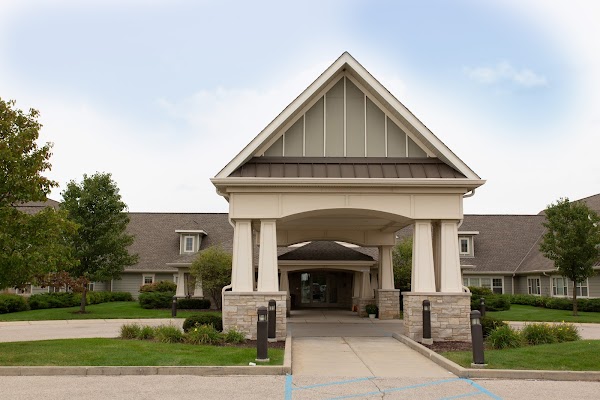
Jun 2024 9 deficiencies
CONCERN (D) 📢 Someone Reported This

A family member, employee, or ombudsman was alarmed enough to file a formal complaint

Potential for Harm - no one hurt, but risky conditions existed

Deficiency F0678 (Tag F0678)

Could have caused harm · This affected 1 resident

**NOTE- TERMS IN BRACKETS HAVE BEEN EDITED TO PROTECT CONFIDENTIALITY** Based on interview and record review, the facility did not ensure the resident's record reflected the accurate resuscitation cod...

Read full inspector narrative →
**NOTE- TERMS IN BRACKETS HAVE BEEN EDITED TO PROTECT CONFIDENTIALITY** Based on interview and record review, the facility did not ensure the resident's record reflected the accurate resuscitation code status election for 1 (R8) of 18 residents reviewed for code status. R8's hospital discharge paperwork dated [DATE] and facility admission documentation completed on [DATE], indicated R8 elected a full code status. On [DATE] R8's medical record documented a DNR (Do Not Resuscitate) MD (medical doctor) order. After the facility conducted a meeting with R8's POA (power of attorney)-K, R8's code status was changed to a full code and a new full code MD order was placed in R8's medical record on [DATE] per R8's POA-K wishes. On [DATE], R8's code status was changed to DNR. R8's progress notes continue to document R8 is a full code despite the signed paperwork and active MD order for DNR. Findings include: R8 was admitted to the facility on [DATE], and has diagnoses that include Chronic kidney disease, Chronic obstructive pulmonary disease, Type 2 Diabetes, and Dementia. R8's Quarterly Minimum Data Set Assessment, dated [DATE], documents R8 has moderate cognitive impairment. R8 has an activated Power of Attorney (POA) indicating R8 has a designee to help make health care decisions. The POA paperwork was signed on [DATE]. R8 has a Physician signed Determination of Capacity form dated [DATE]. This form documents, I have personally examined and certify that [R8] meets the statutory definition of incapacity; [R8] is unable to receive and evaluate information effectively or unable to communicate decisions to such an extent that [R8] lacks the capacity to manage [R8]'s health care decisions. R8's Hospital After Visit Summary, dated [DATE], documents R8 has requested a full code status. R8's Hospital Discharge summary, dated [DATE] documents R8 has elected a full code status. Surveyor reviewed R8's CPR (cardiopulmonary resuscitation) consent form dated [DATE]. The consent form has a box checked next to the following statement: NO RESUSCITATION (No cardiopulmonary resuscitation or external defibrillation) . Surveyor notes an illegible signature next to the resident signature section of the consent. Surveyor notes the Resident's Authorized Representative Signature section is blank. On [DATE], at 2:05 PM, Surveyor interviewed Director of Nursing (DON)-B regarding R8's signed CPR election consent form. DON-B indicated at the time of R8's admission, the facility did not have R8's [activated] POA documents and the nurse who admitted R8 to the facility addressed code status with R8. R8 signed the form indicating a DNR election. Surveyor noted neither POA-K or POA-L signed the CPR election form and there is no documentation POA-K or POA-L was notified of R8's signing of the CPR election form electing a No Resuscitation status. R8's SNF (Skilled Nursing Facility) initial visit progress note entered by R8's Physician Assistant on [DATE], documents: Code status: Full Code/Allow Resuscitation. Surveyor notes R8's Physician Assistant did not identify the discrepancy between the hospital discharge paperwork indicating a full code status and the signed CPR consent from electing a no code status. Surveyor notes R8's MD order, with a start date of [DATE], documents: DNR. Surveyor notes R8's MD order with a start date of [DATE], documents a change in code status to Full Code. On [DATE], R8's POA-L signed the Code Status Election form titled Emergency Care-Do Not Resuscitate Order. The DNR (Code status election form) was signed by R8's physician on [DATE]. R8's MD order with a start date of [DATE], documents: DNR. R8's SNF progress note entered by R8's Physician Assistant on [DATE], documents: Code status: Full Code/Allow Resuscitation. R8's SNF progress note entered by R8's Physician on [DATE], documents: Code status: Full Code/Allow Resuscitation. Surveyor noted inconsistency within R8's Electronic Medical Record (EMR) regarding the most recent code status election between R8's POA signed code status election form, MD orders and MD and Physician Assistant progress note documentation. On [DATE], at 2:02 PM, Surveyor interviewed R8's activated POA-K. POA-K stated R8 was supposed to be a full code status upon admission. POA-K indicated R8's code status was changed to DNR without POA-K's permission or signature. On [DATE], at 2:05 PM, Surveyor interviewed DON-B and Social Services Director (SSD)-C. SSD-C indicated that a few months after R8's admission, they had a care conference with R8 and POA-K. Surveyor asked for the date that the care conference was completed. SSD-C stated she would have to look into that. SSD-C and DON-B stated, at the care conference, the code status was discussed. As a result, R8's code status was changed to full code per POA-K wishes. Surveyor notes SSD-D did not provide Surveyor the date of the care conference or documentation of the care conference and discussion related to the change in code status. On [DATE], at the facility exit meeting, these concerns were shared with Nursing Home Administrator (NHA)-A and DON-B. No further information was provided.
CONCERN (D) 📢 Someone Reported This

A family member, employee, or ombudsman was alarmed enough to file a formal complaint

Potential for Harm - no one hurt, but risky conditions existed

Pressure Ulcer Prevention (Tag F0686)

Could have caused harm · This affected 1 resident

**NOTE- TERMS IN BRACKETS HAVE BEEN EDITED TO PROTECT CONFIDENTIALITY** Based on interview and record review, the facility did not ensure that residents with pressure injuries received necessary treat...

Read full inspector narrative →
**NOTE- TERMS IN BRACKETS HAVE BEEN EDITED TO PROTECT CONFIDENTIALITY** Based on interview and record review, the facility did not ensure that residents with pressure injuries received necessary treatment and services consistent with professional standards of practice to promote healing and prevent new pressure injuries from developing for 1 (R7) of 8 residents reviewed for pressure injuries. R7 was re-admitted to the facility from the hospital on 7/19/2023, with a stage 2 pressure injury to the coccyx. The facility did not complete a comprehensive assessment of the pressure injury including measurements and a description of the wound bed documented upon re-admission. R7 had 2 additional re-admissions to the facility from the hospital on [DATE] and 10/12/2023. The facility did not complete a comprehensive assessment of the pressure injury with measurements and description of the wound bed documented upon readmission for these two additional re-admissions. Findings include: The facility policy, titled Pressure Injuries and Non pressure Injuries, dated 7/20/2022 documents: Policy: This center will complete a comprehensive assessment to identify risk factors for the development of pressure injuries and put in place measures intended to achieve the goal of prevention of pressure injuries in our residents. For those residents admitted with, or who subsequently developed a pressure injury or impaired skin integrity, they will receive care, treatment and services that seek to promote healing, prevent infection, and prevent further development of pressure injuries/impaired skin integrity . Upon admission: A head-to-toe body evaluation will be completed on every resident upon admission/readmission and will be documented on the admission/readmission evaluation . If pressure injury: initiate the pressure injury weekly tracker . R7 was admitted to the facility on [DATE] with a diagnosis that include Discitis (Infection of the intervertebral disc space that can cause inflammation of the surrounding vertebrae, joints and tissue), Type 2 diabetes, Atrial fibrillation with pacemaker and long-term use of anticoagulants, Prostate cancer and Heart failure. R7's Quarterly Minimum Data Set (MDS) assessment, dated 5/26/2024, documents R7 is moderately cognitively impaired. R7 requires substantial/maximal assistance to roll left or right. R7 requires the assist of one for bed mobility; is at risk for the development of pressure ulcers; has an unhealed stage 4 pressure injury. R7's Care plan, dated 11/22/2022, documents: Resident is at risk for skin integrity condition, or pressure sores [related to] Diabetes, history of pressure sores, impaired mobility, obesity, thin/fragile skin, and prostate cancer [diagnosis] Interventions include: Alternating pressure air mattress ., Assess skin for redness or pressure related changes with each care encounter. Report any changes immediately. Avoid friction/shearing while repositioning . Conduct pressure injury skin assessments as indicated. Frequent repositioning in bed and chair. Head to toe assessment by Licensed Nurse performed weekly at minimum. R7 was hospitalized from [DATE] through 7/19/2023 due to discitis. R7's re-admission evaluation, dated 7/19/2023, documents: R7's Braden Scale (Evaluation of Predicting Pressure Sore Risk) score as 12, indicating R7 to be at high risk of developing a pressure injury. R7's skin integrity assessment documents R7 had a skin impairment present. Site: Coccyx. Type was pressure. Stage: stage 2. Surveyor noted the facility did not comprehensively assess the pressure injury upon re-admission. There was no measurements of the wound and no description of the wound bed. On 9/12/23, R7's Coccyx pressure injury was assessed by the Wound Nurse Practitioner and changed to an unstageable pressure injury. The wound was measured at 1.5 x 1.2 x 0.1. 100% slough on 9/12/23. A treatment was put in place. Comprehensive wound assessments were completed. Treatments changed based on the assessments. Interventions were addressed. R7 was hospitalized from [DATE] through 10/3/2023 due to evaluation of chest pain. R7's re-admission evaluation, dated 10/3/2023, documents: R7's Braden Scale score as 14, indicating R7 is at moderate risk for the development of pressure injuries. R7's skin integrity assessment documents R7 had a skin impairment present. Site: Coccyx. Type: pressure. Stage: unstageable. Surveyor noted the facility did not comprehensively assess the wound on re-admission. There was no measurements of the wound and no description of the wound bed. R7 was hospitalized from [DATE] through 10/12/2023 due to sepsis related to a possible pacemaker infection. R7's re-admission evaluation, dated 10/12/2023, documents: R7's Braden Scale score as 13, indicating R7 is at moderate risk for developing a pressure injury. R7's skin integrity assessment documents R7 had a skin impairment present. Site: Coccyx. Type: pressure. Stage: unstageable. Surveyor noted the facility did not comprehensively assess the wound upon re-admission. There was no measurements of the wound and no description of the wound bed. On 6/18/2024, at 1:54 PM, Surveyor interviewed Assistant Director of Nursing (ADON)-J, who is also the wound nurse for the facility. Surveyor asked if a wound should be comprehensively assessed on readmission. ADON-J indicated she would expect the wound be assessed. ADON-J stated R7 was very sick for few months and that is why R7 was in and out of the hospital and had developed the pressure injury. ADON-J stated R7's medical team recommended hospice and R7 and R7's family did not want to go that route. Surveyor informed ADON-J of the concern that on 3 readmissions to the facility, R7 did not have his pressure injury comprehensively assessed. ADON-J stated that ADON-J understood. On 6/18/2024, at 2:10 PM, ADON-J informed Surveyor ADON-J spoke to the nurse who completed all 3 of the readmission assessments for R7. ADON-J confirmed the readmission skin assessments were not documented as comprehensive wound assessments. On 6/18/2024, at 3:02 PM, Surveyor informed Nursing Home Administrator (NHA)-A and DON-B of the concern R7's pressure injury was not comprehensively assessed upon multiple readmission. No additional information was provided as to why the facility did not ensure that R7 received necessary treatment and services consistent with professional standards of practice to promote healing of R7's pressure injury.
CONCERN (D) 📢 Someone Reported This

A family member, employee, or ombudsman was alarmed enough to file a formal complaint

Potential for Harm - no one hurt, but risky conditions existed

Accident Prevention (Tag F0689)

Could have caused harm · This affected 1 resident

**NOTE- TERMS IN BRACKETS HAVE BEEN EDITED TO PROTECT CONFIDENTIALITY** Based on interview and record review, the facility did not ensure the environment remained free of accident hazards for 1 (R3) o...

Read full inspector narrative →
**NOTE- TERMS IN BRACKETS HAVE BEEN EDITED TO PROTECT CONFIDENTIALITY** Based on interview and record review, the facility did not ensure the environment remained free of accident hazards for 1 (R3) of 6 residents reviewed for accidents. * R3 fell from bed while receiving cares due to bed frame not being extended to accommodate mattress size. R3 has bed rails attached to frame but there is no maintenance plan in place by facility for inspection after installation. Findings include: The Facility Policy and Procedure titled, Bed Maintenance and Inspections Policy Date Implemented: 6/16/2022, states in part: Policy Explanation and Compliance Guidelines: 1. The Maintenance Director, or designee, is responsible for keeping records of bed inspections and maintenance. 2. Bed frames, mattresses, and bed rails will be maintained, including the manufacturer for each . 3. The Maintenance Director shall review each manufacturer's recommendations and requirements for maintenance and bed inspections, and shall establish a maintenance and inspection schedule accordingly . 6. Bed frame, mattress, and bed rail inspections will be conducted upon each item entering facility and then placed on regularly scheduled inspection and maintenance cycle according to the manufacturer's recommendations, to include manufacturer's timeframe recommendations . The Facility Policy and Procedure titled, Proper Use of Side Rails Date Reviewed/Revised: 9/23/2022, states in part: Policy Explanation and Compliance Guidelines: 4. The facility will assure the correct installation and maintenance of bed rails, prior to use. This includes: . e. Inspecting and regularly checking the mattress and bed rails for gaps and areas of possible entrapment. f. Checking rails regularly to make sure they are still installed correctly and have not shifted or loosened over time . 1.) R3 was admitted to the facility on [DATE] with diagnoses that include, in part, chronic diastolic (congestive) heart failure, cognitive communication deficit, Parkinson's disease, dysphagia, morbid obesity, orthostatic hypotension and personal history of transient ischemic attack. R3 is responsible for self and does not have an activated Power of Attorney for Healthcare (POA-HC). The Quarterly MDS (Minimum Data Set) dated 4/25/2024 indicates R3 has a BIMS (Brief Interview for Mental Status) of 14, indicating cognitively intact. On 06/18/24, at 09:47 AM, Surveyor reviewed R3's Plan of care which documents At risk for falls due to: weakness, orthostatic hypotension. The following interventions are listed: - Encourage to transfer and change positions slowly - Medications as ordered - Provide assist to transfer and ambulate as needed - Reinforce need to call for assistance On 06/17/24, at 09:43 AM, Surveyor interviewed R3 who stated they had a fall and landed on their face and that is why they have bars on bed to hang onto so they won't roll out again. On 5/20/2024, at 05:19 am, R3's medical record documents, by Registered Nurse (RN)-M, 0505 (5:05 AM) writer called to residents room, resident lying on floor on back. Resident rolled out of bed. ROM (Range of Motion) adequate to all extremities, small laceration noted to bridge of nose and did complaint of nose discomfort. Pillows placed under head and EMS (Emergency Medical Services) notified for transport. Surveyor reviewed the Post Fall Assessment and noted there was an entry regarding Why do you think that you fell stating bed frame not extended to bari-size, mattress not secured to bed, causing resident to roll out of bed. It was identified the resident was being changed in bed and rolled out of the bed. For the question was equipment used properly and in good repair it was stated that bed not in working order. For Care Plan new intervention on form maintenance contacted to repair bed was entered. On 06/18/24, at 11:27 AM, Surveyor reviewed the EMR and found an order dated 5/23/24 stating Bilateral enabler bars to bed to assist with bed mobility and transfers related to weakness. Surveyor notes there was an assessment completed by the Facility on the same day. On 06/19/24, at 08:30 AM, Surveyor spoke with Licensed Practical Nurse (LPN)-N via phone. LPN-N told Surveyor they were at the nurse station and an aid ran to get them. When they got to the room the resident was face down and the mattress fell off the bed. They proceeded to get the RN-M. who assessed R3 and called 911 for further evaluation. Per LPN-N the bed frame is adjustable, and it was not locked. LPN-N states the injury sustained by R3 was a laceration to the bridge of nose. On 06/19/24, at 08:36 AM, Surveyor spoke with RN-M via phone. RN-M stated R3 rolled out of bed and RN-M was called over by LPN-N to assess. R3 was on back on the floor. RN-M sent R3 to hospital because R3 hit head. An ambulance was called for the transport. RN-M stated R3 is a larger lady so if she gets to close to edge of the bed she will roll out of bed. On 06/19/24, at 11:14 AM, Surveyor spoke with Maintenance Director-O and asked when maintenance is done on the beds that are extended to mid-bari size. Per Maintenance Director-O when a resident transfers or leaves the bed is gone over. Surveyor asked what if a resident is here long term - is there a maintenance schedule? Per Maintenance Director-O for long term residents bed issues are brought to maintenance attention by nursing. There is no routine maintenance schedule. Surveyor then asked if there was a work order for R3's bed to be repaired lately. Maintenance Director-O stated they do not recall anything, however, nursing writes on the board outside maintenance and the maintenance assistant might have completed that. Surveyor asked Maintenance Director-O if they could verify if a work order for May 20 th had been completed. Maintenance Director-O stated they would verify. On 06/19/24, at 11:31 AM, Maintenance Director-O stated R3 had a mid-bari frame with built in extenders. The extenders weren't locked, so the frame got pushed back to regular size, hence the mattress hung over the side of bed. Per Maintenance Director-O after this was identified at the morning meeting the bed was switched out to a mid-bari bed with no extenders. Surveyor notes Facility has no process in place to maintain safety and prevent accidents for mid-bari bed frame use. On 06/19/24, at 11:35 AM, per Maintenance Director-O bed rails are installed by maintenance. There is a very specific way that they are installed and are then double checked at that time. There is no schedule for routine maintenance, nursing lets know if there is a problem. Surveyor notes Facility has no process in place to maintain safety and prevent accidents for bed rail use. On 06/19/24, at 03:11 PM, Surveyor got requested number of beds converted to mid-bari that are in use in the Facility. Per Maintenance Director-O there are 12 beds in facility that are converted to mid-bari and in use. On 06/20/24, at 10:59 AM, Surveyor spoke with Director of Nursing (DON)-B and Assistant Director of Nursing (ADON)-J about the bed and mattress for R3 at time of the fall. It was stated that it was a standard size bed because the extenders were not engaged on the bed as should have been because R3 had mid-bari mattress. The Facility found out on the morning post R3's fall and got Maintenance Director-O to change out the bed frame out to mid-bari with no extenders. Surveyor asked if the Facility does checks on beds and was told no they rely on housekeeping or nurses, nothing formal is set up. However, after this incident they did check the other beds in use. Surveyor informed DON-B and ADON-J of the concern that bed frames do not have regular maintenance checks and R3 fell from bed and sustained a laceration to the nose due to the extenders not being locked into place
CONCERN (D) 📢 Someone Reported This

A family member, employee, or ombudsman was alarmed enough to file a formal complaint

Potential for Harm - no one hurt, but risky conditions existed

Deficiency F0692 (Tag F0692)

Could have caused harm · This affected 1 resident

**NOTE- TERMS IN BRACKETS HAVE BEEN EDITED TO PROTECT CONFIDENTIALITY** Based on observation, interviews and record review, the facility did not ensure residents maintained acceptable parameters of nu...

Read full inspector narrative →
**NOTE- TERMS IN BRACKETS HAVE BEEN EDITED TO PROTECT CONFIDENTIALITY** Based on observation, interviews and record review, the facility did not ensure residents maintained acceptable parameters of nutritional status, such as usual body weight or desirable body weight for 1 of 2 (R69) residents reviewed for weight loss. R69 was not weighed as ordered. R69 sustained severe weight loss over a period of less than 2 months. Neither the Physician, nor the Dietician was notified and no new interventions were implemented. R69 continued to lose weight with no Physician or Dietician notification and no new interventions were implmented until an additional month later. Findings include: R69 admitted to the facility on [DATE] and has diagnoses that include hemiplegia and hemiparesis following Cerebral Infarction, Aphasia, Dysarthria, Type 2 Diabetes Mellitus, Obstructive Sleep Apnea and Hyperlipidemia. The facility policy titled Weight Monitoring revised 12/21/22 documents (in part) . . The interdisciplinary team will strive to prevent, monitor, and intervene for undesirable weight change for our residents. Weight Assessment 1. The nursing staff will measure resident weights on admission, the next 2 days, and weekly for 3 additional weeks thereafter. 2. If no weight concerns are noted after the initial 3 days and 3 weeks after, routine weights will be measured monthly thereafter, unless ordered more frequently by the physician. 3. Weights will be recorded in the individual's electronic health record. 6. Any weight changes of five (5) pounds or more since the last weight assessment will be retaken for confirmation. 7. The Dietician will review the monthly weights to follow individual weight trends over time. Weight trends will be evaluated by the interdisciplinary team whether or not the criteria for significant weight change has been met. 8. The threshold for significant weight change will be based on the following criteria [where percentage of body weight change = (usual weight - actual weight) / (usual weight) x 100]: a. 1 month - 5% weight change is significant; greater than 5% is severe. b. 3 months - 7.5% weight change is significant; greater than 7.5% is severe. c. 6 months - 10% weight change is significant; greater than 10% is severe. 10. The nursing staff will notify the individual or responsible party, physician and RDN (Registered Dietician) or designee of any individual with an unintended significant weight change. Care Planning 1. Care planning for weight change or impaired nutrition will be an interdisciplinary effort and may include the following members of the interdisciplinary team: Physician, nursing staff, the Dietician, the Consultant Pharmacist, Therapy, and the resident or resident's legal representative. 2. Individualized care plans shall address, to the extent possible: a. The identified causes of weight change; b. Goals and benchmarks for improvement; and c. Time frames and parameters for monitoring and reassessment. R69's Care Plan dated 1/26/24 documents: At risk for nutritional status change r/t (related to) (specify). -At risk for nutritional status change r/t (specify) high BMI (body mass index), DM (Diabetes Mellitus) and dysphagia s/p (status post) stroke - dated 2/5/24. -At risk for nutritional status change r/t Inadequate oral intakes, dysphagia s/p stroke - dated 5/3/24. Goal: Will maintain weight as evidenced by no significant wt (weight) changes >(greater than)/= 5% in 30 days, >/= 7.5% in 90 days, or >/= 10% in 180 days - dated 1/26/24. Interventions include: Encourage and assist as needed to consume foods and/or supplements and fluids offered - dated 2/6/24. Adaptive equipment: Built up utensils, scoop plate - dated 2/6/24. Eating setup, supervision, upright for meals, no straws, use [NAME] cup - revised 4/12/24 Modify diet as appropriate according to resident's food tolerances and allergies - dated 2/6/24. Nectar Thick Liquids, Mechanical Soft Diet - dated 4/17/24. Provide diet as ordered and record intakes - dated 2/6/24. Provide supplements as ordered - dated 2/6/24. Record weight per facility protocol/MD (Medical Doctor) orders dated 1/26/24. Review weights and notify RD (Registered Dietician) MD, and responsible party of significant weight change - dated 2/6/24. On 6/17/24, at 10:02 AM, during initial observation and interview, Surveyor noted R69 appeared thin and frail. R69 reported he has probably lost a lot of weight, stating I don't want to eat. R69's Physicians orders document: WEIGHT - on admit, daily x (times) 2, weekly x 3, monthly (Obtain re-weight if change of 5 lbs (pounds) since last weight) one time only until 1/27/24 AND one time a day for 2 Days AND one time a day every Fri (Friday) for 3 Weeks AND one time a day every 1 month(s) starting on the 1st for 1 day(s) - start date 1/27/24. Remeron 15 mg (milligrams) Give 0.5 tablet by mouth at bedtime for depression, Anorexia - start date 2/21/24. On 1/26/24 R69's documented weight was 188 pounds. On 1/28/24 R69's documented weight was 188 pounds. On 2/6/24, at 11:17 AM, Dietician-D's Nutrition Assessment Note documents (in part) . . Diet order: Regular, L3 (level 3)/Adv (advanced) thin, no Straws. Average meal intake: 50-100%. Swallowing disorder present. Other: Dx (diagnosis) Dysphagia, requires adaptive equipment. Built-up utensils. Eating ability: Independent Supervision. Current weight: 188.8 lb (pounds) 1/28/24. BMI (Body Mass Index): 27.9. Weight history unknown. Skin condition: Pressure injury R (right) Heel Stage II - Improving per 2/6 wound rounds. Edema present +1 BLE (bilateral lower extremity). Summary: Current diet order remains appropriate for management of resident. Resident appears to be tolerating diet texture/consistency. Resident is consuming adequate calories to maintain weight. Weight remains stable without significant variances. Resident has potential for weight fluctuation r/t fluid shifts. Resident admitted to facility s/p (status post) hospitalization r/t CVA (Cerebral Vascular Accident), repeated falls. Stated not preferring some meals at facility. Reported difficulty eating with L (left). hand d/t (due to) CVA. Uses built-up utensils. Recommended to also use scoop plate d/t difficulty with L (left) hand. Stated especially hard to eat ice cream cups. BS (blood sugar) well controlled. Res (resident) agreeable to having Fort (fortified) chocolate milk for intake support and wound healing. Food preferences updated. Will cont to monitor and f/u (follow up) prn (as needed). Care plan reviewed and updated. Surveyor noted an order implemented for Fortified Chocolate Milk 8 oz (ounces) with lunch/Dinner -with a start date of 2/6/24. Surveyor noted there were no documented weights for the month of February, 2024 and the Treatment Administration Record did not document refusal of weights. On 3/18/24 R69's documented weight was 163.5 pounds. This indicated a weight loss of 24.5 pounds and 13.03% over a period of less than 2 months, indicating severe weight loss. There was no evidence the Physician or Dietician were notified and no new interventions were implemented. The NP (Nurse Practitioner) note dated 3/19/24 documented: No weight loss, no anorexia, nausea, vomiting or diarrhea. On 3/20/24 R69's documented weight was 161.4 pounds, indicating further weight loss. There was no evidence the Physician or Dietician were notified. Subsequent NP notes on 3/26/24, 3/28/24 and 4/2/24 documented: No weight loss, no anorexia, nausea, vomiting or diarrhea. Physician notes dated 3/21/24, 4/4/24, 4/18/24 and 5/2/24 documented: No weight loss, fever, chills, + (positive) weakness. On 4/8/24 R69's documented weight was 156 pounds, indicating severe weight loss of 32 pounds and 17.02% since admission. There was no evidence the Dietician or Physician was notified and no new interventions were implemented at this time. R69's Care Conference Summary dated 4/11/24 did not document any concerns regarding weight loss. On 4/12/24 (4 days later) Dietician-D's Nutrition/Dietary Note documented (in part) . f/u (follow up) Wt: 156# (pounds) (4/8), 161.4# (3/20), 163.8# (3/18). BMI: 23-WNL (within normal limits), good for age. Triggers for sig (significant) wt loss of -3.3% x 30 (non-sig), -17% x 90d. (triggers from wt of 188# and wt loss from this wt occurred outside facility). Diet recently changed by SLP (speech language pathologist) to L2 (level 2) with nectar liquids, no straws d/t swallowing troubles. Resident intakes have been poor. Receives fortified chocolate milk TID (three times daily), but acceptance has been varied especially stating on nectar liquids. New Btx (buttocks) stg (Stage) II wounds acquired 4/4. Recommend to continue with fortified milk. Res (resident) son has premier PRO (protein) shakes in wing fridge, recommend to place order for resident to receive 1x/day to monitor intakes. Recommend to give ProStat 30ml BID (twice daily) for wounds. Will cont to monitor and f/u (follow up) prn (as needed). Surveyor noted Dietician-D's documentation weight loss -3.3% x 30 (non-significant) was not accurate, R69 did not have a 30 day weight obtained in February. Surveyor noted Dietician D's documentation -17% x 90 days triggers from wt of 188# and wt loss from this wt occurred outside facility is not accurate. As of 4/8/24, R69 had a documented severe weight loss of 32 pounds/17.02% and has resided in the facility since admission on [DATE]. In addition, Dietician D documented R69 receives fortified chocolate milk TID, however orders on 2/6/23 were for BID (twice daily). Surveyor noted new orders implemented on 4/13/24: Fortified Chocolate Milk 8 oz (ounces) with meals (times TID), Two times a day Fortified pudding with lunch/dinner, and one time a day Premier Protein shake -family provided. On 5/3/24 Dietician D's Nutrition Assessment Note documented (in part) . Average meal intake: 0-25%, Occasional 76-100%, occasional meal refusals. Received nutritional supplements and/or fortified foods. Fort choc milk TID with meals, Fort pudding BID, Premier PRO shake - family provided. Swallowing disorder present. Current weight: 156.0 lb. BMI 23. Significant weight change present. 4/15/24: -17% x 90 d (days). Current body wt pending. Summary: Current diet order remains appropriate for management of resident Resident appears to be tolerating diet texture/consistency. Triggers for sig wt loss of -17% x 90d (wt loss from Jan-March occurred outside facility). Diet recently changed by SLP to L2 with nectar liquids, no straws d/t swallowing troubles. Resident intakes have been poor. Receives fort choc milk TID, but acceptance has been varied especially stating on nectar liquids. Varied to poor fort food acceptance. Per SLP resident has been refusing to participate in ST. Rec to D/C fort pudding as res does not accept. Rec to start liquid PRO 30ml TID. Will cont to monitor and f/u prn. Care plan reviewed and updated. Surveyor noted Dietician D's documentation Triggers for sig wt loss of -17% x 90 days wt loss from Jan-March occurred outside facility was not accurate. R69 triggered for severe weight loss in March (less than 2 months) and the weight loss did not occur outside the facility. Surveyor noted a Significant Change MDS (Minimum Date Set) dated 5/3/24. MDS Nurse-E reported the MDS was completed because of weight loss and pressure injuries. On 5/16/24 R69's documented weight was 142.3 pounds, indicating severe weight loss of 45.7 pounds and 24.31% since admission. On 5/16/24 at 11:22 AM facility progress notes document: IDT (Interdisciplinary Team) Weekly At Risk Meeting: Resident is noted to have a weight loss last month. Resident is on supplements which he is compliant with. Resident snacks between meals and is on an appetite stimulant. Resident's son brings in snacks as well. Resident has pressure ulcers. Resident is on wound rounds for the pressure ulcers. Resident has behaviors such as rejections of care, verbal towards staff, physical towards staff. Resident will kick off his offloading boots and reposition himself onto his back versus side to side. Resident is re-educated on this. On 5/17/24 at 1:33 PM facility progress note entered by Registered Nurse (RN)-F documented: Resident has not been eating; only bites for meals. Writer talked to resident; resident states he wants a G (gastrostomy) tube and that he is depressed. Resident is in agreement to take something for depression in addition to Remeron. Social Services notified. Resident gave writer permission to talk with his son about resident's eating habits and not wanting to get up out of bed, having a G tube place. Resident son stated that his father was not eating much prior to his stroke. Surveyor located no evidence the Physician, Dietician or Social Worker was notified of R69's request for G-tube and depression. On 6/18/24 at 10:21 AM Surveyor spoke with RN-F regarding her documentation on 5/17/24. RN-F reported she talked to R69's son and the NP, but was unsure of the date. RN-F stated: I must've forgot to write a note that I called the NP. The NP was talking to him and was going back and forth for couple of weeks, he finally decided to go hospice. On 6/19/24 at 9:05 AM Surveyor spoke with Social Service Director-C who reported she is most involved with R69. Social Service Director-C stated: We had plan of care meeting not to long ago and discussed hospice and I'm sure we talked about his weight loss. The only time I heard about him thinking about a G-tube was from his son, he was discussing with family (She was unable to recall when this was). Surveyor asked about RN-F's progress note on 5/17/24. Social Service Director-C reported she was not notified of R69's statement of wanting a G-tube or that he was depressed and in agreement to medications other than Remeron. I've been talking with his son off and on, he visits frequently. We did not talk about antidepressants, but he did tell me that the resident did not want the G-tube. Surveyor asked when this was, as there is no documentation. Social Service Director-C reported she could not remember, adding: There's been no more discussion about depression. We've been talking informally on and off and he was OK with where things were at. We talked about Hospice again last night, his son is going to come in an talk to him about it again. Surveyor asked Social Services Director-C, if she had been notified of R69's statements on 5/17/24, what would she have done. Social Services Director-C reported she would have talked talked to the resident and his family and would expect the nurses to notify the doctor. The NP note dated 6/4/24 (more than 2 weeks later) documented: Weight loss/decreased oral intake: Taking Remeron p.o. (by mouth) q (every) h.s. (hour of sleep). Has elected to go hospice route verses feeding tube. Hospice consult to eval and treat has been ordered. Surveyor noted this was the first mention of weight loss or feeding tube by the NP or Physician. On 6/11/24 at 1:24 PM Facility progress notes document: IDT Weekly At Risk Meeting: Resident is triggering for a weight loss related to poor intake. The resident is not always compliant with dietary restrictions. Resident can be combative with staff and resistant to cares. The resident will refuse to reposition and when repositioned, the resident will put himself back onto his back. Resident is on wound rounds for pressure ulcers to the left heel and buttocks. Resident's intake varies day to day. Resident does take fortified milk at times. The resident has an air mattress in place. He is monitored by RD for intake and weights. Resident has had risk and benefits completed for his noncompliance with plan of care. The resident and family alternate between hospice and then they want him to discharge home. Staff will continue to encourage and re-educate the resident. On 6/12/24 R69's documented weight was 138.6 pounds indicating a total (severe) weight loss of 49.4 pounds and 26.28% since admission to the facility. On 6/18/24 at 11:24 AM Surveyor spoke with Dietician-D. Dietician-D reported he has worked for the facility through contracted heath care services since January 2022 or 2023 and has 3 buildings. Dietician-D reported he works 2 days a week (Tuesday and Friday) and is in the other buildings the other days. Dietician-D stated: I can be contacted via email or phone. When I'm in the facility I run the report on weight changes. We also have WAR (weekly at risk) meeting discussion. Surveyor asked how he is notified of weight loss. Dietician-D stated: For high risk patients they will call or email me to look at them the next time I'm in the building. Surveyor asked what is the facility policy regarding weights. Dietician-D stated: Weight daily x 3 days, I think, then monthly after that, unless they have physicians order for more often. Surveyor reviewed and discussed R69's weights with Dietician-D. Surveyor noted 3/18/24 severe weight loss of 24.5 pounds and 13.03% and asked if he was notified. Dietician-D stated: I don't see a note or anything, I can't remember that far back. When asked if he was notfied of the weight loss on 3/20/24, Dietician-D stated: Again, I can't remember that far back. Surveyor advised Dietician-D of the documented weight loss on 4/8/24 which indicated severe weight loss of 32 pounds and 17.02% since admission and asked if he was notified. Dietician-D stated: I'm sure I was probably aware, but I can't remember. Surveyor reviewed Dietician-D's documentation on 4/12/24 which included the statement that the weight loss occurred outside facility. Dietician-D reviewed the note for a long time before stating: I thought he discharged between January and March and that's why they missed his weights. Surveyor advised R69 did not discharge and remained in the facility. Surveyor verified, so you were not aware of the significant weight loss that occurred in March and April. Dietician-D stated: I was likely aware, but don't remember that far back. Surveyor clarified: You said you thought (R69) had discharged between January and March. Dietician-D stated: I did, that's why I don't think I was aware. I know he's been brought up quite a bit because he's a difficult resident. Surveyor asked Dietician-D if he communicates with the NP or Physician regarding weight loss. Dietician-D stated: No, the nurses usually update the doctor. Surveyor confirmed with Dietician-D R69 had severe weight loss documented on 3/18/24 of 24.5 pounds and 13.03% and additional weight loss documented on 4/8/24 totaling 32 pounds and 17.02% since admission and he was not notified. Surveyor reviewed interventions implemented on 4/13/24. R69's weight on 5/16/24 documented additional weight loss for a total of 45.7 pounds and 24.31% since admission with no assessment or new interventions implemented. Dietician-D stated: I just know he has been discussed in the WAR meeting. Surveyor asked Dietician-D if he was made aware of R69's request for tube feeding on 5/17/24. Dietician-D read the note and stated: I think I heard something about it, but I'm not sure. I vaguely remember discussing it with the social worker (cannot remember when). But I know he decided to go Hospice instead of doing tube feeding. Surveyor advised Dietician-D the resident is not currently enrolled on Hospice. R69 was not weighed as ordered by the physician. An admission weight was obtained on 1/26/24 and he was not weighed again until almost 2 months later, on 3/18/24, which documented severe weight loss. The Physician and Dietician were not notified and no new interventions were implemented. R69's weight on 4/8/24 documented additional weight loss with no Physician or Dietician notification and no new interventions implemented until 4/13/24. R69 continued to lose weight as evidence by documented weight on 5/16/24 of an additional loss of 14 pounds. No new interventions were implemented. R69 voiced to a nurse the request of G-tube. There is no evidence this was reported to the Dietician or Physician at that time. The Dietician notes were inaccurate indicating R69's severe weight loss occurred outside the facility, when in fact R69 resided in the facility since admission. On 6/19/24 during the daily exit meeting, the facility was notified of the above concern regarding R69's weight loss. No additional information was provided.
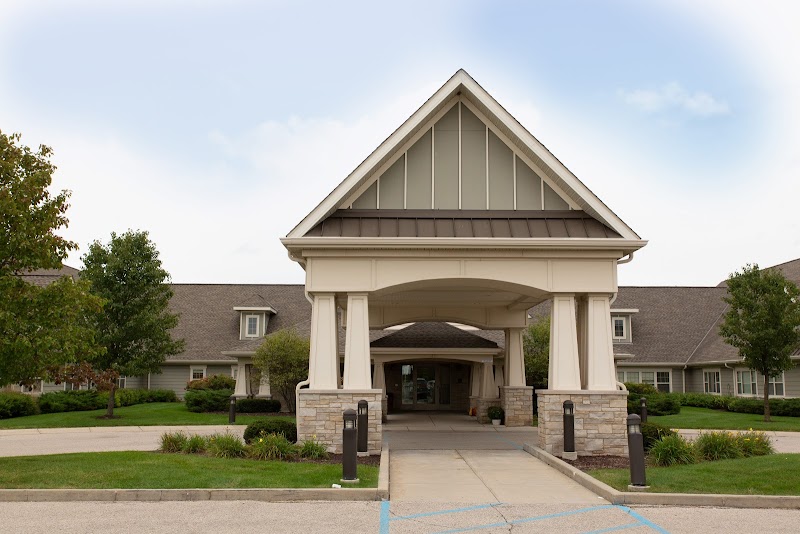
CONCERN (D) 📢 Someone Reported This

A family member, employee, or ombudsman was alarmed enough to file a formal complaint

Potential for Harm - no one hurt, but risky conditions existed

Deficiency F0697 (Tag F0697)

Could have caused harm · This affected 1 resident

**NOTE- TERMS IN BRACKETS HAVE BEEN EDITED TO PROTECT CONFIDENTIALITY** Based on interview and record review, the facility did not ensure 1 (R27) of 3 residents was provided with pain management consi...

Read full inspector narrative →
**NOTE- TERMS IN BRACKETS HAVE BEEN EDITED TO PROTECT CONFIDENTIALITY** Based on interview and record review, the facility did not ensure 1 (R27) of 3 residents was provided with pain management consistent with professional standards of practice. R27 reported being in constant pain. The facility did not identify R27 was assessed to have a significant worsening of pain effecting R27's quality of life while conducting R27's Minimum Data Set (MDS) Pain assessments on 5/13/24. R27 was hospitalized on [DATE] and was readmitted to the facility on [DATE]. R27 did not have an order for scheduled Tylenol order from 5/9/2024 through 6/3/2024 or Tramadol which was in place prior to R27's hospitalization. The facility did not address the potential for R27 to experience increased pain with the change in pain medication orders. R27's Physician Assistant's (PA) documentation indicated R27 was getting Physical therapy (PT) and Occupation therapy (OT) to help with pain management. R27 was not receiving PT or OT to help with pain management. Findings include: The facility policy, entitled Pain Management, documents, in part: .The facility must ensure that pain management is provided to residents who require such services, consistent with professional standards of practice . The facility will utilize a systematic approach for recognition, assessment, treatment and monitoring of pain. Recognition: To help a resident attain or maintain his/her highest practicable level of physical, mental and psychosocial well-being and to prevent or manage pain, the facility will: . Evaluate the resident for pain and the cause(s) upon admission, during ongoing scheduled assessments, and when a significant change in condition or status occurs . Assessment: . Impact of pain on quality of life (e.g., sleeping, functioning, appetite and mood). The resident's goals for pain management and his/her satisfaction with the current level of pain control . R27 was admitted to the facility on [DATE] and has diagnoses that include Chronic obstructive pulmonary disease, Osteoarthritis, Osteoporosis, Morbid obesity, and Type 2 diabetes. R27's Annual Minimum Data Set (MDS) assessment, dated 2/8/2024, documents, R27 has a moderate cognitive impairment. R27's pain assessment documents, R27's has a scheduled pain regimen. R27 is in pain frequently. R27's pain effects R27's sleep rarely or not at all. R27's pain interferes with day-to-day activities rarely or not at all. R27's Quarterly MDS assessment, dated 5/13/2024 documents, R27 has a scheduled and PRN (As needed) pain regimen. R27 is in pain almost constantly. R27's pain effects R27's sleep almost constantly. R27's pain interferes with day-to-day activities almost constantly. Surveyor noted the assessed significant increase in pain from the 2/8/24 to 5/13/24 MDS assessment. The pain increased enough to effect R27's sleep and activities of daily living on an almost constant basis. On 6/17/2024, at 12:45 PM, Surveyor interviewed R27 related to their pain. R27 reported being in constant pain. R27 stated she is only taking scheduled and as needed Tylenol and that it is not enough to help with the pain that she experiences. R27 stated R27 was taking Tramadol (a stronger pain medication) but after a hospital stay, the doctor told R27 that R27 could not take Tramadol anymore. R27 stated nothing was given in replace of the Tramadol. R27 stated again that R27 is always in pain. R27 was hospitalized from [DATE] until 5/9/20224 for pneumonia. R27's MD (Medical Doctor) order, with a start date of 5/9/2024, Tylenol oral tablet 325 mg (milligrams). Give 2 tablets by mouth every 4 hours PRN (as needed) for fever. R27's MD orders, with a start date of 6/3/2024, documents: Acetaminophen (Tylenol) extra strength tablet 500 mg. Give 2 tablets by mouth two times a day for pain. Acetaminophen extra strength tablet 500 mg. Give 2 tablets by mouth every 12 hours as needed for pain. Max 4 (grams)/24 hours. Surveyor noted that prior to R27's hospitalization on 5/4/2024, R27 was receiving scheduled and PRN Tylenol for pain. Surveyor noted, from readmission to the facility on 5/9/2024 until 6/3/2024, R27 did not have scheduled Tylenol ordered to help with pain control. R27 had a PRN order for Tylenol but the indication was for fever, not for pain. Surveyor noted, after readmission to the facility, Tramadol was not ordered for R27. On 6/19/2024, at 4:01 PM, Surveyor asked Director of Nursing (DON)-B about R27's pain control. Surveyor asked if DON-B was aware of the assessed significant increase in R27's pain reported on the last 2 MDS assessments. DON-B stated DON-B was not aware of R27's pain assessment change on the MDS. DON-B stated DON-B was not aware Tramadol was removed after R27's hospitalization. DON-B stated she would get back to Surveyor. On 6/20/2024, at 9:40 AM, Surveyor returned to R27 to inquire about her pain. R27 stated R27 does use Bio Freeze (topical pain reliever) and it helps a little. R27 stated, nothing took the pain away after R27 stopped taking Tramadol. R27 stated R27 is only taking Tylenol and it does not help. On 6/20/2024, at 9:44 AM, Surveyor interviewed DON-B. Surveyor asked about R27's pain control. DON-B stated DON-B reviewed R27's pain assessments for the month of June. DON-B stated the highest R27 rated her pain was a 5 out of 10. Surveyor noted a rating of 5 was considered moderate pain. DON-B agreed. With a rating of 5 out of 10, DON-B indicated that they would expect nursing to follow up and to assess if Tylenol is working effectively. DON-B stated the facility should have caught it. Surveyor asked about the significant change in the MDS pain assessment. DON-B indicated the facility did not identify the change. Surveyor asked about R27's use of Tramadol. DON-B stated Tramadol was stopped because of a drug interaction and that is why it was not ordered on readmission. On 6/20/2024, at 10:57 AM, DON-B returned to Surveyor with a progress note written by R27's Physician Assistant. DON-B highlighted a section of the Progress note to indicate that the facility was addressing R27's pain control. Progress note dated 5/2/2024 documents: Chronic pain: Affecting extremities and back. Continue current pain regiment. Supportive cares. Encourage out of bed and exercise. PT/OT. R27's MD (Medical Doctor) orders, with a start date of 5/10/2024, documents: OT [evaluate] and treat as indicated. PT [evaluate] and treat as indicated. R27's MD (Medical Doctor) order, with a start date of 5/15/2024, documents: OT to [evaluate and treat]. PT to [evaluate and treat]. On 6/20/2024, at 11:22 AM, Surveyor interviewed, Physical Therapist (PT)-H. PT-H stated R27 was discharged from PT on 3/1/2024 and was discharged from OT on 4/16/2024. Surveyor noted R27 had an order placed for PT and OT to help with pain control and the facility did not follow up on those orders. On 6/20/2024, at the facility exit meeting, these concerns were shared with Nursing Home Administrator (NHA)-A and DON-B. No further information was provided.
CONCERN (D) 📢 Someone Reported This

A family member, employee, or ombudsman was alarmed enough to file a formal complaint

Potential for Harm - no one hurt, but risky conditions existed

Drug Regimen Review (Tag F0756)

Could have caused harm · This affected 1 resident

2) R3 had pharmacy medication regimen reviews competed on 2/6/2024 and 3/11/2024 with recommendations made. The Pharmacy Review form provided to this Surveyor by the Facility states to review Clinical...

Read full inspector narrative →
2) R3 had pharmacy medication regimen reviews competed on 2/6/2024 and 3/11/2024 with recommendations made. The Pharmacy Review form provided to this Surveyor by the Facility states to review Clinical Pharmacy Report. The Clinical Pharmacy Report was requested from the Facility for both review dates. On 06/18/24, at 02:11 PM, Surveyor spoke with Director of Nursing (DON)-B who stated they got a new pharmacist in February who did not get the recommendations to facility for review in February so the same were sent in March and the physician signed off on 3/14/2024. On 06/18/24, at 03:13 PM, Surveyor spoke with DON-B and asked since the medication regimen reviews including recommendations should be sent to the DON, medical director and physician so why was February missed. DON-B responded that per the pharmacist they didn't get MRR so resent them the next month. It was a time of transition; the new pharmacist wasn't used to the way of doing things so reissued the same recommendations the next month. Surveyor informed DON-B of the concern with R3's February medication regimen review recommendations were not being followed up on timely by the medical director and physician and the DON acknowledged this concern. Based on record review and interview, the facility did not ensure Registered Pharmacist consult recommendations were acted upon promptly, and relayed to the required staff. This was observed with 2 (R58 and R3) of 5 resident medication reviews. * R58 and R3 had Registered Pharmacist (RPH) medication regimen review recommendations that were not relayed to the Physician, Medical Director and Director of Nurses, promptly. Findings include: The Facility policy titled Consultant Pharmacist Services Provider Requirements dated 01/23 documents (in part): Procedures 4 . c. Review and follow-up to previous month's pharmacy recommendations with the nursing care center staff d. Medication Regimen Reviews (MMR) for each Skilled Nursing (SNF) resident at least monthly, or more frequently under certain conditions, incorporating the federally mandated standards of care in addition to other applicable professional standards. e. Communicate to the responsible prescriber, the facility's medical director and the director of nursing potential or actual problems detected and other findings related to medication therapy orders at least monthly. Communicate recommendations for changes in medication therapy and the monitoring of medication therapy. 1.) R58 had a RPH medication review completed on 6/10/24, which indicated, there were recommendations made and staff should review the Clinical Pharmacy Report. R58's medical record did not contain evidence of a Clinical Pharmacy Report for this review. On 6/19/24, at 3:00 PM, at the daily exit meeting, Surveyor shared with (Nursing Home Administrator) NHA-A, (Director of Nurses) DON-B, that R58 did not have a Clinical Pharmacy Report for 6/10/24. On 6/20/24, 8:39 AM, DON-B met with Surveyor. DON-B provided R58's Clinical Pharmacy Report, signed by the Physician on 6/19/24. The RPH Clinical Pharmacy Report indicates to discontinue Rivaroxaban 15 milligrams every day for A-fib (atrial fibrillation). This medication is to be avoided due to R58's medical condition and potential side effects. This is replaced with Apixaban 2.5 milligrams twice a day. DON-B indicated the RPH Clinical Pharmacy Reports goes to the facility and are printed off, they are separated out by physician and go in a binder on the unit. The physician will review them when they come into the facility. DON-B indicated they did not know the Medical Director and physician were required to receive these reports promptly.
CONCERN (D) 📢 Someone Reported This

A family member, employee, or ombudsman was alarmed enough to file a formal complaint

Potential for Harm - no one hurt, but risky conditions existed

Deficiency F0761 (Tag F0761)

Could have caused harm · This affected 1 resident

Based on observation and interview the facility did not ensure drugs and biologicals used in the facility were labeled in accordance with currently accepted professional principles, and including labe...

Read full inspector narrative →
Based on observation and interview the facility did not ensure drugs and biologicals used in the facility were labeled in accordance with currently accepted professional principles, and including labeling drugs and biologicals with the expiration date when applicable. This was observed with 2 (R45 and R55) of 2 residents reviewed who receive insulin. R45 and R55 each had 2 open insulin pens in their respective medication cart that were not labeled with an open or use by date. Findings include: The Facility policy titled Medication Administration Subcutaneous Insulin dated 01/23 documents (in part): Procedures .Drugs and biologicals used in the facility must be labeled in accordance with currently accepted professional principles, and include the appropriate accessory and cautionary instructions, and the expiration date when applicable. 6. Date vial or device after first use . On 06/19/24, at 12:56 PM, Surveyor was completing a review of the medication cart located on the 100 hallway east. R55 had insulin pens of insulin glargine and latanoprost of which neither had an open date or use by date on documented on the pen. On 06/19/24, at 01:07 PM, Surveyor was completing a review of the medication cart located of the 100 hallway west. R45 had Novolin NPH and insulin lispro pens of which neither had an open date or use by date documented. On 06/19/24, at 03:09 PM, Surveyor informed the Facility at the end of day meeting that four insulin pens were discovered without documented open or use by dates.
CONCERN (E) 📢 Someone Reported This

A family member, employee, or ombudsman was alarmed enough to file a formal complaint

Potential for Harm - no one hurt, but risky conditions existed

Transfer Notice (Tag F0623)

Could have caused harm · This affected multiple residents

**NOTE- TERMS IN BRACKETS HAVE BEEN EDITED TO PROTECT CONFIDENTIALITY** 5.) R3 was transferred to the hospital on 5/16/24 due to a change in condition. R3 returned to the facility on 5/17/24. R3 is re...

Read full inspector narrative →
**NOTE- TERMS IN BRACKETS HAVE BEEN EDITED TO PROTECT CONFIDENTIALITY** 5.) R3 was transferred to the hospital on 5/16/24 due to a change in condition. R3 returned to the facility on 5/17/24. R3 is responsible for self and does not have an activated Power of Attorney for Healthcare (POA-HC). R3's medical record did not contain evidence the required written transfer notice information was provided to R3 or their representative at the time of transfer. Surveyor reviewed R3's electronic medical record and discovered R3 had been sent to the emergency room on 5/16/24 and found documentation that admission Director-G gave notice via voicemail as signed on the Bed Hold Policy and Notice of Transfer paperwork on 5/19/24 at 2:44pm to R3's representative however there was no evidence a written notice of the reason for transfer, and appeal rights were provided to R3 or their representative. On 6/19/24, at 3:00 PM, during the daily exit meeting, Surveyor notified the Facility of R3's written transfer notice requirements not being provided. 6.) R4 was transferred to the hospital on 3/28/24 due to a change in condition. R4 returned to the facility on 4/4/24. R4 is responsible for self and does not have an activated Power of Attorney for Healthcare (POA-HC). R4's medical record did not contain evidence the required written transfer notice information was provided to R4 or their representative at the time of transfer. Surveyor reviewed R4's electronic medical record and discovered R4 had been sent to the emergency room on 3/28/24 and found documentation that admission Director-G gave notice via phone related to the Bed Hold Policy and Notice of Transfer paperwork on 3/29/24 at 9:40 am to R4's representative however there was no evidence written notice of the reason for transfer, and appeal rights were provided to R4. On 5/7/24 R4 was again transferred to the hospital due to a change in condition. R4 returned to the facility on 5/13/24. R4's medical record did not contain evidence the required written transfer notice information was provided to R4 or their representative at the time of this transfer. Surveyor reviewed R4's electronic medical record and discovered R4 had been sent to the emergency room on 5/7/24 and found a progress note that was created on 5/13/24, at 8:39am, effective 5/8/2024, Resident has a 15-day bed hold with his Medicaid benefit and resident confirmed he does want to return to facility once medically ready. Per Director of Nursing (DON)-B there is no additional paperwork for this hospital stay indicating written notice of the reason for transfer and appeal rights was provided to R4. On 6/19/24, at 3:00 PM, during the daily exit meeting, Surveyor notified the Facility of R4's written transfer notice requirements not being provided. 4) R55 admitted to the facility on [DATE] and has diagnoses that include acute and subacute infective endocarditis, infection and inflammatory reaction due to cardiac and vascular devices, Type 2 Diabetes Mellitus, Chronic Kidney Disease, Epilepsy, Chronic Atrial Fibrillation, Anemia, and Congestive Heart Failure. R55 is assessed to be cognitively intact and his medical record documents: Responsible party - self. R55 was hospitalized on [DATE] and readmitted to the facility on [DATE]. Surveyor was unable to locate evidence a transfer notice was provided in R55's medical record and asked Director of Nursing (DON)-B to provide. On 6/18/24, at 3:10 PM, DON-B reported the nurses should be completing a change in condition (CIC) form under assessments. R55 did not have a CIC form in his medical record. On 6/19/24, at 9:41 AM, Surveyor again asked DON-B for information regarding R55's hospitalization and the transfer notice provided. Surveyor was advised by DON-B the facility does not have evidence a transfer notice was completed or provided to R55. 7.) R75 was admitted to the facility on [DATE] with a diagnosis that included malignant neoplasm of lower lobe, gastroenteropathy, atrial fibrillation and chronic obstructive pulmonary disease. R75's nursing note dated 4/21/24 documents, General Note Text: Writer spoke with daughter on phone in am and misunderstood what daughter was asking, thought she was asking of the BUN (Blood Urea Nitrogen-blood test that measures the amount of nitrogen found in the blood) result, but it was for the BNP (Brain Natriuretic Peptide) which is elevated. I updated NP (nurse practitioner) which she ordered a one-time order of Lasik 20 mg (milligrams) which the resident did not take .Daughter asked resident if she wanted to go to the hospital and she stated yes. Writer called EMS (emergency medical services) for transport to ER (emergency room). Surveyor was unable to locate any written notice of transfer including appeal rights in R75's medical record. On 6/18/24, at 2:45 PM, Surveyor informed Nursing Home Administration (NHA)-A and Director of Nursing (DON)-B of the above findings. Surveyor asked NHA-A if R75 was provided with a transfer notice when R75 was sent to the emergency room on 4/21/24. NHA-A informed Surveyor he would review R75's medical record and let Surveyor know. On 6/20/24, at 10:56 AM, DON-B informed Surveyor the facility did not provide a transfer notice to R75 or R75's representative after R75 was transferred to the emergency room on 4/21/24. No additional information was provided as to why the facility did not provide R75 with a notice of transfer when R75 was transferred to the hospital on 4/21/24. Based on interview and record review the facility did not provide a written notice of transfer, including the reason for transfer and appeal rights to the resident, and their representatives, at the time of transfer from the facility. This was observed with 7 (R49, R51, R58, R3, R4, R55, R75) of 7 residents reviewed for transfers. * R49 was transferred to the hospital on 2/3/24 and was not provided a written notice of the transfer including reason for the transfer and appeal rights. * R51 was transferred to the hospital on 4/5/24 and was not provided a written notice of transfer including reason for the transfer and appeal rights. * R58 was transferred to the hospital on 6/15/24 and was not provided a written notice of transfer including reason for the transfer and appeal rights. * R3 was transferred to the hospital on 5/16/24 and was not provided a written notice of transfer including reason for the transfer and appeal rights. * R4 was transferred to the hospital on 5/7/24 and was not provided a written notice of transfer including reason for the transfer and appeal rights. * R55 was transferred to the hospital on 5/4/24 and was not provided a written notice of transfer including reason for the transfer and appeal rights. * R75 was transferred to the hospital on 4/21/24 and was not provided a written notice of transfer including reason for the transfer and appeal rights. Findings include: On 6/18/24, at 2:09 PM, Surveyor spoke with (Director of Nurses) DON-B. DON-B indicated the facility does not have a policy and procedure for written transfer requirements. The transfer requirements would be on the bed-hold form itself. This information is not sent with the resident at the time of transfer. 1.) R49 was transferred to the hospital on 2/3/24 due to a change in condition. R49 returned to the facility on 2/8/24. R49 has an activated Power of Attorney for Healthcare (POA-HC) . R49's medical record did not contain evidence the required transfer notice information was provided to R49 or their POA-HC at the time of transfer. On 6/19/24, at 10:37 AM, DON-B indicated R49 went out to the hospital on 2/3/24, came back to the facility, then went out to the hospital again. R49 returned to the facility on 2/8/24. DON-B stated she did not have any documentation regarding the transfer notice requirements for either transfer. On 6/19/24, at 3:00 PM, during the daily exit meeting, Surveyor notified the (Nursing Home Administrator) NHA-A of R49's transfer notice requirements not being provided with either transfer. 2.) R51 was transferred to the hospital on 4/15/24 due to a change in condition. R51 returned to the facility on 4/17/24. R51 currently has an activated Power of Attorney for Healthcare. R51's medical record did not contain evidence the required transfer notice information was provided to R1 or their responsible party at the time of transfer. On 6/19/24, at 9:26 AM, Surveyor spoke with the Director of Nursing (DON)-B. DON-B shared the facility had contacted R51's family about a room change that day. DON-B does not have documentation the required transfer notice was provided to R51 or their responsible party. On 6/19/24, at 3:00 PM, during the daily exit meeting, Surveyor notified the (Nursing Home Administrator) NHA-A of R51's transfer notice requirements not being provided with transfer. 3.) R58 was transferred to the hospital on 6/15/24 for a change in condition. R58 had not returned to the facility at the time of survey. R58's medical record did not contain evidence the required transfer notice information was provided. On 6/18/24, at 01:38 PM, Surveyor spoke with (admission Director) AD-G. AD-G documented on 6/19/24 they verbally reviewed the Bed-Hold form with R58's Power of Attorney for Healthcare. The Bed-Hold form contains portions of the required transfer notice information. AD-G shared they try to connect with the resident, or Power of Attorney for Healthcare, the next day (day after transfer). They only go over the bed-hold information and not the transfer notice information. AD-G shared the Bed-Hold form does not go out with the resident at the time of transfer. On 6/19/24, at 3:00 PM, during the daily exit meeting, Surveyor notified the (Nursing Home Administrator) NHA-A of R58's transfer notice requirements not being provided with transfer.
CONCERN (E) 📢 Someone Reported This

A family member, employee, or ombudsman was alarmed enough to file a formal complaint

Potential for Harm - no one hurt, but risky conditions existed

Deficiency F0625 (Tag F0625)

Could have caused harm · This affected multiple residents

**NOTE- TERMS IN BRACKETS HAVE BEEN EDITED TO PROTECT CONFIDENTIALITY** 4) R55 admitted to the facility on [DATE] and has diagnoses that include acute and subacute infective endocarditis, infection an...

Read full inspector narrative →
**NOTE- TERMS IN BRACKETS HAVE BEEN EDITED TO PROTECT CONFIDENTIALITY** 4) R55 admitted to the facility on [DATE] and has diagnoses that include acute and subacute infective endocarditis, infection and inflammatory reaction due to cardiac and vascular devices, Type 2 Diabetes Mellitus, Chronic Kidney Disease, Epilepsy, chronic Atrial Fibrillation, Anemia, and Congestive Heart Failure. R55 is assessed to be cognitively intact and his medical record documents: Responsible party - self. R55 was hospitalized on [DATE] and readmitted to the facility on [DATE]. Surveyor was unable to locate evidence a bed hold notice was provided in R55's medical record and asked Director of Nursing (DON)-B to provide. On 6/18/24, at 3:10 PM, DON-B reported the nurses should be completing a change in condition (CIC) form under assessments. Surveyor notes R55 did not have a CIC form in his medical record. On 6/19/24, at 9:41 AM, Surveyor again asked DON-B for information regarding hospitalization and the bed hold information. Surveyor was advised the facility does not have evidence the bed hold notice, to include the required regulatory information, was provided to R55. 5.) R75 was admitted to the facility on [DATE] with a diagnosis that included malignant neoplasm of lower lobe, gastroenteropathy, atrial fibrillation and chronic obstructive pulmonary disease. R75's nursing note dated 4/21/24 documents, General Note Text: Writer spoke with daughter on phone in am and misunderstood what daughter was asking, thought she was asking of the BUN (Blood Urea Nitrogen- lab test that measures the amount of nitrogen found in the blood) result, but it was for the BNP (Brain Natriuretic Peptide- blood test that measures the levels of protein) which is elevated. I updated NP (nurse practitioner) which she ordered a one-time order of Lasik 20 mg (milligrams) which the resident did not take .Daughter asked resident if she wanted to go to the hospital and she stated yes. Writer called EMS (emergency medical services) for transport to ER (emergency room). Surveyor was unable to locate any notice of a bed hold being provided to R75 or R75's representative in R75's medical record. On 6/18/24 at 2:45 PM, Surveyor informed Nursing Home Administration (NHA)-A and Director of Nursing (DON)-B of the above findings. Surveyor asked NHA-A if R75 was provided with a bed hold notice when R75 was sent to the emergency room on 4/21/24. NHA-A informed Surveyor he would review R75's medical record and let Surveyor know. On 6/20/24 at 10:56 AM, DON-B informed Surveyor that the facility did not provide a bed hold notice to R75 or R75's representative after R75 was transferred to the emergency room on 4/21/24. No additional information was provided as to why the facility did not provide R75 with a notice of bed hold when R75 was transferred to the hospital on 4/21/24. Based on record review and interview, the facility did not provide the written bed-hold requirements to the resident, or their representatives, at the time of transfer from the facility. This was observed with 5 (R49, R51, R58, R55, R75) of 7 resident transfers reviewed. * R49 was transferred to the hospital on 2/3/24 and was not provided the written bed-hold notification. * R51 was transferred to the hospital on 4/5/24 and was not provided the written bed-hold notification. * R58 was transferred to the hospital on 6/15/24 and was not provided the written bed-hold notification. * R55 was transferred to the hospital on 5/4/24 and was not provided the written bed-hold notification. * R75 was transferred to the hospital on 4/21/24 and was not provided the written bed-hold notification. Findings include: On 6/18/24, at 2:09 PM, Surveyor spoke with (Director of Nurses) DON-B. DON-B indicated the facility does not have a policy and procedure for written bed-hold notification requirements. DON-B informed Surveyor the Bed-Hold form is not sent with the resident at the time of transfer. 1.) R49 was transferred to the hospital on 2/3/24 for a change in condition. R49 returned to the facility on 2/8/24. R49 has an activated Power of Attorney for Healthcare. R49 medical record did not contain evidence the required bed-hold information was provided at the time of transfer. On 6/19/24, at 10:37 AM, DON-B indicated R49 went out to the hospital on 2/3/24, came back to the facility, then went out to the hospital again. R49 returned to the facility on 2/8/24. DON-B shared that staff recall speaking to R49's family, about the bed-hold information, but it was not documented. On 6/19/24, at 3:00 PM, during the daily exit meeting, Surveyor notified the (Nursing Home Administrator) NHA-A of R49's bed-hold notice requirements not being provided with transfer. 2.) R51 was transferred to the hospital on 4/15/24 for a change in condition. R51 returned to the facility on 4/17/24. R51 currently has an activated Power of Attorney for Healthcare. R51's medical record did not contain evidence the required bed-hold information was provided at the time of transfer. On 6/19/24, at 9:26 AM, Surveyor spoke with Director of Nursing (DON)-B. DON-B shared the facility had contacted R51's family for a room change that day. However, DON-B does not have documentation the required bed-hold information was provided when R51 was transferred to the hospital. On 6/19/24, at 3:00 PM, during the daily exit meeting, Surveyor notified Nursing Home Administrator (NHA)-A of R51's bed-hold requirements not being provided with transfer. 3.) R58 was transferred to the hospital on 6/15/24 due to a change in condition. R58 had not returned to the facility at the time of survey. R58's medical record did not contain evidence the required bed-hold information was provided. On 6/18/24, at 01:38 PM, Surveyor spoke with admission Director- (AD)-G. AD-G documented on 6/19/24 they verbally reviewed the Bed-Hold form with R58's Power of Attorney for Healthcare. The Bed-Hold form contains portions of the required notice information. AD-G shared they try to connect with the resident, or Power of Attorney for Healthcare, the next day (after transfer). AD-G stated they only go over the bed-hold information a form does not go out with the resident when they are transferred. On 6/19/24, at 3:00 PM, during the daily exit meeting, Surveyor notified Nursing Home Administrator (NHA)-A of R58's bed-hold requirements not being provided with transfer.
Feb 2024 5 deficiencies
CONCERN (D) 📢 Someone Reported This

A family member, employee, or ombudsman was alarmed enough to file a formal complaint

Potential for Harm - no one hurt, but risky conditions existed

Deficiency F0552 (Tag F0552)

Could have caused harm · This affected 1 resident

**NOTE- TERMS IN BRACKETS HAVE BEEN EDITED TO PROTECT CONFIDENTIALITY** Based on interview, record review, and policy review, the facility failed to ensure one of 10 sampled residents (Resident (R) 1)...

Read full inspector narrative →
**NOTE- TERMS IN BRACKETS HAVE BEEN EDITED TO PROTECT CONFIDENTIALITY** Based on interview, record review, and policy review, the facility failed to ensure one of 10 sampled residents (Resident (R) 1) was fully informed of the risks and benefits of proposed care and treatment options and was given the right to choose her preferred option when her antibiotic regimen was altered. Findings include: Review of R1's electronic medical record (EMR) Medical Diagnoses tab revealed R1 was initially admitted to the facility on [DATE] and discharged from the facility on 02/12/24. Review of R1's discharge Minimum Data Set (MDS), with an Assessment Reference Date of 02/12/24, revealed R1 had a Brief Interview for Mental Status (BIMS) score of 10 out of 15, indicating moderately impaired cognition. Review of R1's EMR Orders'' tab revealed an order for vancomycin hydrochloride (HCL), an antibiotic, oral capsule 125 milligrams (mg) by mouth one time every other day for Clostridioides difficile (C. diff) for 14 days. It was recorded that the antibiotic was started on 01/29/24 and discontinued on 02/01/24. Review of R1's EMR Medication Administration Record (MAR), from the Orders tab for January 2024 and February 2024, revealed R1 received vancomycin on 01/29/24 and 01/31/24. Review of R1's EMR Orders'' tab revealed an order for fidaxomicin oral tablet, an antibiotic, 200 mg give one tablet by mouth two times a day for recurrent C. diff for 10 days. It was recorded that the antibiotic was started on 02/01/24 and discontinued on 02/05/24. Review of R1's EMR MAR, from the Orders tab for February 2024, revealed for the above fidaxomicin order, 9 was documented for seven of eight available administrations, and one administration was left blank. The 9 indicated to see the progress notes. Review of the EMR Progress Notes tab revealed the Orders-Administration Notes for the corresponding administrations documented fidaxomicin was not available for administration (Cross-Reference F580, F755). Review of R1's EMR Progress Notes tab revealed a SNF [Skilled Nursing Facility] Progress Note, written by Physician's Assistant (PA) 1 and dated 02/01/24 at 4:15 AM, that recorded R1 was seen in her room with no new complaints or reports of gastrointestinal distress, but nursing staff reported R1 continued with frequent loose watery stools despite a current taper of vancomycin. PA1 documented discussion of care regarding C. diff recurrence management with the physician and new orders were placed to stop the vancomycin taper and switch to fidaxomicin for 10 days, along with an infectious disease consult. There was no documentation that the plan was reviewed with R1 by PA1 or the nursing staff. During an interview 02/29/24 at 9:00 AM, R1's Family Member (F1) stated on 02/07/24 during a meeting to discuss R1's discharge, the facility staff brought up that the facility had attempted to change R1's antibiotic treatment for C. diff the week prior. F1 stated they were previously told there was nothing else to try to treat R1's C. diff, and the change of treatment was not reviewed with the resident or family. F1 stated during this meeting they were informed that the new medication had not been covered by insurance, and the attempt to change medications had resulted in R1 not receiving any antibiotic treatment for several days. During an interview on 02/29/24 at 9:30 AM, PA1 stated when she spoke with R1, R1 stated she was not having loose stools; however, afterward, PA1 spoke with nursing staff who stated the loose stools were persisting. PA1 stated in consultation with the physician they decided to try fidaxomicin. PA1 stated she did not speak with R1 again to review the changes in treatment, but nursing staff should have. During an interview on 02/29/24 at 9:50 AM, the Director of Nursing (DON) confirmed the facility had identified issues regarding notifying R1 of changes in treatment and was in the process of conducting in-service education with staff. Review of the facility's Resident Rights policy, revised July 2022, revealed . The resident has the right to be fully informed, in advance, about the care and treatment and of any changes in the care or treatment that may affect the resident's well-being . The resident has the right to be informed, in advance, of the care to be furnished . The resident has the right to be informed, in advance, by the physician or other practitioner/professional, of the risks and benefits of proposed care, treatment, treatment alternatives or options and to choose the alternative if he/she prefers.
CONCERN (D) 📢 Someone Reported This

A family member, employee, or ombudsman was alarmed enough to file a formal complaint

Potential for Harm - no one hurt, but risky conditions existed

Notification of Changes (Tag F0580)

Could have caused harm · This affected 1 resident

**NOTE- TERMS IN BRACKETS HAVE BEEN EDITED TO PROTECT CONFIDENTIALITY** Based on record review, interview, and policy review, the facility failed to ensure the physician was notified when multiple adm...

Read full inspector narrative →
**NOTE- TERMS IN BRACKETS HAVE BEEN EDITED TO PROTECT CONFIDENTIALITY** Based on record review, interview, and policy review, the facility failed to ensure the physician was notified when multiple administrations of antibiotics and probiotics to treat a recurrent Clostridioides difficile [C. diff, a bacterial infection known to cause diarrhea and colitis (inflammation of the colon)] were not available for administration for one of 10 sampled residents (Resident (R) 1). This delayed the physician from altering R1's course of treatment when a new antibiotic course was not initiated. Findings include: Review of R1's electronic medical record (EMR) Medical Diagnoses tab revealed R1 was initially admitted to the facility on [DATE] and discharged from the facility on 02/12/24. Review of R1's discharge Minimum Data Set (MDS), with an Assessment Reference Date (ARD) of 02/12/24, revealed R1 had a Brief Interview for Mental Status (BIMS) score of 10 out of 15, indicating moderately impaired cognition. Review of R1's EMR Progress Notes tab revealed: 1. On 12/13/23 at 3:47 AM, R1 had tested positive for C. diff. R1 was started on vancomycin, an antibiotic, four times a day for 10 days and was placed on contact isolation. 2. On 12/27/23 at 6:00 AM, Physician's Assistant (PA) 1 documented R1 denied further gastrointestinal distress and reported bowel movements had improved; cares were discussed with nursing staff who continued to follow bowel movements and reported no new concerns. 3. On 12/29/23 at 5:45 AM, Physician 2 documented R1 had a recurrence of diarrhea, and given the history of colitis and C. diff, a repeat stool sample was ordered. 4. On 01/05/24 at 4:15 AM, PA1 documented R1's stool sample was returned positive for C. diff. It was documented R1 had been started on an oral vancomycin taper (commonly used to treat recurrent C. diff) for management through 02/12/24. 5. On 02/01/24 at 4:15 AM, PA1 documented R1 was seen in her room with no new complaints or reports of gastrointestinal distress; however, nursing staff reported R1 continued with frequent loose watery stools despite current taper of vancomycin. PA1 documented discussion of care regarding C. diff recurrence management with the physician, and new orders were placed to stop the vancomycin taper and switch to fidaxomicin, an antibiotic, for 10 days, along with an infectious disease consult. 6. On 02/05/24 at 3:30 AM, PA1 documented, . updated by nursing staff that unfortunately patient has not received fidaxomicin due to high cost. Cares are discussed with [Medical Director] with new orders . nursing staff report that in the meantime patient has continued to have loose stools . will resume and extend p.o. (by mouth) Vanco [vancomycin] taper EOT [end of treatment] 2/16/24 for c diff recurrence per MD rec [recommendation . Review of R1's EMR revealed on the examples where medications were not available for administration: 1. Review of R1's EMR Orders'' tab revealed an order dated 12/13/23 for vancomycin hydrochloride (hcl) oral capsule 125 milligrams (mg), give one capsule by mouth four times a day for C. diff for 10 Days. Review of R1's EMR Medication Administration Record (MAR), from the Orders tab for December 2023, revealed for the above order of vancomycin, all four doses of vancomycin on 12/13/23 and the 9:00 AM dose on 12/15/23 were marked as not administered with a code indicating to see the progress notes. Review of the corresponding progress notes, located in the EMR Progress Notes tab, revealed on 12/13/23 at 9:02 AM, R1's vancomycin was on order, at 12:01 PM staff were still waiting on the pharmacy to deliver, at 5:08 PM and 8:00 PM nursing staff documented n/a (not available); and on 12/15/23 at 7:12 AM, there was no comment documented in the nursing notes. There was no documentation R1's physician was notified the medication was not administered. 2. Review of R1's EMR Orders'' tab revealed an order dated 01/03/24 for vancomycin hcl oral capsule 125 mg, give one capsule by mouth four times a day for C. diff for 10 Days. Review of R1's EMR MAR, from the Orders tab for January 2024, revealed for the above vancomycin order, there was no documentation (MAR was blank) the first three doses of vancomycin to be given on 01/03/24 at noon, 3:00 PM, and 7:00 PM were administered. There was no documentation R1's physician was notified the medication was not administered. 3. Review of R1's EMR Orders'' tab revealed vancomycin hcl oral capsule 125 milligrams (mg) by mouth one time ever other day for C. diff for 14 days was started on 01/29/24 and discontinued on 02/01/24. Review of R1's EMR MAR, from the Orders tab for January 2024 and February 2024, revealed for the above vancomycin order, R1 received vancomycin on 01/29/24 and 01/31/24. 4. Review of R1's EMR Orders'' tab revealed fidaxomicin oral tablet 200 mg give one tablet by mouth two times a day for recurrent C. diff for 10 days was started on 02/01/24 and discontinued on 02/05/24. Review of R1's EMR MAR, from the Orders tab for February 2024, revealed for the above fidaxomicin order, 9 was documented for seven of eight available administrations, and one was left blank. A 9 indicated to see the progress notes. Review of the EMR Progress Notes tab revealed the Orders-Administration Notes for the corresponding administrations documented fidaxomicin was not available for administration. There was no documentation R1's physician was notified the medication was not administered until 02/05/24, five days after the treatment was ordered. 5. Review of R1's EMR Orders'' tab revealed an order dated 02/05/24 for Saccharomyces boulardii (a probiotic) oral capsule 250 mg, give one capsule by mouth two times a day for probiotic. Review of R1's EMR MAR, from the Orders tab for February 2024, revealed for the above Saccharomyces boulardii order, 9 was documented for four administrations - the morning doses on 02/07/24, 02/08/24, 02/09/24, and 02/11/24. A 9 indicated to see the progress notes. Review of the EMR Progress Notes tab revealed the Orders-Administration Notes for the corresponding administrations documented unavailable on 02/07/24 and 02/11/24, and there was no comment on 02/08/24 and 02/09/24. There was no documentation R1's physician was notified the medication was not administered. During an interview on 02/28/24 at 1:45 PM, the Director of Nursing (DON) was asked if the facility had difficulty getting medications. The DON stated the only one that came to mind was R1's fidaxomicin. The DON stated she and Physician Assistant (PA) 1 had discussed if the vancomycin was effective since R1 was still having loose stools so late into the taper, and it was decided to try the fidaxomicin. The DON recalled the new medication was ordered on 02/01/24 (a Thursday) and stated she was informed late Sunday that the medication had not come in. The DON stated Monday morning she reviewed the situation with PA1, and after review with the Medical Director, who consulted a gastrointestinal specialist and infectious disease doctor, it was decided to pick up the vancomycin taper, extend the taper, and add a new probiotic. The DON was asked to review R1's missed doses of vancomycin in December 2023. The DON confirmed the missed administration of vancomycin on 12/13/23 and 12/15/23 and confirmed there was no documentation the physician was notified. The DON was asked to review R1's vancomycin order that was started on 01/03/24. The DON confirmed there was no documentation that the first three doses had been administered or that the physician was notified. The DON was asked to review R1's Saccharomyces boulardii administration in February. The DON confirmed the four doses had not been administered and that there was no documentation the physician had been notified. During an interview 02/29/24 at 9:00 AM, R1's Family Member (F1) stated on 02/07/24, during a meeting to discuss R1's discharge, the facility staff brought up that the facility had attempted to change R1's antibiotic treatment for C. diff the week prior. F1 stated during this meeting they were informed that the new medication had not been covered by insurance, and the attempt to change medications had resulted in R1 not receiving any antibiotic treatment for several days. During an interview on 02/29/24 at 9:30 AM, PA1 confirmed R1's fidaxomicin had not been administered from 02/01/24 - 02/05/24 and confirmed she was not aware the medication had not been started until 02/25/24. PA1 confirmed she would have expected to be notified on 02/01/24 when the medication was first missed. During an interview on 02/29/24 at 9:50 AM, the DON stated the facility had identified issues with a failure to notify the physician regarding medications not being available in house. The DON stated they were still in the process of completing the education with nursing staff. The DON provided a QAPI (Quality Assurance and Performance Improvement) Signature Sheet dated 02/25/24 and Training Log/In-Service Sheet, dated 02/27/24, which included the objective to notify the medical doctor of medication not in house and to document what you have done in the electronic medical record. Nursing staff signed the training.
CONCERN (D) 📢 Someone Reported This

A family member, employee, or ombudsman was alarmed enough to file a formal complaint

Potential for Harm - no one hurt, but risky conditions existed

ADL Care (Tag F0677)

Could have caused harm · This affected 1 resident

Based on interview, record review, and policy review, the facility failed to ensure one of 10 sampled residents (Resident (R) 6) who was unable to carry out activities of daily living (ADLs) received ...

Read full inspector narrative →
Based on interview, record review, and policy review, the facility failed to ensure one of 10 sampled residents (Resident (R) 6) who was unable to carry out activities of daily living (ADLs) received the necessary services to maintain good personal hygiene when R6 missed four of five showers during her admission to the facility. Findings include: Review of R6's undated Medical Diagnoses tab, located in the electronic medical record (EMR), revealed R6 was admitted to the facility from 11/13/23 to 11/29/23 with diagnoses including generalized muscle weakness and muscle wasting and atrophy, not elsewhere classified. Review of R6's admission Minimum Data Set with an Assessment Reference Date of 11/20/23, located in the EMR MDS tab, revealed R6 was assessed as requiring partial to moderate assistance with showers, having a Brief Interview for Mental Status (BIMS) score of 11 out of 15 (indicating moderately impaired cognition), and no rejections of care during the lookback period. Review of R6's Documentation Survey Report v2 [version 2], provided by the facility for November 2023 for the task ADL shower/bath indicated R6 was to receive morning showers on Tuesdays and Fridays. On 11/14/23, not applicable was documented for the task. On 11/17/23, 11/21/23, and 11/28/23, there was no documentation; the charting was left blank. On 11/24/23, certified nursing assistant (CNA) charting indicated that R6 received a shower/bath and required one-person physical assistance with physical help in part of the bathing task. Review of R6's care plan, provided by the facility and initiated on 11/23/23, revealed a focus for ADL self-care deficit as evidenced by: physical limitations with the goal will be clean, dressed, and well-groomed daily to promote dignity and psychosocial wellbeing, and pertinent interventions included the assistance of one person for showers and bathing. During a telephone interview on 02/29/24 at 1:01 PM, R6's Family Member (F6) stated R6 did not receive regular showers throughout her stay. F6 stated R6 was admitted on a Monday (11/13/23) and when she saw and spoke with R6 on Friday (11/17/23), R6 had not had a shower. F6 stated she had spoken with the Medical Records Coordinator (MRC) who stated F6 was not on the shower schedule. During a telephone interview on 02/29/24 at 10:59 PM, the Medical Records Coordinator (MRC) did not recall R6 or F6 or any concerns during R6's admission to the facility. During an interview on 02/29/24 at 1:20 PM, the Director of Nursing (DON) did not recall R6 or F6 or any concerns during her admission to the facility. The DON confirmed the incomplete shower charting and stated that if it was not documented, it was not completed. The facility provided policy titled Activities of Daily Living (ADLs), revised 07/26/22, revealed, Care and services will be provided for the following activities of daily living: l. Bathing, dressing, grooming and oral care . A resident who is unable to carry out activities of daily living will receive the necessary services to maintain good nutrition, grooming, and personal hygiene.
CONCERN (D) 📢 Someone Reported This

A family member, employee, or ombudsman was alarmed enough to file a formal complaint

Potential for Harm - no one hurt, but risky conditions existed

Pharmacy Services (Tag F0755)

Could have caused harm · This affected 1 resident

**NOTE- TERMS IN BRACKETS HAVE BEEN EDITED TO PROTECT CONFIDENTIALITY** Based on record review, interview, and policy review, the facility failed to ensure medications were available for administratio...

Read full inspector narrative →
**NOTE- TERMS IN BRACKETS HAVE BEEN EDITED TO PROTECT CONFIDENTIALITY** Based on record review, interview, and policy review, the facility failed to ensure medications were available for administration for one of 10 sampled residents (Resident (R) 1). R1 missed multiple administrations of antibiotics and probiotics to treat a recurrent Clostridioides difficile [C. diff, a bacterial infection known to cause diarrhea and colitis (inflammation of the colon)]. Findings include: Review of R1's electronic medical record (EMR) Medical Diagnoses tab revealed R1 was initially admitted to the facility on [DATE] and discharged from the facility on 02/12/24. Review of R1's discharge Minimum Data Set (MDS) with an Assessment Reference Date of 02/12/24 and located under the MDS tab of the EMR, revealed R1 had a Brief Interview for Mental Status (BIMS) score of 10 out of 15, indicating moderately impaired cognition. Review of R1's EMR Progress Notes tab revealed: 1. On 12/13/23 at 3:47 AM, R1 had tested positive for C. diff. R1 was started on vancomycin, an antibiotic, four times a day for 10 days and was placed on contact isolation. 2. On 12/27/23 at 6:00 AM, Physician's Assistant (PA) 1 documented R1 denied further gastrointestinal distress and reported bowel movements had improved; cares were discussed with nursing staff who continued to follow bowel movements and reported no new concerns. 3. On 12/29/23 at 5:45 AM, Physician 2 documented R1 had a recurrence of diarrhea, and given the history of colitis and C. diff, a repeat stool sample was ordered. 4. On 01/05/24 at 4:15 AM, PA1 documented R1's stool sample was returned positive for C. diff. It was documented R1 had been started on an oral vancomycin taper (commonly used to treat recurrent C. diff) for management through 02/12/24. 5. On 02/01/24 at 4:15 AM, PA1 documented R1 was seen in her room with no new complaints or reports of gastrointestinal distress; however, nursing staff reported R1 continued with frequent loose watery stools despite the current taper of vancomycin. PA1 documented discussion of care regarding C. diff recurrence management with the physician, and new orders were placed to stop the vancomycin taper and switch to fidaxomicin, an antibiotic, for 10 days, along with an infectious disease consult. 6. On 02/05/24 at 3:30 AM, PA1 documented, . updated by nursing staff that unfortunately patient has not received fidaxomicin due to high cost. Cares are discussed with [Medical Director] with new orders . nursing staff report that in the meantime patient has continued to have loose stools . will resume and extend p.o. (by mouth) Vanco [vancomycin] taper EOT [end of treatment] 2/16/24 for c diff [sic] recurrence per MD rec [recommendation] . Review of R1's EMR revealed on the examples where medications were not available for administration: 1. Review of R1's EMR Orders'' tab revealed an order dated 12/13/23 for vancomycin hydrochloride (hcl) oral capsule 125 milligrams (mg), give 1 capsule by mouth four times a day for C-Diff for 10 Days. Review of R1's EMR Medication Administration Record (MAR), from the Orders tab for December 2023, revealed for the above order of vancomycin, all four doses of vancomycin on 12/13/23 and the 9:00 AM dose on 12/15/23 were marked as not given with a code indicating to see the progress notes. Review of the corresponding progress notes, located in the EMR Progress Notes tab, revealed on 12/13/23 at 9:02 AM, R1's vancomycin was on order, at 12:01 PM staff were still waiting on the pharmacy to deliver, at 5:08 PM and 8:00 PM nursing staff documented n/a (not available), and on 12/15/23 at 7:12 AM, there was no comment documented in the nursing notes. 2. Review of R1's EMR Orders'' tab revealed an order dated 01/03/24 for vancomycin hcl oral capsule 125 mg, give one capsule by mouth four times a day for C. diff for 10 days. Review of R1's EMR MAR, from the Orders tab for January 2024, revealed for the above vancomycin order, there was no documentation (MAR was blank) the first three doses of vancomycin to be given on 01/03/24 at noon, 3:00 PM, and 7:00 PM were administered. 3. Review of R1's EMR Orders'' tab revealed vancomycin hcl oral capsule 125 milligrams (mg) by mouth one time ever other day for C. diff for 14 days was started on 01/29/24 and discontinued on 02/01/24. Review of R1's EMR MAR, from the Orders tab for January 2024 and February 2024, revealed for the above vancomycin order, R1 received vancomycin on 01/29/24 and 01/31/24. 4. Review of R1's EMR Orders'' tab revealed fidaxomicin oral tablet 200 mg give one tablet by mouth two times a day for recurrent C. diff for 10 days was started on 02/01/24 and discontinued on 02/05/24. Review of R1's EMR MAR, from the Orders tab for February 2024, revealed for the above fidaxomicin order, 9 was documented for seven of eight available administrations, and one administration was left blank. A 9 indicated to see the progress notes. Review of the EMR Progress Notes tab revealed the Orders-Administration Notes for the corresponding administrations documented fidaxomicin was not available for administration. 5. Review of R1's EMR Orders'' tab revealed an order dated 02/05/24 for Saccharomyces boulardii (a probiotic) oral capsule 250 mg, give one capsule by mouth two times a day for probiotic. Review of R1's EMR MAR, from the Orders tab for February 2024, revealed for the above Saccharomyces boulardii order, 9 was documented for four administrations - the morning doses on 02/07/24, 02/08/24, 02/09/24, and 02/11/24. A 9 indicated to see the progress notes. Review of the EMR Progress Notes tab revealed the Orders-Administration Notes for the corresponding administrations documented the Saccharomyces boulardii was unavailable on 02/07/24 and 02/11/24, and there was no comment on 02/08/24 and 02/09/24. During an interview on 02/28/24 at 1:45 PM, the Director of Nursing (DON) was asked if the facility had difficulty getting medications. The DON stated the only one that came to mind was R1's fidaxomicin. The DON stated she and PA1 had discussed if the vancomycin was effective since R1 was still having loose stools so late into the taper, and it was decided to try the fidaxomicin. The DON recalled the new medication was ordered on 02/01/24 (a Thursday) and stated she was informed late Sunday that the medication had not come in. The DON stated when the nurse on duty called the pharmacy, they wanted the DON to sign off because it was not covered by insurance. The DON stated the cost of the medication was outside of what she could approve. The DON stated Monday morning she reviewed the situation with PA1, and after review with the Medical Director who consulted a gastrointestinal specialist and infectious disease doctor, it was decided to pick up the vancomycin taper, extend the taper, and add a new probiotic. The DON stated the infectious disease doctor thought it was not likely that the vancomycin treatment had failed, and it was unlikely the infection was still the cause for the continued loose stools. The DON stated the infectious disease doctor thought the vancomycin could be stopped, and the gastrointestinal consult recommended to continue the taper and add a week with the dose being reduced to every third day in the final week. The DON stated R1 did not have continually loose stool but alternated between loose and formed. The DON was asked to review R1's missed doses of vancomycin in December 2023. The DON stated the lab order came back on the 13th, positive for C. diff, and the vancomycin order was put in at 2:30 AM, so the pharmacy would not have received the order until they opened. The DON stated the pharmacy, at that point in time, only delivered to the facility late at night, and the pharmacy also had staffing issues of their own. The DON was uncertain why the vancomycin would not have been administered on the 15th. The DON was asked to review R1's vancomycin order that was started on 01/03/24. The DON confirmed there was no documentation that the first three doses had been administered. The DON stated PA1 entered the vancomycin order herself at 9:29 AM, the stool sample had been collected at 5:00 AM, and PA1 did not see R1 that week until 01/05/24. The DON stated the facility had several residents on vancomycin at that time so it was unlikely they would have any contingency stock available. The DON was asked to review R1's Saccharomyces boulardii administration in February. The DON confirmed the four doses had not been administered. The DON stated she was not sure what happened but stated this probiotic was not common and would not have been available in the facility's contingency supply. During an interview on 02/29/24 at 9:00 AM, R1's Family Member (F1) stated on 02/07/24, during a meeting to discuss R1's discharge the facility, staff brought up that the facility had attempted to change R1's antibiotic treatment for C. diff the week prior. F1 stated during this meeting they were informed that the new medication had not been covered by insurance, and the attempt to change medications had resulted in R1 not receiving any antibiotic treatment for several days. Review of the facility's policy titled, Provider Pharmacy Requirements, dated January 2023, revealed Regular and reliable pharmaceutical service is available to provide residents with prescription and non-prescription medications.
CONCERN (D) 📢 Someone Reported This

A family member, employee, or ombudsman was alarmed enough to file a formal complaint

Potential for Harm - no one hurt, but risky conditions existed

Medical Records (Tag F0842)

Could have caused harm · This affected 1 resident

**NOTE- TERMS IN BRACKETS HAVE BEEN EDITED TO PROTECT CONFIDENTIALITY** Based on interview and record review, the facility failed to ensure the medical record accurately reflected the resident's refus...

Read full inspector narrative →
**NOTE- TERMS IN BRACKETS HAVE BEEN EDITED TO PROTECT CONFIDENTIALITY** Based on interview and record review, the facility failed to ensure the medical record accurately reflected the resident's refusals to be weighed and physician notification of weight changes for one of 10 sampled residents (Resident (R) 5). Findings include: Review of R5's Medical Diagnoses tab in the electronic medical record (EMR) revealed R5 was admitted to the facility on [DATE] and discharged on 02/27/24 with diagnoses including chronic diastolic (congestive) heart failure. Review of R5's care plan, provided by the facility, revealed a focus for rejections of care, initiated on 02/07/24, with interventions including use consistent approaches when given care. Review of R5's EMR Orders'' tab revealed an order dated 02/08/24 for daily weights to be completed and for the physician to be notified of a weight gain of more than two pounds in 24 hours or more than five pounds in one week related to congestive heart failure. Review of R5's EMR Medication Administration Record (MAR), from the Orders tab for January 2024 and February 2024, revealed for R5's daily weight on 01/27/24 and 02/06/24, the code 9 was documented, indicating to see the progress notes. There was no weight (MAR was blank) on 02/02/24. R5's weight increased by two pounds in one day from 246 pounds on 02/03/24 to 248 pounds on 02/04/24. Review of R5's progress notes, located in the EMR Progress Notes tab, revealed on 01/27/24 and 02/06/24, nursing staff documented did not obtain for R5's weight order. There was no documentation of communication to the physician of R5's weight gain on 02/04/24. During an interview on 02/28/24 at 9:39 AM, Certified Nursing Assistant (CNA) 3 stated R5 was stubborn and even if you entered the room being motivational, if he did not want to do something, he would not. CNA3 stated R5 often refused cares and wanted to stay in bed. During an interview on 02/28/24 at 2:14 PM, the Director of Nursing (DON) called Registered Nurse (RN) 3 (who documented 9 on the MAR on 01/27/24 and 02/06/24). RN3 reported the Family Nurse Practitioner, Certified (FNP-C) was aware of R5's weight shifts and R5 often refused to be weighed. FNP-C was on vacation and unavailable for interview. The facility did not have a policy on complete/accurate medical records.
Oct 2023 3 deficiencies
CONCERN (D) 📢 Someone Reported This

A family member, employee, or ombudsman was alarmed enough to file a formal complaint

Potential for Harm - no one hurt, but risky conditions existed

Report Alleged Abuse (Tag F0609)

Could have caused harm · This affected 1 resident

**NOTE- TERMS IN BRACKETS HAVE BEEN EDITED TO PROTECT CONFIDENTIALITY** Based on interview and record review, the facility did not ensure that 3 allegations of mistreatment or abuse involving 3 Reside...

Read full inspector narrative →
**NOTE- TERMS IN BRACKETS HAVE BEEN EDITED TO PROTECT CONFIDENTIALITY** Based on interview and record review, the facility did not ensure that 3 allegations of mistreatment or abuse involving 3 Residents (R1, R7, and R10) were reported immediately to the State Survey Agency. * On 9/29/23, an allegation of abuse involving R1 was reported to Director of Nursing (DON-B), but was not reported to the State Survey Agency. * Certified Nursing Assistant (CNA-E) reported to nurses that R7 was upset and tearful because R7 was being forced to go to bed when R7 did not want to. * On 9/3/23, an allegation of abuse involving R10 was reported to DON-B and Administrator (NHA-A), but was not reported to the State Survey Agency. Findings Include: Surveyor reviewed the Abuse, Neglect, and Exploitation policy and procedure revised 7/15/22 and notes the following in regards to reporting: .IV. Identification of Abuse, Neglect, and Exploitation A. The facility will have written procedures to assist staff in identifying the different types of abuse-mental/verbal abuse, sexual abuse, physical abuse, and the deprivation by an individual of goods and services. B. Possible indicators of abuse include, but are not limited to: 1. Resident, staff or family report 2. Physical marks such as bruises or patterned appearances such as a hand print or ring mark on a Resident's body 3. Physical injury of a Resident, of unknown source 4. Reports of theft of Resident property, or missing Resident property 5. Verbal abuse of a Resident overheard or inappropriate verbal conduct heard 6. Physical abuse of a Resident observed 7. Psychological abuse of a Resident observed 8. Failure to provide care needs such as feeding, bathing, dressing, turning and positioning 9. Evidence of photographs or videos of a Resident 10. Sudden or unexplained changes in behaviors and or activities such as fear of a person or place, or feelings of guilt or shame VII. Reporting/Response A. The facility will have written procedures that include: 1. Reporting of all alleged violations to the Administrator, state agency, adult protective services and to all other required agencies(eg. law enforcement when applicable) within specified timeframes: a. Immediately, but not later than 2 hours after the allegation is made, if the events that cause the allegation involve abuse or result in serious bodily injury, or b. Not later than 24 hours if the events that cause the allegation do not involve abuse and do not result in serious bodily injury 2. Assuring that reporters are free from retaliation or reprisal 3. Reporting to the state nurse aide registry or licensing authorities any knowledge of allegations of abuse . 1.) R1 was admitted to the facility on [DATE] with diagnoses of Muscle Weakness with Atrophy and Wasting, Hypertensive Heart Disease with Heart Failure, Diverticulosis of Intestine, and Gasro-Esophageal Reflux Disease. R1 is his own person currently. R1's Minimum Quarterly Data Set (MDS) dated [DATE] documents R1's Brief Interview for Mental Status (BIMS) score to be a 11 indicating that R1 demonstrates moderately impaired skills for daily decision making. R1's MDS states that R1 is understood and understands. R1's MDS also documents that R1 has no behaviors. R1's MDS documents that R1 requires extensive assistance of 1 for bed mobility, dressing, toileting, and hygiene and requires extensive assistance of 2 for transfers. R1 has no range of motion impairment or pain issues. Surveyor reviewed R1's comprehensive care plan and R1 has no documented behaviors. On 10/5/23 at 9:56 AM, Surveyor reviewed documentation alleging that on 9/29/23, Certified Nursing Assistant (CNA-C) approached R1 to do cares but R1 refused. CNA-C was observed to push R1's wheelchair away from the door and was overheard telling R1, lets go, it's time for bed whether you like it or not. CNA-C was observed to shut the door and R1 screamed several times no, but CNA-C forcefully put R1 to bed to provide incontinence cares. On 10/5/23 at 11:07 AM, Surveyor interviewed R1 who does not recall the incident. On 10/5/23 at 12:25 PM, Surveyor interviewed the CNA assigned to R1, CNA-I, who stated that R1 is never combative and does not refuse cares . It's all approach with [R1] and [R1] knows if you have an attitude and will give it right back. On 10/6/23 at 2:06 PM, Surveyor interviewed Registered Nurse (RN-D) in regards to having any knowledge of an allegation of abuse involving [R1]. RN-D remembers the incident and stated RN-D was sitting at the nurse's station at the time it happened. Surveyor observed R1's room is directly across from the nurse's station. RN-D stated that [R1] was sitting in his room doorway, and CNA-C walked past [R1], turned [R1's] chair around and pushed [R1] into [R1's] room. RN-D stated RN-D overheard CNA-C say to [R1] that [R1] was going to bed whether [R1] liked it or not. RN-D stated RN-D called Director of Nursing (DON)-B and reported the allegation of abuse and was instructed to get statements from all the CNAs and RN-D wrote up a statement. RN-D stated to gave all written statements to DON-B. On 10/9/23 at 12:56 PM, Surveyor interviewed DON-B in regards to the allegation of abuse involving R1 and requested to see the statements. DON-B stated DON-B does not recall the incident and has no written statements. 2.) R7 was admitted to the facility on [DATE] with diagnoses of Cellulitis of Left and Right Lower Limb, Muscle Weakness, Wasting and Atrophy, and Anxiety Disorder. R7 was her own person while at the facility. R7 discharged from the facility on 8/28/23. R7's admission Minimum Data Set (MDS) dated [DATE] documents R7's Brief Interview for Mental Status (BIMS) score to be a 13 indicating R7 was cognitively intact for daily decision making. R7's MDS indicates R7 is understood and understands. R7's MDS also documents that R7 required extensive assistance of 1 for bed mobility, transfers, dressing, and toileting. On 10/5/23 at 9:56 AM, Surveyor reviewed documentation alleging that a CNA was overheard yelling at R7 telling R7 she had to go to bed prior to 8 (PM) and R7 did not have a choice. R7 allegedly was observed upset and crying. On 10/9/23 at 11:47 AM, Surveyor interviewed CNA-E. CNA-E stated CNA-E had reported to multiple nurse's that [R7] was being forced to go to bed at 8 PM, and [R7] did not want to. CNA-E informed Surveyor that R7 was a 'night owl'. CNA-E stated CNA-E reported to the nurses that [R7] was upset and crying about this. On 10/9/23 at 12:40 PM, Surveyor reviewed the allegation of R7 being forced to go to bed early. Director of Nursing (DON)-B confirmed that DON-B had been informed of this allegation but did not report to the State Survey Agency and has no written statements. DON-B stated it was only that R7 was gotten ready for bed before 8 but then was put to bed later. DON-B agreed that if the allegation was that a Resident was being forced to go to bed when they did not want to, this would be abuse and should be reported to the State Survey Agency. On 10/5/23 at 3:00 PM, Nursing Home Administrator (NHA)-A confirmed that NHA-A is the grievance officer and is responsible for all reporting of allegations of abuse, neglect, or misappropriation. On 10/9/23 at 2:47 PM, Surveyor interviewed NHA-A who also stated that NHA-A is not aware of the allegation of abuse involving [R1] and would need to talk with DON-B. NHA-A does not recall being informed by staff that [R7] was being forced to go to bed when [R7] did not want. Surveyor shared the concern that RN-D reported the allegation of abuse immediately to DON-B involving [R1] and CNA-C, and no allegation of abuse was reported to the State Survey Agency as well as staff knew about [R7's] allegation of abuse but did not immediately report to NHA-A. NHA-A provided no further information at this time. On 10/9/23 at 3:10 PM, Surveyors exited the survey with NHA-A, DON-B, and Director of Quality Improvement (DQI-F) and shared recommendations. Surveyors noted that CNA-C was allowed to continue working, thus other Residents were not protected from abuse. NHA-A provided at this time a 'critical event analysis and action plan' worksheet in regards to reporting allegations of abuse. At this time, Surveyor informed the facility, the document would be reviewed. 3) R10's diagnoses includes Parkinson's Disease, hypertension, and anxiety disorder. The quarterly Minimum Data Set (MDS) with an assessment reference date of 8/16/23 has a Brief Interview for Mental Status (BIMS) score of 8 which indicates moderate cognitive impairment. R10 is assessed as requiring extensive assistance with one person physical assist for bed mobility, transfer, dressing, & toilet use, does not ambulate and is frequently incontinent of urine and bowel. On 10/5/23 at 3:52 p.m. Surveyor spoke with Certified Nursing Assistant (CNA)-C on the telephone. During this conversation Surveyor asked CNA-C if any Residents voiced concern regarding staff treatment to her. CNA-C informed Surveyor Registered Nurse (RN)-D told her [R10] had a complaint against her. CNA-C stated, [R10] said she (CNA-C) had thrown him in the wheelchair and hurt his hip. CNA-C informed Surveyor RN-D asked her to write a statement which she did but the Facility did not speak to her right away about this and it was weeks later. Surveyor asked when this occurred. CNA-C informed Surveyor she thinks on 9/3/23 and that she was so mad she called in the next day on 9/4/23. CNA-C informed Surveyor she was called on a Friday to come in on Monday to speak about the incident. On 10/6/23 at 2:06 p.m. a Surveyor spoke with RN-D on the telephone regarding R10. A Surveyor asked RN-D if she had any knowledge of an investigation involving [R10] being thrown in the wheelchair and [R10] hurt his hip. RN-D replied yes and explained R10 reported to her and gave a description of the CNA. RN-D stated she got the whole story. RN-D informed Surveyor she called Director of Nursing (DON)-B and reported this to her. DON-B reported the allegation to Administrator (NHA)-A. RN-D informed Surveyor DON-B told her to notify the doctor and get statements from CNA-C and other Residents on the floor. RN-D indicated she had the other CNA who was agency write a statement and gave the statements to DON-B. RN-D indicated she was instructed to get an x-ray but R10 refused. RN-D informed Surveyor she also provided a statement. On 10/9/23 at 2:01 p.m. Surveyor inquired why [R10's] allegation wasn't reported to the State agency. DON-B informed Surveyor she follows Administrator-A's lead. On 10/9/23 at 2:33 p.m. Surveyor asked NHA-A why [R10's] allegation of being thrown into the wheelchair and hurting his hip was not reported to the State Agency. NHA-A informed Surveyor it was basically a misunderstanding. When the nurse interviewed the CNA he was self transferring. NHA-A informed Surveyor [R10] tends to get excited, verbalizes, and comes back and says they should have communicated or gone slower . [R10] goes up and then comes down. Surveyor informed NHA-A that CNA-C informed Surveyor [R10] said she threw him in the wheelchair and hurt his hip. NHA-A informed Surveyor it was a misunderstanding and [R10] had been transferring himself. Surveyor informed NHA-A this allegation of abuse should have been reported to the state agency. On 10/9/23 at 3:10 p.m. the Survey team conducted an exit meeting with the Facility. During this meeting NHA-A informed the survey team they have additional information and after the meeting provided Surveyors with a critical event analysis and action plan worksheet with a date of discovery 10/2/23. Under Action Plan(s) to Prevent Recurrence for Systemic measure to prevent recurrence with an initiated date of 10/2/23 & ongoing documents; - Executive Director/Designee will re-educate staff on reporting Abuse. - SS (Social Service)/designee to interview residents for concerns. - Reporting allegation of abuse to the ED (Executive Director) immediately. - ED/designee will re-educate staff on reporting resident allegations immediately to Executive Director. - Activities Department/ED will conduct resident council meeting to discuss abuse reporting and process. Surveyors noted this critical event document does not include the Administrator reporting allegations of abuse to the State Agency.
CONCERN (D) 📢 Someone Reported This

A family member, employee, or ombudsman was alarmed enough to file a formal complaint

Potential for Harm - no one hurt, but risky conditions existed

Medical Records (Tag F0842)

Could have caused harm · This affected 1 resident

**NOTE- TERMS IN BRACKETS HAVE BEEN EDITED TO PROTECT CONFIDENTIALITY** Based on record review, and staff interview, the facility did not maintain records that were complete and accurately documented ...

Read full inspector narrative →
**NOTE- TERMS IN BRACKETS HAVE BEEN EDITED TO PROTECT CONFIDENTIALITY** Based on record review, and staff interview, the facility did not maintain records that were complete and accurately documented for 1 (R9) of 2 residents reviewed who received cardiopulmonary resuscitation (CPR) in the facility. * R9 received CPR after a cardiac arrest on [DATE] and nothing about the event was documented in R9's medical record. Findings include: R9 was admitted to the facility on [DATE] with diagnosis that included Malignant Neoplasm of the Pancreas. On [DATE] Director of Nurses (DON)-B provided a list of residents who received CPR in the facility that included R9. On [DATE] R9's medical record was reviewed and no entries regarding R9's change of condition or need for CPR were documented in the medical record. On [DATE] at 9:00 AM DON-B was interviewed and indicated on [DATE] at about 2:30 PM R9 stopped breathing and Registered Nurse (RN)-J called a code and started CPR. CPR was continued until paramedics got there and paramedics were able to get a pulse and transferred R9 to the hospital where he passed away. DON-B indicated RN-J should have documented the events in R9's medical record and does not know why it wasn't done. DON-B indicated RN-J no longer works at the facility. On [DATE] at 10:00 AM RN-J was attempted to be contacted by phone a message was left and no call back was received. On [DATE] at 10:30 AM Medication Technician (MT)-K was interviewed and indicated she got the automated external defibrillator while RN-J started CPR and when the machine was placed it administered one shock. MT-K indicated the ambulance arrived quickly within 3 minutes of the call. MT-K indicated that R9 had a pulse when he left with the ambulance. On [DATE] R9's ambulance report from [DATE] was reviewed and indicated when the paramedics arrived at the scene CPR was being performed and they took over and were able to get a pulse and took R9 to the hospital. At the time of the transfer to the hospital R9 was alive. On [DATE] R9's CPR consent formed signed [DATE] was reviewed and indicated R9 wished to receive CPR in the event of a cardiac arrest. The above findings were shared with the Nursing Home Administrator -A and DON-B on [DATE]. Additional information was requested if available. None was provided.
CONCERN (E) 📢 Someone Reported This

A family member, employee, or ombudsman was alarmed enough to file a formal complaint

Potential for Harm - no one hurt, but risky conditions existed

Investigate Abuse (Tag F0610)

Could have caused harm · This affected multiple residents

**NOTE- TERMS IN BRACKETS HAVE BEEN EDITED TO PROTECT CONFIDENTIALITY** Based on record review and staff interview, the facility did not ensure allegations involving potential abuse were thoroughly in...

Read full inspector narrative →
**NOTE- TERMS IN BRACKETS HAVE BEEN EDITED TO PROTECT CONFIDENTIALITY** Based on record review and staff interview, the facility did not ensure allegations involving potential abuse were thoroughly investigated for 3 Residents (R1, R7, and R10) of 3 Residents reviewed for allegations of abuse. * On 9/29/23, an allegation of abuse involving R1 was reported to Director of Nursing(DON-B), but was not thoroughly investigated by the facility. * Certified Nursing Assistant(CNA)-E reported to nurses that R7 was upset and tearful because R7 was being forced to go to bed when R7 did not want to and the facility did not thoroughly investigate the allegation. The accused CNA-C was allowed to continue to work with other residents with no provision as to how the facility would protect other residents from potential further abuse. *On 9/3/23, an allegation of abuse involving R10 was reported to DON-B and Administrator(NHA-A), but was not thoroughly investigated by the facility. Findings Include: Surveyor reviewed the Abuse, Neglect, and Exploitation policy and procedure revised 7/15/22 and notes the following in regards to a thorough investigation: .4. Taking all necessary actions as a result if the investigation, which may include, but are not limited to, the following: a. Analyzing the occurrence(s) to determine why abuse, neglect, misappropriation of Resident property or exploitation occurred, and what changes may be needed to prevent further occurrences b. Defining whether care provision should be changed and/or improved to protect Resident receiving services c. Training of staff on changes made and demonstration of staff competency after training is implemented d. Identification of staff responsible for implementation of corrective actions . Surveyor notes there is documentation in the facility policy and procedure of how the facility would thoroughly investigate an allegation of abuse. 1) R1 was admitted to the facility on [DATE] with diagnoses of Muscle Weakness with Atrophy and Wasting, Hypertensive Heart Disease with Heart Failure, Diverticulosis of Intestine, and Gasro-Esophageal Reflux Disease. R1 is his own person currently. R1's Minimum Quarterly Data Set (MDS) dated [DATE] documents R1's Brief Interview for Mental Status (BIMS) score to be a 11 indicating that R1 demonstrates moderately impaired skills for daily decision making. R1's MDS states that R1 is understood and understands. R1's MDS also documents that R1 has no behaviors. R1's MDS documents that R1 requires extensive assistance of 1 for bed mobility, dressing, toileting, and hygiene and requires extensive assistance of 2 for transfers. R1 has no range of motion impairment or pain issues. Surveyor reviewed R1's comprehensive care plan and R1 has no documented behaviors. On 10/5/23 at 9:56 AM, Surveyor reviewed documentation alleging that on 9/29/23, Certified Nursing Assistant (CNA-C) approached [R1] to do cares but [R1] refused. CNA-C was observed to push R1's wheelchair away from the door and was overheard telling [R1], lets go, it's time for bed whether you like it or not. CNA-C was observed to shut the door and [R1] screamed several times no, but CNA-C forcefully put [R1] to bed to provide incontinence cares. On 10/5/23 at 11:07 AM, Surveyor interviewed R1 who does not recall the incident. On 10/5/23 at 12:25 PM, Surveyor interviewed the CNA assigned to R1, CNA-I, who stated that [R1] is never combative and does not refuse cares .It's all approach with [R1] and [R1] knows if you have an attitude and will give it right back. On 10/6/23 at 2:06 PM, Surveyor interviewed Registered Nurse (RN-D) in regards to having any knowledge of an allegation of abuse involving [R1]. RN-D remembers the incident and stated RN-D was sitting at the nurse's station at the time it happened. Surveyor observed R1's room is directly across from the nurse's station. RN-D stated that [R1] was sitting in his room doorway, and CNA-C walked past [R1], turned [R1's] chair around and pushed [R1] into [R1's] room. RN-D stated RN-D overheard CNA-C say to [R1] that [R1] was going to bed whether [R1] liked it or not. RN-D stated RN-D called Director of Nursing (DON)-B and reported the allegation of abuse and was instructed to get statements from all the CNAs and RN-D wrote up a statement. RN-D stated to gave all written statements to DON-B. On 10/9/23 at 12:56 PM, Surveyor interviewed DON-B in regards to the allegation of abuse involving R1 and requested to see the statements from the CNAs. DON-B stated DON-B does not recall the incident and has no written statements. Surveyor shared with DON-B the concern that a there was no thorough investigation completed in regards to this allegation. 2) R7 was admitted to the facility on [DATE] with diagnoses of Cellulitis of Left and Right Lower Limb, Muscle Weakness, Wasting and Atrophy, and Anxiety Disorder. R7 was her own person while at the facility. R7 discharged from the facility on 8/28/23. R7's admission Minimum Data Set (MDS) dated [DATE] documents R7's Brief Interview for Mental Status (BIMS) score to be a 13 indicating R7 was cognitively intact for daily decision making. R7's MDS indicates R7 is understood and understands. R7's MDS also documents that R7 required extensive assistance of 1 for bed mobility, transfers, dressing, and toileting. On 10/5/23 at 9:56 AM, Surveyor reviewed documentation alleging that a Certified Nursing Assistant (CNA) was overheard yelling at [R7] telling [R7] she had to go to bed prior to 8 (PM) and [R7] did not have a choice. [R7] allegedly was observed upset and crying. On 10/9/23 at 11:47 AM, Surveyor interviewed CNA-E. CNA-E stated CNA-E had reported to multiple nurse's that [R7] was being forced to go to bed at 8 PM, and [R7] did not want to. CNA-E informed Surveyor that [R7] was a 'night owl'. CNA-E stated CNA-E reported to the nurses that R7 was upset and crying about this. On 10/9/23 at 12:40 PM, Surveyor reviewed the allegation of R7 being forced to go to bed early with Director of Nursing (DON)-B. DON-B confirmed that DON-B had been informed of this allegation but did not report to the State Survey Agency and has no written statements. DON-B confirmed that a thorough investigation had not been completed. DON-B stated it was only that [R7] was gotten ready for bed before 8 but then was put to bed later. DON-B agreed that if the allegation was that a Resident was being forced to go to bed when they did not want to, this would be abuse and should be reported to the State Survey Agency. On 10/5/23 at 3:00 PM, Nursing Home Administrator (NHA)-A confirmed that NHA-A is the grievance officer and is responsible for all reporting of allegations of abuse, neglect, or misappropriation and coordinating a thorough investigation. On 10/9/23 at 2:47 PM, Surveyor interviewed NHA-A who also stated that NHA-A is not aware of the allegation of abuse involving [R1] and would need to talk with DON-B. NHA-A does not recall being informed by staff that [R7] was being forced to go to bed when [R7] did not want. Surveyor shared the concern that RN-D reported the allegation of abuse immediately to DON-B involving [R1] and CNA-C, and no allegation of abuse was reported to the State Survey Agency as well as staff knew about [R7's] allegation of abuse but did not immediately report to NHA-A. Surveyor also shared the concern that a thorough investigation had not been completed and at least 1 staff member (CNA-C) was allowed to continue to work with other residents with no provision as to how the facility would protect other residents from potential further abuse. NHA-A provided no further information at this time. On 10/9/23 at 3:10 PM, Surveyors exited the survey with NHA-A, DON-B, and Director of Quality Improvement (DQI-F). Surveyors noted that CNA-C was allowed to continue working, thus other Residents were not protected from potential further abuse. NHA-A provided at this time a 'critical event analysis and action plan' worksheet in regards to reporting allegations of abuse. At this time, Surveyor informed the facility, the document would be reviewed. 3) R10's diagnoses includes Parkinson's Disease, hypertension, and anxiety disorder. The quarterly Minimum Data Set (MDS) with an assessment reference date of 8/16/23 has a Brief Interview for Mental Status (BIMS) score of 8 which indicates moderate cognitive impairment. R10 is assessed as requiring extensive assistance with one person physical assist for bed mobility, transfer, dressing, & toilet use, does not ambulate and is frequently incontinent of urine and bowel. On 10/5/23 at 3:52 p.m. Surveyor spoke with Certified Nursing Assistant (CNA)- C on the telephone. During this conversation Surveyor asked CNA-C if any Residents voiced concern regarding staff treatment to her. CNA-C informed Surveyor Registered Nurse (RN)-D told her [R10] had a complaint against her. [R10] said she (CNA-C) had thrown him in the wheelchair and hurt his hip. CNA-C informed Surveyor RN-D asked her to write a statement which she did but the Facility did not speak to her right away about this and it was weeks later. Surveyor asked when this occurred. CNA-C informed Surveyor she thinks on 9/3/23 and that she was so mad she called in the next day on 9/4/23. CNA-C informed Surveyor she was called on a Friday to come in on Monday to speak about the incident. On 10/6/23 at 2:06 p.m. a Surveyor spoke with RN -D on the telephone regarding [R10]. A Surveyor asked RN-D if she had any knowledge of an investigation involving [R10] being thrown in the wheelchair and [R10] hurt his hip. RN-D replied yes and explained [R10] reported to her and gave a description of the CNA. RN-D stated she got the whole story. RN-D informed Surveyor she called Director of Nursing (DON)-B and reported this to her. DON-B reported the allegation to Administrator (NHA)-A. RN-D informed Surveyor DON-B told her to notify the doctor and get statements from CNA-C and other Residents on the floor. RN-D indicated she had the other CNA who was agency write a statement and gave the statements to DON-B. RN-D indicated she was instructed to get an X-ray but [R10] refused. RN-D informed Surveyor she also provided a statement. On 10/9/23 at 12:43 p.m. Surveyor met with DON-B & Director of Quality Improvement (DQI)-F. Surveyor asked DON-B if there is any investigation for [R10's] allegation of being thrown into the wheelchair and hurting his hip. DON-B informed Surveyor she interviewed CNA-C regarding this. The nurse reported [R10] complained of hip pain and said to get an X-ray. DON-B stated all the nurse said [R10] was involved with a transfer and hurt his hip. DON-B informed Surveyor she would have to look to see if she has anything. On 10/9/23 at 2:01 p.m. DON-B informed Surveyor she doesn't have any soft file or any investigation. DON-B reported RN-D talked about [R10] rough treatment, his hip hurting and they were going to get an X-ray .Ten to fifteen minutes later RN-D called back and said [R10] didn't want the X-ray and it wasn't that bad. DON-B informed Surveyor when she spoke to CNA-C, CNA-C informed her she didn't touch [R10]. Surveyor inquired why [R10's] allegation wasn't investigated. DON-B informed Surveyor she follows NHA-A's lead. On 10/9/23, Surveyor was provided with a witness investigation statement for date of incident 9/3/23 involving R10. Under witness name documents first name of [CNA-C] with the date of 9/18/23 11 AM. Under witness statement documents BOA (Business Office Assistant)-G, BOM (Business Office Manager)-H & DON-B met with CNA-C to discuss statement from transfer with [R10] on 9/3/23. CNA-C stated she and other CNA came in and found [R10] self transferring. She stated he did it by himself there for when discussing using a gait belt that she did not use one. We discussed using a gait belt in any transfer is required when assisting with transfer. BOA-G signed as recorder and the date is 9/18/23. Surveyor noted this meeting was 15 days after the allegation and does not discuss [R10's] allegation of being thrown in the wheelchair. On 10/9/23 at 2:33 p.m. Surveyor asked NHA-A why [R10's] allegation of being thrown into the wheelchair and hurting his hip was not investigated. NHA-A informed Surveyor it was basically a misunderstanding. When the nurse interviewed the CNA he was self transferring. NHA-A informed Surveyor [R10] tends to get excited, verbalizes, and comes back and says they should of communicated or gone slower .[R10] goes up and then comes down. Surveyor informed NHA-A that CNA-C informed Surveyor [R10] said she threw him in the wheelchair and hurt his hip. NHA-A informed Surveyor it was a misunderstanding and [R10] had been transferring himself. Surveyor informed NHA-A the allegation should have been investigated. Surveyor was not provided with an investigation for [R10's] allegation on 9/3/23. On 10/9/23 at 3:10 p.m. the Survey team conducted an exit meeting with the Facility. During this meeting NHA-A informed the survey team they have additional information and after the meeting provided Surveyors with a critical event analysis and action plan worksheet with a date of discovery 10/2/23. Under Action Plan(s) to Prevent Recurrence for Systemic measure to prevent recurrence with an initiated date of 10/2/23 & ongoing documents; - Executive Director/Designee will re-educate staff on reporting Abuse. - SS (Social Service)/designee to interview residents for concerns. - Reporting allegation of abuse to the ED (Executive Director) immediately. - ED/designee will re-educate staff on reporting resident allegations immediately to Executive Director. - Activities Department/ED will conduct resident council meeting to discuss abuse reporting and process. Surveyors noted this critical event document does not include investigating.
Apr 2023 7 deficiencies
CONCERN (D) 📢 Someone Reported This

A family member, employee, or ombudsman was alarmed enough to file a formal complaint

Potential for Harm - no one hurt, but risky conditions existed

Deficiency F0563 (Tag F0563)

Could have caused harm · This affected 1 resident

Based on staff interview, the facility did not ensure 1 Resident (R) (R72) of 1 resident was allowed to receive visitors. R72 was unable to receive a visitor after midnight. Staff stated visitors wer...

Read full inspector narrative →
Based on staff interview, the facility did not ensure 1 Resident (R) (R72) of 1 resident was allowed to receive visitors. R72 was unable to receive a visitor after midnight. Staff stated visitors were not allowed after midnight because the midnight census needed to be completed. Findings include: The facility's Resident Right to Access and Visitation policy, with a reviewed/revised date of 10/24/22, indicated the facility will support and facilitate a resident's right to receive visitors of their choosing, at the time of their choosing, subject to the resident's right to deny visitation when applicable, and in a manner that does not impose or interfere with the rights of other residents. Residents' family members are not subject to visiting hour limitations or other restrictions not imposed by the resident. On 4/10/23 at 10:37 AM, Surveyor interviewed AFM (Anonymous Family Member)-I via telephone regarding visitation. AFM-I stated AFM-I was advised by Registered Nurse (RN)-H (who was also a unit manager) that AFM-I could not continue a visit with a resident after midnight. AFM-I indicated RN-H stated it was illegal for a visitor to stay after the midnight census was completed because visiting hours were over. On 4/11/23 at 3:53 PM, Surveyor interviewed RN-H who verified visitors needed to stop visitation and leave the facility by midnight due to the midnight census. RN-H stated RN-H told AFM-I that AFM-I had to stop visitation and leave by midnight and AFM-I could come back at 6:00 AM - 7:00 AM to visit again. In addition, RN-H stated a resident can have visitors overnight or after midnight if the resident is actively dying, but if the patient is stable, no visitors allowed after midnight.
CONCERN (D) 📢 Someone Reported This

A family member, employee, or ombudsman was alarmed enough to file a formal complaint

Potential for Harm - no one hurt, but risky conditions existed

Pharmacy Services (Tag F0755)

Could have caused harm · This affected 1 resident

2. From 4/10/23 through 4/12/23, Surveyor reviewed R7's medical record. R7 was admitted to the facility with diagnoses to include Multiple Sclerosis (MS), history of deep vein thrombosis (DVT), hypert...

Read full inspector narrative →
2. From 4/10/23 through 4/12/23, Surveyor reviewed R7's medical record. R7 was admitted to the facility with diagnoses to include Multiple Sclerosis (MS), history of deep vein thrombosis (DVT), hypertension, allergies, glaucoma, depression, and muscle spasms. R7's MDS assessment, dated 1/15/23, contained a BIMS score of 14 out of 15 which indicated R7 had little to no cognitive impairment. On 4/10/23 at 11:20 AM, Surveyor observed medication administration for R7 with Registered Nurse (RN)-E. Surveyor observed RN-E prepare the following medications: Tizanidine 3 mg, Baclofen 10 mg, Eliquis 5 mg, Fluticasone Propionate Suspension 50 mcg (microgram) nasal spray, Furosemide 40 mg, Oxybutynin 5 mg, Paxil 20 mg, Vitamin D3 2000 units, and Timolol Maleate Solution 0.5% eye drops. Surveyor observed RN-E initial R7's AM medications in R7's medical record. On 4/10/23, Surveyor reviewed R7's medical record which contained the following physician orders: ~ Eliquis Tablet 5 mg give 1 tablet by mouth every morning and at bedtime for DVT ~ Baclofen Tablet 10 mg give 1 table by mouth four times a day for Multiple Sclerosis ~ Fluticasone Propionate Suspension 50 mcg 1 spray in both nostrils one time a day for allergies ~ Vitamin D3 Tablet 2000 Units give 1 tablet by mouth one time a day for supplement ~ Furosemide Tablet 40 mg give 1 tablet by mouth one time a day for hypertension ~ Oxybutynin Chloride Tablet 5 mg give 1 tablet by mouth one time a day for bladder spasms ~ Paxil Tablet 20 mg give 1 tablet by mouth one time a day for depression ~ Timolol Maleate PF Solution 0.5% instill 1 drop in both eyes every morning and at bedtime for glaucoma ~ Tizanidine HCL Tablet 3 mg by mouth three times a day for muscle spasm On 4/12/23, Surveyor reviewed a Medication Administration Audit Report for R7's April 2023 medications which indicated the following: ~ Eliquis 5 mg: R7's 4/1/23 dose scheduled for 7:00 AM was given at 11:20 AM; R7's 4/2/23 dose scheduled for 7:00 AM was given at 10:08 AM; R7's 4/5/23 dose scheduled for 7:00 AM was given at 10:59 AM; R7's 4/6/23 dose scheduled for 7:00 AM was given at 11:07 AM; R7's 4/10/23 dose scheduled for 7:00 AM was given at 11:24 AM; R7's 4/11/23 dose scheduled for 7:00 AM was given at 10:40 AM. ~ Baclofen 10 mg: R7's 4/1/23 dose scheduled for 7:00 AM was given at 11:20 AM; R7's 4/1/23 dose scheduled for 11:00 AM was given at 1:21 PM; R7's 4/2/23 dose scheduled for 7:00 AM was given at 10:06 AM; R7's 4/5/23 dose scheduled for 7:00 AM was given at 10:59 AM; R7's 4/5/23 dose scheduled for 11:00 AM was given at 1:35 PM; R7's 4/6/23 dose scheduled for 7:00 AM was given at 11:07 AM; R7's 4/6/23 dose scheduled for 11:00 AM was given at 1:13 PM; R7's 4/10/23 dose scheduled for 7:00 AM was given at 11:23 AM; R7's 4/10/23 dose scheduled for 12:00 PM was given at 1:46 PM; R7's 4/11/23 dose scheduled for 7:00 AM was given at 10:39 AM; R7's 4/5/23 dose scheduled for 3:00 PM was given at 7:28 PM; R7's 4/5/23 dose scheduled for 7:00 PM was given at 7:30 PM; R7's 4/8/23 dose scheduled for 3:00 PM was give at 9:15 PM; R7's 4/8/23 dose scheduled for 7:00 PM was given at 9:15 PM; R7's 4/9/23 dose scheduled for 3:00 PM was given at 8:59 PM; R7's 4/9/23 dose scheduled for 7:00 PM was given at 9:00 PM. ~ Fluticasone 50 mcg nasal spray: R7's 4/1/23 dose scheduled for 7:00 AM was given at 11:21 AM; R7's 4/2/23 dose scheduled for 7:00 AM was given at 10:08 AM; R7's 4/5/23 dose scheduled for 7:00 AM was given at 11:02 AM; R7's 4/6/23 dose scheduled for 7:00 AM was given at 11:13 AM; R7's 4/10/23 dose scheduled for 7:00 AM was given at 11:25 AM; R7's 4/11/23 dose scheduled for 7:00 AM was given at 10:40 AM. ~ Vitamin D3 2000 units: R7's 4/1/23 dose scheduled for 7:00 AM was given at 11:21 AM; R7's 4/2/23 dose scheduled for 7:00 AM was given at 10:15 AM; R7's 4/5/23 dose scheduled for 7:00 AM was given at 11:02 AM; R7's 4/6/23 dose scheduled for 7:00 AM was given at 11:09 AM; R7's 4/10/23 dose scheduled for 7:00 AM was given at 11:28 AM; R7's 4/11/23 dose scheduled for 7:00 AM was given at 10:41 AM. ~ Furosemide 40 mg: R7's 4/1/23 dose scheduled for 7:00 AM was given at 11:21 AM; R7's 4/2/23 dose scheduled for 7:00 AM was given at 10:08 AM; R7's 4/5/23 dose scheduled for 7:00 AM was given at 11:02 AM; R7's 4/6/23 dose scheduled for 7:00 AM was given at 11:07 AM; R7's 4/10/23 dose scheduled for 7:00 AM was given at 11:25 AM; R7's 4/11/23 dose scheduled for 7:00 AM was given at 10:41 AM. ~ Oxybutynin 5 mg: R7's 4/1/23 dose scheduled for 7:00 AM was given at 11:21 AM; R7's 4/2/23 dose scheduled for 7:00 AM was given at 10:08 AM; R7's 4/5/23 dose scheduled for 7:00 AM was given at 11:02 AM; R7's 4/5/23 dose scheduled for 12:00 PM was given at 1:35 PM; R7's 4/6/23 dose scheduled for 7:00 AM was given at 11:07 AM; R7's 4/10/23 dose scheduled for 7:00 AM was given at 11:26 AM; R7's 4/11/23 dose scheduled for 7:00 AM was given at 10:41 AM. ~ Paxil 20 mg: R7's 4/1/23 dose scheduled for 7:00 AM was given at 11:21 AM; R7's 4/2/23 dose scheduled for 7:00 AM was given at 10:09 AM; R7's 4/5/23 dose scheduled for 7:00 AM was given at 11:00 AM; R7's 4/6/23 dose scheduled for 7:00 AM was given at 11:10 AM; R7's 4/10/23 dose scheduled for 7:00 AM was given at 11:26 AM; R7's 4/11/23 dose scheduled for 7:00 AM was given at 10:41 AM. ~ Timolol 0.5% eye drops: R7's 4/1/23 dose scheduled for 7:00 AM was given at 11:21 AM; R7's 4/2/23 dose scheduled for 7:00 AM was given at 10:15 AM; R7's 4/5/23 dose scheduled for 7:00 AM was given at 11:03 AM; R7's 4/6/23 dose scheduled for 7:00 AM was given at 11:11 AM; R7's 4/10/23 dose scheduled for 7:00 AM was given at 11:27 AM; R7's 4/11/23 dose scheduled for 7:00 AM was given at 10:41 AM. ~ Tizanidine 3 mg: R7's 4/1/23 dose scheduled for 8:00 AM was given at 11:19 AM; R7's 4/1/23 dose scheduled for 12:00 PM was given at 1:21 PM; R7's 4/2/23 dose scheduled for 8:00 AM was given at 10:04 AM; R7's 4/5/23 dose scheduled for 8:00 AM was given at 10:56 AM; R7's 4/5/23 dose scheduled for 12:00 PM was given at 1:35 PM; R7's 4/6/23 dose scheduled for 8:00 AM was given at 11:05 AM; R7's 4/6/23 dose scheduled for 12:00 PM was given at 1:13 PM; R7's 4/10/23 dose scheduled for 8:00 AM was given at 11:21 AM; R7's 4/10/23 dose scheduled for 12:00 PM was given at 1:46 PM; R7's 4/11/23 dose scheduled for 8:00 AM was given at 10:38 AM. On 4/12/23, Surveyor reviewed the facility's undated Medication Pass Time for All Units document that contained an AM medication pass time of 7:00 AM to 9:00 AM, a Noon medication pass time of 11:00 AM to 1:00 PM, a PM medication pass time of 4:00 PM to 6:00 PM, and an HS medication pass time of 7:00 PM to 9:00 PM. (See DON-B's interview under example 1). On 4/12/23 at 8:01 AM, Surveyor interviewed R7 who verified R7 received AM medications late in the morning. On 4/12/23 at 12:54 PM, Surveyor interviewed DON-B regarding the timeliness of medication administration for R7. DON-B verified R7's medications were administered late. 3. From 4/10/23 to 4/12/23, Surveyor reviewed R21's medical record. R21 was admitted to the facility with diagnoses to include atrial fibrillation, hypertension, and peripheral vascular disease. R21's MDS assessment, dated 1/31/23, contained a BIMS score 3 out of 15 which indicated R21 had severe cognitive impairment. On 4/11/23 at 11:26 AM, Surveyor observed medication administration for R21 with RN-F. Surveyor observed RN-F prepare the following medications: Vitamin B 1 tablet, Multiple Vitamin 1 tablet, Eliquis 5 mg, Diltiazem ER 120 mg, Vitamin D3 5000 units, and Miralax 17 gm (grams). Surveyor observed RN-F initial R21's AM medications in R21's medical record. On 4/10/23, Surveyor reviewed R21's medical record which contained the following physician orders: ~ Multiple Vitamin Tablet give 1 by mouth one time a day for supplement ~ Vitamin B Complex Tablet give 1 tablet by mouth one time a day for supplement ~ Eliquis Tablet 5 mg give 1 tablet by mouth every morning and at bedtime for atrial fibrillation ~ Diltiazem HCL ER Capsule 120 mg give 1 capsule by mouth one time a day for atrial fibrillation ~ Vitamin D3 Capsule give 5000 units by mouth one time a day for Vitamin D deficiency ~ Polyethylene Glycol Powder (Miralax) give 17 gm by mouth one time a day for constipation mixed with water On 4/12/23, Surveyor reviewed a Medication Administration Audit Report for R21's April 2023 medications which indicated the following: ~ Multiple Vitamin: R21's 4/2/23 dose scheduled for 7:00 AM was given at 11:03 AM; R21's 4/3/23 dose scheduled for 7:00 AM was given at 11:17 AM; R21's 4/5/23 dose scheduled for 7:00 AM was given at 10:32 AM; R21's 4/11/23 dose scheduled for 7:00 AM was given at 11:32 AM. ~ Vitamin B Complex: R21's 4/2/23 dose scheduled for 7:00 AM was given at 11:05 AM; R21's 4/3/23 dose scheduled for 7:00 AM was given at 11:17 AM; R21's 4/5/23 dose scheduled for 7:00 AM was given at 10:32 AM; R21's 4/11/23 dose scheduled for 7:00 AM was given at 11:32 AM. ~ Eliquis 5 mg: R21's 4/2/23 dose scheduled for 7:00 AM was given at 11:03 AM; R21's 4/3/23 dose scheduled for 7:00 AM was given at 11:19 AM; R21's 4/5/23 dose scheduled for 7:00 AM was given at 10:32 AM; R21's 4/11/23 dose scheduled for 7:00 AM was given at 11:32 AM. ~ Diltiazem ER 120 mg: R21's 4/2/23 dose scheduled for 7:00 AM was given at 11:02 AM; R21's 4/3/23 dose scheduled for 7:00 AM was given at 11:18 AM; R21's 4/5/23 dose scheduled for 7:00 AM was given at 10:31 AM; R21's 4/11/23 dose scheduled for 7:00 AM was given at 11:32 AM. ~ Vitamin D3: R21's 4/2/23 dose scheduled for 7:00 AM was given at 11:05 AM; R21's 4/3/23 dose scheduled for 7:00 AM was given at 11:17 AM; R21's 4/5/23 dose scheduled for 7:00 AM was given at 10:32 AM; R21's 4/11/23 dose scheduled for 7:00 AM was given at 11:32 AM. ~ Miralax: R21's 4/2/23 dose scheduled for 7:00 AM was given at 11:05 AM; R21's 4/3/23 dose scheduled for 7:00 AM was given at 11:19 AM; R21's 4/5/23 dose scheduled for 7:00 AM was given at 10:32 AM; R21's 4/11/23 dose scheduled for 7:00 AM was given at 11:32 AM. (See DON-B's interview under example 1). On 4/12/23 at 12:54 PM, Surveyor interviewed DON-B regarding the timeliness of medication administration for R21. DON-B verified R21's medications were administered late. Based on observation, staff and resident interview, and record review, the facility did not ensure accurate administration of medication for 3 Residents (R) (R15, R7 and R21) of 5 residents reviewed. R15 did not consistently receive pain medication timely as ordered by R15's physician. R7 did not consistently receive medication timely as ordered by R7's physician. R21 did not consistently receive medication timely as ordered by R21's physician. Findings include: The facility's Medication Administration General Guidelines policy, dated 1/2023, contained the following information: Medications are administered as prescribed in accordance with manufacturer's specifications, good nursing principles and practices .14. Medications are administered within 60 minutes of scheduled time .Unless otherwise specified by the prescriber, routine medications are administered according to the established medication administration schedule for the nursing care center . 1. On 4/10/23, Surveyor reviewed R15's medical record. R15 was admitted to the facility with diagnoses to include recent right shoulder joint replacement surgery and osteoarthritis (a type of painful joint disease that results from breakdown of joint cartilage and underlying bone). R15's Minimum Data Set (MDS) assessment, dated 3/9/23, contained a Brief Interview for Mental Status (BIMS) score of 13 out of 15 which indicated R15 had little to no cognitive impairment. On 4/10/23 at 11:02 AM, Surveyor interviewed R15 who stated, I had a really bad weekend. On Saturday (4/8/23), there were two nurses on duty that hadn't worked here before and my pain meds were four hours late. My pain was way over the top by then. Same thing happened yesterday. I asked for pain medications on three different occasions. Got into a bad pain cycle. I'm wearing this sling again to help with pain relief, and I had ice packs on all night. On 4/11/23, Surveyor reviewed R15's medical record which contained the following physician orders: ~ Diclofenac Sodium External Gel (used to reduce substances in the body that cause pain and inflammation) 1 % Apply to shoulder topically four times a day for pain 2 grams ~ Oxycontin (used to treat moderate to severe pain) Oral Tablet ER (extended release) 15 mg (milligrams) Give 1 tablet by mouth every morning and at bedtime for pain ~ Tizanidine HCl (used to treat muscle spasms) Oral Tablet Give 1 mg by mouth in the morning for pain ~ Tizanidine HCl Oral Tablet Give 1 mg by mouth in the evening for pain ~ Tizanidine HCl Oral Tablet 2 mg Give 1 tablet by mouth at bedtime for pain ~ Oxycodone HCl (used to treat moderate to severe pain) Oral Tablet 5 mg Give 1 tablet by mouth every 6 hours as needed for pain R15's Pain Assessment, dated 3/7/23, indicated R15 expressed severe pain with a score of 7 out of 10 (10 being the worst pain imaginable). On 4/12/23, Surveyor reviewed a Medication Administration Audit Report for R15's April 2023 medications which indicated the following: ~ Diclofenac Gel: R15's 4/8/23 dose scheduled for 7:00 AM was given at 11:24 AM; R15's 4/8/23 dose scheduled for 11:00 AM was given at 1:42 PM; R15's 4/9/23 dose scheduled for 7:00 AM was given at 2:17 PM and R15's 4/9/23 dose scheduled for 11:00 AM was given at 2:18 PM. ~ Oxycontin: R15's 4/8/23 dose scheduled for 7:00 AM was given at 11:22 AM and R15's 4/9/23 dose scheduled for 7:00 AM was given at 11:47 AM. ~ Tizanidine HCl: R15's 4/8/23 dose scheduled for 7:00 AM was given at 11:25 AM and R15's 4/9/23 dose scheduled for 7:00 AM was given at 11:47 AM. On 4/12/23, Surveyor reviewed the facility's undated Medication Pass Time for All Units document that indicated an AM medication pass time of 7:00 AM to 9:00 AM and a Noon medication pass time of 11:00 AM to 1:00 PM. On 4/12/23 at 11:57 AM, Surveyor interviewed Director of Nursing (DON)-B who stated the facility's policy allows medications to be administered within 60 minutes of the scheduled time. DON-B indicated the AM medication pass timeframe of 7:00 AM to 9:00 AM allowed for medications to be administered from 6:00 AM through 10:00 AM and still be considered on time. Subsequently, the Noon medication pass timeframe of 11:00 AM to 1:00 PM allowed for medications to be administered from 10:00 AM through 2:00 PM and still be considered on time. DON-B verified AM medications administered after 10:00 AM were considered late and counted as medication errors. DON-B also verified Noon medications administered after 2:00 PM were considered late and counted as medication errors. Following a discussion of the information listed above in R15's Medication Administration Audit Report for April 2023, DON-B verified the doses listed above were considered medication errors. Regarding R15's 4/9/23 Diclofenac Gel doses that were administered one minute apart, DON-B stated, The nurse probably did not give one dose of the gel on 4/9. DON-B further stated on 4/9/23, the nurse assigned to R15's unit overslept and did not arrive at the facility until after 7:00 AM. DON-B verified no one started the medication pass on R15's unit while waiting for the nurse to report for duty. DON-B stated DON-B expected staff to administer residents' medication within 60 minutes of the scheduled time.
CONCERN (D)

Potential for Harm - no one hurt, but risky conditions existed

Medication Errors (Tag F0758)

Could have caused harm · This affected 1 resident

Based on staff interview and record review, the facility did not ensure 1 Resident (R) (R45) of 5 residents was monitored for the effectiveness and potential side effects of psychotropic medications. ...

Read full inspector narrative →
Based on staff interview and record review, the facility did not ensure 1 Resident (R) (R45) of 5 residents was monitored for the effectiveness and potential side effects of psychotropic medications. R45 was admitted with diagnoses that required use of multiple psychotropic medications. The facility did not monitor for the effectiveness or potential side effects of the medications. Findings include: The facility's Medication Error Reporting and Adverse Drug Reaction Prevention and Detection document, dated January 2023, contained the following information: The facility utilizes a system to assure that medication usage is evaluated on an ongoing basis .refer to State regulations if medication error and adverse reaction reporting programs are legislated .Facility staff monitor the resident for possible medication-related adverse consequences .Evaluation of resident's side effects of medications, including sedation, lethargy, agitation, mental status changes or behaviors .The facility staff monitors residents for possible adverse consequences and/or the need to modify the dose of one or more medications . On 4/12/23, Surveyor reviewed R45's medical record and noted R45 had diagnoses that included bipolar disorder, depression, and seizure disorder. R45's Minimum Data Set (MDS) assessment, dated 1/19/23, contained a Brief Interview for Mental Status (BIMS) score of 12 out of 15 which indicated R45 had little to no cognitive impairment. R45 had orders for the following medications: Risperidone (an antipsychotic medication used to treat bipolar disorder), Ambien (a sedative/hypnotic medication used to treat insomnia), and Sertraline (an SSRI (Selective Serotonin Reuptake Inhibitor) medication used to treat depression). An Interdisciplinary Team (IDT) Behavioral Review progress note, dated 2/17/23, contained the following information: (R45) receives Risperidone related to a diagnosis of bipolar, Ambien related to a diagnosis of insomnia, and Sertraline related to a diagnosis of depression. Other diagnosis include seizures. Receives Lamictal (an anticonvulsant medication used to treat seizures and bipolar disorder). Surveyor noted R45's medical record did not contain documentation that R45 was monitored for the effectiveness and potential side effects of the high-risk medications. On 4/12/23 at 10:57 AM, Surveyor interviewed Director of Nursing (DON)-B who verified R45's plan of care did not contain monitoring for the effectiveness or potential side effects of the psychotropic medications. DON-B further confirmed DON-B expected staff to monitor and document the effectiveness and side effects of the medication and R45's targeted behaviors by including high risk medication monitoring in R45's plan of care.
CONCERN (D)

Potential for Harm - no one hurt, but risky conditions existed

Unnecessary Medications (Tag F0759)

Could have caused harm · This affected 1 resident

Based on observation, staff and resident interview, and record review, the facility did not ensure it was free of a medication error rate of 5% or greater. During medication administration observation...

Read full inspector narrative →
Based on observation, staff and resident interview, and record review, the facility did not ensure it was free of a medication error rate of 5% or greater. During medication administration observations, 4 errors occurred during 28 opportunities which resulted in a 14.29% medication error rate affecting 2 Residents (R) (R7 and R21) of 3 residents observed during medication pass. R7 had physician orders for Baclofen (a muscle relaxant) 10 mg (milligram) tablet four times a day scheduled at 7:00 AM, 11:00 AM, 3:00 PM and 7:00 PM, Tizanidine (a muscle relaxant) 3 mg tablets three times a day scheduled at 8:00 AM, 12:00 PM and 8:00 PM, and Eliquis (used to prevent blood clots) 5 mg tablet two times a day scheduled at 8:00 AM and 7:00 PM. During an observation of medication administration, Surveyor noted R7's AM medications were not administered until 11:20 AM. R21 had a physician order for Eliquis 5 mg tablet two times a day scheduled at 7:00 AM and 7:00 PM. During an observation of medication administration, Surveyor noted R21's 7:00 AM dose of Eliquis was not administered until 11:26 AM. Findings include: The facility's Medication Administration General Guidelines policy, dated January 2023, contained the following information: Medications are administered within 60 minutes of scheduled time. 1. On 4/10/23 at 11:20 AM, Surveyor observed Registered Nurse (RN)-E prepare medications for R7. Included in R7's medications was Baclofen 10 mg to be administered at 7:00 AM, Tizanidine 3 mg to be administered at 8:00 AM, and Eliquis 5 mg to be administered at 8:00 AM. Surveyor noted RN-E administered R7's AM medications at 11:20 AM. On 4/12/23 at 8:01 AM, Surveyor interviewed R7 who verified R7 frequently receives medication late in the morning and stated if staff administer R7's AM medications late, staff then administer R7's next dose of medications late. 2. On 4/11/23 at 11:26 AM, Surveyor observed RN-F prepare medications for R21. Included in R21's medications was Eliquis 5 mg to be administered at 7:00 AM. Surveyor noted RN-F administered R21's Eliquis at 11:26 AM. On 4/12/23 at 12:54 PM, Surveyor interviewed Director of Nursing (DON)-B regarding R7 and R21's medication administration. DON-B stated the AM medication pass time is 7:00 AM until 9:00 AM. DON-B stated DON-B expected staff to give AM medications between 6:00 AM and 10:00 AM because staff have one hour before and after the medication administration time. DON-B verified R7 and R21's medications were administered late.
CONCERN (D) 📢 Someone Reported This

A family member, employee, or ombudsman was alarmed enough to file a formal complaint

Potential for Harm - no one hurt, but risky conditions existed

Infection Control (Tag F0880)

Could have caused harm · This affected 1 resident

Based on observation and staff interview, the facility did not staff performed appropriate hand hygiene during a care observation for 1 Resident (R) (37) of 2 sampled residents with an indwelling cath...

Read full inspector narrative →
Based on observation and staff interview, the facility did not staff performed appropriate hand hygiene during a care observation for 1 Resident (R) (37) of 2 sampled residents with an indwelling catheter. Staff did not perform appropriate hand hygiene during an observation of care for R37. Findings include: The facility's Hand Hygiene policy, dated 11/2/22, contained the following information: All staff will perform proper hand hygiene procedures to prevent the spread of infection to other personnel, residents, and visitors. This applies to all staff working in all locations within the facility. Definitions: Hand Hygiene is a general term for cleaning your hands by handwashing with soap and water or the use of an antiseptic hand rub, also known as alcohol-based hand rub (ABHR). When to wash or sanitize hands. * Before applying and after removing personal protective equipment (PPE), including gloves. * After handling contaminated objects. * Before performing resident care procedures. * After assistance with personal body functions (e.g. elimination). R37 was admitted to facility on 8/15/18 with diagnoses of paraplegia, and neuromuscular dysfunction of the bladder. R37's MDS (Minimum Data Set) assessment, dated 2/24/23, indicated R37 required extensive assistance with bed mobility and hygiene. On 4/12/23 at 7:59 AM, Surveyor observed Certified Nursing Assistant (CNA)-C provide care for R37. CNA-C entered R37's room and could not find gloves. CNA-C exited R37's room and went across the hallway into anther resident's room to retrieve gloves from the bathroom. CNA-C returned to R37's room and donned gloves without washing or sanitizing hands. When CNA-C could not find wash cloths or towels in R37's room, CNA-C again exited R37's room and walked down the hallway to a storage closet to retrieve wash cloths and towels. CNA-C returned to R37's room and wet a wash cloth with soap and water. CNA-C approached R37's bedside and placed the wash cloth on the side rail of R37's bed. CNA-C then pulled back R37's blanket and started to remove pillows from underneath R37 who yelled no, no, don't touch the bed and refused care. CNA-C attempted to remove R37's brief, but R37 continued to yell no, no. After several attempts to continue care with R37, CNA-C left the room, removed gloves, and without washing or sanitizing hands, went to the dining area to talk with CNA-D. CNA-C and CNA-D returned to R37's room; however, R37 refused care and stated R37 was in pain. CNA-D then exited R37's room to notify the nurse R37 needed pain medication. Without washing or sanitizing hands, CNA-C donned new gloves and stated CNA-C would empty R37's Foley catheter drainage bag. CNA-C went to bathroom and retrieved a container, removed R37's drainage bag from a dignity cover pulled the port down. CNA-C opened the end of the port and squeezed the drainage bag to empty the contents. CNA-C replaced the cap on the port and secured the port to the bag. CNA-C then put the drainage bag back in the dignity cover, emptied the contents of the container in the toilet, rinsed the container and placed the container on the back of the toilet. With the same gloved hands, CNA-C continued to assist R37 and touched R37's blankets, pillows, and leg. CNA-C secured the brief CNA-C attempted to remove earlier and again touched R37's blankets and gown. CNA-C then removed gloves and sanitized hands. On 4/12/23 at 8:22 AM, Surveyor interviewed CNA-C who verified CNA-C did not wash or sanitize hands before donning gloves and did not remove gloves and sanitize hands after emptying R37's drainage bag and continuing with cares.
CONCERN (E) 📢 Someone Reported This

A family member, employee, or ombudsman was alarmed enough to file a formal complaint

Potential for Harm - no one hurt, but risky conditions existed

Deficiency F0804 (Tag F0804)

Could have caused harm · This affected multiple residents

Based on observation and staff and resident interview, the facility did not ensure food was served at a palatable temperature and was appetizing for 9 Residents (R) (R8, R17, R1, R54, R56 R175, R176, ...

Read full inspector narrative →
Based on observation and staff and resident interview, the facility did not ensure food was served at a palatable temperature and was appetizing for 9 Residents (R) (R8, R17, R1, R54, R56 R175, R176, R24, and R15) of 12 residents. R8, R17, R54, R56, R1, R176, R24, and R15 stated their meals were not served at a palatable temperature and/or the food was not appetizing. In addition, R175's lunch meal contained items that were warm, lukewarm and cool to taste. Findings include: On 4/10/23 at 10:15 AM, Surveyor interviewed R8 who stated the food is not always hot and appealing. R8 further stated that even when sitting in the dining room, the food is served lukewarm, the vegetables are often mushy and the coffee is served cold. R8 verified dining staff reheat the food if asked; however, R8 stated R8 no longer asks because when the food is reheated, it doesn't come back as hot and is just as cold. On 4/10/23 at 11:31 AM, Surveyor interviewed R17 who stated the food is bad. R17 stated R17 does not always receive foods that are requested, the food is not served hot, and R17 is served menu items when R17 does not request menu items. R17 stated R17 at times asks staff to reheat R17's food when entrée items are not served hot. R17 stated the requests were not always honored which caused R17 to eat cold food. On 4/10/23 at 1:45 PM, Surveyor interviewed R1 who stated the lunch meal was cold when served. R1 stated food is served at an unappetizing temperature and is frequently warm to cold. R1 stated the food is never as hot as R1 prefers and when reheated by staff, the food is again served cold. R1 verified this occurs on various shifts and isn't specific to any meal of the day. On 4/11/23 at 10:15 AM, Surveyor attended a group meeting where R54 and R56 stated food is served at an unpleasant temperature and is warm, not hot as R54 and R56 prefer. R54 stated staff reheat food if requested. On 4/11/23 at 11:52 AM, Surveyor observed Certified Nursing Assistant (CNA)-G pass meal trays to the residents on the 100 unit. On 4/11/23 at 12:05 PM, Surveyor observed CNA-G deliver the last plate of food on the cart to R175. Surveyor took the temperature of the food on the plate. The temperature of the Swedish meatballs and gravy was 134.6 degrees Fahrenheit (F), the penne pasta under the meatballs and gravy was 130.2 degrees F and the carrot/zucchini/bean vegetable mix was 122.2 degrees F. CNA-G verified the temperatures of the Swedish meatballs and gravy, the penne pasta and the carrot/zucchini/bean vegetable mix. Surveyor tasted the Swedish meatballs and gravy which were warm to taste, the penne noodles were lukewarm to taste and the vegetable mix was cool to taste. On 4/11/23 at 12:13 PM, Surveyor interviewed R176 who stated the lunch meal was not served hot. R176 stated R176 tried to melt butter on the noodles and (the butter) wouldn't melt. On 4/11/23 at 12:18 PM, Surveyor interviewed R24 who verified the Swedish meatballs and gravy, the penne pasta and the vegetable mix were not served hot. In addition, R24 stated the food was not appetizing because the foods served were bland colors. On 4/11/23 at 12:20 PM, Surveyor interviewed R15 who verified the Swedish meatballs and gravy, the penne pasta and the vegetable mix were not served hot.
CONCERN (F) 📢 Someone Reported This

A family member, employee, or ombudsman was alarmed enough to file a formal complaint

Potential for Harm - no one hurt, but risky conditions existed

Food Safety (Tag F0812)

Could have caused harm · This affected most or all residents

Based on observation, staff interview, and record review, the facility did not ensure food was stored and prepared in a sanitary manner. This practice had the potential to affect all 70 residents resi...

Read full inspector narrative →
Based on observation, staff interview, and record review, the facility did not ensure food was stored and prepared in a sanitary manner. This practice had the potential to affect all 70 residents residing in the facility. The facility did not have a practice of monitoring and documenting food holding temperatures. Findings include: The FDA (Food and Drug Administration) Food Code 2022 documents at section 3-501.16 Time/Temperature Control for Safety Food, Hot and Cold Holding .Time/Temperature Control for Safety Food shall be maintained: (1) At 57°Celsius (C) (135°Fahrenheit (F) or above, except that roast cooked to a temperature and for a time specified in 3-401.11 (B) or reheated as specified in 3-403.11 (E) may be held at a temperature of 54°C (130°F) or above; (2) At 5°C (41°F) or less. In a January 2001 report, the National Advisory Committee on Microbiological Criteria for Foods (NACMCF) recommended the minimum hot holding temperature specified in the Food Code: Be greater than the upper limit of the range of temperatures at which Clostridium perfringens (C. perfringens) and Bacillus cereus (B. cereus) may grow; and provide a margin of safety that accounts for variations in food matrices, variations in temperature throughout a food product, and the capability of hot holding equipment to consistently maintain product at a desired target temperature. C. perfringens have been reported to grow at temperatures up to 52°C (126°F). Growth at this upper limit requires anaerobic conditions and follows a lag phase of at least several hours. The literature shows that lag phase duration and generation times are shorter at incubation temperatures below 49°C (120°F) than at 52°C (125°F). Studies also suggest that temperatures that preclude the growth of C. perfringens also preclude the growth of B. cereus. The CDC (Centers for Disease Control and Prevention) estimates that approximately 250,000 foodborne illness cases can be attributed to C. perfringens and B. cereus each year in the United States. These spore-forming pathogens have been implicated in foodborne illness outbreaks associated with foods held at improper temperatures. This suggests that preventing the growth of these organisms in food by maintaining adequate hot holding temperatures is an important public health intervention. Taking into consideration the recommendations of NACMCF and the 2002 Conference for Food Protection meeting, the FDA believes that maintaining food at a temperature of 57°C (135°F) or greater during hot holding is sufficient to prevent the growth of pathogens and is therefore an effective measure in the prevention of foodborne illness. During an initial tour of the kitchen on 4/10/23 at 9:50 AM, Surveyor observed a food temperature log for the month of April 2023 located in a kitchen binder. Surveyor noted all hot food temperatures were above 165 degrees F and all cold food temperatures were below 41 degrees F. Surveyor noted the binder did not contain hot/cold food holding temperature documentation. Surveyor noted the food temperature document indicated: All hot foods must be held at a minimum of 135 (degrees) F. Cold foods should be maintained at or below 41 (degrees) F. Surveyor interviewed Dietary Manager (DM)-J who stated the food temperature log documented the temperatures of the menu items cooked temperature. On 4/11/23 at 8:17 AM, Surveyor observed the steam table with food for hot holding during the breakfast meal service. Surveyor noted containers with breakfast items were uncovered. [NAME] (CK)-K stated breakfast plates were still being served. CK-K stated hot holding temperatures were not obtained during the breakfast meal service and stated the food temperatures documented on the food temperature log were cooked temperatures. Surveyor requested CK-K obtain hot holding temperatures from the steam table. Surveyor observed CK-K obtain the following temperatures for breakfast items in the steam table: Puree cake - 137.8 degrees F Puree ham - 116.6 degrees F M. ground ham - 115.2 degrees F M. eggs - 131 degrees F Cream of Wheat - 125.1 degrees F Ham - 162.9 degrees F Scrambled eggs - 180 degrees F Oatmeal - 166.6 degrees F Coffee in carafe in dining room - 157.1 degrees F Milk -32.4 degrees F Orange juice - 41.5 degrees F On 4/11/23 at 11:41 AM, Surveyor interviewed CK-K who stated CK-K did not know exactly the time and temperature control for safety temperatures of food held in the steam table for service. CK-K stated food temperatures documented on the food temperature log were obtained when the items were removed from the oven or stove top to ensure the food was cooked thoroughly. CK-K stated food temperatures are not obtained at the steam table or during the food service process. CK-K verified breakfast service is from 7:30 AM to 9:00 AM and lunch service is from 11:30 AM to 1:00 PM. CK-K stated food is placed in the steam table and plating begins approximately 15-20 minutes prior to the start of the meal service. On 4/11/23 at 12:54 PM, Surveyor interviewed DM-J regarding the process for cooking foods and obtaining cooking and holding temperatures of hot/cold food held for service. DM-J verified food held for hot service needs to be held above 135 degrees F and cold foods need to be below 41 degrees F. DM-J stated if a food item is below 110 degrees F, kitchen staff will not serve the food to a resident. DM-J confirmed foods for meal service are cooked and held in the oven until meal service time. When food is taken out of the oven, a temperature is obtained and documented as a cooking temperature. DM-J indicated hot/cold food holding temperatures are not documented as foods for meal service are served right after they are removed from the oven where cooking temperatures are taken and documented on the food temperature log. DM-J stated food is placed in the steam table prior to the start of meal service. DM-J verified there are no separate hot/cold food temperatures obtained or documented.
Feb 2022 7 deficiencies
CONCERN (D)

Potential for Harm - no one hurt, but risky conditions existed

Incontinence Care (Tag F0690)

Could have caused harm · This affected 1 resident

**NOTE- TERMS IN BRACKETS HAVE BEEN EDITED TO PROTECT CONFIDENTIALITY** Based on observation, interviews, and record review, the facility did not ensure that residents with an indwelling catheter rece...

Read full inspector narrative →
**NOTE- TERMS IN BRACKETS HAVE BEEN EDITED TO PROTECT CONFIDENTIALITY** Based on observation, interviews, and record review, the facility did not ensure that residents with an indwelling catheter received the appropriate care and services to 1 of 3 Residents (R368) reviewed for catheters. R368 was observed to have a urinary catheter but he did not have a physician order for a foley catheter that identified the type of catheter or care to be delivered. This is evidenced by: The Centers of Disease Control and the Healthcare Infection Control Practices Advisory Committee - Guidelines for Prevention of Catheter-Associated Urinary Tract Infections 2009 has documented the following; I. Appropriate Urinary Catheter Use: A. Insert catheters only for appropriate indications, and leave in place only as long as needed. III. Proper Techniques for Urinary Catheter Maintenance A. Following aseptic insertion of the urinary catheter, maintain a closed drainage system. B. Maintain unobstructed urine flow. 1. Keep the catheter and collecting tube free from kinking. 2. Keep the collecting bag below the level of the bladder at all times. Do not rest the bag on the floor. 3. Empty the collecting bag regularly using a separate, clean collecting container for each patient; avoid splashing, and prevent contact of the drainage spigot with the nonsterile collecting container. E. Changing indwelling catheters or drainage bags at routine, fixed intervals is not recommended. Rather, it is suggested to change catheters and drainage bags based on clinical indications such as infection, obstruction, or when the closed system is compromised. R368 was admitted to the facility on [DATE], with diagnoses that include urinary tract infection, malignant neoplasm of anus, intestinal obstruction partial, essential hypertension, cognitive communication deficit, anxiety disorder, atherosclerotic heart disease of native coronary artery without angina pectoris, antineoplastic chemotherapy induced pancytopenia, and atrial fibrillation. R368's Treatment Administration Record (TAR) January 2022, does not have any documentation showing R368 has a catheter with directions for catheter care. R368's physician orders, dated 01/19/2022, did not include any orders for a catheter which would include type, size, and balloon capacity. Also, no orders were noted for catheter care. R368's CNA (Certified Nursing Aide) point of care charting, dated 1/22, asks the CNAs to document how the resident uses the toilet room but not to include emptying of bedpan, urinal; transfers on/off toilet, catheter bag or ostomy bag. Another task asks the CNAs to document urinary continence. It did not identify that R368 has a foley catheter or the care necessary for R368's catheter. 2/2/2022 at 10:28 AM, Surveyor interviewed CNA-H who noted they routinely care for R368 indicated the CNAs communicate with their peers and have worked together to determine what R368 needs are and to assist R368 throughout the day. The CNAs also get report from off going shift as well. The CNAs review with RN/LPN/Med Tech when R368 can get meds next as that is a frequent question from R368. 2/2/2022 at 11:25 AM, surveyor interviewed RN-I how they know to care for resident's catheter. RN-I looked in the TAR and R368's chart and was unable to locate anything related to the catheter. On 2/3/2022 at 08:15, surveyor interviewed CNA-H how they (CNAs) know how to care for residents and CNA-H indicated they look in the computer under their point of care charting. This is where the CNAs would find their orders and care plans. R368's care plan, dated 1/25/2022, with a target date of 4/27/2022, states in part, use of indwelling urinary catheter needed due to: radiation burns to buttocks (prevent saturation of wounds). Interventions include; catheter collection bag placed in dignity bag holder on bed/wheelchair initiated 1/27/22, change urinary collection bag as needed initiated 1/27/22, and evaluate as needed for possible removal of catheter and bladder retraining or toileting plan initiated 1/27/22. Care plan does not include type, size, balloon capacity, or catheter care needed such as those noted above by CDC. 02/03/2022 at 08:10 AM, Surveyor observed R368 in bed with the catheter bag attached to the frame. The catheter bag was not covered. R368's CNA care plans, dated 1/27/22; indicates catheter collection bag placed in dignity bag holder on bed/wheelchair and change urinary collected bag as needed. Care plan does not include items such as keep the catheter and colleting tube from kinking, keep the collection bag below the level of the bladder, or to empty the collecting bag regularly. The facility failed to obtain an order for R368's catheter and catheter care upon admission.
CONCERN (D)

Potential for Harm - no one hurt, but risky conditions existed

Deficiency F0698 (Tag F0698)

Could have caused harm · This affected 1 resident

**NOTE- TERMS IN BRACKETS HAVE BEEN EDITED TO PROTECT CONFIDENTIALITY** Based on interview and record review the facility did not ensure that residents who require dialysis receive such services, cons...

Read full inspector narrative →
**NOTE- TERMS IN BRACKETS HAVE BEEN EDITED TO PROTECT CONFIDENTIALITY** Based on interview and record review the facility did not ensure that residents who require dialysis receive such services, consistent with professional standards of practice for 1 of 1 (R36) residents reviewed for dialysis. Licensed staff were not monitoring R36's arm AV (Arteriovenous) fistula for thrill, bruit and complications such as bleeding, hematoma, swelling, pain or redness at site daily. Findings include: R36 admitted to the facility on [DATE] and has diagnoses that include End Stage Renal Disease requiring dialysis three times weekly. Facility Policy and Procedure titled: Hemodialysis dated 4/13/21 documented (in part): . .Policy The center has designated and implemented a process which strives to ensure the comfort, safety and appropriate management of a hemodialysis resident regardless if the procedure is performed at the dialysis center or at the center. The center will utilize the Dialysis Communication UDA (User Defined Assessment) for continuity of care between the facility and dialysis unit. Clinical responsibilities will include, but are not limited to, the following: 12. Assure daily assessment and documentation of fistula or graft site. a. Check AV fistula/graft site function by palpating thrill and listening for bruit daily, and upon return post-dialysis and document on TAR (Treatment Administration Record). b. If the access site is oozing, apply moderate pressure until bleeding subsides. Do not use pressure dressings or bandages that will restrict blood flow. If bleeding continues, contact resident's physician for further intervention and notify the dialysis center of this issue. R36's Care Plan Focus area, revised 1/21/22, documented: Alteration in Kidney Function due to End Stage Renal Disease receives dialysis. Interventions include: Dialysis at [name of dialysis provider] every Monday, Wednesday and Friday; Fistula to left upper extremity; Observe for signs and symptoms of bleeding. Surveyor located no evidence or documentation of daily monitoring of R36's AV fistula site. On 2/2/22, at 2:02 PM, Surveyor asked Director of Nursing (DON)-B where documentation could be found of daily assessments and monitoring of R36's fistula site. DON-B stated: On the TAR (Treatment Administration Record) Surveyor and DON-B looked at R36's TAR together. The TAR documented: Hemodialysis Mon/Wed/Fri, pick up time 0630 (6:30 AM) every day shift. There was no documentation of daily assessment or monitoring of R36's fistula site. DON-B advised Surveyor to check the MAR (Medication Administration Record) and reported she would look to see if it was located elsewhere. Surveyor review 36's MAR which revealed no documentation of a daily assessment or monitoring of 36's fistula site. DON-B provided Surveyor Dialysis communication forms which are used between the facility and the dialysis center on dialysis days. The communication form documents an assessment of access site patency, bleeding, bruit/thrill, and signs/symptoms of infection on dialysis days (Monday, Wednesday and Friday). Surveyor located no evidence the facility assessed or monitored R36's fistula site daily between dialysis. On 2/3/22, at 11:33 AM, Director of Clinical Services-E informed Surveyor the expectation is for the facility to monitor the access site daily. Surveyor advised Director of Clinical Services-E of concern the facility did not assess and monitor R36's fistula site daily. No additional information was provided.
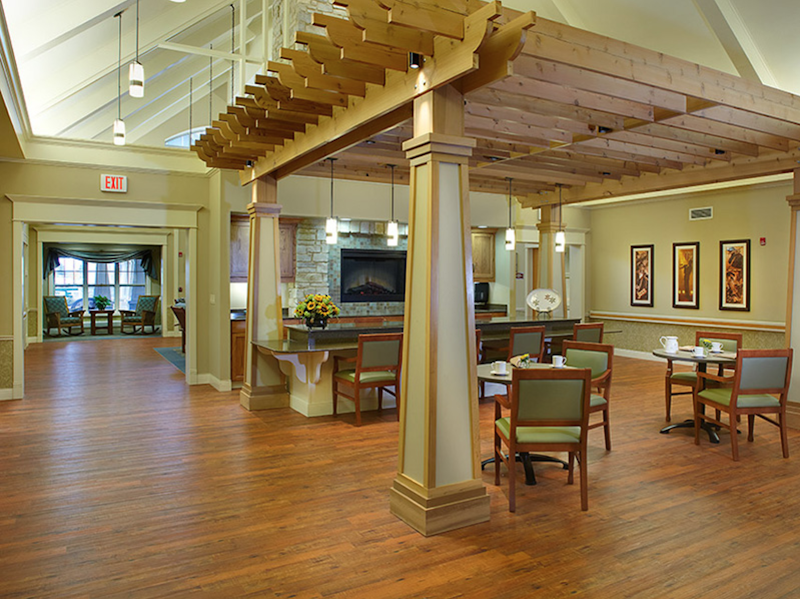
CONCERN (D)

Potential for Harm - no one hurt, but risky conditions existed

Deficiency F0757 (Tag F0757)

Could have caused harm · This affected 1 resident

**NOTE- TERMS IN BRACKETS HAVE BEEN EDITED TO PROTECT CONFIDENTIALITY** Based on interview and record review, the facility did not ensure 1 of 5 residents (R9) reviewed had a drug regimen free from un...

Read full inspector narrative →
**NOTE- TERMS IN BRACKETS HAVE BEEN EDITED TO PROTECT CONFIDENTIALITY** Based on interview and record review, the facility did not ensure 1 of 5 residents (R9) reviewed had a drug regimen free from unnecessary drugs. R9 received Alprazolam for insomnia without adequate indications for use. Findings include: R9 was admitted to the facility on [DATE] with a diagnosis that includes atrial fibrillation, essential hypertension, insomnia, depressive disorder, and anxiety disorder. R9's quarterly MDS (Minimum Data Set) assessment, dated 11/2/2021, documents a Brief Interview for Mental Status (BIMS) score of 15, indicating that R9 is cognitively intact. R9's medication administration record (MAR), dated 2/2/22, documents an order for Alprazolam tablet 0.25mg (milligrams), give 1 tablet by mouth one time a day for anxiety. R9's medical records document: on 12/22/219 R9 was seen by NP (Nurse Practitioner)- G who recommended to discontinue 0.25 mg Alprazolam, start Trazodone 50 mg by mouth at bedtime (HS) daily for improving sleep. Monitor and document any associated side effects. On 2/01/22, Surveyor interviewed R9 who stated I have problems sleeping and melatonin was ordered over a month ago but I haven't seen it yet R9's physician orders, dated 12/3/2021, documented an order to discontinue Alprazolam and start Trazodone 50 mg by mouth at HS for indications unknown. Note: R9's medical record shows that the medication consents for Alprazolam were last dated on 9/12/19 and no consent was received for the Trazadone. R9's physician orders, dated 12/10/21, documents an order to discontinue Trazadone and to give Xanax 0.25 mg at HS (bedtime) for indications unknown. R9 was seen by NP-G, on 12/22/21 for psychiatry follow up and the recommendation/plan is to start Trazodone 50 mg by mouth at bedtime daily for improving sleep disturbances and discontinue 0.25 mg Alprazolam as it is no longer effective. Other recommendations included to monitor and document any associated side effects, evidence of psychosis and/or changes in mental status, mood, behavior, sleep, or appetite. R9's monthly pharmacy reviews dated on 9/8/21, 10/7/21, 11/5/21, 12/7/21 and 1/6/21 indicated sleep studies quarterly. Surveyor reviewed R9's medical record and was unable to locate sleep studies completed for R9. On 2/2/22, at 12:31 PM, Surveyor interviewed, Director of Nursing (DON)-B about when sleep studies are to be completed for residents. DON-B indicated if the resident has medications prescribed for sleep the resident should have a sleep study completed. DON-B looked in R9's medical record and was unable to locate any sleep studies for the R9. On 2/2/22, at 12:39 PM, Surveyor interviewed Assistant Director of Nursing (ADON)-F to see if any sleep studies were available for R9. ADON-F indicated that one was started today (2/2/2022) and that none were done prior to this. Surveyor then asked how they would know if the medication was effective without monitoring. ADON-F responded that R9 hasn't complained of sleeping difficulties. Note: R9 informed Surveyor during interview of difficulties sleeping and that R9 was to start Melatonin over a month ago but has not received it yet. R9's medical record documented on 2/1/22, at 7:00 PM, physician order written for Melatonin 3mg by mouth at bedtime for sleep disturbance. R9's care plan, dated 10/01/21, with a target date of 2/20/22, indicates that R9 likes to wake up at 9am, naps throughout the day, and is awake at night. R9 likes the door closed and prefers to nap at 1pm. R9's care plan does not identify concerns related to insomnia. The facility did not ensure that R9's medication regimen was free from unnecessary medications as R9 was prescribed medication to treat insomnia without indications for use.
CONCERN (D)

Potential for Harm - no one hurt, but risky conditions existed

Medication Errors (Tag F0758)

Could have caused harm · This affected 1 resident

Based interview and record review the facility did not ensure residents receiving psychotropic medications received appropriate monitoring of medications for efficacy and adverse consequences for 1 of...

Read full inspector narrative →
Based interview and record review the facility did not ensure residents receiving psychotropic medications received appropriate monitoring of medications for efficacy and adverse consequences for 1 of 5 (R26) residents reviewed for psychotropic medications. R26 did not have an abnormal involuntary movement (AIMS) assessment completed since March, 2021. Findings include: R26 has an order for Aripiprazole 2 MG (milligrams) Give 2 mg by mouth at bedtime for anxiety/depression. Review of R26's medical record revealed a Consultant Pharmacist's Medication Regimen Review dated 9/21/21 which documented: Current order: Aripiprazole. Antipsychotics require routine monitoring for adverse events such as Tardive Dyskinesia (which is abnormal, recurrent, involuntary movements that may be irreversible and typically present as lateral movements of the tongue or jaw, tongue thrusting, chewing, frequent blinking, brow arching, grimacing, and lip smacking, although the trunk or other parts of the body may also be affected). The standard of practice is to obtain a baseline AIMS assessment at baseline and at least every 6 months thereafter. Last AIMS on 3/2021. Recommendation: Please perform an AIMS assessment now and at least every 6 months thereafter. Surveyor noted an AIMS was completed 3/23/21, however no other AIMS were completed. On 2/2/22 at 2:54 PM Surveyor asked Director of Nursing (DON)-B for evidence an AIMS was completed as recommended by Pharmacy. DON-B reported an AIMS has not been completed since 3/23/21. No additional information was provided.
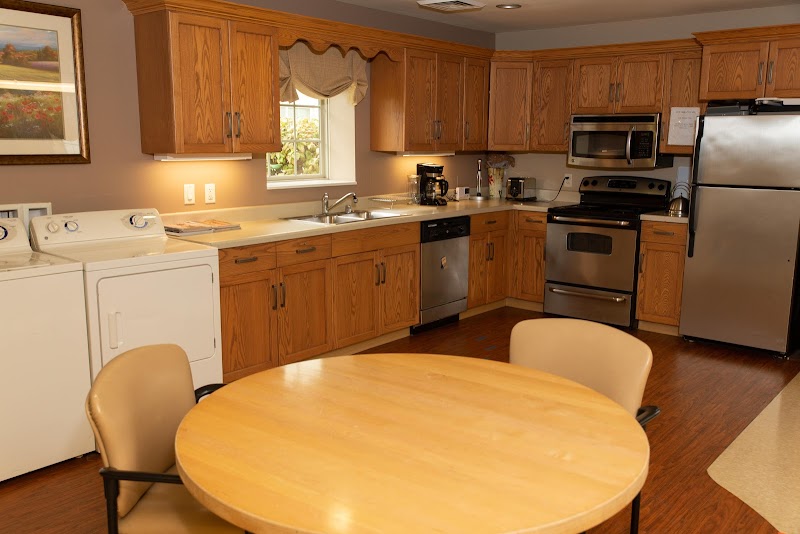
CONCERN (D)

Potential for Harm - no one hurt, but risky conditions existed

Laboratory Services (Tag F0770)

Could have caused harm · This affected 1 resident

**NOTE- TERMS IN BRACKETS HAVE BEEN EDITED TO PROTECT CONFIDENTIALITY** Based on interview and record review the facility did not obtain laboratory services to meet the needs of its residents for 1 of...

Read full inspector narrative →
**NOTE- TERMS IN BRACKETS HAVE BEEN EDITED TO PROTECT CONFIDENTIALITY** Based on interview and record review the facility did not obtain laboratory services to meet the needs of its residents for 1 of 5 (R36) residents reviewed for laboratory services. R36 has a diagnosis of Diabetes Type 2 and End Stage Renal Disease requiring dialysis. A Hemoglobin A1C was not completed for more than 1 year. Findings include: R36 was admitted to the facility on [DATE] and receives dialysis three times weekly. The Facility Policy and Procedure titled: Diabetes - Clinical Protocol dated 12/2016 documented (in part) . .Assessment and Recognition 2. For residents who meet the criteria for diabetes testing, the physician will order pertinent screening, for example A1C. Treatment and Management 1. Based on the preceding assessment, including causes and complications, the physician will order appropriate interventions. Monitoring and Follow-Up 2. The physician will order appropriate lab tests (for example, periodic finger sticks or A1C) and adjust treatments based on these results and other parameters. a. Examples of blood glucose monitoring for various situations might include the following: (1) For the resident on oral medication(s) who is well controlled: Monitor blood glucose levels at least weekly (or more frequently if there is a change in drugs or drug doses); monitor A1C on admission (if no results from a previous test are available) or when diabetes is diagnosed and every 3 to 6 months thereafter. (2) For the resident receiving oral medication(s) who is poorly controlled: Monitor blood glucose levels twice to four times daily as needed; monitor A1C on admission (if no results from a previous test are available) or when diabetes is diagnosed, and every 3 months thereafter until stable. Review of R36's medical record revealed a Hemoglobin A1C was completed on 12/24/20 with a result of 6.4 R36's Physician orders dated 11/22/21 documented: Hemoglobin A1C every 3 months in the morning every 3 month(s) starting on the 22nd for 84 day(s) for Diabetes mellitus. Nurse Practitioner noted dated 10/28/2021 documented: [AGE] year old male with a PMHx (Primary Medical History) of Stroke with residual R (right) sided hemiplegia, seizure disorder, DM (Diabetes Mellitus) type II, ESRD (End Stage Renal Disease) on HD (Hemodialysis) and Vascular Dementia. Seen for monthly visit. - continue same insulin regimen - accuchecks bid (twice daily) and prn (as needed) - check A1c (in bold letters in note) Surveyor noted an A1C was not completed. Nurse Practitioner note dated 11/16/21 documented: DM2 - continue same insulin regimen - accuchecks bid and prn - check A1c (in bold letters in note) Surveyor noted an A1C was not completed. Nurse Practitioner note dated 12/2/21 documented: DM 2 - continue same insulin regimen - accuchecks bid and prn - check A1c every 3-6 months (in bold letters in note) Surveyor noted an A1C was not completed. Nurse Practitioner note dated 1/11/21 documented: DM 2 with CKD (Chronic Kidney Disease), PVD (Peripheral Vascular Disease) - continue same insulin regimen - accuchecks bid and prn - check A1c every 3-6 months. (in bold letters in note) Surveyor noted an A1C was not completed. The last A1C that was completed on R36 was 12/24/20. On 2/3/22 at 12:55 PM Surveyor advised Director of Clinical Services-E there was no evidence R36 had an A1C completed since 12/24/20 and asked for further information. Director of Clinical Services-E provided Surveyor lab results of a Hemoglobin A1C completed on 1/24/22 with a result of 7.6. Director of Clinical Services-E stated: There was not an A1C done in 2021. No additional information was provided.
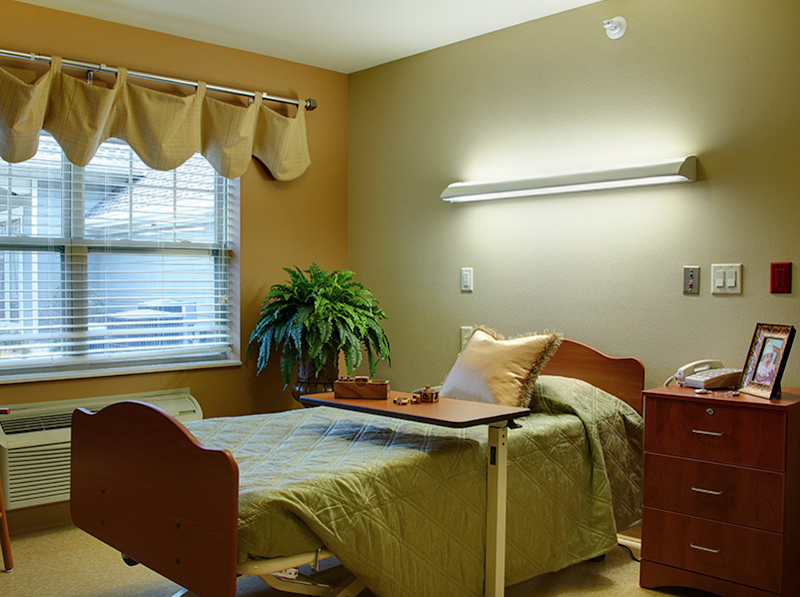
CONCERN (D)

Potential for Harm - no one hurt, but risky conditions existed

Infection Control (Tag F0880)

Could have caused harm · This affected 1 resident

Based on interviews and record review, the facility did not ensure the facility's infection prevention and control surveillance log was complete and accurate for 2 of 3 residents (R43 and R118) review...

Read full inspector narrative →
Based on interviews and record review, the facility did not ensure the facility's infection prevention and control surveillance log was complete and accurate for 2 of 3 residents (R43 and R118) reviewed for the facility's infection prevention and control program. The facility infection surveillance log was incomplete and inaccurate. -Facility did not include R43 on the infection surveillance logs and surveillance map when R43 was identified as Covid-19 positive on 1/21/22. -Facility did not include R118 on the infection surveillance logs when R118 was identified as Covid-19 positive on 12/23/21. Findings include: The facility policy, titled Suspected or confirmed positive Covid 19 Management, dated 4/02/20, revised 9/20/21, states in part: -Policy: The center recognizes that as Covid-19 is rapidly spreading across the country, we may have residents and/or staff that develop the disease. The center will strive to adhere to current CDC (Centers for Disease Control and Prevention) infection prevention and control recommendations, including universal source control measures, visitor restrictions screening of residents and HCP (Health Care Professionals) and promptly notifying the health department as indicated .This policy includes guidelines and our response as it relates to: monitoring and management of other residents and staff at the center. -Procedure: 1. Implementation of interventions to minimize the spread of the virus. a. Suspected or confirmed positive Covid-19 management is included in the center's pandemic preparedness and response program and the emergency operations plan which are programs within the center's overall quality assurance performance improvement (QAPI) program. 1) The center will establish an outbreak planning committee and conduct daily meetings to review the center's response and outbreak management plan. This review will include: . outbreak surveillance line listing .resident screening assessments and the center's 24-hour report. e. The center's Infection Preventionist will follow the center's infection control surveillance policy and CMS (Centers for Medicare and Medicaid Services)/CDC/State Agency/local and state public health department (DPH) guidance for resident and staff monitoring to promote early detection. On 2/02/22, Surveyor reviewed the Facility's monthly infection control log (line list) and surveillance maps for the months of December 2021 and January 2022. 1. Surveyor noted R43 was identified as being Covid-19 positive on 1/21/22. R43 was not listed on the January 2022 infection line list or surveillance map. Surveyor interviewed Director of Nursing (DON-B) in-person and Assistant Director of Nursing (ADON-F) via the phone. ADON-F is also the facility's Infection Preventionist who identified that R43 was the last resident within the facility that had tested positive for Covid-19. Reviewing the medical record of R43, it was documented R43 tested positive for Covid-19 on 1/21/22. Surveyor reviewed the Monthly Infection Control Log (line list) with Director of Nursing (DON-B) and identified R43 was not documented on the Monthly Infection Control Log as having tested positive for Covid-19 on 1/21/22. Surveyor and DON-B reviewed the surveillance map and R43's room number was not identified with a blue square to identify R43 had a respiratory infection/Covid-19. ADON-F stated she should have completed the line list and the surveillance map with R43's information, but if it is not there than I guess I didn't do it. 2. Surveyor reviewed R118's medical record and identified R118 tested positive for Covid-19 on 12/23/21. The surveillance map was reviewed and identified that R118's room number was identified with a blue colored square indicating R118 has a respiratory infection/Covid-19. Surveyor and DON-B reviewed the Facility's monthly infection log (line list) for December 2021. The line list for December 2021 did not document R118's need for transmission-based precautions due to a respiratory infection. ADON-F was interviewed as to where this information would be located on the line list and ADON-F stated if it is not there than I guess I did not do it.
CONCERN (F)

Potential for Harm - no one hurt, but risky conditions existed

Food Safety (Tag F0812)

Could have caused harm · This affected most or all residents

Based on observation, record review, and interview the facility did not ensure that food was prepared, distributed, and served in accordance with professional standards for food service safety in 1 of...

Read full inspector narrative →
Based on observation, record review, and interview the facility did not ensure that food was prepared, distributed, and served in accordance with professional standards for food service safety in 1 of 1 serving kitchens. * Dietary Manager-C & Dietary Aide-D were observed touching ready to eat food with gloved hands after touching non-sanitized food surfaces. This food was observed be served for residents to eat. This deficient practice has the potential to affect 71 of 71 residents whom receive food the main serving kitchen at the facility. Findings include: The facility's policy dated as revised 9/2017 and titled, Handwashing Staff Education documents, Handwashing is the single most effective way to reduce the incidence of infections; All employees are required to follow procedures at the following times: After blowing or wiping nose, or covering sneeze; Before eating, drinking or handling food; When hands are soiled. 1. Food Handling On 2/1/22 at 11:30 a.m., Surveyor observed Dietary Manager-C touch the outside of his facial mask with bare hands. Surveyor then observed Dietary Manager-C put on gloves and place a piece of frozen meat in the oven. Dietary Manager-C was then observed to change gloves, and begin serving food on plates for residents to eat. Surveyor noted that Dietary Manager-C did not wash his hands after contaminating his gloves after touching non-sanitized food surfaces (his facial mask) and before serving ready to eat food. On 2/1/22 at 11:33 a.m., Surveyor observed Dietary Manager-C use his right gloved hand to touch a paper plate, then the outside of a plastic bread bag. Dietary Manager-C was then observed to grab a ready to eat dinner role and place it on a plate for a resident to eat. Surveyor noted that Dietary Manager-C did not change his gloves or wash his hands after contaminating his gloves after touching non-sanitized food surfaces and before touching ready to eat food. On 2/1/22 at 11:36 a.m., Surveyor observed Dietary Manager-C use his left gloved hand and touch the counter top of the serving table and paper ticket. Dietary Manager-C was then observed to grab a ready to eat dinner role and place it on a plate for a resident to eat. Surveyor noted that Dietary Manager-C did not change his gloves or wash his hands after contaminating his gloves after touching non-sanitized food surfaces and before touching ready to eat food. On 2/1/22 at 11:36 a.m., Surveyor observed Dietary Manager-C use his right gloved hand to touch a paper plate, then the outside of a plastic bread bag. Dietary Manager-C was then observed to grab a ready to eat dinner role and place it on a plate for a resident to eat. Surveyor noted that Dietary Manager-C did not change his gloves or wash his hands after contaminating his gloves after touching non-sanitized food surfaces and before touching ready to eat food. On 2/1/22 at 11:38 a.m., Surveyor observed Dietary Manager-C use his left gloved hand touch the counter top of the serving table and a paper ticket. Dietary Manager-C was then observed to touch ready to eat carrots with his left gloved hand as he adjusted their placement on the plate. Surveyor noted that Dietary Manager-C did not change his gloves or wash his hands after contaminating his gloves after touching non-sanitized food surfaces and before touching ready to eat food. On 2/1/22 at 11:38 a.m., Surveyor observed Dietary Manager-C use his right gloved hand to touch a paper plate, then the outside of a plastic bread bag. Dietary Manager-C was then observed to grab a ready to eat dinner role and place it on a plate for a resident to eat. Surveyor noted that Dietary Manager-C did not change his gloves or wash his hands after contaminating his gloves after touching non-sanitized food surfaces and before touching ready to eat food. On 2/2/22 at 7:47 a.m., Surveyor observed Dietary Aide-D wearing gloves on both hands. Dietary Aide-D was observed to then grab 3 eggs and crack them open over the grill. Surveyor then observed Dietary Aide-D grab a slice of ready to eat bread and place it on a plate for a resident to eat. Surveyor noted that Dietary Aide-D did not change her gloves or wash her hands after contaminating her gloves after touching raw food and before touching ready to eat food. On 2/2/22 at 7:49 a.m., Surveyor observed Dietary Aide-D use her left glove hand to touch the top of the serving table and a paper ticket. Dietary Aide-D was then observed to touch ready to eat bacon with her left gloved hand as she adjusted the bacons placement on the plate. Surveyor noted that Dietary Aide-D did not change her gloves or wash her hands after contaminating her gloves after touching non-sanitized food surfaces and before touching ready to eat food. On 2/2/22 at 1:42 p.m., Surveyor informed Dietary Manager-C of the above findings. Dietary Manager-C informed Surveyor that he would provide additional training regarding handwashing. No additional information as to why food was not prepared, distributed, and served in accordance with professional standards for food service safety.
Understanding Severity Codes (click to expand)
Life-Threatening (Immediate Jeopardy)
J - Isolated K - Pattern L - Widespread
Actual Harm
G - Isolated H - Pattern I - Widespread
Potential for Harm
D - Isolated E - Pattern F - Widespread
No Harm (Minor)
A - Isolated B - Pattern C - Widespread

Questions to Ask on Your Visit

  • "What changes have you made since the serious inspection findings?"
  • "What safeguards are in place to prevent abuse and neglect?"
  • "Why is there high staff turnover? How do you retain staff?"
  • "Can I speak with families of current residents?"
  • "What's your RN coverage like on weekends and overnight?"

Our Honest Assessment

Strengths
  • • Licensed and certified facility. Meets minimum state requirements.
Concerns
  • • Multiple safety concerns identified: Federal abuse finding, 3 life-threatening violation(s), 1 harm violation(s), $159,820 in fines, Payment denial on record. Review inspection reports carefully.
  • • 48 deficiencies on record, including 3 critical (life-threatening) violations. These warrant careful review before choosing this facility.
  • • $159,820 in fines. Extremely high, among the most fined facilities in Wisconsin. Major compliance failures.
  • • Grade F (0/100). Below average facility with significant concerns.
Bottom line: This facility has a substantiated abuse finding. Extreme caution advised. Explore alternatives.

About This Facility

What is Lake Country Health Services's CMS Rating?

CMS assigns LAKE COUNTRY HEALTH SERVICES an overall rating of 1 out of 5 stars, which is considered much below average nationally. Within Wisconsin, this rating places the facility higher than 0% of the state's 100 nursing homes. A rating at this level reflects concerns identified through health inspections, staffing assessments, or quality measures that families should carefully consider.

How is Lake Country Health Services Staffed?

CMS rates LAKE COUNTRY HEALTH SERVICES's staffing level at 2 out of 5 stars, which is below average compared to other nursing homes. Staff turnover is 60%, which is 14 percentage points above the Wisconsin average of 46%. High turnover can affect care consistency as new staff learn residents' individual needs. RN turnover specifically is 57%, which is notably high. RNs provide skilled clinical oversight, so turnover in this role can affect medical care quality.

What Have Inspectors Found at Lake Country Health Services?

State health inspectors documented 48 deficiencies at LAKE COUNTRY HEALTH SERVICES during 2022 to 2025. These included: 3 Immediate Jeopardy (the most serious level, indicating potential for serious harm or death), 1 that caused actual resident harm, and 44 with potential for harm. Immediate Jeopardy findings are rare and represent the most serious regulatory concerns. They require immediate corrective action.

Who Owns and Operates Lake Country Health Services?

LAKE COUNTRY HEALTH SERVICES is owned by a for-profit company. For-profit facilities operate as businesses with obligations to shareholders or private owners. The facility is operated by NORTH SHORE HEALTHCARE, a chain that manages multiple nursing homes. With 100 certified beds and approximately 74 residents (about 74% occupancy), it is a mid-sized facility located in OCONOMOWOC, Wisconsin.

How Does Lake Country Health Services Compare to Other Wisconsin Nursing Homes?

Compared to the 100 nursing homes in Wisconsin, LAKE COUNTRY HEALTH SERVICES's overall rating (1 stars) is below the state average of 3.0, staff turnover (60%) is significantly higher than the state average of 46%, and health inspection rating (1 stars) is much below the national benchmark.

What Should Families Ask When Visiting Lake Country Health Services?

Based on this facility's data, families visiting should ask: "What changes have been made since the serious inspection findings, and how are you preventing similar issues?" "What safeguards and monitoring systems are in place to protect residents from abuse or neglect?" "How do you ensure continuity of care given staff turnover, and what is your staff retention strategy?" "Can you walk me through typical staffing levels on day, evening, and night shifts?" These questions are particularly relevant given the facility's Immediate Jeopardy citations, the substantiated abuse finding on record, the facility's high staff turnover rate, and the below-average staffing rating.

Is Lake Country Health Services Safe?

Based on CMS inspection data, LAKE COUNTRY HEALTH SERVICES has documented safety concerns. The facility has 1 substantiated abuse finding (meaning confirmed case of resident harm by staff or other residents). Inspectors have issued 3 Immediate Jeopardy citations (the most serious violation level indicating risk of serious injury or death). The facility has a 1-star overall rating and ranks #100 of 100 nursing homes in Wisconsin. Families considering this facility should ask detailed questions about what corrective actions have been taken since these incidents.

Do Nurses at Lake Country Health Services Stick Around?

Staff turnover at LAKE COUNTRY HEALTH SERVICES is high. At 60%, the facility is 14 percentage points above the Wisconsin average of 46%. Registered Nurse turnover is particularly concerning at 57%. RNs handle complex medical decisions and coordinate care — frequent RN changes can directly impact care quality. High turnover means new staff may not know residents' individual needs, medications, or preferences. It can also be disorienting for residents, especially those with dementia who rely on familiar faces. Families should ask: What is causing the turnover? What retention programs are in place? How do you ensure care continuity during staff transitions?

Was Lake Country Health Services Ever Fined?

LAKE COUNTRY HEALTH SERVICES has been fined $159,820 across 1 penalty action. This is 4.6x the Wisconsin average of $34,677. Fines at this level are uncommon and typically indicate a pattern of serious deficiencies, repeated violations, or failure to correct problems promptly. CMS reserves penalties of this magnitude for facilities that pose significant, documented risk to resident health or safety. Families should request specific documentation of what issues led to these fines and what systemic changes have been implemented.

Is Lake Country Health Services on Any Federal Watch List?

LAKE COUNTRY HEALTH SERVICES is not on any federal watch list. The most significant is the Special Focus Facility (SFF) program, which identifies the bottom 1% of nursing homes nationally based on persistent, serious quality problems. Not being on this list means the facility has avoided the pattern of deficiencies that triggers enhanced federal oversight. This is a positive indicator, though families should still review the facility's inspection history directly.