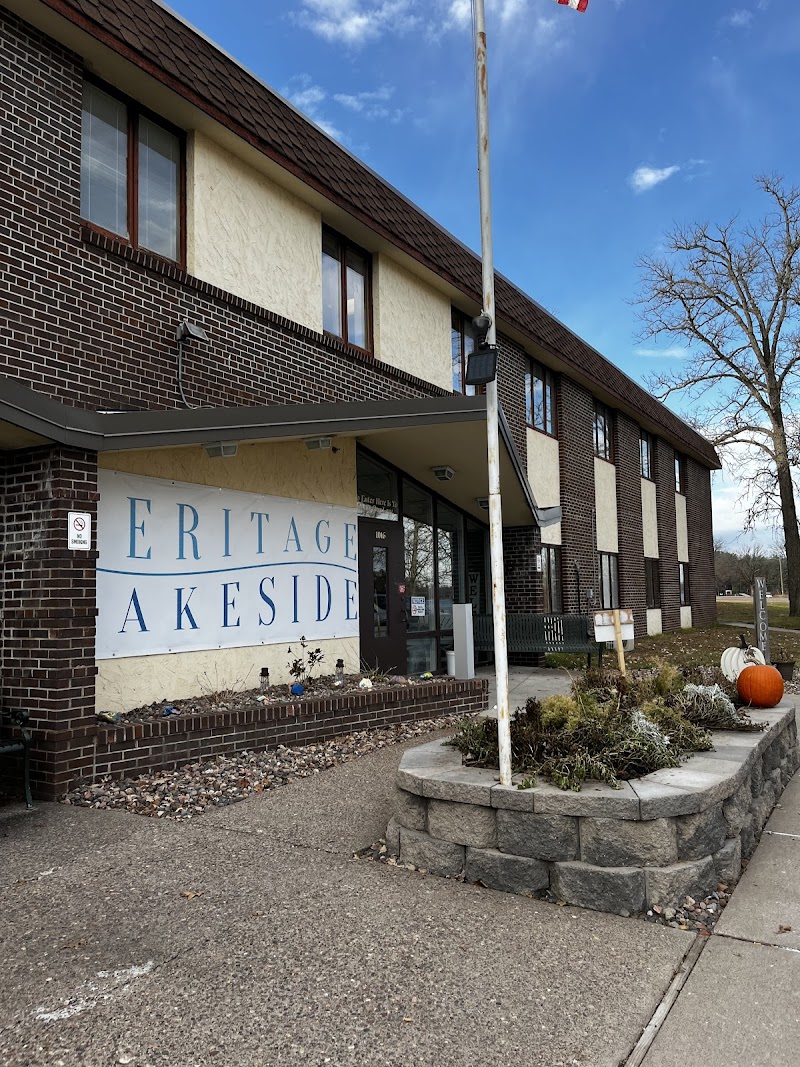
HERITAGE LAKESIDE

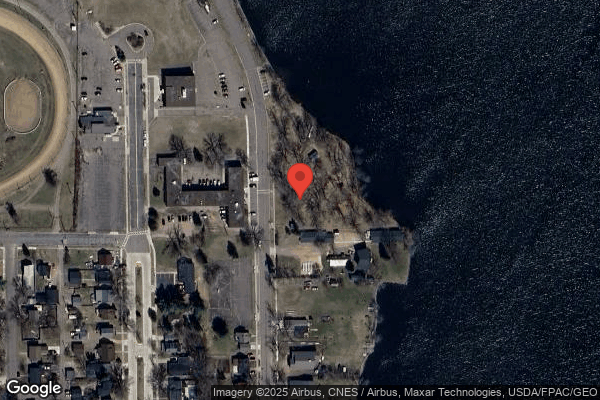
1016 LAKESHORE DR, RICE LAKE, WI 54868 (715) 234-9101
For profit - Individual 50 Beds Independent Data: November 2025 3 Immediate Jeopardy citations
Trust Grade
0/100
#283 of 321 in WI
Last Inspection: January 2025

Within standard 12-15 month inspection cycle. Federal law requires annual inspections.

Overview

Heritage Lakeside in Rice Lake, Wisconsin has received a Trust Grade of F, indicating significant concerns about the quality of care provided. Ranking #283 out of 321 facilities in the state places it in the bottom half, and it is the lowest-rated option in Barron County. Although the facility's trend is improving, decreasing from 26 issues in 2024 to 17 in 2025, the presence of 94 total issues, including critical incidents of failure to follow proper COVID precautions and neglecting necessary health assessments, raises serious red flags. While staffing levels are average with a low turnover rate of 0%, the facility also faces a concerning $163,069 in fines, indicating compliance problems. On a positive note, the facility has good RN coverage, exceeding 89% of Wisconsin facilities, which may help address some health concerns that could be overlooked by CNAs.

Trust Score
F
0/100
In Wisconsin
#283/321
Bottom 12%
Safety Record
High Risk
Review needed
Inspections
Getting Better
26 → 17 violations
Staff Stability
○ Average
Turnover data not reported for this facility.
Penalties
⚠ Watch
$163,069 in fines. Higher than 83% of Wisconsin facilities, suggesting repeated compliance issues.
Skilled Nurses
✓ Good
Each resident gets 87 minutes of Registered Nurse (RN) attention daily — more than 97% of Wisconsin nursing homes. RNs are the most trained staff who catch health problems before they become serious.
Violations
⚠ Watch
94 deficiencies on record. Higher than average. Multiple issues found across inspections.
★☆☆☆☆
1.0
Overall Rating
★★★☆☆
3.0
Staff Levels
★★☆☆☆
2.0
Care Quality
★☆☆☆☆
1.0
Inspection Score
Stable
2024: 26 issues
2025: 17 issues

The Good

  • Full Sprinkler Coverage · Fire safety systems throughout facility
  • No fines on record

Facility shows strength in fire safety.

The Bad

1-Star Overall Rating

Below Wisconsin average (3.0)

Significant quality concerns identified by CMS

Federal Fines: $163,069

Well above median ($33,413)

Significant penalties indicating serious issues

The Ugly 94 deficiencies on record

3 life-threatening 3 actual harm
Jul 2025 2 deficiencies
CONCERN (D) 📢 Someone Reported This

A family member, employee, or ombudsman was alarmed enough to file a formal complaint

Potential for Harm - no one hurt, but risky conditions existed

Comprehensive Care Plan (Tag F0656)

Could have caused harm · This affected 1 resident

**NOTE- TERMS IN BRACKETS HAVE BEEN EDITED TO PROTECT CONFIDENTIALITY** Based on interview and record review, the facility did not develop and implement a person-centered care plan for each resident c...

Read full inspector narrative →
**NOTE- TERMS IN BRACKETS HAVE BEEN EDITED TO PROTECT CONFIDENTIALITY** Based on interview and record review, the facility did not develop and implement a person-centered care plan for each resident consistent with resident rights including services to attain or maintain the resident's highest or practicable physical, mental or psychosocial needs for 2 of 4 residents reviewed (R3 and R4). R3 and R4 did not have a care plan for an anticoagulant or risk for bleeding. Findings include: Facility policy titled, Care Plans-Comprehensive, last reviewed 06/2022, states in part . The comprehensive care plan is based on a thorough assessment Each resident's comprehensive care plan is designed to incorporate identified problem areas .Incorporate risk factors. Facility policy titled, Anticoagulation-Clinical Protocol, last reviewed 06/2022, states in part . The staff and physician will monitor for possible complications in individuals who are being anticoagulated signs of excessive bruising, hematuria, hemoptysis, or other evidence of bleeding . Example 1 R3, a [AGE] year-old-female, was admitted to the facility on [DATE], after hospitalization for post-surgical left knee sepsis. R3's diagnoses included atrial fibrillation (a-fib) and anemia. On 03/13/25, R3 was prescribed Xarelto for A-fib. On 05/21/25, R3 was admitted to the hospital. Hospital discharge summary indicated R3 was positive for occult stool. The summary confirmed R3 had arteriovenous malformations in the colon due to anticoagulant use. On 05/30/25, R3 was discharged from the hospital, and re-admitted to the facility, with a diagnosis of acute on chronic anemia, 02/13/25-present. R3 discharged with orders to discontinue Xarelto. On 06/25/25, R3 was prescribed Pradaxa for A-fib. On 07/02/25, Surveyor reviewed R3's care plan and was unable to find current or historical care plan related to anticoagulant use or risk for bleeding. Example 2 R4 was admitted to the facility on [DATE], with diagnoses including stroke, peripheral vascular disease, and history of blood clots in the lungs. R4 was admitted with an order for Pradaxa due to stroke, peripheral vascular disease, and history of blood clots in R4's lungs. R4's Minimum Data Set (MDS), completed on 05/20/25, confirmed R4 scored 15/15 during a Brief Interview for Mental Status (BIMS), indicating intact cognitive function. On 07/02/25, Surveyor reviewed R4's medical record and noted there was no current or historical care plan related to anticoagulant use or risk for bleeding. On 07/02/25, at 9:17 AM, Surveyor interviewed Registered Nurse (RN) E. RN E stated nurses update care plans daily as needed and weekly by the boss. RN E states if there are changes to resident status, nurses discuss it with the CNAs or therapy will fill out forms for staff to read. On 07/02/25, at 9:31 AM, Surveyor interviewed RN F. RN F stated the Certified Nursing Assistants (CNAs) are updated with all changes to a resident's care plan by verbal report or by updating the care plan and Kardex. RN F stated when the Kardex is updated, it populates in the CNA charting. RN F stated the nurses and office staff are responsible for updating the care plans. On 07/02/25, at 9:47 AM, Surveyor interviewed CNA H. CNA H stated therapy will fill out a form for them to review if changes are made to resident status or change in condition. CNA H stated they have a Kardex on the unit and in the computer. CNA H was not sure where the Kardex was at the nurse's station but believes it is updated daily. After a couple minutes, CNA H was able to locate and show Surveyor the Kardex binder. On 07/02/25, at 12:48 PM, Surveyors interviewed Director of Nursing (DON) B. DON B stated the care plans are started by the MDS Coordinator and then each department does their own sections. DON B stated each care plan is personalized depending on each resident's care areas. DON B reported DON B and Nurse Manager (NM) M, will update the care plan and Kardex and notify the nurses. The nurses will update the CNAs in report. DON B reported the Kardex is available at the nurse's station for the CNAs to review, but there is no set routine for them to check it. They just know it's there. Surveyors informed DON B that R3 and R4 did not have a care plan for anticoagulation use and risk of bleeding. DON B could not explain why there was no care plan. On 07/02/25, at 1:45 PM, Surveyor interviewed CNA I. CNA I stated they ask the nurses, or the nurses will tell them in report if a resident is at a higher risk for bleeding in relation to taking blood thinners. CNA I stated there is nothing related to monitoring for this in the CNA charting. CNA I believes there may be some kind of training in Relias. CNA I stated in relation to general changes, CNAs are updated through either report, a black book at the nurses' station, or they have a Kardex in Point Click Care (PCC), which is the facility's electronic medical record system. On 07/02/25, at 1:55 PM, Surveyor interviewed Regional DON C. Regional DON C stated she is very particular in what she includes in the CNA Kardex. Regional DON C stated she believed things related to anticoagulation were more for nurses due to need for assessment. Surveyor addressed the absence of an anticoagulant care plan for either. Regional DON C stated she would make changes moving forward.
CONCERN (F) 📢 Someone Reported This

A family member, employee, or ombudsman was alarmed enough to file a formal complaint

Potential for Harm - no one hurt, but risky conditions existed

Deficiency F0726 (Tag F0726)

Could have caused harm · This affected most or all residents

**NOTE- TERMS IN BRACKETS HAVE BEEN EDITED TO PROTECT CONFIDENTIALITY** The facility did not ensure licensed nurses had the specific competencies and skill sets necessary to care for residents' needs,...

Read full inspector narrative →
**NOTE- TERMS IN BRACKETS HAVE BEEN EDITED TO PROTECT CONFIDENTIALITY** The facility did not ensure licensed nurses had the specific competencies and skill sets necessary to care for residents' needs, which had the potential to affect all 42 residents. -Licensed Practical Nurse (LPN) G performed a venous blood draw from R1's foot without evidence of training. -The facility did not have a system in place to evaluate licensed nurse competencies. Findings: R1, an [AGE] year-old male, admitted to the facility on [DATE] for rehab following complications from exploratory abdominal surgery. On 04/29/25, progress notes read in part, Nurse unable to obtain IV access or blood draw for labs. 2 sticks have been attempted. Nurse will pass off to oncoming shift to attempt for stat labs. On 04/30/25, progress notes read in part, Labs drawn from right foot X1 attempt. Resident tolerated well .and given to lab at 0805 am. On 04/30/25 at 9:59 AM, order entered, NP [Nurse Practitioner]-ok to obtain blood sample from foot if able. On 07/01/25 at 1:42 PM, Surveyor requested training and competency evaluations for LPN G, Registered Nurse (RN) D, and RN E. Surveyor reviewed LPN G's, Yearly Staff Education, dated 10/15/24, which included infection control and prevention. LPN G scored 05/10. LPN G's training did not include venipuncture. Surveyor reviewed RN D's training, RN/LPN Nursing Skills Competency Check List, and noted training was dated for 07/01/25. Surveyor reviewed RN E's training, RN/LPN Nursing Skills Competency Check List, and noted training was dated for 07/01/25. On 07/01/25 at 2:53 PM, Surveyor interviewed RN D. RN D stated she was working on the date of the incident, and it was either the first or second day of her orientation. RN D was shadowing LPN G. RN D stated she observed LPN G make at least one attempt to obtain a blood sample from R1's arm but was unsuccessful. RN D reported LPN G stated, Oh I'm just going to try his feet. RN D reported she informed LPN G that RN D was never trained to draw blood from feet. RN D told Surveyor she was not aware of any policy or procedure on using veins in feet for obtaining blood samples, as she was still in orientation at that time. RN D stated one of the nurse managers at the facility told her later that day that procedure is not in their policy and staff should never take blood from the foot. RN D stated during the incident, she stood back and observed and did not take part physically in any part of it. RN D reported all RNs and LPNs that have had training are ok to draw labs. RN D not sure of who has had training. RN D stated hypothetically if she was unable to obtain a sample, she would ask the other nurses or there is a number they can call for an outside qualified person who can come in to help. RN D stated she starts with the hand and works her way up the arm. RN D stated she believes a special order would be needed for any other locations for lab draws. RN D stated she believes the facility held training for venipuncture years ago and possibly a couple years ago while she was working at another facility. On 07/01/25 at 3:31 PM, Surveyor interviewed Nursing Home Administrator (NHA) A. NHA A stated receptionist completes onboarding with new staff. Starting with that, and moving forward, there is a check off sheet of skills staff must complete. NHA A stated she checks in with new staff after orientation and if they staff feel they need more time they accommodate. NHA A said in Relias there is a certain percent, which she believes is 75-80%, they must score in order to have it marked complete. With the classroom or paper education, the nurse managers would go over it with them. NHA A reported LPN G was to receive a notice of discipline, final warning, on 05/12/25, due to LPN G not documenting a change in condition or reporting the change to the RN. On 05/12/25, LPN G gave her notice of resignation prior to the facility giving LPN G her notice of discipline. On 07/02/25 at 9:17 AM, Surveyor interviewed RN E. RN E stated the RNs or those who are educated can perform lab draws. RN E stated if they are unable to obtain a sample after two attempts, they would inform the supervisor or nurse managers and one of those individuals would try. RN E stated arms and hands are the only locations on the body she would obtain a blood sample from and if special orders were needed for other locations, she would ask someone else to perform the task. RN E stated she had previous training for lab draws prior to being hired by this facility. RN E stated she believed there was a paper she had to sign upon hiring. On 07/02/25 at 9:31 AM, Surveyor interviewed RN F. RN F stated the charge nurse, LPNs with training, and RNs can perform lab draws. RN F stated they make two attempts and if they cannot get blood, they let the provider know and the unit manager takes care of it, if it is urgent. RN F stated the locations for lab draws include hand to antecubital area as she believes that is what is in the scope of practice. RN F stated she believes special orders would be required for lab draws to other areas of the body and that special training would be required. RN F stated she believes staff are not allowed to draw blood from feet. On 07/02/25 at 12:36 PM, Surveyor requested the facility's policy and procedure regarding training requirements, including training upon hire, routine training, and specialized training. The facility did not provide the requested information. Surveyor interviewed Director of Nursing (DON) B. DON B stated the facility did not have evidence of licensed nurse training or competency upon hire, since February of this year. DON B stated moving forward all new hires will be trained and/or evaluated for competency upon hire and annually. DON B reported if staff do not meet the criteria for passing the competency training, they would be provided additional education. Surveyor reviewed the facility's licensed nurse staff list with hire date and noted 8 current nursing staff hired since 02/01/25; Clinical Coordinator (CC) K, Nurse Manager M, RN E, RN X, RN Y, RN D, RN W, and LPN Z did not have training nor were evaluated for competency. On 07/02/25 at 1:23 PM, Surveyor interviewed DON B. DON B stated she did not believe they had a standard policy and procedure in relation to venipuncture. DON B reported typically the charge nurse would perform lab draws but nurse managers, the DON, RNs, and LPNs with training could also perform lab draws. DON B reported in the past there was an online training course with a test-out regarding lab draws. Those that completed this course would then receive certification. DON B stated if a nurse was unable to obtain a blood sample, one of the nurse managers, DON, or other floor nurse with training would try. DON B stated the arms, hands, and antecubital areas are the only locations on the body that are used for lab draws. DON B stated they have an outside resource that can be contacted to come in for difficult cases of venipuncture. DON B stated her expectations from staff would be to attempt one of the standard locations for lab draws and ask other staff for assistance if unable to obtain blood, before deciding to try from another location on the body. Regional DON C was present during this interview. Regional DON C stated LPN G, who was involved in the incident, did complete training, but Regional DON C was unable to provide Surveyor with documentation.
Apr 2025 1 deficiency
CONCERN (D) 📢 Someone Reported This

A family member, employee, or ombudsman was alarmed enough to file a formal complaint

Potential for Harm - no one hurt, but risky conditions existed

Free from Abuse/Neglect (Tag F0600)

Could have caused harm · This affected 1 resident

**NOTE- TERMS IN BRACKETS HAVE BEEN EDITED TO PROTECT CONFIDENTIALITY** Based on observations, interviews and record review, the facility failed to protect the residents' right to be free from sexual ...

Read full inspector narrative →
**NOTE- TERMS IN BRACKETS HAVE BEEN EDITED TO PROTECT CONFIDENTIALITY** Based on observations, interviews and record review, the facility failed to protect the residents' right to be free from sexual abuse. The facility did not implement interventions to protect other residents (R) from exposure of R3's genital area. This affected 2 of 3 residents reviewed for sexual abuse. (R1 and R2) On 03/21/25, R3 exposed his penis in proximity to R1 and R2 in the west dining room. No new interventions were implemented and the previous intervention of placing a blanket on R3's lap was not effective. Findings include: The facility's Abuse policy, with a revision date of 10/2023, indicates: It is the policy of our facility to maintain a work and living environment that is professional and free from threat and/or occurrences of harassment, abuse (verbal, physical, mental, or sexual), neglect corporal punishment, involuntary seclusion, physical or chemical restrains not required to treat the residents' medical symptoms, exploitation and misappropriate of resident property. Immediate interventions will be initiated to attempt to eliminate the likelihood that the situation could recur. If a resident's detrimental behavior persists, the IDT will care plan the resident again and determine which corrective actions will need to be taken. On 04/08/25, Surveyor requested and reviewed a facility reported incident that addressed and verified the allegations that R3 exposed himself in an area that R1 and R2 could have seen R1's penis. The investigation included a plan to educate staff and update the policy to improve the facility practice. Staff signatures were noted that they received education on 03/26/25. Surveyor reviewed R1's medical records. R1 was admitted to the facility on [DATE] with diagnoses that include Alzheimer's dementia. R1's most recent Minimum Data Set (MDS) dated [DATE] identifies a Brief Interview for Mental Status (BIMS) score of 1/15, which indicates severe cognitive impairment. R1 was discharged from the facility 03/25/25. Surveyor reviewed R2's medical records. R2 was admitted to the facility on [DATE] with diagnoses that include anxiety and dementia. R2's most recent MDS dated [DATE] identifies R2 has severe cognitive impairment. On 04/08/25, Surveyor observed R2 moving self around the unit in a wheelchair chanting, No, repeatedly. R2 was not able to answer questions appropriately. Surveyor reviewed R3's medical records. R3 was admitted to the facility on [DATE] with diagnoses that include enlarged prostate, stroke, overactive bladder, urinary retention, cognitive communication deficit, and Alzheimer's dementia. R3's care plan with a review date of 04/24/25 indicates R2 requires 2 assist using a mechanical lift for transfers, extensive assist of 2 for toileting and is able to pull pants up and down by self. R3's care plan identifies inappropriate display of nudity and comments to others began on 07/18/23. The latest care planned modification was on 11/18/24. Surveyor reviewed other resident interviews, having no concerns regarding seeing anything inappropriate or feeling uncomfortable. On 04/08/25 at 10:42 AM, Surveyor interviewed Personal Care Assistant (PCA) C who reported is aware of R3's tendencies of exposing himself and is not a Certified Nursing Assistant (CNA) so just reports it. When asked, PCA C stated R3's blanket does not always stay up past his waist. At 12:00 PM, Surveyor interviewed CNA D who reported awareness of R3's behavior of exposing his penis and making sexual comments, but has not seen it personally. When asked what staff is doing to prevent the occurrence, CNA D said staff is to cover R3 up and bring to room for privacy. CNA D added that they do place a blanket on his lap also, but it does not always stay on. At 12:20 PM, Surveyor interviewed Registered Nurse (RN) E. During the interview, RN E stated R3 can drop his blanket at times. At 12:22 PM, Surveyor observed R3 in R3's room, facing the hallway in eyesight of passersby, with the blanket down and his hand in his pants. At 12:30 PM, Surveyor interviewed Director of Nursing (DON) B and together went to R3's room where R3's position was the same. Surveyor asked what could be done differently to avoid exposure to the passersby. DON B stated, We could move his TV and room around to avoid him facing the hallway, and we are trying to change his medication to liquid. At 2:00 PM, Surveyor interviewed CNA F, who verified their presence during the incident, and Surveyor asked what prevention interventions are in place to help prevent R3 from exposing himself to others. CNA F stated they cover R3 up with a blanket and PCA C will do 1:1 if needed. Surveyor asked if the blanket stays on R3's lap and she stated, Not all the time. Surveyor asked if R3 may just need to use the bathroom. CNA F stated does not think so because R3 can and will ask to use the bathroom if needed, and he will laugh and make comments asking staff to play with it (penis) or to sit on it. On 04/08/25 at 2:15 PM, Surveyor interviewed Nursing Home Administrator (NHA) A, and asked what interventions were put into place to avoid the recurrence. NHA A reported it is discussed at morning meetings and the facility is implementing things today.
Jan 2025 14 deficiencies
CONCERN (D)

Potential for Harm - no one hurt, but risky conditions existed

Deficiency F0558 (Tag F0558)

Could have caused harm · This affected 1 resident

**NOTE- TERMS IN BRACKETS HAVE BEEN EDITED TO PROTECT CONFIDENTIALITY** Based on observation, record review and interview, the facility did not ensure 1 resident (R) of 12 sampled residents (R21) was ...

Read full inspector narrative →
**NOTE- TERMS IN BRACKETS HAVE BEEN EDITED TO PROTECT CONFIDENTIALITY** Based on observation, record review and interview, the facility did not ensure 1 resident (R) of 12 sampled residents (R21) was reasonably accommodated for personal needs. R21's room is set up so that he cannot access or use his sink. This is evidenced by: R21 was admitted to the facility on [DATE] and has diagnoses that include but are not limited to: Parkinson's disease with dyskinesia, with fluctuations; difficulty in walking, not elsewhere classified. R21's Minimum Data Set (MDS) assessment, dated 11/19/24, indicated that R21 uses a wheelchair and a 4 wheel walker for mobility. R21's care plan, dated 11/26/24, states: ADL: The resident has an ADL self-care performance deficit r/t Parkinson's disease, weakness, encephalopathy. Ambulation: Ambulate assist of two 250', follow with w/c and use personal 4ww (leave walker in hallway after use so resident does not attempt to use on is own) or distance as tolerate by resident and safe gait pattern. On 01/12/2025 at 1:01 PM, Surveyor interviewed R21 and his Family Member (FM) K who stated there is an issue getting to R21's sink. Surveyor observed it was in the corner while asking for clarification. FM K stated R21 cannot get his wheelchair in the space in front of the sink, nor can he use his walker. R21 stated he can't turn his walker around. R21 stated he doesn't wash his hands, and they don't offer me a wipe either. On 01/13/25 at 9:21 AM, Surveyor observed R21 brushing his teeth in his room; no staff were around to assist him. Surveyor observed R21 propelling his wheelchair towards the sink. R21 was unable to get his chair into the space in front of sink. R21 tried to reach out and put kidney basin in sink. R21 was unable to reach the sink and attempted to stand. R21 was unsuccessful two times before he grabbed foot board of extra bed in front of sink and dresser to attempt to stand. There were still no staff around. Surveyor told R21 to sit and she would get him help. Surveyor got staff to assist resident. On 1/14/25 at 11:38 AM, Surveyor interviewed Certified Nursing Assistant (CNA) J about hand hygiene for residents. When asked if the resident should have washed his hands, CNA J indicated she knew R21 couldn't get to the sink. On 01/14/25 at 11:50 AM, Surveyor interviewed Director of Nursing (DON) B. DON B was not aware that R21 could not reach his sink.
CONCERN (D)

Potential for Harm - no one hurt, but risky conditions existed

ADL Care (Tag F0677)

Could have caused harm · This affected 1 resident

**NOTE- TERMS IN BRACKETS HAVE BEEN EDITED TO PROTECT CONFIDENTIALITY** Based on observation, interview and record review, the facility did not ensure that a resident who is unable to carry out Activi...

Read full inspector narrative →
**NOTE- TERMS IN BRACKETS HAVE BEEN EDITED TO PROTECT CONFIDENTIALITY** Based on observation, interview and record review, the facility did not ensure that a resident who is unable to carry out Activities of Daily Living (ADLs) receive the necessary services to maintain safety and personal hygiene (hand hygiene) for 1 out 4 residents (R). R21 does not receive hand hygiene services after toileting or when in his room. This is evidenced by: The policy, titled Handwashing/Hand Hygiene, dated August 2019, states, This facility considers hand hygiene the primary means to prevent the spread of infections. R21 was admitted to the facility on [DATE] and has diagnoses that include but are not limited to: Parkinson's disease with dyskinesia, with fluctuations; non-Alzheimer's dementia; needs assistance with personal care; weakness; difficulty in walking, not elsewhere classified. R21's Minimum Data Set (MDS) assessment, dated 11/19/24, indicated that R21 needs assist with his personal hygiene and activities of daily living. For example, he has been assessed as needing substantial/maximum assist with toilet hygiene and personal hygiene, while oral hygiene is rated - supervision or touching assistance. R21's care plan, dated 11/26/24, states: ADL: The resident has an ADL self-care performance deficit r/t Parkinson's disease, weakness, encephalopathy. Nail care weekly on bath day . Personal Hygiene: extensive assist of 1 On 01/13/2025 at 7:42 AM, Surveyor observed morning cares of R21. Certified Nursing Assistant (CNA) I assisted R21 to the bathroom. At end of cares R21's wheelchair was turned towards the door, and R21 started to self-propel to the dining room. R21 was not offered a washcloth, hand sanitizer, or opportunity to wash his hands after using bathroom or as part of his cares. On 01/13/2025 at 9:21 AM, Surveyor observed R21 brushing his teeth in his room. R21 was holding his kidney basin on his lap with his left hand and toothbrush in right. No staff in room to assist him. On 01/14/2025, at 11:27 AM, Surveyor observed CNA J assist R21 to the bathroom. CNA J used appropriate hand hygiene during intervention for self. No hand hygiene offered to R21 after toileting. On 01/12/2025 at 1:01 PM, Surveyor interviewed R21 and Family Member (FM) K. FM K reported there is an issue getting to R21's sink. Surveyor observed it was in the corner and asked R21 if he could get to his sink. R21 indicated his wheelchair does not fit in space in front of his sink, and he cannot manipulate his walker into the space either. R21 stated he cannot use his sink, and they do not help me wash my hands. They don't offer me a wipe either. On 01/14/2025 at 11:38 AM, Surveyor interviewed CNA J about hand hygiene for residents. When asked if the resident should wash hands after using the bathroom, CNA J stated yes. CNA J also indicated she knew R21 couldn't get to the sink. CNA J proceeded to conclude on her own that she should have offered to assist R21 with hand hygiene. On 01/14/2025 at 11:50 AM, Surveyor interviewed Director of Nursing (DON) B. DON B stated her expectations are that hand hygiene be used before entering a patient room and all those times. DON B expects that staff would encourage and assist residents with hand hygiene after toileting.
CONCERN (D)

Potential for Harm - no one hurt, but risky conditions existed

Quality of Care (Tag F0684)

Could have caused harm · This affected 1 resident

**NOTE- TERMS IN BRACKETS HAVE BEEN EDITED TO PROTECT CONFIDENTIALITY** Based on observation, interview and record review, the facility did not ensure that residents receive treatment and care in acco...

Read full inspector narrative →
**NOTE- TERMS IN BRACKETS HAVE BEEN EDITED TO PROTECT CONFIDENTIALITY** Based on observation, interview and record review, the facility did not ensure that residents receive treatment and care in accordance with professional standards of practice, the comprehensive person-centered care plan, and the residents' choices. The facility did not implement orders received for a resident with a foot wound upon reception of the order. Resident (R) 137 did not see a decline with the wound. This has the potential to effect 1 of 3 residents investigated for wound care. Findings include: The facility policy, titled Prevention of Skin Breakdown dated 07/02/2018, states, It is the policy to properly identify and assess residents whose clinical conditions increase the risk for impaired skin integrity, and pressure ulcers: to implement preventative measures; and to provide appropriate treatment modalities for ulcers according to industry standards . A . 4. implement interventions according to the resident Braden Score and/or individual risk factors identified. R137 was admitted to the facility on [DATE] and has diagnoses that include displaced intertrochanteric fracture of left femur, subsequent encounter for closed fracture with routine healing, type 2 diabetes mellitus without complications, charcot's joint. On 01/12/25, Surveyor observed R137's foot and identified a wound on the right big toe that was the size of a quarter, dark purple in color. There was no indication that treatment was being completed for the wound on the right big toe. Record review indicated that on 01/10/25 at 4:19pm facility performed an admission/readmission observation where they completed a skin evaluation. During the skin evaluation the facility recognized the wound on the right great toe and categorized it as a vascular wound. There was no indication of a venous wound in diagnosis or order to treat during record review. Record review of a progress note dated 01/10/25 at 3:07 PM labeled admission Summery read, He [R137] has an open area on his right great toe that has grey colored foam and a stockinette on it. He is resting in bed at this time. On 01/14/25 at 8:32 AM, Surveyor observed R137's foot again and noted that no treatment had been started for R137 regarding the right big toe. Resident was sitting up finishing breakfast with feet placed on floor; feet were bare. On 01/14/25 at 9:44 AM, Surveyor interviewed Director of Nursing (DON) B regarding R137's big right toe and asked why they did not continue with the has grey colored foam and a stockinette on it as the resident came from the hospital with that treatment. DON B said they completed an initial assessment and there were no new orders regarding R137's foot and they were going to have a skin evaluation this Friday. Surveyor then asked DON B for the assessment and note from the medical director or nurse practitioner regarding the right big toe wound. Record review indicated that on 01/14/25 at 10:43 AM, four days after admission, the facility completed a late entry progress note that read, 1/10/2025 14:33 Late Entry: Note Text: Apologize in advance for the late entry. Wound on the Left hip area is unmeasurable as there are 2 unremovable bandages at this time on the hip area. Toe is 1cm X .5 with no depth. Charge RN will get order to place mepilex over the AG on toe. On 01/14/25 at 11:53 AM, Surveyor interviewed DON B about the documentation about the initial assessment. DON B admitted they had found an order from Nurse Practitioner (NP) N that indicated they should have been applying a mepilex to the area starting on 01/10/25 upon admission. The order to apply the mepilex did not get into the system; the nurse on duty at the time should have put it in. DON B would expect that all orders received for residents be placed into their electronic medical record system and be followed. In the time that R137 entered the facility there appeared to be no changes to the condition of the wound.
CONCERN (D)

Potential for Harm - no one hurt, but risky conditions existed

Accident Prevention (Tag F0689)

Could have caused harm · This affected 1 resident

**NOTE- TERMS IN BRACKETS HAVE BEEN EDITED TO PROTECT CONFIDENTIALITY** Example 2 Facility policy titled, Falls and Fall Risk, Managing, with a revised date of 03/2018, stated in part: Based on previ...

Read full inspector narrative →
**NOTE- TERMS IN BRACKETS HAVE BEEN EDITED TO PROTECT CONFIDENTIALITY** Example 2 Facility policy titled, Falls and Fall Risk, Managing, with a revised date of 03/2018, stated in part: Based on previous evaluations and current data, the staff will identify interventions related to the resident's specific risk and causes to try to prevent the resident from falling and to try to minimize complications from falling. Resident-Centered Approaches to Managing Falls and Fall Risk 1. The staff, with the input of the attending physician, will implement a resident-centered fall prevention plan to reduce the specific risk factor(s) of falls for each resident at risk or with a history of falls. 5. If falling recurs despite initial interventions, staff will implement additional or different interventions, or indicate why the current approach remains relevant. Monitoring Subsequent Falls and Fall Risk 3. If the resident continues to fall, staff will re-evaluate the situation and whether it is appropriate to continue or change current interventions. R30 was admitted to the facility on [DATE] with pertinent diagnoses of dementia and history of falls. R30's most recent Minimum Data Set (MDS) dated [DATE] noted a Brief Interview for Mental Status (BIMS) score of 3 out of 15 indicating severe cognitive impairment. R30 was noted to use a walker and wheelchair for mobility and required partial assist with ambulating up to 50 feet. R30 is frequently incontinent of bowel and bladder. R30's care plan initiated on 07/12/24 included: FOCUS: The resident has an ADL self-care performance deficit r/t activity intolerance, Alzheimer's, dementia. GOAL: Target Date 02/12/25 - The resident will maintain current level of function through the review date. Resident is on hospice services, decline in health is expected. INTERVENTIONS: Ambulation: Ambulate resident with front wheeled walker 200' or as tolerated, follow with wheelchair as she tolerates. Personal hygiene/oral care: Extensive assist of 1 Toilet use: Extensive assist of 1 Transfer: Limited assist of 1 FOCUS: Revised 10/24/24 - Falls: The resident is at risk for falls related to confusion, gait/balance problems, psychoactive drug use, unaware of safety needs, in on hospice. 08/26/24 09/04/24 - Resident fell walking in her room - no injuries 10/16/24 GOAL: Target date 02/12/25 - The resident will be free of major injury through the review date. INTERVENTIONS: -Anticipate and meet the resident's needs. -Check on resident frequently and offer to toilet/bedpan and/or check and change incontinent product on each shift. -Complete fall risk assessment per facility policy. -Ensure that the resident is wearing appropriate footwear (non-slip) when ambulating or mobilizing in wheelchair. -Follow facility fall protocol. -Gripper socks on at all times. -Offer toileting at 6am. -Resident needs cues to stay on task at meals, offered fluids in-between meals, likes ice cream. -Review information on past falls and attempt to determine cause of falls. Record possible root causes. Alter remove any potential causes if possible. Educated resident/family/caregivers/IDT to causes. Surveyor reviewed R30's most recent fall risk assessment completed 12/30/24 and noted a score of 27 indicating moderate risk. Surveyor reviewed R30's falls documentation and noted the following: -On 11/17/24 had a fall: Interventions: move closer to nursing station to be more visible to staff. -On 12/20/24 had a fall: Interventions: will toilet at 6am in mornings -On 12/28/24 had a fall: Interventions: encourage resident to use call light for assist, staff to continue close monitoring. -On 12/30/24 had a fall: Interventions: resident toileted and got up before supper. Surveyor could not locate the 12/30/24 fall intervention, Resident toileted and gotten up before supper, on the care plan. On 01/15/25 at 1:50 PM, Surveyor interviewed Director of Nursing (DON) B. Surveyor asked DON B if R30's care plan was updated to include new fall interventions after last documented fall on 12/30/24. DON B stated it should have but was unable to provide documentation. DON B stated recognition of missing this intervention being added to the care plan to prevent further falls as this could lead to injury or harm to the resident. Based on observation, interview and record review, the facility did not ensure the residents' safety through adequate supervision or use of safety devices in 2 of 4 residents, (R)21 and R30. Staff did not use a gait belt when transferring R21, and R21 was left unsupervised during cares. R30 had a recent fall with the new intervention to prevent falls not updated on the care plan. This is evidenced by: Example 1 The policy, titled Policy NO: 007-004 Subject: Gait Belts, dated April 2023, states, It is the policy to require the use of transfer belts for resident transfer and walks as indicated in the resident's plan of care or as needed to ensure resident's safety. R21 was admitted to the facility on [DATE] and has diagnoses that include but are not limited to: Parkinson's disease with dyskinesia, with fluctuations; encephalopathy, unspecified; non-Alzheimer's dementia; needs assistance with personal care; weakness, difficulty in walking, not elsewhere classified. R21's Minimum Data Set (MDS) assessment, dated 11/19/2024, indicated that R21 needs assist with his mobility and cares. R21 requires substantial/maximum assist with toilet and personal hygiene and supervision or touching assistance with oral hygiene. R21's care plan, dated 11/26/2024, states: ADL: The resident has an ADL self-care performance deficit r/t Parkinson's disease, weakness, encephalopathy. Interventions include Transfer: Assist of one with 4ww (wheeled walker) . Personal Hygiene: extensive assist of 1 FALLS: The resident is at risk for fall r/t Deconditioning, Parkinson's Disease. Interventions include Anticipate and meet the resident's needs. On 01/13/2025 at 9:21 AM, Surveyor observed R21 brushing his teeth in his room by himself. No staff were around to assist him. On 01/14/2025 at 9:14 AM, Surveyor observed R21 shower. No gait belt was used during these cares to transfer R21 to shower and from shower chair to wheelchair. Certified Nursing Assistant (CNA) H had one arm under R21's left arm and hand on waist band. CNA I had one arm under right side and arm on R21's chair. On 01/14/2025 at 11:27 AM, Surveyor observed CNA J assist R21 to the bathroom. CNA J assisted R21 with CNA J's arm under R21's arm and CNA J's other hand on R21's waist band of his pants. No gait belt was used. R21 used his walker to get to the bathroom. Remainder of toileting assist was appropriate. R21 transferred back to his wheelchair and still no gait belt used. On 1/14/2025 at 11:35 AM, Surveyor interviewed CNA J regarding use of gait belts. CNA J stated we only use a gait belt when R21 walks and transfers. CNA J stated she should have used a gait belt. On 1/14/2025 at 11:54 AM, Surveyor interviewed Director of Nursing (DON) B. DON B's expectations are that staff use gait belts with transfers when they are an assist of 1 or more. Surveyor asked for policy on gait belt use. On 1/14/2025 at 12:45 PM, Surveyor interviewed Physician Therapist (PT) G. PT G indicated he would expect staff to follow the care plan. PT G stated he would expect all staff to use a gait belt on patients with assist of at least 1.
CONCERN (D)

Potential for Harm - no one hurt, but risky conditions existed

Incontinence Care (Tag F0690)

Could have caused harm · This affected 1 resident

**NOTE- TERMS IN BRACKETS HAVE BEEN EDITED TO PROTECT CONFIDENTIALITY** Based on interview and record review, the facility did not ensure that a resident who is incontinent of bladder receives appropr...

Read full inspector narrative →
**NOTE- TERMS IN BRACKETS HAVE BEEN EDITED TO PROTECT CONFIDENTIALITY** Based on interview and record review, the facility did not ensure that a resident who is incontinent of bladder receives appropriate treatment and services to prevent urinary tract infections and to restore continence to the extent possible. The facility was not able to produce a reason to have Resident (R) 24's catheter changed on a monthly basis. This had the potential to affect 1 of 1 resident observed for catheter care (R24). Findings include: The Centers for Disease Control and Prevention (CDC) suggests changing indwelling catheters or drainage bags at routine, fixed intervals is not recommended. Rather, it is suggested to change catheters and drainage bags based on clinical indications such as infection, obstruction, or when the closed system is compromised. The facility policy that was received from the facility titled Foley Catheter Insertion, Male Resident which was not given a review data, did not have any standards regarding the standards of practice for frequency of catheter removal. R24 was admitted to the facility on [DATE] and has diagnoses that include respiratory failure, unspecified, unspecified whether with hypoxia or hypercapnia, unspecified severe protein-calorie malnutrition, cognitive communication deficit, abnormal weight loss, dysphagia, oropharyngeal phase Record review revealed orders for R24 that read, Indwelling Foley catheter, 16 French, 10cc balloon. Insert today and change every 23 days and PRN one time only for urinary retention until 10/23/2024 23:59 AND one time a day starting on the 23rd and ending on the 24th every month for urinary retention. Record review of the Treatment Administration Record (TAR) indicated that R24's catheter was being changed monthly. On 01/15/25 at 11:01 AM, Surveyor asked Director of Nursing (DON) B for physician justification beyond urinary retention to have R24's catheter changed monthly. DON B said they would need to look for it and possibly reach out to urology, but they should have record somewhere. Record review of progress notes dated 01/15/25 at 12:20 indicated, Data: Faxed request for STAT med records for urology visit at MMC RL (Marshfield Medical Center [NAME] Lake) 12/17/24. Called and they request that a fax request be sent. The facility was not able to provide a medical reason for the monthly changing of R24's catheter prior to the end of the survey when surveyors left.
CONCERN (D)

Potential for Harm - no one hurt, but risky conditions existed

Respiratory Care (Tag F0695)

Could have caused harm · This affected 1 resident

**NOTE- TERMS IN BRACKETS HAVE BEEN EDITED TO PROTECT CONFIDENTIALITY** Based on interview and record review, the facility failed to ensure that services for a resident who needs respiratory care, is ...

Read full inspector narrative →
**NOTE- TERMS IN BRACKETS HAVE BEEN EDITED TO PROTECT CONFIDENTIALITY** Based on interview and record review, the facility failed to ensure that services for a resident who needs respiratory care, is provided such care, consistent with professional standards of practice, for 1 of 1 residents (R) R18 reviewed for respiratory assessment related to medication administration. R18 was administered a nebulizer treatment without a lung assessment completed prior to and after treatment. Findings include: According to the National Library of Medicine (2021), the standard of nursing care expected with small volume nebulizer treatment includes: .respiratory assessment pre/post treatment, respiratory rate, heart rate, and oxygen saturation. After treatment, the patient should be encouraged to cough and perform oral care. The patient's respiratory system should be reevaluated after the administration of inhaled medications to document therapeutic effects, as well as to monitor for adverse effects. R18 was admitted to the facility on [DATE] with a pertinent diagnosis of chronic obstructive pulmonary disorder (COPD). R18's care plan initiated on 07/03/24 included: FOCUS: The resident has emphysema/COPD related to history of smoking. GOAL: The resident will be free of signs/symptoms of respiratory infections through review date. INTERVENTIONS: Give aerosol or bronchodilators as ordered. Monitor/document and side effects and effectiveness. R18's orders included: -08/12/24: Budesonide inhalation suspension 0.5mg/2ml - Give 2ml inhaled orally via nebulizer every 12 hours for shortness of breath, wheezing. Rinse mouth and expectorate after use. -11/12/24: Self-administration of nebulizer treatments after staff set up. On 01/13/25 at 9:50 AM, Surveyor observed Registered Nurse (RN) C obtain R18's pulse and oxygen saturation prior to administration of R18's nebulizer treatment. RN C poured nebulizer suspension into R18's nebulizer canister on bedside table and positioned oxygen mask on face. RN C ensured mask was fitted appropriately and moved R18 into upright position. RN C turned on machine to start treatment and left room. RN C did not complete a lung assessment prior to starting nebulizer treatment. On 01/13/25 at 10:55 AM, Surveyor interviewed RN C regarding nebulizer treatments. Surveyor asked RN C what the standard of practice is associated with administering nebulizers. RN C stated that a pulse and lung sounds should be completed prior to and after treatment. Surveyor asked why this was not completed. RN C stated that it wasn't attached to the order with the nebulizer, so she didn't think about it. RN C stated that lung sounds aren't typically assessed with nebulizer treatments unless the doctor orders it. Surveyor asked if the facility provided any training or education on assessments with medication administration. RN C stated nothing specific to lung assessments and neb treatments. Surveyor asked RN C if the nurse goes back after treatment to assess. RN C stated that R18 will put call light on when the neb is finished and whoever answers the light will rinse the cup and place it back on table. No assessment or post treatment care is provided. On 01/13/25 at 12:49 PM, Surveyor interviewed R18 about nebulizer treatments. R18 stated that nursing staff has never listened to lung sounds prior to or after a neb treatment. Surveyor asked R18 if he is asked to rinse mouth out or expectorate after treatment. R18 stated he has never been asked to do either of those. On 01/15/25 at 1:50 PM, Surveyor interviewed Director of Nursing (DON) B regarding assessments with nebulizer treatments. DON B stated the facility does not have a policy or standard of practice for nursing staff to assess lungs with a neb treatment unless the doctor orders it specifically. DON B stated that nursing staff is expected to follow the doctor's orders associated with medication administration. DON B stated not being aware that a lung assessment would be considered a standard of practice when administering a nebulizer treatment.
CONCERN (D)

Potential for Harm - no one hurt, but risky conditions existed

Deficiency F0699 (Tag F0699)

Could have caused harm · This affected 1 resident

**NOTE- TERMS IN BRACKETS HAVE BEEN EDITED TO PROTECT CONFIDENTIALITY** Based on record review and interview, the facility did not ensure 1 of 1 resident ((R)27) who are trauma survivors receive cultu...

Read full inspector narrative →
**NOTE- TERMS IN BRACKETS HAVE BEEN EDITED TO PROTECT CONFIDENTIALITY** Based on record review and interview, the facility did not ensure 1 of 1 resident ((R)27) who are trauma survivors receive culturally competent, trauma-informed care in accordance with professional standards of practice and accounting for resident's experiences and preferences in order to eliminate or mitigate triggers that may cause re-traumatization of the resident. This is evidenced by: R27 was admitted to the facility on [DATE] with current diagnoses of protein-calorie malnutrition, difficulty walking, attention deficit hyperactivity disorder (ADHD), post-traumatic stress disorder (PTSD), and major depression. Minimum Data Set (MDS) dated [DATE] a quarterly assessment documented R27's Brief Interview of Mental Status score of 11, indicating moderate cognitive impairment. R27's depression screen PHQ -9 score of 12, indicating moderate depression severity. The MDS documented R27 would often socially isolate. The facility did not comprehensively assess history of trauma, triggers which may cause re-traumatization, and approaches to eliminate re-traumatization. Review of R27's care plan did not have a plan for trauma-informed care to recognize and respond to triggers which may re-traumatize and interventions to minimize or eliminate the effect of the trigger. The care plan did not have resident personal cultural preferences, resident-specific approaches to prevent re-traumatization. The facility did not monitor and assess to ensure the effectiveness of the interventions in achieving measurable objectives and meeting resident goals. On 01/15/25 at 9:34 AM, Surveyor interviewed Certified Nursing Assistant (CNA) I about R27's past trauma, type of behaviors and the triggers. CNA I indicated R27 does not have behaviors and CNA I is not aware of R27 having past trauma. On 01/15/25 at 2:55 PM, Surveyor interviewed Director of Nursing (DON) B about the assessment and plan of care for R27's past trauma. DON B indicated the Social Services Director (SSD) D was not completing the care plan for PTSD. SSD D would do the assessment on admission with no further care planning and no follow-up assessments.
CONCERN (D)

Potential for Harm - no one hurt, but risky conditions existed

Deficiency F0790 (Tag F0790)

Could have caused harm · This affected 1 resident

**NOTE- TERMS IN BRACKETS HAVE BEEN EDITED TO PROTECT CONFIDENTIALITY** Based on observation, interview and record review, the facility failed to have a policy identifying those circumstances when los...

Read full inspector narrative →
**NOTE- TERMS IN BRACKETS HAVE BEEN EDITED TO PROTECT CONFIDENTIALITY** Based on observation, interview and record review, the facility failed to have a policy identifying those circumstances when loss or damage of dentures is the facility's responsibility. This has the potential to affect all 33 residents residing in the facility. The facility failed to promptly, within 3 days, refer residents with lost or damaged dentures for dental services for 1 of 1 (R5) resident reviewed for missing dentures. R5's partial upper denture was lost on 11/01/24. They were not replaced and dental services were not provided after dentures were missing. Findings include: The facility was unable to provide Surveyor with a policy specific to missing dentures. R5 was admitted to the facility on [DATE] with pertinent diagnoses of diabetes mellitus II, anemia, anxiety, and cognitive communication deficit. R5's most recent Minimum Data Set (MDS) assessment dated [DATE] noted a Brief Interview for Mental Status (BIMS) score of 15 indicating cognition is intact, makes self understood, and able to understand others. R5 had missing or fractured teeth and needed set-up assistance for oral hygiene. R5's care plan dated 09/21/22 noted: The resident has an ADL self-care performance with an intervention of supervision while eating. 1. Upright position for all snacks, meds and meals. 2. Alternate food and drink. 3. Remain upright for 30 minutes after meal. Surveyor reviewed R5's orders and noted: Diet: CCHO, 2 gm Na+ diet, Regular texture, Thin/regular liquids consistency IDDSI 7 - Regular texture 1. Upright position for all snacks, meds and meals. 2. Alternate food and drink. 3. Remain upright for 30 minutes after meal. Surveyor reviewed R5's weight and noted no concerns of weight loss. Surveyor reviewed R5's nursing notes and noted the following: - 11/21/2024 14:54 Resident was a little upset today due to her teeth still missing. She refuse for any of the nurses or CNA's to look around the room to help find the teeth. Resident states I just want to be alone I would do much better if I find my teeth that was thrown away. Surveyor reviewed R5's dental visit notes and noted the following: - 7/8/24: LTC Dental - states Maxillary denture [AGE] years old. In great shape. Made with metal cast frame. No additional dental visit notes made after this date. On 01/12/25 at 9:03 AM, Surveyor observed R5 in room. R5 was missing upper front teeth. R5 was able to safely drink fluids without difficulty. On 01/12/25 at 9:05 AM, Surveyor interviewed R5 regarding missing teeth. R5 stated that she was admitted to the facility with an upper partial denture. R5 stated she lost her dentures recently but was unable to state exact date they were lost. R5 stated she reported her missing dentures to the Certified Nursing Assistants (CNAs), nurses, Social Services Director (SSD) D, and Nursing Home Administrator (NHA) A. Surveyor asked if the facility had completed an investigation of the missing dentures. R5 stated the facility told her they tried looking for them, could not find them, and there was nothing more they could do. Surveyor asked if R5 was assisted in seeing the dentist after dentures were missing. R5 stated no. Surveyor asked R5 how the missing dentures have affected her quality of life. R5 stated that she struggles with eating because the teeth missing are the ones she needs to bite and chew. R5 denies any weight loss, but that her missing dentures make her self-conscious to speak in front of people now. Surveyor asked R5 if the facility offered to replace or reimburse for the missing dentures. R5 stated that NHA A told her the facility is not responsible for replacing her dentures. On 01/13/25, Surveyor reviewed the complaint/grievance form dated 11/01/24 indicating R5 reported dentures missing. On 11/06/24, SSD D noted herself and NHA A were the parties responsible for investigating complaint. SSD D noted that R5's teeth were in her room at the time they were lost, have not been located, and the business office will work with R5 to get Medicaid open and schedule dental appointment to get new dentures. On 11/07/24, SSD D noted that complaint/grievance is resolved with a comment, Resident wants dentures, but currently has no means to do so. No follow-up documentation noted with business office for Medicaid following 11/07/24. No dental appointments were scheduled after 11/07/24. On 01/14/25 at 9:45 AM, Surveyor interviewed SSD D regarding the process for missing items. SSD D stated that residents report missing items to nursing staff and then report to SSD D, who then initiates a grievance/complaint. SSD D stated the investigation of the missing item will be assigned based on the item. Surveyor asked SSD D about the investigation for R5's missing dentures. SSD D stated that she initiated and investigated R5's complaint of missing dentures. SSD D stated herself, nursing staff, and housekeeping looked for the dentures but were unable to locate them. Surveyor asked if SSD D offered to replace R5's dentures. SSD D stated no but that NHA A had been working more closely with R5 regarding this matter. On 01/14/25 at 11:20 AM, Surveyor interviewed NHA A regarding missing denture policy. NHA A stated the facility did not have a policy specific to lost or missing dentures. NHA A stated the facility is not responsible for resident's missing or lost items unless it can be proven to be facility staff negligence. Surveyor asked if the facility provided R5 dental care after losing her dentures. NHA stated no because R5 did not have any money to pay for new dentures and the facility did not lose them, so the facility is not going to pay for them. Surveyor asked NHA A how it was determined the facility was not responsible for the lost dentures if the facility did not have a policy/procedure to follow. NHA A provided Surveyor the resident handbook and stated the handbook is given to all residents on admission which outlines the facility's policy on missing dentures or other missing items. NHA A stated that it clearly states the facility is not responsible for lost or missing personal items.
CONCERN (D)

Potential for Harm - no one hurt, but risky conditions existed

Infection Control (Tag F0880)

Could have caused harm · This affected 1 resident

**NOTE- TERMS IN BRACKETS HAVE BEEN EDITED TO PROTECT CONFIDENTIALITY** Example 3 The facility policy, titled Enhanced Barrier Precautions, dated June 2024, states, 5. EBPs [Enhanced Barrier Precautio...

Read full inspector narrative →
**NOTE- TERMS IN BRACKETS HAVE BEEN EDITED TO PROTECT CONFIDENTIALITY** Example 3 The facility policy, titled Enhanced Barrier Precautions, dated June 2024, states, 5. EBPs [Enhanced Barrier Precautions] are indicated (When contact precautions do not otherwise apply) for residents with wounds and/or indwelling medical deice that placed them at increased risk . 10. Signs are posted in the door or wall outside the resident's room indicating the type of precautions and PPE required. R22 was admitted to the facility on [DATE] and has orders that include: Flush G Tube with 90ml before feeding and 90ml after feeding six times a day for Flush G Tube Active 11/25/2024 16:00 Tube feeding and enhanced barrier precautions. Gown and gown when doing any direct cares. Every shift for infection control. active 10/2/2024 15:00 On 01/12/25, Surveyor observed resident during initial screening and noted no enhanced barrier precautions indicated on door, or PPE cart outside of door. On 01/13/25 at 10:53 AM, Surveyor observed no signage indicating that R22 was on enhanced barrier precautions or PPE cart outside room. On 01/15/25 at 1:15 PM, Surveyor interviewed Certified Nursing Assistant (CNA) J regarding R22's precautions. CNA J was surprised and was sure that R22 was on enhanced barrier precautions and wondered if the sign got covered. Surveyor and CNA J went to R22's room to locate the enhanced barrier signage, and both Surveyor and CNA did not see the sign. On 01/15/25 at 1:38 PM, Surveyor interviewed Director of Nursing (DON) B regarding expectations for a resident who has an indwelling medical device and the precautions needed by staff. DON B indicated that a resident with a PEG tube would need to be on enhanced barrier precautions. DON B was surprised to learn that R22 did not have enhanced barrier precautions signage or PPE outside of their room. Together Surveyor and DON B went to look at R22's room and could not locate precaution signage or PPE. DON B said they would expect that R22 have both a sign and cart outside of their room. DON B was surprised that they didn't, and it was their belief there was always one there. Based on observation, interview and record review, the facility did not maintain an infection prevention and control program designed to help prevent the development and transmission of communicable diseases and infections for 2 out of 4 residents (R18, R22) during care observations. Staff did not complete hand hygiene during personal cares for 1 of 4 residents (R18) during personal cares. Staff did not disinfect reusable medical equipment after use with R18. R22 did not have enhanced barrier precautions (EBP) in place. Findings include: Example 1 Facility policy titled, Handwashing/Hand Hygiene, with a revised date of 08/2019, stated in part: This facility considers hand hygiene the primary means to prevent the spread of infections. 1. All personnel shall be trained and regularly in-serviced on the importance of hand hygiene in preventing the transmission of healthcare-associated infections. 2. All personnel shall follow the handwashing/hand hygiene procedures to help prevent the spread of infections to other personnel, residents, and visitors. 7. Use an alcohol-based hand rub containing at least 62% alcohol; or, alternatively, soap (antimicrobial or non-antimicrobial) and water for the following situations: b. Before and after direct contact with residents; i. After contact with resident's intact skin; l. After contact with objects (e.g., medical equipment) in the immediate vicinity of the resident; m. After removing gloves; 8. Hand hygiene is the final step after removing and disposing of personal protective equipment. 9. The use of gloves does not replace hand washing/hand hygiene. Integration of glove use along with routine hand hygiene is recognized as the best practice for preventing healthcare-associated infections. R18 was admitted to the facility on [DATE] with pertinent diagnoses of diabetes mellitus II and COPD. R18's most recent Minimum Data Set (MDS) dated [DATE] noted a Brief Interview for Mental Status (BIMS) score of 15 indicating cognition is intact, has the ability to understand and makes self understood. R18's care plan initiated on 07/03/24 included ADL assist of 1 with personal hygiene cares. On 01/13/25 at 9:37 AM, Surveyor observed Certified Nursing Assistant (CNA) E assist R18 with personal hygiene cares. R18 completed hand hygiene and donned gloves, brought wash basin with water, and washcloths and placed on R18's bedside table. CNA E completed peri care for R18. Without removing dirty gloves and completing hand hygiene, CNA E then changed the lift shift positioned under R18, placed blanket on top of R18, disposed of washcloth and used wash basin water in sink, moved the bedside table for R18 next to bed, placed call light on bed, and handed R18 his personal cell phone. Before exiting room, CNA E then removed gloves and completed hand hygiene with soap and water at the sink in R18's room. On 01/15/25 at 1:50 PM, Surveyor interviewed Director of Nursing (DON) B regarding observation of personal cares. DON B stated disappointment with CNA E not completing hand hygiene in-between cares as all staff are repeatedly educated on infection control policies. DON B stated re-education would be completed with staff as she recognizes the risk of infection with not completing hand hygiene during direct patient care. Example 2 Facility policy titled, Cleaning and Disinfection of Resident-Care Items and Equipment, with a revised date of 10/2018, stated in part: Resident-care equipment, including reusable items and durable medical equipment will be cleaned and disinfected according to current CDC recommendations for disinfection and the OSHA bloodborne pathogens standard. c. Non-critical items are those that come in contact with intact skin but not mucous membranes. (1) Non-critical resident-care items include bedpans, blood pressure cuffs, crutches and computers. d. Reusable items are cleaned and disinfected or sterilized between residents (e.g., stethoscopes, durable medical equipment). On 01/13/25 at 9:50 AM, Surveyor observed Registered Nurse (RN) C complete medication administration. Prior to administering medications, RN C completed a vitals assessment of blood pressure, pulse, and pulse oxygenation reading on R18. RN C was observed removing the reusable equipment of a blood pressure cuff and pulse oximeter stored in the medication cart to complete assessment. Surveyor observed RN C complete the assessment with the reusable equipment and place items back in the medication cart without disinfecting the equipment after use. On 01/13/25 at 10:55 AM, Surveyor interviewed RN C regarding disinfection of blood pressure cuff and pulse oximeter. RN C stated that she realized afterward that she did not disinfect the equipment before returning it to the medication cart. RN C stated that she just forgot and she would have normally disinfected it after use on a resident. On 01/15/25 at 1:50 PM, Surveyor interviewed Director of Nursing (DON) B regarding observation. DON B stated the expectation is for staff to disinfect reusable equipment after every use with a resident and before storing in medication cart. DON B stated that re-education would be completed with nursing staff as this practice puts residents at risk for infection.
CONCERN (E)

Potential for Harm - no one hurt, but risky conditions existed

Deficiency F0761 (Tag F0761)

Could have caused harm · This affected multiple residents

**NOTE- TERMS IN BRACKETS HAVE BEEN EDITED TO PROTECT CONFIDENTIALITY** Example 2 Facility policy titled, Storage of Medications, with no date states in part: The facility stores all drugs and biolog...

Read full inspector narrative →
**NOTE- TERMS IN BRACKETS HAVE BEEN EDITED TO PROTECT CONFIDENTIALITY** Example 2 Facility policy titled, Storage of Medications, with no date states in part: The facility stores all drugs and biologicals in a safe, secure, and orderly manner. 4. Drug containers that have missing, incomplete, improper, or incorrect labels are returned to the pharmacy for proper labeling before storing. Current Wisconsin State pharmacy labeling requirements effective December 2020 state all prescription medications must include in part: .patient name, date of birth , name and strength of medication, dosage, route . R18 was admitted to the facility on [DATE] with pertinent diagnosis of diabetes mellitus II. R18's physician orders include: -06/29/24 Lantus SoloStar Subcutaneous Solution Pen-injector 100 UNIT/ML (Insulin Glargine) Inject 25 unit subcutaneously at bedtime for blood sugar control -08/13/24 Lantus Subcutaneous Solution 100 UNIT/ML (Insulin Glargine) Inject 25 unit subcutaneously in the morning for diabetes On 01/13/25 at 9:50 AM, Surveyor observed Registered Nurse (RN) C complete medication administration of insulin for R18. Surveyor observed lantus insulin injection pen with a pharmacy label that stated, Inject 25 units subcutaneously at bedtime for blood sugar control. The opened date stated 01/07 and expiration date of 02/07. Surveyor had RN C verify order prior to administration of insulin. Surveyor verified two orders for lantus to be administered daily. On 01/13/25 at 9:53 AM, Surveyor interviewed RN C who stated the label hadn't been updated after an additional order for lantus had been added by the provider. Surveyor asked RN C what the facility policy is regarding pharmacy label not matching the physician order. RN C stated the medication should be sent back to pharmacy to be correctly labeled. On 01/15/25 at 1:50 PM, Surveyor interviewed Director of Nursing (DON) B regarding labeling of medications. DON B stated when a medication label does not match the order the expectation is for the nurse to send it back to pharmacy to be correctly labeled. DON B stated recognition that this had the potential to cause harm if the wrong medication had been administered and would re-educate staff on facility policy for correct medication labeling. Based on observations and record review, the facility did not ensure drugs and biologicals were stored in accordance with currently accepted professional practice. This had the potential to affect 7 out of 7 residents (R) (R2, R14, R17, R20, R32, R33, R136) for proper storage and 1 of 1 resident (R) (R18) for proper labeling. 16 new unopened insulin pens and one bottle of Humalog were found in an out of temperature range refrigerator. R18 did not have an accurate label for insulin. Findings include: Example 1 The facility policy, titled Storage of Medications, dated November 2020, states: . The facility stores all drugs and biologicals in a safe, secure, and orderly manner. 3. The nursing staff is responsible for maintaining medication storage and preparations areas in a clean, safe, and sanitary manner. 7. Medications requiring refrigeration are stored in a refrigerator located in the drug room at the nurses' station or other secured locations . The facility policy, titled Refrigerators and Freezers, dated December 2014, states: Policy Statement- This facility will ensure safe refrigerator and freezer maintenance, temperatures, and sanitation, and will observe food expiration guidelines. 1. Acceptable temperature ranges are 35°F to 40°F for refrigerators and less than 0°F for freezers. 2. Monthly tracking sheets for all refrigerators and freezers will be posted to record temperatures. The Wisconsin Department of Health Services document titled, Insulin Storage Guide, dated June 2023, states: Insulin is available from drug manufacturers in two basic packages- vials and pens. General insulin storage requirements are as follows: 1. Never freeze; frozen insulin should be thrown away. 6. Unopened, not-in-use insulin should be stored in a refrigerator at a temperature of 36°F-46°F. On 01/15/2025 at 7:35 AM, Surveyor observed the east wing medication refrigerator thermometer reading 28°F. There was ice buildup around freezer tray and a container with 16 insulin pens and one vial on the top shelf just underneath the ice. On 01/15/2025 at 7:35 AM, Surveyor observed the east wing medication refrigerator temperature logs were half completed for November 2024, no log for December 2024, and January 2025 log to date missed two dates. According to the January 2025 refrigerator log, it was out of range 5 days out of 12 entries (the two dates missed not counted), and was below freezing on 1/7/2025 - 30°F, 1/8/2025-28°F, and 1/9/2025- 30°F. On 01/15/2025 at 7:55 AM, Surveyor interviewed Director of Nursing (DON) B, who stated her expectation is that the nursing staff maintain the refrigerators, temperature logs, and storage of medication.
CONCERN (F) 📢 Someone Reported This

A family member, employee, or ombudsman was alarmed enough to file a formal complaint

Potential for Harm - no one hurt, but risky conditions existed

Food Safety (Tag F0812)

Could have caused harm · This affected most or all residents

Based on observation, interview and policy review, the facility did not ensure they stored, prepared, distributed, and served food in accordance with professional standards for food policy safety. The...

Read full inspector narrative →
Based on observation, interview and policy review, the facility did not ensure they stored, prepared, distributed, and served food in accordance with professional standards for food policy safety. The facility failed to label and date perishable items found in the refrigerator. This has the potential to affect all 33 of 33 residents residing in the facility. Findings include: The facility policy, titled Food Storage, dated 09/23/24, states, 12. Leftover food will be stored in covered containers or wrapped carefully and securely. Each item will be clearly labeled and stated before being refrigerated. Leftover food is sued within 7 days or discarded as per the 2022 Federal food code. On 01/12/25 at 8:53 AM, during initial brief tour of the kitchen, Surveyor observed food items in the refrigerator were not labeled correctly. Surveyor observed an open bag of cherry jam dated December 2nd as the open date. Surveyor observed chopped onions in the refrigerator that were in a container not labeled. Surveyor observed an open milk jug that was half empty not labeled with an open date. Surveyor observed a V8 100% Vegetable juice that was half drank and noticeably separated, with the only date on the juice being July 8th. Lastly, Surveyor observed a tub of leftover pulled pork that had not been labeled or dated on the container. On 01/12/25 at 9:15 AM, Surveyor interviewed interim Kitchen Supervisor (KS) L regarding food labeling in the refrigerator. KS L admitted the food should have been labeled if it was not and if the food was past the seven days date it should have been thrown out. KS L believed the V8 juice probably had the received date on it, but without a clear open date they had no way to confirm the open date of the V8 juice. KS L confirmed that staff should be labeling all leftovers and items that are opened in the refrigerator with open dates and throwing away if not used in seven days. On 01/14/25 at 9:10 AM, Surveyor interviewed Registered Dietitian (RD) M regarding leftover policy. RDM stated they had switched to the seven day plan as per their policy and the federal food code; however, they agree that milk and other items needed to be labeled with open dates. They did education already and made sure everyone has their black sharpie ready. RD M would expect the food be labeled appropriately and if it is past the seven days thrown out.
MINOR (C)

Minor Issue - procedural, no safety impact

Deficiency F0620 (Tag F0620)

Minor procedural issue · This affected most or all residents

Based on policy review and interview, the facility failed to ensure facility's admission packet did not request or require residents to waive potential facility liability for losses of personal proper...

Read full inspector narrative →
Based on policy review and interview, the facility failed to ensure facility's admission packet did not request or require residents to waive potential facility liability for losses of personal property. This failure had the potential to affect all 33 residents residing in the facility. Findings include: Facility's Resident Handbook dated 2023, pg. 14, states in part: Personal Furnishings and Possessions: .Should something be missing or in need of repair inform your care team, social worker, or representative immediately so that we can assist with location or repair. Our goal is to keep your items safe, however, Heritage Lakeside is not responsible for replacing misplaced items. On 01/14/25 at 11:20 AM, Surveyor interviewed Nursing Home Administrator (NHA) A regarding facility policy on misappropriation of resident's property. NHA A stated the facility's resident handbook is given to all residents and clearly states the facility is not responsible for resident's missing or lost personal items. Surveyor asked NHA A if there were any variances to this policy. NHA A stated, no, that unless a missing item is directly linked to facility staff's negligence, they do not reimburse or replace residents for their missing items.
MINOR (C)

Minor Issue - procedural, no safety impact

Transfer Notice (Tag F0623)

Minor procedural issue · This affected most or all residents

**NOTE- TERMS IN BRACKETS HAVE BEEN EDITED TO PROTECT CONFIDENTIALITY** Example 3 R20 was admitted to the facility on [DATE]. R20's current diagnoses include osteomyelitis ankle and foot, abnormalitie...

Read full inspector narrative →
**NOTE- TERMS IN BRACKETS HAVE BEEN EDITED TO PROTECT CONFIDENTIALITY** Example 3 R20 was admitted to the facility on [DATE]. R20's current diagnoses include osteomyelitis ankle and foot, abnormalities of gait and mobility, muscle weakness, atrial fibrillation, DM2, peripheral venous insufficiency, displaced fracture of left calcaneus, disorders of bone density and structure. On 08/01/24, R20 was transferred to the emergency room then admitted to the hospital for infection requiring antibiotic therapy. Surveyor reviewed R20's medical record and identified no documentation of R20 receiving written notice of transfer. Based on interview and record review, the facility did not ensure they notified the resident and the resident's representative(s) of the transfer or discharge and the reasons for the move in writing and in a language and manner they understand. All residents investigated for hospitalizations did not receive a notice of transfer. Four of four residents (R) investigated (R21, R22, R24, R20) did not receive notice of transfer. Findings include: Example 1 R24 was admitted to the facility on [DATE] and has diagnoses that include non-st elevation (nstemi) myocardial infarction, unspecified psychosis not due to a substance or known physiological condition, adult failure to thrive. R24's [NAME] Data Set (MDS) assessment, dated 12/08/24, indicated that R24 left and returned on 12/13/24 Record review of progress noted dated 12/12/24 at 2:25 PM indicated that R24 On 12/8 sent to ER on 12/9 report of suspected rib fracture. On 12/11 received final report and resident has a right 1st rib fracture. Resident has not complained of any pain. Pain monitoring is recorded as 0. There was no bruising noted on weekly skin sheets. Resident has remained at the same level of activity participation. Resident scheduled to return to the facility 12/13. R24 did return to the facility on [DATE]. Surveyor did not receive a written copy of notification of transfer for R24 from the facility, and none was located in electronic medical records. Example 2 R22 was admitted to the facility on [DATE] and has diagnoses that include respiratory failure, unspecified, unspecified whether with hypoxia or hypercapnia, unspecified severe protein-calorie malnutrition, cognitive communication deficit, abnormal weight loss, dysphagia, oropharyngeal phase R22's [NAME] Data Set (MDS) assessment, dated 08/24/24, indicated that R24 left and returned on 08/29/24 Record review of progress noted dated 8/24/2024 6:30 PM, Note Text: Resident lethargic. 02 saturation at 80%. Large amounts of sputum were found in his mouth. Notified on-call and sister that resident was transported to local hospital in respiratory distress. Record review indicated R22 did return to the facility on [DATE]. Surveyor did not receive a written copy of notification of transfer for R22 from the facility, and none was located in electronic medical records. Example 4 R21 was admitted to the facility on [DATE] and has diagnoses that include but are not limited to: Parkinson's disease with dyskinesia, with fluctuations; encephalopathy, unspecified; non-Alzheimer's dementia; needs assistance with personal care; weakness, difficulty in walking, not elsewhere classified. Record review identified R21 was hospitalized from [DATE] to 9/25/24 due to altered mental status. Nurses' notes dated 09/23/2024 at 11:54 AM titled Transfer to Hospital Summary states R21's wife went to the nurse and reported that R21 was not responding. The nurse checked R21 and R21 was not responding to any sternal rub, or any external stimuli. Respirations were shallow and labored. No signs of respiratory distress were noted, no facial drooping was noted, and hand grasps were even bilaterally. Facility called 911 and paramedics arrived at the facility. R21 was transferred to a local hospital. R21's wife was present in the room. Physician was notified and agreed with R21's transfer to the hospital for further evaluation. R21's vital signs were T. 98.6, P 66, R 16, O2 sat 94% at room air, B/P 155/96. Surveyor found a bed hold but was unable to locate a written notice of discharge/ transfer form for this hospitalization in R21's medical record. On 01/14/25 at 10:02 AM, Surveyor requested a copy of the written notice of discharge or transfer and documentation of ombudsman notification for R21's transfer to the hospital. Received a copy of the transfer/discharge report that is sent to the ombudsman for September and October 2024. No written notice of discharge received. On 01/12/24 at 1:04 PM, Surveyor interviewed Family Member (FM) K about recent hospitalization. FM K reported that she was here that day it happened. On 01/14/25 at 9:26 AM, Surveyor interviewed Registered Nurse (RN) F regarding hospitalization process. RN F stated when the order to transfer to the hospital occurs, we call for transport if needed and call the hospital with report. Then call families to let them know they were transferred. If social services director is here, she takes care of the bed hold. On 01/14/25 at 9:54 AM, Surveyor asked Social Services Director (SSD) D for copy of transfer notice. Surveyor did not receive a written copy of notice of transfer from facility. Interviews: On 01/15/24 at 10:30 AM, Surveyor interviewed SSD D regarding the bed hold, transfer of notification, and ombudsman notification process for a resident needing to go to the hospital. SSD D knew they needed a bed hold and to notify the ombudsman but was confused about what a written notification of transfer might be. On 01/15/25 at 1:48 PM, Surveyor interviewed Director of Nursing (DON) B regarding the missing written notification of transfer. DON B was able to produce a blank copy of the transfer information they send when a resident goes to the hospital; they do not always see it because many times the resident is leaving due to an emergency. Sometimes DON B gets back this transfer information from the hospital, but not always. They would expect that a written notification of transfer be sent each time a resident is sent to the emergency room.
MINOR (C)

Minor Issue - procedural, no safety impact

Staffing Information (Tag F0732)

Minor procedural issue · This affected most or all residents

Based on observation, interview and record review, the facility did not post the required daily information correctly. The facility did not ensure to include the resident census and facility name on a...

Read full inspector narrative →
Based on observation, interview and record review, the facility did not post the required daily information correctly. The facility did not ensure to include the resident census and facility name on all daily postings in the last 30 days. This has the ability to affect all 33 of 33 residents. Findings include: On 01/13/25 at 2:10 PM, Surveyor observed daily posting located next to the elevator near the entrance. The daily posting was missing the daily resident census and the title of the facility. On 01/15/25 at 11:17 AM, Surveyor observed daily posting located next to the elevator near the entrance. The daily posting was missing the daily resident census and the title of the facility. On 01/15/25 at 12:30 PM, Surveyor reviewed last 30 daily postings. 17 of the postings were missing the daily resident census. Out of the last 30 postings, six were missing the facility name. Out of the last 30 postings, six were missing both facility name and resident census. On 01/15/25 at 1:38 PM, Surveyor interviewed Director of Nursing (DON) B regarding expectations for daily facility postings. DON B would expect that all required information be on each of the daily postings, and they would need to create a better system to ensure that is happening.
Oct 2024 1 deficiency
CONCERN (D) 📢 Someone Reported This

A family member, employee, or ombudsman was alarmed enough to file a formal complaint

Potential for Harm - no one hurt, but risky conditions existed

Report Alleged Abuse (Tag F0609)

Could have caused harm · This affected 1 resident

**NOTE- TERMS IN BRACKETS HAVE BEEN EDITED TO PROTECT CONFIDENTIALITY** Based on interview and record review, the facility failed to report to the State Agency, an allegation of abuse immediately but ...

Read full inspector narrative →
**NOTE- TERMS IN BRACKETS HAVE BEEN EDITED TO PROTECT CONFIDENTIALITY** Based on interview and record review, the facility failed to report to the State Agency, an allegation of abuse immediately but not later than 2 hours after the allegation was made. This occurred for 1 of 1 resident (R1). R1's family member reported an allegation of staff bending R1's fingers back to cause pain to try and get R1 to stand up. The facility did not report this allegation of abuse to the State Agency. Findings: The facility's policy titled, Abuse, Neglect, Exploitation or Misappropriation-Reporting and Investigating reads, in part . All reports of resident abuse (including injuries of unknown origin), neglect, exploitation, or theft/misappropriation of resident property are reported to local, state and federal agencies (as required by current regulations) and thoroughly investigated by facility management. Findings of all investigations are documented and reported. 1. If resident abuse, neglect, exploitation, misappropriation of resident property or injury of unknown source is suspected, the suspicion must be reported immediately to the administrator and to other officials according to state law. 2. The administrator or the individual making the allegation immediately reports his or her suspicion to the following persons or agencies: a. The state licensing/certification agency responsible for surveying/licensing the facility. b. The local/state Ombudsman. c. The resident's representative. d. Adult Protective Services. e. Law enforcement officials. f. The resident's physician. g. The facility medical director. R1 was admitted to the facility on [DATE]. Diagnoses included chylous (milky fluid) right pleural effusion, hypertension, hyperlipidemia, heart failure, atrial fibrillation, aortic stenosis, coronary artery disease, decreased urine and stool output, tachypnea, chylothorax, major depressive disorder, insomnia, urinary tract infection, deep vein thrombosis prophylaxis, morbid obesity, diarrhea, edema, constipation, and psychosis. Minimum Data Set (MDS) assessment was completed on 07/22/24. R1 scored 09/15 during Brief Interview for Mental Status (BIMS), indicating moderate cognitive impairment. R1 makes his own healthcare decisions. R1 requires partial to moderate assistance with activities of daily living (ADLs). On 10/21/24, Surveyor completed a complaint investigation at the facility. The complaint included an allegation of caregiver misconduct, indicating a Certified Nursing Assistant (CNA) bent R1's finger back to cause pain when R1 would not stand up. R1 sustained bruising to his knuckles and hand. On 10/21/14 at 3:10 PM, Surveyor interviewed Nursing Home Administrator (NHA) A. NHA A stated the incident was not reported to the State Agency as the facility followed, FLOWCHART OF ENTITY INVESTIGATION AND REPORTING REQUIREMENTS for Caregiver Misconduct and Injuries of Unknown Source. NHA A reported when following this flowsheet, it was indicated this was not a reportable incident. Surveyor requested a copy of the flowsheet the facility used for determination of reporting requirements. The facility provided Surveyor with form F-00161A, State of Wisconsin, Department of Health Services, Division of Quality Assurance (DQA,), FLOWCHART OF ENTITY INVESTIGATION AND REPORTING REQUIREMENTS for Caregiver Misconduct and Injuries of Unknown Source. Surveyor reviewed this form and noted the statement, For all DQA entities, except Nursing Homes. On 10/22/24 at 9:12 AM, Surveyor interviewed Director of Nursing (DON) B. DON B stated R1's incident should have been reported to the State Agency. On 10/22/24 at 9:50 AM, Surveyor interviewed Facility Owner C. Facility Owner C acknowledged the facility should have reported the incident to the State Agency as the incident included allegations of abuse and injury.
Sept 2024 12 deficiencies 2 IJ
CRITICAL (J) 📢 Someone Reported This

A family member, employee, or ombudsman was alarmed enough to file a formal complaint

Immediate Jeopardy (IJ) - the most serious Medicare violation

Quality of Care (Tag F0684)

Someone could have died · This affected 1 resident

**NOTE- TERMS IN BRACKETS HAVE BEEN EDITED TO PROTECT CONFIDENTIALITY** Based on interview and record review, the facility failed to ensure that residents receive treatment and care in accordance with...

Read full inspector narrative →
**NOTE- TERMS IN BRACKETS HAVE BEEN EDITED TO PROTECT CONFIDENTIALITY** Based on interview and record review, the facility failed to ensure that residents receive treatment and care in accordance with professional standards of practice (N6 Wisconsin Nurse Practice Act), the comprehensive person-centered care plan, and the resident's choice for 1 of 13 sampled residents (R1). R1 had a change in condition; staff did not complete comprehensive neurological assessments or have a Registered Nurse assess R1 as the change of condition continued. R1 was sent to the emergency room several hours later and had suffered a stroke, and as a result was put on hospice services. The facility's failure to assess R1 and provide appropriate treatment for stroke symptoms created a finding of immediate jeopardy that began on [DATE]. Surveyor notified Nursing Home Administrator of the immediate jeopardy on [DATE] at 11:55 a.m. The immediate jeopardy was removed on [DATE]; however, the deficient practice continues at a scope/severity level of D (potential for more than minimal harm/isolated) as the facility continues to implement its action plan. Findings include: Facility policy titled, Neurological Assessment dated 10/10, states in part, - .General guidelines: -1. Neurological assessments are indicated: d. When indicated by resident's condition. -2. When assessing neurological status, always include frequent vital signs. -3. Any change in vital signs or neurological status in a previously stable resident should be reported to the physician immediately. -Steps in the Procedure: -4. Determine residents' orientation to time, place, and person. -5. Observe residents' patterns of speech and speech clarity. -6. Take temperature, pulse, respirations, and blood pressure. -7. Check pupil reaction a. Darken room, b. Open eyelid with your fingers, c. Turn on flashlight and observe size and reaction of pupil, d. Repeat the other eye. -8. Determine motor ability: a. Have resident move all extremities, b. Ask resident to squeeze fingers. Note strength bilaterally, c. Have resident plantar and dorsiflex. Note strength bilaterally. Ask resident if/she has any numbness or tingling in legs/feet/toes and document accordingly. -9. Determine sensation in extremities. Rub residents' arms at the same time to if resident has decreased sensation in either arm. Check sensation in lower extremities also and document accordingly. -10. Check gag reflex with tongue depressor, if safe for resident. -11. Have resident smile to determine if there is any facial drooping and document accordingly. -12. Check eye opening, verbal, and motor responses using the Glasgow Coma Scale. Record observations. *Documentation should be recorded in resident's medical record: 1. Date and time procedure was performed. 3. All assessment data obtained during the procedure. *Reporting: 1. Notify the physician of any change in a resident's neurological status . According to the Wisconsin Nurse Practice Act, N6.03(1), An R.N. shall utilize the nursing process in the execution of general nursing procedures in the maintenance of health, prevention of illness or care of the ill. The nursing process consists of the steps of assessment, planning, intervention and evaluation. This standard is met through performance of each of the following steps of the nursing process: (a) Assessment. Assessment is the systematic and continual collection and analysis of data about the health status of a patient culminating in the formulation of a nursing diagnosis. (b) Planning. Planning is developing a nursing plan of care for a patient which includes goals and priorities derived from the nursing diagnosis. (c) Intervention. Intervention is the nursing action to implement the plan of care by directly administering care or by directing and supervising nursing acts delegated to L.P.N.'s or less skilled assistants. (d) Evaluation. Evaluation is the determination of a patient's progress or lack of progress toward goal achievement which may lead to modification of the nursing diagnosis. According to N6.04(1), In the performance of acts in basic patient situations, the L.P.N. shall, under the general supervision of an R.N. or the direction of a provider . (b) Provide basic nursing care. (c) Record nursing care given and report to the appropriate person changes in the condition of a patient . (e) Perform the following other acts when applicable: 1. Assist with the collection of data. 2. Assist with the development and revision of a nursing care plan. 3. Reinforce the teaching provided by an R.N. provider and provide basic health care instruction. 4. Participate with other health team members in meeting basic patient needs. R1 was readmitted to the facility on [DATE] with diagnoses which included in part: Alzheimer's disease, atrial fibrillation, nonrheumatic mitral valve insufficiency, and atherosclerotic heart disease. R1's Minimum Data Set (MDS) assessment, dated [DATE], identified R1 scored 3 during a Brief Interview for Mental Status (BIMS), indicating impaired cognition. R1 had no impairment to upper or lower extremities. R1 was independent with eating, supervision for oral hygiene, partial assistance rolling from left to right in bed, and dependent on toileting, upper/lower body dressing, and personal hygiene. MDS dated [DATE] indicated significant change in status, and MDS was not completed to show R1's current physical functionality. Surveyor observed resident functionality as totally dependent on staff for all cares. Surveyor reviewed R1's care plan. Surveyor observed no updated care plan since 2021. Surveyor reviewed R1's progress notes: -Late entry entered on [DATE] by Registered Nurse (RN) K referring to [DATE] at 9:30 AM, .During am med pass resident was a little sleepy than usual. Assessment done, resident responding to name by opening eyes and sayings yes in a low voice. Resident had her shower a few minutes ago and shower aide reported resident was fully awake. Pupils equal and reactive to light. Bilateral hands with equal grab, squeeze and strength, bilateral lower resident able to push on my hand. Face equal symmetry, no facial droop noted. No s/s [signs/symptoms] of pain noted. Lung CTA. No signs of respiratory distress noted. VS 143/85, P83, res 16, O2 sats 94 at r/a. HOB at 30 degrees. Charge nurse and clinical manager following on resident`s condition . Surveyor did not observe a complete neurological assessment performed at this time. RN K did not assess orientation to time, place, and person. RN K did not assess full motor ability by assessing resident's movements of all extremities, asking resident if resident had any numbness or tingling in legs/feet/toes and document accordingly. -Late entry entered on [DATE] by Licensed Practical Nurse (LPN) C referring to [DATE] at 11:08 AM, . this writer went to give resident noon medication, resident still responding to name by opening eyes and going to sleep. No signs of TIA 3/stroke noted. Neuro assessment remains WNL [within normal limits]. B/P 102/60, P 81, R 17, O2 97 AT R/A. Lab done and results pending at this time . Surveyor did not find a comprehensive neurological assessment completed by a Registered Nurse for the entry above. A Licensed Practical Nurse cannot assess. -Late entry entered on [DATE] by LPN D referring to [DATE] at 11:15 AM, .this Writer was notified by an employee that they wanted me to go down and evaluate resident as she seemed very sleepy. Writer went down to the resident's room. Resident was rousable and did talk to me. I did a check on her vitals which were all WNL. I had the resident squeeze hands and both L and R upper extremities were able to move and squeeze my fingers. Had resident move BLE [bilateral extremities] and resident had movement on both sides. I touched her toes and feet and resident was able to move those as well. Resident was sleeping when writer left the room. Writer went to the desk and asked the nurses to please monitor her frequently and to notify the doctor of any changes . Surveyor did not find a comprehensive neurological assessment completed by a Registered Nurse for the note above. A Licensed Practical Nurse cannot assess. -Late entry entered on [DATE] by LPN C referring to [DATE] at 11:30 AM, .Completed a skin assessment on resident and patient was asleep. Checked resident VS: BP:132/80, P: 89, RR:16, Temp: 97.8, SPO2: 97% RA WNL. Patient was able to respond to stimuli and grasped my hand when checking pulse and blood pressure. Patient responded to name but was drowsy. Notified Physician and was told to monitor. Notified house clinical nurse, and evening nurse. Labs were ordered CBC & CMP . Surveyor did not find an accurate neurological assessment completed by a Registered Nurse for the 11:30 a.m., late entry note. A Licensed Practical Nurse cannot assess. - Late entry entered on [DATE] by LPN D referring to [DATE] at 12:10 PM, .Writer spoke to Nurse at the cart and discusses ordering some lab work to ensure that we are not dealing with something that we do not know about as resident is still sleepy but still responding to stimuli. Writer put call into NP to get orders for CBC and CMP. - Late entry entered on [DATE] by LPN D referring to [DATE] at 12:10 PM, .NP was notified of Change of condition and labs were ordered. STAT Labs placed in 4-[NAME], printed, and drawn by nurse. Sent to lab asap . - Late entry entered by Medical Doctor (MD) P on [DATE] referring to [DATE] at 6:20 PM, .On-Call Telemedicine Visit: Nurse called FNP in follow up stating the patient is really lethargic. She is not really letting us really wake her up. Chart was reviewed. Nurse called FNP [family nurse practitioner] in follow up stating the facility staff said that she did not get up today because she was too sleepy but he just went in and checked her. She is lying in bed. Her left arm is flaccid. She is responding but just barely, just mumbling verbally. Chart was reviewed. Nurse called in MD stating this elderly patient is CPR status. The facility staff said that she was sleeping so they did not want to get her out of bed. MD just went in and checked on resident on robot. She is still sleeping. He tried to arouse her and she does open her eyes. She kind of mumbles and that is the extent of it. She is able to move her right side but her left arm is flaccid. She is not moving it. She is moving her right leg but her left leg she is not moving that well at all. It does move some though but he cannot get her to move the left arm at all. He cannot get her to respond. She has not been out of bed today. Chart was reviewed. A/P: Flaccid hemiplegia affecting left dominant side Slowness and poor responsiveness Unspecified speech disturbances Contusion of left thigh, subsequent encounter; Other abnormalities of gait and mobility; Pain in left knee; Pain in right knee; Low back pain, unspecified; Essential (primary) hypertension; Hyperlipidemia, unspecified; Morbid (severe) obesity due to excess calories - CBC and CMP. - To consider to send patient out. - IV F NS 1 liter bolus. - Follow up to assess at bedside. - Continue to monitor. - Continue with other plan of care . -On [DATE] at 11:44 PM, a change of condition for R1 was entered by RN M, .At approx. 1715 I went into resident's room to administer medications. Report received from dayshift nurse stated that resident was sleepy, so they hadn't gotten her up; she was still lying in bed. Attempted to rouse resident; she opened her eyes but was only able to mumble incoherently. Noted that she had movement in her RUE and RLE but only limited movement in her LLE, and her left arm was completely flaccid. Requested assist from East wing RN, who verified assessment findings and checked V/S: 161/67, pulse = 119/irreg, O2 sat = 95%, Temp = 97.2. Called MD and attempted to describe resident's status but he insisted that I call him back on an on-call number. Called MD again and described resident's status; advised him that I wanted to send resident to ER for eval and he stated that he wanted to assess resident via mobile computer portal first. Notified DON at 1740 and informed her that it was my desire to have resident evaluated in the ER immediately, and she said she would call MD. Notified (resident's daughter and POA for healthcare) at 1745 and informed her of resident's condition; she stated that she wanted her mother to be sent to ER immediately, and she would go to the hospital to meet her. MD had re-appeared on the computer screen robot at that point and I notified him of POA's decision to have resident evaluated in the ER. East nurse contacted 911 and paramedics arrived to transport resident at 1755, left facility with resident at 1805. East nurse called hospital at 2245 and was informed that resident did in fact have a CVA and would be kept in the hospital overnight, further updates to follow tomorrow . -On [DATE], discharge hospital note indicated, .On [DATE], [AGE] year female chronic atrial fibrillation not on anticoagulation secondary to falls and history of hematoma following anticoagulation. Patient was brought to the emergency department from nursing home with concerns of facial droop and sleepiness. Patient was noted to have facial droop around 8am today, and during the day was noted to be sleepy, and did not communicate much. She is generally talkative at baseline. In view of left-sided facial droop and likely weakness of left upper and lower extremity, patient was seen in the emergency room. In the emergency room patient was lethargic and evaluated. Hospital course: Patient underwent an MRI which showed right MCA [Middle Cerebral Artery] distribution infarcts involving temporal parietal and frontal lobes. Patient remained drowsy and lethargic and evaluated by speech and due to significant impairment with swallowing it was not safe to proceed with swallow evaluation. Alternative forms were discussed with family and family did not want to pursue these avenues. Patient continued to have left hemiplegia and was drowsy and lethargic not following any commands. Family ultimately decided they did not want to pursue any more medical care and wanted to pursue hospice placement. Patient was discharge to SNF today [DATE] for enrollment in hospice . Progress note: -On [DATE] at 11:43 AM, .eighty-seven-year-old female readmitted from hospital to NH with new diagnosis of Acute right MCA stroke with left hemiplegia. Alert but does not verbalize. NPO and now admitted to hospice . On [DATE] at 8:40 AM, Surveyor interviewed Family Member (FM) R and asked FM R about R1's condition before [DATE] and then about the stroke event that occurred on [DATE]. FM R indicated that R1's normal condition before [DATE] was that R1 was very active and would be up early every morning in wheelchair. FM R indicated that facility staff usually would get R1 up in the mornings into R1's wheelchair and R1 would [NAME] around the facility in wheelchair, rummaging through dresser drawers and visiting staff. FM R indicated that R1 loved to see what was going on in hallways and stayed busy with organizing R1's room. On [DATE], FM R received a phone call from RN M who sounded frantic. RN M indicated to FM R that R1 was not responding like normal and couldn't move left side at all. RN M indicated to FM R that R1 was not responding to staff starting this morning on [DATE]. RN M indicated to FM R that RN M wanted to send R1 to the emergency room. FM R requested to RN M that RN M send R1 to the emergency room now. FM R indicated that when FM R arrived at the emergency room, the provider indicated that R1 most likely suffered a stroke. On [DATE] at 12:09 PM, Surveyor interviewed Hospitalist Y and asked Hospitalist Y if Hospitalist Y could walk Surveyor through the events that occurred when R1 was transferred to the hospital from the facility on [DATE]. Hospitalist Y indicated that R1 was transferred from the facility and appeared not responsive, lethargic, and had complete paralysis on the left side upper and lower extremity. Surveyor asked Hospitalist Y if R1 was brought in earlier in the day could the hospital do anything further for R1. Hospitalist Y indicated that R1 had underlying AFIB that was not being treated due to family request of not being on a blood thinner due to recent falls with hematomas. Hospitalist Y indicated if R1 would have been brought to hospital earlier the hospital could have started R1 on some Tissue Plasminogen Activator (TPA) medications to bust up the clot that occurred. Hospitalist Y indicated that if any other interventions were to be placed then R1 would have had to be transferred to a higher level for further care as hospital had limited resources. On [DATE] at 2:31 PM, Surveyor interviewed LPN C and asked about the events on [DATE] that led to R1's transfer to the emergency department. LPN C indicated that LPN C was only involved with completing the treatments for R1 such as the skin assessment and that LPN C was not the primary nurse for R1. LPN C indicated that when LPN C went into R1's room around 11:30 AM, R1 was extra sleepy which was unusual as R1 is very active and tootles around in R1's wheelchair. LPN C indicated that she let charge nurse LPN D know. On [DATE] at 3:25 PM, Surveyor interviewed RN L and asked RN L about the events that led to R1 transferring to the emergency department on [DATE]. RN L indicated that RN L came on shift on [DATE] at 2:00 PM. RN L was called from east wing to assist RN M in R1's room around 5:15 PM. RN L indicated that RN M sounded very alarmed. RN L indicated that when RN L entered R1's room RN L could clearly see that something was very wrong with R1. RN L indicated that R1 was not responding and lethargic. RN L could see that R1 could not move left side at all. RN L indicated that RN L immediately told RN M to call the provider. RN L indicated that RN M called the provider, and the provider came in with telehealth robot and ordered RN M to start IV and infuse saline 250ml. RN L indicated the provider refused to send R1 to the hospital at RN M's request. RN L indicated that RN M immediately called R1's family which then FM R indicated to send R1 to the emergency room immediately. RN L indicated to Surveyor that no one reported to nursing staff at shift change that anything was wrong with R1 all day other than R1 being extremely sleepy. RN L indicated that R1 being extremely tired was not R1's normal for R1's day to day status. On [DATE] at 3:31 PM, Surveyor interviewed LPN D and asked about the events that led to R1 transferring to the emergency department on [DATE]. LPN D indicated that R1 was sleepy in the morning of [DATE] but that LPN D assessed R1 around 11:00 AM. LPN D indicated that R1 had equal hand grasps and vitals were stable. LPN D indicated that LPN D was still slightly concerned so LPN D contacted Nurse Practitioner (NP) X on call. NP X did not answer at first. LPN D called again about 30 minutes later. NP X ordered labs and to continue to monitor. LPN D indicated that R1's vitals were good throughout the day. LPN D indicated that staff did not notify R1's family timely about the sleepiness. Surveyor asked LPN D what monitor for changes meant from NP X's order. LPN D indicated that staff was to just keep checking on R1 and monitor vitals. Surveyor asked LPN D why did documentation show that LPN D did not notify NP until 12:15 PM even though LPN D felt there was something wrong around 11:15 AM. LPN D indicated that LPN D didn't get a chance to call NP until around 12:15PM, then NP did not answer right away. NP called back around 12:45 PM and ordered labs to be drawn for R1 and continue to monitor. Surveyor asked LPN D exactly what time labs were ordered. LPN D indicated that after receiving the order at 12:45 PM staff drew blood and sent immediately to lab. Surveyor asked LPN D when labs were resulted. LPN D indicated that LPN D was done with shift and left at 2:30 PM, and at that time labs were not back yet. LPN D looked on computer and indicated that labs were resulted at 3:14 PM. LPN D indicated LPN D did not know what the results were as LPN D left facility when shift was over. On [DATE] at 4:55 PM, Surveyor interviewed RN K and asked about the events that led to R1 transferring to the emergency department on [DATE]. RN K indicated that R1 was the medication nurse that day for R1. RN K indicated that Certified Nurse Assistant (CNA) O reported to RN K in the morning time that R1 was not feeling well. RN K indicated that RN K went into R1's room around 9:30 AM and R1 was sleepy but vitals were stable. RN K indicated that R1 usually fights the nebulizer machine when administering, and this time R1 did not resist nebulizer. RN K indicated that R1 was extra sleepy and thought at that point there was a change of condition and so RN K let LPN D know of vitals and extra sleepiness. RN K indicated that RN K thought the charge nurse and supervisor would take over caring for R1 to figure out what was going on so RN K did not do anything further. LPN D indicated to RN K that LPN D would assess R1 and then call provider. RN K continued passing medications throughout the day. RN K left shift at 2:00 PM and saw that complete blood count and a comprehensive metabolic panel were ordered for labs but no results were in at that time. RN K admitted to not documenting until the next day as RN K is contracted and only has set hours to work. RN K completed documentation the next day on [DATE]. RN K indicated there was a huddle that took place on [DATE] that involved Director of Nursing (DON) B, LPN C, LPN D, and CNA O reviewing the events that transpired on [DATE]. RN K indicated that staff were told to go back into chart and document on R1 pertaining to neurological assessment completion. RN K indicated there was a lot of pointing fingers and about who CNA O informed about R1's condition early morning on [DATE], when CNA O gave R1 a bath. RN K indicated to Surveyor that CNA O did not report to RN K until around 9 AM. RN K indicated that CNA O did not report the elevated blood pressure to RN K at all. On [DATE] at 5:15 PM, Surveyor interviewed RN M and asked about the events that led to R1 transferring to the emergency department on [DATE]. RN M indicated that on [DATE], RN M arrived at work and finished report around 3:00 PM. RN M had 1 nurse to 25 residents so RN M likes to get RN M's bearings, make to do list and treatments. RN M did a quick walk down the hallway around 3:30 PM and peeked into R1's room where R1 appeared to be sleeping. RN M started medication pass and around 5:15 PM noticed that R1 was not up in the dining room for dinner. RN M asked CNA W on that evening where R1 was and CNA W indicated to RN M that during report staff told CNA W that R1 was not getting up all day due to being extra sleepy. RN M decided to go check on R1 in room. When RN M entered R1's room, RN M noticed that R1 wasn't responding like normal, and RN M assessed facial drooping and left side flaccid. RN M indicated that adrenaline kicked in and knew the situation was an emergency. RN M quickly called east wing RN L for a second opinion. RN M indicated that RN L said call the provider quickly and transfer R1 out to the emergency room. RN M contacted NP X right away and NP X indicated that since it's an emergency NP X cannot give orders to send to the ED and to call MD P. RN M quickly called MD P and tried to explain it was an emergency. MD P quickly became aggravated and told RN M to call back on the correct number as the number RN M called wasn't the correct one. RN M then found the other cell number for MD P and called MD P. RN M indicated to MD P that R1 had been extra sleepy all day and now has facial drooping with left side paralysis. RN M asked MD P if RN M could send R1 to the emergency department as it is severe. RN M indicated that MD P wanted to jump on the telehealth robot first to assess R1. RN M indicated that MD P remoted into the telehealth robot and wheeled down the hallway with the computer into R1's room. RN M indicated that MD P indicated to start IV fluids bolus 250ml and keep monitoring. RN M indicated to MD P the importance of needing to send her into the emergency room. MD P indicated monitor R1 and infuse the normal saline fluids. RN M immediately called FM R and informed FM R what occurred and R1's condition. FM R insisted that RN M send R1 into the emergency room right away. RN M indicated that RN M called DON B and explained the situation and that RN M would be sending R1 out to the emergency room. DON B indicated to RN M that DON B would call MD P and speak with MD P about the situation. RN M indicated to RN L to call 911 now. RN L called 911 and stated that EMS would be arriving shortly. RN M indicated to Surveyor that MD P never did call back and give the order to transfer R1 out to the hospital nor did RN M hear from DON B again that night. RN M indicated that when EMS arrived, EMS stated that it was good facility called them in for R1. Surveyor asked RN M if RN M observed anyone go in and check on R1 between the time RN M started shift at 2:30PM until 5:15 PM. RN M indicated that RN M did not observe anyone go into R1's room. RN M indicated that CNA W who was on shift was pulling a double shift that day, and CNA W indicated to RN M at dinner time that day shift reported they did not get R1 up at all today due to R1 being extremely sleepy. On [DATE] at 7:59 AM, Surveyor interviewed CNA O and asked about the events that led to R1 transferring to the emergency department on [DATE]. CNA O indicated that CNA O was R1's bath aide on [DATE]. CNA O indicated that R1 wasn't R1's self. CNA O stated that R1 usually resists baths and will swing arms at CNA O but R1 did not do this, this time. CNA O indicated that CNA O completed vitals and reported to RN K that R1's blood pressure was 179/69 which was not R1's norm. CNA O indicated that once RN K did not go check on R1, CNA O went to Social Services Director AA and Activities Director Z. Then Social Services Director AA and Activities Director Z went to LPN D. On [DATE] at 8:09 AM, Surveyor interviewed LPN C again and asked for clarification on when LPN C went into R1's room to complete skin assessment. LPN C indicated that LPN C was not R1's primary nurse and went into R1's room to perform skin assessment which would be the time indicated on her late entry of around 11:30 AM. LPN C noticed R1 was extra sleepy and could only mumble softly to LPN C. LPN C reported R1's sleepiness and minimal responsiveness to RN K who was R1's primary nurse. On [DATE] at 8:15 AM, Surveyor interviewed LPN D and asked for clarification on events that led to R1's event on [DATE]. LPN D indicated that LPN D was notified by Activities Director Z at 11:00 AM that CNA O reported to RN K that R1 was extra sleepy and off. LPN D entered R1's room around 11:00 AM, but unsure of exact time and started assessing R1. LPN D indicated that LPN D rubbed R1's arms and chest vigorously. LPN D indicated that R1 opened eyes and when LPN D asked R1 was R1 ok, R1 responded in a low voice yes. LPN D indicated that LPN D grabbed R1's hands and R1 grasped equal. LPN D indicated that LPN D felt around on both feet and pushed a little and then gathered a set of vitals. LPN D indicated that R1 seemed very sleepy but ok. LPN D indicated that LPN D indicated to RN K to monitor closely for any changes. LPN D asked RN K around noon if there were any changes for R1. RN K indicated there was not a change in R1 so LPN D contacted NP and had to leave a message. Surveyor asked LPN D what monitoring closely meant. LPN D indicated that RN K was to follow the change of condition and neurological assessment policy. Surveyor asked LPN D what expectation is for documenting events in the Electronic Health Record (EHR). LPN D indicated that expectation is everything is documented shortly after the event or the same day. LPN D indicated that [DATE] was so busy that LPN D charted in the EHR the next day. Surveyor asked LPN D was LPN D sure of time frames since documentation was the next day on [DATE]. LPN D indicated that LPN D did best at remembering time frames. Surveyor asked LPN D who was the primary nurse for R1 on [DATE]. LPN D indicated the shifts are split into sections. LPN D indicated the treatment nurse is the primary nurse, then there is a nurse who does the medication portion at the cart, and there is a charge nurse, and then a clinical manager which is I LPN D. LPN D indicated that LPN C was the primary nurse for R1 on [DATE]. On [DATE] at 8:27 AM, Surveyor interviewed LPN C again for clarification on who was the primary nurse for R1 on [DATE] as LPN D indicated that LPN C was primary nurse for R1 on [DATE]. LPN C immediately became defensive and explained to Surveyor there are some fishy things going on with R1's situation on [DATE]. LPN C indicated that LPN C was the treatment nurse but was never told by anyone of R1's condition. When LPN C went into complete skin assessment, R1 did not seem like R1's self and LPN C reported this to LPN D, the clinical manager. LPN C indicated that LPN C never saw LPN D set foot into R1's room and that LPN D's documentation is fake. LPN C indicated that the next day on [DATE] there was a huddle meeting and DON B and LPN D indicated that everyone needed to back document neuro assessments on R1 from [DATE]. LPN C indicated that LPN C didn't do a neuro assessment but only performed a skin assessment. LPN C indicated that during the huddle there was a lot of pointing fingers on who CNA O reported to. LPN C indicated at first CNA O stated she reported to a different RN then reported to LPN C. LPN C indicated that CNA O never reported R1's condition to LPN C. On [DATE] at 10:20 AM, Surveyor interviewed DON B and asked for the timeline on events that led to R1's event on [DATE]. DON B indicated that DON B didn't know all the details of the event on [DATE] but that staff did their best at trying to make sure there were no obvious changes during the day shift that led up to R1 being transferred out to the emergency department. Surveyor asked what DON B's expectation was for assessing R1 for possible stroke. DON B indicated that staff were to follow the facility's neurological assessment if staff were suspicious that R1 was having a stroke. DON B indicated that all staff that were involved documented their interactions with R1 on [DATE]. Surveyor indicated to DON B that progress notes were reviewed and noted that all entries were documented the next day, and the documentation did not follow the facility's neurological assessment protocol. Surveyor asked DON B why entries were documented late. DON B indicated that DON B didn't realize that no one documented that day on [DATE] so DON B asked staff to document the next day on [DATE]. DON B indicated that documentation is something the facility is working on with staff. DON B's expectation is that documentation is completed the day of or shortly after the event. DON B indicated that next day charting is not acceptable. Surveyor asked DON B what DON B did when RN M notified DON B of R1 having a possible stroke. DON B indicated that DON B called provider to see about transferring R1 out. DON B indicated that around 3:30 PM DON B checked on R1 before leaving for the day and didn't seem to have any obvious concerns other than being extra tired. Surveyor asked where that documentation was, and DON B indicated that DON B did not document that. The failure to assess and provide appropriate interventions for R1 led to serious harm for R1, which created a finding of immediate jeopardy. The facility removed the immediate jeopardy on [DATE] when it completed the following: *All nursing staff to be educated on change of condition policy and when to notify MD. *Facility will do a house sweep to identify any other residents with a change of condition, with appropriate MD notification. *Nursing staff will be educated on symptoms of a stroke by using the FAST (face, arms, speech, [NAME][TRUNCATED]
CRITICAL (J) 📢 Someone Reported This

A family member, employee, or ombudsman was alarmed enough to file a formal complaint

Immediate Jeopardy (IJ) - the most serious Medicare violation

Deficiency F0692 (Tag F0692)

Someone could have died · This affected 1 resident

**NOTE- TERMS IN BRACKETS HAVE BEEN EDITED TO PROTECT CONFIDENTIALITY** Example 2: R1 was readmitted on [DATE] with diagnoses which included in part: Alzheimer's disease, atrial fibrillation, nonrheum...

Read full inspector narrative →
**NOTE- TERMS IN BRACKETS HAVE BEEN EDITED TO PROTECT CONFIDENTIALITY** Example 2: R1 was readmitted on [DATE] with diagnoses which included in part: Alzheimer's disease, atrial fibrillation, nonrheumatic mitral valve insufficiency, and atherosclerotic heart disease. R1's Minimum Data Set (MDS) assessment, dated 07/23/24, identified R1 scored 3 during a Brief Interview for Mental Status (BIMS), indicating impaired cognition. R1 had no impairment to upper or lower extremities. R1 was independent with eating, supervision for oral hygiene, partial assistance rolling from left to right in bed, and dependent on toileting, upper/lower body dressing, and personal hygiene. MDS dated on 09/19/24 indicated significant change in status, and MDS was not completed to show R1's current physical functionality. Surveyor observed resident functionality as totally dependent on staff for all cares. Surveyor reviewed R1's care plan. Surveyor observed no updated care plan since 2021. On 09/17/24 at 8:40 AM, Surveyor interviewed Family Member (FM) R and asked FM R about R1's condition and R1's NPO (nothing by mouth) status. FM R indicated to Surveyor that FM R has been requesting to the facility staff to offer pleasurable foods as R1 has become more aware of surroundings and responding to yes and no questions. FM R indicated to Surveyor that FM R doesn't understand why R1 is not being offered some kind of foods and fluids now that FM R is back to the facility. FM R indicated that FM R is aware that while R1 was in the hospital FM R denied wanting tube feeding placement, but FM R now wants that to be changed for R1 as R1 is coming around more after the stroke. On 09/18/24 at 1:50 PM, Surveyor observed FM R feeding R1 pudding and requested to LPN C that R1 start being offered pleasurable foods as FM R keeps asking staff and no one will provide R1 with food. LPN C indicated that R1 is NPO and has not been assessed to eat yet. On 09/18/24 at 1:53 PM, Surveyor interviewed Director of Nursing (DON) B and asked about R1's nutrition, hydration, and output status. DON B indicated that R1 is NPO. Surveyor asked DON B how staff are monitoring that R1 is not becoming dehydrated as Surveyor has not observed any intake or urine output for R1 in the 3 days being on survey. DON B indicated that staff should be using swabs for R1's mouth to moisten R1's lips but staff should be also monitoring intakes and outputs. Surveyor asked DON B if anyone has addressed R1's hydration status. DON B stated, I guess not. On 09/18/24 at 3:11 PM, Surveyor interviewed Dietician V and asked if Dietician V has addressed R1's hydration and intake since R1 has been readmitted to facility 09/13/24. Dietician V indicated no, Dietician V has not addressed, but Dietician V knows that R1's intake needs to be addressed. Dietician V indicated that a meeting was supposed to take place soon but it has not been scheduled yet to address. Surveyor did not find an updated nutritional care plan in place to address R1's intake. Surveyor did not find a speech therapy assessment to address safe nutritional intake for R1. Example 3 R19 was admitted to the facility on [DATE] with diagnoses which included: paranoid schizophrenia, stroke, malnutrition, heart failure, altered mental status, dysphagia, and hemiplegia. R19's Minimum Data Set (MDS) assessment, dated 07/05/24, identified R19 scored 9 during a Brief Interview for Mental Status (BIMS), indicating moderately impaired cognition. R19 is paralyzed on one side of body. R19 was independent with eating, max assist for oral hygiene, max assist for rolling from left to right in bed, and dependent on toileting, upper/lower body dressing, and personal hygiene. Surveyor reviewed R19's dehydration assessment, dated 09/18/24, that indicates R19 scored an 8 meaning R19 is at high risk for dehydration. Surveyor reviewed R19's care plan that had no mention of the risk for dehydration except for one sentence that was added the day of survey, 09/23/24. The sentence under goal section reads, Resident will have no s/sx of dehydration. On 09/23/24, Surveyor reviewed the Registered Dietitian (RD) assessment dated [DATE] that notes R19's daily fluid requirement should be 2700ml. Fluids were not met on 09/20/24 and 09/22/24, therefore the facility placed R19 on the Nutrition at Risk list that is looked at weekly. Surveyor reviewed weights and labs and found them to be within normal limits. Labs dated 08/19/24 are as follows: Sodium 138, BUN 10, and Creatinine 0.67. On 09/23/24 at 2:00 PM, Surveyor interviewed Director of Nursing (DON) B and RD V. Surveyor asked both to identify where on R19's care plan that shows R19's risk for dehydration, the causes, and interventions/revisions to address it. DON B stated the care plan was not revised yet because the team has not met yet for the week. They are also in the process of placing collection hats in the toilets for measuring intake and output. DON B stated that R19 is on the list for monitoring, but it is still a work in progress. On 09/23/24 at 2:53 PM, Surveyor interviewed DON B and asked about R19's nutrition, hydration, and output status. DON B indicated that R19 can feed self after set up. DON B stated that she thought that once the hydration assessment was completed, it would pull to the care plan and automatically create it like the other areas, but it did not. Surveyor asked DON B how staff are monitoring that R19 is not becoming dehydrated. DON B indicated that staff should record intakes and outputs. Surveyor asked DON B if anyone has addressed R19's hydration status. DON B stated, Not completely at this time. Surveyor did not find an updated care plan in place to address R19's risk for dehydration, the causes, and interventions/revisions to address it. Based on observation, record review, and interview, the facility failed to ensure residents received adequate fluid and food intake to maintain acceptable parameters of hydration and nutrition for 3 of 3 residents (R) (R2, R1, R19). R2 was admitted to the facility on [DATE]. R2 was sent to hospital on [DATE] and returned on 03/23/24 with diagnosis of failure to thrive and laboratory results of elevated blood urea nitrogen (BUN) and creatinine indicating dehydration. R2 was hospitalized on [DATE] with elevated BUN, creatinine, and albumin levels, resulting in R2 being transferred to another critical care hospital and expiring on 05/27/24. The facility failed to ensure R2 received adequate fluid intakes to maintain acceptable parameters of hydration to include the following: * failure to assess daily fluid intake; * failure to accurately assess and complete assessments for signs and symptoms of dehydration (e.g., sunken eyes, cool/clammy skin, dry tongue, dark colored urine, and sticky saliva); * failure to develop a plan of care to encourage fluid intake and prevent dehydration; * failure to recognize dehydration and put interventions in place to prevent further dehydration; * failure to communicate R2 not meeting the recommended daily fluid intake with the physician. The facility's failure to assess R2's hydration and develop a plan of care for hydration created a finding of immediate jeopardy that began on 05/20/24. Surveyor notified Nursing Home Administrator of the immediate jeopardy on 09/18/24 at 11:55 a.m. The immediate jeopardy was removed on 09/19/24; however, the deficient practice continues at a scope/severity level of D (potential for more than minimal harm/isolated) as the facility continues to implement its action plan and as evidenced by: R1 was readmitted after having a stroke with no nutritional assessment or updates to the nutritional care plan to maintain nutritional and hydration status. R19 is at risk for dehydraton and has no care plan for hydration interventions. This is evidenced by: The facility's Resident Hydration and Prevention of Dehydration policy with the revised date of October 2017, reads in part: 1. The dietitian will assess all residents for hydration as part of the comprehensive assessment, at least quarterly, and more often as necessary per resident need. 2. Minimum fluid needs will be calculated and documented on initial, annual, and significant change assessments, using current standards of practice. 5. Nurses will assess for signs and symptoms of dehydration during daily care. 6. Nurses; aides will provide and encourage intake of bedside, snack and meal fluids, on a daily and routine basis as part of daily care. A. intake will be documented in the medical records. B. Aides will report intake of less than 1200ml/day to nursing staff. 7. If potential inadequate intake and/or signs and symptoms of dehydration are observed, intake and output monitoring will be initiated and incorporated into the care plan. A. ADL status, diagnosis, individual preferences, habits, and cognitive and medical status will be considered in all interventions. B. The physician will be notified. 11. If laboratory results are consistent with actual dehydration, the physician may initiate IV hydration. Hospitalization will be recommended, as necessary. 12. Nursing will monitor, and document fluid intake and the dietitian will be kept informed of status. The interdisciplinary team will update the care plan and document resident response to interventions until the team agrees that fluid intake and relating factors are resolved. R2 was admitted on [DATE] with diagnoses of nontraumatic intracerebral hemorrhage in brain stem, type 2 diabetes with diabetic neuropathy, morbid obesity, muscle weakness, anxiety disorder, hemiplegia left dominant side, chronic pain, cerebral infarction, chronic embolism and thrombosis right femoral vein, lobar pneumonia, chronic kidney disease stage 2, and edema. Minimum Data Set (MDS) 5 day admission assessment, dated 02/12/24, documented a Brief Interview for Mental Status (BIMS) score of 10, indicating R2 had moderate cognitive impairment. R2 had impairment to one side of the upper extremity. R2 requires staff to provide set-up assistance with meals. MDS quarterly assessment, dated 05/14/24, documents a BIMS score of 8, indicating R2 had moderate cognitive impairment. R2 had impairment to one side of the upper extremity and impairment to both sides of the lower extremities. R2 was independent eating meals. Care plan: dated 02/06/24 with revision date of 02/13/24 Focus: The resident has nutritional problem or potential nutritional problem r/t (related to) Bilateral Lower Extremity Edema, Chronic GERD, CKD State 2, Chronic Pain, Decreased mobility & endurance, Hypertension, Super Obesity, CMT2 w/ diabetic neuropathy MNA screening score 9. Goal: The resident will maintain adequate nutritional status as evidenced by maintaining weight within +/- 5% of 345#, no s/sx (signs and symptoms) of malnutrition, and consuming at least 75% of at least 3 meals daily through review date. Revised 02/13/24 Intervention: 02/06/24 Monitor/record/report to MD PRN s/sx of malnutrition: Emaciation (Cachexia), muscle wasting, significant weight loss: 02/06/26 RD to evaluate and make diet change recommendations PRN, 2/13/24 Resident status monitored by nutrition at risk team. 04/25/24: Provide and serve supplements as ordered: LPS BID Ensure Plus with meals Gelatein Plus with PM & HS Snack Pass High Protein Orange Juice TID with meals, Provide, serve diet as ordered. Monitor intake and record q (every) meal. CCHO diet, IDDSI 5-Minced & Moist texture (No Bread) with thin liquids. Note the care plan does not address dehydration with interventions. Dehydration risk observation/assessment on 02/06/24 was not completed to identify a score or determination if R2 was at risk for dehydration. The assessment documented R2 having no weight loss, having bladder incontinence, having a history of dehydration, and having 3 or more predisposing factors. The facility did not complete further dehydration risk assessments. Nutrition Evaluation Comprehensive assessment dated [DATE] was completed by the Registered Dietician. The assessment documented fluid needs of 2,400 ml, and meals calories 1,728 would be 75% of meal intake to meet the required calories. Nutrition Evaluation Comprehensive assessment dated [DATE] documented fluid needs of 2,400 ml, Resident is at high nutritional risk related to dx, MNA screening score of 9, intakes less than 75%, wounds continue to be healing. Refuses to roll. The assessment did not address R2's low fluid intakes or risk of dehydration. Review of the Nutrition at Risk (NAR) assessments for wound care show they document R2's meal intakes and do not address fluid intakes or risk for dehydration. The assessments document meal intakes for 02/15/24 - 68%, 02/22/24 - 62%, 02/29/24 - 48% with the addition of a mighty shake, 03/23/24 no meal intake, 04/04/24 - 58% with change of mighty shake to ensure plus. 04/11/24 - 56%, 04/18/24 - 56%, 04/25/24 - 51% encourage healthy snacks, 05/02/24 - 49%, 05/09/24 - 47%. There are no further assessments. Review of prior fluid intakes for the month of February: R2 refused fluids seven shifts and staff did not document fluid intakes for six shifts. Of the documented daily fluid intakes, R2 had an approximate daily fluid intake of 449 ml. In March, R2 refused fluids nine shifts and staff did not document fluid intakes for 18 shifts. Of the documented daily fluid intakes, R2 had an approximate daily fluid intake of 416 ml. In April, R2 refused fluids five time and staff did not document fluid intake for 12 shifts. Of the documented daily fluid intakes, R2 had an approximate daily fluid intake of 625 ml. Documentation of fluid intakes: 5/1/24 & 5/2/24: 240 ml 5/3/24: 480 ml 5/4/24: 480 ml 5/5/24: 840 ml 5/6/24: 540 ml 5/7/24: 320 ml 5/8/24: 320 ml 5/9/24: 480 ml 5/10/24: 340 ml 5/11/24: 240 ml - resident refused fluids AM and PM shift 5/12/24: 240 ml - resident refused fluids AM 5/13/24: No documentation of fluids 5/14/24: 510 ml 5/15/24: 420 ml 5/16/24: 520 ml 5/17/24: 370 ml 5/18/24: 480 ml 5/19/24: 440 ml 5/20/24: 400 ml on the afternoon shift. Resident refused fluids during AM shift. Documentation of Foley catheter urine output: 5/1/24: 575 ml 5/2/24: 500 ml 5/3/24: 600 ml 5/4/24: 500 ml 5/5/24: 500 ml 5/6/24: 475 ml 5/7/24: 600 ml 5/8/24: 550 ml 5/9/24: 75 ml - no documentation of output for the night shift 5/10/24: 300 ml - no documentation of output for the PM shift 5/11/24: 450 ml 5/12/24: 650 ml 5/13/24: 525 ml 5/14/24: 800 ml 5/15/24: 600 ml 5/16/24: 250 ml 5/17/24: 200 ml 5/18/24: 700 ml 5/19/24: 150 ml - no output for PM shift 5/20/24: 30 ml Note on 05/19/24: foley catheter urine output was 100 ml during AM shift, no urine output for PM shift, and 50 ml during night shift. The facility did not consult with a physician regarding R2 having no output on the PM shift on 05/19/24. Surveyor's review of R2's medical record did not identify completed laboratory tests. Surveyor asked Director of Nursing (DON) B to provide any laboratory results for R2 and no documentation was provided. Review of nurse's note documents on 05/09/24 3:54 PM, communication with physician. Pt with low urine output of 25 ml for day shift. Medical Doctor (MD) P updated, he orders as follows: Flush foley catheter with 500 ml NS every shift. Note R2's vital signs on 05/09/24: 103/49 blood pressure, 16 Respirations, 97.4 temperature, 99% oxygen saturations on room air. Total fluid intake from 05/08/24 was 320 ml with urine output on 05/09/24 AM shift of 25 ml and PM shift of 50 ml and no documentation of urine output for night shift. No further nurse's notes were documented in R2's chart until 05/20/24. Nurse's notes on 05/20/24 at 1:51 AM, documented in part: PM shift reported res had little to no output on their shift and very little on the AM shift. Urine in tubing of res catheter is very dark amber color, not cloudy but only approx 100mL. Woke res and enc her to drink. Res initially refuses but is unable to tell writer why she does not want to drink anything. Res normally eats ice chips and freq c/o nausea or states she is going to vomit. Note res does develop hiccups shortly after taking a few sips of water. VSS except res is a little tachycardic at 111 and O2 sats are 90% on RA. Res was lying flat at this time and was also expressing her dislike for being roused from her sleep. Res appears dehydrated with sunken eyes and dry skin and lips. CNAs performed cares on res and also noted that she did not appear as she normally does and is not as verbally responsive as she was and seems to have a staring, unblinking gaze at times until she is interrupted and then is able to focus again. Res offers no complaints and in fact when asked how she was feeling stated everything feels fine. Nurse will cont to push fluids with res and monitor output and vitals. Nurse will call NP [nurse practitioner] in early AM to obtain orders for labs this AM. Res is currently resting in bed with her eyes closed and in no acute distress. On 05/20/24 at 4:49 AM, Change of Condition Note Text: Assessed res this AM. Vitals stable though BP trending down. Res cont to state she feels fine. Res has taken approx. 100mL of fluid from writer and small sips from other staff but is mostly refusing to drink. Call placed to NP and he gave orders for CMP and CBC this AM and to give res duoneb and recheck oxygen saturations. Discussed res continuing to be her own person and continuing to make detrimental choices regarding her health. NP states they will get labs and then go from there. Note of vital signs: 05/20/2024 1:34 AM, blood pressure (b/p) 106/48, temperature (T) 97.4 °F Temporal Artery, pulse (P) 111 bpm, respirations 18 breaths/min, and oxygen saturations (O2) 90.0% Room Air. 05/20/2024 4:47 AM, b/p 99/42, T97.4 °F Temporal Artery, P101 bpm, respirations 20 breaths/min, and O2 88.0% Room Air. 05/20/2024 6:10 AM, O2 88.0% Room Air. 05/20/2024 10:26 AM, b/p 105/42, T97.4 °F Forehead (non-contact), P90 bpm Regular, respirations 16 Breaths/min, and O2 91.0% Room Air. Progress notes on 05/20/24 read in part: Late Entry: Note Text: DOS 05/20/24. On-Call Telemedicine Visit: S: Nurse called in stating patient has not been eating or drinking anything and nursing staff told nurse yesterday that she had only 50 CC of output on day shift and thenonly [sic] 50 cc on p.m. shift too. There is about 100 cc of dark urine. Nurse has been pushing fluids with her all night. She drank 120 cc and that was after encouraging her. She does not give the nurse any indication of why she does not want to drink. Nurse asked her if it makes her nauseous. She did say a couple of times she wanted to throw up but she did not throw up. It is very common that she says that. She refused her meds yesterday including her Reglan which could be helping her but she is not taking them, so nurse was wondering if nursing staff could do labs on her this morning. Monday .She has had sporadic intake. Her wounds are not healing .Lung sounds are absent on the right side and very hard to hear on the left side .A/P (Assessment and Plan): Hypoxemia, Other specified symptoms and signs involving the circulatory and respiratory systems, Dehydration, Anuria and oliguria, Anorexia, Other signs and symptoms involving food and fluid intake, Morbid (severe) obesity due to excess calories; Muscle weakness (generalized); Essential (primary) hypertension; Chronic kidney disease, stage 2 (mild). CBC (complete blood count), CMP (complete metabolic panel). Continue to monitor . On 05/20/24 at 4:50 PM, Change of Condition, Note Test: Resident was transferred to [hospital] via ambulance due to a change of mental status, increased nausea, increased edema in upper and lower extremities, and decreased urine output . On 05/20/24 at 9:54 PM, Communication - Note Text: Writer spoke with [Name] RN (Registered Nurse) at [Hospital Name] ED, RN stated that resident will be transferred to a higher level of care due to critically high labs, CR of 3.5, dehydration, elevated WBC requiring Levaquin, the need for norepi due to blood pressure issues, and wound care . On 05/23/24, the facility called the second hospital and found resident was in the intensive care unit and was on palliative care and would not be returning to the facility. Review of the emergency room (ER) report dated 05/20/24, which read in part: .while in route EMS noted that she had a b/p in the mid 80's .full sepsis workup had been ordered .Patient on exam does have stage III pressure ulcers on her buttocks as well as her left thigh. Patient became hypotensive, started lab Levophed (Norepinephrine is a vasoconstrictor, similar to adrenaline, used to treat life-threatening low blood pressure.) .laboratory studies were obtained, patient is meeting sepsis criteria. Elevated liver enzymes from an unknown source. Pro-cal is elevated to 6.7. Patient started on levofloxacin therapy we have replaced albumin as well as the calcium . National Library of Medicine documented 05/08/23: Untreated hypotension can be a significant cause of morbidity and mortality. Norepinephrine is a first-line agent for hypotension that does not respond to fluid therapy and can be a powerful adjunct in managing a critically ill patient. Review of ER laboratory results: Creatinine: 3.5 is high with normal range of 0.40 -1.00. BUN: 42 is high with normal range of 6-24. Albumin: 1.8 is low with normal range of 3.7 - 5.2. AST: 238 is high with normal range of 13-39. ALT: 170 is high with normal range of 7-38. Procalcitonin 6.7 is high with normal range of 0.00 -0.07. Interpretation: Significant bacterial infection likely: patient is at increased risk for bacterial sepsis and/or septic shock. WBC: 20.7 is high with normal range of 4.1 - 10.9. Blood culture and urinalysis were negative. CT of chest identified a fatty liver, small left pleural effusion, and opacity right middle lobe suggesting probable atelectasis. On 05/20/24, R2 was transferred from the hospital emergency room by helicopter to another critical care hospital and admitted until passing on 05/27/24. On 09/17/24 at 2:53 PM, Surveyor interviewed RN L asking about R2's condition and intakes prior to transfer. RN L indicated R2 was having continued decline with intakes and the physician was not doing anything. On 05/20/24, the resident was declining and when MD P was updated, MD P would not transfer resident to the ER and said for us to monitor. RN L went to resident and said if she wanted to go to the ER and we will send her, and resident agreed. Surveyor asked about R2's status between 05/09/24 and 05/20/24 since there were no notes in the chart. RN L indicated there should be notes daily on R2 and she was declining. On 09/18/24 at 9:47 AM, Surveyor interviewed Certified Nursing Assistant (CNA) Q about monitoring of resident's fluid intake and reporting of low intakes. CNA Q indicated the CNAs are to document in the computer and should notify the charge nurse when there is low intake. The charge nurse should notify the Director of Nursing and dietician. Surveyor asked how R2's fluid intakes were during the entire stay at the facility. CNA Q indicated R2 had low fluid intake and only liked ginger ale and apple juice and did not like water. R2 continued to decline during her entire stay at the facility. On 09/18/24 at 9:55 AM, Surveyor interviewed DON B about R2's fluid intakes. DON B indicated she could not speak to what occurred with R2 as she was not the DON at that time. DON B indicated her expectations are for the nurses to document if the resident is on fluid restrictions and that would be documented in the treatment record. Offers of free fluids would not be documented only if specific reason. The dietician would be tracking fluid intakes and reviewing. If the resident was at nutritional risk they would be reviewed weekly and otherwise monthly. DON B indicated she believes R2 was looked at weekly for nutrition at risk. Surveyor reviewed with DON B the nutrition at risk documentation reviewed only meal intakes and did not address fluid intakes. On 09/19/24 at 8:35 AM, Surveyor interviewed MD P and asked when MD P would expect staff to notify MD P when a resident is not taking in the recommended number of fluids that registered dietician has recommended for the individual. Surveyor stated, For example someone who has ordered to intake 2400mls but only intakes 200-480 mls a day. MD P indicated that staff would need to notify nurse practitioner following the facility's protocols for eating and drinking. MD P indicated that every situation is different such as residents refusing or not feeling good for the day but if a resident has not eaten or drank in over 24 hours, MD P expects staff to follow protocol, figure out the cause of resident not eating, follow up with dietician to seek preferences, and notify provider right away. The failure to assess and provide appropriate hydration interventions for R2 led to serious harm and death for R2, which created a finding of immediate jeopardy. The facility removed the immediate jeopardy on 09/19/24 when it completed the following: All nursing staff educated on facility policy for tracking fluids/hydration at the facility, including reviewing hydration, notifying MD, and new hydration assessments. Facility completed a house sweep for all residents at risk for dehydration, using a dehydration assessment to determine who is at risk. All at risk residents with less than 1500ml daily intake will be reviewed weekly at Resident at Risk Meetings. All residents at risk for dehydration will have updated care plans. On 9/19/2024, facility reviewed the dehydration procedures in coordination with Nursing, IDT, and Dietitian, including how the facility tracks hydration, reviews dehydration, and follows up on residents at risk. Facility updated the hydration assessment and follows residents who scored an 8 or higher. All residents at risk who consume less than 1500ml will be reviewed and physician will be notified. Hydration policy updated related to required components on dehydration being available for nurses to use/follow. Facility will review dehydration assessments/update care plans on admission, quarterly, and as needed.
SERIOUS (G) 📢 Someone Reported This

A family member, employee, or ombudsman was alarmed enough to file a formal complaint

Actual Harm - a resident was hurt due to facility failures

Pressure Ulcer Prevention (Tag F0686)

A resident was harmed · This affected 1 resident

**NOTE- TERMS IN BRACKETS HAVE BEEN EDITED TO PROTECT CONFIDENTIALITY** Based on observation, interview, and record review, the facility did not ensure residents with pressure injuries received necess...

Read full inspector narrative →
**NOTE- TERMS IN BRACKETS HAVE BEEN EDITED TO PROTECT CONFIDENTIALITY** Based on observation, interview, and record review, the facility did not ensure residents with pressure injuries received necessary treatment and services to promote healing and prevent infection, and did not ensure residents received care and treatment to prevent development of pressure injuries. This occurred for 2 of 5 residents (R) reviewed for pressure injuries. (R1 and R11). R1 did not have a care plan with interventions in place to prevent a pressure injury and developed a deep tissue injury on the left heel, causing actual harm. R1 was not repositioned to prevent the development of pressure injuries. R11 did not have weekly assessments documented for a stage 4 pressure injury. Example 1: According to the National Pressure Injury Advisory Panel (NPIAP) Prevention and Treatment of Pressure Ulcers/Injuries: Clinical Practice Guideline, 2019: Staff should assess and document the physical characteristics of the wound bed and the surrounding skin and soft tissue at least weekly. Weekly wound assessment and documentation should include, in part: Anatomical location, category/stage, size and surface area, tissue type, color, periwound condition, wound edges, exudate, and odor. NPIAP guidance also recommends repositioning all individuals with or at risk of pressure injuries on an individualized schedule, unless contraindicated. Determine repositioning frequency with consideration to the individual's level of activity and ability to independently reposition. Reposition the individual in such a way that optimal offloading of all bony prominences and maximum redistribution of pressure is achieved. According to the National Pressure Injury Advisory Panel (NPIAP) Prevention and Treatment of Pressure Ulcers/Injuries: Clinical Practice Guideline, 2019: Deep Tissue Injury (DTI) is purple or maroon localized area of discolored intact skin or blood-filled blister due to damage of underlying soft tissue from pressure and/or shear. The area may be preceded by tissue that is painful, firm, mushy, boggy, warmer, or cooler as compared to adjacent tissue. Evolution may include a thin blister over a dark wound bed. The wound may further evolve and become covered by thin eschar. Evolution may be rapid exposing additional layers of tissue even with optimal treatment. R1 was readmitted to the facility on [DATE] with diagnoses which included in part: Alzheimer's disease, atrial fibrillation, nonrheumatic mitral valve insufficiency, and atherosclerotic heart disease. R1's Minimum Data Set (MDS) assessment, dated 07/23/24, identified R1 scored 3 during a Brief Interview for Mental Status (BIMS), indicating impaired cognition. R1 had no impairment to upper or lower extremities. R1 was independent with eating, supervision for oral hygiene, partial assistance rolling from left to right in bed, and dependent for toileting, upper/lower body dressing, and personal hygiene. MDS dated [DATE] indicated significant change in status, after R1 suffered a stroke. The MDS was not completed to show R1's current physical function. During the survey, Surveyor observed resident being totally dependent on staff for all cares. Surveyor reviewed R1's care plan. Surveyor observed no care plan for pressure injuries (PIs) or skin integrity. Surveyor reviewed Braden scale completed on 09/13/24 indicating that R1 scored 12 and was at high risk for pressure injuries. Surveyor reviewed R1's skin assessments: -On 09/13/24, R1 had a turning and repositioning program in place and no pressure injuries noted. -On 09/16/24, R1 had pressure injury device on bed and a turning and repositioning program in place with no pressure injuries noted. -On 09/17/24, indicated R1 had a new stage 1 pressure injury to the left heel. Skin prep heels and pad and protect interventions were put into place. On 09/16/24 at 10:33 AM, Surveyor observed R1 lying in bed supine with heels directly lying on bed with no elevation or pillow placed underneath R1's heels for off-loading measures. On 09/16/24 at 12:20 PM, Surveyor observed R1 lying supine in same position sleeping in bed. R1's heels were directly lying on bed with no elevation or pillow placed underneath R1's heels to prevent skin breakdown from occurring. On 09/16/24 at 12:29 PM, Surveyor observed Licensed Practical Nurse (LPN) C enter R1's room and apply a nebulizer mask. Surveyor did not observe LPN C reposition R1. Surveyor observed R1 lying supine looking around in bed. R1's heels were directly lying on bed with no elevation or pillow placed underneath R1's heels to prevent skin breakdown from occurring. On 09/16/24 at 12:41 PM, Surveyor observed LPN C and Certified Nursing Assistant (CNA) I reposition R1 to R1's partial right side. LPN C placed a pillow behind R1. Surveyor observed R1's heels lying directly on the mattress. Surveyor did not observe LPN C or CNA I off load R1's heels to prevent further breakdown. On 09/17/24 at 7:32 AM, Surveyor observed R1 lying in bed supine with heels directly lying on uncovered mattress on bed with no elevation or pillow placed underneath R1's heels. Surveyor observed the fitted sheet to be bunched up to R1's bottom/back and not under R1's lower extremities. On 09/17/24 at 9:12 AM, Surveyor observed Family Member (FM) R upset and request CNA I and CNA N come in and reposition R1. On 09/17/24 at 9:16 AM, Surveyor observed CNA I and CNA N enter R1's room. CNA I rolled R1 back to the right side facing the window. Surveyor observed a red purplish spot the size of a golf ball on the bottom and lateral side of R1's left heel. Surveyor asked CNA I and CNA N if they have seen that on the bottom of R1's heel and CNA I and CNA N indicated they have not. Surveyor asked CNA I and CNA N if there are any protective measures in place to prevent skin breakdown. CNA I and CNA N indicated that there is not but would let the nurse know that is on duty. Surveyor did not observe CNA I and CNA N reposition R1's heels to off-load. Surveyor observed R1's heels directly lying on R1's bed. On 09/17/24 at 1:20 PM, Surveyor brought LPN D into R1's room to discuss R1's left heel. LPN D uncovered R1's left heel. LPN D looked at R1's left heel and indicated that R1's left heel is starting to breakdown. LPN D indicated that R1's left heel is slightly boggy and is red/purple in color about the size of a golf ball. LPN D indicated that R1's left heel is the start of a deep tissue injury due to R1's heels being directly on the mattress without off-loading and R1 should have some kind of protection on R1's heels to prevent further breakdown. Surveyor asked LPN D what measures are in place for R1 to prevent skin breakdown since R1 was readmitted on [DATE] after a stroke that impaired R1's mobility. LPN D indicated that at this time there are no measures, but LPN D would get an order and podus boots in place to prevent further breakdown. Surveyor asked LPN D how often staff are to reposition R1 and if R1 should have heels elevated to off load. LPN D indicated that staff should be repositioning every 2 hours and off-loading heels. Surveyor observed LPN D roll a blanket up and try to place under R1's heels, but Surveyor observed R1's left heel still touching the mattress. On 09/17/24 at 1:38 PM, Surveyor interviewed LPN C and asked about a skin assessment completed on 09/16/24 at 9:34 AM. LPN C indicated that LPN C did not see anything wrong with R1's left heel. Surveyor asked LPN C if anyone had reported to LPN C that R1's left heel was starting to break down. LPN C indicated that on 09/16/24 whenever hospice staff were at facility, hospice staff reported to LPN C that R1's left heel was red/purple in color. Surveyor asked LPN C if LPN C assessed R1's left heel after it was reported from staff of the discoloration of R1's left heel. LPN C indicated that LPN C did not assess R1's left heel. Surveyor asked LPN C if LPN C placed any interventions to prevent further breakdown from occurring. LPN C indicated no, LPN C did not do anything different, but LPN C will go off load R1's heels now. Surveyor did not observe LPN C enter R1's room. On 09/18/24 at 7:45 AM, Surveyor observed R1 lying in bed supine with podus boots up to knees not covering R1's heels. R1's heels were lying directly on the mattress with no off-loading in place. On 09/18/24 at 9:00 AM, Surveyor observed FM R in room visiting with R1. Surveyor observed podus boots to be up to knees not providing off-loading measures and R1 still lying supine in bed. On 09/18/24 at 12:35 PM, Surveyor observed FM R in room visiting with R1. Surveyor observed R1 still lying supine in bed. Surveyor interviewed FM R and asked if staff have been in to reposition R1. FM R indicated that R1 has not been repositioned, but FM R requested to staff that staff assist with repositioning for R1. On 09/18/24 at 1:30 PM, Surveyor interviewed CNA U who was on R1's hall. CNA U indicated that CNA U and the other CNA have not been in R1's room since earlier this morning around 7:30 AM. CNA U did not reposition since this morning. CNA U asked Surveyor isn't R1's family in R1's room. Surveyor asked CNA U does that mean that family provides repositioning. CNA U indicated well sometimes they help but that CNA U should have probably been in R1's room earlier to reposition. On 09/18/24 at 1:44 PM, Surveyor observed family reposition R1 onto left side and placed podus boots on R1's feet to off-load R1's heels. Surveyor interviewed FM R and asked if staff came in to reposition R1 and FM R stated, No, my daughter and I had to reposition mom and provide oral cares. FM R indicated that FM R repositioned R1 so R1 was comfortable. On 09/18/24 at 1:53 PM, Surveyor interviewed Director of Nursing (DON) B and asked about repositioning residents who are dependent on total staff care. DON B indicated that totally dependent residents and who are at risk for a PI should be repositioned every 2 hours and as needed. Surveyor did not observe a pressure injury device on R1's bed or repositioning every 2 hours through all observations from 09/16/24-09/18/24. Surveyor observed podus boots placed on R1's heels 09/18/24 after Surveyor's interview with the wound nurse. Example 2 Record review identified R11 was admitted to the facility on [DATE]. R11 had the following diagnoses, in part, encephalopathy, type 2 diabetes mellitus, and unspecified dementia. R11 did not have any pressure injuries present at the time of admission. During R11's stay in the facility, R11 developed a pressure injury on the spine. Record review identified R11 was hospitalized from [DATE] through 06/27/24 for surgical intervention of the stage 4 pressure injury of the lumbar spine. Hospital records identified R11 had osteomyelytis of L1 vertebra. R11 returned to the facility with a wound vac to the wound and IV antibiotic therapy. The wound vac treatment was discontinued on 06/30/24 and IV antibiotic treatment was completed on 08/03/24. Record review identified the most recent Weekly Wound Observation Tool documentation for the stage 4 pressure injury on the lumbar spine was dated 08/22/24. The document labeled the wound as a surgical wound. The comments section of the document noted, Skin area located on the low back that is leaking clear fluid. No infection present, healed otherwise from back surgery. The documents listed measurements of 0.75 centimeters (cm) by 0.4 cm by 0.01 cm. Surveyor was unable to find any other weekly assessment documentation of the lumbar spine pressure injury with measurements and description of wound condition or drainage after that date. Surveyor did find skin/wound notes that documented the lumbar spine pressure injury continued to have drainage from the area, but there was no description of the wound, surrounding tissue, or measurements. Surveyor identified a progress note titled Infection Note, dated 09/16/24, which stated in part, Resident has orders to begin antibiotic treatment for an infected wound on his back . On 09/17/24 at 5:54 AM, Surveyor observed wound care on R11's left heel pressure injury and lumbar spine injury provided by LPN D and LPN J. The dressing removed from the lumbar spine stage 4 pressure injury showed evidence of drainage from the wound. On 09/18/24 at 12:33 PM, Surveyor interviewed LPN D, who stated they were the certified wound nurse for the facility. Surveyor asked why they were not documenting a weekly wound assessment with description of the wound, measurements, and description of drainage for the stage 4 pressure injury to R11's lumbar spine. LPN D stated they were not aware the wound was a pressure injury and was told by previous wound nurse the wound was a surgical wound. LPN D stated they were not aware they should continue to document on the wound because they considered it healed because it had no measurable size. Surveyor asked LPN D if the wound was healed if it continued to have drainage. LPN D stated no, there was probably something still present. LPN D confirmed the NP from the wound clinic cultured the lumbar spine wound last week and identified an infection and ordered antibiotics. LPN D stated they would resume weekly assessments with documentation of the lumbar spine pressure injury.
CONCERN (D) 📢 Someone Reported This

A family member, employee, or ombudsman was alarmed enough to file a formal complaint

Potential for Harm - no one hurt, but risky conditions existed

Notification of Changes (Tag F0580)

Could have caused harm · This affected 1 resident

**NOTE- TERMS IN BRACKETS HAVE BEEN EDITED TO PROTECT CONFIDENTIALITY** Based on interview and record review, the facility did not promptly notify and consult with a resident's physician when there wa...

Read full inspector narrative →
**NOTE- TERMS IN BRACKETS HAVE BEEN EDITED TO PROTECT CONFIDENTIALITY** Based on interview and record review, the facility did not promptly notify and consult with a resident's physician when there was deterioration in a resident's clinical condition. R12 presented with symptoms of low blood pressure. R12's physician was not notified for all low blood pressure occurrences as was instructed by orders. This occurred for 1 of 4 residents (R12), reviewed for change in condition. Findings include: The facility policy, entitled Blood Pressure, Measuring revision date September 2010, states: 6. Hypotension is defined as blood pressure less than 100/60 mm/hg . 9. Hypotension should be reported to the physician. Staff should record several readings throughout the day, including before and after meals. R12 was admitted to the facility on [DATE] with diagnoses that included in part, cellulitis of right lower limb, morbid obesity, muscle weakness, (primary) hypertension, persistent atrial fibrillation, acute on chronic systolic (congestive) heart failure, type 2 diabetes mellitus with diabetic neuropathy, unspecified, atherosclerotic heart disease of native coronary artery without angina pectoris, localized edema. Record Review of R12's orders stated to: Monitor for any signs of bleeding. Monitor BP every shift, PLEASE COLLECT MANUAL BP. Update MD with any concerns. every shift for monitoring - low Hgb enter progress note each shift on resident's condition. Start Date of 08/01/24, discontinued on 09/17/24. On 09/18/24 at 10:15 AM, Surveyor analyzed R12's record for low blood pressure reading and found blood pressures below 100/60 mm/hg on the dates of: 09/12/24 at 7:34 AM, 09/11/24 at 7:55 AM, 09/10/24 at 7:36 AM, 09/09/24 at 8:11 AM, 09/07/24 at 8:02 AM, 09/07/24 at 7:28 AM, 09/07/24 at 3:27 AM, 09/06/24 at 2:48 AM, 09/05/24 at 6:29 AM, 09/04/24 at 2:45 PM, 09/04/24 at 7:50 AM, 09/03/24 at 10:27 AM, 09/03/24 at 7:27AM, 09/01/24 at 9:08 AM. There were 14 instances of low blood pressure monitoring. On 09/18/24 at 10:20 AM, Surveyor analyzed R12's records for physician notification after low blood pressures were recorded. The only recorded dates of physician notification were: 09/12/24 at 7:34 AM and 9/3/2024 at 8:09 AM. This indicated that 12 opportunities to contact physician were not taken. On 09/18/24 at 3:45 PM, Surveyor interviewed Director of Nursing (DON) B regarding where notification of physician documentation could be found and notifications expectations. Notifications should be located in the progress notes, and DON B would expect that staff be following the facility's policy on notification for blood pressures. On 09/19/24 at 8:35 AM, Surveyor interviewed Medical Doctor (MD) P and asked when MD P would expect staff to notify MD P when a resident's Blood Pressure (B/P) parameters fall below 100 systolic. MD P indicated that staff should follow protocols set in place. MD P indicated that MD P sets parameters for B/P for certain residents and whatever those set parameters are, that is what staff should follow for individual basis. MD P indicated overall if MD P did not set parameters, then MD P expects staff to continue to give the B/P medication and follow the facility protocol. MD P indicated the staff is expected to notify MD P right away with B/P irregularities.
CONCERN (D) 📢 Someone Reported This

A family member, employee, or ombudsman was alarmed enough to file a formal complaint

Potential for Harm - no one hurt, but risky conditions existed

Deficiency F0583 (Tag F0583)

Could have caused harm · This affected 1 resident

**NOTE- TERMS IN BRACKETS HAVE BEEN EDITED TO PROTECT CONFIDENTIALITY** Based on observation, interview and record review, the facility did not ensure 1 (R1) of 13 residents was provided privacy durin...

Read full inspector narrative →
**NOTE- TERMS IN BRACKETS HAVE BEEN EDITED TO PROTECT CONFIDENTIALITY** Based on observation, interview and record review, the facility did not ensure 1 (R1) of 13 residents was provided privacy during personal cares. *Surveyor observed staff leave the window drapes and privacy curtain open while providing cares to R1. *Surveyor observed R1's breasts exposed from hallway. Findings include: R1 was readmitted to the facility on [DATE] with diagnoses which included in part: Alzheimer's disease, atrial fibrillation, nonrheumatic mitral valve insufficiency, and atherosclerotic heart disease. R1's Minimum Data Set (MDS) assessment, dated 07/23/24, identified R1 scored 3 during a Brief Interview for Mental Status (BIMS), indicating impaired cognition. R1 had no impairment to upper or lower extremities. R1 was independent with eating, supervision for oral hygiene, partial assistance rolling from left to right in bed, and dependent on toileting, upper/lower body dressing, and personal hygiene. MDS dated [DATE] indicated significant change in status, and MDS was not completed to show R1's current physical functionality. Surveyor observed resident functionality as totally dependent on staff for all cares. Surveyor reviewed R1's care plan. Surveyor observed no updated care plan since 2021. On 09/17/24 at 7:55 AM, Surveyor observed R1's room door open. R1 was lying on bed in supine position. Surveyor observed R1's left breast exposed while R1 was lying in bed. Surveyor did not observe privacy curtain pulled and Surveyor could see R1's left breast from the hallway outside R1's room. On 09/17/24 at 8:40 AM, Surveyor interviewed Family Member (FM) R and asked how FM R would think R1 would feel that R1's left breast was exposed to the facility hallway. FM R indicated to Surveyor that FM R was very mad that R1's left breast was exposed for all the facility to see as the staff and visitors walk by R1's room. FM R indicated to Surveyor that R1 would not want R1's breast to be exposed. Surveyor observed FM R pull R1's gown up and cover left breast. On 09/17/24 at 9:16 AM, Surveyor observed Certified Nurse Assistant (CNA) I and CNA N enter R1's room. CNA I and CNA N took covers off R1. Surveyor observed blinds to window wide open when CNA I and CNA N started undressing R1. CNA I and CNA N took R1's gown off exposing R1's breasts. CNA I and CNA N then took R1's brief off exposing R1's genital area. Surveyor did not observe CNA I and CNA N cover R1's top half while R1's breasts were being exposed during peri cares. CNA I assisted CNA N with rolling R1 back and forth fully exposed. CNA I rolled R1 back to the right side facing the window and Surveyor observed another staff member knock and open R1's door wide open, exposing R1's naked bottom to the hallway. Surveyor did not observe CNA I and CNA N try to cover R1 from being exposed or pull the privacy curtain to prevent exposure. On 09/17/24 at 1:07 PM, Surveyor observed R1's gown pulled down below R1's chest exposing R1's left breast and nipple to the hallway. On 09/17/24 at 1:20 PM, Surveyor brought Licensed Practical Nurse (LPN) D into R1's room to discuss R1's left heel. Upon entering R1's room, LPN D noticed R1's left breast exposed. LPN D pulled R1's gown up and covered R1's left breast. LPN D indicated out loud that R1's left breast exposed was not appropriate and staff should have the privacy curtain pulled a little way to provide privacy for R1. On 09/17/24 at 3:17 PM, Surveyor observed from the hallway R1 uncovered with left breast and nipple exposed with door wide open. Surveyor did not observe privacy curtain pulled for privacy. On 09/18/24 at 1:53 PM, Surveyor interviewed Director of Nursing (DON) B and asked about privacy measures when providing cares for R1. DON B indicated that for all residents expectation for privacy would be to shut window blinds and pull privacy curtain during cares.
CONCERN (D) 📢 Someone Reported This

A family member, employee, or ombudsman was alarmed enough to file a formal complaint

Potential for Harm - no one hurt, but risky conditions existed

ADL Care (Tag F0677)

Could have caused harm · This affected 1 resident

**NOTE- TERMS IN BRACKETS HAVE BEEN EDITED TO PROTECT CONFIDENTIALITY** Based on observation, record review and interviews, the facility did not ensure that 1 of 7 sampled residents (R) who are unable...

Read full inspector narrative →
**NOTE- TERMS IN BRACKETS HAVE BEEN EDITED TO PROTECT CONFIDENTIALITY** Based on observation, record review and interviews, the facility did not ensure that 1 of 7 sampled residents (R) who are unable to carry out activities of daily living received the necessary services to maintain good nutrition, grooming and personal and oral hygiene. (R1) Findings include: R1 was readmitted to the facility on [DATE] with diagnoses which included in part: Alzheimer's disease, atrial fibrillation, nonrheumatic mitral valve insufficiency, and atherosclerotic heart disease. R1's Minimum Data Set (MDS) assessment, dated 07/23/24, identified R1 scored 3 during a Brief Interview for Mental Status (BIMS), indicating impaired cognition. R1 had no impairment to upper or lower extremities. R1 was independent with eating, supervision for oral hygiene, partial assistance rolling from left to right in bed, and dependent on toileting, upper/lower body dressing, and personal hygiene. MDS dated [DATE] indicated significant change in status, and MDS was not completed to show R1's current physical funcationality. Surveyor observed resident functionality as totally dependent on staff for all cares. Surveyor reviewed R1's care plan. Surveyor observed no updated care plan since 2021. On 09/16/24 at 10:33 AM, Surveyor observed R1 lying in bed supine. Surveyor observed R1's hair disheveled and dried substance down R1's face. Surveyor could smell heavy urine within R1's room. Surveyor observed R1's catheter bag lying on the floor. On 09/16/24 at 12:20 PM, Surveyor observed R1 in same position lying supine, sleeping in bed. Surveyor observed R1's hair disheveled and dried substance down R1's face. Surveyor could smell heavy urine within R1's room. Surveyor observed R1's catheter bag lying on the floor. On 09/16/24 at 12:29 PM, Surveyor observed Licensed Practical Nurse (LPN) C enter R1's room and applied nebulizer mask. Surveyor did not observe LPN C provide any other cares. On 09/16/24 at 12:41 PM, Surveyor observed LPN C and Certified Nurse Assistant (CNA) I reposition R1. Surveyor did not observe LPN C and CNA I perform any other cares for R1. On 09/17/24 at 7:32 AM, Surveyor observed R1 lying in bed supine. Surveyor observed the fitted sheet to be bunched up to R1's bottom/back and not under R1's lower extremities. Surveyor could smell heavy urine within R1's room. On 09/17/24 at 8:40 AM, Surveyor interviewed Family Member (FM) R and asked FM R about R1's condition when FM R comes to visit R1. FM R indicated that every time FM R comes into visit that R1 looks like R1 does right now which is a mess. FM R indicated that R1 is always lying in bed with no clothes on. R1 is always in a hospital gown and not R1's regular clothes. R1 has sheets underneath R1 that are always bunched up and creases that R1 must lie on. R1 always has a urine smell to R1, and this upsets FM R. On 09/17/24 at 9:12 AM, Surveyor observed FM R upset and request CNA I and CNA N come in and reposition and provide cares to R1. On 09/17/24 at 9:16 AM, Surveyor observed CNA I and CNA N enter R1's room. CNA I and CNA N took R1's gown off and CNA N applied powder under R1's breasts. Surveyor did not observe CNA I and CNA N provide facial care, oral care, or under arm hygiene. CNA I and CNA N then took R1's brief off and started wiping R1's genital area. Surveyor observed fitted sheet soaked through with dark brown liquid and a dry circle around the whole wet spot on bed. CNA I assisted CNA N with rolling R1 back and forth and CNA N untucked the contaminated soiled fitted sheet and threw contaminated linens on the floor. CNA I and CNA N placed a new fitted sheet underneath R1 and rolled R1 back and forth to tuck new fitted sheet. CNA I and CNA N placed clean brief under R1 and repositioned R1 up into bed. Surveyor did not observe any other cares being performed for R1. On 09/17/24 at 2:00 PM, Surveyor observed CNA N enter R1's room to empty catheter bag. Surveyor did not observe any other cares performed for R1. On 09/17/24 at 2:05 PM, Surveyor interviewed CNA N and asked expectation for providing personal hygiene cares such as oral care for R1. CNA N indicated that R1 should be offered a mouth swab to moisten lips. Surveyor asked if CNA N performed this today and CNA N indicated no CNA N did not offer this today. On 09/18/24 at 7:45 AM, Surveyor observed R1 lying in bed supine with podus boots up to knees, hair messy with hospital gown on. Surveyor could smell heavy urine within R1's room. On 09/18/24 at 9:00 AM, Surveyor observed FM R in room with R1 visiting. Surveyor observed podus boots to be up to knees and R1 still lying supine in bed. Surveyor could smell heavy urine within R1's room. On 09/18/24 at 12:35 PM, Surveyor observed FM R in room with R1 visiting. Surveyor observed R1 still lying supine in bed. Surveyor interviewed FM R and asked if staff have been in to provide cares or reposition R1. FM R indicated that R1 has not had cares performed or been repositioned, but FM R requested to staff that staff assist in hygiene cares and repositioning for R1. On 09/18/24 at 1:30 PM, Surveyor interviewed CNA U who was on R1's hall. CNA U indicated that CNA U and the other CNA have not been in R1's room since earlier this morning around 7:30 AM. CNA U did not reposition or provide cares since this morning. CNA U asked Surveyor isn't R1's family in R1's room. Surveyor asked CNA U does that mean that family provides cares. CNA U indicated well sometimes they help but that CNA U should have probably been in R1's room earlier to reposition and at least provide oral care by offering mouth swabs to keep lips moistened. Surveyor asked CNA U if R1's catheter is leaking or when they changed R1 did they observe the sheets to be wet as Surveyor could smell a heavy odor of urine. CNA U indicated yes in fact R1 was an entire bed change, but that CNA U didn't know to think the catheter may be kinked or not working. On 09/18/24 at 1:44 PM, Surveyor observed family reposition R1 onto left side and placed podus boots on R1's feet to off-load R1's heels and provide grooming and oral cares. Surveyor interviewed FM R and asked if staff came in to reposition R1 earlier and FM R stated, No, my daughter and I had to reposition mom and provide oral cares just now. FM R indicated that FM R brushed R1's hair and got R1 comfortable. On 09/18/24 at 1:53 PM, Surveyor interviewed Director of Nursing (DON) B and asked about R1's personal cares and expectation that staff assist R1 with cares. DON B indicated that staff are supposed to offer mouth swabs frequently and provide all personal cares to R1 as R1 is totally dependent on staff.
CONCERN (D) 📢 Someone Reported This

A family member, employee, or ombudsman was alarmed enough to file a formal complaint

Potential for Harm - no one hurt, but risky conditions existed

Incontinence Care (Tag F0690)

Could have caused harm · This affected 1 resident

**NOTE- TERMS IN BRACKETS HAVE BEEN EDITED TO PROTECT CONFIDENTIALITY** Based on interview and record review, the facility did not ensure the resident was assessed for removal of the catheter and had ...

Read full inspector narrative →
**NOTE- TERMS IN BRACKETS HAVE BEEN EDITED TO PROTECT CONFIDENTIALITY** Based on interview and record review, the facility did not ensure the resident was assessed for removal of the catheter and had no orders in place for a foley catheter. For 1 of 1 residents (R) R1 reviewed with urinary catheters. R1 has an indwelling foley catheter without a physician order to direct the care and treatment for the catheter. Staff did not assess and prevent complications of catheter during R1's care. Findings include: Facility policy titled, Catheter Care, Urinary, dated 08/22, states in part, - .Input/output: 1. Observe the residents urine level for noticeable increases or decreases. -Maintain unobstructed urine flow: 1. Check the resident frequently to be sure he or she is not lying on the catheter and to keep the catheter and tubing free of kinks. 4. If the catheter material contributes to obstruction, notify the physician, and change the catheter if instructed to do so. 5. Catheter irrigation may be ordered to prevent obstruction in residents at risk for obstruction. -Complications 1. Observe the resident for complications associated with urinary catheters. Report unusual findings to the physician or supervisor immediately. B. if urine has an usual appearance (i.e. color, blood, etc); d. if the resident complains of burning, tenderness, or pain in the urethral area . Surveyor reviewed physician orders include: .-On 09/17/24 Change and date catheter bag on shower days every Monday. -On 09/17/24 Check indwelling foley catheter, provide catheter care, and monitor output every shift for urine output. Update MD for skin concerns around catheter site every shift. R1 was readmitted to the facility on [DATE] with diagnoses which included in part: Alzheimer's disease, atrial fibrillation, nonrheumatic mitral valve insufficiency, and atherosclerotic heart disease. R1's Minimum Data Set (MDS) assessment, dated 07/23/24, identified R1 scored 3 during a Brief Interview for Mental Status (BIMS), indicating impaired cognition. R1 had no impairment to upper or lower extremities. R1 was independent with eating, supervision for oral hygiene, partial assistance rolling from left to right in bed, and dependent on toileting, upper/lower body dressing, and personal hygiene. MDS dated on 09/19/24 indicated significant change in status, and MDS was not completed to show R1's current physical functionality. Surveyor observed resident functionality as totally dependent on staff for all cares. Surveyor reviewed R1's care plan. Surveyor observed no updated care plan since 2021. On 09/16/24 at 10:33 AM, Surveyor observed R1 lying in bed supine. Surveyor could smell heavy urine within R1's room. Surveyor observed R1's catheter bag lying on the floor. Surveyor observed very little output unmeasurable, and urine was reddish dark brown with slight sediment in the catheter bag. On 09/16/24 at 12:41 PM, Surveyor observed Licensed Practical Nurse (LPN) C and Certified Nursing Assistant (CNA) I reposition R1 to R1's partial right side. Surveyor observed R1 moan out when repositioned. LPN C picked catheter off floor and reattached to bed. On 09/17/24 at 7:32 AM, Surveyor observed R1 lying in bed supine. Surveyor observed R1 moaning and grimacing like in pain. Surveyor could smell heavy urine within R1's room. Surveyor observed very little output unmeasurable, and urine was reddish dark brown with slight sediment in the catheter bag. On 09/17/24 at 9:16 AM, Surveyor observed CNA I and CNA N enter R1's room. Surveyor observed fitted sheet soaked through with dark brown liquid and a dry circle around the whole wet spot-on bed. Surveyor interviewed CNA I and CNA N and asked if the leaking urine was normal for R1. CNA I and CNA N indicated that it was not normal to find urine all over the bedding. CNA I and CNA N indicated CNA I and CNA N would let nurse know when done. Surveyor did not observe CNA I and CNA N report to nurse of R1's catheter leak. On 09/17/24 at 1:42 PM, Surveyor interviewed LPN C and asked about R1's catheter leaking. LPN C indicated that LPN C is aware of the catheter leaking. LPN C indicated that LPN C is monitoring catheter and already checked for kinks. LPN C indicated that staff replaced the catheter bag yesterday on 09/16/24 and that the nurse supervisor LPN D did not want LPN C to change the catheter bag to prevent introducing infection when not needed again today on 09/17/24. LPN C indicated that LPN C is keeping an eye on it. Surveyor asked LPN C asked what keeping an eye on it meant. LPN C indicated just looking at it periodically. On 09/17/24 at 2:00 PM, Surveyor observed CNA N enter R1's room to empty catheter bag. CNA N tried draining catheter bag into graduate but stated there was no measurable output. Surveyor observed drops come out of catheter bag but nothing measurable was attained. Surveyor asked CNA N if no output for R1 was concerning. CNA N indicated that no urine output was concerning, but R1 was not eating or drinking anything. CNA N indicated that usually CNA N will inform nurse on duty of the urine output results. CNA N exited R1's room and walked down the hallway and into another room. Surveyor never observed CNA N report to the nurse on duty. On 09/18/24 at 9:00 AM, Surveyor observed Family Member (FM) R in room with R1 visiting. Surveyor observed R1 moaning and R1 had right hand over abdomen. FM R asked R1 if R1 was ok. R1 moaned some more and closed eyes. FM R asked if R1 was having pain. R1 stated, Yes. FM R asked if the pain is in R1's abdomen. R1 moaned again and stated, Yes, then rubbed right hand up from abdomen and up to R1's chest. FM R asked R1, Do you have pain in your abdomen going up to your chest? R1 stated, Yes. On 09/18/24 at 1:30 PM, Surveyor interviewed CNA U who was on R1's hall. CNA U indicated that CNA U and the other CNA have not been in R1's room since earlier this morning around 7:30 AM. Surveyor asked CNA U if R1's catheter is leaking or when they changed R1 did they observe the sheets to be wet. CNA U indicated yes in fact R1 was an entire bed change, but that CNA U didn't know to think the catheter may be kinked or not working. CNA U indicated that CNA U would let the nurse know about the catheter leaking. Surveyor observed CNA U walk down the hallway but did not report to the nurse of R1's leaking catheter. On 09/18/24 at 1:44 PM, Surveyor observed family reposition R1 onto left side as R1 was moaning and holding abdomen with right hand. Surveyor observed very little output unmeasurable, and urine was reddish dark brown with slight sediment in the catheter bag. On 09/18/24 at 1:46 PM, Surveyor interviewed LPN C and asked if LPN C knew about R1's leaking catheter. LPN C indicated that LPN C knew about R1's leaking catheter yesterday on 09/17/24 and all was fine. Surveyor indicated to LPN C that R1's catheter is still leaking, and that CNAs reported to Surveyor that the catheter is still leaking as R1's bed linens were completely soaked this morning on 09/18/24. Surveyor asked LPN C does LPN C assess abdominal distention or output. LPN C indicated that LPN C did not assess R1 for abdominal distention and that LPN C would need to figure out what was going on. LPN C continued down the hallway and conversed with other staff. Surveyor did not observe any staff go back into R1's room to address the catheter leaking. On 09/18/24 at 1:53 PM, Surveyor interviewed Director of Nursing (DON) B and asked about R1's output status pertaining to R1's leaking catheter. DON B indicated staff should be checking for abdominal distention and discomfort. DON B indicated that staff should be checking that R1's catheter is draining appropriately. DON B expects that staff follow the facility's catheter policy.
CONCERN (D) 📢 Someone Reported This

A family member, employee, or ombudsman was alarmed enough to file a formal complaint

Potential for Harm - no one hurt, but risky conditions existed

Pharmacy Services (Tag F0755)

Could have caused harm · This affected 1 resident

Based on observation and interview, the facility did not ensure staff followed procedures for the accurate administration of insulin. Staff did not complete a safety check by priming the needle on two...

Read full inspector narrative →
Based on observation and interview, the facility did not ensure staff followed procedures for the accurate administration of insulin. Staff did not complete a safety check by priming the needle on two insulin pens to ensure the injectable pens were dispensing insulin before administration for 2 of 3 residents (R), (R8 and R11). Findings include: Manufacturer's instructions for insulin pens state in part.Priming your pen: Priming means removing the air from the Needle and Cartridge that may collect during normal use. It is important to prime your Pen before each injection so that it will work correctly. If you do not prime before each injection, you may get too much or too little insulin . Step 6: To prime your Pen, turn the Dose Knob to select 2 units. Step 7: Hold your Pen with the Needle pointing up. Tap the Cartridge Holder gently to collect air bubbles at the top. Step 8: Continue holding your Pen with Needle pointing up. Push the Dose Knob in until it stops, and 0 is seen in the Dose Window. Hold the Dose Knob in and count to 5 slowly. You should see insulin at the tip of the Needle. If you do not see insulin, repeat the priming steps, but not more than 4 times. If you still do not see insulin, change the Needle and repeat the priming steps . On 09/18/24 at 7:38 AM, Surveyor observed Licensed Practical Nurse (LPN) C take a Humalog insulin pen out of the medication cart and verify the label with the orders. LPN C took a needle out of the drawer, wiped the end of the insulin pen with an alcohol wipe, and attached the needle to the insulin pen. LPN C dialed the pen to 14 units per the order on the Medication Administration Record (MAR). LPN C carried the insulin pen to R8's room, wiped R8's abdomen with an alcohol wipe and administered the insulin injection with the pen. LPN C did not prime the needle with 2 units prior to dialing the pen to the 14-unit dose to verify the pen was working correctly and to ensure R8 received the correct dose of insulin. On 09/18/24 at 11:53 AM, Surveyor observed LPN C take a Novolog insulin pen from the medication cart and verify the label with the orders on the MAR. LPN C took a needle out of the cart, wiped the end of the insulin pen with an alcohol wipe and attached the needle to the pen. LPN C dialed the pen to 8 units per the order on the MAR. LPN C carried the pen to R11 and asked where they wanted their insulin injection. LPN C wiped R11's abdomen with an alcohol wipe and injected the insulin with the pen. LPN C did not prime the needle with 2 units prior to dialing the pen to the 8-unit dose to verify the pen was working correctly and to ensure R11 received the correct dose of insulin. Immediately following the procedure, Surveyor asked LPN C what the facility policy was for priming the needle on insulin pens prior to dialing the prescribed dose. LPN C stated it was not required to prime the needles on insulin pens. On 09/18/24 at 12:41 PM, Surveyor interviewed Director of Nursing (DON) B and asked what the facility policy and procedure was for priming insulin pens prior to administering the prescribed dose. DON B stated staff should prime the needle with 2 units prior to dialing the pen to the prescribed dose. Surveyor explained the observations of LPN C administering insulin with a pen to both R8 and R11 without priming the needles. DON B stated LPN C was not following the correct procedure.
CONCERN (D) 📢 Someone Reported This

A family member, employee, or ombudsman was alarmed enough to file a formal complaint

Potential for Harm - no one hurt, but risky conditions existed

Deficiency F0761 (Tag F0761)

Could have caused harm · This affected 1 resident

**NOTE- TERMS IN BRACKETS HAVE BEEN EDITED TO PROTECT CONFIDENTIALITY** Based on observation and interview, the facility did not ensure all drugs and biologicals were stored and labeled in accordance ...

Read full inspector narrative →
**NOTE- TERMS IN BRACKETS HAVE BEEN EDITED TO PROTECT CONFIDENTIALITY** Based on observation and interview, the facility did not ensure all drugs and biologicals were stored and labeled in accordance with currently accepted professional. Staff did not ensure that medications that could be potentially harmful were secured. This occurred for 1 of 1 resident's (R13) rooms observed. Findings include: Facility policy, entitled, Medication Labeling and Storage, dated February 2023 states, If the facility has discontinued, outdated or deteriorated medication or biologicals, the dispensing pharmacy is contacted for instructions regarding returning or destroying these issues . Medications are stored in an orderly manner in cabinets, drawers, carts, or automatic dispensing systems. Each residents' medications and biologicals are locked when not in use . On [DATE] at 1:38 PM, Surveyor observed insulin pens sitting on the bedside table in R13's room unattended. R13 was not in the building and was receiving dialysis. R13's door was open and insulin pens could be seen from the doorway. One insulin pen was Humalog with 140 units left; this pen was labeled Do not use after [DATE]. The insulin pen did not have an open date and was not capped upon further review. The second pen was Insulin Glulisine and had 60 units left, with an expiration date of February 2026. On [DATE] at 2:15 PM, Surveyor interviewed R13 regarding their insulin administration and storage. R13 said that they do have a lock box in their room for the insulin, but the location is not the best as they cannot access it from their bed. R13 needs assistance to get into their wheelchair and the lock box is on the other side of the room. So R13 doesn't need to call staff each time they have a snack, they have been keeping their insulin pens on the bedside table. When asked what they do with used up or expired insulin pens, R13 said they put them in the sharps container. When asked about the currently expired Humalog, R13 said they did not realize it was expired and had not needed it in over a week; that was their fast acting medication and they have been good with their diet recently and have not needed much insulin. Record review of R13's care plan indicated that, Resident is young, wants to go home as soon as possible and wants to self-administer medications such as his insulin. Resident understands his risk of giving to much, to little, insulin. Medication is in a locked box that resident can easily. Resident has poor eyesight, is on dialysis, knows his medications, what they are for. On [DATE] at 4:00 PM, Surveyor interviewed Director of Nursing (DON) B regarding proper storage of insulin pens. DON B did not realize that R13 was storing their own insulin in their rooms as they had not been here long, and they would expect those medications to be locked away. DON B would also not expect medications that are expired to be available to residents and they would need to look further into the insulin administration for R13.
CONCERN (E) 📢 Someone Reported This

A family member, employee, or ombudsman was alarmed enough to file a formal complaint

Potential for Harm - no one hurt, but risky conditions existed

Food Safety (Tag F0812)

Could have caused harm · This affected multiple residents

Based on observation and interview, the facility did not store, prepare, distribute and serve food in accordance with professional standards for food service safety. The facility did not ensure staff ...

Read full inspector narrative →
Based on observation and interview, the facility did not store, prepare, distribute and serve food in accordance with professional standards for food service safety. The facility did not ensure staff used proper hand hygiene when distributing food. This has the ability to affect 5 of 43 residents (R11, R14, R15, R16, R17) residing in the facility. Findings Include: The facility policy, entitled, Food Preparation and Service, dated April 2019, states, Bare hand contact with food is prohibited. Gloves are worn when handling food directly and changed between tasks. Disposable gloves are single use items and are discarded after each use. On 09/16/24 at 11:52 AM, Surveyor observed the serving of food by Dietary Aide (DA) S. DA S was touching the meal tickets which were not a cleanable surface and then touching ready to eat foods. DA S grabbed R14's bun with gloved hands after touching tickets and then placed the bun on R14's plate for distribution. With the same gloved hands, DA S did the following: DA S touched the pizza and peas on R15's plate then distributed the food. DA S touched the pizza on R11's plate then distributed the food. DA S touched the pizza when cutting up R16's pizza then distributed the food, touching the meal tickets. DA S grabbed R17's bun, after touching paper tickets, and then placed the bun on R17's plate for distribution. DA S did not change gloves or use hand hygiene and directly touched residents' food, and tickets were touched throughout the service. On 09/17/24 at 1:15 PM, Surveyor interviewed Kitchen Supervisor (KS) T regarding hand hygiene during meal service. KS T said they would have expected staff to use tongs to distribute the buns and use proper hand hygiene when needing to directly touch residents' food.
CONCERN (E) 📢 Someone Reported This

A family member, employee, or ombudsman was alarmed enough to file a formal complaint

Potential for Harm - no one hurt, but risky conditions existed

Infection Control (Tag F0880)

Could have caused harm · This affected multiple residents

Example 5 On 09/17/24 at 9:16 AM, Surveyor observed CNA I and CNA N enter R1's room. CNA I and CNA N applied gloves and started taking R1's covers off R1. Surveyor did not observe CNA I and CNA N sani...

Read full inspector narrative →
Example 5 On 09/17/24 at 9:16 AM, Surveyor observed CNA I and CNA N enter R1's room. CNA I and CNA N applied gloves and started taking R1's covers off R1. Surveyor did not observe CNA I and CNA N sanitize when entering R1's room or before applying gloves. CNA I and CNA N took R1's gown off and CNA N applied powder under R1's breasts. CNA I and CNA N then took R1's brief off and started wiping R1's genital area. Surveyor observed fitted sheet soaked through with dark brown liquid and a dry circle around the whole wet spot-on bed. CNA N used contaminated gloves to push R1's hair backwards, and CNA N adjusted R1's pillow underneath R1's neck. CNA I assisted CNA N with rolling R1 back and forth, and CNA N untucked the contaminated soiled fitted sheet and threw contaminated linens on the floor. CNA I and CNA N placed a new fitted sheet underneath R1 and rolled R1 back and forth to tuck new fitted sheet. Surveyor did not observe CNA I and CNA N remove contaminated gloves. Surveyor did not observe CNA I and CNA N sanitize the soaked mattress after removing the contaminated soiled linens. CNA I rolled R1 back to the right side facing the window. CNA I and CNA N placed clean brief under R1 with contaminated gloves and rolled R1 back. CNA I and CNA N readjusted R1 up into bed and then readjusted R1's pillow under R1's head again with contaminated gloves. CNA I grabbed the bed remote with contaminated gloves and lowered R1's bed to the floor. CNA I and CNA N removed gloves and gathered the soiled linens off the floor and exited R1's room. Surveyor did not observe CNA I and CNA N sanitize hands before or during R1's cares. Example 7 On 09/16/24 at 9:45 AM, Surveyor observed R3's room for infection control concerns. On R3's door was a sign indicating enhanced barrier precautions were to be used for R3 when staff were transferring the resident; this included gown and gloves. R3 was wheeled down the hallway after a shower. CNA I and CNA O entered the room and performed a transfer using a Hoyer lift. There were no concerns with the transfer. Neither CNA was wearing a gown and CNA O had on gloves only during the transfer. Once transferred to bed, both CNAs left the room. On 09/16/24 at 9:52 PM, Surveyor interviewed CNA I regarding the use of PPE for a resident who is on enhanced barrier precautions. CNA I did say they were new, and she was not sure exactly, but believed they should have put on gowns and gloves. When asked if they did during the transfer for R3 CNA I admitted they did not use proper PPE. When asked where they would look to know that a resident was on transmission-based precautions, CNA I was able to say they look for the bins outside of the rooms and signs on the walls, but in this case, they must have just missed them. Based on observation, interview and record review, the facility did not maintain an infection prevention and control program designed to provide a safe, sanitary and comfortable environment to help prevent the development and transmission of communicable diseases and infections. Staff did not sanitize the mechanical lift after use in another resident room, prior to using it for resident (R)11. Staff did not perform hand hygiene with glove changes during incontinent cares for R11 and R1 Staff did not wear proper personal protective equipment (PPE) when entering a resident room (R9) labeled Droplet Precautions. Staff did not wear gloves when obtaining a blood sample for blood glucose monitoring for R11. Staff did not wear proper personal protective equipment for enhanced barrier precautions when providing care for R18 and R3. Findings include: According to CDC Guidelines for Environmental Infection Control in Health-Care Facilities, multi-use patient care equipment should be properly cleaned and disinfected between patients. Facility policy and procedure entitled, Handwashing/Hand Hygiene states in part, .Use of alcohol-based hand rub containing at least 62% alcohol; or alternatively, soap and water for the following situtations: .before donning sterile gloves .before moving from contaminated body site to a clean body site during resident care .after removing gloves .The use of gloves does not replace hand washing/hand hygiene. Integration of glove use along with routine hand hygiene is recognized as the best practice for preventing healthcare-associated infections. Single-use gloves should be used: .b. when anticipating contact with blood or body fluids . Facility policy and procedure entitled, Isolation - Initiating Transmission-Based Precautions states in part, .When a resident is place on transmission-based precautions, appropriate notification is placed on the room entrance door .so that personnel and visitors are aware of the need for and the type of precaution. a. The signage informs staff of the type of CDC precautions, and instructions for use of PPE .Droplet Precautions .Masks will be worn when entering the room. Gloves, gown and goggles should be worn if there is risk of spraying respiratory secretions . Example 1 On 09/16/24 at 1:53 PM, Surveyor observed Certified Nursing Assistant (CNA) E push a mechanical lift out of a resident room after use and place it outside R11's room. CNA E did not wipe the lift with a sanitizer wipe after using it in the other resident's room. At 2:03 PM, Surveyor observed CNA E use hand sanitizer and put on a gown and gloves to enter R11's room. CNA E pushed the same mechanical lift into R11's room and placed it in front of R11. CNA E and CNA F attached the lift sling that was under R11 in the chair to the mechanical lift. CNA E and CNA F used the mechanical lift to transfer R11 from chair to bed. Neither CNA wiped the mechanical lift with a sanitizer wipe prior to using it to transfer R11. Example 2 On 09/17/24 at 11:04 AM, Surveyor observed a sign outside R9's door that stated Droplet Precautions. Surveyor observed CNA H and CNA I enter R9's room with gloves on. Neither CNA H nor CNA I put on a procedure mask before entering the room. Both CNA H and CNA I used a mechanical lift to transfer R9 from bed to wheelchair. R9 was observed coughing multiple times during the procedure. Both CNAs removed gloves and used hand sanitizer before leaving R9's room. Immediately following the procedure, Surveyor asked CNA I if R9 was on any type of transmission-based precautions (TBP). CNA I stated they were a new employee and did not know. Surveyor pointed to the Droplet Precaution sign outside R9's room and asked CNA I what that meant. CNA I stated that it meant R9 was on droplet precautions. Surveyor asked CNA I it they needed to wear any PPE to enter that room. CNA I stated they did not know and would have to ask someone. On 09/17/24 at 11:20 AM, Surveyor asked CNA H if R9 was on any type of TBP. CNA H stated they did not think so. Surveyor asked what the Droplet Precautions sign outside R9's door meant. CNA H stated they thought that was old because R9's wounds were all healed up. Surveyor asked CNA H if R9 had been on droplet precautions for wounds, and CNA H stated they thought that was the reason for the precautions. On 09/17/24 at 11:30 AM, Surveyor interviewed Licensed Practical Nurse (LPN) J and asked if R9 was on droplet precautions. LPN J stated R9 was on droplet precautions because R9 had some respiratory symptoms. Surveyor asked LPN J what PPE staff should wear when entering that room. LPN J stated everyone should put on a procedure mask and eye protection every time they enter that room. On 09/17/24 at 11:35 AM, Surveyor interviewed Director of Nursing (DON) B who stated they were filling the Infection Preventionist duties at this time. Surveyor explained the observation of staff entering R9's room without any PPE on and R9 had a Droplet Precaution sign outside the door. DON B was not sure if or why R9 was on droplet precautions but would investigate it. DON B stated if there was a Droplet Precautions sign outside R9's door all staff should be wearing an N95 mask to enter the room. While Surveyor was interviewing DON B, LPN J returned and stated it was a mistake and R9 should no longer be on droplet precautions. LPN J stated R9 was cleared, and the droplet precautions should be discontinued. DON B stated even if the sign was up by mistake, staff should have followed the directions on the sign until they were certain R9's TBP were cleared. DON B stated staff did not appear to know what PPE to wear for droplet precautions and needed education. Example 3 On 09/18/24 at 11:53 AM, Surveyor observed LPN C use hand sanitizer and take a blood glucose monitor out of the medication cart. LPN C took a strip out of a container and placed it in the glucose monitor. LPN C asked R11 which finger they wanted LPN C to poke. LPN C wiped R11's finger with an alcohol pad, took the cap off a lancet and poked R11's finger without gloves on. LPN C squeezed R11's finger to express blood and applied the blood to the test strip. LPN C held the alcohol pad on R11's finger for a minute, without wearing gloves,then threw the pad away. LPN C threw the lancet and the test strip in the sharps container on the medication cart and took a sanitizer wipe and wiped the blood glucose monitor and placed it in a drawer of the medication cart. LPN C then used hand sanitizer. On 09/18/24 at 12:41 PM, Surveyor interviewed DON B about the observation of LPN C performing a finger stick for blood glucose check on R11 without wearing gloves. DON B stated LPN C did not follow their policy for standard precautions. DON B stated LPN C should have worn gloves due the possible contact with blood. Example 4 On 09/16/24 at 2:10 PM, Surveyor observed CNA F and CNA G provide incontinent cares for R11 while R11 was lying in bed. CNA G and CNA F were both wearing gowns and gloves. CNA G assisted R11 roll onto one side in bed, pulled R11's pants down, and unfastened R11's brief. CNA G used pre-moistened wipes from a package to clean feces from R11's bottom. CNA G threw the soiled wipes in a plastic bag at the bedside, removed the gloves, threw them in the plastic bag and reached under gown and took a clean pair of gloves out of uniform pocket. CNA G did not wash hands or use hand sanitizer after removing the soiled gloves. CNA G put the clean gloves on, tucked a clean brief under R11. CNA K took a tube of barrier cream out of the drawer and handed it to CNA G. CNA G put some barrier cream on a gloved hand and spread the cream on R11's bottom. CNA G and CNA F assisted R11 to roll to the other side. CNA F pulled the soiled brief and linens out and placed them in the plastic bag. CNA F used the pre-moistened wipes to clean feces from R11's other side. CNA F removed the soiled gloves and threw in the plastic bag. CNA F reached into CNA G's uniform pocket and took out a pair of clean gloves. CNA F did not wash hands or use hand sanitizer after removing the soiled gloves. CNA F put on the clean gloves and put barrier cream on R11's other side. CNA F stated it appeared R11's catheter was leaking urine. CNA F used a pre-moistened wipe and wiped the barrier cream off the gloves. CNA F then took a second wipe out of the package and wiped around the catheter at the tip of R11's penis to determine if the urine was by-passing the catheter. CNA G turned the call light on to call the nurse in to assess the catheter. After the nurse finished assessing the catheter, CNA F and CNA G repositioned R11 in bed, fastened brief, pulled up pants and covered R11. CNA F did not change gloves or wash hands after wiping around the catheter. CNA F removed all PPE and washed hands with soap and water in R11's room. CNA F then put on clean gloves, pushed the lift out of the room and wiped with a sanitizer wipe. CNA G removed all PPE and threw in the trash. CNA G did not wash hands or use hand sanitizer. CNA G reached in uniform pocket and took out a clean pair of gloves. CNA G tied plastic bags and carried them out of the room to the soiled utility room. On 09/16/24 at 2:40 PM, Surveyor interviewed CNA G and asked what their policy and procedure was for hand hygiene after removing soiled gloves. CNA G said they were probably supposed to wash their hands or use hand sanitizer, but it was not convenient to do that when they provided incontinent cares for R11. Example 6 On 09/17/24 at 6:29 AM, Surveyor observed on R18's door a sign stating enhanced barrier precautions, providers and staff must also wear gloves and a gown for the following high-contact resident care activities. Dressing, bathing/showering, providing hygiene, changing briefs, or assisting with toileting. R18's door was opened with privacy curtain pulled halfway. R18 was sitting on edge of the bed near the foot of the bed. Surveyor observed CNA N wearing gloves and no gown while providing cares to R18. CNA N handed the urinal that contained urine to R18, then CNA N wet a washcloth and washed R18's back. Surveyor interviewed CNA N and asked what type of precautions is R18 on and what type of personal protective equipment should be worn. CNA N indicated she did not know and had to read the sign on R18's door. CNA N stated she did not know why R18 was on precautions, and she did not wear a gown when providing cares.
CONCERN (F) 📢 Someone Reported This

A family member, employee, or ombudsman was alarmed enough to file a formal complaint

Potential for Harm - no one hurt, but risky conditions existed

Deficiency F0947 (Tag F0947)

Could have caused harm · This affected most or all residents

Based on record review and interviews, the facility did not ensure 2 out of 5 Certified Nursing Assistants (CNA), (CNA BB, CNA DD), employed at the facility for more than one year received a minimum o...

Read full inspector narrative →
Based on record review and interviews, the facility did not ensure 2 out of 5 Certified Nursing Assistants (CNA), (CNA BB, CNA DD), employed at the facility for more than one year received a minimum of 12 hours of in-service training each year. This has the potential to affect all 43 residents in the facility. This is evidenced by: On 09/23/24, Surveyor requested in-service training hours for CNA BB and CNA DD for review. CNA BB's date of hire is 09/16/22, and the facility did not provide 12 hours of in-service training, which included communication, behavioral health, and dementia care. CNA DD's date of hire is 12/22/15, and the facility did not provide 12 hours of in-service training, including communication, behavioral health, and dementia care. CNA BB and CNA DD have the potential to work with all residents in the facility. Surveyor requested in-service training completion for CNA BB and CNA DD from both the Director of Nursing (DON) B and the Nursing Home Administrator (NHA) A three different times during the survey. The facility did not provide Surveyor with the requested documentation. On 09/23/24 at 2:51 PM, Surveyor interviewed NHA A regarding lack of in-service training documentation. Surveyor asked NHA A for the third time if the facility was able to provide documentation of completing the required 12 hours of in-service training for CNA BB and CNA DD. NHA A stated they were unable to locate training. Surveyor asked NHA A what the current process was for ensuring CNAs completed 12 hours of in-service training annually. NHA A stated the facility currently did not have a process in place, and this was currently being reviewed by the facility to correct. The lack of providing staff with the required in-service training has the potential to impact the quality of care for the residents.
Jul 2024 8 deficiencies 1 Harm
SERIOUS (G) 📢 Someone Reported This

A family member, employee, or ombudsman was alarmed enough to file a formal complaint

Actual Harm - a resident was hurt due to facility failures

Pressure Ulcer Prevention (Tag F0686)

A resident was harmed · This affected 1 resident

**NOTE- TERMS IN BRACKETS HAVE BEEN EDITED TO PROTECT CONFIDENTIALITY** Based on observation, interviews, and record review, the facility did not ensure 1 of 1 resident (R3) at high risk for pressure ...

Read full inspector narrative →
**NOTE- TERMS IN BRACKETS HAVE BEEN EDITED TO PROTECT CONFIDENTIALITY** Based on observation, interviews, and record review, the facility did not ensure 1 of 1 resident (R3) at high risk for pressure ulcer development received the necessary treatment and services needed to prevent the development of a pressure injury (PI) or to prevent worsening of an existing PI. -R3 developed a facility acquired unstageable PI to right foot on 07/10/24 which became larger with a macerated center on 07/16/24 resulting in actual harm. The facility did not complete weekly comprehensive assessments of R3's PI. The facility did not ensure preventative pressure relieving measures were implemented. The PI of the right foot is cited at actual harm. -R3 acquired a PI to right buttock stage II, due to shearing on 06/12/24. Interventions to prevent friction and shearing were not put into place. The facility did not complete weekly comprehensive assessments of R3's PI. Findings include: The facility policy titled Prevention of Pressure Injuries, reads in part . Assess the resident on admission (within twenty-four hours) for existing pressure injury risk factors. Repeat the risk assessment weekly and upon any changes in condition. Conduct a comprehensive skin assessment upon (or soon after) admission, with each risk assessment, as indicated according to the resident's risk factors. During the assessment, inspect: a. Presence of erythema. b. Temperature of skin. c. Edema. Inspect the skin on a daily basis when performing or assisting with personal cares or ADLs. a. Identify any signs of developing pressure injuries (i.e. non-blanchable, erythema). b. Inspect pressure points. Evaluate, report, and document potential changes in the skin. Review the interventions and strategies for effectiveness on an ongoing basis. According to the National Pressure Injury Advisory Panel/European Pressure Ulcer Advisory Panel (NPIAP/EPUAP), Weekly assessments provide an opportunity for the health care professional to detect early complications and the need for changes in the treatment plan. The NPIAP directs that the professional should reevaluate the pressure injury assessment plan if the pressure injury does not show signs of healing within two weeks and adjust the treatment accordingly. The NPIAP states a comprehensive wound assessment should be completed weekly and should consist of the following information: -location of the wound; -category/stage of the wound; -size of the wound; -tissue type(s); -description of the wound bed and periwound; -description of the wound edges; -presence of any sinus tracts, undermining, or tunneling; -presence of exudate or drainage; -presence of necrotic tissue or slough; -presence of odor; -presence/absence of granulation tissue and/or epithelialization; and -the current treatment being utilized. R3 was admitted to the facility on [DATE]. Diagnoses (dx) included osteomyelitis of ankle and foot, type 2 diabetes mellitus, venous insufficiency, and heel fracture. R3's Minimum Data Set (MDS) assessment, completed on 06/18/24, indicated R3 had no skin concerns or PIs and was at risk for PIs. R3's skin care plan: -06/12/24, has right buttock open areas possibly due to shearing. (Surveyor noted no interventions related to right buttock wound). -06/14/24, The resident is at risk for skin breakdown/pressure areas related to dx of diabetes, does not like to get out of bed at times, incontinent of bowel and bladder at times. (Surveyor noted no interventions related to risk for skin breakdown). -07/11/24, unstageable pressure area to bottom of right foot. -07/16/24, resident has pressure area to left coccyx-new-facility acquired. R3's skin interventions: -06/14/24, Diabetes medication as ordered. -06/14/24, Fasting serum blood sugar. -06/14/24, Monitor and document blood sugars. -06/14/24, Monitor and document signs of hypoglycemia. -06/14/24, Dietary consult. -06/14/24, Monitor and report compliance with diet. (Note, interventions listed above do not address R3's right buttock PI, shearing, and potential for skin breakdown). -07/03/24, Check heels and feet twice daily for any skin issues. -07/05/24, Check air mattress and let maintenance know of any concerns. -07/11/24, Heel riser to be used when resident is in bed. (Note, Surveyor did not observe this intervention during the survey period.) -07/16/24, Resident has pool noodle at end of bed to help prevent foot from touching footboard. Place pillow under heels to be sure heels/feet are not touching bed/footboard (Note, Surveyor observed pool noodle on R3's floor during the survey period. R3's heels/feet were not elevated on pillows. Surveyor observed R3's right foot and heel to be resting against the footboard). R3's physician orders included: -07/10/24, right foot, cleanse area with ns, pat dry, cover with mepilex, two times a day for wound care. -07/18/24, weekly skin assessments. (Surveyor noted orders on 07/22/24, were obtained after Surveyor interviewed staff related to R3's PIs.) -07/22/24, 4.2 cm x 6.0 cm unstageable pressure wound to bottom of right foot. Cleanse with normal saline, pat dry, apply telfa, followed by gauze, two times daily. (Note, order for 4.2 cm x 6.0 cm is not accurate based on measurements from 07/16/24 of 8.0 cm x 6.2 cm). -07/22/24, Stat referral to wound care to right posterior foot. (Note, no physician orders related to right buttock wound). R3's skin assessments: -06/12/24, admission progress note, right buttock has an open area. (Note, a comprehensive skin assessment was not completed.) -06/20/24, a comprehensive weekly skin assessment was not completed. -06/27/24, RIGHT BUTTOCK, pressure: 4 x 4 x 0, suspected deep tissue injury, (Note, a comprehensive skin assessment was not completed.) -07/04/24, RIGHT BUTTOCK, pressure: 4 x 4 x 0, suspected deep tissue injury, (Note, a comprehensive skin assessment was not completed.) -07/10/24, progress note reads: unstageable pressure area on bottom of RIGHT FOOT. Measures approx. 4.2 x 6.0 cm. (Note, a comprehensive skin assessment was not completed.) -07/16/24, RIGHT BUTTOCK, stage 2 pressure area, facility acquired on 06/12/24, possibly from friction and shearing. 1.0 x 0.8 cm. (Note, 07/16/24 is the first comprehensive skin assessment, 34 days after acquiring PI.) RIGHT GREAT TOE/RIGHT FOOT, 8 cm x 6.2 cm. Scant drainage. Area is red and rolled edges with macerated center. No redness/swelling around site, no greenish drainage, (Note, 07/16/24, is the first comprehensive skin assessment, 6 days after acquiring PI.) LEFT GLUTEAL FOLD, 2.5 cm x 0.8 cm, stage 2 pressure area, facility acquired, new. During interview with Director of Nursing (DON) B, it was noted Quality Nurse M completed skin assessment of R3's buttocks on 07/16/24; she noted the dressing was dated 12 days prior on 07/04/24. Surveyor noted there are no physician orders for buttock treatment. On 07/22/24 at 10:15 AM, Surveyor interviewed R3. R3 was lying in bed. Surveyor observed R3's right foot was wrapped with clean, dry gauze dressing. Surveyor observed R3's right foot was resting on the surface of the bed, and on the footboard of the bed. R3 stated, My right foot was okay when I admitted , now I have a sore on it, maybe from rubbing on the footboard. R3 reports receiving showers twice weekly. R3 confirmed he does not like to reposition often, and he is most comfortable on his back. On 07/22/24 at 10:36 AM, Surveyor interviewed Registered Nurse (RN) K. RN K reported she requested a stat order wound consult today, as R3's right foot is odorous. RN K confirmed R3 has a follow-up appointment scheduled with orthopedics on 07/31/24. On 07/22/24 at 10:45 AM, Surveyor interviewed Licensed Practical Nurse (LPN) G. LPN G reported weekly wound progress was completed by an employee who no longer works at the facility. LPN G was not aware of the staff person responsible for completing weekly wound assessments now. On 07/22/24 at 2:29 PM, Surveyor observed R3's feet were resting on the surface of the bed. Surveyor did not observe heel risers or a pool noodle per R3's care plan. On 07/23/24 at 6:37 AM, Surveyor observed R3 in bed, blue pool noodle was lying on the floor. R3's feet were resting on the surface of the bed and against the footboard of the bed. On 07/23/24 at 9:08 AM, Surveyor observed R3 in bed, blue pool noodle was lying on the floor. R3's feet were resting on the surface of the bed and against the footboard of the bed. On 07/23/24 at 9:16 AM, Surveyor interviewed Certified Nursing Assistant (CNA) D. CNA D stated staff are to keep R3's feet off the footboard of the bed and to elevate his feet on pillows. On 07/23/24 at 9:18 AM, Surveyor observed LPN L complete wound treatment to R3's right foot. Surveyor observed R3's bottom great right toe and pad of bottom right foot were black covered eschar and unstageable. R3 denied pain in the foot during treatment. There were no concerns related to wound treatment completed by LPN L. R3 declined to allow Surveyor to observe wounds to his buttocks. On 07/23/24 at 9:48 AM, Surveyor interviewed DON B. DON B reported the employee who was completing weekly wound care assessments no longer works at the facility. DON B stated she was aware weekly wound assessments and documentation were not completed for a week after the employee left, but stated assessments had been completed by Quality Nurse M last week on 07/16/24. Surveyor noted staff education had not been completed with all staff on PI prevention prior to start of this survey. Current noncompliance was observed during the survey.
CONCERN (D) 📢 Someone Reported This

A family member, employee, or ombudsman was alarmed enough to file a formal complaint

Potential for Harm - no one hurt, but risky conditions existed

Report Alleged Abuse (Tag F0609)

Could have caused harm · This affected 1 resident

Based on interview and record review, the facility did not report an incident of potential misconduct to the state agency immediately upon learning of the incident and did not submit the 5 day investi...

Read full inspector narrative →
Based on interview and record review, the facility did not report an incident of potential misconduct to the state agency immediately upon learning of the incident and did not submit the 5 day investigation within 5 days as required. The facility practice had the potential to affect 1 of 12 residents reviewed for abuse (R7). The facility administration learned of the incident when Certified Nursing Assistant (CNA) E flushed R7's feeding tube on 06/28/24. The facility did not report the incident to the state agency until 07/10/24 via a Misconduct Incident Report (5-day Investigation). No immediate initial reporting was submitted. Findings include: Surveyor requested and reviewed the facility policy titled Resident Safety Abuse Policy dated as last reviewed 10/23. The policy in part read: Purpose: It is the policy of our facility to maintain a work and living environment that is professional and free from .neglect . Federal Definitions: Neglect means the failure of the facility, its employees or service providers to provide goods and services to a resident that are necessary to avoid physical harm, pain, mental anguish or emotional distress. All facility staff member shall ensure that all alleged violation involving .neglect .are reported immediately, but not later than 2 hours after the allegation is made .or not later than 24 hours .to the administrator and the administrator will ensure reporting to other officials (including state survey agency The administrator shall also report the results of the investigation to other officials in accordance with state law, including to the state survey agency within 5 working days of the incident. Surveyor reviewed the misconduct incident report (5-day investigation) submitted to the state agency. The facility did not submit an initial report of the 06/28/24 incident until 07/10/24. The incident report submitted on 07/10/24 notes: Date discovered: 06/28/24. Time occurred: 11:15 AM. Briefly describe the incident: TMA (Therapeutic Medication Aide) came to DON (Director of Nursing) and stated CNA (Certified Nursing Assistant) E told her she found PEG/G-tube feeding not attached to resident. CNA E then stated she flushed the PEG tube with warm water to make sure it was patent. TMA told CNA E this was not in the scope of her practice. CNA E stated, I've seen you do it and it doesn't look hard. The resident then went to the TMA and asked when that CNA became a nurse. The resident was not identified in the reporting. Person preparing this report: DON B. On 07/23/24 at 2:41 PM, Surveyor interviewed DON B who was noted as preparing the misconduct incident report about the initial reporting and late submission of the facility investigation. DON B expressed the facility believed the incident to be potential abuse/neglect/mistreatment to R7. The Certified Nursing Assistant was working outside the scope of her practice which was deemed as potential abuse/neglect/mistreatment by the facility. DON B expressed she is somewhat new to her position and was directed by the facility corporate nurse in the investigation process and submission to the state of Wisconsin. Most of the investigation was completed by her and the submission was done by her. Due to being somewhat new she was not familiar with the state required timeline and submission process.
CONCERN (D) 📢 Someone Reported This

A family member, employee, or ombudsman was alarmed enough to file a formal complaint

Potential for Harm - no one hurt, but risky conditions existed

Investigate Abuse (Tag F0610)

Could have caused harm · This affected 1 resident

Based on interview and record review, the facility did not conduct a thorough investigation and complete appropriate actions to correct an alleged violation affecting 1 of 12 residents (R) reviewed fo...

Read full inspector narrative →
Based on interview and record review, the facility did not conduct a thorough investigation and complete appropriate actions to correct an alleged violation affecting 1 of 12 residents (R) reviewed for potential abuse (R7). Certified Nursing Assistant (CNA) E flushed R7's feeding tube with warm water to make sure it was patent when she found R7's feeding tube not attached. The facility investigation included limited staff interviews, no resident interviews, and no post incident education to staff as a corrective action in attempts to prevent further incidents. Findings include: Surveyor requested and reviewed the facility policy titled Resident Safety Abuse Policy dated as last reviewed 10/23. The policy in part read: Purpose: It is the policy of our facility to maintain a work and living environment that is professional and free from .neglect . Federal Definitions: Neglect means the failure of the facility, its employees or service providers to provide goods and services to a resident that are necessary to avoid physical harm, pain, mental anguish, or emotional distress. Procedure for Investigation: All alleged violations will be thoroughly investigated, and all investigations are conducted by or coordinated through facility administration. The facility must have evidence that all alleged violations thoroughly investigated. Other Administrative Duties: If an alleged violation is verified, the administrator will ensure appropriate corrective action is taken. Surveyor reviewed the misconduct incident report (5-day investigation) submitted to the state agency. The incident report noted as submitted 07/10/24 notes: Date discovered: 6/28/24. Time occurred: 11:15 AM. Briefly Describe the Incident: TMA (Therapeutic Medication Aide) came to DON (Director of Nursing) and stated CNA E told her she found PEG/G-tube feeding not attached to resident. CNA E then stated she flushed the PEG tube with warm water to make sure it was patent. TMA told CNA E this was not in the scope of her practice. CNA E stated, I've seen you do it and it doesn't look hard. The resident then went to the TMA and asked when that CNA became a nurse. Describe the effect the incident had on the affected person: No ill effects to the resident although he knew the CNA flushed his tube and she should not have. TMA was upset CNA E was working outside the scope of her practice. Explain what steps the entity took upon learning of the incident .When the DON learned of the incident CNA E was gone for the day (her shift had ended). DON tried to call her on her cell phone but no answer and no return call. The next scheduled shift she worked, DON went to CNA E and asked what occurred. CNA E stated RN (Registered Nurse) working that day instructed her to flush the PEG tube with warm water. CNA E also stated many nurses have asked her to do this although she couldn't recall the names of who asked her. CNA E did not work while the investigation occurred. RN was questioned and stated she never instructed the CNA to flush the tube. Five other nurses were called and asked if they have ever asked a CNA to flush a PEG tube or work out of their scope of services, they all denied doing so. Five CNAs were also questioned and asked if any nurse had ever asked them to flush a PEG tube or work out of their scope of service and they all denied doing so. Person preparing this report: DON B. There is no evidence all nursing staff were interviewed. There is no evidence any residents were interviewed to ensure no reporting of CNAs working outside the scope of their practice. There is no evidence the facility completed post incident education to nursing staff regarding certified nursing assistant scope of practice. On 7/23/24 at 2:41 PM, Surveyor interviewed DON B, who was noted as preparing and investigating the misconduct incident report. DON B expressed the facility believed the incident to be potential abuse/neglect/mistreatment. DON B stated she is somewhat new to her position and was directed by the facility's corporate nurse of the investigation process, indicating most of the investigation was completed by her with some assistance gathering witness statements. DON B expressed she did not speak with all nursing staff and did not speak with other residents to ensure certified nursing assistance were not working outside their scope of services as part of her investigation. Surveyor asked DON B if post incident education was provided to nursing staff regarding scope of practice. DON B stated she had told some staff they should not work outside the scope of their practice but could not recall who she had spoken to. Surveyor requested evidence of the education and who had received the education. DON B responded she did not have any evidence of the education or which staff had received the information.
CONCERN (D) 📢 Someone Reported This

A family member, employee, or ombudsman was alarmed enough to file a formal complaint

Potential for Harm - no one hurt, but risky conditions existed

Deficiency F0659 (Tag F0659)

Could have caused harm · This affected 1 resident

Based on interview and record review, the facility did not ensure services were provided by a qualified person in accordance with resident's written plan of care. The facility practice had the potenti...

Read full inspector narrative →
Based on interview and record review, the facility did not ensure services were provided by a qualified person in accordance with resident's written plan of care. The facility practice had the potential to affect 1 of 12 sampled residents (R7). Certified Nursing Assistant (CNA) E flushed R7's feeding tube with warm water to make sure it was patent when she found R7's feeding tube not attached to R7. Findings include: Surveyor reviewed R7's care plan and noted: Focus: Resident requires tube feeding r/t (related to) swallowing problem. Date Initiated: 11/30/24. Goal: Resident will be free of side effects or complications related to feeding through review date: 10/08/24. Interventions: Resident is dependent with tube feeding and water flushes. See MD orders for orders. R7's orders were reviewed with the following noted: 12/28/23: four times a day Flush PEG tube with 250 ml four times daily Surveyor reviewed the misconduct incident report (5-day investigation) submitted to OCQ. The incident report noted as submitted 7/10/24 notes: Date discovered: 6/28/24. Time occurred: 11:15 AM. Briefly Describe the Incident: TMA (Therapeutic Medication Aide) came to DON (Director of Nursing) and stated CNA E (Certified Nursing Assistant) told her she found PEG/G-tube feeding not attached to resident. CNA E then stated she flushed the PEG tube with warm water to make sure it was patent. TMA told CNA E this was not in the scope of her practice. CNA E stated, I've seen you do it and it doesn't look hard. DON went to CNA E and asked what occurred. CNA E stated the RN (Registered Nurse) working that day instructed her to flush the PEG tube with warm water. CNA E also stated many nurses have asked her to do this although she couldn't recall the names of who asked her to anything outside the scope of services. CNA E did not work while the investigation occurred. The RN was questioned and stated she never instructed CNA E to flush the tube. Surveyor did not find evidence the facility completed post incident education to nursing staff regarding certified nursing assistant scope of practice. On 07/23/24 at 2:41 PM, Surveyor interviewed DON B, who was noted as preparing and investigating the misconduct incident report into CNA E flushing R7's feeding tube. DON B expressed the investigation determined CNA E had flushed R7's feeding tube which was not within her scope of practice as she is not qualified to do so. Surveyor requested evidence of any education provided and the staff who had received the education. DON B responded she did not have any evidence of education.
CONCERN (D) 📢 Someone Reported This

A family member, employee, or ombudsman was alarmed enough to file a formal complaint

Potential for Harm - no one hurt, but risky conditions existed

Quality of Care (Tag F0684)

Could have caused harm · This affected 1 resident

**NOTE- TERMS IN BRACKETS HAVE BEEN EDITED TO PROTECT CONFIDENTIALITY** Based on observation, interview and record review, the facility did not ensure residents received the necessary treatment and se...

Read full inspector narrative →
**NOTE- TERMS IN BRACKETS HAVE BEEN EDITED TO PROTECT CONFIDENTIALITY** Based on observation, interview and record review, the facility did not ensure residents received the necessary treatment and services consistent with professional standards of practice for 2 of 2 residents (R2 and R4) reviewed with non-pressure injuries. -On 07/07/24, R4 developed a facility acquired non-pressure injury to his left heel. Documentation indicated staff was checking R4's heels and feet twice daily for skin issues. Weekly wound assessment on 07/08/24 is not accurate and indicated R4 had no skin concerns. On 07/16/24, R4 had developed two additional facility acquired non-pressure injuries to left and right foot and his previous non-pressure injury had worsened, this was not documented in a weekly wound assessment. Findings: Example 1 R4 was admitted to the facility on [DATE]. Diagnoses included diabetes mellitus, end stage renal disease, renal dialysis, failure to thrive, weakness, and difficulty walking. Minimum data set (MDS) assessment, completed on 06/16/24, confirmed R4 scored 15/15 during Brief Interview for Mental Status (BIMS), indicating intact cognition. MDS assessment confirmed R4 had no skin concerns and was at risk for pressure injuries. R4's care plan included the following: SKIN: at risk for skin breakdown/pressure ulcers related to renal failure, dialysis, diabetes, malnutrition, muscle weakness, sleeps in recliner, sits in wheelchair most of the day, history of amputation of toes, and non-compliant with diet. 07/07/24, has area to left heel. 07/16/24, fluid filled blister to left foot, facility acquired. Possibly from diabetic shoes. 07/16/24, fluid filled blister to bottom of right foot, facility acquired. SKIN interventions: 07/09/24, Check coccyx and both heels twice daily. 07/16/24, diabetic shoes may be causing issues, only shoes R4 has. Physician orders included: 06/17/24, weekly skin assessments on Mondays. 07/03/24, check feet and heels every morning and at bedtime for skin breakdown prevention. 07/08/24, left heel treatment orders daily. 07/22/24, stat referral for wound care to left heel/posterior upper foot, right posterior foot, and coccyx. R4's treatment administration record: 06/17/24, weekly skin assessment on Mondays. Documentation not completed on 07/01/24 and 07/15/24. 07/03/24, check feet and heels twice daily. Documentation not completed on 07/07/24, 07/11/24, and 07/15/24. 07/07/24, check left heel each shift to ensure dressing is intact. Documentation not completed on 07/08/24, 07/11/24, and 07/15/24. 07/08/24, left heel treatment daily. Documentation not completed 07/11/24 and 07/15/24. R4's skin assessments: 07/08/24, no new skin issues this week. Skin clear and intact. Complete skin assessment not completed. This assessment was not accurate as an open area to the left heel was documented on 07/07/24. 07/12/24, new wounds, two. No other information was included in the assessment. R4's progress notes: 07/07/24, noted open area on bottom of left heel measuring approximately 3 x 3 cm. Cleansed with wound wash and covered with bordered foam dressing. 07/16/24, new intact fluid filled blister to right under foot that measures approximately 3 cm in length by 2 cm in width. Resident also has a new fluid filled blister to under left foot. New onset. that measures 8 cm in length by 3.5 width. Both areas were assessed, areas around wound are reddened, no pain, states I can feel a little bit of when dressing is being changed. Left bottom of heel changed per orders, area is approximately 3 cm in length by 3.5 in width. Area is white around edges. Surveyor noted wound assessment was not completed weekly and R4's left heel wound had increased in size from last assessment. On 07/22/24 at 11:12 AM, Surveyor interviewed R4. R4 was in his wheelchair and stated he was leaving soon to go to dialysis. Surveyor observed R4's bilateral lower legs were wrapped with ace bandages. On 07/23/24 at 1:02 PM, Surveyor interviewed R4. R4 was in his room, in his wheelchair. R4 was covered with a blanket and reported he was tired. R4 agreed to be interviewed but did not agree to Surveyor observing his feet. R4 stated he did not think the injuries to his feet were from his shoes. R4 reported he does accumulate fluid in his lower legs and feet due to dialysis. R4 reported prior to treatment orders for his wounds, staff did not check his feet and heels as ordered. On 07/23/24 at 1:13 PM, Surveyor interviewed Director of Nursing (DON) B. DON B reported she felt R4 was accurate in his statement that staff were not checking his feet and heels as ordered to identify the skin concern so interventions could be implemented to prevent further breakdown. DON B stated, How could they have been checking his feet twice daily?
CONCERN (D) 📢 Someone Reported This

A family member, employee, or ombudsman was alarmed enough to file a formal complaint

Potential for Harm - no one hurt, but risky conditions existed

Accident Prevention (Tag F0689)

Could have caused harm · This affected 1 resident

Based on observation, interview and record review, the facility did not provide the needed supervision to prevent accidents for 2 of 3 residents reviewed for accidents (R6 and R11). Facility staff did...

Read full inspector narrative →
Based on observation, interview and record review, the facility did not provide the needed supervision to prevent accidents for 2 of 3 residents reviewed for accidents (R6 and R11). Facility staff did not provide supervision while R6 was eating breakfast. Speech Therapy caregiver instructions and care plan indicated R6 requires supervision to eat. Facility staff did not provide supervision while R11 was eating breakfast. R11's caregiver instructions and care plan indicated she requires supervision to eat. This is evidenced by: Example 1 R6's most recent Minimum Data Set (MDS) completed 06/30/24 notes R6 eats independently. Follow-Up Caregiver Instructions: Referred by: Speech therapy (ST) dated 09/09/23 indicated: Issue: Swallowing Strategies: .Soft bite sized foods, thin liquids Activities to be performed with Resident: 1. Patient needs to be upright and alert for all meals, snacks, and meds. 2. Small bites-chew food well. 3. Small sips. 4. Alternate food and drink. Add butter or gravy, sauces etc. to foods that are dry. 5. Remain upright for 30 minutes after meal. Supervision at meals. R6's care plan included: Focus: The resident has an ADL (Activities of Daily Living) self-care performance deficit r/t (related to) anxiety. Goal: Resident will maintain current level of function in ADLs through review date: 10/14/2024. Interventions: Swallowing Strategies .soft and bite sized foods. Patient needs to be upright and alert for all meals snacks and med's. Small bites - chew food well. Small sips. Alternate food and drink. Add butter or gravy, sauces, etc. to foods that are dry. Remain upright for 30 min after a meal. Requires supervision at meals. Initiated 9/09/23. On 07/23/24 at 8:11 AM, Surveyor observed R6 sitting at a table in the small lounge/dining area on the rehabilitation wing. R6 was eating breakfast with no staff providing supervision while she ate. R6 was served bite sized french toast with syrup, ground meat with gravy, cheerios cereal with milk and her beverages. R6 was observed eating her french toast, ground meat without alternating food and drink. R6 continued eating without supervision until 8:26 AM when Certified Nursing Assistant (CNA) D joined R6 at the table. Example 2 Surveyor reviewed R11's record and noted: R11's most recent Minimum Data Set (MDS) completed 06/30/24 notes R11 eats independently. Follow-Up Caregiver Instructions: Referred by: Speech therapy (ST) dated 05//05/2024 Indicated: Issue: Diet Upgrade: .Soft and bite sized foods, break ok-crust off. Activities to be performed with Resident: 1. Upright position for all meals, snacks. 2. Small bites-chew food well. 3. Sit up for 30 minutes. Supervision at meals. Precautions: Patient was admitted at SNF (Skilled Nursing Facility) without bottom dentures. R11's care plan included: Focus: The resident has an ADL (Activities of Daily Living) self-care performance deficit r/t (related to) decline in function. Goal: Resident will maintain current level of function in ADLs through review date: 09/30/24. Interventions: Eating: Independent after set-up . Swallowing Strategies .soft and bite sized foods 1. Upright position for all meals, snacks. 2. Small bites-chew food well. 3. Remain upright for 30 minutes after eating . **Supervised Setting** Date Initiated: 3/20/24. On 07/23/24 at 8:11 AM, Surveyor observed R11 sitting at a table in the small lounge/dining area on the rehabilitation wing. R11 was eating breakfast with no staff providing supervision while she ate. R11 was served french toast with syrup that was cut up, cereal with milk, and her beverages. R11 was observed eating without supervision until 8:26 AM when CNA D joined R11 at the table. On 7/23/24 at 8:34 AM, Surveyor interviewed CNA D about the observation. CNA D indicated she has been on staff 8 years and works R6's and R11's unit. CNA D indicated the residents who eat in the small dining room require supervision while eating. The tray cart comes up with those residents' trays and resident room trays. The residents in the dining room are served first and staff proceed to serve the residents in their rooms as normal procedure. Surveyor asked CNA D if any of the residents in the dining room have specific guidelines to follow while they eat. CNA D expressed there are no guidelines but the residents who eat in the small dining room need supervision to eat. Surveyor asked CNA D if the residents in the small dining room including R6 and R11 are provided supervision to eat if staff serve them and leave to pass room trays. CNA D responded No, I see what you mean. On 07/23/24 at 2:19 PM, Surveyor interviewed Director of Nursing (DON) B about the observations. DON B expressed she would absolutely expect staff to remain present in the dining room to supervise residents who require supervision to eat. Residents who eat in the dining room are there because they need supervising.
CONCERN (D) 📢 Someone Reported This

A family member, employee, or ombudsman was alarmed enough to file a formal complaint

Potential for Harm - no one hurt, but risky conditions existed

Deficiency F0697 (Tag F0697)

Could have caused harm · This affected 1 resident

**NOTE- TERMS IN BRACKETS HAVE BEEN EDITED TO PROTECT CONFIDENTIALITY** Based on interview and record review, the facility failed to adequately assess and provide necessary care and services to attain...

Read full inspector narrative →
**NOTE- TERMS IN BRACKETS HAVE BEEN EDITED TO PROTECT CONFIDENTIALITY** Based on interview and record review, the facility failed to adequately assess and provide necessary care and services to attain or maintain the highest practicable physical wellbeing for 1 of 2 residents (R1) reviewed for pain management. R1 expressed increased pain utilizing a pain scale. The facility did not administer as needed medications when R1's pain was elevated. The facility did not document the effectiveness of as needed pain medications, when used. The facility did not follow R1's care plan to provide maximum comfort related to hospice care and terminal diagnosis. Findings: R1 was admitted to the facility on [DATE] at approximately 9:30 AM, after hospitalization. Diagnoses included vertebral osteomyelitis (bone infection), lumbar fractures, inferior vena cava (IVC) thrombus (a blood clot in a large abdominal vein), blood clots in bilateral femoral veins, abdominal cavity bleed, pulmonary blood clot, recurring urinary tract infections, heart failure, muscle pain and stiffness due to inflammatory disorder, and osteoporosis. R1's IVC clot was discussed during her hospitalization, and it was determined she was not a candidate for an IVC filter to prevent blood clots from traveling to her heart and lungs. If left untreated IVC can cause sudden death. Hospice care was discussed with R1 during her hospitalization, and she was enrolled on [DATE]. R1 expired at the facility on [DATE] at approximately 5:40 PM. R1's care plan included the following: Hospice related to terminal diagnosis. Provide maximum comfort for resident. Pain related to disease process. Administer medications as ordered, monitor for effectiveness. Report if interventions are unsuccessful. Anti-anxiety medications related to anxiety. Administer medications as ordered. Monitor for effectiveness. R1's physician orders, related to pain, included: -Lovenox 80 mg twice daily to reduce development of blood clots -Gabapentin 300 mg twice daily for pain, 8:00 AM and 12:00 PM -Lidocaine patch every morning for pain -lorazepam 0.5 mg every hour as needed for anxiety -oxycodone 10 mg every 12 hours for pain, 9:00 AM and 9:00 PM -oxycodone every 4 hours as needed for pain -morphine 100 mg/ml, give 0.25 ml every hour as needed for pain -acetaminophen 1000 mg three times daily for pain On [DATE], facility progress note related to R1's admission to the facility: Fifty-two-year-old female admitted at 9:30 AM from hospital. Resident is alert, oriented and pleasant. She is being admitted to hospice at this time. MAR indicated, (note: as needed medications require effectiveness to be documented, scheduled medications do not): [DATE]: -3:00 PM, pain rating 5/10, scheduled acetaminophen administered. -7:00 PM, pain rating 2/10, scheduled acetaminophen administered. -9:00 PM, Progress notes at 11:58 PM, injection (Lovenox) given late due to receiving medication from pharmacy on night shift. -9:00 PM, pain rating 9/10, scheduled oxycodone administered. Progress notes at 11:59 PM, given late due to receiving from pharmacy on night shift. [DATE]: -12:00 AM, as needed lorazepam administered, documented as effective. -12:02 AM, pain rating 9/10, as needed morphine administered. Progress note reads given morphine to get in front of pain. Documented as effective. -2:05 AM, Progress notes, R1 complained of pain rated at a 9. Writer went over pain medications resident may receive and reassured her staff wants her to use call light and let us know if she is having pain. Will continue to monitor closer. -2:05 AM, pain rating 9/10, as needed morphine administered. Documented as ineffective. -2:16 AM, R1 is much calmer than beginning of shift. Breathing is better controlled and not as restless. Will continue to monitor for increased anxiety. -3:39 AM, pain rating 9/10, as needed morphine administered. Documented as effectiveness unknown. (Note, effectiveness not documented for pain rating 9/10, no documentation to support how R1's pain was managed due to ineffectiveness). -3:39 AM, pain rating 9/10, as needed oxycodone administered. Documented as effectiveness unknown. (Note, effectiveness not documented for pain rating 9/10, no documentation to support how R1's pain was managed due to ineffectiveness). -7:00 AM, pain rating 9/10, scheduled acetaminophen administered. (Note, R1 had pain rating of 9/10 for approximately 3.25 hours, without administration of as needed pain medications). -7:30 AM, pain rating 7/10, as needed morphine administered. Documented as effective. -8:00 AM, scheduled Gabapentin administered. -8:50 AM, as needed lorazepam administered. Documented as effective. -9:00 AM, scheduled Lovenox administered. -9:00 AM, scheduled oxycodone administered. -11:46 AM, pain rating 5/10, as needed morphine administered. -12:00 PM, scheduled Gabapentin administered. Documented as effective. -3:00 PM, pain rating 2/10, scheduled acetaminophen administered. -03:11 PM, pain rating 2/10, as needed oxycodone administered. Documented as effective. -3:17 PM, pain rating 2/10, as needed morphine administered. Documented as effective. -7:00 PM, pain rating 2/10, scheduled acetaminophen administered. -8:12 PM, as needed lorazepam administered. Documented as ineffective. -9:00 PM, pain rating 2/10, scheduled oxycodone administered. -11:04 PM, as needed lorazepam administered. Documented as effective. -11:05 PM, pain rating 9/10, as needed oxycodone administered. Documented as ineffective. (Note, effectiveness not documented for pain rating 9/10, no documentation to support how R1's pain was managed due to ineffectiveness). [DATE]: -2:48 AM, pain rating 9/10, as needed morphine administered. Documented as effective. (Note, R1 waited approximately 3.5 hours with pain rating of 9/10 without administration of as needed medications). -3:48 AM, pain rating 9/10, as needed oxycodone administered. Documented as ineffective. (Note, effectiveness not documented for pain rating 9/10, no documentation to support how R1's pain was managed due to ineffectiveness). -7:00 AM, pain rating 9/10, scheduled acetaminophen administered. (Note, R1 had pain rating of 9/10 for approximately 8 hours. As needed medications were documented as ineffective, no documentation to support how R1's pain was managed due to ineffectiveness). -7:53 AM, pain rating 9/10, as needed morphine administered. Documented as effective. -7:54 AM, as needed lorazepam administered. Documented as effective. -8:00 AM, scheduled Gabapentin administered. -8:00 AM, scheduled Lidocaine patch administered. -9:00 AM, pain rating 9/10, scheduled oxycodone administered. (No effectiveness documented) -9:00 AM, scheduled Lovenox administered. -12:00 PM, scheduled Gabapentin administered. -1:45 PM, as needed lorazepam administered. Documented as effective. -1:46 PM, pain rating 4/10, as needed morphine administered. Documented as effective. -3:00 PM, pain rating 2/10, scheduled acetaminophen administered. -6:14 PM, as needed lorazepam administered. Documented as effective. -6:15 PM, pain rating 2/10, as needed morphine administered. Documented as effective. -7:00 PM, pain rating 2/10, scheduled acetaminophen administered. -9:00 PM, pain rating 2/10, scheduled oxycodone administered. Documented as effective. -9:00 PM, scheduled Lovenox administered. -11:04 PM, pain rating 6/10, as needed oxycodone administered. Documented as effective. [DATE]: Morphine, lorazepam and Oxycodone were given timely with effectiveness documented. Resident expired in the afternoon of [DATE]. On [DATE] at 1:18 PM, Surveyor interviewed Licensed Practical Nurse (LPN) F. LPN F stated she worked on [DATE] at 10:00 PM. LPN F reported pharmacy delivered all of R1's medications on the night shift of [DATE]-[DATE] but was unsure what time. LPN F reported when she started her shift, R1 was physically uncomfortable but was not crying out and was expressing symptoms of anxiety. LPN F stated she did administer oxycodone, morphine, and lorazepam when medications arrived at the facility. LPN F reported she did not feel R1's pain was managed adequately.
CONCERN (D) 📢 Someone Reported This

A family member, employee, or ombudsman was alarmed enough to file a formal complaint

Potential for Harm - no one hurt, but risky conditions existed

Deficiency F0726 (Tag F0726)

Could have caused harm · This affected 1 resident

**NOTE- TERMS IN BRACKETS HAVE BEEN EDITED TO PROTECT CONFIDENTIALITY** Based on interview and record review, the facility did not ensure licensed nurses had the specific competencies and skill set ne...

Read full inspector narrative →
**NOTE- TERMS IN BRACKETS HAVE BEEN EDITED TO PROTECT CONFIDENTIALITY** Based on interview and record review, the facility did not ensure licensed nurses had the specific competencies and skill set necessary to care for a resident's needs, as identified through resident assessment, and described in the plan of care, for 1 of 1 resident (R2) reviewed for negative pressure wound therapy (NPWT). R2's NPWT malfunctioned, and staff were unable to continue R2's NPWT. Findings: R2 was admitted to the facility on [DATE] after hospitalization for occlusion of right popliteal artery (the main artery supplying blood to the lower leg). A surgical procedure was performed to reduce pressure in R2's right lower leg, by making two incisions to the inner and outer right calf. R2's admission orders included NPWT to right outer calf and follow up with vascular surgery in 7-10 days. R2's hospital discharge summary stated, NPWT was indicated to promote tissue formation and increase healing time. Consequences of not using NPWT include delayed wound healing, infection, and sepsis. R2's care plan dated 07/12/24 included: wound vac to right lower extremity, check wound vac each shift. Call vascular surgery for any fever, uncontrolled pain, redness at incision, drainage of pus, swelling at incision, or any additional questions. On 07/12/24, R2's progress notes read: nurse called provider stating the patient was admitted with some wounds and a wrap and she is insisting she is supposed to have a wound V.A.C. Provider ordered to unwrap wounds, cleanse wounds, wash them with wound wash, pat them dry and cover with a non-adherent dressing until seen by wound care. Consult wound care this morning. Surveyor was unable to find wound care consult. R2's NPWT was applied on 07/13/24 by Licensed Practical Nurse (LPN) F. Progress note entered by LPN F read in part .Writer did call to verify correct placement for correct suction with MDS coordinator. Wrap left off until day RN [Registered Nurse] assess and verifies working properly. On 07/15/24, R2's progress notes read, Quality nurse was called into resident's room as wound vac system was beeping. RN and DON [Director of Nursing] checked the system and code and followed instructions. Beeping continues. Nurse called number on the system, and they advised to watch wound vac video. MDS nurse to come in and change the dressing. Resident stated that wound vac was working properly until she got up to go to the bathroom. On 07/16/24, R2's primary provider was updated NPWT was malfunctioning and an order for wet to dry dressing changes twice daily was received. On 07/22/24, Surveyor requested employee training and evaluations. Surveyor reviewed a sample of employee training and evaluations and noted no training related to NPWT was provided. Surveyor reviewed the Facility Assessment and noted it included a resident population related to wound care and treatment but was not specific to NPWT. On 07/22/24 at 10:37 AM, Surveyor interviewed R2. R2 reported she was admitted to the facility because she required a wound vac to one of her incisions. R2 stated she arrived at the facility on 07/11/24 and the wound vac came on 07/12/24. R2 reported, No one knew what it was, and the night nurse came in and put it on. On Sunday it started acting up, I know they called the manufacturer. I think a lot of this is new to them, I don't think any of them knew what they were doing with the wound vac, they have a lot of turn-over. The wound vac was never really sucking, some stuff in the tube but nothing in the chamber. I went to the clinic last week Thursday, and my wound is doing good, they did not order another wound vac. I will be seeing wound care nurse today. Surveyor observed R2's right leg and noted a healing incision to her inner right calf. The incision was open to air, still contained surgical staples, was clean, and without signs of infection. Surveyor observed a dressing to the front and outer area of R2's right calf. The dressing was clean, dry, initialed, and dated, 07/21/24. On 07/22/24 at 12:20 PM, Surveyor interviewed LPN I. LPN I was not present in the facility or scheduled to work the dates of 07/12/24-07/15/24. LPN I reported she is in the process of completing her employee orientation and had not been provided with education related to NPWT, however she is wound care certified. LPN I reported the facility had a certified wound care nurse who was terminated on or around 07/14/24. On 07/22/24 at 12:25 PM, Surveyor interviewed RN H. RN H has worked at the facility intermittently for approximately one year, and reported she did not receive NPWT training or education. RN H did work at the facility between 07/12/24-07/15/24, and reported she was comfortable monitoring R2's NPWT as it was functioning properly while she was assigned to work. On 07/22/24 at 12:26 PM, Surveyor interviewed LPN G. LPN G stated he is employed through an agency. LPN G reported he had not received training through the facility related to NPWT. LPN G stated if there were concerns related to NPWT, staff could call certified wound care nurse (terminated on or around 07/14/24) or MDS Coordinator J. On 07/22/24 at 1:07 PM, Surveyor interviewed DON B. DON B reported she has been employed at the facility for approximately 8 weeks and has not had any employee orientation. DON B reported a former employee was assisting her in her learning her role, but that employee had recently been terminated on or around 07/12/14. DON B was not able to provide additional information related to NPWT training and education. On 07/22/24 at 2:29 PM, Surveyor interviewed Nursing Home Administrator (NHA) A. NHA A confirmed R2 was the only resident with a recent or current NPWT. NHA A reported staff are educated on NPWT each time there is an order. NHA A reported the manufacturer provides education through videos or pamphlets. NHA A stated the facility tries to educate staff prior to a resident admission but is not always able to do this. NHA A acknowledged the facility was not able to provide documentation to support evidence of employee education related to NPWT. On 07/23/24, Surveyor reviewed R2's 07/22/24 wound care clinic notes, and noted R2's wound is healing well and NPWT was not recommended, facility to continue with dressing treatments.
Jun 2024 1 deficiency 1 Harm
SERIOUS (G) 📢 Someone Reported This

A family member, employee, or ombudsman was alarmed enough to file a formal complaint

Actual Harm - a resident was hurt due to facility failures

Pressure Ulcer Prevention (Tag F0686)

A resident was harmed · This affected 1 resident

**NOTE- TERMS IN BRACKETS HAVE BEEN EDITED TO PROTECT CONFIDENTIALITY** Based on observations, interviews and record review, the facility did not ensure 3 of 3 residents (R7, R5, and R1) reviewed with...

Read full inspector narrative →
**NOTE- TERMS IN BRACKETS HAVE BEEN EDITED TO PROTECT CONFIDENTIALITY** Based on observations, interviews and record review, the facility did not ensure 3 of 3 residents (R7, R5, and R1) reviewed with pressure injuries (PI) and at high risk of pressure injury development received the necessary treatment and services to promote healing of existing skin impairments or prevent new pressure injuries from developing. R7 developed a stage 2 PI to the right gluteus on 03/27/24, a stage 2 PI to spine on 05/01/24, and a stage 3 PI to the left heel on 05/13/24 which became unstageable on 5/29/24 resulting in actual harm. The facility did not initiate preventative pressure relieving measures, complete weekly comprehensive assessments of the PI, and no treatment changes or physician notification for increasing size of the PIs. This example is cited at actual harm. R1 was readmitted to the facility on [DATE] with 4 PIs (left heel, right heel, right ischial tuberosity and penis). R1 developed a stage 2 PI to the right heel in the facility on 4/24/24. R1 did not have weekly comprehensive assessments of the PIs to determine staging, no updated treatment orders or physician notification, or updated interventions on the care plan for pressure relief for the heels to promote healing. R5 had a facility acquired PI from friction and shearing, to the left lower extremity. A comprehensive assessment of the PI was not completed. Interventions to prevent friction and shearing were not put in place until after the PI developed. This is evidenced by: Facility policy titled Wound Care with no date of review/revision states the following: Documentation: The type of wound care given, date and time the wound care was given, position in which the resident was placed, name and title of the individual performing the wound care, any change in the resident's condition, all assessment data (i.e. wound bed color, size, drainage, etc.) obtained when inspecting the wound, and how the resident tolerated the procedure. Reporting: Report other information in accordance with facility policy and professional standards of practice. *According to the National Pressure Injury Advisory Panel/European Pressure Ulcer Advisory Panel (NPIAP/EPUAP), Weekly assessments provide an opportunity for the health care professional to detect early complications and the need for changes in the treatment plan. The NPIAP also directs that the professional should reevaluate the pressure injury assessment plan if the pressure injury does not show signs of healing within two weeks and adjust the treatment accordingly. The NPIAP also states that a comprehensive wound assessment should be completed weekly and should consist of the following information: - location of the wound; - category/stage of the wound; - size of the wound; - tissue type(s); - description of the wound bed and periwound; - a description of the wound edges; - the presence of any sinus tracts, undermining, or tunneling; - the presence of exudate or drainage; - the presence of necrotic tissue or slough; - the presence of odor; - the presence/absence of granulation tissue and/or epithelialization; and - the current treatment being utilized. The NPIAP 2019, page 115, . Repositioning and mobilizing individuals is an important component in the prevention of pressure injuries. The underlying cause and formation of pressure injuries is multifaceted; however, by definition, pressure injuries cannot form without loading, or pressure, on tissue. Extended periods of lying or sitting on a particular part of the body and failure to redistribute the pressure on the body surface can result in sustained deformation of soft tissues and, ultimately, in tissue damage . Example 1 R7 was admitted to facility on 11/09/23 with pertinent diagnoses of encephalopathy, type II diabetes mellitus with foot ulcer, dysphagia, cognitive communication deficit, acquired absence of left toe, cellulitis of left lower limb, stage 3 pressure injury, diabetic foot ulcer, dementia, diabetic neuropathy, and left femur fracture. R7's admission Minimum Data Set (MDS) assessment completed on 11/14/23 stated no skin conditions were present and R7 was at risk for PI. R7's most recent MDS assessment, which was a quarterly, dated 05/16/24 states R7 had two stage 2 PIs and one stage 3 PI. R7's Brief Interview for Mental Status (BIMS) score is 9 out of 15 indicating moderate cognitive impairment. Surveyor reviewed R7's comprehensive care plan and noted the following: ADL: The resident has an ADL self-care performance deficit (initiated 11/9/23) Interventions: -Reposition every 2 hours (initiated: 6/14/24) -Self cares: Max assist for all bathing and dressing (4/19/24) -Transfers: hoyer (4/19/24) -W/C MOBILITY: Use leg rests only for transportation then remove. Encourage w/c mobility to/from his room in resident's hallway. (1/23/24) -BED MOBILITY: extensive assist (11/29/23) SKIN: Resident has pressure area to left heel. (facility acquired). Resident has diagnosis of dementia, type II diabetes, is assist of II and the hoyer for transfers, and repositioning. (Initiated 11/29/23; last revised 6/12/24) INTERVENTIONS: -Apply PRAFO boot to left foot to be worn all day and then protective boots in bed. Check skin over for redness/skin breakdown from brace before and after putting on and off. (6/12/24) This intervention started one month after the PI on the heel was identified. -Avoid friction and shear. Keep linen and clothing wrinkle free to avoid undue pressure points to skin, avoid sliding and pulling (11/10/23) -Avoid scratching and keep hands and body parts from excessive moisture. Keep fingernails short. (11/10/23) -Be sure heels are not touching the bed or the backs of the wheelchair. (6/12/24) -Check right heel BID and report any redness, black area/skin concerns. (initiated: 11/10/23) (revised: 06/12/24) This intervention started one month after the PI on the heel was identified. -Complete Braden scale per facility policy (11/10/23) -Do skin care BID- 1.) rinse with saline, pat dry, 2.) Silvadene 1% topical cream on plain aquacel over ulcer. 3.) Cover with ABD pad and roll gauze. (initiated: 11/10/23) (revised: 6/12/24) -Encourage repositioning every 2-3 hours to offload on pressure areas and to promote healing. (initiated: 5/10/24, revised: 6/12/24 change to repositioning every 1-2 hours) -Inform the resident/resident representative/MD/dietary of any new skin breakdown promptly. (11/10/23) -Resident goes to wound care at least weekly. See documentation on measurements. (initiated: 5/10/24, revised: 6/12/24) Review of dietary orders did not address nutritional, and protein needs to promote healing of wounds. R7's weight on 03/18/24 was 228.8 lbs. and on 06/17/24 weight was 209 lbs. resulting in a weight loss of 8.65% in 3 months. Surveyor reviewed R7's PI documentation: Right gluteus stage 2 PI: in-house acquired on 03/27/24. New open area identified right buttock. Area cleansed well. Border foam applied. MD and Power of Attorney (POA) updated. No physician orders for treatment documented. 03/27/24: 2cm x 1.4cm 04/03/24: 1.45cm x 1cm 04/24/24: 5.5cm x 3.27cm - MD/POA not notified of change. 05/01/24: 5.31cm x 2.23cm 05/08/24: 5.38cm x 2.13cm No assessment of wound bed, characteristics, drainage, or depth for the above measurements. No new interventions to promote healing for the above measurements. 05/15/24: 2.87cm x 1.21cm 05/21/24: 4.85cm x 1.64cm - No physician notification of increase in size of wound. 06/05/24: 2.57cm x 0.81cm 06/12/24: 1.62cm x 0.5cm No assessment of wound bed, characteristics, drainage, or depth for the above measurements. No new interventions to promote healing for above measurements. Spine stage 2 PI: in-house acquired on 05/01/24. 05/01/24: 1.36cm x 0.49cm - MD or POA not notified. 05/03/24: Daily and as needed for soiled dressing. To coccyx remove soiled dressing, cleanse with NS (normal saline) pat dry and cover with bordered foam. one time a day. Of note, this is not the coccyx, but the lower spine PI. 05/08/24: 1.27cm x 0.61cm No assessment of wound bed, characteristics, drainage or depth for the above measurements. No new interventions for the above measurements. On 05/10/24, care plan was updated to encourage repositioning every 2-3 hours. 05/10/24: Treatment Administration Record documented wound care to coccyx, cleanse with ns (normal saline), pat dry and cover with bordered foam dressing. every day shift every 3 day(s) for coccyx wound change if soiled, saturated or coming loose, until healed. Of note, this is not the coccyx, but the lower spine PI. 05/15/24: 1.49cm x 0.86cm - No physician notification of increase in size. 05/21/24: 1.43cm x 0.53cm 06/05/24: 1.24cm x 0.22cm 06/10/2024: Appointment scheduled for 06/12/24. R7 seen by provider and requested a wound care referral for wound on his back. 06/12/24: 1.29cm x 0.78cm No assessment of wound bed, characteristics, drainage or depth for the above measurements. No new interventions for the above measurements. 06/13/2024 Received new order for Mid thoracic spine dressing change daily, clean wound with saline wound wash, pat dry, SSD (put on like frosting/thick), cover with mepilex/one time a day for wound care. On 06/17/24 at 1:36 PM, Surveyor observed foam dressing in place mid-back with no date. Surveyor observed during wound care moderate amount of greenish-yellow drainage on dressing with no odor. Surveyor observed nickel-size opening. Peri wound area dry, intact, reddened, purple, and white. Surveyor observed to be non-blanchable. Left Heel 05/13/24: 4.22cm x 3.51cm - No assessment of wound bed, characteristics, or depth. New order to cleanse with NS, pat dry, apply border foam daily every day and every evening for stage 3 pressure ulcer to left heel. 05/14/24: Received wound care orders for PRAFO boot to be worn all day and then protective boots in bed to offload the heel and Augmentin 875/125 1 tab BID x10 days. Left heel stage 3 PI: in-house acquired on 05/13/24. Received orders for wound care clinic with first visit 05/14/24. No comprehensive assessment including wound bed, depth, characteristics documented. Surveyor did not observe prior to 05/13/24 any skin assessments of the left heel or interventions to relieve pressure from heels to prevent injury. On 5/14/24 Signs of wound infection noted and treated promptly with antibiotics started the same day. 05/15/24: 2.74cm x 1.79cm - No assessment of wound bed, characteristics, or depth. 05/16/24 - final lab on wound culture from 05/14/24 wound clinic visit - two morphologic types of Coryneform bacilli present and light Staphylococcus aureus. No new orders or interventions for the left heel. 05/21/24: 2.58cm x 0.44cm - No assessment of wound bed, characteristics, or depth. 05/29/24 -wound clinic assessment: 75% necrotic tissue and 25% red tissue in the periphery. The necrotic area measures 1.8cm x 1.1cm inside the wound. Measurement of wound is 2.0cm x 2.5cm x 0.1cm. Dull redness surrounding the wound with exfoliation at the edge. The dull redness measures 8x6cm. New wound orders received - left heel unstageable pressure injury wound care: Do daily 1. Rinse with saline. Pat dry. 2. SSD on plain aquacel. 3. Cover with ABD pad and gauze roll. Left heel ulcer infection: Doxycycline 100mg 2x/day x14 days. (wound culture done). Prafo boot LLE on at all times. May wear soft protective boot at night. Follow-up in 2 weeks. Noted documentation in the wound clinic notes that the wound clinic spoke with facility who states wound has been present for at least 2 months. Of note, Surveyor did not find wound culture results in medical record so cannot verify if PI was infected. 06/05/24: 4.26cm x 3.12cm - No assessment of wound bed, characteristics, or depth. 06/12/24: 5.56cm x 3.35cm -No assessment of wound bed or depth. 06/13/24: New order for left heel pressure 1) clean with saline wound wash, pat dry. 2) Silvadene 1% cream (apply like frosting/thick) on plain aquacel, place over ulcer. 3) cover with ABD and rolled gauze. PRAFO boot day and night. 4) heel protector to RLE. On 06/17/24 at 8:08 AM, Surveyor observed R7 in wheelchair in hallway near elevator nursing station. Unable to determine if pressure reducing cushion in place. On 06/17/24 at 11:40 AM, Surveyor observed R7 sitting in wheelchair in same position, near nursing station. Surveyor asked RN E when wound care would be completed for R7 for observation. RN E stated after lunch R7 likes to lie down. On 06/17/24 at 1:36 PM, R7 was put in bed. R7 was in wheelchair for 5 hours and 28 minutes without repositioning. Surveyor observed roll gauze dressing in place on left heel dated 6/14. No drainage on outside dressing. During wound care, Surveyor observed left heel to have a large, blackened area with some open areas of heel with red discoloration of skin. Surveyor observed scant serosanguinous drainage present with no odor. On 06/17/24 at 1:36 PM, Surveyor observed foam dressing in place on right buttock with date 6/13. During wound care, Surveyor observed no drainage present. Surveyor observed wound bed intact, darkened discoloration. Surveyor did not observe Registered Nurse (RN) check for blanching. Surveyor observed peri wound area is darkened with 2 areas of bright red noted at 5 o'clock and 11 o'clock position. On 06/17/24 at 1:36 PM, Surveyor observed R7 lying on back in bed, podus boots (heel-protecting boots) on. R7 was on a concave mattress with higher edges to prevent rolling out of bed. No additional pillows or offloading devices observed in place for pressure points. R7 received wound cares and returned to same position of lying on back when cares completed at 2:06 PM. On 06/17/24 at 4:40 PM, Surveyor observed R7 lying on back in same position. R7 was in same position of lying on back in bed for 2 hours and 34 minutes without repositioning. On 06/17/24 at 2:06 PM, Surveyor interviewed Registered Nurse (RN) E about what kind of mattress was in place under R7. RN E stated it was a curved edge mattress to prevent R7 from rolling out of bed. Surveyor asked if it was also a pressure relieving mattress. RN E stated no, she didn't think so. On 06/17/24 at 3:40 PM, Surveyor interviewed Director of Nursing (DON) B and Nursing Home Administrator (NHA) A regarding wound care policy and expectations. Surveyor asked what the expectation is for completing wound care assessment and documentation. DON B stated that wound assessment is completed weekly by the Wound Nurse (WN) and documented with pictures in resident's Electronic Medical Record (EMR). Surveyor asked if any documentation is expected to be completed by RN doing dressing change. DON B stated that the RN would only document the care being completed. Surveyor asked expectations regarding observing changes in wound during cares to be communicated to provider. DON B stated that the provider should be notified immediately. Surveyor asked if pressure reducing mattresses are used in facility. NHA A stated yes. Surveyor asked what is considered a pressure relieving mattress. NHA A stated they are mattresses using air - either a pump or air mattress. Surveyor requested manufacturer's guide for the mattress observed being used by R7 as pressure relieving. NHA A unable to provide documentation by survey exit. Example 2 R1 was admitted to the facility on [DATE] with diagnoses including orthopedic surgery, type 2 diabetes mellitus with severe nonproliferative diabetic retinopathy without macular edema-bilateral, anemia in chronic kidney disease, type 2 diabetes mellitus with diabetic neuropathy-unspecified, chronic kidney disease stage 5, venous insufficient (chronic) (peripheral), and arteriovenous fistula-acquired. R1 has a surgical history of arterialization of deep vein of the left lower extremity with further surgical amputation that was complicated by infection in January 2024. R1's MDS assessment dated [DATE] states R1 requires substantial/maximum assistance with toileting hygiene, shower/bath, lower body dressing, putting on/taking off footwear, personal hygiene, mobility with rolling left and right, lying to sitting, sitting to lying, sit to stand, chair/bed-to-chair transfers, toilet transfers, tub/shower transfers, partial/moderate assistance with upper body dressing, and is independent with eating. R1's BIMS score is 15 out of 15, which indicates intact cognition. R1's MDS Section M states R1 has a PI, is at risk for pressure injury, has more than one pressure injury. MDS states R1 has one stage 2 PI, and one stage 2 PI was present on admission. MDS states no pressure reducing device for chair, has a pressure reducing device for bed, no turning/repositioning program, no pressure ulcer/injury care, and has a surgical wound. R1 was hospitalized on [DATE] until 04/19/24. R1's readmission MDS dated [DATE] states in section M that R1 is at risk for developing PIs, current number of unhealed PIs listed; two stage 2 PIs with one being present upon admission/entry or entry, one stage 3 PI and was present upon admission/entry or reentry. One unstageable pressure injury due to coverage of wound bed by slough and or eschar and this was present upon admission/entry or reentry. R1's care plan: Resident has potential for impairment to skin integrity related to diabetes, peripheral artery disease, gangrene, surgical amputation of all toes on the left foot. Resident has the following wounds: PI to left heel, PI to right heel, surgical amputation of all toes to left foot-wound vac in place, and PI to tip of penis. Date initiated 04/05/24. Goals: Resident's (R1) skin will show signs of healing by review date. Date initiated 04/05/24 and target date 07/04/24. Interventions: Administer treatments and monitor for effectiveness, be sure to pack tunneling when completing wound care, complete Braden scale per facility protocol, encourage good nutrition and hydration to promote healthier skin, inform resident/representative/physician/dietary of any new skin breakdown promptly, monitor/document location, size, and treatment of skin injury. Report abnormalities, failure to heal, signs/symptoms of infection, maceration, etc. to physician, no tub bathing or submerging wound until healed. Pressure reduction mattress to bed, pressure reduction cushion in chair. Repositioning every 2-3 hours and prn. Date initiated 04/05/24. Avoid friction and sheer. Keep linen and clothing wrinkle free to avoid undue pressure points to the skin, avoid sliding and pulling. Date initiated 05/02/24. On 04/05/24 at 6:12 p.m., R1's nursing progress note states R1 arrived at facility at 4:20 p.m., via transport van from hospital. R1 at facility for therapy, wound care, and dialysis services. R1 had surgical amputation to his left great toe, left 2nd toe and left 3rd toe. R1 has a stage 2 pressure ulcer to his coccyx. No measurements or assessment was completed of the coccyx. Surveyor reviewed left heel PI wound documentation: On 04/24/24, wound assessment documented left heel PI was a stage 3 measuring 4.3cm length x 3.9 cm width. No documentation of pressure relieving device for heels, no updates to care plan, and no physician notification for treatment to promote healing. 05/02/24 at 12:39 p.m., progress note stating Medi honey every other day to left heel. Cover with a dry dressing one time a day every other day. No other documentation in nursing progress notes about left heel PI. Surveyor reviewed first right heel PI wound documentation: On 04/24/24, wound assessment documented right heel stage 2 in house acquired with measurements 1.02 cm length x 0.83 cm width. No documentation indicating: exact date present, no documentation if wound has tunneling or undermining, no description of wound bed, if wound had exudate, no description of peri-wound, no indication if R1 had pain, and no treatment orders documented. On 05/01/24 at 5:47 a.m., R1's weekly wound assessment states, right heel stage 2 PI house acquired, present 1 week. PI measures 0.7cm length, x 0.7cm width, and depth not applicable. Documentation states wound is improving. No documentation indicating: exact date present, no documentation if wound has tunneling or undermining, no description of wound bed, if wound had exudate, no description of peri-wound, no indication if R1 had pain, and no treatment orders documented. Surveyor reviewed second right heel PI documentation: 05/01/24 at 5:49 a.m., R1's weekly wound assessment states, right heel stage 2 PI present on admission for 2 weeks. PI measures 3.4cm length x 1.5cm width, and depth not applicable. Documentation states PI is a new wound and physician, resident/responsible party, dietician, and therapy were notified. No documentation indicating: exact date present, no documentation if wound has tunneling or undermining, no description of wound bed, if wound had exudate, no description of peri-wound, no indication if R1 had pain, and no treatment orders documented. Surveyor reviewed third right heel DTI PI documentation: 05/01/24 at 5:50 a.m., R1's weekly wound assessment states, right heel PI present on admission staged as DTI (deep tissue injury), which has been present for 2 weeks. PI Measures 4.1cm length x 1.7cm width, and depth not applicable. Documentation indicated progress as new and physician, resident/responsible party, dietician, and therapy were notified. No documentation indicating: exact date present, no description of wound bed, if wound had exudate, no description of peri-wound, no indication if R1 had pain, and no treatment orders documented. Documentation of three PIs on the right heel lacks clarification because of different staging and measurements with no indications as to when each wound developed. Surveyor reviewed right ischial tuberosity PI wound documentation, unknown when acquired since no documentation: On 04/24/24, the wound assessment documented states right ischial tuberosity PI stage 3 measuring 1.85 cm length x 1.39 width, and depth not noted. Surveyor could not find documentation indicating: how it was acquired, how long wound has been present, exact date present, no documentation if wound has tunneling or undermining, no description of wound bed, if wound had exudate, no description of peri-wound, no indication if R1 had pain, and no treatment orders documented. Surveyor unable to determine if PI was facility acquired. On 05/01/24 at 6:44 a.m., the weekly wound assessment documentation states right ischial tuberosity PI stage 3 measuring 1.2cm length x 1.1cm width, and depth not applicable. Documentation states wound staged by in-house nursing and wound is improving. No documentation indicating: how it was acquired, how long wound has been present, exact date present, no documentation if wound has tunneling or undermining, no description of wound bed, if wound had exudate, no description of peri-wound, no indication if R1 had pain, and no treatment orders documented. Surveyor reviewed penis PI wound documentation: R1's skin care plan initiated on 04/05/24 documented a PI on the tip of the penis. R1 had an indwelling Foley catheter upon admission to the facility. On 04/08/24, R1 was transported to the hospital via ambulance. At the hospital, R1's Foley catheter was changed and no documentation about a PI to tip of penis. On 04/09/24 when physician saw R1 in the facility, physician ordered removal of the indwelling Foley. R1 did not voice any concerns or complaints to the physician about any pain or PI of the penis. On 04/10/24, R1's indwelling Foley catheter was removed. No documentation indicating a PI to the tip of the penis. On 04/30/24, wound assessment completed stating stage 2 PI to tip of penis with measurements of 1.1 cm length x 1.0 cm width and being present on admission. No other documentation of wound. On 05/02/24, physician progress note for facility visit with R1 stated nursing had reported R1 has a scab on the penis near the urethral opening. R1 told physician that the wound/scab has been present since R1 had an indwelling Foley catheter. No drainage noted, and R1 did not report fever or chills. Physician noted area of the urethral opening is intact, without surrounding erythema, edema, warmth, tenderness, or drainage. Physician ordered for facility to apply bacitracin to area. No other documentation noted in R1's medical record regarding PI of the tip of the penis. Resident was hospitalized on [DATE] for hypoglycemia and did not return to the facility. Surveyor unable to visualize wounds to assess accurate staging. On 06/17/24 at 1:30 p.m., Surveyor requested additional information on R1's wounds, treatments, and outcomes. On 06/17/24 at 2:00 p.m., Surveyor interviewed R1 and R1's sister about wound care and treatment while R1 was a resident at the facility. R1 stated care and treatment of R1's wounds was not good. R1 stated the staff did not pay attention to the wounds as they should have. R1 stated R1's heels were not kept off the bed and R1 did not receive boots for R1's feet until transferred to the hospital from dialysis. (This occurred on 05/06/24). R1 stated R1 wound have been in worse shape if not winding up at the hospital. R1 stated R1's condition was worsening while R1 was a resident at the facility. On 06/17/24 at 5:30 p.m., Surveyor interviewed DON B and asked what the expectation is for the wound care documentation and treatments. DON B stated part of the reason DON B came to the facility was to implement a wound care program for the facility. Surveyor asked for clarification on when the right ischial tuberosity PI started. Surveyor asked if it was present on readmission from the hospital on 4/19/24. DON B reviwed documentation and could not answer the question. Surveyor asked if DON B is aware that the weekly documentation only includes length and width of wounds. No descriptions are documented, no depths are measured, resident pain not documented, and no treatment orders documented on the weekly wound care rounds. Surveyor informed DON B that the photographs taken of the wounds are to enhance the documentation of the wounds, but not to replace the documentation. Some of the photographs are blurry and the markings the nurse puts on the photographs to mark where the wound is, covers the wound, or blocks clear view of the wound. DON B states facility is working on a program. On 06/18/24 at 3:49 p.m., Surveyor interviewed infection preventionist/wound care nurse (IP/WC) I. Surveyor asked IP/WC I what the facility policy is on wound care and documentation. IP/WC I stated wounds are measured and photographed every week and the information is documented on the skin and wound form. Surveyor asked about R1's wound care and lack of documentation for treatments being completed, lack of documentation indicating what the treatment is, what the wound is, the description of the wound, date wound identified, and no documentation of treatments of PI/wounds of the left gluteus or the ischial tuberosity. R1's weekly wound/skin forms only had scant information and none of the assessments were comprehensive. IP/WC I did not have an answer. Surveyor asked why R1 did not have any orders to prevent PIs or interventions to relieve heel pressure. IP/WC I stated R1 was in and out of the hospital frequently during R1's stay at the facility. IP/WC I did not offer any further explanation of wound care or prevention. Example 3 R5 was admitted to facility on 5/28/24 with metabolic encephalopathy, COPD, peripheral vascular disease, generalized edema, congestive heart failure, mild cognitive impairment, reduced mobility, and unspecified stage pressure ulcer of buttock. R5's MDS assessment at admission dated 06/03/24 states R5 is at risk for PI and admitted with three stage 2 PIs on right lateral leg and two stage 2 PIs on coccyx/buttock. R5's BIMS score is 14 out of 15 indicating cognition is intact. R5's BRADEN score for predicting pressure sore risk is 18 indicating R5 is at risk. Surveyor reviewed the comprehensive care plan completed for R5 on admission and noted the following (Initiated 5/29/24): ADL: The resident has an ADL self-care performance deficit r/t weakness, decreased mobility. The resident will improve current level of function in ADLs through the review date. (5/29/24) -BED MOBILITY: extensive assist of 1 (5/29/24) -TOILET USE: extensive assist of 1 (5/29/24) -TRANSFER: assist of 1 with four wheeled walker (5/29/24) -Encourage the resident to participate to the fullest extent possible with each interaction. (5/29/24) The resident has Peripheral Vascular Disease (PVD). The resident will remain free of complications related to PVD through review date. (5/29/24) -Elevate legs when sitting or sleeping. (5/29/24) -Encourage good nutrition and hydration. (5/29/24) -Encourage resident to change position frequently, not sitting in one position for long periods of time. (05/29/24) -Monitor/document/report PRN any s/sx of complications of extremities: coldness of extremity, pallor, rubor, cyanosis and pain. (05/29/24) SKIN: The resident has potential for impairment to skin integrity r/t decreased mobility. The resident's Skin injuries will show signs of healing by review date. (5/29/24) -Administer treatments and monitor for effectiveness (5/29/24) -Complete Braden scale per facility protocol (5/29/24) -Encourage good nutrition and hydration in order to promote healthier skin. (5/29/24) -Follow facility protocols for treatment of injury. (5/29/24) -Monitor/document location, size and treatment of skin injury. Report abnormalities, failure to heal, s/sx of infection, maceration etc. to MD. (5/29/24) -PRESSURE REDUCTION: Pressure reduction mattress to bed, pressure reduction cushion in chair. (5/29/24) -REPOSITIONING: Every 2-3 hours and PRN (5/29/24) -TOILETING: Q 2-3 hours while awake and PRN during NOC (5/29/24) On 06/17/24, Surveyor completed review of R5's wound care treatment and assessment and noted the following: Right gluteus stage 2 PI admitted with PI on 05/29/24: 05/29/24: Gluteal cleft/buttock wound; Cleanse with NS, dry, apply Medi honey gel or hydrogel to open areas, then place calcium alginate or hydrofiber, secure with a large sacral foam dressing. Change daily and PRN soiling Once it's healed, use barrier cream bid one time daily for wound care. 06/05/24: 0.81cm x 0.73cm. - No depth, characteristics, wound bed description, or drainage documented. Only documentation of wound assessment. Picture in record obscuring center of wound. On 06/17/24 at 10:01 AM, Surveyor observed foam dressing in place on right buttock with a date of 6/14 written on it. Surveyor observed during care wound bed is intact with slight white area of new skin growth and no drainage. Peri wound area is clean, dry, intact, blanchable, and no redness. On 06/17/24, Surveyor observed wound dressing dated 6/14. Wound care order states to change dressing daily and PRN. Intergluteal cleft stage 2 PI admitted with PI on 05/29/24: 05/29/24: Gluteal cleft/buttock wound; Cleanse with NS, dry, apply Medi honey gel or hydrogel to open areas, then place calcium alginate or hydrofiber, secure with a large sacral foam dressing. Change daily and PRN soiling Once it's healed, use barrier cream bid one time daily for wound care. No wound assessment of measurements. 06/05/24: 0.11cm x 1.07cm x 0.19cm 06/12/24: 0.43cm x 1.2cm x 0.5cm No characteristics of wound bed, description, or drainage documented for above measurements. Right lateral thigh distal stage 2 PI admitted with PI on 05/29/24: 05/29/24: wound order for right lateral leg; keep clean and dry. Paint with betadine daily one time a day for wound care. No wound assessment of measurements. 06/05/24: 2.72cm x 2.37cm 06/12/24: 3.22cm x 2.35cm No characteristics of wound bed, drainage, or depth doc[TRUNCATED]
May 2024 1 deficiency
CONCERN (D) 📢 Someone Reported This

A family member, employee, or ombudsman was alarmed enough to file a formal complaint

Potential for Harm - no one hurt, but risky conditions existed

Infection Control (Tag F0880)

Could have caused harm · This affected 1 resident

Based on observations and interviews, the facility did not ensure staff performed proper handwashing during personal cares for 1 (R3) of 8 sampled residents. This is evidenced by: The facility policy ...

Read full inspector narrative →
Based on observations and interviews, the facility did not ensure staff performed proper handwashing during personal cares for 1 (R3) of 8 sampled residents. This is evidenced by: The facility policy titled Hand Washing/Hand Hygiene, dated 04/2024, states: Indications for Hand Hygiene: 1. Hand hygiene is indicated: a. Immediately before touching a resident; b. Before performing an aseptic task (for example, placing an indwelling device or handling an invasive medical device); c. After contact with blood, body fluids, or contaminated surfaces; d. After touching a resident; e. After touching the resident's environment; f. Before moving from work on a soiled body site to a clean body site on the same resident and g. Immediately after glove removal. 3. Wash hands with soap and water: a. When hands are visibly soiled; b. After contact with infectious diarrhea, including, but not limited to, infections caused by norovirus, salmonella, shigella, and C. difficile. 5. The use of gloves does not replace hand washing/hand hygiene. Applying and Removing Gloves: 1. Perform hand hygiene before applying non-sterile gloves. 3. When removing gloves, pinch the glove at the wrist and peel away from the hand, turning the glove inside out. 4. Hold the removed glove in the gloved hand and remove the other glove by rolling it down the hand and folding it into the first glove. 5. Perform hand hygiene. On 05/21/24 at 11:20 a.m., Surveyor observed Certified Nursing Assistant (CNA) E and CNA F performing a Hoyer lift transfer for R7 from the bed to the wheelchair. After CNA E and CNA F performed R7's transfer and made sure R7 had everything R7 needed next to R7's wheelchair, CNA E and CNA F left R7's room and did not perform hand hygiene and immediately went to R3's room. CNA E and CNA F did not perform hand hygiene before entering R3's room and assisting CNA G with R3's incontinence care. CNA F proceeded to assist CNA G with turning R3 onto R3's right side. CNA F had not performed hygiene since leaving R7's room. CNA F continued to hold R3 on R3's side while CNA G was performing bowel incontinence care. CNA E took a clean brief from R3's closet and placed it on the foot of R3's bed. CNA E performed hand hygiene and donned gloves while waiting for CNA G to complete R3's bowel incontinence care. CNA G was wearing gloves, completed R3's bowel incontinence care, and placed the clean brief under R3. CNA G noticed R3's dressing on the coccyx was dirty from the bowel movement. CNA F stated CNA F would get the nurse. CNA F performed hand hygiene and left the room. CNA G covered R3 with a sheet while waiting for the nurse. CNA G removed gloves, put them in the garbage, and performed hand washing with soap and water. CNA G donned clean gloves. RN K entered R3's room wearing gloves and a gown. RN K put clean dressing and supplies on a paper towel on the bedside stand and then removed R3's dressing, cleaned the wound with normal saline using a gauze pad, and put it in the garbage. RN K removed gloves and performed hand washing with soap and water. RN K donned clean gloves. RN K cleaned the wound. RN K removed gloves, washed hands, and donned clean gloves. RN K placed the dressing on the wound, dated, and initialed the dressing. RN K removed gloves, removed the gown, and put it in the garbage. RN K washed hands and then left R3's room. CNA E proceeded to fasten the clean brief onto R3, pull up R3's pants, and put the Hoyer sling under R3. CNA E and CNA G proceeded to transfer R3 from the bed to the Broda chair with the Hoyer lift. Once R3 settled into the Hoyer lift, CNA E removed gloves, washed hands, and took R3 to the dining room. CNA G tied the dirty trash bag, put a clean bag into the garbage can, and took the trash bag to the soiled utility room. CNA G removed gloves and washed hands. On 05/21/24 at 12:09 p.m., Surveyor asked CNA E how CNA E thought the transfer with R7 went, the cares, and transfer of R3. CNA E stated CNA E should have sanitized hands before going into R3's room and should have put gloves on sooner once CNA E was in the room. On 05/21/24 at 12:13 p.m., Surveyor asked CNA F how CNA F thought the transfer with R7 went, the care, and the transfer of R3. CNA F stated CNA F did not sanitize hands and went into R3's room and never put on gloves or sanitized hands while in the room. On 05/21/24 at 12:19 p.m., Surveyor asked CNA G how the care and transfer of R3 went. CNA G stated it moved along too slowly and that CNA G was second-guessing self and realized CNA G did not wash hands after finishing the incontinence care before putting on clean gloves. On 05/21/24 at 1:10 p.m., Surveyor informed Nursing Home Administrator (NHA) A and Director of Nursing (DON) B about the CNAs not performing hand hygiene. NHA A and DON B stated they already knew about it because the CNAs had already come to them telling them that they did not do hand hygiene. DON B stated the facility will implement handwashing education for the staff.
Mar 2024 3 deficiencies
CONCERN (D) 📢 Someone Reported This

A family member, employee, or ombudsman was alarmed enough to file a formal complaint

Potential for Harm - no one hurt, but risky conditions existed

Deficiency F0657 (Tag F0657)

Could have caused harm · This affected 1 resident

**NOTE- TERMS IN BRACKETS HAVE BEEN EDITED TO PROTECT CONFIDENTIALITY** Based on interview and record review, the facility did not ensure care plans were updated for 1 of 3 residents reviewed (R6). R6...

Read full inspector narrative →
**NOTE- TERMS IN BRACKETS HAVE BEEN EDITED TO PROTECT CONFIDENTIALITY** Based on interview and record review, the facility did not ensure care plans were updated for 1 of 3 residents reviewed (R6). R6's care plan did not include areas for skin/wounds, pain, and refusal of cares. Findings include: R6 was admitted to the facility on [DATE], after hospitalization from 01/15/24-02/06/24. R6 was previously living at home with family member providing care. Diagnoses included history of stroke with left sided paralysis, wounds to buttocks and heels present on admission, chronic pain syndrome, type 2 diabetes, anxiety, weakness, and assistance with personal cares. Hospital history and physical briefly reported multiple skin wounds to hips and abdomen on 01/15/24, reporting R6's refusals of examination multiple times. Hospital discharge plan reported diagnosis of incontinence associated dermatitis, no orders. R6's minimum data set (MDS) assessment completed on 02/12/24 confirmed R6 scored 10/15 during Brief Interview for Mental Status (BIMS) indicating moderately impaired cognition. Rejection of care was marked as behavior not exhibited. MDS indicated R6 is dependent on staff for bathing, toileting, dressing, mobility, and transferring. MDS supports stage 2 pressure injury. R6's physician orders included: -wound care to buttocks, 02/07/24 -physical and occupation therapy evaluation, treatment 5x/week for 4 weeks, 02/08/24 -wounds to left upper thigh, R6 scratching areas, treatment obtained, 02/10/24 -scheduled tramadol and Tylenol for pain, 02/13/24 -supplement twice daily for wound care, 02/15/24 -wound care consultation, 02/21/24 -reposition every two hours, 02/22/24 -supplement three times daily for wound care, 02/29/24 -ensure heels are floated, 03/03/24 -protect right heel with bordered foam, 03/04/24 -alternating air loss mattress, 03/06/24 These interventions were not on R6's care plan. R6's care plan included: -ADLs: reposition every two hours, total assist for all cares, dependent with bathing/showering, assist of 2-4 with dressing, transferring, toileting, and bed mobility. -ADVANCED DIRECTIVES -ACTIVITIES -HYPERTENSION -DIABETES MELLITUS -GASTROESOPHAGEAL REFLUX -NUTRITION On 03/07/24 at 7:56 AM, Surveyor observed R6 in her bed. R6 reported R6 does not like to get up in her wheelchair as it is uncomfortable and painful. R6 reported pain in lower back and legs, and if R6 is positioned correctly, the pain is well managed. On 03/07/24, Surveyor interviewed Certified Nursing Assistant (CNA) F. CNA F reported R6 refuses repositioning almost always. CNA F stated staff will get R6 up in her chair and R6 will be up for about five minutes and wants to lay back down because of her pain. Pain assessment completed on 02/06/24 indicated R6 has frequent pain rated a 06/10. R6 did not indicate location of pain or what makes pain better or worse. R6 does not have a care plan for pain. On 03/06/24 at 4:11 PM, Surveyor interviewed CNA G and H. CNA G and CNA H reported R6 refuses to reposition. CNA G and CNA H reported R6 is to get up for meals, but often refuses and when R6 does get up she will begin yelling within a few minutes to be put back to bed. On 03/07/24 at 1:33 PM, Surveyor interviewed Director of Nursing (DON) B. DON B noted R6's care plan did not include areas related to wounds, pain, or refusals of care.
CONCERN (D) 📢 Someone Reported This

A family member, employee, or ombudsman was alarmed enough to file a formal complaint

Potential for Harm - no one hurt, but risky conditions existed

Pharmacy Services (Tag F0755)

Could have caused harm · This affected 1 resident

Based on observation, interview and record review, the facility did not ensure that medications ere administered in a manner to prevent a medication error in technique Medication technique errors were...

Read full inspector narrative →
Based on observation, interview and record review, the facility did not ensure that medications ere administered in a manner to prevent a medication error in technique Medication technique errors were identified for residents (R4 and R9). R4 was not instructed to rinse and spit after receiving an inhalation medication. R9 was not instructed to or assisted with applying pressure to the inner corner of the eye after receiving medicated eye drops. Findings: Example 1 R4's physician orders included budesonide-formoterol fumarate aerosol (Brand name Symbicort), two puffs inhale two times daily for chronic obstructive pulmonary disease, rinse mouth and expectorate after use. Important safety information for Symbicort indicates localized infections of the mouth and throat have occurred, and patients should rinse the mouth after administration. On 03/06/24 at 10:10 AM, Surveyor observed Registered Nurse (RN) C administer R4's medications. Surveyor observed RN C administer R4's inhaler without instructing or encouraging R4 to rinse and spit after. Surveyor interviewed RN C. RN C stated she instructs residents to rinse after use of inhaler; however, she was distracted after administering R4's inhaler, as her shirt had caught on the corner of R4's chair. Example 2 R9's physician orders included brimonidine tartrate ophthalmic solution, one drop in both eyes two times daily for health monitoring. Instructions to use eye drops indicate to keep the eye closed and apply pressure to the inner corner of the eye for one or two minutes to allow medicine to be absorbed by the eye. On 03/07/24 at 7:31 AM, Surveyor observed Technical Medication Assistant (TMA) D administer R9's medications. Surveyor observed TMA D administer R9's eye drops, one drop to each eye. TMA D did not assist or instruct R9 to apply pressure to the eyes after administration. Surveyor interviewed TMA D. TMA D stated she knows to apply pressure to the eye after administering eye drops; however, R9 prefers to use her own Kleenex. On 03/07/24 at 11:24 AM, Surveyor interviewed Director of Nursing (DON) B. DON B did not provide further explanation, but agreed nursing staff may require additional education related to medication administration.
CONCERN (E) 📢 Someone Reported This

A family member, employee, or ombudsman was alarmed enough to file a formal complaint

Potential for Harm - no one hurt, but risky conditions existed

Deficiency F0725 (Tag F0725)

Could have caused harm · This affected multiple residents

**NOTE- TERMS IN BRACKETS HAVE BEEN EDITED TO PROTECT CONFIDENTIALITY** Based on observation, staff and resident interview, and record review, the facility did not have sufficient nursing staff to ens...

Read full inspector narrative →
**NOTE- TERMS IN BRACKETS HAVE BEEN EDITED TO PROTECT CONFIDENTIALITY** Based on observation, staff and resident interview, and record review, the facility did not have sufficient nursing staff to ensure the highest practicable physical, mental, and psychosocial well-being for five residents (R6, R7, R10, R11, and R12). R6, R7, R10, and R11 were not out of bed or prepared to eat meal when trays were delivered. R6, R7, R10, R11, and R12 waited over 40 minutes to eat after meal trays were delivered to floor. R6 and R7 were not provided adequate assistance with meal. R12 did not receive a meal tray. Findings: R6 was admitted to the facility on [DATE], after hospitalization from 01/15/24-02/06/24. R6 was previously living at home with family member providing care. Diagnoses included history of stroke with left sided paralysis, wounds to buttocks and heels present on admission, chronic pain syndrome, type 2 diabetes, anxiety, weakness, and assistance with personal cares. R6 has had a 21# weight loss since admission. R6's care plan indicated nutritional risk status, and resident to be up in wheelchair for all meals, able to eat independently after set-up, revised 02/09/24. R7 was admitted to the facility on [DATE]. Diagnoses included Alzheimer's disease, nutritional deficiency, anemia, protein-calorie malnutrition, dysphagia, communication deficit, and need for assistance with personal care. R7 has had a 30# weight loss since admission. R7's care plan indicated pureed food in bowls, provide one bowl of food and one drink at a time, alternate food/drink, place food/drink directly in front of resident to be in resident's visual field, requires assistance of one for meals, revised 02/01/24. Last physician visit on 02/23/24, recommended medication for increased anxiety and monitor patient closely. R10 was admitted to the facility on [DATE]. Diagnoses included dehydration, dysphagia, and weakness. R10's care plan indicated nutritional risk status, and resident to be up in wheelchair for all meals, able to eat independently after set-up. R11 was admitted to the facility on [DATE]. Diagnoses included anorexia, depression, anxiety, and cognitive communication deficit. R11's care plan indicated she is able to eat independently after set-up. R12 was admitted to the facility on [DATE]. Diagnoses included obesity, weakness, diabetes mellitus, and dependence on renal dialysis. R12's care plan indicated she is independent with eating. Surveyor reviewed the facility assessment, with a handwritten date of 02/2024. The facility assessment indicated the general staffing pattern to ensure a sufficient number of staff are available to meet each resident's needs is a 1:10 ratio of non-licensed direct care staff to residents. The facility census was 38. On 03/06/24 at 9:10 AM, Surveyor interviewed CNA L. CNA L stated three CNAs and three orientees are scheduled to work. CNA L stated, We each have 13 people. On 03/06/24 at 9:37 AM, Surveyor interviewed R3. R3 stated, They could use a lot more staff. They are running around like crazy. On 03/06/24 at 10:57 AM, Surveyor interviewed R5. R5 stated, They are not properly staffed. The critical residents need a lot of attention and that leaves the rest of us. Today they have new hires, they never have this many staff. They have a lot of no shows. One night they only had one CNA because two staff did not show. I know they tried to call staff in but were not successful. I had my call light on at least 30 minutes. I had to call my daughter and have her call the facility. I feel bad for [R7], she takes one on one. I wash her [R7's] face, sometimes it's full of chocolate pudding. Sometimes I help feed her [R7], the staff are so busy. Staff get three days of training when they come here. I know some have quit because of the workload. I bring it up to administration, they try. On 03/06/24 at 2:01 PM, Surveyor observed two lunch trays with dirty dishes next to the ice machine. On 03/06/24 at 3:00 PM, Surveyor interviewed R4. R4 stated, They need more staff. I wait 30 minutes to go to the bathroom or lay down. It is worse on weekends. On 03/07/24, Surveyor observed three CNAs E, F, and K and one CNA in training, working for a census of 38 residents. Surveyor observed the orientee was not providing direct care to residents and was shadowing CNA F. Based on the observed staffing level the staff to resident ratio was 1:13. The following observations occurred on 03/07/24: 8:14 AM, Surveyor observed food cart brought to upstairs dining area. Surveyor observed residents were eating meals in their rooms or in small dining rooms at the end of each wing. Surveyor did not observe residents go to the downstairs dining room. 8:14 AM, Surveyor interviewed CNA F. CNA F reported it is her third day. CNA F stated she had orientation on 03/05/24, shadowing on the floor on 03/06/24, and on her own today, 03/07/24. 8:19 AM, Surveyor observed CNA F and trainee begin delivering trays to middle hall. 8:25 AM, Surveyor noted R6 in her room, in bed. R6 did not have a meal tray. R6 is to be up for all meals and requires assistance with meal set-up related to her 21# weight loss since 02/06/24. 8:30 AM, Surveyor noted R7 and R12's meal trays on food cart, undelivered. 8:41 AM, CNA K was assisting R7 with morning cares. R7's meal tray remained on the food cart. 8:46 AM, Surveyor observed R10's meal tray on dining room table in dining room. Surveyor observed R10 was still in bed. R10 is to be up in wheelchair for all meals. 8:47 AM, Surveyor interviewed R6. R6 was lying in her bed. R6 reported she had not received her meal tray yet. R6 is to be up for all meals and requires assistance with meal set-up related to her 21# weight loss since 02/06/24. 8:49 AM, Surveyor observed R11 sleeping in her bed, bed was in low position. R11's meal tray was on her bedside table. R11 requires assistance with meal set-up. 8:50 AM, Surveyor observed CNA K assisting R10 with morning cares. R10's breakfast tray was placed on the dining room table at 8:46 AM. R10 is to be up in wheelchair for all meals. 8:50 AM, Surveyor observed CNA E assisting R7 with eating, 36 minutes after trays were delivered. R7 requires assistance of one with eating related to her 30# weight loss since 12/27/23. 8:53 AM, Surveyor observed R11 still sleeping in bed, tray on bedside table. R11 requires assistance with meal set-up. 8:54 AM, Surveyor observed R12's tray on food cart, not eaten. R12 is independent with eating. 8:54 AM, Surveyor observed CNA E answer a call light. R7 was no longer being assisted by staff. R7 was seated at a table alone and was attempting to drink pureed food from a bowl but was not successful. R7 requires assistance of one with eating related to her 30# weight loss since 12/27/23. 8:57 AM, Surveyor observed CNA E deliver tray to R6's room, and set up on bedside table, 43 minutes after food cart was delivered to unit. R6 was in her bed with head of bed elevated approximately 45 degrees. R6 is to be up for all meals and requires assistance with meal set-up related to her 21# weight loss since 02/06/24. 8:57 AM, Surveyor observed CNA E was no longer seated next to R7; there were no staff assisting R7 to eat the meal. Surveyor observed R7 had pureed foods on the plate including hot cereal, scrambled egg, coffee cake, Ensure, milk, and Boost. R7 had drank approximately 50% of Boost, no other food items had been eaten. R7 was attempting to drink from the bowl containing pureed coffee cake and was not successful. Surveyor did not observe staff provide further assistance to R7 with the meal. 9:02 AM, Surveyor observed CNA E place R7's tray back on the food cart. R7 had drank approximately 50% of her supplement, no other items eaten. Surveyor reviewed R7's record and noted no intake was documented for the amount R7 had eaten. R7 requires assistance of one with eating related to her 30# weight loss since 12/27/23. 9:04 AM, R11 still in bed sleeping and meal tray still on bedside table, uneaten. R11 requires assistance with meal set-up. 9:07 AM, Surveyor interviewed R12. R12 was in her room, sitting up in her wheelchair. R12 was groomed and dressed well. R12 reported she eats meals in her room and staff deliver meal tray to her room. R12 stated she had not received her meal tray yet. R12 stated she no longer wanted her breakfast as the milk was probably spoiled. R12 stated she would ask kitchen staff if they could make her something else. R12 is independent with eating. 9:18 AM, Surveyor observed CNA K assisting R11 with morning cares and transfer with mechanical lift. CNA K reported R11 would eat her breakfast once CNA K completed her cares, 64 minutes after food cart was delivered to unit. 9:19 AM, Surveyor observed R10 eating breakfast at a table in the dining room, 65 minutes after meal cart was brought to the unit. R10 stated her meal was warm and edible and she would eat it. 9:31 AM, Surveyor observed CNA F and trainee placing trays back on food cart. 11:46 AM, Surveyor interviewed CNA F. CNA F stated R7 is to be assisted with eating and is to be offered one food item at a time as to not overwhelm her. 11:53 AM, Surveyor interviewed Technical Medication Assistant (TMA) D. TMA D stated, There are days when staffing is really hairy. It's a little tricky with the CNAs, today we have one seasoned CNA and three newer ones. It's hard to get staff to show up, weekends are more difficult, staff feel like it's a Monday through Friday job.
Dec 2023 8 deficiencies
CONCERN (D)

Potential for Harm - no one hurt, but risky conditions existed

Deficiency F0604 (Tag F0604)

Could have caused harm · This affected 1 resident

**NOTE- TERMS IN BRACKETS HAVE BEEN EDITED TO PROTECT CONFIDENTIALITY** Based on observation, interview and record review, the facility did not ensure practices were not used to restrict a resident's...

Read full inspector narrative →
**NOTE- TERMS IN BRACKETS HAVE BEEN EDITED TO PROTECT CONFIDENTIALITY** Based on observation, interview and record review, the facility did not ensure practices were not used to restrict a resident's freedom of movement when staff were observed locking resident's wheelchair brakes. The facility practices affected 1 of 1 resident (R139). This is evidenced by: Surveyor requested and reviewed the facility policy titled Use of Restraints dated as revised on April 2017. The policy indicates: Policy Statement: Restraints shall only be used for the safety and well-being of the residents . Restraints shall only be used to treat resident's medical symptoms and never for discipline or staff convenience . Policy Interpretation: Physical Restraints are defined as any manual method or physical or mechanical device, material or equipment attached or adjacent to the resident's body that the individual cannot easily remove, which restricts freedom of movement . On 12/11/23 at 12:19 PM, Surveyor observed R139 seated at dining room table across from the rehabilitation nurse's station. Surveyor observed Certified Nursing Assistant (CNA) D walk over to R139 and apply her wheelchair brake and exit the dining room. At 12:24 PM, Surveyor observed R139 attempt to move from table by trying to push back from the table with her arm. R139 was unable to push from the table due to her wheelchair brake being on. At 12:26 PM, R139 again attempted to move back from table by pushing the table with her arm. R139 did not move back from the table; however, the table moved forward slightly. At 12:29 PM, R139 was observed looking around the room and at the wheels of her wheelchair. At 12:32 PM, R139 attempted to use her leg to move back from table but was unable to do so. At 12:39 PM, R139 continued to attempt to move back from table with her leg and arm. This continued until 12:49 PM when R139 removed her glasses and looked around the room. CNA D was observed at the nurse's station with her back to the dining room and there were no other staff present in the dining room during the observation. On 12/11/23 at 12:41 PM, Surveyor interviewed CNA D about the observation. CNA D indicated she is from a staffing agency and has only worked at the facility a few days but has been a nurse aide for 20 plus years. CNA D further stated she is not sure if placing R139's wheelchair brakes on would restrict her movement as it is her first time on R139's wing. CNA D explained R139 would not stay at the table thus she applied the wheelchair brakes. Surveyor asked CNA D if staying with the resident to provide cueing vs locking her brakes to stay at the table would have been an alternative. CNA D indicated she had other things to do and could not stay in the dining room and sit with R139 at the table. On 12/11/23 at 12:42 PM, CNA D walked over and removed R139's wheelchair brakes, and R139 pushed back slightly from table and was assisted back to her room by CNA D. Surveyor reviewed R139's record and noted her admission Minimum Data Set, dated [DATE] is in progress. Surveyor reviewed R139's care plan which does not include R139's wheelchair mobility. On 12/12/23 at 10:18 AM, Surveyor interviewed Director of Nursing (DON) B and Clinical Nurse Consultant (CNC) about the observation. DON B expressed it is the facility expectation to stay in the dining room and supervise residents while eating. They further stated CNA C should not have locked R139's wheelchair brakes affecting R139's ability to move. DON B expressed education has been started on the expectation of staying in the dining room to provide cues and monitoring of residents as well as not locking resident brakes and not restricting resident movement.
CONCERN (D)

Potential for Harm - no one hurt, but risky conditions existed

Pressure Ulcer Prevention (Tag F0686)

Could have caused harm · This affected 1 resident

Based on observations, interviews and record reviews, the facility did not ensure 1 of 4 residents reviewed (R18) for pressure injuries (PI) received necessary treatment and services, consistent with ...

Read full inspector narrative →
Based on observations, interviews and record reviews, the facility did not ensure 1 of 4 residents reviewed (R18) for pressure injuries (PI) received necessary treatment and services, consistent with professional standards of practice to prevent new ulcers from developing. This is evidenced by: According to the National Pressure Injury Advisory Panel (NPIAP) 2019, page 115, . Repositioning and mobilizing individuals is an important component in the prevention of pressure injuries. The underlying cause and formation of pressure injuries is multifaceted; however, by definition, pressure injuries cannot form without loading, or pressure, on tissue. Extended periods of lying or sitting on a particular part of the body and failure to redistribute the pressure on the body surface can result in sustained deformation of soft tissues and, ultimately, in tissue damage . According to Wound Care Education Institute (WCEI) 2018, for immobile or bed bound individuals, a full change in position should be conducted a minimum of every two hours. Some individuals require more frequent repositioning due to their high-risk status. R18 has medical diagnoses that include but are not limited to, cerebral vascular accident (CVA) due to unspecified occlusion or stenosis of the left carotid arteries, cerebral infarction with hemiparesis and hemiplegia affecting the right dominant side, aphasia, metabolic encephalopathy, primary osteoarthritis, a current stage II PI of the right medial ankle, history of a left hip fracture, recent fracture of the left hip (8/6/23), muscle weakness, rhabdomyolysis and severe right leg contracture at the knee. According to the most recent Minimum Data Set Assessment (MDSA), which was a quarterly assessment with the assessment reference date of 10/12/23, R18 is dependent on staff for toilet use and transfers with a mechanical lift. R18 sits in a Broda chair and is nonambulatory. R18 also requires substantial to maximal assistance of staff to meet the most basic daily tasks of dressing, bathing, and mobility. R18 is also frequently incontinent of bowel and bladder function. R18 was scored 9/15 for the Brief Interview of Mental Status, indicating a moderate cognitive deficit. Surveyor reviewed R18's recent Braden Risk Assessment, dated 10/10/23, in which R18 was scored 13. A score of 13-14 indicated a moderate risk for the development of a PI. In reviewing the PI located on R18's right medial ankle, it was discovered on 08/12/23 as a deep tissue injury that opened to a stage II PI on 08/17/23. The area is currently healing. Surveyor then reviewed the comprehensive care plan the facility devised for R18. Included were the following: 1. The resident has an ADL (Activities of Daily Living) self-care performance deficit r/t (related to) hemiplegia, history of CVA and chronic pain. Interventions for this plan include: - Bed positioning: Supine- pillow between knees and under legs; Side lying (left)-pillow between knees and under legs; Move slow due to pain offer words of encouragement and talk resident through pain - Broda chair to be used - BED MOBILITY: The resident requires assistance by staff to turn and reposition in bed every two hours and as necessary. - TRANSFER: hoyer The care plan does not direct staff on R18's repositioning while seated in the Broda chair. 2. The resident has healing pressure ulcer right heel r/t immobility and contractures. Resident has a history of pressure ulcers. There are no directives given to staff in this problem of the care plan, on what R18's positioning needs are. 3. The resident has the potential for impairment to skin integrity related to CVA, resulting in hemiplegia and hemiparesis, contractures of right lower extremity and pruritus. There are no directives to staff on R18's positioning needs in this problem. On 12/12/23 at 8:30 AM, Surveyor observed R18 for potential seated in a Broda chair and positioned at a table for the morning. At 9:08 AM, staff removed the meal tray from in front of R18. No repositioning was offered at that time. At 11:38 AM, Surveyor interviewed CNA H regarding R18's needs. CNA H stated R18 is total assistance for nearly every facet of care. R18 is changed throughout the night. They gave her a shower this morning around 7:40 and got her up in the chair at that time. Sometimes we will lay her down after lunch but the majority of the time, she is up in the Broda chair. During Surveyor's observations of four staff approaching R18, none of them asked if the resident wished to lay down or be repositioned or toileted. At 1:12 PM, MT I and CNA H assisted R18 to the bed. A mechanical lift was brought into the room for the transfer. Surveyor noted R18's right knee was severely contracted, causing the medial ankle to rub up against her buttocks. A stage II PI was also noted to this area. R18's buttocks had no open areas, but the skin was dark red and wrinkled from sitting and moisture. CNA H stated that no repositioning was offered prior to this, as R18 . was asleep and appeared comfortable. She began to cry out and agreed to lay down now. On 12/13/23 at 7:22 AM, Surveyor interviewed MT I regarding R18's care needs. MT I stated that R18 is not able to do anything except maybe wash the face. MT I stated R18 is incontinent of bowel and bladder function and should be repositioned every two hours. MT I stated that it is sometimes hard with R18 related to pain with movement. MT I stated staff should at least go up to R18 and ask if she needs to be changed or wants to lay down, . Often she will say no because I think it's more painful to move and pain is less when she is just sitting. She will cry sometimes from what she is watching on the TV, so we check her to see if that is the reason, or if she is hurting. She often refuses to lay down because it's more painful to get back up for supper. On 12/13/23 at 7:31 AM, Surveyor interviewed Clinical Nurse Consultant (CNC) C regarding the expectation of staff cares related to R18. Surveyor explained the situation with extended time between getting up in the morning and being assisted with repositioning/offloading and the pain R18 experienced. CNC C stated, The expectation is that staff at least approach her to offer, that is the standard of practice. Regardless if the resident is quiet and appears comfortable, they still need to approach her to offer repositioning. Surveyor's interviewed CNA H, stating R18 was assisted to the Broda chair at 7:40 AM. Surveyor completed a continuous observation from 8:30 AM - 11:38 AM with no repositioning. R18 was assisted to bed at 1:12 PM. Staff indicated R18 was not offered repositioning from 11:38 AM - 1:12 PM.
CONCERN (D)

Potential for Harm - no one hurt, but risky conditions existed

Accident Prevention (Tag F0689)

Could have caused harm · This affected 1 resident

Based on observation, interview and record review, the facility did not provide the needed supervision to prevent accidents for 1 of 5 residents reviewed for accidents (R17). This is evidenced by: On ...

Read full inspector narrative →
Based on observation, interview and record review, the facility did not provide the needed supervision to prevent accidents for 1 of 5 residents reviewed for accidents (R17). This is evidenced by: On 12/11/23 at 12:04 PM, Surveyor observed R17 sitting at a table in the small lounge/dining area on the rehabilitation wing. Staff brought R17's meal tray over to the table. Surveyor observed staff exit the dining room. Certified Nursing Assistant (CNA) D was observed at the nurse's station with her back to the dining room where R17 was eating. There were no other staff present in the dining room. R17 consumed most of the chicken alfredo and beverages. At 12:21 PM, R17 stood from table, used her walker, and exited the dining room. There were no staff present in the lounge/dining room to cue or prompt R17 while she ate. Surveyor reviewed R17's record and noted a physician order that read: 09/06/23: FEEDING INSTRUCTIONS; supervision, monitoring recommended to cue: small bites, small sips, slow rate of intake. Alternate solid/liquid/solid/liquid. Increase moisture with foods that are dry (i.e., butter, gravy, sauces). Upright for 20 + minutes after meal. Must be alert and upright at 90 degrees for all meals. R17's care plan included: The resident has nutritional problem or potential nutritional problem r/t (related to) history of moderate malnutrition, history of poor intake and low body weight, COPD (chronic obstructive pulmonary disease), dementia, depression, GAD (generalized anxiety disorder), GERD (gastroesophageal reflux disease), chewing/swallowing problems. No significant changes in weight through next review period, meal intakes will average >50%, and R17 will accept >50% of health shake bid. 1. Patient needs to be upright and alert for all meals snacks and meds. 2. Small bites - chew food well 3. Small sips 4. Alternate food and drink 5. Remain upright for 20 min after a meal. 6. Add butter or gravy, sauces, etc. to foods that are dry Initiated 10/06/23 Target date: 01/31/23 Surveyor reviewed R17's Swallowing Strategies dated 09/09/23 and noted the following: Follow up caregiver Instructions; referred by ST (Speech Therapy) Issue: Swallowing Strategies . 1. Patient needs to be upright and alert for all meals snacks and meds. 2. Small bites - chew food well 3. Small sips 4. Alternate food and drink Add butter or gravy, sauces, etc. to foods that are dry. 5. Remain upright for 30 min after a meal. On 12/12/23 at 10:18 AM, Surveyor spoke with Director of Nursing (DON) B and Clinical Nurse Consultant (CNC) C about the observation. DON B expressed staff should have been in the dining room and provided the needed supervision to R17 when she ate. Not supervising R17 while she ate places R17 at risk by not following her guidelines for eating.
CONCERN (D)

Potential for Harm - no one hurt, but risky conditions existed

Deficiency F0697 (Tag F0697)

Could have caused harm · This affected 1 resident

Based on observations, interviews and record reviews, the facility did not ensure 1 of 4 residents reviewed (R18) for pain control, received necessary treatment and services consistent with profession...

Read full inspector narrative →
Based on observations, interviews and record reviews, the facility did not ensure 1 of 4 residents reviewed (R18) for pain control, received necessary treatment and services consistent with professional standards of practice to manage pain. This is evidenced by: R18 has medical diagnoses that include but are not limited to, cerebral vascular accident (CVA) due to unspecified occlusion or stenosis of the left carotid arteries, cerebral infarction with hemiparesis and hemiplegia affecting the right dominant side, aphasia, metabolic encephalopathy, primary osteoarthritis, a current stage II PI of the right medial ankle, recent fracture of the left hip (08/06/23), muscle weakness, rhabdomyolysis and severe right leg contracture at the knee. On 12/11/23 at 10:30 AM, Surveyor interviewed R18 asking about her pain control. R18 stated that she . has pain in the arms, legs and back, it hurts all the time. They don't treat the pain, it hurts all the time. According to the most recent Minimum Data Set Assessment (MDSA), which was a quarterly assessment with the assessment reference date of 10/12/23, R18 is dependent on staff for toilet use and transfers with a mechanical lift. R18 sits in a Broda chair and is nonambulatory. R18 also requires substantial to maximal assistance of staff to meet the most basic daily tasks of dressing, bathing, and mobility. R18 is also frequently incontinent of bowel and bladder function. On this MDSA, pain was rated as being frequently 10/10, indicating excruciating pain. R18 was scored 9/15 for the Brief Interview of Mental Status, indicating a moderate cognitive deficit. R18 also had a recent decline in oral intakes sustaining 10.35 % weight loss over the past 6 months. Surveyor reviewed the comprehensive care plan the facility devised for R18. Included were the following: 1. The resident has pain r/t (related to) history of stroke, osteoarthritis, central pain syndrome, right lower leg contractures, displaced fracture of left femur greater trochanter, gout, muscle weakness, congenital deformities of hip, right side sciatica and a pressure ulcer right heel (start date 05/10/22 and last revised 10/15/23). This plan was not updated to include the more recent right hip fracture sustained on 08/06/23. Interventions included: - Administer scheduled and PRN (as needed) analgesia per orders. - Anticipate the resident's need for pain relief and respond immediately to any complaint of pain. - Evaluate the effectiveness of pain interventions prn. Review for compliance, alleviating of symptoms, dosing schedules and resident satisfaction with results, impact on functional ability and impact on cognition. - Identify, record, and treat the resident's existing conditions which may increase pain and or discomfort. - Monitor/document for probable cause of each pain episode. Remove/limit causes where possible. - Monitor/document for side effects of pain medication. Observe for constipation; new onset or increased agitation, restlessness, confusion, hallucinations, dysphoria; nausea; vomiting; dizziness and falls. Report occurrences to the physician. - Monitor/record pain characteristics twice daily and as needed: Quality (e.g. sharp, burning); Severity (1 to 10 scale); Anatomical location; Onset; Duration (e.g., continuous, intermittent); Aggravating factors; Relieving factors. - Monitor/record/report to Nurse any signs or symptoms of non-verbal pain: Changes in breathing (noisy, deep/shallow, labored, fast/slow); Vocalizations (grunting, moans, yelling out, silence); Mood/behavior (changes, more irritable, restless, aggressive, squirmy, constant motion); Eyes (wide open/narrow slits/shut, glazed, tearing, no focus); Face (sad, crying, worried, scared, clenched teeth, grimacing) Body (tense, rigid, rocking, curled up, thrashing). - Notify physician if interventions are unsuccessful or if current complaint is a significant change from residents past experience of pain. - Provide the resident and family with information about pain and options available for pain management. Discuss and record preferences. - Speak calmly to the resident, move slowly with cares and talk her through her pain There are no directives given to staff that complaints of pain may be caused from R18's needs for repositioning. A review of Physician Orders was then completed. The following orders were noted: - 08/08/23: Premedicate with as needed Morphine IR (immediate release) 60 minutes prior to transfers and therapy. - 11/2/23: Clonidine 0.2 MG (Milligrams) two times daily for hypertension adjunct to chronic pain - 10/4/23: Duloxetine Capsule delayed Release Particles, 30 MG twice daily for neuropathic pain - 2/9/23: Gabapentin 600 MG three times daily for post stroke central pain. - 10/2/23: Methocarbamol 500 MG four times daily for muscle spasms - 11/29/23: Morphine Sulfate Extended Release, 15 MG three times daily for central pain syndrome - 11/29/23: Morphine Extended Release, 30 MG three times daily for central pain syndrome - 7/17/23: Morphine Sulfate 15 MG, give one tablet every four hours as needed for central pain and right sciatica pain On 10/10/23, the facility completed a Pain Observation R18, which indicated the following: - pain location was the left and right Trochanter (hip) - frequent pain - Severe 9/10 - What makes pain better? Unable to answer appropriately, observed by repositioning resident for alleviation. - Faces Pain Scale: Hurts a Whole Lot is marked - What makes the pain worse? Positioning in the wrong position - Numeric Pain Scale: where 0 is no pain and 10 is the worst pain possible: Severe 10/10 According to the facility's pain observation, R18's pain is severe enough that it affects sleep and rest, social activities, appetite, physical activity and mobility, emotions, and participation in therapy. In the section in which the evaluator was to describe all modalities to alleviate R18's pain, repositioning, offloading and medication were written. On 12/12/23 at 8:30 AM, Surveyor observed R18. At that time, R18 was seated in a Broda chair, positioned at a table for the morning. At 8:35 AM, R18 was served her meal. R18 ate on her own with occasional prompts from staff. At 9:08 AM staff removed the meal tray from in front of R18. At 9:22 AM, R18 began to cry loudly of pain. Certified Nursing Assistant (CNA) H approached and tried to console R18. CNA H then approached Registered Nurse (RN) J and reported R18's pain. RN J then approached R18 and gave R18 a hug as well as assessing R18's pain, asking her if she had pain and its location. RN J did not ask the pain rating or intensity at that time. Following the hug given by RN J, R18 settled down for a short period. At 9:23 AM, Surveyor interviewed RN J regarding R18's pain. RN J stated that it was sometimes difficult to determine if it is actual pain that R18 is experiencing or if it was a result of damage to R18's Limbic System following the CVA. RN J stated that at times, R18 will laugh or cry for no reason, but that R18 does have chronic neurological pain as well as pain from hip fractures that are treated with multiple medications. RN J stated that if the hugs work, then staff know it isn't pain, but if the crying continues, then the staff know to administer pain medication, as then it is actual pain. At 9:38 AM, Surveyor observed R18 again began to cry out, I need a hug, I need a hug. RN J immediately approached R18 and again, gave her a hug. This again, settled resident down and the crying ceased. At 9:39 AM, CNA K approached R18 and asked if finished with coffee and cocoa. R18 indicated that she was finished, and CNA K removed the items from the table. At that time, CNA K also asked R18 if she wished to have the chair back tilted. R18 stated No and began to cry out once more, I wanna hug. CNA K hugged R18 and the cries became louder. Medication Technician (MT) I approached R18 and offered pain medication, who indicated the need. RN J approached R18 and completed a brief pain assessment asking R18 if she had pain and its location. RN J also asked R18 if she wanted some Morphine, in which R18 responded that she would. At 9:41 AM, MT I administered Morphine to R18. At 9:46 AM, R18 fell asleep in the chair. R18 slept until 10:23 AM, at which time MT I approached R18 to check on her pain control. MT I did not offer R18 to lie in bed or to be repositioned. This would have been an opportunity to lay R18 in bed to both reposition and to alleviate her pain. R18 did fall back to sleep until 11:50 AM. At 11:38 AM, Surveyor interviewed CNA H regarding R18's needs. CNA H stated R18 is total assistance for nearly every facet of care. CNA H stated, .We do as minimal for her as possible to not induce pain as she cries out in a lot of pain; [R18] is changed throughout the night. I gave her a shower this morning around 7:40 a.m. and got her up in the chair at that time. CNA H stated R18 is incontinent of bladder and bowel, but .gets changed only when second shift comes on. It depends on her pain level. A lot of times she will let us know. She begins to cry out or yell out and we go and check her, and she will tell us. We try to move her as little as possible because of the pain. Sometimes we will lay her down after lunch but the majority of the time, she is up in the Broda chair. Surveyor asked CNA H what the expectation is for checking incontinence for R18. CNA H stated, She will let us know when we ask her if she needs to go to the bathroom. If she is crying out, we'll ask if that is the reason for the crying, but in most cases, she will tell us no because she doesn't want to move because of the pain. During Surveyor's observation of the four staff approaching R18, none of them asked if R18 wished to lay down or be repositioned to assist with alleviating R18's pain. At 1:12 PM, MT I and CNA H assisted R18 to the bed. MT I stated to Surveyor that R18 is in a lot of pain and we are going to lay her down to rest. A mechanical lift was brought into the room for the transfer. MT I encouraged R18 during the transfer to count, and R18 began counting, 1, 2, 3, 4 32 . until the transfer to the bed was finished. R18 cried out repeatedly Ow, Ow, Owie repeatedly during the transfer with tears rolling down her cheeks, until she was lying flat on the bed. Surveyor noted R18's right knee was severely contracted, causing the medial ankle to rub up against her buttocks. MT I stated, We try to not do too much throughout the day with her because of the pain. Try to do everything at one time for less movement. She is able to let us know when she wants to be changed. CNA H stated that no repositioning was offered prior to this, as R18 . was asleep and appeared comfortable. She began to cry out and agreed to lay down now. Of concern is that repositioning or the opportunity for R18 to lie down to alleviate her pain was not attempted prior to this, even though R18 had several periods of crying out and asking for a hug. Staff very carefully adjusted R18 on the bed and rolled R18 right and left to remove the saturated brief and replace it with a clean one. Each time staff touched R18's right leg, she cried out in pain. On 12/13/23 at 7:08 AM, Surveyor interviewed RN L regarding R18's needs. RN L stated R18 has extensive pain that is controlled with Morphine and muscle relaxants. R18 requires a lot of repositioning as well. RN L also stated that when she is on the medication cart for the day, she administers pain medication one-half hour prior to any extensive cares, such as getting up in the morning or lying back down for naps or nighttime. On 12/13/23 at 7:22 AM, Surveyor interviewed MT I regarding R18's pain control needs. MT I stated that it is sometimes hard with R18 related to pain with movement. MT I stated R18 receives 45 Milligrams (MG) total of extended release Morphine at 6:00 AM and then has an as needed Morphine of 15 MG every four hours outside of the scheduled dose. MT I stated staff should at least go up to R18 and ask if she needs to be changed or wants to lie down, . Often she will say no because I think it's more painful to move and pain is less when she is just sitting. She will cry sometimes from what she is watching on the TV, so we check her to see if that is the reason or if she is hurting. She often refuses to lay down because it's more painful to get back up for supper. MT I further stated that if staff approach R18 during cares with step by step directions and reminding her to count, it gives R18 something to focus on. Surveyor asked MT I if she administered Morphine prior to the transfer to bed at 1:12 PM on 12/12/23. MT I stated, No I did not. I gave her Morphine around 9:30 AM but not prior to transferring her to bed. On 12/13/23 at 7:31 AM, Surveyor approached Clinical Nurse Consultant (CNC) C regarding the expectation of staff cares related to R18. Surveyor explained the situation with extended time between getting up in the morning and being assisted with repositioning/offloading and the pain R18 experienced with the transfer to bed. CNC C stated, The expectation is that staff at least approach her to offer, that is the standard of practice. Regardless if the resident is quiet and appears comfortable, they still need to approach her to offer toileting or repositioning. Prior to transfer, pain control should be achieved. Surveyor reviewed the as needed Morphine administration on the Medication Administration Record; staff administered this only twice in the month of December, on 12/08/23 and on 12/12/23.
CONCERN (D)

Potential for Harm - no one hurt, but risky conditions existed

Medication Errors (Tag F0758)

Could have caused harm · This affected 1 resident

**NOTE- TERMS IN BRACKETS HAVE BEEN EDITED TO PROTECT CONFIDENTIALITY** Based on record review and interview, the facility did not identify specific targeted behaviors with individual behavioral goals...

Read full inspector narrative →
**NOTE- TERMS IN BRACKETS HAVE BEEN EDITED TO PROTECT CONFIDENTIALITY** Based on record review and interview, the facility did not identify specific targeted behaviors with individual behavioral goals and approaches or have a system in place to monitor the effectiveness of medications for 1 of 5 residents reviewed for unnecessary medications (R26). This is evidenced by: Surveyor reviewed the facility policy titled Antipsychotic Medication Use dated as revised on December 2016 which indicates the following: Policy Statement: Antipsychotic medications will be prescribed at the lowest possible dosage for the shortest period of time and are subject to gradual dose reduction and re-re-review. Policy Interpretation and Implementation: ~Residents will only receive antipsychotic medications when necessary to treat specific conditions for which they are indicated and effective. ~The attending physician and other staff will gather and document information to clarify a residents behavior, mood, function, medical condition, specific symptoms and risk to resident and others. ~Staff will observe, document and report .information regarding effectiveness of any interventions. ~The physician shall respond appropriately by changing or stopping problematic doses or medications or clearly documenting why the benefits of the medication outweigh the risks . Surveyor reviewed R26's record and noted: R26 was admitted [DATE] with diagnosis that includes major depressive disorder recurrent, moderate and anxiety disorder. Surveyor reviewed R26's significant change in status Minimum Data Set (MDS) dated [DATE] which indicates R26 understands, is understood and is cognitively intact. R26 has no delusions, no hallucinations, and no behaviors. R26 has mood indicators of feeling tired or having little energy and poor appetite. R26 takes antipsychotic, antidepressant and antianxiety medications. R26's quarterly MDS dated [DATE] indicates R26 understands, is understood and is cognitively intact. R26 has no delusions, no hallucinations, and no behaviors. R26 has mood indicators of poor appetite. R26 takes antipsychotic, antidepressant and antianxiety medications. Surveyor reviewed R39's physician orders and noted the following: 03/23/23: Quetiapine (Antipsychotic) 50 mg (milligrams) at bedtime for behaviors? related to Major depressive disorder, recurrent moderate, anxiety disorder, unspecified. 03/29/23: Quetiapine 75 MG Major depressive disorder (increase) 03/23/23: Sertraline Oral Concentrate 20 MG/ML Give 2.5 ml via G-Tube one time a day for anxiousness associated with depression mix with 4 oz of water, ginger ale, lemon/lime soda, lemonade, or orange juice only! After mixing a slight haze may appear, which is normal. 08/23/23: Sertraline increased to 100 mg every day. 03/23/23: Lorazepam Oral Tablet 0.25 MG (Lorazepam) 06/22/23: Lorazepam Give 0.5 mg by mouth at bedtime for anxiety r/t (related to) COPD (chronic obstructive pulmonary disease) related to anxiety disorder, unspecified (medication increased) 10/14/23: Lorazepam Oral Tablet 0.5 MG Give 1 tablet via G-Tube every 8 hours as needed for anxiety for 14 Days. Surveyor reviewed R26's care plan and noted the following: Focus: Antidepressant/mood: The resident uses antidepressant medication r/t depression and anxiety Target behavior: self-isolation, refusal of cares Goal: Resident will free from discomfort or adverse reactions related to Antidepressant use (There is no measurable goal to evaluate whether R26 is making progress and whether a dose reduction should be considered) Initiated 03/23/23 Target date: 01/31/24 Interventions: ·The resident will be free from discomfort or adverse reactions related to antidepressant therapy through the review date. ·Administer antidepressant medications as ordered by physician. Monitor/document side effects and effectiveness Q-SHIFT (every shift). ·Encourage involvement in Activities ·Maintain contact with MD and resident representative related to behaviors and medication use as needed ·Monitor mood indicators (feeling down/depressed/hopeless, trouble falling asleep/staying asleep/sleeping too much, poor appetite/overeating ·Monitor/document/report PRN (as needed) adverse reactions to antidepressant therapy: change in behavior/mood/cognition; hallucinations/delusions; social isolation, suicidal thoughts, withdrawal; decline in ADL (activities of daily living) ability, continence, no voiding; constipation, fecal impaction, diarrhea; gait changes, rigid muscles, balance problems, movement problems, tremors, muscle cramps, falls; dizziness/vertigo; fatigue, insomnia; appetite loss, wt loss (weight loss), n/v (nausea/vomiting), dry mouth, dry eyes ·Obtain informed consent for psychotropic medication use every 14 months. ·Report any concerns related to mood, behavior ect to nurse promptly There are no individualized approaches identified for R26. Antipsychotic/behavior: The resident uses psychotropic medications Seroquel (Quetiapine) r/t (related to) anxiety Target behavior: self-isolation, refusal of cares Goal: Targeted behaviors will be easily redirected when/if they occur through review date. Initiated: 07/11/23 Targeted Date: 01/31/23 Resident will remain free of psychotropic drug related complications . Initiated: 07/11/23 Target Date: 01/31/24 Resident will reduce the use of psychotropic medication use Initiated: 07/11/23 Target Date: 01/31/24 Interventions: ·Target behaviors will be easily redirected when/if they occur through the review date ·The resident will be/remain free of psychotropic drug related complications, including movement disorder, discomfort, hypotension, gait disturbance, constipation/impaction or cognitive/behavioral impairment through review date. ·The resident will reduce the use of psychotropic medication through the review date. ·Administer psychotropic medications as ordered by physician. Monitor for side effects and effectiveness Q-SHIFT (every) ·AIMS assessment to be completed per facility policy ·Attempt non pharmacological interventions when behavior occurs. Interventions to attempt: ·Attend/participate in behavior meeting monthly to discuss resident behaviors, potential for reduction of medication, possible non pharmacological interventions that may be useful, ect ·Consult with pharmacy, MD to consider dosage reduction when clinically appropriate at least quarterly. ·Discuss with MD, family re ongoing need for use of medication. Review behaviors/interventions and alternate therapies attempted and their effectiveness as per facility policy. ·Monitor/document/report PRN (as needed) any adverse reactions of psychotropic medications: unsteady gait, tardive dyskinesia, EPS (shuffling gait, rigid muscles, shaking), frequent falls, refusal to eat, difficulty swallowing, dry mouth, depression, suicidal ideations, social isolation, blurred vision, diarrhea, fatigue, insomnia, loss of appetite, weight loss, muscle cramps nausea, vomiting, behavior symptoms not usual to the person. ·Monitor/record occurrence of for target behavior symptoms (SPECIFY: pacing, wandering, disrobing, inappropriate response to verbal communication, violence/aggression towards staff/others. etc.) and document per facility protocol. ·Request GDR (gradual dose reduction) per facility policy There are no individual approaches identified for R26. Surveyor reviewed R26's record and found no behavior monitoring in place to monitor the effectiveness of R26's psychotropic medications. Surveyor reviewed R26's record and found no interdisciplinary team, psych, or physician notes, addressing the effectiveness of R26's psychotropic medication use as directed in his care plan on a quarterly basis. On 12/13/23 at 7:19 AM, Surveyor interviewed Clinical Nurse Consultant (CNC) C regarding the facility process for medication management with use of psychotropic medications. CNC C expressed the facility will be starting a psychotropic committee with pharmacy, Nurse Practitioner, Clinical Nurse, Director of Nursing and Social Services. The committee will be addressing psychotropic medication management by defining resident specific symptoms being treated with psychotropic medications, ensuring appropriate dosage, looking at medication reductions, monitoring medications for effectiveness and ensuring the development of care plans with specific goals with targeted behaviors and individual approaches. R26's orders do not define specific behaviors, the care plan does not include specific goals for targeted behaviors with individual approaches and there is no system for behavior monitoring to ensure effectiveness of medication. R26 has not been seen by psych services that began at the facility approximately 1 month ago but is scheduled on next rounds. On 12/13/23 at 9:33 AM, CNC C provided Surveyor with R26's psychotropic medication orders showing R26's Sertraline, Lorazepam, and Quetiapine were increased as noted above. Surveyor asked CNC C what clinical justification was used to increase R26's psychotropic medications. CNC C responded she has combed through R26's record and can find no clinical justification for the increase in R26's psychotropic medications.
CONCERN (F)

Potential for Harm - no one hurt, but risky conditions existed

Deficiency F0727 (Tag F0727)

Could have caused harm · This affected most or all residents

Based on record review and interview, the facility did not use the services of a registered nurse (RN) for at least 8 consecutive hours a day, 7 days a week. This has the potential to affect all 34 re...

Read full inspector narrative →
Based on record review and interview, the facility did not use the services of a registered nurse (RN) for at least 8 consecutive hours a day, 7 days a week. This has the potential to affect all 34 residents that reside in the facility. This is evidenced by: On 12/13/23 at 9:30 AM, Surveyor completed an interview with Corporate Administrator (CA) F about PBJ submissions. CA F stated during that time period there was a change in the Business Office Manager and that he himself would have been responsible to submit the PBJ for the 3rd quarter. Surveyor then requested and reviewed the staff schedules for that time period (April 1 - June 30, 2023) and compared the data with time punches. There were no concerns uncovered related to licensed staff coverage or certified nursing assistant coverage. There were shortages of registered nurse coverage of at least 8 consecutive hours in a 24-hour time period for three dates. These were: - Sunday, 04/2/23 - Saturday, 04/22/23 - Sunday, 04/23/23 On 12/13/23 at 10:25 AM, Surveyor interviewed CA F regarding registered nurse coverage. CA F confirmed the three dates listed above the facility did not have a registered nurse on duty 8 consecutive hours. CA F stated there is always a registered nurse on call should one be required as Director of Nursing (DON) B lives a short distance away.
CONCERN (F)

Potential for Harm - no one hurt, but risky conditions existed

Staffing Data (Tag F0851)

Could have caused harm · This affected most or all residents

Based on interviews and record review, the facility failed to submit Centers for Medicare and Medicaid Services (CMS) mandatory Payroll Based Journal (PBJ) data for the third quarter of 2023 (April 1-...

Read full inspector narrative →
Based on interviews and record review, the facility failed to submit Centers for Medicare and Medicaid Services (CMS) mandatory Payroll Based Journal (PBJ) data for the third quarter of 2023 (April 1-June 30). This has the potential to affect all 34 residents. This is evidenced by: Surveyor noted the facility failed to submit PBJ data for Fiscal Year Quarter 3. On 12/13/23 at 9:30 AM, Surveyor completed an interview with the Corporate Administrator (CA) F about the PBJ submissions. CA F stated during that time period there was a change in the Business Office Manager and that he himself would have been responsible to submit the PBJ for the 3rd quarter. CA F stated that he missed it and did not submit the data for the third quarter. CA F stated that the facility was staffed adequately and there was no shortage of staffing during that time period. Surveyor then reviewed the staff schedules for that time period (April 1 - June 30, 2023) and compared the data with time punches. There were no concerns uncovered related to licensed staff coverage or certified nursing assistant coverage. However, there were shortages of registered nurse coverage of at least 8 hours in a 24 hour time period for three dates. These were: - Sunday, 4/2/23 - Saturday, 4/22/23 - Sunday, 4/23/23 The facility had failed to submit PBJ data for third quarter. Surveyor reviewed the PBJ submission for Fiscal Year 2023 Quarter 4 (July 1 - September 30). The facility was noted to have submitted the 4th quarter's data on 11/9/23, accurately. The facility is in compliance as of 09/30/23. This was cited past noncompliance.
CONCERN (F)

Potential for Harm - no one hurt, but risky conditions existed

Infection Control (Tag F0880)

Could have caused harm · This affected most or all residents

Based on interview and record review, the facility did not maintain an infection prevention and control program designed to provide a safe, sanitary, and comfortable environment to help prevent the de...

Read full inspector narrative →
Based on interview and record review, the facility did not maintain an infection prevention and control program designed to provide a safe, sanitary, and comfortable environment to help prevent the development and transmission of communicable diseases and infections. This had the potential to affect 34 of 34 residents (R) residing in the facility. -Legionella Water Management plan did not include a team that meets regularly, a flow diagram indicating potential areas of opportunity, control measures, or monitoring. -Infection control line listing of infections was not completed accurately or thoroughly. Findings include: Water Management Plan: The facility policy titled, Infection Prevention - Water Management Program (Legionella) dated 10/2023, reads in part: .This policy addresses our facility's water management program elements in line with accepted American Society of Heating, Refrigerating and Air-Conditioning Engineers (ASHRAE) Standard 188, state and local regulations. 1. Water Management Program Team: a. The Facility's Water Management Program is overseen by the Water Management Team. The team consists of internal and external partners that play a role in the waters management system for our facility. The water management team consists of the following representatives: i. Infection Preventionist ii. Maintenance Supervisor iii. Facility Administrator iv. Risk Manager v. Local Water Department Representative or Water Maintenance/Plumbing Contractor Representative if indicated. 3. Areas of Risk: a. The facility has two shower rooms and two dirty utility hoppers with hose attachments that use facility/city water. There is no reservoir. 4. Surveillance Process: a. The facility conducts quarterly review of all culture results for cases of identified Legionella. All cases of healthcare-associated pneumonia are reviewed for involvement of pseudomonas species or Legionella. 5. Control Measures and monitoring plan: a. All positive results of Legionella are reported to local Health Departments and the positive device is removed from service until cleaned. Areas of the water system found about control limits will be flushed. 6. Review Process: a. The infection preventionist reviews surveillance report monthly with QAPI committee. The Water Management Team reviews the facility water system and program design annual and makes appropriate changes based on applicable rules, regulations, and standards. The facility's Water Management Plan (WMP) was not based on current standards of practice and did not: - Describe the building's water system using a flow diagram of the system to include an assessment of the facility's water system to identify all locations where Legionella could grow and spread. - Document a process to confirm the WMP was being implemented and was effective. Surveyor observed the flow diagram, which was a printed map of the facility including hand drawn lines in blue to indicate cold water, and lines in red to indicate hot water. The diagram did not specify any distinguished locations or areas where Legionella could grow, spread, or any measures to control the possible spread. On 12/12/23 at 2:15 PM, Surveyor interviewed Director of Maintenance E. Director of Maintenance E reported the facility does not have a Water Management Team. Director of Maintenance E reported the facility water is tested annually for chemicals and bacteria. Surveyor asked Director of Maintenance E about a water fountain not in use, hair salon used monthly, and any unoccupied rooms. Director of Maintenance E stated he flushes these areas weekly, but he does not track or document this. On 12/12/23 at 2:44 PM, Surveyor interviewed Nursing Home Administrator (NHA) A. NHA A acknowledged the facility does not have a Water Management Team. NHA A reported facility would be working to correct this and ensure WMP was based on current standards of practice. Infection Control Surveillance: The facility policy, titled Surveillance for Infections, reads in part, .1. The purpose of the surveillance of infections is to identify both individual cases and trends of epidemiologically significant organisms and healthcare-associated infections, to guide appropriate interventions, and to prevent future infections. 3. Infections that will be included in routine surveillance include those with: a. evidence of transmissibility in a healthcare environment. b. available processes and procedures that prevent or reduce the spread of infection. c. clinically significant morbidity or mortality associated with infections, and d. pathogens associated with serious outbreaks. On 12/12/23, Surveyor reviewed facility monthly staff illness log, or line list, and noted the following: -08/28/23, Entry strike through-staff call-in for COVID with symptoms of cough, fever, headache, congestion, sore throat. Seen by MD is not completed. Returned to work 11/28/23. -08/30/23, call in for headache congestion, return to work not completed. -08/31/23, call in for headache congestion, return to work not completed. -09/01/23, call in for congestion, return to work not completed. -09/18/23, call in for GI symptoms, return to work not completed. -09/25/23, call in for cough with no return-to-work date. -09/25/23, call in for chill, headache, and nausea, return to work not completed. -10/26/23, call in for headache, vomiting, loose stool. Symptoms: COVID test before return to work. Return to work date 10/30/23. -10/30/23, call in for sore throat and nasally. Symptoms: COVID. No return-to-work date. -No date, call in for sore throat. Symptoms: COVID. No return-to-work date. -11/29/23, Call in for stomach flu, return to work date not completed. On 12/12/23 at 8:16 AM, Surveyor interviewed Clinical Nursing Consultant (CNC) C. CNC C is also the facility's Infection Preventionist since August of this year. Surveyor and CNC C reviewed staff line list and CNC C noted the inconsistencies in the documentation. CNC C acknowledged she is responsible for completing the infection control line lists. CNC C reported facility policy for staff call-ins, is staff call the supervisor of the department they work in to report an absence from work. Supervisor then calls CNC C to report signs and symptoms and to receive guidance on testing, time off work, and return to work procedures, based on symptoms. CNC C stated supervisors are to report when staff return to work, but this has not been completed. On 12/13/23 at 2:44 PM, Surveyor interviewed NHA A. NHA A acknowledged the facility needs to develop a system to ensure CNC C receives information about staff return to work dates, so CNC C can accurately complete infection control surveillance and line lists.
Oct 2023 1 deficiency
CONCERN (D) 📢 Someone Reported This

A family member, employee, or ombudsman was alarmed enough to file a formal complaint

Potential for Harm - no one hurt, but risky conditions existed

Accident Prevention (Tag F0689)

Could have caused harm · This affected 1 resident

**NOTE- TERMS IN BRACKETS HAVE BEEN EDITED TO PROTECT CONFIDENTIALITY** Based on interview and record review, the facility did not ensure 1 resident (R) (R1) out of 1 sampled resident who was reviewed...

Read full inspector narrative →
**NOTE- TERMS IN BRACKETS HAVE BEEN EDITED TO PROTECT CONFIDENTIALITY** Based on interview and record review, the facility did not ensure 1 resident (R) (R1) out of 1 sampled resident who was reviewed for behaviors, received adequate supervision, or had interventions implemented to prevent behaviors of exposing genitals to female residents. *R1 displayed sexually inappropriate behavior by exposing self to R2 in the facility library. *R1 displayed sexually inappropriate behavior by exposing self to R3 upon entering R3's room. Findings: Example 1: R1 was admitted to the facility on [DATE] with diagnoses including but not limited to other toxic encephalopathy, unspecified mood (affective) disorder, major depressive disorder, cognitive communication deficit, disorientation-unspecified, and personal history of traumatic brain injury. R1's Minimum Data Set (MDS) assessment dated [DATE] documents R1 has a Brief Interview for Mental Status (BIMS) score of 8 out of 15, which indicates moderate cognitive impairment. R1 requires limited assist with mobility, transfer eating, dressing, toilet use, and personal hygiene. R1 is independent after set-up help only for eating. R2 was admitted to the facility on [DATE] with diagnoses including but not limited to Alzheimer's disease with late onset, unspecified mood (affective) disorder mild cognitive impairment, cognitive communication deficit, major depressive disorder, insomnia, other specified anxiety disorders, and disorientation unspecified. R2's MDS dated [DATE] documents R2 requires extensive assist with bed mobility, locomotion on and off unit, dressing, and personal hygiene, total dependence with transfers and toilet use, and supervision with eating. R2's BIMS score is 3 out of 15, indicating severe cognitive impairment. On 09/12/23 at 1:15 p.m., Activities Director (AD) J entered the facility library and R1 and R2 were sitting facing each other. R2's hands were on R2's knees and R1 was exposing his penis to R2 while touching R1's self. AD J told R1, No. R1 covered R1's self and R2 was removed from the library. Facility placed R1 on 30-minute checks. Facility was aware of R1's sexually inappropriate behavior of exposing self to female residents in the facility prior to this incident. Facility interviewed R2 immediately after incident and R2 did not remember the incident occurring. Facility interviewed R1 after the incident and R1 denied anything happened. R1 was informed R1's behavior was inappropriate and unacceptable. On 09/12/23, facility performed a BIMS assessment on R1 following the behavior incident of exposing self to a female resident (R2). R1's BIMS score was 8 out of 15 indicating moderate cognitive impairment. On 09/12/23, facility performed a BIMS assessment on R2 following the behavior incident of R1 exposing self to R2. R2's BIMS score was 3 out of 15 indicating severe cognitive impairment. R1's medical record documents facility left a message with physician's medical assistant (MA) to return call and discuss R1's behavior. On 09/13/23, R1's progress note documents physician will review R1's medications and would inform facility if there will be changes made to R1's medications to help with R1's behavioral disturbances. On 09/14/23, facility received an order to changed R1's sertraline dosing to 100mg oral tablet daily (prior dose was daily except for Friday). On 09/14/23, R1's medical record documentation states R1 has not shown signs of ongoing behaviors and checks on resident changed from every 30 minutes to hourly. R2's medical record documentation states no adverse effects from incident on 09/12/23. R1's care plan initiated on 09/12/23 for behavior problem related to inappropriate display of nudity and display of inappropriate behaviors toward others has a goal of fewer episodes of public nudity and inappropriate displays of sexual behavior toward other residents by review date of 11/30/23. Interventions include administer medications as ordered, caregivers to provide opportunity for positive interaction, attention. Stop and talk as passing by, give new medication for mood/behavior, monitor for decrease in behaviors, if reasonable, discuss resident's behavior. Explain/reinforce why behavior is inappropriate and/or unacceptable to the resident, intervene as necessary to protect the rights and safety of others. Approach/speak in a calm manner. Divert attention. Remove from situation and take to alternate location as needed, ordered alarming stop sign to place on resident's door frame to alert staff when leaving room. Staff will be able to then monitor location and behaviors while out of room. Facility did not order an alarming stop sign for R1's door to prevent behavior incidents until incident on 09/12/23 occurred and facility was aware of R1's sexually inappropriate behavior of exposing self to female residents prior to the incident. Facility did not supervise R1's whereabouts to prevent the incident on 09/12/23 from occurring. Facility did not implement specific interventions to prevent R1's behaviors when facility was aware of R1's behaviors prior to incident on 09/12/23. Example 2: R3 was admitted to the facility on [DATE] with diagnoses including but not limited to metabolic encephalopathy, unspecified psychosis not due to a substance or known physiological condition, senile degeneration of brain, not elsewhere classified, major depressive disorder, cognitive communication deficit, delusional disorders, altered mental status, auditory hallucinations, and visual hallucinations. R3's MDS assessment dated [DATE] documents R3 requires supervision with transfers, walking in corridor, locomotion on and off unit, dressing, and personal hygiene, independent with bed mobility, walking in room, and toilet use. R3's BIMS score is 9 out of 15, which indicates moderate cognitive impairment. On 09/21/23 at 11:35 a.m., CNA K heard yelling from R3's room. R3 was yelling, Help me he is trying to have sex with me. R3 walked out of R3's room as CNA K was going into R3's room. CNA K saw R1 sitting in R1's wheelchair. R1 stated R1 wasn't doing anything when asked why R1 was in R3's room. CNA K removed R1 from R3's room. DON B spoke with R1 about the incident and R1 continued to deny that R1 had done anything inappropriate. R1 became angry, insulted DON B, and asked to go to R1's room. Facility documentation indicates R3 was initially upset. SW F and DON B spoke with R3 and reassured R3 that R3 was safe. Documentation states R3 calmed and stated R3 felt safe. R3's medical record documentation states on a follow-up interview, R3 recalled the incident and felt like R3 handled the incident and R3 knows when to notify staff. R3 stated in the interview that a man came into R3's room and took out his penis. Facility conducted a BIMS test following the incident and R3's BIMS score was 9 out of 15, which indicates moderate cognitive impairment. On 09/21/23, facility documentation states alarmed stop sign placed across R1's room door. This alarm was not ordered until after the second incident of sexually inappropriate behavior made by R1 and it wasn't placed across R1's doorway until after the third incident of sexually inappropriate behavior made by R1. On 09/21/23 at 1:45 p.m., R1's medical record documentation states facility contacted physician's medical assistant and requested physician return a call to the facility to discuss R1's behaviors and what the facility could potentially do to assist with helping to decrease the behaviors and consider a referral to psych. On 09/21/23 at 2:50 p.m., R1's medical record documentation states R1's POA wanted to switch physicians for R1. Facility did change R1's physician. On 09/22/23 at 10:10 a.m., (late entry) Nurse Practitioner (NP) documented R1 has been tried on Zoloft and Seroquel with no relief for sexually inappropriate behaviors NP documented contact with psychiatric NP and recommendations were to stop Seroquel and start Cimetidine 200mg orally twice daily and re-evaluate in 1 week. On 09/27/23 at 7:47 p.m., telehealth note made in R1's medical record by NP documents order placed for neuropsych or neurology for further assessment and evaluation for possible dementia. R1's care plan updated on 09/21/23 stating alarming stop sign placed on resident (R1) door. Will check each shift to ensure it is placed and alarm is working. Resident (R1) is able to remove the stop sign to leave room without difficulty. Facility did not place alarming stop sign on R1's door to prevent sexually inappropriate behavior incidents until incident on 09/21/23 occurred and facility was aware of R1's sexually inappropriate behaviors of exposing self to female residents prior to the incident. Facility did not supervise R1's whereabouts to prevent the incident on 09/21/23 from occurring. Facility did not follow care plan to prevent incidents of R1's sexually inappropriate behaviors from occurring. On 10/11/23, Surveyor did not observe R1 leave R1's room throughout the survey. Alarming stop sign was observed across R1's doorway. On 10/11/23 at 10:35 a.m., Surveyor interviewed Med Tech (MT) G about R1's behaviors. MT G stated MT G only ever witnessed R1's first incident of exposing self to a female resident. MT G stated R1 stays in R1's room most of the time. MT G stated R1 rarely leaves room. MT G stated if R1 leaves room and sees a female resident nearby, that is the direction R1 will go. MT G stated R1 does follow redirection. MT G stated since there is an alarming door stop sign there have not been any behaviors. On 10/11/23 at 10:40 a.m., Surveyor interviewed R3 and asked if R3 felt safe in the facility. R3 stated R3 felt safe. Surveyor asked R3 if anyone ever displayed inappropriate behavior toward R3. R3 could not recall any bad behaviors. During interview R3 started talking about that R3 was waiting for a ride and was leaving because R3 felt like a prisoner and wanted more space. R3's conversation then shifted to R3 having to get the baby and bring her back so there would not be trouble. R3 was very confused with rambling thoughts. On 10/11/23 at 10:45 a.m., Surveyor interviewed MT H about R1's behaviors. MT H stated MT H heard about the incident but was not working. MT H stated alarmed stop sign helps and the only time MT H sees R1 out of room is when R1 wants snacks. MT H stated R1 is redirected easily. On 10/11/23 at 10:50 a.m., Surveyor interviewed CNA I about R1's behaviors. CNA I stated CNA I has not witnessed any of R1's behaviors and with the alarmed stop sign there have not been any behaviors. Surveyor asked if R1 was easily redirected. CNA I stated CNA I has not worked around R1 enough to know. On 10/11/23 at 11:30 a.m., Surveyor interviewed R2 and asked if R2 felt safe in the facility and if anyone ever displayed any inappropriate behaviors. R2 stated R2 felt safe and R2 could not recall any inappropriate behaviors made by anyone. On 10/11/23, Surveyor interviewed only the following residents: R7, R8, R9, and R10 and asked them if they felt safe in the facility and if anyone has every displayed inappropriate behavior or inappropriate sexual behaviors toward them. All four residents stated they felt safe in the facility, and no one has displayed inappropriate behaviors toward them. On 10/11/23 at 1:30 p.m., Surveyor interviewed DON B and SW F about R1's incidents of sexual inappropriate behaviors on 09/12/23 and 09/21/23. Surveyor asked why the alarmed stop sign was not ordered until the second incident on 09/12/23 when the facility knew about R1's behaviors prior to this incident. DON B admitted it had just happened and wasn't ordered timely. Surveyor asked why R1's mental health services weren't pursued after the first incident. DON B stated the physician at the time did not agree with mental health services and gradual dose reductions were attempted with Seroquel and Zoloft, but the reductions were ineffective in decreasing R1's behaviors. R1's medical record did not have any physician documentation regarding not ordering mental health services or any documentation on what physician's plan was for decreasing R1's behaviors. DON B stated R1's POA wanted R1 to have a different physician. SW F stated R1's physician was changed, and who is making changes to R1's medications and R1 is receiving mental health services. Surveyor asked why R1's checks on R1's whereabouts went from 30 minutes to hourly. DON B stated R1 wasn't displaying any behaviors. Surveyor asked DON B about R1's supervision currently due to facility knowledge of R1's behaviors. DON B stated R1 isn't displaying any behaviors and stays in R1's room. SW F stated the facility has been looking for an alternative placement for R1 so R1 is closer to family. SW F stated R1 was accepted and will be discharging to an assisted living facility closer to family in approximately two weeks.
Aug 2023 3 deficiencies
CONCERN (D) 📢 Someone Reported This

A family member, employee, or ombudsman was alarmed enough to file a formal complaint

Potential for Harm - no one hurt, but risky conditions existed

Abuse Prevention Policies (Tag F0607)

Could have caused harm · This affected 1 resident

Based on record review and interview, the facility did not ensure their abuse, neglect, and misappropriation policy was implemented for 1 of 3 staff reviewed for background checks. Licensed Practical...

Read full inspector narrative →
Based on record review and interview, the facility did not ensure their abuse, neglect, and misappropriation policy was implemented for 1 of 3 staff reviewed for background checks. Licensed Practical Nurse (LPN) C did not have a criminal background check completed. Findings: The facility policy titled, Abuse, Neglect, Exploitation and Misappropriation Prevention program, dated 2001 MED-Pass, revised April 2021 states, in part: .Policy Interpretation and Implementation 4. Conduct employee background checks and not knowingly employ or otherwise engage any individual who has: a. been found guilty of abuse, neglect, exploitation, misappropriation of property, or mistreatment by a court of law . On 08/15/23 at 1:35 p.m., Surveyor asked Director of Nursing (DON) B for background checks on LPN C, LPN D and Certified Nursing Assistant (CNA) E. On 08/16/23, Clinical Nurse Consultant (CNC) J provided Surveyor with facility documentation. Surveyor reviewed the documentation provided on the background checks. LPN C did not have a criminal background check completed prior to working in the facility. On 08/16/23 at 11:45 a.m., Surveyor interviewed DON B and CNC J. DON B and CNC J were unaware that a background check had not been completed for LPN C. No additional information was provided by the facility.
CONCERN (D) 📢 Someone Reported This

A family member, employee, or ombudsman was alarmed enough to file a formal complaint

Potential for Harm - no one hurt, but risky conditions existed

Report Alleged Abuse (Tag F0609)

Could have caused harm · This affected 1 resident

Based on record review and staff interview, the facility did not ensure an allegation of abuse was reported to law enforcement. This occurred with 1 of 2 facility self-reported investigations reviewed...

Read full inspector narrative →
Based on record review and staff interview, the facility did not ensure an allegation of abuse was reported to law enforcement. This occurred with 1 of 2 facility self-reported investigations reviewed (Resident R2.) The facility did not ensure the conclusion of the investigation was reported to the state agency (SA) no later than 5 working days of an incident. This occurred with 1 of 2 facility self-reported investigations (Resident R1.) R2 exposed R2's penis in front of R3. The facility did not report the incident to law enforcement. The facility did not submit the conclusion of the investigation of Certified Nursing Assistant (CNA) verbal abuse towards R1 to the SA no later than 5 working days of the incident. Findings: Example 1 The facility policy titled, Abuse, Neglect, Exploitation or Misappropriation-Reporting and Investigating, dated 2001 MED-PASS, revised April 2021 states, in part: .Reporting Allegations to the Administrator and Authorities 2. The administrator or the individual making the allegation immediately reports his or her suspicion to the following persons or agencies: e. Law enforcement officials. Reporting Results of Investigations 1. The administrator or his/her designee, provide appropriate agencies or individuals listed above with a written report of the findings of the investigation within five (5) working days of the occurrence of the incident . On 08/15/23, Surveyor reviewed the facility self-report involving R2 and R3. On 07/29/23 at 2:00 p.m., CNA H saw R2 in R3's doorway exposing R2's penis and stroking it in front of R3. On 8/16/23 at 11:46 a.m., Surveyor interviewed Director of Nursing (DON) B. Surveyor asked why the indecent exposure was not reported to law enforcement. DON B stated DON B did not know when the facility should report incidents to law enforcement. Example 2 On 08/15/23, Surveyor reviewed the facility self-report involving R1 and CNA E. On 7/14/23 at 7:35 a.m., CNA E entered R1's room to complete the morning cares. R1 yelled derogatory statements at CNA E, and CNA E replied to R1 with an inappropriate comment. In reviewing the investigation, CNA I's statement documents CNA E replied to R1 that At least my legs f---ing work and at least I can wash my own body. R1 came out of R1's room and asked Trained Medication Aide (TMA) G, Where's that f---ing n---er? TMA G told R1 not to say those things because it was inappropriate. TMA G said that shortly after that, R1 calmed to R1's usual behavior. The facility suspended CNA E pending investigation. The facility terminated CNA E's employment with the facility. The facility failed to submit the conclusion of the investigation no later than 5 working days of the incident. The facility submitted the conclusion of the investigation on 07/28/23, fourteen days after the incident at 12:44 p.m.
CONCERN (F) 📢 Someone Reported This

A family member, employee, or ombudsman was alarmed enough to file a formal complaint

Potential for Harm - no one hurt, but risky conditions existed

Deficiency F0839 (Tag F0839)

Could have caused harm · This affected most or all residents

Based on record review and interview, the facility did not ensure 1 of 3 staff reviewed had the proper licensure or certification in accordance with Wisconsin state law licensure requirements. This ha...

Read full inspector narrative →
Based on record review and interview, the facility did not ensure 1 of 3 staff reviewed had the proper licensure or certification in accordance with Wisconsin state law licensure requirements. This had the potential to affect all 35 residents in the facility. Licensed Practical Nurse (LPN) C, who was an agency staff LPN, worked in the facility from 06/17/23 to 08/01/23 without a Wisconsin nursing license. Findings: On 08/15/23 at 1:35 p.m., Surveyor asked Director of Nursing (DON) B for proof of Wisconsin nursing licenses for 2 staff, and 1 certified nurse's aide (CNA) Wisconsin state registry certification. On 08/16/23, the Clinical Nurse Consultant (CNC) J provided documents on the licensure of the requested staff. LPN C's documentation showed a Wisconsin driver's license, and a Minnesota nursing license. (Minnesota is not a compact licensure state with Wisconsin). LPN C did not have a Wisconsin nursing license. LPN C worked at the facility from 06/07/23 to 08/01/23 without a Wisconsin nursing license. On 08/16/23 at 11:45 a.m., Surveyor interviewed DON B and CNC J and asked about LPN C not having an active Wisconsin nursing license. CNC J and DON B stated they were unaware LPN C did not have a Wisconsin nursing license and will check all licensure/certifications of staff going forward. LPN C was taken off the schedule upon facility being aware of the lack of current Wisconsin nursing license.
Mar 2023 16 deficiencies 1 IJ (1 facility-wide)
CRITICAL (L) 📢 Someone Reported This

A family member, employee, or ombudsman was alarmed enough to file a formal complaint

Immediate Jeopardy (IJ) - the most serious Medicare violation

Infection Control (Tag F0880)

Someone could have died · This affected most or all residents

⚠️ Facility-wide issue

On 02/27/2023 at 10:45 AM, Surveyor was in R6's room who was currently on COVID precautions. During the interview with R6, Activity Aide J opened the door to R6's room, stepped in with both feet weari...

Read full inspector narrative →
On 02/27/2023 at 10:45 AM, Surveyor was in R6's room who was currently on COVID precautions. During the interview with R6, Activity Aide J opened the door to R6's room, stepped in with both feet wearing only a surgical mask and reached out while Activity Aide J handed R6 a booklet. Surveyor finished the interview with R6. Afterwards, Surveyor interviewed Activity Aide J and asked if she received training on correct Personal Protective Equipment (PPE) to wear in COVID rooms. Activity Aide J stated that she does not go in there, she just hands things through the door and then walked away. Hand Hygiene On 2/27/23 at 1:15 PM, Surveyor observed CNA C and D enter R3's room with R3. CNA C and D donned gloves without performing hand hygiene. CNA C and D transferred R3 via a mechanical lift to bed. CNA C and D rolled R3 side to side in bed as CNA C removed a urine soiled brief from R3. CNA C washed R3 and proceeded to apply barrier cream. CNA C did not remove her gloves and perform hand hygiene prior to applying the cream. CNA C proceeded to place a clean brief and redress R3 without first removing her gloves and performing hand hygiene. Following the observation Surveyor spoke with CNA C and D about the observation. CNA C expressed she should have removed her gloves and performed hand hygiene before putting on the cream and clean brief on. On 2/28/23 at 11:39 am, Surveyor spoke with Director of Nursing (DON) B about the observation. DON B explained she would expect staff to perform hand hygiene when entering the resident room before donning gloves. She would also expect staff to remove their gloves, perform hand hygiene and don clean gloves whenever going from a dirty task to clean. Surveyor requested and received the facility policy titled Handwashing/Hand Hygiene which is not dated. the policy in part reads: ~This facility considers hand hygiene the primary means to prevent the spread of infections. ~Use alcohol based hand rub or soap and water for the following situations: before and after direct contact with residents, before donning sterile gloves, before moving from a contaminated body site to clean body site during resident care . Based on observation, interview and record review, the facility did not establish and implement an ongoing infection prevention and control program to prevent, recognize and control the onset and spread of infection to the extent possible as evidenced by the cumulative failures of the following. This had the potential to affect all 35 residents in the facility. The facility did not immediately implement precautions and resident isolation with a new onset Gastrointestinal illness (GI). The facility did not maintain ongoing, real-time surveillance within the facility to identify a GI outbreak or to identify other outbreaks. The facility did not post signage to inform staff and visitors of the new onset GI outbreak. The facility did not implement enhanced cleaning to control and prevent additional spread of the GI illness until approximately 2:00 PM 2/28/23, over 14 hours after the first resident developed symptoms. The facility's failure to implement infection prevention and control measures to prevent the spread of GI illness created a finding of immediate jeopardy that began on 2/27/23 at 11:45 PM when Licensed Practical Nurse (LPN) I did not implement isolation precautions and the use of PPE for staff when two or more residents became ill with sudden onset GI symptoms. Surveyor informed Nursing Home Administrator (NHA) A of the immediate jeopardy on 03/02/23 at 1:00 p.m. The immediate jeopardy was not removed at the time of the facility exit on 03/02/23. In addition to the immediate jeopardy, the following deficient practices, which do not constitute immediate jeopardy, were also identified: Did not ensure the containment of potentially infectious materials when the PPE (Personal Protective Equipment) bins were left in the hallway of the Covid-19 unit, uncovered. Did not ensure staff practiced good hand hygiene upon providing services to Covid positive individuals and before providing additional services to other residents. Did not ensure staff wore appropriate PPE upon entering the rooms of, or providing care to, Covid-19 positive residents (R). Did not ensure staff practiced good hand hygiene with the provision of incontinence care to R3. Surveyor requested surveillance from 10/26/22 (last Recertification Survey) to present day. The facility was only able to provide surveillance for one day in December 2022 (12/12/22), as the Infection Control Preventionist (ICP) was a Corporate staff member and had taken the surveillance home to work on. A snow storm prevented the ICP from bringing the surveillance to the facility the next day, and currently, the ICP is on vacation. The ICP has not yet returned the surveillance to the facility to give staff knowledge of current data and no other staff person was updating the surveillance. There was no other staff person designated to take over this task while the ICP was away from her duties. The 12/12/22 data indicated 10 residents ill with Covid-19 with onset on that date. There is no way of knowing until the additional surveillance is received, how many residents and staff became ill, if any hospitalizations or deaths occurred, the onset date and the wellness date of each, or if the outbreak is ongoing. This is evidenced by: The facility policy states under Covid-19 Surveillance and Reporting, . All surveillance findings are collected daily and reviewed daily by the infection preventionist . The facility Policy continues, . Symptomatic residents . are cared for by staff using a NIOSH - approved N95 or equivalent or higher level respirator, eye protection (goggles or a face shield that covers the front and sides of the face) gloves, and a gown . Under the section titled Coronavirus Disease- Using Personal protective Equipment, the policy directs staff on the following: . When caring for a resident with suspected or confirmed SARS-CoV-2 infection the following infection prevention and control practices are followed: a. Personnel who enter the room of a resident with suspected or confirmed SARS-CoV-2 infection adhere to standard precautions and the use of a NIOSH-approved N95 or equivalent or higher level respirator, gown, glove and eye protection. 1. An N95 respirator . is donned before entry into the resident room or care area . 4. Disposable respirators are removed and discarded after exiting the resident's room or care area .Hand hygiene is performed after removing the respirator or facemask . The facility policy for Norovirus Prevention and Control states, .Avoid exposure to vomitus or diarrhea. Place residents on contact precautions . when symptoms are consistent with norovirus gastroenteritis . During outbreaks, residents with norovirus gastroenteritis will be placed on contact precautions for a minimum of 48 hours after the resolution of symptoms. For the policy titled Outbreak of Communicable Diseases, the following was noted: 1. An outbreak of a communicable disease can be defined as one of the following: - One case of an infection that is highly communicable; - Trends that are ten percent of more above the historical rate of infection for the facility; or - Occurrence of three or more cases of the same infection over a specific period of time and in a defined area. An outbreak of food poisoning is defined as two or more cases in persons who shared the same meal or one case of botulism. An outbreak of influenza is defined as anything exceeding the endemic rate, or a single case if unusual for the facility . Centers for Disease Control and Prevention (CDC) Guideline for the Prevention and Control of Norovirus Gastroenteritis Outbreaks in Healthcare Settings (2011) includes the following directives: - During outbreaks, place patients with norovirus gastroenteritis on Contact Precautions for a minimum of 48 hours after the resolution of symptoms to prevent further exposure of susceptible patients - Actively promote adherence to hand hygiene among healthcare personnel, patients, and visitors in patient care areas affected by outbreaks of norovirus gastroenteritis. On the morning of 2/28/23 at 8:03 AM, Surveyors learned the Main Dining Room was closed for the day related to resident illness. Surveyor entered the West/Middle Units and learned there were two residents that initially became ill during the night shift (2/27/23 at 11:45 PM) with Gastrointestinal (GI) symptoms of diarrhea and abdominal pain, and by the morning of 2/28/23 at 8:00 AM, there were 6 additional residents ill, making the total at that time to 8 residents with variable symptoms of diarrhea, abdominal pain, nausea and/or vomiting. Surveyors noted that there was no precaution signage posted upon entrance to the facility or the units of residents living areas of a current potential GI outbreak. There also were no signage posted on ill resident rooms. There were no PPE bins or hampers outside any of the rooms and staff were entering resident rooms with only the source control used the day before, which included surgical masks and goggles. Licensed Practical Nurse (LPN) I was the night shift nurse on duty the night of 2/27/23 and had left for the day. A phone call was placed to LPN I by Surveyor, and no response was initially received. At 9:52 AM, Surveyor noted RN G (Registered Nurse and Unit Manager) was donned in an isolation gown, gloves, surgical mask and goggles. RN G was setting up PPE bin outside the double doors to the entrance of the East Unit. Surveyor asked RN G how many residents were ill with GI symptoms. RN G handed the Surveyor the list of residents and stated, All the residents marked with a dot by their name are now sick with GI symptoms. I contacted the doctors and they ordered fecal panel testing to determine the cause. We don't know if it is Norovirus or a foodborne illness right now. The doctors ordered the fecal panels to rule out foodborne. Surveyor reviewed the list and noted there were 8 residents with dots by their names. RN G further stated, It started with [R34] and [R31] on the night shift. Now we have 6 more residents ill. Night shift nurse did not put precautions into place because she thought it was food related. I am going around now and putting out the PPE bins and trying to get stool samples. Upon review, Surveyor noted that at the time of speaking with RN G there were 6 additional residents ill with GI symptoms. These were two residents residing on the active Covid-19 Unit (East), R40 and R14 and 4 residents living on the Middle Unit (R39, R32, R38 and R36). At 12:59 PM, Surveyor first noticed the Main Entrance Elevator, which escorts individuals directly to the East unit (active Covid-19 unit) contained signage to direct individuals to the [NAME] elevator, as this elevator accesses the Covid-19 unit. On 2/28/23 at 1:00 PM, Surveyor interviewed LPN F. LPN F stated the GI illness . started just before the night shift came on duty. [R34] came walking down the hall and said she just threw up. I was getting my coat on. [LPN I] was taking over. I had already clocked out and was done. I then left . At 1:09 PM, a phone call was placed to LPN I with no answer. A message was left for LPN I to call Surveyor back to learn details of the GI outbreak onset. At 1:40 PM, Surveyor noted HK L (Housekeeping) was on the [NAME] unit with her cart cleaning. Surveyor interviewed HK L and learned that she was unaware there was an outbreak of GI illness and stated that she was not informed to provide enhanced cleaning of the units and rooms. HK L did state that she cleans all the time with a bleach solution but enhanced cleaning means I do all touchable surfaces. At 1:46 PM, Surveyor again approached RN G. There were now 14 residents ill with GI symptoms. Added to the list were R20, R28, R22, R33, R17 and R18. RN G also stated there were 4 staff out with GI symptoms. RN G stated the resident physicians felt the illness was foodborne and did not order Norovirus testing only fecal panels to rule out food related cause. At 3:30 PM, Surveyor spoke with MD R who entered the facility for rounds. MD R stated he was informed of the new onset GI illness this morning by RN G. MD R stated that he felt the illness was . Foodborne related due to the number of residents ill with such a rapid onset and no clustered living arrangements, it's all over the building. A viral illness is rapid but not this rapid . MD R went on to state that he ordered enhanced viral testing on his residents. At 3:54 PM, Surveyor telephoned MD S, who is the primary physician in the facility as well as the Medical Director. MD S stated that she consulted with RN G and her Nurse Practitioner this morning regarding the new onset GI illness. She also stated that she ordered stool specimens on her residents to determine commonality. MD S further stated, I am thinking the cause is something other than Norovirus. I know Norovirus can spread very rapidly but I have not heard of this instance in Wisconsin yet this year, but there is always a first case. It goes very rapidly. I am thinking a higher probability of foodborne because it's so rapid and all over, there is no clusters of living arrangements of the residents . Surveyor asked MD S if precautions should have been put into place with the first two cases. MD S stated, Yes, most definitely should have implemented precautions because it is yet unknown what is causing this illness. On 3/1/23 at 6:30 AM, Surveyor interviewed LPN I, who had just completed her Night Shift assignment. LPN I stated, It all started with [R34] who was walking down the hall with a basin containing emesis/vomit and said 'I am sick. I threw up.' I immediately took her back to her room and did a set of vital signs and no fever. I was getting report from [LPN F] when [R34] came down the hall. Then [R31] got sick . By this morning, we had two residents on East Unit and 5 or 6 down here on Middle Unit that were sick . Surveyor asked LPN I why she did not initiate precautions and educate staff on PPE wear with the first two cases. LPN I stated, To be honest, the first thing I thought of was the food. I didn't even think viral . [R34] stated to me that the meatloaf tasted off. So no, I did not start precautions. I should have because I guess, we really didn't know for sure . By 3/1/23 at 8:30 AM, there were another three new cases (R24, R35 and R7). R35 lived on Middle Hall between R39 and R36, both who became ill 2/28/23. R24 lived on [NAME] Hall across the hall and kitty-corner from R18 who became ill on the afternoon of 2/28/23 and finally, R7 who shares a room with R17, who became ill the afternoon of 2/28/23. This was now a total of 17 residents ill with the addition of two more staff ill (6 total). Of concern is, Surveyor reviewed the illness onset and compared this with the map of the facility and noted, the first two cases started on the Middle Unit, three rooms down and across the hall from each other. The Middle and [NAME] units share the same staff. The second set of cases were two rooms across the hall from each other on East Unit and the other new four cases were all on the same hall of each other (Middle Hall). The third set of cases were all on the [NAME] unit. There was noted commonality between onset of each other (within 24 hours) and room locations. Whether the illness was foodborne related or viral related, it was not yet known at the time of illness onset, and precautions should have been implemented when the first two cases of resident GI illness appeared. The failure to put measures in place to identify a GI outbreak and to put interventions in place to prevent the spread of the infection created an immediate jeopardy that began 02/27/23. The immediate jeopardy was not removed at the time of exit. The deficient practice continues at a level F for the identified reasons below: Covid 19 Upon entrance to the facility on 2/27/23 at 9:15 AM, Surveyors noted signage posted on the entrance door that the facility was currently in a Covid-19 outbreak and that masks were required for all upon entrance. Arriving on the Covid-19 unit, Surveyor noted staff to be wearing surgical masks and all resident doors with the exception of one (R6) were open to the hallway. There were 6 residents (R6, R14, R16, R40, R41 and R42) living on the East Hall, which was the Covid-19 unit. All these residents tested positive for Covid-19. There was one resident in the hospital. Surveyor noted there were a total of 15 soiled hampers throughout the hall for staff to dispose of used PPE. Of these 15 hampers, only two red bins had covers on them. The other 12 had soiled or used PPE within and were uncovered, potentially transmitting airborne bacteria and pathogens throughout the hall. An interview with the Interim Director of Nursing, DON B was completed on 2/27/23 at 3:35 PM. DON B stated, All the PPE bins on East unit had covers. I don't know why the covers were removed. I will do education right now. DON B also stated that doors to the resident rooms were to be closed if the resident allowed. DON B stated that there are some residents that prefer the door to remain open, or other residents need close monitoring related to fall risk. In these cases, the doors are to be left open. When asked the potential effects of not having covers on the used PPE hampers, DON B stated, Well you can potentially transmit the virus on to others. Of note: All residents live on the second floor of the facility. There are two elevators that provide escort to staff/residents/visitors from the main entrance to the residential living area. The East and the [NAME] elevators. The East elevator goes directly to the East Unit, which was currently locked down related to the Covid-19 outbreak. There was no signage on this elevator to direct staff and visitors to use the [NAME] Hall elevator versus the East Hall elevator. Staff and visitors were frequently observed using this East elevator and then walking through the East Unit and through the double doors to the Middle and [NAME] Units. Improper PPE use The noon meal service was observed on the East/Covid-19 Unit on 2/27/23. The following was observed: - The meals arrived on the unit at 12:00 PM via the East elevator on a cart with no staff. Dietary placed the cart of meals into the elevator and sent the elevator to the unit. All meals were served on disposable plates with disposable cups and plastic utensils. CNA H (Certified Nursing Assistant) began to pass meal trays to each resident on the unit and the following was noted: - CNA H already was wearing a surgical mask and goggles. She then donned a gown and gloves and entered the room of Resident (R) 6. Once R6 was served, CNA H left the room, removed her gown and gloves, then donned a new gown and pair of gloves and entered the room of R40. - Once R40 was served, CNA H left the room, removed the gown and gloves and donned another new gown and pair of gloves and entered the room of R14. - CNA H then left R14's room, removed the gown and gloves and donned a new gown and pair of gloves and entered the room of R41. - CNA H then left the room of R41, removed the gown and gloves and obtained packages of ketchup. She then donned a gown and gloves and re-entered the room of R14 with the ketchup, exited the room and removed the gown and gloves, donned a new gown and pair of gloves and entered the room of R6 to respond to the call light. - CNA H then left the room of R6 and removed her gown and gloves, donned a new gown and pair of gloves and entered the room of R42, who was in a private area of the unit, past the double firedoors. CNA H served R42 her meal and upon leaving, removed the gown and pair of gloves. CNA H informed Surveyor that R16 did not sleep well through the night and was allowing her to sleep. There was no hand washing or sanitizing between each resident served. There was no changing over of the mask with each exit and prior to the entrance to another resident room. At 12: 42 PM, Surveyor interviewed CNA H regarding her knowledge and training of hand hygiene. CNA H stated that she received training often on hand hygiene. When asked why she did not sanitize or wash her hands with the service of each resident and the removal of PPE, CNA H stated, I usually do sanitize each time I take my gloves off. I don't know, it's just so much when entering all these rooms each time. I know I'm supposed to sanitize each time I take off the gloves, I guess I didn't. On 2/28/23 at 7:15 AM, CNA H entered the room of R16, who was positive for Covid-19 during this observation. CNA H entered the room with a surgical mask and eye goggles that were resting on top of her head and not protecting her eyes. She did not don a gown or a pair of gloves. CNA H wheeled a shower chair and a stack of towels into the room and closed the door to the hallway. Surveyor then approached RN G (Registered Nurse and Unit Manager) and asked if any residents were removed from precautions during the night. RN G stated that all residents on the unit remain active Covid and there have been none that were discontinued from Transmission Based Precautions (TBPs). Surveyor then explained the observation made with CNA H entering R16's room with no PPE. RN G immediately went to the room, knocked on the door and ordered CNA H out of the room. CNA H stated that the resident was on the shower chair, so RN G donned a gown and gloves and entered the room and sent CNA H out of the room to don the appropriate PPE. While CNA H was donning the PPE, Surveyor asked her why she did not put on the proper PPE prior to entering the room. CNA H stated, I don't know why. She was falling. I had to go get the shower chair and help her. Surveyor then asked why she went to get the shower chair first, rather than assisting R16 to a safe position first. CNA H stated, I don't know, I just did.
CONCERN (D) 📢 Someone Reported This

A family member, employee, or ombudsman was alarmed enough to file a formal complaint

Potential for Harm - no one hurt, but risky conditions existed

Comprehensive Assessments (Tag F0636)

Could have caused harm · This affected 1 resident

**NOTE- TERMS IN BRACKETS HAVE BEEN EDITED TO PROTECT CONFIDENTIALITY** R5 was admitted to the facility from an acute hospital on [DATE] and discharged to the community on 02/15/23. According to the f...

Read full inspector narrative →
**NOTE- TERMS IN BRACKETS HAVE BEEN EDITED TO PROTECT CONFIDENTIALITY** R5 was admitted to the facility from an acute hospital on [DATE] and discharged to the community on 02/15/23. According to the federal regulations the discharge MDS assessment must be completed within date of discharge plus 7 days. On 02/28/23, Surveyor reviewed record and a discharge MDS was not completed. The facility computer system identified an alert that the MDS was overdue. R5's discharge MDS was 6 days late. Surveyor interviewed DON B on 2/28/23 about the discharge assessment, DON B acknowledged it was not completed timely. Based on record review and interview, the facility did not complete a MDS (Minimum Data Set) assessment for 2 (R5 and R14) out of 14 sampled residents. R14's annual MDS assessment was not completed timely and within the required timeframe. The facility did not complete a discharge Minimum Data Set (MDS) assessment within the required timeframe for R5. This is evidenced by: R14 was admitted to the facility 1/28/21. Diagnoses include Chronic Obstructive Pulmonary Disease, heart failure, and obesity. The facility completed a quarterly MDS assessment for R14 on 11/6/22. The annual MDS assessment was due for completion on or before 2/6/23. R14's MDS is 23 days overdue. On 2/27/23 at 4:00 PM, Surveyor interviewed the Director of Nursing (DON) B. DON B stated she completed MDS assessments. DON B confirmed R14's MDS assessment was not completed timely, stating, Many will be late . I honestly cannot get to them on time. The former DON quit without notice and I stepped in and I am unable to get to the MDS's timely .
CONCERN (D) 📢 Someone Reported This

A family member, employee, or ombudsman was alarmed enough to file a formal complaint

Potential for Harm - no one hurt, but risky conditions existed

Deficiency F0637 (Tag F0637)

Could have caused harm · This affected 1 resident

**NOTE- TERMS IN BRACKETS HAVE BEEN EDITED TO PROTECT CONFIDENTIALITY** Based on record review and interview, the facility did not complete a Significant Change in Status Assessment (SCSA) for 1 resid...

Read full inspector narrative →
**NOTE- TERMS IN BRACKETS HAVE BEEN EDITED TO PROTECT CONFIDENTIALITY** Based on record review and interview, the facility did not complete a Significant Change in Status Assessment (SCSA) for 1 resident (R4) of 14 sampled residents. R4 was admitted to hospice care on [DATE]. A SCSA was not completed for R4. This is evidenced by: According to the Resident Assessment Instrument (RAI) manual, a significant change in status is required when a resident enrolls in a hospice program. R4 was admitted to facility on [DATE]. Diagnoses include repeated falls, dementia, mood disturbance, and anxiety. R4 was hospitalized on [DATE] for aspiration pneumonia and sepsis. R4 returned to the facility on [DATE] with hospice services. R4 expired at the facility on [DATE]. Surveyor interviewed Director of Nursing (DON) B. DON B stated she completes Minimum Data Set assessments. DON B confirmed R4's SCSA was not completed as required.
CONCERN (D) 📢 Someone Reported This

A family member, employee, or ombudsman was alarmed enough to file a formal complaint

Potential for Harm - no one hurt, but risky conditions existed

Quality of Care (Tag F0684)

Could have caused harm · This affected 1 resident

Based on observation, interview and record review, the facility did not provide the proper care and treatment necessary of 1 (R7) of 4 residents reviewed with non-pressure wounds. R7 did not receive t...

Read full inspector narrative →
Based on observation, interview and record review, the facility did not provide the proper care and treatment necessary of 1 (R7) of 4 residents reviewed with non-pressure wounds. R7 did not receive treatment of non-pressure wound per physician orders and plan of care, assessments are not accurate, dressing changes were not done as ordered, and tubigrips were not in place for concerns with edema. This is evidenced by: R7 was admitted to facility on 1/11/23 with admission diagnosis of a non-pressure chronic ulcer of unspecified part of Bilateral lower leg, Congestive Heart Failure (CHF), and Lymphedema. R7's Care Plan indicates a problem of Congestive Heart Failure (CHF), the goal of being free of peripheral edema (leg swelling caused by the retention of fluid in leg tissues) and with an intervention to Monitor/document/report as needed, signs and symptoms of Congestive Heart failure and swelling of legs and fee. R7's Care Plan indicates a problem of bilateral lower extremity venous ulcers related to CHF, the goal of being free from infection or complications related to bilateral lower extremity venous ulcers (a wound on the leg or ankle caused by abnormal or damaged veins) and intervention to conduct wound dressing: See treatment administration record (TAR). Changes per MD order. R7's Physician Orders are to Cleanse wounds to left leg with normal saline *cover open wound areas of lower extremity with Hydrofera Blue Ready foam (a powerful antibacterial wound dressing). *Use abd pad, gauze and hypafix over large wound areas to left leg. *Apply Tubigrips (brand of compression stockings to distribute pressure evenly to manage swelling) sleeves from toes to knees every other day. 2/27/23 at 10:30 AM, Surveyor observed R7 with no dressings or Tubigrips on either leg, both legs displayed noticeable swelling and indention above ankles from socks 2/27/23 at 1:46 PM, Surveyor observed R7 with no dressing or Tubigrips on either leg with noticeable swelling indention from socks above ankles. 2/28/23 at 8:49 AM, Surveyor observed R7 up and dressed in recliner observed no dressings or Tubigrips on either leg with noticeable swelling. Observed a golf ball size bright red bloody area on left outer leg. Resident stated to Surveyor that her legs were itchy. R7'S Weekly Wound Observation Tool completed by Registered Nurse (RN) G an effective date of 2/27/23 at 1:18 PM, that indicated: *wound measurements left anteriorly 2 lesions, first lesion at 1.5cmX1cm. another 1.75cmX1.5cm. one about 10cmX3.5cm with a depth of .5cm at its worst point. *box checked for indication of infection suspected *CA Alginate and Keflex (Calcium Alginate Dressing which is used as a microbial barrier and is not current physician order) On 2/28/23 at 11:46 AM, Surveyor interviewed Licensed Practical Nurse (LPN) F who indicated she had taken off the dressings of R7 sometime before 9:00 AM, as they were falling off. Surveyor questioned regarding no Tubigrips on residents noted since survey entrance and LPN F indicated she believed they had gone to be washed and that she would have to cut a new pair. On 2/28/23 at 12:20 PM, Surveyor interviewed Director of Nursing (DON) B regarding her expectations of LPN F after completing a wound assessment. DON B stated she would expect RN G to redress the wound. On 2/28/23 at 12:45 PM, Surveyor interviewed RN G regarding weekly wound observation tool completed by her the previous day and she stated to surveyor that they were old measurements, and she would have to change the record. Surveyor questioned RN G regarding the check mark indicated infection suspected. RN G stated to Surveyor that information was incorrect as it is getting better. Surveyor questioned RN G about redressing after doing an assessment, and RN G stated she had put on a dressing, but they must have fallen off. On 2/28/23 at 1:40 PM. Surveyor observed RN G completing dressing change to left lower leg and conducting wound measurements. Wound towards back of leg measured 3.75 x 1.25 cm Wound toward front (anterior) measured 2.5 x 2.5 cm Hydrofera Blue ready foam was applied and wrapped with gauze. Tubigrips sleeves were only applied from ankle to below knee. 3/01/23 Record review of Weekly Wound Observation tool shows no further tool completed or corrections to previous tool competed on 2/27/23, as RN G stated she would make corrections. Treatment record review for dressing changes to be completed on left lower leg every other day beginning on 2/17/23 indicated no treatment was completed on 2/21, 2/25 and 2/27/23
CONCERN (D) 📢 Someone Reported This

A family member, employee, or ombudsman was alarmed enough to file a formal complaint

Potential for Harm - no one hurt, but risky conditions existed

Pressure Ulcer Prevention (Tag F0686)

Could have caused harm · This affected 1 resident

Based on observation, record review and interview, the facility did not provide the necessary care and services for prevention of pressure injury development for 1 of 1 resident (R3) reviewed. R3 has ...

Read full inspector narrative →
Based on observation, record review and interview, the facility did not provide the necessary care and services for prevention of pressure injury development for 1 of 1 resident (R3) reviewed. R3 has a history of pressure injuries. R3 was not repositioned for greater than 5 hours placing him at risk for the redevelopment of pressure injury. This is evidenced by: On 2/27/23 at 9:40 AM, Surveyor observed R3 up in his wheelchair in the lounge/dining room on his unit across from the nurse's station. R3 remained in the lounge up in his wheelchair until 1:04 PM, having his lunch in the lounge/dining room. At 1:04 PM, Certified Nursing Assistant (CNA) C approached R3 asking him if he wanted to lie down. CNA C transported R3 to his room and was joined by CNA D at 1:14 PM. At 1:16 PM, R3 was lifted via a hoyer mechanical lift and transferred to his bed for incontinence care. Surveyor had continuous obsrvation for 3 1/2 hours of not repositioning. CNA C reported R3's incontinence brief was wet of urine and R3 is dependent on staff for incontinence care. Surveyor asked CNA C about R3's repositioning schedule. CNA indicated R3 had gotten out of bed just before 8:00 AM today and had breakfast in the dining room. R3 remained up in his wheelchair without incontinence care until he was laid down just after 1:00 PM. CNA C acknowledged to Surveyor that R3 had been in the same postion from approximately 8 a.m. - 1 p.m Surveyor asked CNA C if this is a usual schedule for R3. CNA indicated it is a normal schedule for R3 as there are not enough staff to provide repositioning and incontinence care every 2 hours for R3 and other residents on the wing. Surveyor reviewed R3's record and noted his most recent Minimum Data Set (MDS) which was a quarertly completed 1/03/23 notes R3 is dependent on 2 staff for transfer and toilet use, requires extensive assistance of 2 staff for bed mobility, is at risk for the development of pressure injury and is frequently incontinent of urine. Surveyor requested R3's most recent pressure ulcer risk assessment. Surveyor was provided R3's Braden Scale for predicting Pressure Sore Risk which was not dated. The assessment notes R3 is at risk for the development of pressure ulcers due to slightly limited sensory perception, has very moist skin, is chairfast, has slightly limited mobility and requires moderate to maximum assistance with moving placing him at risk for friction and shearing of skin. Surveyor reviewed R3's care plan and noted the following: Focus: Skin/Incontinence: resident has potential for impairment to skin integrity related to impaired mobility secondary to history of CVA (Cerebral Vascular Accident) with residual right hemiparesis, bowel and bladder incontinence, diuretic therapy, psychotropic medication use, impaired cognition and does not always voice needs. Goal: Resident skin will remain free of pressure ulcer through review date. Target Date: 5/31/2023. Interventions: Keep skin clean and dry, Repositioning: every 2 hours and prn (as needed), Toileting: Check and change every 2 hours and prn. Surveyor reviewed R3's record. Nurses notes indicated the following: ~1/23/23: fax sent for unstageable area to scrotum 2.2 cm x 1.1 cm. Nursing Weekly Summary dated 2/01/23 noted R3 showered, continued redness to coccyx and groin. On 2/28/23 at 11:39 AM, Surveyor spoke with Director of Nursing (DON) B about the observation and her expectation related to R3's care plan for his skin integrity and pressure ulcer prevention. DON B indicated R3 is at risk for the development of pressure injury redevelopment and he needs to be repositioned every 2 hours to relieve pressure with his brief checked and changed.
CONCERN (D) 📢 Someone Reported This

A family member, employee, or ombudsman was alarmed enough to file a formal complaint

Potential for Harm - no one hurt, but risky conditions existed

Deficiency F0688 (Tag F0688)

Could have caused harm · This affected 1 resident

**NOTE- TERMS IN BRACKETS HAVE BEEN EDITED TO PROTECT CONFIDENTIALITY** Based on interview and record review, the facility did not ensure 3 of 3 residents reviewed for Range of Motion (ROM) program (R...

Read full inspector narrative →
**NOTE- TERMS IN BRACKETS HAVE BEEN EDITED TO PROTECT CONFIDENTIALITY** Based on interview and record review, the facility did not ensure 3 of 3 residents reviewed for Range of Motion (ROM) program (R17) (R18) and (R3) were consistently receiving their written restorative programs. This is evidenced by: Example 1 Surveyor requested and reviewed the facility policy titled Restorative Nursing Services which is not dated. The policy in part stated: Policy Statement: Residents will receive restorative nursing care as needed to help promote optimal safety and Independence. Policy Interpretation and Implementation: ~Restorative nursing care consists of nursing interventions that may or may not be accompanied by formalized rehabilitative services. ~Residents may be started on restorative nursing program upon admission, during the course of stay or when discharged from rehabilitative care. ~Restorative goals and objectives are individualized and resident-centered and are outlined in the resident plan of care. ~Restorative goals may include, but are not limited to supporting and assisting resident in: Adjusting or adapting to changing abilities, developing, maintaining or strengthening his/her physiological and psychological resources, maintaining her/her dignity, independence and self-esteem, participating in the development and implementation of his/her plan of care In reviewing R17's plan of care, Surveyor noted that R17 has a Restorative Plan of Care that states staff are to Complete passive range of motion (PROM) to Left Upper extremity (LUE) and Active Range of Motion (AROM) to Right Upper Extremity (RUE) to all joints, shoulder to finger. 10 reps with a 10-15 second hold at end range. This plan also states that R17 is to be Provided Gentle (ROM) to left arm, wrist, and fingers prior to putting wrist/hand splint on morning and evening shifts Review of R17's Restorative Exercise flow sheets revealed the following for the past 2 months: January 1-31, 2023, missed her PROM/AROM exercises 11x out of 31 opportunities January 1-31, 2023, missed her Gentle ROM of L arm 17x out of 62 opportunities February 1-28, 2023, missed PROM/AROM exercises 8x out of 28 opportunities February 1-28, 2023, missed Gentle ROM of L arm 14x out of 56 opportunities Example 2 Resident R18 has a Restorative Plan of Care to Ambulate resident 395 feet or as tolerated. Cue to ambulate close to walker. Follow with wheelchair, assist of 1. Use Upright walker on morning and evening shifts. Review of R18's Restorative Exercise flow sheets revealed the following for the past 2 months: January 1-31, 2023, missed 27x out of 62 opportunities February 1-28, 2023, missed 30x out of 56 opportunities Example 3 Surveyor reviewed R3's record and noted R3 was admitted [DATE] with diagnosis that included hemiplegia of right side related to CVA (cardiovascular accident). R3's most recent Minimum Data Set, dated [DATE] indicated R3 has limited range of motion affecting one side upper and lower extremities. R3's Adaptive Rehab/Restorative Nursing Programs dated 2/23/21 note the following: Referred by: OT (Occupational Therapy) Program: maintain/exercise Goal of program: maintain/prevent decline Activities to be performed with resident: ~Please complete PROM (passive range of motion) to RUE (right upper extremities) 10-15 reps. with 5-10 second hold at end range. ~Please complete 2# dumb-bell exercises to LUE (left upper extremity) 10-15 reps. See attached exercises for exercises. Attachments include bicep curls, chest press, upright row and front raise. Frequency and Duration: Daily R3's care plan notes: Focus: Resident has an ADL (activities of daily living) self-care performance deficit related to impaired mobility secondary to hemiplegia affecting right side . Goal: Resident will maintain current level of ADL functioning per MDS (minimum data set) through review date. Target date: 5/31/23 Interventions: ~Restorative Program: PROM (passive range of motion) to RUE (right upper extremities) 10-15 reps hold at end of range ~LUE (left upper extremity) 2# dumb-bell 10 reps. X 1 set with passive stretch at end of range. Surveyor reviewed R3's documentation of restorative programs for the past 3 months and noted: November 2022: Restorative PROM: Not recorded: 8/30 days Not Applicable:19/30 days Resident refused: 2/30 days Completed: 1/30 days Restorative dumb-bell exercises: Not recorded: 8/30 days Not Applicable: 19/30 days Resident refused: 0/30 days Completed: 3/30 days December 2022: Restorative PROM: Not recorded: 11/31 days Not Applicable: 19/31 days Resident refused: 1/31 days Completed: 0/31 days Restorative [NAME]-bell exercises: Not recorded: 11/31 days Not Applicable: 19/31 days Resident refused: 1/31 days Completed: 0/31 days January 2023: Restorative PROM: Not recorded: 20/31 days Not Applicable: 6/31 days Resident refused: 3/31 days Completed: 2/31 days Restorative [NAME]-bell exercises: Not recorded: 20/31 days Not Applicable: 6/31 days Resident refused: 3/31 days Completed: 2/31 days February 2023: Restorative PROM: Not recorded: 12/28 days Not Applicable: 11/28 days Resident refused: 4/28 days Completed: 1/28 days Restorative [NAME]-bell exercises: Not recorded: 12/28 days Not Applicable: 10/28 days Resident refused: 4/28 days Completed: 2/28 days On 2/28/23 at 8:10 am, Surveyor spoke with Certified Nursing Assistants (CNA) D and E who have worked at the facility for several years and are familiar with R3. CNA D and E indicated restorative programs not being done. CNAs are unable to do the programs due to insufficient staffing. The facility previously had a CNA who was dedicated to giving resident showers and doing restorative nursing programs. The CNA left employment several months ago and was not replaced by the facility. CNAs on R3's floor often work with only 2 CNAs to approximately 30 residents and cannot spend the time they need with the residents that they deserved to get programs and cares done appropriately. On 2/28/23 at 11:39 am, Surveyor spoke with Director of Nursing (DON) B and Nursing Home Administrator (NHA) A regarding resident restorative nursing programs. DON B and NHA A expressed it is the facility expectation that CNAs do resident restorative nursing programs. The facility is aware the programs are not able to be completed by CNAs due to being short of staff. The facility is looking at hiring a restorative aide who will be dedicated to completing the programs. The facility needs to find the right person with the right skill level to do the programs. The facility has not yet posted a position internally or externally or developed a quality assurance plan to address the programs not being able to be done with current staffing levels.
CONCERN (D) 📢 Someone Reported This

A family member, employee, or ombudsman was alarmed enough to file a formal complaint

Potential for Harm - no one hurt, but risky conditions existed

Accident Prevention (Tag F0689)

Could have caused harm · This affected 1 resident

**NOTE- TERMS IN BRACKETS HAVE BEEN EDITED TO PROTECT CONFIDENTIALITY** Based on record review and interview, the facility did not provide adequate supervision for resident with suicidal thoughts and ...

Read full inspector narrative →
**NOTE- TERMS IN BRACKETS HAVE BEEN EDITED TO PROTECT CONFIDENTIALITY** Based on record review and interview, the facility did not provide adequate supervision for resident with suicidal thoughts and attempts affecting 1 of 3 (R3) residents reviewed for behavioral health needs and supervision. R3's care planned approaches for 15-minute checks were not implemented to monitor resident safety as written in his plan of care for suicidal ideation and attempts. This is evidenced by: Surveyor requested and reviewed the facility policy titled Behavioral Assessment, Intervention and Monitoring which is not dated. the policy in part read: ~Policy Statement: The interdisciplinary team will evaluate behavioral symptoms in residents and determine the degree of severity and potential safety risk to the resident and develop a plan of care accordingly. Safety strategies will be implemented immediately if necessary to protect the resident .from harm. Surveyor reviewed R3's record and noted he was admitted on [DATE] with diagnosis that included paranoid schizophrenia. R3's most recent Minimum Data Set (MDS) dated [DATE] notes he usually understands and is usually understood and is cognitively intact with no depressive mood indictors or verbal/physical behaviors. He does reject care. R3 is dependent on staff for all mobility and transfers. Surveyor made observations of R3's room and environment. R3 has no call light cord, a bell is provided. R3 has no curtains on the window to promote safety for R3. Surveyor reviewed R3's progress notes, care plan and record of his 15-minute checks and noted: 1/02/23: 6:17 General Note: Resident has been asking staff to bring him a knife multiple time. Resident has marks on his chest and abdomen that appear to be signs of sharp object rubbed or pushed against his skin. Action: Resident constantly monitored by staff to make sure he didn't have anything in his reach to hurt himself with. Response: Resident did not have any attempts of hurting himself throughout the evening shift. 1/04/23 15:35 (3:35 PM) Behavioral note: Patient reporting thoughts of self-harm and suicidal ideation. Patient stated that his thoughts come and go and there are voices telling him to do these things. Patient was asking for a knife to self-harm. Agreed to remain safe on the unit and come to staff if he continues to feel this way. Will continue to monitor. 1/05/23: 13:55 (1:55 PM) General Note: Received note back from MD about residents' behaviors and suicidal ideation. 15-minute checks implemented. Care plan: Focus: Resident experiences suicidal ideation and intrusive thoughts at times. Date Initiated: 1/02/23 Goal: Resident will have fewer episodes of suicidal ideation and intrusive thoughts by review date. Date Initiated: 1/02/23 Target date: 5/31/23 Date Initiated: 1/05/23: created on: 1/06/23: start 15-minute checks for resident safety. Date Initiated: 1/05/23: created on: 1/10/23: only plastic silverware to be used for all meals. Although R3's incident occurred on 1/02/23 his care plan was not updated to include plastic silverware and conduct 15-minute checks until 1/05/23. Surveyor requested evidence of R3's 15 Minute Checks. There were 6 sheets provided to the surveyor. The 15-minute check sheets note: 1/04/23: only completed from 2:30 pm until 12:00 pm. 1/05/23: not documented from 12:15 am to 2:20 am, 9:45 am to 1:00 pm, 4:15 pm to 5:00 pm and 6:15 pm to 8:45 pm. 1/06/23: Not documented from 6:30 am until 12:00 pm. There were 3 other sheets provided to the Surveyor that are not dated with large gaps/several hours of time that 15-minute checks were not documented. Notes continued: 1/08/23: 15:21 (3:21 pm) Behavioral note: At approximately 1330 (1:30 pm) resident was found sitting on the edge of his wheelchair with it tipped downward. He was not on the floor. When asked what happened, he stated he slid down because he was trying to kill himself. this writer explained that he could break a bone if he would fall and that would be very painful and asked him to promise that he would not do it again, He stated okay. No further attempts to slide out of his wheelchair at this time. Of note: the 15-minute sheets with no visible dates show no documented 15-minute checks for several hours before 1:30 pm (the time of the incident) on 2 sheets, the other undated sheet shows large gaps in time when R3 was not checked every 15-minutes. 1/09/23: Behavioral note: This writer specifically asked resident how he is doing? He stated he was fine Are you still having voices? Yes. What are they saying? To end my life. I am holding back progress. this writer stated, we needed him here, enjoy having him here. Encouraged him to talk with me later today. He is laying in his bed resting. 1/15/23 3:39 am: Behavioral note: At approximately 0300 (3:00 am) resident was found on padding on ground beside bed. When asked what happened he state he rolled out of the bed because he wanted to kill himself. Resident stated that he thinks he needs to be watched. The writer explained that he could get hurt it would very likely be painful. Resident was asked not to roll out of bed again. Writer explained that his doctor will be notified to see if there is anything that he can do for him. Resident said okay. Resident currently reading the bible. No further attempts to roll out of bed at his time. No bumps, bruises, redness or tears. Resident denies pain at this time. Of note: the 15-minute sheets with no visible dates show no documented 15-minute checks for several hours before 3:00 am (the time of the incident) on 2 sheets, the other undated sheet shows large gaps in time when R3 was not checked every 15-minutes. 1/15/23 21:30 (9:30 pm): Incident note: Client was found on the floor by one of the staff who called the nurse. The resident was lying on the floor and did not show signs of injury. When resident asked what happened he stated he was trying to kill himself because he felt sad about life. Skin assessment was done, no signs of injury and client states he felt no pain. Client states he was trying to kill himself because he felt sad about life. Client was transferred to bed .placed on 15-minute checks. An order for body pillow requested. Of note: the 15-minute sheets with no visible dates show no documented 15-minute checks for several hours before 9:30 pm (the time of the incident) on 2 sheets, the other undated sheet shows large gaps in time when R3 was not checked every 15-minutes. 1/16/23 8:00 pm: In the past 24 hours the patient has attempted to kill himself 4 times, twice by intentionally rolling off his bed, at lunch he managed to procure a butter knife from another resident of which was promptly taken away, and then the pt. started holding his breath and plugging his nose. He stated the voices are telling him to kill himself. Of note: There is no evidence R3 was checked every 15-minutes even though he had 4 attempts of suicide. 1/22/23 5:38 am continues on observation for suicidal ideations .resident also on ABT/UTI (antibiotic for urinary tract infection) . 1/27/23: 9:41 pm: Administration note: Fax sent to MD re: resident reporting thoughts of suicide and self-harm. MD replied requires close supervision every 15-minute checks. 2/07/23 12:30 pm: Social Services note res. sitting within line of sight of the nurse's station having lunch. On 2/28/23 at 8:10 am, Surveyor spoke with Certified Nursing Assistants (CNA) D and E about R3's behaviors and care plan to address his suicidal ideation. CNA D and E indicated they are familiar with R3 and have worked at the facility several years. CNA D and E expressed R3 verbalizes suicidal thoughts and has made attempts of suicide and should be watched closely. CNA staff often work with 2 staff on the unit and cannot check on him like they should. The two staff can be busy in another resident room doing cares and R3 goes extended periods of time without staff being able to check on him. CNA D and E also stated there is no 15-minute sheet in the electronic record to check R3 every 15 minutes and the paper sheets are not put out thus staff do not know if they should be checking him every 15-minutes or not. On 2/28/23 at 11:39 am, Surveyor spoke with Director of Nursing (DON) B and Nursing Home Administrator (NHA) A about R3, his behavioral care plan for suicidal ideation and the staff expectation for monitoring R3's safety. DON B indicated CNA staff should have been doing 15-minute checks to check resident safety. The checks were added to the electronic charting yesterday as the paper checks were not being done.
CONCERN (D) 📢 Someone Reported This

A family member, employee, or ombudsman was alarmed enough to file a formal complaint

Potential for Harm - no one hurt, but risky conditions existed

Incontinence Care (Tag F0690)

Could have caused harm · This affected 1 resident

**NOTE- TERMS IN BRACKETS HAVE BEEN EDITED TO PROTECT CONFIDENTIALITY** Based on observations, record review and interview, the facility did not provide the necessary care and services to prevent urin...

Read full inspector narrative →
**NOTE- TERMS IN BRACKETS HAVE BEEN EDITED TO PROTECT CONFIDENTIALITY** Based on observations, record review and interview, the facility did not provide the necessary care and services to prevent urinary tract infections for 1 of 1 resident reviewed for bowel and bladder incontinence (R3). R3 was not provided incontinence care from 8:00 AM until he was laid down at 1:16 PM. R3's care plan directs staff to provide incontinence care every 2 hours. R3 has a history of a recent urinary tract infection. This is evidenced by: On 2/27/23 at 9:40 AM, Surveyor observed R3 up in his wheelchair in the lounge/dining room on his unit across from the nurse's station. R3 remained in the lounge up in his wheelchair until 1:04 PM, having his lunch in the lounge/dining room. At 1:04 PM, Certified Nursing Assistant (CNA) C approached R3 asking him if he wanted to lie down. CNA C transported R3 to his room and was joined by CNA D at 1:14 PM. At 1:16 PM, R3 was lifted via a hoyer mechanical lift and transferred to his bed for incontinence care. CNA reported R3's incontinence brief was wet of urine. R3 is dependent on staff for incontinence care. Surveyor asked CNA C about R3's repositioning schedule. CNA C indicated R3 had gotten out of bed just before 8:00 AM today and had breakfast in the dining room. R3 remained up in his wheelchair without incontinence care until he was laid down just after 1:00 PM. Surveyor asked CNA C if this is a usual schedule for R3. CNA indicated it is a normal schedule for R3 as there are not enough staff to provide repositioning and incontinence care every 2 hours for R3 and other residents on the wing. Surveyor reviewed R3's record and noted his most recent Minimum Data Set (MDS) which was a quarertly completed 1/03/23; notes R3 is dependent on 2 staff for transfer and toilet use, requires extensive assistance of 2 staff for bed mobility, is at risk for the development of pressure injury and is frequently incontinent of urine. Surveyor requested R3's most recent bladder assessment as one could not be located in his record. DON B indicated R3 does not have a bladder assessment. Record shows R3 was admitted [DATE]. Surveyor reviewed R3's care plan and noted the following: Focus: Skin/Incontinence: resident has potential for impairment to skin integrity related to impaired mobility secondary to history of CVA (Cerebral Vascular Accident) with residual right hemiparesis, bowel and bladder incontinence, diuretic therapy, psychotropic medication use, impaired cognition and does not always voice needs. Goal: Resident will remain free of complications associated with bowel/bladder incontinence. Target Date: 5/31/2023. Interventions: Keep skin clean and dry, Toileting: Check and change every 2 hours and prn. Surveyor reviewed R3's record and noted physician order: ~1/20/23: Sulfamethoxazole-Trimethoprim oral tablet 800-160 mg, give one tablet by mouth two times a day for UTI (urinary tract infection) for 7 days. On 2/28/23 at 11:39 AM, Surveyor spoke with Director of Nursing (DON) B about the observation and her expectation related to R3's care plan for incontinence and UTI prevention. DON B indicated R3 is at risk for urinary tract infection with recent treatment for UTI. DON B further expressed R3 needs to be checked and changed every 2 hours to prevent urinary tract infection and to keep his skin clean and dry. Surveyor asked DON B if she is aware of concerns related to residents not getting checked and changed per the plans of care. DON B explained the facility is aware of the concern and the Unit Manager is working on identifying the residents who need checking and changing. The concern has not yet gone to the Quality Assurance committee and a plan has not yet been developed.
CONCERN (D) 📢 Someone Reported This

A family member, employee, or ombudsman was alarmed enough to file a formal complaint

Potential for Harm - no one hurt, but risky conditions existed

Deficiency F0740 (Tag F0740)

Could have caused harm · This affected 1 resident

**NOTE- TERMS IN BRACKETS HAVE BEEN EDITED TO PROTECT CONFIDENTIALITY** Based on record review and interview, the facility did not provide behavioral health services for 1 of 3 (R3) residents reviewed...

Read full inspector narrative →
**NOTE- TERMS IN BRACKETS HAVE BEEN EDITED TO PROTECT CONFIDENTIALITY** Based on record review and interview, the facility did not provide behavioral health services for 1 of 3 (R3) residents reviewed for behavioral health needs. The facility did not immediately seek behavioral health services when R3 continued to have thoughts and attempts of suicide. R3's physician was not immediately consulted with each suicidal ideation or attempt. There is no evidence the facility immediately pursued treatment options when the original provider would not take any new patients. This is evidenced by: Surveyor requested and reviewed the facility policy titled Behavioral Assessment, Intervention and Monitoring which is not dated. the policy in part read: ~Policy Statement: The facility will provide, and residents will receive behavioral health services as needed to attain or maintain the highest practicable physical, mental and psychosocial well-being in accordance with comprehensive assessment and plan of care. Residents will have minimal complications associated with management of altered or impaired behavior. ~Cause Identification: The interdisciplinary team (IDT) will thoroughly evaluate new and changing behavioral symptoms in order to identify underlying causes and address any modifiable factors that may have contributed to the residents change in condition, including physical or medical changes .emotional psychiatric and/or psychological stressors .functional, social or environmental factors . ~Management: The interdisciplinary team will evaluate behavioral symptoms in residents and determine the degree of severity and potential safety risk to the resident and develop a plan of care accordingly. Safety strategies will be implemented immediately if necessary to protect the resident and others from harm. Interventions and approaches will be based on a detailed assessment of physical, psychological and behavioral symptoms and their underlying causes, as well as the potential situational and environmental reasons for the behavior. The care plan will include as a minimum: a description of the behavioral symptoms including frequency, intensity, duration, outcomes, location, environment, precipitating factors or situations, targeted and individualized interventions for the behavioral and psychological symptoms, the rationale for the interventions and approaches, specific and measurable goals for targeted behaviors and how staff will monitor for effectiveness of the interventions. ~Monitoring: If the resident is being treated for altered behavior or mood the IDT will seek and document any improvements or worsening in the individual's behavior, mood and function. the IDT will monitor the progress of individuals with impaired cognition and behavior until stable. New and emergent symptoms will be documented and reported. Interventions will be adjusted based on the impact on behavior and other symptoms . Surveyor reviewed R3's record and noted he was admitted on [DATE] with diagnosis that included paranoid schizophrenia. R3's most recent Minimum Data Set (MDS) dated [DATE] notes he usually understands and is usually understood and is cognitively intact with no depressive mood indictors or verbal/physical behaviors. He does reject care. R3 is dependent on staff for all mobility and transfers. Surveyor made observations of R3's room and environment. R3 has no call light cord, a bell is provided. R3 has no curtains on the window to promote safety for R3. Surveyor reviewed R3's progress notes, care plan and record of his 15-minute checks and noted: 1/02/23: 6:17 General Note: Resident has been asking staff to bring him a knife multiple time. Resident has marks on his chest and abdomen that appear to be signs of sharp object rubbed or pushed against his skin. Action: Resident constantly monitored by staff to make sure he didn't have anything in his reach to hurt himself with. Response: Resident did not have any attempts of hurting himself throughout the evening shift. 1/03/23 8:31 Social Services Note: Spoke to resident about his recent request for a knife and the marks on his skin. He said he felt he was not a good person and he wanted to hurt himself. Resident faith is very important to him, and we talked about how important his life is to God. We identified several people he could talk to if he is ever feeling down again. He said he was feeling better today and has no plan to harm himself. Will continue to monitor resident. 1/04/23 15:35 (3:35 PM) Behavioral note: Patient reporting thoughts of self-harm and suicidal ideation. Patient stated that his thoughts come and go and there are voices telling him to do these things. Patient was asking for a knife to self-harm. Agreed to remain safe on the unit and come to staff if he continues to feel this way. Will continue to monitor. 1/05/23: 13:55 (1:55 PM) General Note: Received note back from MD about residents' behaviors and suicidal ideation. 15-minute checks implemented. Appointment was attempted, provider for behavioral health is no longer taking new patients. message sent back to provider and provider is sending a rush request for a behavioral health appointment at another Marshfield clinic. Awaiting response . This is the first evidence of physician consultation regarding R3's suicide attempt, which is 3 days after R3's incident. Care plan: Focus: Resident experiences suicidal ideation and intrusive thoughts at times. Date Initiated: 1/02/23 Goal: Resident will have fewer episodes of suicidal ideation and intrusive thoughts by review date. Date Initiated: 1/02/23 Target date: 5/31/23 Interventions: Date Initiated: 1/02/23: created on: 1/06/23: Administer medications as ordered. Monitor/document side effects and effectiveness. Date Initiated: 1/02/23: created on: 1/06/23: Anticipate and meet resident needs Date Initiated: 1/05/23: created on: 1/06/23: start 15-minute checks for resident safety. Date Initiated: 1/05/23: created on: 1/10/23: only plastic silverware to be used for all meals. Date Initiated: 1/02/23: created on: 1/06/23: Assist the resident to develop more appropriate methods of coping and interacting, offer phone calls to the sister or family members. Allow resident to talk with team members as needed. Encourage resident to express feelings appropriately Date Initiated: 1/02/23: created on: 1/06/23: Caregivers to provide opportunity for positive interaction, attention. Stop and talk with him as passing by. Date Initiated: 1/02/23: created on: 1/06/23: Educate the resident/family/caregivers on successful coping and interaction strategies such as 1:1 conversation, phone calls to his sister, playing his games on his tablet. Resident needs encouragement and support by family/caregivers when resident uses these strategies. Although R3's incident occurred on 1/02/23 his care plan was not updated to include plastic silverware and conduct 15-minute checks until 1/05/23. Notes continued: 1/06/23: 12:08 PM General Note: Writer met with resident to discuss suicidal ideation, resident reports feeling good today and has not experienced any intrusive thoughts or any ideation, looking forward to lunch time. Discussed with resident he could reach out to writer or social worker at any time. Teaching conducted on the unit by writer with staff to check on resident and conduct 15-minute checks., sheet attached to the back of the door and explained to resident that a team member will be checking every 15 minutes. Action: blank, Response: blank 1/08/23: 15:21 (3:21 pm) Behavioral note: At approximately 1330 (1:30 pm) resident was found sitting on the edge of his wheelchair with it tipped downward. He was not on the floor. When asked what happened, he stated he slid down because he was trying to kill himself. this writer explained that he could break a bone if he would fall and that would be very painful and asked him to promise that he would not do it again, He stated okay. No further attempts to slide out of his wheelchair at this time. 1/09/23: 6:14 am Behavioral note: Resident had no suicidal ideation from PM through Noc shift. Writer reports resident slept well through the entire night. 1/09/23: Behavioral note: This writer specifically asked resident how he is doing? He stated he was fine Are you still having voices? Yes. What are they saying? To end my life. I am holding back progress. this writer stated, we needed him here, enjoy having him here. Encouraged him to talk with me later today. He is laying in his bed resting. 1/11/23: 4:17 pm: Social services note: Approval given by guardian to schedule tele-psych counseling services for resident due to his increase in statements of feeling unworthy, not wanting to live etc. Appointment scheduled .January 26, February 2, February 9, February 16, 2023. This is 6 days after R3's attempt at suicide. 1/11/23, 1/12/23 and 1/13/23 notes show no suicidal ideation as noted once per day. There is no evidence staff spoke with R3 on 1/14/23 regarding his suicidal ideation. 1/15/23 3:39 am: Behavioral note: At approximately 0300 (3:00 am) resident was found on padding on ground beside bed. When asked what happened he state he rolled out of the bed because he wanted to kill himself. Resident stated that he thinks he needs to be watched. The writer explained that he could get hurt it would very likely be painful. Resident was asked not to roll out of bed again. Writer explained that his doctor will be notified to see if there is anything that he can do for him. Resident said okay. Resident currently reading the bible. No further attempts to roll out of bed at his time no bumps, bruises, redness or tears. Resident denies pain at this time. 1/15/23 21:30 (9:30 pm): Incident note: Client was found on the floor by one of the staff who called the nurse. The resident was lying on the floor and did not show signs of injury. When resident asked what happened he stated he was trying to kill himself because he felt sad about life. Skin assessment was done, no signs of injury and client states he felt no pain. Client states he was trying to kill himself because he felt sad about life. Client was transferred to bed .placed on 15-minute checks. An order for body pillow requested. 1/16/23, 5:03 am: Behavior Note: res. On observation post fall, res. In low bed with mats on floor at bedside. Res. Stable and asleep . 1/16/23 8:00 pm: In the past 24 hours the patient has attempted to kill himself 4 times, twice by intentionally rolling off his bed, at lunch he managed to procure a butter knife from another resident of which was promptly taken away, and then the pt. started holding his breath and plugging his nose. He stated the voices are telling him to kill himself. Facility received orders to transfer pt. to the nearest hospital for chapter 51, 911 was called and when officers arrived facility was notified that there is a third party contracted by Barron County for mental health crisis Officers notified NW connections. Interviewed pt. and determined pt. to be in a mental health crisis and to be transferred to the nearest hospital for evaluation of underlying medical causes for his mental health crisis notified poa (power of attorney) .POA verbalized wish for pt. to be placed under chapter 51 and for a facility to be located MHC (hospital) called and notified all medical causes were r/o (ruled out) and per NW Connections pt. was to return to the facility. Writer notified NW Connections and expressed grave concerns .NW connections stated she did not have contact with the hospital to issue a return to the facility connections agreed to call the hospital to plead they keep him .MHC declined stating they did not have the resources to care for pt. Resident in transit back to the facility .Pt placed in room [ROOM NUMBER] be was removed and pt. placed on mattress on the floor. Upon return to the facility pt. reported hearing voices tell him to eat shit and die. Pt was found soiled with feces on his face and stated he listened to the voices. 1/16/23 8:37 pm: Plan of care note: Pt was sent back from the hospital and arrived to the facility at 8:30 pm. Pt was sent to the hospital regarding his suicidal ideation. Northwest communications called and said he had to be sent back tonight and monitored here and to find placement at a psychiatric hospital tomorrow. Pt. returned form hospital and is in the lowest position, has a bell for a call light, all cords are out of his reach, fall mats are on the floor beside his bed. All items for self-harm are removed from the area. Pt will be on 15-minute checks . 1/17/23 9:30 am: IDT discussed resident recent increase in suicidal and intrusive thoughts. Barron County APS (Adult Protective Services) has been contacted in an effort to place resident under Chapter 51 to get him services in a psychiatric facility. Care plan: Intervention: Date Initiated: 1/03/23: Created on: 1/17/23: Resident is scheduled to see psychiatrist regarding medication management of his suicidal and intrusive thoughts. He is also scheduled for a series of counseling sessions with psychologist. Date Initiated: 1/03/23: Created on: 1/17/23: When resident makes suicidal comments or has intrusive thoughts speak to him about his faith which is very important to him, allow him to vent his frustrations and offer support and encouragement, assist him in calling family members if he wishes, if these interventions are not successful, contact emergency services for assistance. Date Initiated: 1/15/23: Created on: 1/17/23: MD order to allow resident to sleep on mattress on the floor due to recent behaviors of intentionally rolling out of bed. 1/17/23: 12:30 pm: Social Services note note resident stable with no signs of distress. 1/18/23: .resting quietly through out night with no disturbance, has not voiced any desire to kill himself 1/19/23: 1:42 am resident in room with no acute distress .when asked if he still had thoughts of suicide, he replied yes . 1/20/23: 4:02 am res. Continues on observation for suicidal ideation .writer asked re. earlier today if he still feels like he wants to die, and res. Replied yes. Writer offered words of encouragement to try to res. At ease . 1/21/23: 5:54 am: resident resting quietly and is safe in room .no acute distress noted 1/22/23 5:38 am continues on observation for suicidal ideation .res also on ABT/UTI (antibiotic for urinary tract infection) . 1/23/23: 1:56 pm Social Services note: Reminded that he has his first counseling session would be this week. He agreed it would be good to have someone to talk to about how he is feeling. He voiced no concerns or thoughts of harm at this time. 1/24/23: 10:28 am: Telehealth appointment .res talked about hearing two voices that are telling him to kill himself .MD to fax orders for labs and see resident next week for medication adjustment based on labs . This is the first evidence of behavioral health counseling for R3, 21 days after his first attempt of suicide with other 5 other attempts of suicide and continued thoughts of suicide. 1/25/23: 12:15 pm: Resident had care conference today and was able to talk with his sister per video .they would like to do weekly video calls going forward . 1/26/23: 1:42 pm: .video counseling session .resident told counselor he didn't have much to talk about .reminded resident that he was meeting with counselor because of his recent statements and not wanting to live, rolling out of bed in attempts to harm himself .Resident acknowledged but said he didn't have anything else to say Asked resident if he would like to meet with counselor next week .Resident said he would if he is still here When asked what he meant by that, he said if I don't kill myself 1/26/23: 3:28 pm (late entry): Social Services note: provider does not believe that outpatient therapy is going to be a fit for resident. He states he does not feel it will be effective or sustainable. 1/27/23: 9:41 pm: Administration note: Fax sent to MD re: resident reporting thoughts of suicide and self-harm. MD replied requires close supervision every 15-minute checks. 1/29/23: 11:21 am: Administration: Fax sent to MD re: resident reporting thoughts of suicide and self-harm. MD replied resident requires close supervision every 15 minute checks. Reach out to Marshfied Clinic Behavioral Health for them to do a visit asap. 1/30/23 12:48 pm: POA spoke with res. About tele-counseling and res. Wants to cancel them. He likes talking to the counselor, he just isn't going to share what's bothering him. Res. Said it is top secret . 1/30/23: 10:57 am (late entry) sending fax to behavioral health for update for an update on medication clozapine given at hs (hour of sleep). Almost out of stock. May need increase. Pt has plateaued, note with suicidal ideation. 1/31/23: 1:20 pm: Received the following orders: clozapine 100 mg. 3 tablets nightly along with 25 mg. for 2 weeks, then an additional 50 mg. Indefinitely. Lorazepam 0.5 mg every 12 hours as needed for 14 days. 2/04/23 11:27 am: Resident asked writer and other staff for a knife, we have stated we can not do that. It will be lunch soon. Asked why? Because I want to kill myself. He still continues to hear voices. This writer asked if he is feeling anxious? Yes, would you like a lorazepam, and he said yes . 2/07/23, 2/08/23, 2/09/23 and 2/10/23 and 2/13/23 show resident with no suicidal ideation or distress. There are no notes from 2/11/23 or 2/12/23. 2/13/23: Seen by MD with no new orders. Labs reviewed. 2/14/23, 2/15/23, 2/16/23, 2/17/23: notes show resident with no suicidal ideation or distress. Notes on 2/21/23, 2/22/23, 2/23/23, 2/24/23, 2/27/23 and 2/28/23 show no concerns. There are no notes from 2/25/23 or 2/26/23. On 2/28/23 at 8:10 am Surveyor spoke with Certified Nursing Assistants (CNA) D and E about R3's behaviors and care plan to address his suicidal ideation. CNA D and E indicated they are familiar with R3 and have worked at the facility several years. CNA D and E expressed R3 verbalizes suicidal thoughts and has made attempts of suicide. R3 has a mattress on the floor, should not have regular silverware and should be watched closely. On 2/28/23 at 11:39 am, Surveyor spoke with Director of Nursing (DON) B and Nursing Home Administrator (NHA) A about R3 and his behavioral care plan for suicidal ideation. NHA A expressed the facility social worker (SW) was to meet with R3 on a daily basis to check in with resident and see how he is doing. SW was not doing this daily and was disciplined for not following through with the daily meetings. SW ultimately resigned employment due to the discipline with her last day last Friday. R3 was sent out to the hospital due to several attempts of suicide in one day, the hospital sent him back as they were unable to find a place to meet both his physical and mental health needs.
CONCERN (D) 📢 Someone Reported This

A family member, employee, or ombudsman was alarmed enough to file a formal complaint

Potential for Harm - no one hurt, but risky conditions existed

Medical Records (Tag F0842)

Could have caused harm · This affected 1 resident

**NOTE- TERMS IN BRACKETS HAVE BEEN EDITED TO PROTECT CONFIDENTIALITY** Based on record review and interview, the facility did not keep medical records on each individual resident that are readily acc...

Read full inspector narrative →
**NOTE- TERMS IN BRACKETS HAVE BEEN EDITED TO PROTECT CONFIDENTIALITY** Based on record review and interview, the facility did not keep medical records on each individual resident that are readily accessible, accurate and systematically organized, for 1 of 17 sampled residents (R) reviewed. R19's medical record did not contain documentation related to health status after re-admission to facility. Three days after re-admission, R19 was found pulseless and not breathing. This is evidenced by: R19 was admitted to the facility on [DATE], with diagnoses of chronic respiratory failure with hypoxia, epilepsy, weakness, history of falling, and Type 2 Diabetes Mellitus with kidney failure. R19 scored 14 during Brief Interview for Mental Status (BIMS) indicating intact cognition. He makes his own healthcare decisions and is a full code status. Assistance of one person required for bathing, bed mobility, dressing, and grooming. Assistance of two people for transfers with mechanical lift and toileting. R19's care plan includes focus areas for: Activities of Daily Living (ADL) Deficit, Dependent on Staff for Needs, Behaviors with Psychotropic Medications, Suicidal Statements, Altered Neurological Status related to Epilepsy, and Oxygen Therapy. R19 was admitted to the hospital on [DATE] due to unresponsiveness, respiratory failure, urinary tract infection (UTI), and Chronic Obstructive Pulmonary Disease (COPD) exacerbation requiring intubation. R19 was discharged from the hospital and re-admitted to facility on [DATE]. Record review indicated that R19 returned to the facility approximately 1:45 PM on [DATE], was alert and able to make his needs known. R19 participated in a tele-health visit with primary provider (PCP). PCP indicated R19 was alert, orientated, agitated and angry. R19 reported to PCP, a lot of pain. PCP documentation stated, vitals are stable, chart reviewed, new orders provided. New orders: Pain: Start Tramadol 50 mg at 8 AM and 4 PM, Tylenol 1000 mg at 12 noon and 8 PM. Anxiety with aggressive and angry behaviors: Start lorazepam 0.5 mg three times daily. Progress Notes after re-admission are as follows: [DATE] at 9:00 PM, R19 refused Tylenol, Seroquel, and Gabapentin. [DATE] at 10:04 PM, wound on coccyx area, Wound dressing done, no signs of infection. [DATE] at 1:47 AM, in bed, no distress noted. Resting quietly. Alert and able to make needs known. No complaints of pain or discomfort. Vital signs (VS) stable. Call light within reach. [DATE] at 1:34 PM, R19 refused Tylenol. [DATE] at 1:49 PM, R19 refused daily weight. [DATE] at approximately 2:42 AM, Certified Nursing Assistant (CNA) came to nurses' station and informed nurse that resident didn't appear to have signs of life, this nurse went to resident room and found resident to have no obtainable vital signs. This nurse instructed CNA to call 911. Crash cart brought to resident's room and Cardiopulmonary Resuscitation (CPR) was started. Paramedics arrived and took over performing CPR. Paramedics worked on resident for 20-30 minutes and eventually transferred him to hospital. [DATE] at 6:18 AM, R19's family was contacted, hospital pronounced R19 deceased . Incomplete Documentation: Unable to locate additional information related to R19's death. Unable to locate assessments related to skin, as progress notes indicate a wound to coccyx with dressing change. Care plan does not include focus area for Skin Integrity/Wound Treatment, record does not indicate that R19 had a wound prior to discharge to hospital. R19's physician orders do not include orders for wound treatment. Unable to locate assessments related to pain. Care plan does not include focus area for Pain. New order for scheduled Tramadol and Tylenol related to R19 complaints of pain. Physician orders read .Assess pain every day and evening shift, document pain scale. Unable to locate assessments related to Respiratory Status related to diagnosis of COPD with oxygen therapy and recent intubation during hospitalization. Unable to locate general assessments related to health status and vital signs, since readmission. [DATE] at 1:07 PM, interview with Director of Nursing (DON) B. DON B confirmed that R19 was at his baseline when he re-admitted to facility. Surveyor requested documentation related to information that was unable to be located in R19's electronic record. DON B provided Surveyor with PCP note from [DATE] visit, and an email from Medical Examiner stating R19's death certificate lists Acute Myocardial Infarction as cause of death.
CONCERN (E) 📢 Someone Reported This

A family member, employee, or ombudsman was alarmed enough to file a formal complaint

Potential for Harm - no one hurt, but risky conditions existed

ADL Care (Tag F0677)

Could have caused harm · This affected multiple residents

**NOTE- TERMS IN BRACKETS HAVE BEEN EDITED TO PROTECT CONFIDENTIALITY** Example 4 On 2/27/23 at 10:30 am, Surveyor observed R7 sitting in recliner in her room. Surveyor observed R7's hair to be greasy...

Read full inspector narrative →
**NOTE- TERMS IN BRACKETS HAVE BEEN EDITED TO PROTECT CONFIDENTIALITY** Example 4 On 2/27/23 at 10:30 am, Surveyor observed R7 sitting in recliner in her room. Surveyor observed R7's hair to be greasy. On 2/28/23, Surveyor interviewed DON B regarding R7's shower schedule. DON B stated that the shower was placed in an as needed basis. Stating that she gave the responsibility of the shower schedule to RN G and stated she needs more education on how to enter orders because she didn't place R7 on a weekly schedule. Surveyor reviewed R7's care plan and noted the following: Focus: ADL (activities of daily living) The resident has an ADL self-care perforamce deficit related to weakness Goal: Resident will maintain current level of function through review date; Interventions: Bathing/Showering: The resident is totally dependent on 2 staff to provided weekly shower via shower chair. Transfer to shower chair with assist of 2 using EZ stand and showering itself will take assist of 1 and as necessary 2/28/23 Surveyor requested and reviewed R7's shower data for the month of February 2023, which indicated 1 shower was completed since her admission date of 1/11/23. Example 3 R6 was admitted to the facility on [DATE]. The admission Minimum Data Set (MDS) assessment, dated 11/26/22, identified R6 required partial moderate assist with bathing, required set up assistance of one person for personal hygiene, and extensive assist of one for toileting. The assessment indicated R6 had not received a bath or shower during the assessment period but would require physical assistance of one person for bathing. On 02/27/23 at 10:30 AM, Surveyor interviewed R6, who reported they did not receive assistance with a shower as scheduled once a week. R6 stated that makes me feel icky and not clean. R6 reported they had been a resident in the facility for several months and recently, rarely received regular assistance with a shower or bath and hair wash. R6 stated most of the time they cannot get to it because they tell me they are short staffed. One time they offered to give me a shower in the afternoon, but I prefer mornings because it is difficult for me to dress twice because of my breathing problem. That is the only time I refused and that was a while ago. Surveyor reviewed R6's care plan and identified a problem titled ADL (Activities of Daily Living) self-care performance deficit. The care plan had interventions that the resident requires assistance by staff with showering per protocol and as necessary. Surveyor reviewed the Certified Nursing Assistant (CNA) documentation to identify assistance with bathing, which indicated on 02/18/23 when resident did receive a shower, R6 required physical help in part of the bathing activity, one-person physical assist, and was given a shower. Surveyor reviewed documentation for R6 during the current month of February 2023 and found documentation that was coded not applicable on 02/03/23, documentation was blank on 02/9/23, not applicable was coded on 02/17/23 and 02/24/23. Surveyor interviewed CNA D who indicated that they just do not have time to complete all the showers or cares needed. They code not applicable when that is the reason. Based on observation, interview and record review, 6 of 7 residents (R3, R13, R6, R7, R9 and R16) who are dependent on staff, did not receive showers per their plans of care to maintain good personal hygiene. R3 was scheduled to receive showers two times a week on Monday and Thursdays. R3 was not offered showers two times a week per his plan of care and shower schedule. R13 was scheduled to receive showers every Tuesday. R13 was not offered showers every Tuesday. There is no evidence staff reapproached R13 for a shower when she declined showering on Tuesdays as per her plan of care. R6's care plan stated R6 required assistance with bathing one time per week. The documentation showed R6 only received assistance with a bath one time in the month of February 2023. R7's shower data was reviewed and noted R7 received one shower since her admission date of 1/11/23. R9 was scheduled to receive showers every Thursday. Showers reviewed since admission in December 2022 revealed numerous missed showers for December, two in January 2023 and none received in February until 2/27/23 evening shift. R16 was to receive showers every Monday. A review of showers received since November 2022, revealed numerous missed showers (7). This is evidenced by: Example 1 On 2/27/23 at 9:40 am, Surveyor observed R3 in the lounge/dining room on his unit across from the nurses station. Surveyor observed R3's hair to appear greasy. On 2/28/23 at 8:10 am, Surveyor spoke with Certified Nursing Assistants (CNA) D and E about R3's appearance and shower schedule. CNA D and E indicated they have been on staff several years and were familiar with R3. CNA D expressed R3 is scheduled to receive showers two times a week due to his oily hair. CNA D expressed R3 is dependent on staff to transfer him with a hoyer to a shower chair, transport him to the shower, provide him a shower, transport him back to his room, transfer him to bed and to dress him. CNA D explained it takes approximately 45 minutes for staff to complete his shower and it takes two staff to transfer him via the hoyer. CNA further expressed staff are often unable to provide R3 a shower due to the time it takes and the facility often staffing the west and middle wing with just 2 CNAs, and sometimes only one. CNA D and E expressed many resident showers are not provided due to the lack of sufficient staff. Surveyor reviewed R3's most recent Minimum Data Set (MDS) which was a quarterly completed 1/03/23. The MDS notes R3 is cognitively intact, he requires extensive assist of 2 staff for bed mobility and is dependent on 2 staff for transfer and bathing. Surveyor reviewed R3's care plan and noted the following: Focus: ADL (activities of daily living) self-care deficit related to impaired mobility secondary to hemiplegia affecting right side Goal: Resident will maintain current level of ADL functioning per his MDS. Target date: 5/31/23 Interventions: Bathing: refer to shower schedule for preferred bathing type, frequency and time of day, requires total staff assist on/off shower chair due to use of hoyer lift with assist of 1 during bathing activity Surveyor requested and reviewed R3's shower data for the past 4 months and noted the following: November 2022: Shower on Monday and Thursdays: completed 5 of 8 opportunities. No noted refusals December 2022: Shower on Monday and Thursdays: completed 5 of 9 opportunities. 1 noted refusal. January 2023: Shower on Monday and Thursdays: completed 1 of 9 opportunities. No noted refusals. February 2023: No data was provided. Example 2 On 2/27/23 at 10:09 am, Surveyor observed R13 in bed in her room. Surveyor observed R13's hair to be dishelved to the point she appeared to have a bee hive type hair style. Surveyor asked R13 about her showers and grooming activities. R13 indicated she is unable to get a brush through her hair due to the condition of her hair. R13 explained she is scheduled to get a shower on Tuesdays each week. R13 explained sometimes she is not asked to take a shower because there is not enough help and sometimes she chooses to not want to go when they ask her and they don't come back and ask again. Surveyor reviewed R13's most recent Minimum Data Set (MDS) which was a quarterly completed 12/23/22. the MDS notes R13 is cognitively intact, she requires extensive assist of 1 for personal hygiene and bathing did not occur. Surveyor reviewed R13's care plan and noted the following: Focus: ADL (activities of daily living) self-care deficit related to weakness, pain in shoulders, dehydration, mental health issues, refusals of care. Goal: Resident will maintain current level of ADL functioning through review date. Target date: 5/31/23 Interventions: Nail care on weekly bath day, resident refuses to allow staff to complete care at times, reapproach. Although the care plan indicates R13 refuses cares at times there is little direction to staff on approaches to encourage R13 to shower. Surveyor requested and reviewed R13's shower data for the past 4 months and noted the following: November 2022: Shower on Tuesdays: completed 2 of 5 with 3 refusals and no documentation of other days or opportunities offered. December 2022: Shower on Tuesdays: not completed 4 of 4 opportunities. 1 noted refusal. January 2023: Shower on Tuesdays: completed 1 of 5 opportunities. Not offered 2 occasions and 2 noted refusals. No documentation on other days offered or reapproach resident. February 2023: Shower on Tuesdays: not offered 3 of 4 occasions, 1 noted refusal with no documentation on reapproach resident with her refusal. Resident last noted shower was recorded 1/31/23. On 2/28/23 at 11:39 am, Surveyor spoke with Director of Nursing (DON) B regarding R3 and R13's appearance and their showers. DON B indicated R13 will sometime refuse showers and R13 would not go out with her son to get a haircut. DON B further expressed the facility is aware CNAs are having difficulty completing showers with current staffing. In the past the facility had a dedicated shower aide who was responsible to complete showers. The facility has divvied up resident showers of 3 per day per am and pm shift to make it easier for CNAs to complete. The facility is aware of the problem but has not taken the concern to the quality assurance committee to develop a plan to address resident showers being completed per their plan of care. Resident showers should be based on their preference of day and time; however, a plan has not yet been developed, audits have not been completed and staff education has not been provided. Example 5 R9 was admitted [DATE]. According to the most recent Minimum Data Set Assessment, which was a quarterly assessment dated [DATE], R9 requires limited assistance of one staff to meet her most basic needs of bed mobility, bathing and dressing. She requires extensive assistance with transfers and toileting. According to this assessment, R9 has not received any bathing activities. Care Plan reviewed for R9 included ADL (Activities of Daily Living): The resident has an ADL self-care performance deficit r/t (related to) Limited Mobility. This plan was created on 12/2/22 and last revised on 2/15/23. According to this plan, staff are to encourage R9 to do as many of the ADLs independently as possible. She is assisted with transfers by one staff with a full wheeled walker. In reviewing the shower documentation completed for R9, which are scheduled for Thursday Day Shift, the following showers were not received: - 12/1, 12/15 and 12/29 - 1/5/23 and 1/26/23 - 2/2/23, 2/9/23, 2/16/23 and 2/23/23 On 2/28/23 at 12:10 PM, Surveyor interviewed R9 regarding her shower schedule. R9 stated that she does not receive showers on a regular basis and added, Do you know how crappy it feels to not get a shower? It feels crappy! There is no other word for it. I did finally get one this month, last night and I feel so good, so renewed. But yes, I miss a lot of showers. Example 6 R16 was admitted [DATE]. According to the most recent Minimum Data Set Assessment, which was an admission assessment dated [DATE], R16 requires limited assistance of one staff for bed mobility and toilet use, supervision of one staff for transfers and extensive assistance of one staff for personal hygiene. According to this assessment, bathing did not occur. R16's Care Plan was reviewed and included a plan for ADLs (Activities of Daily Living) which stated, The resident has an ADL self-performance deficity r/t (related to) confusion. This plan was dated 10/24/22. According to this plan, staff are to assist R16 with showering weekly and as necessary. In reviewing the shower documentation completed for R16, which are scheduled for Monday Day Shift, the following showers were not received: - 11/14/22 and 11/28/22 - 12/5 was listed as refused, 12/12/22, 12/19/22 and 12/26 was listed as not applicable indicating it was not given - 1/5/23 was listed as not applicable, 1/9/23, 1/23/23 and 1/30/23 was listed as refused then not applicable - 2/13/23
CONCERN (E) 📢 Someone Reported This

A family member, employee, or ombudsman was alarmed enough to file a formal complaint

Potential for Harm - no one hurt, but risky conditions existed

Deficiency F0725 (Tag F0725)

Could have caused harm · This affected multiple residents

**NOTE- TERMS IN BRACKETS HAVE BEEN EDITED TO PROTECT CONFIDENTIALITY** Based on interviews, observation and record review, the facility did not provide sufficient staffing to assure residents attain ...

Read full inspector narrative →
**NOTE- TERMS IN BRACKETS HAVE BEEN EDITED TO PROTECT CONFIDENTIALITY** Based on interviews, observation and record review, the facility did not provide sufficient staffing to assure residents attain or maintain the highest practicable physical, mental, and psychosocial well-being. Facility asessment number of staff hours needed was not in align with actual hours worked. R3, R13, R6, R7, R9 and R16 went without showers. R3 has a history of pressure injuries and urinary tract infection (UTI). R3 was not repositioned or provided incontinece care for greater than 5 hours placing him at risk for the redevelopment of pressure injury and UTI. Certified Nursing Assistant (CNA) C and D indicate R3 is not repostioned or provided incontinence care per his care plan due to insufficient staffing. was not repostioned or given incontence cares due to staff concerns. R17, R18 and R3 were not consistently receiving their written restorative programs. R3 did not have 15 minutes checks completed to ensure safety. This is evidenced by: Facility assessment/staffing hours On 02/27/23 at 9:15 AM, Surveyors entered the building and were told the census was 35. Surveyors toured the building to determine the direct care nursing staff present. There was one RN Unit manager and 2 Agency Licensed Practical Nurses (LPN). One agency LPN was assigned to the COVID wing that had 6 residents. The other agency LPN was assigned to the two other hallways to care for 29 residents. Nursing Home Administrator (NHA) and Director of Nursing (DON) were also in the facility. There were 3 Certified Nursing Assistants (CNAs) on AM shift and 2 CNAs on PM shift. On 02/28/23, they had one agency LPN and a medication technician on AM shift and one RN and one LPN on PM shift. They had 4 CNAs on day shift, 1 CNA on PM shift that was from agency and was her first day and NHA stated 3 more agency CNAs were coming in but needed to go home and change first. NOC shift was staffed with 1 licensed nurse and 2 CNAs. Surveyor requested and reviewed the nursing schedule and the daily staff postings from 12/01/23 through present. The resident census during this time ranged from 31-39. The usual staffing patterns were as follows: AM shift: 2 licensed nurses and 3 Certified Nursing Assistants (CNAs) PM shift: 2 licensed nurses and 2.5-3 CNAs Night shift: 1 licensed nurse and 2 CNAs This is for the entire facility. Surveyor requested and reviewed facility census and condition report. Report noted the following care needs: -Assist of one or two: 34 bathing, 30 dressing, 23 transferring, 27 toileting, 1 eating. -Dependent: 2 bathing, 0 dressing, 7 transferring, 4 toileting, 1 eating. On 02/27/23 at 1:40 PM, Surveyor interviewed CNA D. CNA D reported, We usually have 3-4 CNAs on day shift with 2 nurses or one nurse and a medication technician, but we still cannot get everything done they want us to get done. Management tries to get agency, but they do not stop admissions. No one (residents) gets walked or range of motion. We need management that cares. We try to do what we can, but don't have enough help. I was also threatened by NHA that if I do not stay until 6pm, NHA would call the state and I would lose my CNA license. 02/28/23 at 8:00 AM, interview with LPN F stated, It is not always bad here. When we have the right number of staff on, we can complete everything and actually have fun. On 03/01/23 at 8:29 AM, Surveyor interviewed DON B: Surveyor asked, How do you determine staffing needs to meet each resident's needs? DON B replied, Goes by census and acuity. We typically need 2 nurses and 4 aides on day shift, 2 nurses and 3 CNAs on PM shift, and 1 nurse and 2 CNAs on NOC shift. During emergencies, managers help answer call lights, they try to call in more CNA's, offer bonuses, and mandate overtime. NHA reassess the needs. Surveyor asked DON B how call ins are handled, and DON B stated the CNAs are supposed to find their own replacements, if they cannot, the floor nurses or receptionist will make calls, if they are unsuccessful or busy, they contact the scheduler to assist. If still unsuccessful, they notify the Clinical Consultant, NHA, or DON. If there is still no success, they mandate CNAs to stay over. The facility also cross trains staff if they are willing to do so and they do use agency staff and have their own agency as well. DON B stated NHA tries to conduct exit interviews with staff that resign, however, some people do not respond. This is reported to the QA committee. Surveyor requested and reviewed the facility assessment. Facility assessment updated February 2023 indicated that the number identified needs to ensure there was sufficient staff to meet resident needs are as follows: -Licensed nurses providing direct care: 5-7 -Nurses' Aides: 8-12 December 2022 staff postings show less than optimal staffing for: Day shift CNA coverage for 16 ½ shifts PM shift CNA coverage for 2 ½ shifts PM nurse coverage for 2 shifts. Total December nursing staff shifts missed: 21 shifts January 2023 staff postings show less than optimal staffing for: Day shift nurse for 1 shift Day shift CNAs for 20 ½ shifts (6 of 15 days there was only ½ the staff required) PM shift Nurses for 2 ½ shifts PM shift CNAs for 7 shifts NOC shift CNAs for 2 ½ shifts Total January nursing staff shifts missed: 33.5 shifts February 2023 staff postings show less than optimal staffing for: Day Shift CNAs for 19 ½ shifts PM shift nurse for 1 shift PM shift CNAs for 12 ½ shifts NOC shift CNAs for 3 shifts Total February nursing staff shifts missed: 36 shifts Facility assessment identified average census: 35-40 Number of persons admitted on weekday 2-5 and weekend 1. Number of persons discharged on weekday 2-5 and weekend 1 Requested and reviewed nursing schedules that were posted on door at nurse's station. This did not reflect the staff that were currently present. Surveyor requested and reviewed facility census and condition report. Report noted the following care needs: -Assist of one or two: 34 bathing, 30 dressing, 23 transferring, 27 toileting, 1 eating. -Dependent: 2 bathing, 0 dressing, 7 transferring, 4 toileting, 1 eating. Repositioning/Incontinence cares On 2/27/23 at 9:40 AM, Surveyor observed R3 up in his wheelchair in the lounge/dining room on his unit across from the nurse's station. R3 remained in the lounge where he was served lunch by CNA D. R3 remained up in his wheelchair until 1:04 PM, when he was assisted to his room by CNA C. CNA D joined CNA C at 1:16 PM when R3 was lifted via a hoyer mechanical lift and transferred to his bed for incontinence care. Surveyor observed CNA C and CNA D responding to resident call lights and other resident needs during the observation from 9:40 am to 1:16 pm. on 2 adjoining wings where the resident census was 28. Surveyor asked CNA C about R3's repositioning and check and change schedule. CNA C indicated R3 had gotten out of bed just before 8:00 AM today and had breakfast and lunch in the dining room. R3 remained up in his wheelchair without incontinence care until he was laid down just after 1:00 PM. Surveyor asked CNA C if this is a usual schedule for R3. CNA indicated it is a normal schedule for R3 as there are not enough staff to provide repositioning and incontinence care every 2 hours for R3 and other residents on the wings. Showers R3 was scheduled to receive showers two times a week on Monday and Thursdays. R3 was not offered showers two times a week per his plan of care and shower schedule. On 2/27/23 at 9:40 am, Surveyor observed R3 in the lounge/dining room on his unit across from the nurses station. Surveyor observed R3's hair to appear greasy. On 2/28/23 at 8:10 am, Surveyor spoke with Certified Nursing Assistants (CNA) D and E about R3's appearance and shower schedule. CNA D and E indicated they have been on staff several years and were familiar with R3. CNA D expressed R3 is scheduled to receive showers two times a week due to his oily hair. CNA D expressed R3 is dependent on staff to transfer him with a hoyer to a shower chair, transport him to the shower, provide him a shower, transport him back to his room, transfer him to bed and to dress him. CNA D explained it takes approximately 45 minutes for staff to complete his shower and it takes two staff to transfer him via the hoyer. CNA further expressed staff are often unable to provide R3 a shower due to the time it takes and the facility often staffing the west and middle wing with just 2 CNAs, and sometimes only one. CNA D and E expressed many resident showers are not provided due to the lack of sufficient staff. Surveyor reviewed R3's most recent Minimum Data Set (MDS) which was a quarterly completed 1/03/23. The MDS notes R3 is cognitively intact, he requires extensive assist of 2 staff for bed mobility and is dependent on 2 staff for transfer and bathing. Surveyor reviewed R3's care plan and noted the following: Focus: ADL (activities of daily living) self-care deficit related to impaired mobility secondary to hemiplegia affecting right side Goal: Resident will maintain current level of ADL functioning per his MDS. Target date: 5/31/23 Interventions: Bathing: refer to shower schedule for preferred bathing type, frequency and time of day, requires total staff assist on/off shower chair due to use of hoyer lift with assist of 1 during bathing activity Surveyor requested and reviewed R3's shower data for the past 4 months and noted the following: November 2022: Shower on Monday and Thursdays: completed 5 of 8 opportunities. No noted refusals December 2022: Shower on Monday and Thursdays: completed 5 of 9 opportunities. 1 noted refusal. January 2023: Shower on Monday and Thursdays: completed 1 of 9 opportunities. No noted refusals. February 2023: No data was provided. On 02/27/23 at 10:30 AM, Surveyor interviewed R6 who stated she must wait one hour for someone to come help because R6 knows they are short handed because staff tell her. R6 states she is supposed to have one shower a week in the morning and can only recall refusing once because it was offered in the afternoon and because of her breathing problems, it takes too much out of her to have to dress twice. R6 said not showering makes her feel icky and not clean. My sister even came to visit and asked if hair was ever washed because it looked bad. R6 said her sister reported it to a lady at the desk but still no one gave her one. She said she has only had one shower that she could remember in months. Surveyor reviewed R6's showers and found: November 2022: had 1 shower on 11/10/22, 2 showers were coded not applicable, and one shower was coded refused. December 2022: Received 2 showers on dates of 12/09/22 and 12/23/22, 2 not applicable, and one no documentation. January 2023: Received 4 showers on dates of 1/1/23, 01/07/23, 01/16/23, and 01/21/23 February 2023: Received 1 shower on 2/18/23, 3 showers were coded not applicable. Surveyor asked CNA D what not applicable means and she replied that is what they code if they are short staffed and cannot complete the task. On 2/27/23 at 10:30 am, Surveyor observed R7 sitting in recliner in her room. Surveyor observed R7's hair to be greasy. On 2/28/23, Surveyor interviewed DON B regarding R7's shower schedule. DON B stated that the shower was placed in an as needed basis. Stating that she gave the responsibility of the shower schedule to RN G and stated she needs more education on how to enter orders because she didn't place R7 on a weekly schedule. Surveyor reviewed R7's care plan and noted the following: Focus: ADL (activities of daily living) The resident has an ADL self-care perforamce deficit related to weakness Goal: Resident will maintain current level of function through review date; Interventions: Bathing/Showering: The resident is totally dependent on 2 staff to provided weekly shower via shower chair. Transfer to shower chair with assist of 2 using EZ stand and showering itself will take assist of 1 and as necessary On 2/28/23, Surveyor requested and reviewed R7's shower data for the month of February 2023, which indicated one shower was completed since her admission date of 1/11/23. On 2/27/23 at 10:09 am, Surveyor observed R13 in bed in her room. Surveyor observed R13's hair to be dishelved to the point she appeared to have a bee hive type hair style. Surveyor asked R13 about her showers and grooming activities. R13 indicated she is unable to get a brush through her hair due to the condition of her hair. R13 explained she is scheduled to get a shower on Tuesdays each week. R13 explained sometimes she is not asked to take a shower because there is not enough help and sometimes she chooses to not want to go when they ask her and they don't come back and ask again. Surveyor reviewed R13's most recent Minimum Data Set (MDS) which was a quarterly completed 12/23/22. The MDS notes R13 is cognitively intact, she requires extensive assist of 1 for personal hygiene and bathing did not occur. Surveyor reviewed R13's care plan and noted the following: Focus: ADL (activities of daily living) self-care deficit related to weakness, pain in shoulders, dehydration, mental health issues, refusals of care. Goal: Resident will maintain current level of ADL functioning through review date. Target date: 5/31/23 Interventions: Nail care on weekly bath day, resident refuses to allow staff to complete care at times, reapproach. Although the care plan indicates R13 refuses cares at times there is little direction to staff on approaches to encourage R13 to shower. Surveyor requested and reviewed R13's shower data for the past 4 months and noted the following: November 2022: Shower on Tuesdays: completed 2 of 5 with 3 refusals and no documentation of other days or opportunities offered. December 2022: Shower on Tuesdays: not completed 4 of 4 opportunities. 1 noted refusal. January 2023: Shower on Tuesdays: completed 1 of 5 opportunities. Not offered 2 occasions and 2 noted refusals. No documentation on other days offered or reapproach resident. February 2023: Shower on Tuesdays: not offered 3 of 4 occasions, 1 noted refusal with no documentation on reapproach resident with her refusal. Resident last noted shower was recorded 1/31/23. R9 was admitted [DATE]. According to the most recent Minimum Data Set Assessment, which was a quarterly assessment dated [DATE], R9 requires limited assistance of one staff to meet her most basic needs of bed mobility, bathing and dressing. She requires extensive assistance with transfers and toileting. According to this assessment, R9 has not received any bathing activities. On 2/28/23 at 12:10 PM, Surveyor interviewed R9 regarding her shower schedule. R9 stated that she does not receive showers on a regular basis and added, Do you know how crappy it feels to not get a shower? It feels crappy! There is no other word for it. I did finally get one this month, last night and I feel so good, so renewed. But yes, I miss a lot of showers. In reviewing the shower documentation completed for R9, which are scheduled for Thursday Day Shift, the following showers were not received: - 12/1, 12/15 and 12/29 - 1/5/23 and 1/26/23 - 2/2/23, 2/9/23, 2/16/23 and 2/23/23 R16 was admitted [DATE]. According to the most recent Minimum Data Set Assessment, which was an admission assessment, dated 11/1/22, R16 requires limited assistance of one staff for bed mobility and toilet use, supervision of one staff for transfers and extensive assistance of one staff for personal hygiene. According to this assessment, bathing did not occur. In reviewing the shower documentation completed for R16, which are scheduled for Monday Day Shift, the following showers were not received: - 11/14/22 and 11/28/22 - 12/5 was listed as refused, 12/12/22, 12/19/22 and 12/26 was listed as not applicable indicating it was not given - 1/5/23 was listed as not applicable, 1/9/23, 1/23/23 and 1/30/23 was listed as refused then not applicable - 2/13/23 On 2/28/23 at 11:39 am, Surveyor spoke with Director of Nursing (DON) B regarding R3 and R13's appearance and their showers. DON B indicated R13 will sometime refuse showers and R13 would not go out with her son to get a haircut. DON B further expressed the facility is aware certified nursing assistants (CNA) are having difficulty completing showers with current staffing. In the past the facility had a dedicated shower aide who was responsible to complete showers. The facility has divvied up resident showers of 3 per day per am and pm shift to make it easier for CNAs to complete. The facility is aware of the problem but has not taken the concern to the quality assurance committee to develop a plan to address resident showers being completed per their plan of care. Resident showers should be based on their preference of day and time; however, a plan has not yet been developed, audits have not been completed and staff education has not been provided. Restorative Surveyor reviewed R3's record and noted R3 was admitted [DATE] with diagnosis that included hemiplegia of right side related to CVA (cardiovascular accident). R3's most recent Minimum Data Set, dated [DATE] indicated R3 has limited range of motion affecting one side upper and lower extremities. R3's Adaptive Rehab/Restorative Nursing Programs dated 2/23/21 note the following: Referred by: OT (Occupational Therapy) Program: maintain/exercise Goal of program: maintain/prevent decline Activities to be performed with resident: ~Please complete PROM (passive range of motion) to RUE (right upper extremities) 10-15 reps. with 5-10 second hold at end range. ~Please complete 2# dumb-bell exercises to LUE (left upper extremity) 10-15 reps. See attached exercises for exercises. Attachments include bicep curls, chest press, upright row and front raise. Frequency and Duration: Daily R3's care plan notes: Focus: Resident has an ADL (activities of daily living) self-care performance deficit related to impaired mobility secondary to hemiplegia affecting right side . Goal: Resident will maintain current level of ADL functioning per MDS (minimum data set) through review date. Target date: 5/31/23 Interventions: ~Restorative Program: PROM (passive range of motion) to RUE (right upper extremities) 10-15 reps hold at end of range ~LUE (left upper extremity) 2# dumb-bell 10 reps. X 1 set with passive stretch at end of range. Surveyor reviewed R3's documentation of restorative programs for the past 3 months and noted: November 2022: Restorative PROM: Not recorded: 8/30 days Not Applicable:19/30 days Resident refused: 2/30 days Completed: 1/30 days Restorative dumb-bell exercises: Not recorded: 8/30 days Not Applicable: 19/30 days Resident refused: 0/30 days Completed: 3/30 days December 2022: Restorative PROM: Not recorded: 11/31 days Not Applicable: 19/31 days Resident refused: 1/31 days Completed: 0/31 days Restorative dumb-bell exercises: Not recorded: 11/31 days Not Applicable: 19/31 days Resident refused: 1/31 days Completed: 0/31 days January 2023: Restorative PROM: Not recorded: 20/31 days Not Applicable: 6/31 days Resident refused: 3/31 days Completed: 2/31 days Restorative dumb-bell exercises: Not recorded: 20/31 days Not Applicable: 6/31 days Resident refused: 3/31 days Completed: 2/31 days February 2023: Restorative PROM: Not recorded: 12/28 days Not Applicable: 11/28 days Resident refused: 4/28 days Completed: 1/28 days Restorative dumb-bell exercises: Not recorded: 12/28 days Not Applicable: 10/28 days Resident refused: 4/28 days Completed: 2/28 days In reviewing R17's plan of care, Surveyor noted that R17 has a Restorative Plan of Care that states staff are to Complete passive range of motion (PROM) to Left Upper extremity (LUE) and Active Range of Motion (AROM) to Right Upper Extremity (RUE) to all joints, shoulder to finger. 10 reps with a 10-15 second hold at end range. This plan also states that R17 is to be Provided Gentle (ROM) to left arm, wrist, and fingers prior to putting wrist/hand splint on morning and evening shifts Review of R17's Restorative Exercise flow sheets revealed the following for the past 2 months: January 1-31, 2023, missed her PROM/AROM exercises 11x out of 31 opportunities January 1-31, 2023, missed her Gentle ROM of L arm 17x out of 62 opportunities February 1-28, 2023, missed PROM/AROM exercises 8x out of 28 opportunities February 1-28, 2023, missed Gentle ROM of L arm 14x out of 56 opportunities Resident R18 has a Restorative Plan of Care to Ambulate resident 395 feet or as tolerated. Cue to ambulate close to walker. Follow with wheelchair, assist of 1. Use Upright walker on morning and evening shifts. Review of R18's Restorative Exercise flow sheets revealed the following for the past 2 months: January 1-31, 2023, missed 27x out of 62 opportunities February 1-28, 2023, missed 30x out of 56 opportunities On 2/28/23 at 8:10 am Surveyor spoke with Certified Nursing Assistants (CNA) D and E who have worked at the facility for several years and are familiar with R3. CNA D and E indicated restorative programs not being done. CNAs are unable to do the programs due to insufficient staffing. The facility previous had a CNA who was dedicated to giving resident showers and doing restorative nursing programs. The CNA left employment several months ago and was not replaced by the facility. CNAs on R3's floor often work with only 2 CNAs to approximately 30 residents and cannot spend the time they need with the residents that they deserved to get programs and cares done appropriately. On 2/28/23 at 11:39 am, Surveyor spoke with Director of Nursing (DON) B and Nursing Home Administrator (NHA) A regarding resident restorative nursing programs. DON B and NHA A expressed it is the facility expectation that CNAs do resident restorative nursing programs. The facility is aware the programs are not able to be completed by CNAs due to being short of staff. The facility is looking at hiring a restorative aide who will be dedicated to completing the programs. The facility needs to find the right person with the right skill level to do the programs. The facility has not yet posted a position internally or externally or developed a quality assurance plan to address the programs not being able to be done with current staffing levels. Fifteen minute checks Surveyor reviewed R3's record and noted he was admitted on [DATE] with diagnosis that included paranoid schizophrenia. R3's most recent Minimum Data Set (MDS) dated [DATE] notes he usually understands and is usually understood and is cognitively intact with no depressive mood indictors or verbal/physical behaviors. He does reject care. Surveyor reviewed R3's progress notes, care plan and record of his 15-minute checks and noted: 1/02/23: 6:17 General Note: Resident has been asking staff to bring him a knife multiple time. Resident has marks on his chest and abdomen that appear to be signs of sharp object rubbed or pushed against his skin. Action: Resident constantly monitored by staff to make sure he didn't have anything in his reach to hurt himself with. Response: Resident did not have any attempts of hurting himself throughout the evening shift. 1/05/23: 13:55 (1:55 PM) General Note: Received note back from MD about residents' behaviors and suicidal ideation. 15-minute checks implemented. Care plan: Date Initiated: 1/05/23: created on: 1/06/23: start 15-minute checks for resident safety. Surveyor requested evidence of R3's 15 Minute Checks. There were 6 sheets provided to the surveyor. The 15-minute check sheets note: 1/04/23: only completed from 2:30 pm until 12:00 pm. 1/05/23: not documented from 9:00 pm to 12:00 pm 1/06/23: No documented from 6:30 am until 12:00 pm. There were 3 other sheets provided to the Surveyor that are not dated with large gaps/several hours of time that 15-minute checks were not documented. 1/08/23: 15:21 (3:21 pm) Behavioral note: At approximately 1330 (1:30 pm) resident was found sitting on the edge of his wheelchair with it tipped downward. He was not on the floor. When asked what happened, he stated he slid down because he was trying to kill himself. this writer explained that he could break a bone if he would fall and that would be very painful and asked him to promise that he would not do it again, He stated okay. No further attempts to slide out of his wheelchair at this time. Of note: the 15-minute sheets with no visible dates show no documented 15-minute checks for several hours before 1:30 pm (the time of the incident) on 2 sheets, the other undated sheet shows large gaps in time when R3 was not checked every 15-minutes. 1/15/23 3:39 am: Behavioral note: At approximately 0300 (3:00 am) resident was found on padding on ground beside bed. When asked what happened he state he rolled out of the bed because he wanted to kill himself. Resident stated that he thinks he needs to be watched. The writer explained that he could get hurt it would very likely be painful. Resident was asked not to roll out of bed again. Writer explained that his doctor will be notified to see if there is anything that he can do for him. Resident said okay. Resident currently reading the bible. No further attempts to roll out of bed at his time no bumps, bruises, redness or tears. Resident denies pain at this time. Of note: the 15-minute sheets with no visible dates show no documented 15-minute checks for several hours before 3:00 am (the time of the incident) on 2 sheets, the other undated sheet shows large gaps in time when R3 was not checked every 15-minutes. Of note: the 15-minute sheets with no visible dates show no documented 15-minute checks for several hours before 9:30 pm (the time of the incident) on 2 sheets, the other undated sheet shows large gaps in time when R3 was not checked every 15-minutes. 1/27/23: 9:41 pm: Administration note: Fax sent to MD re: resident reporting thoughts of suicide and self-harm. MD replied requires close supervision every 15-minute checks. On 2/28/23 at 8:10 am, Surveyor spoke with Certified Nursing Assistants (CNA) D and E about R3's behaviors and care plan to address his suicidal ideation. CNA D and E indicated they are familiar with R3 and have worked at the facility several years. CNA D and E expressed R3 verbalizes suicidal thoughts and has made attempts of suicide. R3 has a mattress on the floor, should not have regular silverware and should be watched closely. CNA staff often work with 2 staff on the unit and cannot check on him like they should. The two staff can be busy in another resident room doing cares and R3 goes extended periods of time without staff being able to check on him. CNA D and E also stated there is no 15-minute sheet in the electronic record to check R3 every 15 minutes and the paper sheets are not put out thus staff do not know if they should be checking him every 15-minutes or not.
CONCERN (E) 📢 Someone Reported This

A family member, employee, or ombudsman was alarmed enough to file a formal complaint

Potential for Harm - no one hurt, but risky conditions existed

Safe Environment (Tag F0921)

Could have caused harm · This affected multiple residents

**NOTE- TERMS IN BRACKETS HAVE BEEN EDITED TO PROTECT CONFIDENTIALITY** Based on observations and interviews, the facility did not provide a safe, sanitary, and comfortable environment for residents, ...

Read full inspector narrative →
**NOTE- TERMS IN BRACKETS HAVE BEEN EDITED TO PROTECT CONFIDENTIALITY** Based on observations and interviews, the facility did not provide a safe, sanitary, and comfortable environment for residents, staff, and the public. This affected 29 of 35 residents (R) living in the facility. The facility has two levels, the first level is the Main Entrance and contains offices, kitchen, Main Dining Room and Activity room. The second level contains all resident living areas of [NAME] Hall, Middle Hall and East Hall. Surveyor completed a room by room review of the [NAME] Hall and the Middle Hall. Surveyor did not complete an in-depth review of the East Hall as it was occupied by Covid-19 ill residents. During random tours of the facility, the Surveyor noted numerous areas that were unkempt or in disrepair, including: - numerous doors of resident rooms and bathrooms that had splintered wood, creating a hazard for fragile skin, should a resident rub up against them; - door frames to the corridor and to resident bathrooms that were badly scraped and marred and in need of painting; - torn wallpaper; - holes in walls with missing or visible plaster, making the surface of these areas uncleanable; and - hallway walls badly scraped and marred This is evidenced by: On 2/27/23 at 9:52 AM, Surveyor interviewed R18 regarding housekeeping services and general maintenance of facility. R18 had two large areas in which the plaster was gouged out of the wall (see below) and stated, Look around the whole place, it's falling apart. There are dirty walls, missing plaster. It really needs some repairs. The homeless shelters are better kept up than this place. I pay a lot of money for this (shows Surveyor a large hole in the wall to the left of the head of his bed). I really hope you have them fix these areas. This hole has been here since I moved in . R18 went on to state that he has been in two other rooms in the facility and moved into his current room . about two years ago .That hole has been there since I came into this room . On 2/27/23 at 2:20 PM, Surveyor interviewed R9 regarding various topics, including housekeeping and general maintenance. During the interview, R9 showed Surveyor the door to the hall and the door to her bathroom and rubbed her hands up against the edge of the bathroom door. R9 stated, .A lot of things are in need of repair. I rubbed my leg up against this (bathroom door edge) by accident and it hurt. Just some sanding of the rough edge would make a difference. I'm with it (mentally) but not all residents are and they could hurt themselves . On 2/28/23 at 4:30 PM, Surveyor interviewed Nursing Home Administrator (NHA) regarding possible remodeling or repairs of the facility. NHA stated there were no plans for the facility to conduct any remodeling in the near future, stating, We would like to do general painting in the future but there are no immediate plans as of yet. We are just considering it right now . NHA A stated the facility currently has no bids or estimates out for consideration. During random tours of the facility the following was noted: Resident Doors to corridor had badly splintered wood or the protective door coating was torn. Both of these issues created a hazardous situation should bare, delicate skin rub up against these areas. These rooms affected R1, R3, R9, R13, R16, R17, R18, R20, R21, R22, R23, R24, R25, R26, R27, R28, R29, R30, R31, R32, R33, R34, R35, R36, R37 and R38. Marred and scraped door frames to the corridor: This affected 20 residents (R1, R3, R7, R8, R13, R16, R17, R18, R20, R21, R22, R23, R24, R25, R26, R27, R28, R29, R30 and R31). In addition, the following resident care areas had scraped and splintered door frames to the corridor: - [NAME] Hall Shower room - The firedoors entering the Middle Hall has rough and splintered edges, rendering these areas hazardous to delicate skin, should a resident rub up against them Resident Bathroom doors splintered with rough edges and marred potentially affecting 21 residents (R1, R3, R7, R8, R9, R13, R16, R17, R18, R20, R21, R22, R23, R24, R25, R27, R28, R29, R30, R31 and R39). Bathroom Door frames marred and scraped affecting 19 residents (R1, R3, R7, R8, R9, R13, R16, R17, R18, R20, R21, R23, R24, R25, R27, R28, R29, R30 and R31). Walls in which plaster is gouged out creating holes in the wall or exposed plaster making the surface uncleanable. This affected 14 residents (R1, R3, R8, R13, R18, R22, R23, R25, R26, R27, R28, R29, R30 and R39) and the following areas: - Bathroom of R39 (area 1 1/2 feet wide x 2 inches long) - Bathroom of R1, R3 and R30, who share the room - Room of R13, R29's Head of bed and the entrance to the room on right side - R27 and R28's room upon left of entrance - The bathroom wall of R27 and R28 has sections of missing plaster - The walls in the room of R22 had two areas of missing plaster rendering the surface uncleanable. The first measured 8 inches long x 3 inches wide and the second measured 10 inches long x 6 inches wide. - The walls in the room of R18 had two areas of missing plaster rendering the surface uncleanable. The first measured 12 inches long x 6 inches wide and was located to the left of the room entrance. The second area measured 12 inches long x 12 inches wide and was located at the head of the bed of R18. - The bathroom wall in the shared bathroom of R23 and R8 has areas in which the plaster is gouged out, making the surface uncleanable. - In resident room of R25 there was a section of gouged and missing plaster behind the head of R25's bed that measured approximately 1 foot long x 4 feet wide. - R3 had missing plaster below the wall light fixture. - In R26's room, to the left side of the bed there was a section of missing plaster that measured approximately 2 feet long x 3 feet wide. Resident closets badly scraped of paint that affected 3 residents (R20, R16 and R18). Hallway walls badly scraped and marred: - The walls between R36 and R37's room - The walls between the [NAME] Common Area and R20's room - The wall between R22 and R18's room - The wall between R23 and room [ROOM NUMBER] (empty room) - The wall between R7 and room [ROOM NUMBER] (empty room) - The wall to the right of entrance to the Middle Hall - The wall between R3 and room [ROOM NUMBER] (Storage Room) - The wall between R31 and R32 Miscellaneous: - The base of the toilet in the shared bathroom of R21 and R22 has badly rusty looking grout - The [NAME] elevator, in which residents use to go to activities and dining, as well as visitor entrance to second floor, in which all residents live, is badly scraped up on the walls and the flooring is very dirty - R7's foot of the bed and head of the bed top framing is missing the protective coating, causing the surface to be rough and splintered, rendering the surface hazardous to bare and delicate skin. - In the bathroom of R7, behind the toilet, the wall is missing a section of plaster, rendering the surface uncleanable - The shower room shower stall is missing several areas of plaster, rendering these surfaces uncleanable - The firedoors entering the East Hall are badly scraped and marred - The Linen Room door of the Middle Hall is badly scraped and marred - The nightstand of R37 is badly scraped and marred of its stain showing bare wood
CONCERN (F) 📢 Someone Reported This

A family member, employee, or ombudsman was alarmed enough to file a formal complaint

Potential for Harm - no one hurt, but risky conditions existed

Food Safety (Tag F0812)

Could have caused harm · This affected most or all residents

Based on observation, interview and record review, the facility did not prepare, distribute or store foods in a sanitary manner. This can potentially affect 35 of 35 residents who eat foods orally. Fo...

Read full inspector narrative →
Based on observation, interview and record review, the facility did not prepare, distribute or store foods in a sanitary manner. This can potentially affect 35 of 35 residents who eat foods orally. Food in dry storage and refrigerator had an open date but not a use-by date. The ceiling paint was cracked and flaking above the steam table and food preparation area. Maintenance Worker (MW) P and Maintenance Worker (MW) Q entered the kitchen area without hair restraints. The Dietary Aid (DA) O repeatedly removed her reading glasses from the top of her head to place on her face. The eyeglasses were presumably dirty. DA O proceeded to touch clean items in the kitchen without washing her hands. Surveyor observed water pooled on the floor, which originated from drainage under the ice machine. Water Pooled in an area common for kitchen staff foot traffic The main cooking area in the kitchen showed signs of dust on the air conditioner fan, stove hood, metal piping near the ceiling, and grime built up behind the oven and flat-top grill; this grime included a round white object on the floor behind the flat-top grill. This is evidenced by: Example 1 On 2/27/23 at 9:40 AM, Surveyor conducted a tour of the kitchen with Dietary Aide (DA) N who was performing certain roles that the previous dietary manager filled. Surveyor observed the dry storage area and observed only one date on many products in dry storage and refrigerator. During the tour, DA N was interviewed about the process for labeling food. DA N said they only put an open date on items. DA N states that items are typically used quickly. Surveyor requested the facility policy on labeling in the kitchen. Surveyor was provided with a policy titled Receiving and Storage, which was revised in October 2017. Surveyor reviewed the policy that stated all foods in the refrigerator or freezer will be covered, labeled, and dated with a use-by date. Example 2 On 2/27/23 at 9:40 AM, Surveyor conducted a tour of the kitchen with DA N who was preforming certain roles that the previous dietary manager filled. Surveyor observed cracked ceiling paint above the steam table. This area also covers the place where food is prepared to serve to residents. On 2/28/23 at 8:40 AM, Surveyor interviewed Maintenance Worker (MW) P about the cracked ceiling above the steam table. MW P said someone was coming to fix the ceiling, although they have not yet come. MW P stated that he believed it happened when a shower above the kitchen overfilled and leaked into the kitchen. However, the MW P could not give Surveyor an exact timeline. Example 3 On 2/28/23 at 8:40 AM, Surveyor observed MW P and MW Q. MW P did not have a hair restraint, and visible hair was protruding from under their hat. MW Q did not have any hair constraints, and hair was visible. Surveyor interviewed MW P about hair restraints and was told they did not need to use one due to not being in the area where food was directly being cooked. Surveyor observed both MW P and MW Q were near a prep table where drinks had been poured, near refrigerators, freezers, and dry goods storage. Surveyor observed they were in an area open to the cooking area where food was being prepared. Surveyor interviewed Registered Dietitian (RD) M, who was overseeing the management of DA N during the transition period, about the hair restraint policy. RD M stated she expects anyone who enters the kitchen to wear a hair net. Example 4 On 2/27/23 at 11:45 AM, Surveyor observed the plating of lunches. While plating, Surveyor observed DA O touching glasses that rested on top of the hair net. DA O used them to see tickets for lunch orders, then would take them off and set glasses back on the head, on top of the hairnet. DA O did not wash their hands after touching glasses what would be considered dirty and continued to serve lunch. Surveyor interviewed RD M overseeing expectations for eyeglasses use. RD M stated the expectation would be not to touch glasses at all and, if glasses were only needed part of the time to use half glasses to avoid the need to take them on and off. Example 5 On 2/27/23 at 9:40 AM, Surveyor conducted a tour of the kitchen with DA N. Surveyor observed water running on the floor where foot traffic was expected. The source of the water was unclear but came from under the ice machine. On 2/28/23 at 8:40 AM, Surveyor observed MW P and MW Q fixing the water leak. MW Q used a drain snake in the washout pipe to clear a blockage in the kitchen plumbing. An interview with MW P about the water on the floor and the origin of the water indicated the water came from a backup of the kitchen plumbing, from a utility sink with a lesser-used dish disposal and the ice machine combined. The blockage was believed to be fixed a week prior, but it was not fixed per Surveyor observation. Example 6 On 2/27/23 at 9:40 AM, Surveyor conducted a tour of the kitchen with DA N. Observation of the air conditioning unit in the kitchen showed layers of dust on the blower. Dust was also seen above the stove hood and on piping near the ceiling. Grime build-up was observed behind the oven. A white egg-shaped object was observed behind the oven and stove on the floor. An interview with RD M about kitchen sanitation, specifically about the dust that appeared out of normal reach, indicated that maintenance staff should be cleaning on a schedule, but the proof of cleaning schedule was not presented. Surveyor requested the facility policy on cleaning the kitchen. Surveyor was provided with a policy titled Sanitation, revised in October 2008. In addition, Surveyor reviewed the policy that stated kitchen and dining room surfaces not in contact with food shall be cleaned on a regular schedule and frequently enough to prevent the accumulation of grime.
MINOR (C) 📢 Someone Reported This

A family member, employee, or ombudsman was alarmed enough to file a formal complaint

Minor Issue - procedural, no safety impact

Deficiency F0625 (Tag F0625)

Minor procedural issue · This affected most or all residents

**NOTE- TERMS IN BRACKETS HAVE BEEN EDITED TO PROTECT CONFIDENTIALITY** Based on record review and interview, the facility did not provide residents with a written bed-hold notice to those residents w...

Read full inspector narrative →
**NOTE- TERMS IN BRACKETS HAVE BEEN EDITED TO PROTECT CONFIDENTIALITY** Based on record review and interview, the facility did not provide residents with a written bed-hold notice to those residents who were transferred from the facility. This has the potential to affect all 36 residents (R). The facility did not have a system in place to ensure that bed-hold notifications were being offered to residents. Findings include: On [DATE], Surveyor requested a list of resident transfers from the previous three months and if those residents had been offered a bed-hold when discharging. Director of Nursing (DON) B provided Surveyor with a list of resident transfers for October, November, December, and January. The list included 54 residents for transfer/discharge location to: deceased , hospital, hospital (did not return), home, home (against medical advice, did not return), and assisted living or different facility. Facility did not include transfer/discharges for February. During the months October-January, 17 residents were transferred to a hospital with one resident receiving a bed-hold notification. The transfer list indicated that 6 of 17 residents did not return from the hospital. The list did not indicate if transfer/discharge to home was a therapeutic leave. Interview with DON B confirmed that residents were not receiving bed-hold notification at the time of transfer to hospital or therapeutic leave.
MINOR (C) 📢 Someone Reported This

A family member, employee, or ombudsman was alarmed enough to file a formal complaint

Minor Issue - procedural, no safety impact

Staffing Information (Tag F0732)

Minor procedural issue · This affected most or all residents

Based on observation, record review and interview, the facility did not include actual hours worked by nursing staff and title of nurses on the daily staffing hours posting. This has the potential to ...

Read full inspector narrative →
Based on observation, record review and interview, the facility did not include actual hours worked by nursing staff and title of nurses on the daily staffing hours posting. This has the potential to affect all 35 residents. The daily staffing hours posting did not include actual hours worked by nursing staff and title of nurses. This is evidenced by: On 02/27/23, Surveyor noted the nurse staffing posting. The posting noted the following: Date: 02/27/23 Census: 34 Day shift 6 am to 2:30 pm Nurse lists one LPN and 2 other names of nurses but the names do not identify their titles. CNA (Certified Nursing Assistant): 3 are listed Totals for hours worked are blank for RN, LPN, CNA. PM shift 2 pm to 10:30 pm Nurse: 2 names listed but no titles CNA: 3 listed, one for whole shift, one until 6pm and 1 at 6pm. Totals for hours worked are blank for RN, LPN, CNA. Night shift 10 pm to 6:30 am Nurse: 1 listed but no title CNA: 2 listed Totals for hours worked are blank for RN, LPN, CNA. Surveyor requested and received the staff postings from 02/01/23 to 02/27/23. The postings note nursing shifts as stated above. Day: 6am to 2:30 p.m., Evening 2:00p.m. to 10:30 p.m. and Night 10:00 p.m. to 6:30 a.m. The postings show no total hours worked or completed total hours worked for 24 of 27 days reviewed and showed titles of nursing staff missing on 20 of 27 days reviewed. On 03/01/23 at 8:29 AM, Surveyor interviewed Director of Nursing B, who stated the postings need to include the hours worked and the staff titles.
Jan 2023 2 deficiencies
CONCERN (D) 📢 Someone Reported This

A family member, employee, or ombudsman was alarmed enough to file a formal complaint

Potential for Harm - no one hurt, but risky conditions existed

Report Alleged Abuse (Tag F0609)

Could have caused harm · This affected 1 resident

**NOTE- TERMS IN BRACKETS HAVE BEEN EDITED TO PROTECT CONFIDENTIALITY** Based on record review and interview, the facility did not ensure all alleged violations involving abuse, neglect and injuries o...

Read full inspector narrative →
**NOTE- TERMS IN BRACKETS HAVE BEEN EDITED TO PROTECT CONFIDENTIALITY** Based on record review and interview, the facility did not ensure all alleged violations involving abuse, neglect and injuries of unknown source are reported to the State Survey Agency within 24 hours according to 42CFR 483.12(c) for 3 of 3 allegations. R4 experienced an injury of unknown origin which was initially documented in nursing notes on 11/11/22. This was not reported to administration immediately, and the facility did not submit a self report on this until 11/21/22. The facility received an anonymous note accusing Certified Nursing Assistant (CNA) G of abuse on 12/02/22. The facility did not submit an initial self report within 24 hours. The facility reported the incident on 12/08/22. The facility did not do re-education with staff regarding reporting abuse immediately, so that residents may be protected. R2 and R3 were involved in a resident to resident incident which occurred on 12/05/22. The facility self reported the incident on 12/12/22. This is evidenced by: The facility's policy entitled Abuse, Neglect, Exploitation and Misappropriation Prevention Program, dated Revised April 2021, states in part: If resident abuse, neglect, exploitation, misappropriation of resident property or injury of unknown source is suspected, the suspicion must be reported immediately to the administrator and to other officials according to state law. 1.) R4 was admitted to the facility on [DATE], and has diagnoses that include nontraumatic subarochnoid hemmorage, embolism, asthma, dysphasia, aphasia and weakness. Surveyor reviewed R4's progress notes on 01/17-18/23. A progress note dated 11/11/22 at 2200 written by Licensed Practical Nurse (LPN) F stated, The client had pain on the upper right arm. She has developed a bruise and when asked if she have an idea how she got the bruise, the client said she did not have an idea how she got the bruise. LPN F did not immediately report this injury of unknown source to the administrator. The facility self reported this injury of unknown source on 11/21/22, which was not within 24 hours. 2.) The facility found a typed note under the social services door at 7:20 AM on 12/02/22 which indicated the following information. There have been complaints on the west station about resident abuse. The complaints are true, the reason that some of the employees don't want to make a complaint is because they feel that it would be some type of retaliation against them. Certified nursing assistant (CNA) G has been doing some of the abuse to the residents. She has stated that she really doesn't care if the resident reports her. She also belittles the resident. Other staff members witness her do the things she does. The facility submitted the initial report on 12/08/22; it did not report the allegations of abuse within 24 hours. The facility did not complete training with all staff in relation to immediately reporting allegations of abuse, so that residents may be protected from further abuse. 3.) R2 was admitted to the facility on [DATE], and has diagnoses that include anxiety disorder, disorientation, depression, and heart failure. R3 was admitted to the facility on [DATE], and has diagnoses that include Alzheimer, hypertension and disorientation. On 12/05/22 at 1:35 PM, progress notes revealed R3 Client was wandering into other clients rooms uninvited. She had an altercation with a resident in room . The facility self report summary states in part: that leadership was notified on 12/06/2022 that a resident-to-resident altercation occurred between female residents residing on the same unit. Both residents have a diagnosis of Alzheimer's with dementia. R3 went into R2's room; this made R2 upset. R2 proceeded to yell profanities at R3 and made a fist to hit the other resident on the forearm. Residents were separated, no injuries sustained and no further incidents occurred. The facility did not self report this incident until 12/12/22 which was not within 24 hours. On 1/18/23, Surveyor interviewed the Nursing Home Administrator asking if there was any additional training or educations on self-reporting. No additional information was provided.
CONCERN (D) 📢 Someone Reported This

A family member, employee, or ombudsman was alarmed enough to file a formal complaint

Potential for Harm - no one hurt, but risky conditions existed

Deficiency F0692 (Tag F0692)

Could have caused harm · This affected 1 resident

**NOTE- TERMS IN BRACKETS HAVE BEEN EDITED TO PROTECT CONFIDENTIALITY** Based on interview and record review, the facility failed to ensure 1 of 4 sampled residents (R1) maintained acceptable paramete...

Read full inspector narrative →
**NOTE- TERMS IN BRACKETS HAVE BEEN EDITED TO PROTECT CONFIDENTIALITY** Based on interview and record review, the facility failed to ensure 1 of 4 sampled residents (R1) maintained acceptable parameters of nutritional status. R1 had a physician's order for tube feeding which was transcribed wrong resulting in R1 receiving less than the required calories to maintain R1's weight. This is evidenced by: R1 was admitted to the facility on [DATE] with diagnoses including cerebral infarct (stroke), dysphasia, aphasia, gastrostomy, and gastro-esophageal reflux disease. On 12/11/22, Registered Nurse (RN) D faxed R1's physician due to R1 having emesis following receiving her tube feeding. On 12/12/22, the physician returned an order, to change R1's tube feeding orders to 240 ML q (every) 4 hours (1,440 ml/d), to reduce reflux/emesis. This order was Noted by RN C on 12/12/22 Review of R1's Medication Administration Record (MAR) for December which is a daily record of R1's tube feedings, revealed that on 12/12/22 an order was entered to give Glucerna 1.2, 240 ml with water QID, four times a day. The amount entered into the MAR on 12/12/22 was in error and resulted in R1 receiving only 960 ml/day of Glucerna 1.2 instead of the physician's ordered 1,440 ml/day of Glucerna 1.2. Review of R1's Physician progress notes dated 01/03/23 revealed in part orders on 12/12/2022 for Glucerna 1.2 240 ml per G-tube every 4 hours. Instead, she had only been receiving 240 ml per G-tube every 6 hours. This is a 30 to 40% less than her daily caloric needs. Review of R1's weights reveal that on 12/11/22 she weighed 159.8 lbs and on 12/21/22 she weighed 156.6 lbs. Review of R1's labratory tests revealed that R1's serum albumin went from 3.5 g/dl which is within normal limits on 04/29/22 to 2.3 g/dl on 01/05/23, which was no longer within normal limits. On 01/06/23, the facility had reviewed the resident's medical record and adjustments were made to meet R1's caloric, protien and water needs. Interview with RN E on 01/18/23 at 2:30 PM revealed that the facility reviewed R1's records but had only just discovered that the transcription error occured.
Jan 2023 1 deficiency
CONCERN (D) 📢 Someone Reported This

A family member, employee, or ombudsman was alarmed enough to file a formal complaint

Potential for Harm - no one hurt, but risky conditions existed

Pressure Ulcer Prevention (Tag F0686)

Could have caused harm · This affected 1 resident

**NOTE- TERMS IN BRACKETS HAVE BEEN EDITED TO PROTECT CONFIDENTIALITY** Based on observations, interviews and record review, the facility did not provide the pressure injury care as ordered for 1 of 2...

Read full inspector narrative →
**NOTE- TERMS IN BRACKETS HAVE BEEN EDITED TO PROTECT CONFIDENTIALITY** Based on observations, interviews and record review, the facility did not provide the pressure injury care as ordered for 1 of 2 residents (R) sampled. (R1) This was evidenced by the following: R1 was admitted to the facility from an acute care hospital on [DATE]. R1 was [AGE] years old. R1 developed a pressure injury stage 2 while in the hospital. R1 had been hospitalized for fractures to both right and left hips that were sustained at a previous placement. R1 had an activated Power of Attorney (POA). R1 had diagnoses of Alzheimer's Disease, Mass to upper right lung, COPD, Left Leg DVT and Impaired mobility. MDS (Minimum Data Set) assessment of 12/27/22 section C it was noted R1 had a BIMS (Brief Interview of Mental Status) score of 06, which indicated cognitive impairment. Section G, which deals with functional abilities, showed that R1 needed extensive assistance with ADLs. R1 did have a urinary catheter in place. On 1/4/23 at approximately 10:45 AM, Surveyor observed Registered Nurse (RN) D change the dressing to R1's coccyx. RN D used proper infection control techniques when changing the dressing. R1 was lying in bed and RN D had her turned to on the left side in order to change the dressing. When RN D began to remove the old dressing, Surveyor noted that the date on the dressing was 1/1. Observed the pressure area to be the size of a quarter with the wound bed 100% slough. RN D stated that the wound was unstageable due to the fact the wound bed could not be viewed. The pressure injury was dry, without drainage or redness. RN D cleansed the wound with Normal Saline and applied a new foam barrier dressing over the wound. Noted a pressure reducing mattress on the bed. On 1/4/23 at approximately 10:45 AM, during the dressing change, Surveyor interviewed RN D. Surveyor asked what the date was on the old dressing. RN D stated it was 1/1/23 which was the last time they worked and it was RN D dressing change. Surveyor asked how often the dressing was supposed to be changed and RN D stated that it was daily. On 1/4/23 at 3:45 PM, Surveyor interviewed Director of Nursing (DON) B/Regional Clinical Director (RCD) what their directives would be to the staff regarding the orders for R1's pressure injury care. DON B/RCD stated that she had been out for 2.5 weeks on a medical leave. She would advise that the nurses follow the NP (nurse practioner) or MD orders, so that would be the daily dressing change. Surveyor asked if she saw a dressing dated 1/1/23 on R1 what would she assume. DON B/RCD stated she would assume that it had not been changed since then. Surveyor asked if she thought it was an important piece of R1's care. DON B/RCD stated yes due to R1's pressure injury. On 1/4/23, Surveyor reviewed the facility policy entitled Pressure Ulcers/Skin Breakdown- Clinical Protocol. On 1/4/23, Surveyor reviewed R1's comprehensive medical record. Of note were the following: The TAR (treatment administration record) order for wound care was as follows: Decubitus ulcer on coccyx: monitor daily, gently cleanse and apply dressing every evening shift. (Nursing Order) to start on 12/26/22. The areas from 12/26-12/31 have signatures that show that the dressing was changed. The TAR for January has signatures from 1/1/23-1/3/23 signifying that the dressing was changed. Surveyor reviewed R1's Care Plan. Noted that the R1 had a pressure ulcer stage 2 to coccyx. Goal that pressure area will show signs of healing and remain free from infection. Interventions are to administer medications as ordered, administer treatments as ordered. To monitor dressing per protocol to ensure it is intact and adhering and to report a lose dressing to the treatment nurse. Also included is repositioning schedule, pressure reducing devices, supplemental protein, and to treat pain. Surveyor reviewed the discharge instructions from admission dated 12/21/22. Under Dressing for Coccyx it stated under bullet point number 6. Change dressing Monday, Wednesday, and Friday and as needed for soiling, saturation, or removal. Surveyor reviewed the Physician Orders for R1. The order regarding the pressure injury states, Decubitus ulcer on coccyx, monitor daily, gently cleanse and apply dressing every evening shift. This order was dated 12/26/22. The facility did not change the dressing or do the treatment to the pressure injury as directed in the Physician Orders.
Oct 2022 20 deficiencies
CONCERN (D)

Potential for Harm - no one hurt, but risky conditions existed

Deficiency F0582 (Tag F0582)

Could have caused harm · This affected 1 resident

Based on staff interview and record review, the facility did not provide Residents (R) whose Medicare Part A coverage was ended with Advanced Beneficiary Notice (ABN) of non-coverage for 2 (R192, R193...

Read full inspector narrative →
Based on staff interview and record review, the facility did not provide Residents (R) whose Medicare Part A coverage was ended with Advanced Beneficiary Notice (ABN) of non-coverage for 2 (R192, R193) of 3 residents reviewed for notices required at the termination of Medicare Part A stay. - The facility did not provide ABN notification to R192 when Medicare Part A ended, and discharged home. - Medicare Part A ended for R193, who remained in facility, and was not given ABN notification. Findings include: On 10/25/22 at 2:00 pm, Surveyor reviewed a sample of residents whose Medicare Part A benefit ended. Surveyor chose 3 residents and asked Nursing Home Administrator (NHA) A to provide their ABN to review. On 10/26/22 at 1:30 pm, NHA A handed Surveyor 3 ABN of which only 1 is complete. NHA A replied to surveyor the 2 that are not complete and had no further information to review.
CONCERN (D)

Potential for Harm - no one hurt, but risky conditions existed

Abuse Prevention Policies (Tag F0607)

Could have caused harm · This affected 1 resident

**NOTE- TERMS IN BRACKETS HAVE BEEN EDITED TO PROTECT CONFIDENTIALITY** Based on interview and record review, the facility did not implement abuse prohibition policies for 1 of 8 random staff reviewed...

Read full inspector narrative →
**NOTE- TERMS IN BRACKETS HAVE BEEN EDITED TO PROTECT CONFIDENTIALITY** Based on interview and record review, the facility did not implement abuse prohibition policies for 1 of 8 random staff reviewed for caregiver compliance. The facility did not screen a new employee for abuse allegations or criminal charges in other states. Screening Surveyor reviewd 8 staff for criminal backgroound checks. Certified Nursing Assistant (CNA) L was hired by the facility on 06/29/22. CNA L completed the background information disclosure form on 06/14/22. On the disclosure CNA L answered the question, Have you resided outside of Wisconsin in the last 3 years, as Yes in [NAME], Georgia 9/2017 - present. CNA L also identified having had previous background check done in the state of Pennsylvania 5/2022. In reviewing the background check paperwork. There were no out of state background checks done in these states to screen this employee for criminal offenses prior to hire. On 10/25/22 at 3:15 p.m., Surveyor interviewed Nursing Home Administrator (NHA) A asking if she had the criminal background checks for the other states for CNA L. NHA A said she does not have it at this time. On 10/26/22 at 10:45 a.m., NHA A brought Surveyor evidence that the background checks for other states were completed on 10/25/22, after Surveyor requested them.
CONCERN (D)

Potential for Harm - no one hurt, but risky conditions existed

Comprehensive Assessments (Tag F0636)

Could have caused harm · This affected 1 resident

**NOTE- TERMS IN BRACKETS HAVE BEEN EDITED TO PROTECT CONFIDENTIALITY** Based on record review and interview, the facility did not complete an admission Minimum Data Set (MDS) assessment within the re...

Read full inspector narrative →
**NOTE- TERMS IN BRACKETS HAVE BEEN EDITED TO PROTECT CONFIDENTIALITY** Based on record review and interview, the facility did not complete an admission Minimum Data Set (MDS) assessment within the required timeframe for 1 out of 14 sampled Residents (R139). Findings include: R139 was admitted to the facility from an acute care hospital on [DATE]. On 10/25/22, Surveyor reviewed R139's admission MDS assessment and noted the completion date of 10/13/22. The assessment had not been submitted yet. According to federal regulations the admission MDS assessment must be completed within 14 days of admission. R139's admission MDS assessment was completed twenty one days late. On 10/26/22 at 12:26 PM, Surveyor interviewed Director of Nursing (DON) B and Nursing Home Administrator (NHA) A about the above observation. DON B stated completion of the MDS assessments was her responsibility. NHA A stated since DON B was given the role of interim DON, they have not always had time to complete the MDS assessments within the required timeframes.
CONCERN (D)

Potential for Harm - no one hurt, but risky conditions existed

Deficiency F0637 (Tag F0637)

Could have caused harm · This affected 1 resident

**NOTE- TERMS IN BRACKETS HAVE BEEN EDITED TO PROTECT CONFIDENTIALITY** Based on record review, the facility did not complete a significant change in status MDS (Minimum Data Set) assessment for 1 of ...

Read full inspector narrative →
**NOTE- TERMS IN BRACKETS HAVE BEEN EDITED TO PROTECT CONFIDENTIALITY** Based on record review, the facility did not complete a significant change in status MDS (Minimum Data Set) assessment for 1 of 1 sampled resident. This is evidenced by: R22 was admitted to the facility on [DATE], and has diagnoses that include Alzheimer's disease, malignant neoplasm of prostate, cognitive decline, migraines, pulmonary fibrosis, psychotic disturbance, mood disturbance, anxiety, dementia, and other specified disorders of the brain. R22 was admitted to Hospice care on 09/16/22 with qualifying diagnosis of prostate cancer. R22's MDS significant change assessment, dated 09/23/22, indicates it is in progress. MDS significant change assessment should have been completed by 10/07/22.
CONCERN (D)

Potential for Harm - no one hurt, but risky conditions existed

Comprehensive Care Plan (Tag F0656)

Could have caused harm · This affected 1 resident

**NOTE- TERMS IN BRACKETS HAVE BEEN EDITED TO PROTECT CONFIDENTIALITY** Based on interview and record review, the facility did not develop and implement a comprehensive person-centered care plan for 2...

Read full inspector narrative →
**NOTE- TERMS IN BRACKETS HAVE BEEN EDITED TO PROTECT CONFIDENTIALITY** Based on interview and record review, the facility did not develop and implement a comprehensive person-centered care plan for 2 of 17 Residents (R) reviewed (R29 and R20). - R29 was receiving an anticoagulant medication. There was no bleeding risk care plan on R29's medical record. - R20 was admitted with plans of discharging from the facility. The facility did not develop a discharge care plan to promote a smooth discharge process. Findings include: R29 was admitted to the facility on [DATE] with diagnoses including, in part, acute kidney failure, nonrheumatic aortic valve insufficiency and history of venous thrombus and embolism. Surveyor reviewed R29's medical record and identified R29 was prescribed Eliquis (anticoagulant medication), give one 5 MG (milligram) tablet by mouth two times a day for anticoagulation. Surveyor was unable to locate a bleeding risk care plan or any other documentation showing facility staff was monitoring R29 for abnormal bruising or bleeding or adverse side effects from the anticoagulant medication. On 10/26/22 at 12:31 PM, Surveyor interviewed Director of Nursing (DON) B about how they monitor for bleeding risk for residents who are receiving anticoagulant medications. DON B stated they usually put that on the resident's care plan. Surveyor informed they were not able to find a bleeding risk care plan on R29's medical record. DON B stated that was possibly missed for R29. DON B would look for a bleeding risk care plan on R29's medical record. On 10/26/22 at 3:30 PM, Surveyor received an updated care plan for R29 from Regional Nurse Consultant (RNC) C. RNC C stated there was no bleeding risk care plan on R29's record, but DON B had added it today. Example 2 R20 was admitted on [DATE] with venous ulcers to lower extremeties with cellulitis on the right leg. R20 has a Brief Interview for Mental Status score of 15, meaning she is alert and oriented, and able to answer questions accurately. Surveyor reviewed the following documentation: - 7/28/2022 15:35 Social services notes. Note Text: Resident is currently homeless. She was living temporarily with her dad but is not able to return there. She is not employed at this time but states that she can get her job back once she has a place to live. Spoke to the Inclusa worker who is assisting with low income housing. Resident is feeling down due to all the recent changes/losses in her life. Inclusa is aware of resident's mental health needs. - 9/6/2022 15:14 Social services notes. Note Text: Resident will be discharging to [NAME] Adult [NAME] Home, W16593 Old 194, [NAME], WI 54766, on 9/9/22. Inclusa is arranging transport. Will use Marshfield Clinic Pharmacy in Ladysmith. Discharge follow-up visit scheduled . at MF-Ladysmith on 9/26/22 at 1:15 p.m. Resident has her own walker. Scripts for diabetic testing supplies and CPAP supplies requested. - 9/7/2022 09:11 Social services notes. Late Entry: Note Text: [NAME] County Transit will pick resident up at 10:30 a.m. on 9/9/22 to discharge to the adult foster home. Request made to send a few days of wound care supplies with resident at discharge. - 9/7/2022 16:53 TelehealthNote Text: Orders from telehealth visit- To d/c (discharge) to community on 9/9/2022. To follow-up with primary provider in 1 week to monitor labs . Will send wound supplies with resident to assist with patient for wound care until supplies arrive at new facility. Will add MD (Physician) progress note with d/c paperwork. Also spoke with Dr. [NAME] and do not need to do blood work that was ordered for Thursday as PCP will follow-up with resident on discharge. Surveyor reviewed the medical record for a discharge care plan that would guide the discharge process. There was no discharge care plan noted. Surveyor interviewed NHA A on 10/26/22 at 8:15 a.m. requesting the discharge care plan. No discharge care plan was provided. At 12:05 p.m., Surveyor again interviewed NHA A. NHA A stated she spoke with the social services worker who was working at the time. NHA A stated that the social worker filling the role at the time did not realize she needed to do a discharge care plan, since R20 was homeless. NHA A stated education was completed today with the staff.
CONCERN (D)

Potential for Harm - no one hurt, but risky conditions existed

Accident Prevention (Tag F0689)

Could have caused harm · This affected 1 resident

**NOTE- TERMS IN BRACKETS HAVE BEEN EDITED TO PROTECT CONFIDENTIALITY** Based on observation, interview and record review, the facility did not ensure that 1 of 5 residents reviewed for falls (R29), r...

Read full inspector narrative →
**NOTE- TERMS IN BRACKETS HAVE BEEN EDITED TO PROTECT CONFIDENTIALITY** Based on observation, interview and record review, the facility did not ensure that 1 of 5 residents reviewed for falls (R29), received adequate supervision and assistance devices to prevent accidents. R29 had multiple falls since admission to the facility. There was no documentation to show that each fall was investigated for root cause with new interventions implemented to prevent future falls. This is evidenced by: A review of the Falls Policy, revised March 2018, stated, in part: Defining details of falls: 1. After an observed or probable fall, clarify the details of the fall, such as when the fall occurred and what the individual was trying to do at the time of the fall . Identifying Causes of a Fall or Fall Risk: 1. Within 24 hours of a fall, begin to try to identify possible or likely causes of the incident . Performing a Post-Fall Evaluation: 1. After a first fall, a nurse and/or physical therapist will watch the resident attempt to rise from a chair without using his or her arms, walk several paces, and return to sitting, and will document the results of this effort. Documentation: When a resident falls the following information should be recorded in the resident's medical record. 1. the condition in which the resident was found 2. assessment data, including vital signs, and any obvious injuries 3. Interventions . 4. Notification of the physician and family . 5. Completion of falls risk assessment 6. appropriate interventions taken to prevent future falls 7. The signature and title of the person recording the data R29 was admitted to the facility on [DATE] from acute care hospital with diagnoses including, in part, acute kidney failure, history of traumatic brain injury, disorientation, muscle weakness, unsteadiness on feet, abnormalities of gait and mobility, cognitive communication deficit, and difficulty in walking. R29's most recent Minimum Data Set (MDS) assessment, dated 08/22/22, identified R29 had a Brief Interview for Mental Status (BIMS) score of 10. This indicated R29 had moderate cognitive impairment. The MDS assessment also identified R29 required extensive assistance of one person for bed mobility, transfers, dressing, toilet use, and personal hygiene. A fall risk assessment, dated 5/16/22, identified R29 was high risk for falls. A fall risk assessment, dated 6/21/22, identified R29 continued to be high risk for falls. On 10/24/22 at 1:00 PM, Surveyor interviewed R29's Power of Attorney (POA), who reported R29 had multiple falls since coming to the facility. During the interview in R29's room, Surveyor observed R29 stand from the wheelchair in the middle of the room without asking for help. R29 took several shaky steps toward the bed before R29's brother took R29's arm and assisted R29 the rest of the way to the bed. Surveyor reviewed R29's medical record and identified a progress note dated 06/13/22. The note had strike out lines through the documentation, and indicated the note had a strike out date of 10/17/22 due to technical error. The note indicated R29 was found on the floor after an incident with the roommate. Surveyor was unable to find any other documentation related to this incident, such as notification of physician or POA, follow-up assessment notes, or fall investigation notes. Surveyor identified a fax sent to the physician on 08/17/22. The note stated, in part, .Patient had a fall at 0430 this morning. No injuries . Surveyor was unable to find any other incident notes, progress notes, or fall investigation notes about this fall. Surveyor identified an incident note dated 09/01/22. The note had strike out lines through the documentation, and indicated the note had a strike out date of 10/17/22 due to technical error. The note identified R29 was found on the floor. R29 was assessed by the charge nurse and found to have bruises, but no skin tear. There were follow-up progress notes for the next three days indicating R29 had no pain or injury from the fall on 09/01/22. Surveyor identified a fax sent to the physician on 09/01/22 to inform the physician of the fall with no injury found. Surveyor was unable to find a fall investigation note with updated fall prevention interventions. Surveyor identified an incident note dated 09/16/22. The note had strike out lines through the documentation, and indicated the note had a strike out date of 10/17/22 due to technical error. The note identified R29 was found on the floor in resident room screaming for help. R29 slid out of bed and denied hitting head or losing consciousness. No injury was noted. There were two follow-up notes identifying R29 had no pain or injury from the fall on 09/16/22. Surveyor identified a fax sent to the physician on 09/16/22 informing of the fall. Surveyor was not able to find a fall investigation note with updated fall prevention interventions. Surveyor identified an incident note dated 10/04/22. The note described R29 had a witnessed fall with no injury. The fall was investigated by the Interdisciplinary Team (IDT) and a new intervention was added to R29's care plan. On 10/25/22 at 12:54 PM, Surveyor requested documentation of all falls and falls investigation notes since R29 was admitted to the facility. Surveyor received an incident audit report for R29's fall on 10/04/22. On 10/26/22 at 12:24 PM, Surveyor interviewed Regional Nurse Consultant (RNC) C and Nursing Home Administrator (NHA) A about the facility process when a resident falls. NHA A stated the IDT (Interdisciplinary Team) investigates each fall a resident has, usually within a day or two, to identify the root cause of the fall and determine appropriate interventions. NHA A stated they do follow-up assessments of the resident and documentation, update the care plan and educate staff on any new interventions. NHA A stated this process happened as part of their daily IDT meetings. Surveyor informed NHA A and RNC C they only provided the documentation for one of R29's falls dated 10/04/22. RNC C stated they did not find any documentation for any of R29's previous falls, just a progress note describing the fall. Surveyor asked if they had any proof they did a fall investigation for root cause and updated fall prevention interventions for any of R29's previous falls. RNC C stated they did not.
CONCERN (D)

Potential for Harm - no one hurt, but risky conditions existed

Deficiency F0692 (Tag F0692)

Could have caused harm · This affected 1 resident

**NOTE- TERMS IN BRACKETS HAVE BEEN EDITED TO PROTECT CONFIDENTIALITY** Based on observation, interview and record review, the facility did not maintain acceptable parameters of nutritional status for...

Read full inspector narrative →
**NOTE- TERMS IN BRACKETS HAVE BEEN EDITED TO PROTECT CONFIDENTIALITY** Based on observation, interview and record review, the facility did not maintain acceptable parameters of nutritional status for body weight for 1 of 5 Residents (R) reviewed (R29) for nutrition. R29 had a 15.81% weight loss in four months from admission to the end of September. R29 had a 5.62% weight loss in one month from 08/31 to 09/29/22. There was no evidence a physician or registered dietician (RD) had been notified of this significant weight loss or new interventions implemented. Findings include: R29 was admitted to the facility from acute care hospital on [DATE] with diagnoses including, in part, acute renal failure, chronic kidney disease stage 3, heart failure, history of traumatic brain injury, chronic obstructive pulmonary disease, muscle weakness, and major depressive disorder. On 10/24/22 at 12:37 PM, Surveyor observed R29 upset and swearing in the main dining room. R29 refused to eat any lunch and was brought to resident room by R29's Power of Attorney (POA). Surveyor interviewed R29's POA who reported no staff had discussed any concerns about R29's poor intake or losing weight. On 10/25/22 at 8:33 AM, Surveyor observed R29 was served breakfast while sitting in bed with head of bed elevated. R29 received a bottle of Ensure, milk, juice, coffee, pancakes with butter and syrup, oatmeal, and bacon. Surveyor observed R29 feeding self independently. At 9:20 AM, Surveyor observed the tray removed from R29's room. 50% of the pancakes were eaten, all of the bacon was eaten, none of the oatmeal was eaten. 50% of the liquids were consumed, but the Ensure bottle was unopened. On 10/25/22 at 12:18 PM, Surveyor observed a Certified Nursing Assistant (CNA) attempt to serve R29 lunch in the resident's room. R29 refused to sit up and told the CNA to take the tray away. The CNA encouraged R29 to keep the liquids, especially the Ensure drink to sip on. R29 refused to keep the liquids or the Ensure. The CNA offered an alternative meal. R29 started yelling and told the CNA to take the tray out of the room. On 10/26/22 at 9:35 AM, Surveyor interviewed Licensed Practical Nurse (LPN) G, who picked up R29's breakfast tray. LPN G stated R29 ate 25% of the meal and drank 50% of the liquids. LPN G stated R29 did not drink any of the Ensure supplement that was served on the tray. Surveyor asked if R29 usually consumed the Ensure. LPN G stated R29 never drank the Ensure, stating R29 did not like it. Surveyor asked if the refusal of the Ensure was documented anywhere in R29's medical record. LPN G did not know. Surveyor reviewed R29's medical record and identified a nutritional assessment by the Registered Dietician (RD), dated 05/23/22, identified R29 as at risk for malnutrition. On 05/17/2022, R29 weighed 207.4 pounds. On 09/29/2022, R29 weighed 174.6 pounds. This was a 15.81 % loss in four months. The RD saw R29 on 09/01/22 and completed a quarterly nutritional assessment with a score of 9, meaning R29 was at risk of malnutrition. R29's Nutritional Care Plan was updated on 09/01/22 by RD with the following: Focus: The resident has nutritional problem or potential nutritional problem r/t (related to) Dialysis, Obesity (207#/BMI 31, At risk of Malnutrition Goal: The resident will maintain adequate nutritional status as evidenced by maintaining weight within (5# of 185#, no s/sx of malnutrition, and consuming at least 75% of at least 3 meals daily through review date. Interventions: ·Monitor/record/report to MD )Physician) PRN (as needed) s/sx (signs and symptoms) of malnutrition: Emaciation (Cachexia), muscle wasting, significant weight loss: 3lbs (pounds) in 1 week, > (greater than) 5% in 1 month, >7.5% in 3 months, >10% in 6 months. ·Provide and serve supplements as ordered: Ensure ·Provide, serve diet as ordered. Monitor intake and record q [every] meal. ·RD to evaluate and make diet change recommendations PRN. ·Weigh at same time of day and record: per facility policy. Surveyor reviewed R29's meal intakes for the past thirty days. R29 refused 12 meals in the past 30 days. R29 consumed 0-25% of 25 meals in the past 30 days. R29 consumed 26-50% of 18 meals in the past 30 days. R29 consumed 51-75% of 13 meals in the past 30 days. R29 consumed 100% of 6 meals in the past 30 days. In the past 30 days, there were 6 days with only two meal intakes recorded, and there were 4 days with only one meal intake recorded. There was no documentation identifying R29's intake of the Ensure supplement. On 08/31/2022, R29 weighed 185.0 pounds. On 09/29/2022, R29 weighed 174.6 pounds. R29 had a 5.62% weight loss in one month from 08/31/22 to 09/29/22. There was no documentation on R29's medical record that the RD or physician had been notified of the continued significant weight loss or poor intake and refusal of Ensure supplement. As of 10/25/22, R29 had not been re-weighed since 09/29/22. On 10/26/22 at 12:34 PM, Surveyor interviewed Nursing Home Administrator (NHA) A, Director Of Nursing (DON) B, and Regional Nurse Consultant (RNC) C. Surveyor informed of observations of R29's poor intake the past three days. Surveyor also informed of record review showing R29 has had a 15.81% weight loss since admission, and a 5.62% weight loss in one month. Surveyor asked if R29 had been weighed in the past month since that significant weight loss in the previous month. NHA A stated they would have to check R29's record. Surveyor asked if the RD or physician had been notified of R29's significant weight loss and ongoing poor intakes. NHA A stated they would have to check R29's record. Surveyor asked if anyone was recording R29's intake of the Ensure supplements, or if R29 was being followed by a nutrition at risk (NAR) committee. NHA A stated the previous DON was very good about monitoring weights and documenting weekly NAR meetings, but they had been unsuccessful with NAR meetings since that staff person left. NHA A stated they would search R29's medical record for nutritional documentation. On 10/26/22 at 3:31 PM, RNC C gave Surveyor a document titled Nutritionally at Risk Committee Review, dated for the week of 09/29/22. The entry for R29 noted start weight: 207.4, current weekly weight: 174.6, intake: 30%, interventions: Dialysis has been stopped. Encourage to eat in main dining room. There was no documentation of physician or RD notification of significant weight loss and poor intake. RNC C stated they did not find any documentation of R29's intake of the Ensure supplement or a recent weight since the weight on 09/29/22.
CONCERN (D)

Potential for Harm - no one hurt, but risky conditions existed

Pharmacy Services (Tag F0755)

Could have caused harm · This affected 1 resident

**NOTE- TERMS IN BRACKETS HAVE BEEN EDITED TO PROTECT CONFIDENTIALITY** Example 2 R22 was admitted to the facility on [DATE]. R22 was admitted to Hospice care on 09/16/22. R22 has diagnoses that inclu...

Read full inspector narrative →
**NOTE- TERMS IN BRACKETS HAVE BEEN EDITED TO PROTECT CONFIDENTIALITY** Example 2 R22 was admitted to the facility on [DATE]. R22 was admitted to Hospice care on 09/16/22. R22 has diagnoses that include disorientation, complete traumatic amputation at level between left elbow and wrist, bradycardia, diabetes mellitus type 2, Alzheimer's disease, malignant neoplasm of prostate, cognitive decline, migraines, pulmonary fibrosis, psychotic disturbance, mood disturbance, anxiety, dementia, and other specified disorders of the brain. R22's Minimum Data Set (MDS) dated [DATE] indicates R22 has a BIMS score of 99, interview could not be completed and a PHQ-9 of 99, interview could not be completed. Current Physician orders: Lorazepam 0.5 mg tablet give 2 tablets by mouth every 4 hours as needed for pain related to mood disorder due to known physiological condition, terminal agitation. Start date: 10/18/22. Morphine Sulfate concentrate solution 20 mg/ml give 5 mg by mouth every 1 hour as needed for pain. Give 5mg/0.25ml every 1 hour as needed. Start date: 09/28/22. Fentanyl patch 72-hour 25 mcg/hr apply 1 patch by transdermal route every 72 hours. Start date: 10/15/22. Fentanyl Patch: Nurses' note dated 09/16/22 at 12:22 PM states, [LMC] Hospice here to admit resident. Provided current medications, face sheet, current vitals, code status. On 09/21/22, Fentanyl 12 mcg/hr patch every 72 hours started for pain. On 10/10/22, Fentanyl 25 mcg/hr every 72 hours with note that states, may use current 12 mcg patches, apply 2 patches (24 mcg/hr) until 25 mcg/hr arrive ordered by MDO and entered in EHR. On 10/10/22, MAR shows Fentanyl 12 mcg/hr patch was discontinued and removed. On 10/12/22, per pharmacy packing slip, Fentanyl 25 mcg/hr patches arrive at the facility and are signed for by a nurse. Nurses' note dated 10/12/22 at 4:00 PM states, 2-12 mcg fentanyl patches applied on right rear shoulder. 10/12/22 entry on MAR shows that Fentanyl 25 mcg/hr patch is signed out as placed on R22. On 10/14/22, MAR shows that Fentanyl 25 mcg/hr is discontinued. The Fentayl orders are conflicting, the Fentanyl 25 mcg patch is signed out, but the order is for Fentayl 12 mcg patch (apply 2). On 10/15/22, MAR shows that Fentanyl 25 mcg/hr is re-started. According to DONB, this was to get R22 back on his every 72-hour patch change schedule. 10/26/22 09:00 AM Review of MAR for Fentanyl patch shows that it should have been changed on 10/24/22 but this is not signed out as being done by a nurse. Fentanyl medication location of administration shows that on 10/21/22 there are 2 different administration entries by 2 different nurses with 2 different location sites. There is not an entry for 10/24/22 as having an administration location site. Surveyor is unsure if Resident has a patch on or is wearing 2 Fentanyl patches that have not been removed. On 10/26/22 at 2:19 PM, Surveyor conducted an interview with MD O (Physician). Surveyor asked MD O for the signed and dated order that specifies the instructions to use 2-12 mcg/hr Fentanyl patches until 25 mcg/hr patch comes in due to the facility not producing it after numerous requests. MD O did send this order via encrypted e-mail to Surveyor, and it was received. Morphine Sulfate: On 09/16/22, HMDS ordered Morphine sulfate solution 20mg/ml give 2-20 mg (0.1-1.0 ml) oral or sublingual every hour as needed for dyspnea or pain. This order was discontinued on 09/20/22. According to pharmacy requisition dated 09/19/22, a bottle of Morphine sulfate solution was received and signed for by the facility on 09/20/22. The facility did not obtain the supply of morphine until 3 days after the order. On 09/28/22, MDO ordered Morphine sulfate solution 20mg/ml give 5 milligrams by mouth every 1 hour as needed for pain. R22 did not have morphine sulfate ordered or given for pain from 09/21/22 through 09/27/22. It is unknown if R22 was having pain during this 7-day period due to no pain levels or assessments being documented. The 9/16/22 order had been discontinued on 9/20/22. A new order was not initiated until 9/28/22. Lorazepam: On 09/16/22 through 09/22/22, R22 had 3 different Lorazepam orders on the MAR. Lorazepam 0.5 mg give 0.5mg by mouth every 2 hours as needed for terminal agitation given on 09/18 at 3:00 PM and 5:00 PM, Lorazepam 1 mg give 1 mg by mouth every 12 hours as needed for severe agitation given on 9/17 at 12:00 PM and on 9/21 at 11:22 AM, and Lorazepam 1 mg give 2 mg by mouth every 2 hours as needed for terminal agitation given on 9/17 at 1:55 PM and 3:56 PM, on 9/18 at 9:59 AM, 3:00 PM, 5:00 PM, and 7:45 PM. This shows that R22 received a total of 5 mg of Lorazepam on 09/17/22 between noon and 3:56 PM. This did not follow the physician orders. On 09/18/22, R22 received a total of 9 mg of Lorazepam between 9:59 AM and 7:45 PM, including two different doses from 2 different Lorazepam orders at 3:00 PM and 5:00 PM. R22 received Lorazepam 0.5 mg every 2 hours as needed and Lorazepam 2 mg every 2 hours as needed on 09/18/22 at 3:00 PM and 5:00 PM. This was a duplicative order. On 10/15/22, Lorazepam 0.5 mg give 2 mg by mouth every 2 hours as needed is ordered with a discontinue date of 10/15/22. On 10/18/22, Lorazepam 0.5 mg give 2 tablets (total of 1 mg) by mouth every 4 hours as needed for terminal agitation is ordered. This dose was given on 10/24/22 at 3:47PM, 5:19PM, and 10:37PM. The 3:47pm dose and 5:19PM dose are not 4 hours apart. This is a medication error for R22. On 10/25/22 at 4:00 PM, NHA A informed Surveyor they are aware there are issues with Hospice care and there is a meeting scheduled with the hospice administrator about the communication issues. Based on interview and record review, the facility did not provide pharmaceutical services (including procedures that assure the accurate acquiring, receiving, dispensing, and administering of all drugs and biologicals) to meet the needs of each resident (R) for 2 of 6 residents reviewed (R31 and R22). - R31 did not receive pregabalin (anticonvulsant/analgesic medication) for four days due to the medication not available from pharmacy. This put R31 at risk of serious withdrawal side effects, including seizures. - R22 had multiple orders for Lorazepam at one time, conflicting Fentanyl and Morphine orders, resulting in medication errors for R22. Findings include: R31 was admitted to the facility on [DATE] following an acute hospitalization. R31 had diagnoses including, in part, ataxia (loss of control of movement), displaced right femur fracture, dementia, psychotic disturbance, mood disturbance, and generalized anxiety disorder. R31's admission Minimum Data Set (MDS) assessment, dated 08/25/22, identified R31 had a Brief Interview for Mental Status score of 13. Meaning R31 was cognitively intact. The pain section of the MDS assessment identified R31 had pain frequently and rated the pain 08 on 0/10 scale. Review of R31's record identified a physician order, dated 08/30/22, for pregabalin 100 milligram capsule, give one capsule three times per day for chronic pain related to unspecified mood [affective] disorder. Review of R31's medication administration records for September identified the pregabalin had a number nine with staff initials in each of the boxes for all three doses on 9/20/22, 9/21/22, 9/22/22, and 9/23/22. Surveyor interviewed Director of Nursing (DON) B and asked what that meant. DON B stated that meant the medication was not given due to not available from the pharmacy or in the contingency supply. On 10/25/22 at 11:40 AM, Surveyor interviewed Licensed Practical Nurse (LPN) G about the four days in September that R31 did not receive the pregabalin as ordered. LPN G reported they had trouble getting that medication from the pharmacy, and did not have it in their contingency stock. LPN G stated when that happens the facility process is to document the inability to give the medication due to unavailable in the medical record. Then they call or fax the pharmacy to get the medication. LPN G stated with their previous pharmacy it was a problem because there was a long turn around time before they would get the medications delivered to the facility, sometimes up to four days. LPN G stated they also faxed the physician to inform they were unable to give the medication due to not available from the pharmacy. LPN G stated the physician would usually write a prescription and fax it to a local pharmacy so someone from the facility could pick it up. Surveyor asked when R31's physician was notified they did not have the pregabalin available to give to R31. LPN G showed Surveyor a fax dated 09/23/22 informing the physician of the unavailable medication. That was three days after the first missed dose. On 10/25/22 at 12:09 PM, Surveyor interviewed Medical Director (MD) O who reported they were not informed of the missing doses of pregabalin for R31 until a fax was sent to the clinic on 9/23/22. MD O stated this was very concerning because R31 was at a maximum dose of that medication and going without the medication for four days could have caused R31 serious adverse withdrawal effects, such as seizures. MD O stated they are in the building, as medical director, every Tuesday and no one told MD O that they did not have the pregabalin available to give to R31 on 09/20/22. MD O stated if they had been informed of the missing medication, MD O would have sent a prescription to a local pharmacy, so R31 would have received the medication on 09/20/22. On 10/26/22 at 12:17 PM, Surveyor interviewed Nursing Home Administrator (NHA) A and Regional Nurse Consultant (RNC) C about MD O's concerns about R31 missing four days of pregabalin. Surveyor asked NHA A and RNC C when MD O was informed of the unavailable medication and the missing doses for R31. NHA A stated it was the facility policy to inform the MD on the day the medication is unavailable to give a resident. Surveyor informed the medical record showed MD O was sent a fax about the missing medication on 09/23/22, three days after the first missing dose. They will look for documentation the show the MD was notified about this missing medication before 9/23/22. No additional documentation was received.
CONCERN (D)

Potential for Harm - no one hurt, but risky conditions existed

Drug Regimen Review (Tag F0756)

Could have caused harm · This affected 1 resident

**NOTE- TERMS IN BRACKETS HAVE BEEN EDITED TO PROTECT CONFIDENTIALITY** Based on record review and interview, the facility did not ensure a licensed pharmacist conducted a monthly drug regimen review ...

Read full inspector narrative →
**NOTE- TERMS IN BRACKETS HAVE BEEN EDITED TO PROTECT CONFIDENTIALITY** Based on record review and interview, the facility did not ensure a licensed pharmacist conducted a monthly drug regimen review for 1 of 5 residents reviewed for unnecessary medications. R26 was admitted to the facility on [DATE]. Review of R26's record showed she is receiving psychoactive medications with no monthly pharmacist review of R26's drug regimen. This is evidenced by: Surveyor conducted a review of R26's medical record. Surveyor found no evidence of a monthly drug regimen review by a licensed pharmacist although R26's medications included psychotropic medications per physician orders as follows: 5/16/22 Lorazapam 1 mg twice a day for depression/anxiety 2/04/22 Trazadone 75 mg at hour of sleep for depression 1/05/22 Sertraline 25 mg, 3 tablets daily for depression 2/17/22 Quetiapine 100 mg in AM and 100 mg at hour of sleep (HS) for delusional disorder and depression. 1/04/22: Ramelteon 8 mg tablet at HS for Insomnia On 10/26/22 at 2:15 PM, Surveyor spoke with Nursing Home Administrator (NHA) A, Director of Nursing (DON) B and Regional Nurse Consultant (RNC) C regarding R26's monthly pharmacy review of R26's medication regimen. NHA A expressed the facility was having issues with their previous pharmacy company dating back to early this year. Part of the problem was the pharmacist's review of residents' drug regimen. The facility has gotten a new pharmacy company and pharmacist which started on 10/24/22. The facility conducted audits which showed the reviews were not done. However, with just starting the new pharmacy company on 10/24/22 the new pharmacist has not yet had time to conduct the late reviews.
CONCERN (D)

Potential for Harm - no one hurt, but risky conditions existed

Medication Errors (Tag F0758)

Could have caused harm · This affected 1 resident

**NOTE- TERMS IN BRACKETS HAVE BEEN EDITED TO PROTECT CONFIDENTIALITY** Based on record review and interview, the facility administered medications to promote sleep without conducting a comprehensive ...

Read full inspector narrative →
**NOTE- TERMS IN BRACKETS HAVE BEEN EDITED TO PROTECT CONFIDENTIALITY** Based on record review and interview, the facility administered medications to promote sleep without conducting a comprehensive sleep assessment, developing a care plan with individual goals and approaches and without a system in place to monitor the effectiveness of the medication. R26's physician orders include Ramelteon 8 mg tablet at Hour of sleep (HS) for Insomnia. R26's sleep disturbance was not comprehensively assessed, a care plan was not developed with individual goals and approaches and the facility did not have sleep monitoring in place to evaluate the effectiveness of the medication. This is evidenced by: Surveyor conducted a review of R26's record. R26's admission Minimum Data Set (MDS) dated [DATE] and Quarterly MDS dated [DATE] notes: resident understands and is understood. R26's cognition was intact and most recently severe impairment is noted. R26 has depressive mood indicators. She had no behaviors, rejection of care, wandering delusions or hallucinations on her most recent MDS. Medications include Antipsychotic, Antidepressant and Antianxiety medications. Physician orders: R26's Physician orders include: 1/04/22: Ramelteon (sedative) 8 mg tablet at HS for Insomnia R26's record showed no comprehensive sleep assessment. R26's care plan shows no individual goal for R26's sleep disturbance or Individual approaches to promote R26's sleep. R26's record contained no sleep monitoring to show if R26's Ramelteon is effective in promoting R26's sleep. On 10/26/22 at 1:38 PM, Surveyor spoke with Nursing Home Administrator (NHA) A, Director of Nursing (DON) B and Regional Nurse Consultant (RNC) C about R26's medication to promote sleep and the facility process for monitoring the effectiveness of the medication. RNC C confirmed R26 did not have a comprehensive sleep assessment, care planned goal or approaches to promote sleep or sleep monitoring in place to monitor the effectiveness of her medication. RNC C expressed the facility should have conducted an assessment, developed a care plan and put sleep monitoring in place to monitor the effectiveness of R26's medication.
CONCERN (D)

Potential for Harm - no one hurt, but risky conditions existed

Deficiency F0761 (Tag F0761)

Could have caused harm · This affected 1 resident

Based on observation, interview and record review, the facility did not ensure that all medications and biologicals used in the facility were stored in accordance with currently accepted professional ...

Read full inspector narrative →
Based on observation, interview and record review, the facility did not ensure that all medications and biologicals used in the facility were stored in accordance with currently accepted professional principles for 1 of 1 sampled resident (R35). R35 had a Ziploc bag of medications in the closet in R35's room that were not secured. Findings include: On 10/24/22 at 10:30 am, Surveyor observed Certified Nursing Assistant (CNA) F exit R35's room with a Ziploc bag containing 7 pill bottles. CNA F indicates that it was in R35's closet with his bag of belongings from discharge from the hospital 7 days ago. CNA F handed Ziploc bag of medications to Licensed Practical Nurse (LPN) G. LPN G turned toward Surveyor and stated those medications should not have been in that room. On 10/24/22 at 10:42 am, Surveyor interviewed LPN G. Surveyor asked what is the process for having these medications in the room. LPN G stated the medications should have been inventoried along with other personal belongings when admitted to the facility. Surveyor asked to see the bag of medications to document them. Medications were: 1) Famotidine 20 milligrams (mg) (a common medication for heartburn prevention) 2) Atorvastatin 20 mg (cholesterol lower medication) 3) Isosorbide Mononitrate 30 mg (prevention of chest pain) 4) Bactrim DS (antibiotic) 5) Cephalexin 500 mg (antibiotic) 6) Furosemide 40 mg (water pill/lowers blood pressure) 7) Lisinopril 5 mg (lowers blood pressure) On 10/26/22 at 2:08 pm, Surveyor interviewed Director of Nursing (DON) B asking about the process to ensure that all medications are stored properly with a new admission to the facility. DON B replied when a new admission enters the facility the clothing, personal items and any medication would get inventoried. If family is available to take medication home, we allow that. We usually keep all medications locked up.
CONCERN (D)

Potential for Harm - no one hurt, but risky conditions existed

Garbage Disposal (Tag F0814)

Could have caused harm · This affected 1 resident

Based on observations and interview, the facility did not ensure garbage and refuse were properly disposed in the outside garbage storage receptacles. This deficient practice had the potential to affe...

Read full inspector narrative →
Based on observations and interview, the facility did not ensure garbage and refuse were properly disposed in the outside garbage storage receptacles. This deficient practice had the potential to affect all 41 residents residing at the facility during the onsite visit. Findings include: On 10/24/22 at 9:21 am, during initial tour of kitchen with Dietary Manager (DM) H Surveyor inspected outside receptacles and noted 2 black garbage bags on the ground just outside the door from the kitchen. On 10/26/22 at 1:21 pm, Surveyor interviewed DM H. Surveyor asked what are the expectations about taking the trash all the way out to the dumpster. DM H replied, I have told the staff that if you are going to take the garbage out as far as the door, just take it to the dumpster. On 10/26/22 at 4:25 pm, during the exit conference, Surveyor informed Nursing Administrator A and Director of Nursing B of the above findings. No further information was provided.
CONCERN (D)

Potential for Harm - no one hurt, but risky conditions existed

Medical Records (Tag F0842)

Could have caused harm · This affected 1 resident

**NOTE- TERMS IN BRACKETS HAVE BEEN EDITED TO PROTECT CONFIDENTIALITY** Based on interview and record review, the facility failed to keep medical records on each individual resident that are readily a...

Read full inspector narrative →
**NOTE- TERMS IN BRACKETS HAVE BEEN EDITED TO PROTECT CONFIDENTIALITY** Based on interview and record review, the facility failed to keep medical records on each individual resident that are readily accessible, accurate and systematically organized, for 1 of 12 sampled residents reviewed. R41's medical record had no documentation on the resident's status at the end of life. This is evidenced by: R41 was admitted to the facility on [DATE], with a diagnoses of malignant melanoma of skin, malignant neoplasm of bone, secondary malignant neoplasm of lung, liver and intrahepatic bile duct. 8/1/2022 09:15 admission Summary, Note Text: [AGE] year old female admitted for Essentia Health this morning. Diagnosis of metastatic melanoma with Mets to the lung and liver. Pathological fx. Family is wanting her closer to home then Duluth. She is alert, but not very verbal. See vitals. Lungs are clear, HR is 105 regular (tachy). BS positive but hypoactive. NO edema present. Skin remains intact, however does have redness to bilateral groin area. Grimace and moaning with transfer from stretcher to bed, and for skin check, locations of pain is back due to lumbar fractures secondary to CA. She has Dilaudid on orders and did receive one prior to discharge from Duluth. Sister here with her and states she plans on staying with her. Bed in low position, and call light . 8/1/2022 13:0 Psychosocial Note Note Text: admitted today with orders for Haldol and Ativan prn for anxiety related to end of life restlessness. Risks and benefits explained to patient and husband, consent given for use. Hospice nurse present when husband voiced concern that too many questions are being asked, and concerns that NH will be able to provide enough pain control. Hospice Nurse explained plan with husband. 8/1/2022 21:11 General Note Data: Client is on comfort cares. She complains of pain and appear anxious and agitated. 8/2/2022 12:52 COMMUNICATION Physician/Res/Family/HPOA/Guardian Note Text: NP met with resident today and reviewed pain management. Discussed that was having back pain, also noted that her neck was bothering her and using a small pillow for alignment. Neck pillow to be brought in to see if helps. Discussed current pain management and will call hospice for clarification. Listened to heart and lungs. No new orders at this time. view 8/2/2022 12:54 General Note Data: Call placed to hospice regarding pain management. Current regimen needs discussion due to pain with movement and rest. Action: Hospice to fax to facility pharmacy scripts for ativan and morphine Response: Reviewed with resident and family. Will discuss with hospice nurse today. Resident denied any pain when asked at 1100 when spoke with her after she had her prn pain medication given. Script is at pharmacy. will pull medication from back up. Pharmacy working on obtaining liquid ativan from our back up pharmacy. Checking in on resident and resting comfortably. Family and friends in attendance. 8/2/2022 15:25 Telehealth Note Text: PATIENT ENCOUNTER Palliative care Moments hospice services. * initiate morphine sulfate concentrate 20 mg/mL. Give 0.25 mill every 1 hour as needed for moderate pain, give 0.5 mill every 1 hour as needed for severe pain. Initiate lorazepam concentrate 2 mg/mL. Give 0.25 mill every 1 hour as needed for anxiety, agitation, or dyspnea. Continue Hydromorphone 2 mg every 1 hour as needed Alprazolam 0.5 mg tablet every 24 hours as needed Lorazepam 0.5 mg every 4 hours as needed for anxiety Progress Notes 8/6/2022 22:05 Daily Screener Note Text: Daily Screen Completed . Most Recent Temperature: T 97.6 - 8/6/2022 22:05 Route: Tympanic Most Recent O2 Saturation: O2 96.0 % - 8/6/2022 22:06 Method: Room Air - Observation Details - Current Symptoms: None of the Above / Unknown Interventions Completed: N/A = Not Applicable Will not allow me to change from room air to oxygen via nasal cannula. The resident has O2 via nasal cannula view 8/6/2022 17:24 Incident Note Note Text: Moments Hospice CNA came to give resident a sponge bath, started telling a family member that resident is on same position from yesterday, that resident has not been receiving proper care. The false accusations was related to Moment Hospice supervisor. Resident has be repositioning every two hours, each time with moist mouth swapped and medication administered as scheduled for pain management. Family is happy with the care resident is receiving. Will continue to monitor and provides comfort care as needed. The nurses' notes for the rest of 8/6/22, document pain medication given. There is no information on R41's status or change in condition or end of life cares or follow up on hospice concerns to show R41 was receiving adequate care. On 08/07/22, there are 9 entries for prn pain medication use, with effectiveness. There is no documenting on resident's status, if family is called or present or if a change in the condition is noted that R41 is nearing the end of life. On 8/8/22, the nurses' notes start at 1:54 a.m. with Hyoscyamine Sulfate tablet sublingual given for cramping, Morphine sulphate 0.5 mg given at 1:57 A.M., and again at 3:31 a.m. The pain med is documented as effective at 04:28 a.m. 8/8/22 at 10:50 a.m., reposition every 2 hours, with each reposition moisten mouth with mouth swab dipped in thickened liquids every 2 hours. 8/8/22 at 10:51 a.m. Resident passed away. On 8/8/22, the facility has no documentation on R41's end of life, identifying signs of impending death, if they notified hospice or when, or if family was notified or present with R41. The hospice documentation reviewed has an order, 8/8/22 with no time stating, May release body to funeral home of choice. On 10/26/22 at 12:15 p.m., Surveyor interviewed NHA A about the lack of documentation. NHA A indicated they have a staffing shortage and use agency staff so things get missed.
CONCERN (D)

Potential for Harm - no one hurt, but risky conditions existed

Deficiency F0849 (Tag F0849)

Could have caused harm · This affected 1 resident

**NOTE- TERMS IN BRACKETS HAVE BEEN EDITED TO PROTECT CONFIDENTIALITY** Based on interview and record review, the facility failed to ensure hospice collaboration and communication processes were estab...

Read full inspector narrative →
**NOTE- TERMS IN BRACKETS HAVE BEEN EDITED TO PROTECT CONFIDENTIALITY** Based on interview and record review, the facility failed to ensure hospice collaboration and communication processes were established to ensure continuity of care between hospice and the facility for 1 of 3 hospice residents (R22). R22's plan of care was not coordinated and communicated adequately between the facility and hospice regarding R22's stay at the facility. The facility did not develop a communication plan that included how communication would be provided and documented between the facility and hospice to ensure the needs of the resident were addressed and met. The lack of communication was related to pain medications. The lack of coordination allowed for duplicate orders, the facility had standing orders from hospice it followed while having primary physician orders at the same time. As a result R22 got duplicate orders of medicine. This is evidenced by: R22 was admitted to the facility on [DATE]. R22 was admitted to Hospice care on 09/16/22. R22 has diagnoses that include disorientation, complete traumatic amputation at level between left elbow and wrist, bradycardia, diabetes mellitus type 2, Alzheimer's disease, malignant neoplasm of prostate, cognitive decline, migraines, pulmonary fibrosis, psychotic disturbance, mood disturbance, anxiety, dementia, and other specified disorders of the brain. R22's Minimum Data Set (MDS) dated [DATE] indicates R22 has a BIMS score of 99, interview could not be completed and a PHQ-9 of 99, interview could not be completed. Resident's Hospice care plan, dated 09/16/22, with target date of 11/30/22, states: The Resident has a terminal prognosis with enrollment to [LMC] Hospice. The Resident's dignity and autonomy will be maintained at highest level through the review date. Interventions include, Work cooperatively with hospice team to ensure the Resident's spiritual, emotional, intellectual, physical, and social needs are met. and Work with nursing staff to provide maximum comfort for the Resident. Current Physician orders: Lorazepam 0.5 mg tablet give 2 tablets by mouth every 4 hours as needed for pain related to mood disorder due to known physiological condition, terminal agitation. Start date: 10/18/22. Morphine Sulfate concentrate solution 20 mg/ml give 5 mg by mouth every 1 hour as needed for pain. Give 5mg/0.25ml every 1 hour as needed. Start date: 09/28/22. Fentanyl patch 72-hour 25 mcg/hr apply 1 patch by transdermal route every 72 hours. Start date: 10/15/22. On 10/25/22 at 2:00 PM, Surveyor reviewed physician orders, medication administration record (MAR) and nurses' notes regarding R22's Fentanyl patches, Morphine sulfate, and lorazepam medications. Fentanyl Patch: Nurses' note dated 09/16/22 at 12:22 PM states, [LMC] Hospice here to admit resident. Provided current medications, face sheet, current vitals, code status. On 09/21/22, Fentanyl 12 mcg/hr patch every 72 hours started for pain. On 10/10/22, Fentanyl 25 mcg/hr every 72 hours with note that states, May use current 12 mcg patches, apply 2 patches (24 mcg/hr) until 25 mcg/hr arrive ordered by MD O and entered in EHR. On 10/10/22, MAR shows Fentanyl 12 mcg/hr patch was discontinued and removed. On 10/12/22, per pharmacy packing slip, Fentanyl 25 mcg/hr patches arrive at the facility and are signed for by a nurse. Nurses' note dated 10/12/22 at 4:00 PM states, 2-12 mcg fentanyl patches applied on right rear shoulder. 10/12/22 entry on MAR shows that Fentanyl 25 mcg/hr patch is signed out as placed on R22. On 10/14/22, MAR shows that Fentanyl 25 mcg/hr is discontinued. On 10/15/22, Mar shows that Fentanyl 25 mcg/hr is re-started. According to DON B, this was to get R22 back on his every 72-hour patch change schedule. Morphine Sulfate: On 09/16/22, Hospice MD (HMD) S ordered Morphine sulfate solution 20mg/ml give 2-20 mg (0.1-1.0 ml) oral or sublingual every hour as needed for dyspnea or pain. This order was discontinued on 09/20/22. According to pharmacy requisition dated 09/19/22, a bottle of Morphine sulfate solution was received and signed for by the facility on 09/20/22. On 09/28/22, MD O ordered Morphine sulfate solution 20mg/ml give 5 milligrams by mouth every 1 hour as needed for pain. R22 did not have morphine sulfate ordered or given for pain from 09/21/22 through 09/27/22. It is unknown if R22 was having pain during this 7-day period due to no pain levels or assessments being documented. Lorazepam: On 09/16/22 through 09/22/22, R22 had 3 different Lorazepam orders on MAR. Lorazepam 0.5 mg give 0.5mg by mouth every 2 hours as needed for terminal agitation given on 09/18 at 3:00 PM and 5:00 PM, Lorazepam 1 mg give 1 mg by mouth every 12 hours as needed for severe agitation given on 9/17 at 12:00 PM and on 9/21 at 11:22 AM, and Lorazepam 1 mg give 2 mg by mouth every 2 hours as needed for terminal agitation given on 9/17 at 1:55 PM and 3:56 PM, on 9/18 at 9:59 AM, 3:00 PM, 5:00 PM, and 7:45 PM. This shows that R22 received a total of 5 mg of Lorazepam on 09/17/22 between noon and 3:56 PM. On 09/18/22, R22 received a total of 9 mg of Lorazepam between 9:59 AM and 7:45 PM, including two different doses from 2 different Lorazepam orders at 3:00 PM and 5:00 PM. R22 received Lorazepam 0.5 mg every 2 hours as needed and Lorazepam 2 mg every 2 hours as needed on 09/18/22 at 3:00 PM and 5:00 PM. On 10/15/22, Lorazepam 0.5 mg give 2 mg by mouth every 2 hours as needed is ordered with a discontinue date of 10/15/22. On 10/18/22, Lorazepam 0.5 mg give 2 tablets by mouth every 4 hours as needed for terminal agitation is ordered. This dose was given on 10/24/22 at 3:47PM, 5:19PM, and 10:37PM. The 3:47pm dose and 5:19PM dose are not 4 hours apart. On 10/25/22 at 4:00 PM, NHA A informed Surveyor that they are aware that there are issues with Hospice care and that there is a meeting scheduled with the hospice administrator about the communication issues. 10/26/22 09:00 AM Review of MAR for Fentanyl patch shows that it should have been changed on 10/24/22 but this is not signed out as being done by a nurse. Fentanyl medication location of administration shows that on 10/21/22 there are 2 different administration entries by 2 different nurses with 2 different location sites. There is not an entry for 10/24/22 as having an administration location site. Surveyor is unsure if Resident has a patch on or is wearing 2 Fentanyl patches that have not been removed. On 10/26/22 at 9:30 AM, Surveyor went to unit to see if resident was awake to see if staff would assist in showing Surveyor R22's Fentanyl patch. Resident has very aggressive behaviors and had been up all night. Resident was asleep. One to one CNA stated to come back at 11:00 and he might be up for lunch. On 10/26/22 at 11:10 AM, Surveyor made a second attempt to observe resident's Fentanyl patches. Resident is still currently still asleep. Writer informed the facility of this issue. 10/26/22 01:31 PM Surveyor conducted an interview with Hospice RN (HRN) T. Surveyor discussed her concerns that a medication error was made on 10/25/22 with R22's Lorazepam. Surveyor explained to her that there is only 1 current Lorazepam order, it is a valid Physician order and staff are following it, so no medication error happened. HRN T stated that the Lorazepam order they are following is not the correct order and is not a hospice order. Surveyor informed HRN T that the facility is not following the hospice standing orders and the current Lorazepam order was written by facility physician MD O. HRN T states that there is poor communication with the facility regarding changes in orders, meaning hospice is either not notified of the need to change an order or orders are not received/initiated timely by facility. HRNT also admits that it was the fault of Hospice that R22's hospice standing orders were sent to the facility and initiated the same day as R22's hospice admission on [DATE]. HRN T states that that is not how the process of a hospice admit is supposed to work. HRN T had a concern with R22 being administered 20 mg of Morphine and that the orders they were using were not valid at the time. Review of hospice standing orders shows HMD S signed and dated them on 09/14/22, so these orders were current and valid on 09/16/22 and 09/18/22 when hospice nurse stated the facility was giving R22 Morphine. HRN T states that the process for communicating with the facility for the coordination of resident's care is very poor and there is no process. HRN T states that she sends orders by fax and communicates with the nurse working, but nobody seems to know what is going on or what they are doing. On 10/26/22 at 2:19 PM, Surveyor conducted an interview with MD O. Surveyor asked MD O for the signed and dated order that specifies the instructions to use 2-12 mcg/hr Fentanyl patches until 25 mcg/hr patch comes in due to the facility not producing it after numerous requests. MD O did send this order via encrypted e-mail to Surveyor, and it was received. Record review showed that there was no communication between the facility, hospice and rounding physician about the orders for pain medication and antianxiety medication.
CONCERN (E)

Potential for Harm - no one hurt, but risky conditions existed

Deficiency F0638 (Tag F0638)

Could have caused harm · This affected multiple residents

**NOTE- TERMS IN BRACKETS HAVE BEEN EDITED TO PROTECT CONFIDENTIALITY** Based on interview and record review, the facility did not complete the quarterly Minimum Data Set (MDS) assessments within the ...

Read full inspector narrative →
**NOTE- TERMS IN BRACKETS HAVE BEEN EDITED TO PROTECT CONFIDENTIALITY** Based on interview and record review, the facility did not complete the quarterly Minimum Data Set (MDS) assessments within the required timeframe for 5 of 17 Residents (R) reviewed. (R1, R2, R3, R4, and R29) Findings include: R1 was admitted to the facility on [DATE] for long term care. On 10/26/22, Surveyor reviewed R1's MDS assessments and noted the most recent quarterly MDS assessment had an Assessment Reference Date (ARD) of 09/10/22. The quarterly MDS was completed on 10/05/22, and not submitted yet. According to federal regulations the MDS completion date must be no later than 14 days after the ARD. R1's quarterly MDS assessment was completed eleven days late. R2 was admitted to the facility for long term care on 06/09/2021. On 10/26/22, Surveyor reviewed R2's MDS assessments and noted the most recent quarterly MDS assessment had an ARD of 9/16/22. The quarterly MDS was completed on 10/05/22 and not yet submitted. R2's quarterly MDS assessment was completed five days late. R3 was admitted to the facility for long term care on 09/21/17. On 10/26/22, Surveyor reviewed R3's MDS assessments and noted R3's most recent quarterly MDS had an ARD of 9/16/22. R3's quarterly MDS was completed on 10/05/22 and not yet submitted. R3's quarterly MDS assessment was completed five days late. R4 was admitted to the facility for long term care on 12/21/21. On 10/26/22, Surveyor reviewed R4's MDS assessments and noted the most recent quarterly MDS had an ARD of 9/18/22. The quarterly MDS was marked still in progress and had not been completed. R4 was discharged from the facility on 10/19/22. No discharge MDS was completed. R29 was admitted to the facility for long term care on 05/16/22. On 10/26/22, Surveyor reviewed R29's MDS assessments and noted the most recent quarterly MDS had an ARD of 8/22/22. R29's quarterly MDS assessment was completed on 09/8/22. R29's quarterly MDS assessment was completed three days late. On 10/26/22 at 12:26 PM, Surveyor interviewed Director of Nursing (DON) B and Nursing Home Administrator (NHA) A about the above observation. DON B stated completion of the MDS assessments was her responsibility. NHA A stated since DON B was given the role of interim DON, they have not always had time to complete the MDS assessments within the required timeframes.
CONCERN (E)

Potential for Harm - no one hurt, but risky conditions existed

Quality of Care (Tag F0684)

Could have caused harm · This affected multiple residents

**NOTE- TERMS IN BRACKETS HAVE BEEN EDITED TO PROTECT CONFIDENTIALITY** Example 3 Resident (R11) was admitted on [DATE] with a diagnosis of chronic obstructive pulmonary disease and acute respiratory ...

Read full inspector narrative →
**NOTE- TERMS IN BRACKETS HAVE BEEN EDITED TO PROTECT CONFIDENTIALITY** Example 3 Resident (R11) was admitted on [DATE] with a diagnosis of chronic obstructive pulmonary disease and acute respiratory failure with hypoxia (deficiency in the amount of oxygen reaching the tissues). On 10/21/22 at 1:25pm, Note in chart R11 was wheeling down the corridor when his hand slid and got stuck on his wheelchair. R11 bruised his hand and he stated that he was having a pain level of 8/10. The doctor has been faxed requesting an Xray. On 10/22/22, R11 had an XRay of the right wrist and no fractures were noted. On 10/24/22 at 10:47 Note in chart Returned fax from ER (Emergency Room) visit for Xray. No new orders, acknowledged. On 10/26/22 at 2:20 pm, Surveyor interviewed R11. R11 was wearing a brace to the right wrist. R11 stated, that he went into the ER 4 days ago . and got an Xray of my right wrist and they found no breaks. It must be just sprained so they gave me this brace. There were no orders for the brace or updates made to R11's Care Plan regarding directions on placement and times to be used. Example 2 R190 was admitted to the facility on [DATE]. R190 had the following diagnoses, in part, aftercare following joint replacement surgery and infection and inflammatory reaction due to internal left hip prosthesis. On 10/25/22 at 7:10 AM, Surveyor observed R190 sitting on the side of the bed. R190 had a brace on the left hip that went around R190's left leg and torso. Surveyor reviewed R190's medical record and did not find any orders for the brace on the physician orders. R190's care plan had the following intervention under the Activities of Daily Living (ADL) care plan: .Resident has a left hip abduction brace. Assist with placement as needed. Date Initiated: 10/24/22 . There were no other directions on the care plan or physician orders for how long the brace should be on, how or when it should be removed, or how often staff should check R190's skin under the brace for signs of pressure. On 10/26/22 at 8:11 AM, Surveyor interviewed Certified Nursing Assistant (CNA) D about R190's brace. Surveyor asked CNA D if they had any orders or instructions on how to put on, or take off R190's left hip brace, or if they knew how long the brace was supposed to be left on. CNA D stated they did not know of any orders or instructions. CNA D stated R190 did not let them assist with the brace and took care of it independently. On 10/26/22 at 8:23 AM, Surveyor interviewed CNA E about R190's brace. CNA E did not know if there were any orders or instructions for the brace. On 10/26/2 at 8:38 AM, Surveyor interviewed Director of Nursing (DON) B if there were orders for R190's left hip brace. DON B stated R190 was independent with the brace. Surveyor asked DON B if they knew how long the brace was to be worn, such as continuous or off at bedtime. DON B stated they would have to check. Surveyor asked DON B if there were any directions for staff on how to put on or take off the brace if they needed to assist R190 with the brace. DON B stated they would check with therapy for directions on the brace. Surveyor asked DON B if staff had any direction for checking R190's skin under the brace for signs of pressure. DON B stated they would have to check. On 10/26/22 at 10:22 AM, Surveyor interviewed R190 about the left hip brace. R190 stated they take care of the brace independently. R190 reported staff did not offer to help put it on or take it off, and no one had looked at the skin under the brace since they came to the facility. On 10/26/22 at 12:19 PM, Surveyor interviewed Nursing Home Administrator (NHA) A, DON B, and Regional Nurse Consultant (RNC) C about R190's left hip brace. RNC C stated the orders for R190's left hip brace were located on the hospital discharge summary. RNC provided Surveyor with a copy of the hospital discharge summary. Under the section Hospital Course/Treatment Rendered there was one sentence in the middle of a paragraph that stated: .[R190] participated in physical therapy where [R190] will be toe touch weightbearing on [R190's] left lower extremity wearing [R190's] [NAME] brace at all times except for skin hygiene . Surveyor asked how the staff caring for R190 would know that was the order for the left hip brace if it was not on the physician orders or care plan on 190's chart. NHA A stated the hospital discharge summary was scanned into the misc tab on the electronic medical record. NHA A stated all staff, including CNAs, would have access to that document. Surveyor asked how staff caring for R190 would know how to assist with the brace. NHA A gave Surveyor an instruction sheet from the therapy department with instructions for use of the brace. NHA A stated the instruction sheet was supposed to be posted on a board in the resident's room, so staff would know what to do with the brace. Surveyor asked if there was a nursing order or something on the care plan to direct staff to check R190's skin under the brace, or if there was any documentation that staff was checking the skin under the brace for signs of pressure. They stated they would look for that documentation. On 10/26/22 at 12:48 PM, Surveyor asked CNA D if there was an instruction sheet from therapy for R190's brace posted in the resident's room. CNA D did not think so. CNA D entered R190's room with Surveyor and showed Surveyor a blank bulletin board over R190's bed. CNA D stated that would normally be where instruction sheets for care or devices would be posted. CNA D looked behind the door and in the closet and other areas of R190's room, but did not find any instruction sheet for the brace. Surveyor asked CNA D if staff was assessing R190's skin under the brace daily. CNA D did not know, but maybe nursing staff did. No additional documentation was received to show that staff had assessed R190's skin for signs of pressure under the brace. Based on observation, record review and interview, the facility did not provide the necessary care and treatment for 3 of 3 residents reviewed for supportive devices/braces affecting 3 of 3 residents reviewed (R33 R190 and R11). - R33 was admitted to the facility with a Thoracic Lumbar Sacral Orthosis (TLSO) brace and Cervical collar (CCollar) following a fall at home resulting in fractures of her neck and back. The facility did not have physician orders in place instructing staff on the use of the brace or collar. Staff donning the TLSO brace and CCollar were not trained on donning the brace and collar or audited on their ability to properly don and doff the brace as outlined in R33's plan of care. R33 developed abrasions under her arms, on her right collar bone and on her left shoulder. - R190 had a left hip abduction brace. Staff had no instruction for use of the brace, and were not assessing R190's skin under the brace for signs of pressure. - R11 injured his wrist while propelling his wheelchair and was seen in the Emergency Room, where he was given a wrist brace. There were no physician orders located for the device. This is evidenced by: Example 1 R33 was admitted to the facility on [DATE]. R33's diagnosis include nondisplaced fracture of first cervical vertebra, wedge compression fracture of T9-T10 vertebra and wedge compression fracture of first thoracic vertebra. R33 diagnosis also includes Alzheimer's Disease A review of the Physician Orders indicated no order directing staff on use of the TLSO brace or C-Collar. R33's admission MDS (Minimum Data Set) dated 9/01/2022 notes: ~Usually understands, usually understood and is cognitively impaired ~Requires extensive assistance for bed mobility, hygiene and toilet use ~Requires supervision for transfer and walking ~No range of motion limitations of upper or lower extremities ~At risk for pressure injury R33's care plan reads: ADL (Activities of daily Living): resident has an ADL self performance deficit related to disease process and fall at home with cervical and lumbar diagnosis. Goal: Resident will improve current level of function in ADL's and will be able to discharge home. Interventions: TLSO/cervical brace on per MD orders Dressing: Needs assistance with dressing due to TLSO/Cervical brace Brace placement: refer to pictures in room for proper positioning of C-collar and TLSO brace, when placing brace, resident must be in bed with spine in alignment when rolling or turning. When placing brace on; the the plastic flaps go underneath hard shell, line up arrows with top and bottom pieces for proper fit. Do not place unless you have been trained and checked off on skill. Surveyor requested and reviewed therapy programs related to the TLSO brace and C-collar to prevent decline and maintain are goals of intervention. Activities to be performed with resident notes: Please refer to pictures for proper positioning of TLSO and C-collar. TLSO brace-when donning/doffing resident must be in bed, keep spine in alignment when rolling. When doffing-plastic flaps go underneath hard shell (top) line up arrows on top/bottom pieces for correct fit. Signed by COTA. Program is not dated. Surveyor requested staff training on donning and doffing TLSO brace and C-collar as well as checked off on skill of donning and doffing the TLSO brace and C-collar. Surveyor provided document titled Training Title and Purpose: RGH Brace Donning and Doffing Observation, which is dated 10/04/22 (even though R33 was admitted [DATE]). There was no skill check off of staff performing the donning and doffing of the braces. On 10/25/22 at 7:30 AM, Surveyor observed morning cares for R33. Surveyor observed Certified Nursing Assistant (CNA) P and L doff R33's TLSO brace and C-collar to perform a wash up in bed for R33. CNA P and L rolled R33 back and forth in bed to remove her soiled brief and to perform morning cares. R33 had no complaints of pain. CNA P and L donned a knit sweater and incontinent brief with the TLSO brace over the brief and sweater. The C-collar was donned after the TLSO brace. Both were donned in bed after her cares were complete. Surveyor noted the TLSO brace and C-Collar placement appeared consistent with pictures posted on the bulliten board in R33's room. Surveyor had no concerns with staff placement of the brace during observation of cares. After cares were complete Surveyor spoke with CNA P and CNA L about instructions/training they have received for the care of R33 and the donning/doffing of her braces. Both expressed therapy had showed them how to don and doff the brace shortly after R33 was admitted . R33's spouse reported on several occasions the TLSO brace was too loose, was not on correctly and the padding was not in place. The facility provided training in early October by the brace company. The training did not include staff skills check of donning and doffing the braces. The brace company determined the TLSO brace was being put on too loosely as reported by R33's spouse. The brace being loose was causing skin breakdown areas on R33's underarms, chest and collar bone. CNA P and L Indicated R33 had red areas develop on her underarms and chest right away when she was admitted that did not go away and developed open areas and bruising from the brace. The brace company added lines on the 3 straps on the side of the brace showing staff where to tighten the brace so it had a better fit. CNA P and L reported they were unaware of the brace company coming in any other time prior to early October to look at proper fit of the braces or extra padding that may be needed. Both staff expressed to their knowledge the TLSO brace and C-collar should be on at all times. CNA P and L expressed R33's spouse visits almost everyday and often removes the brace and lays with R33 in bed. Surveyor asked CNA P and L if they had reported to nursing they were aware R33's spouse is removing the brace. CNA's indicated nursing is aware R33's spouse removes the brace. Surveyor reviewed R33's nurses notes and found no evidence of nursing staff's awareness of R33's spouse removing R33's braces or education the facility provided to R33's spouse about donning and doffing R33's brace and CCollar. Surveyor requested and reviewed General Instructions for the TLSO and Spinal Braces provided to the facility by Walkabout Orthotics, which is not dated. The Instructions in part read: ~Confirm with referring MD regarding use and function. (The facility had no MD order directing staff on use and function). ~The TLSO is worn at all times unless MD only requires it when out of bed or up greater than 30 degrees. (There was no MD order directing staff on use) ~Wear a 100% cotton T-shirt under the brace being sure to remove any wrinkles. All other clothes should be worn over the brace, including underwear. (Staff donned a sweater and incontinent brief under the brace). ~Always check for redness once back in bed. Wide areas of redness that go away in 20 minutes are not of immediate concern. Redness over bony area are at greater risk for skin breakdown and should be brought with your orthodics for adjustment. (Although staff reported R33 had areas of redness that did not go away and developed into open area and bruising there was no evidence the facility contacted the brace company for additional adjustments or padding on the brace until 10/04/22). Surveyor reviewed R33's Treatment Administration Record (TAR) and found no directives related to the use of the TLSO brace and C-collar. The TAR had no record of skin checks of R33's skin or skin impairments. Surveyor reviewed R33's Nurses Notes and noted the following: ~9/26/22 (over 1 month from R33's admission): Instructions on how to place brace posted on board in resident room. ~9/30/22 abrasion to right collar bone and left underarm. Redness under right arm. Blotchy skin to right hip-appears to be normal pigmentation. MD informed. ~10/03/22 MD order for Mepilex all areas, change every 3 days. ~10/14/22 redness/abrasion underarms and right collarbone from brace rubbing. All areas covered with foam dressing. ~10/16/22: Open area on left anterior shoulder where skin comes into contact with brace. 1/2 long by 1/8 wide. Cleansed with normal saline and applied dressing. Red area right clavicle, foam dressing applied. Made sure protective cushions were in place. MD response: continue daily treatment. 10/21/22: Resident continues with abrasions just above each arm pit and right collarbone. New area 0.5 cm mid-chest above breasts and slightly to the right, all from back brace. Cleansed and bordered foam applied. MD updated . On 10/24/22 at 2:12 PM, Surveyor spoke with R33's spouse/Family Member (FM) U. FM U indicated he visits almost daily. FM U reported many times when he visits, R33's back brace is not properly lined up on her back, the under padding is not in palce or is not tightened correctly. Further expressing R33 developed abrasions under her arms, on her chest and collarbone from the brace not being on correctly. FM U indicated he had reported this numerous times to nursing staff but he continued to find the brace on incorrectly. FM U expressed the back is healing but the abrasions could have been avoided. On 10/25/22 at 1:10 PM, Surveyor spoke with Director of Nursing (DON) B regarding R33's Physician Orders for R33's TLSO brace and CCollar. DON B indicated there is no physician order to direct staff on the TLSO brace and C-collar. Surveyor asked DON B how staff would know how to correctly don and doff the back and neck braces and when they should be removed or worn. DON B responded, They wouldn't. Further explaining if no order is obtained there would not be a TAR generated instructing nursing staff on the braces use. Surveyor requested staff training and skills check of donning and doffing the back brace. DON B confirmed the only information the facility provided was the training on 10/04/22 which did not include staff skills check. On 10/26/22 at 1:38 PM, Surveyor spoke with Nursing Home Administrator (NHA) A, DON B and Regional Nurse Consultant (RNC) C about R33's TLSO brace and C-collar. The group expressed a physician order is expected on admission regarding any specifics of the brace and CCollar including donning and doffing and when it should be worn. An order would have triggered a TAR for nursing to check the brace and R33's skin. Because there was no order no TAR was initiated to check the braces for proper fit and R33's skin for any skin issues. The facility identified issues with the donning and doffing of the brace and contacted the local orthopedics to come in and provide staff training. The training was offered on 10/04/22 and did not include staff skills check of donning and doffing the brace as outlined in R33's care plan.
CONCERN (E)

Potential for Harm - no one hurt, but risky conditions existed

Deficiency F0726 (Tag F0726)

Could have caused harm · This affected multiple residents

Based on observation and interview, the facility did not ensure that licensed nurses had the specific competencies and skill set necessary to care for resident's needs, as identified through resident ...

Read full inspector narrative →
Based on observation and interview, the facility did not ensure that licensed nurses had the specific competencies and skill set necessary to care for resident's needs, as identified through resident assessments, and described in the plan of care. This has the potential to affect all residents on the [NAME] unit. Facility had an agency Licensed Practical Nurse (LPN) work as charge nurse, responsible for all medication administration and treatments for a 20-resident unit on the first day working in the facility. The agency LPN received no training or orientation from the facility prior to beginning this assignment. Findings include: On 10/26/22 at 7:05 AM, Surveyor observed LPN N standing at the medication cart receiving report from the night nurse. Surveyor introduced self to LPN N and requested to do observation of medication administration. LPN N stated this was their first day in the building as a pool nurse from out of state. LPN N stated they were trying to learn the facility system and residents prior to starting the morning medication administration. On 10/26/22 at 7:07 AM, Surveyor interviewed LPN G, who was passing medications on the East unit. Surveyor asked if LPN N had received any orientation prior to being assigned to be charge nurse, medication passer, and treatment nurse for the [NAME] unit. LPN G stated they tried to show LPN N where things were as much as possible. LPN G stated they did not have much time to show LPN N around because LPN G had to start giving medication to the residents on the East unit before dialysis appointments and before breakfast. Surveyor asked LPN G if the facility administration gave new pool nursing staff any training or orientation to the facility policies and procedures prior to assigning them to work as charge nurse. LPN G could not say what training LPN N received from administration, but did not think the facility typically did a lot of training with agency staff. Surveyor asked if LPN G had received orientation to the facility prior to starting as an agency nurse. LPN G stated facility administration did not provide any orientation to the facility prior to LPN G working as a charge nurse and medication passer on the unit. On 10/26/22 at 8:12 AM, Surveyor observed eight residents lined up in wheelchairs around the nurses station waiting to go down in the elevator to the dining room. LPN N asking Certified Nursing Assistants (CNA) where the blood pressure cuff and vital sign equipment was located. Surveyor observed LPN N asking residents what their name was. Many of the residents were confused and non-communicative. Surveyor observed LPN N ask the CNAs who the residents were. LPN N told the CNAs to wait and not take anyone down to breakfast until LPN N figured out who was who and which residents needed medications before breakfast. At 8:20 AM, Surveyor observed LPN N go to the East unit to get LPN G to help find stock medications in the medication cart and in the medication room. On 10/26/22 at 8:15 AM, Surveyor asked LPN N if anyone had given her any orientation prior to expecting them to function in current role. LPN N stated they just walked in the building for the first time at the start of this shift and received report from the night nurse. LPN N stated LPN G showed LPN N around the unit a little bit. On 10/26/22 at 8:20 AM, Surveyor interviewed Nursing Home Administrator (NHA) A. Surveyor asked if the new agency nurse, LPN N, had received any orientation prior to being expected to work on the unit. NHA A stated they were on the phone with Agency staffing this morning and they assured that LPN N was 'good to go.' On 10/26/22 at 8:35 AM, Surveyor observed Director of Nursing (DON) B come to the [NAME] unit medication cart and talk to LPN N. Surveyor asked DON B if LPN N had received any orientation to the facility or policies and procedures prior to being assigned to be responsible for medication administration, resident treatments, and charge nurse on the floor. DON G did not know and stated that would be a question for NHA A. As of this writing, no further information or documentation regarding orientation was received for LPN N.
CONCERN (E)

Potential for Harm - no one hurt, but risky conditions existed

Infection Control (Tag F0880)

Could have caused harm · This affected multiple residents

**NOTE- TERMS IN BRACKETS HAVE BEEN EDITED TO PROTECT CONFIDENTIALITY** On 10/26/22 at 2:59 PM, Surveyor reviewed the facility's infection control surveillance binder for resident line lists. The faci...

Read full inspector narrative →
**NOTE- TERMS IN BRACKETS HAVE BEEN EDITED TO PROTECT CONFIDENTIALITY** On 10/26/22 at 2:59 PM, Surveyor reviewed the facility's infection control surveillance binder for resident line lists. The facility did not include 2 residents on the resident line list for October 2022. R190 was admitted to facility on 10/18/22 for short term rehab following joint replacement surgery with subsequent post-op infection and inflammatory reaction due to internal left hip prosthesis. R190 is receiving IV (Intravenous) Ertapenem sodium solution reconstituted 1 GM daily at 1500 for post op infection until 11/14/22. R190 is not in TBP (Transmission Based Precautions). R35 was admitted to the facility on [DATE] and has a diagnosis of C-difficile. R35 is receiving Vancomycin HCl Capsule 125 MG, give 4 capsules by mouth every 6 hours for c-diff for 5 Days. Last dose on 10/26/22. R35 is on contact precautions. The residents are not identified on the line list for resident infections. On 10/25/22 at 8:05 AM, Surveyor observed R22 seated in a chair in the [NAME] dining room on second floor. At 8:15 AM, R22 was served breakfast. A Certified Nursing Assistant (CNA) sat beside R22 and assisted with eating. R22 was not offered hand hygiene prior to eating. On 10/25/22 at 8:10 AM, Surveyor observed R191 guided to a table in the [NAME] dining room. At 8:16 AM, R191 was served breakfast in the west dining room. R191 asked if they could begin eating. R191 was not offered hand hygiene prior to eating. On 10/25/22 at 8:15 AM, Surveyor observed R23 seated at a table in the [NAME] dining room. At 8:17 AM, R23 was served breakfast. R23 was not assisted with hand hygiene prior to eating. On 10/25/22 at 8:24 AM, Surveyor observed a staff member assist R9 to sit on the side of the bed in room [ROOM NUMBER]. The staff member placed a breakfast tray on the over bed table in front of R9 and instructed R9 to start eating. R9 was not assisted with hand hygiene prior to eating. Based on observation and interview, the facility did not offer 24 of 41 sampled and supplemental residents observed in dining rooms hand hygiene prior to eating (R8, 6, 142, 15, 21, 31, 5, 1, 2, 19, 11, 17, 3, 33, 7, 24, 26, 18, 37, 139 .). Infection surveillance was not completed for 2 residents with active infection. Surveyor observed meal service for lunch on 10/24/22 and 10/25/22 in the first floor dining room. At no time were residents offered hand hygiene prior to eating. This affects R8, 6, 142, 15, 21, 31, 5, 1, 2, 19, 11, 17, 3, 33, 7, 24, 26, 18, 37 and 139, who eat on their own in the first floor dining room. Surveyor observed 4 residents not offered hand hygiene before meals in the [NAME] Dining Room. Two residents with infections were not idenitifed on the resident line list. This is evidenced by: On 10/24/22 at 12:00 PM, Surveyor observed lunch service in the dining room on the first floor (Lakeside Dining Room). Residents were transported to the first floor from their living units on the second floor. Surveyor observed several residents propelling themselves in their wheelchairs or ambulating to the dining room with assistive devices such as walkers. Surveyor observed residents being served beverages and offered clothing protectors. Surveyor observed kitchen staff serving residents their meals at their tables. Surveyor observed residents eating and drinking on their own with no hand hygiene offered by staff prior to eating. Surveyor observed a container of handi-wipes on the counter and a hand sanitizing station at the entrance of the dining. Neither the wipes or hand gel were offered to residents prior to eating. On 10/25/22 at 12:06 PM, Surveyor again observed meal service for lunch in the Lakeside dining room. Much like lunch on 10/24/22 residents were transported from the second floor to the Lakeside dining room on the first floor. Again beverages were served and clothing protectors offered to residents. Dietary Aide Q and R and DMH served residents lunch and again no hand hygiene was offered to residents prior to eating. The handi-wipes remain on the counter and hand sanitizer is on the wall as you enter dining room. Neither was offered to residents as they enter the dining room prior to eating. On 10/25/22 at 12:30 PM, following the observation, Surveyor spoke with Dietary Aide (DA) Q about resident hand hygiene prior to eating. DA Q responded she had recently started employment and was not sure if resident should have hand hygiene before eating. On 10/25/22 at 12:35 PM, Surveyor spoke with DA R regarding resident hand hygiene prior to eating. DA R responded residents should be offered hand hygiene before eating. Handi-wipes should be on shelf for staff to offer the hand hygiene, stating Don't want residents to touch food with their dirty hands. On 10/25/22 at 12:38 PM, Surveyor spoke with Dietary Manager (DM) H regarding resident hand hygiene before eating. DM H explained dietary staff are the staff who are in the dining room serving residents. Further stating she was not aware of a procedure for resident hand hygiene prior to eating. Expressing she has been on staff about one year and it is part of her responsibilities to serve residents their meals. During her year of employment she has not offered residents hand hygiene as she was not aware of a procedure to do so. DM H indicated hand hygiene should be offered as it is important to prevent the spread of infections from cross contamination. DM H expressed nobody has ever told her she should offer it. DM H indicated most of the residents who dine in the Lakeside dining room are able to eat on their own and their hands should be clean when eating. Surveyor requested a list of residents who dine in the Lakeside dining room and are able to eat on their own. DM H provided a list of residents who dine in the Lakeside dining room and eat on their own. The list included R8, 6, 142, 15, 21, 31, 5, 1, 2, 19, 11, 17, 3, 33, 7, 24, 26, 18, 37, 139. On 10/26/22 at 1:38 PM, Surveyor spoke with Nursing Home Administrator (NHA) A and Director of Nursing (DON) B about the observation. NHA A indicated residents should have hand hygiene prior to eating. There is handi-wipes and hand sanitizer station at the entrance of the dining room that should be offered to residents to ensure their hands are clean prior to eating.
CONCERN (F)

Potential for Harm - no one hurt, but risky conditions existed

Food Safety (Tag F0812)

Could have caused harm · This affected most or all residents

Based on observation, interview and record review, the facility did not ensure foods were stored at safe ranges to prevent spoilage by not consistently checking refrigerator and freezer temperatures i...

Read full inspector narrative →
Based on observation, interview and record review, the facility did not ensure foods were stored at safe ranges to prevent spoilage by not consistently checking refrigerator and freezer temperatures in accordance with professional standards for food service safety. This has the potential to affect all residents in the facility. Findings include: Facility policy entitled Refrigerators and Freezers, revised December 2014, stated in part: .4) Culinary manager or designated employees will check and record refrigerator and freezer temperatures daily with first opening and at closing in the evening . On 10/24/22 at 9:21 am, Surveyor conducted an initial tour of the kitchen with Dietary Manager (DM) H. DM H stated dietary staff were supposed to check the refrigerator and freezer temperatures twice per day and record the temperatures on the log sheets. Surveyor observed October 2022 log sheet titled frig had no documented temperatures for October 4th, and October 18 through October 23. Surveyor observed October 2022 log sheet titled freezer had no documented temperatures for October 4th and October 18 through October 24. Surveyor requested copies of these logs. On 10/25/22 at 9:20 am, DM H gave Surveyor copies of temperature logs for both refrigerator and freezer requested the previous day. Surveyor noticed that the logs hanging next to the refrigerator and freezer have temperatures that were not logged in yesterday. Surveyor asked DM H for August and September logs to review. On 10/25/22 at 11:35 am, Surveyor follow up visit to the kitchen. Interviewed Dietary (D) I about who is supposed to log the temperatures of the refrigerator and freezer. D I replied, That is me. I missed that. I am here basically every day, and I am supposed to do that. I do check the temperatures every day, but I just don't always write them down. On 10/25/22 at 2:36 pm, DM H provided Surveyor with August and September temperature logs of refrigerator. Surveyor noted that in August there were 4 am shift and 22 pm shift temperature logs missing. September there were all 30 days of termperatures for the pm shift logs were missing.
MINOR (C)

Minor Issue - procedural, no safety impact

Deficiency F0730 (Tag F0730)

Minor procedural issue · This affected most or all residents

Based on interview and record review, the facility did not ensure 2 of 3 Certified Nursing Assistants (CNAs) randomly reviewed (CNA J and CNA K), underwent annual performance reviews to ensure they ha...

Read full inspector narrative →
Based on interview and record review, the facility did not ensure 2 of 3 Certified Nursing Assistants (CNAs) randomly reviewed (CNA J and CNA K), underwent annual performance reviews to ensure they had the skill sets to assure resident safety and maintain the highest practicable physical, mental and psychosocial well-being of each resident. This has the potential to affect all 41 residents. This is evidenced by: As part of the Sufficient and Competent Nurse Staffing task, Surveyor randomly selected three CNAs to review for performance reviews to determine weakness in areas and the need for inservice education. The three randomly selected staff members reviewed were: CNA J: was hired on 07/02/2020 CNA K: was hired on 3/19/2014 CNA M was hired on 09/02/1993 CNA J and CNA K had no annual performance reviews located. On 10/26/22 at 11:43 AM, Surveyor interviewed NHA A (Nursing Home Administrator) regarding the facility process for verification of CNA annual performance reviews. NHA A indicated the facility has had constant turnover in the Director of Nursing position. This has affected the ability to complete annual performance reviews.
Understanding Severity Codes (click to expand)
Life-Threatening (Immediate Jeopardy)
J - Isolated K - Pattern L - Widespread
Actual Harm
G - Isolated H - Pattern I - Widespread
Potential for Harm
D - Isolated E - Pattern F - Widespread
No Harm (Minor)
A - Isolated B - Pattern C - Widespread

Questions to Ask on Your Visit

  • "What changes have you made since the serious inspection findings?"
  • "Can I speak with families of current residents?"
  • "What's your RN coverage like on weekends and overnight?"

Our Honest Assessment

Strengths
  • • Licensed and certified facility. Meets minimum state requirements.
Concerns
  • • Multiple safety concerns identified: 3 life-threatening violation(s), 3 harm violation(s), $163,069 in fines, Payment denial on record. Review inspection reports carefully.
  • • 94 deficiencies on record, including 3 critical (life-threatening) violations. These warrant careful review before choosing this facility.
  • • $163,069 in fines. Extremely high, among the most fined facilities in Wisconsin. Major compliance failures.
  • • Grade F (0/100). Below average facility with significant concerns.
Bottom line: This facility has 3 Immediate Jeopardy findings. Serious concerns require careful evaluation.

About This Facility

What is Heritage Lakeside's CMS Rating?

CMS assigns HERITAGE LAKESIDE an overall rating of 1 out of 5 stars, which is considered much below average nationally. Within Wisconsin, this rating places the facility higher than 0% of the state's 100 nursing homes. A rating at this level reflects concerns identified through health inspections, staffing assessments, or quality measures that families should carefully consider.

How is Heritage Lakeside Staffed?

CMS rates HERITAGE LAKESIDE's staffing level at 3 out of 5 stars, which is average compared to other nursing homes.

What Have Inspectors Found at Heritage Lakeside?

State health inspectors documented 94 deficiencies at HERITAGE LAKESIDE during 2022 to 2025. These included: 3 Immediate Jeopardy (the most serious level, indicating potential for serious harm or death), 3 that caused actual resident harm, 82 with potential for harm, and 6 minor or isolated issues. Immediate Jeopardy findings are rare and represent the most serious regulatory concerns. They require immediate corrective action.

Who Owns and Operates Heritage Lakeside?

HERITAGE LAKESIDE is owned by a for-profit company. For-profit facilities operate as businesses with obligations to shareholders or private owners. The facility operates independently rather than as part of a larger chain. With 50 certified beds and approximately 41 residents (about 82% occupancy), it is a smaller facility located in RICE LAKE, Wisconsin.

How Does Heritage Lakeside Compare to Other Wisconsin Nursing Homes?

Compared to the 100 nursing homes in Wisconsin, HERITAGE LAKESIDE's overall rating (1 stars) is below the state average of 3.0 and health inspection rating (1 stars) is much below the national benchmark.

What Should Families Ask When Visiting Heritage Lakeside?

Based on this facility's data, families visiting should ask: "What changes have been made since the serious inspection findings, and how are you preventing similar issues?" "Can I visit during a mealtime to observe dining assistance and food quality?" "How do you handle medical emergencies, and what is your hospital transfer rate?" "Can I speak with family members of current residents about their experience?" These questions are particularly relevant given the facility's Immediate Jeopardy citations.

Is Heritage Lakeside Safe?

Based on CMS inspection data, HERITAGE LAKESIDE has documented safety concerns. Inspectors have issued 3 Immediate Jeopardy citations (the most serious violation level indicating risk of serious injury or death). The facility has a 1-star overall rating and ranks #100 of 100 nursing homes in Wisconsin. Families considering this facility should ask detailed questions about what corrective actions have been taken since these incidents.

Do Nurses at Heritage Lakeside Stick Around?

HERITAGE LAKESIDE has not reported staff turnover data to CMS. Staff turnover matters because consistent caregivers learn residents' individual needs, medications, and preferences. When staff frequently change, this institutional knowledge is lost. Families should ask the facility directly about their staff retention rates and average employee tenure.

Was Heritage Lakeside Ever Fined?

HERITAGE LAKESIDE has been fined $163,069 across 2 penalty actions. This is 4.7x the Wisconsin average of $34,710. Fines at this level are uncommon and typically indicate a pattern of serious deficiencies, repeated violations, or failure to correct problems promptly. CMS reserves penalties of this magnitude for facilities that pose significant, documented risk to resident health or safety. Families should request specific documentation of what issues led to these fines and what systemic changes have been implemented.

Is Heritage Lakeside on Any Federal Watch List?

HERITAGE LAKESIDE is not on any federal watch list. The most significant is the Special Focus Facility (SFF) program, which identifies the bottom 1% of nursing homes nationally based on persistent, serious quality problems. Not being on this list means the facility has avoided the pattern of deficiencies that triggers enhanced federal oversight. This is a positive indicator, though families should still review the facility's inspection history directly.