KINNIC HEALTH AND REHABILITATION CENTER
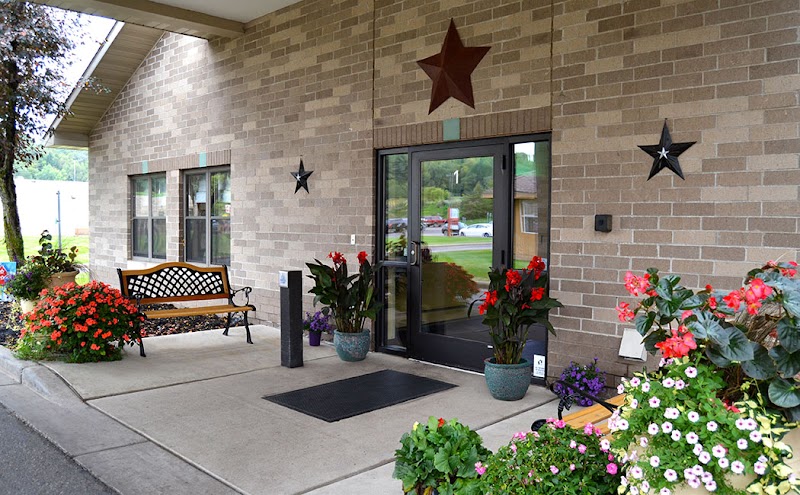
1663 E DIVISION ST, RIVER FALLS, WI 54022 (715) 426-6000
For profit - Limited Liability company 68 Beds Independent Data: November 2025
Trust Grade
50/100
#216 of 321 in WI
Last Inspection: June 2025

Inspected within the last 6 months. Data reflects current conditions.

Overview

Kinnic Health and Rehabilitation Center has received a Trust Grade of C, indicating it is average and falls in the middle of the pack. It ranks #216 out of 321 nursing homes in Wisconsin, placing it in the bottom half of facilities in the state, and is last among the eight facilities in St. Croix County. Unfortunately, the trend is worsening, with reported issues increasing from 5 in 2024 to 17 in 2025. Staffing is a relative strength, with a rating of 4 out of 5 stars and a turnover rate of 32%, which is significantly lower than the state average. However, there are some concerning findings, such as the facility not having a full-time Director of Nursing for part of June 2025, failure to conduct annual performance reviews for Certified Nursing Assistants, and food safety issues in the kitchen that could potentially impact residents. Overall, while there are strengths in staffing, the facility has notable weaknesses that families should consider.

Trust Score
C
50/100
In Wisconsin
#216/321
Bottom 33%
Safety Record
Low Risk
No red flags
Inspections
Getting Worse
5 → 17 violations
Staff Stability
○ Average
32% turnover. Near Wisconsin's 48% average. Typical for the industry.
Penalties
✓ Good
No fines on record. Clean compliance history, better than most Wisconsin facilities.
Skilled Nurses
✓ Good
Each resident gets 54 minutes of Registered Nurse (RN) attention daily — more than average for Wisconsin. RNs are trained to catch health problems early.
Violations
⚠ Watch
24 deficiencies on record. Higher than average. Multiple issues found across inspections.
★★☆☆☆
2.0
Overall Rating
★★★★☆
4.0
Staff Levels
★★★★☆
4.0
Care Quality
★★☆☆☆
2.0
Inspection Score
Stable
2024: 5 issues
2025: 17 issues

The Good

  • 4-Star Staffing Rating · Above-average nurse staffing levels
  • 4-Star Quality Measures · Strong clinical quality outcomes
  • Full Sprinkler Coverage · Fire safety systems throughout facility
  • No fines on record
  • Staff turnover below average (32%)

    16 points below Wisconsin average of 48%

Facility shows strength in staffing levels, quality measures, fire safety.

The Bad

2-Star Overall Rating

Below Wisconsin average (3.0)

Below average - review inspection findings carefully

Staff Turnover: 32%

14pts below Wisconsin avg (46%)

Typical for the industry

The Ugly 24 deficiencies on record

Jun 2025 4 deficiencies
CONCERN (D) 📢 Someone Reported This

A family member, employee, or ombudsman was alarmed enough to file a formal complaint

Potential for Harm - no one hurt, but risky conditions existed

Quality of Care (Tag F0684)

Could have caused harm · This affected 1 resident

**NOTE- TERMS IN BRACKETS HAVE BEEN EDITED TO PROTECT CONFIDENTIALITY** Based on interview and record review, the facility did not ensure a resident received treatment and care in accordance with prof...

Read full inspector narrative →
**NOTE- TERMS IN BRACKETS HAVE BEEN EDITED TO PROTECT CONFIDENTIALITY** Based on interview and record review, the facility did not ensure a resident received treatment and care in accordance with professional standards of practice for 1 out of 1 resident sampled, R1. The facility did not adequately monitor and assess R1's ventriculoperitoneal (VP) shunt having the potential to result in serious complications. This is evidenced by: According to the National Institute of Health, VP shunts should be regularly monitored and assessed for complications. Signs and symptoms of shunt malfunction/infection include headache, lethargy, diplopia, nausea, vomiting, seizure, irritability, fever, and neck rigidity. Shunt system has to be assessed manually for proper function and visible for evidence of redness or swelling along the shunt tubing. Additional assessment of abdomen should be completed regularly monitoring for abdominal cerebrospinal fluid (CSF) that may result in ascites, pseudocysts, or inguinal hernia. R1 was admitted to the facility on [DATE], with pertinent diagnoses of congenital hydrocephalus and presence of cerebrospinal fluid drainage device. R1's most recent quarterly Minimum Data Set (MDS) assessment, dated 06/19/25, noted a Brief Interview for Mental Status (BIMS) score of 6/15, indicating severe cognitive impairment. R1's care plan, dated 11/26/24, with a target date of 07/11/25, states: R1 has potential for alteration in neurological status related to hydrocephalus and placement of VP shunt with interventions of RN [Registered Nurse] will pump ReFlow valve on VP shunt as per direction of Neurosurgeon. -Of note: care plan did not include assessment of VP shunt line for signs or symptoms of infection or abdominal assessment for signs or symptoms of fluid overload from drainage of Cerebrospinal Fluid (CSF) fluid from VP shunt. R1's physician orders: On 11/21/24, RN staff to pump shunt 10 times twice daily per neurology. (Order discontinued 02/18/25) On 02/18/25, Nursing staff to pump shunt 10 times twice daily. (Order discontinued 06/26/25) On 06/26/25, RN or Licensed Practical Nurse (LPN) staff to pump shunt 10-20 times two times a day for VP shunt drain. -Of note: no additional orders for assessment of VP shunt noted. On 06/30/25, Surveyor reviewed R1's nursing progress notes and noted no assessments completed of R1's abdomen to include circumference measurement, appearance, or bowel sounds related to VP shunt and CSF drainage. No assessment of VP shunt noted to include signs and symptoms of infection noted. On 06/30/25, Surveyor reviewed R1's Treatment Administration Record (TAR). Between 06/26/25 - 06/20/25, VP shunt was pumped per order. No indication of how many pumps completed were noted. On 06/30/25 at 9:57 AM, Surveyor interviewed Licensed Practical Nurse (LPN) F regarding care of R1's VP shunt. LPN F stated no assessments of R1's abdomen of VP shunt are documented. LPN F stated the only training given on the care for R1's VP shunt was to palpate the pump under the skin and press it 10 times. On 06/30/25 at 10:19 AM, Surveyor interviewed Registered Nurse (RN) G regarding R1's VP shunt. RN G stated receiving one day of training by LPN F on how to pump R1's VP shunt. Surveyor asked RN G what assessments would be included for R1 related to the VP shunt. RN G stated monitoring neurological status and any changes in baseline would be noted in a progress note and provider would be notified. Surveyor asked if any additional assessments should be completed. RN G stated nothing else came to mind. On 06/30/25 at 1:18 PM, Surveyor interviewed Director of Nursing (DON) B regarding care of R1's VP shunt. DON B stated the previous DON had gone with R1 to a previous neurology appointment and was trained on how to complete the pumping of R1's shunt and trained nursing staff in this care. Surveyor asked DON B for documentation of what assessment and training was completed for R1's VP shunt care. DON B stated not being sure of what was taught to nursing staff and was unable to provide an example of education or training on assessments for R1's VP shunt or potential complications.
CONCERN (D) 📢 Someone Reported This

A family member, employee, or ombudsman was alarmed enough to file a formal complaint

Potential for Harm - no one hurt, but risky conditions existed

Accident Prevention (Tag F0689)

Could have caused harm · This affected 1 resident

**NOTE- TERMS IN BRACKETS HAVE BEEN EDITED TO PROTECT CONFIDENTIALITY** Based on observation, interview and record review, the facility did not ensure the resident environment remains free of accident...

Read full inspector narrative →
**NOTE- TERMS IN BRACKETS HAVE BEEN EDITED TO PROTECT CONFIDENTIALITY** Based on observation, interview and record review, the facility did not ensure the resident environment remains free of accident hazards as possible and each resident receives adequate supervision and assistive devices to prevent accidents for 3 of 3 residents (R), R2, R5, and R1 reviewed. R2, R5 and R1 had fallen; the facility did not initiate immediate intervention to prevent future falls, investigate the root cause of the fall and review and revise care plan fall interventions. This is evidenced by: Facility policy titled, Falls Management, with no initiated or reviewed date, states in part: Policy: The facility strives to reduce the risk for falls and injuries by promoting the implementation of the Risk Reduction: Falls and Injuries Program. Residents are assessed for fall risk factors. The interdisciplinary team works with the residents and family to identify and implement appropriate interventions to reduce the risk of falls or injuries .Procedure: 3. Discuss goals and interventions with resident/family for inclusion in the interdisciplinary plan of care. 4. Implement the Plan of Care - Fall Risk Reduction based on individual resident needs. 5. Complete the individual resident care plan .8. Review and revise interdisciplinary Plan of Care at subsequent care plan meetings. Facility policy titled, Protocol: Post Fall, with no initiated or reviewed date, states in part: 1. Assess the resident and implement appropriate measures to provide immediate care. 2. Nursing to complete per policy and procedure: a) Fall Tracking Form, b) Incident report ., c) FSI-Fall Scene Investigation Report (used to identify the root cause analysis). 3. Review Fall Risk Assessment for any changes in fall risk, reassess post fall. 5. Review the Plan of Care. 6. Discuss findings and interventions with the resident and family for inclusion in the interdisciplinary plan of care. 7. Adjust/add intervention on the Plan of Care. 8. Present the resident at the morning interdisciplinary team meeting. a) Review current assessments and reports, b) Compare data from previous assessments, c) Discuss identified trends or potential new risk factors. 9. Review and revise Interdisciplinary plan of care. 10. Update and communicate interventions on the plan of care. R2 was admitted to the facility on [DATE], with diagnoses including dementia with other behavioral disturbance, adult failure to thrive, Alzheimer's disease, major depressive disorder, anxiety disorder, cognitive communication deficit, and chronic pain. Minimum Data Set (MDS), dated [DATE], which is a quarterly assessment documents R2 having a Brief Interview for Mental Status (BIMS) score of 7/15, meaning severe cognitive impairment. R2 is independent with activities of daily living and ambulation. R2 had 2 or more falls without injury, and 1 fall with injury that was not a major injury. R2's care plan states, [R2] is at risk for falls r/t (related to) decreased mobility, Dementia with behavioral disturbance .Interventions to anticipate and meet [R2's] needs. Be sure [R2's] call light is within reach and encourage [R2] to use it for assistance as needed. [R2] needs prompt response to all requests for assistance .Educate [R2]/family/ caregivers about safety reminders and what to do if a fall occurs .Gripper socks to be applied at bedtime .Review information on past falls and attempt to determine cause of falls. Record possible root causes. After remove any potential causes if possible. Educate [R2]/family/caregivers/IDT [Interdisciplinary Team] as to causes . On 06/13/25 at 9:15 PM, the fall incident report documented @ 2115 a noise came from [R2s] room, [R2] was found to be lying on her back on the floor by bed, room light was on, tv on, [R2] had on regular socks, and no shoes on, [R2] c/o (complained of) pain to the back of her head, a small lump was noted with small amount bloody drainage, VSS (vital signs stable) afebrile. [R2's] description: [R2] was trying to fix sheets on her bed and fell. Surveyor noted the fall incident report did not include immediate interventions to prevent falls. Surveyor requested the interdisciplinary team (IDT) investigation notes for R2's fall, root cause and interventions to prevent future falls. Surveyor's review of R2's care plans did not identify an update for fall interventions. Example 2 R5 was admitted to the facility on [DATE], with diagnoses including cerebral infarction, hemiplegia and hemiparesis affecting left dominant side, muscle weakness, difficulty in walking, pain in left hip, and dizziness and giddiness. R5's MDS, dated [DATE], an admission 5-day assessment, documents a BIMS score of 15/15, meaning cognitively intact. R5 has impairment to one side of upper and lower extremity. R5 requires moderate assistance from staff for toileting hygiene, upper body dressing, bed mobility, sit to stand, and transfers. R5 had a fall prior to admission and no fall during this assessment period. R5's care plan documented, Risk for falls related to decreased mobility, CVA with left hemiparesis .Date initiated: 06/17/25 .Interventions dated 06/17/25, Anticipate and meet [R5's] needs. Be sure [R5's] call light is within reach and encourage [R5] to use it for assistance as needed. [R5] needs prompt response to all request for assistance, educated [R5]/family/caregivers about safety reminders and what to do if a fall occurs. Encourage [R5] to wear shoes/gripper socks at all times .Review information on past falls and attempt to determine cause of falls. Record possible root causes. After remove any potential causes if possible. Educate [R5]/family/caregivers/IDT as to causes. On 06/04/25, a fall risk assessment was completed with a score of 3 indicating at low risk for falls. On 06/22/25 at 4:00 AM, a fall incident report documented Had just been in the BR (bathroom) and was sitting at the side of the bed, CNA (Certified Nursing Assistant) said [R5] was taking off shoes and slid off the bed. The CNA did not see the fall as she was moving the w/c (wheelchair). When writer got to the room, [R5] stated [R5] was reaching to put his shoes in the chair. Surveyor noted the fall incident report did not include immediate interventions to prevent falls. Surveyor requested from NHA A the IDT investigation notes for R5's fall, including the root cause and interventions to prevent future falls. Surveyor's review of the care plans did not identify an update for fall interventions. On 06/30/25 at 4:04 PM, NHA A stated we don't have IDT investigation fall notes for these falls. Example 3 R1 was admitted to the facility on [DATE], with diagnoses including congenital hydrocephalus and presence of cerebrospinal fluid drainage device. R1's most recent quarterly MDS assessment, dated 06/19/25, noted a BIMS score of 6/15, indicating severe cognitive impairment. R1 had no impairment with range of motion in upper or lower extremities and has not had any falls since admission or prior assessment. R1's care plan, dated 10/25/24, with a target date of 07/11/25, stated: R1 is at risk for falls with interventions of review information on past falls and attempt to determine cause of falls, record possible root causes, OT [Occupational Therapy] to evaluate and treat for wheelchair positioning (initiated 01/23/25), bariatric bed to minimize risk of rolling off the bed (initiated 03/26/25). On 01/23/25 at 11:15 AM, the fall incident report documented: Housekeeper called out that resident had fallen out of his wheelchair. Nurse on duty arrived to find resident laying on right side against roommate's recliner. Checked for pain and injuries. Noted to have a hematoma and superficial abrasions to right side forehead. Denies pain on initial check. Alert to self per baseline, disoriented and confused per baseline. Neuros checked an WNL [Within Normal Limits]. Able to move all extremities per baseline. Vitals obtained and WNL. Resident description: [R1] states he doesn't know what happened. [R1] was reportedly wheeling himself around in his room prior to the fall. Immediate Action Taken: Assisted into bed via [H][NAME] lift, applied ice to right side forehead, notified daughter/POA [Power of Attorney], notified provider who instructed that [R1] should be seen in ED [Emergency Department] for evaluation. Resident sent to ED at 12:23 PM. Intervention: OT to evaluate and treat for wheelchair positioning. -Of note: No further update or documentation of OT evaluation and recommendation for intervention. No root cause of fall noted. Surveyor requested from NHA A the IDT investigation notes for R1's fall, root cause and interventions to prevent future falls. Surveyor's review of at care plans did not identify an update for fall interventions. On 06/30/25 at 4:04 PM, NHA A stated we don't have IDT investigation fall notes for R1's fall.
CONCERN (D) 📢 Someone Reported This

A family member, employee, or ombudsman was alarmed enough to file a formal complaint

Potential for Harm - no one hurt, but risky conditions existed

Deficiency F0726 (Tag F0726)

Could have caused harm · This affected 1 resident

**NOTE- TERMS IN BRACKETS HAVE BEEN EDITED TO PROTECT CONFIDENTIALITY** Based on interview and record review, the facility did not ensure licensed nurses had the specific competencies and skill set ne...

Read full inspector narrative →
**NOTE- TERMS IN BRACKETS HAVE BEEN EDITED TO PROTECT CONFIDENTIALITY** Based on interview and record review, the facility did not ensure licensed nurses had the specific competencies and skill set necessary to care for a resident's needs, as identified through resident assessment, and described in the plan of care, for 1 of 1 resident (R) reviewed for ventriculoperitoneal (VP) shunt care, R1. The facility did not provide training and education to licensed staff to ensure competency in the care of R1's VP shunt. This is evidenced by: Facility Assessment, dated 08/07/24, states in part: .Competencies: Kinnic considered the .clinical characteristics of the resident population to determine the skills and competencies required to meet our resident needs. We identified four categories of competencies: knowledge, assessment, pharmacological/treatment/care considerations, and technical/hands-on skills. Refer to the worksheet Facility Education/Staff Competencies Necessary to Care for Resident Population. The worksheet identifies which staff require certain competencies and skill sets, and the frequency of education. Our facility's training program includes an orientation process and ongoing training for all new and existing staff including managers, nursing and other direct care staff, individuals providing services under contractual arrangement, and volunteers consistent with their expected roles. We complete an educational needs assessment and develop a curriculum and training plan based on staff need and resident characteristics. The content at a minimum includes: .special needs of residents. Kinnic Health and Rehab conducts a formal evaluation of the training program. Training binders and checklists have been implemented to help those mentoring the new hire . R1 was admitted to the facility on [DATE], with pertinent diagnoses of congenital hydrocephalus and presence of cerebrospinal fluid drainage device. R1's most recent quarterly Minimum Data Set (MDS) assessment, dated 06/19/25, noted a Brief Interview for Mental Status (BIMS) score of 6/15, indicating severe cognitive impairment. R1's care plan, dated 11/26/24, with a target date of 07/11/25, states: R1 has potential for alteration in neurological status related to hydrocephalus and placement of VP shunt with interventions of RN will pump ReFlow valve on VP shunt as per direction of Neurosurgeon. -Of note: care plan did not include assessment of VP shunt line for signs or symptoms of infection or abdominal assessment for signs or symptoms of fluid overload from drainage of Cerebrospinal Fluid (CSF) fluid from VP shunt. R1's physician orders: On 11/21/24, RN staff to pump shunt 10 times twice daily per neurology. (Order discontinued 02/18/25) On 02/18/25, Nursing staff to pump shunt 10 times twice daily. (Order discontinued 06/26/25) On 06/26/25, RN or LPN staff to pump shunt 10-20 times two times a day for VP shunt drain. -Of note: no additional orders for assessment of VP shunt noted. Surveyor reviewed facility education and training topics for nursing staff. VP shunt care was not included as a topic for training or competency evaluation. On 06/30/25 at 9:57 AM, Surveyor interviewed Licensed Practical Nurse (LPN) F regarding training and education for R1's VP shunt. LPN F stated that the only training given on the care for R1's VP shunt was to palpate the pump under the skin and press it 10 times by the previous Director of Nursing (DON). Surveyor asked LPN F if they received any formal training or instruction on amount of pressure to use for pumping the shunt, when to adjust the number of pumps, or the rate/depth of compression of shunt was completed. LPN F stated no additional training or education was provided. Surveyor asked LPN F to state potential complications related to VP malfunction. LPN F was unable to answer other than to monitor neurological status. On 06/30/25 at 10:00 AM, Surveyor interviewed Registered Nurse (RN) H regarding training and education for R1's VP shunt. RN H stated no recollection of formal education or training having been completed. RN H stated she does not normally work with R1 but may have been shown how and where to push on the VP shunt to pump it but was not sure. On 06/30/25 at 10:19 AM, Surveyor interviewed RN G regarding training and education for R1's VP shunt. RN G stated receiving one day of training by LPN F on how to pump R1's VP shunt, but no formal training or education was completed. Surveyor asked RN G if a competency of this skill was completed. RN G stated that LPN F just showed her where to push and that is it. Surveyor asked RN G what assessments would be included for R1 related to the VP shunt. RN G stated monitoring neurological status and any changes in baseline would be noted in a progress note and provider notified. Surveyor asked if any additional assessments should be completed. RN G stated nothing else came to mind. On 06/30/25 at 1:18 PM, Surveyor interviewed DON B regarding training and education for R1's VP shunt. DON B stated the previous DON went with R1 to a previous neurology appointment and was trained on how to complete the pumping of R1's shunt and trained nursing staff in this care. Surveyor asked DON B for documentation of what assessment and training was completed for R1's VP shunt care. DON B stated not being sure of what was taught to nursing staff and was unable to provide an example of education, training, or competency for R1's VP shunt. Surveyor asked DON B for current training related to R1's VP shunt. DON B stated they did not have any current training on this.
CONCERN (F) 📢 Someone Reported This

A family member, employee, or ombudsman was alarmed enough to file a formal complaint

Potential for Harm - no one hurt, but risky conditions existed

Deficiency F0727 (Tag F0727)

Could have caused harm · This affected most or all residents

Based on interviews, the facility did not ensure full time Director of Nursing (DON) coverage. This has the potential to affect all 48 residents. Former DON C resigned effective 06/17/25. The facilit...

Read full inspector narrative →
Based on interviews, the facility did not ensure full time Director of Nursing (DON) coverage. This has the potential to affect all 48 residents. Former DON C resigned effective 06/17/25. The facility did not have a full time DON from 6/17 - 6/30/25. This is evidenced by: On 06/30/25 at 8:15 AM, Surveyors entered the facility and requested to meet with the Nursing Home Administrator (NHA) A or DON B. Social Worker Assistant (SWA) D stated DON B works part-time Tuesday, Wednesday, Thursday and the Assistant Director of Nursing (ADON) E is on vacation. On 06/30/25 at 4:05 PM, Surveyor interviewed NHA A asking about a full-time 40 hour a week DON. NHA A stated DON C left on 06/17/25 with no advance notice and DON B was initially hired to start in August in full-time status. DON B agreed to start on 06/17/25 part-time until August, when DON B could work full time. NHA A stated ADON E is here full-time and is on vacation this week. NHA A stated ADON E is a Licensed Practical Nurse (LPN). Surveyor asked NHA A if there was a plan of an interim DON to be full-time 40 hours a week. NHA A stated DON B will be full-time in August.
Jun 2025 12 deficiencies
CONCERN (D) 📢 Someone Reported This

A family member, employee, or ombudsman was alarmed enough to file a formal complaint

Potential for Harm - no one hurt, but risky conditions existed

Deficiency F0555 (Tag F0555)

Could have caused harm · This affected 1 resident

**NOTE- TERMS IN BRACKETS HAVE BEEN EDITED TO PROTECT CONFIDENTIALITY** Based on observations, interviews and record reviews, the facility failed to allow resident the right to choose physicians/treat...

Read full inspector narrative →
**NOTE- TERMS IN BRACKETS HAVE BEEN EDITED TO PROTECT CONFIDENTIALITY** Based on observations, interviews and record reviews, the facility failed to allow resident the right to choose physicians/treatment options for 1 of 18 residents (R) reviewed. (R4). -Facility denied R4 the right to follow up with the wound provider of choice. R4 wanted to follow up with the VA wound provider and not the facility in-house provider. -R4 was seen by provider of choice and when returned to the facility with new orders, staff told R4 the facility will not do those treatments and had the attending physician discontinue the orders. Findings include: According to the Board on Aging and Long-term Care, residents have a right to self-determination which includes, in part: - Offered choices and allowed to participate in decisions important to you. - Expect a reasonable accommodation of your needs and preferences. - Participate in the planning of your care and services, and to receive care and services in a way that respects your personal and cultural wishes. - Request, discontinue or decline care and treatment. - Choose your health care provider. R4 was admitted to the facility on [DATE] with diagnoses including left femur fracture, diabetes, heart failure, chronic kidney disease, peripheral vascular disease, and edema to both lower legs with venous ulcers. R4 was dependent on staff to meet the dressing changes and care for daily living. R4 was expected to have a short term stay and return to the community. On 06/09/25 at 7:55 AM, R4 informed Surveyor R4 did not have the right to choose own provider. On 06/09/25 at 10:48 AM, Surveyor interviewed Registered Nurse (RN) G and Licensed Practical Nurse (LPN) J and asked about appointments for R4. RN G and LPN J denied any frequently cancelled appointments. LPN J stated R4's daughter would take her to the VA clinic and nursing had no idea an appointment was even made. Then they would return with all the orders from the VA. There was a lot of collaboration with the VA and DON L. The floor nurses were instructed by DON L to run everything past the medical director. On 06/09/25 at 1:33 PM, Surveyor interviewed R4. R4 said she was told on admission R4 needed to cancel all VA appointments and only use in-house providers except for the orthopedic doctor. R4 said R4 and R4's daughter got in an argument with the previous DON L and felt DON L was not listening, so daughter set up R4's own appointments and transportation. On 06/09/25 at 1:41 PM, Surveyor interviewed Director of Rehab (DOR) M and asked if DOR M was aware of treatment concerns for R4. DOR M stated DON L refused to allow staff to change the order and said what they are doing is fine. DOR M said DON L pulled off all the dressings the VA had on R4, stuffed them in a bag and put them in the closet. DOR M pulled a bag out of the bottom of R4's closet with all the supplies needed for the new orders from the VA provider. DOR M stated DON L just contacted the primary provider who discontinued the orders. Now DON L is no longer employed at the facility, everything is back on track, and R4 can see the provider of her choice. DOR M said due to the nature of the issues, the concern was reported to Nursing Home Administrator (NHA) A. R4's records indicate: R4 was seen on 04/28/25 by the VA wound provider. Specific orders were received for treatments to leg wounds which including silvadene, [NAME] boots, kerlix, tubigrip, and abdominal pads. DON L sent a copy of orders with a note to the primary doctor indicating R4 expressed concerns with the VA orders and asked them to be discontinued and resume the previous orders. The attending physician did discontinue the orders on the same day and the treatments were not transcribed. On 06/09/25 at 1:54 PM, Surveyor interviewed Social Services Director (SSD) H and asked if residents are allowed to choose their own physicians. SSD H stated it is in the admission packet. Surveyor informed SSD H there is a resident who felt they did not have that right until a family member made an appointment themselves for the resident. SSD H stated she was aware of that incident, and DON L investigated the grievance. Surveyor asked SSD H if it would be ethical for staff to change orders with another provider without a resident's consent. SSD H felt this was a violation of R4's rights. On 06/09/25 at 2:56 PM, Surveyor interviewed NHA A. Surveyor asked what the expectation would be regarding residents choosing their own provider. NHA A said residents have the right to pick their own providers. They are aware of the behaviors of DON L and addressed this in QAPI but missed the resident's right to choose aspect.
CONCERN (D)

Potential for Harm - no one hurt, but risky conditions existed

Deficiency F0582 (Tag F0582)

Could have caused harm · This affected 1 resident

Based on staff interview and record review, the facility did not provide Advanced Beneficiary Notice (ABN) of non-coverage for residents (R) whose Medicare Part A coverage was discontinued with benefi...

Read full inspector narrative →
Based on staff interview and record review, the facility did not provide Advanced Beneficiary Notice (ABN) of non-coverage for residents (R) whose Medicare Part A coverage was discontinued with benefit days remaining for 2 of 3 residents (R) reviewed. (R43, R33) R43 and R33 were discharged from Medicare Part A services with benefit days remaining and remained in the facility. The facility did not provide an ABN informing the residents of their liability once Medicare coverage ended. Findings include: On 06/09/25 at approximately 9:00 a.m., Surveyor reviewed documents provided by the facility for residents who had been discharged from Medicare Part A with benefit days remaining. R43 start of services: 4/14/25, Last Covered Date (LCD): 6/02/25, notice of non-coverage 5/29, with no notice of patient liability provided to R43. R43 remained in the building. R33 start of services: 4/01/25, LCD: 5/30/25, notice of non-coverage 5/27/25 and no notice of liability was provided to R33. R33 remained in the building. On 06/09/25 at 2:13 PM, Surveyor interviewed Business Office Manager (BOM) I who is responsible for providing notice of non-coverage and potential liability when services end. BOM I indicated she has been doing notices for a few years. BOM I stated when the forms changed a few years ago she misinterpreted the forms and was not providing notice of potential liability for residents who remained in the building and Medicare non-coverage was provided.
CONCERN (D) 📢 Someone Reported This

A family member, employee, or ombudsman was alarmed enough to file a formal complaint

Potential for Harm - no one hurt, but risky conditions existed

Free from Abuse/Neglect (Tag F0600)

Could have caused harm · This affected 1 resident

**NOTE- TERMS IN BRACKETS HAVE BEEN EDITED TO PROTECT CONFIDENTIALITY** Based on interviews and record review, the facility failed to protect the resident's right to be free from verbal abuse by staff...

Read full inspector narrative →
**NOTE- TERMS IN BRACKETS HAVE BEEN EDITED TO PROTECT CONFIDENTIALITY** Based on interviews and record review, the facility failed to protect the resident's right to be free from verbal abuse by staff for 1 of 18 residents (R) reviewed for abuse (R98). The facility did not ensure all staff were trained on the abuse policy, did not complete audits of staff to protect residents from abuse, or ensure staff knowledge of the abuse and reporting policy, and did not have a quality improvement plan to prevent further verbal abuse. This is evidenced by: Facility's policy titled Abuse, Neglect and Exploitation with no date implemented, read in part, II. Employee Training, B. Existing staff will receive annual education through planned in-services and as needed .III. Prevention of Abuse, Neglect and Exploitation, H. Assigning responsibility for the supervision of staff on all shifts for identifying inappropriate staff behaviors .VIII. Coordination with QAPI, A. The facility has written policies and procedure that define how staff will communicate and coordinate situations of abuse, neglect, misappropriation of resident property, and exploitation with the QAPI program .iv. Measures to verify the implementation of corrective actions and timeframes, and v. Tracking patterns of similar occurrences. R98 was admitted to the facility on [DATE] with hospice services. R98's diagnoses included nondisplaced fracture of base of neck of right femur, pain right hip, palliative care, dementia without behavioral, major depressive disorder, protein-calorie malnutrition, anxiety disorder, and cervical disc degeneration. On 02/10/25, an admission Minimum Data Set (MDS) assessment documented R98's Brief Interview of Mental Status (BIMS) score of 3/15 meaning R98 has severe cognitive impairment. MDS documented R98 had acute onset of mental status change, inattention and disorganized thinking that is continuously present. R98's care plan documented on 02/20/25, The resident has impaired cognitive function r/t Dementia. Care plan on 03/11/25 documented, The resident has a behavior problem r/t dementia. Resident often tries to get up to walk not remembering she is unable to do so safely independently. Resident becomes agitated at times and often requires 1:1 to keep her safe and content. Resident can become verbally and physically aggressive. Review of the Facility Reported Incident (FRI) investigation documented on 03/10/25 Certified Nursing Assistant (CNA) C reported to Assistant Director of Nursing (ADON) F on the night shift on 03/09/25 into 03/10/25 Registered Nurse (RN) E had raised his voice and swore at R98 while attempting to assist R98, CNA D not attempting to do interventions with R98, and CNA D appeared to be intimidating R98. The facility immediately suspended RN E and CNA D and completed an investigation and educated all staff on dementia behavior. Surveyor reviewed the staff education sign in sheets for behaviors in dementia dated 03/10/25 which included 27 staff names. Review of the current employee list documented a total of 78 staff were employed on 03/10/25. Surveyor reviewed the list of staff education sign in sheets for abuse dated 03/10/25 after this incident. The list included 17 staff names. Surveyor reviewed the staff sign in sheets for abuse and reporting training from 11/11/24, which documented 23 staff signatures and did not include RN E. On 06/11/25 at 9:26 AM, Surveyor interviewed Nursing Home Administrator (NHA) A about the 03/09/25 incident. Surveyor asked if NHA A completed audits of staff interactions and knowledge of abuse policy to ensure no further verbal abuse occurred. NHA A stated no formal audits were completed. Surveyor reviewed the education that was provided to staff on 03/10/25 of abuse education informing NHA A the staff sign in sheet did not include all staff. Surveyor asked how NHA A ensures all staff are trained. NHA A stated she sends out an email that there is education to be reviewed and signed. NHA A stated the system can be improved to ensure all staff are educated. Surveyor asked if the facility's Quality Assessment & Assurance (QAA) had identified abuse as an issue to be reviewed and to initiate a plan. NHA A stated this was talked about and we could do better. NHA A stated they don't have a written PIP (Performance Improvement Plan).
CONCERN (D) 📢 Someone Reported This

A family member, employee, or ombudsman was alarmed enough to file a formal complaint

Potential for Harm - no one hurt, but risky conditions existed

Report Alleged Abuse (Tag F0609)

Could have caused harm · This affected 1 resident

**NOTE- TERMS IN BRACKETS HAVE BEEN EDITED TO PROTECT CONFIDENTIALITY** Based on record review and interview, the facility did not implement policies and procedures for ensuring the reporting of verba...

Read full inspector narrative →
**NOTE- TERMS IN BRACKETS HAVE BEEN EDITED TO PROTECT CONFIDENTIALITY** Based on record review and interview, the facility did not implement policies and procedures for ensuring the reporting of verbal abuse in accordance with section 1150B of the Act when an allegation of verbal abuse was not reported immediately but no later than 2 hours to the administrator and local law enforcement in accordance with state law through established procedures for 1 of 2 residents (R) reviewed (R98). This is evidenced by: Facility's policy titled Abuse, Neglect and Exploitation with no date implemented, read in part, VII. Reporting/Response, 1. Reporting of all alleged violations to the Administrator, state agency, adult protective services and to all other required agencies (e.g., law enforcement when applicable) within specified timeframes: a. Immediately, but not later than 2 hours after the allegation is made, if the events that cause the allegation involve abuse or result in serious bodily injury R98 was admitted to the facility on [DATE] with hospice services. R98's diagnoses included nondisplaced fracture of base of neck of right femur, pain right hip, palliative care, dementia without behavioral, major depressive disorder, protein-calorie malnutrition, anxiety disorder, and cervical disc degeneration. On 02/10/25, an admission Minimum Data Set (MDS) assessment documented R98's Brief Interview of Mental Status (BIMS) score of 3/15, meaning R98 has severe cognitive impairment. MDS documented R98 had acute onset of mental status change, inattention and disorganized thinking that is continuously present. MDS documented R98 had impairment to one side of lower extremity. R98 requires moderate assist of staff for toileting hygiene, bed mobility, sit to stand, toilet transfer, shower transfer, and to walk 10 feet. R98 has a history of falls prior to admission. Review of the Facility Reported Incident (FRI) investigation documented on 03/10/25 Certified Nursing Assistant (CNA) C reported to Assistant Director of Nursing (ADON) F on the night shift on 03/09/25 into 03/10/25 Registered Nurse (RN) E had raised his voice and swore at R98 while attempting to assist R98, CNA D not attempting to do interventions with R98, and CNA D appeared to be intimidating R98. The facility immediately suspended Registered Nurse (RN) E and CNA D and completed an investigation and educated all staff on dementia behavior. On 06/09/25 at 2:25 PM, Surveyor interviewed CNA C about when the incident on 03/09/25 was reported. CNA C reported to ADON F in the morning. This happened Sunday night and no other nurses were on at that time. CNA C could have called the Director of Nursing (DON) but waited until morning until they came in. On 06/10/25 at 12:44 PM, Surveyor interviewed ADON F about the incident on 03/09/25. ADON F stated she came into the facility around 6:00-6:30 AM, and CNA C came to ADON F and reported CNA D and RN E's treatment to R98 was rough. ADON F reported to former Director of Nursing (DON) L about the report. RN E was immediately interviewed, and DON L reported to Nursing Home Administrator (NHA) A. On 06/11/25 at 9:26 AM, Surveyor interviewed NHA A asking when DON L reported the 03/09/25 incident. NHA A stated ADON F reported to former DON L, and DON L texted NHA A between 7-7:30 AM. DON L told NHA A that R98 was having behaviors and CNA C reported not liking how the guys (RN E and CNA D) handled R98. They were verbally aggressive. Surveyor asked NHA A when CNA C should have reported the verbal abuse. NHA A stated CNA C should have called in the middle of the night within 2 hours. Surveyor asked if the allegation was reported to police. NHA A stated it was not reported to police because when talking with RN E and CNA C it was determined RN E was not swearing directly at R98. RN E was frustrated and swore, and it was not calling R98 names but a reply when R98 called RN E an asshole and RN said, Ya I am an . Of note the facility's investigation was not completed and reported to the state agency until 03/17/25.
CONCERN (D) 📢 Someone Reported This

A family member, employee, or ombudsman was alarmed enough to file a formal complaint

Potential for Harm - no one hurt, but risky conditions existed

Deficiency F0685 (Tag F0685)

Could have caused harm · This affected 1 resident

**NOTE- TERMS IN BRACKETS HAVE BEEN EDITED TO PROTECT CONFIDENTIALITY** Based on observation, record review and interview, the facility did not ensure residents (R) received proper treatment and assis...

Read full inspector narrative →
**NOTE- TERMS IN BRACKETS HAVE BEEN EDITED TO PROTECT CONFIDENTIALITY** Based on observation, record review and interview, the facility did not ensure residents (R) received proper treatment and assistive devices to maintain hearing abilities. This affected 1 of 3 residents reviewed who needed hearing aids (R28). R28's hearing aid was broken and not replaced for several months. R28 continues with no left ear hearing aid, which impacts R28's ability to adequately hear. Findings Include: R28 was admitted to the facility on [DATE], with diagnoses including hemiplegia and hemiparesis following cerebral infarction affecting right dominant side, primary open-angle glaucoma right eye-moderate state, low vision right eye, blindness left eye, disorientation-unspecified, and cognitive communication deficit. R28's Minimum Data Set (MDS) assessment, dated 3/31/25, indicated R28's Brief Interview for Mental Status (BIMS) score is 9/15, which means mild cognitive impairment. R28 requires supervision or touching assistance with eating, substantial/maximal assistance with toileting hygiene, shower, partial/moderate assistance with dressing, personal hygiene, lying to sitting on side of bed, sit to stand, chair/bed to chair transfer, toilet transfer, tub/shower transfer, walking, and set up with rolling left to right, sit to lying, R28's care plan: Focus -The resident is HOH and wears bilateral HA's. I need assistance putting them in my ears and taking them out at bedtime. Is missing left hearing aide, Health Drive is replacing hearing aid. Date initiated 1/17/2023. Revision 3/11/2025. -The resident will be able to make basic needs known daily through the review date. Date initiated 1/17/2023. Revision 4/14/2025. Target Date 7/25/2025. -Anticipate and meet needs. Date Initiated: 01/17/2023. -Be conscious of resident position when in groups, activities, dining room to promote proper communication with others. Date Initiated: 01/17/2023. -COMMUNICATION: Allow adequate time to respond, Repeat as necessary, Do not rush, Request clarification from the resident to ensure understanding, Face when speaking, make eye contact, Turn off TV/radio to reduce environmental noise, Ask yes/no questions if appropriate, Use simple, brief, consistent words/cues, Use alternative communication tools as needed. Date Initiated: 01/17/2023. -Ensure bilateral hearing aids are in place. Assist as needed. Date Initiated: 01/17/2023 -Ensure/provide a safe environment: Call light in reach, Adequate low glare light, Bed in lowest position and wheels locked, Avoid isolation. Date Initiated: 01/17/2023 -Monitor for/record confounding problems: decline in cognitive status, mood, decline in ADL, deterioration in respiratory status, oral motor function, hearing impairment (ear discharge and cerumen (wax) accumulation, poor fitting/missing dental appliances etc. Date Initiated: 01/17/2023. -Monitor/document resident's ability to express and comprehend language, memory, reasoning ability, problem solving ability and ability to attend. -Refer to Audiology for hearing consult as ordered. Date Initiated: 01/17/2023. -Report to Nurse changes in: Ability to communicate, Possible factors which cause/make worse/make better any communication problems. Date Initiated: 01/17/2023. On 06/08/25 at 12:09 PM, Surveyor observed staff who were taking R28's order for lunch and speaking in louder than normal voice to R28's right ear. On 06/08/25 at 1:01 PM, Surveyor observed staff, who were standing near R28 and talking about cake, were talking close to R28's right ear loudly, but not yelling and R28 was responding. On 06/09/25 at 6:35 AM, Surveyor spoke with R28 in attempt to obtain permission to observe cares. R28 was unable to hear Surveyor talking when Surveyor was standing on R28's left side. When Surveyor was on R28's right side and spoke with a loud tone of voice and asked if care could be observed, R28 said it was ok to observe but repeated incorrect name of Surveyor. R28 had 2 hearing aids, and one broke several months ago and was not replaced. R28 needs people to talk in the right ear with the hearing aid and then she does fine, otherwise she can't hear. Left hearing aid was never replaced. On 06/10/25 at 6:43 AM, R28 was sitting in lounge area with peers, had glasses on and hearing aid in right ear. Surveyor attempted to speak to R28 on R28's left side and R28 did not respond. On 06/09/25 at 11:00 AM, Surveyor interviewed Social Service Director (SSD) H. Surveyor asked about R28's hearing aid. SSD H stated the issue should have been followed up on sooner. SSD H stated R28's husband had the hearing aid and was going to have it replaced. Unfortunately, R28's husband passed away. R28's nephew became R28's Power of Attorney (POA) and nephew was unsure of the status of the hearing aid. SSD H stated SSD H was supposed to schedule an appointment with the Health Drive audiologist. SSD H stated there is not a good system in place, and SSD H dropped the ball. SSD H did contact Health Drive and process is in place at this time. SSD H stated she should have responded sooner because R28 has sensory issues with vision and hearing, so she should have her hearing aid.
CONCERN (D)

Potential for Harm - no one hurt, but risky conditions existed

Incontinence Care (Tag F0690)

Could have caused harm · This affected 1 resident

**NOTE- TERMS IN BRACKETS HAVE BEEN EDITED TO PROTECT CONFIDENTIALITY** Based on observation, interview and record review, the facility did not ensure that residents with a suprapubic catheter receive...

Read full inspector narrative →
**NOTE- TERMS IN BRACKETS HAVE BEEN EDITED TO PROTECT CONFIDENTIALITY** Based on observation, interview and record review, the facility did not ensure that residents with a suprapubic catheter received the appropriate care and services for 1 of 2 residents (R2), observed during catheter cares. -The facility had no policy to direct staff for daily suprapubic catheter site care. -R2 had a urinary tract infection (UTI) with sepsis in September 2024. -Registered Nurse (RN) G did not perform hand hygiene or glove change during suprapubic catheter care. Findings: Facility had no policy for staff to follow and direct the care for a suprapubic catheter site care. According to MediLexicon International. (n.d.). What to know about e.coli uti treatment. Medical News Today.https://www.medicalnewstoday.com/articles/e-coli-uti-treatment, If bacteria get into the bladder and travels to the bladder, they can cause an infection. CAUTIs can become serious, especially in those with weakened immune systems and other health conditions. Risk of infection can be significantly reduced by washing hands before and after changing, emptying, or handling the catheter, or changing a dressing and applying a new one. R2 was admitted to the facility on [DATE], with diagnoses including multiple sclerosis (a disease that causes breakdown of the protective covering of nerves), neuromuscular dysfunction of the bladder, and appendicovesicostomy (surgeons use the appendix to create a channel that connects your bladder to an opening (stoma) in your abdominal wall). R2's Minimum Data Set (MDS) assessment documents a Brief Interview for Mental Status (BIMS) score of 15/15, which indicated R2 was cognitively intact. A discharge summary note dated 10/02/2024 stated R2 had met sepsis criteria for a UTI. On 06/09/25 at 12:56 PM, Surveyor observed suprapubic catheter site care by RN G to R2. RN G gathered dressing supplies, performed proper hand hygiene when entering the room as well as put on proper personal protective equipment (PPE) for enhanced barrier precautions (EBP). RN G removed the old dressing. No hand hygiene or glove change after removing the dressing. RN G washed the site of the catheter insertion. RN G then put a new T-sponge gauze over the insertion site. RN G then threw away the garbage, removed PPE, and performed hand hygiene. *Note: Placing a clean sponge gauze at catheter insertion site with dirty gloves after handling a soiled dressing significantly increases the risk of bacteria entering the catheter and traveling to the bladder and causing an infection. On 06/09/25 at 1:01 PM, Surveyor asked Assistant Director of Nursing (ADON) F for a policy on suprapubic catheter site care. ADON F said she would find it. On 06/09/25 at 1:23 PM, ADON F informed Surveyor, I cannot find a policy on suprapubic catheter site care. I am making one now. We have a suprapubic catheterization policy but nothing which talks about site care. Surveyor reviewed the suprapubic catheterization policy and section f of section 7 which states to quickly change to sterile gloves but does not indicate to wash hands between glove changes. On 06/09/25 at 1:30 PM, Surveyor received policy titled Suprapubic Catheter Care created today, 06/09/25. This policy also has no indication for hand hygiene between old dressing and new split gauze dressing which increases the risk for bacteria to enter the catheter and travel to the bladder and cause an infection. On 06/10/25 at 8:35 AM, Surveyor asked ADON F when would you perform hand hygiene and glove changes when doing a suprapubic catheter site care to prevent an infection. ADON F stated, I would perform hand hygiene before I start the procedure, and I would have my items set up. I would remove the old dressing. Take off my gloves perform hand hygiene, then put on new gloves, and put on the new dressing. On 06/10/25 at 9:35 AM, Surveyor explained the process observed yesterday with the site care with RN G. Surveyor asked RN G where in this procedure should you have performed hand hygiene and glove change so as to prevent an infection. RN G replied, Oh I see what you're asking. Yes, I should have removed my gloves and performed hand hygiene before I put the new dressing on the site.
CONCERN (D)

Potential for Harm - no one hurt, but risky conditions existed

Deficiency F0699 (Tag F0699)

Could have caused harm · This affected 1 resident

**NOTE- TERMS IN BRACKETS HAVE BEEN EDITED TO PROTECT CONFIDENTIALITY** Based on observation, interview and record review, the facility did not assess trauma and care plan person centered approaches t...

Read full inspector narrative →
**NOTE- TERMS IN BRACKETS HAVE BEEN EDITED TO PROTECT CONFIDENTIALITY** Based on observation, interview and record review, the facility did not assess trauma and care plan person centered approaches to prevent re-traumatization for 1 out of 1 resident reviewed for trauma informed care (R30). R30's diagnosis includes post-traumatic stress disorder (PTSD) and past trauma of her sister dying. The facility did not assess R30's trauma and care plan individual person-centered approaches to prevent potential re-traumatization. Findings Include: The facility policy titled Trauma Informed Care not dated, states the following: Policy: It is the policy of this facility to provide care and services, which in addition to meeting professional standards, are delivered using approaches which are culturally competent, account for experiences and preferences, and address the needs of trauma survivors by minimizing triggers and/re re-traumatization. Policy Explanation and Compliance Guidelines: 2. The facility will use a multi-pronged approach to identifying a resident's history of trauma, as well as his or cultural preferences. This will include asking the resident about triggers that may be stressors or may prompt recall of a previous traumatic event, as well as screening and assessment tools such as the Resident Assessment Instrument (RAI), admission Assessment, the history and physical, the social history/assessment, and others. 6. The facility will identify triggers which may re-traumatize residents with a history of trauma. Trigger-specific interventions will identify ways to decrease the resident's exposure to triggers which re-traumatize the resident, as well as identify ways to mitigate or decrease the effect of the trigger on the resident and will be added to the resident's care plan. R30 was admitted to the facility on [DATE] with diagnoses including major depressive disorder, Alzheimer's disease, unspecified psychosis not due to substance or known psychological condition, panic disorder and post-traumatic stress disorder (PTSD). R30's most Recent Minimum data Set (MDS) completed on 5/19/25 notes R30 understands, is understood, is cognitively intact and has no mood or behavioral concerns. Takes antipsychotics (AP), antidepressants (AD), diuretic (D), anticonvulsants, and is hypoglycemic. Surveyor reviewed R30's record and found no assessment of R30's trauma. R30's care plan: The resident has a mental illness: depression. PTSD diagnosed d/t sister's death when she was 9. Reports her parents didn't allow her to grieve the loss or talk about her following her death. Date Initiated: 11/12/2024 Revision on: 11/25/2024 The resident will remain free of signs/symptoms (s/sx) of distress, symptoms of depression, anxiety or PTSD by/through review date. Date Initiated: 11/12/2024 Revision on: 05/29/2025 Target Date: 08/31/2025 o My PASRR screening will be completed. Date Initiated: 01/20/2025 Revision on: 05/29/2025 Target Date: 08/31/2025 Administer medications as ordered. Monitor/document for side effects and effectiveness. Date Initiated: 11/12/2024 o Assist the resident in developing a program of activities that is meaningful and of interest. Encourage and provide opportunities for exercise and socialization Date Initiated: 11/12/2024 Revision on: 11/12/2024 o Discuss with the resident any concerns, fears, issues regarding health or other subjects. Date Initiated: 11/12/2024 Revision on: 11/12/2024 o Encourage the resident to express feelings and allow time to talk Date Initiated: 11/12/2024 Revision on: 11/12/2024 o Follow state program requirements Date Initiated: 11/14/2024 o Monitor/document/report PRN any s/sx of depression, including hopelessness, anxiety, sadness, insomnia, anorexia, verbalizing, negative statements, repetitive anxious or health-related complaints, and tearfulness. Date Initiated: 11/12/2024 o Praise accomplishments Date Initiated: 11/14/2024 o Referral for level II screening Date Initiated: 11/14/2024 The resident has had a decline in psychosocial well-being r/t admission and decline in health status. Would prefer to be home, but her husband is unable to provide the care needed. Date Initiated: 01/20/2025 Revision on: 01/20/2025. The resident will show evidence of adjustment to nursing home by eating all meals in dining room, attending out of room (ORR) activities daily through the review date. Date Initiated: 01/20/2025 Revision on: 05/29/2025 Target Date: 09/05/2025. On 06/08/25 at 3:55 PM, Surveyor attempted to interview R30. R30 did not wish to discuss past trauma. On 6/10/25 at 10:20 AM, Surveyor requested a trauma informed assessment from Social Service Director (SSD) H. SSD H informed Surveyor the facility does not currently complete trauma informed assessments for residents with identified trauma. SSD H learned of R30's trauma during social services initial assessment when R30 was admitted . Facility developed a care plan in attempts to meet R30's emotional needs. SSD H stated she can see why it would be important to assess resident's specific trauma and develop person-centered approaches to address potential triggers and prevent re-traumatization. On 06/10/25 at 1:33 PM, Surveyor interviewed Certified Nursing Assistant (CNA) X who has been on staff almost 3 years and is familiar with R30. CNA X explained she did not know anything about R30's past trauma or PTSD diagnosis. CNA X further explained R30 has been upset and indicated she is having nightmares related to hearing of a father who had killed his three daughters which was recently on the news. CNA X expressed she has been talking with R30 about it but is unaware of specific approaches staff should follow related to R30's past trauma. On 06/10/25 at 1:38 PM, Surveyor interviewed CNA P who has been employed at the facility for 3 years working 4-5 days a week on R30's wing full time on day shift. CNA P is familiar with R30. CNA P is unaware of past trauma. CNA P has noticed R30 has some sensitivity to lights and is startled if you go into her room too fast or loud. CNA P reported R30 apologizes a lot. CNA P is unaware of care planned approaches specific to R30's past trauma.
CONCERN (D)

Potential for Harm - no one hurt, but risky conditions existed

Deficiency F0761 (Tag F0761)

Could have caused harm · This affected 1 resident

Based on observation, interview and record review, the facility did not ensure expired medications were removed from currently used supply in the medication storage room refrigerator. This occurred fo...

Read full inspector narrative →
Based on observation, interview and record review, the facility did not ensure expired medications were removed from currently used supply in the medication storage room refrigerator. This occurred for 1 of 1 medication storage rooms observed. An opened bottle of a resident's (R) multiuse medication kept in the medication storage room refrigerator was labeled with a beyond use date of 6/7/25. This medication was expired and had been given to resident (R34) since it expired, resulting in the potential to affect 1 out of 49 residents that reside in the facility (R34). Findings include: The facility's policy titled, Storage of Medication Requiring Refrigeration not dated with an implemented or reviewed date, but provided by facility upon request of policy, states in part, .5. Staff should observe proper storage and labeling requirements for all medications and vaccines during the performance of their daily tasks and should demonstrate safety in regard to the medication's integrity, such duties should include but not be limited to: . c. Remove any expired medications from active stock and discard medications according to facility policy. On 6/09/25 at 9:20 AM, during review of medication storage room with Licensed Practical Nurse (LPN) J, Surveyor observed refrigerated liquid medication for R34, omeprazole 20 ml po twice daily (BID) was labeled with a beyond use date of 6/7/25. No other expiration dates were noted on this bottle. On 6/9/25 at 12:39 PM, Surveyor reviewed medication record, and the expired medication was destroyed. On 6/10/25 at 8:44 AM, Surveyor interviewed Assistant Director of Nursing (ADON) F who reported the expectation is that all medications have the expiration date checked by nursing staff prior to being given to a resident and if a medication is expired, it will be disposed of in accordance with facility policy. ADON F reported ADON F does inspect all refrigerated medications every Wednesday when doing new medication orders.
CONCERN (D)

Potential for Harm - no one hurt, but risky conditions existed

Infection Control (Tag F0880)

Could have caused harm · This affected 1 resident

**NOTE- TERMS IN BRACKETS HAVE BEEN EDITED TO PROTECT CONFIDENTIALITY** Based on observation, interview and record review, the facility did not establish and maintain an infection prevention and contr...

Read full inspector narrative →
**NOTE- TERMS IN BRACKETS HAVE BEEN EDITED TO PROTECT CONFIDENTIALITY** Based on observation, interview and record review, the facility did not establish and maintain an infection prevention and control program designed to provide a safe, sanitary and comfortable environment and to help prevent the development and transmission of communicable diseases and infections for 1 of 2 residents (R2), observed during catheter cares. Registered Nurse (RN) G did not perform hand hygiene or glove change during suprapubic catheter care. Findings: Facility had no policy for staff to follow and direct the care for a suprapubic catheter site care. Facility policy titled Hand Hygiene with no date implemented or date revised stated in part: .2. Hand hygiene is indicated and will be performed under the conditions listed in, but not limited to, the attached hand hygiene table .after handling contaminated objects .before performing invasive procedures .before and after handling clean or soiled dressings .after handling items potentially contaminated with blood, body fluids, secretions, or excretions . R2 was admitted to the facility on [DATE], with diagnoses of multiple sclerosis (a disease that causes breakdown of the protective covering of nerves), neuromuscular dysfunction of the bladder, and appendicovesicostomy (surgeons use your appendix to create a channel that connects your bladder to an opening (stoma) in your abdominal wall). R2's Minimum Data Set (MDS) assessment, dated 03/26/25, documented a Brief Interview for Mental Status (BIMS) score of 15/15, which indicated R2 was cognitively intact. On 06/09/25 at 12:56 PM, Surveyor observed suprapubic catheter site care by RN G. RN G gathered dressing supplies, performed proper hand hygiene when entering the room as well as put on the proper personal protective equipment (PPE) for enhanced barrier precautions (EBP). RN G removed the old dressing. No hand hygiene or glove change. RN G washed the site of the catheter insertion without hand hygiene or glove change. RN G then put a new T-sponge gauze over the insertion site. RN G then threw away the garbage, removed PPE and performed hand hygiene. On 06/10/25 at 8:35 AM, Surveyor asked Assistant Director of Nursing (ADON) F, When would you perform hand hygiene and glove changes when doing a suprapubic catheter site care? I would perform hand hygiene before I start the procedure, and I would have my items set up. I would remove the old dressing. Take off my gloves perform hand hygiene then put on new gloves and put on the new dressing. On 06/10/25 at 9:35 AM, Surveyor explained the process observed yesterday with the site care with RN G. Surveyor then asked RN G, Where in this procedure should you have performed hand hygiene and glove change? RN G replied, Oh I see what you're asking, yes I should have removed my gloves and performed hand hygiene before I put the new dressing on the site.
CONCERN (F) 📢 Someone Reported This

A family member, employee, or ombudsman was alarmed enough to file a formal complaint

Potential for Harm - no one hurt, but risky conditions existed

Deficiency F0730 (Tag F0730)

Could have caused harm · This affected most or all residents

Based on record review and staff interviews, the facility did not ensure Certified Nursing Assistant (CNA) received a performance review every 12 months for three of three CNAs reviewed (CNA C, CNA D,...

Read full inspector narrative →
Based on record review and staff interviews, the facility did not ensure Certified Nursing Assistant (CNA) received a performance review every 12 months for three of three CNAs reviewed (CNA C, CNA D, CNA P). The facility failed to have a system in place to ensure that performance reviews were being done for any of the facility CNAs. This had the potential to affect all 49 residents residing in the facility. This is evidenced by: On 06/10/25, a sample of CNAs employed by the facility was selected for review for the completion of annual performance reviews. The facility provided the following information: CNA C has been employed at the facility since 12/15/20. An annual performance review could not be located. CNA D has been employed at the facility since 09/2019. An annual performance review could not be located. CNA P has been employed at the facility since 12/06/21. An annual performance review could not be located. On 06/10/25 at 8:15 AM, Surveyor interviewed Nursing Home Administrator (NHA) A about yearly performance evaluations on staff. NHA A was not able to find yearly reviews, only yearly wage adjustment form. The lack of regular performance reviews significantly impacts the quality of care provided by the staff.
CONCERN (F)

Potential for Harm - no one hurt, but risky conditions existed

Food Safety (Tag F0812)

Could have caused harm · This affected most or all residents

Based on observation, interview and policy review, the facility did not prepare, distribute, and serve food in accordance with professional standards for food service safety. Staff were observed not a...

Read full inspector narrative →
Based on observation, interview and policy review, the facility did not prepare, distribute, and serve food in accordance with professional standards for food service safety. Staff were observed not allowing thermometer to dry prior to checking temperatures of food items and not inverting mixer and bowls in storage. This had the potential to affect all 49 residents in the facility. Findings: Example 1 On 06/08/25 at 10:45 AM, Surveyor conducted the initial tour of kitchen with [NAME] T who has been on staff 12 years. Surveyor observed the Kitchen Aide mixer on the counter with bowl under it that was not inverted. Surveyor also observed large industrial size mixer in kitchen with bowl stored under it which was not inverted. Neither of the mixers were covered. Surveyor interviewed [NAME] T and asked what the normal way is to store when not in use. [NAME] T stated both mixers are used 2-3 times a week and stored uncovered and not inverted when not in use. Surveyor observed a rack of large bowls and pans that were not inverted. [NAME] T stated that is normal to store the rack of dishes in this manner. Surveyor discussed potential for contamination with storing items uncovered and not inverted. [NAME] T indicated understanding there is a risk of bacteria with the manner the mixing bowls, bowls and pans are stored. [NAME] T acknowledged the mixing bowls, bowls and pans should be inverted or covered when not in use. Example 2 On 06/09/25 at 7:30 AM, Surveyor observed [NAME] R perform food temps and food service. [NAME] R used an alcohol pad for thermometer probe used to temp oatmeal. [NAME] R wiped probe and inserted the undried probe into the cream of wheat. [NAME] R then wiped and inserted the undried probe into the scrambled eggs with no wait time for probe to air dry. [NAME] R proceeded to wipe the probe with alcohol pad and insert in pureed eggs with no wait time for probe to air dry. [NAME] R continued to wipe the probe with the alcohol pad and insert into sausage. [NAME] R exited kitchenette to obtain additional alcohol pads. [NAME] R returned, wiped the probe and inserted into pureed toast. Surveyor interviewed [NAME] R asking what education he has had for sanitizing the thermometer probe prior to inserting into food items. [NAME] R stated he was not exactly told nor really ever trained on waiting to allow probe to air dry. Surveyor asked if the undried thermometer has the potential to contaminate food items with the sanitizer. [NAME] R verbalized understanding as to why he should wait for the sanitizer to dry prior to inserting into food items. On 06/11/25 at 9:41 AM, Surveyor interviewed Dietary Manager (DM) U. DM stated the bowls should be covered. DM U acknowledged after dishwashing moisture remains in the dishes and is an opportunity for bacteria to grow. The dishes are stored in areas where anything could fall in the dishes and contaminate them. The dishes should be inverted or covered.
CONCERN (F)

Potential for Harm - no one hurt, but risky conditions existed

Staffing Data (Tag F0851)

Could have caused harm · This affected most or all residents

Based on interview and record review, the facility did not ensure accurate reporting of the mandatory submission of staffing information based on payroll data to the Centers for Medicare and Medicaid ...

Read full inspector narrative →
Based on interview and record review, the facility did not ensure accurate reporting of the mandatory submission of staffing information based on payroll data to the Centers for Medicare and Medicaid Services (CMS). The facility failed to enter accurate data in their Payroll Based Journal (PBJ) system from 7/1/24 - 3/31/25 which triggered excessively low weekend staffing. This has the potential to affect all 49 residents residing in the facility. This is evidenced by: Centers for Medicare & Medicaid Services (CMS) Electronic Staffing Data Submission Payroll-Based Journal, Long-term Care Facility Policy Manual, dated June 2022, states in part: Chapter 1: Overview, 1.1 introduction .(U) mandatory submission of staffing information based on payroll data in a uniform format. Long-term care facilities must electronically submit to CMS complete and accurate direct care staffing information, including information for agency and contract staff, based on payroll and other verifiable and auditable data in a uniform format according to specifications established by CMS.1.2 Submission Timelines and Accuracy. Direct care staffing and census data will be collected quarterly and is required to be timely and accurate . Report Quarter: staffing and census data will be collected for each fiscal quarter. Staffing data includes the number of hours paid to work by each staff member each day within a quarter. Census data includes the facility's census on the last day of each of the three months in a quarter. The fiscal quarters are as follows: Fiscal Quarter, Date range: 1 October 1 - December 31, (quarter 1) 2 January 1 - March 31, (quarter 2) 3 April 1 - June 30, (quarter 3) 4 July 1 - September 30 (quarter 4) . PBJ Staffing Data Report, CASPER Report (Certification and Survey Provider Enhanced Reports) 1705D for Fiscal Year Quarter 4 2024 (July 1-September 30), Quarter 1 2025 (October 1-December 31), and Quarter 2 2025 (January 1- March 31) all indicate the following: Excessively low weekend staffing. On 6/10/25, Surveyor reviewed a sample of the nursing working weekend schedule in each quarter. Surveyor was not able to identify any systematic concerns with staffing during this review. On 6/10/25 at 11:54 AM, Surveyor interviewed Scheduler K, who stated the facility assesses census and acuity of the residents to determine if they should schedule extra staff by obtaining staff input. Scheduler K stated, If the census is below 47, we would typically have the same number of nursing staff on the weekends, as we do on the weekdays, except for the Director of Nursing (DON) or ADON F. Scheduler K stated if the census is greater than 47 or there are higher acuity resident(s) there will typically be more Certified Nursing Assistants (CNA) scheduled. The CNAs are scheduled for 8-hour days, so if they are short, they can ask them to work longer hours and on other shifts. On 6/11/25 at 9:00 AM, Surveyor interviewed Nursing Home Administrator (NHA) A. Surveyor asked why the facility triggers for low weekend staffing. NHA A stated she is not sure why they trigger for the low weekend staffing, as they schedule the same amount of nursing staff on the weekends as they do during the week. NHA A stated they will request staff to work longer shifts to cover if staff calls in sick. NHA A confirmed the number of direct care staff scheduled does not change on the weekends versus during the week. NHA A reported the nursing hours worked are submitted to the owner through their payroll system and are entered into the PBJ system by the owner. NHA A reported attempts were made to contact the owner to verify how hours are being submitted into the PBJ system, but no further information was provided to Surveyor. Surveyor did not identify evidence of excessively low weekend staffing. NHA A reported she believes staff hours worked went unreported into the PBJ system entered by the owner, as some staff may enter information incorrectly on their timecard which may have triggered low weekend staffing. NHA A reported she will review with the owner when she is able to contact.
Feb 2025 1 deficiency
CONCERN (D) 📢 Someone Reported This

A family member, employee, or ombudsman was alarmed enough to file a formal complaint

Potential for Harm - no one hurt, but risky conditions existed

Transfer Notice (Tag F0623)

Could have caused harm · This affected 1 resident

**NOTE- TERMS IN BRACKETS HAVE BEEN EDITED TO PROTECT CONFIDENTIALITY** Based on record review, interview, and policy review, the facility failed to ensure written notice of transfer was provided for ...

Read full inspector narrative →
**NOTE- TERMS IN BRACKETS HAVE BEEN EDITED TO PROTECT CONFIDENTIALITY** Based on record review, interview, and policy review, the facility failed to ensure written notice of transfer was provided for three residents (R) (R2, R7, and R8) of three residents reviewed for hospitalizations. These failures had the potential to contribute to confusion at discharge or a lack of understanding of appeal rights. Findings include: Review of the policy titled, Transfer and Discharge (including AMA [against medical advice]), dated August 2020, revealed, The facility's transfer/discharge notice will be provided to the resident and resident's representative in a language and manner in which they can understand. The notice will include all of the following at the time it is provided: a. The specific reason and basis for transfer or discharge b. The effective date of transfer or discharge c. The specific location . to which the resident is to be transferred or discharged d. An explanation of the right to appeal the transfer or discharge to the State e. The name, address (mailing and email) and telephone number of the State entity which receives such appeal hearing requests f. Information on how to obtain an appeal form g. Information on obtaining assistance in completing and submitting the appeal hearing request h. The name, address (mailing and email), and phone number of the representative of the Office of the State Long-Term Care Ombudsman . 1. Review of R2's admission Record, located under the Profile tab of the electronic medical record (EMR), revealed he was admitted on [DATE]. Review of R2's discharge Minimum Data Set (MDS), with an assessment reference date (ARD) of 11/02/24, revealed he was discharged on 11/02/24 to short term general hospital with a return anticipated. Review of R2's EMR revealed there was no evidence of written notice of transfer with the required information included given to R2 or to his responsible party. During an interview on 02/26/25 at 11:26 AM, Registered Nurse (RN) 2 stated she was the nurse on duty when R2 was transferred to the hospital on [DATE]. RN2 stated she did not provide any written notice of the reason and location for transfer, with the necessary ombudsman and appeals information to R2, or to his responsible party who was at the facility at the time of the emergent transfer., RN2 stated she provided verbal notification of the reason and location of transfer to R2's responsible party. In an email sent by the Administrator on 02/28/25 at 11:56 AM, the Administrator explained she had located the notice of transfer for R2. She provided an attachment with blank pages and a signature page of a transfer form with no resident name on it. The attachment was again emailed by the Administrator on 03/03/25 at 10:09 AM and contained a Notice of Resident Transfer or Discharge, dated 11/02/24, which included the reason for transfer, the name of the receiving hospital, and the contact information for the State long-term care Ombudsman. The contact information for the state survey agency in order to file an appeal was not included. The form documented, Verbal phone call 11-4-24 - [wife] understood. There was no signature from R2's wife or evidence she was provided with the form containing the necessary documentation. 2. Review of R7's Profile tab of the EMR revealed he was admitted on [DATE]. Review of R7's discharge MDS, with an ARD of 10/14/24, revealed he was discharged to a short-term general hospital on [DATE] with a return anticipated. In an email sent by the Administrator on 02/28/25 at 11:56 AM, the Administrator explained she had located the notice of transfer for R7. She provided an attachment with blank pages and a signature page of a transfer form with no resident name on it. The attachment was again emailed by the Administrator on 03/03/25 at 10:09 AM and contained a Notice of Resident Transfer or Discharge, dated 10/14/24, which included the reason for transfer, the name of the receiving hospital, and the contact information for the State long-term care Ombudsman, and the contact information for the state survey agency in order to file an appeal. The form documented, Spoke [with] dtr [daughter] - resident unable [at] time of transfer, understood. There was no signature from R7's daughter or evidence she was provided with the form containing the necessary documentation. 3. Review of R8's Profile tab of the EMR revealed she was admitted on [DATE] with a diagnosis of left femur fracture. She was discharged from the facility on 11/16/24. Review of R8's discharge MDS, with an ARD of 11/16/24, revealed she was discharged on 11/16/24 to a critical access hospital with a return anticipated. Review of R8's EMR revealed there was no evidence of written notice of transfer with the required information included given to R8 or to her responsible party. In an email sent by the Administrator on 02/28/25 at 11:56 AM, the Administrator explained she had located the notice of transfer for R8. She provided an attachment with blank pages and a signature page of a transfer form with no resident name on it. The attachment was again emailed by the Administrator on 03/03/25 at 10:09 AM and contained a Notice of Resident Transfer or Discharge, dated 11/18/24, which included the reason for transfer, the name of the receiving hospital, and the contact information for the State long-term care Ombudsman. The contact information for the state survey agency in order to file an appeal was not included. The form documented, Verbal phone call [with daughter] - will pick up copy. There was no signature from R8's daughter or evidence she was provided with the form containing the necessary documentation. During a concurrent interview on 02/26/25 at 12:38 PM, the Administrator stated a written notice of bed hold was provided to the residents (R2, R7, and R8) or their responsible party upon transfer, but the notice did not contain the location and reason of transfer or appeal rights and contact information. The DON also stated the written bed hold notice was given to the residents or their responsible party at transfer, but there was no written notice of the reason for transfer, transfer location, or appeal rights and contact information that was typically provided. In a follow-up interview on 02/26/25 at 1:18 PM, the Administrator stated there was a transfer form the facility used with the required information; however, she could not find evidence of written notice of transfer for R2, R7, or R8.
Oct 2024 1 deficiency
CONCERN (D) 📢 Someone Reported This

A family member, employee, or ombudsman was alarmed enough to file a formal complaint

Potential for Harm - no one hurt, but risky conditions existed

Comprehensive Care Plan (Tag F0656)

Could have caused harm · This affected 1 resident

**NOTE- TERMS IN BRACKETS HAVE BEEN EDITED TO PROTECT CONFIDENTIALITY** Based on interview and record review, the facility did not develop and initiate a comprehensive care plan with targeted interven...

Read full inspector narrative →
**NOTE- TERMS IN BRACKETS HAVE BEEN EDITED TO PROTECT CONFIDENTIALITY** Based on interview and record review, the facility did not develop and initiate a comprehensive care plan with targeted interventions for a resident to identify and manage behavioral tendencies. This occurred for 1 of 5 residents (R) reviewed for care planning (R4). Facility did not develop and implement a behavioral care plan with intervention identified for handling potential inappropriate sexual behaviors for R4. Findings include: R4 was admitted to the facility on [DATE] with diagnoses including in part, paraplegia unspecified, type 2 diabetes mellitus, and muscle weakness. R4 was admitted with knowledge of being registered on sex offender list for minor issues. R4's Minimum Data Set (MDS) assessment, dated 09/08/24 identified R4 had a Brief Interview for Mental Status (BIMS) score of 15. This indicated R4 has intact cognition. The MDS assessment also identified R4 required substantial to maximal assistance of two people for transfers, chair to bed, and toileting. R4 required moderate assistance of one person for bed mobility and rolling left to right. R4 is independent once in wheelchair and able to self-propel when in wheelchair. Surveyor reviewed admission documentation and noted that R4 has a history of illicit sexual behavior. Surveyor reviewed R4's care plan. R4 did not have a behavioral care plan for R4's potential sexual inappropriate behaviors related to R4 being registered on the sex offender list. On 10/14/24 at 1:30 PM, Surveyor interviewed Nursing Home Administrator (NHA) A and asked does the staff know that R4 is a registered sex offender and how do staff address potential inappropriate sexual behaviors. NHA A indicated the facility was trying to keep it low key as to not create turmoil for R4. Surveyor asked NHA A if R4 had a care plan in place to address measures and interventions for staff to minimize or implement alternative measures if potential inappropriate sexual behaviors arise. NHA A indicated there should be interventions put into place to address the potential inappropriate sexual behaviors that could arise and there is not a care plan in place at this time. On 10/14/24 at 1:47 PM, Surveyor interviewed Director of Nursing (DON) B and asked how staff address potential inappropriate sexual behaviors that may occur with R4. DON B indicated that staff have never complained of R4 being inappropriate, and R4 has been very pleasant in the facility. Surveyor asked DON B if R4 had a care plan in place to address measures and interventions for staff to minimize or implement alternative measures if potential inappropriate sexual behaviors arise. DON B indicated there should be interventions put into place to address the potential inappropriate sexual behaviors that could arise but there is not. DON B indicated that R4 does not have a care plan in place for potential inappropriate sexual behaviors and how to address. DON B indicated that DON B would develop a behavioral care plan right away for R4.
May 2024 4 deficiencies
CONCERN (D)

Potential for Harm - no one hurt, but risky conditions existed

ADL Care (Tag F0677)

Could have caused harm · This affected 1 resident

**NOTE- TERMS IN BRACKETS HAVE BEEN EDITED TO PROTECT CONFIDENTIALITY** Based on observation, record review and interviews, the facility did not ensure that 2 of 4 sampled residents (R) who are unable...

Read full inspector narrative →
**NOTE- TERMS IN BRACKETS HAVE BEEN EDITED TO PROTECT CONFIDENTIALITY** Based on observation, record review and interviews, the facility did not ensure that 2 of 4 sampled residents (R) who are unable to carry out activities of daily living received the necessary services of toileting and incontinence care to maintain good personal hygiene. (R16 and R29) Findings include: R16 was admitted to the facility on [DATE], with diagnoses including unspecified dementia, muscle weakness, atrial fibrillation, and transient ischemic attack. R16's minimum data set (MDS) assessment, completed on 04/08/24, confirmed R16 scored 09 during a brief interview for mental status (BIMS), indicating severely impaired cognition. R16 is incontinent of urine and frequently incontinent of bowel movements. R16 requires substantial maximal assistance from staff for personal hygiene, showering/bathing, toileting, transferring, dressing lower body, and putting on/taking off footwear. R16's care plan was initiated on 08/03/20, and included the following interventions: PERSONAL HYGIENE care plan: -The resident requires the assistance of one. TOILET USE care plan: -The resident is dependent on the assistance of 2 with EZ-Stand for toilet use. -Toilet before and after meals and bedtimes as resident allows. TRANSFER care plan: -The resident requires the assistance of two with EZ-Stand. -Assistance of one for locomotion on the unit in Broda. RESISTIVE TO CARES care plan: -If resident resists ADLs, reassure resident, leave and return 5-10 minutes later and try again. -If the resident is resistant with staff, leave, and have another staff member reapproach. -The resident needs assistance with all decision-making. FREQUENT BLADDER INCONTINENCE: -The resident uses disposable briefs. Change as needed. -Clean peri-area with each incontinence episode. -Monitor/document for signs and symptoms of urinary tract infection: burning, blood-tinged urine, cloudiness, no output, deepening of urine color, increased pulse, increased temp, urinary frequency, foul smelling urine, fever, chills, altered mental status, change in behaviors, and change in eating patterns. Surveyor reviewed progress notes that stated in part: 07/05/23 Frequency of urination and increased agitation, test urine. 07/10/23 positive urine culture, start Keflex antibiotics. 09/20/23 Start Cipro 250mg 1 tab twice a day for 7 days with positive urine culture. Surveyor's observations are continuous from 05/01/24 at 7:34 AM until 05/01/24 at 3:16 PM: On 05/01/24 at 7:34 AM, Surveyor observed R16 sitting in R16's room in a wheelchair watching television. R16 called out for staff to assist R16. R16 stated out loud several times that R16 was ready to go to the dining room for breakfast. Surveyor did not observe any staff stop to take R16 to dining room. On 05/01/24 at 8:01 AM, Surveyor observed Certified Nurse Assistant (CNA) E wheel R16 to the dining room. Surveyor did not observe CNA E offer or ask if R16 needed to use the bathroom. On 05/01/24 at 8:52 AM, Surveyor observed Director of Nursing (DON) B wheel R16 down the hall out of the dining room to R16's room. DON B placed the call light in reach. Surveyor did not observe DON B offer or ask R16 if R16 needed to use the bathroom. On 05/01/24 at 9:07 AM, Surveyor observed CNA C enter R16's room and ask R16 if CNA C could take R16 to grab a weight on the scale. R16 refused and stated that R16 had just arrived in the room. CNA C indicated that CNA C would check back with R16 to grab weight later. Surveyor did not observe CNA C offer or ask R16 if R16 needed to use the bathroom. On 05/01/24 at 9:52 AM, Surveyor observed R16 yell out at CNA D and state, Please come here. CNA D was donning PPE for entering another room. CNA D indicated to R16 that CNA D would come back in and check on R16 when CNA D was done in another room. CNA D entered the other room to help assist another resident. On 05/01/24 at 10:01 AM, Surveyor observed CNA D walk out of the other resident room, drop trash bags in the soiled utility room, and then walk down the hallway away from R16's room. Surveyor did not observe CNA D go back in to follow up with R16's needs. On 05/01/24 at 10:09 AM, Surveyor observed CNA E enter R16's room and ask if R16 needed toileting. R16 indicated no R16 does not. CNA E asked R16 if she would let CNA E know when R16 was ready to toilet. R16 started talking about something else unrelated to using the bathroom and never answered CNA E about toileting. CNA E did not say anything more and exited R16's room. On 05/01/24 at 12:08 PM, Surveyor observed CNA D enter R16's room and took R16 in a wheelchair down the hallway to the dining room. Surveyor did not observe CNA D offer or ask R16 if R16 needed to use the bathroom. On 05/01/24 at 12:12 PM, Surveyor interviewed CNA D and asked if CNA D toileted R16 before taking to the dining room. CNA D indicated CNA D did not toilet R16. CNA D indicated CNA D asked to take R16 to the bathroom but R16 stated R16 did not have to go. CNA D indicated that sometimes R16 is resistant to care, so CNA D took R16 to the dining room instead of the bathroom. On 05/01/24 at 1:03 PM, Surveyor observed CNA D and CNA E enter R16's room with EZ-stand. CNA D asked R16 if CNA D and CNA E could toilet R16. R16 indicated no they could not. CNA D attempted to explain to R16 about being concerned that R16 was wet and sitting in urine for too long. R16 refused further, and CNA D and CNA E left room with EZ-Stand. On 05/01/24 at 1:05 PM, Surveyor interviewed CNA D and CNA E and asked if R16 had been toileted today. CNA D and CNA E indicated that R16 had not been to the bathroom since morning. Surveyor asked CNA D and CNA E what the process is for toileting and changing R16's brief as it has been since 7:30 AM when Surveyor observed R16 in a wheelchair and not toileted all day. CNA E indicated that CNA E always lets the charge nurse know of the refusal and then grabs another staff member to reattempt. CNA E indicated that CNA E would get another staff member to try asking R16 again in about an hour. Surveyor asked CNA E about R16's care plan which stated, Reattempt in 5-10 minutes and asked if CNA E followed the care plan specific to R16. CNA E indicated that usually CNA E follows R16's care plan but that CNA E would reattempt in an hour. CNA E told Registered Nurse (RN) F about R16's refusal. On 05/01/24 at 1:37 PM, Surveyor interviewed RN F and asked what the expectation is for checking and changing R16's incontinence brief. RN F indicated that staff need to reattempt and approach R16 as best as staff can to prevent skin breakdown. On 05/01/24 at 2:17 PM, Surveyor observed RN F and CNA E enter R16's room and attempt to toilet R16. R16 indicated she was not getting out of the wheelchair. RN F indicated that CNA E and RN F will reattempt when the daughter arrives as R16 does better when the daughter is present. On 05/01/24 at 3:16 PM, Surveyor observed RN F and CNA E enter R16's room and attempt to toilet R16. R16's daughter was present and assisted staff in helping toilet R16. R16's daughter used distracting techniques such as talking about family and activities and R16 was cooperative with care. CNA E took the brief off and Surveyor observed the brief to be soaked in urine. Surveyor observed some redness on R16's bottom. On 05/01/24 at 3:25 PM, Surveyor interviewed DON B and asked what expectation is for staff when toileting and repositioning. DON B indicated that all staff are to follow the individualized care plan for toileting and repositioning but for the most part, all residents are toileted and repositioned who need the assistance before and after meals and at bedtime. Surveyor asked DON B what the expectation is for staff attempting to toilet R16 when R16 refuses. DON B indicated that staff need to reattempt often and with other staff members. Surveyor indicated that R16 had not been changed or toilet from 7:30 AM-3:16 PM and that staff didn't attempt 5-10 minutes later with different staff members as the care plan states for R16. DON B indicated the expectation is that staff go back in shortly after within 10 minutes and attempt to toilet and reposition R16. DON B indicated that attempts need to continue until R16 is toileted and changed due to a history of urinary tract infections. Surveyor reviewed R16's behavior monitoring from 04/19/24-05/02/24. Surveyor did not find documentation on 05/01/24 for the day shift on any behavior changes or resistance to care from R16. Example 2 R29 was admitted to the facility on [DATE], with diagnoses including unspecified dementia, muscle weakness, dysphagia, and heart failure. R29's MDS assessment, completed on 02/03/24, confirmed R29 scored 12 during a BIMS, indicating moderate impaired cognition. R29 is incontinent of urine. R29 requires substantial maximal assistance from staff for personal hygiene, showering/bathing, toileting, transferring, dressing lower body, and putting on/taking off footwear. R29's care plan was initiated on 08/09/23, and included the following interventions: PERSONAL HYGIENE care plan: -The resident requires the assistance of one. TOILET USE care plan: -The resident is dependent on the assistance of 2 with EZ-Stand for toilet use. -Toilet before and after meals and bedtimes as resident allows. TRANSFER care plan: -The resident requires the assistance of two with EZ-Stand. -Assistance of one for locomotion on the unit Surveyor's observations are continuous from 05/01/24 at 7:20 AM until 05/01/24 at 11:16 AM: On 05/01/24 at 7:20 AM, Surveyor observed R29 sitting up in a wheelchair at the entry of the bedroom door halfway out in the hallway. R29 was observed sleeping in a wheelchair. On 05/01/24 at 7:27 AM, Surveyor observed CNA D take R29 to the dining room for breakfast. Surveyor did not observe CNA D offer or ask if R29 needed to use the bathroom. On 05/01/24 at 8:38 AM, Surveyor observed R29 try to self-propel in a wheelchair out of the dining room. Surveyor observed Social Services Director G ask R29 where R29 was going and R29 indicated R29 would like to sit in the television (TV) room. Surveyor did not observe Social Services Director G offer or ask if R29 needed to use the bathroom before heading to the television room. On 05/01/24 at 8:59 AM, Surveyor observed CNA C wheel R29 out of the TV room to weigh R29 on the scale and returned R29 back to TV room. Surveyor did not observe CNA C offer or ask if R29 needed to use the bathroom before or after weighing R29. On 05/01/24 at 9:05 AM, Surveyor interviewed CNA C and asked if CNA C toileted R29 when CNA C took R29 out of TV room. CNA C indicated that CNA C only took R29 out of the TV room to obtain a weight. On 05/01/24 at 9:16 AM, Surveyor observed Activities Director H offer an audiobook to R29 in TV room. On 05/01/24 at 11:16 AM, Surveyor observed CNA C enter R29's room. CNA C indicated CNA C would be toileting R29. CNA C grabbed the EZ-stand lift and brought it into R29's room. Surveyor observed a strong urine smell in R29's room. CNA C took R29 into the bathroom and pulled R29's pants down. Surveyor observed R29's brief to be soaked with urine. CNA C took the soiled brief out, threw it in the garbage, and changed it to a new brief. CNA C offered for R29 to sit on the toilet for a minute. CNA D entered R29's room and asked if CNA C needed assistance with the transfer. CNA C indicated yes. CNA D elevated R29 from the toilet and CNA C completed peri care. CNA C pulled the new brief and pants up and then placed R29 in a wheelchair. On 05/01/24 at 11:26 AM, Surveyor interviewed CNA D and CNA C and asked if R29 was on a toileting schedule or had been toileted since 7:20 AM. CNA D indicated that R29 is not on a set toileting schedule but will let staff know when she has to go. CNA D stated R29 had not been toileted since R29 got up for the morning. CNA D indicated that sometimes R29 is confused so staff automatically toilet R29 every two hours. CNA C indicated that all residents who need help to the bathroom who are not on a toileting schedule automatically get checked or toileted and then changed as needed every two hours. CNA D and CNA C confirmed that R29 has not been toileted or checked since getting up in the morning before 7:20 AM. Surveyor reviewed behavior monitoring from 04/19/24-05/02/2024. Surveyor did not find documentation on 05/01/24 for the day shift on any behavior changes or resistance to care from R29.
CONCERN (D)

Potential for Harm - no one hurt, but risky conditions existed

Respiratory Care (Tag F0695)

Could have caused harm · This affected 1 resident

Based on interview and record review, the facility did not ensure each resident receives necessary respiratory care and services that is in accordance with professional standards of practice for 1 of ...

Read full inspector narrative →
Based on interview and record review, the facility did not ensure each resident receives necessary respiratory care and services that is in accordance with professional standards of practice for 1 of 1 resident (R) reviewed for respiratory care. (R9) The facility has no system in place to replace R9's continuous positive airway pressure (CPAP) equipment according to manufacturer's recommendations. This is evidenced by: The facility policy, entitled CPAP/BiPAP Cleaning, dated 2023, states: Follow manufacturer instructions for the frequency of cleaning/replacing filters and servicing the machine. The user guide for ResMed AirSense10 states: Caring for you device Check the air filter and replace it at least every 6 months. Design Life air tubing: 6 months R9 utilizes a CPAP mask ResMed Quaatro. The manufacturer's website resmed.com recommends replacement of the mask cushion every month, replacement of the mask frame system every 3 months, and replacement of the headgear every 6 months. R9 was admitted to the facility in 2017 and has diagnoses that include obstructive sleep apnea, insomnia, muscle weakness, and hypertension. R9's medical record reveals physician orders, dated 03/06/2021, state apply CPAP at bedtime and remove every morning, Pressure: eleven, full face mask with cushion for obstructive sleep apnea (OSA). Wash CPAP mask with mild soap and water daily. Rinse thoroughly and let air dry. Empty water in the humidifier daily then fill with fresh distilled water once daily. Physician's orders, dated 11/06/22, state: CPAP: Wash the following equipment on the CPAP with mild soap and water then rinse with tap water and let air dry: Headgear, Humidifier, and Hose once weekly in the afternoon every Sun for OSA. On 05/01/24 at 11:00 AM, Surveyor interviewed R9 and their significant other. They expressed a concern over the CPAP supplies not being ordered or replaced in an awfully long period of time. On 05/02/24, Surveyor was unable to locate any information within R9's medical record as to when R9's CPAP supplies, including hose, mask, mask seal, headgear, air filter, or water chamber were last replaced. On 05/02/24 at 10:52 AM, Surveyor interviewed Licensed Practical Nurse (LPN) K about what type of CPAP mask and equipment R9 uses, LPN K looked at the medical record and then stated, Full face mask with cushion pressure 11. Surveyor asked if LPN K could tell when R9's CPAP mask, hoses and supplies were last replaced. LPN K reviewed the medical record and stated LPN K didn't know if replacement was documented. LPN K reviewed the medical record back until 2021 and stated LPN K didn't see anything in there. LPN K went to R9's room and returned stating R9's mask is a Res Med Quaatro. LPN K stated there were no dates on the hose, mask, headgear, or water chamber to indicate when they were put into use. Surveyor asked how long it has been since R9's CPAP supplies have been in place. LPN K stated LPN K didn't know, and the record doesn't state. On 05/02/24 at 11:14 AM, Surveyor interviewed Director of Nursing (DON) B who stated a respiratory therapist from Lincare, who comes to the facility monthly and as needed, inspects supplies and decides when replacements are needed. DON B stated DON B would check with respiratory therapist and find out when supplies were last replaced. On 05/02/24 at 12:04 PM, Surveyor interviewed DON B who stated R9's machine is her own, so they don't look at it and don't review it. DON B stated they do not know when R9's CPAP supplies were last changed or replaced.
CONCERN (F)

Potential for Harm - no one hurt, but risky conditions existed

Food Safety (Tag F0812)

Could have caused harm · This affected most or all residents

Based on observation, interview and record review, the facility did not prepare, distribute, and serve food in accordance with professional standards for food service safety. Staff were observed not w...

Read full inspector narrative →
Based on observation, interview and record review, the facility did not prepare, distribute, and serve food in accordance with professional standards for food service safety. Staff were observed not wearing covering over facial hair while preparing and serving food in the kitchen. This had the potential to affect all 46 residents in the facility. Findings include: According to the FDA Food Code 2022 documents at 2-402.11 Hair restraints: Effectiveness. (A) Except as provided in (B) of this section, food employees shall wear hair restraints such as hats, hair coverings or nets, beard restraints, and clothing that covers body hair, that are designed and worn to effectively keep their hair from contacting exposed food, clean equipment, utensils and linens and unwrapped single service and single use articles. Facility policy and procedure entitled Maintaining a Sanitary Tray Line: States, in part, .During tray assembly, staff shall: .Wear hair restraints (bonnets, caps, nets, to cover hair) when preparing or handling food . On 05/01/24 at 7:25 AM, Surveyor observed Dietary Manager (DM) I in food prep areas of the kitchen with a hair net on, but no net covering facial hair. On 05/01/24 at 11:19 AM, Surveyor observed Dietary [NAME] (DC) J take stainless steel containers of food and prepared the food for mechanically altered and pureed diets. DC J had a hair net on head covering all hair but did not have a net over facial hair while preparing the mechanically altered foods. Surveyor interviewed DC J asking why they were not wearing a net or covering over facial hair. DC J stated because the beard was freshly trimmed and tidy, it did not need to be covered. Surveyor asked if that was the facility policy in food prep areas. DC J was not sure but would cover the beard now. On 05/01/24 from 11:09 AM to 11:55 AM, Surveyor observed DM I walk back and forth multiple times in the kitchen while lunch was being prepared with no beard net covering facial hair. On 05/01/24 at 12:50 PM, Surveyor observed DM I at the steam table dishing up food to serve to residents in the dining room. Surveyor did not observe a beard net on DM I's face. On 05/01/24 at 1:08 PM, Surveyor interviewed DM I and asked what the facility policy and procedure for kitchen staff was if they had facial hair. DM I was not sure they had a specific policy about facial hair, but stated they instruct kitchen staff they need to shave or wear a beard net over facial hair when working in the kitchen. DM I stated he was aware DC J was not wearing a beard net over facial hair when working with food at lunch time today. DM I instructed DC J to either shave or wear a beard covering. Surveyor asked DM I if DM I wore a beard net while in the kitchen. DM I stated he did not think he needed to wear a beard covering because he was not working directly with food.
MINOR (C)

Minor Issue - procedural, no safety impact

Transfer Notice (Tag F0623)

Minor procedural issue · This affected most or all residents

**NOTE- TERMS IN BRACKETS HAVE BEEN EDITED TO PROTECT CONFIDENTIALITY** Based on staff interview and record review, the facility did not provide written notification of transfer to the Office of State...

Read full inspector narrative →
**NOTE- TERMS IN BRACKETS HAVE BEEN EDITED TO PROTECT CONFIDENTIALITY** Based on staff interview and record review, the facility did not provide written notification of transfer to the Office of State Long-Term Care Ombudsman for 2 of 2 residents (R5 and R46) reviewed for transfers. The facility failed to have a system in place to ensure notifying the State Long-Term Care Ombudsman of hospital transfers. This had the potential to affect all 46 residents that reside in the facility. Findings include: On 05/01/24, Surveyor requested Ombudsman notification for R5's hospitalization in 09/2023. On 05/01/24 at 12:23 PM, Surveyor interviewed Director of Nursing (DON) B. DON B stated the facility had not been providing the notification to the Ombudsman. DON B reported staff were unaware of this requirement. On 05/01/24 at 2:12 PM, Surveyor interviewed Social Services Director (SSD) G. SSD G confirmed the facility had not been providing notification to the Ombudsman as staff were not aware of this requirement. SSD G stated the facility was developing a plan to correct this. Example 2: R46 was admitted to the facility on [DATE] with diagnoses including, in part: type 2 diabetes mellitus, cellulitis of right lower limb, acute respiratory failure with hypoxia, and chronic kidney disease stage 3A. Nursing progress notes identified R46 had a change in condition overnight and was transferred to the local emergency room on [DATE]. The notes indicated R46 was diagnosed with a GI bleed and was transferred to a different hospital. Surveyor reviewed documentation and identified the facility obtained verbal agreement from the resident for the transfer and bed hold at the time of transfer due to the emergency at the time of the transfer. Surveyor did not identify any notification of the transfer to the regional Ombudsman. On 05/02/24 at 8:59 AM, Surveyor interviewed DON B, who confirmed the Ombudsman was not notified of R46's transfer to the emergency room on [DATE].
Apr 2023 2 deficiencies
CONCERN (D)

Potential for Harm - no one hurt, but risky conditions existed

Deficiency F0757 (Tag F0757)

Could have caused harm · This affected 1 resident

Based on interview and record review, the facility did not ensure each residents' drug regimen is free from unnecessary drugs in 1 (R11) of 4 residents reviewed. An unnecessary drug is any drug when u...

Read full inspector narrative →
Based on interview and record review, the facility did not ensure each residents' drug regimen is free from unnecessary drugs in 1 (R11) of 4 residents reviewed. An unnecessary drug is any drug when used in the presence of adverse consequences, which indicate the dose should be reduced or discontinued, or without adequate indications for use. R11 was prescribed an antibiotic (Keflex) for a UTI (urinary tract infection) 3x week without having localizing symptoms of a UTI or adequate diagnosis. The facility had no evidence that R11 met criteria for continued use of the prophylactic antibiotic or signs and symptoms exhibited by R11 since last recertification survey of 2/10/2022. This is evidenced by: 04/25/23 Reviewed facility policy Infection Surveillance and Infection Prevention and Control Program implemented on 8/22 and reviewed and revised 4/23, stating, in part: that the facility uses the McGeer's criteria document for UTI without an indwelling catheter includes in part: Resident who does not have an indwelling urinary catheter and has at least three of the following signs and symptoms: Fever (>38ºC) or chills New or increased burning pain on urination, frequency or urgency May be new or increased incontinence New flank or suprapubic pain or tenderness Change in character of urine [may be clinical (e.g., bloody urine) or as reported by the laboratory (new pyuria or microscopic hematuria). For laboratory changes a previous urinalysis must have been negative Worsening of mental or functional status This is evidenced by: R11 was admitted to facility on 4/29/15 with diagnosis of Unspecified Urinary Incontinence and Personal History of Urinary Tract Infections. Most recent physician order dated 2/24/21 of Keflex (antibiotic) capsule 250 mg by mouth at bedtime every Mon, Wed, Fri for prophylaxis UTI. Review of R11's most recent MDS (Minimum Data Set) indicates resident is occasionally incontinent of urine. Review of R11's current Comprehensive care plan indicates, notes, in part: resident is always incontinent of bladder, has history of Uti's, monitor/document for s/sx UTI: pain, burning, blood-tinged urine, cloudiness, no output, deepening of urine color, increased pulse, increased temp, Urinary frequency, foul smelling urine, fever, chills, altered mental status, change in behavior, change in eating patterns. Monitor and document for side effects and effectiveness. On 4/25/23 at 2:00 PM, the DON B/Infection Preventionist was interviewed regarding the use of the antibiotic 3x week since 2/24/21 and if any assessments or indications of continued use was available. On 4/24/23 at 2:40 PM the DON B provided 2 documents. 1. A progress note page dated 1/3/2023 with recurrent UTI highlighted under the heading Patient Active Problem List, and 2. Note to Attending Physician form from consultant Pharmacist stating: [resident name] has been receiving Cephalexin (Keflex) 250mg QHS since at least October 2016. Due to length of therapy and likelihood of risk of resistance, please re-evaluate need for prophylactic therapy at this time. The box for agree was checked with handwritten statement w/ stepdown but not cessation of medication and signed by the physician, dated 1/7/20. DON B also indicated that Physician F was currently doing rounds in building and that she had talked with Physician F and she discontinued the Keflex but felt family will be upset. On 04/25/23 at 2:50 PM Interviewed Physician F, who indicated that she felt family will be upset but was willing to trial discontinuation. Surveyor expressed to physician that expectation was not to discontinue but to document rationale for continuation since it has been several years and no documented UTI. Physician F decided to stop the antibiotic. On 4/25/23 at 2:56 PM, DON B indicated to Surveyor that she had just gotten off the phone with R11's daughter, who is R11's Power of Attorney, and she is onboard with discontinuing the medication.
CONCERN (E)

Potential for Harm - no one hurt, but risky conditions existed

Infection Control (Tag F0880)

Could have caused harm · This affected multiple residents

**NOTE- TERMS IN BRACKETS HAVE BEEN EDITED TO PROTECT CONFIDENTIALITY** Example 3 Dining Observations On 04/24/23 at 12:08 PM, Surveyor observed staff not offering hand hygiene prior to lunch to the r...

Read full inspector narrative →
**NOTE- TERMS IN BRACKETS HAVE BEEN EDITED TO PROTECT CONFIDENTIALITY** Example 3 Dining Observations On 04/24/23 at 12:08 PM, Surveyor observed staff not offering hand hygiene prior to lunch to the residents who eat in their room in hall 300. Surveyor observed RN J brought lunch to R28. RN J did not offer hand hygiene to R28 prior to eating. Surveyor asked R28 if staff offered hand hygiene before meals and R28 said no they do not, but they should offer hand hygiene before meals. On 04/25/23 at 7:50 AM, Surveyor observed staff not offering hand hygiene prior to breakfast to the residents who eat in their room in hall 300. Surveyor observed LPN L brought breakfast to R28. LPN L did not offer hand hygiene to R28. Surveyor asked R28 if the staff offered hand hygiene before eating and R28 stated no. On 04/25/23 at 8:00 AM, Surveyor spoke with R5 and R13 while they were eating breakfast in their room. Surveyor asked both residents if the staff offered hand hygiene before eating breakfast. Both residents stated no hand hygiene was offered before eating. On 04/25/23 at 8:12 AM, Surveyor spoke with RN J and asked if residents who eat in their rooms were offered hand hygiene before eating meals. RN J stated before the trays were brought to the room, staff go to the residents and offered hand hygiene either by hand wipes, hand sanitizer, or washing hands. On 04/25/23 at 11:54 AM, after Surveyor observed CNA K providing a hand wipe to R3, Surveyor spoke with R3 to see if the staff offered hand hygiene before meals. R3 said no, this was the first time hand wipes were offered to her. On 04/25/23 at 12:30 PM, Surveyor spoke with R28 who stated that was nice that CNA K provided hand wipes prior to eating lunch today. Surveyor asked R28 if staff had provided the wipes before today and R28 said no, this was the first time getting hand wipes before eating. Example 2 Facility policy entitled Serving a Meal, last reviewed 04/2023, stated in part, .1. Prepare the room or serving area for mealtime (decrease noise level, provide lighting, position comfortably) and make sure hands and face are clean . On 4/24/23 at 11:55 AM, Surveyor observed residents being brought into the dining area and no Alcohol Based Hand Rub (ABHR) or hand sanitizer wipes offered to any of the residents for lunch. On 4/25/23 at 8:01 AM, Surveyor observed all the staff using ABHR frequently in between residents in the dining room. No handwashing or ABHR offered to any of the residents in the dining room. 0n 4/25/23 at 8:21 AM, Surveyor questioned Resident (R) 152 if the staff have ever offered you hand hygiene, hand sanitizer or hand wipes before you eat. R152 replied well I have only been here a few weeks, but the time I have been here they have not offered hand hygiene that I remember. On 4/25/23 at 8:27 AM, Surveyor interviewed Certified Nursing Assistant (CNA) H and asked if they have offered hand hygiene to the residents. CNA H replied yes, we normally do with hand wipes, but I think that we are all out right now. Surveyor asked CNA H if she could highlight for surveyor the names of the 17 residents that are eating in this dining area. CNA H highlighted R23, R37, R8, R152, R18, R45, R1, R25, R26, R9, R17, R47, R20, R19, R7, R21, and R6. On 4/25/23 at 8:30 AM, Surveyor interviewed Registered Nurse (RN) D and asked if they offer hand hygiene to the residents before their meal. RN D replied yes, we take them to the bathroom right before they eat, and we wash their hands then. If the residents don't go to the bathroom ahead of time, then we offer hand sanitizer. We used to use hand wipes before covid but now we just use the hand sanitizer. On 4/25/23 at 8:42 AM Surveyor interviewed R26 and asked if the staff offer hand washing before they eat. R26 replied no, but maybe they should. On 4/25/23 at 8:50 AM, Surveyor interviewed Director of Nursing (DON) B and asked if they offer any sort of hand hygiene to the residents before they eat. DON B replied yes, we wash their hands in their rooms before we take them to the dining room and if they don't get their hands washed there, we have hand sanitizer wipes in the cabinet in the dining room. On 4/25/23 at 8:54 AM, Surveyor interviewed CNA E and asked if there was a cabinet in here with hand sanitizer or sanitizer wipes. CNA E replied I don't really know actually. CNA E began looking into cabinets unable to find them. Surveyor opened cabinet in the small dining area connected to the large dining area and found hand sanitizer wipes and CNA E replied Oh, I didn't know that was there. On 4/26/23 at 12:00 PM, R26 informed Surveyor that the staff are washing all of the residents' hands with a hand sanitizer wipe now. Based on observation, interview and record review, the facility did not maintain an infection control program to provide a safe, sanitary and comfortable environment to help prevent the development and transmission of communicable diseases and infections. Staff did not do hand hygiene between glove changes during wound care observation for 1 of 2 residents (R). (R39) Residents were not provided hand hygiene prior to meals in the dining room and resident rooms. This affected 17 residents in the dining room (R23, R37, R8, R152, R18, R45, R1, R25, R26, R9, R17, R47, R20, R19, R7, R21, R6) and 4 residents in their rooms (R3, R5, R28, and R13) Findings include: Example 1 Facility policy entitled Hand Hygiene, last reviewed 04/2023, stated in part, .The use of gloves does not replace hand hygiene. If your task requires gloves, perform hand hygiene prior to donning gloves, and immediately after removing gloves . R39 was admitted to the facility on [DATE] with diagnoses including, in part, cerebrovascular accident (CVA) and hemiparesis and hemiplegia on left side following CVA. R39 developed an unstagable pressure injury to the left heel, and was recently diagnosed with a Methicillin-resistant Staphylococcus aureus (MRSA) infection. Review of R39's medical record identified the following physician order, dated 03/03/23: Pressure Ulcer to Left Heel: Cleanse with wound wash, apply skin prep to peri wound. Apply medihoney to entire wound bed and cover with bordered gauze dressing. Change once daily, in the morning and as needed. On 04/25/23 at 7:13 AM, Surveyor observed Licensed Practical Nurse (LPN) C complete wound care to R39's left heel. LPN C used Alcohol Based Hand Rub (ABHR) in hallway, donned a gown and gloves and entered the room. LPN C gathered supplies from a drawer in R39's room. LPN C placed supplies on a paper towel on the bedside table. LPN C elevated the bed, uncovered the left foot and removed the blue boot and sock from R39's left foot. LPN C disposed of the old dressing in garbage, removed gloves, and threw in the garbage. LPN C applied new gloves without washing hands or using ABHR. LPN C wet gauze with saline wound wash and washed wound bed. LPN C sprayed skin prep around wound edges. LPN C opened a border gauze dressing and applied medihoney to the dressing. LPN C placed the dressing on R39's left heel and held for a few minutes to secure. LPN C removed the gloves and threw in the garbage. LPN C did not use ABHR or wash hands after removing the soiled gloves. LPN C labeled the dressing with date and initials. LPN C replaced the sock and blue boot to R39's left foot. LPN C covered R39 and lowered the bed. LPN C placed the medihoney and wound wash in a drawer. LPN C doffed gown in trash in room. LPN C then washed hands. On 04/25/23 at 11:36 AM, Surveyor interviewed Director of Nursing (DON) B and reviewed the above observation of wound care provided by LPN C. DON B stated LPN C should have done hand hygiene with ABHR or washed hands after removing soiled gloves, and before putting on clean gloves.
Understanding Severity Codes (click to expand)
Life-Threatening (Immediate Jeopardy)
J - Isolated K - Pattern L - Widespread
Actual Harm
G - Isolated H - Pattern I - Widespread
Potential for Harm
D - Isolated E - Pattern F - Widespread
No Harm (Minor)
A - Isolated B - Pattern C - Widespread

Questions to Ask on Your Visit

  • "Can I speak with families of current residents?"
  • "What's your RN coverage like on weekends and overnight?"

Our Honest Assessment

Strengths
  • • No major safety red flags. No abuse findings, life-threatening violations, or SFF status.
  • • No fines on record. Clean compliance history, better than most Wisconsin facilities.
  • • 32% turnover. Below Wisconsin's 48% average. Good staff retention means consistent care.
Concerns
  • • 24 deficiencies on record. Higher than average. Multiple issues found across inspections.
  • • Grade C (50/100). Below average facility with significant concerns.
Bottom line: Mixed indicators with Trust Score of 50/100. Visit in person and ask pointed questions.

About This Facility

What is Kinnic Center's CMS Rating?

CMS assigns KINNIC HEALTH AND REHABILITATION CENTER an overall rating of 2 out of 5 stars, which is considered below average nationally. Within Wisconsin, this rating places the facility higher than 0% of the state's 100 nursing homes. A rating at this level reflects concerns identified through health inspections, staffing assessments, or quality measures that families should carefully consider.

How is Kinnic Center Staffed?

CMS rates KINNIC HEALTH AND REHABILITATION CENTER's staffing level at 4 out of 5 stars, which is above average compared to other nursing homes. Staff turnover is 32%, compared to the Wisconsin average of 46%. This relatively stable workforce can support continuity of care.

What Have Inspectors Found at Kinnic Center?

State health inspectors documented 24 deficiencies at KINNIC HEALTH AND REHABILITATION CENTER during 2023 to 2025. These included: 23 with potential for harm and 1 minor or isolated issues.
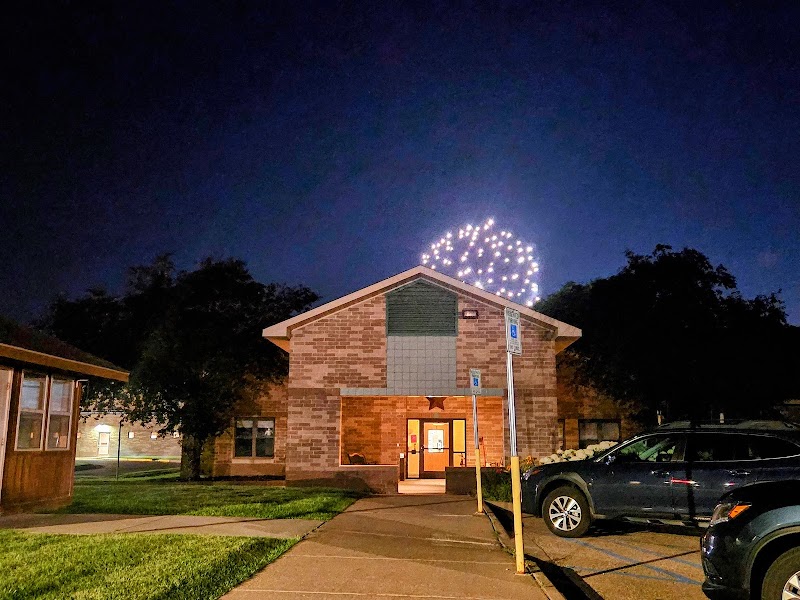
Who Owns and Operates Kinnic Center?

KINNIC HEALTH AND REHABILITATION CENTER is owned by a for-profit company. For-profit facilities operate as businesses with obligations to shareholders or private owners. The facility operates independently rather than as part of a larger chain. With 68 certified beds and approximately 46 residents (about 68% occupancy), it is a smaller facility located in RIVER FALLS, Wisconsin.
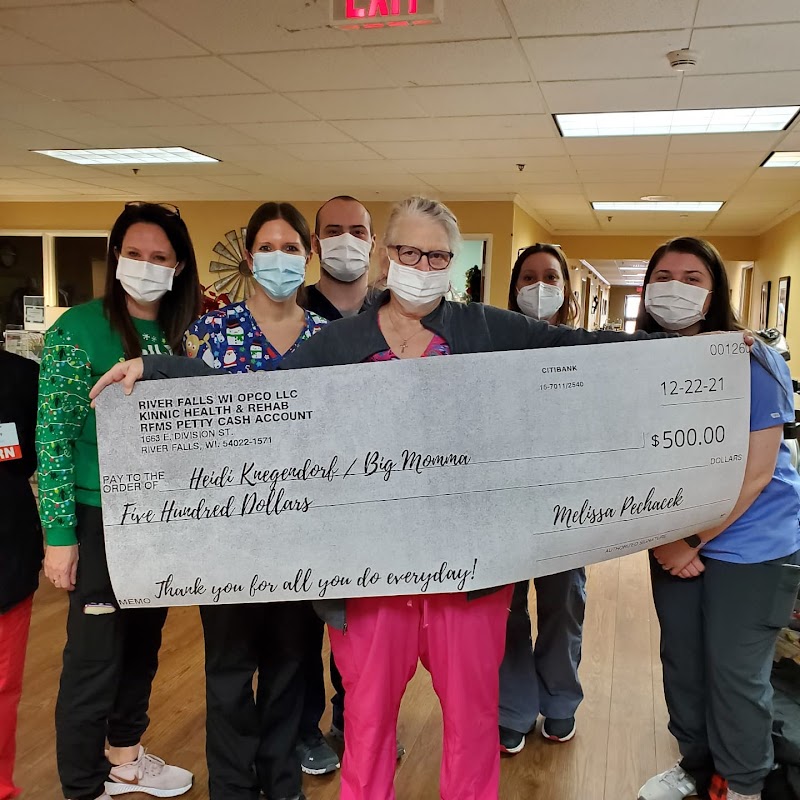
How Does Kinnic Center Compare to Other Wisconsin Nursing Homes?

Compared to the 100 nursing homes in Wisconsin, KINNIC HEALTH AND REHABILITATION CENTER's overall rating (2 stars) is below the state average of 3.0, staff turnover (32%) is significantly lower than the state average of 46%, and health inspection rating (2 stars) is below the national benchmark.

What Should Families Ask When Visiting Kinnic Center?

Based on this facility's data, families visiting should ask: "Can I visit during a mealtime to observe dining assistance and food quality?" "How do you handle medical emergencies, and what is your hospital transfer rate?" "Can I speak with family members of current residents about their experience?"

Is Kinnic Center Safe?

Based on CMS inspection data, KINNIC HEALTH AND REHABILITATION CENTER has a clean safety record: no substantiated abuse findings (meaning no confirmed cases of resident harm), no Immediate Jeopardy citations (the most serious violation level indicating risk of serious injury or death), and is not on the Special Focus Facility watch list (a federal program monitoring the lowest-performing 1% of nursing homes). The facility has a 2-star overall rating and ranks #100 of 100 nursing homes in Wisconsin. While no facility is perfect, families should still ask about staff-to-resident ratios and recent inspection results during their visit.

Do Nurses at Kinnic Center Stick Around?

KINNIC HEALTH AND REHABILITATION CENTER has a staff turnover rate of 32%, which is about average for Wisconsin nursing homes (state average: 46%). Moderate turnover is common in nursing homes, but families should still ask about staff tenure and how the facility maintains care continuity when employees leave.

Was Kinnic Center Ever Fined?

KINNIC HEALTH AND REHABILITATION CENTER has no federal fines on record. CMS issues fines when nursing homes fail to meet care standards or don't correct problems found during inspections. The absence of fines suggests the facility has either maintained compliance or corrected any issues before penalties were assessed. This is a positive indicator, though families should still review recent inspection reports for the full picture.

Is Kinnic Center on Any Federal Watch List?

KINNIC HEALTH AND REHABILITATION CENTER is not on any federal watch list. The most significant is the Special Focus Facility (SFF) program, which identifies the bottom 1% of nursing homes nationally based on persistent, serious quality problems. Not being on this list means the facility has avoided the pattern of deficiencies that triggers enhanced federal oversight. This is a positive indicator, though families should still review the facility's inspection history directly.