SPRING VALLEY HEALTH AND REHAB CENTER
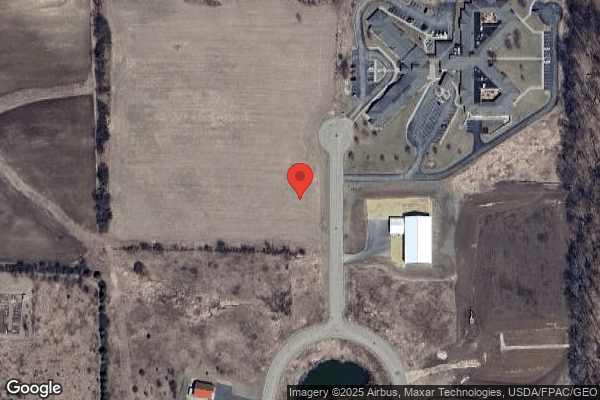
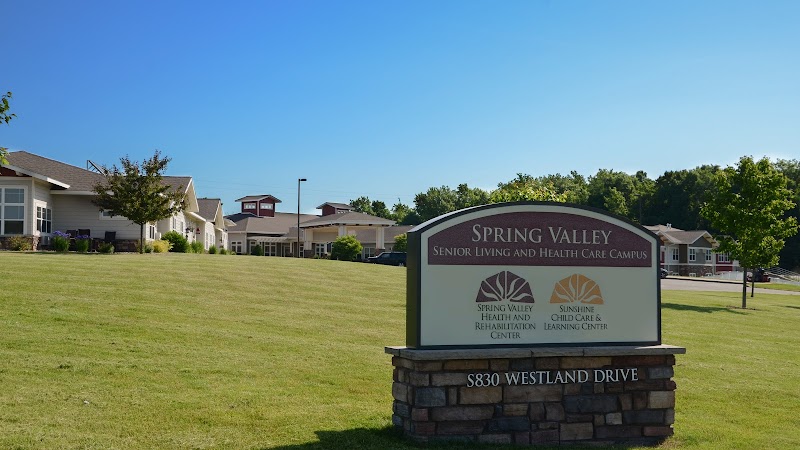
S830 - WESTLAND DR, SPRING VALLEY, WI 54767 (715) 778-5545
Non profit - Other 40 Beds Independent Data: November 2025 1 Immediate Jeopardy citation
Trust Grade
23/100
#245 of 321 in WI
Last Inspection: August 2024

Within standard 12-15 month inspection cycle. Federal law requires annual inspections.

Overview

Spring Valley Health and Rehab Center currently holds a Trust Grade of F, indicating poor quality and significant concerns. With a state rank of #245 out of 321 facilities in Wisconsin, they are in the bottom half, and their county rank is #4 out of 4, meaning they are the lowest option in Pierce County. Although the facility's trend is improving, having reduced its issues from 15 to 1 over the past year, there are still serious deficiencies, including a critical incident where residents were not protected from sexual abuse and serious concerns regarding falls and food safety practices. Staffing is average, with a turnover rate of 63%, which is above the state average and may impact continuity of care. Additionally, fines of $27,690 are concerning, as this is higher than 75% of Wisconsin facilities, highlighting ongoing compliance issues.

Trust Score
F
23/100
In Wisconsin
#245/321
Bottom 24%
Safety Record
High Risk
Review needed
Inspections
Getting Better
15 → 1 violations
Staff Stability
⚠ Watch
63% turnover. Above average. Higher turnover means staff may not know residents' routines.
Penalties
✓ Good
$27,690 in fines. Lower than most Wisconsin facilities. Relatively clean record.
Skilled Nurses
✓ Good
Each resident gets 44 minutes of Registered Nurse (RN) attention daily — more than average for Wisconsin. RNs are trained to catch health problems early.
Violations
⚠ Watch
34 deficiencies on record. Higher than average. Multiple issues found across inspections.
★★☆☆☆
2.0
Overall Rating
★★★☆☆
3.0
Staff Levels
★★★☆☆
3.0
Care Quality
★★☆☆☆
2.0
Inspection Score
Stable
2024: 15 issues
2025: 1 issues

The Good

  • Full Sprinkler Coverage · Fire safety systems throughout facility
  • No fines on record

Facility shows strength in fire safety.

The Bad

2-Star Overall Rating

Below Wisconsin average (3.0)

Below average - review inspection findings carefully

Staff Turnover: 63%

17pts above Wisconsin avg (46%)

Frequent staff changes - ask about care continuity

Federal Fines: $27,690

Below median ($33,413)

Moderate penalties - review what triggered them

Staff turnover is elevated (63%)

15 points above Wisconsin average of 48%

The Ugly 34 deficiencies on record

1 life-threatening 1 actual harm
Aug 2025 1 deficiency
MINOR (C) 📢 Someone Reported This

A family member, employee, or ombudsman was alarmed enough to file a formal complaint

Minor Issue - procedural, no safety impact

Abuse Prevention Policies (Tag F0607)

Minor procedural issue · This affected most or all residents

Based on interview and record review, the facility did not develop and implement an Abuse, Neglect, and Exploitation policy to prevent and identify potential abuse concerns. This had the potential to ...

Read full inspector narrative →
Based on interview and record review, the facility did not develop and implement an Abuse, Neglect, and Exploitation policy to prevent and identify potential abuse concerns. This had the potential to affect all residents in the facility that would need a self report made. -Facility had an abuse policy that referred to Nebraska reporting regulations instead of Wisconsin reporting regulations. Findings include:The facility's policy and procedure for Abuse Prevention, last reviewed November 2024, includes, in part.7. Reporting: a. Any employee who suspects an alleged violation immediately notifies the administrator. The administrator notifies the appropriate state agency immediately, following state law. b. The results of all investigations are reported to the administrator and the appropriate state agency, as required by state law and/or within 5 working days of the alleged violation. e. When reporting alleged abuse, neglect, or exploitation to the state of Nebraska, please email to: dhss.healthfacilityinvestigations@nebraska.gov .On 08/08/25 at 3:39 PM, Surveyor interviewed Nursing Home Administrator (NHA) A and asked NHA A where did the facility policy titled, Abuse, Neglect, and Exploitation, and Suspected Crimes, come from. NHA A reported the facility uses Health Dimensions Group (HDG). Surveyor reported to NHA A that in #7 in the policy for reporting letter (e.) states when reporting to Nebraska and identifies an email located in Nebraska. Surveyor asked if NHA A knows why this policy is being utilized to train staff on proper reporting measures when allegations of abuse occur. NHA A reported the policy must have been for another facility building that is under the HDG company. Surveyor asked NHA A if there are any other policies that were reviewed with staff when educating about abuse and neglect concerns. NHA A reported other than Relias training the facility uses this policy that Surveyor is referring to. NHA A reported to Surveyor they do report all allegations to the State of Wisconsin, even though this error is in the abuse reporting policy. Surveyor verified that self reports have been being reported to the State of Wisconsin to the correct contact. NHA A stated the abuse policy will need to be updated with correct state regulations and contact information when training staff.
Aug 2024 8 deficiencies 1 Harm
SERIOUS (G)

Actual Harm - a resident was hurt due to facility failures

Accident Prevention (Tag F0689)

A resident was harmed · This affected 1 resident

**NOTE- TERMS IN BRACKETS HAVE BEEN EDITED TO PROTECT CONFIDENTIALITY** Example 4: R2 was admitted on [DATE]. R2's diagnoses include pressure ulcer to the left heel, pyogenic arthritis, emphysema, ane...

Read full inspector narrative →
**NOTE- TERMS IN BRACKETS HAVE BEEN EDITED TO PROTECT CONFIDENTIALITY** Example 4: R2 was admitted on [DATE]. R2's diagnoses include pressure ulcer to the left heel, pyogenic arthritis, emphysema, anemia, and type 2 diabetes mellitus. R2's MDS assessment, completed on 05/30/24, confirmed R2 scored 15 during a Brief Interview for Mental Status (BIMS), indicating intact cognition. R2 has impairment to lower extremities bilaterally. R2 needs partial to moderate assistance during transfers from bed to wheelchair. Surveyor reviewed R2's medical record and documentation indicated that R2 had falls on: -08/07/23 R2 had an unwitnessed fall in the bathroom. R2 had no injuries, physician was notified. -02/06/24 R2 had an unwitnessed fall in R2's room next to R2's bed. R2 had no injuries, physician was notified. -06/16/24 R2 had unwitnessed fall in the hallway. R2 suffered several skin tears to the scalp, face, and right knee. -06/30/24 R2 had unwitnessed fall in R2's room in front of wheelchair. R2 had no injuries, physician was notified. Review of R2's medical record identified a fall risk assessment dated : -11/29/23 R2 had 1 to 3 falls in the past 3 months and was assessed at risk for falls. -02/10/24 R2 had 1 to 3 falls in the past 3 months and was assessed at risk for falls. -03/01/24 R2 had 1 to 3 falls in the past 3 months and was assessed at risk for falls. -04/30/24 R2 had 1 to 3 falls in the past 3 months and was assessed at risk for falls. -06/17/24 R2 had 1 to 3 falls in the past 3 months and was assessed at risk for falls. Review of R2's medical record identified the Interdisciplinary Team (IDT) Post Fall Review, dated 07/02/24, stated in part, .Describe new fall prevention interventions to be implemented as a result of the assessment: Remind [R2] to use call light and wait for staff to assist with transfers to prevent falls/injuries . No other IDT reviews were found for previous falls. Surveyor reviewed R2's Safety/Falls care plan and did not identify any updated interventions after: -08/07/23 -02/06/24 -06/16/24. R2's care plan noted fall interventions placed on 04/05/24 for assistive device bilateral grab bars on bed to aid in bed mobility. R2's care plan noted fall interventions placed on 06/25/24 for call light positioned for easy access. Has visual reminders in room to use call light. Surveyor identified an incident note dated 04/25/24 that indicated R26 had an unwitnessed fall in the bathroom that resulted in a laceration on left eye lid, laceration on right side of chin, and moderate amount of bleeding from nose. Surveyor was unable to identify an IDT post fall review completed after the fall on 04/25/24. On 08/01/24 at 8:47 AM, Surveyor asked DON B for fall investigations. On 08/01/24 at 10:28 AM, DON B brought in what they had and indicated there is not much documentation on R2's falls and only one IDT review was found. DON B indicated that staff will be educated on fall preventions and to correctly document falls and interventions put into place. Example 5: On 07/31/24 at 8:12 AM, Surveyor observed Housekeeper P cleaning R21's room. Surveyor observed Housekeeper P mopping R21's floor. Housekeeper P did not place wet floor sign outside R21's room to show the floor was still wet. Housekeeper P walked down hallway to the next room. On 07/31/24 at 8:16 AM, Surveyor observed Housekeeper P cleaning R13's craft room. Surveyor observed Housekeeper P mopping the floor. Housekeeper P did not place wet floor sign outside of the craft room to show the floor was still wet. Housekeeper P walked down hallway to the next room. Surveyor observed R13 wheel into R13's craft room in wheelchair. On 07/31/24 at 8:42 AM, Surveyor observed Housekeeper P cleaning R1's room. Surveyor observed Housekeeper P mopping R1's floor. Housekeeper P did not place wet floor sign outside R1's room to show the floor was still wet. Housekeeper P walked down hallway to the next room. On 07/31/24 at 9:31 AM, Surveyor observed Housekeeper P cleaning R187's room. Surveyor observed Housekeeper P mopping R187's floor. Housekeeper P did not place wet floor sign outside R187's room to show the floor was still wet. Housekeeper P walked down hallway to the next room. On 07/31/24 at 9:40 AM, Surveyor observed R187 wheel electric wheelchair in room. Surveyor observed floor still to be wet. On 07/31/24 at 9:45 AM, Surveyor observed Housekeeper P cleaning R186's room. Surveyor observed Housekeeper P mopping R186's floor. Housekeeper P did not place wet floor sign outside R186's room to show the floor was still wet. Housekeeper P walked down hallway to the next room. On 07/31/24 at 9:46 AM, Surveyor interviewed Housekeeper P and asked what expectation is for placing yellow wet signs out after mopping resident rooms and common areas. Housekeeper P indicated that Housekeeper P never was really told if wet signs should be placed or not. Surveyor asked Housekeeper P how Housekeeper P would prevent residents or staff from slipping or injuring themselves if there was not a yellow wet sign out to warn them that the floor is potentially wet. Housekeeper P indicated that Housekeeper P would start placing wet floor signs out after mopping rooms and common areas. On 07/31/24 at 2:10 PM, Surveyor interviewed DON B and asked what expectation was for Housekeeper P utilizing wet floor signs after mopping. DON B indicated that after mopping anywhere in the facility, a yellow wet floor sign should be placed in visible view to all traffic to prevent residents, family members, and staff from slipping and falling on wet floors. DON B indicated that Housekeeper P should have been using yellow wet floor signs after mopping all areas. Example 6: Facility policy and procedure entitled Resident Leave of Absence, last revised 11/22, stated: When a resident leaves the facility, it will be documented as to the intent of the resident's absence, when the resident left, with whom, and the expected time of return. R14 was admitted to the facility on [DATE] with the following diagnoses, in part, stage 4 pressure injury to the sacral region, type 2 diabetes mellitus, morbid obesity, and paraplegia as a result of traumatic spinal cord injury. On 07/31/24 at 11:21 AM, Surveyor asked CNA E where R14 was, so Surveyor could observe R14's safety with smoking. CNA E stated R14 had checked out smoking materials a while ago. CNA E stated that R14 was going to Subway for lunch and was probably still gone from the facility. Surveyor asked CNA E how R14 gets to Subway. CNA E stated R14 travels down there in the power wheelchair. Surveyor noted Subway was slightly over one mile from the facility, and R14 must travel on a busy state highway with a hill and curve in the road to get to Subway. Surveyor was unable to find any safety assessments or safety care plan or any documentation on R14's medical record that addressed R14 leaving the facility campus and traveling down the highway in a power wheelchair to Subway. On 08/01/24 at 8:06 AM, Surveyor interviewed Nursing Home Administrator (NHA) A about R14 leaving facility campus and traveling to Subway in a power wheelchair. NHA A was not aware that this was occurring. NHA A did not know if any safety assessments had been completed related to R14 leaving the campus and traveling down the highway in the power wheelchair. NHA A did not think this was a safe practice and would look into it. On 08/01/24 at 8:15 AM, Surveyor interviewed CNA E who reported R14 signed out on a clipboard kept at the medication cart when going out to smoke or to Subway, and then signed back in upon return. Surveyor asked CNA E if there was any kind of safety assessment completed or a safety care plan related to R14 leaving the facility campus to go to Subway. CNA E did not know if a safety assessment was done or if there was a safety care plan related to R14 traveling down the highway in the power wheelchair. On 08/01/24 at 9:30 AM, Surveyor interviewed DON B and asked if a safety assessment was completed and safety care plan in place related to R14's leaving the campus to go down the highway in a power wheelchair to Subway. DON B was not sure due to being new to the facility but did not think there was a care plan or safety plan or agreement in place for this situation. DON B would look to see what was completed related to this situation. Surveyor asked if the facility had a policy and procedure related to Leave of Absence (LOA) for residents that would apply to this situation. DON B stated they probably have a policy but did not think it was implemented in R14's situation. On 08/01/24 at 10:11 AM, Surveyor interviewed Registered Nurse (RN) D who stated there was no formal safety assessment completed related to R14's safety to leave the campus and travel down the highway to Subway. RN D stated they did get a flag for the wheelchair but did not know if the flag was on the wheelchair. RN D stated someone viewed R14 traveling down the road in the wheelchair and R14 did travel on the correct side of the road and was viewed as safe to do this, but no formal assessment had been done. Surveyor asked RN D if they had developed a safety agreement or plan related to R14 leaving the facility campus and traveling down the busy state highway in a power wheelchair. RN D stated nothing like that had been done. RN D stated, I suppose it should be care planned, but [R14] does sign out when leaving the building. On 08/01/24 at 11:25 AM, Surveyor observed R14 exit the building to smoke. R14 did not have a flag on the power wheelchair. Example 3: R6 was admitted to the facility on [DATE] and has diagnoses that include hypertension, neurogenic bladder, dementia, depression, and cataracts. R6's most recent Minimum Data Set (MDS) indicated that R6 has had two or more falls since admission to the facility. R6's care plan related to falls states: At Risk for Complications with OR falls R/T current medical / physical status. Has meds/dx that can/may affect fall risk. On 06/11/24 at 9:00 AM, a nurse progress note related to R6's fall read that the writer was paged to resident's room for a fall. Writer was informed that a CNA was using the sit to stand with R6 when R6 tried to pull himself all the way up, which caused the sling to become unattached. The Certified Nursing Assistant (CNA) stayed and was able to lower R6 to the ground. Registered Nurse arrived to assess and help. R6 stated they did not know how that happened. On 08/01/24 at 2:20 PM, Surveyor asked DON B for fall investigations. On 08/01/24 at 2:38 PM, DON B brought in what they had and indicated there was no evidence of an IDT review and care plan update after the fall occurred, only the initial assessment found after the fall took place. Example 2: R31 was admitted to the facility on [DATE] and has diagnoses that include anxiety disorder, hypertension, depression, and congestive heart failure. On 05/08/24, a fall risk assessment was completed. R31 was marked as being a fall risk, reason general weakness related to recent hospitalization. On 05/30/2024 at 1:43 PM, a nurse progress note read, Resident has had two falls today. First fall was at 9am resident received a skin tear consistent with partial degloving of right forearm, area was cleansed and skin was reapproximated and steri stripped, covered with gauze and wrapped with kerlix. Resident assisted to go to exercise per her request. Resident vitals stable after fall. Did not hit head as fall was witnessed. Resident then fell at 1300, unwitnessed. Complained of right shoulder and hip pain, bleeding from right great toe skin tear to left hand and bleeding noted in her mouth. Resident was not moved from the floor. 911 was called. Unable to obtain BP due to complaints of pain 97.7-18-106 95%. Resident left facility at 1330 via ambulance in c-collar due to unwitnessed fall. Resident did receive ativan this am per request for anxiety. Hospital Discharge summary, dated [DATE], read in part, Diagnoses: compression fracture of C7 vertebra and multiple skin tears. On 08/01/24 at 9:43 AM, Surveyor asked DON B for fall investigations. On 08/01/24 at 10:28 AM, DON B brought in what they had and indicated there is no fall investigation or interventions that were put into place after R31's fall on 5/30/24 at 9:00 a.m. R31 then fell again at 1:00 p.m. and sustained a compression fracture of C7. Based on observation, interview, and record review, the facility did not ensure the residents' environment remains as free of accident hazards as possible. Two of four residents (R) reviewed for falls with history of falls (R26 and R31) did not have post fall assessments, care plan interventions updated after falls, and had subsequent falls with major injuries. R26 and R31 are being cited at actual harm. R6 and R2 did not have post fall assessments and care plan updates after falls. One resident (R14) did not have a safety assessment or care plan for leaving facility campus and traveling on a busy highway with power wheelchair. R2, R6, and R14 are being cited at severity level 2 (potential for more than minimal harm). Observations of wet floors with no wet floor signs in place to prevent accidents occurred for R21, R13, R1, R187, and R186. Findings include: Facility policy and procedure entitled Accidents/Falls, last reviewed 11/2023, states in part: .5. Resident care plans should be evaluated and updated with each fall with a new and applicable intervention based on root cause. The focus is to be on prevention and maintaining a safe environment .Each incident/accident or fall must be investigated and/or assessed to determine the root cause of the episode to prevent any further injury .10. The resident's individualized care plan is to be updated with any changes or new interventions post fall/incident/accident, communicated to appropriate staff, and implemented . Example 1: R26 was admitted to the facility on [DATE] with the following diagnoses, in part, age-related osteoporosis without current pathological fracture, unspecified symptoms and signs involving cognitive functions following cerebral infarction (stroke), hemiplegia and hemiparesis following cerebral infarction affecting right dominant side, history of falling, anxiety disorder, and difficulty in walking. On 07/30/24 at 9:08 AM, Surveyor interviewed R26 who stated they fell sometimes and had a fall that resulted in a right shoulder fracture. Review of R26's medical record identified a fall risk assessment dated [DATE] that indicated R26 had 1 to 3 falls in the past 3 months and was assessed at risk for falls. R26's medical record identified R26 had an unwitnessed fall in the bathroom on 03/22/24. R26 reported hitting the back of head on the toilet during the fall. The fall risk screening tool completed after R26's fall on 03/22/24 identified R26 at risk for falls. The Interdisciplinary Team (IDT) Post Fall Review, dated 03/28/24, states in part, .Describe new fall prevention interventions to be implemented as a result of the assessment: resident is not to be left in the bathroom unattended . Surveyor reviewed R26's Safety/Falls care plan and did not identify any updated interventions to include not leaving R26 unattended in the bathroom. Surveyor identified an incident note dated 04/25/24 that indicated R26 had an unwitnessed fall in the bathroom that resulted in a laceration on left eyelid, laceration on right side of chin, and moderate amount of bleeding from nose. R26 was transferred to the hospital for evaluation. Surveyor was unable to identify an Interdisciplinary Team (IDT) post fall review completed after the fall on 04/25/24. The hospital Discharge summary dated [DATE], states in part, .suffered a mechanical fall resulting in a right shoulder fracture on 04/25/24. Patient underwent ORIF [Open Reduction Internal Fixation surgery] on 04/25/24 . On 08/01/24 at 12:30 PM, Surveyor interviewed Director of Nursing (DON) B and asked if R26's Safety/Falls care plan was updated after the fall on 03/22/24. DON B reviewed the documents and stated the IDT review recommended resident is not left alone in the bathroom to prevent future falls after the fall on 03/22/24. DON B reviewed R26's care plan and stated it did not look like it was updated with this new intervention after R26's fall on 03/22/24. DON B stated they could not locate a post fall IDT review of R26's fall on 04/25/24. DON B stated R26's Safety/Falls care plan should have been updated with the IDT recommendation after the fall on 03/22/24 to try to prevent future falls.
CONCERN (D)

Potential for Harm - no one hurt, but risky conditions existed

Deficiency F0659 (Tag F0659)

Could have caused harm · This affected 1 resident

Based on observation, interview and record review, the facility did not ensure prescription medications were administered by qualified staff. Surveyor observed Certified Nursing Assistant (CNA) apply ...

Read full inspector narrative →
Based on observation, interview and record review, the facility did not ensure prescription medications were administered by qualified staff. Surveyor observed Certified Nursing Assistant (CNA) apply prescribed Nystatin powder to a resident's (R) skin for 1 of 1 observation. (R187) Findings include: On 07/30/24 at 8:56 AM, Surveyor observed Nystatin powder sitting on bedside table in R187's room. Surveyor asked R187 what the powder was on the bedside table and if it was stored in R187's room regularly. R187 indicated that it is antifungal powder for R187's abdominal folds. R187 indicated that the CNAs usually apply this when CNAs get R187 out of bed. On 07/30/24 at 10:01 AM, Surveyor observed morning cares being performed for R187 by CNA H and CNA Q. Surveyor observed a cup of Nystatin powder located on R187's bedside table. CNA Q picked up the Nystatin powder and handed the powder to CNA H. CNA H applied Nystatin powder to R187's abdominal folds bilaterally and placed Nystatin powder in R187's groin area. On 07/31/24 at 11:16 AM, Surveyor interviewed CNA H and asked what the expectation is for Nystatin powder to be administered by CNAs. CNA H indicated that CNA H has always applied Nystatin powder for the nurses. Surveyor asked if CNA H had any training or experience with applying Nystatin powder. CNA H indicated that no, CNA H has not had any formal training. Surveyor reviewed R187's medical record and identified the following physician's order, dated 07/18/24: Nystatin powder; 100,000 unit/gram; amt: to abdominal folds; topical Two Times A Day. On 07/31/24 at 3:49 PM, Surveyor interviewed Director of Nursing (DON) B and asked what the expectation is of CNAs applying nystatin powder to R187. DON B indicated that expectation would be that only nurses administer Nystatin powder to R187. DON B indicated that CNA H should not have administered Nystatin powder to R187.
CONCERN (D)

Potential for Harm - no one hurt, but risky conditions existed

Quality of Care (Tag F0684)

Could have caused harm · This affected 1 resident

**NOTE- TERMS IN BRACKETS HAVE BEEN EDITED TO PROTECT CONFIDENTIALITY** Based on observations, interviews and record reviews, the facility did not provide spinal precautions and treatment by professio...

Read full inspector narrative →
**NOTE- TERMS IN BRACKETS HAVE BEEN EDITED TO PROTECT CONFIDENTIALITY** Based on observations, interviews and record reviews, the facility did not provide spinal precautions and treatment by professional standards of practice to maintain a resident's highest practicable level of physical well-being for 1 of 18 residents (R21) reviewed. Staff did not follow spinal precautions to manage R21's T11 fracture by not providing log rolling during repositioning while R21 was in bed. Staff did not follow physician orders to keep back brace on R21 when head of bed is over 30 degrees. Findings include: R21 was admitted on [DATE]. R21's diagnoses include fracture of T9-T10 vertebra, fracture of first lumbar vertebrae, fracture of second lumbar vertebrae, fracture of third lumbar vertebrae, fracture of fourth lumbar vertebrae, concussion without loss of consciousness, and traumatic brain injury. R21's Minimum Data Set (MDS) assessment, completed on 07/17/24, confirmed R21 scored 12 during a Brief Interview for Mental Status (BIMS), indicating moderate impaired cognition. R21 requires total substantial maximal assistance with rolling from side to side. R21 does not get out of bed. R21's care plan was initiated on 01/05/24, and included the following interventions: Activities of Daily Living: -Bed Mobility: Assist of 2 log roll as much as able, remind resident to keep straight as possible. -Head of Bed below 30 at all times if resident does not have thoracic-lumbar-sacral orthosis (TLSO) brace on. May go above 30 degrees if she has TLSO brace on or is out of bed. Resident is on bed rest. R21's physician orders on 01/04/24 include: -Bed rest at all times every shift for lumbar fractures. -Do not elevate head of bed over 30 degrees every shift for lumbar fractures. R21's physician orders on 05/29/24 include: -Specialist has to decide discontinuation of back brace. Continue back brace as ordered. R21's physician orders on 07/08/24 include: -Adjust current TLSO brace. -Continue with restrictions. -Follow up with brace and CT scan. On 07/30/24 at 2:34 PM, Surveyor interviewed R21. Surveyor asked R21 why R21 was admitted to the facility. R21 indicated that R21 was in a motor vehicle collision and is on spinal precautions. Surveyor asked what spinal precautions indicated for R21. R21 indicated that R21 is to be log rolled while in bed, on bedrest and R21 should be wearing R21's back brace. R21 indicated that R21 has been losing weight and the brace is uncomfortable so R21 has not been wearing the brace for a while now. Surveyor observed back brace lying on a box on the floor across the room with papers and bags stored on top. On 07/31/24 at 6:39 AM, Surveyor observed R21 lying in bed supine with head of bed at a 45-degree angle sleeping. Surveyor did not observe R21's back brace (TLSO) on R21. Surveyor observed back brace lying on a box on the floor across the room with papers and bags stored on top. On 07/31/24 at 8:20 AM, Surveyor observed R21 lying in bed supine with head of bed at a 45-degree angle sleeping. Surveyor did not observe R21's back brace on R21. Surveyor observed back brace lying on a box on the floor across the room with papers and bags stored on top. On 07/31/24 at 8:51 AM, Surveyor observed Certified Nurse Assistant (CNA) K and CNA N provide cares. CNA N grabbed behind R21's back of shoulders and R21's hip area and rolled R21 to the left towards CNA K. Surveyor observed R21's right leg cross over R21's left leg and R21's left leg bent backwards. Then after CNA N completed peri cares on R21, CNA K placed hands underneath R21's waist and upper shoulders and rolled to the right towards CNA N. Surveyor observed R21's left leg cross over R21's right leg and R21's right leg bent backwards slightly. Surveyor did not observe CNA K and CNA N log roll R21 as ordered, and care planned during R21's cares. Surveyor did not observe any spinal precautions in place for rolling R21. On 07/31/24 at 12:45 PM, Surveyor observed R21 lying in bed with head of bed at almost 90-degree angle with lunch tray in front on bedside table. Surveyor did not observe R21's back brace on R21. Surveyor observed back brace lying on a box on the floor across the room with papers and bags stored on top. On 07/31/24 at 3:40 PM, Surveyor interviewed CNA I and CNA O and asked CNA I and CNA O how R21 is moved while in bed. CNA I and CNA O indicated that R21 is a log roll since on spinal precautions while in bed. CNA O indicated that R21 does not get out of bed as R21 is on bed rest per provider orders. Surveyor asked CNA I and CNA O where staff find the transfer status and mobility in bed for R21. CNA I indicated that CNAs follow the [NAME] for R21. Surveyor asked CNA I and CNA O to show Surveyor the documentation of the [NAME]. CNA I pulled the [NAME] up for R21 and showed Surveyor that the [NAME] did not have specifications on bed mobility. On 07/31/24 at 3:49 PM, Surveyor interviewed Director of Nursing (DON) B and asked about expectation for bed mobility with R21. DON B indicated that bed mobility for R21 is log rolling due to R21 being on spinal precautions. DON B indicated that all staff are to follow the spinal precautions for R21. Surveyor asked how staff were to know that R21 is on spinal precautions and has staff been educated on how to properly perform log rolling. DON B indicated that it should be in R21's [NAME] that staff follow and going forward DON B would be educating staff immediately on performing only log rolls with R21. Surveyor asked DON B if DON B was aware that R21's head of the bed has been up as high as 90 degrees during observations. DON B was unaware that R21's head of bed has been up this far and stated that it shouldn't be that high. Surveyor reviewed physician orders that indicate the head of bed shouldn't be any higher than 30 degrees. DON B indicated that DON B would educate R21 on the head of the bed being elevated and the restrictions that R21 has in place for spinal protection. On 07/31/24 at 4:08 PM, DON B provided documentation to Surveyor showing that R21's [NAME] indicated under Activities of Daily Living (ADL) that Bed Mobility stated, Assist of 2 log rolls as much as able, remind resident to keep as straight as possible. DON B indicated that through review of the specialist orders R21's head of bed is not supposed to exceed 20 degrees without applying the TLSO brace. DON B indicated that DON B would be fixing the order right away, educating staff, and R21. DON B also indicated that back in May a nurse requested that the TLSO brace be discontinued, and the provider wrote orders back to continue TLSO brace and that it was the specialist decision to discontinue or not. DON B confirmed the nurse had discontinued the TLSO brace without proper orders from a physician.
CONCERN (D)

Potential for Harm - no one hurt, but risky conditions existed

Pressure Ulcer Prevention (Tag F0686)

Could have caused harm · This affected 1 resident

**NOTE- TERMS IN BRACKETS HAVE BEEN EDITED TO PROTECT CONFIDENTIALITY** Based on observation, interview and record review, the facility did not ensure that 2 of 4 residents (R) reviewed for pressure i...

Read full inspector narrative →
**NOTE- TERMS IN BRACKETS HAVE BEEN EDITED TO PROTECT CONFIDENTIALITY** Based on observation, interview and record review, the facility did not ensure that 2 of 4 residents (R) reviewed for pressure injuries (PI) (R2 and R187) received care consistent with professional standards of practice to promote healing of existing PIs. R2 developed an unspecified injury stage PI to the left heel on 05/30/23 and an ulcer to the great right toe. On 07/09/24, the PI reoccurred to the left heel and the right great toe. On 07/09/24, a new PI occurred to the left great toe. The care plan for PI interventions was not updated since 08/14/23. R2 was not repositioned or encouraged as needed for pressure relief as instructed on the PI care plan. R187 was admitted to the facility with a stage 3 PI to the left posterior thigh. The facility did not ensure R187's buttocks/thighs were protected, did not reposition R187, and inconsistent assessments of the wounds were noted. This is evidenced by: Guidelines from the National Pressure Injury Advisory Panel (NPIAP) 2016, Pressure Injury Prevention Points, accessed 07, March 2024, Prevention Points | National Pressure Ulcer Advisory Panel (npiap.com), states in part: Turn and reposition all individuals at risk for pressure injury, turn the individual into a 30-degree side-lying position and use your hand to determine if the sacrum is off the bed, ensure that the heels are free from the bed, use heel offloading devices for high-risk pressure injuries. The facility policy entitled, Pressure Ulcer/Skin Integrity, stated in part, .1. Upon admission, and thereafter, residents will be assessed for the potential risk for skin breakdown resulting from bony prominences. -2. Skin inspection upon admission, and thereafter, a skin inspection will be completed to identify pre-existing, or potential areas of skin breakdown over bony prominences. It is recommended that assessments be completed as soon as reasonably but not to exceed 24 hours after admission. -4. Wound identification: i. Differentiate the type of wound. ii. Determine wound stage. iii. Describe and monitor the wounds characteristics. iv. Monitor for progress toward healing. vii. Monitor dressings and treatments. -5. Treatment/ Management: residents will receive services treatment/services include: ii. Pressure relieving equipment. iii. Repositioning or off-loading. -6. Documentation: b. Wound documentation is more detailed than routine skin documentation and shall include information related to the wound based on a clinical assessment. -7. Care Planning: b. Comprehensive resident-centered care pans will be developed per the RAI/Care plan timelines and reviewed/revised thereafter . Example 1 R2 was admitted on [DATE]. R2's diagnoses include pressure ulcer to the left heel, pyogenic arthritis, emphysema, anemia, and type 2 diabetes mellitus. R2's Minimum Data Set (MDS) assessment, completed on 05/30/24, confirmed R2 scored 15 during a Brief Interview for Mental Status (BIMS), indicating intact cognition. R2 requires partial to moderate assistance with rolling from side to side and transferring from bed to wheelchair. R2's care plan was initiated on 05/10/23 and revised on 11/06/23, and included the following interventions: Activities of Daily Living: -Transfers: Assist of one. Skin Integrity: -Assist/encourage pressure relief as needed/accepted. R2's physician orders on include: -Left great toe-aqualcel and mepilex, right great toe mepilex, monitor heels, float heels as much as possible, every 48 hours for wound care. -Encourage to elevate feet frequently throughout the day, wear Podus boots or float heels on pillow while in bed, encourage to remove shoes when in recliner four times a day for pressure reduction measures. -Offload plan: Frequent position changes independently or with assistance. Custom orthotics and/or insoles per orthotist evaluation. Removing shoes when at rest and not ambulating, floating the heel off the bed by applying pillow under calves and custom booties to be worn while in bed to off-load heels every shift. - Assess skin and complete skin assessment form, and document, one time a day every Wed for ongoing monitoring. The care plan has no new PI interventions since 11/06/23. Surveyor reviewed documentation and found no Braden Score identifying R2 as a risk for pressure injuries. Review of nursing documentation on 07/09/24 showed left great toe 1st lateral toe had measurements L 0.7 cm W 0.5 cm, D 0.2 cm. No documentation about the PI care or comprehensive assessment of the PI on R2's left great toe. Review of nursing documentation on 07/16/24 showed left posterior heel had circular reddened area measures L1 cm W 1 cm, and D 0. Right toe No skin problems of right foot, and left great toe 1st lateral toe had serous drainage measuring L 0.6 cm W 0.5 cm, D 0.1 cm. Review of nursing documentation on 07/30/24 showed left posterior heel had circular reddened area measures L1 cm W 1 cm, and D 0. Right toe No skin problems of right foot, and left great toe 1st lateral toe had serous drainage measuring L 0.5 cm W 0.4 cm, D 0.1/0.1 cm. No further documentation about PI care or the comprehensive assessment of the PI on R2's left heel, left great toe, and right great toe was found on the medical record until 07/09/24. No documentation of updates about the PI to R2's physician was found on the medical record during that time frame. No documentation of dressing changes to wounds were found nor any other measurements and condition of the wound bed of the left and right great toe wounds. The orders for wound care during that time frame were for wound care every two days. On 07/30/24 at 1:27 PM, Surveyor observed R2's shoes on while in recliner with feet lying flat against recliner footrest, no pillow underneath to float heels. Surveyor did not observe Podus boots applied to R2 while in recliner and the Podus boots were observed located across the room stored on spare chair. On 07/30/24 at 2:58 PM, Surveyor observed R2's shoes on while in recliner with feet lying flat against recliner footrest, no pillow underneath to float heels. Surveyor did not observe Podus boots applied to R2 while in recliner and the Podus boots were observed located across the room stored on spare chair. On 07/31/24 at 1:51 PM, Surveyor observed R2's shoes on while in recliner with feet lying flat against recliner footrest, no pillow underneath to float heels. Surveyor did not observe Podus boots applied to R2 while in recliner and the Podus boots were observed located across the room stored on spare chair. On 07/31/24 at 10:58 AM, Surveyor observed Registered Nurse (RN) C enter R2's room. RN C indicated that wound dressing changes were performed yesterday on 07/30/24 but RN C would remove dressings and redress R2's wounds so Surveyor could see wounds on R2's feet bilaterally. RN C took R2's shoes and socks off and placed to the side. Surveyor assessed no dressings on R2's left foot or right foot. Surveyor assessed a dime size reddened opened circle area on R2's left great toe on top side of foot and a small reddened area with a small pen dot size scab to the right great toe area. On 07/31/24 at 11:08 AM, Surveyor interviewed RN C and asked why there was not a dressing in place if wound care was completed yesterday on 07/30/24. RN C indicated that RN C was unsure why dressing was not in place. RN C indicated that R2 is supposed to have aquacel applied with a mepilex in place on the left great toe and just a meplix applied to the right great toe. Surveyor asked RN C if R2's wounds were pressure related. RN C indicated that R2 has had bad edema a lot but that R2 wears R2's loafers all the time and it appears to look like pressure is causing the redness on the outer sides of the great toes bilaterally causing R2's great toes to break open. Surveyor asked RN C if R2 takes breaks from wearing loafers to prevent the pressure from occurring. RN C indicated that staff is supposed to encourage R2 to elevate legs and take loafers off when in recliner or in bed. On 07/31/24 at 2:10 PM, Surveyor interviewed Director of Nursing (DON) B and asked what expectation was for wound management and assessing R2's wounds on bilateral feet. Surveyor indicated that R2 did not have proper assessment completed for the new and old wounds that have opened back up on R2's feet. Surveyor stated to DON B that Surveyor could not find any documentation on when R2's left heel wound was healed and reoccurred. DON B indicated that DON B understands the facility is not completing weekly assessments adequately on R2. Example 2 R187 was admitted on [DATE]. R187's diagnoses include atrial fibrillation, edema, chronic obstructive pulmonary, morbid obesity, and peripheral vascular disease. Review of R187's baseline care plan initiated on 07/18/24 indicated: -Weekly skin check. -Review skin concerns with MD. -Pressure reduction cushion in wheelchair. -Pressure reduction mattress on bed. R187's physician orders on include: .-Apply triad paste over open slits to posterior thighs twice a day for skin breakdown, open slits. -May receive barrier cream of choice applying to the skin as indicated for preventative wound care as well as for the treatment of open areas every shift to peri area. -Pressure redistribution mattress low air loss every shift. -Skin management: Braden Scale-Admission. Weekly x4, Monthly one time a day every 4 weeks on Thursday. -Skin management: Braden Scale-Admission. Weekly x4, Monthly one time a day every Thursday. -Skin management: Weekly Body Observation and form to be completed 1x week every day shift every Saturday for prevention -weekly skin check tool . Surveyor reviewed documentation from an outside wound clinic R187 was attending before being admitted to the facility that noted stage 3 wound to the left posterior thigh full thickness measuring Length 4.6 cm, Width 2 cm, and Depth 0.1 cm. Recommendations suggest off-loading wound, low air mattress, reposition per facility protocol, turn side to side in bed every 1-2 hours. Review of nursing documentation on 07/18/24 showed left buttock open area no specification of type of injury with measurements containing length 1 cm and width 1 cm. Surveyor reviewed documentation on 07/20/24 Braden Scare completed with score of 15 high risk of skin breakdown. Summary findings indicate R187 requires assist with bed mobility admitted with open area to buttock. No further documentation about PI care or a comprehensive assessment of the PI on R187's buttocks was found on the medical record since admission on [DATE]. No documentation of updates about the wound to R187's physician was found on the medical record during that time frame. On 07/31/24 at 6:43 AM-8:07 AM, Surveyor observed R187 lying in bed with head of bed positioned sitting upright at a 90-degree angle directly applying pressure to the buttocks. On 07/31/24 at 8:07 AM, Surveyor observed R187 being turned from side to side by staff for peri cares. Surveyor observed scattered open areas to the posterior sides of thighs and buttocks bilaterally. Surveyor also observed a dime size open sore that was pink/red in color located on R187's right posterior thigh/buttock area. R187 indicated to staff that R187's bottom hurts and itches. R187 asked CNA H to itch the area when CNA H applied Triad cream. Surveyor asked CNA H when these wounds were opened. CNA H indicated that CNA H is unsure, but they apply barrier cream as much as they can. On 07/31/24 at 2:10 PM, Surveyor interviewed DON B and asked what expectation was for wound management and assessing R187's posterior thigh/buttocks PIs. Surveyor indicated that R187 did not have proper assessment completed for the new wounds that have opened on R187's posterior right thigh and buttock. Surveyor indicated to DON B that Surveyor cannot find proper assessments completed weekly for measurements, and condition of the wounds to the buttocks. DON B indicated the staff are not completing weekly assessments adequately on R187. DON B indicated the documentation of skin issues has not been completed to its entirety. DON B confessed this is a facility wide issue and the facility will be incorporating new measures and interventions in place to fix the issue. DON B indicated the expectation is that a head-to-toe skin assessment is completed upon admission and documented. Thereafter weekly skin assessments and Braden score assessments are to be completed by a registered nurse.
CONCERN (D)

Potential for Harm - no one hurt, but risky conditions existed

Deficiency F0692 (Tag F0692)

Could have caused harm · This affected 1 resident

**NOTE- TERMS IN BRACKETS HAVE BEEN EDITED TO PROTECT CONFIDENTIALITY** Based on record review and interview, the facility did not ensure acceptable parameters of nutritional status to maintain usual ...

Read full inspector narrative →
**NOTE- TERMS IN BRACKETS HAVE BEEN EDITED TO PROTECT CONFIDENTIALITY** Based on record review and interview, the facility did not ensure acceptable parameters of nutritional status to maintain usual body weight. This occurred for 1 of 1 resident reviewed for nutritional status. Resident (R) R21. R21 was not weighed weekly to assess if she was maintaining her usual body weight. R21 had significant weight loss that were not assessed appropriately. This is evidenced by: R21 was admitted on [DATE]. R21's diagnoses include fracture of T9-T10 vertebra, fracture of first lumbar vertebrae, fracture of second lumbar vertebrae, fracture of third lumbar vertebrae, fracture of fourth lumbar vertebrae, concussion without loss of consciousness, and traumatic brain injury. R21's Minimum Data Set (MDS) assessment, completed on 07/17/24, confirmed R21 scored 12 during a Brief Interview for Mental Status (BIMS), indicating moderate impaired cognition. R21 requires total substantial maximal assistance with rolling from side to side. R21 does not get out of bed. R21's care plan included the following interventions: Nutrition/Hydration care plan was initiated on 01/05/24: -Record weights a minimum of monthly or per MD/RDN. -Set up meal per resident direction and assist with eating as/if needed. -Elevate head of bed no more than 30 degrees without brace, may be up higher with brace on. -Amount eaten requires documentation. -Eating requires documentation. -Snack requires documentation. -Weight requires documentation. -Fluids requires documentation. -Record Mid Arm Circumference to measure weight/nutritional status initiated on 07/25/24. R21's physician orders on 01/05/24 include: -Weights daily x3, weekly x4, monthly one time a day for weights for 3 days and one time a day every Friday for weights for 4 weeks and one time a day every 4 weeks on Friday for weights thereafter. R21's physician orders on 03/28/24 include: -Remeron 7.5 mg start for appetite stimulant R21's physician orders on 04/28/24 include: -Increase Remeron to 15mg for appetite stimulant. R21's physician orders on 06/04/24 include: -House supplement 4mg TID. The only weight charted was: -01/05/24 209 pounds from Hospital admission discharge paperwork. No other weights were obtained from 01/05/24- 08/01/24. R21's food and fluid intake was only found documentation recorded from 06/25/24- 08/01/24. Ranges from refusals to 100% eaten for each meal. Staff could not provide any other history of R21's food intake over the course of the last 6 months. Surveyor reviewed progress notes that indicate: -On 1/18/2024, Dietician indicated that R21 nutrition admission assessment: diet order reads as: general/standard/regular diet, soft & bite sized/chopped texture, thin/regular liquids consistency. No nutrition supplements at this time. Decreased appetite noted in progress notes dated 1/5. Poor appetite noted on 1/6. Current weight for ARD 209.0# on 1/5/24. Estimated nutritional needs based on 209#: 1900-2375 kcal (20-25 kcal/kg), 76-95 g protein (0.8-1.0 g/kg r/t CKD3), 2375-2850 ml fluids (25-30 ml/kg). Would recommend obtaining order for health shakes and to monitor resident's weights on a weekly basis to determine if the health shakes are warranted. Will proceed to care plan. Will continue to monitor quarterly/PRN and follow POC. -On 3/20/2024, dietician indicated that writer notified of weight loss, poor appetite. Description provided to writer: resident is bedbound r/t multiple fractures. Facility is unable to obtain her weight r/t bedbound status but using resident's TLSO brace as a point of reference that is custom fitted, it is reported that this is now too big on her. Noted very poor appetite, zofran is being scheduled twice daily for nausea. Resident being offered health shakes three times daily, but barely drinks 50% of them. Progress notes from the past 7 days reviewed - discusses the poor intakes and visual weight loss. Family is aware, has tried bringing in some of resident's favorites, with little success in good intakes. Health shakes was noted in recent progress notes - recommend obtaining physician's order TID. Last known weight 209.0# on 1/5/24, height 65, BMI at that time was 34.8 kg.m^2. It is not that resident can't eat, but rather she won't eat. Seems as though she has lost all interest in food. Tube feeding placement recommendation is not appropriate at this time. Adding more and more nutrition supplements above and beyond the three daily that is already her goal would likely not [NAME] as successful. Writer would recommend at this point that an appetite stimulant may be of benefit to turning resident's appetite around mirtazapine (remeron) is one possibility. Will continue to monitor at high risk and follow POC. -On 4/17/2024, dietician indicated resident receiving a regular, mechanically altered soft & bite sized/chopped textures with thin liquids. Orders for House Supplement three times daily. Per MAR, drinking 0-100% of the supplement three times daily during ARD. PO intakes of meals remains quite variable, refuse-100%, mostly 1-25%, drinking 100-480 ml/meal. Mirtazapine had been implemented at 7.5 mg on 3/28. Dosage was increased to 15 mg/day on 4/3 as an appetite stimulant and to help with resident's mood. This medication can take up to 4 weeks to see a significant improvement in calorie intake. Often times, the 15 mg dose is adequate for appetite stimulation. Unfortunately, resident remains bed-bound, unable to obtain weight. Writer would imagine with her poor intake and inability to participate in any significant physical activity, resident likely has experienced muscle atrophy and overall weight loss. Continue to encourage PO intakes of food/fluids/snacks/supplements. Will review/update care plan. Will continue to monitor at nutritional high risk and follow POC. -On 05/31/24, R21's weights continue to be unable to be obtained due to resident's medical condition. Facility is still monitoring her mid arm circumference to monitor her weight status/nutrition status. Reviewed progress notes. Note on 5/28 indicates the MAC measurement has decreased in size. Was 12.5 cm on 4/26/24 and now measures 11.5 cm on 5/28/24. It is also reported in progress notes that her TLSO brace continues to be too big, another weight loss indicator, and facility has sent a request in to have it discontinued as it is now causing more harm than good, causing skin impairments. Resident does have orders for nutrition supplement three times daily. Per MAR, acceptance is variable, but rarely refuses it. -On 07/25/24, dietician indicated that R21 is being supplemented with house supplement three times a day. R21 has mirtazapine 15mg daily for appetite stimulant/ R21 is unable to be weighed related to spinal precautions. Mid arm circumference was one way to track R21's overall weight status. Dietician will request updated measurement as last updated measurement was 11.5 cm on 05/28/24, which was a decrease in size compared to April. On 07/30/24 at 2:35 PM, Surveyor interviewed R21 and asked R21 had any concerns with R21's recent weight loss. R21 indicated that R21 is steadily losing weight. R21 indicated that R21 doesn't have much of an appetite but that R21 tries to eat and is unsure why R21 does not have an appetite after the accident. On 08/01/24 at 8:22 AM, Surveyor interviewed Registered Nurse (RN) R and asked how R21 is weighed to manage R21's weight loss. RN R indicated that right now facility cannot weigh R21 as R21 is on spinal precautions. RN R indicated that staff are using a measurement sometimes called Mid-Arm Circumference (MAC). On 08/01/24 at 10:03 AM, Surveyor interviewed Director of Nursing (DON) B and asked expectations for R21's weight loss and managing nutrition for at risk residents. DON B indicated that DON B was made aware yesterday on 07/31/24 that R21 had lost a significant amount of weight 45-50lbs since admission. Surveyor asked how staff knew that R21 had lost this much weight as Surveyor could not find any weights being completed through R21's entire stay at the facility. Surveyor indicated the only weight known in medical record was from the prior hospitalization at discharge. DON B was unsure as it was told to DON B yesterday that weighing R21 at facility can't be completed till R21 is on the gurney that transports R21 to doctor appointments. DON B indicated that R21 is going to doctor appointment today and facility will know more then about R21's weight once R21 leaves the facility. Surveyor asked DON B to explain the process for using MAC as a formal measurement of R21's weight loss. DON B indicated that DON B did not realize that is how staff are measuring weights. DON B indicated that DON B was unsure the exact process for that, and DON B could not find any documentation or order to utilize the MAC practice as a standard of practice. DON B indicated that expectation for residents with weight gain or loss and at risk is an ongoing thorough assessment with steps set forth. DON B stated that DON B would expect to review medication changes increase or decrease in appetite, review diagnosis, re-check weights often weekly and even daily if needed. DON B indicated that dietician would be notified to assess for interventions to implement along with notifying the provider. DON B indicated that staff have not been properly measuring weights on R21 and that staff have not weighed R21 at all during R21's entire stay since admitted [DATE].
CONCERN (D)

Potential for Harm - no one hurt, but risky conditions existed

Medication Errors (Tag F0758)

Could have caused harm · This affected 1 resident

**NOTE- TERMS IN BRACKETS HAVE BEEN EDITED TO PROTECT CONFIDENTIALITY** Based on interview and record review, the facility did not ensure 2 of 5 residents (R16, R31) were free from unnecessary medicat...

Read full inspector narrative →
**NOTE- TERMS IN BRACKETS HAVE BEEN EDITED TO PROTECT CONFIDENTIALITY** Based on interview and record review, the facility did not ensure 2 of 5 residents (R16, R31) were free from unnecessary medications. R16 and R31 were prescribed lorazepam as needed (PRN), beyond the 14-day limit, without a documented rationale. Findings include: R16 was admitted to the facility on [DATE] with diagnoses of chronic obstructive pulmonary disease and heart failure, anxiety disorder, and schizophrenia. R16's most recent MDS assessment completed on 04/10/24 confirmed R16 scored 12/15 during Brief Interview for Mental Status (BIMS), indicating moderate cognitive impairment. On 07/31/24, Surveyor reviewed R16's physician orders which included lorazepam Oral Tablet 0.5 MG, give 0.5 mg by mouth every 4 hours as needed for anxiety until end date 10/03/2024. The start date was 04/04/2024 for the lorazepam. On 07/31/24, Surveyor reviewed R16's medication administration record (MAR), and noted PRN lorazepam was administered in June and was administered twice (06/01/24, 06/02/24). On 07/31/24, Surveyor reviewed monthly pharmacy reviews, which indicated no irregularities related to lorazepam. On 07/31/24, Surveyor reviewed a physician fax to R16's physician that included communication to the physician with a question from the facility. On 04/03/24, formerly employed RN raised the concern stating, Has PRN order for lorazepam .5mg Q40 PRN may we continue this order through October 3rd, 2024. The physician did not give a response or a reason, only a signature that was signed on 04/03/24. On 08/01/24, Surveyor was not presented with a rationale for the PRN Lorazepam prior to exit of facility. Example 2 R31's physician orders included lorazepam PRN every 2 hours for anxiety until 12/09/24. On 08/01/24, Surveyor asked DON B for a rationale for use of lorazepam beyond 14 days. On 08/01/24, DON B brought Surveyor a prescription for lorazepam with a diagnosis of anxiety. Surveyor was unable to find documentation in R31's record to confirm a rationale was provided. On 08/01/24 at 9:00 AM, Surveyor interviewed Director of Nursing (DON) B. DON B stated she looked though R16's documentation as well and could not find a rationale other than anxiety for R16's PRN lorazepam. When asked what DON B would expect to see for the use of a PRN medication like lorazepam, they said they would not have expected that rationale from the physician and they would have called back and gathered a better rationale to have on record.
CONCERN (F)

Potential for Harm - no one hurt, but risky conditions existed

Food Safety (Tag F0812)

Could have caused harm · This affected most or all residents

**NOTE- TERMS IN BRACKETS HAVE BEEN EDITED TO PROTECT CONFIDENTIALITY** Based on observation and interview, the facility did not store, prepare, distribute and serve food in accordance with profession...

Read full inspector narrative →
**NOTE- TERMS IN BRACKETS HAVE BEEN EDITED TO PROTECT CONFIDENTIALITY** Based on observation and interview, the facility did not store, prepare, distribute and serve food in accordance with professional standards for food service safety. The facility did not ensure that food that was opened was thrown out according to policy. The facility did not cover food as it was being distributed in the hallways. The facility did not ensure staff used proper hand hygiene when distributing food and that hair nets were in place. This has the ability to affect all 33 of 33 residents residing in the facility. Findings include: Example 1 Expired/undated food The facility policy entitled, Food Storage, dated year 2021 states, 12. Leftover food should be stored in covered containers or wrapped carefully and securely and clearly labeled and dated before being refrigerated. Leftover food must be used within 7 days of discarded as per the 2017 Federal Food Code. On 07/30/24 at 8:30 AM, Surveyor performed initial tour of kitchen where they noted items in the refrigerator that were leftovers having open dates of: Diced pineapple dated 07/15/24 Diced potatoes dated 07/23/24 Pudding 07/23/24 Poke cake 07/24/24 Ham 07/24/24 Lobster meat was not dated On 07/30/24 at 8:59 AM, Surveyor interviewed Culinary Director (CD) G regarding policy for food that was opened and the storage of that food. CD G said they would expect that all foods that have been opened should be dated with the open date and throw out at a maximum of five days later. Surveyor then showed CD G the items in the fridge to which they said they would have expected those foods to be thrown out. Example 2 Uncovered food On 07/30/24 at 12:17 PM, Surveyor observed orange sherbert being distributed to residents eating in their own rooms that were not covered when being walked down the hallway of the facility on trays. The food items were open to the air around them. R28, R5, R13, R20, and R21 were all served the uncovered sherbert after it was walked down the hallways in the facility past the rooms of other residents. This had the potential to contaminate the sherbert. On 08/01/24 at 11:47 AM, Surveyor interviewed CD G regarding their expectations of food being covered when distributing to residents' rooms. CD G would expect that all foods that will be traveling outside of the dining area would be covered, and we have been working on that. There was no policy received regarding the covering of foods while being distributed to residents who choose to eat in their rooms. Example 3 The facility policy, entitled Employee Sanitary Practices states in part, All employees wear hair restraints to prevent to prevent hair from contacting exposed food. On 07/31/24 at 8:26 AM, Surveyor observed Dietary Aide (DA) F serving breakfast on [NAME] household. DA F had a hair net on that did not completely cover all DA F's hair. DA F's bangs and hair around frame of face was not covered with the hair net. On 07/31/24 at 8:57 AM, Surveyor observed Certified Nursing Assistant (CNA) H in kitchenette preparing a breakfast tray. CNA H had their hair pulled back but not in a hair net. On 08/01/24 at 9:22 AM, Surveyor interviewed Culinary Director (CD) G and asked if they require all hair to be covered by a hair net. CD G indicated yes. Example 4 The facility policy, entitled Bare Hand Contact with Food and Use of Plastic Gloves, reads in part Gloves are just like hands. They get soiled. Anytime a contaminated surface is touched, the gloves must be changed, and hands must be washed. On 07/31/24 at 8:30 AM, Surveyor observed DA F put on gloves; no hand washing was observed prior to donning gloves. DA F grabbed bread from bag, put in toaster, pressed the lever down with same gloved hands, then opened up milk, poured a glass of milk, grabbed meal ticket, grabbed toast from toaster, buttered toast, cut toast in half on the cutting board, then removed gloves, washed hands and with bare hands picked up buttered toast and put it on a plate. CNA H said to DA F, You forgot to put gloves on. DA F said, Yeah I know I just washed my hands. On 07/31/24 at 8:41 AM, Surveyor observed DA F put on gloves; no hand washing was observed prior to donning of gloves. DA F grabbed bread out of bag with same gloved hands, put bread in the toaster, pushed the lever down, touched plastic covered menu, then went to the toaster, grabbed the toast with same contaminated gloved hands. DA F put butter and jelly on the toast holding on to it with the same gloved hands. On 08/01/24 at 9:22 AM, Surveyor told CD G about the above observations. CD G said, I see where that is going. Surveyor asked CD G if DA F did the above properly. CD G indicated no.
CONCERN (F)

Potential for Harm - no one hurt, but risky conditions existed

Infection Control (Tag F0880)

Could have caused harm · This affected most or all residents

**NOTE- TERMS IN BRACKETS HAVE BEEN EDITED TO PROTECT CONFIDENTIALITY** Based on interview and record review, the facility did not establish an Infection Control Program under which it investigates, c...

Read full inspector narrative →
**NOTE- TERMS IN BRACKETS HAVE BEEN EDITED TO PROTECT CONFIDENTIALITY** Based on interview and record review, the facility did not establish an Infection Control Program under which it investigates, controls, and prevents infections in the facility, and a system for recording incidents identified under the facility's Infection Control Program, including corrective action in a timely manner, for both residents and staff. This has the potential to affect all 33 residents in the facility. -The facility did not a have a clear water management process or plan in effect to prevent transmission of Legionella infection. This has the potential to effect 33 of 33 residents reviewed. -The facility did not have a tracking program in place for the early detection of infected and exposed residents (R) and staff for COVID-19 and Norovirus during an outbreak. -Observations were made of the facility not implementing Enhanced Barrier Precautions (EBP) for 2 of 3 sampled residents (R187, R186) on EBP. -Certified Nurse Assistants (CNA) were observed not wiping down Hoyer lifts after leaving an EBP room. -Registered Nurse (RN) did not follow appropriate infection control practices during wound care for 2 of 4 (R2, R7) sampled residents. This is evidenced by: Example 1 The facility policy entitled, Water Management Program, dated 11/2022, states in part: Infection Control - . #2. Develop a description of the facilities water system, including narrative description and a process flow diagram . #3. Risk Assessment - will be conducted by water management team annually to identify where legionella and other opportunistic waterborne pathogens could grow and spread in the facility's water systems. #4. Establish control measures, control limits, and control measures monitoring plan . #6. The measures shall be specified in the water management program action plan. The Center for Disease Control and Prevention (CDC) guidelines entitled, Controlling Legionella in potable water systems, last reviewed March 15, 2024, states in part: Flush low-flow piping runs and dead legs at least weekly and flush infrequently used fixtures (e.g., eye wash stations, emergency showers) regularly as-needed to maintain water quality parameters within control limits. On 08/01/24 at 8:04 AM, Surveyor reviewed the facility's Water Management Plan (WMP) and did not find a record of maintenance, inspections, or flushing of areas of concerns that required flushing. Surveyor did not observe the updated version of water management plan being utilized. Surveyor did not observe the flow diagram or WMP updated with locations of hot spots/stagnation areas deemed high risk areas of Legionella growth. Surveyor did not observe an annual risk assessment completed at all. Surveyor observed that the water management plan was copied and printed from CDC recommendations but was not individualized specific to the facility water systems. On 08/01/24 at 10:03 AM, Surveyor interviewed RN D, the Infection Control Nurse, who indicated that RN D and maintenance are responsible for the water management plan in the facility. Surveyor interviewed RN D and asked to walk Surveyor through the WMP. RN D indicated the current WMP that the facility is using does not show distinct quality measures on the flow diagram or where stagnation/hot spots are located throughout the facility. RN D indicated that nothing has specified locations, and the flow diagram shows just description such as water heater, fountain, etc. but not where these items are located through the building and what is being assessed. RN D indicated the WMP was printed directly from the CDC and not individualized. RN D indicated there were no audit logs being completed by the facility. Example 2 Surveyor reviewed Infection Control (IC) surveillance logs and found the facility identified the facility had an outbreak of Norovirus in April 2024. Line lists did not consist of any other information. Surveyor could not distinguish when outbreak began and when outbreak ended and how many residents and staff were affected by the outbreak. Surveyor observed data logs to be inconsistent and missing residents' identifiers and room numbers. Surveillance logs were observed missing information identifying onset of symptoms, when precautions were implemented, any testing, last well date, when symptoms ended, when precautions ended, and if provider was notified. Surveyor reviewed IC 2023-June 2024 data line lists for residents and staff. Surveyor noted that all line lists from January 2023-June 2024 were inconsistent and missing data. Surveyor reviewed and noted line lists were missing the infection site, pathogen, signs and symptoms, residents' or staff's location, last well date, any summary and analysis of the number of residents and staff who developed infections. Line lists had incomplete data. On 08/01/24 at 10:03 AM, Surveyor interviewed RN D who confirmed there was another outbreak of COVID-19 but that no documentation was found. RN D indicated that RN D could not find any information or line lists pertaining to the COVID-19 outbreak. RN D could not confirm who all was affected by the outbreak and what measures the facility did to mitigate the spread of COVID-19. Surveyor asked RN D if there was any other information that RN D could provide Surveyor pertaining to the documentation of the COVID-19 outbreak. RN D indicated that RN D had no other information as the COVID-19 outbreak was not surveilled as it should have been. Surveyor asked RN D about the process for tracking surveillance of resident infections and sicknesses. RN D indicated that line lists were incomplete throughout the whole year last year in 2023 and into June of 2024. Example 3 The facility policy entitled, Enhanced Barrier Precautions, dated 04/1/24, states in part: . EBP precautions will be applied for any resident high contact care activities involving residents who have wounds, indwelling medical devices, and infections. Precautions include use of gown, gloves and will be used with any high contact activities including dressing, bathing/showering, transferring, providing hygiene, changing linens, changing briefs, assisting with toileting care . On 07/30/24 on 9:37 AM, Surveyor observed CNA H and CNA Q enter R187's room. R187 is on EBP due to chronic open wounds on the buttocks. CNA H and CNA Q entered the room without applying Personal Protective Equipment (PPE). CNA H and CNA Q performed peri cares on R187 and then transferred R187 with Hoyer to R187's wheelchair. CNA H and CNA Q pushed Hoyer lift out of R187's room without wiping down the Hoyer lift and exited R187's room. CNA H and CNA Q sanitized hands after walking to soiled room to dispose of soiled trash. Example 4 On 07/30/24 at 2:56 PM, Surveyor observed CNA J, CNA L, and CNA M don PPE before entering R186's room to provide cares. R186 is on EBP due to having a catheter. On 07/30/24 at 2:59 PM, Surveyor observed CNA M walk out of R186's room and down the hall wearing full PPE from R186's room. CNA M was observed walking down hall in full PPE and entering clean linen closet to obtain clean linens. Surveyor observed CNA M walk back down the hallway with full PPE and back into R186's room. On 07/30/24 at 3:07 PM, Surveyor observed CNA J, CNA L, and CNA M walk out of R186's room with PPE on and park the Hoyer lift outside in hallway. CNA J, CNA L, and CNA M doffed their PPE in the hallway where R186's PPE trash can is located. CNA J, CNA L, and CNA M walked down the hallway and into a storage break room. Surveyor did not observe hand sanitizing performed. Example 5 On 07/30/24 on 9:37 AM, Surveyor observed CNA H and CNA Q enter R187's room, who is on EBP. CNA H and CNA Q performed peri cares on R187 and then transferred R187 with Hoyer to R187's wheelchair. CNA H and CNA Q pushed Hoyer lift out of R187's room without wiping down the Hoyer lift and exited R187's room. CNA H and CNA Q sanitized hands after walking to soiled room to dispose of soiled trash. CNA H and CNA Q did not return to sanitize the lift. Example 6 On 07/31/24 at 10:58 AM, Surveyor observed RN C enter R2's room. RN C washed hands for 5 seconds and dried hands with paper towels. RN C applied gloves and placed new paper towels on floor next to R2 to create a barrier on the floor. RN C took R2's shoes and socks off and placed to the side. RN C opened a blue gown with contaminated gloves and placed blue gown on. RN C gathered supplies out of closet drawer where wound supplies were stored with contaminated gloved hands. RN C laid them on the paper towels on the floor. RN C changed gloves and reapplied a pair of gloves without performing hand hygiene in between glove use. RN C proceeded to grab the wound care solution bottle and spray gauze and then wash the surface of the right great toe wound. RN C then grabbed mepilex dressing and applied the dressing to the right great toe wound. RN C took gloves off and reapplied another pair of gloves without performing hand hygiene in between glove use. RN C proceeded to grab the wound care solution bottle, spray gauze and then wash the surface of the left great toe wound. RN C stated, I forgot the scissors. RN C walked over to the dresser drawer and grabbed the scissors out with the contaminated gloves, then grabbed the sterile pack of Aquacel, opened the package and grabbed the whole sheet of Aquacel out of the package. RN C cut the length needed for dressing change and then laid supplies on the paper towel surface on floor. RN C then opened Mepilex package and grabbed the piece of Aquacel and applied the Aquacel to R12's left great toe. Surveyor observed RN C place the plastic film side of the Aquacel directly on R2's wound. RN C then took Mepilex dressing and applied to R2's left great toe wound. RN C then grabbed the Aquacel pad and readjusted the big piece of supplies and placed it back in the packaging and rolled the top down. RN C picked up all the supplies with the right contaminated gloved hand. While RN C held the supplies in the right hand, RN C picked up the trash on the dirty paper towels on floor and threw in the trash. RN C then grabbed the supplies with the contaminated left hand and placed the supplies back into the wound supply drawer. RN C took gloves off and exited R2's room. Surveyor did not observe RN C perform hand hygiene after exiting R2's room. On 07/31/24 at 11:08 AM, Surveyor interviewed RN C and asked about hand hygiene practices during wound care. RN C indicated that RN C used gloves often and sanitized as needed. RN C admitted to not washing hands or using hand sanitizer between glove changes. Interviews On 08/01/24 at 10:03 AM, Surveyor interviewed DON B and asked about Infection Control (IC) management through the building. DON B indicated that IC is lacking in many ways as there has been huge turn over with staff and going forward DON B will be implementing new measures and will be involved with managing IC. On 08/01/24 at 11:10 AM, Surveyor interviewed RN D and asked about hand hygiene practices. RN D indicated that expectation is that hands are to be sanitized between glove changes and before or after leaving a resident's room. Surveyor indicated to RN D that Surveyor had observations of staff not utilizing PPE in EBP rooms and exiting EBP rooms with PPE still on. Surveyor also indicated that equipment being used in EBP rooms was not being wiped down appropriately. RN D indicated that it is expectation that all staff follow the EBP policy through the whole facility and don and doff PPE according to EBP policy. RN D indicated that any equipment that is utilized in EBP rooms is to be wiped down thoroughly with sanitizing wipes if equipment is used for other residents. Example 6 Facility policy and procedure entitled Handwashing, last revised 11/22, stated in part: .Multiple opportunities for hand hygiene may occur during a single care episode. Following are the clinical indications for hand hygiene: Alcohol based hand sanitizer should be used: Immediately before touching a patient .before moving from work on a soiled body site to a clean body site on the same patient. After touching a patient or the patient's immediate environment. After contact with blood, body fluids, or contaminated surfaces. Immediately after glove removal . Resident (R) 7 was admitted to the facility on [DATE] with diagnoses including, in part, malignant neoplasm of endometrium, unspecified wounds left lower leg, local infection of the skin and subcutaneous tissue, and cellulitis of left lower limb. On 07/30/24 at 10:07 AM, Surveyor interviewed R7 who stated they had wounds on lower legs and the nurse changed bandages daily. Surveyor asked if R7's wounds were infected. R7 stated they had recently been on antibiotics for infection in the leg wounds, but they were better now. Surveyor reviewed R7's medical record and identified the following physician orders: 07/10/24 Apply hydrofera blue to Left Ankle wound, cover with 4x4 Mepilex dressing. Change daily. (& prn to keep ulcer covered) may wrap to reinforce dressing(s). one time a day Left Ankle ulcer. 07/10/24 Right & left medial ankle - open areas. cleanse, dry, Aquacel overtop & beyond open areas, followed by mepilex dressing. Change daily & prn. may wrap legs to reinforce dressings. one time a day for open areas right lower leg/ ankle & left medial ankle. 01/23/24 Cover left ankle ulcer &/or right medial thigh PRN excessive drainage. per hospice. Use mepilex or ABD pad & tape, use nurse judgement as needed for excess drainage. On 07/31/24 at 9:49 AM, Surveyor observed RN C provide wound care for R7's lower leg wounds in R7's room. RN C used Alcohol Based Hand Rub (ABHR) at the doorway of R7's room and donned gown and gloves upon entering the room. With gloved hands RN C pushed R7 in the wheelchair directly in front of a dresser in the room. With gloved hands RN C opened the bottom drawer of the dresser which was filled with dressing supplies. RN C removed the old dressing from the left outer ankle and threw it in the waste basket beside the dresser. With the same gloves on, RN C reached in the drawer and took several gauze pads out of a package, picked up a bottle of wound wash, wet the gauze pads, and washed the wound on R7's left outer ankle. RN C disposed of the gauze pads used to wipe the wound. With the same gloves on, RN C reached in the drawer and took a piece of hydrofera blue dressing out of an opened package in the drawer. RN C cut the blue dressing with a scissors from the drawer. RN C placed the remaining blue dressing back in the opened package in the drawer and placed the scissors on the bottom of the drawer. RN C did not sanitize the scissors before or after use. With the same gloves on and while holding the cut blue dressing in one hand, RN C opened the second drawer on the dresser and took out a package with an ABD pad, opened the package and placed the blue dressing on the ABD pad. RN C placed the ABD pad and blue dressing in their lap while squatted down in front of R7's wheelchair. With the same gloves on, RN C took a piece of Aquacel dressing out of an opened package in the drawer and cut it with the scissors. RN C did not sanitize the scissors before or after use. RN C placed the remaining Aquacel dressing back in the opened package in the drawer. While holding the Aquacel dressing in one hand, RN C reached in the second drawer and took out a second ABD pad, took it out of the package, and placed the Aquacel dressing on top of the ABD pad. RN C then placed the ABD on top of the other ABD pad in their lap. With the same gloves on, RN C removed the old dressing from R7's left inner ankle and threw it in the trash. With the same gloves on, RN C took some gauze pads out of the opened package in the drawer, picked up the wound wash bottle, and wet the gauze pads. RN C wiped the wound on R7's left inner ankle and threw the gauze pads in the trash. With the same gloves on, RN C took a package of roll gauze out of the drawer and opened it. RN C placed the ABD pad with the hydrofera blue dressing on the left outer ankle and the ABD pad with the Aquacel dressing on the left inner ankle and then wrapped the roll gauze around the dressings to hold them in place. RN C cut the roll gauze with the scissors from the drawer and placed the remaining roll and scissors back in the drawer. RN C took tape out of the drawer and taped the roll gauze in place. With the same gloves on, RN C removed the old dressing from R7's right ankle and threw it in the trash. With the same gloves on, took several gauze pads out of the opened package in the drawer, picked up the bottle of wound wash and wet the gauze pads. RN C wiped R7's wound on the right ankle with the wet gauze pads. RN C threw the gauze pads in the trash. With the same gloves on, RN C took a mepilex dressing out of the drawer and opened the package. While holding the mepilex dressing in one hand, RN C took the Aquacel dressing out of the opened package in the drawer and cut a piece with the scissors from the drawer. RN C placed the remaining Aquacel dressing back in the open package in the drawer and placed the scissors back in the drawer. RN C placed the cut piece of Aquacel dressing over the wound on R7's right ankle and covered it with the mepilex dressing. RN C removed gloves and gown and threw away. RN C did not use ABHR or wash hands after removing gown and gloves. RN C took a pen out of uniform pocket and wrote on the dressings. RN C placed supplies back in the drawers and closed the drawers. RN C put on clean gloves without using ABHR or washing hands and took the plastic bag liner out of the trash can, tied it, and set it on the floor. RN C placed a new plastic bag in the trash can. RN C picked up the tied bag with gloved hands and left resident room. R7 asked Surveyor a question as RN C was leaving the room, so Surveyor did not observe RN C after they left the room with the trash bag and gloves on. Surveyor noted RN C did not change gloves or sanitize hands or scissors at any time during the wound care procedure. RN C touched multiple dressing supplies and surfaces with contaminated gloves during the wound care procedure. RN C did not sanitize or wash hands after removing gown and gloves and before putting clean gloves on. On 07/31/24 at 11:52 AM, Surveyor interviewed RN C about the above observation and asked what the facility procedure was for glove use, glove change, and hand hygiene during wound care. RN C stated they should wash hands or use ABHR before putting on gloves and when they change gloves. Surveyor asked if RN C changed gloves or used ABHR at any time during the wound care procedure. RN C said they used ABHR before putting on the gown and gloves prior to providing wound care. Surveyor asked RN C if they should change gloves and use ABHR after removing old dressings and cleaning wounds, and before touching or cutting new dressings. RN stated they probably should do that but did not do that today during R7's wound care. On 07/31/24 at 12:12 PM, Surveyor interviewed Director of Nursing (DON) B and reviewed the above wound care observation performed by RN C. Surveyor asked DON B what the expectation would be for hand hygiene, and glove changes during wound care procedures. DON B stated RN C should use ABHR or wash hands before starting, and every time they change gloves. DON B stated RN C should remove gloves, use ABHR, and put on clean gloves after removing old dressings, cleaning wounds, and before touching clean dressings. DON B stated the scissors used to cut dressings should be sanitized with an alcohol wipe before use. DON B stated RN C should wash hands with soap and water after removing gown and gloves when wound care procedure is completed. DON B stated RN C did not perform appropriate infection control procedures during this wound care observation and education would be provided.
Apr 2024 7 deficiencies 1 IJ
CRITICAL (J) 📢 Someone Reported This

A family member, employee, or ombudsman was alarmed enough to file a formal complaint

Immediate Jeopardy (IJ) - the most serious Medicare violation

Free from Abuse/Neglect (Tag F0600)

Someone could have died · This affected 1 resident

**NOTE- TERMS IN BRACKETS HAVE BEEN EDITED TO PROTECT CONFIDENTIALITY** Based on interviews and record reviews, the facility failed to protect a resident's right to be free from sexual abuse. The faci...

Read full inspector narrative →
**NOTE- TERMS IN BRACKETS HAVE BEEN EDITED TO PROTECT CONFIDENTIALITY** Based on interviews and record reviews, the facility failed to protect a resident's right to be free from sexual abuse. The facility did not implement interventions to protect residents (R) from sexual abuse by a resident. Not implementing interventions affected 1 of 2 residents (R1) reviewed for sexual abuse. *On 03/28/24, a Certified Nursing Assistant (CNA) found R2 in R1's room. R2 was shirtless and zipping and buttoning R2's pants while in R1's bed. R1, who is cognitively impaired, stood in the middle of the room with a T-shirt and no pants. The facility did not implement appropriate interventions to prevent a second occurrence of sexual abuse from occurring. *On 04/01/24, a CNA found R2 in R1's room. R1 was in bed on R1's back. R2 was lying with R2's head next to R1's feet. R2's feet were on the floor with R2's legs off the bed and his pants and brief pulled all the way down to R2's feet with his bare buttocks on the bed next to R1's waist, and R2's penis was exposed. The failure implement immediate safety measures to prevent further sexual abuse from occurring created a finding of immediate jeopardy which began on 03/28/24. The State Agency (SA) notified Nursing Home Administrator (NHA) A and Director of Nursing (DON) B of the immediate jeopardy on 04/17/24 at 2:15 p.m. The facility took steps to correct the deficient practice on 04/02/24, after the incident to ensure compliance. Based on this determination, the immediate jeopardy was removed and corrected on 04/02/24. The citation is issued as past non-compliance. Findings include: The facility's Abuse, Neglect, and Exploitation policy dated April 2008, with recent revision date of January 2023, states: It is the policy of this community to take appropriate steps to prevent the occurrence of abuse, neglect, and misappropriation of property. It is also the policy of this community to take appropriate steps to ensure that all alleged violations of federal or state laws that involve mistreatment, neglect, abuse, injuries of unknown source, and misappropriation of resident property (alleged violations) are reported immediately to the administrator of the community. Prevention: d. The residents have a right to establish a relationship with another individual, which may include the development of or the presence of an ongoing sexually intimate relationship. Resident's cognition will be assessed on admission and with change in condition to determine capacity to consent to a sexual contact. Assessments will be maintained in the medical record and their care plan will be updated to reflect these preferences as a preventative measure against sexual abuse. R1 is a female resident who was admitted to the facility on [DATE] with diagnoses including Alzheimer's disease, disorientation, and depression. R1's Minimum Data Set (MDS) assessment dated [DATE] identifies a Brief Interview for Mental Status (BIMS) score of 3 out of 15, which indicates severe cognitive impairment. R1's MDS documents R1 requires set-up with eating, substantial/maximum assistance with showering/bathing, partial/moderate assistance with dressing, supervision/touch assistance with personal hygiene, is independent with bed mobility, sitting to stand positions, chair to bed/bed to chair transfers, toilet transfers, and supervision with walking. R1's medical record documents R1 has an activated Power of Attorney for Health Care (POAHC). R1 has a determination of incapacitation which is signed on 02/23/22 stating R1 is incapacitated, that is Unable to receive and evaluate information effectively or to communicate decisions to such an extent that she/he lacks the capacity to manger her/his health care decisions. R1 has a care plan stating the focus is abuse prevention due to vulnerability. It was initiated on 02/02/24. R1's goals state R1 will have minimized the risk of abuse through the next review date. It was initiated on 02/02/24. The target date is 05/13/24. R1's interventions are to observe, suspect abuse, remove the resident from the aggressor, and relocate to a safe location. Observe and provide a safe environment. Notify the supervisor, DON, NHA, and SW (Social Worker). Date initiated 02/02/24. R2 is a male resident who was admitted to the facility on [DATE] with diagnoses including Parkinson's disease, Alzheimer's disease, and hallucinations. R2's BIMS score is 15 out of 15, indicating intact cognition. R2's MDS dated [DATE] documents that R2 is independent with eating, requires substantial/moderate assistance with showering/bathing, dressing, personal hygiene, tub/shower transfers, partial/moderate assistance with toileting hygiene, bed mobility, walking 50 feet with two turns, is independent with toilet transfers, and wheelchair mobility. R2's care plan states inappropriate comments toward others/staff and residents. R2's goal is to have zero episodes of inappropriate comments per month. Date initiated 05/17/23. Revision date of 11/07/23. Target date of 06/25/24. R2's mood behavior will not interfere with other residents' rights through the next review. The review was initiated on 05/08/23. The revision date was 11/07/23. The target date was 06/25/24. R2's interventions are to allow resident to choose when they want things done, within reason. Date initiated 05/08/23. Check for comfort levels, thirst, hunger, and temperature-offering comfort as able/accepted. Date initiated 05/08/23. R2's abuse risk care plan for actual and/or potential abuse vulnerability. Date initiated 05/08/23. Revision date of 08/10/23. R2's goal is to minimize the risk of abuse through the next review date. The review was initiated on 05/08/23. The revision date was 11/07/23. The target date is 06/25/24. R2's interventions are to observe/suspect abuse, move the resident from the aggressor, and relocate. Date initiated 05/08/23. On 04/16/24, Surveyor reviewed a facility-reported incident, which stated on 03/28/24, a CNA found R2 in R1's room. R2 was shirtless and zipping/buttoning his pants while in R1's bed. R1 was standing in the middle of the room in a t-shirt and no pants. The facility separated R1 and R2 but did not implement any additional interventions. On 04/01/24, R2 was again found in R1's room by a CNA. R1 was in bed on her back. R2 was lying with his head next to R1's feet. R2's feet were on the floor with his legs off the bed, and his pants and brief pulled all the way down to his feet with his bare buttocks on the bed next to R1's waist. R2's penis was exposed. Facility investigation indicates that R1 and R2 were separated. R1 was monitored for distress. Nursing staff conducted assessments on R1 and R2, and no injuries were noted. The facility contacted the ombudsman and provided education to staff on abuse, identification, prevention, and reporting abuse. Staff signatures indicate the facility provided education on 04/02/24. The facility notified R1's and R2's family members and physicians of the incidents. The facility notified the police, and nursing conducted head-to-toe assessments on R1 and R2. The facility initiated 1:1 supervision 24/7 of R2, with the facility working on a discharge plan for R2. The facility interviewed staff and other residents. Facility documentation, dated 03/28/24, states CNA D informed Registered Nurse (RN) G that CNA D had walked into R1's room and R2 was shirtless in R1's bed while R1 was standing in the middle of the room with no pants on. RN G and CNA D spoke with both residents (R1 and R2) and asked each of them about the situation, and both denied anything sexual occurring. Both residents (R1 and R2) were informed their families would be contacted. RN G contacted R1's family, who expressed no interest in further action other than keeping the residents separated to prevent a repeat situation. The facility contacted R2's family, and R2's family were skeptical and upset about the problem. Still, they did not express any interest in taking further action other than keeping the residents apart to prevent a repeat situation. A progress note in R2's medical record states that on 03/28/24 at 10:20 p.m., CNA D informed RN G that R2 referred to R1 by saying, She's the confused one. Social Worker (SW) C's documentation on 04/01/24 at 6:38 p.m., states that the note is a follow-up on the incident on 03/29/24 (the date should be 03/28/24). The facility will continue to investigate to ensure that both parties consent. An ombudsman notification was sent to determine the proper protocol for this situation. On 04/16/24 at 11:55 a.m., Surveyor interviewed CNA D and asked CNA D to walk Surveyor through the incident that occurred on 03/28/24 between R1 and R2. CNA D stated she checked on R2 for evening care, and R2 was not in R2's room. R1 and R2 were seen together in the evening, walking around the facility. CNA D went to R1's room, knocked, and entered; R2 was zipping and buttoning his pants when CNA D walked in and R2 was shirtless in R1's bed. CNA D returned R2 to his room, R2 stated, If I were a little younger and a little faster, it would have happened. R2 said, I suppose you will give her (R1) the third degree. CNA D stated the facility would talk with R1 to see what happened. CNA D stated that R2 said, She is the forgetful one. R2 also told CNA D that R1 and R2 used to be neighbors. On 04/16/24 at 3:15 p.m., Surveyor interviewed RN G and asked RN G to walk Surveyor through the incident that occurred on 03/28/24 between R1 and R2. RN G was paged regarding the incident. RN G stated CNA D checked on R2 for evening care, but R2 was not in R2's room. RN G stated when RN G got to R1's room, R2 was standing in the middle of the room in a T-shirt and briefs, and R2 was putting on a shirt. RN G stated RN G assisted R2 to the wheelchair and assisted R2 to R2's room. When questioned about the incident, RN G stated R2 kept saying, I can't get an erection; all I can do is try. RN G stated the Medication Technician (MT) H and CNA D stated R1 said a man had crawled into the bed. R1 did not know it was R2 at that moment. RN G stated R1's and R2's families were notified about the incident and told the residents were separated and would be monitored. Families are not concerned, per RN G. On 04/16/24 at 10:38 a.m., Surveyor interviewed DON B and asked about the incident between R1 and R2 on 03/28/24 and why the police were not called and why the facility did not initiate an investigation. DON B stated the facility was looking at the encounter as consensual. DON B stated R1 and R2 are routinely going about the facility together. DON B stated R1 and R2 have a right to a relationship. Surveyor asked if the facility had assessed the residents' ability to consent. DON B said, No. Of note, R1's BIMS is 3, meaning R1 does not have the capacity to consent to a sexual relationship. The facility did not implement interventions to prevent further abuse. The facility did not notify police, did not conduct an investigation, did not notify R1's or R2's physicians timely, and did not conduct an intimacy & sexual history on R1 and R2 relating to the 03/28/24 sexual abuse incident. The facility was aware that R1 has a determination for incapacity. The facility was aware in May of 2023 of R2's inappropriate comments toward others/staff and residents. Surveyor reviewed R1's and R2's medical records for the second incident on 04/01/24. R2's progress note states on 04/01/24 at 9:19 p.m., R2 was found in R1's room for the second time. R1 was in R1's bed on R1's back. R2 was lying with R2's head next to R1's feet. R2 had R2's feet off the floor with R2's legs off the bed with, R2's pants and brief pulled all the way down to the feet and R2's bare buttocks on the bed next to R1's waist, and R2's penis exposed. R1 and R2 stated they needed a few minutes. RN G and CNA F assisted R2 with pulling up R2's pants and assisting R2 to the wheelchair. R1's underwear was found in the bed at R1's feet. Staff assisted R2 back to R2's room and questioned R2 about the situation. R2 stated R2 hadn't been able to get an erection for a long time, and all R2 could do was try. RN G asked what happened in the room and R2 stated they (R1 and R2) were lying there. RN G asked R2 if R2 knew R1 was confused, making the situation complicated, to which R2 replied, I know, she's confused. She keeps asking me how many kids I have and asks me other questions repeatedly. The facility implemented 15-minute checks throughout the night. A behavior progress note, dated 4/1/2024 at 9:35 p.m., states R1 was questioned about the situation, to which R1 replied, I don't know what happened. He (R2) just crawled into bed with me and started kissing me. R1 was observed earlier in the night as going to bed after R2 had already gone to bed, suggesting that R2 had gotten himself out of bed and entered the resident's room. On 04/10/24 at 1:22 p.m., Surveyor interviewed CNA F and asked to walk Surveyor through the incident between R1 and R2 on 04/01/24. CNA F stated when CNA F walked into R1's room, R2 yelled, Get out. R2 was sitting on R1's bed, but R1's legs were off the bed, and R2 was lying partially down by R1's waist with no pants on. CNA F stated that R1 had a nightgown on. CNA F stated CNA F and MT H returned to R1's room after RN G took R2 back to R2's room and asked R1 what happened. R1 stated R1 was sleeping, and R2 came in, got into bed with R1, and started kissing R1. CNA F stated MT H and CNA F were assisting R1 in settling in bed again, but R1's bedding had to be changed because the sheet had a quarter-size blood spot. Surveyor asked if R1 was injured. CNA F stated that CNA F did not know. On 04/16/24 at 3:15 p.m., Surveyor interviewed RN G and asked RN G to walk Surveyor through the incident between R1 and R2 on 04/01/24. RN G stated RN G was in the room next to R1's. CNA F notified RN G R2 was in R1's room. RN G stated when RN G got to R1's room, R1 had no underwear on. R2 was sitting on the side of R1's bed, upper body lying on the bed, R2's pants were around R2's ankles, and R2 was all exposed. RN G stated RN G assisted R2 in getting dressed and helped him get in the wheelchair and back to R2's room. In R2's room, R2 said nothing had happened. RN G stated RN G had asked R2 if R2 knew R1 was confused. RN G stated RN G told R2 due to R1's confusion, R1 couldn't consent. R2 stated R2 knows that. RN G stated that RN G had told R2 that this could not happen again. RN G stated CNA F told RN G when R1 was asked about the incident, R1 said R1 didn't know and He just came in and started kissing her. R1 didn't know who he was. On 04/16/24 at 3:35 p.m., Surveyor interviewed MT H and asked MT H to walk through the incident between R1 and R2 on 04/01/24. MT H stated CNA F came to get MT H to go into R1's room to find out what happened. R1 was dressed in pajamas. When R1 was asked what happened, R1 said he came into the room and started kissing me. MT H stated R1 was asked multiple times about the incident and R1 replied with the same answer. A social service progress note dated on 4/2/2024 at 4:23 p.m. states SW C was notified on 04/02/24 of the 04/01/24 incident between R1 and R2. SW C documents that both residents (R1 and R2) were questioned, and R2 stated that R1 wanted R2 to come to R1's room and wanted sex. SW C's documentation states when R1 was questioned, R1 didn't remember a man in R1's room or know who R2 is. SW C's documentation states when asked if R1 wanted R2 in R1's bed, R1 said, No. SW C's documentation states this incident was reported to the state, and a call was placed to the police department to report the incident. Police came to the facility and agreed that R1 could not give explicit consent on this advance from R2. Police spoke with R2 and told R2 clearly that R2 is not to go in R1's room again or touch R1 due to R1's inability to make a clear consensual decision regarding sex. SW C's documentation states R2 stated R2 felt bad because R1 wanted more, and R2 hasn't been able to have sex due to prostate issues and is unable to have an erection. (R2's medical record does not state any diagnoses related to the prostate.) SW C's documentation states the facility called the ombudsman earlier to ensure it was proceeding correctly and did not infringe on resident rights. The skin and progress note in R1's medical record dated 4/2/2024 at 6:06 p.m states a head-to-toe skin assessment was performed on R1. R1's right forearm had an approximately 1-inch long-healed scratch from the previous injury when R1 scratched self with R1's nails. No other skin issues were noted. The progress note contains no detailed information on assessing the genital area of R1 to assess for indicators of sexual abuse. R1's medical record progess note dated 04/02/24 at 8:21 p.m. states the primary physician was notified of the 04/01/24 incident between R1 and a male resident. The physician wants to be notified if any issues arise, such as agitation, distress, or unusual behavior. The facility did not notify the physician timely. R2's skin and wound progress note dated 04/02/24 at 6:10 p.m. states R2 underwent a head-to-toe skin assessment. R2 has a small open area on the inner left buttock with a small amount of blood drainage. The abscess on the testicles appears to be gone. Multiple bruised areas on the right hand and right forearm from R2 hitting hand/arm on banister when wheeling down the hallways in a wheelchair. No other skin issues were noted. The facility did not conduct intimacy & sexual history assessments on R1 and R2 until 04/02/24. The results differ between R1 and R2. Results read as follows: Comfortable giving or receiving affection such as a touch, a hug, or a kiss? R1 Yes R2 Yes Are you accustomed to sleeping alone in bed? R1 Yes R2 Yes Are you currently involved in a relationship? R1 No R2 I thought maybe. Before living here, how did you show your companion that you cared? R1 He has been gone a long time. R2 I haven't had one since my wife. Before living here, what was your comfort level with sexual contact? R1 Why are you asking me this. R2 No problems Are you seeking a relationship with someone in the facility? R1 No R2 Not anymore Do you have any concerns regarding your interactions with this person R1 No R2 I didn't realize she has a bad memory Any history of abuse? R1 No R2 No Any history of sexually transmitted infections? R1 No R2 No On 04/02/24 at 8:21 p.m., R1's medical record progress note states the primary physician was notified of the 04/01/24 incident between R1 and a male resident. The physician wants to be notified if any issues arise, such as agitation, distress, or unusual behavior. The facility did not notify the physician timely. The facility contacted R2's physician assistant (PA) on 04/02/24 at 8:32 p.m. regarding the incident between R2 and a female resident on 04/01/24. The note states R2 will be seen by the primary physician on 04/03/24. The facility did not notify the physician timely. The primary physician saw R2 on 04/03/24 and ordered Sertraline 50mg by mouth tablet to be started at HS (hour of sleep) on 04/05/24. On 04/04/24 at 8:07 a.m., the facility notified R1's primary provider to discuss an action plan to have R1 evaluated for trauma impact. The physician was informed R1 has not had any physical or emotional signs of trauma. The physician agrees with the current plan and will monitor for trauma and update as needed. On 04/16/24, Surveyor observed R2 in R2's room watching TV, conversing with staff, and eating meals. Surveyor observed R1 during the survey eating meals in the dining room and attending activities in the dining room. On 04/16/24 at 11:28 a.m., Surveyor interviewed Ombudsman (OM) E via telephone and asked if the facility contacted OM E regarding two incidents between R1 and R2. OM E stated the facility did contact OM E. OM E stated OM E told the facility R1 and R2 have a right to a relationship. OM E stated SW C was informed about assessing residents for ability to consent and no ability to consent. OM E stated the form for the assessment was emailed to SW C. OM E stated OM E would be at the facility on 04/23/24 for a meeting to inform everyone about resident rights, having a relationship, consent, and safety. On 04/16/24 at 4:05 p.m., Surveyor interviewed SW C about the incidents between R1 and R2. SW C stated SW C was notified, and OM E was contacted to ensure the facility handled the situation appropriately. Surveyor asked if R1 and R2 were assessed for the ability to consent. SW C stated no assessment was completed until 04/02/24. SW C stated SW C received the form from OM E. Surveyor asked if the family of R1 was asked about a physical exam/rape kit following the incident. SW C stated R1's family didn't want anything done. SW C stated both families stated R1 and R2 have known each other for 40 years. SW C stated R2 had not pursued anyone until R1 was admitted to the facility. On 04/16/24 at 10:38 a.m., Surveyor interviewed DON B about the incident between R1 and R2 on 04/01/24. DON B stated R2 was in R1's room fully exposed on the bed and R1 did not have any underwear on. DON B stated R1 and R2 were separated. R2 was placed on every 15-minute checks at first, then supervision was changed to 1:1 24 hours a day, seven days a week. DON B stated the facility is looking into alternative placement for R2. On 04/16/24 at 1:15 p.m., Surveyor interviewed R1 and asked about the incident between R1 and R2. R1 did not know what Surveyor was talking about. R1 could not recall anything. Surveyor asked if R1 knew R2. Surveyor stated R2's name and R1 said R1 knew R2 and they were friends. Surveyor asked if R1 feels safe in the facility and R1 stated R1 felt safe. Surveyor asked about abuse. R1 denied any abuse. On 04/16/24 at 1:37 p.m., Surveyor interviewed R2 and asked about the incident between R2 and R1. R2 stated he was sitting with R1 and other residents in the dining room after activities and R1 got up and started wandering around. R2 stated he figured R1 was looking for R1's room. R2 stated he had taken R1 to R1's room. R2 stated R1 invited R2 into the room. R2 stated he has known R1 for many years. R1 and R2 have been friends, and their kids went to school together per R2. R2 stated R1 kept asking him where R2's wife was. R2 stated R1 wanted R2. R1 started undressing and trying to undress R2. R2 stated he and R1 were in bed together when staff came to the room. R2 stated he didn't want to hurt R1. R2 stated he lost his head. R2 stated he is not proud of self. R2 stated R2's kids are not proud of R2 either. On 04/17/24 at 12:16 p.m., Surveyor spoke with R1's family member (FM) J. Surveyor asked if the facility notified the family about R1's two incidents with a male resident. FM J stated the facility notified the family immediately. Surveyor asked if the facility offered to have R1 examined after the incidents. FM J stated the family didn't want anything done. FM J stated R1 doesn't remember from one minute to the next. FM J stated that R1 was happy-go-lucky and that the family believes R1 had not been injured. Surveyor asked if the facility was doing what the family expected. FM J stated the facility is fine. The facility is doing what it needs to do to keep the two residents apart. On 04/16/24 at 12:42 p.m., Surveyor interviewed R2's FM I and asked if the facility notified the family about R2's two incidents with a female resident. FM I stated the facility notified the family. Surveyor asked if the facility was doing what the family expected. FM I stated the facility is doing its best to prevent further incidents. FM I stated these two residents have known each other for many years. FM I states no further concerns at this time. There is no evidence that R1 had the ability to consent to a sexual relationship due to her cognitive impairment. Sexual contact with a person who has not consented to such contact or who is unable to consent is considered sexual assault in Wisconsin. According to the article written by a member of the [NAME] University Law School, Grandparent Molesting: Sexual Abuse of Elderly Nursing Home Residents and its Prevention, Emotional signs and symptoms [of sexual assault in a nursing home] include denial, humiliation, flashbacks, intense fear, guilt, anxiety, depression, feelings of hopelessness and helplessness, phobias, and rage. These conditions are symptomatic of post-traumatic stress disorder or rape trauma syndrome. Because victims of sexual abuse are likely to be cognitively impaired, practitioners must consider additional effects of abuse. Often, cognitively impaired individuals are unable to describe the assault event, the fears, or the feelings of helplessness. Providing these victims with necessary services makes it more challenging because they cannot express their needs. In addition, victims suffering from dementia, including Alzheimer's disease, often display post-rape emotional distress, including disorganized or agitated behaviors, sleep disturbance, and extreme avoidance of certain staff members. Research shows that sexual abuse may increase the victim's mortality. Injuries, but more significantly stress, from the assault may exacerbate other health conditions of the victim, such as hypertension and diabetes. http://scholarship.law.[NAME].edu/cgi/viewcontent.cgi?article=1066&context=elders The facility's failure to keep residents free from sexual abuse created a reasonable likelihood for serious harm, thus leading to a finding of immediate jeopardy that began on 03/28/24. On 04/02/24, the facility identified the deficient practice that occurred when R2 sexually abused R1. The facility took steps to correct the deficient practice and ensure compliance on 04/02/24. Based on this determination, the immediate jeopardy was removed on 04/02/24 and corrected on 04/02/24 when the facility implemented the following: 1. Placed R2 on 1:1 supervision 24 hours a day, seven days a week. 2. Moved R2 to another room across from the nurse's station, further from R1. 3. Educated staff on abuse, identification, prevention, and reporting abuse. 4. Physician review of medications for R2. 5. Obtained Neuro psych referral for R2. 6. R1's care plan updated follows: R1's care plan states that the focus is trauma-informed care. R1 has the potential for complications related to experienced trauma due to diagnosis of dementia and to possible non-consensual sexual encounter with a male resident on 04/01/24. Date initiated 04/02/24. R1's goals state R1 will be free of serious negative outcomes related to personal trauma. Date initiated 04/02/24. Target date of 05/13/24. R1's interventions are to encourage residents to talk about the past and to make goals and decisions about care. By listening, R1 establishes a trusting relationship with the resident. R1 maintains a calm, non-threatening manner while working with the resident. 7. R2's care plan update as follows: Has a history of sexual behavior toward a female resident on 04/01/24. The plan of care is to be one-on-one with the resident 24/7, with staff taking turns, and start a plan of discharge. Date initiated 04/02/24. Intervention: Allow resident to wander within the unit, along with one-on-one with staff. Date initiated 04/02/24.
CONCERN (D) 📢 Someone Reported This

A family member, employee, or ombudsman was alarmed enough to file a formal complaint

Potential for Harm - no one hurt, but risky conditions existed

Report Alleged Abuse (Tag F0609)

Could have caused harm · This affected 1 resident

**NOTE- TERMS IN BRACKETS HAVE BEEN EDITED TO PROTECT CONFIDENTIALITY** Based on interviews and record review, the facility did not implement policies and procedures for ensuring the reporting of a re...

Read full inspector narrative →
**NOTE- TERMS IN BRACKETS HAVE BEEN EDITED TO PROTECT CONFIDENTIALITY** Based on interviews and record review, the facility did not implement policies and procedures for ensuring the reporting of a reasonable suspicion of a crime in accordance with section 1150B of the Act when an allegation of sexual abuse was not reported immediately but not later than 2 hours after the allegation is made, to the administrator of the facility and to other officials (including to the State Survey Agency and law enforcement where state law provides for jurisdiction in long-term care facilities) in accordance with state law for 2 of 2 abuse allegations reviewed for Resident (R1). On 03/28/24, a Certified Nursing Assistant (CNA) found R2 in R1's room. R2 was shirtless, zipping and buttoning R2's pants while in R1's bed. R1 stood in the middle of the room with a T-shirt and no pants. Allegation not reported to State Agency or Law Enforcement. On 04/01/24, a CNA found R2 in R1's room. R1 was in bed on R1's back. R2 was lying with R2's head next to R1's feet, R2's feet on the floor with R2's legs off the bed and pants and brief pulled all the way down to R2's feet with bare buttocks on the bed next to R1's waist, and R2's penis was exposed. Law Enforcement not notified within 2 hours of the incident. Findings include: The facility policy titled Abuse, Neglect, and Exploitation dated April 2008, with the current revision date of January 2023, states: a. Any person who knows or has reasonable cause to suspect that a resident has been or is being abused, neglected, or exploited shall immediately report such knowledge or suspicion to the administrator. b. The administrator, director of nursing, or designee will notify the appropriate regulatory, investigative, or law enforcement agencies immediately, in accordance with state regulations. On 04/16/24, Surveyor reviewed R1's medical record. R1 is a [AGE] year-old female who was admitted to the facility on [DATE] with diagnoses including Alzheimer's disease, disorientation, and depression. R1's Minimum Data Set (MDS) assessment dated [DATE] identifies a Brief Interview for Mental Status (BIMS) score of 3 out of 15, which indicates severe cognitive impairment. On 04/16/24, Surveyor reviewed R2's medical records. R2 is an [AGE] year-old male who was admitted to the facility on [DATE] with diagnoses including Parkinson's disease, Alzheimer's disease, and hallucinations. R2's BIMS score is 15 out of 15, indicating intact cognition. On 03/28/24, facility documentation states CNA informed Registered Nurse (RN) that CNA had walked into R1's room and R2 was shirtless in R1's bed while R1 was standing in the middle of the room with no pants on. Facility did not report allegations of sexual abuse of R1 to the State Agency and law enforcement. On 04/01/24 at 9:19 p.m., R2's progress note states R2 was found in R1's room for the second time. R1 was in R1's bed on R1's back. R2 was lying with R2's head next to R1's feet. R2 had R2's feet off the floor with R2's legs off the bed with, R2's pants and brief pulled all the way down to the feet and R2's bare buttocks on the bed next to R1's waist, and R2's penis exposed. R1 and R2 stated they needed a few minutes. RN and CNA assisted R2 with pulling up R2's pants and assisting R2 to the wheelchair. R1's underwear was found in the bed at R1's feet. Facility did not report allegation of sexual abuse of R1, which occurred on 04/01/24 at 9:00 p.m., to law enforcement until 04/02/24 at 4:39:55 p.m. On 04/16/24 at 10:38 a.m., Surveyor interviewed Director of Nursing (DON) B and asked about the incident between R1 and R2 on 03/28/24 and why the police were not called, or the State Agency. DON B stated the facility was looking at the encounter as consensual. DON B stated R1 and R2 are routinely going about the facility together. DON stated R1 and R2 have a right to a relationship. Surveyor asked if the facility had assessed the ability to consent. DON B said, No. Surveyor asked about police notification for incident between R1 and R2 on 04/01/24. DON B stated police were notified the next day. Facility did not notify the State Agency or notify law enforcement on the 03/28/24 incident between R1 and R2. Facility did not notify law enforcement within 2 hours on the 04/01/24 incident between R1 and R2. Law enforcement was not notified until 04/02/24 at 4:39:55 p.m.
CONCERN (D) 📢 Someone Reported This

A family member, employee, or ombudsman was alarmed enough to file a formal complaint

Potential for Harm - no one hurt, but risky conditions existed

Investigate Abuse (Tag F0610)

Could have caused harm · This affected 1 resident

**NOTE- TERMS IN BRACKETS HAVE BEEN EDITED TO PROTECT CONFIDENTIALITY** Based on interviews and record review, the facility did not ensure that 1 of 1 resident (R) alleged violations of abuse were not...

Read full inspector narrative →
**NOTE- TERMS IN BRACKETS HAVE BEEN EDITED TO PROTECT CONFIDENTIALITY** Based on interviews and record review, the facility did not ensure that 1 of 1 resident (R) alleged violations of abuse were not thoroughly investigated (R1). On 03/28/24, a Certified Nursing Assistant (CNA) found R2 in R1's room. R2 was shirtless, zipping and buttoning R2's pants while in R1's bed. R1 stood in the middle of the room with a T-shirt and no pants. The facility did not investigate this incident. On 04/01/24, a CNA found R2 in R1's room. R1 was in bed on R1's back. R2 was lying with R2's head next to R1's feet, R2's feet on the floor with R2's legs off the bed and pants and brief pulled all the way down to R2's feet with bare buttocks on the bed next to R1's waist, and R2's penis was exposed. The facility did not conduct a thorough investigation. Findings include: The facility policy titled Abuse, Neglect, and Exploitation dated April 2008, with the current revision date of January 2023, states: The residents have a right to establish a relationship with another individual, which may include the development of or the presence of an ongoing sexually intimate relationship. Resident's cognition will be assessed on admission and with change on condition to determine capacity to consent to a sexual contact. Assessments will be maintained in the medical record and their care plan will be updated to reflect these preferences as a preventative measure against sexual abuse. 5. Investigation: a. Allegations of abuse, neglect, or exploitation will be thoroughly investigated. The investigation will be initiated upon receipt of the allegation. The administrator, or designee will complete the investigation process. On 04/16/24, Surveyor reviewed R1's medical record. R1 is a [AGE] year-old female who was admitted to the facility on [DATE] with diagnoses including Alzheimer's disease, disorientation, and depression. R1's Minimum Data Set (MDS) assessment dated [DATE] identifies a Brief Interview for Mental Status (BIMS) score of 3 out of 15, which indicates severe cognitive impairment. R1's medical record documents R1 has an activated Power of Attorney for Health Care (POA-HC). R1 has a determination of incapacitation which is signed on 02/23/22 stating R1 is incapacitated, that is Unable to receive and evaluate information effectively or to communicate decisions to such an extent that she/he lacks the capacity to manger her/his health care decisions. On 04/16/24, Surveyor reviewed R2's medical records. R2 is an [AGE] year-old male who was admitted to the facility on [DATE] with diagnoses including Parkinson's disease, Alzheimer's disease, and hallucinations. R2's BIMS score is 15 out of 15, indicating intact cognition. On 03/28/24, facility documentation states CNA informed Registered Nurse (RN) that CNA had walked into R1's room and R2 was shirtless in R1's bed while R1 was standing in the middle of the room with no pants on. RN and CNA spoke with both residents (R1 and R2) and asked each of them about the situation, and both denied anything sexual occurring. Both residents (R1 and R2) were informed their families would be contacted. RN contacted R1's family, who expressed no interest in further action other than keeping the residents separated to prevent a repeat situation. R2's family contacted them and were skeptical and upset about the problem. Still, they did not express any interest in taking further action other than keeping the residents apart to prevent a repeat situation. On 04/01/24 at 9:19 p.m., R2's progress note states R2 was found in R1's room for the second time. R1 was in R1's bed on R1's back. R2 was lying with R2's head next to R1's feet. R2 had R2's feet off the floor with R2's legs off the bed with, R2's pants and brief pulled all the way down to the feet and R2's bare buttocks on the bed next to R1's waist, and R2's penis exposed. R1 and R2 stated they needed a few minutes. RN and CNA assisted R2 with pulling up R2's pants and assisting R2 to the wheelchair. R1's underwear was found in the bed at R1's feet. Staff assisted R2 back to R2's room and questioned R2 about the situation. R2 stated R2 hadn't been able to get an erection for a long time, and all R2 could do was try. RN asked what happened in the room and R2 stated they (R1 and R2) were lying there. RN asked R2 if R2 knew R1 was confused, making the situation complicated, to which R2 replied, I know, she's confused. She keeps asking me how many kids I have and asks me other questions repeatedly. The facility implemented 15-minute checks throughout the night. On 04/16/24 at 10:38 a.m., Surveyor interviewed Director of Nursing (DON) B and asked about the incident between R1 and R2 on 03/28/24 and why the facility did not investigate the incident involving R1 and R2. DON B stated the facility was looking at the encounter as consensual. DON B stated R1 and R2 are routinely going about the facility together. DON stated R1 and R2 have a right to a relationship. Surveyor asked if the facility had assessed the ability to consent. DON B said, No. Surveyor asked DON B about the second incident between R1 and R2 on 04/01/24 in regard to the investigation not having interviews with staff involved in the incident. The facility did not provide the investigation including staff interviews. The facility did not investigate the incident between R1 and R2 on 03/28/24 to prevent reoccurrence of abuse. The facility did not conduct a timely or thorough investigation on the 04/01/24 abuse incident.
CONCERN (D) 📢 Someone Reported This

A family member, employee, or ombudsman was alarmed enough to file a formal complaint

Potential for Harm - no one hurt, but risky conditions existed

Deficiency F0947 (Tag F0947)

Could have caused harm · This affected 1 resident

Based on record review and interviews, the facility did not ensure 2 out of 5 Certified Nursing Assistants (CNA), (CNA H, CNA N), employed at the facility for more than one year received a minimum of ...

Read full inspector narrative →
Based on record review and interviews, the facility did not ensure 2 out of 5 Certified Nursing Assistants (CNA), (CNA H, CNA N), employed at the facility for more than one year received a minimum of 12 hours of in-service training each year. This has the potential to affect all 38 residents in the facility. This is evidenced by: On 04/25/24, Surveyor requested in-service training hours for CNA H and CNA N for review. CNA H's date of hire is 11/16/20, and the facility did not provide 12 hours of in-service training, which included communication, behavioral health, and dementia care. CNA N's date of hire is 02/13/23, and the facility did not provide 12 hours of in-service training, including communication, behavioral health, and dementia care. Surveyor was unable to total yearly training hours for CNA H and CNA N due to the documents provided being unreadable. Surveyor continued requesting Director of Nursing (DON) B to provide total hours of training and topics three times during the survey; the facility continued to provide unreadable documents. This lack of clarity hindered the evaluation of total yearly training hours for CNA H and CNA N, highlighting the need for more readable and accessible documentation. Facility did not provide Surveyor with readable documentation. Surveyor informed DON B, Regional Director of Operations (RDO) K, and Director of Clinical Operations (DCO) L of the training findings. The lack of providing staff with the required in-service training has the potential to impact the quality of care for the residents.
CONCERN (F) 📢 Someone Reported This

A family member, employee, or ombudsman was alarmed enough to file a formal complaint

Potential for Harm - no one hurt, but risky conditions existed

Deficiency F0730 (Tag F0730)

Could have caused harm · This affected most or all residents

Based on record review and staff interviews, the facility did not ensure Certified Nursing Assistant (CNA) received a performance review every 12 months for four of four CNAs reviewed. (CNA H, CNA M, ...

Read full inspector narrative →
Based on record review and staff interviews, the facility did not ensure Certified Nursing Assistant (CNA) received a performance review every 12 months for four of four CNAs reviewed. (CNA H, CNA M, CNA N, CNA O). The facility failed to have a system in place to ensure that performance reviews were being done for any of the facility CNAs. This had the potential to affect all 38 residents resided in the facility. This is evidenced by: On 04/25/24, a random sample of CNAs employed by the facility were selected for review for the completion of annual performance reviews. The facility provided the following information: CNA H has been employed at the facility since 11/16/20. An annual performance review could not be located. CNA M has been employed at the facility since 09/04/21. An annual performance review could not be located. CNA N has been employed at the facility since 02/13/23. An annual performance review could not be located. CNA O has been employed at the facility since 09/04/21. An annual performance review could not be located. On 04/25/24 at 11:00 a.m., Surveyor interviewed Regional Director of Operations (RDO) K and asked about the CNA annual performance reviews. RDO K verified there were no performance reviews for the CNAs, and the facility has not completed yearly performance reviews for quite some time for any employees. The lack of regular performance reviews significantly impacts the quality of care provided by the CNAs.
CONCERN (F) 📢 Someone Reported This

A family member, employee, or ombudsman was alarmed enough to file a formal complaint

Potential for Harm - no one hurt, but risky conditions existed

Deficiency F0838 (Tag F0838)

Could have caused harm · This affected most or all residents

Based on staff interviews and record reviews, the facility did not conduct and document a facility-wide assessment to determine what resources are necessary to care for its residents competently durin...

Read full inspector narrative →
Based on staff interviews and record reviews, the facility did not conduct and document a facility-wide assessment to determine what resources are necessary to care for its residents competently during both day-to-day operations and emergencies. The facility did not review and update that assessment, as necessary, and at least annually. The lack of assessment has the potential to affect all 38 residents. Findings include: On 04/25/24, Surveyor reviewed the document titled Facility Assessment Summary and Report, dated August 2017, with a review date of February 2022 and a review date of March 2023, as the facility's assessment. Page 1 of the assessment states that in August 2017, a consulting service assessed the facility. The intent for this initial facility assessment is to be reviewed on an annual basis, with updates to be incorporated as indicated and as appropriate. The assessment refers to statistics that are not current in 2024, such as: This assessment shows census trends for the facility from 2014-2022. The assessment states that some experts predict that as many as 20-30% of skilled nursing facilities could close in the next 3-5 years between 2017-2022. The 2010 ACA (Affordable Care Act) changed many parts of our healthcare system. The assessment states how reimbursement is driven by value-based care besides individual insurance, and being paid on a set of outcomes affects the facility due to rehospitalizations and length of stay. The assessment states, Currently as of 06/30/2022, this is the rehospitalization data from CMS on the facility. Percentage of short-stay residents who were hospitalized after a nursing home admission. The facility 22.5%, Wisconsin Average 19.7% and National Average is 21.7%. This information is not current data. Specific data in this assessment states the facility's staffing had 39 open nursing assistant shifts from 08/22/17 to 09/10/17. The assessment states the facility's readmission rate for June 2017 is 17.73%. The assessment states no specifics as to what the facility is implementing in any assessment areas. This information is over 6 years old and is not current and does not reflect the facility's current staffing or how the facility addresses staffing needs. There is no specific information regarding these areas in which the facility is currently implementing for an updated assessment: The number of residents and the facility's resident capacity. The care required by the resident population considering the types of disease, conditions, physical and cognitive disabilities, overall acuity, and other pertinent facts that are present within that population. The staff competencies that are necessary to provide the level and types of care. The physical environment, equipment services, and other physical plant considerations. Any ethnic, cultural, or religious factors that may potentially affect the care provided by the facility. The facility's resources of all buildings, equipment, services, all personnel, contracts of services, and heath information technology resources. On 04/25/23 at 1:00 p.m., Surveyor interviewed Regional Director of Operations (RDO) K who stated the facility assessment provided to the Surveyor was the correct document but needed to be updated to a different format. Surveyor informed RDO K the current facility assessment is a document that states findings and recommendations from the consulting company that the facility could use to implement the facility assessment. Surveyor informed RDO K the facility assessment does not reflect the facility's current population, or the resources needed to care for the facility's population. Surveyor did not receive any further information.
CONCERN (F) 📢 Someone Reported This

A family member, employee, or ombudsman was alarmed enough to file a formal complaint

Potential for Harm - no one hurt, but risky conditions existed

Staffing Data (Tag F0851)

Could have caused harm · This affected most or all residents

Based on interview and record review, the facility did not ensure mandatory staffing data submitted from FY (Fiscal Year) Quarter 4, 2023 (July 1-September 30) to FY Quarter 1, 2024 (October 1-Decembe...

Read full inspector narrative →
Based on interview and record review, the facility did not ensure mandatory staffing data submitted from FY (Fiscal Year) Quarter 4, 2023 (July 1-September 30) to FY Quarter 1, 2024 (October 1-December 31) was complete, accurate, and auditable. This has the ability to affect the census of 38. This is evidenced by: The Payroll-Based Journal (PBJ) Staffing Data Reports generated quarterly document the facility triggered for Failed to have Licensed Nursing Coverage 24 Hours/Day from July 1, 2023, to December 31, 2023, for specified dates. The specified dates are as follows: FY Quarter 4, 2023: 07/16, 08/05, 08/13/, 08/19, and 09/24. FY Quarter 1, 2024: 10/22, 10/31, 12/04, 12/25, and 12/31. The facility did not produce the data that was submitted during this time frame for the specified dates therefore the Surveyor was not able to audit the exact document(s) that were submitted. Surveyor reviewed the facility's timecard sheets for each date that was specified in the report and all dates had licensed nursing coverage 24 hours per day. Surveyor reviewed the facility's Daily Schedule sheets for each date that was specified in the report and all dates had licensed staff on duty for each shift. On 04/25/24 at 2:25 P.M., Surveyor interviewed Regional Director of Operations (RDO) K and asked who submitted the data for the PBJ report. RDO K stated someone from the corporate office submitted the data. RDO K stated the facility had Registered Nurse (RN) coverage on the dates the report stated there was no coverage. Surveyor informed RDO K the data was submitted inaccurately.
Jul 2023 1 deficiency
CONCERN (D) 📢 Someone Reported This

A family member, employee, or ombudsman was alarmed enough to file a formal complaint

Potential for Harm - no one hurt, but risky conditions existed

Investigate Abuse (Tag F0610)

Could have caused harm · This affected 1 resident

**NOTE- TERMS IN BRACKETS HAVE BEEN EDITED TO PROTECT CONFIDENTIALITY** Based on record review and interviews, the facility did not ensure that 1 Resident (R) 1 of 1 alleged violations of abuse, negle...

Read full inspector narrative →
**NOTE- TERMS IN BRACKETS HAVE BEEN EDITED TO PROTECT CONFIDENTIALITY** Based on record review and interviews, the facility did not ensure that 1 Resident (R) 1 of 1 alleged violations of abuse, neglect, and/or mistreatment were thoroughly investigated. R1's Family Member (FM) C alleged that the nurse on duty when R1 displayed signs and symptoms of a stroke did not respond and have R1 transported to the hospital fast enough. Facility did not conduct a thorough investigation of this incident. This is evidenced by: Facility policy for Preventing Violations of Resident's Rights and Resident Abuse. Policy states, in part: .The Spring Valley Health and Rehabilitation Center strictly enforces the Resident Rights of all Residents. All forms of abuse, neglect, mistreatment, and misappropriation of Resident property are strictly prohibited. Violations of Resident Rights will be fully investigated taking appropriate remedial action and reporting as indicated to the regulatory agencies and/or law enforcement agencies . The policy states, in part: .Any Spring Valley Health and Rehabilitation Center Staff Person having knowledge, witness, or learning of any situation in which there could be an allegation of a Resident's Rights being violated, or Resident abuse by any person, neglect or misappropriation of any Resident's property shall report the situation or concern to supervisory staff person (Registered Nurse, Director of Nursing Services, Social Services Coordinator, or Administrator) and a thorough investigation will be initiated within 24 hours of the allegation being known. Thorough documentation shall be developed and maintained while conducting the investigation into that allegation that documents the course and results of that investigation . The policy states, in part: .Allegations are to be recorded in writing. Initial information on the allegation can be recorded on the Spring Valley Health and Rehabilitation Center's Resident Safety Report or on the Wisconsin Department of Health Services, Division of Quality Assurance, Bureau of Nursing Home Resident Care Form DSL-2448 Witness Statement. After the initial information on the allegation is collected and compiled it should be received immediately with the Administrator for an administrative investigation . On 07/11/23, Surveyor investigated a facility self-report that stated R1's FM C alleged that the nurse on duty when R1 displayed signs and symptoms of a stroke did not respond and have R1 transported to the hospital fast enough. Upon review of R1's medical record, nursing progress note written on 06/15/23 at 22:42 (10:42 p.m.): At 2200 (10:00 p.m.) Aides informed the nurse that R1 had unilateral face dropping. When R1 was asked to smile, the left side of face was unresponsive, [NAME] grasp on the left side showed delayed reaction time compared to the left and dropping left eye lid compared to the right. R1 was responsive, pupils were symmetrical bilaterally, round, & reactive. Note states R1 did not want to be evaluated. R1's daughter, who is Power of Attorney (POA) was contacted and wanted R1 sent out to be evaluated. EMS (Emergency Medical Service) transportation was arranged, and left facility at 2235 (10:35 p.m.). POA was updated at 2240 (10:40 p.m.) that EMS was in route to Menomonie Mayo. Director of Nursing (DON) B wrote a nursing progress note on 06/16/23 at 3:15 p.m., and it states that timeline of incident was investigated. DON B wrote that Registered Nurse (RN) D visually saw R1 last at 4 p.m., Med Tech (MT) E visually saw R1 at 6 p.m. and R1 was sitting up in chair watching TV, took scheduled medications with apple juice without difficulty, and scheduled eye drops were administered. DON B wrote Certified Nursing Assistant (CNA) F reported change in condition of R1 while assisting with PM care to RN D at 8 p.m., who then assessed R1, made proper phone calls. R1 was out of the building with EMS at 2240 (10:40 p.m.). On 07/11/23 at 11;30 a.m., Surveyor interviewed DON B. DON B asked about the time discrepancy of 8:00 p.m. and 10:00 p.m. between the self-report and the progress note charting. DON B stated the time RN D wrote in the progress notes was correct. DON B stated she was trying to write using military time and wrote it wrong and DON B stated she informed NHA A of the wrong time, but it wasn't corrected. Surveyor asked DON B why the charting DON B did in the progress notes was condensed and where were the staff interviews of the incident. DON B stated it was written in summary because RN D had the timeline written out in the nursing progress notes. Surveyor asked why each staff member wasn't interviewed who worked the evening shift on 06/15/23 and each written separately along with a statement from each staff member. DON B stated it was all in the progress note from RN D. On 07/11/23 at 11:40 a.m., Surveyor interviewed Nursing Home Administrator (NHA) A and asked why a self-report was completed by the facility. NHA A stated FM C made a complaint to NHA A about RN D not responding fast enough to send R1 to the hospital and NHA A wanted to get ahead of FM C filing a complaint with the State Agency. Surveyor asked NHA A if the interview was documented from NHA A's conversation with FM C. NHA A stated it was put in the self-report what FM C alleged. On 07/11/23 at 11:50 a.m., Surveyor interviewed DON B and asked why FM C indicated R1 should have been sent to the hospital at 4:00 p.m. DON B stated FM C received the wrong information from the emergency room nurse who received wrong information from EMS. The last time RN D saw R1 visually was 4:00 p.m., before RN D was summoned to the room at 10:00 p.m. for R1's change in condition. DON B doesn't know why the information wound up conveyed wrong. The nursing progress note written by DON B was the only investigation documentation of the incident. The facility did not have thorough interviews with the staff who worked the evening of 06/15/23 in which R1 had a change in condition. No interview was provided with FM C when allegation of slow response of nurse was made to NHA A. Investigation did not include statements from the staff who worked the evening of 06/15/23 when R1 had a change of condition. Facility did not conduct a thorough investigation of the allegation.
Jun 2023 8 deficiencies
CONCERN (D)

Potential for Harm - no one hurt, but risky conditions existed

Abuse Prevention Policies (Tag F0607)

Could have caused harm · This affected 1 resident

Based on record review and interviews, the facility did not implement their abuse policy in regard to screening for 1 of 2 employees that resided out of state. Out of state background check was not c...

Read full inspector narrative →
Based on record review and interviews, the facility did not implement their abuse policy in regard to screening for 1 of 2 employees that resided out of state. Out of state background check was not completed for [NAME] M. Findings include: The facility policy, entitled Preventing Violations of Residents Rights and Resident Abuse with an initiated date of 12/19/17 reads in part, A good faith effort to obtain out-of-state conviction records from any state or other U.S. jurisdiction will be made for any Applicants in which Spring Valley Health and Rehabilitation Center, Inc. has knowledge of that Applicant having resided in another state or jurisdiction within the 3 previous years from time of application for employment. On 06/20/23, Surveyor requested Caregiver and Criminal background checks for a sample of 8 employees. On 06/21/23, the employee background information was reviewed. Cook M was hired on 11/20/22. The Background Information Disclosure form indicated that [NAME] M had lived in Minnesota. Surveyor requested the background checks for Minnesota from the Director of Nursing (DON) DON B. On 06/21/23 at 11:36 AM, Surveyor interviewed DON B and Nurse Educator (NE) G and asked if they ran the background checks upon hire for [NAME] M. DON B indicated that she would check with the corporate office because it was not in the facility file. On 06/21/23 at 12:05 PM, DON B indicated that she reached out to the corporate office to obtain the information and they were unable to provide the information. She stated they are doing it now, but it will take several days to receive it. DON B stated that the Minnesota Background check for [NAME] M was not completed. On 06/21/23 at 1:42 PM, NE G double checked and stated she was not able to obtain the Minnesota background check for [NAME] M.
CONCERN (D)

Potential for Harm - no one hurt, but risky conditions existed

Comprehensive Care Plan (Tag F0656)

Could have caused harm · This affected 1 resident

**NOTE- TERMS IN BRACKETS HAVE BEEN EDITED TO PROTECT CONFIDENTIALITY** Based on interview and record review, the facility did not develop and implement a comprehensive care plan for 1 of 12 residents...

Read full inspector narrative →
**NOTE- TERMS IN BRACKETS HAVE BEEN EDITED TO PROTECT CONFIDENTIALITY** Based on interview and record review, the facility did not develop and implement a comprehensive care plan for 1 of 12 residents reviewed (R3). R3 did not have a care plan for a chronic condition of Pyogenic arthritis. This is evidenced by: R3 was admitted to the facility on [DATE] and has a diagnosis of pyogenic arthritis in left artificial knee joint. This is a chronic bacterial infection requiring prophylactic antibiotic treatment. On 06/20/23 at 2:12 PM, Surveyor reviewed R3's physician orders. Physician orders show that R3 is prescribed Doxycycline Hyclate Oral Tablet 100 MG Give by mouth two times a day for preventative therapy with start date of 04/24/23. On 06/20/23 at 2:30 PM, Surveyor reviewed R3's comprehensive care plan. R3 did not have a care plan for pyogenic arthritis with prophylactic antibiotic treatment. On 06/21/23 at 10:30 AM, Surveyor requested a care plan for R3's pyogenic knee from DON B. At approximately 10:45 AM, DON B stated to Surveyor that R3's care plan for pyogenic knee was in there. When Surveyor went into R3's care plan there was a newly created care plan for R3's pyogenic knee with created date of 06/20/23 and created by DON B. On 06/21/23 at 10:58 AM, Surveyor asked DON B when R3's care plan for pyogenic knee was created. DON B stated the care plan had just been created.
CONCERN (D)

Potential for Harm - no one hurt, but risky conditions existed

Deficiency F0657 (Tag F0657)

Could have caused harm · This affected 1 resident

**NOTE- TERMS IN BRACKETS HAVE BEEN EDITED TO PROTECT CONFIDENTIALITY** Based on observation, interview and record review, the facility did not review and revise the comprehensive care plans for 2 of ...

Read full inspector narrative →
**NOTE- TERMS IN BRACKETS HAVE BEEN EDITED TO PROTECT CONFIDENTIALITY** Based on observation, interview and record review, the facility did not review and revise the comprehensive care plans for 2 of 12 sampled residents (R). (R9 and R15) R9's care plan was not updated to identify new open wounds on legs and interventions were not revised to show current treatment for open wounds. R15's care plan was not updated to identify the current plan for resident keeping smoking materials in room and leaving the facility grounds to smoke independently. Findings include: R9 was admitted to the facility on [DATE] and had diagnoses including in part, pulmonary embolism, open wound left lower leg, local skin infection, morbid obesity, chronic kidney disease, mild cognitive impairment of unknown etiology, and non-pressure chronic ulcer of lower leg. R9's Minimum Data Set (MDS) assessment, dated 04/19/23, indicated R9 had open lesions other than ulcers, rashes or cuts and moisture associated skin damage (MASD). On 06/19/23 at 1:44 PM, Surveyor observed R9 seated in the dining room. R9 had a dress on with the lower legs exposed from just below the knee to the ankle. Surveyor did not observe any bandages on either lower leg. Surveyor interviewed R9, who reported they had open sores on both legs and the nurses change bandages on them every other day. Review of R9's medical record identified the following treatment orders: 05/23/23 open area to right medial thigh: Cleanse with wound cleanser and gauze, dry with gauze, cover with ABD pad, secure with tape two times a day. 05/24/23 Ulcerations to left lower leg and ankle: Cleanse with wound cleanser and gauze, dry with gauze, apply aquacell ag (anti-microbial wound dressing), followed by foam adhesive dressing or Tielle dressing (depending on drainage amount) every 48 hours. On 06/20/23 at 2:39 PM, Surveyor interviewed Registered Nurse (RN) L about R9's leg wounds and wound care treatments. RN L reported the wounds on the left outer leg were ordered to be changed every other day. Stated she also has a wound on the upper right inner thigh and that was ordered to be changed daily. Surveyor informed RN L that R9 was observed in the dining room yesterday afternoon with no bandages on either lower leg. RN L stated R9 had been very non-compliant with wound care treatments and would frequently refuse the treatments or would take the bandages off shortly after the nurse changed them. Review of nursing progress notes and wound care documentation identified R9 frequently refused wound care or took bandages off shortly after they were applied. Review of R9's plan of care did not identify any problems or focus areas related to current open wounds on the legs. The care plan did include the following Skin Integrity problem: Actual / At Risk / and/or Potential for Complications with impaired skin integrity including skin tears, bruising AND/OR pressure R/T current medical /physical status. Has meds/dx that can/may affect skin integrity. Date initiated 05/10/23. It was noted the care plan was not individualized or updated to reflect R9's current open lesions on both legs. One of the goals for this problem stated, Will have improvement in current pressure injury through next review date. Date initiated 05/10/23. Review of the medical record did not identify any documentation indicating that R9 had a current pressure injury. The care plan interventions for the skin integrity problem did not identify current treatment for the open skin lesions. The interventions for the skin integrity problem did not address R9's refusal of treatment or removal of bandages shortly after applied. Surveyor also noted R9 was on Enhanced Barrier Precautions (EBP) due to the open wounds on the legs. The care plan was not updated to reflect that R9 was on EBP. On 06/21/23 at 12:50 PM, Surveyor interviewed Director of Nursing (DON) B about R9's wound care and treatment plan. Surveyor reviewed R9's skin integrity care plan with DON B and asked if the current plan for treatment of the open leg wounds was addressed. DON B stated the current open wounds were not addressed on R9's care plan. Surveyor asked if R9's frequent refusal of wound treatment was addressed on the care plan. DON B stated the care plan was not updated to address this. Surveyor asked if the goal for improvement in current pressure injury was up to date on R9's care plan. DON B stated R9 did not have a current open pressure injury. Surveyor asked if it was identified on R9's care plan that R9 was on EBP. DON B stated EBP was not noted on R9's care plan. Example 2: R15 was admitted to the facility on [DATE] with diagnoses including in part, stage 4 pressure ulcer of sacral region, osteomyelitis of vertebra, type 2 diabetes mellitus, morbid obesity, and paraplegia. R15's MDS assessment, dated 04/17/23, identified R15 had a Brief Interview for Mental Status (BIMS) score of 15. This indicated R15 was cognitively intact. Surveyor reviewed R15's care plan which included the following focus area, date initiated 05/10/23: SMOKING: At risk for complications/injuries R/T smoking / tobacco / nicotine use. The goals for this focus area included in part: Will have smoking / tobacco / nicotine materials stored safety through next review date. The interventions for this focus area included in part: Educate /Remind of the facility smoking / tobacco / nicotine use policy as needed. Has agreed to follow the policy. Date initiated: 05/10/23. Nursing will store and distribute smoking / tobacco / nicotine materials. Date initiated: 05/10/23. On 06/20/23 at 11:35 AM, Surveyor observed R15 leave room in a power wheelchair and exit facility to smoke. Surveyor did not observe R15 speak to any nursing staff before leaving building. Surveyor observed R15 drive through the parking lot and down the driveway. R15 went up the driveway past the assisted living facility and out of sight. On 06/20/23 at 11:39 AM, Surveyor interviewed RN L about R15's smoking. RN L stated R15 was safe to smoke independently. RN L stated R15 went out to smoke whenever he wanted, did not check in with nursing staff when leaving the building, and RN L was not sure where R15 went off the property to smoke. RN L stated they did not store R15's smoking materials and distribute them to R15 when he went out to smoke. On 06/20/23 at 11:56 AM, Surveyor observed R15 come back into the building. Surveyor interviewed R15, who stated he did not tell anyone when he left the grounds to smoke. R15 stated he kept lighters and cigarettes in his room at all times. R15 stated he drove his wheelchair around to a cul-de-sac down the road where there was a bucket for the cigarette butts. On 06/20/23 at 2:37 PM, Surveyor interviewed DON B about R15's smoking safety and smoking care plan. DON B stated they did a smoking assessment and determined R15 was safe to smoke independently, so they allow R15 to go off the facility grounds to smoke independently. Surveyor reviewed R15's current smoking plan of care with DON B and asked if it identified when and where R15 would go to smoke. DON B stated the plan was not updated to include that information. Surveyor asked DON B if the plan identified how R15 would contact staff if he needed help while off facility grounds when smoking. DON B stated the plan was not updated to include that information. Surveyor asked DON B if nursing staff kept and distributed R15's smoking materials according to the smoking plan of care. DON B stated R15 kept smoking materials in his room, and the care plan was not updated to reflect that.
CONCERN (D)

Potential for Harm - no one hurt, but risky conditions existed

Accident Prevention (Tag F0689)

Could have caused harm · This affected 1 resident

**NOTE- TERMS IN BRACKETS HAVE BEEN EDITED TO PROTECT CONFIDENTIALITY** Based on observation, interview and record review, the facility did not ensure a resident was transferred safely with hoyer (sli...

Read full inspector narrative →
**NOTE- TERMS IN BRACKETS HAVE BEEN EDITED TO PROTECT CONFIDENTIALITY** Based on observation, interview and record review, the facility did not ensure a resident was transferred safely with hoyer (sling) lift to prevent accidents for 1 of 2 residents (R) observed transferred by mechanical lift. (R2) Surveyor observed R2 transferred from bed to chair with a hoyer lift with only one staff person assisting the transfer. Findings include: R2 was admitted to the facility on [DATE] with the following diagnoses in part, stage 3 pressure ulcer of sacral region, paraplegia, unspecified thoracic spinal cord injury at unspecified level. On 06/20/23 at 9:31 AM, Surveyor observed Certified Nursing Assistant (CNA) D assist R2 transfer from bed to wheelchair using a hoyer lift. CNA D assisted R2 reposition in bed and placed the lift sling under the resident. CNA D attached the sling straps to the lift. CNA D began raising the lift to raise R2 off the bed. Surveyor stopped CNA D and asked if they needed to get a second staff member to assist with the transfer. CNA D stated it was okay to transfer R2 using the hoyer lift with just one staff person because R2 was very independent and able to assist with the transfer. Surveyor observed CNA D complete the transfer and position R2 in the power wheelchair. R2 assisted by holding on to lift bar and positioning of legs during transfer. Surveyor reviewed R2's care plan, which stated in part: .TRANSFERS - 1 assist with full body mechanical lift. Date initiated 05/01/23. Revision on 05/10/23 . On 06/21/23 at 11:04 AM, Surveyor interviewed Director of Nursing (DON) B about facility policy for transfers with hoyer lift. DON B stated they did not always require a two-person transfer with the hoyer lift. DON B stated they followed the manufacturer's guidelines and determined if the resident was safe to transfer with one staff. Surveyor asked DON B how they determine if a resident was safe to transfer with one staff person using the hoyer lift. DON B stated they had therapy do an assessment to make that determination. Surveyor asked DON B to provide the therapy assessment showing R2 was safe for one person to transfer using the hoyer lift. Surveyor asked for the facility policy for use of the hoyer lift. DON provided facility policy entitled: EZ way mechanical lift The policy stated in part, .1. Follow manufacturer's guidelines for operation. 2. See attached operating guidelines. The attached guidelines entitled: Kwikpoint FDA Patient Lifts Safety Guide stated in part.Determine number of caregivers needed: Most lifts require two or more caregivers to safely operate lift and handle patient . DON also provided the manufacturer's operator's manual for the Volaro Series 4 lift, which was the lift used for R2's observed transfer. The operator's manual did not contain any guidance about the number of staff members required to safely operate the lift. DON B provided a copy of a hand-written Care Plan Update for R2 which stated mechanical lift (hoyer sling) transfers from bed to chair should be completed with two staff for safety. The Care Plan Update was dated 07/21/22 and signed by Certified Occupational Therapy Assistant (COTA) H. On 06/21/23 at 9:01 AM, Surveyor interviewed COTA H and asked if COTA H assessed R2 for safety with hoyer lift transfers. COTA H did assess R2 about a year ago for transfers with the hoyer lift. COTA H stated they recommended a two-person transfer with the hoyer lift for safety. COTA H stated they had not reassessed the hoyer lift transfers for R2 since that time. COTA H stated the physical therapist was currently working with R2 and may have reassessed the hoyer lift transfers for safety. On 06/21/23 at 10:30 AM, Surveyor interviewed Doctor of Physical Therapy (DPT) I, who stated they had not reassessed the hoyer lift transfers for R2 since COTA H's assessment one year ago. DPT stated R2 should currently be transferred with a two-person hoyer lift transfer for safety. On 06/21/23 at 10:40 AM, Surveyor interviewed DON B and reviewed the Care Plan Update and FDA guide which DON B provided to Surveyor. Both documents recommended two-person assist with the hoyer lift for safety. Surveyor also informed DON B of the current recommendations from both COTA H and DPT I that R2 should be transferred with two staff members when using the hoyer lift. DON B stated they would update R2's care plan and educate staff to use two staff for all hoyer lift transfers going forward.
CONCERN (D)

Potential for Harm - no one hurt, but risky conditions existed

Tube Feeding (Tag F0693)

Could have caused harm · This affected 1 resident

**NOTE- TERMS IN BRACKETS HAVE BEEN EDITED TO PROTECT CONFIDENTIALITY** Based on observations, interviews and record review, the facility did not ensure that a resident who is fed by enteral means rec...

Read full inspector narrative →
**NOTE- TERMS IN BRACKETS HAVE BEEN EDITED TO PROTECT CONFIDENTIALITY** Based on observations, interviews and record review, the facility did not ensure that a resident who is fed by enteral means received the appropriate treatment to prevent complications of enteral feeding in 1 resident (R) (R33), of 1 resident observed for cares with a Gastric tube (G-tube). R33 receives enteral feeding by G-tube. Facility staff did not follow the current standard of practice to check G-tube placement prior to administration of enteral feeding. Findings include: The American Association of Critical Care Nurses, April 2016, Initial and Ongoing Verification of Feeding Tube Placement in Adults advises, .Checking Tube Location at Regular Intervals After Feedings Are Started, Unfortunately, feeding tubes can become dislocated during use. For this reason, it is necessary to monitor tube location at regular intervals while the tube is being used for feedings or medication administration. Observing for change in external tube length .Reviewing routine chest and abdominal radiography reports .Observing for changes in volume of feeding tube aspirates .Testing pH and observing the appearance of feeding tube aspirate if feedings have been off for at least 1 hour . R33 was admitted to the facility on [DATE] with diagnoses of Amyotrophic Lateral Sclerosis (known as ALS which is a nervous system disease that affects nerve cells in the brain and spinal cord. ALS causes loss of muscle control), oropharyngeal dysphagia (a medical condition that causes a disruption or delay in swallowing). On 06/20/23 at 10:23 AM, Surveyor observed Registered Nurse (RN) L administer tube feeding via R33's G-tube. To check the placement of the G-tube, RN L pulled back 10 ml's of air into the syringe and opened the port on the G-tube and injected the air into the G-tube while listening to R33's abdomen with a stethoscope. RN L then removed the syringe connected to G-tube, pulled the plunger completely out of the syringe, and reconnected the empty syringe to the G-tube. RN L stated that we let the G-tube burp for about 30 seconds to let any gas out. On 06/21/23 at 8:53 AM, DON B provided Surveyor policy Tube Feeding Management and Medication Administration Enteral Means revised 08/2/2017 which states .3. Verify tube placement by pinching tube off at the end, connect syringe with 15-20 ml's of air to tube, and push air in while listening with stethoscope over the epigastric area for gurgling (1/2 inch below stoma) . On 06/21/23 at 8:58 AM, Surveyor interviewed RN K asking how do you check placement of G-tube. RN K replied that I aspirate the G-tube with a syringe to look for stomach contents and residual and I put the residual back in. We can also inject air in and listen with a stethoscope, but I don't use that method. On 06/21/23 at 9:05 AM, Surveyor interviewed Nurse Educator (NE) G what is the process for verifying G-tube placement. NE G replied we inject a small bubble of air into the G-tube while we listen. We used to aspirate contents, but we don't do that anymore. On 06/21/23 at 9:10 AM, Surveyor interviewed DON B what is the process for verifying G-tube placement. DON B replied that we inject 15 to 20 ml's of air into the G-tube while we listen for gurgling with a stethoscope on their abdomen. Surveyor informed DON B of the observation with RN L checking G-tube placement by injecting air. Surveyor informed DON B that injecting air into the G-tube is not recommended for checking placement of the feeding tube. Movement of air would likely be heard whether the tube was in the correct location or not. DON B replied with understanding.
CONCERN (D)

Potential for Harm - no one hurt, but risky conditions existed

Pharmacy Services (Tag F0755)

Could have caused harm · This affected 1 resident

Based on observation and interview, the facility did not ensure residents received insulin safely to meet their needs. Staff administered Lantus insulin to a resident (R) from a vial that was three da...

Read full inspector narrative →
Based on observation and interview, the facility did not ensure residents received insulin safely to meet their needs. Staff administered Lantus insulin to a resident (R) from a vial that was three days beyond the discard date for 1 of 1 insulin injections observed. (R3) Findings include: According to the Food and Drug Administration (FDA), insulin vials should be discarded 28 days after opening the vial to ensure effectiveness of the medication. On 06/20/23 at 8:10 AM, Surveyor observed Med Tech (MT) C draw up 10 units of Lantus insulin in a syringe for R3. MT C verified the vial with the correct resident name, correct medication, and correct dose. MT C brought the insulin syringe to Registered Nurse (RN) L to verify correct dose was drawn up in the syringe. MT C administered the insulin injection to R3. On 06/20/23 at 9:48 AM, Surveyor interviewed MT C about procedure for drawing up and administering insulin. Surveyor asked to see R3's Lantus insulin vial. MT C retrieved the insulin vial from R3's medication cupboard and noted that the vial was marked date opened 05/20/23. The vial was marked discard date 06/17/23. MT C stated she should have checked the discard date on the insulin vial before giving the insulin to R3, but did not do that today. On 06/20/23 at 10:29 AM, Surveyor interviewed Director of Nursing (DON) B about the observation of MT C administering insulin today for R3. Surveyor explained that after the insulin was administered it was discovered the insulin vial was labeled discard by 06/17/23. DON B stated the nurse or med tech should have verified the discard date for the insulin prior to administering the medication.
CONCERN (E)

Potential for Harm - no one hurt, but risky conditions existed

Food Safety (Tag F0812)

Could have caused harm · This affected multiple residents

Based on observations, interview and policy review, the facility did not store food under sanitary conditions. This has the potential to affect 27 of 31 residents. Chicken salad in the refrigerator wa...

Read full inspector narrative →
Based on observations, interview and policy review, the facility did not store food under sanitary conditions. This has the potential to affect 27 of 31 residents. Chicken salad in the refrigerator was not discarded on or before the expiration date. This is evidenced by: On 06/19/23 at 9:50 AM, Surveyor observed chicken salad dated 05/29/23 in refrigerator number 2. Note on refrigerator states that food must be thrown out after 5 days. Interview with [NAME] N stated that the chicken salad should have been thrown out by 06/02/23. [NAME] N immediately threw it out. [NAME] M stated that food is good for 5-7 days. On 06/20/23 at 8:31 AM, Surveyor interviewed Dietary Manager (DM) O. DM O stated that the dates on containers are when the food was made or opened. He was told of the 21 days the chicken salad was in the refrigerator and that the regulation is to discard on or before the expiration date. DM O stated that he has a note on the fridge that the foods are only good for 5 days and he will remind the staff again but has done this several times. When asked for the policy and procedure on when to discard expired foods, a typed note was given that stated, All Leftovers are to be tossed after 5 Days.
CONCERN (E)

Potential for Harm - no one hurt, but risky conditions existed

Infection Control (Tag F0880)

Could have caused harm · This affected multiple residents

**NOTE- TERMS IN BRACKETS HAVE BEEN EDITED TO PROTECT CONFIDENTIALITY** Resident (R) 238 admitted on [DATE] with diagnoses of diabetic ulcers, chronic to left lower leg and immunodeficiency. Doctor's ...

Read full inspector narrative →
**NOTE- TERMS IN BRACKETS HAVE BEEN EDITED TO PROTECT CONFIDENTIALITY** Resident (R) 238 admitted on [DATE] with diagnoses of diabetic ulcers, chronic to left lower leg and immunodeficiency. Doctor's orders include Left shin, cleanse with dermal wound cleanser, pat dry with gauze, place xero form in wound beds, cover with tegaderm. On 6/19/23 at 1:15 PM, Surveyor observed R238's wound dressing change to left lower extremity by Registered Nurse (RN) J. After proper hand hygiene with Alcohol Based Hand Rub (ABHR) RN J put on single use gloves. RN J gathered supplies from top drawer Xeroform gauze, Tegaderm, 4X4 gauze, bandage scissors, and a bottle of wound cleanser. RN J pushed the garbage can over next to R238's bed. RN J cut Xeroform about 1 inch by 1 inch square then cut that in half using nonsterile bandage scissors removed from the dressing drawer and was not wiped with alcohol. R238's stocking was rolled down to the ankle exposing the dressings to left shin. RN J used adhesive remover to remove the tegaderm on both wound sites. RN J then removed gloves, hand hygiene done with ABHR and new gloves were put on. Wounds cleaned with 4X4's and wound cleanser. RN J removed gloves and proper hand hygiene observed with ABHR and new gloves put on. Xeroform gauze was then put on both sites and covered with tegaderm. Gloves removed and ABHR used to clean hands. On 6/19/23 at 1:43 PM, Surveyor asked RN J if the scissors used were a sterile scissors. RN J replied no. Surveyor asked RN J what should you have done in this circumstance. RN J replied I should have wiped the scissors before and after the procedure with alcohol. I couldn't find any alcohol wipes, but I should have stopped this procedure and left and got some alcohol wipes. On 6/21/23 at 9:46 AM, Surveyor asked Nurse Educator (NE) G what would the expectation be if during a dressing change you went to go cut a bandage and you do not have a sterile scissors only a bandage scissor. NE G replied well, ultimately it would be nice to have a sterile scissors, but if you had a bandage scissors, I would expect to clean the scissors with an alcohol wipe before using them. Based on observation, interview and record review, the facility did not maintain an infection prevention and control program designed to provide a safe and sanitary environment to help prevent the development and transmission of communicable diseases and infections. Housekeeping staff was observed cleaning public restroom and then going directly to clean resident rooms and going from one resident room to another without changing gloves or performing hand hygiene. This had the potential to affect all residents in the facility. Certified Nursing Assistant (CNA) observed leaving resident (R9) room multiple times to obtain supplies from supply closet without removing Personal Protective Equipment (PPE). The resident was on Enhanced Barrier Precautions (EBP) due to wounds. This had the potential to affect all residents on the Springs Household. Medication Tech (MT) touched a pill with bare hands prior to administering it to R27. RN did not sanitize the scissor for dressing change on 1 of 1 residents observed for dressing change. Findings include: Facility policy titled Infection Prevention and Control Manual Standard Precautions states in part, Remove PPE at doorway before leaving patient room or anteroom. Gloves: Outside of gloves are contaminated! Facility policy titled Personal Protective Equipment states in part, .Perform hand hygiene IMMEDIATELY after removing all PPE (use alcohol-based hand sanitizer or soap and water) Facility policy titled Enhanced Barrier Precautions states in part, .Facility staff will wear a gown and gloves when performing high-contact care of residents with chronic wound or indwelling medical devices .Facility staff will remove gown, gloves, and perform hand hygiene when exiting the room . Facility policy titled Administration of Medication - Guidelines for Nurses states in part, .Do not touch pills, tablets, or capsules with hands . On 06/20/23 at 9:43 AM, Surveyor observed Environmental Assistant (EA) F cleaning the public bathroom on B hall. When EA F finished cleaning the bathroom, EA F went directly to R25's room and began cleaning. EA F did not remove gloves or perform hand hygiene after cleaning the public bathroom. On 06/21/23 at 8:55 AM, Surveyor observed EA F enter into R9's room to clean the room with gloves on. At 9:05 AM, Surveyor observed EA F exit R9's room with the same gloves on. EA F pushed the cleaning cart down hall to R11's room, entered the room and began cleaning the room with the same gloves on. Surveyor did not observe EA F remove gloves or perform any hand hygiene before entering R11's room. Surveyor interviewed Nurse Educator (NE) G and Director of Nursing (DON) B about the observations of EA F going from room to room to clean without changing gloves or performing hand hygiene. Both NE G and DON B stated that was not following their infection control policies and procedures. They stated EA F should have removed gloves after cleaning one room and performed hand hygiene. Then EA F should have put on clean gloves prior to cleaning a different resident's room. On 06/20/23 at 11:15 AM, Surveyor observed CNA E put on a gown before entering R9's room to assist R9 in the bathroom. Surveyor did not observe CNA E put on gloves before entering the room. R9 had a sign on the door that stated EBP which instructed staff to wear gown and gloves in the room for high-contact cares. At 11:19 AM, Surveyor observed CNA E exit R9's room with the same gown on, but no gloves on. CNA E walked down the hall to the material/linen closet. CNA E opened the door and took out two briefs and went back into R9's room. At 11:21 AM, Surveyor observed CNA E come out of R9's room with the same gown on, but no gloves. CNA E walked down the hall to the material/linen closet, took out a sheet, and returned to R9's room. At 11:25 AM, Surveyor observed CNA E come out R9's room with the same gown on. CNA E had two tied garbage bags in the left hand, and no gloves. CNA E looked down the hall then placed the garbage bags on the floor outside R9's door and went back into R9's room to remove the gown. CNA E came back out of R9's room, picked up the two garbage bags, and walk down the hallway to dirty/soiled room. CNA E did not perform hand hygiene after leaving R9's room. On 06/20/23 at 3:37 PM, Surveyor interviewed NE G and DON B about observation of CNA E exiting a room on EBP multiple times to retrieve linens and supplies without removing PPE or performing hand hygiene. NE G and DON B stated CNA E was taught basic infection control practices and taught how and when to don and doff PPE as part of new employee orientation. Both NE G and DON B stated CNA E should have removed PPE and performed hand hygiene prior to leaving R9's room each time. On 06/20/23 at 7:10 AM, Surveyor observed MT C administer oral medications to R27. When attempting to take a pill out of the medication cup, R27 dropped a pill. MT C found the pill between R27's knees. MT C caught the pill from falling on floor with bare hands and gave it to R27 to swallow. On 06/20/23 at 9:48 AM, Surveyor interviewed MT C about the proper procedure when a medication was dropped. MT C stated the correct process would be to throw pill away and get another one. MT C did not do that with R27's dropped pill. MT C stated she should have put gloves on instead of touching the pill with bare hands. On 06/20/23 at 10:29 AM, Surveyor interviewed DON B about observation of MT C catching a dropped pill with bare hands before giving it to R27 to consume. DON B stated MT C should have thrown the medication away and signed out a new one per their process, or only touched the medication with clean glove. DON B stated their policy on medication administration stated they should not touch the medications with bare hands.
Mar 2023 1 deficiency
CONCERN (D) 📢 Someone Reported This

A family member, employee, or ombudsman was alarmed enough to file a formal complaint

Potential for Harm - no one hurt, but risky conditions existed

Comprehensive Care Plan (Tag F0656)

Could have caused harm · This affected 1 resident

**NOTE- TERMS IN BRACKETS HAVE BEEN EDITED TO PROTECT CONFIDENTIALITY** Based on record review and interviews, the facility did not develop and implement a Comprehensive Resident-Centered Care Plan fo...

Read full inspector narrative →
**NOTE- TERMS IN BRACKETS HAVE BEEN EDITED TO PROTECT CONFIDENTIALITY** Based on record review and interviews, the facility did not develop and implement a Comprehensive Resident-Centered Care Plan for 1 out 3 sampled residents reviewed (R1). *R1 has a behavior of placing self onto mat on floor next to bed. The facility did not ensure her care plan indicated this. Evidenced by: R1 was admitted to the facility on [DATE] with diagnoses, which include but are not limited to wedge compression fracture of the first lumbar vertebrate, unspecified fracture of the third lumbar vertebrate, unspecified fracture of T9-T10 vertebrate, unspecified fracture of T11-T12 vertebrate, major depressive disorder, bipolar disorder, alcoholic cirrhosis of liver without ascites, hepatic encephalopathy, anxiety, obesity, seizure, and delusional disorders. R1's MDS (Minimum Data Set) assessment dated [DATE] documents a Brief Interview for Mental Status (BIMS) score of 2 out of 15, which indicates severe cognitive impairment. R1's Care Plan includes: Problem: 02/13/23 ADLs: Need to restore transfers related to chronic illness pain, decreased mobility, fatigue manifested by falls. Goals: 02/13/23 Increase ability to perform ADLs. No further decline in ability to perform ADLs. Perform ADLs independently, no injury in 3 months. Interventions: 02/13/23 Assess functional level. Monitor for effects of medication on daily function. Request therapy evaluation. Encourage ambulation. Encourage family involvement. Request pharmacy review. Assure safety, identifying underlying conditions. Graded assistance with ADLs. Establish consistent routines. Assess for behavior changes. Assess for signs/symptoms depression. Encourage socialization. Provide adequate pain control. Place bed in lowest position. Floor mat in place when bed is occupied. 03/02/23 I need extensive assist and I need 1 assist. Transfer with Hoyer Lift. Keep head of bed elevated at 30 degrees at all times. 03/08/23 Call button in reach. Allow time to complete tasks. I need extensive assist and I need 1 assist. Transfers with EZ Stand. Restorative Nursing Program to maximize functional ability. Problem: 02/13/23 Potential for trauma/falls related to mental status, gait, balance, and history of falls Goals: 02/13/23 If a fall occurs, no significant injury will result. Minimal injury from falls, Express understanding of need for safety. Request assist when up. Goal time: 3 months. Interventions: 02/13/23 Request pharmacy review. Request therapy assessment to increase help with ADLS, transfer with assistance. Instruct to call for help. Low bed with wheels locked. Provide brighter lighting. Provide night light. Keep personal items in reach. Provide non-skid footwear. Corrective eyewear. Keep glasses in reach. Encourage use of glasses. 03/06/23: Resident has been relocated to room C19, which is across from the CNA (Certified Nursing Assistant) desk and is a high traffic area. Surveyor reviewed incident on 2/28/23 where R1 rolled onto the floor mat. Care plan does not indicate R1 places self onto mat as per normal behavior. On 03/21/23, Surveyor reviewed R1's medical record, which documented R1 was found on the floor mat after putting self on the mat. R1 did not complain of shoulder pain until 03/01/23 when physician was in facility for rounds. Physician saw R1 and R1 complained of pain in left shoulder. Physician ordered x-ray. X-ray performed by portable x-ray provider. Results of x-ray indicated left shoulder was dislocated. R1 was transferred to the emergency room. R1 returned to the facility with R1's left arm in a sling. Arm to be in sling as R1 would allow. R1's husband notified. R1's pain treated with acetaminophen, which is effective. R1's care plan was updated with intervention of R1 moved to room C19, which is across from the CNA desk and is in a high traffic area. On 03/21/23, Surveyor reviewed R2's and R3's medical record related to fall history. No concerns identified. On 03/21/23, Surveyor observed R1. R1 was in R1's room sitting in wheelchair with bedside table in front of R1 and was watching television. Bed was in lowest position to the floor and floor mat was against the wall because R1 was not in bed. R1 observed R2 and R3. Both residents were in bed. Bed was in the lowest position and a floor mat was placed next to the bed. On 03/21/23 at 12:35 p.m., Surveyor interviewed Med Tech (MT) C and asked about R1 with behaviors and falls. MT C stated R1 is shy, and it takes R1 a while to warm up to staff. MT C stated R1 yells out, Hello, at times. Surveyor asked about R1 and rolling/falling out of bed. MT C stated R1 rolls onto the mat all the time. MT stated mat is even with the bed. Surveyor asked if these incidents are viewed as falls or viewed as a behavior R1 does to place R1 on the floor. MT C staff views it as something R1 does and not a fall. Surveyor asked if this behavior is care planned that way. MT C stated she believed it was in the care plan that she rolls out of bed as a behavior. On 03/21/23 at 12:55 p.m., Surveyor interviewed Nursing Home Administrator (NHA) A and asked about R1, the floor mat, and if the incidents of rolling on the mat were falls or a behavior R1 does to get herself on the floor. NHA A stated R1's care is planned for rolling out of bed. NHA A states R1 is in a low bed to the floor, mat is next to bed. The incidents of rolling onto the mat are not viewed as falls. NHA A stated MD was not notified of 02/28/23 incident and no nursing assessment was performed because this behavior of rolling onto the mat was per normal for R1.
May 2022 8 deficiencies
CONCERN (D)

Potential for Harm - no one hurt, but risky conditions existed

Notification of Changes (Tag F0580)

Could have caused harm · This affected 1 resident

**NOTE- TERMS IN BRACKETS HAVE BEEN EDITED TO PROTECT CONFIDENTIALITY** Based on interview and record review, the facility did not immediately report to the resident's physician when a resident had a ...

Read full inspector narrative →
**NOTE- TERMS IN BRACKETS HAVE BEEN EDITED TO PROTECT CONFIDENTIALITY** Based on interview and record review, the facility did not immediately report to the resident's physician when a resident had a fall, with head injury, that occurred during transport in the facility van. This occurred for 1 of 1 Residents (R) reviewed, (R23.) Findings include: R23 was admitted to the facility on [DATE] with diagnoses including in part, pneumonia, congestive heart failure, history of seizures, and Alzheimer's disease. On 05/01/22, at 1:41 PM, Surveyor interviewed R23's brother who reported he was told R23 slipped out of the wheelchair while being transported from an appointment. The brother stated he was informed R23 hit his head on the seat in front of him during the incident, and cut and bruised his forehead. The brother did not know any more details about the accident, but thought it occurred when R23 was being transported by facility staff in the facility van from an appointment. The brother did not know if a physician was informed or evaluated R23's injuries after the incident. Review of R23's medical record identified the following note: Incident report dated 03/21/22 15:16 Type of fall: observed fall Who observed the fall: staff member name: [Medical Records (MR) H] Location: other: Facility van Injury: skin tear, avulsion, hematoma forehead Did resident hit head? yes, neuro assessment initiated Staff involved: nurse, CNA [certified nursing assistant], RA [resident assistant], social worker Describe event: Staff member reports resident was being transported back to facility, was slipping down in his chair, leaned forward and bumped his head on the back of the seat in front of him Notifications: family notified: [brother] Teaching done: other: Safe chair positioning Shift: AM shift Day of week: Monday Date of fall: 03/21/22 Time of fall: 13:30 Record review identified the following note the day after the incident: 03/22/22 08:03 Physician/NP Contact: Spoke with [physician] Results/actions: New orders received and noted, 03/22/22 Purpose for note: Writer spoke with [physician] this am, he has reported lab values of increased CHF [congestive heart failure], writer also reported incident yesterday of slipping out of w/c [wheel chair] in the van, order obtained for broda chair for safety due to poor core strength. The only other note about the incident in the medical record was five days after the incident, as follows: 03/26/22 00:55 Purpose for note: follow-up: post fall no new injuries, no c/o [complaint of] pain discomfort. Surveyor noted the physician was not immediately notified of the incident when the resident sustained a head injury. On 05/03/22, at 12:40 PM, Surveyor interviewed Registered Nurse (RN) F who was not working when the incident occurred, but was aware of the incident. RN F stated MR H was transporting R23 back from a clinic appointment in the facility van when he slid out of the wheelchair in the van. RN F was told R23 leaned forward and bumped his head on the seat in front of him during the fall. RN F did not know if the incident was investigated or when the physician was informed of the incident. On 05/03/22, at 1:27 PM, Surveyor interviewed MR H, who stated she was transporting R23 to a clinic appointment in the facility van. MR H stated they were not very far from the facility when R23 wiggled and slid down in the wheelchair. R23 was sitting on the foot rests of the wheel chair, and bumped his head on the seat in front of him. MR H reported R23 sustained a cut and bruise on the forehead from that bump. MR H turned the van around and returned to the assisted living side of the building to have a staff member help get R23 back into the wheelchair. When R23 was secured in the wheelchair, MR H transported R23 to the clinic appointment. Surveyor inquired if the physician was notified of this incident when R23 was brought to the clinic. MR H did not go in to the appointment with R23. MR H stated on the way back from the clinic, R23 did the same thing again and slid out of the wheelchair during the van transport. MR H stated other facility staff, including Director of Nursing (DON) B, assisted getting R23 back into the wheelchair when they returned to the facility. On 05/03/22, at 2:50 PM, Surveyor interviewed DON B, who stated she was aware of this incident. DON B assisted getting R23 back into wheelchair when they returned from the clinic appointment. DON B stated R23 had a small skin tear and bruise on the forehead. Surveyor asked if the physician was informed of the incident, and if injury to the forehead was evaluated by the physician during the clinic appointment. DON B stated the incident and injury did not happen until on the way back from the clinic appointment. Surveyor informed DON B that MR H reported R23 slid out of the wheelchair and cut his forehead on the way to the clinic. DON B was not aware of that, and thought it happened on the way back from the clinic. Surveyor asked if the physician was notified of the incident and R23's head injury. DON B stated the physician was updated the next day, and gave orders for a broda chair due to R23's poor trunk strength. Asked if the MD should have been notified at the time of the incident, DON B stated yes probably.
CONCERN (D)

Potential for Harm - no one hurt, but risky conditions existed

Investigate Abuse (Tag F0610)

Could have caused harm · This affected 1 resident

**NOTE- TERMS IN BRACKETS HAVE BEEN EDITED TO PROTECT CONFIDENTIALITY** Based on interview and record review, the facility did not thoroughly investigate a resident fall, with injury, that occurred du...

Read full inspector narrative →
**NOTE- TERMS IN BRACKETS HAVE BEEN EDITED TO PROTECT CONFIDENTIALITY** Based on interview and record review, the facility did not thoroughly investigate a resident fall, with injury, that occurred during transport in the facility van. The facility did not report the incident to the facility administrator in accordance with state law. This occurred for 1 of 1 Residents (R) reviewed (R23.) Findings include: Facility Policy titled, Preventing Violations of Residents Rights and Resident Abuse states in part, .VI. IDENTIFYING. A. Spring Valley Health and Rehabilitation Center Staff are instructed to promptly report any questionable situation or concerns that could be a violation of a Resident's Rights or Resident Abuse to the Staff Person's Supervisor, Department Director, Social Services Coordinator, or the Administrator .Supervising Nurses are to complete a Resident Safety Report and submit it to the Director of Nursing Services in a timely manner. The Director of Nursing Services shall review all Resident Safety Reports taking any necessary investigative action as warranted. The Director of Nursing Services shall inform the Social Services Coordinator and Administrator of those Resident Safety Reports requiring further investigation for abuse, neglect .VII. INVESTIGATING .B. Allegations are to be recording in writing. Initial information on the allegation can be recorded on the Spring Valley Health and Rehabilitation Center's Resident Safety Report or on the Wisconsin Department of Health Services, Division of Quality Assurance, Bureau of Nursing Home Resident Care Form DSL-2448 Witness Statement. After initial information on the allegation is collected and compiled it should be reviewed immediately with the Administrator for an Administrative Investigation . R23 was admitted to the facility on [DATE] with diagnoses including in part, pneumonia, congestive heart failure, history of seizures, and Alzheimer's disease. On 05/01/22, at 1:41 PM, Surveyor interviewed R23's brother who reported he was told R23 slipped out of the wheelchair while being transported from an appointment. The brother stated he was informed R23 hit his head on the seat in front of him during the incident, and cut and bruised his forehead. The brother did not know any more details about the accident, but thought it occurred when R23 was being transported by facility staff in the facility van from an appointment. The brother did not know if a physician was informed or evaluated R23's injuries after the incident. Review of R23's medical record identified the following note: Incident report dated 03/21/22 15:16 Type of fall: observed fall Who observed the fall: staff member name: [Medical Records (MR) H] Location: other: Facility van Injury: skin tear, avulsion, hematoma forehead Did resident hit head? yes, neuro assessment initiated Staff involved: nurse, CNA [certified nursing assistant], RA [resident assistant], social worker Describe event: Staff member reports resident was being transported back to facility, was slipping down in his chair, leaned forward and bumped his head on the back of the seat in front of him Notifications: family notified: [brother] Teaching done: other: Safe chair positioning Shift: AM shift Day of week: Monday Date of fall: 03/21/22 Time of fall: 13:30 Record review identified the following note the day after the incident: 03/22/22 08:03 Physician/NP Contact: Spoke with [physician] Results/actions: New orders received and noted, 03/22/22 Purpose for note: Writer spoke with [physician] this am, he has reported lab values of increased CHF [congestive heart failure], writer also reported incident yesterday of slipping out of w/c [wheelchair] in the van, order obtained for broda chair for safety due to poor core strength. The only other note about the incident in the medical record was five days after the incident, as follows: 03/26/22 00:55 Purpose for note: follow-up: post fall no new injuries, no c/o [complaint of] pain discomfort. On 05/03/22, at 12:40 PM, Surveyor interviewed Registered Nurse (RN) F who was not working when the incident occurred, but was aware of the incident. RN F stated MR H was transporting R23 back from a clinic appointment in the facility van when he slid out of the wheelchair in the van. RN F was told R23 leaned forward and bumped his head on the seat in front of him during the fall. RN F did not know if the incident was investigated by administration. On 05/03/22, at 1:09 PM, Surveyor interviewed Nursing Home Administrator (NHA) A about the incident, and asked if the incident was investigated. NHA A was not aware of this incident, and was unsure of any details of the event, or if it was investigated. NHA A stated this would be a serious enough event that would warrant investigation. NHA A stated this would be looked into now. On 05/03/22, at 1:27 PM, Surveyor interviewed MR H, who stated she was transporting R23 to a clinic appointment in the facility van. MR H stated they were not very far from the facility when R23 wiggled and slid down in the wheelchair. R23 was sitting on the foot rests of the wheelchair, and bumped his head on the seat in front of him. MR H reported R23 sustained a cut and bruise on the forehead from that bump. MR H turned the van around and returned to the assisted living side of the building to have a staff member help get R23 back into the wheelchair. When R23 was secured in the wheelchair, MR H transported R23 to the clinic appointment. Surveyor inquired if the physician was notified of this incident when R23 was brought to the clinic. MR H did not go in to the appointment with R23. MR H stated on the way back from the clinic, R23 did the same thing again and slid out of the wheelchair during the van transport. MR H stated other facility staff, including Director of Nursing (DON) B, assisted getting R23 back into the wheelchair when they returned to the facility. MR H was unsure if the incident was investigated, or who the incident was reported to. On 05/03/22, at 2:50 PM, Surveyor interviewed DON B, who stated she was aware of this incident. DON B assisted getting R23 back into wheelchair when they returned from the clinic appointment. DON B stated R23 had a small skin tear and bruise on the forehead. Surveyor asked if the physician was informed of the incident, and if injury to the forehead was evaluated by the physician during the clinic appointment. DON B stated the incident and injury did not happen until on the way back from the clinic appointment. Surveyor informed DON B that MR H reported R23 slid out of the wheelchair and cut his forehead on the way to the clinic. DON B was not aware of that, and thought it happened on the way back from the clinic. Surveyor asked if the incident was investigated to determine how to protect R23 from further incidents. DON B stated they did discuss the incident and decided not to transport R23 in the facility van in the future, but there was no documentation of any investigation of the incident, or notification of the facility administrator.
CONCERN (D)

Potential for Harm - no one hurt, but risky conditions existed

Assessment Accuracy (Tag F0641)

Could have caused harm · This affected 1 resident

**NOTE- TERMS IN BRACKETS HAVE BEEN EDITED TO PROTECT CONFIDENTIALITY** Based on interview and record review, the facility did not ensure Minimum Data Set (MDS) assessments accurately reflected reside...

Read full inspector narrative →
**NOTE- TERMS IN BRACKETS HAVE BEEN EDITED TO PROTECT CONFIDENTIALITY** Based on interview and record review, the facility did not ensure Minimum Data Set (MDS) assessments accurately reflected resident's status at the time of assessment for 3 of 12 Residents (R) reviewed, (R15, R23, and R126.) R15 and R23's most recent MDS assessments identified both residents as having a significant weight loss, but the weights recorded on the medical records did not show significant weight loss. R126's admission MDS assessment identified R126 as having an unhealed stage 2 pressure injury, but the medical record and interviews did not show R126 had a stage 2 pressure injury. Findings include: Example 1: R15 was admitted on to the facility on [DATE], with diagnoses including in part, cerebral palsy, epilepsy, Rett's syndrome, and severe intellectual disabilities. Surveyor reviewed form CMS-802 Matrix for Providers which listed R15 as having excessive weight loss without prescribed weight loss program. The most recent Minimum Data Set (MDS) assessment dated [DATE], Section K Swallowing/Nutritional listed R15's weight 158 pounds and indicated R15 had a weight loss of 5% or more in the last month or loss of 10% or more in the last 6 months. Surveyor identified the following weights recorded on R15's medical record: 09/22/21 162 pounds 11/23/21 169 pounds 12/07/21 158 pounds 01/04/22 161 pounds 03/29/22 161 pounds 04/26/22 164 pounds On 09/22/2021, the resident weighed 162 pounds. On 03/29/2022, the resident weighed 161 pounds which was a -0.62 % loss in 6 months. On 12/07/2021, the resident weighed 158 pounds. On 01/04/2022, the resident weighed 161 pounds which was a 1.90 % gain in one month. Since 12/07/21 to the most recent weight, R15 had a 6 pound weight gain, but the most recent MDS assessment and Matrix for Providers form both still indicate R15 had excessive weight loss. On 05/03/22, at 8:05 AM, Surveyor interviewed Director of Nursing (DON) B. Surveyor asked why R15 was listed on the Matrix and most recent MDS assessment as having excessive weight loss, when the weights on the medical record do not show a significant weight loss. DON B was not sure why it was documented that way. DON B stated R15's weight had been stable for the past several months. DON B was not sure if the MDS assessment was coded correctly because R15's weight had been stable and R15 did not meet criteria for significant weight loss. On 05/03/22, at 11:11 AM, Surveyor interviewed Registered Nurse (RN) F who completed the MDS assessments. RN F reported the weight data was pulled from the electronic medical record when beginning the MDS assessments. RN F stated the system flags if there was a significant weight loss, and then RN F would code the MDS assessment as such. RN F was not sure why the system would flag for a significant weight loss if there was not one. Example 2: R23 was admitted to the facility on [DATE] with diagnoses including in part, pneumonia, congestive heart failure, history of seizures, and Alzheimer's disease. Surveyor reviewed form CMS-802 Matrix for Providers which listed R23 as having excessive weight loss without prescribed weight loss program. Surveyor identified the following weights listed on R23's medical record: 10/12/21 221 pounds 10/13/21 223 pounds 10/15/21 220 pounds 10/23/21 221 pounds 10/24/21 224 pounds 10/26/21 225 pounds 11/18/21 225 pounds 11/22/21 224 pounds 11/24/21 222 pounds 11/27/21 223 pounds 12/01/21 223 pounds 12/18/21 223 pounds 12/21/21 215 pounds 01/02/22 219 pounds 01/04/22 231 pounds 01/12/22 231 pounds 01/19/22 231 pounds 02/06/22 221 pounds 04/04/22 218 pounds The significant change MDS dated [DATE] Section K Swallowing/Nutrition listed R23's weight as 218 pounds, and indicated R23 had a weight loss of 5% or greater in the past month or 10% or greater in the past 6 months not on a physician prescribed weight-loss program. Record review showed on 10/12/2021, R23 weighed 221 pounds. On 04/04/2022, R23 weighed 218 pounds which is a -1.36 % loss in 6 months. On 02/06/2022, R23 weighed 221 pounds. On 04/04/2022, R23 weighed 218 pounds which was a -1.36 % loss in 2 months. There was no weight recorded on R23's medical record for the month of March. On 05/03/22, at 8:05 AM, Surveyor interviewed Director of Nursing (DON) B. Surveyor asked why R23 was listed on the Matrix and most recent MDS assessment as having excessive weight loss, when the weights on the medical record do not show a significant weight loss. DON B stated R23 did have weight loss in December, but weights improved with dietary changes. DON B stated R23 also had weight gain due to fluid retention from congestive heart failure, but R23's weight had been stable for the past couple of months. DON B did not think the most recent MDS assessment was coded correctly because R23 did not meet criteria for significant weight loss. Example 3: R126 was admitted to the facility on [DATE] with a diagnosis of long term history of traumatic brain injury following a brain aneurysm. Surveyor reviewed form CMS-802 Matrix for Providers which listed R126 as having a stage 2 pressure injury. On 05/01/22, at 11:38 AM, Surveyor interviewed R126's son, who said R126 did not have any current open sores on her skin and did not have any open sores when admitted to the facility. R126's son reported R126 had red areas that come and go, but had not had any open sores. Surveyor reviewed R126's medical record and did not identify any documentation of unhealed pressure injuries on admission assessment, or on any skin assessment documentation since admission to the facility. The admission MDS, dated [DATE], stated under Section M Skin: Yes: unhealed pressure ulcers/injuries. Two stage 1 pressure injuries, and one stage 2 pressure injury. On 05/02/22, at 7:10 AM, Surveyor interviewed RN D, who reported R126 did not have any current unhealed pressure injuries, and did not ever have any pressure injuries since admission. On 05/03/22, at 7:47 AM, Surveyor interviewed DON B, who stated they assisted with the skin assessment for R126 at the time of admission. DON B stated R126 had red areas on her bottom, but no open pressure injuries. They were told by the resident's son and hospice nurse at the time of admission that R126 had red areas that come and go, but did not currently have any open pressure injuries. DON B stated since admission to the facility, R126 had not developed any open pressure injuries. DON B stated the MDS assessment was coded incorrectly. On 05/03/22, at 11:11 AM, Surveyor interviewed RN F, who reported she thought R126 had a stage 2 open pressure injury when she admitted to the facility, so that is why the MDS was coded that way. RN F would look for documentation on the medical record. On 05/03/22, at 12:51 PM, RN F reported to Surveyor after reviewing R126's medical record, RN F remembered seeing R126's red bottom with an open slit and and that was why RN F coded the MDS assessment with a stage 2 pressure injury. RN F stated she did not document that assessment of an open area anywhere in R126's medical record, did not notify a physician of the open wound, or get orders for treatment of an open wound. RN F stated R126 did not currently have an open wound.
CONCERN (D)

Potential for Harm - no one hurt, but risky conditions existed

Comprehensive Care Plan (Tag F0656)

Could have caused harm · This affected 1 resident

**NOTE- TERMS IN BRACKETS HAVE BEEN EDITED TO PROTECT CONFIDENTIALITY** R21 was admitted to the facility on [DATE], and has diagnoses that include pulmonary embolism, anxiety disorder, panic disorder,...

Read full inspector narrative →
**NOTE- TERMS IN BRACKETS HAVE BEEN EDITED TO PROTECT CONFIDENTIALITY** R21 was admitted to the facility on [DATE], and has diagnoses that include pulmonary embolism, anxiety disorder, panic disorder, diabetes, dementia, and major depressive disorder. R21 is on an anticoagulant (AC) than can cause bleeding. Upon record review, Surveyor reviewed R21's care plan and there was nothing in the care plan that indicated R21 was on a blood thinner and what side effects staff should be watching for. On 05/03/22 at 1:10 pm, Surveyor interviewed Registered Nurse (RN) D and asked if the treatment authorization request (TAR) had anything to monitor for side effects from taking an AC. RN D looked in R21's electronic chart and said there was nothing on the TAR. On 05/03/22 at 1:15 pm, Surveyor interviewed DON B and asked if there was anything in the resident's file that would have orders to monitor for side effects of being on an AC. DON B indicated not that she knew of. Surveyor asked if there was anything in the resident's care plan that would indicate to monitor for side effects from an AC, DON B shook her head no. On 05/03/22 at about 1:20 pm, Surveyor interviewed RN F and asked if there was a process in place for staff to watch for side effects of a resident that takes an AC. RN F indicated nothing specific for an anticoagulant. Based on interview and record review, the facility did not develop and implement a comprehensive person-centered care plan for each resident. The facility did not develop a care plan for bleeding risk for residents receiving anticoagulant medications for 2 of 5 Residents (R) receiving anticoagulant medications (R3, R21.) Findings include: Facility Policy and Procedure Subject: Warfarin (Coumadin) Anticoagulation Monitoring Protocol stated, in part: .G. Physician notification is required and requested for follow up INR [International Normalized Ratio] made when a significant 1. Change in nutritional status specific to when a resident stops eating, has nausea or vomiting, starts IV [intravenous] therapy, supplements are added or when symptoms present including bruising, bleeding from the gums with teeth brushing, nosebleeds, blood in the stool, sudden onset of confusion that may include bleeding into the brain, or changes in breathing pattern or lung sounds that may indicate blood in the lung (s). Example 1: R3 was admitted on to the facility on [DATE] with diagnoses including in part, obsessive compulsive disorder, type 1 diabetes, and venous thrombosis. Review of R3's medical record identified the following physician orders: 04/06/22 Warfarin Sodium [anticoagulant medication] 7.5 mg [milligrams], one tablet daily every Monday, Wednesday and Friday. 04/06/22 Warfarin Sodium 5 mg, 1 tablet daily every Sunday, Tuesday, Thursday, and Saturday. Surveyor reviewed the nursing orders on R3's medical record. No nursing orders were identified to monitor resident for signs of abnormal bruising or bleeding. Surveyor reviewed R3's comprehensive care plan. No care plan was identified to monitor for bleeding risk due to anticoagulant therapy. On 05/03/22, at 2:46 PM, Surveyor interviewed Director of Nursing (DON) B, who stated there was no anticoagulant care plan on R3's record. DON B stated there should be an anticoagulant care plan on this resident's record so that staff are aware of the risk for bleeding.
CONCERN (D)

Potential for Harm - no one hurt, but risky conditions existed

Accident Prevention (Tag F0689)

Could have caused harm · This affected 1 resident

**NOTE- TERMS IN BRACKETS HAVE BEEN EDITED TO PROTECT CONFIDENTIALITY** Based on interviews and record reviews, the facility did not ensure adequate supervision to prevent accidents for 1 of 1 residen...

Read full inspector narrative →
**NOTE- TERMS IN BRACKETS HAVE BEEN EDITED TO PROTECT CONFIDENTIALITY** Based on interviews and record reviews, the facility did not ensure adequate supervision to prevent accidents for 1 of 1 residents (R) (R2) reviewed for smoking and 1 of 3 residents (R3) reviewed for falls. R2 goes outside without supervision and keeps cigarettes and lighter in the room. No smoking assessment or care plan was is in place for smoking. The facility did not investigate falls for root cause or put new interventions in place to prevent future falls for R3. This is evidenced by: Example 1: The facility policy, entitled, Tobacco-Free Policy states: . Residents and tenants will not be permitted to use tobacco or smoke under any circumstances, if an employee observes a resident/tenant using tobacco products need to remind the tobacco user of the policy and provide an informational card. Residents and tenants tobacco items will be placed in a secure location until dismissal . R2 was admitted to the facility on [DATE], and has diagnoses that include Hemiplegia and hemiparesis following cerebral infarction affecting left non-dominant side. R2's Minimum Data Set (MDS) assessment dated [DATE], indicated Brief Interview for Mental Status (BIMS) of a score of 10. R2's Care Plan dated 11/16/21, states intervention, Resident is aware and is educated on negative effects of smoking. Resident is able to smoke outside Ind. In the designated smoking area and will follow all facility smoking rules. On 05/02/22, at 02:27 PM, Surveyor went out with R2 when R2 went to smoke. R2 has an electric wheelchair. R2 left his room and went down the hallway to the door that R2 goes out to smoke. R2 went past the door and then turned around so R2 was able to push the handicap button to get out the first door. Once the button was pushed, R2 proceeded out the door and pushed the handicap button on the way to open the second door. R2 was outside, went next to the column where there is a tin can where R2 can put his cigarette butts. R2 took out a cigarette and took the lighter and lit the cigarette. Surveyor asked what R2 does in the winter when it is cold and stated that R2 sits closer to the building. Surveyor asked how many times R2 goes outside and R2 stated four to five times a day. Surveyor asked if staff know when R2 goes outside and R2 said that he doesn't have to tell staff that he is going outside. R2 stated that where the facility wants them to smoke it is windy and dumb. R2 stated that he feels safe where he smokes. R2 returned back into the building at 2:40 p.m. with Surveyor and went back to his room. On 05/02/22, at 08:53 AM, Surveyor interviewed Registered Nurse (RN) D, who stated that R2 doesn't have a schedule or pattern when he goes out to smoke. R2 keeps his own cigarettes and lighter in his room. On 05/03/22, at 11:58 AM, Surveyor interviewed Certified Nursing Assistant (CNA) C, who stated that R2 comes over if R2 drops his cigarettes. R2 comes over to the other side of the building and asks for help to pick them up. When CNA C goes over to the other side of the building to check on residents, if R2 is not in the room, then CNA C goes by the door to check to see if R2 is ok. On 05/03/22, at 02:50 PM, Surveyor interviewed DON B. When asked if there was any assessment for smoking, DON B stated that there is no assessment for smoking. Surveyor asked about a care plan for R2's smoking. DON B stated that there was no care plan. DON B confirmed that R2 keeps his lighter and cigarettes in his room. Example 2: R3 was admitted to the facility on [DATE], and has diagnoses that include: diabetic, Obsessive-compulsive disorder, and major depressive disorder, and R3 has an activated power of attorney (POA). On 4/23/22, R3 had an unwitnessed fall in his bathroom with no apparent injury. On 3/27/22, R3 had an unwitnessed fall trying to self transfer from wheelchair to recliner with no apparent injury. On 1/27/22, R3 had an unwitnessed fall trying to self transfer from toilet to wheelchair with no apparent injury. On 05/02/22, Surveyor asked DON B for the last 3 fall reports for R3. DON B provided Surveyor with the nursing notes on the last 3 falls. Review of the nursing notes does not document any investigation that was done to determine the root cause of the fall, does not document any neuro checks were completed at the time of the fall, nor any notes on any follow up of neuro checks. Notifications were made for the fall on 01/27/22 to the doctor and hospice. On 05/03/22 at 3:30 pm, Surveyor interviewed Registered Nurse (RN) F and asked if an investigation is done on falls and where the investigation could be reviewed. RN F indicated they do a follow up investigation to the falls but she did not know where that would be documented. Surveyor asked for any investigations the facility would have for the last 3 falls. On 05/03/22 at about 4:00 pm, RN F brought Surveyor 3 fall reports. The fall reports had the same information as the nursing notes did. No additional information was included in them. No new interventions were implemented or any root cause analyses were conducted for the falls to prevent future falls from occurring.
CONCERN (D)

Potential for Harm - no one hurt, but risky conditions existed

Pharmacy Services (Tag F0755)

Could have caused harm · This affected 1 resident

**NOTE- TERMS IN BRACKETS HAVE BEEN EDITED TO PROTECT CONFIDENTIALITY** Based on interview and record review, the facility did not ensure accurate administering of drugs. The facility did not follow d...

Read full inspector narrative →
**NOTE- TERMS IN BRACKETS HAVE BEEN EDITED TO PROTECT CONFIDENTIALITY** Based on interview and record review, the facility did not ensure accurate administering of drugs. The facility did not follow doctor's orders to discontinue Risperdal for 1 of 1 residents (R3) reviewed. R3 was admitted to the facility on [DATE], and has diagnoses that include: diabetes, Obsessive-compulsive disorder, and major depressive disorder. Surveyor reviewed a pharmacy medication regimen review note dated 11/04/21 that read in part it is noted that Doctor of Medicine (MD) I signed an order on 10/08/21 to discontinue the residents Risperdal 0.5 mg at h.s, however it appears that this medication continues to be administered as indicated on the medication administration record (MAR) Surveyor reviewed the doctor's order that was scanned in the electronic medical record for R3 dated 10/06/21 that read, Discontinue Risperdal 0.5mg at HS per consultant pharmacist recommendations. On 12/02/21 the next pharmacy review note read in part it is noted that this resident's Risperidone was DC'd on 11/5 subsequent to MD I orders. On 05/03/22 at about 3:00 pm, Surveyor interviewed Registered Nurse (RN) F showing her the October MAR and asked what it meant if there was a time stamp on the MAR for the Risperidone. RN F indicated that the medication was given. Surveyor reviewed R3's MAR for the months of October and November. Risperidone 0.5 mg tablet is documented as being administered the month of October through November 04, 2021, when it had been discontinued on 10/06/21.
CONCERN (D)

Potential for Harm - no one hurt, but risky conditions existed

Deficiency F0888 (Tag F0888)

Could have caused harm · This affected 1 resident

Based on interview and record review, the facility did not ensure all staff who provide care to it's residents were fully vaccinated for COVID 19. Two Certified Nursing Assistant (CNA) students were n...

Read full inspector narrative →
Based on interview and record review, the facility did not ensure all staff who provide care to it's residents were fully vaccinated for COVID 19. Two Certified Nursing Assistant (CNA) students were not vaccinated for COVID 19 nor had an approved exemption prior to working with residents. Findings Include: On 05/03/22, Surveyor reviewed the vaccination status for all staff. Review of the facility's vaccination data noted a total of 72 staff with 70 staff partially, fully, temporarily delayed, or exempted from vaccinations. This calculates to 97.2% staff vaccination rates. CNA student L and CNA student M were marked as temporary delay per CDC/new hire. On 05/03/22 at 9:20 am, Surveyor interviewed registered nurse (RN) E who is also the Nurse Educator and Infection Preventionist and confirmed the 2 students are currently in the CNA program. RN E indicated yes they were. Surveyor asked if the students have worked on the floor. RN E indicated yes they have for clinicals. Surveyor asked RN E if either of the students have had at least a single dose of the COVID 19 vaccination. RN E indicated no. Surveyor asked if either of the students had an exemption on file. RN E indicated there is no exemption on file. On 05/03/22 at 9:54 am, Surveyor interviewed NHA A and asked if the CNA students do clinicals on the floor. NHA A indicated yes. Surveyor asked NHA A if he was aware of the vaccination status of the 2 students. NHA A indicated he did not know that. Surveyor asked what is expected of new staff as far as the COVID 19 vaccination before starting work in the facility. NHA A indicated he would expect that staff are vaccinated or have gotten at least 1 dose of the vaccination before they start, if not vaccinated or an exemption on file. NHA A indicated staff would be put on administrative leave until vaccinated or an exemption is on file. Surveyor asked NHA A if he had a pending exemption for either of the students. NHA A indicated he was not aware of any exemption on file for either of them. The facility has not had any COVID positive residents in the past 4 weeks.
CONCERN (F)

Potential for Harm - no one hurt, but risky conditions existed

Infection Control (Tag F0880)

Could have caused harm · This affected most or all residents

On 05/01/22 at 10:08 AM, Surveyor observed resident (R) 9 had 2 visitors in dining area; 1 visitor had no mask and the other visitor had a mask below his nose. The visitor with no mask on was observed...

Read full inspector narrative →
On 05/01/22 at 10:08 AM, Surveyor observed resident (R) 9 had 2 visitors in dining area; 1 visitor had no mask and the other visitor had a mask below his nose. The visitor with no mask on was observed filling up R9's glass with ice water. There were 6 other residents in the dining room at this time. On 05/03/22 at about 9:25 AM, Surveyor interviewed Registered Nurse (RN) E and asked what type of PPE visitors were required to wear. RN E indicated a surgical mask. Surveyor observed a sign posted on the entrance door that read in part for your safety and ours masks are required while on these premises. On 05/02/22 at 12:27 PM, Surveyor observed Environmental Assistant J in the hallway outside of suite B5 and B6 talking on phone with mask on his chin. On 05/02/22 at 1:20 pm, Maintenance staff K was observed by Surveyor touring the facility with life safety people wearing his mask below his nose. On 05/02/22 at about 3:00 pm, Surveyor interviewed RN F and asked if staff are to wear a mask that covers the nose and mouth. RN F indicated they better be or come and get me. Surveyor told RN F that there was an example in the hallway. RN F followed Surveyor out into the hallway where maintenance staff K was talking with NHA A with his surgical mask below his nose. RN F went up to staff and motioned to maintenance staff K to pull mask up which Maintenance staff K then did. Surveyor went to the conference room and came back into the hallway where Maintenance staff K and NHA A were standing and Maintenance staff K had his mask below his nose again and did not attempt to pull it back up when Surveyor came into the hallway. Based on observation, interview, and record review, the facility did not maintain an infection prevention and control program designed to help prevent the development and transmission of communicable diseases and infections, such as COVID-19. This has the potential to affect all residents. Facility did not ensure all staff wore appropriate personal protective equipment (PPE) when entering a resident room that was under contact and droplet precautions for 3 separate observations. Observations were made of staff and visitors not wearing face masks covering nose and mouth in resident common areas. Findings include: According to CDC Interim Infection Prevention and Control Recommendations to Prevent SARS-CoV-2 (COVID-19) Spread in Nursing Homes, staff caring for residents in quarantine should wear all recommended PPE, which includes use of an N95 or higher-level respirator (or facemask if a respirator is not available), eye protection (i.e., goggles or a disposable face shield that covers the front and sides of the face), gloves, and gown. On 05/01/22, at 12:46 PM, Surveyor observed signs on the outside of the door to Resident (R) 125's room. The signs stated contact and droplet precautions, and listed what PPE staff needed to put on prior to entering the room. On 05/01/22, at 12:50 PM, Surveyor asked Registered Nurse (RN) N if R125 was on Transmission Based Precautions (TBP). RN N stated R125 was on quarantine to rule out COVID-19 following hospitalization, but R125 had tested negative so far for COVID-19. On 05/01/22, at 12:58 PM, Surveyor observed Certified Nursing Assistant (CNA) G answer a call light in R125's room. CNA G was wearing a surgical face mask and eye protection when entering the room. CNA G did not put on a gown, N95 respirator, or gloves prior to entering the room. Surveyor observed CNA G use hand sanitizer at the doorway prior to leaving R125's room. Surveyor observed CNA G began walking down the hallway with same surgical face mask and eye protection that were worn in R125's room. Surveyor asked CNA G if R125 was on TBP. CNA G was unsure, but looked at the signs and stated maybe. Surveyor asked CNA G what PPE should be worn in the room if the resident was on contact and droplet precautions. CNA G stated just a face mask and eye protection, but was unsure and would go ask a supervisor. On 05/01/22, at 1:03 PM, Surveyor observed Nursing Home Administrator (NHA) A talk to R125 from the doorway with a face mask and eye protection on. R125 was having difficulty hearing NHA A from the doorway, so NHA A walked farther into the room to talk to the resident without putting on additional PPE. Surveyor then observed NHA A leave the room and walk down the hallway with the same surgical face mask and eye protection on. On 05/02/22, at 7:22 AM, Surveyor observed RN D enter R125's room to administer medications. RN D was wearing a surgical face mask and eye protection. RN D did not put on a gown, N95 mask, or gloves prior to entering the room. RN D assisted R125 to transfer from the wheelchair back to bed. RN D used hand sanitizer before leaving the room, and returned to the medication cart with the same surgical face mask and eye protection on that were worn in R125's room. R125 was reporting feeling short of breath, so RN D took the pulse oximeter from the medication cart and went back in to R125's room to check his oxygen saturation. RN D placed the pulse oximeter on R125's finger. RN D did not put on a gown, gloves, or N95 mask prior to entering the room. After checking R125's oxygen saturation, RN D came out of resident room and placed the pulse oximeter on the medication cart. Surveyor did not observe RN D sanitize the pulse oximeter prior to placing it on the cart. Surveyor did not observe RN D change the surgical mask or sanitize or change the eye protection after being in R125's room. Surveyor asked RN D if R125 was on TBP. RN D was not sure, but thought they said in report R125 was vaccinated, so he would not need to be on precautions. Surveyor pointed out the contact and droplet precautions signs on R125's door. RN D stated since R125 was just in the hospital, maybe he did need to be on precautions. RN D stated she would ask Director of Nursing (DON) B about it. Surveyor asked RN D what the procedure was for multi-use equipment. RN D stated they wipe them with sanitizer wipes that are kept on the medication cart after each use. RN D stated if a resident is on TBP, they kept a basket of equipment in the resident's room for use. On 05/03/22, at 2:59 PM, Surveyor interviewed DON B about above observations of staff entering R125's room without putting on required PPE. DON B confirmed R125 was on droplet and contact precautions to rule out COVID-19 due to unvaccinated status and recent hospitalization. DON B stated all staff should put on a gown, gloves, N95 mask, and eye protection prior to entering the room, and should remove and discard before leaving the room. The mask should be changed and the eye protection should be sanitized after leaving the room.
Understanding Severity Codes (click to expand)
Life-Threatening (Immediate Jeopardy)
J - Isolated K - Pattern L - Widespread
Actual Harm
G - Isolated H - Pattern I - Widespread
Potential for Harm
D - Isolated E - Pattern F - Widespread
No Harm (Minor)
A - Isolated B - Pattern C - Widespread

Questions to Ask on Your Visit

  • "What changes have you made since the serious inspection findings?"
  • "Why is there high staff turnover? How do you retain staff?"
  • "Can I speak with families of current residents?"
  • "What's your RN coverage like on weekends and overnight?"

Our Honest Assessment

Strengths
  • • Licensed and certified facility. Meets minimum state requirements.
Concerns
  • • Multiple safety concerns identified: 1 life-threatening violation(s), 1 harm violation(s), $27,690 in fines. Review inspection reports carefully.
  • • 34 deficiencies on record, including 1 critical (life-threatening) violation. These warrant careful review before choosing this facility.
  • • $27,690 in fines. Higher than 94% of Wisconsin facilities, suggesting repeated compliance issues.
  • • Grade F (23/100). Below average facility with significant concerns.
Bottom line: Trust Score of 23/100 indicates significant concerns. Thoroughly evaluate alternatives.

About This Facility

What is Spring Valley Health And Rehab Center's CMS Rating?

CMS assigns SPRING VALLEY HEALTH AND REHAB CENTER an overall rating of 2 out of 5 stars, which is considered below average nationally. Within Wisconsin, this rating places the facility higher than 0% of the state's 100 nursing homes. A rating at this level reflects concerns identified through health inspections, staffing assessments, or quality measures that families should carefully consider.
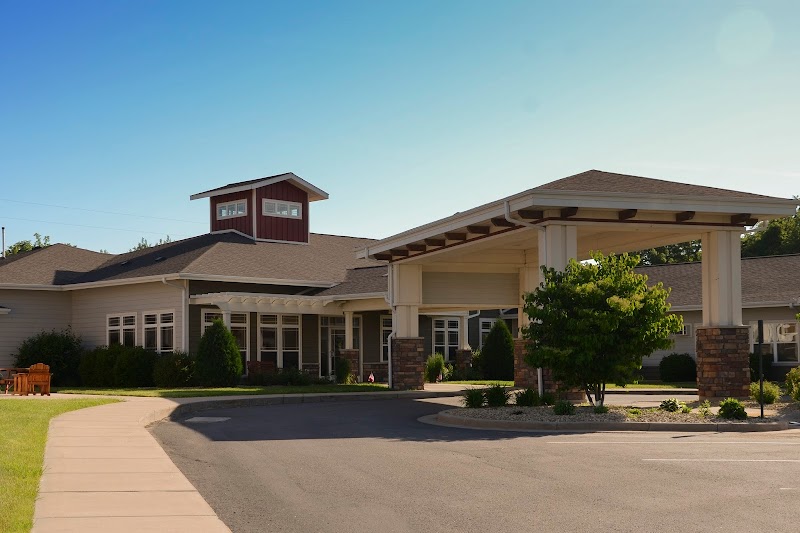
How is Spring Valley Health And Rehab Center Staffed?

CMS rates SPRING VALLEY HEALTH AND REHAB CENTER's staffing level at 3 out of 5 stars, which is average compared to other nursing homes. Staff turnover is 63%, which is 17 percentage points above the Wisconsin average of 46%. High turnover can affect care consistency as new staff learn residents' individual needs. RN turnover specifically is 75%, which is notably high. RNs provide skilled clinical oversight, so turnover in this role can affect medical care quality.

What Have Inspectors Found at Spring Valley Health And Rehab Center?

State health inspectors documented 34 deficiencies at SPRING VALLEY HEALTH AND REHAB CENTER during 2022 to 2025. These included: 1 Immediate Jeopardy (the most serious level, indicating potential for serious harm or death), 1 that caused actual resident harm, 31 with potential for harm, and 1 minor or isolated issues. Immediate Jeopardy findings are rare and represent the most serious regulatory concerns. They require immediate corrective action.
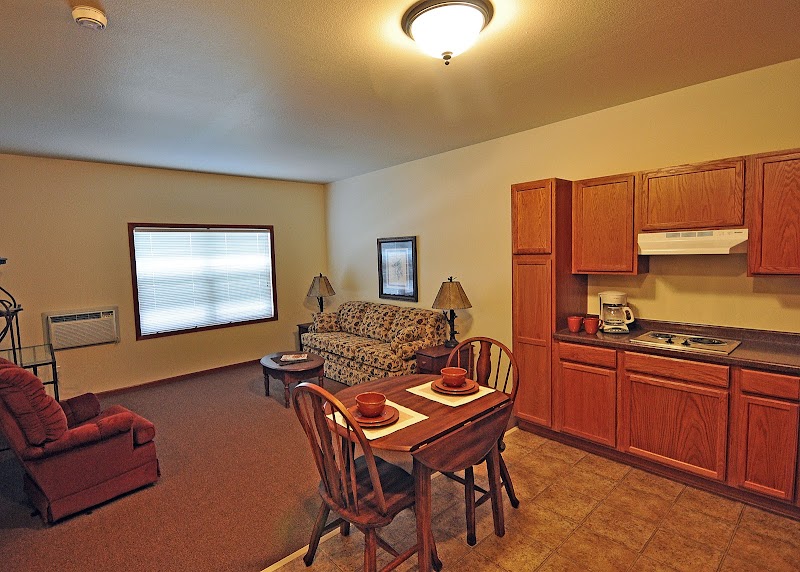
Who Owns and Operates Spring Valley Health And Rehab Center?

SPRING VALLEY HEALTH AND REHAB CENTER is owned by a non-profit organization. Non-profit facilities reinvest revenue into operations rather than distributing to shareholders. The facility operates independently rather than as part of a larger chain. With 40 certified beds and approximately 38 residents (about 95% occupancy), it is a smaller facility located in SPRING VALLEY, Wisconsin.
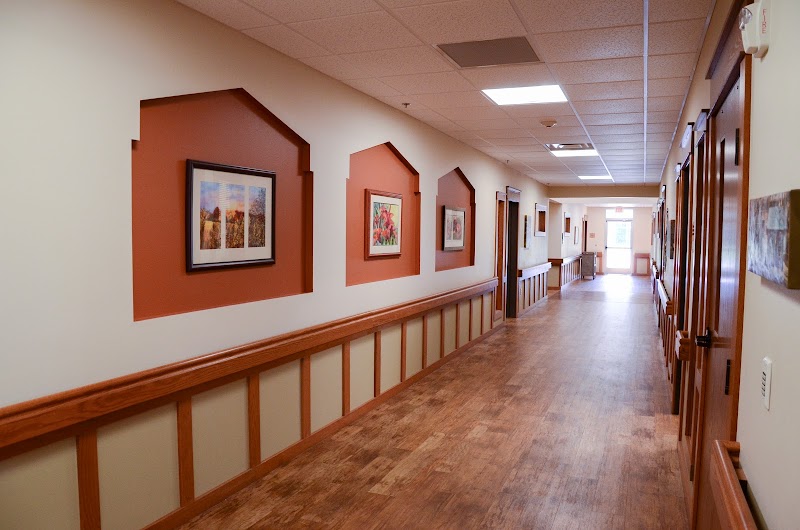
How Does Spring Valley Health And Rehab Center Compare to Other Wisconsin Nursing Homes?

Compared to the 100 nursing homes in Wisconsin, SPRING VALLEY HEALTH AND REHAB CENTER's overall rating (2 stars) is below the state average of 3.0, staff turnover (63%) is significantly higher than the state average of 46%, and health inspection rating (2 stars) is below the national benchmark.

What Should Families Ask When Visiting Spring Valley Health And Rehab Center?

Based on this facility's data, families visiting should ask: "What changes have been made since the serious inspection findings, and how are you preventing similar issues?" "How do you ensure continuity of care given staff turnover, and what is your staff retention strategy?" "Can I visit during a mealtime to observe dining assistance and food quality?" "How do you handle medical emergencies, and what is your hospital transfer rate?" These questions are particularly relevant given the facility's Immediate Jeopardy citations and the facility's high staff turnover rate.

Is Spring Valley Health And Rehab Center Safe?

Based on CMS inspection data, SPRING VALLEY HEALTH AND REHAB CENTER has documented safety concerns. Inspectors have issued 1 Immediate Jeopardy citation (the most serious violation level indicating risk of serious injury or death). The facility has a 2-star overall rating and ranks #100 of 100 nursing homes in Wisconsin. Families considering this facility should ask detailed questions about what corrective actions have been taken since these incidents.

Do Nurses at Spring Valley Health And Rehab Center Stick Around?

Staff turnover at SPRING VALLEY HEALTH AND REHAB CENTER is high. At 63%, the facility is 17 percentage points above the Wisconsin average of 46%. Registered Nurse turnover is particularly concerning at 75%. RNs handle complex medical decisions and coordinate care — frequent RN changes can directly impact care quality. High turnover means new staff may not know residents' individual needs, medications, or preferences. It can also be disorienting for residents, especially those with dementia who rely on familiar faces. Families should ask: What is causing the turnover? What retention programs are in place? How do you ensure care continuity during staff transitions?

Was Spring Valley Health And Rehab Center Ever Fined?

SPRING VALLEY HEALTH AND REHAB CENTER has been fined $27,690 across 2 penalty actions. This is below the Wisconsin average of $33,356. While any fine indicates a compliance issue, fines under $50,000 are relatively common and typically reflect isolated problems that were subsequently corrected. Families should ask what specific issues led to these fines and confirm they've been resolved.

Is Spring Valley Health And Rehab Center on Any Federal Watch List?

SPRING VALLEY HEALTH AND REHAB CENTER is not on any federal watch list. The most significant is the Special Focus Facility (SFF) program, which identifies the bottom 1% of nursing homes nationally based on persistent, serious quality problems. Not being on this list means the facility has avoided the pattern of deficiencies that triggers enhanced federal oversight. This is a positive indicator, though families should still review the facility's inspection history directly.