DOVE HEALTHCARE - ST CROIX FALLS
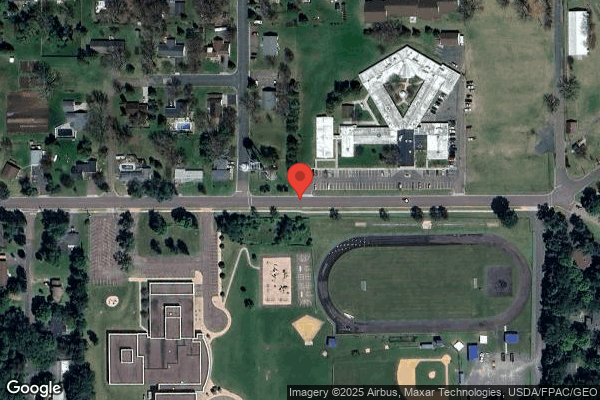
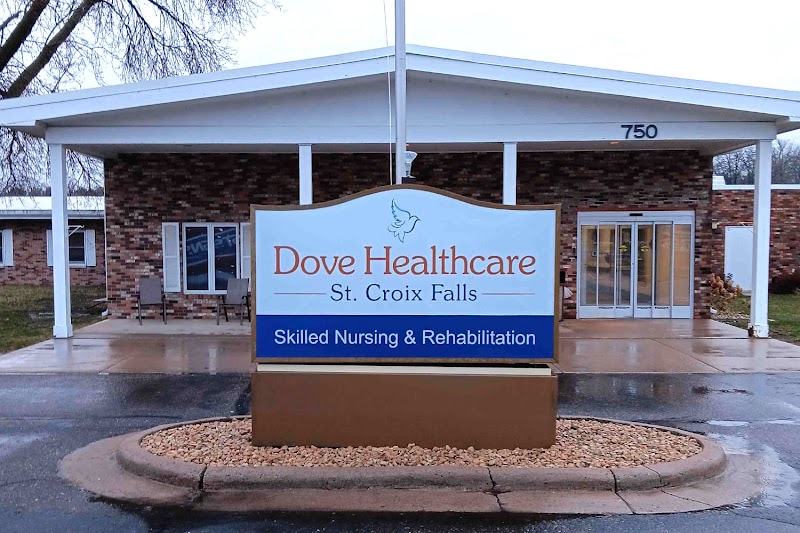
750 E LOUISIANA ST, ST CROIX FALLS, WI 54024 (715) 483-9815
For profit - Limited Liability company 50 Beds DOVE HEALTHCARE Data: November 2025 3 Immediate Jeopardy citations
Trust Grade
0/100
#272 of 321 in WI
Last Inspection: September 2025

Inspected within the last 6 months. Data reflects current conditions.

Overview

Dove Healthcare - St. Croix Falls has received a Trust Grade of F, indicating significant concerns about the quality of care provided. They rank #272 out of 321 nursing homes in Wisconsin, placing them in the bottom half and at #6 of 6 in Polk County, meaning there are no better local options available. Although the facility is improving in some areas, as issues decreased from 20 to 15 between 2024 and 2025, the overall situation is still troubling. Staffing is average with a rating of 3/5, but the turnover rate is concerning at 71%, significantly higher than the state average of 47%. The facility has accumulated $129,124 in fines, which is higher than 92% of Wisconsin facilities, suggesting ongoing compliance issues. Specific incidents highlight serious care failures, including a critical situation where a resident's wishes regarding CPR were not followed, resulting in a life-threatening delay in care. Additionally, another resident was served food that did not meet their dietary needs, leading to choking incidents. While there are some strengths, like average RN coverage, the facility's critical issues and high fines raise significant red flags for families considering care options.

Trust Score
F
0/100
In Wisconsin
#272/321
Bottom 16%
Safety Record
High Risk
Review needed
Inspections
Getting Better
20 → 15 violations
Staff Stability
⚠ Watch
71% turnover. Very high, 23 points above average. Constant new faces learning your loved one's needs.
Penalties
○ Average
$129,124 in fines. Higher than 58% of Wisconsin facilities. Some compliance issues.
Skilled Nurses
✓ Good
Each resident gets 63 minutes of Registered Nurse (RN) attention daily — more than 97% of Wisconsin nursing homes. RNs are the most trained staff who catch health problems before they become serious.
Violations
⚠ Watch
56 deficiencies on record. Higher than average. Multiple issues found across inspections.
★☆☆☆☆
1.0
Overall Rating
★★★☆☆
3.0
Staff Levels
★★★☆☆
3.0
Care Quality
★☆☆☆☆
1.0
Inspection Score
Stable
2024: 20 issues
2025: 15 issues

The Good

  • Full Sprinkler Coverage · Fire safety systems throughout facility
  • No fines on record

Facility shows strength in fire safety.

The Bad

1-Star Overall Rating

Below Wisconsin average (3.0)

Significant quality concerns identified by CMS

Staff Turnover: 71%

25pts above Wisconsin avg (46%)

Frequent staff changes - ask about care continuity

Federal Fines: $129,124

Well above median ($33,413)

Significant penalties indicating serious issues

Chain: DOVE HEALTHCARE

Part of a multi-facility chain

Ask about local staffing decisions and management

Staff turnover is very high (71%)

23 points above Wisconsin average of 48%

The Ugly 56 deficiencies on record

3 life-threatening 1 actual harm
Sept 2025 8 deficiencies
CONCERN (D)

Potential for Harm - no one hurt, but risky conditions existed

Deficiency F0552 (Tag F0552)

Could have caused harm · This affected 1 resident

**NOTE- TERMS IN BRACKETS HAVE BEEN EDITED TO PROTECT CONFIDENTIALITY** Based on interview and record review, the facility did not ensure 1 (R13) of 12 resident's right to be informed of, and particip...

Read full inspector narrative →
**NOTE- TERMS IN BRACKETS HAVE BEEN EDITED TO PROTECT CONFIDENTIALITY** Based on interview and record review, the facility did not ensure 1 (R13) of 12 resident's right to be informed of, and participate in, his or her treatment was honored. The facility offered R13 the Respiratory Syncytial Virus (RSV) Vaccine but did not administer the vaccine when R13 indicated her preference for receiving it. Findings include: The facility policy, titled Resident Rights - Self Determination dated 4/20/20 with a revision date of January 2025, indicates, in part: Purpose: To ensure that each resident has the opportunity to exercise their autonomy regarding those things that are important in their life which includes interests and preferences. Procedure: Residents have the right to actively participate in planning their care, making informed decisions about their treatment, and being fully aware of their care options. Residents will be informed of available services and care options and will have the right to select those services that best meet their needs. The facility will accommodate to the extent possible, resident preferences. The facility policy, titled Resident Rights, dated June 2002 with a revision date of January 2025, indicates, in part: Purpose: . The facility is committed to. each resident by honoring their individual goals, preferences, and choices. and their right to make decisions regarding their care and well-being. Procedure: Resident rights include: . Planning and Implementing Care. Self-Determination. The facility will support residents in exercising their rights to autonomy and choice, allowing them to decide, to the fullest extent possible, how they wish to. receive care. The facility policy, titled Management of RSV, dated 12/2024, indicates, in part: Policy: It is the policy of this facility to ensure that proper and appropriate infection control principles are utilized to help decrease the risk of transmission and respiratory syncytial virus (RSV). Definition: Respiratory syncytial virus (RSV) refers to a common respiratory virus that usually causes mild, cold-like symptoms. It can be dangerous for adults 65 years and older. those with weakened immune systems. Policy Explanation: Respiratory syncytial virus (RSV) is a highly contagious respiratory virus that can affect any age but is a greater risk for children and older adults. It is easily spread through the air on infected respiratory droplets or through direct contact. For older adults, serious complication like pneumonia. can occur. Compliance Guidelines: . 6. The facility may offer the RSV vaccine to residents aged 75 and older and residents 60-74 at increased risk of severe RSV. R13 was admitted to the facility on [DATE] with diagnoses that include multiple sclerosis, pneumonitis (inflammation of the lungs) due to inhalation of other solids and liquids, and personal history of Covid-19. R13's Acknowledgement of Receipt of Vaccine Information Sheet indicates the following, in part: I understand that Dove Health Care - St. Croix Falls recommends that I receive the vaccines to protect myself, other residents, and others in the facility and surrounding community. Dove has provided information on the risks and benefits of each vaccine listed. I have checked YES or NO to identify which vaccines I would like to receive. R13 placed a check mark in the box for Yes I want this for the Respiratory Syncytial Virus Vaccine. R13 signed and dated this form on 10/8/24. Surveyor reviewed R13's electronic health record (EHR) and could find no evidence that R13 received the RSV vaccine per her preference. On 9/17/25 at 10:23 AM, Surveyor interviewed IP AA (Infection Preventionist) and asked her if R13 received the RSV vaccine per her preference. IP AA stated that R13 did not receive the RSV vaccine, and that the facility would have to call the pharmacy in order to obtain it because they don't have that vaccine in house. Surveyor asked IP AA if R13 should have received the RSV vaccine if she wanted it. IP AA stated yes, R13 should have received the RSV vaccine if she wanted it. The facility failed to ensure that R13 was provided the RSV vaccine per her preference.
CONCERN (D)

Potential for Harm - no one hurt, but risky conditions existed

Deficiency F0578 (Tag F0578)

Could have caused harm · This affected 1 resident

**NOTE- TERMS IN BRACKETS HAVE BEEN EDITED TO PROTECT CONFIDENTIALITY** Based on interview and record review, the facility did not ensure the resident's right to request, refuse, and/or discontinue tr...

Read full inspector narrative →
**NOTE- TERMS IN BRACKETS HAVE BEEN EDITED TO PROTECT CONFIDENTIALITY** Based on interview and record review, the facility did not ensure the resident's right to request, refuse, and/or discontinue treatment and to formulate an advanced directive for 2 of 12 residents (R27 and R32) R27 and R32's charts did not contain current copies of their advanced directive and/or did not contain evidence of advanced care planning, other than code status, for a time when they are not able to make their own healthcare decisions. Evidenced by: The facility policy titled, Advance Directives, revision date 7/10/24, indicates, in part: Policy: It is the policy of this facility to support and facilitate a resident's right to request, refuse and/or discontinue medical or surgical treatment and to formulate advance directive. Definitions: Advanced directive is a written instruction, such as a living will or durable power of attorney for health care.relating to the provision of health care when the individual is incapacitated. Policy Explanation and Compliance Guidelines: 1. On admission, the facility will determine if the resident has executed an advanced directive, and if not, determine whether the resident would like to formulate an advance directive. 2. The facility will provide the resident or resident representative information.about the right to refuse medical or surgical treatment and formulate an advance directive. 3. Upon admission, should the resident have an advance directive, copies will be made and placed on the chart as well as communicated to the staff.7. During the care planning process, the facility will identify, clarify, and review with the resident or legal representative whether they desire to make any changes related to any advance directives. Example 1 R27 was admitted to the facility on [DATE]. On 9/16/25 at 9:19AM during the record review portion of the initial pool process, surveyor was unable to locate a copy of R27's advanced directive/POAHC (Power of Attorney for HealthCare) in his electronic medical record. On 9/16/25 at 3:15PM Surveyor interviewed Social Services Director C (SSD) and requested information regarding advanced directive/living will documentation for R27. SSD C indicated R27 did not have one on file. Surveyor asked SSD C if a copy of the HCPOA should be on file at the facility, or if they do not have one, should it be documented that the resident was offered assistance in completing one and their preference. SSD C indicated, yes. SSD C indicated she would look for any documentation about offering assistance, if they refused, and if anyone reapproached if they wanted more time to decide. On 9/16/25 3:52PM Surveyor interviewed SSD C who indicated she was unable to find anything for R27 related to his HCPOA/living will. Surveyor asked SSD C if someone should have ensured a HCPOA/living will was on file for R27 or documented discussions/assistance offered to R27 regarding completing a HCPOA/living will. SSD C indicated, yes. Example 2 R32 was admitted to the facility on [DATE]. On 9/16/25 at 8:18AM during the record review portion of the initial pool process, surveyor was unable to locate a copy of R32's advanced directive/POAHC (Power of Attorney for HealthCare) in his electronic medical record. On 9/16/25 at 3:15PM Surveyor interviewed Social Services Director C (SSD) and requested information regarding advanced directive/living will documentation for R32. SSD C indicated R32 did not have one on file. Surveyor asked SSD C if a copy of the HCPOA should be on file at the facility, or if they do not have one, should it be documented that the resident was offered assistance in completing one and their preference. SSD C indicated, yes. SSD C indicated she would look for any documentation about offering assistance, if they refused, and if anyone reapproached if they wanted more time to decide. On 9/16/25 at 3:56PM SSD C brought in documentation regarding HCPOA/living will for R32. The document dated 4/25/25 and titled, Social Service Evaluation (Q) Care Conference Progress Note . indicates, in part: Section G. Advance Care Planning.2.No POA (Power of Attorney) paperwork on file, resident is interested in completing the documents. On 9/17/25 at 8:47AM Surveyor interviewed SSD C, reviewed the information from the document dated 4/25/25 and titled, Social Service Evaluation (Q) Care Conference Progress Note ., Section G. Advance Care Planning.above. Surveyor asked SSD C, with the note stating R32 was interested in completing the documents, should assistance have been given and documented. SSD C indicated, absolutely.
CONCERN (D)

Potential for Harm - no one hurt, but risky conditions existed

Grievances (Tag F0585)

Could have caused harm · This affected 1 resident

**NOTE- TERMS IN BRACKETS HAVE BEEN EDITED TO PROTECT CONFIDENTIALITY** Based on interview and record review the facility did not document a thorough investigation and did not resolve grievances as ou...

Read full inspector narrative →
**NOTE- TERMS IN BRACKETS HAVE BEEN EDITED TO PROTECT CONFIDENTIALITY** Based on interview and record review the facility did not document a thorough investigation and did not resolve grievances as outlined in the facility policy for 2 of 12 Residents (R32 and R20) reviewed for grievances. R32 voiced a concern to a staff member and the facility failed to follow their grievance policy by thoroughly investigating, following up, and documenting the concern. R20 voiced a grievance regarding wound care and the facility did not follow the grievance process. Evidenced by: The facility policy, “Grievance Policy,” revision date 11/2019, indicates, in part: Policy Statement: …grievances include those with respect to care and treatment which has been furnished as well as that which has not been furnished, the behavior of staff and of other residents, and other concerns regarding their long-term care facility stay. The facility will ensure prompt resolution to all grievances, keeping the Resident and Resident Representative informed throughout the investigation and resolution process. The Facility grievance process will be overseen by a designated Grievance Official who will be responsible for receiving and tracking grievances through their conclusion, lead necessary investigations…communicate with residents throughout the process to resolution…Objective of Grievance Policy: The objective of the grievance policy is to ensure the Facility makes prompt efforts to resolve grievances a resident may have. The facility policy, “Grievance Procedure,” revised date 11/2023, indicates, in part: Purpose: To ensure that each Resident or Resident Representative has the right to voice grievances regarding treatment, care, management of funds, lost clothing or violation of rights and to ensure that the Facility makes prompt efforts to resolve these grievances. Procedure: …5. The facility has identified a grievance official who is responsible for: a) Overseeing the grievance process b) Receiving and tracking grievances through their conclusion c) Leading any necessary investigations by the facility…e) Issuing written grievance decisions to the Resident or Resident Representative as requested…7. As necessary, the Facility will take immediate action to prevent further potential violation of Resident rights while the alleged violation is being investigated…9. Facility will immediately initiate an investigation by acknowledging receipt of the grievance. Assurance will be given that the incident or series of incidents will be investigated. 10. The investigation report should include, as each may apply: a. The date and time the incident took place; [sic] b. The date and time the grievance was received; c. A summary statement of the Resident’s grievance; d. The steps taken to investigate the grievance…e. A statement as to whether the grievance was confirmed or not confirmed f. Any corrective action taken or to be taken by the Facility as a result of the grievance will be in accordance with Facility policies and Federal and State regulations. g. The date written decision was determined…12. The investigation should be completed within fifteen (15) working days of the receipt of the grievance unless otherwise directed and/or approved by administration. 13. The Resident or Resident Representative will be informed of the conclusion of the investigation and will be given a written summary upon request… Example 1 R32 was admitted to the facility on [DATE] with diagnoses that include, in part: Acute and Chronic Respiratory Failure with Hypoxia; Difficulty in Walking; Muscle Weakness; Pain in Left Hip; Trochanteric Bursitis, Right Hip (an inflammation of the bursa, a fluid-filled sac, located on the outer side of the hip) … R32’s most recent Minimum Data Set (MDS), 8/8/25, indicates R32 has a Brief Interview for Mental Status (BIMS) score of 12, indicating R32 has a moderate cognitive impairment. R32’s Kardex indicates, in part: Mobility/Transfer/Bed Mobility: …Transfer: 2 assist full mechanical lift… R32’s Kardex does not address Locomotion on the unit. R32’s Comprehensive Care Plan includes, in part: .Focus: I have an ADL (Activities of Daily Living) self-care performance deficit r/t (related to) activity intolerance, fatigue, pain. Date initiated: 7/13/23. Revision on: 1/31/24…Interventions: Transfer: 2 assist full mechanical lift. Date Initiated: 1/12/24. Revision on: 9/16/25. Surveyors were unable to find information regarding locomotion on the unit noted on the comprehensive care plan. 9/15/2025 3:58PM Surveyor interviewed R32 as part of the initial screening process. R32 indicated sometimes when he goes to the dining room, he requests help, and he is told he can do it himself. R32 states sometimes he can but doesn’t always feel up to it and sometimes when he carries his cup with him, he can’t do it himself. R32’s progress notes, include, in part: 9/14/25 1:22PM…Behavior: Resident was yelling out while rolling himself down the (hallway number) hallway. Nurse was going to resident to assist him with a ride in his wheelchair to his room. Resident began to cry i can’t wait until Monday to report not being helped. Resident was upset he couldn't find a ride from the dining room to his room. Resident had a cup in his hand making it hard to roll himself back to his room with 1 hand. Nurse explained to resident that during lunch, people have to pass trays and assist others with feeding. Resident was not understanding. Interventions Attempted: Nurse gave resident a ride back to his room…Resident greatly appreciative. Effectiveness of Interventions: effective. Author: Registered Nurse (RN) D On 9/17/25 at approximately 10:39AM, Surveyor interviewed Certified Nursing Assistant L (CNA) and asked how she knows how the residents she cares for move on the unit. CNA L indicated they have a Kardex in their room and it is updated on Monday, Wednesday, Friday, and as needed. Surveyor asked CNA L how R32 moves on the unit. CNA L indicated she knows he is dependent in the hall. Surveyor asked CNA L if R32 has ever told her he isn’t being helped. CNA L indicated he’s asked me if he is being ignored, and she tells him no and explains if she was helping another person. CNA L indicated if you explain it to him, he is usually pretty understanding. CNA L indicated he has never told her “Flat out” that people haven’t helped him. Surveyor requested CNA L review the Kardex in R32’s room with her. Surveyor asked CNA L if she could locate information on how R32 moves around in the hall. CNA L indicated she could not locate the information and that the Kardex is what she uses to know how to care for her residents. Surveyor asked CNA L how she knows that R32 needs assistance moving in his wheelchair on the unit. CNA L indicated from the nurses, other aides, and from doing a lot of her training on the hall. On 9/17/25 at approximately 10:00AM Surveyor interviewed RN D (Registered Nurse) and asked what the expectation is if a resident voices a concern. RN D indicated, typically they will make note of it and report it to the case managers. We now have a policy where we have to reach out to the Nursing Home Administrator (NHA) or Director of Nursing (DON), but I know that the case manager also reaches out to them. RN D indicated, depending on the concern we will go talk to the resident, get their side, and see what is going on. Surveyor reviewed with RN D the note above from 9/14/25 1:22PM (authored by RN D) for R32 regarding him stating he doesn't get help and couldn’t wait until Monday to report it. Surveyor asked RN D if R32 had told her if he had asked for help that day. RN D indicated, he just made the comment that he can’t ever get any help, which is typical of him if he can’t get it right away. Surveyor asked RN D if she reported to anyone R32’s concern with not getting help. RN D indicated she did not, she just did the behavior note since he was on behavior charting. Surveyor asked RN D if she feels this should have been reported as a grievance. RN D indicated, now that I’m thinking about it yes. In the moment, it is such a common thing for him to say he doesn’t get help, that it didn’t register to file one. Surveyor asked RN D if this is something R32 says all the time at what point would she say it should be looked into given he continues to say he isn’t receiving help. RN D indicated, I don’t really have an answer, sooner rather than later. On 9/17/25 at 10:55AM Surveyor interviewed Nursing Home Administrator A (NHA) and asked if he was the grievance officer. NHA A indicated he was. Surveyor reviewed the note from 9/14/25 regarding R32 reporting to RN D that he is not getting help and the interview with RN D indicating he states this frequently. Surveyor asked NHA A if there should have been a grievance completed given R32’s concern. NHA A indicated, yes. Example 2 R20 was admitted to the facility 3/2/23 with diagnosis of Diabetes Mellitus Type II with foot ulcer, and personal history of diabetic foot ulcer. On 9/18/25 at 7:34 AM During an interview R20 indicated she did not want NP Z (Nurse Practitioner) debriding her foot wound, stating “It’s worse, and then it starts to make my leg start to hurt.” R20 indicated she reported to the NHA A and one of the nurses her concern about her wound. R20 told NP Z that she didn’t like her and didn’t want her to touch her foot anymore. 0n 9/18/25 at 9:49 AM AA K (Administrative Assistant) indicated that R20 had voiced a concern about not wanting to see NP Z anymore. AA K indicated R20’s concern is a grievance, and it should be investigated. AA K stated that she reported R20’s voiced concern to NHA A. On 9/18/25 at 10:01 AM NHA A indicated he was aware of R20’s voiced concern. NHA A (Nursing Home Administrator) indicated when a resident voices a concern. Staff should follow the facility grievance policy. (It is important to note that R20 voiced a grievance to facility staff, and they did not fill out a grievance form and follow up on the concern per facility policy.)
CONCERN (D)

Potential for Harm - no one hurt, but risky conditions existed

Report Alleged Abuse (Tag F0609)

Could have caused harm · This affected 1 resident

**NOTE- TERMS IN BRACKETS HAVE BEEN EDITED TO PROTECT CONFIDENTIALITY** Based on interview and record review, the facility did not ensure that all alleged violations involving injuries of unknown orig...

Read full inspector narrative →
**NOTE- TERMS IN BRACKETS HAVE BEEN EDITED TO PROTECT CONFIDENTIALITY** Based on interview and record review, the facility did not ensure that all alleged violations involving injuries of unknown origin are reported immediately to the administrator of the facility and to other officials, including to the State Agency, in accordance with State law for 1 of 12 residents (R1) reviewed for abuse.R1 was noted to have an area of swelling to right hip and dark purple bruising to right shoulder and arm. The origin of this injury was unknown and was not reported to the Nursing Home Administrator (NHA) or the State Agency (SA).Evidenced by:The facility's Resident Abuse, Neglect, Misappropriation of Property, and Exploitation Prevention Program policy, dated 10/2023, states, in part: .Definitions: . Injuries of unknown source an injury should be classified as an injury of unknown source when all of the following are met: the source of the injury was not observed by any person; and the source of the injury could not be explained by the resident; and the injury is suspicious because of the extent of the injury or the location of the injury (e.g., the injury is located in an area not generally vulnerable to trauma) or the number of injuries observed at one particular point in time or the incidence of injuries over time.7. Reporting/Response: .All staff/covered individuals are required to immediately report all alleged violations involving abuse, neglect, exploitation, or mistreatment, including injuries of unknown source and misappropriation of resident property to the administrator, State Survey Agency, and local law enforcement, without fear of retaliation or reprisal. In addition, facility must report alleged violations related to mistreatment, exploitation, neglect, or abuse, including injuries of unknown source and misappropriation of resident property and report the results of all investigation to the State Survey Agency, and other proper officials (e.g. local law enforcement and adult protective services) within the prescribed time frame. This required reporting is the responsibility of the Administrator or designee.R1 was admitted to the facility on [DATE] and has diagnoses that include Cerebral infarction due to thrombosis of left middle cerebral artery (a stroke caused by blockage in a major blood vessel in the brain); Hemiplegia and hemiparesis following unspecified cerebrovascular disease affecting right dominant side (paralysis or weakness on the right side of the body following stroke); difficulty in walking; unsteadiness on feet.R1's Minimum Data Set (MDS), dated [DATE], indicates a Brief Interview of Mental Status (BIMS) score of 8, indicating moderate cognitive impairment.R1's progress notes include:*3/8/25: This nurse called into resident's room for assessment by CNA (Certified Nursing Assistant) because resident was complaining of increased pain, difficulty ambulating, an area of swelling noted on right hip and dark purple bruising on the front of right shoulder and arm.*3/8/25: Resident is at hospital.has a hematoma (a localized collection of blood outside the blood vessels that causes swelling and bruising) and a pneumothorax (a condition where air enters the space between the lung and chest wall, causing the lung to collapse; may occur without obvious cause or may be result of chest injury) with a chest tube (a tube inserted into the space between the lung and chest wall to drain fluid, air, or pus).On 9/16/25 at 3:46 PM, Surveyor interviewed RNNM J (Registered Nurse / Nurse Manager) and asked about the procedure when a resident is noted to have swelling and bruising. RNNM J stated an assessment would be done and if the facility does not know how it occurred there will be an investigation and documentation on a risk management. Surveyor reviewed R1's progress note from 3/8/25. RNNM J stated there should be risk management, but did not see any in R1's chart.On 9/16/25 at 4:21 PM, Surveyor interviewed DON B (Director of Nursing) about the procedure when a resident is noted to have swelling and bruising. DON B stated complete an assessment, notify the provider, investigate the root cause. DON B stated this would be documented in risk management. Surveyor asked if there was risk management for R1 for the bruising and swelling noted on 3/8/25. DON B stated no and would have expected there to be an investigation; this would be an injury of unknown source that would need to be reported to NHA and SA, but it was not reported.On 9/17/25 at 4:05 PM, Surveyor interviewed NHA A (Nursing Home Administrator) who stated that R1's swelling and bruising would be considered an injury of unknown origin and should have been reported.
CONCERN (D)

Potential for Harm - no one hurt, but risky conditions existed

Accident Prevention (Tag F0689)

Could have caused harm · This affected 1 resident

**NOTE- TERMS IN BRACKETS HAVE BEEN EDITED TO PROTECT CONFIDENTIALITY** Based on observation, interview, and record review, the facility did not ensure that each resident receives adequate supervision...

Read full inspector narrative →
**NOTE- TERMS IN BRACKETS HAVE BEEN EDITED TO PROTECT CONFIDENTIALITY** Based on observation, interview, and record review, the facility did not ensure that each resident receives adequate supervision and assistive devices to prevent accidents in 2 of 2 (R6 and R17) residents reviewed for falls. R17 was assessed and care planned for 2-person assist with an EZ stand to meet her needs for transfers. CNA E (Certified Nursing Assistant) did not follow manufacturer’s recommendations for the EZ stand lift and did not fasten the harness’ safety strap around R17’s waist. R17 had a change in plane when she was lowered to the floor. R6 has diagnoses repeated falls, has been assessed by the facility to be at risk for falling, and has experienced multiple falls since admission. Surveyor observed R6 without his care planned intervention in place related to fall prevention. This is evidenced by: Facility policy, titled Safe Resident Handling/Transfers, revised 1/2025, states in part…the policy of this facility to ensure that residents are handled and transferred safely to prevent or minimize risks for injury and provide and promote a safe, secure and comfortable experience for the resident while keeping the employees safe in accordance with current standards and guidelines. Compliance Guidelines, states in part…14. Resident lifting and transferring will be performed according to the residents’ individual plan of care. 15. Staff will perform mechanical lifts/transfers according to the manufacturer’s instructions for use of the device. EZ way Smart Stand Operator’s Instructions with a revision date of 5/9/2025, states, in part; …Safety Notes …Do not modify harness design in any way. …Transferring the patient: …1) Position the harness around the upper body of the patient so the sides of the harness are between the patient’s torso and arm, resting 2-3 inches below the underarm. 2) For the safety of the patient, securely fasten the safety strap around the patient’s torso. 3) Secure the buckle and pull the strap to tighten. Facility policy, titled Fall Prevention Program, reviewed on 8/24, includes: Each resident will be assessed for fall risk and will receive care and services in accordance with their individualized level of risk to minimize the likelihood of falls… Some interventions may include, but not limited to encourage resident to wear shoes or slippers with nonslip soles when ambulating… Each resident’s risk factors, and environmental hazards will be evaluated when developing the resident's comprehensive plan of care. Interventions will be monitored for effectiveness. The care plan will be revised as needed. When a resident experiences a fall, the facility will: assess the resident, complete post fall assessment, complete an incident report, notify the provider and resident/resident representative, review care plan and update as needed, document all assessments/observations and actions, obtain witness statements in the case of injury, neuro checks will be completed for any unwitnessed fall or witnessed fall where resident hit their head… staff to alert provider of any abnormal findings from the neuro checks… Review each fall/fall investigation during the next morning meeting/clinical meeting with the interdisciplinary team. Actions may include review investigation and determination of potential root cause of fall, review of fall risk care plan and update, additional revisions to the care plan, education of staff to as any care plan revisions as needed, scheduling care conferences, verification of timely notification of provider and responsible party. Example 1 R17 admitted to the facility on [DATE]. Her diagnoses include arthropathy (any kind of disease or disorder affecting a joint), morbid obesity, polyneuropathy (a condition where multiple peripheral nerves throughout the body become damaged or diseased), unilateral primary osteoarthritis right knee (joint condition that causes pain, stiffness and loss of movement), edema (swelling), and history of right humerus (upper arm) fracture. R17’s MDS (Minimum Data Set) with ARD (Assessment Reference Date) of 7/21/25 indicates R17 was cognitively intact with a BIMS (Brief Interview for Mental Status) of 15 out of 15. R17’s Comprehensive Care Plan date initiated 4/2/24, target date 10/23/25, indicates R17 requires two assist, with mechanical sit to stand, and XL harness for transfers. R17’s Facility Fall Report, dated 9/12/25, includes the following: Date and Time occurred-9/12/25 9:00 PM. Incident Location: Activity Room (it should be noted that the fall occurred in R17’s room.) Initial Report: Fall was reported to RN D (Registered Nurse) that R17 had fall in evening of 9/12/25 from lift. Writer was notified and investigation initiated. Incident was witnessed. Immediate action taken: Description: Investigation completed. RN D completed skin assessment and initiated clinical follow up forms. DON, admin, on call provider updated. Resident not taken to hospital. Other information: Resident was unwilling to allow staff to reposition her properly. She would not have been lowered to the floor if she would have let us touch her legs. Power was out, backup generator functioning to red outlets. Bed was stuck in raised position and staff were unable to transfer her back to bed from commode. Statements: CNA E (Certified Nursing Assistant): …in part, CNA E states that resident had requested to go on the commode, she transferred very well and safely. R17 began saying she was tired and “get me to the bed.” At this point CNA E walkied (Walkie Talkie) for second staff member. R17 began saying “no, no, no put me back on the commode”, and started to let go of the lift. Resident was beginning to slide through the straps and CNA E stated she got behind her and assisted her slowly to the ground sliding to the floor with her legs and body. Resident did not fall out of the Hoyer but did remark in having R (right) shoulder pain. CNA G: Called for fall, resident was reportedly standing in EZ stand. Reports resident did not fall from Hoyer sling. Was positioned on her back onto sling. Resident was out of it, received pain meds and within 30 min (minutes) back to normal. May have pinched her arm in the sling as she was asked to give herself a hug but was out of it and staff had to watch arm and body positioning. CNA F: …in part, [CNA E] called for help with getting resident off commode. When she went into help [CNA E] started moving her and asked her to put the bed down. Was unable to as power was out. [CNA E] told her to get the w/c (wheelchair) or commode to put under her. Resident was squatting too much and fell. On 9/17/25 at10:41 AM, CNA E indicated R17 was moved to her commode with EZ stand. She was ready to go back. Once standing she wanted to go back to the commode, but she was too low and couldn’t get her back on the commode. R17 was screaming take me back to the commode. CNA E reported the sling on her arm had come off. Surveyor asked if the sling had come off the machine, CNA E stated no; the clip was off. She stood behind R17, and she slid her down onto the floor. Called the nurse and any help we could get. Now use the Hoyer to transfer. We put her back to bed from the ground with the Hoyer. On 9/17/25 at 11:02 AM Surveyor interviewed CNA F. Surveyor asked CNA F what happened during fall with R17. CNA F reported that she told CNA E that she had to go to the bathroom and then she could help transfer R17. CNA E asked me to help but started before me. When CNA F returned CNA E was pulling her away from the commode and was stuck on the wheel of her electric wheelchair. R17 was yelling to go back to the commode. R17 started to squat down, and she tried to get the commode underneath her, but she was slowly going down. Surveyor asked CNA F how R17 could be sitting on the floor with the sling still on. CNA F reported that she didn’t think that CNA E had the harness clipped. R17 was holding onto the sides of the lift until she couldn’t hold anymore and then she let go and lowered to the floor. Surveyor asked CNA F what the policy is for lifting with the EZ stand. CNA F stated that R17 was a 2 assist for transfers. The information is on a board in the back of the staff office, or a Kardex on her door. On 9/17/25 at 2:10 PM Surveyor interviewed CNA G. CNA G reported that she had put R17 on the commode with another staff member earlier. She was called into the room for a fall R17 was sitting on the floor and her back was resting on CNA E’s legs. EZ stand was in the highest position and not lowered down. Surveyor asked CNA G how the EZ stand could be at its highest position and the patient is on the floor. “R17 doesn’t like to be strapped into the belt.” Surveyor asked how the harness was used without it being clipped shut. CNA G responded that R17 doesn’t like the sling to be buckled. The loops are hooked to the actual machine. She has it hanging there (the buckle) with her arms over the straps. CNA G reports she has been doing this for 2 years. CNA G stated R17 is very particular. On 9/18/25 at 7:32 AM Surveyor interviewed CNA H. Surveyor asked if you are transferring with an EZ stand how many staff do you have. CNA H stated EZ stand is 1 unless care planned for 2. On 9/18/25 at 7:47 AM Surveyor interviewed CNA I. Surveyor asked if you are transferring with an EZ stand how many staff do you have. CNA, I reported usually 1 unless care planned, then 2. On 9/18/25 at 9:46 AM Surveyor interviewed RN D (Registered Nurse). Surveyor asked should the buckle on the EZ stand harness be clipped during the transfer. RN D responded absolutely. On 9/18/25 Surveyor interviewed DON B (Director of Nursing). Surveyor asked DON B if she would expect her staff to follow the care plan for each resident. DON B replied yes. Surveyor asked if R17 should have had two staff with her transfer. DON B replied yes. Surveyor asked DON B if the belt on the harness should have been clipped. DON B stated yes. DON B provided fall and sling sizing education that was completed on 9/16/25. (Education was started after the survey team entered the building.) Example 2 R6 admitted to the facility on [DATE] with the following diagnoses: Parkinsonism (clinical syndrome characterized by tremor, bradykinesia, rigidity, and postural instability), peripheral vascular disease (narrowed or blocked blood vessels in the limbs), unspecified dementia, repeated falls, hemiplegia (the complete paralysis of one side of the body) and hemiparesis (muscle weakness or partial paralysis on one side of the body), and cerebral infarction (stroke). R6’s fall risk assessment, dated 4/17/25, indicates he is at risk for falls with a score of 16. R6’s Comprehensive Care Plan, effective 11/20/23, includes: 4/29/25 Wear grippers without shoes, as my current ones are rubbing on my toe. 6/16/25 Wear grippers without shoe, as my current ones are rubbing on my toe. R6’s Nurse Notes, dated 6/12/25, include: Nurse was called to the … restroom for an unwitnessed fall. Resident was found sitting on his buttocks in front of the sink, with back against the wall. He states that he needed to use the bathroom, and his common bathroom was locked. So, he transferred himself to this bathroom and fell. He denied hitting his head. Denies any pain. States his neighbor had the bathroom door locked and he needed to go so he transferred himself. States he lost his balance and fell. Assessed body alignment and for pain. Vitals assessed and WNL (within normal limits). Assisted resident into his wheelchair and back to room. Assisted with toileting and ensured his bathroom door was unlocked. Educated him on the importance of calling before transferring to prevent falls in the future. Nurse Practitioner at facility and aware of fall. Nurse Manager alerted of incident. Neurological checks initiated. Interventions discussed and put in place. R6’s Nurse Note, dated 7/30/25, includes: … was called to resident's room by CNA (Certified Nursing Assistant) via walkie (Walkie Talkie). Writer walked into resident's room and found resident on his back near his wheelchair. Resident was holding his head up and writer assessed resident and found no injury. Resident states, I slid out of my chair. R6’s Comprehensive Care Plan, effective 11/20/23, includes: 8/28/25 Wear gripper socks at all times, no shoes . R6’s Kardex, reviewed and updated 9/15/25, includes: wear gripper socks at all times. No shoes. On 9/17/25 at 8:00 AM Surveyor observed R6 in the dining room with regular socks on. R6 indicated in an interview that a staff member assisted him in getting ready for the day. On 9/17/25 at 9:00 AM during an interview R6 indicated he has fallen a couple times, and he has a wound on his toe that was caused by his shoes. R6 showed Surveyor the shoes he said cause the wound on his toe. On 9/17/25 at 10:14 AM during an interview CNA O (Certified Nursing Assistant) indicated she was unsure if R6 was a fall risk. CNA O and Surveyor reviewed R6’s Kardex that hung in his bathroom. On 9/17/25 at 10:15 AM Surveyor asked CNA O if R6 should have nonskid footwear on? CNA O stated, “I tried to put your shoes on this morning, and you refused.” R6 indicated his shoes hurt his feet. Surveyor and CNA O reviewed R6’s Kardex noting it states “wear gripper socks at all times. No shoes. Surveyor observed CNA O exchange R6’s socks for gripper socks/nonskid footwear. CNA O indicated the gripper socks are for fall prevention, and he can’t have the shoes due to his wound. On 9/17/25 at 2:09 PM NHA A (Nursing Home Administrator) and Surveyor reviewed R6’s Comprehensive Care Plan, 2 falls, and Kardex. NHA A indicated R6 is a fall risk and has a pressure injury on his toe caused by his shoes. Surveyor shared observation with NHA A of R6 having on regular socks. NHA A stated, “He should have gripper socks on.” On 9/18/25 at 9:22 AM [NAME] President of Clinical Operations N indicated R6 should have gripper socks on at all times.
CONCERN (D)

Potential for Harm - no one hurt, but risky conditions existed

Antibiotic Stewardship (Tag F0881)

Could have caused harm · This affected 1 resident

**NOTE- TERMS IN BRACKETS HAVE BEEN EDITED TO PROTECT CONFIDENTIALITY** Based on interview and record review the facility failed to ensure they followed standards of practice for an antibiotic steward...

Read full inspector narrative →
**NOTE- TERMS IN BRACKETS HAVE BEEN EDITED TO PROTECT CONFIDENTIALITY** Based on interview and record review the facility failed to ensure they followed standards of practice for an antibiotic stewardship program that includes antibiotic use protocols and a system to monitor antibiotic use for 1 (R44) of 5 residents reviewed for antibiotic stewardship.R44 was diagnosed with an acute urinary tract infection. The physician ordered the antibiotic ciprofloxacin (Cipro) 500 milligram (mg) tablet. There was no susceptibility testing done to ensure that R44's antibiotic treatment would be effective.Evidenced by:The facility's Antimicrobial Stewardship Procedure policy, dated March 2012, with last revision date of March 2024, states, in part: Policy: To ensure judicious use of antibiotics, optimize clinical outcomes while minimizing unintended consequences of antimicrobial use including toxicity, to prevent the development of pathogenic organisms. and the emergence of resistance. Procedure: 1. Antibiotic Decision Making. c. The medical provider utilizing their medical judgment and the clinical picture determines the correct treatment plan for the individual resident condition. 2. Basic Premises for all Common Infections in Long Term Care. a. Antibiotic treatment will be determined by the medical provider based on individual resident condition and clinical practice standards. These standards require the practitioner to evaluate symptoms and using their medical judgement. 3. Antimicrobial/Antibiotic orders: . e. The infection Preventionist or designee reviews any antibiotic orders entered in the electronic medical record. This review will include but not be limited to: i. Obtaining further documentation for the necessity of the treatment plan will be obtained from the medical provider as necessary. The facility's Infection Prevention and Control Program policy, dated 1/2025, states, in part: Policy: This facility has established and maintains an infection prevention and control program designed to provide a safe, sanitary, and comfortable environment and to help prevent the development and transmission of communicable diseases and infections as per accepted national standards and guidelines . 1. The designated Infection Preventionist is responsible for oversight of the program and serves as a consultant to our staff on infectious disease. 6. Antibiotic Stewardship: a. An antibiotic stewardship program will be implemented as part of the overall infection prevention and control program. b. Antibiotic use protocols and a system to monitor antibiotic use will be implemented as part of the antibiotic stewardship program.R44 was admitted to the facility on [DATE] with diagnoses that include chronic kidney disease, Type 2 diabetes mellitus, and urge incontinence. On 8/8/25 the facility Infection Surveillance Monthly Report indicates that R44 was experiencing pain, itching or burning in the vagina. On 8/10/25 R44 was seen in the Emergency Department (ED). R44's hospital encounter summary indicates, in part: . urinary tract infection presenting with concern for urinary tract infection with dysuria and discomfort in the area of the perineum. Patient notes that she was recently treated for urinary tract infection while she was on the antibiotics did seem as if the symptoms improved but noted that they seem to return shortly after she completed the antibiotics. R44's urinalysis results indicate, in part: . occult blood in the urine 1+. [NAME] Blood Cells (WBC) > 100. Bacteria moderate. R44 was diagnosed with an Acute urinary tract infection and ordered a 5-day course of the antibiotic ciprofloxacin (Cipro) 500 mg tablet to be taken twice daily. On 9/18/25 at 10:00 AM, Surveyor interviewed VPCO N (Vice President of Clinical Operations) about antibiotic stewardship. Surveyor asked VPCO N if there was a culture and sensitivity test completed for R44. VPCO N stated that she was looking for a culture and sensitivity in R44's electronic health record but was unable to find one. VPCO N stated of course there should have been a culture and sensitivity completed to ensure R44 was prescribed the correct antibiotic.
CONCERN (F)

Potential for Harm - no one hurt, but risky conditions existed

Food Safety (Tag F0812)

Could have caused harm · This affected most or all residents

Based on observation and interview, the facility did not maintain a safe and sanitary environment in which food is prepared, stored, and distributed. This has the potential to affect all 47 residents ...

Read full inspector narrative →
Based on observation and interview, the facility did not maintain a safe and sanitary environment in which food is prepared, stored, and distributed. This has the potential to affect all 47 residents who reside in the facility. Surveyor observed staff in the food preparation area without donning hair restraints. Surveyor observed frozen drips on the ceiling inside of the facility's freezer and on and inside of boxes of food that were no longer sealed by the manufacturer. Surveyor observed a stored mixer to be stored unclean. Surveyor observed [NAME] Y with his personal beverage on the food preparation counter. Surveyor observed opened boxes of juice without an open date. Evidenced by: Example 1 Facility policy, titled Dietary Employee Personal Hygiene, effective 4/2025, includes: Hair Restraints: All dietary staff must wear hair restraints, hairnet, hat, and/or beard restraint to prevent hair from contacting food. Head coverings must be clean. On 9/16/25 at 11:50 AM Surveyor observed [NAME] R in the kitchen, in the food preparation area, without a beard restraint and with a baseball cap. Surveyor also observed [NAME] Q serving lunch with a stocking cap on. During an interview [NAME] Q indicated he wears the stocking cap everywhere as he is a snowboarder and a skateboarder. Surveyor asked [NAME] Q if he has a hat that is designated just to the facility's kitchen. [NAME] Q indicated he doesn't, but he would get one. On 9/16/25 at 12:13 PM Dietary Manager P indicated NHA A (Nursing Home Administrator) told her that the men did not need beard restraints, and she was not sure which food code the facility uses as a standard of practice. Dietary Manager P indicated both [NAME] R and [NAME] Q wear their hats to the facility and to home when they leave. Dietary Manager P indicated she was unsure how often the hats are laundered or where exactly [NAME] Q and [NAME] R are wearing the hats outside of the facility. On 9/16/25 at 12:15 PM NHA A (Nursing Home Administrator) indicated staff with facial hair need hair covered and there are beard restraints available for their use. NHA A indicated the facility should designate hats for [NAME] R and [NAME] Q to keep in the facility's kitchen. Then they can wear their personal hat to the kitchen and their designated hat in the kitchen while working. Example 2 On 9/15/25 at 1:12 PM Surveyor observed the facility's mixer to be stored with all of the pieces inside the bowl. When Surveyor looked up inside of the undercarriage, Surveyor observed splatters of orange and white food substance. During an interview, Dietary Manager P indicated the mixer is unclean and she would clean it right away. On 9/15/25 at 1:40 PM NHA A indicated kitchen equipment should be stored clean. Example 3 Facility policy, titled Dietary Employee Personal Hygiene, effective 4/2025, includes: Eating and drinking is not permitted in food service or preparation areas. On 9/15/25 at 1:12 PM Surveyor observed [NAME] Y ‘s half drank can of diet Pepsi on the food preparation table along with food items that would be used to prepare resident meals. During an interview [NAME] Y and Dietary Manager P indicated staff food and beverages should be kept separate from resident food and beverages. On 9/15/25 at 1:40 PM NHA A indicated staff should keep resident food or beverages and personal food or beverages separated. Example 4 On 9/15/25 at 1:12 PM during initial tour of the facility's kitchen, Surveyor observed frozen drips on the ceiling inside of the facility's walk-in freezer. Surveyor also observed opened, unsealed boxes of vegetables underneath the frozen drips. Surveyor observed the boxes to have ice buildup on and inside of the box flaps. During an interview, Dietary Manager P indicated there is potential for the food inside of the boxes to be contaminated due to the dripping. On 9/15/25 at 1:40 PM NHA A indicated there is potential for food to become contaminated if there is dripping condensation in and on the boxes and ice built up on and in the boxes. Example 5 On 9/15/25 at 1:12 PM Surveyor observed two containers of juice in the facility's juice machine to be opened and undated. Surveyor asked Dietary Manager P when the juices were opened, and she indicated she was unsure. During an interview Dietary Manager P indicated all food and beverages that are opened should be labeled and dated with an open date or a use by date. On 9/15/25 at 1:40 PM NHA A indicated all food, and drinks should be labeled with an open date or used by date when it is opened.
CONCERN (F)

Potential for Harm - no one hurt, but risky conditions existed

Infection Control (Tag F0880)

Could have caused harm · This affected most or all residents

Based on interview and record review, the facility has not established an infection prevention and control program designed to provide a safe, sanitary, and comfortable environment and to help prevent...

Read full inspector narrative →
Based on interview and record review, the facility has not established an infection prevention and control program designed to provide a safe, sanitary, and comfortable environment and to help prevent the development and transmission of communicable diseases and infections. This has the potential to affect all 47 residents (R) in the facility. The facility failed to test staff who displayed COVID-19 and norovirus symptoms. The facility failed to ensure staff wore appropriate PPE (personal protective equipment) while handling soiled linens and laundry. This is evidenced by: The facility policy, titled, Covid-19 Prevention, Response and Reporting, dated 1/2025, includes in part: Policy: It is the policy of this facility to ensure that appropriate interventions are implemented to prevent the spread of Covid-19 and promptly respond to any suspected or confirmed Covid-19 infections. Policy Explanation and Compliance Guidelines: . 2. Staff will be alert to signs of Covid-19. a. Fever or chills, b. Cough, c. Shortness of breath or difficulty breathing, d. Fatigue, e. Muscle or body aches, f. Headache, g. new loss of taste or smell, h. Sore throat, i. Congestion or runny nose, j. Nausea or vomiting, k. diarrhea. 4. The facility will establish a process to identify and manage individuals with suspected or confirmed SARS-CoV-2 infection to include: . b. Establishing a process to make everyone entering the facility aware of the recommended actions to prevent transmission to others if they have any of the following. criteria: . ii. Symptoms of Covid-19. 5. The facility will instruct Healthcare Personnel (HCP) to report any of the above criteria to the Infection Preventionist or designee for proper management. 28. The Infection Preventionist, or designee, will monitor and track Covid-19 related information to include, but not limited to a. The number of residents and staff who exhibit signs and symptoms of Covid-19. The facility policy, titled, Infection Prevention and Control Program, dated 1/2025, includes in part: Policy: This facility has established and maintains an infection prevention and control program designed to provide a safe, sanitary, and comfortable environment and to help prevent the development and transmission of communicable diseases and infections as per accepted national standards and guidelines. Definitions: Staff includes all facility staff (direct and indirect care functions) . who provide care and services to residents on behalf of the facility. Policy Explanation and Compliance Guidelines: 1. The designated Infection Preventionist is responsible for oversight of the program and serves as a consultant to our staff on infectious disease. staff and resident exposures, surveillance, and epidemiological investigations of exposures of infectious diseases. 2. All staff are responsible for following policies and procedures related to the program. 9. Covid-19 Testing: a. Anyone with even mild symptoms of Covid-19. should receive a viral test for SARS-CoV-2 as soon as possible. The facility policy, titled Personal Protective Equipment, dated 12/2024, states, in part: Policy: This facility promotes appropriate use of personal protective equipment to prevent the transmission of pathogens to residents, visitors, and other staff. Definitions: Personal Protective Equipment or PPE, refers to a variety of barriers used alone or in combination to protect. skin and clothing from contact with infectious agents. It includes gloves, gowns. Policy Explanation and Compliance Guidelines: 1. All staff who have contact with residents and/or their environment must wear personal protective equipment as appropriate. in which exposure to blood, bodily fluids, or potentially infectious material is likely. 2. PPE will be utilized as part of standard precautions regardless of a resident's suspected or confirmed infection status. 4. Indications/considerations for PPE use: a. Gloves: i. Wear gloves when direct contact with blood, body fluids. is anticipated. b. Gowns: i. Wear gowns to protect arms, exposed body areas, and clothing from contamination with blood, body fluids, and other potentially infectious material. Example 1 On 9/18/25, Surveyor reviewed the Infection Control line list for the facility, which indicated, in part, the following for SM X (staff member): -Last date worked of 4/5/25. -Symptom onset date 4/6/25. -Symptoms including headache, sore throat, cold symptoms. -Comment section: blank (No indication that a Covid-19 test was performed). -Return to work date of 4/7/25. Example 2 On 9/18/25, Surveyor reviewed the Infection Control line list for the facility, which indicated, in part, the following for SM W: -Last date worked of 4/9/25. -Symptom onset date 4/14/25. -Symptoms including vomiting. -Comment section: blank (No indication that a Covid-19 or norovirus test was performed). -Return to work date of 4/15/25. Example 3 On 9/18/25, Surveyor reviewed the Infection Control line list for the facility, which indicated, in part, the following for SM U: -Last date worked of 4/13/25. -Symptom onset date 4/15/25. -Symptoms including vomiting, diarrhea. -Comment section: blank (No indication that a Covid-19 or norovirus test was performed). -Return to work date of 4/17/25. Example 4 On 9/18/25, Surveyor reviewed the Infection Control line list for the facility, which indicated, in part, the following for SM V: -Last date worked of 5/26/25. -Symptom onset date 5/26/25. -Symptoms including vomiting, diarrhea. -Comment section: CM (case manager) sent home. (No indication that a Covid-19 or norovirus test was performed). -Return to work date of 6/2/25. Example 5 On 9/18/25, Surveyor reviewed the Infection Control line list for the facility, which indicated, in part, the following for HI T (Health Information): -Last date worked of 6/2/25. -Symptom onset date 6/3/25. -Symptoms including nausea, vomiting. -Comment section: blank (No indication that a Covid-19 or norovirus test was performed). -Return to work date of 6/5/25. On 9/18/25 at 11:30 AM, Surveyor reviewed the facility Infection Control line list with IP AA (Infection Preventionist) and asked if nausea, vomiting, diarrhea, sore throat, headache were possible symptoms of both Covid-19 and norovirus. IP AA stated that they were. Surveyor asked IP AA if these staff members should have been tested for Covid-19 and norovirus. IP AA stated yes, these staff members should have been tested to confirm or rule out infectious disease such as Covid-19 and norovirus. Example 6 On 9/17/25 at 9:02 AM, Surveyor observed the facility laundry service. Surveyor observed EVS S wearing gloves but not a gown while handling the facility dirty laundry. Surveyor asked EVS S what personal protective equipment (PPE) was used while handling the dirty laundry. EVS S stated that she wears gloves whenever handling the dirty laundry and that she wears a gown if the resident has Covid. On 9/17/25 at 10:27 AM, Surveyor interviewed IP AA (Infection Preventionist) and shared the observation of laundry service. Surveyor asked IP AA what PPE the staff should be wearing when handling dirty linens and laundry. IP AA stated that the laundry staff should be wearing appropriate PPE, including gloves and gown, whenever handling the dirty laundry. The facility failed to monitor and evaluate for clusters or outbreaks of illness among staff and ensure the appropriate testing was completed. The facility failed to ensure that staff handled soiled linens and laundry with accepted national standards of practice in order to prevent the spread of infection.
Aug 2025 1 deficiency
CONCERN (D) 📢 Someone Reported This

A family member, employee, or ombudsman was alarmed enough to file a formal complaint

Potential for Harm - no one hurt, but risky conditions existed

Investigate Abuse (Tag F0610)

Could have caused harm · This affected 1 resident

**NOTE- TERMS IN BRACKETS HAVE BEEN EDITED TO PROTECT CONFIDENTIALITY** Based on record review, interview, and policy review, the facility failed to thoroughly investigate an allegation of staff to re...

Read full inspector narrative →
**NOTE- TERMS IN BRACKETS HAVE BEEN EDITED TO PROTECT CONFIDENTIALITY** Based on record review, interview, and policy review, the facility failed to thoroughly investigate an allegation of staff to resident abuse for 2 of 3 residents (R3 and R2) reviewed for abuse out of five sampled residents.Findings include:Review of the facility's policy titled, Resident Abuse, Neglect, Misappropriation of Property, and Exploitation, Prevention Program revised October 2023, revealed Investigation, all the following are promptly investigated per facility policies and practices. If at any time during the investigation, caregiver misconduct is suspected, the resident(s) will be protected and the Administrator notified.All investigations will be thorough, well-documented, and immediate to determine if mistreatment occurred and, if so, to what extent. A thorough investigation may include identifying staff responsible for the investigation; o Collecting and preserving physical and documentary evidence that could be used in a criminal investigation; o interviewing alleged victim(s) and witness(es); interviewing accused individual(s) (including staff, visitors, resident's relatives, etc.) allegedly responsible for mistreatment, or suspected of causing an injury of unknown source; interviewing other residents to determine if they have been abused or mistreated; interviewing staff who worked on the same shift as the accused to determine if they ever witnessed any mistreatment by the accused; interviewing staff who worked previous shifts to determine if they were aware of an injury or incident; o Observation of resident and staff behaviors during the investigation; o Environmental considerations; and involving other regulatory authorities who may assist, (e.9., local law enforcement, elder abuse agency).1. Review of R3's Face Sheet located in the electronic medical record (EMR) under the Profile tab revealed the resident was re-admitted to the facility on [DATE] with diagnoses which included chronic obstructive pulmonary disease (COPD). Review of Facility Initial Report, dated 07/18/25 at 9:36 PM and provided by the facility, revealed on 07/12/25, was notified of an allegation that the agency Certified Nurse Aide (CNA) on R3's floor was rough when helping R3 to bed. R3 reported sitting on the bed and the staff member throwing her legs up on the bed aggressively. Review of the investigation revealed no interview with R3, or the alleged CNA. Further review of the investigation revealed no staff interviews and none of the residents were asked about the care they received by CNA1.2. Review of R2's Face Sheet located in the EMR under the Profile tab revealed the resident was re-admitted to the facility on [DATE] with diagnoses which included chronic kidney disease.Review of Facility Initial Report, dated 07/18/25 at 8:38 PM and provided by the facility, revealed on 07/12/25, was notified that R2 reported to nursing staff about an agency staff member on the overnight shift. The staff member had told R2 in the early morning that she could hold it instead of assisting R2 to the restroom. Review of the investigation revealed no interview with R2, or the alleged CNA. Further review of the investigation revealed no staff interviews and none of the residents were asked about the care they received by CNA1.During an interview on 08/13/25 at 12:35 PM The Administrator stated he was new to the position and had only been the administrator for about two months. He stated that the former Director of Operations did the investigation and that he wrote up the summary that was submitted to the state. He agreed there should have been staff interviews along with the resident who made the allegations and that the other resident interviews should have been more specific concerning the allegations and the staff identified. He stated they did try to interview the alleged CNA (CNA1) but there was no documentation of that.
Feb 2025 3 deficiencies 1 Harm
SERIOUS (G) 📢 Someone Reported This

A family member, employee, or ombudsman was alarmed enough to file a formal complaint

Actual Harm - a resident was hurt due to facility failures

Pressure Ulcer Prevention (Tag F0686)

A resident was harmed · This affected 1 resident

**NOTE- TERMS IN BRACKETS HAVE BEEN EDITED TO PROTECT CONFIDENTIALITY** Based on observation, interview and record review, the facility did not ensure 1 of 3 residents (R) reviewed for pressure injuri...

Read full inspector narrative →
**NOTE- TERMS IN BRACKETS HAVE BEEN EDITED TO PROTECT CONFIDENTIALITY** Based on observation, interview and record review, the facility did not ensure 1 of 3 residents (R) reviewed for pressure injuries (PI) received care consistent with professional standards of practice to prevent the development of a new pressure injury and promote healing of existing PIs (R1). R1 was admitted to the facility without a PI and was assessed to be at risk for PI development. R1 developed one PI a deep tissue injury (DTI) on 01/22/25. The facility did not have preventive measures of heel boots in place prior to the development of the DTI. The facility did not complete a comprehensive assessment with staging of the PI upon discovery and did not care plan new interventions timely to promote healing. This is evidenced by: Facility's policy titled Pressure Injury Prevention and Management with last reviewed date of 09/24, read in part, 2. The facility shall establish and utilize a systematic approach for pressure injury prevention and management, including prompt assessment and treatment; intervening to stabilize, reduce or remove underlying risk factors; monitoring the impact of the interventions; and modifying the interventions as appropriate .C. Licensed nurses will conduct a full body skin assessment on all residents upon admission/re-admission, weekly and after any newly identified pressure injury. Findings will be documented in the medical record. Assessments of pressure injuries will be performed by a licensed nurse and documented on the Weekly Wound Tracker. The staging of pressure injuries will be clearly identified to ensure correct coding on the MDS. 4. Interventions for Prevention and to Promote Healing. A. After completing a thorough assessment/evaluation, the interdisciplinary team shall develop a relevant care plan that includes measurable goals for prevention and management of pressure injuries with appropriate interventions. Guidelines from the National Pressure Injury Advisory Panel (NPIAP) Quick Reference Guide 2019 indicate in part: 2.1 Conduct a comprehensive skin and tissue assessment for all individuals at risk of pressure injuries: As soon as possible after admission/transfer to the health care service .5.1 Reposition all individuals with or at risk of pressure injuries on an individualized schedule, unless contraindicated .5.5 Reposition the individual in such a way that optimal offloading of all bony prominences and maximum redistribution of pressure is achieved . NPIAP Classification deep tissue injury: Purple or maroon localized area of discolored intact skin or blood-filled blister due to damage of underlying soft tissue from pressure and/or shear . R1 was admitted on [DATE]. Current diagnoses of Alzheimer's disease, type 2 diabetes mellitus, dementia with behavioral disturbance, weakness, depression, and reduced mobility. R1's Minimum Data Set (MDS) dated [DATE] a quarterly assessment: documented brief interview status (BIMS) score of 12 out of 15 meaning R1 has moderate cognitive impairment. R1 has no impairment to upper or lower extremities. R1 requires moderate staff assistance for oral care, toilet hygiene, dressing, personal hygiene, and transfers. R1 is dependent on staff assistance for bed mobility and showers. R1 had no behaviors of rejections of cares provided by staff. R1 was assessed to be at risk for PI, no current open PI, and has moisture associated skin damage (MASD). R1's MDS dated [DATE] a significant change assessment: documented BIMS 8 out of 15 meaning R1 has moderate cognitive impairment. R1 has no impairment to upper or lower extremities. R1 is dependent on staff assistance for all Activities of Daily Living (ADLs), including bed mobility and transfers. R1 had no behaviors of rejections of cares provided by staff. R1 is at risk for PI and no current open PI. Physician orders: 03/28/23 Elevate legs as able every shift for edema Care plans read in part, I have potential for impairment to my skin r/t fragile skin Date Initiated: 04/15/2022. Interventions included, Provide me with pressure relieving devices pressure relieving/reducing mattress, cushion, pillows, sheepskin padding, wheelchair cushion. Date Initiated: 04/15/2022 Revision on: 07/11/2024. Care plan read in part, I have the potential for pressure ulcer development r/t Immobility. Date Initiated: 04/25/2024. Interventions included, Air mattress on bed. Date Initiated: 02/10/2025. If resident refuses treatment, confer with the resident, IDT and family to determine why and try alternative methods to gain compliance. Document alternative methods. Date Initiated: 04/25/2024. Monitor nutritional status. Serve diet as ordered, monitor intake and record. Date Initiated: 04/25/2024. Teach resident/family the importance of changing positions for prevention of pressure ulcers. Encourage small frequent position changes. Date Initiated: 04/25/2024. R1 was admitted to the hospital on [DATE] and was readmitted to the facility on [DATE]. The facility staff did not complete a readmission skin assessment upon R1's return to the facility. Two days later the facility completed a skin observation note on 12/25/24 at 1:47 p.m., which read, Skin Observation Note Text: Skin reviewed on this day and remains intact. On 01/15/25, R1 enrolled in hospice care. On 01/17/25, Hospice delivered an air overlay for the mattress. Of note, the air overlay manufacturer's product sheet did not describe the stage of wounds the mattress prevents or promotes healing. The manufacturer's product sheet did not describe or recommend positioning schedules. On 01/22/25, the facility completed a Braden pressure injury risk assessment with R1 scoring an 8, meaning high risk for PI. Facility documented in R1's progress notes, which read in part, on 01/22/25 at 2:27 p.m., Nurses Notes, Note Text: Hospice RN and HHA (Home Health Aide) visit was conducted today, 01/22/25. Noted new pressure injury to left heel related to terminal status and skin failure. Intervention to float heels as tolerated. Incident report completed. Of note, the facility did not complete a comprehensive PI assessment or add additional interventions to promote healing to the care plan. Facility documentation in R1's progress note, read in part, 01/26/25 at 10:33 a.m., Nurses Notes, Note Text: Writer in room doing coccyx dressing, noted to have area to left heel. Purple in color measuring 7 cm by 5 1/2 cm. intact at this time. Hospice notified of new skin issue. Placed posey boots on at all times and then elevate when in bed. 01/26/25 Physician order: Elevate heels at all times, posey boots in place with pillow under. Every shift. Of note, the heel boots were added on 01/26/25, after the DTI developed on 1/22/25. R1 was noted to be at risk to develop a PI on the 1/10/25 MDS. R1 was noted to be at high risk for developing a PI on the braden assessment completed on 1/22/25. Facility's weekly wound tracker, dated 01/31/25, read in part, Wound Information: Left heel - Pressure: Length = 4.56, Width = 2.91, - Stage Suspected Deep Tissue Injury. This is the first time writer has observed the wound. The skin/wound is showing no s/s infection at this time. There is currently no wound exudate present. There is no wound odor present. Wound Bed reviewed and as follows: Skin %: 100, Wound edges appear as: Epithelializing, Peri wound tissue area is: Intact/Uninvolved tissues Current Treatment includes: OTA, float heels Current interventions include, Supplements, Pressure Relieving Wheelchair Cushion, Pressure relief/reduction mattress, Toileting Program, Refer to wound eval tracker for further details. Will continue the current plan of care for resident. Wound clinic nurse practitioner (NP) C documentation on 02/07/25, read in part, Left heel, facility acquired, deep tissue injury, measurements 4.51 cm by 4.23 cm, wound bed with epithelial and eschar, goal of care slow to heal, progress of PI improving. Dietician notified, practitioner notified, POA notified. Physician order: 02/11/25 Meals for low intake magic cup served with dinner meal. NP C documentation on 02/14 /25, read in part, Left heel, facility acquired, deep tissue injury, measurements 4.57 cm by 4.29 cm, wound bed with epithelial and eschar, goal of care slow to heal, progress of PI improving. Dietician notified, practitioner notified, POA notified. Facility's weekly wound tracker dated 02/14/25, read in part, Wound Information: Left heel - Pressure: Length = 4.57, Width = 4.29, - Stage Suspected Deep Tissue Injury. There is currently no wound exudate present. There is no wound odor present. Wound Bed reviewed and as follows: Skin %: 100, Wound edges appear as: Epithelializing, Peri wound tissue area is: Intact/Uninvolved tissues Current Treatment includes: OTA, float heels. Current interventions include, Supplements, Pressure Relieving Wheelchair Cushion, Pressure relief/reduction mattress, Toileting Program, Refer to wound eval tracker for further details. Will continue the current plan of care for resident. On 02/18/25 at 1:00 p.m., Surveyor interviewed Director of Nursing (DON) B about the facility assessing pressure injuries and staging. DON B indicated NP C gave the diagnoses of the type of wound and is the expert of the wounds to stage. On 02/18/25 at 3:59 p.m., Surveyor interviewed Nurse Practitioner (NP) C about R1's wound and staging. It is expected for the wounds to decline with the resident's overall decline. NP C indicated the wounds are unavoidable and not surprised this happened. R1 was in bed for the month, moving very little as of January. NP C believes R1 had an air mattress in bed. R1 before was always in his recliner so when seen in bed NP C knew R1 was declining as R1 did not use his bed. It would be beneficial to offload to promote healing. NP C indicated she did not order for repositioning as R1 was on an air mattress and expected the facility to follow manufacturer's guidelines. On 02/19/25 at 10:45 a.m., Surveyor interviewed Registered Nurse (RN) D and asked about R1's wound assessments and interventions. RN D indicated NP C does the staging of the wounds. RN D indicated there was no full skin assessment upon R1's return from hospital on [DATE]. Surveyor asked when pressure relief devices were in place prior and after heel PI development. RN D indicated floating heels was noted on 1/22/25, and the protective boots were on the care plan 01/26/25.
CONCERN (D) 📢 Someone Reported This

A family member, employee, or ombudsman was alarmed enough to file a formal complaint

Potential for Harm - no one hurt, but risky conditions existed

Quality of Care (Tag F0684)

Could have caused harm · This affected 1 resident

**NOTE- TERMS IN BRACKETS HAVE BEEN EDITED TO PROTECT CONFIDENTIALITY** Based on interview and record review, the facility did not complete comprehensive weekly wound assessments for 1 of 3 residents ...

Read full inspector narrative →
**NOTE- TERMS IN BRACKETS HAVE BEEN EDITED TO PROTECT CONFIDENTIALITY** Based on interview and record review, the facility did not complete comprehensive weekly wound assessments for 1 of 3 residents (R)1 to ensure that residents receive treatment and care in accordance with professional standards of practice. R1 did not receive comprehensive assessment of a skin injury upon discovery and did not initiate timely interventions to promote healing. This is evidenced by: Facility's policy titled Documentation of Wound Treatments with the last reviewed date of 09/24, read in part, 1. Wound assessments are documented upon admission, weekly, and as needed if the resident or wound condition deteriorates. 2. The following elements are documented as part of a complete wound assessment: a. Type of wound .b .if non-pressure (partial or full thickness) c. measurements; height, width, depth, undermining, tunneling d. Description of wound characteristics . R1 was admitted on [DATE]. Current diagnoses of Alzheimer's disease, type 2 diabetes mellitus, dementia with behavioral disturbance, weakness, depression, and reduced mobility. Minimum Data Set (MDS) dated [DATE] a quarterly assessment: documented brief interview status (BIMS) score of 12 out of 15 meaning R1 has moderate cognitive impairment. R1 has no impairment to upper or lower extremities. R1 requires moderate staff assistance for oral care, toilet hygiene, dressing, personal hygiene, and transfers. R1 is dependent on staff assistance for bed mobility and showers. R1 had no behaviors of rejections of cares provided by staff. R1 was assessed to be at risk for PI, no current open PI, and has moisture associated skin damage (MASD). MDS dated [DATE] a significant change assessment: documented BIMS 8 out of 15 meaning R1 has moderate cognitive impairment. R1 has no impairment to upper or lower extremities. R1 is dependent on staff assistance for all Activities of Daily Living (ADLs), including bed mobility and transfers. R1 had no behaviors of rejections of cares provided by staff. R1 is at risk for PI, no current open PI, and has MASD. Physician orders: 02/11/25 Meals for low intake magic cup served with dinner meal. 12/30/24: Wound coccyx 1) Cleanse with warm soapy water, 2) Rinse with plain warm water 3) Pat Dry 4) Apply Medihoney 5) Lay ABD pad over top Change daily and PRN one time a day for wound care. Care plans read in part, I have potential for impairment to my skin r/t fragile skin Date Initiated: 04/15/2022. Interventions included, Provide me with pressure relieving devices pressure relieving/reducing mattress, cushion, pillows, sheepskin padding, wheelchair cushion. Date Initiated: 04/15/2022 Revision on: 07/11/2024 Care plan read in part, I have the potential for pressure ulcer development r/t Immobility. Date Initiated: 04/25/2024. Interventions included, Air mattress on bed. Date Initiated: 02/10/2025, If resident refuses treatment, confer with the resident, IDT and family to determine why and try alternative methods to gain compliance. Document alternative methods. Date Initiated: 04/25/2024 Monitor nutritional status. Serve diet as ordered, monitor intake and record. Date Initiated: 04/25/2024, Teach resident/family the importance of changing positions for prevention of pressure ulcers. Encourage small frequent position changes. Date Initiated: 04/25/2024 Care plan read in part, I have bladder incontinence r/t Dementia . date initiated on 04/25/23. Intervention to toilet 1 assist approximately every 2 hrs. while awake and every 4 hrs. at night, assist to change pull-up if required. Resident voids in large amounts and doesn't realize his pants are wet. May use an additional liner if resident allows, initiated on 11/07/24. R1 was admitted to the hospital and was readmitted to the facility on [DATE]. The facility staff did not complete a readmission skin assessment upon R1's return to the facility. Two days later the facility completed a skin observation note on 12/25/24 at 1:47 p.m., which read, Skin Observation Note Text: Skin reviewed on this day and remains intact. On 12/29/24 at 8:39 p.m., Nurses Notes Note Text: Notified [Name], daughter, of open area noted over coccyx via detailed VM. Of note, on 12/29/24 upon initial discovery of the wound, the facility did not complete a comprehensive wound assessment. On 12/30/2024 at 7:31 p.m., Communication/Visit with Provider Note Text: New orders received from NP: 1. Wound on coccyx: cleanse with warm, soapy water; Rinse; Pat Dry; Apply MediHoney; Lay on ABD pad. Change daily and PRN 2. Tylenol 325mg take 2 orally every 12 hours x7 days 3. Cough syrup 10mL give per S.O. for cough up to QiD x7 days. R1 aware. Pharmacy notified. Wound clinic nurse practitioner documentation on 01/02/25, read in part, Sacrococcygeal, facility acquired, MASD, measurements 7.45 cm by 4.15 cm, Multiple comorbidities affecting wound healing and wound progression, as well as risk for wounds including: reduced mobility, difficulty in walking, muscle weakness. Wound clinic nurse practitioner documentation on 01/09/25, read in part, Sacrococcygeal, facility acquired, MASD, measurements 4.11 cm by 2.78 cm, wound bed has epithelial, granulation, slough, islands of epithelium, goal of care is healable, progress is improving. Practitioner notified. R1's progress notes documented on 01/10/2025 at 3:08 p.m., Nurses Notes Note Text: Received orders from NP for hospice consult and mech soft diet downgrade as needed. Faxed to hospice. Wound clinic nurse practitioner documentation on 01/16/25 read in part, Sacrococcygeal, facility acquired, MASD, measurements 8.68 cm by 4.24 cm, wound bed 100% slough, islands of epithelium, moderate serosanguineous drainage, goal of care healable, progress is stable. Practitioner notified. Of note, MASD area is larger. On 01/15/25, R1 enrolled in hospice care. On 01/17/25, Hospice delivered an air overlay for the mattress. Of note, this mattress was delivered 19 days after the MASD area developed. Facility's weekly wound tracker on 1/20/25 at 2:50 p.m., read in part, Wound/Skin Healing Note, Wound Information: Coccyx - Other (specify): MASD: Width = , . Overall impression of wound is that it is improving. There is a small amount of wound exudate present. The wound exudate consistency is serosanguineous (thin, watery, pale, red/pink drainage. Wound Bed reviewed and as follows: Slough %:100 Wound bed Full Thickness. Periwound tissue area is: Macerated Excoriated/Denuded. Resident is exhibiting pain with the wound. Refer to wound form for further details. Current interventions include, Supplements, Pressure Relieving Wheelchair Cushion, Pressure relief/reduction mattress, Toileting Program. R1's progress notes documented on 01/23/25 at 12:43, read in part, Wound/Skin Healing Note, Note Text: Weekly wound tracker completed for resident. Wound Information: Coccyx - Other (specify): MASD: Length = 8.77, Width = 5.21, Overall impression of wound is that it is improving. The wound exudate consistency is serosanguineous (thin, watery, pale, red/pink drainage. There is no wound odor present. Wound Bed reviewed and as follows: Slough %: 100 . Periwound tissue area is: Macerated Excoriated/Denuded. Resident is exhibiting pain with the wound. Refer to wound form for further details. Of note, the MASD is larger on 1/23/25. Wound clinic nurse practitioner documentation on 01/23/25, read in part, Sacrococcygeal, facility acquired, MASD, measurements 8.75 cm by 5.21 cm, wound bed 40% granulation . goal of care healable, progress is deteriorating. Facility's weekly wound tracker on 01/31/25 documented in part, Wound Information: Coccyx - Other (specify): MASD: Length = 8.8, Width = 5.2. Overall impression of wound is that it is improving. There is a moderate amount of wound exudate present. The wound exudate consistency is serosanguineous (thin, watery, pale, red/pink drainage. Wound Bed reviewed and as follows: Periwound tissue area is: Macerated Excoriated/Denuded. Resident is exhibiting pain with the wound. Refer to wound form for further details. Wound clinic nurse practitioner documentation on 02/07/25 read in part, Sacrococcygeal, facility acquired, MASD, measurements 8.19 cm by 5.66 cm, wound bed has epithelial, granulation, slough, bleeding and islands of epithelium, moderate serosanguineous drainage, goal of care healable, progress is deteriorating, limited mobility, decreased nutrition, and receiving hospice benefits, dietician notified, practitioner notified and POA notified. Wound clinic nurse practitioner documentation on 02/14/25 read in part, Sacrococcygeal, facility acquired, MASD, measurements 8.9 cm by 4.42 cm, wound bed has epithelial, granulation, slough, bleeding and islands of epithelium, moderate serosanguineous drainage, goal of care healable, progress is stable, dietician notified, practitioner notified and POA notified. On 02/18/25 at 1:00 p.m., Surveyor interviewed Director of Nursing (DON) B about the facility assessing this MASD. DON B indicated that it was not staged as it was considered MASD. On 02/18/25 at 3:59 p.m., Surveyor interviewed Wound Clinic (NP) C about R1's wound and staging. NP C indicated the area on the coccyx started out as MASD. Nutrition, mobility, and general failing contributed to the skin breakdown. The wound started out as a butterfly shape from coccyx to cheeks of buttocks, wound had a dark purple effect. It is expected for the wounds to decline with the resident's overall decline. NP C indicated the wounds are unavoidable and not surprised this happened. R1 was in bed for the month of January and believes R1 had an air mattress in bed. R1 before was always in his recliner so when seen in bed NP C knew R1 was declining as R1 did not use his bed. It would be beneficial to offload to promote healing. NP C indicated she did not order for repositioning as R1 was on an air mattress and expected the facility to follow manufacturer's guidelines. R1 would help to roll and has some mobility in bed when asked. On 02/19/25 at 10:45 a.m., Surveyor interviewed Registered Nurse (RN) D and asked about R1's wound assessments and interventions. R1's coccyx was MASD. RN D indicated there was no full skin assessment upon R1's return from hospital on [DATE] and no assessment of the wound on 12/29/24. Surveyor asked when pressure relief devices were in place prior and after wound development. RN D indicated the cushion to the recliner was a foam cushion that was started in November 2024. On 02/19/25 at 1:44 p.m., Surveyor interviewed Certified Nursing Assistant (CNA) E about R1 urinary habits and positioning. CNA E indicated prior to R1's decline he was able to go to bathroom on his own and R1 would be incontinent of urine. Staff now are to check R1's brief every two hours and reposition every two hours. Of note, Surveyor noted no new interventions for the urinary incontinence to promote healing of the MASD.
CONCERN (D) 📢 Someone Reported This

A family member, employee, or ombudsman was alarmed enough to file a formal complaint

Potential for Harm - no one hurt, but risky conditions existed

Infection Control (Tag F0880)

Could have caused harm · This affected 1 resident

Based on observation, interview and record review, the facility did not maintain an infection prevention and control program designed to provide a safe, sanitary, and comfortable environment to help p...

Read full inspector narrative →
Based on observation, interview and record review, the facility did not maintain an infection prevention and control program designed to provide a safe, sanitary, and comfortable environment to help prevent the development and transmission of communicable diseases and infections for 2 of 2 residents (R) (R1) observed when cares were provided. Facility staff did not conduct appropriate hand hygiene when providing personal cares. Facility staff did not wear personal protective equipment (PPE) for R2 who is on Enhanced Barrier Precautions (EBP). This is evidenced by: Facility's policy titled Hand Hygiene dated 12/24, read in part, 1. Staff will perform hand hygiene when indicated, using proper technique consistent with accepted standards of practice. 2. Hand hygiene is indicated and will be performed under the conditions listed in, but not limited to, the attached hand hygiene table. Hand Hygiene Table: .Between resident contacts. After handling contaminated objects, before applying and after removing personal protective equipment (PPE), including gloves. Before and after handling clean or soiled dressings, liens, etc. Before performing resident care procedures. Before and after providing care to residents in isolation. When, during resident care, moving from a contaminated body site to a clean body site. After assistance with personal body functions. Facility's policy titled Enhanced Barrier Precautions, with last revision date of 01/2025, read in part, EBP refer to an infection control intervention designed to reduce transmission of multidrug-resistant organisms that employs targeted gown, and gloves use during high contact resident care activities .4. High-contact resident care activities include: .h. Wound care: any skin opening requiring a dressing . Example 1 On 02/18/25 at 9:36 a.m., Surveyor observed Certified Nursing Assistant (CNA) F and CNA G provide personal cares for R1. R1 is on EBP for open wounds. CNA F and CNA G, without conducting hand hygiene, applied gown and gloves and entered R1's room to transfer R1 to bed using a mechanical lift. CNA G assisted to roll R1 to each side for CNA F to lower R1's pants and removed brief. CNA F using wipes cleansed R1's bowel movement. CNA F removed gloves, did not perform hand hygiene and applied clean gloves. CNA G called for Registered Nurse (RN) to clean R1's wound as it was soiled with stool. RN H entered room wearing gown and gloves. RN H went to R1's bathroom and turned the faucet on with gloved hands to wet a washcloth. RN H turned the faucet off with the same gloved hands and proceeded to provide wound care to R1. RN H removed gown and gloves, washed hands, turned the faucet off with clean hands and left R1's room. CNA F and CNA G then dressed R1 and positioned R1 on back with pillows slightly under R1's left side. CNA F and CNA G removed gloves and gown. CNA G sanitized hands and left R1's room. CNA F brought the garbage to the soiled utility room and sanitized hands. CNA F returned to sanitize the mechanical lift with sanitizing wipes. After completing cleaning, CNA F disposed of the wipes and did not perform hand hygiene. CNA G returned to R1's room to place a garbage bag in R1's trash can. CNA G exited room and did not perform hand hygiene. CNA F and CNA G entered R4's room to assist with personal cares and did not perform hand hygiene prior to entering. Example 2 On 02/18/25 at 11:27 a.m., Surveyor observed RN I and RN J provide wound care for R3. R3 is on EBP for multiple open wounds to both feet. During R3's wound care RN I or RN J did not wear PPE of a gown. Upon completion of wound care Surveyor interviewed RN I and RN J asked about R5 having EBP sign on door and if a gown should have been worn during wound care. RN I indicated R3's wounds are not infected, and a gown would not be needed during dressing change. On 02/18/25 at 1:00 p.m., Surveyor interviewed Director of Nursing (DON) B about hand hygiene and proper PPE to be worn during wound care for R3 who is on EBP. DON B indicated hand hygiene should be completed after glove changes. DON B indicated education to staff had been started for proper hand hygiene during personal cares. DON B indicated gowns are to be worn when a resident is on EBP and for any type of wound. DON B indicated education to staff had been started.
Jan 2025 2 deficiencies
CONCERN (D) 📢 Someone Reported This

A family member, employee, or ombudsman was alarmed enough to file a formal complaint

Potential for Harm - no one hurt, but risky conditions existed

Notification of Changes (Tag F0580)

Could have caused harm · This affected 1 resident

**NOTE- TERMS IN BRACKETS HAVE BEEN EDITED TO PROTECT CONFIDENTIALITY** Based on interview and record review, the facility did not promptly notify and consult with a resident's physician when there wa...

Read full inspector narrative →
**NOTE- TERMS IN BRACKETS HAVE BEEN EDITED TO PROTECT CONFIDENTIALITY** Based on interview and record review, the facility did not promptly notify and consult with a resident's physician when there was a significant change in a resident's clinical condition when blood sugar levels exceeded the threshold. This occurred for 1 of 3 residents (R) R4, reviewed for insulin use. This is evidenced by: The facility's STANDING ORDERS for SKILLED NURSING FACILITIES with the revised date of 2024, read in part, Diabetic Management .If DMII (diabetic mellitus type 2): Notify provider if two BG (blood glucose) results are <(less than) 70 or > (greater than) 400 in a 24-hour timeframe and/or change in condition; if no condition change, notify provider on the next business day . R4 was admitted to the facility on [DATE]. R4's current diagnoses include chronic kidney disease stage 3, congestive heart failure, type 2 diabetes mellitus, diabetic neuropathy, and diabetic retinopathy. Minimum Data Set (MDS) quarterly assessment, dated 10/04/24, documents R4's Brief Interview for Mental Status (BIMS) score of 15 out of 15, indicating R4 is cognitively intact and receives insulin injections. R4's physician orders include in part, carbohydrate controlled diet, 09/06/24 insulin glargine 65 units two times a day, 09/06/24 Novolog injection 18 units before meals and hold if BS (blood sugar) under 120, 01/04/25 empagliflozin (Jardiance) 10 mg, and 11/24/24 Ozempic 2mg. Review of the medication administration record (MAR) documented blood sugar (BS) results not within parameters. 01/06/25 BS results of 500 at 4:00 p.m. 01/07/25 BS results of 466 at 11:00 a.m. and 474 at 4:00 p.m. 01/08/25 BS results of 498 at 4:00 p.m. 01/09/25 BS results of 413 at 8:00 a.m. and 467 at 4:00 p.m. 01/10/25 BS results of 498 at 8:00 a.m. 01/11/25 BS results of 409 at 4:00 p.m. 01/12/25 BS results of 423 at 8:00 a.m. and 413 at 11:00 a.m. 01/13/25 BS results of 505 at 8:00 a.m., 505 at 11:00 a.m., and 501 at 4:00 p.m. 01/14/25 BS results of 413 at 11:00 a.m. 01/18/25 BS results of 452 at 8:00 a.m. and 435 at 11:00 a.m. Surveyor's review of R4's progress notes and medical record did not identify the facility notified R4's physician of BS being elevated. The progress notes did not document R4's condition when BS was elevated. On 01/22/25 at 3:48 p.m., Surveyor interviewed [NAME] President of Clinical Operations (VP) C about R4's elevated BS and physician notification. VP C indicated staff should follow the facility's standing orders for BS over 400 and to call the physician. VP C indicated no documentation was found for physician notification in January and the physician should have been notified. We will be changing the MAR to direct nursing staff when BS are not within parameters.
CONCERN (D) 📢 Someone Reported This

A family member, employee, or ombudsman was alarmed enough to file a formal complaint

Potential for Harm - no one hurt, but risky conditions existed

ADL Care (Tag F0677)

Could have caused harm · This affected 1 resident

**NOTE- TERMS IN BRACKETS HAVE BEEN EDITED TO PROTECT CONFIDENTIALITY** Based on interview and record review, the facility did not ensure that a resident who is unable to carry out daily living receiv...

Read full inspector narrative →
**NOTE- TERMS IN BRACKETS HAVE BEEN EDITED TO PROTECT CONFIDENTIALITY** Based on interview and record review, the facility did not ensure that a resident who is unable to carry out daily living received the necessary services to maintain good nutrition, grooming, and personal and oral hygiene. Residents were not receiving regular weekly showers. This affects two of five residents reviewed, R1 and R7. Findings include: Example 1 The facility policy titled, Shower, reviewed in January 2025, states, It is the policy if this facility to assist resident with bathing to maintain proper hygiene, simulate circulation and help prevent skin issues as per current standards of practice . Residents will be provide showers as per request or as per facility scheduled protocols and based upon resident safety. R1 was admitted to the facility on [DATE] with the diagnoses of hypertension, diabetes mellitus, hyperlipidemia, arthritis, anxiety, and depression. R1's most recent Minimum Data Set (MDS), dated [DATE], indicated that R1 required substantial/maximal assistance - Helper does MORE THAN HALF the effort when showering/bathing. On 01/22/25 at 12:50 PM, Surveyor interviewed R1 and Family Member (FM) E simultaneously. R1 stated they are not receiving weekly showers, and it was their understanding that showers would be weekly. FM E confirmed that to their knowledge they did not believe that R1 had received a shower in at least two weeks if not longer. They were not sure why this happens, but they believed that if the facility did not have a shower aide that day, R1 would not get the showers they desired. Record review of R1's shower log revealed a blank space where an initial and time of shower should be recorded for the date of 01/14/25 was blank. Other PRN showers listed were labeled as DO-Did Not Occur. There was no indication of refusals. Record review of R1's progress notes revealed no notes regarding refusals of showers, and nothing listed on 01/14/25 that would indicate that R1 refused a shower. Example 2 R7 was admitted to the facility on [DATE] with medically complex conditions including diagnoses of anemia, hypertension, hyperlipidemia, malnutrition, and depression. R7's most recent MDS indicated that R7 has a Brief Interview for Mental Status (BIMS) evaluation that scored a 12 out of 15, indicating mild cognitive concerns, and that R7 required substantial/maximal assistance to shower or bathe self. Record review of R7's shower task indicated that R7 last received a shower on 01/06/25 which was over two weeks ago. The last two opportunities for a shower were not recorded, and there was no indication of a refusal from R7 in any progress notes. On 01/22/25 at 1:30 PM, Surveyor interviewed Registered Nurse (RN) D regarding the missing showers for R1 and R7. RN D indicated the facility expects residents to receive weekly showers and that is why they hired people specifically to perform showers. There are times that those showers would need to be moved around a day depending on availability, but they still expect those showers to happen every week. They have been having trouble with their shower aides recording the showers properly so RN D had no way of knowing if those showers had been completed or missed. RN D would expect shower aides to indicate on the shower sheet if they had refused or had a shower. RN D indicated there should be a progress note entered if a resident refused a shower.
Jan 2025 1 deficiency 1 IJ
CRITICAL (J) 📢 Someone Reported This

A family member, employee, or ombudsman was alarmed enough to file a formal complaint

Immediate Jeopardy (IJ) - the most serious Medicare violation

Deficiency F0678 (Tag F0678)

Someone could have died · This affected 1 resident

**NOTE- TERMS IN BRACKETS HAVE BEEN EDITED TO PROTECT CONFIDENTIALITY** Based on interview and record review, the facility failed to have a system in place to ensure the code status of residents (R), ...

Read full inspector narrative →
**NOTE- TERMS IN BRACKETS HAVE BEEN EDITED TO PROTECT CONFIDENTIALITY** Based on interview and record review, the facility failed to have a system in place to ensure the code status of residents (R), as indicated in their advance directives, was followed. This affected 1 of 1 resident reviewed (R1) whose Cardiopulmonary Resuscitation (CPR) wishes were not followed. R1's Critical Care Plan indicated R1 wanted CPR. On [DATE], R1 was found not breathing and without a pulse. Staff did not promptly begin CPR per resident's wishes. When CPR was initiated, it was not performed according to current standards resulting in ineffective procedure. The facility's failure to ensure R1 received basic life support, including CPR, in accordance with preferences on signed Critical Care Plan, created a finding of Immediate Jeopardy (IJ) beginning on [DATE]. Director of Nursing (DON) B was notified of the immediate jeopardy on [DATE] at 1:30 p.m. The facility began steps on [DATE] to correct the deficient practice and to ensure compliance. The immediate jeopardy was removed and corrected on [DATE]. Based on this determination, this citation is being cited as past noncompliance. Findings include: The facility's policy and procedure titled CPR-Cardiopulmonary Resuscitation Protocol, last reviewed on 07/2024, states in part, It is the policy of this facility to provide basic life support, including CPR-Cardiopulmonary Resuscitation, when a resident requires such emergency care, prior to the arrival of emergency medical services, subject to physician order and resident choice in the resident's advanced directives. Nurses and other care staff are educated to initiate CPR, as recommended by the American Heart Association (AHA) unless: A valid Do Not Resuscitate order is in place Resident presents with obvious signs of clinical death (e.g. rigor mortis, dependent lividity, decapitation, transection or decomposition) are present Initiating CPR could cause injury or peril to the rescuer . Under the section of the policy titled Procedure, the policy includes the following statement, .If no pulse, begin CPR (please note: if AED is immediately available, use defibrillator as soon as possible when device is ready for use): 1. Place backboard under resident in bed or assist resident to a firm surface if possible . Review of R1's medical record identified R1 was admitted to the facility on [DATE] with diagnoses including in part, traumatic subarachnoid hemorrhage without loss of consciousness, other nontraumatic intracerebral hemorrhage, and chronic kidney disease stage 4. R1's Brief Interview for Mental Status Score at the time of admission was 11 which indicated R1 had moderate cognitive impairment. The medical record identified R1 was own health care decision-maker and did not have an activated health care power of attorney directive in place. The critical care plan, signed by R1 and R1's physician on [DATE], indicated R1 wished to have CPR. Nurses' notes, dated [DATE] at 8:16 AM, stated: Resident found unresponsive in bed by Med Tech at 6:15 AM, Pulse check performed with no pulse found. Full code was called, CPR was initiated immediately EMS contacted. CPR continued until EMS arrived and took over. Resident transported to hospital via EMS Family and DON. An additional nurse's note, dated [DATE] at 3:47 PM, identified R1 expired at the hospital. On [DATE], Surveyor conducted a telephone interview with Certified Nursing Assistant (CNA) I who stated they were present and responded when Medication Aide (MA) C called for help when R1 was found unresponsive on the morning of [DATE]. CNA I stated it was approximately between 6:05 AM and 6:10 AM. CNA I stated there were multiple staff members present in R1's room and no one was doing anything. CNA I stated someone said R1 was a full code and CPR should be started. Licensed Practical Nurse (LPN) D refused to start CPR, stating they would not do CPR on an [AGE] year-old person. When MA C insisted they start CPR, LPN D gave about 8 to 10 half-hearted chest compressions and stopped. Then MA C took over chest compressions but R1 was on the bed, and they did not put a back board under R1 or move R1 to the floor. CNA I stated CNA I was CPR certified and had participated in codes in the past. CNA I stated neither LPN D nor MA C appeared to know how to perform CPR. CNA I stated it was approximately 6:15 AM when LPN D started the ineffective chest compressions and LPN D and MA C continued to take turns doing the half-hearted chest compressions for about 10 minutes until the ambulance arrived. CNA I stated no other nursing staff intervened and no one put the defibrillator on R1. On [DATE], Surveyor conducted a telephone interview with CNA H, who stated they had been in R1's room to reposition in bed and provide incontinent cares at approximately 5:45 AM. R1 was restless and complaining of shortness of breath. Shortly after 6:00 AM, MA C called for help over the radio that R1 was not breathing. CNA H stated when they responded to the room there were multiple staff members present including MA C, LPN D, LPN J and LPN G. No one was doing anything for R1 until LPN G stated that R1 was a full code and someone should start CPR. LPN G ran to the desk to call EMS. LPN J quickly left the room. LPN D refused to do CPR, stating the resident was [AGE] years old and already dead. MA C stated they had to do something because R1 was a full code and requested someone get the crash cart. LPN D did a few chest compressions but did not appear to know how to do CPR. R1 was still on the bed, and they did not put a back board under R1 or move R1 to the floor. CNA H stated MA C and LPN D sort of took turns doing chest compressions while R1 was in the bed until the ambulance arrived. CNA H did not know for sure how long the delay was from when MA C called for help and someone started CPR, but estimated it was maybe between 10 to 15 minutes. CNA H estimated it was approximately 10 minutes later that the ambulance crew arrived and moved R1 to the floor and took over CPR. On [DATE], Surveyor interviewed CNA F who stated they were with MA C when they found R1 not breathing on the morning of [DATE]. CNA F stated it was approximately 6:05 AM. CNA F stated MA C called for help right away over the radio and multiple staff responded but no one seemed to know what to do, and no one started CPR until someone stated R1 was a full code. Initially LPN D refused to do CPR stating they would not do CPR on an [AGE] year-old person. CNA F stated eventually LPN D did a few chest compressions after MA C insisted, but LPN D did not appear to know how to do CPR. CNA F said someone got the crash cart and someone called 911, but no one put a back board under R1 or moved R1 to the floor to do CPR until the ambulance arrived. CNA F estimated it was 10 to 15 minutes before anyone started CPR and maybe another 10 minutes until the ambulance arrived. On [DATE], Surveyor interviewed CNA E who stated they responded to R1's room on the morning of [DATE] when MA C called for help. CNA E did not remember exactly what time it was, but right at the beginning of the shift. CNA E stated there were a lot of staff in R1's room and there was a lot of confusion. CNA E stated eventually LPN D started doing chest compressions on R1 when someone said R1 was a full code. CNA E stated R1 was in the bed and did not think there was a back board under R1 when LPN D started compressions. CNA E did not know how long it was between the time MA C called for help and someone started CPR but thought maybe 10 minutes. CNA E did not stay in R1's room, so did not know if staff continued to provide CPR until the ambulance arrived. On [DATE], Surveyor conducted a telephone interview with LPN G. LPN G stated they had worked the overnight shift on [DATE] and R1 was restless and complaining of shortness of breath off and on all night. LPN G and CNA H had just been in R1's room providing cares around 5:45 AM. LPN G gave short report to MA C and went to count the narcotics on the other medication cart with LPN J. Shortly after 6:00 AM, they heard MA C call over the radio for help in R1's room as she was not breathing. LPN G went to nurse's station to check on R1's code status and LPN J went to R1's room. When LPN G arrived at R1's room, R1 was unresponsive in bed, and everyone was just standing around doing nothing. LPN G informed them to start CPR as R1 requested a full code. LPN G heard LPN D state they would not do CPR on an [AGE] year-old. LPN G then went back to the nurse's station to call 911 and get transfer paperwork ready because LPN G felt there were enough staff in the room to handle the situation. LPN G did not go back to the room and did not know who started CPR or what time it was started. On [DATE], Surveyor interviewed MA C who reported they were outside R1's room around 6:00 AM preparing R1's AM medications. LPN G and a CNA were in the room providing cares. LPN G said R1 not doing well when leaving the room. A few minutes later MA C entered room with AM medications and found R1 lying on right side facing the wall and unresponsive. MA C found R1 was without a pulse and not breathing and called for help over the radio. Multiple staff responded to MA C's call. MA C did not start CPR immediately because was waiting for direction from the nurses who arrived to help. LPN G entered and informed them R1 was a full code and instructed them to start CPR. LPN D refused to start CPR stating it was an [AGE] year old and they were already gone, there was nothing they could do. MA C insisted LPN D start CPR because it was R1's wish. LPN D then did about 10 chest compressions, quit and said, There are you happy? MA C said they couldn't do nothing and told someone to get the crash cart. MA C started chest compressions, but in the panic of the moment forgot to put a back board under R1 or move R1 to the floor. MA C did not know how long it was between finding R1 unresponsive and the start of CPR. MA C said the ambulance crew arrived around 6:30 AM and moved R1 to the floor to continue CPR. MA C stated they got a pulse back before transporting R1 to the hospital. On [DATE], Surveyor interviewed Registered Nurse (RN) K who was the nurse manager on call on [DATE] when R1 was found unresponsive. RN K received a phone call at 6:19 AM from LPN D who informed RN K that R1 was found not breathing and without a pulse and wanted to clarify if they should do CPR. RN K informed LPN D they should have already started CPR as R1 was a full code and they should call 911 right away. Review of the ambulance report identified they received the call at 6:22 AM on [DATE] and arrived on scene at 6:27 AM. They found R1 lying supine in bed with staff performing CPR. They moved R1 to the floor and resumed CPR. They inserted an airway, attached pads to R1's chest and noted an initial rhythm of asystole. They inserted an IV and administered three doses of epinephrine. Faint pulses were present at 7:02 AM and they transported R1 to the hospital. Review of the emergency room (ER) report identified R1 arrived at the ER at 7:26 AM. R1 was found to have a faint pulse, in bradycardia, with pupils fixed and dilated. Chest compressions were resumed. R1 was placed on a mechanical ventilator and provided emergency medical care until family arrived and requested to change code status to Do Not Resuscitate to stop the mechanical ventilation. R1 expired in the hospital. On [DATE], Surveyor interviewed Director of Nursing (DON) B and asked about the events involving R1 on the morning of [DATE]. DON B stated they began an investigation into the events on the morning of [DATE] and quickly identified there was a delay in the initiation of CPR for R1 due to staff refusal to perform CPR and staff confusion about responsibilities. Staff delay in initiating CPR for R1 after determining R1 was without a pulse was possibly as long as ten minutes. The website http://www.AED.com notes that there, is a 5-minute survival window for a victim of sudden cardiac arrest with the survival depending upon early CPR and having access to an AED within that 5-minute timeframe .The Chain of Survival steps must all occur within 5 minutes: 1. Early Access to get help: Call 911 2. Early CPR to buy time: Begin CPR Compressions Immediately 3. Early Defibrillation to restart heart: Use AED as soon as possible on victim 4. Early ACLS to stabilize: Ambulance arrival time Failure to immediately begin CPR reduced the chances that this resident could recover and survive. Brain death can occur within 4-6 minutes of the brain being deprived of oxygen. Further, the chance for a successful outcome decreases 7% with each minute that CPR is delayed. The facility's failure to follow the code status identified in the advance directives and promptly begin cardiopulmonary resuscitation resulted in serious harm, thus leading to a finding of immediate jeopardy that began on [DATE]. On [DATE], the facility identified the deficient practice that occurred when the facility staff did not perform CPR when R1 was found without respirations and a pulse. The facility began steps to correct the deficient practice on [DATE]. The immediate jeopardy was removed and corrected on [DATE] when the facility completed the following: All staff education of CPR policy, emergency medical services activation, and code status, crash cart location, delegation of duties, crash cart audits, code status audits, and mock code competency. On [DATE], Surveyor reviewed the following documentation: Education provided to all staff on CPR policy and Code Blue drills. Emergency Documentation form created and placed on both crash carts. Audits and restocking of both crash carts. Audits of all resident code status. Initiation of Code Blue drills to be completed periodically for all shifts. Based on this determination, the citation is issued as past noncompliance.
Jul 2024 9 deficiencies
CONCERN (D)

Potential for Harm - no one hurt, but risky conditions existed

Notification of Changes (Tag F0580)

Could have caused harm · This affected 1 resident

Based on interview and record review, the facility failed to consult with the resident's physician when there was a significant change in the resident's physical, mental, or psychosocial status that i...

Read full inspector narrative →
Based on interview and record review, the facility failed to consult with the resident's physician when there was a significant change in the resident's physical, mental, or psychosocial status that is a deterioration in heath, mental, or psychosocial status in either life-threatening conditions or clinical complications. Staff did not contact physician when blood sugar levels exceeded the threshold that orders specified a physician to be contacted. This has the ability to effect 1 of 3 residents (R) R2 investigated for insulin use. Findings include: Record review of R2's orders included: HumaLOG Injection Solution 100 UNIT/ML (Insulin Lispro), Inject 9 unit subcutaneously three times a day for diabetes AND Inject 5 unit subcutaneously one time only for DM2 for 1 Day starting on 05/07/24. Lantus SoloStar Subcutaneous Solution Pen-injector 100 UNIT/ML (Insulin Glargine), Inject 50 unit subcutaneously in the morning for Diabetes AND Inject 45 unit subcutaneously one time a day for dm starting on 05/19/24. Blood Glucose monitoring parameter. Hold insulin if BG is less than or equal to 70, give protein carb snack. If BG is greater than 400 administer 12 units of humolog ss insulin and recheck BG in 2 hours. If BG is greater than 400 update provider. Active 06/03/24. Record review of resident's blood sugar levels for the months of June and July after order was active revealed 12 instances where R2's blood sugar levels were above 400 mg/dl: 06/10/24 R2's BS Level at 8:00 PM was 534 mg/dl 06/12/24 R2's BS Level at 8:00 PM was 417 mg/dl 06/16/24 R2's BS Level at 8:00 PM was 557 mg/dl 06/21/24 R2's BS Level at 8:00 PM was 438 mg/dl 06/29/24 R2's BS Level at 4:00 PM was 422 mg/dl 07/06/24 R2's BS Level at 8:00 PM was 408 mg/dl 07/08/24 R2's BS Level at 4:00 PM was 457 mg/dl 07/08/24 R2's BS Level at 8:00 PM was 459 mg/dl 07/09/24 R2's BS Level at 8:00 PM was 494 mg/dl 07/10/24 R2's BS Level at 8:00 PM was 458 mg/dl 07/12/24 R2's BS Level at 8:00 PM was 513 mg/dl 07/15/24 R2's BS Level at 8:00 PM was 438 mg/dl On 07/17/24 at 11:00 AM, Surveyor looked through all available records and could not locate any communications with physician regarding R2's blood sugar levels elevating above 400 mg/dl. On 07/17/24 at 11:51 AM, Surveyor interviewed Registered Nurse (RN) H regarding R2's order to contact the physician if R2's blood sugar levels elevated above 400 mg/dl. RN H did not know of this order and said that typically when any level is outside of the parameters of what is expected the computer system will flag that number for the staff to address it. Surveyor and RN H looked at the orders and did not see this order or parameters attached to the two insulin orders for R2. However, when RN H looked at the complete list of orders they did see the order to contact physician near the bottom of the page. RN H explained the order to contact physician was not being seen in their system when they were performing med pass. On 07/17/24 at 12:32 PM, Surveyor interviewed Director of Nursing (DON) B regarding the lack of physician communication regarding R2's blood sugar levels. DON B said the order was not showing up on the Medical Administration Record (MAR) for the nurses to see when they were performing medication administration. There was an old order that the staff were to contact the physician if there were consistently high numbers three days in a row, but this order was no longer active. The order was changed to contact the physician if R2's blood sugar levels were above 400 mg/dl and this was not done. On 06/24/24, the dietitian and nurse practitioner were contacted to inform them that R2 continued to have raised blood sugar. They did contact the physician on 07/13/24 and let them know that R2 would like a sliding scale and the blood sugars are in the 300s. The facility also contacted a physician on 07/14/24 letting them know that R2's blood sugars continue to be extremely high. There were no other communications with physician or nurse practitioner that blood sugar levels were above the 400 mg/dl threshold for each reading that was not within the ordered parameters.
CONCERN (D)

Potential for Harm - no one hurt, but risky conditions existed

Accident Prevention (Tag F0689)

Could have caused harm · This affected 1 resident

**NOTE- TERMS IN BRACKETS HAVE BEEN EDITED TO PROTECT CONFIDENTIALITY** Based on observation, interview and record review, the facility did not ensure resident safety through assessment and that the e...

Read full inspector narrative →
**NOTE- TERMS IN BRACKETS HAVE BEEN EDITED TO PROTECT CONFIDENTIALITY** Based on observation, interview and record review, the facility did not ensure resident safety through assessment and that the environment remains as free of accident hazards as is possible for 2 of 2 residents (R301 and R25) reviewed. - R301 was evaluated by the facility to be a fall risk. R301 was observed self-ambulating to R301's car in the parking lot and driving to a neighboring community in R301's personal vehicle. -Facility staff did not follow the plan of care for safety with smoking for 1 of 3 residents (R25) reviewed for smoking. Findings include: R301 was admitted for short term rehabilitation on 07/03/24. R301's diagnoses include status post cerebral cyst removal surgery, schizophrenia, intervertebral disc disorder, bilateral arthritis of the knee, anxiety disorder, and spinal stenosis. R301's Minimum Data Set (MDS) assessment, completed on 07/08/24, confirmed R301 scored 14 during a Brief Interview for Mental Status (BIMS), indicating cognition intact. R301 requires partial to moderate assistance with sitting to standing. R301 requires substantial maximal assistance from staff transferring from chair to bed to chair. R301 was not assessed for car transfer (The ability to transfer in and out of a car or van or on passenger side. Does not include ability to open/close door or fasten seat belt). R301 walking 10 feet was not attempted due to medical condition or safety concerns. R301 walking 10 feet once standing in a room or corridor or similar space was not attempted due to medical condition or safety concerns. R301 walking 50 feet with two turns was not attempted due to medical condition or safety concerns. R301's care plan was initiated on 07/03/24, and included the following interventions: Activities of Daily Living: -Transfer with 1 assist with 2 wheeled walker. -PT/OT evaluation and treatment. Fall risk initial evaluation on 07/03/24 indicates that R301 was at a high risk for falling. Initial assessment note states in part, R301 was just admitted the same hour and fell. R301 is very spontaneous and appears to lack safety awareness. Physical therapy initial evaluation on 07/04/24 indicates that R301 required partial to moderate assist with sitting to standing and walking was not attempted. Physical therapy recommended moderate assist with transfers with front wheel walker. Physical therapy evaluation on 07/10/24 indicates that R301 ambulated with assist with front wheel walker 60 feet 5 times but R301 fatigued early due to osteoarthritis in bilateral knees and was unable to ambulate short distances. PT recommends Assist of 1 with transfers with front wheeled walker. Physical therapy notes on 07/16/24 indicates that R301 transfer with assist of 1, gait belt, and front wheeled walker. On 07/16/24 at 7:11 AM, Surveyor observed R301 walking without a walker from the front entrance of the facility across the parking lot to a car. R301 opened the driver's door and got into the car. Surveyor observed R301 drive off in the car and pull out of the parking lot. Surveyor observed an empty wheelchair at the entrance door. On 07/16/24 at 8:42 AM, Surveyor observed R301 enter back into R301's room and transfer self to R301's bed. On 07/16/24 at 8:49 AM, Surveyor interviewed Certified Nurse Assistant (CNA) R and asked if CNA R knew that R301 has his own car parked out front. CNA R indicated that he did not know if R301 had own car. Surveyor asked if CNA R knew R301 had left the building this morning. CNA R indicated that CNA R had heard that R301 left last week by R301's self for an AA meeting. CNA R indicated that CNA R did not realize that R301 had left this morning. CNA R asked Surveyor if CNA R should go ask R301 about R301's car. On 07/16/24 at 8:51 AM, Surveyor entered R301's room with CNA R. Surveyor interviewed R301 and asked if R301 had left the building this morning on 07/16/24 around 7:11 AM. R301 indicated that R301 comes and goes when R301 wants. R301 implied that R301 has had R301's car parked out front for the last week or week and a half. R301 indicated that R301 did not know that leaving was an issue. Surveyor asked R301 where R301 had gone this morning when R301 drove out of the facility parking lot. R301 indicated that R301 always leaves every morning for coffee and drives to the next town over about twenty minutes from the facility. Surveyor had no further questions and thanked R301 for R301's time. On 07/16/24 at 9:07 AM, Surveyor interviewed Registered Nurse (RN) H and asked if RN H was aware of R301 self-transferring R301's self out of the facility and driving R301's car to public places in the next town over. RN H was not aware that R301 self-transfers in and out of car and drives R301's vehicle off the premises. Surveyor asked RN H what is R301's transfer process. RN H indicated that R301 is an assist of 1 with ambulation, to and from wheelchair to surfaces, and that assistance is needed with transfers. RN H indicated that once R301 is in wheelchair then R301 can safely self-propel around the facility. RN H indicated that it is not acceptable that R301 leaves the facility without notifying staff that R301 is leaving and signing the in and out sheet at the front of the entrance of the facility. Surveyor asked RN H if RN H was aware that R301 had a car in the parking lot. RN H indicated that RN H had no knowledge that R301 had a car in the parking lot. On 07/16/24 at 9:31 AM, Surveyor interviewed RN I and asked if RN I was aware of R301 leaving the facility and driving R301's car off the premises. RN I indicated that RN I was not aware that R301 drives R301's vehicle off the premises. RN I indicated that RN I knew that R301 had left last week for an AA meeting but that R301 caught a ride from a friend who drove R301's car to pick up R301 from the facility to the AA meeting. Surveyor asked RN I what R301's transfer process is. RN I indicated that R301 is an assist of 1 with ambulation, to and from wheelchair to surfaces, and that assistance is needed with transfers. RN I indicated that facility deemed R301 at risk for falls after R301 had fallen on the first day of admission in R301's room. RN I indicated the facility put fall interventions into place in R301's care plan and that R301 needs assistance with transfers in and out of wheelchair. Surveyor asked RN I if it was acceptable for R301 to leave the building and drive R301's car off the premises. RN I indicated that R301 is R301's own person so facility cannot physically stop R301 from leaving, but R301 should be singing in and out on the intake sheet at the entrance of the building. Surveyor asked RN I if proper assessments were completed for R301 to deem that R301 was safe to operate R301's vehicle and was safe to transfer in and out of R301's car. RN I indicated there were no assessments completed from nursing, Physical Therapy (PT), or Occupational Therapy (OT) in regards to car safety and ambulating out of the building. RN I also indicated that R301 is supposed to check in and out before leaving the building so staff know the whereabouts of R301. Surveyor observed the sign in and out sheet log dated from 06/29/24- 07/16/24 at the front of the facility. Surveyor observed one sign in and out entry that was dated on 07/11/24 that R301 had gone to the bank at 11:00 AM and arrived back to the facility on [DATE] at 1:30 PM. Surveyor did not find a responsible party written down or phone number to reach R301 when R301 left the building. Surveyor did not observe any other entries on the log. Surveyor did not observe an entry from 07/16/24 at 7:11 AM that R301 had left the building or returned. Surveyor requested copy of log, and NHA A provided copy of log to Surveyor. On 07/16/24 at 9:42 AM, Surveyor interviewed Certified Occupational Therapist Assistant (COTA) N and asked COTA N what the process is for when a resident wants to leave the facility and drive their own vehicle. Surveyor asked how staff members allow a resident to leave and operate vehicle safely. COTA N indicated there has to be a proper assessment completed by a Physical Therapist (PT) and this order is originated and coordinated by the facility and physician. Surveyor asked if COTA N has knowledge that R301 leaves the facility and drives R301's car off the premises. COTA N indicated that COTA N was unaware that R301 left the building to drive off the premises. Surveyor asked if COTA N knew if an assessment was completed for R301 to deem R301 had the ability to drive R301's self off the premises safely. COTA N indicated that COTA N was unaware of an assessment and that R301 is a fall risk and therapy is working with R301 to gain strength to ambulate, but at this time R301 is a one assist for transfers to and from R301's wheelchair. On 07/16/24 at 10:07 AM, Surveyor interviewed Director of Nursing (DON) B and asked the expectation of R301 leaving the facility and being deemed safe to do so independently. DON B indicated the recent event of R301 leaving the facility and driving R301's self in R301's car was just brought to the facility's attention. Surveyor asked DON B what expectation would be for R301 to be deemed safe to perform independent transfers in and out of car and off the premises of the facility property. VP of Clinical Operations Q was present and answered for DON B. VP of Clinical Operations Q indicated that R301 leaving independently and driving R301's vehicle was not appropriate without proper measures in place that included: physician order for complete assessment from PT for safety in and out of a car and off the premises, a complete assessment completed by PT, care plan update, education to R301 of risks when leaving the premises on safety emphasis, and mandatory singing in and out of facility on facility sign in sheet located at the front door of the facility. VP of Clinical Operations Q also indicated that there will be a risk management implementation going forward and the facility will be working on this right away. On 07/16/24 at 10:46 AM, Surveyor interviewed Physical Therapist Assistant (PTA) O and asked if a complete assessment was completed for the safety of R301 to transfer in and out of R301's car and drive off the premises. PTA O indicated the complete assessment is not done by the PTA and that the PT is supposed to complete this assessment on R301. PTA O indicated that PTA O was unaware if R301 had the proper assessment completed. PTA O indicated the process is supposed to be orchestrated with the facility staff and requesting the assessment be completed by a physician order. On 07/16/24 at 11:07 AM, Surveyor observed PTA O and Assistant Director of Nursing (ADON) C speaking to one another in the hallway. ADON C asked PTA O if PTA O could go perform a complete assessment of R301 transferring in and out of R301's car right now. PTA O indicated to ADON C that this assessment needs to be completed by a PT after a physician order is obtained. PTA O indicated that the PT is not available at this time. On 07/16/24 at 12:03 PM, Surveyor entered R301's room and observed PTA P working with R301 on physical therapy exercises. Surveyor interviewed PTA P and asked if an assessment was completed with R301 to assess safety with transferring to R301's car and driving off the premises. PTA P indicated the physical therapy company that PTA P works for does not assess behind the wheel for safety. PTA P indicated that safety of driving is recommended to be assessed after discharge from the facility. PTA P indicate that R301 should not be driving until after discharge. Surveyor reviewed care plan dated 07/03/24 that did not indicate any interventions of the safety of transferring in and out of car and leaving the premises. Surveyor reviewed electronic Health Record (EHR) and could not find any documents of education, assessments, or orders that pertained to R301 being able to transfer to and from R301's car or the safety of leaving the premises. No further documentation was given regarding the safety of R301 using personal vehicle, transferring to and from R301's car and leaving the premises. Example 2 Findings include: Facility policy and procedure entitled, Resident Smoking/Tobacco Policy and Procedure last reviewed 07/03/24, stated in part, .7. Tobacco products will be kept in the nurse's medication cart. Residents are not allowed to keep their tobacco products on their person or in their room. Upon request, staff will provide these materials .9. If Resident fails to follow this policy, the use of the designated area could be denied . R25 was admitted to the facility on [DATE] with the following diagnoses, in part, acute and chronic respiratory failure with hypoxia, chronic obstructive pulmonary disease, acute respiratory failure with hypoxia, and major depressive disorder. R25's most recent Brief Interview for Mental Status score was 12, which indicated R25 had moderate cognitive impairment. On 07/16/24 at 7:26 AM, Surveyor observed R25 remove the oxygen nasal cannula and place it on the bed in R25's room. R25 propelled self in wheelchair outside through double doors into the courtyard. R25 propelled self to smoking area at center of courtyard, took a cigarette and lighter out of a black pouch clipped on the front of R25's shirt and lit the cigarette. Surveyor interviewed R25, who stated they keep their cigarettes and lighter in the black pouch so they can go out and smoke whenever they want. R25 stated if they run out of cigarettes, they have to go to the nurse and get more. R25 stated sometimes, depending on which nurse is working, they will only give him 2 cigarettes instead of a whole pack. R25 stated they always keep the lighter in the pouch. Record review identified the most recent Smoking Safety Screen, dated 06/21/24, stated R25 had a score of 2, which meant R25 was safe to smoke with supervision. The Smoking Safety Screen stated in part, .Resident is able to wheel self outside, light and hold cigarette, and bring self back in with some difficulty. Resident requires staff assistance with maintaining cigarettes and lighter for safety due to resident not maintaining safety. Resident requires staff to ensure oxygen is not on [R25's] w/c[wheel chair]. Resident is able to smoke independently with need for supervision of smoking materials. Resident is required to ask for materials after oxygen has been removed from [R25's] person . Nursing progress note, dated 07/1/24, stated in part, Met with [R25] this afternoon to discuss smoking interventions. According to staff [R25] continues to be non compliant with smoking. Writer informed [R25] that we have to keep [R25] and others safe and how would [R25] feel about having the nurse trade [R25's] oxygen tank for two cigarettes when [R25] wants to smoke. [R25] said that [R25] usually gets the whole pack and smokes several at a time. I explained to [R25] that by only getting two at a time could smoke them, then come in and get [R25's] oxygen on for a while then go back out and have two more if [R25] still desired more. This way [R25] would be alternating cigarettes and oxygen. [R25] seemed somewhat receptive to this. We also discussed the non flame tobacco and [R25] said [R25] would think about this too. Reiterated to [R25] that [R25] cannot smoke next to the building because this could pose a risk to others and could result in no cigarettes being allowed. [R25] expressed understanding . R25's care plan stated in part, .Focus: I am a smoker. Goal: I will not smoke without supervision of materials and safe independent smoking through the review date. Interventions: .Staff to ensure resident is not wearing oxygen and portable is not on [R25's] chair before giving smoking materials over. Staff to ensure after smoking [R25] returns all provided materials back to nurse for storage in med room Date Initiated: 06/21/2024. The resident requires SUPERVISION of materials and oxygen while smoking. Date Initiated: 05/31/2024 Revision on: 07/01/2024. The resident's smoking supplies are stored at nursing station (cigarettes, lighter, cigarette rolling machine. Date Initiated: 05/31/2024 Revision on: 07/11/2024 . On 07/16/24 at 11:21 AM, Surveyor interviewed CNA F, and asked if R25 was allowed to keep smoking materials and go out to smoke independently. CNA F stated R25 always went out to smoke independently during the day shift. CNA F thought R25 was allowed to keep their smoking materials in the black pouch during the day and then had to return them to the nurse at night. On 07/16/24 at 11:42 PM, Surveyor observed R25 assisted outside to smoking area in courtyard by hospice nurse. Surveyor observed R25 take a cigarette and lighter from the black pouch clipped to R25's shirt. Surveyor interviewed R25 and asked if they just got the smoking materials from the nurse. R25 stated they kept a pack of cigarettes and lighter in the black pouch so they can go out to smoke whenever they want during the day. On 07/16/24 at 1:01 PM, Surveyor interviewed RN E and asked if R25 was allowed to keep cigarettes and lighter on R25's person. RN E stated they were supposed to keep R25's cigarettes and lighter in the medication cart. R25 was supposed to come and get them from us, or the CNA was supposed to get them for R25, so that the nurse or the aide could verify that R25's oxygen tank was off the wheelchair and R25 moved away from the building to smoke. Surveyor asked if that happened today. RN E stated no, R25 was supposed to bring the cigarettes and lighter back to us after smoking, but that did not always happen. RN E stated R25 already had the cigarettes and lighter when RN E started work, and R25 often had the smoking materials in the pouch on R25's shirt during the day. On 07/16/24 at 2:46 PM, Surveyor interviewed DON B and RN C and informed them of two observations of R25 going out to smoke today. Surveyor informed them R25 had a full pack of cigarettes and lighter in the black pouch clipped to R25's shirt. Surveyor also informed them R25 stated they kept the cigarettes and lighter in the pouch during the day so they could go out whenever they wanted to smoke. Surveyor asked if that was what was care planned for R25's smoking safety. DON B and RN C stated R25 was not supposed to keep smoking materials during the day due to previous non-compliance with the smoking plan. RN C stated R25 would go out to smoke with oxygen on and would smoke right beside the building instead of in the designated smoking area. DON B stated nursing staff were to keep lighter and cigarettes in the medication cart and only give out two cigarettes at a time and the lighter, so they could verify R25's oxygen was off. DON B stated the smoking materials were to be returned to the nurse after R25 was done smoking.
CONCERN (D)

Potential for Harm - no one hurt, but risky conditions existed

Deficiency F0694 (Tag F0694)

Could have caused harm · This affected 1 resident

**NOTE- TERMS IN BRACKETS HAVE BEEN EDITED TO PROTECT CONFIDENTIALITY** Based on observation, interview and record review, the facility did not ensure that parenteral medications were administered con...

Read full inspector narrative →
**NOTE- TERMS IN BRACKETS HAVE BEEN EDITED TO PROTECT CONFIDENTIALITY** Based on observation, interview and record review, the facility did not ensure that parenteral medications were administered consistent with professional standards of nursing practice for 1 of 1 (R24) resident reviewed. R24 was admitted to the facility on [DATE], with a Peripherally Inserted Central Catheter (PICC) line, which is a soft, thin, flexible tube in a vein used to administer IV medications and fluids. Staff did not complete appropriate assessment before administration of IV antibiotics. Staff were observed not applying alcohol-based connector locks after the administration of IV antibiotics. Findings include: The Association for Professionals in Infection Control and Epidemiology (APIC) guidelines, entitled Guide to Preventing Central Line-Associated Blood stream Infections, last reviewed 2015, states in part: Focus has shifted to use of disinfection caps that can be placed on the access port and maintain a level of disinfection. Various disinfection combinations are currently available, including alcohol and alcohol/chlorhexidine combinations. These plastic caps are placed on the access point in between intermittent infusions, thus minimizing contamination opportunities of the access point . R24 was admitted on the short-term rehabilitation unit on 06/26/24. R24's diagnoses include status post infection due to internal right knee prothesis. R24's care plan was initiated on 06/26/24, and included the following interventions: Infection of the bone/joint infection right lower extremity: -Administer antibiotic as per MD orders. -Measure length of PICC line daily prior to administering antibiotic. Physician orders state in part, -indicate use Daptomycin 500 mg intravenous one time a day for bone or joint infection for 24 days. -Notify provider/practitioner if external catheter length has changed from last measurement- see supplementary documentation. -PICC order for routine nursing care for IV medication administration. PICC 4 fr. Double lumen PICC, right arm basilic vessel, total catheter length is 37cm with 2cm external catheter. -Iv site observation every shift before and after each administration of intermittent medications. Every shift document abnormal condition, site observation, (i.e. redness, swelling, pain, drainage, arm to touch, etc). Surveyor reviewed progress notes and did not find documentation of PICC line measurements completed since the initial placement of the PICC line. On 07/16/24 at 9:23 AM, Surveyor observed Registered Nurse (RN) H enter R24's room. RN H donned gown and gloves. RN H began wiping down red hub connector with alcohol pad. RN H took 10ml saline flush and flushed the red hub. RN H wiped the other purple hub connector with a different alcohol pad and began flushing the purple hub with another 10ml saline flush. RN H connected the antibiotic Daptomycin and began infusing the antibiotic. Surveyor did not observe RN H measure the length of the catheter before administering antibiotic as R24's care plan indicates. On 07/16/24 at 9:31 AM, Surveyor interviewed RN H and asked if RN H was supposed to measure length of catheter before administering antibiotic. RN H stated, Yes I should have done that, and I did not. On 07/16/24 at 9:37 AM, Surveyor interviewed RN I and asked what expectations were for PICC line care in regard to measuring length of the PICC line before administering antibiotics. RN I indicated that RN I's expectation would be that RN H follow the care plan for PICC care and measure the length of the PICC before administering antibiotic. Surveyor asked RN I what expectation is for using the alcohol-based caps on the end of the PICC hubs to mitigate infections. RN I indicated the supply company does not send the alcohol based connector caps with the PICC line dressing kit, and the facility needs to call to have these ordered in. RN I indicated that RN I has not done this yet. Surveyor asked RN I what standards of practice is utilized during PICC cares. RN I indicated the facility follows the national standards of practices. On 07/16/24 at 11:01 AM, Surveyor interviewed Director of Nursing (DON) B and asked what expectation is for using the alcohol-based caps on the end of the PICC hubs to mitigate infections. DON B indicated the facility is between utilizing the corporation's polices and the pharmacy's polices, but at this time, DON B would expect that we use alcohol-based connectors to prevent spread of infection. Surveyor asked DON B what DON B's expectation was for measuring the length of the PICC line before administering antibiotics. DONB indicated that if it is ordered or care planned it should be being completed before administering medications.
CONCERN (E)

Potential for Harm - no one hurt, but risky conditions existed

Deficiency F0883 (Tag F0883)

Could have caused harm · This affected multiple residents

**NOTE- TERMS IN BRACKETS HAVE BEEN EDITED TO PROTECT CONFIDENTIALITY** Based on interview, medical record review and facility document review, the facility did not have a comprehensive system for ens...

Read full inspector narrative →
**NOTE- TERMS IN BRACKETS HAVE BEEN EDITED TO PROTECT CONFIDENTIALITY** Based on interview, medical record review and facility document review, the facility did not have a comprehensive system for ensuring residents received influenza and/or pneumococcal immunizations, for 9 of 13 sampled residents, (R). (R40, R24, R11, R1, R2, R21, R42, R37, and R31) This is evidenced by: The CDC Influenza Vaccine Timing for Adults reads, in part: One dose of Influenza vaccine is recommended for adults each flu season . The CDC Pneumococcal Vaccine Timing for Adults reads, in part: Administer 1 dose of PCV13 at least 1 year after the most recent pneumococcal vaccine dose. Administer a second dose of PPSV23 at least 8 weeks after PCV13 and at least 5 years after the previous dose of PPSV23 . Surveyor requested a list of current residents and their influenza and pneumococcal immunization dates. R40 was admitted on [DATE]. R40's immunization record stated that influenza and pneumococcal vaccinations were recommended. Facility did not have documentation that the facility offered or educated R40 of the influenza and pneumococcal vaccinations recommended. The facility did not have a declination form in R40's record of the influenza and pneumococcal being declined. R24 was re-admitted on [DATE]. R24's immunization record stated influenza immunization recommended. Facility did not have documentation that the facility offered or educated R24 of the influenza vaccination. The facility did not have a declination form in R24's record of the influenza vaccination being declined. R11 was admitted on [DATE]. R11's immunization record stated that influenza and pneumococcal were recommended. Facility did not have documentation that the facility offered or educated R24 of the influenza vaccination or pneumococcal immunization. The facility did not have a declination form in R24's record of the influenza vaccination or pneumococcal being declined. R1 was admitted on [DATE]. R1's immunization record stated influenza immunization and pneumococcal recommended. Facility did not have documentation that the facility offered or educated R1 of the influenza vaccination. Surveyor reviewed a consent form signed on 11/23/23 titled, Influenza vaccine consent form, signed by R1's Power of Attorney (POA) which indicated the consent to receive the influenza vaccination from the facility. The consent form does not specify that education was given, and the form does not have the screening questions answered to receive the vaccination appropriately. Surveyor also reviewed a consent form signed on 11/23/23 titled, Pneumococcal Vaccine consent form, signed by R1's Power of Attorney (POA) which indicated the consent to receive the pneumococcal vaccination from the facility. The consent form does not specify that education was given, and the form does not have the screening questions answered to receive the vaccination appropriately. R2 was admitted on [DATE]. R2's immunization record stated influenza vaccination was recommended. Facility did not have documentation that the facility offered or educated R2 of the influenza vaccination. Surveyor reviewed a consent form signed on 11/14/23 titled, Influenza vaccine consent form, signed by R2 which indicated the declination of the influenza vaccination from the facility. The declination form does not specify that education was given. Surveyor reviewed R21, R42, R37, and R31's immunization record which indicated influenza and pneumococcal vaccinations were not offered and/or kept up to date, and/or education was not given to residents or POAs regarding the vaccinations. On 07/17/24 at 11:17 AM, Surveyor interviewed R40 and asked if R40 was offered or educated on influenza, pneumococcal, and COVID-19 vaccinations. R40 indicated that no one has spoken to R40 about vaccinations. R40 indicated that R40 was not offered an influenza vaccination or anything else while being admitted to the facility. On 07/17/24 at 11:45 AM, Surveyor interviewed Director of Nursing (DON) B, Registered Nurse (RN) D, and VP of Clinical Operations Q and asked about the process for admission and up to date on current immunizations. DON B and RN D indicated the process for following up with vaccinations after residents are admitted is a working process at this time. RN D indicated the facility has recognized the process for updating immunizations, offering, and educating on vaccinations was not being completed throughout the whole facility. RN D indicated this task had fallen through the cracks. RN D indicated the staff did not administer or educate on influenza and/or pneumococcal vaccinations appropriately to R40, R24, R11, R1, R2, R21, R42, R37, and R31.
CONCERN (E)

Potential for Harm - no one hurt, but risky conditions existed

Deficiency F0887 (Tag F0887)

Could have caused harm · This affected multiple residents

**NOTE- TERMS IN BRACKETS HAVE BEEN EDITED TO PROTECT CONFIDENTIALITY** Based on staff interview and record review, the facility did not ensure 8 residents (R) of 13 sampled were offered a COVID-19 va...

Read full inspector narrative →
**NOTE- TERMS IN BRACKETS HAVE BEEN EDITED TO PROTECT CONFIDENTIALITY** Based on staff interview and record review, the facility did not ensure 8 residents (R) of 13 sampled were offered a COVID-19 vaccine as indicated. (R40, R24, R1, R2, R21, R42, R37, and R31) This is evidenced by: The CDC COVID-19 vaccine Timing for Adults reads, in part: One dose of COVID-19 vaccination booster is recommended for adults every 6 months unless immunocompromised . Surveyor requested a list of current residents and their COVID-19 immunization dates. R40 was admitted on [DATE]. R40's immunization record stated that COVID-19 vaccinations were recommended. Facility did not have documentation that the facility offered or educated R40 of the COVID-19 vaccination recommendation. The facility did not have a declination form in R40's record of the COVID-19 vaccination being declined. R24 was re-admitted on [DATE]. R24's immunization record stated COVID-19 vaccination recommended. Facility did not have documentation that the facility offered or educated R24 of the COVID-19 vaccination. The facility did not have a declination form in R24's record of the COVID-19 vaccination being declined. R1 was admitted on [DATE]. R1's immunization record stated COVID-19 vaccination recommended. Facility did not have documentation that the facility offered or educated R1 of the COVID-19 vaccination. Surveyor reviewed a consent form signed on 11/23/23 titled, COVID-19 vaccine consent form, signed by R1's Power of Attorney (POA) which indicated the consent to receive the COVID-19 vaccine from the facility. The consent form does not specify that education was given, and the form does not have the screening questions answered to receive the vaccination appropriately. The immunization record does not indicate that R1 received the COVID-19 vaccination as requested. R2 was admitted on [DATE]. R2's immunization record stated that COVID-19 vaccination was recommended. Facility did not have documentation that the facility offered or educated R2 of the COVID-19 vaccination. Surveyor reviewed a consent form signed on 11/14/23 titled, COVID-19 vaccine consent form, signed by R2 which indicated the declination of the COVID-19 vaccination from the facility. The declination form does not specify that education was given. Surveyor reviewed R21, R42, R37, and R31's immunization record which indicated COVID-19 vaccinations were not offered and/or kept up to date, and/or education was not given to residents or POAs regarding the vaccinations. On 07/17/24 at 11:17 AM, Surveyor interviewed R40 and asked if R40 was offered or educated on COVID-19 vaccinations. R40 indicated that no one has spoken to R40 about vaccinations. R40 indicated that R40 was not offered an COVID-19 vaccination while being admitted to the facility. On 07/17/24 at 11:45 AM, Surveyor interviewed Director of Nursing (DON) B, Registered Nurse (RN) D, and VP of Clinical Operations Q and asked about the process for admission and up to date on current immunizations. DON B and RN D indicated the process for following up with vaccinations after residents are admitted is a working process at this time. RN D indicated the facility has recognized the process for updating immunizations, offering, and educating on vaccinations was not being completed throughout the whole facility. RN D indicated this task had fallen through the cracks. RN D indicated the staff did not administer or educate on COVID-19 vaccinations appropriately to R40, R24, R1, R2, R21, R42, R37, and R31.
CONCERN (F)

Potential for Harm - no one hurt, but risky conditions existed

Food Safety (Tag F0812)

Could have caused harm · This affected most or all residents

Based on observations and interviews, the facility did not distribute and serve food with professional standards for food service safety. This has the potential to affect all 43 residents in the facil...

Read full inspector narrative →
Based on observations and interviews, the facility did not distribute and serve food with professional standards for food service safety. This has the potential to affect all 43 residents in the facility. Observations of handling ready to eat foods with contaminated gloves. Observed dirty air conditioner blowing on clean dishes. Dirty, unsanitary condition in dish room. Findings include: On 07/16/24 at 11:05 AM, Surveyor observed the dish room; there was a window air conditioner blowing on the clean dishes. Surveyor observed the blades of the air conditioner and there was a light gray colored dust on them. Surveyor also observed the exhaust fan above the dishwasher; there was a black colored fuzzy substance on the fan. Surveyor also observed a fan attached to the wall across from the dish machine with fuzzy, black in color substance on it. Also on the wall all around the fan were black fuzzy spots. On 07/16/24 at about 3:28 PM, Surveyor toured the dish room with Nutritional Services Director (NSD) K and asked NSD K if they thought the air conditioner was clean. NSD K indicated nope. Surveyor pointed out the fan and the wall around it and asked if it was clean. NSD K indicated it looks yucky. Surveyor then pointed out the exhaust fan above the dish machine, and NSD K indicated it looks like it needs cleaning. On 07/16/24 at 12:08 PM, Surveyor observed [NAME] J wearing gloves and grabbed 2 spatulas to put sandwiches on the plates. With same gloves [NAME] J went into the cooler and brought out a tray of deviled eggs. With the same contaminated gloves on [NAME] J's hands, [NAME] J put 2 halves of sandwiches on a plate then removed half of the sandwich using the same contaminated gloved hand and a spatula. [NAME] J continued serving lunch then used their same contaminated gloved hand to help with dishing up a sandwich with a spatula on the plate. On 07/16/24 at about 3:28 PM, Surveyor interviewed NSD K sharing the observations of [NAME] J serving the sandwiches during lunch. Surveyor asked what the process should be. NSD K indicated that [NAME] J should have used tongs instead.
CONCERN (F)

Potential for Harm - no one hurt, but risky conditions existed

Infection Control (Tag F0880)

Could have caused harm · This affected most or all residents

**NOTE- TERMS IN BRACKETS HAVE BEEN EDITED TO PROTECT CONFIDENTIALITY** Based on interview and record review, the facility did not establish an Infection Control Program under which it investigates, c...

Read full inspector narrative →
**NOTE- TERMS IN BRACKETS HAVE BEEN EDITED TO PROTECT CONFIDENTIALITY** Based on interview and record review, the facility did not establish an Infection Control Program under which it investigates, controls, and prevents infections in the facility, and a system for recording incidents identified under the facility's Infection Control Program, including corrective action in a timely manner, for both residents and staff. This has the potential to affect all 43 residents in the facility. -The facility did not a have a clear water management process or plan in effect to prevent transmission of Legionella infection. This has the potential to effect 43 of 43 residents reviewed. -The facility did not have a tracking program in place for the early detection of infected and exposed residents (R) and staff for COVID-19 during an outbreak. -Observations were made of the facility not implementing Enhanced Barrier Precautions (EBP) for 2 of 5 sampled residents on EBP. This is evidenced by: Example 1: The facility policy entitled, Water Management Program, which is not dated, states in part: Infection Control - . #3. Risk Assessment - will be conducted by water management team annually to identify where legionella and other opportunistic waterborne pathogens could grow and spread in the facility's water systems. #5. Based on risk assessment, control points will be identified and kept in the water management program binder: . #6. The measures shall be specified in the water management program action plan. #7. Testing protocols and control limits will be established, and adequate records of infection control measures documented then corrective actions be taken and documented . #9. Effectiveness of the water management program shall be evaluated with routine infection surveillance data, water quality data, and rounding data to validate effectiveness. The Center for Disease Control and Prevention (CDC) guidelines entitled, Controlling Legionella in potable water systems, last reviewed March 15, 2024, states in part: Flush low-flow piping runs and dead legs at least weekly and flush infrequently used fixtures (e.g., eye wash stations, emergency showers) regularly as-needed to maintain water quality parameters within control limits. On 07/17/24 at 9:15 AM, Surveyor reviewed the facility's Water Management Plan (WMP) and did not find a record of maintenance, inspections, or flushing of areas of concerns that required flushing. Surveyor did not observe the updated version of water management plan being utilized. Surveyor did not observe the flow diagram or WMP updated with locations of hot spots/stagnation areas deemed high risk areas of Legionella growth. Surveyor observed an annual risk assessment was completed on 07/07/23 and brief review of plan was conducted on 06/19/24 with no documented revisions or documentation on audit logs, surveillance data, or effectiveness of the last year's plan in place. On 07/17/24 at 10:11 AM, Surveyor interviewed Nursing Home Administrator (NHA) A who indicated that NHA A and Environmental Service (EVS) Director M are responsible for the water management plan in the facility. Surveyor interviewed NHA A and asked to walk Surveyor through the WMP. NHA A admitted to following the WMP tool kit from the CDC that was not updated from 2017. NHA A indicated the current WMP that the facility is using does not show distinct quality measures on the flow diagram or where stagnation/hot spots are located throughout the facility. NHA A indicated that nothing has specified locations and the flow diagram shows just description such as water heater, fountain, etc. but not where these items are located through the building and what is being assessed. NHA A indicated that there were no audit logs being completed by the facility until 06/27/24. Example 2: The facility policy entitled, Infection Surveillance, which is dated 08/2022, states in part: #6: The facility will collect data to properly identify possible communicable diseases or infections among residents and staff before they spread by identifying: a. Data to be collected, including how often and the type of data to be documented, including: i. The infection site, pathogen, signs and symptoms, and residents' location, including summary and analysis of the number of residents and staff who developed infections . Surveyor reviewed Infection Control (IC) surveillance logs and found the facility identified the facility had an outbreak of COVID-19 starting in December of 2023 and ending in February 2024, which affected 19 of 43 residents. Surveyor observed data logs to be inconsistent and missing residents' last names, identifiers, and room numbers. Surveillance logs were observed missing information identifying onset of symptoms, when precautions were implemented, any testing, last well date, when symptoms ended, when precautions ended, and if provider was notified. Surveyor reviewed IC 2023 data line lists for residents and staff. Surveyor noted that all line lists from January 2023-December 2023 were inconsistent and missing data. Surveyor reviewed and noted line lists were missing the infection site, pathogen, signs and symptoms, residents' or staff's location, last well date, any summary and analysis of the number of residents and staff who developed infections. Line lists had incomplete data. On 07/16/24 at 9:33 AM, Surveyor interviewed Registered Nurse (RN) D who was the Infection Preventionist (IP) until 06/08/24 when the Director of Nursing (DON) B took over as IP. Surveyor asked RN D about the process for tracking surveillance of resident infections and sicknesses. RN D indicated that line lists were incomplete throughout the whole year last year in 2023 and into June of 2024. RND D indicated that RN D was doing the best that RN D could but that RN D was not fully trained in IP and had lots going on in RN D's role as DON and IP. Surveyor asked RN D about the process for tracking surveillance of resident infections during the identified COVID-19 outbreak that started on unknown day in December 2023. RN D indicated that RN D was supposed to track the date of onset of symptoms, testing parameters, when precautions such as quarantine start, and end based on the CDC recommendations for the COVID-19 virus. RN D indicated that RN D did the best that RN D could but that there was no other information documented pertaining to the COVID-19 outbreak. RN D indicated that RN D did not have a surveillance log tracking the 19 residents who became infected with COVID-19 sometime in December of 2023 and ending sometime in February 2024. Surveyor asked RN D if any staff members were identified as positive with COVID-19 virus in the COVID-19 outbreak. RN D indicated there were several staff members who became sick with COVID-19, but that RN D did not keep any records of the sick staff members and what actions were taken. Surveyor asked RN D if there was any other information that RN D could provide Surveyor with pertaining to the documentation of the COVID-19 outbreak. RN D indicated that RN D had no other information as the COVID-19 outbreak was not surveilled as it should have been. On 07/16/24 at 9:41 AM, Surveyor interviewed Director of Nursing (DON) B and asked about expectations for surveillance of infections throughout the building and what criteria is being utilized to determine antibiotic usage compliance. DON B indicated that DON B started as DON/IP on 06/10/24. DON B indicated the process for tracking infections and mitigating the spread of infections has not been in effect, and DON B is currently working on a correct process going forward. DON B indicated that last night on 07/15/24, DON B started formulating a nice spreadsheet line list to implement going forward. On 07/17/24 at 10:02 AM, DON B indicated that until today on 07/17/24 DON B has been pulling all residents who are on antibiotics and running a report at the end of the month and filling out the McGeers criteria sheet individually for them. DON B indicated that DON B started back tracking and reviewing antibiotic use from January 2024 to present and is gathering data to make into spreadsheets. DON B indicated then DON B places it in the correct set month and using the tracking list to verify what antibiotic residents were on and calculating the infection rate off that data. DON B indicated that DON B would start the McGeer's criteria right away once resident is deemed to have an infection to make sure that resident meets the criteria to be on antibiotic, but DON B indicated this was not being implemented with current residents who have infections and are on antibiotics. Surveyor asked DON B if DON B or RN D had any staff infection control line lists for January 2024 to present. DON B and RN D indicated that no staff line lists for January 2024 to present could be found. Example 4: R21 was listed on the roster matrix as being on transmission based precautions (TBP) and was not observed to be on TBP. Facility policy titled Enhanced Barrier Precautions with an effective date of March 2023 read in part, Additional MDROS that can be considered for enhanced barrier precautions may include, ESBL - producing Enterobacterales may be considered per Director of Nursing directions. R21 was admitted to the facility on [DATE] and has diagnoses that include acute pain of right knee, neuropathy, osteoarthritis of right knee, kidney disease stage 3, ESBL producing bacteria infection in urine, and an open wound on vagina area. R21 also receives daily wound care on right and left ankles. On 07/17/24 at about 8:45 AM, Surveyor interviewed RN I, who is also the case manager and asked if R21 was supposed to be on any type of precautions. RN I looked at their bulletin board and indicated yes. Surveyor asked how someone would know if a resident is on any sort of precautions. RN I indicated there is supposed to be a bin inside the resident's room and a sign on the door. Surveyor told RN I that neither of those items were present. RN I said, Let's go check. When we got to R21's door, RN I indicated there should be a sign on the door and there is not. RN I knocked on the door and when R21 said come in, RN I and Surveyor entered the room. RN I asked R21 if there was ever a bin in R21's room. R21 indicated they never had one. On 07/17/24 at 9:00 AM, Surveyor interviewed DON B and asked if R21 should be on precautions with a history of ESBL. DON B indicated if ESBL they should be on EBP. Example 3: According to CDC guidance entitled, Implementation of Personal Protective Equipment (PPE) Use in Nursing Homes to Prevent Spread of Multidrug-resistant Organisms (MDROs), last updated 07/12/22, .EBP may be indicated (when Contact Precautions do not otherwise apply) for residents with any of the following: Wounds or indwelling medical devices, regardless of MDRO colonization status. Infection or colonization with an MDRO .The use of gown and gloves for high-contact resident care activities is indicated, when Contact Precautions do not otherwise apply, for nursing home residents with wounds and/or indwelling medical devices regardless of MDRO colonization as well as for residents with MDRO infection or colonization . On 07/15/24 at 10:40 AM, Surveyor noted the Resident Matrix (CMS-802) identified R30 was on Transmission-Based Precautions (TBP). Surveyor observed there was no sign on R30's door identifying TBP, and there were no PPE supplies by R30's door or in the room. Surveyor asked Certified Nursing Assistant (CNA) L if R30 was on TBP and if Surveyor needed to put on PPE to enter R30's room. CNA L did not know if R30 was supposed to be on TBP. CNA L stated usually there should be a sign indicating what type of TBP on the resident's door, and a PPE cart outside the door for residents on TBP. On 07/15/24 at 10:45 AM, Registered Nurse (RN) C stated R30 should be on EBP due to an open wound on the foot. RN C stated there should be a sign on the door and PPE cart set up, and they would get that set up. At 11:05 AM, RN C came back and informed Surveyor R30 was no longer on EBP because their corporate consultant told them it was no longer required. On 07/16/24 at 8:14 AM, Surveyor observed RN D and CNA F provide incontinence cares for R30. RN D and CNA F were not wearing gowns during this high-contact care. On 07/16/24 at 1:31 PM, Surveyor observed RN D perform wound care on R30's left lateral ankle pressure injury. RN D did not wear a gown during this high-contact care. RN D stated the left ankle wound had been present for several months. On 07/17/24 at 8:38 AM, Surveyor interviewed Director of Nursing (DON) B and asked what criteria the facility used for putting residents on EBP. DON B stated they follow CDC guidance for EBP. Surveyor asked why R30 was taken off EBP since R30 still has a chronic wound open on the left outer ankle and CDC guidance recommends EBP for residents with chronic wounds. DON B stated their corporate nurse told them the corporation has a different policy and procedure related to criteria for EBP and R30 did not need to be on EBP, so they removed it. DON will get the policy and procedure for Surveyor to review. On 07/17/24 at 10:13 AM, DON B provided facility policy and procedure entitled Enhanced Barrier Precautions, last reviewed 4/2024. The policy and procedure stated in part, .EBP are an infection control intervention designed to reduce transmission of resistant organisms that employs targeted gown and glove use during high contact resident care activities. Enhanced Barrier Precautions may be indicated (when Contact Precautions do not otherwise apply) for residents with any of the following: Infection or colonization with a targeted MDRO. Infection or colonization with other epidemiologically important MDROs, or Chronic wounds or indwelling medical devices, regardless of their MDRO colonization status . Surveyor asked DON B if R30's left ankle wound, which had been present since February of 2024, would be considered a chronic wound. DON B stated yes, it would be considered a chronic wound. Surveyor asked DON B if R30 should be on EBP due to having a chronic wound which was still open and getting daily wound care. DON B stated R30 should be on EBP and they would implement that today.
CONCERN (F)

Potential for Harm - no one hurt, but risky conditions existed

Deficiency F0882 (Tag F0882)

Could have caused harm · This affected most or all residents

Based on interview, the facility failed to ensure the Infection Preventionist (IP) is trained in special education and training in infection prevention and control. This has the potential to affect al...

Read full inspector narrative →
Based on interview, the facility failed to ensure the Infection Preventionist (IP) is trained in special education and training in infection prevention and control. This has the potential to affect all 43 residents. This is evidenced by: Registered Nurse (RN) D was the facility's Infection Preventionist (IP) until 06/08/24. On 07/17/24 at 9:30 AM, Surveyor asked RN D if RN D had specialized training in Infection Control (IC) and prevention. RN D stated, No, I never did finish the infection control instructional class to become certified but that there was a corporation person for IC who oversaw the infection control program sometimes. Surveyor asked what that role consisted of for the corporation IC and RN indicated that corporation IC would come into facility sometimes and oversee some of the significant IC data but that it was inconsistent, and RN D would conduct surveillance as best as RN D could. Surveyor asked RN D how long has RN D been the IP at the facility. RN D stated, I started this role sometime in April/May of 2023 and continued in the IC/Director of Nursing (DON) role until the interim DON B took over in June of 2024, but I was not proficient in IC surveillance and implementing the IC program. I did my best with the little experience and resources I had but IC was not being completed as IC needed to be. Surveyor reviewed documentation and only found that there was a corporation person overseeing the infection control program from Jan-July 2023 and then RN D was on RN D's own thereafter from July 2023- June 2024. Surveyor found significant errors and lack of documentation during infection surveillance from January 2023 - 07/17/24. Last known documentation that was signed from a trained infection preventionsit was a line list dated 07/2023 that had been reviewed and signed. DON B began the IC role around March of 2024. The facility has an inadequate water management program to prevent the spread of infection. Deficiencies were noted in Covid immunizations and influenza and pneumococcal vaccinations not being offered or given to prevent the spread of infection. See F880, F883, F887. The facility failed to ensure the IP has specialized training in infection prevention and control.
MINOR (B)

Minor Issue - procedural, no safety impact

Transfer Notice (Tag F0623)

Minor procedural issue · This affected multiple residents

**NOTE- TERMS IN BRACKETS HAVE BEEN EDITED TO PROTECT CONFIDENTIALITY** Example 4 R40 was admitted to the facility on [DATE] with the following diagnoses in part, necrotizing fasciitis to the right lo...

Read full inspector narrative →
**NOTE- TERMS IN BRACKETS HAVE BEEN EDITED TO PROTECT CONFIDENTIALITY** Example 4 R40 was admitted to the facility on [DATE] with the following diagnoses in part, necrotizing fasciitis to the right lower limb, and aortic stenosis. Record review identified R40 was hospitalized on [DATE] - 04/29/24 due to septic shock. Surveyor was unable to locate a written notice of discharge/transfer form for this hospitalization on R40's medical record. On 07/17/24 at 8:29 AM, Surveyor requested a copy of the written notice of discharge or transfer and documentation of Ombudsman notification for R40's transfer to the hospital on [DATE]. On 07/17/24 at 11:34 AM, NHA A reported they did not do a written notice of transfer form and did not notify the Ombudsman of this hospital transfer. NHA A stated they are starting a process to fix this non-compliance. Based on interview and record review, the facility did not notify the resident/representative in writing of the reason for the transfer/discharge and did not send a copy of the discharge notice to the Office of the State Long Term Care Ombudsman for 4 of 5 residents reviewed who were discharged (R10, R37, R1, R40). This is evidenced by: Example 1 R10 was admitted to the facility on [DATE] and has diagnoses that include post-traumatic stress disorder, Alzheimer's disease, unspecified dementia with behavioral disturbance, unspecified psychosis not due to a substance or known physiological condition, and major depressive disorder. R10's Minimum Data Set (MDS) assessment, dated 12/13/23, indicated that R10 was transferred to an acute care hospital. Physician's orders reviewed for R10 state, Per Dr. [MD name] at VA Geri psych- if resident demonstrates aggressive behaviors creating a risk for himself or others send him to VA ER for in person psychiatric help. On 12/13/23, R10 was transferred to the hospital due to an increase in inappropriate sexual behavior and refusing to take medications causing staff to continuously monitor R10 due to being a danger to self or others. This was an emergency transfer for a psychological evaluation. R10 returned to the facility on [DATE]. Example 2 R37 was admitted to the facility on [DATE] and has diagnoses that include traumatic subarachnoid hemorrhage with loss of consciousness, nondisplaced fracture of shoulder and congestive heart failure. R37's MDS assessment, dated 12/26/23 and 03/14/24, indicated that R37 was transferred to an acute care hospital. On 12/26/23, R37 was transferred to the hospital due to shortness of breath, adventitious lung sounds and decrease in oxygen saturation. R37 was treated for COVID pneumonia and returned to the facility on [DATE]. On 03/14/24, R37 was transferred to the hospital due to shortness of breath and chest pain. R37 was treated for congestive heart failure exacerbation and pulmonary embolism. R37 returned to the facility on [DATE]. The facility did not notify the resident/representative in writing of the reason for the transfer/discharge and did not send a copy of the discharge notice to the Office of the State Long Term Care Ombudsman. On 07/16/24, at 11:30 AM, Surveyor requested R10 and R37's bed hold policy and transfer notification sent to the Office of the State Ombudsman. At 11:42 AM, Surveyor received bed hold notifications for R10 and R37. Bed hold does state reason for transfer as admission to the hospital. Bed hold does not state the specific reason for the transfer or discharge, the effective date of the transfer or discharge, the specific location (such as the name of the new provider or description and/or address if the location is a residence) to which the resident is to be transferred or discharged , an explanation of the right to appeal the transfer or discharge to the State, the name, address (mail and email), and telephone number of the State entity which receives such appeal hearing requests, information on how to obtain an appeal form, Information on obtaining assistance in completing and submitting the appeal hearing request, and the name, address (mailing and email), and phone number of the representative of the Office of the State Long-Term Care ombudsman. On 07/16/24, at 11:40 AM, Social Worker (SW) G states that she did not know she was supposed to be notifying the Ombudsman of resident transfers. SW G gave Surveyor an E-mail to State Ombudsman dated 06/28/24 that states, It was brought to my attention that we should be submitting monthly discharge reports to you. SW states that no Ombudsman notifications have been done since her date of hire on 12/18/23 until 06/28/24. SW G also did not provide the resident and/or representative in writing of the reason for the transfer/discharge to the hospital. Example 3 R1 was admitted to the facility on [DATE] with the following diagnoses in part, cerebrovascular disease, hemiparesis and hemiplegia following cerebral infarction affecting left dominant side, Alzheimer's disease with late onset. Record review identified R1 was hospitalized from [DATE] to 04/23/24 due to signs and symptoms of a possible stroke. On 07/15/24 at 4:08 PM, Surveyor interviewed R1's Power of Attorney for Health Care, who stated they did not remember if they received a written notice of transfer when R1 was transferred to the hospital. Surveyor was unable to locate a written notice of discharge/transfer form for this hospitalization on R1's medical record. On 07/17/24 at 8:29 AM, Surveyor requested a copy of the written notice of discharge or transfer and documentation of Ombudsman notification for R1's transfer to the hospital on [DATE]. On 07/17/24 at 11:34 AM, Nursing Home Administrator (NHA) A reported they did not do a written notice of transfer form and did not notify the Ombudsman of this hospital transfer. NHA A stated they are starting a process to fix this non-compliance.
May 2024 5 deficiencies
CONCERN (D) 📢 Someone Reported This

A family member, employee, or ombudsman was alarmed enough to file a formal complaint

Potential for Harm - no one hurt, but risky conditions existed

Quality of Care (Tag F0684)

Could have caused harm · This affected 1 resident

Based on record review and interview, the facility did not provide care and treatment in accordance with professional standards of practice related to resident assessment after a fall incident for 1 r...

Read full inspector narrative →
Based on record review and interview, the facility did not provide care and treatment in accordance with professional standards of practice related to resident assessment after a fall incident for 1 resident (R) (R7) of 3 residents reviewed for falls. R7 sustained a fall, and when reported, the facility's licensed nursing staff did not assess R7. This is evidenced by: On 05/14/24, Surveyor reviewed R7's medical record concerning a fall. R7's nurse's notes state on 3/10/2024 at 1:14 p.m., R7 verbalized to staff that R7 fell. R7 complained of left hip pain to the nurse on 03/10/24. R7 said R7 fell yesterday, 03/09/24. R7 said R7 was transferring from the wheelchair to the bed. R7 went to grab the arm of the wheelchair and fell to the ground on R7's left side. R7 stated, The blonde girl went and got the cherry picker, then hooked R7 up, and then staff lifted R7 back to the wheelchair. Nursing took R7's vital signs and notified Director of Nursing (DON) B. R7 rated pain level at 5 out of 10. Nursing gave R7 Tylenol, which was effective in managing pain. Nursing notified R7's spouse of R7's fall, and R7's spouse stated R7 had already told R7's spouse about it. Nursing apologized for the late notice on the fall, but R7's spouse stated no worries as R7 told R7's spouse that the Girls were in the room when the incident happened. DON B updated again. Nursing left a message for the on-call physician concerning R7's fall. Surveyor noted the facility has no documentation of R7 falling on 03/09/24. R7's nurse's progress note states on 03/11/12 at 8:44 p.m., R7's left hip had a bruise measuring 15cm in length and 8cm in width with swelling noted. The facility contacted the nurse practitioner (NP), who ordered a left hip x-ray. The left hip x-ray on 03/12/24 showed negative results for fracture. R7's medical record nurse's progress notes document R7 continued complaining of pain in the left hip. The facility contacted the NP. NP ordered a left hip and femur x-ray and Lidocaine Patch 4% to the left hip. Patch on 12 hours/off 12 hours. On 03/22/24, the x-ray results note no acute fracture or focal osseous lesion. Results state no dislocation; the joint spaces are normal soft tissue. The soft tissues are unremarkable. Impressions: No acute osseous process. R7's medical record does not document any assessment of R7 for the fall report nursing received from R7 on 03/10/24. The only documentation related to the fall is the vital signs taken on 03/10/24 and pain medication given to R7. On 05/14/24 at 11:15 a.m., Surveyor interviewed Licensed Practical Nurse (LPN) C and asked if Certified Nursing Assistants (CNAs) or other staff report falls to nursing. LPN C stated that staff reports falls, and if a fall occurs, nursing contacts the doctor, completes a fall form/assessment, completes a risk assessment, records the fall in the resident's progress notes, and passes the fall information to following shifts through shift report. Surveyor asked how long LPN C has worked at the facility, and LPN C stated, Six weeks. On 05/14/24 at 2:15 p.m., Surveyor interviewed LPN E and asked what the facility process is when a resident has a fall. LPN E stated the nurse assesses the resident, calls the doctor, calls the family, informs DON, and sends the resident to the hospital if needed. Surveyor interviewed CNA D, CNA H, and CNA I and asked what they would do when a resident has a fall. The CNAs stated the CNAs contact the nurse, and the nurse assesses the resident. The resident is then lifted into a wheelchair or bed and sometimes needs to go to the hospital. The facility's licensed nursing staff did not complete an assessment when R7 reported that R7 had fallen. On 05/15/24 at 1:20 p.m., Surveyor updated DON B on findings regarding R7's fall. DON B was not aware of the lack of the assessment. Surveyor asked DON B what the facility process is when a resident has a fall. DON B stated the nurse is notified, assesses the resident, calls the physician, calls the family, notifies administration, documents the fall, completes a fall report, and sends for treatment if needed. DON B stated the facility monitors resident post-fall.
CONCERN (D) 📢 Someone Reported This

A family member, employee, or ombudsman was alarmed enough to file a formal complaint

Potential for Harm - no one hurt, but risky conditions existed

Accident Prevention (Tag F0689)

Could have caused harm · This affected 1 resident

**NOTE- TERMS IN BRACKETS HAVE BEEN EDITED TO PROTECT CONFIDENTIALITY** Based on observation, interviews and record reviews, the facility did not ensure the resident environment remained as free of ac...

Read full inspector narrative →
**NOTE- TERMS IN BRACKETS HAVE BEEN EDITED TO PROTECT CONFIDENTIALITY** Based on observation, interviews and record reviews, the facility did not ensure the resident environment remained as free of accident hazards as possible. The facility did not assess the resident's ability to use cigarettes after determining the resident used nicotine products. This occurred for 1 of 3 residents (R) 7 reviewed for assessments related to nicotine use. This is evidenced by: The facility policy, entitled Smoking - Residents & Visitors which was not dated, did not have any information regarding assessing residents who chose to smoke while attending the facility. Surveyor requested a policy for nicotine use. Facility had no policy related to nicotine use. On 05/14/24 at 5:30 PM, Surveyor observed R7 smoking out in the parking lot as they were leaving for the day. R7 was able to smoke without any concerns to safety of the resident. On 05/15/24 at 11:40 AM, Surveyor entered R7's room to interview regarding staffing and shower concerns and noted that R7 had a container of [NAME] wintergreen chewing tobacco sitting on the overhead table next to his bed, within reach of the resident. Surveyor interviewed R7 asking if they used chewing tobacco and also smoked to which the resident said yes they did both, smoke and use chewing tobacco. R7 was admitted to the facility on [DATE], with a primary diagnosis of hemiplegia and hemiparesis following cerebral infraction affecting the left non-dominant side. R7's most recent MDS indicates they have a BIMS of 10 and can be understood and understood per MDS on 03/06/24 completed on admission. When R7 entered the facility they were not smoking and had orders for nicotine patches. Progress notes recorded on 03/26/24 stated, Mood/Behavior: Resident remained in his room for most of this shift with no complaints. He often goes out to smoke occasionally. He is friendly and cooperative with cares. On 05/15/24 at 2:34 PM, Surveyor interviewed Director of Nursing (DON) B about R7's tobacco use. DON B said they suspected the resident was smoking and discontinued the order for the nicotine patch. After they discontinued the order DON B asked the nursing staff to complete a smoking assessment. DON B could not give Surveyor an exact date that they asked for the smoking assessment. Record review regarding R7's discontinued orders revealed that R7's nicotine patch that was used for cessation was discontinued on 03/25/24. At the time of exit the facility was not able to provide a care plan or smoking assessment to surveyors; the facility said they would be completing them as soon as possible.
CONCERN (E) 📢 Someone Reported This

A family member, employee, or ombudsman was alarmed enough to file a formal complaint

Potential for Harm - no one hurt, but risky conditions existed

Pharmacy Services (Tag F0755)

Could have caused harm · This affected multiple residents

**NOTE- TERMS IN BRACKETS HAVE BEEN EDITED TO PROTECT CONFIDENTIALITY** Based on record review and staff interviews, the facility did not provide pharmaceutical services, including services that assur...

Read full inspector narrative →
**NOTE- TERMS IN BRACKETS HAVE BEEN EDITED TO PROTECT CONFIDENTIALITY** Based on record review and staff interviews, the facility did not provide pharmaceutical services, including services that assure the accurate dispensing and administering of all drugs and biologicals, to meet the needs of 4 of 4 residents reviewed for medication administration (R) (R1, R2, R5, R6). This is evidenced by: Example 1 On 05/14/24, Surveyor reviewed R1's medical record. R1 was readmitted to the facility on [DATE] at 1:50 p.m., with diagnoses including acute embolism and thrombosis of unspecified deep veins of right lower extremity, acute on chronic congestive heart failure with reduced ejection fraction, and right heart dysfunction, type 2 diabetes mellitus with hypoglycemia without coma, type 2 diabetes mellitus with diabetic neuropathy-unspecified, other pulmonary embolism without acute cor pulmonale, presence of other vascular implants and grafts, presence of aortocoronary bypass graft, and hemiplegia and hemiparesis following cerebral infarction affecting left non-dominant side. Surveyor reviewed R1's orders in the hospital Discharge summary dated [DATE] and compared these orders with R1's medication administration record at the facility. The facility did not administer the medications per physician orders: *Flomax oral capsule 0.4mg- Give 2 capsules by mouth once a day (PM Shift). R1 did not receive medication on the PM shift of 02/21/24. *Metoprolol Succinate 30mg extended-release oral tablet once daily. Hold till follow-up appt. The facility did not transcribe the order in the medication record. *Lantus Solostar U-100 insulin 100units/ml. Inject 34 units subcutaneously once a day. Order not transcribed onto medication record. R1 has not received any doses and no clarification or change of order documentation in the medical record. *Nystatin powder. Apply topically to affected areas two times a day. The facility did not transcribe the order for nystatin powder in the medication record, and R1 did not receive medication on the PM shift of 02/21/24. *Atorvastatin Calcium Oral Tablet 40 MG (Atorvastatin Calcium) Give 1 tablet by mouth in the evening. The facility did not transcribe the order into the medication record until 02/22/24. On the PM shift, R1 did not receive the medication as ordered for 02/21/24. *Prednisone 5mg oral tablet once daily with a meal. The facility did not transcribe the order in the medication record until 02/23/24. *Sertraline 100mg oral tablet. Take 125mg by mouth once daily. R1 did not receive medication until 02/23/24. *Humalog KwikPen subcutaneous solution pen injector 100 units/ml. Inject per sliding scale. This order continued from the previous admission and was not reordered by the physician when discharged from the hospital on [DATE]. R1 received three sliding scale doses until the order was clarified with the physician on 02/22/24 at 2:04 p.m., with a verbal order. Doses received were as follows: 02/21/24 at 4:00 p.m., 2 units; 02/22/24 at 7:00 a.m., 13 units; and 02/22/24 at 11:00 a.m., 2 units. *Entresto 49-51mg oral tablet two times daily. (Hold until follow-up appt). Medication not transcribed onto medication record. No documentation clarifies the order in R1's medical record since readmission. R1's progress note documented one note on 02/22/24 at 1:33 p.m., stating R1 had some incorrect orders, and the nurse notified the charge nurse for guidance if nursing should hold the medications due to possible incorrect orders. Documentation indicates nursing can't complete the orders as the orders are not accessible from the hospital. Documentation states the nurse asked and did not receive nor found the orders. The note states that the facility is waiting for an order from a nurse practitioner (NP). The facility documentation for orders from NP is on 02/22/24 at 2:04 p.m., and the Leuprolide Acetate intramuscular kit is 45mg. Inject 45 mg intramuscularly in the morning every 6 months starting on the 1st for 1 day (hold 02/22/24-02/27/24), Humalog kwik pen subcutaneous solution pen injector 100 units/ml. Inject as per sliding scale (hold 02/22/24 2:04 p.m.- 02/23/24 2:03 pm for clarifying orders), and hydrocortisone acetate rectal suppository 25mg. Insert suppository rectally two times a day for rectal bleeding (hold 0222/24 2:04 p.m.- 02/23/24 at 2:03 p.m. for clarifying orders). R1 had an error on the medication record for Humalog KwikPen subcutaneous solution pen injector 100 units/ml. Inject per sliding scale. This order continued from the previous admission and was not reordered by the physician when discharged from the hospital on [DATE]. R1 received three sliding scale doses until the order was clarified with the physician on 02/22/24 at 2:04 p.m., with a verbal order. R1's medical record has no further clarification documentation for readmission orders on 02/21/24 to ensure accurate medication administration. Example 2 R2 was admitted to the facility on [DATE] with diagnoses including venous insufficiency (chronic) (peripheral), ventricular fibrillation, chronic venous hypertension (idiopathic) with ulcer of unspecified lower extremity, personal history of pulmonary embolism, and essential (primary) hypertension. On 05/14/24, Surveyor reviewed R2's medical record. R2's physician's order states that the oral Metoprolol Tartrate tablet should be 25mg twice daily. The facility transcribed the order in R2's medical record as Metoclopramide HCl oral tablet 25mg two times a day. R2 received one dose of Metoclopramide HCl 25mg on 03/08/24 on the PM shift. Metoclopramide HCl was the wrong medication. The facility did not transcribe the order for metoprolol tartrate 25mg oral tablet twice daily in R2's medical record until 03/09/24. R2 did not receive three doses of Metoprolol Tartrate 25 mg orally per the physician's order. There is no documentation in R2's medical record indicating if R2 had any side effects from the facility administering the wrong Metoclopramide HCl 25mg medication, and R2 did not receive three doses of Metoprolol Tartrate 25mg. Example 3 On 05/14/24, Surveyor reviewed R5's medical record. R5 was admitted to the facility on [DATE] with diagnoses including type 2 diabetes mellitus with unspecified complications, long-term (current) use of insulin, chronic coronary microvascular dysfunction, and vascular dementia, moderate, without behavioral disturbance, psychotic disturbance, mood disturbance, and anxiety. R5's physician's orders state as follows: *Insulin Lispro subcutaneous pen injector 100 units/ml. Inject 15 units subcutaneously in the afternoon. *Insulin Lispro subcutaneous pen injector 100 units/ml. Inject 15 units subcutaneously in the evening. The facility dated a box of Novolog insulin from R5's home stock on 02/29/24. On 03/09/24 at 9:04 a.m., nursing documents in R5's progress note that R5 has an order for Insulin Lispro subcutaneous solution pen-injector 100 units/ml. Inject 25 units this am. Documentation states R5's Insulin Lispro is not in the medication cart, and the only medication for insulin is Novolog. The facility documents that nursing removed two pens of Novolog from the cart and retrieved Insulin Lispro from the emergency kit in the medication room. Nursing documentation states that it is unknown if R5 received the Novolog in error due to the pen in the cart. R5's medication administration record documents the administration of Insulin Lispro. The facility did not order Insulin Lispro from the pharmacy for R5, nor was there any in the medication cart with R5's name. R5 received Novolog insulin 15 units in the afternoon and 15 units in the evening from 03/01/24 through 03/08/24 (16 doses). Example 4 On 05/14/24, Surveyor reviewed R6's medical record. R6 was admitted to the facility on [DATE], with readmission on [DATE], with diagnoses including essential (primary) hypertension. R6's hospital discharge summary with physician's orders dated 01/12/24 states as follows: Lisinopril 20mg tablet. Take 0.5 tablets (10mg) by mouth once daily. The facility transcribed the physician's order as Lisinopril 20mg tablet by mouth one time a day. R6 received Lisinopril 20mg daily from 01/13/24 through 03/11/24 (58 doses) until nursing identified the error. The facility notified the physician, who clarified R6's Lisinopril dose as 10mg orally once daily. On 05/14/24 at 11:15 a.m., Surveyor interviewed Licensed Practical Nurse (LPN) C and asked what the facility admission/readmission process is. LPN C stated the facility has a checklist for the nurse to complete. Surveyor asked who puts the physician's orders into the resident's medical record. LPN C stated the nurses put the orders in the system if the resident comes with the orders or if the hospital faxes the orders to the facility. LPN C stated that a second nurse verifies the orders. Surveyor asked if a resident's insulin was not in the medication cart, what is the facility process. LPN C stated the insulin needed would get out of the emergency kit or drop-ship it to the facility. Surveyor asked if LPN C had witnessed or identified any medication errors. LPN C stated that LPN C had only been working at the facility for six weeks and had not known of any medication errors. On 05/14/24 at 2:15 p.m., Surveyor interviewed LPN E and asked what the facility admission/readmission process is. LPN E stated the facility has a checklist for the nurses. Surveyor asked who puts the orders into the resident's medical record. LPN E stated the Director of Nursing (DON) B or the Minimum Data Set (MDS) put the orders in on the day shift before the resident admits. LPN E stated that if an admit comes in on another shift, the floor nurse enters the medications in the resident's record. LPN E stated there is confusion with other nurses as to who puts the orders in the computer. Surveyor asked if LPN E had witnessed or known of any medication errors. LPN E stated LPN E doesn't know of any medication errors. Surveyor asked if a resident's insulin was not in the medication cart what would LPN E do. LPN E stated LPN E would check the refrigerator in the medication room for extra insulin for the resident. LPN E stated that if the resident had no extra insulin, the nurse would remove the insulin from the emergency kit and call the pharmacy to order the resident's insulin. On 05/15/24 at 1:20 p.m., Surveyor interviewed DON B about R1, R2, R5, and R6's medication errors. Surveyor asked if DON B knew that R1 did not receive R1's medications as ordered by the physician upon readmission. DON B stated DON B knew R1 received some of the medications, and nursing entered the rest of the orders later. Surveyor asked what the admission/readmission process is. DON B stated that DON B or the MDS Coordinator tries to get the resident's medications before admission, so the orders are in the system. DON B stated that if the facility can't get the orders ahead of time, the nurse on the floor puts the orders in. Surveyor asked if it is per process in which the nurse enters the medications into the record and administers the medications as the physician ordered. DON B stated that is how it should go, but it doesn't always happen that way. Surveyor asked if DON B was aware R1 had an error on the medication record for Humalog KwikPen subcutaneous solution pen injector 100 units/ml. Inject per sliding scale. This order continued from the previous admission and was not reordered by the physician when discharged from the hospital on [DATE]. R1 received three sliding scale doses until the order was clarified with the physician on 02/22/24 at 2:04 p.m., with a verbal order. Doses received were as follows: 02/21/24 at 4:00 p.m., 2 units; 02/22/24 at 7:00 a.m., 13 units; and 02/22/24 at 11:00 a.m., 2 units. DON B was not aware. Surveyor asked DON B if DON B was aware R2's medication of Metoprolol Tartrate 25mg orally twice daily was transcribed by nursing into R2's medical record as Metoclopramide HCl 25 mg orally twice daily and that R2 received one dose of Metoclopramide, but due to the transcription error, did not receive three doses of Metoprolol Tartrate. DON B was not aware of the error. Surveyor asked if DON B if DON B knew of R5 receiving Novolog insulin instead of Humalog insulin for eight days, twice a day. DON B stated DON B was aware. DON B stated R5 did not have any side effects from the insulin. Surveyor asked if the facility documented any nursing education or completed a medication error document with the root cause of the error. DON B stated DON B would check and get back to the Surveyor. Surveyor asked DON B if DON B knew of R6's readmission order for Lisinopril 20mg tablet. Take 0.5 tablets (10mg) orally daily. Nursing transcribed the order in R6's medication record as Lisinopril 20mg tablet orally daily. R6 received Lisinopril 20mg daily from 01/13/24 through 03/11/24 (58 doses) until nursing identified the error. The facility notified the physician, who clarified R6's Lisinopril dose as 10mg orally once daily. DON B was not aware. DON B stated DON B would look into these medication errors and get back to Surveyor. DON B provided to Surveyor a note dated 03/11/24 for R5 stating, wrong meds removed from cart and new meds put in place. NP notified. No issues or concerns noted in monitoring. Note was signed by DON B. Surveyor received no further information on the medication errors.
CONCERN (F) 📢 Someone Reported This

A family member, employee, or ombudsman was alarmed enough to file a formal complaint

Potential for Harm - no one hurt, but risky conditions existed

Food Safety (Tag F0812)

Could have caused harm · This affected most or all residents

Based on observation, interview and record review, the facility failed to store, prepare, distribute, and serve food in accordance with professional standards for food service safety. The facility did...

Read full inspector narrative →
Based on observation, interview and record review, the facility failed to store, prepare, distribute, and serve food in accordance with professional standards for food service safety. The facility did not ensure that potentially hazardous foods were served at temperatures that would reduce the chance of illness for residents. This has the potential to affect all 47/47 residents residing in the facility. Findings include: The facility policy entitled, Record of Food Temperatures dated August 2022, states in part, 4. Potentially hazardous cold food temperatures will be kept at or below 41 degrees Fahrenheit .7. when holding hot foods for service, food temperature should be measured when placing it on the steam table line . 9. Potentially hazardous food that is cooked and cooled must be reheated so that all parts of the food reach and internal temperature of 165 degrees F for at least 15 seconds before holding for hot service. On 05/14/24 at 11:55 AM, Surveyor entered the kitchen to observe meal distribution. Prior to serving the food to residents, Surveyor did not observe any food temperatures being taken. [NAME] K started serving the food to residents. During service, [NAME] K had to get the second tray of chicken that was warming in the oven. After removing the chicken from the oven the breaded chicken did not undergo temperature checking before being added to the steam table for residents to consume. Later in the service process, [NAME] K needed to reheat an alternative meal choice for a resident. The alternative meal was meatballs that had been in the refrigerator. After taking the meatballs out of the refrigerator [NAME] K reheated them in the microwave that was located to the right of the server at the steam table. After the meatballs were reheated, they were served onto a resident's plate and distributed for service without temperature being checked. During meal service Surveyor noticed the potato salad, which was divided into individual servings in small clear cups, had been taken out of the refrigerator at 12:03 PM and was still out at the end of service at 1:00 PM that day. The potato salad included all consistencies regular, mechanical, and puree. After the service Surveyor asked the Dietary Manager (DM) J for a copy of any temperatures taken related to residents' food for service. Surveyor asked for a test tray and received the last tray to leave the kitchen at 1:00 PM. On 05/14/24 at 1:05 PM, Surveyor observed, tasted, and checked the temperature of the test tray received from the kitchen. The test tray consisted of breaded chicken, green beans, potato salad, and strawberry shortcake. There were no concerns with the taste or presentation of food. The chicken, green beans, and strawberry shortcake showed no concerning temperatures. The potato salad temperature was recorded at 55 degrees Fahrenheit. On 05/14/24 at 1:30 PM, Surveyor completed a record review of the food temperatures that were received. There was no evidence of food temperatures being taken at the point of service. There was no evidence of when the food temperatures were taken before service to ensure the food was cooked to the proper temperature. There was no evidence that cold food temperatures were being taken at any time during the day. On 05/15/24 at 10:30 AM, Surveyor interviewed DM J regarding the issues noted during food service. When asked about the potato salad, DM J said they were concerned with the temperature of the potato salad after Surveyor had left with the test tray. They then checked the potato salad and the temperature they found was 56 degrees. Surveyor then asked if there were any hazardous foods found in the potato salad, and DM J said yes both eggs and mayonnaise. DM J said they would expect the potato salad to cool down and typically they would have kept it in the fridge and brought it out right before service, but today they did not as they were focused on other tasks. Surveyor asked about the food temperatures not being taken before point of service. DM J said there was a time they were doing it, but they felt over time it did not make sense to temp foods twice as they went from being checked to make sure they were fully cooked to a newer steam table that has been working well. DM J agreed that taking temperature before service would be a way to ensure that food was held at or above the correct temperature. Surveyor then asked about the cold food temperatures being taken and DM J noted they typically kept cold food in the refrigerator before service and they specifically made sure the milk was always in the fridge until service, but they did not temp and record because the fridge was assumed to be working and holding foods at proper temperature. DM J agreed that temping the cold food before service would ensure the food was at the proper temperature and ready to eat. The facility follows the standards set by, The Wisconsin Food Code, which states, 3-501.19 Time as a Public Health Control If time without temperature control is used as the public health control for a working supply of If time without temperature control is used as the public health control up to a maximum of 4 hours: (1) The FOOD shall have an initial temperature of 5 C (41 F) or less when removed from cold holding temperature control, or 57 C (135 F) or greater when removed from hot holding temperature control; P (2) The FOOD shall be marked or otherwise identified to indicate the time that is 4 hours past the point in time when the FOOD is removed from temperature control On 05/15/24 at 2:34 PM, Surveyor interviewed Nursing Home Administrator (NHA) A about the food temperature concerns. NHA A brought to the attention of the surveyor that they followed the Wisconsin Food Code and it did allow for food to be out for a maximum of four hours after leaving refrigeration and being held at 41 degrees Fahrenheit. Although this is true there was no way to know that the food was at or below 41 degrees Fahrenheit as staff did not take the temperature of the food when removed from the refrigerator. The food code also specifies that food must be marked or otherwise identified to indicate the time that is four hours past the point in time when the food is removed from temperature control; in this case it was not. The facility policy also contradicted the Wisconsin food code; the facility policy required food to be held at or below 41 degrees. There were no times noted on the daily food log; there was no way to know when hot food temperatures were taken before service.
CONCERN (F) 📢 Someone Reported This

A family member, employee, or ombudsman was alarmed enough to file a formal complaint

Potential for Harm - no one hurt, but risky conditions existed

Deficiency F0839 (Tag F0839)

Could have caused harm · This affected most or all residents

**NOTE- TERMS IN BRACKETS HAVE BEEN EDITED TO PROTECT CONFIDENTIALITY** Based on interview and record review, the facility did not ensure 1 of 12 nurses reviewed had the proper licensure in accordance...

Read full inspector narrative →
**NOTE- TERMS IN BRACKETS HAVE BEEN EDITED TO PROTECT CONFIDENTIALITY** Based on interview and record review, the facility did not ensure 1 of 12 nurses reviewed had the proper licensure in accordance with Wisconsin state law licensing requirements. This had the potential to affect all 47 residents in the facility. This is evidenced by: On [DATE], Surveyor requested and received licensure information for 12 nurses at the facility. Upon reviewing nursing licensures, Surveyor reviewed documentation for Licensed Practical Nurse (LPN) N. The facility did not have documentation of a Wisconsin license for LPN N. The facility did provide documentation for ACT 10 (temporary licensure), which stated LPN N started employment at the facility on [DATE]. The form was not signed by the Director of Nursing (DON) B until [DATE]. ACT 10 expired [DATE]. LPN N has worked at the facility full-time since [DATE] without an active Wisconsin nursing license and works througout the building. On [DATE] at 8:41 a.m., Surveyor contacted Department of Safety and Professional Services (DSPS). Surveyor spoke with DSPS representative regarding LPN N's nursing licensure. DSPS stated LPN N completed the ACTS 10 form on [DATE] but did not complete the nursing license application. DSPS noted LPN N has gone onto the DSPS site but has not completed an application for licensure. DSPS stated LPN N does not have an active nursing license in Wisconsin. On [DATE] at 9:00 a.m., Surveyor contacted DON B and informed DON B of findings from DSPS, that LPN N does not have an active license to practice nursing in Wisconsin. Surveyor informed DON B that LPN N is not covered for temporary licensure under ACT 10 because ACT 10 licensure expired [DATE], and LPN N has not completed an application for licensure. DON B indicated LPN N would be off of the schedule and no longer working as an LPN. DON B stated DON B thought the application was completed. DON B stated LPN N had an email from DSPS dated [DATE] that an application was completed, so it was assumed the application was in process. Surveyor asked if the facility followed up on it. DON B didn't know. On [DATE] at 10:05 a.m., LPN N returned a call to Surveyor. Surveyor asked LPN N if LPN N filled out an application for practical nursing licensure. LPN N stated, Yes. LPN N stated a couple of items needed to be completed. Surveyor informed LPN N that DSPS states LPN N does not have an active license and no application has been completed, so no application is being processed. LPN N stated DON B called LPN N and informed LPN N of the same. LPN N stated that LPN N would call DSPS to ensure licensure is in process and to determine what other information DSPS may need.
Feb 2024 6 deficiencies
CONCERN (D) 📢 Someone Reported This

A family member, employee, or ombudsman was alarmed enough to file a formal complaint

Potential for Harm - no one hurt, but risky conditions existed

ADL Care (Tag F0677)

Could have caused harm · This affected 1 resident

**NOTE- TERMS IN BRACKETS HAVE BEEN EDITED TO PROTECT CONFIDENTIALITY** Based on observation, interview and record review, the facility did not ensure activities of daily living (ADLs) of meal set-up,...

Read full inspector narrative →
**NOTE- TERMS IN BRACKETS HAVE BEEN EDITED TO PROTECT CONFIDENTIALITY** Based on observation, interview and record review, the facility did not ensure activities of daily living (ADLs) of meal set-up, repositioning, incontinence cares, bed baths, and obtaining body weight were provided for 2 of 11 residents (R9 and R13) reviewed. This is evidenced by: Example 1 R9 was admitted to the facility on [DATE], with diagnoses including chronic obstructive pulmonary disease (COPD), trochanteric bursitis bilaterally, muscle weakness, morbid severe obesity, and depressive disorder. R9's minimum data set (MDS) assessment, completed on 01/17/24, confirmed R9 scored 15/15 during Brief Interview for Mental Status (BIMS), indicating cognitively intact. R9 makes his own healthcare decisions. R9 is incontinent of urine and frequently incontinent of bowels. R9 requires set-up assistance with eating and oral hygiene. R9 is dependent on staff for personal hygiene, showering/bathing, toileting, transferring, dressing lower body, and putting on/taking off footwear. R9 is at risk for pressure injuries. On 01/31/24, Braden scale for predicting pressure sore risk was completed, confirming R9 is at high risk. R9's care plan was initiated on 07/13/23, and included the following: BED MOBILITY: -The resident requires assist of one to two with staff to turn and reposition in bed frequently and as necessary. PERSONAL HYGIENE: -The resident requires assistance of one with personal hygiene every shift. DRESSING: -The resident requires assist of one with dressing upper and lower body dressing. TOILET USE -The resident requires assistance of one to two staff for toileting. TRANSFER -The resident requires is totally dependent on two staff for transferring. -The resident requires mechanical lift Hoyer lift with two staff assistance for transfers. INCONTINENT: -Clean peri-area with each incontinence episode. -Check frequently and as required for incontinence. Wash, rinse, and dry perineum. Change clothing as needed after incontinence episodes. POTENTIAL FOR NUTRITIONAL RISK: -Observe for/document/report as needed any signs and symptoms of dysphagia: pocketing, choking, coughing, drooling, holding food in mouth, several attempts at swallowing, refusing to eat, appears concerned during meals. -Regular diet, regular textures with thin liquids. -The resident needs a calm, quiet setting at mealtimes with adequate eating time. On 02/22/24 at 12:02 PM, Surveyor observed Certified Nurse Assistant (CNA) H deliver R9's room tray to R9's room and place on side table. CNA H took lid off R9's room tray. Surveyor did not observe CNA H set tray up for R9. On 02/22/24 at 1:12 PM, Surveyor observed R9's side table out of reach and room tray uncovered. R9 stated to Surveyor can Surveyor please move side table over so R9 could reach lunch to eat. Surveyor observed R9 lying in bed on left side trying to reach R9's bedside table. Surveyor observed a foul odor of strong urine smell in R9's room. Surveyor observed R9 uncovered, and bedsheets soaked all around R9's body. Surveyor exited room and told Licensed Practical Nurse (LPN) G that R9 needed assistance with lunch tray. Surveyor observed LPN G walk into R9's room and push side table closer to R9. LPN G exited R9's room and stated to R9 to ring if R9 needs any assistance. Surveyor observed R9 reach over to side table while lying flat on bed and tried to grab handful of food and put it into R9's mouth. Surveyor noted pieces of carrots and meat fall onto chest and roll unto R9's bed. Surveyor observed R9 give up on trying to feed self. Surveyor interviewed R9 and asked if it was hard to eat lunch. R9 stated that usually staff get R9 up into wheelchair so R9 can eat. R9 stated unsure why R9 is not up in wheelchair. On 02/22/24 at 1:50 PM, Surveyor observed R9 still in bed and lunch tray still to have meal on plate with only some carrots and meat missing. R9's bed was still soaked and odor of strong urine. Surveyor asked R9 if anyone has come into change R9's brief and bedding. R9 indicated no one has been in R9's room since nurse moved side table over to bed. On 02/22/24 at 2:15 PM, Surveyor requested CNAs to assist R9 in room with lunch tray. Surveyor observed CNA P and CNA Q enter R9's room. CNA P and CNA Q offered to get R9 up out of bed so R9 could finish lunch tray. R9 was agreeable and R9 stated, I am starving. CNA P stated, Oh you are really wet, we will need to change you before we get you up. CNA Q rolled R9 to the right side and began cleaning R9's genital area. CNA Q noted there to be bowel movement caked on between R9's thighs. CNA Q stated, Oh that is odd there was no bowel movement in the brief. Last shift must have missed bowel movement between the legs. We will just clean you more thoroughly. CNA P and CNA Q transferred R9 up into wheelchair via Hoyer lift. On 02/22/24 at 3:00 PM, Surveyor observed CNA P push side table close to R9's wheelchair and R9 immediately grabbed food and began eating lunch. On 02/22/24 at 3:04 PM, Surveyor interviewed CNA P and CNA Q and asked if it was normal for R9 to wait to eat for a couple hours after lunch tray was delivered. CNA Q indicated that R9 is usually up for meals and unsure why R9 was in bed for lunch. On 02/26/24 at 8:23 AM, Surveyor observed CNA F deliver R9's breakfast room tray and place it on bedside table. Surveyor did not observe CNA F reposition R9 or place head of bed up. CNA F exited R9's room. On 02/26/24 at 8:25 AM, Surveyor entered R9's room and observed R9 lying flat on bed slightly to the right uncovered. R9's sheets were observed to be soaked with wet urine and outlined yellow dried marks around R9's entire body on sheets. Surveyor observed a foul strong urine odor in R9's room. R9 was trying to feed himself breakfast. Surveyor observed R9 grab his full glass of orange juice and spill over half the juice all down the side of his face, unto his tablet that was lying on bed next to his head. R9 raised voice and said, Oh shit! Surveyor observed R9 grab R9's oatmeal with his hand and cup a handful of oatmeal and put the oatmeal to his mouth. Oatmeal dropped down the side of mouth, chest, and all over shoulder and bed. R9 pushed call light on to ask for assistance and stated to Surveyor, I am cold and need help. On 02/26/24 at 8:39 AM, CNA F entered R9's room and turned call light off. Surveyor observed R9 tell CNA F that R9 was cold, needed pain medication, and it was hard to eat breakfast lying down. CNA F covered R9 with blanket, took room tray out of room and let RN J know that R9 needed pain medication. Surveyor did not observe R9 repositioned or changed due to incontinence and wet bedding. On 02/26/24 at 8:54 AM, Surveyor observed RN J deliver pain medications to R9. Surveyor did not observe R9 repositioned or changed due to incontinence and wet bedding. On 02/26/24 at 9:10 AM, Surveyor interviewed CNA F and asked when R9 was last changed and how often does CNA F check and change dependent incontinent residents. CNA F indicated that R9 was last changed at 5:30 AM on night shift before shift change. CNA F indicated that CNA F attempted to change R9 at 7:40 AM, but R9 refused which CNA F indicated sometimes R9 refuses. CNA F indicated usually I reattempt in 10-15 minutes. CNA F indicated that CNA F did not reattempt changing R9 yet. On 02/26/24 at 9:34 AM, Surveyor interviewed R9 and asked if anyone has come in to reposition or change R9's brief or bedding. R9 indicated that no one has been in R9's room to get R9 ready for the day or clean brief. R9 stated, I really need it though. On 02/26/24 at 9:45 AM, Surveyor did not observe CNA F reattempt to change R9. Surveyor and Assistant Director of Nursing (ADON) I observed R9 still lying in wet sheets and lying flat on bed slightly to the left. R9 had food all over his chest and down his face. Surveyor observed oatmeal on tablet and bedding. ADON I immediately asked CNA F to grab help to clean R9. On 02/26/24 at 9:46 AM, Surveyor interviewed ADON I and asked what expectations are for staff to reposition and change dependent incontinent residents. ADON I indicated expectations are that residents are repositioned every 2 hours and are not to be lying in urine and bowel movement. ADON I indicated that CNA F should have changed R9 sooner than now. Surveyor asked ADON I what expectations are for residents that refuse cares and what interventions are made to prevent skin breakdown. ADON I indicated if there is a complication with trying to change a resident that staff continue to try and reattempt then get another staff member to help get residents clean. ADON I indicated that R9 has been known to refuse cares. Surveyor asked ADON I if this is care planned with appropriate interventions for R9 refusing cares. ADON I indicated no it is not currently but will be care planned now. Example 2 R13 was admitted to the facility on [DATE], with diagnoses including infection of left foot and ankle, type 2 diabetes, obesity, fungal infection of skin and nails, and skin infection of lower left leg. R13's MDS assessment, completed on 02/08/24, confirmed R13 scored 12/15 during BIMS, indicating moderately impaired cognition. R13 makes his own healthcare decisions. R13 is occasionally incontinent of urine and frequently incontinent of bowels. R13 requires set-up assistance with eating and oral hygiene. R13 requires substantial/maximal assistance with showering/bathing and dressing upper body. R13 is dependent on staff for personal hygiene, toileting, transferring, dressing lower body, and putting on/taking off footwear. R13 is at risk for pressure injuries. On 02/05/24, Braden scale for predicting pressure injury risk was completed, confirming R13 is at moderate risk. R13's care plan was initiated on 02/06/24, and included the following: BATHING/SHOWERING: -The resident requires substantial to dependent assistance by one to two staff with showering weekly and as needed. -Provide sponge bath when a full bath or shower cannot be tolerated. PERSONAL HYGIENE: -The resident requires substantial to dependent assistance adjusting clothing, perineal care, brief changes, washing hands and face, personal hygiene, and oral care. BED MOBILITY: -The resident requires substantial assistance by one to two staff to reposition in bed frequently and as necessary. TRANSFER -The resident requires mechanical lift Hoyer lift with two staff assistance for transfers. TYPE 2 DIABETES INSULIN DEPENDENT: -Check all of body for breaks in skin and treat promptly as ordered by doctor. R13's physician orders included the following: -Complete skin assessment on shower day, every day shift every Saturday for skin monitoring. -Weight and vitals on shower day, every day shift every Saturday for monitoring. On 02/05/24, only documented weight, #360. On 02/10/24, R13 scheduled to receive shower/bath, no documentation to confirm this was completed. On 02/10/24, R13 scheduled to receive shower/bath, skin assessment not completed in treatment administration record (TAR), per orders. On 02/10/24, R13 scheduled to receive shower/bath, weight and vitals not completed in TAR, per orders. On 02/17/24, documentation indicated R13 received a bed bath, twelve days after admission. On 02/17/24, documentation indicated skin evaluation completed, twelve days after admission. On 02/20/24, R13 filed a grievance, reporting, He just now got a sponge bath, never had one since being admitted on [DATE]. He would like to get a bath, shower, or sponge bath every other day going forward. R13 reported he would like to sit up in a recliner if possible with foot up. Has not left bed since arriving. On 02/22/24 at 2:03 PM, Surveyor observed R13 lying in his bed. R13's head was elevated approximately 45°. R13 did not have a shirt on and was covered with a sheet from chest to lower legs. R13 was alert and oriented and answered questions appropriately. R13 reported to Surveyor, I have only received one good sponge bath since I came, after I complained. They are not washing me up every day, maybe a quick wash with a rag. If I don't ask they don't even give me a rag to wash my face. I prefer a sponge bath every other day. Today is the first day I was out of bed. If I need help and push the button, by the time they get here it is too late for the bed pan. On 02/22/24, Surveyor interviewed CNA C. CNA C reported R13 is scheduled to have bed bath on Saturdays; he prefers a bed bath. CNA C unsure why R13 did not receive bath as scheduled. CNA C stated the facility can be short staffed on weekends, as there are a lot of call-ins. CNA C reported the facility started a new practice to hold staff accountable for attendance, and it has improved. On 02/22/24 at 3:49 PM, Surveyor interviewed Director of Nursing (DON) B. DON B reported DON B was aware of R13's grievance and had discussed resolutions with R13. The facility will be scheduling R13 to have a bed bath every other day and to be in recliner with feet elevated one hour daily.
CONCERN (D) 📢 Someone Reported This

A family member, employee, or ombudsman was alarmed enough to file a formal complaint

Potential for Harm - no one hurt, but risky conditions existed

Deficiency F0697 (Tag F0697)

Could have caused harm · This affected 1 resident

**NOTE- TERMS IN BRACKETS HAVE BEEN EDITED TO PROTECT CONFIDENTIALITY** Based on observation, interview and record reviews, the facility staff failed to adequately assess and treat pain and provide ne...

Read full inspector narrative →
**NOTE- TERMS IN BRACKETS HAVE BEEN EDITED TO PROTECT CONFIDENTIALITY** Based on observation, interview and record reviews, the facility staff failed to adequately assess and treat pain and provide necessary care and services to attain or maintain the highest practicable physical wellbeing for 3 (R8, R12, R9) of 7 residents (R) reviewed for pain. This is evidenced by the following: Example 1 R8 was admitted to the facility on [DATE], with diagnoses including pressure ulcer of sacral region, trochanteric bursitis bilaterally, type 2 diabetes mellitus, dysphagia, osteomyelitis of vertebra, reduced mobility, and anemia. R8's Minimum Data Set (MDS) assessment, completed on 01/02/24, confirmed R8 scored 9/15 during Brief Interview for Mental Status (BIMS), indicating moderate cognition impairment. R8 is dependent on staff for personal hygiene, showering/bathing, toileting, transferring, dressing upper and lower body, and putting on/taking off footwear. Surveyor reviewed no initial admission pain assessment for R8 completed. R8's pain assessment completed 02/23/23, confirmed R8 is at high risk for pain related to right hip fracture and coccyx stage 4 wound and pain increases with movement, repositioning, and any touch to the right lower extremity. R8's care plan was initiated on 01/18/24, and included the following: BED MOBILITY: -The resident requires assist of one to two with staff to turn and reposition in bed frequently and as necessary. ADEQUATE RELIEF OF CHRONIC PAIN: -Anticipate the resident's need for pain relief and respond immediately to any complaint of pain. -Bariatric bed with bolster air mattress. -Observe and report changes in usual routine, sleep patterns, decrease in functional abilities, decrease range of motion, withdrawal, or resistance to care. -Observe for/record/report to nurse loss of appetite, refusal to eat and weight loss. -Offer non-pharmacological interventions for pain/behavioral/mood such as diversional activities. Document what interventions were used and if they were effective or not. R8's physician orders indicate: -Offer nonpharmacological interventions for pain/behavioral/mood/insomnia such as diversional activities. Document what interventions were used and if they were effective or not. -Pain assessment every 2 hours, there must be an intervention if pain is greater than 5 give oxycodone as ordered and reposition at the same time. -Tylenol 500mg for pain give 1000mg three times a day for pain. -Methadone 10 mg give 15mg by mouth two times a day for chronic pain. -Oxycodone 100mg/5ml give 0.5ml by mouth every 1 hour as needed for pain 10mg oral every 1 hour as needed for pain in addition to scheduled doses. -Oxycodone 100mg/5ml give 0.5ml by mouth 4 times a day for pain 10mg 4 times a day for pain. On 02/22/24 at 10:37 AM, Surveyor observed R8's daughter come out of room and ask Licensed Practical Nurse (LPN) G if R8 could have some pain medication as R8 is moaning and hurting. R8's daughter was concerned as it was time for R8 to be repositioned and R8 hadn't received any pain medication for a while. R8's daughter indicated to LPN G that it is important R8 receive pain relief before being repositioned as it hurts R8 bad. Surveyor heard LPN G respond to R8's daughter by stating, I will get there when I get there. I am trying to pass other medications at this time. On 02/22/24 at 10:44 AM, Surveyor observed Certified Nursing Assistant (CNA) H enter R8's room to assist in repositioning R8 as it was time to reposition. R8's daughter told CNA H that I hope R8 can receive pain medication soon. CNA H continued repositioning R8 and R8 observed to be screaming in pain while being rolled from back to the left side. On 02/22/24 11:01 AM, Surveyor observed LPN G bring oxycodone liquid in syringe and give to R8. Surveyor did not observe LPN G to assess R8's pain or score. LPN G just gave the oxycodone and walked out of R8's room. On 02/22/24 at 11:07 AM, Surveyor interviewed R8's daughter and asked about pain control for R8. R8's daughter stated, My mom is in a lot of pain. My mom was admitted with a severe sacrum wound and now on hospice. My mom needs pain relief as the wound you can put a whole fist into it. That [LPN G] is always so intrusive and abrupt. [LPN G] never gives my mom her pain medications or her as needed medications. Sometimes my mom goes hours without pain relief when she has an as needed medication that can be given every hour as addition to her scheduled medications. I am here all day to help assist my mom and takes the nurses so long to get here. My mom is in so much pain especially when they reposition her. On 02/22/24 at 2:28 PM, Surveyor heard on CNA P and CNA Q's walkie talkies while in another resident's room that R8's daughter was asking for pain relief for R8. Surveyor heard someone respond, ok. On 02/22/24 at 3:03 PM, Surveyor observed R8's daughter walking out of R8's room and down the hallway looking for someone to bring R8 pain medication. Surveyor interviewed R8's daughter and asked if R8 had received pain medication yet. R8's daughter indicated that R8 has severe pain in hips and bottom area and that R8 is still waiting for nurse to bring pain medication. Surveyor observed R8 to be moaning in the room and moving head from side to side. On 02/22/24 at 3:11 PM, Surveyor observed LPN G administer pain medication to R8. R8's daughter stated to LPN G that R8's daughter was grateful LPN G came in to give medication as R8's daughter didn't know how long R8 could handle the pain. Surveyor did not find any documentation on alternative interventions in place to alleviate pain for R8. Example 2 R12 was admitted to the facility on [DATE], with diagnoses including hypertensive heart failure, chronic obstructive pulmonary disease (COPD), end stage renal disease, type 2 diabetes mellitus, and dependence on supplemental oxygen. R12's MDS assessment, completed on 01/29/24, confirmed R12 scored 14/15 during BIMS, indicating cognitively intact. R12 makes his own healthcare decisions. R12 is moderate assist for personal hygiene, showering/bathing, toileting, transferring, dressing upper and lower body, and putting on/taking off footwear. On 01/26/24, incomplete mini pain assessment was conducted, confirming R12 is at risk for pain due to multiple falls and uses pain medication frequently. Surveyor reviewed full pain assessment documentation opened on 02/25/24, but nothing was documented in the pain assessment. R12's care plan was initiated on 01/26/24, and included the following: BED MOBILITY: -The resident requires being pulled up in bed, turning side to side by one to two staff to turn in bed frequently and as necessary. ADEQUATE RELIEF OF CHRONIC PAIN: -Anticipate the resident's need for pain relief and respond immediately to any complaint of pain. -Identify and record previous pain history and management of that pain and impact on function. Identify previous response to analgesia including pain relief, side effects and impact on function. -Monitor/document for side effects of pain medication. Observe for constipation, new onset or increased agitation, restlessness, confusion, hallucinations, dysphoria, nausea, vomiting, dizziness, and falls. Report occurrences to the physician. -Observe and report changes in usual routine, decrease in functional abilities, withdrawal, or resistance to care. - Offer nonpharmacological interventions for pain/behavioral/mood/insomnia such as diversional activities. Document what interventions were used and if they were effective or not. -Observe resident closely for signs of pain, administer medications as ordered and notify physician immediately if there is breakthrough pain. R12's physician orders indicate: -Offer nonpharmacological interventions for pain/behavioral/mood/insomnia such as diversional activities. Document what interventions were used and if they were effective or not. -Morphine sulfate oral 100mg/5ml give 0.25ml by mouth every 2 hours as needed for dyspnea. On 02/26/24 at 8:00 AM, Surveyor interviewed R12 and asked about pain management. R12 indicated that R12 is upset with the facility. R12 indicated the facility doesn't take R12's shortness of breath and the pain it causes R12 in the chest when the bouts occur. R12 indicated on late 02/24/24 into 02/25/24 early morning R12 became severely short of breath and had pain in R12's chest. R12 indicated that R12 rang call light at 2:30 AM, and staff did not come answer R12's call light until 4:00 AM. R12 indicated that he didn't receive R12's pain medication that helps with pain and shortness of breath until after 4:00 AM. R12 stated to Surveyor, I am sitting on edge of bed because when I get behind on treating the shortness of breath and pain in my chest it is hard to breathe and feel better, and sometimes this is the only way to be able to breathe for a while. Surveyor reviewed R12's medical administration record and Morphine sulfate 0.25ml's was given to R12 on 02/25/24 at 4:28 AM. On 02/26/24 at 1:18 PM, Surveyor interviewed DON B and asked what expectations are for staff managing pain for residents. Surveyor asked how often pain management checks are and administering of narcotic medications. DON B indicated the facility's expectation is that staff assess residents' pain right away after complaints have happened and following provider orders. DON B indicated DON B expects that when a resident has a severe issue such as shortness of breath and chest pain that the resident is evaluated right away and given medication as needed. DON B indicated that R12 should have been assessed right away. Surveyor did not find any documentation on alternative interventions in place to alleviate pain or shortness of breath for R12. Example 3 R9 was admitted to the facility on [DATE], with diagnoses including chronic obstructive pulmonary disease (COPD), trochanteric bursitis bilaterally, neuralgia and neuritis, muscle weakness, morbid severe obesity, and depressive disorder. R9's MDS assessment, completed on 01/17/24, confirmed R9 scored 15/15 during BIMS, indicating cognitively intact. R9 makes his own healthcare decisions. R9 is dependent on staff for personal hygiene, showering/bathing, toileting, transferring, dressing lower body, and putting on/taking off footwear. On 11/24/23, pain assessment was completed, confirming R9 is at risk for pain and pain increases with movement. R9's care plan was initiated on 07/13/23, and included the following: BED MOBILITY: -The resident requires assist of one to two with staff to turn and reposition in bed frequently and as necessary. ADEQUATE RELIEF OF CHRONIC PAIN: -Anticipate the resident's need for pain relief and respond immediately to any complaint of pain. -Observe and report changes in usual routine, decrease in functional abilities, withdrawal, or resistance to care. -Observe for/record/report any signs and symptoms of no verbal pain. Vocalizations (screaming out. Grunting, moaning). -Observe for/record/report to nurse resident complaints of pain or requests for pain treatment. R9's physician orders indicate: -every two-hour check for pain/dyspnea. Use FLACC scale check if pain with touch/movement. If pain/dyspnea administer morphine. Document every two-hour check. -Tylenol 325mg give 2 tablets by mouth every 8 hours as needed for pain. -Norco oral tablet 5-325mg give two tablets by mouth every 4 hours for pain discharged use on 02/22/24 at 6:41 PM. -Morphine sulfate oral solution 100mg/5ml give 0.5ml by mouth every 4 hours for pain and shortness of breath started on 02/22/24 at 8:00 PM. On 02/22/24 at 2:15 PM, Surveyor observed CNA P and CNA Q enter R9's room. CNA P and CNA Q offered to get R9 up out of bed so R9 could finish lunch tray. CNA Q rolled R9 to the right side and began cleaning R9's genital area. R9 screamed out and stated, My legs hurt so bad. I need something to cover my legs before getting up. R9 complained of severe pain while being rolled back and forth. CNA P and CNA Q transferred R9 up into wheelchair via Hoyer lift. Surveyor observed R9 grimacing when moved to wheelchair. CNA Q asked R9 if everything was ok. R9 indicated that transferring is very painful. CNA Q indicated that CNA Q would let nurse know. On 02/22/24 at 3:01 PM, Surveyor observed CNA P and CNA Q exit R9's room and walk down the hall. Surveyor observed nurse to be across the hall at medication cart but did not observe CNAs report R9's pain to nurse. Surveyor reviewed R9's medication administration record which indicated that Norco oral tablet 5-325mg give two tablets by mouth every 4 hours for pain was missed at noon and not given again until 4 PM. On 02/26/24 at 8:25 AM, Surveyor entered R9's room and interviewed R9. Surveyor asked R9 about breakfast and how R9 was doing for the day. R9 indicated that R9's hips and legs hurt, and it is hard to get pain medications ever when R9 asks. R9 indicated that R9 always asks for pain medications, and it takes facility a long time to deliver the pain medications. On 02/26/24 at 8:39 AM, CNA F entered R9's room and turned call light off. Surveyor observed R9 tell CNA F that R9 was cold, needed pain medication, and it was hard to eat breakfast lying down. CNA F covered R9 with blanket, took room tray out of room and CNA F let RN J know that R9 needed pain medication. On 02/26/24 at 8:54 AM, Surveyor observed RN J deliver pain medications to R9. Surveyor did not find any documentation on alternative interventions in place to alleviate pain for R9. On 02/26/24 at 1:18 PM, Surveyor interviewed DON B and asked what expectations are for staff managing pain for R9. Surveyor asked how often pain management checks are and administering of narcotic medications for R9's pain. DON B indicated the facility's expectation is that staff assess R12's pain right away. All residents with pain medication should be assessed every two hours for any pain.
CONCERN (E) 📢 Someone Reported This

A family member, employee, or ombudsman was alarmed enough to file a formal complaint

Potential for Harm - no one hurt, but risky conditions existed

Report Alleged Abuse (Tag F0609)

Could have caused harm · This affected multiple residents

**NOTE- TERMS IN BRACKETS HAVE BEEN EDITED TO PROTECT CONFIDENTIALITY** Based on interview and record review, the facility did not report a reasonable suspicion of a crime to law enforcement or report...

Read full inspector narrative →
**NOTE- TERMS IN BRACKETS HAVE BEEN EDITED TO PROTECT CONFIDENTIALITY** Based on interview and record review, the facility did not report a reasonable suspicion of a crime to law enforcement or report an allegation of misappropriation of narcotic medications to the state agency for 5 of 8 residents (R16, R14, R8, R7, and R13) reviewed. This is evidenced by: The facility policy, entitled Controlled Substance Administration and Accountability, revised February 01, 2024, states: 10. Discrepancy Resolution: a. Any discrepancy in the count of controlled substances or disposition of the narcotic keys is resolved by the end of the shift during which it is discovered. c. Resolution can be achieved by review of dispensing and administration records and consulting with all staff with access. e. Any discrepancies which cannot be resolved must be reported immediately as follows: i. Notify the DON, charge nurse, or designee and the pharmacy; ii. Complete an incident report detailing the discrepancy, steps taken to resolve it, and the names of all licensed staff working when the discrepancy was noted; iii. The DON, charge nurse, or designee must also report any loss of controlled substances where theft is suspected to the appropriate authorities such as local law enforcement, Drug Enforcement Agency, State board of Nursing, State board of Pharmacy and possibly the State Licensure Board for Nursing Home Administrators. f. Staff may not leave the area until discrepancies are resolved or reported as unresolved discrepancies. On 02/22/24 at 7:43 AM, Surveyor observed Director of Nursing (DON) B and Licensed Practical Nurse (LPN) G perform narcotic count for the 100/300 hall. Surveyor observed R16 was missing 5 tablets of Tramadol from the narcotic drawer on the medication cart. Director of Nursing (DON) B reported DON B did not know why R16 was missing this medication or where the medication was. On 02/22/24 at 8:07 AM, Surveyor observed R14 was missing 1.25 ml of liquid morphine from the narcotic drawer on the medication cart. Surveyor observed R8's oxycodone narcotic book count started with 17.5 ml and 8 doses were signed out as being administrated and the remaining volume was 17.5 ml. On 02/22/24 at 8:25 AM, Surveyor interviewed DON B and asked what the process is for narcotic usage between ordering, processing at the medication carts, administering narcotics to residents, and when narcotics come up missing. DON B indicated that for residents who are admitted to the facility and use narcotics, a script from the provider is verified with the pharmacy, then ordered for the resident and delivered to the facility. The nurse on duty takes narcotics to the medication carts and writes the patient information, medication information, and RX number in the index of the narcotic book. The nurse picks the correct page number and labels the narcotic drug with that page number on the box, bottle, or vial. The nurse fills out the narcotic sheet with the correct amount placed in the medication cart of the narcotic medication and is verified and written on the narcotic page in the book. DON B indicated that narcotics are not to be opened until the first dose is to be administered. On 02/22/24 at 10:05 AM, Surveyor interviewed R7. R7 reported 1-2 months ago his hydromorphone medication was stolen. R7 stated when R7 asked for his PRN medication, DON B told R7, We don't have it, it disappeared. On 02/22/24 at 2:03 PM, Surveyor reviewed R13's prescription for oxycodone with 20 tablets dispensed on 02/05/24. From 02/05/24-02/08/24, narcotic count sheet states all 20 tablets of oxycodone were administered to R13. Review of Medication Administration Record (MAR) document 6 doses of oxycodone 5 mg tabs were administered to R13. Surveyor interviewed R13 who stated he only requested PRN oxycodone one time since his admission on [DATE]. On 02/26/24 at 9:10 AM, Surveyor interviewed DON B and Regional Clinical Consultant N, and asked if the facility reported to law enforcement, reported to state agency, completed an investigation, and who they suspected was the cause of the narcotics going missing. DON B indicated they did not properly report and investigate the missing narcotics as the facility didn't know where to start and law enforcement was not contacted until 02/25/24. Regional Clinical Consultant N indicated a drug screen was initiated on 02/20/24 and staff education was given on 02/25/24. Regional Clinical Consultant N indicated the facility is trying to navigate where to start on the time frame as there are a lot of narcotics missing.
CONCERN (E) 📢 Someone Reported This

A family member, employee, or ombudsman was alarmed enough to file a formal complaint

Potential for Harm - no one hurt, but risky conditions existed

Investigate Abuse (Tag F0610)

Could have caused harm · This affected multiple residents

**NOTE- TERMS IN BRACKETS HAVE BEEN EDITED TO PROTECT CONFIDENTIALITY** Based on observation, interview and record review, the facility did not ensure to complete thorough investigations for misapprop...

Read full inspector narrative →
**NOTE- TERMS IN BRACKETS HAVE BEEN EDITED TO PROTECT CONFIDENTIALITY** Based on observation, interview and record review, the facility did not ensure to complete thorough investigations for misappropriation of narcotics form pharmacy emergency kit and Residents (R7 and R13). The facility did not complete a thorough investigation for potential abuse or neglect for R1. This occurred for 3 of 9 residents reviewed for investigations. This is evidenced by: Example 1 The facility policy Controlled Substance Administration and Accountability, revised February 01, 2024, states .10. Discrepancy Resolution: a. Any discrepancy in the count of controlled substances or disposition of the narcotic keys is resolved by the end of the shift during which it is discovered. c. Resolution can be achieved by review of dispensing and administration records and consulting with all staff with access. e. Any discrepancies which cannot be resolved must be reported immediately as follows: i. Notify the DON, charge nurse, or designee and the pharmacy; ii. Complete an incident report detailing the discrepancy, steps taken to resolve it, and the names of all licensed staff working when the discrepancy was noted; On 02/12/24, the pharmacy received emergency kit (E-KIT) #1 back from the facility and observed the following: -01/06/24 four tabs of oxycodone were taken out with no prescription or authorization form filled out. -01/08/24 one tab oxycodone missing. -Unknown date/time, removal of 10 tabs Norco, 10 tabs Percocet, and an additional 10 tabs oxycodone, with no documentation prescription, or authorization form filled out for all 5 medications. On 2/12/24 at 12:10 PM, the pharmacy sent an email to Director of Nursing (DON) B requesting additional information regarding medications missing from E-KIT #1. On 02/16/24, the pharmacy called the facility again, but unable to connect with DON B. On 2/17/24, pharmacy received E-KIT #2 back from the facility and observed the following: -Removal of 10 tabs Norco, 10 tabs Percocet, 10 tabs oxycodone with no documentation, prescription, or authorization form was filled out for all 3 medications. On 02/22/24 at 10:05 AM, Surveyor interviewed R7. R7 reported 1-2 months ago his narcotic medications were stolen. R7 stated when he asked for his PRN medication, DON B told him, We don't have it, it disappeared. R7 stated he does not take PRN (as needed) narcotic medication very often, and usually can manage his pain with over-the-counter medications. R7 reported he was not concerned about the missing medication but concerned about the co-pay he paid for the medication. Surveyor reviewed R7's record and noted an order for hydromorphone PRN. On 02/22/24 at 12:06 PM, Surveyor interviewed DON B. DON B reported the week of 01/08/24, an agency nurse accidentally destroyed R7's hydromorphone. DON B stated an investigation was completed and determined R7 was missing one hydromorphone tablet, and one card of hydromorphone was destroyed. DON B stated when she reviewed the destruction log she was unable to determine the two signatures on it. DON B stated she interviewed facility nursing staff, and nursing staff were not certain of R7's missing medication and were not able to determine the signatures on the destruction log. DON B stated she did not have R7's missing medication investigation written down as most of the information was in emails. DON B stated she would complete the written investigation and provide it to the Surveyor. On 02/22/24 at 2:03 PM, Surveyor interviewed R13. R13 reported he was prescribed a PRN narcotic medication for pain, but he had only taken the medication one time, as he manages his pain with over-the-counter medication. On 02/22/24 at 2:22 PM, Surveyor interviewed Registered Nurse (RN) D. RN D reported she has never administered R13 oxycodone, RN stated R13 has never requested oxycodone from her. Surveyor and RN D reviewed R13's narcotic count sheet and determined on 02/05/24, 20 oxycodone were dispensed for R13, 1-2 tablets every 4 hours as needed. Surveyor and RN D observed R13 did not have any narcotics in narcotic drawer. The Medication Administration Record (MAR) documented 6 doses of oxycodone were administered. On 02/26/24 at 9:10 AM, Surveyor interviewed DON B and Regional Clinical Consultant (RCC) N and asked if the facility completed an investigation and who they suspected was the cause of the narcotics going missing. DON B indicated they did not properly investigate the missing narcotics as the facility didn't know where to start and law enforcement was not contacted until 02/25/24. RCC N indicated a drug screen was initiated on 02/20/24 and staff education was given on 02/25/24. RCC N indicated the facility is trying to navigate where to start on the time frame as there are a lot of narcotics missing and as far as staff go, only one staff member is a suspect and is called off for the day shift on 02/26/24. Example 2 R1 is a [AGE] year-old resident admitted to the facility on [DATE], with the following related diagnoses: Alzheimer's, pain, weakness, and history of falling. R1's minimum data set assessment (MDS) completed on 11/14/23 confirmed R1 scored 02/15 during Brief Interview for Mental Status (BIMS), indicating severe cognitive impairment. R1 is rarely/never understood by others, and usually understands others. R1's care plan included the following: SKIN IMPAIRMENT, 04/19/23. -Identify/document potential causative factors and eliminate resolve where possible. R1 is prescribed aspirin 81 mg daily related to heart disease. R1's most recent fall was on 01/03/24, without injury. On 01/22/24, R1 sustained skin tear to right forearm and hand. On 01/24/24, R1 sustained a skin tear to left hand. On 02/10/24, progress notes indicated R1 had bruising and swelling to her right hand and appeared to be in pain. Note reads, [pt] has been crying with pain. Top of right hand is all bruised [pt] appears to have increased pain when hand is touched. On 02/10/24, progress note reads, Hospice nurse came out for a visit this morning [pt] wouldn't let her touch right hand. Hospice nurse reported she doesn't think it is broken. after lunch TCU nurse noticed the bruising also thought fingers were cold. On 02/11/24, progress note reads, Resident continues to have edema noted to right hand, fingers and extending up her right arm, bruising noted throughout her arm. Resident noted to guard this arm. On 02/11/24, progress note reads, Writer assessed residents RUE. Resident resting in bed showing no signs of pain per PAINAD scale. Kerlix dressing in place appropriately to wrist area. Assessment showed full ROM to resident baseline with movement of arm intact from shoulder, elbow, wrist, and fingers. Resident was not guarding arm and allowed resident to touch arm from fingertips to elbows with no complaints of pain. Bruising noted on medial anterior aspect of arm up to wrist and across posterior aspect of knuckles and along fingers. Resident fingers showing some puffiness without edema. Resident skin warm to touch and resident held writer's hand with fingers slightly closed in grabbing motion. Encouraged resident to elevate arm/wrist/hand on pillow while resting in bed. Resident tends to lay on right side facing wall with bed in lowest position and fall mat in place at bedside. On 02/12/24, progress note reads, Resident continues to have edema noted to right hand, fingers and extending up her right arm, bruising noted throughout her arm. kerlix wrap in place, wrapped loosely. Resident noted to guard this arm attempted to have resident independently move fingers, unable to follow directions. On 02/13/24, progress note reads, [pt's] right arm is black and blu from the hand to above the elbow. On 02/22/24 at 1:45 PM, Surveyor observed Certified Nursing Assistant (CNA) E and CNA H transfer R1 to bed via the Hoyer lift. Surveyor observed CNA E pull R1's pants down while rolling and observed bruising on the right back leg extending to the back of the knee down to mid shin area. Surveyor interviewed CNA E and CNA H and asked if CNA E and CNA H knew how the bruising happened to R1's leg. CNA E indicated that CNA E is unaware of the bruising and doesn't remember that being reported in the report. CNA E indicated that CNA E would have to double-check with DON B if this was reported at all. On 02/26/24 at 1:13 PM, Surveyor observed CNA E and CNA F laying R1 in her bed. CNA E and CNA F reported the bruise to R1's leg has been there for 2-3 weeks, stating it happened the same time R1 sustained skin tears to her wrist and hands. CNA E and CNA F stated if they observe skin concerns, they report it to the nursing staff. CNA E and CNA F stated nursing staff is aware of the bruise to R1's leg. On 02/26/24 at 1:16 PM, Surveyor interviewed RN D. RN D confirmed at a recent staff meeting education was provided regarding injuries of unknown origin and beginning an investigation. RN D reported she would interview the resident, and interview staff present, assess the injury, update the provider, and obtain treatment order if needed. RN D does not work on R1's hall and was not aware of the bruise to R1's leg. On 02/26/24 at 1:30 PM, Surveyor interviewed DON B. DON B stated the facility did not complete an investigation related to R1's bruising. DON B reported hospice nurse assessed R1 and felt there was nothing broken. DON B stated the facility should have completed an investigation of R1's bruises.
CONCERN (E) 📢 Someone Reported This

A family member, employee, or ombudsman was alarmed enough to file a formal complaint

Potential for Harm - no one hurt, but risky conditions existed

Pharmacy Services (Tag F0755)

Could have caused harm · This affected multiple residents

Based on observation, interview and record review, the facility did not ensure proper reconciliation, disposition, or accurate records of controlled medications for 7 of 8 residents (R) and from emerg...

Read full inspector narrative →
Based on observation, interview and record review, the facility did not ensure proper reconciliation, disposition, or accurate records of controlled medications for 7 of 8 residents (R) and from emergency kit (E-KIT). (R16, R14, R8, R3, R15, R7, and R13) Findings include: The facility policy, entitled Controlled Substance Administration and Accountability, revised February 01, 2024, states: 2. Storage and Security: b. Areas without automated dispensing systems utilize a substantially constructed storage unit with two locks and a paper system for 24-hour recording of controlled substance use. C. Patient-specific controlled substances are stored under double lock until administered to the patient. 3. Ordering and Receiving Controlled Substances: b. For patient care areas daily orders for the stock narcotics are filled out by the charge nurse and the amount on hand is checked against the amount used daily from the documentation records, the order form is completed and sent to pharmacy making sure it contains unit/wing ordering the medications, signature of person making the request, date, and medications and quantities request. e. The medications delivered are immediately recorded on the appropriate drug disposition record and stored in the controlled drug storage area by nurse accepting delivery. F. Controlled Drug Record forms are signed the pharmacy record receipt copy removed and returned to the pharmacy by the person who delivered the drug. i. The original and remaining copies remain in the care area to account for each dose administered. 4. Obtaining/Removing/Destroying Medications: a. The entire amount of controlled substances obtained or dispensed is accounted for. d. Two licensed staff must witness any disposal or destruction of a controlled substance and document same on the Drug Disposition Record. 6. Returning Medications: a. non-stock drugs are returned to the pharmacy when no longer needed for the patient in whose name they were issued as per state of pharmacy regulations. b. Controlled substances returned to the pharmacy are delivered by a licensed nurse, consultant pharmacist, or pharmacy technician. d. Two licensed staff must witness return of controlled substances. e. If the package has been opened or the tamper seal removed, it must be destroyed. f. Two licensed staff must witness the disposal of controlled substances. 9. Inventory Verification: b. For areas without automated dispensing systems, two licensed nurses account for all controlled substances and access keys at the end of each shift. 10. Discrepancy Resolution: a. Any discrepancy in the count of controlled substances or disposition of the narcotic keys is resolved by the end of the shift during which it is discovered. c. Resolution can be achieved by review of dispensing and administration records and consulting with all staff with access. e. Any discrepancies which cannot be resolved must be reported immediately as follows: i. Notify the Director of Nursing (DON), charge nurse, or designee and the pharmacy; ii. Complete an incident report detailing the discrepancy, steps taken to resolve it, and the names of all licensed staff working when the discrepancy was noted; iii. The DON, charge nurse, or designee must also report any loss of controlled substances where theft is suspected to the appropriate authorities such as local law enforcement, Drug Enforcement Agency, State board of Nursing, State board of Pharmacy and possibly the State Licensure Board for Nursing Home Administrators. f. Staff may not leave the area until discrepancies are resolved or reported as unresolved discrepancies. Example 1 On 02/22/24 at 7:25 AM, Surveyor reviewed the narcotic book on the 200/TCU rehab hall medication cart missing over half of the nurses' signatures when completing narcotic count on many shifts through the month of February 2024. Surveyor interviewed Registered Nurse (RN) J and asked about the process for narcotic count and why there were missing nurse signatures on shifts in February 2024. RN J indicated that narcotic count is completed at the end of every shift by two licensed nurses. RN J indicated that RN J is unsure why all the spots are empty, and no nurse signatures seen. RN J indicated the nurses must have forgot to sign the spots where and when the narcotic count was completed. Surveyor asked RN J when there is a discrepancy with the narcotic count what is the process. RN J indicated each nurse is to fill out incident report and report to Director of Nursing (DON) B immediately. On 02/22/24 at 7:39 AM, Surveyor reviewed narcotic book on the 100/300 hall on medication cart missing quarter of the nurses' signatures when completing narcotic count on many shifts through the month of February 2024. Surveyor interviewed Licensed Practical Nurse (LPN) G and asked about the process for narcotic count and why there were missing nurse signatures on shifts in February 2024. LPN G indicated that narcotic count is completed at the end of every shift by two licensed nurses but sometimes only one nurse can do count as there is not another nurse available. LPN G indicated that performing narcotic count alone would probably be the reason for the missing nurse signatures on shifts through February. Surveyor asked LPN G when there is a discrepancy with the narcotic what is the process. LPN G indicated each nurse is to fill out incident report and report to DON B immediately. On 02/22/24 at 7:43 AM, Surveyor observed DON B and RN J perform narcotic count on the 200/TCU rehab hall. RN J unlocked medication cart and grabbed the narcotic book. DON B and RN J started narcotic count. Surveyor reviewed the narcotic book that documented R16's tramadol medication had quantity of 5 tabs left in medication cart. DON B could not locate where the tramadol 5 tabs were located. Surveyor interviewed DON B who indicated that DON B is unaware of where the tramadol could be as they were not signed off as being used or destructed properly. On 02/22/24 at 8:07 AM, Surveyor observed DON B and LPN G perform narcotic count on the 100/300/ hall. LPN G unlocked medication cart and grabbed the narcotic book. DON B and LPN G started narcotic count. Surveyor reviewed in the narcotic book page 21 documenting R14's morphine 100mg/5ml narcotic sheet had 19.25 mls left in bottle. DON B indicated that R14's morphine bottle had a total of 18 mls left in bottle which equaled 1.25 mls unaccounted for. Surveyor observed DON B take bottle out of medication cart and set in a basket lying on top of medication cart. R14's second morphine bottle page 26 noted that bottle has 30mls left and no doses were administered. DON B indicated that R14's bottle was opened and had over 30mls in bottle but shouldn't be opened until first dose is administered to R14. DON B stated that DON B will have to investigate why the bottle is opened. Surveyor observed DON B take bottle out of medication cart and set in a basket lying on top of medication cart. Surveyor reviewed in the narcotic book page 22 documenting R8's oxycodone 100mg/5ml bottle started with a volume of 17.5ml. Surveyor observed 8 doses signed out that it was given to R8. Surveyor observed the narcotic sheet to have end volume of 17.5 mls left after the 8 doses given to R8. DON B indicated that the oxycodone bottle had 15mls left in R8's oxycodone bottle. Surveyor interviewed DON B and asked why the end volume on narcotic sheet was same amount as the started volume of the initial bottle opened. DON B indicated the nursing staff performed the math incorrectly. DON B indicated that discrepancy with R8's will need to be recalculated and verified. Surveyor observed DON B take bottle out of medication cart and set in a basket lying on top of medication cart. R8's second oxycodone bottle page 36 noted that bottle has 30mls left and no doses were administered. DON B indicated that R8's bottle was opened and had over 30mls in bottle but shouldn't be opened until first dose is administered to R8. DON B stated that DON B will have to investigate why the bottle is opened. Surveyor observed DON B take bottle out of medication cart and set in a basket lying on top of medication cart. R3's oxycodone bottle page 37 noted that bottle has 30mls left and no doses were administered. DON B indicated that R3's bottle was opened and had over 30mls in bottle but shouldn't be opened until first dose is administered to R3. DON B stated that DON B will have to investigate why the bottle is opened. Surveyor observed DON B take bottle out of medication cart and set in a basket lying on top of medication cart. R15's lorazepam 2mg/ml bottle was labeled page 30 but page 30 in the narcotic book was labeled with R9's information pertaining to a morphine 100mg/ml narcotic sheet. DON B relabeled the lorazepam bottle from medication cart with page 20 instead, so the medications coincided correctly with the sheet in narcotic book. Surveyor did not observe any other verification completed for the relabeling of R15's lorazepam bottle. On 02/22/24 at 8:25 AM, Surveyor interviewed DON B and asked what the process is for narcotic usage between ordering, processing at the medication carts, administering narcotics to residents and when narcotics come up missing. DON B indicated that residents that are admitted to the facility that use narcotics, a script from provider is verified with pharmacy, then ordered for the resident and delivered to the facility. The nurse on duty takes narcotics to the medication carts and writes the patient information, medication information, and RX number in the index of the narcotic book. The nurse picks the correct page number and labels the narcotic drug with that page number on the box, bottle, or vial. The nurse fills out the narcotic sheet with the correct amount placed in the medication cart of the narcotic medication and is verified and written on the narcotic page in the book. DON B indicated that narcotics are not to be opened until the first dose is to be administered. On 02/26/24 at 9:10 AM, Surveyor interviewed DON B and Regional Clinical Consultant (RCC) N and asked if the facility completed an investigation and who they suspected was the cause of the narcotics going missing. DON B indicated they did not properly investigate the missing narcotics as the facility didn't know where to start and law enforcement was not contacted until 02/25/24. On 02/22/24 at 10:05 AM, Surveyor interviewed R7. R7 reported 1-2 months ago his narcotic medications were stolen. R7 stated when R7 asked for his PRN medication, DON B told him, We don't have it, it disappeared. R7 stated he does not take PRN narcotic medication very often, and usually can manage his pain with over-the-counter medications. R7 reported he was not concerned about the missing medication but concerned about the co-pay he paid for the medication. Surveyor reviewed R7's record and noted an order for hydromorphone PRN. On 02/22/24 at 12:06 PM, Surveyor interviewed DON B. DON B reported the week of 01/08/24, an agency nurse accidentally destroyed R7's hydromorphone. DON B stated an investigation was completed and determined R7 was missing one hydromorphone tablet, and one card of hydromorphone was destroyed. DON B stated when she reviewed the destruction log, she was unable to determine the two signatures on it. DON B stated she interviewed facility nursing staff, and nursing staff were not certain of R7's missing medication and were not able to determine the signatures on the destruction log. DON B stated she did not have R7's missing medication investigation written down as most of the information was in emails. DON B stated she would complete the written investigation and provide it to the Surveyor. Surveyor reviewed the emails sent from DON B to pharmacy with Nursing Home Administrator (NHA) A attached to the chain of emails dated 02/23/24. Emails discussed other missing medications but only one brief sentence from NHA A asking Pharmacy Account Manager L if facility could have bill for R7's hydromorphone that was dispensed end of December as facility destroyed the medication. Surveyor reviewed R7's individual narcotic record page #147 and observed hydromorphone quantity 12 tabs. Surveyor observed no doses signed out as being used. Disposition of unused drug had a date to be unclear and signed by two nurses with illegible signatures and method of destruction was unclear. On 02/26/22 at 11:10 AM, Surveyor interviewed Pharmacist M and asked if Pharmacist M had information about R7's missing hydromorphone. Pharmacist M indicated that Pharmacist M was unaware of the destruction and proper measurements were not put into place by the facility which included filling out the proper forms and sending to pharmacy to update. Pharmacist M indicated the pharmacy was not contacted until 02/23/24 of the discrepancy and there was not an explanation given on where R7's medication went. On 02/26/24 at 1:18 PM, Surveyor interviewed DON B and asked what the disposition states on R7's individual narcotic record. DON B indicated the writing is illegible and DON B is unable to clearly read how and when the disposition of the narcotic happened. Surveyor asked DON B if there was any other investigation or measures taken to find R7's hydromorphone missing. DON B indicated there was nothing else the facility did to find the missing hydromorphone medication or prevent any further missing medications. On 02/22/24 at 2:03 PM, Surveyor interviewed R13. R13 reported he was prescribed a PRN narcotic medication for pain, but he had only taken the medication one time, as he manages his pain with over-the-counter medication. Surveyor reviewed R13's record and noted an order for oxycodone 5mg by mouth every 4 hours as needed for pain 7-10 out of 10, and an order for oxycodone give 2.5 mg by mouth every 4 hours as needed for pain 4-6 out of 10. The Medication Administration Record (MAR) documented R13 received oxycodone 5 mg tab for pain level 6 on 02/06/24, 02/09/24, 02/10/24, 02/11/24. For a pain level 6 oxycodone 2.5 mg should have been administered as ordered. The MAR documented on 02/09/24 R13 received additional doses of oxycodone 5 mg at 9:50 a.m., and 1:02 p.m. The MAR documented only a total of 6 doses of the oxycodone 5 mg was administered and no doses of oxycodone 2.5 mg were administered. Surveyor reviewed R13's progress notes and no documentation of R13 being in pain, no use of non-pharmacological pain interventions, and no documentation of administration of the oxycodone. On 02/22/24 at 2:22 PM, Surveyor interviewed RN D. RN D reported she has never administered R13 oxycodone. RN stated R13 has never requested oxycodone from her. Surveyor and RN D reviewed R13's narcotic count sheet and determined on 02/05/24 R13 had 20 oxycodone. Surveyor and RN D observed R13 did not have any narcotics in narcotic drawer. Surveyor and RN D observed narcotic count log indicated oxycodone tablets were administered to R13 as follows: from 02/05/24-02/08/24 that all 20 tablets were administered to R13. On 02/26/24 at 1:18 PM, Surveyor interviewed DON B and asked about R13's individual narcotic record on page #42 stating that R13 was administered all 20 tabs of oxycodone but R13 is stating he only has taken one during R13's stay at the facility. DON B indicated that DON B is unaware of the situation. DON B indicated the facility has a problem with missing narcotics and DON B is trying to get a handle on the situation. Example 2 Surveyor reviewed Pharmacy Operations Support O audit form dated 12/06/23. Pharmacy Operations Support O indicated in documentation that the narcotic book needed to be filled out to its entirety which includes INDEX and completing forms accurately. Pharmacy Operations Support O recommended keeping thorough destruction logs of narcotics. Pharmacy Operations Support O recommended staff to complete narcotic count with serial number verification for E-KITs. Pharmacy Operations Support O indicated on audit sheet facility had 2 E-KITs in possession and facility needs to return to Pharmacy. Surveyor observed on the facility audit form for 100/300 hall completed by Pharmacy Operations Support O stated: #2-RX label is not attached to prescription medication total of 8 missing. #17- The emergency kit-controlled meds are not accounted for, and count documented not present, shift counts not present. Surveyor observed on the facility audit form for 200/TCU hall completed by Pharmacy Operations Support O stated: #2-RX label is not attached to prescription medication total of 4 missing. #10- Controlled medications are not accounted for. Shift count has a few missing that is not completed, one medication not logged, and INDEX not used. #15 Medication storage area has keys in the narcotic lock, not secure. Surveyor reviewed pharmacy review for January. On 01/05/24, the facility received E-KIT #1 from the pharmacy. On 01/12/24, the facility received E-KIT #2 from the pharmacy. Pharmacy Account Manager L emailed DON B with an update there are two E-KITS in the facility's possession and to return E-KIT #1 for verification of controlled medications and to restock. On 02/12/24, Pharmacist M received E-KIT #1 back from the facility and observed the following: 01/06/24 4 tabs of oxycodone were taken out with no script or authorization form filled out. 01/08/24 one tab oxycodone missing. Unknown date/time, removal of 10 tabs narco, 10 tabs Percocet, and an additional 10 tabs oxycodone, with no documentation script or authorization form filled out for all 5 medications. On 2/12/24 at 12:10 PM, Pharmacy Account Manager L sent an email to DON B requesting additional information regarding medications missing from E-KIT 1. On 02/16/24, Pharmacist M called facility and asked to speak with DON B since they had not heard from facility regarding the missing narcotics. The facility tells Pharmacist M, DON B is too busy and will call later. On 2/17/24, Pharmacist M received E-KIT #2 back from the facility and observed the following: Removal of 10 tabs narco, 10 tabs Percocet, 10 tabs oxycodone with no documentation, script or authorization form was filled out for all 3 medications. On 2/18/24, Pharmacy Account Manager L sent another email to DON B about the missing medications. Pharmacy Account Manager L indicated there was no patient name, no authorization slip, or prescription slip noted with E-KITs, indicating the use of the missing narcotics. On 02/19/24, DON B sent an email to the pharmacy apologizing that DON B had not returned their calls or emails and that the facility was looking into the missing narcotics. On 02/22/24, DON B called the pharmacy and stated to Pharmacist M that DON B has implemented new procedures, drug screens, and retraining staff at the facility. On 02/26/22 at 11:10 AM, Surveyor interviewed Pharmacist M and asked what the expectation is for the facility when handling, dispensing, administering, and reconciling narcotic use in the facility. Pharmacist M indicated the facility is to follow the pharmacy protocols and contract. Pharmacist M indicated there were several attempts via telephone and email to notify the facility that they had two E-KITS in their possession which facility should only have one at a time. Pharmacist M indicated that when the pharmacy realized narcotics were missing Pharmacist M began calling and emailing DON B to straighten out the missing narcotics. Pharmacist M indicated that DON B was always too busy to answer calls or not available via phone or email. Pharmacist M indicated the process for the E-KITs are that pharmacy tech picks up used E-KITs on Fridays and delivers a new one around then. Staff are to sign that they received a new E-KIT and staff should immediately start tracking the tag number and completing narcotic count every shift to confirm correct doses of narcotics are where they should be. Pharmacist M indicated that once E-KITs come back to pharmacy all medications are to be accounted for either by being in the E-KIT or medication forms filed out to their entirety which consists of resident names, date/time, provider order, an authorization number given from the pharmacy, and nurse signature that is clear and legible so Pharmacist M knows what medication was needed and who ordered it. Surveyor asked Pharmacist M who reviews the medication carts at the facility and how often. Pharmacist M indicated that Pharmacy Operations Support O comes in monthly and completes audits and documents the recommendations that the facility should follow. Pharmacist M indicated that discrepancies are documented, and copy is left for facility and a copy back to pharmacy. On 02/26/24 at 1:18 PM, Surveyor interviewed DON B and asked who reviews the medication carts at the facility and how often. DON B indicated that Pharmacy Operations Support O comes in monthly and completes audits and documents the recommendations that the facility should follow. DON B indicated that DON B has not seen Pharmacy Operations Support O every month though. DON B indicated the last documented recommendations DON B can find is from December 2023. Surveyor reviewed education sheet that stated in part, on 01/31/24, .DON B provided education to nursing staff that consisted of changing the narcotic count sign sheet for narcotic medication destruction requiring two licensed nurses, any narcotic pulled from contingency (E-KIT's) needs to have an authorization code obtained from the pharmacy . Surveyor observed sign-out sheet with 8 staff members that consisted of Licensed Practical Nurses (LPNs) and Registered Nurse (RNs). Surveyor reviewed further education that stated in part, on 02/21/24, .DON B provided education to nursing staff that consisted of E-KIT training, calling Pharmacy for prior authorization, providing script before removing a narcotic, must have two nurses when pulling narcos from E-KITS. DON B educated staff on new E-KIT usage slips to include two nurses' signatures, the prior auth, the number of medications pulled, the number of medications remaining, the number on the red tag prior to opening it, and the number of the new tag used to seal the container, ensure all signatures are legible, all E-KITS need to be tag verified between every shift. Education included facility will not hold more than one E-KIT at any given time. All new narcotics should be cataloged in INDEX, the page must be filled out to its entirety. Ensure signing off all as needed medications, and make sure they are being signed out in narcotic book as well. Count must be completed at beginning and end of every shift including any hand off during the middle of shift to a new nurse. Ensure that verifying liquids at change of each shift. If shift to shift narc count is off notify DON B immediately and no nurse leaves . Surveyor observed sign-out sheet from 02/21/24 education with 21 out of the 37 total staff members needing educated on narcotic use and E-KITs. On 02/26/22 at 1:18 PM, Surveyor interviewed DON B and asked DON B about the education given to nursing staff. DON B indicated that not all nursing staff have been educated and DON B is still working on educating rest of staff.
CONCERN (E) 📢 Someone Reported This

A family member, employee, or ombudsman was alarmed enough to file a formal complaint

Potential for Harm - no one hurt, but risky conditions existed

Deficiency F0804 (Tag F0804)

Could have caused harm · This affected multiple residents

Based on observation, interview and record review, the facility did not serve palatable hot foods for 7 of 43 residents residing in the facility. (R12, R7, R8, R6, R4, R2, and R13). This is evidenced ...

Read full inspector narrative →
Based on observation, interview and record review, the facility did not serve palatable hot foods for 7 of 43 residents residing in the facility. (R12, R7, R8, R6, R4, R2, and R13). This is evidenced by: On 02/22/24 at 9:30 AM, staff reported residents eat meals in their rooms, due to a COVID outbreak. R1, R3, and R5 require assistance with eating meals and may eat in the dining room with staff assist. On 02/22/24 at 9:40 AM, Surveyor reviewed Resident Council minutes for November, December, and January and noted the following: -November food concerns: Noodles are crunchy over overcooked. -December food concerns: Pancakes not cooked in the middle. Noodles are dry and need more sauce. -January food concerns: Pork is too tough, too many noodles. On 02/22/24 at 9:49 AM, Surveyor reviewed facility grievances related to food and noted the following: -02/05/24, R12 reported every tray of food he receives is cold and undercooked. Grievance was brought to dietician. -02/14/24, R12 reported never receiving hot meals, all meals are cold and sit on carts in the hallway for extended periods of time before they are passed out. Grievance resolution indicated dietary director spoke with R12 and his tray will be served immediately after plating. On 02/22/24 at 10:05 AM, Surveyor interviewed R7. R7 reported food being cold. On 02/22/24 at 10:20 AM, Surveyor interviewed R8's family member. R8's family member reported food being cold. On 02/22/24 at 10:21 AM, Surveyor interviewed R6 and asked about the food at the facility. R6 stated, Food is cold and no good. Surveyor asked R6 to explain more in detail about the facility's food. R6 indicated that food is delivered way too cold and just has no flavor. On 02/22/24 at 12:05 PM, Surveyor observed five residents being assisted with eating, in the dining room. All other residents being served meals in their rooms. On 02/22/24 at 12:06 PM, Surveyor observed food temperatures logged for lunch meal, and noted the following: -Salisbury steak 189° -Mashed potatoes and gravy 180° -Carrots 171° On 02/22/24 at 12:10 PM, Surveyor observed cart with meal trays leaving the dining room to be delivered on 300 hall. Cart was open and not an insulated cart. Food items were covered. On 02/22/24 at 12:20 PM, Surveyor observed R4 eating his meal in his room. Surveyor interviewed R4, who reported the food was warm. On 02/22/24 at 12:23 PM, Surveyor received last meal tray served from the kitchen. Food items were Salisbury steak, mashed potatoes with gravy, steamed carrots, and blueberry cobbler. Surveyor obtained food temperatures and tasted for palatability, and noted the following: -Salisbury steak temperature of 132.1°, -56.9 temperature change. Surveyor unable to determine type of meat (beef, pork, or poultry) without referring to menu. Salisbury steak tasted bland and was lukewarm. -Mashed potatoes and gravy temperature 133.4°, -46.6 temperature change. Potatoes were appetizing, however were lukewarm. -Steamed carrots temperature 115.7°, -55.3 temperature change. Carrots tasted bland and were cold. -Blueberry cobbler was appetizing. On 02/22/24 at 12:27 PM, Surveyor observed R2 eating his meal in his room. Surveyor interviewed R2 who reported food is not always served warm. On 02/22/24 at 2:03 PM, Surveyor interviewed R13. R13 stated, Most of the time, the food is cold. On 02/26/24 at 8:00 AM, Surveyor interviewed R12 and asked how R12 likes the food. R12 indicated the food at the facility is disgusting and always cold. R12 indicated that for breakfast R12 receives oatmeal every day and it is always so cold. Surveyor asked R12 if he requested for staff to warm the oatmeal up for R12. R12 indicated that sometimes I ask but the staff do not take the oatmeal to warm it up. R12 complained of lunch meals being cold and meat undercooked. R12 stated, I am very dissatisfied with the food. On 02/26/24 at 3:50 PM, Nursing Home Administrator (NHA) A reported the facility has purchased new insulated covers for trays, to maintain food temperatures.
Nov 2023 2 deficiencies
CONCERN (D) 📢 Someone Reported This

A family member, employee, or ombudsman was alarmed enough to file a formal complaint

Potential for Harm - no one hurt, but risky conditions existed

Deficiency F0659 (Tag F0659)

Could have caused harm · This affected 1 resident

**NOTE- TERMS IN BRACKETS HAVE BEEN EDITED TO PROTECT CONFIDENTIALITY** Based on interview and record review, the facility did not ensure services were provided by individuals who had proper certifica...

Read full inspector narrative →
**NOTE- TERMS IN BRACKETS HAVE BEEN EDITED TO PROTECT CONFIDENTIALITY** Based on interview and record review, the facility did not ensure services were provided by individuals who had proper certification, skills, experience, and knowledge to do a particular task for 1 of 4 (R3) residents reviewed. Findings include: R3 was admitted to the facility on [DATE], and has diagnoses that include Alzheimer's disease, dementia, mood disturbance and anxiety. R3's Minimum Data Set (MDS), significant change, dated 08/16/23, indicated that R3 has a Brief Interview for Mental Status (BIMS) score of 03 (severe cognitive impairment) and is on hospice care. R3's care plan, dated 08/21/23, with target date of 09/05/23, states, The resident has a mood problem related to dementia with behavioral disturbance and observe for signs and symptoms of mania or hypomania, racing thoughts or euphoria, increased irritability, frequent mood changes, pressured speech, flight of ideas, marked change in need for sleep, agitation or hyperactivity. R3's medication administration record shows that R3 has Morphine sulfate solutab 5 mg every 4 hours as needed for pain, shortness of breath and Lorazepam oral tablet 0.5 mg every 4 hours as needed for agitation, paranoia, and aggression. According to documentation on 08/25/23, R3 was out of control and staff were looking for a certain medication to give to R3 who was in a panic. R3 had self-propelled to the transitional care unit (TCU), which according to staff is something she usually does stating, she likes to go around the loop referring to the hallways. On this night R3 had awaken in a panic and was extremely agitated. R3 resides on the 300 hall which is in the front area of the building. R3 has a different nurse than the residents in TCU and R3's medications are kept on the 300-hallway medication cart. Complaint alleges that a Certified Nursing Assistant (CNA) had taken R3's medication from the nurse on the 300 hallway and walked it back to the nurse on the TCU. On 11/06/23 at 2:15 PM, Surveyor interviewed CNA D regarding this incident. CNA D stated that R3's nurse had prepared a medication for R3. CNA D stated that the medication was in a syringe in a medication cup and handed to CNA D. CNA D stated that she was instructed by R3's nurse to take the medication back to the nurse in TCU to give to R3. CNA D stated that she did as instructed by the nurse and walked the medication from the front of the facility to the TCU in the back of the facility and gave it to the TCU nurse who then administered it to R3. CNA D stated that she has no idea what the medication was. On 11/06/23 at 2:30 PM, Surveyor requested documentation of CNA D's certification from the State of Wisconsin CNA registry. On 11/06/23 at 2:35 PM, DON B gave Surveyor documentation of CNA D's certification. Review of CNA D's certification shows that CNA D has a current/active CNA certification with no history of misconduct. CNA D's certification shows that CNAD has not completed a medication administration course and is not a certified medication technician. CNA D did not have the proper certification to handle narcotic medication.
CONCERN (F) 📢 Someone Reported This

A family member, employee, or ombudsman was alarmed enough to file a formal complaint

Potential for Harm - no one hurt, but risky conditions existed

Deficiency F0839 (Tag F0839)

Could have caused harm · This affected most or all residents

Based on interview and record review, the facility did not ensure 1 of 5 nurses reviewed had the proper licensure in accordance with Wisconsin state law licensing requirements. This had the potential ...

Read full inspector narrative →
Based on interview and record review, the facility did not ensure 1 of 5 nurses reviewed had the proper licensure in accordance with Wisconsin state law licensing requirements. This had the potential to affect all 44 residents in the facility. Licensed Practical Nurse (LPN) C, who is a current employee, has worked at the facility as an LPN since 4/17/23 to date of survey without a Wisconsin nursing license. Findings include: On 11/06/23 at 10:30 AM, Surveyor requested proof of Wisconsin nursing licensure for 5 nurses. On 11/06/23 at 11:00 AM, Nursing Home Administrator (NHA) A provided documentation on the licensure of the 5 nurses. LPN C's documentation showed a valid Minnesota nursing license. Minnesota is not a compact licensure state with Wisconsin. LPN C does not have a Wisconsin nursing license. LPN C has worked at the facility as a night shift nurse since 04/17/23 without a valid Wisconsin nursing license. On 11/06/23, Surveyor interviewed NHA A and Director of Nursing (DON) B regarding LPN C not having a valid Wisconsin nursing license. NHA A and DON B stated that they had told LPN C to apply for the compact nurse licensure and thought that LPN C had done this. NHA A states that LPN C had been directed to the website to apply for the licensure, but apparently did not. DON B stated that LPN C has been removed from the schedule due to the lack of a valid Wisconsin nursing license.
Jul 2023 13 deficiencies
CONCERN (D)

Potential for Harm - no one hurt, but risky conditions existed

Abuse Prevention Policies (Tag F0607)

Could have caused harm · This affected 1 resident

Based on record review and interview, the facility did not implement policy and procedures related to screening employees for a prior history of abuse, neglect, exploitation of residents, or misapprop...

Read full inspector narrative →
Based on record review and interview, the facility did not implement policy and procedures related to screening employees for a prior history of abuse, neglect, exploitation of residents, or misappropriation of resident property for 3 of 8 staff reviewed. This had the potential to affect all residents. Facility did not complete criminal background checks every four years for 3 of 8 employees reviewed. Findings include: Facility policy entitled, Abuse, Neglect and Exploitation, dated 08/22/22, stated in part, I. Screening: A. Potential employees will be screened for a history of abuse, neglect, exploitation, or misappropriation of resident property . According to the Wisconsin Caregiver Program Manual, dated 02/2016, .Since October 1, 1998, entities have been required to complete caregiver background checks on all new caregivers. After the initial background check at the time of employment or contracting, entities must conduct new caregiver background checks at least every four years or at any time within that period that an entity has reason to believe new checks should be obtained . On 07/10/23 Surveyor reviewed the criminal background checks for 8 staff members. Housekeeping Aide (HA) E was hired on 02/17/97. Documents provided by Nursing Home Administrator (NHA) A showed HA E last had a Background Information Disclosure (BID) and criminal background check completed on 02/01/19. This was greater than four years since the background check was completed. Dietary Aide (DA) F had a BID and criminal background check last completed on 02/01/19. This was greater than four years since the background check was completed. Certified Nursing Assistant (CNA) G had a BID and criminal background check last completed on 02/01/19. This was greater than four years since the background check was completed. On 07/10/23 at approximately 4:10 PM, Surveyor interviewed NHA A about the overdue criminal background checks for HA E, DA F and CNA G. NHA A asked how frequently the background checks were supposed to be done. Surveyor informed NHA A they needed to have employees fill out a BID and conduct a background check every 4 years. NHA A stated they would look for more recent documents, but it was possible they got missed. NHA A later confirmed they missed completing the criminal background checks for HA E, DA F and CNA G when they were due.
CONCERN (D)

Potential for Harm - no one hurt, but risky conditions existed

Deficiency F0645 (Tag F0645)

Could have caused harm · This affected 1 resident

Based on interview and record review, the facility did not complete the required Preadmission Screen and Resident Review (PASRR) screen for 2 of 3 residents reviewed, (R17, R28). R17 was admitted to ...

Read full inspector narrative →
Based on interview and record review, the facility did not complete the required Preadmission Screen and Resident Review (PASRR) screen for 2 of 3 residents reviewed, (R17, R28). R17 was admitted to the facility and had a PASRR screen which indicated that they would remain in the facility for under 30 days. When this resident's stay exceeded 30 days, a new PASRR screen was not completed. R28 was admitted to the facility and had a PASRR screen which indicated that they would remain in the facility for under 30 days. When this resident's stay exceeded 30 days, a new PASRR screen was not completed. This is evidenced by: Example 1 R17 was admitted to the facility and has diagnoses including adjustment disorder, post-traumatic stress disorder, and depression, for which the resident takes Wellbutrin. R17's medical record included a PASRR level 1 screen which was completed on 03/29/22. This level 1 screen indicated that R17 has a major mental illness and indicates that R17 takes medications for that mental illness. The form also indicates that R17 is being admitted under a hospital discharge 30-day maximum exemption. Further review of R17's medical record did not locate another level 1 screen or corresponding level 2 screen in relation to R17's continued stay at the facility. Surveyor requested further information from the facility on 07/12/23. The facility provided a copy of the level 1 screen that had been completed. Surveyor interviewed Director of Social Services (DSS) Q on 07/12/23 at 8:28 AM. Surveyor asked DSS Q to review the copy of the paperwork and asked if there was anything that seemed out of sorts. DSS Q stated that she had only been at the facility since March of this year, and the paperwork had been completed by a previous employee. DSS Q indicated that R17 had been at the facility for more than 30 days and that this level 1 screen should have been redone since the resident is long term care. DSS Q indicated this is the only one she could find in the medical record. Example 2 R28 was admitted to the facility with diagnoses including generalized anxiety disorder, major depression with psychotic symptoms, and dementia. R28 takes medications in order to treat these diagnoses. R28's medical record included a PASRR level 1 screen which was completed on 04/05/22. This level 1 screen indicated that R28 has a major mental illness and indicates that R28 takes medications for that mental illness. The form also indicates that R28 is being admitted under a hospital discharge 30-day maximum exemption. Further review of R28's medical record did not locate another level 1 screen or corresponding level 2 screen in relation to R28's continued stay at the facility. Surveyor interviewed DSS Q on 07/12/23 at 11:11 AM. Surveyor asked DSS Q to review R28's paperwork. DSS Q stated that R28 had been at the facility for more than 30 days and that this level 1 screen should have been redone too, since the resident is long term care.
CONCERN (D)

Potential for Harm - no one hurt, but risky conditions existed

Comprehensive Care Plan (Tag F0656)

Could have caused harm · This affected 1 resident

**NOTE- TERMS IN BRACKETS HAVE BEEN EDITED TO PROTECT CONFIDENTIALITY** Based on record review and interview, the facility did not develop a medical care plan for 1 of 13 resident (R12) care plans rev...

Read full inspector narrative →
**NOTE- TERMS IN BRACKETS HAVE BEEN EDITED TO PROTECT CONFIDENTIALITY** Based on record review and interview, the facility did not develop a medical care plan for 1 of 13 resident (R12) care plans reviewed. The facility did not develop a diabetic plan of care for R12. This is evidenced by: R12 was admitted to the facility on [DATE] and has diagnosis that include type 2 diabetes, chronic obstructive pulmonary disease (COPD), atrial fibrillation and major depressive disorder. Surveyor reviewed R12's comprehensive care plan and identified a diabetic plan of care was not developed. On 07/12/23 at 10:34 AM, Surveyor interviewed Certified Nursing Assistant (CNA) R and asked how they know if a resident is a diabetic. CNA R indicated that it is on the resident's [NAME]. Surveyor asked CNA R when doing bathing do you clip nails of someone that is diabetic. CNA R indicated no that the nurses do that. On 07/12/23 at 11:30 AM, Surveyor interviewed Licensed Practical Nurse (LPN) C who is also the regional travel supervisor and asked where info is pulled from on the [NAME] that the CNAs refer to for resident cares. LPN C indicated the care plan. On 07/12/23 at 12:02 PM, Surveyor interviewed Registered Nurse (RN) S and asked if R12 had anything in their care plan about caring for a diabetic. RN S indicated it doesn't say R12 is diabetic. Surveyor asked RN S if a resident is diabetic who does nail care. RN S indicated that nursing does. On 07/12/23 at 12:15 PM, Surveyor asked LPN C for a copy of R12's [NAME]. Review of the [NAME] identified at time of bathing to check nail length and trim and no specific diabetic care to be provided. On 07/12/23 at 1:44 PM, Surveyor interviewed Director of Social Services (DSS) Q, who is also the staff person who does the care plans, and asked them to look at R12's care plan to see if there was anything in the care plan relating to the resident being diabetic. DSS Q indicated they could not see anything. Surveyor showed DSS Q the [NAME] and asked if the information on the [NAME] pulled from the care plan. DSS Q indicated yes. Surveyor showed DSS Q, R12's [NAME] and under bathing it read in part . check nail length and trim. Surveyor asked DSS Q if this was appropriate for a CNA to trim R12's nails when the resident is diabetic. DSS Q indicated no that was not right that nursing or podiatry need to do their nails.
CONCERN (D)

Potential for Harm - no one hurt, but risky conditions existed

Deficiency F0657 (Tag F0657)

Could have caused harm · This affected 1 resident

**NOTE- TERMS IN BRACKETS HAVE BEEN EDITED TO PROTECT CONFIDENTIALITY** Based on interview and record review, the facility did not revise care plans to include non-pharmacological interventions for 3 ...

Read full inspector narrative →
**NOTE- TERMS IN BRACKETS HAVE BEEN EDITED TO PROTECT CONFIDENTIALITY** Based on interview and record review, the facility did not revise care plans to include non-pharmacological interventions for 3 of 5 sampled residents (R17, R35, and R28) for psychotropic medications. R17's care plan was not updated to identify non-pharmacological individualized interventions for insomnia and depression related to current use medications of Trazadone and Wellbutrin. R35's care plan was not updated to identify non-pharmacological individualized interventions for depression related to current use medication of Wellbutrin. R28's care plans was not updated to include non-pharmacological interventions for generalized anxiety disorder and major depressive disorder, severe with psychotic symptoms. This is evidenced by: Example 1 R17 was admitted on [DATE] with diagnoses which include, in part, Parkinson's disease, and post traumatic disorder. R17's Minimum Data Set (MDS) dated [DATE] indicates Brief Interview for Mental Status (BIMS) of 15, which means R17 is cognitively intact and Patient Health Questioner (PHQ-P) with score of 8, which means mild depression severity. R17's care plan, dated 06/02/23, with a target date of 09/30/23 states, in part: Administer antidepressant medication (Trazadone) related to sleep disturbances as ordered, monitor/document PRN adverse reactions to antidepressant therapy. R17's physician orders: Trazadone HCL 50 milligrams (mg) tab oral (PO) at bedtime for insomnia, and Wellbutrin SR extended release 200mg PO daily for depression, started 02/10/23. R17's progress notes, dated 02/03/23 states in part, Resident requesting melatonin for sleep. On 02/07/23 progress notes state in part, and a call placed to provider related to insomnia and increased anxiety use Trazadone 50mg at bedtime and discontinue melatonin. Review of the care plan was not updated with non-pharmacological interventions to promote sleep. Review of the care plan for the use of Wellbutrin did not include resident specific non-pharmacological intervention for targeted behaviors for depression. Example 2 R35 was admitted on [DATE] with diagnoses which include, in part, unspecified dementia, anxiety disorder, and behavioral disturbance. R35's MDS dated on 05/21/23 indicates BIMS of 12 which means R35 has moderately impaired cognition, and PHQ-P with score of 10, which means moderate depression severity. R35's care plan, dated 05/20/23, with a target date of 09/30/23 states, in part: Administer anti-anxiety medication as ordered related to anxiety disorder, monitor every shift, monitor resident for safety. Administer antidepressant medication related to depression, grief, poor nutrition. Monitor/document as needed adverse reactions. R35's physician orders: Sertraline HCl 75mg PO in morning for depression and anxiety started 05/27/23. Lorazepam 0.5 MG PO, give 0.5mg twice a day for dementia, behavioral disturbance, and anxiety started 05/08/23. Review of the care plan for the use of Wellbutrin did not include resident specific non-pharmacological intervention for targeted behaviors for depression and anxiety. On 07/12/23 at 1:00 PM, Surveyor interviewed Director of Nursing (DON) B and Licensed Practical Nurse (LPN) C, who is also the regional travel supervisor, regarding care plans not revised to include resident specific nonpharmacological interventions for R17 and R35. DON B indicated she was unaware R17 and R35 didn't have specific individualized interventions and stated this will be worked on going forward and understood the issues. Surveyor reviewed all findings with DON B, who had no further information to provide. Example 3 R28 was admitted to the facility with diagnoses which include generalized anxiety disorder, major depressive disorder, severe with psychotic symptoms. R28's annual MDS dated [DATE], indicates a BIMS of 4 which indicates severe cognitive impairment, and a PHQ-9 score of 4 which indicates minimal depression severity. R28's care plan, dated 06/28/23 states, in part, Monitor/record occurrence of for target behavior symptoms pacing, wandering, disrobing, inappropriate response to verbal communication, violence aggression towards staff /others. etc. and document per facility protocol. The care plan does not list any individualized, non-pharmacological interventions for staff to utilize in relation to R28's behaviors. On 07/12/23 at 8:18 AM, Surveyor interviewed Housekeeping Aide (HA) E, who also works as a CNA. When asked about R28's behaviors, HA E stated that R28 doesn't have many. When asked about R28 being anxious, HA C did state that at times R28 is anxious, and shaky. When asked what they do with R28 when these symptoms happen, HA E stated they take her to her room and try to comfort her. Review of R28's care plan did not reveal these interventions on the care plan. On 07/12/23 at 1:44 PM, Surveyor interviewed Director of Social Services (DSS Q) . When asked if they have any non-pharmacological interventions in place in R28's plan of care related to her diagnoses, behaviors, and medication use, DSS Q stated, No, and then stated, We know we need to get better at this.
CONCERN (D)

Potential for Harm - no one hurt, but risky conditions existed

ADL Care (Tag F0677)

Could have caused harm · This affected 1 resident

Based on record review and interviews, the facility did not ensure that 2 (R26 and R33) of 4 sampled residents who are unable to carry out activities of daily living receives the necessary services to...

Read full inspector narrative →
Based on record review and interviews, the facility did not ensure that 2 (R26 and R33) of 4 sampled residents who are unable to carry out activities of daily living receives the necessary services to maintain good nutrition, grooming and personal and oral hygiene. R26 and R33 did not receive a weekly shower. Findings include: The facility policy entitled, Resident Showers, dated 08/22/22, states: It is the practice of this facility to assist residents with bathing to maintain proper hygiene, stimulate circulation and help prevent skin issues as per current standard of practice. Residents will be provided showers as per request or as per facility schedule protocols and based upon resident safety. Example 1 R26 was admitted to facility on 03/16/23 and has diagnoses that include muscle weakness, mild cognitive impairment, and type 2 diabetes. R26's quarterly Minimum Data Set (MDS) assessment, dated 06/09/23, indicated that R26 requires physical help in part of bathing activity with two-personal physical support provided and that no refusal of care behaviors was exhibited. R26's plan of care indicates the resident is totally dependent on maximum assistance from staff to provide showers weekly and as necessary. R26 requires maximum assist of 1 staff with weekly shower on Fridays. Surveyor reviewed R26's task record for past 3 months and noted blanks indicating R26 did not receive a weekly shower on: 05/05/23, 05/19/23, 06/02/23, and 06/23/23. Example 2 R33 was admitted to facility on 02/13/23 and has diagnoses that include muscle weakness, type 2 diabetes with chronic kidney disease and Alzheimer's disease. R33's quarterly MDS document, dated 05/23/23, indicated that R33 is total dependent on bathing activity with one-person physical assist support provided and that no refusal of care behaviors was exhibited. R33's plan of care indicates requires maximum assist of one staff with weekly showers scheduled for Thursdays. Surveyor reviewed R33's task record for past 3 months and noted blanks indicating R33 did not receive a weekly shower on: 05/04/23, 05/11/23, 05/25/23 and 07/06/23. On 07/11/23 at 1:13 p.m., Surveyor interviewed Director of Nursing (DON) B and Licensed Practical Nurse (LPN) C, who is the Regional Travel Supervisor, asking about the process for documenting residents' showers. Both DON B and LPN C indicated that the process for showers is to indicate that shower was completed on task record and if a resident would refuse, they should tell the charge nurse and reapproach or attempt to complete a different day and document on task record the results on the task record. On 07/12/23 12:41 p.m., Surveyor interviewed Certified Nursing Assistant (CNA) T regarding bathing and expectations. CNA T stated they document the shower, nail care and required assistance needed at the time. If the resident refuses, they try to reapproach, let the nurse know and maybe try a different staff member to approach. CNA T stated they would also document if the resident refused.
CONCERN (D)

Potential for Harm - no one hurt, but risky conditions existed

Accident Prevention (Tag F0689)

Could have caused harm · This affected 1 resident

Based on record review, observation and interview, the facility did not ensure that each resident receives adequate supervision and assistance devices to prevent accidents for 1 of 2 residents (R4). F...

Read full inspector narrative →
Based on record review, observation and interview, the facility did not ensure that each resident receives adequate supervision and assistance devices to prevent accidents for 1 of 2 residents (R4). Facility staff did not follow R4's plan of care to ensure fall interventions were in place. Findings include: Facility Fall Risk Assessment, dated 8/22/22, states: It is the policy of this facility to provide an environment that is free from accident hazards over which the facility has control and provides the supervision and assistive devices to each resident to prevent avoidable accidents. R4 was admitted to facility on 10/14/2019, and has diagnoses that include history of falls, mild cognitive impairment, vascular Parkinsonism. R4's quarterly Minimum Data Set (MDS) Assessment, dated 6/6/23, indicated a Brief Interview for Mental Status (BIMS) score of 7, requires extensive assistance for transfers with one-person physical assist and had 2 or more falls since previous MDS. R4's care plan indicates R4 is at risk for falls related to de-conditioning, gait/balance problems, weakness, shortness of breath secondary to infections, history of falling, disorientation, medical devices and has a history of falls. Unsteady gait, increase confusion and restlessness especially at night. R4's fall interventions include: Ensure that the wheelchair is next to my bed in reach and always locked while I am in bed. Ensure my shoes are close to my bed when I am in bed. Dycem in wheelchair to help prevent resident from sliding off his chair Wheelchair with autobrakes On 07/11/23 at 7:02 am, Surveyor observed R4 sleeping in bed. Both shoes and unlocked wheelchair brakes were across room and out of reach of R4. On 07/11/23 at 9:21 am, Surveyor observed R4 was lying in bed after breakfast. Wheelchair was across room, brakes not locked, and shoes were on floor tucked under head of bed out of eyesight of R4. On 07/12/23 at 9:30 am, Surveyor observed no Dycem on wheelchair and no auto brakes on wheelchair. On 7/12/23 at 9:58 am, Surveyor interviewed Certified Nursing Assistant (CNA) U, who indicated she was unable to see any auto brakes or Dycem on wheelchair. On 07/12/23 at 1:33 p.m., Surveyor interviewed Interdisciplinary Team that consisted of Nursing Home Administrator (NHA) A, Director of Nursing (DON) B and Licensed Practical Nursing (LPN) C, who indicated they review falls at monthly meetings and expect care plans and policies to be followed.
CONCERN (D)

Potential for Harm - no one hurt, but risky conditions existed

Deficiency F0729 (Tag F0729)

Could have caused harm · This affected 1 resident

Based on record review and interview, the facility did not ensure that 1 of 5 staff reviewed for verification of a current Nurse Aide Registry were on the Wisconsin registry before starting work in th...

Read full inspector narrative →
Based on record review and interview, the facility did not ensure that 1 of 5 staff reviewed for verification of a current Nurse Aide Registry were on the Wisconsin registry before starting work in the facility. Certified Nursing Assistant (CNA) H was not on the Wisconsin Nurse Aide Registry and was working in the facility at the time of the discovery. Findings include: On 07/10/23, Surveyor reviewed CNA certifications for a sample of 5 CNAs. CNA H was hired on 07/05/23. Nursing Home Administrator (NHA) A provided a state of Minnesota CNA registry certificate for CNA H. No Wisconsin CNA registry information was provided. On 07/10/23 at 4:10 PM, Surveyor interviewed NHA A about the missing Wisconsin CNA Registry for CNA H. NHA A stated CNA H had applied for the Wisconsin registry on 07/05/23. NHA A provided a copy of the Wisconsin registry application. NHA A thought CNA H could work in the facility while the application was pending. According to the Wisconsin Nurse Aide Training and Registry team, nurse aides must be listed on the Wisconsin Nurse Aide Registry in order to be employed in any federally-eligible health care setting in Wisconsin. There is no grace period for individuals whose out-of-state application is pending approval for reciprocity. On 07/11/23 at approximately 1:00 PM, Surveyor reviewed the above information from the Wisconsin Nurse Aide Training and Registry team with NHA A. NHA A checked the Wisconsin Nurse Aide Registry and found CNA H was still not listed on the registry. Surveyor reviewed the staffing schedule and identified CNA H worked shifts on 07/07/23, 07/08/23, 07/09/23, 07/10/23, and 07/11/23. The schedule showed CNA H worked on the 100 unit, 200 unit and TCU.
CONCERN (D)

Potential for Harm - no one hurt, but risky conditions existed

Pharmacy Services (Tag F0755)

Could have caused harm · This affected 1 resident

Based on observation and interview the facility did not provide pharmaceutical services, including procedures that assure that accurate acquiring, receiving, dispensing, and administering of all drugs...

Read full inspector narrative →
Based on observation and interview the facility did not provide pharmaceutical services, including procedures that assure that accurate acquiring, receiving, dispensing, and administering of all drugs and biologicals to meet the needs of each resident, for 2 of 2 medication rooms reviewed, or ensure accurate administering of insulin. The facility did not ensure destruction of medication occurred timely after Resident (R9 and R31) were discharged from the facility. The facility did not ensure safe and secure storage for controlled substances and emergency/contingency medications. Licensed Practical Nurse (LPN) V administered insulin medication without checking the expiration date for R2 and R17. Findings include: Example 1 Emergency pharmacy service and Emergency Kit policy with revise date October 2022 under procedure section letter O it states in part, Facility staff will check the emergency medication kit(s) for the presence of an expiration date and to ensure kit is properly stored, locked, and in date at least monthly. On 07/11/23 at 8:30 AM, Surveyor observed medication storage room off the Transitional Care Unit (TCU), an open clear bin sitting on counter with 14 medication packs/boxes in it which consisted of residents' medications: Surveyor observed medications in the clear bin labeled: R9's zinc oxide cream, and bisacodyl 10mg pack. R9 had discharged from the facility on 06/26/23. R31's medications of pantoprazole 40mg pack, hydroxyzine pamoate 50mg pack 1, hydroxyzine pamoate 50mg pack 2, trazadone 50mg pack 1, trazadone 50mg pack 2, vitamin B12 pack, gabapentin 300mg pack 1, gabapentin 300mg pack 2, lisinopril 40mg pack, escitalopram 10mg pack, baclofen 20mg pack, atorvastatin 40mg pack had a discharge date of 07/06/23. On 07/11/23 at 8:32 AM Surveyor interviewed Registered Nurse (RN) S and she indicated those are discarded/destruction medications from either discharged residents who have left the facility, expired medications, or passed away residents. RN S stated usually night shift nurses discard every couple nights or every two weeks on a Thursday and log it in a book. RN S is unsure where the binder is kept. On 07/11/23 at 9:20 AM Surveyor interviewed Director of Nursing (DON) B and Licensed Practical Nurse (LPN) C, who is also the regional travel supervisor, asking what their expectations/process is for destruction of medications. LPN C stated the pharmacy previously would destroy medications for our facility. Our policy for the facility is in a black book next to the clear bin in the medication room on TCU. Night nurses usually destroy the medications often. Will provide a copy of the policy. On 07/11/23 at 12:43 PM, Surveyor interviewed DON B and LPN C regarding the review of the destruction of unused drugs policy. They stated this is the old policy that was in effect and that they revised today. Example 2 On 07/11/23 at 2:30 PM, Surveyor observed medication storage room on the main hall of facility with expired contingency medications located on counter and in the fridge as follows: EKIT 101 Hydrocodone/APAP 5/325MG 07/31/23 Oxycodone/APAP 5/325mg 02/28/24 Tramadol 50mg 06/08/23 Morphine Syringe 20mg/ml oral 11/30/23 Oxycodone 5mg 07/31/24 Lorazepam 0.5mg 02/24 EKIT 102 BOX 3 Valsartan 80mg tab expired 06/30/23. Top shelf bin of contingency medications had Atropine 1% expiration 06/30/23. In the fridge the contingency medication Novolog EKIT box had expiration 05/23. Surveyor also observed controlled substance cabinet unlocked within the medication room: EKIT 101 Hydrocodone/APAP 5/325MG 07/31/23 Oxycodone/APAP 5/325mg 02/28/24 Tramadol 50mg 06/08/23 Morphine Syringe 20mg/ml oral 11/30/23 Oxycodone 5mg 07/31/24 Lorazepam 0.5mg 02/24 On 07/11/23 at 2:35 PM, Surveyor interviewed LPN V on process for expired contingency medications and locked narcotic cabinet. LPN V indicated she was unsure of process for contingency medications and would need to ask her DON. LPN V indicated that the narcotic cabinet is supposed to be always locked, but it was not currently locked. On 07/12/23 at 8:52 AM, Surveyor interviewed Pharmacist W, who is the facility's consulting pharmacist, and he indicated he does not do anything with contingency medications but that he reviews all the facility's residents' medications. On 07/12/23 at 10:00 AM, Surveyor interviewed DON B and LPN C who indicated the pharmacy usually comes every Friday to change and check contingency medications. A copy of policy/procedure from the portal was provided. On 07/12/23 at 10:38 AM, Surveyor interviewed via telephone Pharmacist X in response to the facility's process of checking expired contingency medications. Pharmacist X indicated the facility should be following the pharmacy's policies through the portal. On 07/12/23 at 10:49 AM, Surveyor interviewed DON B who indicated the expectation is that the facility follows the policies and procedures on the portal of pharmacy when keeping contingency medications updated. DON B indicated that all controlled substances are to be locked in the medication room behind a second locked door and was unaware that the narcotic cabinet was not locked. Surveyor reviewed all findings with DON B and LPN C, who indicated that proper education is being implemented going forward and had no further information to provide. Example 3 According to the Food and Drug Administration (FDA), insulin pens should be discarded 28 days after opening the pen to ensure effectiveness of the medication. Surveyor reviewed policy, Administering Medications which states in part, under number 12 bulletin point, The expiration/beyond use date on the medication is checked prior to administering . Number 17 bulletin point also states in part, Insulin pens are clearly labeled with residents name, and other identifying information prior to administering . On 07/11/23 at 7:19 AM, Surveyor observed medication administration with LPN V. LPN V gave R2 Lantus insulin pen 32 units subcutaneous in the abdomen without verifying expiration date of insulins. Surveyor reviewed medications which had no initials or an open date on used pen. LPN V also gave a Humalog pen 7 units subcutaneous without proper identification of date opened on pen and initials for R2. On 07/11/23 at 7:25 AM, Surveyor interviewed LPN V what her process was for when medications are opened. LPN V stated she didn't know and would need to ask her DON. LPN V then proceeded with a pen and wrote her initials on one used pen for today's date (07/11/23) and gave the medication and then initialed and wrote open date from yesterday on the other pen. LPN V stated remembering opening that one yesterday on 07/10/23 and then proceeded in giving insulin to R2. On 07/11/23 at 7:30 AM, Surveyor observed medication administration with LPN V. LPN gave R17 insulin glargine 10 units subcutaneous in right upper arm. No initials or open date were found on the insulin glargine pen. LPN V stated this to be true and that it needs an initial and open date. LPN V did not write on this pen currently. On 07/11/23 at 9:20 AM, Surveyor interviewed Director of Nursing (DON) B and LPN C, asking what the expectation is for proper insulin administration and labeling of insulin. DON B and LPN C indicated expectations for administering insulin is upon opening the pen, label and initial with date, throw away any pens that are not labeled and get a new one. Following the 28-day rule once vial/pen is opened. LPN C stated that they are now going to be working with the two nurses that were on and provide education for this expected practice and will be doing audits when passing medications. Surveyor reviewed all findings with DON B and LPN C and had no further information to provide.
CONCERN (D)

Potential for Harm - no one hurt, but risky conditions existed

Medication Errors (Tag F0758)

Could have caused harm · This affected 1 resident

**NOTE- TERMS IN BRACKETS HAVE BEEN EDITED TO PROTECT CONFIDENTIALITY** Based on observation, interview and record review, the facility did not ensure psychotropic drugs are not given unless the medic...

Read full inspector narrative →
**NOTE- TERMS IN BRACKETS HAVE BEEN EDITED TO PROTECT CONFIDENTIALITY** Based on observation, interview and record review, the facility did not ensure psychotropic drugs are not given unless the medication is necessary to treat a specific condition as diagnosed and documented in the clinical record for 1 of 5 residents (R17) reviewed. The facility did not complete a sleep assessment to determine adequate indication for use of an antidepressant medication (Trazadone) for R17 to promote sleep. This is evidenced by: R17 was admitted on [DATE] with diagnoses which include, in part, Parkinson's disease, and post traumatic disorder. R17's Minimum Data Set (MDS) dated [DATE] indicates Brief Interview for Mental Status (BIMS) of 15, which means R17 is cognitively intact and Patient Health Questioner (PHQ-P) with score of 8, which means mild depression severity. R17's care plan, dated 06/02/23, with a target date of 09/30/23 states, in part: Administer antidepressant medication (Trazadone) related to sleep disturbances as ordered, monitor/document PRN adverse reactions to antidepressant therapy. R17's physician orders: Trazadone HCL 50 milligrams (mg) tab oral (PO) at bedtime for insomnia started 02/10/23. R17's progress notes, dated 02/03/23 states in part, Resident requesting melatonin for sleep. On 02/07/23 progress notes state in part, and a call placed to provider related to insomnia and increased anxiety use Trazadone 50mg at bedtime and discontinue melatonin. Surveyor reviewed records and there were no sleep assessments completed or found before resident was placed on Trazadone for insomnia in February of 2023. On 07/12/23 at 1:00 PM, Surveyor interviewed and reviewed with DON B and LPN C asking if assessments are completed before ordering a psychotropic medication for sleep. DON B and LPN C indicated that usually assessments are completed before ordering a resident a new medication. DON B indicated there was not a sleep assessment completed before R17 was placed on a new sleep medication called Trazadone. DON B and LPN C indicated that the assessments will be worked on going forward and understood the issues. No further information to provide.
CONCERN (D)

Potential for Harm - no one hurt, but risky conditions existed

Unnecessary Medications (Tag F0759)

Could have caused harm · This affected 1 resident

Based on observation, record review and interview, the facility did not ensure a medication error rate of 5% or less for 2 of 5 residents (R2 and R17) observed for medication pass. The facility had 48...

Read full inspector narrative →
Based on observation, record review and interview, the facility did not ensure a medication error rate of 5% or less for 2 of 5 residents (R2 and R17) observed for medication pass. The facility had 48 opportunities and 3 medication errors resulting in a 6.25% error rate. Licensed Practical Nurse (LPN) V administered insulin medication without checking the expiration date for R2 and R17. This is evidenced by: According to the Food and Drug Administration (FDA), insulin pens should be discarded 28 days after opening the pen to ensure effectiveness of the medication. Surveyor reviewed policy Administering Medications which states in part, under number 12 bulletin point, The expiration/beyond use date on the medication is checked prior to administering . Number 17 bulletin point also states in part, Insulin pens are clearly labeled with residents name, and other identifying information prior to administering . On 07/11/23 at 7:19 AM, Surveyor observed medication administration with LPN V. LPN V gave R2 Lantus insulin pen 32 units subcutaneous in the abdomen without verifying expiration date of insulins. Surveyor reviewed medication, which had no initials or an open date on used pen. LPN V also gave a Humalog pen 7 units subcutaneous without proper identification of date opened on pen and initials for R2. On 07/11/23 at 7:25 AM, Surveyor interviewed LPN V what her process was for when medications are opened. LPN V stated she didn't know and would need to ask her DON. LPN V then proceeded with a pen and wrote her initials on one used pen for today's date (07/11/23) and gave the medication and then initialed and wrote open date from yesterday on the other pen. LPN V stated remembering opening that one yesterday on 07/10/23 and then proceeded in giving insulin to R2. On 07/11/23 at 7:30 AM, Surveyor observed medication administration with LPN V. LPN V gave R17 insulin glargine 10 units subcutaneous in right upper arm. No initials or open date were found on the insulin glargine pen. LPN V stated this to be true and that it needs an initial and open date. LPN V did not write on this pen currently. On 07/11/23 at 9:20 AM, Surveyor interviewed Director of Nursing (DON) B and LPN C, asking what the expectation is for proper insulin administration and labeling of insulin. DON B and LPN C indicated expectations for administering insulin is upon opening the pen, label and initial with date, throw away any pens that are not labeled and get a new one. Following the 28-day rule once vial/pen is opened. LPN C stated that they are now going to be working with the two nurses that were on and provide education for this expected practice and will be doing audits when passing medications. Surveyor reviewed all findings with DON B and LPN C and had no further information to provide.
CONCERN (E)

Potential for Harm - no one hurt, but risky conditions existed

Infection Control (Tag F0880)

Could have caused harm · This affected multiple residents

Surveyor reviewed policy on Administering Medications which states in part, number 25 bulletin point, Staff follows established infection control procedures (e.g., handwashing, antiseptic technique, g...

Read full inspector narrative →
Surveyor reviewed policy on Administering Medications which states in part, number 25 bulletin point, Staff follows established infection control procedures (e.g., handwashing, antiseptic technique, gloves .) for the administration of medications, as applicable. On 07/11/23 at 8:00 AM, Surveyor observed Medication Administration with RN S. RN S administered R7-A calcium carbonate/vitamin D, 1-tab oral cut in half with pill splitter. RN S used gloved finger and briefly swiped clean between blade and placed back into medication cart. On 07/11/23 at 8:15 AM, Surveyor observed RN S touching the medication cart keys to unlock the medication cart, computer mouse, and drawers without hand hygiene or gloves. RN S placed contaminated fingers into stocked Senna Plus bottle and dropped two pills into medication cup. The Senna Plus in medication cup was given orally to R10. On 07/11/23 at 8:25 AM, Surveyor interviewed RN S about process for cutting medications when administering medications. RN S indicated I would typically wipe down with a Kleenex, but I did not at this time and placed it back in the medication cart. On 07/11/23 at 8:26 AM, Surveyor interviewed RN S about process of dispensing medications from stocked meds in a bottle. RN S indicated that she should have used a glove when taking multiple medications out of a bottle and she did not do that and touched her bare fingers on the Senna pills. On 07/11/23 at 9:20 AM, Surveyor interviewed DON B and LPN C asking what is expected for proper hand hygiene during medication administration and process is for when a pill splitter is used during medication administration. DON B and LPN C stated their expectations/process for passing a medication out of a stocked bottle is that we usually don't touch the medications, use the cap to dispense medication and drop into the cup. DON B stated when a medication is cut in half that the pill splitter should be wiped down with Sani wipes which are located on each medication cart. The nurse should have wiped the pill splitter down. Surveyor reviewed all findings with DON B and LPN C and had no further information to provide. On 07/11/23 at 7:07 am, Surveyor observed CNA H complete cares on R26 which included incontinence care using gloved hands, touched bed remote with gloved hands that just completed incontinence cares. No hand hygiene was provided. CNA H then donned new pair of gloves and placed shoes on R26. No hand hygiene was performed. CNA H then touched the mechanical lift, positioned mechanical lift sling around R26's waist and straps around R26's legs. CNA H noted the buckle of strap was broken and repositioned R26 to a lying position in bed with dirty gloves and brought lift to maintenance. CNA H brought in a different mechanical lift to transfer R26 to wheelchair. Surveyor observed no hand hygiene or sanitization of lift prior to or after use. On 7/12/23 at 12:31 pm, Surveyor observed CNA T bring a mechanical lift from R4's room to store in hallway. Surveyor observed no sanitizing of lift prior to or after use. On 7/12/23 at 12:31 pm, Surveyor interviewed CNA T regarding sanitizing equipment. CNA T indicated that generally the lifts are cleaned between shifts or when visibly dirty using purple top wipes. On 07/12/23 at 1:33 pm, Surveyor interviewed DON B regarding sanitizing of lifts, who stated that it is her expectation that lifts are sanitized between residents. Based on observation and interview, the facility did not maintain an infection prevention and control program designed to provide a safe, sanitary and comfortable environment to help prevent the development and transmission of communicable diseases and infections during 4 observations. Staff did not assist residents (R) with hand hygiene prior to meals in the main dining room during observations of lunch meal on 07/10/23 and breakfast meal on 07/11/23. This affected R13, R4, R35, R24, R11, R20, R19, R10, R239, R1, R33, R18, R28, R6, R25, R17, R13, R21, R27, and R12. Staff did not perform hand hygiene and did not sanitize mechanical lifts before or after transferring. This affected 2 of 2 residents (R26 and R4). Registered Nurse (RN) S cut vitamin medication into half with a pill splitter, placed pill splitter back into medication cart without properly disinfecting medication administration equipment, then administered medication to R7-A. This affected 1 of 1 residents during medication administration task. RN S placed bare fingers into stocked Senna Plus bottle and administered two pills to R10. This affected 2 of 5 residents (R) reviewed during medication administration task. (R7-A, R10) Findings include: On 07/10/23 at 11:15 AM, Surveyor observed R13 brought to the dining room by Certified Nursing Assistant (CNA) J. No staff offered or assisted R13 with hand hygiene. R13 propelled self around the dining room in wheelchair off and on while waiting for meal to be served. At 11:46 AM, R13 was served lunch and began feeding self. No hand hygiene was provided prior to meal. On 07/10/23 at 11:25 AM, Surveyor observed R4 was brought to the dining room by CNA J. R4 was not offered hand hygiene. At 11:42 AM, R4 was served lunch and began feeding self. No hand hygiene offered prior to eating. On 07/10/23 at 11:37 AM, Surveyor observed CNA K bring R35 to the dining room. R35 was not offered hand hygiene. At 11:42 AM, R35 was served lunch and started feeding self. No hand hygiene was offered prior to eating. On 07/10/23 at 11:40 AM, Surveyor observed CNA J bring R24 to the dining room. R24 was not offered hand hygiene. At 11:45 AM, R24 was served lunch and began feeding self. No hand hygiene was offered prior to eating. On 07/10/23 at 11:59 AM, Surveyor asked CNA J if staff offered or assisted with hand hygiene for residents prior to eating. CNA J stated they usually help them with hand hygiene, and stated CNA J did help some residents with hand hygiene when they brought them to the dining room today. Surveyor explained the above observations of residents not receiving help with hand hygiene. CNA J stated there were usually wipes on the tables that they use, but did not see the wipes on the tables today. On 07/10/23 at approximately 12:45 PM, Surveyor asked R35 if staff assisted with or offered hand hygiene prior to meals. R35 stated no they do not, but that would be a good policy for them to implement. On 07/11/23 from 7:00 AM to 8:03 AM, Surveyor observed the following residents brought to the dining room for breakfast: R11, R20, R19, R10, R239, R1, R33, R18, R28, R6, R25, R17, R13, R21, R27, R12, R35, and R4. None of the residents were assisted with or offered hand hygiene before being served breakfast and feeding themselves breakfast. On 07/11/23 at 8:14 AM, Surveyor interviewed HA E, who was also a CNA and assists residents with eating. Surveyor asked HA E if staff offered hand hygiene to residents prior to meals. HA E stated they were supposed to do that, and there was a hand sanitizer dispenser at the front of the dining room for that purpose. HA E stated that practice had fallen by the wayside and staff were not consistently offering residents hand hygiene prior to meals. On 07/11/23 at 1:47 PM, Surveyor interviewed Regional Traveling Supervisor (RTS) C, Director of Nursing (DON) B, and Regional Director (RD) L who stated they were all responsible for the infection prevention and control program and policies for the facility. Surveyor explained the observations and interviews of no hand hygiene being offered to residents prior to meals. RTS C, DON B, and RD L all stated it was the facility policy to offer hand hygiene to residents prior to eating and the staff should have assisted residents with that. RD L stated they would review the policy with staff and provide education.
CONCERN (F)

Potential for Harm - no one hurt, but risky conditions existed

Food Safety (Tag F0812)

Could have caused harm · This affected most or all residents

Based on observation, interview and record review, the facility did not ensure food was stored, prepared, distributed and served in accordance with professional standards for food service safety. This...

Read full inspector narrative →
Based on observation, interview and record review, the facility did not ensure food was stored, prepared, distributed and served in accordance with professional standards for food service safety. This had the potential to affect all 37 residents in the facility. Facility did not ensure milk was kept at a safe temperature of 41 degrees or lower during lunch service on 7/10/23. Facility did not ensure refrigerator and freezer in the TCU kitchen were monitored for appropriate temperatures and did not ensure resident foods brought in from outside were labeled with date opened and discarded when expired. Findings include: According to the 2022 U.S. Food and Drug Administration Food Code, the safe temperature for holding cold foods is 41 degrees Fahrenheit (F) or less. Facility Policy entitled, Resident Personal Refrigerator, last reviewed 02/27/20, stated in part, All food brought in from outside source, i.e.: residents, family, visitors, etc. will be stored in a safe manner and used within appropriate time frame to maintain food quality and safety .Procedure: 1. All foods brought into the facility for personal storage must be dated when opened and/or received and will be stored in a manner (Closed containers, with covers, spill proof from one food item onto another, etc.) to avoid cross contamination. 2. Resident's and families will be responsible for monitoring and discarding outdated food. If facility staff observe outdated or spoiled food, they will discard it. 3. Opened foods with no manufactured expiration date and leftovers must be discarded within 72 hours .5. Refrigerator should maintain temperature at or below 41 degrees to maintain safe food quality .7. Monitoring of the refrigeration equipment daily by facility staff . On 07/10/23 at 10:59 AM, Surveyor observed milk, punch and other beverages in pitchers in a brown container on a cart in the kitchen. Dietary Aide (DA) F was filling beverage cups for the resident room trays in the kitchen. When finished with the room trays DA F pushed the beverage cart out into the dining room and began filling beverage cups in the dining room. When finished filling resident cups, DA F pushed the beverage cart to the counter in the dining room. Surveyor observed DA F return to the beverage cart periodically to refill resident cups or fill new cups as residents arrived in the dining room. At 11:55 AM, Surveyor asked Interim Dietary Manager (IDM) N to check the temperature of the milk in the pitcher in the brown beverage container which was still at the counter in the dining room. IDM N stated the brown container was designed to keep beverages cold. IDM N stated the brown container was kept in the freezer until beverage pitchers were placed in the container. IDM N stated they didn't usually put ice in the container. The milk temperature was 44.8 degrees F. Surveyor asked IDM N what the safe holding temperature of the milk should be. IDM N thought 45 degrees F was the correct safe holding temperature. Surveyor informed IDM N that 41 degrees F or lower was the correct safe holding temperature for the milk range. On 07/10/23 at 10:01 AM, Surveyor observed a refrigerator/freezer in the TCU kitchenette. No internal or external thermometers were found in the refrigerator or freezer. No daily logs of refrigerator or freezer temperatures were found on or near the refrigerator. The inside of the refrigerator was very dirty and contained multiple food items that were labeled with resident names, but not dated. Surveyor observed an open bag of cherries with no date; 2 packaged sandwiches with use by date of 07/05/23; a covered plastic container of sliced strawberries with no date; a mostly full, opened gallon milk carton with use by date of 07/09/23, but no opened date; an opened half-gallon milk carton with no opened date; a store plastic bag dated 06/27/23 containing roasted chicken with no resident name; a Styrofoam container of orange liquid with resident name but no use by date or date opened, a facility lunch tray with a resident name, dated 07/07/23, with the beverage cups uncovered; and open container of med pass supplement 2.0 with no resident name or date opened marked on the container. Surveyor observed multiple foods in freezer drawer below with resident names but no dates. On 07/10/23 at 10:05 AM, Surveyor interviewed Central Supply (CS) staff O, who was working in the area of the TCU kitchen at the time. CS O was not sure who was responsible for maintaining the refrigerator/freezer in the TCU kitchenette because they do not currently use that kitchenette. CS O thought kitchen staff was probably responsible for maintaining that refrigerator and logging the temperatures. On 07/10/23 at 10:08 AM, Surveyor interviewed Housekeeping Aide (HA) E who stated she was responsible to check the temperatures on resident's personal refrigerators kept in their rooms and kept a log of those. HA E said she was not responsible to check temperatures and maintain the refrigerator/freezer in the TCU kitchenette. HA E thought the kitchen staff was responsible for maintaining that refrigerator/freezer. On 07/10/23 at 10:59 AM, Surveyor interviewed IDM N about who was responsible for maintaining the refrigerator/freezer in the TCU kitchenette. IDM N did not know and thought that refrigerator was not used because they were not currently using the TCU kitchenette. Surveyor informed IDM N Surveyor observed many unlabeled and undated food items in that the refrigerator. Surveyor informed IDM N there was no thermometer inside the refrigerator or freezer. Surveyor informed IDM N there was no visible temperature log on or near the refrigerator. IDM N stated they would look into it. On 07/10/23 at 2:21 PM, Surveyor interviewed Dietary Manager (DM) M and Dietary Supervisor (DS) P about the refrigerator in the TCU kitchenette. DS P stated they were not aware that anyone was using that refrigerator for food, so no one from the kitchen was checking the temperatures on the refrigerator or freezer. DS P stated no one was checking or labeling open foods and disposing of them when they were old. DM M stated they cleaned out the refrigerator and made sure everything was labeled with resident name and an opened date, so they know when it should be disposed of. DM M stated they placed a thermometer in the refrigerator and were obtaining one for the freezer and were working on a plan for kitchen staff to maintain that refrigerator.
MINOR (C)

Minor Issue - procedural, no safety impact

Deficiency F0582 (Tag F0582)

Minor procedural issue · This affected most or all residents

Based on staff interview and record review, the facility did not provide Advanced Beneficiary Notice (ABN) of non-coverage for residents (R) whose Medicare Part A coverage was discontinued with benefi...

Read full inspector narrative →
Based on staff interview and record review, the facility did not provide Advanced Beneficiary Notice (ABN) of non-coverage for residents (R) whose Medicare Part A coverage was discontinued with benefit days remaining for 2 (R3 and R25) of 3 residents reviewed. R3 and R25 were discharged from Medicare Part A services with benefit days remaining and remained in the facility. The facility did not provide an ABN. Findings include: On 07/10/23, Surveyor reviewed documents provided by the facility for residents who had been discharged from Medicare Part A with benefit days remaining. R3 was admitted to Medicare Part A services on 03/14/23 for strengthening following an episode of COVID-19. R3's last covered day of Medicare Part A was 03/23/23 due to no longer progressing in therapy. R3 remained in the facility. Record review identified a Notice of Medicare Non-Coverage (NOMNC) form was provided to R3's legal guardian on 03/21/23 by Business Office Manager (BOM) I on 03/21/23. No ABN form was provided to R3's legal guardian. R25 was admitted to Medicare Part A services on 03/08/23 for therapy for strengthening after an illness with COVID-19. R25's last covered day of Medicare Part A was 03/17/23 due to no longer progressing in therapy. R25 remained in the facility. Record review identified R25's Power of Attorney (POA) was provided a NOMNC on 03/15/23. No ABN was provided to R25's POA. On 07/10/23 at 4:25 PM, Surveyor interviewed BOM I who stated they were not aware of the need to issue the ABN form. BOM I stated they had not issued the ABN form to residents or representatives who had been discharged from Medicare Part A services with benefit days remaining and remained in the facility since they began performing that task earlier this year. On 07/11/23 at 8:45 AM, Surveyor interviewed Nursing Home Administrator (NHA) A about the facility policy for issuing and ABN form if Medicare Part A services were discontinued with benefit days remaining and the resident remained in the facility. NHA A did not think the ABN form was required to be issued in that circumstance. Surveyor explained the requirement that they need to let residents, or their representatives, know their possible financial responsibility so they can decide if they want to continue the service and pay out of pocket or if they wish to appeal.
Jun 2023 5 deficiencies 2 IJ
CRITICAL (J) 📢 Someone Reported This

A family member, employee, or ombudsman was alarmed enough to file a formal complaint

Immediate Jeopardy (IJ) - the most serious Medicare violation

Accident Prevention (Tag F0689)

Someone could have died · This affected 1 resident

**NOTE- TERMS IN BRACKETS HAVE BEEN EDITED TO PROTECT CONFIDENTIALITY** Based on observation, interview and record review, the facility failed to provide adequate supervision to prevent accidents with...

Read full inspector narrative →
**NOTE- TERMS IN BRACKETS HAVE BEEN EDITED TO PROTECT CONFIDENTIALITY** Based on observation, interview and record review, the facility failed to provide adequate supervision to prevent accidents with dining for 1 of 3 residents (R3) who required altered diets. R3 had three previous choking episodes and had orders for puree texture diet. R3 was served ground meat and creamed corn with visible corn kernels. Staff did not intervene and send food back to kitchen for replacement with correct texture food to ensure R3's safety and prevent choking. Failure to intervene when resident was served food in the inappropriate texture created a finding of Immediate Jeopardy (IJ), which started on 04/06/23. Surveyor notified Nursing Home Administrator A (NHA) of the immediate jeopardy on 05/31/23 at 11:39 AM. The immediate jeopardy was removed on 06/02/23; however, the deficient practice continues at a scope/severity of D as the facility continues to implement its removal plan. Findings include: According to data from the National Safety Council, choking is the 4th most common cause of death. https://injuryfacts.nsc.org/all-injuries/deaths-by-demographics/deaths-by-age/data-details/ Facility dietary standard of practice entitled Guide to Diets states in part: .Pureed Food must be blended to a smooth pudding like consistency. No lumps or chunks . R3 was admitted to the facility on [DATE], with diagnoses including in part, Alzheimer's disease and pain. R3's most recent Minimum Data Set (MDS) assessment, dated 03/27/23, indicated R3 had severe cognitive impairment, R3 would not have been able to recognize foods that posed a choking risk. The MDS assessment further identified R3 required extensive assistance of one person for eating. R3's care plan stated, in part: .EATING: The resident requires limited assistance by one staff to eat. Last revised on 09/15/21 . Surveyor noted R3's care plan was not updated to R3's current eating assistance need per most recent MDS assessment. R3's diet orders dated 04/20/23 stated Level-1 Puree texture, Regular/thin fluid consistency. Review of R3's medical record identified R3 had a choking episode on 10/25/22. The resident was on a regular texture diet at the time. During the lunch meal R3 was found to be choking with no sound or breath heard. The nurse responding was able to dislodge three large boluses of food with a swipe of R3's mouth and back of throat. As a result of that incident, R3 was moved to the assisted dining table and diet texture was changed to puree until Speech Therapy (ST) could evaluate R3's swallowing. ST discharged R3 from services with the following discharge instructions: Mech soft diet. Special Instructions: cut up food for patient . On 05/30/23, Surveyor interviewed ST D, who reported R3 had another choking episode on 01/26/23. ST D stated the choking incident occurred on 1/26/23 due to R3 being served lettuce that was not shredded and carrots that were not soft enough and not cut up. ST D stated those foods were not following the Mech Soft Diet orders. ST D stated they determined through ongoing ST treatments at that time, R3 was still able to safely manage a Mech Soft Diet without choking risk. ST D did not modify R3's diet orders at that time. ST D stated they provided education to dietary staff on appropriate foods for a Mech Soft Diet. According to facility standard of practice, Guide to Diets .Top foods to avoid on Mech Soft Diet .Lettuce is tricky-shredded is best. Iceberg mix not recommended d/t [due to] pieces of radish, carrot, cabbage. More difficult to chew/breakdown lettuce. Food should be soft enough to be cut with a fork. ST D provided documentation of therapy starting on 01/26/23. The ST evaluation and plan of treatment documentation stated resident was referred due to aspiration episode today resulting in patient's face turning red. Nursing reports patient choked on lettuce and carrots. Patient is currently on a mech soft diet with thin liquids . The ST Discharge summary, dated [DATE], stated in part: .Supervision: How often does patient require supervision/assistance at mealtime d/t swallow safety? = 91-100% of the time (Patient sits at the max-assist table in the dining room. Patient sometimes requires assistance with feeding tasks d/t increased fatigue.) Surveyor was unable to identify any documentation in R3's medical record, such as nursing progress notes or incident notes related to the choking incident on 01/26/23. Surveyor was provided education and sign in sheets completed on 1/27/23 with education provided by speech therapy on diet textures. Review of R3's medical record identified a third choking incident that occurred on 04/06/23. R3's diet orders on 04/06/23 were Mech Soft Diet. The nursing progress note indicated R3 choked on a corn dog and required nursing staff to perform the Heimlich maneuver. CNAs and nurses did not identify the wrong diet was served or supervise R3 to prevent this choking episode. On 05/30/23 at 12:25 PM, Surveyor observed a dietary aide place a lipped plate with ground meat and mashed potatoes in front of R3. R3 was also served a small bowl of creamed corn with visible corn kernels. R3 immediately began to eat the food independently. There was a blue meal ticket placed on the table beside R3's food. The ticket had R3's name and said Texture: Puree. Surveyor asked Certified Nursing Assistant (CNA) I, who was feeding another resident at the same table, if the food on R3's plate was pureed. CNA I shrugged her shoulders and raised her eyebrows but did not answer. Then a hospice nurse who was seated by a resident at the same table said the food appeared ground, not pureed. CNA I then stated R3's food appeared ground, but did not intervene with R3 eating, and continued to feed the other resident. CNA I did not ensure R3 was supervised and assisted with the meal to prevent a potential choking incident. Surveyor went to the kitchen service window to determine if R3 had the correct food and was informed the kitchen staff was currently consulting with ST D because another resident's pureed food was not the correct texture. Surveyor was informed kitchen staff was re-making the pureed food per ST D's instructions. Surveyor returned to R3's table and identified R3 had already consumed all of the ground meat on the plate. On 05/30/23 at 1:54 PM, Surveyor interviewed ST D about the pureed food served at the noon meal that day. ST D stated they were in the kitchen area consulting about another resident when asked to inspect the pureed food served to R8. ST D stated the food was not correct puree consistency and instructed dietary staff to re-make the pureed food. ST D stated they were called away and did not inspect the final product that was served to residents receiving puree food. ST D was not aware that R3 was served what appeared to be ground meat. ST D stated the creamed corn should not have had any visible kernels if appropriately prepared to puree standards. ST D stated based on the education provided to staff, the staff should have intervened and brought R3's lunch meal back to the kitchen when they observed it was not properly pureed. On 05/30/23 at 2:21 PM, Surveyor interviewed CNA E, who stated they were present when R3 had the choking episode on 04/06/23. CNA E stated R3 was served a corn dog and choked on it. CNA E stated R3 was on a regular diet at the time of the incident, so it was okay for R3 to be served a whole corn dog. Surveyor noted R3's medical record showed R3 was on a mech soft diet with special instructions to cut up food for R3 on 04/06/23. Surveyor asked CNA E if they received any education following the choking incident. CNA E stated they were taught kitchen staff would put the meal ticket on the table with the resident's food and nursing or CNAs were supposed to verify if the food matched what the meal ticket said. CNA E said they did not remember any training on diet types or what food is okay with each diet type. CNA E stated they did not remember any training about diets or appropriate foods and textures prior to R3's April choking episode. On 05/30/23 at 2:30 PM, Surveyor interviewed Registered Nurse (RN) F who stated they were present when R3 choked on a corn dog in April. RN F stated R3 was supposed to be on a mechanically altered diet at that time and should not have been served a whole corn dog. RN F stated they did receive training after that incident in April about proper CPR techniques and providing the Heimlich maneuver for choking instead of finger sweep. RN F stated they were also informed they needed to verify resident's food with the diet order on the meal ticket when it was served but did not recall any specific training on diet types or appropriate foods or textures at that time. On 05/31/23 at 6:40 AM, Surveyor interviewed Licensed Practical Nurse (LPN) J who stated they did receive training after R3's choking episode in April. LPN J stated the training consisted of training about only nurses to do the Heimlich maneuver and a nurse needed to be present at all times when R3 was in the dining room due to choking risk. LPN J stated they also were taught they needed to verify each resident's food with the color-coded meal ticket when served to verify accuracy and if not accurate send it back to the kitchen. LPN J did not recall any training on diet types or appropriate foods and textures or supervision at meals. On 05/31/23 at 7:30 AM, Surveyor interviewed CNA I and asked if they received any education following R3's choking incident in April. CNA I stated they received a piece of paper that they were to read and sign. It told them they needed to verify the resident's meal ticket with the food served and let the kitchen staff know if it is not correct. CNA I stated they did not receive any education on diet types and specific foods that were okay with the different diet types, so many of the staff were uncertain about verifying correct food when it was served to the residents. There was no mention of having correct care plans for meal supervision and assistance, to ensure R3's safety during meals. Surveyors observed breakfast meal on 05/31/23. R3, R9, and R8 were all served pureed food for breakfast. On 05/31/23 at 8:30 AM, Surveyor interviewed Regional Consultant Director (RCD) C about R3's choking episodes and facility response. RCD C reported they were aware of R3's choking episodes and reported R3 was switched to a mech soft diet after ST evaluation and moved to the assisted feeding table after the October incident. RCD C stated he was directly involved in the staff education and audits of meals following R3's choking episode in April. RCD C stated based on their education of staff and audits of meals served, they felt the problem was corrected. Surveyor reported observation of R3 being served food that did not appear pureed at the noon meal on 5/30/23 and CNA I did not intervene and return R3's food to the kitchen. RCD C stated that was concerning and it appeared they still had a problem and would look into it. R3 experienced two choking incidents, on 01/26/23 and 04/06/23, requiring staff intervention to open R3's airway. These choking incidents were a direct result of R3 being served the incorrect food texture for the diet prescribed. On 05/30/23, Surveyor observed R3 served incorrect food texture and staff did not stop R3 from eating the food. Staff did not return it to the kitchen to get the correct texture food, allowing R3 to have another meal that was a choking hazard. The failure to supervise R3 to ensure the diet was served in the correct diet texture for prescribed diet, created a finding of Immediate Jeopardy. The facility removed the immediate jeopardy on 06/02/2023, when it had completed the following: Education provided prior to start of next shift to licensed and unlicensed staff and dietary staff on the following: Meal supervision policy Diet textures: Check the tray before serving to be sure that it is the correct diet ordered and the food consistency is appropriate. If wrong diet texture is served immediately remove tray and return to kitchen to be corrected and notify your supervisor and/or nursing. Education provided to MDS nurse on inputting correct data into the nutrition section for the MDS. Education provided to DON and MDS nurse and licensed personnel on reviewing, revising the plan of care on admission, quarterly and with any significant change of condition to accurately reflect current condition and supervision needed with meals. The DON and or designee will audit 10 residents receiving altered texture meals during random meal times weekly x 6 weeks to ensure patients are receiving appropriate diet textures The DON/designee will audit 6 employees weekly x 6 weeks for supervising the dining room with delivering and overseeing residents receiving altered diet texture in the dining room confirming correct diet with diet order and nutrition plan of care. The DON/designee will audit 3 residents' plan of care per week for accuracy for meal assistance x 6 weeks. The DON/designee will audit 3 residents' MDS per week for accuracy for meal assistance x 6 weeks. A quality assurance performance improvement (QAPI) performance improvement project PIP was implemented to review and interpret all audit findings. All findings will be discussed at the monthly QAA meeting for a minimum of three months or until a pattern of compliance is maintained. The deficient practice continues at a scope/severity of D while the facility continues to implement their removal plan.
CRITICAL (J) 📢 Someone Reported This

A family member, employee, or ombudsman was alarmed enough to file a formal complaint

Immediate Jeopardy (IJ) - the most serious Medicare violation

Deficiency F0805 (Tag F0805)

Someone could have died · This affected 1 resident

**NOTE- TERMS IN BRACKETS HAVE BEEN EDITED TO PROTECT CONFIDENTIALITY** Based on observation, interview and record review, the facility did not ensure food was prepared in a form designed to meet indi...

Read full inspector narrative →
**NOTE- TERMS IN BRACKETS HAVE BEEN EDITED TO PROTECT CONFIDENTIALITY** Based on observation, interview and record review, the facility did not ensure food was prepared in a form designed to meet individual needs for 1 of 10 residents (R) on mechanically altered diets. (R3) R3 had a choking episode in October 2022 and had orders for a mechanically altered diet. R3 was repeatedly served incorrect foods which resulted in two additional choking episodes that required intervention by nursing staff to clear R3's airway. On 05/30/23, observation showed R3 was served foods that did not meet standards for the current diet order of pureed. Failure to ensure foods were served to residents in the appropriate texture created a finding of Immediate Jeopardy (IJ), which began on 04/06/23. Surveyor notified Nursing Home Administrator A (NHA) of the immediate jeopardy on 05/31/23 at 11:39 AM. The immediate jeopardy was removed on 06/02/2023; however, the deficient practice continues at a scope/severity of D as the facility continues to implement its removal plan. Findings include: According to data from the National Safety Council, choking is the 4th most common cause of death. https://injuryfacts.nsc.org/all-injuries/deaths-by-demographics/deaths-by-age/data-details/ Dietitians, speech language pathologists, and dietary managers all have codes of practice to follow within their professions. The definition of professional standard of care: Ethical or legal duty of a professional to exercise the level of care, diligences, and skill prescribed in the code of practice of his or her profession, or as other professionals in the same discipline would in the same or similar circumstances. https://www.businessdictionary.com/definition/professional-standard-of-care.html As of October 2021, the Academy of Nutrition and Dietetics announced International Dysphagia Diet Standardization Initiative (IDDSI) is the only professionally recognized standard of care for texture modified diets in the Nutrition Care Manual of the Academy of Nutrition & Dietetics for the United States. On 05/31/23, Dietary Manager (DM) G provided Guide To Diets-Therapeutic Diets as the current standard of practice the facility was using for texture modified diets. DM G stated the facility was currently in the process of implementing IDDSI as their standard of practice, but it was not fully implemented yet. Facility dietary standard of practice entitled Guide to Diets states in part: .Pureed Food must be blended to a smooth pudding like consistency. No lumps or chunks . Facility policy entitled, Therapeutic Diet Orders, dated 08/22/22, stated in part: .Dietary and nursing staff are responsible for providing therapeutic diets in the appropriate form and/or the appropriate nutritive content as prescribed . R3 was admitted to the facility on [DATE], with diagnoses including in part, Alzheimer's disease and pain. R3's most recent Minimum Data Set (MDS) assessment, dated 03/27/23, indicated R3 had severe cognitive impairment; R3 would not have been able to recognize foods that posed a choking risk. The MDS assessment further identified R3 required extensive assistance of one person for eating. R3's care plan stated, in part: .EATING: The resident requires limited assistance by one staff to eat. Last revised on 09/15/21 . Surveyor noted R3's care plan was not updated to R3's current eating assistance need per most recent MDS assessment. R3's diet orders dated 04/20/23 stated Level-1 Puree texture, Regular/thin fluid consistency. Review of R3's medical record identified R3 had a choking episode on 10/25/22. The resident was on a regular texture diet at the time. During the lunch meal R3 was found to be choking with no sound or breath heard. The nurse responding was able to dislodge three large boluses of food with a swipe of R3's mouth and back of throat. As a result of that incident, R3 was moved to the assisted dining table and diet texture was changed to pureed until Speech Therapy (ST) could evaluate R3's swallowing. ST discharged R3 from services with the following discharge instructions: Mech soft diet. Special Instructions: cut up food for patient . On 05/30/23, Surveyor interviewed ST D, who reported R3 had another choking episode on 01/26/23. ST D stated the choking incident occurred on 1/26/23 due to R3 being served lettuce that was not shredded and carrots that were not soft enough and not cut up. ST D stated those foods were not following the Mech Soft Diet orders. ST D stated they determined through ongoing ST treatments at that time, R3 was still able to safely manage a Mech Soft Diet without choking risk. ST D did not modify R3's diet orders at that time. ST D stated they provided education to dietary staff on appropriate foods for a Mech Soft Diet. According to facility standard of practice, Guide to Diets .Top foods to avoid on Mech Soft Diet .Lettuce is tricky-shredded is best. Iceberg mix not recommended d/t [due to] pieces of radish, carrot, cabbage. More difficult to chew/breakdown lettuce. Food should be soft enough to be cut with a fork. ST D provided documentation of therapy starting on 01/26/23. The ST evaluation and plan of treatment documentation stated resident was referred due to aspiration episode today resulting in patient's face turning red. Nursing reports patient choked on lettuce and carrots. Patient is currently on a mech soft diet with thin liquids . The ST Discharge summary, dated [DATE] stated in part: .Supervision: How often does patient require supervision/assistance at mealtime d/t swallow safety? = 91-100% of the time (Patient sits at the max-assist table in the dining room. Patient sometimes requires assistance with feeding tasks d/t increased fatigue.) Surveyor was unable to identify any documentation in R3's medical record, such as nursing progress notes or incident notes related to the choking incident on 01/26/23. Surveyor was provided education from Speech Therapy with specific instructions on correct food consistency for diet types, to return a wrong diet immediately as it can be dangerous, to verify the meal slip for correct texture, if unsure ask a supervisor. Review of R3's medical record identified a third choking incident that occurred on 04/06/23. R3's diet orders on 04/06/23 were Mech Soft Diet. The nursing progress note indicated R3 choked on a corn dog and required nursing staff to perform the Heimlich maneuver. Staff had served the wrong form of diet to R3 again. On 05/30/23 at 12:25 PM, Surveyor observed a dietary aide place a lipped plate with ground meat and mashed potatoes in front of R3. R3 was also served a small bowl of creamed corn with visible corn kernels. R3 immediately began to eat the food independently. There was a blue meal ticket placed on the table beside R3's food. The ticket had R3's name and said Texture: Puree Surveyor asked Certified Nursing Assistant (CNA) I, who was feeding another resident at the same table, if the food on R3's plate was pureed. CNA I shrugged her shoulders and raised her eyebrows, but did not answer. Then a hospice nurse who was seated by a resident at the same table said the food appeared ground, not pureed. CNA I then stated R3's food appeared ground, but did not intervene with R3 eating, and continued to feed the other resident. Surveyor went to the kitchen service window to determine if R3 had the correct food and was informed the kitchen staff was currently consulting with ST D because another resident's pureed food was not the correct texture. Surveyor was informed kitchen staff was re-making the pureed food per ST D's instructions. Surveyor returned to R3's table and identified R3 had already consumed all of the ground meat on the plate, which was not prepared in the correct texture for a pureed diet. On 05/30/23 at 1:54 PM, Surveyor interviewed ST D about the pureed food served to R3 at the noon meal that day. ST D stated they were in the kitchen area consulting about another resident when asked to inspect the pureed food served to R8. ST D stated the food served was not correct puree consistency and instructed dietary staff to re-make the pureed food. ST D stated they were called away and did not inspect the final product that was served to residents receiving puree food. ST D was not aware that R3 was served ground meat during the lunch meal that day. ST D stated the creamed corn served to R3 during lunch should not have had any visible kernels if appropriately prepared to puree standards. ST D stated they had concerns about dietary staff continuing to serve incorrect diets to residents, including R3. ST D stated they had provided education to dietary manager after each of R3's choking episodes, but felt the kitchen staff was still serving incorrect foods which resulted in R3's choking episode on 04/06/23. ST D stated due to ongoing concerns about dietary staff serving incorrect foods for mechanically altered diets, they were working with dietary staff to implement IDDSI diets in the facility. On 05/30/23 at 2:30 PM, Surveyor interviewed Registered Nurse (RN) F who stated they were present when R3 choked on a corn dog in April. RN F stated R3 was supposed to be on a mechanically altered diet at that time, and should not have been served a whole corn dog. On 05/30/23, Surveyor asked Director of Nursing (DON) B for any documentation related to R3's choking incidents on 10/26/22, 01/26/23, and 04/06/23. DON B provided one nursing progress note for the incident on 10/26/23, Education and sign in sheets for the incident on 1/26/23, and provided nursing progress notes and an incident investigation and Quality Assurance and Performance Improvement (QAPI) corrective action packet for the incident on 04/06/23. Review of the QAPI packet identified investigation and root cause analysis of the 04/06/23 incident by the Interdisciplinary Team (IDT.) Education was provided to nursing and dietary staff. Dietary audits were done to verify correct diets were served. The dietary audit forms identified the following: 04/17/23 Supper, Diet Ordered: mech soft, Diet Served: mech soft, Education/Comments: lettuce? orange 04/26/23 Lunch, Diet Ordered: Pureed, Diet Served: Pureed, ground meats, Education/Comments: educated spoke with Dietary manager, replaced diet. 05/03/23 Supper, Diet Ordered: mech soft, Diet Served: mech soft, Education/Comments: Bread? orange 05/10/23 Supper, Diet Ordered: Regular, ground meat, Diet Served: Regular, Education/Comments: orange, Label Ticket? Surveyor noted as of 05/10/23, the dietary audits showed dietary staff was still serving incorrect diets. Surveyor found no evidence of what actions were taken when the audits revealed food was served to residents in the incorrect form and texture. Review of ST Discharge Summary, signed by ST D on 03/06/23, stated in part: .Short-Term Goals .Discharge (02/24/23) Kitchen/staff demonstrate the ability to provide patient with mech soft diet/textures with an average of 67% accuracy with no cues across 2 consecutive sessions. Comments: Patient discharged d/t positive for COVID. Kitchen continues to provide patient with textures that would be harder to masticate (i.e., bread crusts, tough desserts, vegetables with skins) .Assessment and Summary of Skilled Services: .Provided kitchen staff with extensive education re: appropriate preparation of mech soft textures to reduce the risk of aspiration and discomfort at mealtimes . It is noted at time of discharge from ST services on 02/24/23, dietary was providing accurate foods for mech soft diet only 67% of the time. On 05/30/23 at 4:14 PM, Surveyor interviewed DM G, who reported they had started working as DM in the facility in February 2023. DM G reported they were not a Certified Dietary Manager, but had taken the ServSafe training as part of orientation to job as DM. DM G did not have previous experience as a dietary manager in long term care or any other setting. When asked how they verify or know correct diets/textures for residents, DM G stated they followed each resident's diet orders and had recipes and meal plan guides to follow for altered diets. DM G stated they were in the process of switching to IDDSI, but were still using their previous system and recipes, as noted above. When asked if any audits or monitoring was done to ensure residents were served correct mechanically altered diets, DM G stated intermittent spot checks were done using IDDSI audit tools. DM G stated no records were kept to verify those spot checks were done. DM G stated they had three levels of verifying correct food/diet served, but somehow in April, R3 was served the wrong food for a mech soft diet. DM G stated after R3's choking episode in April they implemented color-coded diet guides and meal tickets. DM G stated they provided 1:1 training on correct diets and the new process to kitchen staff, so there should not be any mistakes made with diets served. Surveyor reported observation of R3 served what appeared to be ground meat and creamed corn with visible corn kernels at lunch that day. DM G stated they were aware of a problem with the consistency of the pureed food served during lunch that day. DM G stated they consulted ST D and re-made the pureed food for R8 and R9 according to ST D's recommendation, but DM G was not aware that R3 was served the incorrect consistency food. DM G did not know how that mistake happened, or why it was not identified by nursing staff and brought back to the kitchen. On 05/30/23 at 4:30 PM, Surveyor interviewed Dietary Aide (DA) H, who reported they deliver the food from the kitchen to residents at the tables in the dining room. Surveyor asked DA H if they had any training on diets, textures, and appropriate foods for altered diets. DA H reported they had recently had training on new color-coded meal tickets that were to be delivered to the table with the resident's food. Surveyor asked what the color-coded meal tickets meant and DA H stated the different colors were different types of diets, and they were supposed to verify if the food matched what the diet ticket said. DA H could not read what each color ticket said and did not remember what diet each color stood for. Surveyor asked how DA H verified if a resident was getting the correct foods, and DA H stated they could tell by what the cook served on the plate. Surveyor asked how DA H knew the cook served the correct food, and DA H stated they knew by watching what the cook served. Surveyor asked DA H if they had any training on what foods were appropriate to serve for a mech soft diet or pureed diet, and DA H did not remember any recent training on diets and appropriate foods for each type of diet. On 05/31/23 at 8:30 AM, Surveyor interviewed Regional Consultant Director (RCD) C about R3's choking episodes and facility response. RCD C reported they were aware of R3's choking episodes and reported R3 was switched to a mech soft diet after ST evaluation and moved to the assisted feeding table after the October incident. RCD C stated they were still looking for information about what happened in January. RCD C stated he was directly involved in the staff education and audits of meals following R3's choking episode in April. RCD C stated based on their education of staff and audits of meals served, they felt the problem was corrected. Surveyor reviewed dietary audit sheets from QAPI packet with RCD C. RCD C stated, per the audits, kitchen staff was still making mistakes with foods served for residents with mechanically altered diets. RCD C stated those mistakes were brought back to the kitchen and corrected. Surveyor reported observation of R3 served food that did not appear pureed at the noon meal on 5/30/23 and CNA I did not intervene and/or return R3's food to the kitchen. RCD C stated that was concerning and it appeared they still had a problem and would look into it. On 05/31/23 at 9:30 AM, Surveyor interviewed [NAME] K who was serving lunch on 05/30/23. [NAME] K stated they had received training on diets and recipes and how to prepare mechanically altered diets, while working at this facility and while working at a previous long term care facility. [NAME] K stated they did not know how R3 received the wrong food for a pureed diet for lunch yesterday. [NAME] K stated it was a hectic day in the kitchen and they must have made a mistake. R3 experienced two choking incidents, on 01/26/23 and 04/06/23, requiring staff intervention to open R3's airway. These choking incidents were a direct result of R3 being served the incorrect food texture for the diet prescribed. On 05/30/23, Surveyor observed R3 served incorrect food texture and staff did not stop R3 from eating the food. Dietary staff needed direction from ST to prepare pureed foods to the correct consistency. The failure to provide R3 with correct diet texture for prescribed diet created a finding of Immediate Jeopardy. The facility removed the immediate jeopardy on 06/02/2023, when it had completed the following: Education provided to all staff on duty and not on duty prior to the start of their next shift, provided to licensed and unlicensed nursing staff and dietary staff. Diet textures Preparing meals for residents with altered diets Reviewing meal ticket for diet order to compare meal texture before serving. Education on diet types, verbal validation of what to do for incorrect diets, supervising the dining room. Checking meal tickets with diet on trays. Demonstrated with dietary staff on meal trays 1:1 with dietary, validated food textures and immediately intervening if wrong meal served. How corrective action will be monitored: The DON/designee will audit 10 residents receiving altered texture meals during random meal times weekly x 6 weeks to ensure patients are receiving appropriate diet textures. The DON/designees will audit 5 frontline staff weekly x 6 weeks for serving meal trays with verbal validation on 1. Diet slip 2. Explain diet texture 3. What would you do if you noticed the wrong diet? This is to ensure safety and understanding of compliance. A quality assurance performance improvement (QAPI) performance improvement project PIP was implemented to review and interpret all audit findings. All findings will be discussed at the monthly QAA meeting for a minimum of three months or until the pattern of compliance is maintained. The deficient practice continues at a scope/severity of D, while the facility continues to implement their removal plan.
CONCERN (D) 📢 Someone Reported This

A family member, employee, or ombudsman was alarmed enough to file a formal complaint

Potential for Harm - no one hurt, but risky conditions existed

Deficiency F0730 (Tag F0730)

Could have caused harm · This affected 1 resident

Based on record review and staff interviews, the facility did not ensure Certified Nursing Assistants (CNA) had annual performance reviews at least once every 12 months, to be able to provide regular ...

Read full inspector narrative →
Based on record review and staff interviews, the facility did not ensure Certified Nursing Assistants (CNA) had annual performance reviews at least once every 12 months, to be able to provide regular in-service education based on the outcome of these reviews for 2 of 3 certified nursing assistant (CNA) staff reviewed (CNA M, and CNA N). CNA M was hired 04/06/20. The facility was unable to provide CNA M's annual performance review. CNA N was hired 02/19/76. The facility was unable to provide CNA N's annual performance review. Findings: On 06/05/23 at 2:30 p.m., Surveyor requested the annual performance reviews for CNA L, CNA M and CNA N who were randomly selected. At 2:50 p.m., the facility informed Surveyor there were no annual performance reviews and provided the following information as follows: CNA L was hired 10/19/22; no annual performance review due to hiring less than 12 months ago. CNA M was hired 04/06/20; the facility unable to provide CNA M's annual performance review. CNA N was hired 02/19/76; the facility unable to provide CNA N's annual performance review. On 06/05/23 at 2:50 p.m., Nursing Home Administrator (NHA) A verified the facility did not have the annual performance reviews on CNA M and CNA N. The two selected CNAs did not have a performance review to determine their abilities to appropriately care for residents, or to evaluate their weaknesses in which the facility would be able to determine what areas of education were needed.
CONCERN (D) 📢 Someone Reported This

A family member, employee, or ombudsman was alarmed enough to file a formal complaint

Potential for Harm - no one hurt, but risky conditions existed

Infection Control (Tag F0880)

Could have caused harm · This affected 1 resident

Based on observation, interview and record review, the facility did not maintain an infection prevention program designed to help prevent the development and transmission of communicable diseases and ...

Read full inspector narrative →
Based on observation, interview and record review, the facility did not maintain an infection prevention program designed to help prevent the development and transmission of communicable diseases and infections. Staff did not perform proper hand hygiene during wound care for 1 of 1 residents (R) observed for wound care. (R4) Findings include: Facility policy entitled Hand Hygiene, dated 08/22/22, stated in part, .Hand hygiene technique when using soap and water: a. Wet hands with water. Avoid using hot water to prevent drying of skin. b. Apply to hands the amount of soap recommended by the manufacturer. c. Rub hands together vigorously for at least 20 seconds, covering all surfaces of the hands and fingers. d. Rinse hands with water. e. Dry thoroughly with a single-use towel. f. Use clean towel to turn off the faucet. Additional considerations: a. The use of gloves does not replace hand hygiene. If your task requires gloves, perform hand hygiene prior to donning gloves and immediately after removing gloves . On 05/30/23 at 10:12 AM, Surveyor observed Licensed Practical Nurse (LPN) J perform wound care for a wound on R4's left foot. LPN J had the medication cart and an over bed table (OBT) outside R4's room. LPN J placed a drape on top of the OBT and opened dressing packages and dropped the dressings on the drape. LPN J placed a scissors on the drape. LPN J tore strips of paper tape and attached them to the edge of the OBT. LPN J opened the door to R4's room and pushed the table into the room and closed the door. LPN J went to the bathroom, turned on the water, applied soap to hands and rubbed hands briefly, about three seconds. LPN J rinsed hands under the water, turned off the faucet with wet hands and dried hands with paper towel. LPN J returned to the OBT and put on clean gloves. LPN J assisted R4 place a folded towel under the left heel which R4 had propped on the foot board of the bed. LPN J cut the gauze dressing and removed it from R4's left foot. LPN J placed the gauze dressing in a plastic bag on the end of the bed. LPN J removed the Sorbact dressing from the wound bed and placed it in the plastic bag. LPN J removed the gloves and placed them in the plastic bag. LPN J did not wash hands or sanitize with alcohol based hand rub (ABHR) after removing gloves. LPN J opened the door to the room and retrieved a bottle of saline wound wash from the medication cart, closed the door and placed the bottle on the OBT. LPN J put on clean gloves and sprayed the wound with the saline wound wash and patted dry with gauze sponges. LPN J threw the gauze in the plastic bag and removed gloves and threw them in the plastic bag. LPN J did not wash hands or use ABHR. LPN J put on clean gloves. LPN J opened the Sorbact dressing package, folded the dressing and placed it on the wound bed. LPN J removed gloves, threw them in the plastic bag and put on clean gloves without washing hands or using ABHR. LPN J covered the Sorbact dressing with an ABD pad and taped it in place. LPN J wrapped the ABD pad with roll gauze around the foot and ankle and taped in place. LPN J removed the gloves and threw in the plastic bag. LPN J wrote the date on the dressing with a pen. LPN J took the drape and used supplies and placed in the plastic bag and tied the bag. LPN J carried the scissors to the bathroom, turned on the faucet, placed some hand soap on the scissors and rubbed for approximately three seconds and rinsed the scissors under the water. LPN J dried the scissors with a paper towel and placed the scissors in pocket on uniform. LPN J applied soap to hands and rubbed hands approximately three seconds, rinsed hands under the water, turned off the faucet with wet hands, and dried hands with a paper towel. LPN J picked up the plastic bag and pushed the OBT out of the room. LPN J placed the plastic bag in the trash on the medication cart. LPN J applied a quarter-sized drop of ABHR on the top of the OBT and wiped it around the top of the table with a dry paper towel. LPN J placed the OBT in a sitting area at the end of the hall. LPN J returned to medication cart, removed the trash bag and tied it, placed a new bag in the trash container on the cart, and pushed the cart down the hall. On 05/31/23 at 1:04 PM, Surveyor interviewed LPN J about the above observation of wound care and the expectation of hand hygiene. LPN J stated they should have washed hands longer, used a paper towel to turn off the faucet, and should have washed hands or used ABHR after removing gloves and before putting on clean gloves. On 05/31/23 at 1:06 PM, Surveyor interviewed Director of Nursing (DON) B. Surveyor reported the above wound care observation performed by LPN J. DON B stated LPN J did not follow the facility policy for hand hygiene during the procedure.
CONCERN (F) 📢 Someone Reported This

A family member, employee, or ombudsman was alarmed enough to file a formal complaint

Potential for Harm - no one hurt, but risky conditions existed

Food Safety (Tag F0812)

Could have caused harm · This affected most or all residents

Based on observation, interview and record review, the facility did not prepare, store and distribute foods under sanitary conditions. This has the potential to affect all 40 residents who reside at t...

Read full inspector narrative →
Based on observation, interview and record review, the facility did not prepare, store and distribute foods under sanitary conditions. This has the potential to affect all 40 residents who reside at the facility. ~ [NAME] K was observed without a beard net, having a full beard. [NAME] K did not have a hair net, only a hat. ~ Dietary Manager (DM) G was observed without a hair net, only a hat; hair was uncovered and visible below the hat that DM G wore. ~ [NAME] K was observed touching unclean objects with clean gloved hands and then continuing to serve food without using hand hygiene practices. ~ Licensed Practical Nurse (LPN) J was observed touching food with contaminated, ungloved hands and then serving residents. This is evidenced by: On 5/30/23 at 11:25 AM, Surveyor observed [NAME] K preparing plates for residents at the steam table, standing over the food. [NAME] K did have a full beard that was uncovered, lacking a hair restraint. On 5/30/23 at 11:30 AM, Surveyor observed DM G cooking in the back of the kitchen without proper hair restraints. DM G had a chef's hat that only covered the top half of their head, leading to uncovered hair protruding below the hat line. On 5/30/23 at 11:45 AM, Surveyor observed [NAME] K grabbing a walkie-talkie that is used for communication with a clean gloved hand. After grabbing the walkie talkie [NAME] K did not change gloves and/or use hand hygiene and continued to serve other residents. The garlic bread was being served and touched by the contaminated gloved hand. On 5/30/23 at 11:45 AM, Surveyor observed [NAME] K grabbing the door handle leading out of the kitchen and, without changing gloves or hygiene, continuing to serve food to residents. On 5/30/23 at 12:15 pm, Surveyor observed LPN J was assisting a resident eating and stood up to walk around a long table to opposite side to assist in setting up meal tray for a resident who independently eats. LPN J used resident chairs and wheelchairs to steady herself with hands as she walked around table, touched the brake handle on resident's wheelchair and provided direction to reposition himself and then unlocked his wheelchair. LPN J then proceeded to move items on resident's meal tray and was noted to touch garlic bread and rim of milk glass with contaminated hands. Surveyor spoke with [NAME] K about the education provided regarding hair nets and touching unclean objects. [NAME] K said that he believed his beard was ok if it was kept short; they admitted that currently, it was longer than it should be in his opinion. [NAME] K was asked about touching unclean objects and serving without hand hygiene and said that it was a mistake and they did not realize that had happened. Surveyor spoke with DM G about expectations regarding hair covering in the kitchen. DM G said he expected beard nets to be worn, and DM G also expected that if an unclean object like the radio was touched with clean gloved hands, those gloves should be thrown away and proper hand hygiene performed before donning new gloves. Surveyor requested and received the facility policies regarding hand hygiene and sanitary practices in the kitchen. The policy titled Dietary Employee Personal Hygiene which is dated 08/22/2022 notes the following: ~Hair Restraints a. All Dietary Staff must wear hair restraints (e.g. hairnet, hat and/or beard restraint) to prevent hair from contacting food. ~Hands and Fingernails b. Hands must always be washed after using the restroom, eating or drinking, using tobacco products, coughing, sneezing, blowing nose, before putting on gloves, after removing gloves, and after engaging in other activities that contaminate the hands.
Feb 2023 1 deficiency
CONCERN (D) 📢 Someone Reported This

A family member, employee, or ombudsman was alarmed enough to file a formal complaint

Potential for Harm - no one hurt, but risky conditions existed

ADL Care (Tag F0677)

Could have caused harm · This affected 1 resident

**NOTE- TERMS IN BRACKETS HAVE BEEN EDITED TO PROTECT CONFIDENTIALITY** Based on interview and record review, the facility did not ensure residents who required assistance with bathing received a bath...

Read full inspector narrative →
**NOTE- TERMS IN BRACKETS HAVE BEEN EDITED TO PROTECT CONFIDENTIALITY** Based on interview and record review, the facility did not ensure residents who required assistance with bathing received a bath or shower as often as necessary to maintain good personal hygiene. This occurred for 3 of 3 Residents (R). (R4, R5, R6) R4 was a resident in the facility from 09/16/22 through 10/08/22. There was no documentation to show R4 received assistance with a bath or shower during that time. R5's care plan stated R5 required assistance with a bath twice per week. The documentation showed R5 only received assistance with a bath every other week. R6 was a resident in the facility since 01/13/23. R6's care plan stated R6 required assistance with a bath one time per week. The documentation showed R6 only received assistance with a bath two times since admission. Findings include: Example 1: R4 was admitted to the facility on [DATE] from an acute care hospitalization. The admission Minimum Data Set (MDS) assessment, dated 09/21/22, identified R4 required extensive assistance of two people for bed mobility, transfers, and toileting. The assessment also identified R4 required extensive assistance of one person for dressing and personal hygiene. The assessment indicated R4 had not received a bath or shower during the assessment period, but would require physical assistance of one person for bathing. Surveyor reviewed R4's care plan and identified a problem titled ADL (Activities of Daily Living) self-care performance deficit. The care plan had interventions for assistance related to toilet use and transfers, but nothing related to assistance with bathing. Surveyor attempted to review the Certified Nursing Assistant (CNA) task documentation to view the frequency of bathing assistance given to R4, but no documentation was viewable. Surveyor attempted to view the CNA [NAME] care plan to identify instructions for assistance with bathing, but no CNA [NAME] was available to view. Surveyor reviewed the nursing progress notes for R4's entire stay at the facility, but found no documentation of bathing assistance or refusal of baths. On 02/21/23 at 2:05 PM, Surveyor interviewed Nursing Home Administrator (NHA) A and requested documentation of bathing assistance for R4. NHA A was unable to provide documentation on the care plan to show what type and frequency of bathing assistance R4 required. NHA A was unable to provide documentation from a CNA [NAME] showing instructions for CNAs to assist R4 with bathing. NHA A was unable to provide documentation of actual bathing assistance provided to R4 during the stay in the facility. Example 2: On 02/21/23 at approximately 10:30 AM, Surveyor interviewed R5. R5 reported they had been a resident in the facility for several months and never received regular assistance with a shower or bath and hair wash. R5 stated most of the time they had to wait about two weeks between showers. Surveyor reviewed R5's medical record and identified R5 was admitted to the facility on [DATE]. The admission MDS, dated [DATE], identified R5 required extensive assistance of one person for bed mobility, toileting and personal hygiene. R5 required extensive assistance of two people for transfers. R5 required physical help of one person for part of bathing. R5's care plan and CNA [NAME] identified an ADL self-care performance deficit problem that stated R5 required assistance of one person for bath/shower twice weekly and as necessary. The weekly shower list for all residents listed R5 for only one shower per week on Saturday PM shift. Surveyor reviewed the CNA task documentation for the past 30 days on R5's medical record. The documentation showed R5 received a shower on 01/28/23. R5 refused a shower on 02/04/23. R5 received a shower on 02/11/23. R5 refused a shower on 02/18/23. On 02/21/23 at approximately 11:30 AM, Surveyor interviewed R5 and asked if R5 refused showers on 02/04/23 and 02/18/23. R5 stated they never refused a shower. R5 stated they thought the staff just documented that R5 refused a shower when they did not have time to assist R5 with a shower. Surveyor asked R5 if they were offered assistance with a bath or shower twice weekly, as identified in the care plan. R5 stated they were only offered a shower less than once per week. R5 stated they were offered a shower about every 2 weeks, and R5 was not satisfied with that shower frequency. On 02/21/23 at 2:05 PM, Surveyor interviewed NHA A about the bath frequency for R5. NHA A could not explain the discrepancy between R5's care plan, which stated R5 required bathing assistance twice per week, and the bath schedule which listed only one shower per week for R5. Surveyor requested additional documentation of R5's shower assistance. NHA A provided documentation, dated 01/07/23, which stated under type of bath Not Applicable. Surveyor asked NHA A what that meant and NHA A stated it did not look like R5 received a shower that day. The shower documentation was incomplete for 01/14/23, so there was no indication R5 received a shower on that date. The documentation dated 01/21/23 stated R5 refused a shower. The medical record showed from 01/07/23 through 02/18/23, R5 only received two showers. Surveyor informed NHA A that R5 stated they never refused showers, and wanted a shower more frequently, but staff did not offer or assist with that. NHA A did not have an explanation for this discrepancy. Example 3: On 02/21/23 at 10:10 AM, Surveyor interviewed R6, who reported they did not receive assistance with a shower as often as they would like. R6 pointed to their hair, which was dirty and greasy, and stated they were very unhappy about this. R6 was unsure how often they received a shower, but thought possibly about every 2 weeks. Surveyor reviewed R6's medical record and identified R6 was admitted to the facility on [DATE] following hospitalization for a stroke. R6's admission MDS assessment, dated 01/20/23, indicated R6 required extensive assistance of 2 people for bed mobility, transfers, and toileting. R6 required extensive assistance of one person for personal hygiene and dressing, and required one person physical assistance for bathing. R6's care plan identified R6 required moderate assistance of one person for a shower weekly and as needed. The facility shower schedule listed R6 for a weekly shower on Thursday PM shift. The CNA task documentation since 01/13/23 showed R6 received a shower on 02/02/23 and 02/16/23. That was two showers received in five weeks. On 02/21/23 at 2:05 PM, Surveyor asked NHA A for additional documentation to show R6 received a weekly shower since admission to the facility. No additional documentation was received.
Understanding Severity Codes (click to expand)
Life-Threatening (Immediate Jeopardy)
J - Isolated K - Pattern L - Widespread
Actual Harm
G - Isolated H - Pattern I - Widespread
Potential for Harm
D - Isolated E - Pattern F - Widespread
No Harm (Minor)
A - Isolated B - Pattern C - Widespread

Questions to Ask on Your Visit

  • "What changes have you made since the serious inspection findings?"
  • "Why is there high staff turnover? How do you retain staff?"
  • "Can I speak with families of current residents?"
  • "What's your RN coverage like on weekends and overnight?"

Our Honest Assessment

Strengths
  • • Licensed and certified facility. Meets minimum state requirements.
Concerns
  • • Multiple safety concerns identified: 3 life-threatening violation(s), 1 harm violation(s), $129,124 in fines, Payment denial on record. Review inspection reports carefully.
  • • 56 deficiencies on record, including 3 critical (life-threatening) violations. These warrant careful review before choosing this facility.
  • • $129,124 in fines. Extremely high, among the most fined facilities in Wisconsin. Major compliance failures.
  • • Grade F (0/100). Below average facility with significant concerns.
Bottom line: This facility has 3 Immediate Jeopardy findings. Serious concerns require careful evaluation.

About This Facility

What is Dove Healthcare - St Croix Falls's CMS Rating?

CMS assigns DOVE HEALTHCARE - ST CROIX FALLS an overall rating of 1 out of 5 stars, which is considered much below average nationally. Within Wisconsin, this rating places the facility higher than 0% of the state's 100 nursing homes. A rating at this level reflects concerns identified through health inspections, staffing assessments, or quality measures that families should carefully consider.
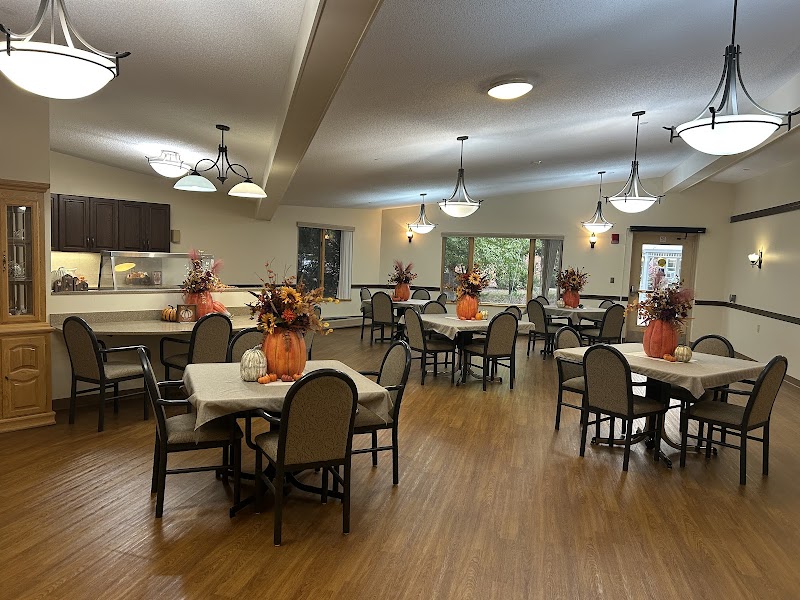
How is Dove Healthcare - St Croix Falls Staffed?

CMS rates DOVE HEALTHCARE - ST CROIX FALLS's staffing level at 3 out of 5 stars, which is average compared to other nursing homes. Staff turnover is 71%, which is 25 percentage points above the Wisconsin average of 46%. High turnover can affect care consistency as new staff learn residents' individual needs. RN turnover specifically is 56%, which is notably high. RNs provide skilled clinical oversight, so turnover in this role can affect medical care quality.

What Have Inspectors Found at Dove Healthcare - St Croix Falls?

State health inspectors documented 56 deficiencies at DOVE HEALTHCARE - ST CROIX FALLS during 2023 to 2025. These included: 3 Immediate Jeopardy (the most serious level, indicating potential for serious harm or death), 1 that caused actual resident harm, 50 with potential for harm, and 2 minor or isolated issues. Immediate Jeopardy findings are rare and represent the most serious regulatory concerns. They require immediate corrective action.
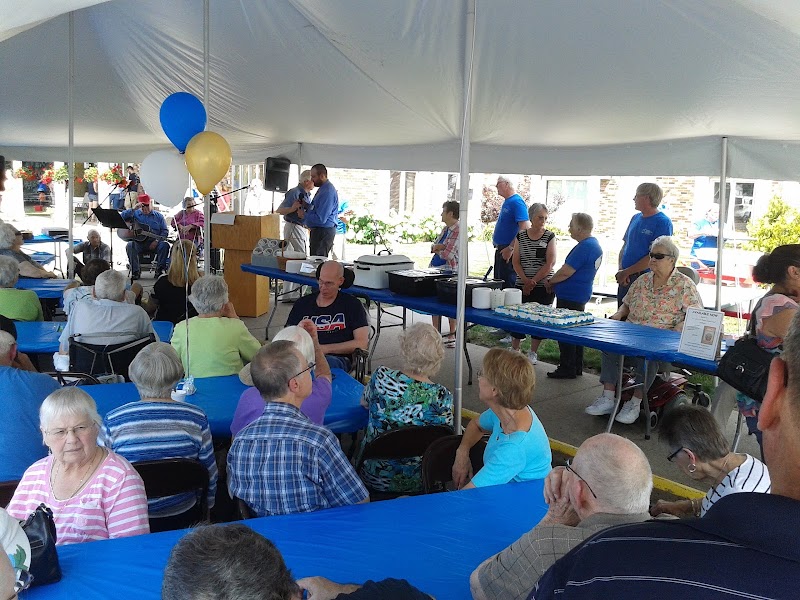
Who Owns and Operates Dove Healthcare - St Croix Falls?

DOVE HEALTHCARE - ST CROIX FALLS is owned by a for-profit company. For-profit facilities operate as businesses with obligations to shareholders or private owners. The facility is operated by DOVE HEALTHCARE, a chain that manages multiple nursing homes. With 50 certified beds and approximately 40 residents (about 80% occupancy), it is a smaller facility located in ST CROIX FALLS, Wisconsin.
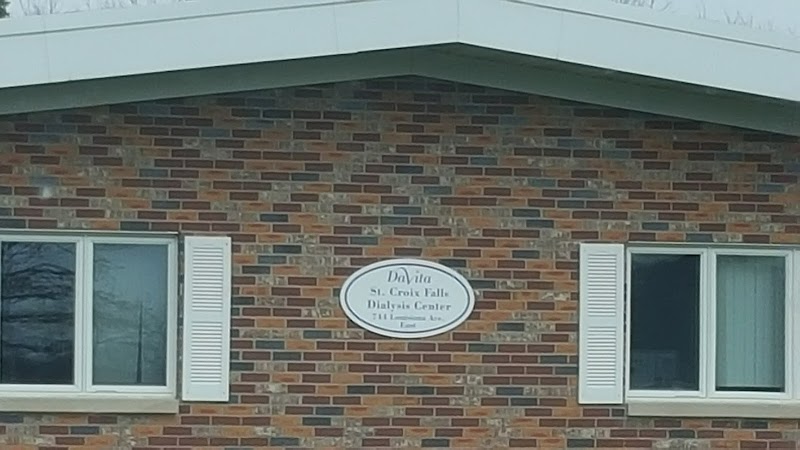
How Does Dove Healthcare - St Croix Falls Compare to Other Wisconsin Nursing Homes?

Compared to the 100 nursing homes in Wisconsin, DOVE HEALTHCARE - ST CROIX FALLS's overall rating (1 stars) is below the state average of 3.0, staff turnover (71%) is significantly higher than the state average of 46%, and health inspection rating (1 stars) is much below the national benchmark.

What Should Families Ask When Visiting Dove Healthcare - St Croix Falls?

Based on this facility's data, families visiting should ask: "What changes have been made since the serious inspection findings, and how are you preventing similar issues?" "How do you ensure continuity of care given staff turnover, and what is your staff retention strategy?" "Can I visit during a mealtime to observe dining assistance and food quality?" "How do you handle medical emergencies, and what is your hospital transfer rate?" These questions are particularly relevant given the facility's Immediate Jeopardy citations and the facility's high staff turnover rate.

Is Dove Healthcare - St Croix Falls Safe?

Based on CMS inspection data, DOVE HEALTHCARE - ST CROIX FALLS has documented safety concerns. Inspectors have issued 3 Immediate Jeopardy citations (the most serious violation level indicating risk of serious injury or death). The facility has a 1-star overall rating and ranks #100 of 100 nursing homes in Wisconsin. Families considering this facility should ask detailed questions about what corrective actions have been taken since these incidents.

Do Nurses at Dove Healthcare - St Croix Falls Stick Around?

Staff turnover at DOVE HEALTHCARE - ST CROIX FALLS is high. At 71%, the facility is 25 percentage points above the Wisconsin average of 46%. Registered Nurse turnover is particularly concerning at 56%. RNs handle complex medical decisions and coordinate care — frequent RN changes can directly impact care quality. High turnover means new staff may not know residents' individual needs, medications, or preferences. It can also be disorienting for residents, especially those with dementia who rely on familiar faces. Families should ask: What is causing the turnover? What retention programs are in place? How do you ensure care continuity during staff transitions?

Was Dove Healthcare - St Croix Falls Ever Fined?

DOVE HEALTHCARE - ST CROIX FALLS has been fined $129,124 across 3 penalty actions. This is 3.8x the Wisconsin average of $34,370. Fines at this level are uncommon and typically indicate a pattern of serious deficiencies, repeated violations, or failure to correct problems promptly. CMS reserves penalties of this magnitude for facilities that pose significant, documented risk to resident health or safety. Families should request specific documentation of what issues led to these fines and what systemic changes have been implemented.

Is Dove Healthcare - St Croix Falls on Any Federal Watch List?

DOVE HEALTHCARE - ST CROIX FALLS is not on any federal watch list. The most significant is the Special Focus Facility (SFF) program, which identifies the bottom 1% of nursing homes nationally based on persistent, serious quality problems. Not being on this list means the facility has avoided the pattern of deficiencies that triggers enhanced federal oversight. This is a positive indicator, though families should still review the facility's inspection history directly.