DOVE HEALTHCARE - SUPERIOR
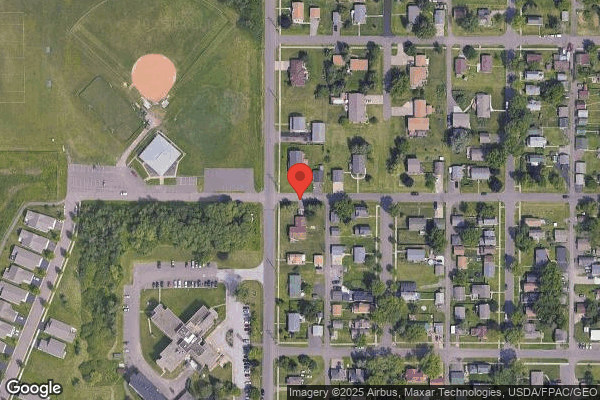
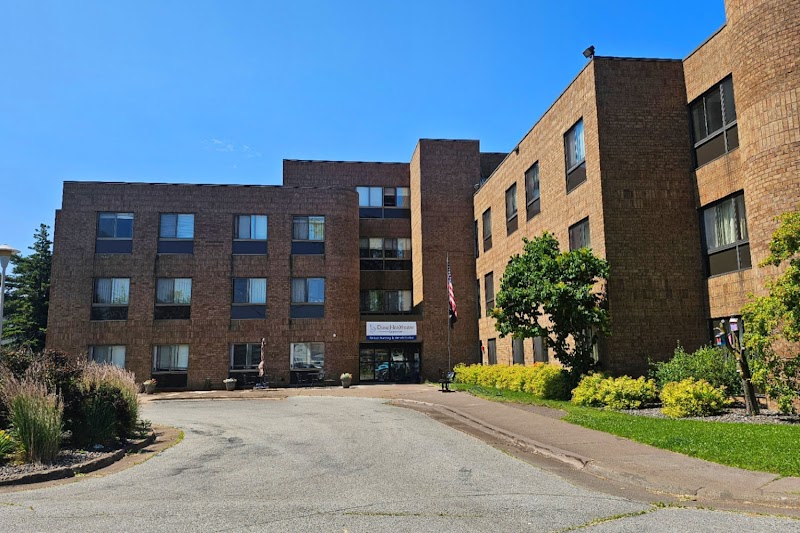
1800 NEW YORK AVE, SUPERIOR, WI 54880 (715) 394-5591
For profit - Limited Liability company 118 Beds DOVE HEALTHCARE Data: November 2025
Trust Grade
35/100
#204 of 321 in WI
Last Inspection: March 2025

Within standard 12-15 month inspection cycle. Federal law requires annual inspections.

Overview

Dove Healthcare in Superior, Wisconsin has received a Trust Grade of F, indicating significant concerns regarding the quality of care provided. Ranking #204 out of 321 facilities in Wisconsin places it in the bottom half, and it is #3 out of 4 in Douglas County, meaning only one local option is better. The facility is trending towards improvement, with issues decreasing from 22 in 2024 to 20 in 2025, but it still faces serious challenges. Staffing is a concern here, with a rating of 2 out of 5 stars and a turnover rate of 60%, which is higher than the state average. While the facility has incurred average fines of $36,448, it has less registered nurse coverage than 97% of Wisconsin facilities, which could impact the quality of care. Specific incidents of concern include a resident developing serious pressure injuries due to a lack of proper care and equipment, and issues with infection control, such as not maintaining a sanitary environment and not properly managing personal protective equipment. Additionally, food safety practices were found lacking, with staff not consistently monitoring food temperatures or maintaining cleanliness. Overall, while there are some signs of improvement, families should carefully consider these significant weaknesses when researching Dove Healthcare.

Trust Score
F
35/100
In Wisconsin
#204/321
Bottom 37%
Safety Record
Moderate
Needs review
Inspections
Getting Better
22 → 20 violations
Staff Stability
⚠ Watch
60% turnover. Above average. Higher turnover means staff may not know residents' routines.
Penalties
✓ Good
$36,448 in fines. Lower than most Wisconsin facilities. Relatively clean record.
Skilled Nurses
○ Average
Each resident gets 34 minutes of Registered Nurse (RN) attention daily — about average for Wisconsin. RNs are the most trained staff who monitor for health changes.
Violations
⚠ Watch
60 deficiencies on record. Higher than average. Multiple issues found across inspections.
★★☆☆☆
2.0
Overall Rating
★★☆☆☆
2.0
Staff Levels
★★☆☆☆
2.0
Care Quality
★★☆☆☆
2.0
Inspection Score
Stable
2024: 22 issues
2025: 20 issues

The Good

  • Full Sprinkler Coverage · Fire safety systems throughout facility
  • No fines on record

Facility shows strength in fire safety.

The Bad

2-Star Overall Rating

Below Wisconsin average (3.0)

Below average - review inspection findings carefully

Staff Turnover: 60%

14pts above Wisconsin avg (46%)

Frequent staff changes - ask about care continuity

Federal Fines: $36,448

Above median ($33,413)

Moderate penalties - review what triggered them

Chain: DOVE HEALTHCARE

Part of a multi-facility chain

Ask about local staffing decisions and management

Staff turnover is elevated (60%)

12 points above Wisconsin average of 48%

The Ugly 60 deficiencies on record

1 actual harm
Aug 2025 1 deficiency
CONCERN (D) 📢 Someone Reported This

A family member, employee, or ombudsman was alarmed enough to file a formal complaint

Potential for Harm - no one hurt, but risky conditions existed

Infection Control (Tag F0880)

Could have caused harm · This affected 1 resident

Based on observation and interview, the facility did not maintain an infection prevention and control program designed to provide a safe, sanitary, and comfortable environment to help prevent the deve...

Read full inspector narrative →
Based on observation and interview, the facility did not maintain an infection prevention and control program designed to provide a safe, sanitary, and comfortable environment to help prevent the development and transmission of communicable diseases and infections. This affected 1 out of 3 residents (R) reviewed. (R4) Certified Nurse Assistant (CNA) E did not doff contaminated gloves after emptying urine from catheter into graduate before continuing R4's cares. Findings include: The facility policy, titled Enhanced Barrier Precautions, revised January 2025, states:.4. High contact resident acre activities include:e. Changing linens.f. Changing briefs or assisting with toileting.g. Device care or use. Urinary catheters.Surveyor reviewed R4's record, which indicated R4 is on enhanced barrier precautions (EBP) for history of extended-spectrum beta-lactamase (ESBL) in the urine and R4 has a suprapubic catheter. On 08/26/25 at 3:15 PM, Surveyor followed CNA E into R4's room. Surveyor observed CNA E don Personal Protective Equipment (PPE) before entering R4's room. CNA E pushed R4 into a shared bathroom which is used for R4 and R4's neighbor. R4 stood up and stand pivoted to toilet and sat down. CNA E pulled R4's pants down and proceeded to empty R4's catheter into graduate. CNA E threw used brief onto floor and not in garbage in the shared bathroom. CNA E opened catheter and emptied in graduate. CNA E closed catheter tubing and placed graduate off to the side on floor. CNA E then used same contaminated gloves to cleanse R4's bottom and pulled R4's pants back up. CNA E opened bathroom door with contaminated gloves and R4 walked out of bathroom. CNA E walked R4 over to wheelchair and then touched wheelchair with contaminated gloves. CNA E wheeled R4 to bed and assisted R4 to bed. CNA E took R4's shoes off with contaminated gloves. CNA E rearranged R4's bedside table that had lunch tray on bedside table. CNA E placed R4's call light within reach with contaminated gloves and then walked to R4's door. CNA E then doffed PPE and contaminated gloves then washed hands. On 08/26/25 at 3:25 PM, Surveyor interviewed CNA E and asked CNA E the process for utilizing PPE in an EBP room. CNA E reported that CNA E should have changed gloves right after emptying graduate with urine before touching other surfaces and CNA E did not. On 08/27/25 at 10:52 AM, Surveyor interviewed Director of Nursing (DON) B and asked expectation of staff utilizing PPE and hand hygiene practices in an EBP room and suprapubic catheter. DON B reported expectation is PPE is to be donned upon entering and frequent glove changes are to be performed. Surveyor reported to DON B the observation of inappropriate glove use by CNA E. DON B reported that CNA E should have discarded contaminated gloves after emptying R4's urine in graduate, sanitized, and then reapplied new gloves.
Mar 2025 19 deficiencies
CONCERN (D)

Potential for Harm - no one hurt, but risky conditions existed

Deficiency F0558 (Tag F0558)

Could have caused harm · This affected 1 resident

**NOTE- TERMS IN BRACKETS HAVE BEEN EDITED TO PROTECT CONFIDENTIALITY** Based on interview and record review, the facility did not provide reasonable accommodation of resident needs and preferences fo...

Read full inspector narrative →
**NOTE- TERMS IN BRACKETS HAVE BEEN EDITED TO PROTECT CONFIDENTIALITY** Based on interview and record review, the facility did not provide reasonable accommodation of resident needs and preferences for 1 of 16 sampled residents (R7). -R7 was not provided a wheelchair to allow her to get out of bed while residing in the facility. Findings include: The facility's policy titled, Resident Rights, reads in part .To ensure that all residents have a right to a dignified existence, self-determination and communication with and access to persons and services and outside of the facility. 3. The facility will provide care to the resident in a manner and environment that promotes the maintenance or enhancement of his/her quality of life. 5. Equal access to quality care will be provided to each resident regardless of diagnosis, severity of condition, or payment source. R7 was admitted to the facility on [DATE]. Diagnoses include left sided paralysis, stage 1 pressure ulcer to back, buttock and hip, bi-polar disorder, and anxiety. Minimum Data Set (MDS) assessment completed on 01/25/25 included the following: -R7 scored 15/15 during Brief Interview for Mental Status (BIMS), indicating intact cognition. -R7 uses no mobility devices (cane, walker, wheelchair). -R7 is dependent on staff for assistance with ADLs. -MDS reported R7's transfers as: chair to bed transfer, not applicable (N/A), toilet transfer N/A, tub/shower transfer, dependent. R7's most recent PHQ-9 scores were: -06/13/24=0 -10/10/24=1 -01/10/25=2 R7's care plan included: -Potential/actual impairment to skin integrity r/t morbid obesity, frequent sweating, and yeast. At risk for injury due to fragile skin. Interventions: Encourage frequent repositioning, cushion to wheelchair. -ADL Self Care Performance Deficit. Performance deficit is related to impaired mobility. Interventions: 01/19/24, therapy to evaluate wheelchair positioning. On 03/11/25 at 9:30 AM, Surveyor interviewed R7. R7 reported she does not have a wheelchair. R7 states she got a new wheelchair after Christmas, but only used it one day as it did not fit. R7 reported she had to borrow another resident's wheelchair to attend her appointment on 03/10/24. R7 stated she lays in bed 24 hours a day. R7 reported she does not attend activities because she has no way to get there. R7 stated she used to play bingo and attend movie nights. R7 reported she is upset as St. Patrick's Day is coming up and she will not be able to attend the St. Patrick's Day activities, as she does not have a wheelchair. R7 stated she would attend activities if she had a wheelchair. R7 reported her mood is more depressed, since she just lays in her bed 24 hours/day. R7 reported no one has followed up with her about another wheelchair. On 03/11/25 at 9:36 AM, Surveyor interviewed Certified Nursing Assistant (CNA) I. CNA I reported she is aware R7 does not have a wheelchair and was not sure why. CNA I confirmed R7 borrows another resident's wheelchair when R7 has appointments, but otherwise R7 does not get out of bed. CNA I stated she feels R7 should have her own wheelchair, and that R7 would attend activities if she had a wheelchair. On 03/11/25 at 2:47 PM, Surveyor interviewed Rehabilitation Director (RD) J. RD J reported she is not sure why R7 does not have a wheelchair and reported R7 has had a few different wheelchairs. RD J reported the facility does have a chair that fits R7, and R7 shares this wheelchair with another resident. RD J stated, Since neither of them get up very often we felt it was a good trade off. RD J reported she was not aware R7 wanted her own wheelchair.
CONCERN (D)

Potential for Harm - no one hurt, but risky conditions existed

Deficiency F0561 (Tag F0561)

Could have caused harm · This affected 1 resident

**NOTE- TERMS IN BRACKETS HAVE BEEN EDITED TO PROTECT CONFIDENTIALITY** Based on interview and record review, the facility did not promote and facilitate resident self-determination through support of...

Read full inspector narrative →
**NOTE- TERMS IN BRACKETS HAVE BEEN EDITED TO PROTECT CONFIDENTIALITY** Based on interview and record review, the facility did not promote and facilitate resident self-determination through support of resident choice for 1 of 16 sampled residents (R10). R10 reported her dissatisfaction with male caregivers providing personal care assistance after the facility identified R10's preference for female caregivers only. Findings: The facility policy titled, Resident Rights, reads in part .To ensure that all residents have a right to a dignified existence, self-determination and communication with and access to persons and services inside and outside of the facility. 1. The facility will protect and promote the right of each resident . 3. The facility will provide care to the resident in a manner and environment that promotes the maintenance or enhancement of his/her quality of life . 10. The facility will assist residents in exercising rights in regards to autonomy and choice, to the maximum extent possible, about how they wish to live their everyday lives and receive care . R10 was admitted to the facility on [DATE]. Diagnoses included depression, dementia, mood disturbance, and anxiety. R10's Minimum Data Set (MDS) assessment completed on 02/21/25 confirmed R10 scored 13/15 during Brief Interview for Mental Status (BIMS) indicating intact cognition. R10 is dependent on staff for transfers to the toilet and dressing lower body. R10 requires substantial assistance with bathing, showering, and personal hygiene. R10's care plan indicated the following: -I have challenging behaviors related to diagnoses of dementia. I prefer female caregivers. Date initiated 02/01/24, revision on 02/18/25. -Interventions: Cares in pairs and only female caregivers related to personal preferences and history of traumatic experiences with males. On 03/10/25 at 1:11 PM, Surveyor interviewed R10. R10 stated she is not to have a male caregiver. R10 has a history of rape. R10 stated the facility is aware of request to have no male caregivers and it is in her care plan. R10 reported last week a male caregiver gave her a shower and this morning a male caregiver provided assistance with morning cares. R10 stated she does not want this. Surveyor reviewed R10's care plan and noted on 05/08/24, the facility identified R10 requested female caregivers only. Surveyor reviewed staff schedule for 03/10/25 and noted Certified Nursing Assistant (CNA) O, a male caregiver, provided R10 with cares on the morning of 03/10/25. Surveyor reviewed R10's shower schedule for previous four weeks but was unable to identify a male caregiver providing R10 with a shower. On 03/11/25 at 1:24 PM, Surveyor interviewed CNA Y. CNA Y reported she is aware R10 has requested to have female caregivers only. CNA Y stated this is printed on R10's [NAME] and the CNAs are required to sign off they have read the [NAME] each shift they work. On 03/11/25 at 1:30 PM, Surveyor interviewed CNA H. CNA H reported she was aware R10 prefers female caregivers only and stated R10, generally does not have male caregivers. CNA H reported she did not assist R10 with morning cares on 03/10/25. CNA H reported she assisted R10 with a shower on this date 03/11/25, but she was not aware who provided R10 with showers in the previous weeks. On 03/12/25 at 11:48 AM, Surveyor interviewed CNA O. CNA O reported there are two residents on the first floor who prefer female caregivers, (note R10 resides on the first floor). CNA O did not identify R10 as one of the residents who refers a female caregiver. CNA O identified two residents on the first floor who require cares in pairs. CNA O did not identify R10 as one of the residents who requires cares in pairs. CNA O verified he assisted R10 with personal cares on 03/10/25. CNA O stated he completed cares without any other caregivers present due to scheduling conflicts. CNA O denied providing R10 with a shower, stating it has been approximately one year since he assisted R10 with any showers. On 03/12/25, Director of Nursing (DON) B was present during interview with CNA O. Surveyor interviewed DON B. DON B reported R10 changes her mind and picks and chooses when she wants female/male caregivers or who she will accept assistance from. DON B did acknowledge R10's care plan indicated she does not want male caregivers doing personal cares.
CONCERN (D)

Potential for Harm - no one hurt, but risky conditions existed

Comprehensive Care Plan (Tag F0656)

Could have caused harm · This affected 1 resident

**NOTE- TERMS IN BRACKETS HAVE BEEN EDITED TO PROTECT CONFIDENTIALITY** Based on observation, interview and record review, the facility did not develop and implement a comprehensive person-centered ca...

Read full inspector narrative →
**NOTE- TERMS IN BRACKETS HAVE BEEN EDITED TO PROTECT CONFIDENTIALITY** Based on observation, interview and record review, the facility did not develop and implement a comprehensive person-centered care plan addressing medical and nursing needs. This occurred for 1 of 16 residents reviewed (R25). -R25 did not have a care plan identifying interventions for controlling and preventing the spread of infection related to Extended Spectrum Beta Lactamase (ESBL) resistance. Findings: The facility's policy titled Comprehensive Care Plan, read in part . 3. The comprehensive care plan will describe, at a minimum, the following: a. The services that are to be furnished to attain or maintain the resident's highest practicable physical, mental, and psychosocial well-being. f. Resident specific interventions that reflect the resident's needs and preferences and align with the resident's cultural identity, as indicated. 6. The comprehensive care plan will include measurable objectives and timeframes to [NAME] the resident's needs and identified in the resident's comprehensive assessment. According to the Centers for Disease Control (CDC), multidrug-resistant organisms (MDROs) are bacteria that have developed resistance to one or more classes of antibiotics, making treatment more difficult. Extended-spectrum beta-lactamses (ESBL) resistance is a type of MDRO. R25 was admitted to the facility on [DATE]. Diagnoses include ESBL Resistance; ESBL is an enzyme found in some bacteria which is resistant to many antibiotics (a type of MDRO). R25's Minimum Data set (MDS) assessment completed 02/21/25, confirmed R25 scored 09/15 during Brief Interview for Mental Status (BIMS), indicating moderately impaired cognition. R25 had a foley catheter in place. R25's MDS assessment indicated R25 had septicemia and UTI (in the last 30 days). MDS assessment indicated R25 did not have an MDRO. MDRO was indicated on all previous assessments. R25's care plan included: -The resident has impaired immunity related to indwelling foley catheter. Date initiated 11/13/24, date revised 11/13/24. Interventions: Discontinue precautions when foley catheter is removed. Enhanced Barrier Precautions, use personal protective equipment during high contact with foley catheter. -The resident has indwelling foley catheter related to urinary retention, history of urinary tract infections, and prostate enlargement. Date initiated 12/21/24, date revised 12/31/24. Interventions: Catheter care, monitor and document intake and output, monitor and document pain/discomfort, urology appointments as scheduled. R25's physician orders included: Sulfamethoxazole-Trimethoprim oral tablet 800-160, give one tablet two times daily for ESBL in urine and previous left percutaneous drain site for 28 days. Order date: 03/05/25, start date: 03/06/25, end date: 04/03/25. R25 was hospitalized from [DATE]-[DATE] for septicemia related to urinary tract infection (UTI). 02/13/25, urinalysis with culture and sensitivity was completed and indicated an abnormal result of ESBL. On 03/10/25 at 11:13 AM, Surveyor observed R25 had an indwelling foley catheter and was not placed on transmission-based precautions. On 03/11/25 at 9:50 AM, Surveyor interviewed Licensed Practical Nurse (LPN) G. LPN G reported knowledge of R25's recent hospitalization and indwelling foley catheter. LPN G verified R25 had been on enhanced barrier precautions before his hospitalization. LPN G did not provide additional information related to R25's ESBL resistance. On 03/12/25 at 9:21 AM, Surveyor reviewed R25's record and noted primary provider documentation on 02/27/25, noted R25 was on Bactrim (an antibiotic) which was the only oral medication available for R25 to take for ESBL infection, per infectious disease. On 03/12/25 at 10:00 AM, Surveyor interviewed Director of Nursing (DON) B. DON B confirmed a care plan for an infectious disease such as ESBL resistance, would require a care plan with interventions to reduce the spread of infection. DON B reported she would, 'look into' R25's care plan. Surveyor did not receive additional information related to R25's care plan.
CONCERN (D)

Potential for Harm - no one hurt, but risky conditions existed

ADL Care (Tag F0677)

Could have caused harm · This affected 1 resident

**NOTE- TERMS IN BRACKETS HAVE BEEN EDITED TO PROTECT CONFIDENTIALITY** Based on record review, observation and interview, the facility did not ensure a resident who required substantial assistance fo...

Read full inspector narrative →
**NOTE- TERMS IN BRACKETS HAVE BEEN EDITED TO PROTECT CONFIDENTIALITY** Based on record review, observation and interview, the facility did not ensure a resident who required substantial assistance for repositioning and toileting received timely assistance for 1 of 4 residents (R) reviewed for Activities of Daily Living (ADLs) (R9). R9 who is frequently incontinent of urine did not receive assistance with repositioning or toileting for 4 1/2 hours. Findings include: R9 was admitted to the facility on [DATE] with the following diagnoses in part, chronic kidney disease, vascular dementia, unspecified urinary incontinence, leg pain, and osteoarthritis. R9's Minimum Data Set (MDS) assessment, dated 01/06/25, identified R9 was unable to complete a Brief Interview for Mental Status assessment due to severe cognitive impairment. The MDS assessment further identified R9 had no behaviors of rejection of cares and required substantial or maximal assistance for all mobility and toileting. The MDS assessment also indicated R9 was frequently incontinent of urine and always incontinent of bowel. The MDS assessment identified R9 was at risk for development of pressure injuries. R9's care plan had the following focus area: Alteration in elimination d/t [due to] bladder incontinent at times. Fluctuations/declines could be expected r/t [related to] end stage disease process. Date Initiated: 12/09/2021 Revision on: 10/17/2024 Goals: Resident's skin will be clean, dry and intact through the review date. Date Initiated: 12/09/2021 Revision on: 10/17/2024 Interventions: Assist of 1 with toileting q [every] 2-3 hrs and PRN [as needed]. Date Initiated: 04/11/2023 Revision on: 09/06/2023 Provide assistance with peri-cares AM, HS and PRN. Date Initiated: 12/09/2021 Revision on: 09/06/2023 Provide incontinent products and assist to change PRN. Date Initiated: 12/09/2021 Revision on: 09/06/2023 On 03/12/25 at 7:06 AM, Surveyor observed R9 sitting in a wheelchair at the table in the dining area on 3rd floor. At 9:24 AM, Surveyor observed R9 still sitting in the wheelchair at the table with eyes closed and an untouched food tray on the table. Licensed Practical Nurse (LPN) G came over and and attempted to get R9 to eat, but did not offer to reposition or assist R9 with toileting. At 9:47 AM, Surveyor observed Certified Nursing Assistant (CNA) D approach R9 at the table and asked how R9 was doing. R9 stated she was bored. CNA D brought the newspaper and a package of snacks for R9. CNA D took the breakfast tray away and got R9 some juice. CNA D did not assist R9 to reposition or offer to take R9 to the bathroom. At 10:06 AM, Surveyor observed R9 lean over and rest her head on the arm rest of the wheelchair and close her eyes. At 10:51 AM, Surveyor observed R9 still seated in the same position in the wheelchair at the dining room table. R9 had her head resting on her hand with eyes closed. At 11:35 AM, Surveyor observed CNA O take R9 to her room to check and change and assist to the toilet. This was a 4 1/2 hour continuous observation of R9 seated in one position without being assisted to go to the bathroom, or checked for incontinence. On 03/12/25 at 11:36 AM, Surveyor interviewed CNA D and asked how often they reposition, toilet or check and change R9. CNA stated usually they did that about every 2 hours, but R9 had been more incontinent lately, so they should do it more often than that if they could get to it. Surveyor asked if R9 had been repositioned or toileted since R9 was brought out to the dining room this morning. CNA D stated no she had not, but CNA O was going to do that now. Surveyor asked CNA D if it had been greater than 2 hours since R9 had been assisted to reposition, or checked for incontinence, or assisted to the bathroom. CNA D stated yes, it probably had been greater than 2 hours. On 03/12/25 at 12:12 PM, Surveyor interviewed Director of Nursing (DON) B and described the continuous observation of R9 sitting in wheelchair from 7:06 AM to 11:35 AM without being repositioned or assisted with toileting. Surveyor asked DON B if that was an acceptable practice. DON B stated they would be talking to staff. Surveyor asked DON B what their expectation for frequency of repositioning and toileting would be for R9. DON B stated they expect residents who cannot do that themselves should be repositioned and assisted with toileting or incontinent cares every 2-3 hours.
CONCERN (D) 📢 Someone Reported This

A family member, employee, or ombudsman was alarmed enough to file a formal complaint

Potential for Harm - no one hurt, but risky conditions existed

Quality of Care (Tag F0684)

Could have caused harm · This affected 1 resident

**NOTE- TERMS IN BRACKETS HAVE BEEN EDITED TO PROTECT CONFIDENTIALITY** Based on observation, interview and record review, the facility failed to ensure residents received care and treatment in accord...

Read full inspector narrative →
**NOTE- TERMS IN BRACKETS HAVE BEEN EDITED TO PROTECT CONFIDENTIALITY** Based on observation, interview and record review, the facility failed to ensure residents received care and treatment in accordance with professional standards of practice and the comprehensive person-centered care plan for 1 of 16 residents (R) reviewed for quality of care (R58). R58 had a witnessed fall and was transferred from floor to bed by Certified Nursing Assistant (CNA) before a Registered Nurse assessed the resident for injuries. Findings include: R58 was admitted to the facility on [DATE] with the following diagnoses in part, unspecified dementia with psychotic disturbance, Alzheimer's disease, age-related physical debility, osteoporosis, unspecified visual disturbance, weakness, and abnormalities of gait and mobility. R58 had a fall risk assessment score of 20 on 02/20/25 which indicated R58 was high risk for falls. R58 had two recent falls resulting in a left humerus fracture and and a left femoral neck fracture. On 03/13/25 at 6:41 AM, Surveyor observed the ambulance team arrive on 3rd floor with a stretcher and Nursing Home Administrator (NHA) A directed them to R58's room. Surveyor asked NHA A what happened and NHA A said R58 fell again and hit her head and she was being transferred to the hospital for evaluation On 03/13/25 at 7:52 AM, Surveyor interviewed Licensed Practical Nurse (LPN) K who was working at the time of R58's most recent fall. LPN K stated she was sitting at the nurses' station completing end of shift documentation when she heard a thump and then a female voice swearing down the hall. LPN K entered R58's room and CNA L was just coming to the door of the room and stated R58 fell. LPN K stated R58 was lying in bed and rubbing the back of her head when LPN K entered the room. R58 had the gait belt around her waist and gripper socks on. Surveyor asked LPN K if CNA L put R58 back in bed before a nurse completed an assessment on R58. LPN K stated R58 was lying in bed when LPN K entered the room, so CNA L must have put R58 in bed. On 03/13/25 at 8:46 AM, Surveyor interviewed DON B about R58's fall earlier that morning and asked if they interviewed CNA L about R58's fall. DON B stated they interviewed CNA L prior to sending her home. Surveyor asked DON B if CNA L transferred R58 back into bed before a Registered Nurse assessed R58 for injuries. DON B stated CNA L did transfer R58 to bed before calling for help. Surveyor asked if that was an acceptable practice, DON B stated no, the nurse should have assessed R58 before moving her. DON B stated they pulled CNA L from the floor and provided immediate education on the fall policy and procedure and the need to have a nurse assess residents before moving them after a fall.
CONCERN (D)

Potential for Harm - no one hurt, but risky conditions existed

Pressure Ulcer Prevention (Tag F0686)

Could have caused harm · This affected 1 resident

**NOTE- TERMS IN BRACKETS HAVE BEEN EDITED TO PROTECT CONFIDENTIALITY** Based on observation, interview and record review, the facility failed to provide care consistent with standards of practice, to...

Read full inspector narrative →
**NOTE- TERMS IN BRACKETS HAVE BEEN EDITED TO PROTECT CONFIDENTIALITY** Based on observation, interview and record review, the facility failed to provide care consistent with standards of practice, to prevent pressure injuries (PI) for 1 of 5 residents (R) reviewed for pressure injuries (R36). -R36 was at risk for development of pressure injuries and was not repositioned to reduce pressure for greater than 4 hours. Findings include: According to the National Pressure Injury Advisory Panel (NPIAP) 2019, page 115, . Repositioning and mobilizing individuals is an important component in the prevention of pressure injuries. The underlying cause and formation of pressure injuries is multifaceted; however, by definition, pressure injuries cannot form without loading, or pressure, on tissue. Extended periods of lying or sitting on a particular part of the body and failure to redistribute the pressure on the body surface can result in sustained deformation of soft tissues and, ultimately, in tissue damage . According to Wound Care Education Institute (WCEI) 2018, for immobile or bed bound individuals, a full change in position should be conducted a minimum of every two hours. Some individuals require more frequent repositioning due to their high-risk status. R36 was admitted to the facility on [DATE] with the following diagnoses including vascular dementia severe without behaviors, Alzheimer's disease unspecified, essential hypertension, hemiplegia and hemiparesis, and major depressive disorder. R36's Minimum Data Assessment (MDS, dated [DATE] stated R36 had a Brief Interview for Mental Status (BIMS) score of 00 which indicated facility could not determine BIMS for R36 due to R36 rarely/never understood. MDS indicated that R36 is totally dependent on staff for all cares. R36 at risk for skin breakdown with potential pressure injury. R36 MDS indicated that R36 had pressure relieving device in chair. Surveyor reviewed R36's care plan, which indicated: R36 has potential for pressure ulcer development r/t immobility and incontinence- -The resident will remain intact and free of irritation through review date. -Follow facility policies/protocols for the prevention/treatment of skin breakdown. -Obtain and monitor lab/diagnostic work as ordered. Report results to physician and follow up as indicated. Surveyor reviewed R36's nurse admission assessment dated on 12/20/23 that indicated no skin issues on admission. Surveyor reviewed R36's Braden skin assessments: -On 12/20/23 Braden scale score was 11.0 indicating R36 had a high risk for skin breakdown. -On 09/17/24 Braden scale score was 12.0 indicating R36 had a high risk for skin breakdown. -On 12/17/24 Braden scale score was 12.0 indicating R36 had a high risk for skin breakdown. Surveyor reviewed R36's skin observation tool assessments: -On 03/07/25 skin intact. On 03/12/25 at 6:41 AM, Surveyor observed R36 in dining room lying backwards at 30-degree angle in Broda chair sleeping. Surveyor did not observe a pressure relieving device in Broda chair, nor any further repositioning. On 03/12/25 at 8:27 AM, Surveyor observed Certified Nurse Assistant (CNA) S push R36's Broda chair up to 90 degrees to assist R36 with breakfast tray. Surveyor did not observe a pressure relieving device in Broda chair, nor any further repositioning. On 03/12/25 at 8:52 AM, Surveyor observed CNA S finish assisting with breakfast for R36. CNA S placed R36 back down in Broda chair to a 30-degree angle. Surveyor did not observe a pressure relieving device in Broda chair, nor any further repositioning. On 03/12/25 at 11:19 AM, Surveyor interviewed CNA S and asked what CNA S's knowledge on repositioning residents is. CNA S indicated that all residents should be repositioned every 2 hours or so. Surveyor indicated to CNA S that Surveyor only saw CNA S transfer R36 to bed, checked for incontinence, and then placed R36 back in Broda chair but no other repositioning or care was observed. CNA S indicated that CNA S thought the transfer to bed and back for checking incontinence was enough repositioning. Surveyor indicated to CNA S that R36 was still lying on R36's back and bottom the entire time. Surveyor observed R36 on back from 6:41 AM continuous to 11:19 AM, and R36 is at risk for skin breakdown. CNA S indicated that CNA S is sorry, and that CNA S should have repositioned R36 a couple times by now. On 03/12/25 at 11:31 AM, Surveyor interviewed Trained Medication Aide (TMA) V and asked what the expectation is for repositioning residents who need assistance with cares and are at risk for skin breakdown. TMA V indicated that all staff should reposition residents who are dependent on staff for cares every 2-3 hours. On 03/12/25 at 12:15 PM, Surveyor interviewed Director of Nursing (DON) B and asked what the expectation is for repositioning residents who need assistance with cares and are at risk for skin breakdown. DON B indicated that all staff should reposition residents every 2-3 hours. Surveyor indicated to DON B that Surveyor observed R36 not repositioned for a continuous observation from 6:41 AM-11:19 AM. DON B indicated that CNA S should have repositioned R36 within 2-3 hours of being placed in Broda chair. Surveyor indicated to DON B that R36 is at a high risk for skin breakdown, and Surveyor did not see a pressure relieving cushion in R36's Broda chair even though R36's MDS indicates that R36 had a pressure relieving cushion implemented in Broda chair on admission and current MDS documentation. DON B indicated that DON B would investigate why R36 did not have a pressure relieving cushion in Broda chair and that CNA S should have placed one in R36's Broda chair.
CONCERN (D)

Potential for Harm - no one hurt, but risky conditions existed

Deficiency F0688 (Tag F0688)

Could have caused harm · This affected 1 resident

**NOTE- TERMS IN BRACKETS HAVE BEEN EDITED TO PROTECT CONFIDENTIALITY** Based on observations, interviews and record review, the facility did not ensure residents with limited mobility received servic...

Read full inspector narrative →
**NOTE- TERMS IN BRACKETS HAVE BEEN EDITED TO PROTECT CONFIDENTIALITY** Based on observations, interviews and record review, the facility did not ensure residents with limited mobility received services to maintain or prevent further reduction in mobility for 1 of 1 resident (R) R23. R23's walking program was not developed to maintain or prevent reduction in mobility. Facility staff were not providing assist of 1 with front wheel walker and gait belt walking program. This is evidenced by: The facility policy, titled Restorative Nursing Program- Superior, dated April 2007 states: Maintenance Restorative Program Definition: This program is designed for those residents who through assessment require interventions with the goal to maintain present functioning. Due to the resident's physical or cognitive condition the assessment is that the resident will not progress and may be expected to decline. Example: The resident ambulates well but cognitively is unable to safely ambulate alone. If the Certified Nursing Assistant (CNA) or other nursing staff will be carrying out the interventions, the information will be included on the CNA assignment sheet . The CNA staff will document that the intervention was completed and any other details that will assist in evaluating the appropriateness of the intervention. Monthly progress notes will be completed . The facility policy, titled Restorative Charting Guidelines, dated April 2007 states: 2. Daily charting of interventions will be completed by the individual aide or nurses that performs the task with the resident. 3. Residents who are on [restorative] program will have progress charted by a licensed nurse at least monthly . R23 was admitted to the facility on [DATE] with the diagnoses that effect mobility and range of motion, in part, osteoporosis with current pathological (due to pre-existing condition) fracture, weakness, spondylosis lumbar spine (osteoarthritis lower back), cervicalgia (pain in upper neck), fracture of humerus (bone between elbow and shoulder), pain in right hip, and history of falls. R23's Minimum Data Set (MDS) assessment, dated 12/2/24, scored R23's ability to transfer from chairs, bed, toilet as partial to moderate assist and R23's ability to roll side to side, go from lying to sitting, from sitting to standing scored as supervision touching assistance to partial assistance. A score of 4 or 3 with the reference ranges being 6 as independent and 1 being dependent. R23 has a wheelchair that R23 self-propels usually. R23's therapy Discharge summary, dated [DATE], states: Functional Maintenance Program established? Ambulation Yes R23's care plan, updated 2/11/2025, states: Self Care deficit r/t weakness, impaired mobility, pain . Interventions include Ambulation: follow therapy recommendation Walking Program: Walk to/from all meals with assist of 1, using FWW (front wheeled walker) and gait belt. (Program was added with revision on 1/30/2025) On 3/10/2025 at 11:35 AM, Surveyor observed R23 self-propel wheelchair to dining room for lunch. On 3/11/2025 at 11:30 AM, Surveyor observed R23 self-propel to dining room to await lunch. On 3/12/2025 at 7:24 AM, Surveyor interviewed R23 who stated that she does not get a chance to walk very often. R23 does not know of any care planned intervention to walk to meals. Surveyor observed R23 self-propel to dining room for breakfast after interview. On 3/12/2025 at 1:48 PM, Surveyor interviewed CNA U. CNA U stated CNA U knows what to do with residents off their paper. CNA U clarified that it (the paper) was the [NAME] (CNA care plan). CNA U stated another CNA who works up here walks with R23 when she is here. CNA U reviewed the [NAME] with Surveyor. CNA U stated that to/from each meal means 3 times a day, but R23 calls the shots and walks when she wants. CNA U stated we chart our activities in the computer. CNA U stated there is no paper charting. CNA U stated that if the intervention doesn't happen or the resident refuses, they should document that too. On 3/12/2025 at 3:15PM, Surveyor reviewed records and did not find any progress notes, CNA charting, or documentation that walking program was implemented other than entry in care plan. On 3/13/25 at 7:48 AM, Surveyor observed R23 self-propel to dining room for breakfast. On 03/13/25 at 8:04 AM, Surveyor interviewed Director of Nursing (DON) B. DON B stated her expectations are that staff follow physical therapy orders. DON B stated staff would document walks or refusals in the chart. DON B was shown R23's Walking Program and asked for expectation. DON B stated R23 should walk three times a day. DON B stated there is no spot for charting (the walking program intervention) and did not find any monthly progress notes. DON B provided copies of the CNA Documentation Survey report for CNA charting that confirmed no charting. On 3/13/25 at 8:20 AM, Surveyor interviewed Rehabilitation Director (RD) J. RD J stated the expectation is that staff walk residents per plan and if they (residents) decline or refuse then it should be documented. RD J stated she expects that if there are a lot of refusals they (staff) should come to me (RD J) and say this is not working.
CONCERN (D)

Potential for Harm - no one hurt, but risky conditions existed

Incontinence Care (Tag F0690)

Could have caused harm · This affected 1 resident

**NOTE- TERMS IN BRACKETS HAVE BEEN EDITED TO PROTECT CONFIDENTIALITY** Based on observation, interview and record review, the facility did not ensure residents with indwelling foley catheters receive...

Read full inspector narrative →
**NOTE- TERMS IN BRACKETS HAVE BEEN EDITED TO PROTECT CONFIDENTIALITY** Based on observation, interview and record review, the facility did not ensure residents with indwelling foley catheters received care and treatment consistent with professional standards of practice to prevent complications or urinary tract infections (UTI) from the catheter for 1 of 1 resident (R) R25 reviewed for catheter. -Urology recommended foley be removed when R25's strength increased; facility removed foley the following day. -No monitoring after removal of foley catheter. Findings include: The facility policy titled, Indwelling Catheter Use & Removal, reads in part .It is the policy of this facility to ensure that indwelling urinary catheters that are inserted or remain in place are justified or removed according to regulations and current standards of practice .Monitoring for excessive post void residual, after removing a catheter that was inserted for obstruction or overflow incontinence .Verify practitioner's order .Assess for first voiding post-catheter removal .Document procedure . R25 was admitted on [DATE]. Diagnoses include: Bacteria in urine, abscess in urinary tract, urinary tract infection, bladder infection with blood present in urine, obstruction and backflow of urine, acute kidney failure, sepsis, and severe sepsis with septic shock Minimum Data Set (MDS), completed on 02/21/2025, confirmed R25 scored 9/15 during Brief interview for Mental Status (BIMS), indicating moderately impaired cognition. R25's care plan included the following: Focus: The resident has impaired immunity related to (r/t): Indwelling foley catheter. Goal: The resident will not display any complications related to potential for immune deficiency r/t presence of foley catheter. Interventions: Discontinue precautions when foley catheter is removed Enhanced barrier precautions: Use Personal Protective Equipment (PPE) during high contact resident's foley catheter. Maintain PPE equipment per center Staff may dispose of my trash in regular containers or as visibly soiled Record review shows resident was recently hospitalized with a urinary tract infection (UTI) and Sepsis on 02/12/2025 and returned to facility on 02/17/2025 with active infection treatment. Urology order from 02/26/2025 read in part: Plan: Can remove foley when he gets his strength back. Upon record review, primary provider for R25 notes on 02/27/25 reported misinterpretation of orders the previous day. Foley catheter was removed, and no monitoring was completed. Primary provider attempted use of bladder scanner to check post-void residual volume (PVR) and scanner was not working. Catheterization for residual performed resulting in 850ml of urine return. Foley catheter was replaced. Upon record review, primary provider notes on 03/03/25 included: Creatinine increased from 0.7mg/dL to > 1.75mg/dL after misinterpretation of urology order and catheter removal, which could indicate increased kidney damage. Normal range for creatinine is 0.7mg/dL-1.27mg/dL. Follow up complete metabolic panel (CMP)s collected on 02/28/2025 with a result on 1.63mg/dL and 03/06/2025 with a result of 1.23mg/dL which indicate improvement since catheter was replaced. On 03/11/25 at 9:50 AM, Surveyor interviewed Licensed Practical Nurse (LPN) G. LPN G reported R25 received orders on 02/26 for Foley removal and trial void. LPN G also reported facility had a bladder scanner available at that time and that they usually perform Post-Void Residuals (PVR)s x3. On 03/11/25 at 10:50 AM, Surveyor reviewed order in R25's chart. The ordered showed Director of Nursing (DON) B entered orders to remove foley on 2/26. Surveyor interviewed DON B. DON B stated the original orders were not clear, and the orders had stated the catheter could be removed when R25 gets up. Surveyor could not locate the foley catheter removal order in R25's chart. DON supplied order which stated the catheter could be removed once resident gets his strength back. From 03/11/2025 through 03/13/2025 Surveyor requested to observe emptying of R25's catheter three times and staff completed without Surveyor present. The facility did not review and clarify orders to remove R25's Foley catheter, and did not complete appropriate monitoring after catheter removal.
CONCERN (D)

Potential for Harm - no one hurt, but risky conditions existed

Respiratory Care (Tag F0695)

Could have caused harm · This affected 1 resident

**NOTE- TERMS IN BRACKETS HAVE BEEN EDITED TO PROTECT CONFIDENTIALITY** Based on observations, record review and staff interviews, the facility did not ensure 1 of 1 resident (R) reviewed who required...

Read full inspector narrative →
**NOTE- TERMS IN BRACKETS HAVE BEEN EDITED TO PROTECT CONFIDENTIALITY** Based on observations, record review and staff interviews, the facility did not ensure 1 of 1 resident (R) reviewed who required oxygen and respiratory care was provided such services consistent with professional standards of practice, the resident's comprehensive person-centered care plan, and physician orders (R2). -On 03/11/25, Certified Nurse Assistant (CNA) S did not connect portable oxygen tank to R2 when CNA S placed R2 in dining room for breakfast. -Facility did not attempt a weaning schedule R2 off of oxygen as able. Findings include: Facility policy titled, Oxygen Administration Policy, dated reviewed on December 2024 states in part: .Policy Explanation and Compliance Guidelines: #1. Oxygen is administered under orders of a physician, except in the case of an emergency. #3. Staff shall document the initial and ongoing assessment of the resident's condition warranting oxygen and the response to oxygen therapy. #4. The resident's care plan shall identify the interventions for oxygen therapy, based upon the resident's assessment and orders, such as, but not limited to: b. When to administer, such as continuous or intermittent and/or when to discontinue. d. Monitoring of SpO2 (oxygen saturation) levels and/or vital signs, as ordered . R2's original admission to the facility was on 01/26/24, with the following diagnoses including quadriplegia unspecified, unspecified intracranial injury, emphysema. R2 was hospitalized and readmitted on [DATE] with influenza and acute respiratory failure with needed oxygen therapy. R2's minimum data set (MDS) assessment, completed on 02/27/25 confirmed R3 scored 8/15 during a brief interview for mental status (BIMS), indicating moderately impaired cognition. R2 requires substantial maximal assistance from staff for toileting, eating, sit to stand, transferring, dressing lower body, and putting on/taking off footwear. R2, once readmitted on [DATE], needed oxygen use. Surveyor reviewed R2's care plan. Surveyor did not find a respiratory care plan to address R2's oxygen uses in place. Surveyor reviewed R2's discharge orders from 03/05/25, which indicated: R2 discharged from hospital for acute respiratory failure with hypoxia and orders are- Oxygen (O2) 2 Liters (L), keep O2 sats greater than 90% and check sats every day. Continue to wean oxygen as able and goal is for O2 sat to be greater than 90%. Surveyor reviewed R2's physician orders: -On 03/05/25, Oxygen tube suctioning oral, and frequency as needed -On 03/05/25, O2 at 2 LPM per NC via concentrator or tank to keep O2 sats greater than 90%. Contact MD (Medical Doctor) if oxygen is initiated due to low O2. -On 03/05/25, Oxygen at 2LPM (Liters Per Minute) via nasal cannula via O2 concentrator and/or tank every shift for oxygen Keep Sats greater than 90%. -On 03/06/25, Check oxygen Sats daily one time a day. -On 03/07/25, Check o2 Saturation on Room Air weekly in the evening every Friday. -On 03/07/25, Complete skilled assessment documentation including respiratory assessment, O2 use, nebulizer treatment every shift. Surveyor reviewed R2's nurse progress notes: On 03/08/25, respiratory assessment completed. Surveyor did not find a respiratory assessment completed when R2 was admitted with oxygen. Surveyor did not find a respiratory assessment completed on 03/06/25 and 03/07/25 as physician orders specify. Surveyor did not find documentation in R2's Electronic Health Record (EHR) regarding respiratory assessment of oxygen weaning as physician discharge orders specified from hospital visit. On 03/12/25 at 7:25 AM, Surveyor observed CNA S wheeling R2 up to nurses' station and to the oxygen room. Surveyor observed CNA S in oxygen room fiddling around with tanks and then wheeled R2 to the dining room and parked R2. Surveyor did not observe CNA S apply oxygen tubing to R2's nose. Surveyor observed oxygen tubing disconnected on back of R2's wheelchair. On 03/12/25 at 7:32 AM, Surveyor approached CNA S and asked CNA S if R2 is supposed to be on continuous oxygen or is it as needed. CNA S stated, Oh she is supposed to be on continuous oxygen but she takes the tubing off. Surveyor indicated to CNA S that Surveyor observed CNA S exit the oxygen room when getting a new tank for R2. Surveyor did not see R2's oxygen tubing on R2's face. CNA S indicated that CNA S must have forgot to place the tubing on R2. Surveyor observed CNA S walking away from dining room. On 03/12/25 at 7:34 AM, Surveyor asked Trained Medication Assistant (TMA) V to please check R2's oxygen stats. TMA V grabbed pulse oximeter and placed it on R2's finger. TMA V indicated that oxygen was at 96% on 2 Liters (L). TMA V indicated no further action needed at this time. On 03/12/25 at 9:30 AM, Surveyor observed TMA V assess R2's oxygen saturation with oximeter. TMA V indicated the result was 96% on 2 Liters. Surveyor observed CNA S say, Can you double check the tank and make sure oxygen is coming out? TMA V checked back of R2's wheelchair, unzipped oxygen tank bag and stated, Oh no the tank is empty; it's all the way in the red. We need to get that fixed now. Luckily, she was at 96% still. Surveyor observed TMA V wheel R2 over to the oxygen room and grab a full oxygen tank. TMA V placed oxygen tank on wheelchair in the oxygen bag and zipped it back up. On 03/12/25 at 9:42 AM, Surveyor interviewed TMA V and asked who is responsible for checking portable oxygen tanks. TMA V indicated that everyone is responsible for checking portable oxygen tanks. TMA V indicated that TMA V would have never known to check portable oxygen tank since TMA V was just grabbing a pulse oximeter reading until CNA S asked TMA V to check the oxygen tank for R2. TMA V indicated that TMA V is unsure of the reasoning. On 03/12/25 at 9:47 AM, Surveyor interviewed CNA S and asked who is responsible for checking portable oxygen tanks. CNA S indicated that everyone is responsible for checking portable oxygen tanks. Surveyor asked CNA S why CNA S thought to ask TMA V to check R2's portable oxygen tank. CNA S indicated that CNA S checks oxygen tanks every 2-3 hours just to check them. Surveyor asked CNA S if CNA S knew R2's oxygen tank was empty and scroll was in the red, and that TMA V had to change the whole tank. CNA S stated, That is weird because I changed it this morning in the oxygen room. Surveyor indicated to CNA S that Surveyor observed CNA S go into oxygen room with door open but did not see a complete oxygen tank change. CNA S indicated that CNA S did change the oxygen tank. Surveyor asked CNA S if facility keeps a sign out sheet or form for when a portable oxygen tank is filled. CNA S indicated there is a sign out sheet, but CNA S did not sign it out. CNA S showed Surveyor the empty space where portable tank should have been signed out and CNA S stated, I will sign it now and sign the one [TMA V] filled. Surveyor reviewed Oxygen Cylinder Log form, which stated in part, Last filled signature was March 10th, 2025. Surveyor then observed CNA S sign out the filled oxygen tank. On 03/12/25 at 10:02 AM, TMA V approached Surveyor and indicated that R2's provider is in facility and TMA V made provider aware of the oxygen tank being empty. TMA V indicated that provider questioned TMA V on why R2 was even on oxygen as hospital discharge orders indicated that R2 did not qualify for needed oxygen. Provider indicated to TMA V that provider would be discontinuing oxygen orders. On 03/12/25 at 12:21 PM, Surveyor interviewed Director of Nursing (DON) B and asked what the expectation is for staff checking portable oxygen tanks. DON B indicated expectation is for CNAs to check portable oxygen tanks and refill as needed every two hours. Surveyor indicated to DON B that Surveyor observed CNA S in oxygen room fiddling around with tanks and then wheeled R2 to the dining room and parked R2. Surveyor did not observe CNA S apply oxygen tubing to R2. Surveyor interviewed CNA S who indicated that CNA S must have forgotten to hook R2 up to the oxygen tubing. DON B indicated that CNA S should have hooked R2 to oxygen immediately after filling the tank. Surveyor indicated to DON B that Surveyor observed R2's oxygen tank empty around 9:30 AM, and TMA V had to refill oxygen tank. Surveyor asked DON B how DON B keeps track of when portable tanks are re-filled and how long a portable tank lasts when R2 is on 2L of oxygen. DON B indicated that DON B is unsure how long a portable tank lasts when R2 is on 2L of oxygen. DON B indicated that DON B would try to find the information for Surveyor. Surveyor reviewed R2's physician orders and indicated to DON B that R2 is supposed to be weaned off oxygen and asked DON B how does staff know when to wean R2 off oxygen as discharge from hospital orders specify. DON B indicated that facility does not have a set procedure for weaning residents off oxygen and that DON B would investigate weaning of oxygen.
CONCERN (D)

Potential for Harm - no one hurt, but risky conditions existed

Pharmacy Services (Tag F0755)

Could have caused harm · This affected 1 resident

**NOTE- TERMS IN BRACKETS HAVE BEEN EDITED TO PROTECT CONFIDENTIALITY** Based on observation, interview and record review, the facility did not provide pharmaceutical services, including procedures th...

Read full inspector narrative →
**NOTE- TERMS IN BRACKETS HAVE BEEN EDITED TO PROTECT CONFIDENTIALITY** Based on observation, interview and record review, the facility did not provide pharmaceutical services, including procedures that ensured the accurate acquiring, dispensing, administering, storage, and disposal of all drugs and biologicals. The facility did not ensure controlled medications were disposed of timely and per appropriate standard of practice or agency policy for 1 out of 1 resident (R) 60. Findings include: The Statute DHS 132.65 Pharmaceutical Services refers to the handling of medication in Wisconsin facilities, including hospitals and nursing homes. It states in part, .(c) Destruction of medications. 1. 'Time limit.' Unless otherwise ordered by a physician, a resident's medication not returned to the pharmacy for credit shall be destroyed within 72 hours of a physician's order discontinuing its use, the resident's discharge, the resident's death or passage of its expiration date. The facility policy titled Medication Destruction, dated [DATE], states in part, All unused, contaminated, or expired prescription drugs shall be disposed of in accordance with state laws and regulations: 2. Unused, unwanted and non-returnable medications should be removed from their storage area and secured until destroyed. 5. Our facility utilizes a waste disposal service or reverse distributor to destroy dangerous drugs and controlled substances. 6. An inventory of dangerous drugs and controlled substances destroyed will be verified by consultant pharmacist. This information shall be recorded on our Destruction of Controlled Substances Record. 7. The sealed container must be maintained in a secure area in the pharmacy or in a locked cabinet in the medication room until transferred to the waste disposal service or the reverse distributor by the consultant pharmacist, an agent of the state board of pharmacy, the facility administrator or the director of nursing services. On [DATE] at 9:19 AM, Surveyor observed Director of Nursing (DON) B and a second Registered Nurse reconcile narcotics. During observation Surveyor observed a Ziploc bag with an RX label on the outside and numerous unlabeled fluid filled syringes. Narcotic: ABH gel 1mg/25mg/2ml #30 syringes for R60 received and discontinued on [DATE]. Stored in Medication cart starting on [DATE] and still there [DATE]. (ABH gel is the name given to a compounded medication made from the medications trade named: lorazepam (Ativan), haloperidol (Haldol), and diphenhydramine (Benadryl). It is not commercially available and is compounded by specialty pharmacies and is typically dispensed in a large multi-use syringe or several single-use syringes.) On [DATE] at 9:22 AM, Surveyor interviewed DON B. DON B stated that the medication was ABH gel which was never administered because it was a chemical restraint and discontinued before ever administered. DON B took Surveyor downstairs to the administration offices area lobby where a table was staged to be used for medication destruction. DON B stated that that their destruction process is to have two RN or 1 RN/1TMA do the destruction. If there is 1 TMA then the RN needs to be # 1. Medication log sheet from book is read off by # 1 and entered into the Red book by the other staff member. Then medication is counted again and quantity is confirmed. The medication is then added to a bottle called Drug Disposal, cap closed and bottle shaken to mix. The bottles are then eventually thrown out when full. DON did not state a timeframe as to when medication should have been destroyed. Medication of ABH gel was not removed from storage area and destroyed within 72 hours as per regulation.
CONCERN (D)

Potential for Harm - no one hurt, but risky conditions existed

Deficiency F0761 (Tag F0761)

Could have caused harm · This affected 1 resident

Based on observations, interview and record review, the facility did not ensure drugs and biologicals were stored in accordance with currently accepted professional practice. This had the potential to...

Read full inspector narrative →
Based on observations, interview and record review, the facility did not ensure drugs and biologicals were stored in accordance with currently accepted professional practice. This had the potential to affect 6 out of 6 residents (R) (R2, R34, R36, R40, R62, R69) for proper storage. 7 new unopened insulin pens, 1 unopened injectable solution, 1 unopened vaccine, and 1 unopened oral suspension that are temperature sensitive were found in an out of temperature range refrigerator on second floor. On second floor refrigerator, temperature logs are incomplete for 4 out of the 5 last months. Findings include: The facility policy, titled Medication Storage, dated 8/7/2015 states: a. All medication requiring refrigeration are stored in refrigerators located in the pharmacy and at each medication room. b. Temperature are maintained within 36-46 degrees F. Charts are kept on each refrigerator and temperature levels are recorded daily by the charge nurse or other designee. The Wisconsin Pharmacy Chapter 6 titled, Pharmacy Licenses and Equipment states: (e) Refrigerator means a place in which the temperature is maintained between 36 and 46 degrees Fahrenheit. The Wisconsin Childhood Immunization Guidelines states: 1. Vaccines must be stored within these ranges: o Refrigerator: Store between 2.0°C to 8.0°C or 36.0°F to 46.0°F 2. Temperature review and documentation Daily temperature review of each storage unit is required. On 3/11/25 at 1:45 PM, Surveyor observed the second floor medication room refrigerator thermometer with Registered Nurse (RN) Q. Thermometer read between 48-50°F. RN Q stated the thermometer read 50° F. RN Q could not confirm what the process for checking temperatures was, stating I believe it is a night shift duty. On 3/11/25 at 1:48 PM, Surveyor observed the Temperature Log for March on second floor medication refrigerator did not have a temperature recorded for 3/2/25. Surveyor requested temperature logs for last 6 months. On 3/11/25 at 4:06 PM, Surveyor and RN Q rechecked the thermometer. RN Q looked at thermometer and stated it was 48° F. Twelve residents had medication in the refrigerator, not all were temperature sensitive. Temperature sensitive medication in the refrigerator included: Konvomep Suspension - 84 ml for R36 Lantus - 3 insulin pens for R40 Lantus - 1 insulin pen for R62 Lispro- 1 insulin pen for R62 Humulin N- 2 insulin pens for R69 Tocliizumab injection- for R34 Shingrix Vaccine- for R2 On 3/12/25 at 3:30PM, Surveyor reviewed temperature logs for all 3 floors. Nursing Home Administrator (NHA) A stated these are all the logs we have for the last 6 months. In the last 6 months on 2nd floor, the medication refrigerator was not checked and documented on 17 days. In the records for 1st and 3rd floor refrigerators, there were individual dates and full month temperature logs missing. On 3/13/2025 at 8:01 AM, Surveyor interviewed Director of Nursing (DON) B. DON B stated her expectation is for night shift nurses to care for the refrigerators and freezers, cleaning and tracking temperatures daily and completing the temperature logs on each floor. DON B stated if the refrigerator is out of range, the night shift nurses should report to day shift nurses and maintenance can use the laser thermometer to make sure the thermometer is accurate and things are pulled away. DON B stated going forward the sheets will have temperature range and action steps and if out of range what to do. DON B stated she will be doing staff education with demonstrations back.
CONCERN (D)

Potential for Harm - no one hurt, but risky conditions existed

Deficiency F0883 (Tag F0883)

Could have caused harm · This affected 1 resident

**NOTE- TERMS IN BRACKETS HAVE BEEN EDITED TO PROTECT CONFIDENTIALITY** Based on interview and record review, the facility did not have documentation included in the resident's medical record that the...

Read full inspector narrative →
**NOTE- TERMS IN BRACKETS HAVE BEEN EDITED TO PROTECT CONFIDENTIALITY** Based on interview and record review, the facility did not have documentation included in the resident's medical record that the resident either received or did not receive the pneumococcal and/or the influenza vaccination for 2 of 5 residents (R) reviewed for immunizations (R41 and R53). -R41's record does not include evidence resident was offered pneumococcal vaccination. -R53's record does not include evidence resident was offered influenza or pneumococcal vaccination. Findings include: The facility's policy titled Pneumococcal Vaccine Series, read in part .2. Each resident will be offered a pneumococcal immunization unless it is contraindicated, or the resident has already been immunized. 4. The resident/representative retains the right to refuse the immunization. The facility will document in the clinical record the reason for the refusal or the medical contraindication of the immunization. The facility policy titled Influenza Exposure Control, read in part .2. The current season's influenza vaccine will be offered to residents and staff in accordance with facility's policy for influenza vaccination. R41 R41 was admitted on [DATE]. Diagnoses included dementia, Alzheimer's disease, traumatic brain injury, depression, and psychotic disorder. Minimum Data Set (MDS) assessment completed on 01/27/25, confirmed a Brief Interview for Mental Status (BIMS) could not be conducted, and staff assessment of R41's mental status indicated severe impairment. R41's MDS assessment indicated R41 was offered and declined the pneumococcal vaccination. On 03/11/25, Surveyor reviewed R41's record and was unable to find evidence R41 was offered and either received or declined the pneumococcal vaccination. There was no evidence in the record to support a contraindication to the pneumococcal vaccination. On 03/12/25 at 10:09 AM, Surveyor interviewed Director of Nursing (DON) B. DON B reported the expectation is that residents will be offered immunizations annually. If a resident declines a vaccination, the facility will continue to offer the vaccination annually. Surveyor requested documentation to support R41 was offered and either received, declined, or evidence of a contraindication to the vaccine. Surveyor did not receive any additional documentation. R53 R53 was admitted to the facility on [DATE]. Diagnoses included dementia, Alzheimer's disease, anxiety, and depression. MDS assessment completed 02/19/25 confirmed R53 scored 01/15 during BIMS, indicating severe cognitive impairment. R53's MDS assessment indicated R53 was offered the influenza and pneumococcal vaccinations and declined. On 03/11/25, Surveyor reviewed R53's record and was unable to find evidence R53 was offered and either received or declined the influenza and pneumococcal vaccinations. There was no evidence to support a contraindication to either vaccine. Surveyor requested documentation to support R53 was offered and either received, declined, or evidence of a contraindication to the vaccines. Surveyor did not receive additional documentation.
CONCERN (E)

Potential for Harm - no one hurt, but risky conditions existed

Transfer Notice (Tag F0623)

Could have caused harm · This affected multiple residents

**NOTE- TERMS IN BRACKETS HAVE BEEN EDITED TO PROTECT CONFIDENTIALITY** Based on interview and record review, the facility did not provide written notice of transfer to the resident or their represent...

Read full inspector narrative →
**NOTE- TERMS IN BRACKETS HAVE BEEN EDITED TO PROTECT CONFIDENTIALITY** Based on interview and record review, the facility did not provide written notice of transfer to the resident or their representative and did not send a copy of the notice of transfer to the hospital to a representative of the Office of the State Long-Term Care Ombudsman for 6 of 6 residents (R) reviewed for hospitalization. (R58, R68, R10, R25, R57, and R41) Findings include: Example 1 R58 was admitted to the facility on [DATE]. R58 had a Brief Interview for Mental Status (BIMS) score of 08/15, indicating R58 had moderate cognitive impairment. The record identified R58 had a legal guardian who was responsible for R58's medical decision-making. The record showed R58 was hospitalized on [DATE] and on 02/04/25 after falls at the facility. On 03/10/25 at 1:39 PM, Surveyor interviewed R58's legal guardian who reported the facility did call before transferring R58 to the hospital, but the guardian did not remember receiving anything in writing. Surveyor reviewed R58's medical record and was not able to find a written notice of transfer for the hospitalizations. Surveyor requested copies of the written notice of transfer for the two hospitalizations. On 03/11/25 at 12:15 PM, Surveyor received a copy of a bed-hold/notice of transfer document for R58's hospital transfer on 01/25/25, but did not receive a bed-hold/notice of transfer document for the 02/04/25 hospital transfer. Surveyor reviewed the list of resident discharges and hospital transfers that was sent to the Ombudsman for January and February 2025. R58's hospital transfers on 01/25/25 and 02/04/25 were not on the list sent to the Ombudsman. On 03/11/25 at 3:48 PM, Surveyor interviewed Nursing Home Administrator (NHA) A about Ombudsman notification of discharges and transfers. NHA A stated they had sent notification of discharges to the Ombudsman, but they did not send the list of residents who were transferred to the hospital due to a misunderstanding. They were working on sending that now. Surveyor asked again for the bed-hold/notice of transfer form for R58's hospital transfer on 02/4/25 that was not received previously. NHA A stated they usually do provide a written bed-hold and notice of transfer to residents or their representatives when someone is sent to the hospital, but some of them did not get completed. Example 2 R68 was admitted on [DATE] from acute care hospitalization after a fall. R68 had a BIMS score of 13/15, indicating R68 was cognitively intact. R68 was her own decision-maker. The medical record identified R68 was hospitalized with urosepsis on 12/26/24. Surveyor was unable to identify a written notice of discharge/transfer to the hospital document on R68's record. Surveyor reviewed the list of discharges/hospital transfers sent to the Ombudsman for the month of December and R68 was not on the list. On 03/12/25 at 2:40 PM, Surveyor interviewed NHA A about the written notice of transfer and Ombudsman notification for R68's transfer to the hospital on [DATE]. NHA A stated there was no bed-hold/notice of transfer or Ombudsman notification completed for R68's transfer to the hospital due to a misunderstanding. They have identified the problem and have begun education to correct this problem. Example 3 R10 was admitted to the facility on [DATE]. Diagnoses included depression, dementia, mood disturbance, and anxiety. R10's MDS assessment completed on 02/21/25 confirmed R10 scored 13/15 during BIMS indicating intact cognition. R10 is dependent on staff for transfers to the toilet and dressing lower body. R10 requires substantial assistance with bathing, showering, and personal hygiene. R10 was hospitalized [DATE]-[DATE] related to chest pain. On 03/12/25 at 9:01 AM, Surveyor reviewed the list of hospital transfers/discharges provided to the Ombudsman for the month of February. Surveyor noted R10 was not included in the list. Example 4 R25 was admitted to the facility on [DATE]. Diagnoses included lung cancer, diabetes mellitus, repeated falls, malnutrition, and kidney failure. R25's MDS assessment completed 02/21/25, confirmed R25 scored 09/15 during BIMS, indicating moderately impaired cognition. R25 was hospitalized [DATE]-[DATE] for sepsis related to urinary tract infection. On 03/12/25 at 9:01 AM, Surveyor reviewed the list of hospital transfers/discharges provided to the Ombudsman for the month of February. Surveyor noted R25 was not included in the list. Example 5 Record review identified R57 was admitted to the facility on [DATE] with the following diagnoses including vascular dementia moderate with delusional behaviors, dysphagia, cerebral infarction due to embolism, and essential hypertension. R57's medical record identified R57 was transferred to the hospital on [DATE]. On 03/12/25 at 8:24 AM, Surveyor did not receive the bed hold notification form for R57's hospitalization on 03/02/25 and did not receive a written notice of discharge or transfer form. Example 6 Record review identified R41 was admitted to the facility on [DATE], with the following diagnoses including Alzheimer's disease, atherosclerotic heart disease, essential primary hypertension, and depression. R41's medical record identified R41 was transferred to the hospital on [DATE]. On 03/12/25 at 8:24 AM, Surveyor did not receive the bed hold notification form for R41's hospitalization on 08/06/24 and did not receive a written notice of discharge or transfer form.
CONCERN (E)

Potential for Harm - no one hurt, but risky conditions existed

Deficiency F0625 (Tag F0625)

Could have caused harm · This affected multiple residents

**NOTE- TERMS IN BRACKETS HAVE BEEN EDITED TO PROTECT CONFIDENTIALITY** Based on interview and record review the facility did not provide written notice of bed-hold policy to the resident or their rep...

Read full inspector narrative →
**NOTE- TERMS IN BRACKETS HAVE BEEN EDITED TO PROTECT CONFIDENTIALITY** Based on interview and record review the facility did not provide written notice of bed-hold policy to the resident or their representative for 5 of 6 residents (R) reviewed for hospitalization. (R58, R68, R25, R57, and R41) Findings include: Example 1 R58 was admitted to the facility on [DATE]. R58 had a Brief Interview for Mental Status (BIMS) score of 08/15, indicating R58 had moderate cognitive impairment. The record identified R58 had a legal guardian who was responsible for R58's medical decision-making. The record showed R58 was hospitalized on [DATE] and on 02/04/25 after falls at the facility. On 03/10/25 at 1:39 PM, Surveyor interviewed R58's legal guardian who reported the facility did call before transferring R58 to the hospital, but the guardian did not remember receiving anything in writing about a bed-hold policy. Surveyor reviewed R58's medical record and was not able to find a written bed-hold notice for the hospitalizations. Surveyor requested copies of the written bed-hold notice for the two hospitalizations. On 03/11/25 at 12:15 PM, Surveyor received a copy of a bed-hold notice document for R58's hospital transfer on 01/25/25, but did not receive a bed-hold notice for the hospital transfer on 02/04/25. On 03/11/25 at 3:48 PM, Surveyor interviewed Nursing Home Administrator (NHA) A about the missing bed-hold notice form for R58's hospital transfer on 02/4/25. NHA A stated they usually do provide a written bed-hold and notice of transfer to residents or their representatives when someone is sent to the hospital, but some of them did not get completed. Example 2 R68 was admitted on [DATE] from acute care hospitalization after a fall. R68 had a BIMS score of 13/15, indicating R68 was cognitively intact. R68 was her own decision-maker. The medical record identified R68 was hospitalized with urosepsis on 12/26/24. Surveyor was unable to identify a written bed-hold notice document on R68's record. On 03/12/25 at 2:40 PM, Surveyor interviewed NHA A about the written bed-hold notice for R68's transfer to the hospital on [DATE]. NHA A stated there was no bed-hold notice completed for R68's transfer to the hospital due to a misunderstanding. They have identified the problem and have begun education to correct this problem. Example 3 R25 was admitted to the facility on [DATE]. Diagnoses included lung cancer, diabetes mellitus, repeated falls, malnutrition, and kidney failure. R25's MDS assessment completed 02/21/25, confirmed R25 scored 09/15 during BIMS, indicating moderately impaired cognition. R25 was hospitalized [DATE]-[DATE] for sepsis related to urinary tract infection. Surveyor was unable to locate written notice of bed-hold in R25's record. Example 4 Record review identified R57 was admitted to the facility on [DATE] with the following diagnoses including vascular dementia moderate with delusional behaviors, dysphagia, cerebral infarction due to embolism, and essential hypertension. R57's medical record identified R57 was transferred to the hospital on [DATE]. No written notice of bed hold policy was identified in R57's medical record. Example 5 Record review identified R41 was admitted to the facility on [DATE], with following diagnoses including Alzheimer's disease, atherosclerotic heart disease, essential primary hypertension, and depression. R41's medical record identified R41 was transferred to the hospital on [DATE]. No written notice of bed hold policy was identified in R41's medical record.
CONCERN (E) 📢 Someone Reported This

A family member, employee, or ombudsman was alarmed enough to file a formal complaint

Potential for Harm - no one hurt, but risky conditions existed

Accident Prevention (Tag F0689)

Could have caused harm · This affected multiple residents

**NOTE- TERMS IN BRACKETS HAVE BEEN EDITED TO PROTECT CONFIDENTIALITY** Example 3 R58 was admitted to the facility on [DATE] with the following diagnoses in part, unspecified dementia with psychotic d...

Read full inspector narrative →
**NOTE- TERMS IN BRACKETS HAVE BEEN EDITED TO PROTECT CONFIDENTIALITY** Example 3 R58 was admitted to the facility on [DATE] with the following diagnoses in part, unspecified dementia with psychotic disturbance, Alzheimer's disease, age-related physical debility, osteoporosis, unspecified visual disturbance, weakness, and abnormalities of gait and mobility. R58's Minimum Data Set (MDS) assessment, dated [DATE], identified R58 had a Brief Interview for Mental Status score of 03 out of 15, which indicated R58 had severe cognitive impairment. The MDS identified R58 had disorganized thinking behaviors that fluctuated and varied in severity. R58 also had hallucinations and delusions present during the MDS assessment period. R58 had a fall risk assessment score of 20 on [DATE] which indicated R58 was high risk for falls. R58 had two recent falls resulting in a left humerus fracture and a left femoral neck fracture. R58 had the following care plan focus in place: At risk for falls r/t [related to] history of repeated falls r/t Confusion, Deconditioning, Gait/balance problems, Unaware of safety needs. She is non compliant with wearing her knee brace and her sling. Has order brace and for knee brace and arm sling. She does not use assistive device as recommended for ambulation. She lowers herself to her knees to go in her drawers or look for something and gets herself up and also to clean up spills or just wipe up on the floor. She attempts to rearrange furniture. [DATE]- Fall [DATE]- Fall [DATE]- [R58] was witness to lose her balance and regain her balance when she stumbled. She did not fall but she did report this as a fall. [DATE]- Fall [DATE]- Fall [DATE]- Fall [DATE]-Fall Date imitated [DATE] Goal: [R58] will be free of falls through the review date and not sustain serious injury through the review date. Date Initiated: [DATE] Revision on: [DATE] Interventions: [DATE]- Being sent out to ER. Date Initiated: [DATE] [DATE]- [NAME] has been removed from my room for safety. Date Initiated: [DATE] [DATE]- encourage wearing tennis shoes when up in my wheelchair. Date Initiated: [DATE] [DATE]- Soft touch call light in place. Date Initiated: [DATE] [DATE]- Resident was moved to a different room once returned back from ER. Date Initiated: [DATE] [DATE]- Resident placed on direct 1:1. Update-[DATE]- Direct 1:1 supervision-Staff to stay with her at all times. Stay at arm's length of her. Arrange for 1:1 replacement to be with [R58] at all times before leaving her. Date Initiated: [DATE] Revision on: [DATE] [DATE]. Encourage [R58] to be in the social areas at all times when not in bed. Date Initiated: [DATE] [DATE]- Grippy socks to be worn when out of bed. Date Initiated: [DATE] Encourage the resident to participate in activities that promote exercise, physical activity for strengthening and improved mobility. Date Initiated: [DATE] Revision on: [DATE] Encourage to transfer/change positions slowly. Date Initiated: [DATE] Revision on: [DATE] Ensure that the resident is wearing appropriate non-skid footwear when ambulating or mobilizing in w/c. Date Initiated: [DATE] Revision on: [DATE] Pt evaluate and treat as ordered or PRN. Date Initiated: [DATE] Recreation Dept. provided [R58] with a laundry/cleaning cart to fold linens and dust to help keep her busy. Supervise her with this activity. Date Initiated: [DATE] Remind, Educate, assist [R58] to wear her knee brace and sling as ordered. Date Initiated: [DATE] Revision on: [DATE] S/P Fall [DATE] Intervention Toilet [R58] every 2-3 hours and as needed. Date Initiated: [DATE] Revision on: [DATE] R58's Activities of Daily Living self-care performance deficit care plan had the following intervention in place, .TRANSFER: Stand pivot transfer with assist of 1, using gait belt. Date initiated: [DATE] Revision on: [DATE] . R58 had the following treatment orders in place, dated [DATE], Direct 1:1 supervision-Staff to stay with her at all times. Stay at arm's length of her. Assigned 1:1 staff member needs to Arrange for 1:1 replacement to be with [R58] at all times before leaving her. On [DATE] at 6:41 AM, Surveyor observed the ambulance team arrive on 3rd floor with a stretcher and Nursing Home Administrator (NHA) A directed them to R58's room. Surveyor asked NHA A what happened and NHA A said R58 fell again and hit her head and she was being transferred to the hospital for evaluation. On [DATE] at 7:52 AM, Surveyor interviewed Licensed Practical Nurse (LPN) K, who was working at the time of R58's most recent fall. LPN K stated she was sitting at the nurses' station completing end of shift documentation when she heard a thump and then a female voice swearing down the hall. LPN K had just sent the Certified Nursing Assistant (CNA) downstairs to take out trash, so she was the only one on the floor other than the 1:1 CNA in R58's room. LPN K got up and checked all the rooms on the hall where the sound came from, but didn't go into R58's room first because CNA L was in that room providing 1:1 care. When LPN K did not find any problems in the other rooms, she entered R58's room and CNA L was just coming to the door of the room and stated R58 fell. LPN K stated R58 was lying in bed and rubbing the back of her head when LPN K entered the room. R58 had the gait belt around her waist and gripper socks on. LPN K immediately assessed and felt a lump at the back of R58's head, but no bleeding or break in skin observed. LPN K did neuro checks and vital signs and assessed for any other injuries, but did not find any other injuries. They applied an ice pack to the back of R58's head, called Director of Nursing (DON) B, notified the provider and got orders to transport R58 to the hospital for evaluation. LPN K asked CNA L what happened and CNA L stated she was assisting R58 with a transfer while holding the wheelchair and instructing R58 to turn and sit in the chair. R58 turned and sat on the very edge of the bed instead and slid off and landed on the floor, hitting her head on the side rail. Surveyor asked if CNA L was holding the gait belt to assist with the transfer. LPN K was not sure, but said it sounded like CNA L was not holding the gait belt, but behind the wheelchair. Surveyor asked if R58 was safe to transfer with just one staff person. LPN K stated R58 was assessed as a one-person transfer with a gait belt. Surveyor asked what that meant. LPN K stated staff should hold onto the gait belt during the transfer. Surveyor asked if CNA L put R58 back in bed before a nurse completed an assessment on R58. LPN K stated R58 was lying in bed when LPN K entered the room, so CNA L must have put R58 in bed. On [DATE] at 8:32 AM, Surveyor interviewed Physical Therapy Assistant (PTA) M who stated she worked with R58 and was familiar with R58's safety issues and therapy-approved transfer status. PTA M stated R58 was safe with a one-person transfer using a gait belt. Surveyor asked what that meant. PTA M stated staff should have the gait belt securely around the resident's torso and should be holding the gait belt and supporting and guiding the resident to pivot when doing a transfer. On [DATE] at 8:46 AM, Surveyor interviewed DON B about R58's fall earlier that morning and asked if they interviewed CNA L about R58's fall. DON B stated they interviewed CNA L prior to sending her home. CNA L reported R58 was seated in the wheelchair folding laundry while CNA L carried bags of soiled laundry and trash to the doorway of the room for end of shift. CNA L turned and observed R58 stand from the wheelchair and before CNA L could get to R58, R58 turned and sat at the very edge of the bed. R58 then slid off to the floor and hit her head on the bed. CNA L got LPN K who assessed R58. Surveyor asked DON B if CNA L followed the care plan to stay within arms length of R58. DON B stated CNA L stated she had carried bags to the door when R58 stood and fell. Surveyor asked if CNA L transferred R58 back into bed before a Registered Nurse assessed R58 for injuries. DON B stated CNA L did transfer R58 to bed before calling for help. Surveyor asked if that was an acceptable practice, DON B stated no, the nurse should have assessed R58 before moving her. DON B stated they pulled CNA L from the floor and provided immediate education on the fall policy and procedure and the need to have nurse assess residents before moving them after a fall. Based on observation, interview and record review, the facility did not ensure the resident's environment remains as free of accident hazards as possible. The facility did not ensure staff followed transfer precautions and supervision when needed to prevent accidents which had the potential to affect 21 out 62 residents. -Surveyor observed Certified Nurse Assistant (CNA) U bathe R57 in bath house without a call system in place for emergencies during bath/shower cares. -R41 was at risk for falls. Facility did not implement new interventions put into place post falls. -Staff ambulated R41 without gait belt in place during ambulation transfer process. -R58 had a history of frequent falls with major injury and the facility failed to ensure adequate supervision and implementation of interventions to prevent further falls. Findings include: Example 1 Facility policy titled, Fall Prevention Program, dated reviewed on [DATE], states in part: .#6. When any resident experiences a fall, the facility will: a. Assess the resident. b. Complete a post-fall assessment. c. Complete an incident report. d. Notify the provider and resident representative. e. Review the resident's care plan and update as indicated. f. Document all assessments/observations and actions. g. Obtain witness statements in the case of injury. -Neruo checks will be completed of any unwitnessed fall or witnessed fall where a resident hits their head. -Initially, then EVERY (Q)15minutes x3, then, -Q4 hours x 2, then, -Q8 hours x 8, staff to alert provider of any abnormal findings from the neuro checks. #7. Review each fall/fall investigation during the next morning meeting/clinical meeting with the Interdisciplinary team (IDT). Actions may include: a. Review investigation and determination of potential root cause of fall. b. Review of fall risk care plan and updates. c. Additional revisions to the care plan. d. Education of staff to as any care plan revisions as needed. e. Scheduling care conferences. f. Verification of timely notification of provider and responsible party . Facility policy titled, Safe Resident Handling/Transfers, dated revised on [DATE], states in part, .#5. Handling aides may include gait belts, transfer boards, and other devices . R41 was admitted to the facility on [DATE], readmitted on [DATE], with following diagnoses, in part, Alzheimer's disease, atherosclerotic heart disease, essential primary hypertension, and depression. R41's minimum data set (MDS) assessment, completed on [DATE] confirmed R3 scored 15/15 during a brief interview for mental status (BIMS), indicating intact cognition. R3 was at risk for falls. R3 requires substantial maximal assistance from staff for toileting, sit to stand, transferring, dressing lower body, and putting on/taking off footwear. R41's Activities of Daily Living (ADL)s care plan states: -Transfer: Assist of 1 with gait belt, assure proper footwear is on before standing initiated on [DATE]. R41's fall care plan states: *Falls on [DATE], [DATE], [DATE], [DATE], [DATE], [DATE], [DATE], [DATE], and [DATE]. -Resident will be safe and free from falls through the review date, initiated on [DATE]. -Keep room clean and free of clutter, initiated on [DATE]. -Keep call-light within reach, initiated on [DATE]. -Grabber or reacher provided to resident, initiated on [DATE]. -Resident to wear gripper socks at night, initiated on [DATE]. -Gripper strips to floor next to toilet, bed and couch, initiated on [DATE]. -Dycem to recliner, initiated on [DATE]. -Pharmacy medication review, initiated on [DATE]. -Pharmacist alerted for request for medication review. Care conference has been scheduled initiated on [DATE]. Surveyor reviewed nurse progress notes for R41's falls: -On [DATE], unwitnessed fall sent to ER. Facility did not implement any new fall interventions until [DATE]. -On [DATE], R41 had an unwitnessed fall. R41 to have neuros for fall follow up. Fall intervention: Dycem to recliner added to R41's care plan. Surveyor reviewed R41's Electronic Health Record (EHR) and did not find documentation of neuros completed for R41 after unwitnessed fall on [DATE] per the facility falls policy. -On [DATE], R41 had another fall. Care plan intervention added to add a chair in hallway at nurses' station to sit and rest while ambulating. Surveyor reviewed R41's EHR and did not find documentation of neuros completed for R41 after fall on [DATE]. -On [DATE], R41 had unwitnessed fall. Surveyor reviewed R41's EHR and did not find documentation of neuros completed for R41 after [DATE] fall per the facility fall policy. Surveyor did not find any significant interventions implemented for unwitnessed fall. -On [DATE], R41 had fall next to the nurse's station. New intervention was to place a chair at the nurse's station for R41 to help give R41 a rest if needed while ambulating. Surveyor did not observe a chair placed at nurses' station for R41 during 4 day observation of R41 ambulating on the unit. -On [DATE], R41 had a fall. Surveyor reviewed R41's EHR and did not find documentation of medication review as care planned after R41 suffered a fall on [DATE]. Surveyor did not find any other significant interventions implemented for R41's fall. -On [DATE], R41 had an unwitnessed fall, found on floor. Surveyor reviewed R41's EHR and did not find documentation of neuros completed for R41 after [DATE] fall per the facility policy. Surveyor did not find any significant interventions implemented for unwitnessed fall. -On [DATE], R41 had an unwitnessed fall, found on floor. -On [DATE], R41 had witnessed fall by wife. R41 fell out of recliner. On [DATE] 10:14 AM, Surveyor observed R41 sitting against wall in dining room. On [DATE] at 1:33 PM, Surveyor observed Trained Medication Aide (TMA) V and CNA R transfer R41 from dining room chair and ambulate with R41 down hallway to room. Surveyor observed R41 very unsteady on R41's feet and staff highly encouraged R41 to stand straight and take steps forward. Surveyor did not see TMA V and CNA R utilize a gait belt when ambulating R41. Surveyor observed staff holding onto R41's hands, and R41 kept trying to let go of staff's hands while walking down the hallway towards R41's room. Surveyor did not observe a chair at the nurse's station to provide R41 a rest with R41's unsteadiness. On [DATE] at 1:45 PM, Surveyor interviewed TMA V and asked if R41 should have gait belt on when ambulating to room from dining room. TMA V indicated that R41 should have gait belt on because R41 is sometimes unsteady with gait. On [DATE] at 8:33 AM, Surveyor observed CNA U, CNA T, and CNA R enter R41's room. Surveyor observed CNAs provide peri cares and get R41 up for the day. Surveyor observed CNA U and CNA R swing R41's legs over to the edge of bed and sit R41 up. CNA U and CNA R stood R41 up by grabbing hands and under arm pits to a standing position. CNA U and CNA R had R41 take a step forward and tried to get R41 to lift feet to place shoes on. R41 was confused and did not cooperate well. CNA U and CNA R had to sit R41 back down in the bed and then CNA U suggested to CNA R to apply gait belt. CNA R applied gait belt. Upon placing shoes onto R41, CNAs let go of R41 while R41 was leaning in bed, and R41 fell backwards and hit R41's head into the wall. CNAs quickly grabbed under arms and gait belt and lifted R41 forward to sitting position. CNA R rubbed back of R41's head and finished getting R41 up out of bed. CNA R and CNA U ambulated R41 out of room and down the hall. Surveyor did not observe a chair at the nurse's station to provide R41 a rest with R41's unsteadiness. On [DATE] at 9:42 AM, Surveyor interviewed CNA U and asked if R41 is supposed to have gait belt on when ambulating or transferring. CNA U indicated that CNA U should have told CNA R to apply gait belt before CNA U and CNA R stood R41 up the first time. On [DATE] at 1:20 PM, Surveyor interviewed CNA U and asked if CNA U had reported R41's fall and hitting head to appropriate staff on duty. CNA U indicated that CNA U reported the event to MDS Coordinator P who was on floor at the time. CNA U indicated that once MDS Coordinator P reported off the floor to RN Q, then CNA U reported to Registered Nurse (RN) Q that R41 had fallen and hit head on wall. On [DATE] at 1:31 PM, Surveyor interviewed RN Q what time RN Q came on shift. RN Q indicated that RN Q arrived around 10:00 AM. Surveyor asked RN Q if RN Q was told in report any issues or concerns with R41. RN Q indicated that only issue that was reported was the staff member who had almost passed out. Surveyor asked RN Q if RN Q was aware that R41 fell backwards in bed and hit R41's head on the wall. RN Q indicated that RN Q did not know about the fall and needs to do something immediately. Surveyor asked RN Q what the facility policy is for resident falls. RN Q indicated that staff should report the fall to nursing. Nursing should have assessed R41, completed vitals, neuros, and notified provider right away. RN Q indicated that next steps would be to open a risk management incident and follow facility protocol. Surveyor asked RN Q if the proper measures have been completed for R41. RN Q indicated no none of this has been done as this is the first time RN Q was notified of the event. RN Q asked Surveyor to follow Surveyor upstairs to MDS Coordinator P's office on 3rd floor to ask MDS Coordinator P about the incident. On [DATE] at 1:45 PM, Surveyor interviewed MDS Coordinator P and asked if MDS Coordinator P was told in report any issues or concerns with R41. Surveyor asked MDS Coordinator P if MDS Coordinator P was aware that R41 fell backwards in bed and hit R41's head on the wall. MDS Coordinator P indicated that MDS Coordinator P did not know about the fall. Surveyor asked MDS Coordinator P what the facility policy is for resident falls. MDS Coordinator P indicated that staff should report the fall to nursing. MDS Coordinator P indicated staff should have assessed R41, completed vitals, neuros, and notified provider right away per the facility falls policy. On [DATE] at 2:33 PM, Surveyor interviewed Director of Nursing (DON) B and asked if DON B was notified of R41 falling this morning. DON B indicated that MDS Coordinator just left DON B's office and made DON B aware of the issue. DON B indicated the correct process that staff should have completed for R41 this morning would be immediately start a risk management incident and complete the work up that includes assessment of R41, vitals, neuros, contact provider and POA, and continue to follow up with frequent assessments through the day. Surveyor indicated to DON B that Surveyor could not find that any of the actions for R41 falling were completed. DON B indicated that staff would get on top of the incident right away and that it was not completed for R41. Surveyor indicated to DON B that Surveyor observed TMA V and CNA R transfer R41 from dining room to bedroom without gait belt. Surveyor observed CNA U and CNA R transfer R41 from bed to standing position and R41 took a step forward and was wobbling in place. Surveyor indicated to DON B that R41 was unsteady on R41's feet and CNA U asked R41 to lift each foot to place shoes on but R41 could not without swaying backwards and to the side. CNA U and CNA R then sat R41 down on the bed and applied gait belt. DON B indicated that staff should always use gait belt with R41 when R41 is standing and ambulating. On [DATE] at 9:23 AM, Surveyor observed CNA U and CNA R set R41 in R41's recliner. Surveyor did not observe R41 to have a Dycem pad in R41's recliner. Surveyor interviewed CNA U and CNA R and asked if R41 has a dycem pad in R41's recliner. CNA U and CNA R indicated there is no Dycem pad in R41's recliner and never has been. Surveyor had CNA U and CNA R check R41's closet. CNA U indicated there is no Dycem pad in R41's closet and has never seen one. Surveyor observed no grip strips in front of recliner in R41's room. On [DATE] at 9:23 AM, Surveyor observed CNA U and CNA R set R41 in R41's recliner. Surveyor did not observe R41 to have a Dycem pad in R41's recliner. Surveyor interviewed CNA U and CNA R and asked if R41 has a Dycem pad in R41's recliner. CNA U and CNA R indicated there is no Dycem pad in R41's recliner and never has been. Surveyor had CNA U and CNA R check R41's closet. CNA [NAME] indicated there is no Dycem pad in R41's closet and has never seen one. Surveyor observed no grip strips in front of recliner in R41's room. On [DATE] at 11:21 AM, Surveyor interviewed DON B and asked if any neuros were completed for R41's previous fall on [DATE]. DON B indicated that DON B does not see any neuros completed for R41 post fall for [DATE], [DATE], [DATE], nor for [DATE]. DON B indicated there were no new interventions put into place post falls for [DATE], [DATE], [DATE], [DATE], [DATE], [DATE], and [DATE]. DON B indicated that DON B was unaware of the lack of interventions put into place post falls and would be educating staff on correct expectation. Surveyor indicated to DON B that after R41's fall on [DATE], staff care planned for R41 to have a chair in hallway at nurses' station for R41 to sit and rest while ambulating. Surveyor did not observe a chair at the nurses' station readily available for R41. DON B indicated that staff should have had a chair out at the nurses' station as R41's care plan states to have chair at nurses' station readily available for unsteadiness or exhaustion. Surveyor asked DON B what occurred with the intervention of a medication review post fall for R41 on [DATE]. DON B indicated that there was not a med review until [DATE] and should have been completed for R41 back in September when R41 fell. Example 2 Facility policy titled, Call light, dated, [DATE],states in part, .Policy Explanation and Compliance Guidelines: #7. The call system must be accessible to the resident at each toilet and bath or shower facility. The call system should be accessible to a resident lying on the floor. #8. Staff will report problems with a call light or the call system immediately to the supervisor and/or maintenance director and will provide immediate or alternative solutions until the problem can be remedied. (Examples include: replace Call light, provide a bell or whistle, increase frequency of rounding, etc) . Record review identified R57 was admitted to the facility on [DATE] with following diagnoses, in part, vascular dementia moderate with delusional behaviors, dysphagia, cerebral infarction due to embolism, and essential hypertension. On [DATE] at 7:22 AM, Surveyor observed CNA U look out of bath house and ask TMA V for assistance as R57 was falling forward out of the bath chair. TMA V indicated to CNA U that TMA V will send someone in as soon as TMA V sees someone walking by. Surveyor observed CNA U go back in bath house. On [DATE] at 7:26 AM, Surveyor entered bath house to observe CNA U with R57. Surveyor observed R57 sitting back in bath chair. CNA U indicated that CNA U assisted R57 back into bath chair. On [DATE] at 7:28 AM, CNA U asked Surveyor if Surveyor could wait in bath house while CNA U goes to get a brief CNA U forgot for R57 in R57's room. Surveyor indicated to CNA U that Surveyor cannot be left alone to supervise R57. Surveyor asked CNA U if this happens often where CNA U will leave R57 in bath house in bath chair. CNA U stated, Not usually, just thought since another person was here, I could grab it since i forgot it. Surveyor asked CNA U what CNA U would normally do. CNA U indicated that CNA U would normally call for assistance. Surveyor looked around for call light and could not find one. Surveyor asked CNA U where the call light was in the bath house. CNA U pointed to the wall near shower and stated, We use to have one in here, but maintenance took it out and placed this panel over the hole. Surveyor asked CNA U what if there is an emergency or like the situation that just occurred when CNA U needed assistance because R57 was falling forward out of the bath chair. CNA U stated, I would peek my head out the door or scream really loud for help. Surveyor asked CNA U if CNA U has any walkie talkies to ask for assistance. CNA U indicated that CNA U does not have walkies. Surveyor then observed CNA U pop head back out from the bath house and ask for assistance. Lack of a call light in the bath house has the potential to affect 21 residents on the second floor. On [DATE] at 7:35 AM, Surveyor observed CNA T enter bath house to assist CNA U with transfer of R57. CNA U and CNA T began pushing stand lift to R57 and instructed R57 to help stand. CNA U and CNA T grabbed underneath R57's arm pits and began lifting. Surveyor did not observe CNAs utilize a gait belt when lifting R57 from bath chair. Surveyor observed CNA U take a dry towel and wipe R57's groin and buttock area without wearing gloves. CNA U then dropped the dry towel as R57 was dropping to sit down. Surveyor observed CNA U don gloves and CNA U and CNA T began standing R57 again. CNA U then used dry towel again to dry off groin area and buttock area. Surveyor observed R57 drop again to sitting on bath chair. CNA U then instructed R57 to stand again while CNA U pulled brief and pants up for R57 with soiled gloves. Surveyor observed R57 was weak and difficult to stand. Surveyor observed R57 kept dropping down to sit instead of standing. CNA U and CNA T had to re-lift R57 under R57's arm pits 5 times before CNA U could pull R57's brief and pants up. On [DATE] at 7:51 AM, Surveyor interviewed CNA U and CNA T. Surveyor asked if CNA U and CNA T should use a gait belt with transfers from bath chair to stand lift as R57 kept dropping to sit down due to weakness. CNA U indicated that usually R57 is easy to stand but today R57 must be feeling weak. CNA U indicated to Surveyor that CNA U probably should have used gait belt instead of lifting under R57's arm pits. On [DATE] at 10:01 AM, Surveyor interviewed Maintenance Director W and asked if Maintenance Director W knew there was no call light in the bath house on second floor. Maintenance Director W indicated that Maintenance Director W was not aware and unsure time frame that the call light became inactive. Surveyor asked Maintenance Director W to visualize no call light in the bath house on second floor. Surveyor and Maintenance Director W entered bath house on second floor. Maintenance Director W observed no call light near the shower where all call lights are supposed to be located. Maintenance Director W observed further in the back of bath house where the bathtub was, and Maintenance Director W indicated there was no call light for that either. Maintenance Director W indicated it is necessary to have a call light in the bath house. Maintenance Director W indicated there must have been a work slip put in a while back and something went wrong that one of the Maintenance Technicians must have taken light out, capped the hole to prevent water from getting in there and then never came back to re-install a call light in bath house. Surveyor asked Maintenance Director W if Maintenance Director W could find when the work slip was placed and how long the call light system has been inoperable. On [DATE] at 10:59 AM, Surveyor interviewed DON B and asked DON B if DON B had knowledge there was not a call light in the bath house on second floor down North wing. DON B indicated that DON B was unaware of a call light issue in the bath house on second floor, which could affect 21 residents on that floor. DON B indicated that all CNAs have walkie talkies that staff utilize if they do need assistance. Surveyor indicated to DON B that Surveyor interviewed CNAs, and CNAs noted they do not have walkie talkies on them. Surveyor asked DON B what DON B would consider to be appropriate for using to call for assistance when CNAs don't have the walkie talkie on them. DON B stated, I guess the CNAs will need to yell out for help. On [DATE] at 8:45 AM, Maintenance Director W approached Surveyor and indicated that Maintenance Director W could not find the work slip that bath house on 2nd floor call light had issues and wasn't working. Maintenance Director W indicated to Surveyor that sometimes staff let maintenance crew know verbally about issues and Maintenance Director W knows that call light has been in failure for at least the last month.
CONCERN (E) 📢 Someone Reported This

A family member, employee, or ombudsman was alarmed enough to file a formal complaint

Potential for Harm - no one hurt, but risky conditions existed

Deficiency F0725 (Tag F0725)

Could have caused harm · This affected multiple residents

**NOTE- TERMS IN BRACKETS HAVE BEEN EDITED TO PROTECT CONFIDENTIALITY** Based on observation, interview and record review, the facility did not ensure that sufficient nursing staff was provided for th...

Read full inspector narrative →
**NOTE- TERMS IN BRACKETS HAVE BEEN EDITED TO PROTECT CONFIDENTIALITY** Based on observation, interview and record review, the facility did not ensure that sufficient nursing staff was provided for the third floor to attain or maintain the highest practicable physical, mental, and psychosocial well-being of each resident (R). This has the potential to affect all 14 residents residing on the third floor. Residents on the third floor have had multiple falls with injuries. A resident (R19) had an unwitnessed fall and no staff responded to calls for help until Surveyor intervened. R9 who is frequently incontinent of urine did not receive assistance with repositioning or toileting for 4 1/2 hours. Findings include: Facility Assessment, dated 02/03/25, stated in part: .Information About Our Staffing Patterns section stated Average Nurse Aide/Resident Ratio (Direct Care Staff) Average about 1 Nurse Aide to 10 Residents . Surveyor reviewed the daily staffing postings and nursing schedules for the past month. The schedule showed one nurse and one Certified Nursing Assistant (CNA) scheduled for 3rd floor, with one additional CNA who was scheduled for 1:1 care of one resident. That CNA was not available to answer call lights and provide direct care to any other residents on the unit. The daily census on third floor during the survey was 14 residents. During the day and evening shifts on 03/10/25, and on the morning of 03/11/25, Surveyor observed one nurse and one CNA providing direct care on the third floor for 14 residents. On the morning of 03/11/25, Surveyor observed one Licensed Practical Nurse (LPN) and one CNA working on the third floor. At 9:44 AM, Surveyor heard a loud noise from one of the rooms toward the end of the hall farthest from the nursing station. A couple of minutes later, Surveyor heard a resident calling for help from room [ROOM NUMBER]. CNA D was in another resident room and did not hear or respond to the call for help. LPN C was passing medications to a resident on a different hall and did not hear or respond to the call for help. After two minutes, Surveyor walked down to room [ROOM NUMBER] and observed R19 lying on the floor by the bathroom. Surveyor alerted LPN C that R19 had fallen and was calling for help. LPN C finished giving medications to a resident and then went to the room and found R19 on the floor by the bathroom. LPN C yelled for help from the doorway, but CNA D did not hear or respond to the call for help. After a few minutes, Surveyor observed Registered Nurse (RN) X walking down a different hall and headed for the elevator. Surveyor informed RN X a resident had fallen and LPN C needed assistance. RN X responded to the room to assist. On 03/11/25 at 10:22 AM, Surveyor interviewed LPN C who stated R19 was supposed to be up with assistance, but R19 frequently forgot to call for help. LPN C stated with just one CNA and one nurse working on the unit, it was hard to hear R19 when she got up independently. LPN C stated R19 did get a small skin tear on one arm from the fall this AM. Surveyor interviewed LPN C about staffing patterns on the third floor. LPN C stated when she works the third floor they consistently have one nurse and one CNA working on the unit for both day and PM shifts. LPN C stated there are typically about 14 to 15 residents on the unit. LPN C stated they have a staff person scheduled to provide 1:1 care for R58, but that person cannot leave R58's room to help answer call lights or help with cares for residents. LPN C stated they just called in another CNA to help assist with resident cares on the floor after R19 fell, but it probably only happened because the Surveyors were in the building. LPN C stated in her experience they never call extra help up to the third floor. LPN C stated there have been a lot of resident falls on the third floor and they need two CNAs on the unit all the time to try to prevent the falls. On 03/11/25 at 10:53 AM, Surveyor interviewed CNA D who stated they usually worked on the third floor. CNA D stated they usually scheduled just one nurse and one CNA working on the unit for about 15 residents. CNA D stated they had a really busy morning, and it was good that they called in extra help. CNA D stated they try to call in help extra help sometimes, but it was rare that someone agreed to come in. CNA D said it would be better for the residents if they had two CNAs scheduled for the third floor. On 03/11/25 at 10:56 AM, R3 requested to speak to Surveyor in her room. R3 stated she was the resident council president and she had brought up staffing concerns at their meetings in the past, but nothing was ever done about it. They usually have one nurse and one CNA working on the floor for 14-15 residents. R3 stated she is fairly independent, and does not need a lot of physical assistance from the staff, but R3 believes the residents who are more dependent don't get the care they deserve because there is not enough help. R3 stated she had observed multiple residents, who are dependent and can't speak for themselves, left in their chairs at the dining room for many hours, sometimes from before breakfast until after lunch. R3 stated that many of the falls that have occurred are due to not enough staff to assist the residents to the bathroom or with transfers. On 03/12/25 at 8:21 AM, Surveyor observed R19, who had fallen the day before, get up and begin walking with a 4-wheeled walker toward the bathroom. R19 did not press the call light or call for help. R19 appeared unsteady on her feet and there was no staff around to observe or assist R19. Surveyor alerted CNA E who at at the other end of the hall providing 1:1 care for R58. CNA E was able to locate CNA D, who came down the hall to assist R19 to the bathroom. On 03/12/25 from 7:06 AM to 11:35, AM, Surveyor had a continuous observation of R9 seated in one position without being assisted to go to the bathroom, or checked for incontinence. Record review identified R9 had severe cognitive impairment, required substantial or maximal assistance for all mobility and toileting, and was frequently incontinent of urine and always incontinent of bowel. R9 was also assessed at risk for development of pressure injuries. R9 had care plan interventions instructing staff to assist with toileting every 2-3 hours and as needed. On 03/12/25 at 7:14 AM, Surveyor interviewed LPN G who was an agency staff member working at the facility since November. LPN G stated she frequently worked on the third floor. LPN G said there is usually one CNA and one nurse scheduled for the third floor when LPN G worked on there. LPN G stated there were usually around 15 residents on the unit and a lot of them have a history of frequent falls. LPN G stated they could use more help on the third floor to try to prevent some of the falls. On 03/12/25 at 7:29 AM, Surveyor interviewed CNA E who was working on the third floor. CNA E stated she usually works on first floor, but was called in extra today and asked to float to the 3rd floor. CNA E she had been assigned to work on the third floor for the first time on 02/14/25 when R58 had a fall. CNA E stated she was the only CNA working the floor and there was another CNA doing 1:1 care with R58. CNA E stated when the other CNA left the unit for a break, the nurse told CNA E to cover the 1:1 care for R58. CNA E was not told she could not leave the room when doing 1:1 care for R58 and the nurse was not answering lights and covering the floor while CNA E was in R58's room. CNA E left to answer call lights on the unit and that is when R58 fell. CNA E stated one nurse and one CNA scheduled for third floor was not enough to safely meet the residents' needs and that is why there were so many falls on that unit. On 03/12/25 at 12:12 PM, Surveyor interviewed Director of Nursing (DON) B about R19's fall on 03/11/25 and explained continuous observation of R9 not repositioned or assisted to the bathroom for 4 1/2 hours. Surveyor also informed DON B of interviews from staff and residents reporting inadequate staffing on the third floor resulting in delayed cares and falls. Surveyor asked DON B if they had considered if some of the resident falls were related to inadequate staffing levels on the third floor. DON B stated they would review staffing levels.
CONCERN (E)

Potential for Harm - no one hurt, but risky conditions existed

Drug Regimen Review (Tag F0756)

Could have caused harm · This affected multiple residents

**NOTE- TERMS IN BRACKETS HAVE BEEN EDITED TO PROTECT CONFIDENTIALITY** Example 5 R61 was admitted to the facility on [DATE]. Diagnoses included atrial fibrillation, history of stroke, dementia, anxie...

Read full inspector narrative →
**NOTE- TERMS IN BRACKETS HAVE BEEN EDITED TO PROTECT CONFIDENTIALITY** Example 5 R61 was admitted to the facility on [DATE]. Diagnoses included atrial fibrillation, history of stroke, dementia, anxiety, cognitive impairment, delusional disorders, abnormal weight loss, and malnutrition. R61's MDS assessment, completed on 01/28/25, confirmed R61 scored 07/15 during BIMS, indicating severe cognitive impairment. R61 experiences hallucinations. R61's care plan included: -Impaired cognitive function/dementia or impaired thought process related to dementia, impaired decision making, psychotropic drug use. Diagnoses include anxiety, mild cognitive impairment, and delusional disorder. Interventions included: Review medications and record possible causes of cognitive deficit. Date initiated 11/05/24, revised 11/05/24. -I use psychotropic medications related to behavior management. I take an antidepressant and antipsychotic medication. Interventions: Consult with pharmacy, MD to consider dosage reduction when clinically appropriate, at least quarterly. Date initiated 11/05/24. R61's physician orders included: -Citalopram for anxiety, 09/11/24. -Eliquis for atrial fibrillation, 09/11/24 -Risperidone for delusional disorders, 09/11/24. On 03/13/25, Surveyor reviewed R61's record and noted pharmacy reviews were not conducted on a consistent monthly basis. Review of record confirmed pharmacy reviews were missing from record, not conducted, or documentation of follow-up of pharmacist recommendations was not evident in the record. Pharmacy reviews are not completed or documentation is not evident for 08/24, 09/24, 10/24, 12/24, 01/25, and 02/25. Example 3 Record review identified R53 was admitted to the facility on [DATE] with the following diagnoses, in part, Alzheimer's disease with late onset dementia with moderate behavioral disturbance, psychotic disturbance, mood disturbance, and anxiety. R53's medical record identified pharmacy was not reviewing R53's medications on a consistent monthly basis. Pharmacy reviews are missing and/or pharmacy signatures for 01/24, 02/24, 03/24, 09/24, 11/24, 12/24, 01/25, and 02/25. Example 4 R41 was admitted to the facility on [DATE], readmitted on [DATE], with the following diagnoses, in part, Alzheimer's disease, atherosclerotic heart disease, essential primary hypertension, and depression. R41's medical record identified pharmacy was not reviewing R41's medications on a consistent monthly basis. Pharmacy reviews are missing and/or pharmacy signatures for 01/24, 03/24, 04/24, 06/24, 07/24, 08/24, 09/24, 10/24, 11/24, 12/24, 01/25, and 02/25. Based on interview and record review, the facility did not ensure medication reviews were completed for 5 out of 5 residents (R) reviewed (R65, R17, R53, R41, and R61) for unnecessary medications. Medication reviews were not completed at least monthly by a licensed pharmacist and documentation of review was not maintained in the resident's medical records. Findings include: The facility policy titled, Consultant Pharmacist Reports IIIA1: Medication Regimen Review revised December 2019, states in part, .B. The consultant pharmacist the medication regimen of each resident at least monthly . H. At least monthly, the consultant pharmacist reports any irregularities to the attending physician, medical director and the director of nursing, at a minimum . The policy titled, Consultant Pharmacist Reports IIIA2: Documentation and Communication of the consultant Pharmacist Recommendations revised December 2019, states in part, .A. A record of the consult pharmacist's observations and recommendations is made available in an easily retrievable form to nurses, prescribers, and the care planning team. This should include: 1) Documentation of the date each medication regimen review is completed and notation of the findings in the medical record or other designated manner . Example 1 R65 was admitted to the facility on [DATE] with diagnoses including, orthopedic after care following surgical amputation, type 2 diabetes mellitus, obsessive compulsive disorder, adult failure to thrive, major depressive disorder with suicidal ideations, and history of pulmonary embolism. Surveyor reviewed R65's medication orders and noted the following: Aripiprazole oral tablet 5 MG (Aripiprazole) Give 1 tablet by mouth one time a day for major depressive disorder. Active 2/5/2025. Fluoxetine HCl Oral Capsule 40 MG (Fluoxetine HCl) Give 2 capsule by mouth one time a day for major depressive disorder. Active 2/4/2025. Insulin aspart subcutaneous solution pen-injector 100 unit/ml (Insulin Aspart): Inject as per sliding scale: if 191 - 220 = 1 unit; 221 - 250 = 1 unit; 251 - 280 = 2 units; 281 - 310 = 2 units; 311 - 340 = 3 units; 341 - 370 = 3 units; 371 - 400 = 4 units; 401 - 430 = 4 units; 431 - 460 = 5 units; 461 - 490 = 5 units; 491 - 520 = 6 units; 521 - 550 = 6 units; 551 - 580 = 7 units; 581 - 610 = 7 units; 611 - 999 = 8 units, subcutaneously at bedtime for Diabetes. Active 2/4/2025. Insulin aspart subcutaneous solution pen-injector 100 unit/ml (Insulin Aspart) Inject as per sliding scale: if 161 - 190 = 1 unit; 191 - 220 = 2 units; 221 - 250 = 3 units; 251 - 280 = 4 units; 281 - 310 = 5 units; 311 - 340 = 6 units; 341 - 370 = 7 units; 371 - 400 = 8 units; 401 - 430 = 9 units; 431 - 460 = 10 units; 461 - 490 = 11 units; 491 - 520 = 12 units; 521 - 550 = 13 units; 551 - 580 = 14 units; 581 - 610 = 15 units; 611 - 999 = 16 units, subcutaneously with meals for diabetes. Active 2/4/202. Eliquis oral tablet 5 MG (Apixaban) Give 1 tablet by mouth two times a day for major depressive disorder take with breakfast and supper. Active 2/4/2025. Cyanocobalamin oral tablet 1000 MCG (Cyanocobalamin) Give 1 tablet by mouth one time a day for . Active 2/4/2025. Clonazepam oral tablet 1 MG (Clonazepam) Give 1 tablet by mouth two times a day. Active 2/4/2025. Buprenorphine HCl-Naloxone HCl sublingual film 12-3 mg (Buprenorphine HCl-Naloxone HCl Dihydrate) Give 1 film sublingually three times a day for withdrawals ***Follow the order in the computer*** and give 1 film sublingually one time only for withdrawals until 02/07/2025 23:59. Active 2/7/2025 13:30. Buspirone HCl oral tablet 10 MG (Buspirone HCl) Give 2 tablet by mouth three times a day for anxiety and give 2 tablets by mouth one time only for anxiety until 02/07/2025 23:59. R65 did not have documentation that a pharmacist reviewed R65's medications in the month of February 2025 or that any recommendations made were acknowledged by a physician. R65's medication orders do not indicate reasons for prescribing cyanocobalamin or clonazepam. On 3/13/25 at 7:48 AM, Surveyor interviewed Director of Nursing (DON) B about R65's medication orders missing indications of use. DON B acknowledged missing information in R65's medication orders and a plan to have orders corrected. Example 2 R17 was admitted to the facility on [DATE] with pertinent diagnosis including, schizophrenia, unspecified on admission, 3/27/2017, residual schizophrenia, 11/27/2024, and anxiety. Surveyor reviewed R17's medication orders and noted the following: Seroquel oral tablet 25 MG (Quetiapine Fumarate) Give 1 tablet by mouth as needed for . related to generalized anxiety disorder and residual schizophrenia for 14 Days 25mg one time daily as needed. Active 2/27/2025 Seroquel Oral Tablet 25 MG (Quetiapine Fumarate) Give 3 tablet by mouth at bedtime for anxiety related to schizophrenia. Active 9/20/2024 Zoloft tablet (Sertraline HCl) Give 100 mg by mouth one time a day for anxiety. The facility provided no documentation of a pharmacy review. Documentation of staff monitoring R17's and R65's behaviors was provided. On 3/13/25 at 7:51 AM, Surveyor interviewed DON B. Surveyor requested monthly pharmacy reviews and any documented physician follow up for sampled residents. DON B acknowledged the facility does not have a system in place to monitor monthly pharmacy reviews. DON B is unable to verify there has been any pharmacy review of medications. DON B reported a secure email had been sent from the current contracted pharmacy in January and February, but these emails can no longer be opened as they were sent with a timed security code. DON B provided a printout of the pharmacy email indicating a locked attachment from pharmacy for January and February 2025. DON B stated, That's all I have. On 3/13/2025 at 9:30 AM, Surveyor met with Nursing Home Administrator (NHA) A. NHA A acknowledged there are no pharmacy review documents or evidence of follow up on recommendations.
CONCERN (E)

Potential for Harm - no one hurt, but risky conditions existed

Food Safety (Tag F0812)

Could have caused harm · This affected multiple residents

Based on observation, interview and record review, the facility did not ensure that snack/nourishment refrigerators on the first floor and third floor were maintained with the proper temperatures and ...

Read full inspector narrative →
Based on observation, interview and record review, the facility did not ensure that snack/nourishment refrigerators on the first floor and third floor were maintained with the proper temperatures and food items are dated and labeled to prevent the potential for food-borne illness. This has the potential to effect all residents on the first floor and third floor. Findings include: According to the US Food and Drug Administration (FDA) Food Code 2022: Annex 3-123 .Date marking is the mechanism by which the Food Code requires active managerial control of the temperature and time combinations for cold holding. Industry must implement a system of identifying the date or day by which the food must be consumed, sold, or discarded. Date marking requirements apply to containers of processed food that have been opened and to food prepared by a food establishment, in both cases if held for more than 24 hours, and while the food is under the control of the food establishment . According to the US FDA Food Code 2022: Annex 3-164 to 165: .A permanent temperature measuring device is required in any unit storing time/temperature control for safety food because of the potential growth of pathogenic microorganisms should the temperature of the unit exceed Code requirements. In order to facilitate routine monitoring of the unit, the device must be clearly visible .The required incremental gradations are more precise for food measuring devices than for those used to measure ambient temperature because of the significance at a given point in time, i.e., the potential for pathogenic growth, versus the unit's temperature. The food temperature will not necessarily match the ambient temperature of the storage unit; it will depend on many variables including the temperature of the food when it is placed in the unit, the temperature at which the unit is maintained, and the length of time the food is stored in the unit . On 03/11/25 at 8:36 AM, Surveyor observed the snack/nourishment refrigerator located at the third floor nurses' station. The temperature log on the front of the refrigerator had each date completed with temperatures within appropriate limits for the refrigerator and freezer. Surveyor observed the internal thermometer in the refrigerator read 38 degrees F. Surveyor observed there was no internal or external thermometer in the freezer. Surveyor asked Licensed Practical Nurse (LPN) C who checked the refrigerator and freezer temperatures. LPN C stated dietary staff checked the unit refrigerators. On 03/11/25 at 8:44 AM, Surveyor checked the snack/nourishment refrigerator at the first floor nurses' station. Surveyor observed LPN G remove a bottle of salad dressing and an uncovered cup of liquid to dispose of them. The salad dressing bottle was opened and half empty and the cup of liquid was uncovered. Neither item was marked with a date opened or a use-by date. LPN G stated dietary staff was supposed to make sure food and beverage items were labeled and stored correctly in the unit refrigerators. Surveyor observed the temperature tracking log on the front of the refrigerator had each date completed and all temperatures recorded for the refrigerator and freezer were within acceptable limits. Surveyor observed the internal freezer thermometer read 4 degrees. Surveyor observed there was no internal thermometer in the refrigerator. On 03/11/25 at 9:59 AM, Surveyor observed [NAME] N using a hand-held device to check the ambient temperatures in the unit refrigerator and freezer on the third floor. Surveyor interviewed [NAME] N, who stated they always used the hand-held device to check the internal temperatures of the refrigerators and freezers because the internal thermometers often go missing. [NAME] N said dietary staff is also supposed to make sure that all opened foods and beverages are labeled with the date opened, are covered, and stored correctly in the unit refrigerators and freezers. On 03/12/25 at 2:09 PM, Surveyor interviewed Dietary Manager (DM) F and reviewed the above observations and interviews related to the unit refrigerators on the first floor and third floors. DM F stated the dietary staff should have caught and removed the uncovered and undated food items and disposed of them when they did their morning checks. Surveyor asked if it was acceptable according to the US FDA Food Code to use the hand-held ambient temperature device to measure the internal temperatures of the unit refrigerators and freezers if the internal thermometers were missing. DM F thought it was an acceptable way to measure the unit temperatures. Surveyor provided the correct information from the US FDA Food Code and informed DM F the hand-held devices to measure temperatures was not following the Food Code guidance.
CONCERN (F)

Potential for Harm - no one hurt, but risky conditions existed

Infection Control (Tag F0880)

Could have caused harm · This affected most or all residents

**NOTE- TERMS IN BRACKETS HAVE BEEN EDITED TO PROTECT CONFIDENTIALITY** Based on observation, interview and record review, the facility did not maintain an infection prevention and control program des...

Read full inspector narrative →
**NOTE- TERMS IN BRACKETS HAVE BEEN EDITED TO PROTECT CONFIDENTIALITY** Based on observation, interview and record review, the facility did not maintain an infection prevention and control program designed to provide a safe, sanitary, and comfortable environment to help prevent the development and transmission of communicable diseases and infections. This had the potential to affect all 62 residents in the facility. -The facility did not have a water management program to reduce the risk of growth and spread of Legionella and other opportunistic waterborne pathogens. -Facility surveillance does not provide adequate evidence of tracking and monitoring infections. -Residents with known infections were not placed on precautions or placed on incorrect precautions. -Bins for discarding personal protective equipment (PPE) were placed in the hallways. Soiled PPE was hanging outside of the bins and exposed. -Clean linens were not covered during transport. Clean linens were stored in shower rooms inside shower stall and on shower bench. -Staff did not sanitize mechanical lifts between use. -Staff provided a resident with a wheelchair to attend an appointment. The wheelchair was borrowed from a resident on precautions for Clostridium difficile (C Diff, a bacterium in the large intestine that is highly contagious). -Shared shower room contained used bars of soap and used disposable razors. -No hand hygiene and glove change by Certified Nursing Assistant (CNA) when performing cares on a resident. Findings: Example 1 WATER MANAGEMENT The facility's policy titled Water Management, read in part, .This procedures purpose it to reduce the risk of growth and spread of Legionella and other waterborne pathogens. 1. Our facility has a Water management Team to specifically address safe water management . The facility's policy titled Legionella Surveillance, read in part, .It is the policy of this facility to establish primary and secondary strategies for the prevention and control of Legionella infections. 1. Legionella surveillance is one component of the facility's water management plans for reducing the risk of Legionella and other opportunistic pathogens in the facility's water systems . On 03/11/25 at 11:04 AM, Surveyor interviewed Environmental Services Director (ESD) Z. ESD Z stated he was not familiar with the facility having a water management program. Surveyor requested evidence of a description of the facility's water system, identification of areas in the water system that could be potentially hazardous, control measures for potentially hazardous areas, and monitoring of control measures. ESD Z stated he did not have the information Surveyor was requesting. On 03/12/25 at 10:09 AM, Surveyor interviewed Director of Nursing (DON) B. DON B reported the facility had a water management program and this would be provided to Surveyor. On 03/12/25 at 2:47 PM, Nursing Home Administrator (NHA) A provided update to Surveyor. NHA A reported the facility does not have a water management program. NHA A provided a blank document titled Water Management-Weekly Flushes. NHA A stated the facility was implementing the monitoring of areas identified as potentially hazardous. Example 2 SURVEILLANCE The facility's policy titled Infection Surveillance, read in part, .2. Outcome surveillance is accomplished in the following manner and is completed for both residents and staff. a. Infections or potential infections related to residents are identified and reported through the nurse charting system, verbal communication, and review of antibiotic use. e. The facility tracks existing cases of infections both old and new. g. Documentation will be completed on a line listing form tracking symptoms that may be representative of potential infective processes. This information is evaluated by the Director of Nurses or designee on an ongoing basis . On 03/11/25, the facility provided a Performance Improvement Plan (PIP) titled, Infection Control Line Listing of Staff. This document read in part, .Was noted that staff line listing was not being completed routinely with DON change over. ICP module in Point Click Care was purchased to easily track/trend resident and staff. The ICP module provides data for potential outbreaks and tracking and trending. -Action taken for affected staff: immediately start line listing, implementation of PCC IP Module. For Jan paper line listing. Regional VP of Clinical Ops set up binder for DON and [name] to complete while working through ICP module in PCC. Status (ongoing or completed with date of completion), 01/01/25. -Identification of other potentially affected residents and action: All staff. Status (ongoing or completed with date of completion), 02/01/25. -Systemic measures to prevent recurrence: 1) Staff are to notify nurse on call of s/s infection. 2)Nurse manager will ensure DON or designee enters the data into PCC for line listing module. Status (ongoing or completed with date of completion), 02/01/25. -Performance effectiveness and monitoring (must include review by QA Committee): 1) Scheduler and DON will meet in morning review and staff call offs. 2) Line listing will be kept on PCC for documentation of staff call offs r/t infection. 3) ICP Module will be reviewed at QAPI each month to determine and track trends. 4) QAPI will determine if further audits are needed and substantial compliance. Status (ongoing or completed with date of completion), Ongoing . On 03/11/25, the facility provided a printed line list of resident infections, beginning 01/02/25 through current date. Surveyor reviewed document and noted the following: -Laboratory testing and diagnostic testing was not completed. Notably for residents diagnosed with pneumonia, influenza A, and Clostridium difficile. -Criteria for infection was not included on the line list. -Residents with known multidrug-resistant organism (MDRO) were not included on the line list, (R25). -Isolation precautions were blank for residents with open wounds and drainage. Isolation start and end dates was completed with N/A. -Residents prescribed antibiotics were not included on the line list, (R41). On 03/11/25, the facility provided a staff line list for dates 02/26/25-current. Surveyor reviewed document and noted all entries, except for one, indicated staff had influenza A infection. Documentation did not identify signs and symptoms, and date staff returned to work. On 03/12/25 at 10:09 AM, Surveyor interviewed DON B. DON B indicated surveillance is documented and monitored via an electronic system. DON B indicated the information missing on the printed line list was being monitored via electronic surveillance. Surveyor requested access for the facility's electronic surveillance monitoring. Surveyor was not provided access to the facility's electronic surveillance monitoring. Example 3 TRANSMISSION BASED PRECAUTIONS The Centers for Disease Control (CDC) recommends contact precautions be implemented for individuals with Extended Spectrum Beta Lactamase (ESBL), a type of MDRO. On 03/10/25 at 11:13 AM, Surveyor observed R25 had an indwelling catheter. Surveyor observed R25 was not placed on enhanced barrier precautions (EBP). On 03/10/25 at 12:18 PM, Surveyor observed staff placing EBP signs on R25's room door and PPE bins outside of room. Surveyor reviewed R25's record and noted R25 was diagnosed with an MDRO. Surveyor reviewed urinalysis completed on 02/13/25, indicating R25 was actively infected with ESBL, a type of MDRO. On 03/11/25 at 8:23 AM, Surveyor interviewed Certified Nursing Assistant (CNA) H. CNA H reported licensed nursing staff places signage, PPE, and bins for transmission-based precautions, to correspond with type of precautions the resident should be on. On 03/12/25 at 10:09 AM, Surveyor interviewed DON B. DON B indicated R25 not being placed on precautions initially, and then being placed on EBP, must have been a mistake. Example 4 PPE On 03/10/25 at 10:09 AM, Surveyor observed R43 was on contact precautions related to C. Diff infection. Surveyor observed PPE bin outside of R43's room which contained soiled PPE, which was not contained within the bin, and soiled PPE was sticking out and hanging from the bin. On 03/11/25 at 8:06 AM, Surveyor observed PPE bin outside of R43's room which contained soiled PPE, which was not contained within the bin, and soiled PPE was sticking out and hanging from the bin. On 03/12/25 at 10:09 AM, Surveyor interviewed DON B. DON B stated the facility's policy and expectation is that PPE bins are kept inside the resident's room, and staff are to discard PPE in the room and before exiting the room. DON B did not provide further statement or clarification related to PPE bins located outside of resident rooms. Example 5 LINENS On 03/12/25 at 7:42 AM, Surveyor observed a clean linen cart with linens, cart was uncovered. On 03/12/25 at 7:49 AM, Surveyor interviewed Laundry Aide (LA) AA. LA AA reported she brings clean linens in laundry cart from basement where laundry room is located. LA AA reported she fills the cart as full as she can to prevent multiple trips to the basement. LA AA did not make any statements related to clean linens required to be covered. On 03/12/25 at 8:27 AM, Surveyor observed clean linens in shower room. Clean linens were placed in shower stall, over handrailing in shower stall, and on shower bench. On 03/12/25 at approximately 9:35 AM, Surveyor toured laundry facility with LA AA. Surveyor observed resident clean clothing was covered. Surveyor observed clean linen cart. LA AA confirmed she does not cover clean linen cart when transporting linens. On 03/12/25 at 10:09 AM, Surveyor interviewed DON B. DON B confirmed clean linens should be covered during transport. Example 6 MECHANICAL LIFTS On 03/11/25 at 7:39 AM, Surveyor observed two CNAs assist a resident using a mechanical hoyer lift for transfer. Surveyor observed after completing the transfer, CNA H removed the lift from the resident's room and placed it in the hallway. Surveyor noted the lift did not contain wipes or equipment to disinfect lift. CNA H spoke with another CNA briefly and then began walking towards a different hallway. Surveyor interviewed CNA H. CNA H reported lifts are to be disinfected after use with each resident and/or between resident use. CNA H reported this lift is generally only used on this hallway. CNA H confirmed there are usually disinfecting wipes in the bag attached to the lift. CNA H stated she would ask maintenance to bring some wipes for cleaning the lift. Surveyor observed CNA H come back with purple top wipes, clean the lift, and place the wipes in the attached bag. Surveyor noted R43 resides on this hallway and has an active C. diff infection. R43's PPE bin is located outside of his room in the hallway and soiled PPE is exposed, hanging out of the bin. On 03/12/25 at 10:09 AM, Surveyor interviewed DON B. DON B confirmed staff should be disinfecting mechanical lifts after use with each resident. Example 7 SHARED DURABLE MEDICAL EQUIPMENT On 03/11/25 at 2:11 PM, Surveyor interviewed R7. R7 was unavailable for interview on 03/10/25 as she had an appointment for an endoscopy procedure. R7 reported she was frustrated as the facility has not provided her with a wheelchair (w/c) for approximately eight or more weeks, (see citation F588 for reasonable accommodation of needs). Surveyor asked R7 how she was able to attend her appointment on 03/10/25 if she did not have a wheelchair. R7 stated staff borrowed R43's w/c, as it is a bariatric w/c. Surveyor noted R43 was currently on contact precautions related to a C. diff infection. Surveyor immediately interviewed CNA I. CNA I stated, Ok, I had nothing to do with this. I helped [R7] get ready for her appointment yesterday morning. I don't know why she doesn't have a w/c. I asked Nursing Home Administrator (NHA) and DON what I should do, and they told me to use [R43's] w/c, as [R7] needed a bariatric w/c. I knew [R43] had C. Diff. They told me to clean the w/c before I used it. I was not going to be responsible for someone getting C. diff because I didn't clean the chair properly. I mean, I don't have time to be cleaning w/c's with bleach. I told them to clean it. NHA and [Nurse Manager (NM) BB] cleaned the w/c and brought it to [R7's] hallway for me. When I got the w/c, I know they did not clean it with bleach because I could not smell bleach. I could smell the purple top wipes. I know what those smell like. Example 8 SHOWER ROOM On 03/11/25 at 8:16 AM, Surveyor observed clean linens in shower room on railings, inside shower stall, and on shower bench. Personal care items including a bar of soap and disposable razor were present inside shower in an open metal rack. On 03/11/25 at 8:27 AM, Surveyor observed clean linens lying on a shower cot and on top of a cabinet, as well as a personal sweatshirt. On 03/11/25 at 9:09 AM, Surveyor interviewed CNA Y. CNA Y reported staff get the items they need prior to giving a shower. Resident personal items are taken in the shower room for use and taken back to their rooms after. The facility items are kept on shelves in the shower room. On 03/11/25 at 9:17 AM, Surveyor interviewed CNA H. CNA H stated personal items and linens are taken in at the time of the shower. Dirty linens and personal care items are also removed when done. CNA H stated at times, clean linens that are extra get left in the shower room, but if they remove them, then they would have to be considered dirty and put into laundry. CNA H also reported any disposable razors get placed in sharps containers after use. When asked about facility soaps, CNA H only stated they retrieve them from the supply room. On 03/12/25 at 10:09 AM, Surveyor interviewed DON B. DON B made a note of Surveyor's observations of the shower room. DON B did not offer additional information. Example 9 On 03/11/25 at 7:35 AM, Surveyor observed CNA T enter bath house to assist CNA U with transfer of R57. CNA U and CNA T began pushing stand lift to R57 and instructed R57 to help stand. Surveyor observed CNA U take a dry towel and wipe R57's groin and buttock area without wearing gloves. CNA U then dropped the dry towel as R57 was in the process of sitting down. Surveyor observed CNA U don gloves, and CNA U and CNA T began standing R57 again. CNA U then used dry towel again to dry off groin area and buttock area. Surveyor observed R57 in the process of sitting on bath chair. CNA U then readjusted R57's hair out of R57's face with the soiled gloves on. CNA U then instructed R57 to stand again while CNA U pulled brief and pants up for R57 with soiled gloves. Surveyor observed CNA U grab wheelchair and place under R57. R57 sat down in wheelchair. Surveyor observed CNA U exit bath house with soiled gloves on and wheeled R57 to the dining room. Surveyor observed CNA U rearrange two dining room chairs to make room for R57 with same soiled gloves on. Surveyor observed CNA U lock wheelchair brakes on R57's wheelchair with soiled gloves and then placed a clothing protector/towel on R57. Surveyor observed CNA U then take soiled gloves off in dining room and throw in the trash. Surveyor observed CNA U walk back to the bath house and started cleaning the bath house. Surveyor did not observe CNA U sanitize hands. On 03/11/25 at 8:05 AM, Surveyor interviewed CNA U and asked CNA U what is the correct process for hand hygiene after peri cares are completed on resident. CNA U indicated that CNA U should have applied gloves the first time before cleaning R57's peri area, then sanitized hands after and before placing gloves on. CNA U indicated that before leaving the shower room CNA U should have sanitized hands again before taking R57 to the dining room for breakfast. On 03/11/25 at 9:13 AM, Surveyor interviewed DON B and asked DON B what expectation does DON B have with staff and hand hygiene when staff are completing peri cares on a resident. DON B indicated hands should be sanitized before and after glove use, and when exiting resident care areas.
Dec 2024 2 deficiencies
CONCERN (D) 📢 Someone Reported This

A family member, employee, or ombudsman was alarmed enough to file a formal complaint

Potential for Harm - no one hurt, but risky conditions existed

Report Alleged Abuse (Tag F0609)

Could have caused harm · This affected 1 resident

Based on interview and record review, the facility did not report an incident of a resident-to-resident altercation, when a resident (R) R5 grabbed wrist of R4, resulting in R4 being transferred to em...

Read full inspector narrative →
Based on interview and record review, the facility did not report an incident of a resident-to-resident altercation, when a resident (R) R5 grabbed wrist of R4, resulting in R4 being transferred to emergency room for x-rays and acquiring bruising to wrist, to the State Survey Agency or police department, immediately upon learning of the incident and did not submit the 5-day completed investigation within 5 days as required. The facility practice had the potential to affect 1 of 4 residents (R) reviewed for abuse (R4). This is evidenced by: The facility policy titled, Resident Abuse, Neglect, Misappropriation of Property, and Exploitation Prevention Program last reviewed October 2024, states in part under section 7. Reporting/Response, To whom to report - To the Administrator, State survey agency, local law enforcement. An Adult Protective Services; and when to report, Immediately but not later than two hours after forming the suspicion and if no seriously bodily injury report not later than 24 hours . Report results of all investigations of alleged violations within 5 working days of the incident, and if the alleged violation is verified appropriate corrective action must be taken. On 12/17/24, Surveyor reviewed the facility's self-report that occurred on 10/05/24 between R4 and R5 where it was noted that R5 had grabbed a tight hold around R4's wrist while in dining room resulting in developing bruising to wrist following a trip to emergency room to rule out any fractures. This facility did not report incident until 10/09/24 and did not submit completed investigation until 10/15/24. R4 was admitted to facility on 06/19/18 with diagnosis of Alzheimer's and vascular dementia. R4's most recent Minimum Data Set (MDS) was an annual assessment with a target date of 11/11/24, which indicated R4 has short term and long-term memory problems and is severely impaired for decision making. R4's care plan indicates alteration in mood and behavior and can be aggressive towards others. R5 was admitted to facility on 06/08/22 with diagnosis of traumatic subdural hemorrhage, Alzheimer's, and delusional disorder. R5's most recent MDS was a quarterly assessment with a target date of 10/03/24 which indicated R5 has both short-term and long-term memory problems and is rarely/never understood. R5's care plan indicates an alteration in behavior with behavioral disturbances and anger outbursts. On 12/17/24 at 1:07 PM, Surveyor attempted to interview R5 but R5 would not respond. On 12/17/24 at 1:11 PM, Surveyor interviewed R4 who had no recollection of the incident. On 12/18/24 at 11:15 AM, Surveyor interviewed Assistant Nursing Home Administrator (NHA) B who stated the facility was made aware of the incident that occurred on 10/05/24 immediately but had not reported incident to the State Survey Agency until 10/09/24 and police were not notified of incident per policy.
CONCERN (D) 📢 Someone Reported This

A family member, employee, or ombudsman was alarmed enough to file a formal complaint

Potential for Harm - no one hurt, but risky conditions existed

Investigate Abuse (Tag F0610)

Could have caused harm · This affected 1 resident

Based on interview and record review, the facility did not conduct an investigation of a resident-to-resident altercation that occurred on 10/05/24, wherein resident (R) R5 grabbed wrist of R4, result...

Read full inspector narrative →
Based on interview and record review, the facility did not conduct an investigation of a resident-to-resident altercation that occurred on 10/05/24, wherein resident (R) R5 grabbed wrist of R4, resulting in R4 being transferred to emergency room for x-rays. Immediately upon learning of the incident, the facility did not conduct an investigation, staff and residents were not interviewed, interventions and monitoring were not put into place to prevent reoccurrence until 10/09/24. The facility practice had the potential to affect 1 of 4 residents (R) reviewed for abuse (R4). This is evidenced by: The facility policy titled, Resident Abuse, Neglect, Misappropriation of Property, and Exploitation Prevention Program last reviewed October 2024, states in part under section 7. Reporting/Response, Dove healthcare must report alleged violations related to mistreatment, exploitation, neglect, or abuse, including injuries of unknown source and misappropriation of resident property and report the results of all investigations to the state survey agency, and other proper officials such as law enforcement and adult Protective Services within the prescribed time frame this required reporting is the responsibility of the administrator or designee. On 12/17/24, Surveyor reviewed the facility's self-report that occurred on 10/05/24 between R4 and R5 where it was noted that R5 had grabbed a tight hold around R4's wrist while in dining room resulting in developing bruising to wrist following a trip to emergency room to rule out any fractures. R4 was admitted to facility on 06/19/18 with diagnosis of Alzheimer's and vascular dementia. R4's most recent Minimum Data Set (MDS) was an annual assessment with a target date of 11/11/24, which indicated R4 has short term and long-term memory problems and is severely impaired for decision making. R4's care plan indicates alteration in mood and behavior and can be aggressive towards others. R5 was admitted to facility on 06/08/22 with diagnosis of traumatic subdural hemorrhage, Alzheimer's, and delusional disorder. R5's most recent MDS was a quarterly assessment with a target date of 10/03/24 which indicated R5 has both short-term and long-term memory problems and is rarely/never understood. R5's care plan indicates an alteration in behavior with behavioral disturbances and anger outbursts. On 12/17/24 at 1:07 PM, Surveyor attempted to interview R5 but R5 would not respond. On 12/17/24 at 1:11 PM, Surveyor interviewed R4 who had no recollection of the incident. On 12/18/24 at 11:15 AM, Surveyor interviewed Assistant Nursing Home Administrator (NHA) B who stated the facility was made aware of the incident that occurred on 10/05/24 immediately but had not reported incident to the State Survey Agency until 10/09/24 and police were not notified of incident per policy. Assistant NHA B confirmed that an investigation was not initiated, and interventions were not put into place to prevent reoccurrence until 10/09/24. NHA A stated that residents and staff interviews were not conducted, and staff were not educated following this incident.
Oct 2024 4 deficiencies
CONCERN (D) 📢 Someone Reported This

A family member, employee, or ombudsman was alarmed enough to file a formal complaint

Potential for Harm - no one hurt, but risky conditions existed

Accident Prevention (Tag F0689)

Could have caused harm · This affected 1 resident

**NOTE- TERMS IN BRACKETS HAVE BEEN EDITED TO PROTECT CONFIDENTIALITY** Based on observation, interview and record review, the facility did not ensure each resident received adequate supervision for 1...

Read full inspector narrative →
**NOTE- TERMS IN BRACKETS HAVE BEEN EDITED TO PROTECT CONFIDENTIALITY** Based on observation, interview and record review, the facility did not ensure each resident received adequate supervision for 1 resident (R) R10, reviewed for wandering and elopement potential. Findings: The facility policy titled, Elopement and Wandering Residents, last reviewed March 2024, states in part: Policy: This facility ensures that residents who exhibit wandering behavior and/or are at risk for elopement receive adequate supervision to prevent accidents, and receive care in accordance with their person-centered plan of care addressing the unique factors contributing to wandering or elopement risk . Policy Explanation and Compliance Guidelines: 1. The facility is equipped with door locks/alarms to help avoid elopements. R10 was admitted to the facility on [DATE] with a Brief Interview of Mental Status score of 14, indicating R10's cognition was intact. R10 had diagnoses of alcohol dependence, bipolar, dementia, and senile degeneration of the brain. R10 was the only resident noted on the 1st floor as an elopement risk. R10 had an elopement risk assessment dated [DATE] that included the following: 1) Is the resident cognitively impaired with poor decision-making skills? Yes confusion at times. 2) Does the resident have a pertinent diagnosis of dementia, OBS, Alzheimer's, delusions, hallucinations, anxiety disorder, depression, manic depression, or schizophrenia? Yes, dementia 3) Does the resident ambulate independently, with or without the use of an assistive device (including a wheelchair)? Self-propels wheelchair . 4) Does the resident have a history of: 5) c) leaving facility without informing staff? Yes how many times? 1. Summary: Resident is at risk for elopement as evidenced by history of leaving. R10 has a care plan: Resident wishes to stay at here at Dove. Due to behaviors facility will continue to pursue placement in locked unit or geripysch. Will work with family for placement. Progress note dated 09/20/24 at 5:18 AM, during night shift at 3:05 resident stated in slurred speech, If I want to go outside, I can go outside, and nobody can stop me. Resident proceeded to wheel to the front door and attempt to leave setting of the wander guard alarm. Nurse tried to redirect resident, and resident refused. Aide and nurse got resident into the building. On 10/09/24 at 8:30 AM, Surveyor asked Licensed Practical Nurse (LPN) H to show Surveyor how the door alarms operate down the end of the hall near room [ROOM NUMBER]. LPN H informed Surveyor that this door alarms when anyone opens it. LPN H then pushed the door open and no alarms sounded. LPN H stated, I will put out a maintenance call to repair this. Surveyor checked all other doors at the end of resident hallways on 2nd and 3rd floor. These doors all alarmed appropriately.
CONCERN (D) 📢 Someone Reported This

A family member, employee, or ombudsman was alarmed enough to file a formal complaint

Potential for Harm - no one hurt, but risky conditions existed

Respiratory Care (Tag F0695)

Could have caused harm · This affected 1 resident

Based on observation, interview and record review, the facility did not ensure that 2 of 3 residents (R) (R2, R7), reviewed for respiratory care were provided care consistent with professional standar...

Read full inspector narrative →
Based on observation, interview and record review, the facility did not ensure that 2 of 3 residents (R) (R2, R7), reviewed for respiratory care were provided care consistent with professional standards of practice. R2 and R7 require oxygen and have a physician's orders to change oxygen tubing weekly. These were not changed as ordered. This is evidenced by: Example 1 R2 was admitted to the facility with diagnoses that include emphysema, chronic respiratory failure with hypoxia, and chronic obstructive pulmonary disease. R2 utilizes continuous oxygen. On 10/08/24 and 10/09/24, Surveyor observed R2's oxygen tubing which was dated 9/26/24. R3's physician orders state in part, Oxygen: Change oxygen tubing weekly. Example 2 R7 was admitted to the facility with diagnoses that include hypertension, rhinitis, dysphagia and a history of pneumonia. emphysema, chronic respiratory failure with hypoxia, and chronic obstructive pulmonary disease. R7 utilizes oxygen as needed. On 10/08/24 and 10/09/24, Surveyor observed R7's oxygen tubing which was dated 9/14/24. R7's physician orders state in part, Oxygen: Change oxygen tubing weekly. On 10/09/24 at 11:50 AM, Surveyor interviewed Director of Nursing (DON) B, who indicated oxygen cannulas should be changed weekly.
CONCERN (D) 📢 Someone Reported This

A family member, employee, or ombudsman was alarmed enough to file a formal complaint

Potential for Harm - no one hurt, but risky conditions existed

Deficiency F0804 (Tag F0804)

Could have caused harm · This affected 1 resident

On 10/08/23 at 12:35 PM, Surveyor sampled a test tray for palatability, The pumpkin bar that was served was approximately 1/8-1/4 inch thick; it was very dry and difficult to cut with a fork. The bar ...

Read full inspector narrative →
On 10/08/23 at 12:35 PM, Surveyor sampled a test tray for palatability, The pumpkin bar that was served was approximately 1/8-1/4 inch thick; it was very dry and difficult to cut with a fork. The bar tasted dry, hard and bland. Surveyor observed R8 a short time later; she was speaking to another resident about the pumpkin bar. R8 stated, It's hard as a rock. A short time later she said to the other resident, Be careful you don't break a tooth. On 10/08/24 at 12:36 PM, during dining observation on 2nd floor, R3 wheeled up to Surveyor in a wheelchair and said, The breakfast here is either warm or rotten. On 10/08/24 at 2:40 PM, Surveyor spoke with Dietary Manager (DM) F about the above observations. Surveyor asked if DM F ever performs test trays to ensure the food is palatable, DM F stated No. On 10/09/24 at 11:30 AM, Surveyor interviewed R9. R9 stated that R9 and other residents keep bringing up concerns about the food, month after month, during the resident council meetings, but nothing ever changes. R9 stated the food has no flavor at times, and other times it is just bad. R9 stated she felt the cooks need to go to school to learn how to cook. R9 stated that the other day they were served plain egg noodles with hamburger on top of it with no sauce at all. R9 stated, You should see how much of the food just gets thrown in the trash because it doesn't taste good. R9 stated, It's a waste. Surveyor asked how often the food is not good. R9 stated, At least 25% of the meals are not good. Based on observation and interview, the facility failed to provide food that is palatable. 3 of 11 sampled residents expressed concerns about the palatibility of their food. R3, R8, and R9 reported issues to surveyors with the quality of their food. This is evidenced by:
CONCERN (F) 📢 Someone Reported This

A family member, employee, or ombudsman was alarmed enough to file a formal complaint

Potential for Harm - no one hurt, but risky conditions existed

Food Safety (Tag F0812)

Could have caused harm · This affected most or all residents

Based on observation, interview and record review, the facility did not ensure the preparation of food in a clean and sanitary environment with the potential to affect all 71 residents in the facility...

Read full inspector narrative →
Based on observation, interview and record review, the facility did not ensure the preparation of food in a clean and sanitary environment with the potential to affect all 71 residents in the facility. Staff did not consistently monitor or document cooked food temperatures. Staff did not consistently date or label food items when opened. Staff did not consistently test or document parts per million (PPM) of the quaternary sanitizing solution. Staff did not consistently document refrigerator temperatures. Staff observed touching ready to eat food with contaminated gloves. Findings: Monitor/document food temperatures: The 2022 FDA Food Code documents at section 3-501.16 Time/Temperature Control for Safety Food, Hot and Cold Holding .Time/Temperature Control for Safety Food shall be maintained: (1) At 57° Celsius (C) (135°Fahrenheit (F)) or above, except that roast cooked to a temperature and for a time specified in 3-401.11 (B) or reheated as specified in 3-403.11 (E) may be held at a temperature of 54°C (130°F) or above; (2) At 5°C (41°F) or less. On 10/08/24 at 11:24 AM, Surveyor observed [NAME] D taking temperatures of food items on hot service line. Surveyor reviewed HOT FOOD TEMPERATURE AUDIT in August and found missing temperatures on October 3rd, 5th, 6th, and 7th. Surveyor asked [NAME] E for these logs for August and September to review. August audit shows missing temperatures on August 14th and 26th. September audit shows missing temperatures on September 2nd, 9th, 15th, 16th, 22nd, 23rd, 27th, 28th, 29th, and 30th. Labeling open foods: The 2022 FDS Food Code documents at 3-501.18 Ready-to-Eat, Time/Temperature Control for Safety Food: Disposition .A date marking system may be used which places information on the food, such as on an overwrap or on the food container, which identifies the first day of preparation, or alternatively, may identify the last day that the food may be sold or consumed on the premises. A date marking system may use calendar dates, days of the week, color coded marks, or other effective means, provided the system is disclosed to the Regulatory Authority upon request, during inspections. On 10/08/24 at 11:24 AM, during the initial tour of the kitchen, a cart with liquids on it being pushed by [NAME] E had 4 open thickened liquids, 2 gallons of milk (1% and 2%) and gallon of V-8 drink all with no label indicating when the containers were opened. Surveyor asked [NAME] E for a tour of the cold storage area in the kitchen. In the refrigerator there was a gallon of mayonnaise, a gallon of salsa, a gallon of pancake syrup, a gallon of 2% milk, a gallon of Sweet Baby Rays barbecue sauce and a gallon of LA Choy soy sauce all with no label or written date of when products were open. On 10/08/24 at 12:00 PM, Surveyor interviewed Dietary Manager (DM) F about the observations made of open containers without a date. DM F informed Surveyor the facility goes by the expiration date stamped on the container from the manufacturer and we only write dates on the gallon jugs. On 10/08/24 at 12:41 PM, Surveyor observing dining on the 2nd floor dining room and noted an open gallon of milk with a manufacturer's stamped date of 10/13/24. The open gallon of milk was taken to the 2nd floor refrigerator and put away by Medication Aide (MA) G. Surveyor asked MA G, Is there a date written on that gallon of milk that indicated when it was opened? MA G replied, There is supposed to be. MA G then took the gallon of milk out of the refrigerator, looked at it, and wrote today's date on it. Sanitization solution: The 2022 FDA Food Code documents at 4-501.116 Warewashing Equipment, Determining Chemical Sanitizer Concentration: Concentration of the sanitizing solution shall be accurately determined by using a test kit or other device. On 10/08/24 at 11:44 AM, Surveyor noted that parts per million (ppm) was missing on the SANITIZER LOG on both October 6th and 7th for 2pm and 6pm. Surveyor asked [NAME] E for copies of this log. Refrigerator temperature: The facility's policy titled, Monitoring of Cooler/Freezer Temperature, reviewed 2/2024, stated in part: . 1. Logs for recording temperatures for each refrigerator of freezer will be posted in a visible location outside the freezer or refrigerator unit. a. Temperatures will be checked and logged at least once per day by designated personnel. b. Lobs will be changed out and filed each month . On 10/08/24 at 11:44 AM, Surveyor noted that the cold storage logs were missing documentation. The produce log for September and October was missing documentation on October 6th and 7th. The milk log for September and October was missing documentation on October 6th and 7th. Surveyor asked [NAME] E for copies of these two logs. Touching ready to eat food with contaminated gloves: The 2022 FDA Food Code documents at 3-304.15 Gloves Use Limitation: (A) If used, single-use gloves shall be used for only one task such as working with ready-to-eat food or with raw animal food, used for no other purpose, and discarded when damaged or soiled, or when interruptions occur in the operation. On 10/08/24 at 11:48 AM, Surveyor observed [NAME] D pull up the back of [NAME] D's pants with both gloved hands. [NAME] D then touched spoons, tongs and plates and grabbed a bun out of the bag with the same contaminated gloves. On 10/08/24 at 12:00 AM, Surveyor interviewed DM F and explained the observation made of [NAME] D. DM F replied, Oh staff know better than that. I bet he is just nervous. Surveyor shared concerns with cold storage logs and sanitization logs. DM F indicated that all of these should be documented to ensure food safety.
Mar 2024 1 deficiency
CONCERN (D) 📢 Someone Reported This

A family member, employee, or ombudsman was alarmed enough to file a formal complaint

Potential for Harm - no one hurt, but risky conditions existed

Investigate Abuse (Tag F0610)

Could have caused harm · This affected 1 resident

Based on interview and record review, the facility did not complete a thorough investigation of a reportable incident for 1 of 1 resident (R2). The facility was unable to provide a clear and concise t...

Read full inspector narrative →
Based on interview and record review, the facility did not complete a thorough investigation of a reportable incident for 1 of 1 resident (R2). The facility was unable to provide a clear and concise timeline of events. The facility completed limited staff interviews, resulting in a conflicting timeline of the incident. Findings: The facility's abuse policy states, in part, Investigation: All investigations will be thorough, well documented, and immediate to determine if mistreatment occurred and, if so, to what extent. A thorough investigation may include: -Identifying staff responsible for the investigation. -Interviewing alleged victims and witnesses. -Interviewing accused individual allegedly responsible for mistreatment or suspected of causing an injury of unknown source. -Interviewing staff who worked on the same shift as the accused to determine if they ever witnessed any mistreatment by the accused. -Interviewing staff who worked previous shifts to determine if they were aware of an injury or accident. On 03/18/24, the facility submitted an Alleged Nursing Home Resident Mistreatment, Neglect, and Abuse report, indicating it was reported to the administrative staff R2 entered into the room of R1. R1 began to touch R2's breast and torso, then left R2's room. The facility immediately began an investigation. On 03/22/24, the facility submitted a Misconduct Incident Report and completed an investigation. The report detailed the facility's actions, as follows: -R1 was placed on 1:1 until all residents were reported safe, R1 was then placed on 15-minute checks. -R2 declined skin check but agreed to skin check of affected area, with no skin concerns. -Law Enforcement was called and dispatched to the facility. -All residents on the floor where the incident occurred, were interviewed, and revealed no other residents were impacted. -Staff were interviewed. -Primary provider for R1 and R2 was updated and visited residents on 03/18/24. -R1's medications were reviewed and changed. -Staff were re-educated on abuse, neglect, and exploitation. -On 03/19/24, R1 was moved to a different floor, with a higher staffing ratio. On 03/27/24, Surveyor reviewed the facility's self-report. Surveyor requested staff interviews, as they were not included in the self-report. The facility provided three staff interviews including a certified nursing assistant, MDS coordinator, and social worker. The facility did not provide interviews of staff working previous to or at the time of the incident. On 03/27/24, Surveyor requested documentation of an interview conducted with R2 at the time of the incident. The facility was unable to provide written documentation of a thorough interview with R2. There is no documentation to support the time the incident occurred, or where the incident occurred. On 03/27/24, Surveyor requested documentation of an interview with R1. Surveyor interviewed Social Worker (SW) I. SW I reported she attempted to interview R1, but he was very confused and unable to be interviewed. The facility did not provide evidence an interview was attempted with R1. On 03/27/24 at 3:12 PM, Surveyor interviewed DON B. DON B stated R2 did not report the incident to staff until the morning of 03/18/24. DON B stated R2 has told different versions of the incident, such as where and when the incident occurred. Surveyor asked for interviews with staff and the affected residents. This was not provided. On 03/28/24 at 6:28 AM, Surveyor interviewed Nursing Home Administrator (NHA) A. NHA A stated administrative staff became aware of the incident at 8:00 AM on 03/18/24. Surveyor asked if the investigation was complete with the missing interviews of staff members and the lack of the documented interview with R2 regarding the discrepancy in R2's two versions of the incident. NHA A acknowledged the investigation could have been more complete.
Mar 2024 1 deficiency
CONCERN (D) 📢 Someone Reported This

A family member, employee, or ombudsman was alarmed enough to file a formal complaint

Potential for Harm - no one hurt, but risky conditions existed

Infection Control (Tag F0880)

Could have caused harm · This affected 1 resident

Based on observation and interview, the facility did not maintain an infection prevention and control program designed to provide a safe, sanitary, and comfortable environment to help prevent the deve...

Read full inspector narrative →
Based on observation and interview, the facility did not maintain an infection prevention and control program designed to provide a safe, sanitary, and comfortable environment to help prevent the development of communicable diseases and infections for 2 of 2 residents (R) (R1, R10) observed during transfers and 1 of 1 resident, (R1) observed during incontinence cares. *Staff did not perform proper hand hygiene during incontinence cares for R1 or after incontinence care before touching R1's bedding, pillow, and remote control. *Staff did not sanitize EZ stand after transferring R10 from chair to bed. *Staff did not sanitize Hoyer lift after transferring R1 from chair to bed. Findings include: Example 1 On 03/05/24 at 8:30 a.m., Surveyor observed Certified Nursing Assistant (CNA) J and CNA K transfer R10 with an EZ stand from R10's wheelchair to R10's bed. CNA J and CNA K washed their hands and donned gloves. R10 was then lifted with the lift to a standing position with the remote control and then wheeled over to the bed. CNA J lowered the lift so R10 could sit on the bed, the strap loops were taken off the stand, the strap was removed from R10 by CNA J and CNA J set the lift aside. R10 was placed into bed. CNA J removed R10's shoes, then reached with CNA J's right hand down R10's pants to check to see if R10's brief was wet. CNA J did not remove gloves and perform hand hygiene after removing R10's shoes and did not remove gloves and perform hand hygiene after checking R10's brief for wetness. CNA J and CNA K did not remove gloves and perform hand hygiene and don a change of gloves before touching R10's clothing and bedding. CNA J and CNA K got R10 comfortable in bed, covered R10 with a blanket and placed call light within reach. CNA J and CNA K removed their gloves and washed their hands. CNA K took the lift into the hallway. Neither CNA J nor CNA K sanitized the lift after use. Surveyor interviewed CNA J and CNA K following the transfer and asked them if they thought it went well or if they should have done anything differently. CNA J and CNA K both said they should have sanitized the EZ stand after use. Surveyor asked if that was the only thing they noticed. CNA J and CNA K didn't know anything else. Surveyor asked them about removing gloves and sanitizing hands before handling R10's personal bedding items and call light. CNA J and CNA K did not think of that. Example 2 On 03/05/24 at 8:45 a.m., CNA K and CNA L brought R1 and the Hoyer lift to R1's room. CNA K and CNA L washed their hands and donned gloves. CNA K and CNA L hooked the Hoyer sling to the lift. CNA K operated the lift remote and lifted R1 out of the wheelchair with the sling while CNA L guided the sling with R1 from the wheelchair to the bed. CNA L positioned R1 over the middle of the bed while CNA K lowered the sling with R1 onto the bed. CNA K and CNA L removed the hooks of the lift from the sling and moved the lift away from the bed. CNA K and CNA L had R1 roll from side to side to remove the sling. CNA L removed R1's shoes and set them on the wheelchair. CNA K and CNA L both lowered R1's pants, unfastened R1's brief, tucked the brief under R1 and had R1 roll from side to side to remove the wet brief, which was placed at the foot of the bed. CNA K and CNA L did not remove gloves, cleanse hands, and don clean gloves. CNA K proceeded to wipe R1's buttocks, threw the dirty wipe into the garbage can, took another wipe and wiped R1's buttocks again, threw the dirty wipe into the garbage, took a clean wipe and wiped R1's penis and scrotal area haphazardly in a quick motion. CNA K threw the wipe into the garbage. No removing gloves, cleansing hands, and donning new gloves were done. Furthermore, CNA cleansed R1 from back to front instead of front to back. CNA K and CNA L placed the clean brief under R1 and had R1 roll from side to side to get the brief properly placed and then the brief was fastened and R1's pants were pulled up. CNA L fluffed R1's pillow and pulled up R1's blanket to cover R1. CNA L did not remove gloves, cleanse hands, and don new gloves after assisting with removing the soiled brief, and then placing the new brief, pulling up R1's pants, fluffing R1's pillow, pulling up R1's blankets, and placing R1's call light within reach. CNA K placed soiled brief in the garbage, tied up the garbage, and took the garbage to the soiled utility room. CNA K and CNA L removed gloves and washed hands. CNA K and CNA L did not sanitize the Hoyer lift after use. Surveyor interviewed CNA K and CNA L about the lift transfer and incontinence care and asked them if they thought it all went well or if they should have done anything differently. CNA L stated CNA L should have removed gloves and sanitized hands before touching what CNA L touched. CNA K didn't realize about not changing gloves and cleansing hands between the soiled brief and clean brief. Neither CNA K nor CNA L realized they did not sanitize the Hoyer lift. On 03/05/24 at 11:30 a.m., Surveyor informed Assistant Director of Nursing (ADON) C and Nursing Home Administrator (NHA) A about the improper incontinence care performed on R1 and the EZ stand, and Hoyer lift not sanitized by the CNAs after use.
Jan 2024 9 deficiencies
CONCERN (D)

Potential for Harm - no one hurt, but risky conditions existed

Resident Rights (Tag F0550)

Could have caused harm · This affected 1 resident

**NOTE- TERMS IN BRACKETS HAVE BEEN EDITED TO PROTECT CONFIDENTIALITY** Example 2 On 01/22/24 at 11:22 AM, Surveyor observed LPN Y and Certified Nursing Assistant (CNA) T transfer R36 into broda chai...

Read full inspector narrative →
**NOTE- TERMS IN BRACKETS HAVE BEEN EDITED TO PROTECT CONFIDENTIALITY** Example 2 On 01/22/24 at 11:22 AM, Surveyor observed LPN Y and Certified Nursing Assistant (CNA) T transfer R36 into broda chair without applying pants. CNA T covered R36's legs with a blanket and transported R36 to the dining room where peers were present. On 01/22/24, Surveyor reviewed Minimum Data Set (MDS) that indicated R36 has a Brief Interview for Mental Status (BIMS) score of 9 indicating moderately impaired cognition, and R36 requires assistance for dressing lower body. On 01/22/24 at 12:15 PM, Surveyor interviewed ADON C and Nursing Home Administrator (NHA) A about the above observation and asked what the expectation is for resident being dressed and in the dining room. ADON C stated that some residents will go to the dining room in their pajamas and whatever they are comfortable in. Surveyor asked if it is acceptable to have a resident wearing a brief and no regular pants on but just covered with a blanket. ADON C replied it is not acceptable. Surveyor informed NHA A and ADON C that R36 is currently wearing a brief and no regular pants, covered in a blanket, in the dining room with peers. ADON C stated that the staff should know better and ADON C will immediately address the issue. Based on observations and interviews, the facility did not ensure each resident is treated with a dignified existence by providing privacy while Resident (R31) was toileting and appropriate clothing was worn when R36 was in dining room. This occurred for 2 of 20 sampled and supplemental residents (R) R31 and R36. Findings include: Example 1 R31 was admitted to the facility on [DATE], and has diagnoses that include polyosteoarthritis, congestive heart failure, scoliosis and age related osteoporosis. On 01/23/24 at 10:35 am, Surveyor was walking down the hallway and walked past R31's room. The door was open. Surveyor observed from the hallway R31 sitting on the toilet with the bathroom door open. Anyone walking past R31's room would have been able to see R31 sitting on the toilet in the bathroom with R31's pants down around ankles. Surveyor stood across the hall. About 4 minutes later, Surveyor observed Licensed Practical Nurse (LPN) G walk past R31's room. LPN G did not stop to provide privacy for R31. On 01/23/24 at 10:35 am, Surveyor interviewed Assistant Director of Nursing (ADON) C and told her about Surveyor's observation and asked if they would expect LPN G to stop and provide R31 privacy. ADON C indicated yes, they would. On 01/23/24 at 12:25 PM, Surveyor interviewed R31 and asked if it bothered R31 when in the bathroom anyone walking by could see them sitting on the toilet. R31 indicated it is not what R31 would want, but either that or if R31 would shut the door R31 cannot open the door themselves and would be stuck in the room.
CONCERN (D)

Potential for Harm - no one hurt, but risky conditions existed

Deficiency F0645 (Tag F0645)

Could have caused harm · This affected 1 resident

**NOTE- TERMS IN BRACKETS HAVE BEEN EDITED TO PROTECT CONFIDENTIALITY** Based on record review and interview, the facility did not conduct a Preadmission Screening and Resident Review (PASARR) for 2 o...

Read full inspector narrative →
**NOTE- TERMS IN BRACKETS HAVE BEEN EDITED TO PROTECT CONFIDENTIALITY** Based on record review and interview, the facility did not conduct a Preadmission Screening and Resident Review (PASARR) for 2 of 3 residents reviewed (R12 and R15) within 30 days of admission to ensure individuals with a serious mental disorder received care and services in the most integrated setting possible. This is evidenced by: The facility policy, entitled Resident Assessment - Coordination with PASARR Program, with a date implemented of 09/01/23, reads in part The Level II resident review must be completed within 40 calendar days of admission. Example 1 Surveyor reviewed R12's record and noted R12 was admitted on [DATE] with diagnoses that included anxiety disorder, vascular dementia, bipolar disorder, and major depressive order. R12's orders include: 11/04/23: divalproex sodium 2 tablets once a day for major depression 11/05/23: fluoxetine 40 mg once a day for major depression Surveyor reviewed R12's record and could not locate a Level 1 PASARR. On 01/22/24 at 1:11 p.m., Surveyor interviewed Social Worker (SW) D regarding PASARR not in R12's record. SW D provided Surveyor with a completed PASARR for R12 with a date signed as 08/19/21. Surveyor asked SW D if there was an updated PASARR for R12 as this one was completed during a prior admission on [DATE] with a discharge return not anticipated on 01/21/21. Surveyor asked SW D whose responsibility it is to ensure PASARR is completed. SW D stated it is her role. Surveyor asked SW D to explain procedure and expectations for when a PASARR is filled out and when prior admission information can be used. SW D stated that the expectation would be to fill out a new PASARR for any new admission that has discharged from the facility over a year prior to new admission. SW D states that she follows the guidelines provided in the PASARR packet provided by Department of Health Services. Example 2 R15 was admitted on [DATE], and has diagnoses that include type 2 diabetes, dysphasia, Parkinsonism, delusional disorder, and dysthymic disorder. Surveyor reviewed R15's level 1 screen dated 10/13/23 and it indicated that R15 was a short-term exemption entering the nursing facility from a hospital for the purpose of convalescing from a medical problem for 30 days or less. On 01/22/24 at 7:35 AM, Surveyor interviewed Assistant Director of Nursing (ADON) C to ask where Surveyor would find PASARR in the resident's electronic file. ADON C indicated that the social worker has them and ADON C would get it. On 01/22/24 at 7:45 AM, ADON C brought Surveyor R15's Level I and indicated that R15 does require a level II and they were starting it now. R15 has been in the facility over 30 days and a Level II was not started.
CONCERN (D)

Potential for Harm - no one hurt, but risky conditions existed

Comprehensive Care Plan (Tag F0656)

Could have caused harm · This affected 1 resident

**NOTE- TERMS IN BRACKETS HAVE BEEN EDITED TO PROTECT CONFIDENTIALITY** Based on interview and record review, the facility did not ensure 1 of 18 sampled residents (R3) has a comprehensive individuali...

Read full inspector narrative →
**NOTE- TERMS IN BRACKETS HAVE BEEN EDITED TO PROTECT CONFIDENTIALITY** Based on interview and record review, the facility did not ensure 1 of 18 sampled residents (R3) has a comprehensive individualized care plan for peripheral catheter, multiple drug resistant organisms (MDRO), or transmission based precautions (TBP) to meet the needs of the resident. This is evidenced by: R3 was admitted to the facility on [DATE] and has diagnoses that include spina bifida, post-surgical malabsorption, ileus, neurogenic bowel, resistance to vancomycin, neurogenic bladder, sepsis due to unspecified organism, sepsis due to enterococcus, sepsis due to other specified staphylococcus, calculus of kidney, and terminal atrophy of kidney. R3 has a peripherally inserted central catheter (PICC) line in right chest for intravenous (IV) fluid access and lab draws. R3's physician orders state, change PICC dressing every Thursday in the afternoon, with order active on 08/10/23 and Heparin Sodium Lock Flush Intravenous Solution 100 UNIT/ML Use 5 ml intravenously in the morning every Monday, Wednesday, Friday for prevention of closure of indwelling catheters with IV fluids with order active date of 07/26/23. R3 has a urostomy and nephrostomy. Nursing staff state that the nephrostomy tube drains 70% of urine while the urostomy drains 30% of urine. R3 has spina bifida which has caused a neurogenic bladder and terminal atrophy of kidneys with kidney stones. R3's medical record shows that R3 has MDROs which include Vancomycin Resistant Enterococcus (VRE), Methicillin Resistant Staphylococcus Aureus (MRSA) and Extended-Spectrum Beta-Lactamases (ESBL) in his urine. R3 is observed in TBP-contact precautions. There is a sign on R3's door that states, contact precaution with what to wear guidelines for the type of personal protective equipment (PPE) for staff. On 01/21/24 at 12:00 p.m., Surveyor interviewed R3 about the PICC line. R3 states R3 has had this PICC line since his bowel surgery about 12 years ago. R3 states the PICC line is changed every year and is used for access to provide fluids due to malabsorption issues that causes dehydration. R3 was admitted to the facility with PICC line. Surveyor could not locate a comprehensive care plan for R3's PICC line, TBP or MDROs. On 01/22/24 at 10:20 AM, Surveyor requested a copy of R3's care plan for PICC line, TBP and MDROs. On 01/22/24 at 3:00PM, Surveyor received R3's care plan for PICC line, TBP and MDROs with created date of 01/22/24, after Surveyor's request. On 01/23/24 at 10:20 AM, ADON C stated that R3 is on contact precautions due to the 3 MDROs and has been on contact precautions since ADON C has been here and that is since 09/01/23.
CONCERN (D) 📢 Someone Reported This

A family member, employee, or ombudsman was alarmed enough to file a formal complaint

Potential for Harm - no one hurt, but risky conditions existed

Deficiency F0657 (Tag F0657)

Could have caused harm · This affected 1 resident

**NOTE- TERMS IN BRACKETS HAVE BEEN EDITED TO PROTECT CONFIDENTIALITY** Based on record review and interview, the facility did not review and revise the comprehensive care plan, for 1 of 18 sampled re...

Read full inspector narrative →
**NOTE- TERMS IN BRACKETS HAVE BEEN EDITED TO PROTECT CONFIDENTIALITY** Based on record review and interview, the facility did not review and revise the comprehensive care plan, for 1 of 18 sampled residents (R), R432, for increased pain/pain management or changes in activities of daily living (ADLs) for fractures of right and left humerus. Findings include: R432 was admitted to the facility on [DATE] (original admission) and readmitted to the facility on [DATE] following hospitalization with diagnoses including but not limited to unspecified fracture of humerus left arm, unspecified fracture of shaft of right arm, multiple myeloma without having achieved remission, Parkinson's disease, and dementia. Minimum Data Set (MDS) assessment dated [DATE] discharge-return anticipated indicates Brief Interview for Mental Status (BIMS) score is 0 out of 15, which indicates severe cognitive impairment. R432 required substantial/maximum assistance with eating, dependent with transfers, personal hygiene, and dressing. R432 sustained a fall on 01/02/24 with pain in right arm. On 01/04/24, x-ray of right arm conducted, and results indicated a fracture at the surgical neck of the right humerus. Right arm placed in sling. Care plan only updated on 01/04/24 for Physical Therapy (PT) to evaluate and treat. Care plan was not updated for increased pain and pain management and change in activities of daily living (ADL). R432 was hospitalized on [DATE] for increased pain in arms. R432 sustained a right and left humerus fracture and had bilateral humerus intramedullary nail operative procedure. R432 returned to the facility on [DATE]. On 01/22/24 Surveyor reviewed R432's care plan and care plan was not updated following hospitalization for pain management, and changes in ADLs. Surveyor reviewed findings with Assistant Director of Nursing (ADON) C, who had no further information to add.
CONCERN (D)

Potential for Harm - no one hurt, but risky conditions existed

Pressure Ulcer Prevention (Tag F0686)

Could have caused harm · This affected 1 resident

**NOTE- TERMS IN BRACKETS HAVE BEEN EDITED TO PROTECT CONFIDENTIALITY** Based on observation, interview and record review, the facility failed to provide care, consistent with standards of practice, t...

Read full inspector narrative →
**NOTE- TERMS IN BRACKETS HAVE BEEN EDITED TO PROTECT CONFIDENTIALITY** Based on observation, interview and record review, the facility failed to provide care, consistent with standards of practice, to prevent pressure injury, prevent infection, and prevent new pressure injuries from forming for 1 of 1 resident (R) reviewed for pressure injuries. (R36) -R36 was not repositioned or offered repositioning per care plan. -Facility failed to provide adequate cushion for wheelchair for resident with stage 3 pressure injury. -Facility failed to provide appropriate hand hygiene, glove changes, order of treatment, sanitizing table and lying down barrier for work area during wound care. Findings include: Repositioning: According to the National Pressure Injury Advisory Panel (NPIAP) 2019, page 115, . Repositioning and mobilizing individuals is an important component in the prevention of pressure injuries. The underlying cause and formation of pressure injuries is multifaceted; however, by definition, pressure injuries cannot form without loading, or pressure, on tissue. Extended periods of lying or sitting on a particular part of the body and failure to redistribute the pressure on the body surface can result in sustained deformation of soft tissues and, ultimately, in tissue damage . According to Wound Care Education Institute (WCEI) 2018, for immobile or bed bound individuals, a full change in position should be conducted a minimum of every two hours. Some individuals require more frequent repositioning due to their high-risk status. On 01/21/24 at 2:28 PM, Surveyor noted R36 has a new or worsened pressure injury (PI) noted on the facility's roster matrix. R36 was admitted on [DATE] with diagnoses including, in part, stroke, diabetes, abnormal mobility, weakness, and a PI on her lower spine area. Since admission, R36 developed new PIs to left lateral foot, right buttocks, left elbow, and right elbow. MDS dated [DATE] indicates R36 has a BIMS of 9 indicating moderately impaired cognition, impaired range of motion to upper and lower extremities on one side, uses a wheelchair (w/c), always incontinent of bowel and bladder, has occasional pain, is at risk for PI's, and has 1 stage 2 PI, receives pressure reducing device in w/c and bed and PI care. Surveyor reviewed R36's care plan with a target date of 03/25/24 which identifies interventions for pressure ulcers that includes, in part, . offer 1-2 hour repo and encourage off loading when up in w/c . On 01/22/24 at 7:31 AM, Surveyor observed R36 was up at 90 degrees angle in broda chair in the dining room. Surveyor provided continuous observation and noted the following: -On 01/22/24 at 8:45 AM, staff moved R36 in front of the television. No repositioning or offering of repositioning was attempted. -On 01/22/24 at 9:19 AM, Family Member DD arrived and wheeled R36 to R36's room. -On 01/22/24 at 10:35 AM, Family Member DD came out in the hallway and informed Registered Nurse (RN) E that R36 is complaining that R36's bottom is sore. RN E stated RN E will get staff to assist R36. -On 01/22/24 at 10:37 AM, Surveyor noted that R36 was leaning forward and to the left in broda chair. -On 01/22/24 at 10:41 AM, CNA T and CNA CC arrived and assisted R36 to bed. On 01/22/24 at 10:41 AM, Surveyor observed that R36 had a small scab on lateral right foot and 2 open areas on lower vertebrae area. CNA T and CNA CC placed R36 on right side in bed, applied heelless boots and cushion between legs. Surveyor also observed R36's w/c has a bright yellow eggcrate cushion. Surveyors asked CNAs how they know what cares residents need. CNA CC showed Surveyor the flow sheet. Flow sheet did not include how often residents are toileted or repositioned except for the night shift. CNA T stated CNA T knows because CNA T was told and has been working in the facility for 3 months. CNA CC said they also told CNA CC earlier. Surveyor asked CNAs about the time R36 was gotten up in her w/c. CNA CC reported CNA CC got resident up around 7:30 AM. Surveyor then asked how often R36 needs to be checked for incontinence and repositioned. CNA CC stated that things are different when Family Member DD comes. CNA CC stated CNA CC aware R36 is to be checked and repositioned every 2 hours. Surveyor observed at least 3 hours and 10 minutes passed since R36 was repositioned. On 01/22/24 at 11:17 AM, Assistant Director of Nursing (ADON) C was informed of the lack of timely repositioning and came to R36's room and showed Surveyor that the broda chair is off loading. Surveyor informed ADON C that R36 was under continuous observation and R36 was not repositioned in the chair. Wheelchair cushion: The facility policy titled, Pressure injury Prevention Guidelines, dated 09/01/23, To prevent the formation of avoidable pressures injuries and to promote healing of existing pressure injuries, it is the policy of this facility to implement evidenced-based treatments for all residents who are assessed at risk or who have a pressure injury present. National Institutes of Health, National Library of Medicine, May, 2021 states, . Foam surfaces (convoluted foam) may increase pressure ulcer incidence compared with alternating pressure (active) air surfaces and reactive air surfaces. Alternating pressure (active) air surfaces are probably more cost effective than foam surfaces in preventing new pressure ulcers . The Wound Care Education Institute, 2011, states in relation to individuals at risk for the development of pressure injuries, Place at-risk individuals on a pressure-redistribution surface .avoid the use of donut-type devices, egg crates and sheepskin .Continue to turn and reposition, where possible, all individuals at risk of developing pressure ulcers even when on a support surface . On 01/22/24 at 10:41 AM, Surveyor observed a bright yellow eggcrate cushion was used in R36's w/c. On 01/23/24 at 12:23 PM, Surveyor interviewed Occupational Therapist (OTR) BB who confirmed that hospice provides their own cushions. OTR BB stated that OTR BB would not have advised the egg create cushions because eggcrate cushions are not recommended in long term care facilities. Infection Control during Wound Care: On 01/22/24 at 11:05 AM, Surveyor observed wound care. LPN Y and CNA T sanitized hands and donned gloves. LPN Y gathered supplies and placed on overbed table without cleaning table and placing barrier down. CNA T rolled R36 on right side and opened brief. R36's buttocks was red with indentations from the eggcrate cushion. LPN Y wiped R36's buttocks with disposable wipes and a small amount of feces was removed. LPN Y discarded the soiled wipe in garbage; however, LPN Y did not remove gloves and sanitize hands. LPN Y then removed old dressing, reached into clean 4x4 gauze package and grabbed a few 4x4's. LPN Y sprayed wound cleaner on 4x4's then dabbed wound. Wound is approximately 1cm with depth and slough on base of wound. LPN Y discarded soiled 4x4's then with the same contaminated gloves applied new bordered foam dressing. LPN Y then removed soiled brief and gloves and discarded in trash. Brief contained a small amount of urine. LPN Y did not sanitize hands and applied new gloves. LPN Y then took betadine swab on cotton ball and painted right great toe, doffed gloves, and sanitized hands. LPN Y also failed to complete treatments in order to ensure the worst wound is completed lastly. On 01/23/24 at 7:15 AM, Surveyor interviewed Nursing Home Administrator (NHA) A and ADON C. Surveyor informed them of the above noted concerns during dressing change. ADON C and NHA A agreed that it was not an acceptable practice.
CONCERN (E)

Potential for Harm - no one hurt, but risky conditions existed

Deficiency F0552 (Tag F0552)

Could have caused harm · This affected multiple residents

**NOTE- TERMS IN BRACKETS HAVE BEEN EDITED TO PROTECT CONFIDENTIALITY** Example 4 Surveyor reviewed R39's current physician orders and noted R39 is currently ordered the following: - 10/27/23: Olanzap...

Read full inspector narrative →
**NOTE- TERMS IN BRACKETS HAVE BEEN EDITED TO PROTECT CONFIDENTIALITY** Example 4 Surveyor reviewed R39's current physician orders and noted R39 is currently ordered the following: - 10/27/23: Olanzapine 2.5 mg given by mouth two times a day for agitation related to restlessness and agitation - 1/18/23: Citalopram hydrobromide 10 mg every morning for major depressive disorder Surveyor noted R39 has an Activated Power of Attorney (POA) for health care decisions. R39 was admitted on [DATE] with diagnoses including dementia with agitation, restlessness and agitation, depression, and Alzheimer's disease with late onset. Surveyor reviewed R39's record and found informed verbal consent for olanzapine from POA via phone dated 1/13/22 and Citalopram verbal consent from POA via phone dated 12/16/21 with no written consent obtained. Surveyor reviewed R39's MAR since last survey and noted the following: On 7/10/22, olanzapine 2.5 mg twice a day for agitation related to restlessness and agitation was ordered and administered until discontinued on 10/5/23. An additional order for olanzapine 5 mg given at bedtime for agitation related to restlessness and agitation was ordered and administered beginning 10/27/22 and discontinued 7/27/23. On 10/28/23, olanzapine 2.5 mg given twice a day for agitation related to restlessness and agitation was ordered and administered through date of survey. No new written consent was obtained from POA, and no documentation was found updating POA of this change. Based on record review and interview, the facility did not obtain written consent, explaining medication risks and benefits, options, and alternatives when psychotropic medications were initiated and every 15 months thereafter. The facility practices affected 4 of 5 residents reviewed for unnecessary medications (R35, R21, R51, R39). This is evidenced by: Surveyor requested and reviewed the facility policy titled Use of Psychotropic Medication with date implemented 11/04/2023. The policy in part reads: ~Residents and/or representatives shall be educated on the risks and benefits of psychotropic drug use . ~The written, informed consent of any patient shall first be obtained . ~Informed consent means written consent voluntarily signed by a patient who is competent and who understands the terms of the consent or by the patient's legal guardian . ~The time period for which the consent is effective, which shall be no longer than 15 months from the time the consent is given . Example 1 Surveyor reviewed R35's record and noted his physician orders included: ~Celexa 20 mg by mouth one time a day for anxiety/depression related to major depressive disorder, single episode, unspecified anxiety disorder. Start date: 8/23/22. ~Risperidone 1 mg three times a day for restlessness. Start Date: 1/16/24. Record shows the Risperidone was initiated 7/21/23. R35's Medication Administration Record (MAR) shows R35 received Celexa from January 2023 to present and the Risperidone since initiated on 7/21/23. R35's record notes consent for medication as follows: Medication: Citalopram (Celexa) 10-40 mg daily Diagnosis/Reason for use: Major depressive disorder and anxiety disorder The consent notes possible risks and side effects as well as statement of consent: I approve the use of the medication listed. Via phone via Twin Ports Guardianship. There is no written consent or signature of R35's guardian. The consent is dated 1/13/22 and was not updated. No consent was in the record for R35's Risperidone. Example 2 Surveyor reviewed R21's record and noted the following physician orders: ~Seroquel tablet 25 mg, 2 tablets by mouth one time a day, give at noon, Start Date: 11/11/23. Initiated: 11/24/21. ~Seroquel tablet 25 mg, 3 tablets two times a day for agitation related to major depressive disorder, single episode. Start Date: 11/11/23. Initiated: 11/24/21 ~Venlafaxine 150 mg one time a day related to major depressive disorder, single episode. Start date: 11/17/22. Initiated: 6/21/2018. R21's MAR shows R21 received Seroquel and Venlafaxine from January 2023 to present. R21's record notes consent for medication as follows: Medication: Quetiapine (Seroquel) 12.5 mg-800 mg daily Diagnosis/Reason for use: Major depressive disorder The consent notes possible risks and side effects as well as statement of consent: I approve the use of the medication listed. Via phone via Twin Ports Guardianship. There is no written consent or signature of R35's guardian. The consent is dated 1/13/22 and was not updated. Medication: Venlafaxine 25 mg-375 mg daily Diagnosis/Reason for use: Major depressive disorder The consent notes possible risks and side effects as well as statement of consent: I approve the use of the medication listed. Via phone via Twin Ports Guardianship. There is no written consent or signature of R21's guardian. The consent is dated 1/13/22 and was not updated. Example 3 Surveyor reviewed R51's physician orders and noted the following current orders: ~Risperidone oral Tablet 1 MG, give 1 mg by mouth two times a day related to dementia in other diseases classified elsewhere, unspecified severity with other behavioral disturbance. Start date: 1/6/2024. ~Trazodone oral tablet 100 MG, Give 1.5 tablet by mouth at bedtime. Start date: 1/06/24. ~Trazodone oral tablet 50 MG, give 50 mg by mouth as needed for restlessness and agitation, take one tab twice a day PRN (as needed). Start date: 12/30/23. Initiated: 5/25/22. ~Lorazepam oral tablet 0.5 MG, give 0.25 mg by mouth every 4 hours as needed for Pain-Moderate related to generalized anxiety disorder. Start date: 12/30/2023. R51's MAR shows R51 received the Risperidone and Trazodone at bedtime since 1/06/24, Trazodone 50 mg as needed from January 2023 to present, and the Lorazepam as needed since 12/30/23. R51's record notes consent for medication as follows: Medication: Trazodone (no dosage is noted) Diagnosis/Reason for use: Sleep The consent notes possible risks and side effects as well as statement of consent: I approve the use of the medication listed. Via phone, there is no written consent or signature of R51's guardian. The consent is dated 5/02/22 and was not updated. No consent was located in the record for R51's Risperidone or Lorazepam. On 1/22/24 at 10:19 a.m., Surveyor interviewed Assistant Director of Nursing (ADON) C regarding the facility policy for obtaining written consent for psychotropic medications. ADON C indicated the facility obtains consent prior to initiating medications and at least every 15 months. Often verbal consents are obtained over the phone and the written consents are emailed or sent out to the representatives. The facility conducted a whole building audit of consents approximately 2 months ago as they noticed many were missing or outdated. The facility was in the process of obtaining consents for residents on psychotropic medications but not all have been returned. R35, R21 and R51 do not have current consents for administration of their psychotropic medications they are receiving.
CONCERN (E)

Potential for Harm - no one hurt, but risky conditions existed

Deficiency F0553 (Tag F0553)

Could have caused harm · This affected multiple residents

Based on interviews and record review, the facility did not involve residents and/or their representatives in the care planning process when changes were made during the Minimum Data Set (MDS) assessm...

Read full inspector narrative →
Based on interviews and record review, the facility did not involve residents and/or their representatives in the care planning process when changes were made during the Minimum Data Set (MDS) assessment periods. The facility practice affected 4 of 19 sampled and supplemental residents (R35, R21, R51 and R5). This is evidenced by: Surveyor requested and reviewed the facility policy titled Care Planning-Resident Participation with date implemented 08/02/23. The policy in part reads: ~The care planning process will include an assessment of the resident's strengths and needs and will incorporate the resident's personal and cultural preferences in developing goals for care. ~The facility will discuss the plan of care with the resident and/or representatives at regularly scheduled care plan conferences and allow them to see the care plan, initially at routine intervals, and after significant changes. Example 1 Surveyor reviewed R35's MDS assessments and noted they were completed as follows: 03/17/23 Annual assessment 06/16/23 Quarterly assessment 07/17/23 Significant Change in Status assessment 10/17/23 Quarterly assessment Surveyor reviewed R35's Interdisciplinary Team (IDT) care conference notes. The notes show R35's guardian was involved in the care planning process on 07/03/23. There is no evidence R35's guardian was involved in the care planning process when MDS assessments were completed and prompted changes to his plan of care on 03/17/23, 06/16/23, or 10/17/23. Example 2 Surveyor reviewed R21's MDS assessments and noted they were completed: 02/10/23 Annual assessment 05/12/23 Quarterly assessment 08/11/23 Quarterly assessment 11/11/23 Quarterly assessment Surveyor reviewed R21's IDT care conference notes. The notes show R21's guardian was involved in the care planning process on 08/11/23. There is no evidence R21's guardian was involved in the care planning process when MDS assessments were completed and prompted changes to his plan of care on 02/10/23, 05/12/23, or 11/11/23. Example 3 R51 had MDS assessments completed: 02/17/23 Quarterly assessment 05/19/23 Quarterly assessment 08/18/23 Annual assessment 11/16/23 Quarterly assessment. Surveyor reviewed R51's IDT care conference notes. The notes show R51's guardian was involved in the care planning process on 02/21/23, 08/11/23 and 12/19/23. There is no evidence R51's guardian was involved in the care planning process when MDS assessments were completed and prompted changes to her plan of care on 05/19/23. On 01/22/24 at 2:05 p.m., Surveyor spoke with MDS Coordinator Registered Nurse (RN) E and Social Worker (SW) D regarding resident and/or representative involvement in the care planning process. RN E explained the facility completes MDS assessments on at least a quarterly basis. The MDS assessments prompt changes to resident plans of care. A care conference is scheduled 2-3 weeks after the MDS assessment is completed. Residents and/or their representatives should be invited to attend the conferences to discuss their plan of care. The facility identified the care conferences did not always include residents and/or their representatives. Starting this week and going forward the facility plans to include residents and/or their representatives in the care conference meetings. Example 4 On 01/23/24 at 7:23 AM, Surveyor interviewed R5 regarding R5's input into her care. R5 could not recall if care plan meetings were held but believed that it had been a while since she met with staff. R5 stated, I haven't had a meeting in quite some time, not lately. My mom comes to the care conference, but she said she hasn't had one in a long time. Surveyor asked R5 how important it was for her to be involved in her care. R5 stated, It's very important for me to have some say in my care, but this isn't the case lately. I would like to be able to speak for myself. R5 further stated that she cannot remember the last time a care plan meeting was held. R5 has a comprehensive care plan that includes the problem of Alteration in psychosocial well-being related to ongoing adjustment to facility and current health condition for a medical diagnosis of schizoaffective disorder. Included in the approaches to assist R5 with her psychosocial needs was, . Will invite resident and family to care conferences quarterly. This approach was dated 11/28/22. In reviewing R5's medical record, Surveyor identified that the facility completed an annual MDS on 01/27/23 and held a care plan conference for this assessment on 02/09/23. The facility completed three additional quarterly assessments dated 04/28/23, 07/28/23, and 10/28/23, in which there was no evidence that a care plan session was held with R5 or Guardian. On 01/22/24 at 3:58 PM, Surveyor interviewed Assistant Director of Nursing (ADON) C. ADON C stated the facility has fallen behind on care plan conferences. If it isn't documented in the medical record, it wasn't completed. ADON C stated it was the responsibility of the former social worker to set up the meetings and document that they were completed. On 01/23/24 at 9:35 AM, Surveyor interviewed Regional Director of Operations (RDO) U. RDO U stated the facility had identified an issue with care plan conferences and had started a plan to correct this morning. RDO U stated the correct process is to complete these conferences in coordination with the MDS's with resident and/or resident representative's input. RDO U stated the facility recently hired a new MDS Coordinator in order to resolve the problem.
CONCERN (E)

Potential for Harm - no one hurt, but risky conditions existed

Food Safety (Tag F0812)

Could have caused harm · This affected multiple residents

Based on observation, record review and interview, the facility did not distribute fluids in a manner to prevent contamination. The facility practice has the potential to affect 11 of 25 sampled and s...

Read full inspector narrative →
Based on observation, record review and interview, the facility did not distribute fluids in a manner to prevent contamination. The facility practice has the potential to affect 11 of 25 sampled and supplemental residents who are served meals in their rooms on the second floor (R38, R70, R12, R40, R53, R21, R68, R60, R57, R55 and R30). This is evidenced by: Surveyor requested and received the facility policy titled Food Safety Requirements with a date implemented 9/01/23. The policy in part states: ~Food Distribution means the process involved in getting food to the residents. ~Food safety practices shell be followed throughout the facility's entire food handling process. This process begins when food is received from the vendor and ends with deliver of food to the resident. ~Foods and beverages shall be distributed and served in a manner to prevent contamination . Example #1: Surveyor observed lunch service on 01/21/24 and breakfast service on 01/22/24 on the second floor. Surveyor observed staff to pour beverages and transport them to residents on their meal tray to their rooms without cover. On 01/21/24 at 11:55 a.m., Surveyor observed lunch service on the second floor. Surveyor observed staff to pour milk and apple juice to glasses and transport the beverages on resident trays to their rooms without cover. On 01/22/24 at 7:52 a.m., Surveyor observed meal service on the second floor. Staff were observed pouring beverages into glasses, placing them on resident trays without cover and distributing the trays to residents down the three halls on the second floor. On 01/22/24 at 11:40 a.m., Surveyor interviewed Certified Nursing Assistant (CNA) I, J and K, Activity Director (AD) L and Activity Aide (AA) M about the observations. CNA I indicated CNA I has worked at the facility many years and as far as CNA I remembers the fluids have been served out of the units kitchenette without cover. The beverages that come from kitchen are covered. CNA I expressed CNA I understands the need for covers and the infection control issue. Stating the beverages should be covered. On 01/23/24 at 8:28 a.m., Surveyor interviewed Dietary Manager (DM) F regarding the facility expectation of food and drink being covered during distribution. DM F expressed all food and fluids need to be covered during distribution to prevent the spread of infection. DM F further expressed DM F has only been on staff a week and was unaware staff on units were not covering beverages during distribution to residents who eat in their rooms. DM F indicated she became aware of the concern yesterday and provided lids on the unit as well as on resident trays to make sure all fluids are covered during distribution, going forward. Surveyor requested a list of residents who routinely are served meals in their rooms on the second floor and are affected by this practice. DM F provided Surveyor with a list identifying R38, R70, R12, R40, R53, R21, R68, R60, R57, R55 and R30 as individuals routinely served meals in their rooms on the second floor.
CONCERN (F)

Potential for Harm - no one hurt, but risky conditions existed

Infection Control (Tag F0880)

Could have caused harm · This affected most or all residents

**NOTE- TERMS IN BRACKETS HAVE BEEN EDITED TO PROTECT CONFIDENTIALITY** Based on observation and record review, the facility did not establish and maintain an infection prevention and control program ...

Read full inspector narrative →
**NOTE- TERMS IN BRACKETS HAVE BEEN EDITED TO PROTECT CONFIDENTIALITY** Based on observation and record review, the facility did not establish and maintain an infection prevention and control program designed to provide a safe, sanitary, and comfortable environment and to help prevent the development and transmission of communicable diseases and infections. This deficient practice has the potential to affect 78 of the 78 residents residing in the facility at the time of the survey. The facility did not have a clear water management process or plan in effect to prevent transmission of Legionella infection. Certified Nursing Assistant (CNA) T picked up R74's nasal oxygen tubing from the floor and placed the contaminated tubing in R74's nose. Meal tray delivery was observed in which staff did not wash or sanitize their hands from one resident to the next. Insulin administration was observed in which staff did not sanitize or glove prior to administration of the medication. Findings include: Example 1 Surveyor reviewed the facility policy titled, Water Management Program, with an implemented date of 09/01/23 and referenced from Centers for Medicaid and Medicare Services, American Society of Heating and Air-Conditioning Engineers, and US Department of Health and Human Services. Included in the policy is: .Maintenance Director maintains documentation of facility's water system in water management program binder. Surveyor reviewed the facility policy titled, Legionella Surveillance with an implemented date of 09/01/23 and referenced US Department of Human Services and Centers for Disease Control and Prevention that states, .water management team will regularly monitor water quality parameters, disinfectant residual and temperature levels are maintained at a level no lower than 108 degrees (Legionella's preferred temperature of growth is between 77-113 degrees Fahrenheit). The facility's water management plan (WMP) was not based on current standards of practice and did not: - Describe the building's water system in the policy and in a flow diagram of the system to include an assessment of the facility's water system to identify all locations where Legionella could grow and spread that pertained to the individual facility. - Identify where control measures should be applied. - Include a process to confirm the WMP was being implemented and was effective. - Document and communicate all the activities. - Include a water management team that reviews processes to the individual facility. Surveyor noted no existence of a flow diagram specifying any distinguished locations or areas where Legionella could grow, spread, or any measures to control the possible spread. The WMP policy did not entail any monitoring risk measures, water sampling frequencies, or any documentation about measures to avoid Legionella infections. Surveyor noted the facility's WMP did not document specific names, contact information, or assignments of the individuals on the team, and the plan did not contain all the control points or measures taken to reduce Legionella. The WMP did not address dead legs throughout the facility. On 01/23/24 at 11:25 am, Surveyor interviewed Director of Maintenance (DM) Z regarding the water management program, Legionella surveillance, water temperature logs, and maintenance with Nursing Home Administrator (NHA) A in attendance. DM Z stated that currently DM Z is the only one who documents in the binder and on a weekly basis. DM Z states using an electronic based program that gives DM Z weekly work order reminders and to print temperature logs. DM Z stated there is currently no system in place for actionable water management and monitoring and currently DM Z is completing a weekly temperature log of a random hall/area of building and recording temperatures. Surveyor reviewed for last 12 months of logs. Surveyor asked DM Z how DM Z knew what temperature levels to monitor for and he responded, I don't know. I just always knew that temps shouldn't exceed 115 degrees but preferred between 110-112 degrees per state regulation. DM Z does not have any reference chart or anything for that. DM Z stated the only surveillance currently being conducted is once a month opening the valve on the boiler tank and filling a 5-gallon bucket where he visually observes for any rust or other particles seen in the water. DM Z was unable to provide any documentation of treatment to water from any outside source to prevent contamination. NHA A verbally acknowledged that no current policy for Legionella management was in place and that they were working on putting one together at time of survey. Example 2 R74 was admitted to the facility on [DATE] and has diagnoses that include encephalopathy, congestive heart failure, and carcinoma of bladder. R74's Minimum Data Set (MDS) assessment indicated that R74 has a Brief Interview for Mental Status (BIMS) of 03 which indicates that R74's cognition is severely impaired. On 01/22/24 at 10:33 AM, Surveyor observed R74 coming out of R74's room with the O2 tubing and canula dragging behind R74 on the floor. Certified Nursing Assistant (CNA) T saw R74 without their O2 on and picked up the oxygen tubing from the floor and put the oxygen tubing canula back in R74's nose. On 01/23/24 at 2:55 PM, Surveyor interviewed Assistant Director of Nursing (ADON) C and asked if that was their practice to pick up the oxygen tubing from the floor and place back into resident's nose. ADON C indicated the CNA should have thrown away the tubing and replaced it with new tubing. Example 3 The facility policy entitled, Transmission-Based (Isolation) Precautions, dated 01/05/24, states, Contact Precautions-Intended to prevent transmission of pathogens that are spread by direct or indirect contact with the resident or the resident's environment. Healthcare personnel caring for residents on contact precautions wear a gown and gloves for all interactions that may involve contact with the resident or potentially contaminated areas in the resident's environment. Donning personal protective equipment (PPE) upon room entry and discarding before exiting the room is done to contain pathogens, especially those that have been implicated in transmission through environmental contamination (e.g. VRE, C. difficile, noroviruses and other intestinal tract pathogens, RSV). Contact precautions will be used for residents infected or colonized with MDROs. R3 was admitted to the facility on [DATE] and has diagnoses that include spina bifida, post-surgical malabsorption, ileus, neurogenic bowel, resistance to vancomycin, neurogenic bladder, sepsis due to unspecified organism, sepsis due to enterococcus, sepsis due to other specified staphylococcus, calculus of kidney, and terminal atrophy of kidney. R3 has a urostomy and nephrostomy. Nursing staff state that the nephrostomy tube drains 70% of urine while the urostomy drains 30% of urine. R3 has spina bifida which has caused a neurogenic bladder and terminal atrophy of kidneys with kidney stones. R3's medical record shows that R3 has MDROs which include Vancomycin Resistant Enterococcus (VRE), Methicillin Resistant Staphylococcus Aureus (MRSA), and Extended-Spectrum Beta-Lactamases (ESBL) in his urine. R3 was observed in TBP-contact precautions. There was a sign on R3's door that states, contact precautions with what to wear guidelines for the type of personal protective equipment (PPE) for staff. What to wear guidelines state that staff should wear a gown and gloves prior to entering room. On 01/23/24 at 10:00 AM, Surveyor observed staff in R3's room. There was a privacy curtain pulled but the door was open. A staff member could be heard by Surveyor stating to R3, Okay, let me get some gloves. Staff appeared from behind the curtain; staff had a face mask on, but no gloves and no gown. CNA H went to the door and removed a pair of gloves. CNA H then closed the door. On 01/23/24 at 10:05 AM, CNA H came out of R3's room. Surveyor interviewed CNA H and asked about contact precautions and what to wear guidelines. CNA H stated that R3 is on contact precautions for wound care to an abrasion on his shin. CNA H stated that she should be wearing gloves, mask, and a gown if needed. CNA H stated that the gowns are in R3's closet in his room behind the door and staff have access to them. On 01/23/24 at 10:15 AM, Surveyor interviewed ADON C regarding expectations of staff with contact precautions. ADON C's expectations of staff are to follow the guidelines that are posted on R3's door. Staff should be wearing gloves, mask and gown if dealing with urine and he's like, enhanced barrier precautions. ADON C stated R3 is on contact precautions due to 3 MDROs. ADON C stated that R3 has been on contact precautions since ADON C has been here since 09/01/23. Surveyor requested documentation with TBP implementation date. On 01/23/24 at 11:30 AM, ADON C stated that there is no nursing documentation for R3's TBP. The date TBP were implemented for R3 is unknown. Hand Hygiene Example 4 On 01/22/24 at 12:41 PM, Surveyor observed R66 coming back from being weighed. R66 uses R66's hands to self-propel R66's wheelchair to the dining room table. Upon being served breakfast, staff did not offer hand hygiene to R66. Example: 5 On 01/22/24, Surveyor observed tray delivery of the noon meal to residents who chose to dine in their rooms on the first floor. The meals were delivered at 12:08 PM. CNA X placed a container of hand sanitizing wipes on the meal cart and room service began. There were three staff delivering the trays during this observation, CNA V, CNA X, and Personal Care Assistant (PCA) W. Trays were delivered to 10 residents, of which all three staff did not wash or sanitize their hands after the delivery of meals to 9 of these residents (R47, R54, R19, R62, R34, R61, R48, R65, and R22). CNA V delivered the tray to R42 and did sanitize afterwards. Example 6 On 01/23/24 at 8:33 AM, Surveyor observed medication administration for R54 by Licensed Practical Nurse (LPN) G. LPN G knocked and opened the door to R54's room, entered and then placed the medications on R54's over-the-bed table. LPN G rubbed R54's right leg and chatted with R54 then assisted R54 with the oral pills. LPN G then administered 10 units of Insulin Novolog to R54's right upper thigh. LPN G did not first wash or sanitize her hands, nor did LPN G don a pair of gloves prior to injecting the insulin. LPN G then assisted R54 with administering the inhaler. LPN G and Surveyor then walked down the hall back to the medication cart, where LPN G sanitized her hands. At 8:41 AM, Surveyor interviewed LPN G on her technique. LPN G stated, I know, I should have worn gloves. Surveyor also explained that she should have sanitized her hands prior to administering the insulin as she had touched the dirty door knob of the door to the room and the resident's leg. LPN G stated, Yeah, I know, I was nervous.
Jan 2024 5 deficiencies
CONCERN (D) 📢 Someone Reported This

A family member, employee, or ombudsman was alarmed enough to file a formal complaint

Potential for Harm - no one hurt, but risky conditions existed

Investigate Abuse (Tag F0610)

Could have caused harm · This affected 1 resident

**NOTE- TERMS IN BRACKETS HAVE BEEN EDITED TO PROTECT CONFIDENTIALITY** Based on interview and record review, the facility did not ensure all incidents involving potential abuse were thoroughly invest...

Read full inspector narrative →
**NOTE- TERMS IN BRACKETS HAVE BEEN EDITED TO PROTECT CONFIDENTIALITY** Based on interview and record review, the facility did not ensure all incidents involving potential abuse were thoroughly investigated for unexplained bruising for 1 of 3 residents, (R) reviewed (R27). This is evidenced by: The facility's Abuse, Neglect, and Exploitation Policy dated 10/01/23, revised 10/13/23 states: Policy: It is the policy of this facility to provide protection for the health, welfare, and rights of each resident by developing and implementing written policies and procedures that prohibit and prevent abuse, neglect, exploitation, and misappropriation of resident property. V. Investigation of Alleged Abuse, Neglect and Exploitation A. An immediate investigation is warranted when suspicion of abuse, neglect, or exploitation, or reports of abuse, neglect or exploitation occur. B. Written procedures for investigations include: 4. Identifying and interviewing all involved persons, including the alleged victim, alleged perpetrator, witnesses, and others who might have knowledge of the allegations; 5. Focusing the investigation on determining if abuse, neglect, exploitation, and/or mistreatment has occurred, the extent, and cause; and 6. Providing complete and thorough documentation of the investigation. R27 was admitted to the facility on [DATE] with diagnoses including but not limited to hemiplegia and hemiparesis affecting left non-dominant side following cerebral infarction, spastic hemiplegia affecting left non-dominant side, epilepsy, and vascular dementia-unspecified severity with other behavioral disturbances. R27's annual Minimum Data Set (MDS) assessment dated [DATE] documents R27's Brief Interview for Mental Status (BIMS) score of 0 out of 15, which indicates severe cognitive impairment. R27 requires extensive assist with bed mobility, dressing, toilet use, and personal hygiene, total dependence with transfers, locomotion on and off unit, supervision with eating, and is non-ambulatory. R27's Care Plan: Risk for skin breakdown or skin integrity related to left sided hemiplegia secondary to cerebrovascular accident. Date initiated 12/28/16. 12/10/23: Bruise left forearm, right hand, right forearm, and chin. Revision on: 12/16/23 Goals: R27 will remain free from skin breakdown. Date initiated: 12/28/16. Revision on 12/15/23 Target Date: 03/13/24 Padding to left side of bed rail, padding to tray table. Date initiated 12/16/23. Monitor skin daily during cares. Weekly skin audit by nurse on bath days. Date initiated 12/18/16. On 01/02/24, Surveyor reviewed R27's medical record. Documentation states on 12/11/23 Licensed Practical Nurse (LPN) O was called by Trained Medication Aide (TMA) J. TMA J noticed bruising on R27's right hand, forearm on 12/10/23, and now there is bruising on the chin. Documentation states LPN O assessed R27, and bruising noted on the back of the right hand, and in the webbing of the right thumb and index finger. R27 had bruise on the right forearm measuring 5cm x 5cm and another bruise under the right forearm near the bicep that was dark purple in color lightly faded that was 3cm x 3cm and one below that, which was 3.5cm x 3cm with same color. The bruise on the right side of the chin was 1.2cm x 1.5cm. Tubigrip applied to the right hand and arm. R27 denied pain, denied falling, and did state Boys and girls hit me. Documentation states R27 has a history of staff accusations. R27 uses a Hoyer for transfers and does have a bedrail left side of the bed. Provider notified. Provider assessed R27 and when doing range of motion on R27's left side R27 yelled out in pain. Provider order x-rays resulting in no fractures. Facility notified police. R27's son, who is R27's Power of Attorney (POA) was notified. Staff interviews were conducted. Education provided to certified nursing assistants (CNA) and nurses about proper documentation and alerting of proper staff. On 01/02/24 at 4:35 p.m., Surveyor interviewed TMA J and asked about R27's bruising. TMA J stated on 12/11/23 around 8:00 a.m., TMA J noticed R27 was not eating breakfast. TMA J stated R27 is normally the Life of the party and eats well. TMA J stated that was when the bruising on the chin was noted. Surveyor asked if the previous shift had reported any bruising and TMA J stated they had not reported any bruising. TMA J stated TMA J noticed bruising on R27's right arm, right forearm, and right hand the day before and reported it to nurse management. On 01/03/24 at 8:45 a.m., Surveyor interviewed CNA M and asked about R27's bruising. CNA M stated R27 did not have any bruising on 12/08/23 (Friday) when CNA M completed the shift and didn't work again until 12/11/23 (Monday). On 01/03/24 at 1:00 p.m., Surveyor interviewed Director of Nursing (DON) B and asked if other resident interviews were completed about R27's injury of unknown origin (bruising) to determine if there was other abuse occurring in the facility. DON B stated resident interviews were not done. On 01/03/24 at 1:10 p.m., Surveyor interviewed LPN O and asked if resident interviews were completed following the report of R27's injury of unknown injury for possible witnesses or other potential abuse. LPN O stated it wasn't thought of to do resident interviews and R27 can be combative. Facility did not complete a thorough investigation of R27's injury of unknown injury. No resident interviews were completed.
CONCERN (E) 📢 Someone Reported This

A family member, employee, or ombudsman was alarmed enough to file a formal complaint

Potential for Harm - no one hurt, but risky conditions existed

Deficiency F0804 (Tag F0804)

Could have caused harm · This affected multiple residents

Based on observation and interview, the facility did not ensure each resident receives food prepared by methods that conserve nutritive value, flavor and appearance, and the food is palatable, attract...

Read full inspector narrative →
Based on observation and interview, the facility did not ensure each resident receives food prepared by methods that conserve nutritive value, flavor and appearance, and the food is palatable, attractive for 10 of 10 residents (R4, R6, R7, R8, R9, R10, R11, R12, R13, R14), and 1 of 1 test trays. Evidenced by: On 01/02/24 at 10:20 a.m., Surveyor interviewed R4 and asked about the food at the facility. R4 stated the food was awful. Tasted bland, and it was not always hot enough. On 01/02/24 at 10:42 a.m., Surveyor interviewed R6 and asked about the food at the facility. R6 stated R6 does not like the food. R6 stated the food is tasteless and if you mention you like something, they give it to you day after day. R6 stated the food is cold. On 01/02/24 at 11:05 a.m., Surveyor interviewed R7 and asked about the food at the facility. R7 stated the food is horrible and it has no flavor. R7 said, The presentation is poor. It looks like someone had the runs. On 01/02/24 at 11:35 a.m., Surveyor interviewed R8 and asked about the food at the facility. R8 stated the food is not good. R8 stated the pasta is dry and clumpy. R8 stated when the menu stated Mexican, what is served is just the Meat mixture plopped on the plate. R8 stated there is no tortilla or taco shell. On 01/02/24 at 12:00 p.m., Surveyor interviewed R9 and asked about the food at the facility. R9 stated, It is terrible. Cooked too much or not enough. R9 showed Surveyor the dessert Danish on the lunch tray. R9 stated it was Too doughy. R9 stated it was not cooked enough. On 01/02/24 at 1:15 p.m., Surveyor interviewed R10 and asked about the food at the facility. R10 stated it is ok sometimes. R10 stated it is not seasoned. On 01/02/24 at 5:35 p.m., Surveyor interviewed R11 and asked about the food at the facility. R11 stated the food is awful, don't get enough for a grown man, and it is blah tasting. On 01/02/24 at 1:30 p.m., Surveyor interviewed R12 and asked about the food at the facility. R12 stated the food is ok, but Not much taste though. On 01/02/24 at 5:30 p.m., Surveyor interviewed R13 and asked about the food at the facility. R13 stated the food is not the best and it doesn't look good. On 01/03/24 at 10:30 a.m., Surveyor interviewed R14 and asked about the food at the facility. R14 also stated the food is not the best, no real taste, looks bad. R14 stated sometimes R14 has food delivered. On 01/02/24 at 1:55 p.m., Surveyor interviewed Dietary Manager (DM) D and informed DM D that the residents complained about the food tasting awful, bland, not seasoned, not hot, overcooked, undercooked, looks bad, and food is plopped on the plate. DM D stated DM D has spoken to the cooks about the time when cooking because much of the food at the facility is processed and if the item states to cook for 30 minutes, it can only be cooked for 30 minutes. DM D stated if the food item is cooked for 35 minutes it will be overcooked. DM D stated DM D has been working with the cooks on how to present food when serving so it looks appealing. DM D stated it is difficult to explain the timeframes and presentation of the food if the staff doesn't care. On 01/03/24 at 12:10 p.m., Surveyor tested a lunch tray. The chicken slices (white meat) were 134 degrees, mixed vegetables were 122 degrees, stuffing was 152 degrees, gravy was 110 degrees, milk was 58 degrees, and coffee was 110 degrees. Hot foods are to be kept at 135 degrees or higher and cold foods are to be kept at 41 degrees or below. All the food items on the plate were piles on the plate touching one another. Everything just ran together. The chicken was dry and chewy, the vegetables were warm, gravy was watery, stuffing was extremely mushy and overcooked. The lunch meal was very bland and tasteless. The coffee was cold, and the milk was warm.
CONCERN (E) 📢 Someone Reported This

A family member, employee, or ombudsman was alarmed enough to file a formal complaint

Potential for Harm - no one hurt, but risky conditions existed

Deficiency F0809 (Tag F0809)

Could have caused harm · This affected multiple residents

Based on interview and record review, the facility did not ensure no more than 14 hours between a substantial evening meal and breakfast the following day and when over 14 hours did not ensure a nouri...

Read full inspector narrative →
Based on interview and record review, the facility did not ensure no more than 14 hours between a substantial evening meal and breakfast the following day and when over 14 hours did not ensure a nourishing snack were served at bedtime to 11 of 11 residents (R) (R4, R5, R6, R7, R8, R9, R10, R11, R12, R13, and R14). This is evidenced by: On 01/02/24, Surveyor reviewed the facility mealtime hours. Breakfast is at 7:30 a.m., lunch is at 12:00 p.m., and dinner is at 5:00 p.m. On 01/02/24 at 5:00 p.m., Surveyor observed dining service for the dinner meal. On third floor the dinner cart was delivered to the floor at 5:12 p.m. and all dinner trays were delivered to the residents by 5:25 p.m. On second floor the dinner cart was delivered to the floor at 5:26 p.m., and all dinner trays were delivered to the residents by 5:37 p.m. On first floor the dinner cart was delivered to the floor at 5:42 p.m. and all dinner trays from the first cart were delivered to the residents by 5:49 p.m. The second dinner cart was delivered to the first floor at 5:53 p.m., and all dinner trays were delivered to the residents by 6:07 p.m. On 01/03/24 at 7:00 a.m., Surveyor observed dining service for the breakfast meal. On third floor the breakfast cart was delivered to the floor at 7:49 a.m. All trays were delivered to the residents by 8:15 a.m. On the second floor the breakfast cart was delivered to the floor at 8:05 a.m., and all trays were delivered to the residents by 8:25 a.m. On the first floor the breakfast cart was delivered to the floor at 8:15 a.m., and all trays were delivered to the residents by 8:30 a.m. The second breakfast cart was delivered to the first floor at 8:30 a.m., and all trays were delivered to the residents by 8:45 a.m. The timeframe from dinner on 01/02/24 to breakfast on 01/03/24 for the three facility floors is as follows: Third floor: 14 hours 37 minutes to 14 hours 50 minutes. Second floor: 14 hours 39 minutes to 14 hours 48 minutes. First floor: 14 hours 34 minutes to 14 hours 37 minutes. This timeframe can vary depending on timeliness of meal carts, timeliness of facility staff delivering each tray to the residents, and each resident wake time. On 01/02/24 at 10:20 a.m., Surveyor interviewed R4 and asked if bedtime snacks were served to the residents. R4 stated that no snacks were offered in the evening. R4 stated the time meals are served varies. On 01/02/24 at 10:35 a.m., Surveyor interviewed R5 and asked if bedtime snacks were served to the residents. R5 stated that no snacks were offered in the evening. On 01/02/24 at 10:42 a.m., Surveyor interviewed R6 and asked if bedtime snacks were served to the residents. R6 stated that no snacks were offered in the evening. On 01/02/24 at 11:05 a.m., Surveyor interviewed R7 and asked if bedtime snacks were served to the residents. R7 stated that no snacks were offered in the evening. R7 stated that when the previous company owned the facility snacks were served in the evening, but since the new company took over R7 said R7 doesn't know if they even have snacks available. R7 stated meal trays never come at the same time every day. On 01/02/24 at 11:35 a.m., Surveyor interviewed R8 and asked if bedtime snacks were served to the residents. R8 stated that no snacks were offered in the evening. R8 stated meal trays are late a lot of times. On 01/02/24 at 12:00 p.m., Surveyor interviewed R9 and asked if bedtime snacks were served to the residents. R9 stated that no snacks were offered in the evening. On 01/02/24 at 1:15 p.m., Surveyor interviewed R10 and asked if bedtime snacks were served to the residents. R10 stated that no snacks were offered in the evening. R10 stated meals are late. On 01/02/24 at 1:30 p.m., Surveyor interviewed R12 and asked if bedtime snacks were served to the residents. R12 stated that no snacks were offered in the evening, and R12 thinks the residents have to ask for them. On 01/02/24 at 5:35 p.m., Surveyor interviewed R11 and asked if bedtime snacks were served to the residents. R11 stated that no snacks were offered in the evening. R11 stated meals are never at the same time. On 01/02/24 at 5:30 p.m., Surveyor interviewed R13 and asked if bedtime snacks were served to the residents. R13 stated that no snacks were offered in the evening, but R13 stated R13 has own personal snacks in R13's room. R13 stated mealtimes vary. Trays late. On 01/03/24 at 10:30 a.m., Surveyor interviewed R14 and asked if bedtime snacks were served to the residents. R14 stated that no snacks were offered in the evening, but R14 stated R14 has own snacks in R14's room. R14 stated mealtimes vary. On 01/02/24 at 4:35 p.m., Surveyor interviewed Trained Medication Aide (TMA) J and asked if bedtime snacks were served to the residents. TMA J stated snacks are available if the residents ask for them. On 01/02/24 at 1:55 p.m., Surveyor interviewed Dietary Manager (DM) D and asked what time the meals are served for breakfast and dinner. DM D stated the first breakfast cart goes to the third floor at 7:30 a.m., the second breakfast cart goes to the second floor at 7:45 a.m., and the third breakfast cart goes to the first floor at 8:00 a.m., and 8:15 a.m. (First floor receives two carts). DM D stated the first dinner cart goes to the third floor at 5:00 p.m., and the second dinner cart goes to the second floor at 5:15 p.m., and the third dinner cart goes to the first floor at 5:30 p.m., and 5:45 p.m. (First floor receives two carts). Surveyor asked how the kitchen ensures the meal carts are delivered timely, so mealtimes don't go over the time frame of 14 hours from dinner to breakfast. DM D stated the kitchen works like a conveyor system so the carts can be loaded and delivered to the floor quickly. On 01/03/24 at 7:14 a.m., Surveyor interviewed Licensed Practical Nurse (LPN) H and asked if bedtime snacks were served to the residents. LPN H stated snacks are available for the residents if they ask for them. Surveyor asked how the residents are informed that the snacks are available. LPN H stated LPN H was unsure. On 01/03/24 at 11:40 a.m., Surveyor interviewed NHA A and asked if residents received a nourishing bedtime snack. NHA A stated there is a long list of snacks available and the floors have a cart to pass them out. Surveyor asked if the snacks were passed out in the evenings and NHA A assumed the snacks were passed out to the residents. Surveyor informed NHA A of the timeframe between dinner and breakfast that was observed. NHA A stated this will be discussed with dietary and the floor staff. Facility did not ensure meals served within 14 hours from dinner to breakfast or if over the 14 hours ensure the residents received a nourishing bedtime snack.
CONCERN (E) 📢 Someone Reported This

A family member, employee, or ombudsman was alarmed enough to file a formal complaint

Potential for Harm - no one hurt, but risky conditions existed

Safe Environment (Tag F0921)

Could have caused harm · This affected multiple residents

Based on observations and interviews, the facility did not provide a sanitary and comfortable environment for residents who had dirty bathrooms, dirty floors, overflowing garbage for 13 of 55 resident...

Read full inspector narrative →
Based on observations and interviews, the facility did not provide a sanitary and comfortable environment for residents who had dirty bathrooms, dirty floors, overflowing garbage for 13 of 55 residents (R) (R9, R16, R17, R18, R19, R20, R21, R22, R23, R24, R25, R26, and R10). This is evidenced by: On 01/02/23 between 11:50 a.m. and 12:30 p.m., Surveyor toured facility third floor. R9's room *Urine in toilet *Dried feces on toilet bowl *Brown and dried stain on floor next to the toilet *Bathroom sink filled with mouth wash bottle, emesis basin, and wash basin *Dried sticky substance on floor next to bed R16's room *Feces on toilet bowl *Feces on toilet riser *Garbage in room wastebasket full *Floor in resident room dried dirty shoe prints on floor R17's room *Resident room floor dirty with crumbs, floor filmy *Resident room wastebasket full R18's room *Dried feces on toilet R19's room *Dried dark spill on floor in front of recliner chair *Resident wastebasket not emptied Room of R20 and R21 (Shared bathroom) *Debris on floor, dirty: Not swept *Floor not mopped *Light not working in bathroom *Garbage in bathroom not emptied R22's room *Resident room floor dirty: Not swept or mopped *Dirty ring in toilet bowl *Dried feces on toilet seat *Bathroom garbage not emptied First floor toured from 12:30 p.m. to 1:00 p.m. Rooms for (R23), (R24) and (R25) (Shared bathroom) *Glove, lid from a cup, rubber pieces on floor by the bed (R23) *Cleansing wipe container on the floor in the resident bathroom (R23, R24, R25) *Dirty ring in toilet bowl (R23, R24, R25) R26's room *Resident room floor dirty, dried dirty shoe prints. *Wrappers on floor *Clothes on floor *Floor not swept or mopped *Resident wastebasket full, not emptied R10's room *Floor in room dirty/not mopped or swept (dust clumps noted) *Resident wastebasket full-not emptied On 01/02/24 at 11:05 a.m., Surveyor interviewed R7 and asked about housekeeping services. R7 stated room is adequately cleaned but the facility does not have housekeepers daily. On 01/02/24 at 11:35 a.m., Surveyor interviewed R8 and asked about housekeeping services. R8 stated rooms need to be cleaned better. It seems like it is hit or miss. There is not housekeeping daily. On 01/02/24 at 11:45 a.m., Surveyor interviewed Housekeeper (HK) F and asked about the housekeeping services and staff. HK F stated HK F has worked at the facility for 28 years and recently semi-retired and works 4 days per pay period. HK F states the staffing is ridiculous. HK F stated it feels like it is hit or miss. Not a thorough job is done. HK F stated the cleaning can't be done with only 1 or 2 housekeepers per day for the whole building. On 01/02/24 at 12:00 p.m., Surveyor interviewed R9 and R9's daughter about housekeeping services. R9's daughter stated the bathroom in R9's room is not used by R9 because R9 is physically unable to use it. R9's daughter stated the toilet condition, floor condition has been the way it is at present since R9 moved to the facility. No one has cleaned it. Surveyor inspected R9's bathroom and there was urine in toilet, dried feces on toilet bowl, brown and dried stain on floor next to the toilet, and bathroom sink filled with mouth wash bottle, emesis basin, and wash basin. R9 stated there are not enough housekeepers and the room is not clean. On 01/02/24 at 1:30 p.m., Surveyor interviewed R12 and asked about housekeeping services. R12 stated if is ok but not enough is done. R12 stated that there is not enough help. On 01/02/24 at 5:30 p.m., Surveyor interviewed R13 and asked about housekeeping services. R13 stated that housekeeping needs more help. The rooms are not always cleaned. On 01/02/24 at 5:35 p.m., Surveyor interviewed R11 and asked about housekeeping services. R11 stated the housekeeping is horrible. R11 stated sometimes the room is cleaned. R11 stated, This place is going downhill fast. I'm lucky I can do a lot for myself. On 01/03/24 at 8:45 a.m., Surveyor interviewed CNA M and asked about housekeeping services. CNA M stated the housekeepers are not at the facility all the time and the rooms are cleaned frequently. On 01/03/24 at 10:30 a.m., Surveyor interviewed R14 and asked about housekeeping services. R14 stated sometimes it is good and sometimes it's not. R14 stated housekeeping doesn't always have the help. On 01/02/24 at 1:40 p.m., Surveyor interviewed Maintenance Director (MD G) about housekeeping services and the resident complaints voiced about the services. MD G stated MD G is allowed 4 housekeepers per day. 1 for each floor. MD G stated with the employee staffing shortage some weeks MD G has 1 or 2 housekeepers per day for the entire building. MD G stated interviewing for staff has taken place and some individuals don't show up to start or some individuals don't even return the paperwork to complete the hiring process.
CONCERN (F) 📢 Someone Reported This

A family member, employee, or ombudsman was alarmed enough to file a formal complaint

Potential for Harm - no one hurt, but risky conditions existed

Deficiency F0801 (Tag F0801)

Could have caused harm · This affected most or all residents

Based on interview, the facility failed to employ a full time dietary manager with the appropriate certifications. This has the potential to affect all 79 residents of the facility. Findings include: ...

Read full inspector narrative →
Based on interview, the facility failed to employ a full time dietary manager with the appropriate certifications. This has the potential to affect all 79 residents of the facility. Findings include: On 01/02/24 at 1:55 p.m., Surveyor interviewed Dietary Manager (DM) D and asked how often the dietician is in the facility. DM D stated DM D saw the dietician twice in two months. DM D stated DM D communicates with the dietician via email. Surveyor asked DM D if DM D was certified or enrolled in a course. DM D stated DM D was working on it. On 01/03/24 at 11:00 a.m., Surveyor interviewed Nursing Home Administrator (NHA) A and asked if DM D was certified or enrolled in a course. NHA A stated DM D was not certified but the facility would be enrolling DM D in a dietary manager course, but have not enrolled DM D as of this point. Surveyor asked NHA A how long DM D has been in the position of dietary manager. NHA A stated DM D has been the dietary manager since 10/27/23. NHA A stated a certified individual was supposed to start working at the facility on 01/08/23 but then did not take the position. NHA A stated the facility is currently recruiting. Surveyor asked who supervises the dietary department. NHA A stated the dietary department is supervised by the Regional Director of Operations (RDO) C. Surveyor asked NHA A what are RDO C's qualifications to supervise the dietary department. NHA A stated RDO C does not have any certifications. NHA A stated RDO C's knowledge is from what RDO C has read and reviewed per self. NHA A stated RDO C has weekly dietary leadership meetings with the facilities. Surveyor asked what exactly the RDO C does when in the facility and how often is RDO C is in the facility. NHA A stated RDO C is in the facility every other week and goes over menus, makes sure DM D goes over any issues with the dietician, and does a walk-through in the kitchen. Surveyor asked for documentation from RDO C's visits to the facility. NHA A did not provide any documentation from RDO C showing monitoring or supervision of the kitchen.
Sept 2023 2 deficiencies
CONCERN (D) 📢 Someone Reported This

A family member, employee, or ombudsman was alarmed enough to file a formal complaint

Potential for Harm - no one hurt, but risky conditions existed

Notification of Changes (Tag F0580)

Could have caused harm · This affected 1 resident

**NOTE- TERMS IN BRACKETS HAVE BEEN EDITED TO PROTECT CONFIDENTIALITY** Based on record review and interview, the facility did not immediately consult with the resident's physician when the resident h...

Read full inspector narrative →
**NOTE- TERMS IN BRACKETS HAVE BEEN EDITED TO PROTECT CONFIDENTIALITY** Based on record review and interview, the facility did not immediately consult with the resident's physician when the resident had a significant change for 1 of 1 resident (R) 8 reviewed for MD notification. R8 eloped from the facility; the physician was not consulted about this event. Findings include: The facility policy, entitled Notification of Changes, dated 10/02/22, states in part The facility must inform the resident, consult with the resident's physician and/or notify the family member or legal representative when there is a change requiring such notification. R8 was admitted to the facility on [DATE] with diagnoses that include but not limited to spastic hemiplegia affects right dominate side, diabetes, mild cognitive impairment, depression, other seizures, and epileptic syndrome with complex partial seizures. R8's Minimum Data Set (MDS) assessment indicated that R8 scored a 08 out of 15 for the Brief Interview for Mental Status (BIMS) which indicates R8's cognition is moderately impaired. On 09/09/23 at about 11:30 AM, a family member of another resident stated to the 1st floor nurse that they saw a person in a wheelchair with their foot bandaged, wheeling themselves northbound on New York Avenue. Registered Nurse (RN) H got into their vehicle and drove down a block or so where they identified the person as R8 wheeling down the street. RN H talked to R8 and asked where they were going, [R8] indicated that they were sick of lying in bed and I'm out of here. R8 did give RN H permission to push them back to the facility. RN H indicated that R8 recently had surgery and has lost some independence, On 09/26/23, Surveyor interviewed RN H by phone and asked who was notified. RN H indicated that they called the Director of Nursing (DON) B and left a voicemail about the incident and also notified the on call licensed practical nurse (LPN) D, who was in the building at the time the incident occurred. On 09/26/23 at about 2:38 PM, Surveyor interviewed LPN D and asked what they did after being made aware of the incident. LPN D indicated that they talked to R8 and asked the elopement risk questions and tried to contact R8's emergency contact and got no answer. There was no documentation in the medical record that the doctor was consulted about the elopement.
CONCERN (D) 📢 Someone Reported This

A family member, employee, or ombudsman was alarmed enough to file a formal complaint

Potential for Harm - no one hurt, but risky conditions existed

Deficiency F0657 (Tag F0657)

Could have caused harm · This affected 1 resident

**NOTE- TERMS IN BRACKETS HAVE BEEN EDITED TO PROTECT CONFIDENTIALITY** Based on record review and interview, the facility did not review and revise the comprehensive care plan for 1 of 8 sampled resi...

Read full inspector narrative →
**NOTE- TERMS IN BRACKETS HAVE BEEN EDITED TO PROTECT CONFIDENTIALITY** Based on record review and interview, the facility did not review and revise the comprehensive care plan for 1 of 8 sampled residents (R), R8. R8's care plan was not updated after an elopement on 09/09/23. Findings include: The facility policy, entitled Elopements and Wandering Residents, dated 09/01/22, states in part: .The resident and family/authorized representative will be included in the plan of care . R8 was admitted to the facility on [DATE] and had diagnoses that include spastic hemiplegia affects right dominate side, diabetes, mild cognitive impairment, depression, other seizures, and epileptic syndrome with complex partial seizures. R8's Minimum Data Set (MDS) assessment indicated that R8 scored 08 out of 15 for the Brief Interview for Mental Status (BIMS) which indicates R8's cognition is moderately impaired. On 09/09/23 at about 11:30 AM, a family member of another resident stated to the 1st floor nurse that they saw a person in a wheelchair with their foot bandaged, wheeling themselves northbound on New York Avenue. Registered Nurse (RN) H got into their vehicle and drove down a block or so where they identified the person as R8 wheeling down the street. RN H talked to R8 and asked where they were going, [R8] indicated that they were sick of lying in bed and I'm out of here. R8 did give RN H permission to push them back to the facility. On 09/26/23 at about 2:38 PM, Surveyor interviewed LPN D and asked what they did after being made aware of the incident. LPN D indicated that they talked to R8 and asked the elopement risk questions. Surveyor reviewed the elopement risk document in the file that has an effective date of 09/09/23. Under the summary of assessments number 2 is checked and reads, Resident is at risk for elopement. On 09/26/23, Surveyor reviewed R8's care plan with a revision date of 08/08/23 and a target date of 10/30/23 noting there was no update or interventions added to R8's care plan, after the elopement on 9/9/23.
Aug 2023 2 deficiencies
CONCERN (D) 📢 Someone Reported This

A family member, employee, or ombudsman was alarmed enough to file a formal complaint

Potential for Harm - no one hurt, but risky conditions existed

Report Alleged Abuse (Tag F0609)

Could have caused harm · This affected 1 resident

**NOTE- TERMS IN BRACKETS HAVE BEEN EDITED TO PROTECT CONFIDENTIALITY** Based on interviews and record review, the facility did not ensure allegations of abuse were reported in accordance with state l...

Read full inspector narrative →
**NOTE- TERMS IN BRACKETS HAVE BEEN EDITED TO PROTECT CONFIDENTIALITY** Based on interviews and record review, the facility did not ensure allegations of abuse were reported in accordance with state law for 1 of 3 residents (R) (R5). The facility did not report alleged violation of abuse to law enforcement when R5 slapped R2 across the face. Findings: Facility policy entitled Abuse prevention/vulnerable adult plan - Wisconsin, revised 02/02/23, states in part: Abuse is the willful infliction of injury .with resulting physical harm, pain, or mental anguish. Instances of abuse of all residents, irrespective of any mental or physical condition, cause physical harm pain, or mental anguish. Willful, as used in this definition of abuse, means the individual must have acted deliberately, intended to inflict injury, psychosocial harm, harassment, humiliate, threaten, or frighten a resident. The designated person will notify the designated agency, local law enforcement, . as soon as possible after reviewing the investigation. Administration or other designated staff will report the results of all investigations to the State Survey and Certification Agency and other officials in accordance with State Law, and within five (5) working days of the incident. R2 was admitted to facility on 02/24/23 with a diagnosis of alcohol-induced persisting dementia and unspecified dementia without behavioral disturbance. R2's Minimum Data Set (MDS), dated [DATE], confirmed R2 scored a 5 on Brief Interview for Mental Status (BIMS) indicating severely impaired. No verbal behaviors directed toward others. R2 has activated Power of Attorney to assist with decision making. R2's care plan, revised 05/31/23, included the following: Alteration in mood and behavior r/t adjustment to placement and current health condition including dementia, adjustment disorder with anxiety, depression, and alcohol use. Interventions include be alert to mood and behavioral changes, when resident is agitated, speak in a soft soothing voice, monitor, and document mood state/behaviors upon occurrence. R5 was admitted to facility on 05/25/22. Diagnoses including dementia with other behavioral disturbance, restlessness, and agitation, generalized anxiety disorder, bipolar disorder, and borderline personality disorder. R5's MDS, dated [DATE], confirmed BIMS score of 4 indicating severely impaired. Physical behavior did not occur towards others. R5 has a legal guardian. R5's care plan, revised on 05/15/23, included the following: Alteration in mood and behavior r/t dx including dementia, bipolar disorder, major depressive disorder severe with psychotic symptoms. Interventions include be alert to mood and behavioral changes. Reminisce about .occupation and interests. On 07/18/23, the facility submitted a timely self-report to the State agency of an incident that occurred on 07/17/23 at 1:00 pm identifying R2 yelled, Shut up and stop crying or I'm going to slap you across the face, to a resident who was crying, when R5 approached R2 and slapped R2 across the face. Facility separated residents and initiated 15-minute checks on all 3 residents. The facility assessed R2 for injury, there was none and interviewed resident, but R2 did not remember being hit. R5 acknowledged hitting R2 and indicated that R5 was tired of him making rude comments to others. On 08/22/23, Surveyor interviewed Director of Nursing (DON) B, who confirmed DON B was involved with the investigation of the above incident, stated that law enforcement was not contacted and that care plans were not updated. On 08/22/23 at 2:15 pm, Surveyor interviewed Social Worker (SW) G, who confirmed SW G was involved with the investigation, but was not aware if law enforcement was contacted. On 08/22/23 at 3:30 pm, Surveyor interviewed Nursing Home Administrator (NHA) A, who confirmed that law enforcement was not contacted for this incident.
CONCERN (D) 📢 Someone Reported This

A family member, employee, or ombudsman was alarmed enough to file a formal complaint

Potential for Harm - no one hurt, but risky conditions existed

Deficiency F0657 (Tag F0657)

Could have caused harm · This affected 1 resident

Based on interview and record review, the facility failed to develop a comprehensive care plan to include new developed interventions for 2 residents (R) (R2 and R5) of 3, whose care plans were review...

Read full inspector narrative →
Based on interview and record review, the facility failed to develop a comprehensive care plan to include new developed interventions for 2 residents (R) (R2 and R5) of 3, whose care plans were reviewed, R2 and R5's care plans were not updated to reflect additional interventions put into place to prevent resident to resident altercations. This is evidenced by: On 08/22/23, Surveyor reviewed a facility reported incident investigation that identified R2 yelling at another resident, when R5 approached R2 and slapped R2 in the face. Staff intervened and separated residents and placed on 15-minute checks for three hours and then moved to one-hour checks for the remaining 24 hours. Social services coordinated efforts with R2 and R5 to reduce the amount of time spent together in proximity. Care Plan was not updated to indicate new interventions. On 08/22/23 at 1:30 pm, Surveyor interviewed Certified Nursing Assistant (CNA) H regarding the resident to resident altercation. CNA H stated awareness of the incident but is not aware of new interventions made to the care plans. On 08/22/23 at 1:56 pm, Surveyor interviewed Director of Nursing (DON) B. DON B stated that an intervention for R5 was developed to be involved in a quieter activity away from the nurses' station during the period before and after the first and second shift hours. Intervention for R2 was to incorporate more TV shows that he prefers, such as boxing. DON B stated the care plan was not updated to indicate new intervention. On 08/22/23 at 1:56 pm, Surveyor interviewed DON B. DON B stated the facility arranged a room on the unit that is a quiet space and can be utilized to take a resident if needed. DON B stated the care plan was not updated to indicate new intervention. On 08/22/23 at 2:15 pm, Surveyor interviewed Social Worker (SW G,) who confirmed SW G was involved with the investigation and via email with facility hired additional staff titled Mental Health Technicians for individualized resident activities during the busy times on the units. SW G stated the care plan was not updated to indicate new intervention.
Apr 2023 4 deficiencies
CONCERN (D) 📢 Someone Reported This

A family member, employee, or ombudsman was alarmed enough to file a formal complaint

Potential for Harm - no one hurt, but risky conditions existed

Resident Rights (Tag F0550)

Could have caused harm · This affected 1 resident

**NOTE- TERMS IN BRACKETS HAVE BEEN EDITED TO PROTECT CONFIDENTIALITY** Based on observation and interview, the facility did not ensure each resident has a dignified existence and is treated in a mann...

Read full inspector narrative →
**NOTE- TERMS IN BRACKETS HAVE BEEN EDITED TO PROTECT CONFIDENTIALITY** Based on observation and interview, the facility did not ensure each resident has a dignified existence and is treated in a manner that promotes his or her quality of life, recognizing each resident's individuality. This occurred for 1 of 9 sampled residents (R) reviewed (R10). *R10 is not allowed to go outside to smoke since being moved from the first floor to the second floor, which is a locked unit. Findings include: Facility Resident Smoking Policy with a revision date on 10/2022, states: Procedure: For all Monarch Healthcare Management facilities residents will be evaluated under three categories: currently identifies as a smoker, does not identify as a smoker, and history of tobacco use in the past 12 months. A smoking evaluation will be completed for all resident regardless of smoking history. For designated Monarch Healthcare Management facilities where smoking is allowed: a. Upon admission, the resident and family will be informed of facility smoking policy, and facility specific practices related to smoking. b. All residents who smoke will be evaluated for the need of adaptive equipment. Residents requiring supervision will receive assistant with smoking, in accordance with facility and resident specific practices as identified on the individual resident care plans. The facility must document in the care plan and/or progress notes other attempted interventions to manage and accommodate smoking needs before revoking smoking privileges. Surveyor reviewed R10's medical record. R10 was admitted to the facility on [DATE]. R10 has diagnoses including but not limited to hemiplegia and hemiparesis following other cerebrovascular disease affecting left non-dominant side, emphysema, hypothyroidism, HTN, dysthymic disorder, Gerd, dysphasia, mood disorder due to known physiological condition with depressive features, iron deficiency anemia, COPD, major depressive disorder, and other sequelae of cerebral infarction. Physician Orders: Nicotine Mini Mouth/Throat Lozenge 2mg-Give 1 lozenge by mouth every 4 hours as needed. R10's Minimum Data Set (MDS) assessment dated [DATE] documents R10 requires extensive assist with bed mobility, transfers, locomotion on and off unit, dressing, toilet use, and personal hygiene. R10 is independent with eating after set-up help. R10's medical record documents R10 is her own person in decision-making. R10's care plan: Focus: Date initiated- 04/27/17. Resident currently smokes at this facility. Goals: Date initiated-07/27/17, revision on 11/02/22. Resident will smoke safely. Interventions: Date initiated- 04/27/17, revision on 08/28/20. Smoking evaluation to be completed per facility policy. Date initiated- 04/27/17, revision on 04/29/19. Supervision with smoking. Dexterity difficulty lighting her lighter. Resident not aware when to extinguish cigarette. Resident aware of smoking times and appropriately asks to go during those times. Date initiated- 11/30/18. Wear gloves going outside as patient allows. Surveyor reviewed R10's smoking assessment. The smoking assessment dated [DATE] documents R10 does not have a cognitive loss, does not have a visual deficit, and can light own cigarette. R10's physician orders state: Smoking materials are kept in the med room. Needs to be assisted and supervised with smoking. R10 moved from first floor to room [ROOM NUMBER] on the second floor on 01/25/23. Documented reason was behaviors: Attempts to pinch another resident, knocking items off tables, pull decorations off doors, pour coffee on the floor, swearing, and throwing items. On 04/11/23 at 12:47 p.m., Surveyor interviewed TMA I via telephone. Surveyor asked TMA I about R10's move to the second floor and smoking ability. TMA I stated R10 doesn't belong on the second floor because she does not have dementia and because it is a locked unit. R10 is not allowed to go out to smoke. On 04/11/23 at 2:30 p.m., Surveyor observed R10 sitting by the window in the dining area on the second floor. No behaviors noted. On 04/11/23 at 2:40 p.m., Surveyor interviewed TMA I and asked about R10's behaviors and smoking ability. TMA I stated R10 hasn't been smoking since R10 was moved to the second floor since it is a locked unit. TMA I stated R10's behaviors aren't bad. TMA I stated R10 hallucinates where R10 sees a dog or a bus. Surveyor asked what the facility policy is if R10 asks to smoke. TMA I stated that LPN (Licensed Practical Nurse) K and DON (Director of Nursing) B told staff not to take R10 out to smoke. On 04/11/23 at 2:50 p.m., Surveyor interviewed R10 and asked how R10 likes the new room. R10 stated R10 was used to being downstairs. R10 stated it is a lot to get used to. R10 stated she would like someone to take her out for a cigarette but being up on the second floor isn't easy. Surveyor asked if R10 has smoked since she moved to the second floor from the first floor. R10 stated R10 can't go downstairs without an escort and LPN K stated R10 couldn't go out to smoke. R10's demeanor was glum and unhappy. On 04/11/23 at 3:15 p.m., Surveyor interviewed LPN J and asked about why R10 was on the second floor and about R10's ability to smoke. LPN J stated that when R10 was ill with COVID, R10 was more confused, but the confusion has resolved now (R10 COVID-19 positive 11/29/22). LPN J stated R10 has asked for a long time to go outside to smoke. LPN J stated the facility is looking at moving R10 off the locked unit to another floor. On 04/11/23 at 3:30p.m., Surveyor interviewed DON B. Surveyor asked DON B asked why R10 was moved from first floor to the second floor. DON B stated behaviors and behaviors with roommate. Surveyor asked DON B since R10 is a smoker, even though R10 is on the second floor, if R10 asks to smoke would R10 be allowed. DON B stated resident would be allowed to smoke. Surveyor informed DON B that through staff interviews, staff states they are told not take R10 out to smoke. DON B stated that staff have not been told not to take R10 out to smoke and certainly DON B has not stated that to staff.
CONCERN (D) 📢 Someone Reported This

A family member, employee, or ombudsman was alarmed enough to file a formal complaint

Potential for Harm - no one hurt, but risky conditions existed

Deficiency F0583 (Tag F0583)

Could have caused harm · This affected 1 resident

**NOTE- TERMS IN BRACKETS HAVE BEEN EDITED TO PROTECT CONFIDENTIALITY** Based on interview and record review, the facility did not ensure the privacy and confidentiality of personal and medical inform...

Read full inspector narrative →
**NOTE- TERMS IN BRACKETS HAVE BEEN EDITED TO PROTECT CONFIDENTIALITY** Based on interview and record review, the facility did not ensure the privacy and confidentiality of personal and medical information for one of one Residents (R) reviewed. (R7) The facility released confidential information about R7's stay in the facility to another facility after R7 had been discharged from the facility. The facility did not have permission from R7 or R7's representative to release this information. Findings include: R7 was admitted to the facility on [DATE]. On 02/20/23, R7 was discharged to a hospital with return to the facility anticipated. A nursing progress note, dated 02/27/23, identified Director of Nursing (DON) B called R7's Power of Attorney (POA) to inquire if they wished to continue to hold R7's bed. POA reported they were considering taking R7 home following discharge from the hospital, but would call the next day to verify their plans. A note, dated 02/28/23, identified R7's POA called to inform they would come to pick up R7's belongings from the facility. On 04/11/23, Surveyor interviewed DON B, who stated the phone call from R7's POA on 02/28/23 was a release of their bed-hold, and R7 was considered officially discharged from the facility as of that date. On 04/11/23, Surveyor interviewed a complainant, who reported DON B released Protected Health Information (PHI) about R7 to another skilled nursing facility in mid-March. The complainant reported R7 was no longer a resident of the facility and DON B did not have permission from R7 or R7's POA to release the PHI. The complainant reported the PHI released was information about R7's behaviors while residing at the facility. The complainant reported the release of that PHI to another facility was detrimental to R7 being accepted for admission to another facility. On 04/11/23, Surveyor interviewed Social Services Director (SSD) C, who reported the facility may not release PHI about a former resident to another health care provider unless they have permission from the former resident or their representative to release the PHI. On 04/11/23, Surveyor interviewed DON B, who stated they did release information about R7 to another skilled nursing facility. DON B stated the other facility called requesting information about R7's stay at DON B's facility during the month of February. Surveyor asked DON B if they had received permission from R7 or R7's POA to release PHI to the other skilled nursing facility. DON B stated they did not have permission from R7 or R7's POA to release PHI.
CONCERN (D) 📢 Someone Reported This

A family member, employee, or ombudsman was alarmed enough to file a formal complaint

Potential for Harm - no one hurt, but risky conditions existed

Investigate Abuse (Tag F0610)

Could have caused harm · This affected 1 resident

**NOTE- TERMS IN BRACKETS HAVE BEEN EDITED TO PROTECT CONFIDENTIALITY** Example 2: R6 was admitted to the facility on [DATE] with diagnoses including, in part, surgery on circulatory system, atriovent...

Read full inspector narrative →
**NOTE- TERMS IN BRACKETS HAVE BEEN EDITED TO PROTECT CONFIDENTIALITY** Example 2: R6 was admitted to the facility on [DATE] with diagnoses including, in part, surgery on circulatory system, atrioventricular block, clostridium difficile, paroxysmal atrial fibrillation, non-pressure chronic ulcer of lower leg, hyperuricemia, venous insufficiency (chronic) (peripheral), anxiety, candidiasis of skin and nail, hypertension, irritable bowel syndrome, lymphedema, and morbid obesity. On 12/03/22, R10 and R6's daughter, FM H, reported to a floor nurse (no longer an employee at facility) and LPN L (Licensed Practical Nurse) Care Coordinator that on 12/02/22 LPN F pulled the plug on her fan and stated she couldn't have the fan because she had C-Diff (clostridium difficile) and then R6 stated it was time for her pills, naming that she gets Tylenol 500mg and Lorazepam. R6 stated LPN F stated she wasn't authorized to give the medicine. R6 stated she told LPN F that when she was in the hospital, this was the schedule and LPN F told her that she wasn't in the hospital. The facility conducted an investigation into the incident and reported the incident of possible neglect to the State Agency (SA). Surveyor reviewed the incident investigation notes. R6 was upset because LPN F shut off her fan and opened the window in the room and also closed resident's door, despite the fact R6 is claustrophobic and there are signs on the door of the room and on the wall that stated to keep door open. R6 was upset because LPN F wouldn't give her the pills she wanted. LPN F told R6 that those medications were PRN (as needed) and given when R6 asked for them. LPN F told R6 the medications are not scheduled for a certain time. The investigation report stated the medications were given to R6 and R6 was given an ice bag that was asked for. R6's statement documents that her heart was beating very fast, and her hands were trembling. R6 asked LPN F to listen to it with the stethoscope and LPN F felt her wrist and said it was alright. R6 stated, I was thinking of leaving as I was afraid of her and felt uncomfortable and didn't want her to come back. I can't bear the thought of another person going through this. It's most unprofessional & unkind & frightening. The investigation notes state the facility removed LPN F from the unit. The investigation notes state the facility did not interview other residents to assess for a possible systemic concern. On 04/11/23 at 10:55 a.m., Surveyor interviewed R6's daughter, FM H and asked her about the incident involving R6. FM H stated R6 didn't feel that the issue was resolved. FM H did state that she was happy that LPN F was not allowed to go into R6's room after the incident. FM H stated LPN F was rude and R6 was in tears about it, which FM H stated R6 does not cry easily and isn't one to cry. FM H stated that R6 could have stayed longer for more therapy, but R6 did what R6 could, so R6 could get out of the nursing home quicker and back home because R6 did not want to stay in there any longer. On 04/11/23 at 1:09 p.m., Surveyor attempted to call LPN F. Surveyor left a voicemail for LPN F to call Surveyor. On 04/11/23 at 3:30 p.m., Surveyor interviewed DON B who was involved in the investigation of R6's reported incident. Surveyor asked if other residents were interviewed to determine if they had concerns about being treated with dignity and respect. DON B stated no other residents were interviewed. Surveyor asked if LPN F was suspended pending the facility's investigation of the incident. DON B stated the LPN F was not suspended and that LPN F was moved to work on another floor of the facility. Based on interview and record review, the facility did not ensure all allegations of abuse, neglect, or mistreatment were thoroughly investigated or take measures to protect residents from further abuse, neglect, or mistreatment while the investigation is in progress for two of five Residents (R) investigated for abuse or neglect. (R1 and R6) R1 made an allegation of abuse related to being treated with dignity and respect by a Certified Nursing Assistant (CNA). The facility did not interview other residents to determine if they had similar concerns. R6 made an allegation of neglect by a Licensed Practical Nurse (LPN). The facility did not suspend the LPN during the investigation to protect other residents, and did not interview other residents to determine if they had similar concerns. Findings include: Facility policy entitled Abuse Prevention/Vulnerable Adult Plan - Wisconsin, last revised 02/02/23, stated in part, .Immediately, upon learning of the incident, staff will take necessary steps to protect residents from possible subsequent incidents of misconduct or injury while the matter is being investigated .a. If this is staff to resident abuse, the staff person will be excused from position until the investigation is completed .Investigation may include interviewing staff, residents, or other witnesses to the incident . Example 1: R1 was admitted to the facility on [DATE], with diagnoses including, in part, major depressive disorder, anxiety disorder and morbid obesity. R1's Minimum Data Set (MDS) assessment, dated 01/06/23, identified R1 had a Brief Interview for Mental Status (BIMS) score of 15, which indicated R1 was mentally intact. On 12/05/22, R1 reported that CNA E made R1 feel bad when they made comments about R1's weight when assisting R1 with toileting on the evening of 12/04/22. The facility conducted an investigation into the incident and reported the incident of possible abuse to the State Agency (SA). Surveyor reviewed the incident investigation notes. Review of R1's statement in the investigation notes identified R1 stated, I don't like her and she does not like me. R1's statement further stated, when CNA E rolled R1 over, CNA E reminded R1 he weighed over 500 pounds, and R1 was hurt by CNA E's attitude and saying that was disgusting. The investigation notes included interviews with multiple other residents. The questions asked of other residents were: Do you feel safe? and Do you feel you have had adequate care when being toileted? The questions asked of the other residents did not include anything about being treated with dignity and respect. On 04/10/23, Surveyor interviewed R1 about the incident reported in December. R1 stated they had reported the incident to facility staff and they had investigated it. R1 did not want to talk about the incident because they reported it made them feel bad and embarrassed. On 04/11/23, Surveyor interviewed CNA E, who did not remember receiving any education or training after the reported incident with R1. CNA E stated they were written up in a disciplinary action, but that did not include any education or re-training. On 04/11/23, Surveyor interviewed Director of Nursing (DON) B who was involved in the investigation of R1's reported incident. Surveyor asked DON B if they interviewed other residents to determine if they had similar concerns about being treated with dignity and respect. DON B stated they asked other residents the questions listed above as part of the investigation, but did not ask residents anything about being treated with dignity and respect.
CONCERN (F) 📢 Someone Reported This

A family member, employee, or ombudsman was alarmed enough to file a formal complaint

Potential for Harm - no one hurt, but risky conditions existed

Deficiency F0727 (Tag F0727)

Could have caused harm · This affected most or all residents

Based on interviews and record reviews, the facility did not ensure there was a registered nurse (RN) on duty for a minimum of 8 consecutive hours a day, seven days a week. This had the potential to a...

Read full inspector narrative →
Based on interviews and record reviews, the facility did not ensure there was a registered nurse (RN) on duty for a minimum of 8 consecutive hours a day, seven days a week. This had the potential to affect all 78 residents of the facility. On 04/11/23, Surveyor reviewed the daily scheduling assignment sheets and the daily headcount sheets from 01/01/23 through 04/09/23. The days the facility did not have an RN on duty for a minimum of 8 consecutive hours include: 01/22/23, 02/18/23, 03/18/23, 03/26/23, and 04/08/23. The daily scheduling assignment sheets and daily headcount sheets show the following: Sunday 01/22/23 DON (Director of Nursing) B on-call Saturday 02/18/23 DON B on-call Saturday 03/18/23 DON B on-call Sunday 03/26/23 one RN on duty from 2:00 p.m. until 6:00 p.m. (4 hours) and then DON on-call Saturday 04/08/23 one RN on duty from 6 a.m. until 10 a.m. (4 hours) and the DON B on-call after that. Surveyor reviewed the facility employee staff list and noted the facility has 4 TMAs (Trained Medication Aide), 9 LPNS (2 are Care Coordinators), 6 RNs (2 are also Care Managers), and DON B is an RN. On 04/11/23 at 12:40 p.m., Surveyor interviewed DON B and asked about the RN coverage. DON B stated she is on-call if there is no RN in the building. DON B stated if there is an RN working in the building only 4 hours, then she is on-call after that time. On 04/11/23 at 12:47 p.m., Surveyor interviewed TMA E about RN coverage. TMA E stated there are not enough RNs on staff to meet the needs of the facility and at times there are only LPNs (Licensed Practical Nurse) and TMAs in the building with an RN on-call.
Dec 2022 10 deficiencies 1 Harm
SERIOUS (G)

Actual Harm - a resident was hurt due to facility failures

Pressure Ulcer Prevention (Tag F0686)

A resident was harmed · This affected 1 resident

**NOTE- TERMS IN BRACKETS HAVE BEEN EDITED TO PROTECT CONFIDENTIALITY** Based on observation, interview and record review, the facility did not ensure 3 of 3 residents reviewed for pressure injuries (...

Read full inspector narrative →
**NOTE- TERMS IN BRACKETS HAVE BEEN EDITED TO PROTECT CONFIDENTIALITY** Based on observation, interview and record review, the facility did not ensure 3 of 3 residents reviewed for pressure injuries (R69, R59 and R39), received care consistent with professional standards of practice in relation to prevention or worsening of pressure injuries (PI). - R59 developed two Stage 3 pressure injuries while in the facility that then became unstageable. R59 had no care plan for pressure injuries and did not have heel suspension boots provided for Stage 3 heel pressure injuries. The facility did not provide an appropriate mattress to promote healing. - R69 has a history of Stage 3 pressure injuries (PIs) to his heels. The facility did not encourage repositioning or protective device placement to prevent decline. The PI assessment did not have full description of the wounds, such as physical characteristics of the wound bed and periwound condition, presence or absence of pain, wound edges, sinus tracts, undermining, tunneling, necrotic tissue, odor, presence/absence of granulation tissue, and epithelialization. -R39 did not have comprehensive weekly wound assessments to monitor and ensure healing and prevent infection. This is evidenced by: The NPIAP advises, For individuals with Stage 3 or greater heel pressure injury elevate the heels with a specifically designed heel suspension device, offloading the heel completely . Example 1 R59 was admitted to the facility on [DATE]. R59's diagnoses include in part: Parkinson's, hallucinations, urinary retention, restlessness and agitation, dementia, unstageable left and right heel pressure injuries, adult failure to thrive, and muscle weakness. R59's Minimum Data Set (MDS) significant change assessment dated [DATE] states that R59 is usually understood and usually understands. Brief Interview for Mental Status (BIMS) has a score of 5 which indicates severe cognitive impairment. R59 requires extensive assist for bed mobility, transfers, locomotion, toileting, and hygiene. R59 is frequently incontinent of bowel and uses an indwelling foley catheter. R59 receives pressure reducing devices for bed and chair and has no current skin breakdown. Care Plan - There is no care plan related to Pressure Injury for R59. Braden Scale completed on 09/13/22 notes R59 is at moderate risk for pressure injuries. Surveyor reviewed weekly skin assessments, no assessments were completed by the facility staff, only by the visiting NP from Integrated Wound Care. ~10/19/22 Integrated Wound Care: Initial exam Stage 1 right heel change weekly and prn, stage 2 left heel change daily and prn. (This is the first documentation identifying a pressure injury) ~10/26/22 Integrated Wound Care: added bilateral blue boots. Mild odor noted to left heel. Progress note states no change. ~11/02/22 Integrated Wound Care: diagnosis changed to stage 3 pressure ulcers to both heels. Note on left heel states dry black eschar. Left heel measures 2cm x 2cm x 0.1cm. ( Black eschar is unstageable, therefore there is an error that the physical exam does not match the diagnoses). ~11/09/22 Integrated Wound Care: Progress note states no change. Noted dry scab on both heels. Left heel measures 1.5cm x 1.5cm x 0.1cm. ~11/16/22 Integrated Wound Care: Both heels unstageable 100% eschar both heels both tender with cleansing but progress note states no change. Weekly assessments were completed for the pressure injuries and the physician was updated with changes. Physician orders include: ~04/07/22 Wound care to coccyx identified as moisture associated skin damage. Protect with bordered foam. Change as needed. Off load pressure frequently as needed for wound care. ~10/20/22 Elevate footrest to relieve pressure on heels every shift for wound care orders. ~11/17/22 wound care to right and left heels. Cleanse with wound cleanser and apply bordered foam. Change weekly and as needed with soiling. Float heels off recliner. The heel boots noted on the 10/26/22 NP assessment above were discontinued, and pillows were used as of 11/17/22 in the recliner. The facility provided no evidence that a heel suspension boot was being used in October. There is no other direction on use of the pillow or boots for when R59 is in bed. On 11/29/22 at 7:26 AM, Surveyor observed that R59 had heels wrapped with ace bandages and there was no air mattress on the bed. Certified Nursing Assistant (CNA) M entered R59's room and explained that R59 has sores on both heels, coccyx. Surveyor observed pillows being used under the heels of R59 when in the recliner during the 4 day survey. The pillow does not provide offloading for the Stage 3 pressure injury, as a heel suspension boot would. On 11/30/22 at 2:20 PM, Surveyor reviewed type of mattress and manufacturer instructions that was provided by Director of Nursing (DON) B. Mattress is a Medline Hi-Resiliency Waffle Foam used for those at high risk for pressure ulcers or have stage 1 and/or stage 2 pressure ulcers for residents admitted to the facility. R59 obtained ulcers at a stage 3 or more, which was determined on 11/02/22, this would no longer qualify R59 for this type of mattress. On 12/01/22 at 11:24 AM, Surveyor asked DON B what interventions would you expect from your staff when a resident develops a pressure ulcer. DON B's response, Repositioning, change mattress, offloading, and weekly skin tracking. I am new to this position and will be taking wound classes. Surveyor informed DON B of concerns regarding no care plan for Pressure injury, lack of heel suspension boots and the mattress that was not effective for Stage 3 PIs. Example 3 Review of R39's medical record documented current diagnoses dementia without behavioral disturbance, vascular dementia, anxiety disorder, major depressive disorder, obsessive compulsive disorder, anemia, pressure ulcer of sacral region, DM, and irritable bowel syndrome. Review of physician orders documented, in part: on 11/17/22 Wound Care: Left Coccyx Pressure Ulcer: Wound Cleanser. Hydrogel. Bordered foam. Change daily one time a day for related to PRESSURE ULCER OF SACRAL REGION, UNSPECIFIED STAGE Minimum Data Set (MDS) dated [DATE] quarterly assessment: Section M documented R39 at risk for pressure injury and has one stage 3 pressure injury. Review of previous MDS does not document R39 as having a prior pressure injuries. Review of progress notes: 10/16/2022 15:41 SBAR - Change of Condition Situation: Previously healed wound to left of tailbone has reopened. Open area is approx 1cm x 1 cm, depth is superficial. Surrounding skin is reddened, blanchable and appears dry. No Assessment (RN)/Appearance (LPN): Assessment: Open area is approx 1cm x 1 cm, depth is superficial. No drainage from site. Surrounding skin is reddened, blanchable and appears dry. Res states area is sore. Response: Area cleansed c wound cleanser, skin prepped and dressed c a foam dressing. Res advised to reposition frequently while in bed. Recommendations: No further facility wound documentation in the progress notes about the wound. Surveyor was provided wound documentation from a wound care company. The documentation dated 10/26/22 documented the wound as a stage 1 with measurements of 1 x 1 x 0.1 and is a dry ulcer. The assessment portion of the documented has a diagnosis of a pressure ulcer of sacral region, stage 2. The facility does not have their own nursing staff wound assessment. On 11/02/22, the wound care company documentation of the wound as a stage 3 with measurements of 0.8 x 0.8 x 0.2 with exudate of moderate Serosanguinous and 100% slough and recommended Santyl for treatment. The facility does not have their own nursing staff wound assessment and no physician notification of a change in condition. On 11/16/22, the wound care company documentation of the wound as a stage 3 with measurements of 0.5 x 0.5 x 0.2 with exudate of moderate serous and 100% slough and note as a dry ulcer. The facility does not have their own nursing staff wound assessment. The week of 11/23/22 the facility and wound care company do not have weekly wound documentation. Review of care plan: Alteration in skin integrity Date Initiated: 08/07/2020 · Resident will remain free from skin breakdown Date Initiated: 08/07/2020 Revision on: 10/22/2020 Target Date: 01/30/2023 · Air bed for Stage 3 pressure ulcer per MD. Date Initiated: 03/03/2022 Nurse · Monitor skin integrity daily during cares. Weekly skin inspection by nurse. Date Initiated: 08/07/2020 NSG · Document on skin condition and keep MD or PA-C informed of changes Date Initiated: 08/12/2021 On 11/29/22 at 9:28 a.m., Surveyor interviewed Licensed Practical Nurse (LPN) I asking about the open areas on the coccyx. LPN I indicated R39 is non-compliant with repositioning and is able to transfer self and bed mobility independently. Have tried an air mattress and R39 refused and when educated and requested to reposition resident would refuse or reposition and then position self back. R39 is obsessive with wiping buttocks when toileting and rubs the areas open again. 11/29/22 at 9:32 a.m., Surveyor observed LPN I provide wound care. When entering room R39 is in the bathroom. Surveyor observed R39 continually wipe buttock area with toilet paper, the toilet paper was not soiled and R39 continued to wipe the area. R39 was able to transfer self from toilet and walk with a walker to her bed. Areas on sacral area is red and dry and appears superficial and a red area in the center of the vertebrae and this is not open. Surveyor did not observe or identify a stage 3 open area on the buttocks. 11/29/22 at 11:45 a.m., Interview with Director of Nursing (DON) B asking about weekly wound documentation. The wound opened on 10/16/22 and was set to see wound clinic on 11/02/22. Surveyor asked was there a weekly wound assessment completed between 10/16/22 and 11/02/22. DON indicated it would have been her responsibility to complete the assessments and she had just started in this facility. Surveyor asked if there was an assessment completed for the week of 11/20/22. DON indicated the wound clinic did not come to the facility due to the holiday. Surveyor asked when the wound clinic is not scheduled to come into the facility, who would complete the weekly wound assessment. DON B indicated the nurses document on the wound daily. Surveyor asked who would complete the full assessment of measurements, description of wound bed, odors to compare to previous assessments to assess of a change. DON B indicated it would be her responsibility and the facility will have a nurse round with the wound clinic. Example 2 According to Prevention and Treatment of Pressure Ulcers Quick Reference Guide, NPIAP (National Pressure Injury Advisory Panel) 2019, EPUAP (European Pressure Ulcer Advisory Panel), and PPPIA (Pan Pacific Pressure Injury Alliance), 2014 Pressure Injury Assessment should be conducted initially and reassessed at least weekly. R69 has medical diagnoses that include but are not limited to Vascular Dementia with Behavioral Disturbance, Anxiety Disorder, Type 2 Diabetes Mellitus, Vitamin D Deficiency, Severe Protein-Calorie Malnutrition, Chronic Kidney Disease Stage 3, Avoidance Personality Disorder, Conduct Disorder-Aggressive Behavior and recently, Sepsis Methicillin Susceptible Staphylococcus Aureus. A review of R69's Minimum Data Set Assessments (MDSAs) completed by the facility were completed. This consisted of an admission assessment dated [DATE] and a Significant Change in Status assessment (SCSA) dated 9/12/22. According to these assessments, R69 requires extensive staff assistance with basic Activities of Daily Living (ADL) tasks such as bed mobility, transfers, dressing, bathing, personal hygiene and toileting. He is nonambulatory. R69 is frequently incontinent of bladder function and always incontinent of bowel function. R69 has a Brief Interview of Mental Status score of 8/15, indicating moderate cognitive impairment. According to these assessments, upon admission to the facility (7/11/22), R69 had no PIs. The SCSA coded R69 as having 2 facility acquired PIs located one on each heel, each coded as Stage 3, in which R69 developed Septicemia. R69 was coded as refusing cares. A review of the Care Plan developed for R69 was completed and Surveyor noted the following: 7 .Resident has hx of using threatening gestures towards staff, and not keeping boots on feet as prescribed (Initiated-7/13/22 and last revised on 9/2/22) Interventions for this plan included: - Resident is often non compliant with heel boots, leaving heels elevated, repositioning, and ADLS. Continue to encourage heel boots, repositioning, elevated heels, and ADLS as resident allows. - Monitor and document mood state/behaviors upon occurrence. 8. Alteration in skin integrity on both heels r/t continued pressure and shearing and coccyx area open (Initiated 8/13/22 and revised on 8/30/22) GOAL: Further breakdown of heels will be prevented with identified interventions. (Initiated 8/13/22, the Target Date for revision is listed as 9/25/22, which was not yet completed) Interventions: - Booties to feet as resident allows. Float heels as resident allows. (8/19/22) - Monitor skin integrity daily during cares. Weekly skin inspection by nurse. (8/13/22) - Treatment to open areas per order (8/13/22) - Turn and reposition or reminders to offload q 2-3 hours and PRN (8/13/22) - Has Air Mattress to bed. (8/31/22) On 11/28/22 at 3:02 PM, Surveyor interviewed Registered Nurse (RN) R regarding R69 and his wounds. RN R stated that R69 has two Stage 3 PIs, one on each heel, and that R69 is very noncompliant and won't wear the boots, won't float his heels and refuses wound care at times. RN R stated that when she completes the treatment to R69, she would notify Surveyor. On 11/29/22 at 7:00 AM, Surveyor noted R69 lying in bed on his back. An air mattress was underneath R69 and the heels were floating on two pillows, but the right leg was resting half on and half off the pillows so that heel was actually on the mattress. There were no Prevalon boots on either foot. At 9:29 AM, R69 was still in bed on his back as noted earlier. Note: The air mattress in use for R69 was a Stat 5000 C , set at a weight of 180 pounds. This mattress is effective for Stage 2 to Stage 4 PIs per the manufacturer's instructions. Surveyor then interviewed Certified Nursing Assistant (CNA) D, who was responsible for R69's care on this day. CNA D stated that she washed him up around 9:00 AM and that R69 accepted his morning cares but refused to get up for the day. At 11:13 AM, Surveyor noted R69 still in bed on his back as noted all morning. CNA D completed morning bathing for R69. Following cares, she adjusted R69's feet on two bed pillows for floating of his heels. She did not offer or attempt to assist R69 into a chair for the day, nor did she offer or attempt to put on the Prevalon boots. CNA D also did not offer or encourage R69 to position onto his side to alleviate pressure on the heels. She then left the room. R69 was monitored by Surveyor throughout the rest of the morning, and various staff entered and exited his room, but none offered or attempted to get R69 up into the wheelchair, place the boots on his feet or reposition him onto a side to redistribute any pressure off of the heels. At 11:34 AM, Surveyor interviewed CNA D once again and asked what the expectations for R69 included. CNA D stated that R69 won't allow staff to reposition him onto his side. She further stated, We used to put a pillow at his back to keep him on his side, but he just takes it out and goes onto his back. Sometimes he will get up in the wheelchair, but most days, he wants to stay in bed. I can try to ask him. I didn't do that yet. When asked if she was to offer the boots for his heels, CNA D stated, We are supposed to put them on. I need to check the Care Plan again to make sure we are still to try them. I can try, but I didn't offer them this morning. I should have. Surveyor then approached LPN O regarding treatment conduction. LPN O stated that Integrated Wound Care (IWC) would be coming in on this day to conduct R69's treatment. LPN O stated the nurse comes in weekly to do all the treatments in the facility. Surveyor then reapproached LPN O and asked if he had completed any recent assessments of R69's wounds. LPN O stated that he observed the heels 4 -5 days ago and the right looks good, scabbed but the left continues to need dressing changes. LPN O stated that the facility nursing does not document wounds, the IWC nurse comes in and does the full assessment weekly and that she does the documentation. The only time facility nursing completes the assessments is if there is something out of the ordinary. An attempt to complete the treatment was made by LPN O and DON B; however, R69 adamantly refused. R69 had a PI care plan in place 8/13/22 with interventions. Surveyor reviewed the past month documentation of R69's existing pressure injuries and noted the following: - 10/26/22: IWC documentation: Right Heel: 2.0 cm L x 1.0 cm W with no drainage and 100% epithelial tissue; progress documented as No Change as remained a scabbed area and treatment remained unchanged Left Heel: 2.5 cm L x 2.5 cm W x 0.1 cm D with moderate Serous drainage and no odor with 100% granulation. Progress of wound was documented as No Change Still the treatment in place since 9/7/22 was not changed. - 11/2/22: IWC documentation: Right Heel: 2.0 cm L x 1.0 cm W x 0.1 cm D with moderate Serosanguinous drainage and 100% granulation. Progress documented as Improving when in fact, this is actually a decline in the wound with serosanguinous drainage Left Heel: 2.0 cm L x 2.0 cm W x 0.1 cm D with moderate Serosanguinous drainage and no odor, with 100% granulation; Progress documented as Improving Treatment to both heels was the former mentioned wound cleanser followed by Collagen Sprinkles, and ABD (abdominal) with Kerlix wrap daily and to float heels - 11/9/22: IWC documentation: Right Heel: 1.5 cm L x 0.5 cm W x 0.1 cm D with moderate serous drainage and 100% granulation. Progress of wound was documented as Improving Left Heel: 1.5 cm L x 1.5 cm W x 0.1 cm D with moderate amount serous drainage and 100% granulation. Wound progress documented as Improving - 11/16/22: IWC documentation: Right Heel: 1.5 cm L x 0.5 cm W with moderate serous drainage and no odor, dry scab. Progress documented as No Change No changes made to the treatment Left Heel: 3.5 cm L x 3.0 cm W x 0.1 cm D with moderate serosanguinous drainage and 100% granulation Note: the wound progress was documented as No Change when in fact, the wound worsened with the doubling of size and serosanguinous drainage versus the previous week with serous drainage. -11/23/22 No assessment was documented as being completed As with National Standards of Practice, there is no full description of the wounds, such as physical characteristics of the wound bed and periwound condition, presence or absence of pain, wound edges, sinus tracts, undermining, tunneling, necrotic tissue, odor, presence/absence of granulation tissue, and epithelialization in the weekly assessments. On 12/01/22 at 9:42 AM, Surveyor interviewed DON B regarding the expectations of repositioning and pressure injury prevention and care for R69, and complete assessments. DON B stated that staff should be offering R69 repositioning, to get up in the wheelchair and to place the boots on his feet. Staff need to make the attempt. If R69 refuses, then staff need to clearly document all refusals. DON B will be taking a wound class to improve documentation.
CONCERN (D) 📢 Someone Reported This

A family member, employee, or ombudsman was alarmed enough to file a formal complaint

Potential for Harm - no one hurt, but risky conditions existed

Safe Transfer (Tag F0626)

Could have caused harm · This affected 1 resident

**NOTE- TERMS IN BRACKETS HAVE BEEN EDITED TO PROTECT CONFIDENTIALITY** Based on interview and record review, the facility did not permit R69 to return to the facility following a discharge, return an...

Read full inspector narrative →
**NOTE- TERMS IN BRACKETS HAVE BEEN EDITED TO PROTECT CONFIDENTIALITY** Based on interview and record review, the facility did not permit R69 to return to the facility following a discharge, return anticipated, to a hospital. This occurred for 1 of 4 residents (R) 69 reviewed for readmission/discharge/transfer to facility. R69 was discharged to the hospital on 9/1/22 with return anticipated. The facility refused to readmit the resident on 9/3/22 when the hospital indicated R69 was ready to be discharged from the hospital. There was no documentation in R69's medical record by the facility explaining the basis for refusal of readmission. This is evidenced by: Facility policy titled, readmission to the Facility dated 2001 MED-PASS, Inc (Revised March 2017), states: Residents who have been discharged to the hospital or for therapeutic leave will be given priority in readmission to the facility. Surveyor conducted medical record review on R69. R69 was admitted to the facility on [DATE]. R69's diagnoses included, in part: . Dementia in other diseases classified elsewhere, classified severity, with other behavioral disturbance, Anxiety disorder, unspecified, Dysthymic disorder, Metabolic encephalopathy, Attention and concentration deficit, Avoidant personality disorder, Vascular dementia, unspecified severity, with other behavioral disturbance, Other conduct disorders . R69's medical record documents refusal of cares and treatments. Documentation states R69 is combative and aggressive during wound care to heels. R69's medical record documented on 09/01/22 at 8:21 p.m., R69 had chills and increased fatigue during the PM shift. R69 was warm to the touch, red in the face, slight shivers, temperature 100.6. Documentation stated provider on-call notified and orders were given for transfer to the emergency room for evaluation. Resident was in the emergency room [DATE] and then admitted to the hospital on [DATE]. Hospital documentation by physician dated 09/03/22 stated Medically ready for discharge when facility can accept patient. Expected discharge date : [DATE]. Hospital documentation by RN (Registered Nurse) dated 09/05/22 stated, Medically ready to discharge, but nursing home not able to take patient back at this time (weekend and holiday). Facility did not document any reason in R69's medical record as to why readmission to the facility was not until 09/06/22. On 11/29/22 at 11:30 a.m., Surveyor interviewed Nursing Home Administrator (NHA) A and Licensed Practical Nurse (LPN) F. Surveyor asked why R69 was not readmitted to the facility from the hospital on [DATE] when the hospital was ready to discharge R69. LPN F stated R69 was started on Vancomycin 1250mg every 18 hours via an infusion ball on 09/02/22. LPN F stated the facility is unable to do that dose via the infusion ball and the facility stated R69 was just started on the antibiotic at the hospital and was not stable to be discharged at that time. Surveyor asked NHA A if staffing had anything to do with the delay in readmission of R69 to the facility. NHA stated the facility had enough staff to readmit R69. On 12/02/22 at 8:30 a.m., Surveyor interviewed NHA A. Surveyor asked NHA A again about staffing why the antibiotic infusion couldn't be done by the facility. NHA A stated at the time R69 was in the hospital, the facility had a conflict with the previous Director of Nursing (DON). The DON was not willing to readmit R69 over the weekend/holiday. NHA A stated one of two nurse managers were on-call over the weekend and the facility had the ability/staff to readmit R69, unfortunately R69 was not readmitted until 09/06/22. On 12/01/22 at 9:15 a.m., Surveyor interviewed Complainant. Surveyor asked if Complainant had any further information about R69 and his discharge from the hospital. Complainant stated that the hospital was ready to discharge R69 on 09/03/22 and the facility stated they could not take him back until 09/06/22.
CONCERN (D)

Potential for Harm - no one hurt, but risky conditions existed

Comprehensive Care Plan (Tag F0656)

Could have caused harm · This affected 1 resident

**NOTE- TERMS IN BRACKETS HAVE BEEN EDITED TO PROTECT CONFIDENTIALITY** Based on observation, interview and record review, the facility did not ensure 1 of 20 (R3) residents reviewed for comprehensive...

Read full inspector narrative →
**NOTE- TERMS IN BRACKETS HAVE BEEN EDITED TO PROTECT CONFIDENTIALITY** Based on observation, interview and record review, the facility did not ensure 1 of 20 (R3) residents reviewed for comprehensive care plans had a developed care plan to include respiratory. R3 has an extensive history of respiratory issues, along with the use of respiratory equipment and does not have a comprehensive care plan to include respiratory. This is evidenced by: On 11/29/22 at 8:15 AM, Surveyor reviewed R3's medical record. R3 was admitted to the facility on [DATE] with a primary diagnosis of spina bifida. Other diagnoses included, but not limited to chronic respiratory failure with hypoxia, other disorders of lung, and sleep apnea. R3 has a BIMS (Brief Interview for Mental Status) score of 15 out of 15, which means cognitively intact. R3's physician's orders as follows: 3 liters of oxygen per minute via nasal cannula continuous, with a start date of 3/30/22. Clean oxygen concentrator filter weekly on Saturday, with a start date 2/19/22. Change oxygen tubing weekly in the evening every Tuesday, with a start date 11/29/22. Wipe down oxygen concentrator weekly in the evening every Tuesday, with a start date 11/29/22. No orders for BiPAP in the current EMR (electronic medical records) orders. Ipratropium Albuterol solution 0.5-2.5 (3) mg/3ml inhale orally every 4 hours as needed for shortness of breath related to shortness of breath inhale 3 ml into the lungs as needed. Start date 2/17/22. Per review of miscellaneous documents for R3, a Progress Note dated 4/5/22 written by DON B(Director of Nursing) for clarification on BiPAP (bilevel positive airway pressure) which reads: On 7/2022 there was an order for BiPAP at HS (hour of sleep) with 2 LPM (liters per minute). This order is no longer in the orders. Does resident need BiPAP? If so, please write orders for what is needed. On this document the written response states Yes - order for BiPAP @ HS with 2 lpm oxygen. Signed and dated 4/5/22 by Provider. Per review of R3's TAR (Treatment Administration Record) for the month of November 2022: Change oxygen tubing weekly in the evening every Tuesday with start date 11/29/22. Charted as complete on 11/29/22. Wipe down Oxygen concentrator weekly in the evening every Tuesday with start date 11/29/22. Charted as complete on 11/29/22. October 2022 TAR does not have any documentation concerning changing oxygen tubing nor wipe down oxygen concentrator. October-June 2022 TAR has no specific area to chart completion of the above tasks, but on each page of the TAR it does have a section for Unscheduled Other orders that states [Oxygen] - change oxygen tubing weekly, wipe down oxygen concentrator weekly. No documentation that this was completed. Nothing on TAR about BiPAP or nebulizer cares. Review of R3's care plan shows there is nothing written concerning respiratory such as assessments, cares, or treatments. On 11/28/22 at 10:35 AM, Surveyor observed R3 currently on oxygen 3 liters per minute (LPM) via nasal cannula (NC). No date noted on the NC, with humidification date on humidifier container of 8/15/22. Surveyor asked R3 if known when staff last changed the oxygen tubing, humidifier container or other respiratory equipment. R3 states unknown when staff last changed the respiratory equipment. R3 states wears BiPAP equipment at night each night and nebulizer as needed. Nebulizer machine at bedside along with BiPAP machine. Resident is in no respiratory distress. On 11/29/22 at 1:15 PM, Surveyor spoke with LPN J (Licensed Practical Nurse) concerning protocol for changing oxygen tubing and humidifiers. She advised, The tubing and humidifier container needs to be changed every seven days and document in the TAR when completed. On 11/29/22 at 1:17 PM, Surveyor's observation of R3 who is in no respiratory distress. Oxygen via nasal cannula in place with humidifier oxygen at 3 LPM. Noted on humidifier container date of 11/29/22. On 11/30/22 at 10:15 AM, Surveyor observed R3 talking on the phone at this time. No respiratory distress noted. Oxygen via nasal cannula on resident. On 11/30/22 at 2:03 PM, Surveyor asked DON (Director of Nursing) B for the missing documentation in the TAR for R3 concerning the oxygen, nebulizer, and BiPAP cares and changes, and care plan for respiratory. DON B was unable to produce the requested documentation for TAR and care plan stating, There is no care plan for respiratory care for R3.
CONCERN (D)

Potential for Harm - no one hurt, but risky conditions existed

Deficiency F0679 (Tag F0679)

Could have caused harm · This affected 1 resident

**NOTE- TERMS IN BRACKETS HAVE BEEN EDITED TO PROTECT CONFIDENTIALITY** Based on observations, interviews and record reviews, the facility did not provide an ongoing individualized and meaningful prog...

Read full inspector narrative →
**NOTE- TERMS IN BRACKETS HAVE BEEN EDITED TO PROTECT CONFIDENTIALITY** Based on observations, interviews and record reviews, the facility did not provide an ongoing individualized and meaningful program to support the residents in their choice of activities designed to meet their interests and support their physical, mental and psychosocial well-being. This affected 2 of 3 residents reviewed for activity programming (R13 and R17) that reside on the Third Floor Unit of the facility. R13 and R17 both indicated to the Surveyor during the screening process that there were no engaging activities offered daily and they are bored with nothing to do to pass time. Three days of observations were conducted (11/28/22 - 11/30/22) in which there was no activities programming for R13 and R17. This is evidenced by: Example 1: R13 has medical diagnoses that include, but are not limited to Spastic Hemiplegia affecting the right dominant side, Bilateral Degeneration of the Macula, Bilateral Cortical Age-Related Cataract and Major Depressive Disorder. According to the most recent Comprehensive Minimum Data Set Assessment (MDSA), which was an admission assessment dated [DATE], the following was noted: - R13 has no behaviors - PHQ-9 (Patient Health Questionnaire) score was 3/27: (Section D0200. Resident Mood Interview, scoring R13 as Feeling down, depressed, or hopeless (2) 7-11 days and Trouble falling or staying asleep, or sleeping too much (1) 2-6 days Note: The 9-question PHQ is a diagnostic tool introduced in 2001 to screen adult patients in a primary care setting for the presence and severity of depression. It rates depression based on the self-administered questionnaire. A PHQ-9 score total of 0-4 points equals normal or minimal depression. Scoring between 5-9 points indicates mild depression, 10-14 points indicates moderate depression, 15-19 points indicates moderately severe depression, and 20 or more points indicates severe depression. Section F0500 of this MDSA Interview for Activity Preferences indicated R13 responded to the following questions: - How important is it to you to have books, newspapers, and magazines to read? (Very Important) - How important is it to you to listen to music you like? (Very Important) - How important is it to you to do things with groups of people? (Somewhat important) - How important is it to you to do your favorite activities? (Very Important) - How important is it to you to go outside to get fresh air when the weather is good? (Very Important) - How important is it to you to participate in religious services or practices? (Very Important) The Quarterly MDSA was then reviewed, dated 11/3/22, and noted the following PHQ-9 score: 7/27, which was a decline in his mood tendencies. Section D0200. Resident Mood Interview: 7/27 - Feeling down, depressed, or hopeless (3) 12-14 days - Trouble falling or staying asleep, or sleeping too much (3) 12-14 days - Trouble concentrating on things, such as reading the newspaper or watching television (1) 2-6 days R13's Care Plan was then reviewed and Surveyor noted the following: (R13) establishes own goals. Resident prefers independent activity(leisure) in his room. Resident communicates his/her leisure needs. (this was dated 8/5/22) Interventions for this plan included: - Establish and record the resident's prior level of activity involvement and interests by talking with the resident, caregivers, and family on admission and as necessary. Reminisce about his occupation as a Carpenter. His interests are: Outdoor magazines, books, Television, Country music, and woodworking. - Offer visits for the purpose of assisting resident with meeting independent leisure needs Surveyor then reviewed the Recreational Interdisciplinary Team Progress Notes and noted the most recent entry was dated 8/22/2022, which stated, . Activity staff met with resident regarding leisure activity level. He prefers independent leisure activities such as TV, reading, visiting, magazines and western books. He declines any additional independent activity supplies and is satisfied with is activity level. On 11/28/22 from 9:30 AM - 4:30 PM, there was no activity programming on the Third Floor of the facility for residents to actively participate and engage themselves. It was noted that the majority of the residents were in their rooms, with many of them asleep on top of their beds. On 11/29/22 at 7:49 AM, Surveyor met with R17 for initial screening and interview. Surveyor asked R13 what he does for enjoyment while in the facility. R13 responded, . There is really nothing to do but sit around, watch television, but you can only do that for so long. Oh yesterday, someone did come up here and played Hangman with me, that was fun, but other than that, it's boring here. Just sit around and watch the paint dry. When asked what he would enjoy, R13 stated he would enjoy a newspaper. He reads and is interested in what is happening locally and nationally. Other than the newspaper, R13 could not really give Surveyor ideas of the sort of activities he would enjoy, no music, I can watch that on the TV if I want. Surveyor then reviewed the documented activity programming for R13 for the month of November, 2022, and noted the following: R13 participated in the following activities: - Social Snack/Hydration in lounge: x28 - 1:1 visit: x25 - Hangman: x1 R13 is charted for the following independent activities: - People Watching/Visiting: x6 - Computer/Phone/MP3: x26 - Radio/Television: x28 - Family/Friends Visit: x9 - Reading Bible Diversions on Computer: x4 The following was then observed throughout the day for R13: - 11:00 AM laying in bed. Surveyor approached and asked if he was in bed by choice. Stated, there is nothing to do but take a nap. At 11:05 AM, Surveyor interviewed AA P (Activity Aide) regarding the types of programming available for the residents on the Third Floor. AA P was walking room-to-room with a cart that contained several papers but no games or other activity equipment. AA P stated that she receives direction from the Activity Director on the programming to offer residents. She stated that once a day around 11:00 AM, she plays Hangman or Trivia with residents in their rooms. She stated on this day, she is doing an exercise program in the rooms with residents living on the First Floor, the active Covid-19 unit. AA-P stated there are no group activities on the Third Floor, there are no men's groups or activities geared toward men specifically. When asked why the limited programming on Third Floor, which currently has no Covid-19 cases, AA P stated that she would need to ask her Activity Director who sets the programming each day. R13 observations continued: - 11:30 up for noon meal - 1:18 PM- back in bed, napping At 1:27 PM, Surveyor met with the facility's Therapeutic Recreational Director, or Activity Director, Staff Q regarding the activity programming she sets for residents. Staff Q stated that each floor programming is based on their preferences. For the Third Floor residents, Staff Q stated that they went through a phase in which Third Floor was basically Rehabilitation, then with the Covid-19 Pandemic, transitioned into Long Term Care. Staff Q stated the residents on Third Floor enjoy flavored coffee and news and that she is adding activity programming on that unit. She stated that she goes . around every month and talks to each resident to see if I am meeting their needs . Observations of R13 continued: - 3:11 PM still in bed with no television or music on Of concern, on 11/29/22, Surveyor noted there was no activity programming for the residents on the Third Floor from 6:45 AM- 4:30 PM At 3:11 PM, Staff Q approached Surveyor in hallway and stated that she met with R13 . a little while ago and he really didn't want any group activities but did state that he really wants to make something out of wood. I went and got him this kit (showed writer a small kit for wood working). So thank you. On 11/30/22 at 8:04 AM, R13 was noted to be eating in his room, and thanked Surveyor for . getting something going for something to do. Maybe now I won't get so bored. R13 verified that he was given a newspaper and a kit to put together a birdhouse. R13 thanked Surveyor for getting the ball rolling for me. I appreciate it. On 11/30/22 from 7:30 AM - 4:30 PM, there were no activity programs being conducted for the residents on the Third Floor. Example 2 R17 has medical diagnoses that include but are not limited to Major Depressive Disorder Recurrent Severe with Psychotic Symptoms, Post-Traumatic Stress Disorder and Generalized Anxiety Disorder. Surveyor reviewed the most recent Comprehensive Minimum Data Assessment, which was an admission assessment dated [DATE]. According to this assessment, R17 had no behaviors and was scored a PHQ-9 score of 6/27. Note: The 9-question PHQ is a diagnostic tool introduced in 2001 to screen adult patients in a primary care setting for the presence and severity of depression. It rates depression based on the self-administered questionnaire. A PHQ-9 score total of 0-4 points equals normal or minimal depression. Scoring between 5-9 points indicates mild depression, 10-14 points indicates moderate depression, 15-19 points indicates moderately severe depression, and 20 or more points indicates severe depression. Section D0200, Resident Mood Interview indicated the following: - Feeling down, depressed, or hopeless (1) 1-2 days - Trouble falling or staying asleep, or sleeping too much (2) 7-11 days - Feeling tired or having little energy (2) 7-11 days - Feeling bad about yourself - or that you are a failure or have let yourself or your family down (1) 2-6 days Section F0500. Interview for Activity Preferences - How important is it to you to listen to music you like? Very Important - How important is it to you to be around animals such as pets? Very Important - How important is it to you to do your favorite activities? Very Important - How important is it to you to go outside to get fresh air when the weather is good? Very Important - How important is it to you to participate in religious services or practices? Very Important Subsequent MDSAs were also reviewed, a quarterly dated 6/30/22 and a quarterly dated 9/30/22. - No behaviors were noted on these two assessments - Mood also improved from 6/27 on admission to 0 indicators on subsequent two Quarterly assessments A review of R17's Care Plan was completed and Surveyor noted the following: - R17 establishes own goals. Resident prefers independent activity (leisure) in her room. Resident communicates her leisure need. This plan was dated 3/28/22, and had not been revised to date. Interventions included: - Establish and record the resident's prior level of activity involvement and interests by talking with the resident, caregivers, and family on admission and as necessary. Reminisce about her occupation as a Respiratory Therapist. Her interests are: TV sports and UMD Bulldog hockey, reading murder mysteries and 70's music. - Offer visits for the purpose of assisting resident with meeting independent leisure needs - Respect residents choice of independent leisure A review of the Interdisciplinary Progress Notes (IDTPNs) was conducted and Surveyor noted the following entries: - 3/28/2022 10:32 Therapeutic Rec Note Text: CP Initiated: admission note: (R17) is a new addition to the facility. She plans to be here short term and return to her apartment in Superior. Her occupation is a Respiratory Therapist. Her interests are: TV sports and UMD (University of Minnesota Duluth) Bulldog hockey, reading murder mysteries and 70's music. Approaches set up in CP to address leisure activities. - 11/16/2022 10:41 Therapeutic Rec Note Text: Activity Note: Activity staff met with resident regarding leisure activity concern. She participates in the group activities i.e.: Bingo, hangman, word games, music, resident council and special events. She suggested playing bean bags. On 11/28/22 from 9:30 AM -11:27 AM, no activity programming was being conducted on the Third Floor, which is where R17 resides, On 11/28/22 at 11:28 AM, Surveyor interviewed R17 for the initial screening process. R17 was asked what she does for enjoyment. R17 stated that she feels . bored, there are no activities conducted up on the third floor; some games like Bingo and some in resident rooms, but not much else. I do go to the Resident Council; I spend my time walking because there isn't much else to do, walk and nap. That's pretty much how I spend my day, watch some television, but there really isn't anything else to do. Surveyor continued to observe for activity programming on 11/28/22 and noted until 4:30 PM, there was no activity programming on the Third Floor of the facility for residents to actively participate and engage themselves. It was noted that the majority of the residents were in their rooms, with many of them asleep on top of their beds. It was noted however, that at 2:21 PM, R17 was engaged in decorating the Christmas tree on the unit. R17 was noted much of the day to walk around the unit with her wheeled walker by herself with no other engagement. On 11/29/22, Surveyor continued to monitor activity programming for the Third Floor residents. At 9:43 AM, Surveyor again approached R17 and interviewed her regarding activity programming. R17 stated, They used to do some group games up here, which was fun. We haven't had them in a long time. I know they do some activities downstairs but we can't go down there. We need to remain on our floors because of Covid illnesses . R17 stated she enjoys games, especially BINGO and music programs. She stated the facility did set her up with word find games on her phone, but there wasn't much else to do currently. She stated she spends her time walking, as she is trying to lose weight, but that is really all she does besides nap. At 11:05 AM, Surveyor interviewed AA P (Activity Aide) regarding the types of programming available for the residents on the Third Floor. AA P was walking room-to-room with a cart that contained several papers but no games or other activity equipment. AA P stated that she receives direction from the Activity Director on the programming to offer residents. She stated that once a day around 11:00 AM, she plays Hangman or Trivia with residents in their rooms. She stated on this day, she is doing an exercise program in the rooms with residents living on the First Floor, the active Covid-19 unit. AA P stated there are no group activities on the Third Floor, there are no men's groups or activities geared toward men specifically. When asked why the limited programming on Third Floor, which currently has no Covid-19 cases, AA P stated that she would need to ask her Activity Director who sets the programming each day. At 1:27 PM, Surveyor met with the facility's Therapeutic Recreational Director, or Activity Director, Staff Q regarding the activity programming she sets for residents. Staff Q stated that each floor programming is based on their preferences. For the Third Floor residents, Staff Q stated that they went through a phase in which Third Floor was basically Rehabilitation, then with the Covid-19 Pandemic, transitioned into Long Term Care. Staff Q stated the residents on Third Floor enjoy flavored coffee and news and that she is adding activity programming on that unit. She stated that she goes . around every month and talks to each resident to see if I am meeting their needs . Staff Q stated that (R17) . has been attending First floor activities up until last week when Covid outbreak occurred. We have been doing groups up there last week, Name 5, Mass and Bingo, dice and communion, to name just a few. Also (R17) came down for slot tournament Note: Surveyor observed activity programming on the Third Floor from 6:45 AM until 4:30 PM, when Surveyor ceased observations. There were no programs being conducted with the exception of AA P going room-to-room at 11:00 AM with a wheeled cart that consisted of a few pieces of paper but no games or other activity equipment. Surveyor then reviewed Activity programming for the month of November for R17 and noted R17 participated in the following activities: - BINGO: x6 - Hangman/Crossword/Dice games: x2 - Cooking/Baking: x2 - Social Time with Snacks/Beverages in Lounge: x24 - Entertainment: x1 - party/Special Events: x1 - 1:1 visits/Music visit with guitar: x17 - People Watching/Visiting in Lounge: x23 In Room Activities: - 80's Rock Music on IPad: x12 - Ambulation in hallway: frequently throughout the day when observed by Surveyor, Activities noted it x23 - Radio/Television: x22 - Reading: x7
CONCERN (D)

Potential for Harm - no one hurt, but risky conditions existed

Quality of Care (Tag F0684)

Could have caused harm · This affected 1 resident

**NOTE- TERMS IN BRACKETS HAVE BEEN EDITED TO PROTECT CONFIDENTIALITY** Based on observations, interviews and record review, the facility did not ensure that residents received treatment and care in a...

Read full inspector narrative →
**NOTE- TERMS IN BRACKETS HAVE BEEN EDITED TO PROTECT CONFIDENTIALITY** Based on observations, interviews and record review, the facility did not ensure that residents received treatment and care in accordance with professional standards of practice, for 2 of 20 (R66, R42) sampled residents. The facility did not provide timely intervention which caused R66 to suffer pain and discomfort. It is not clear how long R66 would have suffered in pain if Surveyor had not intervened. R42 was not assessed by a Registered Nurse immediately when a change of condition occurred. This was evidenced by the following: Example 1 R66 was an [AGE] year old admitted to the facility on [DATE]. R66 was under the care of hospice as of 9/14/22. It is noted in the MDS (Minimum Data Set) of 9/23/22, Section C that R66 has a BIMS of 03 indicating severe cognitive impairment. R66 had a diagnosis of Parkinson's disease, Dementia with Lewy Bodies, Anxiety disorder, Major Depression, Rheumatoid Arthritis, and Benign Prostatic Hyperplasia with lower urinary tract symptoms (prostrate enlargement that can cause urinating difficulties). R66 had a Foley catheter in place with orders to exchange the Foley catheter monthly and as needed with an 18 French Coude, 5ml balloon and fill the balloon to 10ml's on time a day every 28 days for catheter care. On 11/30/22 at approximately 7:00AM, Surveyor asked CNA E (Certified Nursing Assistant) if they could watch her perform catheter cares. CNA E stated that they had already done catheter care, that they had not done R66 as when CNA E was in the facility the evening of 11/29/22 R66 had no urine output so the catheter was removed. CNA E further stated that they had worked until 930PM the evening before. CNA E stated that Hospice had been notified and they had given the order to pull the catheter. Surveyor then asked CNA E to describe what the process is for foley catheter care and CNA E stated that they had training in catheter care from the Health Care Academy (online training modules). CNA E would use ETOH to clean the end of tube when emptying and keep below the chair or bed. Surveyor asked why is that. CNA E stated because urine doesn't flow uphill. CNA E stated they normally do catheter care before the resident is getting up or when they are lying in bed. Use pillow cases to cover the bag for dignity. At 7:30AM, Surveyor reviewed the progress notes and noted the facility was awaiting further orders from Hospice on replacing the catheter. In the record it was also noted that R66 had been catheterized last at approximately 10:00PM on 11/29/22 as there was a note stating the following: Resident had no urine output on day and beginning of PM shift per the CNA who reported this at 7:35PM. Resident appeared to be in pain and clammy skin. Writer made attempt at flushing catheter and met resistance. No 18French foley found for replacing the catheter. Catheter pulled per Moments Hospice instructions, verbal order. Waiting for Hospice on call RN to call again with further instructions/orders. Resident was assessed for pain and was 0 of 10. Resident resting, appearing comfortable in bed. Call light within reach. Will continue to monitor, and wait for another return call from hospice for next plan of care or treatment orders for resident. Will report to oncoming night shift nurse. Straight cath output 900ML. On 11/30/22 at 505AM there is a note that reads: Waiting for Moments Hospice to assess resident today, 11/3/22. See Previous nursing /hospice note in chart. Foley catheter pulled d/t no urine output and unable to flush because of meeting resistance during attempt by writer. On 11/30/22 at approximately 8:00AM, Surveyor spoke with LPN J who was the nurse on duty on the hall R66 resides on regarding the situation with R66's catheter removal and no output. LPN J went down to the room and checked for output in R66's brief and also did a brief abdominal assessment. R66 at that time stated, It hurts a little bit. LPN J went to speak with RN G who is the nurse manager as R66 had not been catheterized since the evening before. LPN J asked RN G about calling hospice again as they had not responded with any further direction as of yet. On 11/30/22 at approximately 8:15AM, Surveyor was reviewing R66's physician orders when the following order was noted: Catheter Clarification order D/T frequent occlusion: Ok to replace indwelling foley catheter 16Fr/18Fr/20Fr by facility staff per protocol. Ok to straight cath PRN for comfort. May use lidocaine 2% jelly during catheter insertion as needed for catheter orders for comfort. At this time, Surveyor spoke to RN G about this order and showed the order to RN G. on the computer. On 11/30/22 at approximately 10:00AM, Surveyor went to R66's room to see if R66 had had a new catheter placed. Surveyor walked into R66's room. R66 was yelling out and shaking in pain stating, I have never had anything hurt this bad! R66 did not have call light on. Surveyor felt due to R66's pain it was important to intervene. Surveyor went to the nurses station and spoke with RN G telling RN G that R66 was in bed yelling in pain and shaking and wondering if R66 had been straight cathed. RN G stated that they did not have an order and hospice would be coming to do it. Surveyor then said they did have an order as Surveyor had shown RN G the order earlier. RN G stated they would call LPN F to do it. Surveyor questioned why RN G could not do it right away and RN G stated that LPN J had gone home sick so they needed to pass medications. On 11/30/22 at 9:12AM, there is a progress note written by LPN F stating the following: Called hospice to have them send over caude catheter as R66 is uncomfortable. Updated on discomfort. On 11/30/22 at 10:01AM, there is another progress note by LPN F stating the following: Call moments hospice again due to no order to straight cath him and he is uncomfortable. Facility has 22Fr caude no 16, 18, 20. She stated hospice was coming today. I updated again he was yelling and uncomfortable. Will speak with PA from Essentia if I am unable to get ahold of them. Will update when contact made. Call center let me know Nurse is on her way. On 11/30/22 at 11:39AM, there is another progress note by LPN F stating the following: Was called up to R66 room and order from AM that he could be straight cathed. Brought supplies in room and straight cath for 375ml of dark yellow mucous urine obtained. Asked R66 if he felt better and he stated yes. Cleaned him up and gave him his call light and asked if he needed anything else. Obtained urine sample in case UA/UC ordered. Put label with his name date time and initials. Placed in bag in 2nd floor fridge. At approximately 10:10AM on 11/30/22, Surveyor observed LPN F and RN G straight catheterize R66. RN G removed his pants. R66 is shaking in pain. The procedure was done with good infection control techniques. LPN F did the straight cathertization and got a return of 275cc of dark, mucousy, odorous urine. They did not replace with foley as they continue to wait for hospice to deliver and 18Fr coude catheter. R66 stated they felt better after straight catheterization was done. At 10:22AM, Surveyor interviewed RN G regarding why it took so long to attend to R66. RN G stated that in the morning when they were shown the order to straight catheterize RN G did not notice the straight catheterization portion of the order. On 11/30/22 approximately 1200PM, Surveyor interviewed DON regarding R66. Surveyor described the situation with R66's catheter. DON asked to look at the order and did look at the order in the computer. Surveyor asked what the expectations would be. DON stated that if that order is there you have it and should use it. When asked about the nurses' priorities, and DON stated if R66 was in pain they would have made him comfortable, which would mean to catheterize him. Example 2 Review of R42's medical record document current diagnoses of alcohol-induced persisting dementia, adult failure to thrive, DM2, Congestive heart failure, chronic kidney disease stage 3, Depression, venous insufficiency, dysphagia and Barrette's esophagus without dysplasia. Review of nursing progress notes: 08/1/22 11:29 a.m., verbal order: Ok to send to ER for evaluation. one time only for 1 day. 08/1/2022 7:33 p.m., Nursing Note Text: Spoke with nurse at [Name] Superior. Resident is being admitted for aspiration Pneumonia. Review of R42's medical record did not document vitals or a Registered Nurse assessment for 08/01/22. 11/30/22 at 9:57 a.m., Interview with Director of Nursing (DON) B asking if any information of assessments were documented on 08/01/22. DON B indicated had not found any additional information. Surveyor was provided with a progress note documented by a Certified Nursing Assistant (CNA) U working as a Medication Technician. 08/01/22 10:29 a.m., Resident has been sleeping all morning. Woke up around 730 while I was testing his BG. He began vomiting up tobacco and water, he refused to let me clean him up. I had to have assistance from one of the aides to get the vomit off of him and change his bed linens. he would kick out at us and was redirected to not kick at staff. He hasn't taken any AM meds except for his insulin and has eaten none of his breakfast. 11/30/22 at 3:00 p.m., DON B and NHA A brought to surveyor - Sup Elder Care - 60 day regulatory visit, I saw patient right away this morning after [Name] TMA Reporting that R42 was not feeling well. When I walked into his room, he was lying flat on his back with his eyes rolled back. Easily awaken from sleep with a sternal rub VS at 1107: BP 136/67, HR 84 regular, RR20 unlabored but shallow, TEMP 97.2 (forehead) and O2 SAT at 90% at RA. I called R42's daughter [Name] (POA) who wishes R42 to go into the Ed for further evaluation instead of having CXR and labs down at the NH. Nursing staff to call ED with report. Sent to the ED. 12/01/22 at 10:04 a.m., Surveyor interviewed DON B and Nursing Home Administrator (NHA) A asking about timeliness of a nurse assessment of R42 on 08/01/22. R42 progress notes identify a medication aide found R42 at 7:30 a.m. having an emesis that is looking as having tobacco. No documentation of a RN assessment of R42 until the Nurse Practitioner assessed R42 at 11:07 a.m. and R42 was then sent to the emergency room. DON B and NHA A indicated the RN should have assessed the resident immediately and education will be provided to staff.
CONCERN (D)

Potential for Harm - no one hurt, but risky conditions existed

Respiratory Care (Tag F0695)

Could have caused harm · This affected 1 resident

**NOTE- TERMS IN BRACKETS HAVE BEEN EDITED TO PROTECT CONFIDENTIALITY** Based on observation, interview and record review, the facility did not ensure 3 of 3 (R3, R28, and R20) residents reviewed for ...

Read full inspector narrative →
**NOTE- TERMS IN BRACKETS HAVE BEEN EDITED TO PROTECT CONFIDENTIALITY** Based on observation, interview and record review, the facility did not ensure 3 of 3 (R3, R28, and R20) residents reviewed for respiratory care to have received the necessary care of respiratory equipment. R3's nasal cannula and humidifier container, nebulizer mask and tubing, and BiPAP (Bi-level positive airway pressure) mask and tubing were not changed or cleaned according to the facility's policy. R28's nasal cannula and BiPAP mask and tubing were not changed or cleaned according to the facility's policy. R20's nasal cannula was not changed according to the facility's policy. This is evidenced by: On 11/30/22 at 8:00 AM, Surveyor reviewed the facility policy entitled, Oxygen General Guidelines-Policy Statement (no date). Under bullet point Miscellaneous number 2 it states Disposable oxygen supplies are changed at least weekly. Concentrator filters are to be cleaned weekly. Policy entitled, Nebulizer Treatment - Policy Statement dated 11/2019 under policy implementation numbers 8 and 9 states Instruct and remind client to clean nebulizer after treatment is complete. This prevents bacteria growth. Remind client to use new nebulizer kit and tubing every two weeks. Policy entitled, CPAP/BiPAP Support - Policy Statement dated 3/2015 under General Guidelines for Cleaning as follows, Machine cleaning: wipe machine with warm, soapy water and rinse at least once a week and as needed. Filter cleaning: rinse washable filter under running water once a week to remove dust and debris. Replace this filter at least once a year and replace disposable filters monthly. Masks, nasal pillows and tubing: clean daily by placing in warm, soapy water and soaking/agitating for 5 minutes. Mild dish detergent is recommended. Rinse with warm water and allow to air dry between uses. Headgear (strap): wash with warm water and mild detergent as needed. Allow to air dry. Example 1 On 11/29/22 at 8:15 AM, Surveyor reviewed R3's medical record. R3 was admitted to the facility on [DATE] with a primary diagnosis of spina bifida. Other diagnoses include but are not limited to chronic respiratory failure with hypoxia, other disorders of lung, and sleep apnea. R3 has a BIMS (Brief Interview for Mental Status) score of 15 out of 15, which means cognitively intact. R3's physician's orders as follows: 3 liters of oxygen per minute via nasal cannula continuous, with a start date of 3/30/22. Clean oxygen concentrator filter weekly on Saturday, with a start date 2/19/22. Change oxygen tubing weekly in the evening every Tuesday, with a start date 11/29/22. Wipe down oxygen concentrator weekly in the evening every Tuesday, with a start date 11/29/22. No orders for BiPAP (bilevel positive airway pressure) machine in the current EMR (electronic medical records) orders. Ipratropium Albuterol solution 0.5-2.5 (3) mg/3ml inhale orally every 4 hours as needed for shortness of breath related to shortness of breath inhale 3 ml into the lungs as needed. Start date 2/17/22. Per review of miscellaneous documents for R3, found Progress Note dated 4/5/22 written by DON (Director of Nursing) for clarification on BIPAP which reads: On 7/2022 there was an order for BIPAP at HS (hour of sleep) with 2LPM (liters per minute). This order is no longer in the orders. Does resident need BIPAP? If so, please write orders for what is needed. On this document the written response states Yes - order for BiPAP @ HS with 2 lpm oxygen. Signed and dated 4/5/22 by Provider. Per review of R3's TAR (Treatment Administration Record) for the month of November 2022: Change oxygen tubing weekly in the evening every Tuesday with start date 11/29/22. Charted as complete on 11/29/22. Wipe down Oxygen concentrator weekly in the evening every Tuesday with start date 11/29/22. Charted as complete on 11/29/22. October 2022 TAR does not have any documentation concerning changing oxygen tubing nor wipe down oxygen concentrator. October-June 2022 TAR has no specific area to chart completion of the above tasks, but on each page of the TAR it does have a section for Unscheduled Other orders that states [Oxygen] - change oxygen tubing weekly, wipe down oxygen concentrator weekly. No documentation that this was completed. Nothing on TAR about BiPap or nebulizer cares. Review of R3's care plan shows there is nothing written concerning respiratory such as assessments, cares, or treatments. On 11/28/22 at 10:35 a.m., Surveyor observed R3 currently on oxygen 3 liters per minute (LPM) via nasal cannula (NC). No date noted on the NC, with humidification date on humidifier container of 8/15/22. Surveyor asked the Resident if known when staff last changed the oxygen tubing, humidifier container or other respiratory equipment. R3 states unknown when staff last changed the respiratory equipment. R3 states wears BiPAP equipment at night each night and nebulizer as needed. Nebulizer machine at bedside along with BiPAP machine. Resident is in no respiratory distress. On 11/29/22 at 1:15 p.m., Surveyor spoke with LPN J (Licensed Practical Nurse) concerning protocol for changing oxygen tubing and humidifiers. She advised, The tubing and humidifier container needs to be changed every seven days and document in the TAR when completed. On 11/29/22 at 1:17 p.m., Surveyor's observation of R3 who is in no respiratory distress. Oxygen via nasal cannula in place with humidifier oxygen at 3 LPM. Noted on humidifier container date of 11/29/22. On 11/30/22 at 10:09 a.m., Surveyor spoke with LPN I concerning BiPAP use and cleaning and states, There needs to be an order from the provider for use/settings of the BiPAP. To clean the BiPAP tubing and mask, the nurse will clean with soap and water, rinse the tubing and mask and hang over bathroom door to dry. Filters are changed weekly on Saturday by nurses and documented in TAR along with documentation in TAR for change of oxygen tubing that is every 7 days. Same goes for nebulizers for cleaning mask after each use and allowing to dry. LPN I states R3 does have a BiPAP and nebulizer and that the mask/tubing is cleaned and fills the BiPAP water compartment with distilled water. LPN I states she has been trained by the facility on use and care of oxygen, BiPAP, and nebulizers. On 11/30/22 at 10:15 a.m., Surveyor observed R3 talking on the phone at this time. No respiratory distress noted. Oxygen via nasal cannula on resident. On 11/30/22 at 2:03 p.m., Surveyor asked DON (Director of Nursing) B for the missing documentation in the TAR for R3 concerning the oxygen, nebulizer, and BiPAP cares and changes, and care plan for respiratory. DON B was unable to produce the requested documentation for TAR and care plan stating, There is no care plan for respiratory and what is documented in the TAR currently is what was documented for respiratory cares/changes. Example 2: On 11/30/22, Surveyor reviewed R28's medical record. R28 was admitted to the facility on [DATE] with a primary diagnosis of chronic respiratory failure with hypoxia and hypercapnia and COPD (Chronic Obstructive Pulmonary Disease). R28's Physician's orders as follows: BiPAP machine on during naps and at NOC (Night Shift) should be applied with 2.5 liters oxygen, every shift. Start date 8/20/22. BiPAP maintenance orders. Start date 9/21/22. Oxygen 2.5L continuously for chronic hypoxemic respiratory failure. Start date 4/8/22. Change oxygen tubing weekly every Wednesday. Start date 10/27/21. Per review of R28's TAR (Treatment Administration Record) showed the following: Change oxygen tubing weekly one time a day every Wed start date 10/27/21 Nov: charted complete only on 11/9/22. Oct: charted complete only on 10/12/22. Daily BIPAP maintenance: clean tubing and mask; fill water chamber with distilled water everyday shift for BiPAP use. Start date 9/21/22. Nov: There are eleven days the oxygen tubing and bibap maintenanceis not documented as completed. Oct: The cares were not doucmented as complete for 18 days. Replace BIPAP filter monthly or as needed on time a day every 28 days. Start date 8/20/22. Nov: Nothing charted on TAR. Oct: Nothing charted on TAR. Weekly BIPAP maintenance: Inspect and wash headgear; clean water chamber; clean filter every day shift every 7 days for BiPAP use. Start date 9/21/22. Nov: 11/9/22 only day charted complete on TAR. Oct: only charted complete twice on TAR. Per review of R28's Care Plan showed the following: Focus: Risk for impaired gas exchange related to chronic respiratory failure Goals: R28 will display optimal breathing pattern daily through review date Interventions: Elevate HOB (head of bed) PRN (as needed) for SOB (shortness of breath) while lying flat Give oxygen therapy as ordered by the physician. Monitor for signs and symptoms of acute respiratory insufficiency: Anxiety, Confusion, Restlessness, SOB at rest, Cyanosis, Somnolence. Monitor/document/report to MD (Medical Doctor) PRN any signs and symptoms of respiratory infection: Fever, Chills, increase in sputum (document the amount, color and consistency), chest pain, increased difficulty breathing (Dyspnea), increased coughing and wheezing. On 11/30/22 at 2:03 p.m., Surveyor asked DON B for the missing documentation in the TAR for the oxygen and BiPAP cares and changes for R28. DON B was unable to produce the requested documentation. Example 3 R20 is a [AGE] year-old resident admitted to the facility on [DATE]. R20 has a diagnosis of Chronic Respiratory Failure with Hypoxia and Hypercapnia, Congestive Heart Failure, and Chronic Obstructive Pulmonary Disease. He has a BIMS (Brief Interview for Mental Status) score of 15 out of 15, which means is cognitively intact. On 11/29/22, Surveyor observed R20 in room, with an O2 (Oxygen) concentrator and the O2 tubing across his bed. The tubing did not have a date on it to indicate when it was changed last. On 11/29/22, Surveyor interviewed R20 about the O2, R20 stated he did not know when the last time the tubing was changed and he thought they used to change it weekly. On 11/29/22, Surveyor interviewed RN G (Registered Nurse) regarding R20 O2. RN G stated she was unsure if he was even using his O2. Surveyor asked RN G if she could show Surveyor where it is documented on the MAR/TAR (Medication Administration Record/Treatment Administration Record) that it had been changed. RN G was not able to show that it had been documented. Surveyor asked RN G if we could then assume it had not been changed and RN G agreed that if it was not documented it could be assumed it was not done. R20's Hospice nurse had been listening to the conversation and stated that Hospice is responsible for bringing the supplies, but not for changing the tube. On 11/30/22, Surveyor reviewed R20's comprehensive medical record. R20 had an MD order for O2 2-4L per minute per nasal cannula. Further review of R20 MDS of 11-11-22 states no O2 was being used in section O of the MDS (Minimum Data Set) Assessment. R20's care plan of 12/7/20 states: Uses O2 at night to relieve anxiety and for sleep apnea per MD order. Provide O2 as ordered.
CONCERN (D)

Potential for Harm - no one hurt, but risky conditions existed

Deficiency F0698 (Tag F0698)

Could have caused harm · This affected 1 resident

Based on interview and record review, the facility did not ensure residents who require dialysis receive services consistent with professional standards of practice, the comprehensive person-centered ...

Read full inspector narrative →
Based on interview and record review, the facility did not ensure residents who require dialysis receive services consistent with professional standards of practice, the comprehensive person-centered care plan and the residents' goals and preferences for 1 (Resident (R) 68) of 1 reviewed. Facility staff did not assess R68's vitals and port site for bleeding or infection after dialysis. This is evidenced by: Review of the facility's policy, Hemodialysis dated 11/22/19, read in part: .General Guideline .Staff will provide ongoing assessment of the resident's condition. Resident will be monitored for complications before and after dialysis treatment . Review of R68's medical record document current diagnoses of end stage renal disease, congestive heart failure, occlusion and stenosis of bilateral carotid arteries, diabetic mellitus 2, and atrial fibrillation. Review of Physician orders, in part: 6/24/22 Post Dialysis-offer rest and snack (NO) every evening shift every Tue, Thur, Sat in the evening every Tue, Thu, Sat for . 6/24/22 Monitor Dialysis site for bleeding. If excessive bleeding is noted call 911. Resident has right chest port for dialysis. every shift for . 6/24/22 VS after Dialysis in the evening every Tue, Thu, Sat for . 6/24/22 2000 fluid restriction in 24 hours. 500 ml Nursing, 1500 ml Dietary (NO). Record results for both nursing and dietary every shift for fluid restrictions 11/3/22 - 11/30/22 Warfarin Sodium 7 mg Give 7 mg by mouth in the evening every Thu for Afib until 11/30/2022 23:59 AND Give 6 mg by mouth in the evening every Mon, Tue, Wed, Fri, Sat, Sun for Afib until 11/30/2022 23:59 Review of the Treatment Administration Record documented vital signs of blood pressure, pulse, respirations, and oxygen saturations were not completed on September: 3, 10th, 15th, 17th, 27, 29th, October: 1st, 4th, 6th, 8th, 11th, 13th, 18th, 22nd, 25th, 27th, November: 8th, 12th, 26th, and 29th. Monitor dialysis site for bleeding was not completed after dialysis in September 10th, 15th, 27th, 29th and missed 25 assessments on other shifts. October had missed assessments after dialysis on 1st, 4th, 6th, 8th, 13th, 18th, 22nd, 25th, 27th, and missed 37 assessments on other shifts. November had missed assessments after dialysis on 12th, 26th and 29th, and missed 29 assessments on other shifts. On 11/28/22 at 11:20 a.m., Surveyor interviewed R68 asking about dialysis. R68 indicated dialysis is on Tuesday, Thursday and Saturday and is gone from about 10 a.m. until 4 p.m. Surveyor asked R68 if staff check her vitals and the dialysis port upon return to the facility. R68 indicated when she returns staff give her food and let her rest and do not check the port or vitals. On 12/01/22 at 10:04 a.m., Surveyor interviewed Director of Nursing (DON) B and Nursing Home Administrator (NHA) A asking about assessing a resident after returning from dialysis. DON B indicated the resident should be assessed. Surveyor reviewed R68's Treatment Administration Record of missing documentation of assessments and monitoring. R68 is also on coumadin, and port should be assessed. Surveyor reviewed R68's interview with DON B and NHA A. DON B and NHA A indicated staff will be educated.
CONCERN (E)

Potential for Harm - no one hurt, but risky conditions existed

Infection Control (Tag F0880)

Could have caused harm · This affected multiple residents

Based on observation and interview, the facility did not maintain an infection prevention and control program to provide a safe, sanitary and to help prevent the development and transmission of commun...

Read full inspector narrative →
Based on observation and interview, the facility did not maintain an infection prevention and control program to provide a safe, sanitary and to help prevent the development and transmission of communicable diseases and infections. This has the potential to affect 27 residents on the first floor. Facility nursing staff and housekeeping staff inappropriately wearing N95 masks over a surgical mask when entering a COVID positive room. This is evidenced by: Centers for Disease Control and Prevention: How to Use Your N95 Respirator Updated Mar. 16, 2022, read in part: .Keep Your N95 Snug: Your N95 must form a seal to your face to work properly. Your breath must pass through the N95 and not around its edges. Jewelry, glasses, and facial hair can cause gaps between your face and the edge of the mask. The N95 works better if you are clean shaven. Gaps can also occur if your N95 is too big, too small, or it was not put on correctly . Review of Resident (R) 18's medical record documented on 11/21/22 R18 tested positive for COVID-19 and was placed on isolation. On 11/28/22 at 1:50 p.m., Surveyor observed Housekeeper (H) H exit Resident (R)18 room wearing a blue surgical mask and gown and gloves. H H removed gloves, gown and surgical mask and sanitized hands and applied a new blue surgical mask. On 11/28/22 at 1:50 p.m., Licensed Practical Nurse (LPN) O applied hand sanitizer, gown and N95 mask over surgical mask, applied face shield and gloves, then entered R18's room to administer medication. R18's room door has contact precaution sign on door and a sign for the order of applying Personal Protective Equipment. At 2:00 p.m., LPN O exited R18's room with gown and gloves and N95 off and wearing the blue surgical mask. LPN O went to the nurse's station and washed hands appropriately. On 12/01/22 at 10:04 a.m., Surveyor interviewed Director of Nursing (DON) B and Nursing Home Administrator (NHA) A asking if wearing a surgical mask under a N95 mask is appropriate. DON B and NHA indicated the N95 is to be worn by itself to ensure a proper fit. Surveyor reviewed observation and NHA A and DON B indicated education will be provided to staff.
CONCERN (F)

Potential for Harm - no one hurt, but risky conditions existed

Food Safety (Tag F0812)

Could have caused harm · This affected most or all residents

Based on observations, interview and record review, the facility failed to conduct internal temperature monitoring of the dishwasher. This had the potential to affect all 75 residents. This was eviden...

Read full inspector narrative →
Based on observations, interview and record review, the facility failed to conduct internal temperature monitoring of the dishwasher. This had the potential to affect all 75 residents. This was evidenced by the following: On 11/30/22 at approximately 1:45PM, Surveyor observed dishwashing task being performed in the kitchen. The facility has a hot water dishwasher, with washing temperatures to be at 150 degrees and rinsing to be at 180 degrees. Surveyor observed a rack of dirty dishes go through the dishwasher. It was observed that the out gauges of the dishwasher went up to 150 degrees during the washing process and up to 190 degrees for the rinsing process. On 11/30/22 at approximately 1:45PM, Surveyor asked the Kitchen Manager (KM) N for evidence of strips being run through the dishwasher to check the internal temperatures. KM N stated that they did not do any strips or tests of internal temperature. Surveyor at this time asked for the manufacturer's manual as well as last servicing done to the dishwasher. On 11/30/22 at approximately 3:15PM, KM N came to the Surveyor with the facility policy entitled- Dishwashing Machine Use. Under bullet point number 8 it states the following: The supervisor will check the calibration of the gauge weekly by: A. Running a secondary thermometer through the machine to compare temperatures; or B. Using commercial temperature test strips following manufacturer's instructions. The FDA Food Code of 2017 states the following: 4-302.13 Temperature Measuring Devices, Manual Warewashing. Water temperature is critical to sanitization in warewashing operations. This is particularly true if the sanitizer being used is hot water. The effectiveness of cleaners and chemical sanitizers is also determined by the temperature of the water used. A temperature measuring device is essential to monitor manual warewashing and ensure sanitization. Effective mechanical hot water sanitization occurs when the surface temperatures of utensils passing through the warewashing machine meet or exceed the required 71°C(160°F). Parameters such as water temperature, rinse pressure, and time determine whether the appropriate surface temperature is achieved. Although the Food Code requires integral temperature measuring devices and a pressure gauge for hot water mechanical warewashers, the measurements displayed by these devices may not always be sufficient to determine that the surface temperatures of utensils are reaching 71°C(160°F). The regular use of irreversible registering temperature indicators provides a simple method to verify that the hot water mechanical sanitizing operation is effective in achieving a utensil surface temperature of 71ºC (160ºF).
MINOR (B)

Minor Issue - procedural, no safety impact

Transfer Notice (Tag F0623)

Minor procedural issue · This affected multiple residents

**NOTE- TERMS IN BRACKETS HAVE BEEN EDITED TO PROTECT CONFIDENTIALITY** Based on record review and interview, the facility did not notify the Ombudsmen of 2 of 4 residents reviewed for transfers (R77 ...

Read full inspector narrative →
**NOTE- TERMS IN BRACKETS HAVE BEEN EDITED TO PROTECT CONFIDENTIALITY** Based on record review and interview, the facility did not notify the Ombudsmen of 2 of 4 residents reviewed for transfers (R77 and R42). R77 was hospitalized [DATE]-[DATE]. The Ombudsman was not notified of R77's transfer. R42 was hospitalized [DATE] - 8/3/22. The Ombudsman was not notified of R42's transfer. This is evidenced by: Example 1 On 11/30/22 at 2:21 PM, Surveyor reviewed R77's medical record and noted nursing note written on 10/31/22 at 11:34 p.m., by Licensed Practical Nurse (LPN) L stated, At 2141, CNA (Certified Nursing Assistant) reported resident had 5-6 dark brown colored emesis. Writer indeed observed a dark brown colored emesis in basin. Resident denied dizziness, syncope feeling when asked by writer. Resident c/o (complain of) severe abdominal pain with pain scale 9-10/10. Resident appeared diaphoretic, pale at face. Resident stated, help me with this pain, I can't stand it. R77's medical record documented vital signs: T: 97.5, P: 54, R: 26, BP: 214/118, O2 Sat. 94% on RA. Blood sugar: 295. No rectal or vaginal bleeding noted. EMS (Emergency Medical Services) was called by the facility at 9:59 p.m., for transport to ER (Emergency Room) for evaluation. R77's documentation in medical record stated R77 was in agreement with plan and verbal bed hold was given. Emergency contact family member was informed and also in agreement with plan and stated approval to give information to spouse as son is out of town at this time. Family member requests resident be sent to Essentia Duluth. EMS enroute with resident to EH (Essentia Health) Duluth ER at 2222. R77's medical record did not document notification of Ombudsman of R77's transfer to hospital. Example 2 Review of R42's medical record documented on 08/1/22 at 11:29 a.m., a verbal order to send to the emergency room for an evaluation. Review of the electronic medical record did not document a notification of R42's transfer to the hospital was sent to the Ombudsman. On 11/30/22 at 3:57 p.m., Surveyor interviewed Corporate Social Worker (CSW) K asking for notice of transfer to Ombudsman. CSW K indicated the Ombudsman was not notified of transfers since June and will be training the current social worker.
Understanding Severity Codes (click to expand)
Life-Threatening (Immediate Jeopardy)
J - Isolated K - Pattern L - Widespread
Actual Harm
G - Isolated H - Pattern I - Widespread
Potential for Harm
D - Isolated E - Pattern F - Widespread
No Harm (Minor)
A - Isolated B - Pattern C - Widespread

Questions to Ask on Your Visit

  • "Why is there high staff turnover? How do you retain staff?"
  • "Can I speak with families of current residents?"
  • "What's your RN coverage like on weekends and overnight?"

Our Honest Assessment

Strengths
  • • Licensed and certified facility. Meets minimum state requirements.
Concerns
  • • 60 deficiencies on record, including 1 serious (caused harm) violation. Ask about corrective actions taken.
  • • $36,448 in fines. Higher than 94% of Wisconsin facilities, suggesting repeated compliance issues.
  • • Grade F (35/100). Below average facility with significant concerns.
  • • 60% turnover. Above average. Higher turnover means staff may not know residents' routines.
Bottom line: Trust Score of 35/100 indicates significant concerns. Thoroughly evaluate alternatives.

About This Facility

What is Dove Healthcare - Superior's CMS Rating?

CMS assigns DOVE HEALTHCARE - SUPERIOR an overall rating of 2 out of 5 stars, which is considered below average nationally. Within Wisconsin, this rating places the facility higher than 0% of the state's 100 nursing homes. A rating at this level reflects concerns identified through health inspections, staffing assessments, or quality measures that families should carefully consider.

How is Dove Healthcare - Superior Staffed?

CMS rates DOVE HEALTHCARE - SUPERIOR's staffing level at 2 out of 5 stars, which is below average compared to other nursing homes. Staff turnover is 60%, which is 14 percentage points above the Wisconsin average of 46%. High turnover can affect care consistency as new staff learn residents' individual needs. RN turnover specifically is 73%, which is notably high. RNs provide skilled clinical oversight, so turnover in this role can affect medical care quality.

What Have Inspectors Found at Dove Healthcare - Superior?

State health inspectors documented 60 deficiencies at DOVE HEALTHCARE - SUPERIOR during 2022 to 2025. These included: 1 that caused actual resident harm, 58 with potential for harm, and 1 minor or isolated issues. Deficiencies causing actual harm indicate documented cases where residents experienced negative health consequences.

Who Owns and Operates Dove Healthcare - Superior?

DOVE HEALTHCARE - SUPERIOR is owned by a for-profit company. For-profit facilities operate as businesses with obligations to shareholders or private owners. The facility is operated by DOVE HEALTHCARE, a chain that manages multiple nursing homes. With 118 certified beds and approximately 57 residents (about 48% occupancy), it is a mid-sized facility located in SUPERIOR, Wisconsin.

How Does Dove Healthcare - Superior Compare to Other Wisconsin Nursing Homes?

Compared to the 100 nursing homes in Wisconsin, DOVE HEALTHCARE - SUPERIOR's overall rating (2 stars) is below the state average of 3.0, staff turnover (60%) is significantly higher than the state average of 46%, and health inspection rating (2 stars) is below the national benchmark.

What Should Families Ask When Visiting Dove Healthcare - Superior?

Based on this facility's data, families visiting should ask: "How do you ensure continuity of care given staff turnover, and what is your staff retention strategy?" "Can you walk me through typical staffing levels on day, evening, and night shifts?" "Can I visit during a mealtime to observe dining assistance and food quality?" "How do you handle medical emergencies, and what is your hospital transfer rate?" These questions are particularly relevant given the facility's high staff turnover rate and the below-average staffing rating.

Is Dove Healthcare - Superior Safe?

Based on CMS inspection data, DOVE HEALTHCARE - SUPERIOR has a clean safety record: no substantiated abuse findings (meaning no confirmed cases of resident harm), no Immediate Jeopardy citations (the most serious violation level indicating risk of serious injury or death), and is not on the Special Focus Facility watch list (a federal program monitoring the lowest-performing 1% of nursing homes). The facility has a 2-star overall rating and ranks #100 of 100 nursing homes in Wisconsin. While no facility is perfect, families should still ask about staff-to-resident ratios and recent inspection results during their visit.

Do Nurses at Dove Healthcare - Superior Stick Around?

Staff turnover at DOVE HEALTHCARE - SUPERIOR is high. At 60%, the facility is 14 percentage points above the Wisconsin average of 46%. Registered Nurse turnover is particularly concerning at 73%. RNs handle complex medical decisions and coordinate care — frequent RN changes can directly impact care quality. High turnover means new staff may not know residents' individual needs, medications, or preferences. It can also be disorienting for residents, especially those with dementia who rely on familiar faces. Families should ask: What is causing the turnover? What retention programs are in place? How do you ensure care continuity during staff transitions?

Was Dove Healthcare - Superior Ever Fined?

DOVE HEALTHCARE - SUPERIOR has been fined $36,448 across 1 penalty action. The Wisconsin average is $33,443. While any fine indicates a compliance issue, fines under $50,000 are relatively common and typically reflect isolated problems that were subsequently corrected. Families should ask what specific issues led to these fines and confirm they've been resolved.

Is Dove Healthcare - Superior on Any Federal Watch List?

DOVE HEALTHCARE - SUPERIOR is not on any federal watch list. The most significant is the Special Focus Facility (SFF) program, which identifies the bottom 1% of nursing homes nationally based on persistent, serious quality problems. Not being on this list means the facility has avoided the pattern of deficiencies that triggers enhanced federal oversight. This is a positive indicator, though families should still review the facility's inspection history directly.