LAKEVIEW HEALTH CENTER


962 E GARLAND ST E, WEST SALEM, WI 54669 (608) 786-1400
Government - County 49 Beds Independent Data: November 2025
Trust Grade
90/100
#42 of 321 in WI
Last Inspection: July 2025

Inspected within the last 6 months. Data reflects current conditions.

Overview

Lakeview Health Center has received a Trust Grade of A, which means it is considered excellent and highly recommended for care. It ranks #42 out of 321 nursing homes in Wisconsin, placing it in the top half of facilities in the state, and #1 out of 7 in La Crosse County, indicating it is the best option locally. The facility is improving, having reduced issues from three in 2024 to two in 2025. Staffing is a strong point, with a perfect 5-star rating and a 40% turnover rate, which is better than the state average, suggesting that staff are experienced and familiar with residents' needs. However, there are some concerns; for instance, staff were found not wearing proper hair restraints while preparing food, which could affect food safety, and there were instances of not following dietary restrictions for residents, raising potential health risks. Overall, while Lakeview Health Center shows many strengths, families should be aware of these specific issues as they consider care options.

Trust Score
A
90/100
In Wisconsin
#42/321
Top 13%
Safety Record
Low Risk
No red flags
Inspections
Getting Better
3 → 2 violations
Staff Stability
○ Average
40% turnover. Near Wisconsin's 48% average. Typical for the industry.
Penalties
✓ Good
No fines on record. Clean compliance history, better than most Wisconsin facilities.
Skilled Nurses
✓ Good
Each resident gets 95 minutes of Registered Nurse (RN) attention daily — more than 97% of Wisconsin nursing homes. RNs are the most trained staff who catch health problems before they become serious.
Violations
✓ Good
Only 5 deficiencies on record. Cleaner than most facilities. Minor issues only.
★★★★★
5.0
Overall Rating
★★★★★
5.0
Staff Levels
★★☆☆☆
2.0
Care Quality
★★★★★
5.0
Inspection Score
Stable
2024: 3 issues
2025: 2 issues

The Good

  • 5-Star Staffing Rating · Excellent nurse staffing levels
  • Full Sprinkler Coverage · Fire safety systems throughout facility
  • No fines on record
  • Staff turnover below average (40%)

    8 points below Wisconsin average of 48%

Facility shows strength in staffing levels, fire safety.

The Bad

Staff Turnover: 40%

Near Wisconsin avg (46%)

Typical for the industry

The Ugly 5 deficiencies on record

Jul 2025 2 deficiencies
CONCERN (D)

Potential for Harm - no one hurt, but risky conditions existed

Deficiency F0808 (Tag F0808)

Could have caused harm · This affected 1 resident

**NOTE- TERMS IN BRACKETS HAVE BEEN EDITED TO PROTECT CONFIDENTIALITY** Based on observation, interview and record review, the facility did not ensure residents receive and consume foods in the approp...

Read full inspector narrative →
**NOTE- TERMS IN BRACKETS HAVE BEEN EDITED TO PROTECT CONFIDENTIALITY** Based on observation, interview and record review, the facility did not ensure residents receive and consume foods in the appropriate therapeutic diet form for 1 of 1 resident sampled for altered diets (R26). On 07/17/25, R26 was served unknown consistency of orange juice, when R26 is to receive only nectar thick liquids with diet. This is evidenced by:R26 was admitted to the facility on [DATE], with diagnoses in part, non-Alzheimer's dementia, Parkinson's disease, and end stage renal failure. Minimum Data Set (MDS) indicates R26 scored 0 on the Brief Interview for Mental Status (BIMS), not able to answer questions.R26's physician orders state in part, R26 is on nectar thick consistency diet due to possible swallowing issues.On 07/15/25 at 12:05 PM, Surveyor observed Certified Nurse Assistant (CNA) F prep thickened liquids for R26. CNA F emptied 2 packets of thickener into a 120cc cup of orange juice and started mixing the liquid. After mixing for about 30 seconds, CNA F asked CNA D if the orange juice was thick enough. CNA D looked at CNA F and then the orange juice and stated, Uh yeah I think so, looks about right I guess. CNA F stated, Yeah, it kind of looks like this premade thickened cranberry juice.On 07/15/25 at 12:06 PM, CNA F served R26 the prepped orange juice.On 07/15/2025 at 12:25 PM, Surveyor interviewed CNA F and asked CNA F how CNA F knows what consistency the thickener should be and what is CNA F's process for mixing thickeners. CNA F reported to Surveyor that CNA F tries to mimic the already processed thickener container of cranberry juice and estimates how thick it is for the orange juice. Surveyor asked CNA F if there was a list or instructions on how to prepare the thickener for R26. CNA F reported to Surveyor that CNA F just mimics other thickeners. CNA F reported to Surveyor that CNA F looked on the coffee thickener packet and mimicked those instructions even though it wasn't the same for orange juice.On 07/15/2025 at 1:01 PM, Surveyor interviewed Director of Nursing (DON) B and asked DON B for thickened liquids policy. DON B reported to Surveyor the facility did not have a thickener for liquids policy but would be making one as soon as possible. Surveyor asked DON B what DON B's expectation was for CNAs to mix thickener into orange juice. DON B reported to Surveyor that CNAs should follow the list of residents' diets and consistency of liquids and follow the instructions of the packet of thickener it specifies. DON B reported to Surveyor that DON B will start education now. On 07/15/2025 at 1:25 PM, DON B approached Surveyor and reported to Surveyor that DON B had conversation with CNA F. CNA F had reported to DON B that CNA F was just trying to follow the coffee packet thickener to prep R26's orange juice instead of the nectar thick packet instructions that CNA F used in the orange juice.Surveyor reviewed a thickener packet given from CNA F to Surveyor, which states in part, Hormel Thick and Easy instant food and beverage thickener nectar consistency. Instructions state in part, Directions: Add contents to empty, dry glass. Add 4fl.oz of desired liquid quickly while stirring briskly with fork until dissolved. Allow 5-10 minutes for product to reach desired thickness.
CONCERN (D)

Potential for Harm - no one hurt, but risky conditions existed

Infection Control (Tag F0880)

Could have caused harm · This affected 1 resident

**NOTE- TERMS IN BRACKETS HAVE BEEN EDITED TO PROTECT CONFIDENTIALITY** Based on observation, interview and record review, the facility did not establish and maintain an infection prevention and contr...

Read full inspector narrative →
**NOTE- TERMS IN BRACKETS HAVE BEEN EDITED TO PROTECT CONFIDENTIALITY** Based on observation, interview and record review, the facility did not establish and maintain an infection prevention and control program designed to provide a safe, sanitary and comfortable environment and to help prevent the development and transmission of communicable diseases and infections for 2 of 4 residents (R38 and R3) reviewed for proper hand hygiene during cares and for 1 of 5 residents (R38) observed for washing down the lift after use. Certified Nursing Assistant (CNA) did not perform hand hygiene with cares for R38 and R3. CNA did not wash the lift after use with R38. Findings: Facility policy titled, INFECTION CONTROL STANDARD (IC) reviewed 5/13/25, stated in part: …DISINFECTING SURFACES AND NON-DISPOSABLE MULTI-USE RESIDENT EQUIPMENT staff will use green top Clorox Peroxide wipes .BOWEL AND BLADDER CARE GUIDELINES . *Prior to beginning resident bowel, bladder or peri-care, perform hand hygiene *Don Gloves . *Remove gloves and perform hand hygiene . Example 1 R38 was admitted to the facility on [DATE], with a brief interview of mental status (BIMS) score of 00/15, which indicated R38 had severely impaired cognition. R38's minimum data set (MDS), dated [DATE], revealed R38 was dependent on staff for toileting, upper and lower body dressing, personal hygiene, rolling left and right in bed and toilet transfer. On 07/15/25 at 11:51 AM, Surveyor observed CNA G and CNA H perform toileting cares for R38. The staff performed hand hygiene and glove use upon entering R38's room and assisted R38 into the bed with the Hoyer lift. CNA G removed the attends from R38's right side and tucked it under R38. CNA G removed the soiled glove from CNA G's right hand and put on a new glove without performing any hand hygiene. R38 was rolled onto her right side. CNA H removed the soiled attends. CNA H removed the soiled gloves, put clean gloves on and did not perform any hand hygiene between glove changes. The remaining observation of this care was performed without any breaks in infection control practice. When leaving the room CNA H took the garbage in the right hand, pushed the dirty lift down to the soiled holding room and pushed the dirty lift into the alcove where the lifts are kept. CNA H took the garbage into the soiled holding room. Surveyor watched CNA G take the dirty Hoyer lift down the hall and into another resident's room. Surveyor stopped CNA G and asked, How often are these lifts cleaned? CNA G replied, We clean them after every use. Surveyor explained this lift was not cleaned since it was used for R38. CNA G replied, Oh, well then I will clean it quick. On 07/15/2025 at 1:47 PM, Surveyor explained the observation made with R38's peri-care to both CNA G and CNA H. Surveyor asked, I noticed that when you provided peri care and changed [R38's] attends you changed your gloves without any hand hygiene. Is this normal? CNA G replied, No, 90% of the time we perform hand hygiene. I just felt like we could not take the time to do it and sometimes it takes a while for the hand sanitizer to dry so you can put a clean pair of gloves on. On 07/15/2025 at 2:14 AM, Surveyor interviewed Director of Nursing (DON) B with observation of hand hygiene and the interview with CNA G who indicated CNA G performs hand hygiene 90% of the time. DON B replied, That is not acceptable. I cannot believe that she even told you that. On 07/16/2025 at 6:25 AM, Surveyor interviewed DON B about observation of lift not being cleaned between residents. DON B replied, It is expected that the lifts get cleaned after each use. Surveyor asked for a policy for hand hygiene and cleaning lifts. Example 2 On 07/16/25 at 7:20 AM, Surveyor observed Certified Nurse Assistant (CNA) E and CNA C enter R3's room. CNA E entered without sanitizing hands before donning gloves. CNA C donned Personal Protective Equipment (PPE) and started draining R3's catheter. CNA E started peri cares on R3. Surveyor observed CNA E leaning over the bed with CNA E's scrubs touching the side of R3's bed. CNA E took wipes and cleaned the shaft and corona of R3's penis. CNA E told R3 to help roll towards CNA E. Surveyor observed CNA E's scrubs touching R3's contaminated bedding. CNA E cleaned bowel movement off R3's buttocks. CNA E rolled R3 back towards the wall and cleaned R3's buttocks further. CNA E rolled R3 back unto back and began pulling R3's pants up with contaminated gloves. CNA E continued repositioning R3 to the edge of bed. CNA E grabbed R3's back of neck and swung legs over to the side with contaminated gloves. CNA C doffed PPE and sanitized hands. CNA C applied gloves and started to re-position R3 to edge of bed by grabbing upper body behind neck and shoulders. Surveyor did not observe CNA C and CNA E have full PPE on while providing cares to R3. Surveyor observed while CNA C was repositioning R3 to edge of bed further, CNA E was placing sling behind R3 with contaminated gloves and touching handles and sling to the Portable Aquatic Lift (PAL) lift, while connecting R3 to the PAL lift. CNA E doffed contaminated gloves, sanitized hands then applied new gloves as CNA C was finishing connecting CNA C's side of sling to PAL lift. CNA E and CNA C continued assisting R3 with positioning to wheelchair. Surveyor observed CNA E place contaminated sling that was used for R3 and laid on PAL machine. Surveyor observed CNA E exit R3's room pushing R3 in wheelchair and PAL lift down the hallway. Surveyor did not observe CNA E wipe down the PAL lift. On 07/16/25 at 7:33 AM, Surveyor observed CNA E take PAL lift with contaminated sling into R7's room to provide cares and transfer from bed to wheelchair. On 07/16/25 at 9:04 AM, Surveyor interviewed CNA E and CNA C and asked the process for utilizing PPE during cares with R3 who is on Enhanced Barrier Precautions (EBP). CNA E and CNA C reported to Surveyor that CNA E and CNA C should have used PPE when providing direct cares during peri cares and repositioning in bed to get up for the morning. Surveyor asked CNA E if CNA E wiped down the PAL lift before going into R7's room and using the PAL lift on R7. CNA E reported that CNA E did not wipe down the lift and should have especially coming out of an EBP room. On 07/16/25 at 12:48 PM, Surveyor interviewed DON B and asked DON B's expectation for PPE usage in an EBP room. DON B reported expectation would be that all staff wear PPE during cares within R3's room. Surveyor told DON B that CNA E's scrubs were touching the contaminated bedding in R3's room. DON B reported to Surveyor that CNA E and CNA C should have been using full PPE when in an EBP room. Surveyor asked DON B's expectation of hand hygiene during glove changes and expectation in between peri cares. DON B reported that CNA E should have sanitized hands before and after applying gloves. DON B reported to Surveyor that CNA E should have removed contaminated gloves after providing peri care before pulling pants up and repositioning to edge of bed and transferring to wheelchair.
May 2024 3 deficiencies
CONCERN (D)

Potential for Harm - no one hurt, but risky conditions existed

Deficiency F0583 (Tag F0583)

Could have caused harm · This affected 1 resident

Based on observation and interview, the facility did not ensure the privacy and confidentiality of resident medical records. Surveyor observed staff leave the Medication Administration Record (MAR) op...

Read full inspector narrative →
Based on observation and interview, the facility did not ensure the privacy and confidentiality of resident medical records. Surveyor observed staff leave the Medication Administration Record (MAR) open with resident information visible when leaving the medication cart unattended during medication administration. This occurred for 4 residents (R) during medication administration. (R45, R48, R7 and R33) Findings include: On 05/14/24 at 7:24 AM, Surveyor observed Registered Nurse (RN) C leave the medication cart to obtain additional medication from backup supply. While RN C was away from the medication cart, Surveyor observed R45's information was visible on the MAR on top of the medication cart. On 05/14/24 at 11:24 AM, Surveyor observed RN F walk away from the medication cart to get ice cream from the refrigerator in the kitchenette. While RN F was in the kitchenette, Surveyor observed the MAR open with R48's information visible for anyone who walked by the cart. On 05/14/24 at 11:31 AM, Surveyor observed RN F prepare medications and carry them to R7 in the dining area. While RN F was away from the medication cart, Surveyor observed the MAR open on top of the medication cart with R7's information visible to anyone who walked by the cart. On 05/14/24 at 11:36 AM, Surveyor observed RN F prepare medications and carry them to R33 in the dining area. While RN F was away from the cart, Surveyor observed the MAR open on top of the medication cart with R33's information visible to anyone who walked by the cart. On 05/14/24 at 12:35 PM, Surveyor interviewed RN F about the observations of the MAR being left open with resident information visible during medication administration. RN F stated they were supposed to close the MAR every time they walked away from the cart so resident information was not visible. RN F stated sometimes they were in a hurry and forgot to close the MAR. On 05/15/24 at 6:54 AM, Surveyor interviewed Director of Nursing (DON) B about the facility policy and procedure for leaving the MAR visible on top of the medication cart when leaving the cart unattended during the medication administration. DON B stated every time the nurse leaves the cart the MAR should be put down so people walking by can not see resident's confidential information. Surveyor informed DON B of observations made during the survey of nurses leaving the MAR open with resident information visible when they left the medication cart unattended. DON B stated they should have closed the MAR when they left the cart. DON B will re-educate all staff who pass medications.
CONCERN (E)

Potential for Harm - no one hurt, but risky conditions existed

Food Safety (Tag F0812)

Could have caused harm · This affected multiple residents

Based on observation, interview and record review, the facility did not prepare, distribute, and serve food in accordance with professional standards for food service safety. Staff were observed not w...

Read full inspector narrative →
Based on observation, interview and record review, the facility did not prepare, distribute, and serve food in accordance with professional standards for food service safety. Staff were observed not wearing hair nets or covering over facial hair while preparing and serving food in the Garden Terrace kitchenette. This had the potential to affect all 12 residents in the Garden Terrace unit. Findings include: According to the FDA Food Code 2022 documents at 2-402.11 Hair restraints: Effectiveness. (A) Except as provided in (B) of this section, food employees shall wear hair restraints such as hats, hair coverings or nets, beard restraints, and clothing that covers body hair, that are designed and worn to effectively keep their hair from contacting exposed food, clean equipment, utensils and linens and unwrapped single service and single use articles. Facility policy and procedure entitled Culinary Services Dress Code, last reviewed/revised 01/2024, stated in part, .Hair restraints are to be worn at all times, covering all hair .If males have beards (anything past 5 o'clock shadow) these must be covered with a beard restraint . On 05/14/24 at 8:16 AM, Surveyor observed Certified Nursing Assistant (CNA) E go behind the counter in Garden Terrace kitchenette while the culinary assistant was serving breakfast. CNA E was wearing a hair net, but no beard restraint to cover his facial hair. CNA E had a beard greater in length than a 5 o'clock shadow. CNA E prepared cold cereal with milk and served it to a resident in the dining room. At 8:20 AM, CNA E walked behind the counter again while the culinary assistant was serving breakfast. CNA E was not wearing a beard restraint to cover facial hair. CNA E took a coffee cup, went to the refrigerator and took some cream out, poured coffee and cream in the cup and placed the cup on a tray behind the counter. CNA E went into a back room carrying a plastic cup, came back out and placed a cup filled with ice water on a tray that the culinary assistant had placed a plate of food on. CNA E carried the tray to a resident room. On 05/14/24 at 11:59 AM, Surveyor observed CNA E enter the Garden Terrace kitchenette while the culinary assistant was serving lunch. CNA E was not wearing a hair net or beard restraint. CNA E picked up a plate of food prepared by the culinary assistant and carried it to a resident in the dining room. At 12:00 PM, CNA E returned to the kitchenette and applied a hair net to cover all hair on their head. CNA E did not put on a beard restraint. CNA E picked up a plate of food and delivered it to a resident in the dining room. On 05/14/24 at 2:05 PM, Surveyor interviewed CNA E about observations of CNA E in the kitchenette during food service for breakfast and lunch without a hair net or beard restraint on. CNA E stated they were supposed to have a hair net on every time they entered the kitchenette during food service. CNA E stated they forgot to put on a hair net a couple of times today. Surveyor asked if CNA E was supposed to be wearing a beard restraint when in the kitchenette during food service. CNA E was not sure if they were supposed to wear a beard restraint. CNA E did not remember what they were taught about covering facial hair in the food service area. On 05/15/24 at 8:27 AM, Surveyor interviewed Dietary Manager (DM) I about the facility policy for staff hair and beard coverings in the unit kitchenettes during meal service. DM I stated the expectation was all staff who go into the food service area on the units would wear hair and beard (if applicable) restraints. DM I stated they have all received education regarding that expectation. DM I stated there are hair and beard nets available in each unit kitchenette.
CONCERN (E)

Potential for Harm - no one hurt, but risky conditions existed

Infection Control (Tag F0880)

Could have caused harm · This affected multiple residents

**NOTE- TERMS IN BRACKETS HAVE BEEN EDITED TO PROTECT CONFIDENTIALITY** Example 2 R22 was admitted on [DATE] with a Suprapubic catheter and on Enhanced Barrier Precautions (EBP). R2 was admitted on [D...

Read full inspector narrative →
**NOTE- TERMS IN BRACKETS HAVE BEEN EDITED TO PROTECT CONFIDENTIALITY** Example 2 R22 was admitted on [DATE] with a Suprapubic catheter and on Enhanced Barrier Precautions (EBP). R2 was admitted on [DATE] with an indwelling catheter and on EBP. On 05/14/24 at 7:20 AM, Surveyor observed CNA G wheel the Hoyer lift outside of R22's EBP room. Surveyor did not observe CNA G wipe down the Hoyer lift. On 05/14/24 at 8:38 AM, Surveyor observed Certified Nursing Assistant (CNA) H enter R2's EBP room with full PPE on. CNA H performed peri care on R2. CNA H called CNA G into R2's room for assistance. CNA G entered R2's room with the Hoyer lift from the hallway. CNA G parked the Hoyer lift by the bathroom door. CNA H with gloves walked by the Hoyer lift and pushed Hoyer lift backwards with soiled gloved hands touching the handles of the Hoyer lift. CNA H doffed soiled gloves, sanitized, and donned new gloves. CNA H completed catheter care on R2. CNA H re-covered the catheter bag and hooked it to the Hoyer sling while transferring R2 to the wheelchair. CNA H and CNA G kept soiled gloves on, held onto the Hoyer lift and transferred R2 to R2's wheelchair. CNA G doffed PPE, wheeled the Hoyer lift out of R2's room and parked the Hoyer lift in the hallway. Surveyor did not observe CNA G wipe down the Hoyer lift with sanitizing wipes after providing care and transfer in R2's room. On 05/14/24 at 10:11 AM, Surveyor observed CNA H wheel the same Hoyer lift into R28's room. CNA H performed hygiene care, wiping the face with a washcloth and rolling to place the Hoyer sling under R28. CNA H hooked R28's sling to Hoyer lift, and CNA G entered R28's room to assist with the transfer. Surveyor observed CNA H and CNA G transfer R28 into the bath chair. Surveyor did not observe the Hoyer lift sanitized before using the Hoyer lift to transfer R28 from the bed to the bath chair. On 05/14/24 at 10:45 AM, Surveyor observed CNA H wheel R28 back to R28's room, and CNA G entered to assist in R28's room. CNA H and CNA G lifted R28 with the Hoyer lift from the bath chair to R28's bed. CNA H and CNA G rolled and dressed R28 in bed and then lifted R28 from the bed to the wheelchair. On 05/14/24 at 10:55 AM, Surveyor observed CNA G wheel the Hoyer lift out of R28's room and park the Hoyer lift in the hallway. Surveyor did not observe CNA G sanitize the Hoyer lift after the use of transferring R28 to the bath chair, and then back to bed after R28's bath. On 05/14/24 at 11:01 AM, Surveyor interviewed CNA G and asked what the process for sanitizing Hoyer lifts was between residents. CNA G indicated the expectation is to wipe down the lifts between resident use. CNA G stated, I'll admit, I did not wipe down the Hoyer lift after taking the Hoyer lift out of [R22's] room, before or after entering and exiting [R2's room], and before or after entering or exiting [R28's] room. Surveyor asked where wipes would be when CNA G does wipe the Hoyer lift between residents. CNA G indicated there were no wipe containers on the Hoyer lift, and CNA G would stock wipes on the lift going forward. On 05/14/24 at 11:16 AM, Surveyor interviewed DON B and asked what the expectation is for sanitizing lifts between residents' use, especially after using an EBP room. DON B indicated that all lifts are to be wiped down and sanitized with green top white container wipes which are located on lifts in bags. DON B indicated the facility increased the amount of lifts the facility had so that when there were EBP rooms some lifts were able to be stored in the EBP room and stay in the room for each use for that designated resident. Surveyor indicated to DON B that Surveyor did not observe CNA G sanitize the Hoyer lift used in R22, R2, and R28's rooms in between residents' cares and transfers. DON B indicated that CNA G should have sanitized lifts before each use for different residents. The facility policy, entitled Infection Control Precautions, dated 4/10/24, states: .Standard precautions designed to incorporate the protection against blood borne pathogens achieved by universal precautions and the protection against other pathogens achieved by body substance isolation. Standard precautions are to be used on all residents, regardless of their diagnosis or presumed infectious status, when coming into contact (or at risk of contact) with any of the following: blood, all body fluids, secretions, and excretions except sweat, non-intact skin, and mucous membranes. Standard precautions consist of .consistent and correct glove use .regular cleaning of all environmental surfaces . Example 3 R45 was admitted to the facility on [DATE] and had a diagnosis that included in part seborrheic dermatitis. R45's provider order of Ketoconazole 2% cream topically to flaking skin on face daily am, started 11/21/23. On 5/14/24 at 7:12 AM, Surveyor observed Registered Nurse (RN) C during medication pass. RN C applied gloves to both hands. With gloved hands, RN C closed the computer screen, grabbed the cup of medication, cup of apple juice, and walked to R45's room. RN C knocked on R45's door and grabbed the handle to open the door. RN C gave R45 his cup of medication and cup of apple juice. Still wearing the same pair of gloves, RN C then reached into the pocket of her scrub top to get R45's ketoconazole cream. Still wearing the same gloves, RN C grabbed her glasses from the top of her head and placed them onto her face and then applied the cream to R45's face. The gloves worn the entire time were contaminated by touching all those surfaces and should have been changed, hand hygiene preformed, and a new pair of gloves applied before applying the cream to R45's face. Example 4 R8 was admitted to the facility on [DATE] and had a diagnosis that included in part diabetes. On 5/15/24 at 7:49 AM, Surveyor observed RN C open the door of the storage room with gloves on and glucometer in hand and walked over to R8 with the same gloves still on. R8 was sitting in his broda chair in the middle of the common area. RN C held R8's hand and finger to obtain the blood sample with the lancet (device with a spring-loaded needle used to obtain blood for a finger stick). RN C then grabbed her glasses from top of her head with the gloves still on. RN C then used the lancet to obtain a blood sample from R8's finger and grabbed the glucometer to obtain the blood sample. After the blood sample was obtained, RN C took the glucometer and with the same gloves still on went back to the storage room, grabbed the door handle, and went inside the room to store the glucometer and removed her gloves. RN C did not sanitize the door handle to the storage room after grabbing it with contaminated gloves on. The gloves worn the entire time were contaminated by touching all those surfaces. The door handle should have been sanitized after being touched with contaminated gloves. Example 5 R20 was admitted to the facility on [DATE] and had a diagnosis to include in part diabetes. On 5/14/24 at 7:57 AM, Surveyor observed R20 sitting on a recliner with a side table next to him in the common area. Next to the side table was a couch. RN C used the lancet to stick R20's finger and placed the used lancet, that had been in contact with blood, on top of the side table with no barrier. RN C then took the glucometer with the test strip to obtain R20's blood sample and placed the glucometer with the test strip that contained blood on top of the side table with no barrier. RN C did not sanitize the side table after removing the items. The side table should have been sanitized after removing the lancet and glucometer as they both had the resident's blood on them. Interviews: On 5/15/24 at 8:01 AM, Surveyor interviewed RN C and explained what observations were made during medication pass on 05/14/24 and again on 05/15/24 regarding glove use. Surveyor asked RN C what the expectation of glove use was. RN C said she should have changed her gloves or only use the gloves when needed. Surveyor asked RN C what the expectation was for placing used lancet and glucometer on top of a common area table. RN C said the table should be sanitized after use. On 5/15/24 at 8:50 AM, Surveyor interviewed RN J and advised what observations were observed regarding glove use. Surveyor asked RN J what the expectation was for glove use in this situation. RN J said the gloves should have been applied just prior to adding the cream and not worn throughout the entire medication pass touching all those items or get a new set of gloves after using hand sanitizer once the old pair was removed. Surveyor advised RN J what observation was observed concerning the lancet and glucometer sitting on the common area table after used on R20 with no barrier and not sanitized after completed. Surveyor asked RN J what the expectation was for placing these items on the table. RN J said a barrier should have been used and the area should have been sanitized after removing the items. On 5/15/24 at 9:31 AM, Surveyor interviewed Nursing Home Administrator (NHA) A and Director of Nursing (DON) B to advise of the observations observed with the gloves and glucometer/lancet. DON B said she was already aware of the situation and working on education. DON B said the RN should have changed gloves or used the gloves only to apply the cream. DON B also said the common area table needed to be sanitized after the glucometer and lancet were removed. Based on observation, record review and interview, the facility did not ensure a sanitary environment to help prevent the development and transmission of communicable diseases and infections. Medical equipment was not sanitized for 4 of 4 residents (R26, R22, R2, and R28) observed for reusable mechanical lifts. Inappropriate glove use was observed during medication pass with 2 of 4 residents (R45 and R8) observed. There was no sanitization of a common area table after used lancet and glucometer were placed on the table with 1 of 2 residents (R20) observed during blood glucose checks. Findings: Example 1 Facility policy titled, MECHANICAL LIFT SANITIZING AND ROUTINE CLEANING, last reviewed 3/08/23, states in part: .All lift surfaces that make contact with staff hand/gloves or resident must be sanitized with hydrogen peroxide wipes between each resident. R26 was admitted on [DATE] with both short- and long-term memory problem. R26's diagnosis included ulcerative colitis (an inflammatory bowel disease (IBD) that causes inflammation and ulcers (sores) in your digestive tract). R26's Minimum Data Set (MDS) dated [DATE] indicated this resident was always incontinent of both bowel and bladder. On 05/14/24 at 9:50 AM, Surveyor observed Certified Nursing Assistant (CNA) D take mechanical lift (hoyer) out of R26's room and did not wipe down or wash the lift and took it to store it in another room. Surveyor asked CNA D, When do you typically wash the lifts? CNA D replied, We wash them at nighttime. Surveyor clarified, So you don't clean them in between residents, but just at nighttime? CNA D replied, Yes, that is correct, at night. On 05/14/24 at 9:55 AM, Surveyor interviewed Registered Nurse (RN) C. Surveyor asked, What is the process for cleaning hoyer lifts here? RN C replied, Each resident has their own hoyer sling. So, the hoyer gets cleaned once at night. On 05/14/24 at 11:45 AM, Surveyor interviewed Director of Nursing (DON) B about observations and interviews about cleaning lifts. DON B replied, We are already doing education with all staff about this. The staff know that they are to be cleaned when exiting the resident's room after each use.
Understanding Severity Codes (click to expand)
Life-Threatening (Immediate Jeopardy)
J - Isolated K - Pattern L - Widespread
Actual Harm
G - Isolated H - Pattern I - Widespread
Potential for Harm
D - Isolated E - Pattern F - Widespread
No Harm (Minor)
A - Isolated B - Pattern C - Widespread

Questions to Ask on Your Visit

  • "Can I speak with families of current residents?"
  • "What's your RN coverage like on weekends and overnight?"

Our Honest Assessment

Strengths
  • • Grade A (90/100). Above average facility, better than most options in Wisconsin.
  • • No major safety red flags. No abuse findings, life-threatening violations, or SFF status.
  • • No fines on record. Clean compliance history, better than most Wisconsin facilities.
  • • Only 5 deficiencies on record. Cleaner than most facilities. Minor issues only.
Concerns
  • • No significant concerns identified. This facility shows no red flags across CMS ratings, staff turnover, or federal penalties.
Bottom line: Generally positive indicators. Standard due diligence and a personal visit recommended.

About This Facility

What is Lakeview's CMS Rating?

CMS assigns LAKEVIEW HEALTH CENTER an overall rating of 5 out of 5 stars, which is considered much above average nationally. Within Wisconsin, this rating places the facility higher than 99% of the state's 100 nursing homes. This rating reflects solid performance across the metrics CMS uses to evaluate nursing home quality.
How is Lakeview Staffed?

CMS rates LAKEVIEW HEALTH CENTER's staffing level at 5 out of 5 stars, which is much above average compared to other nursing homes. Staff turnover is 40%, compared to the Wisconsin average of 46%. This relatively stable workforce can support continuity of care.

What Have Inspectors Found at Lakeview?

State health inspectors documented 5 deficiencies at LAKEVIEW HEALTH CENTER during 2024 to 2025. These included: 5 with potential for harm.
Who Owns and Operates Lakeview?

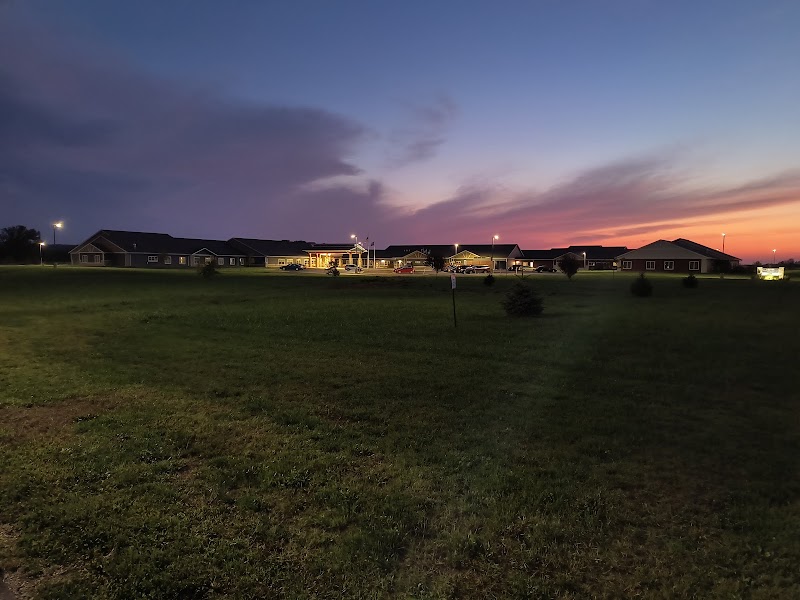
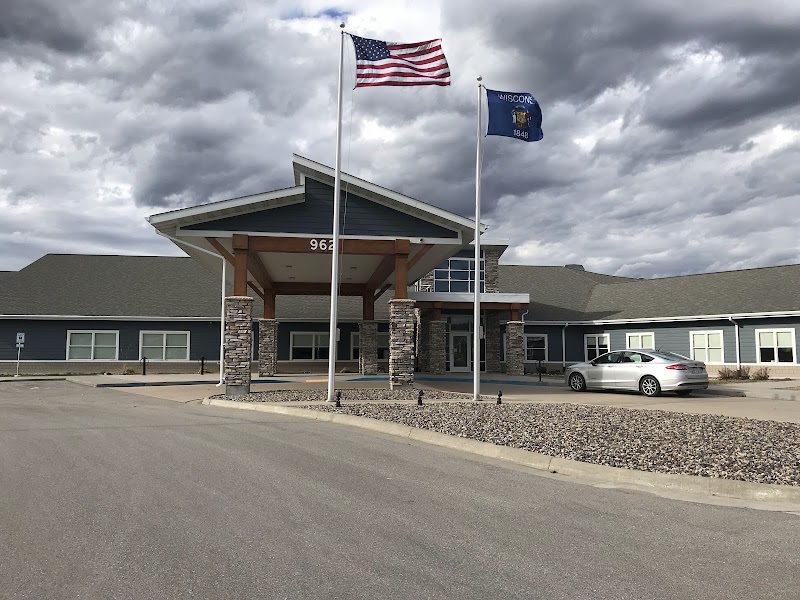
LAKEVIEW HEALTH CENTER is owned by a government entity. Government-operated facilities are typically run by state, county, or municipal agencies. The facility operates independently rather than as part of a larger chain. With 49 certified beds and approximately 49 residents (about 100% occupancy), it is a smaller facility located in WEST SALEM, Wisconsin.
How Does Lakeview Compare to Other Wisconsin Nursing Homes?

Compared to the 100 nursing homes in Wisconsin, LAKEVIEW HEALTH CENTER's overall rating (5 stars) is above the state average of 3.0, staff turnover (40%) is near the state average of 46%, and health inspection rating (5 stars) is much above the national benchmark.

What Should Families Ask When Visiting Lakeview?

Based on this facility's data, families visiting should ask: "Can I visit during a mealtime to observe dining assistance and food quality?" "How do you handle medical emergencies, and what is your hospital transfer rate?" "Can I speak with family members of current residents about their experience?"

Is Lakeview Safe?

Based on CMS inspection data, LAKEVIEW HEALTH CENTER has a clean safety record: no substantiated abuse findings (meaning no confirmed cases of resident harm), no Immediate Jeopardy citations (the most serious violation level indicating risk of serious injury or death), and is not on the Special Focus Facility watch list (a federal program monitoring the lowest-performing 1% of nursing homes). The facility has a 5-star overall rating and ranks #1 of 100 nursing homes in Wisconsin. While no facility is perfect, families should still ask about staff-to-resident ratios and recent inspection results during their visit.

Do Nurses at Lakeview Stick Around?

LAKEVIEW HEALTH CENTER has a staff turnover rate of 40%, which is about average for Wisconsin nursing homes (state average: 46%). Moderate turnover is common in nursing homes, but families should still ask about staff tenure and how the facility maintains care continuity when employees leave.

Was Lakeview Ever Fined?

LAKEVIEW HEALTH CENTER has no federal fines on record. CMS issues fines when nursing homes fail to meet care standards or don't correct problems found during inspections. The absence of fines suggests the facility has either maintained compliance or corrected any issues before penalties were assessed. This is a positive indicator, though families should still review recent inspection reports for the full picture.

Is Lakeview on Any Federal Watch List?

LAKEVIEW HEALTH CENTER is not on any federal watch list. The most significant is the Special Focus Facility (SFF) program, which identifies the bottom 1% of nursing homes nationally based on persistent, serious quality problems. Not being on this list means the facility has avoided the pattern of deficiencies that triggers enhanced federal oversight. This is a positive indicator, though families should still review the facility's inspection history directly.