ADAMS REHABILITATION AND HEALTHCARE CENTER
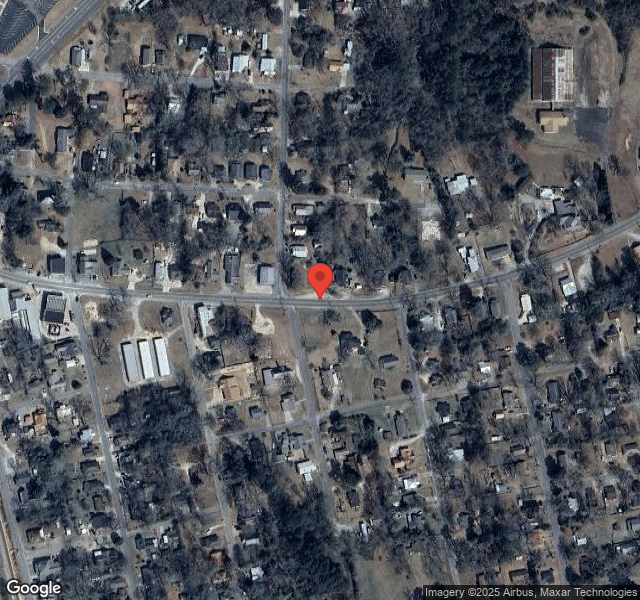
1555 HILLABEE STREET, ALEXANDER CITY, AL 35010 (256) 329-0847
For profit - Limited Liability company 88 Beds VENZA CARE MANAGEMENT Data: November 2025
Trust Grade
90/100
#1 of 223 in AL
Last Inspection: June 2021

Over 2 years since last inspection. Current conditions may differ from available data.

Overview

Adams Rehabilitation and Healthcare Center has received a Trust Grade of A, indicating it is excellent and highly recommended among nursing homes. It ranks #1 out of 223 facilities in Alabama, placing it at the very top of the state, and it is also the best option out of four in Tallapoosa County. The facility's trend is improving, having reduced its issues from three in 2018 to just one in 2021, and it has no fines on record, which is a positive sign. Staffing is a strength, with a 5-star rating and slightly above average turnover of 52%, but there is more RN coverage than 85% of state facilities, ensuring better oversight of resident care. However, the center has had some concerns, such as failing to properly document the opening date of insulin vials and not completing DNR consent forms for some residents, which could impact patient safety and care quality. Overall, while the facility has strong ratings and is improving, families should consider both its strengths and the noted deficiencies when making a decision.

Trust Score
A
90/100
In Alabama
#1/223
Top 1%
Safety Record
Low Risk
No red flags
Inspections
Getting Better
3 → 1 violations
Staff Stability
⚠ Watch
52% turnover. Above average. Higher turnover means staff may not know residents' routines.
Penalties
✓ Good
No fines on record. Clean compliance history, better than most Alabama facilities.
Skilled Nurses
✓ Good
Each resident gets 53 minutes of Registered Nurse (RN) attention daily — more than average for Alabama. RNs are trained to catch health problems early.
Violations
✓ Good
Only 4 deficiencies on record. Cleaner than most facilities. Minor issues only.
★★★★★
5.0
Overall Rating
★★★★★
5.0
Staff Levels
★★☆☆☆
2.0
Care Quality
★★★★★
5.0
Inspection Score
Stable
2018: 3 issues
2021: 1 issues

The Good

  • 5-Star Staffing Rating · Excellent nurse staffing levels
  • Full Sprinkler Coverage · Fire safety systems throughout facility
  • No fines on record

Facility shows strength in staffing levels, fire safety.

The Bad

Staff Turnover: 52%

Near Alabama avg (46%)

Higher turnover may affect care consistency

Chain: VENZA CARE MANAGEMENT

Part of a multi-facility chain

Ask about local staffing decisions and management

The Ugly 4 deficiencies on record

Jun 2021 1 deficiency
CONCERN (D)

Potential for Harm - no one hurt, but risky conditions existed

Deficiency F0582 (Tag F0582)

Could have caused harm · This affected 1 resident

Based on interview, review of Resident Identifier (RI) #39's medical record and the facility's policy, the facility failed to ensure the estimated cost to continue to receive physical therapy services...

Read full inspector narrative →
Based on interview, review of Resident Identifier (RI) #39's medical record and the facility's policy, the facility failed to ensure the estimated cost to continue to receive physical therapy services was listed on the Advance Beneficiary Notice of Noncoverage (ABN) for RI #39; one of three residents reviewed for beneficiary notices. Findings include: The facility's policy titled, Advance Beneficiary Notices last revised 7/13/2020 stated, Policy To provide timely notices regarding Medicare eligibility and coverage. Procedure . 7. Additional notices shall be issued to Medicare beneficiaries when appropriate. a. A liability notice shall be issued to Medicare beneficiaries before the facility provides: . For Part A items and services, the facility may use either the Skilled Nursing Facility Advance Beneficiary Notice (SNFABN), CMS Form #10055, or one of five SNF denial letters as the liability notice . 9. The current CMS-approved version of the forms shall be used at the time of issuance to the beneficiary (resident or resident representative). Contents of the form shall comply with related instructions and regulations regarding the use of the form . The SNF Beneficiary Protection Notification Review indicated RI #39 began receiving Part A Medicare services on 1/18/2021 and the resident's last covered day of Part A services was 4/15/2021. The form indicated The facility/provider initiated the discharge from Medicare Part A Services when benefit days were not exhausted. The Advance Beneficiary Notice of Noncoverage (ABN) indicated RI #39 had reached the maximum level of physical therapy. The form did not include the estimated cost of services if the resident or their representative wanted to continue receiving the physical therapy services without assistance from Medicare. During an interview on 6/2/2021 at 12:47 PM, Employee Identifier (EI) #1, a Restorative Nurse stated she completed and issued the ABN notices to the residents. EI #1 stated the facility practice was to identify the estimated cost only after a resident or resident representative requested to continue receiving Part A services.
Feb 2018 3 deficiencies
CONCERN (D)

Potential for Harm - no one hurt, but risky conditions existed

Deficiency F0761 (Tag F0761)

Could have caused harm · This affected 1 resident

**NOTE- TERMS IN BRACKETS HAVE BEEN EDITED TO PROTECT CONFIDENTIALITY** Based on observation, interview and review of a facility policy titled, Diabetes - Insulin Injections, the facility failed to en...

Read full inspector narrative →
**NOTE- TERMS IN BRACKETS HAVE BEEN EDITED TO PROTECT CONFIDENTIALITY** Based on observation, interview and review of a facility policy titled, Diabetes - Insulin Injections, the facility failed to ensure Resident Identifier (RI) #19's vial of insulin contained an opened date on the vial and box containing RI #19's insulin. This deficient practice affected RI #19, one of 15 sampled residents. Findings Include: A review of a facility policy titled, Diabetes - Insulin Injections with a Revised date of 02.01.15, revealed: .Procedure A. Procedure to prepare the insulin for an injection. .4. When opening new vial of insulin - the date opened should be documented on the vial and the box with an indelible pen. 5. Open vials of insulin should be replaced within 28 days of being opened, or according to manufacturer's guidelines whichever comes first. RI #19 was readmitted to the facility on [DATE] with diagnoses including, Type 2 Diabetes Mellitus Without Complications and Peripheral Vascular Disease, Unspecified. On [DATE] at 8:21 a.m. during medication pass observation, Employee Identifier (EI) #3, Licensed Practical Nurse (LPN), was observed administering medications to RI #19. EI #3 took a box containing Levemir insulin from her medication cart, took out vial of insulin and drew up 44 units of Levemir in a syringe. There was no opened date observed on the box or on the vial of insulin. On [DATE] at 2:15 p.m., an interview was conducted with EI #3, LPN. EI #3 was asked, what should be done when a box of insulin is opened. EI #3 said, she should date and initial the box and vial of insulin. EI #3 was asked, did the box and/or vial of Levemir for RI #19 have a opened date on it. EI #3 replied, no. EI #3 was asked, was the policy for insulin followed since RI #19's box or vial did not have an opened date. EI #3 answered, no. EI #3 was asked, what was the concern with no opened date being on the insulin. EI #3 said, it could be expired, because it should be used within 28 days of the opened date.
CONCERN (D)

Potential for Harm - no one hurt, but risky conditions existed

Medical Records (Tag F0842)

Could have caused harm · This affected 1 resident

**NOTE- TERMS IN BRACKETS HAVE BEEN EDITED TO PROTECT CONFIDENTIALITY** Based on interview, record reviews and review of a facility policy titled, ALABAMA Advance Directives - Do Not Resuscitate Order...

Read full inspector narrative →
**NOTE- TERMS IN BRACKETS HAVE BEEN EDITED TO PROTECT CONFIDENTIALITY** Based on interview, record reviews and review of a facility policy titled, ALABAMA Advance Directives - Do Not Resuscitate Orders - DNR, the facility failed to ensure DNR - Do Not Resuscitate Consent forms were completed for Resident Identifier (RI) #12, RI #36, and RI #49. This deficient practice affected RI #12, RI #36 and RI #49, three of four residents sampled with Do Not Resuscitate orders. Findings Include: A review of a facility policy titled, ALABAMA Advance Directives - Do Not Resuscitate Orders - DNR with a Revised date 04/01/03, revealed: .1. The Attending Physician determines, to a reasonable degree of medical certainty, that (a) the resident is unable to understand, appreciate, and direct his or her medical treatment, and (b) the resident has no hope of regaining such ability; 2. Two physicians, one of whom is the Attending Physician and one of whom is qualified and experienced in making such diagnosis, have personally examined the resident and have diagnosed and certified in the medical record that the resident has a Terminal Illness or Injury or is in a state of Permanent Unconsciousness; . 1. RI #12 was readmitted to the facility on [DATE] with diagnoses including, Chronic Obstructive Pulmonary Disease and Unspecified Dementia Without Behavioral Disturbance. A review of RI #12's medical record revealed a DNR - Do Not Resuscitate Consent form dated 9/30/16. The form did not contain pertinent information regarding RI #12's terminal diagnosis, signs and symptoms or competence status. 2. RI #36 was readmitted to the facility on [DATE] with diagnoses including, Unspecified Dementia With Behavioral Disturbance and Alzheimer's Disease With Late Onset. A review of RI #36's medical record revealed a DNR - Do Not Resuscitate Consent form dated 3/27/17. The form did not contain RI #36's name, terminal diagnosis, signs and symptoms or competence status. 3. RI #49 was readmitted [DATE] with diagnoses including, Alzheimer's Disease, Unspecified and Chronic Kidney Disease, Stage 3 (moderate). A review of RI #49's medical record revealed a DNR - Do Not Resuscitate Consent form dated 11/7/17. The form did not contain RI #49's terminal diagnosis, signs and symptoms or competence status. On 02/08/18 at 8:37 a.m., an interview was conducted with Employee Identifier (EI) #1, Administrator. EI #1 was asked, who was responsible for completing the DNR - Do Not Resuscitate Consent forms in the medical record. EI #1 said, Social Services is responsible for initiating the form and nursing is responsible for completing it. EI #1 was given RI #36's medical record containing the consent form. EI #1 was asked, should the form have RI #36's name on it. EI #1 replied, yes. EI #1 was asked, should the form contain RI #36's diagnosis and competence status. EI #1 answered, yes. The surveyor asked EI #1, should the consent forms in the resident's medical records be completed. EI #1 said, yes, the doctor is here in the facility and they will be completed while he is here.
CONCERN (D)

Potential for Harm - no one hurt, but risky conditions existed

Infection Control (Tag F0880)

Could have caused harm · This affected 1 resident

**NOTE- TERMS IN BRACKETS HAVE BEEN EDITED TO PROTECT CONFIDENTIALITY** Based on observations, interviews and review of facility policies titled, Standard Precautions, Personal Protective Equipment - ...

Read full inspector narrative →
**NOTE- TERMS IN BRACKETS HAVE BEEN EDITED TO PROTECT CONFIDENTIALITY** Based on observations, interviews and review of facility policies titled, Standard Precautions, Personal Protective Equipment - Gloves Usage, Handwashing - Hand Hygiene and Catheter - Care - Suprapubic, the facility failed to ensure: 1. Licensed Practical Nurse (LPN) cleaned her stethoscope and pulse oximeter after obtaining vital signs for RI #19, 2. an LPN washed her hands after removing her gloves when cleaning RI #30's glucometer and putting on a clean pair of gloves, 3. an LPN did not touch the paper towel dispenser handle after washing her hands and prior to applying clean gloves during administration of RI #49's medications via gastrostomy tube and and LPN cleaned a stethoscope before and/or after using the stethoscope to auscultate RI #49's gastrostomy tube placement, and 4. a Certified Nursing Assistant (CNA) did not place a garbage bag containing items used during catheter care for RI #51 on the floor in RI #51's room. These deficient practices affected two of two nurses observed during medication pass observations and one of one CNA observed during catheter care. Findings Include: A review of a facility policy titled, Standard Precautions with an Effective date of 11.01.09 revealed: Policy Standard Precautions will be used in the care of all residents regardless of their diagnoses, or suspected or confirmed infection status. Standard Precautions presume that all blood, body fluids, secretions and excretions (except sweat), non-intact skin and mucous membranes may contain transmissible infectious agents. Procedure 1. Standard Precautions shall apply to the care of all residents in all situations regardless of suspected or confirmed presence of infectious diseases. .Standard precautions include the following practices: .1. Hand hygiene .d. Wash hands after removing gloves . 2. Gloves .g. Remove gloves promptly after use, before touching non-contaminated items and environmental surfaces, and before going to another resident and wash hands immediately to avoid transfer of microorganisms to other residents or environments.5. Resident-Care Equipment .b. Ensure that reusable equipment is not used for the care of another resident until it has been appropriately cleaned . A review of a facility policy titled, Personal Protective Equipment - Gloves Usage with a Revised date 02.27.13, revealed: .Procedure .8. Wash and dry hands thoroughly after removing gloves. A review of a facility policy titled, Handwashing - Hand Hygiene with a Revised date 03.01.17 revealed: Purpose To prevent the spread of infections. .7. Hand hygiene is always the final step after removing and disposing of personal protective equipment. 8. The use of gloves does not replace handwashing/hand hygiene. A review of a facility policy titled, Catheter - Care - Suprapubic with a Revised date 02.01.15, revealed: .Procedure .10. Discard disposable items and soiled gloves in plastic bag and tie. 11. Place plastic bag in appropriate container. 1. RI #19 was readmitted to the facility on [DATE] with diagnoses including, Type 2 Diabetes Mellitus Without Complications and Peripheral Vascular Disease, Unspecified. On 02/07/18 at 8:21 a.m., during medication pass observation, Employee Identifier (EI) #3, LPN, was observed obtaining RI #19's blood pressure and oxygen saturation with a blood pressure cuff, stethoscope and pulse oximeter off her medication cart. After obtaining RI #19's vital signs, EI #3 was observed putting the items back on her medication cart without cleaning them. 2. RI #30 was readmitted to the facility on [DATE] with diagnoses including, Type 2 Diabetes Mellitus With Other Specified Complication and Acute Kidney Failure, Unspecified. On 02/07/18 at 11:05 a.m., during medication pass observation, EI #4, LPN, was observed cleaning RI #30's glucometer. EI #4 was observed removing her gloves and applied a clean pair of gloves without washing her hands. 3. RI #49 was readmitted [DATE] with diagnoses including, Alzheimer's Disease, Unspecified and Chronic Kidney Disease, Stage 3 (moderate). On 02/07/18 at 3:30 p.m., during medication pass observation, EI #3 was observed washing her hands in the sink in RI #49's room during gastrostomy tube medication administration for RI #49. After she washed her hands, she was observed to manipulate the paper towel dispenser handle with her clean hands without re-washing her hands before applying her gloves. EI #3 was observed taking a stethoscope off her medication cart to auscultate placement of RI #49's gastrostomy tube without cleaning the stethoscope before and/or after auscultating placement of the tube. On 02/08/18 at 2:11 p.m., an interview was conducted with EI #4, LPN. EI #4 was asked, when was she supposed to wash her hands during a medication pass. EI #4 said, before she puts her gloves on and after she takes her gloves off. EI #4 was asked, did she wash her hands after cleaning RI #30's glucometer and removing her gloves before putting on a clean pair of gloves. EI #4 replied, no. EI #4 was asked, what was the concern with not washing her hands when removing her gloves. EI #4 answered, infection control. On 02/08/18 at 2:15 p.m., an interview was conducted with EI #3. EI #3 was asked, what was she supposed to do after using a stethoscope, blood pressure cuff and pulse oximeter to obtain RI #19's vital signs. EI #3 said, clean them before and after use. EI #3 was asked, did she clean these items before and/or after using them to obtain RI #19's vital signs. EI #3 replied, no. EI #3 was asked, did she clean her stethoscope before and/or after using it to auscultate RI #49's gastrostomy tube placement. EI #3 said, no. EI #3 was asked, how should she retrieve a paper towel from RI #49's paper towel dispenser after washing her hands. EI #3 answered, she should pull the paper towel down without touching the turn knob. EI #3 was asked, did she touch the turn knob on the paper towel dispenser in RI #49's room. EI #3 said, yes. EI #3 was asked, what she she have done after touching the turn knob. EI #3 answered, washed and dried her hands again before applying gloves. EI #3 was asked, what was the concern with not cleaning the items and touching the turn knob after washing her hands. EI #3 said, infection control. On 02/08/18 at 3:27 p.m., an interview was conducted with EI #2, Registered Nurse, Director of Nursing, Infection Control Coordinator. EI #2 was asked, when should nursing staff wash their hands when using gloves. EI #2 said, before putting them on and when taking them off. EI #2 was asked, what should be done when a nurse is using a stethoscope, blood pressure cuff and/or pulse oximeter on a resident. EI #2 answered, clean them. EI #2 was asked, should an employee use the handle of the paper towel dispenser after washing her hands. EI #2 said, no. EI #2 was asked, what was the concern with these things. EI #2 answered, infection control. 4. RI #51 was readmitted to the facility on [DATE] with diagnoses including, Retention of Urine, Unspecified and End Stage Renal Disease. On 02/08/18 at 1:28 p.m. during observation of catheter care for RI #51, EI #5, a CNA, was observed placing a garbage bag containing items used during catheter care for RI #51 on the floor in RI #51's room. On 02/08/18 at 4:24 p.m., a telephone interview was conducted with EI #5. EI #5 was asked, should a garbage bag containing items used during catheter care be put on the floor. EI #5 said, no. EI #5 was asked, did she put the garbage bag on the floor in RI #51's room after she provided RI #51's catheter care. EI #5 replied, yes. EI #5 was asked, what concern was placing the garbage bag containing the catheter care kit she used for RI #51's catheter care on the floor. EI #5 answered, infection control. On 02/08/18 at 3:27 p.m., an interview was conducted with EI #2, Registered Nurse, Director of Nursing, Infection Control Coordinator. EI #2 was asked, when should nursing staff wash their hands when using gloves. EI #2 said, before putting them on and when taking them off. EI #2 was asked, what should be done when a nurse is using a stethoscope, blood pressure cuff and/or pulse oximeter on a resident. EI #2 answered, clean them. EI #2 was asked, should an employee use the handle of the paper towel dispenser after washing her hands. EI #2 said, no. EI #2 was asked, should a CNA place a garbage bag in the floor containing items used during catheter care. EI #2 replied, no. EI #2 was asked, what was the concern with these things. EI #2 answered, infection control.
Understanding Severity Codes (click to expand)
Life-Threatening (Immediate Jeopardy)
J - Isolated K - Pattern L - Widespread
Actual Harm
G - Isolated H - Pattern I - Widespread
Potential for Harm
D - Isolated E - Pattern F - Widespread
No Harm (Minor)
A - Isolated B - Pattern C - Widespread

Questions to Ask on Your Visit

  • "Can I speak with families of current residents?"
  • "What's your RN coverage like on weekends and overnight?"

Our Honest Assessment

Strengths
  • • Grade A (90/100). Above average facility, better than most options in Alabama.
  • • No major safety red flags. No abuse findings, life-threatening violations, or SFF status.
  • • No fines on record. Clean compliance history, better than most Alabama facilities.
  • • Only 4 deficiencies on record. Cleaner than most facilities. Minor issues only.
Concerns
  • • No significant concerns identified. This facility shows no red flags across CMS ratings, staff turnover, or federal penalties.
Bottom line: Generally positive indicators. Standard due diligence and a personal visit recommended.

About This Facility

What is Adams Rehabilitation And Healthcare Center's CMS Rating?

CMS assigns ADAMS REHABILITATION AND HEALTHCARE CENTER an overall rating of 5 out of 5 stars, which is considered much above average nationally. Within Alabama, this rating places the facility higher than 99% of the state's 100 nursing homes. This rating reflects solid performance across the metrics CMS uses to evaluate nursing home quality.

How is Adams Rehabilitation And Healthcare Center Staffed?

CMS rates ADAMS REHABILITATION AND HEALTHCARE CENTER's staffing level at 5 out of 5 stars, which is much above average compared to other nursing homes. Staff turnover is 52%, compared to the Alabama average of 46%.

What Have Inspectors Found at Adams Rehabilitation And Healthcare Center?

State health inspectors documented 4 deficiencies at ADAMS REHABILITATION AND HEALTHCARE CENTER during 2018 to 2021. These included: 4 with potential for harm.

Who Owns and Operates Adams Rehabilitation And Healthcare Center?

ADAMS REHABILITATION AND HEALTHCARE CENTER is owned by a for-profit company. For-profit facilities operate as businesses with obligations to shareholders or private owners. The facility is operated by VENZA CARE MANAGEMENT, a chain that manages multiple nursing homes. With 88 certified beds and approximately 64 residents (about 73% occupancy), it is a smaller facility located in ALEXANDER CITY, Alabama.

How Does Adams Rehabilitation And Healthcare Center Compare to Other Alabama Nursing Homes?

Compared to the 100 nursing homes in Alabama, ADAMS REHABILITATION AND HEALTHCARE CENTER's overall rating (5 stars) is above the state average of 3.0, staff turnover (52%) is near the state average of 46%, and health inspection rating (5 stars) is much above the national benchmark.

What Should Families Ask When Visiting Adams Rehabilitation And Healthcare Center?

Based on this facility's data, families visiting should ask: "Can I visit during a mealtime to observe dining assistance and food quality?" "How do you handle medical emergencies, and what is your hospital transfer rate?" "Can I speak with family members of current residents about their experience?"

Is Adams Rehabilitation And Healthcare Center Safe?

Based on CMS inspection data, ADAMS REHABILITATION AND HEALTHCARE CENTER has a clean safety record: no substantiated abuse findings (meaning no confirmed cases of resident harm), no Immediate Jeopardy citations (the most serious violation level indicating risk of serious injury or death), and is not on the Special Focus Facility watch list (a federal program monitoring the lowest-performing 1% of nursing homes). The facility has a 5-star overall rating and ranks #1 of 100 nursing homes in Alabama. While no facility is perfect, families should still ask about staff-to-resident ratios and recent inspection results during their visit.

Do Nurses at Adams Rehabilitation And Healthcare Center Stick Around?

ADAMS REHABILITATION AND HEALTHCARE CENTER has a staff turnover rate of 52%, which is 6 percentage points above the Alabama average of 46%. Moderate turnover is common in nursing homes, but families should still ask about staff tenure and how the facility maintains care continuity when employees leave.

Was Adams Rehabilitation And Healthcare Center Ever Fined?

ADAMS REHABILITATION AND HEALTHCARE CENTER has no federal fines on record. CMS issues fines when nursing homes fail to meet care standards or don't correct problems found during inspections. The absence of fines suggests the facility has either maintained compliance or corrected any issues before penalties were assessed. This is a positive indicator, though families should still review recent inspection reports for the full picture.

Is Adams Rehabilitation And Healthcare Center on Any Federal Watch List?

ADAMS REHABILITATION AND HEALTHCARE CENTER is not on any federal watch list. The most significant is the Special Focus Facility (SFF) program, which identifies the bottom 1% of nursing homes nationally based on persistent, serious quality problems. Not being on this list means the facility has avoided the pattern of deficiencies that triggers enhanced federal oversight. This is a positive indicator, though families should still review the facility's inspection history directly.